

Decorating narrow walls presents unique challenges that require creative solutions. These confined spaces often go overlooked in home design. Yet they offer tremendous potential for adding character and functionality. Thoughtful narrow wall decor transforms tight hallways, slender entryways, and compact rooms into stylish focal points.
The beauty of narrow wall design lies in strategic vertical emphasis. When horizontal space is limited, drawing the eye upward creates visual interest. This approach makes rooms feel taller and more spacious. The following concepts demonstrate how various styles work within spatial constraints while maintaining aesthetic appeal.
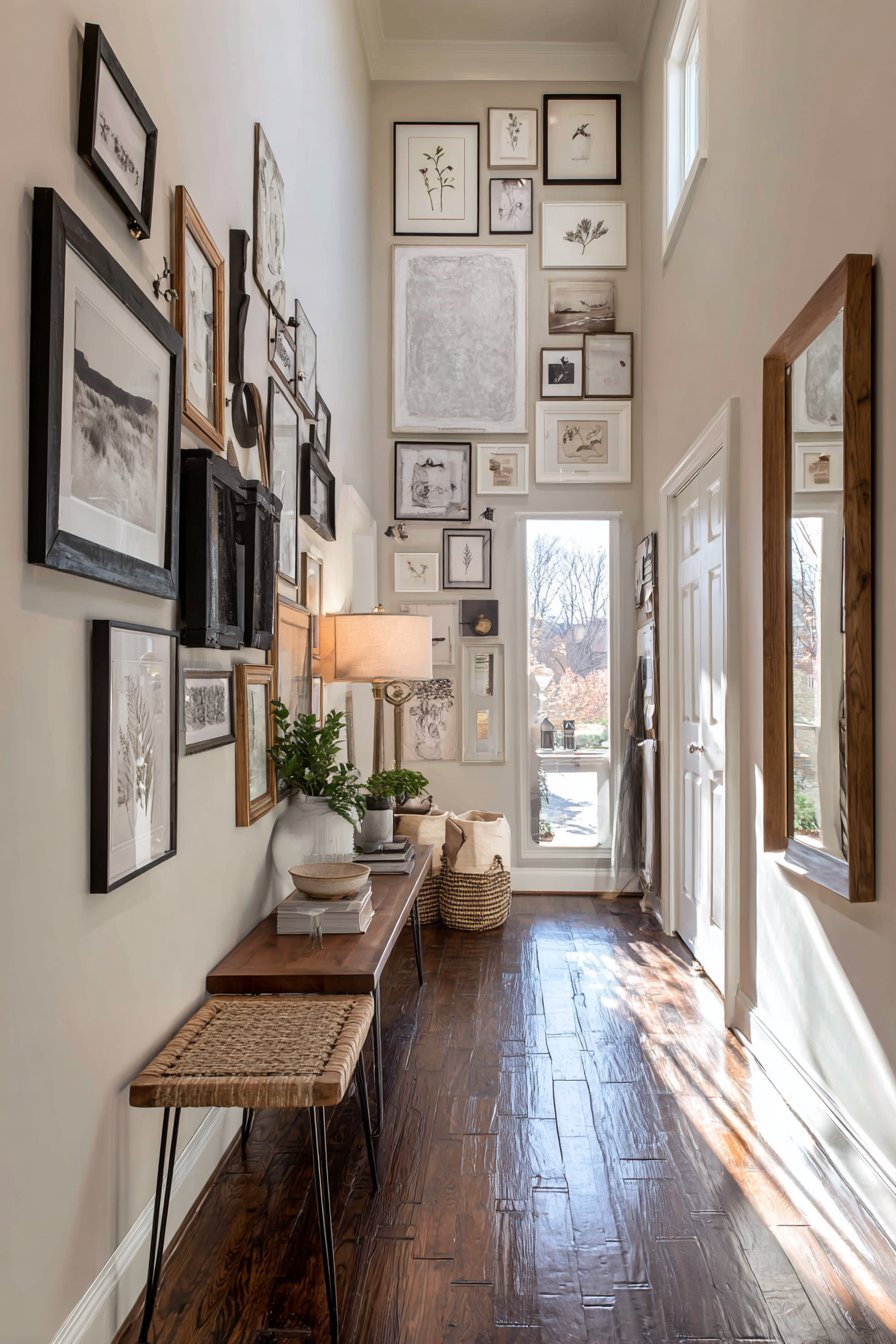
From minimalist floating shelves to curated gallery walls, these designs cater to diverse tastes. Whether you prefer modern industrial elements or vintage charm, each concept offers practical inspiration. These ideas prove that limited width doesn’t mean limited style potential.
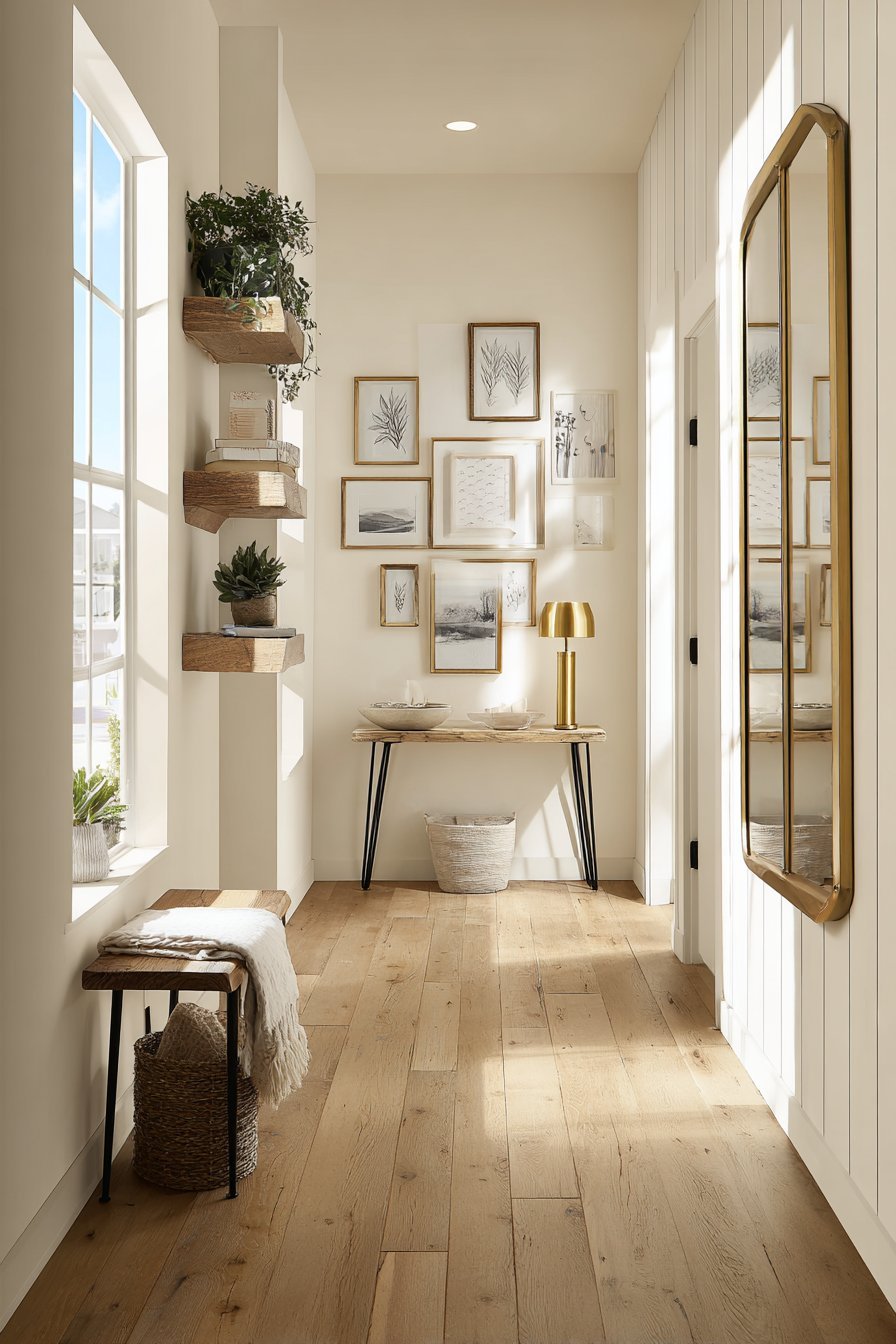
1. Vintage Frame Gallery Wall with Console
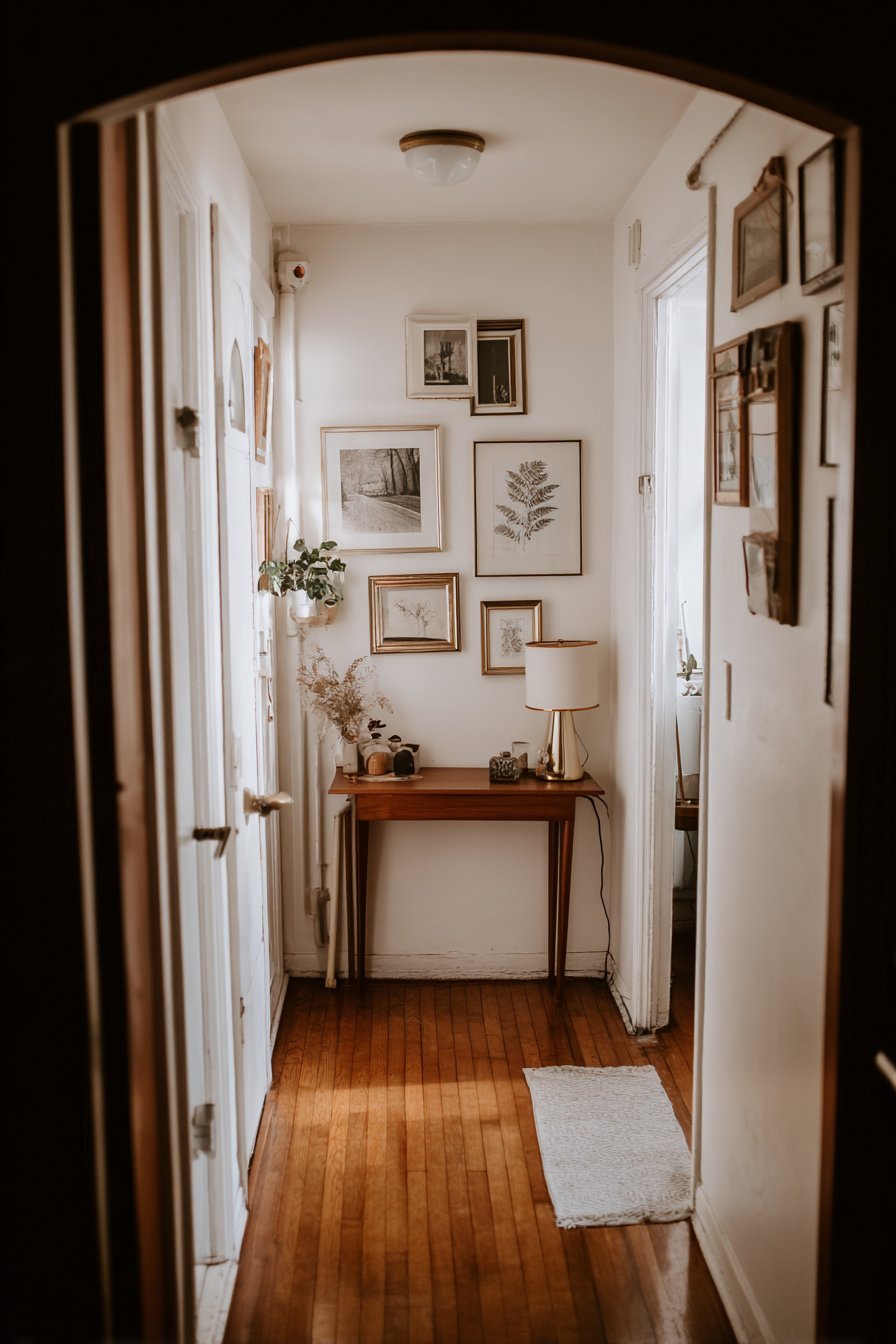
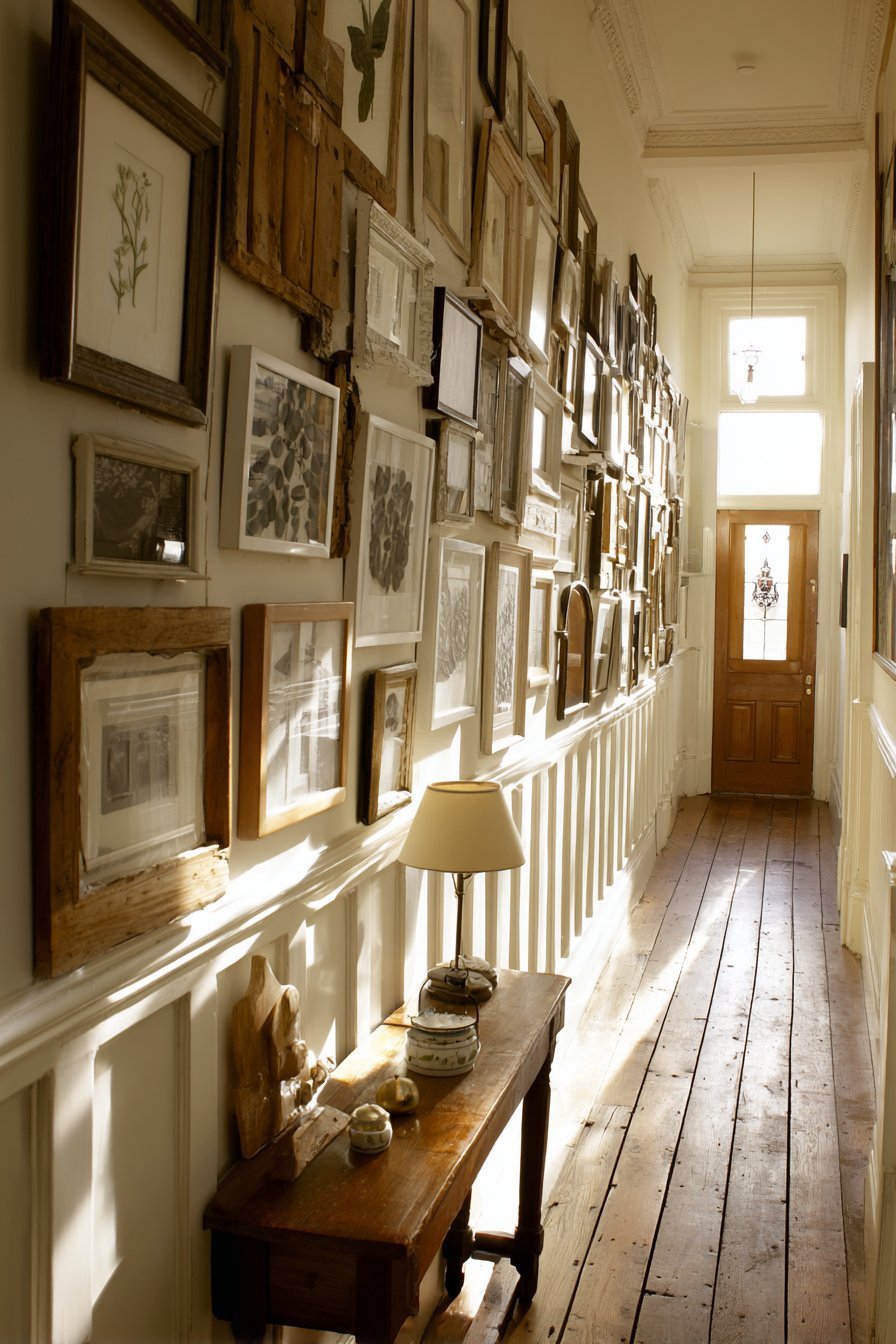
A narrow hallway featuring a curated gallery wall creates immediate visual impact. Mismatched vintage frames in various sizes arrange vertically along the corridor. The frames contain black and white photography and botanical prints. Each piece tells its own story while contributing to the cohesive design.
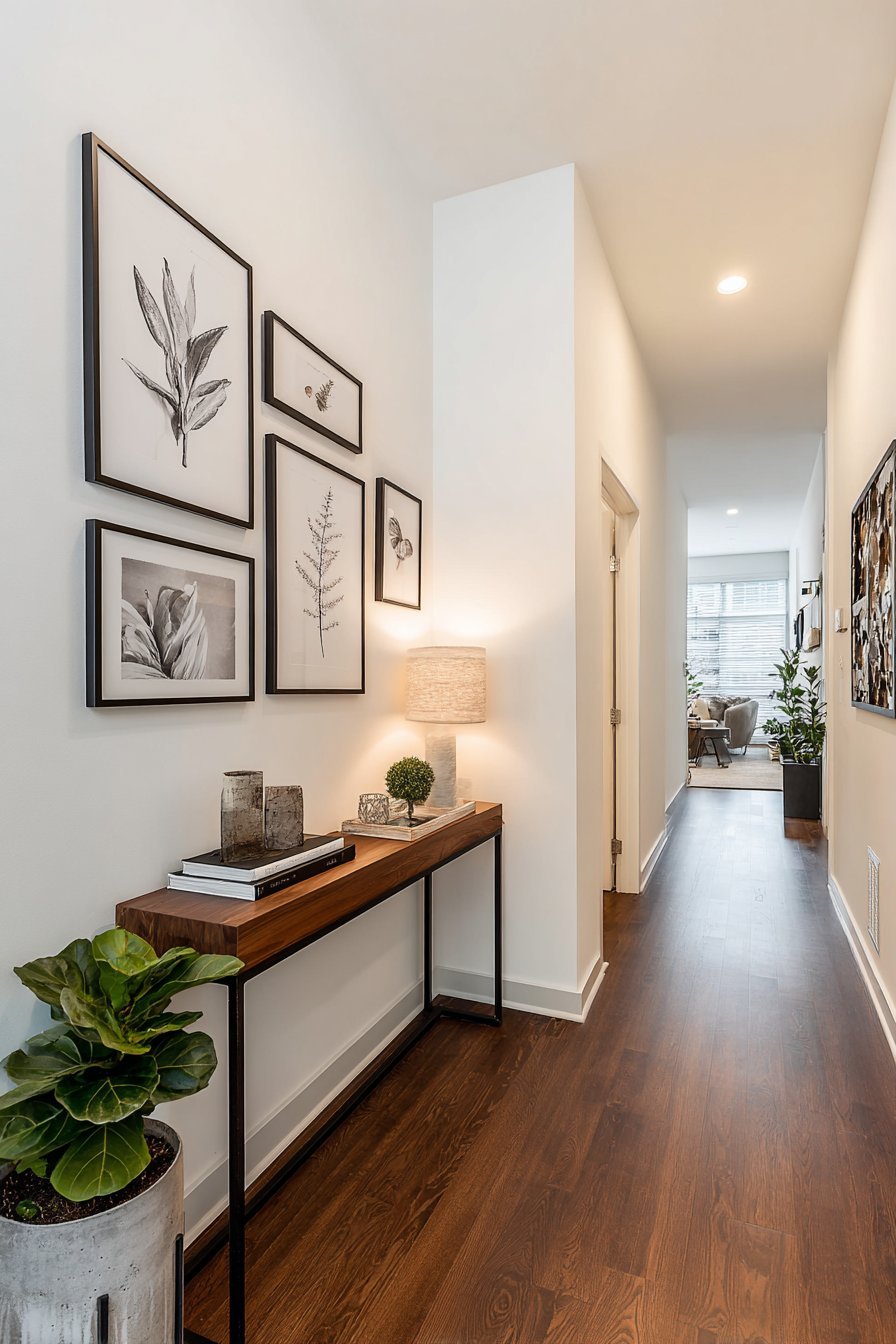
The arrangement emphasizes height rather than width in this confined space. Frames in brass, aged wood, and matte black finishes add textural variety. A slim console table in natural walnut sits below the gallery. The table holds a single lamp and small decorative objects. This creates a functional landing spot without overwhelming the walkway.
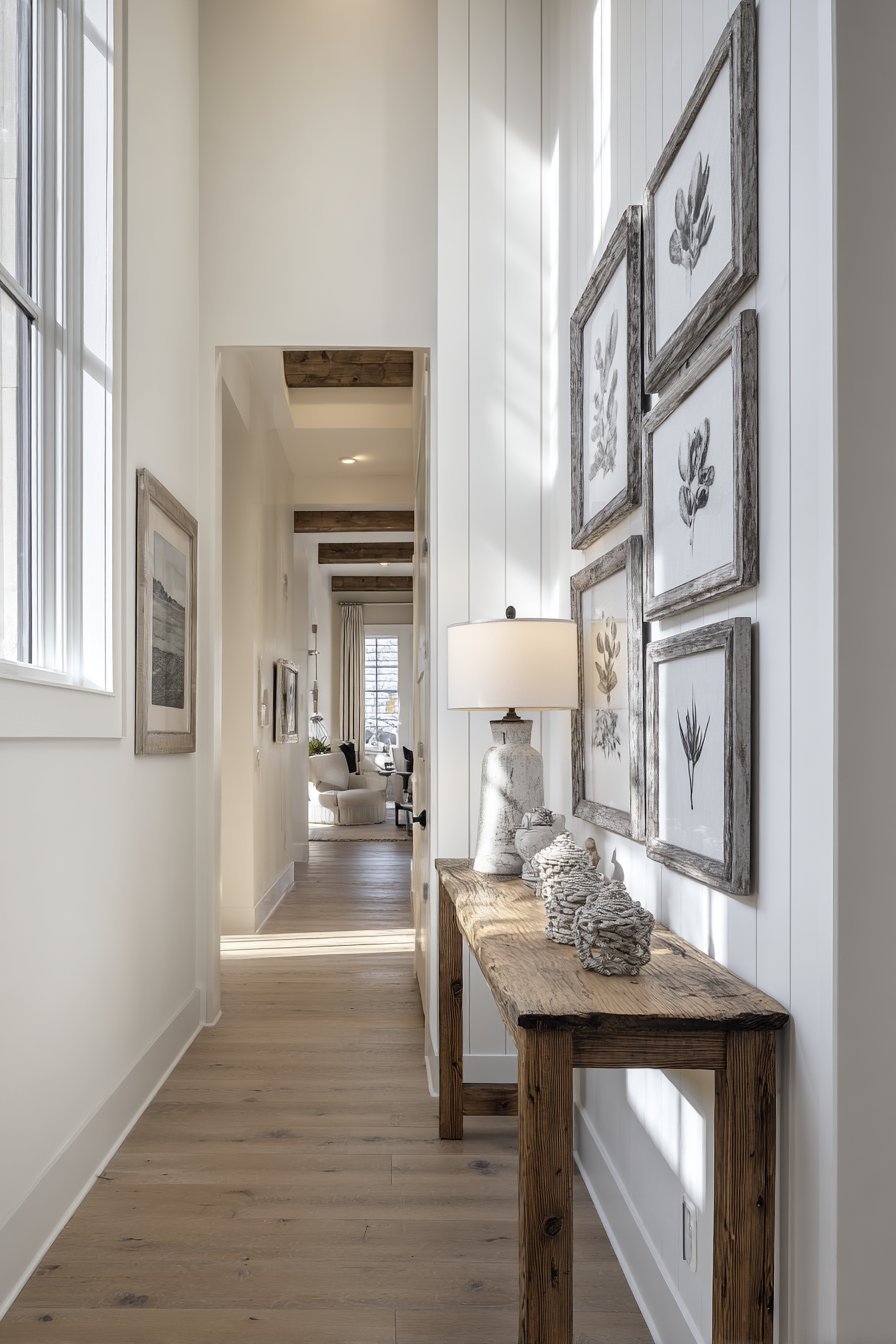
Soft cream walls provide a neutral backdrop that allows artwork to shine. Hardwood flooring adds warmth underfoot throughout the corridor. Natural light from a distant window creates gentle shadows. These shadows emphasize the dimensional quality of the frames.
Key Design Tips:
- Arrange frames vertically to draw the eye upward in narrow spaces
- Mix frame styles and finishes for visual interest while maintaining color cohesion
- Keep console tables slim to maintain adequate walkway clearance
- Use neutral wall colors to prevent visual crowding in tight corridors
- Position lighting to highlight artwork without creating harsh shadows
2. Floating Shelf Trio with Minimal Decor
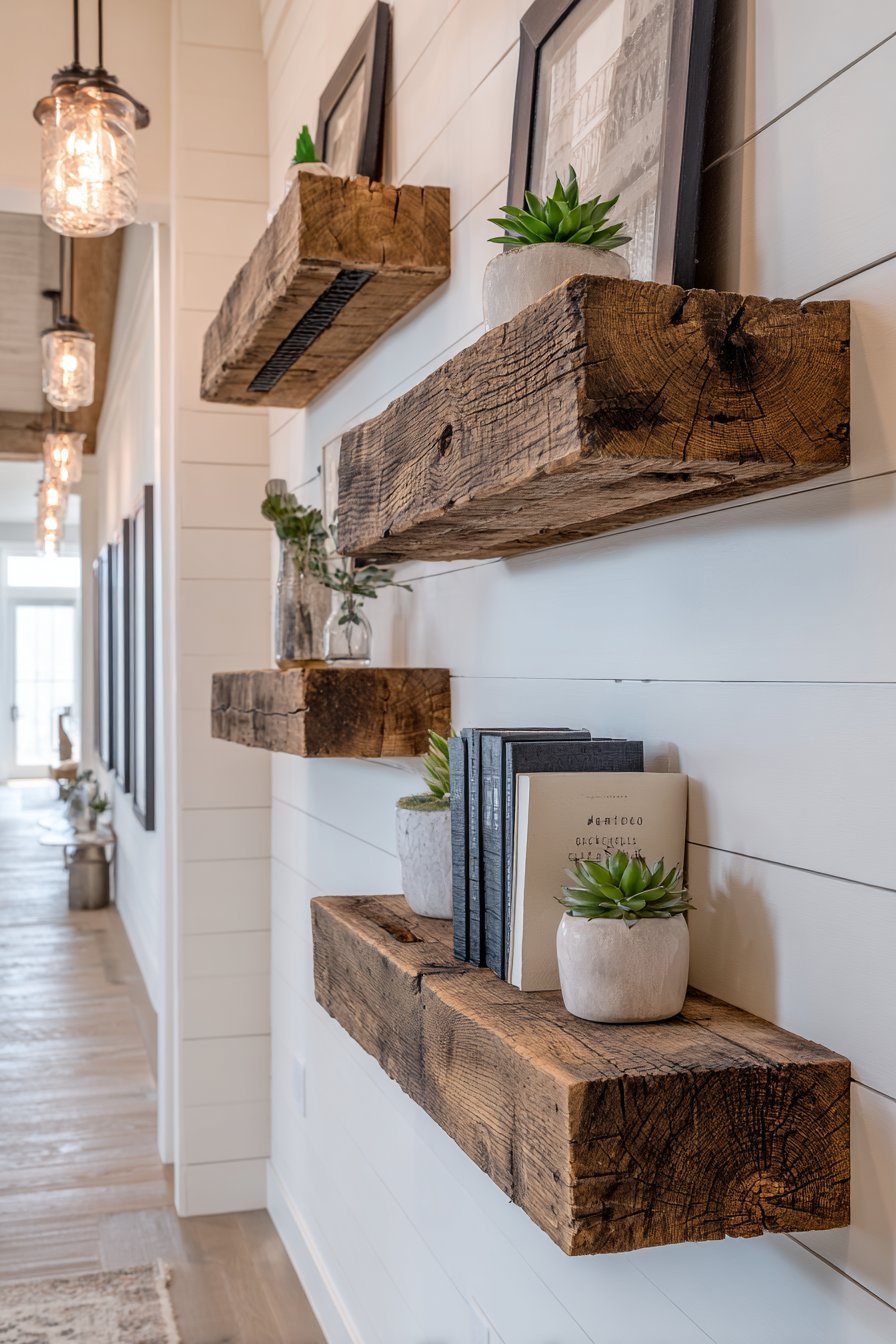
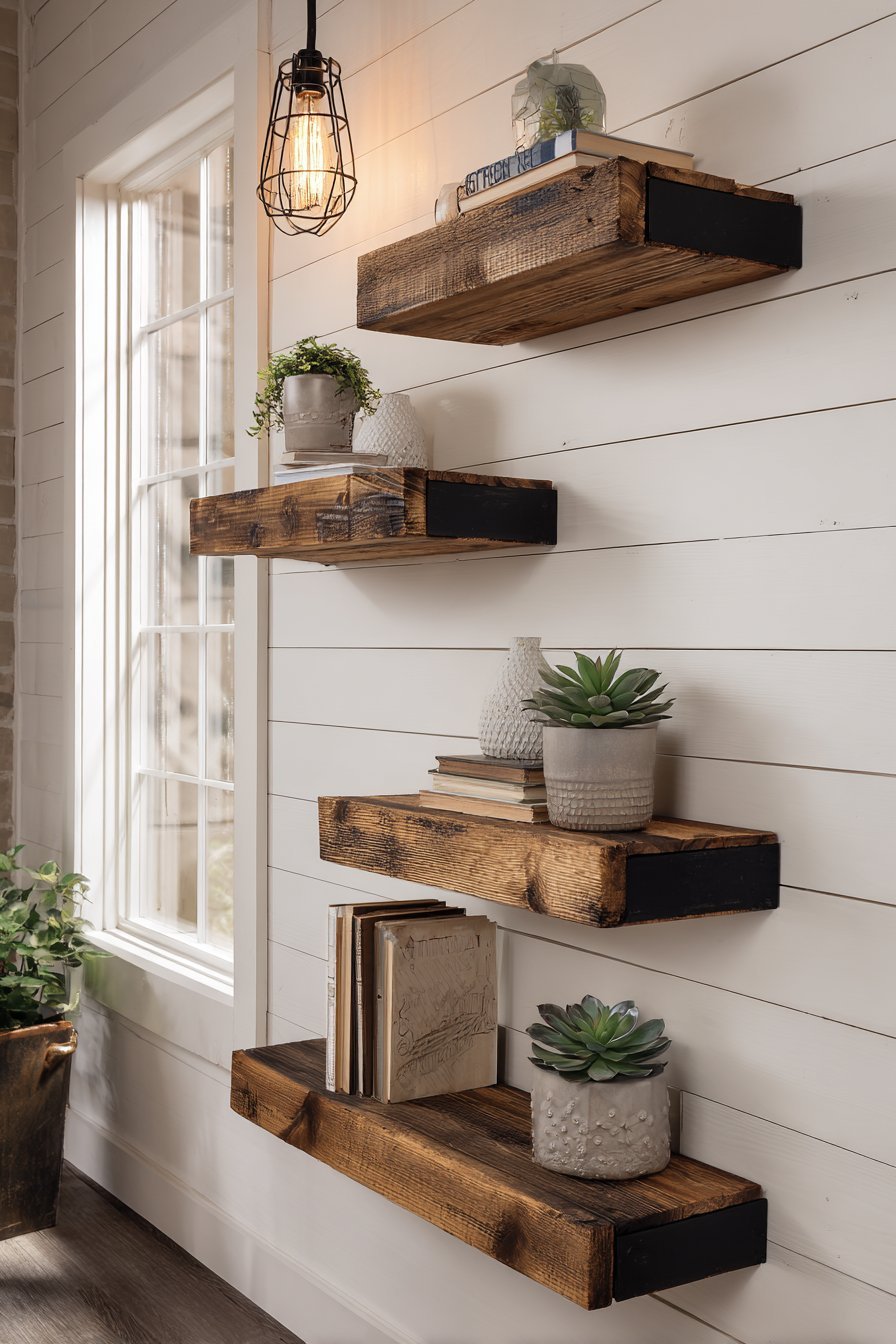
Three floating shelves create functional storage in a narrow entryway. Black metal and reclaimed wood combine for industrial-meets-rustic appeal. The shelves stagger at different heights along the wall. This creates visual rhythm without protruding excessively into the walkway.
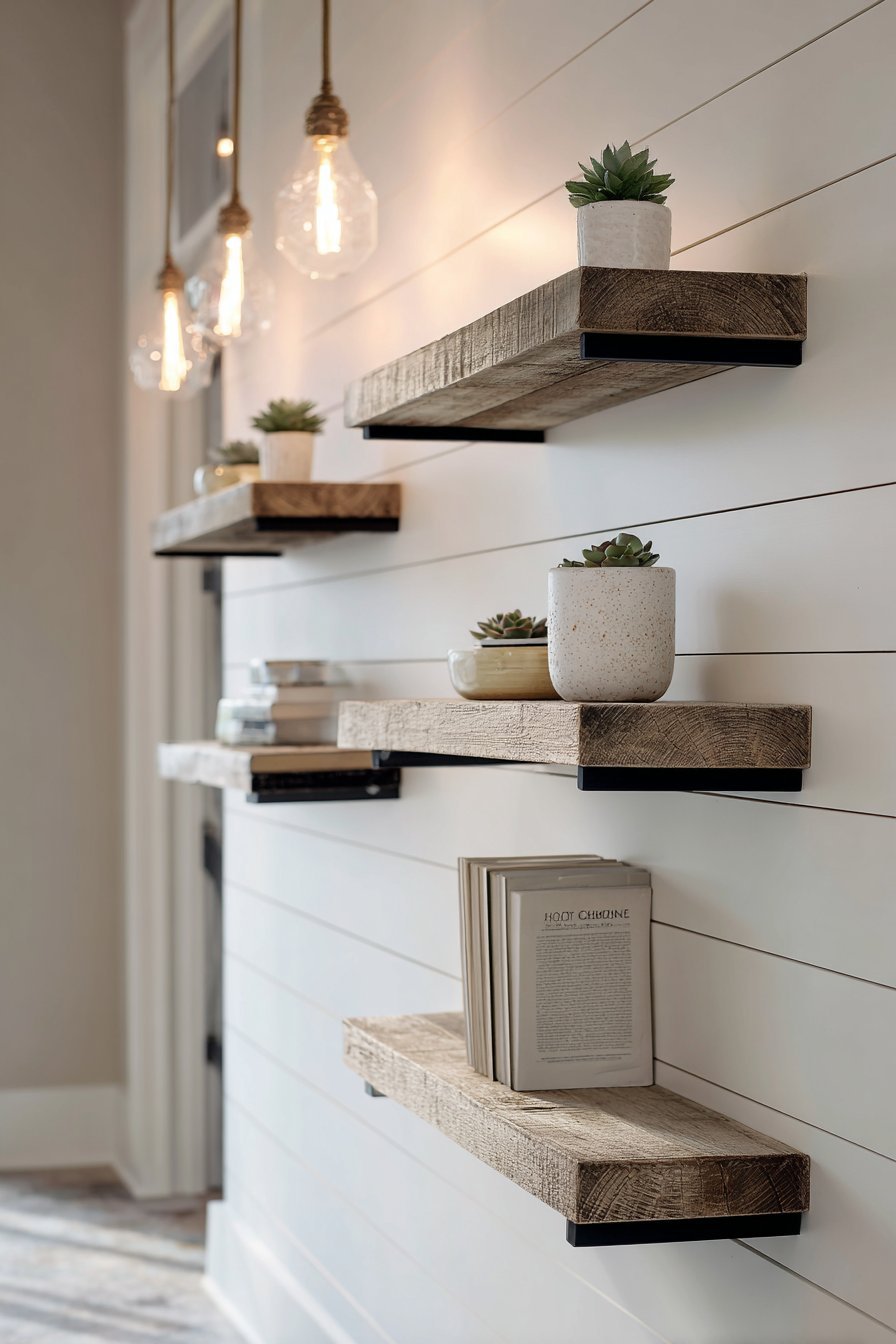
Each shelf displays carefully chosen minimal decor elements. Small potted succulents bring life to the arrangement. A ceramic vase adds sculptural interest. Art books arranged vertically provide both decoration and reading material. The white shiplap wall behind adds subtle horizontal texture.
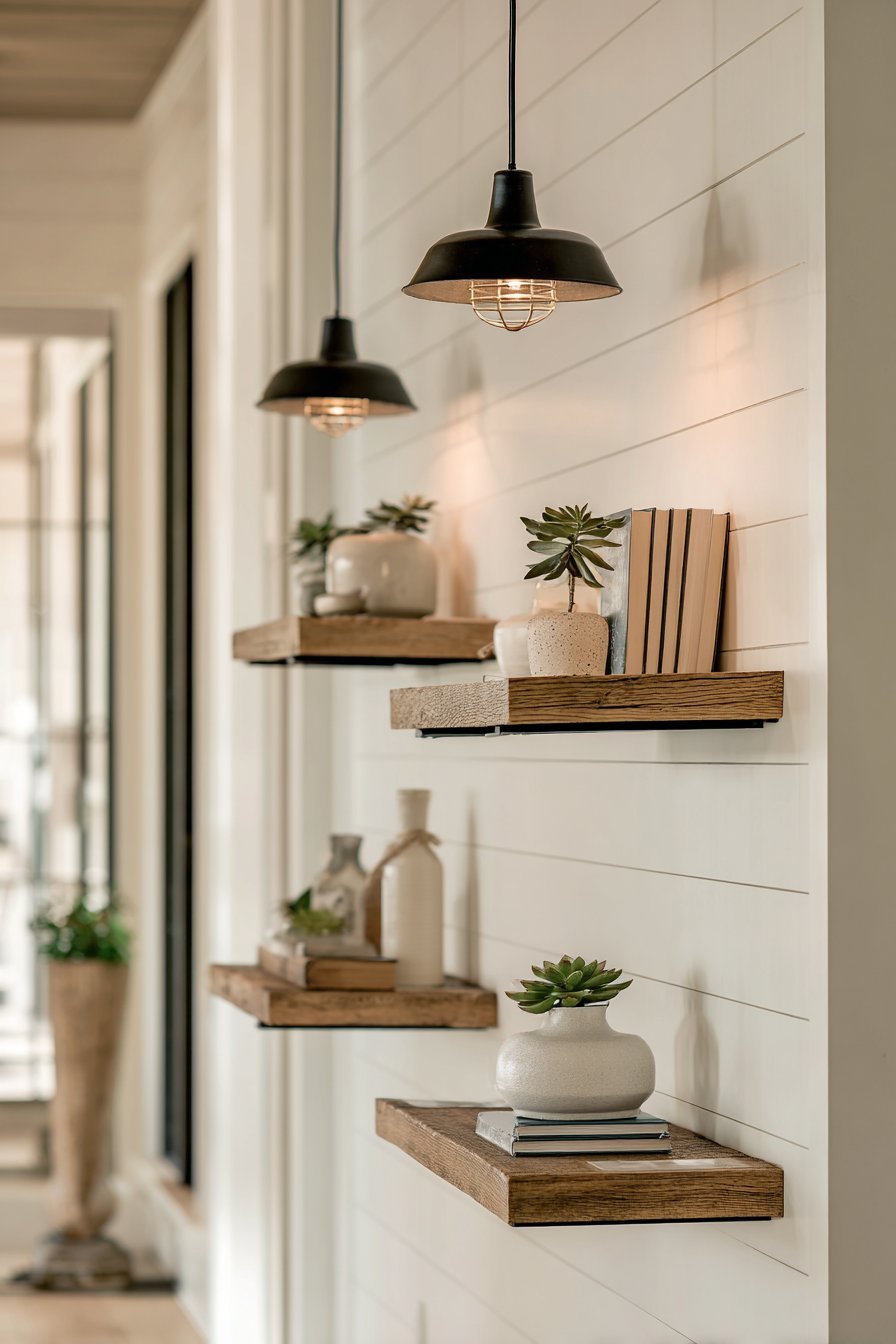
Pendant lighting from above casts warm illumination across the display. The lighting highlights the wood grain and plant details. This shallow shelving solution maximizes storage while maintaining clearance. The staggered arrangement prevents the design from feeling monotonous.
Key Design Tips:
- Choose shallow shelves specifically designed for narrow spaces
- Stagger shelf heights to create dynamic visual flow
- Limit decor items to prevent cluttered appearance
- Select pendant lighting that illuminates without overwhelming the space
- Use shiplap or textured walls to add depth without physical bulk
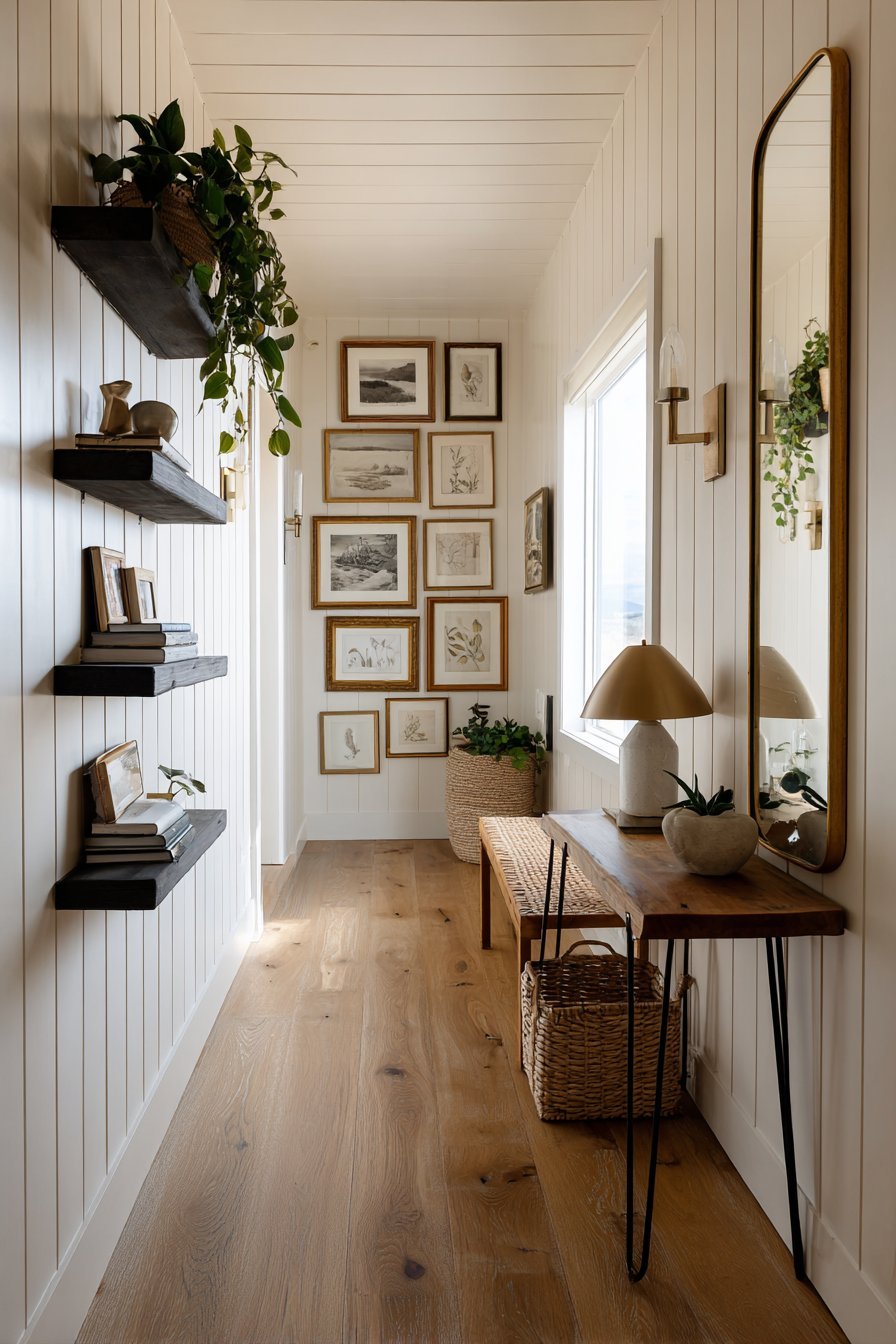
3. Oversized Mirror with Narrow Bench
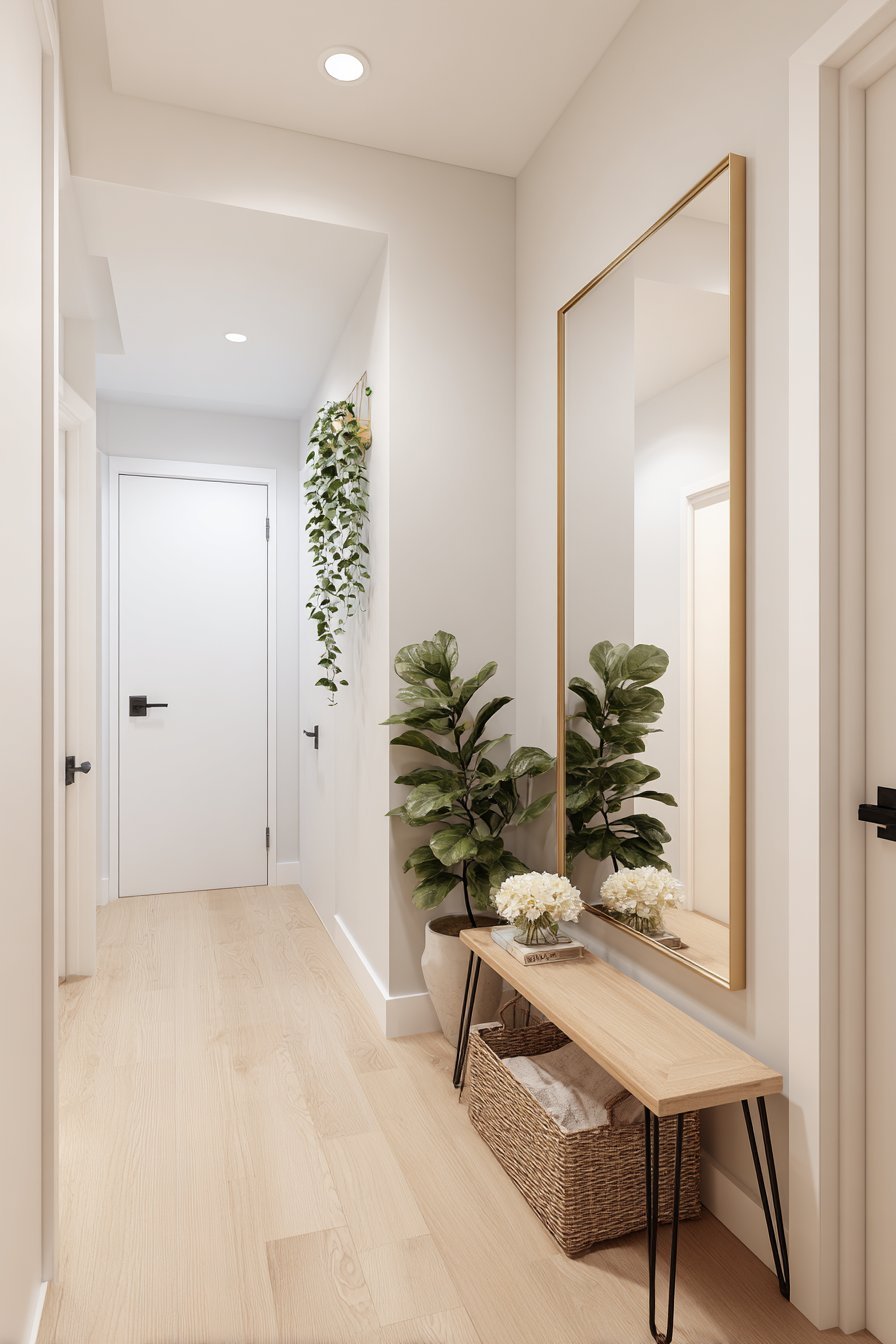
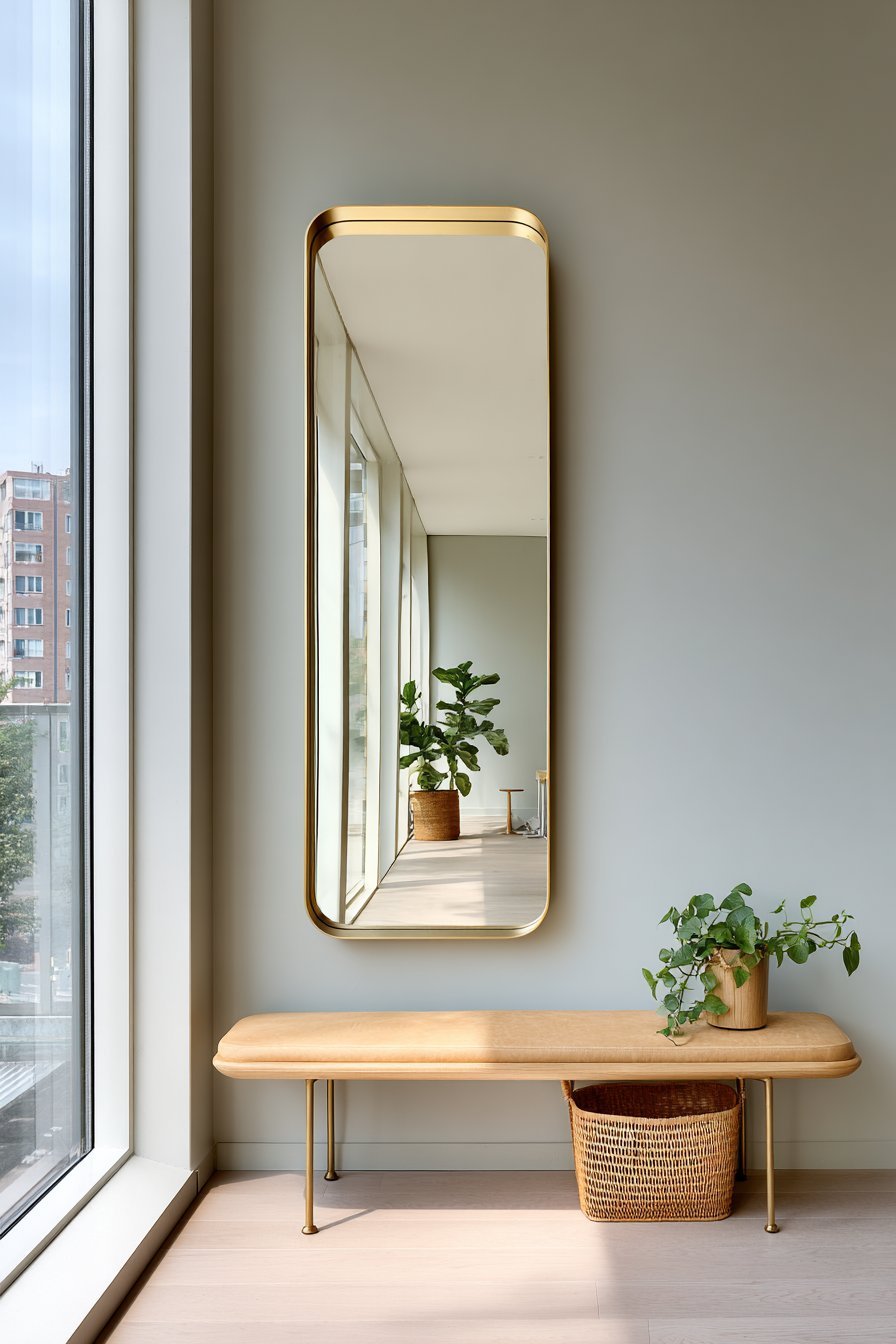
A single oversized vertical mirror dominates this slender hallway wall. The thin brass frame adds elegance without visual weight. Strategic positioning reflects natural light throughout the corridor. This creates the illusion of expanded width in the confined space.
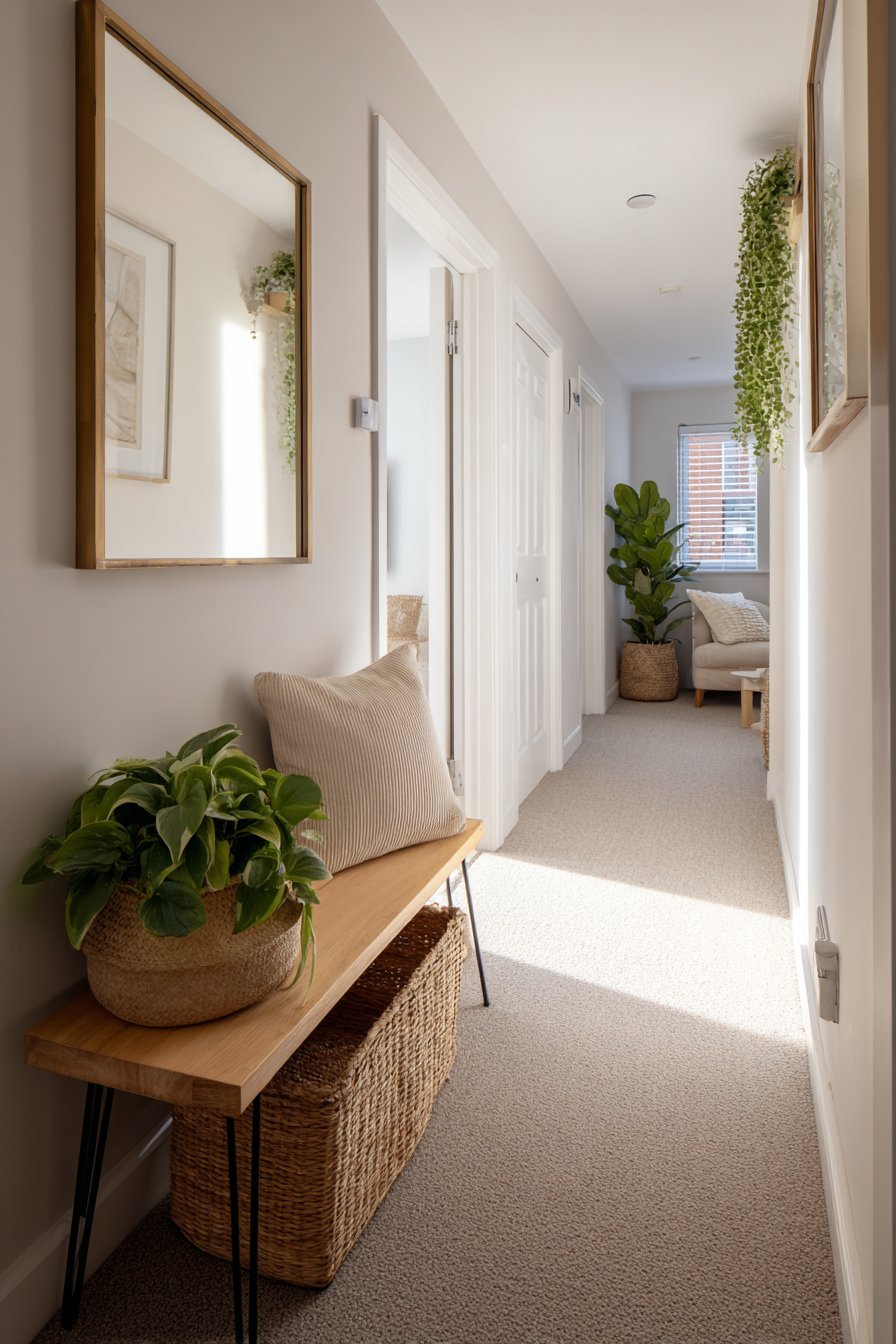
A narrow bench in light oak sits beneath the mirror. Hairpin legs give the bench an airy, modern appearance. A woven basket on the bench provides shoe storage. A small trailing pothos plant softens the arrangement with organic movement. Pale grey walls complement the minimal design approach.
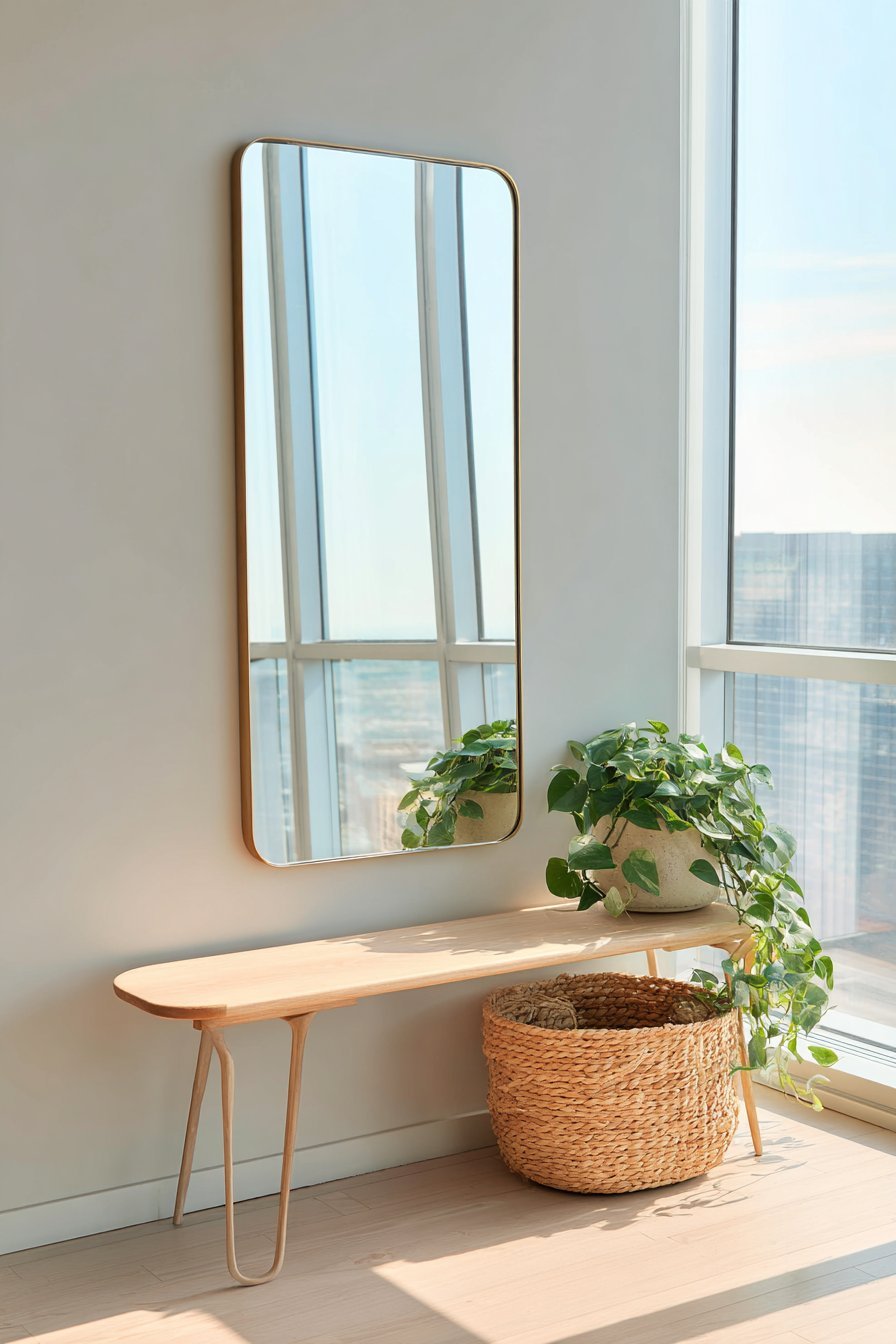
The mirror’s reflective surface doubles the perceived room width. It bounces light from windows and fixtures throughout the space. This simple solution addresses both aesthetic and practical needs. The bench provides seating for shoe changes while maintaining walkway flow.
Key Design Tips:
- Use oversized mirrors to visually expand narrow corridors
- Position mirrors to reflect natural light sources for maximum brightness
- Select benches with exposed legs to maintain visual lightness
- Incorporate trailing plants to add vertical movement
- Keep color palettes neutral to enhance the spacious feeling
4. Sage Green Shiplap with Rattan Mirrors
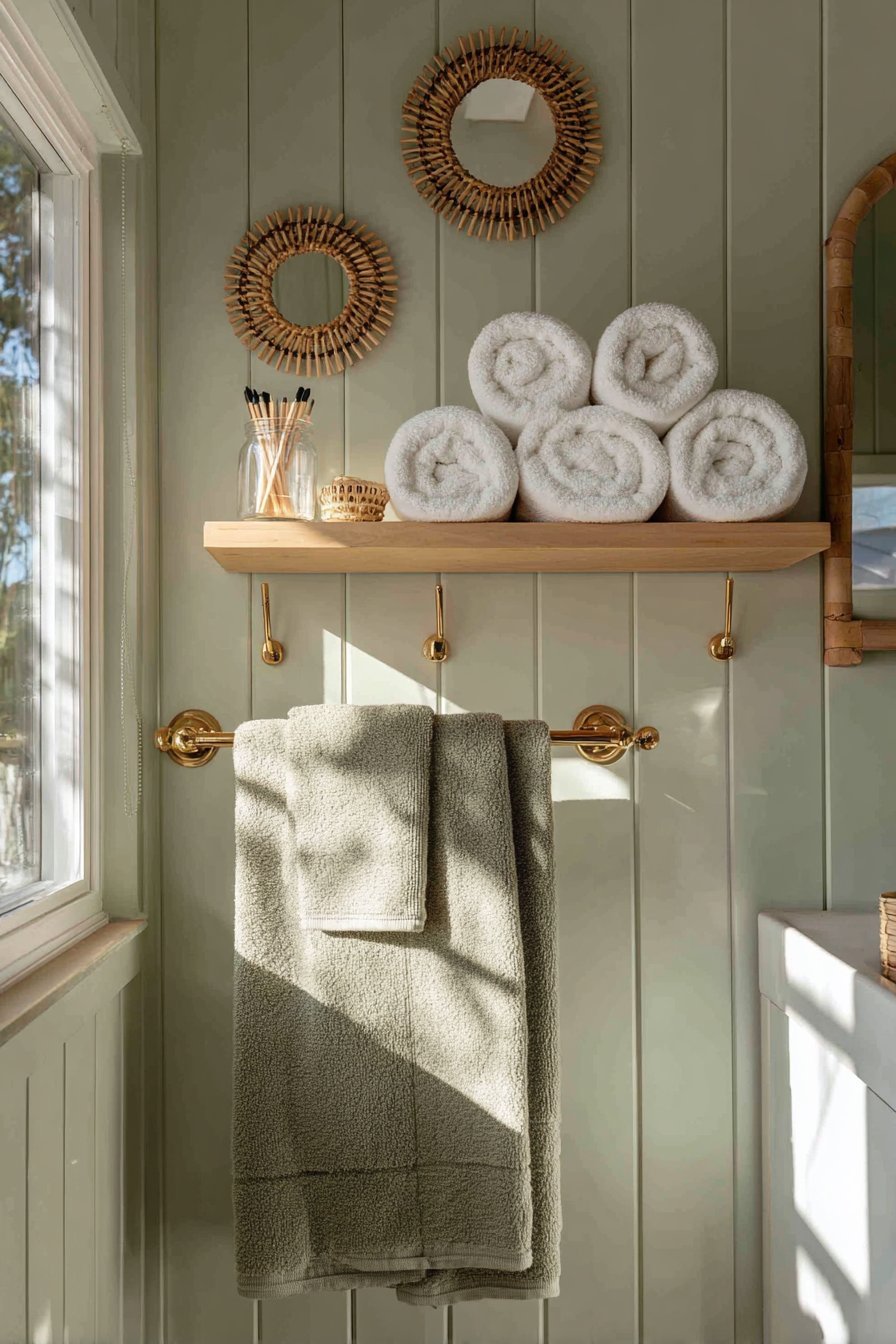
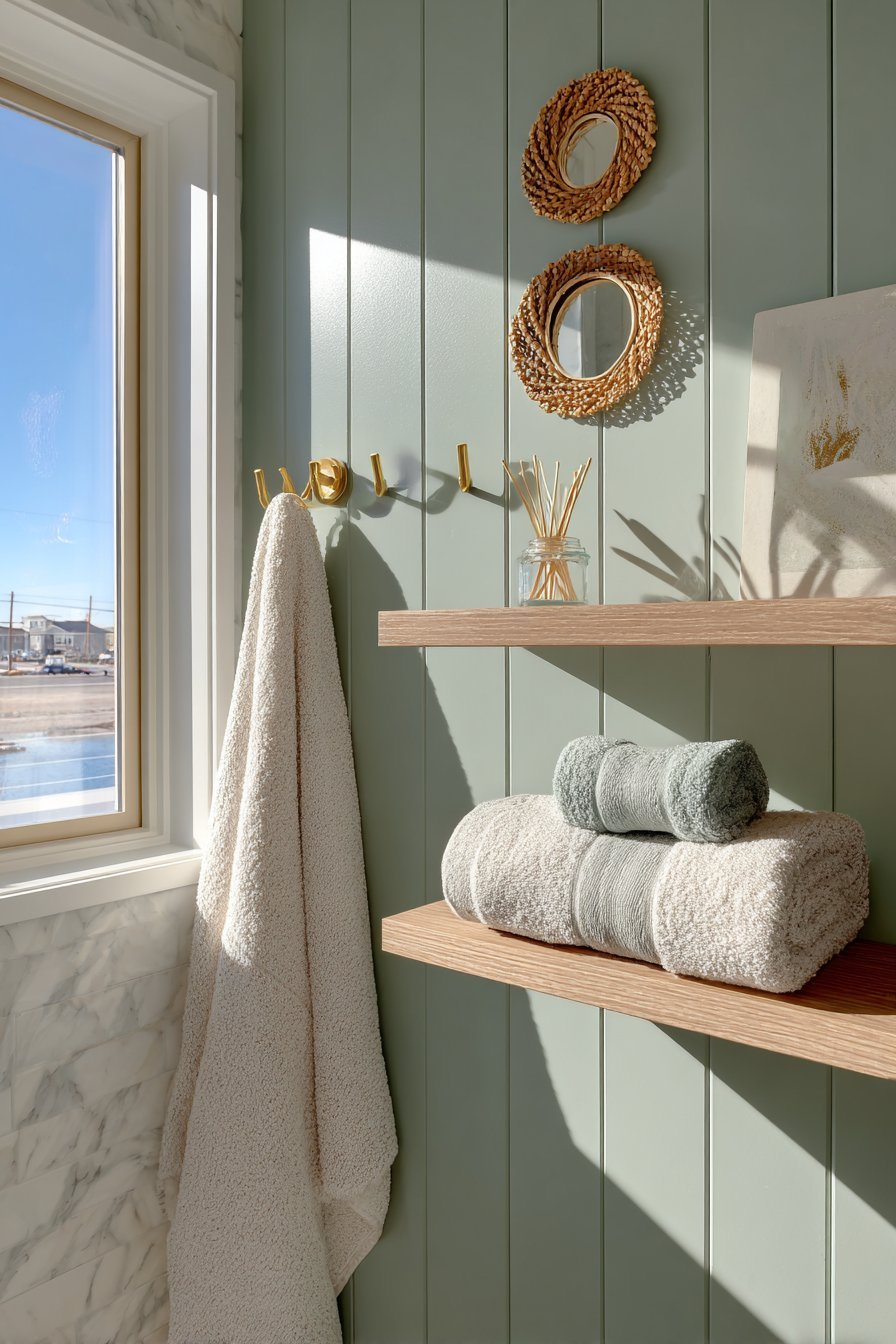
Vertical shiplap painted in soft sage green creates textural interest. Three small circular rattan mirrors arrange in an ascending diagonal pattern. The organic mirror frames contrast beautifully with the painted wood texture. This combination brings natural elements into a narrow bathroom space.
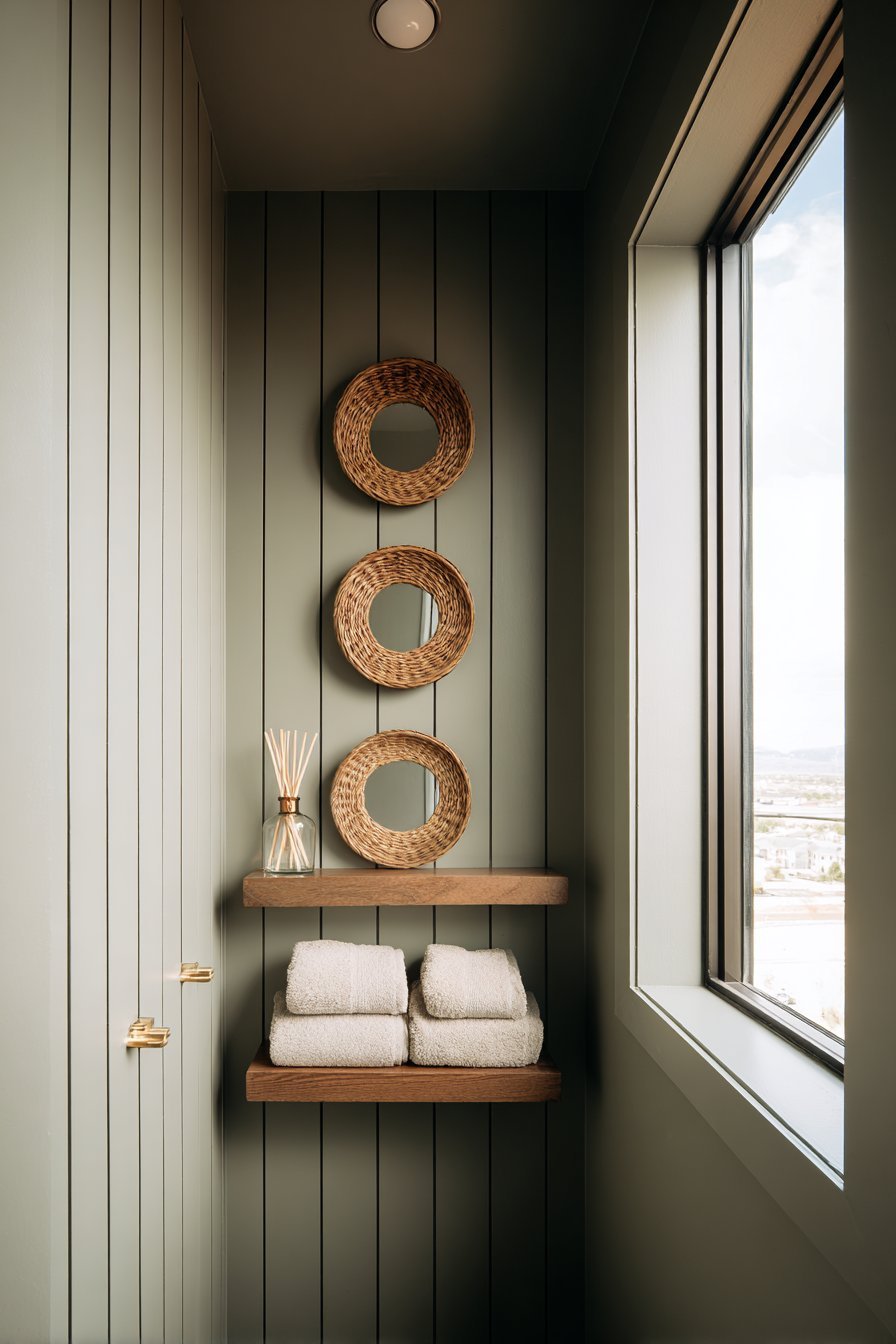
A slim wooden shelf mounted below the mirrors holds rolled towels. A small glass jar with cotton swabs adds functional decoration. Brushed gold towel hooks provide accent points along the wall. These metallic touches elevate the natural material palette.
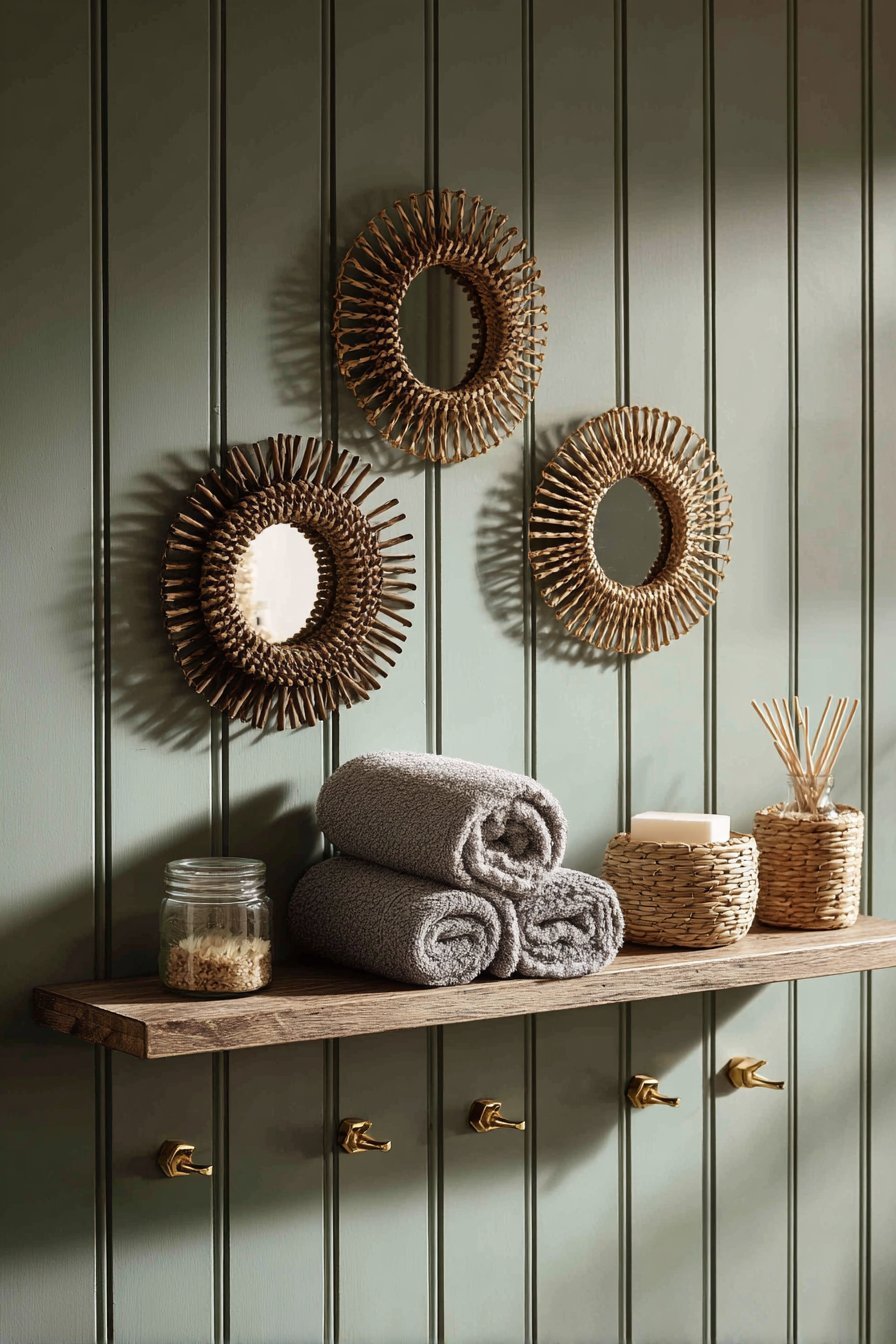
Natural window light creates gentle highlights on the textured surface. The vertical shiplap installation emphasizes ceiling height effectively. The diagonal mirror arrangement guides the eye upward through the space. This design proves narrow walls can support layered visual interest.
Key Design Tips:
- Install shiplap vertically to emphasize height in narrow spaces
- Use soft, muted colors to prevent overwhelming small areas
- Arrange mirrors in geometric patterns for contemporary appeal
- Mix natural materials like rattan with painted wood for depth
- Add metallic accents sparingly for sophisticated shine
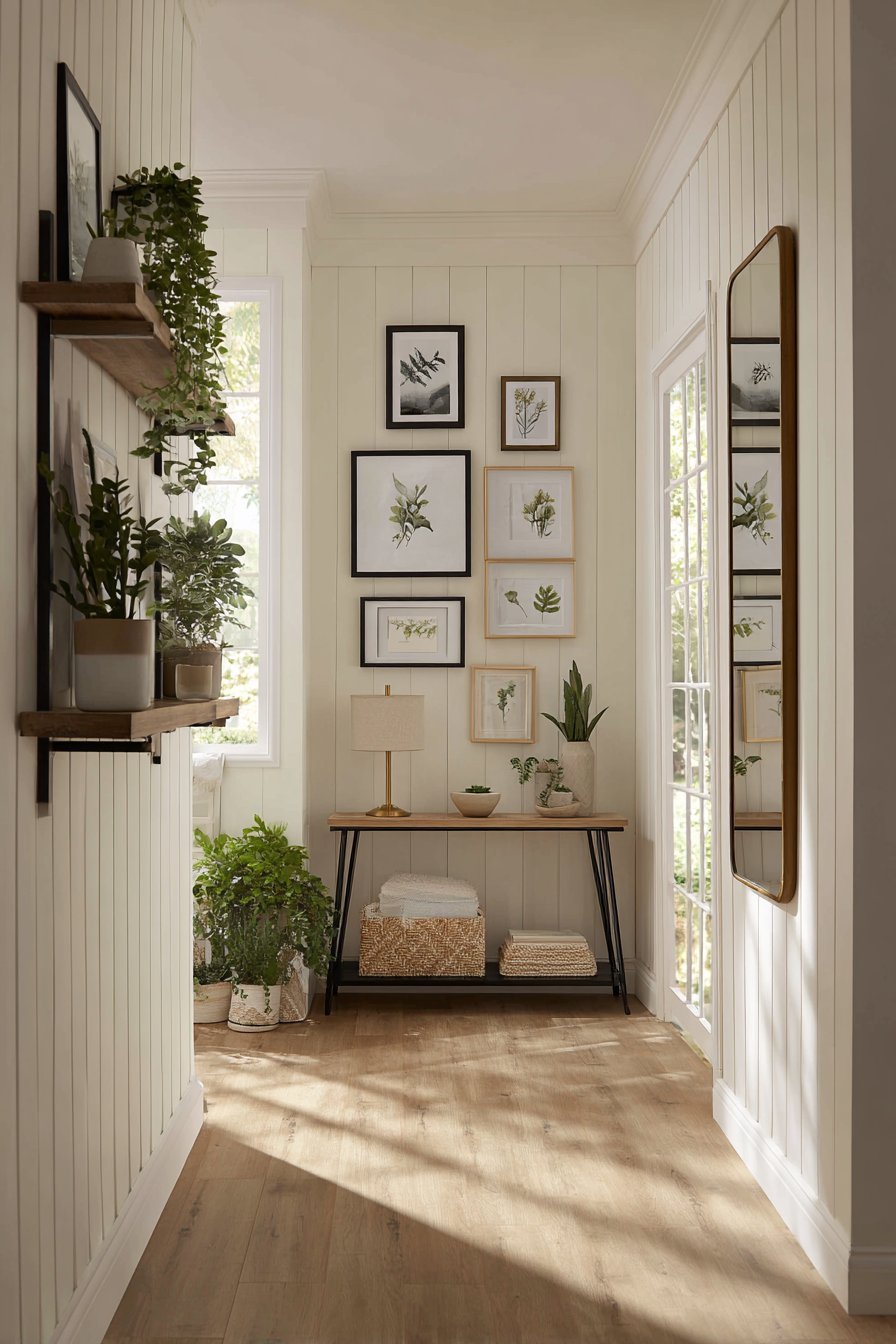
5. Botanical Grid Display with Picture Ledge
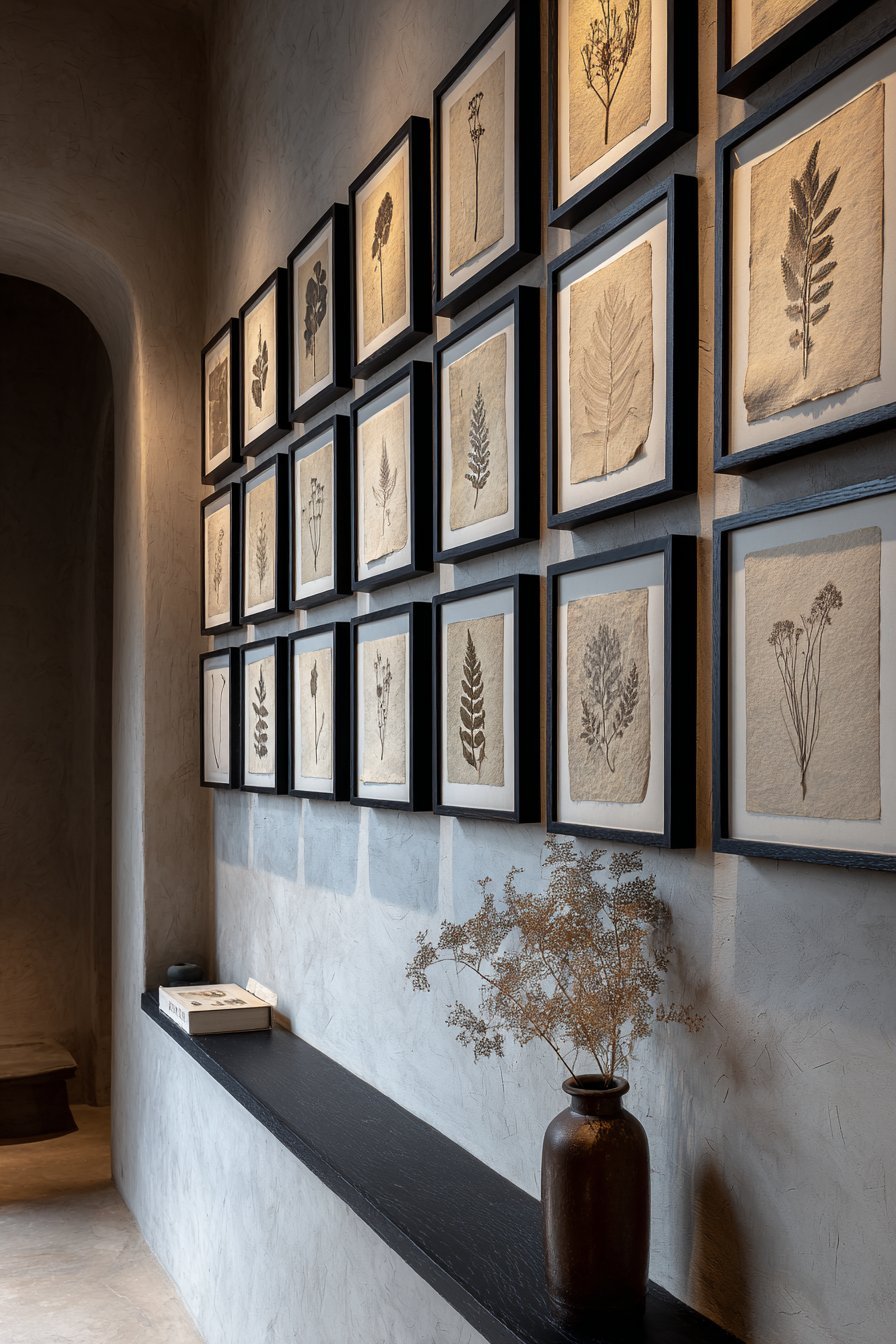
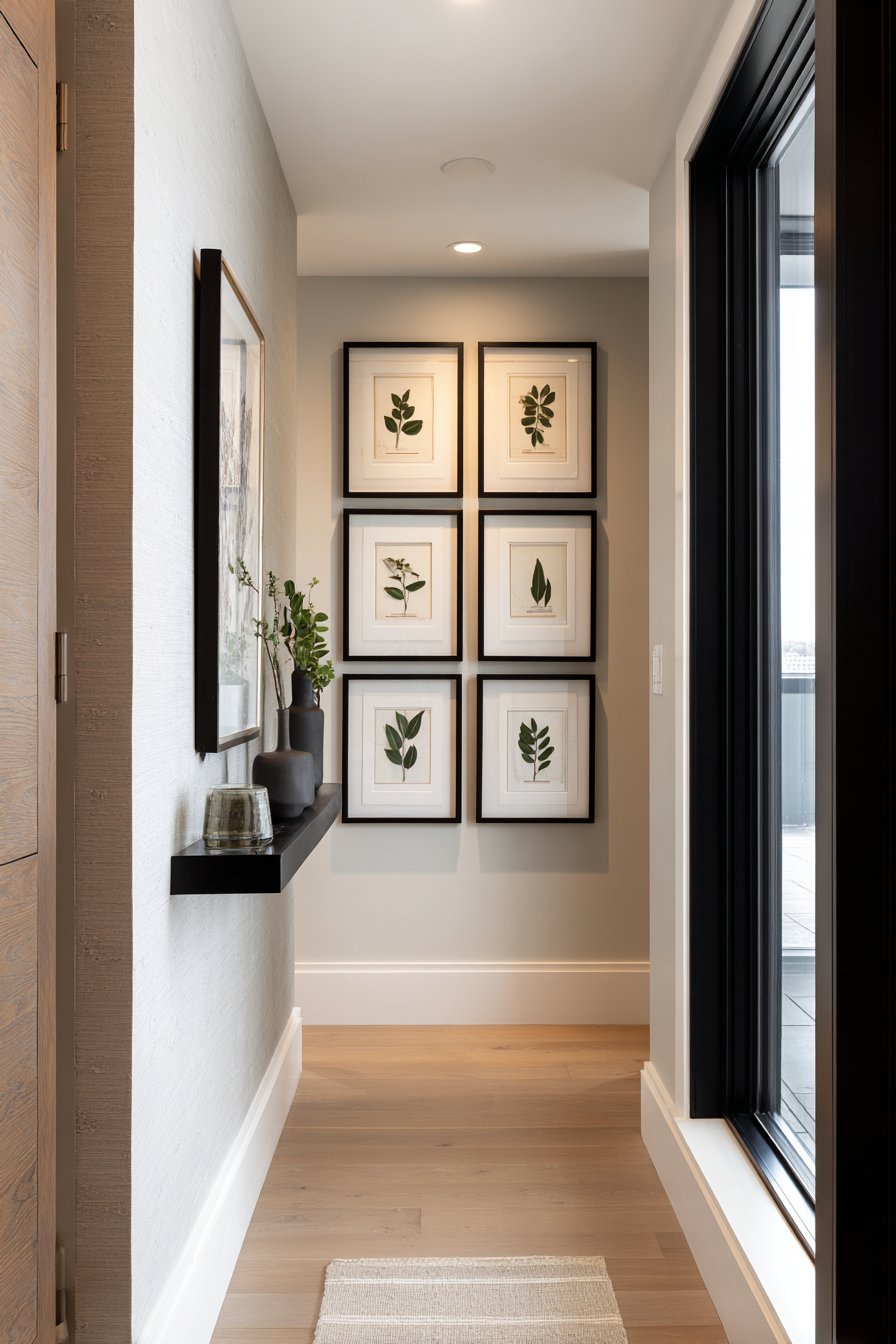
Pressed botanical specimens in simple black frames create an organized grid. The symmetrical arrangement respects the narrow width while making visual impact. Each frame showcases different preserved plants and flowers. The collection creates a natural history museum aesthetic at home.
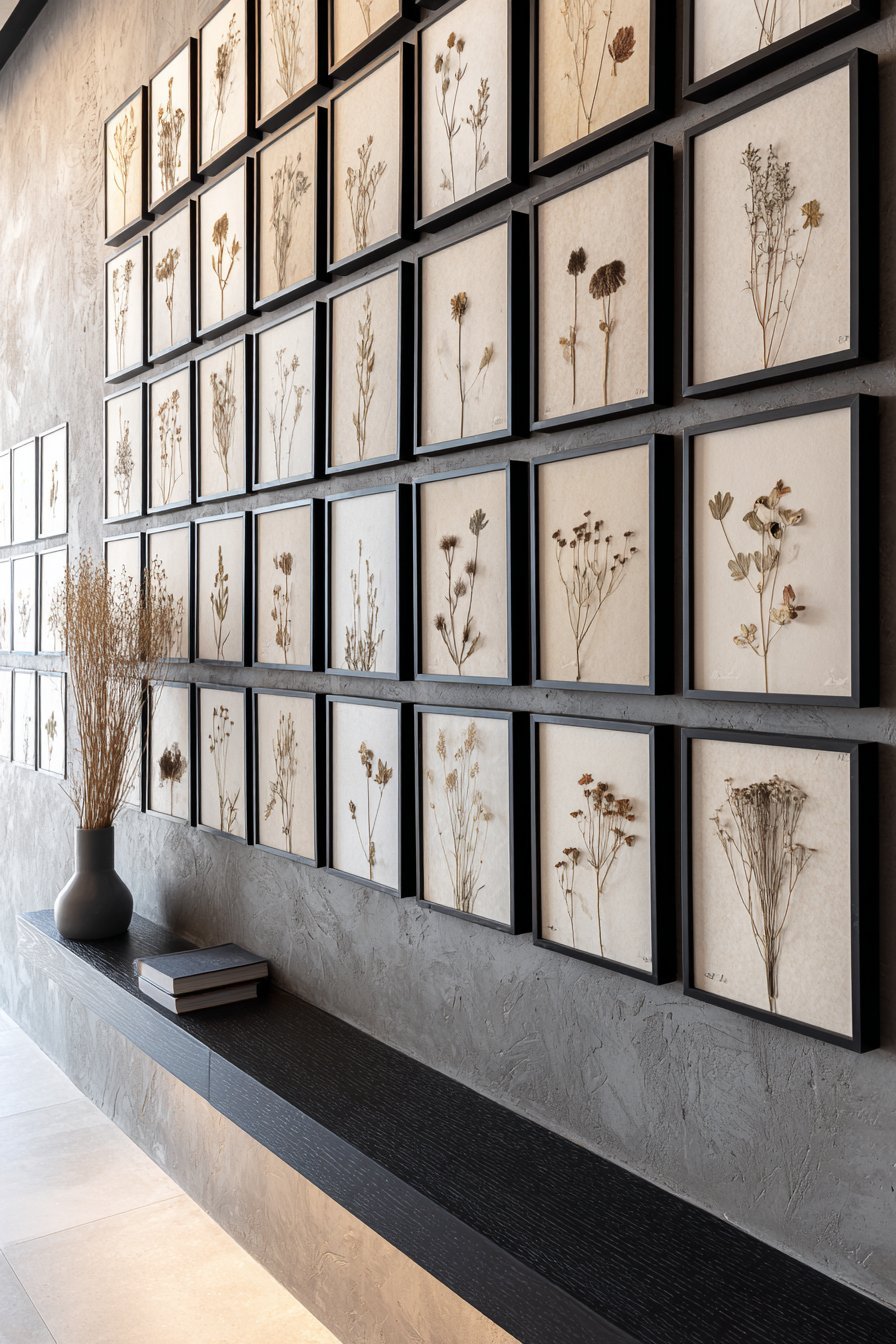
The frames mount on warm grey walls with visible texture. A slim picture ledge in matte black sits below the grid. This ledge allows for rotating small framed prints seasonally. A single stem vase adds a fresh element to the dried botanicals.
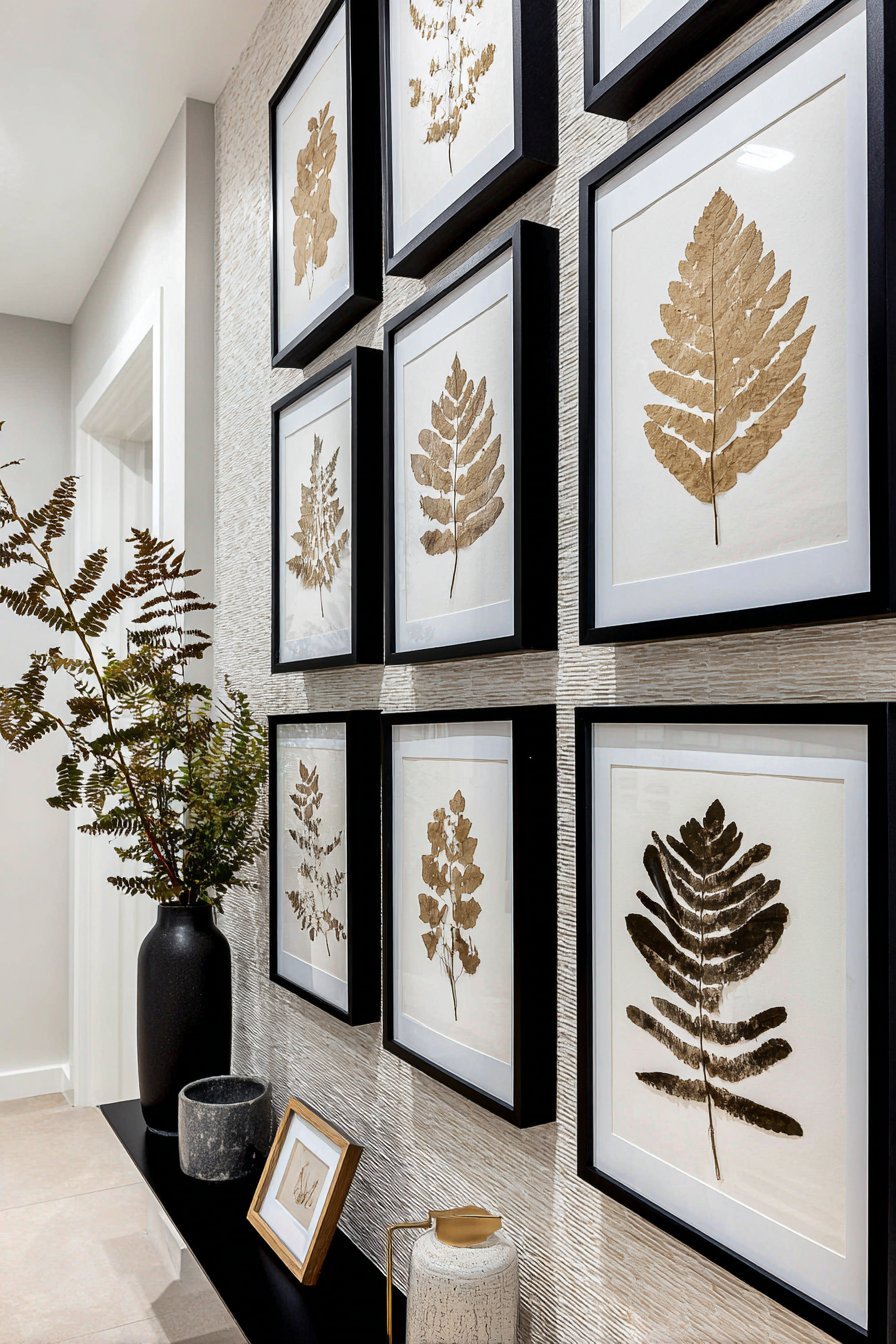
Recessed lighting highlights the artwork without protruding into the space. The grid pattern provides satisfying symmetry in the narrow corridor. This approach works particularly well for collectors and nature enthusiasts. The black frames unify the diverse botanical subjects effectively.
Key Design Tips:
- Create grid patterns for organized, impactful narrow wall displays
- Use picture ledges for flexible seasonal rotation options
- Choose recessed lighting to avoid physical protrusion into walkways
- Frame botanical prints in uniform frames for cohesive appearance
- Add one fresh element to complement preserved displays
6. Vertical Pegboard Kitchen Organization
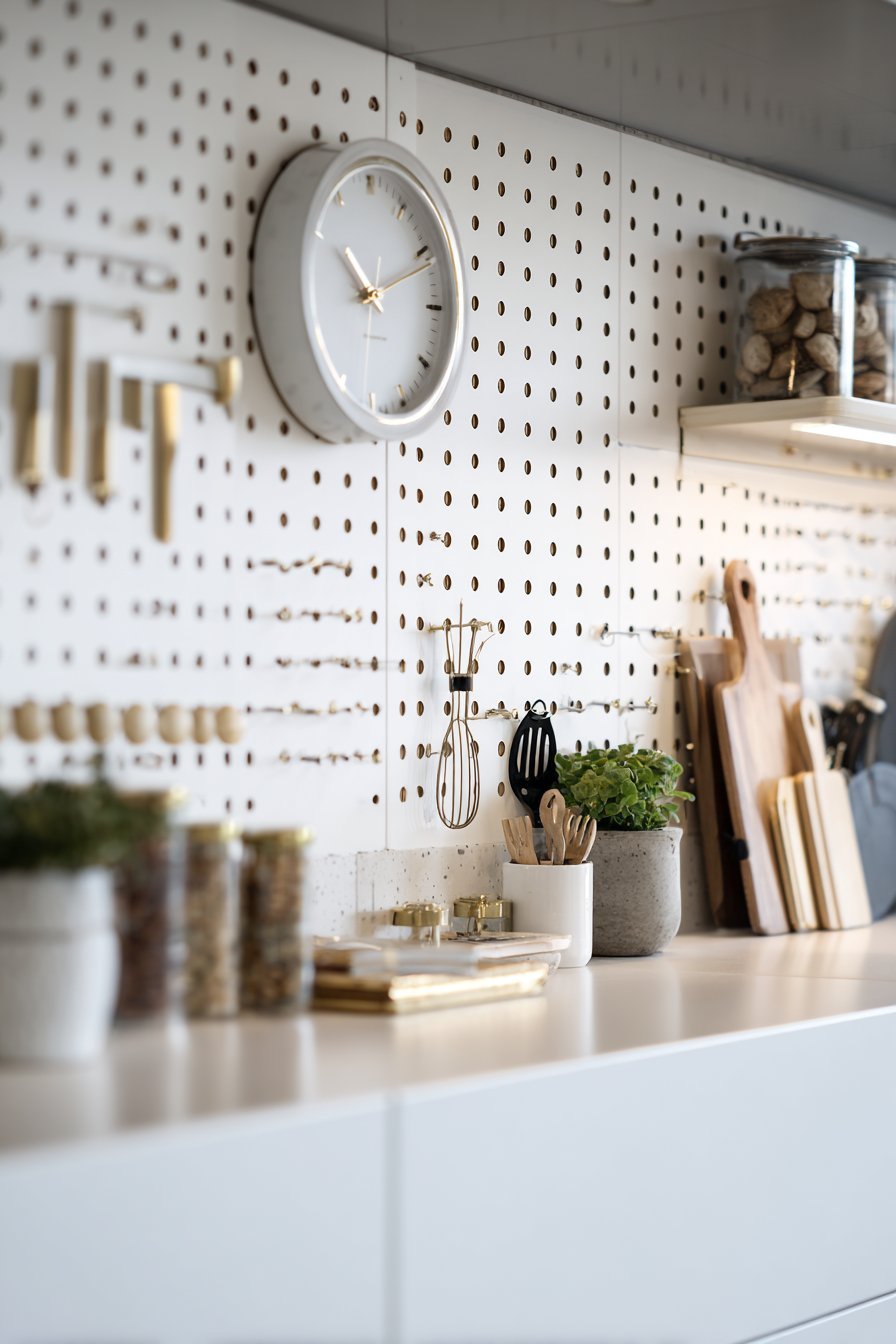
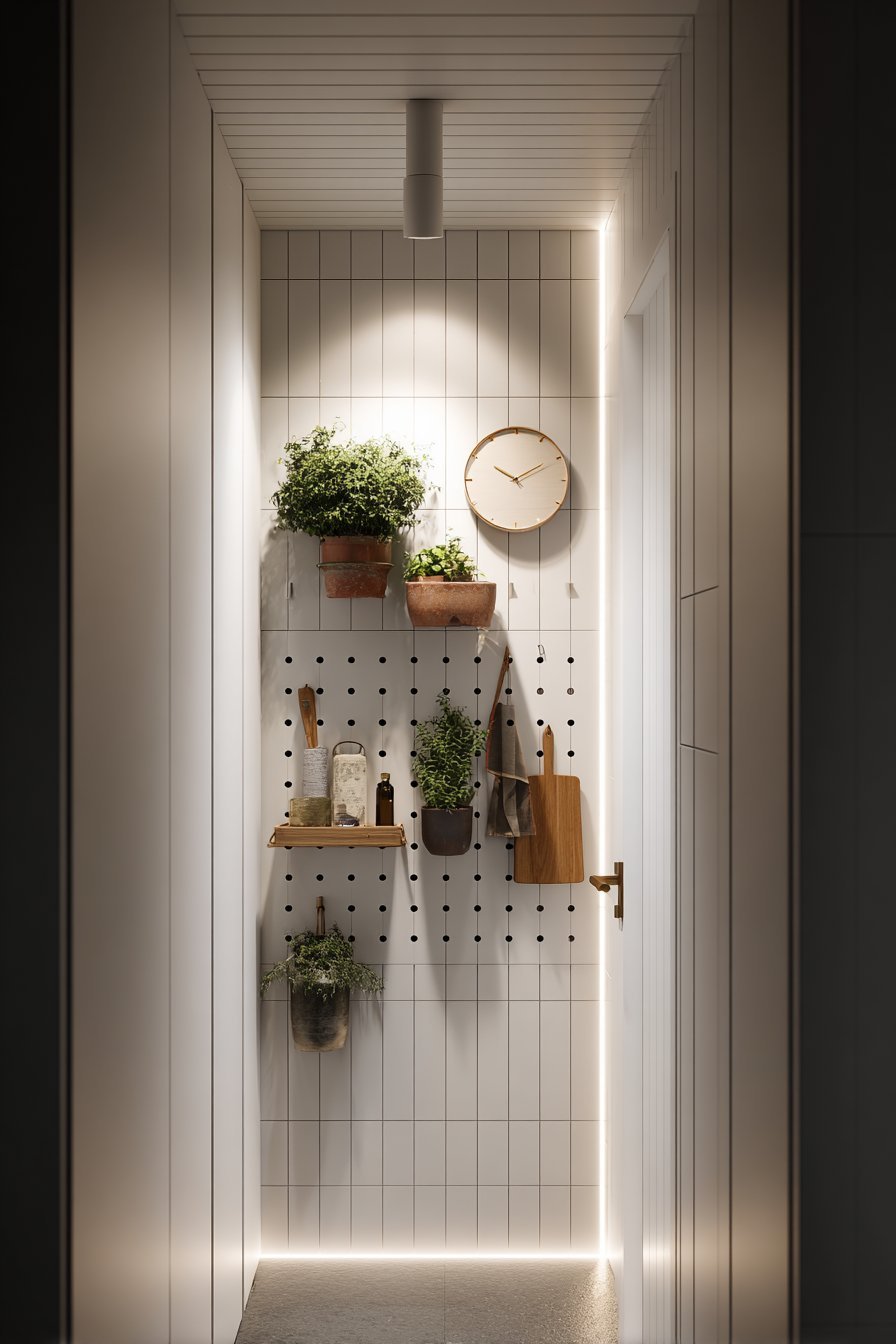
A vertical pegboard system in natural birch maximizes narrow kitchen wall space. Brass hooks hold cooking utensils at varying heights. Small plants in ceramic pots add greenery between functional items. A compact wall clock provides practical timekeeping within the organized display.
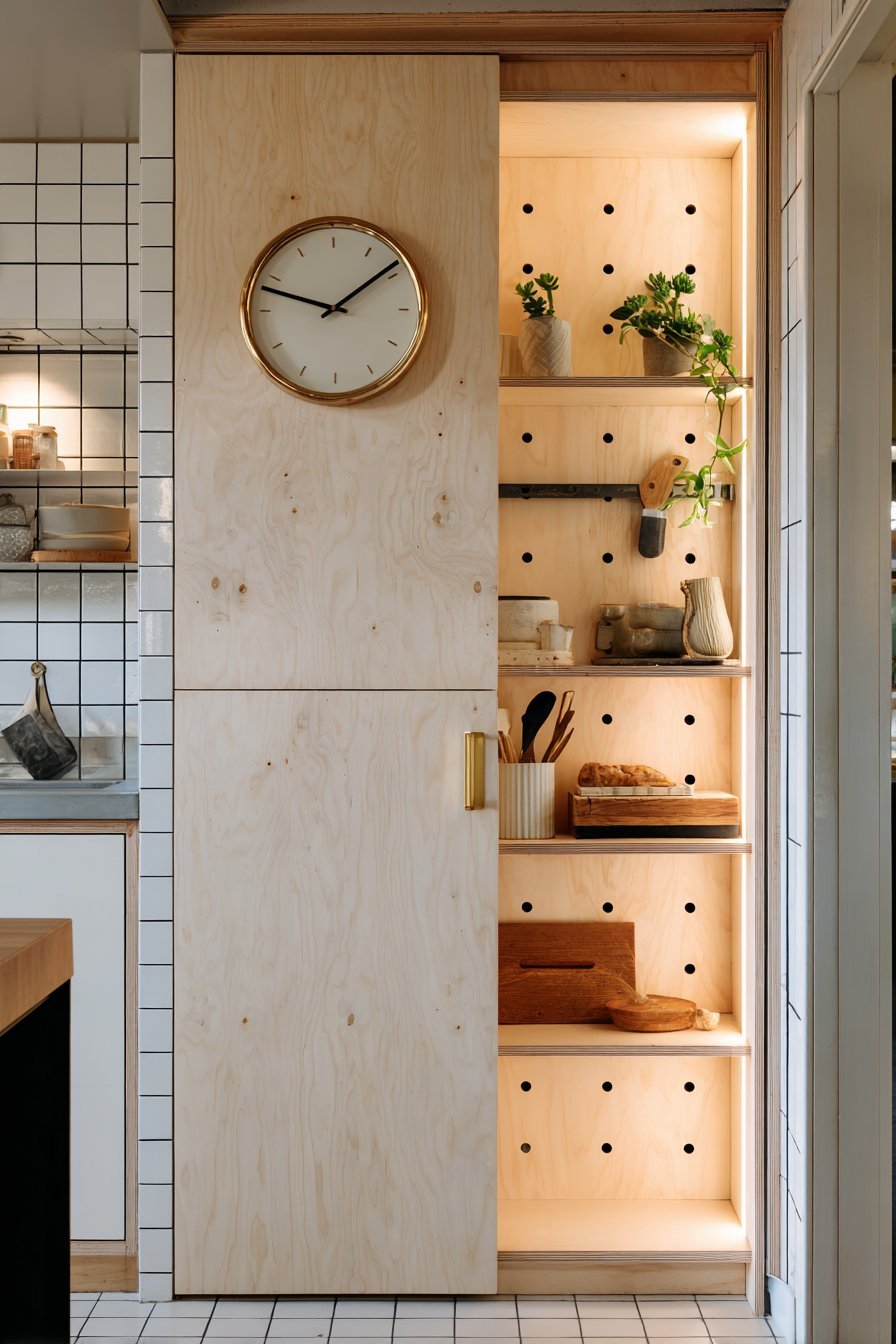
White subway tiles behind the pegboard create clean contrast. The tiles reflect light and maintain kitchen brightness. Under-cabinet lighting illuminates the pegboard arrangement effectively. This makes items easy to locate during meal preparation.
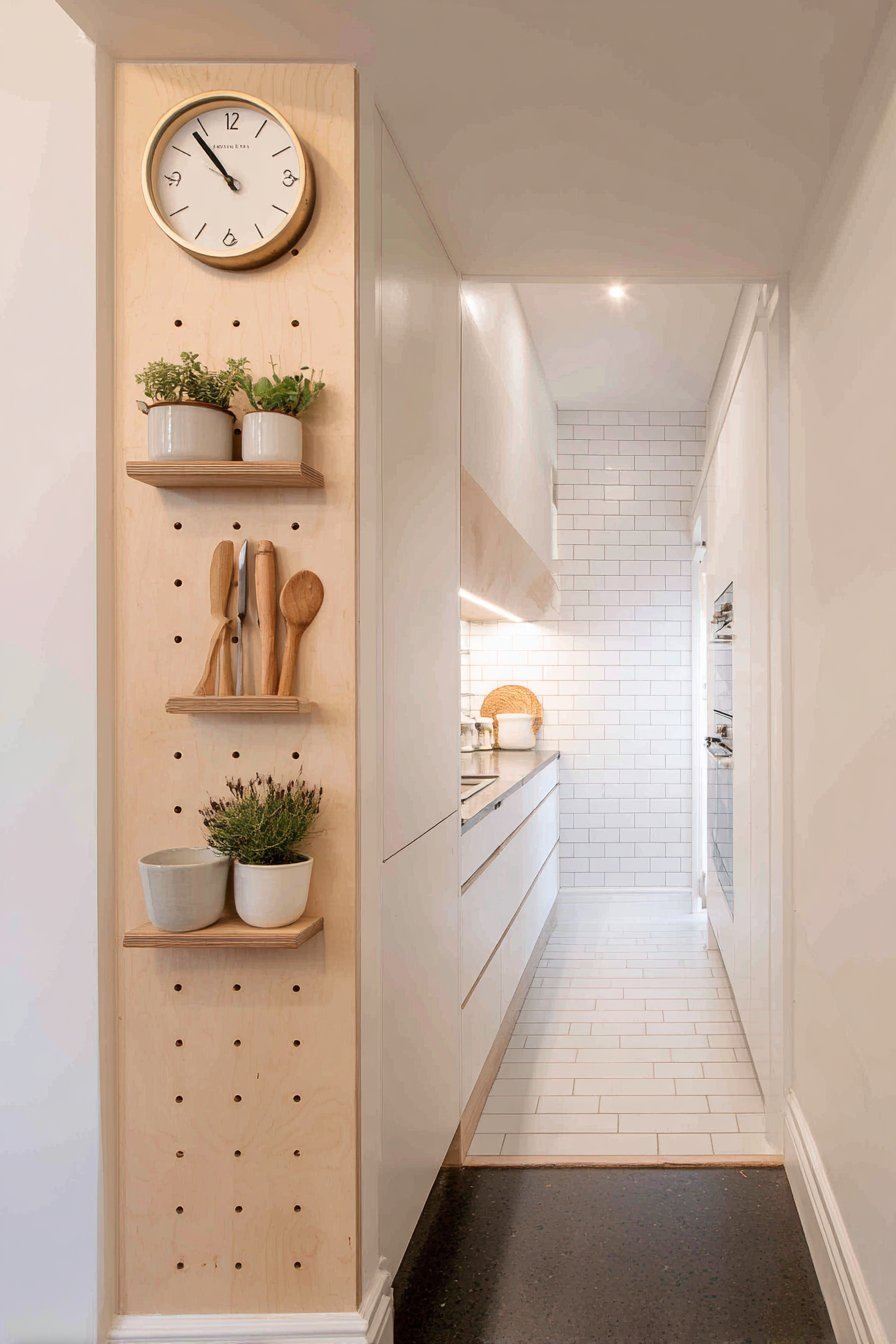
The pegboard’s organized aesthetic keeps frequently used items accessible. Everything has a designated spot within easy reach. This system prevents counter clutter in compact kitchens. The natural wood and brass combination adds warmth to utilitarian organization.
Key Design Tips:
- Install pegboard systems for customizable narrow wall storage
- Use brass or copper hooks for elevated aesthetic appeal
- Combine functional items with small plants for visual balance
- Position lighting to illuminate the organizational system clearly
- Choose natural wood pegboard to add warmth to kitchen spaces
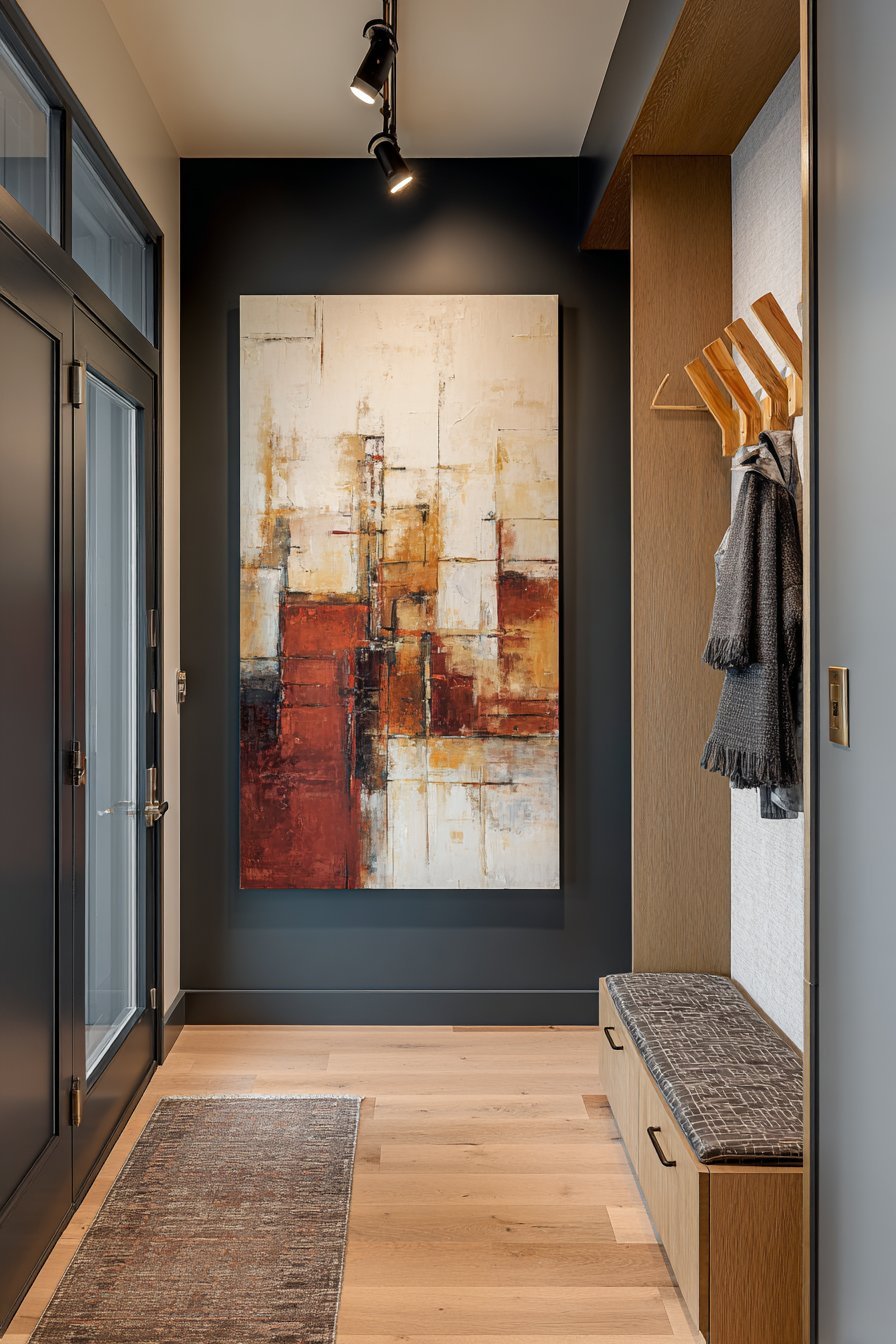
7. Charcoal Wall with Bold Abstract Art
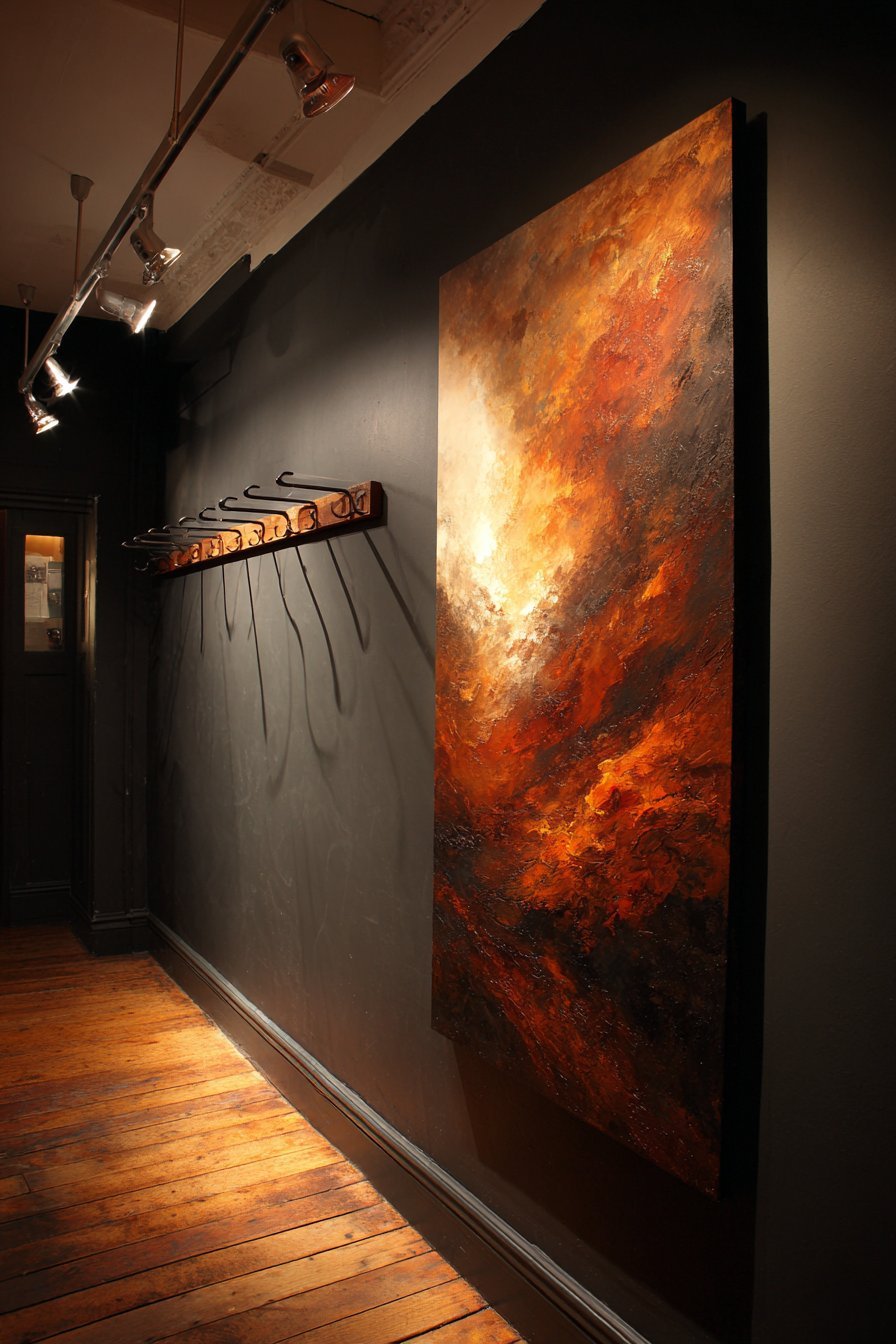
Deep charcoal grey paint transforms a narrow hallway into a dramatic space. A single large-scale abstract canvas hangs in vertical orientation. Bold brushstrokes in cream, rust, and gold create movement. This substantial artwork commands attention without overwhelming the narrow width.
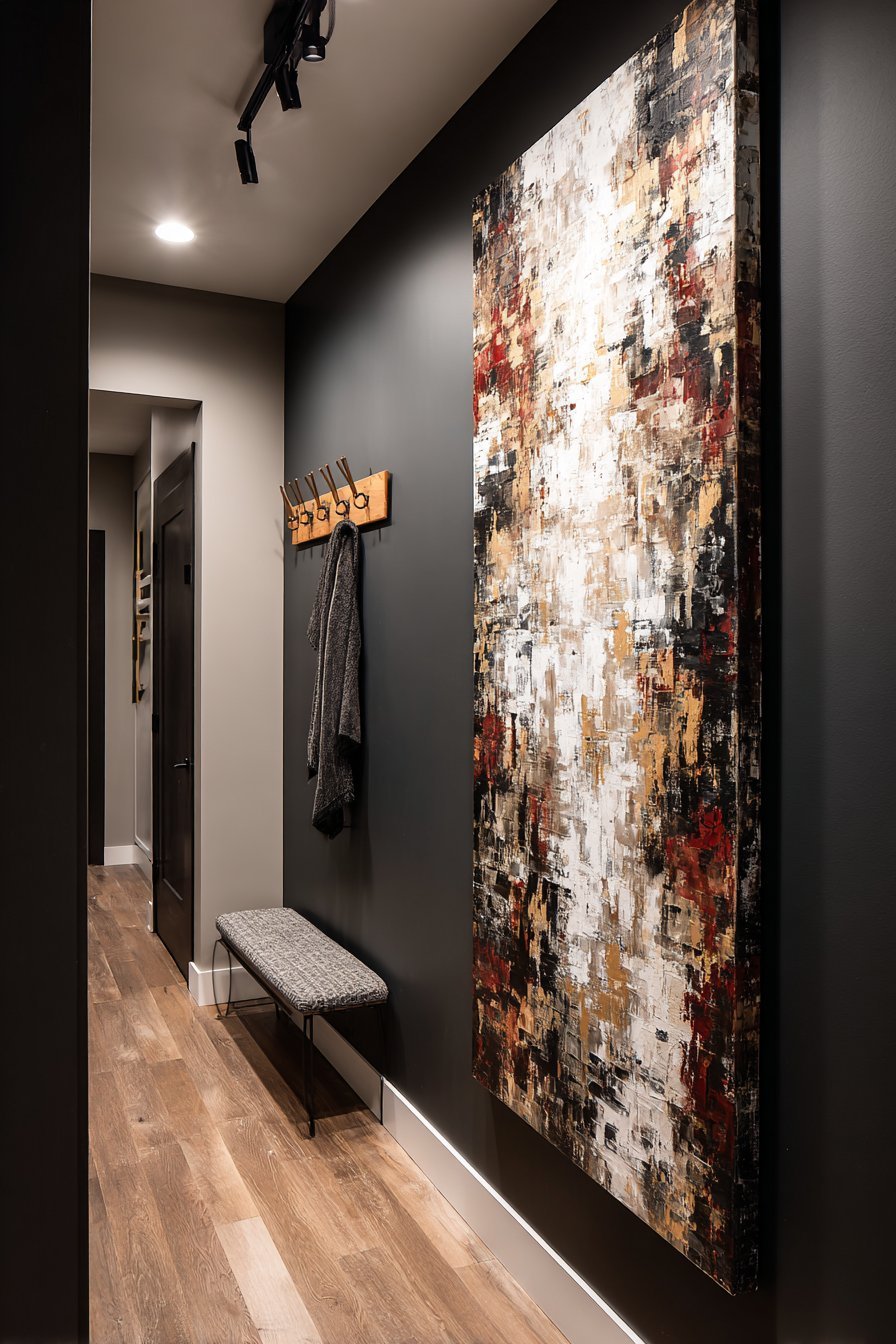
A minimal wall-mounted coat rack in matte black sits below. Wooden pegs provide functional hanging storage at practical height. Warm oak flooring grounds the dark wall color. The natural wood prevents the space from feeling heavy.
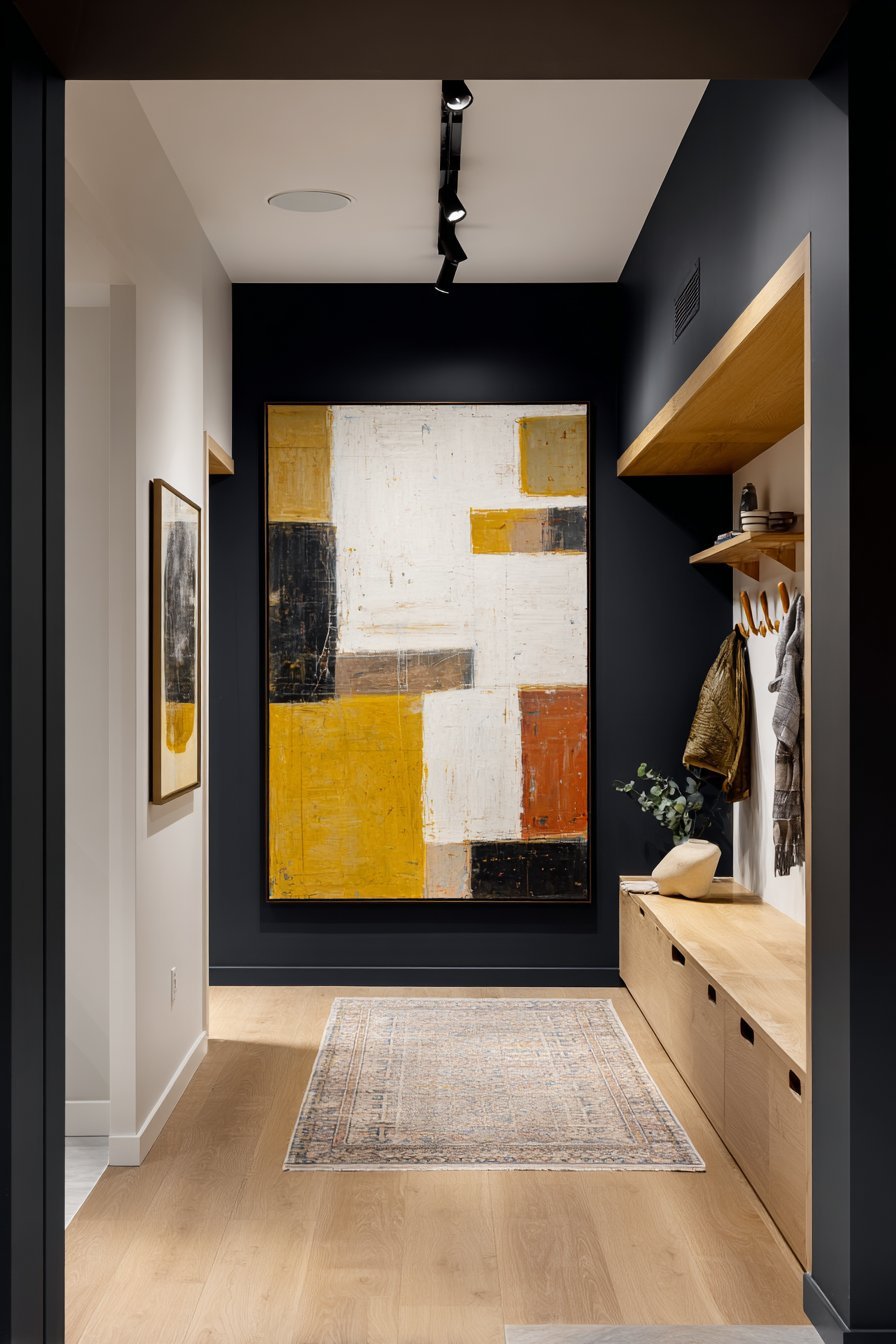
Directional track lighting emphasizes the artwork’s texture and color depth. The lighting creates gallery-quality presentation in a residential setting. This design demonstrates that one substantial piece outperforms multiple small items. The bold color choice shows confidence in narrow space design.
Key Design Tips:
- Use dark wall colors to create intimate, gallery-like atmospheres
- Choose one large vertical artwork over multiple small pieces
- Install directional lighting to highlight artwork texture
- Balance dark walls with warm wood flooring
- Select minimal functional elements to maintain focus on art
8. Shallow Cubby Organization System
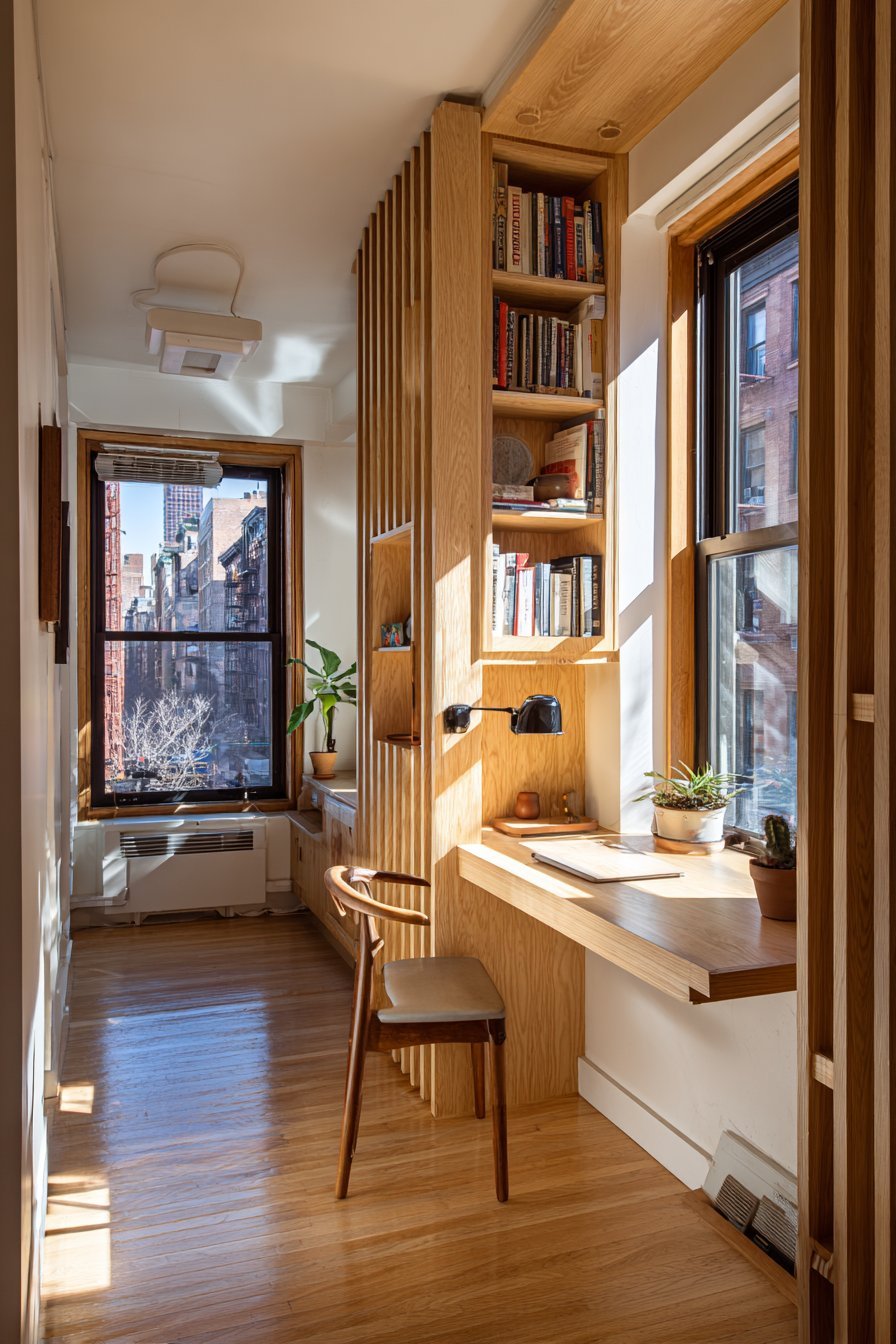
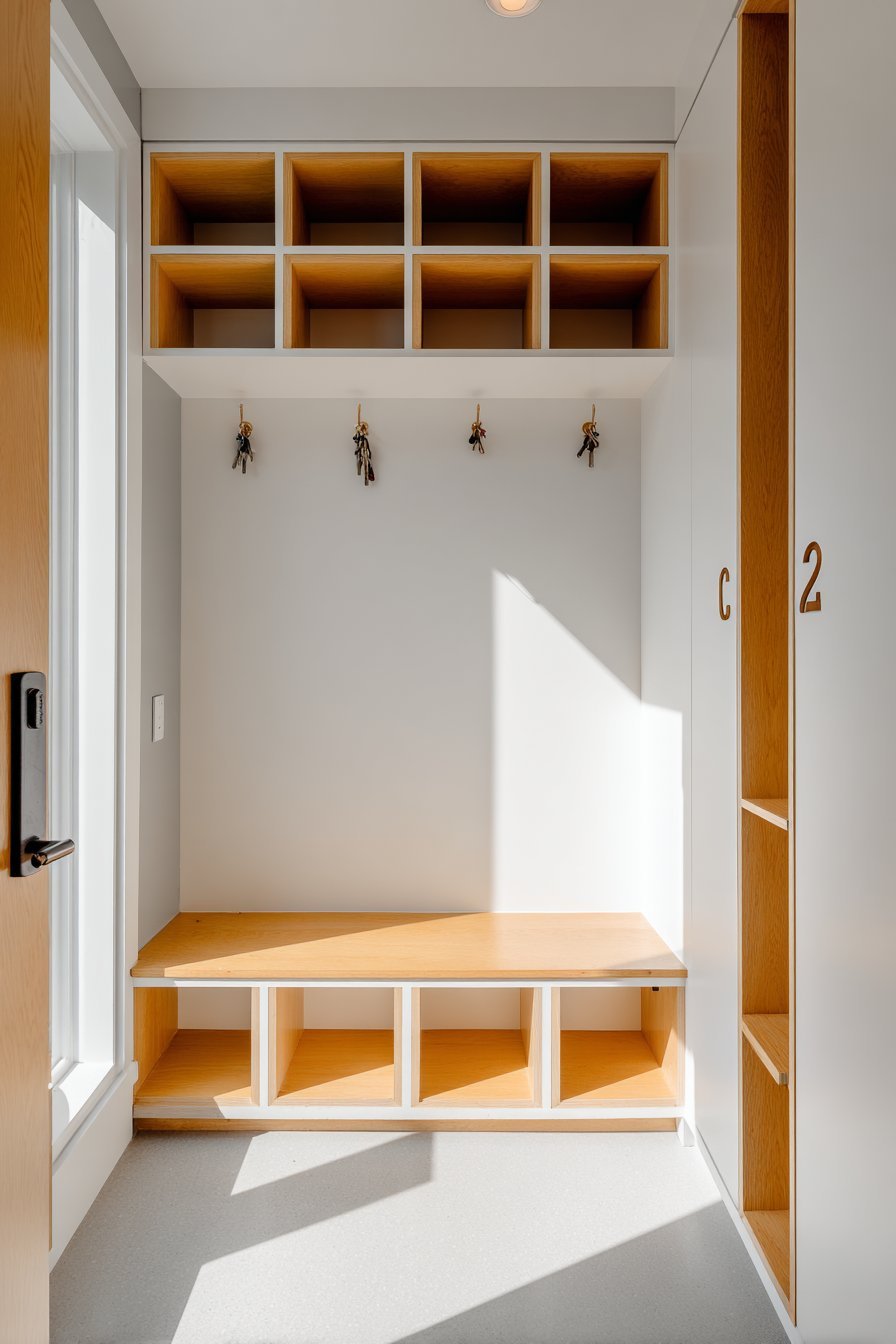
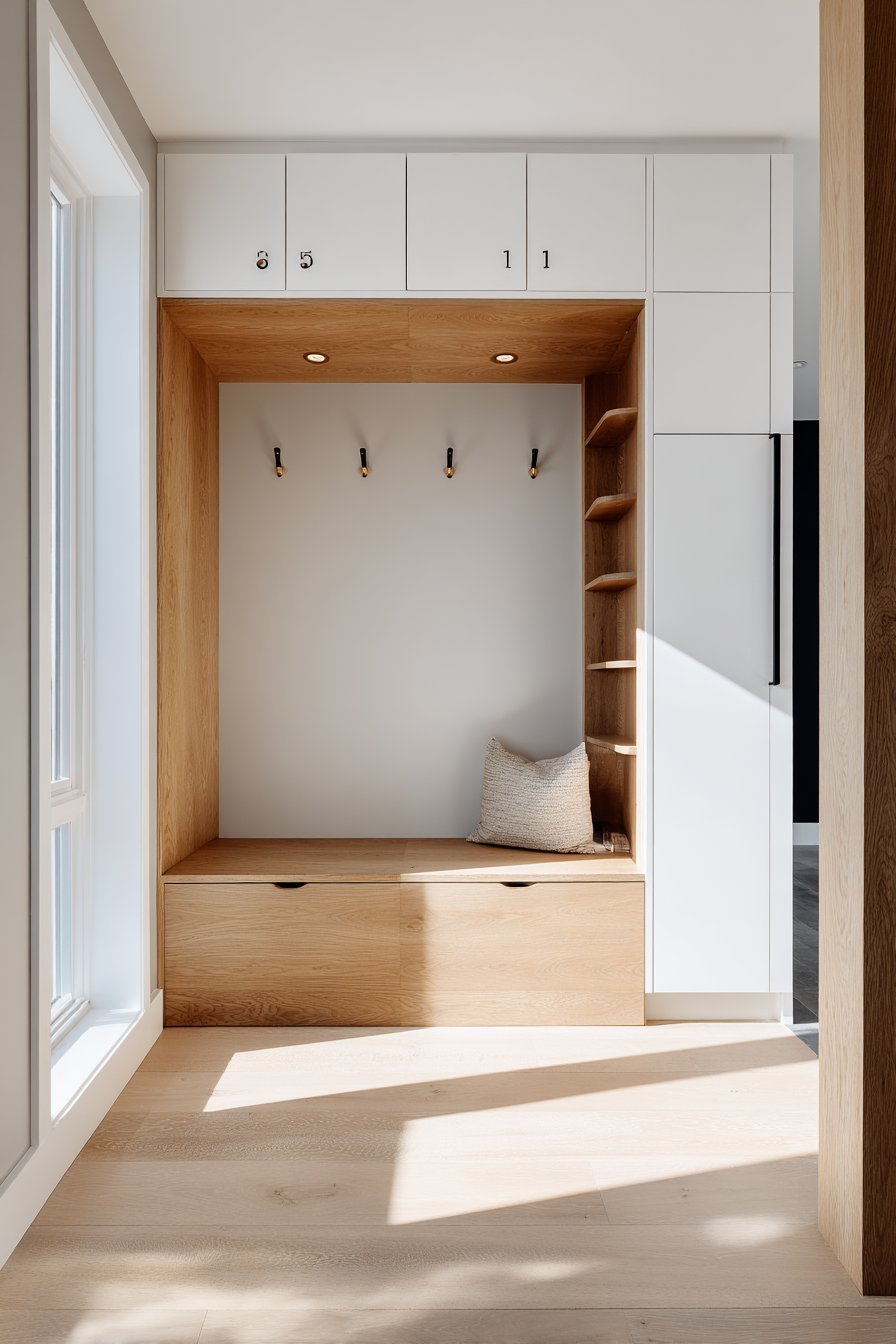
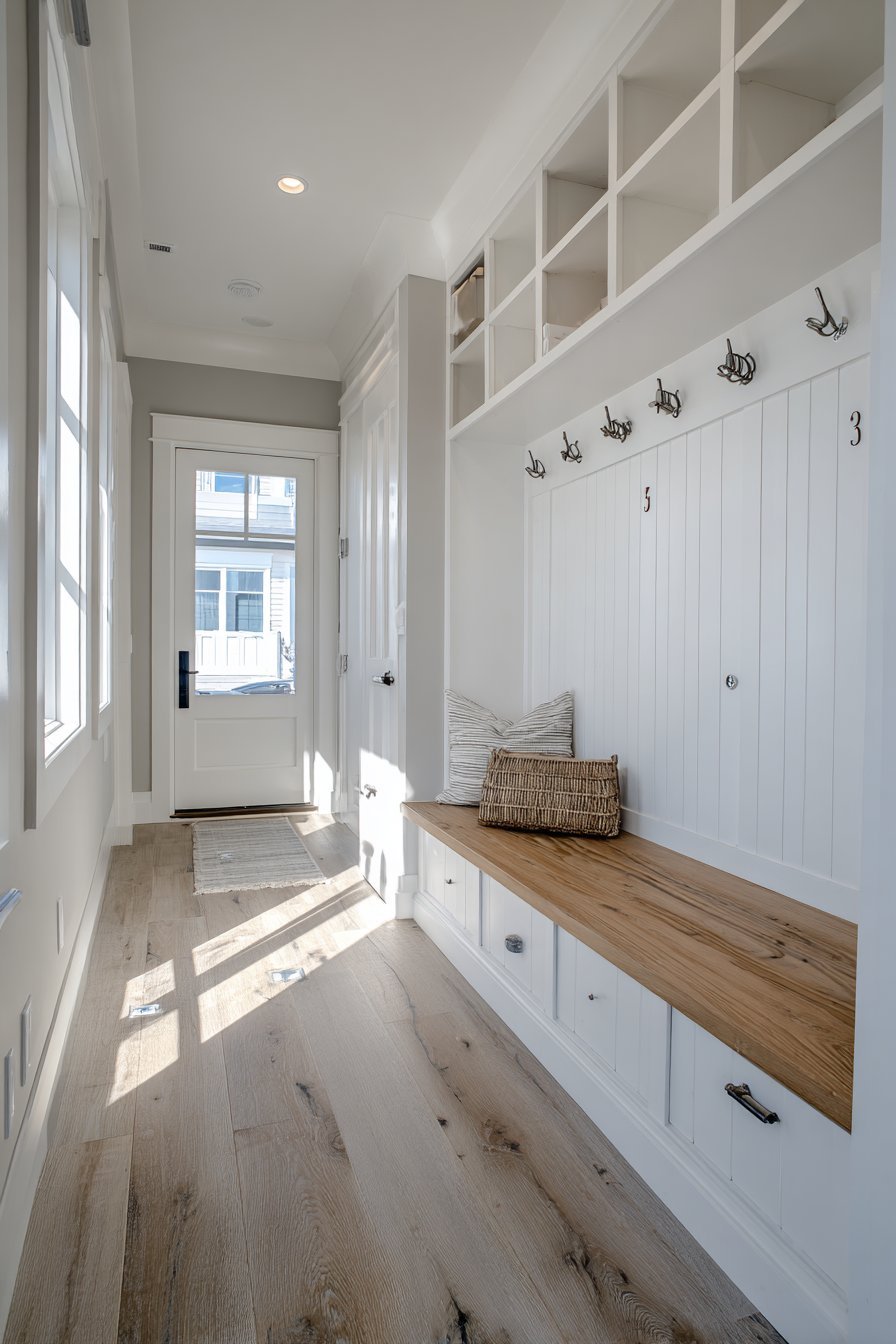
Custom-built shallow cubbies create practical entryway organization. Individual compartments hold keys, mail, and small accessories efficiently. The system features crisp white paint with natural wood backing. Small numbered hooks above each cubby provide additional hanging storage.
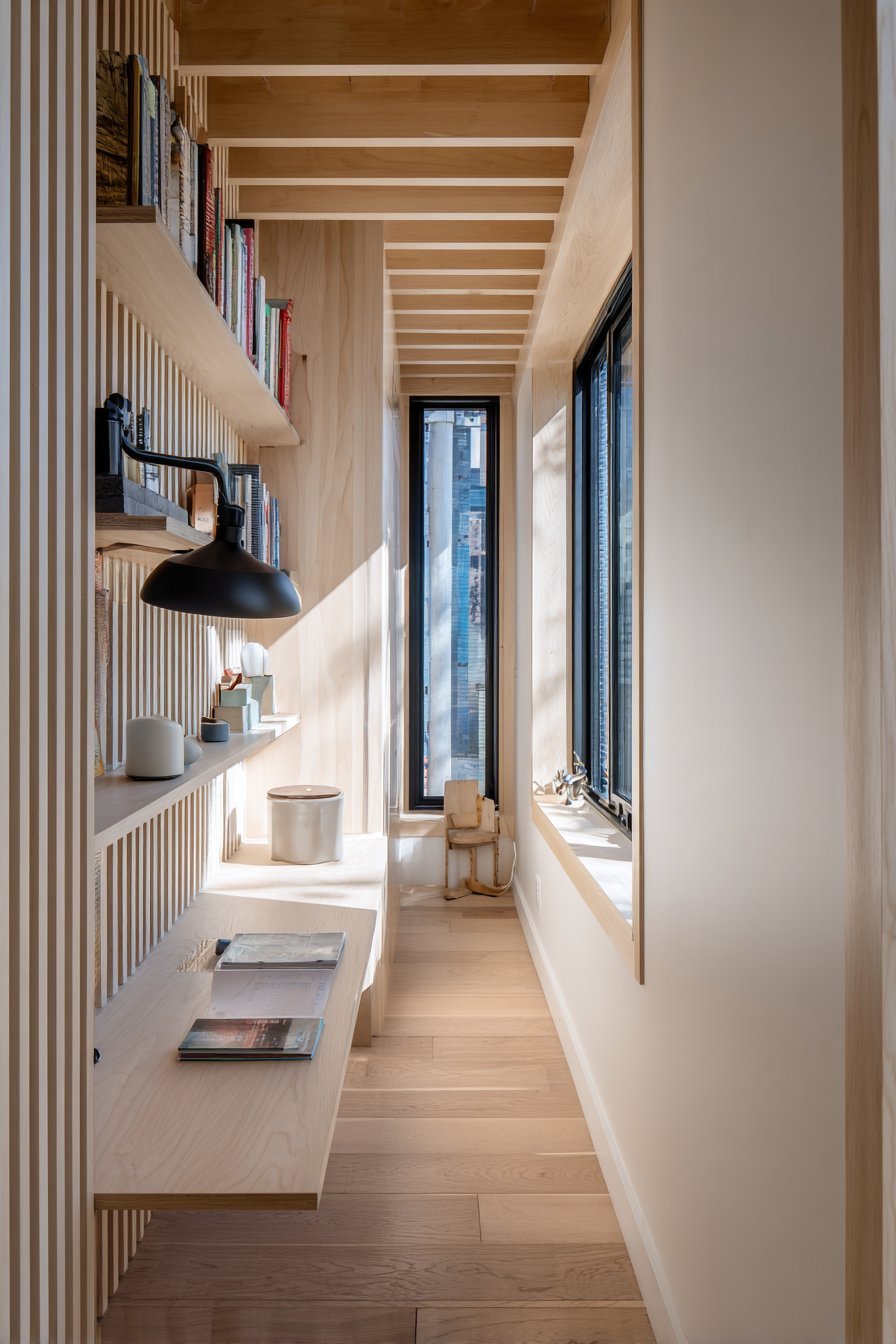
A slim bench with lift-up seat storage sits perpendicular to the wall. This maximizes functionality in the limited floor space. Soft grey walls frame the white organization system beautifully. The color contrast helps the cubbies stand out as functional art.
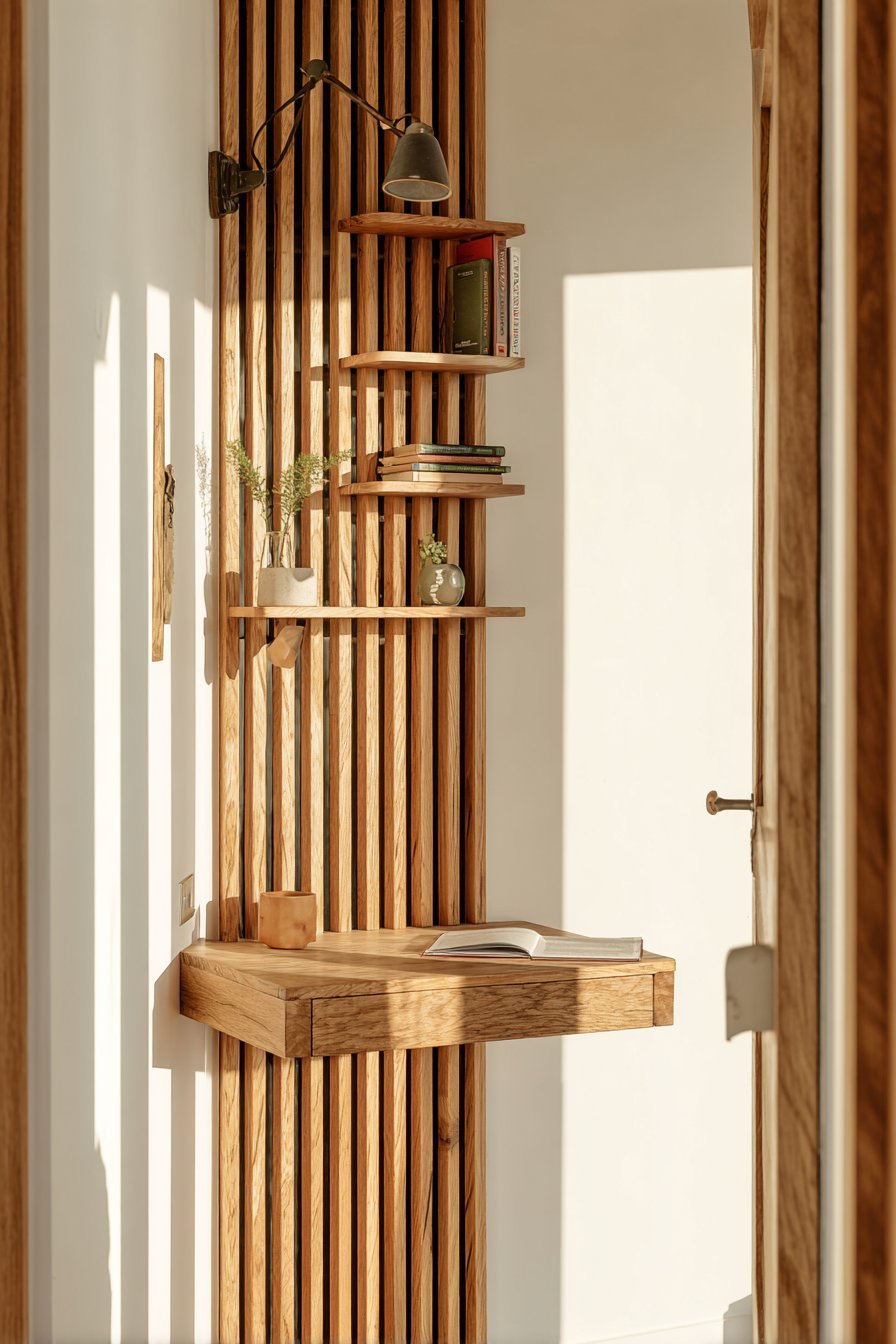
Natural light from a nearby door creates realistic shadows across the cubbies. The shallow depth maintains adequate walkway space while providing essential storage. This custom solution addresses specific family needs and daily routines. The numbered hooks help family members maintain their designated spaces.
Key Design Tips:
- Build custom shallow cubbies for personalized narrow wall storage
- Paint organizational systems in contrasting colors for visual definition
- Add numbered elements for assigned family member spaces
- Include lift-up bench storage for additional functionality
- Position near natural light sources when possible
9. Stairway Photo Gallery
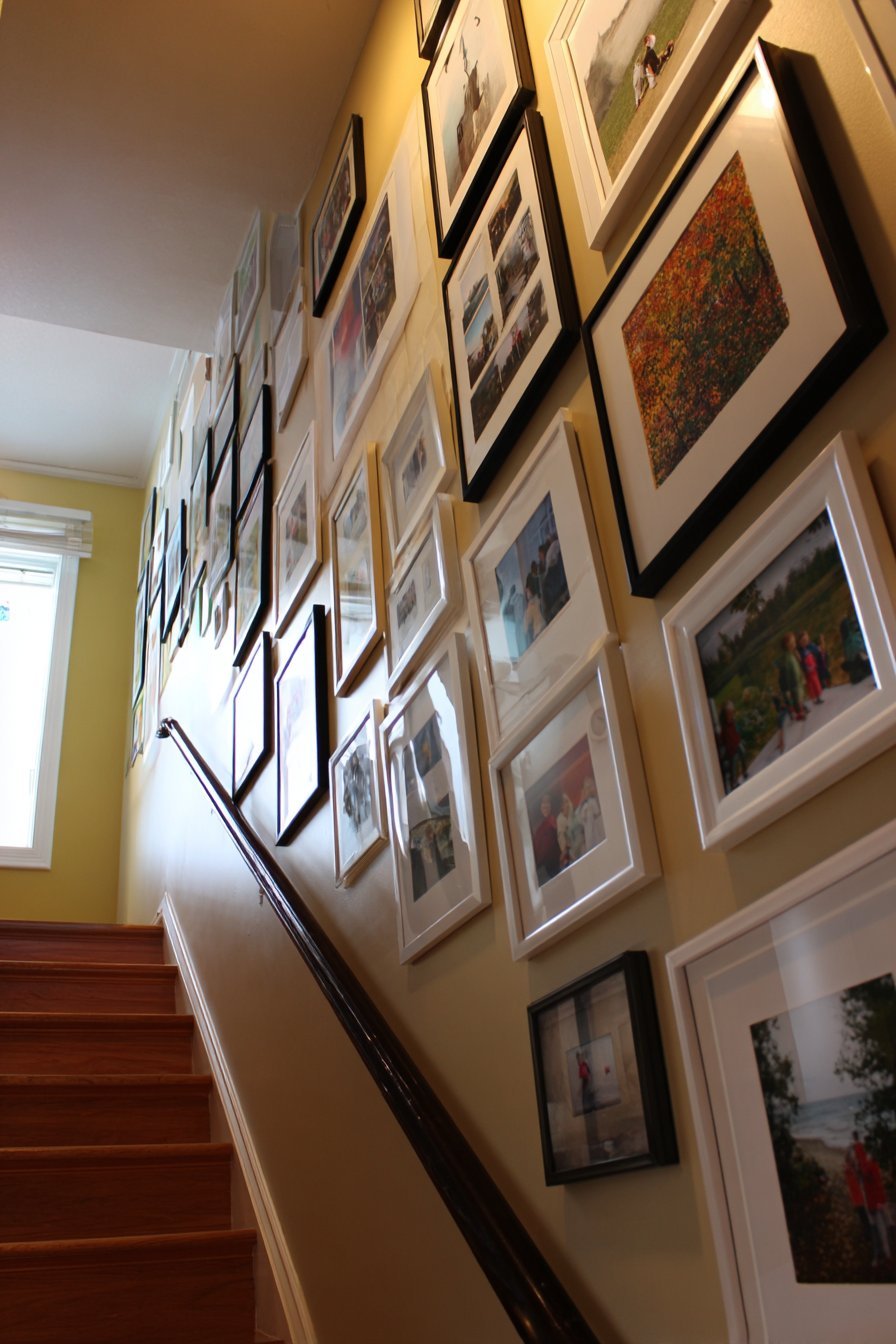
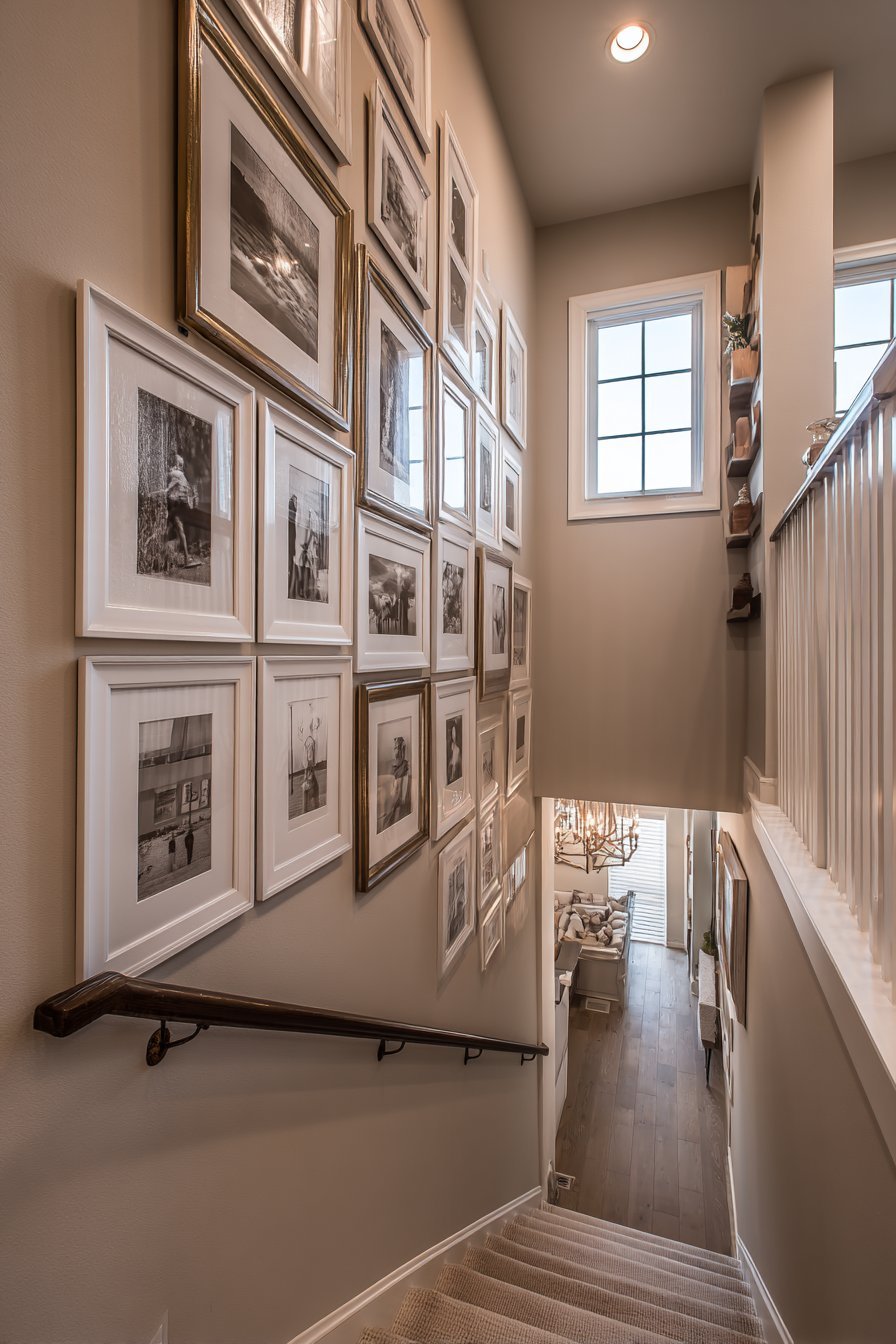
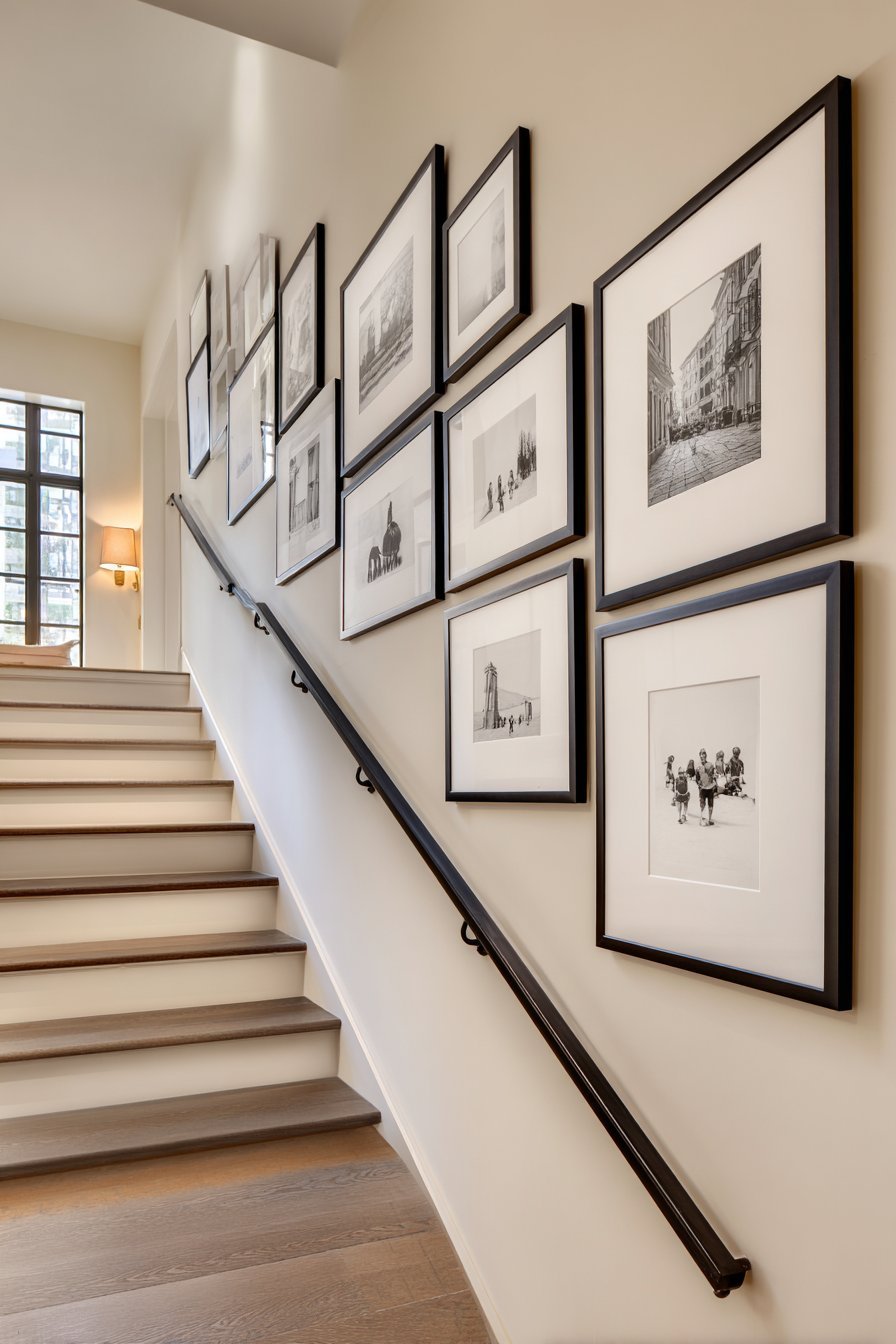
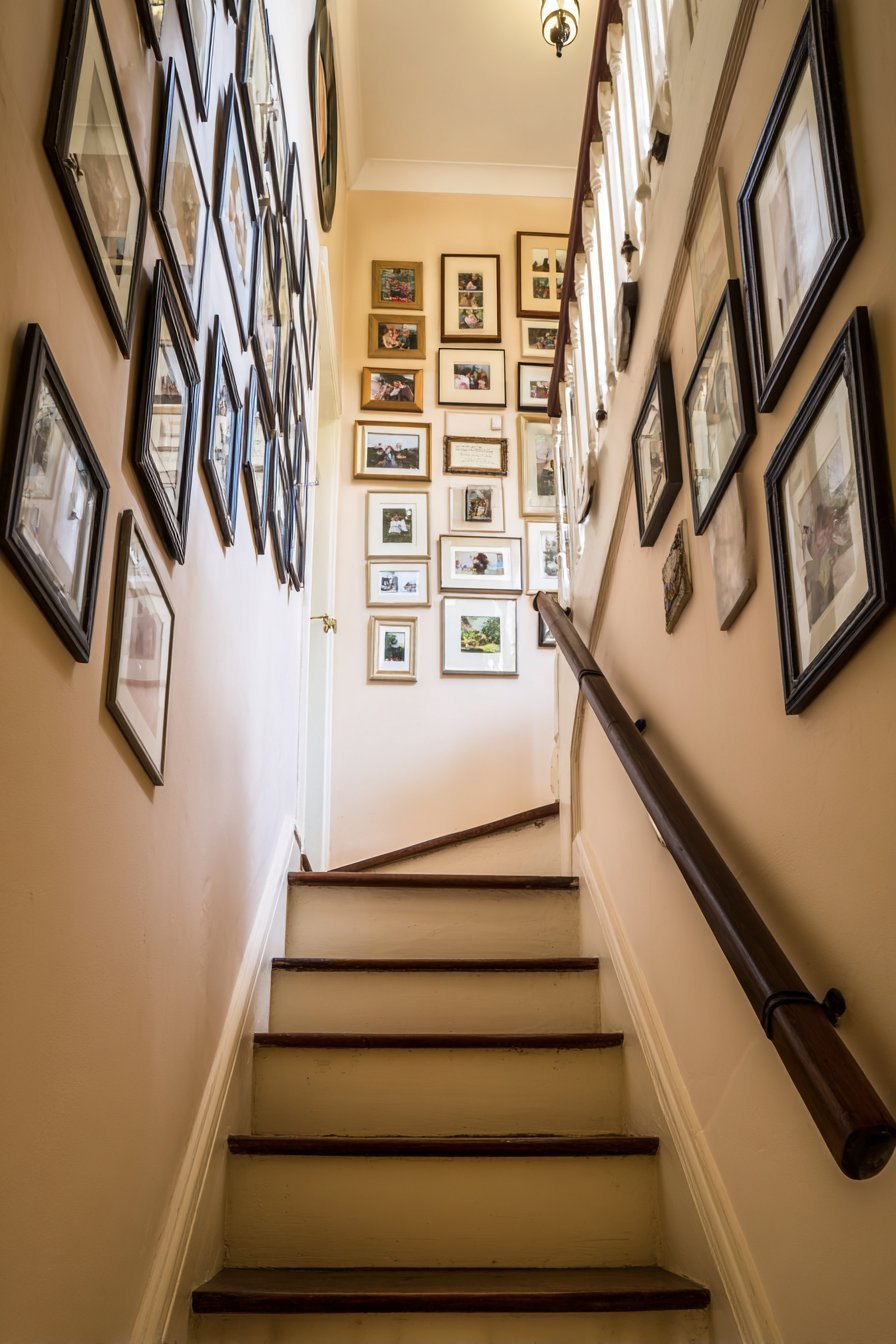
Family photographs in matching slim white frames ascend the stairway wall. The arrangement follows the stair angle creating dynamic flow. Frame sizes vary slightly while maintaining consistent matting and spacing. This creates visual interest within the structured arrangement.
Warm beige walls provide a neutral backdrop for the photographs. The simple handrail in dark wood runs parallel to the photo display. Ambient light from a landing window illuminates the gallery naturally. The angled arrangement complements the architectural feature perfectly.
This design transforms an often-overlooked transitional space into a family timeline. The ascending arrangement draws the eye upward as you climb. It creates a narrative journey through cherished memories. The consistent framing unifies diverse photograph subjects and styles.
Key Design Tips:
- Follow stair angles with ascending photo arrangements
- Use consistent frame styles and matting for cohesive appearance
- Vary sizes slightly to maintain interest within structure
- Position arrangements to complement handrail placement
- Utilize natural window light from landings when available
10. Vertical Slat Wall with Integrated Shelving
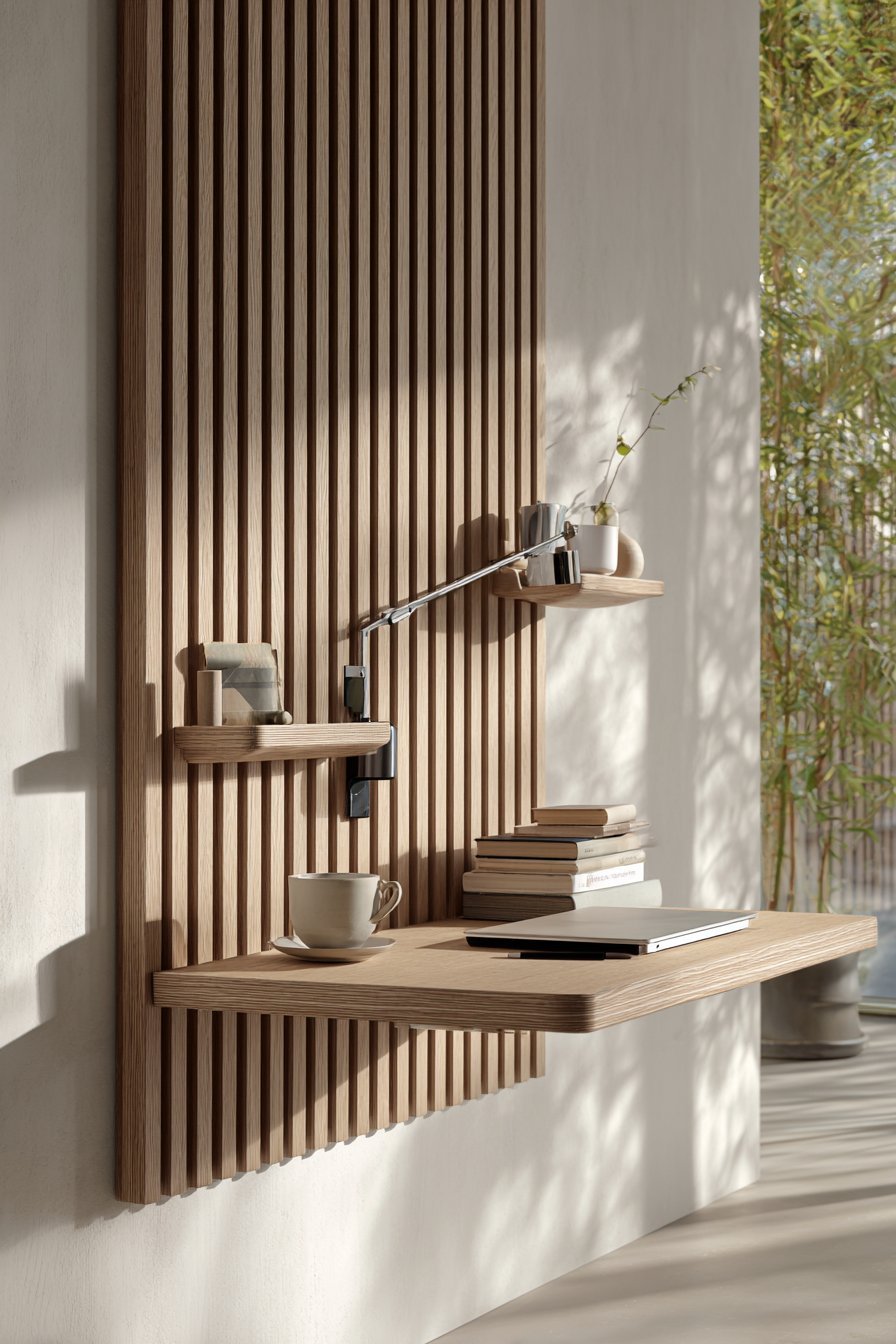
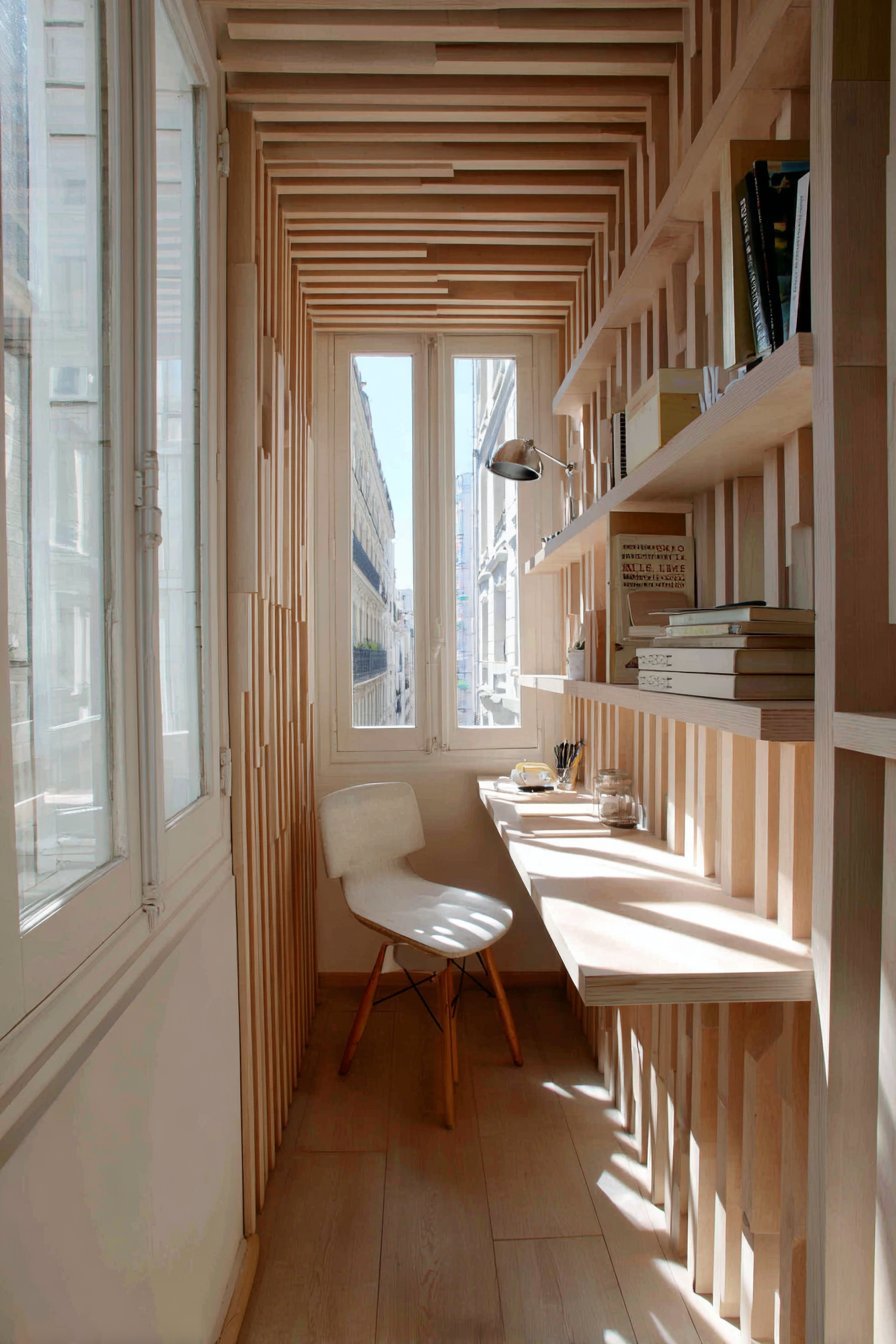
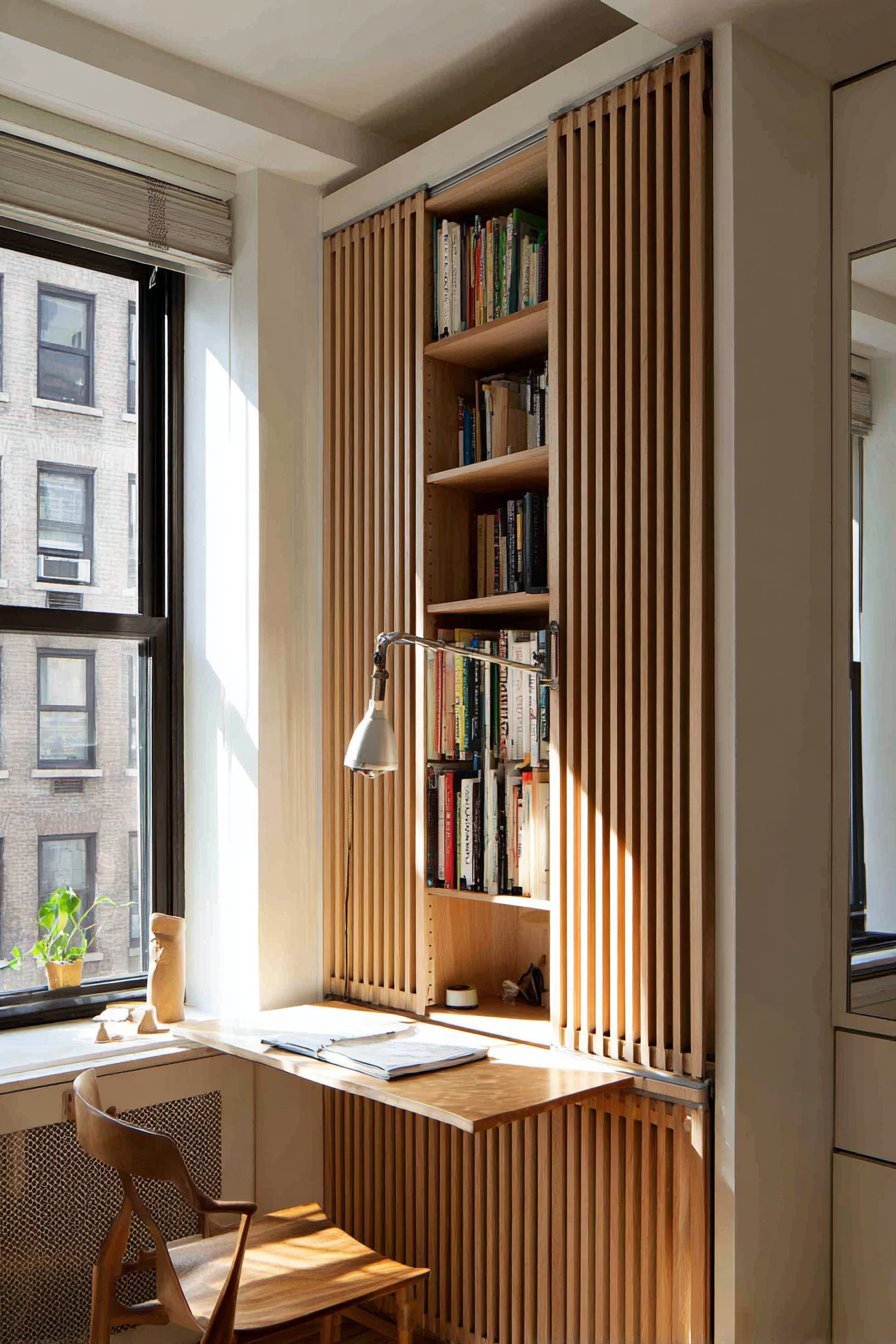
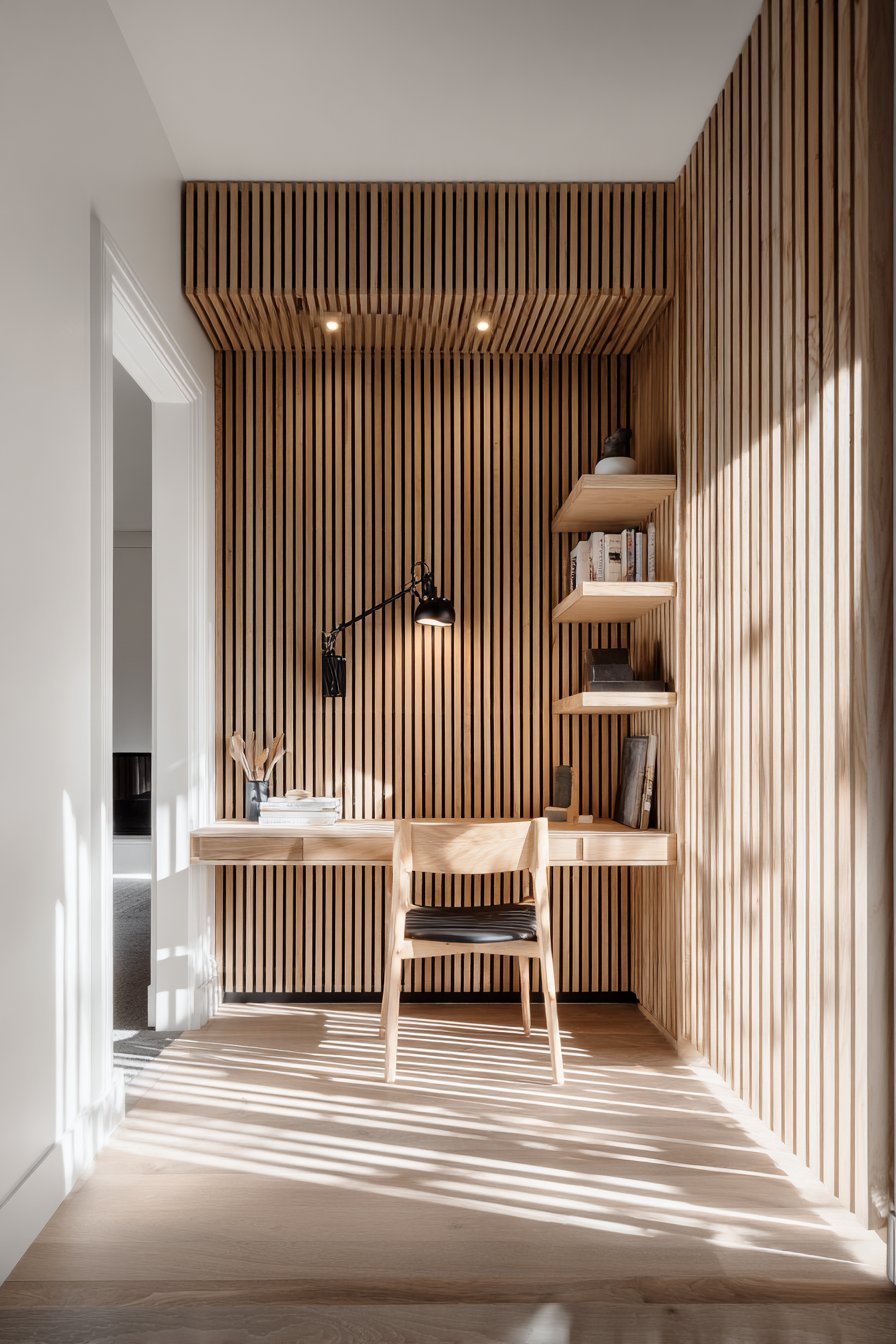
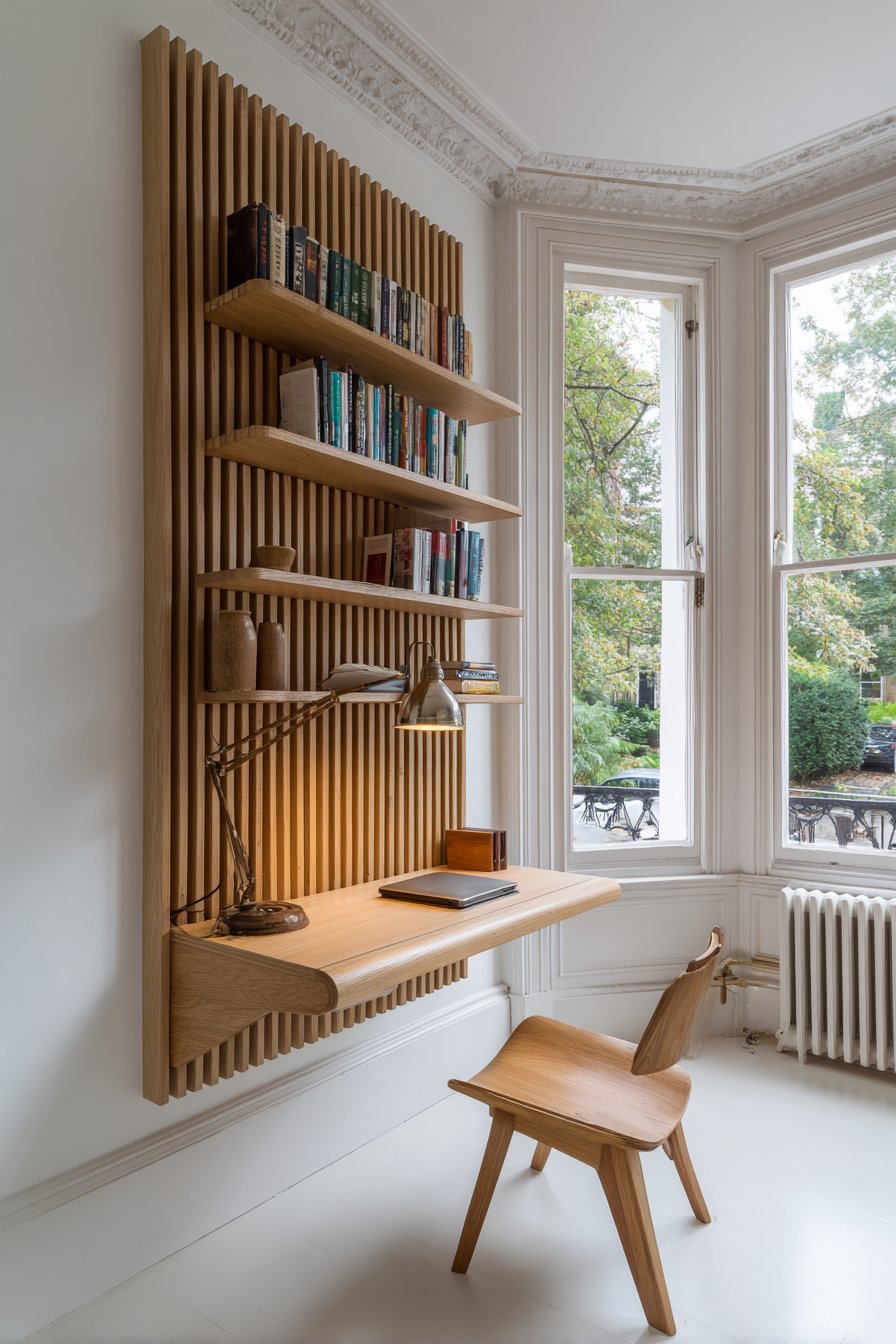
Light ash wood slat wall paneling features integrated narrow shelves. Books stand vertically between the slats creating interesting shadows. Small desk accessories find homes on the flexible shelving. A compact wall-mounted reading lamp with articulating arm provides task lighting.
The slat system allows flexible positioning without permanent wall damage. A small floating desk in matching wood extends from below. White walls on adjacent sides keep the home office space bright. Natural window light creates interesting shadow patterns through the slats.
This innovative solution maximizes vertical storage in narrow office spaces. The wood grain adds warmth to the functional design. The system adapts as needs change over time. The minimal protrusion depth preserves precious floor space.
Key Design Tips:
- Install slat wall systems for flexible narrow wall organization
- Choose light wood tones to maintain brightness in small spaces
- Add articulating lamps for adjustable task lighting
- Incorporate floating desks to maximize floor space
- Use vertical book storage to create visual rhythm
11. Hexagonal Mirror Arrangement
Three hexagonal mirrors with brass frames create geometric interest. The mirrors stagger slightly off-center for dynamic visual movement. A slim glass shelf with brass brackets sits between mirrors. Minimal toiletries in matching containers occupy the shelf space.
Pale blue walls provide a calming backdrop in this narrow bathroom. Sconce lighting on either side provides even illumination for grooming. The geometric mirrors add contemporary style without overwhelming the space. The vertical stacking respects the width constraint effectively.
The brass finish unifies the mirrors and shelf brackets cohesively. Glass shelving maintains visual lightness in the small bathroom. This design balances function with aesthetic appeal successfully. The off-center arrangement prevents rigid, overly formal appearance.
Key Design Tips:
- Use geometric mirrors for contemporary narrow wall appeal
- Stagger arrangements slightly to avoid rigid formality
- Choose glass shelving to maintain visual lightness
- Coordinate metal finishes throughout the design
- Install sconce lighting for even bathroom illumination
12. Vertical Wine Rack Display
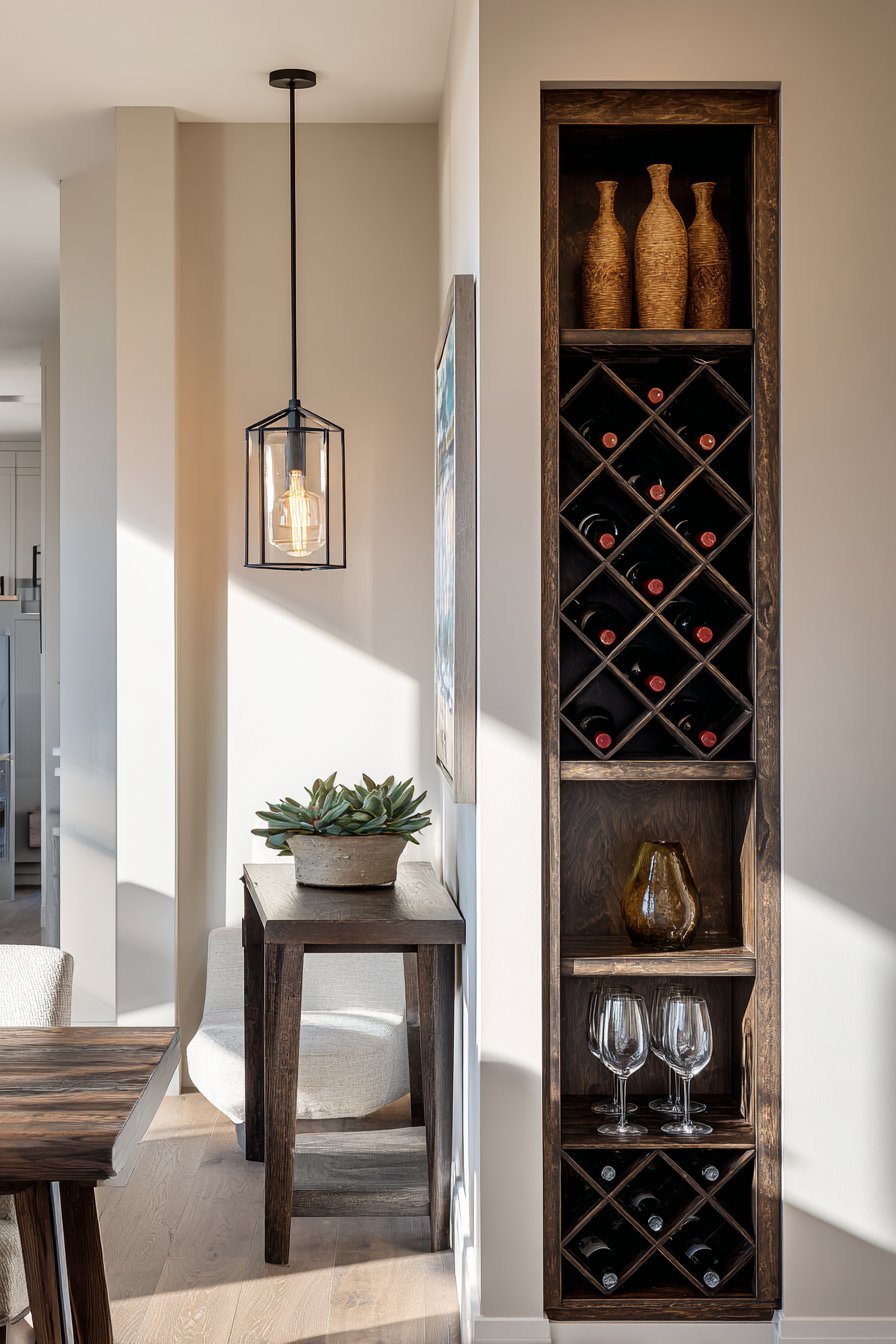
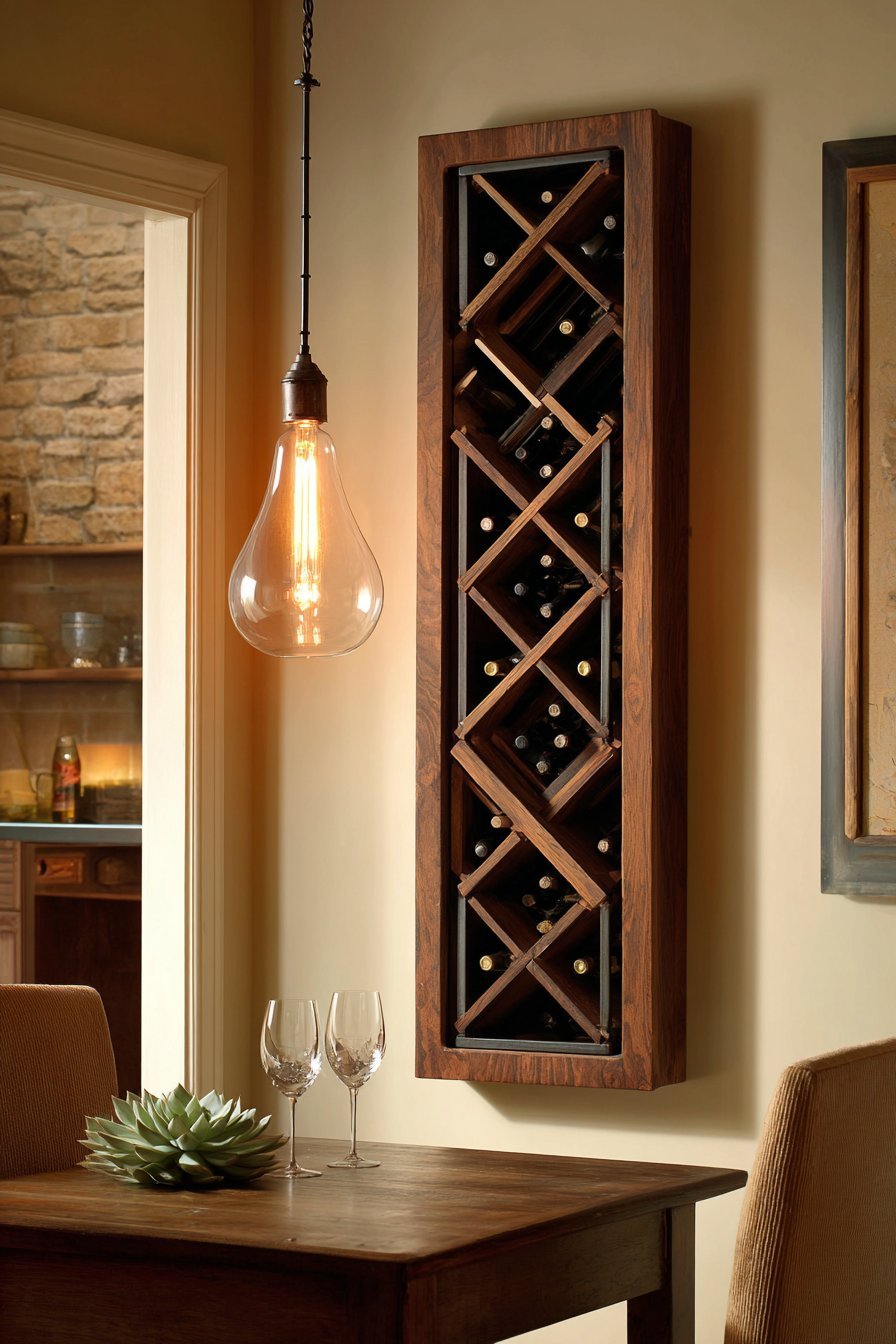
A tall vertical wine rack in dark walnut features wrought iron accents. The minimal depth design stores bottles horizontally without excessive protrusion. A vintage-style pendant light with Edison bulb hangs above. Warm cream walls complement the rich wood tones beautifully.
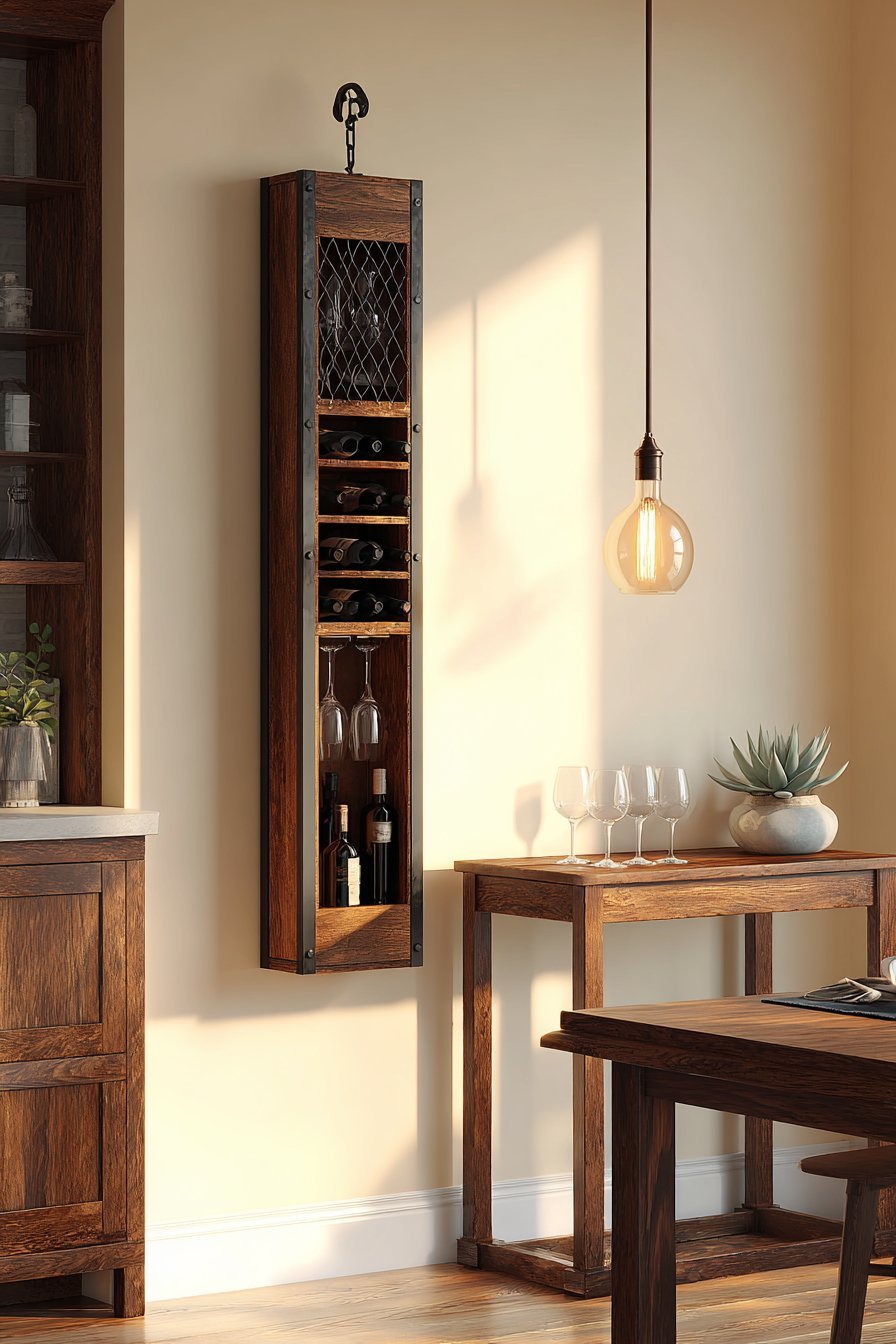
A narrow console table in matching walnut sits below the rack. Wine glasses hang from underneath while a small succulent adds greenery. The vertical storage solution maximizes capacity in limited floor space. The combination creates a sophisticated wine display area.
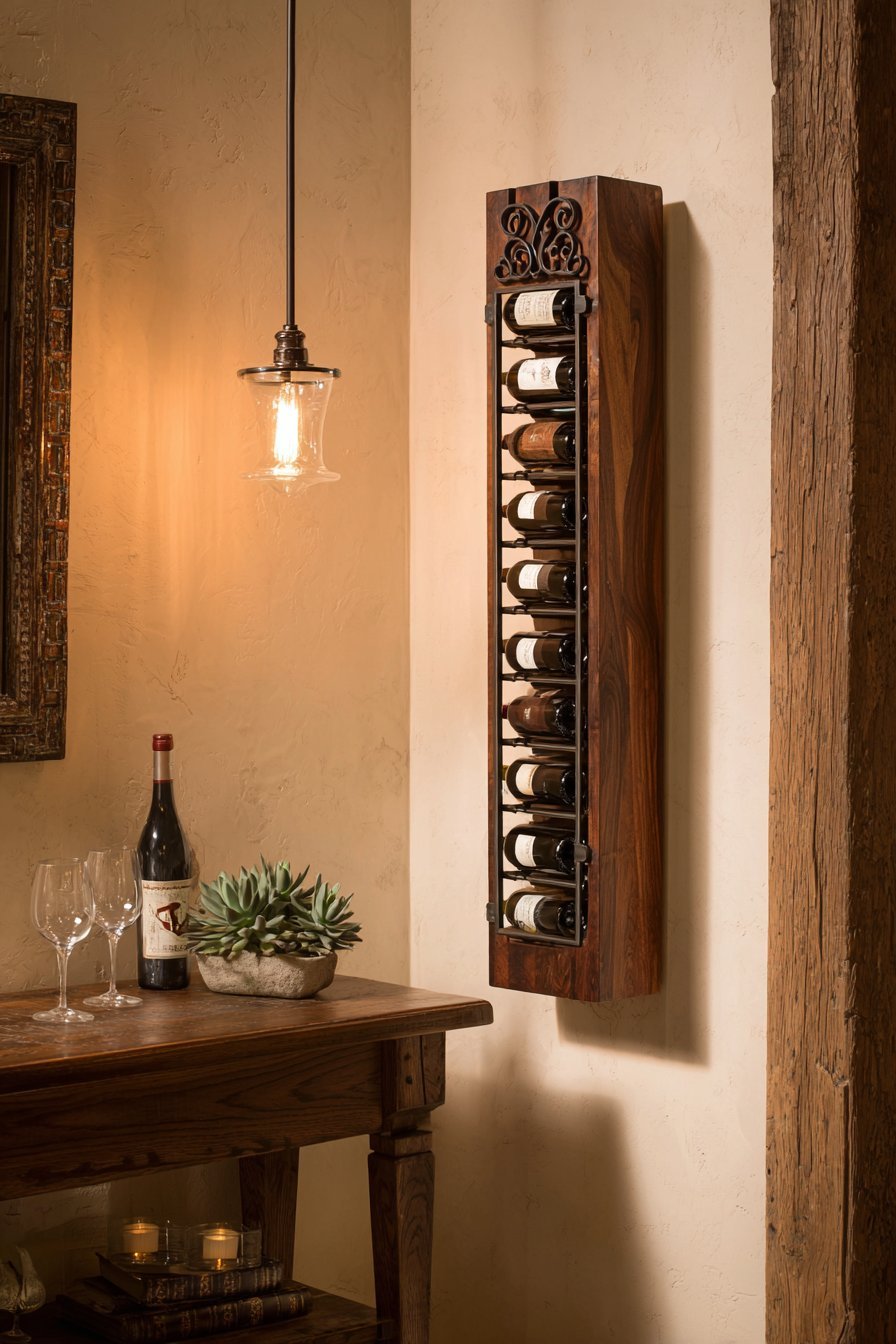
Evening light highlights the wood grain and creates warm atmosphere. This design suits dining rooms where floor space is premium. The wrought iron details add old-world charm to the contemporary storage solution. The pendant light serves as both task and ambient lighting.
Key Design Tips:
- Choose vertical wine racks for space-efficient bottle storage
- Match console table wood to rack for cohesive appearance
- Install pendant lighting to highlight the display area
- Use wrought iron accents for traditional elegance
- Position in dining areas for convenient entertaining access
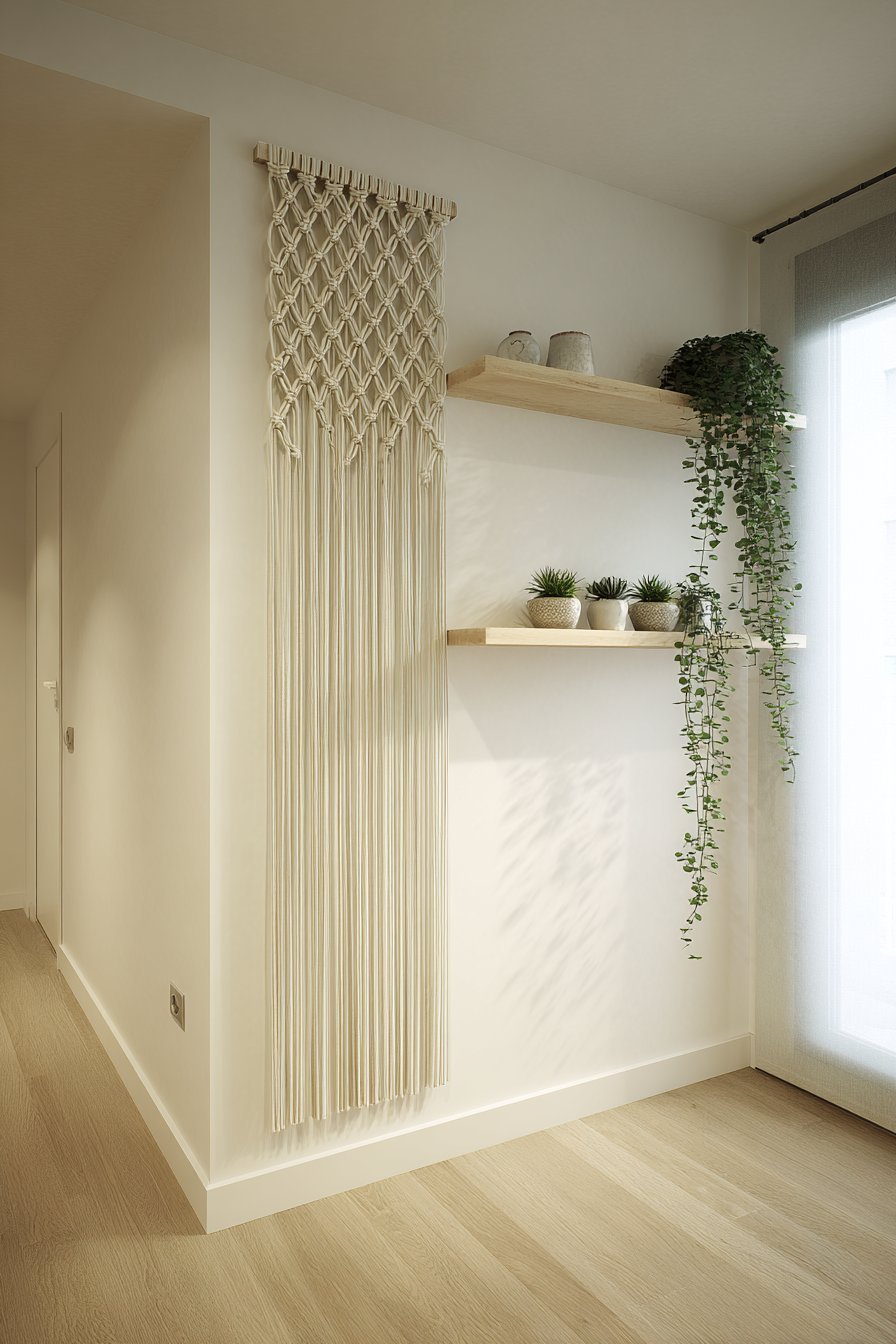
13. Macramé Wall Hanging with Trailing Plants
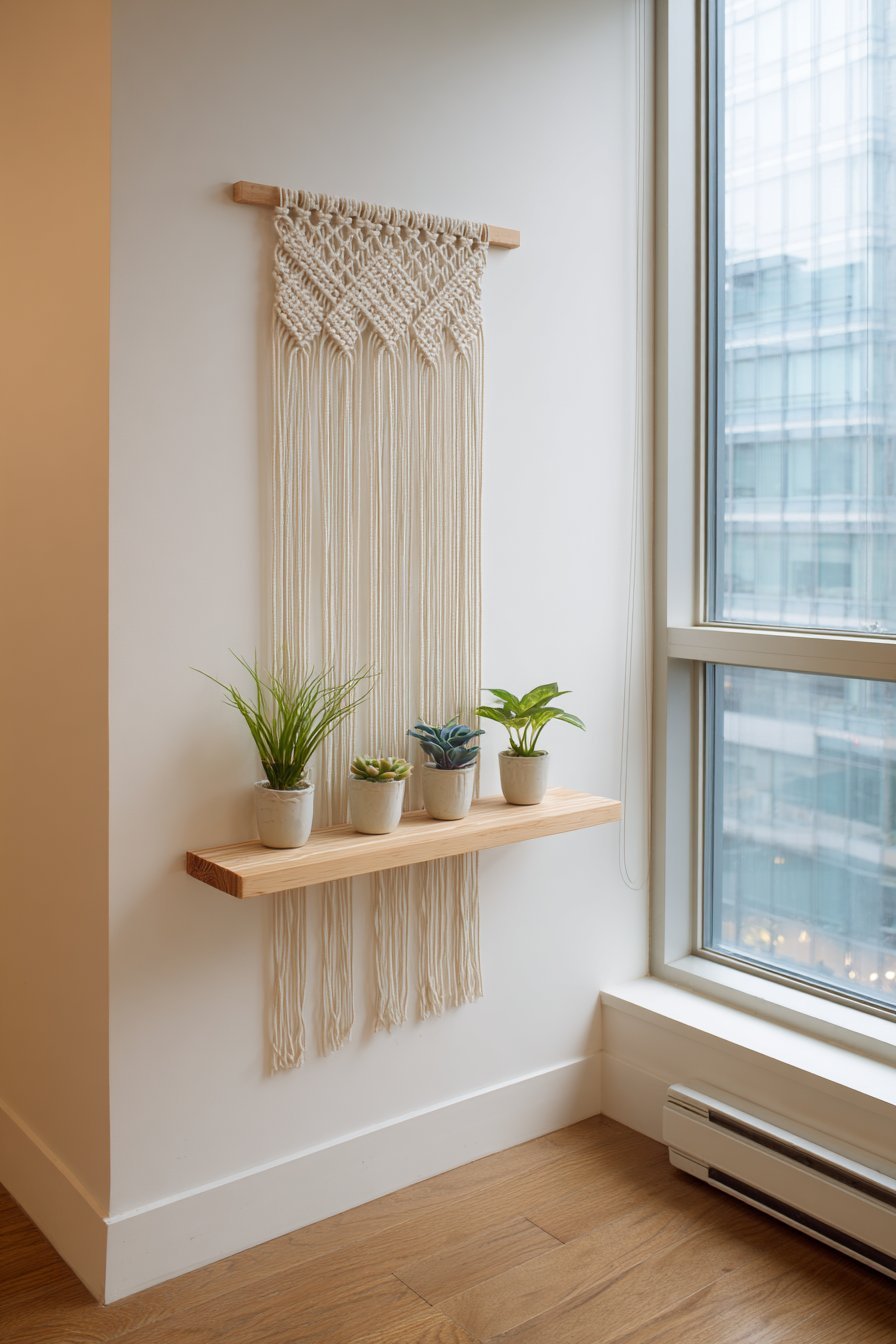
A minimalist macramé wall hanging in natural cotton rope provides texture. Simple geometric knotting patterns prevent visual clutter in the narrow hallway. A slim floating shelf in light bamboo sits below the textile art. Three small ceramic planters with trailing plants occupy the shelf.
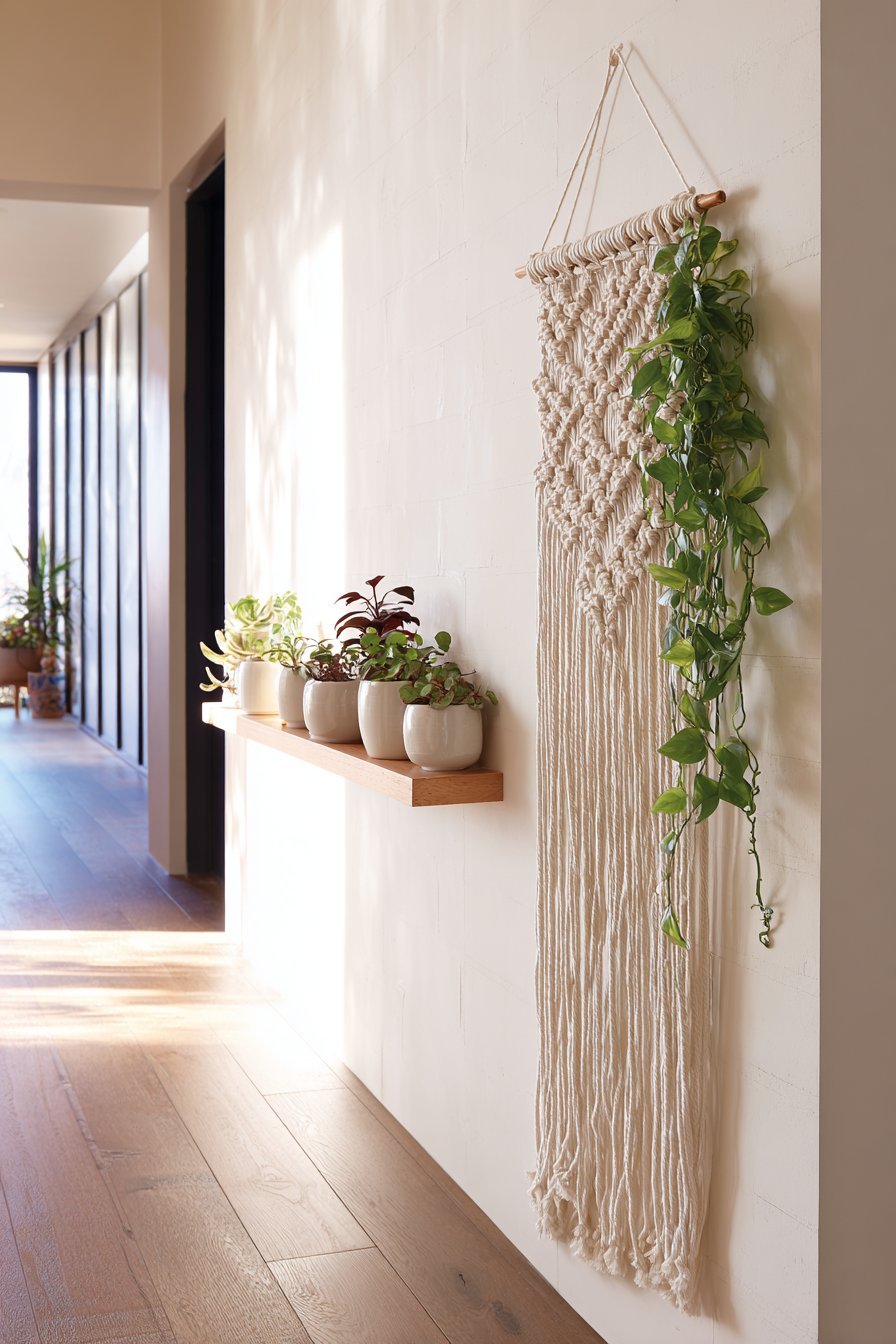
Soft white walls create a clean backdrop for the organic materials. Warm wood flooring adds natural elements underfoot. Daylight from a nearby window creates gentle shadows. These shadows emphasize the macramé texture throughout the day.
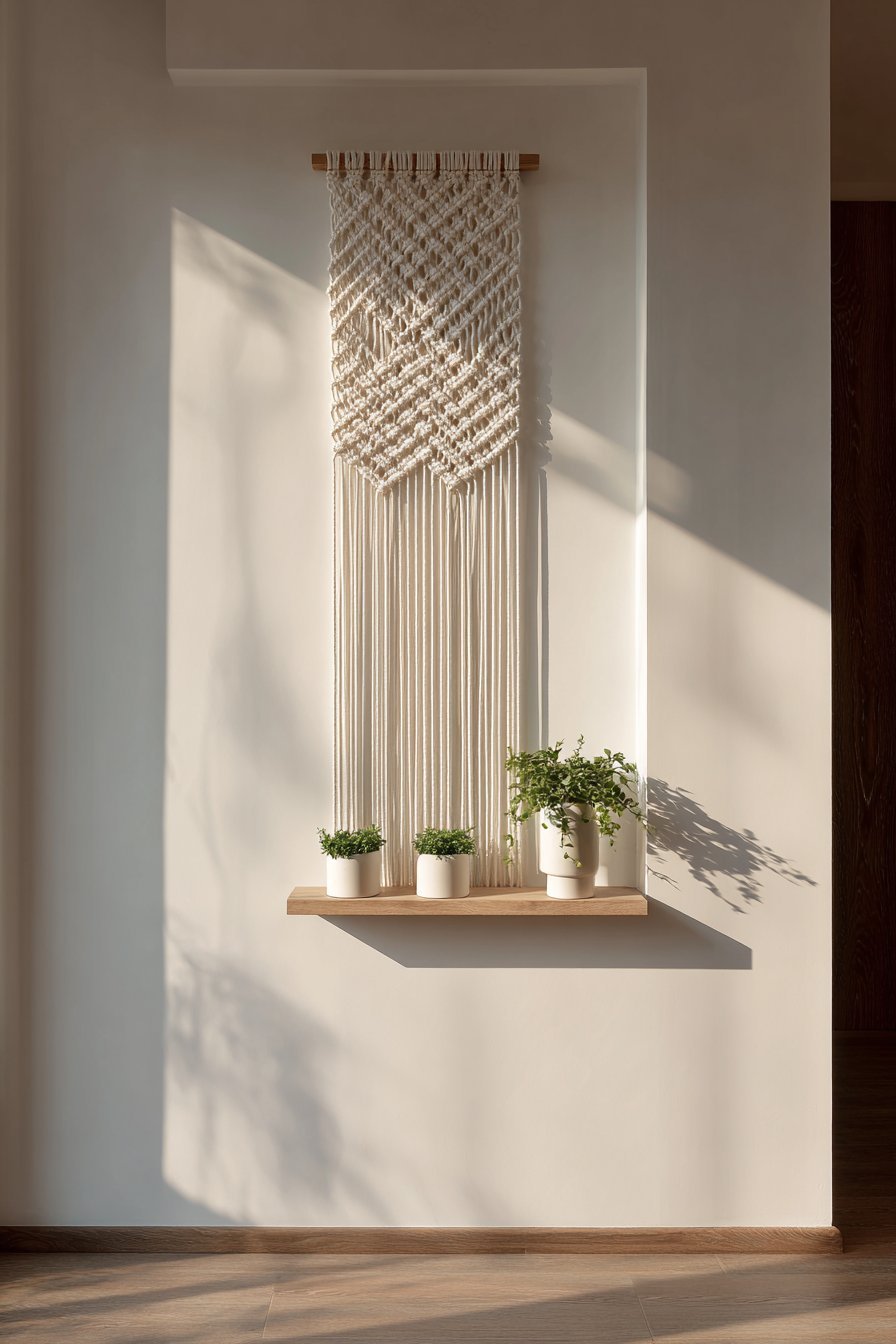
The vertical textile art and trailing plants soften the corridor effectively. The design maintains an open, airy feeling despite the narrow width. This approach suits bohemian and natural design aesthetics perfectly. The combination of textures creates visual interest without physical bulk.
Key Design Tips:
- Use macramé for textural interest without physical depth
- Choose simple patterns to avoid overwhelming narrow spaces
- Add trailing plants to extend vertical visual movement
- Select natural materials for cohesive organic aesthetic
- Position near windows for plant health and shadow interest
14. Floor-to-Ceiling Slatted Headboard Wall
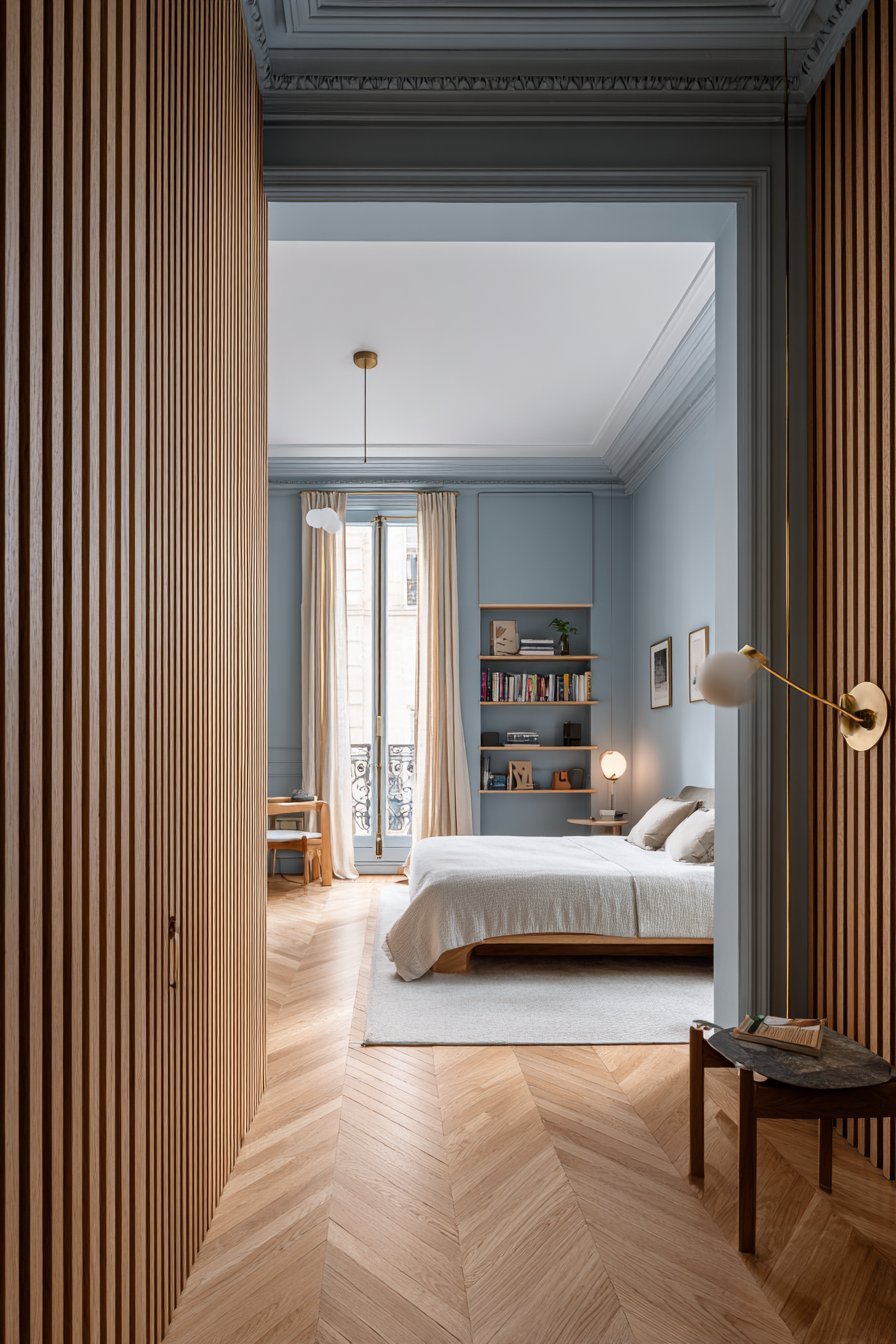
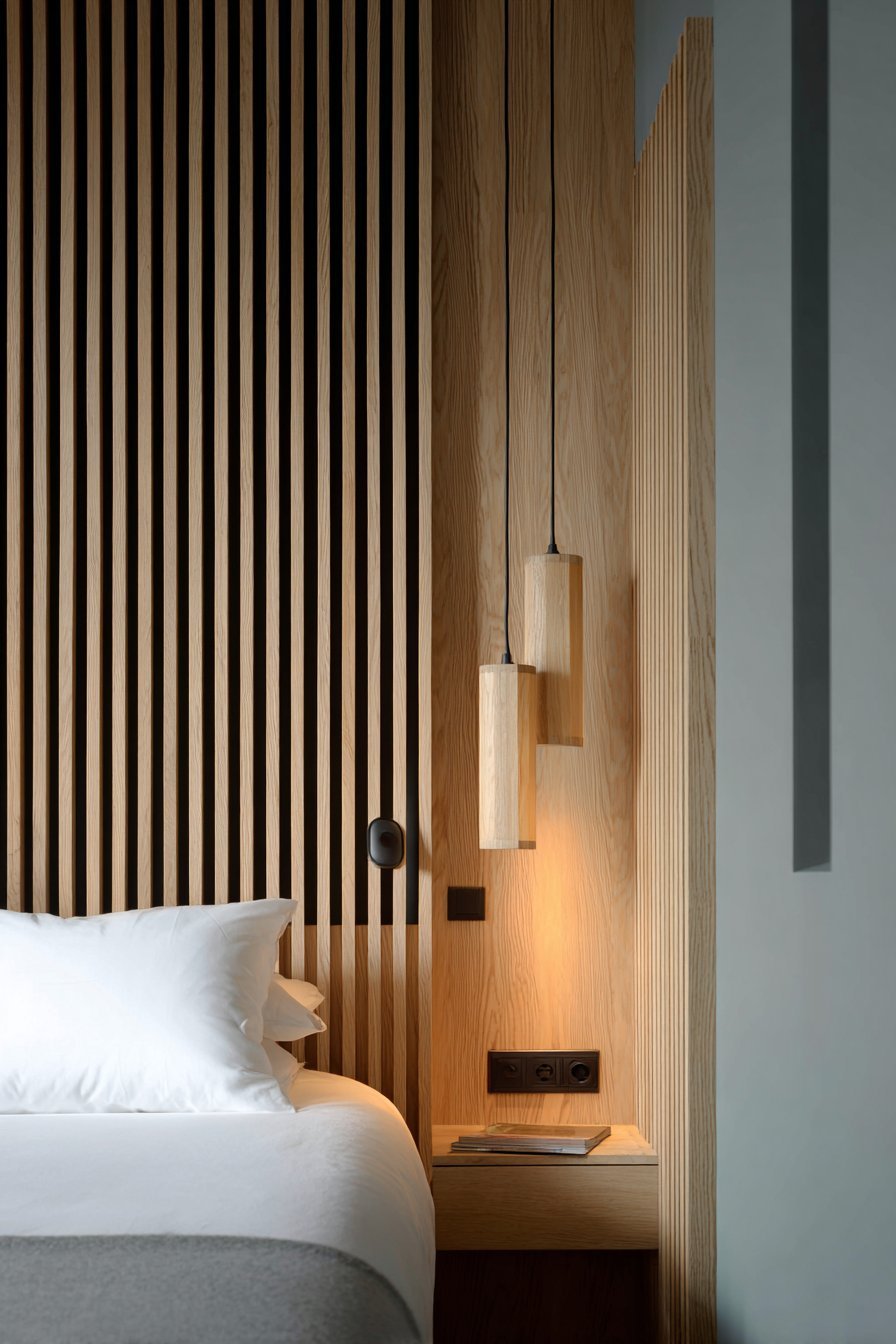
Custom vertical wooden slats in warm honey oak extend floor to ceiling. The slats create rhythm behind the bed with integrated narrow niches. Books and a reading lamp occupy these functional niches perfectly. The slats add minimal depth while maximizing visual impact.
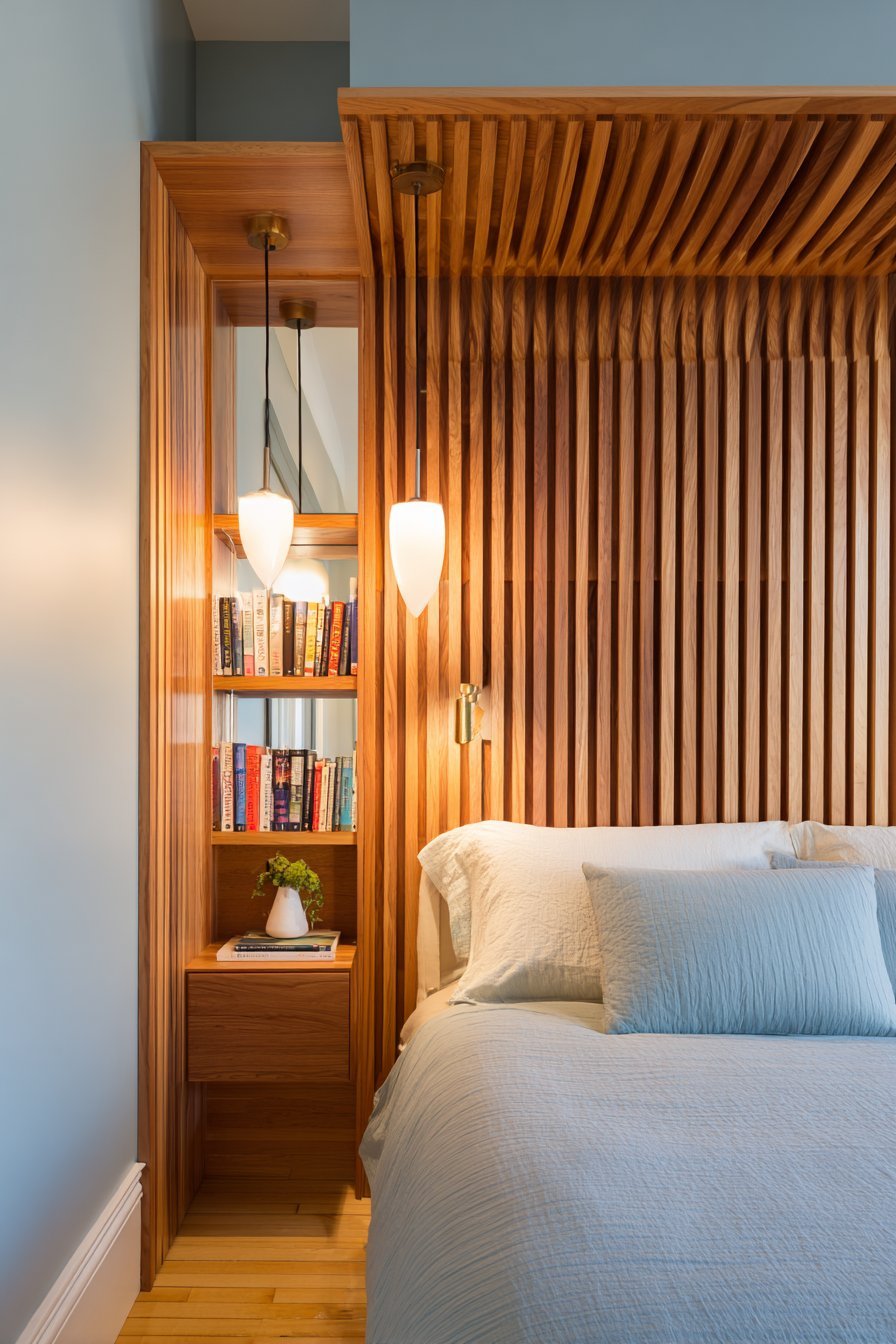
Soft grey-blue walls on adjacent sides provide color contrast. Bedside pendant lights hang at reading height from the ceiling. The architectural treatment transforms the narrow bedroom wall dramatically. The vertical lines draw the eye upward emphasizing ceiling height.
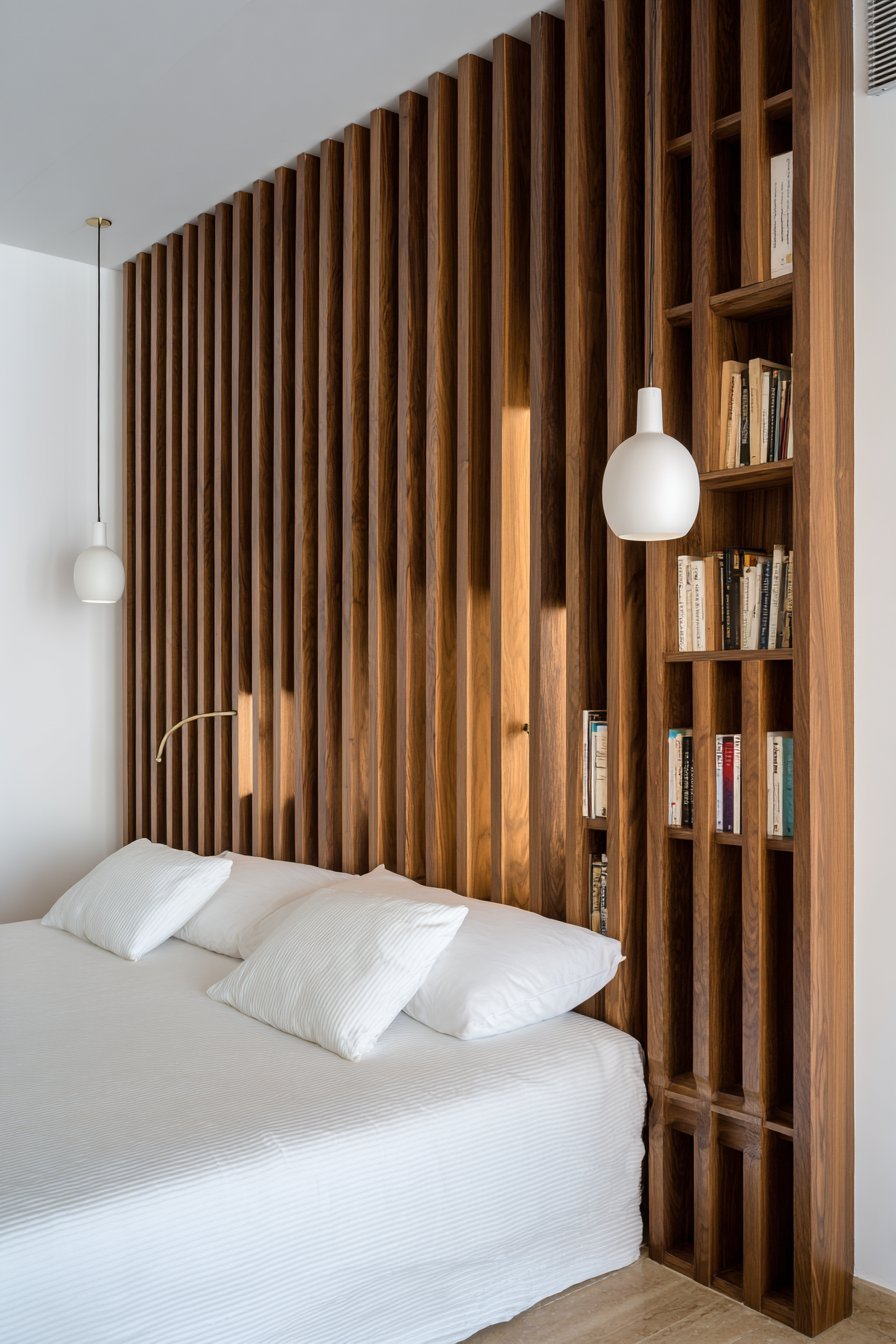
This design combines aesthetic appeal with functional storage seamlessly. The honey oak adds warmth to the contemporary slatted design. The integrated niches eliminate need for bulky nightstands. This solution works particularly well in narrow primary bedrooms.
Key Design Tips:
- Install floor-to-ceiling slats to emphasize vertical space
- Integrate narrow niches for functional storage within slats
- Use warm wood tones to prevent stark appearance
- Hang pendant lights to save nightstand space
- Paint adjacent walls in contrasting colors for definition
15. Board and Batten Entryway
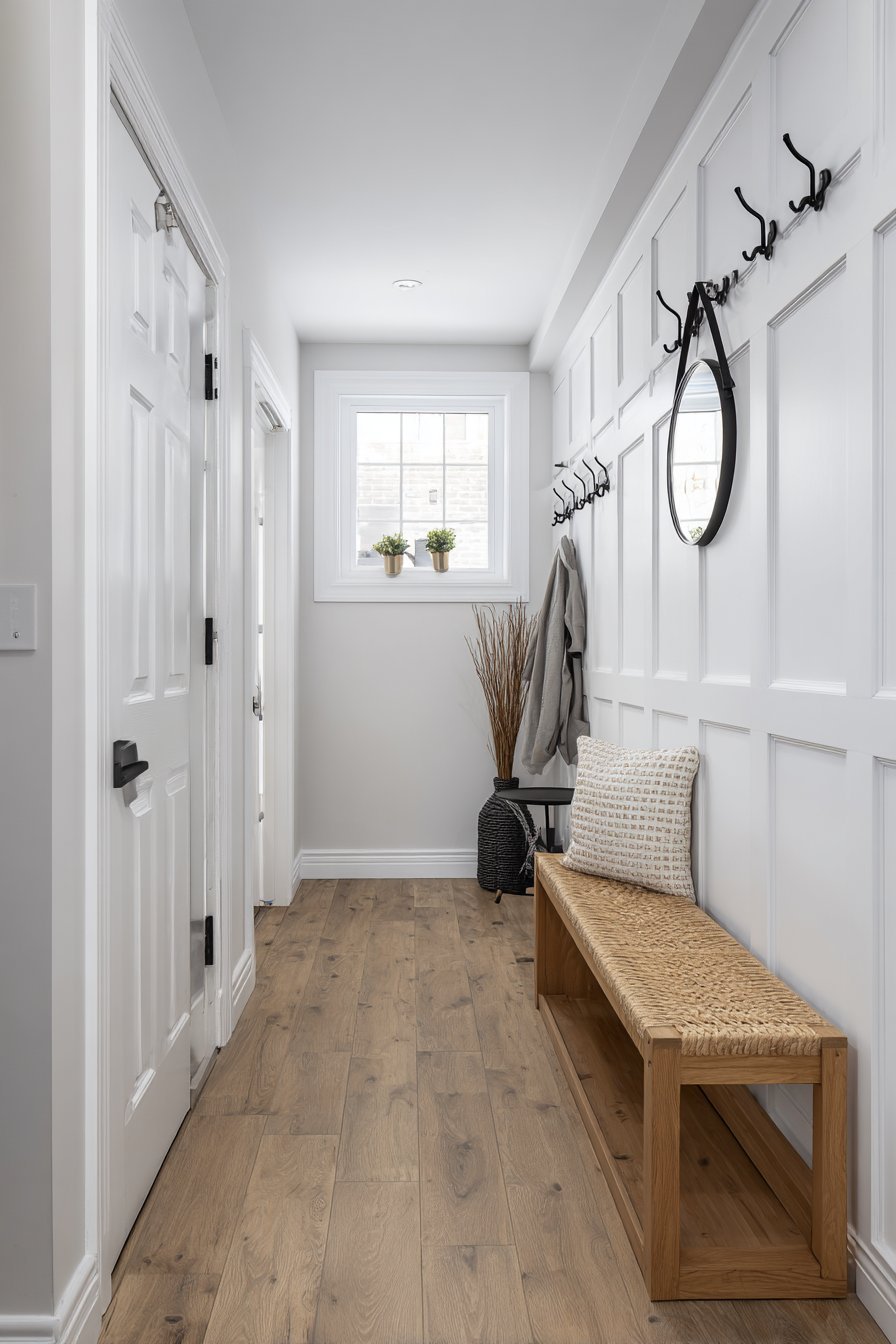
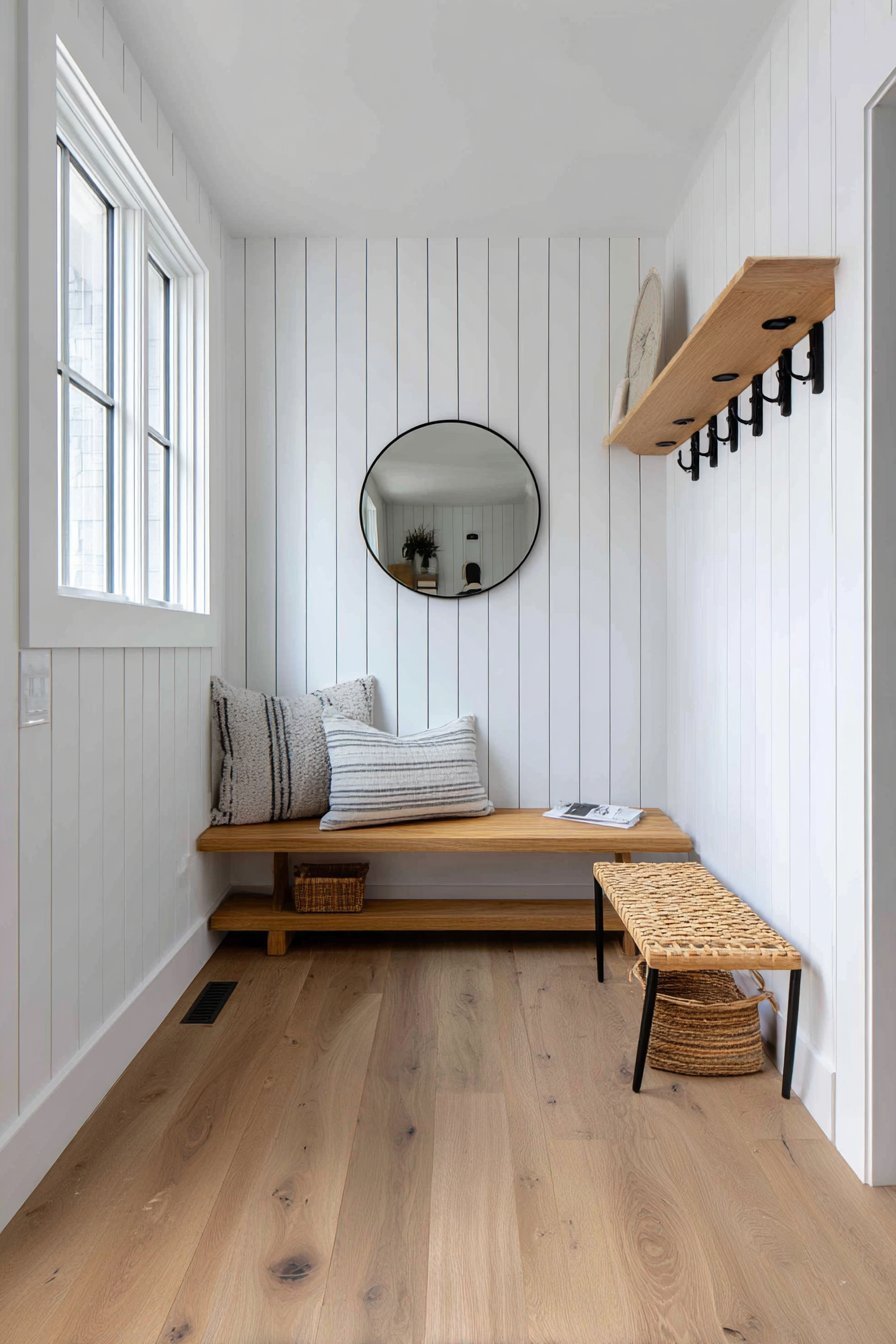
Vertical board and batten treatment in crisp white adds architectural dimension. A single round convex mirror with black frame hangs at eye level. Simple black metal hooks provide practical coat storage below the mirror. A narrow bench in natural oak with woven seat sits underneath.
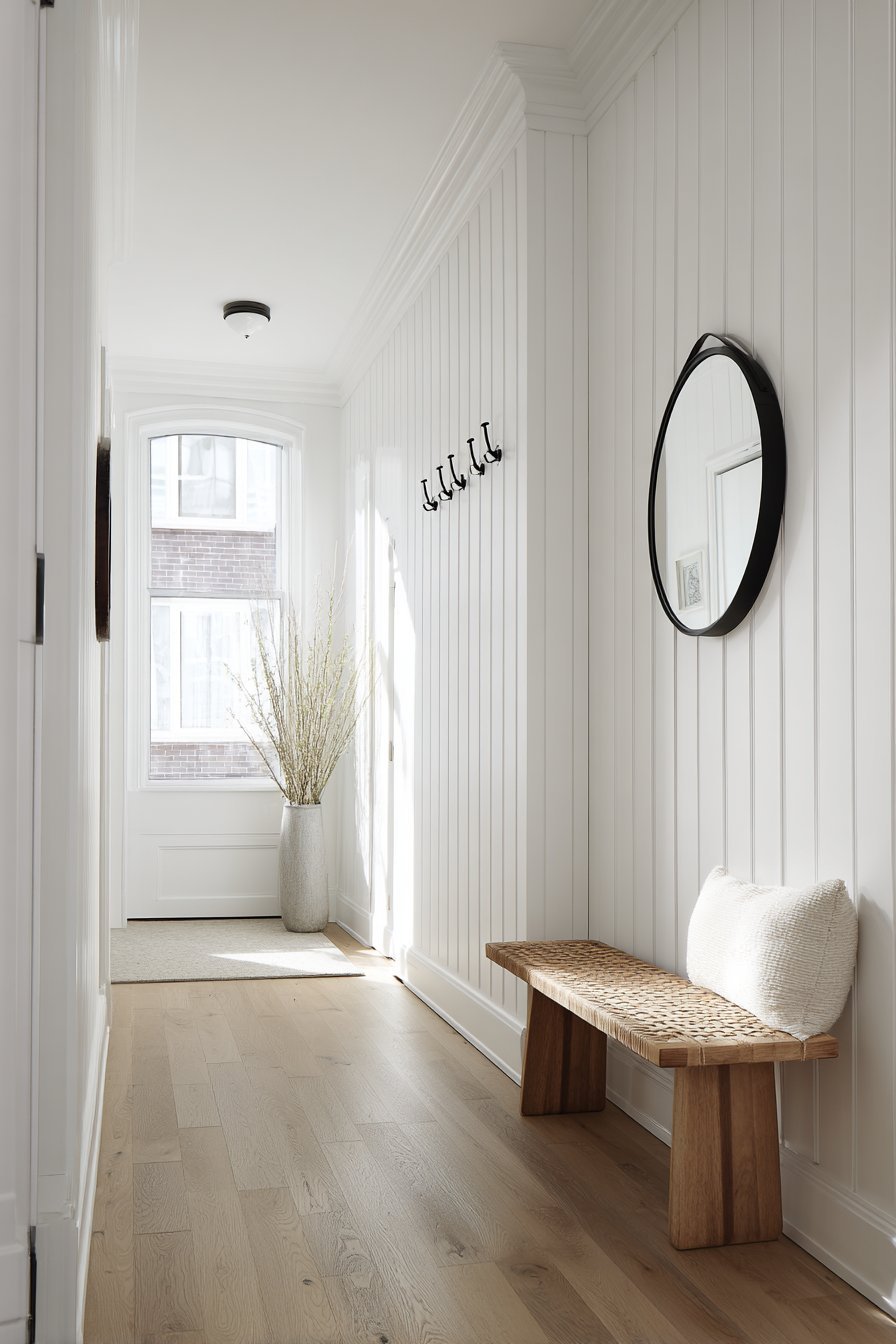
Warm grey flooring grounds the predominantly white color scheme. Natural light from a transom window creates gentle highlights. The dimensional wall treatment adds visual interest without physical bulk. The vertical orientation emphasizes the entryway height effectively.
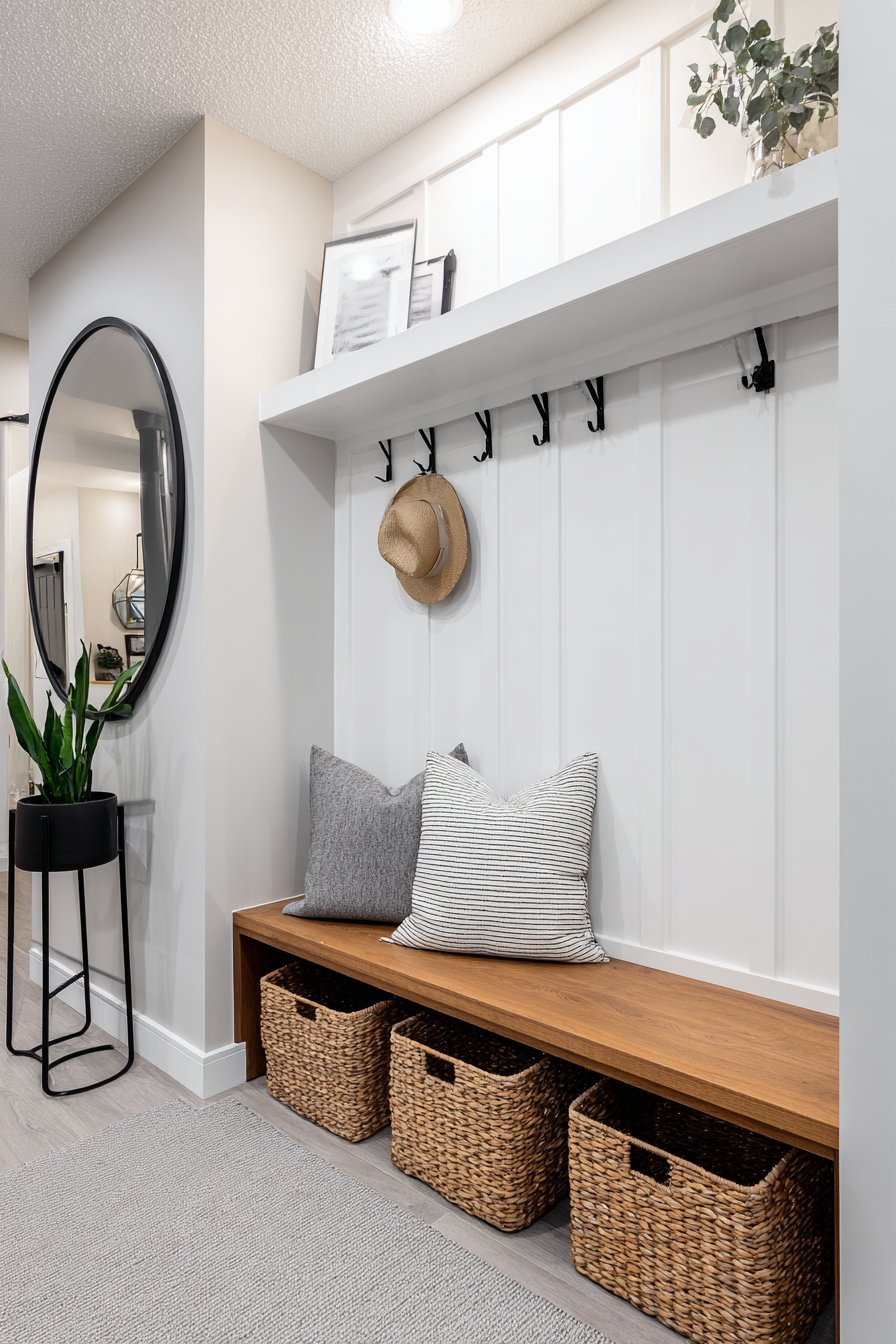
The convex mirror provides interesting reflections while checking appearance. The bench offers convenient seating for shoe changes. This classic architectural treatment suits traditional and transitional homes. The combination of elements creates welcoming first impressions.
Key Design Tips:
- Add board and batten for affordable architectural interest
- Paint treatments in crisp white for clean appearance
- Use convex mirrors for unique reflective properties
- Include benches with woven seats for textural variety
- Install transom windows to maximize natural light
16. Vertical Botanical Watercolor Gallery
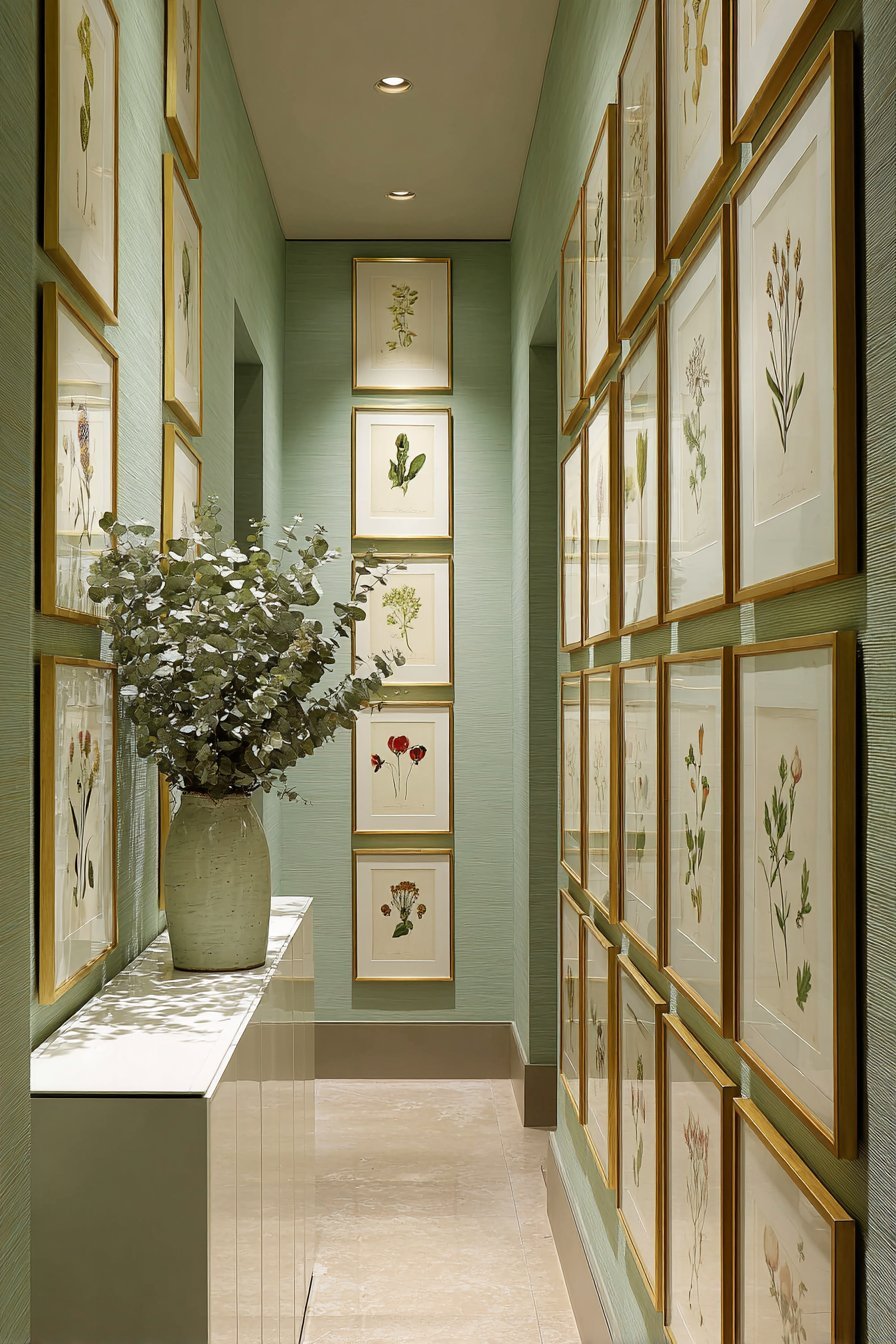
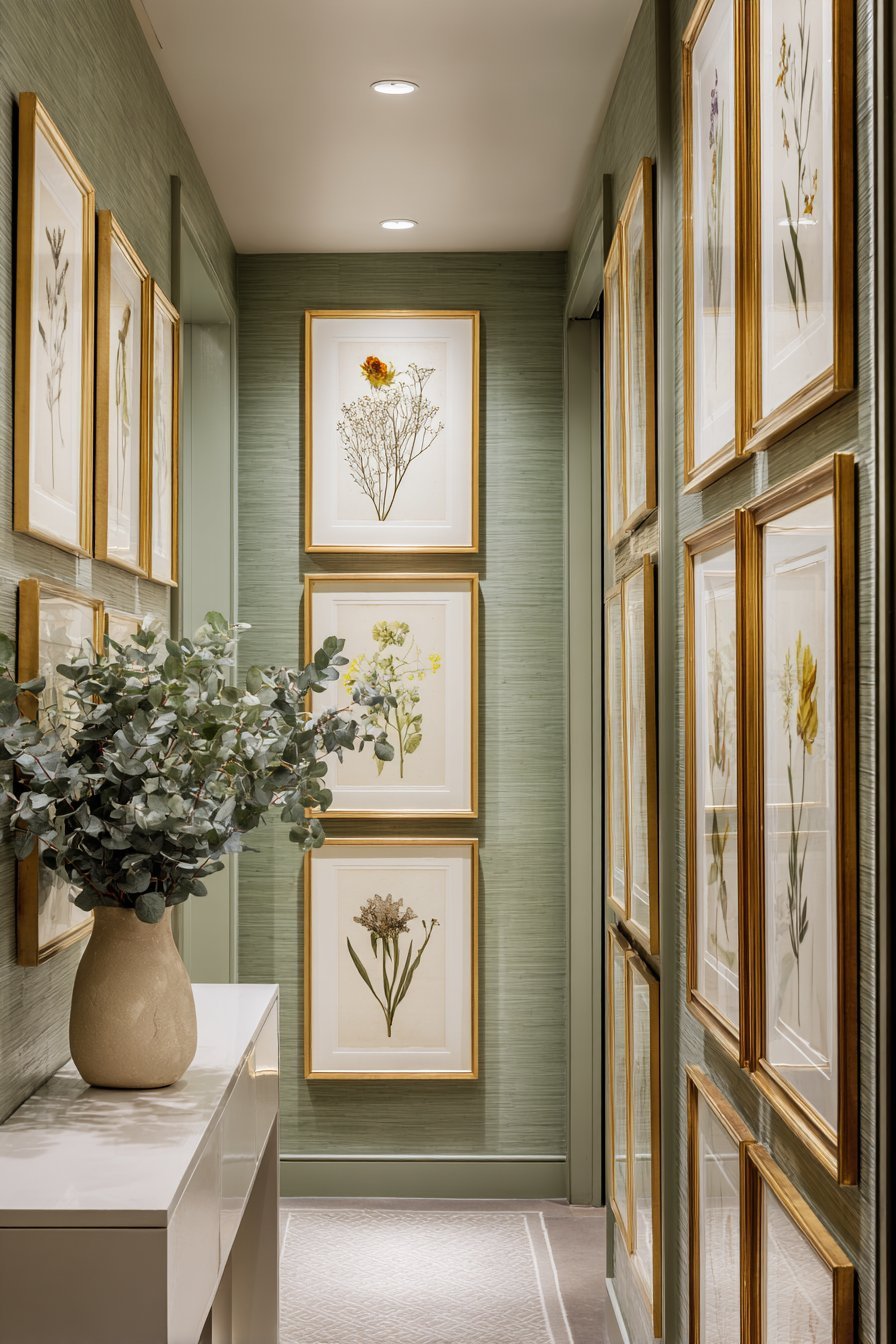
Small botanical watercolors in thin gold frames arrange in single vertical column. Each painting showcases different pressed flowers and herbs with delicate detail. The narrow column emphasizes ceiling height in the hallway. Pale sage green walls with subtle texture complement the artwork.
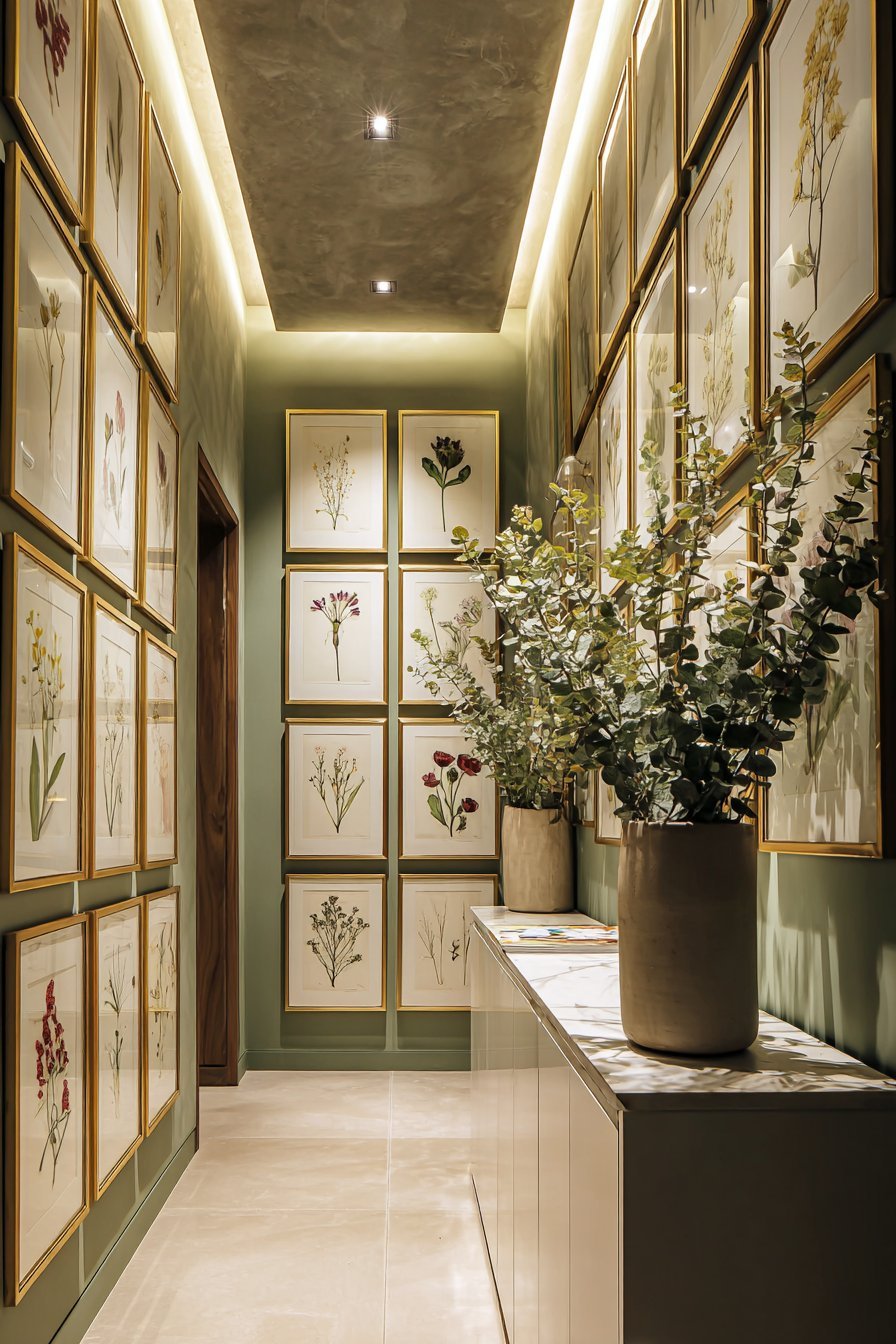
A slim console in white lacquer below holds a ceramic vase. Fresh eucalyptus in the vase echoes the botanical artwork theme. Recessed ceiling lights create focused illumination on each painting. The gold frames catch and reflect this directed lighting beautifully.
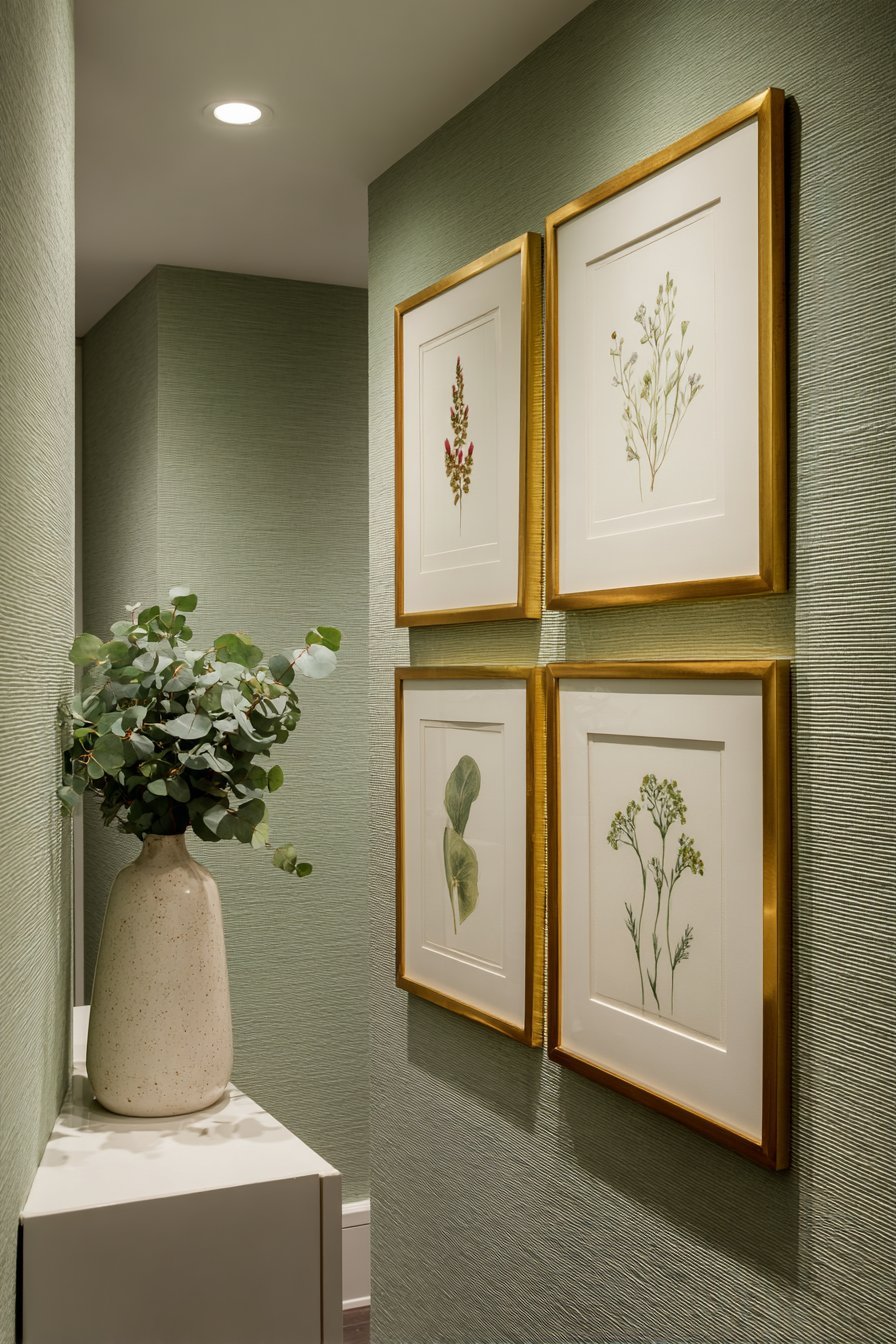
This elegant gallery arrangement works within narrow confines successfully. The vertical column creates substantial visual impact despite limited width. The consistent frame style unifies the diverse botanical subjects. The fresh eucalyptus connects the preserved art to living nature.
Key Design Tips:
- Arrange small artworks in vertical columns for narrow walls
- Choose thin frames to minimize visual weight
- Use recessed lighting for gallery-quality presentation
- Echo artwork themes with fresh botanical elements
- Paint walls in muted colors that complement artwork
17. Decorative Plate Collection Display
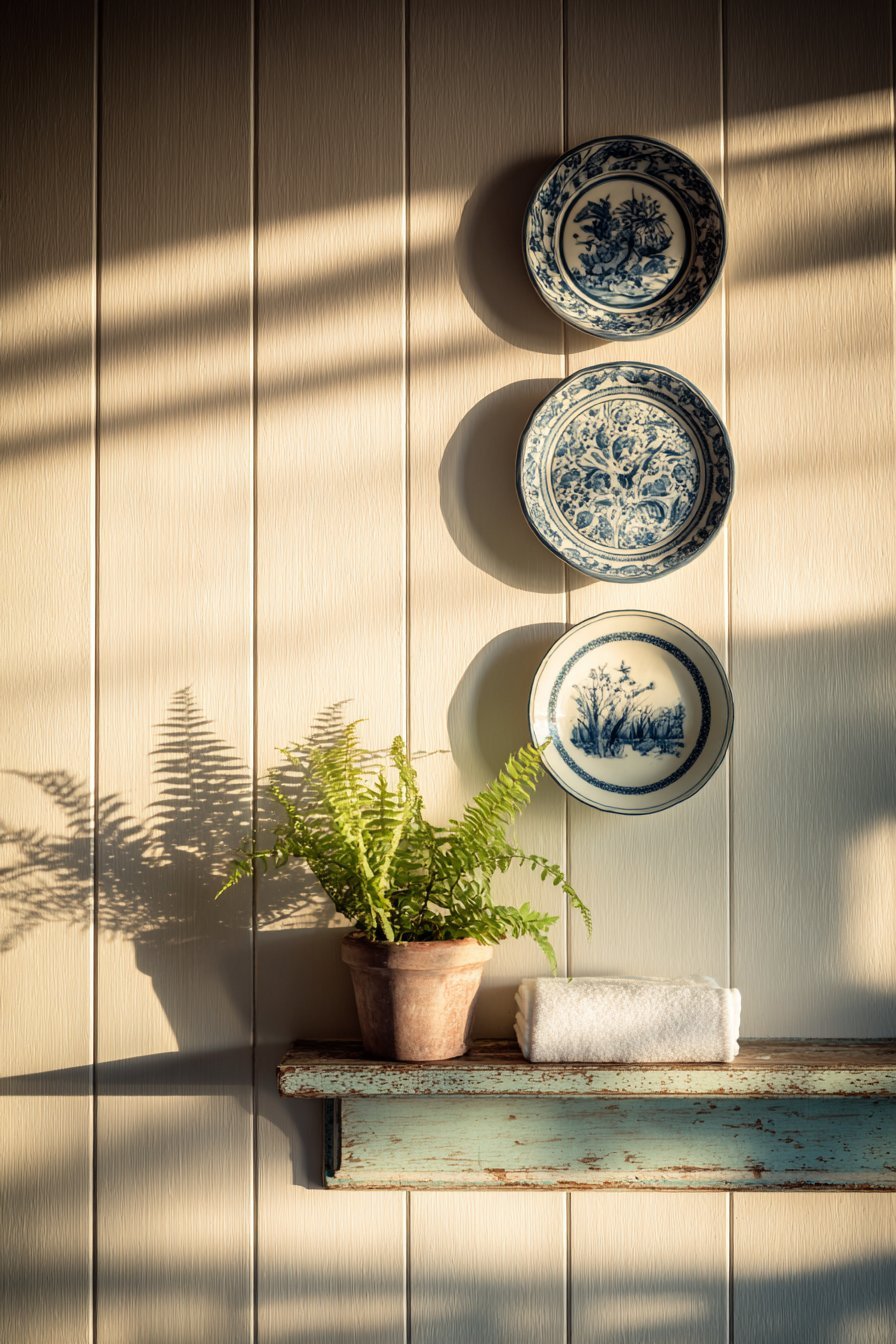
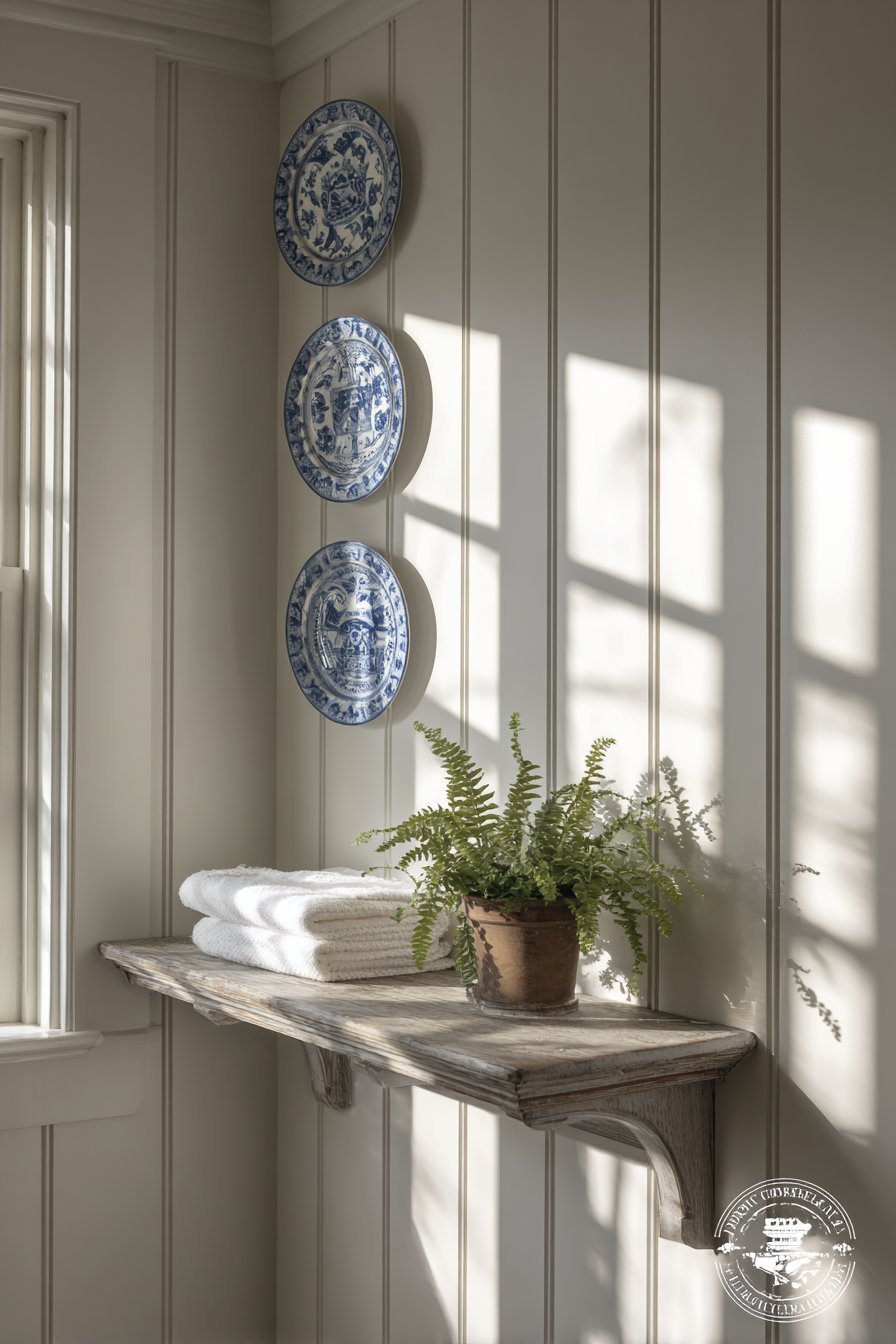
Three small decorative plates in varying sizes create charming wall art. Hand-painted blue and white patterns provide visual interest. The plates mount on crisp white beadboard paneling vertically. A narrow wooden shelf in distressed white finish sits below.
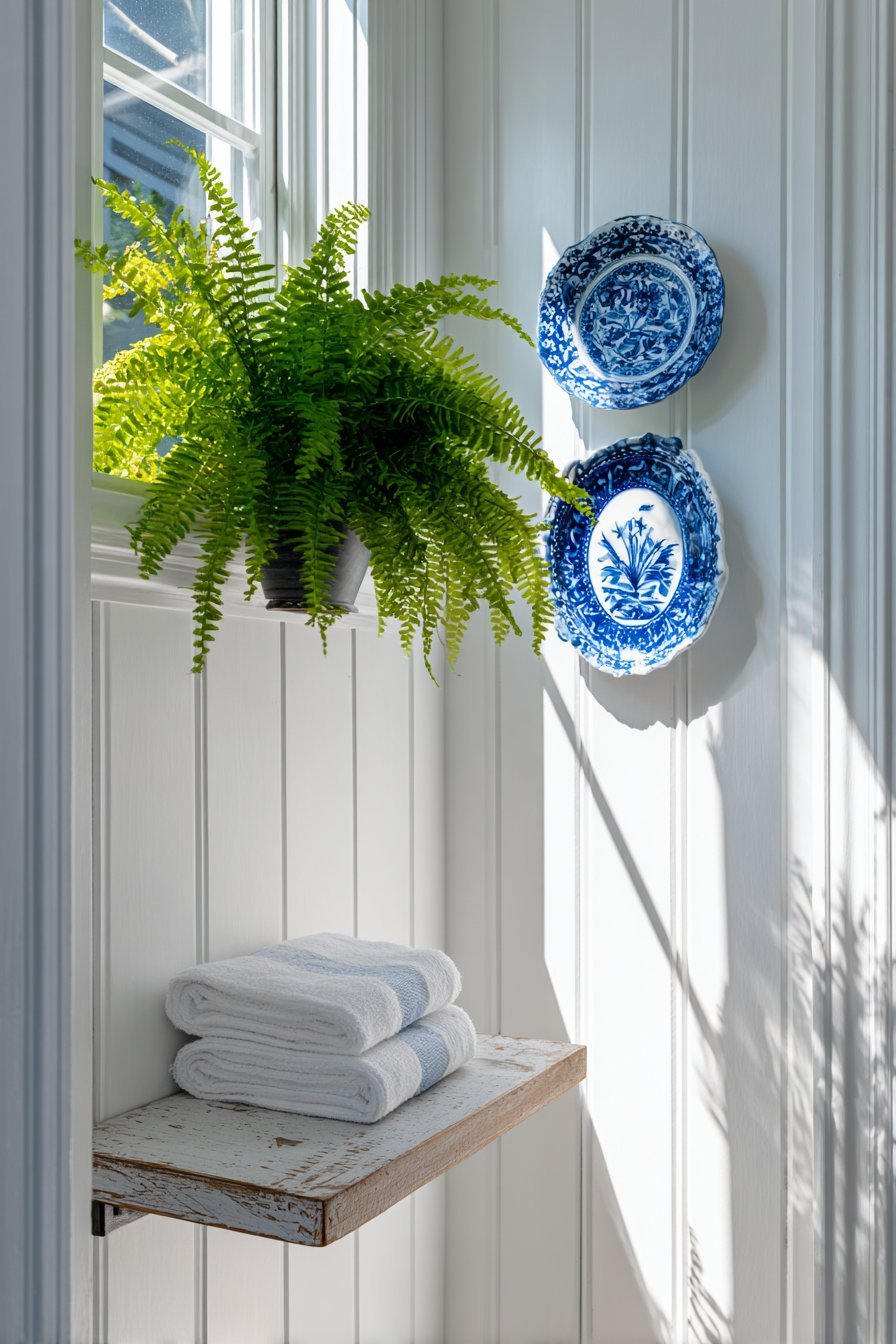
The shelf holds a small potted fern and guest towels in this powder room. Brushed nickel fixtures provide subtle metallic accents throughout. Natural window light creates soft shadows across the dimensional beadboard. The vertical plate arrangement respects the room’s narrow proportions.
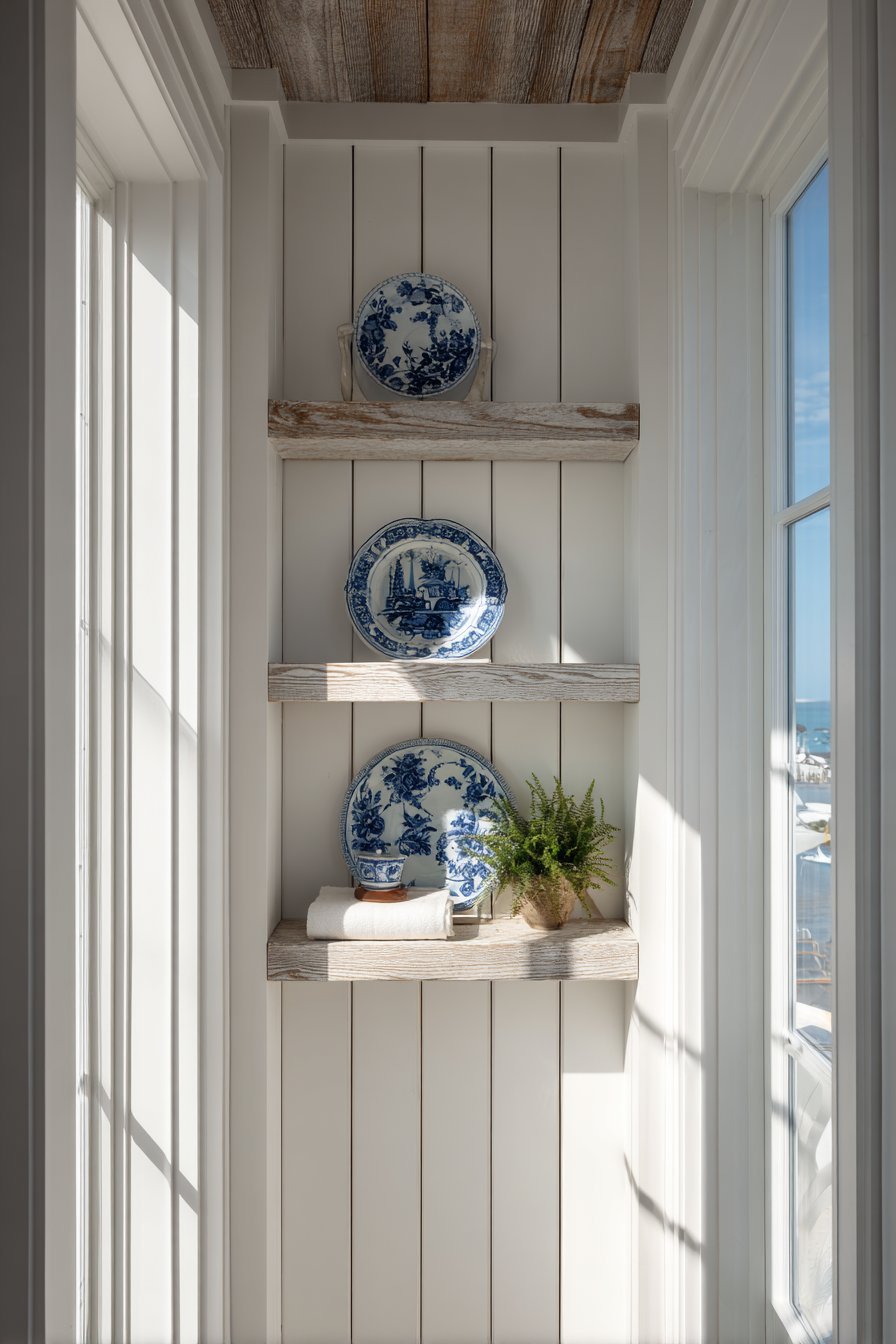
This traditional approach brings personality to small bathroom spaces. The blue and white color scheme feels fresh and timeless. The beadboard adds texture without overwhelming the limited square footage. The combination creates inviting atmosphere for guests.
Key Design Tips:
- Display decorative plates vertically in narrow bathrooms
- Use beadboard paneling for texture and traditional charm
- Choose hand-painted plates for artisanal appeal
- Add small plants to soften hard bathroom surfaces
- Coordinate fixture finishes throughout the space
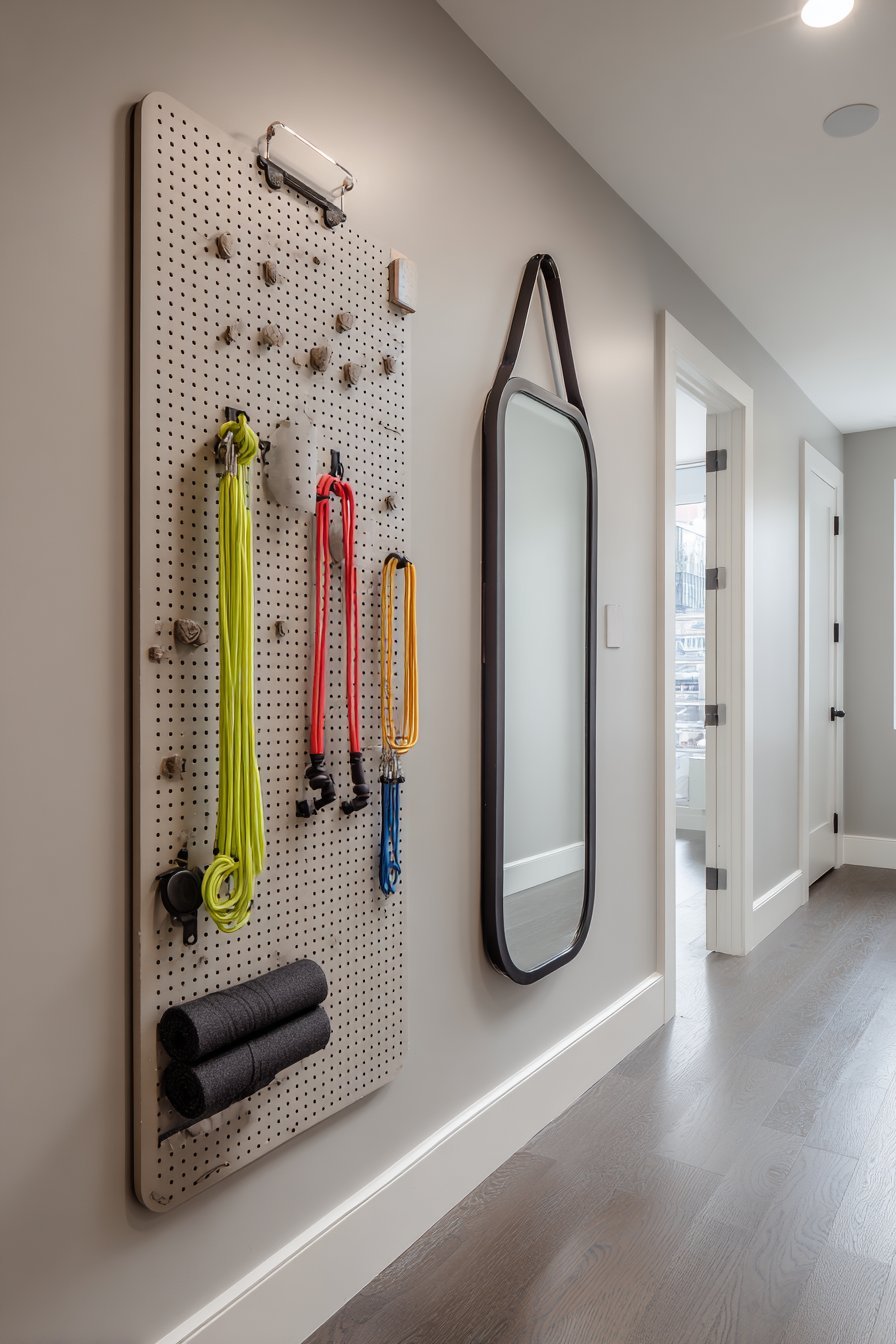
18. Home Gym Pegboard Organization
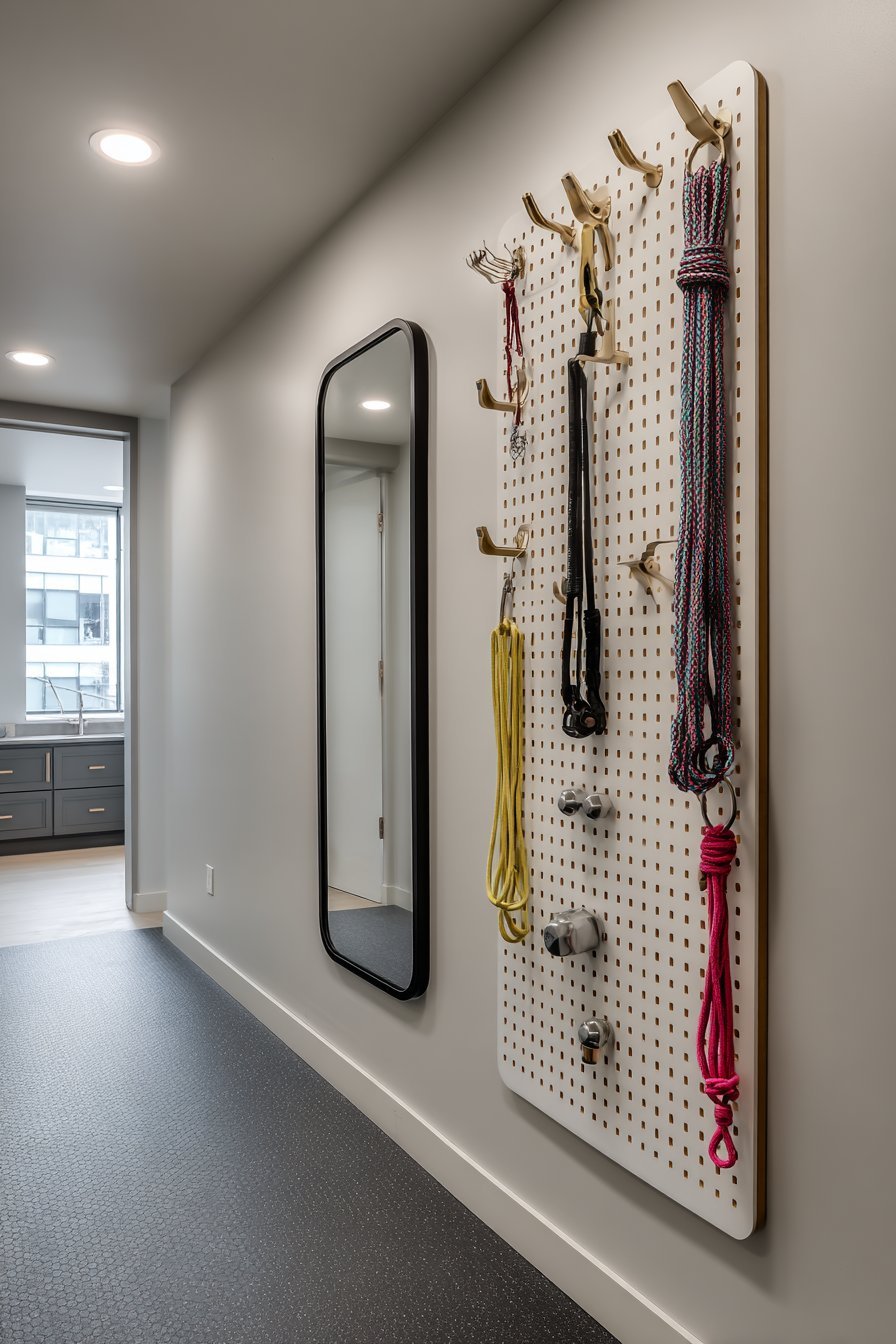
Grey painted plywood pegboard system organizes fitness equipment efficiently. Colored resistance bands hang from brass hooks at varying heights. Jump rope and small hand weights occupy designated spots. A narrow full-length mirror with black frame mounts beside the pegboard.
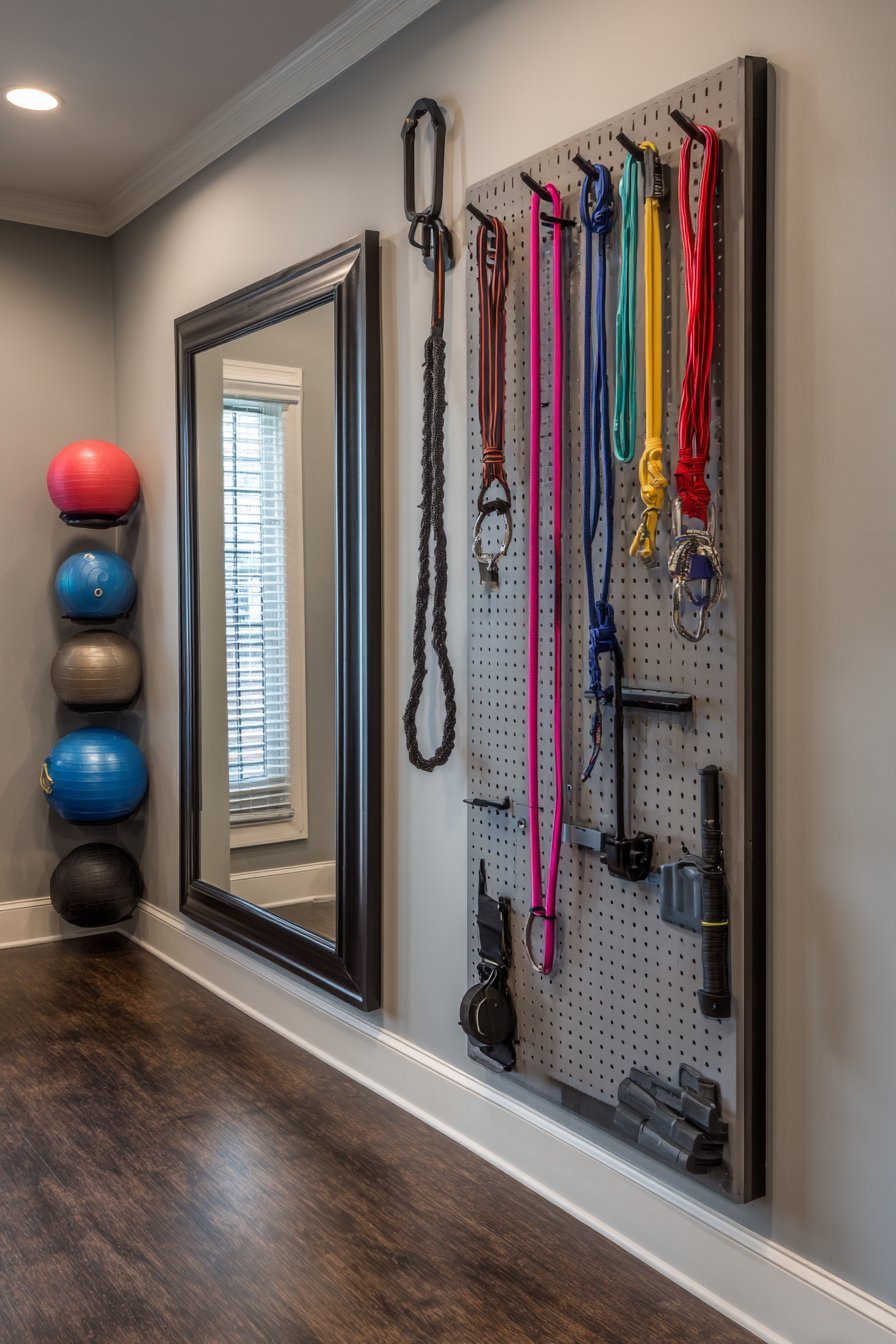
Light grey walls keep the home gym feeling open and bright. Rubber flooring in charcoal provides durable, safe workout surface. Bright overhead LED lighting ensures good visibility during exercise. The pegboard keeps frequently used equipment accessible and organized.
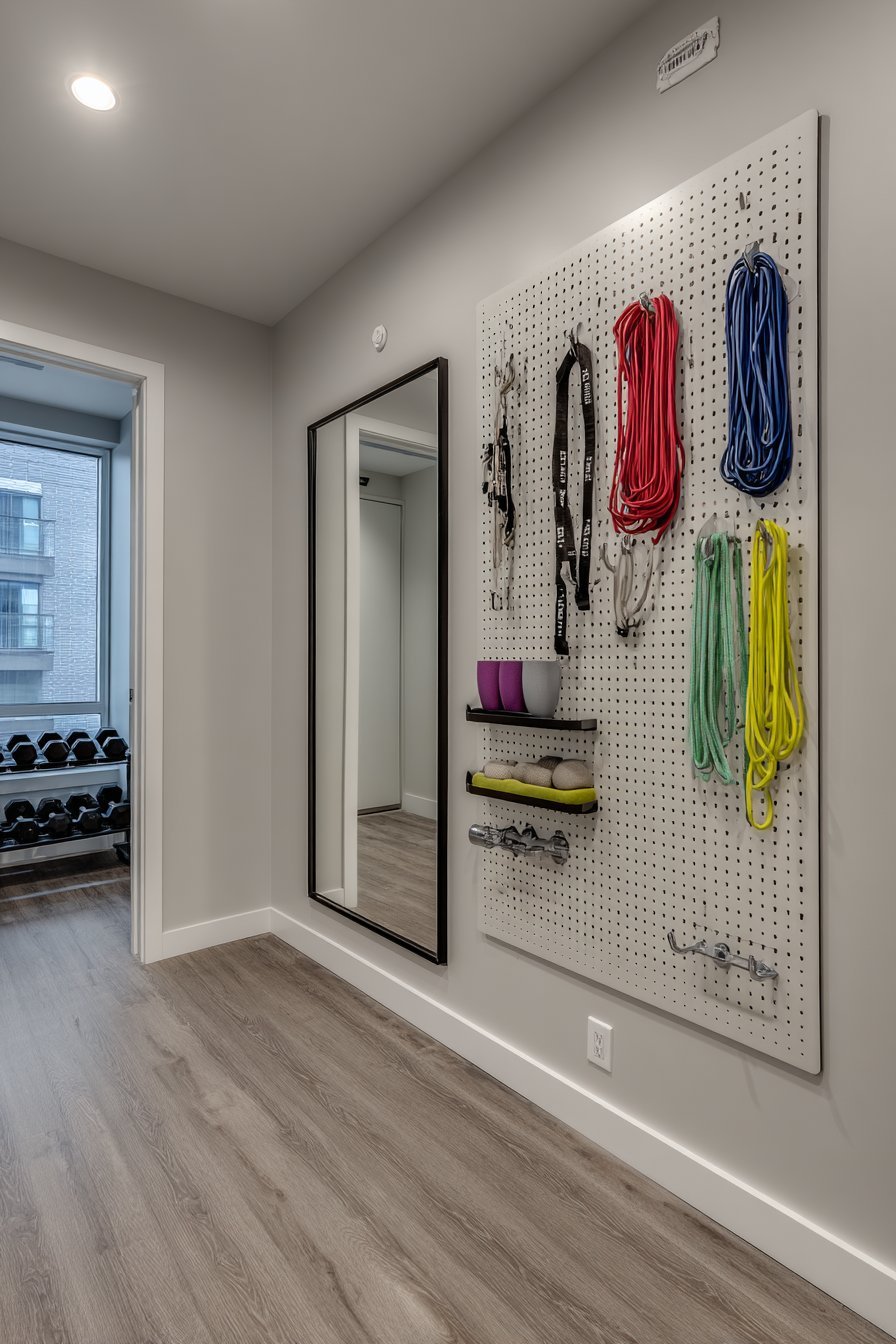
This practical solution maximizes narrow wall storage for fitness spaces. The mirror provides essential form-checking capability during workouts. The brass hooks add unexpected elegance to the utilitarian setup. The system adapts easily as fitness equipment needs change.
Key Design Tips:
- Install pegboard in home gyms for customizable equipment storage
- Paint pegboard in neutral colors to blend with walls
- Add full-length mirrors for form checking during exercise
- Use brass hooks to elevate utilitarian storage aesthetics
- Choose bright LED lighting for workout safety and visibility
19. Architectural Photography Focal Point
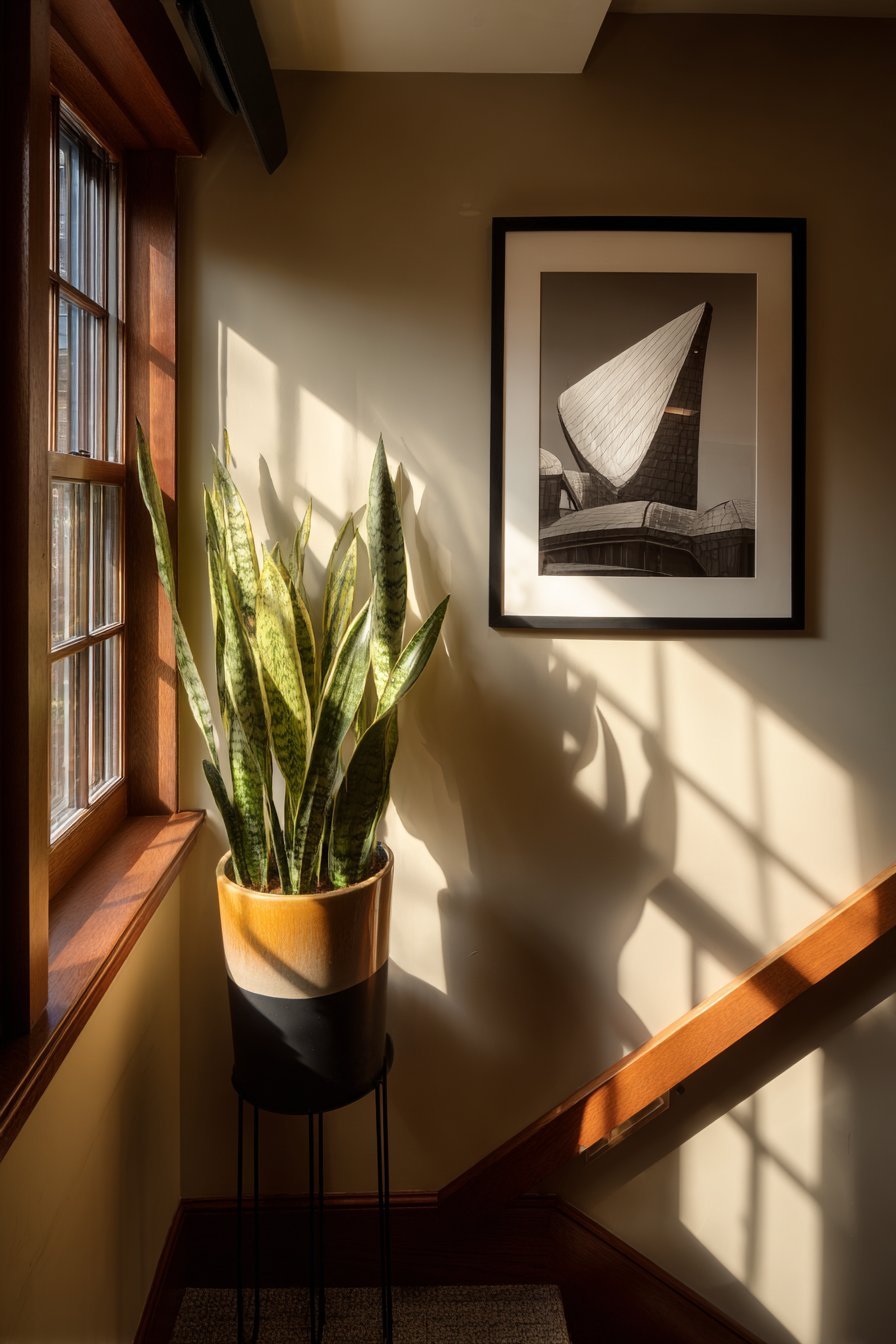
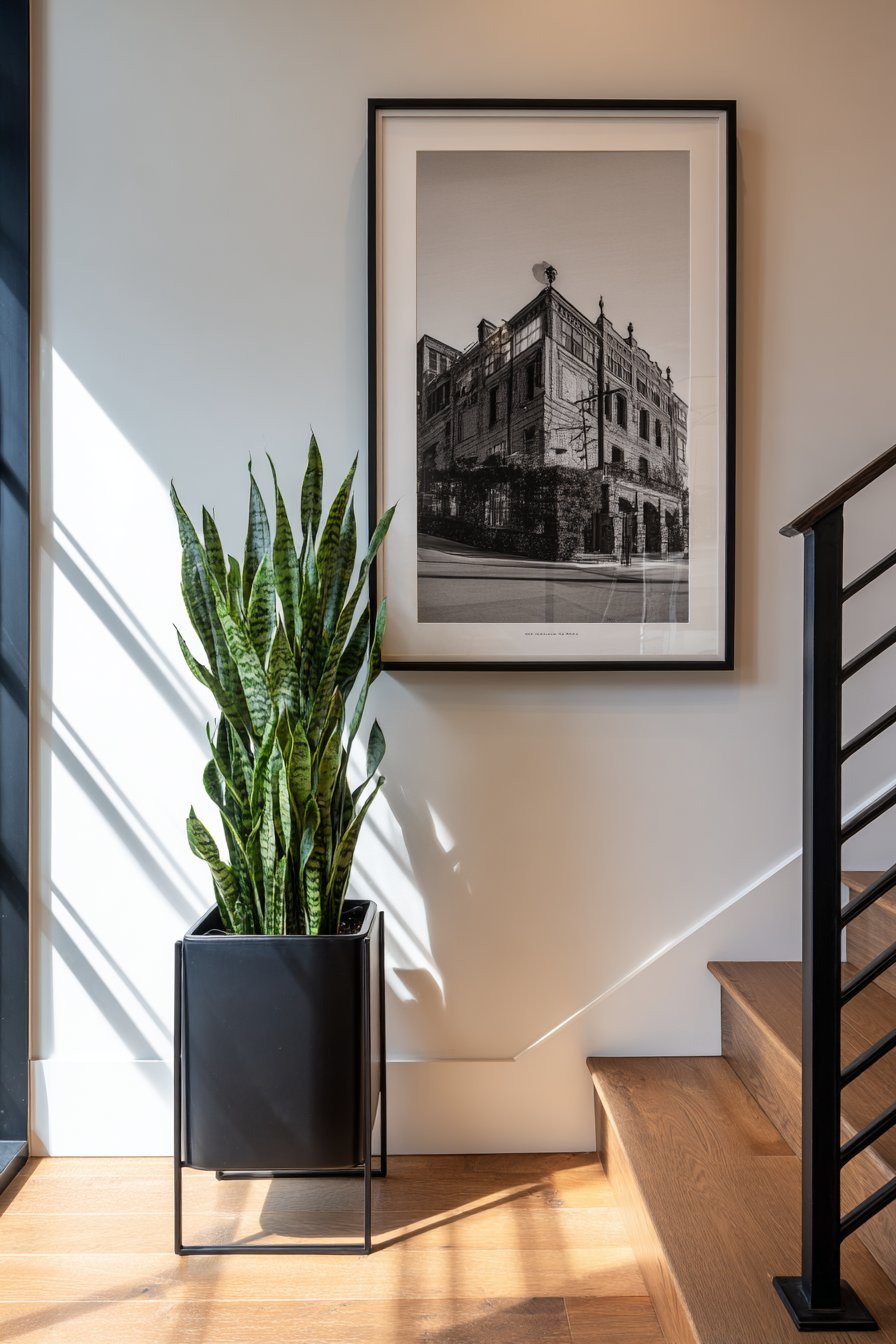
A single large-scale black and white photograph dominates the stairway landing. The architectural subject photograph hangs in vertical orientation. A thin black metal frame provides clean, modern presentation. A narrow plant stand in matte black below holds a snake plant.
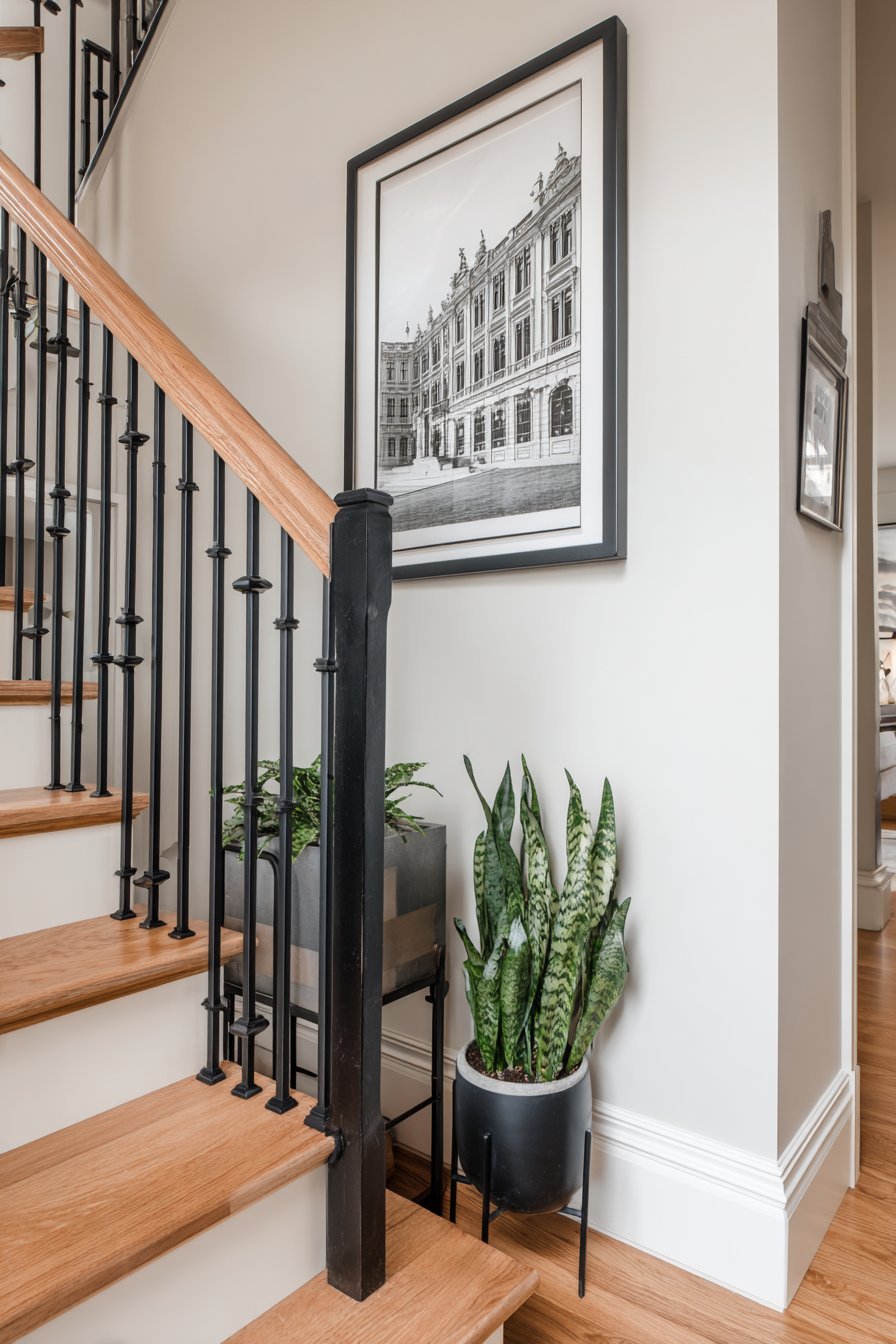
Warm oak handrail and steps provide natural wood elements. Natural light from a nearby window creates dramatic shadows across the photograph. The substantial artwork creates focal point in the transitional space. The vertical orientation complements the narrow landing wall perfectly.
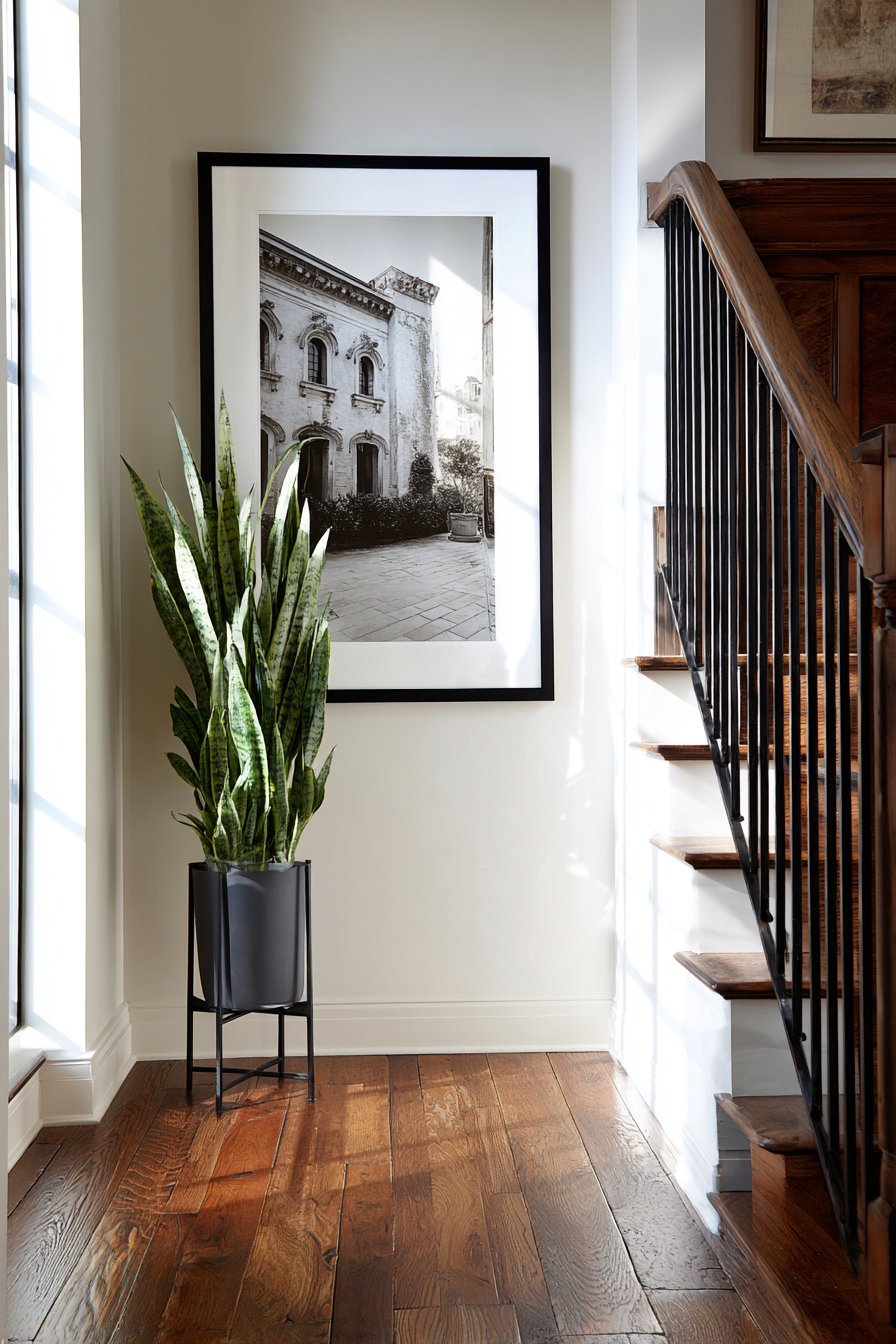
This design demonstrates that one quality piece outperforms multiple small items. The architectural photography adds sophistication to the utilitarian stairway. The snake plant requires minimal maintenance while adding living element. The matte black finishes create cohesive contemporary aesthetic.
Key Design Tips:
- Choose one large artwork over multiple small pieces for impact
- Select architectural photography for sophisticated appeal
- Use thin frames to minimize visual bulk
- Add low-maintenance plants in transitional spaces
- Position near windows for dramatic natural shadow play
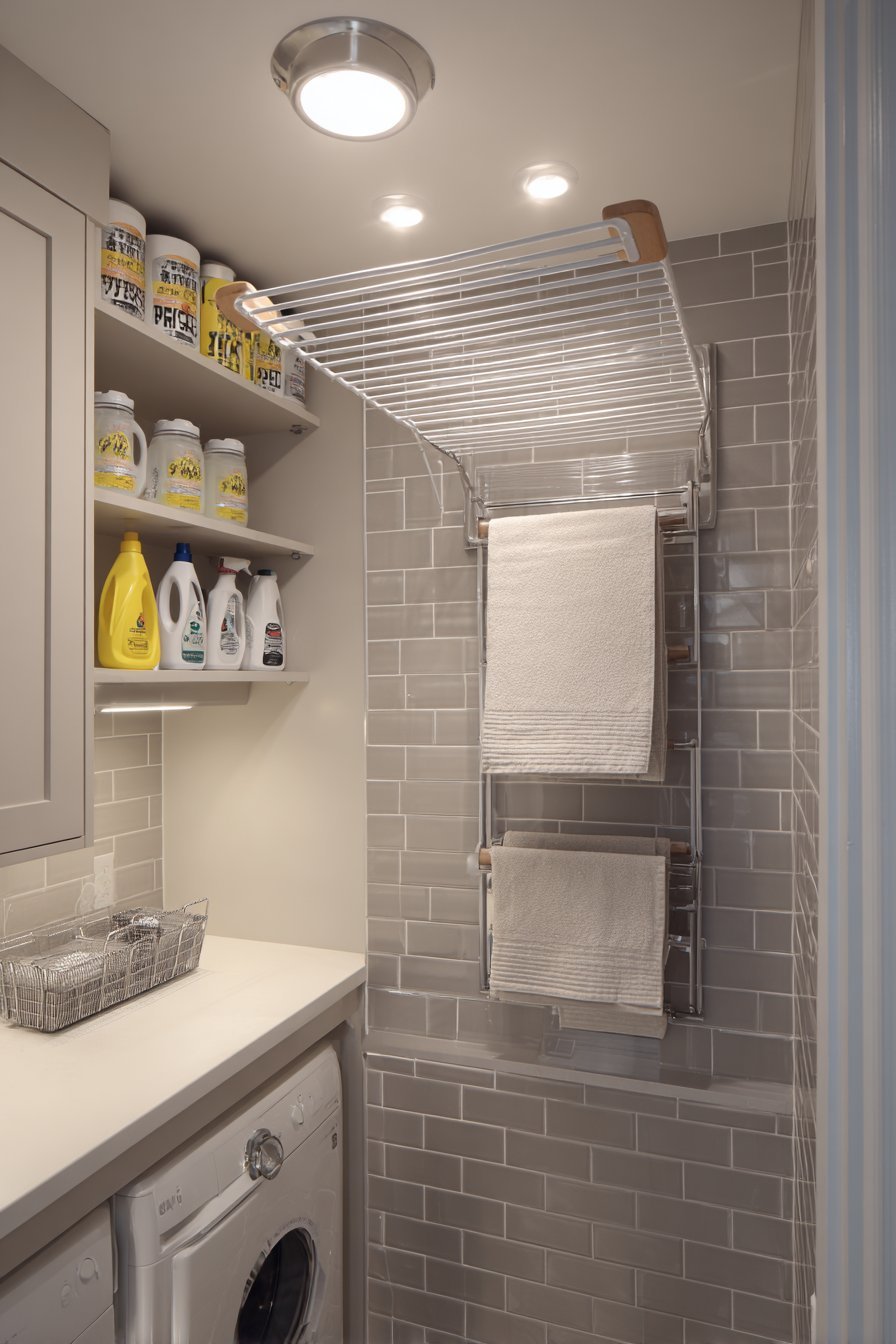
20. Fold-Down Laundry Drying Rack
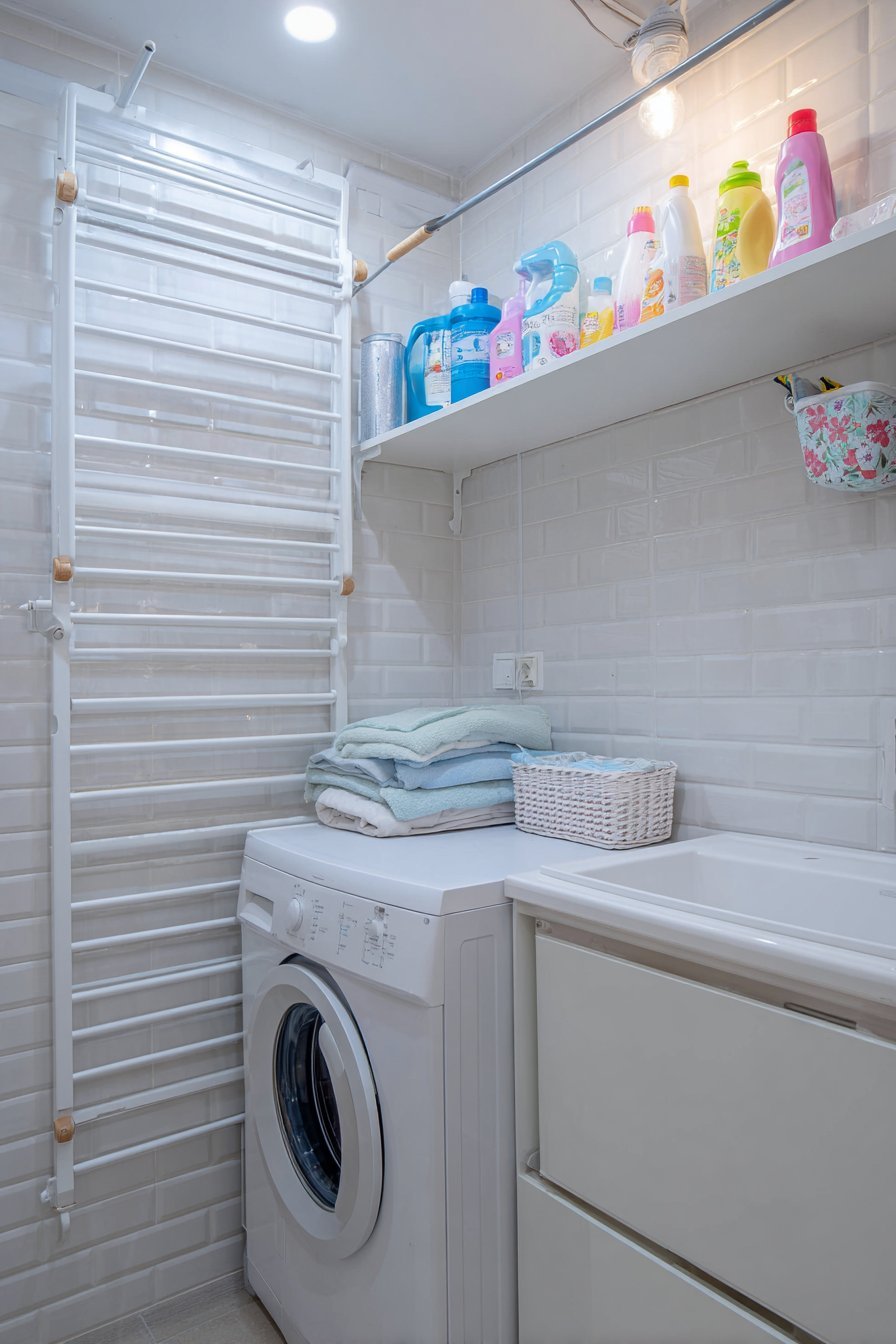
White coated metal fold-down drying rack mounts above built-in hamper. Wooden dowels provide gentle drying surface for delicate items. The wall features practical subway tile in soft grey. A narrow shelf above holds detergent and cleaning supplies organized.
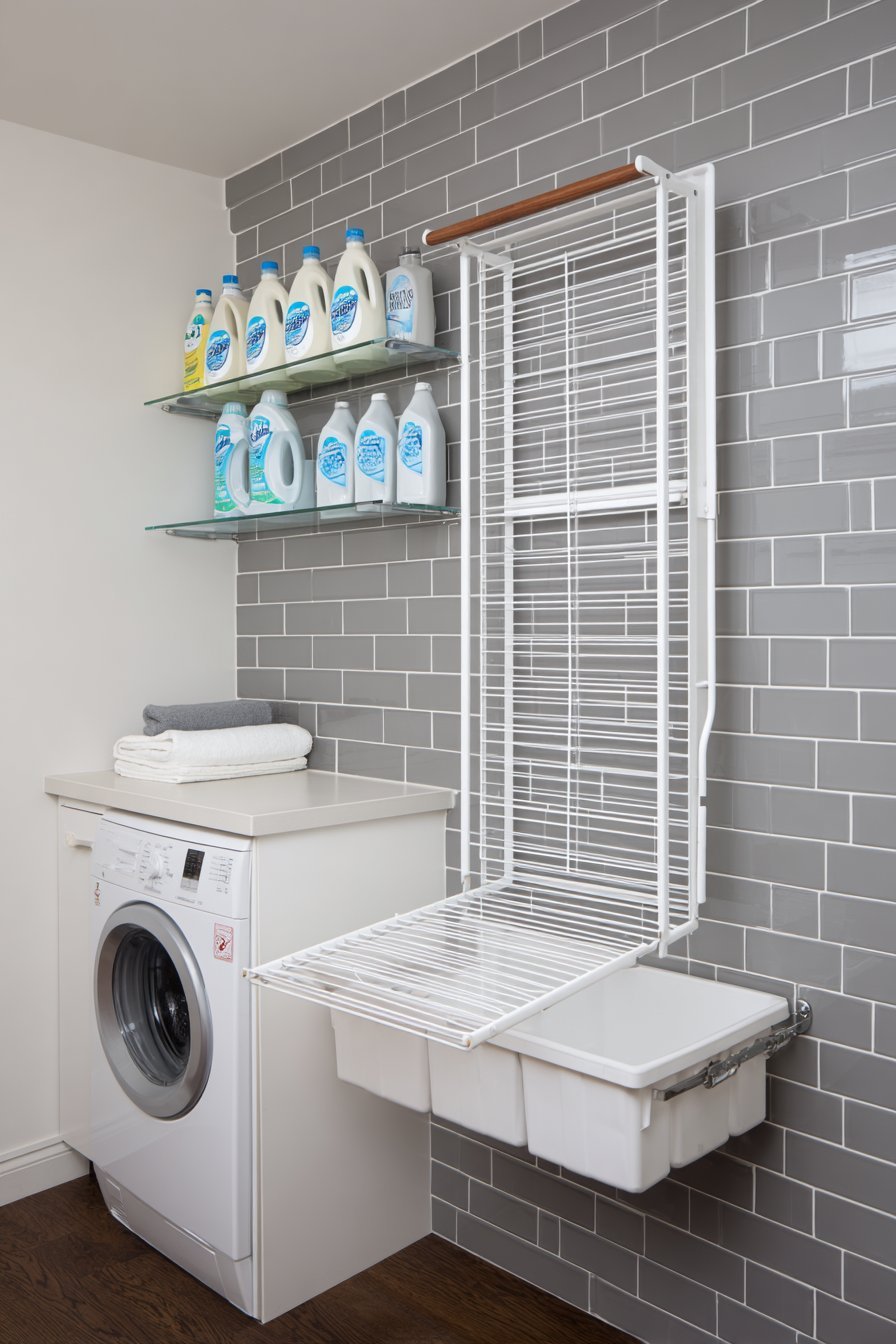
Bright overhead lighting ensures visibility in this functional space. The fold-down mechanism saves space when the rack isn’t needed. Pull-out hamper bins below provide sorting capability. The vertical storage maximizes utility in the tight laundry room.
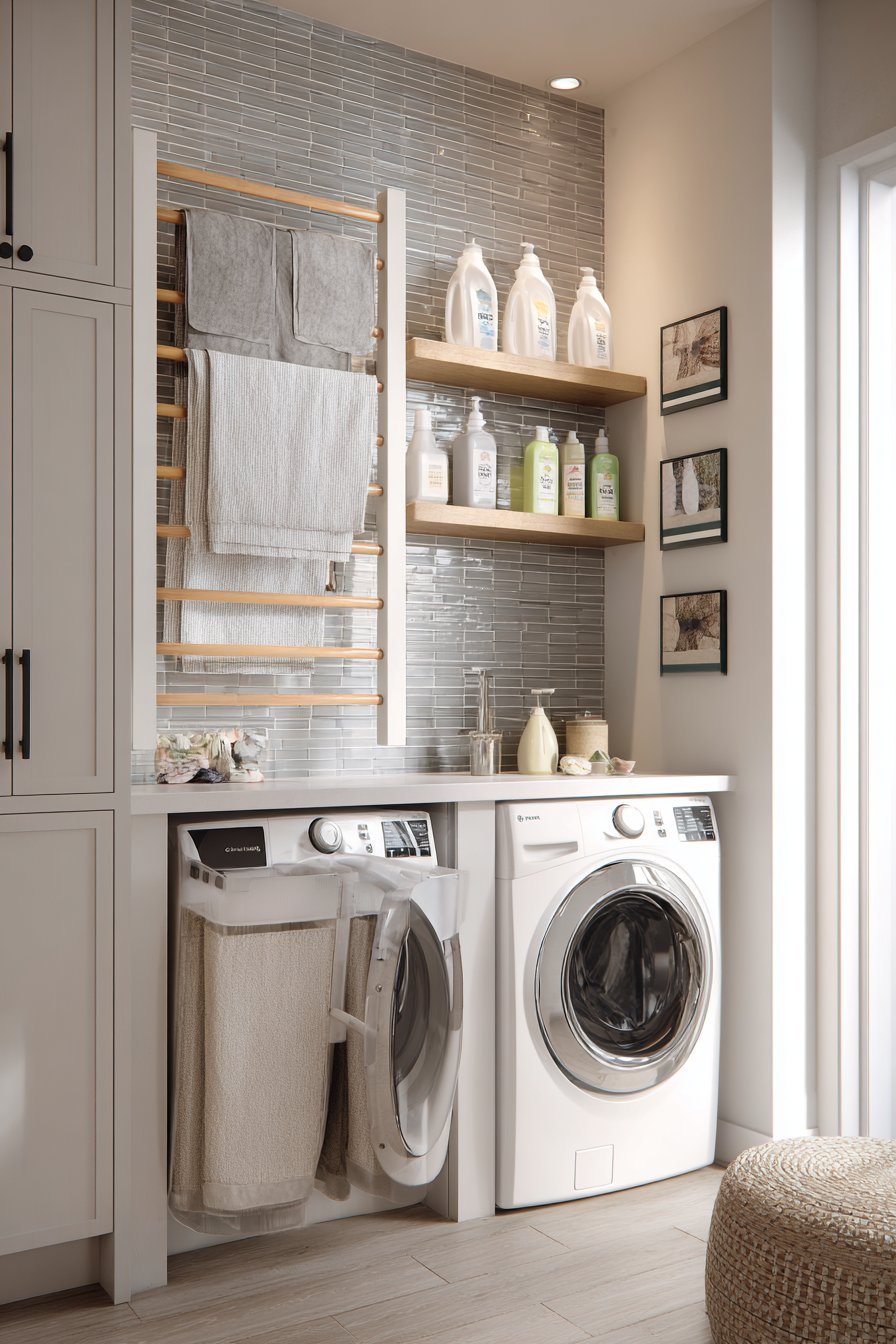
This design proves narrow walls can support highly functional solutions. The subway tile withstands moisture while adding classic style. The organized cleaning supplies create visual calm in the utility space. The white and grey color scheme keeps the small room feeling clean.
Key Design Tips:
- Install fold-down racks to maximize narrow laundry room utility
- Choose subway tile for moisture-resistant wall protection
- Use pull-out hamper bins for efficient laundry sorting
- Organize supplies in matching containers for visual cohesion
- Ensure bright overhead lighting in utility spaces
Why These Narrow Wall Designs Are the Best
These narrow wall designs represent thoughtful solutions to common spatial challenges. Each concept demonstrates how vertical emphasis transforms confined spaces into stylish focal points. The variety of approaches ensures options for every home style and functional need.
The incorporation of mirrors strategically expands perceived space through reflection. This simple technique doubles visual width without structural changes. Vertical arrangements consistently draw eyes upward, emphasizing ceiling height over limited width. This psychological trick makes rooms feel larger and more spacious.
Material choices play crucial roles in narrow wall success. Slim profiles maintain walkway clearance while providing functionality. Natural materials like wood, rattan, and plants add warmth without visual heaviness. Metallic accents in brass and matte black provide sophistication without bulk.
Gallery walls and vertical displays prove narrow spaces can support substantial visual interest. The key lies in thoughtful arrangement and appropriate scale selection. Functional storage solutions like pegboards and shallow shelves maximize utility. These designs demonstrate that limited width doesn’t mean sacrificing organization or style.
Color theory applications enhance narrow wall designs significantly. Neutral palettes prevent visual crowding in tight spaces. Strategic dark colors create intimate, gallery-like atmospheres when applied confidently. Textured walls add depth without physical protrusion into walkways.
The versatility of these concepts spans traditional to contemporary aesthetics. Board and batten treatments suit classic homes while slatted systems appeal to modern sensibilities. This adaptability ensures narrow wall solutions for diverse design preferences. Sustainable material choices and timeless approaches ensure lasting appeal beyond trending styles.
Conclusion
These narrow wall designs prove that spatial limitations inspire creative solutions. The key takeaways emphasize vertical arrangement, strategic mirror placement, and thoughtful material selection. Each concept balances aesthetic appeal with practical functionality for real-world application.
Successful narrow wall design requires understanding spatial proportions and visual weight. Start by assessing your specific space constraints and functional needs. Choose one concept that resonates with your style and adapt it confidently. Your narrow walls hold untapped potential waiting for thoughtful design expression.
