

Creating a simple baby nursery offers new parents a peaceful sanctuary without overwhelming complexity. This design approach prioritizes functionality and calm aesthetics over elaborate decoration. The result is a soothing environment where both baby and parents feel comfortable.
Simple nursery design has become increasingly popular among modern families. These spaces prove that beauty doesn’t require excess or extravagance. Clean lines, neutral palettes, and essential furniture create rooms that grow with your child. The minimalist approach also makes daily routines more manageable during those exhausting early months.
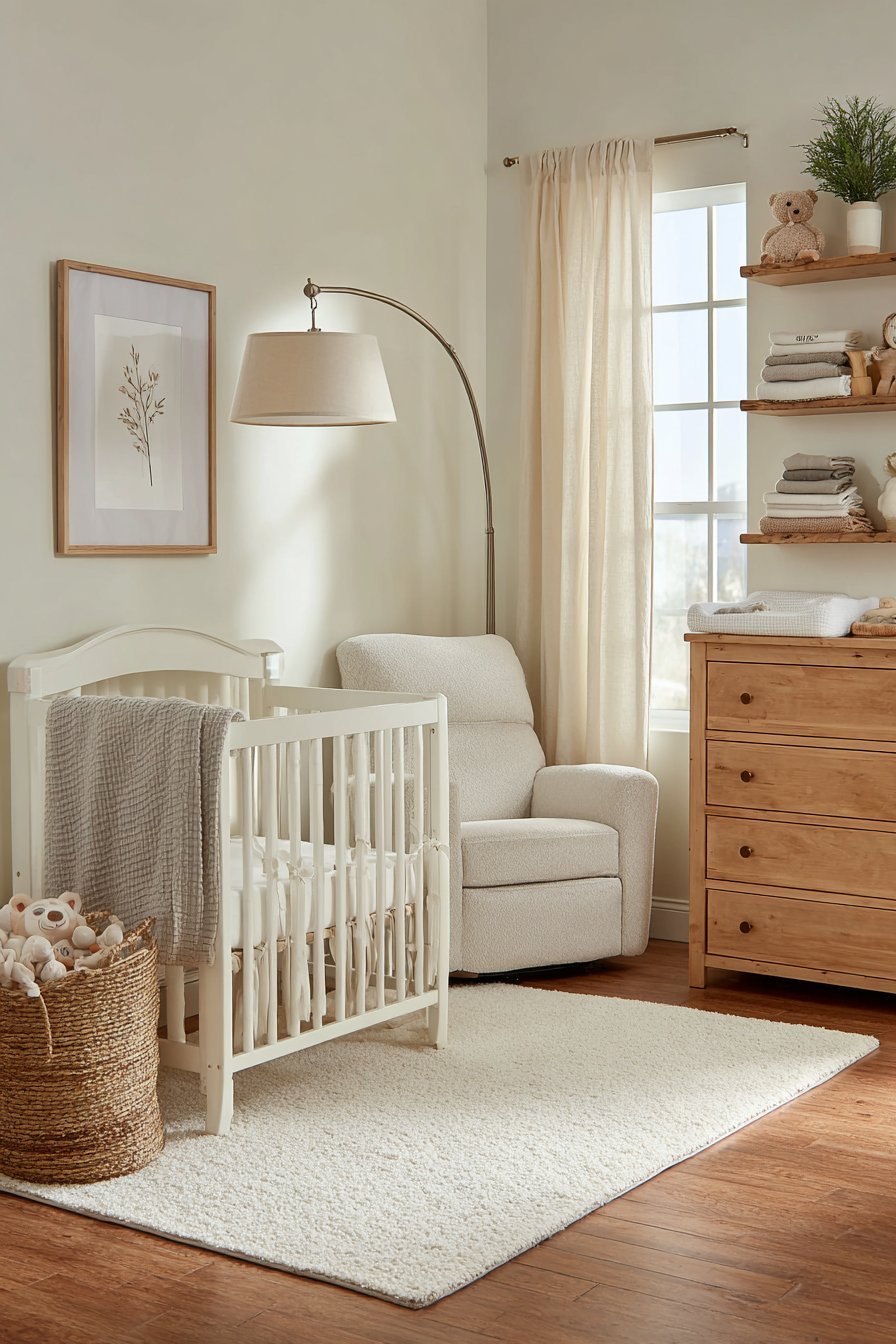
The following designs showcase various approaches to simple nursery creation. Each concept demonstrates how thoughtful choices create welcoming spaces. From classic white cribs to natural wood finishes, these ideas celebrate restraint and intentionality. You’ll discover storage solutions, feeding corners, and organizational systems that make parenting easier.
1. Classic White Crib with Cream Wall Simplicity
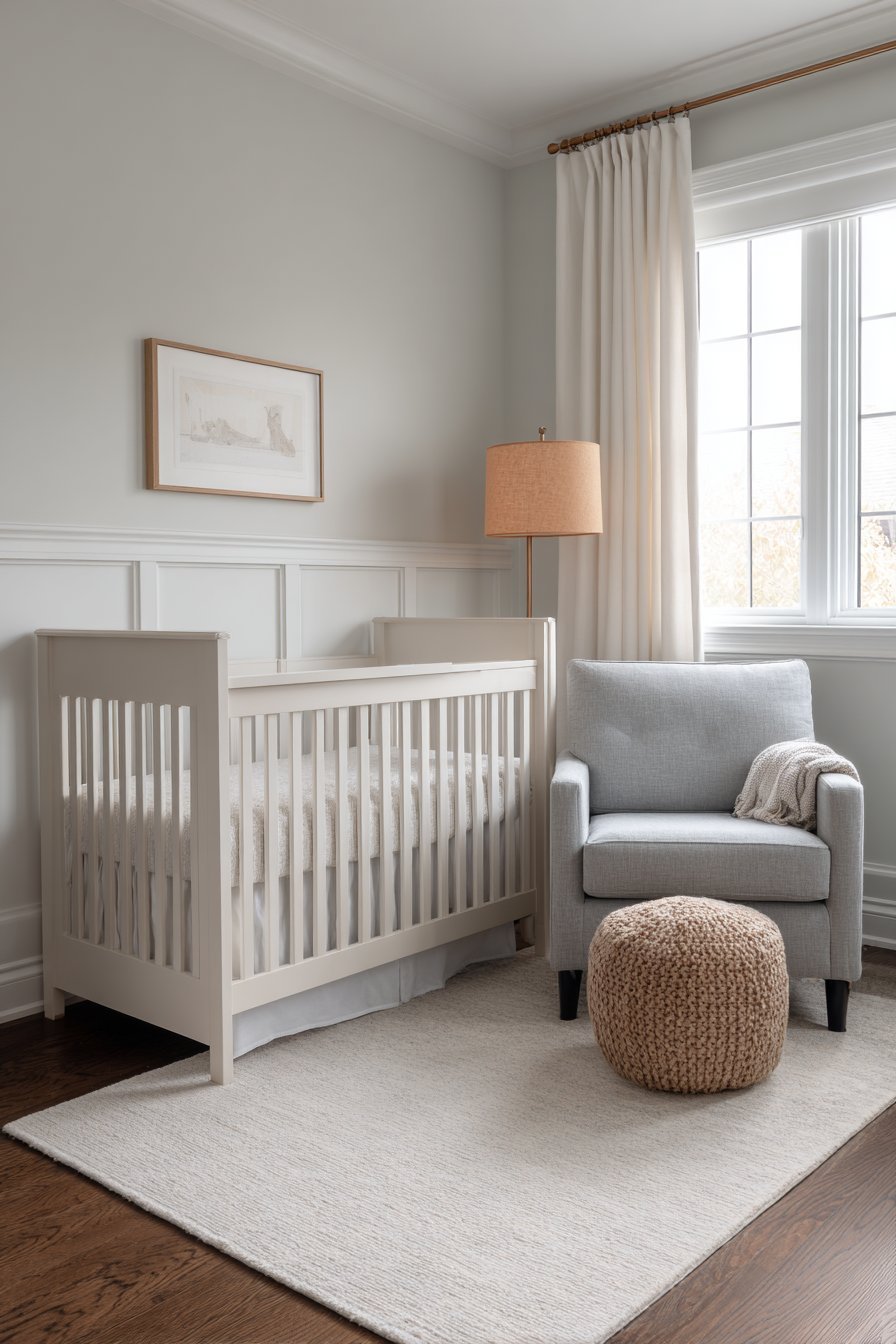
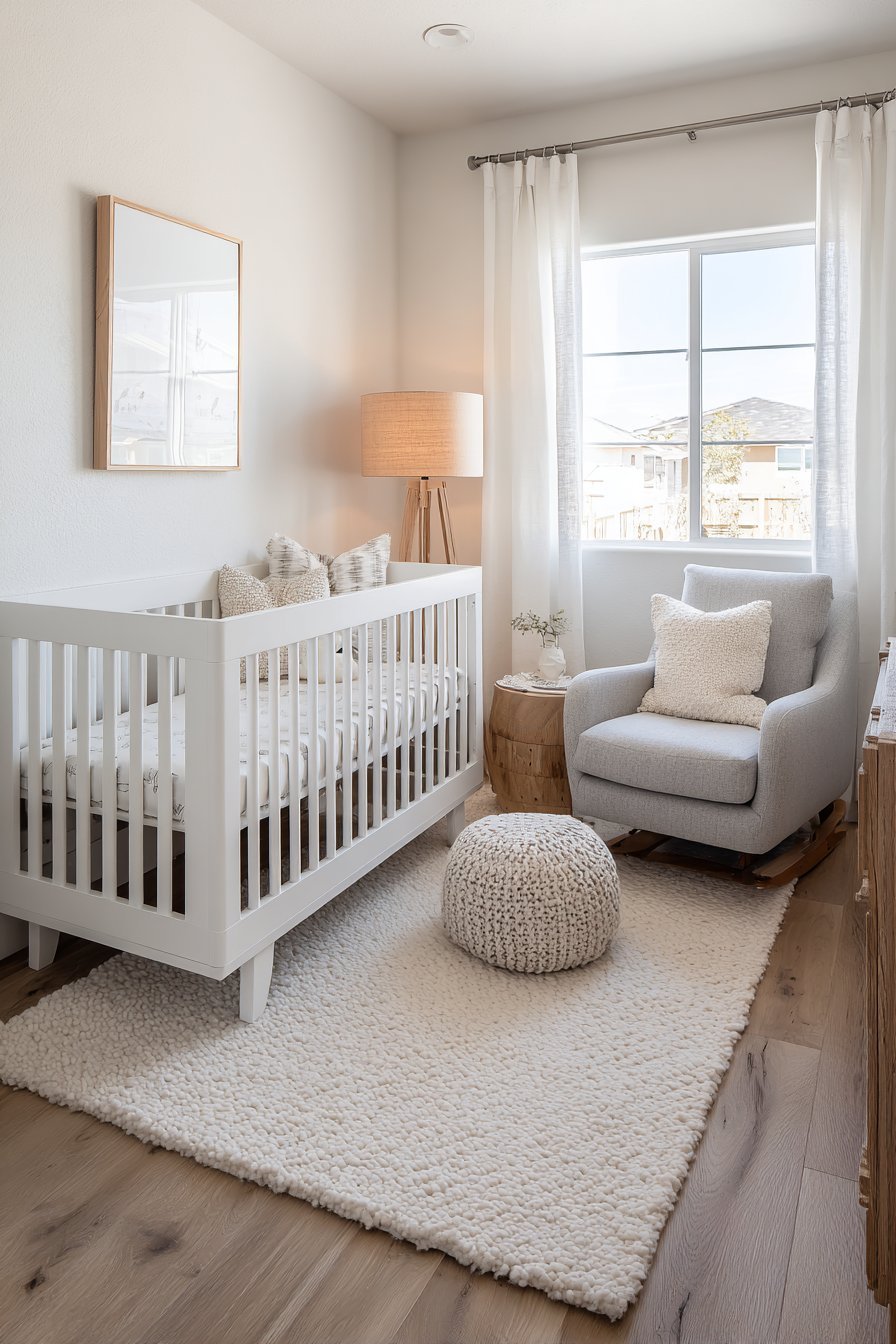
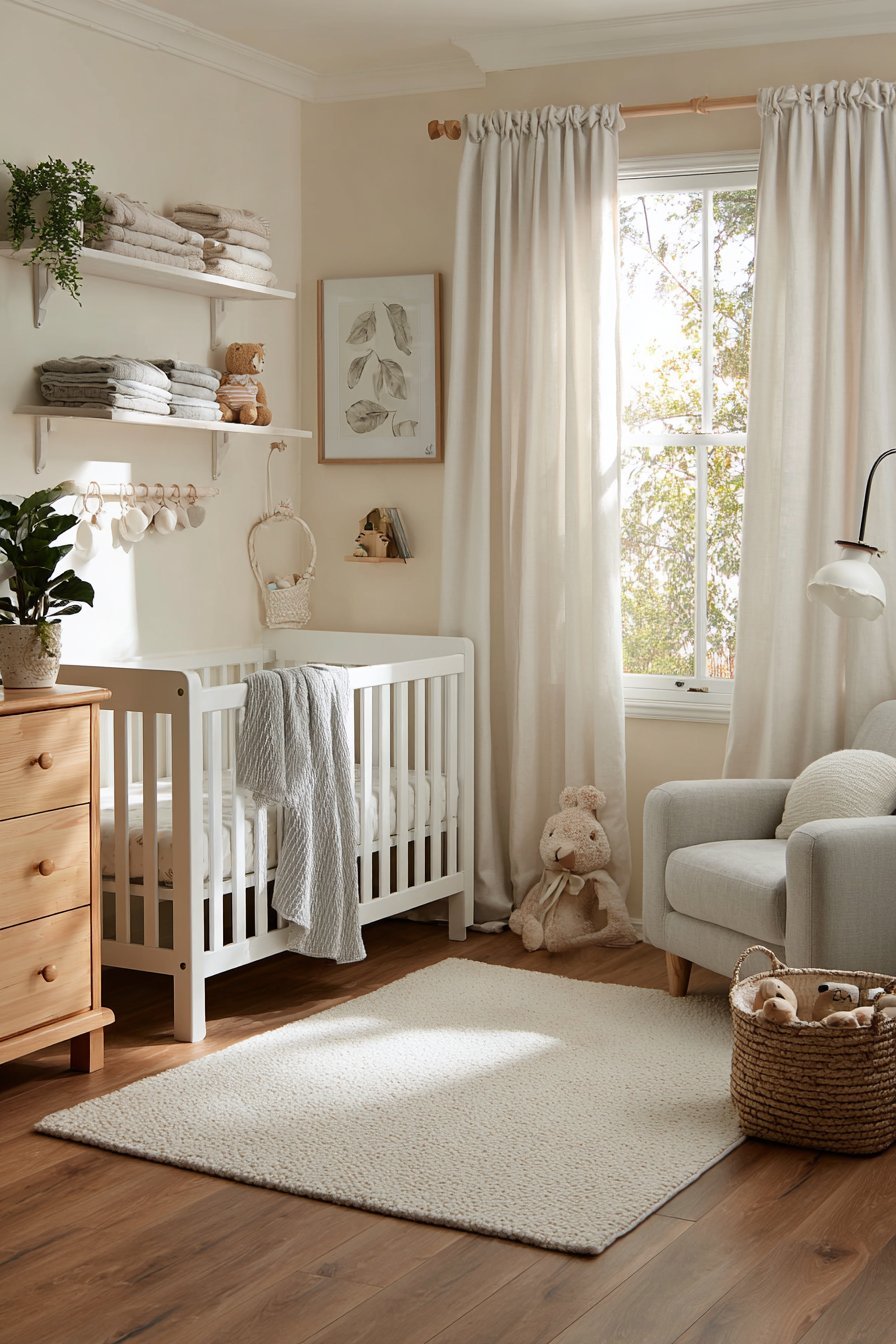
A white wooden crib with clean lines becomes the focal point against soft cream walls. The timeless design offers versatility for years to come. Nearby, a light grey glider chair provides comfortable seating for nighttime feedings. A small side table holds a simple lamp with warm-toned shade.
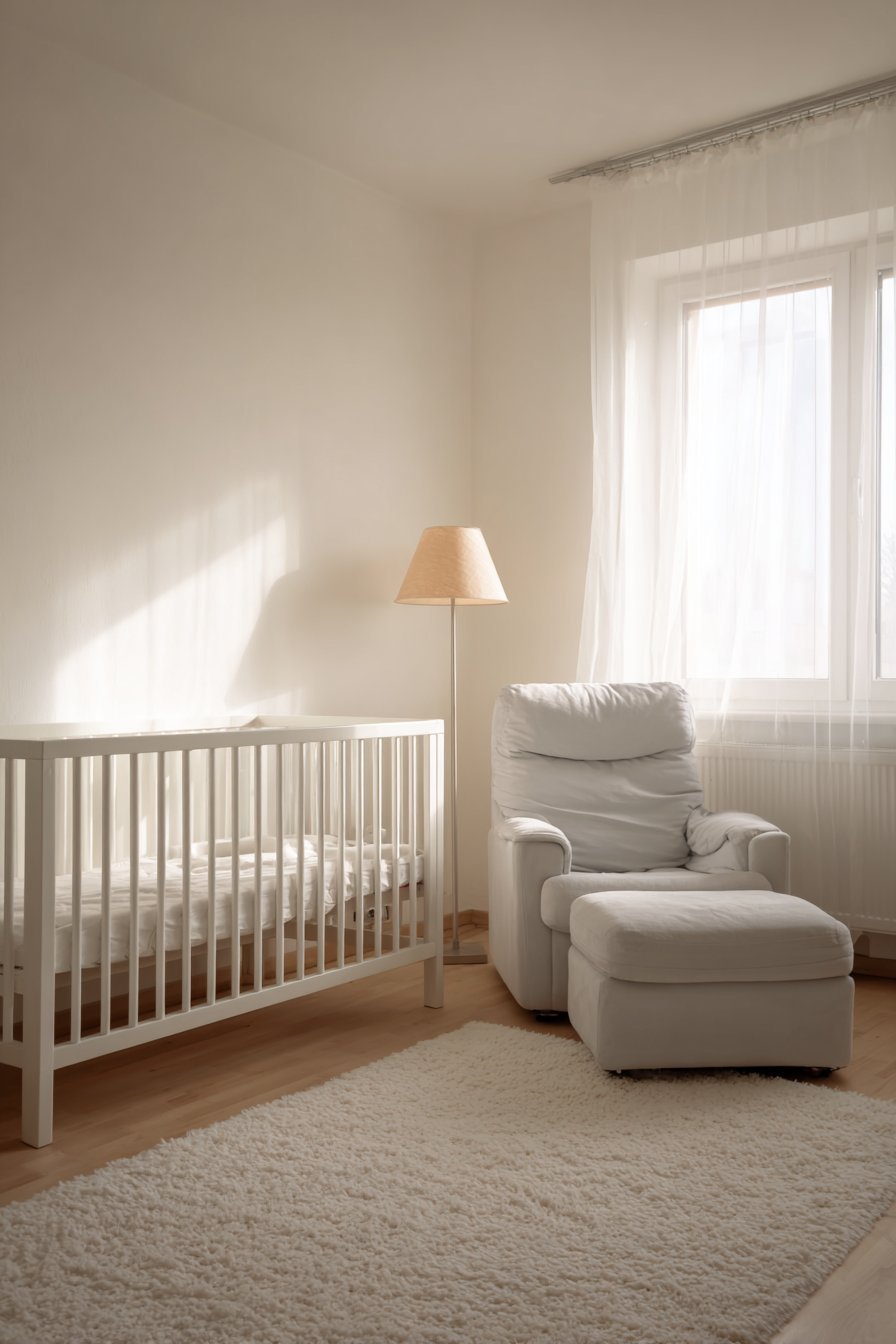
Natural oak hardwood flooring adds warmth beneath your feet. A plush ivory area rug with subtle texture defines the crib area. This creates a soft landing for eventual playtime. Sheer white curtains filter gentle morning sunlight beautifully. The filtered light creates a peaceful atmosphere perfect for naptime.
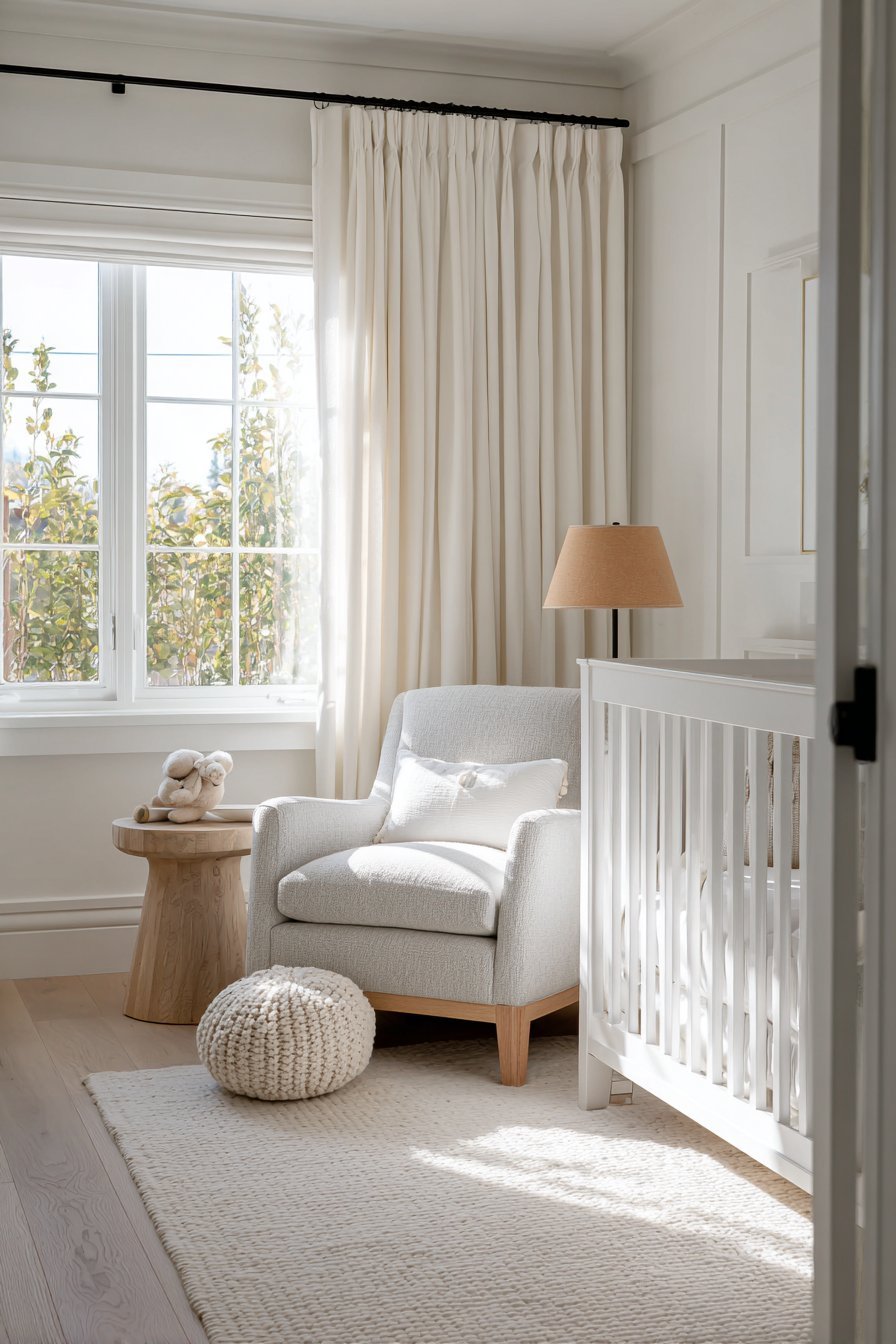
The uncluttered space allows parents to move freely during diaper changes. Everything has its place without feeling cramped or chaotic. The neutral color scheme provides a calming backdrop for baby’s development. This foundation grows with your child’s changing needs and preferences.
Key Design Tips:
- Select cribs with clean lines for timeless appeal that lasts through toddler years
- Choose light grey upholstery for glider chairs to hide minor stains while maintaining elegance
- Layer ivory rugs over hardwood to add warmth without pattern overwhelm
- Install sheer curtains to filter harsh sunlight while maintaining room brightness
- Position the glider near windows to take advantage of natural light during feedings
2. Functional Dresser Changing Station Setup
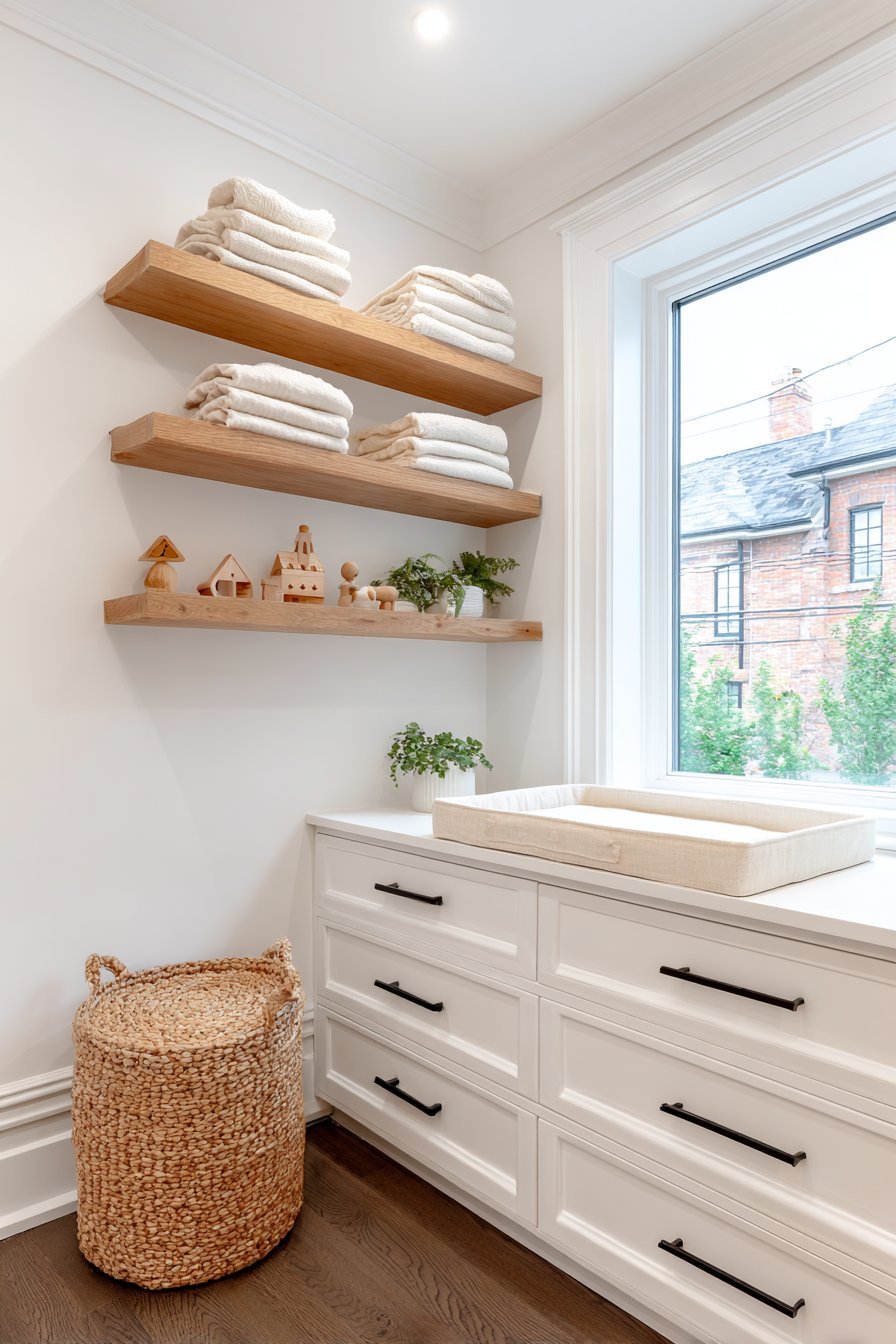
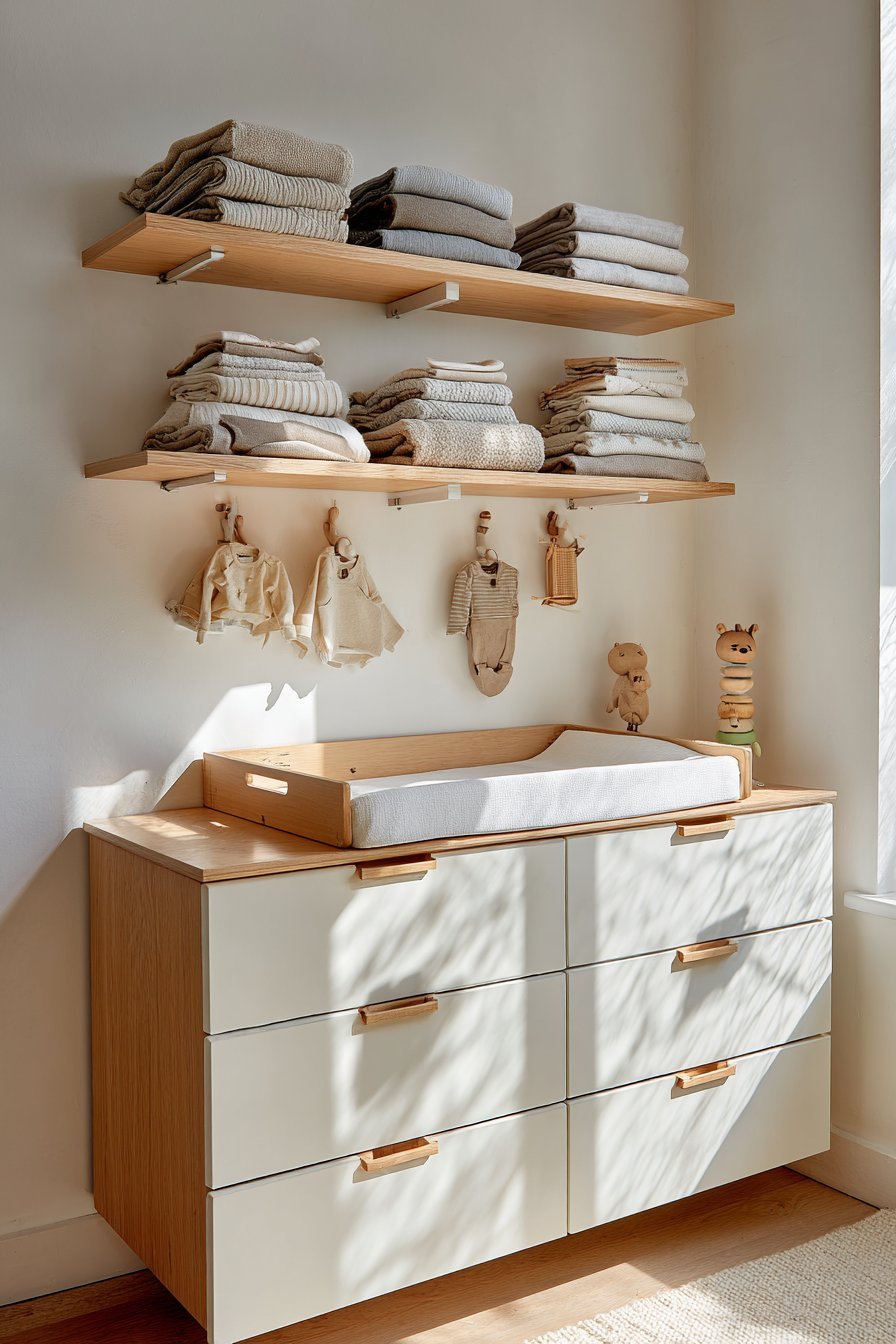
A white three-drawer dresser serves double duty as changing station foundation. The basic changing pad with safety rails sits securely on top. This practical solution saves space while providing essential functionality. Open floating shelves mounted above display neatly folded baby clothes in soft neutrals.
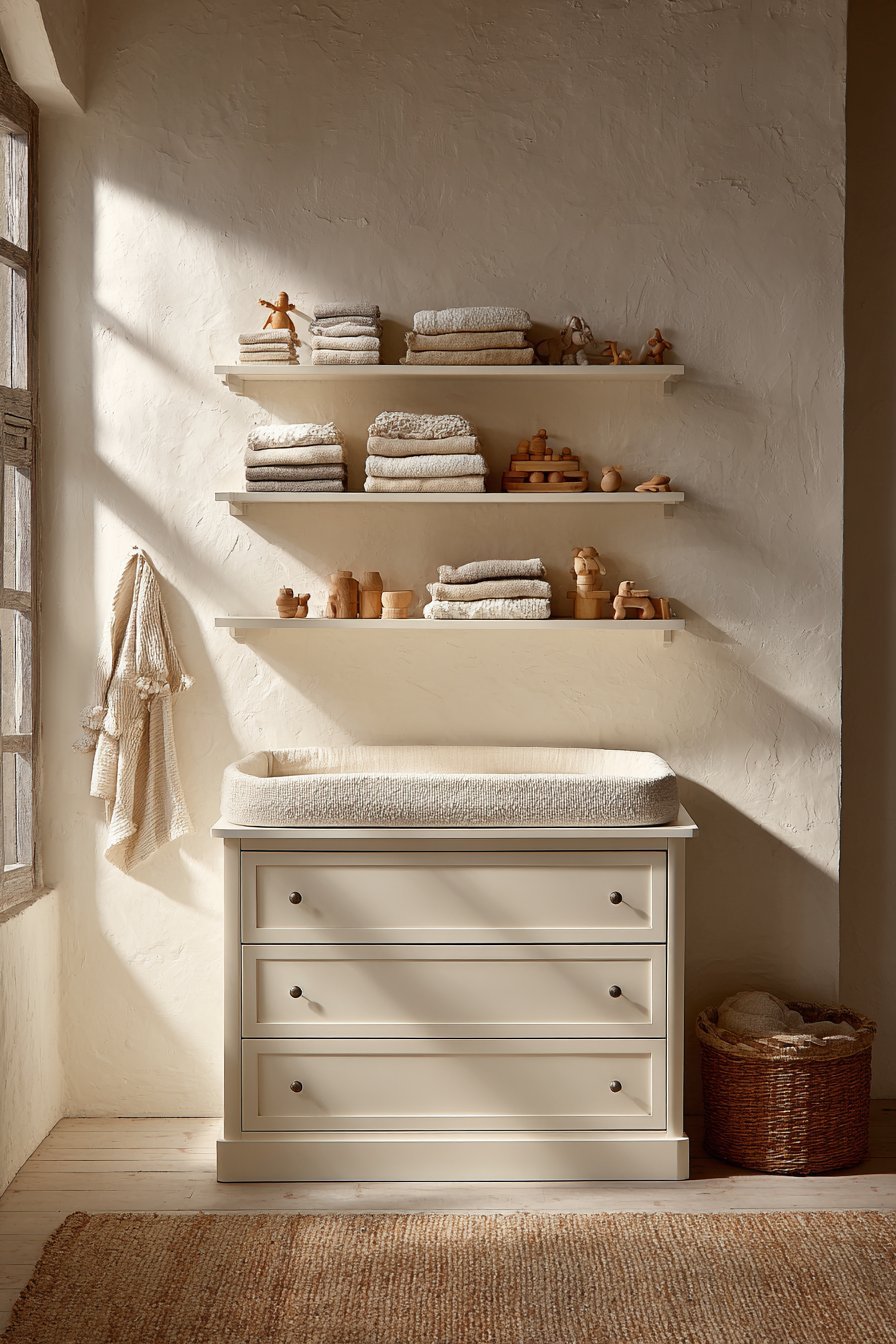
The shelves also hold a few simple wooden toys within easy reach. Warm white walls with smooth matte finish create a clean backdrop. Natural daylight from an adjacent window illuminates the changing area clearly. This ensures safe diaper changes throughout the day.

The organized display makes selecting outfits quick and stress-free. Everything you need stays visible and accessible during changes. The functional organization reduces morning chaos significantly. Parents appreciate the efficiency this setup provides during rushed moments.
Key Design Tips:
- Use standard three-drawer dressers topped with contoured changing pads for cost-effective dual purpose
- Mount floating shelves at arm’s reach above the dresser for convenient supply access
- Organize baby clothes by type in open shelving for quick visual selection
- Position the changing station near windows for optimal natural lighting during changes
- Choose safety rails on changing pads to prevent rolling accidents
3. Cozy Rocking Chair Corner Retreat
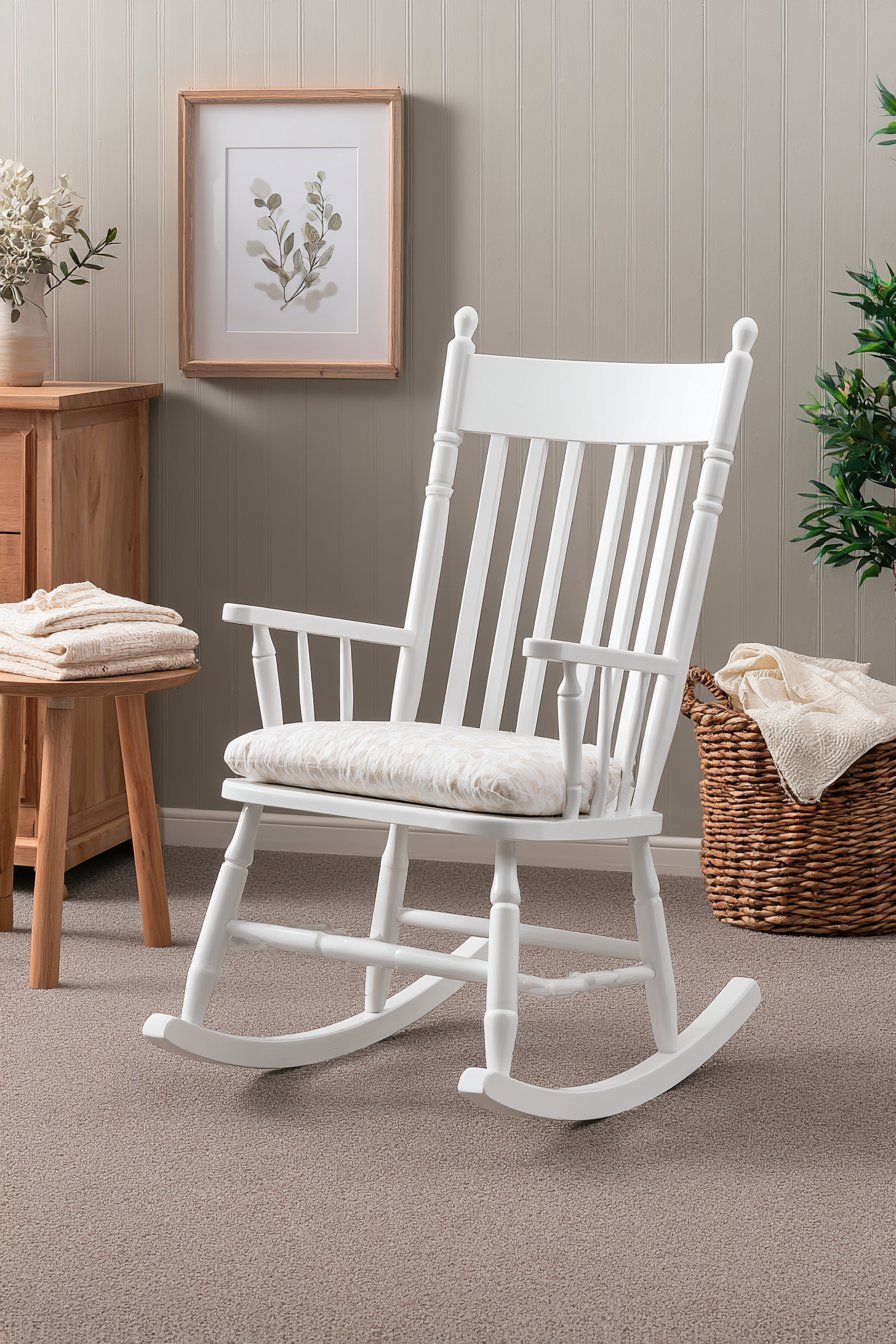
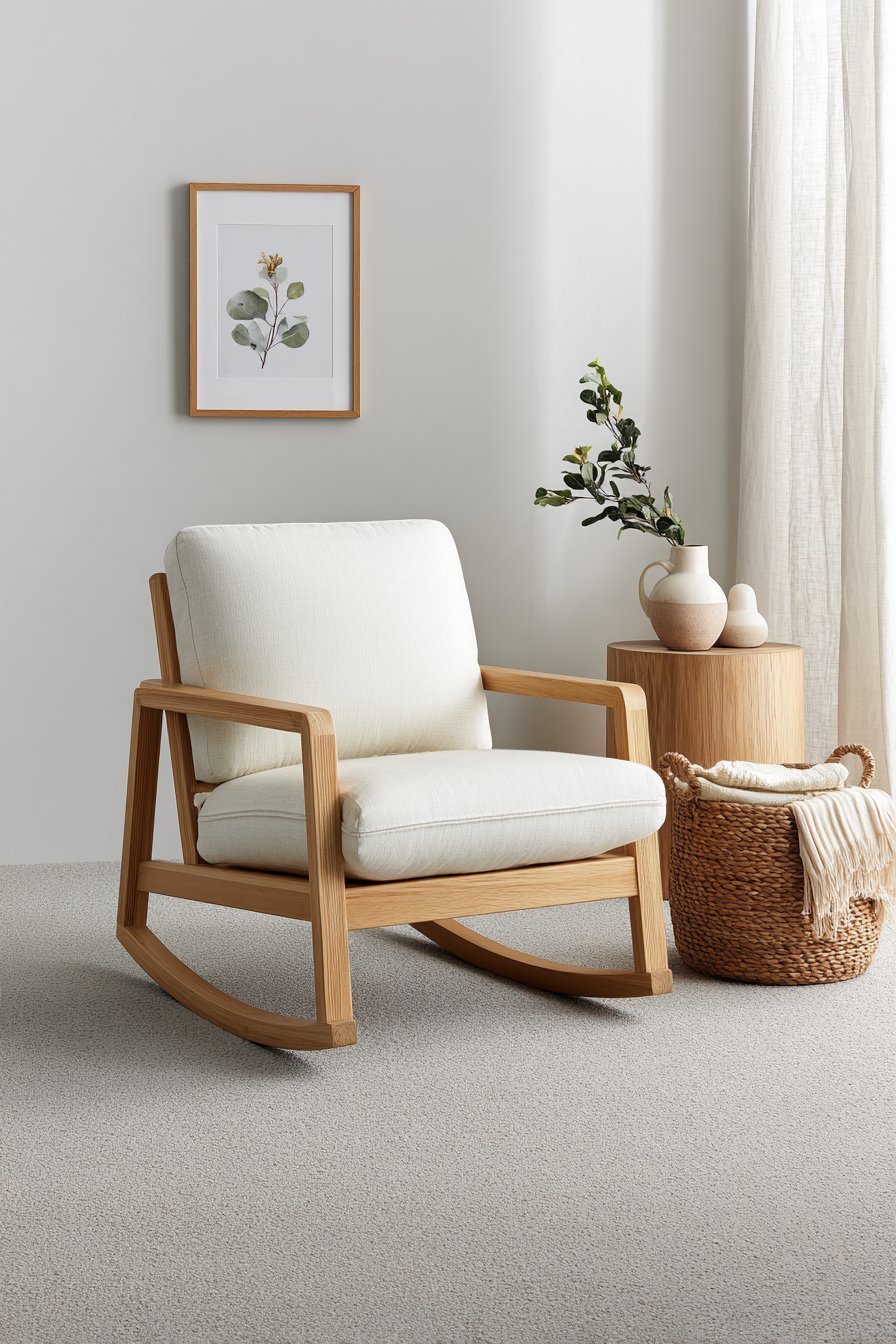
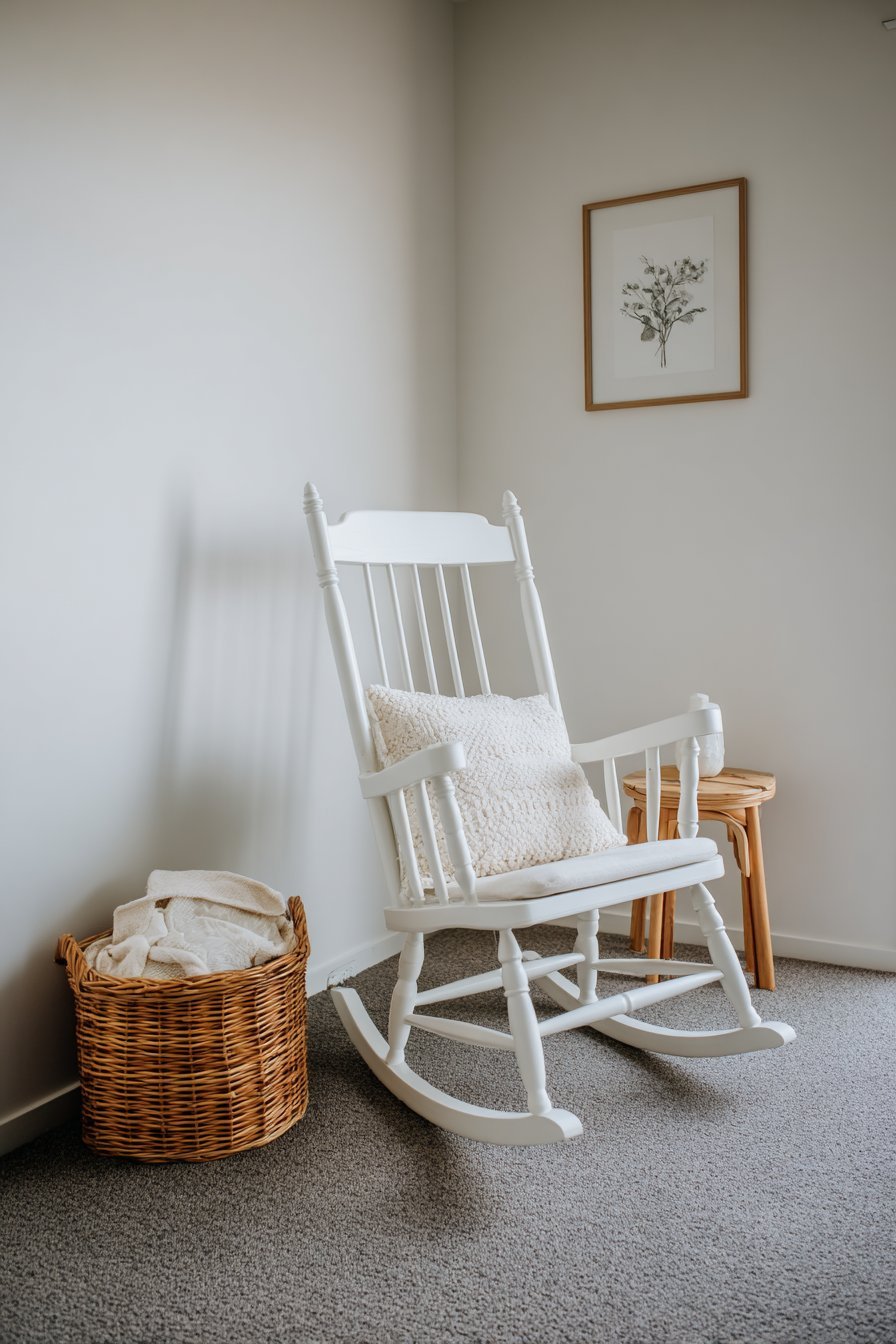
A classic white rocking chair with comfortable cushioned seat anchors this peaceful corner. The gentle rocking motion soothes both baby and parent during bonding time. A small round side table in natural wood holds essentials within arm’s reach. This thoughtful placement prevents unnecessary movement during feedings.
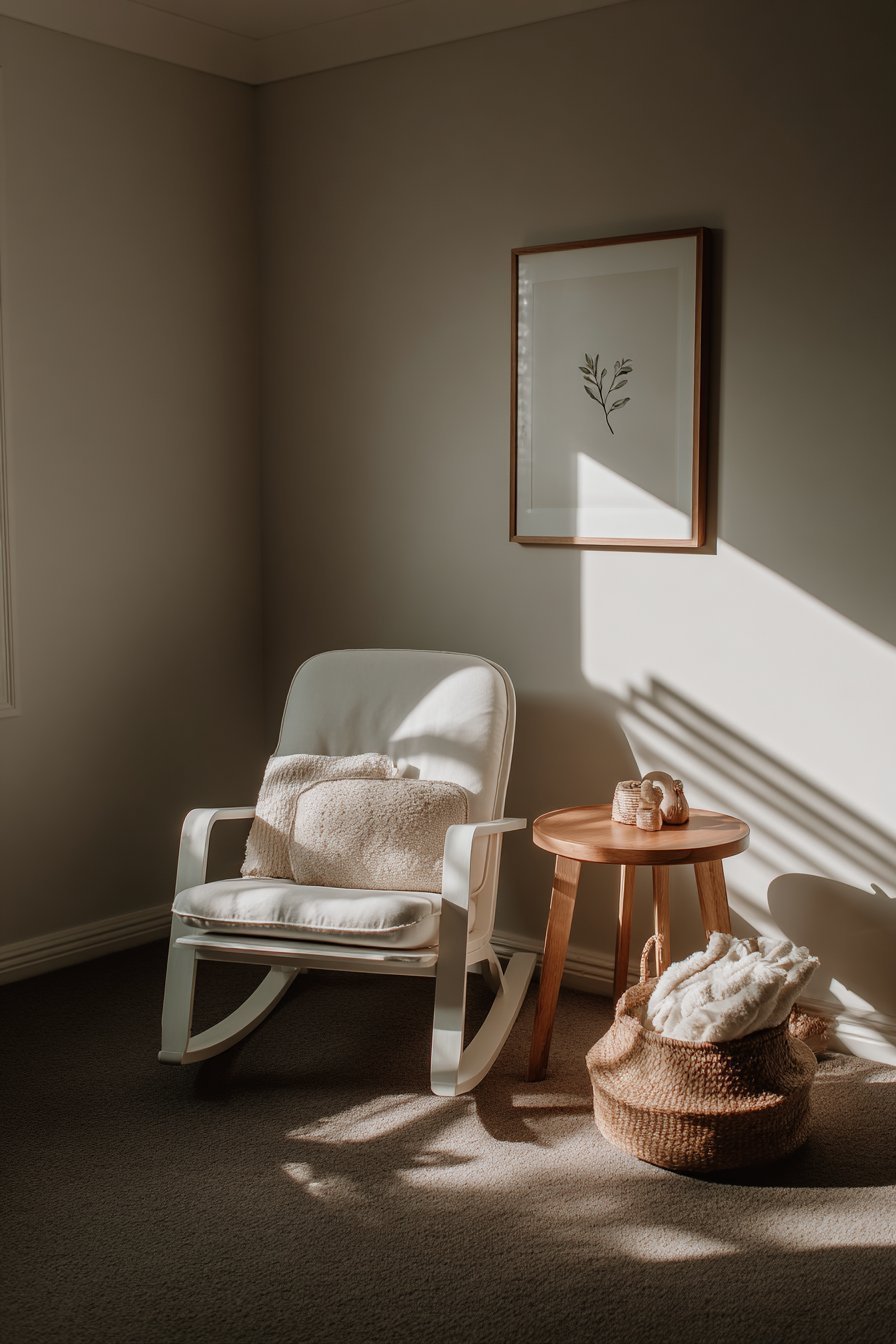
A woven storage basket sits on the floor holding soft cotton blankets. Cream and beige tones create visual harmony throughout the space. The wall behind features a single framed print with simple botanical illustration. Pale grey carpet provides soft flooring that cushions footsteps.
Afternoon light creates a calm, soothing environment perfect for connection. The quiet corner becomes a cherished space for feeding sessions. Parents often find themselves lingering here long after baby falls asleep. The comfort encourages those precious bonding moments.
Key Design Tips:
- Choose rocking chairs over gliders for traditional nursery charm and gentle motion
- Place small round side tables beside chairs for bottles, books, and supplies
- Keep woven baskets on floors for easy access to blankets during chilly nights
- Hang single botanical prints for minimal visual interest without overwhelming stimulation
- Install carpet in feeding corners to reduce noise and add comfort underfoot
4. Low Bookshelf Reading Nook Design
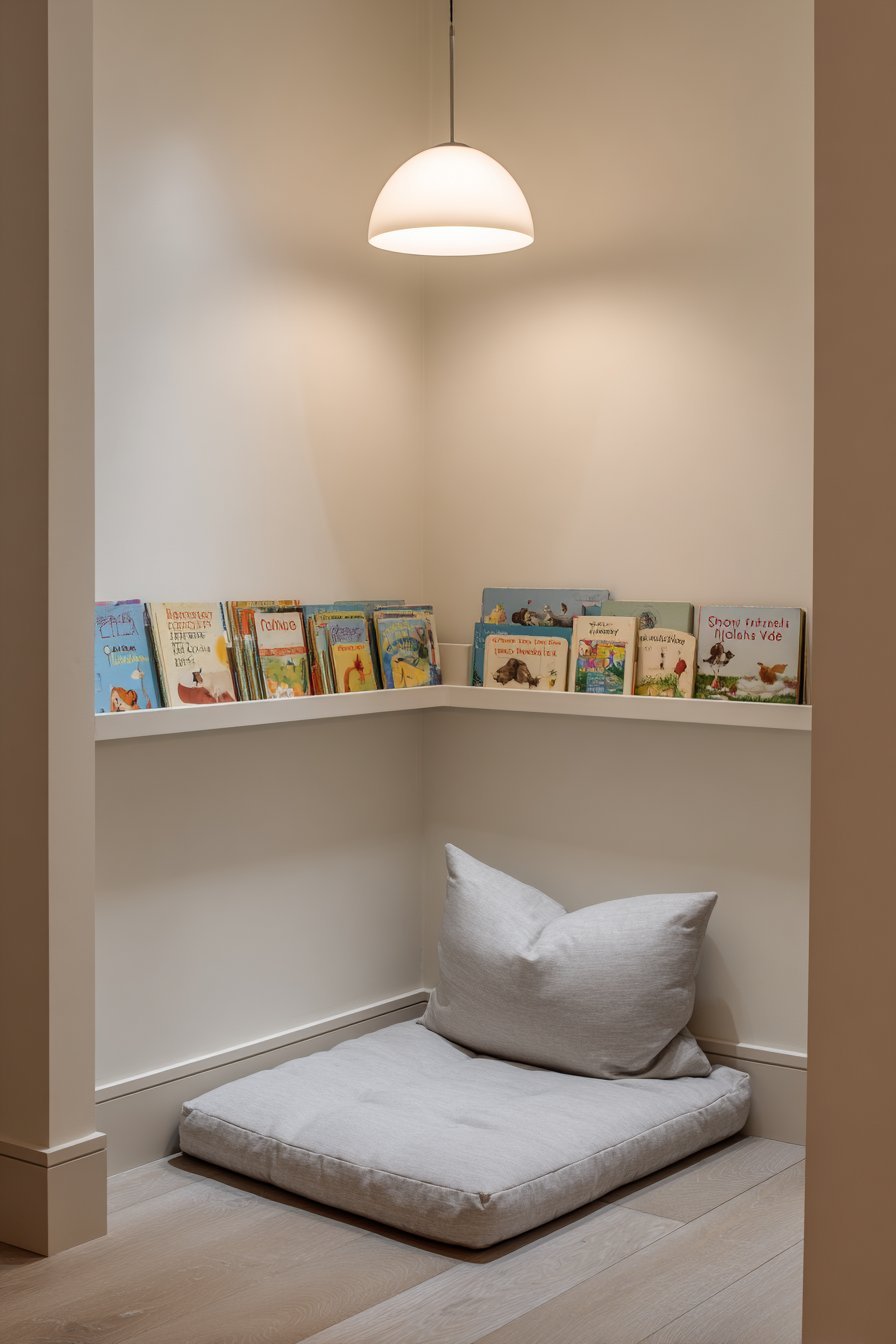
A low white bookshelf displays board books with colorful spines arranged vertically. This accessible design encourages early literacy from the start. A small upholstered floor cushion in soft grey provides comfortable seating. Light beige walls with smooth finish create a gentle backdrop.
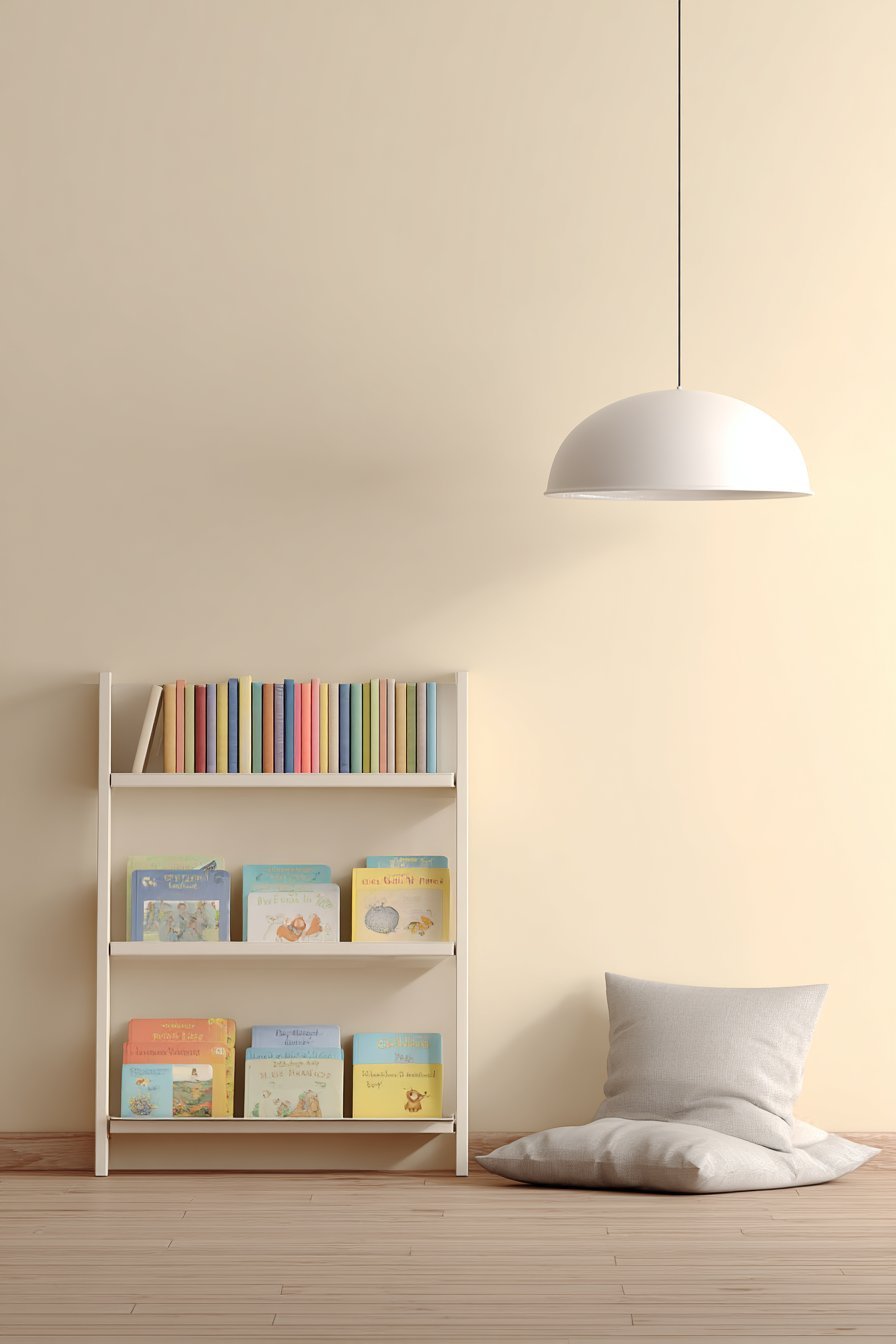
A simple dome pendant light with white shade hangs overhead. The gentle illumination makes evening storytime possible and cozy. The low height ensures books remain accessible as baby grows. Natural lighting supplements the artificial light source during daytime reading.
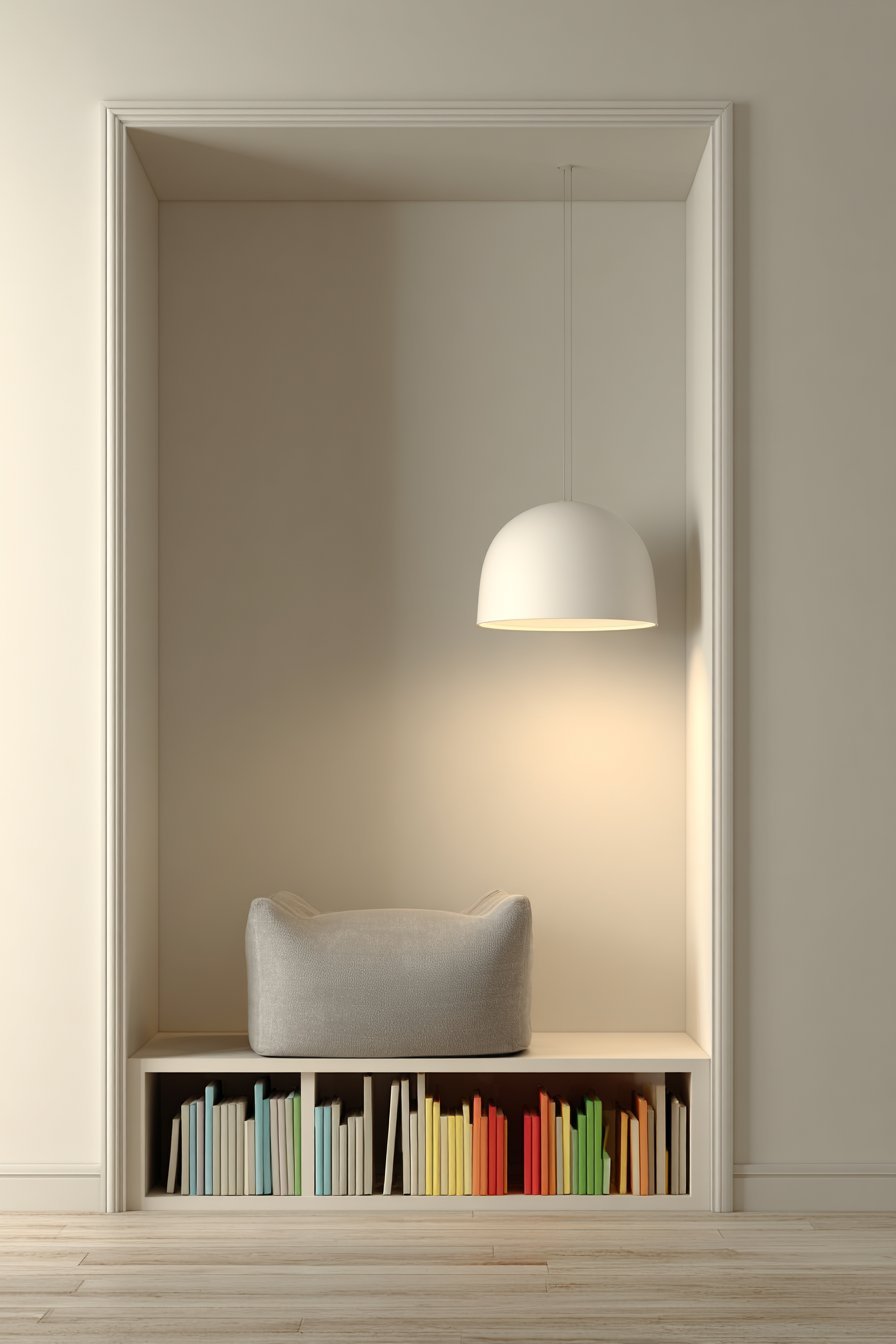
This dedicated space establishes reading as an important daily ritual. The cozy setup invites parents to slow down and connect. Even newborns benefit from hearing voices during story sessions. The reading nook becomes a treasured family tradition over time.

Key Design Tips:
- Select low bookshelves that toddlers can eventually reach independently
- Arrange board books with spines facing out for easy selection and visual appeal
- Add floor cushions for comfortable sitting during extended reading sessions
- Install dome pendant lights directly above reading areas for focused illumination
- Paint surrounding walls in light beige to maintain calm reading environment
5. Convertible Crib with Natural Wood Warmth
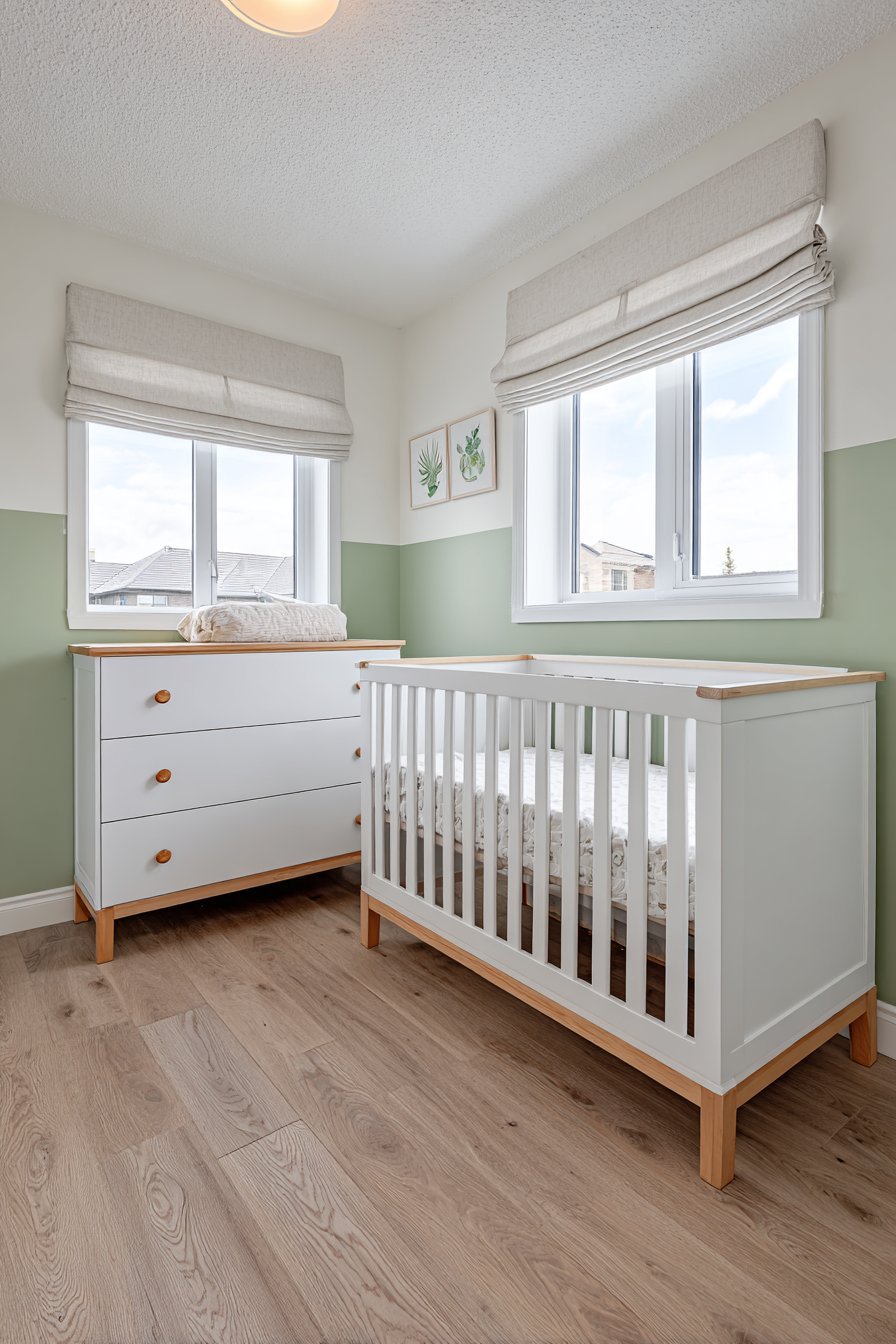
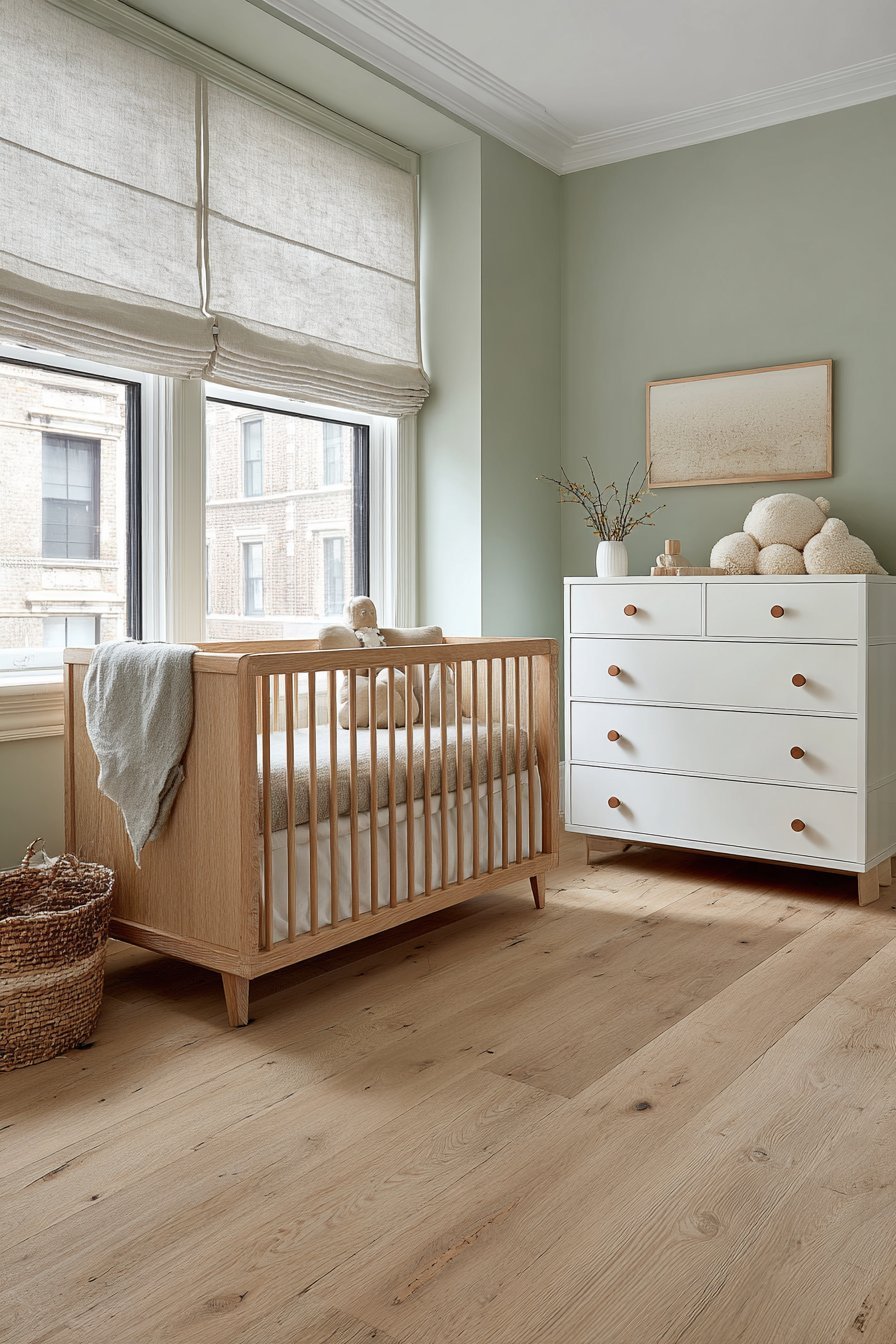
A convertible crib in natural light wood finish offers long-term value. The piece transforms from crib to toddler bed as your child grows. A basic white dresser with round wooden knobs provides ample storage. The dual purpose design eliminates the need for separate changing furniture.
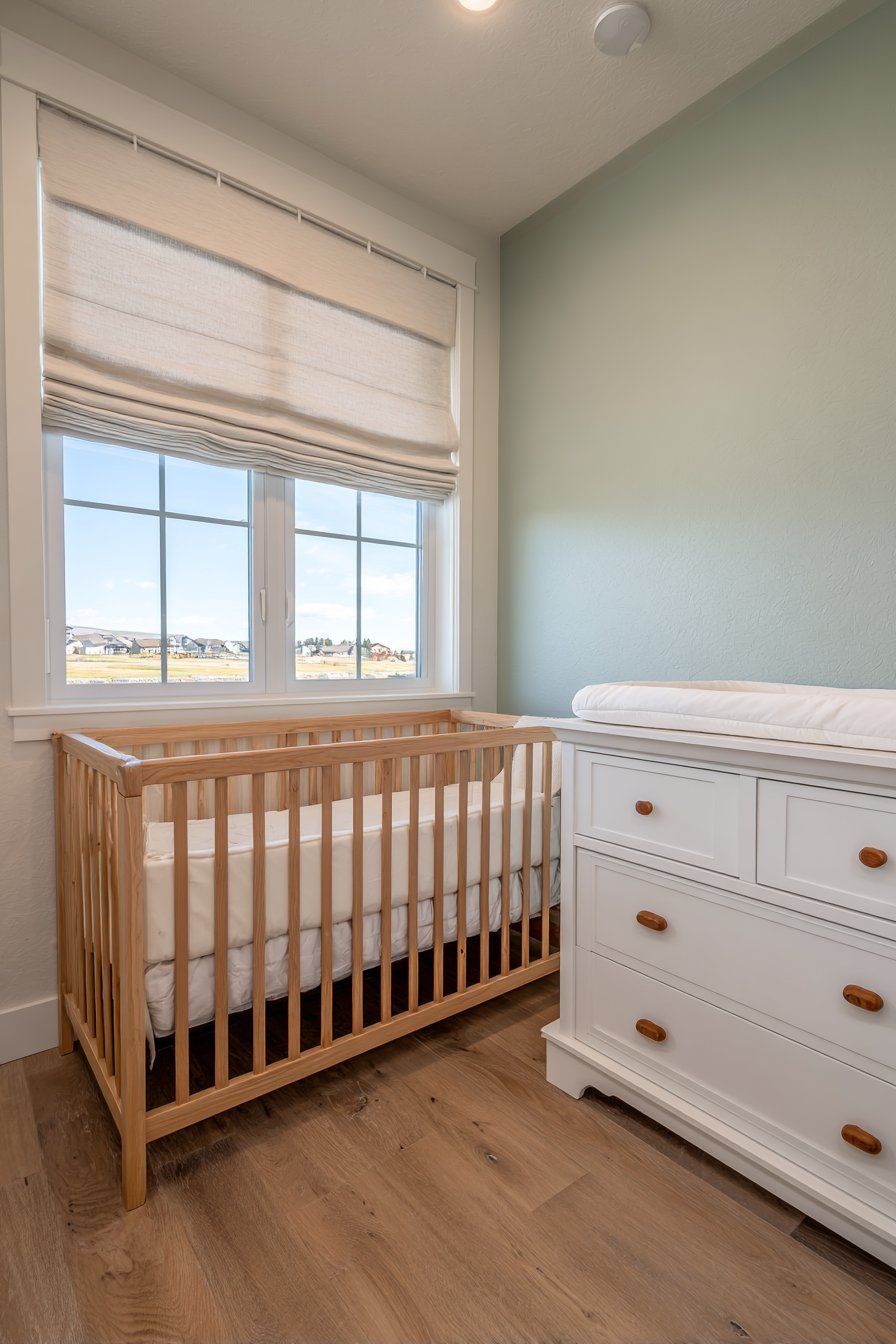
Soft sage green paint with matte finish adorns the walls. This gentle color promotes relaxation without overwhelming the senses. Simple white roman shades cover the window allowing filtered daylight. Light oak flooring with visible grain texture adds natural warmth.

The neutral color palette creates a timeless foundation for decoration. Parents can easily adapt the room as preferences change. The practical, functional layout makes daily routines smoother. This design proves simplicity doesn’t sacrifice style or comfort.
Key Design Tips:
- Invest in convertible cribs that transform into toddler beds for extended use
- Choose natural wood finishes to add warmth without bold color commitment
- Paint walls in soft sage green for calming effects on both babies and parents
- Install roman shades for clean lines and effective light control
- Select light oak flooring to maintain brightness while adding natural texture
6. Floating Shelf Display Organization
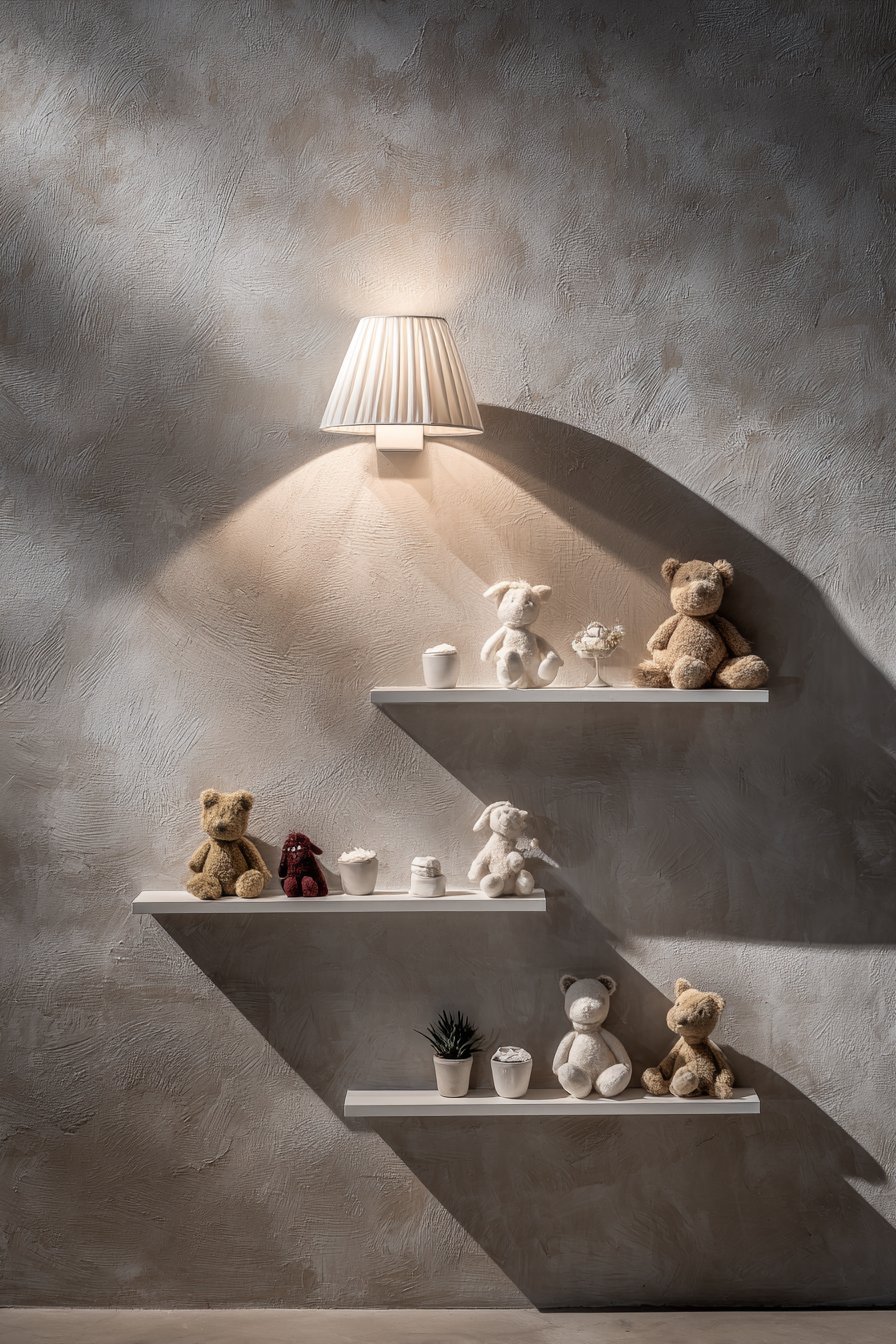
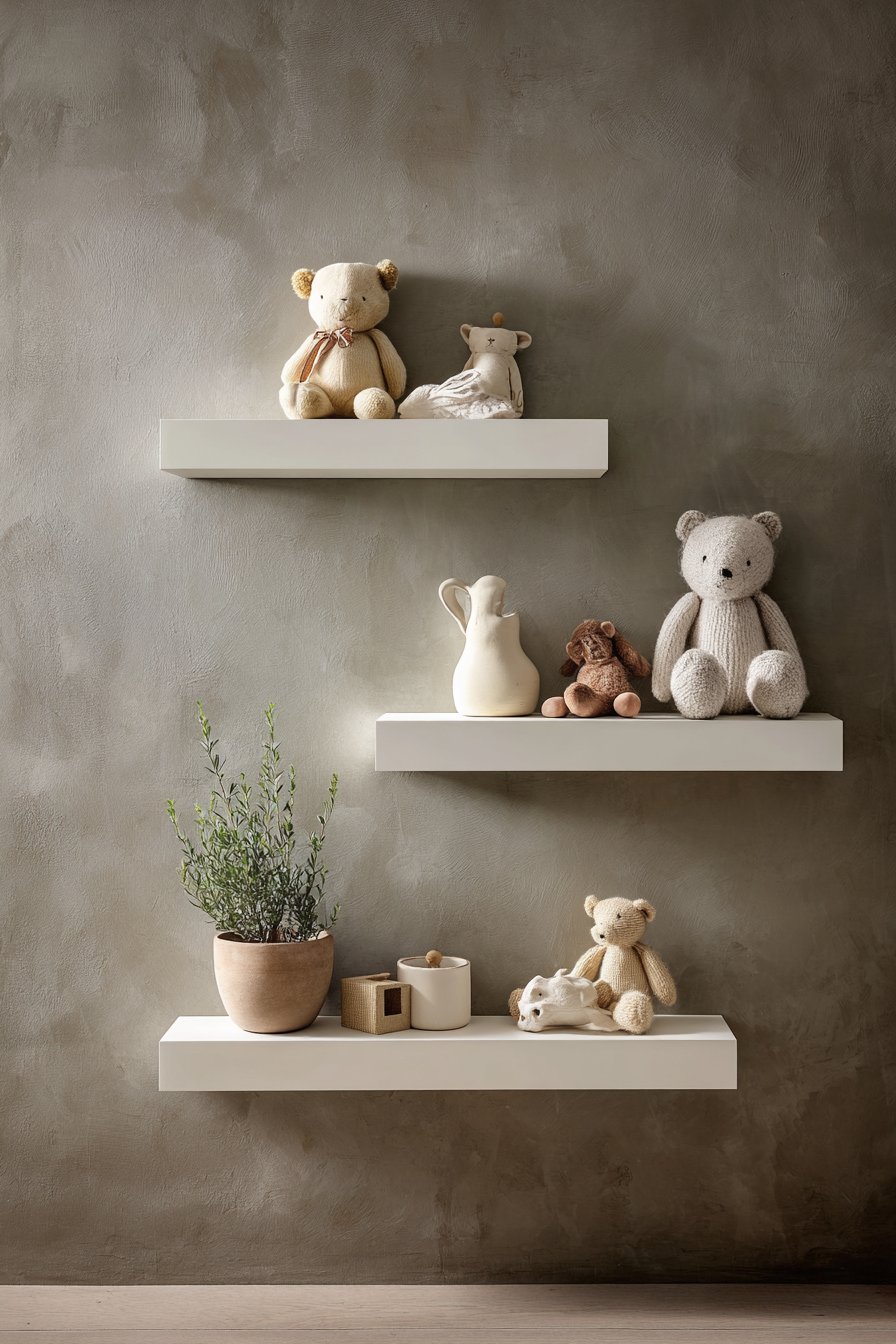
Three identical white floating shelves mounted at varying heights create visual interest. The minimal display includes select stuffed animals and small plants. A few baby care essentials stay within easy reach. Simple ceramic pots in white hold low-maintenance greenery.
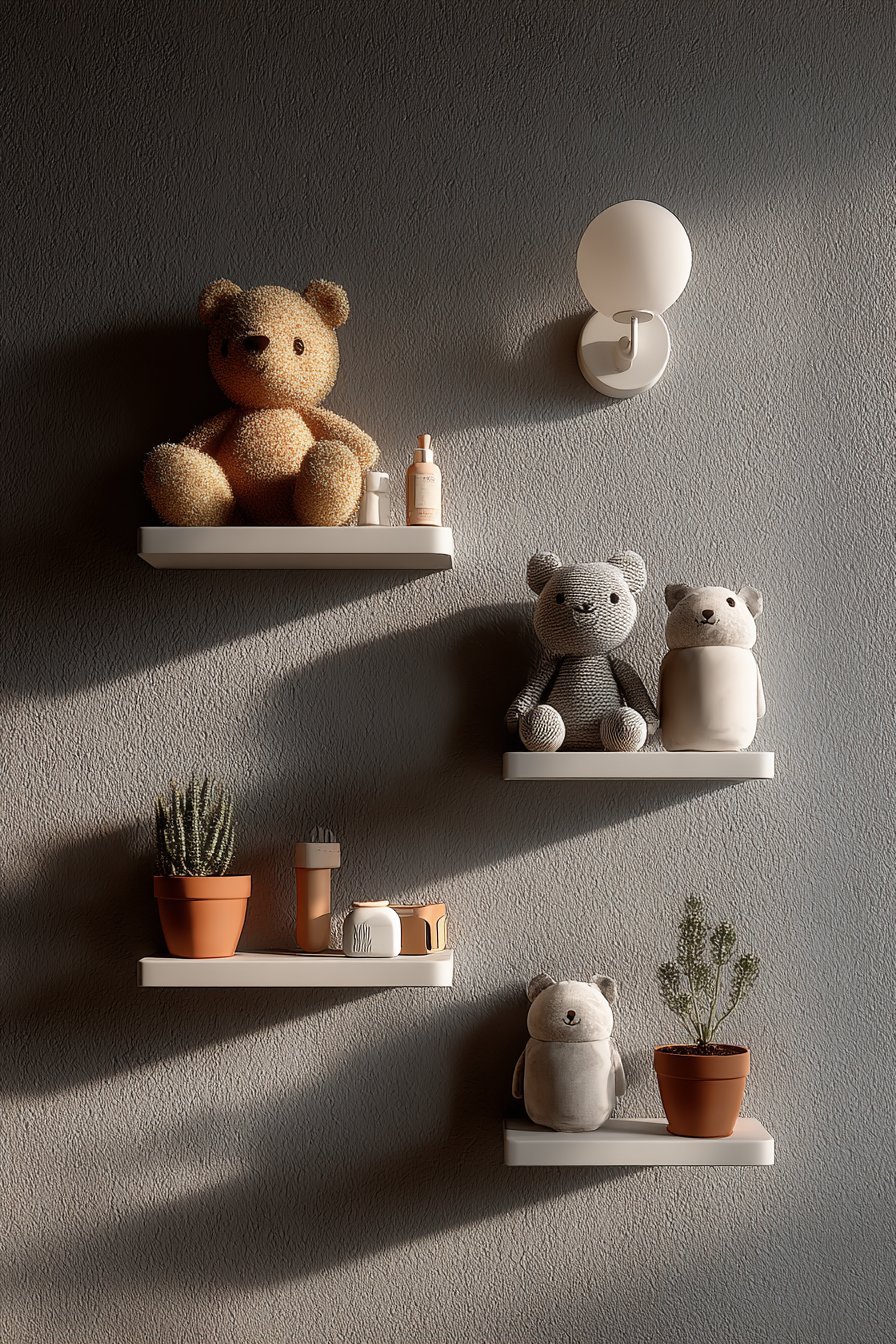
Warm grey walls with smooth texture provide a neutral backdrop. A basic wall sconce with white fabric shade provides accent lighting. The layered lighting creates depth during evening hours. Natural side lighting creates gentle shadows that emphasize clean lines.
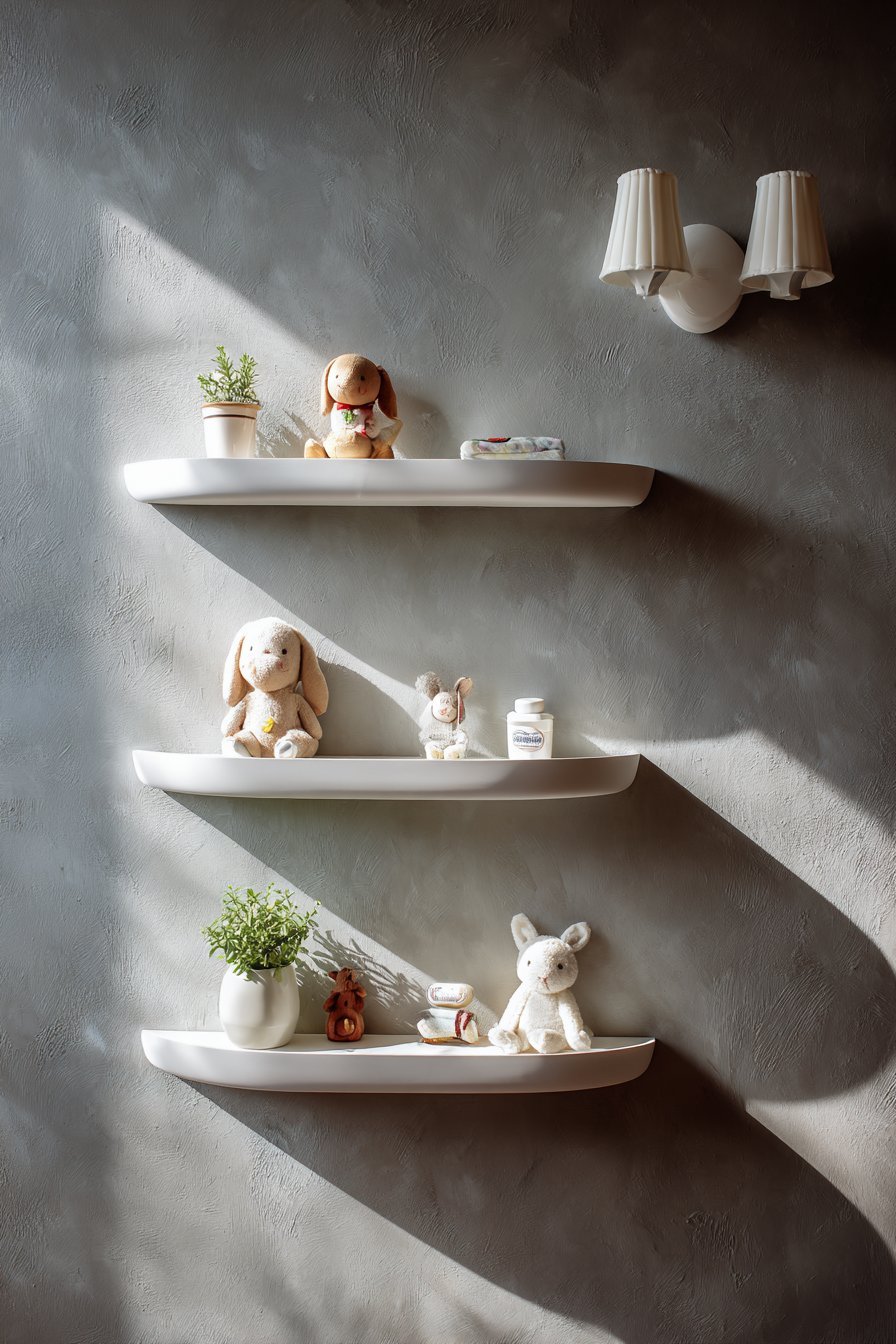
The practical accessibility makes grabbing items quick during busy moments. Everything stays visible without creating visual clutter or chaos. The organized display demonstrates that less truly becomes more. Parents appreciate the breathing room this approach provides.
Key Design Tips:
- Mount floating shelves at varying heights to create visual movement and interest
- Limit displays to essential items plus one or two decorative elements
- Choose small ceramic planters with easy-care plants for natural air purification
- Install wall sconces beside shelving for practical task lighting
- Paint walls in warm grey to provide neutral backdrop for white shelving
7. Closet Organization System Efficiency
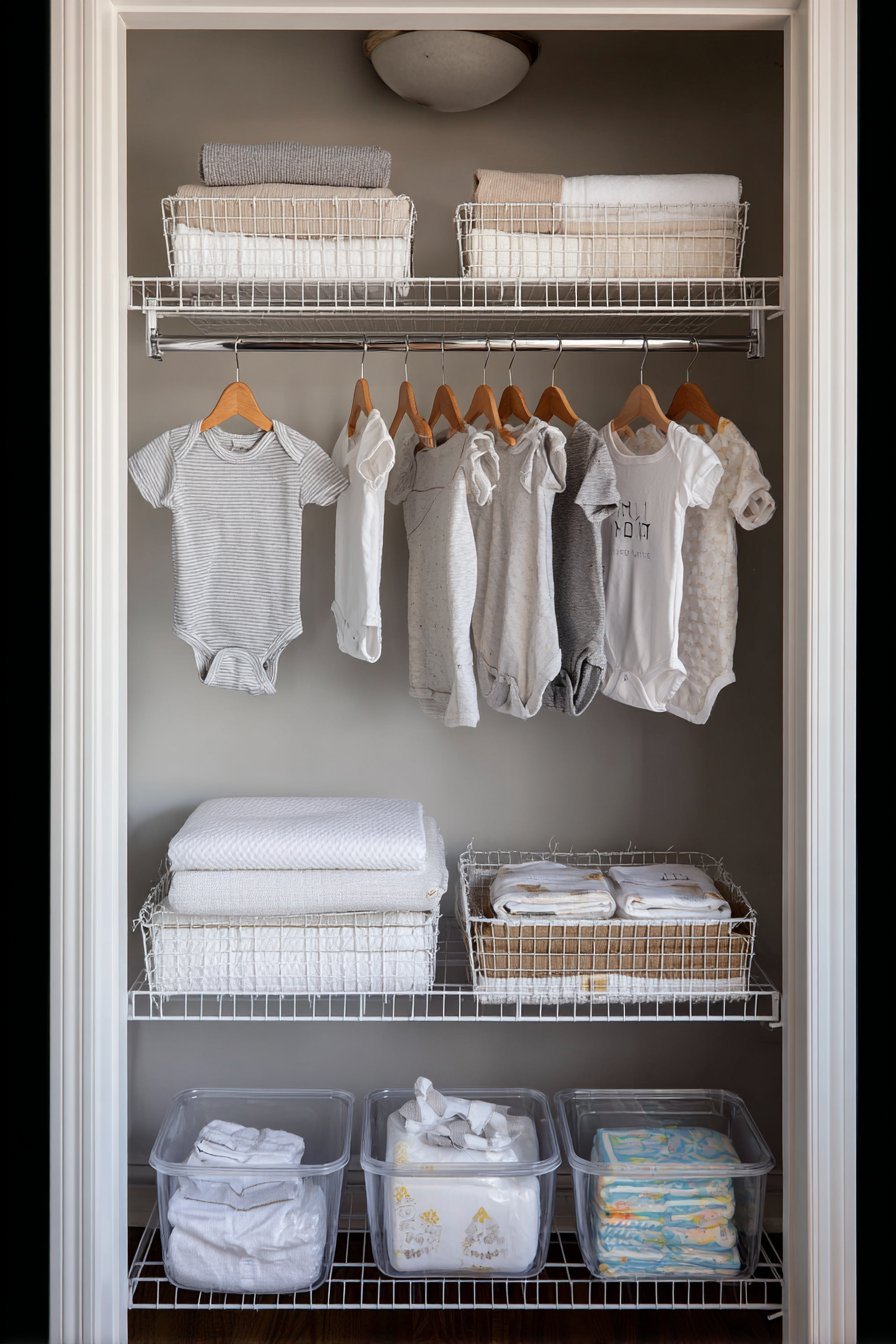
White wire shelving creates an efficient closet organization system. Neatly stacked onesies and folded blankets occupy upper shelves. Hanging newborn clothes on simple wooden hangers maximize vertical space. Clear plastic bins on lower shelves contain diapers and accessories.
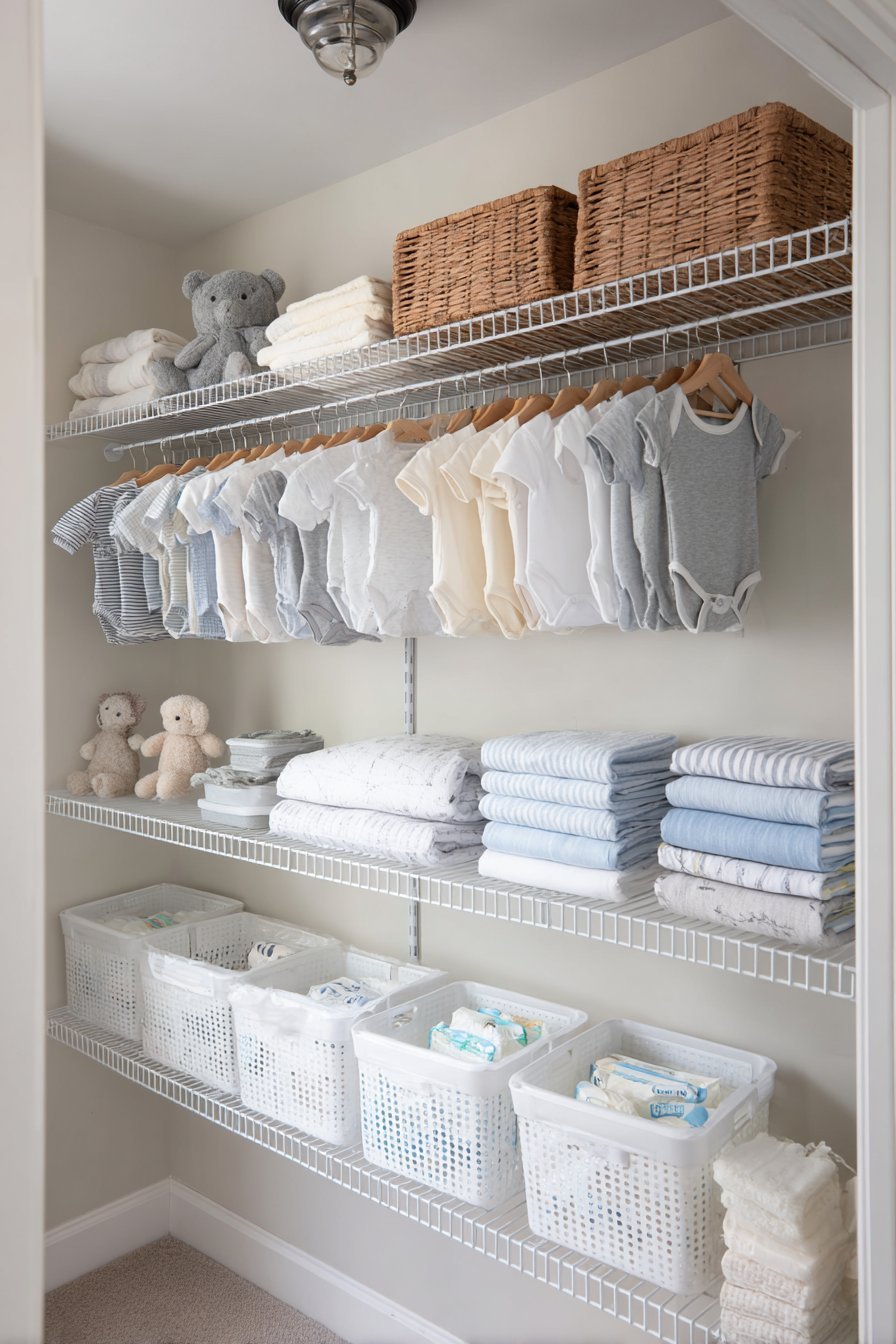
The closet interior is painted white for brightness and cleanliness. A single overhead light fixture ensures clear visibility when selecting outfits. The organized arrangement makes finding items quick and stress-free. This system grows with your baby’s changing wardrobe needs.
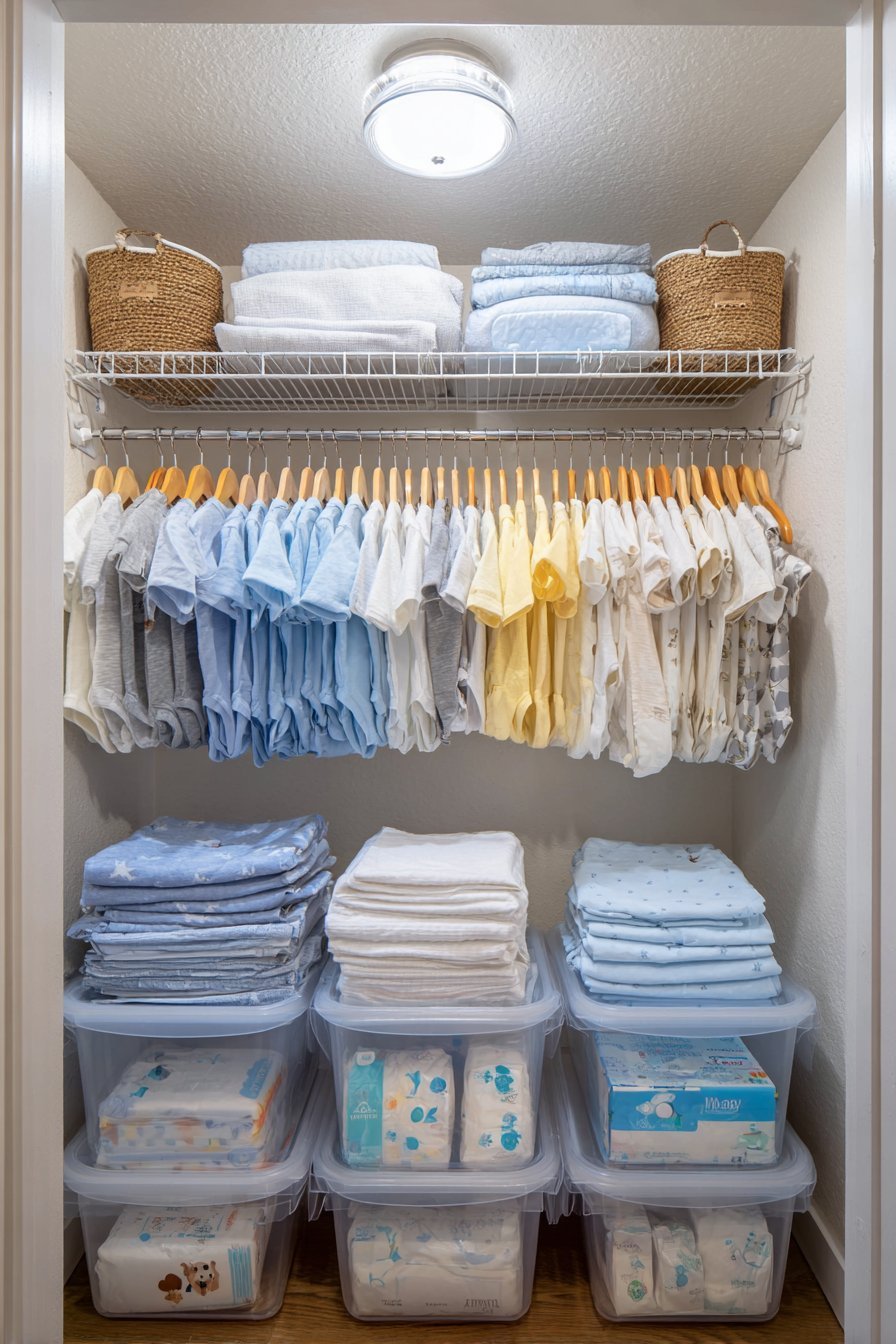
The practical storage solutions eliminate morning frustrations significantly. Everything has a designated place that makes sense. New parents especially appreciate the orderly arrangement during sleep-deprived days. The efficient system saves precious time during rushed mornings.
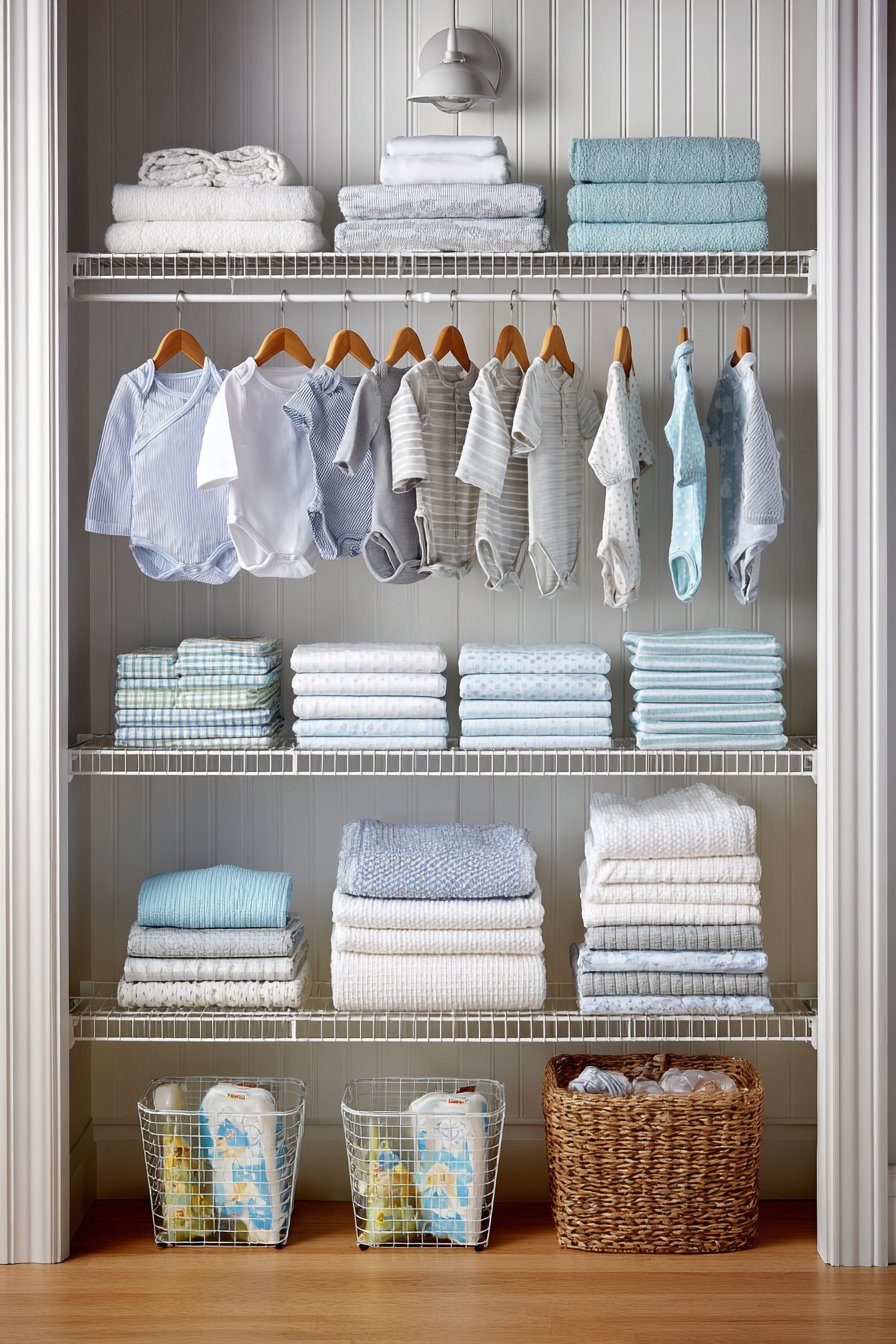
Key Design Tips:
- Install white wire shelving for affordable and adjustable closet organization
- Use clear plastic bins to identify contents quickly without opening containers
- Hang newborn clothes on wooden hangers to prevent shoulder bumps and creases
- Paint closet interiors white to maximize light reflection and perceived space
- Add overhead lighting in closets for safe visibility during early morning dressing
8. Minimal Metal Crib Essentials Focus
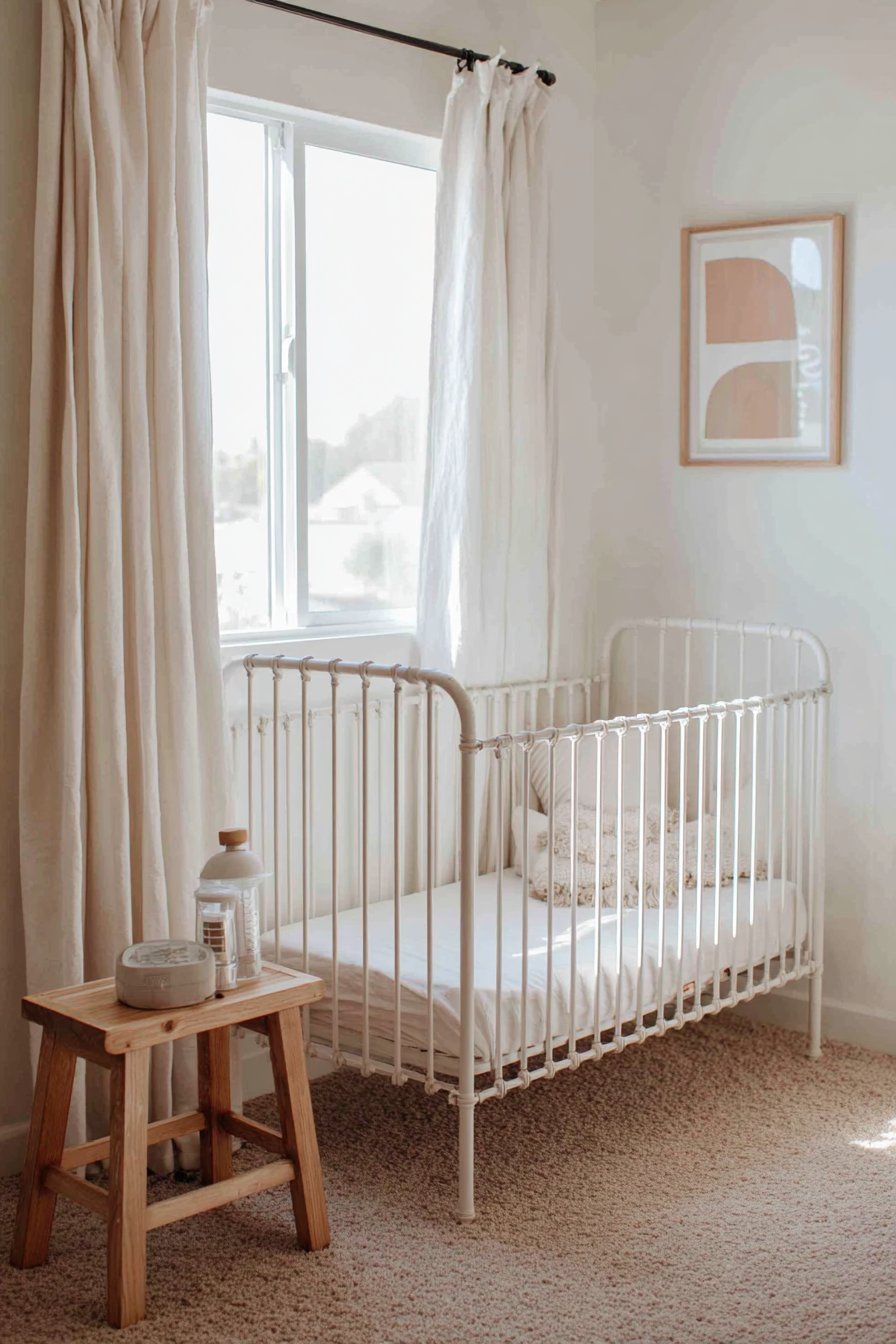
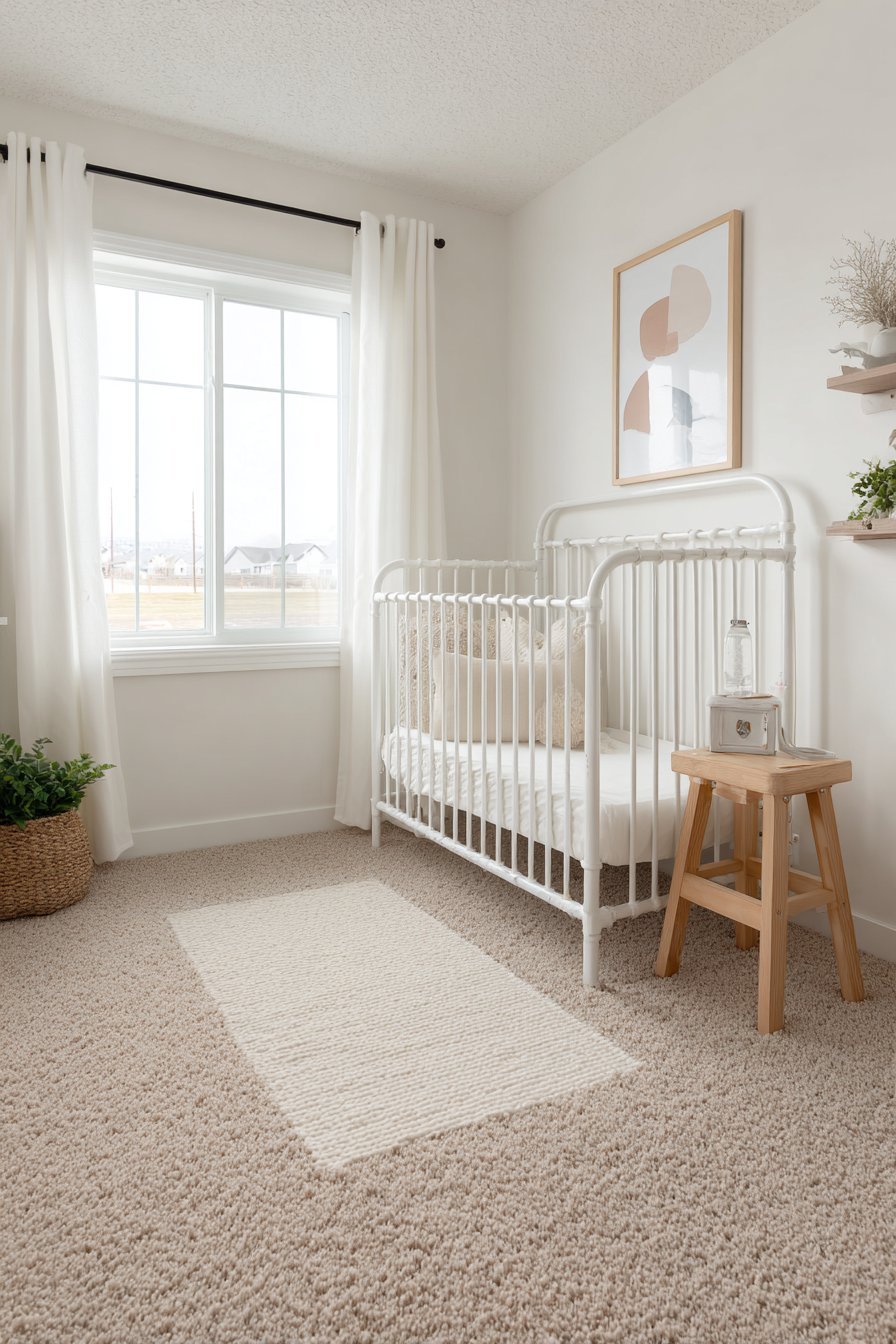
A white metal crib with minimal spindle design sits near the window. The simple construction offers durability without decorative excess. Plain white cotton curtains frame the natural light beautifully. A small wooden stool serves as makeshift side table.
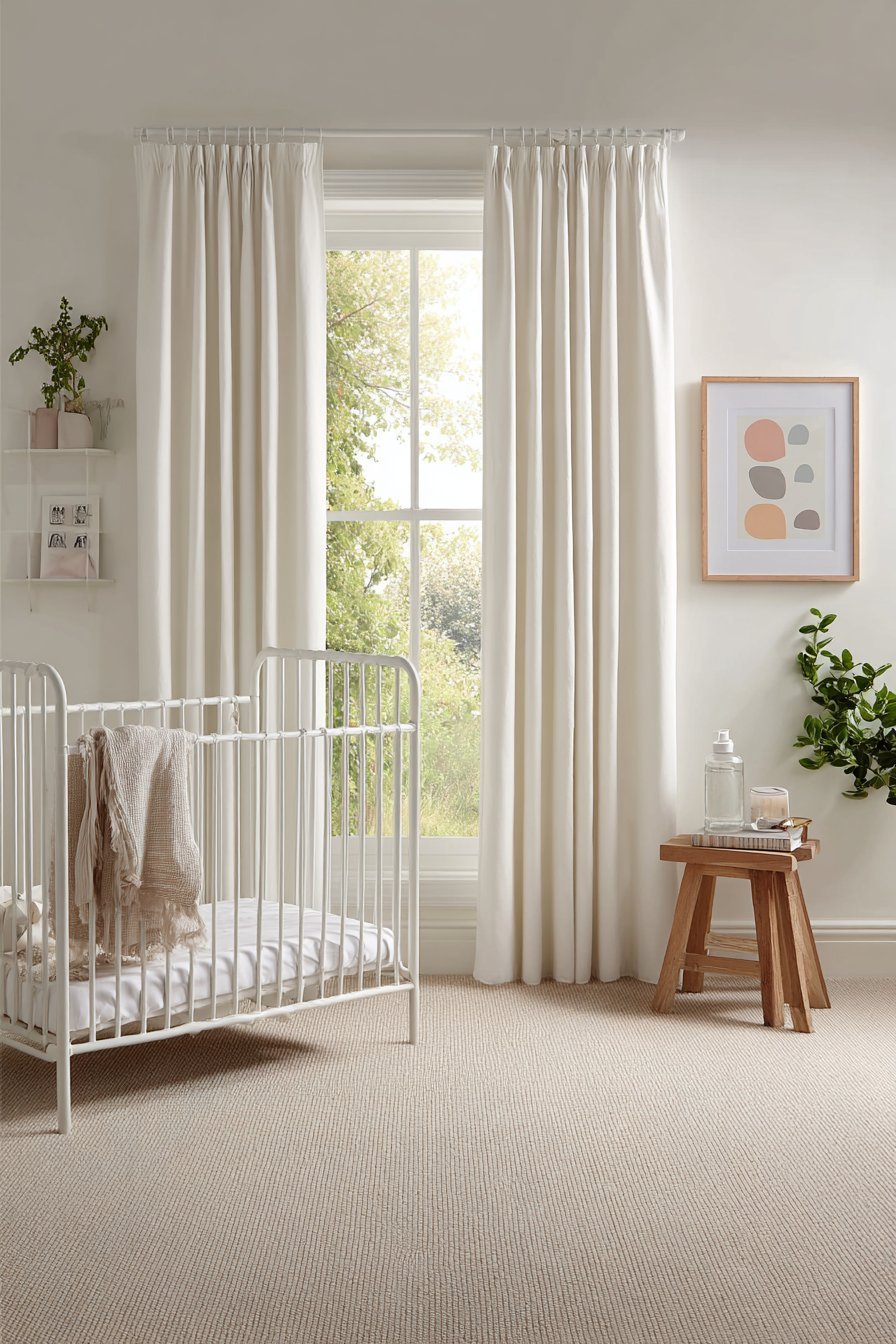
The stool holds a basic baby monitor and water bottle. Neutral beige carpet with simple texture covers the floor completely. One wall features a single large framed print with geometric shapes. Soft pastels in the artwork add subtle color interest.

Natural morning light creates a bright, airy atmosphere throughout. The essentials-focused approach eliminates unnecessary purchases and clutter. Parents find this pared-down style refreshingly practical and calming. The minimal design prevents sensory overload for developing babies.
Key Design Tips:
- Choose metal cribs with spindle designs for lightweight yet sturdy construction
- Use small wooden stools as flexible side tables that move easily
- Hang single large prints instead of multiple small pieces for visual simplicity
- Install plain cotton curtains for light filtering without pattern distraction
- Select beige carpet for warmth without competing with other design elements
9. Handmade Mobile Focal Point Beauty
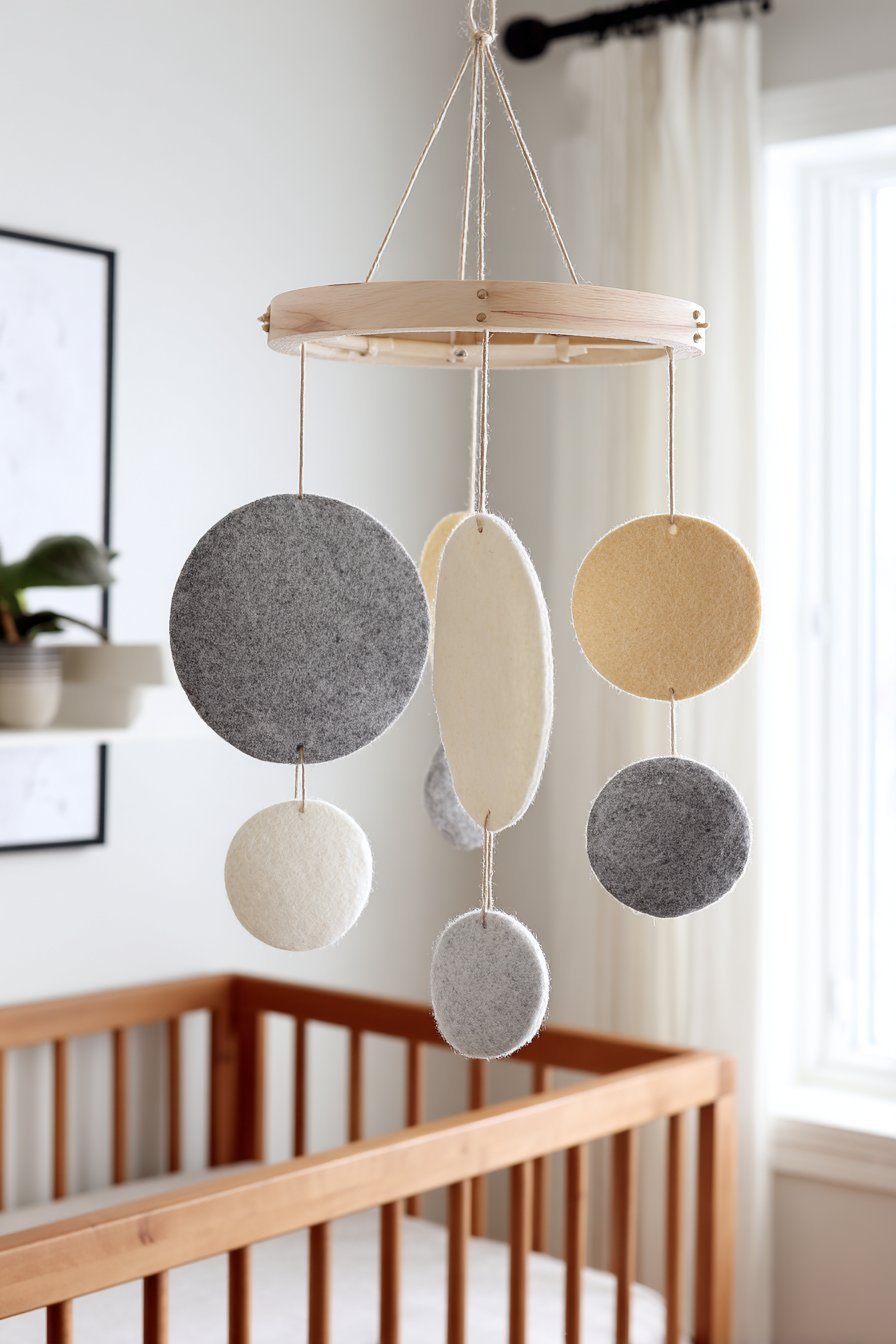
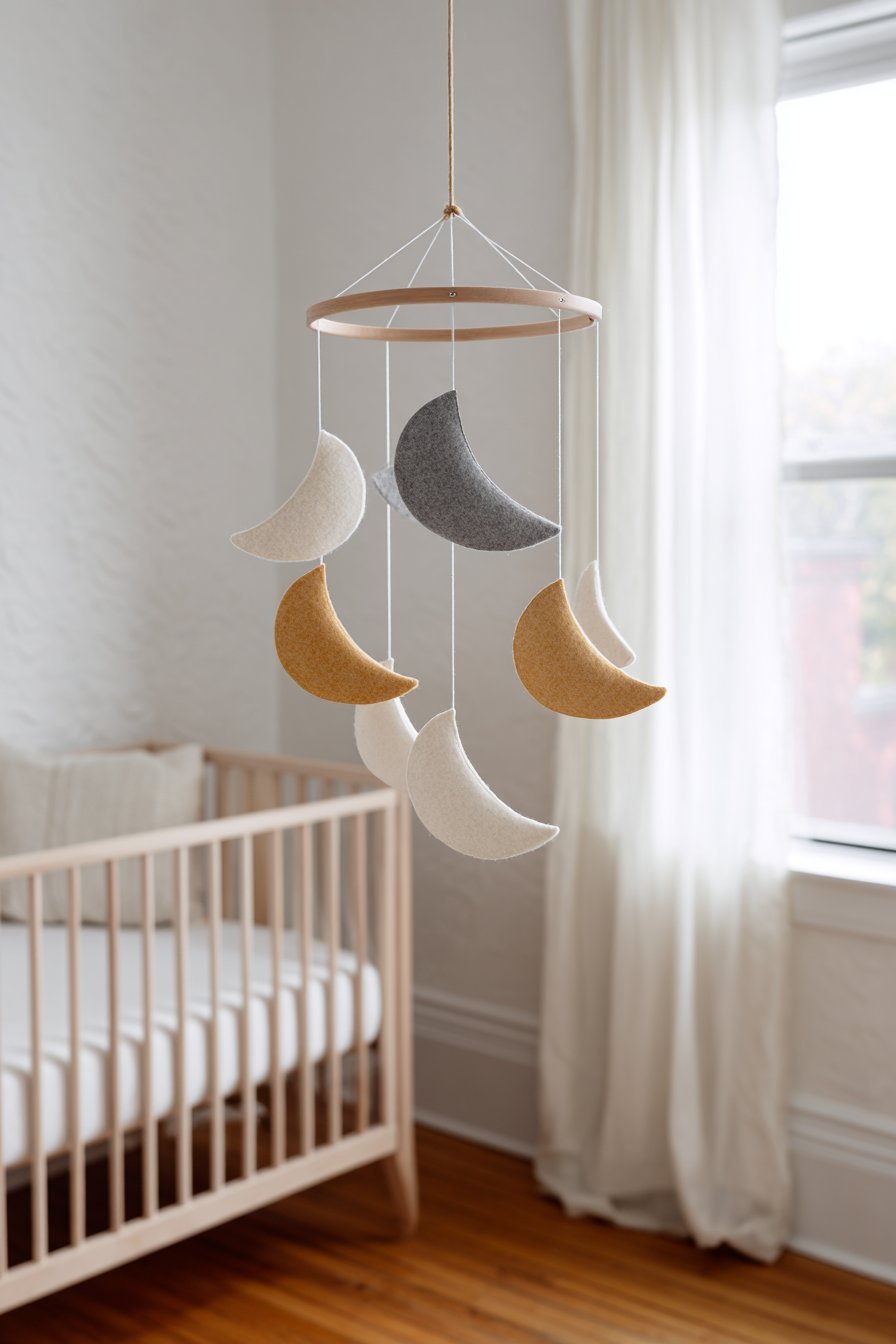
A handmade mobile featuring felt shapes hangs above the white wooden crib. Soft grey, cream, and white pieces suspend from natural wooden rings. The gentle movement catches baby’s developing vision perfectly. White walls with smooth finish surround the peaceful scene.

Light natural oak flooring adds warmth without overwhelming the space. Sheer curtains diffuse bright daylight into soft, even illumination. The handmade element adds personal touch and meaning. Parents often treasure these crafted pieces for years afterward.
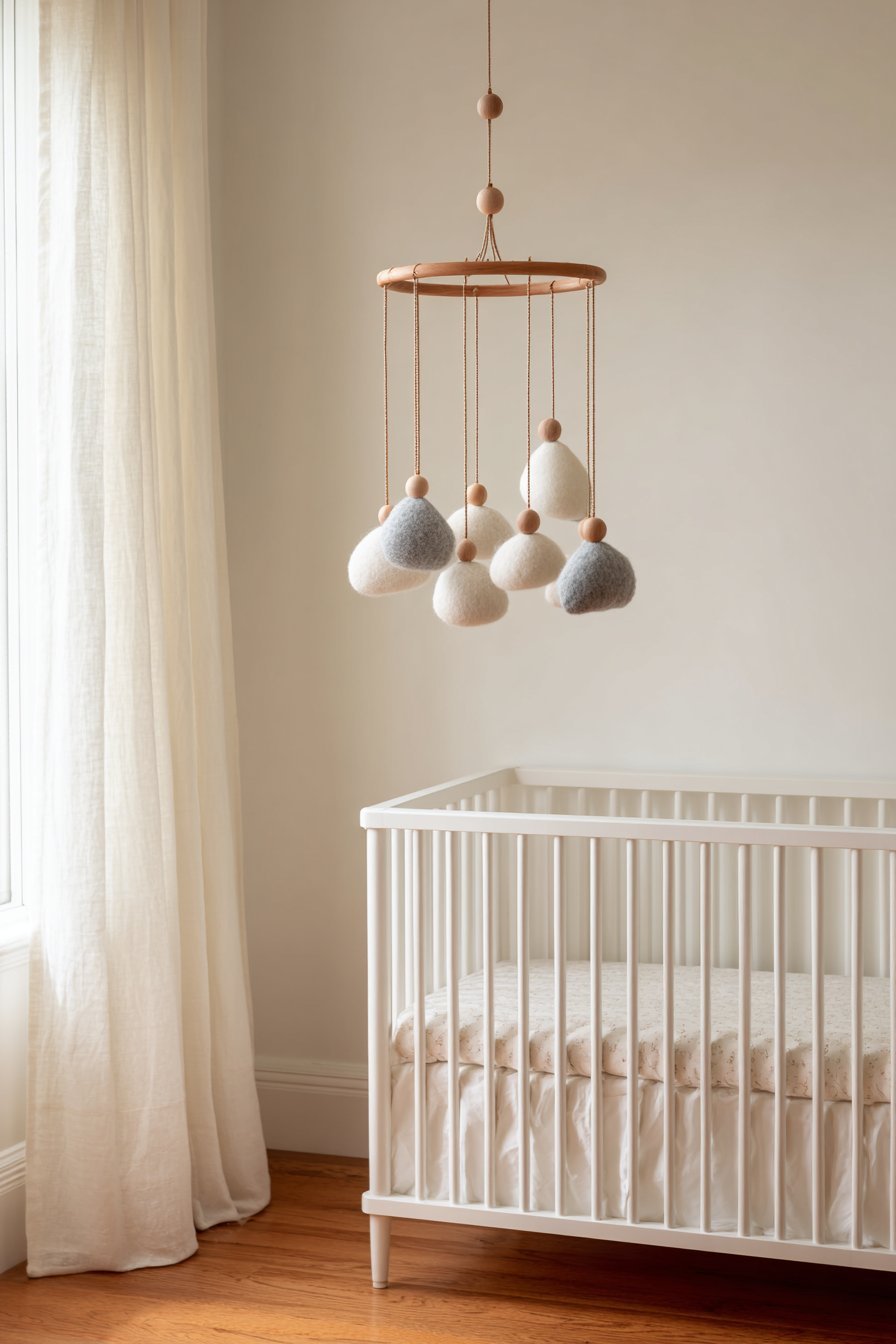
The mobile provides visual stimulation without electronic components or noise. The natural materials create a connection to traditional craftsmanship. This simple addition becomes a cherished keepsake over time. The neutral colors complement any future design changes easily.
Key Design Tips:
- Create or purchase handmade mobiles with felt shapes for safe, lightweight visual interest
- Choose neutral colors like grey, cream, and white for versatile design compatibility
- Hang mobiles from natural wooden rings for organic aesthetic appeal
- Position mobiles where natural light creates gentle shadows and movement
- Ensure all mobile components attach securely to prevent falling hazards
10. Dedicated Diaper Changing Station
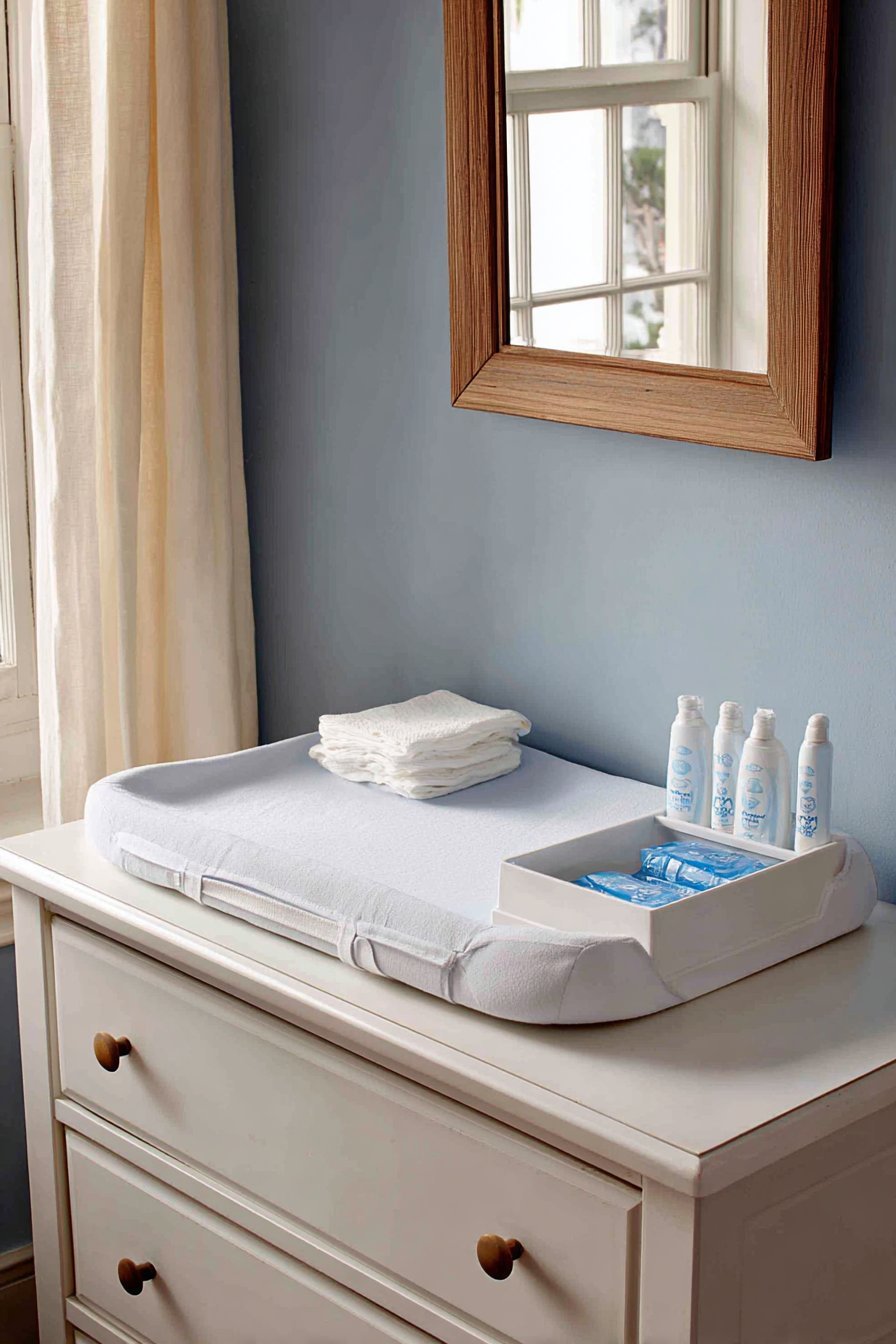
A basic white dresser becomes a dedicated changing station foundation. The contoured changing pad on top secures with a safety strap. A small white caddy organizer sits on the dresser surface. Diapers, wipes, and creams stay in clear view and easy reach.
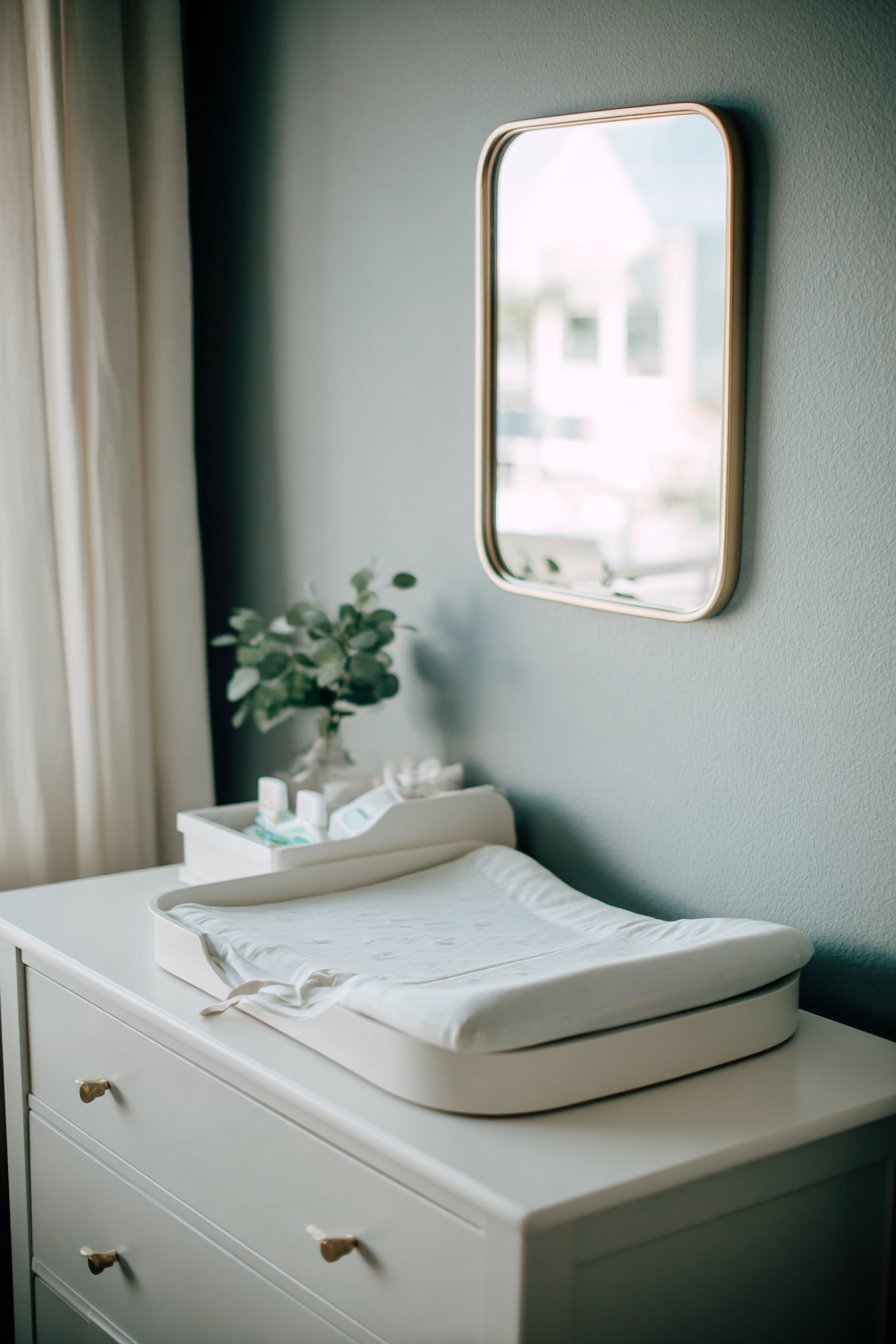
Soft blue-grey paint adorns the wall behind the changing area. A simple framed mirror hangs above at parent eye-level. This allows caregivers to monitor baby while reaching for supplies. Natural window light from the side provides clear illumination for safe changes.
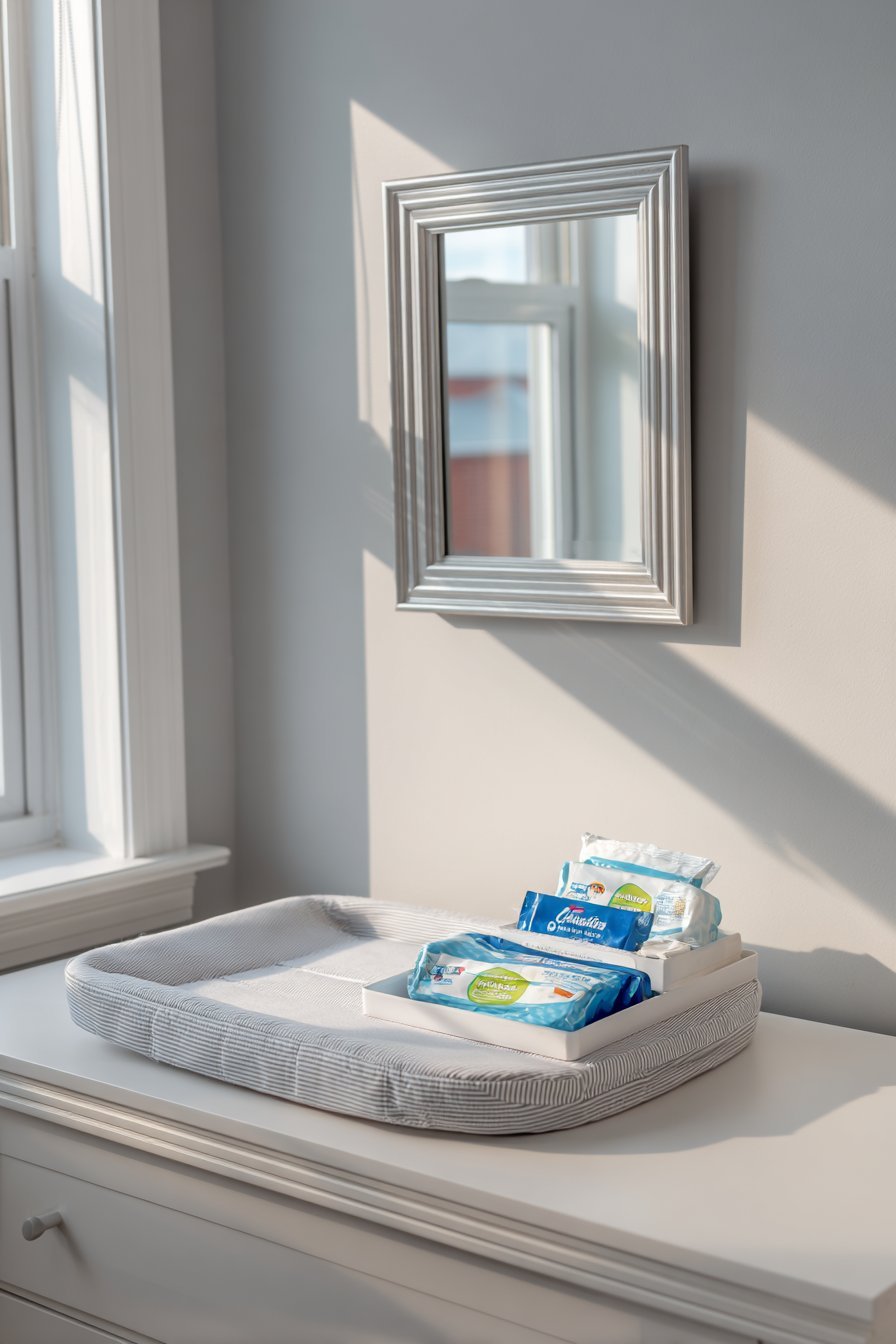
The functional setup emphasizes practical accessibility over decorative elements. Everything needed stays within arm’s reach during changes. Parents never need to step away from baby for forgotten items. This safety-focused design provides peace of mind daily.
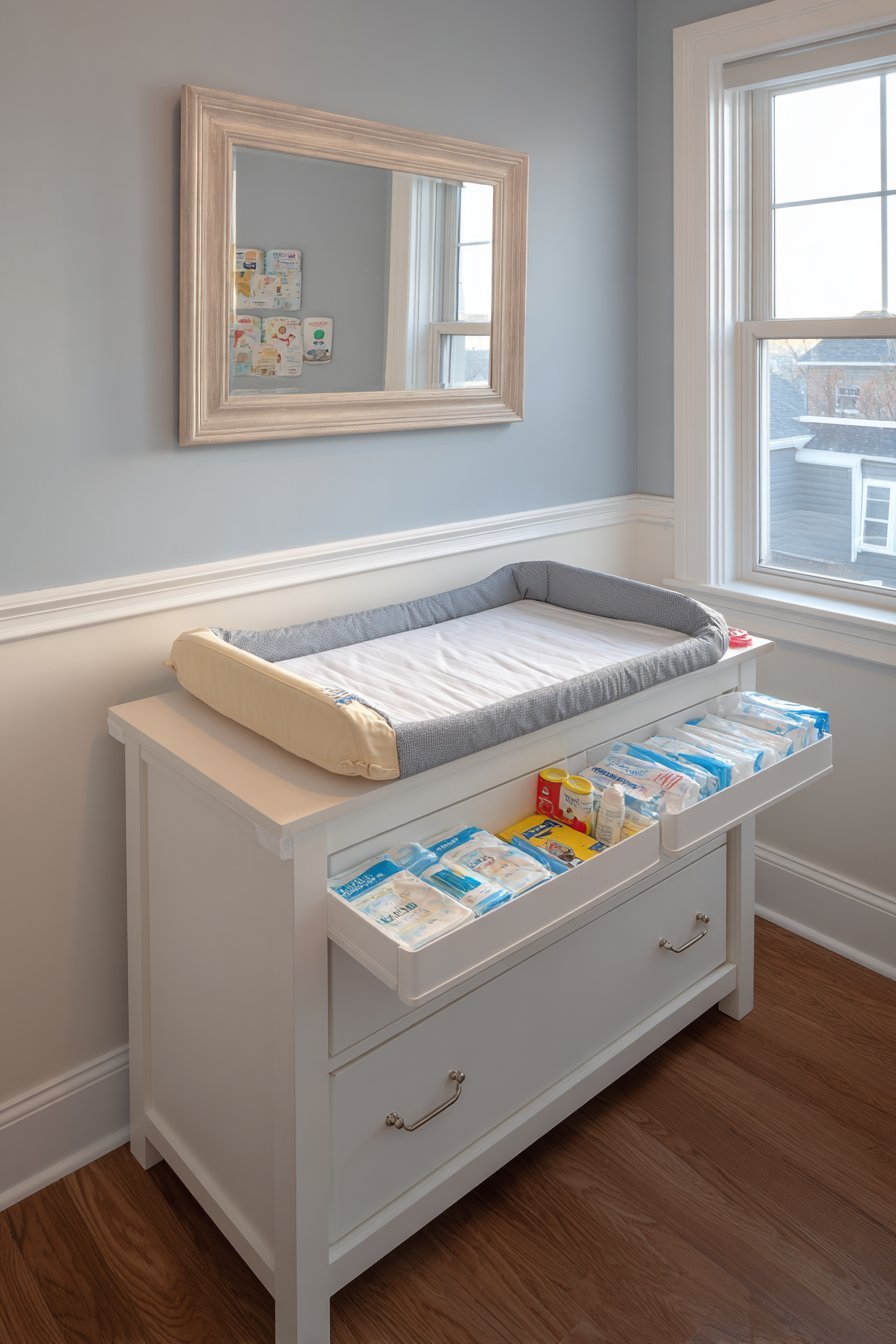
Key Design Tips:
- Secure changing pads with safety straps to prevent sliding during active changes
- Use white caddy organizers to keep all diaper supplies visible and accessible
- Paint walls in soft blue-grey for calming effect during potentially stressful changes
- Hang mirrors at parent eye-level for monitoring baby while multitasking
- Position changing stations near windows for optimal natural lighting
11. Natural Wood Crib Warmth and Safety
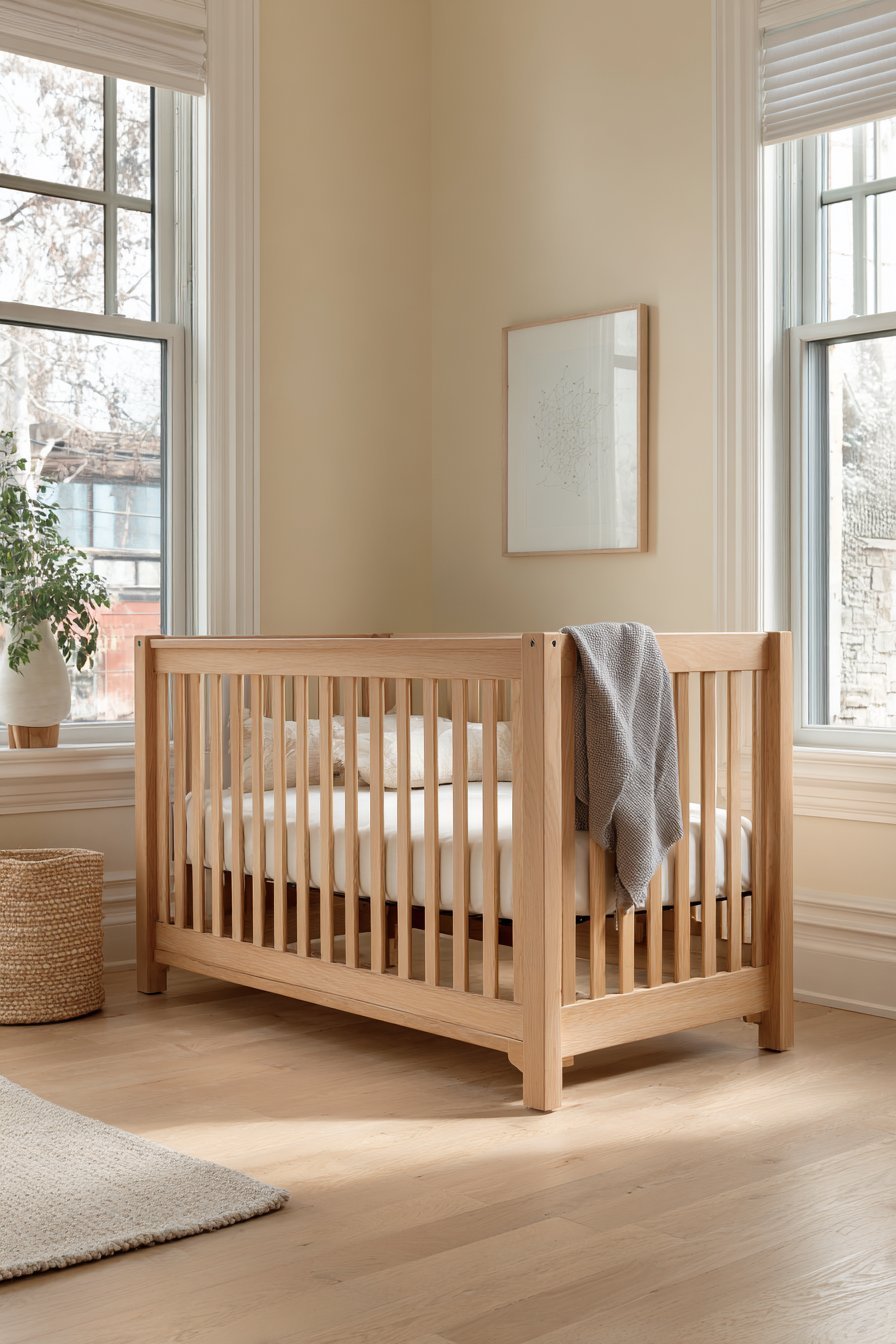
A natural wood crib with straight slats and rounded posts sits centrally. Plain white cotton crib sheet and single soft grey cellular blanket provide safe bedding. Pale yellow walls with matte finish create cheerful but calm atmosphere. Simple white blinds cover the window effectively.
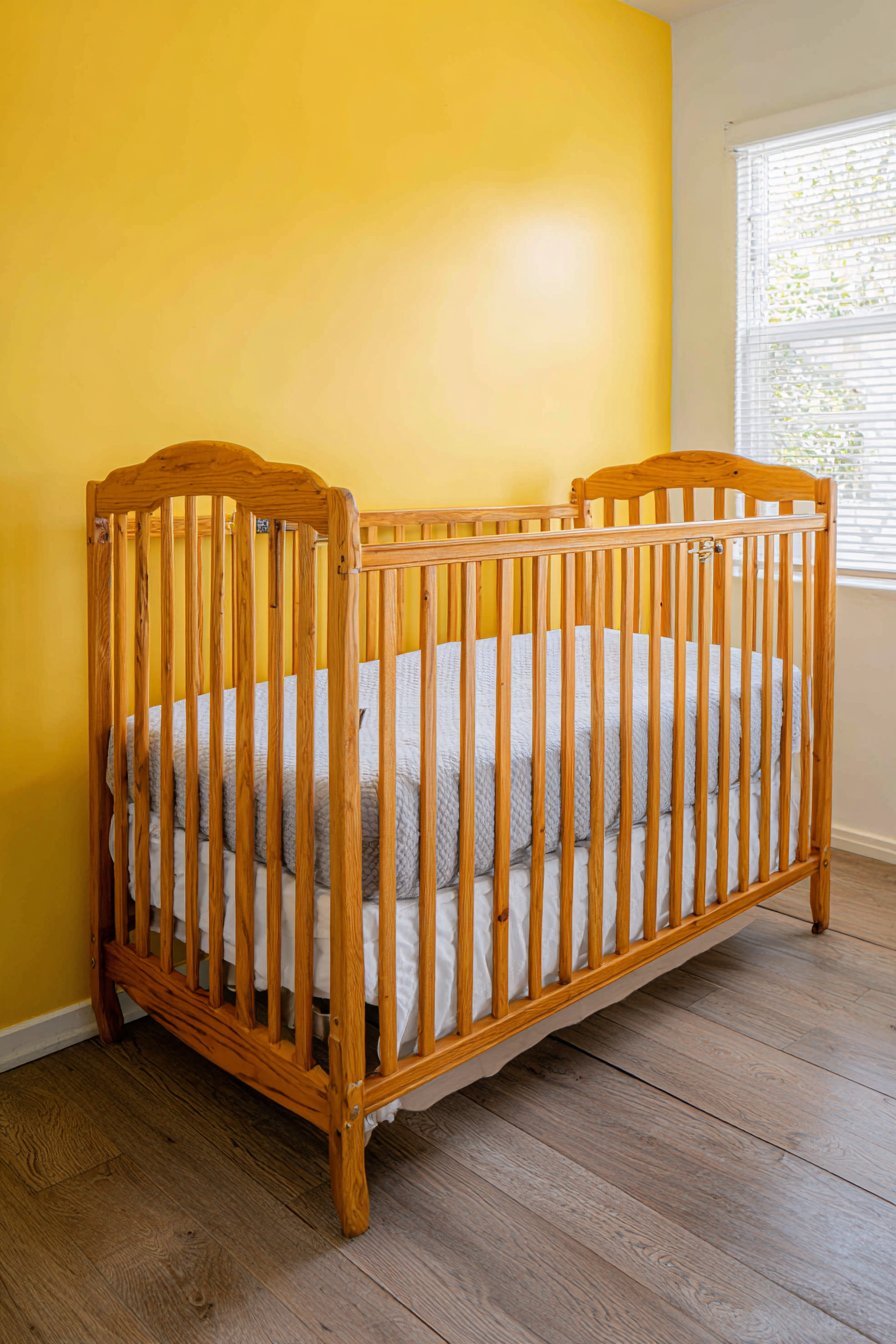
Light pine flooring shows beautiful natural wood grain patterns. The warm tones create a welcoming environment for baby and parents. The central positioning allows access from multiple sides easily. Morning light illuminates the space with gentle, golden warmth.
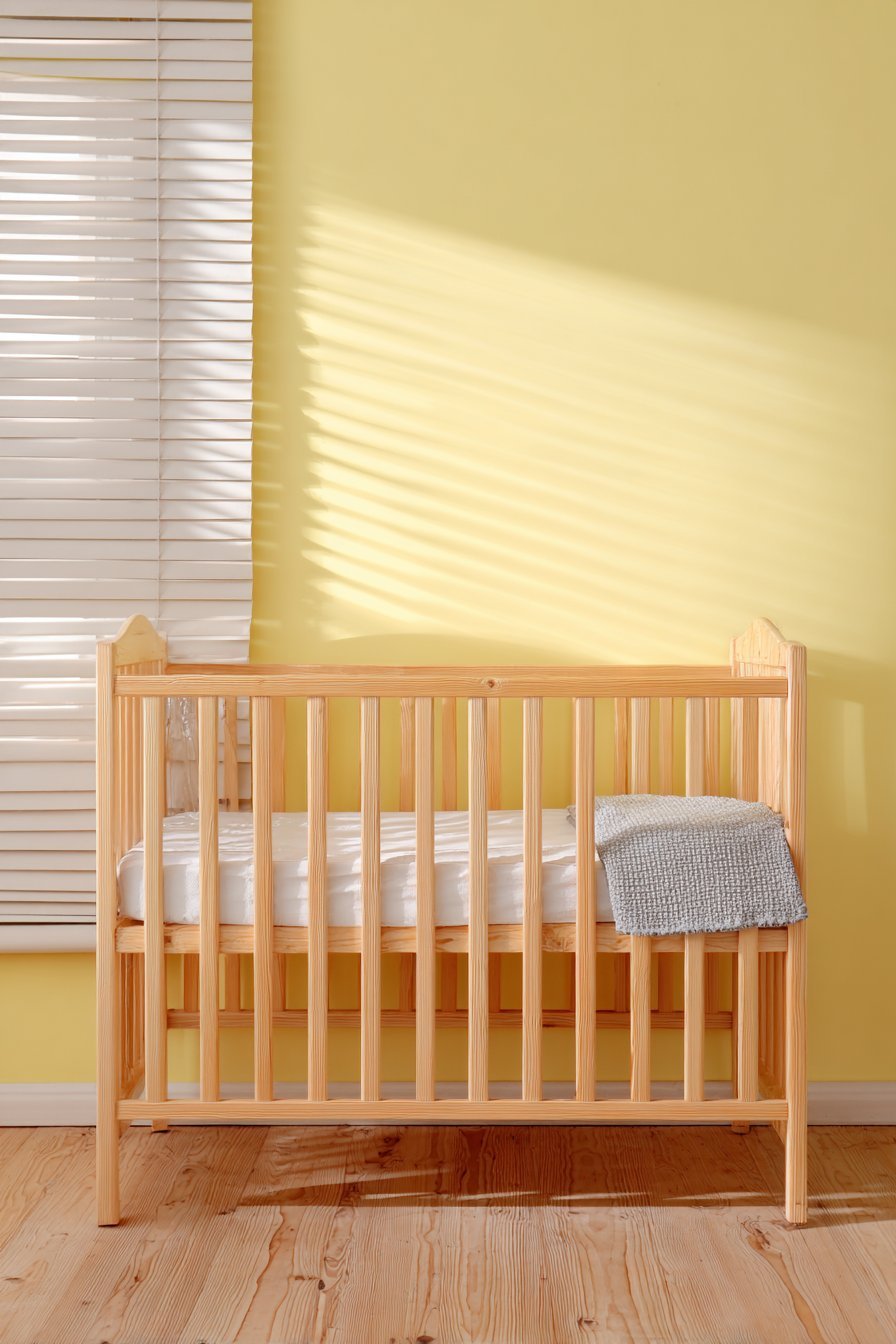
The safe sleep environment follows all current pediatric guidelines strictly. The minimal bedding reduces suffocation risks significantly. Parents rest easier knowing the setup prioritizes safety first. The beautiful materials prove safety and style coexist perfectly.

Key Design Tips:
- Choose natural wood cribs with straight slats spaced according to safety standards
- Use only fitted crib sheets and one light blanket for safe sleep environment
- Paint walls in pale yellow for cheerful warmth without overstimulation
- Install simple white blinds for effective light control and clean aesthetic
- Select light pine flooring to add natural warmth and visual interest
12. Comfortable Glider Feeding Corner
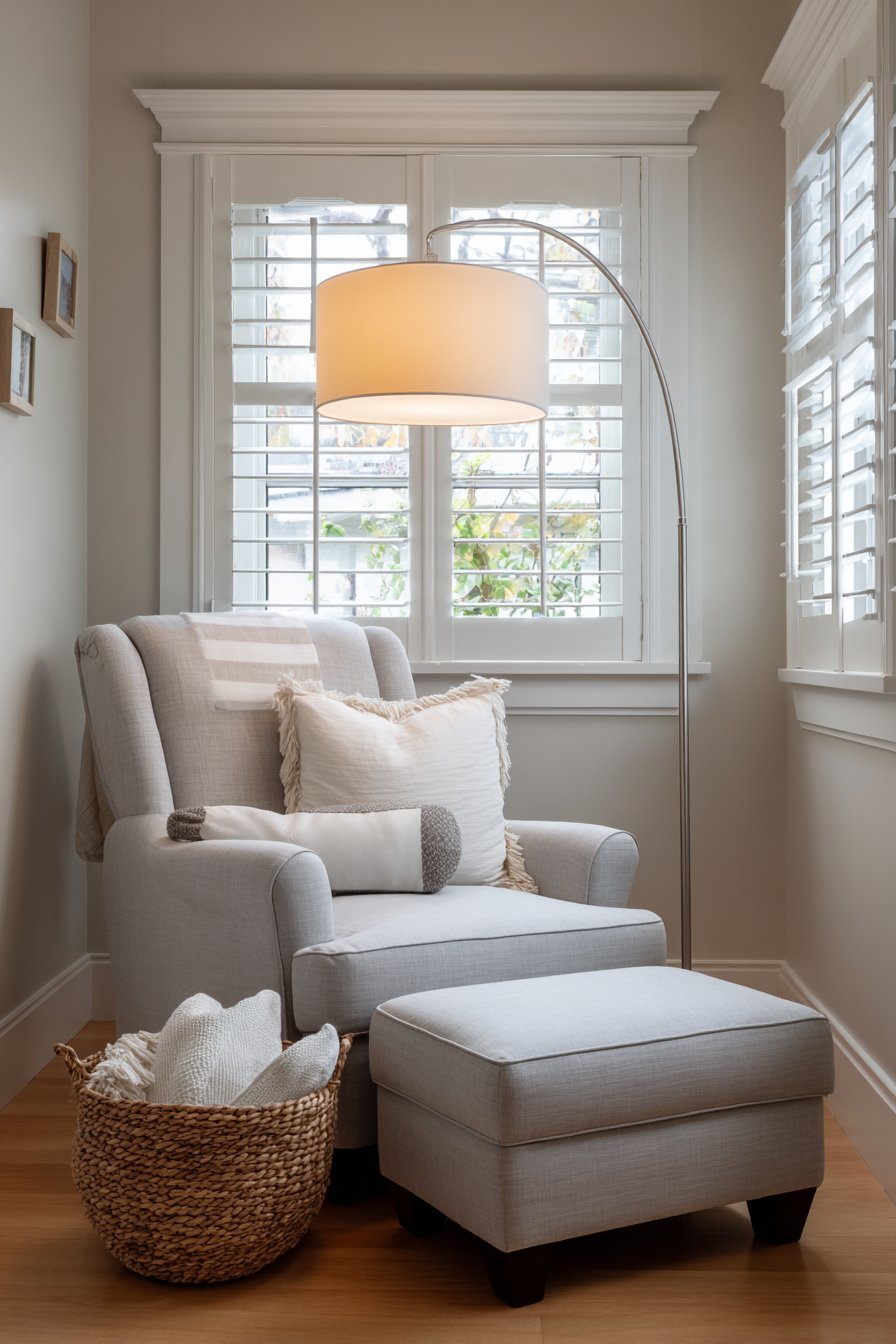
An upholstered glider in solid light grey fabric positions perfectly to catch window light. The comfortable design supports proper positioning during feeding sessions. A simple arc floor lamp with white shade stands beside the glider. The adjustable task lighting proves essential for nighttime feedings.
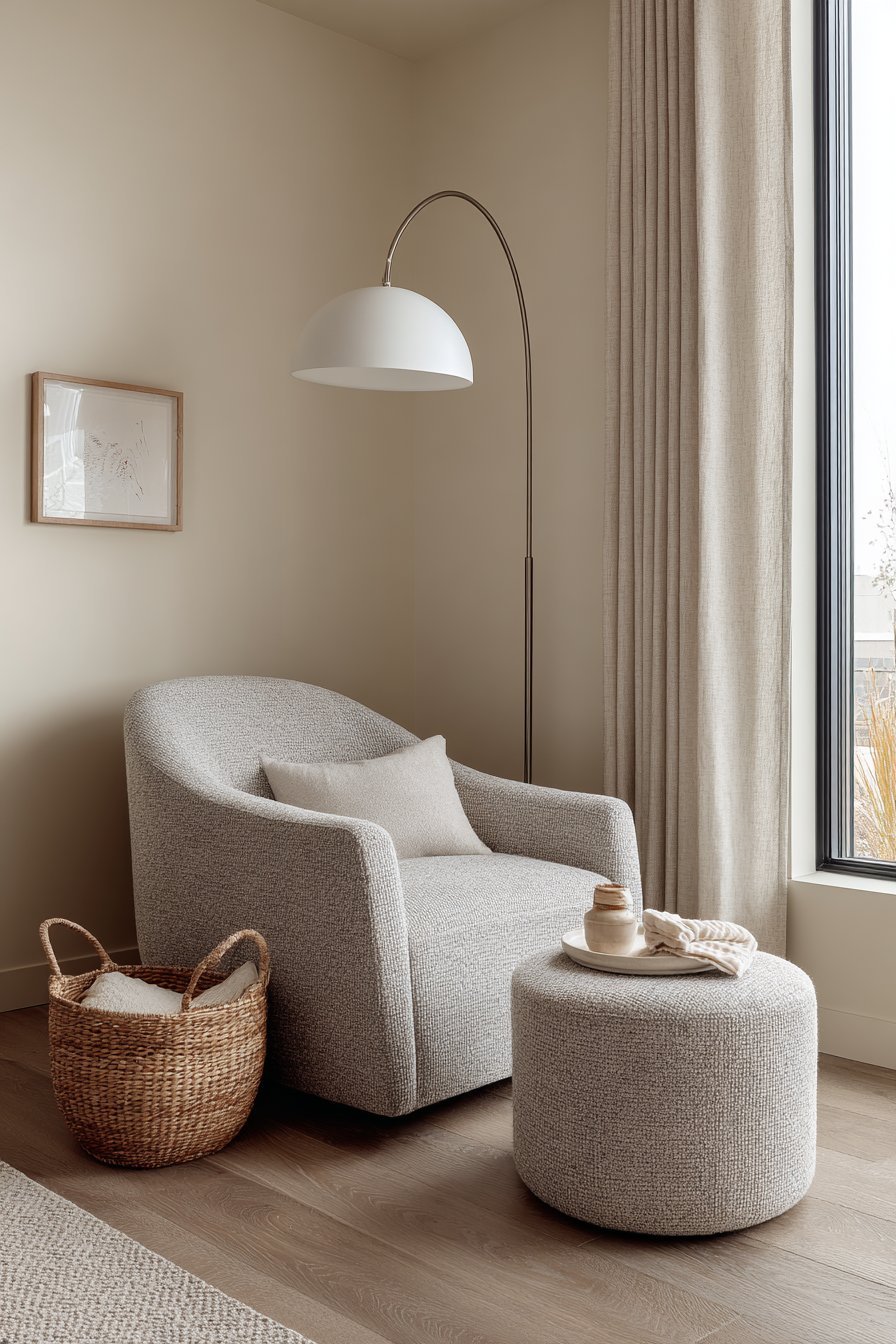
A small woven basket on the floor holds muslin cloths and nursing pillow. Cream colored walls and natural oak flooring complete the peaceful space. The corner becomes a dedicated sanctuary for bonding and nourishment. Parents appreciate having everything needed within easy reach.
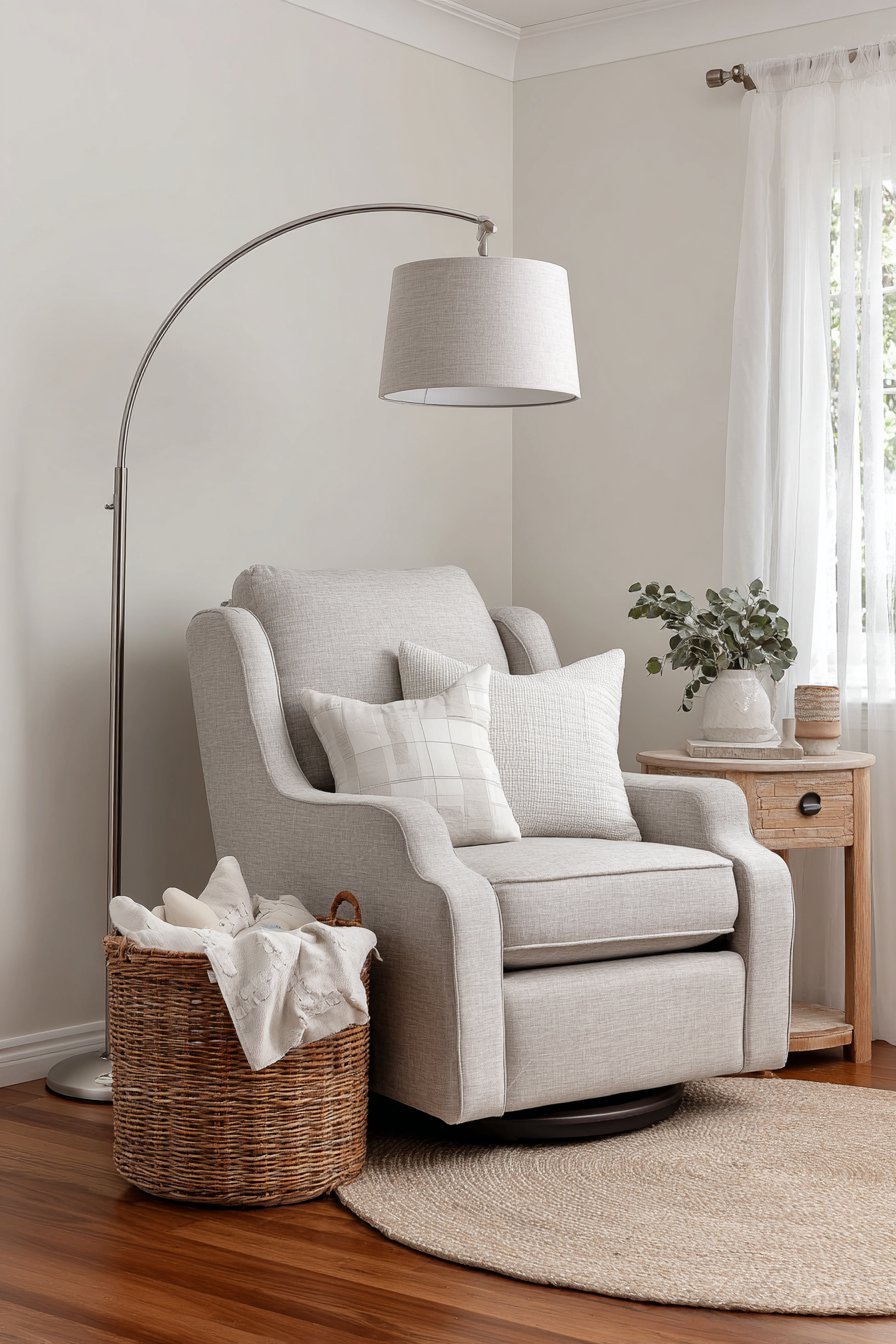
The thoughtful setup reduces stress during feeding times significantly. Proper lighting prevents eye strain during late-night sessions. The comfortable seating encourages relaxation for both parent and baby. This dedicated space becomes associated with calm, peaceful moments.
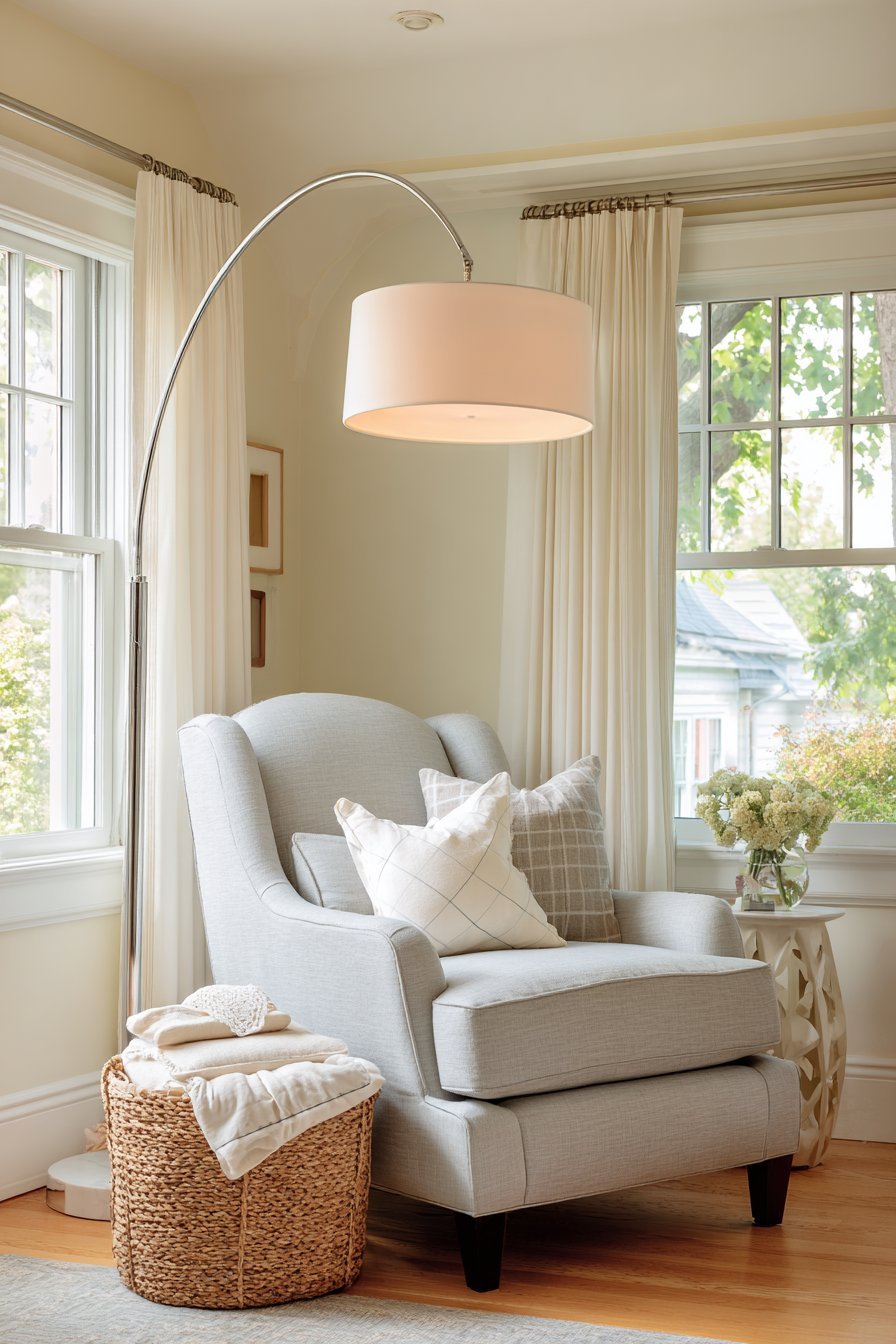
Key Design Tips:
- Select gliders with solid light grey upholstery for stain resistance and style
- Position gliders to catch natural window light during daytime feedings
- Add arc floor lamps beside gliders for adjustable nighttime task lighting
- Keep woven baskets nearby with muslin cloths and nursing pillows
- Paint surrounding walls in cream for warmth without visual distraction
13. Minimalist Wall Decal Feature Accent
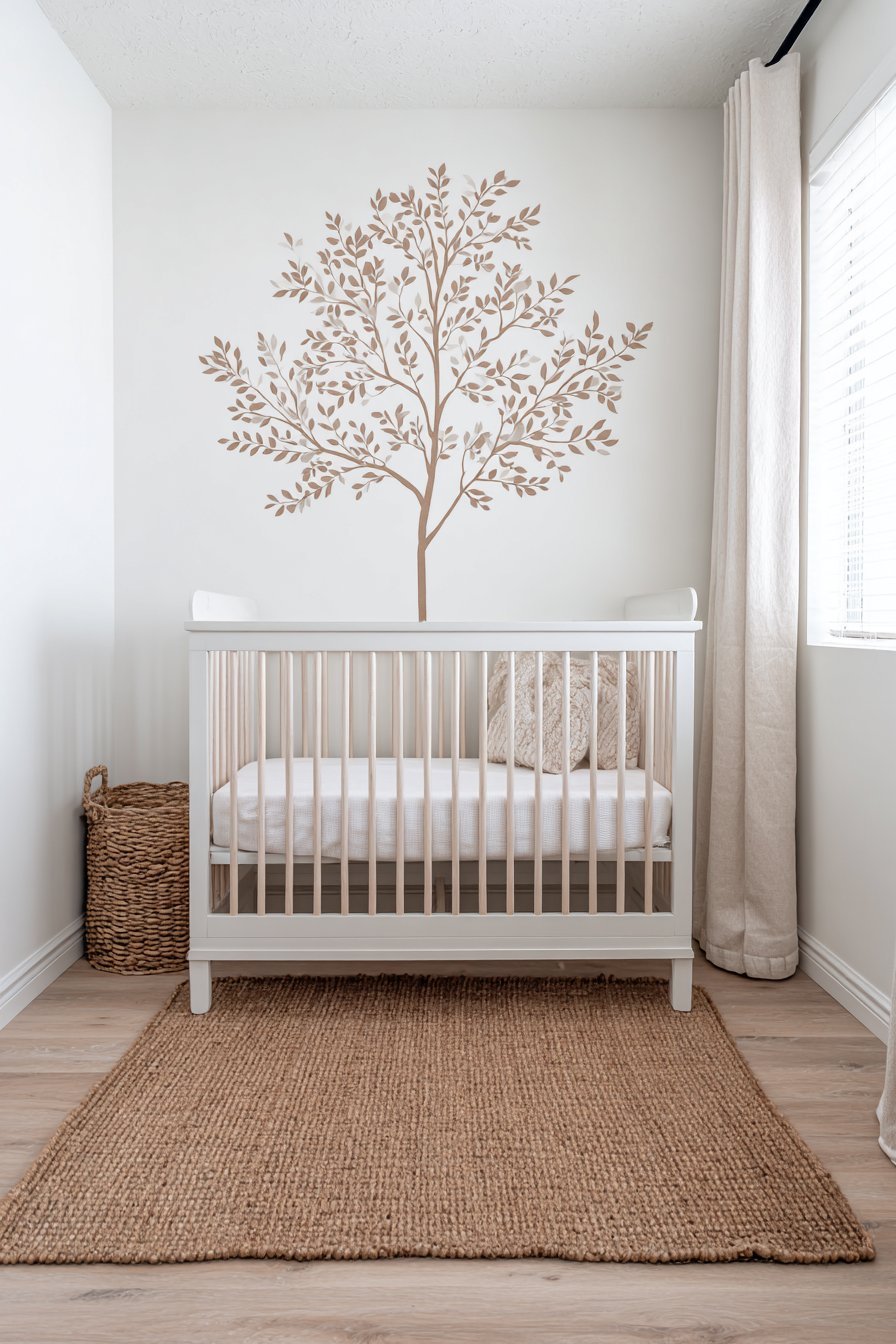
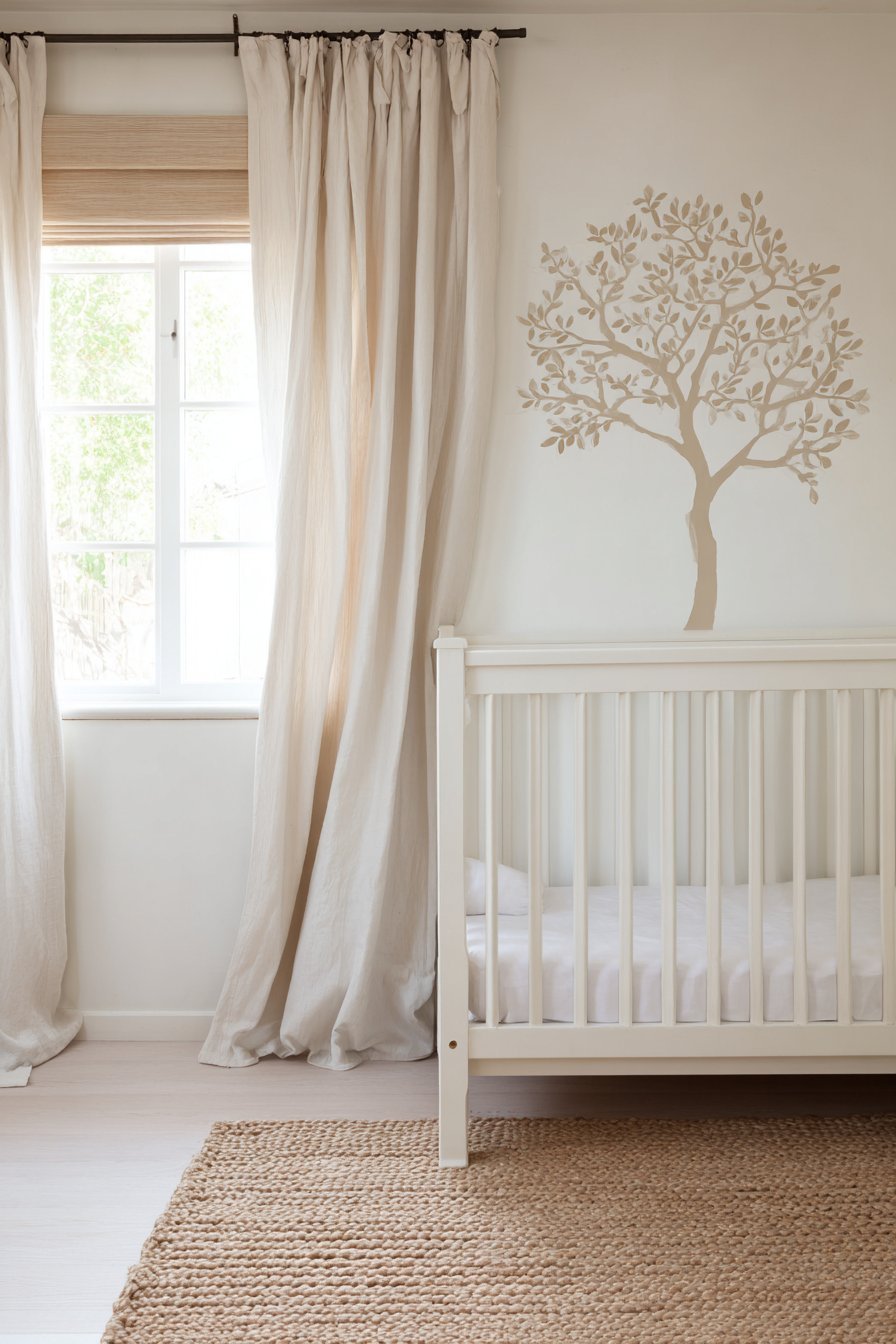
A minimalist wall decal of a single tree adorns the white wall above the crib. The simple branch design in soft taupe color adds visual interest subtly. The basic white wood crib with clean lines sits below. Plain white cotton bedding maintains the peaceful, uncluttered aesthetic.
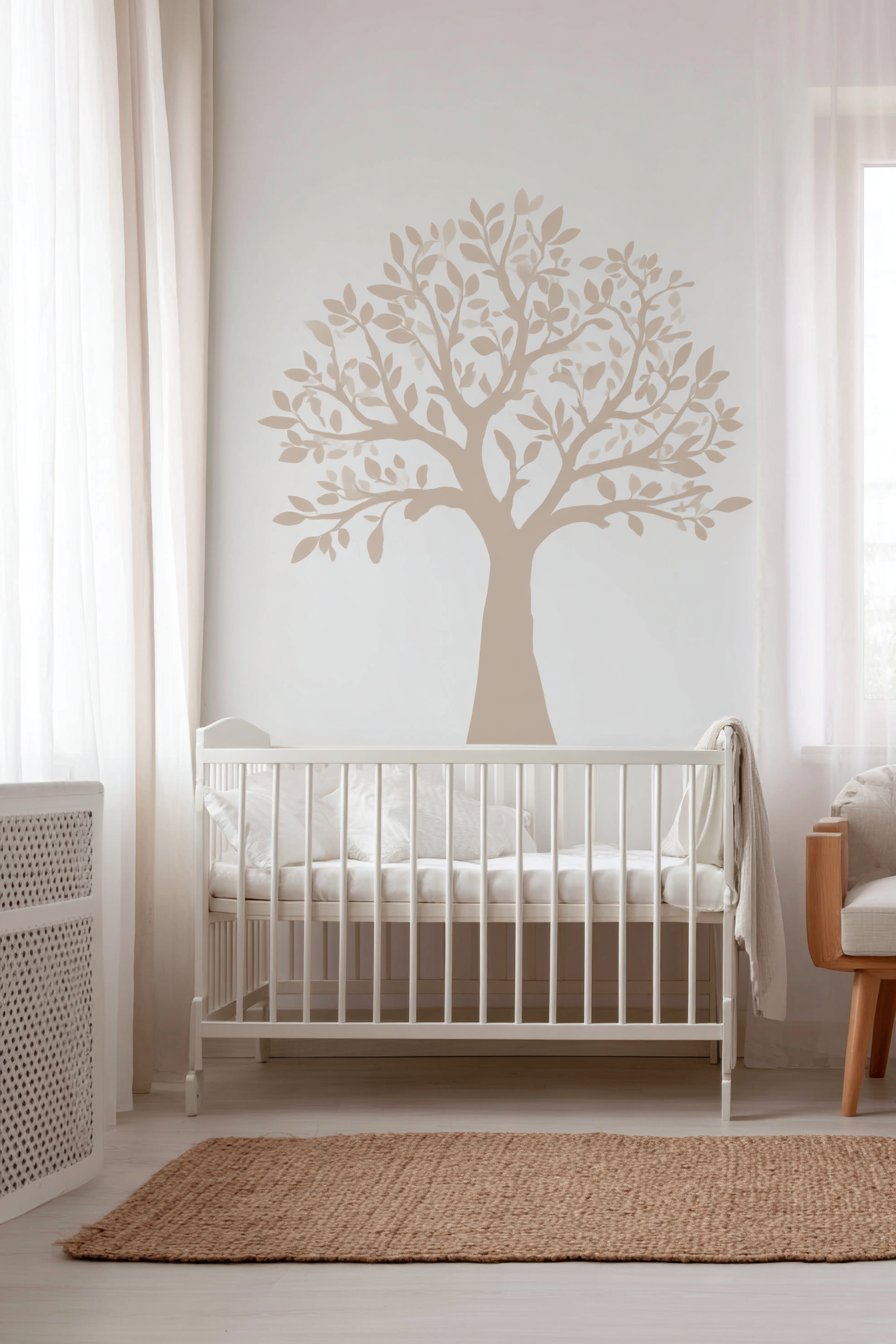
Natural jute rug with simple weave pattern covers part of the light wood floor. White cotton curtains frame a standard window beautifully. The single decorative element creates focal point without overwhelming the space. The restrained approach proves less is genuinely more.
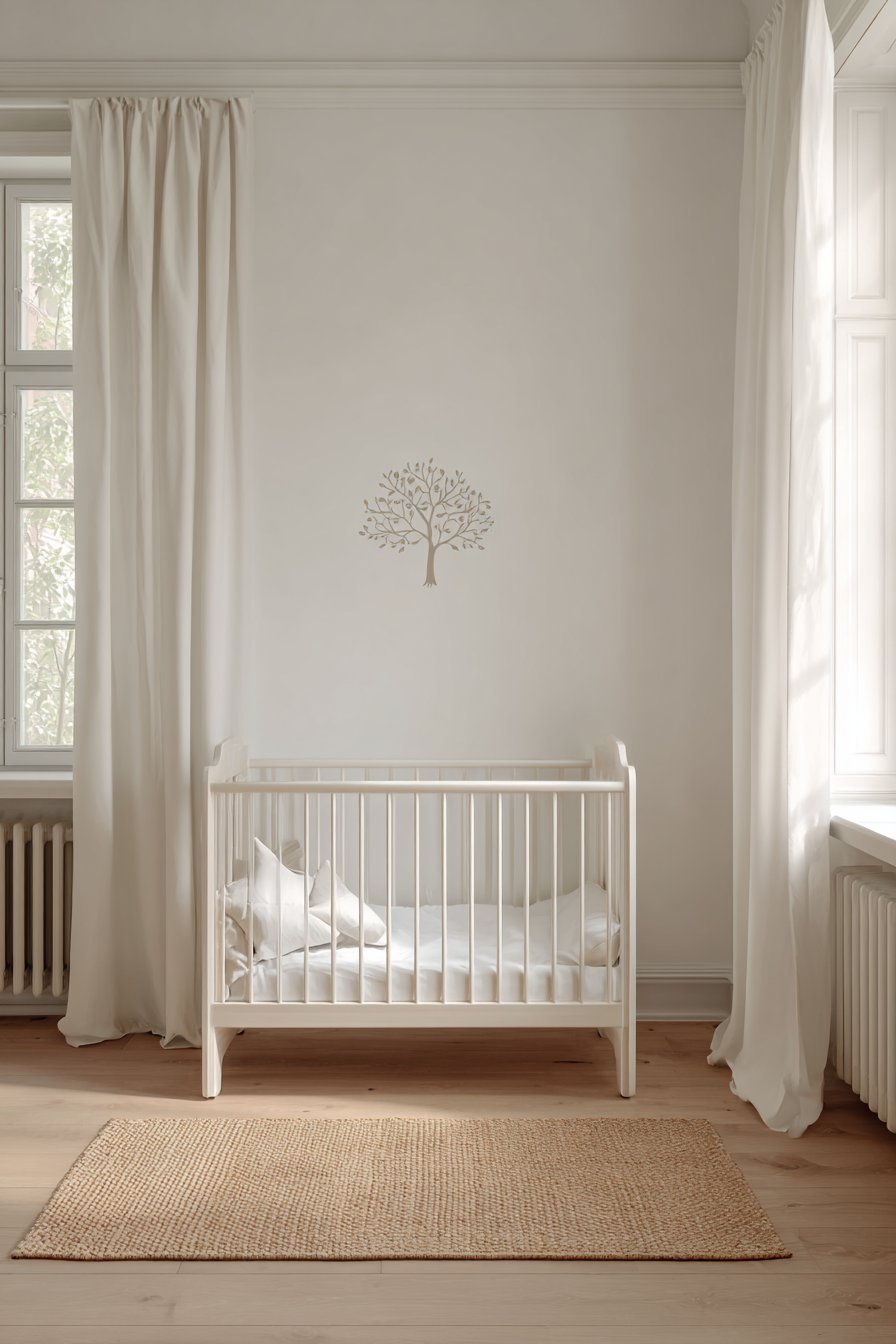
The peaceful space allows baby’s mind to rest without constant stimulation. Parents find the calm environment reduces their stress levels too. The simple tree design grows with the child symbolically. This thoughtful touch adds meaning without adding clutter.
Key Design Tips:
- Apply single wall decals instead of multiple pieces for focused visual interest
- Choose soft taupe colors that complement rather than dominate neutral palettes
- Position decals above cribs as safe decorative focal points
- Select simple designs like single trees for timeless appeal
- Layer natural jute rugs over hardwood for texture without pattern overwhelm
14. Accessible Toy Storage Cubby System
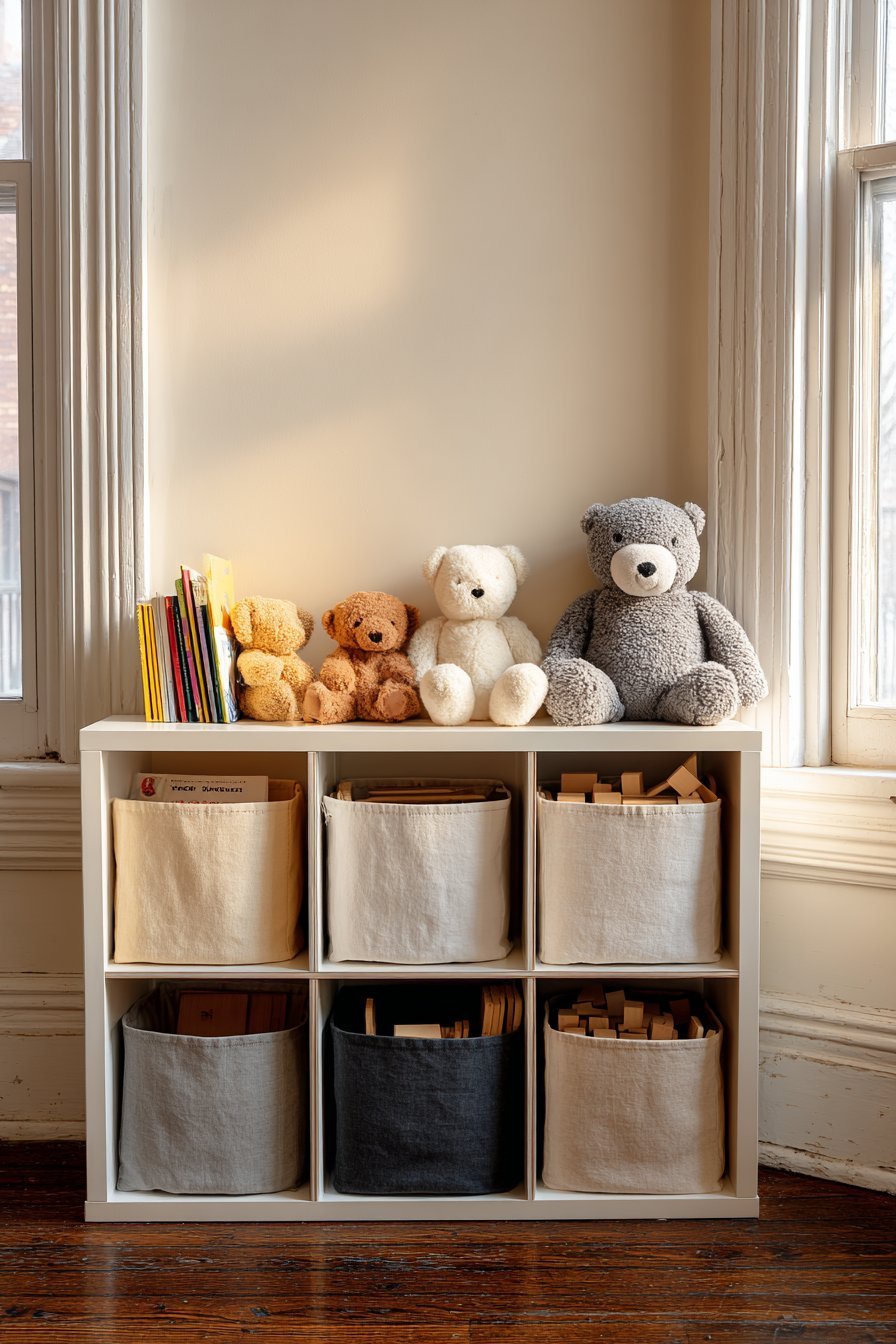
A low white cubby unit contains fabric bins in soft grey and natural linen. Each bin holds categorized toys including soft plush items, wooden blocks, and board books. The unit sits against a wall painted in warm cream. Natural light from nearby window illuminates the organized display.
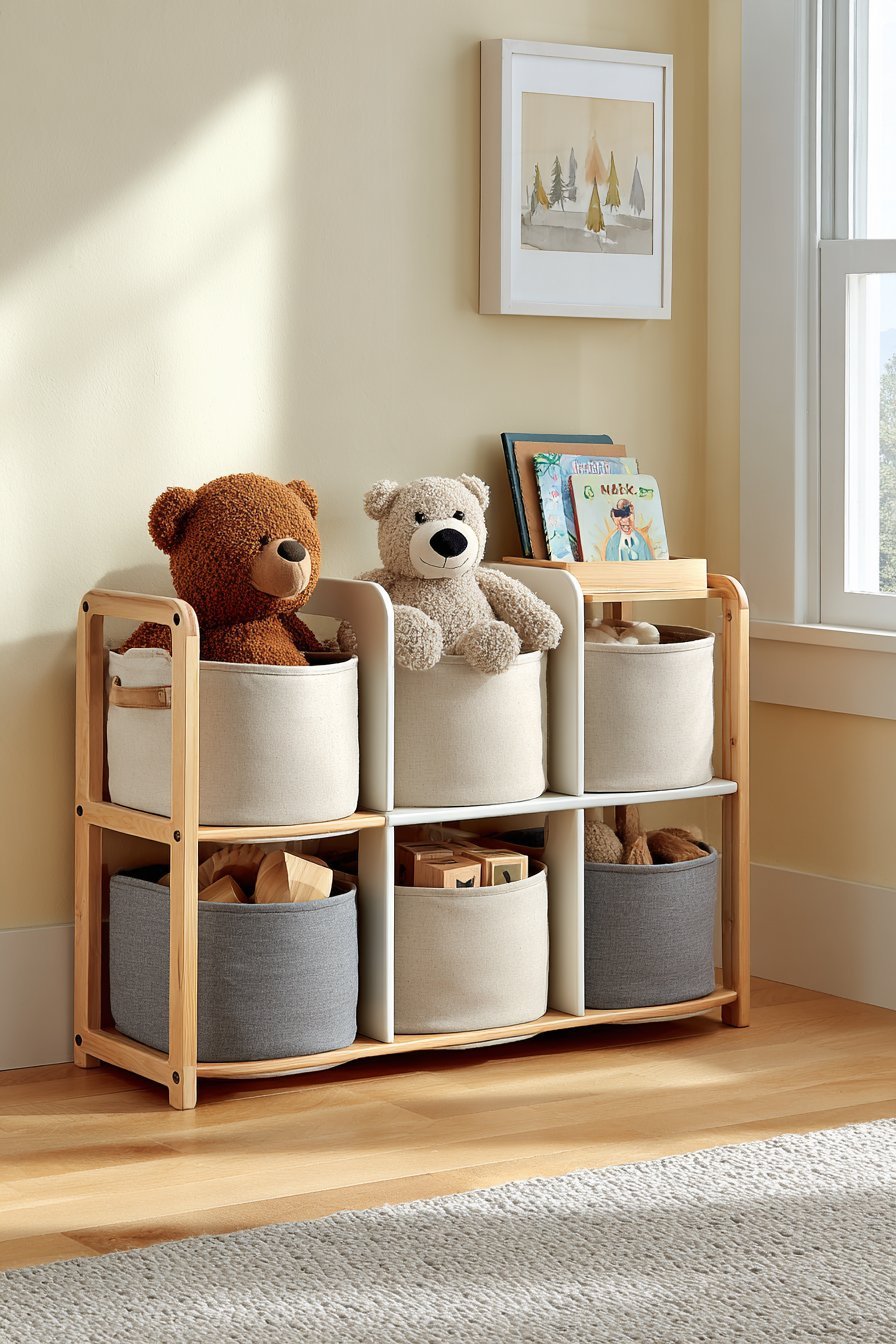
The accessible, child-height storage encourages easy cleanup as baby grows. Parents can quickly locate specific toys when needed. The fabric bins soften the look while hiding contents partially. The organized system prevents toy explosion throughout the room.
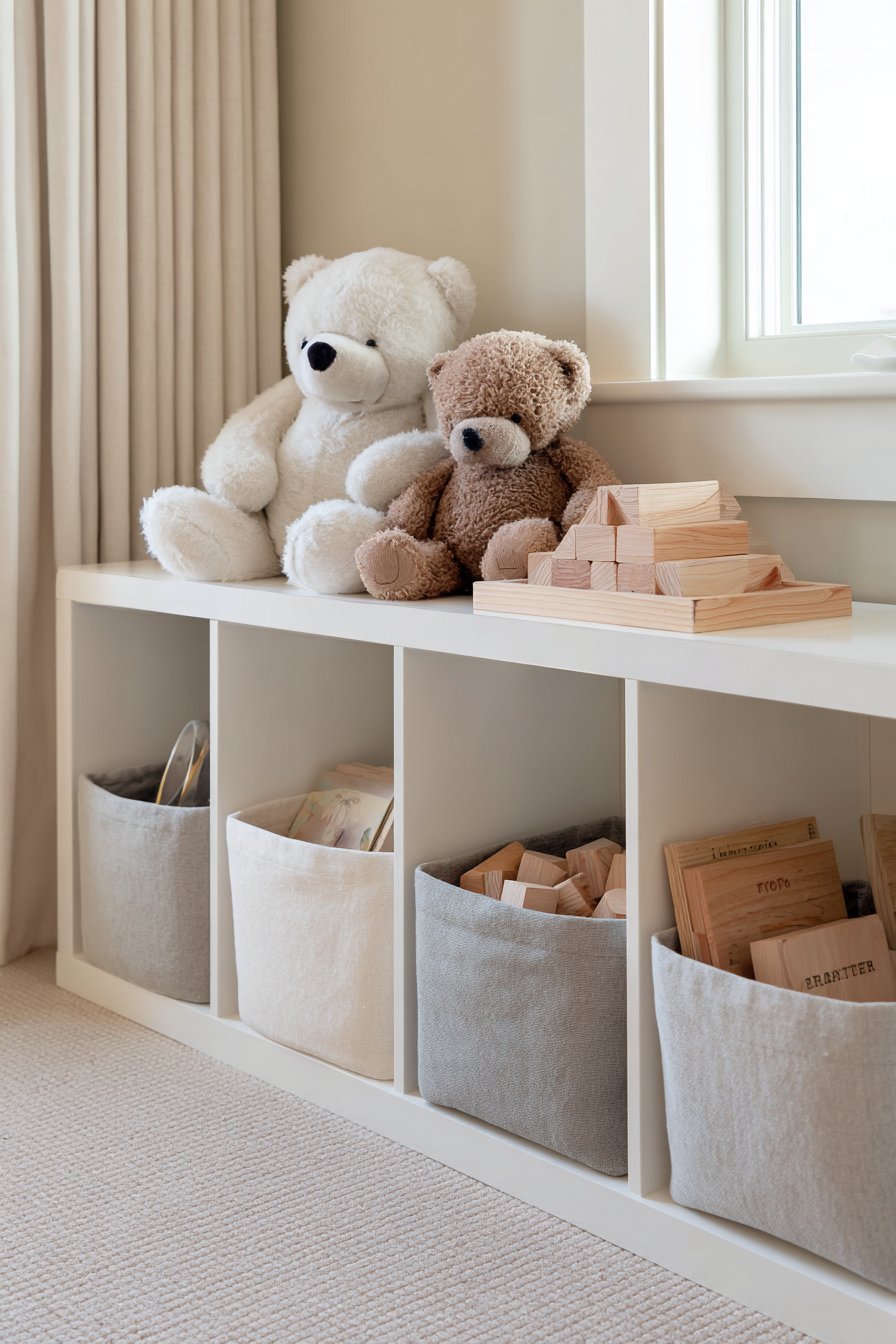
The categorized approach teaches early organizational skills gradually. Children learn that everything has a proper home. The low height ensures safety as toddlers begin exploring independently. This investment pays dividends for years beyond infancy.

Key Design Tips:
- Choose low cubby units at child-height for eventual independent access
- Use fabric bins in neutral tones to soften storage while organizing categories
- Categorize toys by type including plush toys, blocks, and books
- Position storage units near windows for natural light during playtime
- Paint surrounding walls in warm cream to create cohesive, calm environment
15. Organized Dresser Top Changing Arrangement
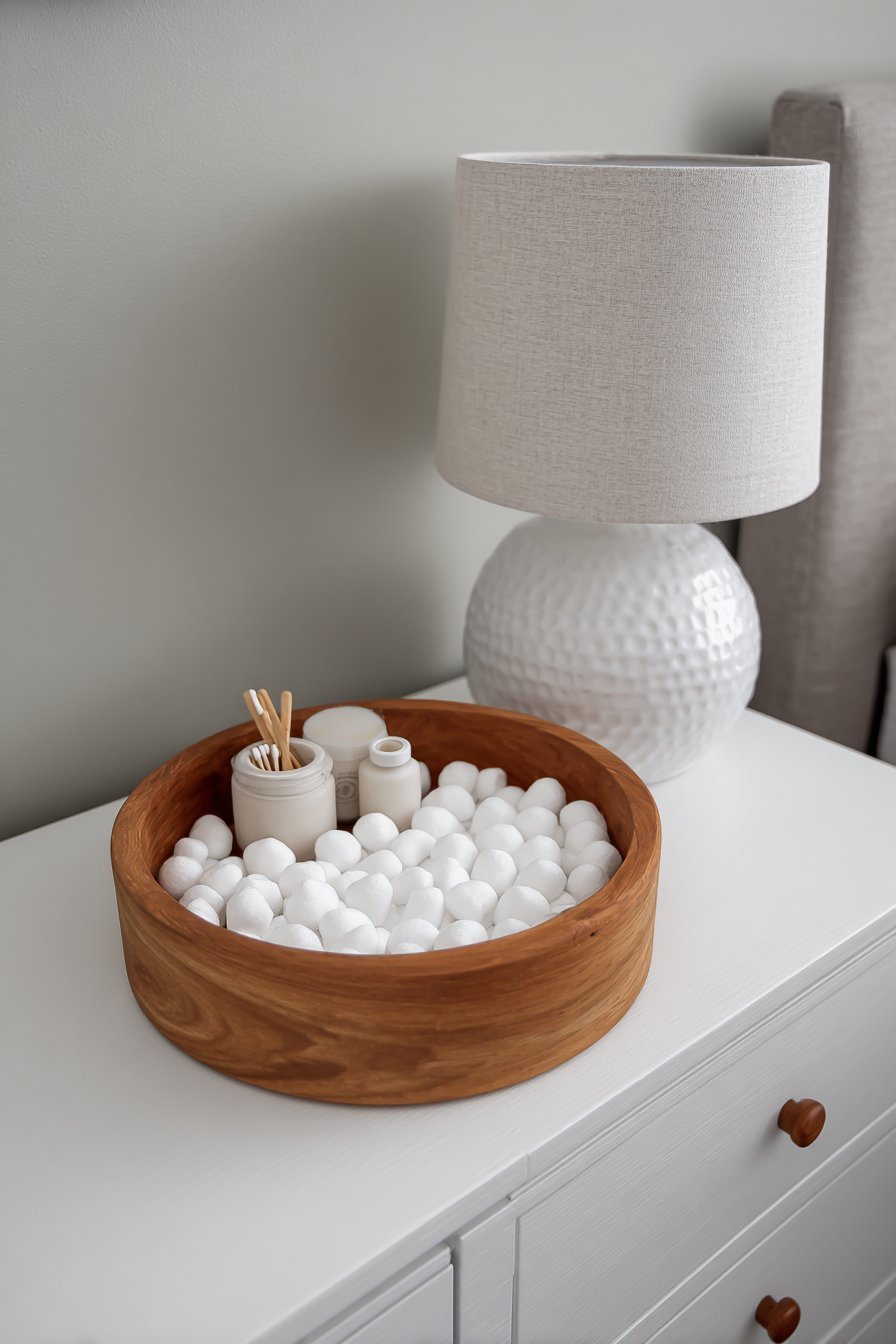
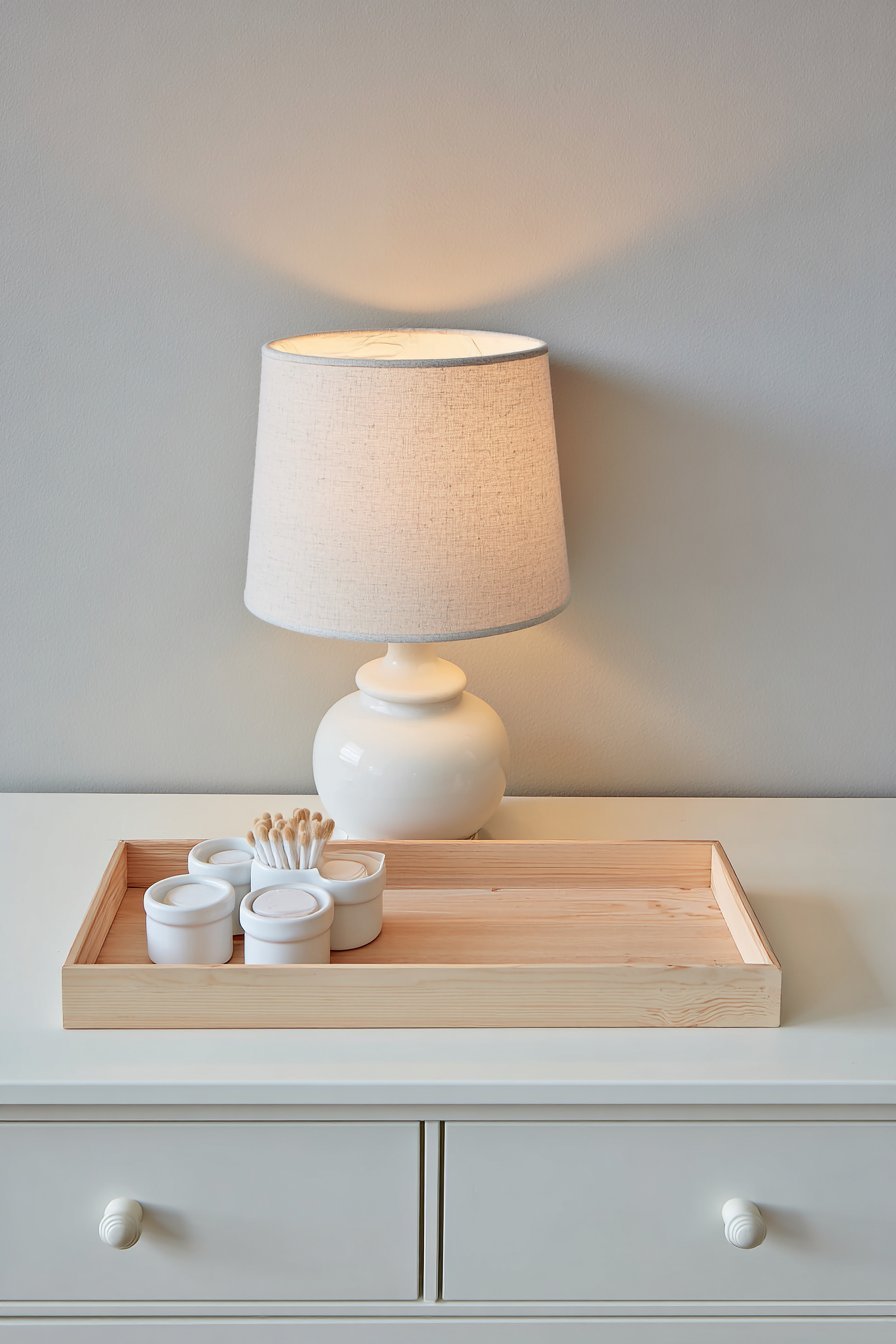
A basic wooden changing tray holds essential items in small white ceramic containers. Cotton balls, cotton swabs, and diaper cream stay neatly organized. A simple table lamp with white ceramic base provides warm lighting. The linen shade diffuses light gently across the changing surface.
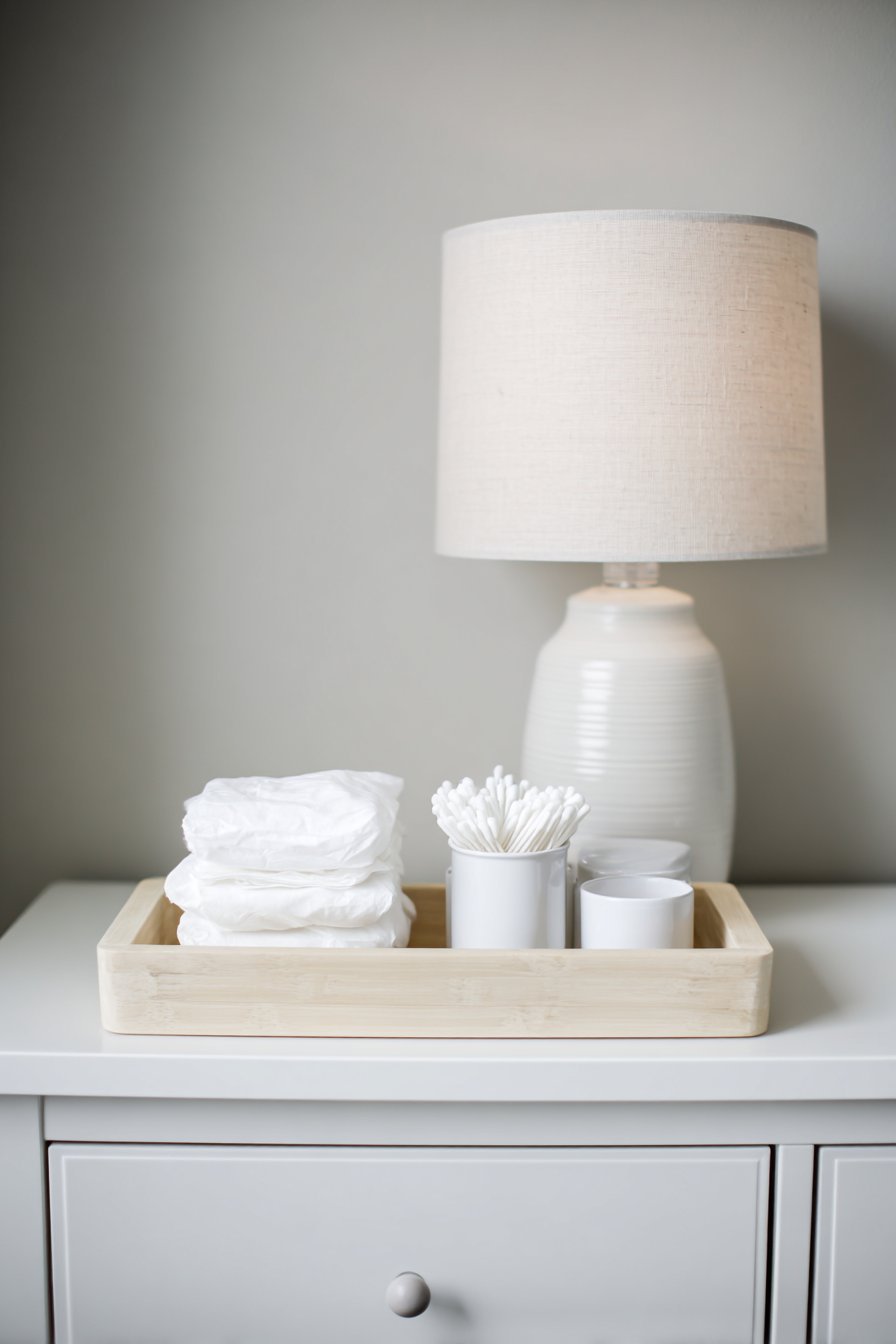
The dresser is painted white with simple round knobs. Pale grey walls form the perfect neutral backdrop. The organized simplicity makes diaper changes efficient and calm. Everything needed stays visible and accessible during quick changes.
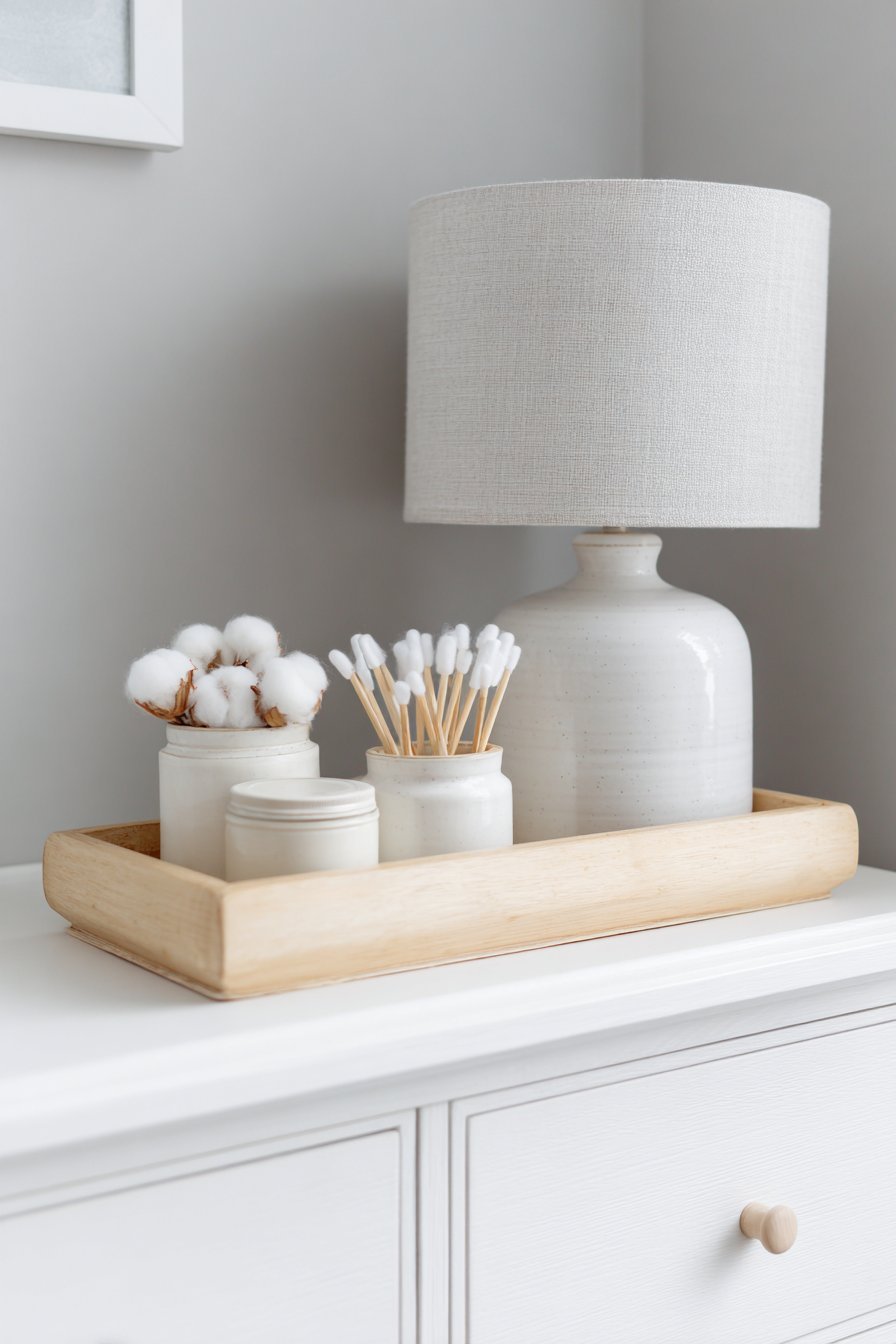
The soft lighting creates a soothing atmosphere during nighttime changes. Parents appreciate the thoughtful organization during sleep-deprived moments. The ceramic containers add subtle elegance to practical supplies. This setup proves that function and beauty coexist beautifully.
Key Design Tips:
- Use wooden changing trays to define and organize dresser top space
- Store small items in white ceramic containers for clean, cohesive look
- Add table lamps with linen shades for soft, warm task lighting
- Paint dressers white with simple round knobs for timeless simplicity
- Choose pale grey walls to provide neutral backdrop for white furniture
16. Soft Peach Feature Wall Accent
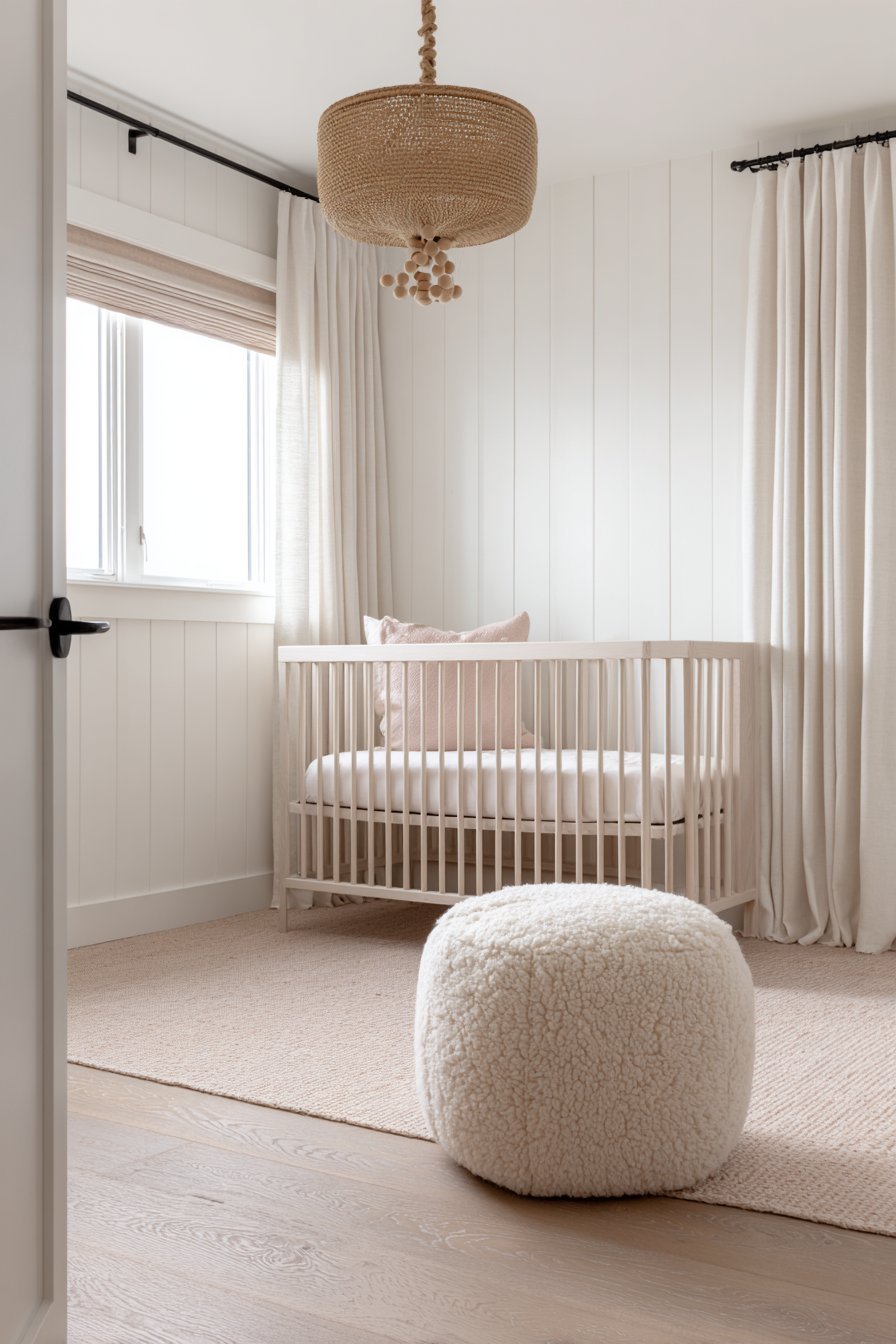
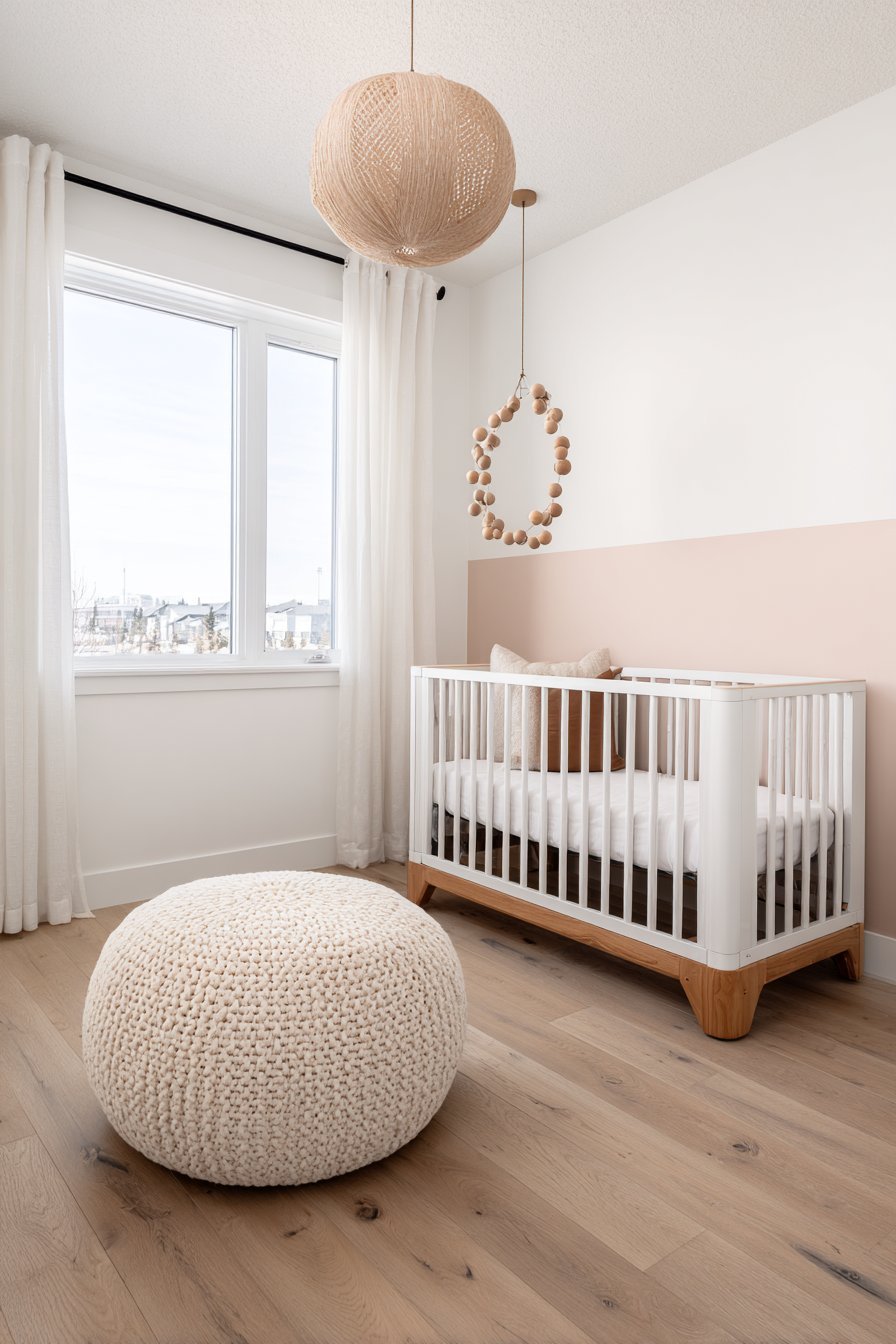
A white wooden crib positions against a feature wall painted in soft peach. The remaining walls stay white for balance and brightness. A basic wooden mobile with natural wood beads hangs from the ceiling. Simple white blackout curtains ensure quality sleep environment day and night.
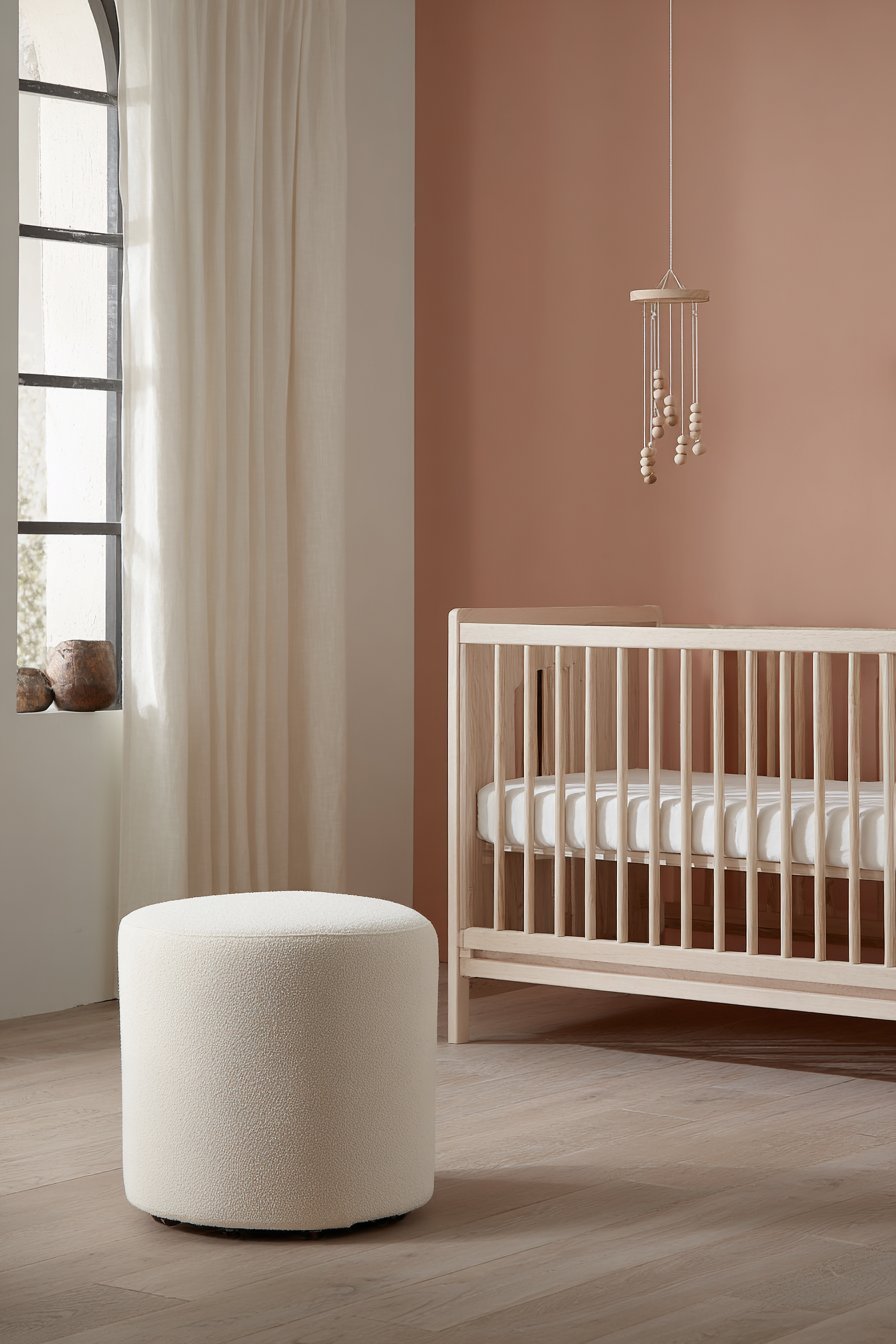
Light maple flooring with visible grain adds natural warmth underfoot. A single upholstered ottoman in cream fabric provides flexible seating. Parents use it during floor play or as footrest while feeding. The subtle color accent adds personality without overwhelming the space.
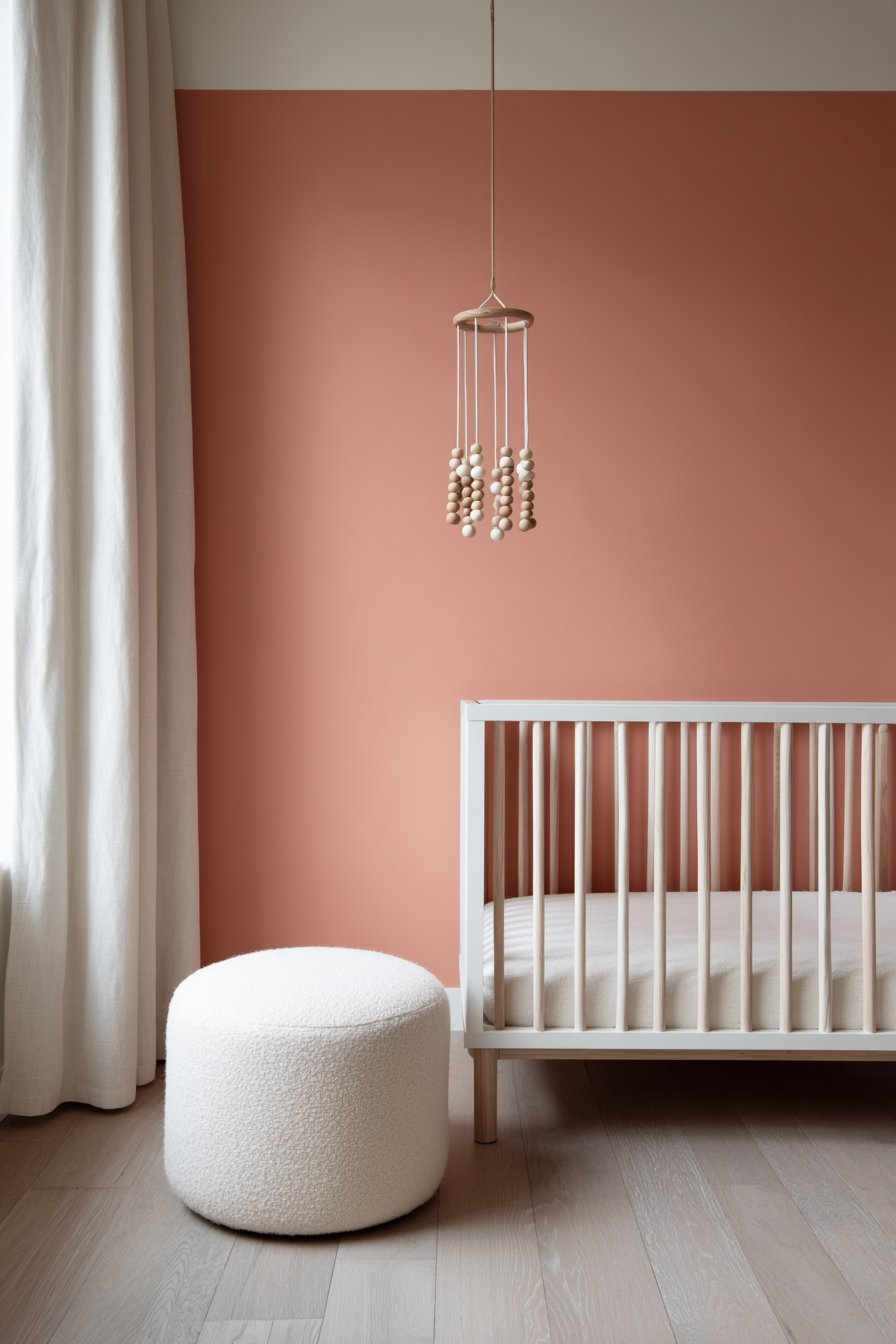
The gentle peach tone creates warmth without being too stimulating. The feature wall provides visual interest in otherwise neutral room. The functional simplicity maintains focus on essential furniture and comfort. Morning light enhances the soft peach tone beautifully.
Key Design Tips:
- Paint one feature wall in soft peach to add warmth without overwhelming neutrals
- Hang wooden mobiles with natural beads for organic visual interest
- Install white blackout curtains to ensure darkness for quality daytime naps
- Choose light maple flooring to complement warm peachy wall tones
- Add cream ottomans for flexible seating that serves multiple purposes
17. Practical Woven Seagrass Hamper Solution
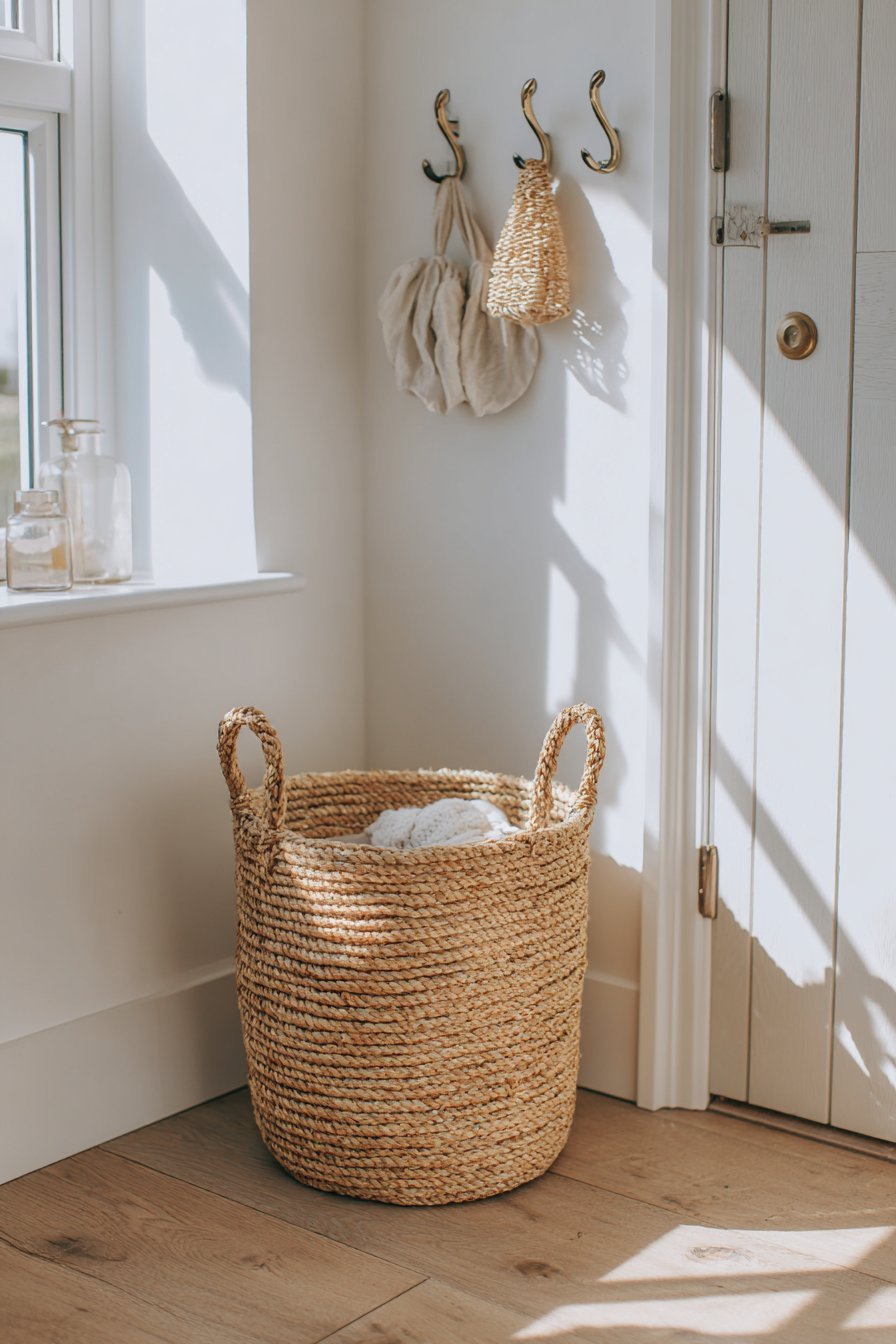
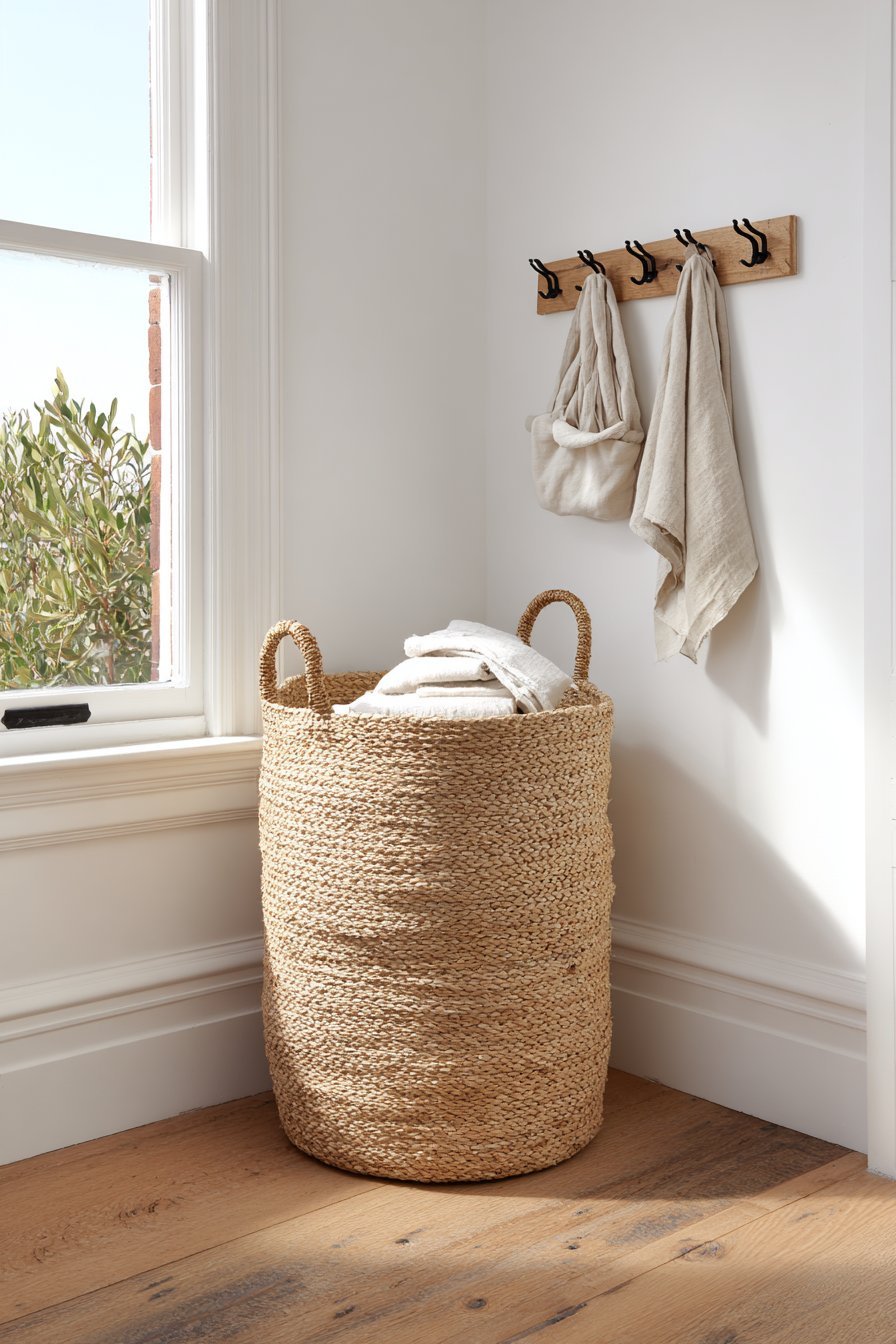
A tall woven seagrass laundry basket with handles sits in the corner. The basket holds used baby clothes and blankets between wash days. Simple white walls and natural wood flooring provide clean backdrop. A small wall hook mounted nearby holds clean bibs and burp cloths.
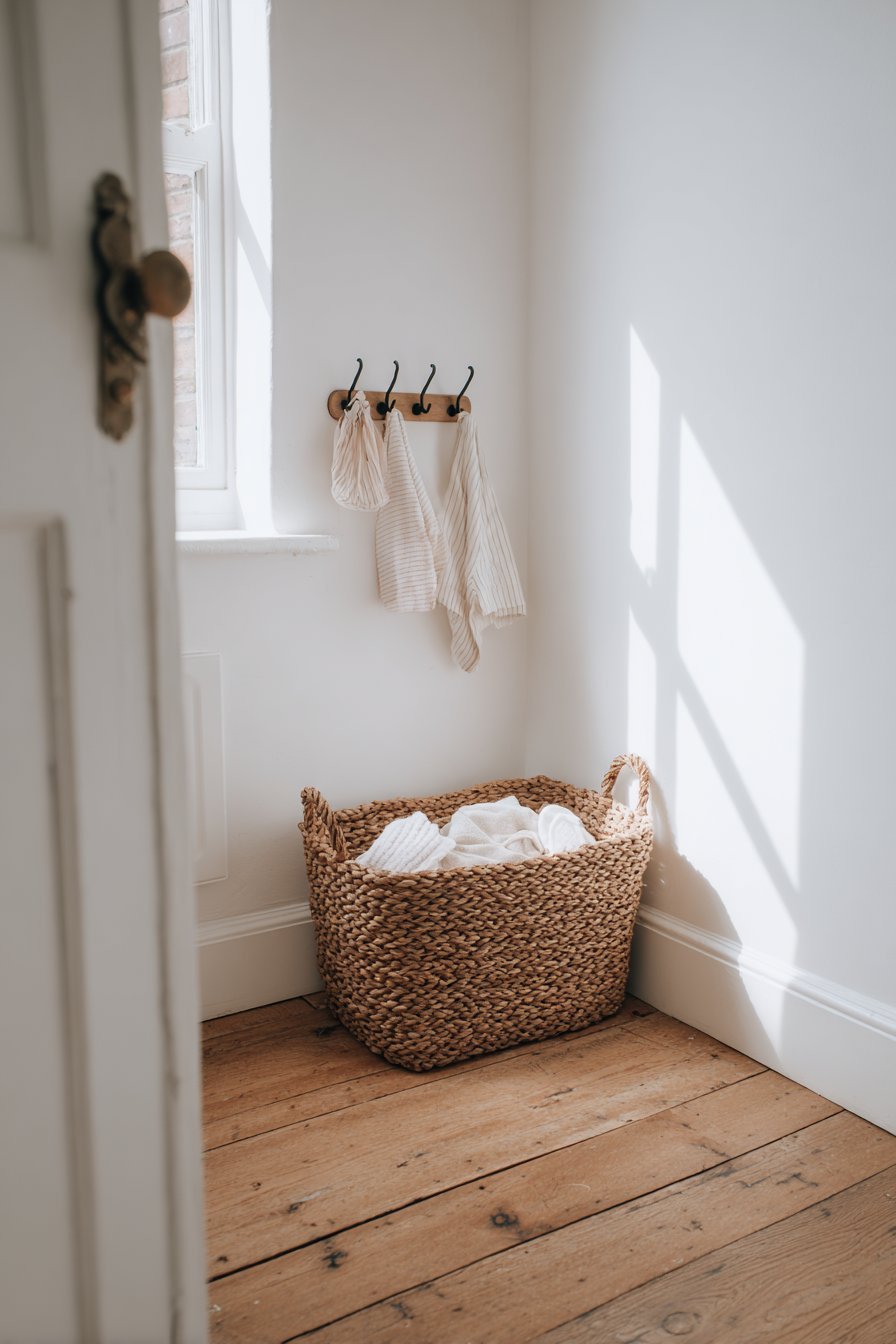
Natural daylight from window creates soft shadows on the textured basket. The attractive design fits seamlessly into the simple nursery aesthetic. The handles make transporting laundry to washing machine easy. The practical solution prevents dirty clothes from accumulating on furniture.
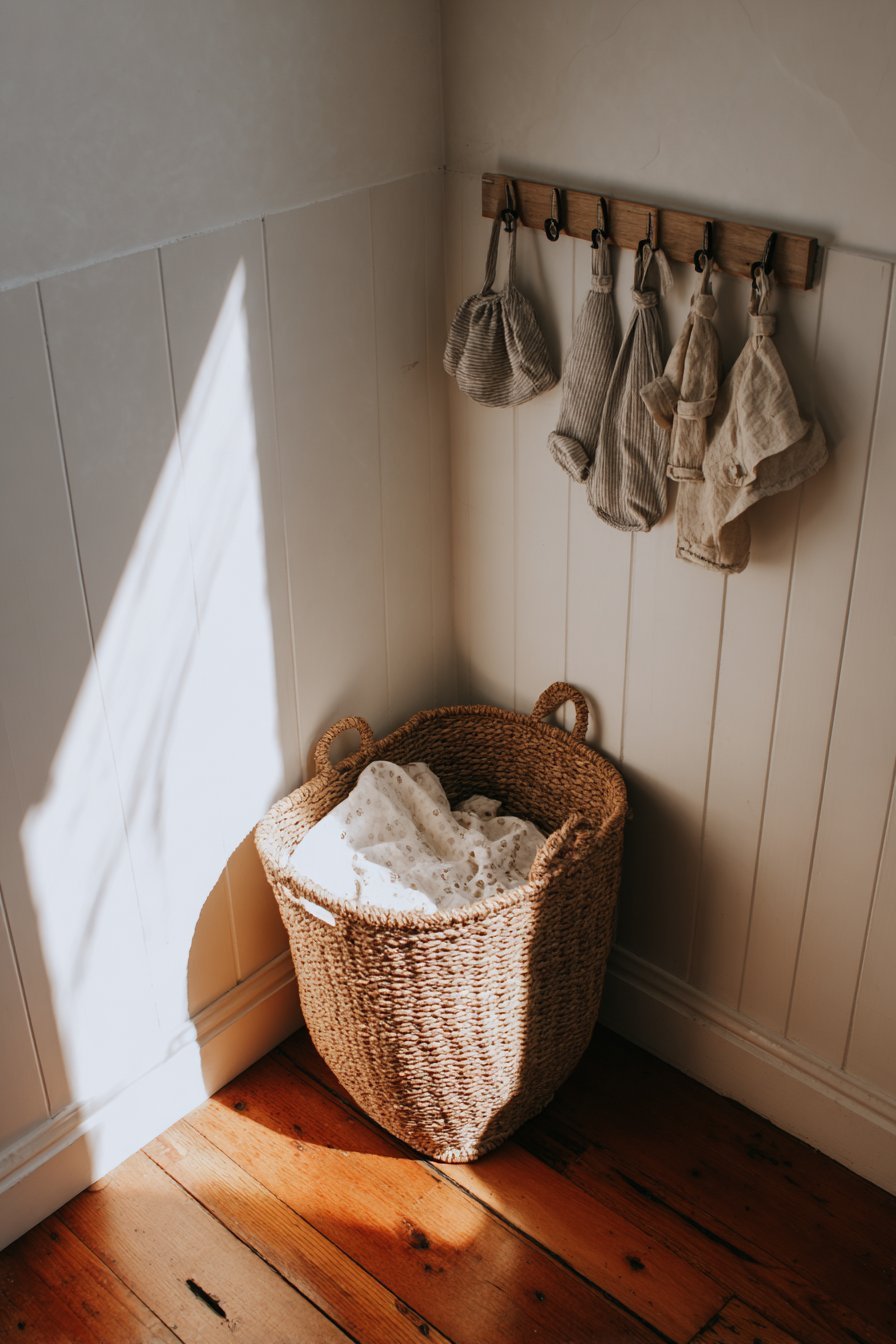
The woven texture adds natural element without adding visual clutter. Parents appreciate having designated space for soiled items. The hamper capacity suits typical baby laundry volume perfectly. This functional piece proves that practical items can be attractive too.
Key Design Tips:
- Choose tall woven seagrass hampers with handles for easy transport to laundry room
- Position hampers in corners to maximize floor space efficiency
- Mount wall hooks nearby for clean bibs and burp cloths
- Select natural materials like seagrass to add texture without pattern
- Place hampers near windows where natural light highlights woven texture
18. Simple Window Treatment Light Control
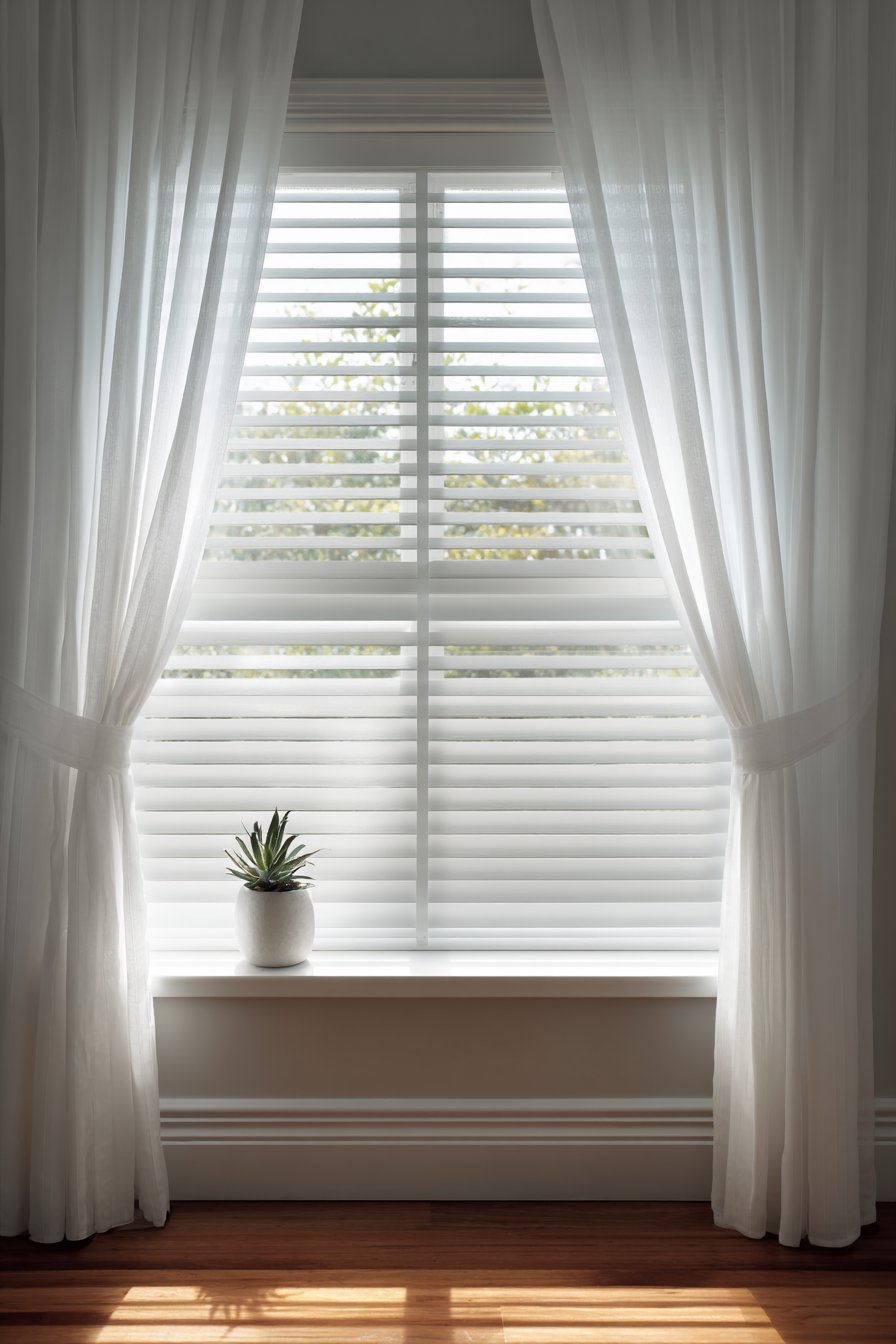
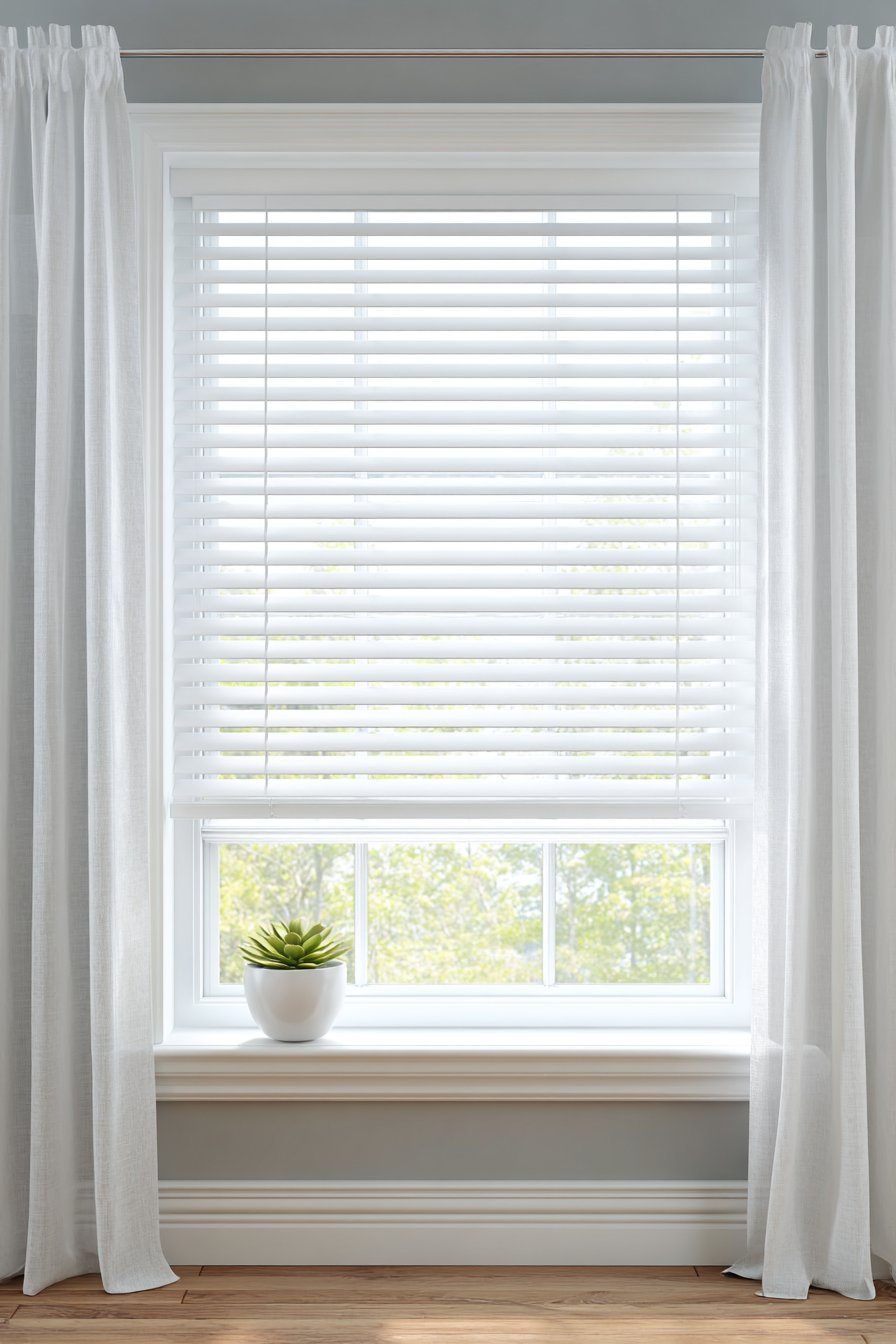
Basic white wooden blinds at half-mast filter bright afternoon sunlight beautifully. Simple white cotton curtain panels on each side frame the window. The window sill holds a single small potted succulent in white ceramic planter. Soft warm grey walls complement the white window dressing.
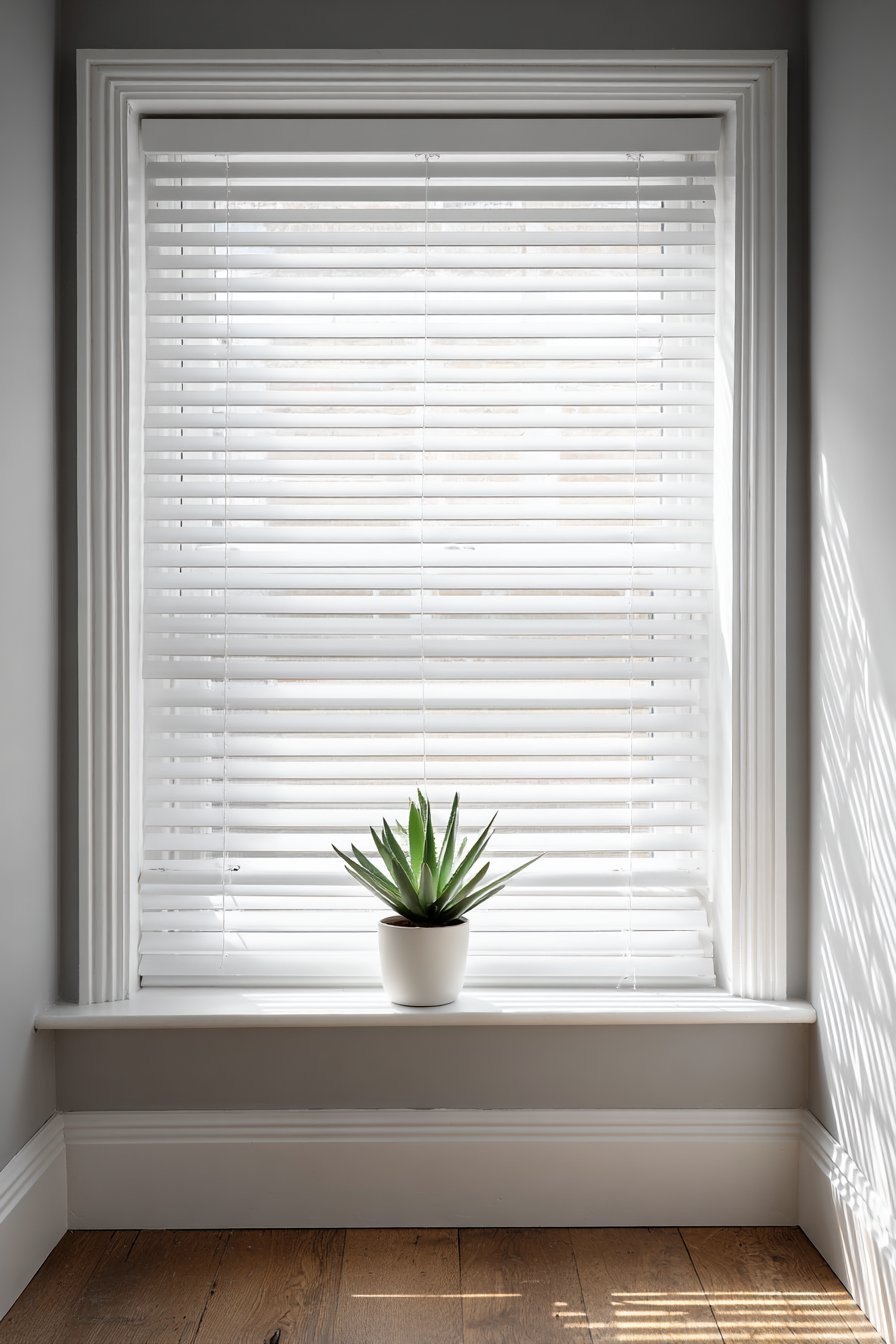
Natural oak flooring visible below grounds the composition in warmth. The simple window dressing provides excellent light control without fuss. Parents adjust blinds throughout the day for optimal lighting conditions. The clean lines maintain the room’s uncluttered aesthetic perfectly.
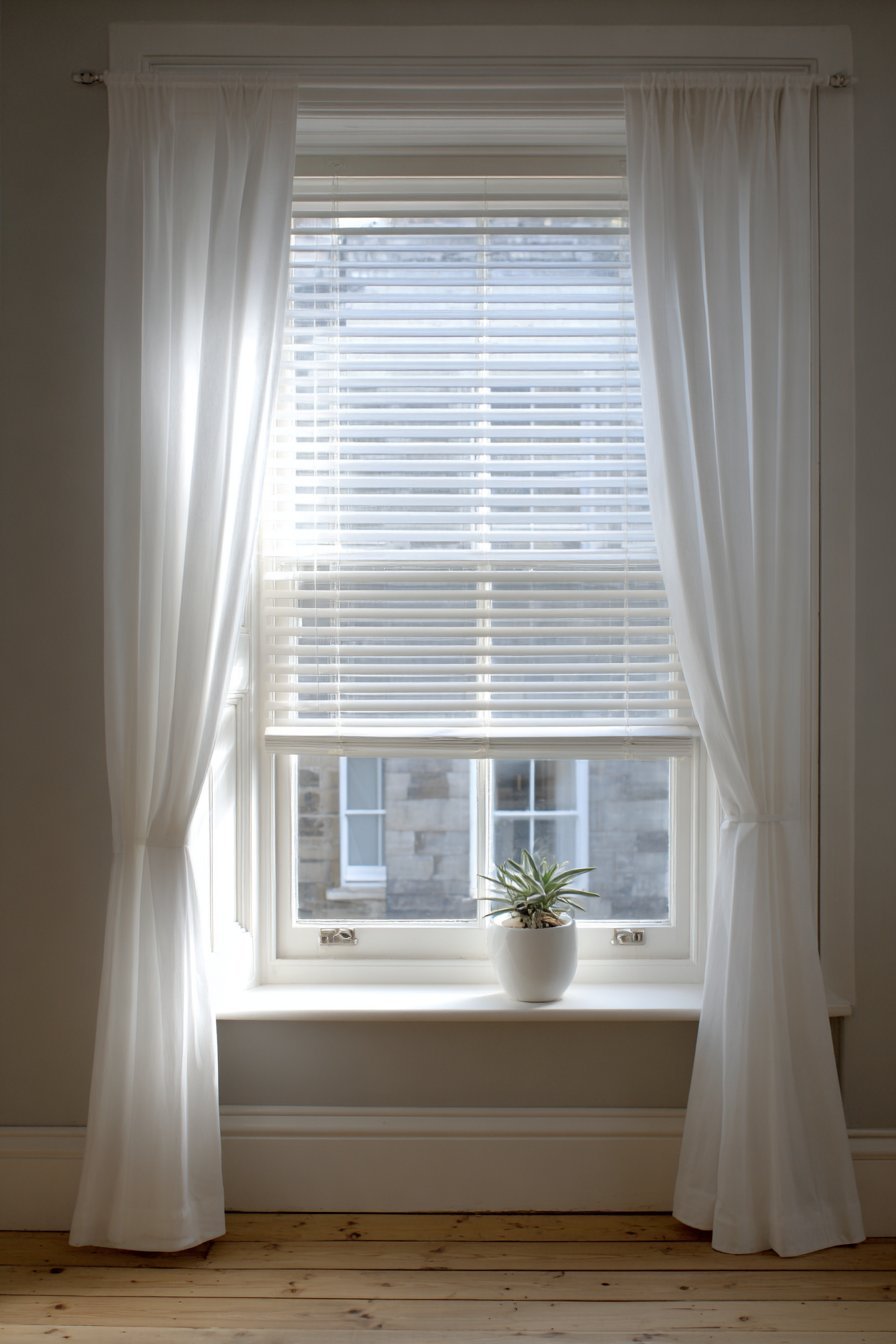
The minimal approach to windows keeps focus on the room’s interior. The single succulent adds life without requiring constant care. The practical functionality meets aesthetic goals beautifully. This solution proves that window treatments need not be complicated.
Key Design Tips:
- Install white wooden blinds for adjustable light control with clean aesthetic
- Frame windows with simple white cotton panels for softness without pattern
- Place single small succulents on window sills for minimal greenery
- Paint surrounding walls in soft warm grey to complement white treatments
- Choose natural oak flooring to add warmth beneath windows
19. Gentle Amber Nightlight Setup
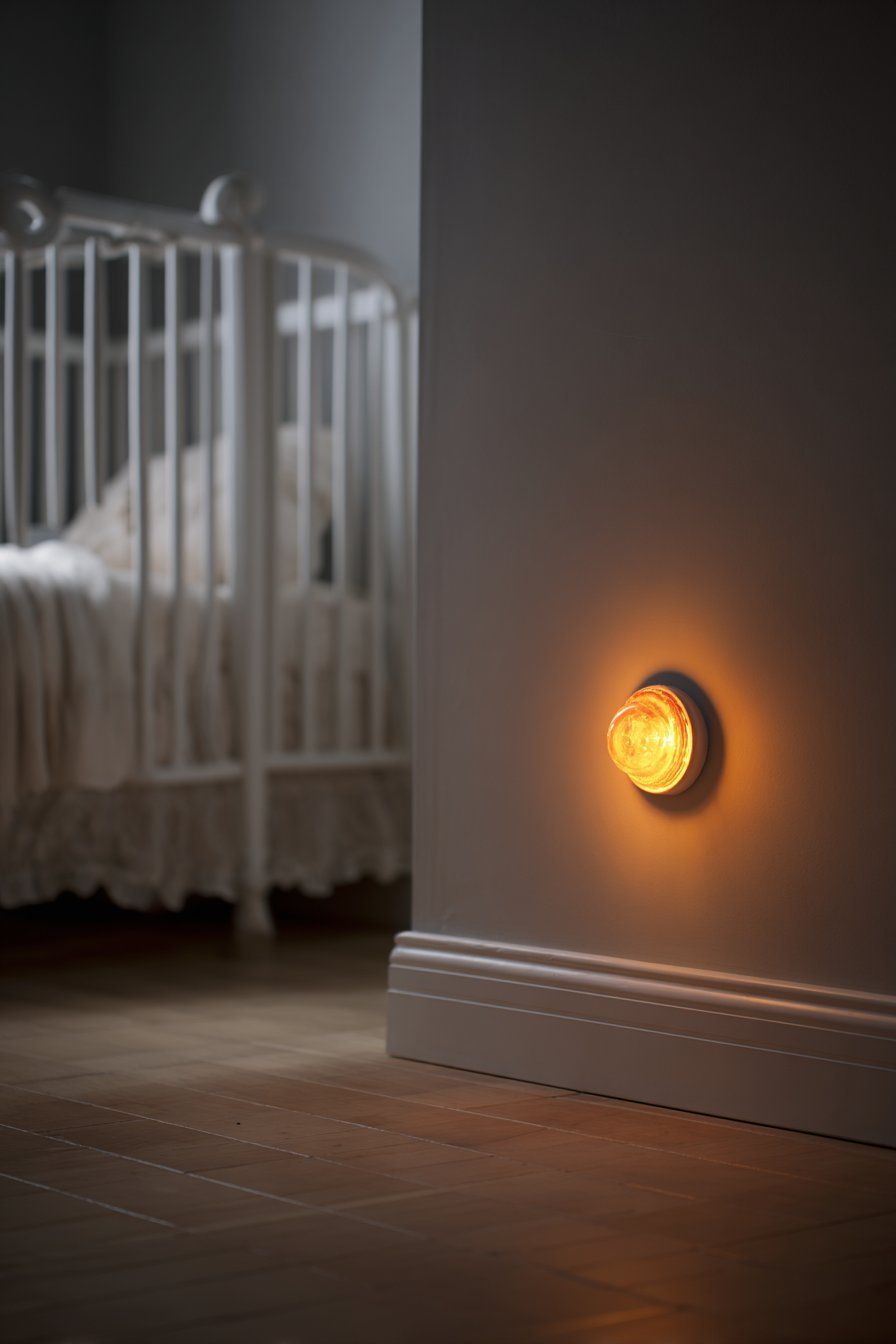
A basic plug-in nightlight with soft amber glow positions in an outlet near the crib. The gentle illumination creates subtle glow on white walls and light wood flooring. The light provides necessary visibility for nighttime checks without disrupting sleep. A simple white crib with plain cotton bedding sits peacefully nearby.
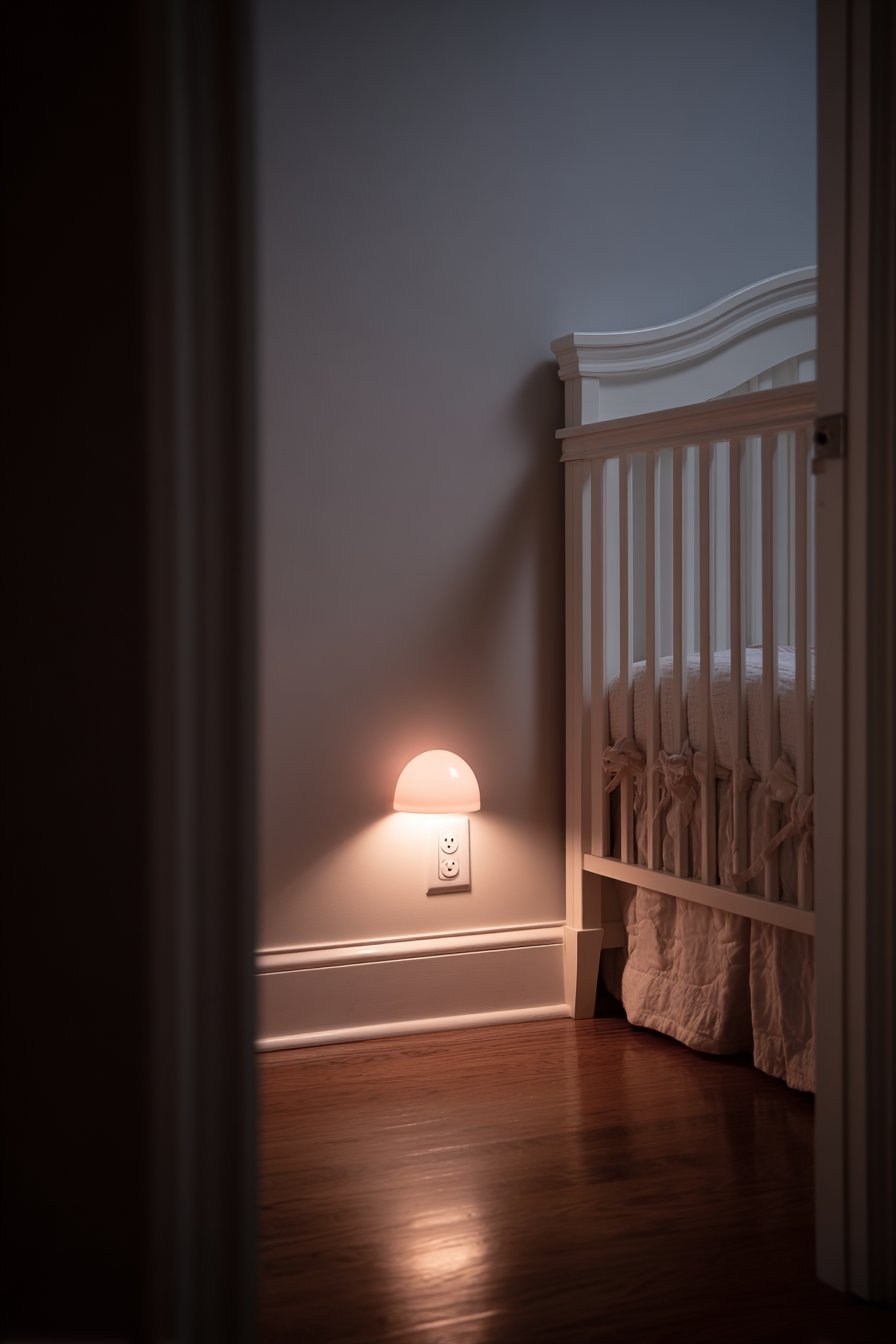
The amber color promotes better sleep than blue-toned lights. Parents can navigate the room safely during middle-of-night needs. The minimal lighting maintains sleep-friendly darkness throughout the room. The thoughtful positioning prevents light from shining directly on baby’s face.
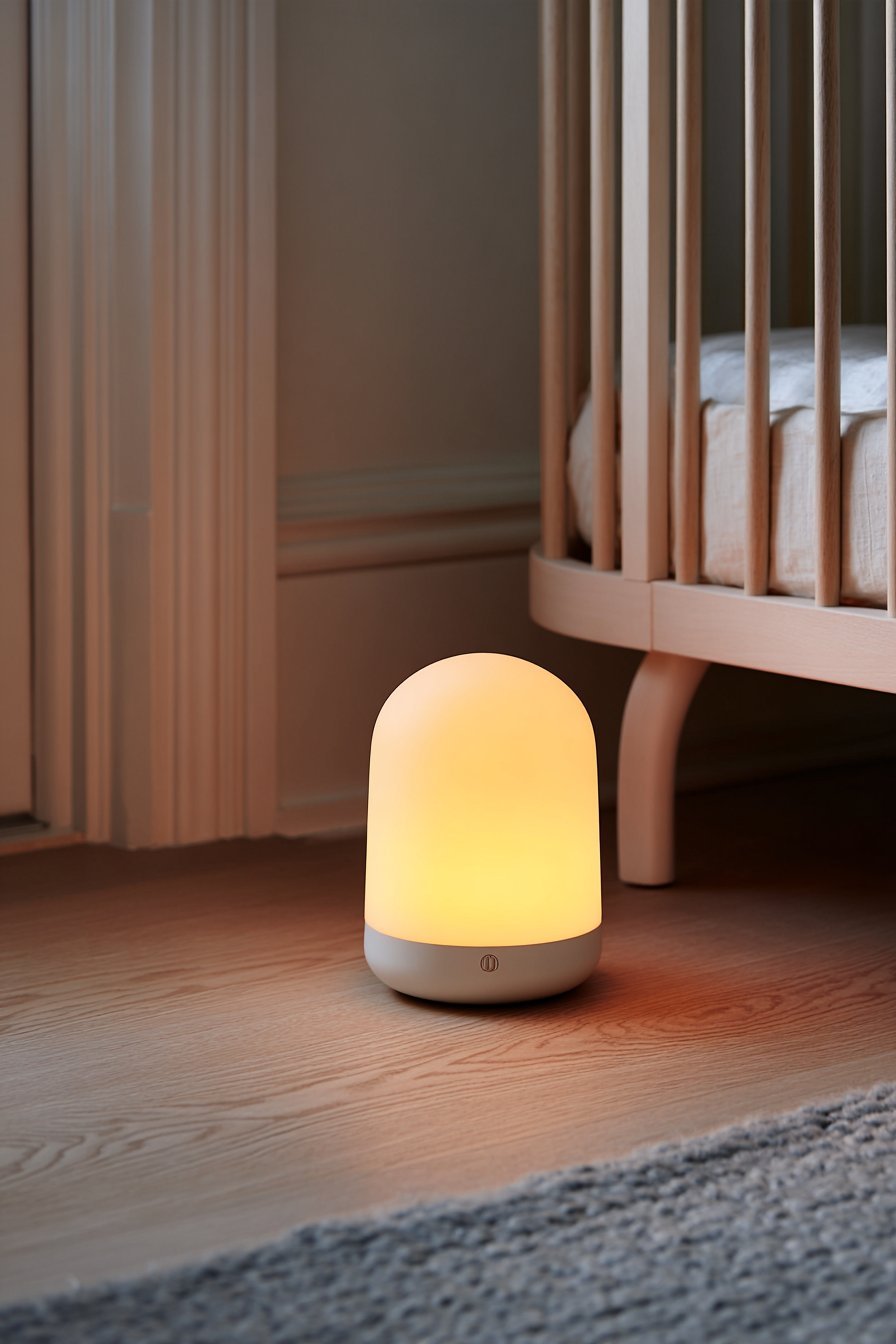
The simple solution addresses practical needs without complicated systems. Parents appreciate the low-tech approach to nighttime visibility. The amber glow creates a warm, protective feeling during nighttime hours. This essential item proves that simple solutions work best.
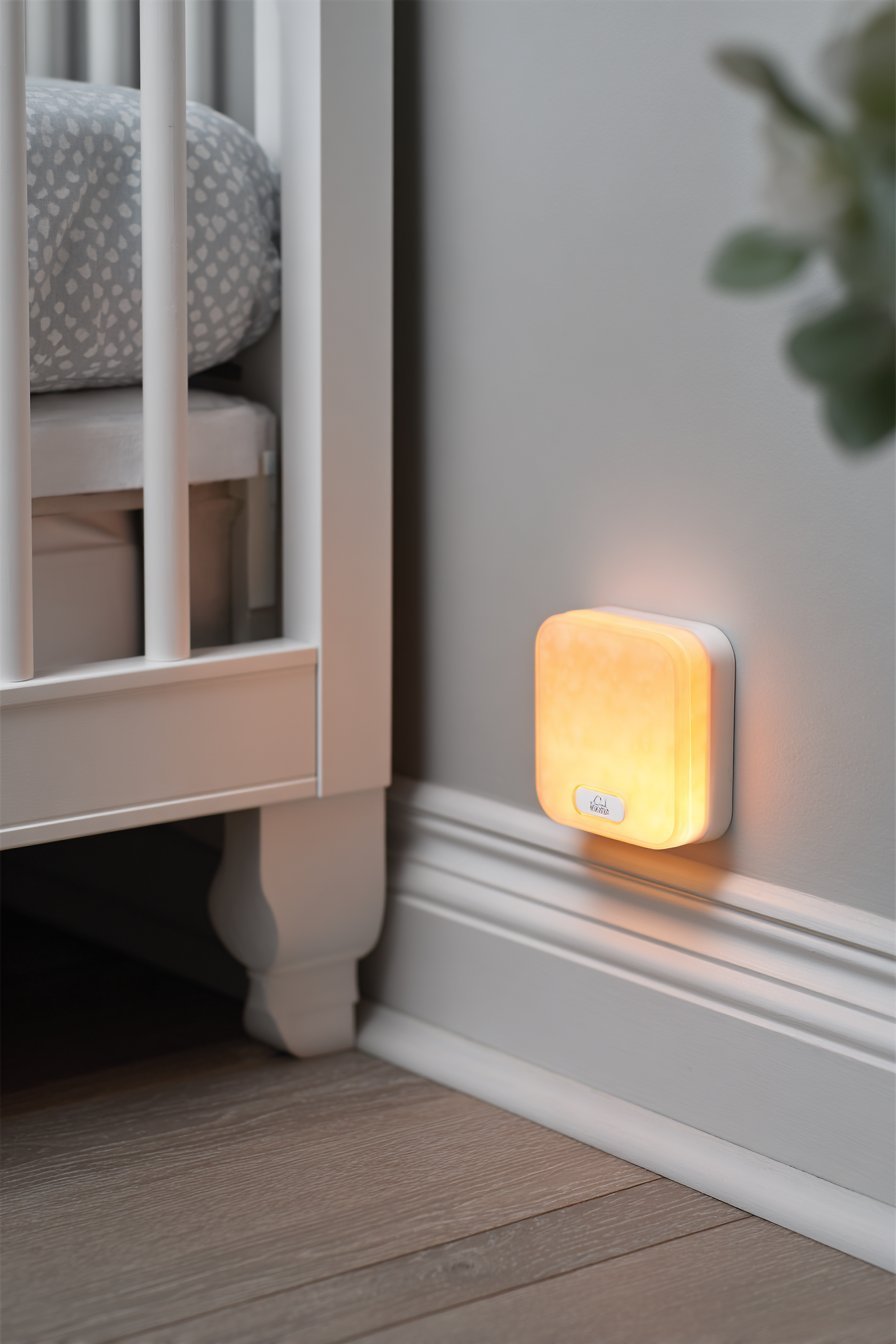
Key Design Tips:
- Use plug-in nightlights with amber glow for sleep-friendly illumination
- Position nightlights near cribs for parental visibility during night checks
- Choose warm amber tones over blue-toned lights for better sleep quality
- Select basic designs without unnecessary features or brightness settings
- Ensure nightlights don’t shine directly on baby’s face while sleeping
20. Traditional Growth Chart Measuring Stick
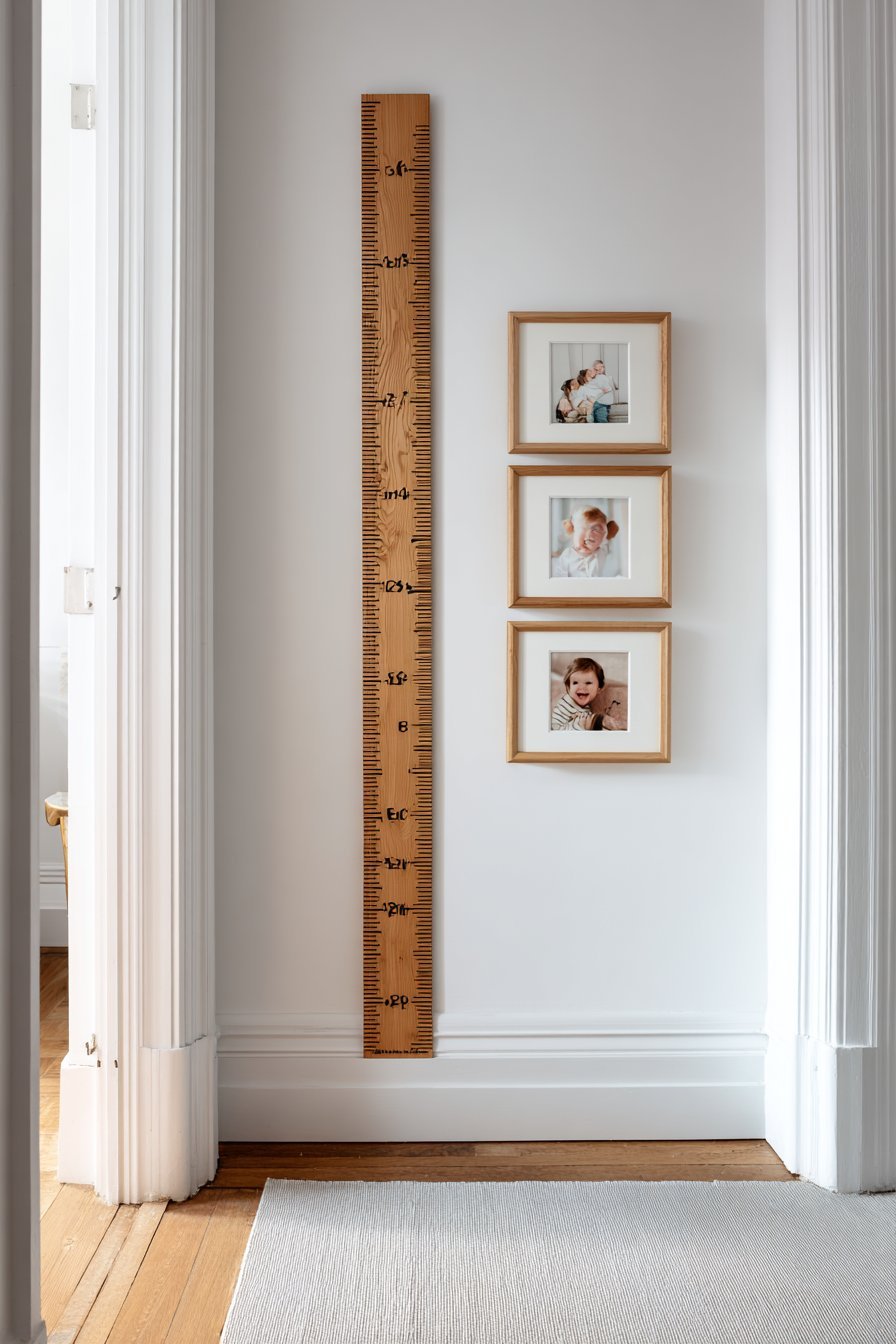
A simple wooden measuring stick mounts vertically on white wall near the doorway. Clear inch markings and natural wood finish create functional decoration. Simple framed photos at adult eye level show baby milestones nearby. Light grey carpet and white baseboards complete the traditional space.
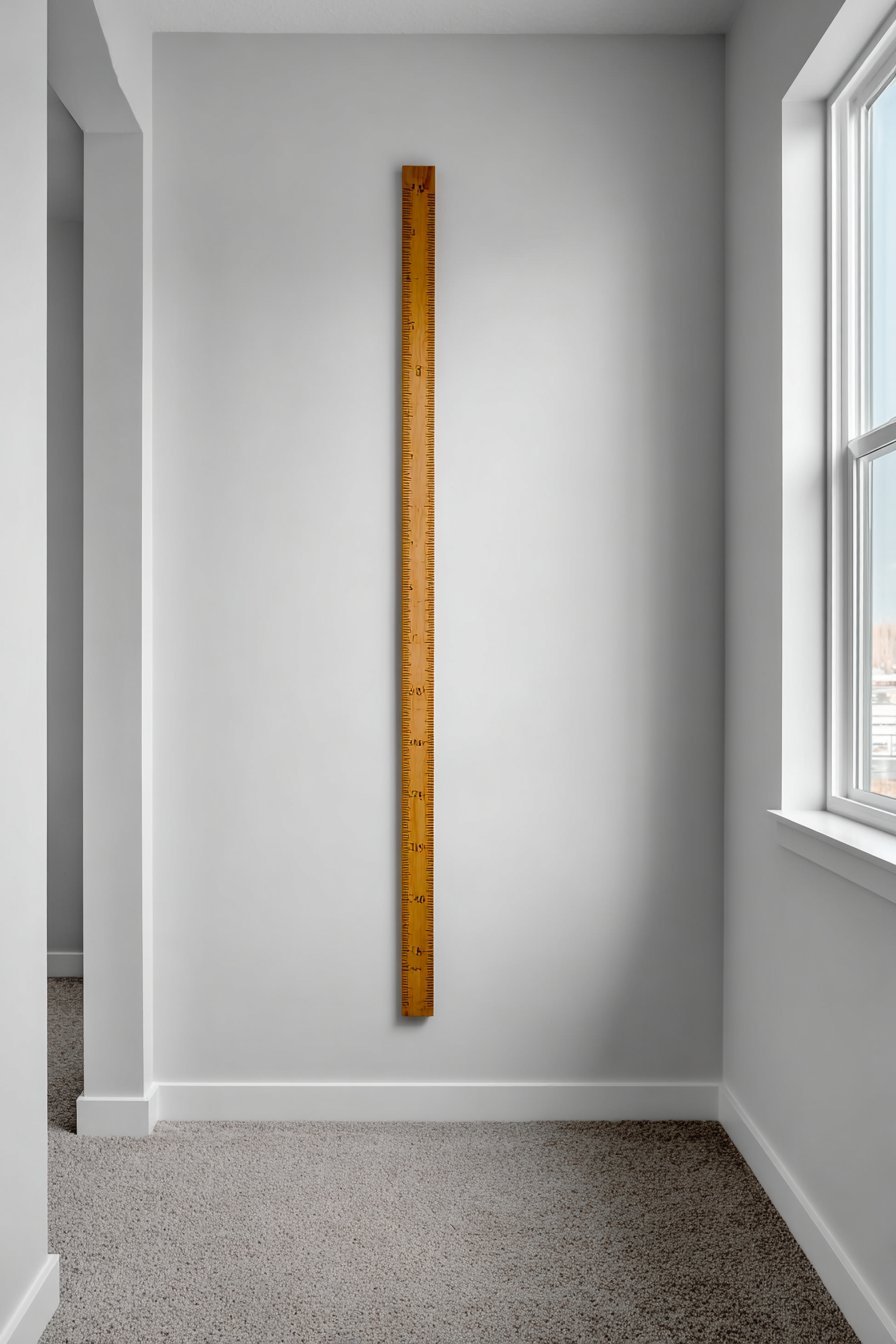
Natural window light from nearby provides clear illumination for measurements. The traditional way to track baby’s growth adds sentimental value. Parents mark height milestones as baby grows into toddlerhood. The simple addition becomes treasured keepsake over time.
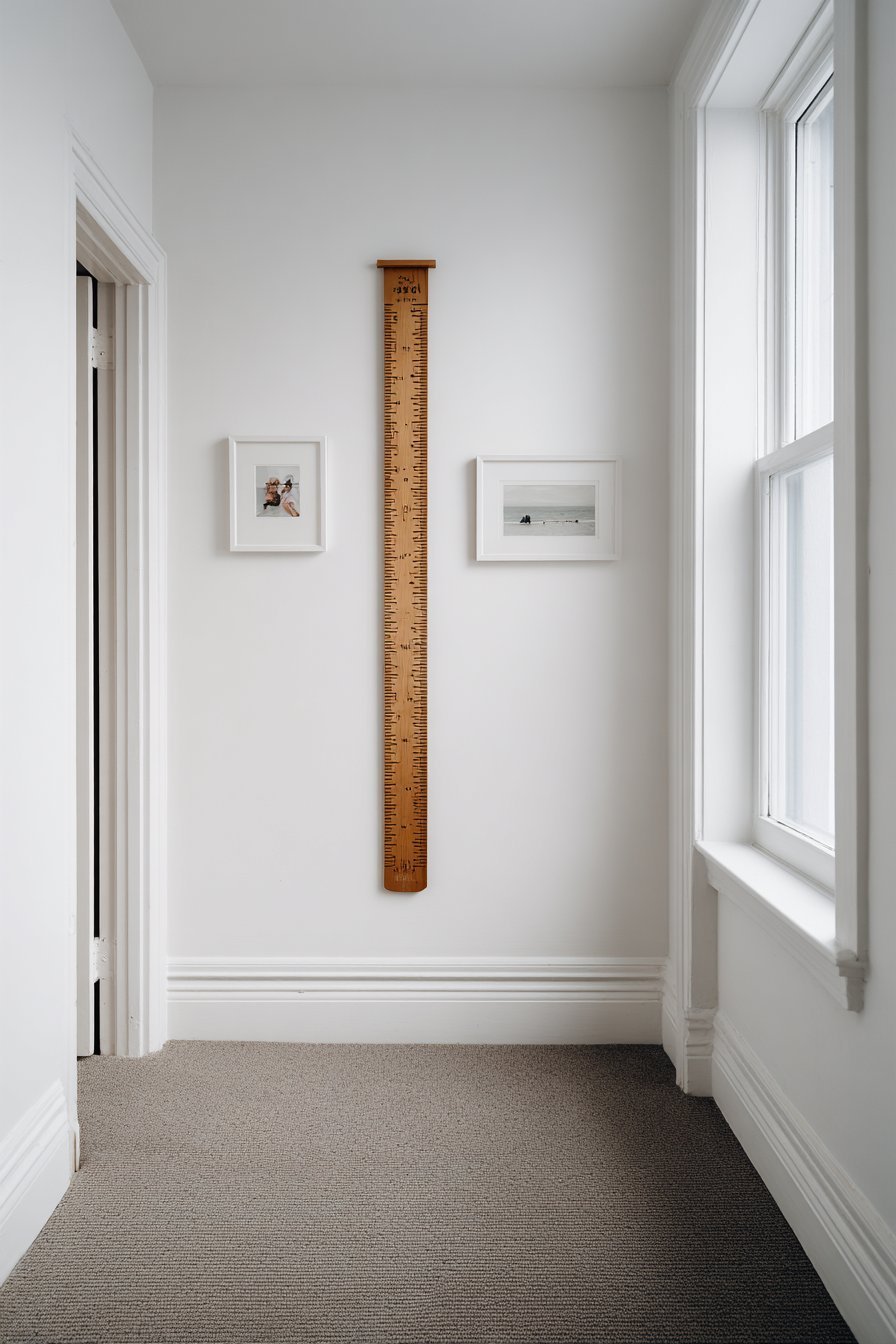
The doorway position makes measuring children convenient and traditional. The natural wood finish complements the room’s overall aesthetic. The growth chart provides functionality while adding personal touch. This timeless element connects generations through shared experience.
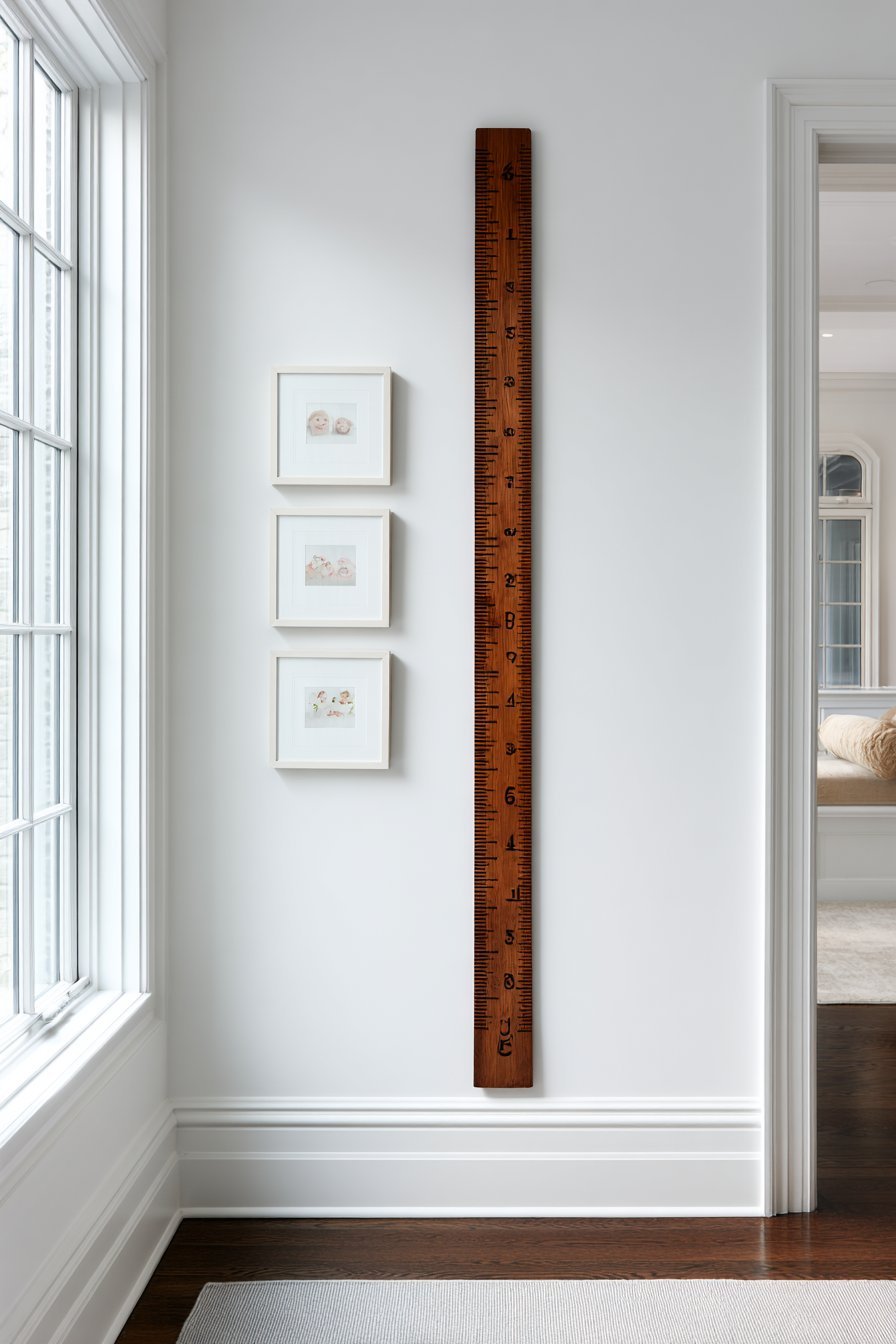
Key Design Tips:
- Mount wooden measuring sticks vertically near doorways for traditional placement
- Choose natural wood finishes with clear inch markings for easy reading
- Hang milestone photos nearby to create personal growth documentation area
- Position charts near windows where natural light aids accurate measuring
- Install at proper height so zero mark aligns with floor level
Why These Simple Nursery Designs Are the Best
These simple baby nursery designs represent the finest approaches to creating peaceful, functional spaces for newborns and parents. Each concept demonstrates that restraint and intentionality produce better results than overwhelming decoration. The minimalist aesthetic reduces visual stimulation that can overstimulate developing babies while creating calm environments for exhausted parents.
The emphasis on essential furniture eliminates unnecessary purchases that quickly become clutter. Convertible cribs, dual-purpose dressers, and accessible storage solutions provide long-term value. Natural materials like oak flooring, wood furniture, and cotton textiles create warmth without synthetic elements. These choices promote healthier indoor air quality for vulnerable infants.
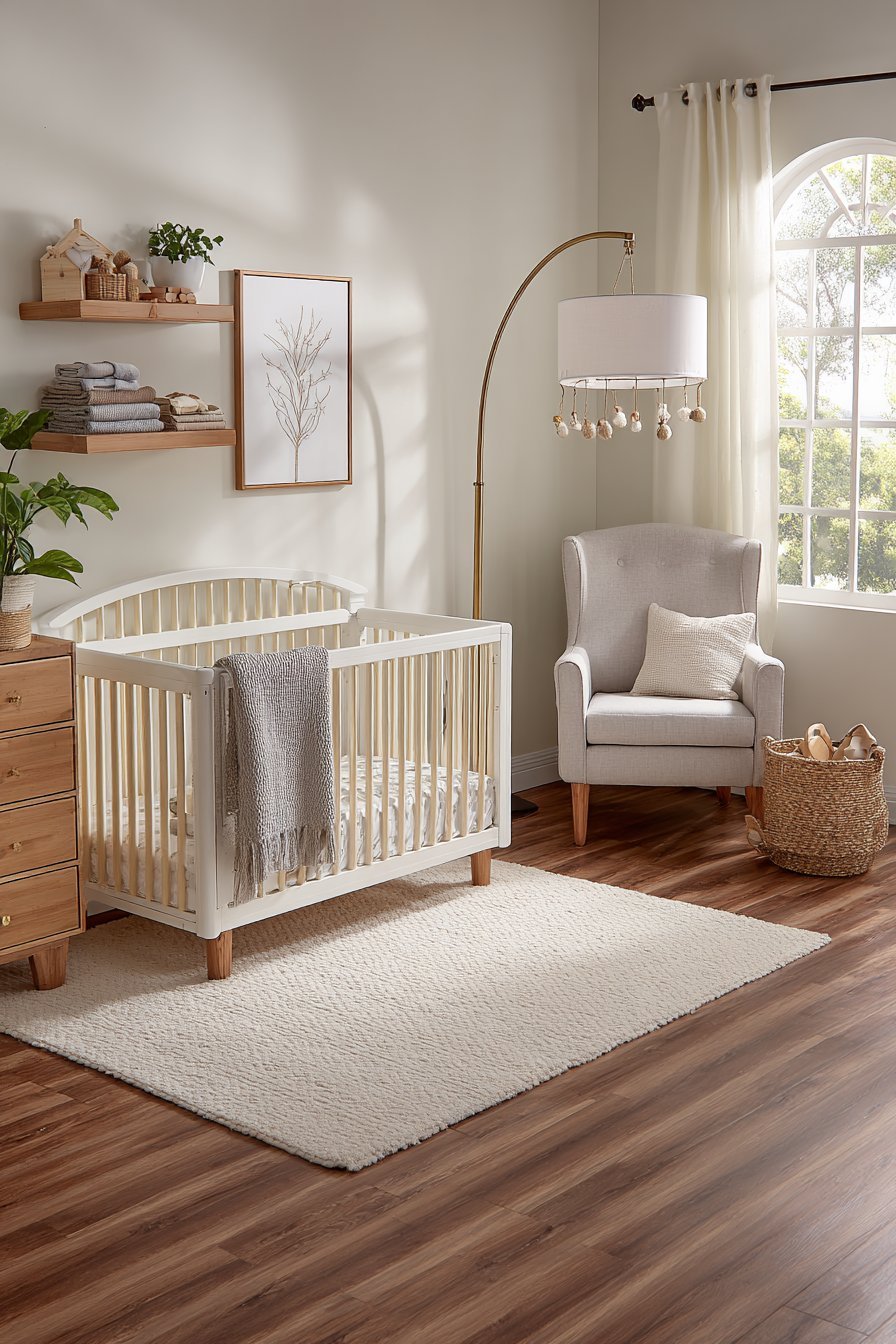
The neutral color palettes featuring whites, creams, greys, and natural wood tones offer remarkable versatility. Parents can easily adapt these foundations as children grow and develop preferences. The timeless aesthetic prevents dated looks that require frequent updates. This approach proves more sustainable both environmentally and financially.
Practical considerations shine throughout these designs with excellent lighting solutions, organized storage systems, and safe sleep environments. The layouts facilitate smooth daily routines during those challenging early months. Accessible storage reduces frustration when searching for supplies during diaper changes. Comfortable feeding corners encourage bonding without distraction. These functional elements directly impact quality of life for new families.
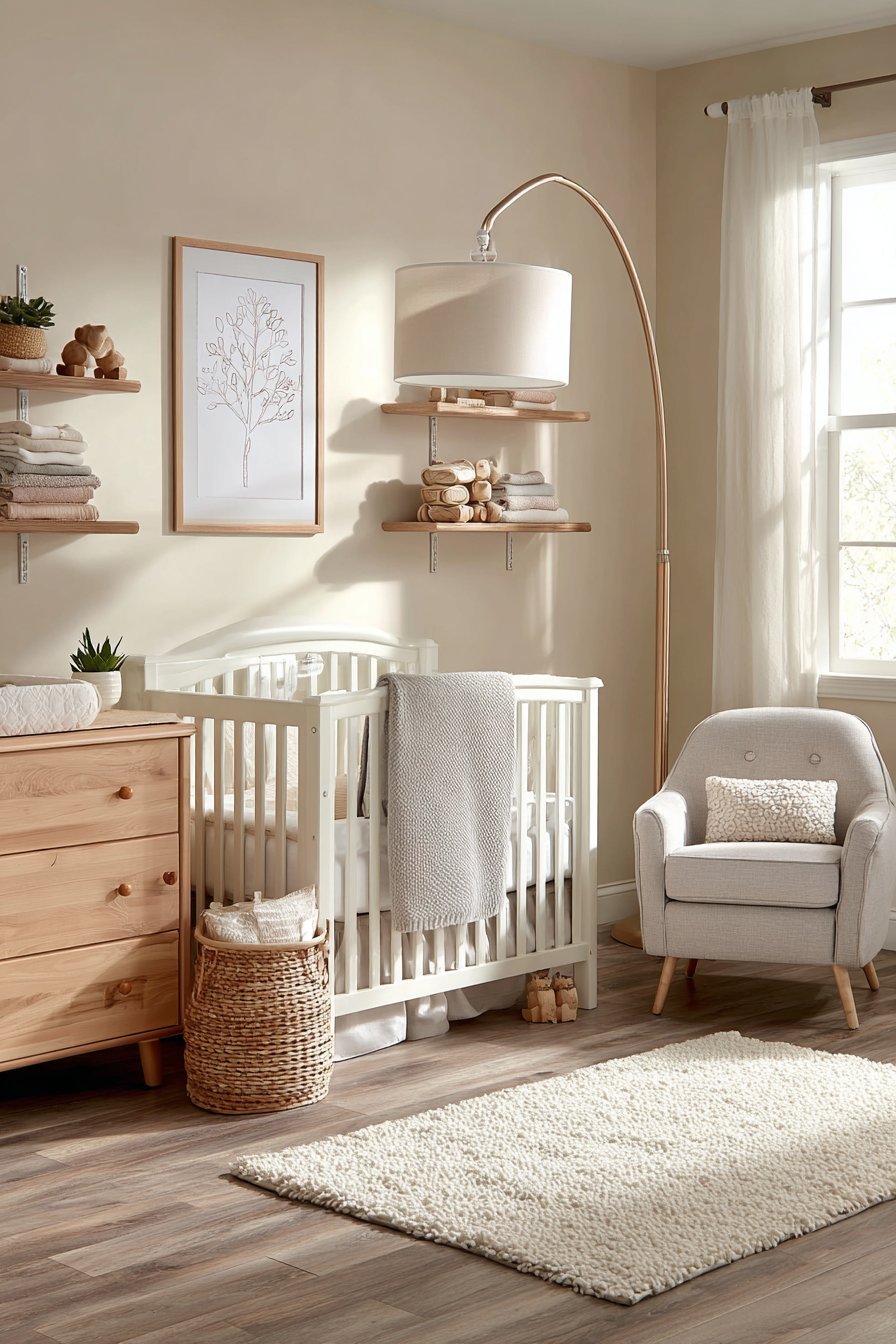
The designs also demonstrate excellent spatial planning regardless of room size. The uncluttered approach makes small nurseries feel spacious while preventing large rooms from feeling empty. Strategic furniture placement creates distinct zones for sleeping, changing, feeding, and storage. This organization helps babies develop routine understanding as they grow.
Conclusion
These simple baby nursery designs demonstrate that beautiful, functional spaces emerge from thoughtful restraint rather than excess. The key takeaways include prioritizing essential furniture, embracing neutral palettes, and organizing strategically. Natural materials and quality pieces create rooms that welcome babies while supporting parental wellbeing during demanding newborn days.
Successful simple nursery design balances aesthetic appeal with practical functionality perfectly. Start by selecting versatile foundational pieces like convertible cribs and dual-purpose dressers. Add personal touches through handmade elements and milestone documentation. Your dream simple nursery awaits creation through intentional choices and mindful planning. Remember that the most important element is the love and care you bring to this special space.
