

The kitchen has always been the heart of the home. But in 2026-2027, it’s evolving into something far more intentional. Modern kitchen design is no longer just about aesthetics — it’s about creating spaces that work harder, feel warmer, and reflect who you truly are. Homeowners and designers alike are pushing boundaries, blending technology with craftsmanship in exciting new ways.
Thoughtful interior design transforms a kitchen from a purely functional room into a living, breathing sanctuary. The trends emerging this year celebrate personality, sustainability, and smart use of space. Whether you’re planning a full renovation or a simple refresh, understanding what’s trending helps you make informed, timeless decisions that won’t feel dated in five years.
This article explores the hottest kitchen design trends shaping 2026 and 2027. From bold material choices to minimalist smart tech, each trend offers something unique. These ideas cater to diverse lifestyles — from the avid home chef to the design-forward entertainer. Read on and discover which trends speak to your vision.
1. Warm, Earthy Color Palettes Replace Cool Grays
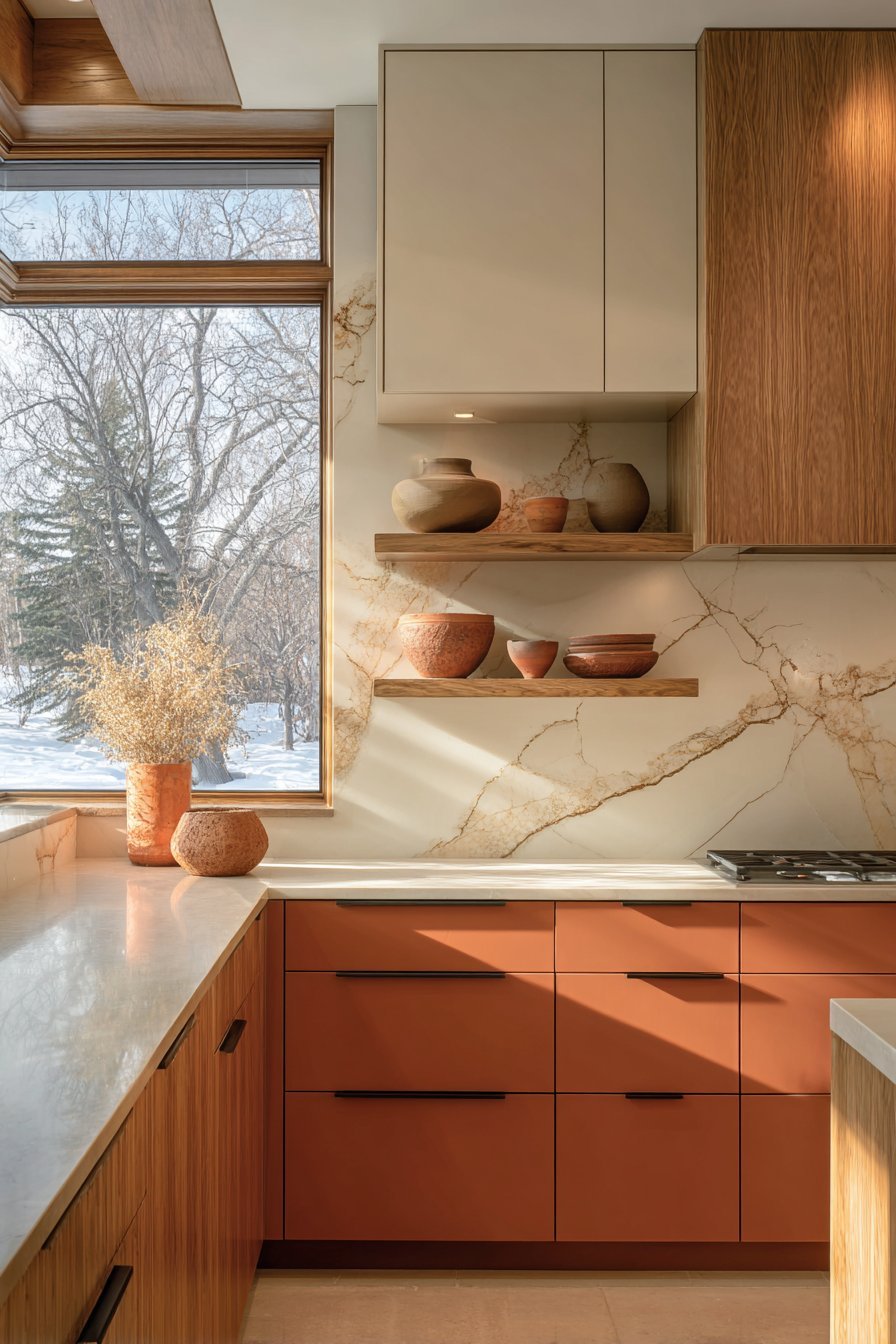
Cool grays and stark whites dominated kitchens for over a decade. That era is firmly behind us. In 2026-2027, warm earthy tones are taking center stage — think terracotta, warm taupe, clay, ochre, and deep olive. These colors create an immediate sense of comfort and grounding that cool neutrals simply cannot replicate.
The psychological impact of warm hues in a kitchen is significant. Color psychology tells us that earthy tones stimulate appetite, encourage conversation, and create a welcoming atmosphere. When paired with natural materials like wood and stone, these palettes feel deeply organic and layered. The result is a kitchen that feels curated over time rather than designed overnight.
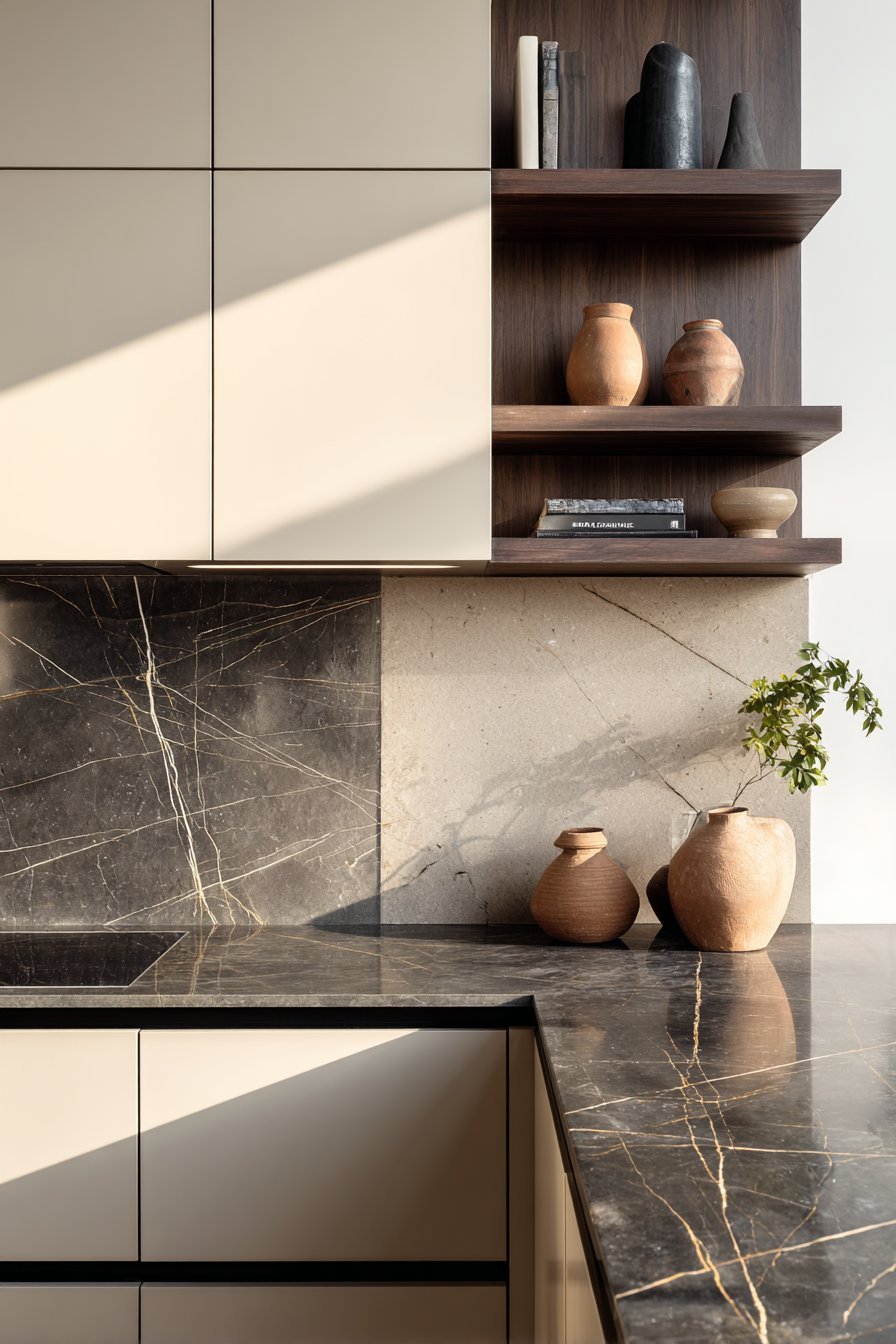
Designers are also pairing warm walls with contrasting dark accents — matte black hardware, deep forest green lower cabinets, or charcoal stone countertops. This contrast adds visual depth without sacrificing warmth. The balance between rich tones and bold accents is what gives these kitchens their signature sophistication.
- Choose warm whites like cream or linen over stark bright white for a softer base
- Layer two to three earthy tones across cabinets, walls, and textiles
- Use matte finishes rather than gloss to enhance warmth
- Introduce terracotta through tile, pottery, or small appliances
- Pair earthy hues with natural wood grain for maximum organic appeal
- Test paint colors in natural and artificial light before committing
2. Curved and Organic Shapes Define the New Kitchen Silhouette
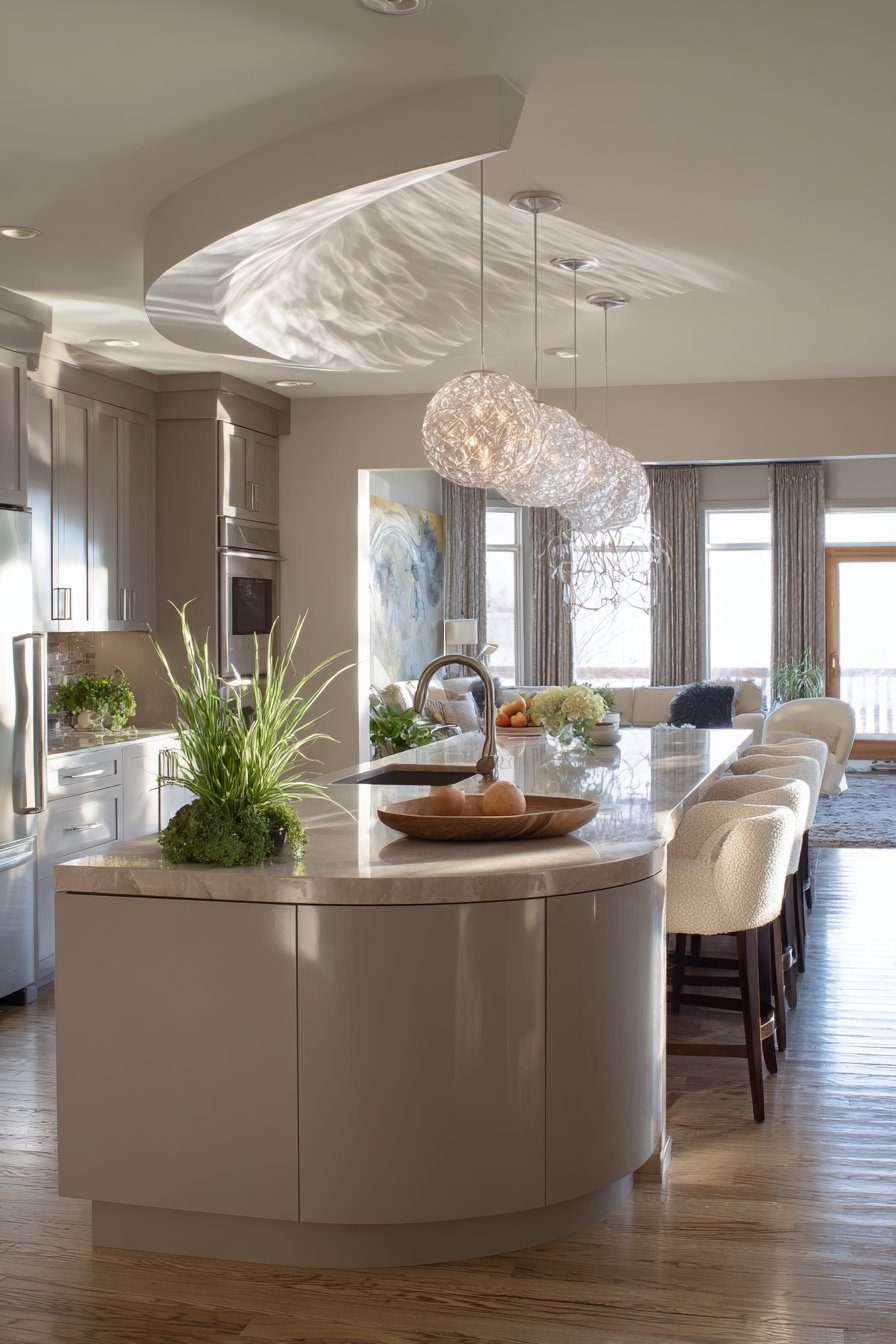
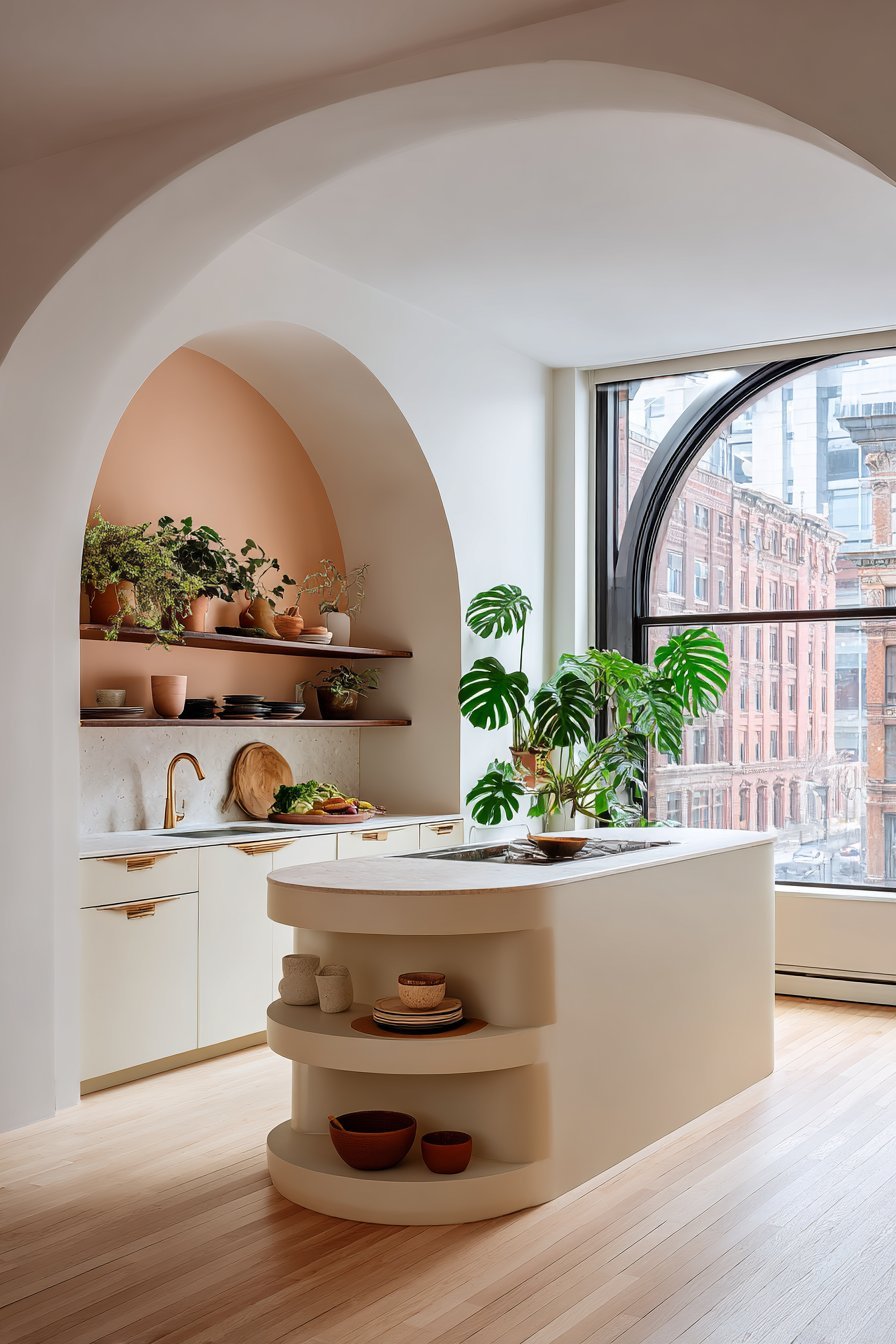
Sharp corners and boxy cabinetry are making way for something softer. Curved kitchen islands, arched cabinetry, and rounded cabinet edges are defining the aesthetic of 2026-2027. This shift toward organic shapes mirrors a broader design movement that values flow, softness, and human comfort over rigidity.
Curved islands are particularly popular in open-plan homes. They improve traffic flow by eliminating sharp corners and encourage a more sociable kitchen experience. Guests can gather around the curved edge of an island naturally, making entertaining feel effortless and relaxed. The shape itself becomes an architectural focal point.
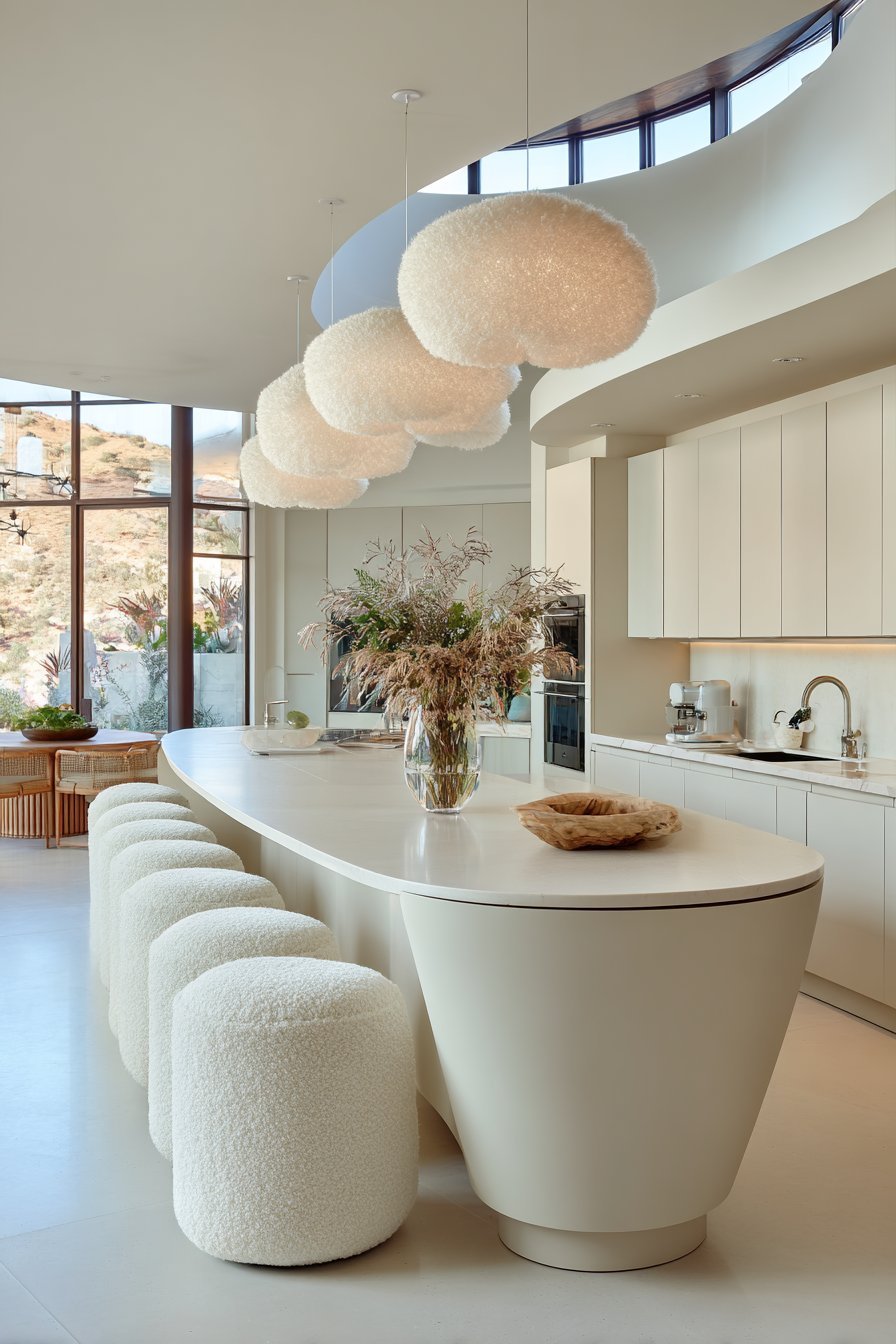
Even smaller details reflect this trend. Rounded cabinet corners, oval sink basins, and softly arched range hoods contribute to a cohesive organic aesthetic. These subtle curves work beautifully across both modern and transitional kitchen styles. The key is consistency — repeating the rounded motif throughout the space ties everything together visually.
- Consider a waterfall island with curved edges as a central design feature
- Choose cabinet doors with rounded corners instead of sharp 90-degree edges
- Incorporate an arched window or backsplash niche for architectural interest
- Select an oval or round undermount sink to reinforce the organic theme
- Use curved pendant lighting above the island for visual harmony
- Soften the overall silhouette with curved bar stools or seating
3. Sustainable Materials Take the Lead
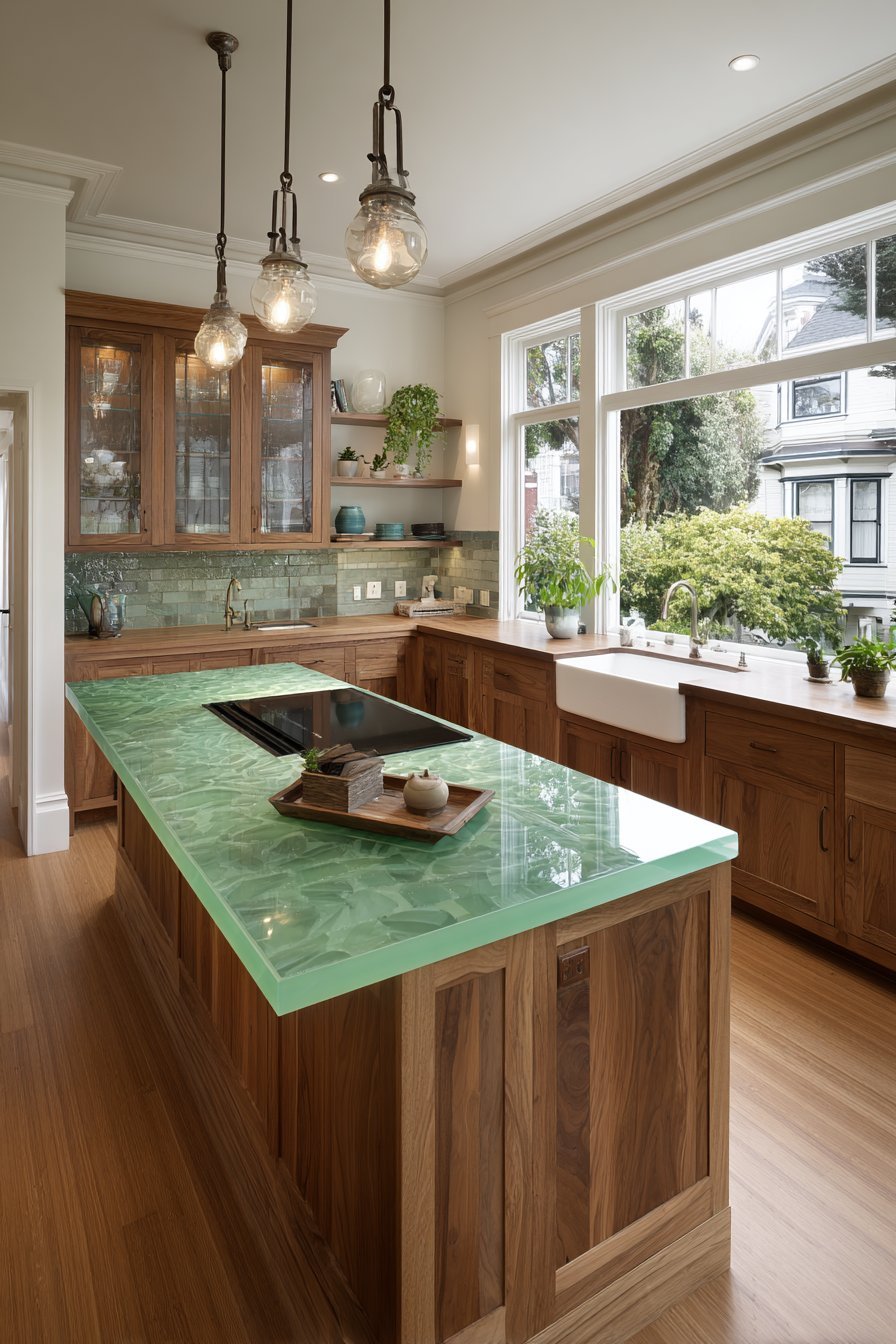
Sustainability is no longer a trend — it’s a design standard. In 2026-2027, homeowners are prioritizing responsibly sourced and eco-friendly materials more than ever before. This includes recycled glass countertops, reclaimed wood cabinetry, bamboo flooring, and low-VOC paints. The kitchen is becoming one of the most sustainable rooms in the home.
Reclaimed wood brings warmth, texture, and a story into the kitchen. It’s durable, characterful, and environmentally responsible. Many designers are using reclaimed oak or walnut for open shelving, island faces, and floating panels. No two pieces look alike, giving each kitchen a genuinely bespoke quality that manufactured materials can’t replicate.
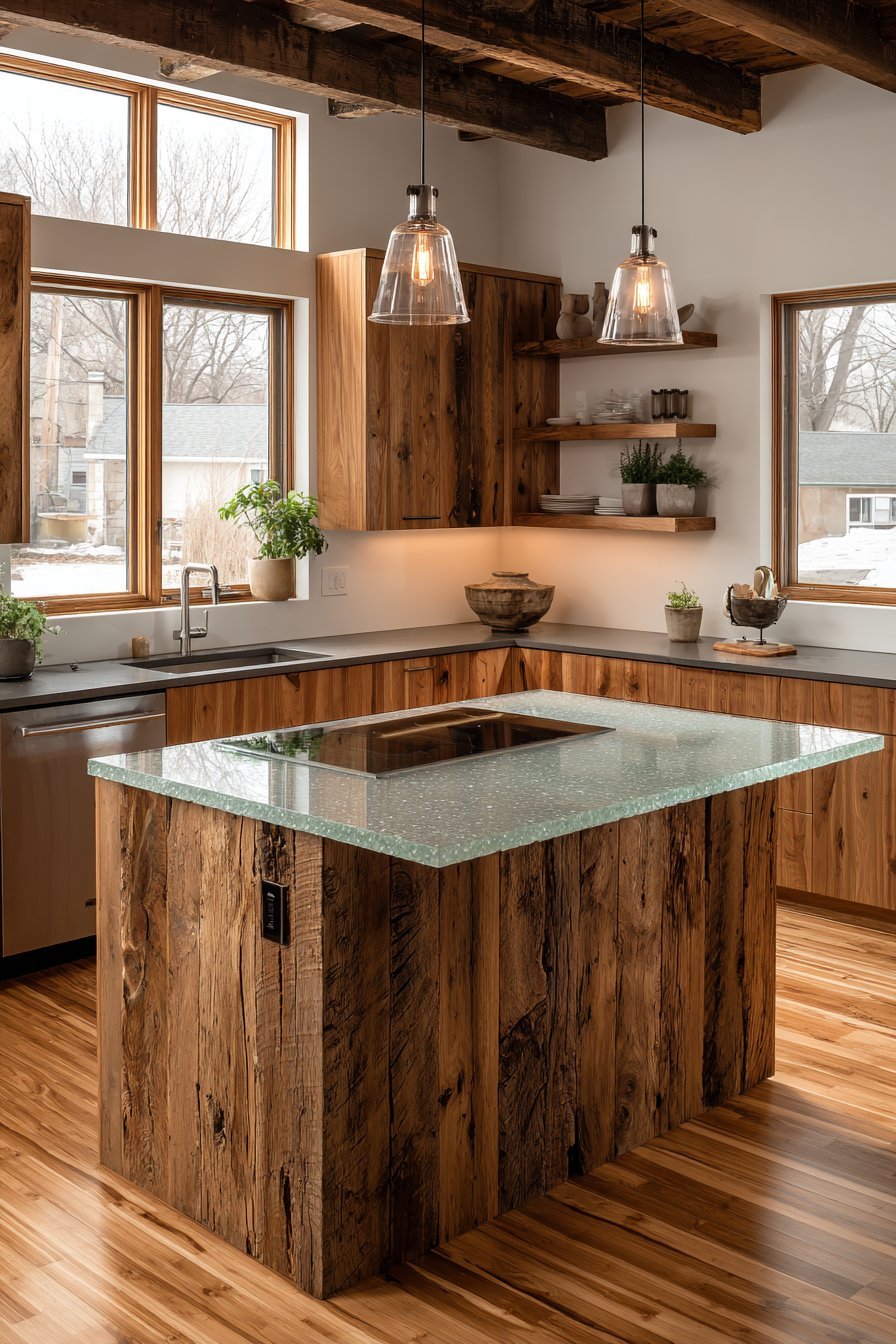
Beyond materials, sustainability also extends to energy-efficient appliances, induction cooktops, and water-saving faucet systems. Choosing certified sustainable materials doesn’t mean compromising on beauty. In fact, the patina and imperfection of natural recycled materials often result in more visually interesting kitchens than perfectly uniform manufactured alternatives.
- Source cabinetry from manufacturers with certified sustainable forestry credentials
- Choose recycled glass or sintered stone for countertops as an eco-friendly alternative
- Install an induction cooktop to reduce energy consumption significantly
- Use low-VOC or zero-VOC paint to improve indoor air quality
- Incorporate bamboo or cork flooring for renewable, durable underfoot options
- Repurpose vintage finds — old factory lights or antique hardware add character sustainably
4. Statement Range Hoods Become Sculptural Art
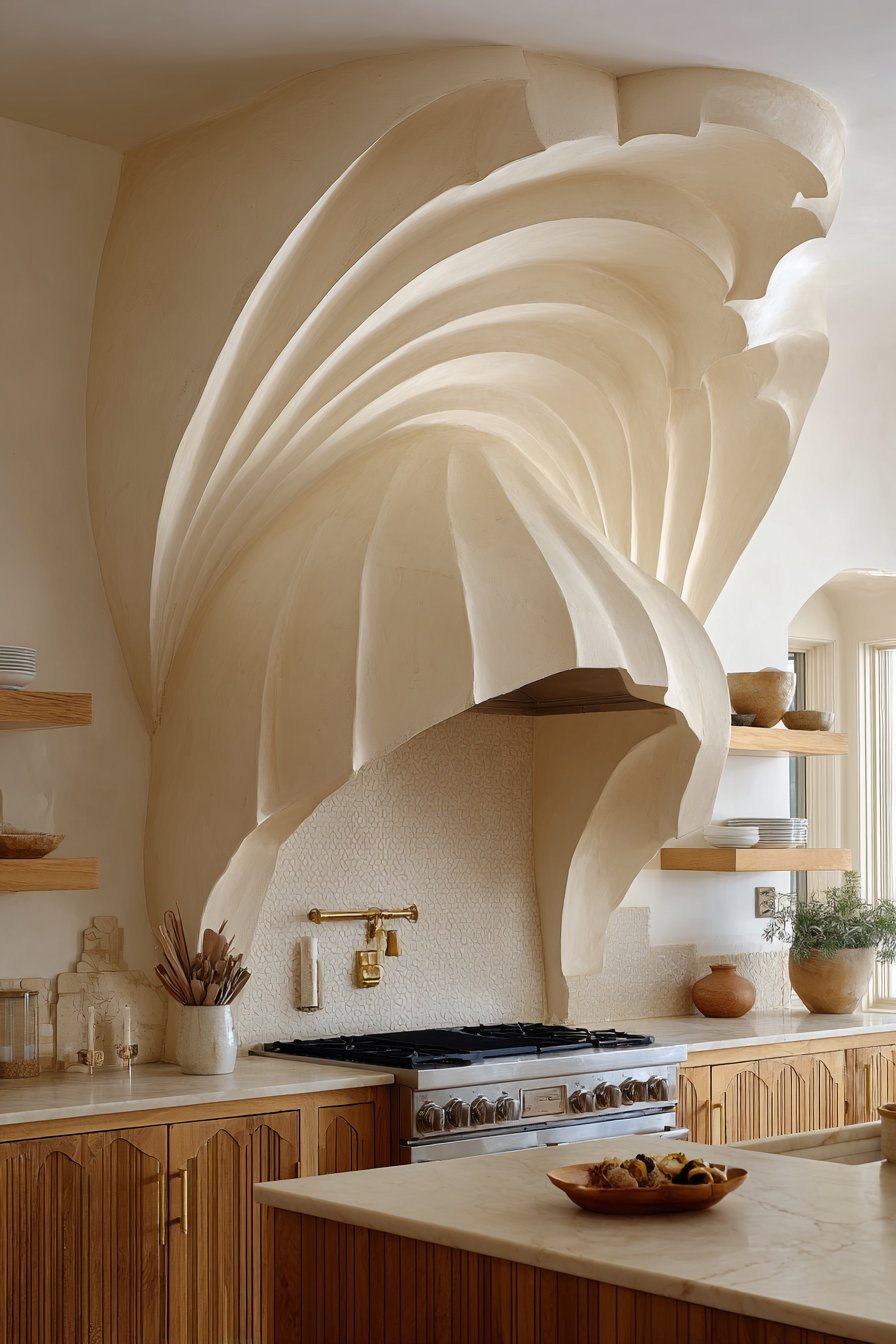
The range hood has graduated from purely functional to boldly architectural. In 2026-2027, statement hoods are one of the most talked-about kitchen design elements. Whether crafted from plaster, fluted wood, hammered metal, or hand-glazed tile, these hoods function as the kitchen’s centerpiece — commanding attention the moment you walk in.
Plaster and limewash hoods are particularly on trend. They blend seamlessly with earthy color palettes and give kitchens a Mediterranean or European farmhouse feel. Custom plaster hoods can be shaped to complement curved islands or arched cabinetry, reinforcing the organic aesthetic that defines this design era. The result feels like something from a boutique Italian villa.
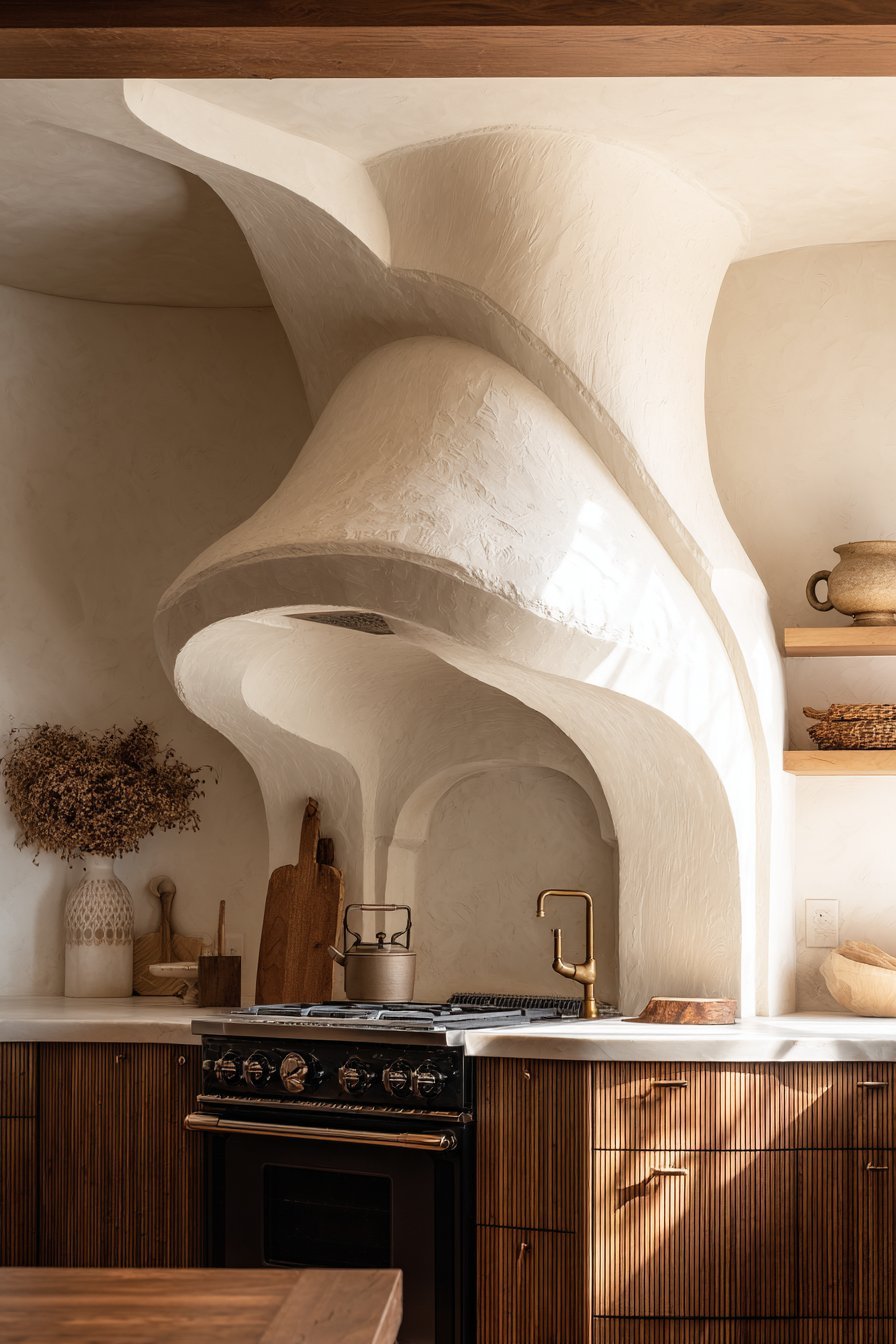
For a more industrial or modern aesthetic, blackened steel range hoods with clean geometric lines offer dramatic contrast against light-colored cabinetry. Fluted wood hoods are another popular option, bringing warmth and texture to the vertical focal point of the kitchen. Whatever the material, the message is the same: the range hood is no longer an afterthought.
- Commission a custom plaster hood for a bespoke, artisan look
- Match hood material to other surfaces — wood hood with wood shelving creates cohesion
- Go oversized — a larger-than-standard hood makes a stronger visual statement
- Use fluted detailing on the hood to echo fluted cabinet fronts elsewhere in the kitchen
- Incorporate subtle integrated lighting within the hood for ambiance and function
- Treat the hood as sculpture — it should be visible and celebrated, not hidden
5. Integrated and Concealed Appliances for a Seamless Look
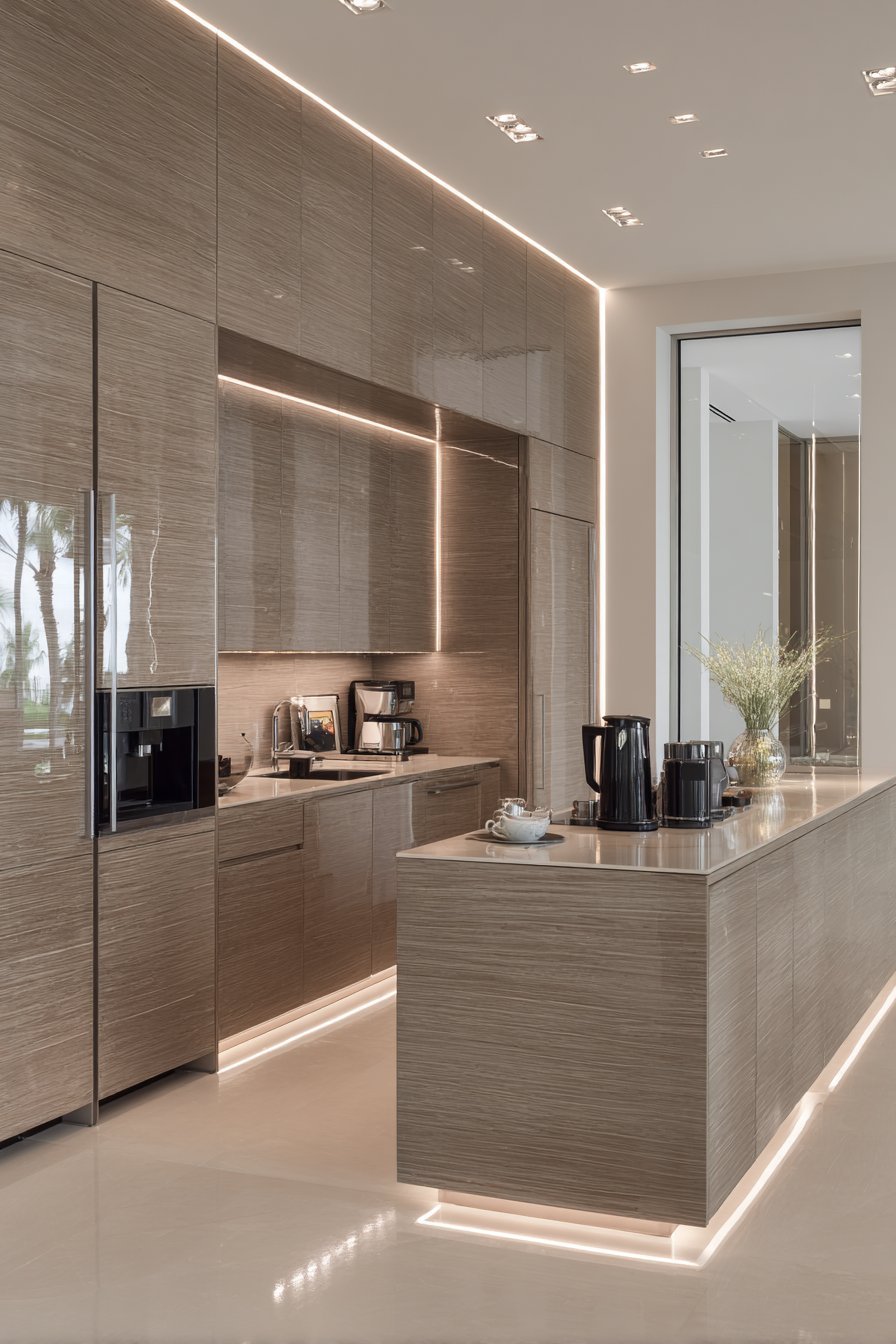
Concealed appliances continue to rise in popularity as homeowners seek cleaner, more streamlined kitchen aesthetics. In 2026-2027, integrated refrigerators, dishwashers, and even microwaves are increasingly being hidden behind matching cabinetry panels. The result is a kitchen that looks more like a beautifully designed living space than a utilitarian cooking zone.
Panel-ready appliances maintain visual continuity across the kitchen, allowing cabinetry to flow uninterrupted from floor to ceiling. This is particularly effective in smaller kitchens where visual noise can make a space feel cramped. When the eye isn’t interrupted by stainless steel doors or exposed appliance handles, the space feels larger and more serene.
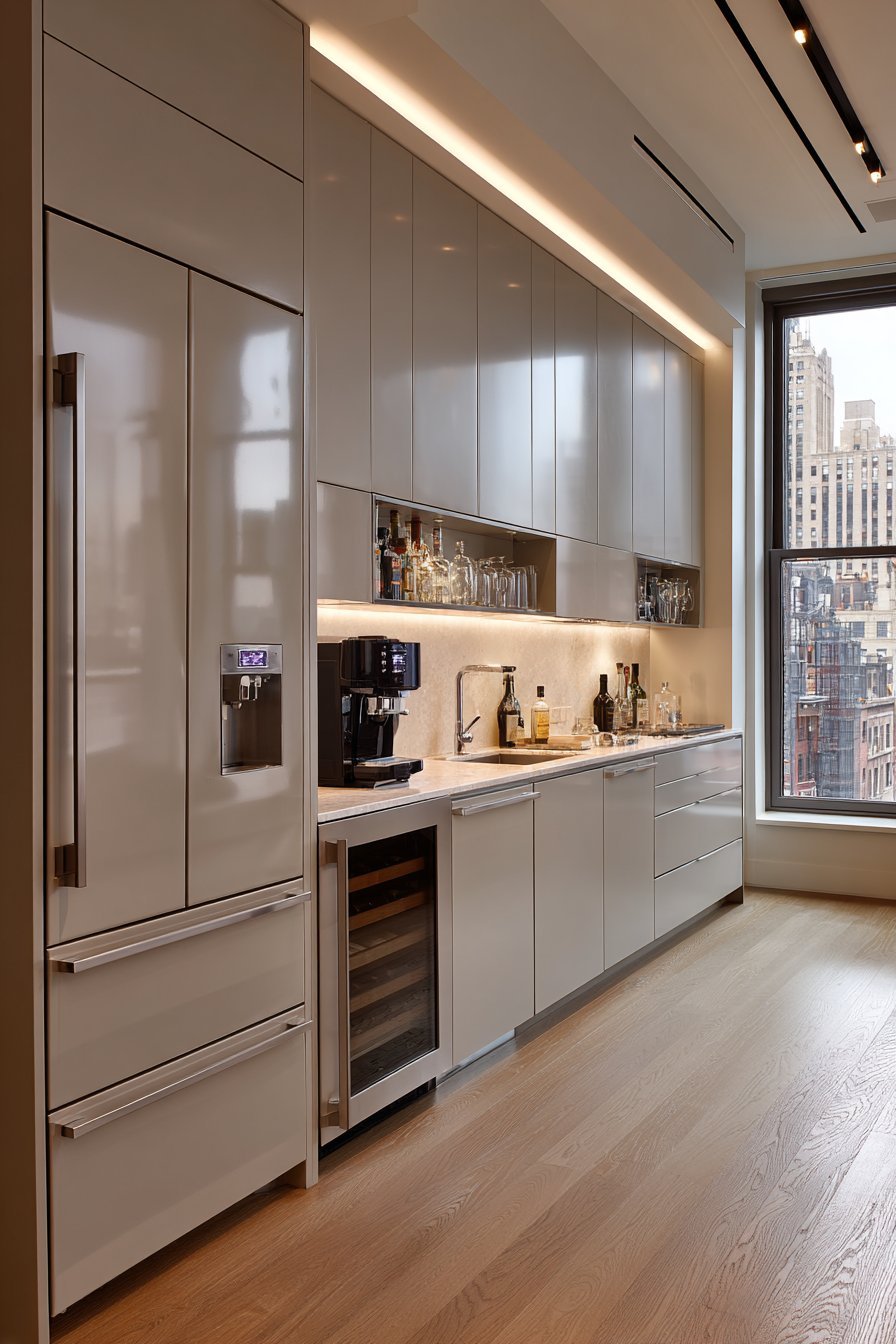
Beyond refrigerators and dishwashers, integrated coffee stations, wine fridges, and steam ovens are being seamlessly built into kitchen cabinetry. Dedicated coffee alcoves with concealed espresso machines are especially popular in 2026. These thoughtful zones make the kitchen more functional while keeping the overall aesthetic clean and intentional.
- Choose panel-ready appliances from the start to ensure cabinetry doors align perfectly
- Work with a designer or cabinet maker to create custom panels that match exactly
- Conceal small appliances like toasters and blenders behind appliance garage doors
- Designate a dedicated coffee or beverage station within cabinetry for daily convenience
- Use push-to-open mechanisms instead of visible handles for maximum seamlessness
- Plan electrical and plumbing placement early — concealment requires precise behind-wall planning
6. Fluted and Textured Cabinet Fronts Add Dimension
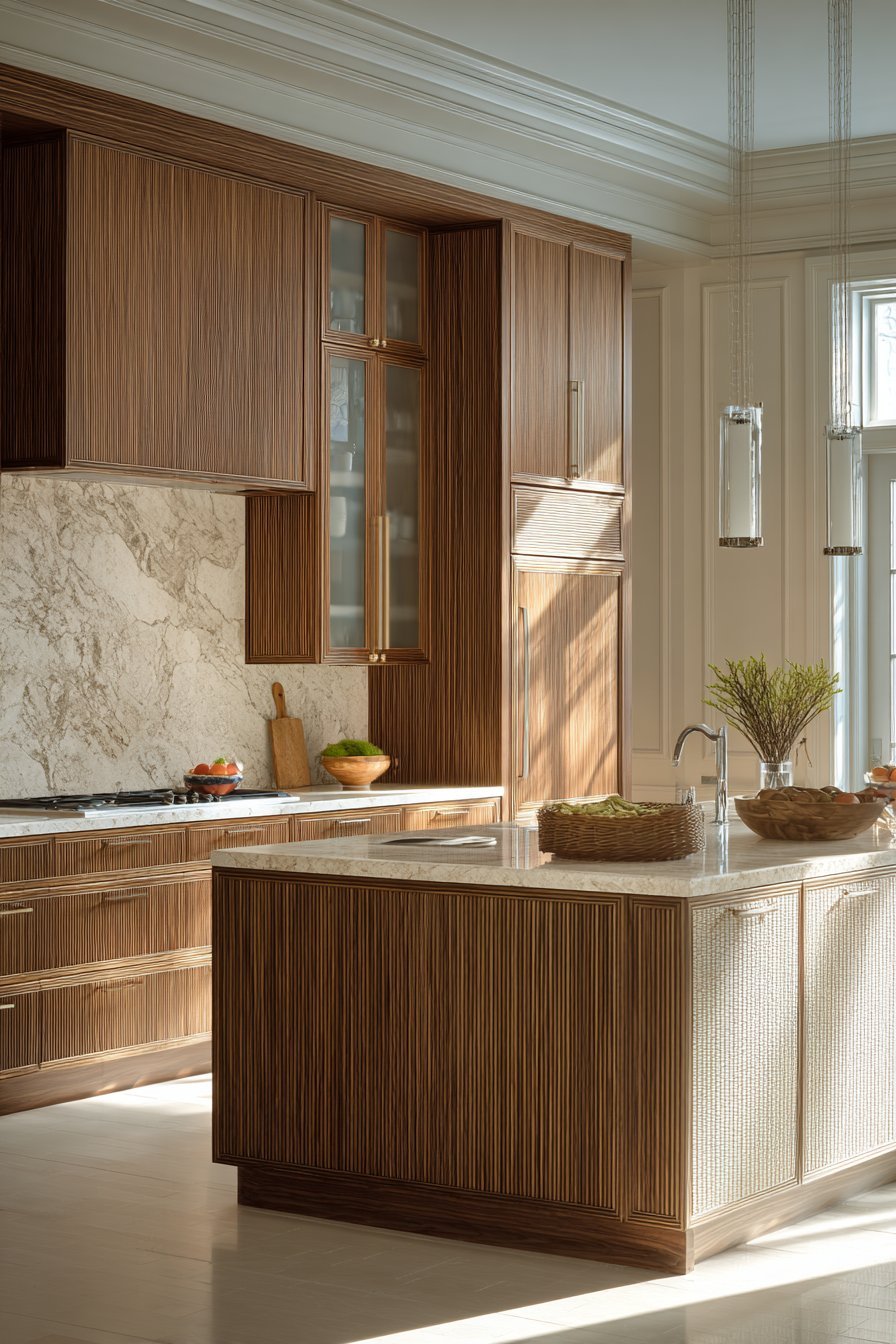
Flat-front cabinets had a long and successful run. But in 2026-2027, textured cabinet fronts are adding depth, shadow, and visual interest to kitchens across every style spectrum. Fluted wood, reeded glass, cane panels, and boucle-inspired textures are being incorporated into cabinet doors, island fronts, and open shelving backdrops.
Fluted cabinetry — inspired by classical architectural columns — brings a sophisticated, tactile quality to the kitchen. The vertical grooves catch light differently throughout the day, creating subtle shadow play that flat fronts simply cannot achieve. This texture pairs beautifully with warm earthy tones and organic shapes, amplifying the overall sensory richness of the space.
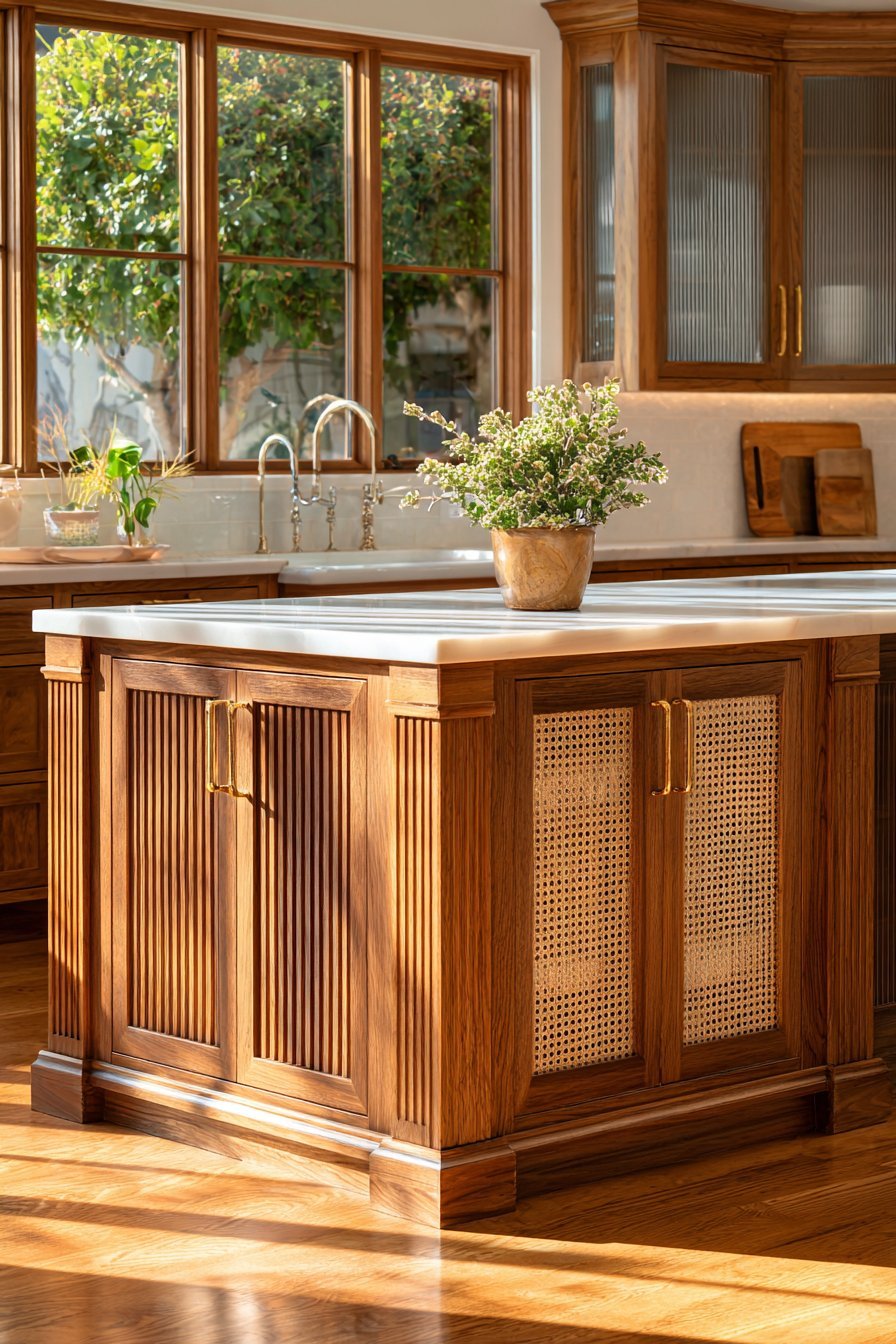
Reeded glass is another standout texture trending strongly. It diffuses light softly while subtly revealing the contents of upper cabinets. This strikes the perfect balance between display and concealment — functional and beautiful simultaneously. Whether used sparingly on a few accent doors or across an entire cabinetry run, texture is transforming the kitchen from flat to dimensional.
- Use fluted panels on the island as a focal point while keeping perimeter cabinets flat
- Introduce reeded glass inserts in upper cabinet doors for light and visual interest
- Consider cane webbing or rattan panels for a more relaxed, organic texture
- Mix one or two textured cabinet fronts with smooth ones for contrast without overwhelm
- Pair textured lower cabinets with a smooth countertop for material balance
- Ensure fluted grooves align consistently — inconsistency disrupts the visual rhythm
7. Maximalist Open Shelving With Curated Styling
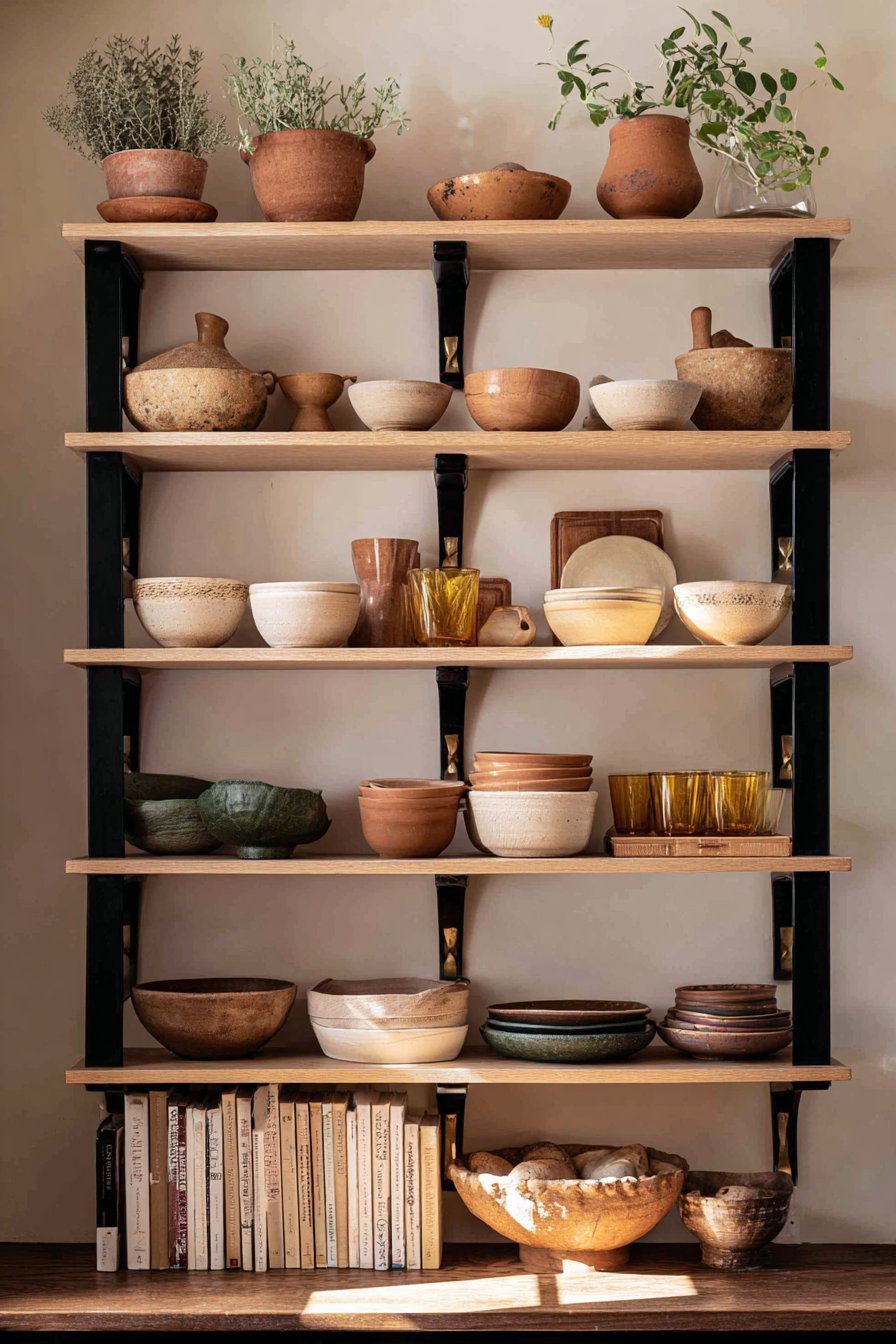
Open shelving isn’t new, but its execution in 2026-2027 is more intentionally maximalist than ever before. Rather than sparse minimalist displays, designers are embracing richly layered open shelves that blend function with art. Think ceramic collections, vintage glassware, potted herbs, artisan cutting boards, and cookbooks arranged with editorial precision.
Curated open shelving tells a visual story about the people who live in the home. It transforms everyday kitchen items into a living gallery. The key difference between cluttered and curated lies in cohesion — sticking to a consistent color palette, material family, or aesthetic theme across everything displayed. Restraint within maximalism is the defining skill.
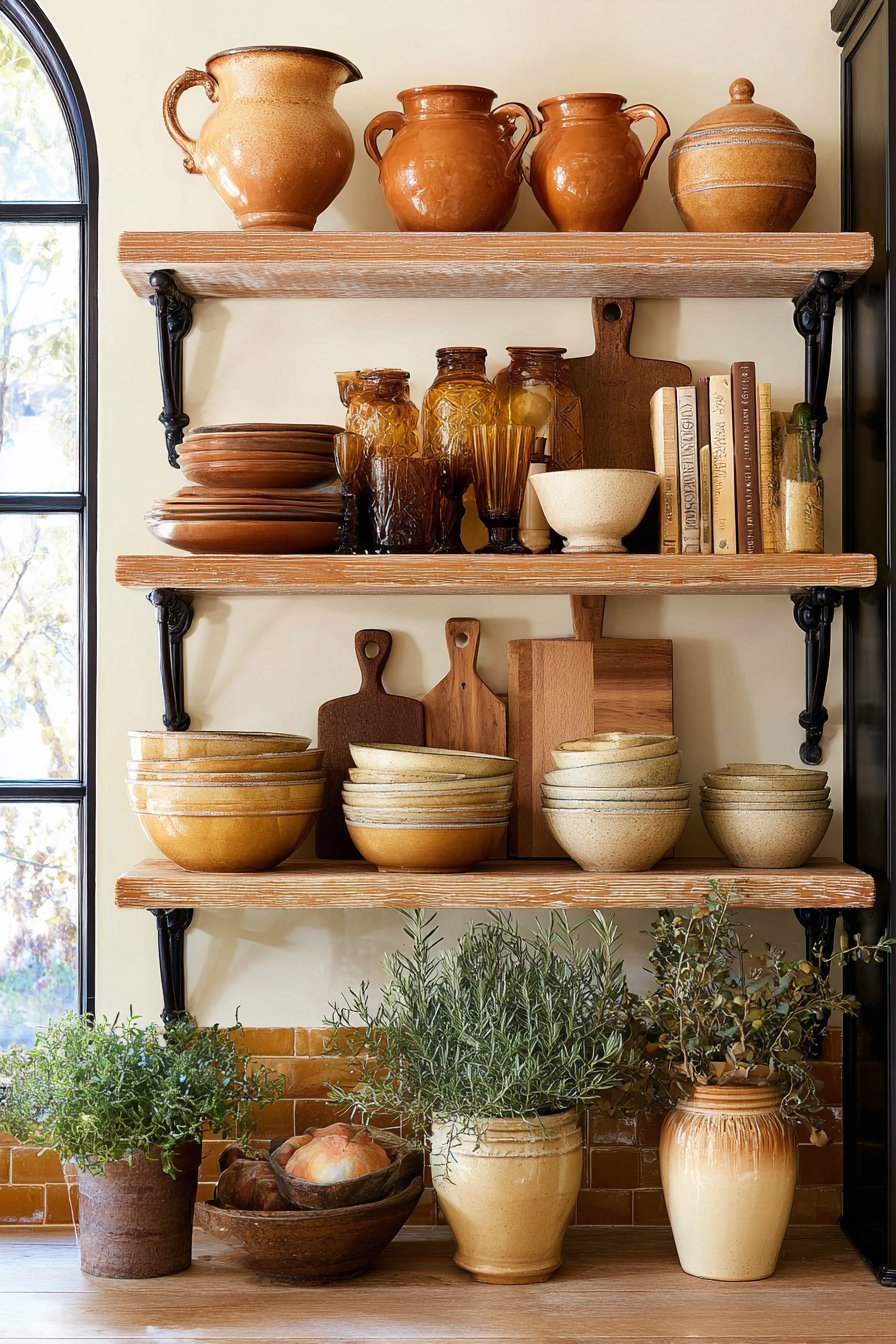
Floating shelves in blackened steel or warm brass brackets are particularly popular right now. They offer an industrial-meets-warm contrast that feels effortlessly stylish. Pairing these with earthy ceramics, wooden serving pieces, and fresh greenery creates the kind of lived-in luxury that defines the best kitchens of 2026-2027.
- Commit to a color palette for displayed items — restrict to two or three tones
- Mix heights and depths — tall bottles next to small bowls creates visual rhythm
- Include at least one living plant or fresh herb on every open shelf section
- Group items in odd numbers — threes and fives feel more natural than pairs
- Rotate seasonal items to keep the display feeling fresh and intentional
- Never overcrowd — leave 20% of shelf space empty for visual breathing room
8. Dramatic Dark Kitchens Make a Bold Statement
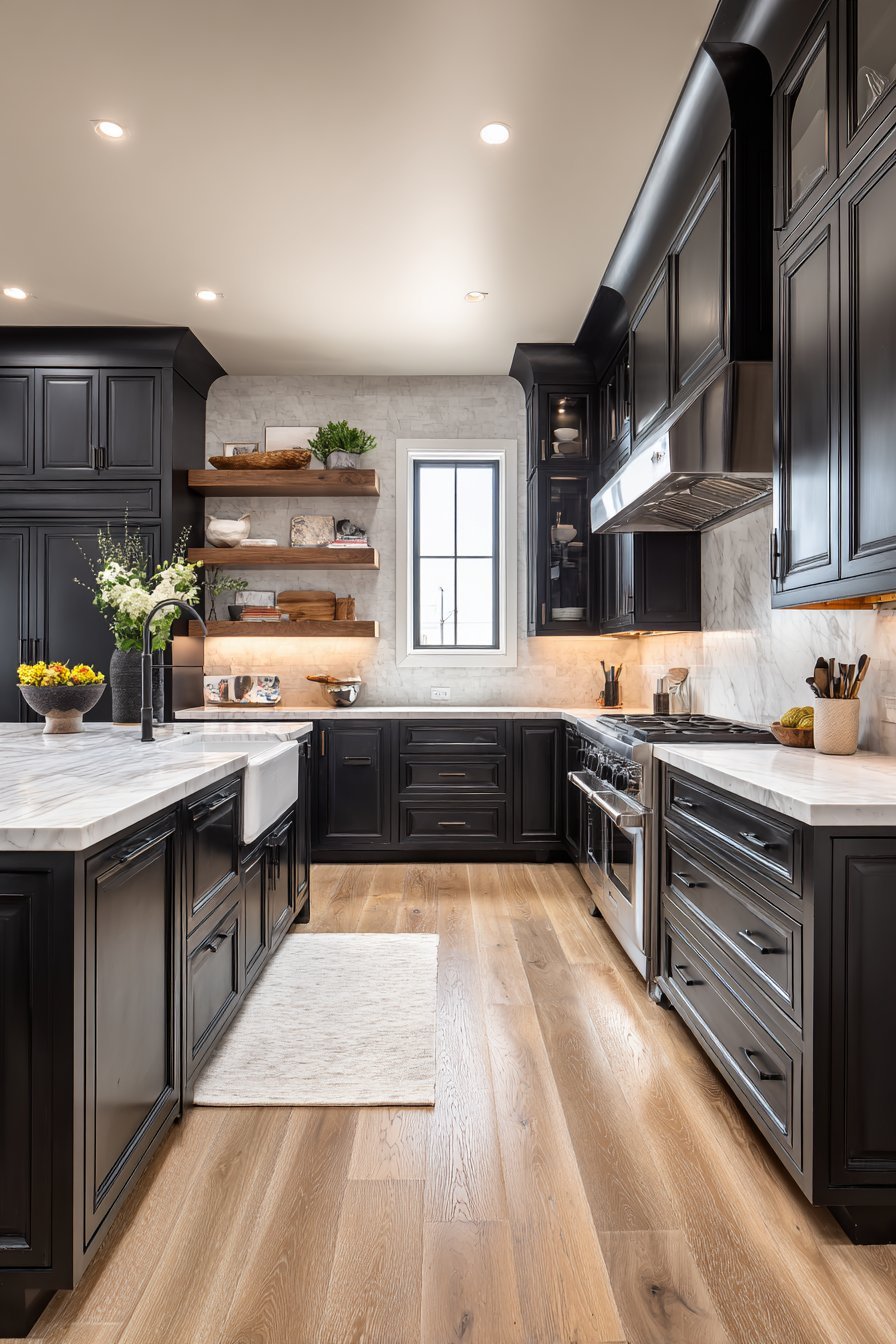
While warm neutrals dominate, there’s an equally strong pull toward dramatic dark kitchens. Deep charcoal, midnight navy, forest green, and near-black cabinetry are showing up in the most daring and design-forward homes of 2026-2027. These kitchens feel moody, sophisticated, and deeply luxurious when executed well.
The key to a successful dark kitchen lies in balancing light and contrast. Dark cabinets work best when paired with lighter countertops, reflective backsplash tiles, or warm metallic hardware. Natural light is essential — dark kitchens in north-facing rooms without sufficient windows can feel cave-like rather than cocooning. Strategic lighting design is absolutely critical in dark spaces.
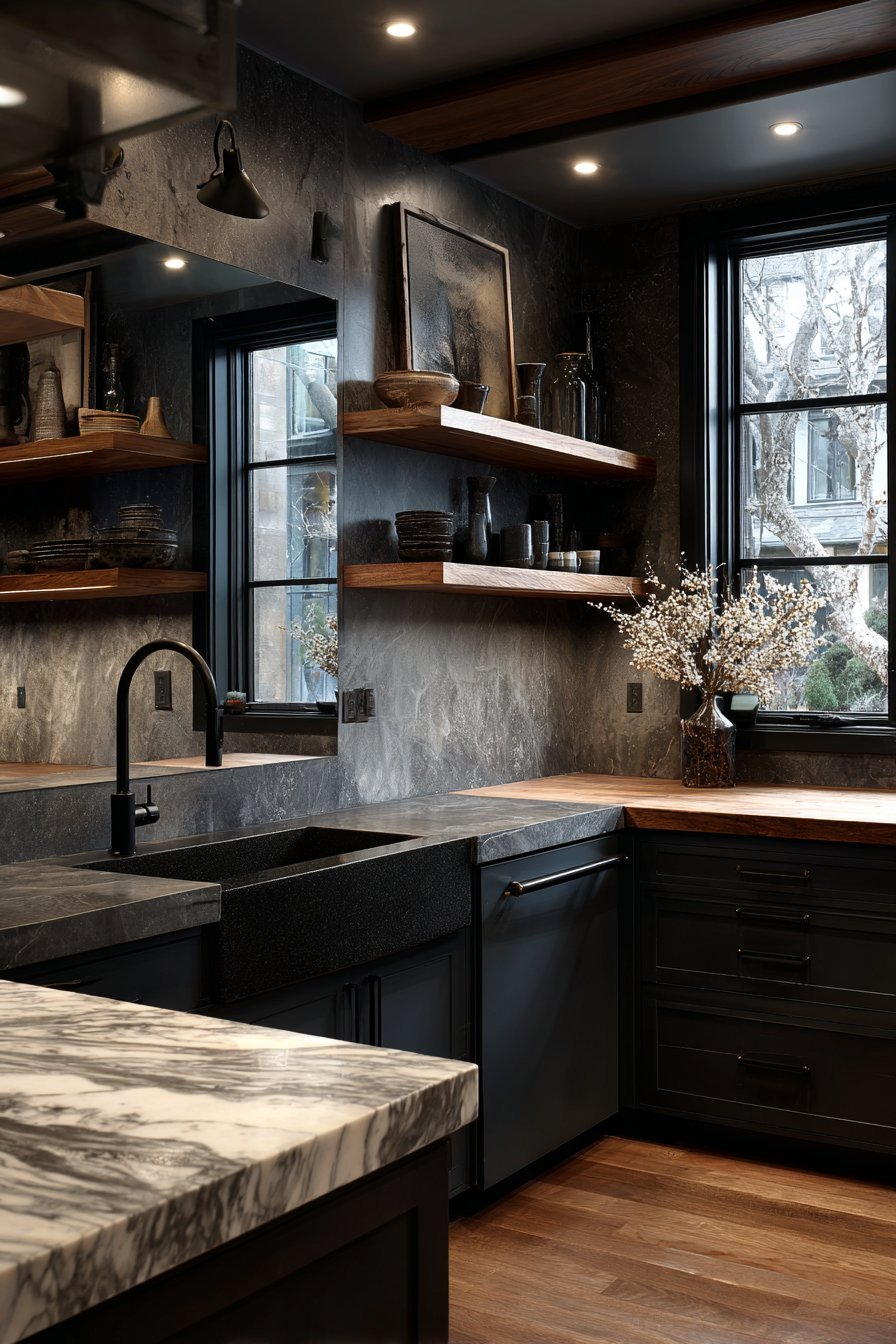
Matte black hardware and fixtures are the natural companion to dark cabinetry. Matte finishes absorb light in a way that feels intentional and modern, avoiding the sterile look that polished chrome can sometimes create. When dark cabinets meet warm wood accents and natural stone, the result is a kitchen that feels like a high-end restaurant — without sacrificing the warmth of home.
- Choose matte or satin finishes over high gloss for dark cabinetry to avoid fingerprint visibility
- Install under-cabinet lighting to counteract the light-absorbing nature of dark surfaces
- Pair dark cabinets with a light marble or quartz countertop for essential contrast
- Introduce warm wood — an oak island top or floating shelves — to prevent coldness
- Use large-format tiles on the backsplash to keep the space feeling expansive
- Ensure sufficient natural and artificial light sources are planned before committing to dark cabinetry
9. Smart Kitchen Technology Becomes Invisible
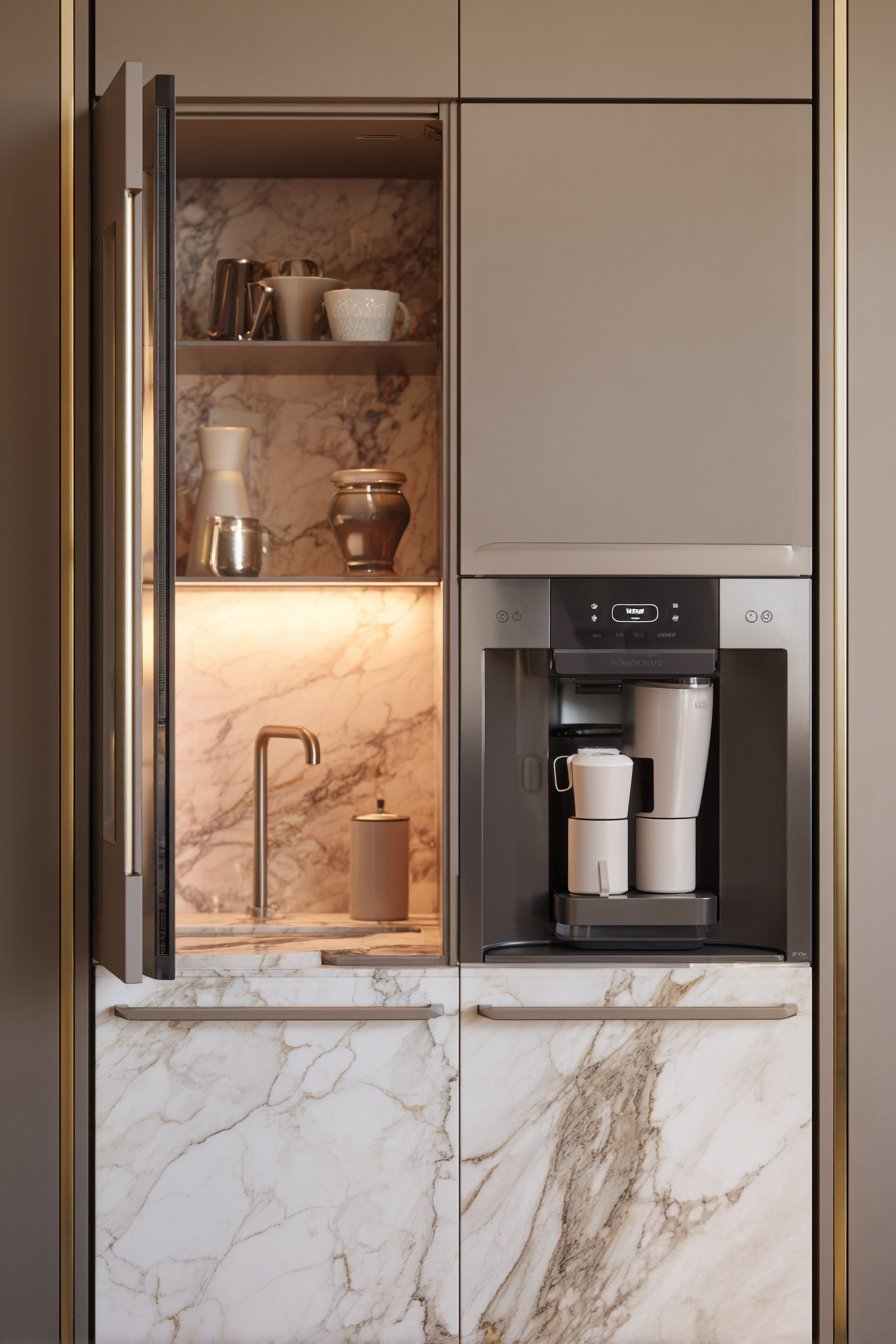
Smart home technology is maturing, and in 2026-2027, the goal is for technology to disappear into the design rather than dominate it. Voice-activated faucets, induction surfaces integrated into countertops, hidden charging stations, and app-controlled lighting are all standard features in forward-thinking kitchen designs — yet none of them are visually disruptive.
Invisible induction cooktops embedded flush into countertop surfaces are particularly exciting. With no visible burner rings or raised edges, the countertop becomes a seamless continuous surface — used for cooking when needed, cleared as workspace otherwise. This technology elevates both the form and function of the kitchen simultaneously, making it a genuinely revolutionary development.
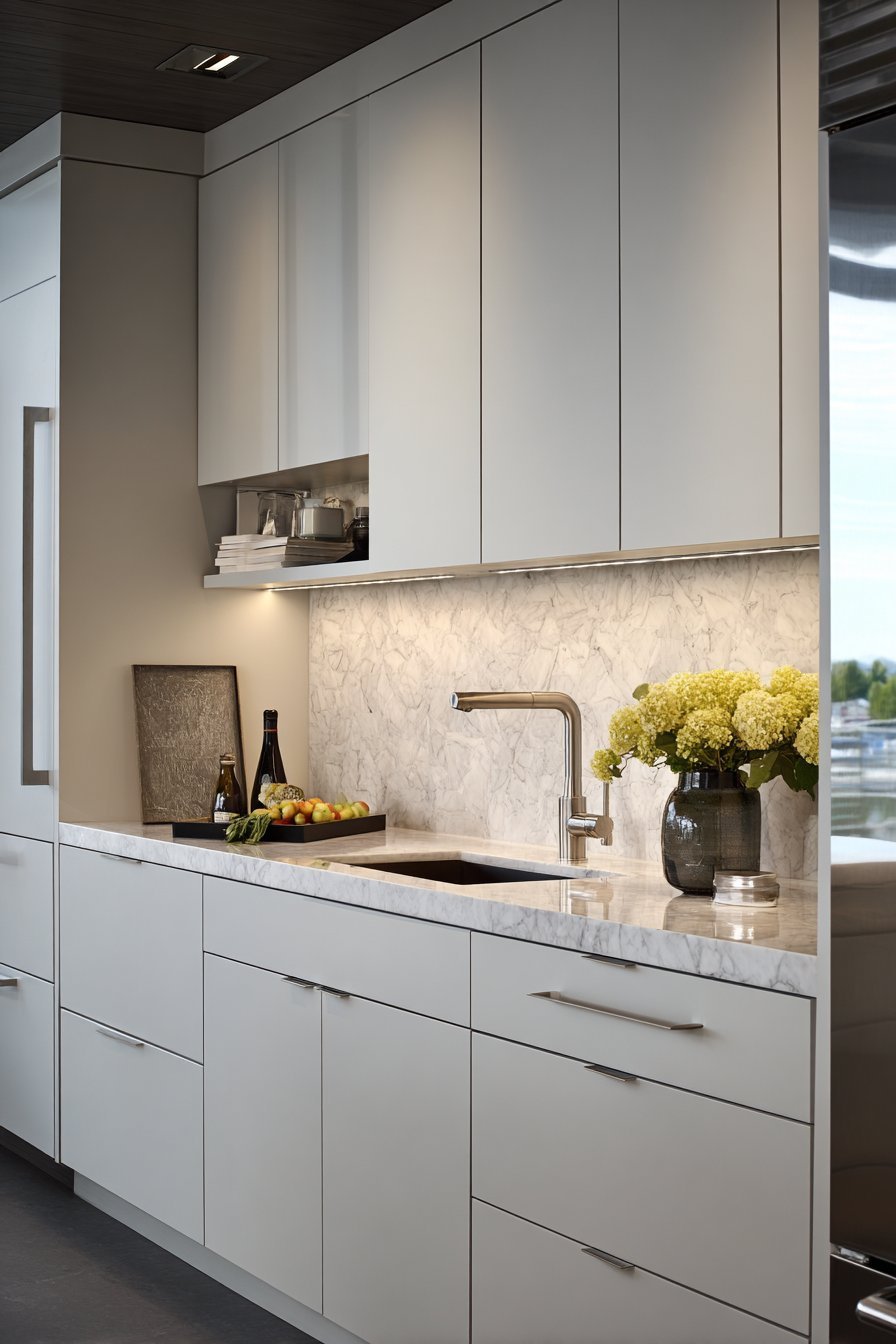
Smart refrigerators, automated pantry systems, and voice-activated kitchen assistants are also becoming more refined and discreetly designed. The 2026-2027 smart kitchen doesn’t look like a tech showroom — it looks like a beautifully designed space that happens to be extraordinarily intelligent. The best technology, ultimately, is the kind you don’t notice.
- Install a flush-mounted induction surface embedded in a stone or composite countertop
- Incorporate hidden USB and wireless charging panels inside drawers or cabinetry
- Use smart lighting with scene-setting capabilities for cooking, dining, and entertaining modes
- Choose a smart faucet with touchless activation for improved hygiene and convenience
- Integrate a discreet whole-kitchen audio system behind cabinetry for seamless sound
- Plan all technology during the design phase — retrofitting smart tech is significantly harder
10. Mixed Metals Create Sophisticated Visual Contrast
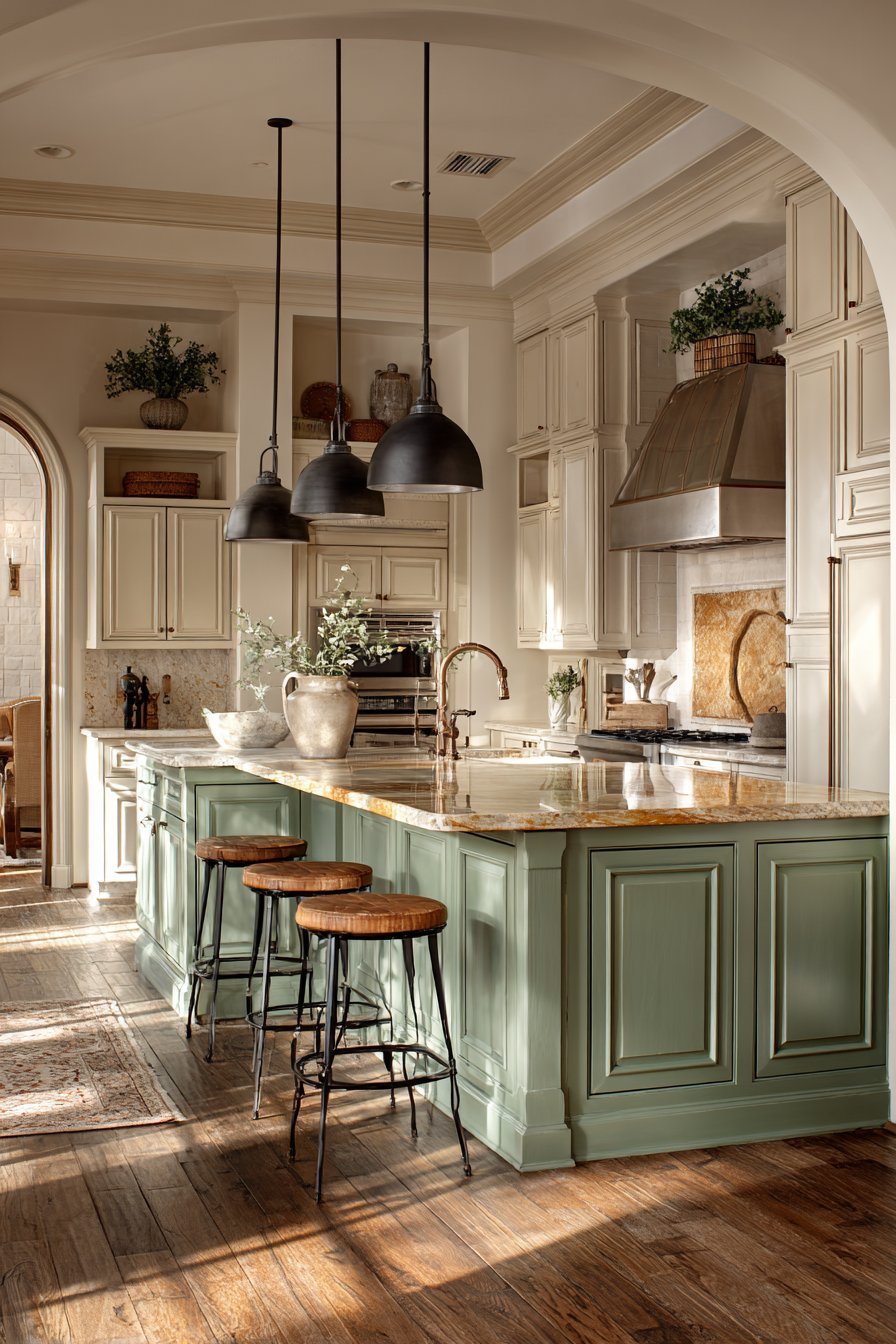
Gone are the days of matching all your metals perfectly. In 2026-2027, intentionally mixed metals are a hallmark of sophisticated kitchen design. Combining warm brass or aged bronze with cooler brushed nickel or matte black creates a layered, collected aesthetic that feels far more interesting than a single-metal approach.
The key to mixing metals successfully is establishing a dominant metal and using secondary metals as accents. For example, warm brass might appear on cabinet hardware and the faucet, while matte black features on pendant lighting and shelf brackets. This creates clear hierarchy without visual chaos. The metals should feel curated, not accidental.
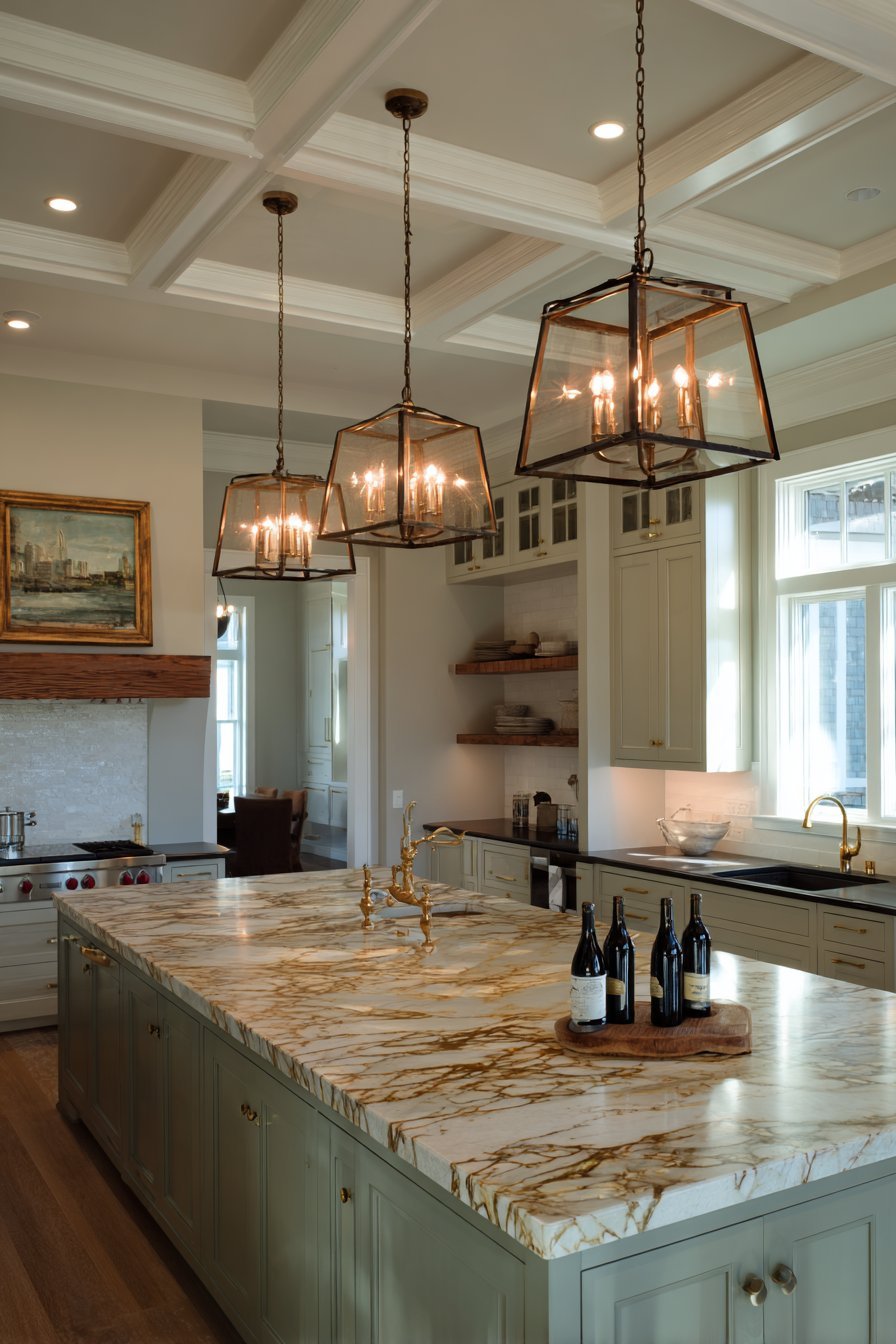
Unlacquered brass is particularly on trend in 2026 — it patinas naturally over time, developing a warm, lived-in quality that feels authentic and artisanal. Paired with earthy tones and natural materials, unlacquered brass evolves with the kitchen rather than staying frozen in the moment it was installed. It’s a material that genuinely improves with age.
- Choose one dominant metal that appears in the largest quantity throughout the kitchen
- Limit yourself to two or three metals maximum to maintain cohesion
- Mix warm and cool metals intentionally — brass faucet with nickel cabinet hardware works beautifully
- Consider unlacquered brass for hardware if you love the idea of natural patina over time
- Repeat each metal at least twice throughout the space so it appears intentional
- Avoid mixing metals that are too similar in tone — sufficient contrast is what makes mixing work
11. Multi-Functional Kitchen Islands Evolve Further
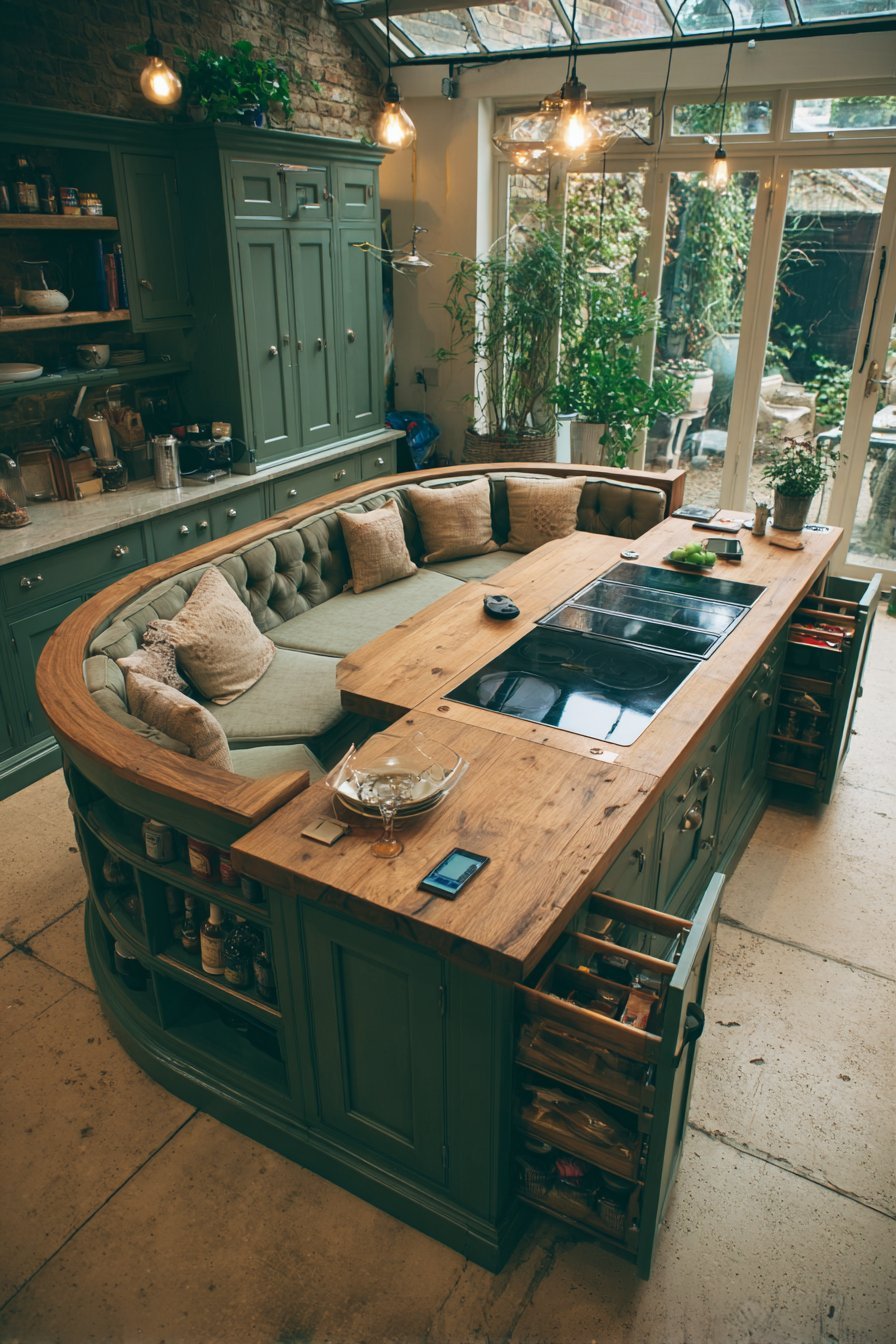
The kitchen island has been evolving for years, but in 2026-2027 it reaches its most sophisticated multi-functional form yet. Today’s islands serve simultaneously as prep space, dining area, storage hub, beverage station, and workspace. Designing an island that truly fulfills multiple roles requires thoughtful planning from the very beginning.
Seating integration is one of the most requested island features. Designers are moving away from the standard overhanging countertop stool setup toward built-in banquette seating on one side of the island, creating a more intimate and ergonomically comfortable dining experience. This blurs the line between kitchen island and kitchen table in the most functional way possible.
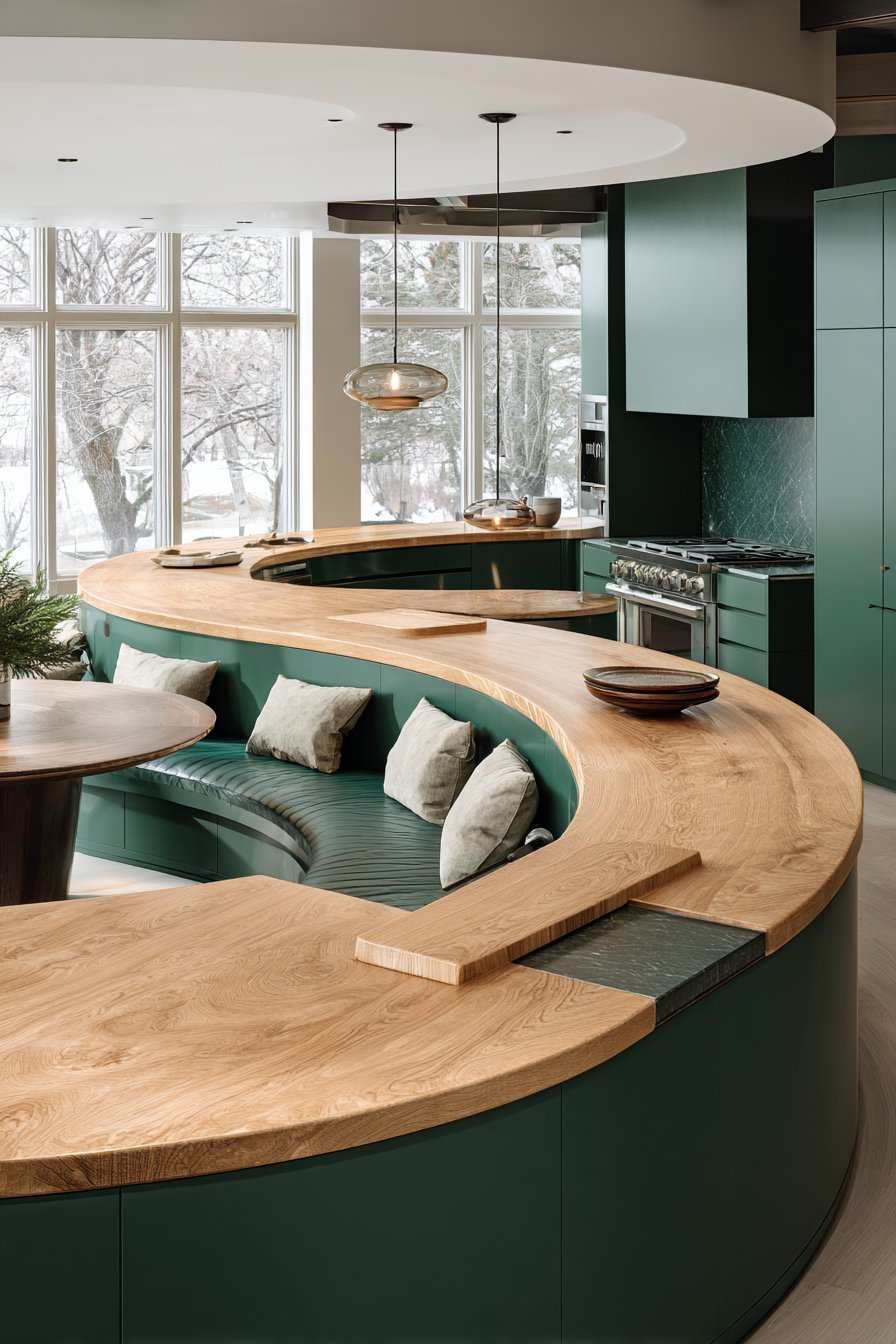
Storage within islands is becoming increasingly customized and specialized. Pull-out spice drawers adjacent to the cooktop, integrated knife blocks, dedicated charging drawers, and built-in compost bins are all being designed into island cabinetry. The island of 2026-2027 is engineered for the specific needs of its household — nothing generic about it.
- Determine the primary functions your island must serve before finalizing dimensions
- Aim for at least 900mm of clearance on all sides for comfortable circulation
- Build in specialized storage tailored to your cooking habits — don’t use generic drawer configurations
- Incorporate a secondary sink in the island if your kitchen layout allows for it
- Use a different material or finish on the island to distinguish it from perimeter cabinetry
- Include at least one seating side with a minimum 300mm countertop overhang for comfort
12. Zellige and Handmade Tiles Dominate Backsplash Design
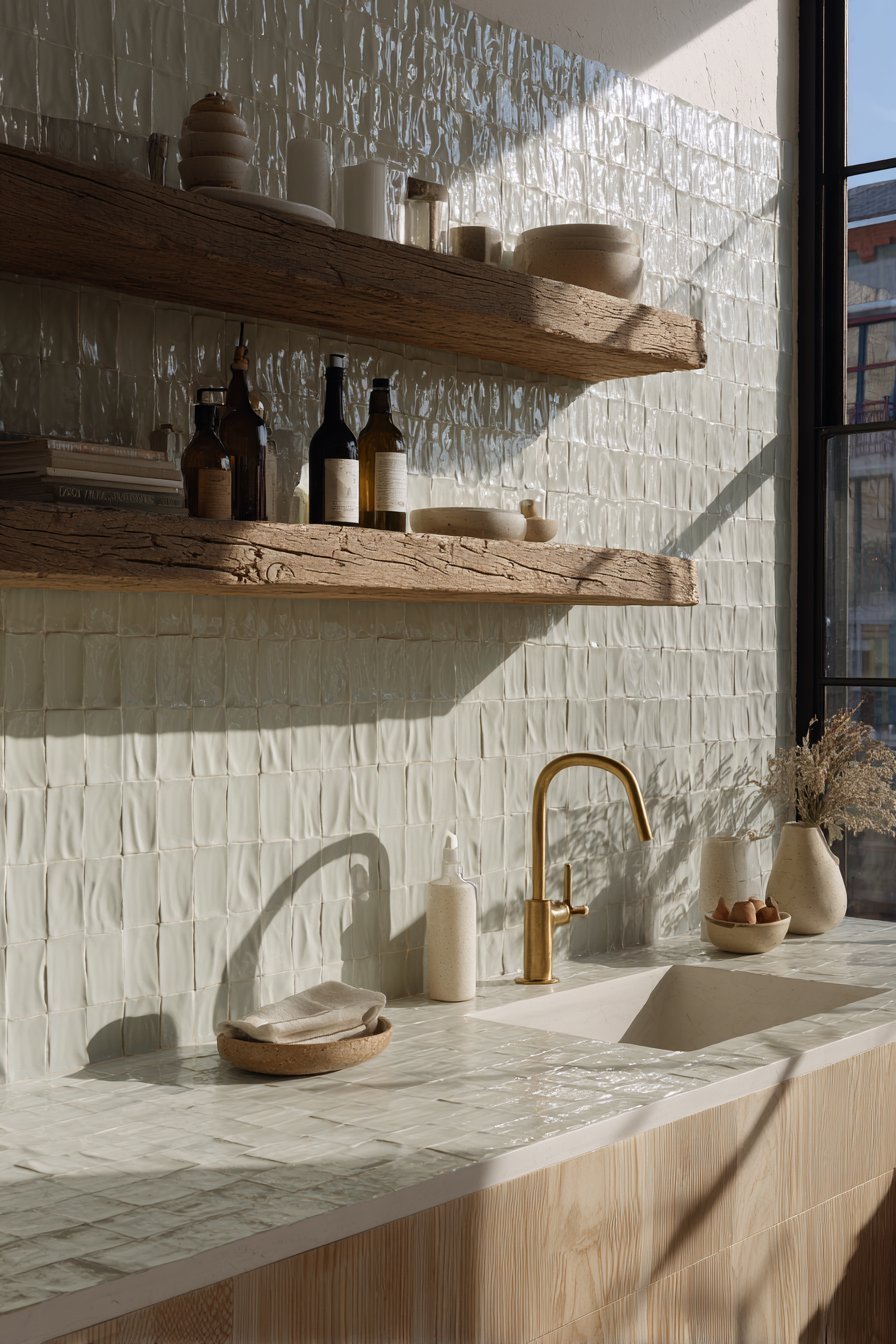
Machine-perfect tiles are losing ground to something far more characterful. Zellige tiles — the hand-pressed, glazed Moroccan clay tiles known for their beautiful imperfections — are one of the most coveted backsplash choices of 2026-2027. Their irregular surface catches light in constantly shifting ways, creating a backsplash that feels alive and endlessly interesting.
The beauty of handmade tiles lies in their inherent variation. No two tiles are identical. The glaze pools slightly differently, the edges aren’t perfectly straight, and the colors shift subtly from tile to tile. This variation is precisely the point — it brings warmth and authenticity into the kitchen that manufactured tiles simply cannot replicate, no matter how beautifully designed they are.
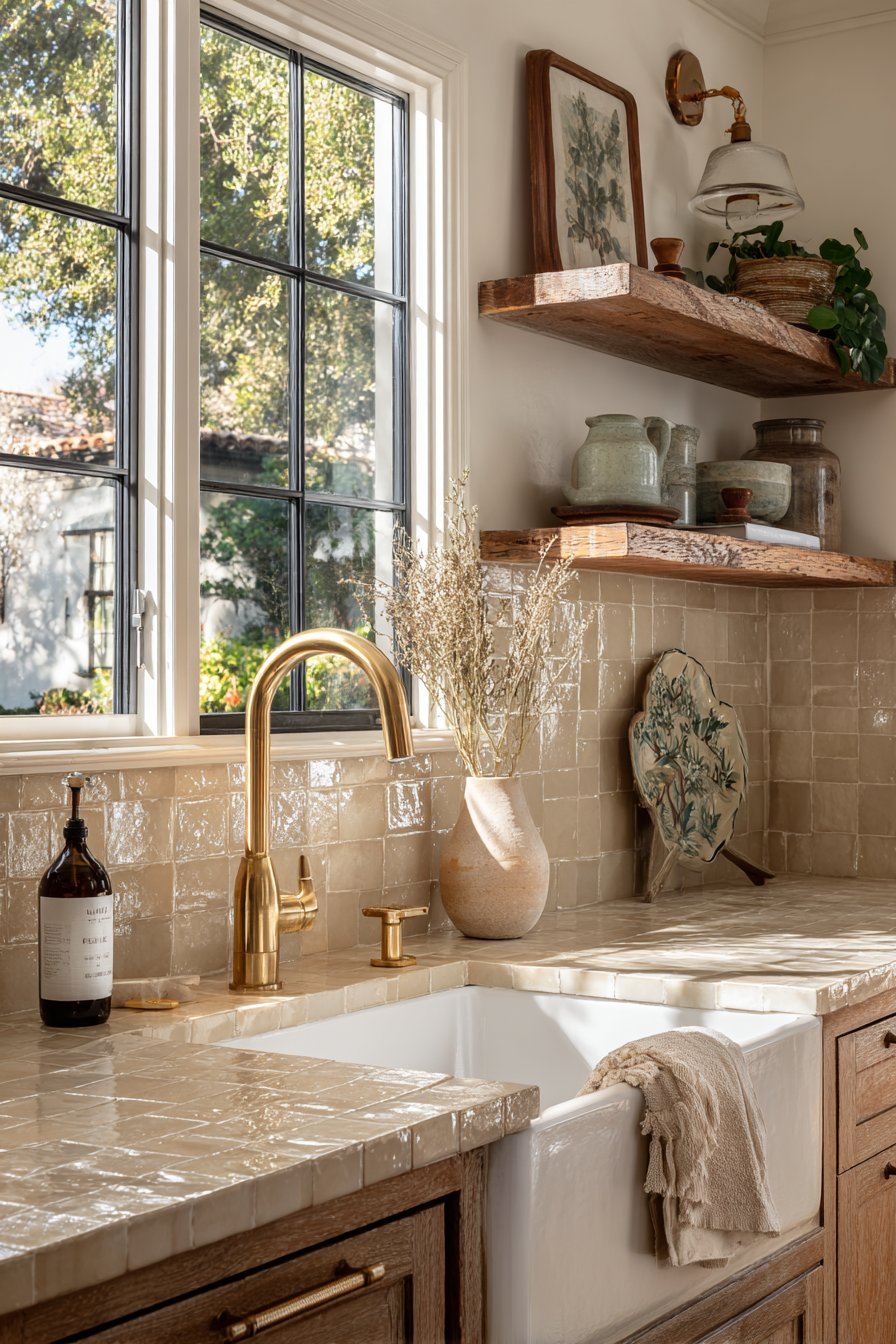
Beyond zellige, hand-painted ceramic tiles with botanical, geometric, or abstract patterns are also surging in popularity. A single row of patterned tiles running along the top of a plain backsplash can transform the entire visual impact of the kitchen. These artisan tiles work particularly well in earthy-toned kitchens where they reinforce the overall commitment to craftsmanship and authenticity.
- Source zellige tiles from reputable Moroccan suppliers or quality European importers for authenticity
- Use warm white or ivory zellige as a full backsplash for subtle shimmer and texture
- Add a single row of patterned accent tiles mid-backsplash for editorial impact
- Pair handmade tiles with natural grout colors — bright white grout can feel too clinical
- Seal zellige tiles appropriately — they are porous and require proper sealing for kitchen use
- Let tile variation be celebrated rather than corrected — imperfection is the point
13. Biophilic Design Brings the Outdoors In
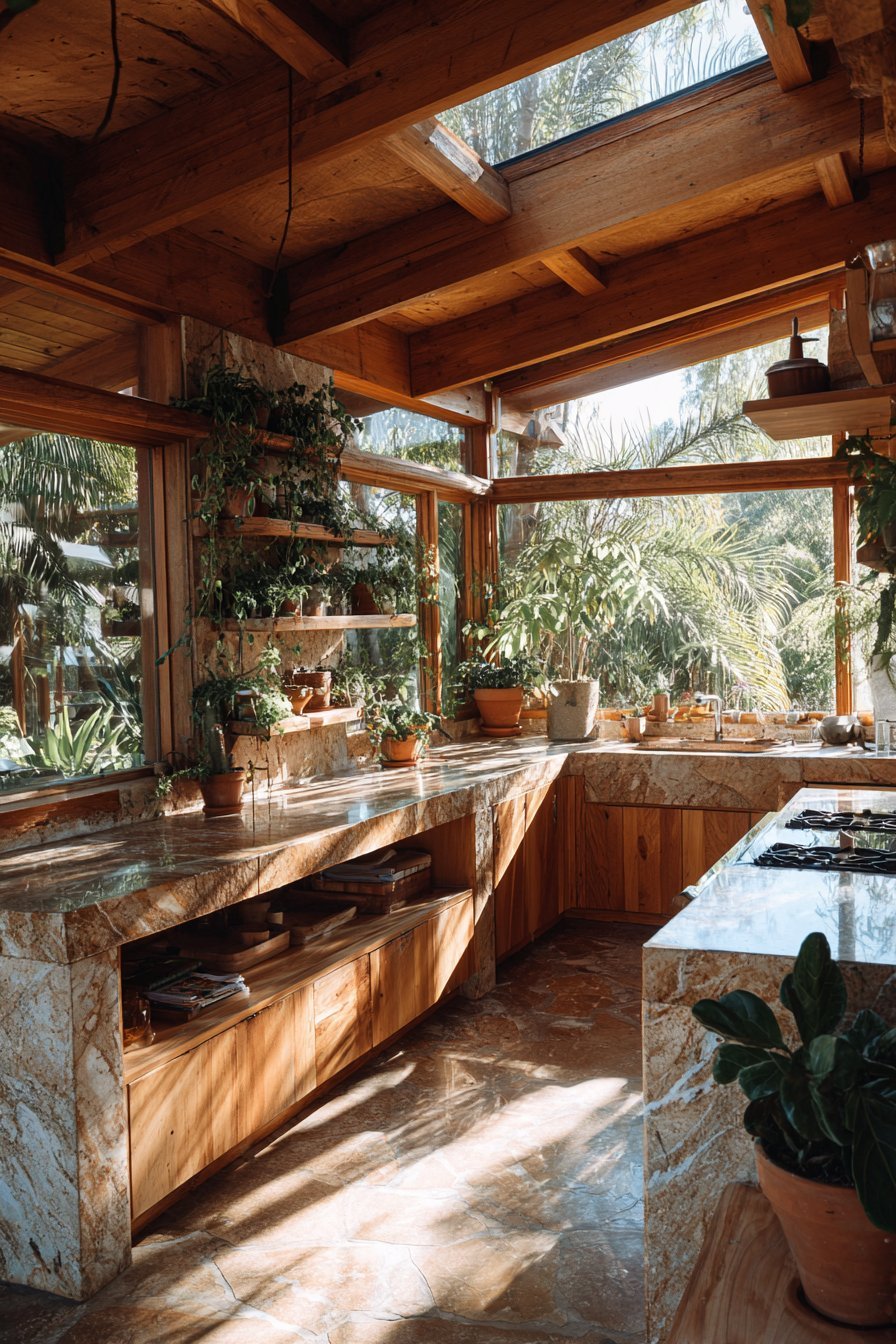
Biophilic design — the practice of incorporating natural elements to strengthen the connection between humans and nature — is one of the most enduring trends in modern interior design. In 2026-2027 kitchens, this manifests through living herb walls, large-format windows, natural stone surfaces, raw wood textures, and abundant indoor plants.
Research consistently shows that exposure to natural elements reduces stress, improves focus, and enhances overall wellbeing. The kitchen, as a space where people spend significant time each day, benefits enormously from biophilic principles. Even small gestures — a pot of fresh basil on the windowsill or a wooden cutting board on the counter — meaningfully improve the feel of the space.
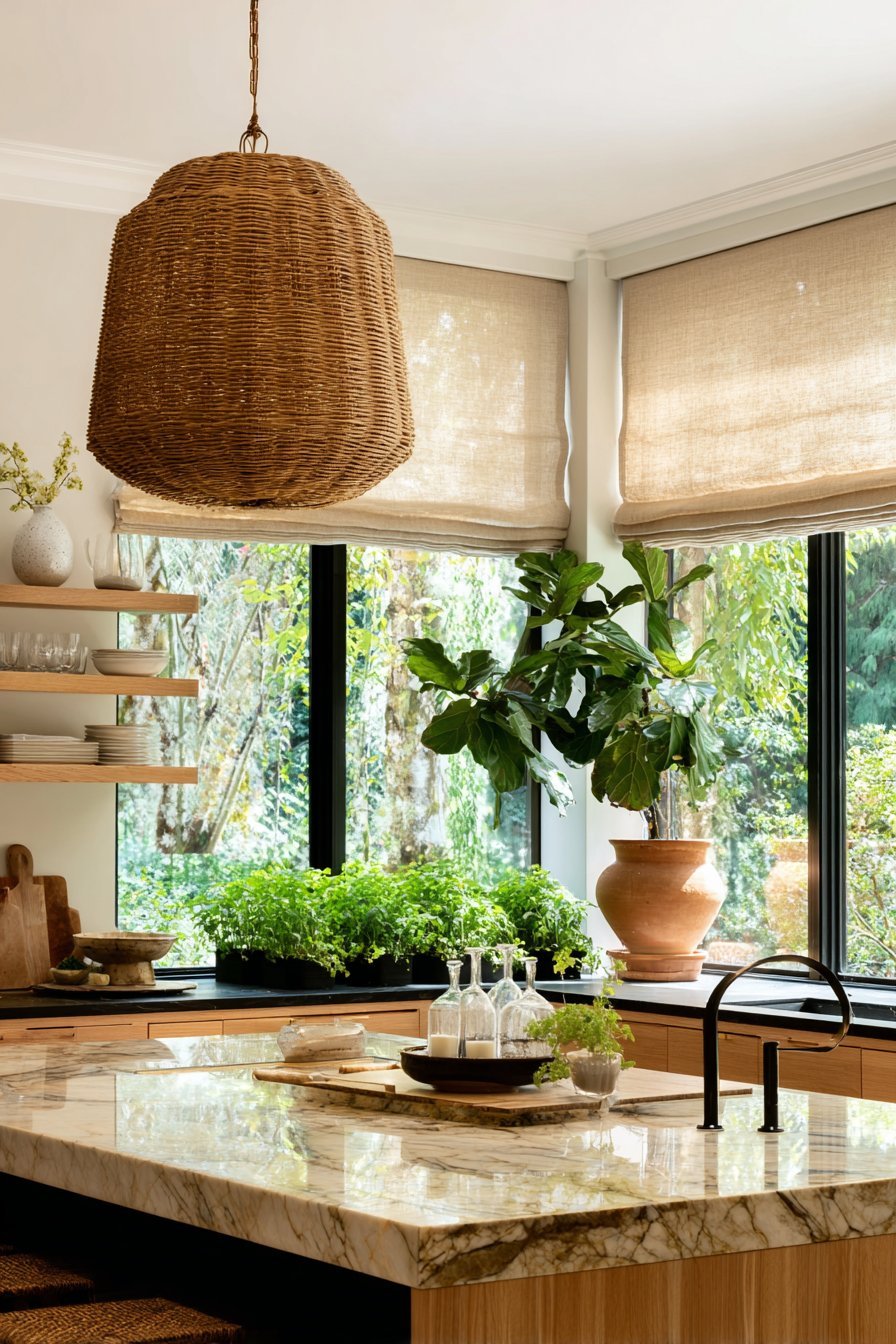
Large windows and skylights are the most impactful biophilic design elements in a kitchen. When natural light floods into the space and connects the kitchen visually with an outdoor garden or greenery, the room transforms entirely. Designing a kitchen with generous natural light should always be the first priority before any material or color decision is made.
- Install a living herb wall adjacent to the prep area for both function and visual impact
- Choose natural stone countertops with visible veining to introduce an organic pattern
- Position the sink to face a garden view or window wherever floor plan allows
- Bring in large-leafed tropical plants like monstera or fiddle-leaf fig for dramatic green presence
- Use natural, undyed linen textiles for window treatments and seat cushions
- Ensure at least one skylight if ceiling height and roof structure permit — the impact is transformative
Conclusion
The kitchens of 2026-2027 tell a compelling story. They are warmer, more personal, more sustainable, and more intelligent than ever before. Every trend on this list shares a common thread: the rejection of the cold, generic, and purely utilitarian in favor of the characterful, meaningful, and deeply considered.
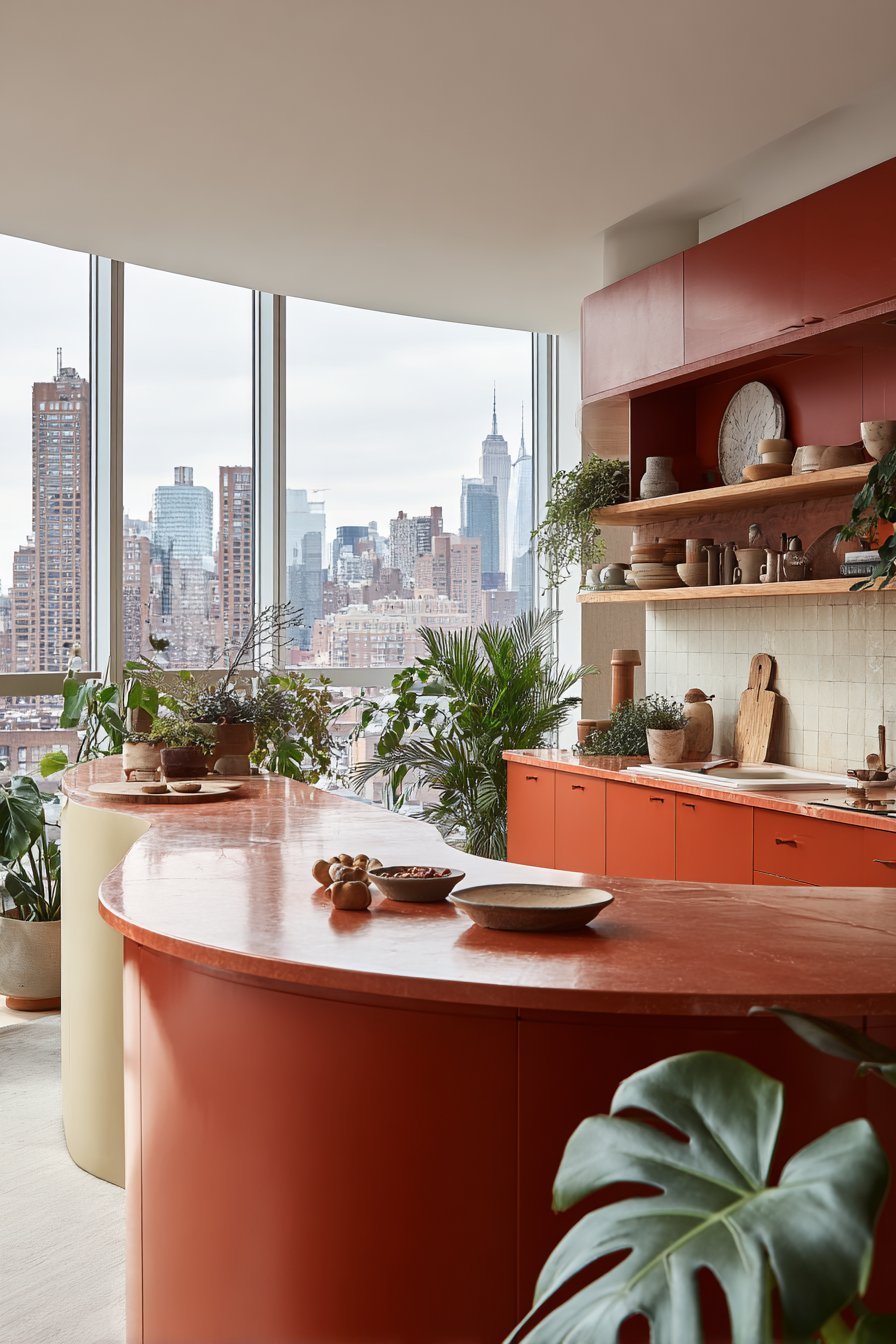
Whether you’re drawn to earthy palettes and handmade tiles or dramatic dark cabinetry with invisible smart technology, there has never been a better time to invest in thoughtful kitchen design. Start with one or two trends that resonate most with your lifestyle. Experiment boldly, make intentional choices, and design a kitchen that doesn’t just follow the moment — but defines it. Your kitchen has the potential to be the most extraordinary room in your home. Make it count.
