

Creating a minimal bedroom transforms your personal space into a sanctuary of calm. This design philosophy embraces simplicity without sacrificing comfort or style. The approach focuses on essential elements that serve both function and beauty.
Minimal bedroom design has revolutionized modern interior spaces. The style offers respite from our cluttered, fast-paced world. Each piece serves a purpose while contributing to visual harmony. Natural materials, clean lines, and thoughtful curation define these tranquil spaces.
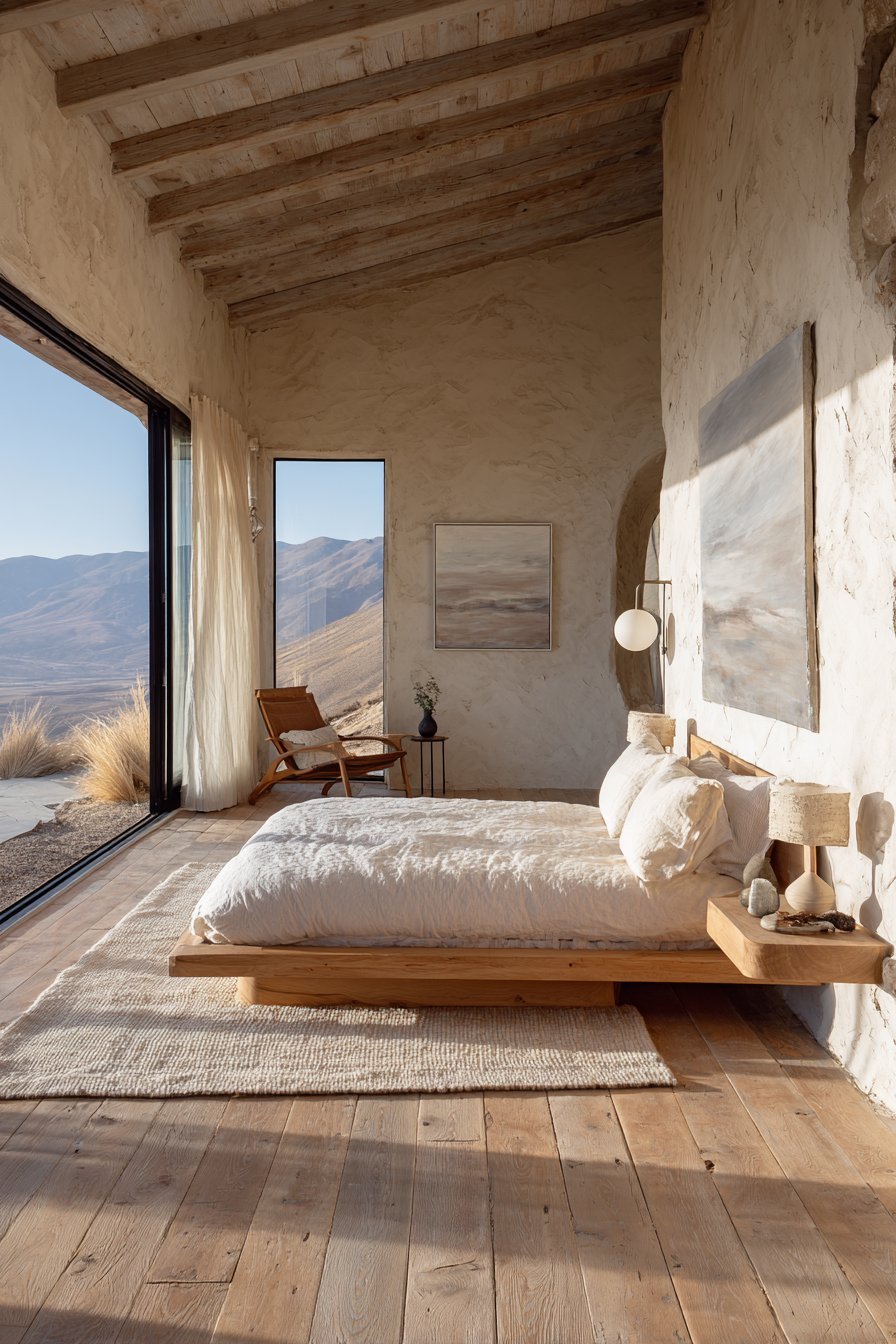
This article explores twenty distinctive minimal bedroom concepts. From Japanese-inspired platforms to multifunctional murphy beds, each design demonstrates unique interpretations of minimalism. You’ll discover how texture, light, and space combine to create rooms that breathe.
1. Pure White Platform Sanctuary
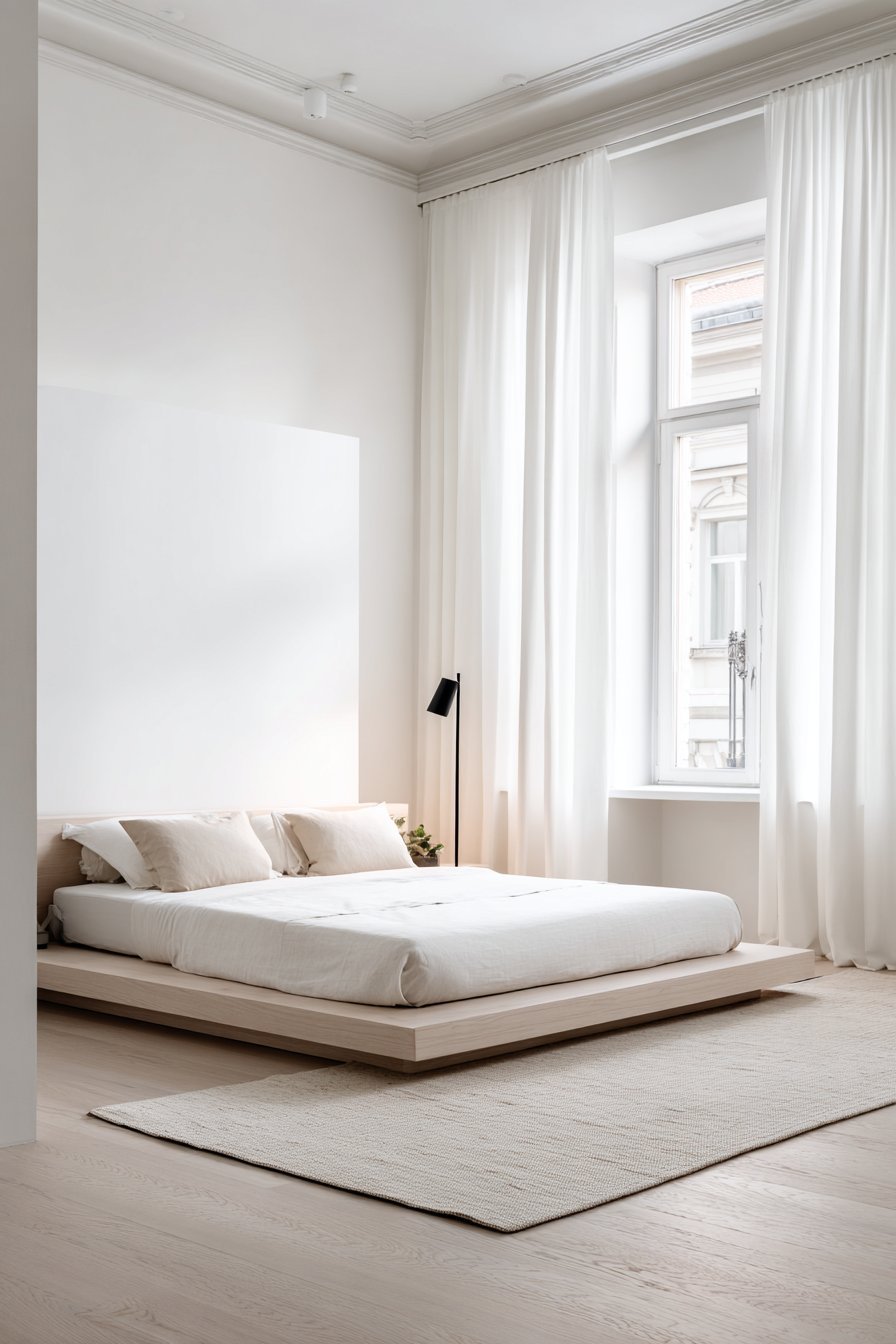
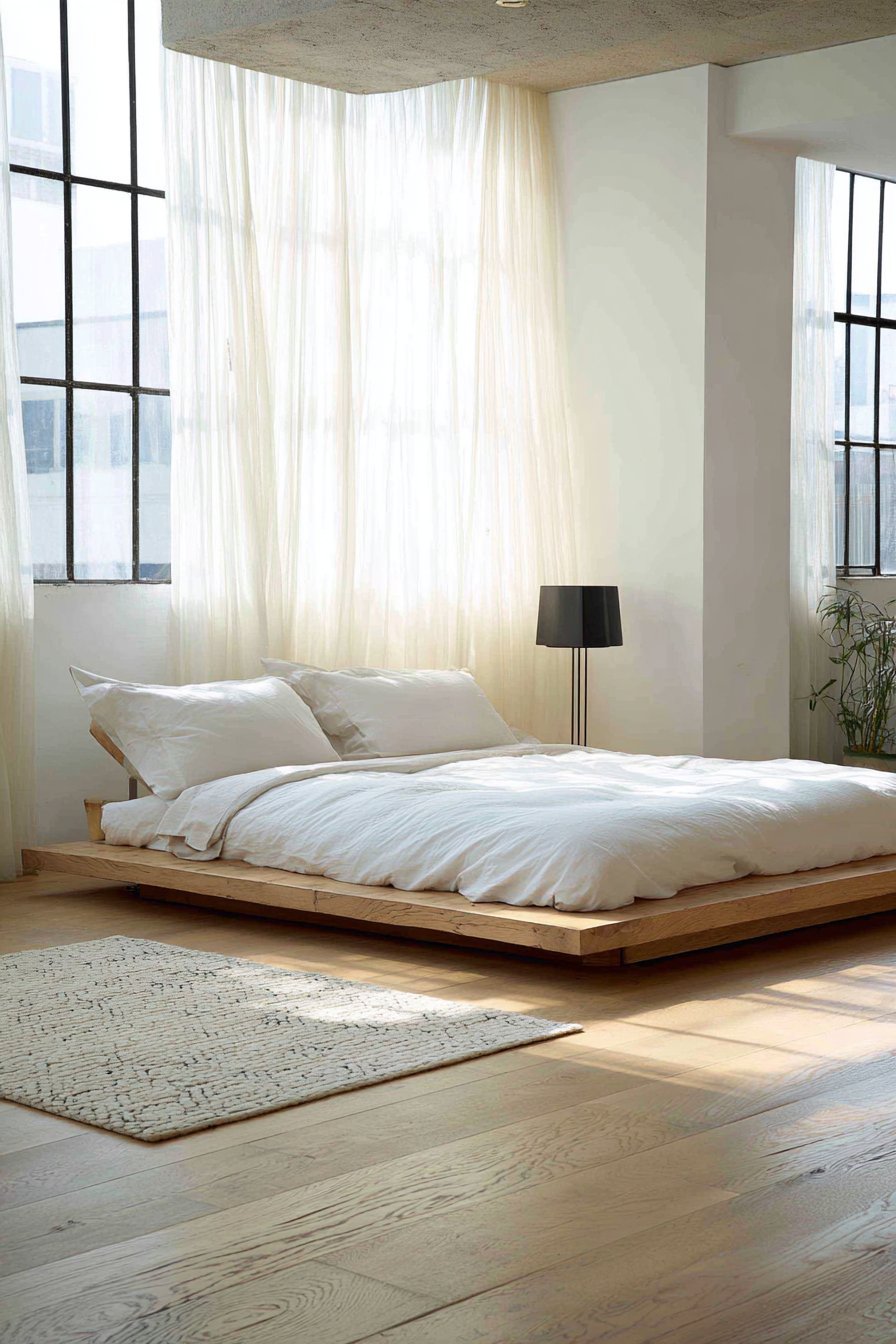
A low-profile platform bed anchors this pristine space with effortless grace. White linen bedding creates softness against the natural oak flooring. The geometric wool rug in beige tones adds subtle warmth beneath the bed. A slender matte black floor lamp provides focused task lighting.
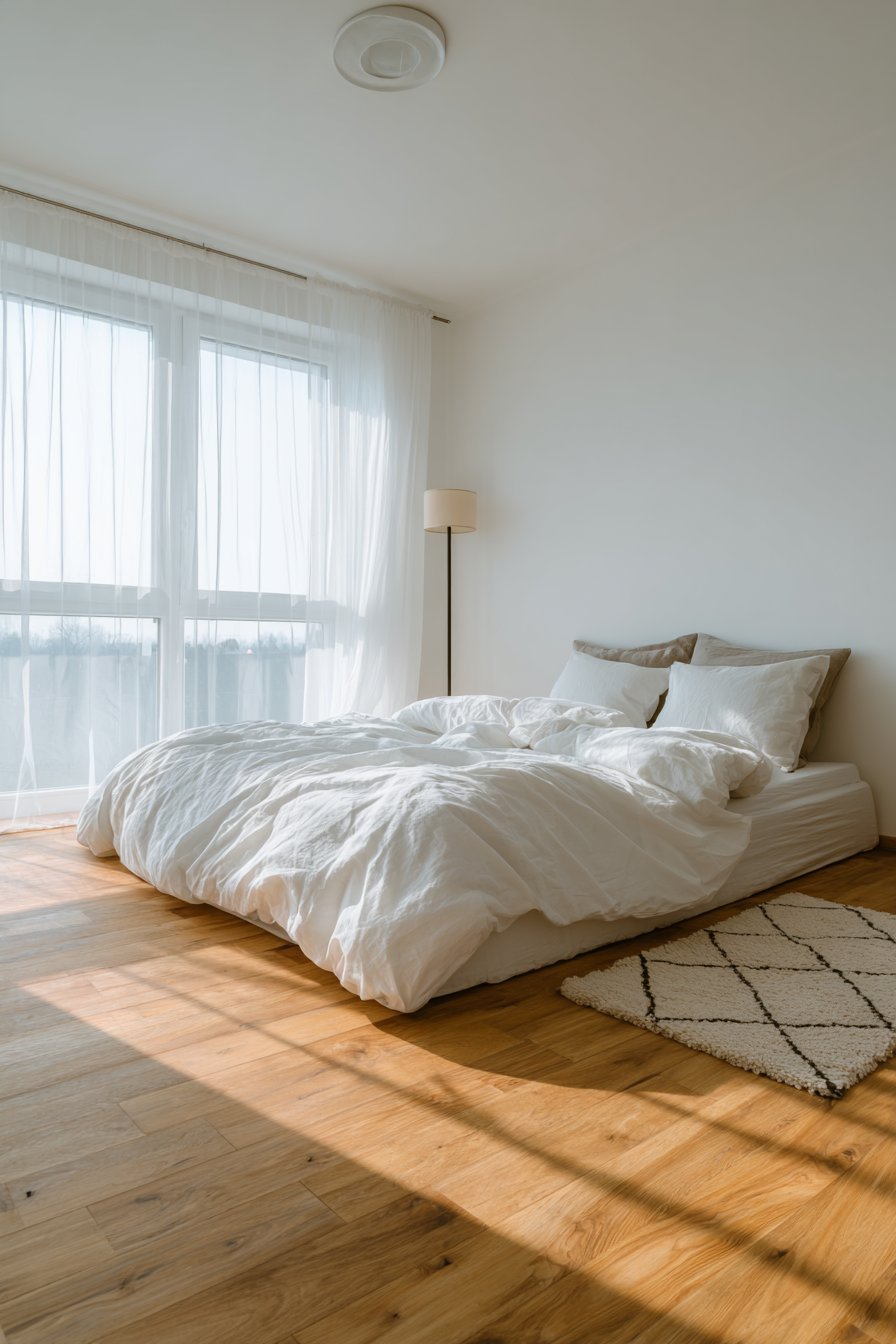
Large windows dressed in sheer white curtains become the room’s defining feature. Diffused natural daylight floods the space throughout the day. Gentle shadows emphasize the clean lines and uncluttered surfaces. The interplay of light transforms the room from morning to evening.
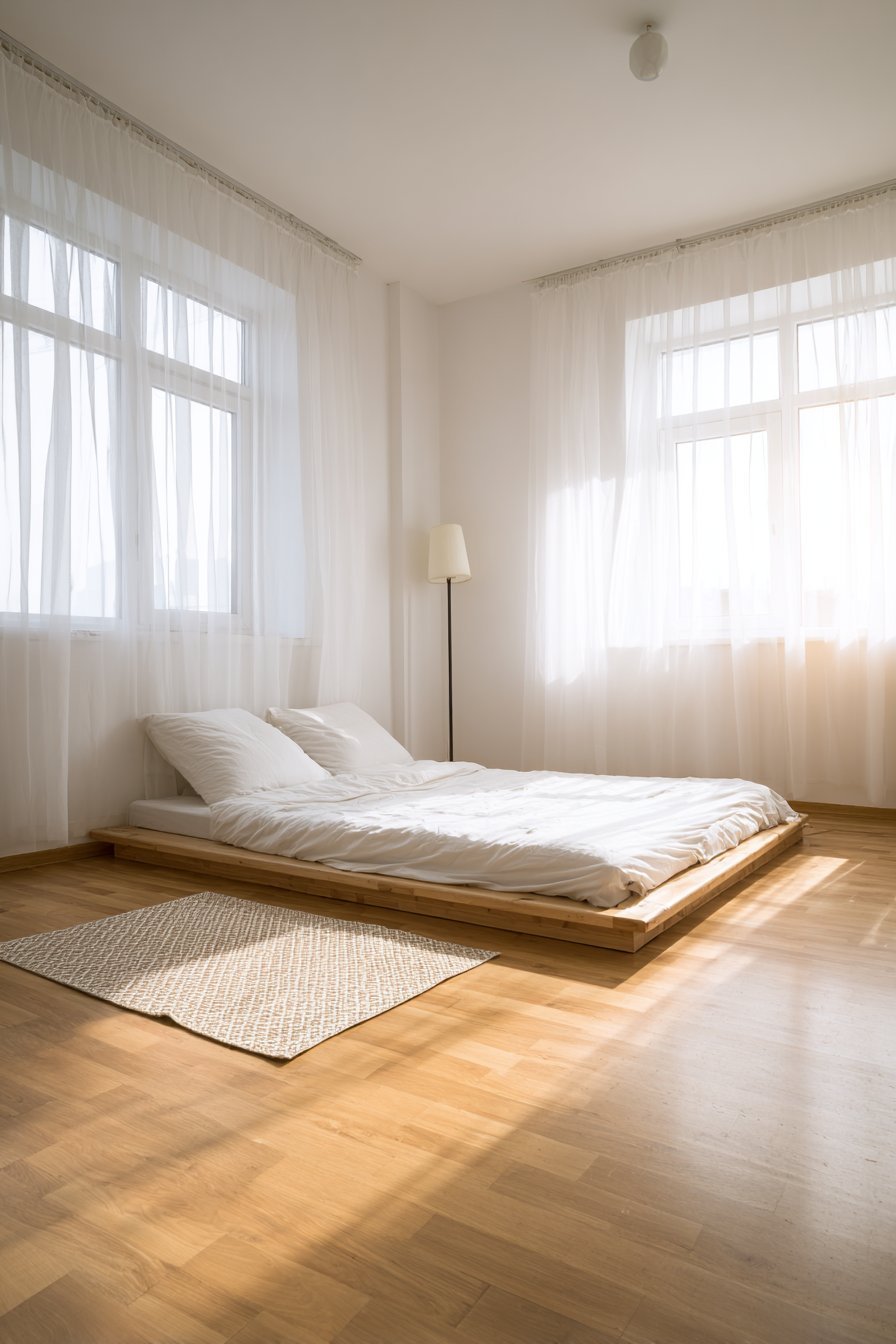
Natural materials create texture without visual noise in this design. Oak flooring brings organic warmth to the cool white palette. The wool rug introduces tactile softness underfoot. Linen bedding offers breathable comfort while maintaining the serene aesthetic.
Key Design Tips:
- Select platform beds to create visual spaciousness and modern appeal
- Use sheer curtains to maximize natural light while maintaining privacy
- Limit color palette to whites and natural wood tones for cohesion
- Choose one statement piece like a geometric rug for subtle interest
- Keep surfaces clear to maintain the peaceful minimal aesthetic
2. Seamless Built-In Storage Wall
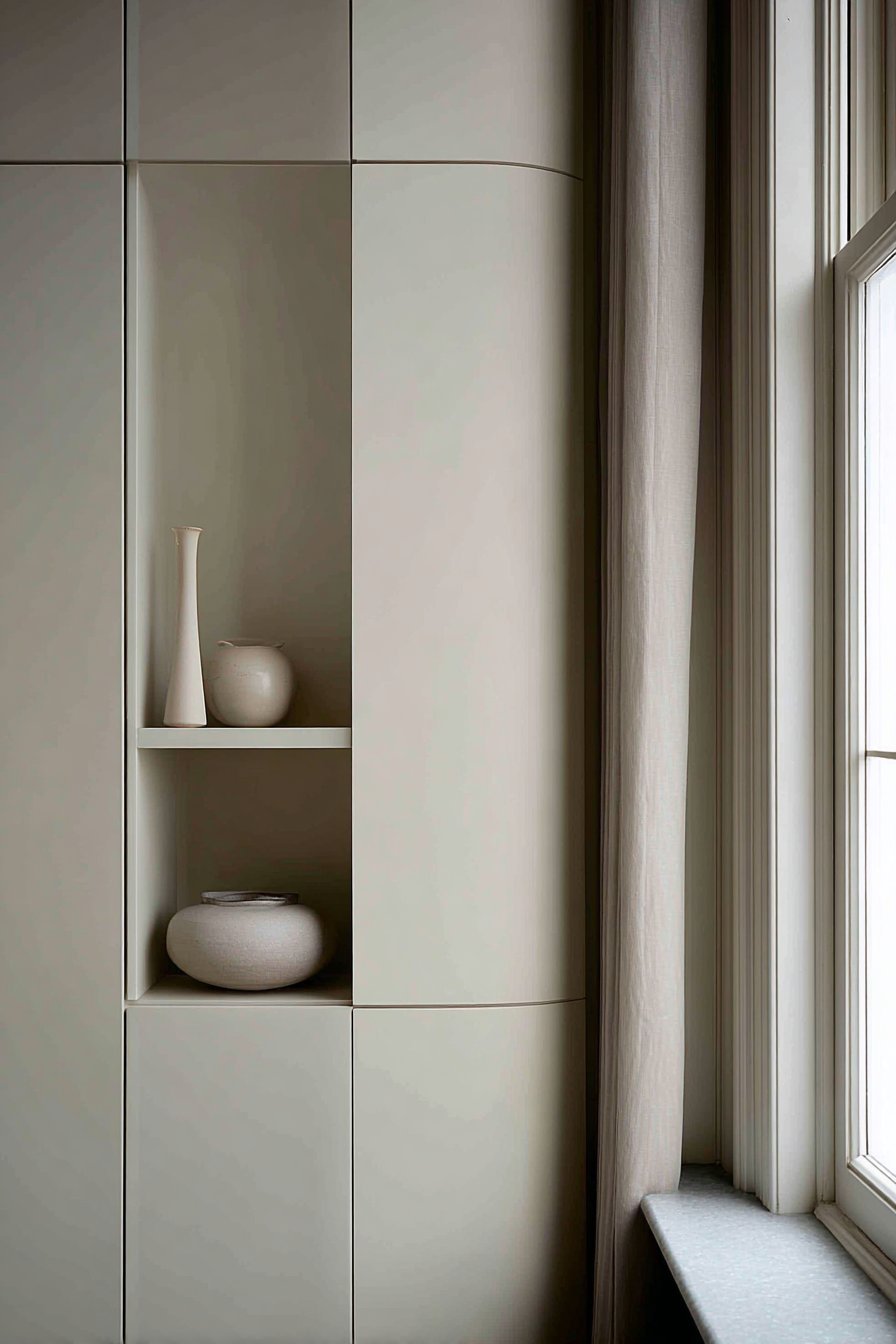
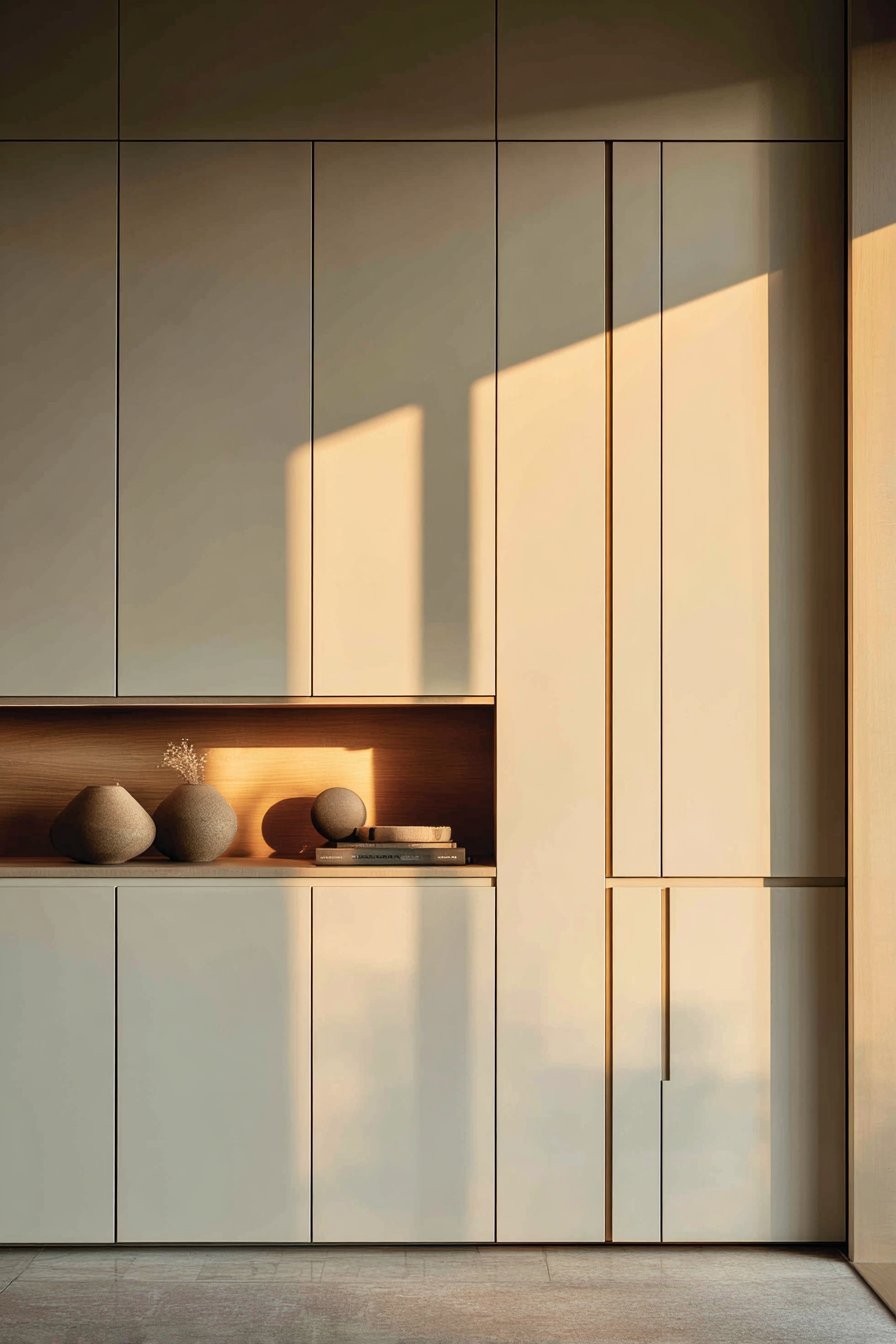
Floor-to-ceiling built-in wardrobes span an entire wall in warm white finish. Handleless cabinet doors create uninterrupted surfaces that maximize storage capacity. The seamless integration maintains visual simplicity while hiding necessary belongings. A single open shelf displays two carefully selected decorative objects.
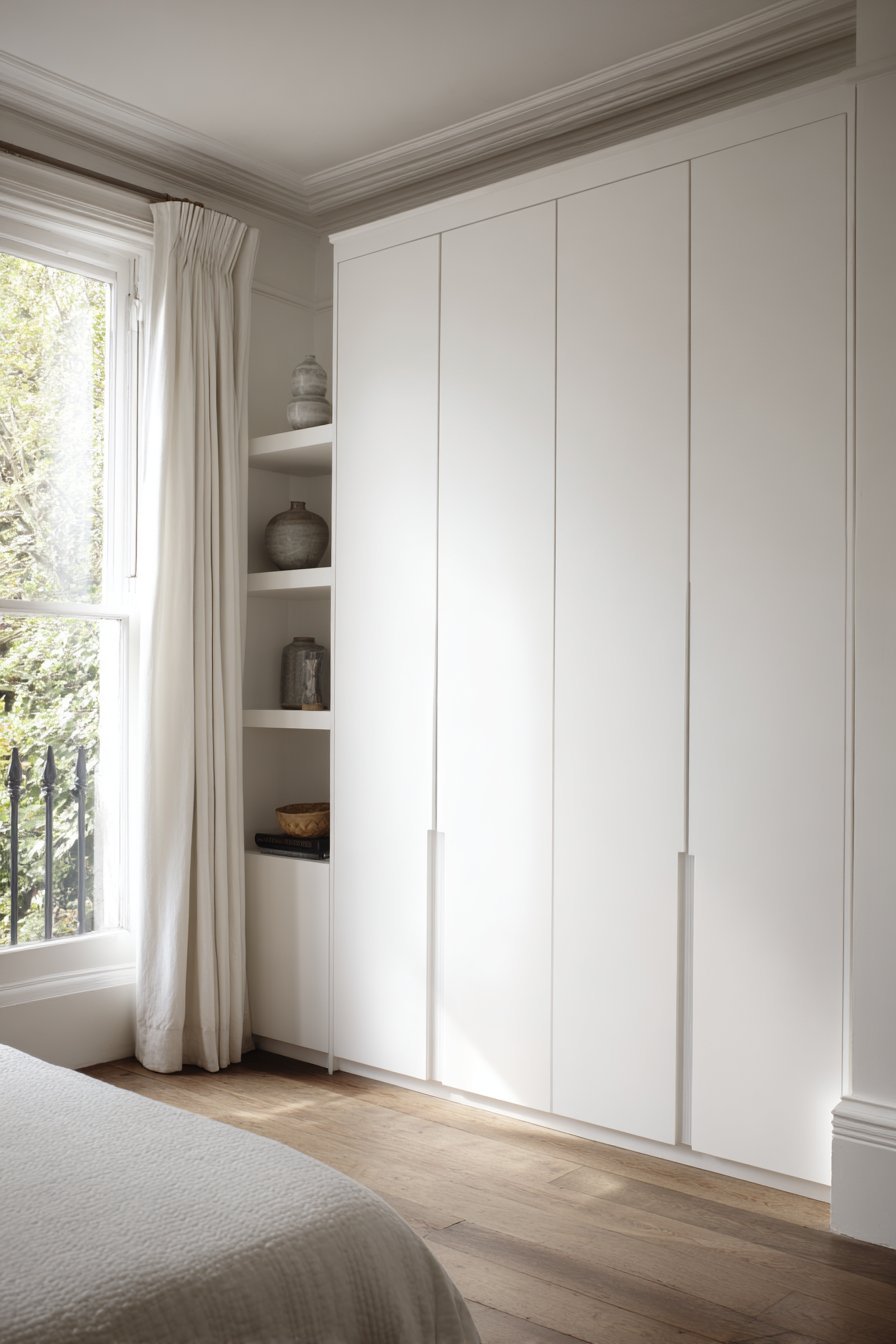
Natural light from an adjacent window creates subtle shadows along cabinet edges. These gentle gradations emphasize the precise craftsmanship and clean lines. The built-in approach eliminates furniture clutter typical of traditional bedrooms. The result feels spacious despite substantial storage capacity.
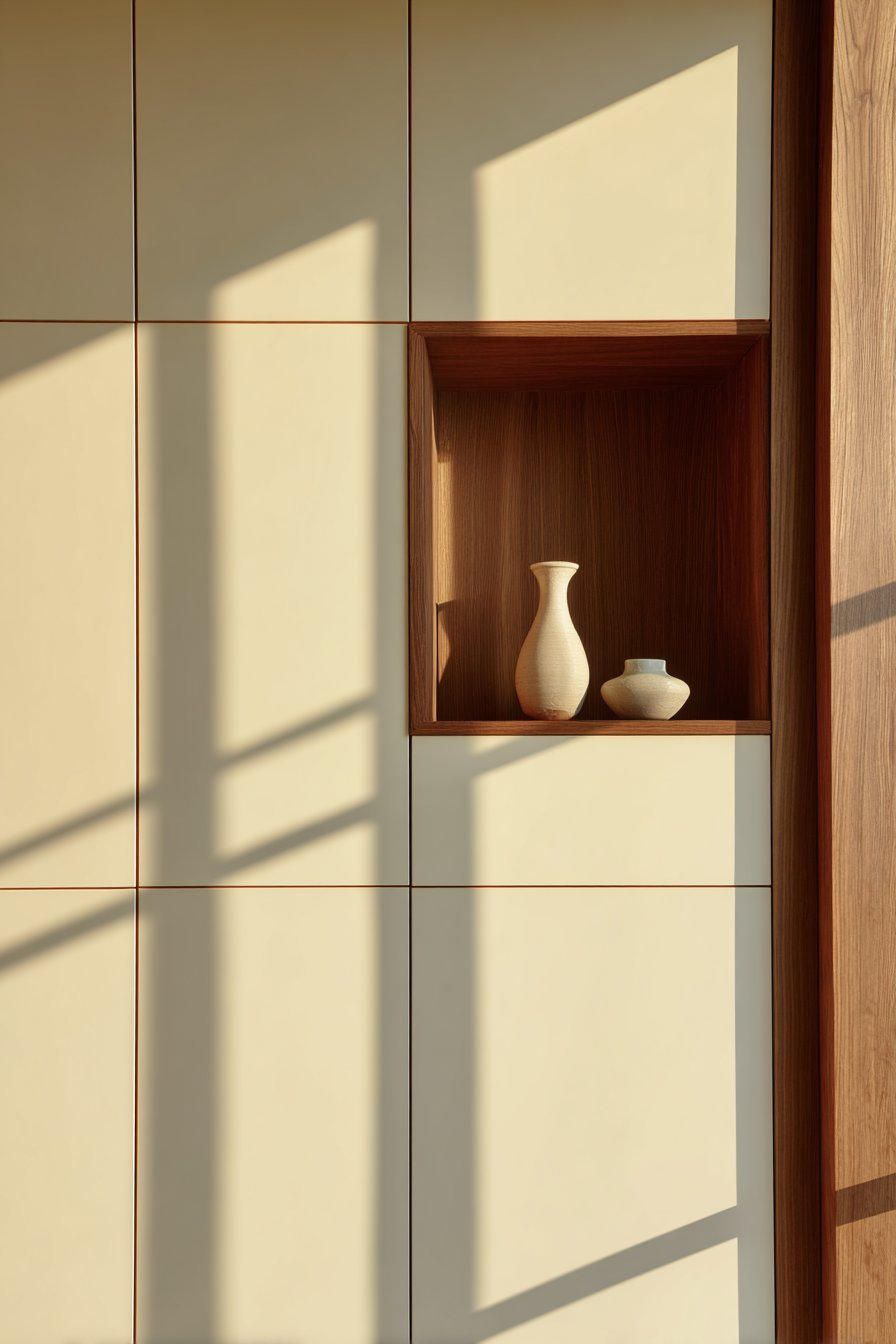
This design demonstrates how functionality enhances minimal aesthetics. Custom built-ins utilize every inch of vertical space efficiently. The handleless design eliminates visual interruptions from hardware. The warm white finish reflects light beautifully throughout the room.
Key Design Tips:
- Invest in floor-to-ceiling built-ins to maximize storage without clutter
- Choose handleless doors with push-to-open mechanisms for clean surfaces
- Paint built-ins the same color as walls for seamless integration
- Include one open shelf for curated display items
- Use quality materials for built-ins as they become permanent features
3. Floating Nightstand Elegance
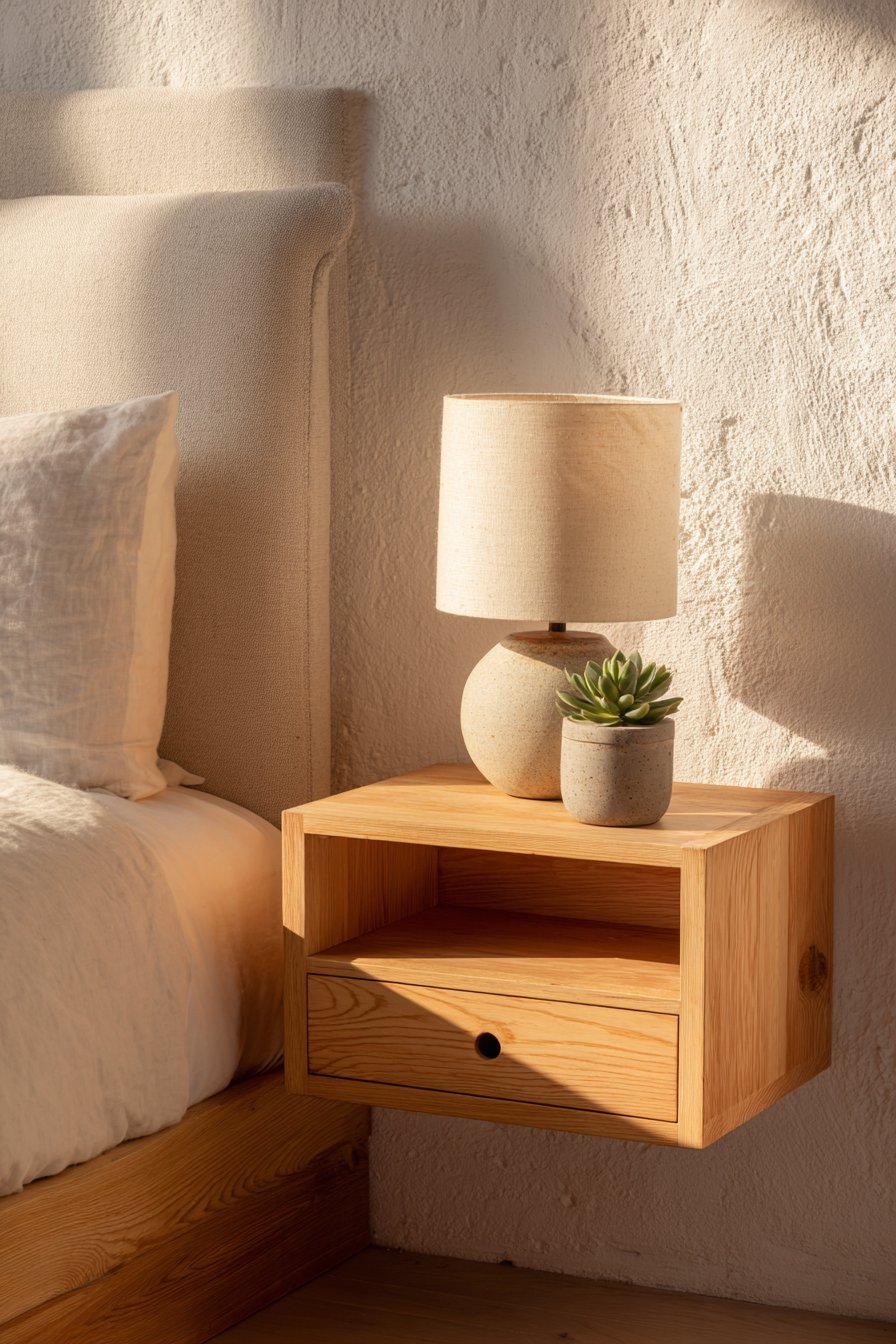
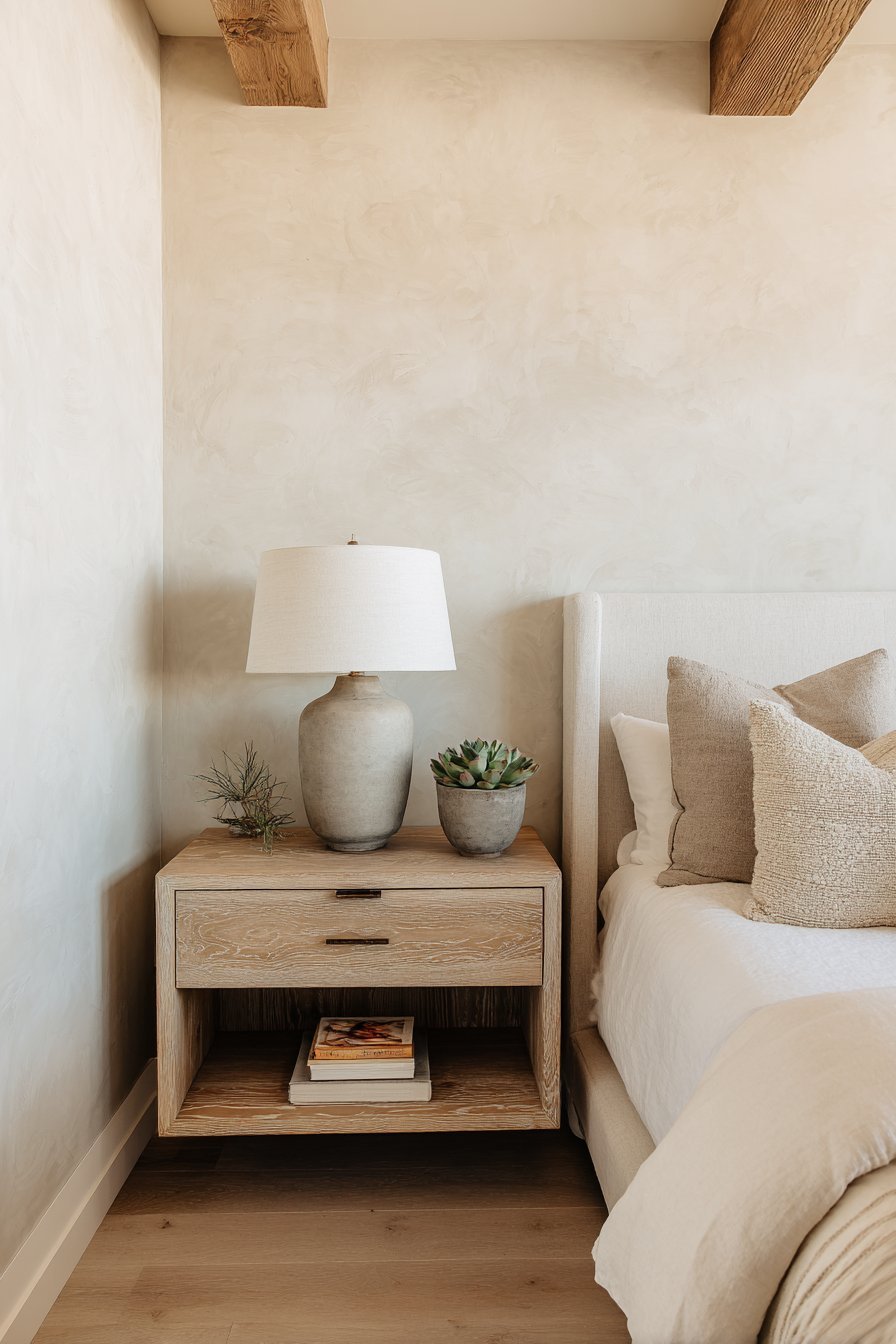
A floating wooden nightstand in light ash mounts beside a simple upholstered bed. The single drawer and open shelf provide essential storage without bulk. A small ceramic table lamp with linen shade sits alongside a potted succulent. The concrete planter adds industrial contrast to the warm wood tones.
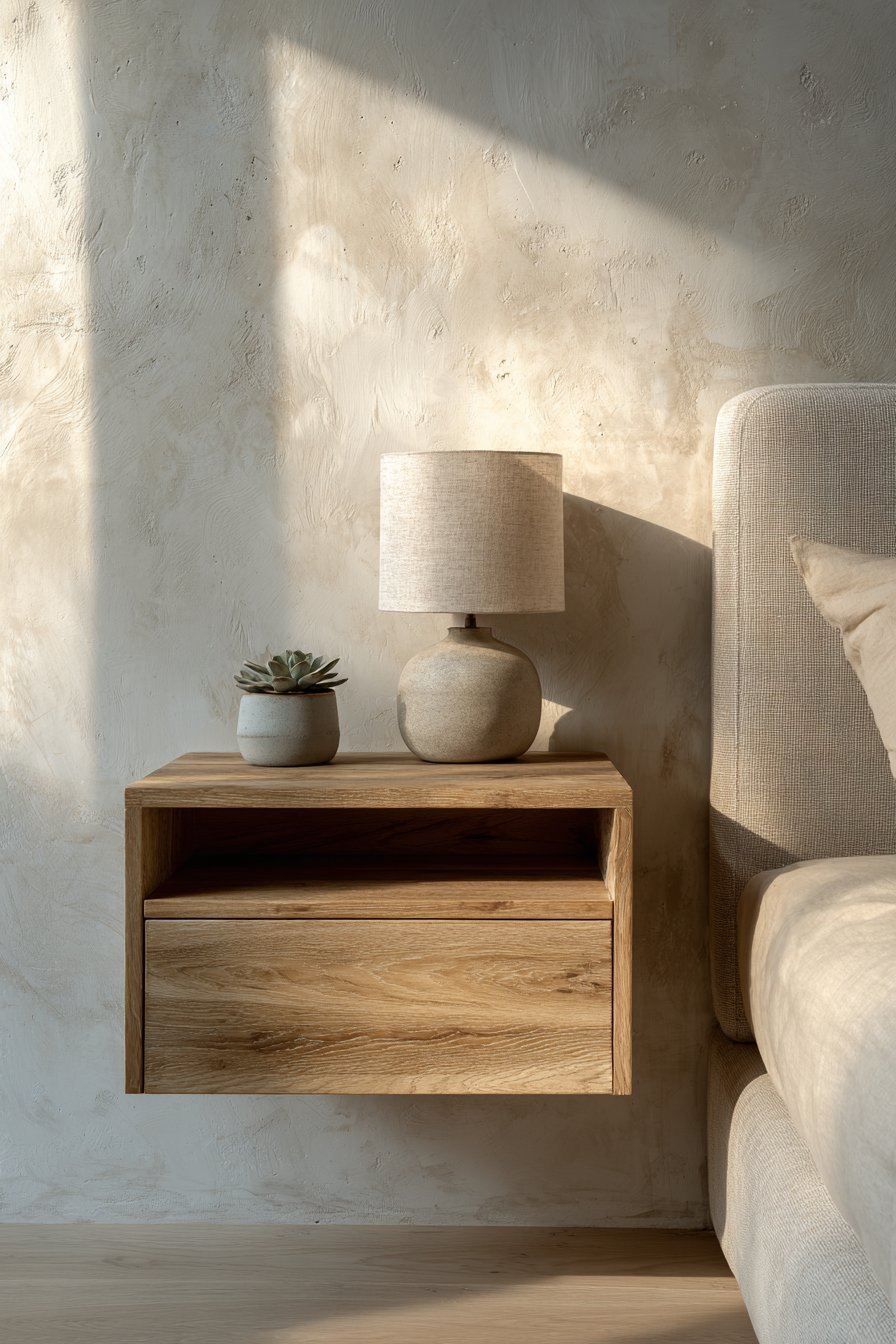
The wall behind displays subtle texture in warm white plaster. Natural morning light creates gentle highlights on the wood grain. Soft shadows beneath the floating piece enhance the sense of lightness. The minimal approach to bedside essentials maintains visual calm.
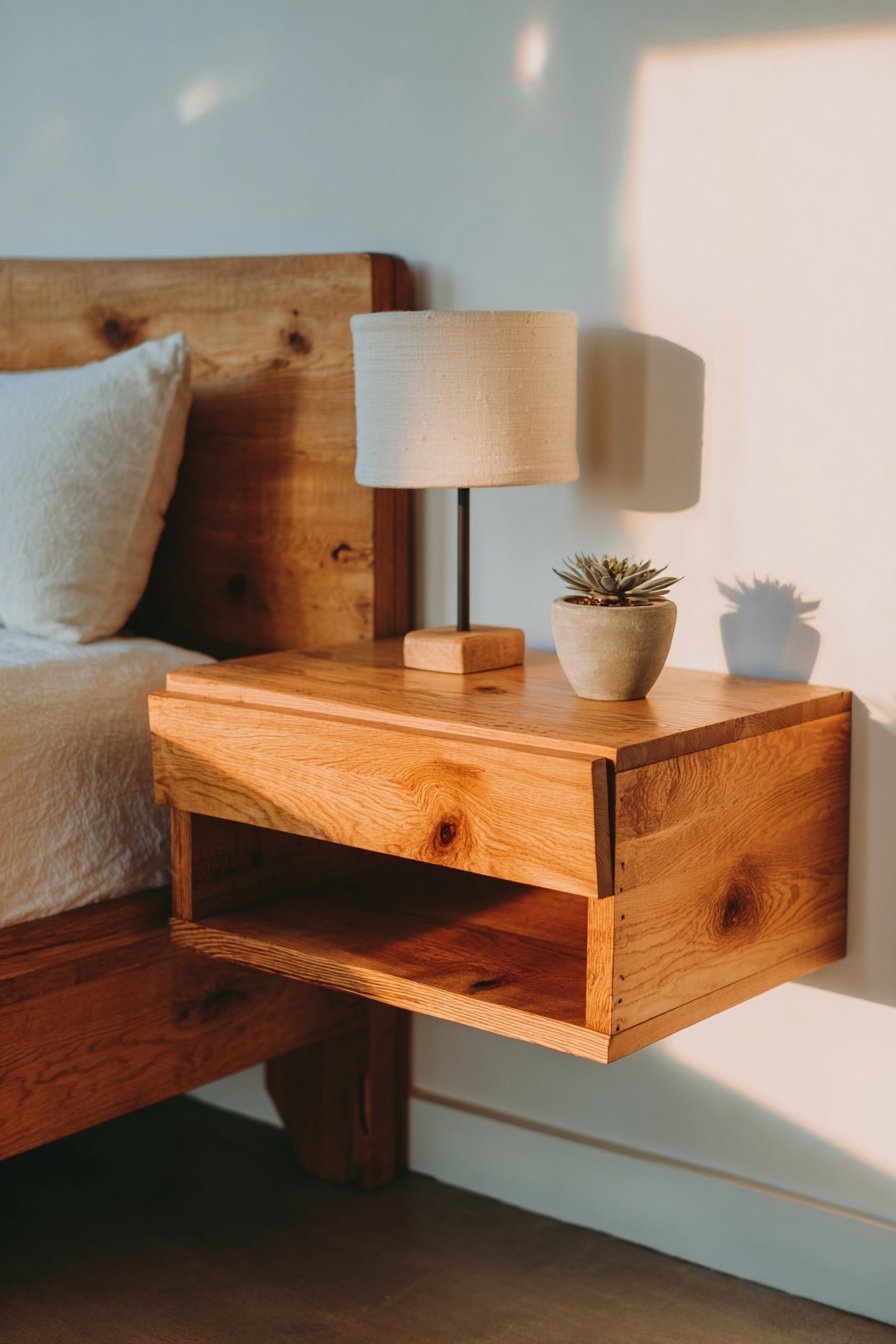
Floating furniture creates airiness essential to minimal bedroom design. The visible floor space beneath makes rooms feel larger. The light ash wood brings natural warmth without overwhelming the space. Essential items remain accessible while maintaining the uncluttered aesthetic.
Key Design Tips:
- Mount nightstands to walls for floating effect and easier floor cleaning
- Limit bedside items to absolute essentials for functionality
- Choose light wood tones to add warmth without visual weight
- Use concrete or ceramic planters for textural contrast
- Install nightstands at proper height relative to mattress top
4. Window-Side Reading Retreat
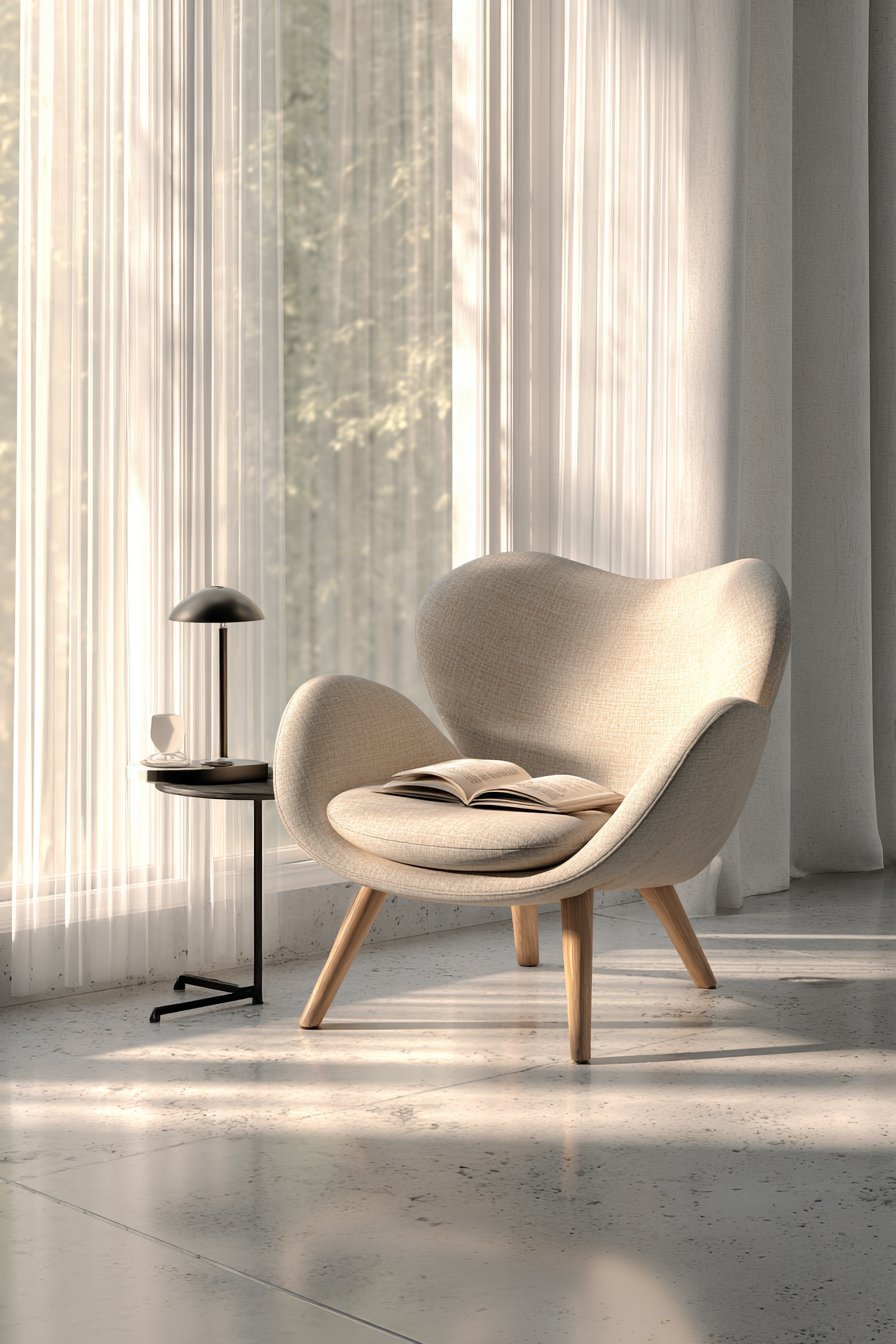
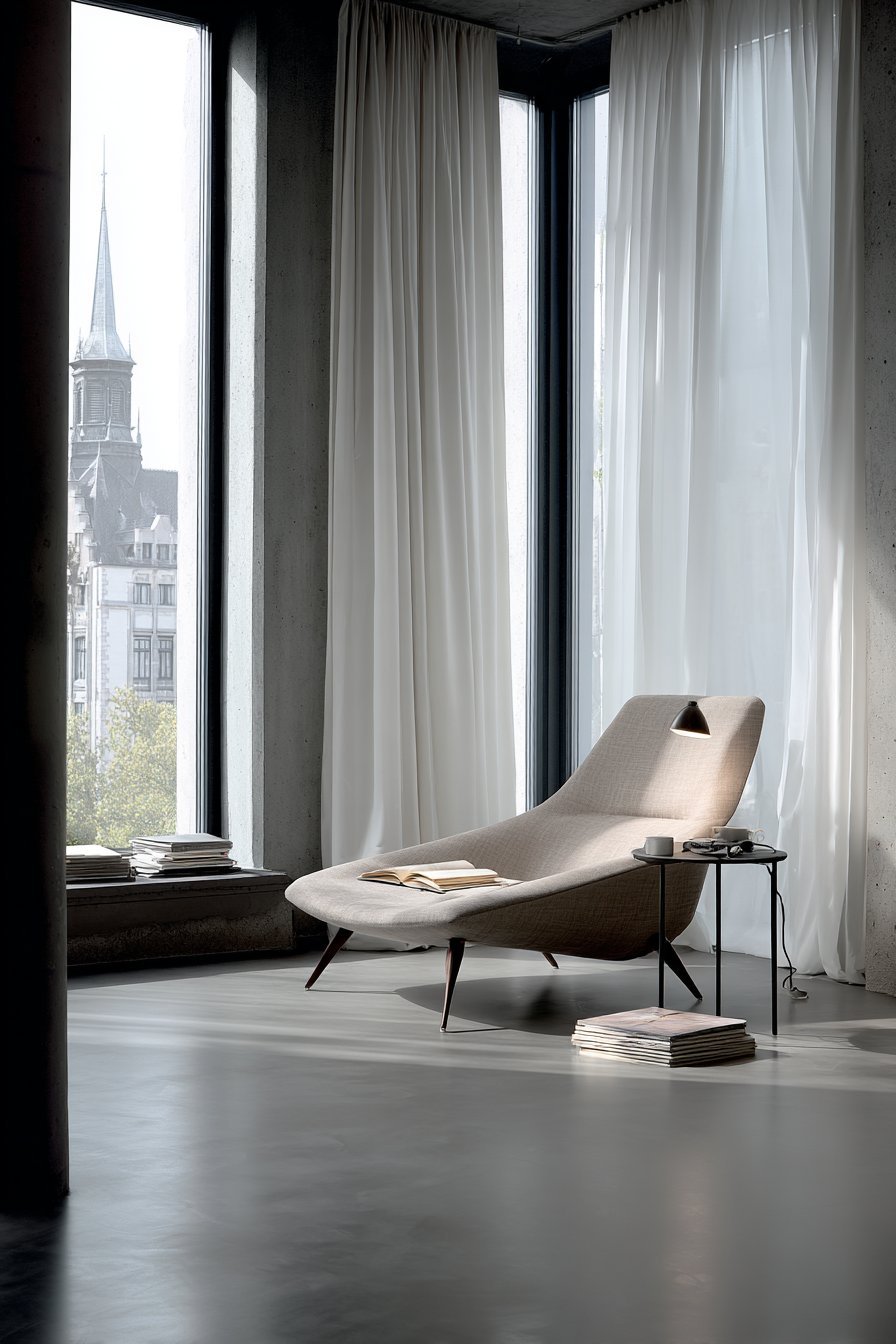
A sculptural lounge chair in natural linen fabric occupies a prime spot near floor-to-ceiling windows. Wooden legs provide organic contrast to the soft upholstery. A slim side table in matte black metal holds a reading lamp and open book. Polished concrete flooring reflects subtle light patterns throughout the space.
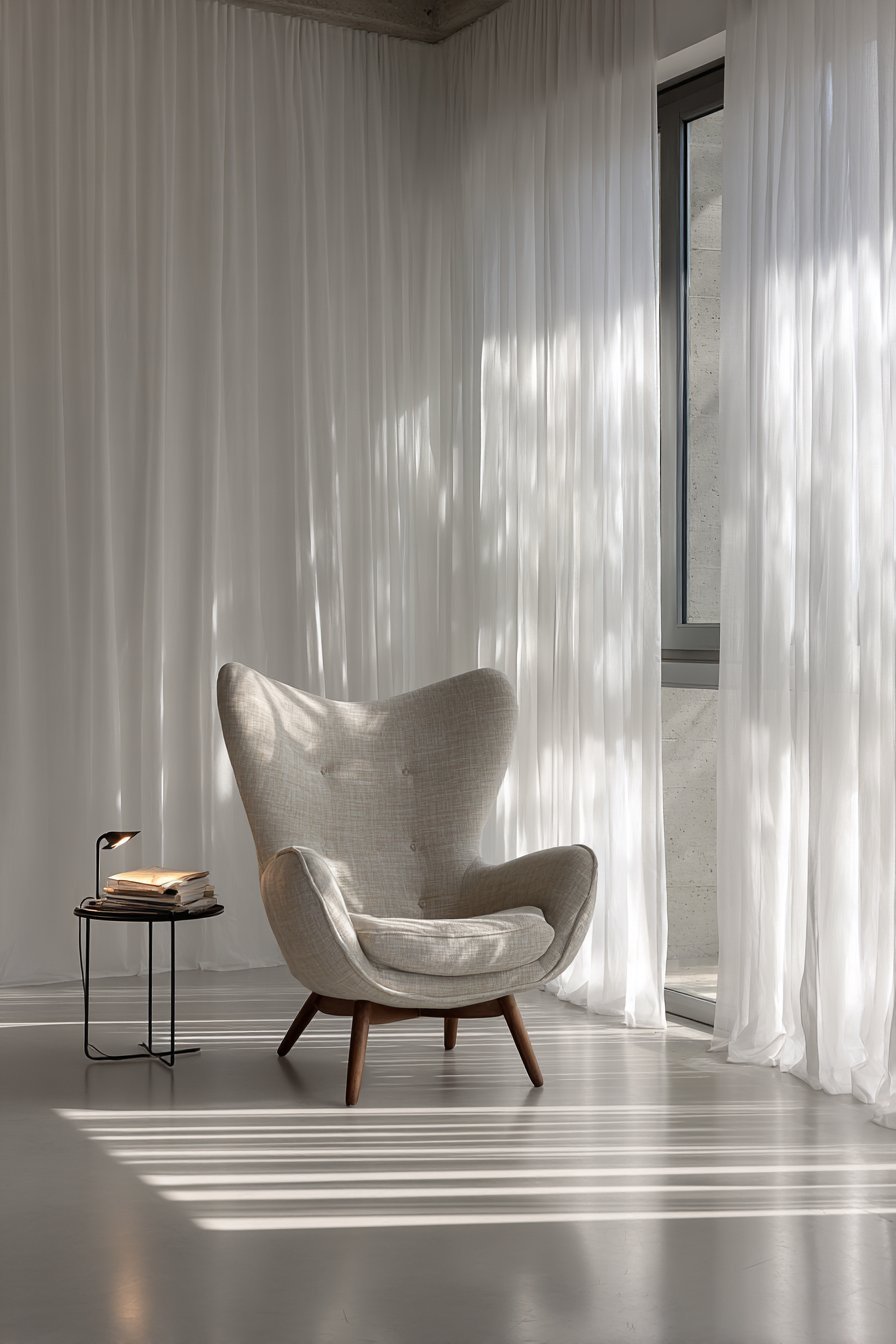
Sheer white curtains diffuse natural daylight into peaceful illumination. The reading nook demonstrates how minimal design supports specific activities. The single chair creates purpose without crowding the bedroom space. Natural light makes this corner perfect for reading during daytime hours.
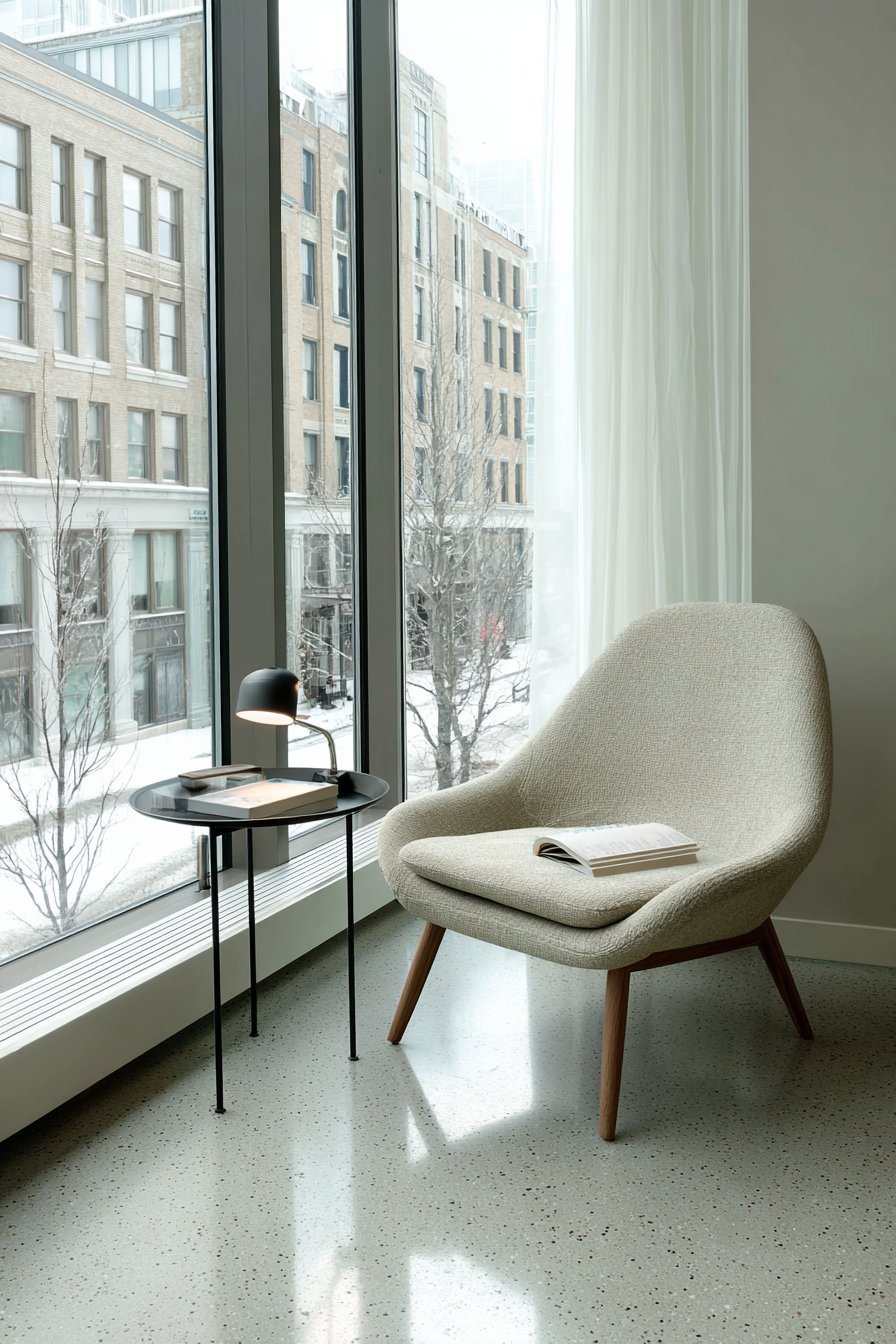
The material palette combines natural and industrial elements thoughtfully. Linen upholstery brings softness and texture to the space. Black metal adds visual anchor without heaviness. Concrete flooring provides durable surface with modern aesthetic appeal.
Key Design Tips:
- Position reading chairs near windows to maximize natural light
- Choose sculptural furniture that serves as functional art
- Use side tables just large enough for essentials
- Install adjustable reading lamps for evening functionality
- Keep the area uncluttered to maintain its peaceful purpose
5. Textured White Brick Accent
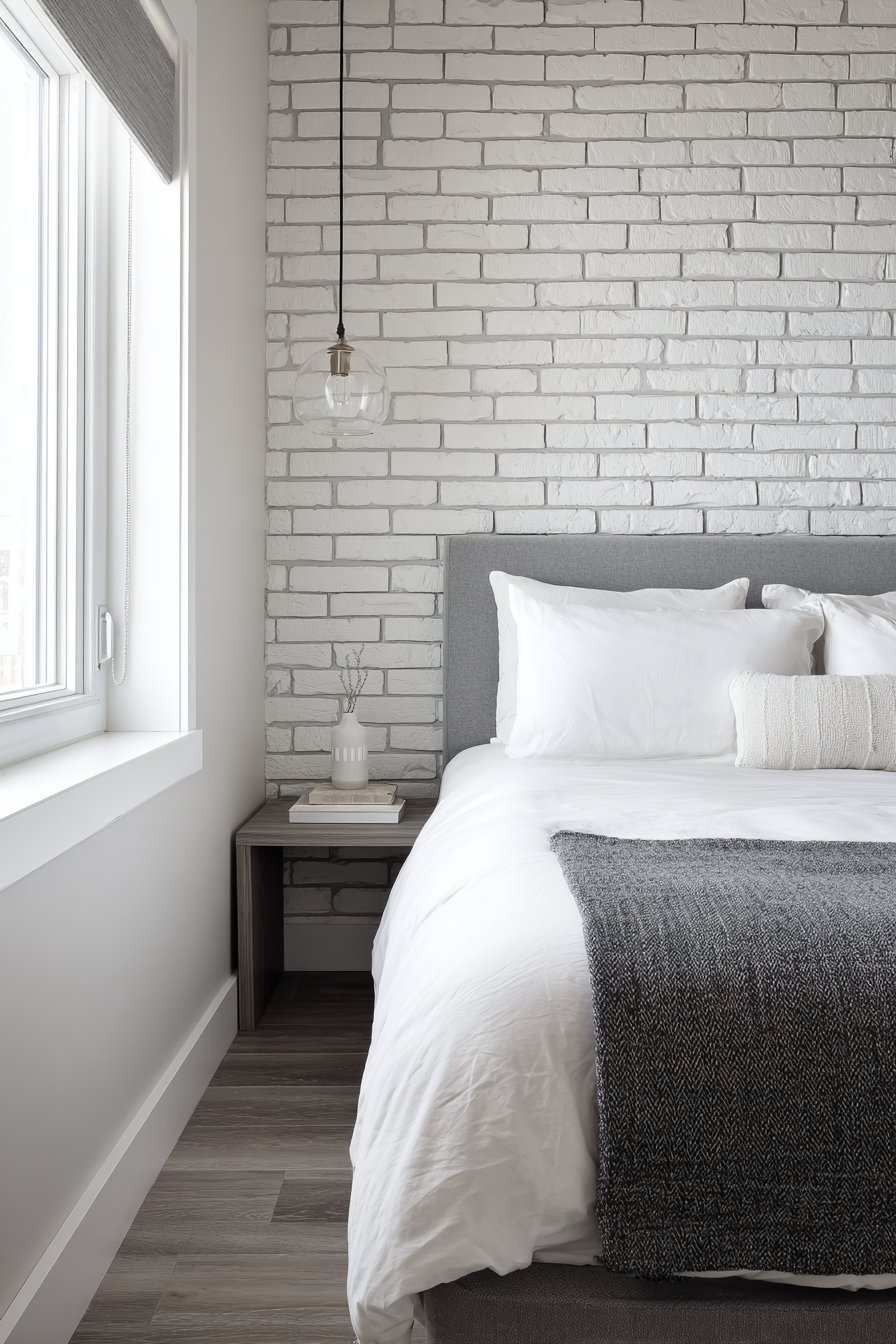
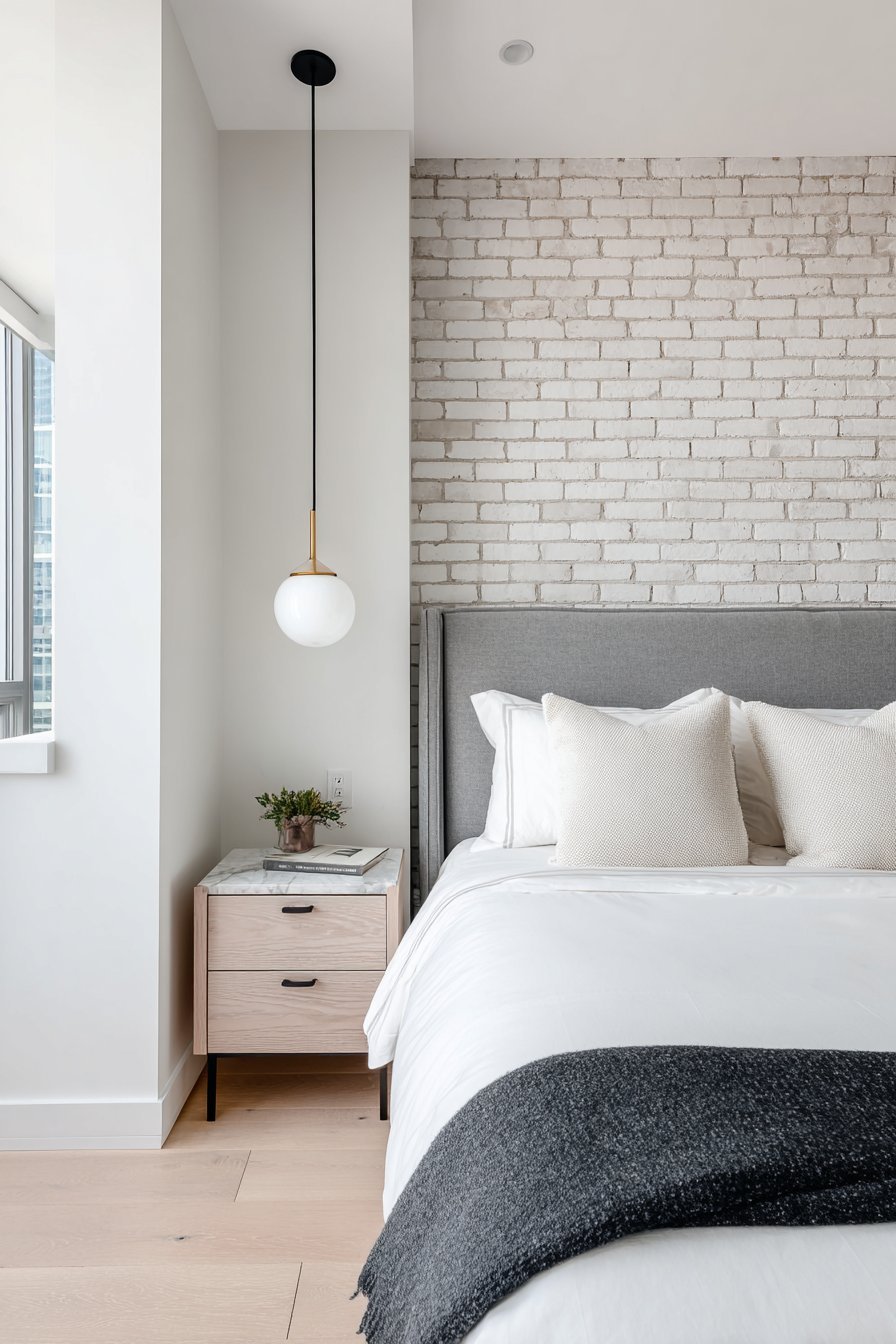
Exposed white brick creates subtle texture behind the bed. The rough surface contrasts beautifully with smooth painted walls. A simple gray upholstered headboard provides soft support against the brick. Crisp white bedding with a charcoal throw blanket adds layered simplicity.
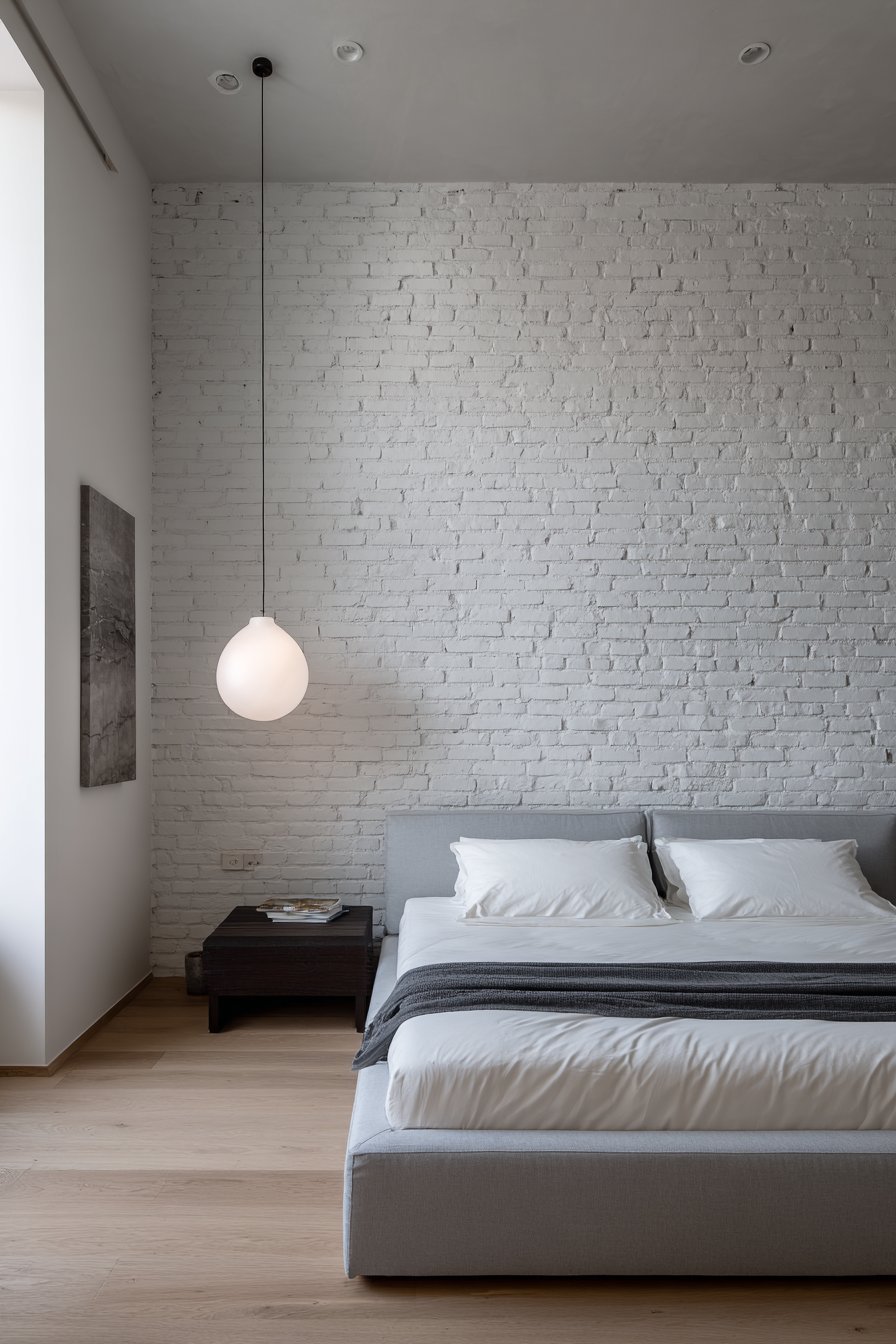
Wide plank light oak flooring adds warmth throughout the room. A single pendant light with frosted glass globe hangs centered above the nightstand. The fixture provides ambient lighting with soft, diffused quality. The balanced interplay of textures creates interest without clutter.
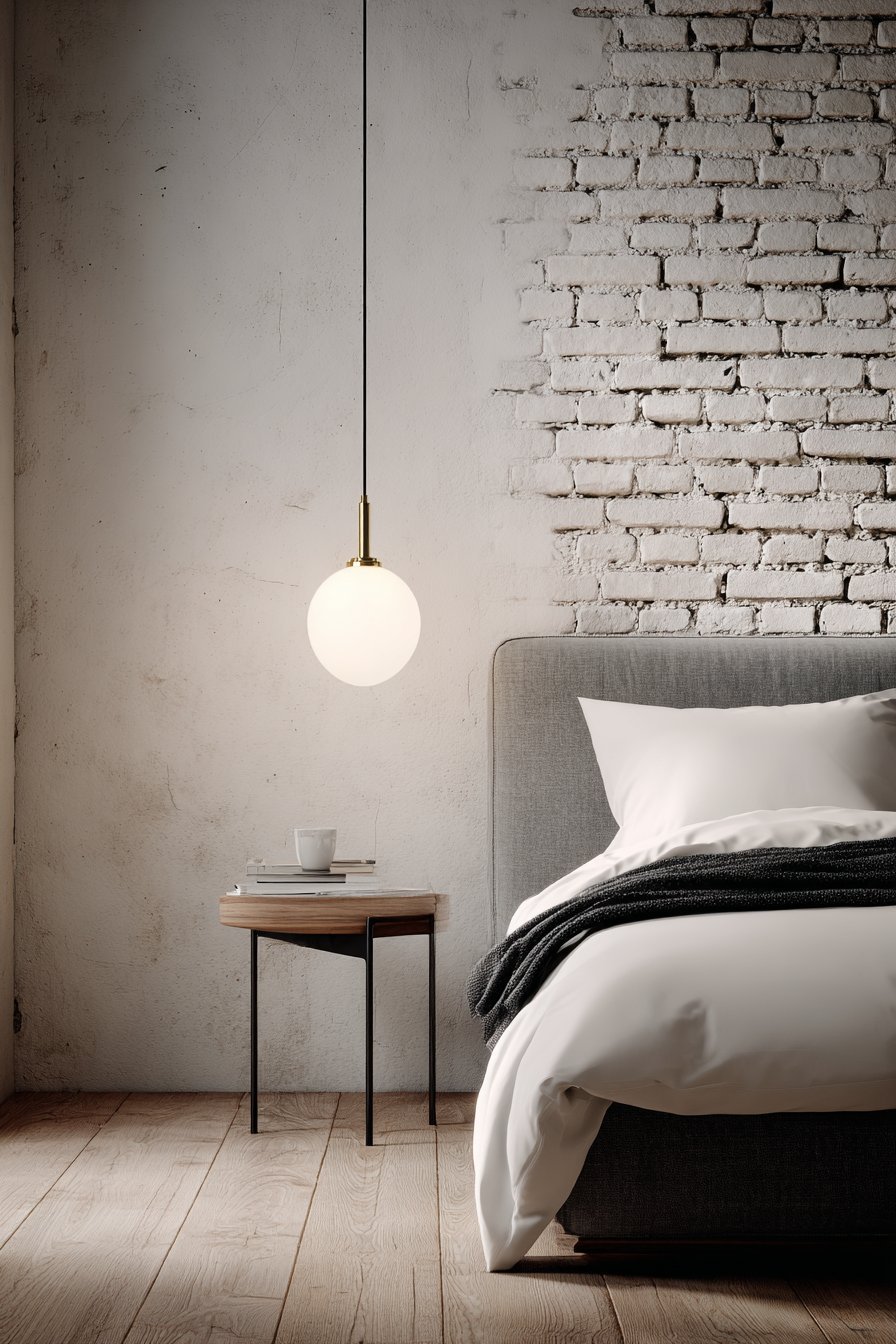
This design proves texture can enhance minimal spaces when used thoughtfully. The white brick adds dimension without introducing new colors. Gray and charcoal accents provide gentle contrast to the whites. Natural oak flooring grounds the space with organic warmth.
Key Design Tips:
- Use textured accent walls sparingly for impact without overwhelm
- Paint brick white to add texture while maintaining light palette
- Layer different whites and grays for subtle depth
- Choose one throw blanket in contrasting color for easy updates
- Install centered pendant lights for balanced illumination
6. Japanese-Inspired Platform Tranquility
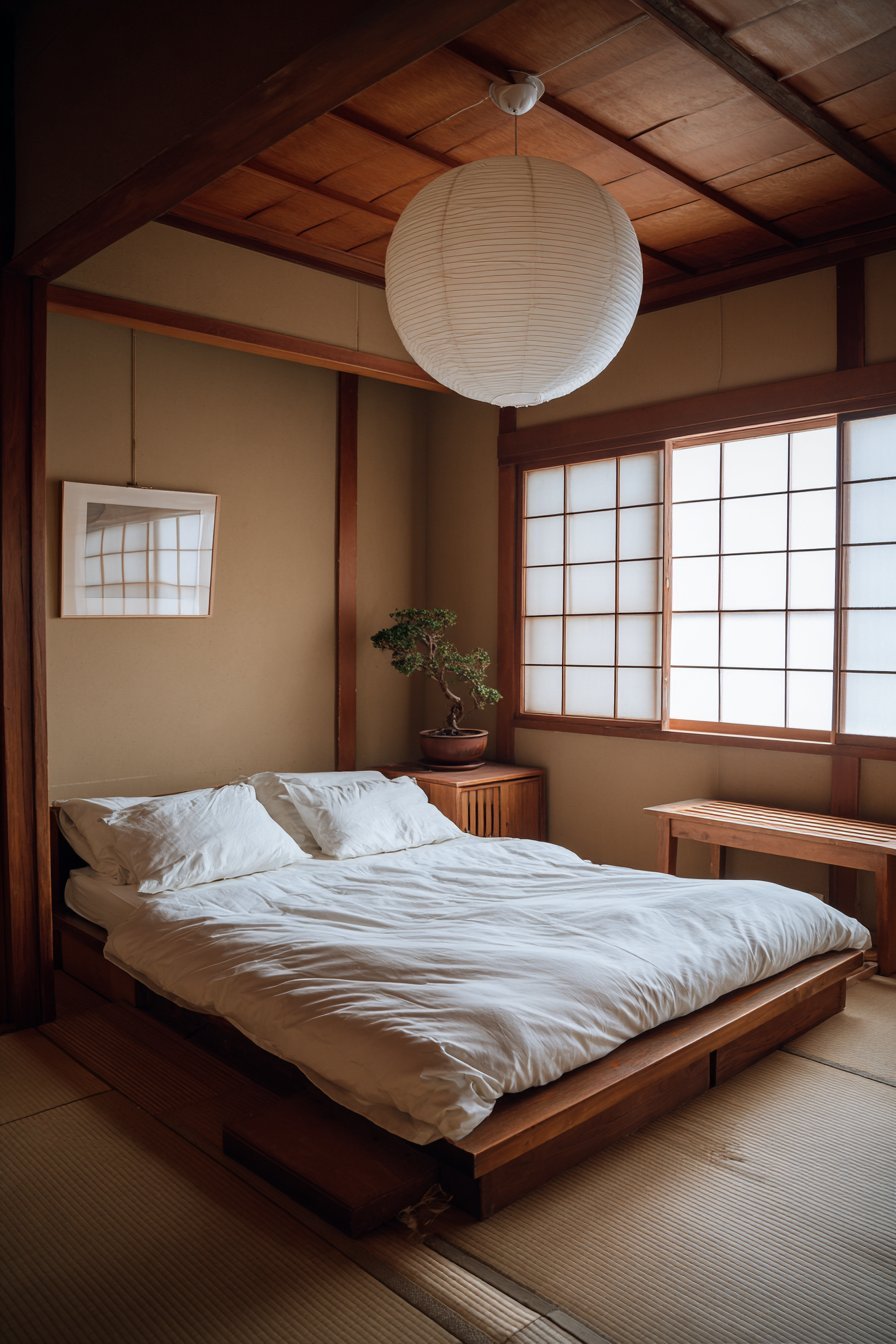
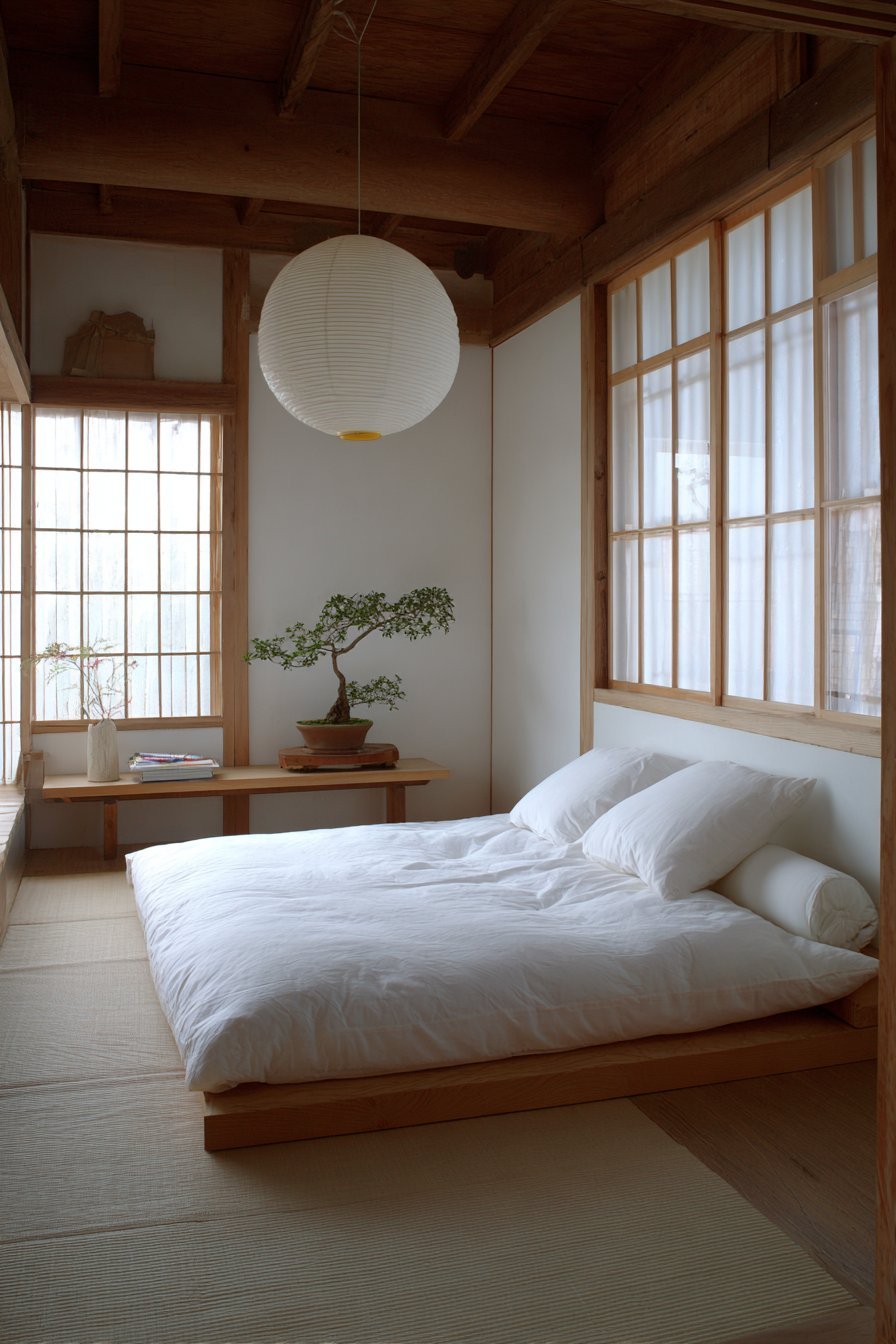
A low platform bed in natural wood embraces Japanese design principles. The thin futon mattress and simple white cotton bedding emphasize essential comfort. A low wooden bench sits at the foot of the bed. Paper lantern pendant light suspends from the ceiling with graceful simplicity.
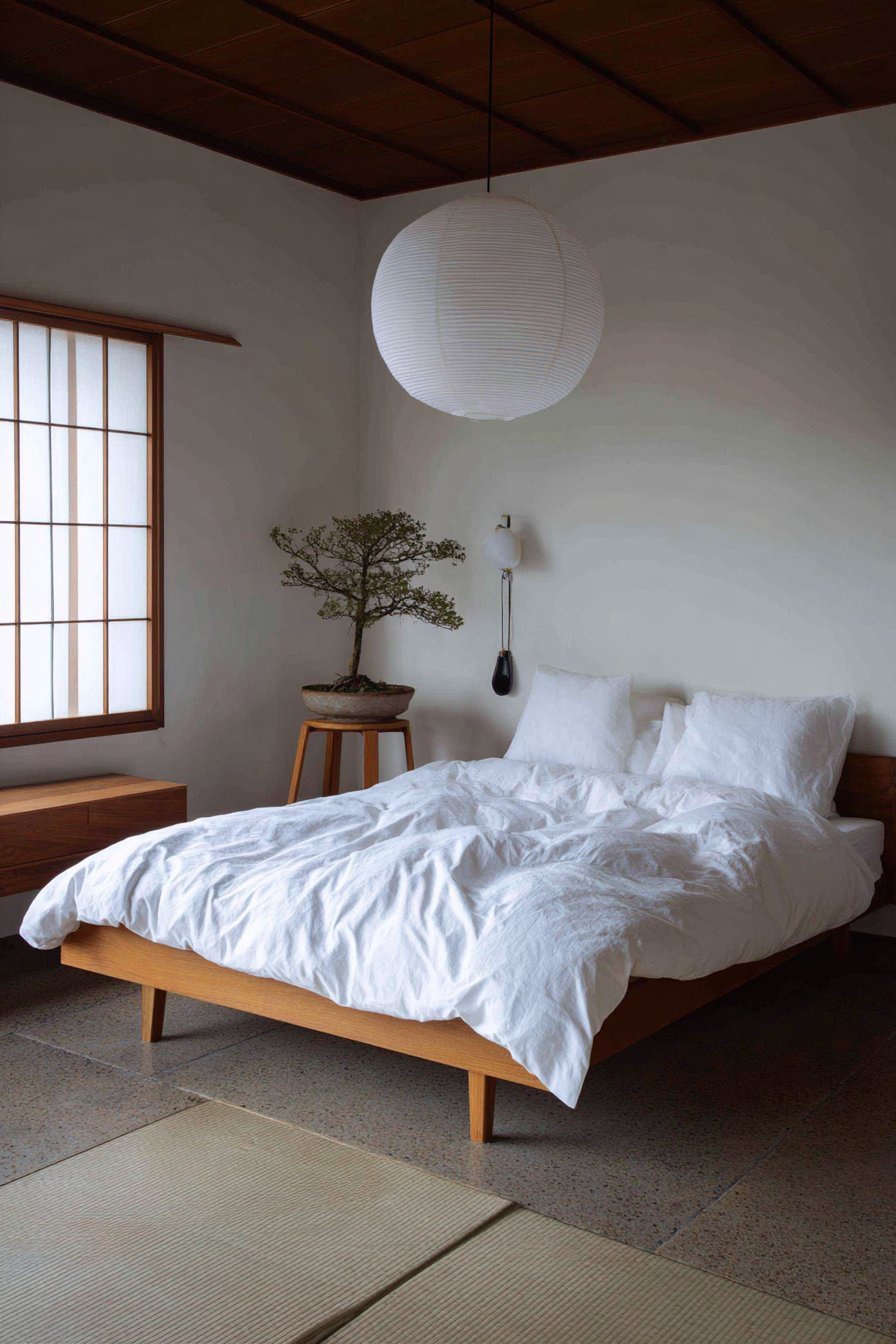
Tatami-style flooring in natural fiber adds subtle texture underfoot. A small bonsai tree on a minimalist wooden stand provides the only decoration. Natural light filters through translucent shoji-style window panels. The soft diffused illumination creates zen-like tranquility throughout the space.
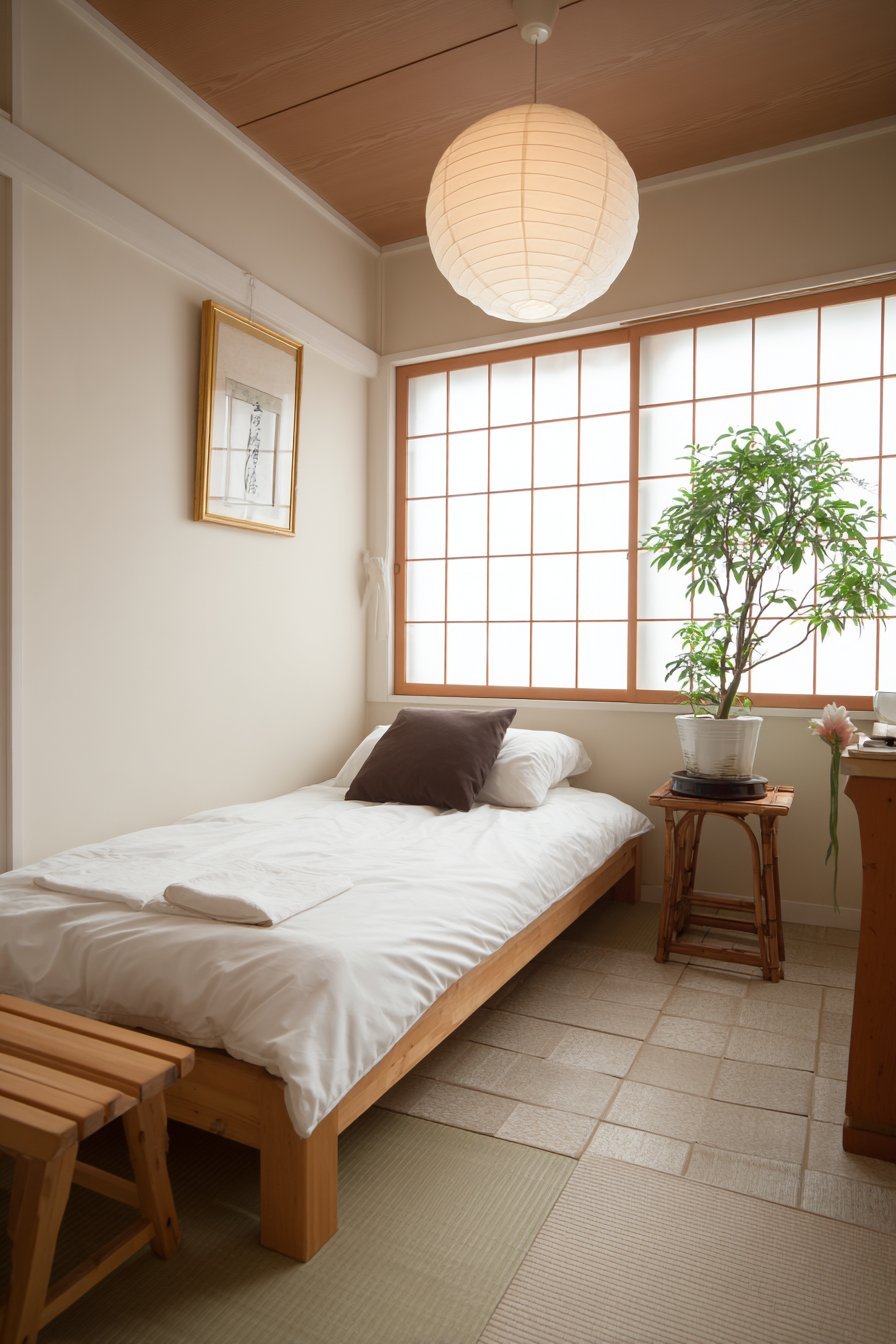
This approach demonstrates how cultural design philosophy informs minimal aesthetics. Japanese minimalism focuses on connection with nature and essential living. The low furniture profile creates horizontal emphasis and spatial calm. Natural materials connect inhabitants with organic elements.
Key Design Tips:
- Choose platform beds close to floor for Japanese aesthetic
- Use natural fiber flooring like tatami or jute for texture
- Install shoji-style panels or translucent curtains for soft light
- Limit decorative objects to single living plant
- Select paper lantern fixtures for ambient lighting quality
7. Multifunctional Wall-Mounted Workspace
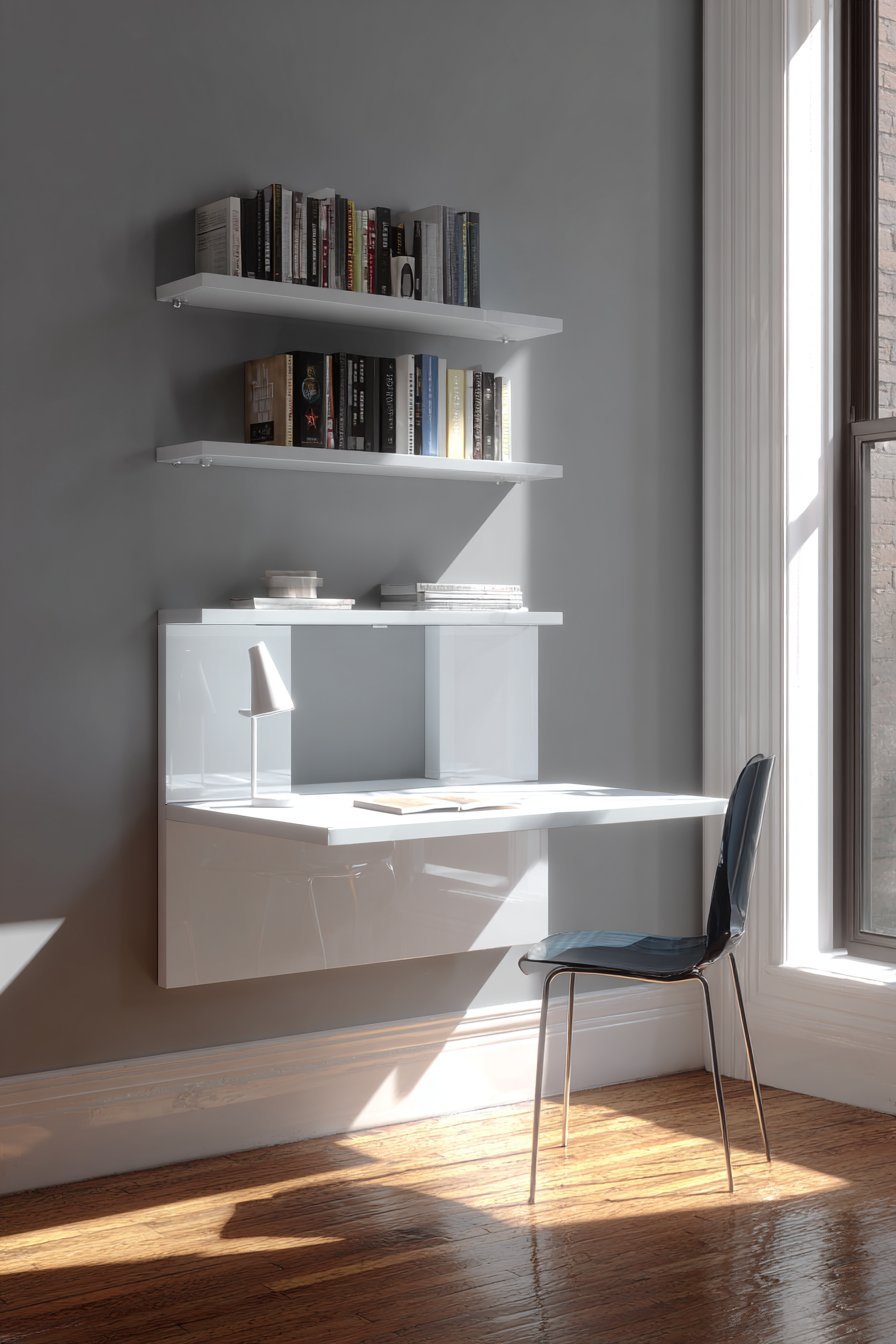
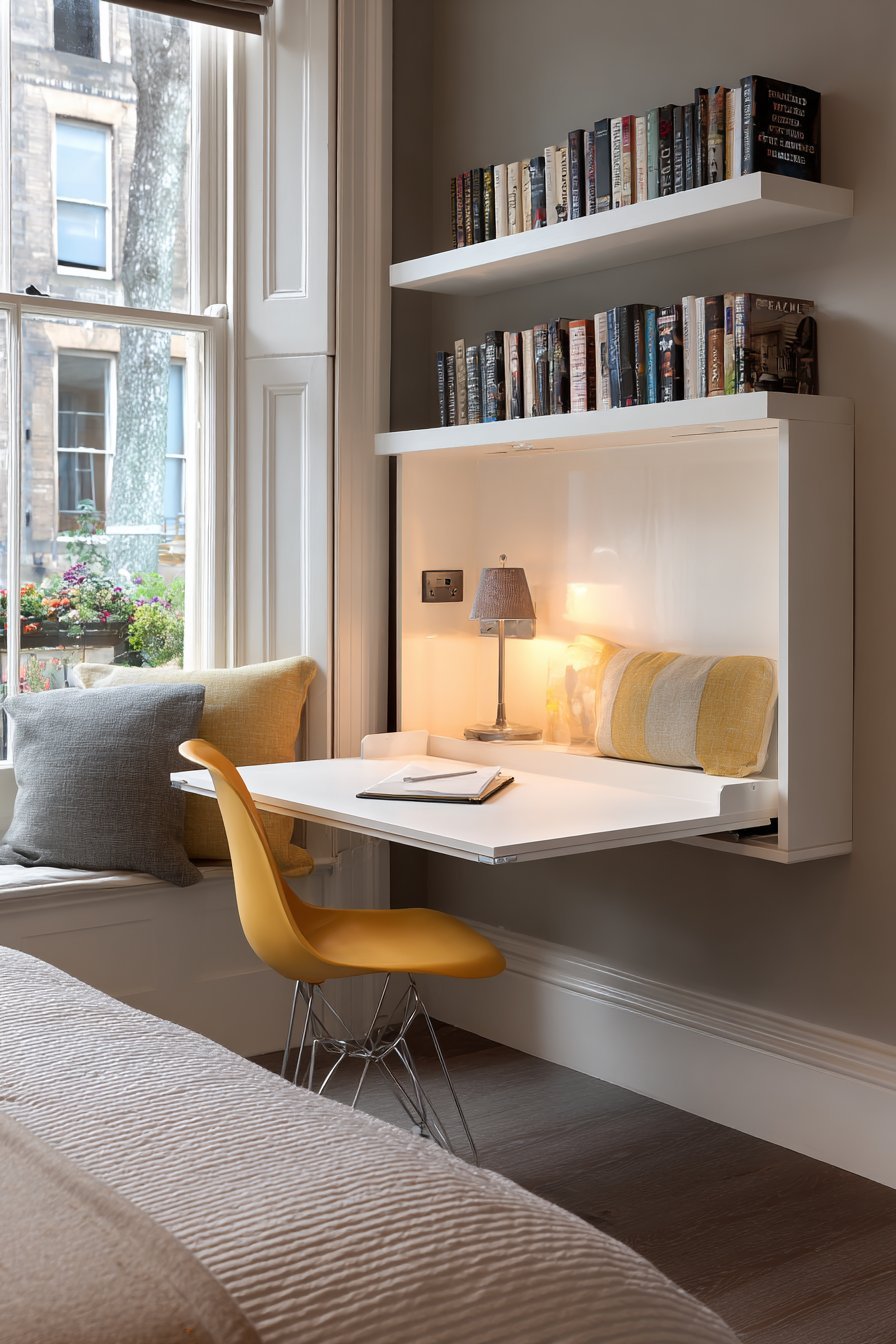
A wall-mounted fold-down desk in white lacquer serves dual purposes. The surface functions as both workspace and nightstand when needed. A small task lamp and single notebook occupy the desk surface. Three floating shelves above display carefully edited books arranged by height.
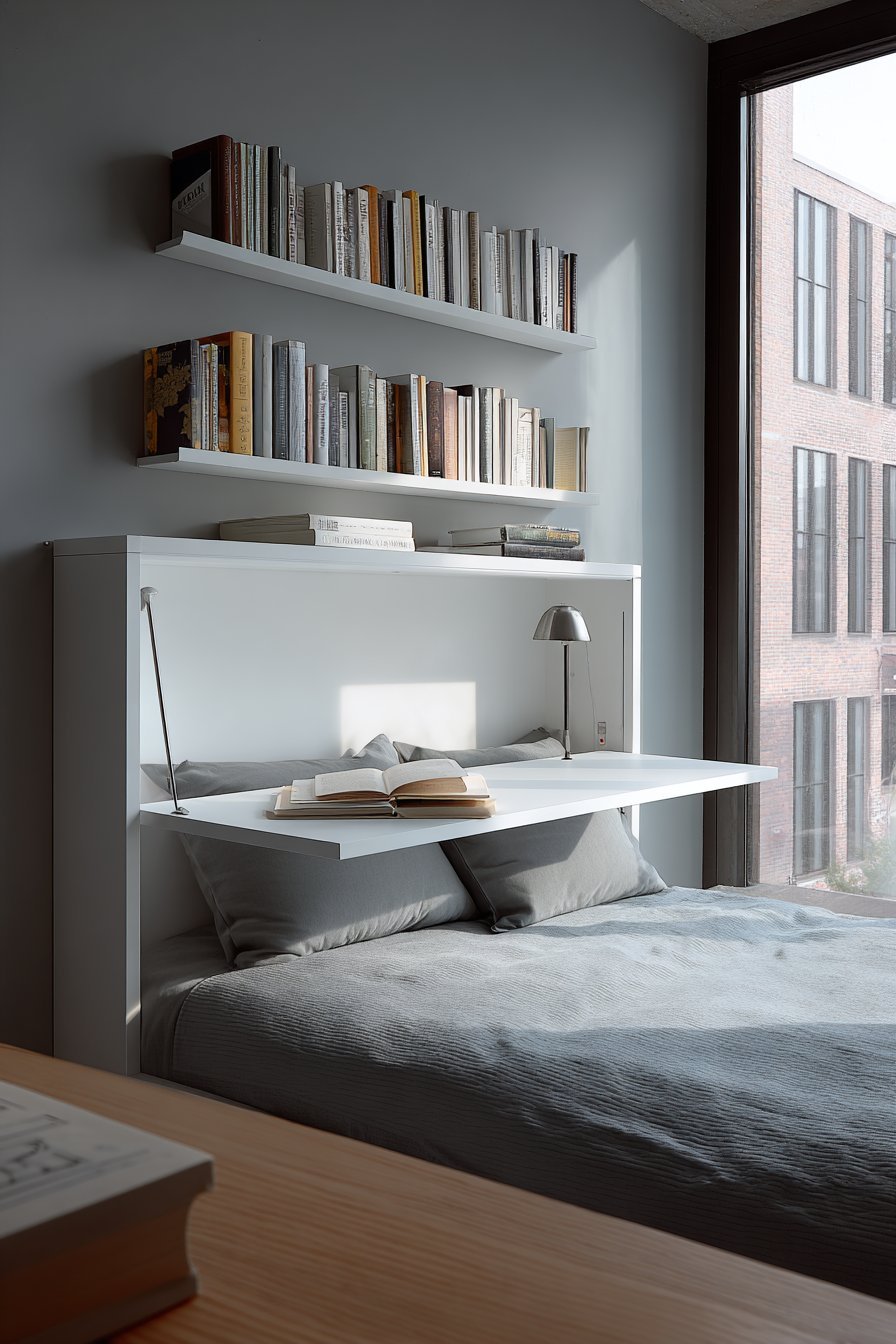
The surrounding wall features warm gray paint that adds subtle depth. Natural daylight from a nearby window illuminates the functional workspace. The fold-down design demonstrates space-saving innovation in minimal bedrooms. White lacquer finish maintains visual lightness and reflects available light.
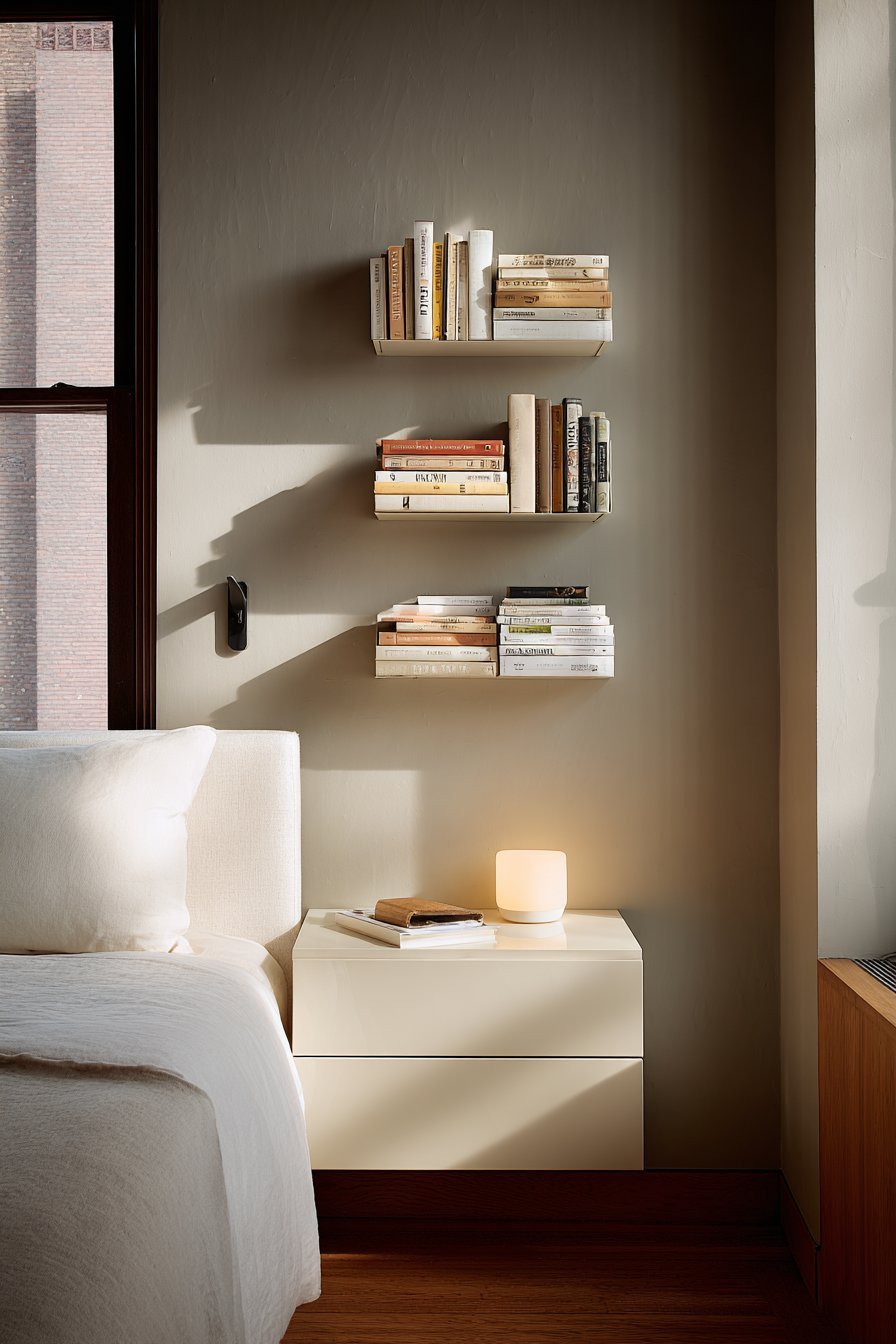
Multifunctional furniture proves essential for minimal bedroom design in smaller spaces. The desk disappears when not needed, maintaining clean lines. The floating shelves provide storage without floor space requirements. Thoughtful design allows rooms to adapt to different daily needs.
Key Design Tips:
- Install fold-down desks for flexible workspace in bedrooms
- Mount floating shelves at varying heights for visual interest
- Arrange books by size or color for intentional display
- Choose adjustable task lamps for focused work lighting
- Paint adjacent walls in warm neutrals for depth
8. Capsule Wardrobe Display
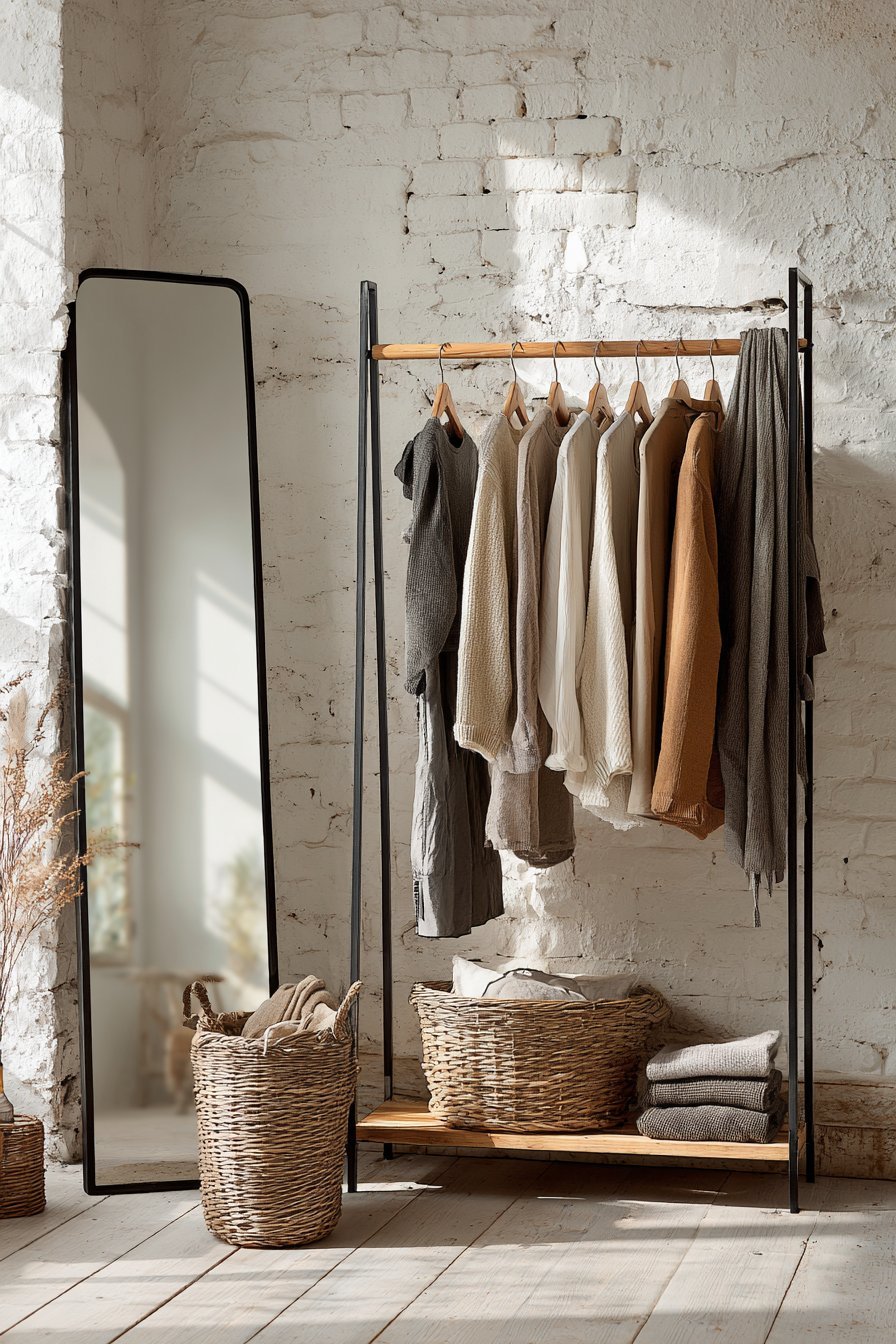
A simple wooden clothing rack with metal frame displays a capsule wardrobe. Ten garments in neutral tones hang with equal spacing. The intentional arrangement demonstrates minimal approach to clothing storage. Two woven baskets below contain folded items organized by category.

White painted brick wall behind provides subtle texture and interest. A full-length leaning mirror in thin black frame rests against the adjacent wall. Natural light creates gentle shadows that emphasize intentional simplicity. The open storage system makes daily selection effortless and mindful.
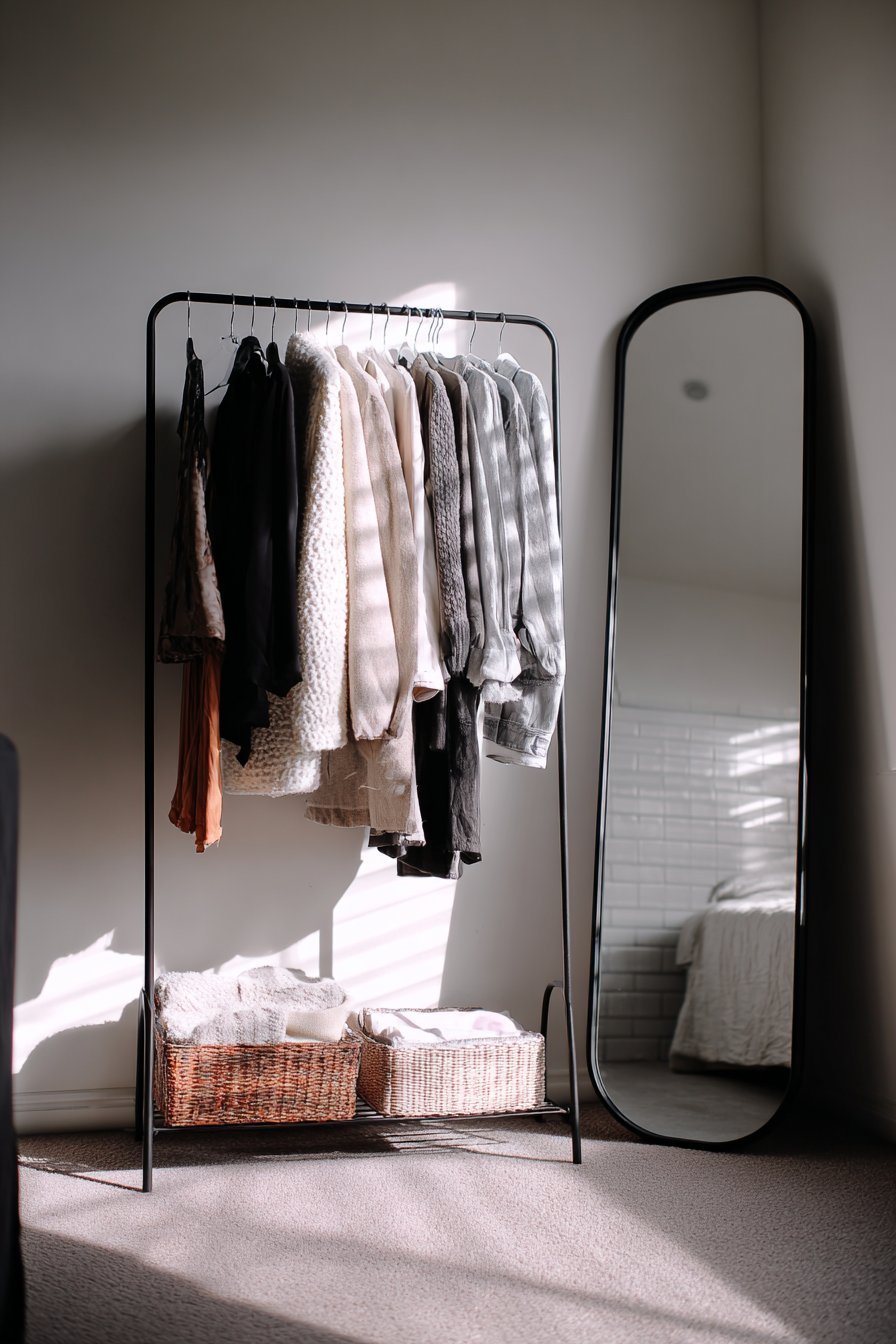
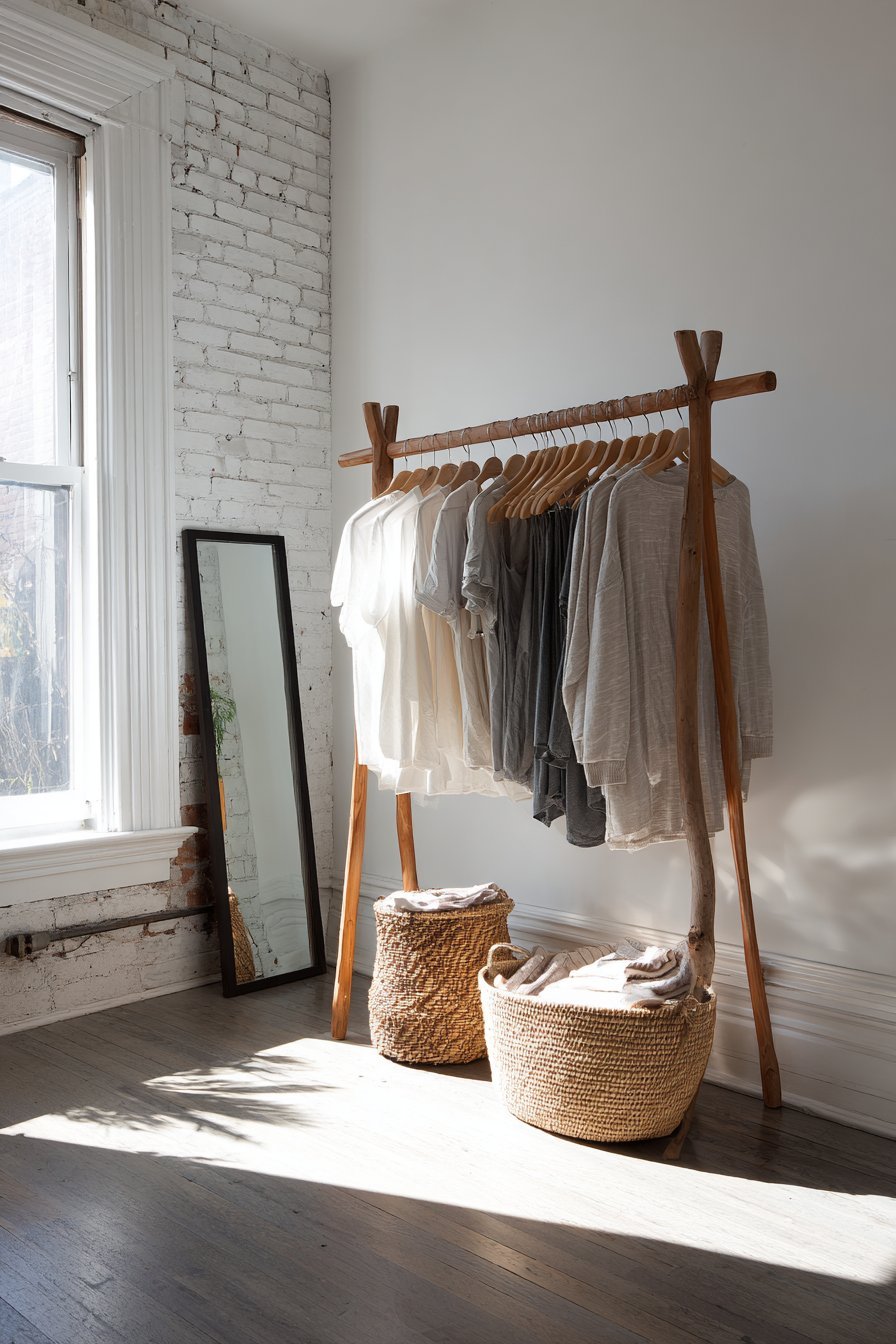
This design challenges traditional closet systems with transparent organization. The limited wardrobe reduces decision fatigue and promotes intentional consumption. Neutral tones ensure versatility and coordination between pieces. Woven baskets add natural texture while concealing smaller items.
Key Design Tips:
- Limit wardrobe to versatile pieces in cohesive color palette
- Space garments evenly on rack for visual calm
- Use woven baskets for folded items and accessories
- Position full-length mirrors to enhance light and space
- Choose open storage to encourage mindful consumption
9. Monochromatic Gray Layers
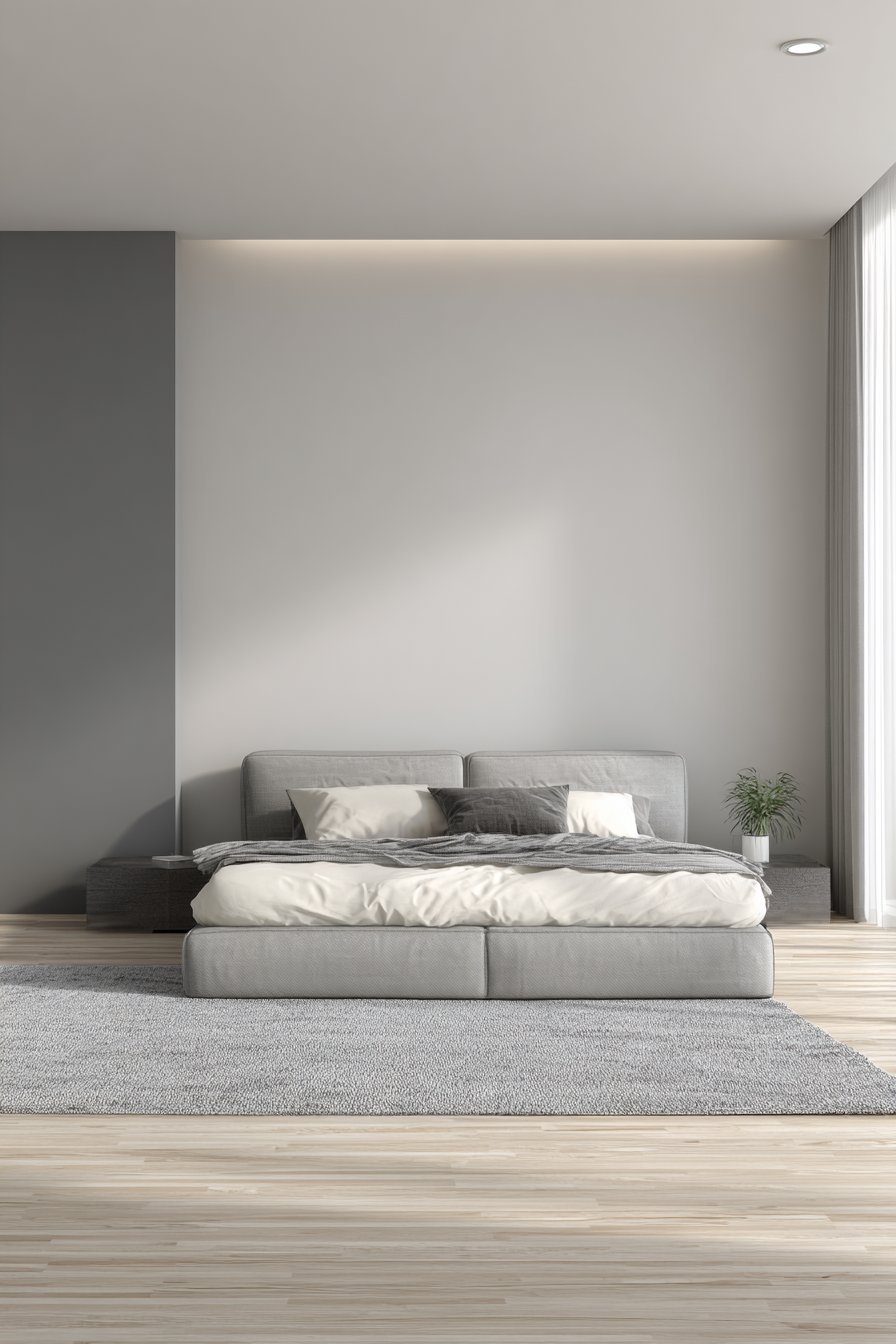
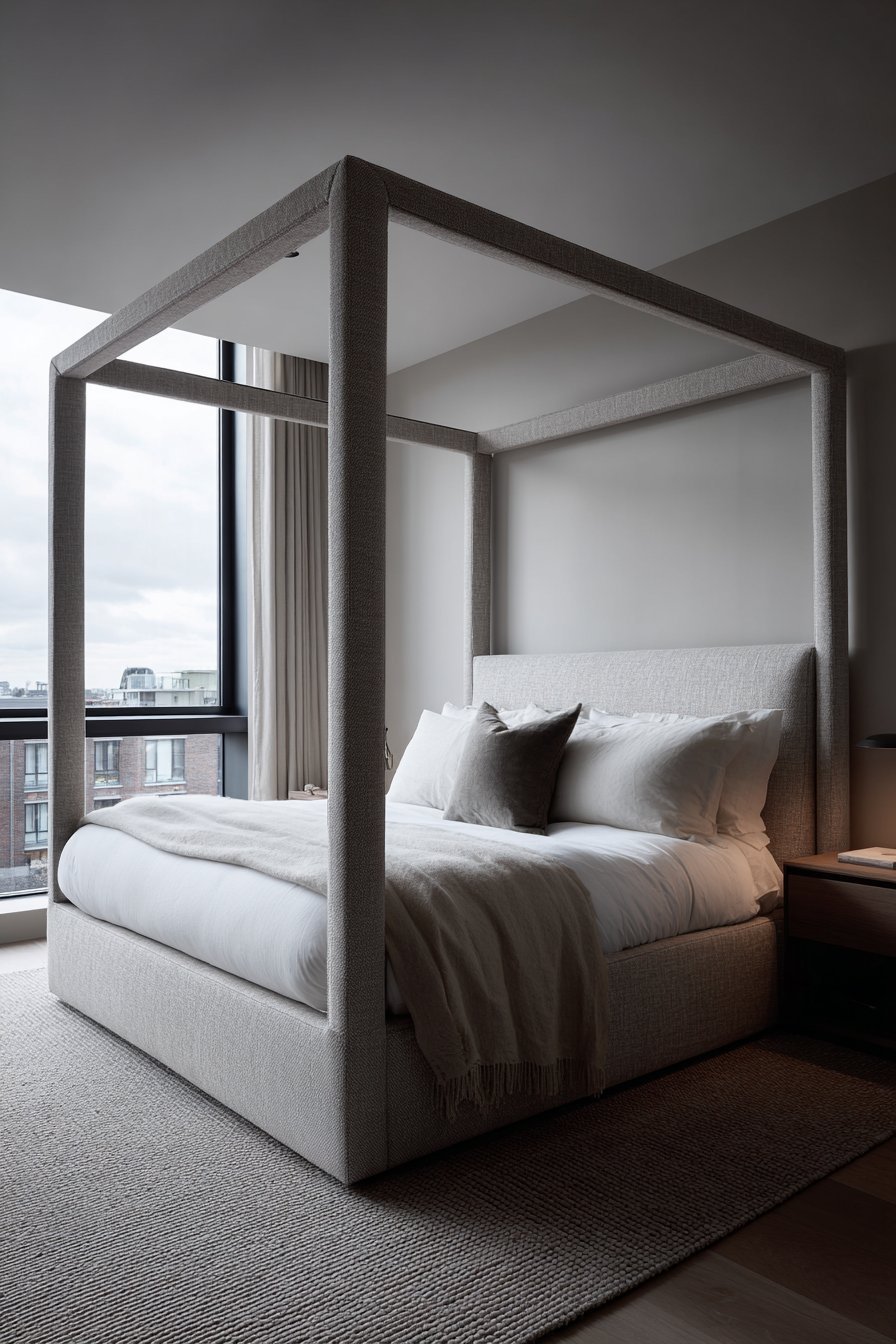
Varying shades of warm gray create sophisticated depth in this space. The upholstered bed frame in medium gray linen anchors the room. White bedding with darker gray throw pillow adds layered simplicity. A textured wool rug in heathered gray grounds the sleeping area.
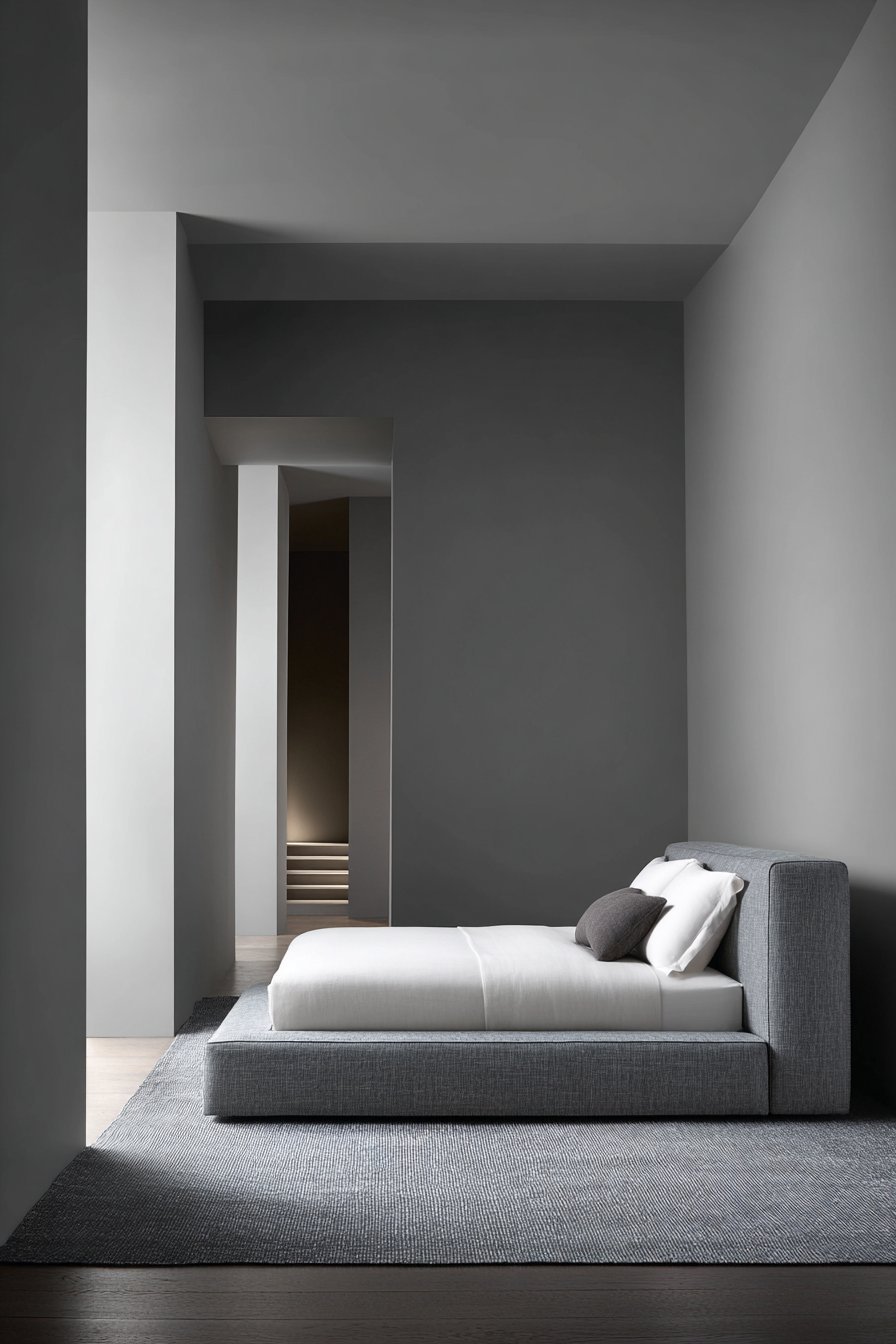
Walls painted in lightest gray shade create bright backdrop. A single darker gray accent wall behind the bed adds subtle dimension. Natural oak flooring provides the only warm contrast to the gray palette. The monochromatic approach creates visual interest through tonal variation.
This design demonstrates how limited color creates sophisticated spaces. Multiple gray tones prevent monotony while maintaining cohesion. The warm undertones prevent the palette from feeling cold. Natural wood flooring provides essential warmth and organic element.
Key Design Tips:
- Select grays with warm undertones for inviting atmosphere
- Layer multiple gray tones from light to charcoal for depth
- Use textured fabrics like wool and linen for tactile interest
- Include natural wood flooring to prevent cold feeling
- Add single darker accent wall for subtle definition
10. Geometric Black Metal Statement
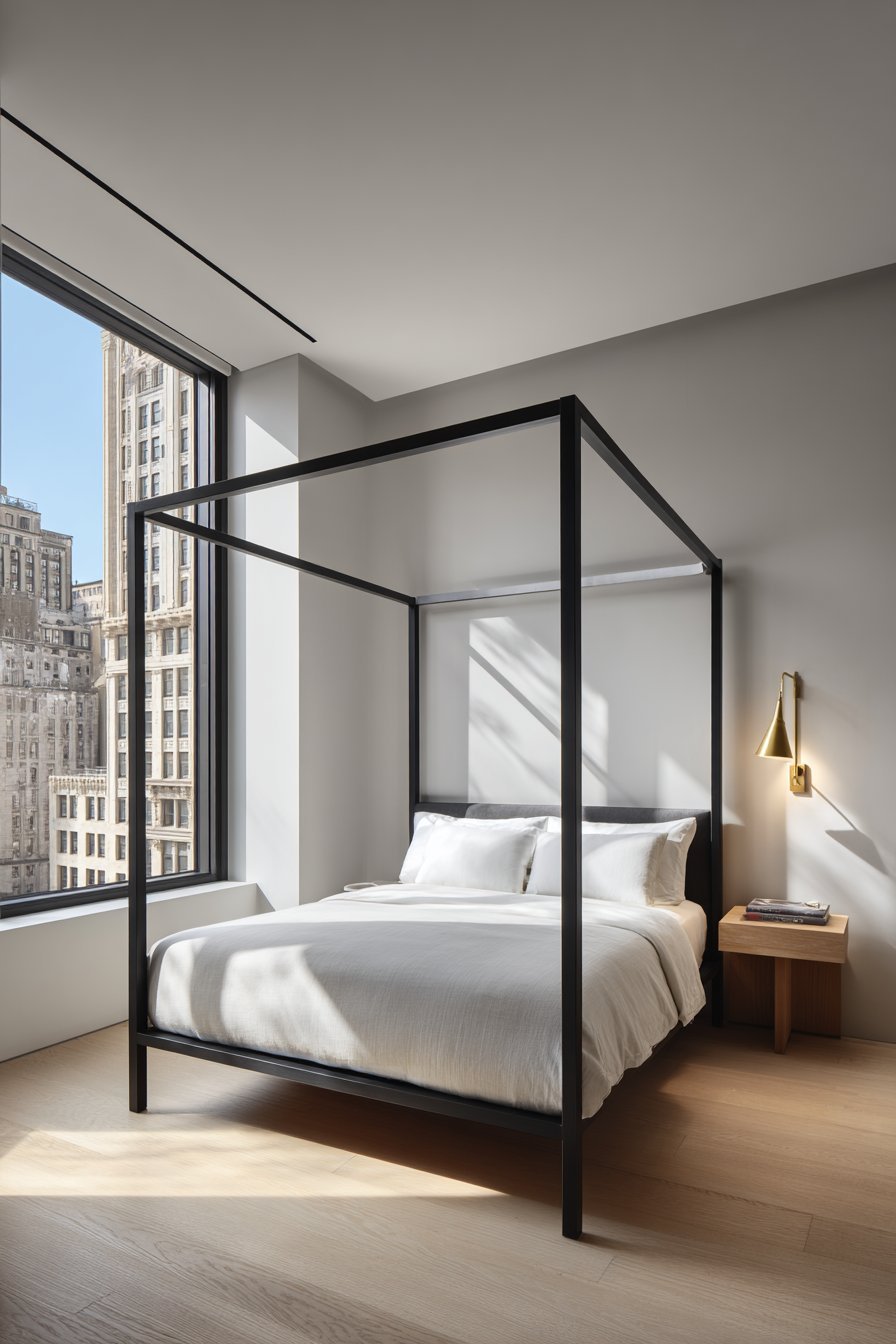
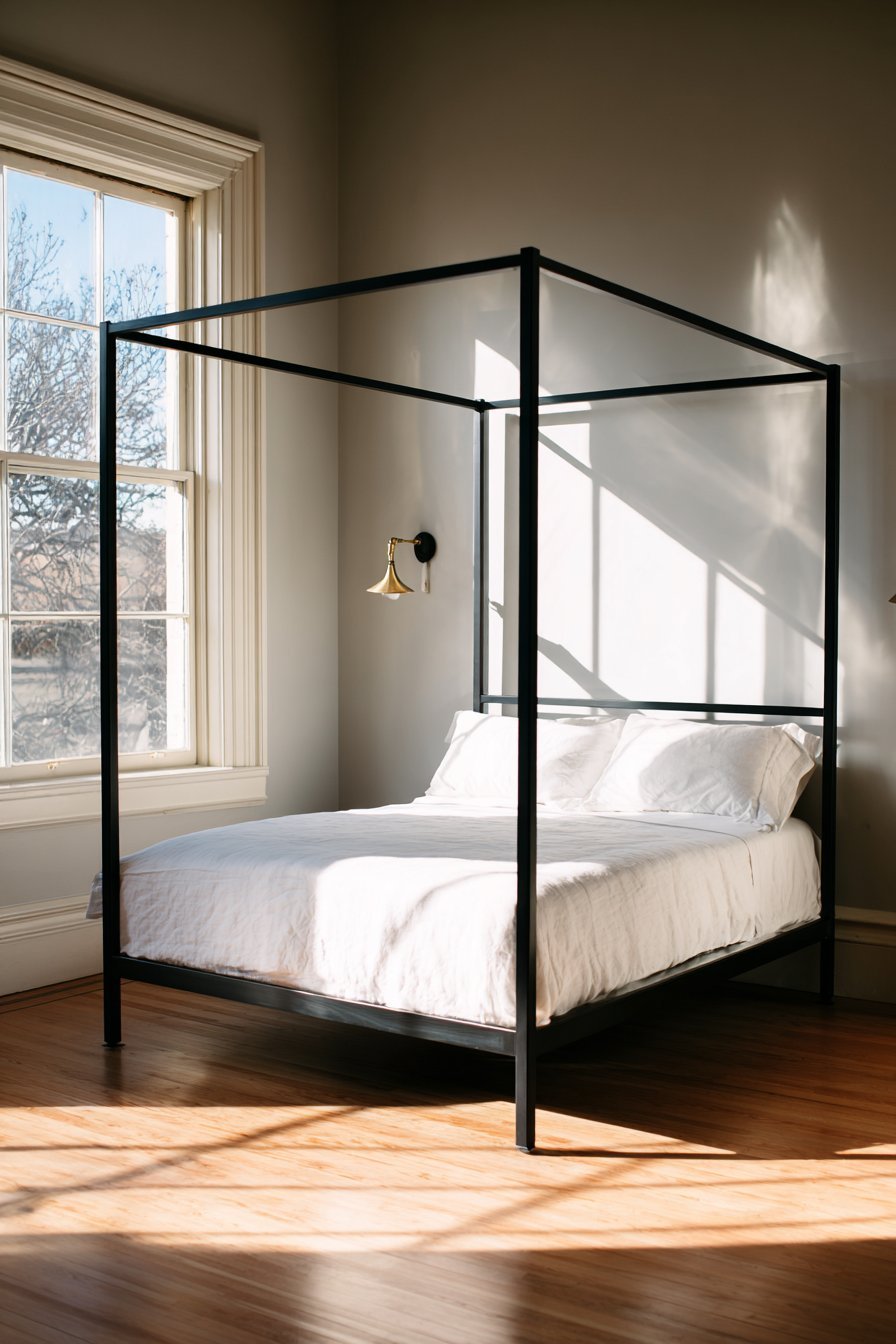
A striking black metal four-poster bed frame provides architectural interest. Clean geometric lines demonstrate minimal principles through simple construction. White linen bedding creates bright contrast against the bold frame. Light gray walls and white oak flooring maintain overall brightness.
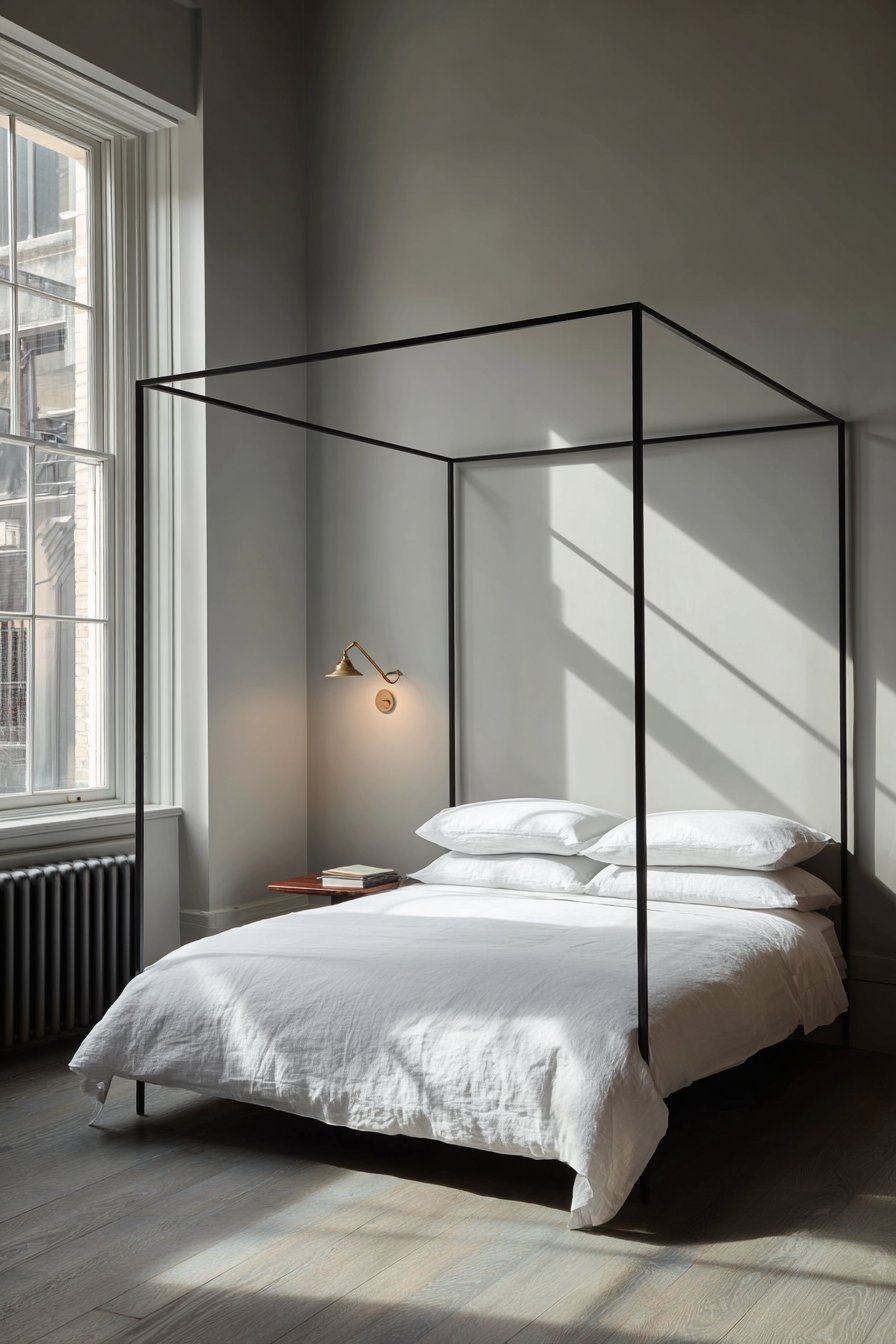
A single brass sconce mounted on the wall provides focused task lighting. Natural light from a large window creates dynamic shadows through the linear structure. The bold frame becomes sculptural element without ornamental excess. The design balances dramatic statement with minimal restraint.
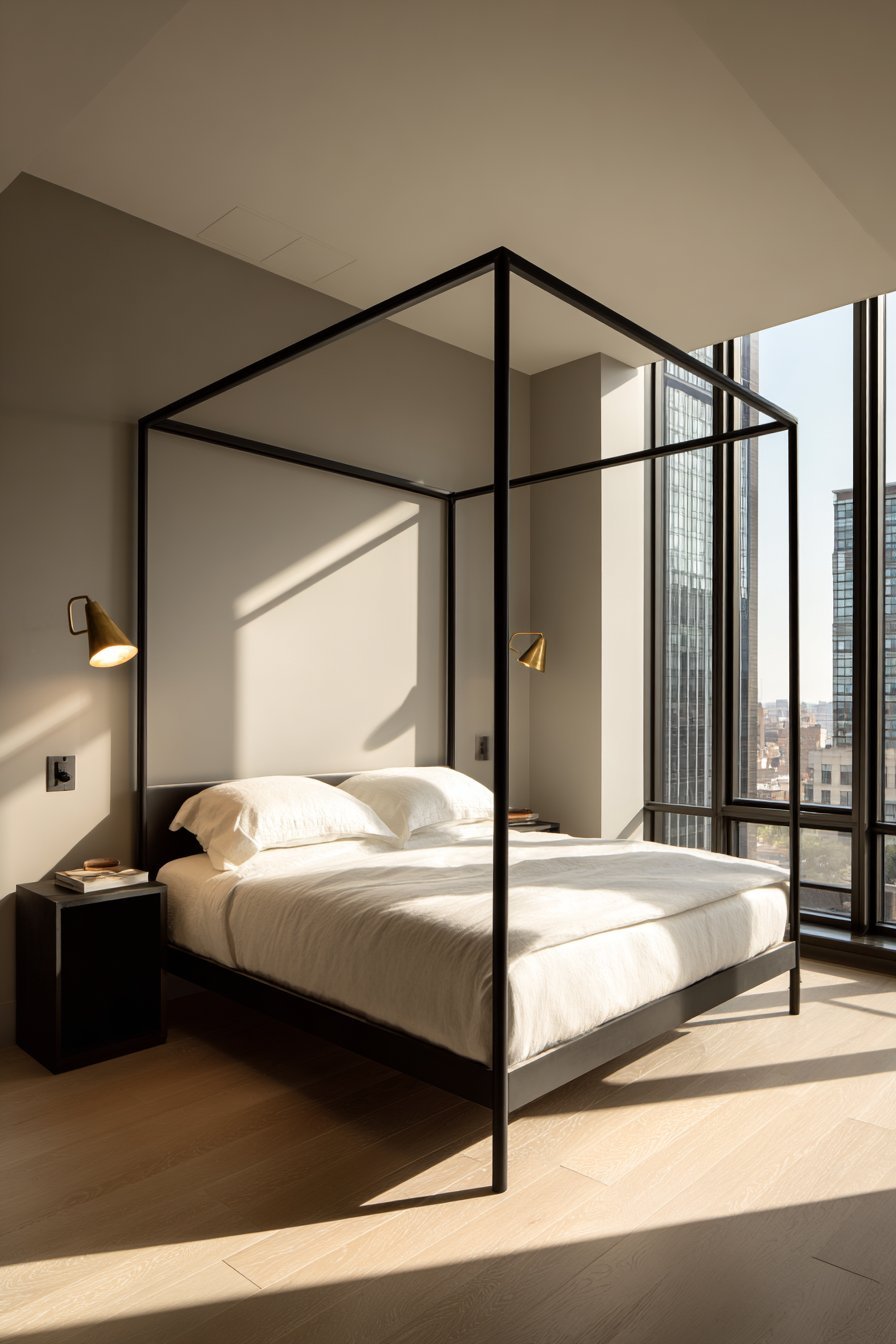
This approach proves minimal design accommodates bold choices when executed thoughtfully. The four-poster frame adds vertical interest and visual weight. Black metal provides graphic quality against neutral surroundings. The simple construction avoids fussy details typical of traditional four-posters.
Key Design Tips:
- Choose geometric bed frames with clean lines for statement pieces
- Balance bold furniture with neutral walls and floors
- Use brass or metal sconces for functional wall lighting
- Position beds near windows to create dramatic shadow play
- Keep bedding simple to highlight architectural furniture
11. Built-In Sleeping Platform
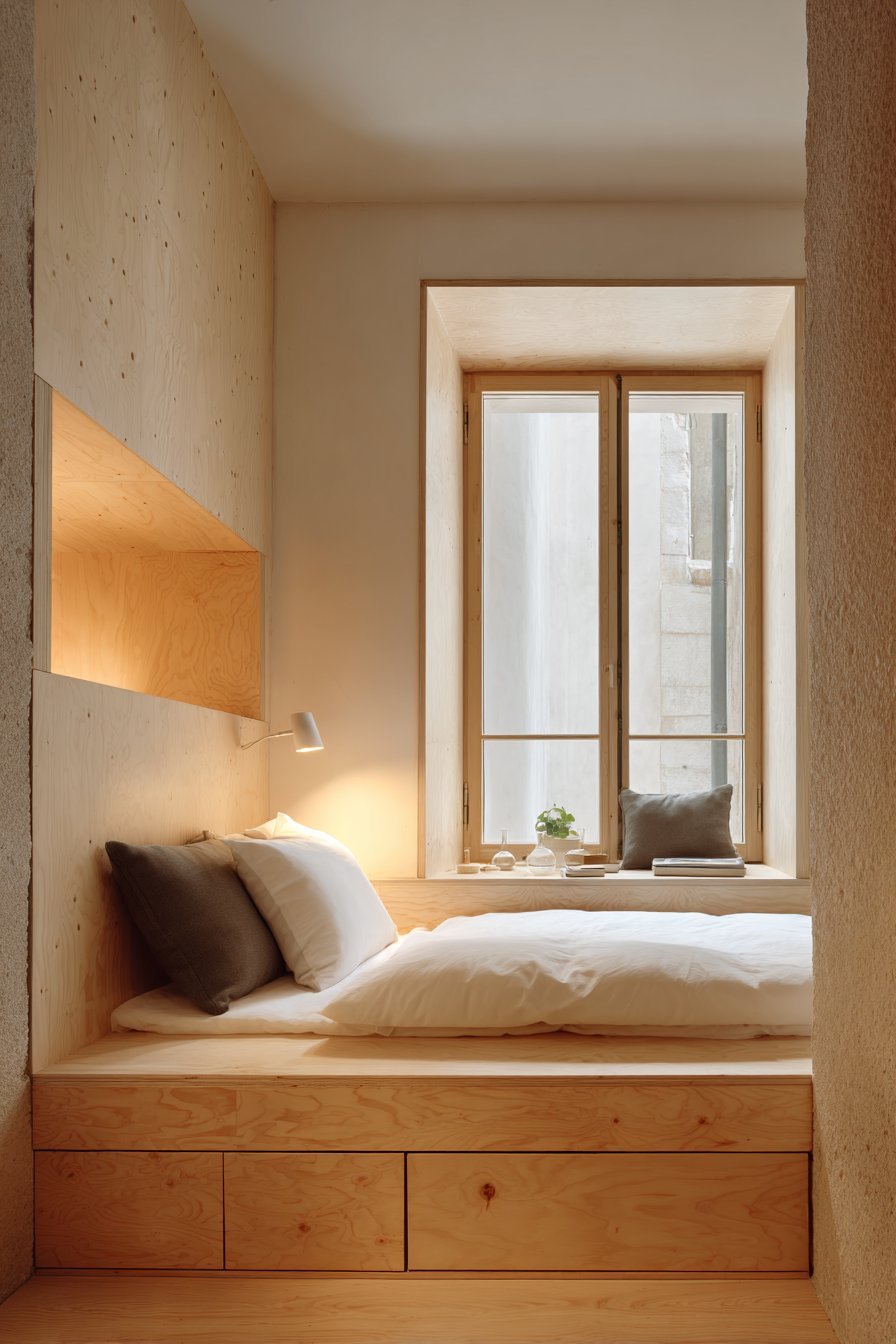
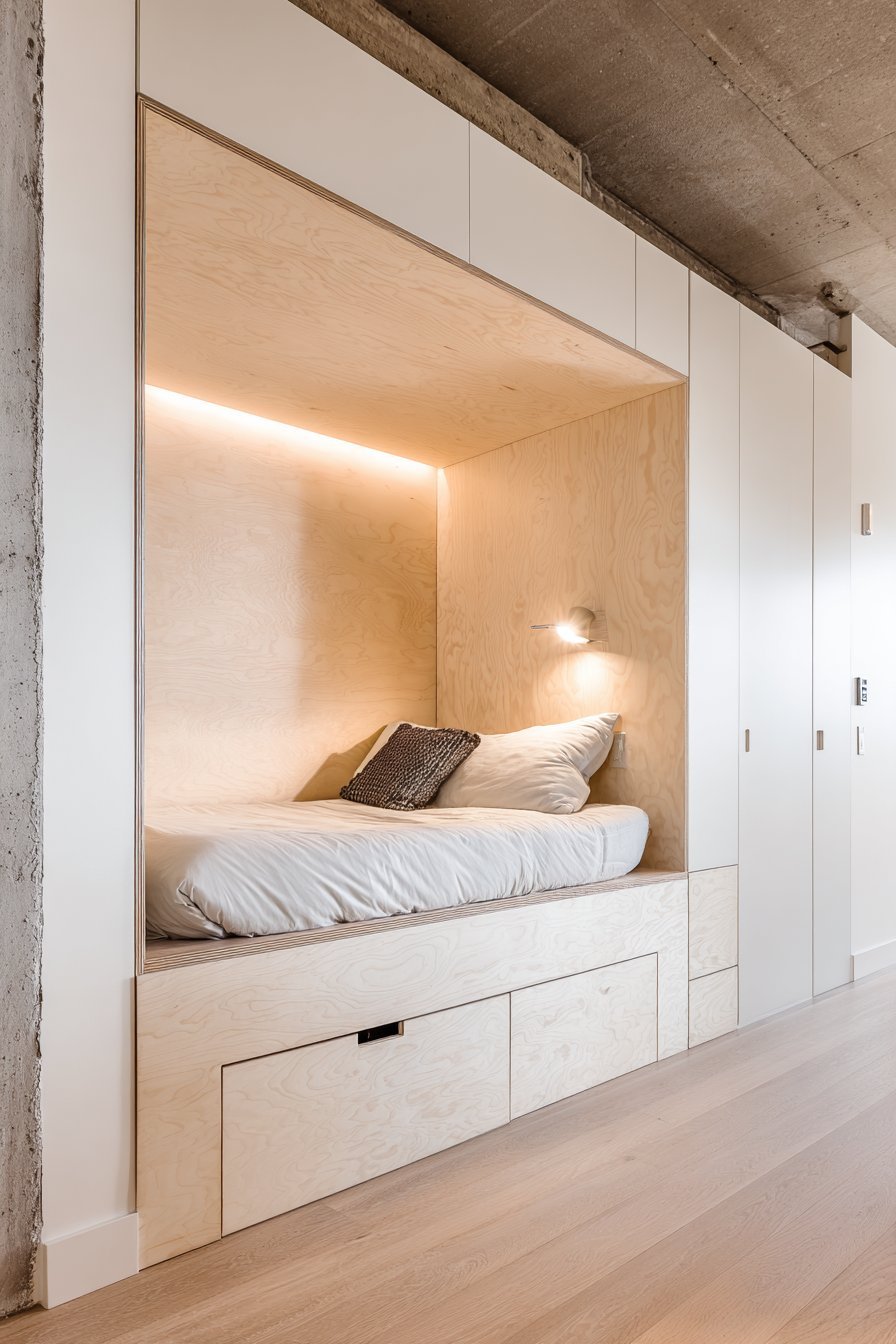
A built-in sleeping platform with integrated storage drawers maximizes compact space. Light birch plywood construction shows visible edge grain. The honest material use reflects minimal design philosophy. Simple white bedding and single pillow maintain visual clarity.
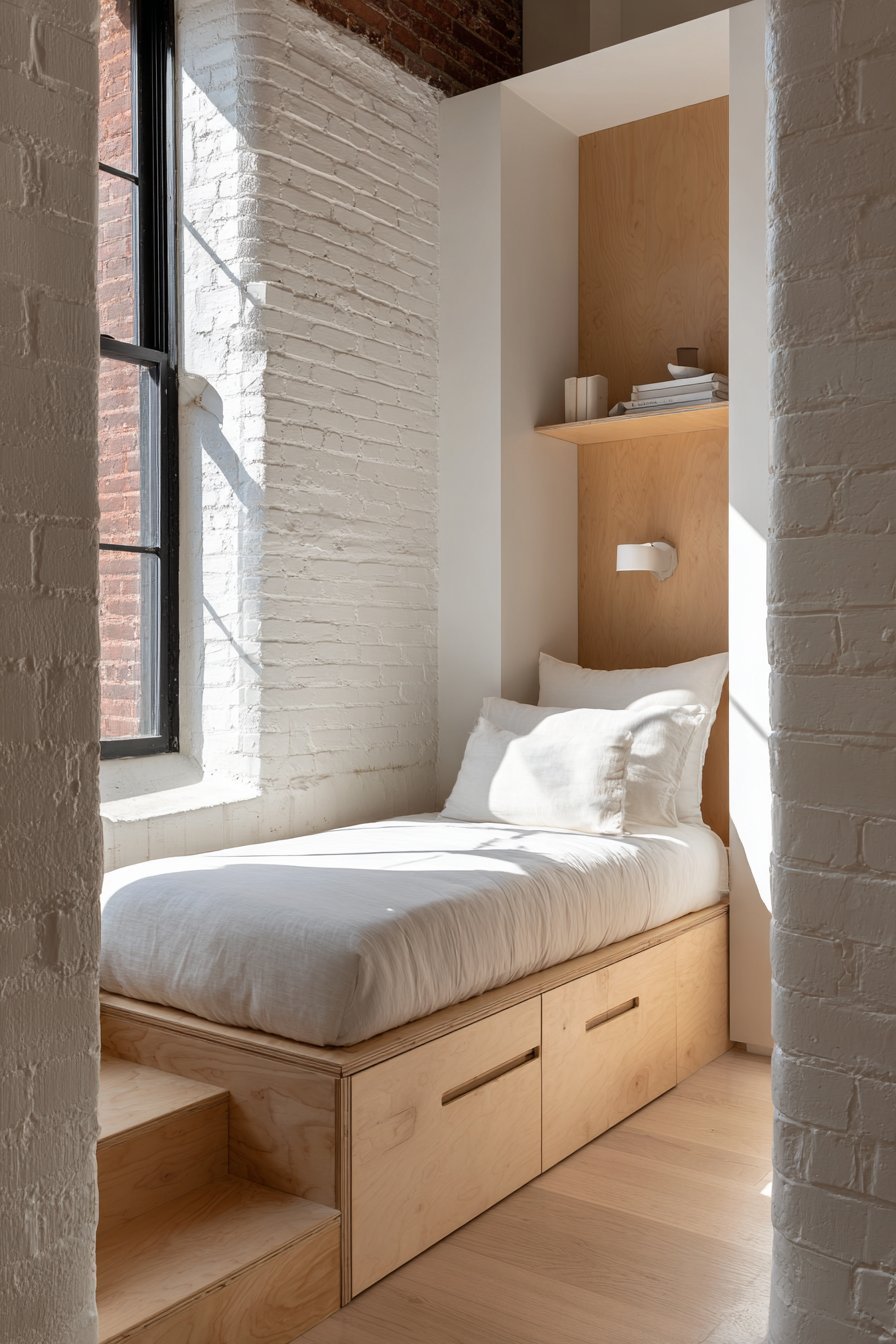
A recessed reading light is built directly into the wall above the pillow. The surrounding walls feature smooth white plaster finish. This custom solution demonstrates how minimal design solves spatial challenges. The integrated approach eliminates need for separate furniture pieces.
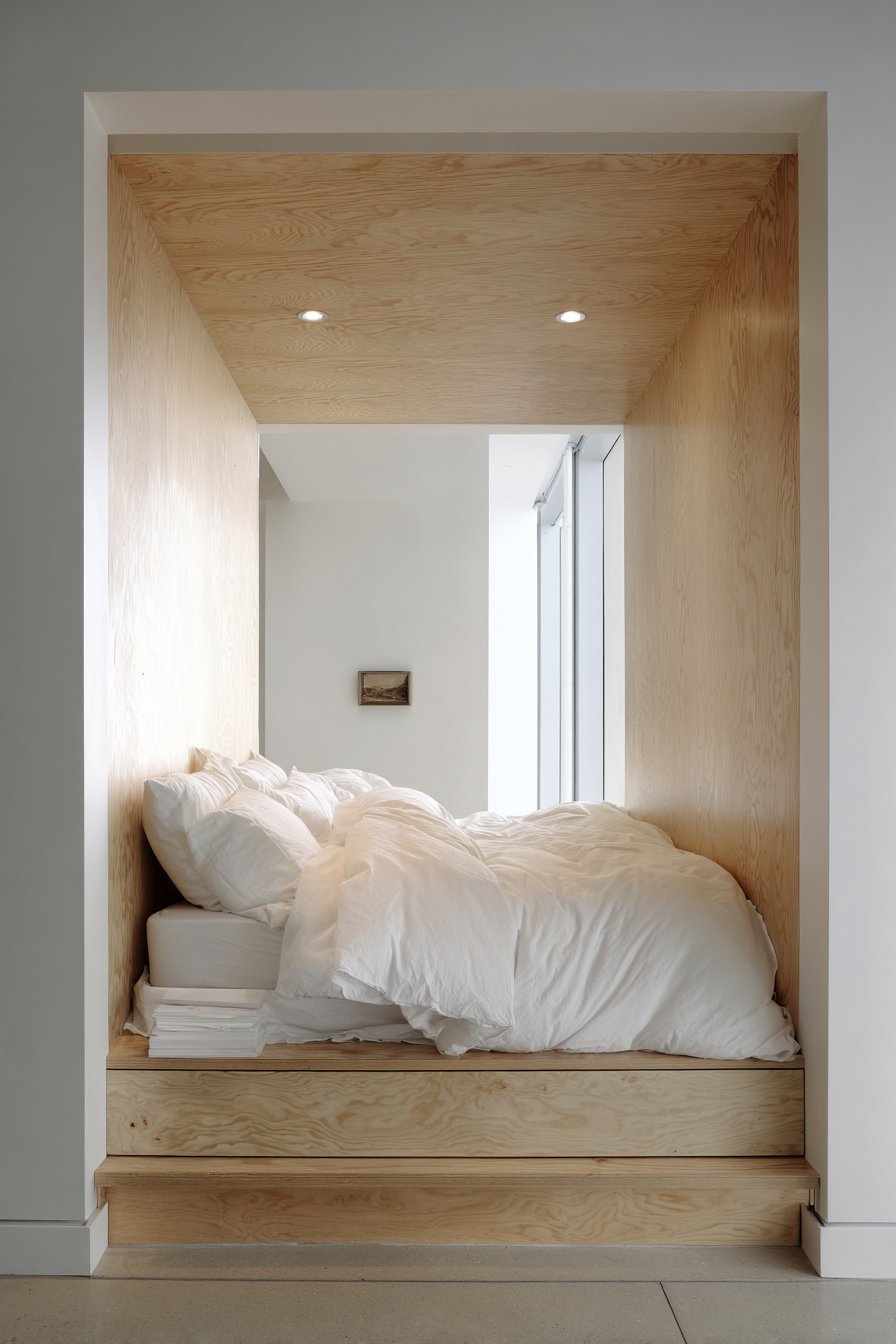
Built-in platforms prove ideal for small bedrooms and studio spaces. The under-bed storage utilizes otherwise wasted vertical space. Birch plywood brings natural warmth through visible wood grain. The custom solution creates seamless integration with room architecture.
Key Design Tips:
- Design built-in platforms with integrated storage for small spaces
- Choose plywood with attractive edge grain for honest material display
- Install recessed lighting to eliminate need for lamps
- Keep bedding minimal to emphasize architectural solution
- Use light wood tones to prevent heavy visual weight
12. Curated Gallery Wall Focus
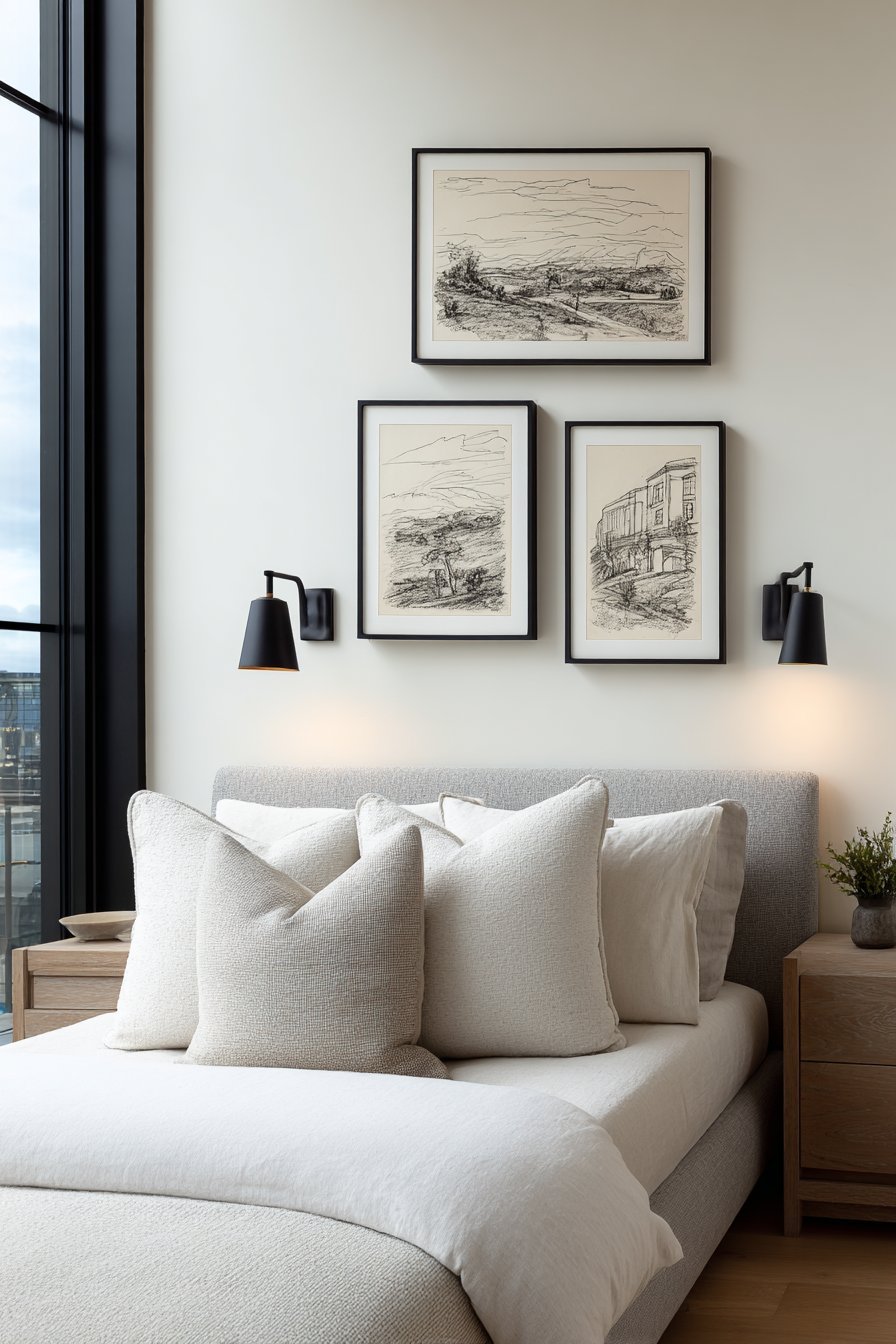
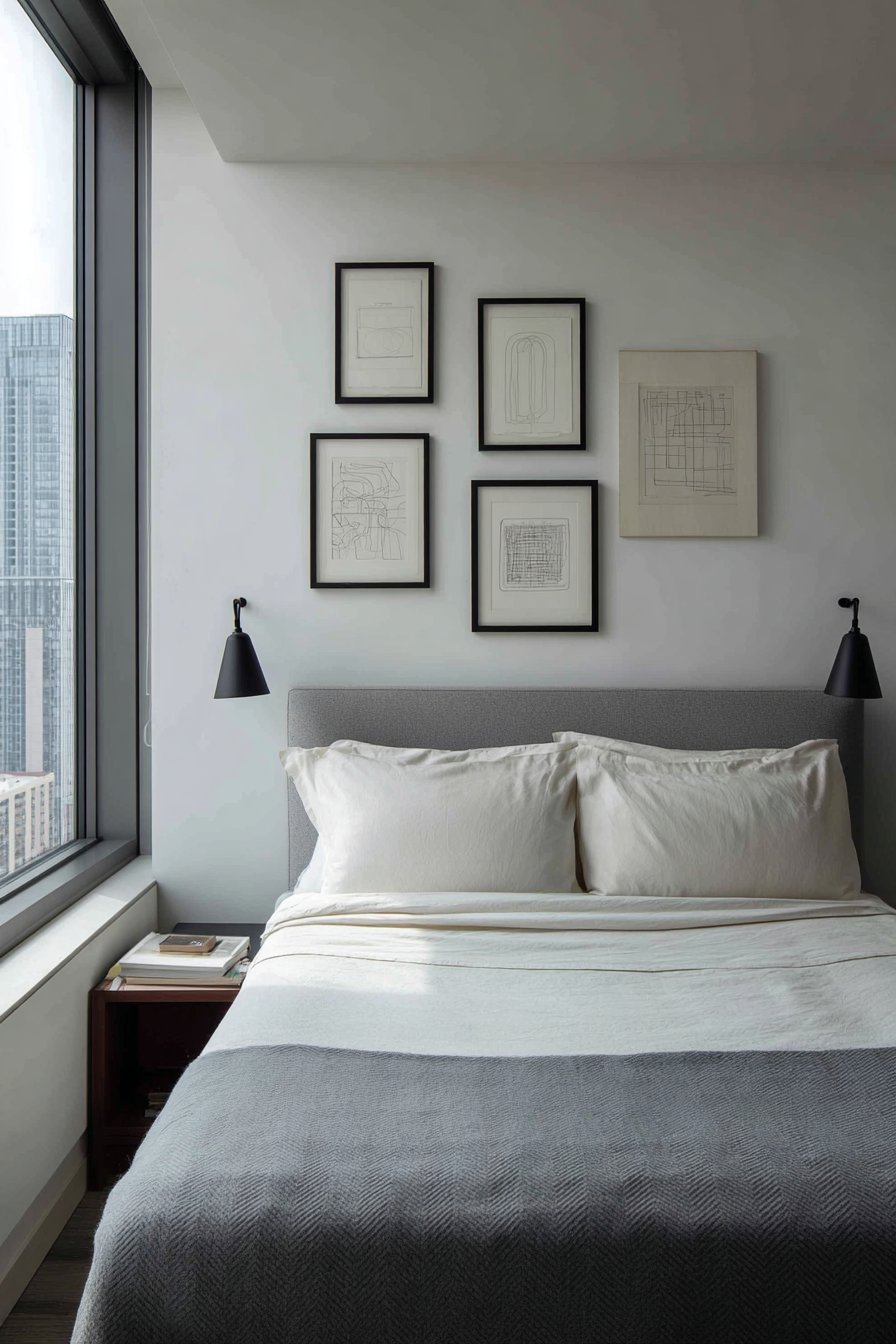
Three black-framed line drawings hang with precise spacing above the bed. The varying sizes create visual rhythm and intentional composition. Simple gray upholstered headboard provides neutral backdrop for artwork. Two wall-mounted swing-arm reading lights in matte black flank the gallery arrangement.
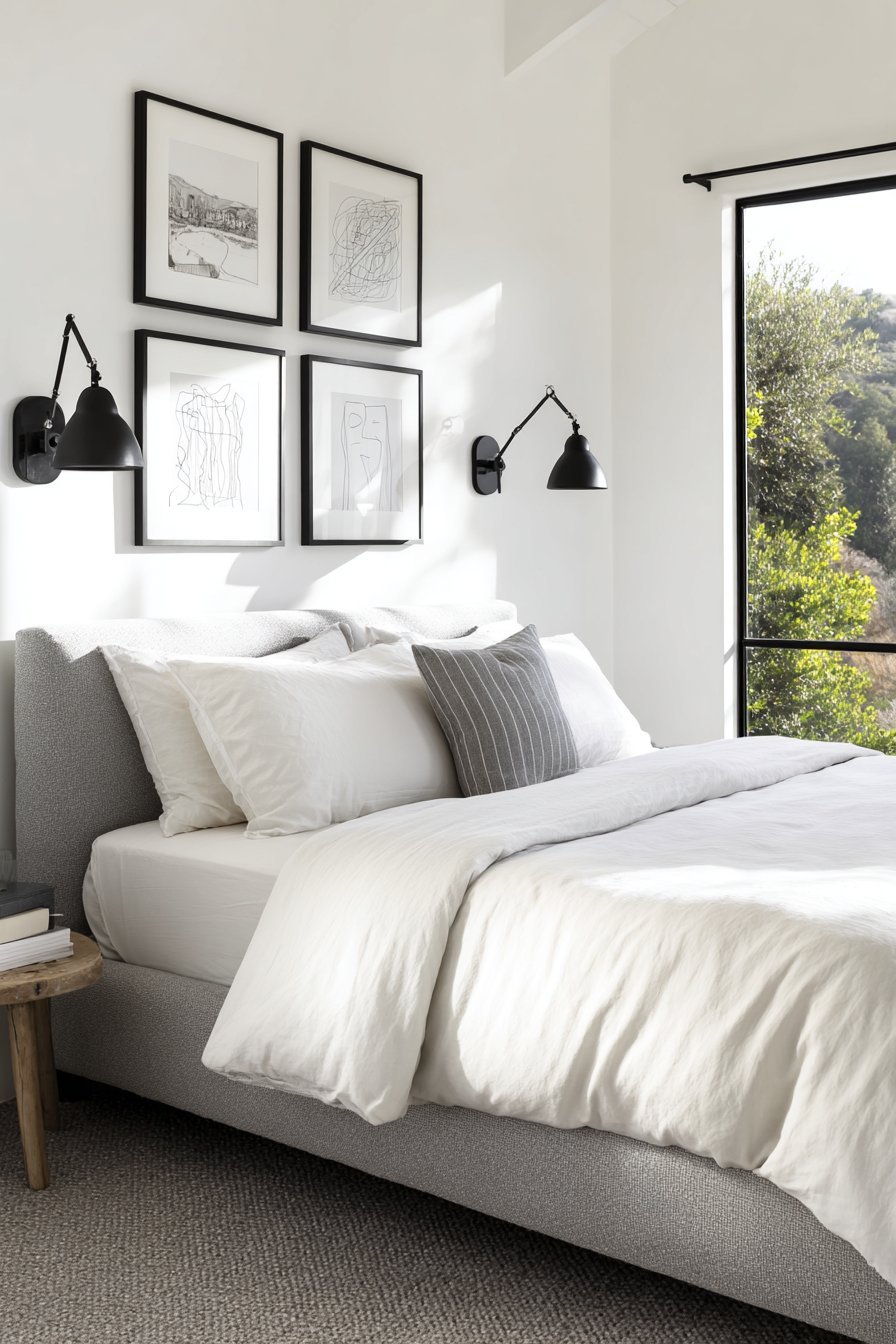
The functional lighting maintains minimal aesthetic while serving practical needs. Natural light from a side window creates subtle shadows. The carefully composed arrangement demonstrates quality over quantity principle. The line drawings provide visual interest through simple artistic expression.
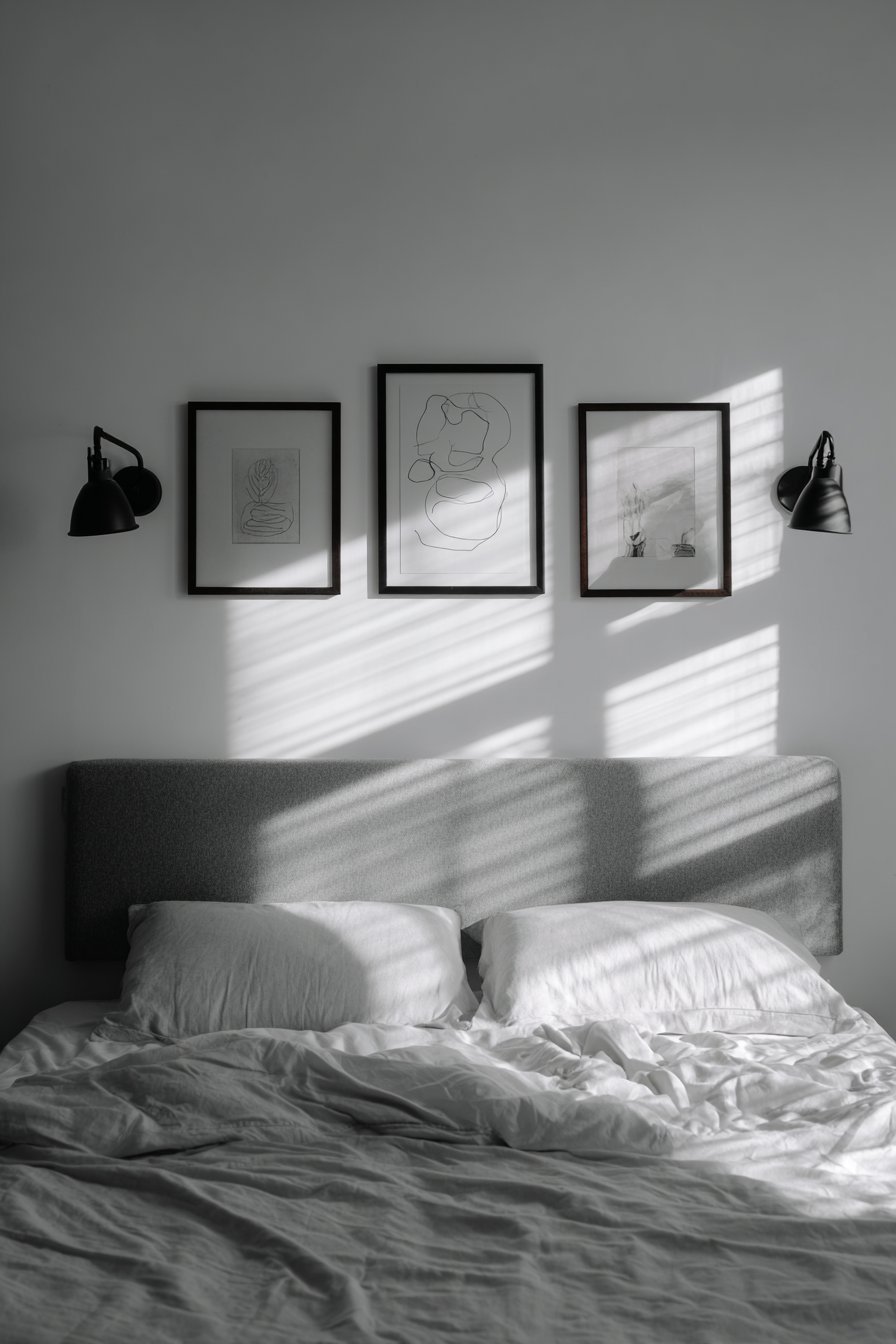
This design shows how minimal spaces accommodate art through thoughtful curation. The limited number of pieces prevents visual clutter. Precise spacing creates deliberate composition rather than random arrangement. The black frames and fixtures create cohesive visual connections.
Key Design Tips:
- Limit gallery walls to three to five pieces maximum
- Use consistent frame style and color for cohesion
- Install swing-arm lamps to save nightstand space
- Hang artwork with precise spacing for intentional look
- Choose simple line drawings or abstract art for minimal aesthetic
13. Floor-to-Ceiling Window Transparency
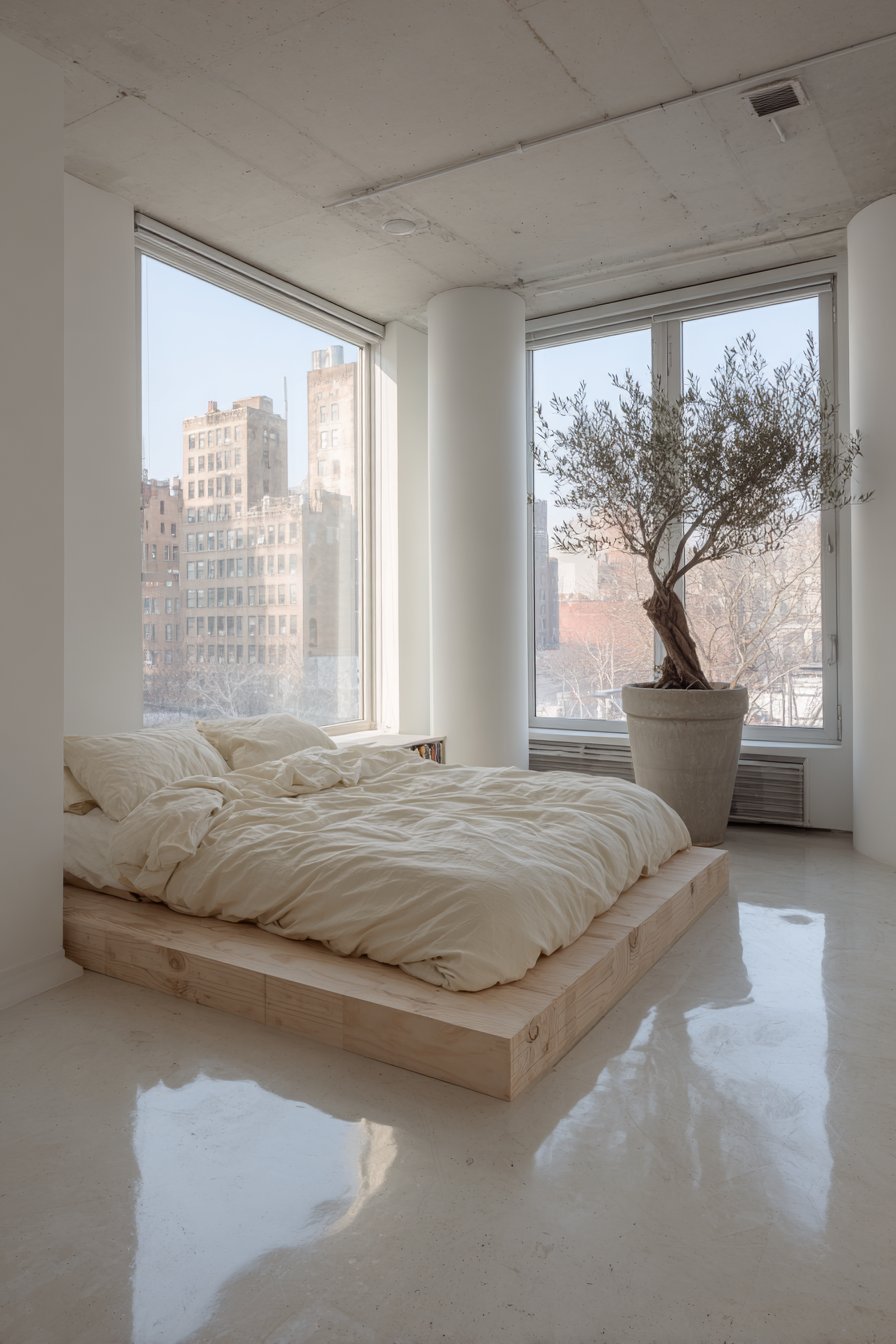
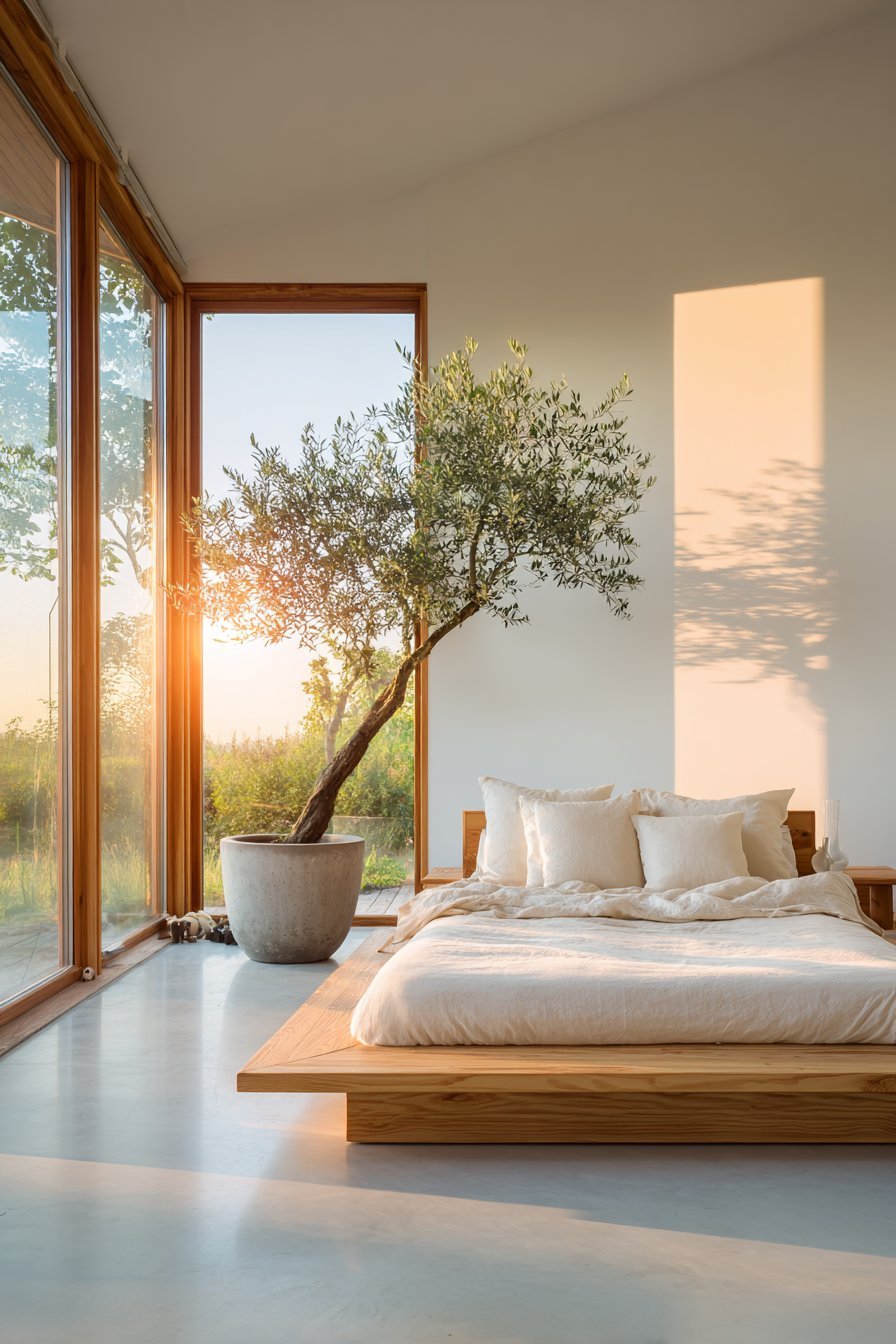
Floor-to-ceiling windows without treatments embrace natural light completely. The simple platform bed in natural wood faces the expansive glass. Organic cotton bedding in natural ivory maintains soft neutral palette. Polished concrete flooring reflects ambient light throughout the space.
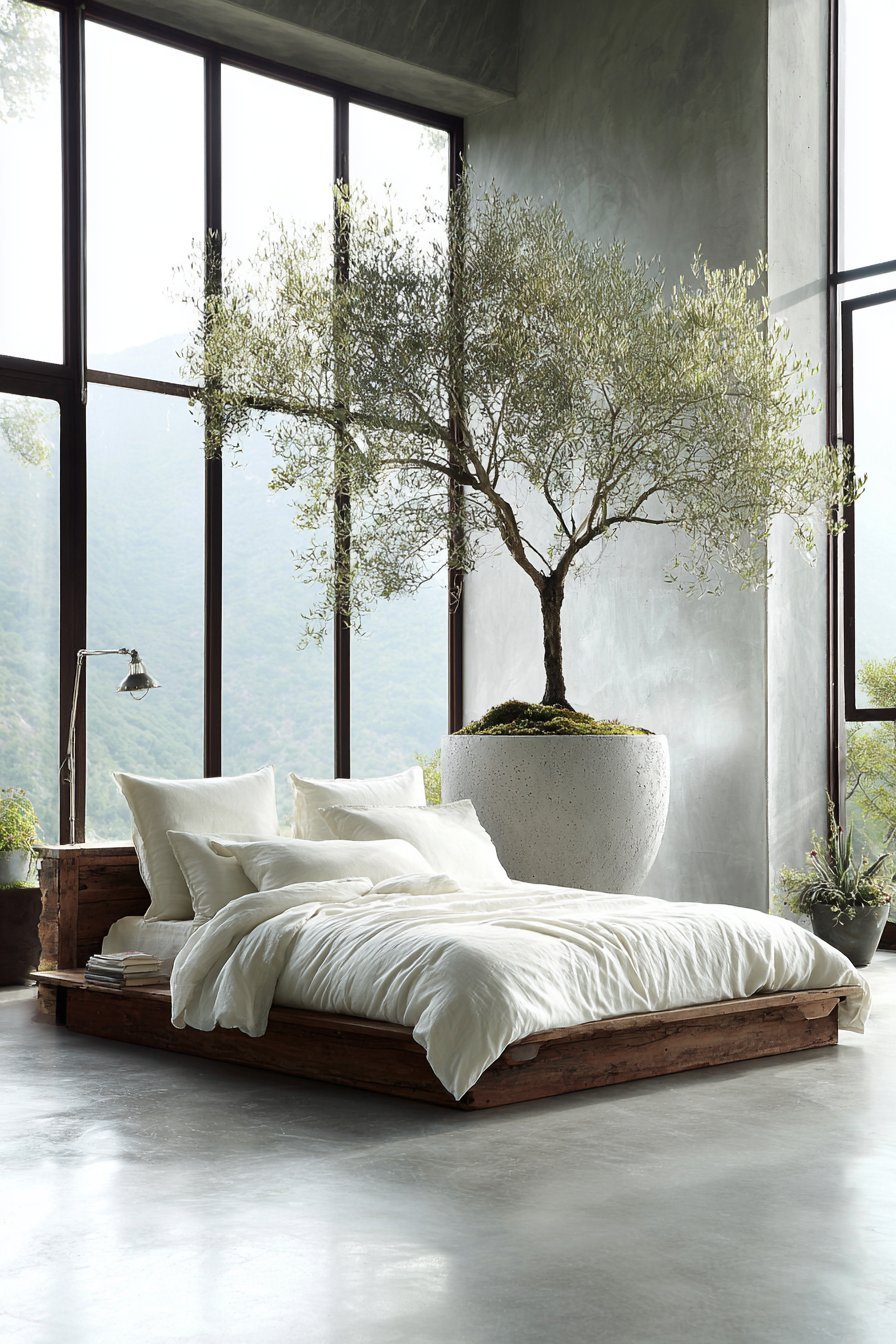
A single potted olive tree in concrete planter occupies the corner. The organic form provides the only decorative element needed. The stark simplicity allows changing natural light to become primary feature. The design celebrates connection with exterior environment and natural cycles.
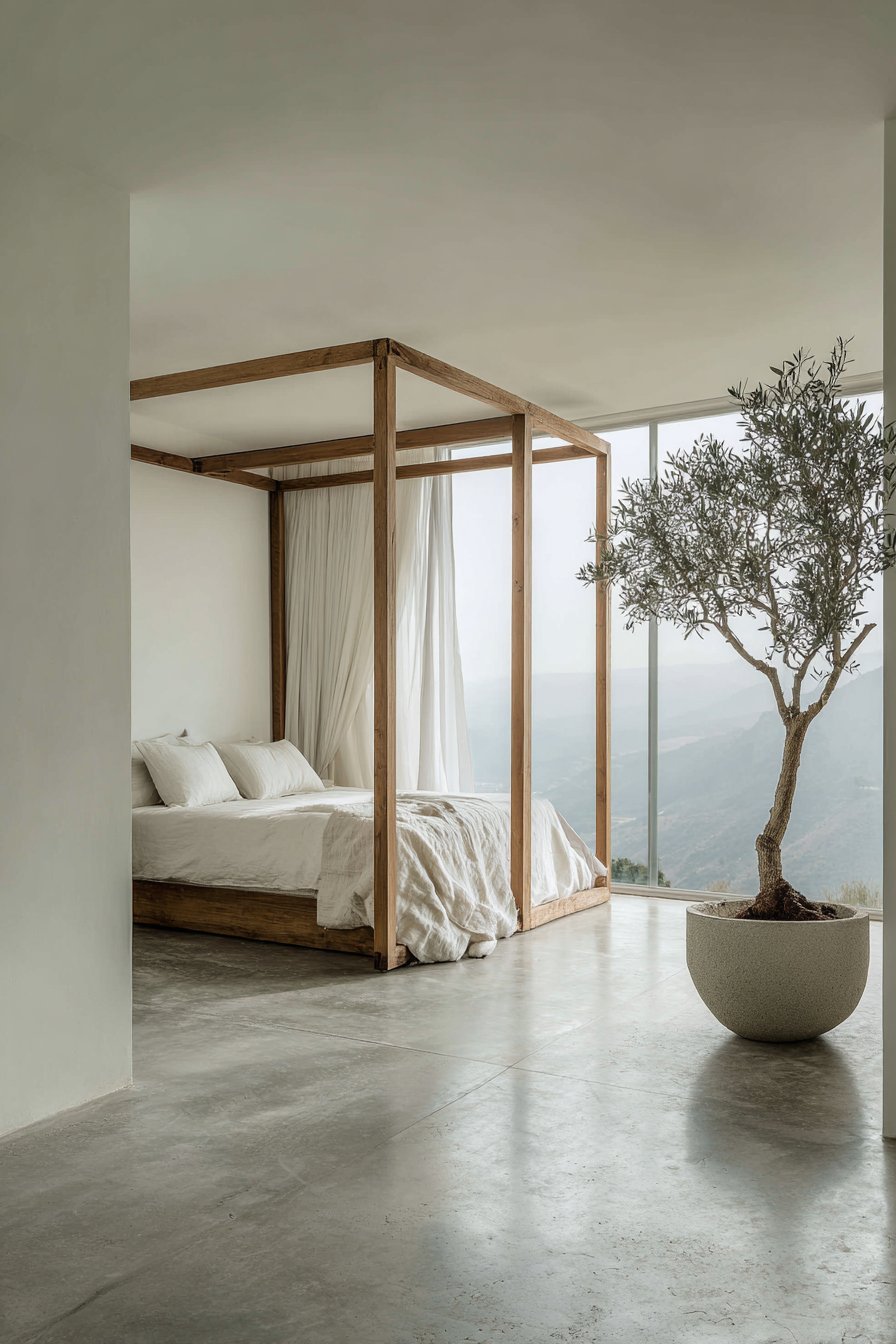
This approach demonstrates ultimate minimal restraint and confidence. The absence of window treatments requires privacy through location or landscape. Natural materials like wood, cotton, and concrete create warm minimalism. The single plant connects interior space with natural world outside.
Key Design Tips:
- Consider privacy carefully before eliminating window treatments
- Position bed to face windows for morning light benefits
- Use polished concrete for durable, light-reflective flooring
- Include single large plant for organic sculptural element
- Choose natural ivory bedding to complement bright space
14. Custom Cedar Headboard Wall
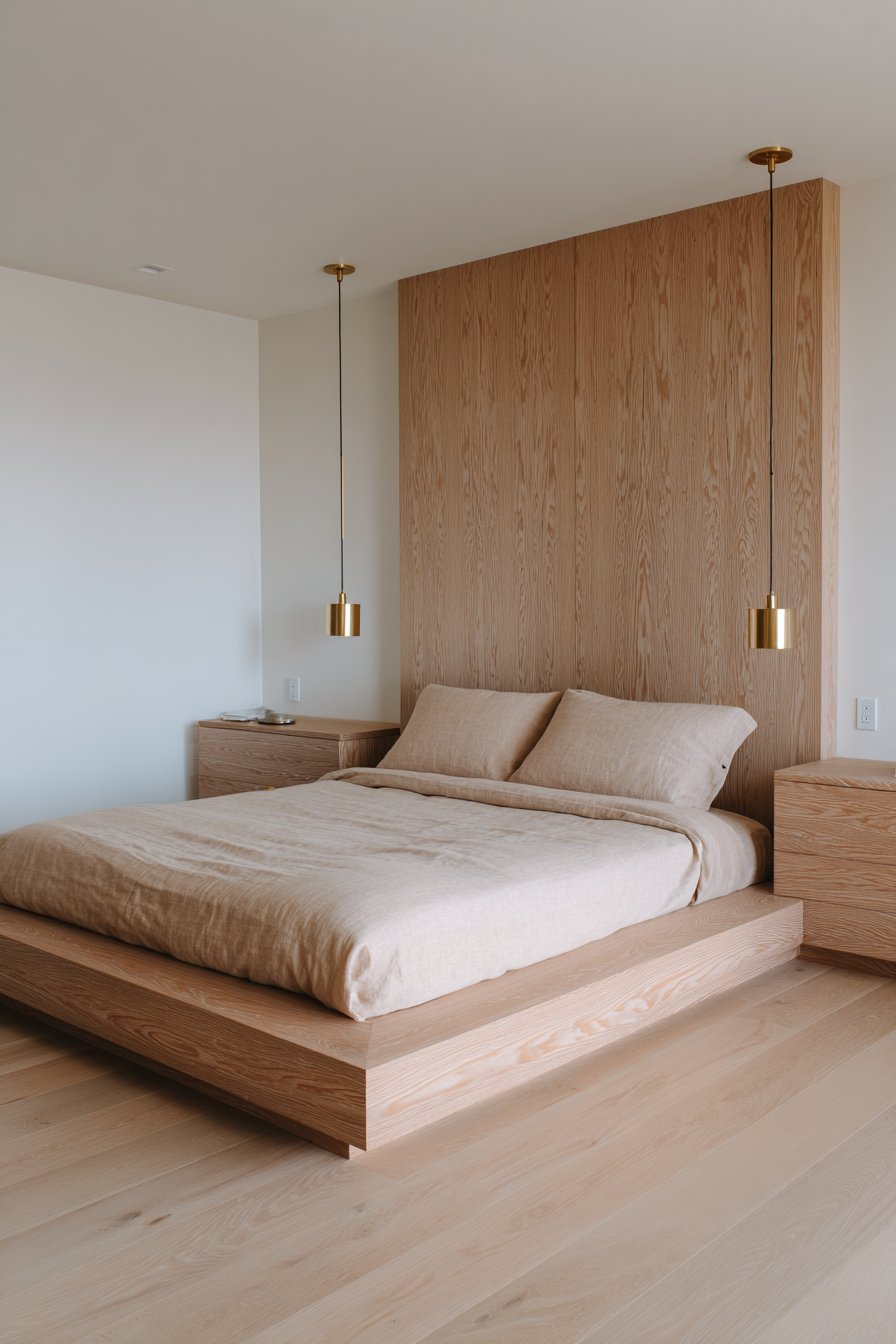
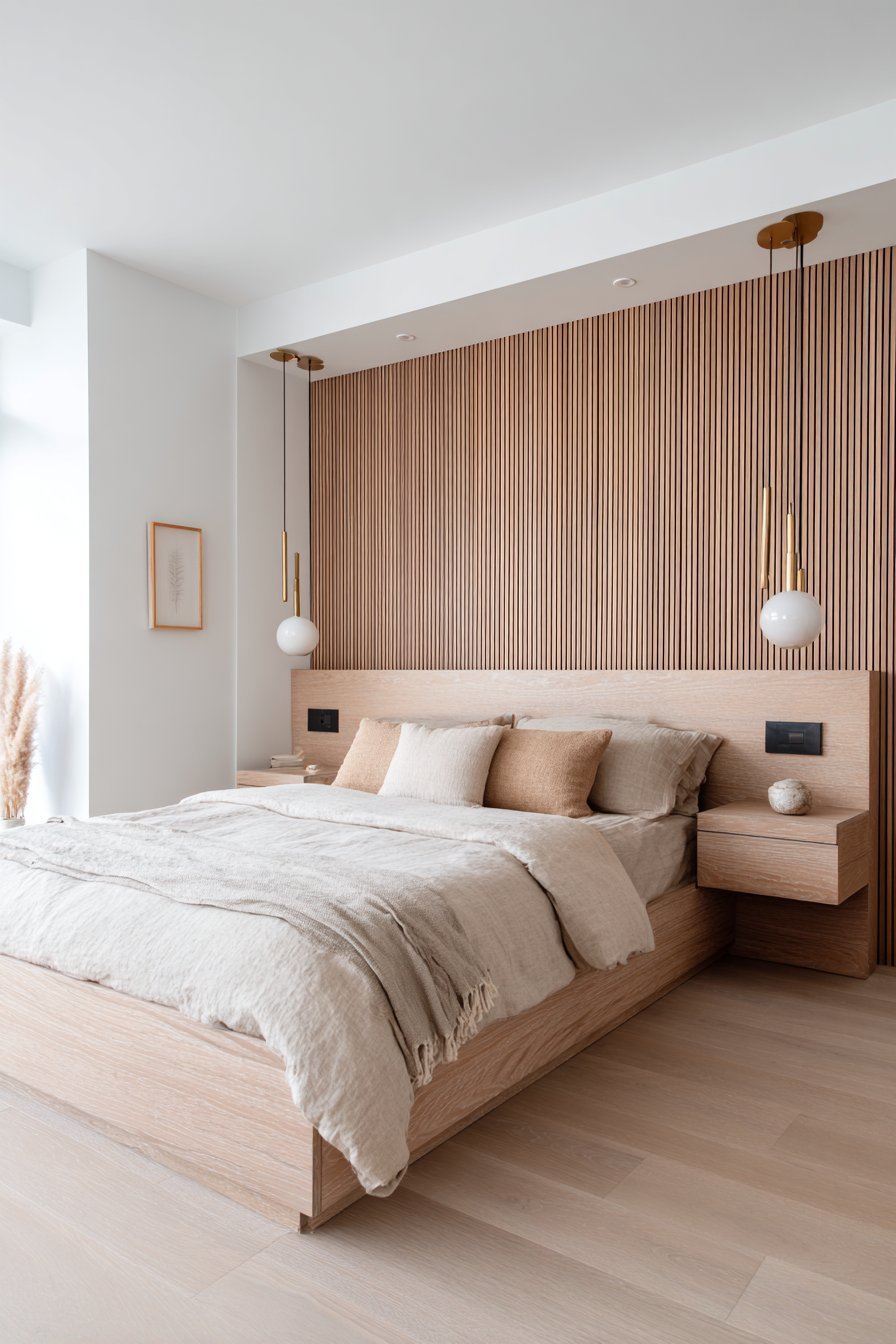
Vertical-grain cedar with natural oil finish creates custom headboard wall. The wood extends from floor to ceiling behind the bed. Integrated floating nightstands in matching wood maintain seamless appearance. Simple linen bedding in warm sand tones complements the cedar.
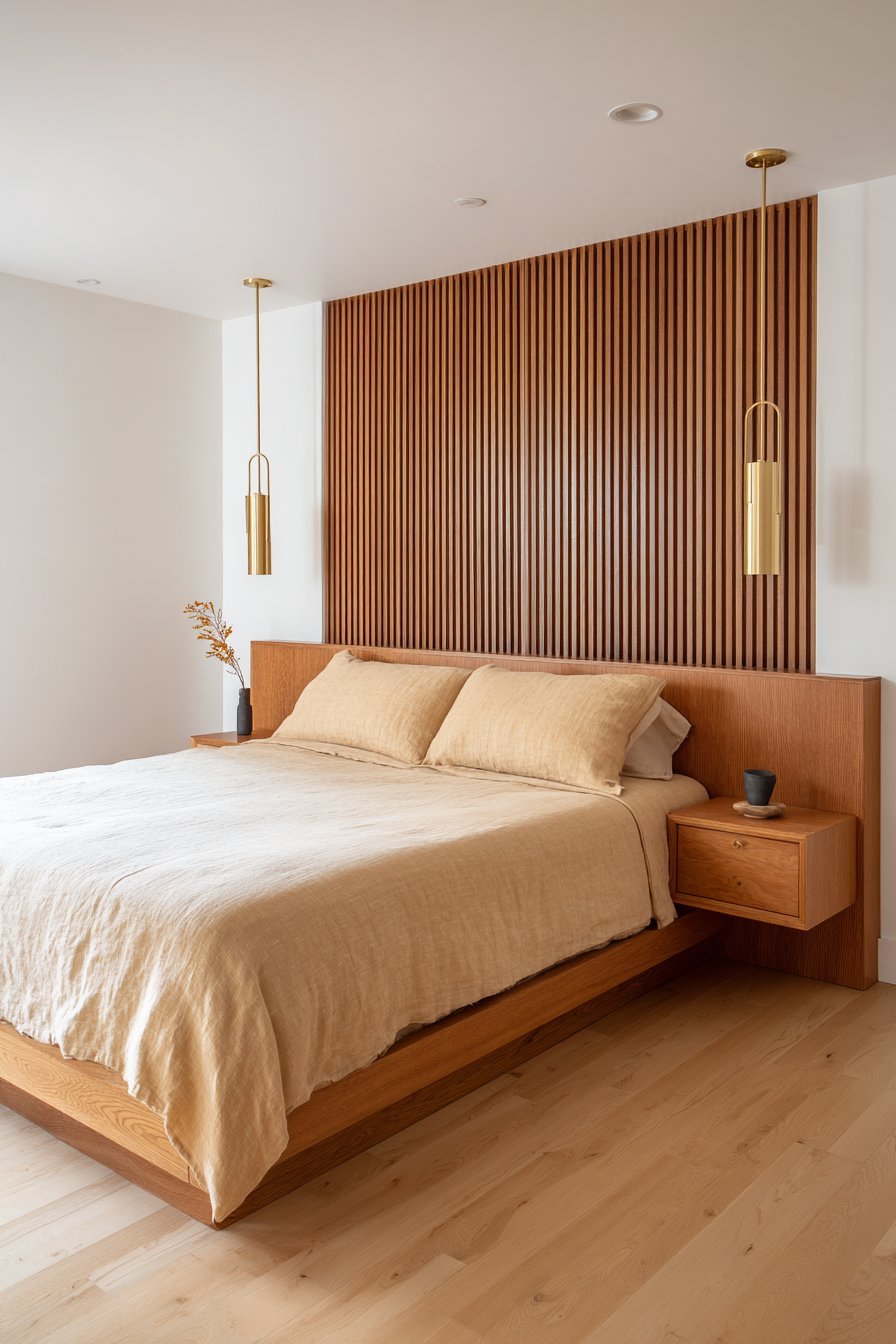
Surrounding walls painted soft white create contrast and brightness. Light oak flooring extends throughout for cohesive natural palette. Two simple pendant lights with brass fixtures hang at different heights. The design celebrates honest beauty of natural wood grain.
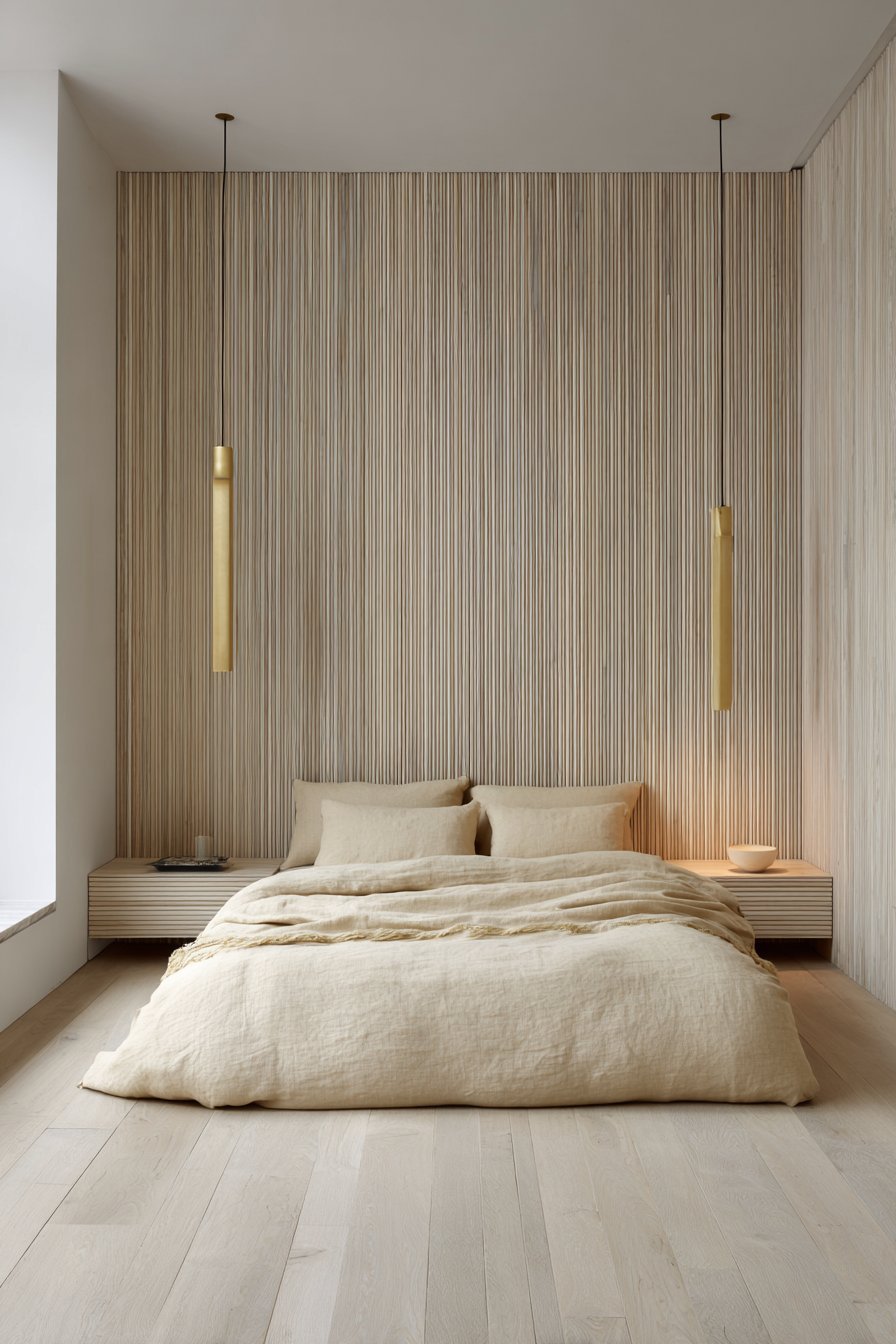
This custom solution demonstrates investment in quality materials and craftsmanship. The cedar brings warmth and subtle fragrance to the sleeping space. Integrated nightstands eliminate furniture shopping and create custom fit. The natural oil finish enhances wood grain while protecting the surface.
Key Design Tips:
- Invest in custom wood walls for lasting beauty and value
- Choose vertical-grain wood for consistent, refined appearance
- Integrate floating nightstands for seamless built-in look
- Use natural oil finishes to enhance and protect wood
- Hang pendant lights at varying heights for visual interest
15. Corner Bed Strategic Placement
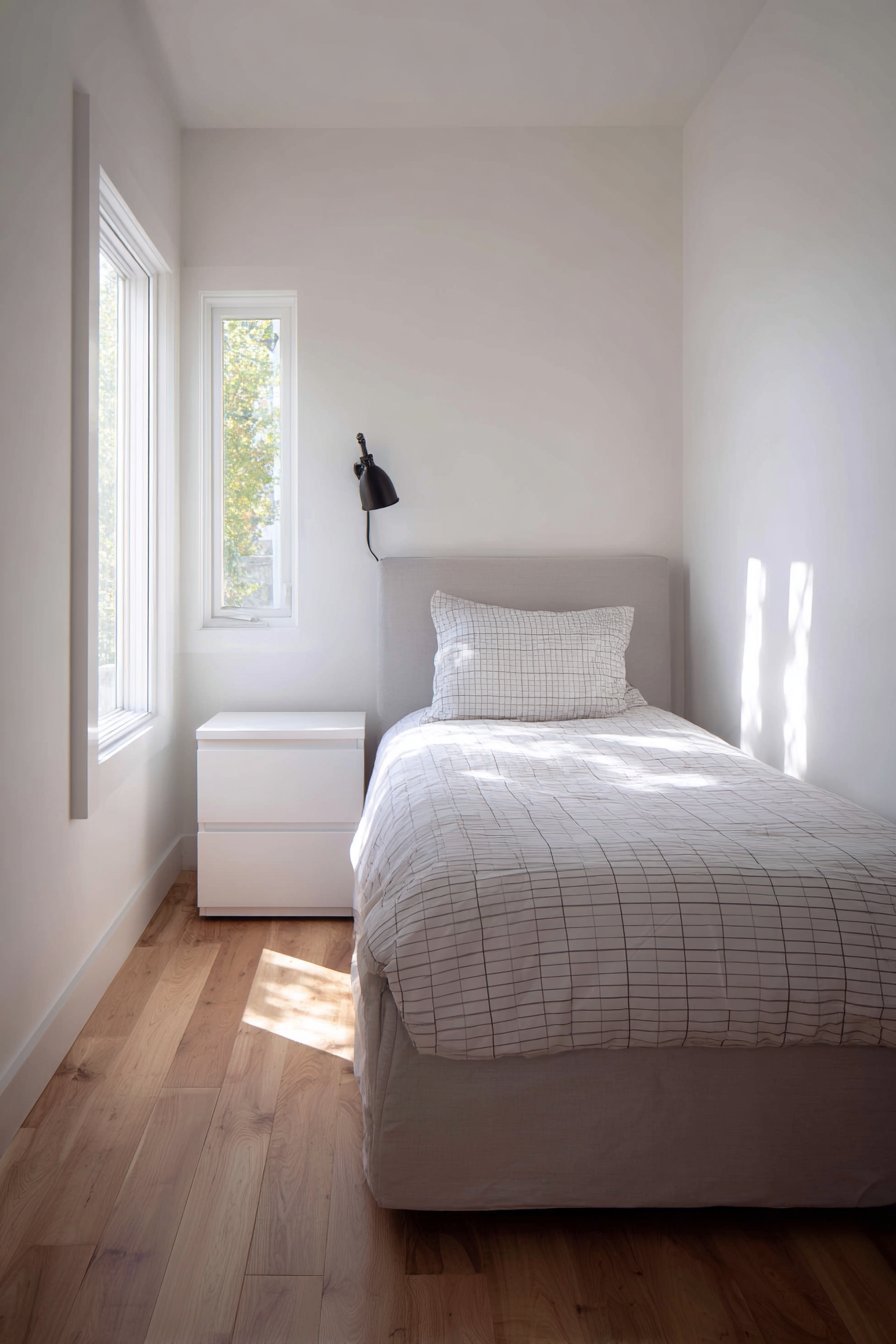
A bed positioned diagonally in the corner maximizes spatial perception. The simple upholstered bed features low-profile headboard in light gray. A single nightstand in white lacquer with one drawer sits beside. Two complementary white shades meet in the corner behind the bed.
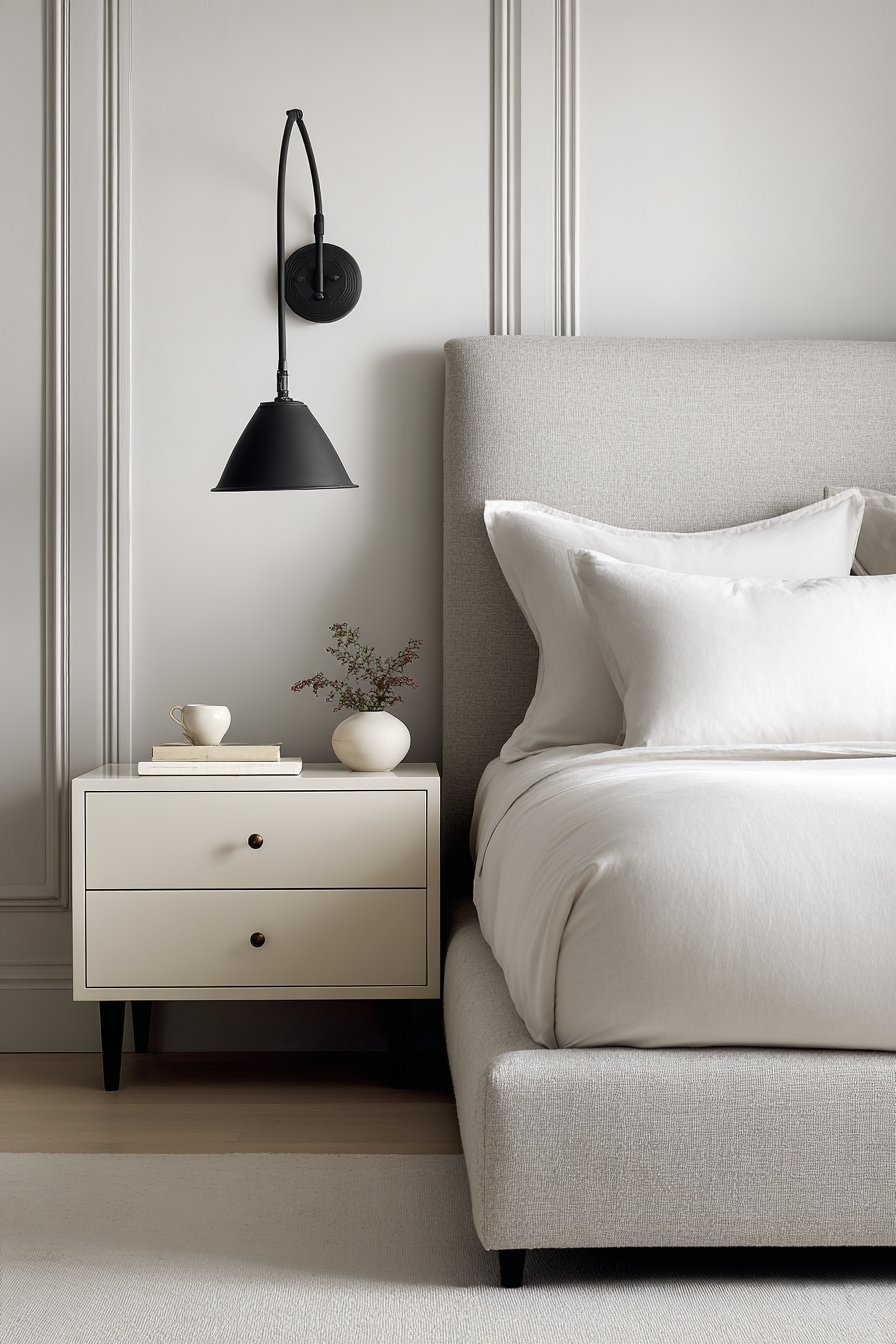
The subtle color variation defines the sleeping zone visually. A single articulating wall lamp in matte black provides adjustable reading light. The strategic layout makes the compact room feel more spacious. The diagonal placement creates dynamic spatial flow and interest.
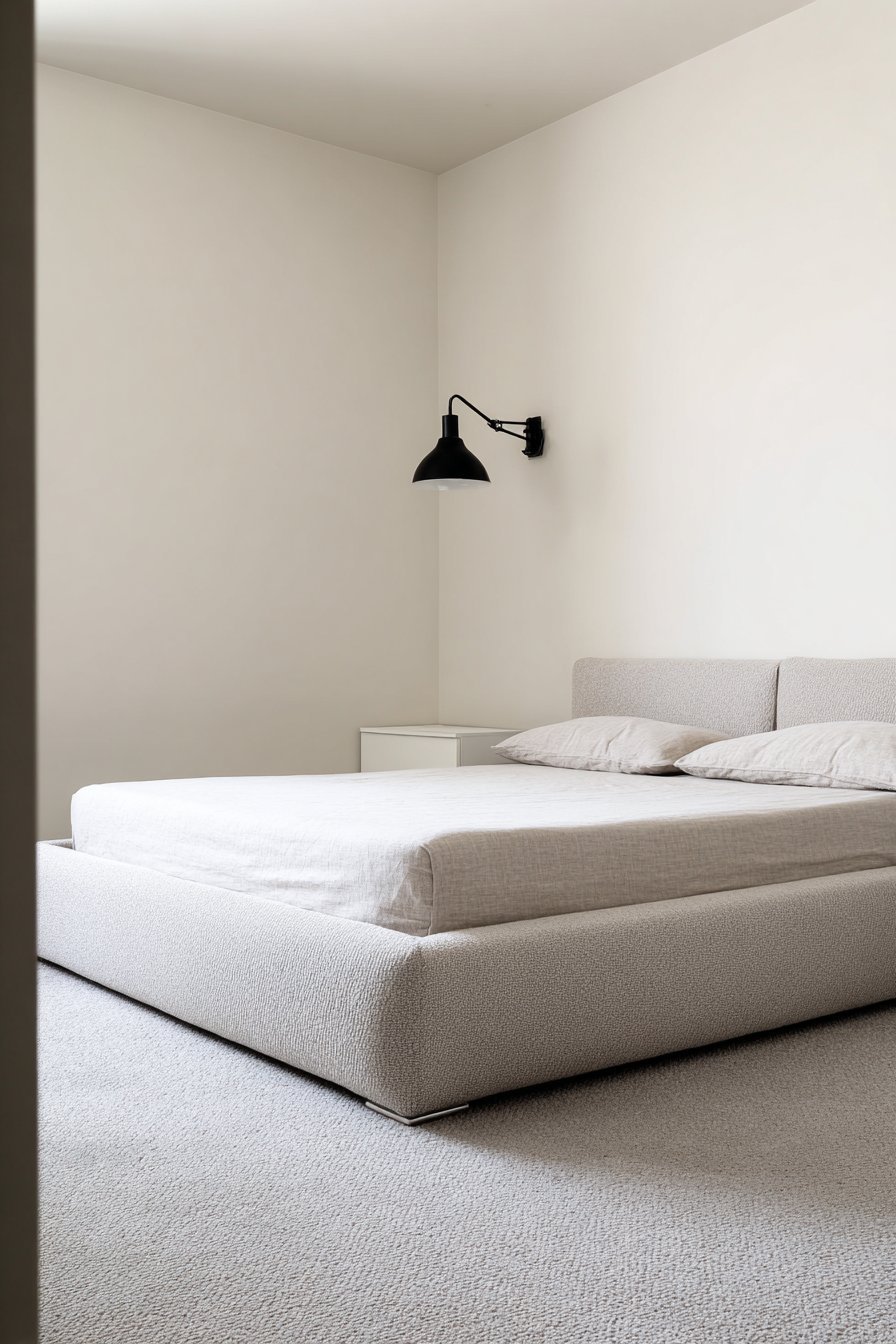
This approach proves minimal design solves small space challenges creatively. Corner placement utilizes typically awkward areas effectively. The low-profile furniture maintains sight lines and openness. Light colors and minimal pieces prevent the space from feeling cramped.
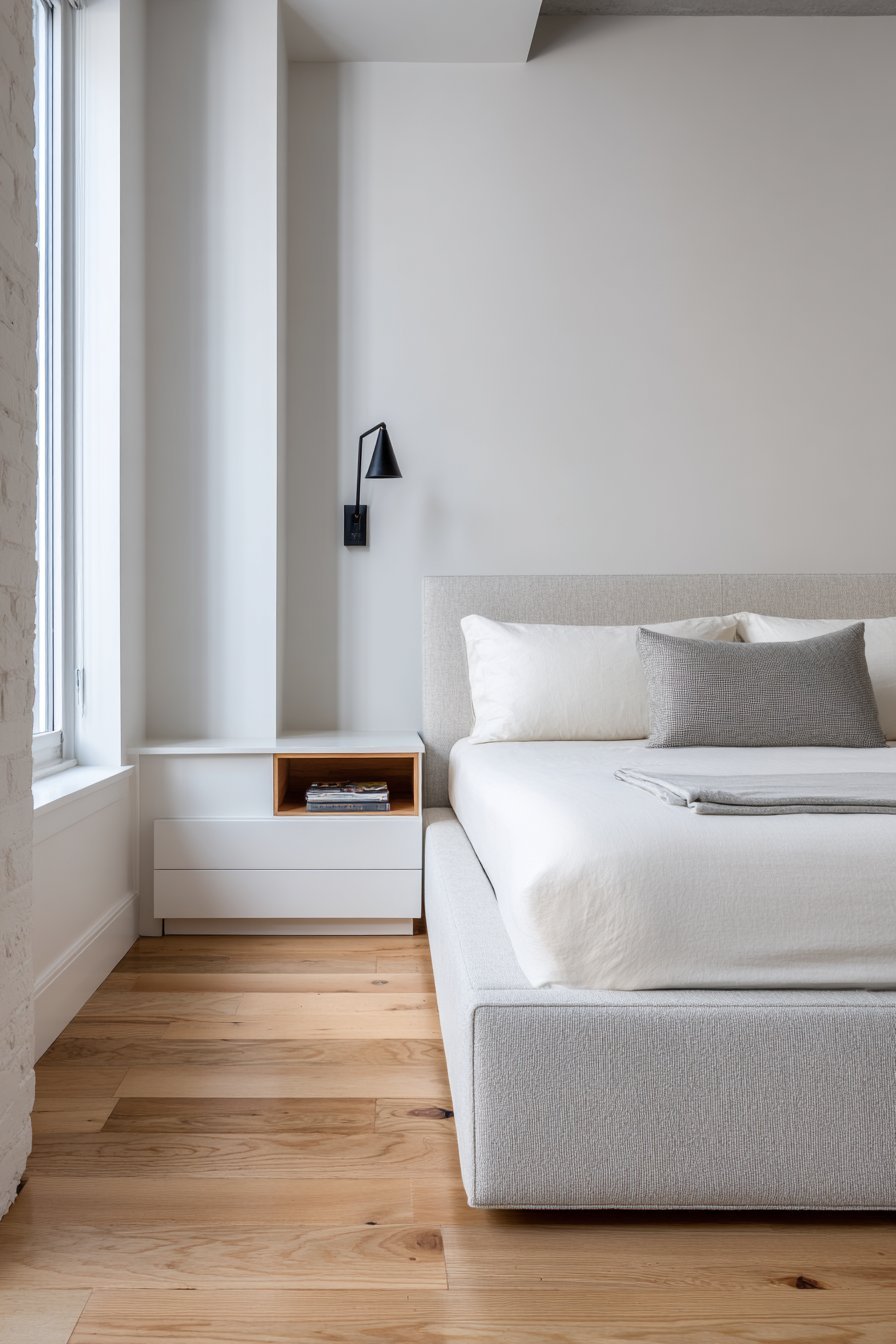
Key Design Tips:
- Position beds diagonally in corners to maximize space perception
- Use low-profile furniture to maintain sight lines
- Paint adjacent walls in slightly different whites for subtle definition
- Install articulating wall lamps to save nightstand surface space
- Choose compact nightstands with essential storage only
16. Meditation Corner Integration
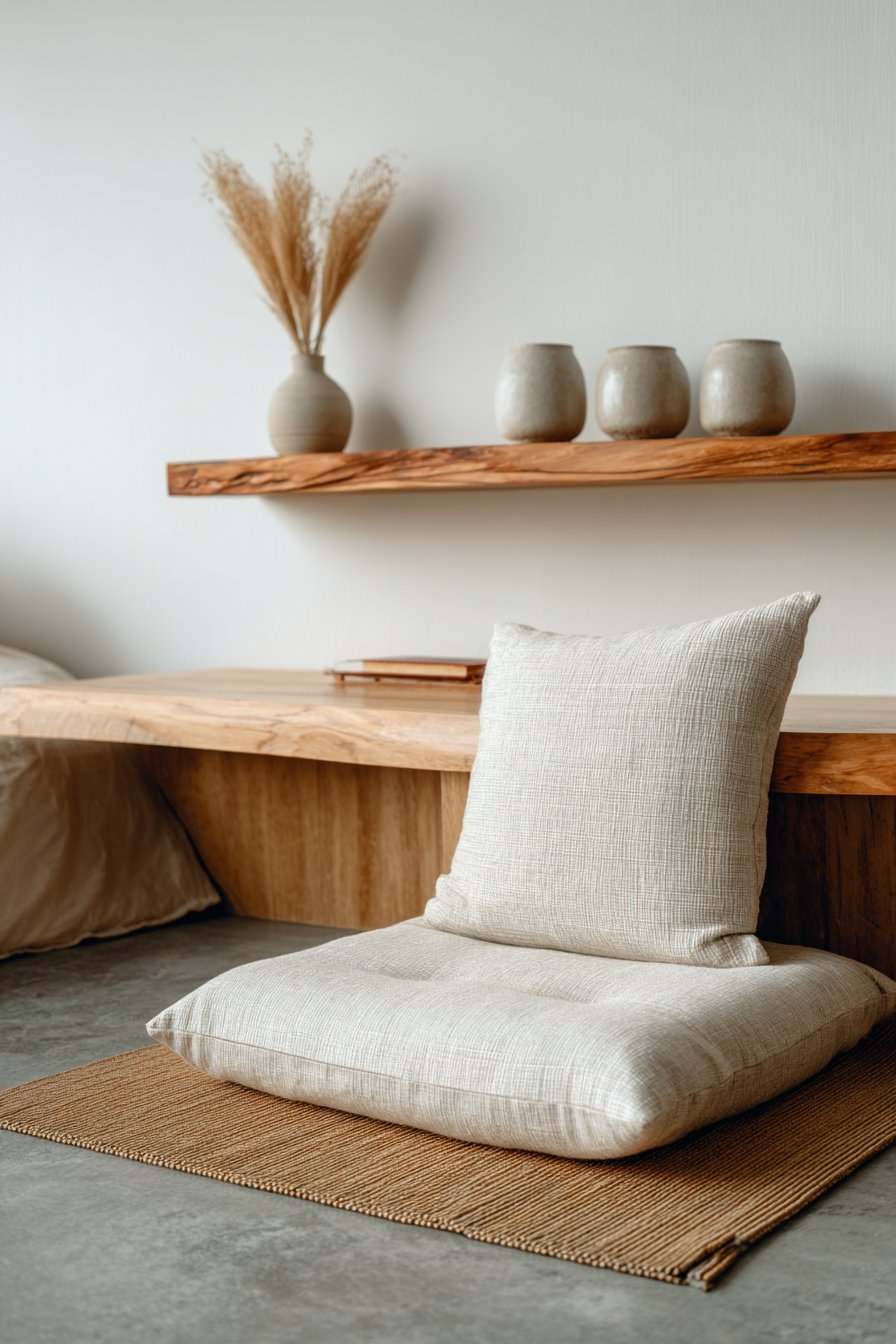
A floor cushion in natural linen sits on a small jute mat. The meditation corner embodies minimal philosophy of essential living. A low wooden shelf against the wall holds three uniform ceramic vessels. A small bundle of dried grasses provides simple natural decoration.
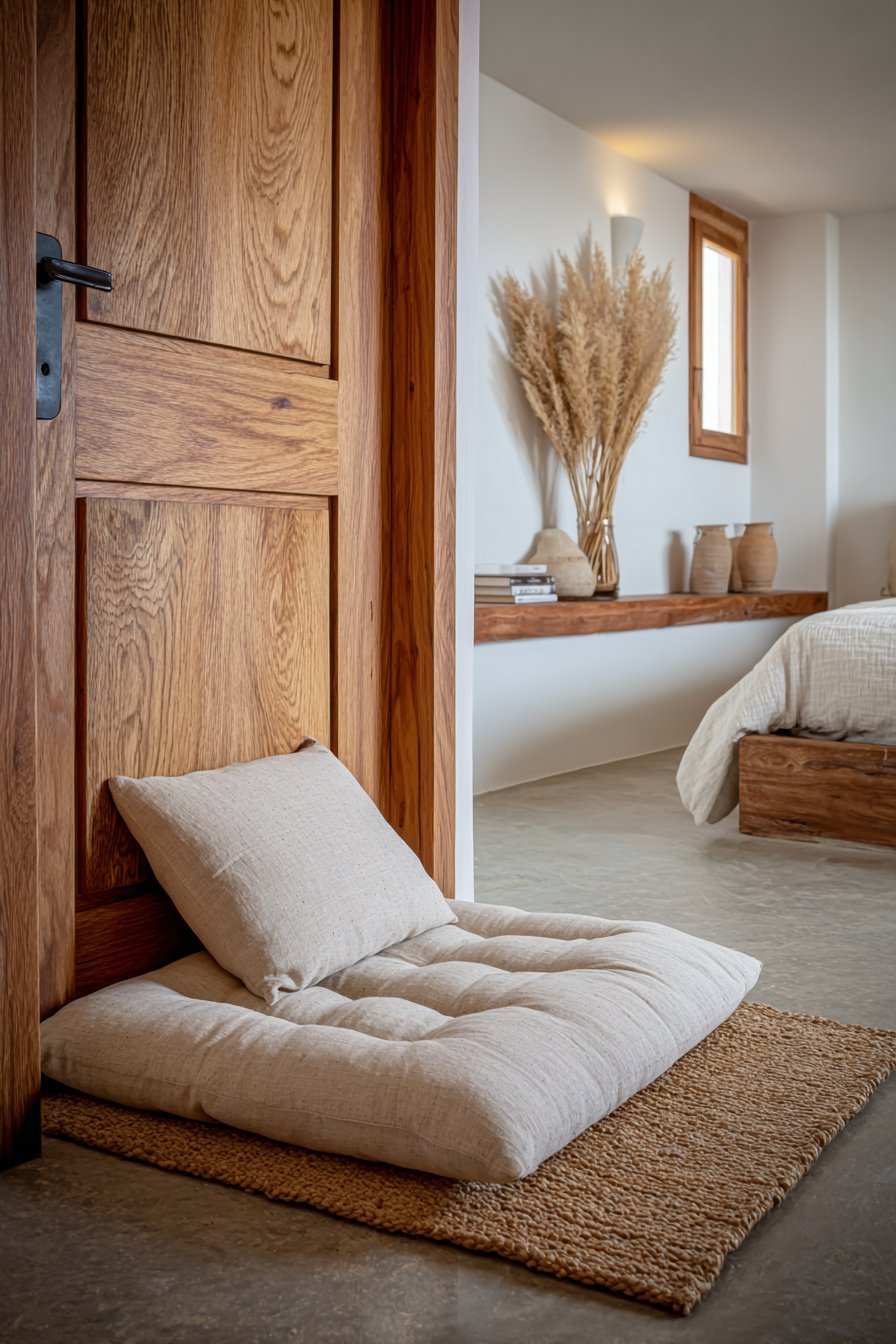
Polished concrete floor and plain white walls create serene backdrop. Natural light from nearby window illuminates with soft, even quality. The main sleeping area remains intentionally out of focus in background. The dedicated meditation space demonstrates intentional room zoning within minimal design.
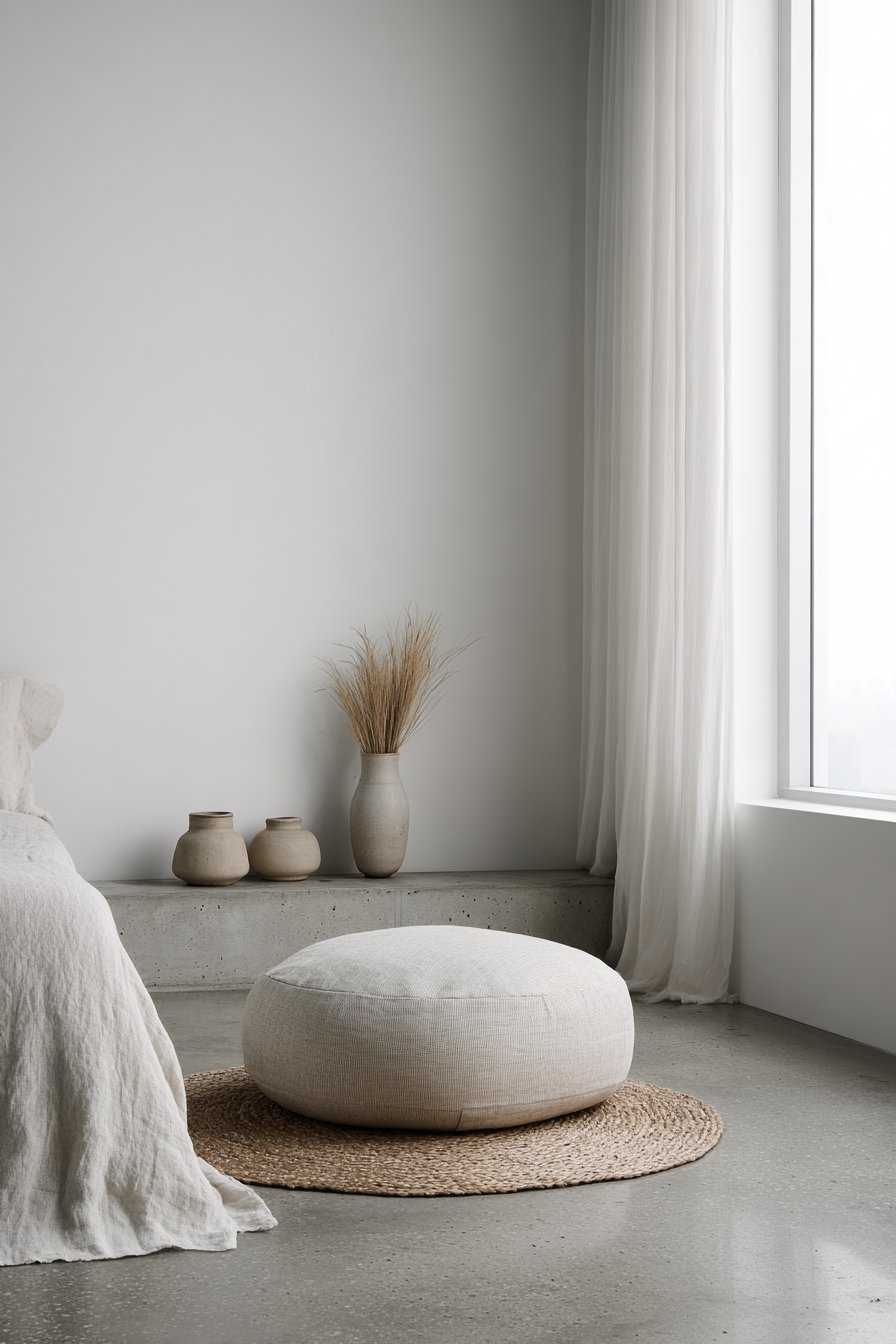
This design shows how minimal bedrooms support contemplative practices naturally. The simple furnishings create space for mindfulness and reflection. Natural materials connect meditation practice with organic elements. The designated area reinforces daily ritual and intentional living.
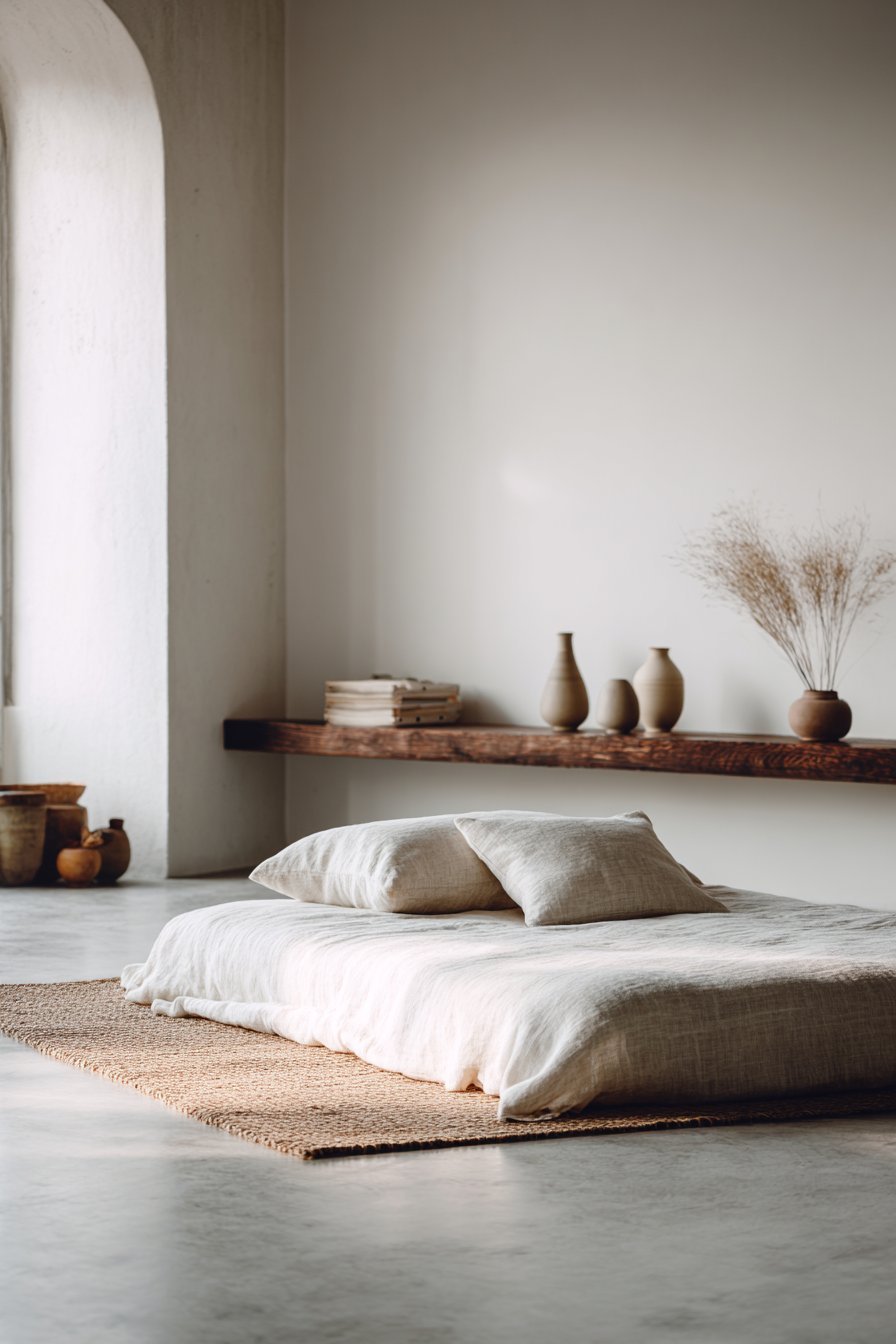
Key Design Tips:
- Create dedicated meditation corners with simple cushion and mat
- Use natural materials like jute and linen for meditation areas
- Display few carefully selected objects for focal points
- Position meditation spaces near windows for natural light
- Keep surrounding areas visually calm to support practice
17. Sophisticated Texture Layering
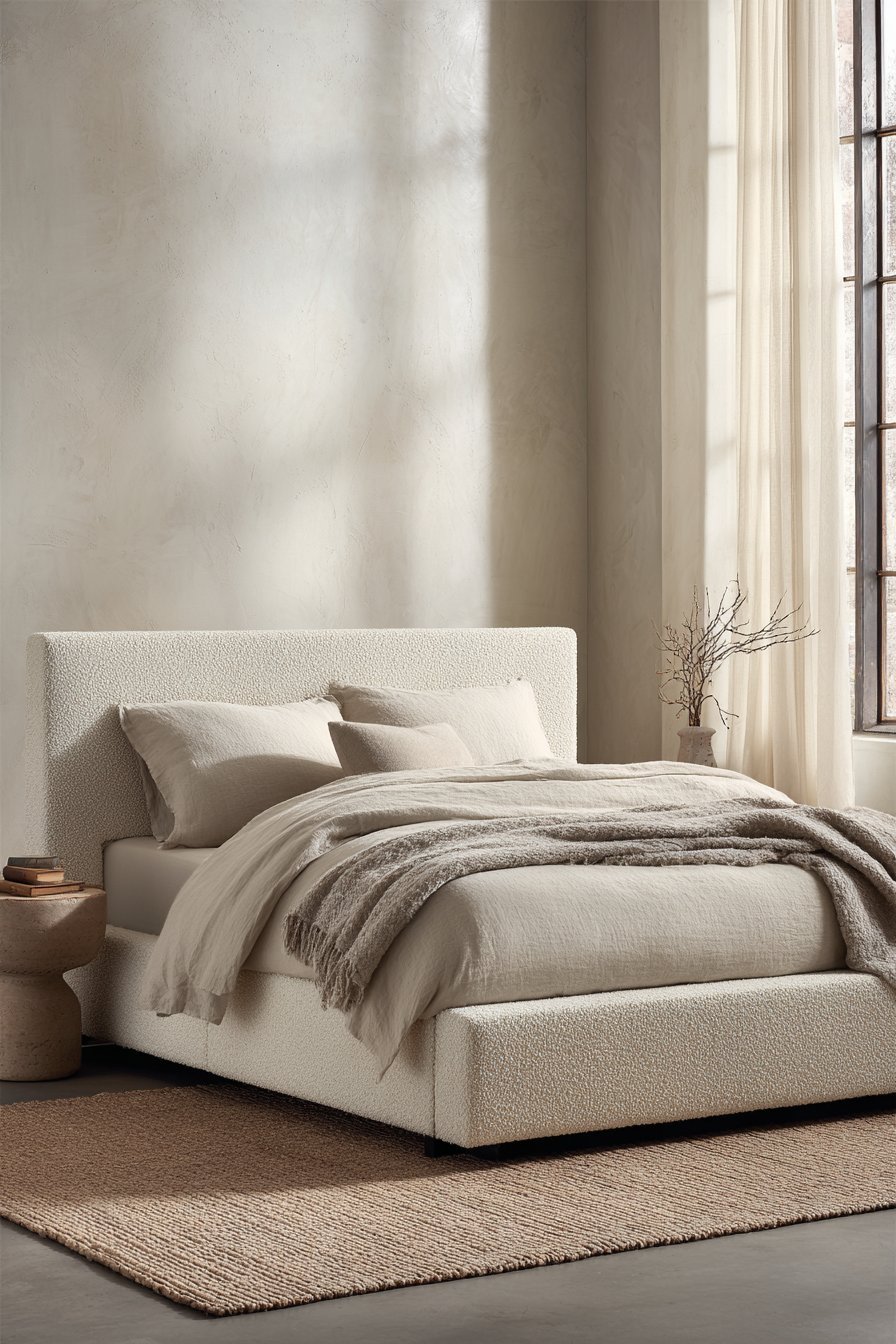
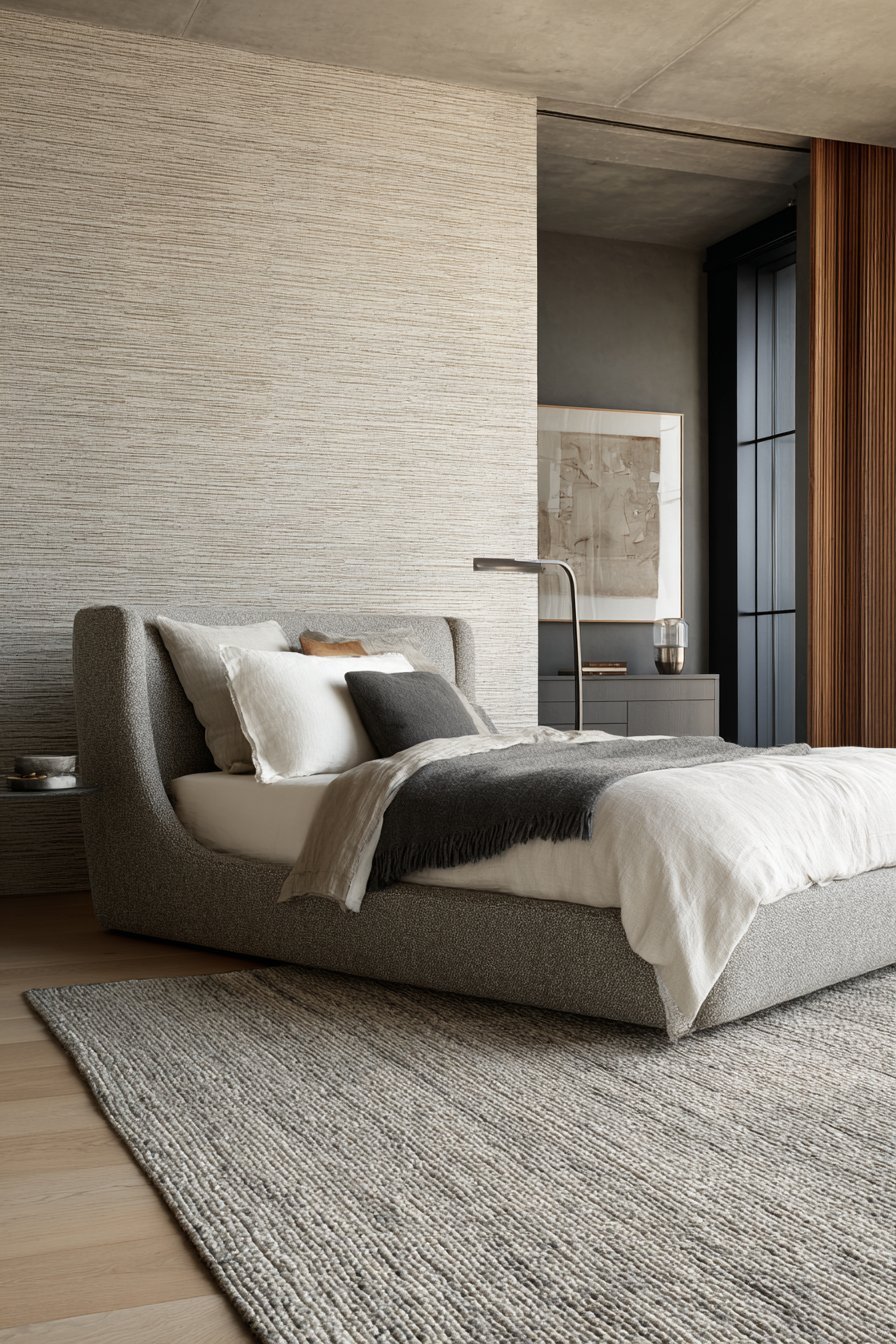
Multiple textures create depth while maintaining minimal aesthetic. A bouclé upholstered bed frame in natural ivory anchors the space. Linen bedding with subtle slub texture adds organic irregularity. A handwoven jute rug provides natural fiber underfoot warmth.
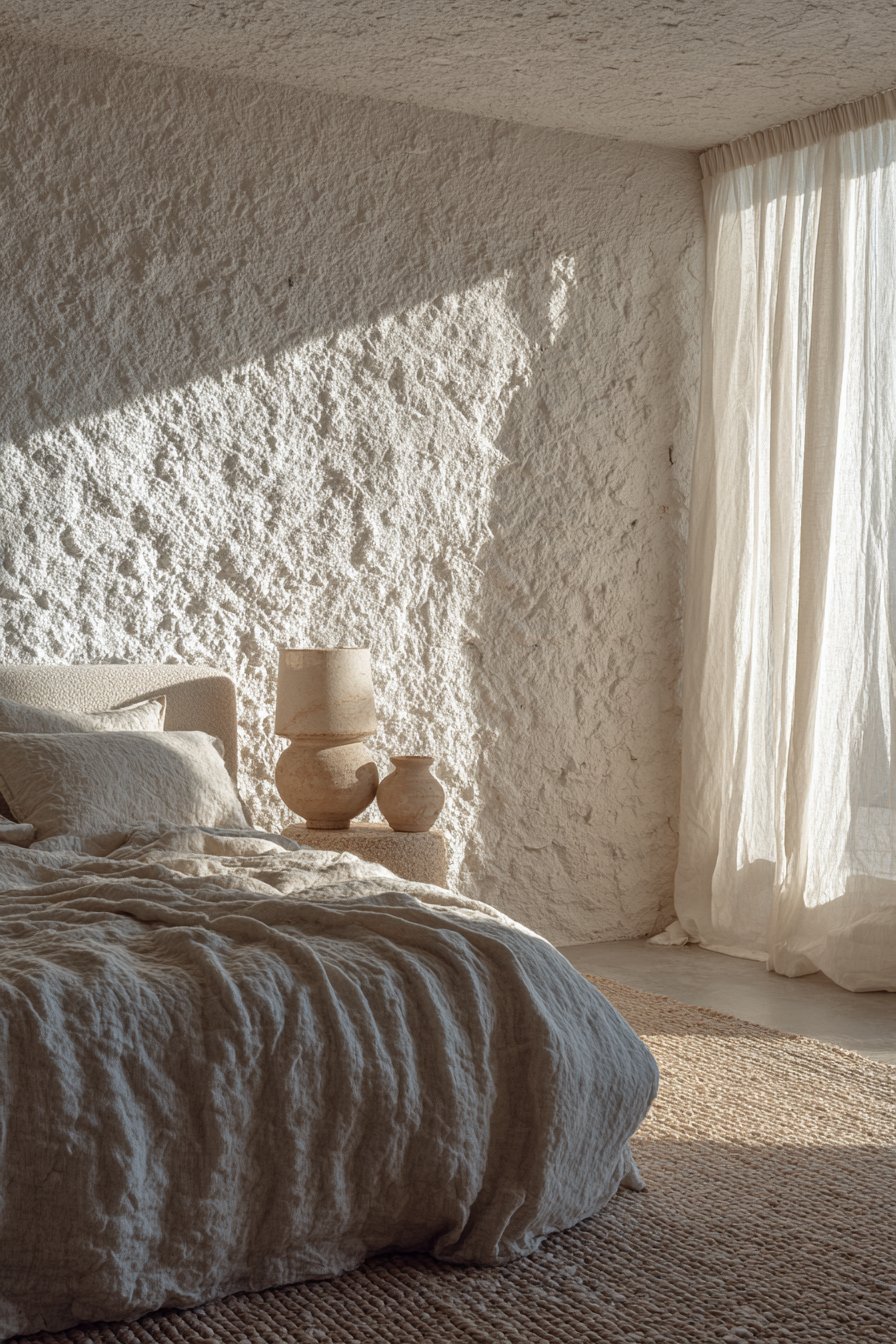
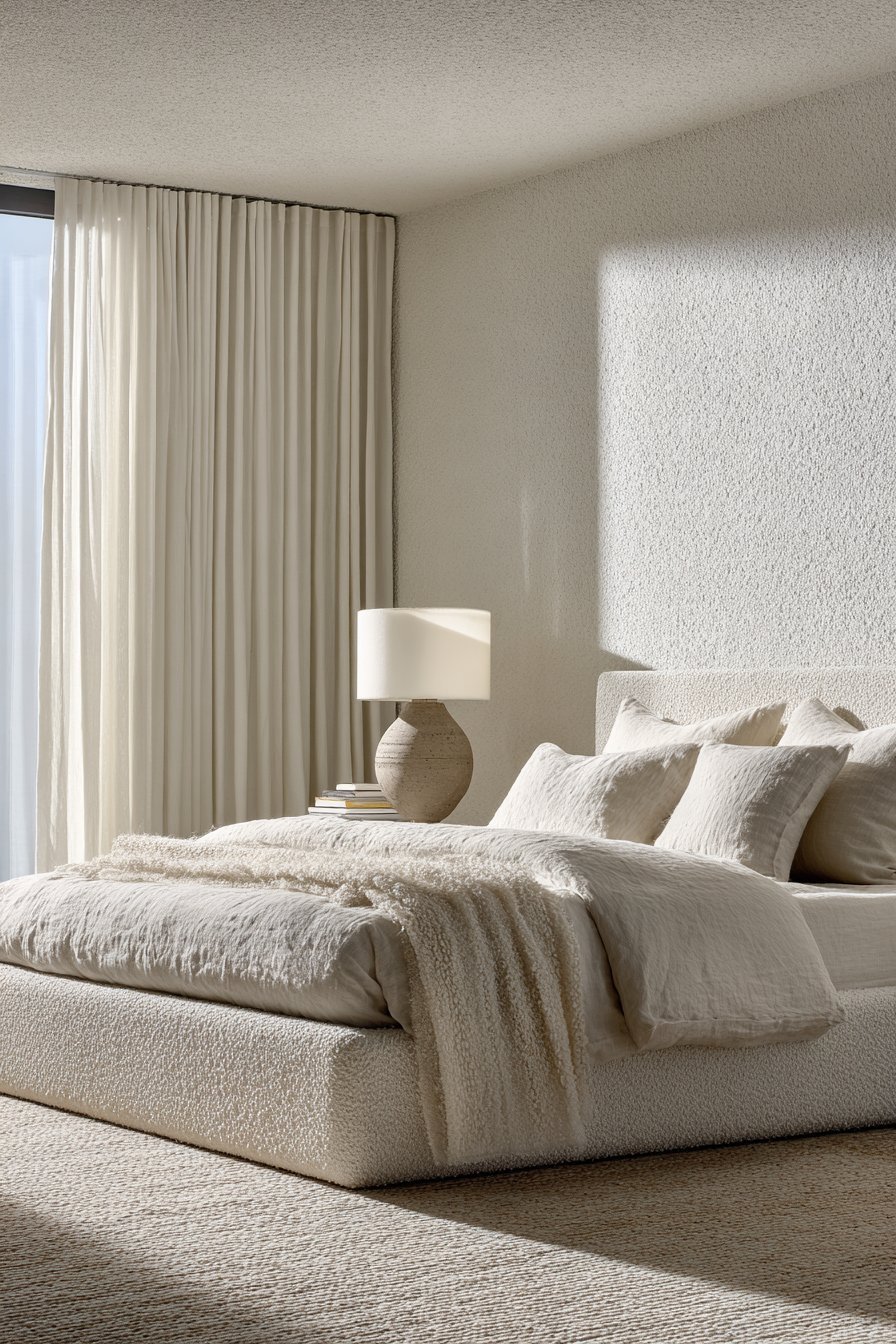
Smooth plaster walls in warm white complete the textural palette. Despite texture variety, the neutral colors maintain visual cohesion. A single ceramic table lamp with rough unglazed exterior provides bedside lighting. Morning light through sheer curtains highlights various surface textures beautifully.
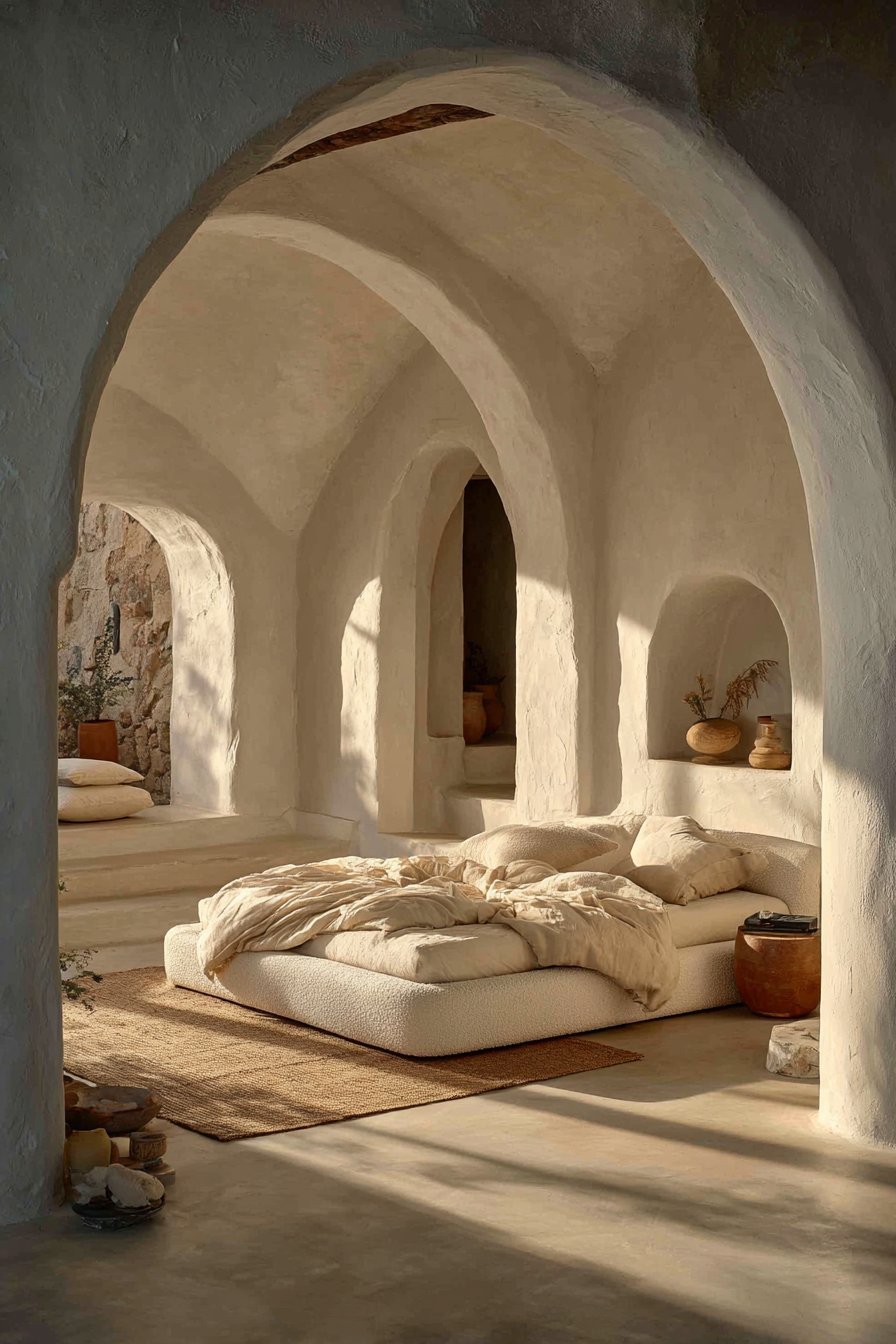
This approach demonstrates how texture creates interest without color or pattern. The neutral palette allows focus on surface qualities and materials. Natural fibers bring organic warmth and tactile appeal. The layering prevents monotony while maintaining minimal principles.
Key Design Tips:
- Layer multiple textures in neutral tones for sophisticated depth
- Combine smooth and rough surfaces for tactile contrast
- Use natural fibers like jute, linen, and bouclé for warmth
- Choose unglazed ceramics for organic surface quality
- Maintain cohesive color palette when introducing texture variety
18. Single Statement Artwork Focus
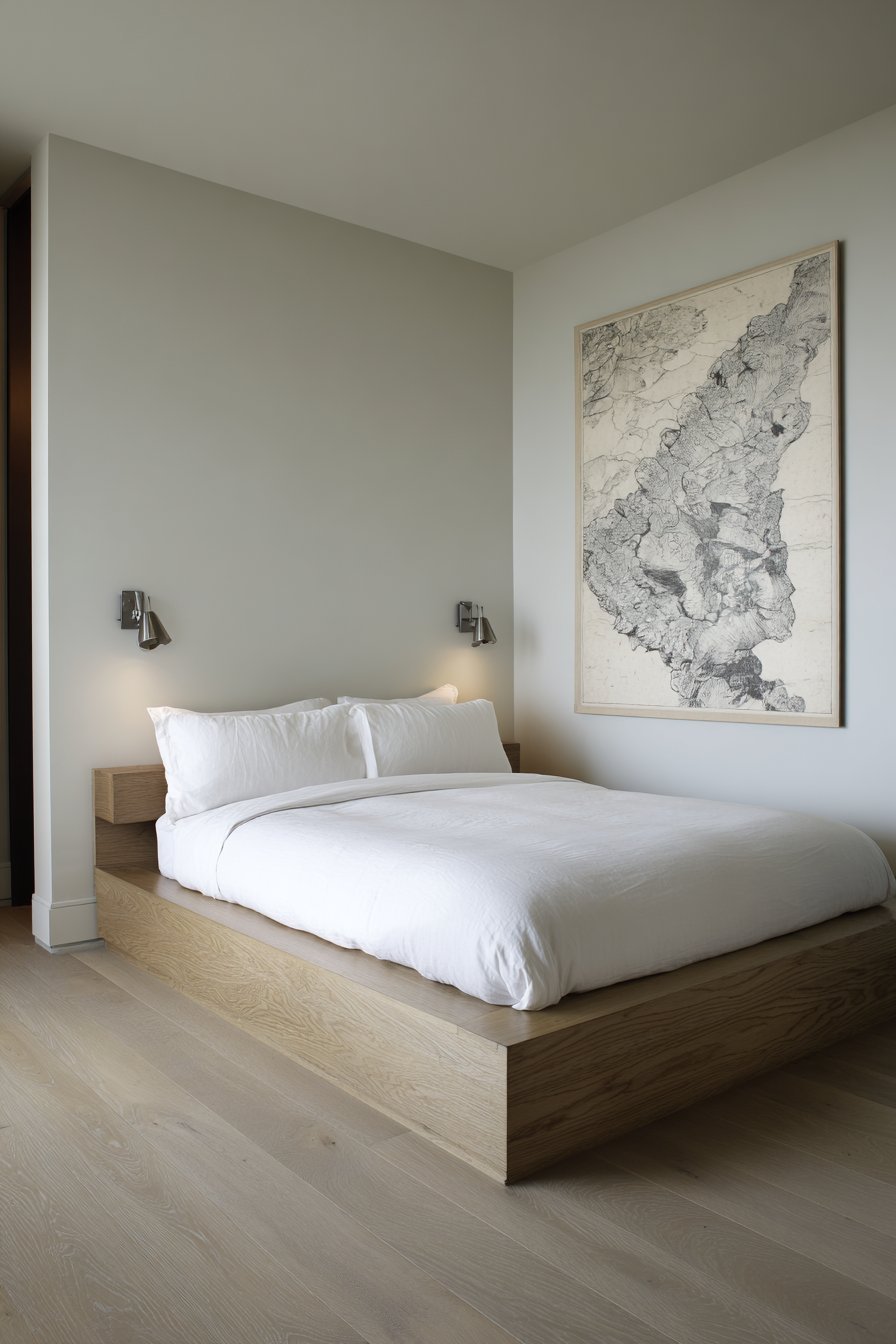
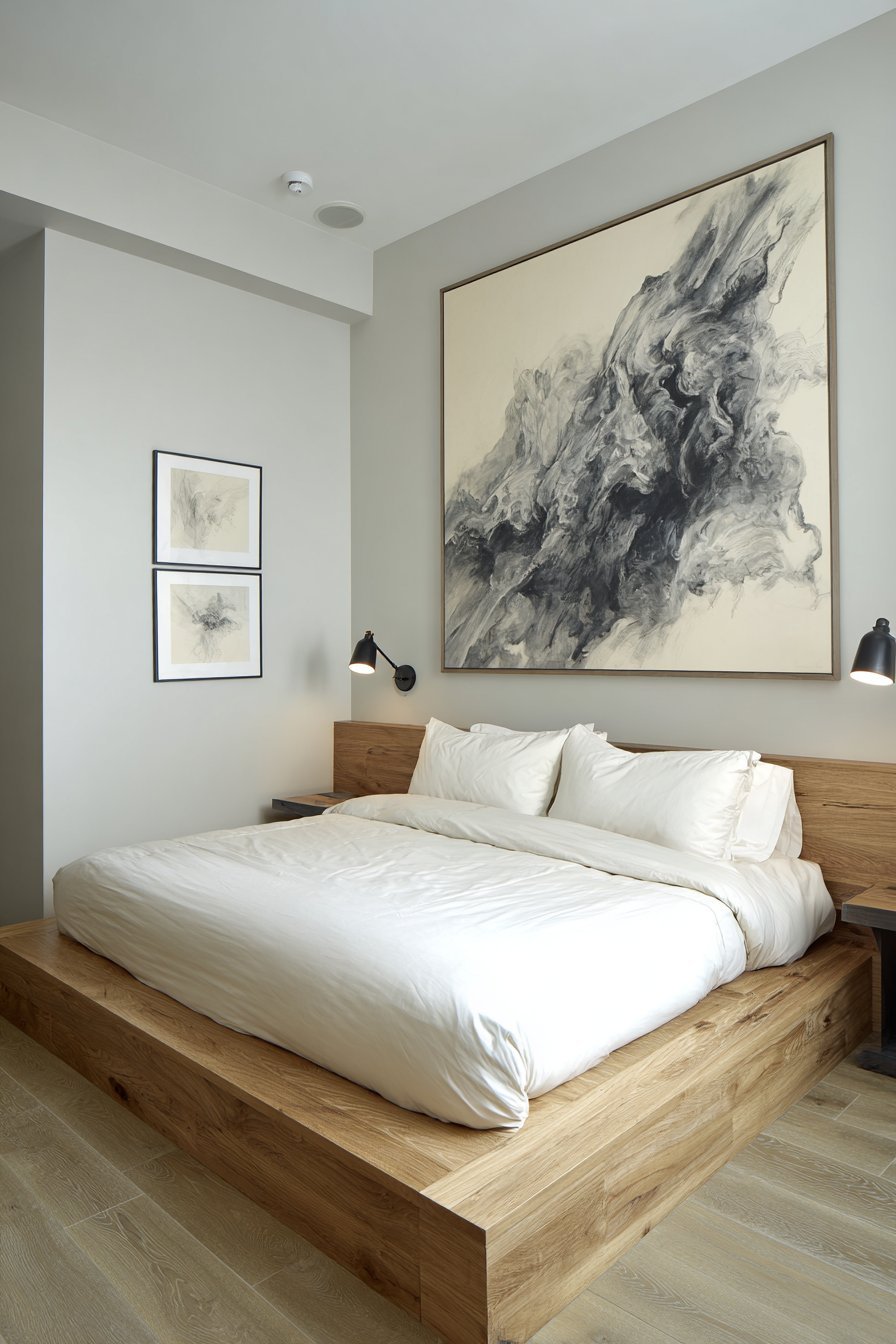
A large abstract canvas in charcoal, white, and soft gray tones hangs above the bed. The artwork serves as the room’s sole decorative element. This demonstrates minimal principle of quality over quantity beautifully. The simple platform bed features low wooden frame in natural oak.
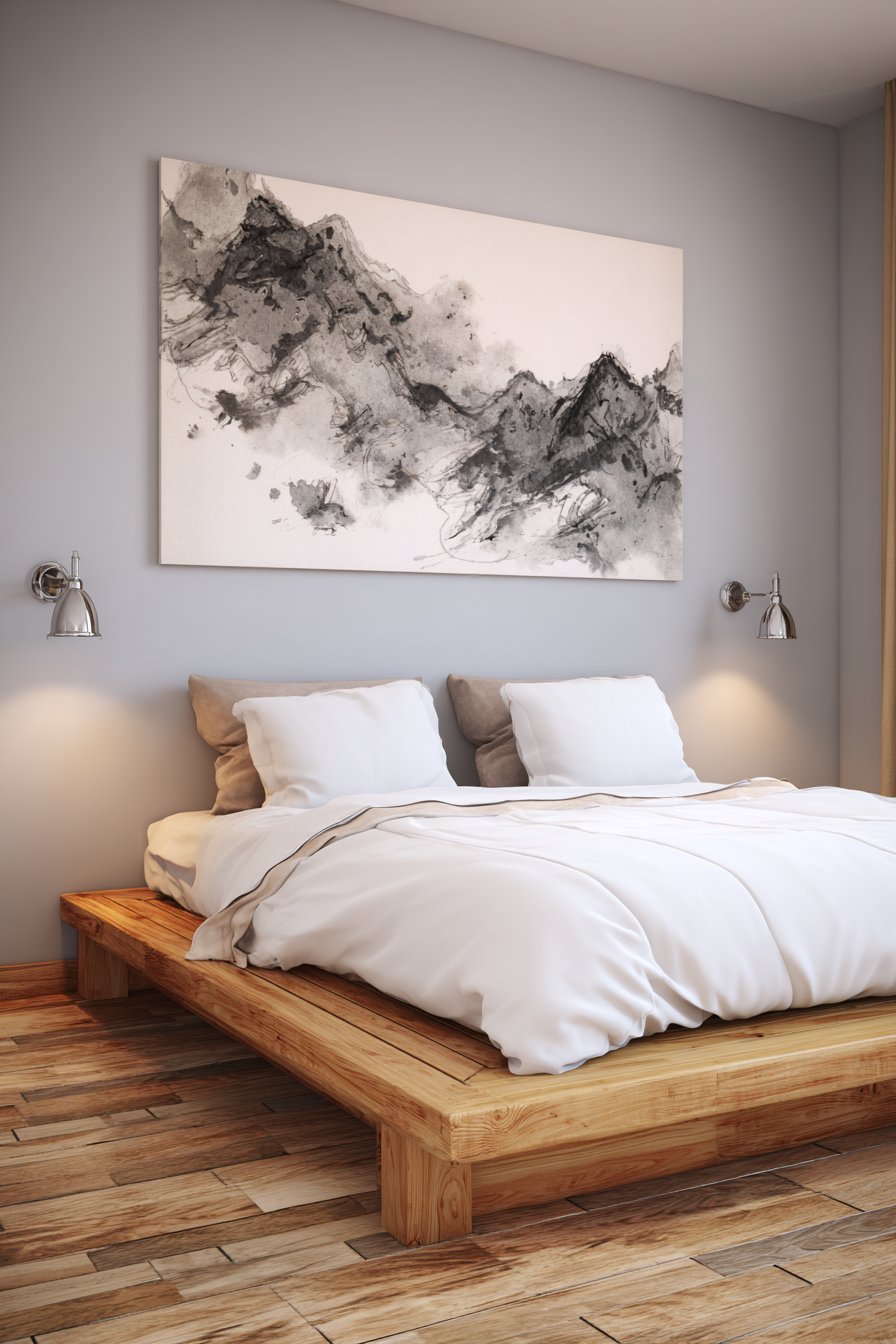
White bedding creates clean backdrop for the artistic statement. Light gray walls and white oak flooring provide neutral foundation. Two small wall-mounted reading lights in brushed steel flank the artwork. The single piece defines the room’s character without overwhelming the space.
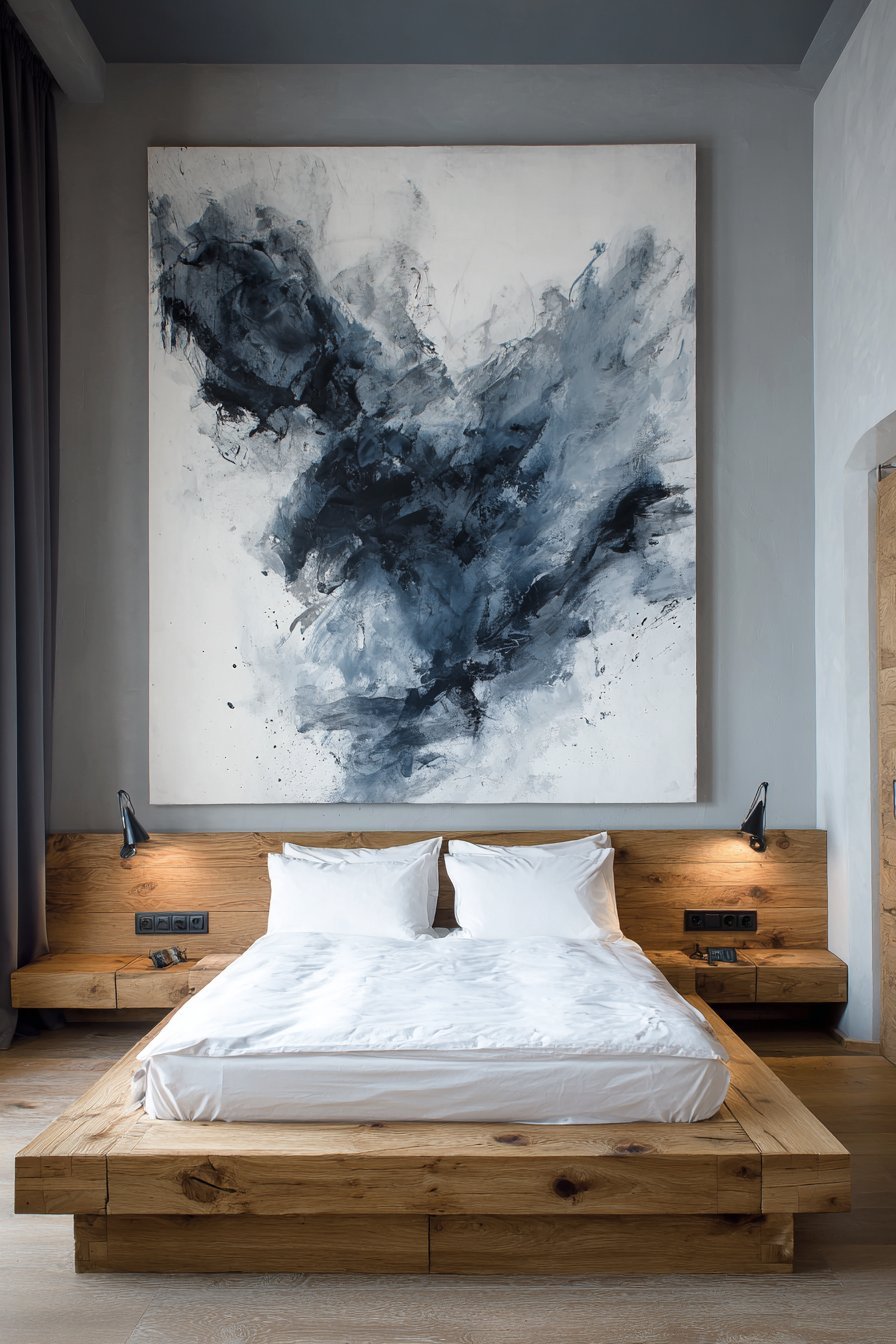
This design proves one exceptional piece outweighs multiple mediocre items. The large scale creates impact appropriate for the minimal space. The neutral palette allows the artwork to serve as focal point. Strategic lighting emphasizes the artwork while providing functional reading light.
Key Design Tips:
- Invest in one large-scale artwork rather than multiple small pieces
- Choose abstract art in neutral tones for minimal aesthetic
- Hang artwork at proper height relative to bed headboard
- Install reading lights flanking artwork for dual purpose
- Keep all other surfaces and walls completely clear
19. Murphy Bed Space Transformation
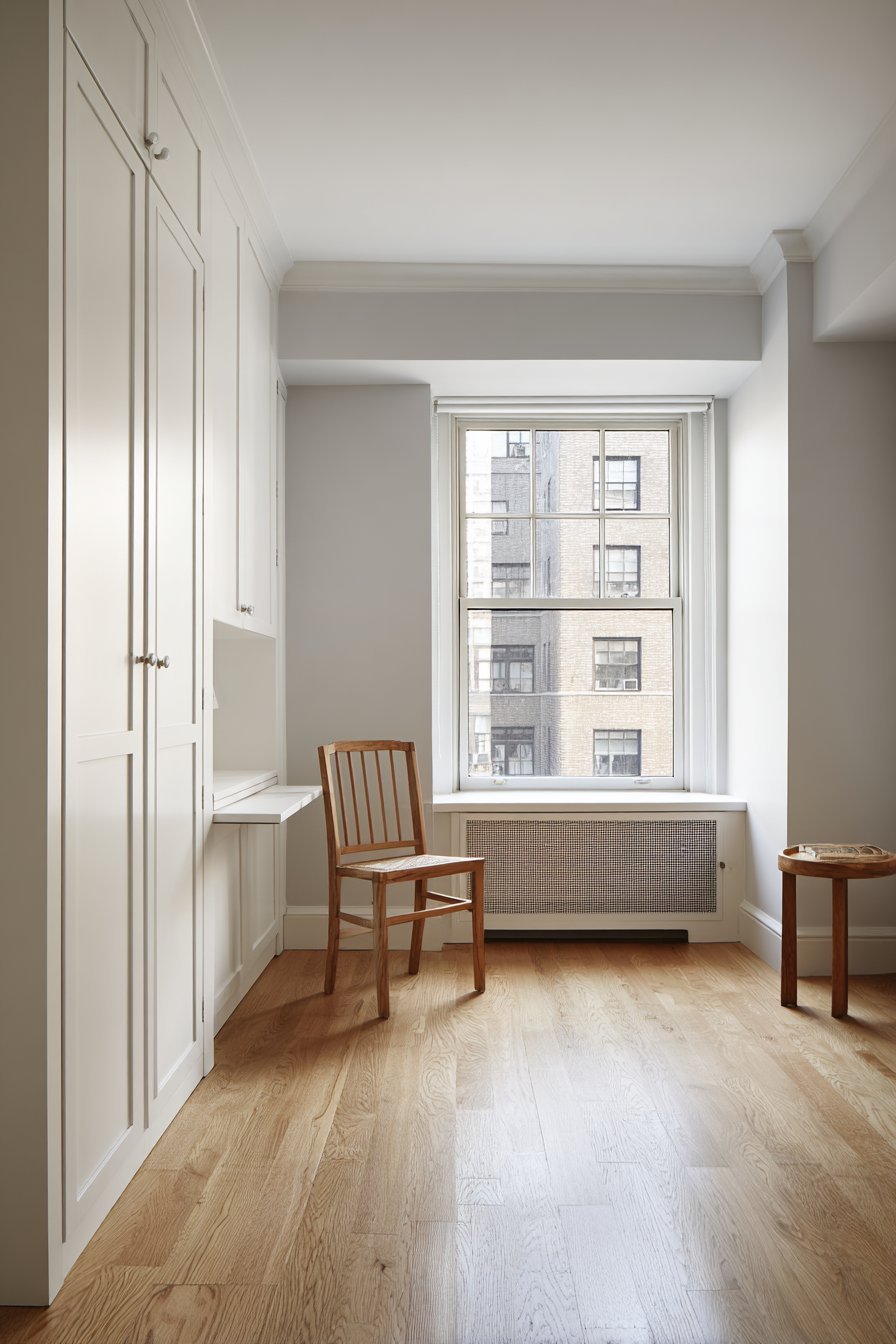
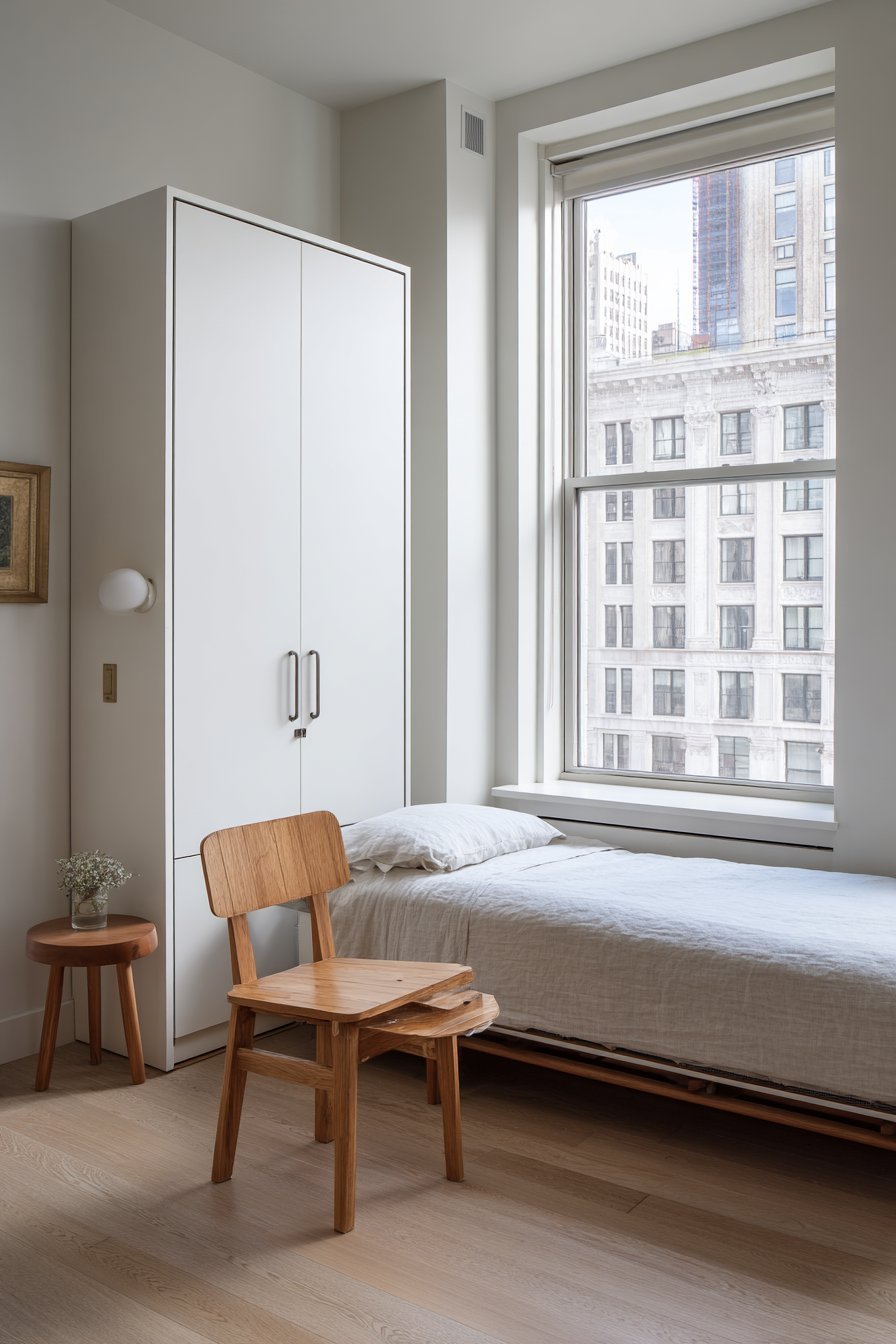
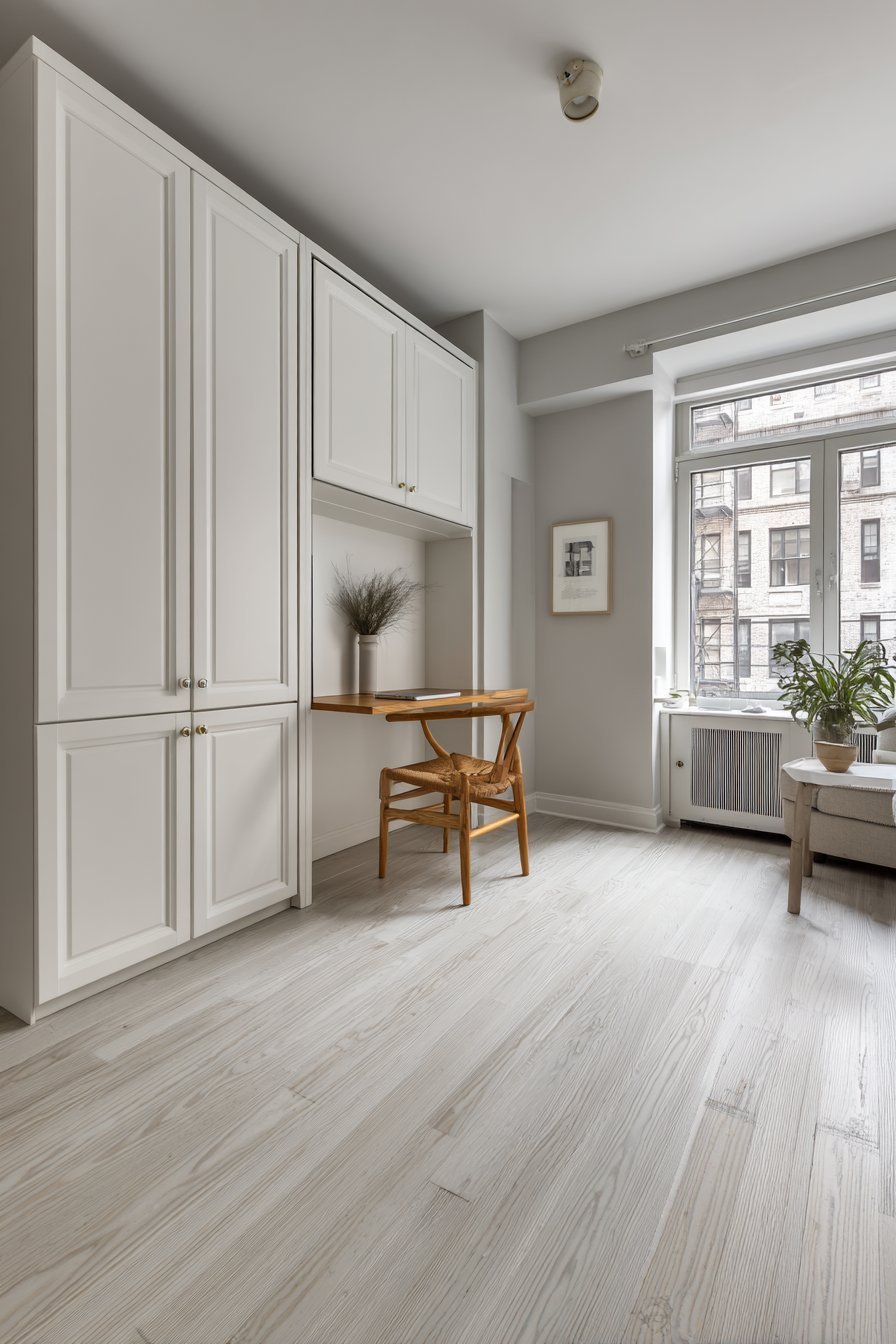
A murphy bed system in white demonstrates space-saving elegance. Simple hardware allows smooth operation without complicated mechanisms. When closed, the bed disappears into clean wall of cabinetry. Handleless doors maintain uninterrupted surface appearance throughout the wall.
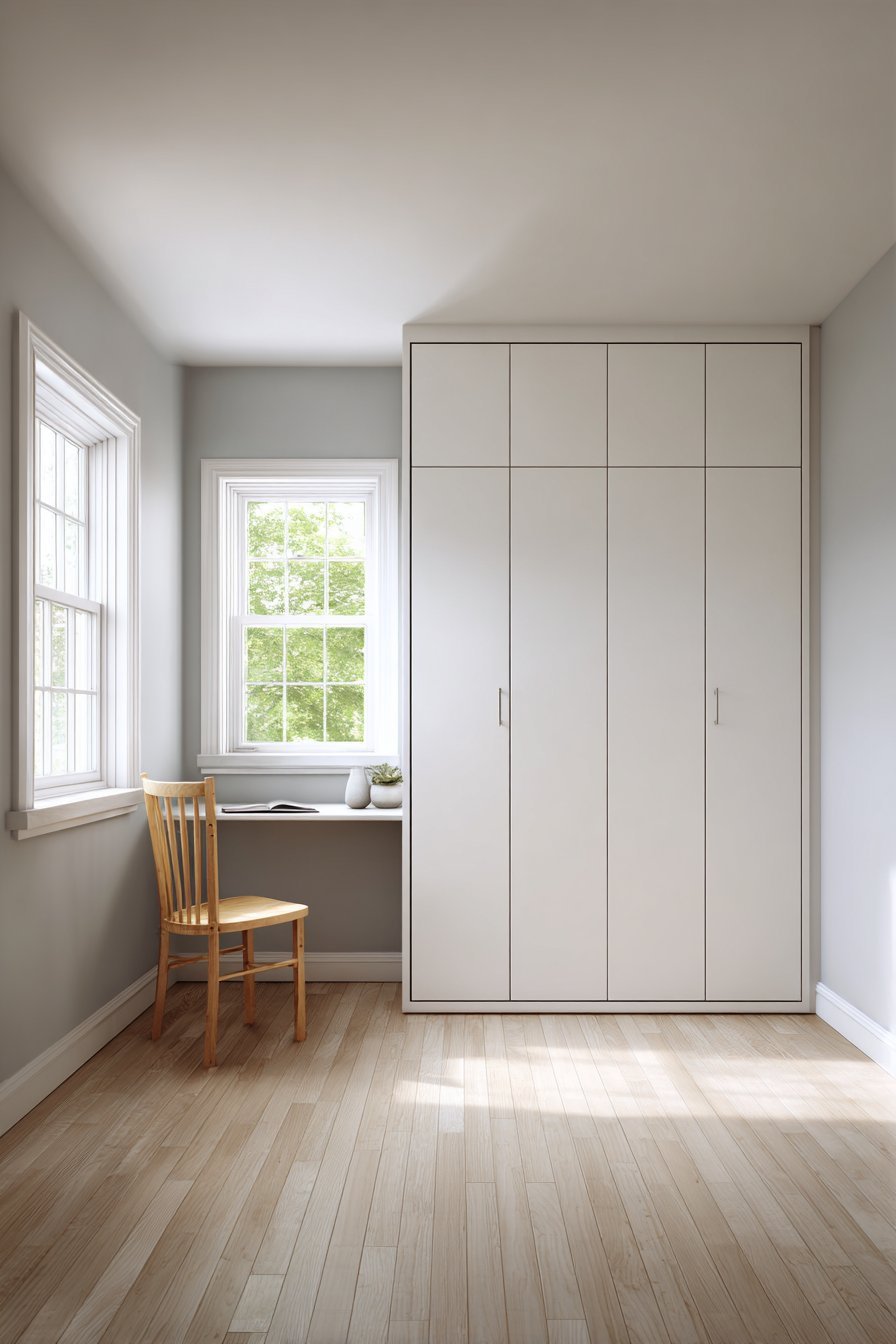
A small fold-down desk attachment provides workspace when bed is stored. The room includes only a single chair in natural wood and small side table. White oak flooring and light gray walls maintain visual simplicity. The transformable design serves multiple functions within single compact room.
This approach shows how minimal design accommodates modern flexible living needs. The murphy bed system maximizes usability of limited square footage. The clean aesthetic maintains beauty in both bed and desk configurations. Quality hardware ensures smooth operation and long-term durability.
Key Design Tips:
- Install quality murphy bed systems with smooth operating hardware
- Choose handleless cabinetry to maintain clean minimal aesthetic
- Include fold-down desk for multi-functional space use
- Select light colors throughout for visual spaciousness
- Keep additional furniture minimal to allow room transformation
20. Vertical Space Loft Design
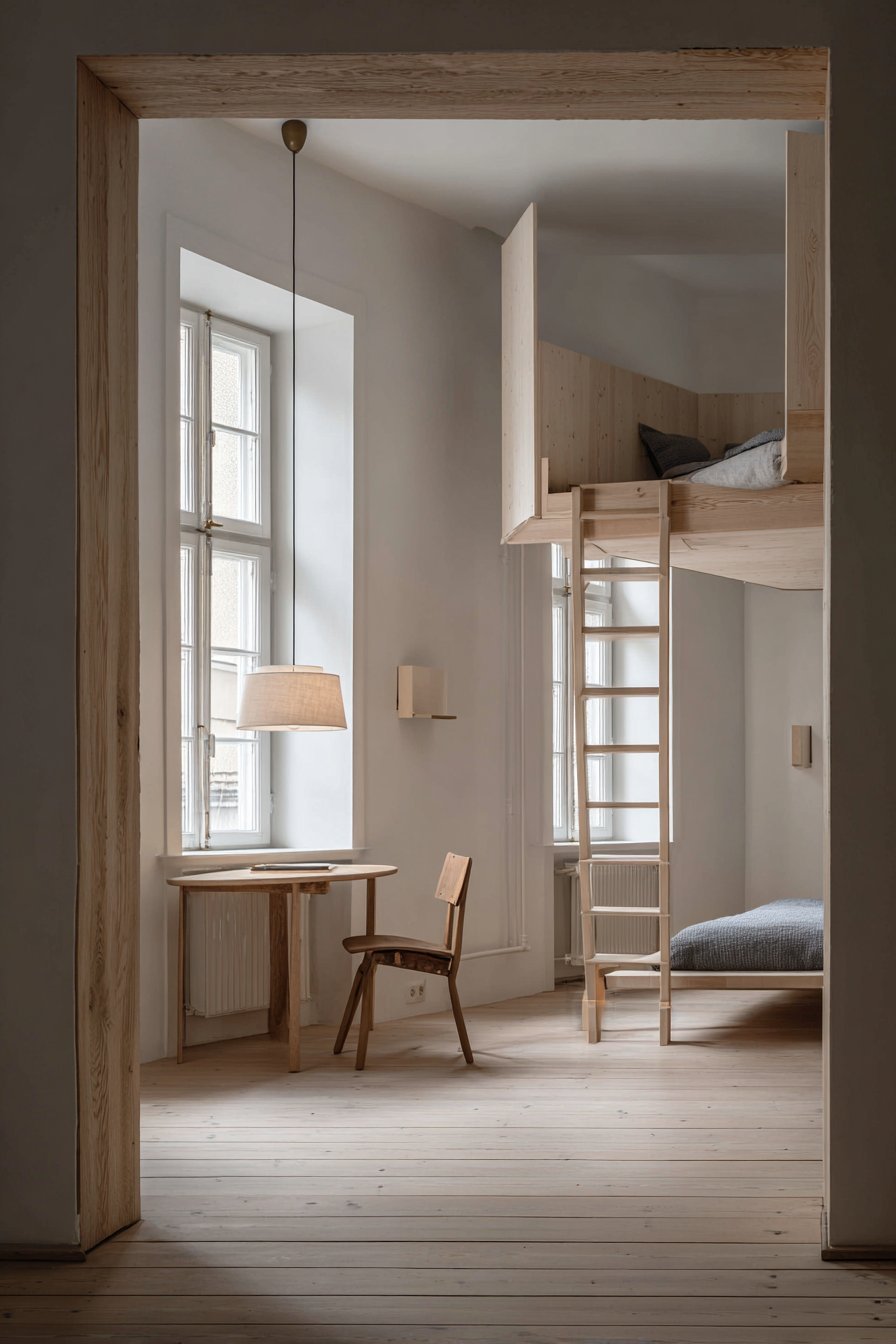
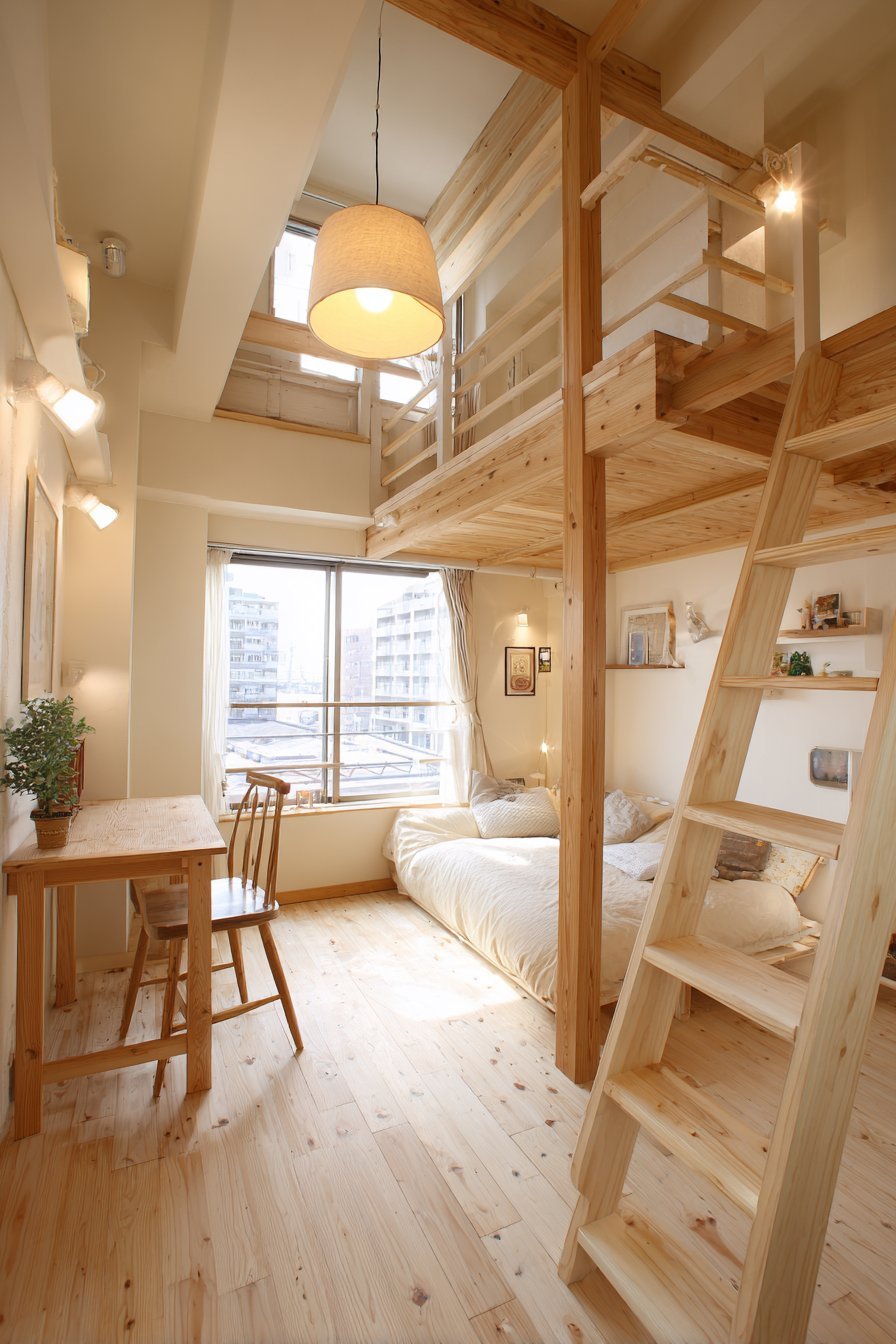
A sleeping loft accessed by simple wooden ladder maximizes vertical space. The loft structure features clean joints and natural wood construction. Below the loft, a minimal work area includes simple desk and single chair. White walls and light wood flooring keep the compact space feeling open.
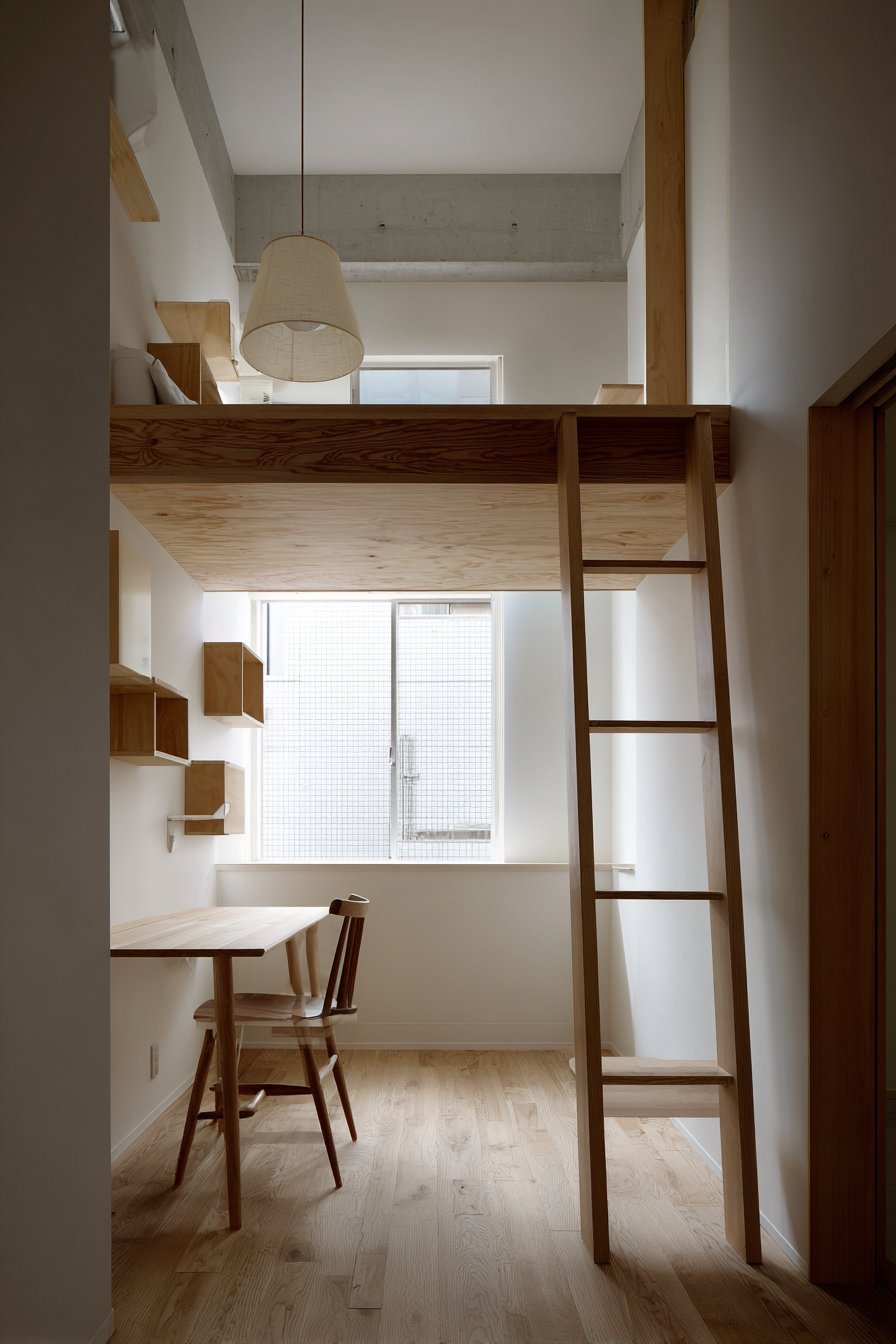
A single pendant light with simple fabric shade hangs in the open area. Natural light from window illuminates both levels effectively. The efficient design demonstrates honest structural expression typical of minimal philosophy. The ladder’s square rungs provide functional beauty through simple geometry.
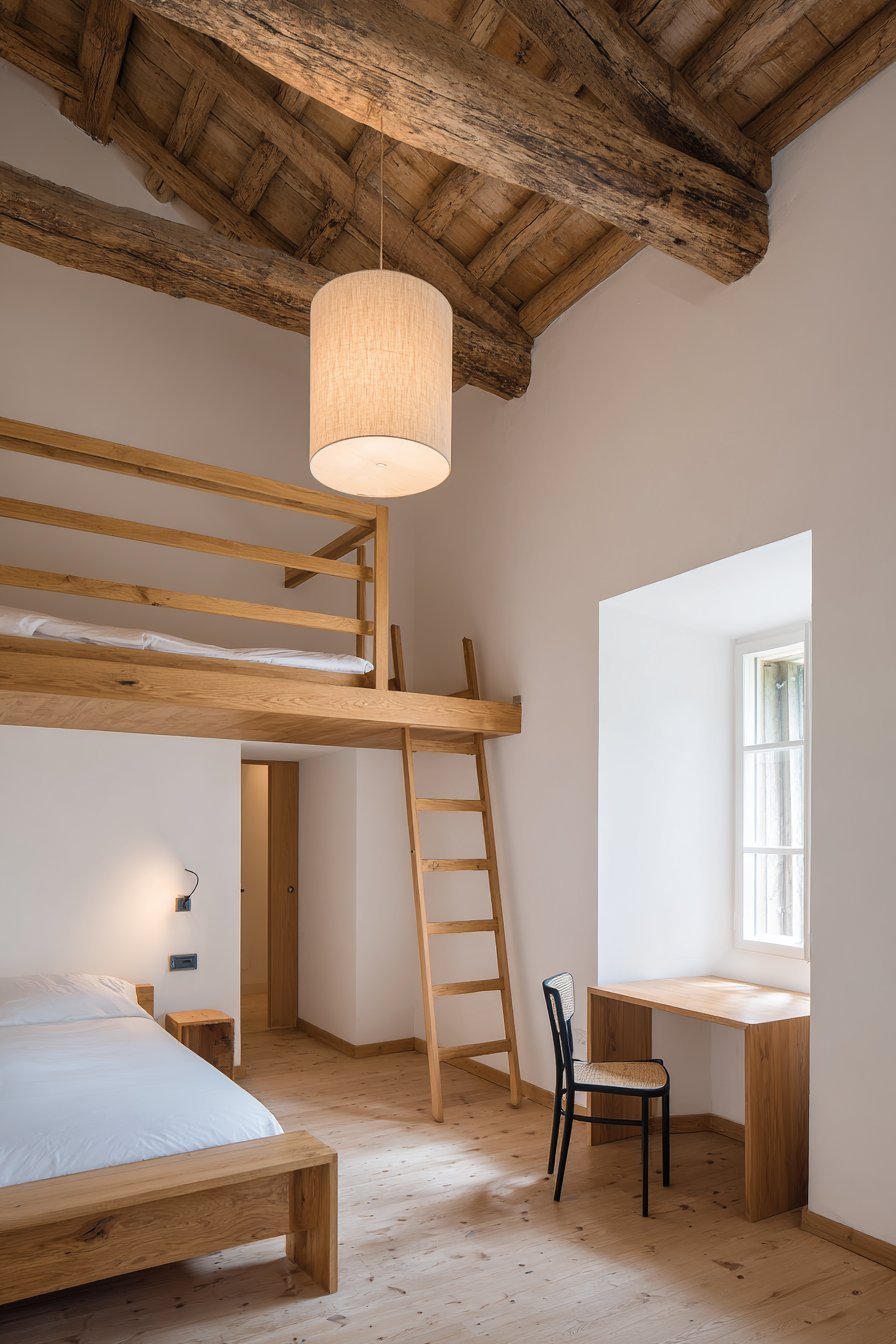
This design solution proves ideal for compact urban living situations. The loft approach doubles usable space within limited square footage. The exposed structure becomes architectural feature rather than hidden element. The minimal furnishings prevent the small space from feeling cluttered.
Key Design Tips:
- Build loft structures with clean joinery and quality materials
- Use simple ladder designs with comfortable rung spacing
- Position desks or seating beneath lofts for space efficiency
- Install adequate lighting for both loft and lower levels
- Keep furnishings minimal to prevent overwhelming small spaces
Why These Minimal Bedroom Designs Are the Best
These minimal bedroom designs represent thoughtful approaches to creating peaceful, functional spaces. Each concept demonstrates core minimalist principles while offering unique interpretations suited to different needs and preferences. The designs prove that minimalism enhances rather than restricts personal expression through careful curation.
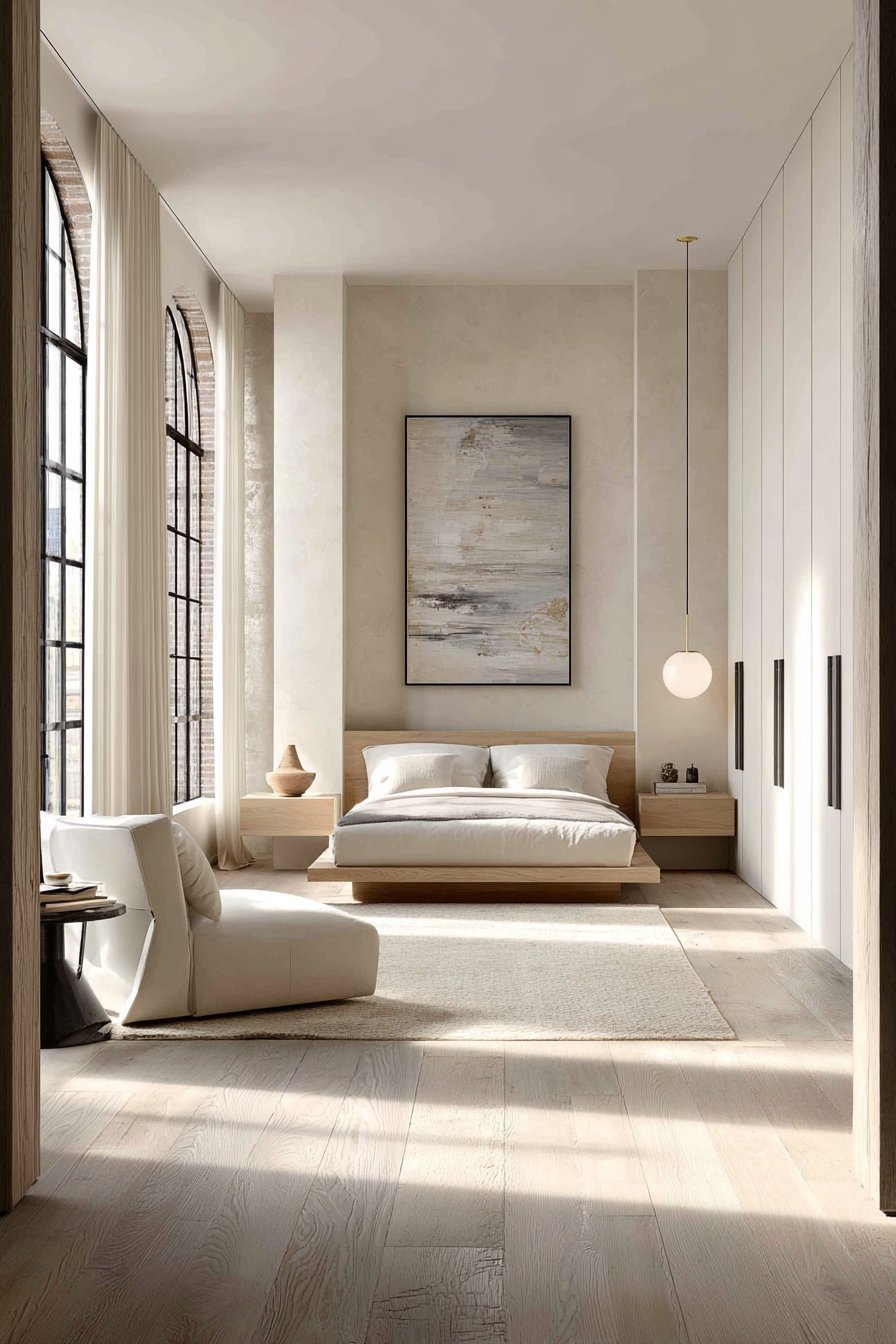
The emphasis on natural materials creates warmth within the minimal aesthetic. Wood, linen, cotton, and natural fibers bring organic quality that prevents cold sterility. These materials age beautifully and develop character over time. The neutral color palettes allow focus on form, texture, and spatial quality rather than visual stimulation.
Functionality drives every design decision in successful minimal bedrooms. Built-in storage, multifunctional furniture, and space-saving solutions maximize utility without compromising aesthetics. The designs eliminate unnecessary elements while ensuring essential needs remain met. This practical approach creates rooms that serve inhabitants efficiently while maintaining visual calm.
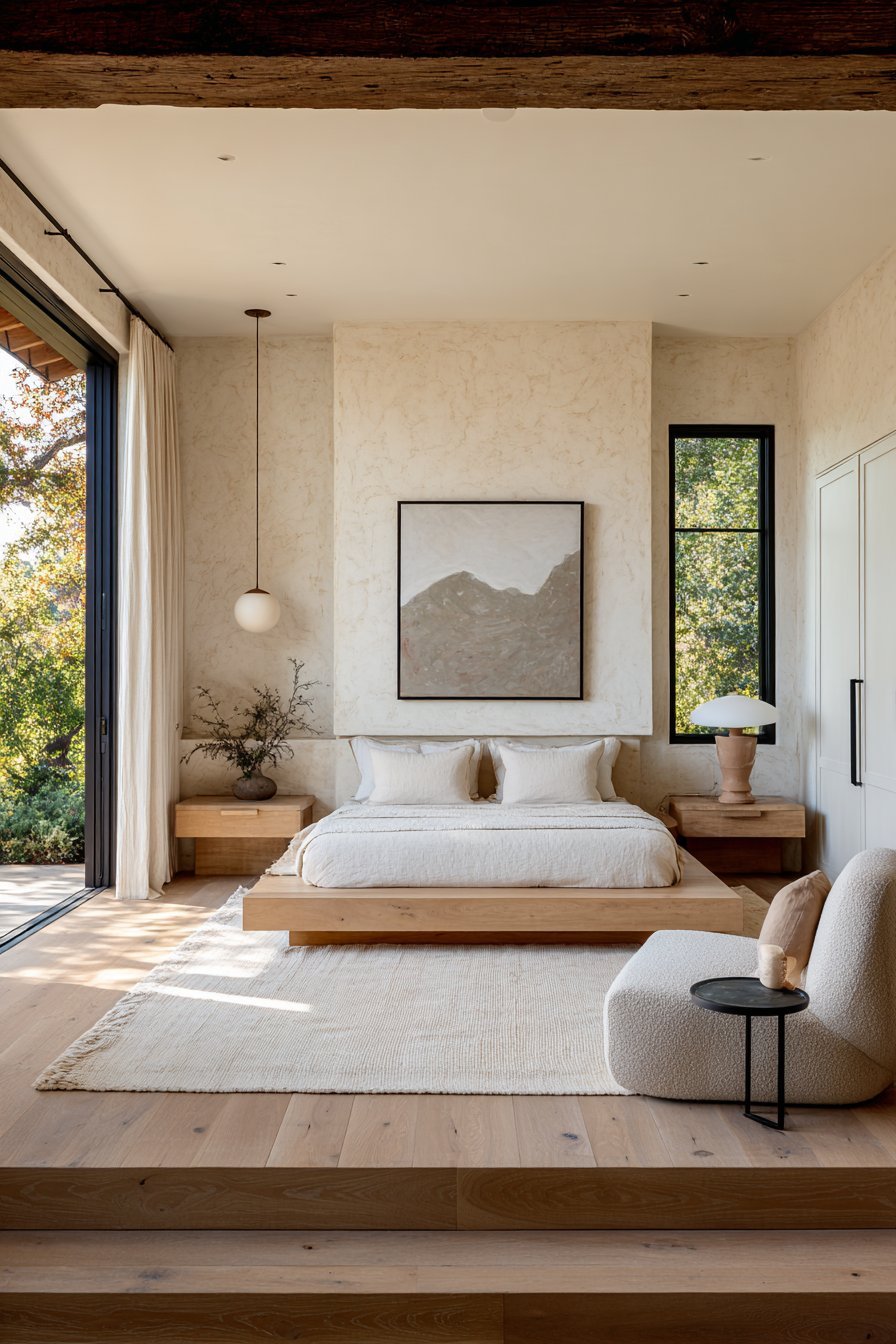
The versatility of minimal design accommodates various spatial constraints and lifestyle needs. Small bedrooms benefit from space-maximizing solutions like lofts and murphy beds. Larger rooms embrace the breathing room that minimal furnishings provide. The Japanese-inspired concepts offer cultural wisdom about essential living. Contemporary approaches incorporate modern materials while honoring timeless principles.
Lighting receives careful consideration throughout these designs. Natural light becomes primary design element through strategic window treatments. Task lighting serves specific needs without cluttering spaces. The interplay of light and shadow creates dynamic interest throughout the day. This attention to illumination enhances both functionality and atmospheric quality.
Conclusion
These minimal bedroom designs demonstrate that simplicity creates profound impact. The key principles include careful material selection, functional furniture choices, and restrained color palettes. Each design proves that removing excess allows essential elements to shine.
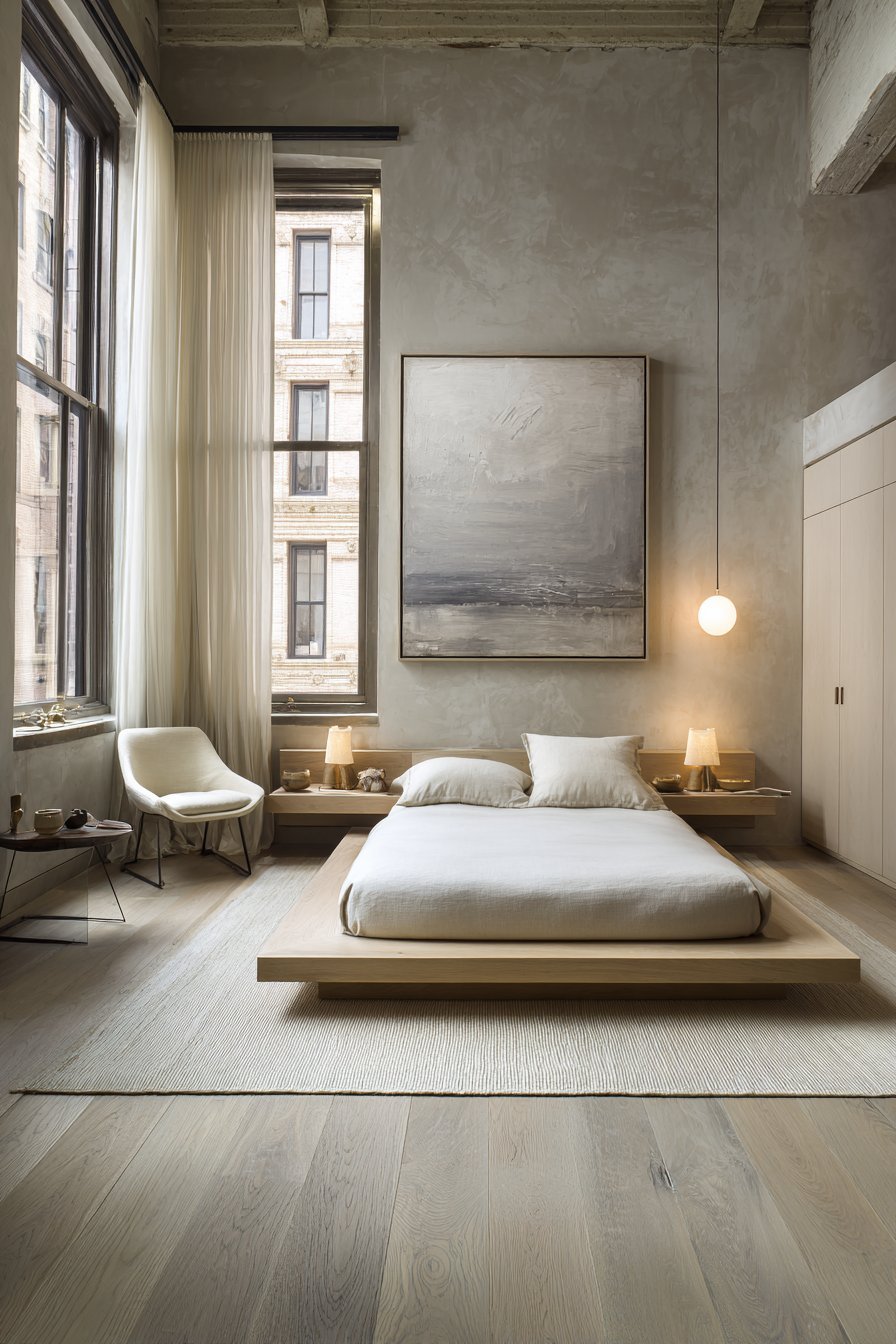
Successful minimal bedrooms balance aesthetic appeal with practical daily living needs. The designs accommodate various spaces from compact studios to spacious master suites. Natural materials bring warmth while clean lines create visual calm. Begin your minimal bedroom journey by editing current possessions and investing in quality essentials. Your peaceful sanctuary awaits through thoughtful simplification and intentional design choices.
