

For years, minimalism dominated the interior design conversation. Clean lines, white walls, and empty surfaces became the gold standard of “good taste.” But a growing number of homeowners are pushing back — craving spaces that feel rich, lived-in, and emotionally resonant. Moody interiors have emerged as the most compelling counter-movement in modern design.
Moody design is not about clutter or chaos. It is about intentional depth. It uses dark, saturated color palettes, layered textures, and dramatic lighting to create spaces that feel immersive and personal. Where minimalism asks you to remove, moody design invites you to add — thoughtfully, beautifully, and boldly.
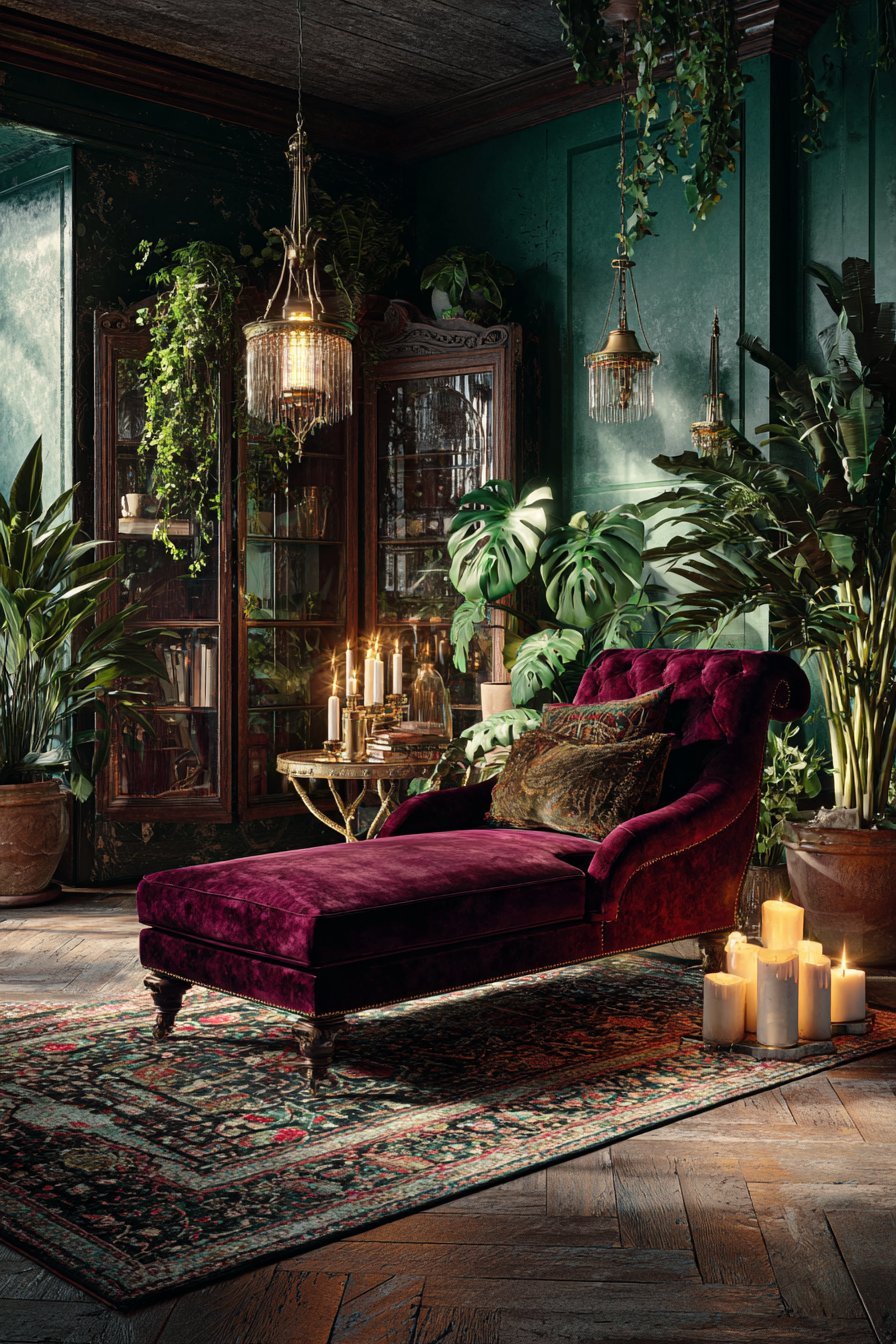
This article explores why moody interiors resonate so deeply, and how they offer something minimalism simply cannot: emotional warmth and sensory complexity. From color psychology to material layering, we will walk through every reason moody spaces are having their long-overdue moment.
1. Minimalism’s Emotional Cold Spot
Minimalism promised liberation. Strip away the excess and you would feel calm, focused, and free. For some, that holds true. But for many, all-white interiors created something unexpected — anxiety, disconnection, and a feeling of living in a showroom rather than a home.
Human beings are sensory creatures. We crave texture under our fingertips, warmth in our field of vision, and the psychological comfort of enclosure. Neuroscience supports this. Studies show that environments with visual complexity and warmth activate the brain’s reward systems more effectively than sparse, featureless spaces.
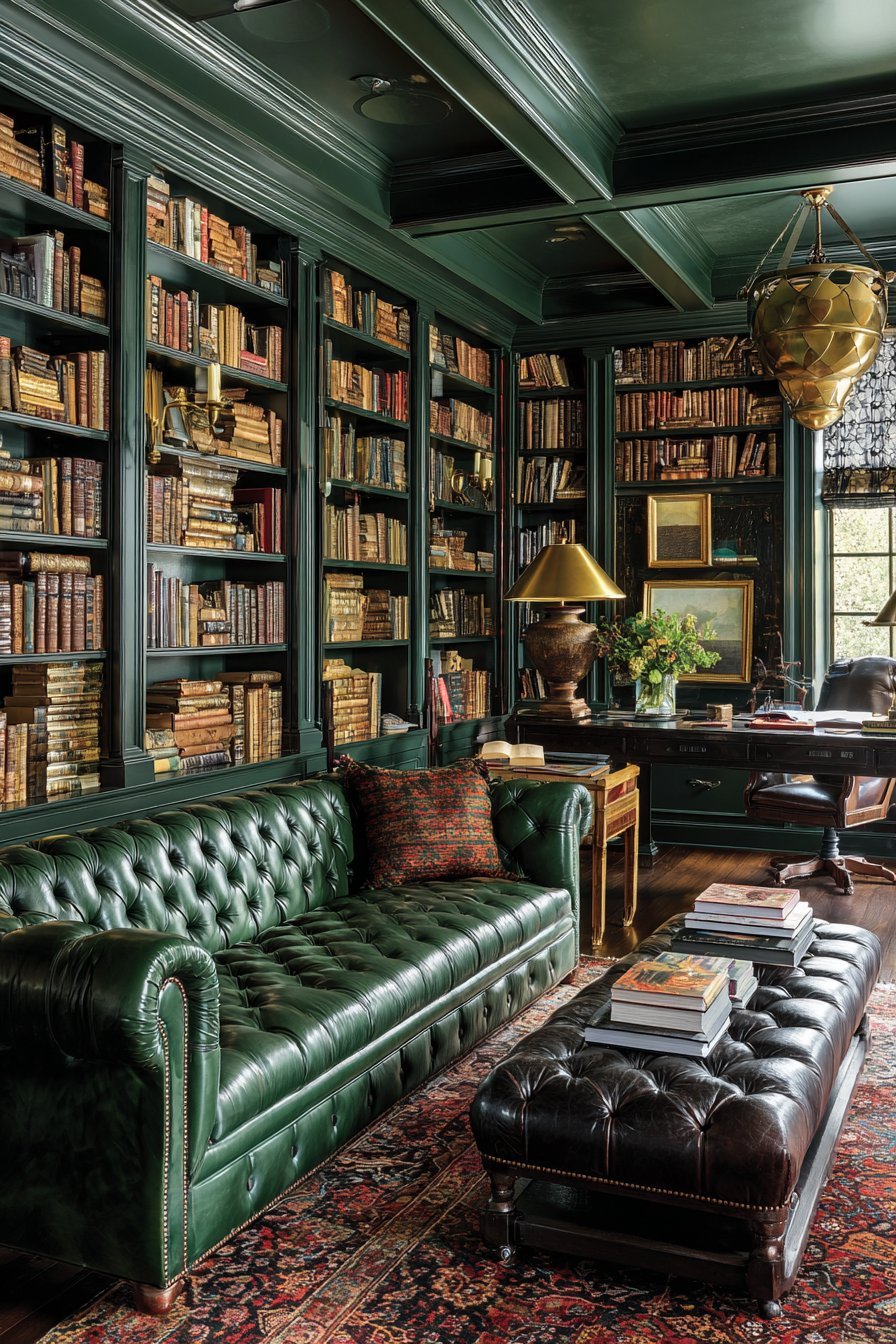
Moody interiors address this gap directly. They reintroduce the richness that minimalism edited out. A deep forest-green library or a burgundy bedroom does not overwhelm — it wraps you in atmosphere, the way a favorite sweater wraps your body.
- Recognize that comfort is a legitimate design goal, not a compromise
- Notice how barren spaces can increase mental restlessness over time
- Understand that visual depth is psychologically grounding
- Explore whether your current space energizes or drains you
- Give yourself permission to pursue warmth over sterility
- Start small with one moody accent wall or a dark-painted ceiling
2. The Psychology of Dark Color Palettes
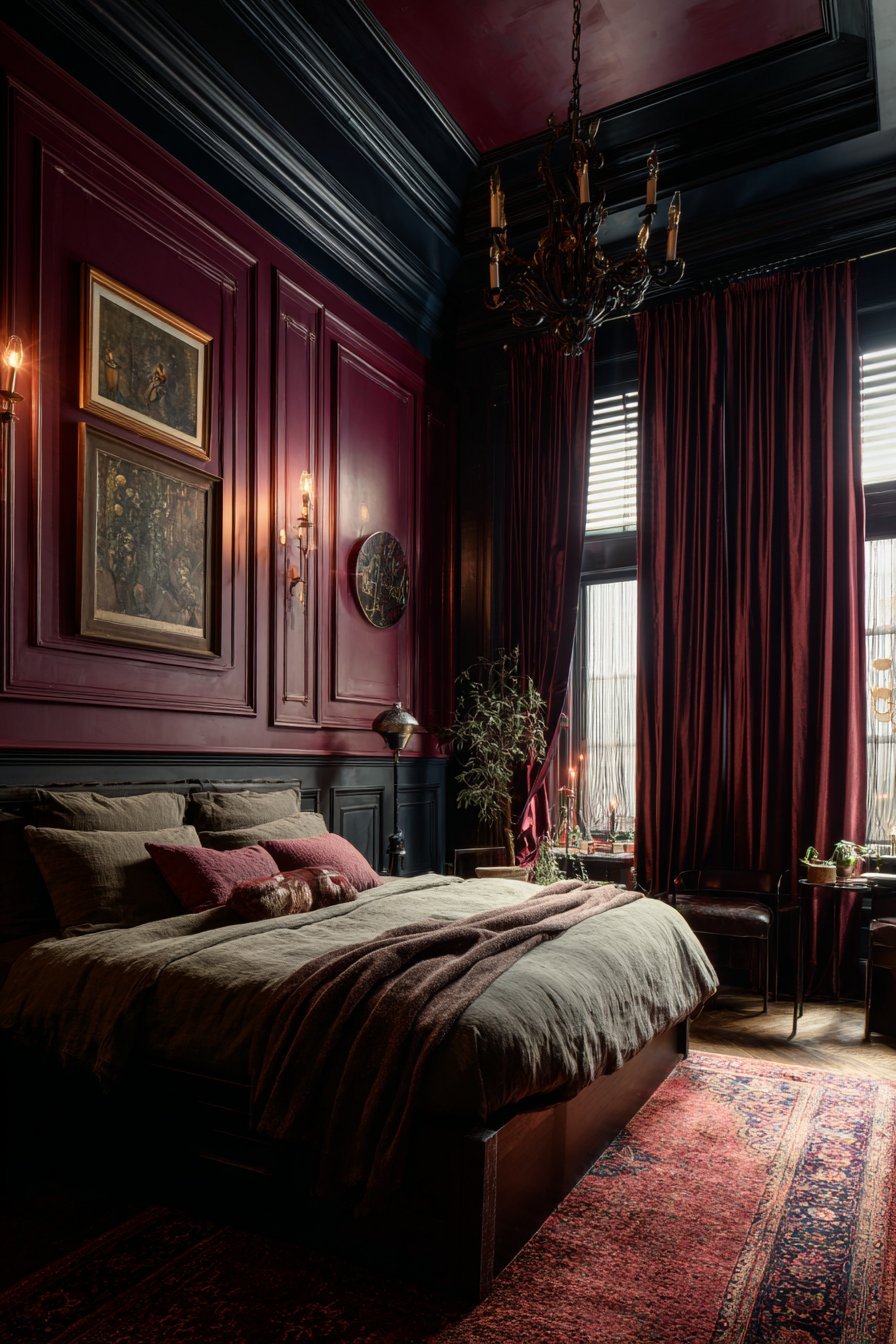
Color is the fastest way to shift the emotional temperature of a room. Minimalism leans heavily on whites, beiges, and soft grays — tones associated with openness and neutrality. Moody design reaches instead for deep jewel tones, inky blues, forest greens, charcoal, and plum.
These darker hues trigger a cocooning effect in the brain. Psychologists refer to this as “psychological enclosure” — the sense that a space is holding you rather than exposing you. This is why dark rooms often feel more intimate and restful than bright ones. Think of the instinctive calm you feel in a candlelit restaurant versus a fluorescent-lit cafeteria.
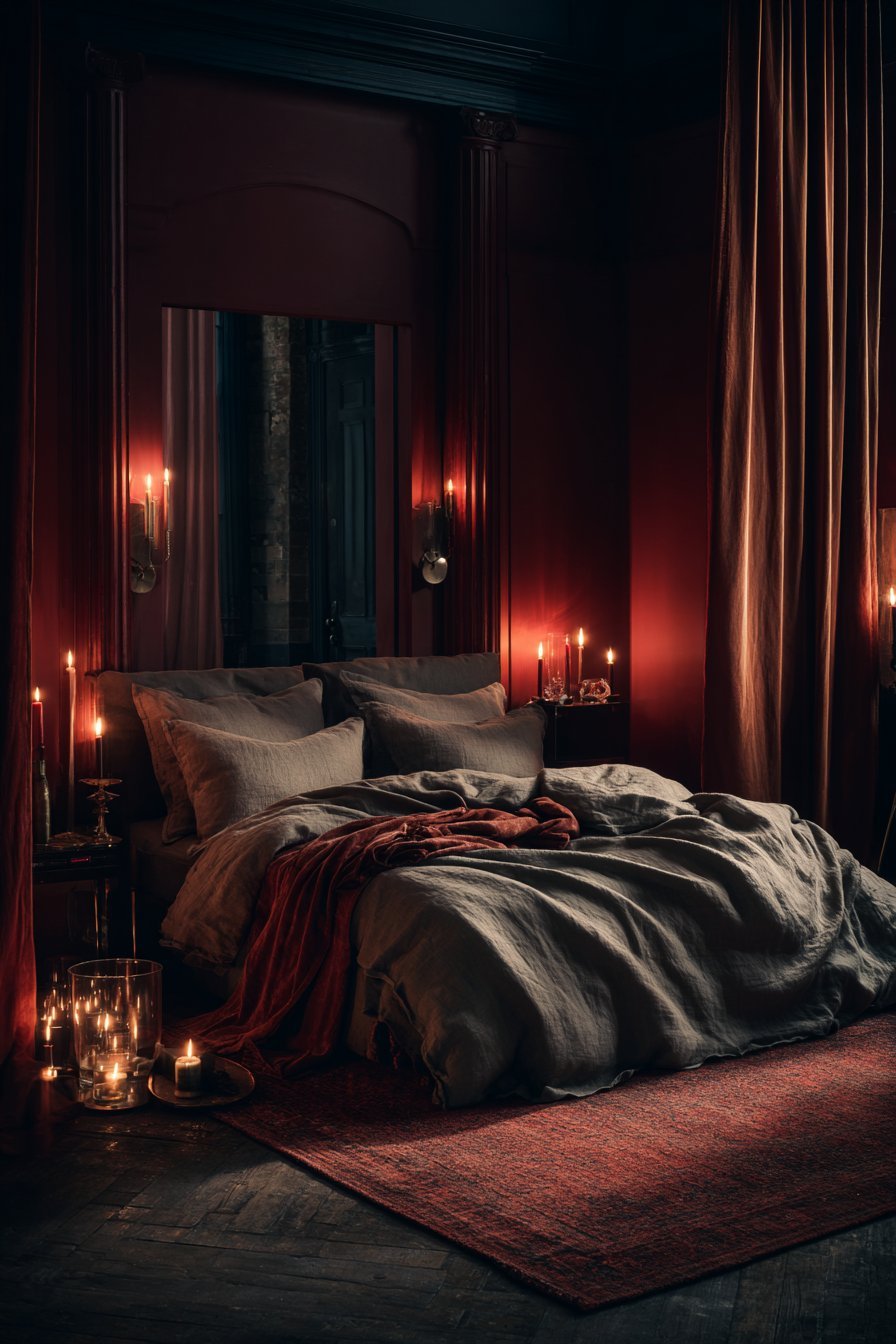
The secret is understanding color saturation and undertone. A moody room does not have to be dark in a harsh, oppressive way. Dusty sage, warm terracotta, and deep ochre carry the same emotional weight while remaining livable. The key is choosing colors with warmth baked into their undertones.
- Research colors on the LRV (Light Reflectance Value) scale before committing
- Test paint samples in both natural and artificial light conditions
- Combine matte and satin finishes for depth without gloss
- Use dark tones on ceilings to create a sense of intimate enclosure
- Pair deep walls with warm-toned metallics like brass or bronze
- Layer analogous colors — e.g., navy paired with deep teal — for cohesion
3. Texture as the Language of Luxury
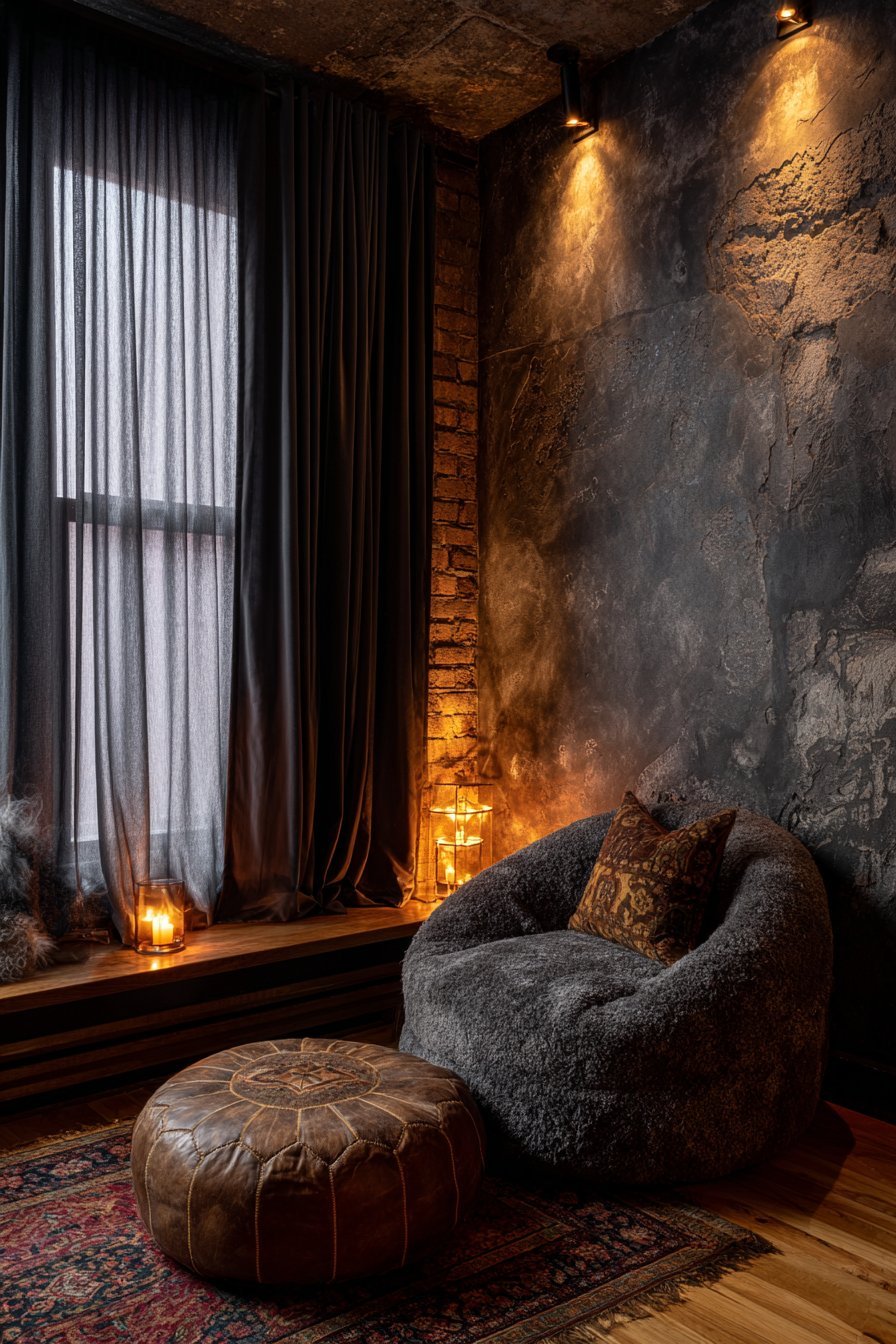
One of minimalism’s defining characteristics is its reliance on smooth, flat, uniform surfaces. While elegant, this approach eliminates the tactile richness that makes a space feel genuinely luxurious. Moody interiors understand that texture is not decoration — it is architecture for the senses.
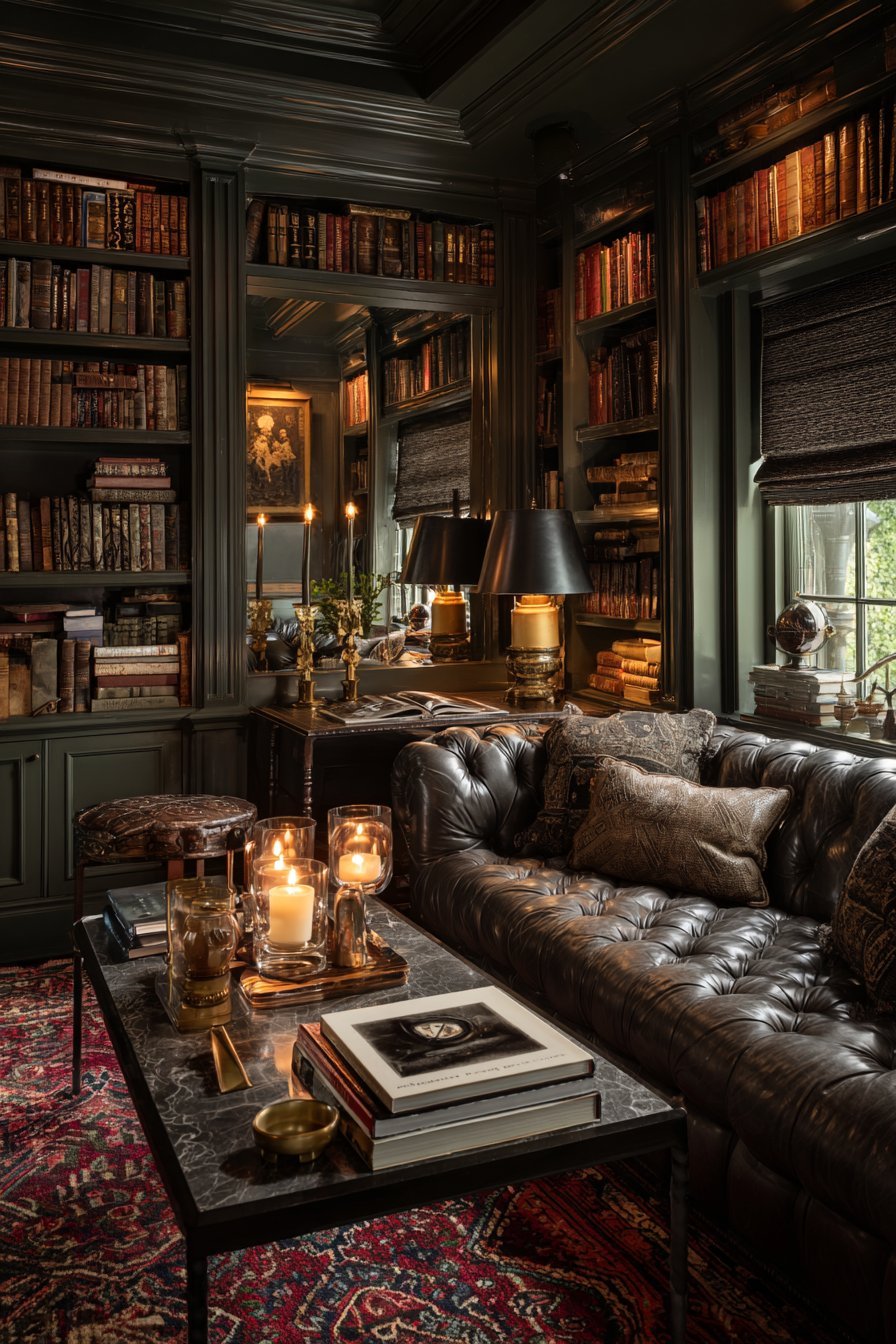
Velvet cushions, aged leather armchairs, raw linen curtains, and hand-knotted wool rugs all serve a purpose beyond aesthetics. They create what designers call tactile contrast — the interplay of soft and rough, matte and sheen, heavy and delicate. This contrast is what makes a room feel layered and intentional rather than assembled from a catalog.
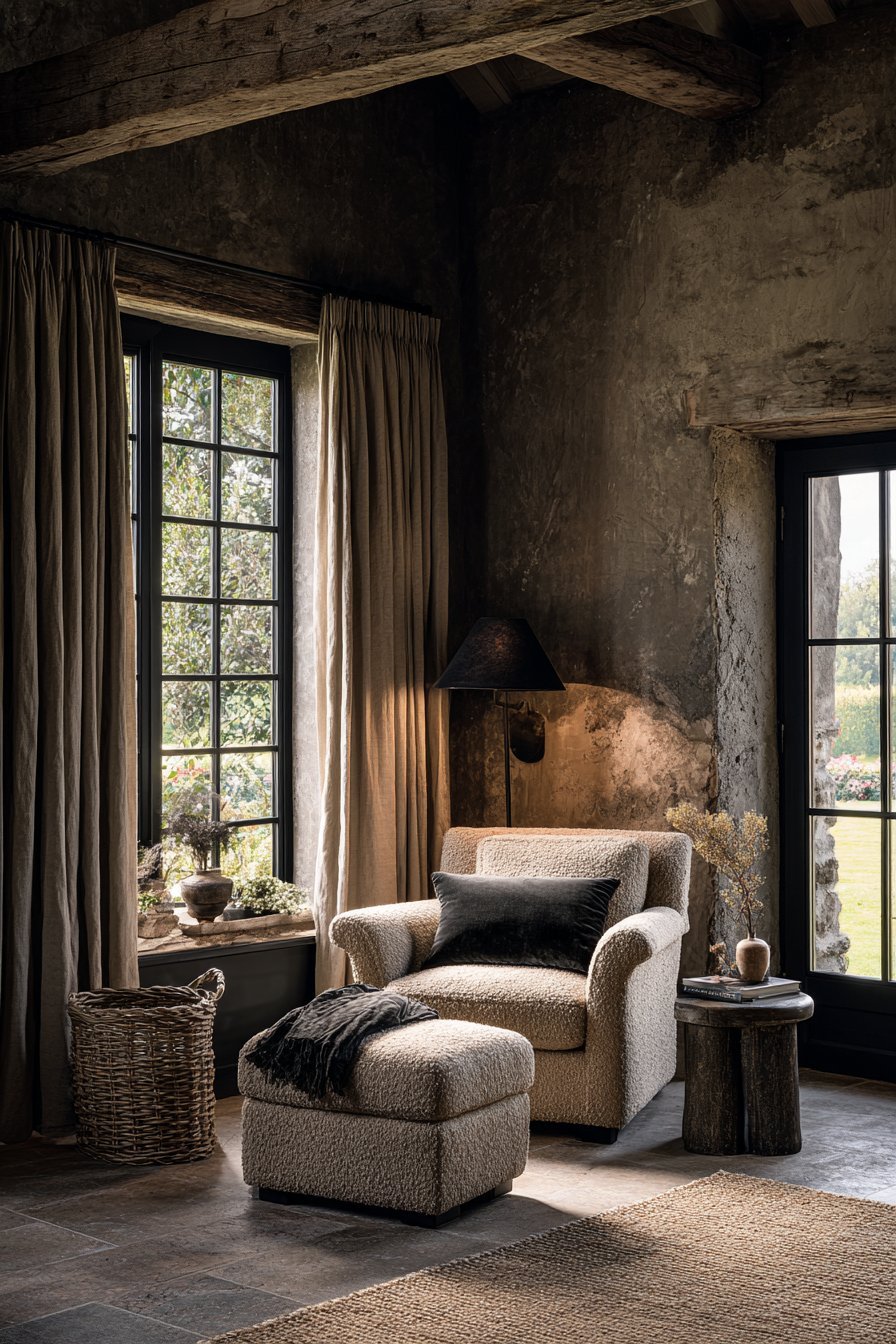
Moody design also embraces imperfection in materials. Cracked plaster walls, reclaimed timber floors, and oxidized metal fixtures carry history and character. They tell a story. Minimalism often erases that story in pursuit of perfection. Moody interiors celebrate it as the very source of beauty.
- Introduce at least three distinct textures in every room
- Mix natural materials: stone, wood, linen, leather, and wool
- Use aged or patinated finishes on hardware and fixtures
- Layer rugs over rugs for depth and warmth underfoot
- Choose upholstery in tactile fabrics like bouclé, velvet, or chenille
- Let imperfections in vintage or handmade pieces add personality
4. Dramatic Lighting That Sets the Mood
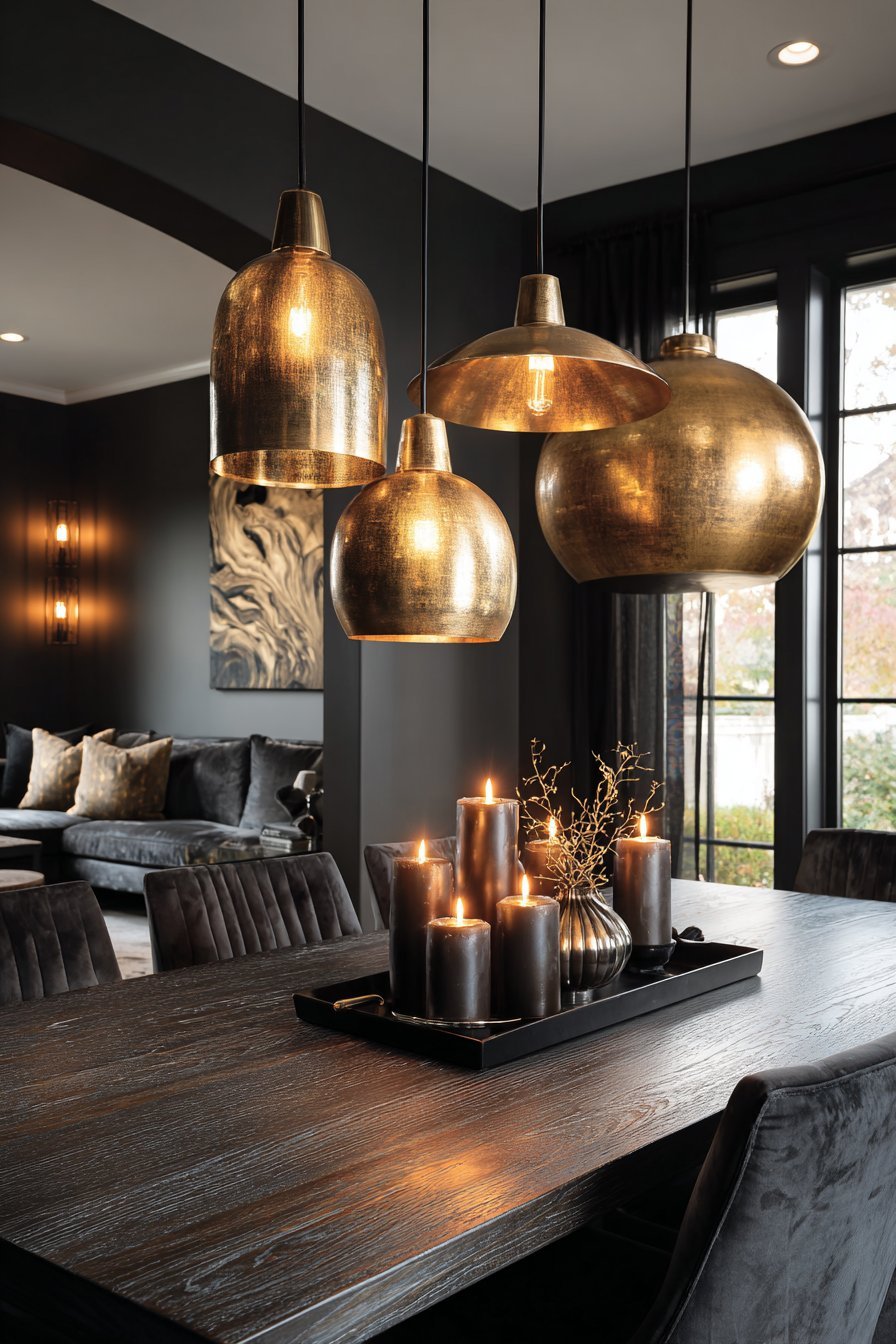
Lighting is where moody interiors truly distinguish themselves from minimalist spaces. Minimalist lighting philosophy favors bright, even, shadow-free illumination — the kind that reveals everything and conceals nothing. Moody design takes the opposite approach.
Chiaroscuro lighting — the art of strong contrasts between light and shadow — is the cornerstone of moody interior lighting. Think low-hung pendant lights that pool light on a dining table while leaving the periphery in soft darkness. Think candles alongside statement lamps, and sconces that cast warm upward glow rather than flooding a room with overhead brightness.
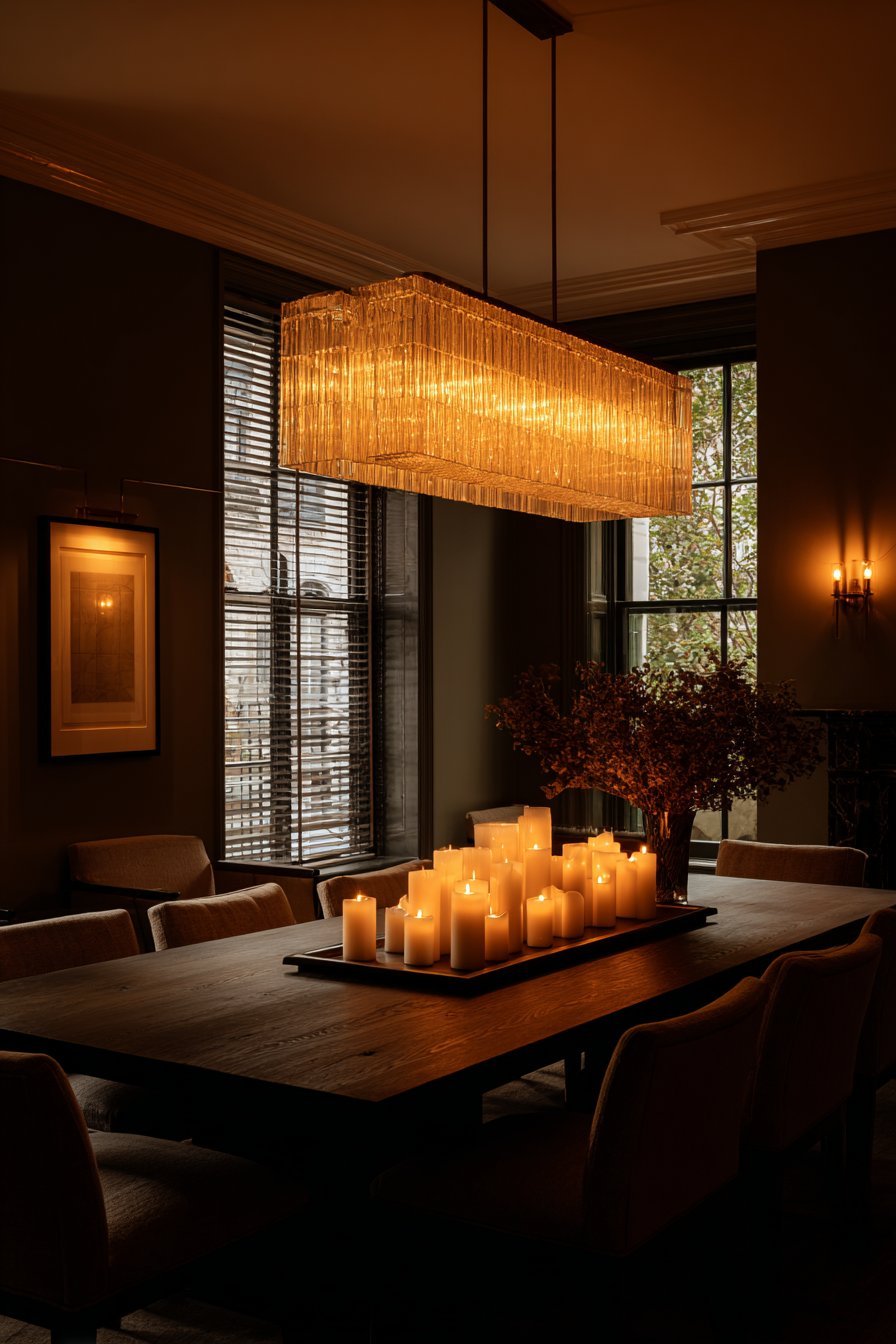
The technical goal is to build a layered lighting plan with at least three types of light: ambient, task, and accent. Dimmers are non-negotiable in a moody interior. The ability to shift from a bright working environment to a dim, enveloping evening atmosphere is what gives moody rooms their transformative power.
- Install dimmer switches on every overhead light source
- Layer ambient, task, and accent lighting in every primary room
- Choose bulbs with a warm color temperature (2700K–3000K)
- Use table lamps and floor lamps more than ceiling fixtures
- Incorporate candlelight as a genuine design element, not an afterthought
- Position light sources at varying heights to create visual rhythm
5. Pattern and Print as Emotional Expression
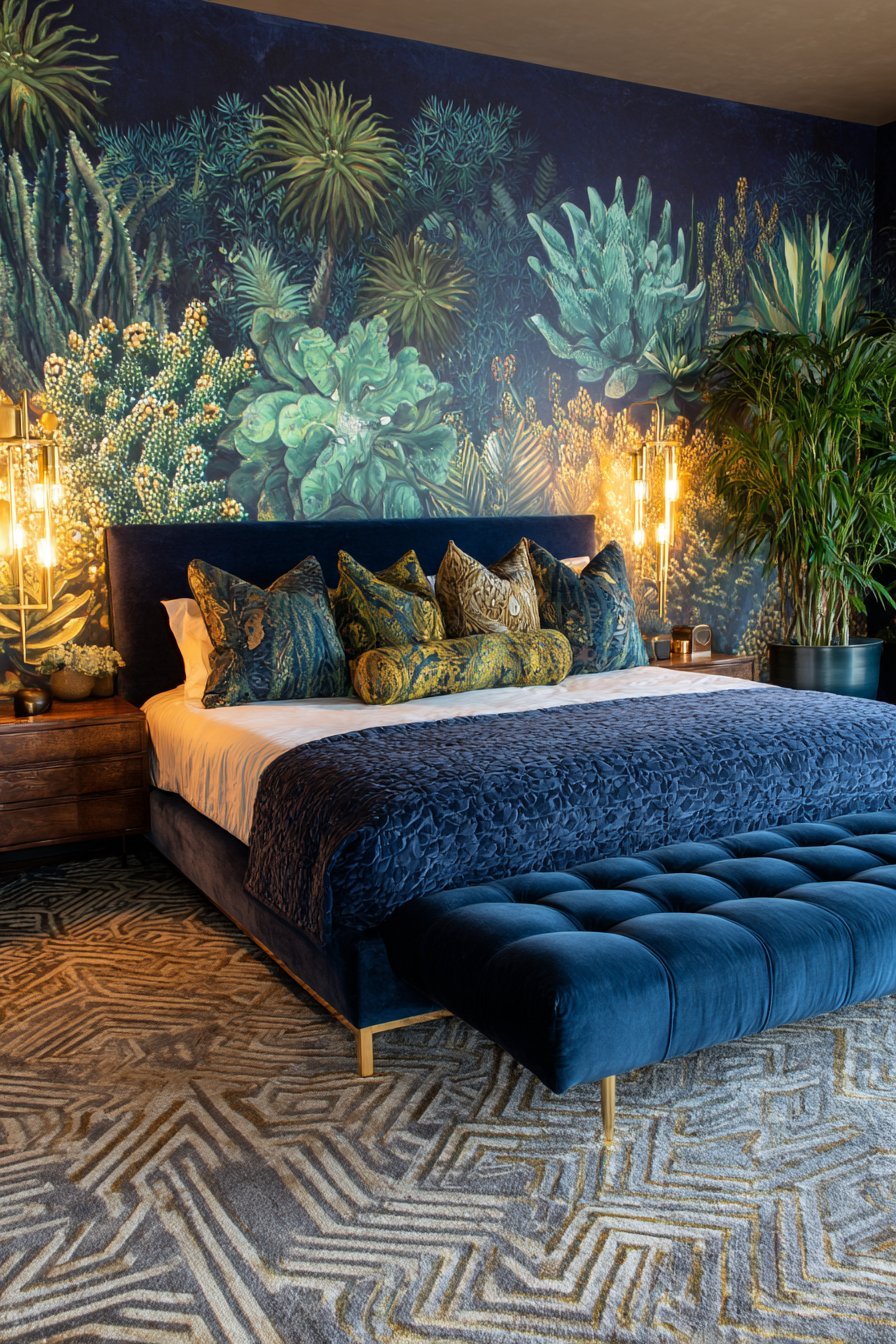
Minimalism famously avoids pattern. A bold print is seen as visual noise — something to be eliminated in favor of calm uniformity. Moody interiors reject this constraint entirely. They treat pattern as storytelling, using florals, damasks, geometric prints, and botanicals to inject personality into every surface.
Maximalist pattern use in a moody context does not mean covering every inch chaotically. It means being deliberate about where pattern lives. A single oversized botanical wallpaper on a feature wall can become the emotional anchor of an entire room. A deeply patterned area rug can define a seating zone while adding historical richness.
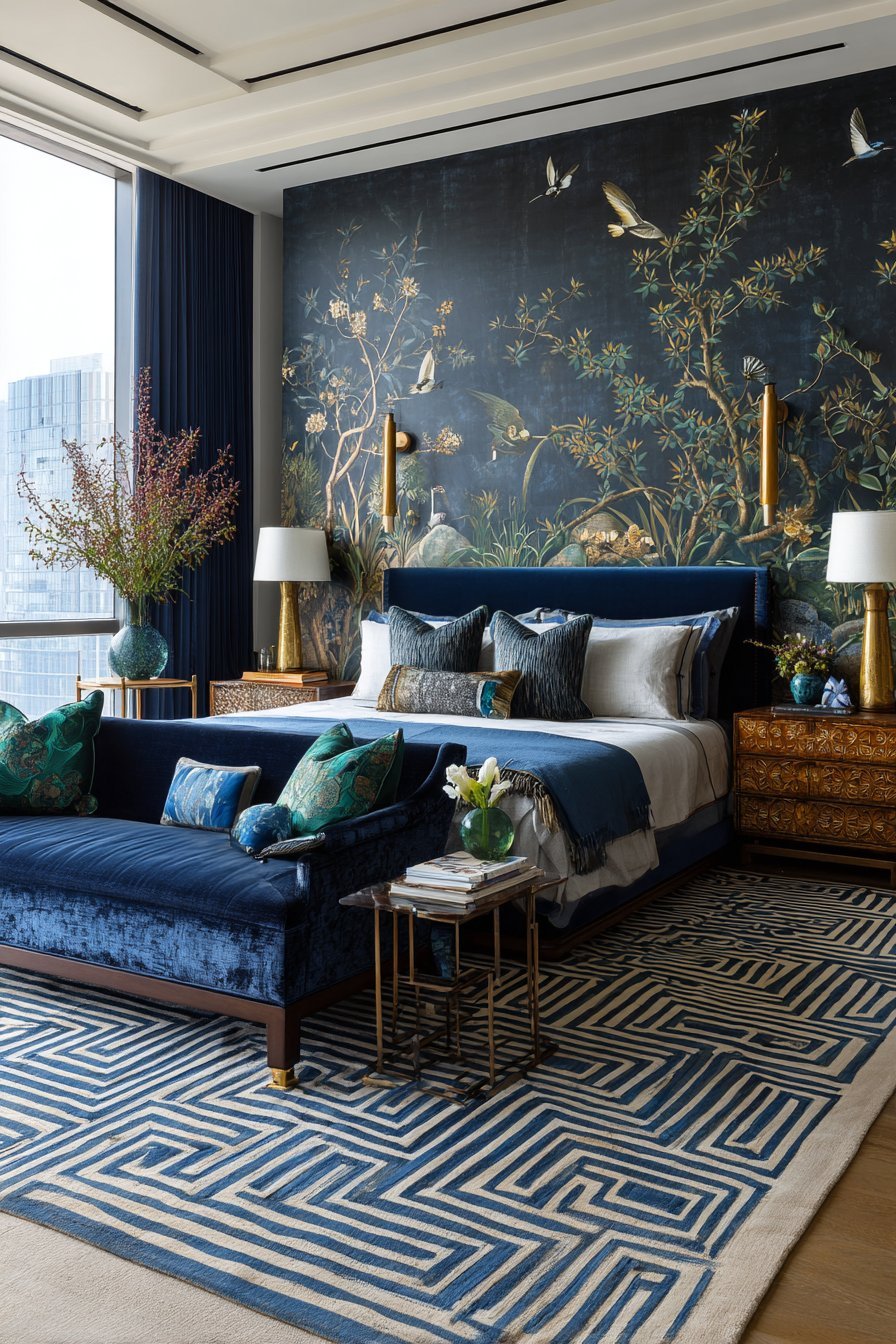
The trick is tonal harmony. In moody interiors, patterns work because they share a color family. A room with deep teal walls and a midnight-blue patterned velvet sofa feels curated, not chaotic. Contrast is introduced through texture and scale, not through clashing hues. This is the nuance that separates a well-executed moody room from an overwhelming one.
- Choose one hero pattern per room and build the palette around it
- Scale matters: use large-scale prints in large rooms, small patterns in tight spaces
- Introduce pattern through wallpaper, upholstery, or rugs rather than all three simultaneously
- Keep patterns tonal — varying shades within the same color family
- Use geometric prints to add structure alongside softer organic patterns
- Repeat a color from the pattern in at least two other elements in the room
6. Furniture That Has History and Weight
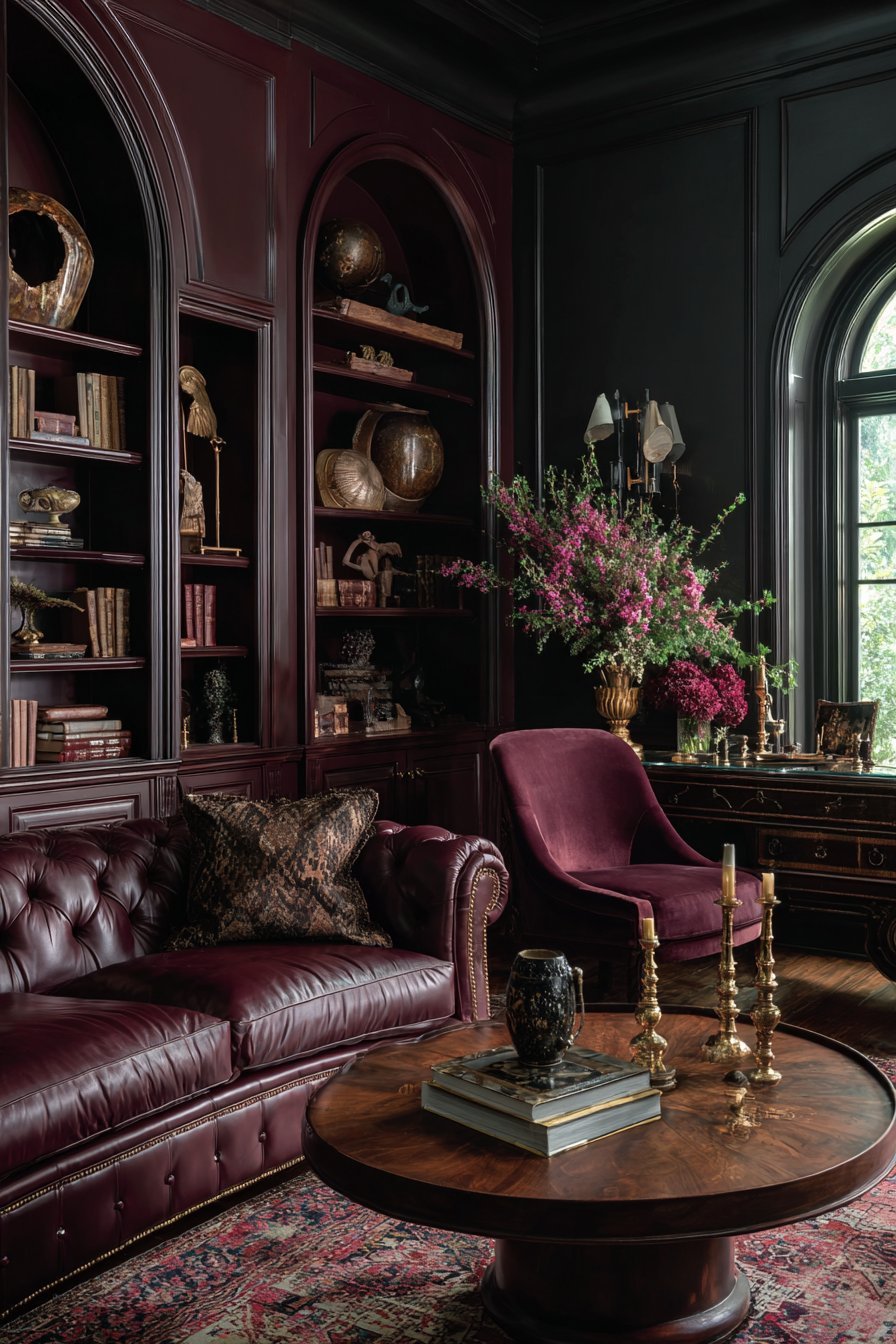
Minimalist furniture is typically lightweight, modular, and visually quiet. These are practical qualities, but they contribute to the emotional weightlessness that many people find unsatisfying in minimalist spaces. Moody interiors gravitate toward furniture with presence — pieces that feel substantial, storied, and beautifully aged.
Antique and vintage furniture is the soul of a moody interior. A Victorian velvet chaise longue, a mid-century leather Chesterfield, or a heavy oak dining table all carry an energy that flat-pack furniture simply cannot replicate. These pieces do not need to be expensive. Secondhand markets and estate sales are treasure troves for moody-room furniture at accessible prices.
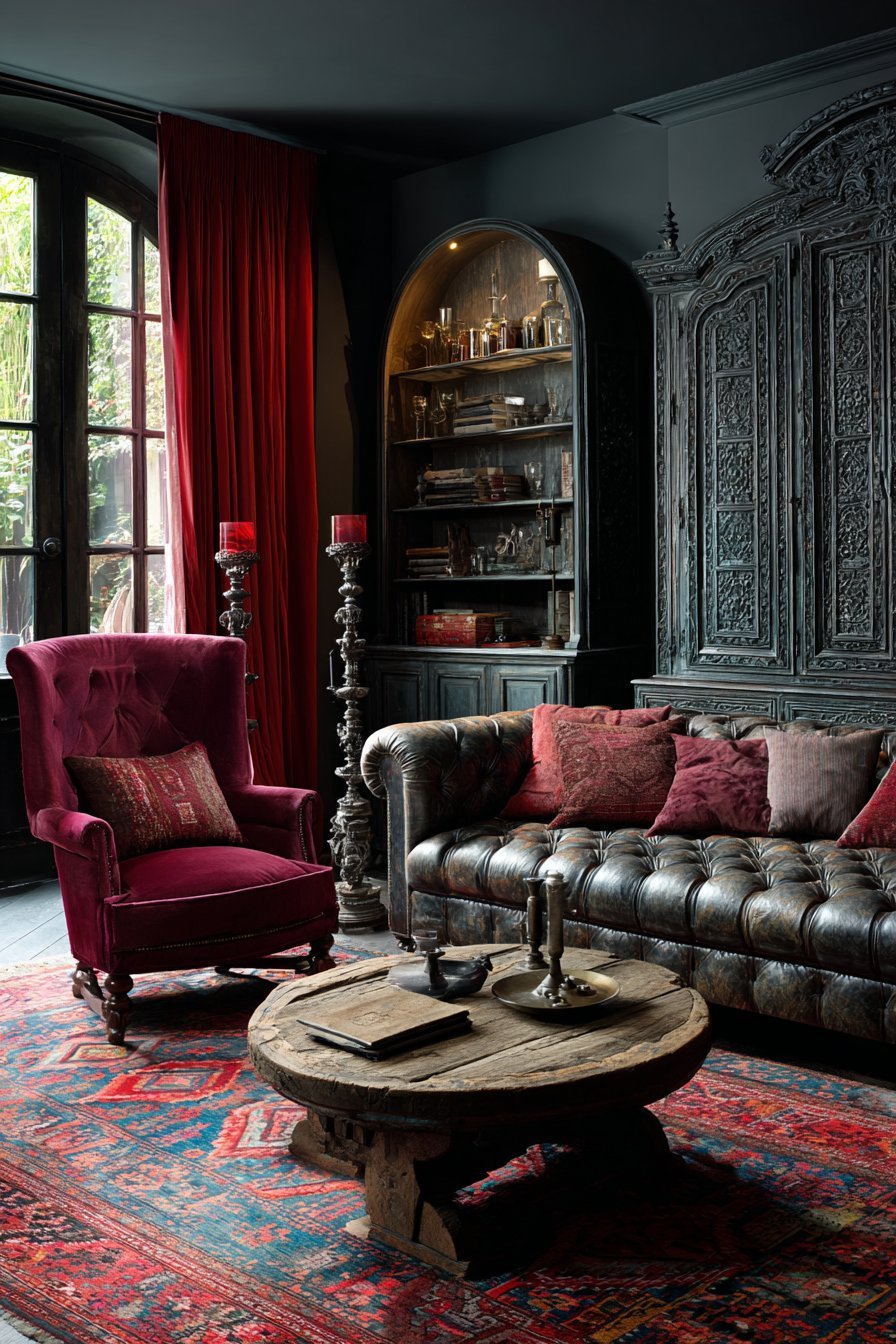
Silhouette matters enormously in moody design. Curved forms — arched cabinets, round-backed chairs, scalloped shelving — soften dark spaces and prevent them from feeling severe. The combination of dark, rich tones with rounded, organic furniture shapes is one of the most effective formulas in contemporary moody interior design.
- Invest in one statement vintage piece per room as an anchor
- Look for furniture with carved details, turned legs, or architectural profiles
- Prioritize curved silhouettes to balance the heaviness of dark color
- Mix eras deliberately — Victorian alongside mid-century creates eclectic richness
- Reupholster old frames in rich fabrics to transform budget finds
- Choose dark-stained wood tones — walnut, ebony, mahogany — over pale Scandinavian finishes
7. The Art of Curated Collections
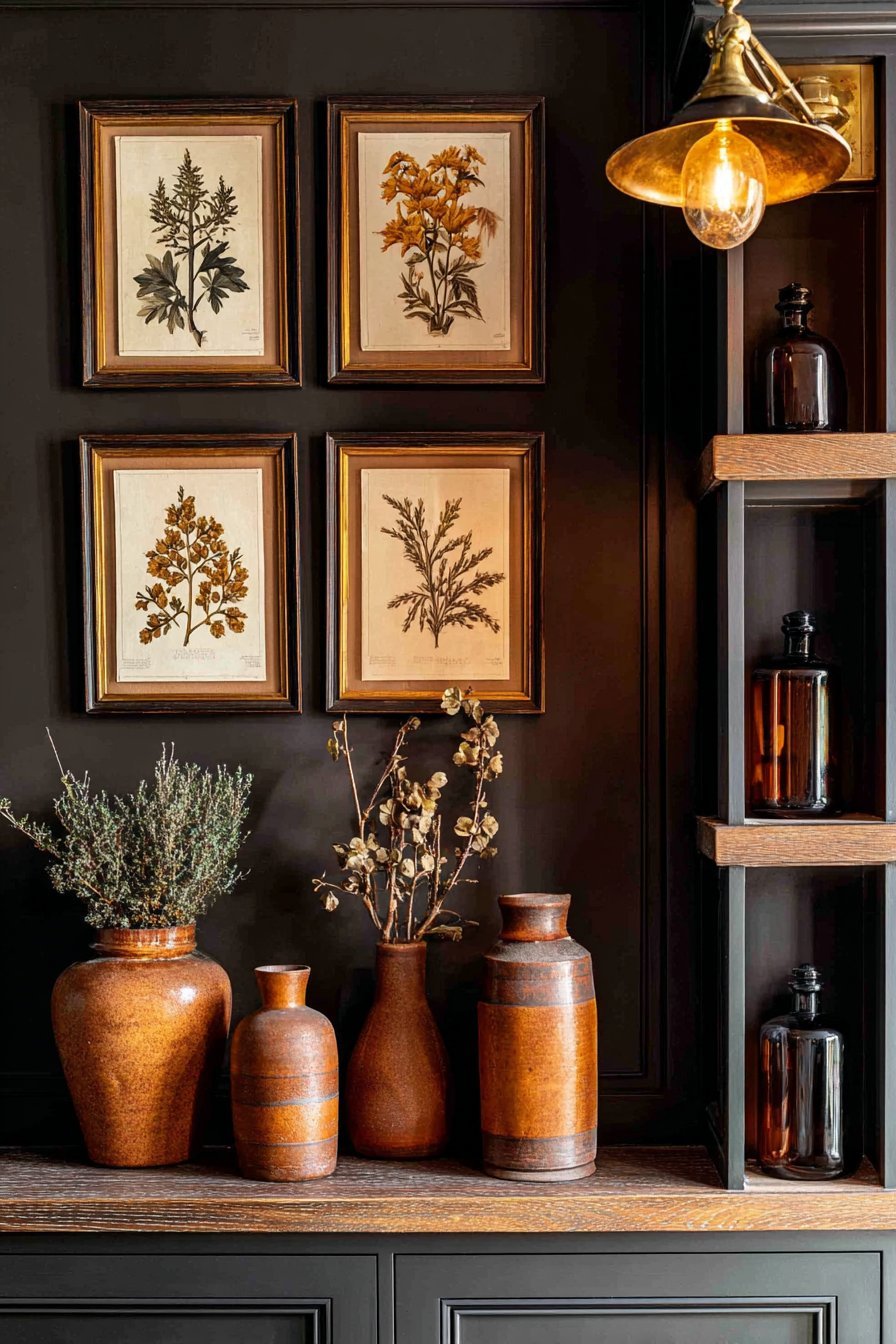
One of minimalism’s most rigid rules is the prohibition on collections. Objects are seen as clutter. Display is viewed with suspicion. Moody interiors tear up that rulebook entirely. They understand that a thoughtfully curated collection is not clutter — it is biography. It tells the story of who lives in a space and what they love.
Gallery walls of dark-framed art, shelves of ceramic vessels, stacks of beautiful books, and arrangements of sculptural objects all contribute to the layered visual narrative that defines moody design. The key word is “curated.” Collections in moody interiors are not random accumulations — they are carefully edited groupings that share a visual language.
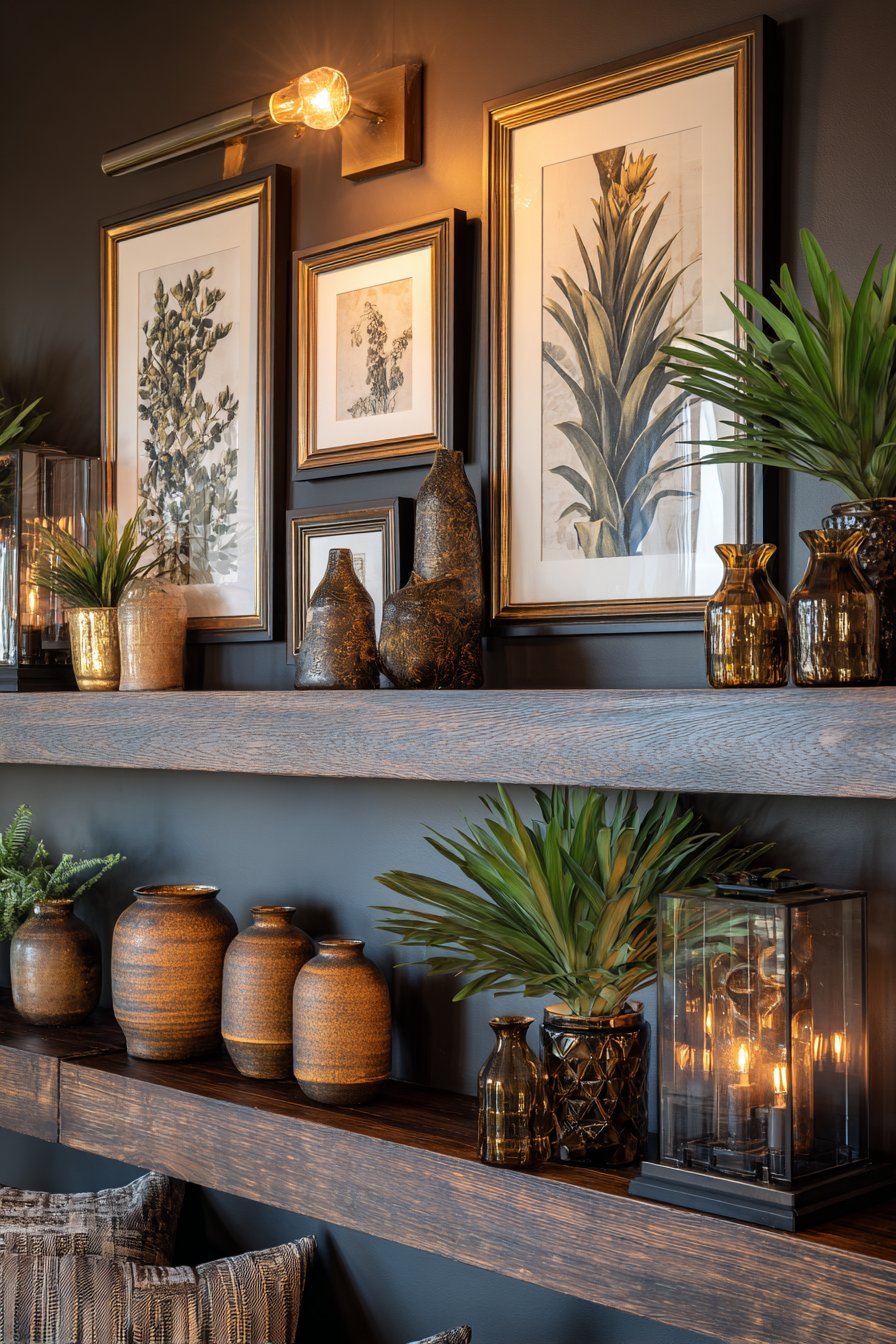
Color, material, and scale are the three curatorial principles to apply. A shelf of ceramic vessels in varying earth tones feels intentional. A mix of bronze sculptures and amber glass bottles creates cohesion through material warmth. The goal is to create conversation between objects, not simply fill space.
- Group objects in odd numbers (3 or 5) for natural visual balance
- Vary the height of objects within a grouping for dynamic interest
- Choose a unifying thread — color, material, era, or subject matter
- Frame art consistently in dark wood or black frames for moody cohesion
- Leave deliberate negative space around collections so they can breathe
- Rotate collections seasonally to keep the space feeling alive and evolving
8. Bringing the Outdoors In — the Dark Botanicals Way
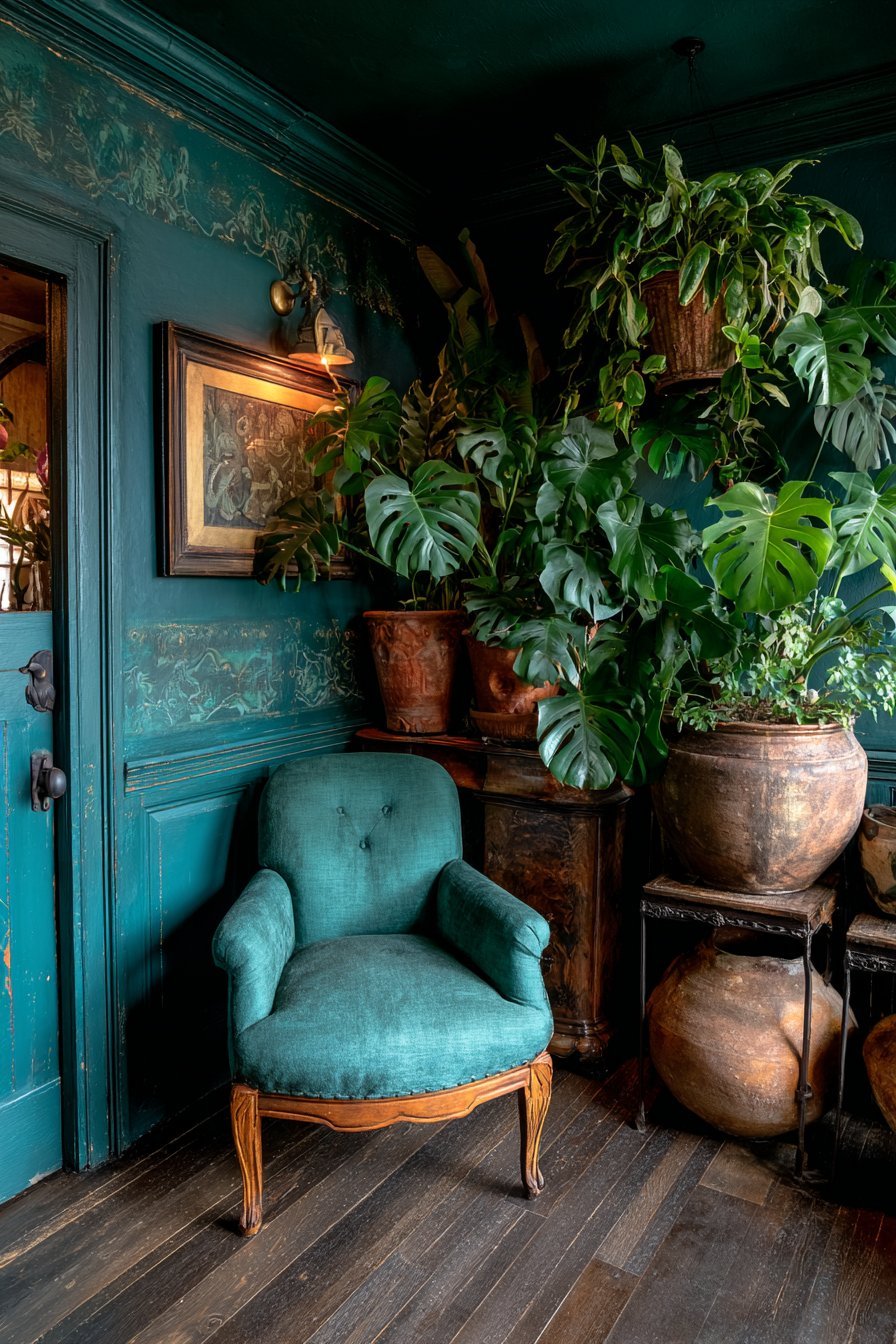
Minimalism’s relationship with plants is clean and restrained — a single fiddle-leaf fig in a white pot, placed precisely. Moody interiors take a far more lush and theatrical approach to biophilic design. Dark, trailing, and dramatically leafed plants become essential characters in the room’s visual story.
Moody botanical styling favors plants with architectural presence: the deep-purple leaves of a Tradescantia, the dramatic spread of a Monstera deliciosa, the trailing tendrils of a Philodendron. These plants add organic movement and living texture that no inanimate object can replicate.
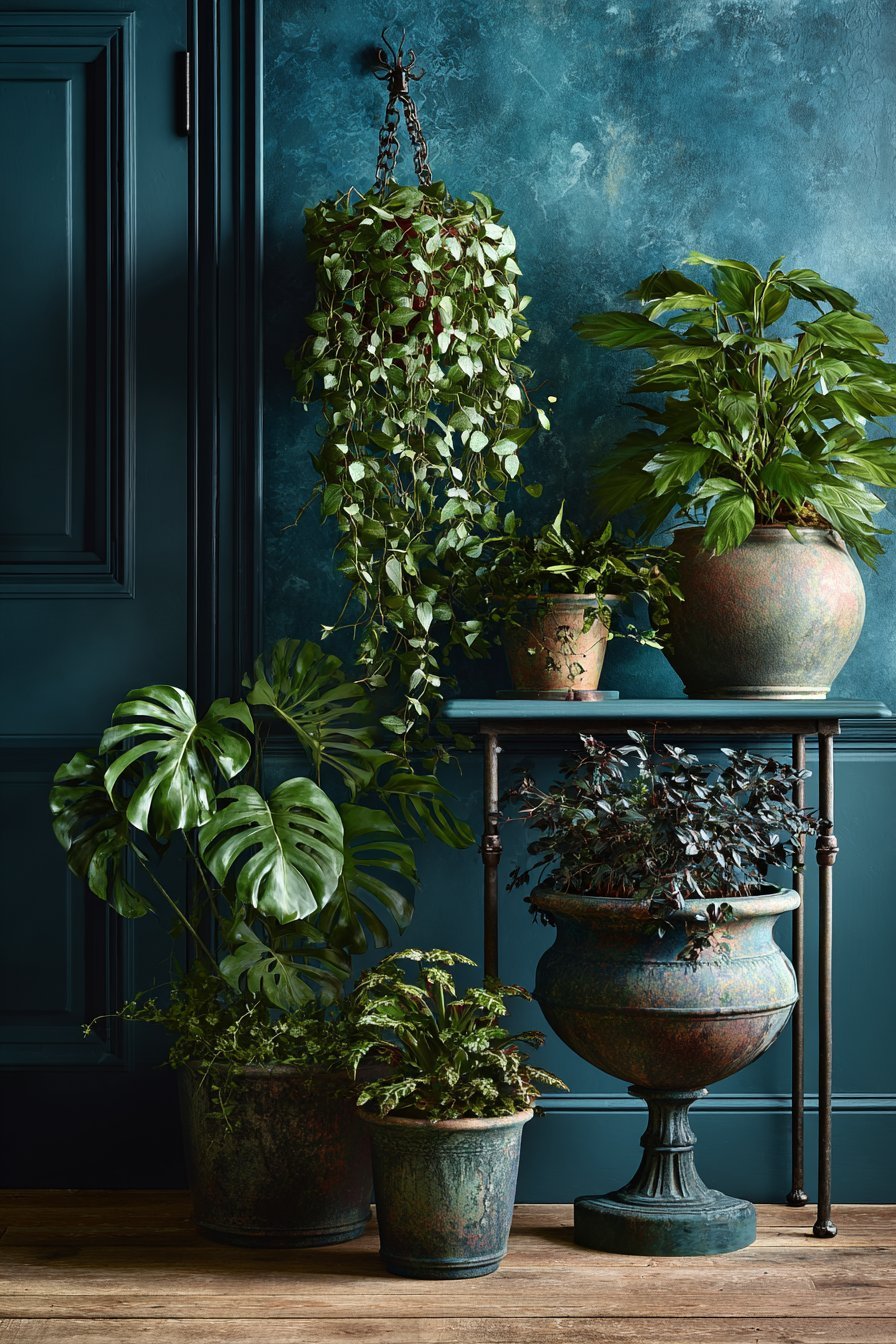
The vessels matter as much as the plants. In a moody interior, terracotta pots in aged finishes, dark ceramic planters, and verdigris metal urns complement the overall palette. The combination of lush greenery against deep-colored walls creates the kind of layered depth that photographs beautifully and feels even better in person.
- Choose plants with large, dramatic leaves for maximum visual impact
- Opt for dark or aged planters in terracotta, ceramic, or oxidized metal
- Group plants at varying heights using plant stands and shelving
- Consider dried botanicals and pampas grass for moody texture without maintenance
- Hang trailing plants from ceiling hooks to draw the eye upward
- Pair deep-green plants with jewel-toned walls for a jewel-box effect
9. The Role of Scent and Sensory Design
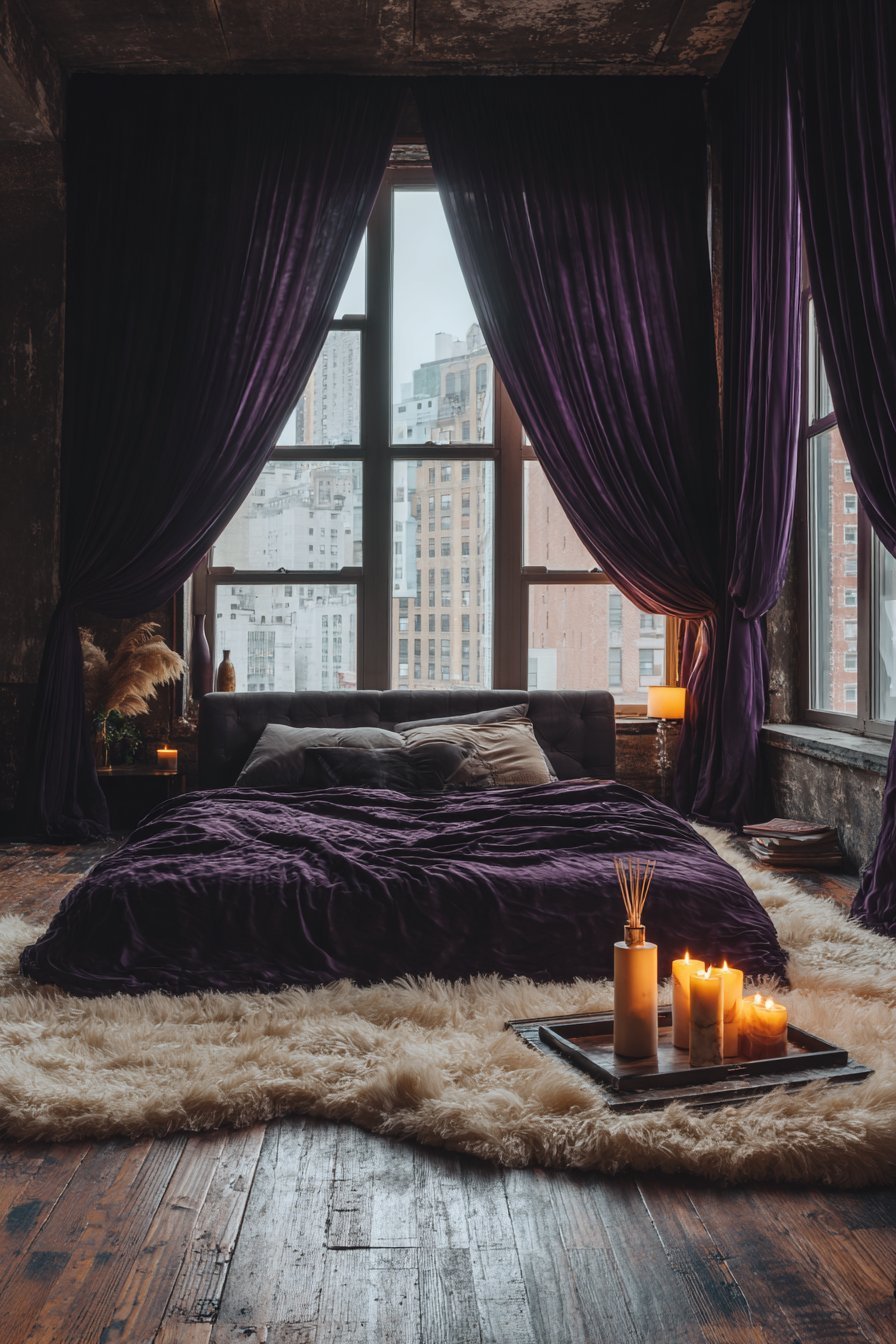
Moody interiors engage all five senses — not just vision. This is a dimension that minimalism rarely addresses. Scent, sound, and touch are as important to the atmosphere of a moody room as any visual element. The best moody spaces are experienced holistically, not simply observed.
Fragrance is a design material in a moody interior. Rich, complex scents — oud, sandalwood, amber, tobacco, and dark florals — reinforce the room’s visual palette in olfactory terms. A single large soy wax candle in a dark vessel, or a reed diffuser with a deep resinous fragrance, can transform the emotional temperature of a space instantly.
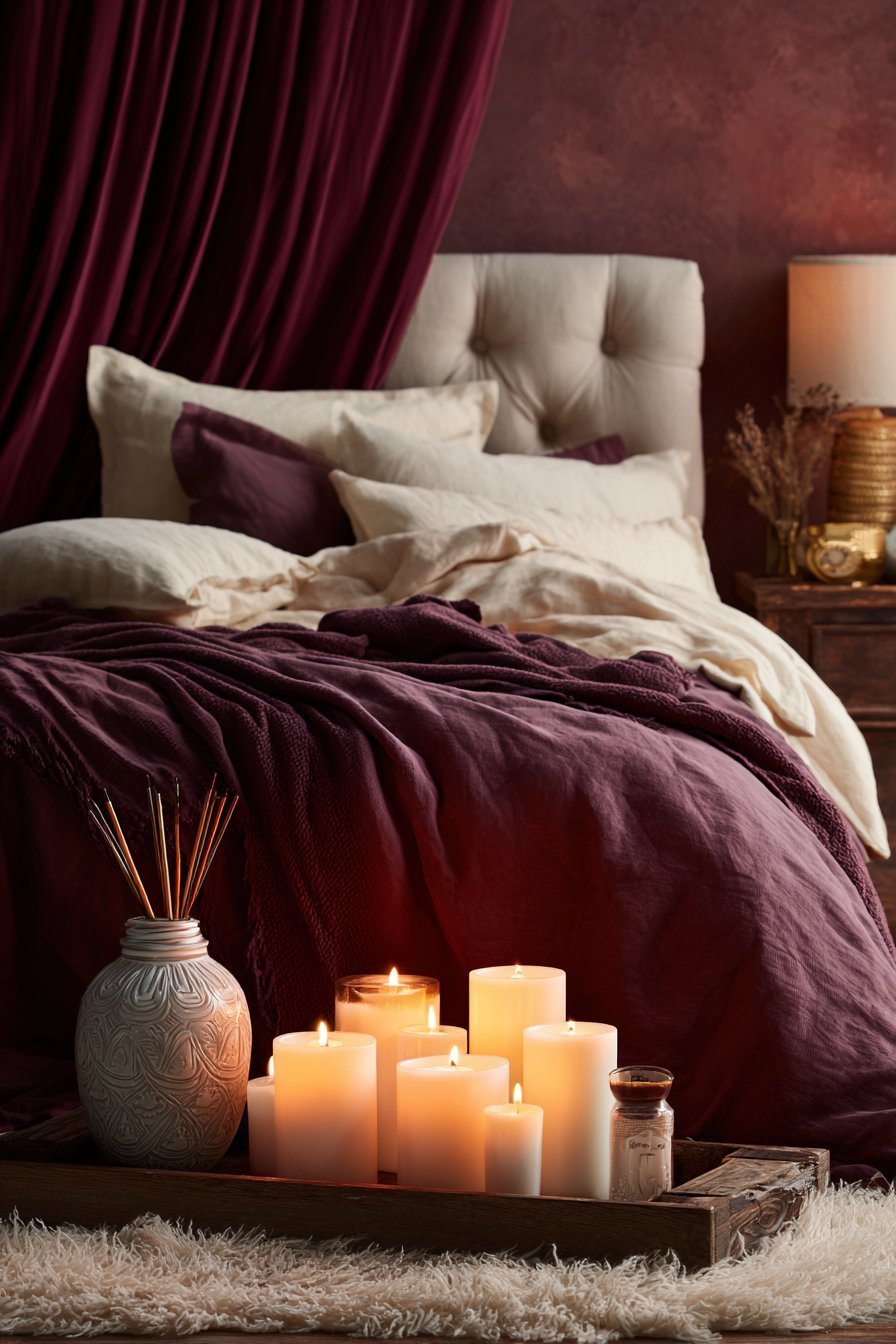
Sound design is equally important. Acoustic warmth — the soft absorption of sound by heavy curtains, thick rugs, and upholstered furniture — creates the hushed, intimate quality that moody spaces are known for. Hard, reflective surfaces amplify noise and destroy atmosphere. Soft furnishings are acoustic tools as much as they are decorative ones.
- Select a signature room scent that complements the room’s color palette
- Choose candles with complex fragrance profiles — avoid single-note, sweet scents
- Invest in heavy floor-length curtains for both acoustic and visual drama
- Use thick wool or shag rugs to absorb sound and add warmth
- Play ambient or classical music to complete the sensory environment
- Consider beeswax or soy pillar candles grouped on a tray as a focal point
10. Why Moody Interiors Are More Sustainable
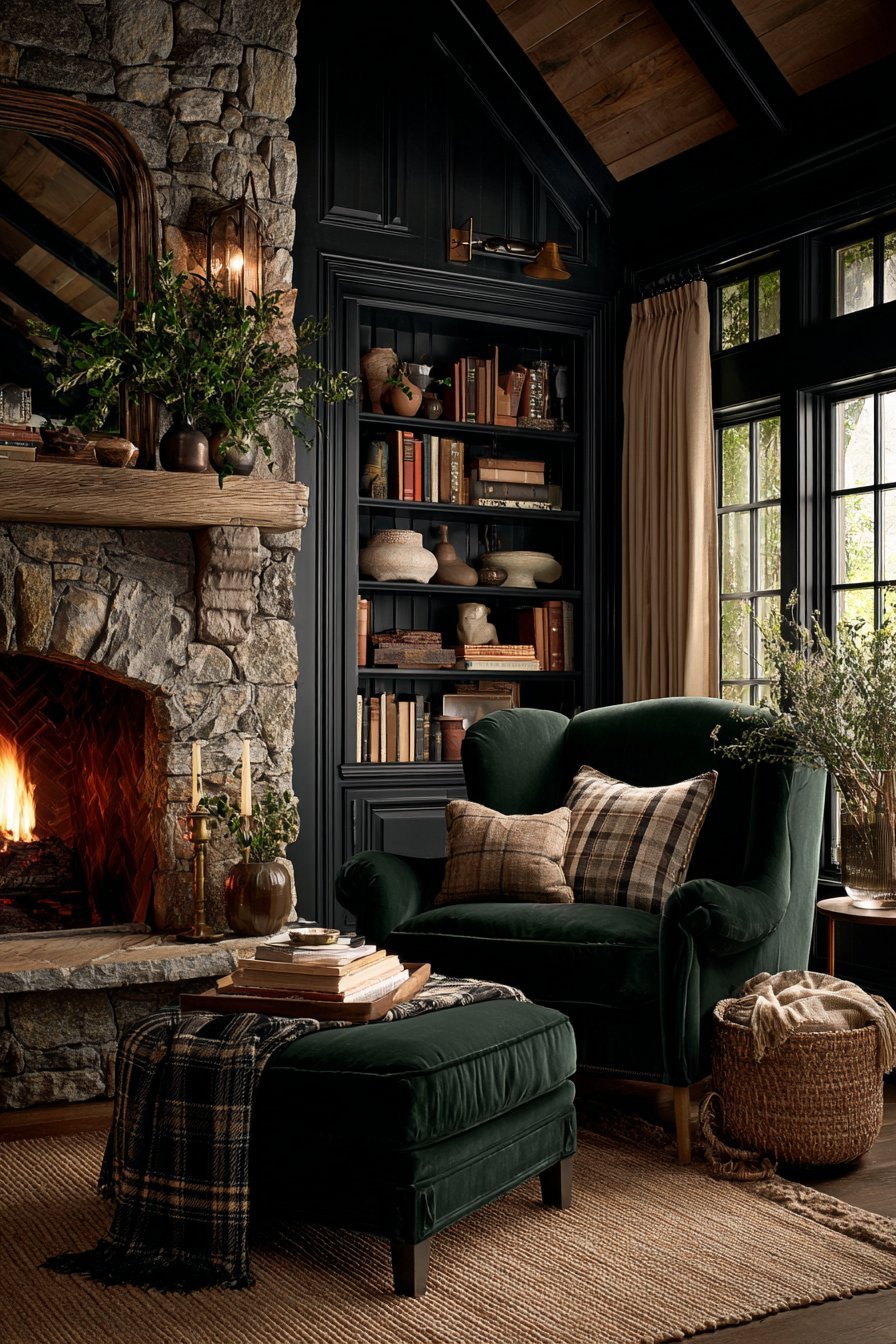
There is an unexpected sustainability argument for moody design over minimalism. Paradoxically, minimalism’s constant cycle of decluttering, replacing, and refreshing with new “clean” pieces generates considerable consumer waste. Moody interiors, with their emphasis on vintage, antique, and secondhand pieces, often represent a far more environmentally responsible approach to decorating.
When you invest in a beautifully crafted vintage armchair or a set of antique brass candlesticks, you are extending the life of existing objects. You are choosing quality over quantity. The moody aesthetic rewards patina, age, and wear — qualities that are inherently sustainable because they embrace objects that improve with time rather than needing frequent replacement.
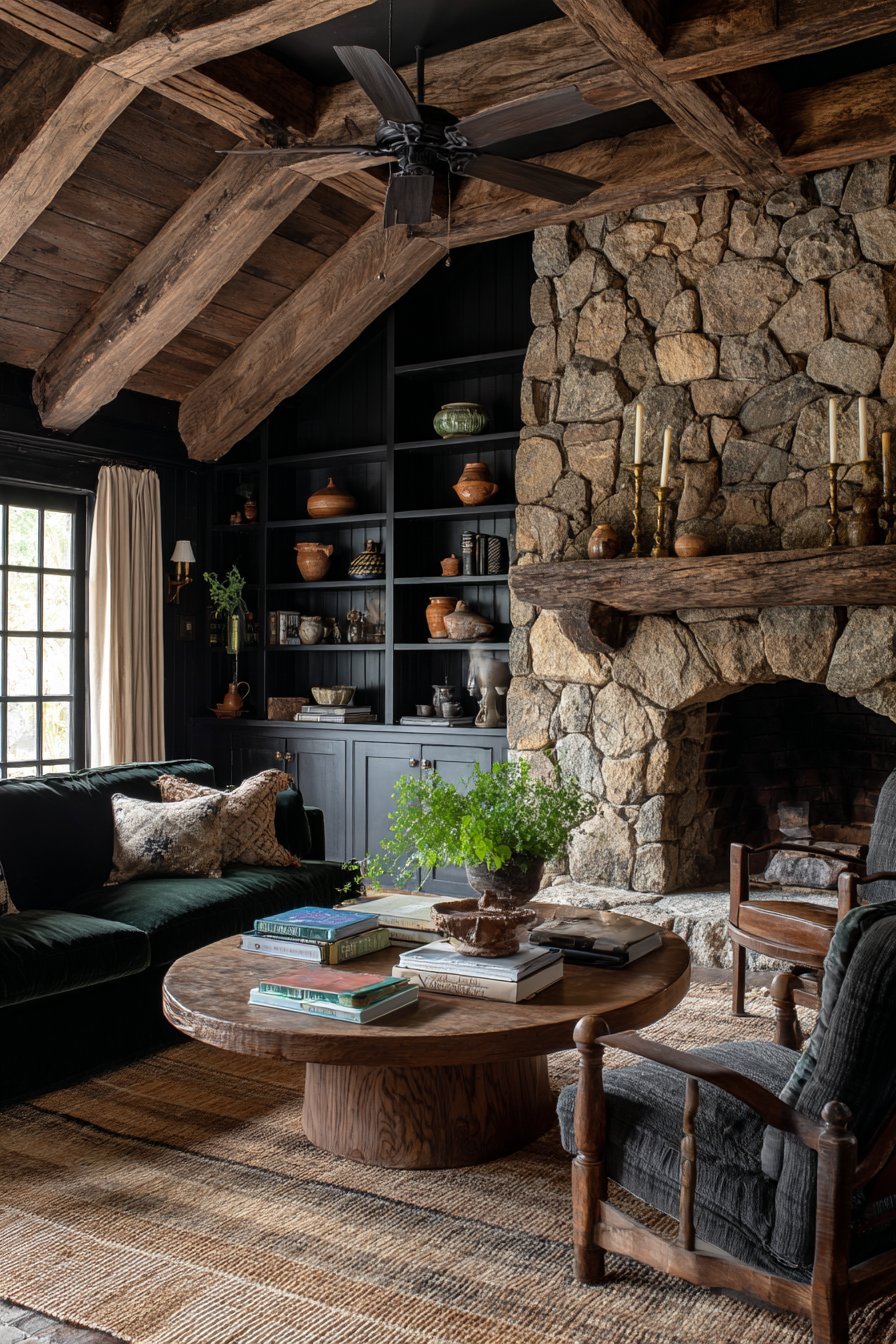
Additionally, moody interiors tend to be more emotionally durable. Because they are deeply personal and sensory-rich, homeowners are less likely to grow bored and itch for a complete overhaul every few years. Longevity of satisfaction is its own form of sustainability — both financial and environmental.
- Prioritize vintage and secondhand shopping for furniture and décor
- Choose natural, biodegradable materials: wool, linen, cotton, wood, and stone
- Invest in fewer, higher-quality pieces rather than many cheaper ones
- Repair and reupholster rather than replacing furniture
- Support small-batch and artisan makers for ceramics, textiles, and lighting
- Treat your moody interior as a long-term investment, not a seasonal refresh
11. How to Transition from Minimalist to Moody
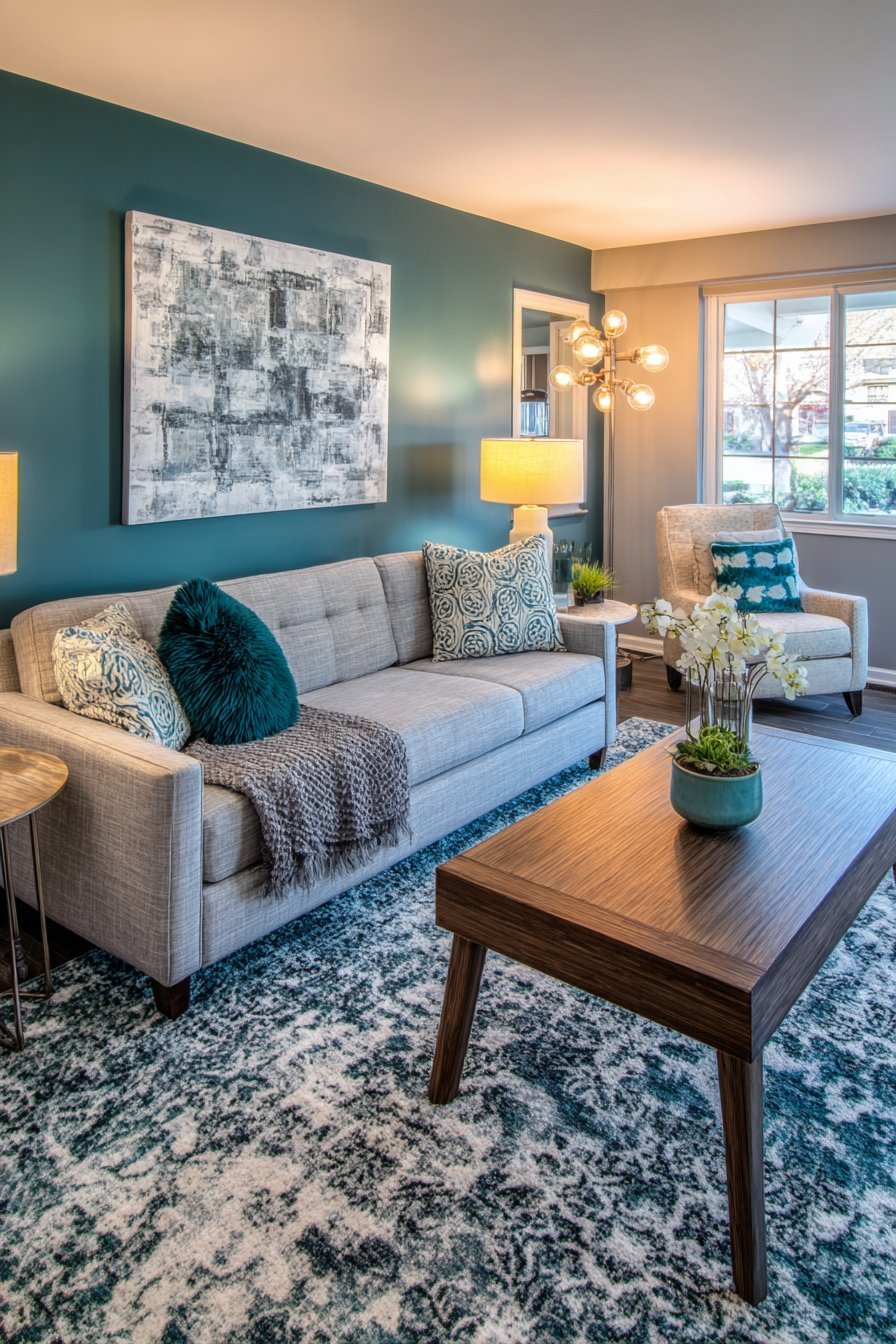
The prospect of transitioning from a minimalist space to a moody one can feel overwhelming. But the process does not need to be dramatic or expensive. Small, strategic moves can shift the atmosphere of a room significantly without requiring a complete overhaul.
Start with color and light. Paint one wall in a deep, saturated tone and replace bright overhead bulbs with warm-toned alternatives. These two changes alone will transform the emotional character of a space more than any furniture purchase. From there, introduce one rich textile — a velvet cushion, a wool throw, a patterned rug.
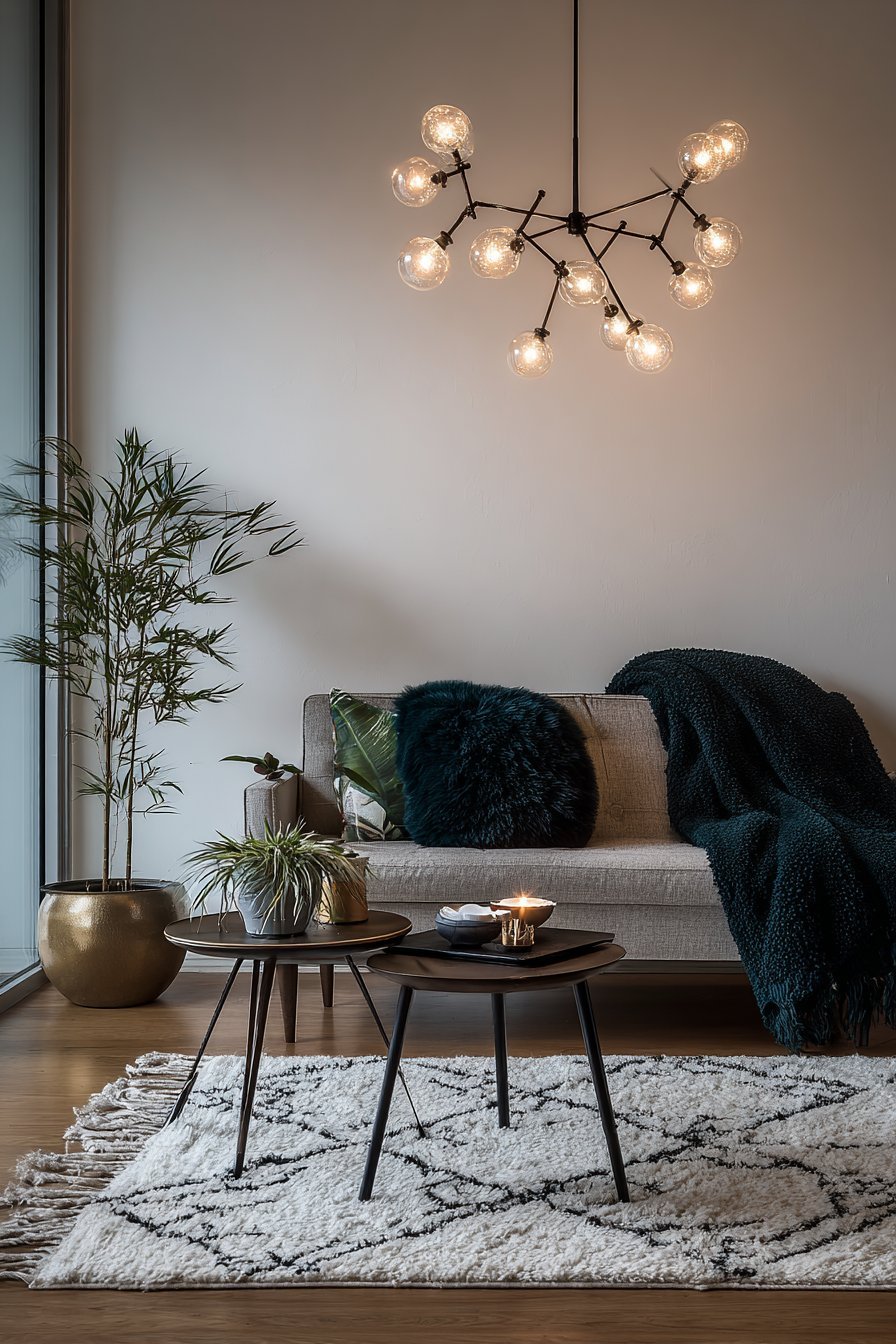
The key mindset shift is moving from editing to layering. Minimalism trains you to remove. Moody design asks you to add — but to add with intention. Each new element should contribute to the room’s overall sensory story. Every addition should earn its place through beauty, meaning, or both.
- Begin with one dark accent wall in the most-used room
- Replace cool-white bulbs with warm-toned Edison or filament bulbs
- Introduce a single luxurious textile — velvet, boucle, or heavy linen
- Add one vintage or antique piece to anchor the room with character
- Build gradually — moody rooms evolve over time rather than appearing overnight
- Trust your instincts over trend guides; personal resonance is the ultimate design metric
12. The Future of Moody Design
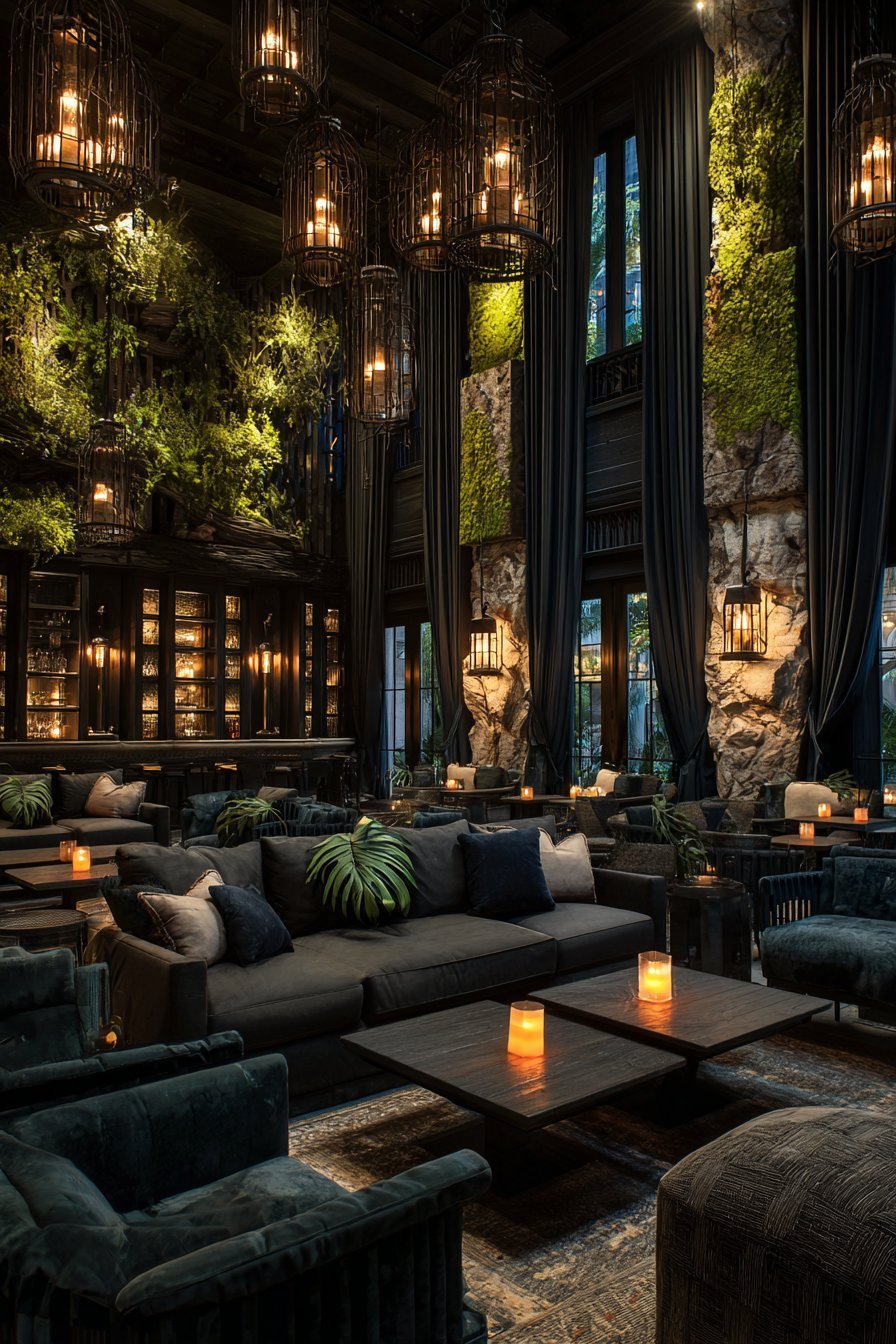
Moody interiors are not a passing trend. They represent a fundamental recalibration of what we want our homes to feel like — and that desire runs deep. As remote work continues to make our homes our primary lived environment, the demand for spaces that feel genuinely nurturing will only intensify.
The next evolution of moody design is biophilic moodiness — the marriage of dark, rich interiors with abundant natural materials and living elements. Think moss walls alongside velvet curtains. Rough-hewn stone counters against deep-painted cabinetry. Nature’s own dramatic palette translated into interior form.
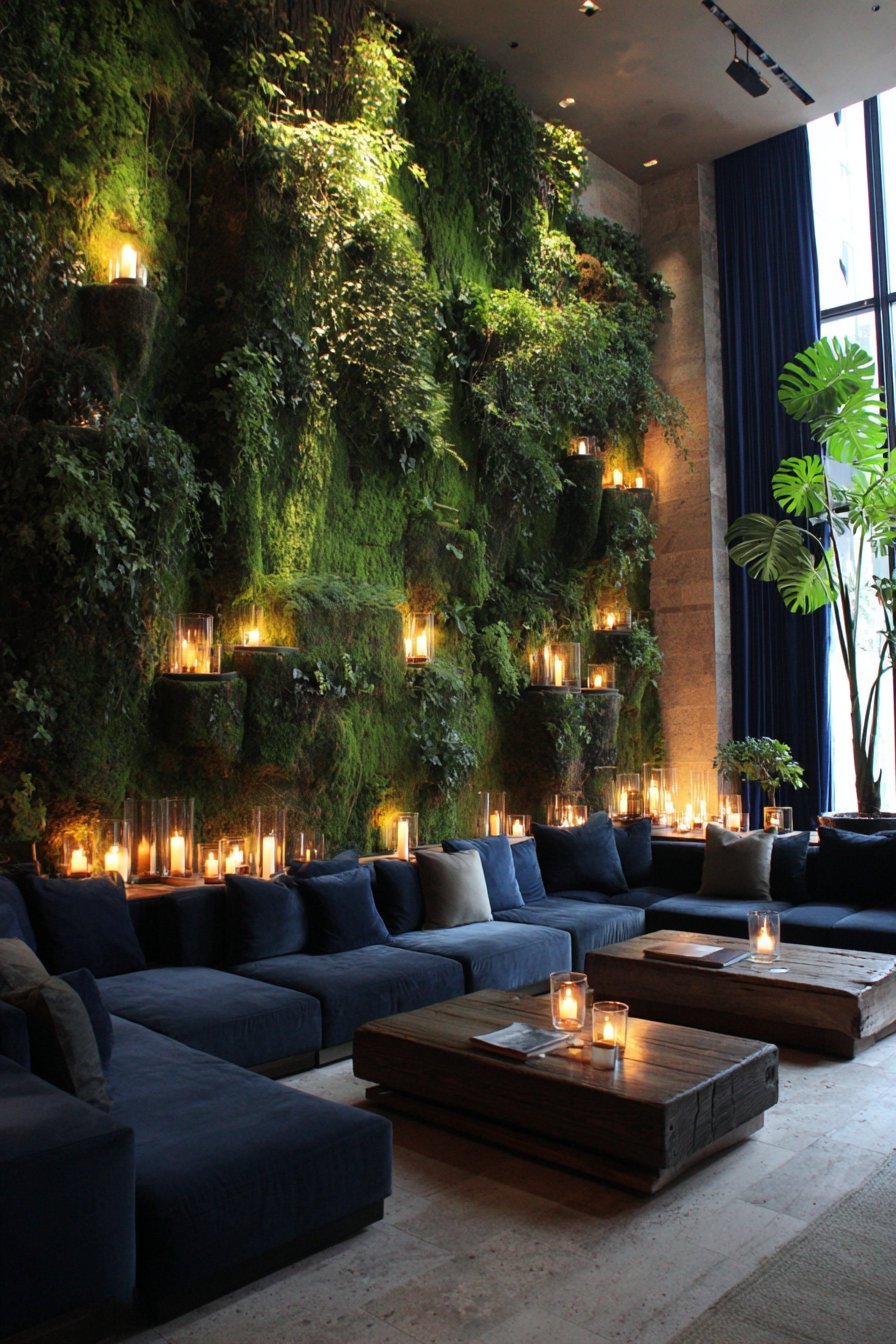
We are also seeing moody design democratize through accessible paint brands, secondhand marketplaces, and the growing influence of designers who prioritize emotional resonance over aspirational minimalism. The message is clear: your home should feel like you — complex, layered, warm, and wonderfully, unapologetically human.
- Follow emerging moody designers on social platforms for evolving inspiration
- Experiment with biophilic elements — living walls, raw stone, water features
- Stay ahead of the curve by exploring dark maximalism as the next design frontier
- Invest in artisan and handmade pieces as the anti-mass-production response
- Document your space’s evolution with photography to track and celebrate your progress
- Share your moody interior journey — community and inspiration fuel the best design decisions
Conclusion
Moody interiors are not simply a stylistic reaction to minimalism. They are a philosophical reorientation — a return to the idea that home should feel like a sanctuary, not a gallery. They honor the human need for warmth, complexity, texture, and emotional depth.
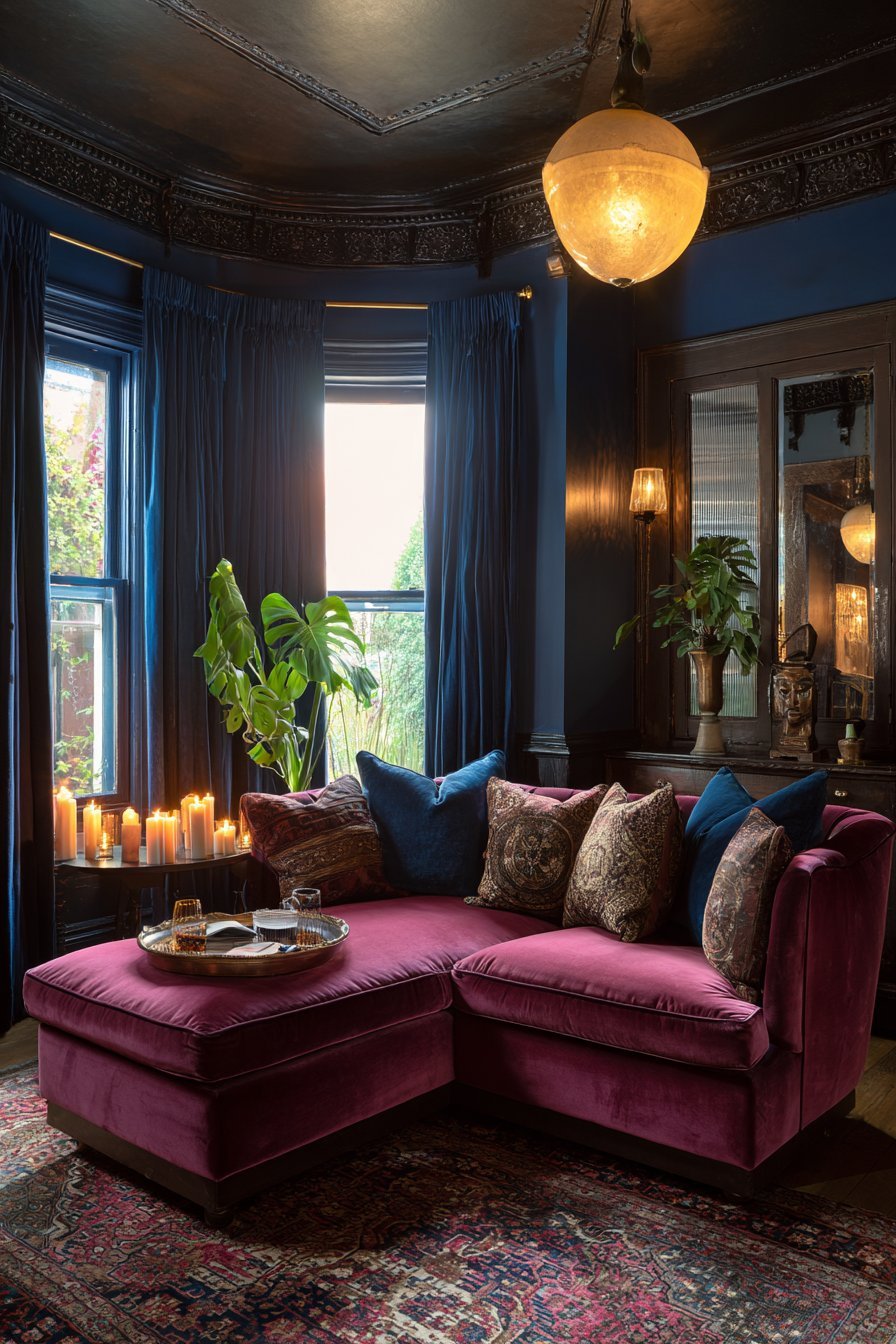
As you consider your own space, ask yourself whether it truly reflects who you are. Does it make you feel held? Does it engage your senses and tell your story? If the answer is not yet, the moody interior approach offers a rich, rewarding path forward. Embrace the dark, layer the textures, light the candles, and let your home become the deeply personal haven it was always meant to be.
