

Japandi is one of the most captivating design movements to emerge in recent years. It blends the quiet elegance of Japanese minimalism with the cozy warmth of Scandinavian design. The result is a living space that feels both serene and deeply functional. If you have ever craved a home that is calm, beautiful, and purposeful, Japandi design may be exactly what you need.
Thoughtful interior design does more than decorate a room. It shapes how you feel when you wake up, work, and unwind. Intentional space planning can reduce stress, boost creativity, and bring genuine joy to everyday life. Japandi achieves this by stripping away the unnecessary and celebrating what truly matters — texture, craftsmanship, and stillness.
This article covers everything you need to know about the Japandi style. From its philosophical roots to its color palettes, furniture choices, and layering techniques, each section provides practical, actionable guidance. Whether you are redesigning an entire home or refreshing a single room, you will find the inspiration and knowledge to do it beautifully.
1. The Origins of Japandi Design
Japandi is not a random trend. It is a deeply intentional fusion of two of the world’s most respected design philosophies. Japanese aesthetics draw from centuries-old concepts like wabi-sabi — the beauty found in imperfection and impermanence. Scandinavian design, often called Scandi, emerged from Nordic practicality and a love of functional beauty. When these two traditions meet, they create something uniquely harmonious.
Both cultures share a profound respect for nature, simplicity, and craft. Japanese minimalism encourages the removal of clutter to reveal the essence of a space. Scandinavian hygge embraces warmth and comfort. Together, they balance stillness with softness. The combination feels neither cold nor overly ornate — it occupies a rare and beautiful middle ground.
The Japandi movement gained significant momentum in the 2010s and early 2020s. Interior designers and homeowners embraced it as a mindful alternative to maximalist trends. It resonates with people who want homes that feel restful rather than overwhelming. Understanding its origins helps you apply its principles with genuine intention.
- Research wabi-sabi philosophy to deepen your design decisions
- Study Scandinavian hygge and how it translates to physical spaces
- Visit Japanese design exhibitions or browse curated Japandi Pinterest boards
- Look at mid-century Scandinavian furniture collections for reference
- Explore the work of Japanese architects like Kengo Kuma for inspiration
- Let cultural awareness guide your material and furniture choices
2. The Core Philosophy Behind Japandi
Every great design style has a philosophy. Japandi’s guiding principle is the idea that less is more — but with soul. It is not cold minimalism for its own sake. Every object in a Japandi space earns its place. Nothing is decorative without also being meaningful or functional. This creates an environment of quiet intentionality.
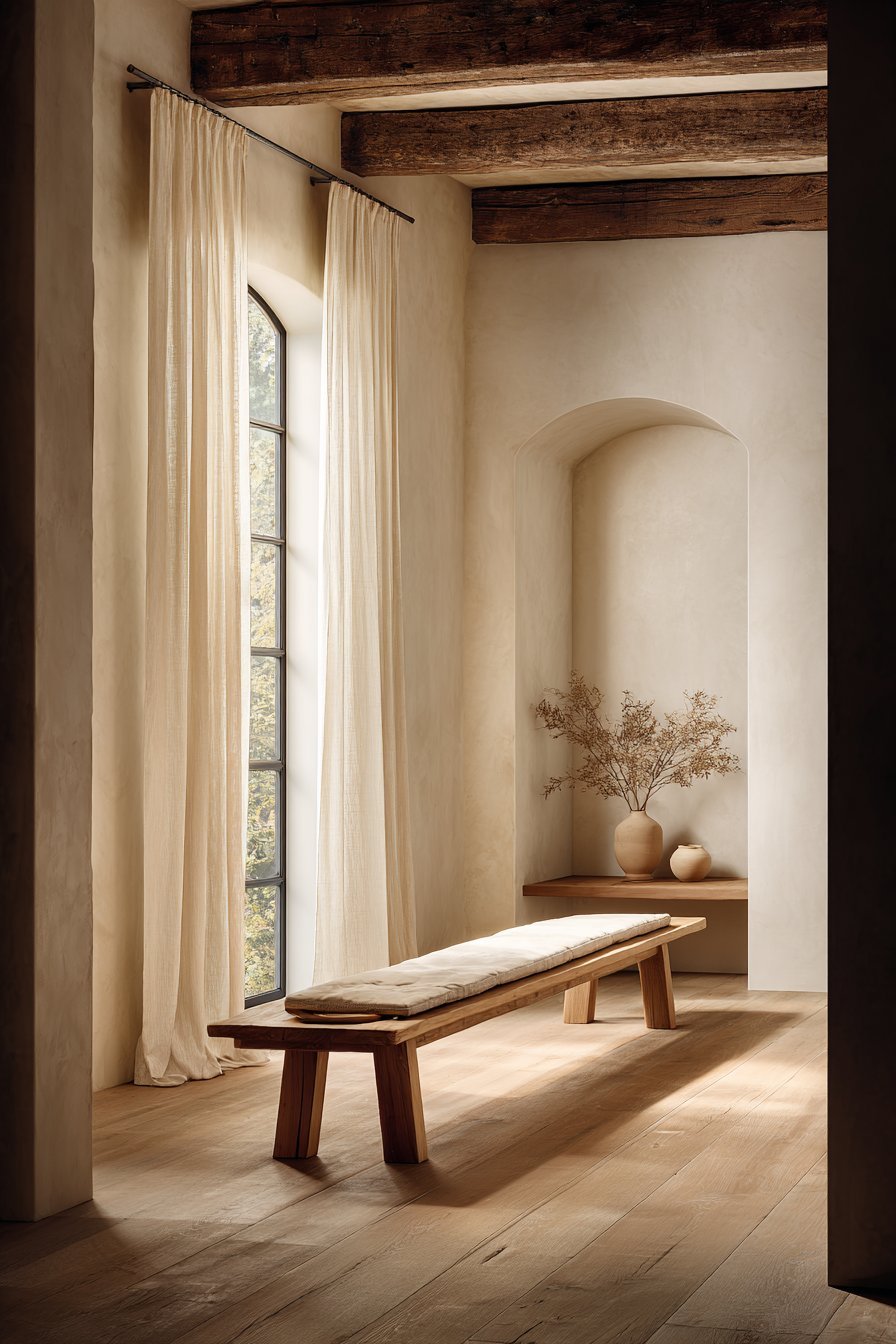
The Japanese concept of ma — meaning negative space or pause — is central to Japandi. Empty space is not wasted space. It is breathing room for the eye and the mind. Rooms feel uncluttered not because they are bare, but because objects are placed with precision and care. This restraint takes discipline, but the payoff is a space that feels genuinely peaceful.
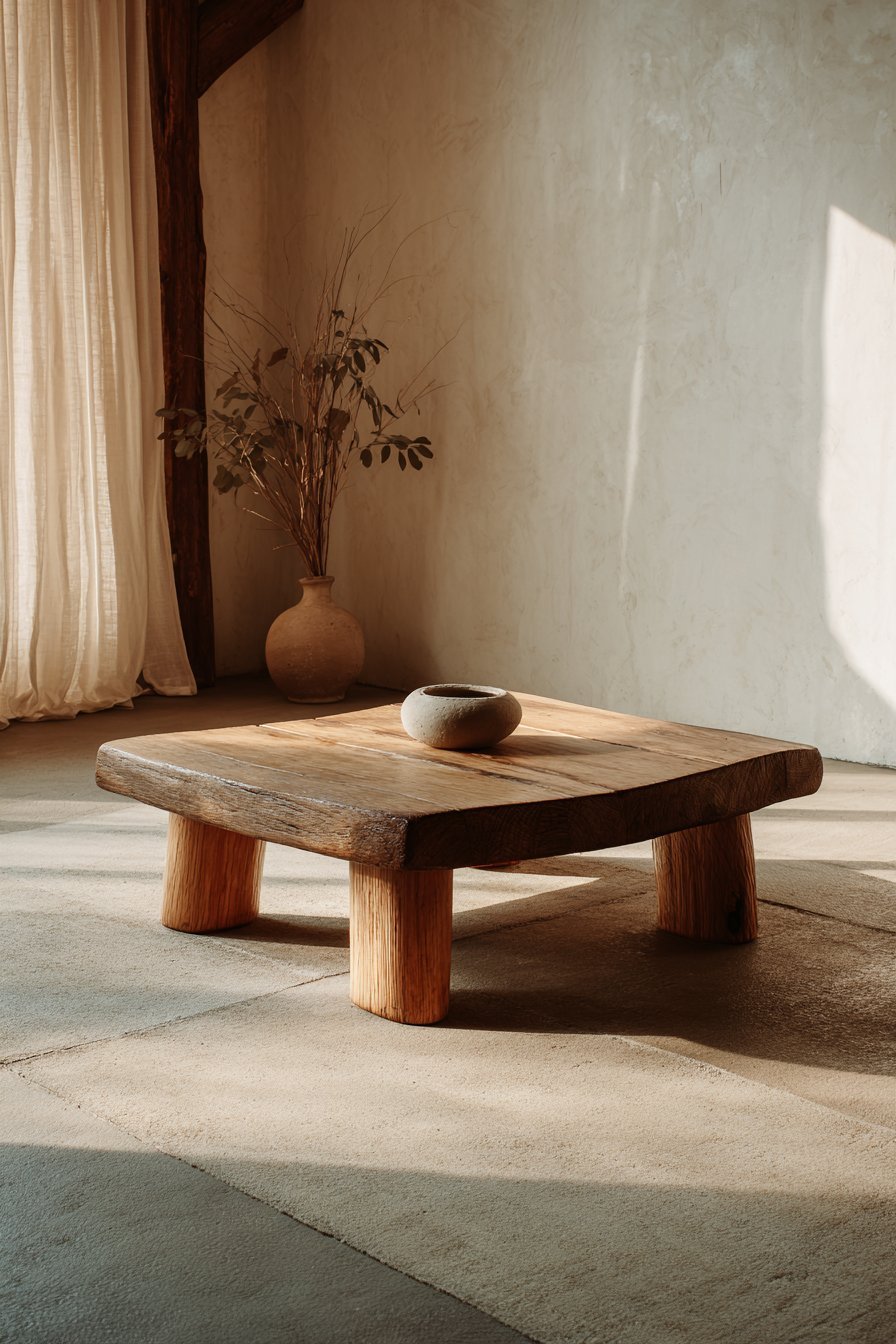
Scandinavian design contributes the philosophy of form following function. Every piece must serve a purpose without sacrificing beauty. Furniture is built to last. Textiles are chosen for comfort as much as aesthetics. When Japanese and Nordic values unite, you get spaces that are refined, warm, and extraordinarily livable.
- Embrace empty space as a design element rather than something to fill
- Before purchasing any item, ask: “Is this beautiful AND functional?”
- Remove at least one decorative object from each shelf or surface
- Choose pieces with craftsmanship and longevity over trend-driven decor
- Practice intentional editing — curate rather than accumulate
- Let stillness be the mood you design toward
3. The Japandi Color Palette
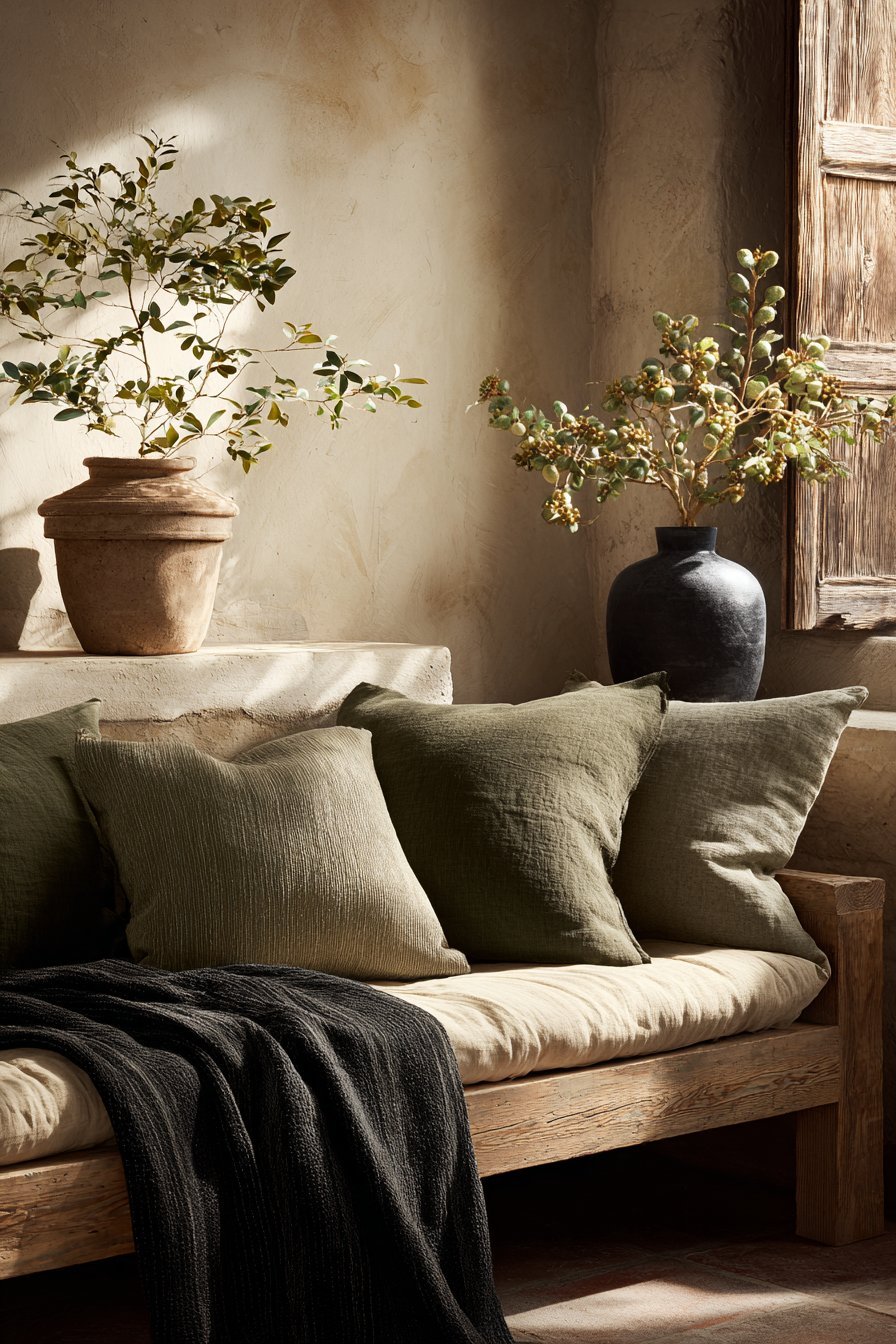
Color is where Japandi makes its most immediate impression. The palette is muted, earthy, and deeply calming. Think warm whites, soft beiges, cool grays, dusty greens, and rich charcoal tones. These colors do not compete for attention. They work in quiet harmony to create a cohesive and restful atmosphere.
Japandi avoids bright, saturated hues. Instead, it leans toward desaturated earth tones that feel as though they belong in a forest, a stone cottage, or a Japanese tea house. Warm off-whites like linen and cream anchor the palette. Deeper tones like terracotta, sage, and slate add visual depth without disrupting the calm.
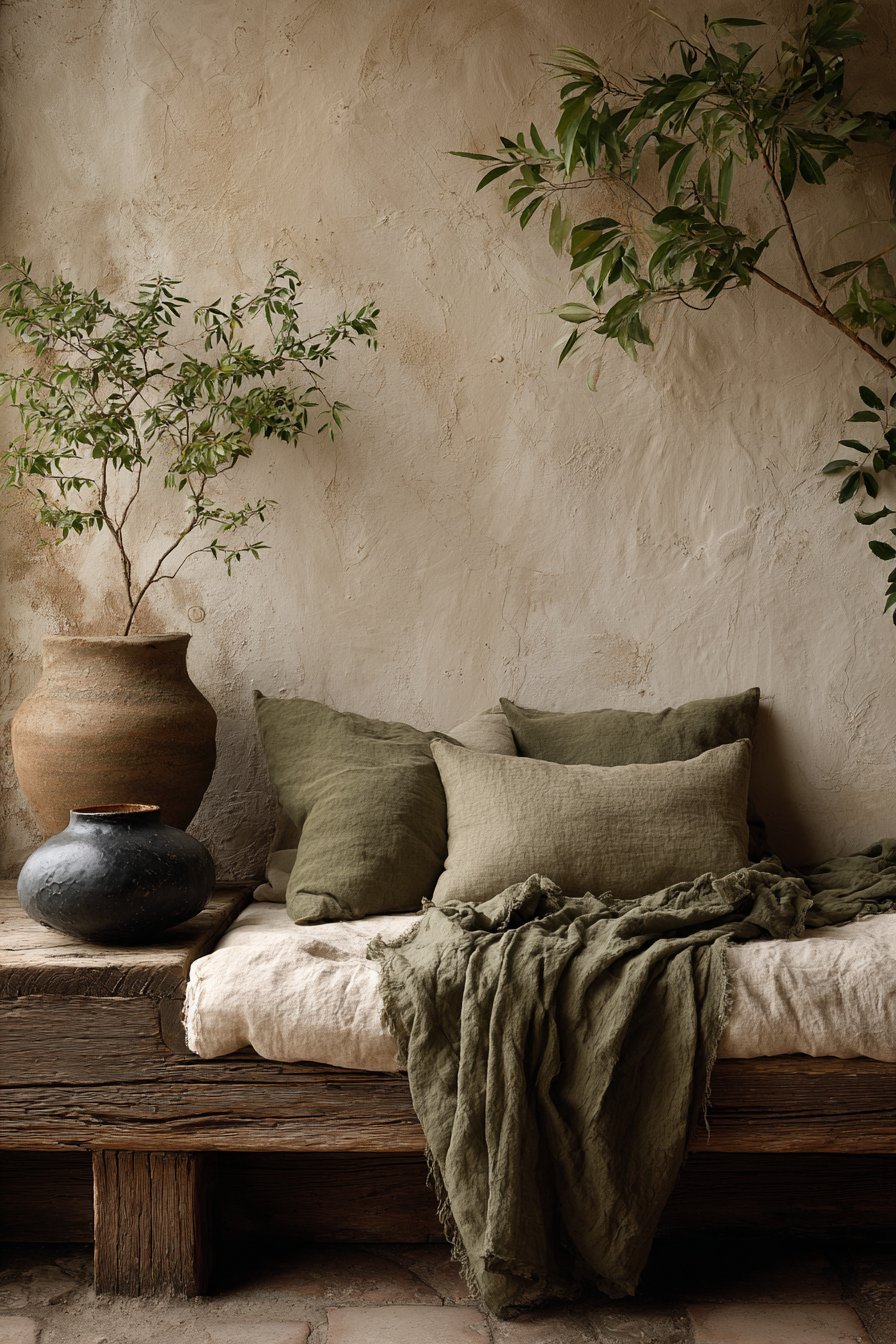
Accent colors are used sparingly. A single muted olive cushion, a deep navy ceramic vase, or a dusty rose throw can add dimension to an otherwise neutral room. The key is restraint. One or two carefully chosen accents enrich the space. Too many pull it toward chaos, which is entirely contrary to the Japandi spirit.
- Use warm whites and natural linens as your primary base colors
- Introduce one or two accent tones drawn from nature — sage, rust, or slate
- Test paint colors in natural light before committing
- Avoid stark, bright whites — they feel too clinical for Japandi spaces
- Layer similar tones for depth rather than contrast for drama
- Use color consistently across soft furnishings, walls, and ceramics
4. Natural Materials and Textures
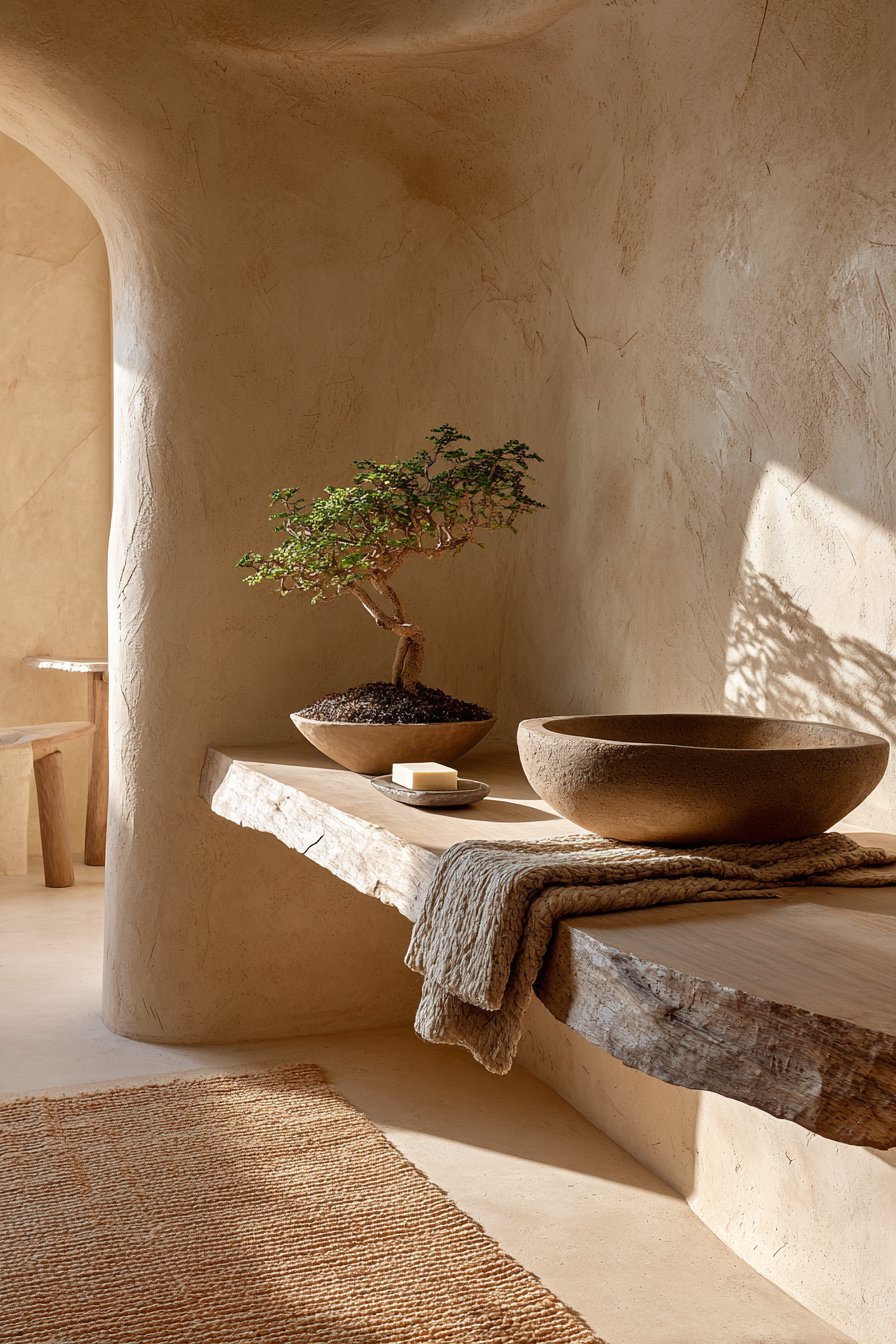
Japandi design has a deep love affair with natural materials. Wood, stone, bamboo, linen, wool, and rattan all have an important role to play. These materials bring the outside world into your living space. They age gracefully, develop character over time, and feel tactile and alive.
Light wood tones like oak, ash, and birch are the most popular choices. They bring warmth without heaviness. Japanese design often incorporates darker woods like walnut or blackened cedar for contrast. Mixing light and dark wood tones — done carefully — adds visual interest while remaining cohesive. Avoid overly polished or lacquered finishes. Natural grain and raw texture are celebrated.
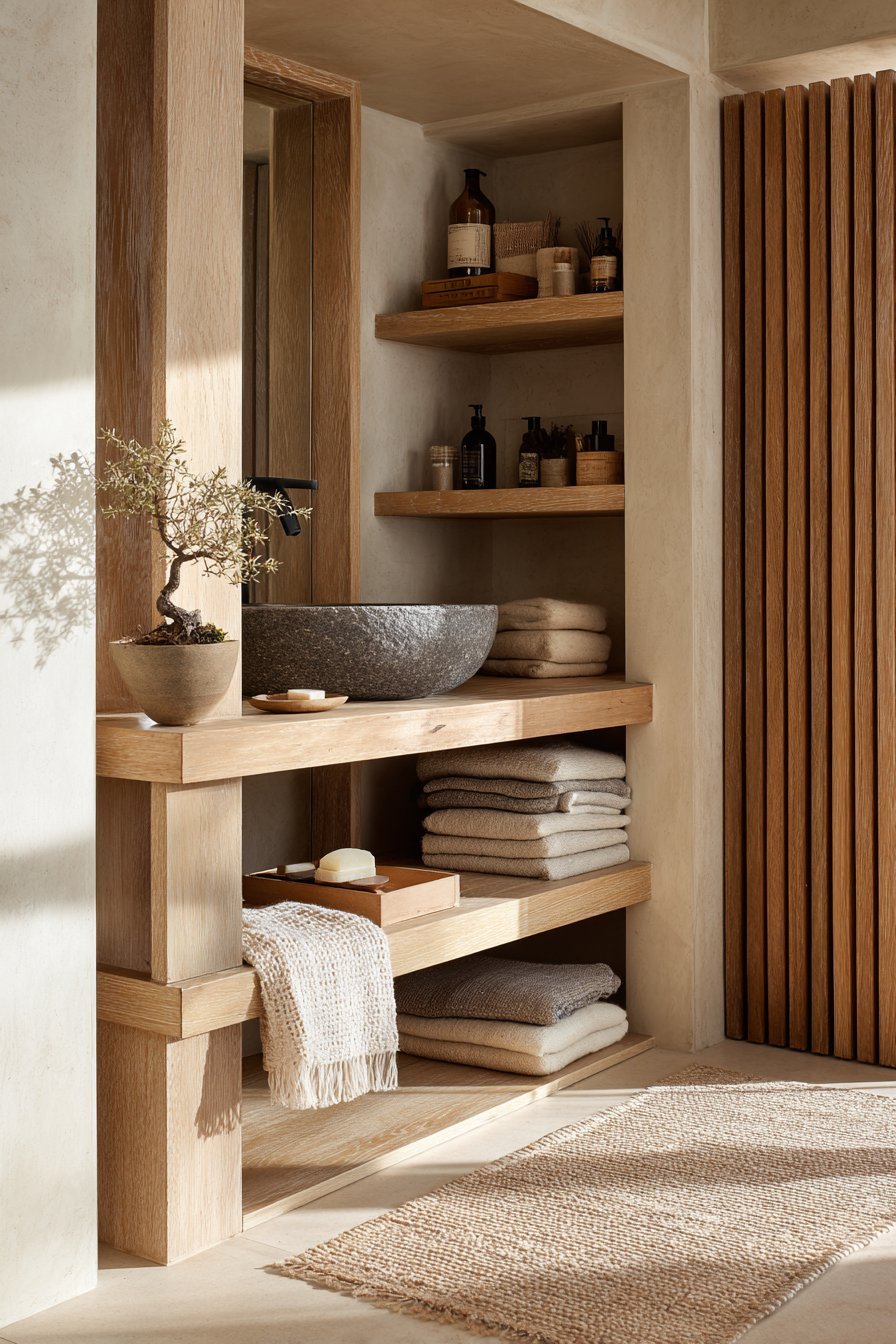
Stone, ceramic, and clay introduce organic texture that softens the space. A rough-edged ceramic bowl, a stone soap dish, or a clay planter brings grounded, earthy energy to any room. Textiles like undyed linen, chunky knit throws, and brushed cotton add layers of warmth. Every material should feel as though it came from the earth, not a factory.
- Choose raw or lightly finished wood over glossy, laminated alternatives
- Incorporate stone elements in bathrooms and kitchens for authenticity
- Use linen curtains, jute rugs, and wool throws to layer natural textures
- Mix two to three natural materials per room for balance
- Select handcrafted ceramics over mass-produced decorative objects
- Opt for furniture with visible joinery or natural wood grain as a feature
5. Japandi Furniture Choices
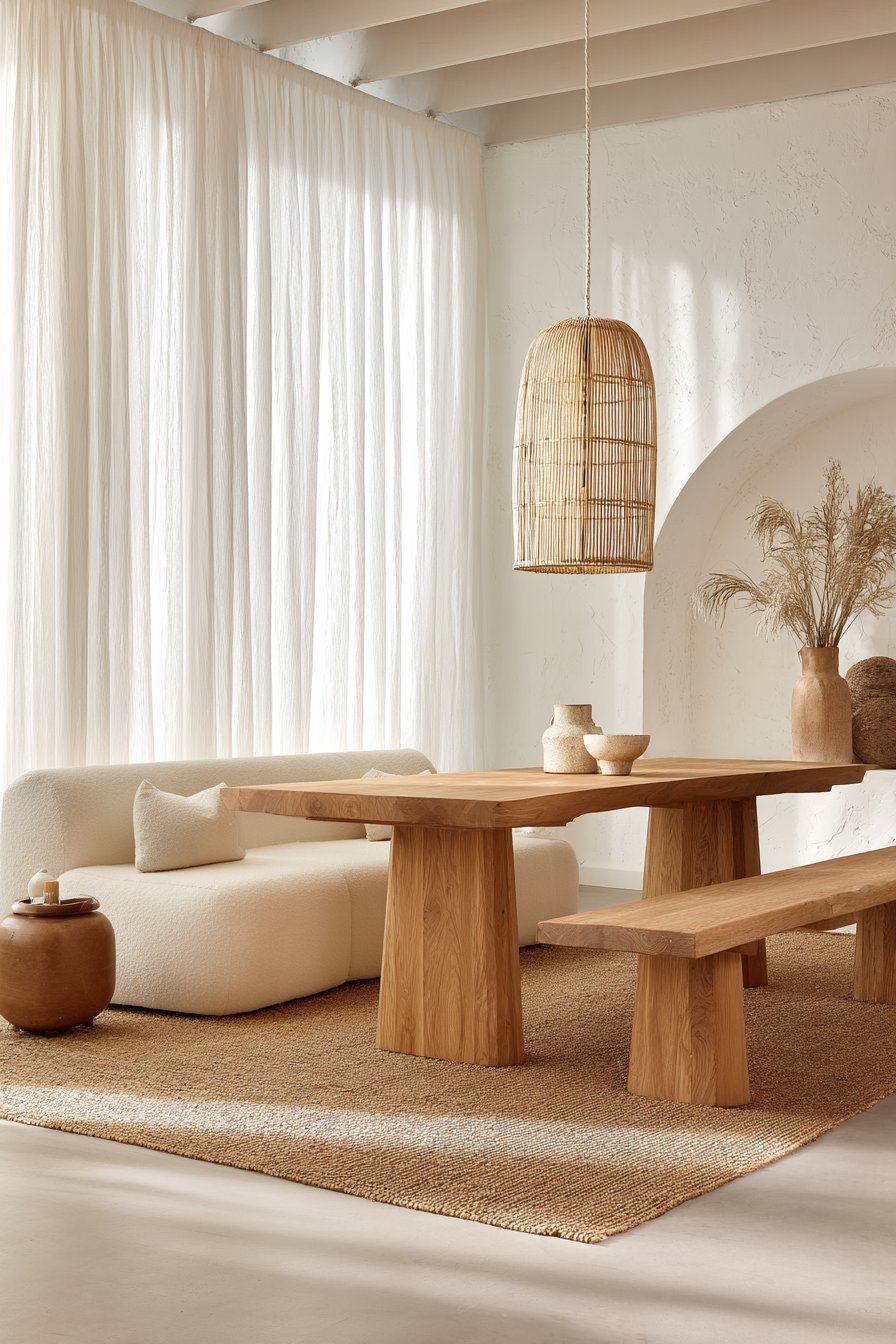
Furniture in a Japandi interior is low-profile, purposeful, and beautifully crafted. Japanese design favors pieces close to the ground — low platform beds, floor cushions, and low dining tables. This creates a grounded, meditative energy. Scandinavian furniture brings clean lines and ergonomic comfort, balancing the Japanese aesthetic with practical livability.
The silhouettes are simple but never boring. Look for tapered legs, gentle curves, and joinery details that celebrate the craft. Avoid heavy, overstuffed pieces. Sofas and chairs should feel inviting without dominating the room. A simple oak dining table, a handcrafted wooden bench, or a streamlined linen sofa are ideal Japandi choices.
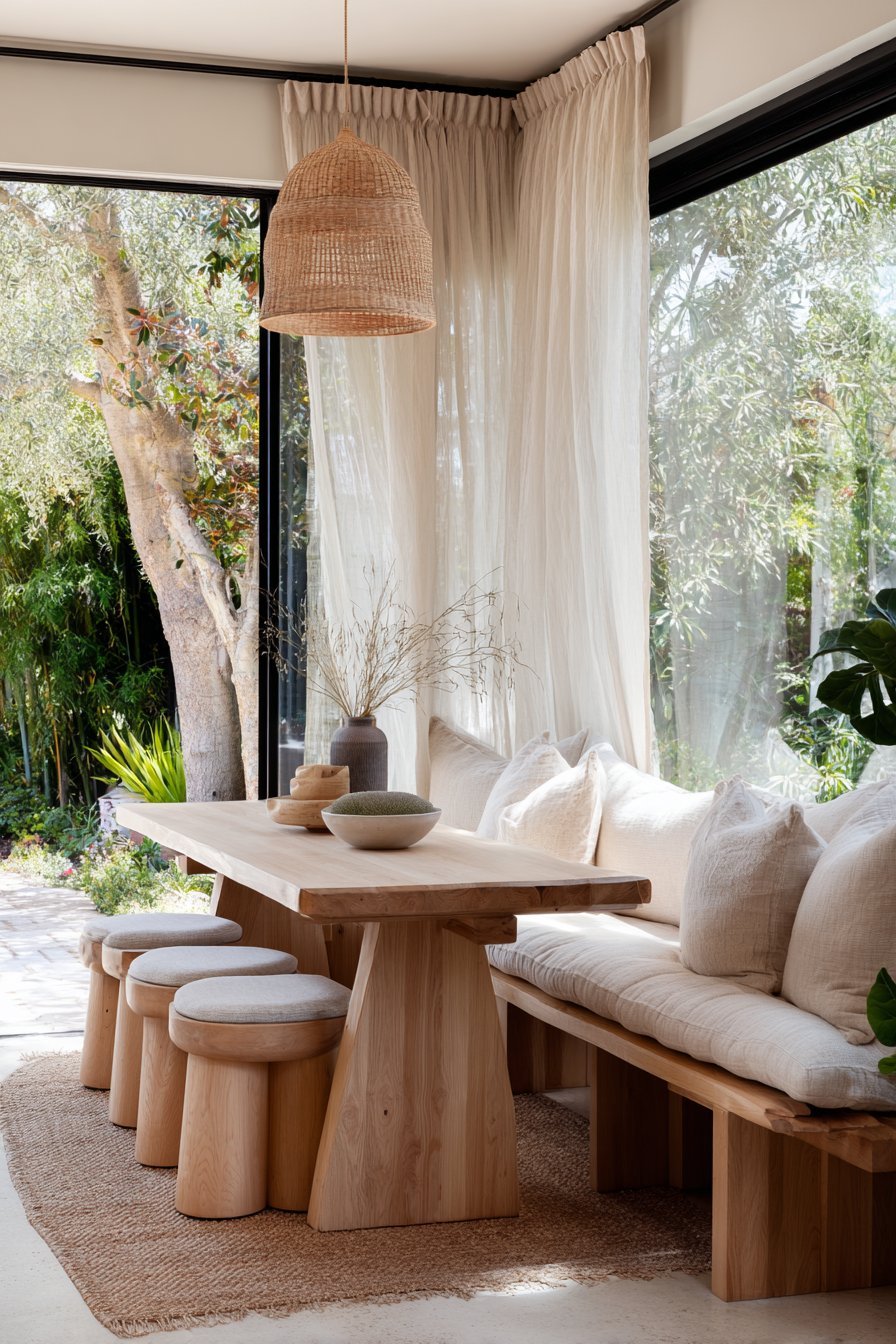
Multi-functional furniture suits the Japandi ethos perfectly. A storage bench at the foot of the bed, a coffee table with hidden compartments, or a sideboard that doubles as a workspace all serve the dual philosophy of beauty and function. Every piece earns its place by being both aesthetically pleasing and genuinely useful.
- Choose low-profile furniture to create a grounded, calm atmosphere
- Look for visible craftsmanship — dovetail joints, natural grain, hand-finishing
- Select a sofa in a neutral, durable fabric like linen or brushed cotton
- Avoid matching furniture sets — mix complementary pieces thoughtfully
- Incorporate one statement furniture piece per room as a focal point
- Prioritize quality and longevity over affordability and trend
6. Lighting in Japandi Spaces
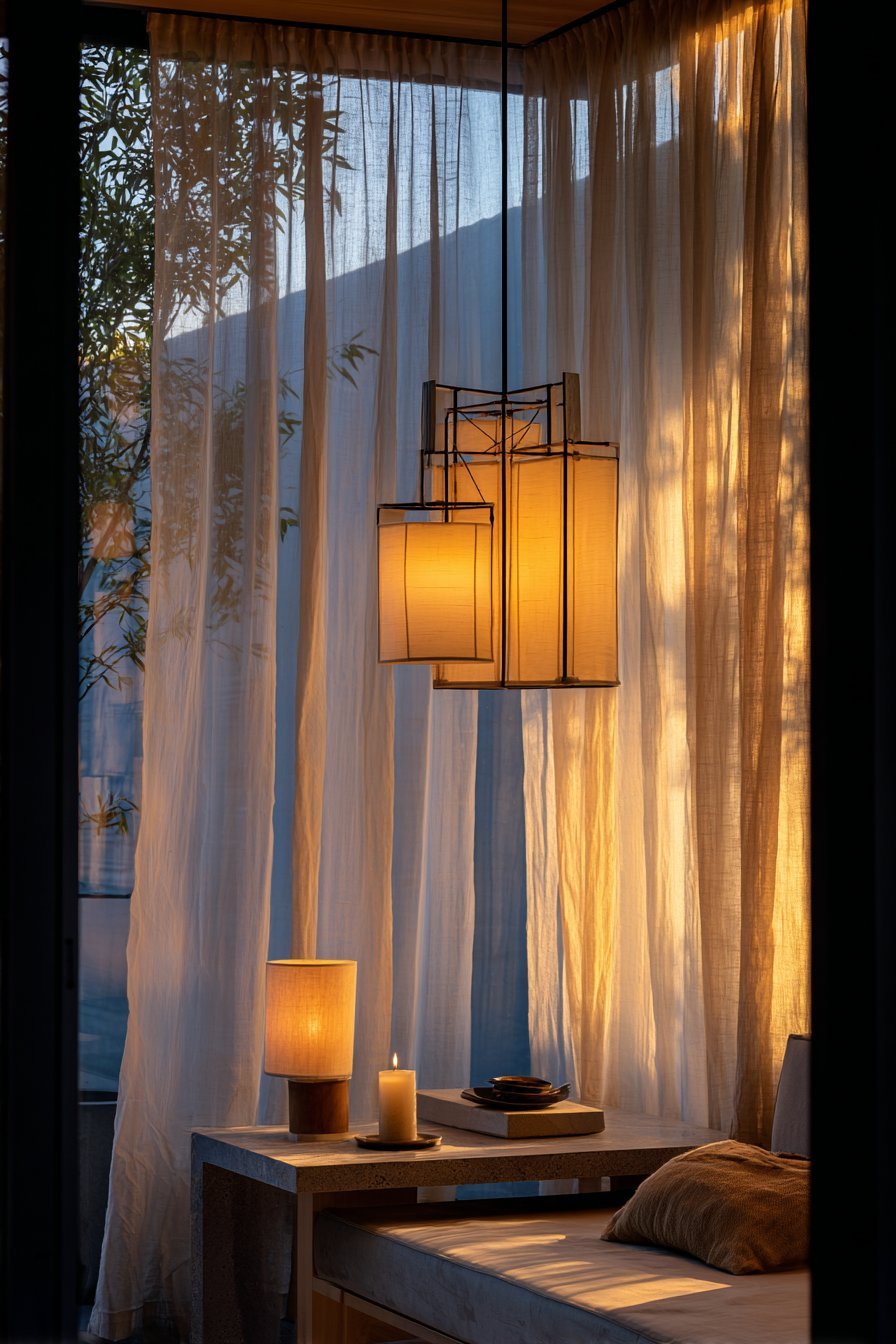
Lighting is one of the most powerful tools in Japandi interior design. The goal is always warm, diffused, layered light. Harsh overhead lighting is avoided. Instead, light is introduced through multiple sources — floor lamps, table lamps, pendant lights, and candles — to create a soft, atmospheric glow.
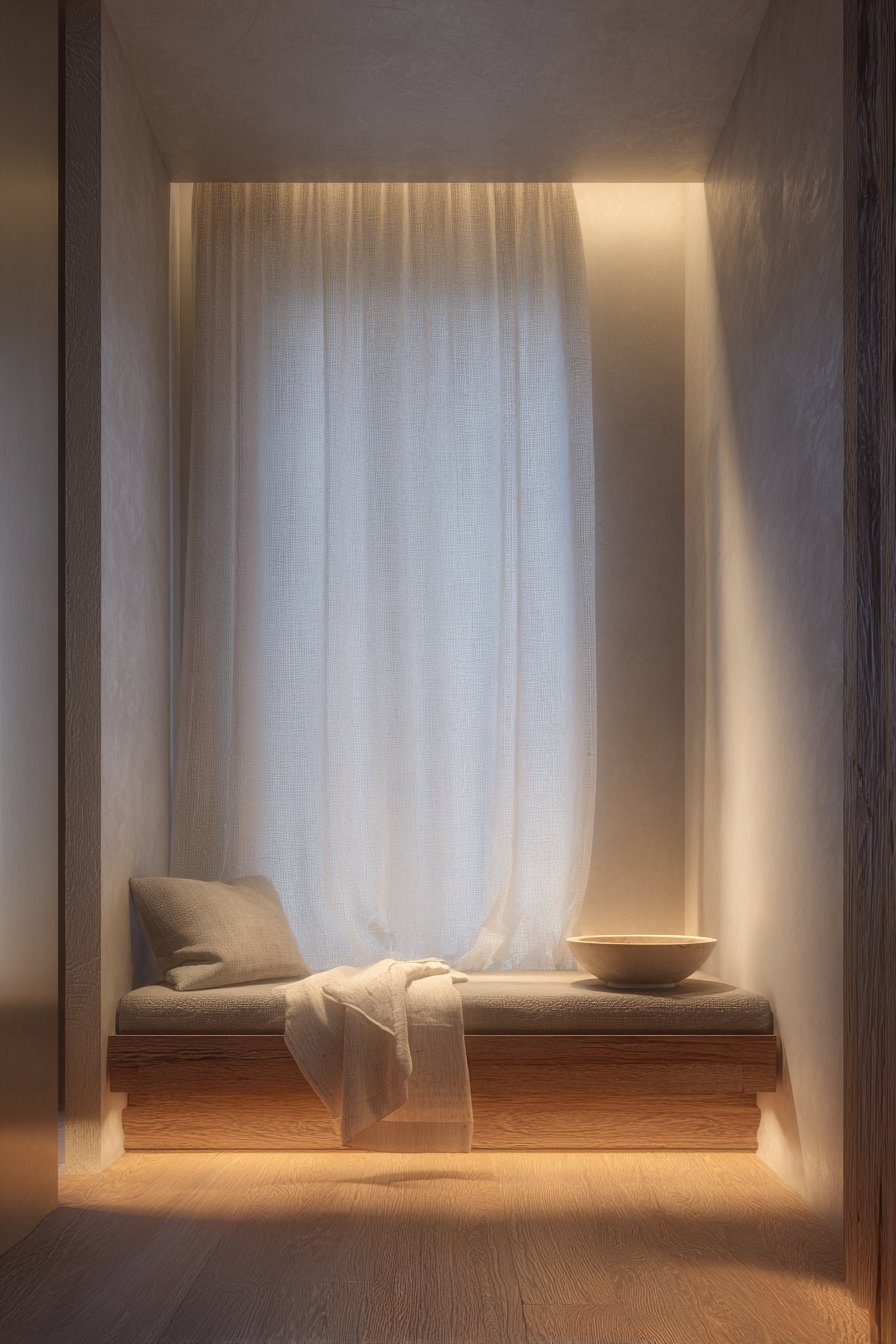
Natural light is treated as a gift. Sheer linen curtains allow daylight to filter gently into the room while maintaining privacy. Windows are left largely unobstructed. The play of natural light across wood grain, linen, and stone surfaces is itself a design feature. It shifts throughout the day, animating the space in subtle, beautiful ways.
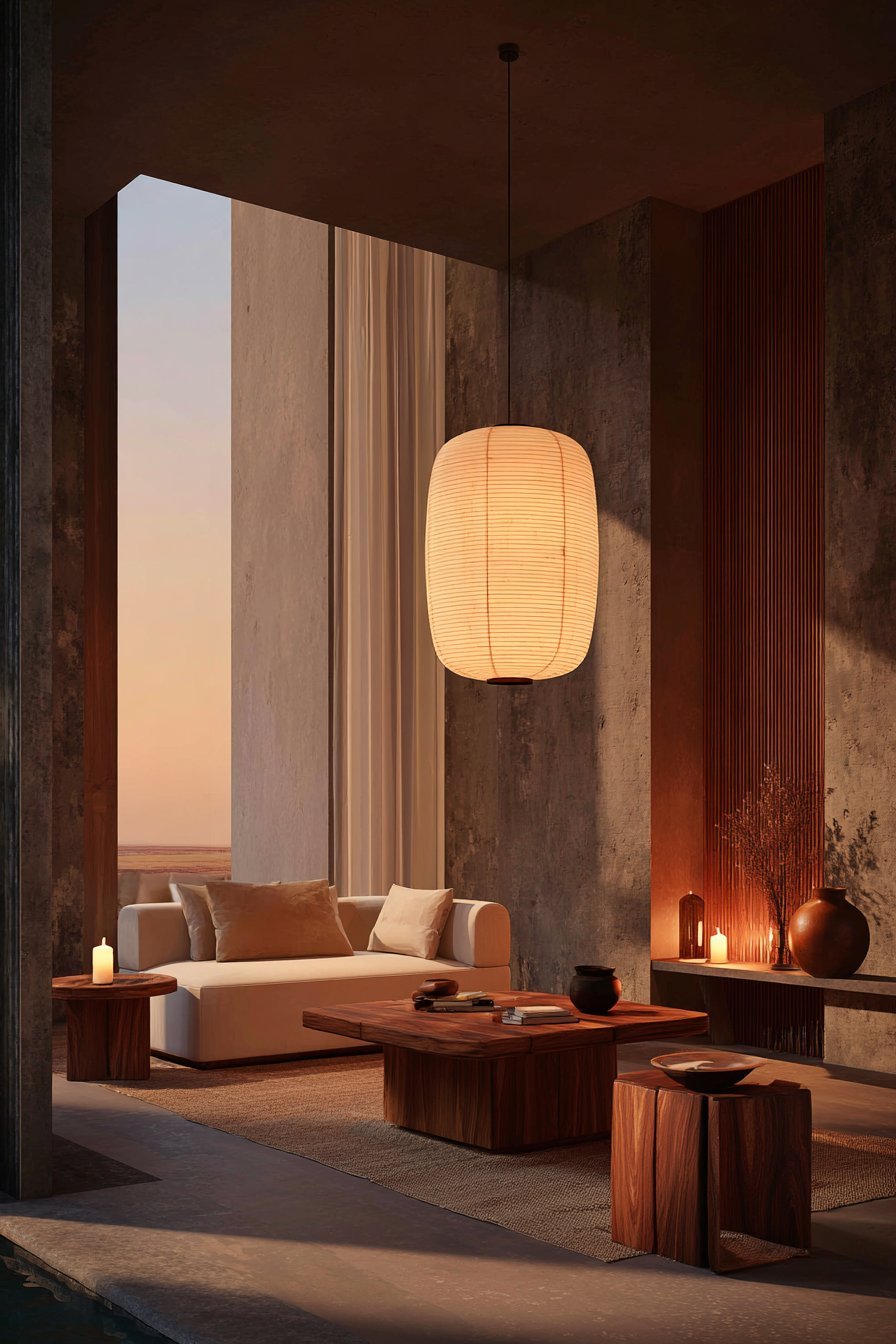
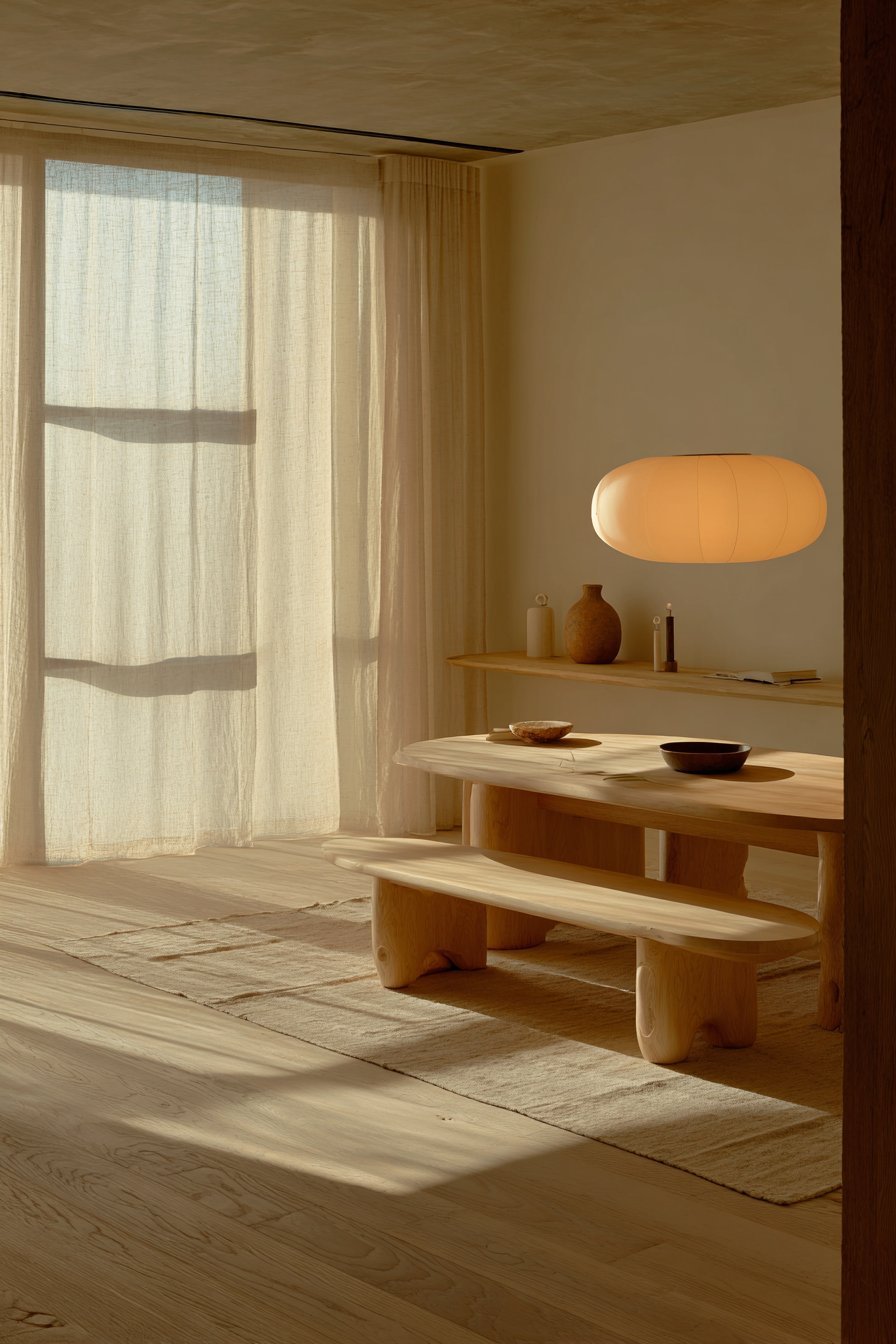
Pendant lights in Japandi spaces are typically made from natural materials like rattan, paper, or wood. Japanese paper lanterns, inspired by traditional andon lamps, diffuse light beautifully. Scandinavian-inspired geometric wooden pendants add a modern counterbalance. The combination creates lighting that feels both ancient and contemporary.
- Layer at least three light sources per room — overhead, ambient, and task
- Choose warm-toned bulbs between 2700K and 3000K for a cozy atmosphere
- Use sheer linen or cotton curtains to maximize soft natural light
- Incorporate candles or low-wattage table lamps for evening atmosphere
- Select pendant lights made from natural or handcrafted materials
- Avoid recessed lighting grids — they feel too commercial for Japandi spaces
7. Decluttering and the Art of Curation
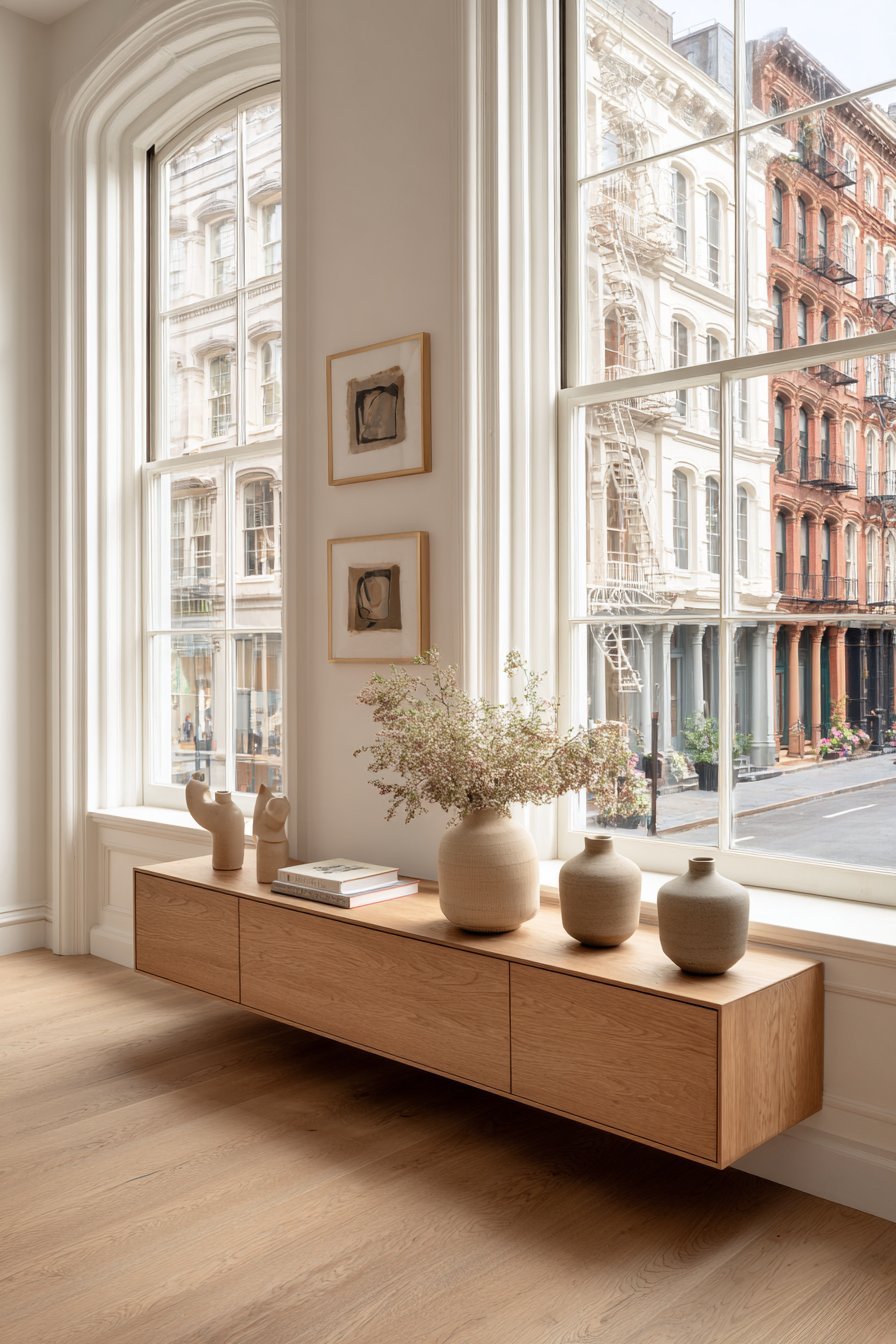
Japandi is incompatible with clutter. Intentional curation is the foundation of a successful Japandi interior. Every object displayed should be chosen deliberately. This does not mean a bare, austere space. It means a space where every item has meaning, beauty, or function — ideally all three.
The Japanese concept of danshari — meaning to refuse, dispose, and separate — is a powerful framework for editing your home. Start by removing items that neither serve a function nor bring genuine joy. What remains should feel like a curated collection rather than an accumulation. Display objects in groups of odd numbers (typically three) for visual balance.
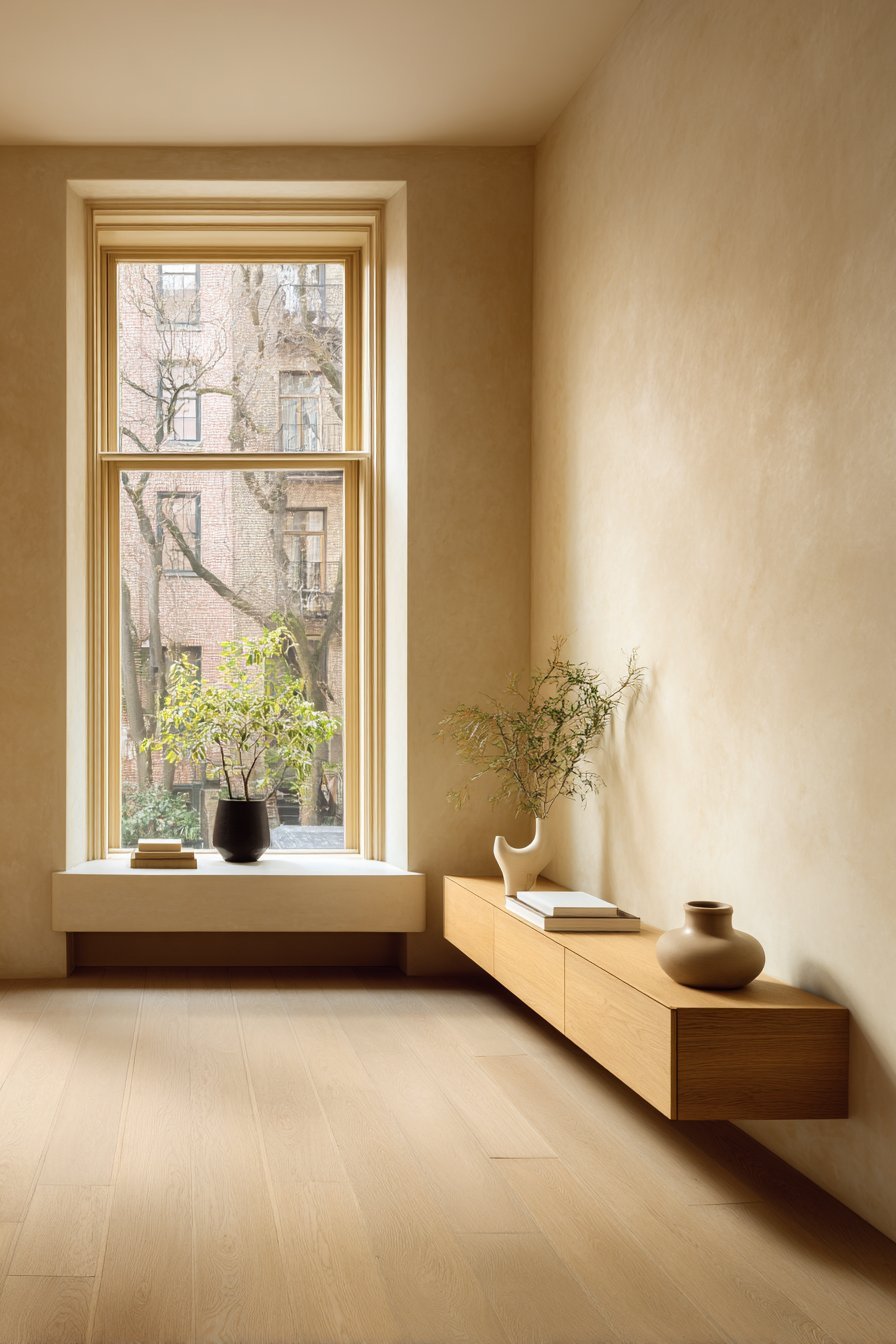
Scandinavian design contributes the concept of smart storage. Hidden storage keeps surfaces clear. Built-in cabinetry, storage benches, and minimal shelving maintain the clean aesthetic while accommodating the realities of daily life. The goal is a home that looks effortlessly calm — even when life is busy.
- Apply the danshari principle — remove anything without purpose or meaning
- Display objects in groups of one or three for elegant visual rhythm
- Invest in built-in or concealed storage to eliminate visual clutter
- Rotate seasonal decor rather than displaying everything simultaneously
- Keep flat surfaces clear — countertops, coffee tables, and sideboards
- Revisit your curation twice a year and edit ruthlessly
8. Plants and Nature in Japandi Interiors
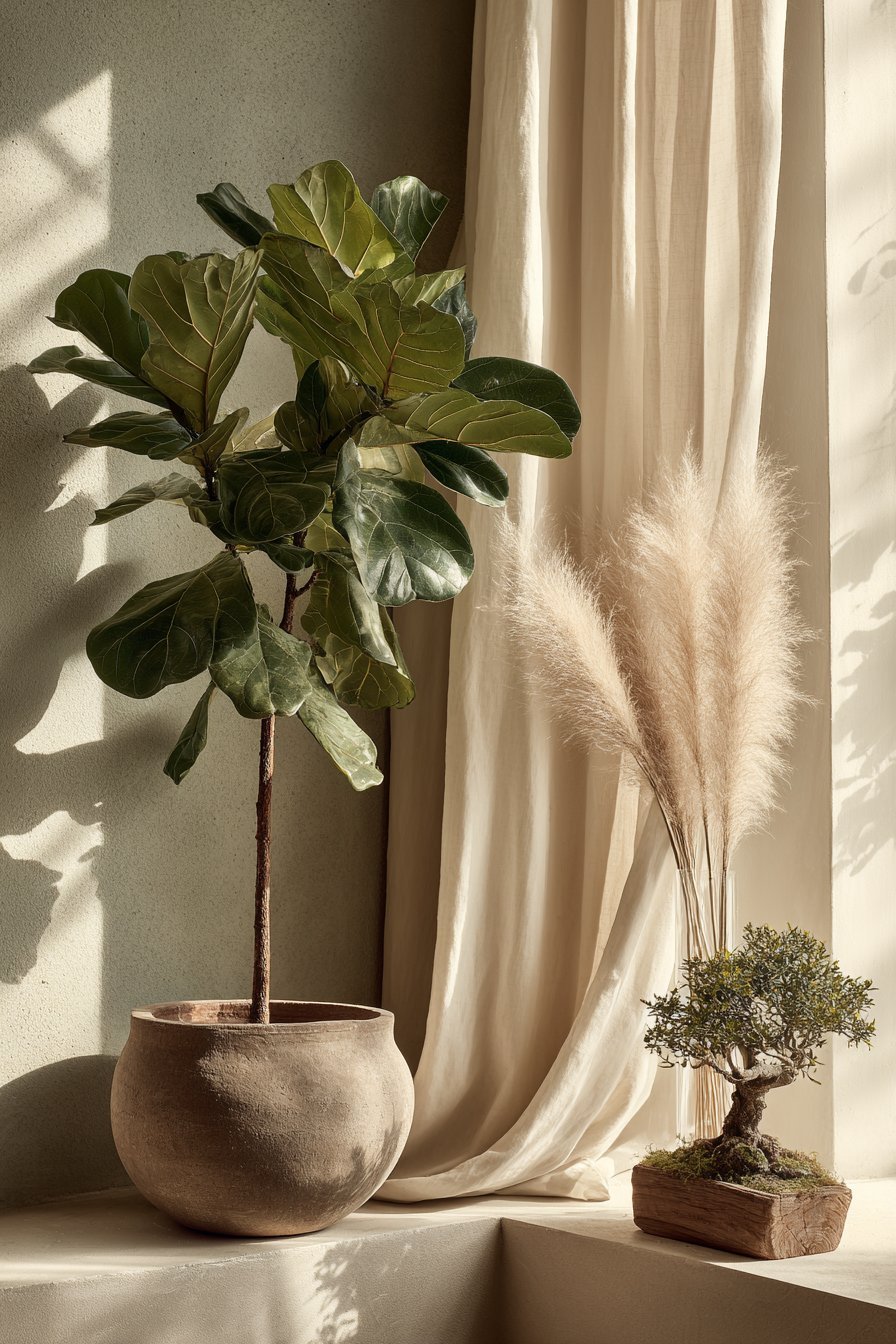
Bringing nature indoors is non-negotiable in Japandi design. Both Japanese and Scandinavian cultures have a profound relationship with the natural world. Plants, branches, stones, and water elements all serve to ground the space and soften hard lines. They introduce life, movement, and a connection to the outside world that elevates the entire interior.
Japanese design often incorporates architectural plants — those with strong, sculptural silhouettes. Think bonsai trees, snake plants, fiddle-leaf figs, and bamboo. These are not just decorative — they carry cultural and philosophical weight. They represent growth, patience, and resilience. Placed thoughtfully, a single striking plant can become the focal point of a room.
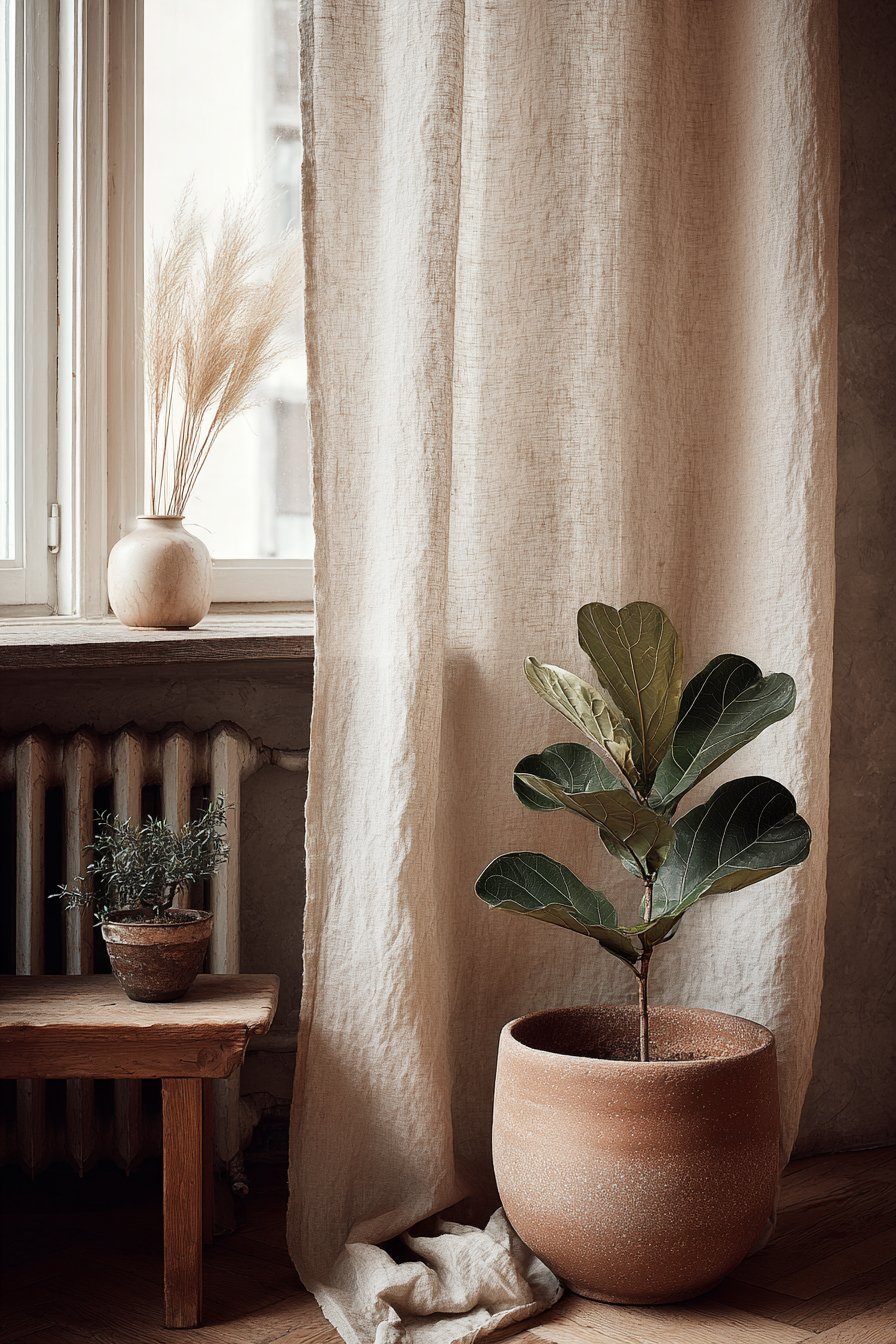
Scandinavian design leans toward lush, trailing plants like pothos, ivy, and monstera. These add texture and softness. Combining one or two sculptural specimens with trailing greenery creates a natural layering effect. Use simple ceramic or clay planters in muted tones to keep the focus on the plants themselves rather than the containers.
- Choose two to four plants per room rather than overwhelming with greenery
- Select plants with sculptural quality — bonsai, snake plant, or ZZ plant
- Use muted ceramic or terracotta pots to keep the palette cohesive
- Place a single statement plant in an empty corner as a living sculpture
- Incorporate cut branches — eucalyptus, cherry blossom, or dried pampas grass
- Keep plants healthy and well-maintained — dead leaves disrupt the calm
9. Japandi in the Bedroom
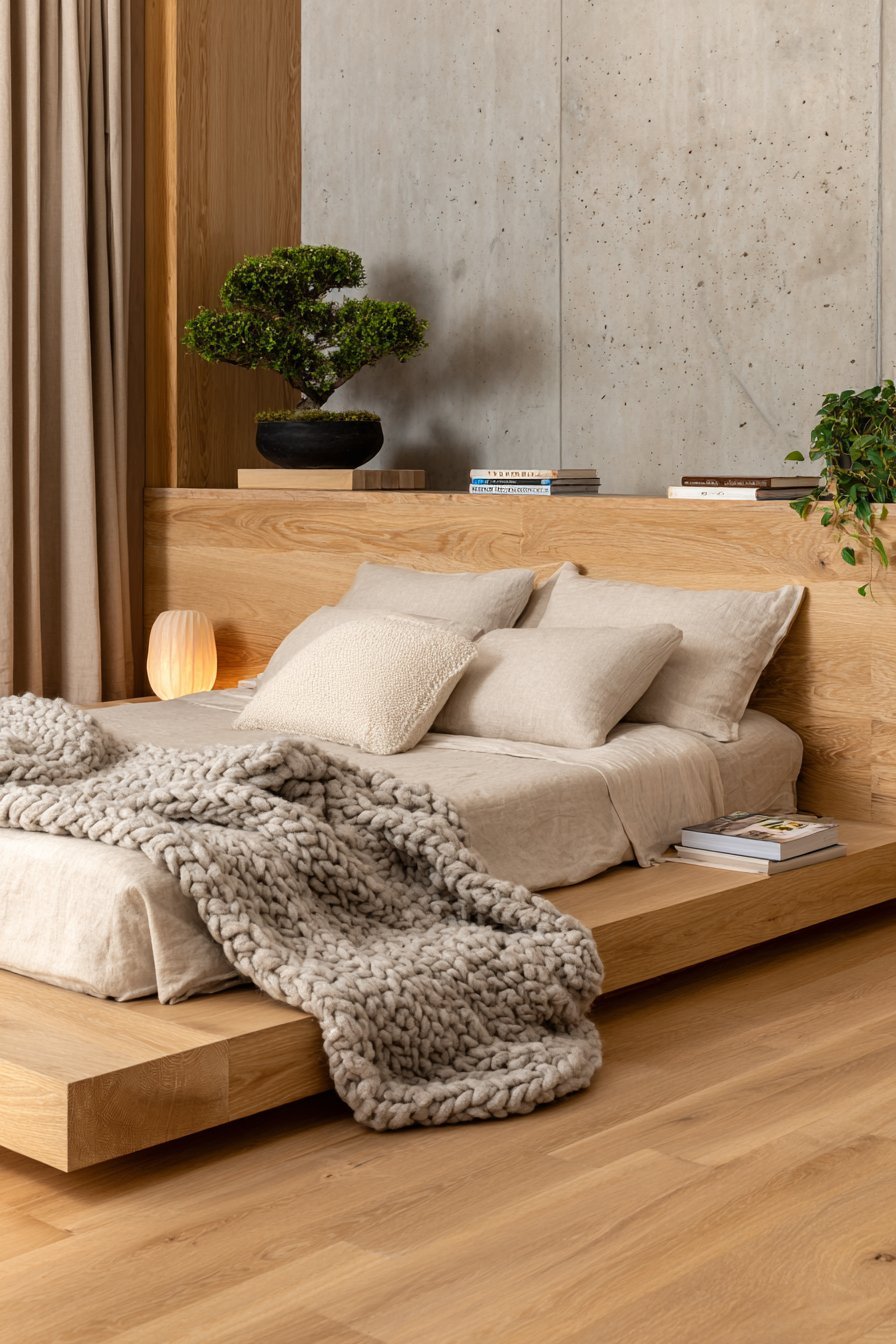
The bedroom is where Japandi design truly shines. This is a space dedicated to rest and restoration, and the Japandi philosophy of calm, purposeful simplicity is perfectly aligned with that purpose. A Japandi bedroom feels like a sanctuary — hushed, beautiful, and completely free from distraction.
Start with a low platform bed in natural wood. Keep bedding in neutral linen or organic cotton — undyed or softly toned in warm whites and grays. Layer a chunky knit throw at the foot of the bed for tactile warmth. Bedside tables should be simple and uncluttered — one lamp, one book, and perhaps a small ceramic dish is all you need.
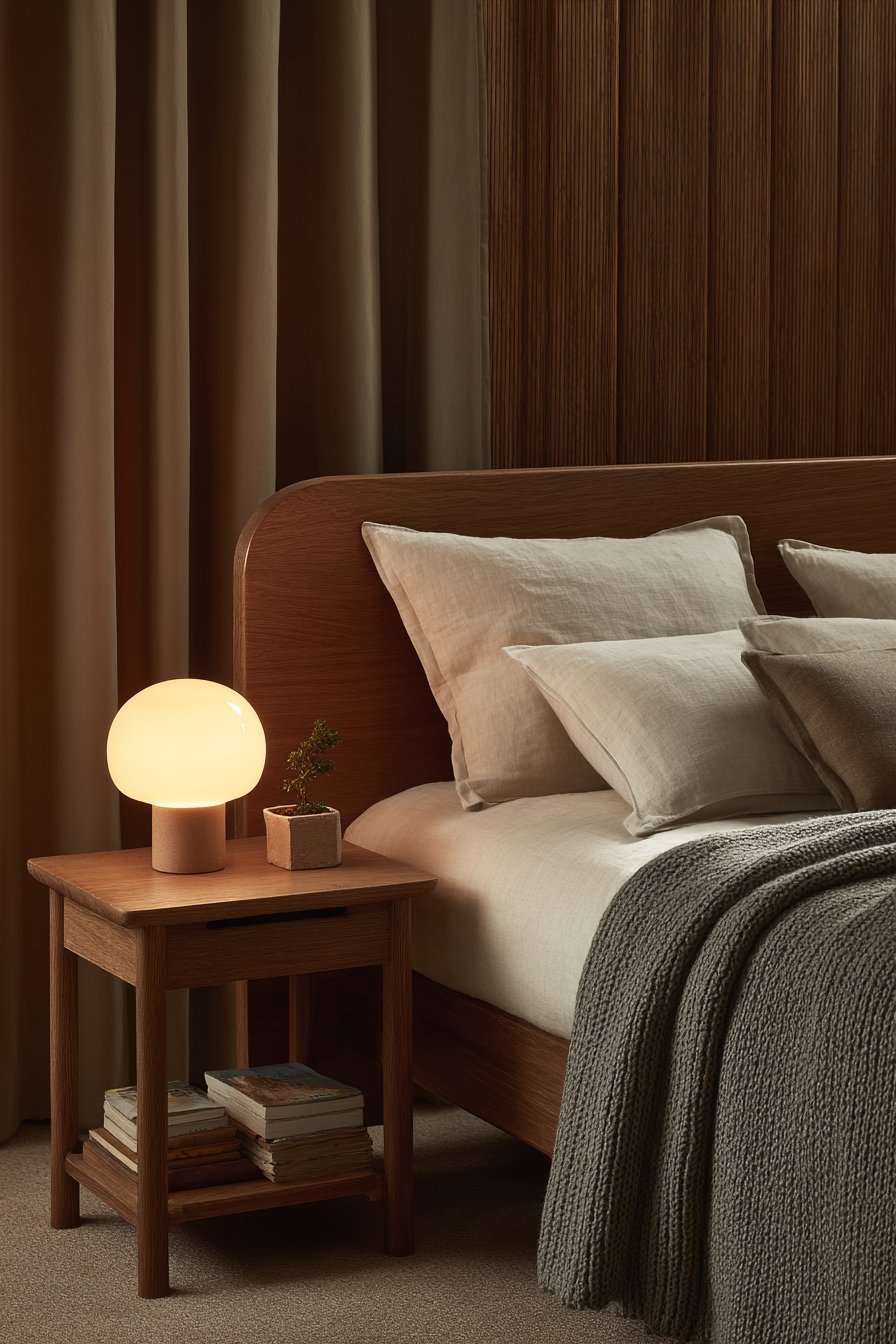
Blackout linen curtains in a muted tone complete the bedroom cocoon. Avoid mirrors that dominate the room — in Japandi, mirrors are used sparingly and placed thoughtfully. The overall effect should be one of profound calm. When you walk into a Japandi bedroom, the room itself should feel like a deep exhale.
- Choose a low platform bed in solid wood for the authentic Japandi look
- Dress the bed in undyed linen or organic cotton in warm neutral tones
- Keep bedside surfaces clear — one lamp, one book, minimal objects
- Use blackout linen curtains for both privacy and morning calm
- Avoid overhead lighting — use warm bedside lamps instead
- Remove all technology from the bedroom to preserve the restorative atmosphere
10. Japandi in the Living Room
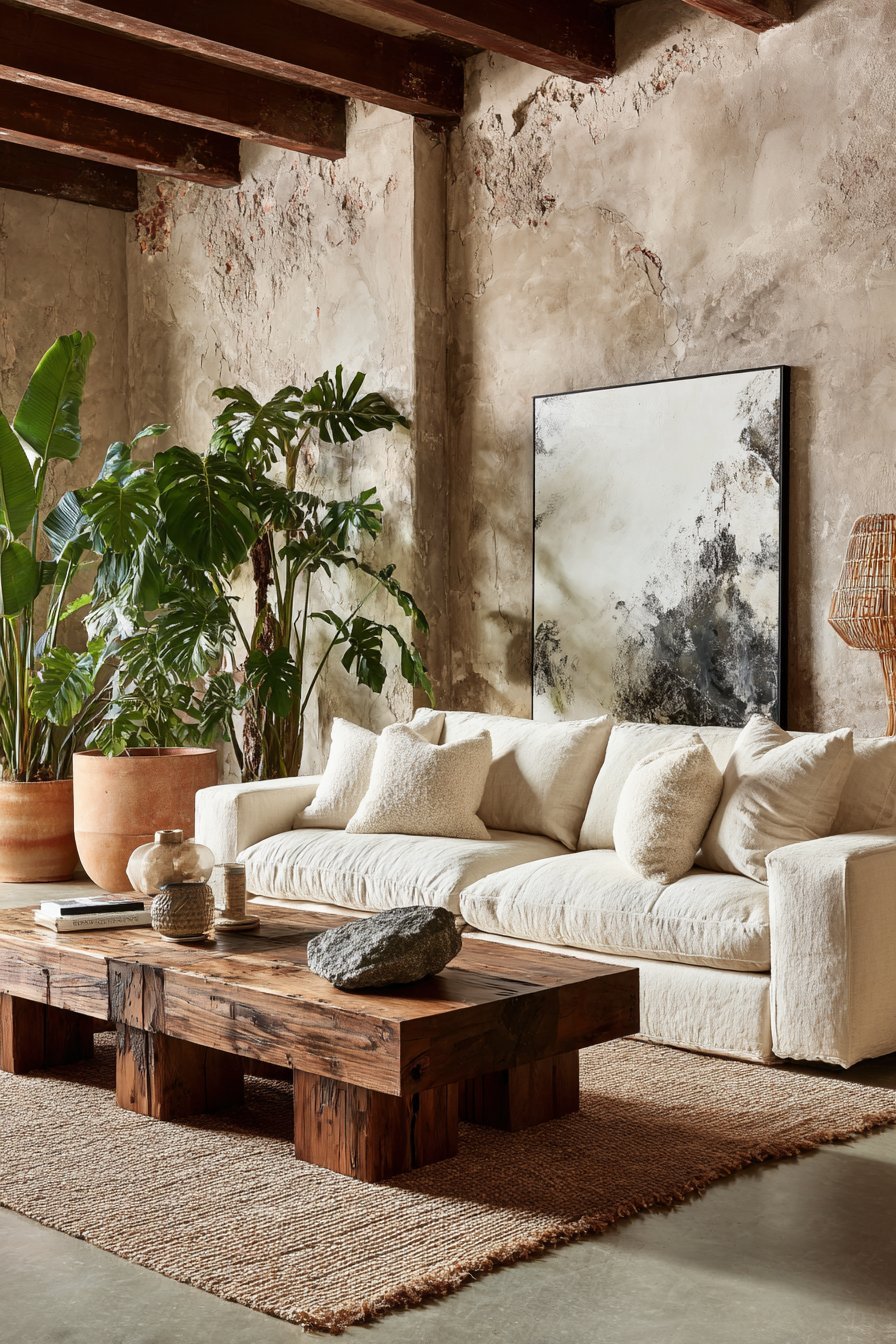
The living room is where Japandi’s balance of comfort and restraint is most visible. Warm minimalism is the guiding principle here. The room should feel inviting and lived-in, not sparse and cold. Achieve this through thoughtful layering of natural materials, soft textiles, and carefully chosen furniture.
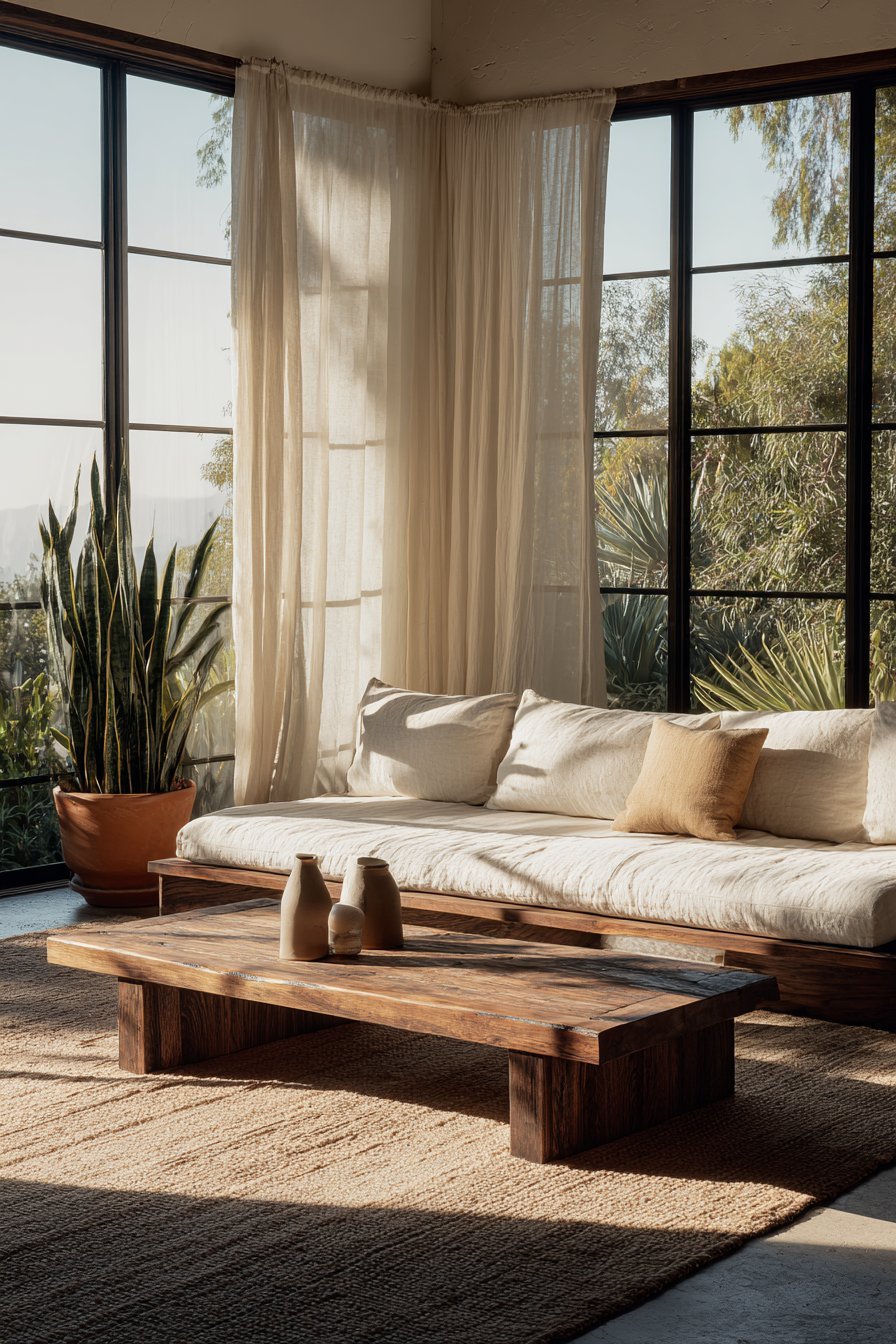
A neutral linen sofa is the perfect Japandi centerpiece. Pair it with a low wooden coffee table, a woven jute rug, and one or two ceramic or stone decorative objects. Add a floor lamp in a warm wood or matte metal finish. The result is a room that is relaxed and refined in equal measure.
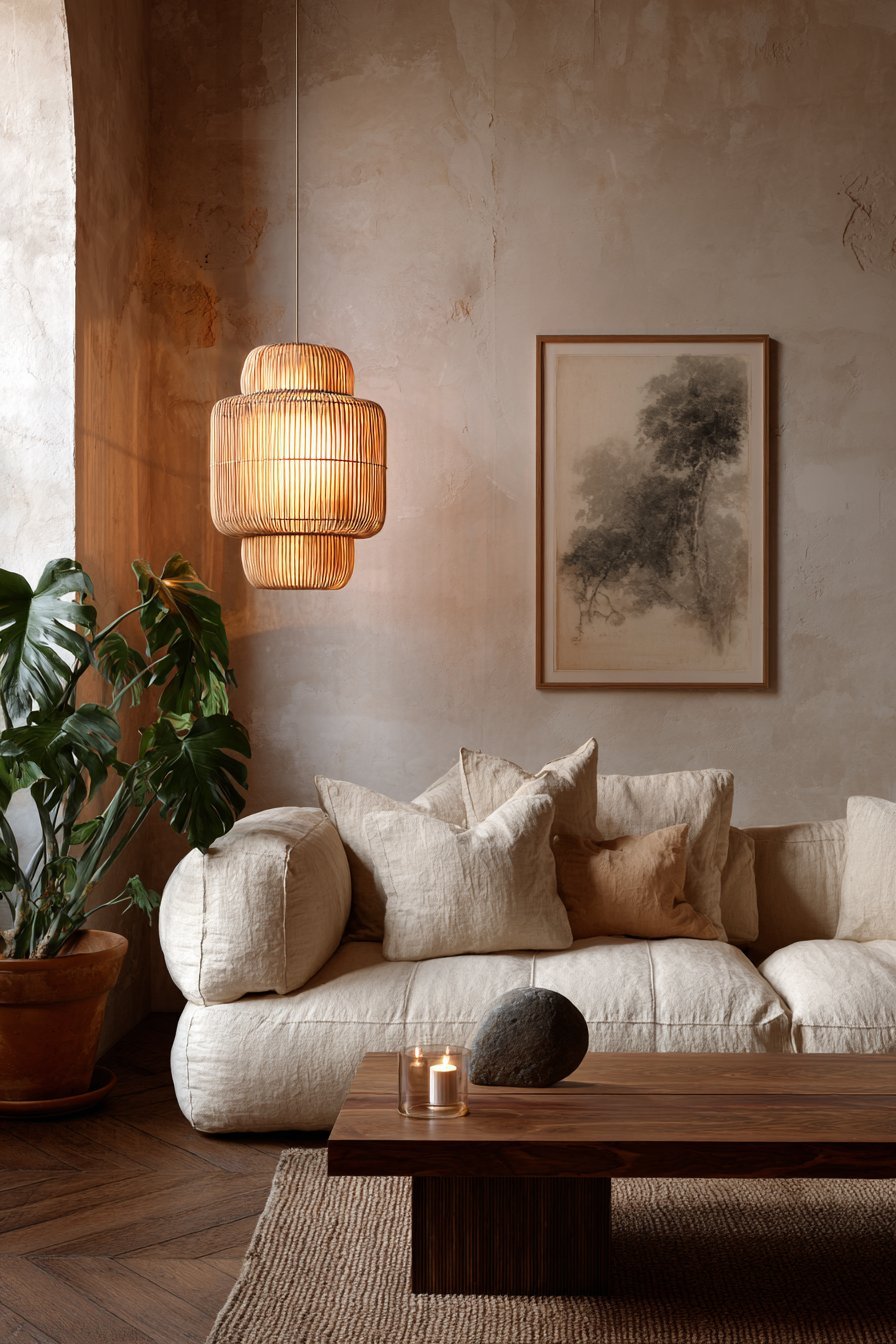
Wall art in a Japandi living room should be minimal and meaningful. A single large-format black and white photograph, a simple ink painting, or a handcrafted woven textile speaks louder than a gallery wall. Leave significant wall space empty. Let negative space breathe. The restraint is the statement.
- Anchor the room with a neutral linen or cotton sofa in a warm tone
- Use a jute or wool rug in a muted tone to define the seating area
- Select one piece of meaningful wall art rather than a gallery arrangement
- Introduce one ceramic or stone object per surface as a focal point
- Keep the coffee table surface 70% clear at all times
- Use a single floor lamp to create warm, atmospheric evening lighting
11. Japandi in the Kitchen
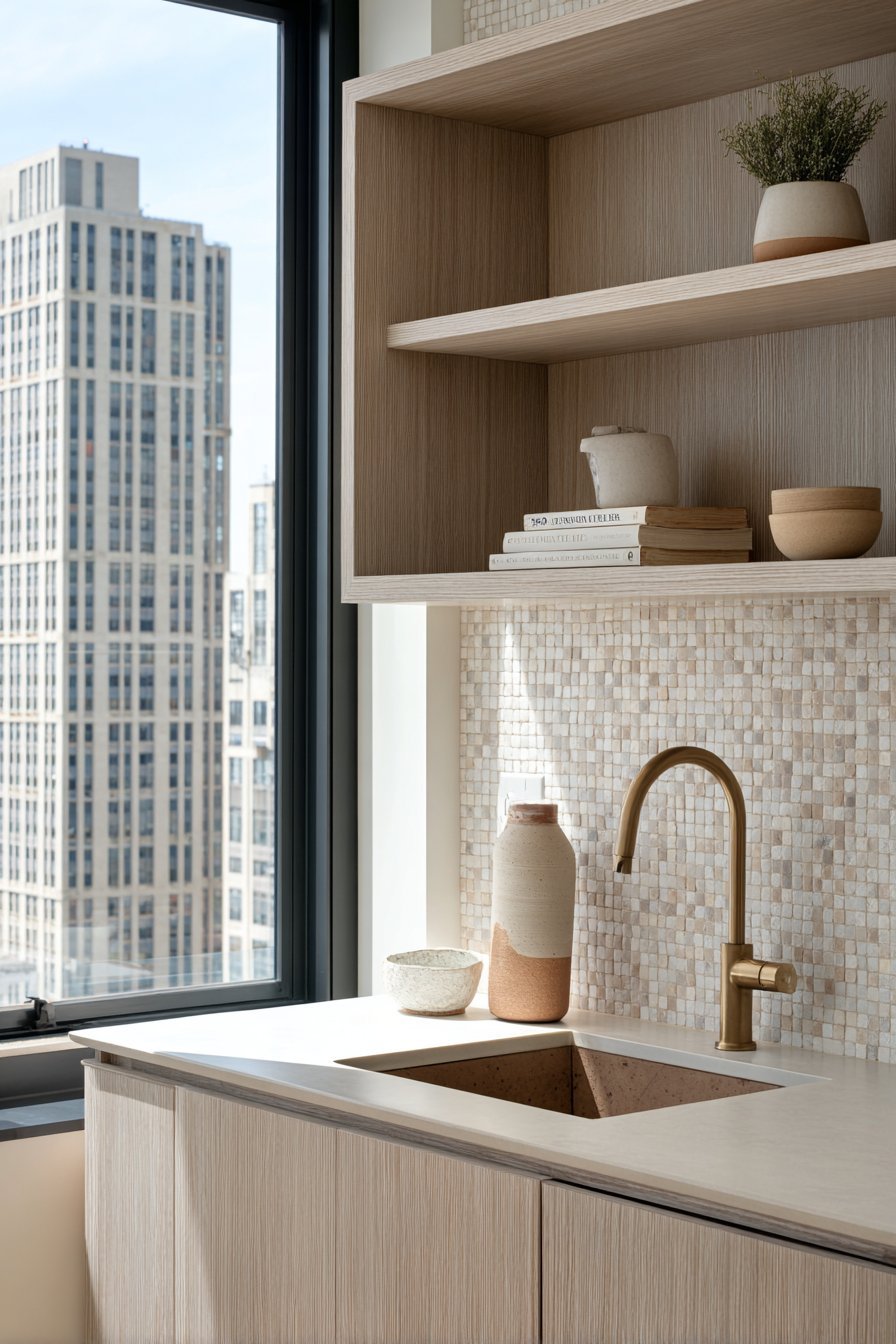
The Japandi kitchen is a study in functional beauty. Cabinets are handleless or fitted with minimal hardware in matte black or brushed brass. Surfaces are kept completely clear. The kitchen should feel like a calm workspace — one where cooking is a meditative, pleasurable act rather than a chaotic scramble.
Natural materials dominate. Timber cabinetry in light oak or walnut, stone or concrete countertops, and handmade ceramic tiles all contribute to the authentic Japandi kitchen aesthetic. Open shelving, if used, should be curated sparingly — a few beautiful ceramic bowls, a single vase, and perhaps a small plant. Nothing more.
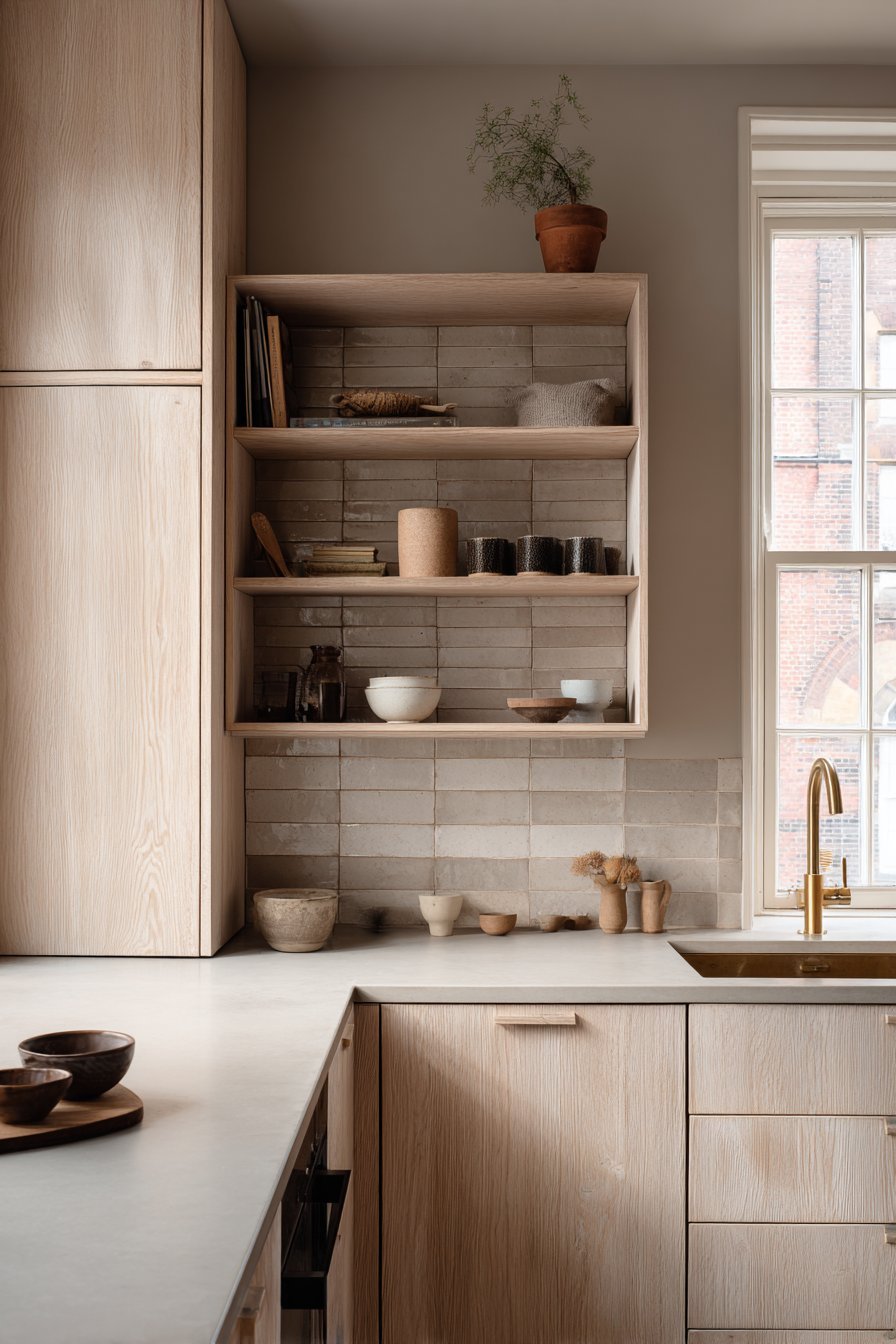
Appliances should be concealed or integrated wherever possible. A Japandi kitchen does not showcase the refrigerator or the microwave. These are hidden behind cabinetry or tucked away. What is revealed is the beauty of the materials, the quality of the light, and the craftsmanship of every surface.
- Choose handleless cabinetry in natural wood or matte painted finishes
- Install a stone or concrete countertop for authentic material richness
- Keep countertops completely clear — store everything behind closed doors
- Use handmade ceramic tiles as a backsplash for artisan texture
- Select integrated or concealed appliances wherever budget allows
- Display only one or two curated objects on open shelving
12. Common Mistakes to Avoid
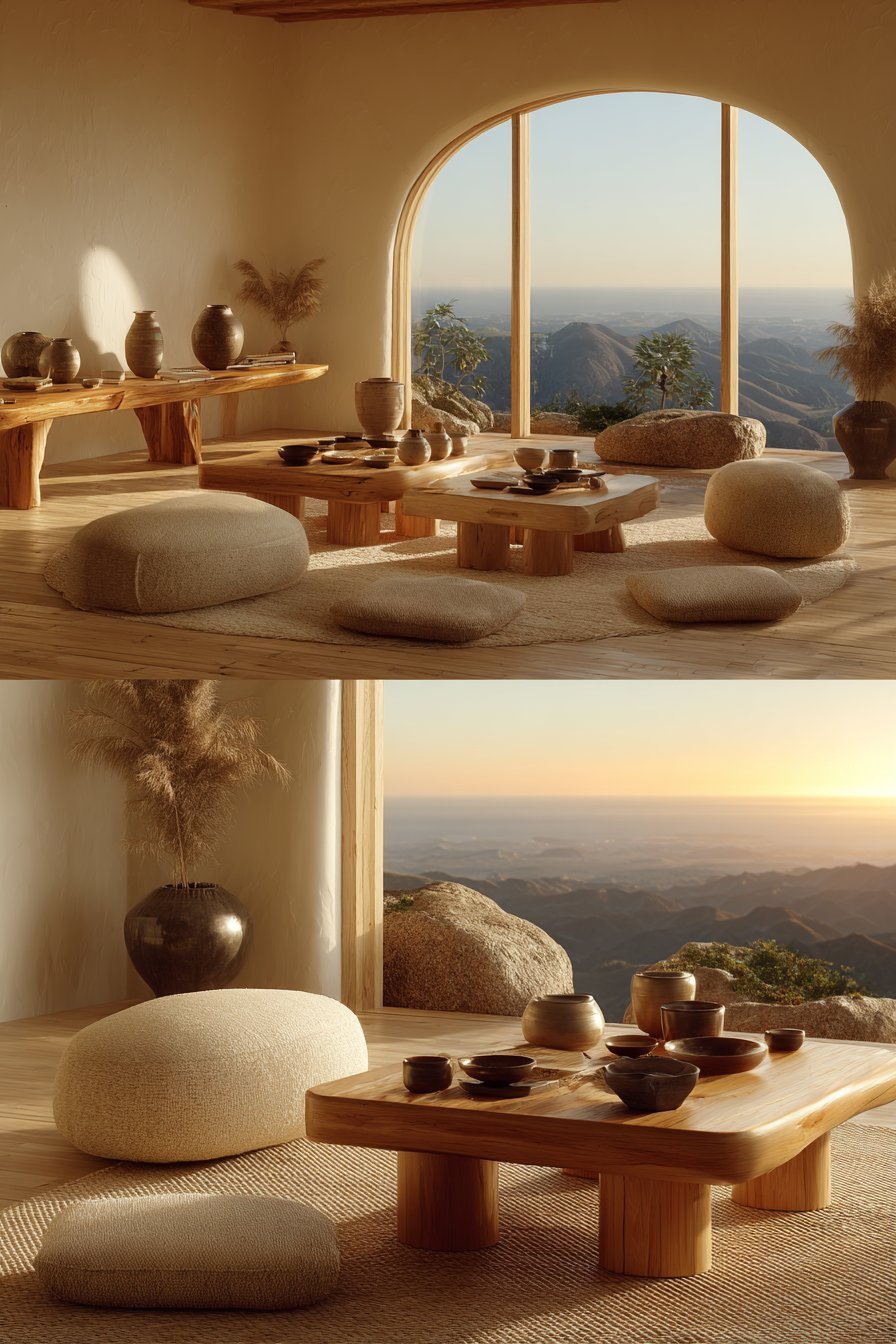
Even with the best intentions, Japandi can go wrong. The most common mistake is confusing minimalism with emptiness. A room with nothing in it is not Japandi — it is just bare. Japandi spaces are warm and curated. They have personality, texture, and soul. The goal is purposeful restraint, not deprivation.
Another frequent error is choosing the wrong materials. Glossy, synthetic surfaces have no place in a Japandi interior. Cheap laminate, plastic, and highly polished furniture undermine the entire aesthetic. If the budget is limited, invest in one or two quality natural pieces and supplement with thrifted or vintage finds. Authenticity matters more than a full renovation.
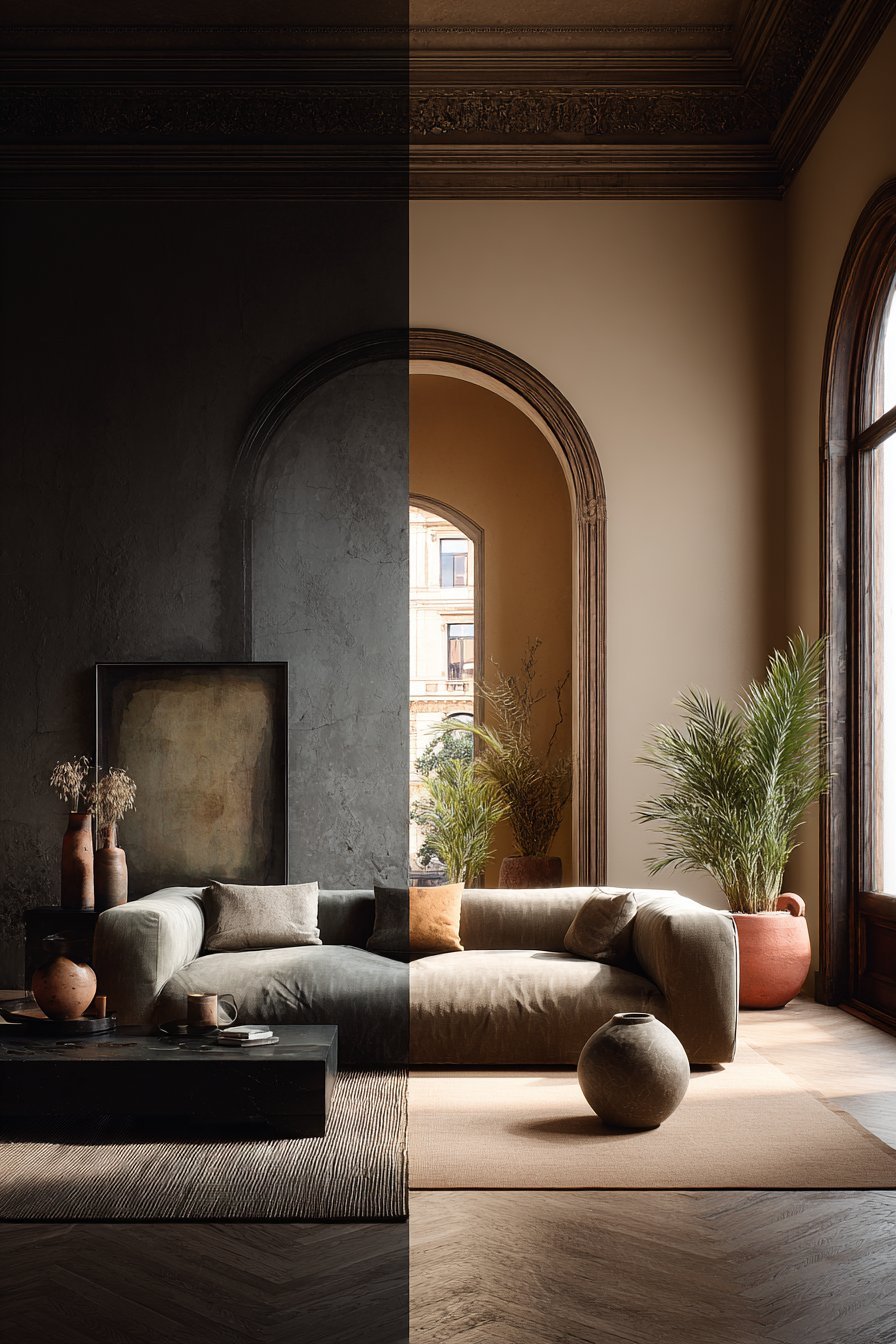
Over-decorating is also a trap. People discover Japandi and then go on a shopping spree for wabi-sabi ceramics and linen cushions. The result is a cluttered minimalist contradiction. Remember — Japandi is about editing down, not adding more. Buy less. Choose better. Let the space breathe.
- Avoid glossy, synthetic materials — they destroy the natural warmth
- Do not mistake bare rooms for Japandi — warmth and texture are essential
- Resist the urge to buy many new Japandi-labeled products at once
- Edit existing items before purchasing anything new
- Keep color temperature consistent — mix warm and cool tones carefully
- Revisit the space after styling and remove the last two things you added
Conclusion
Japandi is more than a design trend — it is a philosophy of living. It asks you to slow down, choose carefully, and surround yourself only with what is beautiful, functional, and meaningful. The result is a home that genuinely supports your wellbeing. It is calm without being cold, minimal without being sparse, and simple without being boring.
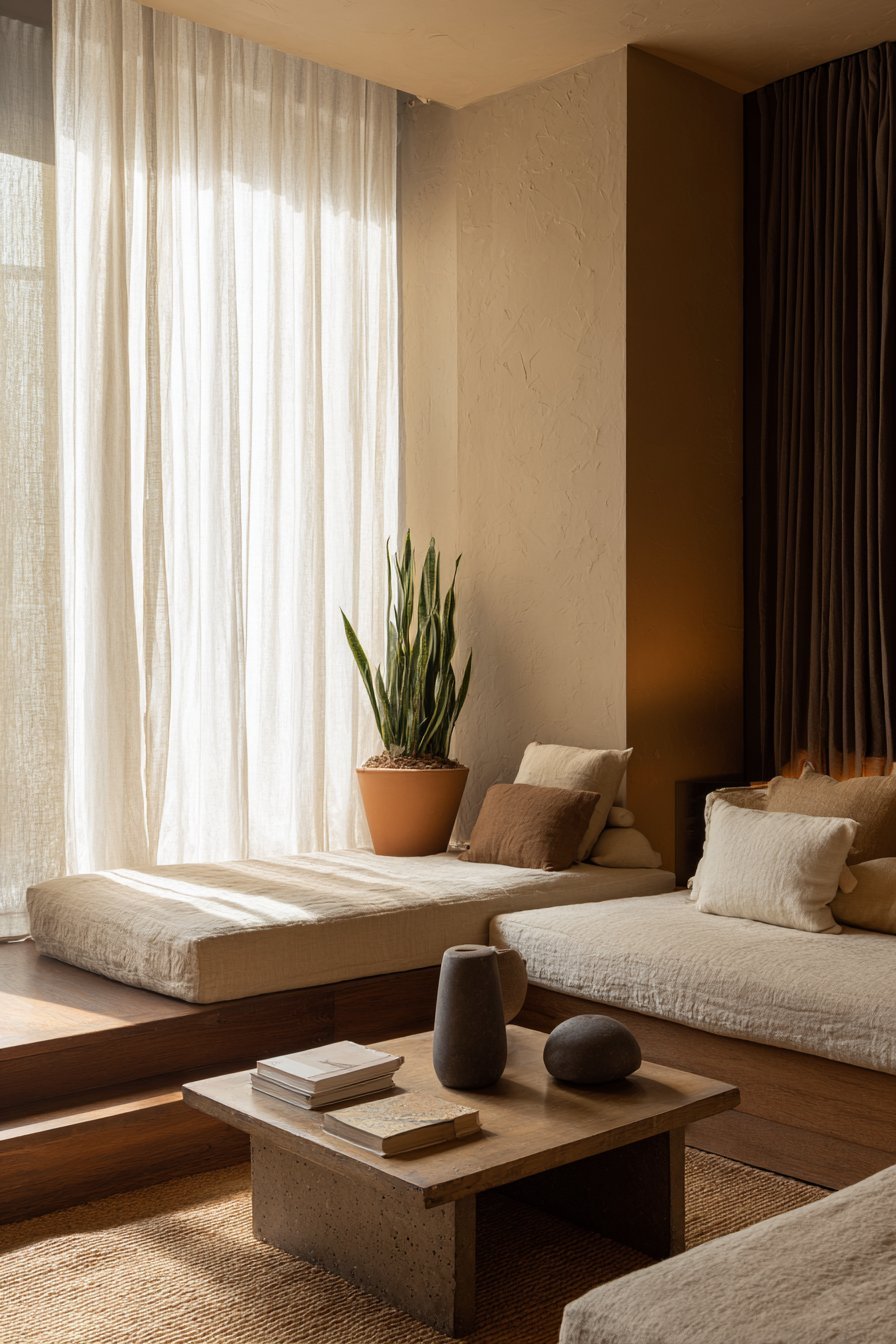
Whether you begin with a single room or reimagine your entire home, the principles of Japandi are accessible to anyone. Start small — clear a surface, add a natural texture, choose a muted palette. Each small change moves you closer to a space that feels like a true sanctuary. Let your home be a place of peace, craft, and quiet joy.
