

Blending the old with the new is one of the most exciting design challenges a homeowner can take on. When done right, mixing retro and modern wall decor creates a space that feels layered, personal, and visually rich. It tells a story — one that honors the past while embracing the present. This is the essence of timeless interior design.
Thoughtful curation is the secret behind successful retro-modern interiors. Too much nostalgia and a room can feel dated. Too much sleek minimalism and it loses warmth. The magic happens in the balance — where a vintage poster sits beside a contemporary canvas, or where a mid-century sunburst clock hangs above a clean-lined modern shelf. Strategic contrast is what makes these spaces so compelling.
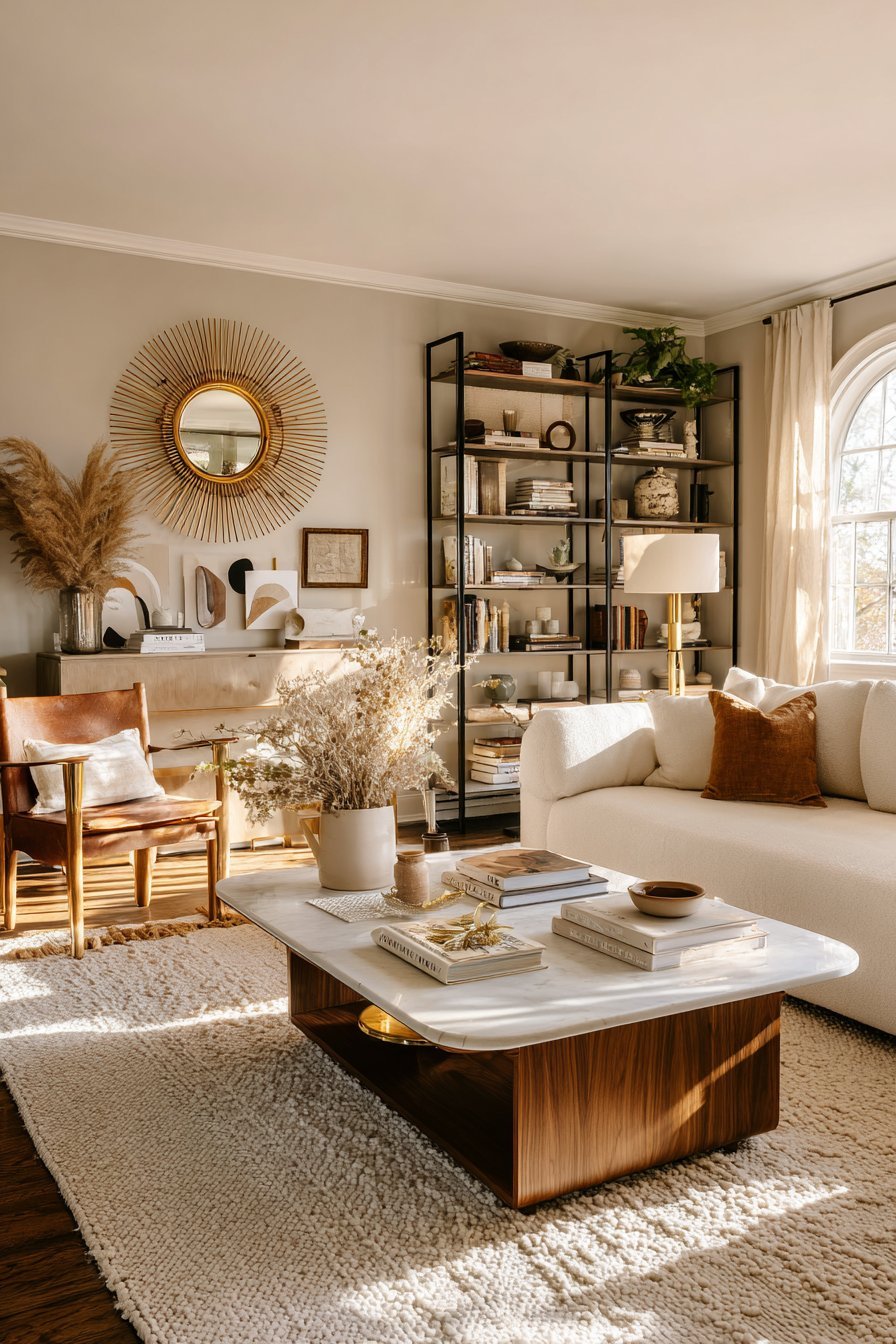
This article walks you through the best techniques for combining retro and modern wall decor with confidence. Whether you’re drawn to 70s boho aesthetics, 50s atomic-age graphics, or 80s Memphis design, these tips will help you create a wall that feels intentional, curated, and utterly unique. The result? A home that reflects your individual personality.
1. Understand the Design Eras You’re Working With
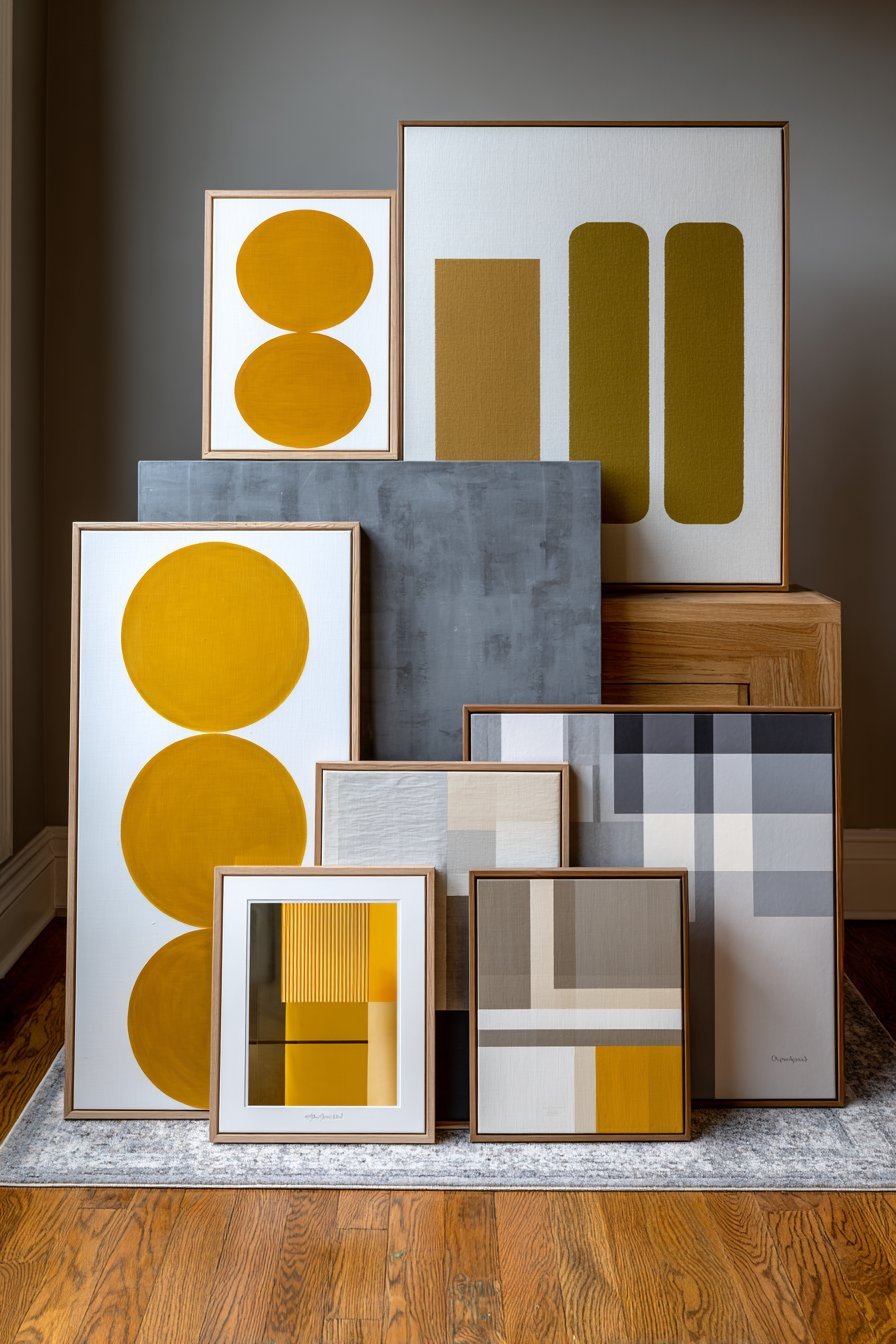
Before hanging anything on your walls, it pays to understand the visual language of different retro eras. The mid-century modern period (1940s–1960s) favored clean lines, organic shapes, and earthy tones. The 70s brought in warm browns, macramé, and nature-inspired motifs. Knowing the vocabulary of each era helps you make confident choices.
Each era has its own color palette and typography. Mid-century pieces often feature mustard yellows, avocado greens, and teak wood tones. Art Deco works from the 1920s–30s lean on gold, black, and geometric precision. When you pair these with modern decor, you’re essentially speaking two design languages — and fluency in both makes the conversation seamless.
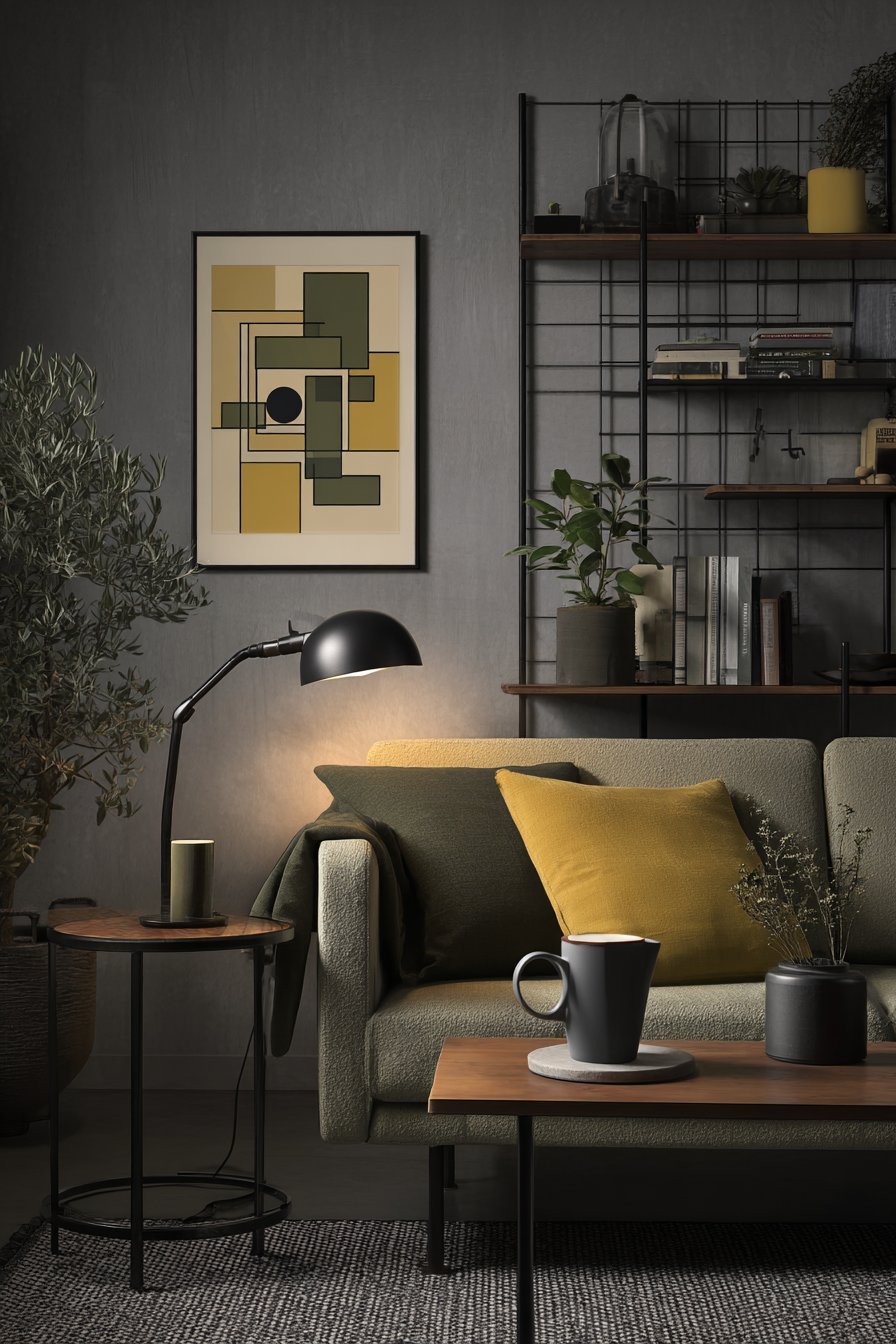
Modern decor, by contrast, tends toward neutral foundations — whites, grays, charcoals, and matte blacks. It embraces negative space and minimalism. Understanding this contrast helps you identify where the two styles can complement each other rather than compete.
- Research the key characteristics of your chosen retro era
- Build a mood board combining vintage and modern pieces before buying
- Note the dominant colors, materials, and shapes of each style
- Identify what elements they share (e.g., geometric forms appear in both Art Deco and modern design)
- Use design apps or Pinterest boards to visualize combinations
- Visit vintage markets and modern home stores to compare pieces in person
2. Start With a Neutral Base on Your Walls
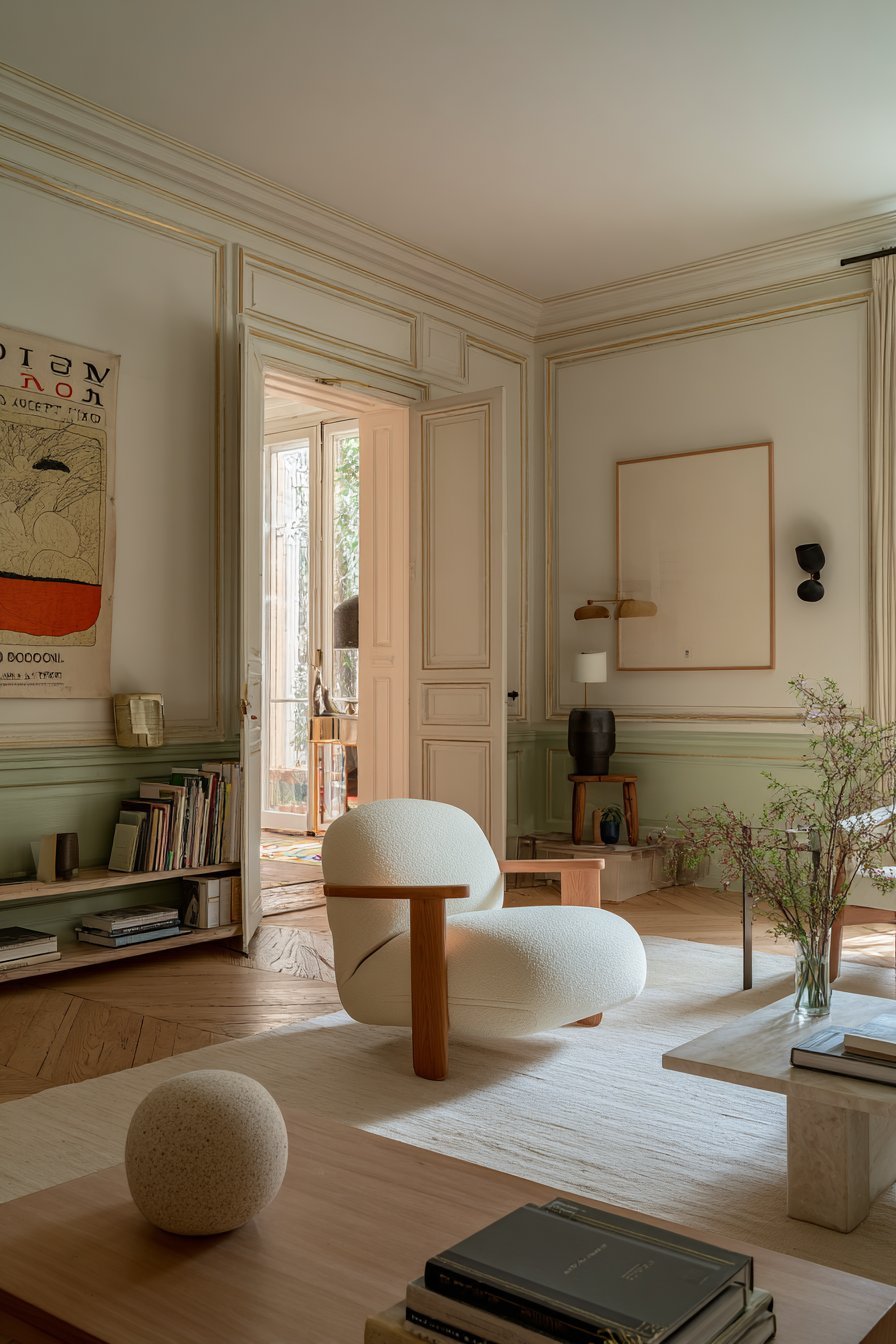
The wall color itself is your canvas. Choosing a neutral backdrop allows both retro and modern pieces to shine without competing. Shades like warm white, soft greige, or light gray give every art piece — regardless of era — the space to breathe and be appreciated.
Neutral walls also provide visual cohesion. When you have eclectic pieces spanning decades, a calm background acts as the unifying thread. It prevents the space from feeling chaotic or overwhelming. Think of it as a gallery wall approach — museums rarely paint their walls in bold colors for exactly this reason.
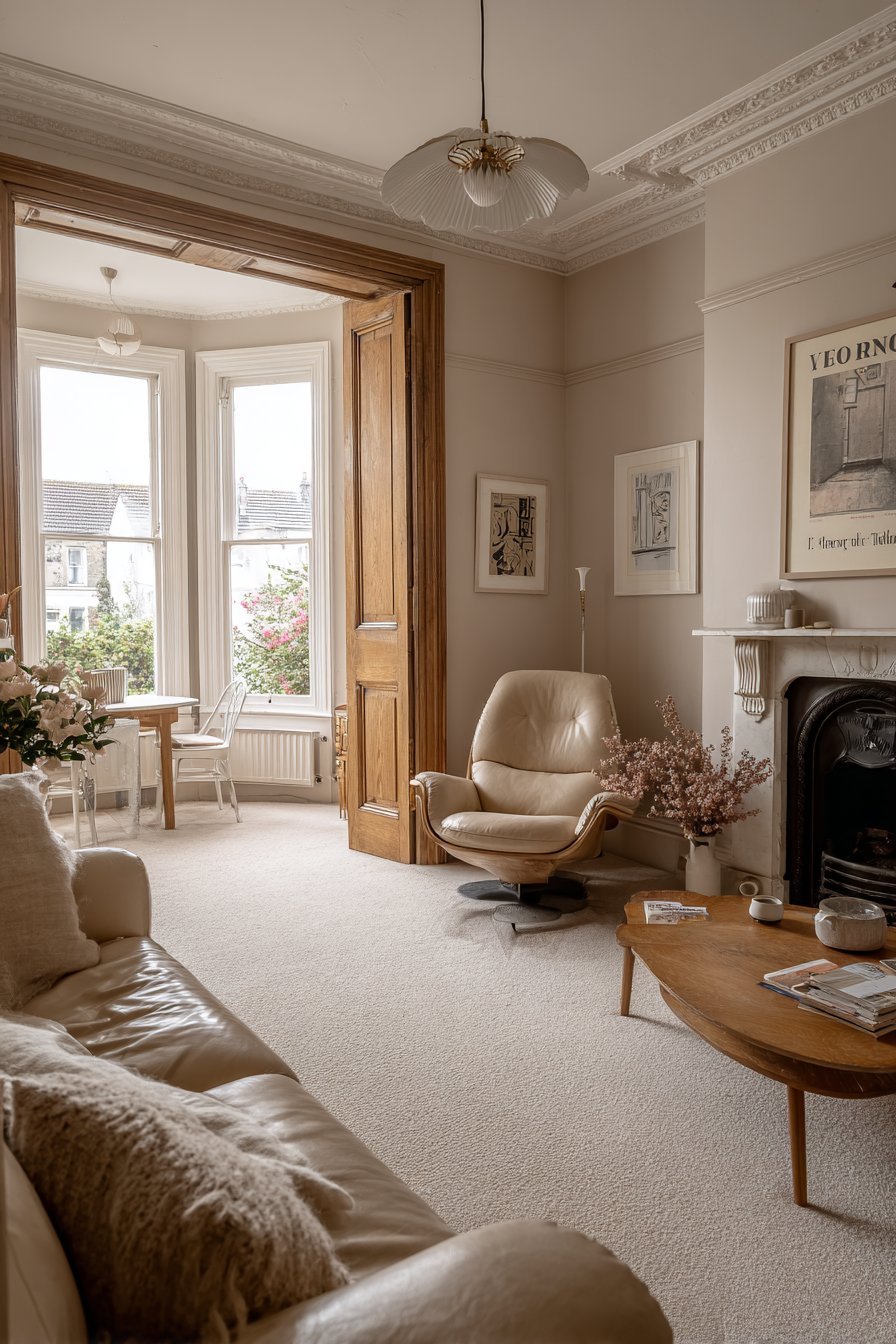
That said, don’t be afraid of muted accent walls. A soft sage, dusty blush, or pale terracotta can anchor a retro-modern vignette beautifully. These tones feel vintage-adjacent without shouting nostalgia, allowing modern pieces to hold their own alongside retro finds.
- Choose warm whites or greiges as your primary wall color
- Test paint samples in natural and artificial light before committing
- Consider a muted accent wall to anchor a key display area
- Avoid bold, saturated wall colors that overpower eclectic art
- Use eggshell or satin finishes for a contemporary, clean look
- Layer wall textures (plaster effects, limewash) to add depth without color chaos
3. Create a Unifying Color Story
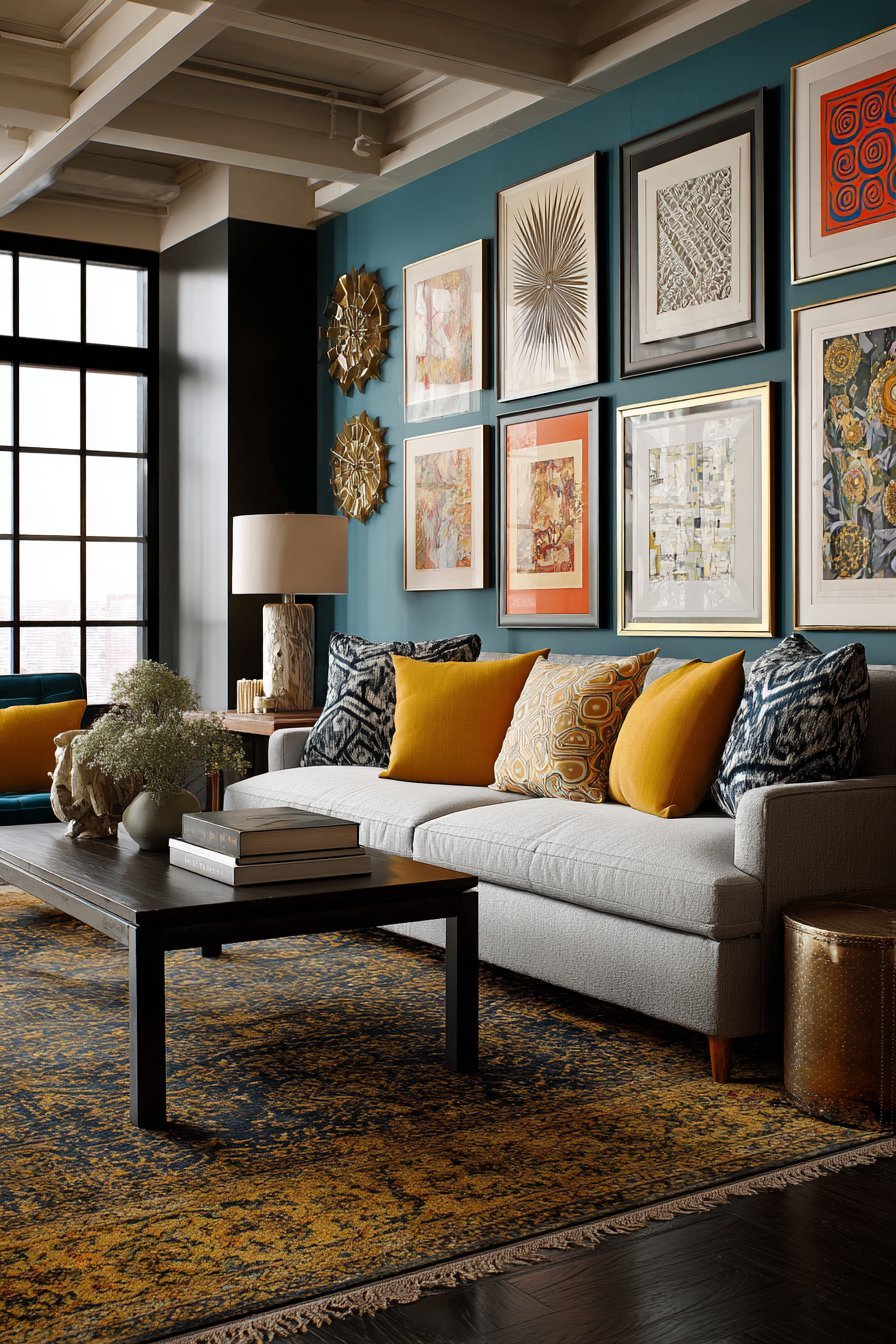
Even when mixing wildly different styles, color consistency is the glue that holds everything together. Pick two or three colors that appear in both your retro and modern pieces. These shared hues create a visual thread that makes the combination feel deliberate rather than accidental.
For example, if you have a 1960s psychedelic print with teal and gold tones, look for a modern abstract canvas that echoes those same colors. The repetition of color tricks the eye into seeing harmony even when the styles are vastly different. This is one of the most powerful tools in an interior designer’s toolkit.
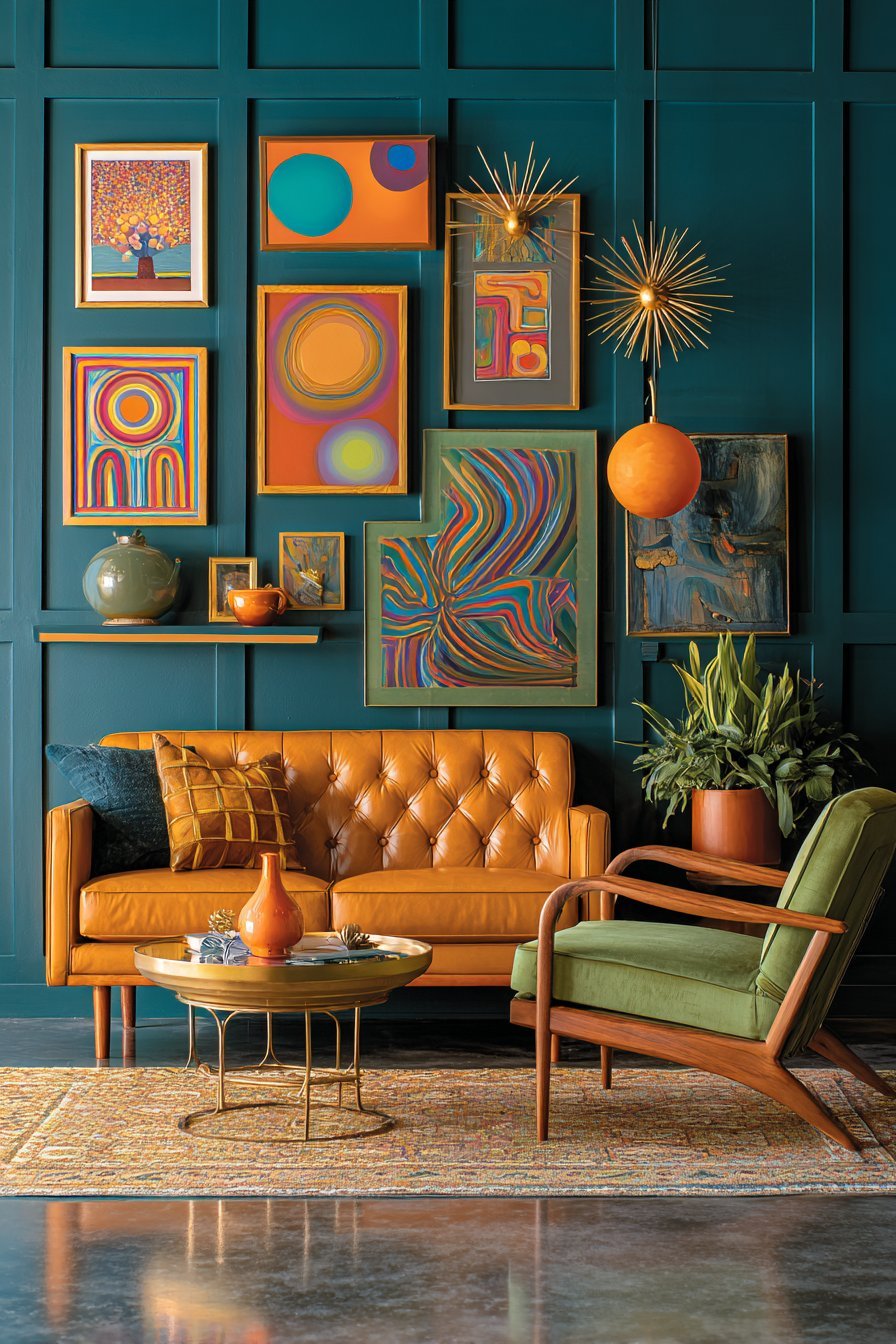
Consider using the 60-30-10 color rule. Let 60% of your wall decor feature your dominant color, 30% a secondary tone, and 10% an accent. This applies whether you’re working with frames, art, wall sculptures, or textiles. It creates balance that feels both cohesive and exciting.
- Identify 2-3 colors that appear across both retro and modern pieces
- Use color as the bridge between different eras and styles
- Apply the 60-30-10 rule to distribute color proportionally
- Pull accent colors from vintage pieces into modern accessories
- Use colored frames to visually connect unrelated art pieces
- Avoid introducing too many new colors outside your chosen palette
4. Master the Gallery Wall with Mixed Frames
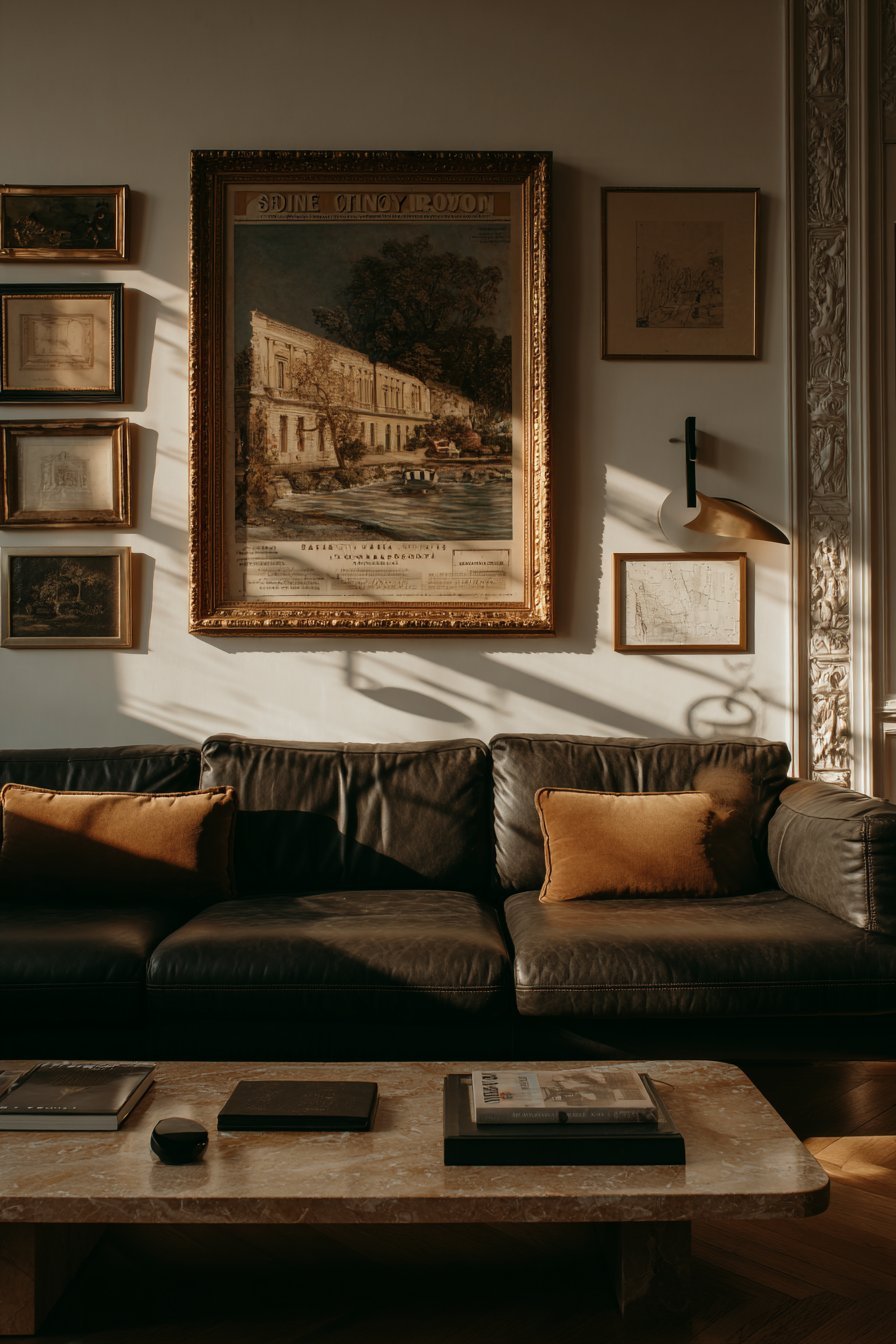
A well-curated gallery wall is the ultimate playground for retro-modern mixing. The key is to blend frame styles thoughtfully — pairing ornate vintage frames with sleek modern ones in a way that feels composed, not cluttered. The arrangement itself becomes a piece of art.
Mixing frame materials adds dimension and richness. Think dark walnut wood frames beside matte black metal ones, or gilded vintage frames next to simple white modern frames. The contrast in material textures creates visual interest without relying on the art alone to do all the heavy lifting.
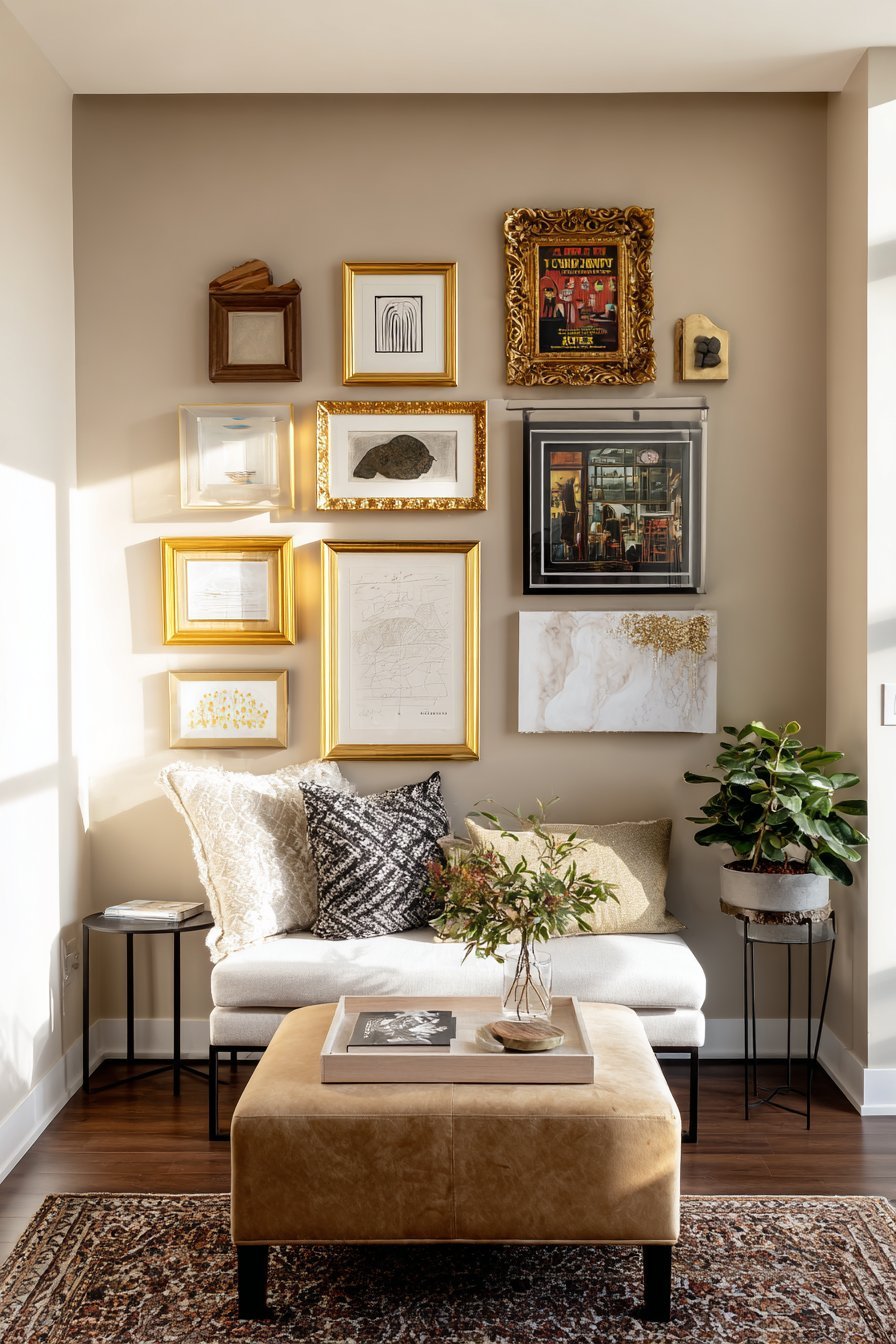
When arranging a gallery wall, use the anchor method. Place your largest, most statement piece first — whether that’s a large vintage movie poster or an oversized modern print. Build outward from there, balancing visual weight on each side. This prevents the display from feeling top-heavy or lopsided.
- Mix 2-3 frame materials (wood, metal, acrylic, gilded)
- Combine ornate vintage frames with minimal modern ones intentionally
- Use the anchor method — start with your largest piece and build outward
- Maintain consistent spacing (2-3 inches between frames) for a polished look
- Include 3D elements like small wall sculptures or decorative objects
- Lay the arrangement on the floor first before committing to wall placement
5. Use Typography and Vintage Signage Strategically
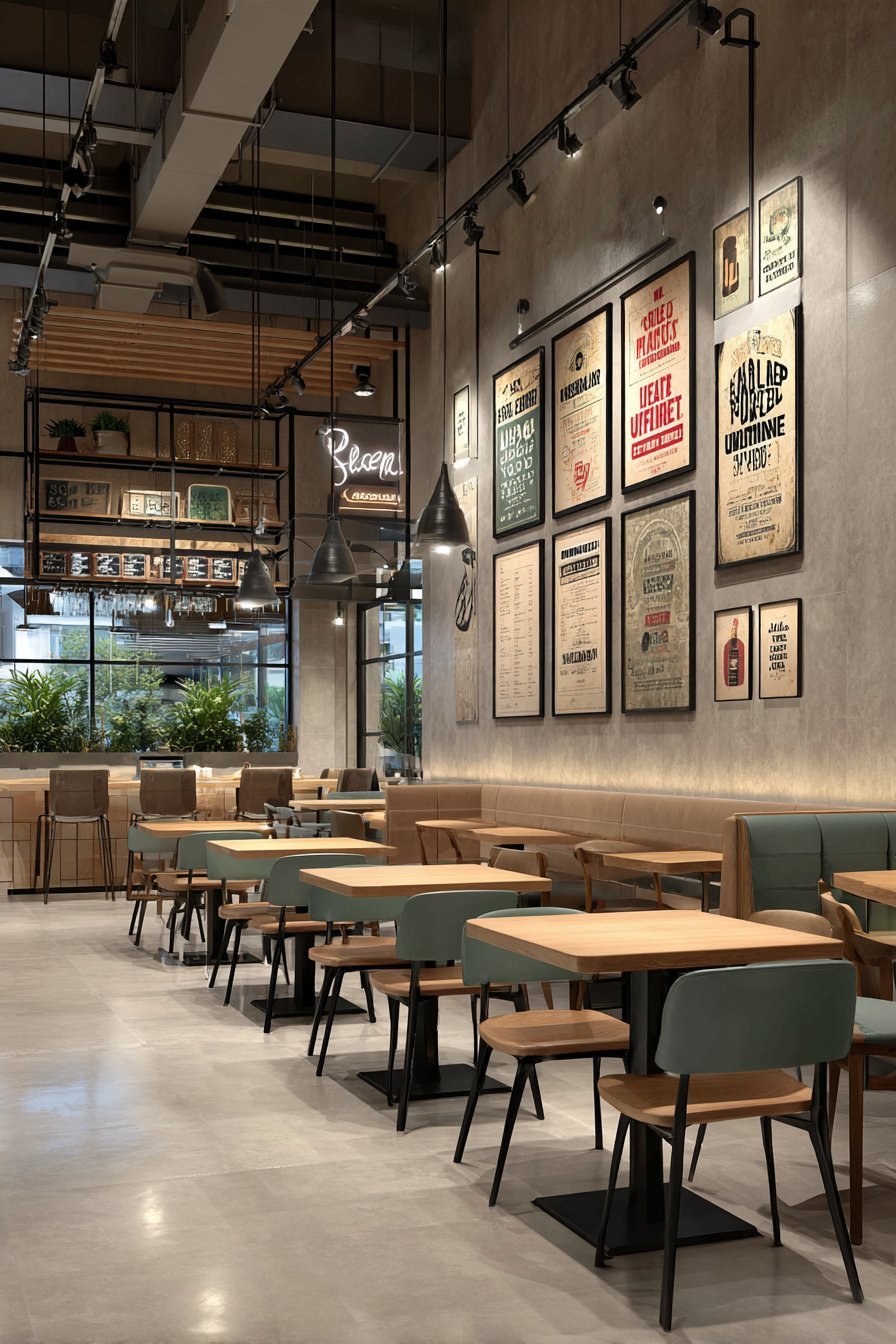
Vintage typography is one of the most versatile retro elements you can introduce to a modern wall. Old advertising signs, retro letterpress prints, neon-style wall art, and mid-century typographic posters all add character and a sense of history to contemporary spaces.
The trick is scale and placement. A large vintage sign or typographic print can serve as an anchor piece on a modern feature wall. Surround it with minimal modern art and clean-lined shelves, and the vintage piece becomes the star rather than a chaotic addition. It commands attention without overwhelming the space.
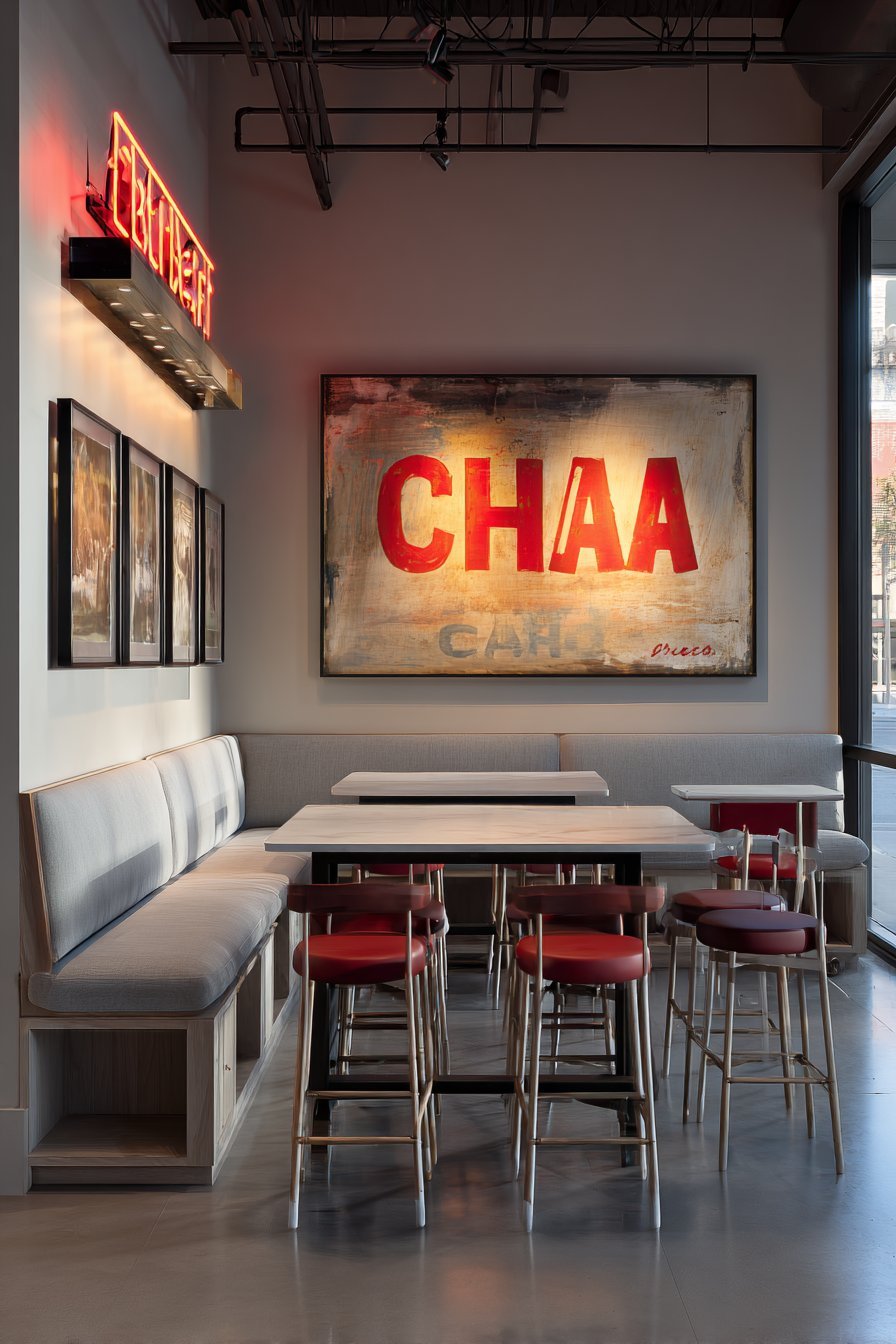
Modern interiors often lack visual storytelling. Retro signage fills that gap beautifully. Whether it’s a vintage French café sign, a classic American diner graphic, or a retro travel poster, these pieces inject personality and narrative into spaces that might otherwise feel impersonal or sterile.
- Choose retro typography that speaks to your personal interests or travel memories
- Use large-scale vintage prints as anchor pieces in modern rooms
- Balance busy typographic pieces with clean, simple modern art nearby
- Consider neon-inspired signs for a bold retro-modern statement
- Frame vintage typography in modern frames to bridge both aesthetics
- Limit typography pieces to 1-2 per wall to avoid visual noise
6. Incorporate Retro Mirrors for Depth and Style
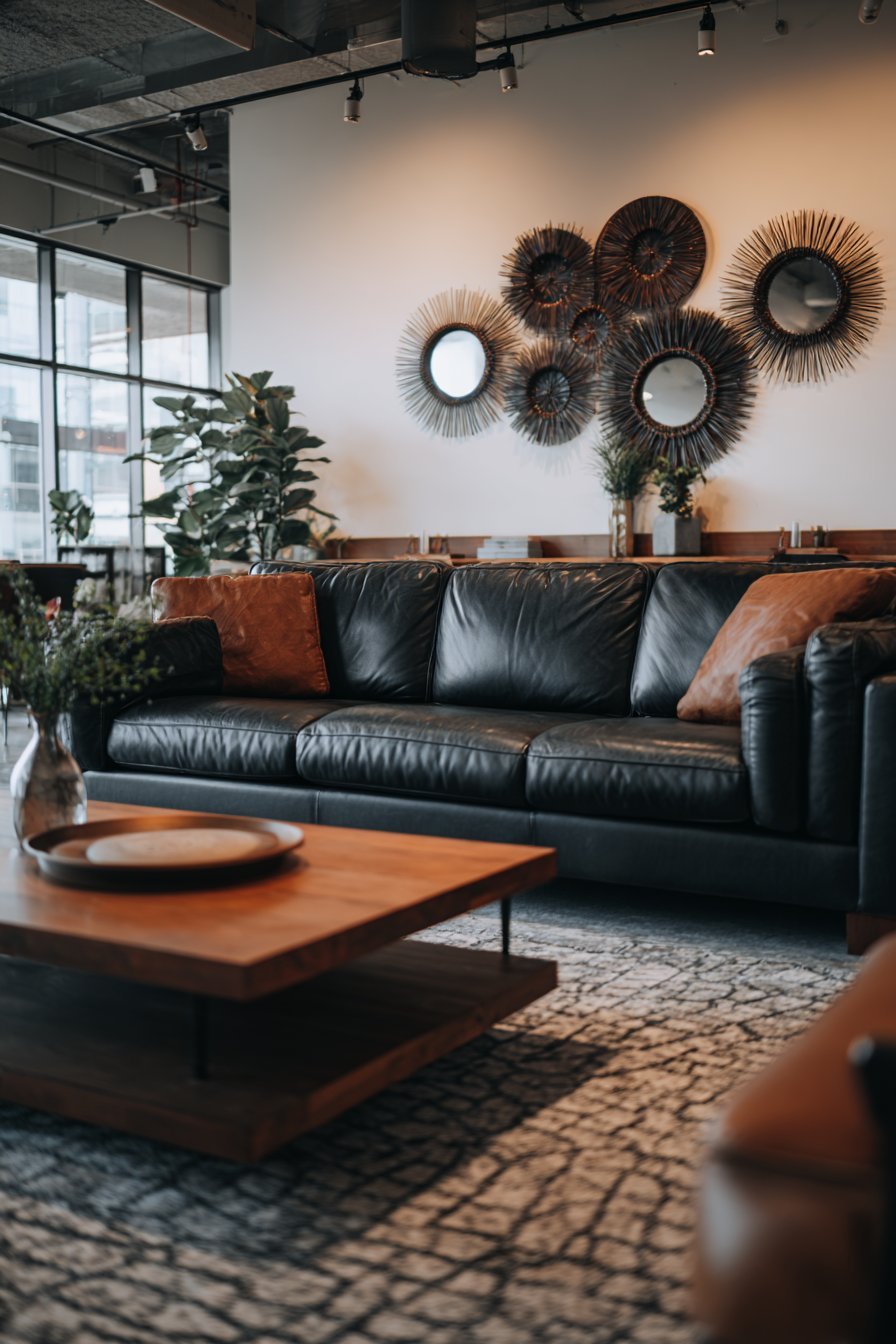
Mirrors are underutilized wall decor elements that work brilliantly in retro-modern interiors. A vintage sunburst mirror, a starburst design from the 1960s, or an ornate Art Deco framed mirror adds instant character. Paired with a modern wall, these pieces become sculptural focal points.
Mirrors also serve a functional design purpose — they reflect light and visually expand a space. In a modern interior that already benefits from clean lines and open layouts, a decorative retro mirror amplifies those qualities while adding warmth and personality. It’s a win on both aesthetic and practical levels.
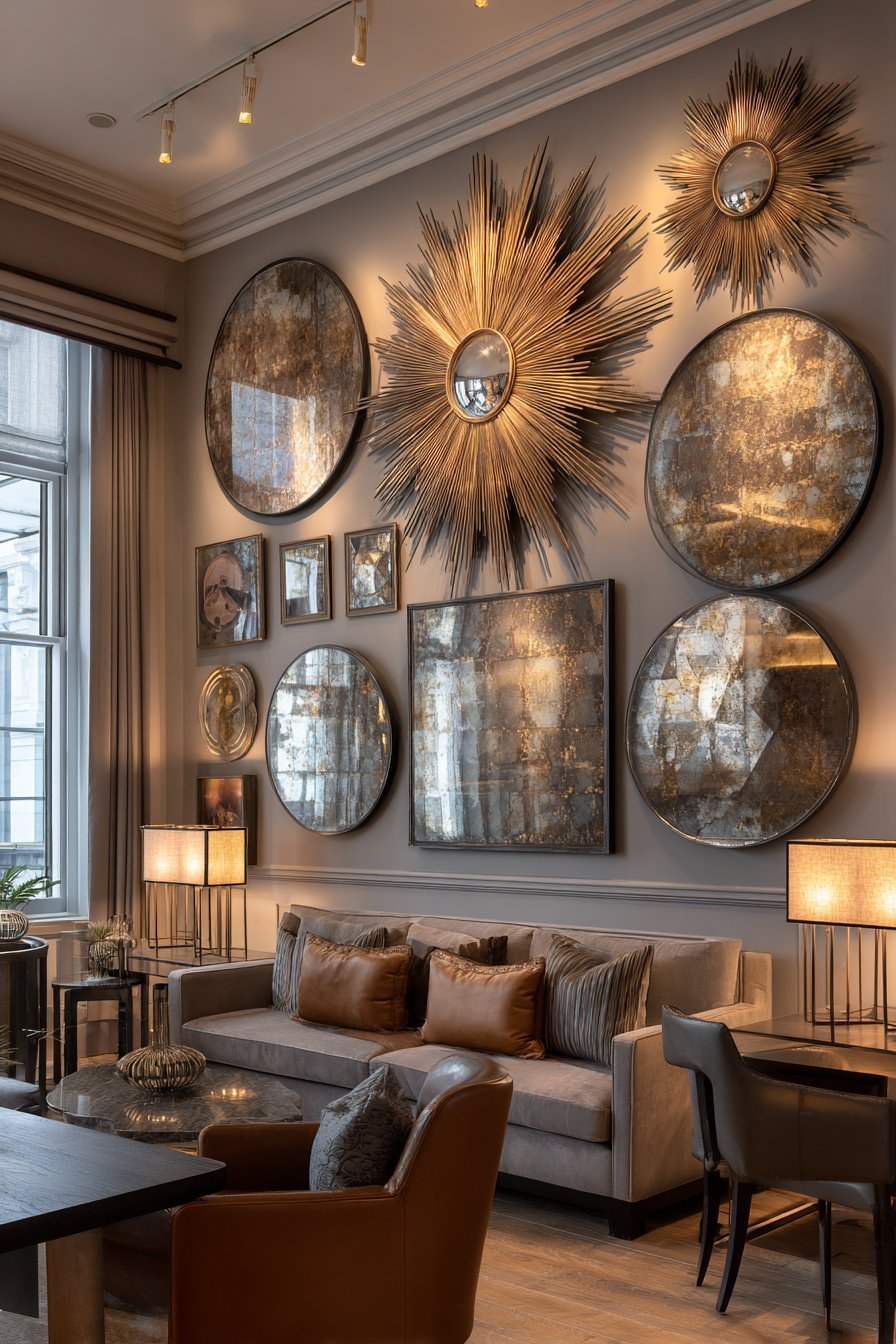
Consider grouping mirrors of different shapes and eras together. A round vintage mirror alongside a contemporary rectangular one creates a layered, curated look. The contrast in silhouette keeps things interesting, while both pieces contribute to a sense of depth and visual complexity on the wall.
- Use a vintage sunburst or starburst mirror as a statement focal point
- Pair ornate vintage frames with minimal modern surroundings for contrast
- Group mirrors of different shapes for a layered, gallery-style look
- Position mirrors to reflect natural light and brighten dark spaces
- Mix mirror sizes — one large statement piece with smaller decorative mirrors
- Choose mirrors with patina or aged glass for authentic retro character
7. Layer Wall Textiles for Warmth and Texture
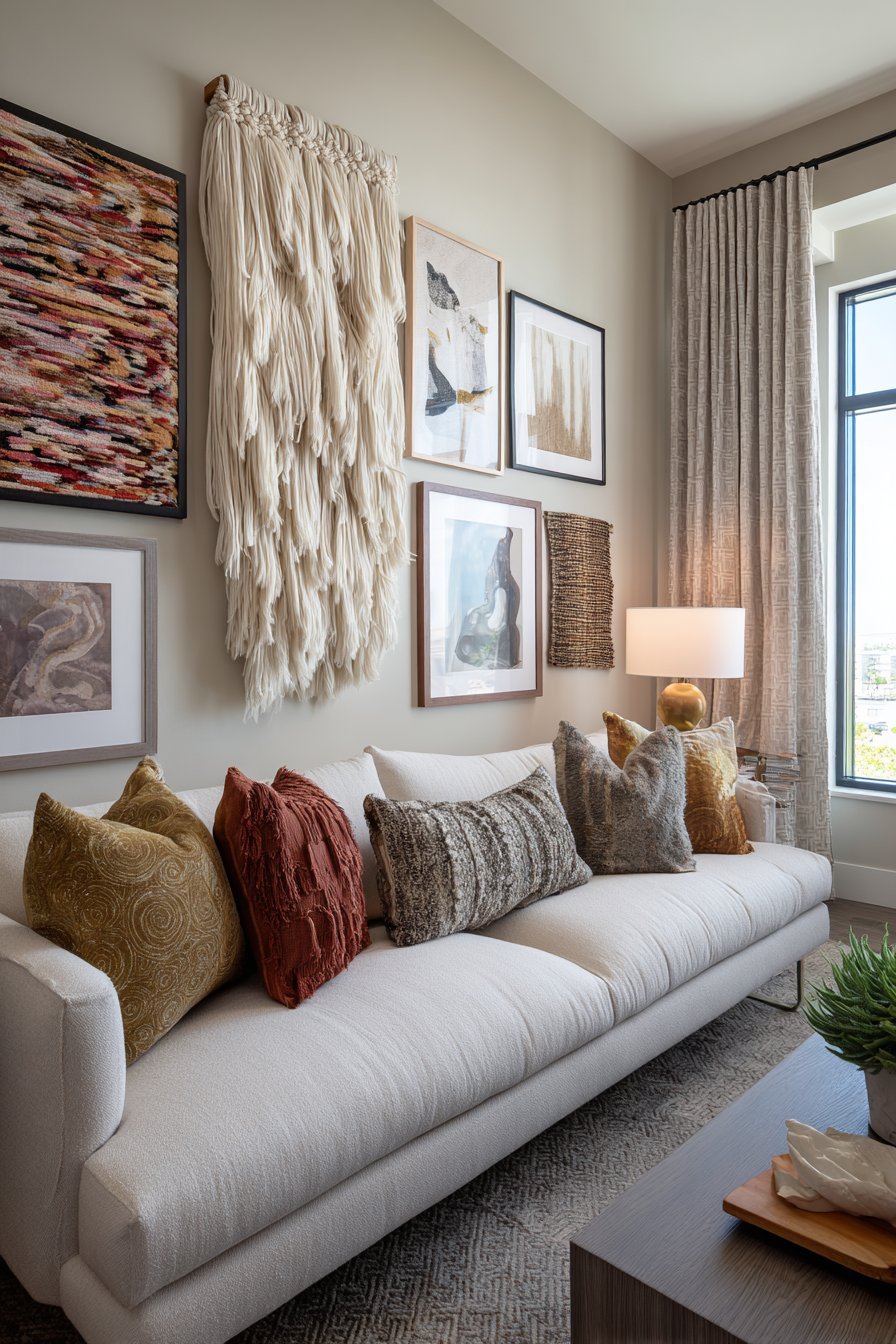
Textile wall hangings are having a major moment in interior design, and they’re perfect for bridging retro and modern aesthetics. Macramé, woven tapestries, and vintage rugs used as wall art all introduce tactile warmth that flat prints and canvases simply can’t replicate.
In a modern interior dominated by hard surfaces and clean edges, textiles provide essential softness. A large macramé wall hanging above a sleek modern sofa creates a beautiful tension between raw, handcrafted texture and refined contemporary design. This contrast is the hallmark of sophisticated retro-modern interiors.
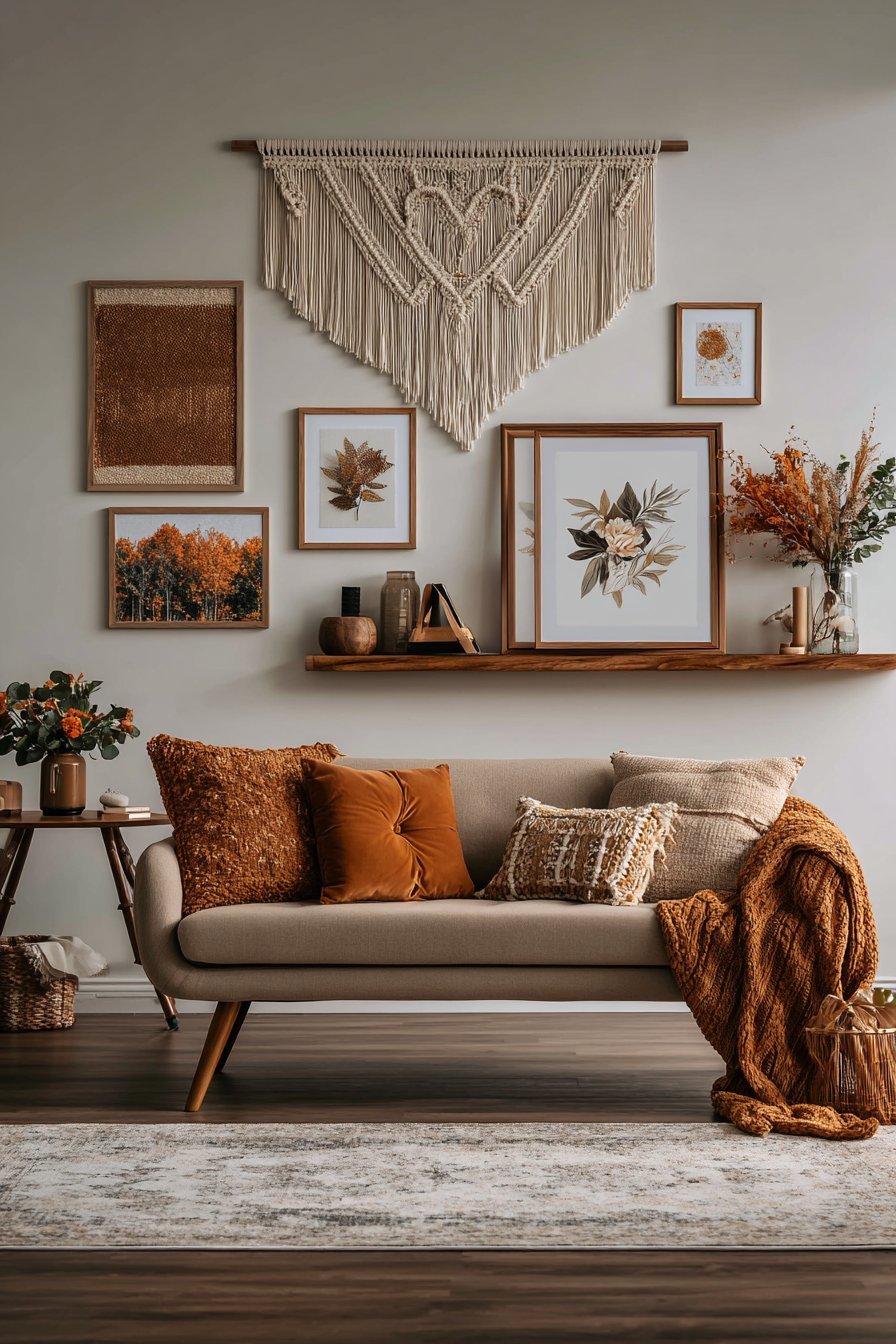
You can also layer smaller textile pieces within a gallery wall arrangement. A small woven wall hanging, a vintage fabric swatch in a modern frame, or a retro needlepoint piece adds texture without dominating the space. These unexpected elements make a wall display feel rich and multidimensional.
- Hang a large macramé or woven tapestry as a statement piece above furniture
- Frame vintage fabrics or needlepoint art in modern frames for a curated look
- Mix textile hangings with framed prints for varied texture in gallery walls
- Choose textiles in colors that echo your existing palette
- Use natural fibers (cotton, jute, wool) for an authentic vintage feel
- Layer small textiles at different heights to create visual rhythm
8. Play with Scale and Proportion
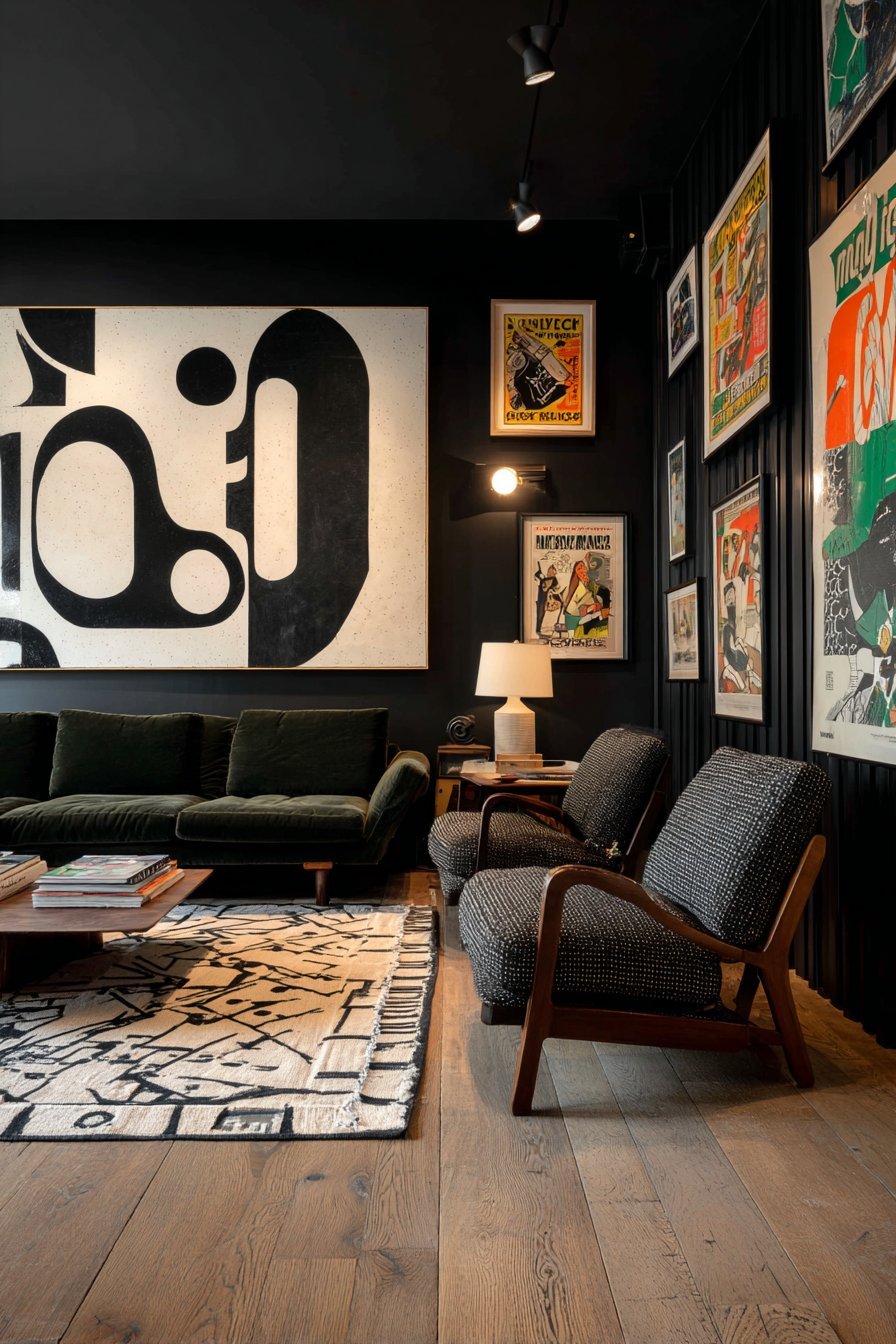
Scale variation is one of the most powerful — and most overlooked — techniques in wall decor. Mixing large, medium, and small pieces creates a dynamic, layered composition that draws the eye around the wall. This applies equally whether you’re working with retro, modern, or mixed pieces.
When combining retro and modern art, use large modern pieces to ground the composition. A large-scale abstract canvas or oversized photographic print in a modern style creates a stable foundation. Retro pieces of varying sizes can then be arranged around it, adding personality and eclecticism without chaos.
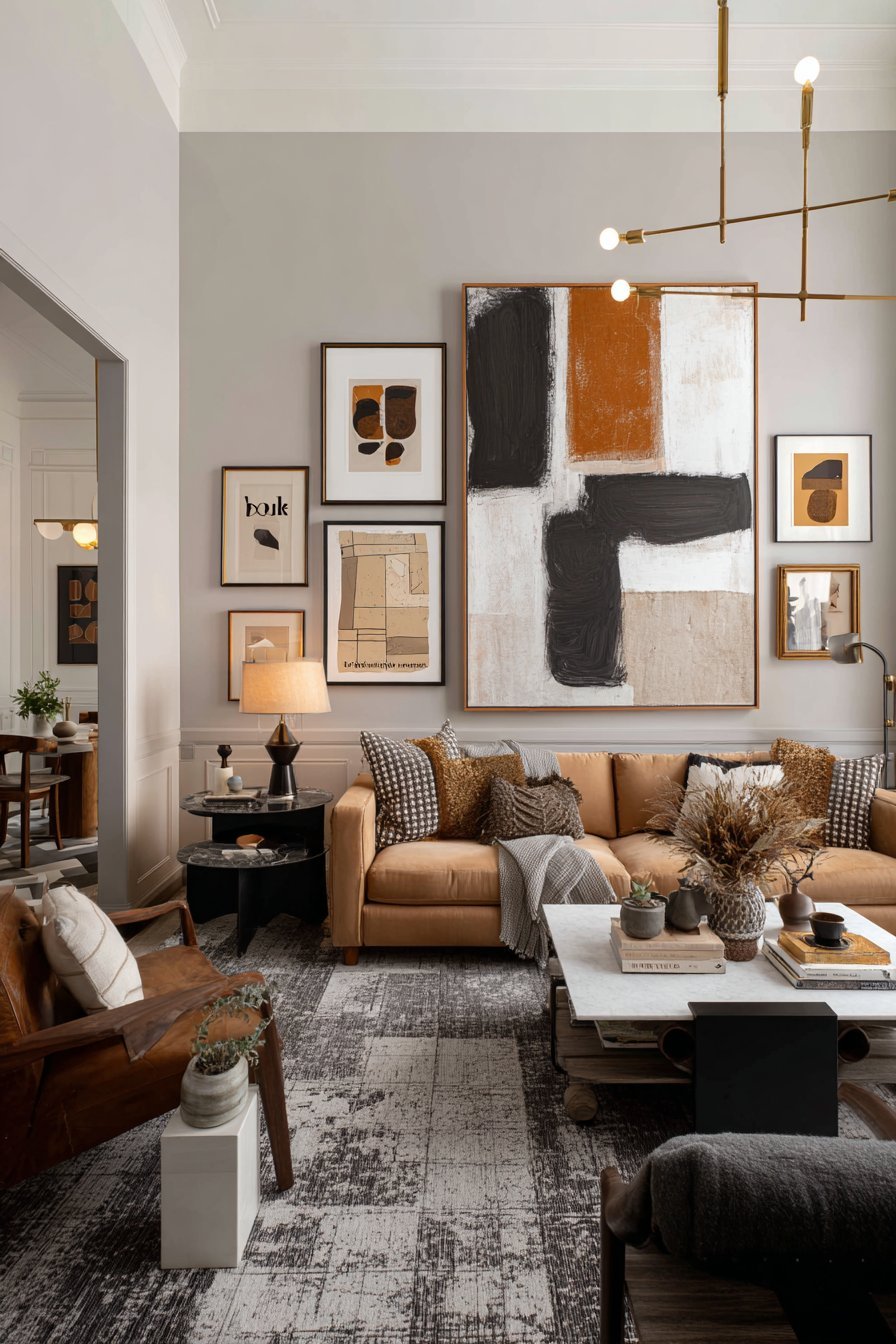
Avoid the common mistake of clustering same-sized pieces together. This creates a flat, monotonous look regardless of how interesting the individual pieces are. Instead, think of your wall as a composition — vary heights, widths, and visual weights intentionally to create a sense of movement and energy.
- Use one large anchor piece to ground your wall arrangement
- Vary piece sizes dramatically — combine large, medium, and small works
- Avoid clustering same-sized pieces together in a row
- Use smaller pieces to fill gaps and create visual rhythm
- Consider oversized retro posters as bold anchor elements
- Step back frequently while arranging to assess overall balance
9. Embrace Eclectic Shelving as Wall Decor
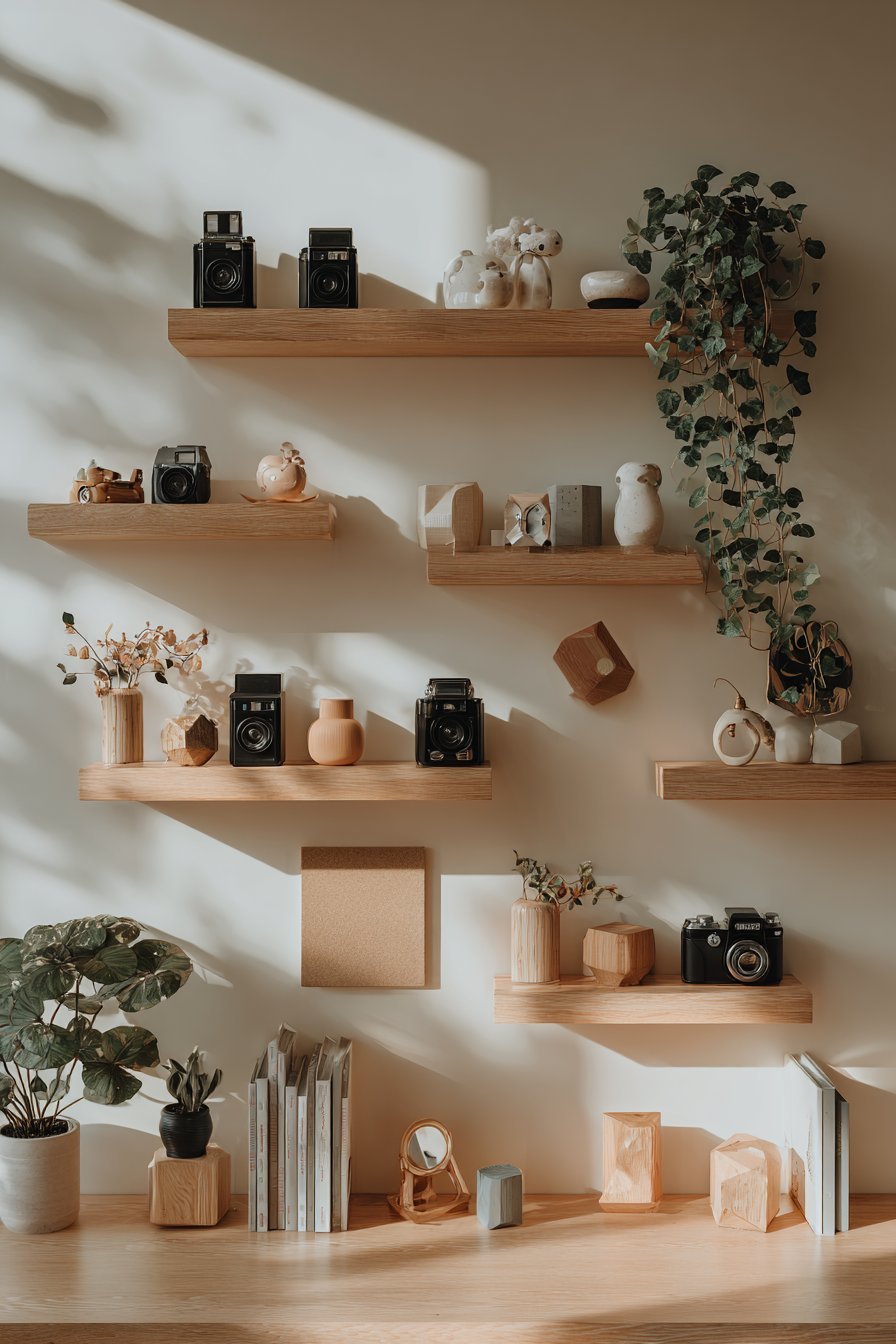
Floating shelves are both functional and decorative, and they’re perfect for displaying a curated mix of retro and modern objects. The shelf itself can be modern (clean lines, minimal brackets) while the objects displayed on it tell a retro story — vintage cameras, ceramic figurines, retro books, and old clocks.
This approach allows you to rotate and refresh your retro-modern display easily. Unlike framed art that requires patching holes when moved, shelf displays can be rearranged seasonally or whenever inspiration strikes. This flexibility makes shelving an ideal canvas for evolving your style over time.
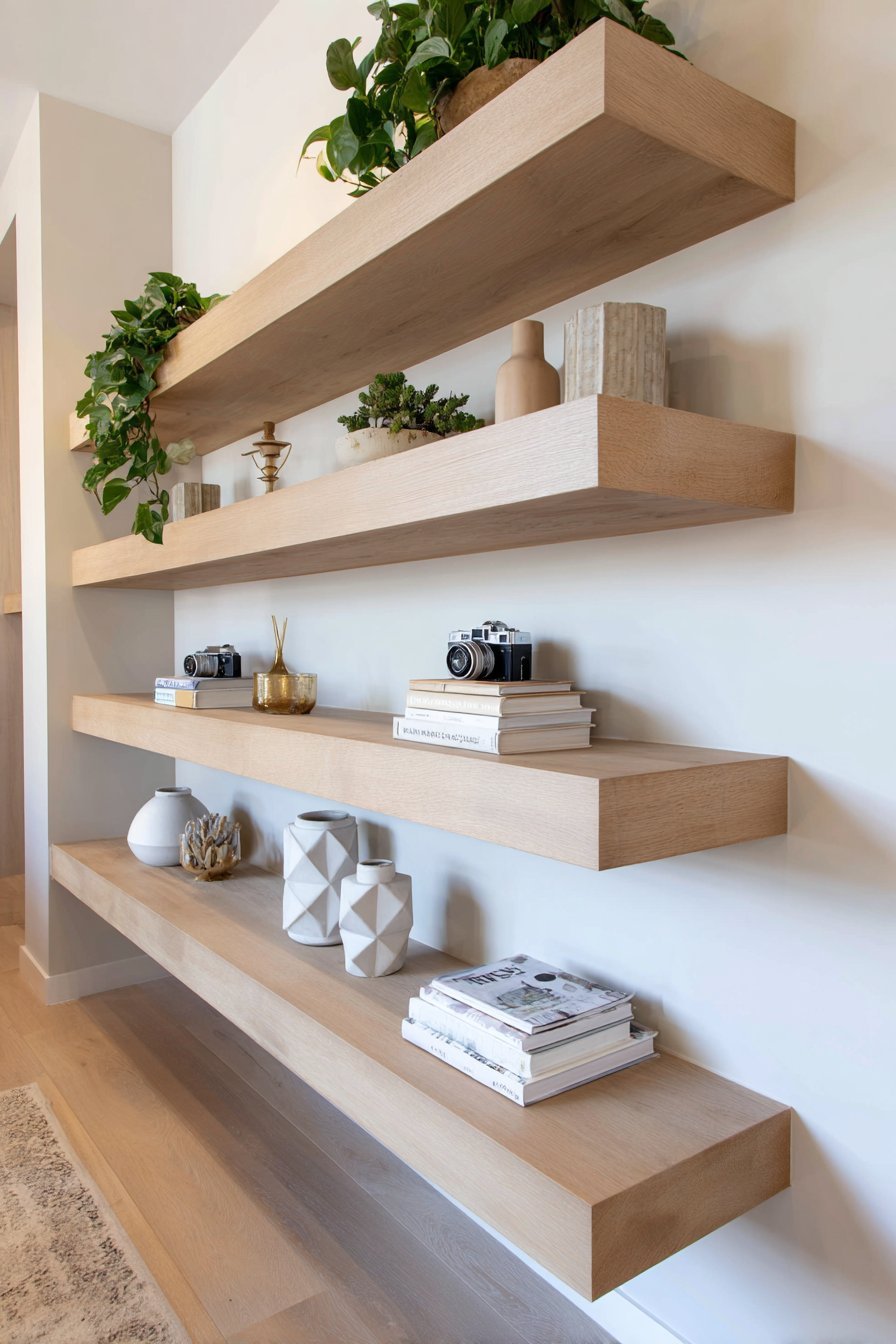
The rule of odd numbers applies beautifully to shelf styling. Group objects in threes or fives — mixing heights, materials, and eras within each grouping. Place a modern geometric sculpture beside a retro ceramic vase and a vintage book, and you’ve created a miniature retro-modern vignette that’s endlessly repeatable across multiple shelves.
- Choose sleek, modern floating shelves to contrast with vintage objects displayed on them
- Apply the rule of odd numbers — group objects in 3s or 5s
- Mix heights within each grouping for visual interest
- Include plants, books, and personal objects alongside decorative pieces
- Rotate seasonal or vintage finds to keep the display fresh
- Use consistent shelf spacing for a clean, gallery-like look
10. Balance Busy Retro Pieces with Minimalist Modern Art
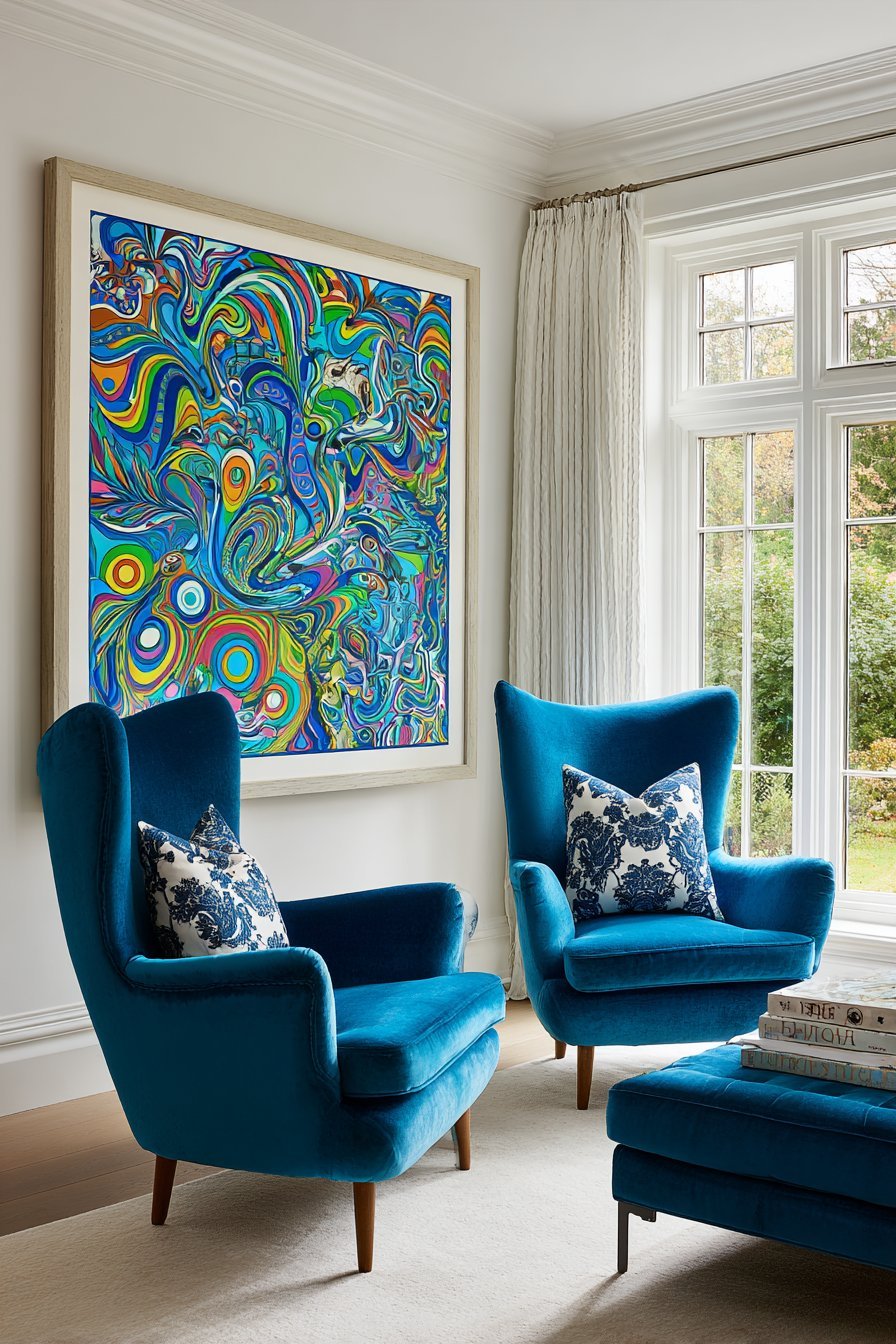
Visual breathing room is essential when working with bold retro pieces. A vibrant psychedelic print, a busy vintage map, or a detailed retro illustration needs space around it. Pairing these busy pieces with clean, minimalist modern art nearby prevents visual fatigue.
Think of it as call and response. A loud retro piece calls for a quiet modern response. Place a simple black-and-white modern photograph or a minimal abstract print beside a colorful retro poster. The contrast amplifies both pieces — the retro feels more dynamic, the modern feels more refined.
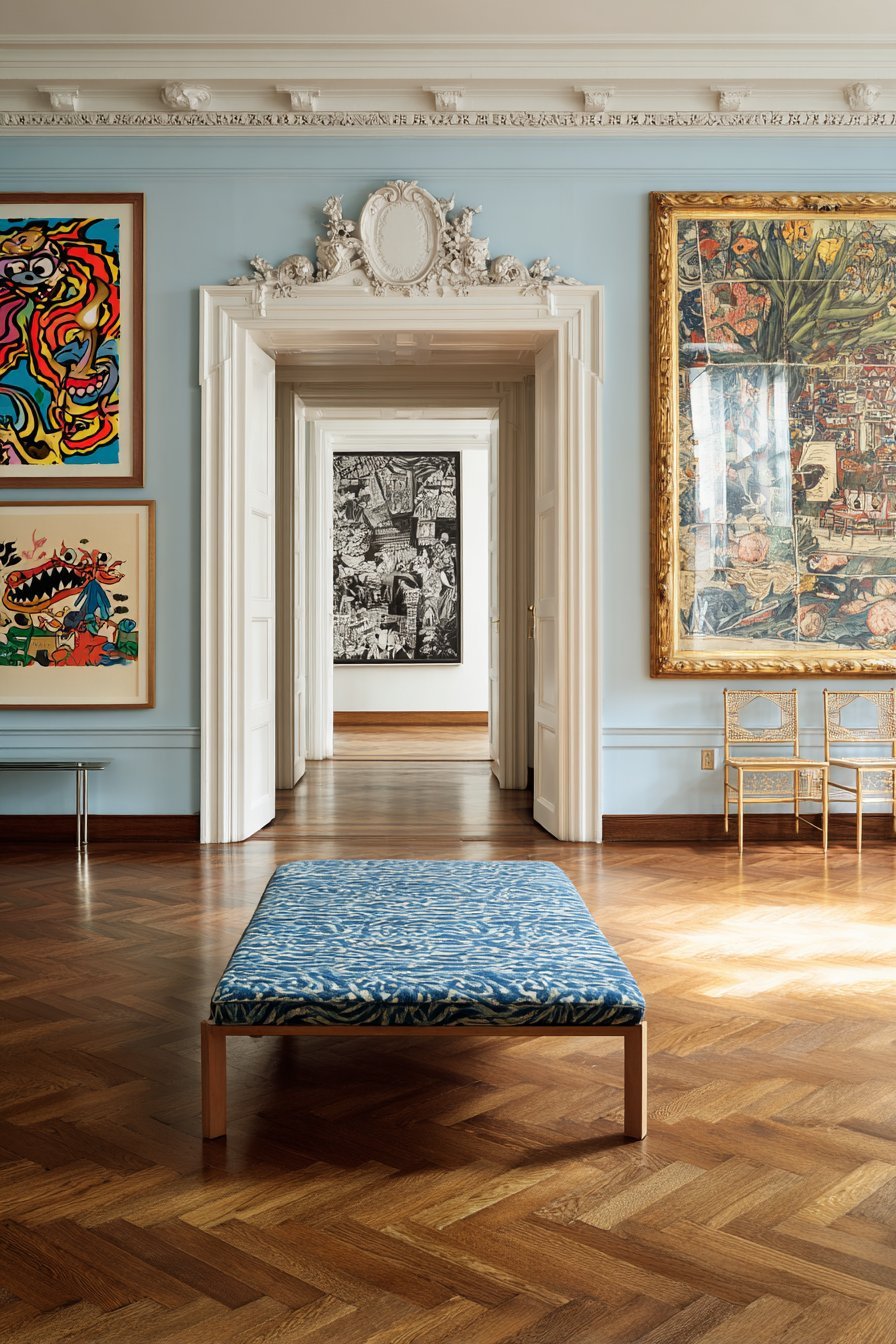
This principle of visual contrast also applies to framing. Place a busy, ornate vintage piece in a simple modern frame. Or mount a minimal modern print in an elaborate antique frame. The unexpected framing choice highlights the piece inside and creates a delightful visual twist that sophisticated designers use constantly.
- Pair bold retro pieces with minimal modern art for visual balance
- Apply the call-and-response principle — loud piece beside a quiet one
- Use simple frames on busy vintage art and ornate frames on minimal modern pieces
- Allow adequate wall space around busy pieces so they can breathe
- Limit the number of bold retro pieces per wall to 1-2 maximum
- Use negative space intentionally as part of your design composition
Conclusion
Mixing retro and modern wall decor is ultimately about confident curation. When you understand the visual language of different eras, build a cohesive color story, vary scale and texture, and balance busy pieces with calm ones, the result is a space that feels uniquely yours. The walls of your home become a gallery of your taste, your memories, and your creativity.
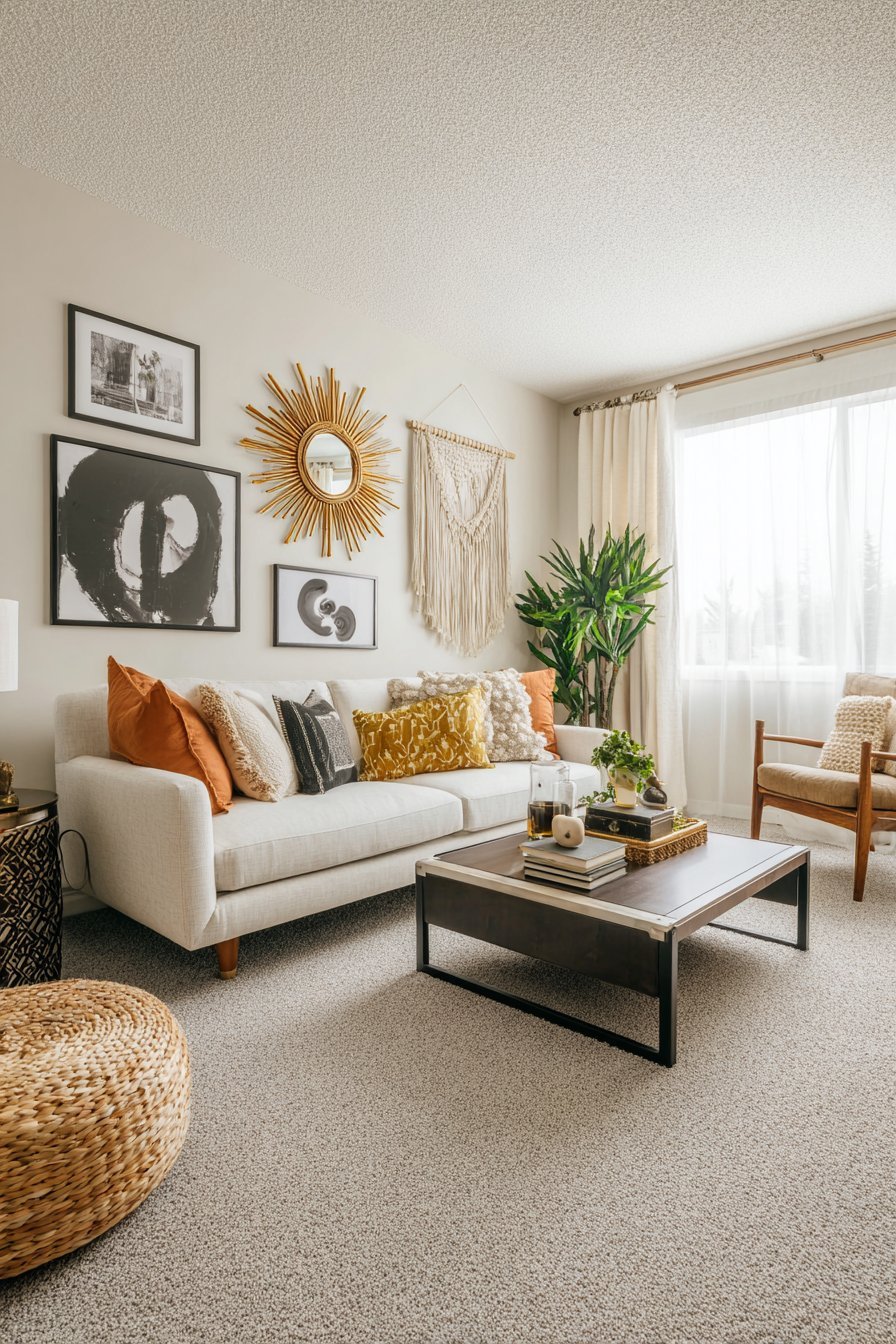
There are no rigid rules here — only principles to guide your eye and your instincts. Experiment boldly, trust your aesthetic, and don’t be afraid to swap, rearrange, and evolve your displays over time. The most beautiful retro-modern interiors are the ones that feel alive, layered, and full of personality. Start with one wall, one arrangement, and let your space tell its story.
