

The television is no longer just a screen — it is a design challenge. In contemporary interiors, the TV wall has become a focal point that rivals the fireplace as the room’s visual anchor. Yet most homeowners treat it as an afterthought, mounting a screen on a bare wall and calling it done. The result rarely feels intentional, and it almost never looks designer’s.
What separates a thoughtful, high-end TV wall from a standard installation comes down to composition, material choice, and the art of integration. A truly designer TV wall makes the screen feel like a deliberate part of the room’s architecture rather than a black rectangle that happens to be mounted to a surface. When done well, it elevates the entire living space and creates an environment that feels both functional and visually sophisticated.
This article walks you through every element of creating a modern TV wall that genuinely looks designer. From choosing the right backdrop treatment to managing cable clutter, from selecting the perfect media console to adding layered lighting, each section provides practical, professional guidance that transforms your approach to one of the home’s most important walls.
1. Choose the Right Wall Treatment as Your Backdrop
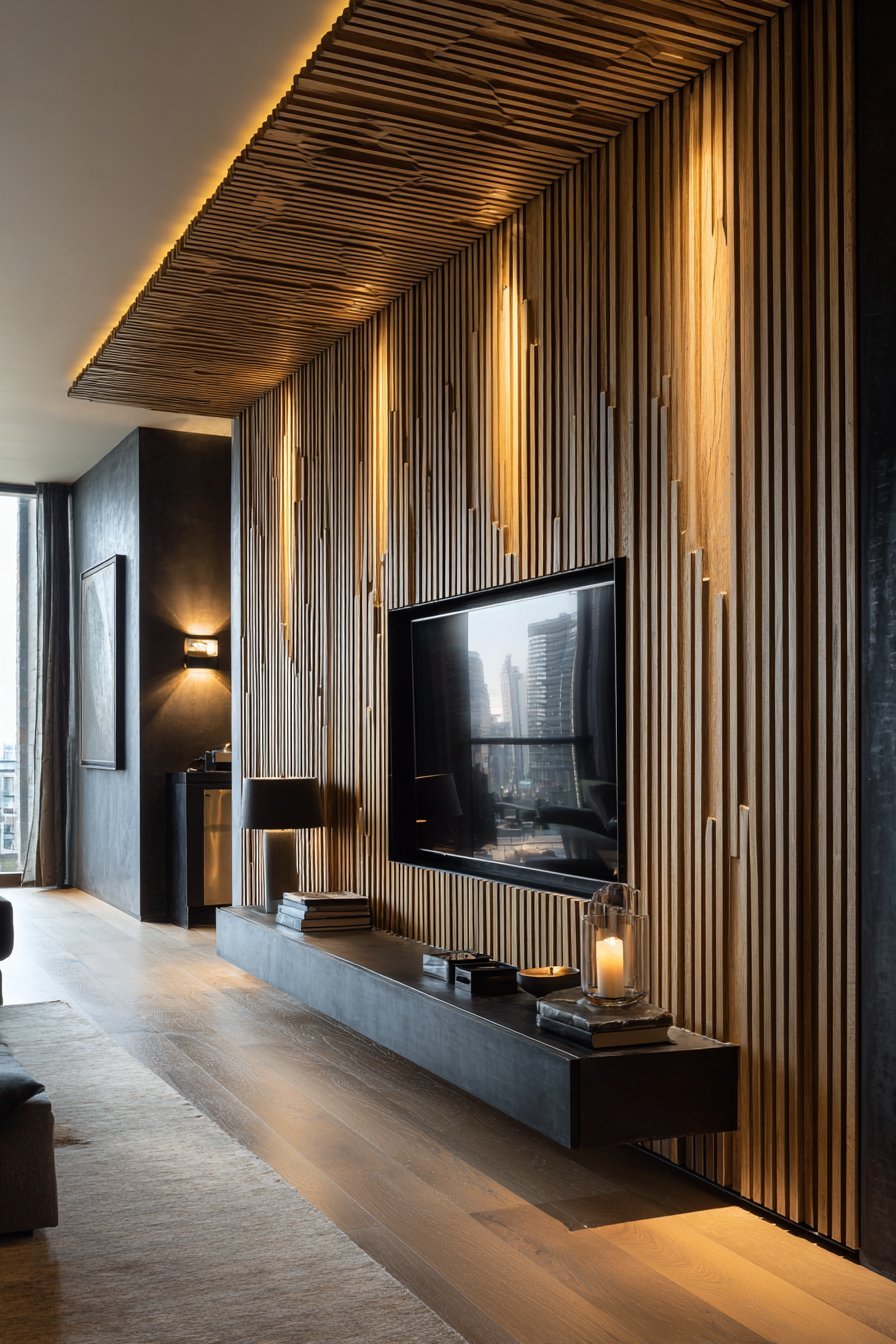
The surface behind your TV sets the tone for everything else. Wall treatment selection is the single most impactful decision you will make for your TV wall. A flat painted wall is the baseline — functional but rarely remarkable. Designer TV walls almost always feature a deliberate surface treatment that gives the installation context and visual weight.
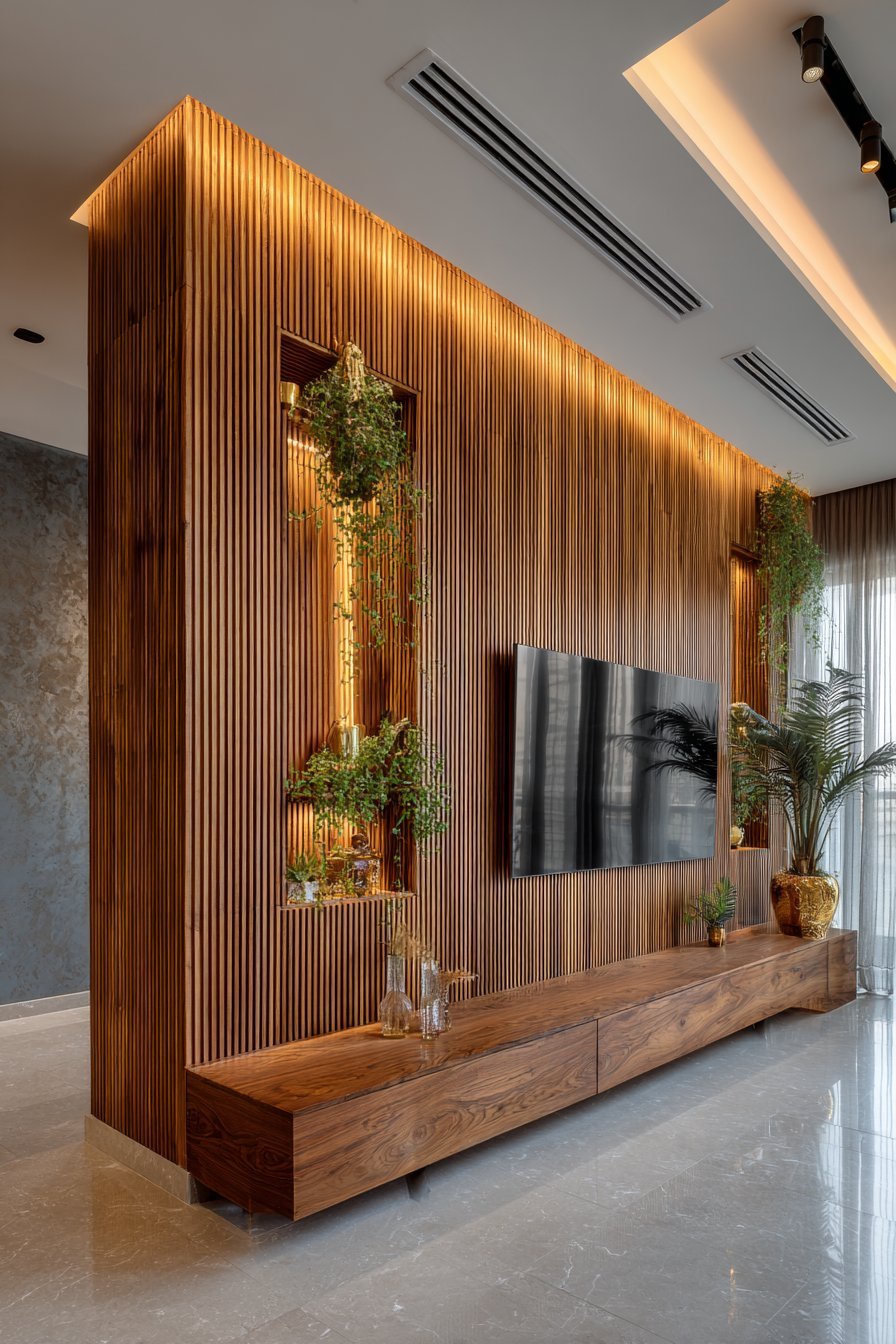
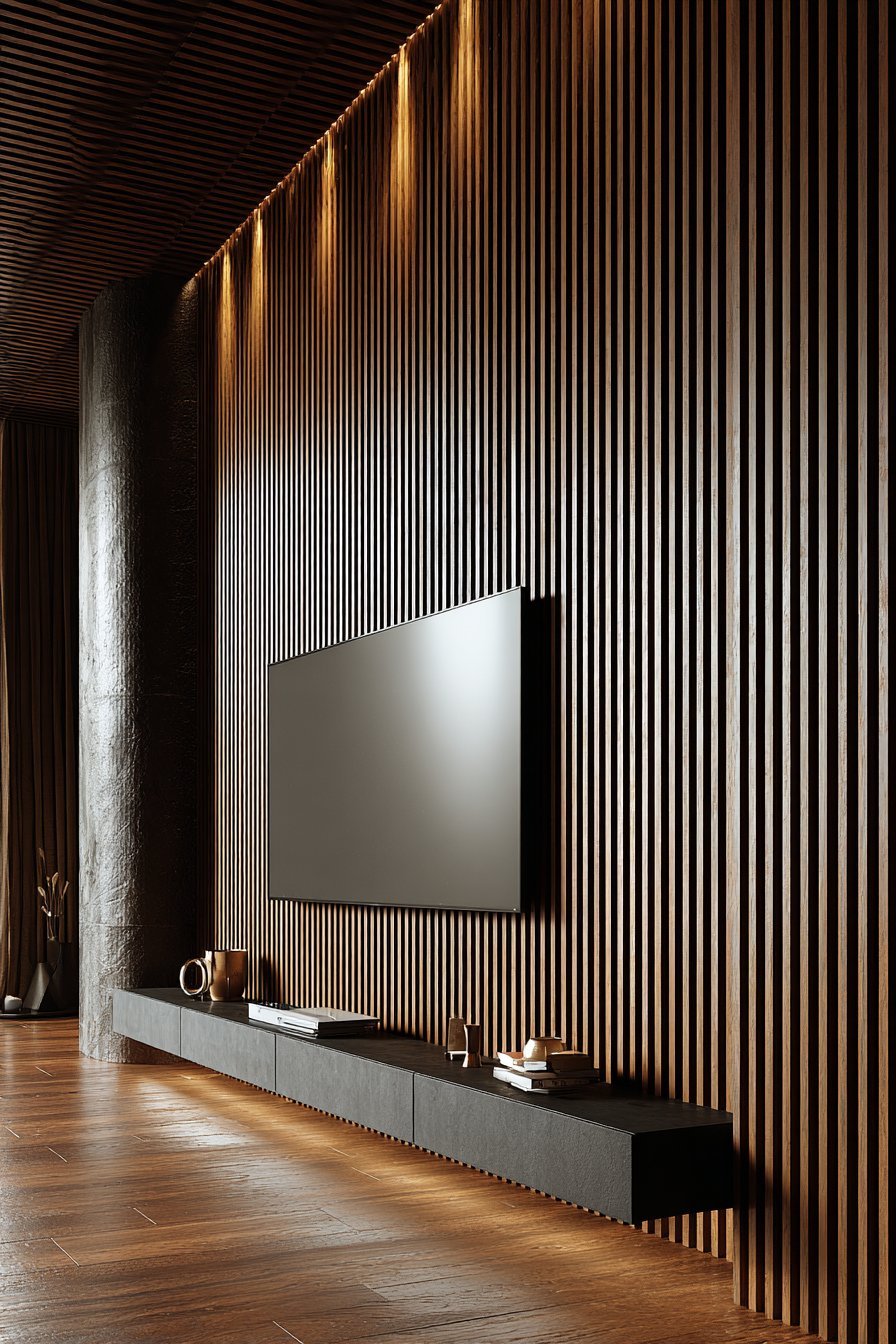
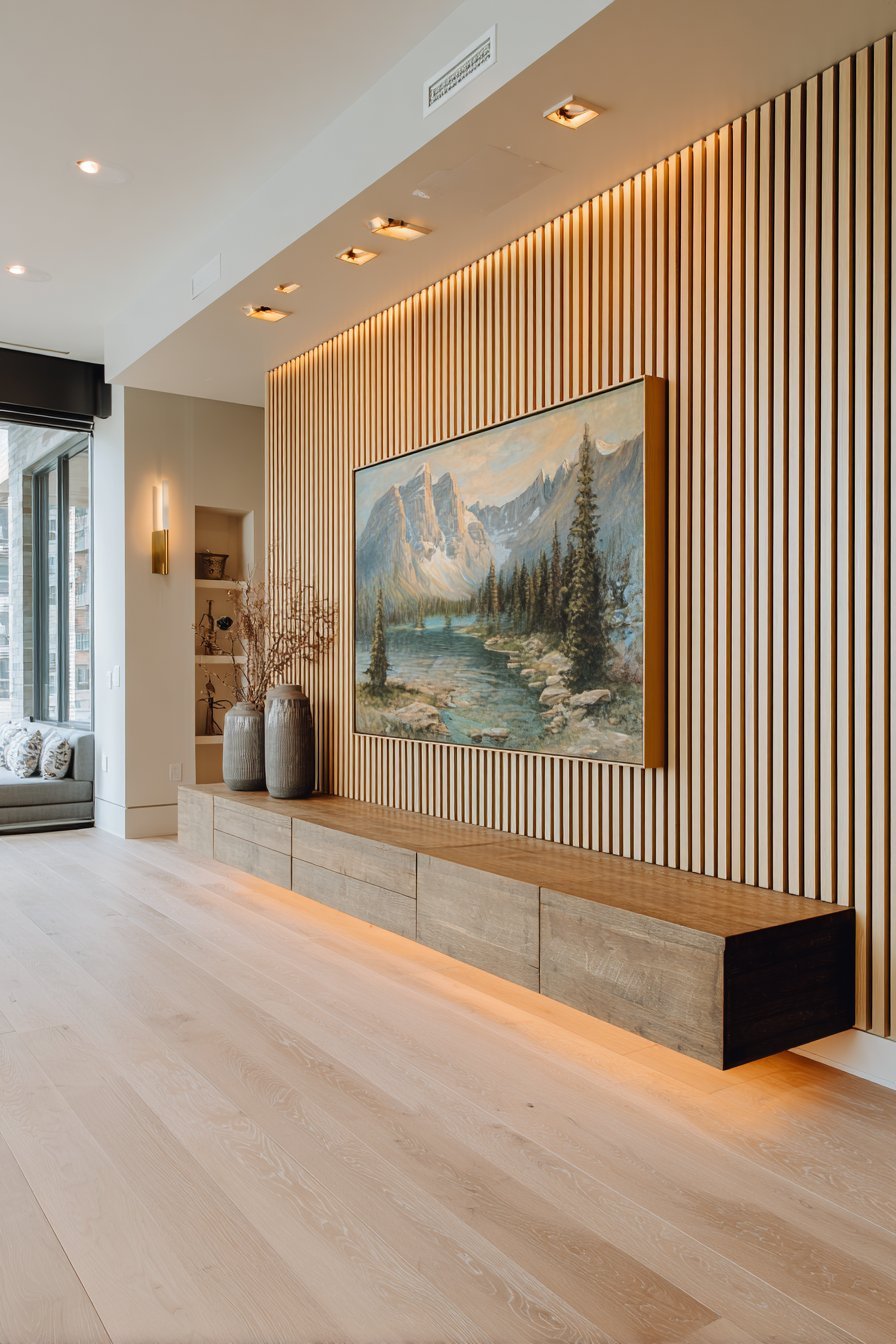
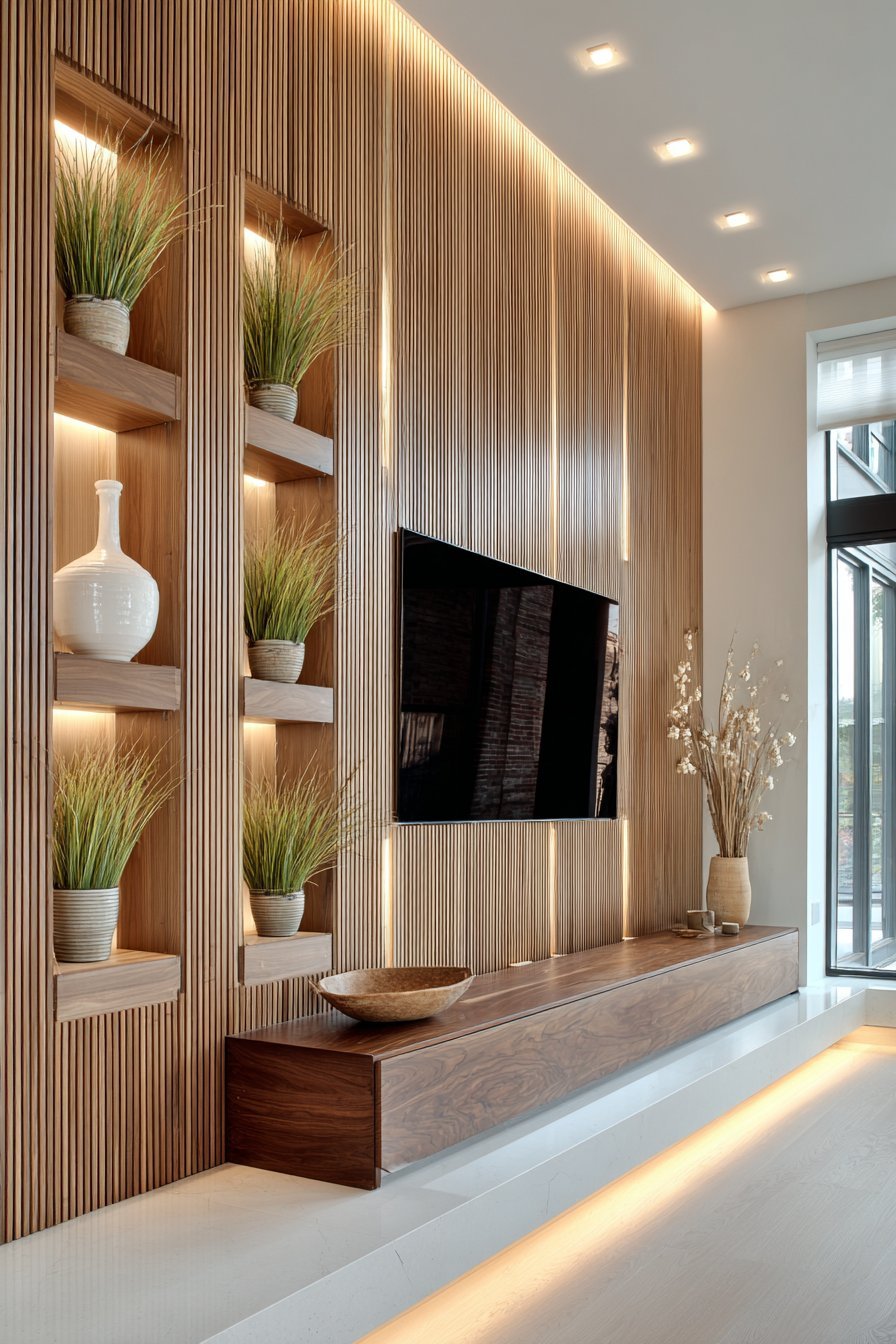
Fluted wood panels have become one of the most sought-after treatments in contemporary interior design. These vertical ribbed panels — available in oak, walnut, white-painted MDF, and even PVC — create architectural depth and shadow that transform a flat wall into a sculptural surface. The linear quality of fluted panels also draws the eye upward, creating the illusion of taller ceilings.
Stone-effect panels, large-format tiles, and textured plaster finishes are equally compelling options. A Venetian plaster backdrop in a warm greige or deep charcoal adds artisanal texture that photographs beautifully and ages gracefully. Large-format marble-look porcelain tiles create a sense of luxury that immediately signals designer intent. The key is choosing a single, confident material and committing to it fully rather than mixing competing textures.
- Use fluted wood panels for a contemporary, architectural backdrop with depth
- Consider large-format stone-effect tiles for a high-end, editorial look
- Try Venetian plaster in deep tones for artisanal warmth and texture
- Avoid mixing more than one backdrop material — commit to a single treatment
- Extend the backdrop material floor to ceiling for maximum architectural impact
- Choose backdrop colors that contrast subtly with your TV bezel for clean integration
2. Frame the TV with Built-In Cabinetry
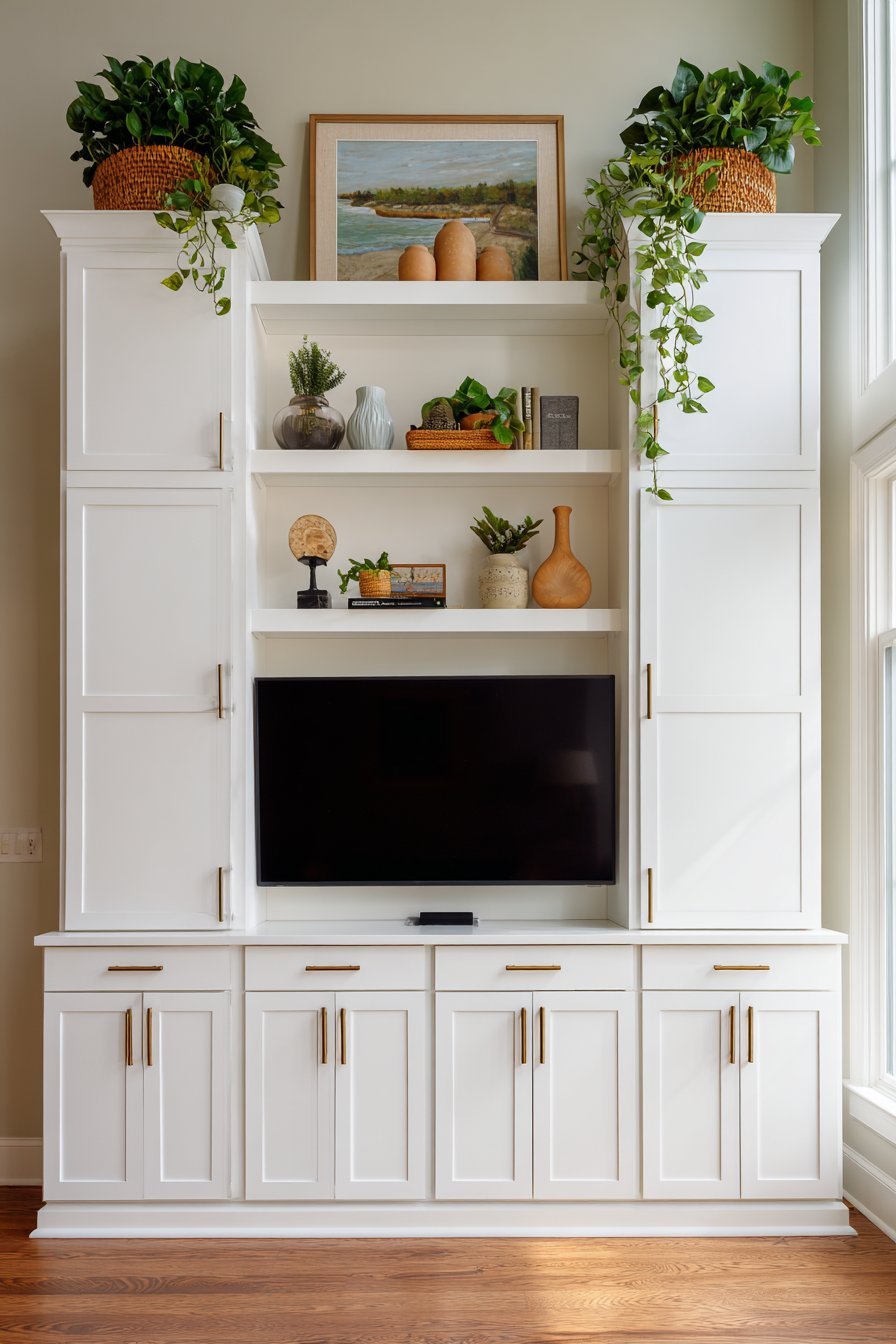
Nothing elevates a TV wall like custom or semi-custom built-in cabinetry. Integrated joinery transforms the screen from an isolated object into a cohesive architectural composition. The TV becomes one element within a larger designed system rather than the singular awkward focal point on a bare wall.
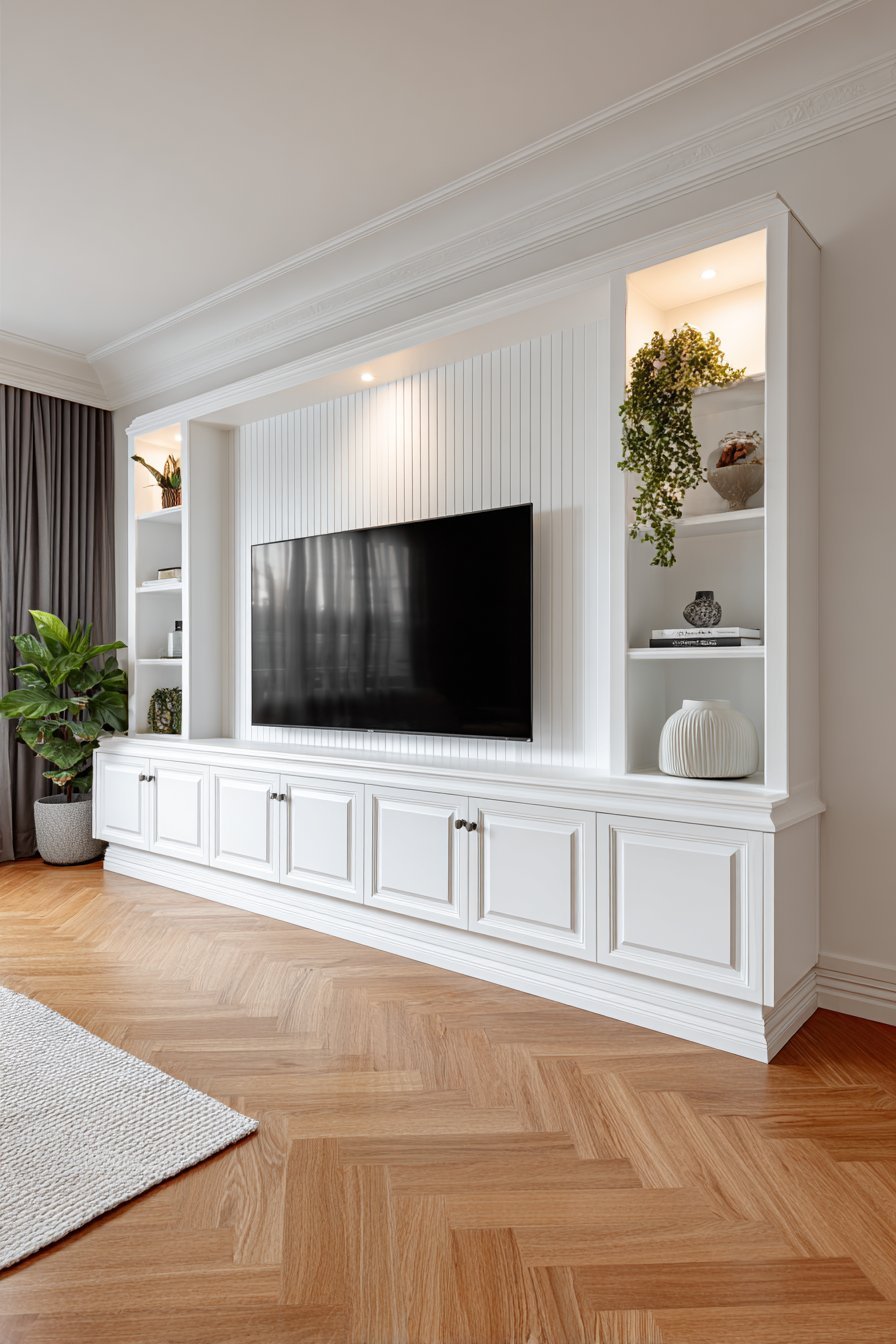
Built-in cabinetry surrounding a TV typically includes a combination of open and closed storage. Open niches on either side of the screen display curated objects — books, ceramics, plants, and art. Closed cabinets below and beside conceal media equipment, cables, and everyday clutter. This combination is both practical and visually sophisticated, achieving the clean look that defines designer interiors.
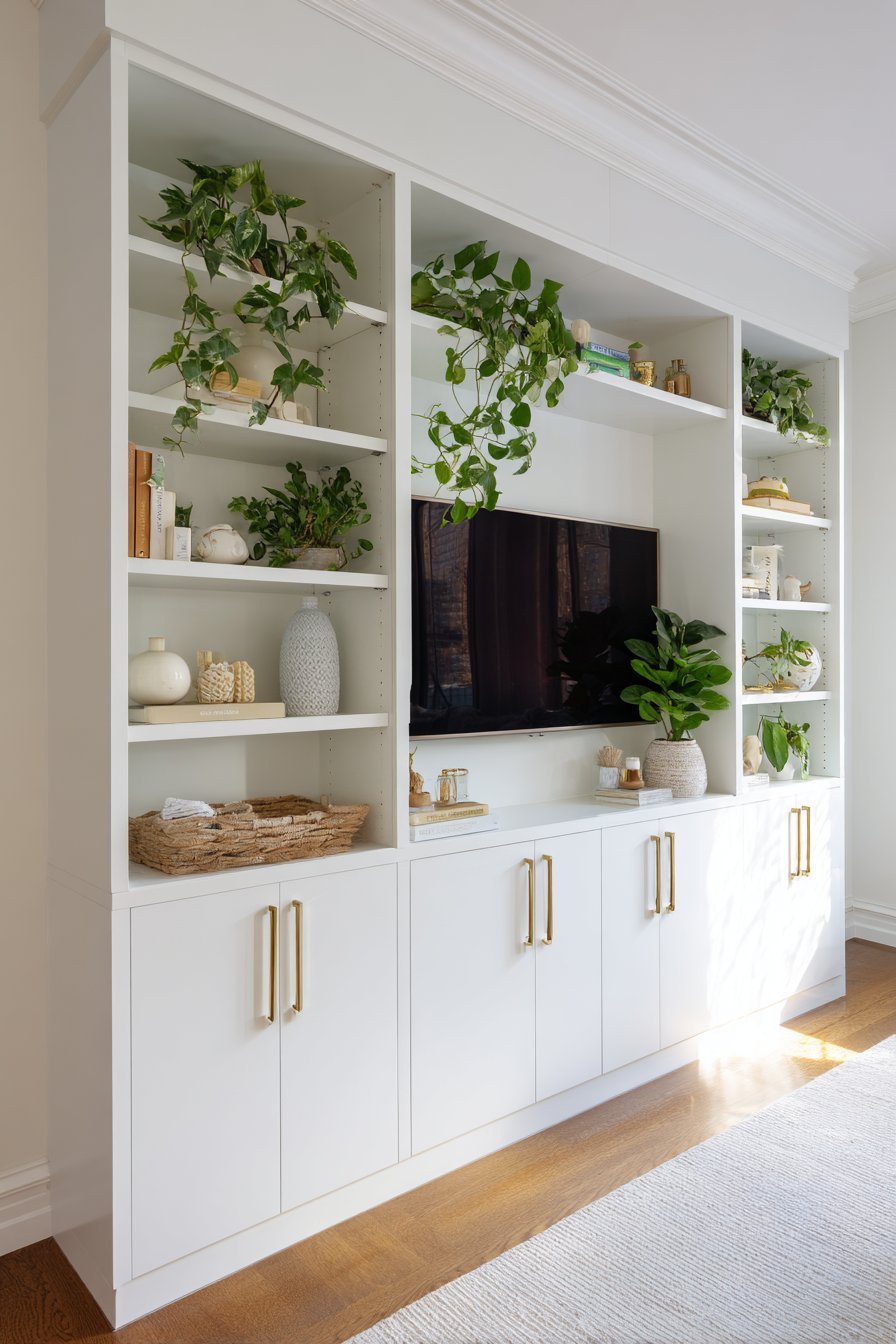
The finish of your built-ins significantly shapes the overall aesthetic. Matte lacquered cabinetry in white, warm white, or charcoal reads as contemporary and refined. Natural wood grain veneer cabinetry — particularly in white oak or walnut — brings organic warmth while maintaining a sleek profile. Handle choice also matters enormously: thin bar pulls in brushed brass or matte black reinforce the modern aesthetic without adding visual noise.
- Commission floor-to-ceiling built-ins to maximize both storage and visual impact
- Mix open niches and closed cabinets for balance of display and concealment
- Choose handleless or minimal bar-pull hardware for a clean contemporary look
- Match built-in finish to existing joinery in the room for design cohesion
- Ensure built-ins are deep enough to house media equipment without visible clutter
- Include integrated cable management channels within the cabinetry structure
3. Master Cable Management for a Clean Installation
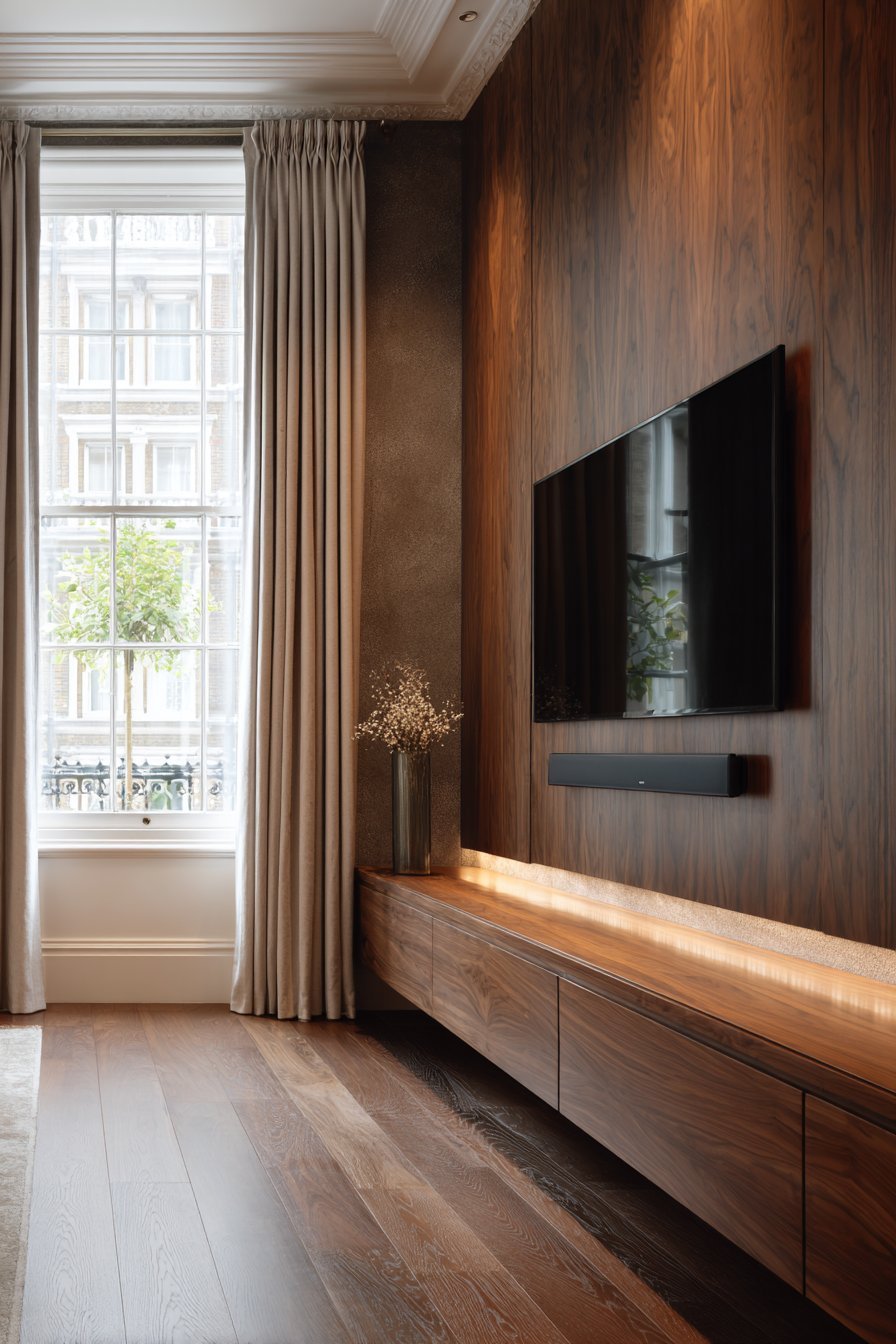
Nothing undermines a designer TV wall faster than visible cables. Cable management is the unglamorous but absolutely essential foundation of a polished TV installation. Professional-looking results require that every wire — power, HDMI, streaming devices, soundbar — disappears completely from view.
The most effective approach involves in-wall cable conduit systems. These allow you to run cables inside the wall cavity between the TV mounting location and an outlet below, eliminating the cascade of wires that typically hangs from a wall-mounted screen. Many homes require an electrician to add a recessed outlet directly behind the TV location, which is a relatively affordable upgrade with an enormous visual payoff.
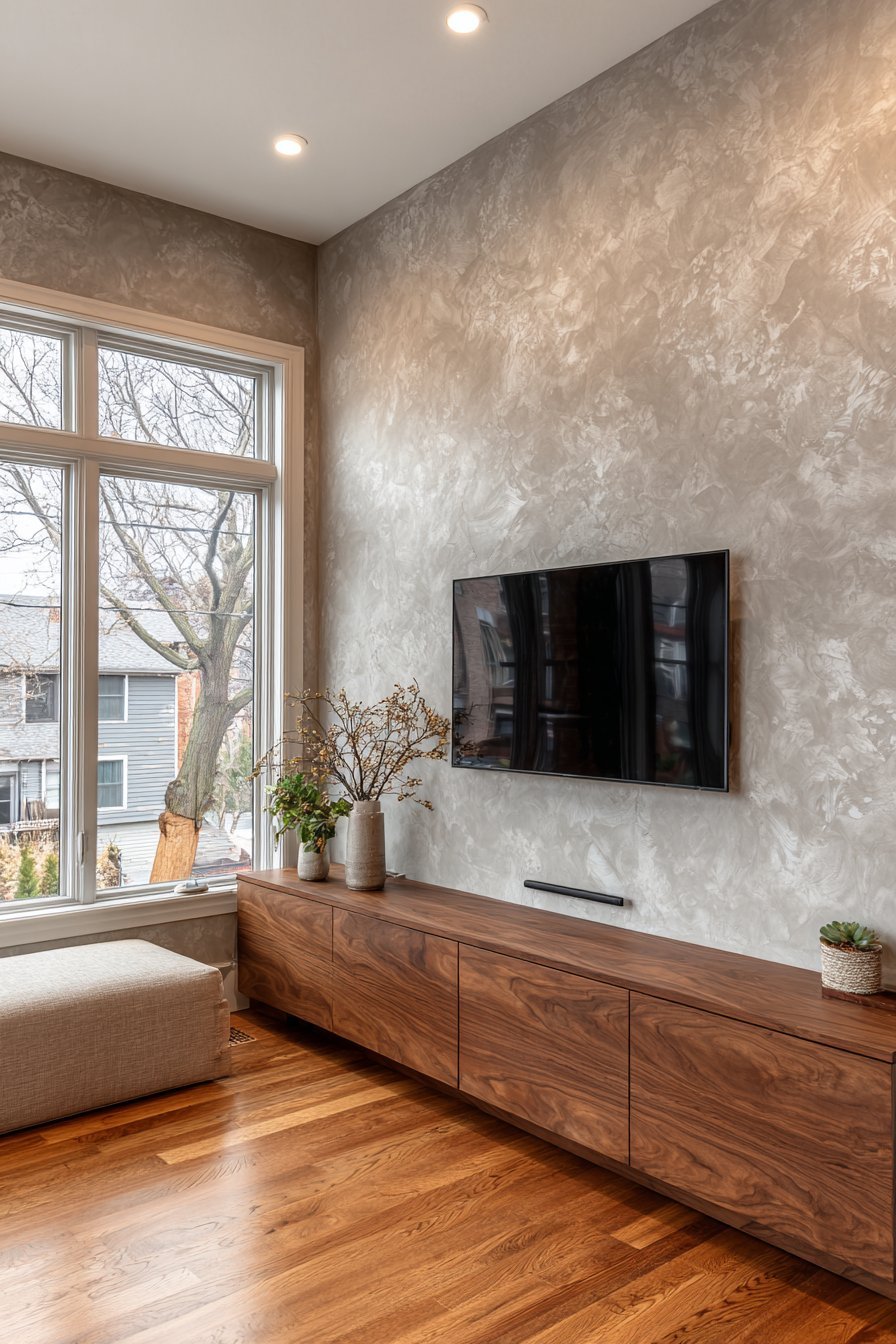
For those who cannot run cables in-wall, cable raceways offer a surface-mounted alternative. These slim plastic or aluminum channels paint to match the wall and route cables in a contained, linear path. While not invisible, they are far cleaner than loose cables. Another strategy is to consolidate all devices — streaming sticks, gaming consoles, and receivers — inside closed cabinetry, connecting to the TV via a single long HDMI cable run through the wall.
- Install a recessed in-wall power kit to eliminate all visible TV cables
- Use cable conduit sleeves painted to match wall color for surface runs
- Place all media devices inside closed cabinetry below or beside the TV
- Invest in a wireless HDMI transmitter to eliminate long cable runs entirely
- Bundle remaining cables with cable management clips for a tidy finish
- Plan cable routes before mounting the TV — retrofitting is always harder
4. Select the Right Media Console or TV Unit
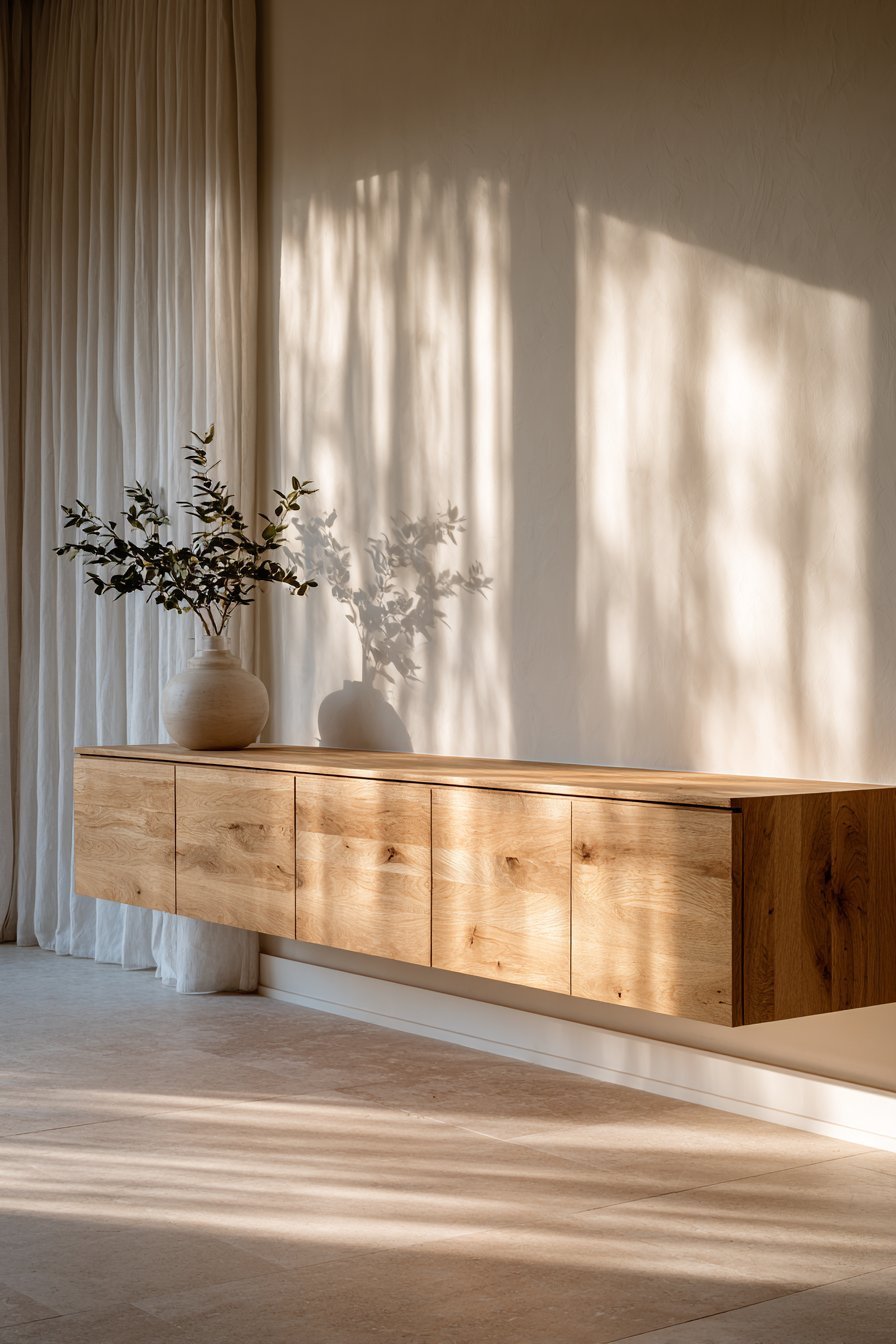
The furniture anchoring your TV wall is as important as the wall treatment behind it. A well-proportioned media console grounds the installation and provides the visual base that prevents a wall-mounted TV from feeling like it is floating awkwardly in space. The console should be at least two-thirds the width of the television for proper visual balance.
Low-profile floating media units are the defining furniture piece of the modern TV wall. Mounted to the wall at roughly 12–18 inches above the floor, floating consoles create a sense of lightness and space beneath them — a hallmark of contemporary design. This elevation makes cleaning easier and makes the room feel more open than a floor-standing unit would.
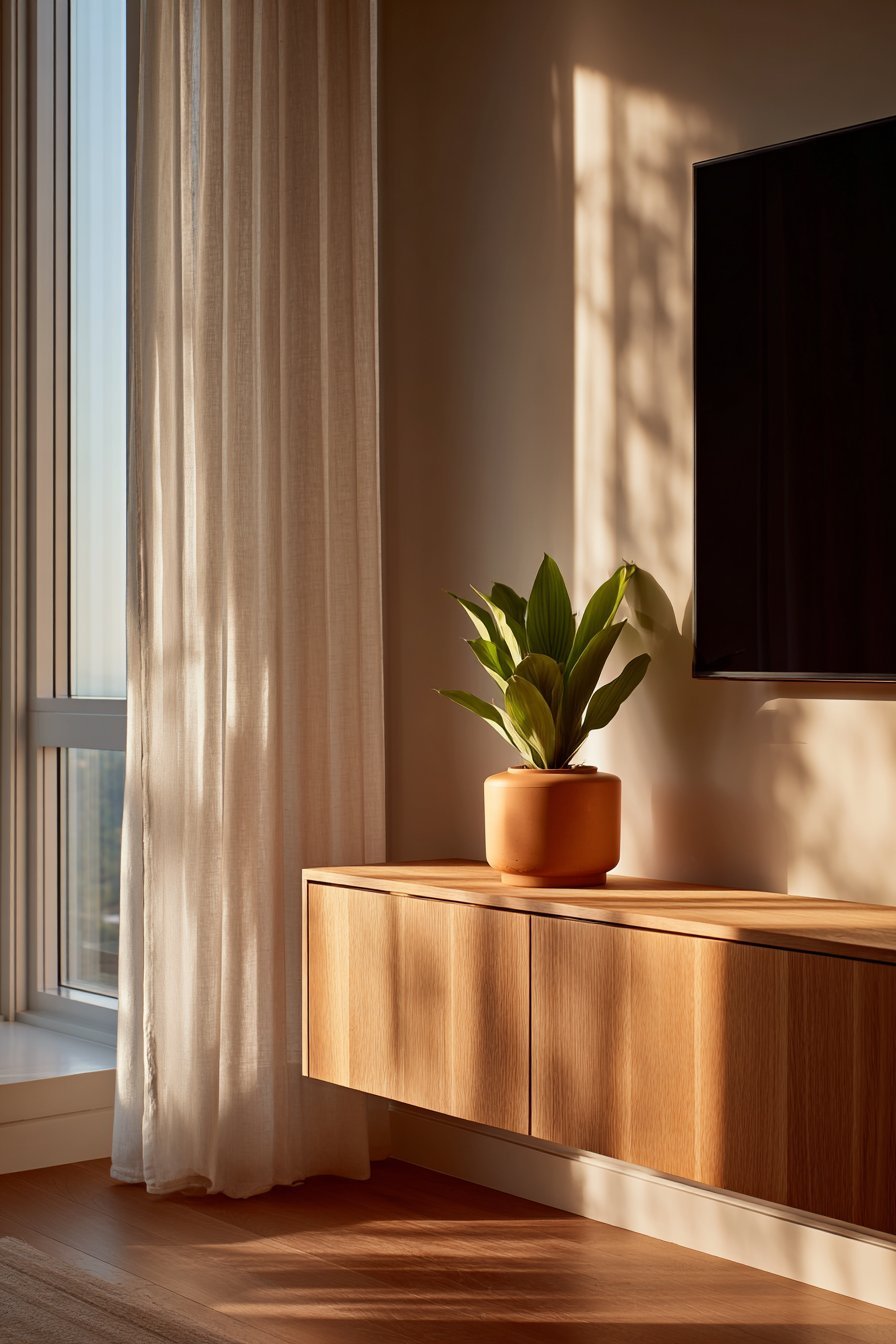
Material and finish selection for your media console should connect to the broader material palette of the room. Warm wood-grain consoles in white oak or walnut are enormously popular in Scandinavian and organic modern interiors. Matte lacquered options work beautifully in sleek, monochromatic spaces. Avoid consoles with ornate hardware, carved detailing, or traditional styling that contradicts the modern aesthetic you are building.
- Choose a console that is at least two-thirds the width of your TV
- Select a floating wall-mounted unit for a contemporary, airy feel
- Match console material to existing furniture for a cohesive design narrative
- Opt for closed-door storage to conceal equipment and maintain clean lines
- Keep the console surface styled minimally — one or two objects maximum
- Ensure the console height positions the TV at comfortable eye level when seated
5. Get the TV Mounting Height and Position Right
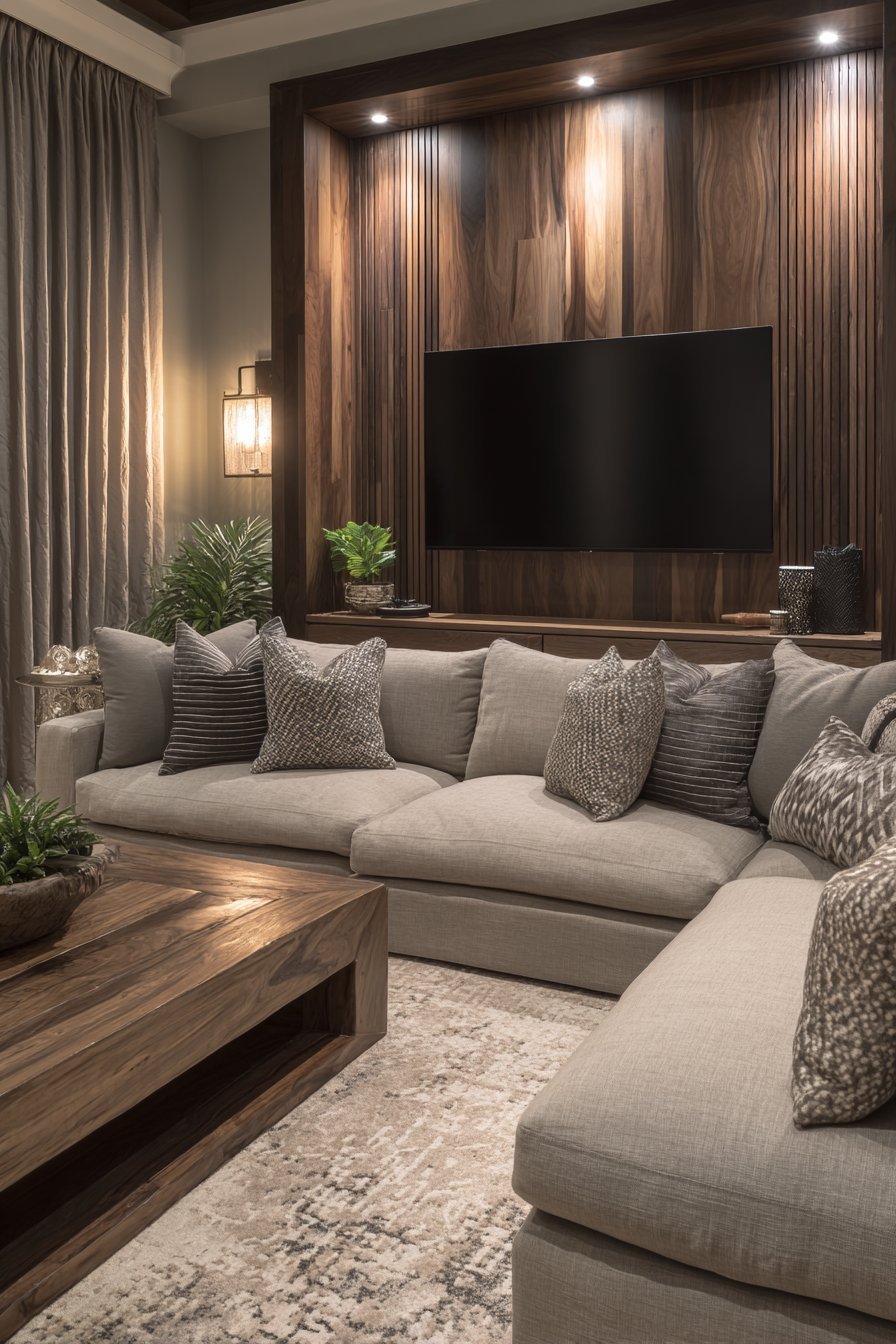
Mounting height is one of the most common mistakes in TV wall design. Incorrect TV placement — particularly mounting too high — causes neck strain, looks awkward, and immediately signals an amateur installation. Getting this right is a fundamental requirement for a truly designer result.
The rule for comfortable viewing is that the center of the TV screen should sit at approximately eye level when you are seated on your sofa. For most people, this is between 42 and 48 inches from the floor to the screen’s center. If your sofa seat height is around 18 inches and your eye level when seated is roughly 42 inches, your TV center should align with that measurement.
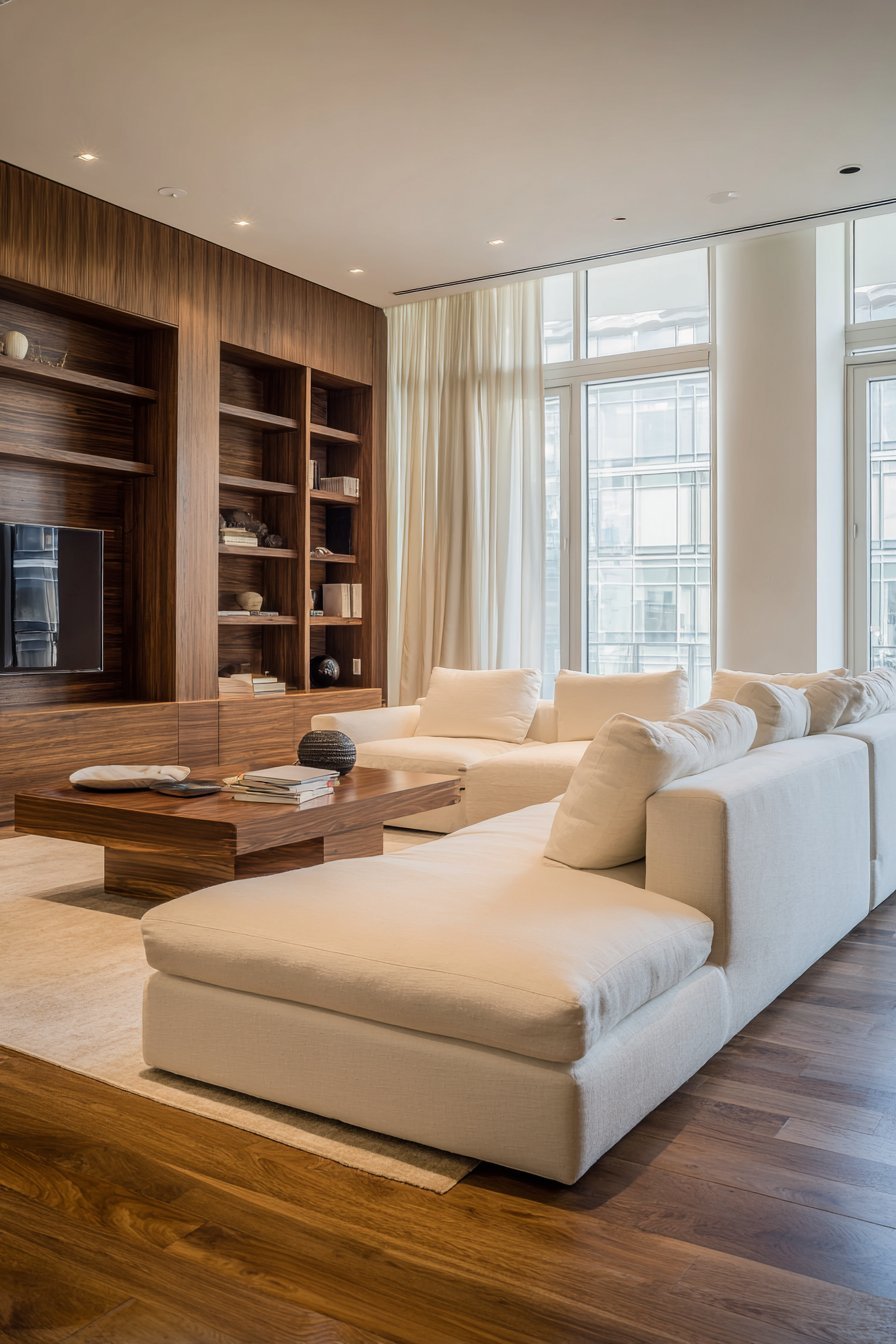
Mounting angle also matters in rooms where ideal positioning is compromised by architecture or furniture layout. A tilting TV mount allows the screen to be adjusted 5–15 degrees downward, compensating for higher mounting positions. Full-motion articulating mounts provide maximum flexibility but add bulk behind the screen. For a truly clean, designer look, a low-profile flush mount that keeps the TV as close to the wall as possible is always the preferred choice.
- Mount the TV so its center aligns with seated eye level (42–48 inches for most)
- Use a low-profile flush mount bracket for the cleanest wall installation
- Choose a tilting mount if architectural constraints force a higher position
- Always use a stud finder and mount into wall studs or use a proper anchor system
- Measure and mark the exact center of your planned installation before drilling
- Test the viewing angle from every seat in the room before finalizing position
6. Incorporate a Soundbar or Speaker System Elegantly
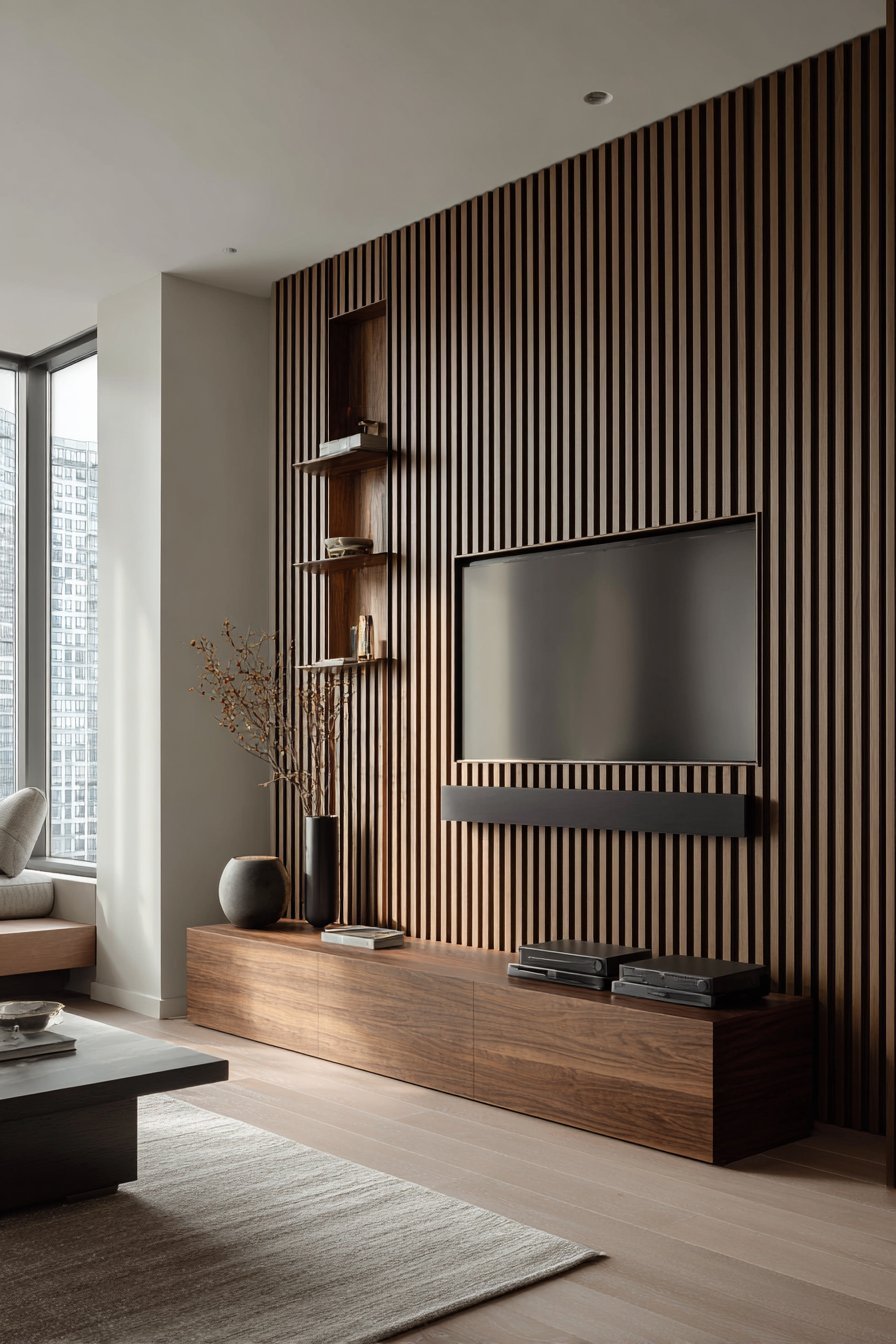
Audio is inseparable from the TV viewing experience, yet speakers and soundbars are frequently handled in ways that undermine the visual design. Integrated audio solutions are a mark of a truly considered TV wall — the sound system should feel designed in, not bolted on as an afterthought.
A slim, frameless soundbar mounted directly below or above the TV — flush with the screen’s width — reads as a deliberate design element rather than an accessory. The soundbar essentially becomes part of the TV composition, extending the horizontal line of the screen. Brands offering ultra-slim profiles are far better suited to designer installations than bulky or prominently branded models.
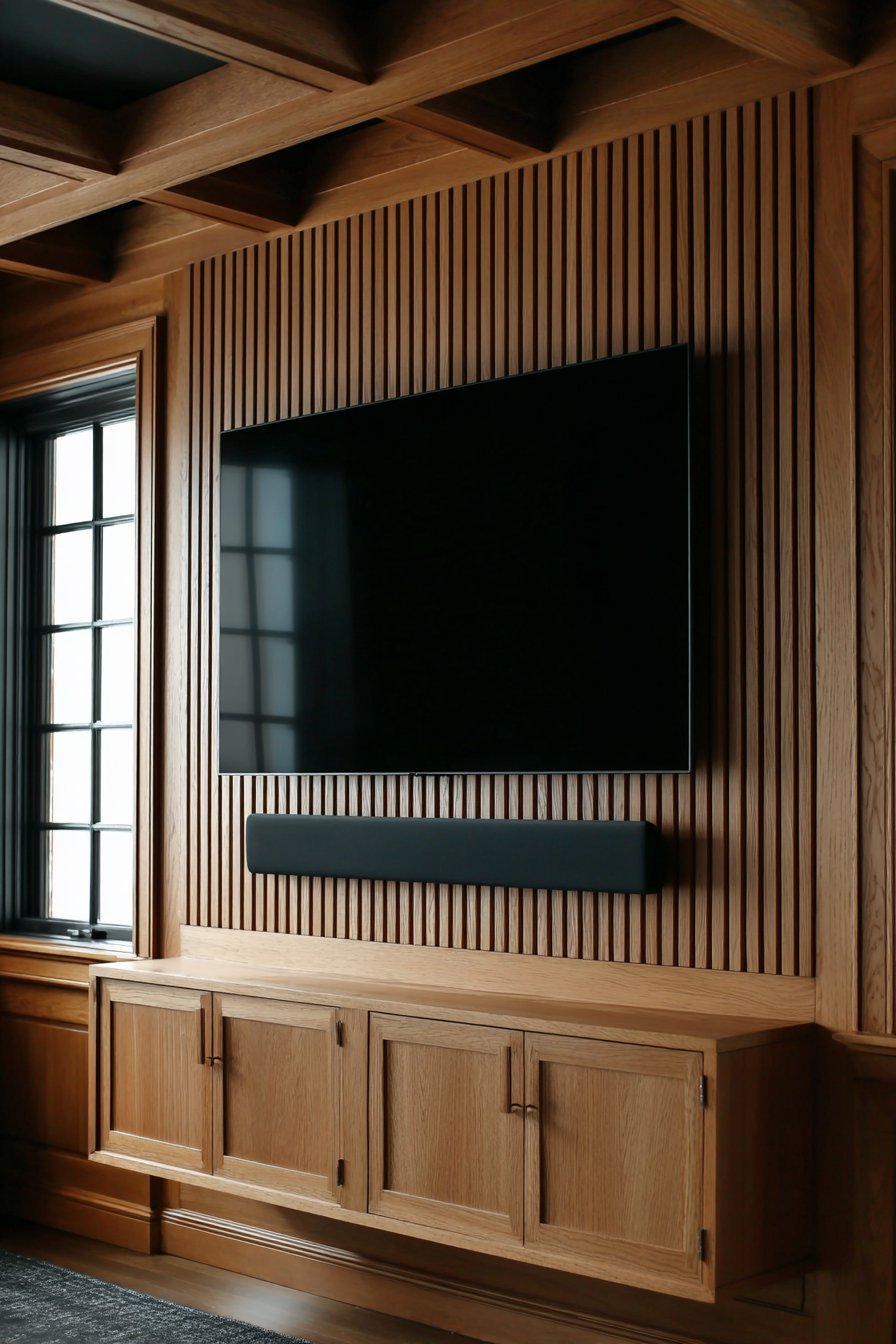
For those seeking a more architectural audio solution, in-wall or in-ceiling speakers eliminate visible speaker equipment entirely. Combined with a hidden subwoofer inside closed cabinetry, this approach delivers excellent sound from completely invisible sources. The investment is higher, but the visual result is unmatched — a TV wall with no visible audio equipment at all is a genuinely impressive design achievement.
- Choose a slim, wide soundbar that matches the TV’s horizontal width
- Mount the soundbar directly below the TV flush to the screen’s base
- Consider in-wall speaker panels for a completely equipment-free visual
- Conceal subwoofers inside closed cabinet bays below the TV
- Select audio equipment in matte black or metallic finishes matching your TV bezel
- Run all audio cables in-wall or through cabinetry — never let them hang exposed
7. Use Lighting to Transform the TV Wall
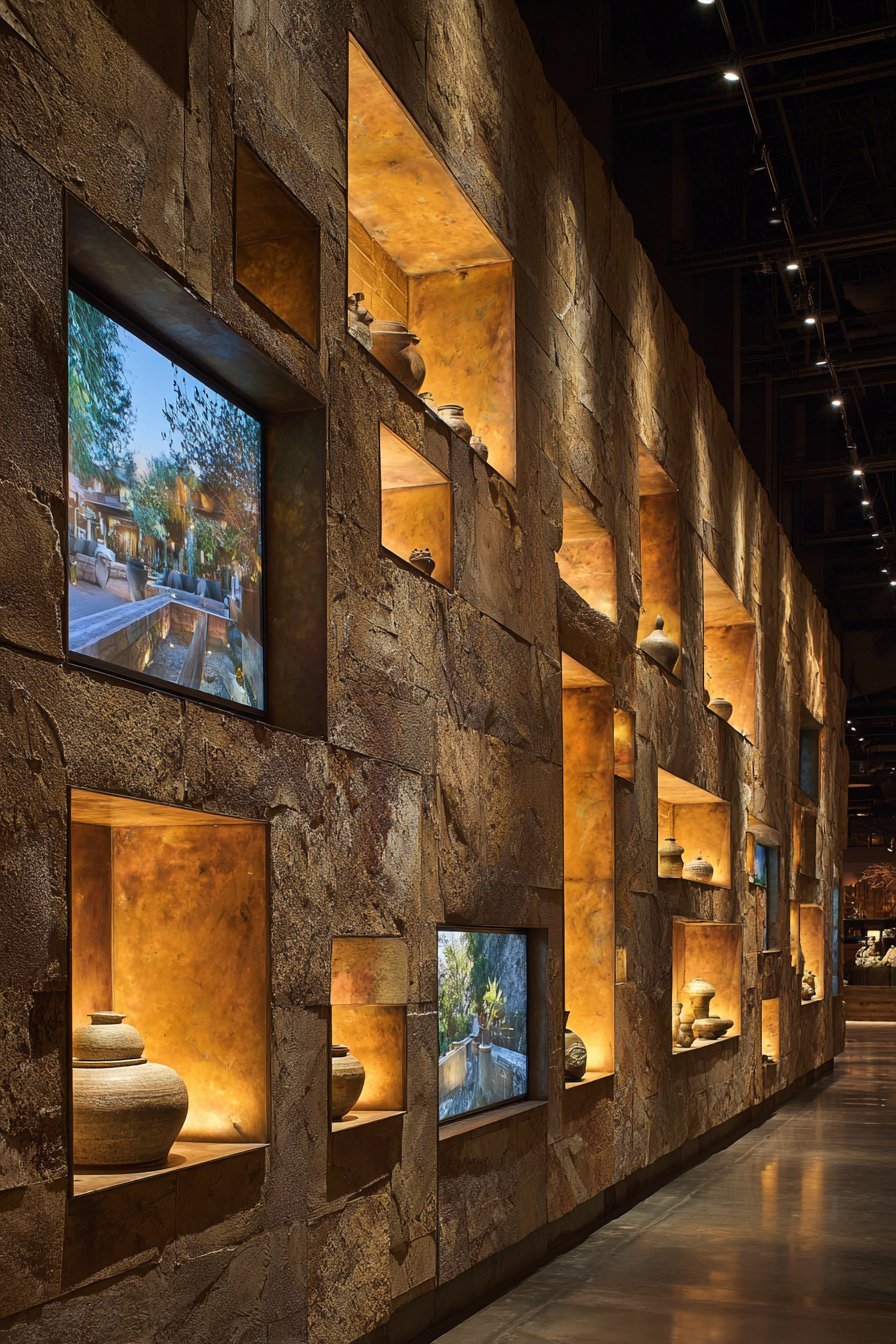
Lighting is what separates a good TV wall from an extraordinary one. Strategic lighting layers — ambient, accent, and bias lighting — work together to create an atmosphere around the screen that feels cinematic, intentional, and deeply sophisticated. Most homeowners skip this step entirely, and it shows.
Bias lighting — LED strips mounted behind the TV that cast a soft glow against the wall — reduces eye strain during viewing and creates a halo effect that makes the screen feel embedded in a designed environment. Philips Hue Play or similar smart LED systems allow color temperature adjustment to match content, and they are among the most affordable upgrades available to transform how a TV wall reads visually.
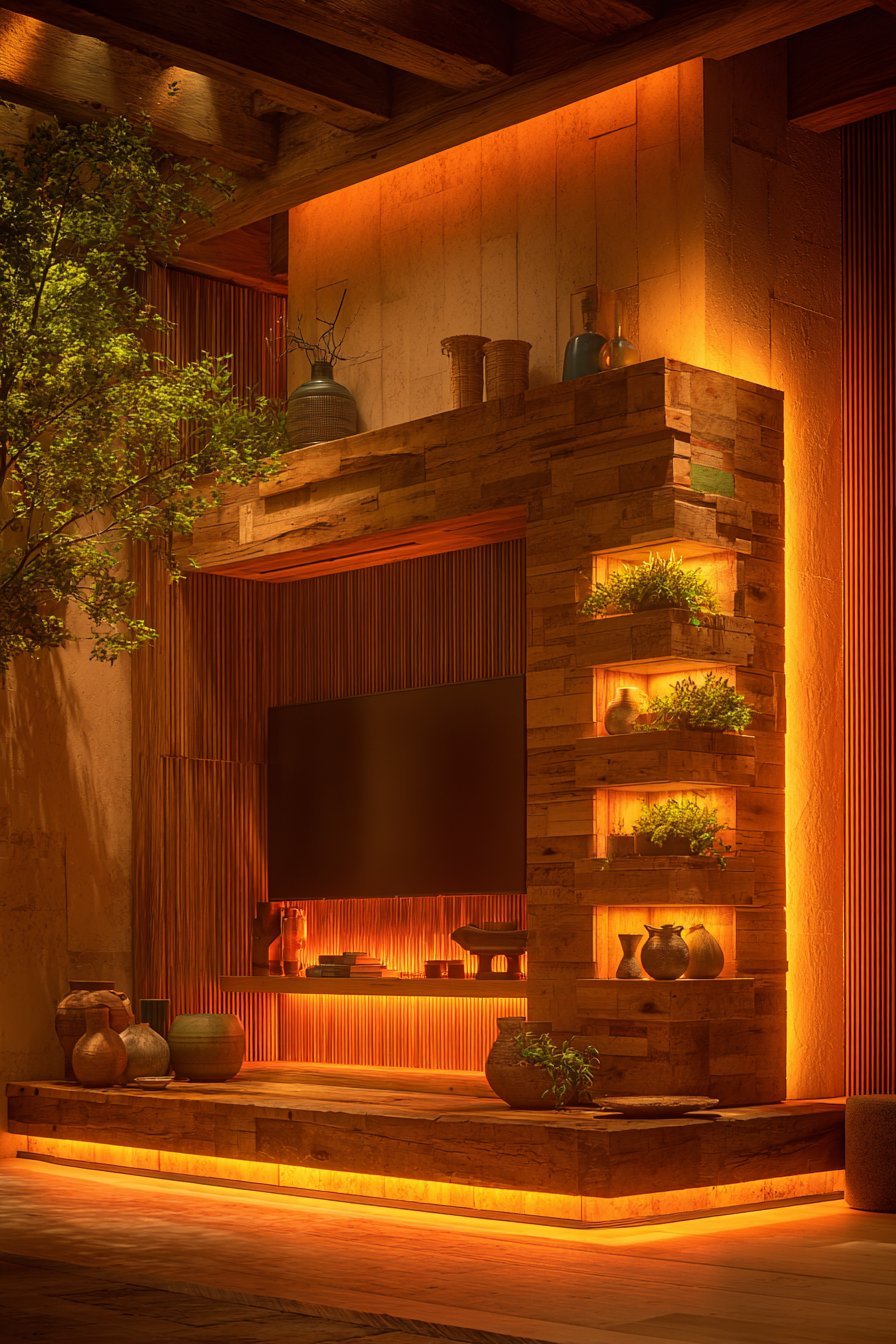
Integrated shelf and niche lighting within built-in cabinetry adds another dimension of intentional illumination. Warm LED strips lining the interior of open display niches highlight curated objects and create visual depth. Above, recessed spotlights or track lighting directed at the wall treatment draw attention to the backdrop material — particularly effective with textured surfaces like fluted panels or stone tiles that benefit from raking light.
- Install warm LED bias lighting behind the TV for visual depth and eye comfort
- Use niche lighting inside open shelving to highlight displayed objects
- Add recessed ceiling spotlights aimed at the TV wall for architectural drama
- Choose 2700–3000K warm white bulbs throughout for a cohesive ambiance
- Install dimmable switches for all TV wall lighting circuits
- Consider smart lighting systems that adjust automatically with viewing modes
8. Style the Surrounding Shelves with Designer Discipline
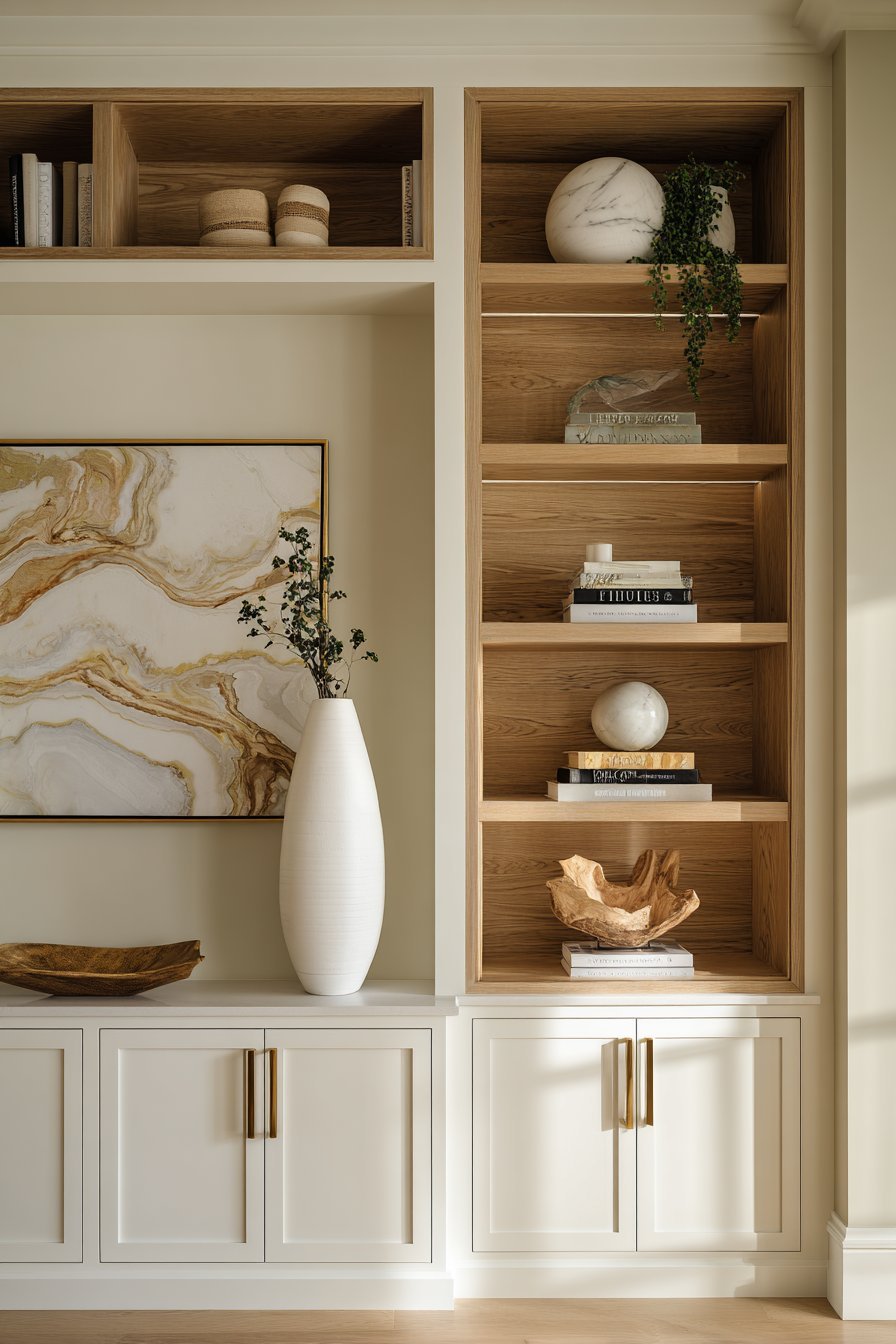
Open shelving flanking a TV wall is an opportunity and a liability in equal measure. Curated shelf styling that flanks a television can look extraordinary when done with discipline — or chaotic and busy when treated as a dumping ground for random objects. The approach you take directly determines whether the overall wall reads as designed or decorated.
The rule of three applies powerfully to shelf styling. Group objects in odd numbers — one, three, or five — at varying heights. Combine objects of different types: something tall, something low, something natural, something reflective. A carefully chosen ceramic vessel, a stack of design books, a trailing plant, and a single sculptural object can constitute an entire shelf composition that feels complete and intentional.
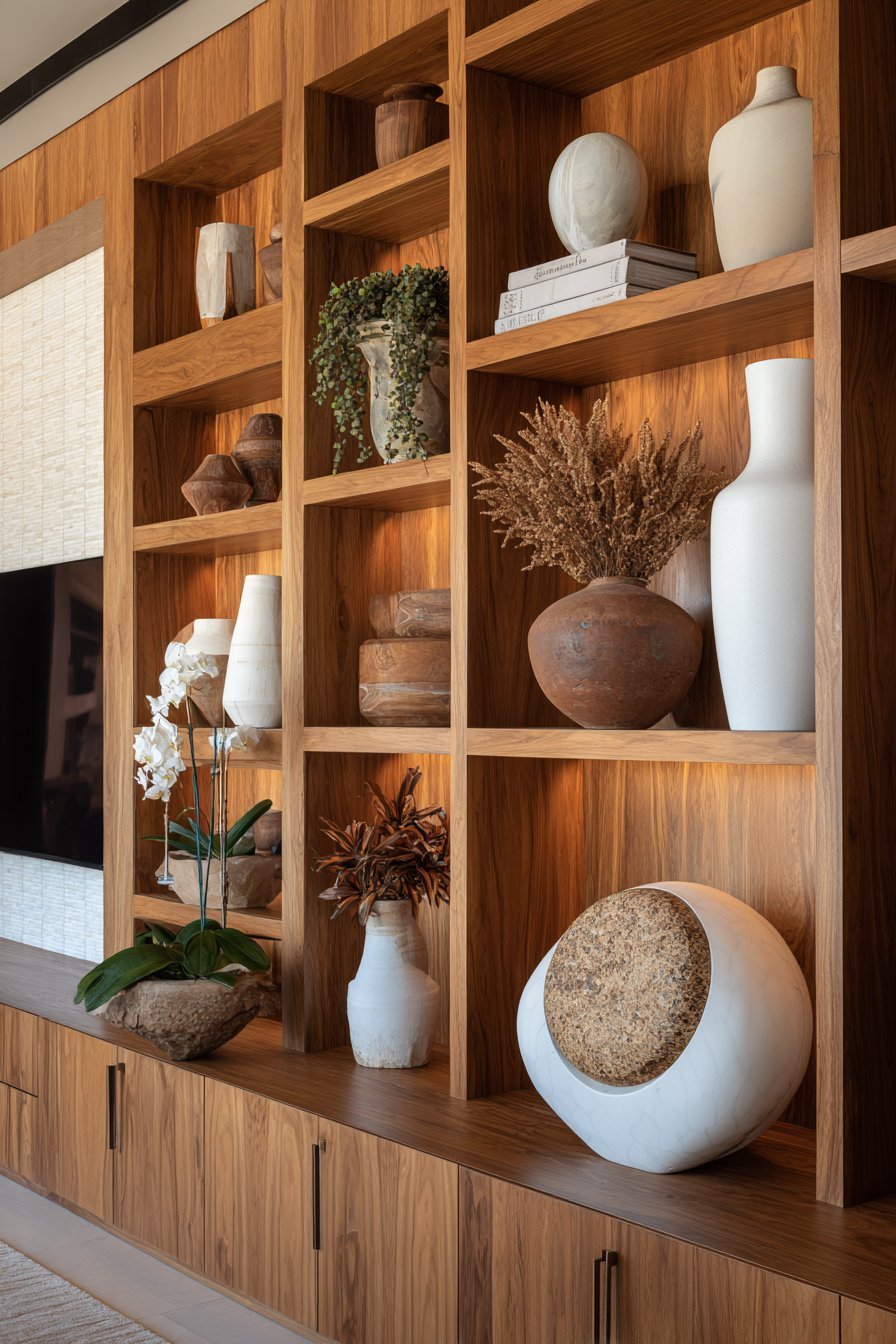
Color discipline across shelf displays is equally critical. Limit your displayed objects to two or three tones that coordinate with the room’s overall palette. Neutral objects — white ceramics, natural wood, black iron, and green botanicals — work with virtually any interior and maintain a sense of calm sophistication. Avoid displaying too many brightly colored objects or items with prominent branding and logos that compete visually with the TV.
- Apply the rule of three — group objects in odd numbers at varied heights
- Limit shelf display colors to two or three coordinating tones
- Include at least one living element — a plant or fresh botanical stems
- Remove or conceal any items with prominent branding or logos
- Rotate displayed objects seasonally to keep the composition feeling fresh
- Leave at least 30% of each shelf empty for visual breathing room
9. Integrate Art and Decorative Elements Thoughtfully
Art on or around a TV wall requires careful handling. The challenge is that the TV itself is a dominant visual element, and poorly placed art can create a cluttered composition that lacks hierarchy. Strategic art placement around a TV wall creates a conversation between design elements rather than a competition between them.
One powerful approach is the gallery-free zone directly adjacent to the TV screen itself. Rather than flanking the screen with multiple small artworks, leave the immediate wall area around the TV clear. Instead, position a single significant piece above the media console — below the TV — or within an open niche in the built-in cabinetry where it has room to breathe and be properly seen.
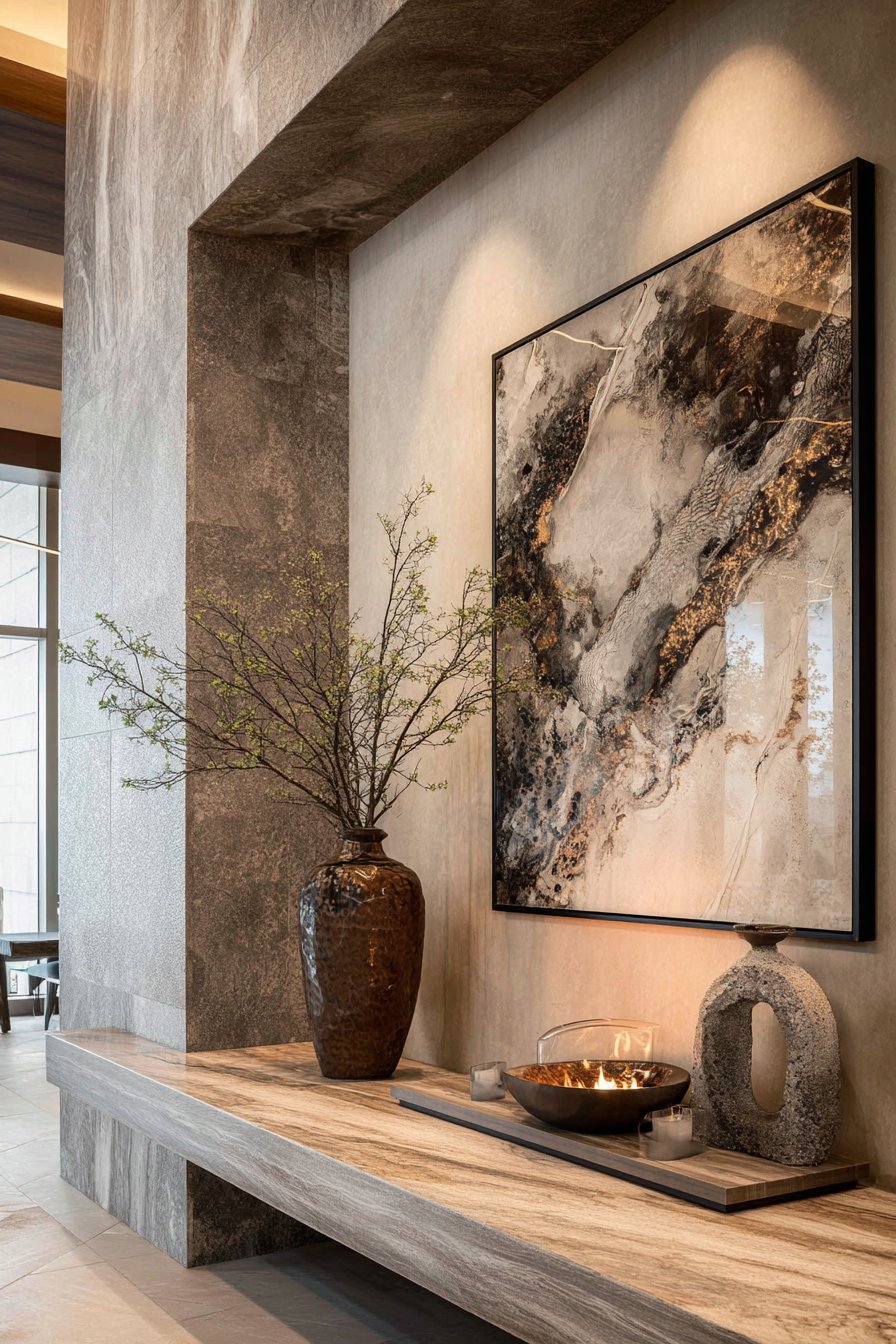
Sculptural three-dimensional objects often work better than framed art in the context of a TV wall. A beautiful ceramic sculpture in an open niche, a stack of architecture books topped with a stone object, or a single trailing plant spilling from a high shelf adds visual interest without introducing the flat competing rectangles that wall-hung frames can create against an already rectangular screen.
- Avoid hanging multiple small artworks directly beside the TV screen
- Position one significant art piece above the console or within a dedicated niche
- Use three-dimensional sculptural objects rather than framed prints near the TV
- Ensure any art piece is properly lit to give it visual presence in the composition
- Choose art that connects to your room’s palette — avoid jarring color contrasts
- Treat the TV itself as the primary visual anchor and design around it accordingly
10. Choose a TV with Designer Aesthetics in Mind
Not all televisions are created equal from a design perspective. TV selection — often driven purely by picture quality and price — should also consider how the screen looks when switched off, how it integrates into a styled wall, and how its bezel and stand interact with the overall design composition.
Samsung’s The Frame TV has become a genuine design phenomenon precisely because it addresses the aesthetic problem of the black screen directly. When switched off, it displays curated artwork from a digital gallery, making it function as a piece of framed wall art. Its anti-reflective matte display and customizable frame borders allow it to integrate into styled interiors in a way that conventional televisions simply cannot.
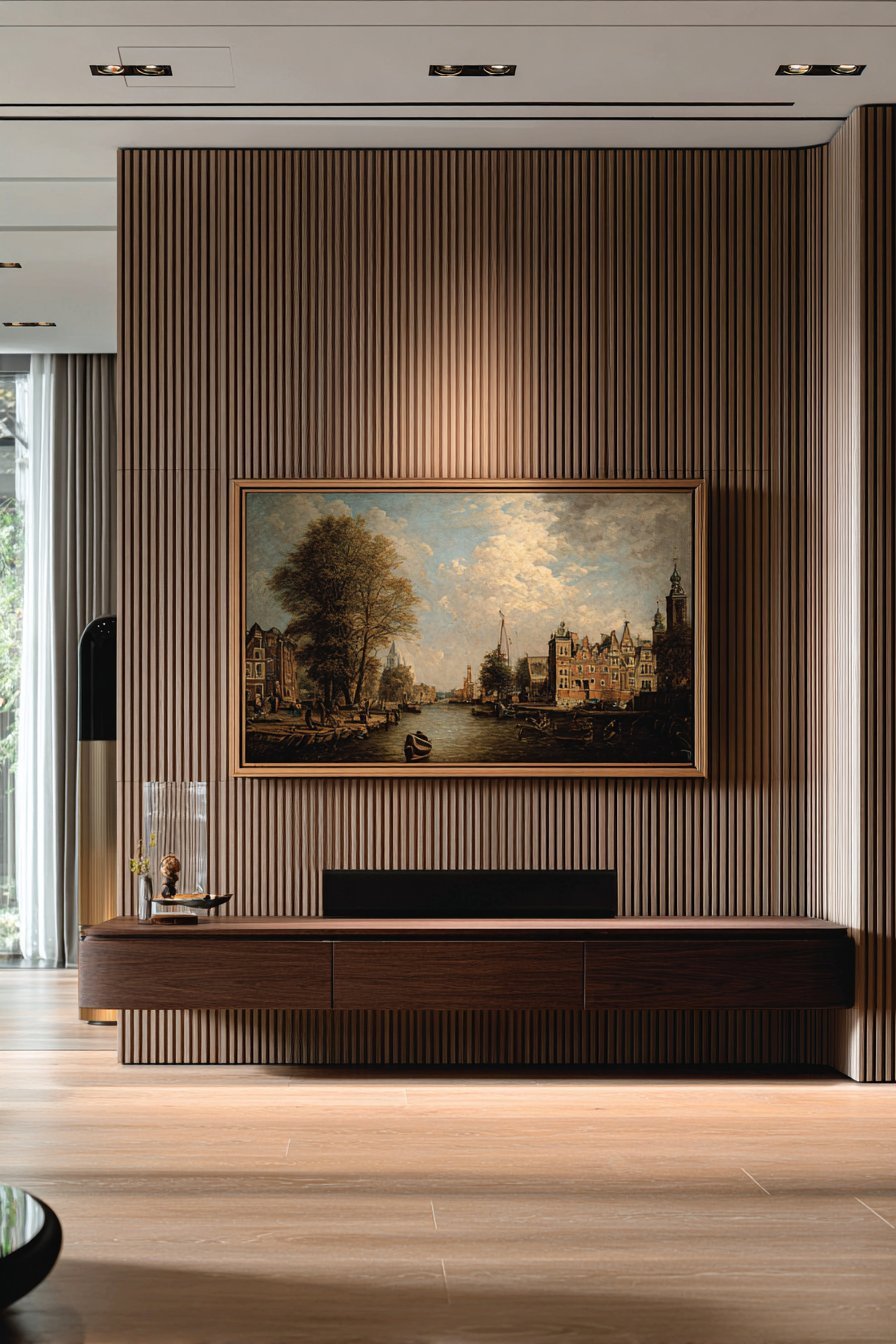
For those committed to a conventional television, bezel width and color matter enormously for design integration. Ultra-thin bezels in matte black or dark silver are far more visually elegant than thick-framed or silver-bezeled models. When mounted against a dark wall treatment, a thin matte black bezel TV essentially disappears into the backdrop when switched off — an effect that reads as deliberately designed rather than incidentally assembled.
- Consider The Frame TV by Samsung for a screen that doubles as wall art
- Prioritize ultra-thin bezels in matte black for the cleanest visual integration
- Avoid silver or glossy bezels that draw attention to the screen’s frame
- Remove the factory TV stand immediately — wall mounting is always more elegant
- Choose a screen size proportional to your wall and viewing distance
- Ensure the TV’s finish and color complement your wall treatment and cabinetry
11. Add Architectural Detail with Paneling and Millwork
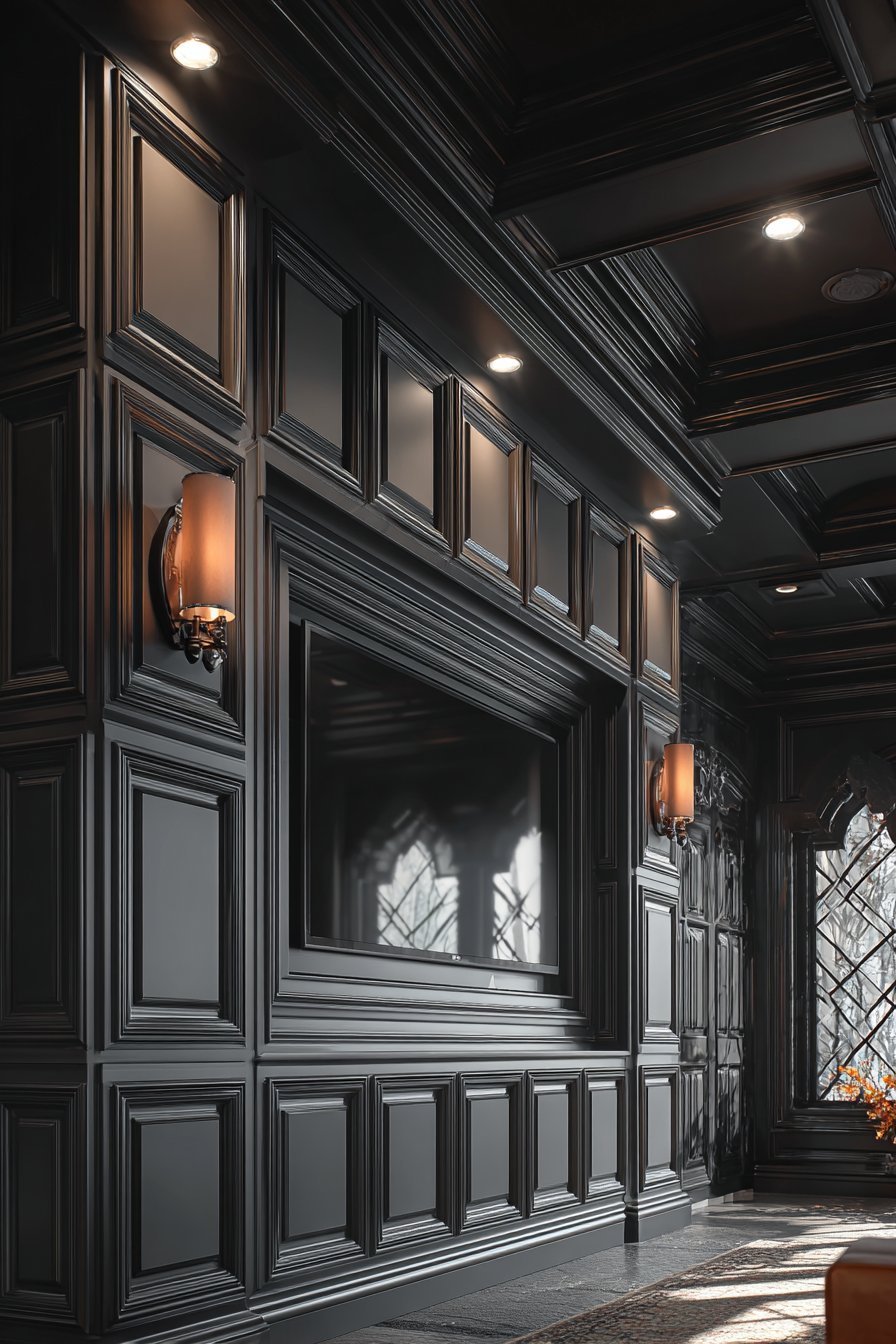
Beyond full wall treatments, architectural paneling and millwork offer a way to frame and define the TV wall within the broader room. Panel molding, wainscoting, shiplap sections, and recessed niche construction all add the kind of architectural detail that signals custom, high-end design without necessarily requiring a full renovation.
Panel molding applied in geometric patterns directly on a painted wall is one of the most cost-effective ways to add architectural character to a TV wall. Simple rectangular molding frames — painted the same color as the wall for a tonal, understated effect — create depth and visual interest that transforms a plain surface into something that feels considered and crafted.
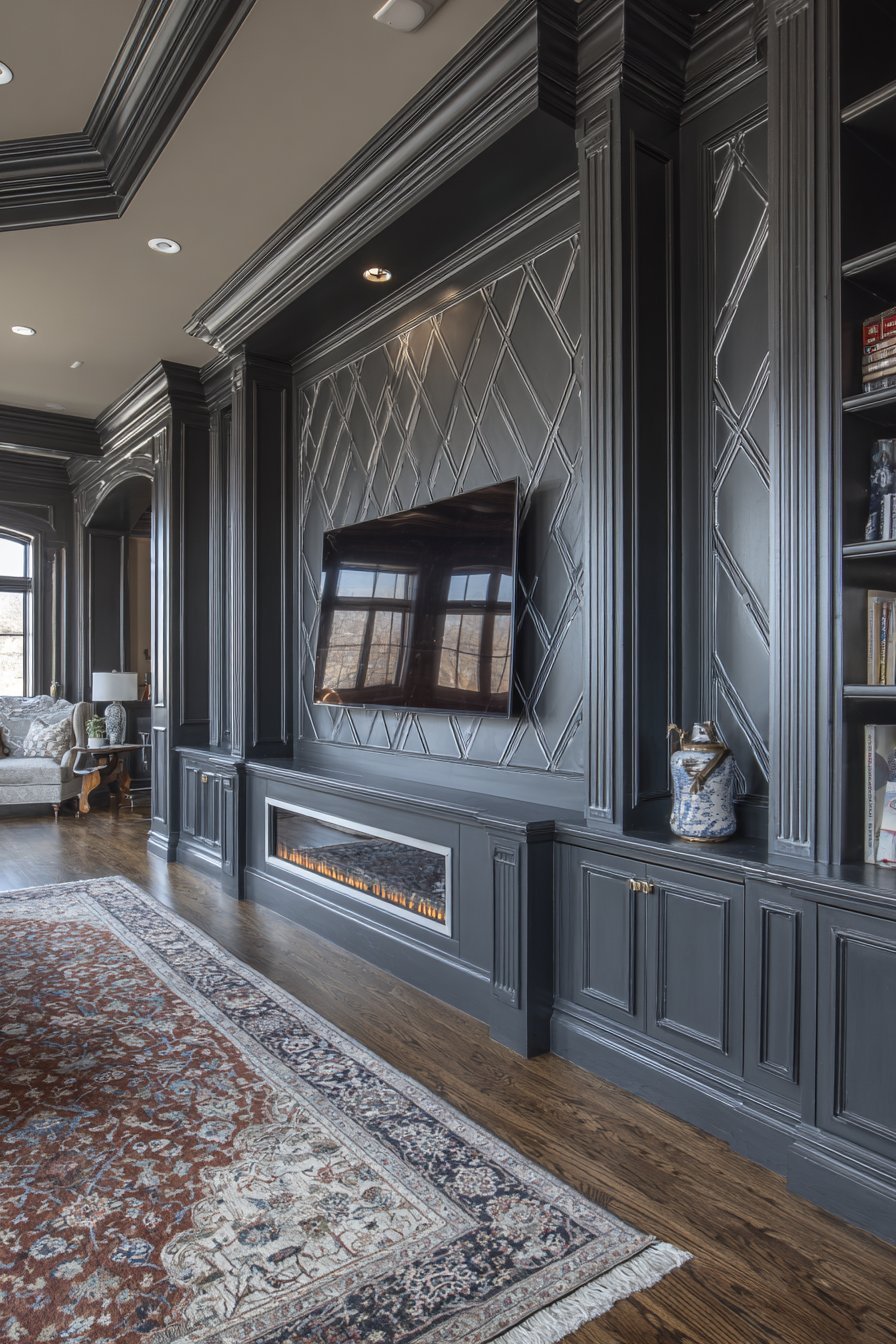
Constructing a recessed TV niche — a shallow inset in the wall that houses the TV flush with the surrounding surface — is the most architecturally refined approach to television integration. It requires the most construction effort, typically involving a structural assessment and drywall work, but the result is unmatched. The screen sits within the wall architecture rather than projecting from it, creating a seamlessly integrated result that is the hallmark of truly custom interior design.
- Apply panel molding in geometric patterns for affordable architectural character
- Paint molding in the same tone as the wall for a sophisticated tonal effect
- Explore a recessed TV niche for the most architecturally refined integration
- Use ceiling coffers or extended millwork to connect the TV wall to surrounding architecture
- Consider shiplap sections for casual contemporary or coastal modern aesthetics
- Always prime and finish millwork properly — sloppy execution undermines elegant design
12. Maintain Cohesion with the Rest of the Room
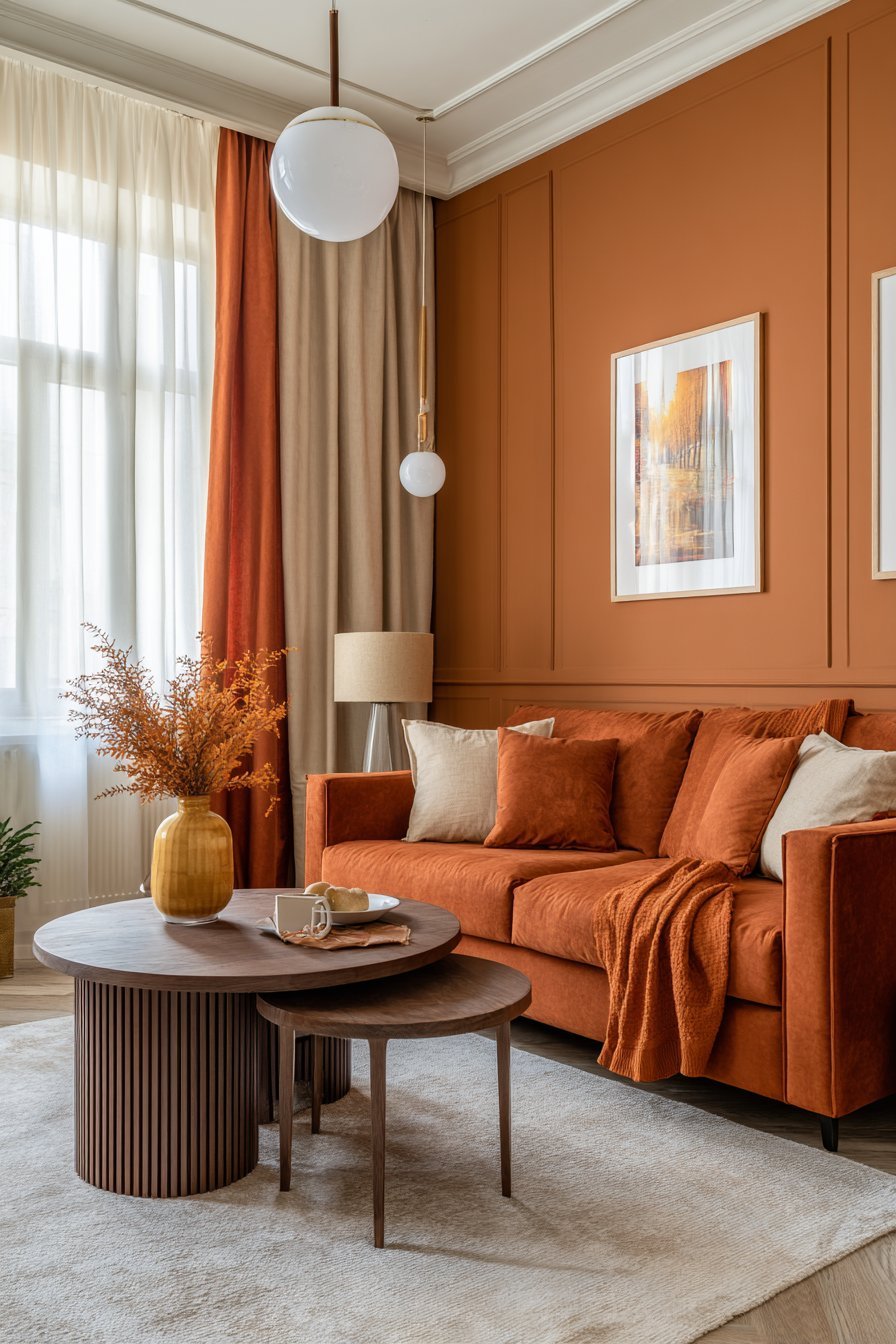
A designer TV wall does not exist in isolation. Its success depends entirely on how well it connects to the broader room. Materials, colors, finishes, and stylistic language must flow from the TV wall into the rest of the living space without jarring transitions or inconsistencies that signal the wall was designed separately from the room.
Material echo is a principle that ensures cohesion. If your TV wall features white oak fluted panels, introduce white oak as a material elsewhere in the room — in a coffee table leg, a side table surface, or a decorative object. This repetition creates a visual thread that ties the room together and makes the TV wall feel like a natural part of a complete design rather than a feature grafted onto an otherwise unrelated space.
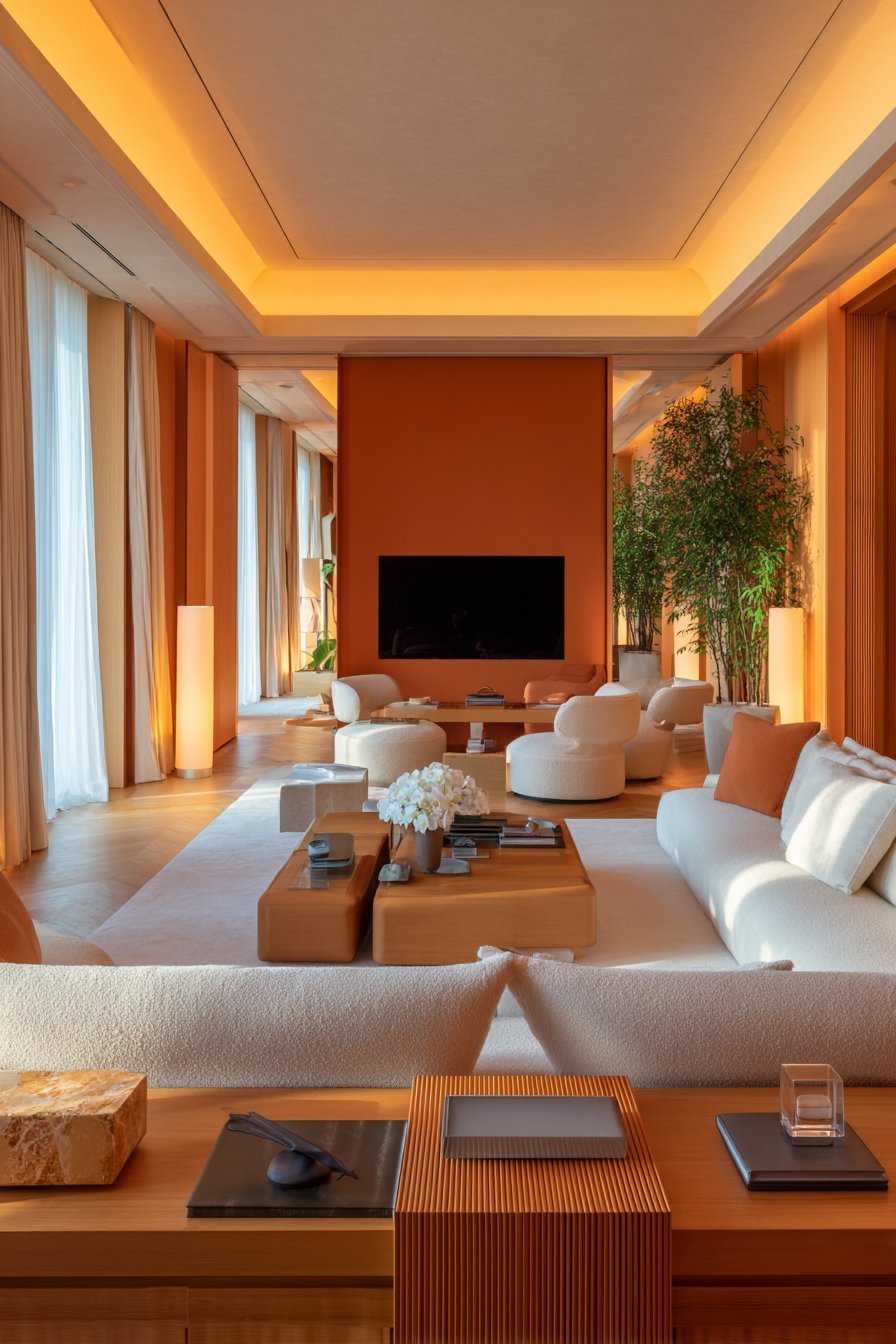
The color story of the TV wall must also respect the room’s overall palette. If your sofa is in warm terracotta tones and your rugs are in neutral beige, a cool grey TV wall backdrop will feel disconnected. Designer rooms achieve harmony by ensuring that the TV wall’s tones are drawn from the same palette as the furnishings, textiles, and accessories throughout the space.
- Repeat one key material from the TV wall in at least two other room elements
- Ensure the TV wall color palette coordinates with furnishings and textiles throughout
- Carry lighting design language — fixture style, finish, and temperature — across the room
- Avoid TV wall treatments that are stylistically inconsistent with the rest of the interior
- Review the TV wall from multiple room positions to assess visual integration
- Treat the TV wall as a chapter within the room’s design story — not its own separate story
Conclusion
Creating a modern TV wall that genuinely looks designer is not about spending the most money or following the latest trend. It is about making deliberate, cohesive decisions at every step — from wall treatment and cabinetry to lighting and cable management. Each element compounds on the others, and the result is either a wall that feels considered and refined or one that reveals the absence of a guiding design vision.
Start with the decisions that matter most — wall treatment, mounting height, and cable management — and build outward from there. Great design is always iterative: style, assess, refine, and edit until every element earns its place. Your TV wall is one of the most-seen surfaces in your home. With the right approach, it can also be one of the most beautifully designed.
