

There is a quiet, unhurried beauty to a vintage nursery that feels entirely unlike any other design style. Soft heirloom textures, aged wood tones, and the gentle patina of things lovingly used across generations create an atmosphere of warmth and continuity that modern design rarely achieves. A vintage nursery communicates something deeply meaningful: that this child is entering a world with a rich past, that beauty can be found in imperfection, and that the most precious things in life are those that carry the marks of time and love.
The vintage nursery aesthetic has experienced a remarkable resurgence in recent years, driven by a growing desire among parents for nurseries that feel genuine, considered, and deeply personal rather than catalog-perfect and commercially assembled. From antique iron cribs and aged rocking chairs to hand-embroidered quilts and hand-painted ceramic nursery accessories, the elements that define a vintage nursery are ones that no factory can produce on demand — they must be found, sourced, and patiently curated from markets, antique dealers, estate sales, and the treasured collections of family and friends.
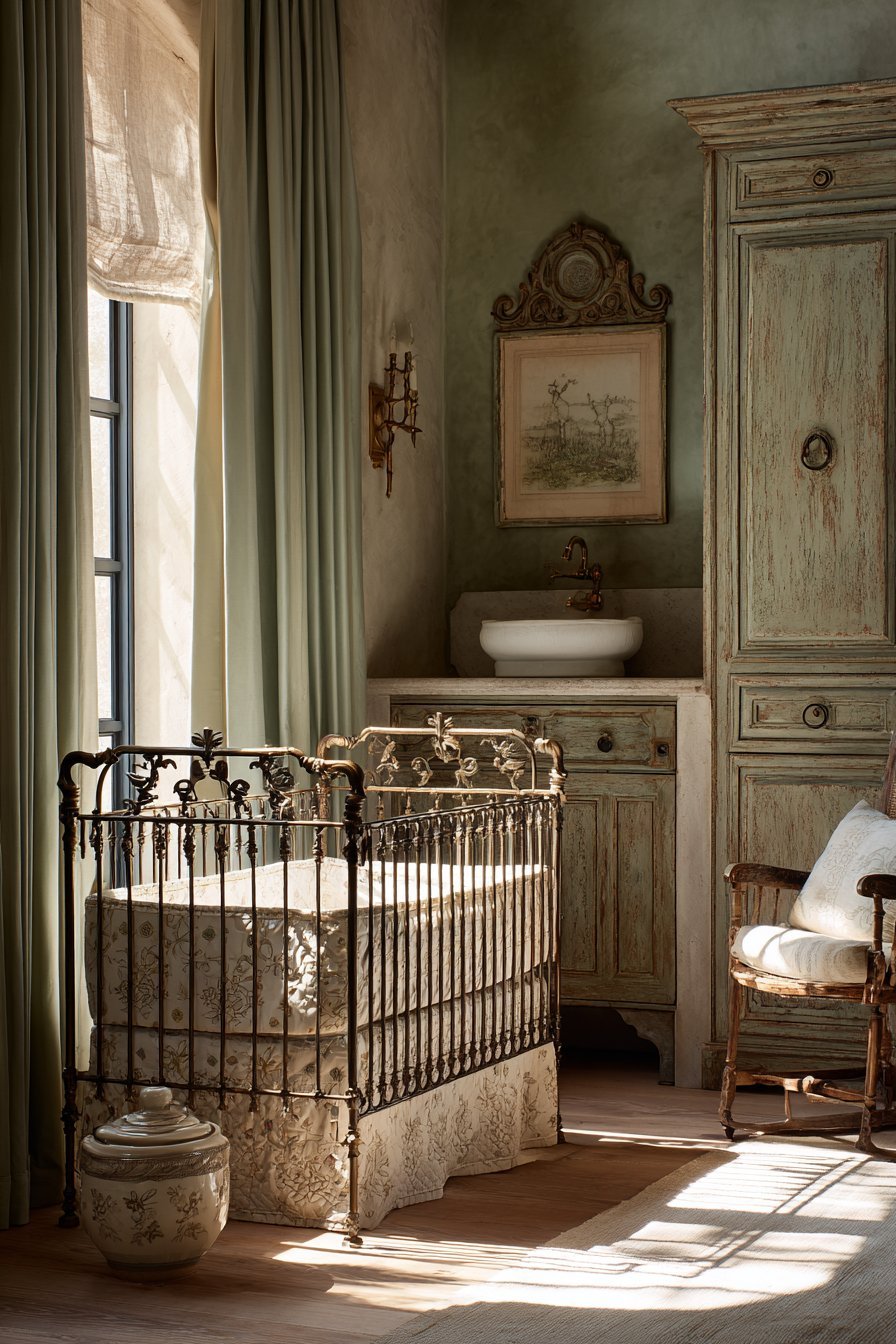
This article walks you through everything you need to know before embarking on a vintage nursery project — from safety considerations and sourcing strategies to color palettes, theme directions, and the specific design elements that create the most authentic, beautiful vintage atmosphere. Whether you are starting from scratch or incorporating inherited pieces into a new design, these insights will help you approach your vintage nursery with confidence, clarity, and a well-informed creative vision.
1. Understand the Safety Considerations Unique to Vintage Nurseries
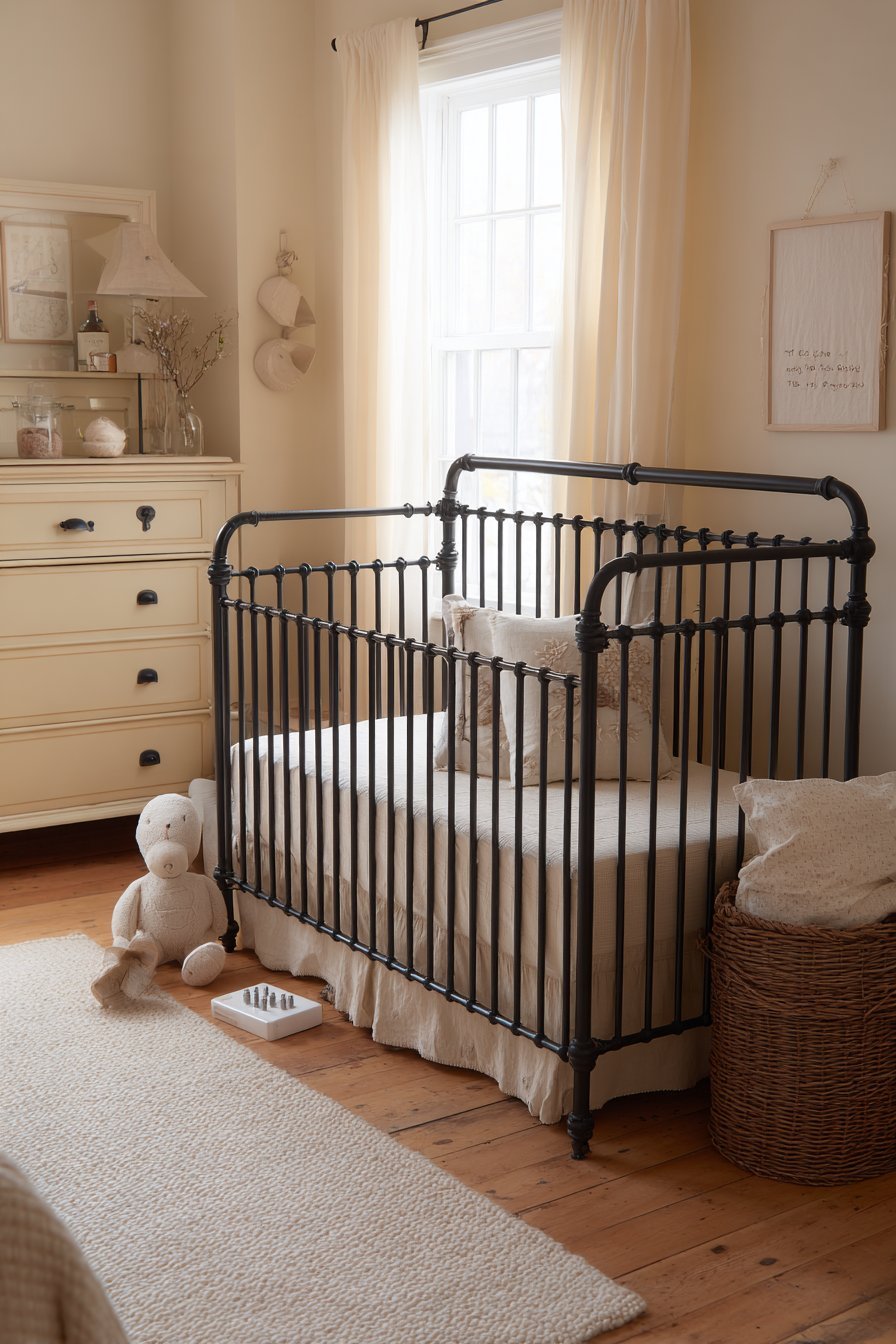
Safety is the most critical starting point for any vintage nursery project — and it deserves thorough, unhurried attention before a single antique piece is incorporated into the room. Vintage and antique nursery items were manufactured to the safety standards of their era, which in many cases differ dramatically from current regulations. Understanding which items carry genuine safety risks and which can be used freely is the essential foundation of a beautiful and safe vintage nursery.
Vintage cribs and cots are among the most important safety considerations in the entire project. Pre-2011 cribs in many countries were manufactured with drop-side mechanisms that have since been banned due to infant entrapment and strangulation risks. Older cribs may also have spindle spacing that exceeds current safe standards — spindles should be no more than 60mm apart to prevent head entrapment. Antique iron cribs, while visually extraordinary, may have peeling paint that contains lead, loose joints that create entrapment risks, or mattress dimensions that do not correspond to any modern safe mattress size. For these reasons, vintage cribs should generally be used as decorative features only, with a new safety-certified crib used as the actual sleep surface.
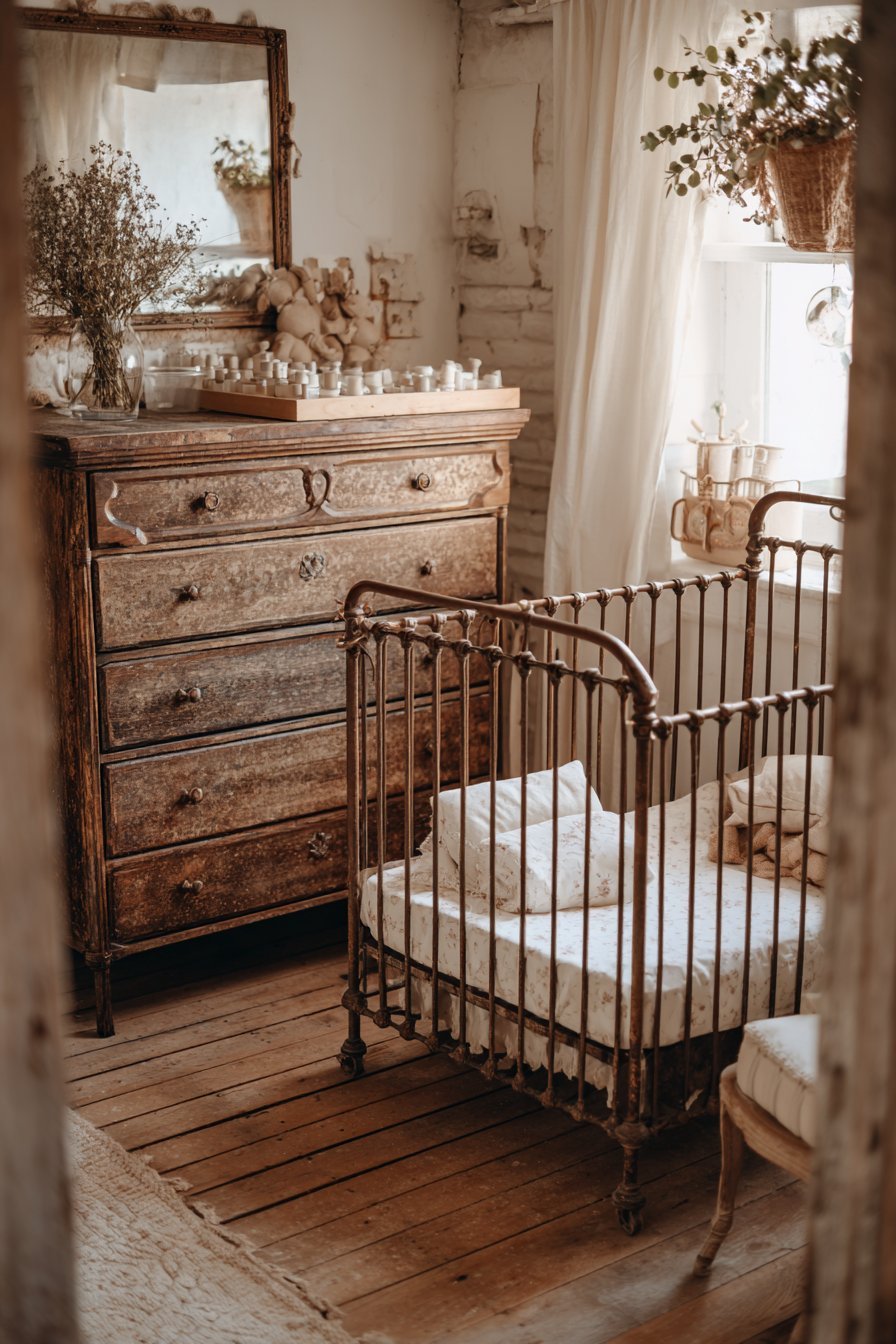
Lead paint is a significant concern in any antique or pre-1970s furniture piece that retains its original painted finish. Lead was a standard ingredient in domestic paint until it was phased out in most countries during the 1970s and 1980s. Inexpensive lead paint test kits are available from hardware stores and should be used on any vintage painted furniture — particularly dressers, wardrobes, and chairs — before they are introduced into a nursery. If lead is detected, the piece must either be professionally stripped and refinished or used only in areas where the baby will have no physical contact with its painted surfaces.
- Never use a vintage or antique crib as a functional infant sleep surface — use it decoratively only
- Test all vintage painted furniture for lead content using an inexpensive hardware store test kit
- Check vintage spindle spacing — no more than 60mm between spindles is the current safety standard
- Ensure all vintage textiles are thoroughly laundered and free of moth treatment chemicals before use
- Have a qualified electrician inspect and rewire any vintage lighting fixtures before installation
2. Define Your Vintage Era and Aesthetic Direction
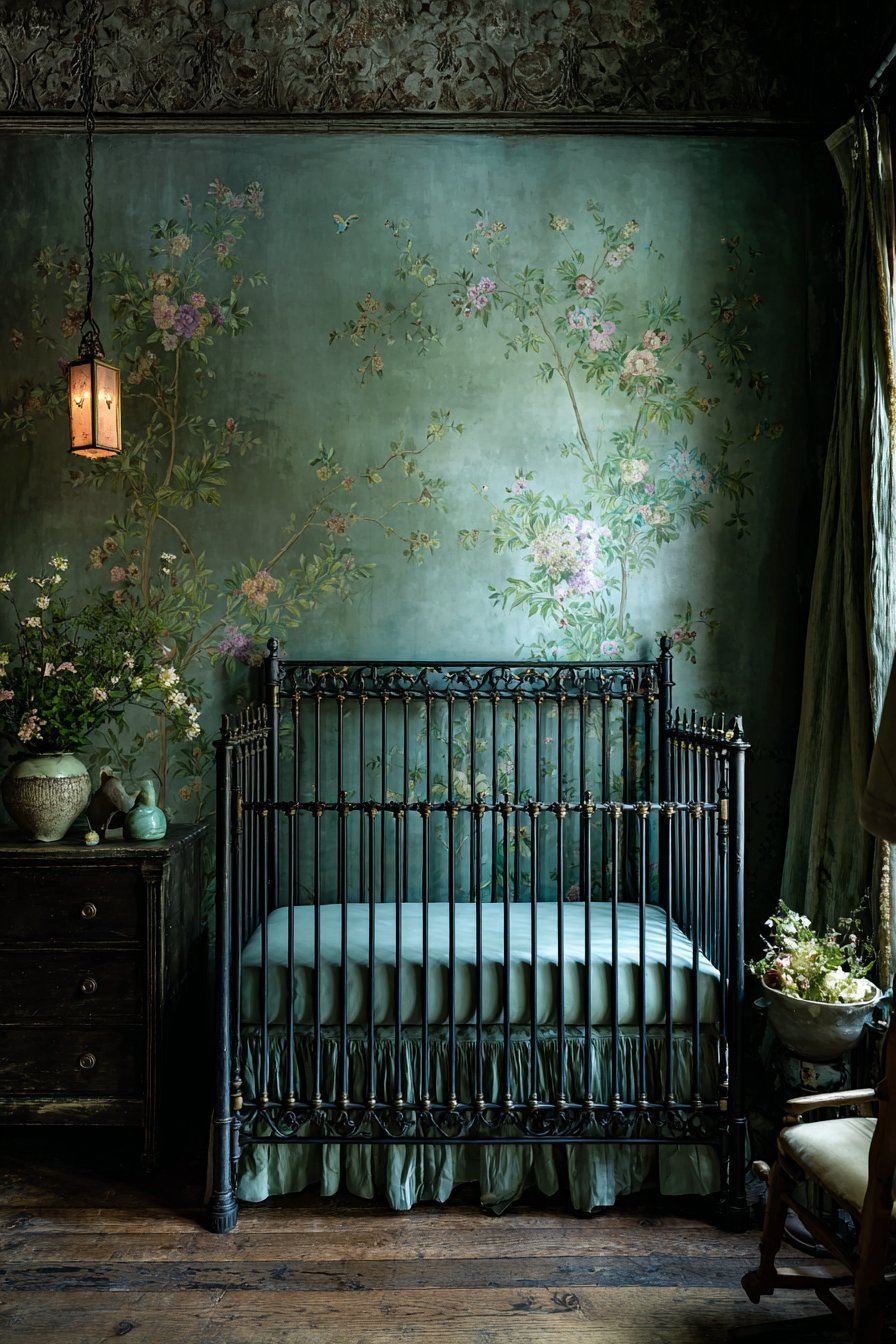
The word “vintage” covers a remarkably wide design territory — from the ornate Victorian nurseries of the 1880s to the pastel Mid-Century Modern nurseries of the 1950s to the rustic farmhouse charm of an early twentieth-century country nursery. Before sourcing a single item, it is enormously valuable to define the specific vintage era that most speaks to your aesthetic sensibility, as each period has its own distinct visual language, color palette, furniture style, and decorative vocabulary.
Victorian and Edwardian vintage nurseries (1880s–1910s) are characterized by ornate ironwork, rich floral patterns, lace and broderie anglaise textiles, dark stained wood, and a sense of formal, elaborate beauty. This era’s nursery aesthetic draws on deep jewel tones — burgundy, forest green, navy — alongside ivory and aged white, with highly decorative details in every element from the furniture carvings to the wallpaper repeats. Recreating this aesthetic requires patience and specific sourcing but creates a nursery of truly extraordinary richness and historical depth.
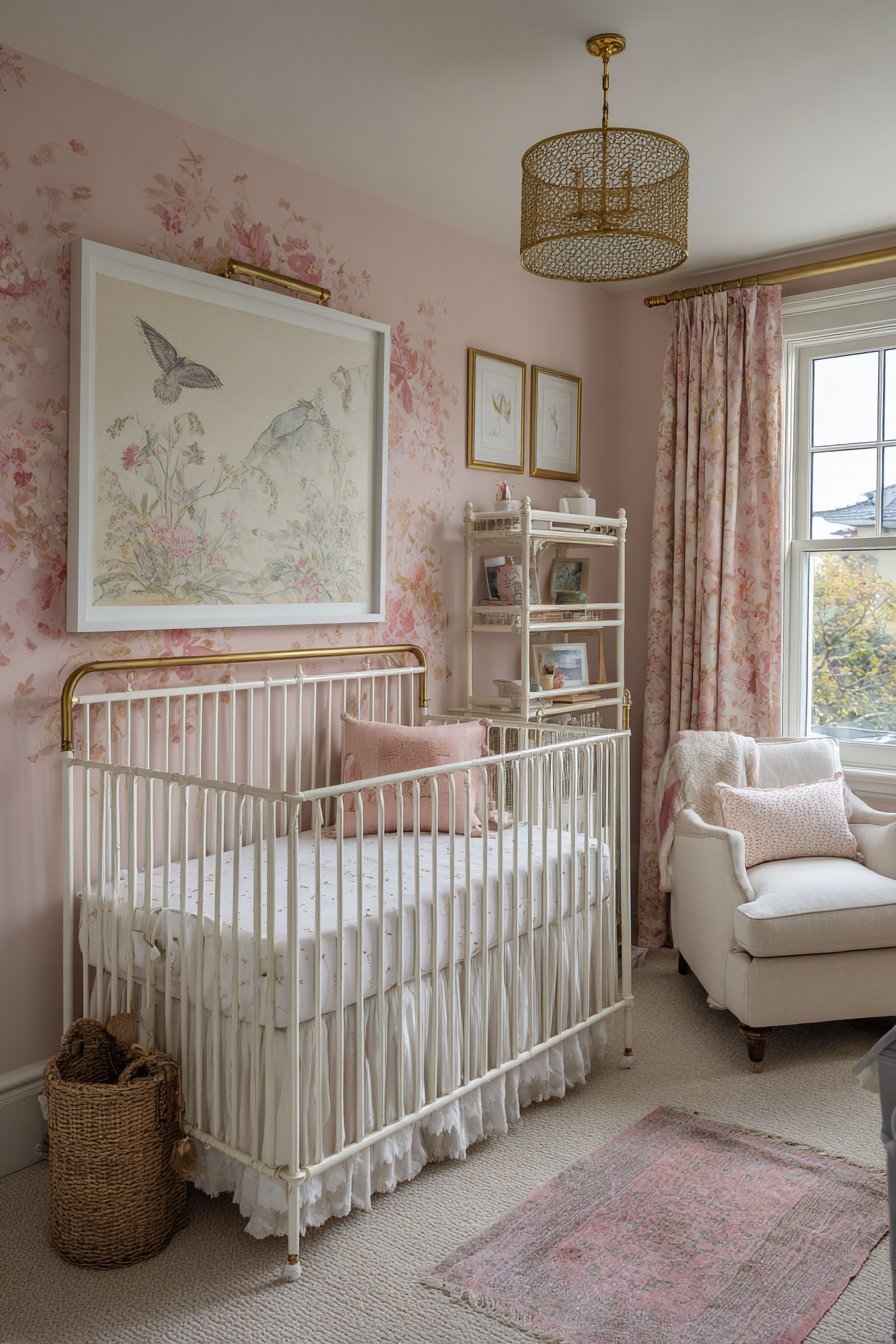
1920s to 1940s vintage nurseries sit at the intersection of Arts and Crafts simplicity and early Art Deco influence — characterized by solid, well-crafted timber furniture, simple geometric patterns, hand-painted ceramic accessories, and a palette of dusty sage, warm cream, cornflower blue, and pale yellow. This era’s aesthetic feels more accessible and livable than the Victorian period, and its design elements are somewhat easier to source at markets and antique dealers. The hand-crafted, artisanal quality of this period’s objects — hand-thrown pottery, woven baskets, hand-embroidered textiles — gives it a particular warmth and authenticity.
- Research the specific vintage era that appeals to you before sourcing any furniture or accessories
- Create a reference mood board of images from your chosen era to guide every purchase decision
- Choose one primary era as your design foundation — mixing multiple vintage periods can feel incoherent
- Victorian and Edwardian aesthetics suit larger nurseries with higher ceilings and more ornate architecture
- Mid-century and early twentieth-century aesthetics translate more easily into contemporary home settings
3. Build a Vintage-Appropriate Color Palette
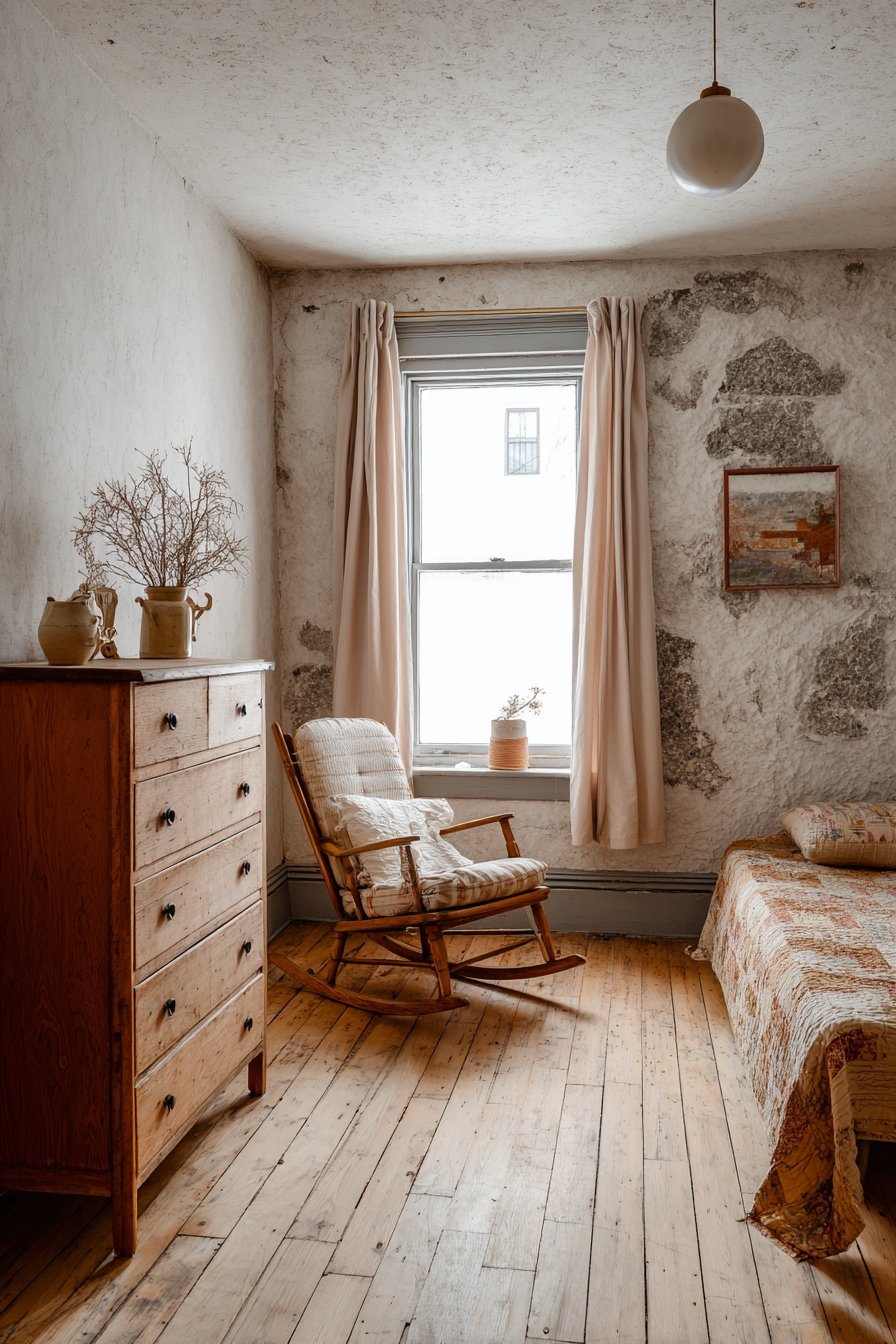
Color is one of the most powerful tools for establishing an authentic vintage atmosphere in a nursery — and the palettes associated with genuine vintage design differ significantly from the bright, saturated tones of contemporary nursery color trends. Aged, faded, and softened versions of colors that were once vivid are the hallmark of an authentic vintage palette — tones that appear as though they have been gently bleached by decades of sunlight and washing into something softer, more complex, and more beautiful than they were in their original form.
Authentic vintage nursery palettes draw from a specific family of tones that immediately signal age and patina: antique white, aged ivory, dusty powder blue, faded sage green, worn rose pink, soft buttermilk yellow, and weathered dove grey. These are not the crisp, clean versions of these colors that you find in contemporary paint ranges — they are their older, more complex cousins, carrying subtle undertones of beige, grey, and warmth that give them a lived-in quality that is impossible to achieve with modern pigments alone. Look for heritage paint ranges from specialist companies that formulate colors specifically to recreate historical tones.
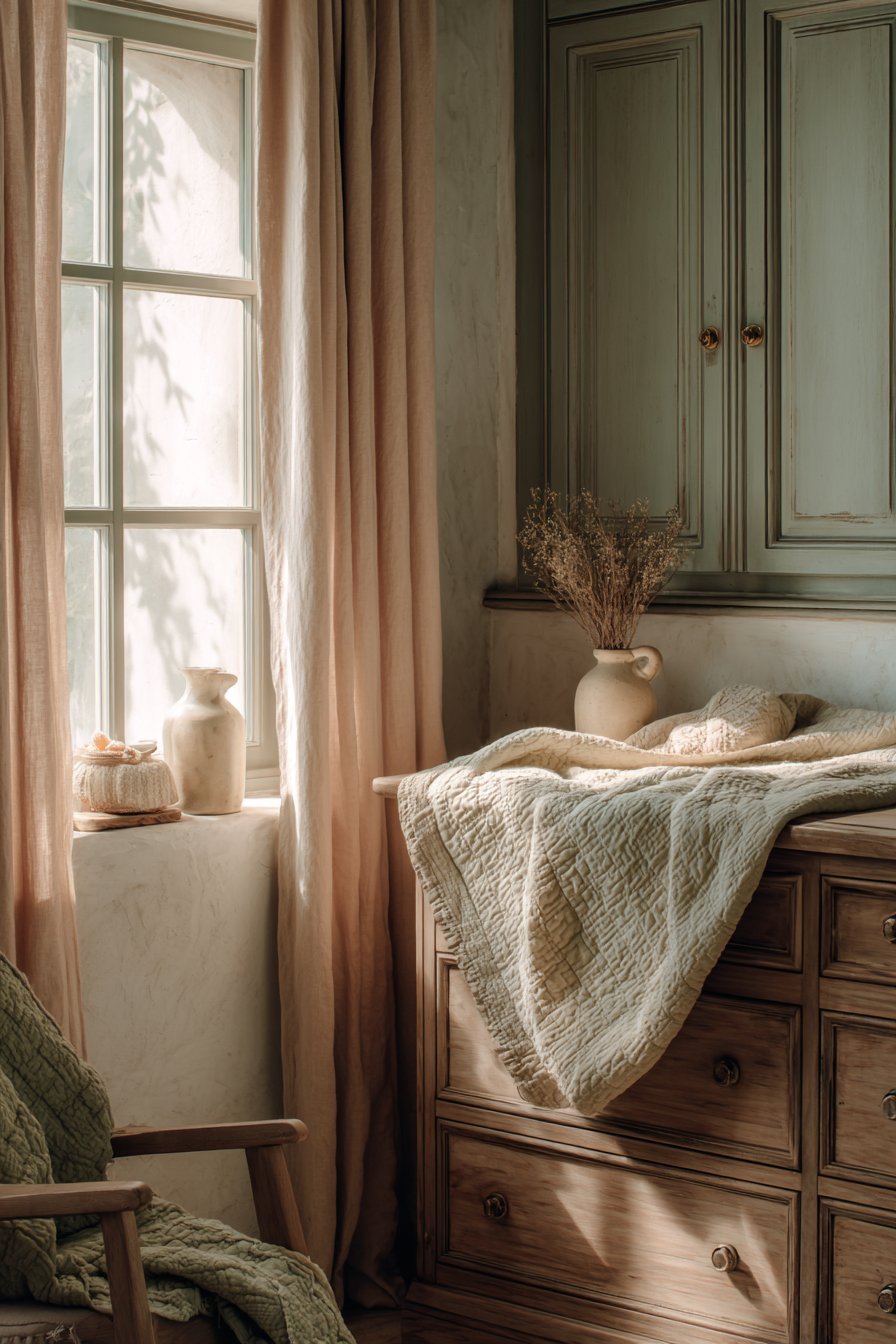
Layering aged tones from slightly different periods and color families — a dusty powder blue wall with ivory woodwork, aged rose textiles, and faded sage green accessories — creates the tonal complexity of a genuinely aged room that has accumulated its colors over decades rather than being painted all at once. This is one of the most important and most difficult-to-articulate qualities of authentic vintage interiors: the sense that the room’s colors were never perfectly matched, that they arrived at different times and from different sources, and that they have since been gently softened by time into an accidentally perfect harmony.
- Choose heritage or historical paint ranges for the most authentic vintage color results
- Build the palette around antique white, dusty powder blue, faded sage, aged rose, or soft buttermilk
- Layer tones from the same vintage family rather than seeking perfect color matching
- Use oil-based or eggshell paint finishes — their slight sheen is more authentic to vintage aesthetics than flat matte
- Test all colors against actual vintage pieces in the room — the patina of old objects affects how colors read
4. Source Furniture Strategically and Safely
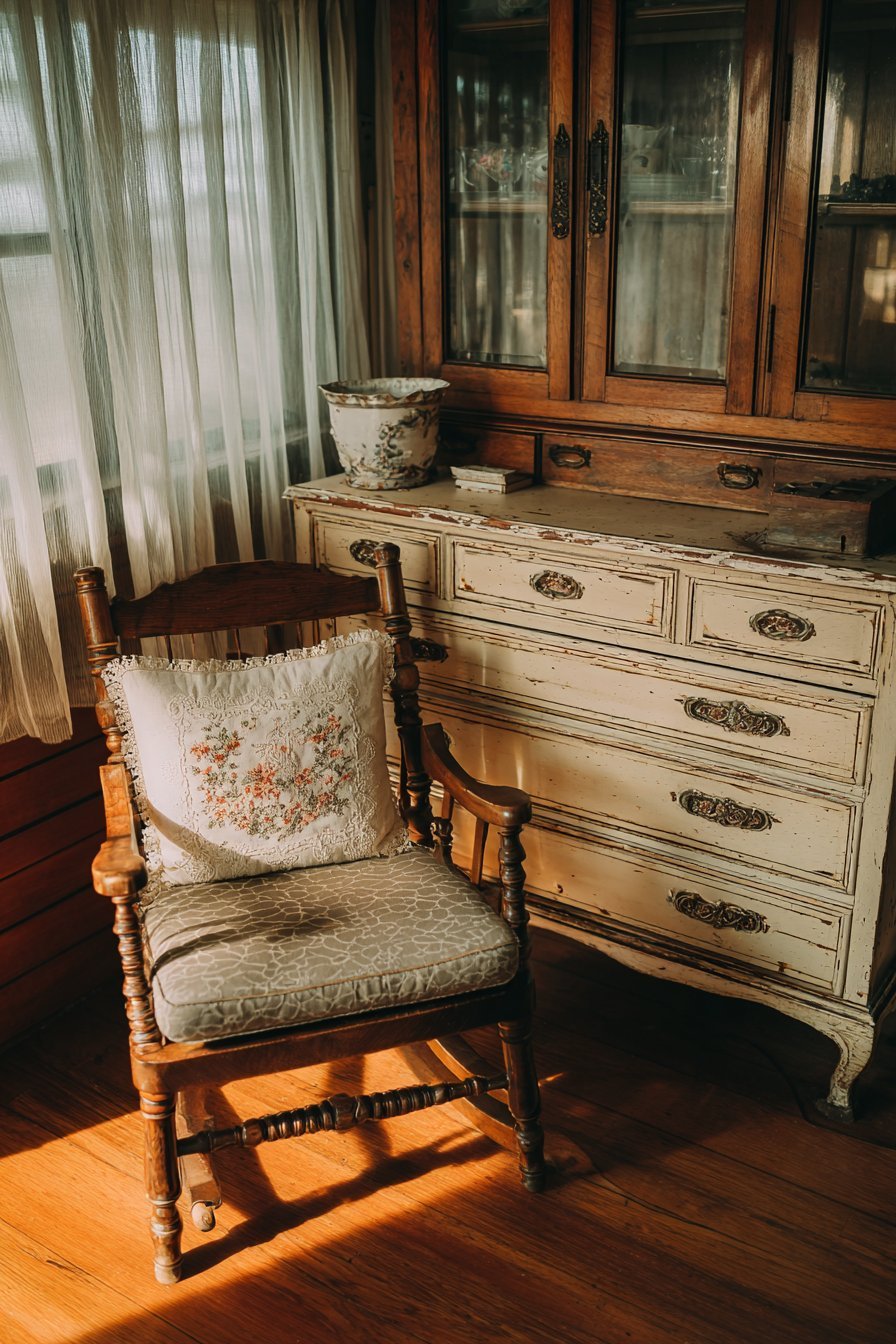
Strategic furniture sourcing is one of the most enjoyable and most challenging aspects of creating a vintage nursery. Unlike contemporary furniture design where you can order a complete matching set from a single retailer, a truly authentic vintage nursery is assembled piece by piece — each item sourced from a different place, at a different time, from a different era, but united by a shared aesthetic sensibility and color story. This process takes time, patience, and a clear vision of what you are looking for, but the result is a room with an irreplaceable quality of collected authenticity.
The best sources for vintage nursery furniture include estate sales and house clearances — where entire households of furniture are sold and genuine bargains are regularly available — local antique dealers who specialize in furniture rather than collectibles, online marketplaces including eBay, Etsy, and Facebook Marketplace, and specialist vintage children’s furniture dealers who have already done the sourcing work and present curated, often restored collections. Physical antique markets and flea markets remain some of the most rewarding sources for smaller nursery accessories — ceramics, framed prints, textile pieces, and decorative objects.
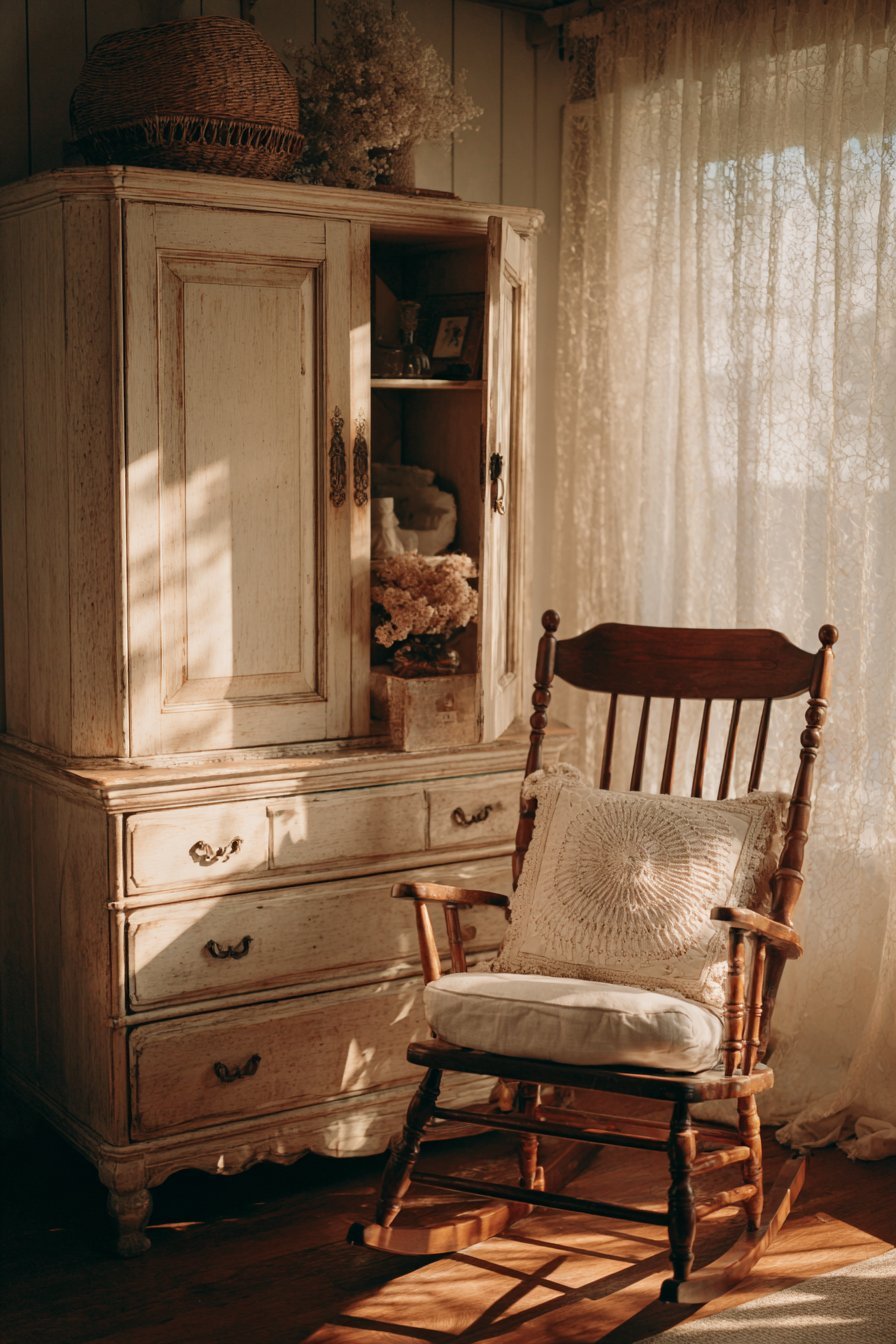
Restoration and refinishing of vintage furniture requires careful thought in a nursery context. Any piece being refinished for nursery use must be stripped completely of its original paint before being refinished with a safe, low-VOC paint or oil finish. Stripping should be done outdoors or in a well-ventilated space, and the person doing the work should wear appropriate respiratory protection given the potential for lead content in old paint. A quality chalk or mineral paint in a vintage-appropriate tone, applied over a properly prepared surface and sealed with a clear wax or matte varnish, produces a beautifully aged finish that is both authentic in appearance and safe for nursery use.
- Source vintage nursery furniture from estate sales, antique dealers, Etsy, and specialist vintage children’s stores
- Strip all original paint from vintage furniture before refinishing for nursery use — never paint over potentially lead-containing finishes
- Use low-VOC chalk or mineral paint for refinishing vintage nursery furniture
- Allow freshly painted or refinished furniture to off-gas fully — ideally outdoors — before placing in the nursery
- Build the furniture collection gradually rather than trying to complete it all at once — patience produces the best results
5. Choose Vintage-Authentic Textiles and Bedding
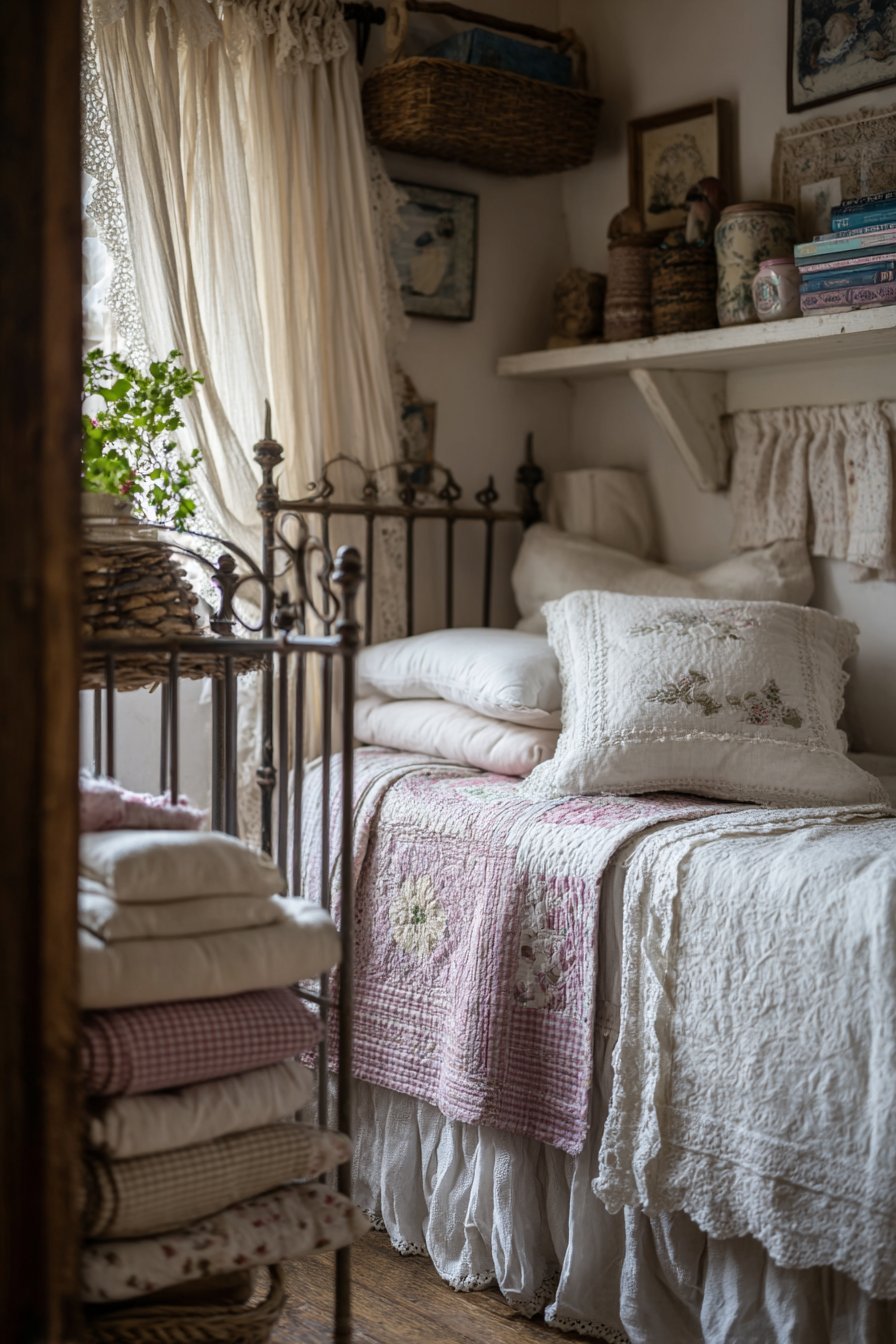
Textiles are the soul of a vintage nursery — the layer of soft, accumulated warmth that more than any other element communicates the aesthetic of a room that has been loved over time. In a vintage nursery, the choice of fabrics, patterns, and textile types signals immediately whether the room is genuinely rooted in its chosen era or simply gesturing toward vintage style without fully committing to its visual language.
Authentic vintage textile patterns include floral chintz, broderie anglaise, ticking stripe, gingham, smocked cotton, hand-embroidered linen, and patchwork quilt designs — each of which carries specific historical associations that strengthen or weaken the room’s vintage authenticity depending on the era being referenced. Broderie anglaise and smocking are particularly associated with nurseries of the early twentieth century; patchwork quilts have strong associations with farmhouse and cottage nurseries of the 1930s and 1940s; floral chintz speaks more directly to the Victorian and Edwardian periods.
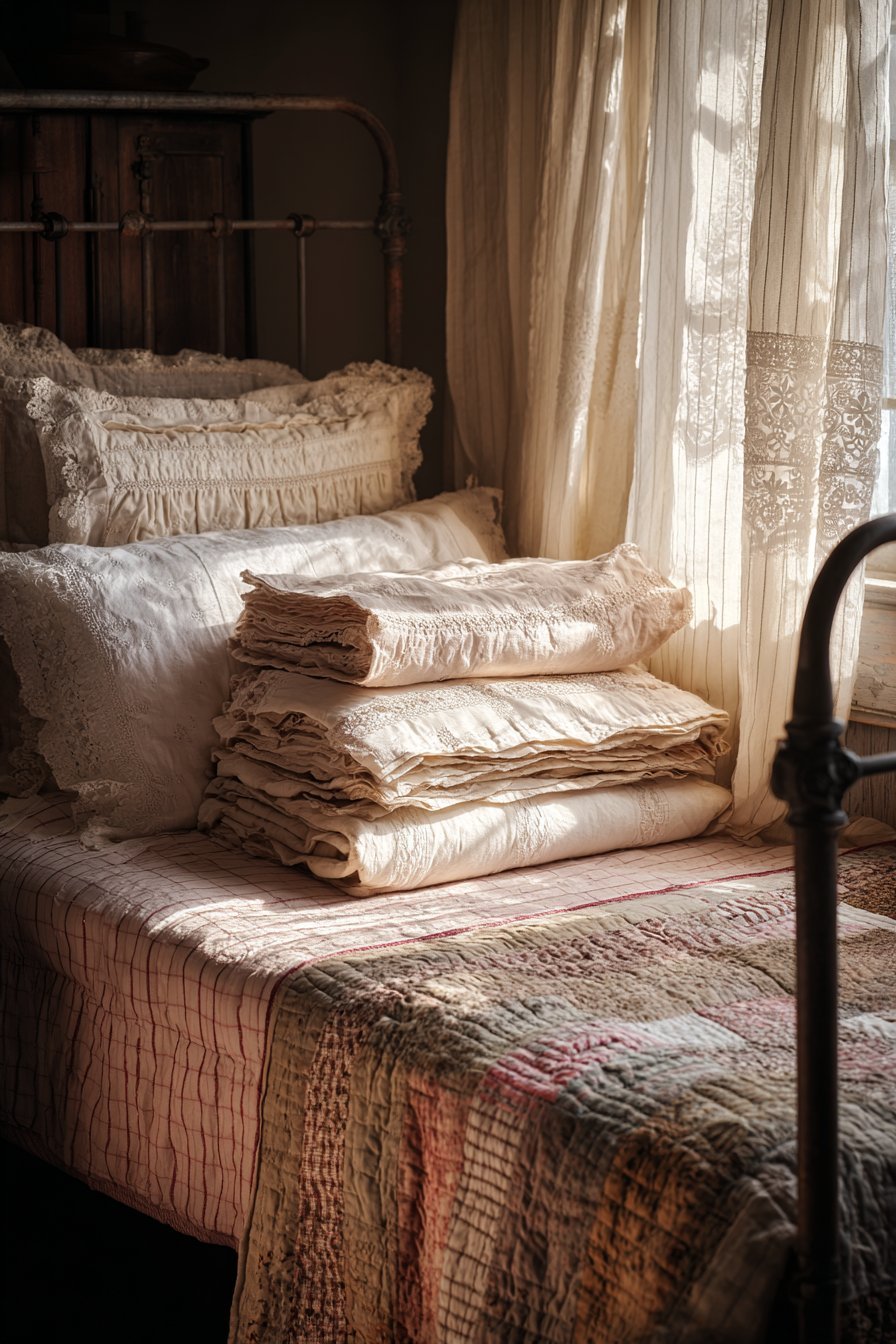
Sourcing genuine vintage textiles — rather than contemporary reproductions — creates an additional layer of authenticity that is immediately felt even if it cannot always be articulated. A genuinely old hand-embroidered pillowcase, a Victorian patchwork quilt passed down through family, or a set of antique linen curtains found at an estate sale carries a quality of history and human attention that no reproduction can replicate. When sourcing vintage textiles for nursery use, always launder them thoroughly at the highest temperature the fabric can safely withstand, inspect them carefully for signs of moth or mildew damage, and consider having antique quilts and blankets professionally cleaned before they come into contact with a baby.
- Choose vintage-appropriate textile patterns — broderie anglaise, gingham, ticking stripe, patchwork — for your chosen era
- Source genuine vintage textiles from estate sales, specialist dealers, and family heirlooms where possible
- Launder all vintage textiles thoroughly at the highest safe temperature before nursery use
- Have antique quilts and blankets professionally cleaned before using them near a baby
- Combine genuine vintage textiles with high-quality reproductions for a practical balance of authenticity and function
6. Select Vintage Lighting That Is Both Beautiful and Safe
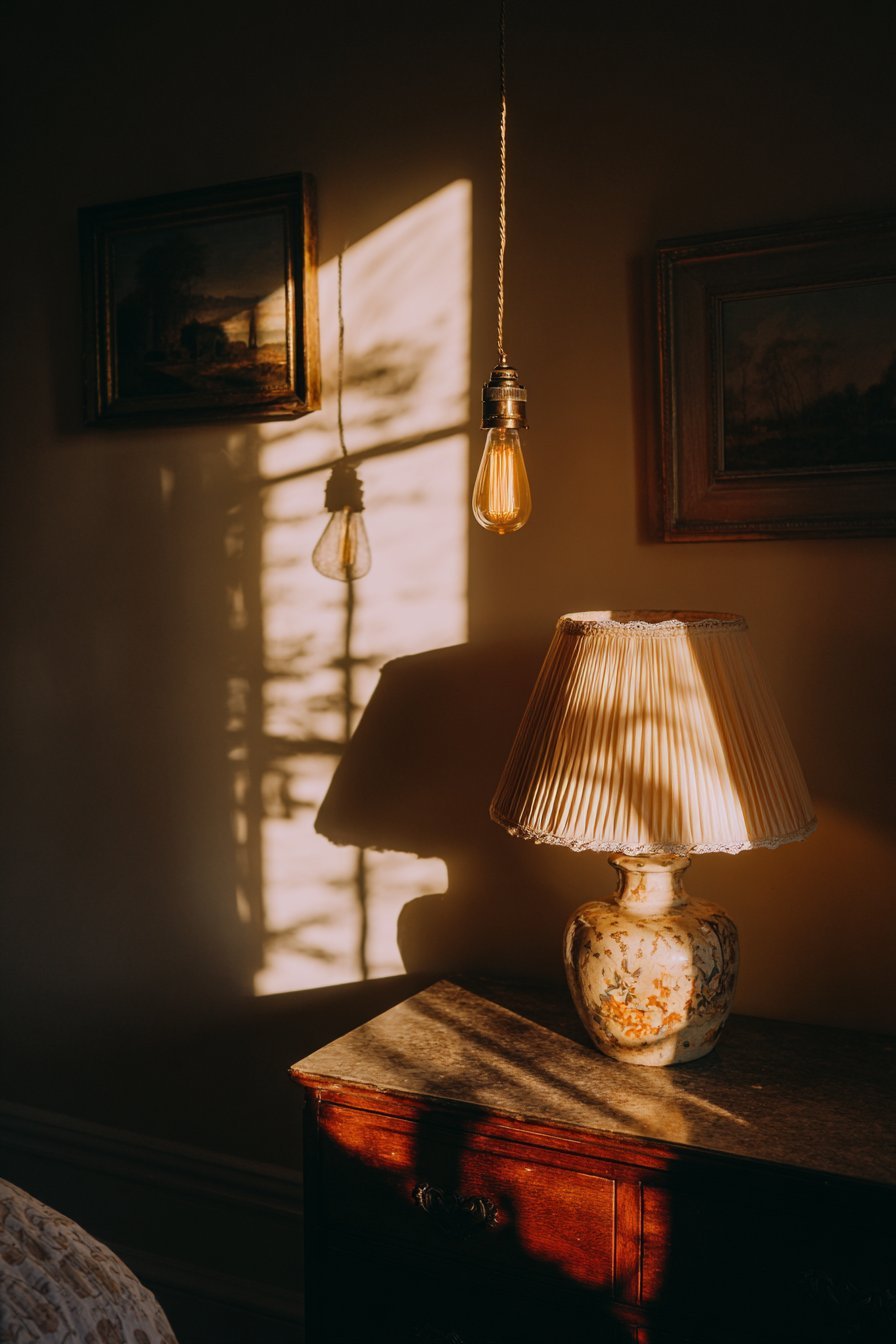
Vintage lighting has an almost magical effect in a nursery — the warm, amber glow of an aged brass pendant, the soft diffused light of a ceramic table lamp with a hand-painted shade, or the gentle flicker of a candle-effect night light creates a quality of warmth and atmosphere that modern LED fixtures rarely achieve. But vintage and antique electrical fixtures require careful safety assessment before installation, making this one of the areas of vintage nursery design that demands the most technical attention.
Antique and vintage light fixtures — ceiling pendants, wall sconces, and table lamps — should always be inspected and rewired by a qualified electrician before use in a nursery. Vintage wiring often uses insulation materials that have degraded over decades and present genuine fire and electrocution risks. The ornamental housing of a vintage fixture is often perfectly safe and beautiful to reuse; it is the internal wiring, socket, and fitting that require professional assessment and, in most cases, replacement with modern safe components.
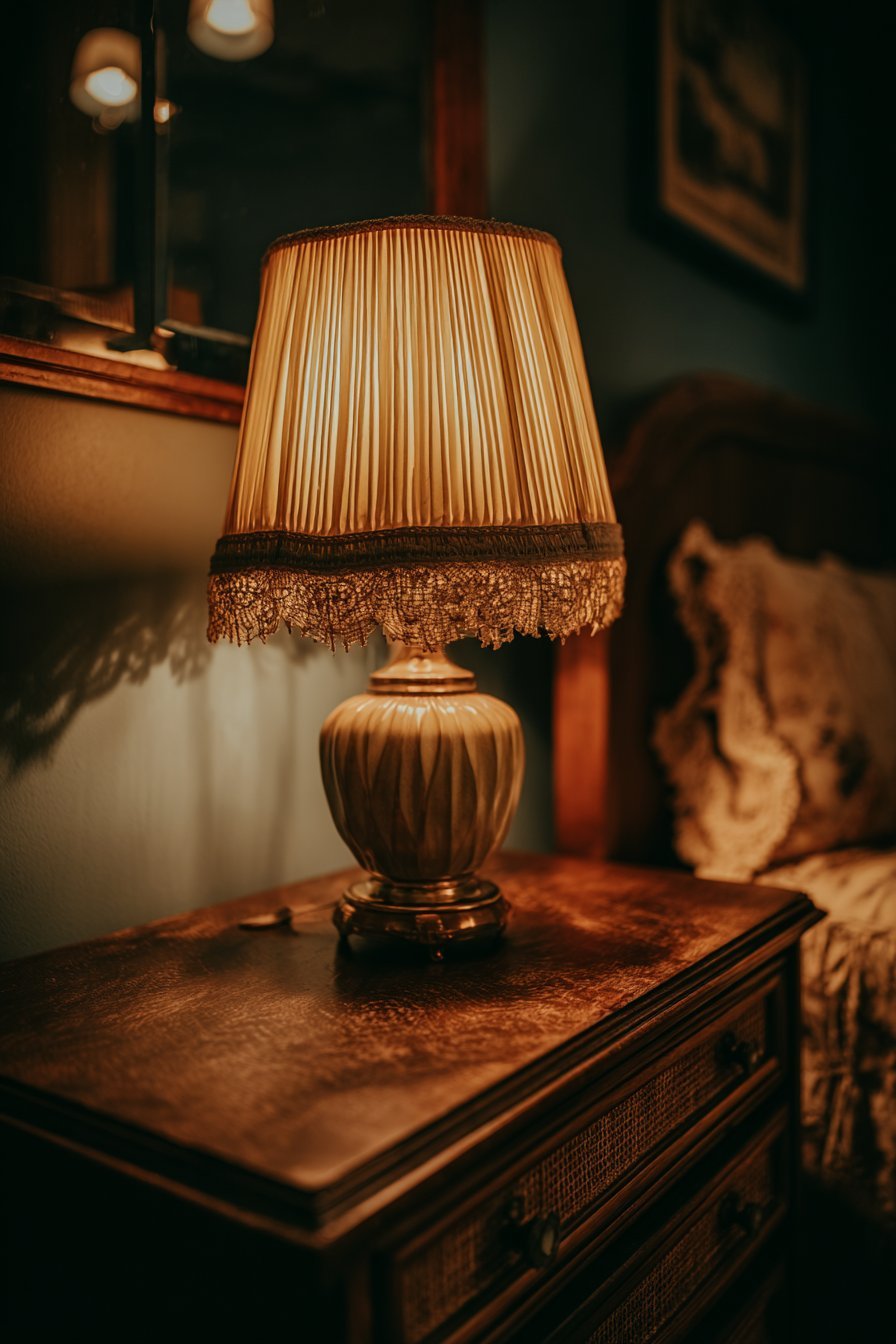
For parents who prefer the reassurance of a new, certified fixture with a vintage aesthetic, the market for vintage-style and antique-inspired contemporary lighting has never been richer. Artisan ceramic table lamps, hand-thrown pottery lamp bases, rattan pendant shades, and aged brass ceiling fixtures are all available as new products with full electrical certification — giving you the authentic visual quality of vintage lighting without any of the safety concerns associated with genuinely antique electrical items.
- Have all antique and vintage electrical fixtures professionally inspected and rewired before nursery installation
- Replace internal wiring, sockets, and fittings in vintage fixtures with modern certified components
- Choose vintage-style contemporary lighting products for the combination of authentic aesthetics and electrical safety
- Install a dimmer switch on all nursery lighting — non-negotiable for both vintage and contemporary nursery designs
- Use warm amber LED bulbs (2200K–2700K) in vintage fixtures for the most authentic, flattering glow
7. Layer Vintage Accessories and Decorative Details
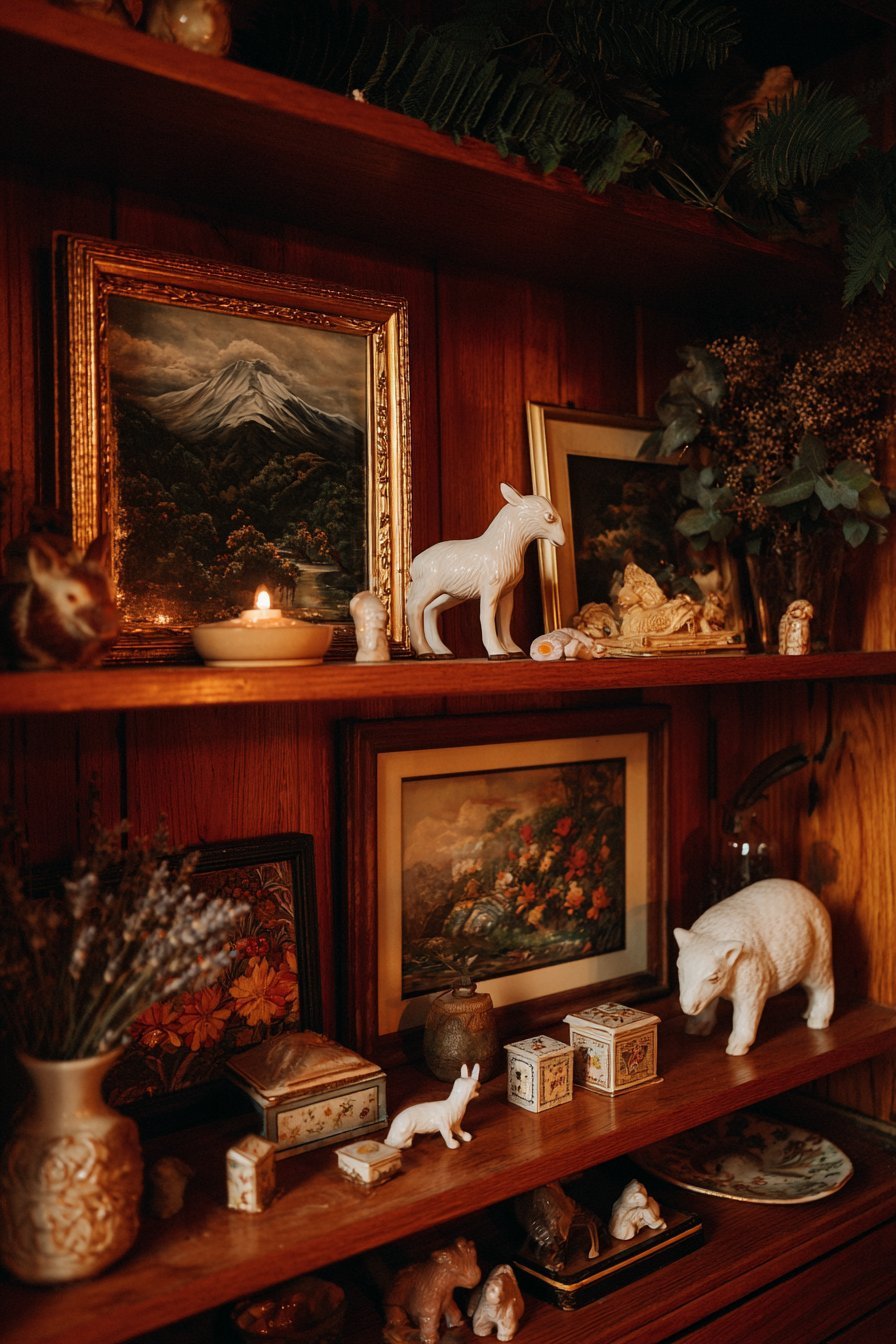
The accessories and decorative details of a vintage nursery are where its character is most fully expressed — and where the distinction between a room that is authentically vintage and one that is merely vintage-inspired becomes most apparent. Genuinely aged objects carry a quality of presence, patina, and human history that no reproduction can replicate, and the careful layering of these found, inherited, and sourced pieces is what gives a vintage nursery its most powerful and distinctive atmosphere.
Vintage ceramic and porcelain nursery accessories — hand-painted money banks, ceramic animal figures, painted nursery rhyme plates, small pottery vases and bud vases — bring exactly the kind of intimate, domestic charm most associated with vintage nurseries of the early and mid twentieth century. These pieces are widely available from antique markets and online dealers at very reasonable prices, making them one of the most accessible entry points into authentic vintage nursery sourcing. A small collection of painted ceramic pieces arranged on a shelf or dresser top creates a vignette of considerable charm and visual richness.
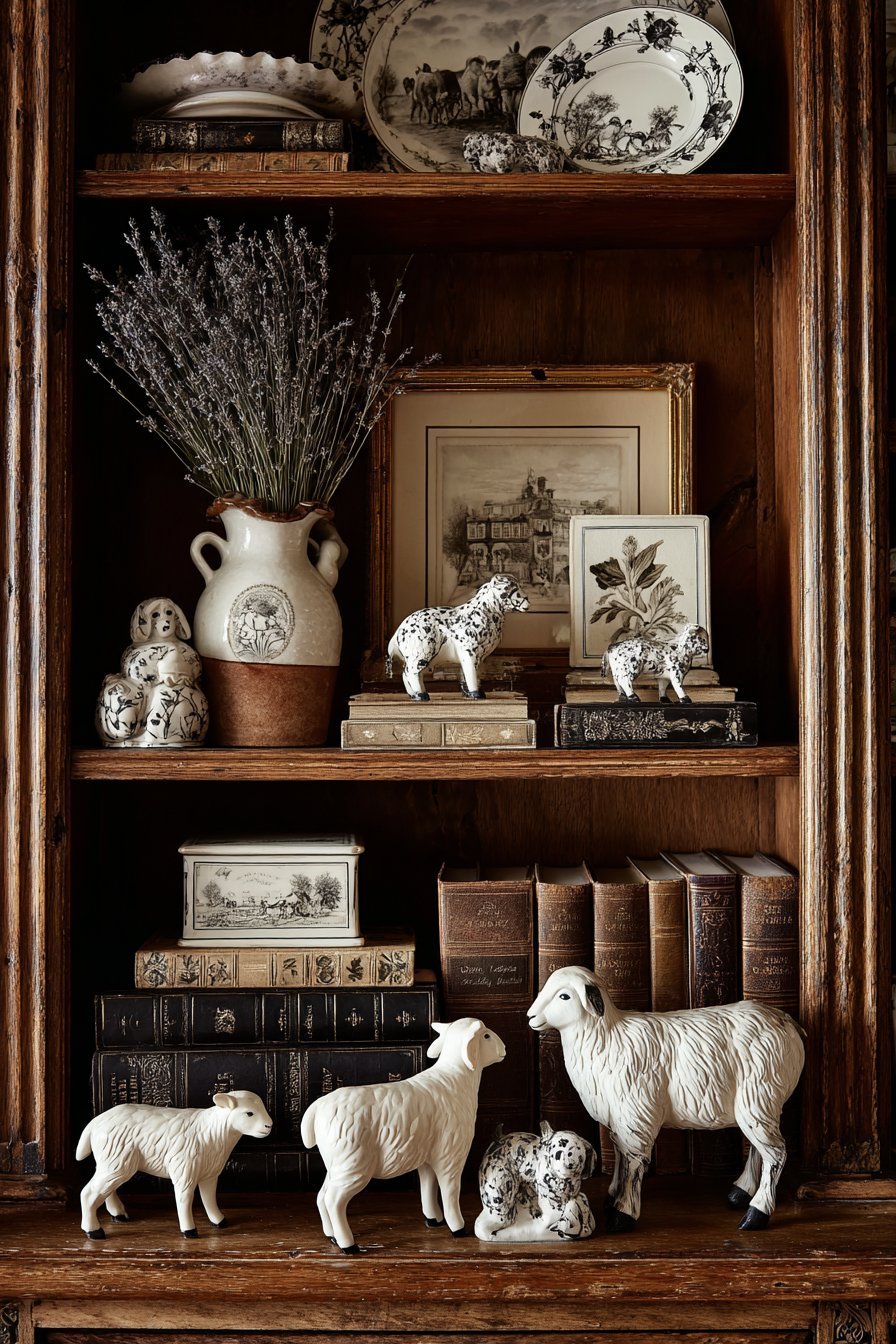
Vintage framed prints and artwork — antique botanical illustrations, vintage nursery rhyme prints, hand-colored natural history plates, and period children’s book illustrations — provide wall decoration of genuine historical depth and beauty that no contemporary print can match. Original antique prints, properly cleaned and reframed in period-appropriate frames, become treasured family pieces that carry meaning well beyond their decorative function. Sources include antique print dealers, estate sales, online auction platforms, and specialist print markets where individual pages from antique books and magazines are sold as standalone artworks.
- Source vintage ceramic accessories — animal figures, painted plates, small pottery pieces — from antique markets
- Arrange vintage ceramics in curated vignettes on shelves and dresser tops for intimate, collected charm
- Hunt for antique botanical illustrations, nursery rhyme prints, and natural history plates for wall decoration
- Reframe antique prints in period-appropriate frames — gilt, ebonized timber, or simple oak — for cohesion
- Include at least one family heirloom piece — a toy, a photograph, a textile — as the room’s most personal detail
8. Balance Authenticity With Modern Practicality
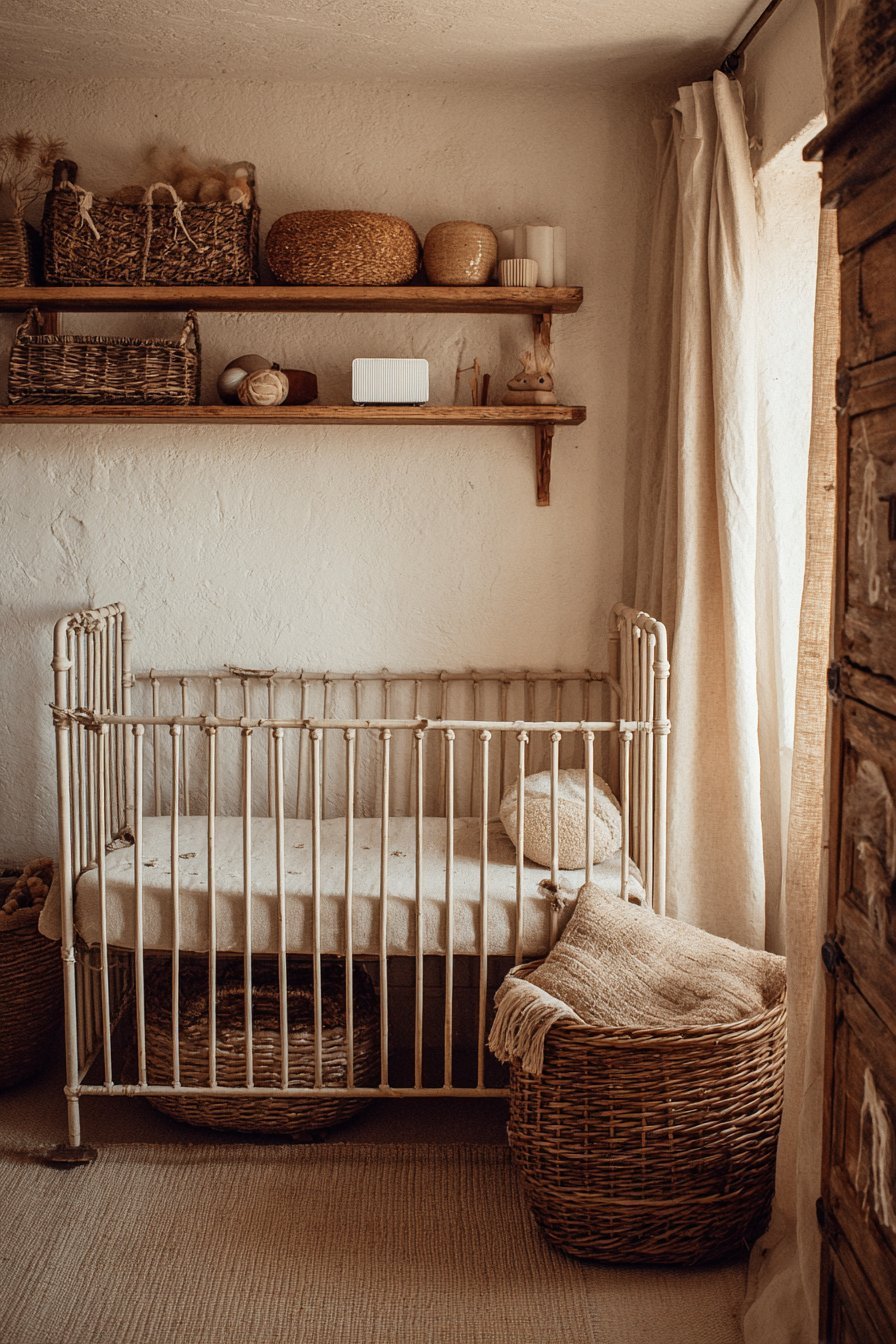
The most beautiful vintage nurseries are not museums — they are functional, safe, and comfortable spaces for modern parents and babies that happen to look and feel authentically aged. Balancing vintage authenticity with modern practicality is the final and perhaps most nuanced challenge of the vintage nursery project, requiring honest assessment of which vintage elements can be embraced fully, which require modern safety adaptations, and which genuine modern elements must be included for the baby’s wellbeing regardless of their visual impact on the vintage aesthetic.
Modern elements that must be included in any nursery for safety and function — a new certified crib mattress, a contemporary video monitor, a modern white noise machine, a safety-rated outlet cover — can all be styled and positioned to minimize their visual impact on the vintage atmosphere. A contemporary monitor mounted discreetly on a vintage-style wooden bracket, a white noise machine stored inside a vintage wicker basket, or a modern air purifier positioned behind a decorative screen can all perform their essential functions while remaining visually subordinate to the vintage elements that dominate the room.
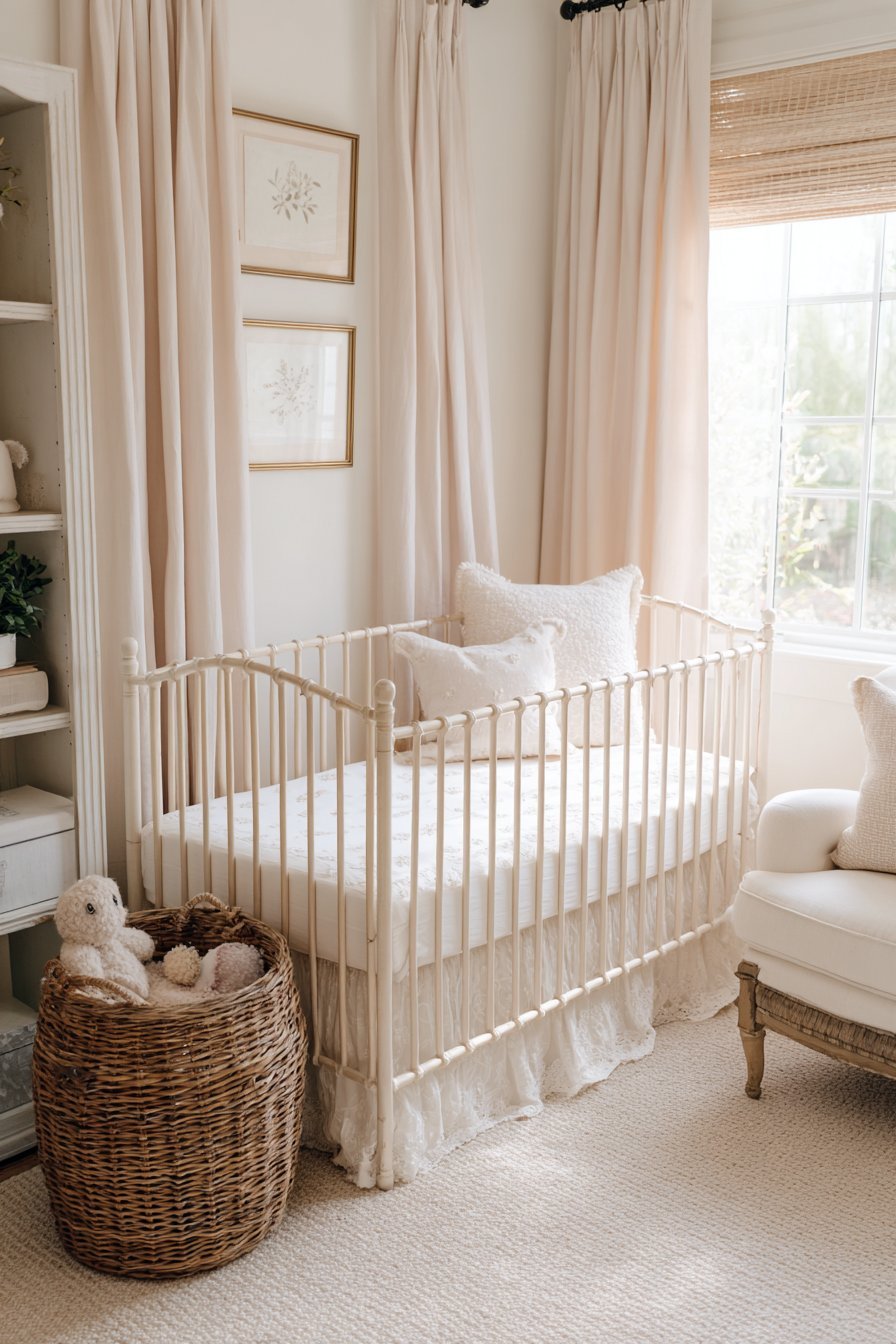
Accepting a thoughtful level of intentional imperfection is perhaps the most liberating principle in vintage nursery design. A vintage nursery is not meant to look like a showroom display; it is meant to look lived-in, loved, and accumulated over time. Slightly mismatched furniture pieces are not a design failure — they are a feature. An accent wall with visible brush texture is not a painting mistake — it is evidence of a human hand. A quilt with a small, lovingly repaired tear is not damaged goods — it is an object with a story. Embracing these qualities of imperfection and history is what transforms a room decorated in vintage style into a nursery that genuinely feels vintage.
- Style modern nursery essentials — monitor, white noise machine, air purifier — to minimize visual impact
- Store modern functional items inside vintage wicker baskets, ceramic crocks, or timber boxes
- Accept and embrace the slight imperfections of vintage pieces — patina, wear, and variation are features, not flaws
- Invest in a new, certified crib mattress regardless of how authentic a vintage sleep surface might appear
- Allow the room to feel curated and collected rather than perfect — vintage authenticity lives in the imperfection
Conclusion
Decorating a vintage nursery is one of the most rewarding design projects a parent can undertake — a deeply personal creative journey that results in a space of extraordinary warmth, character, and beauty. The time spent hunting for the perfect antique dresser, testing paint colors against aged textiles, and carefully curating a shelf of found ceramic treasures produces a nursery that feels genuinely irreplaceable and deeply meaningful in a way that no amount of money spent in a contemporary baby retailer can replicate.
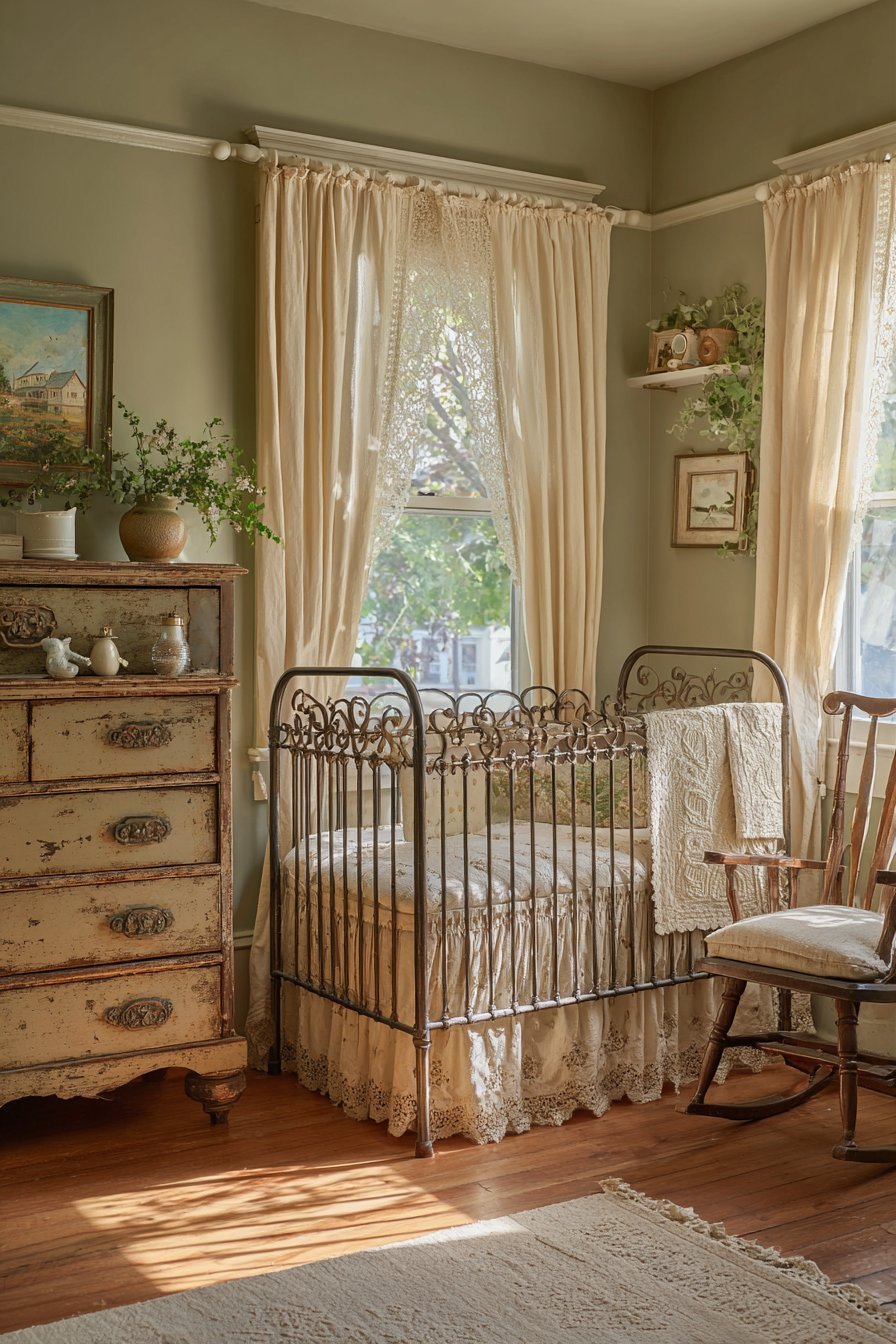
Approach the project with patience, safety consciousness, and an open, curious eye — and allow the room to build itself gradually from the pieces that find their way to you. The most beautiful vintage nurseries are never finished all at once; they accumulate layer by layer, season by season, growing richer, warmer, and more characterful with every new find. That slow, loving process of creation is not a limitation — it is the very essence of the vintage spirit, and the source of everything that makes these rooms so enduringly, unforgettably beautiful.
