

There is a particular kind of magic that lives in a floral nursery. Soft petals on the wallpaper, botanical prints framed above the crib, trailing vines painted across the ceiling — these elements come together to create something that feels less like a decorated room and more like a living, breathing garden that a child has been gently placed inside. Parents instinctively reach for floral themes when designing nurseries, and the reasons why go far deeper than fashion or tradition.
Flowers carry an extraordinary emotional resonance that few other design motifs can match. They are universally associated with new life, growth, tenderness, and beauty — all qualities that feel profoundly appropriate for the room welcoming a new human being into the world. The presence of botanical imagery in a nursery communicates something wordless and deeply felt: that this child is precious, that their arrival is celebrated, and that the world they have entered is full of wonder and natural beauty.
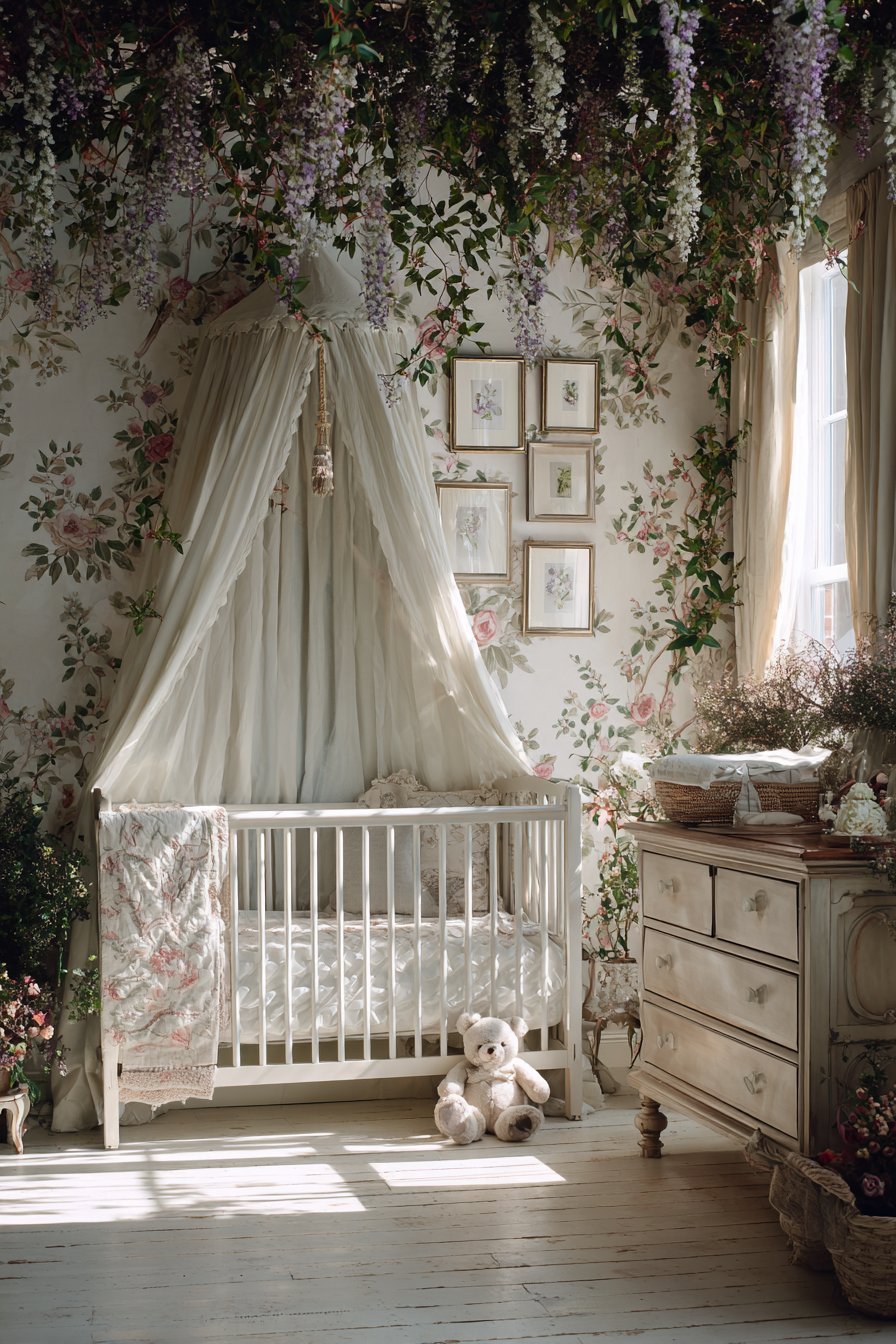
This article explores the many reasons why floral nurseries create such reliably dreamy, enchanting atmospheres — from the psychology of botanical imagery and the design mechanics of floral pattern to the way flowers interact with light, color, and texture to produce that unmistakable quality of soft, romantic magic. Whether you are planning a floral nursery or simply trying to understand its enduring appeal, these insights reveal why this theme remains one of the most beloved in all of nursery design.
1. Flowers Tap Into Deep Psychological Comfort
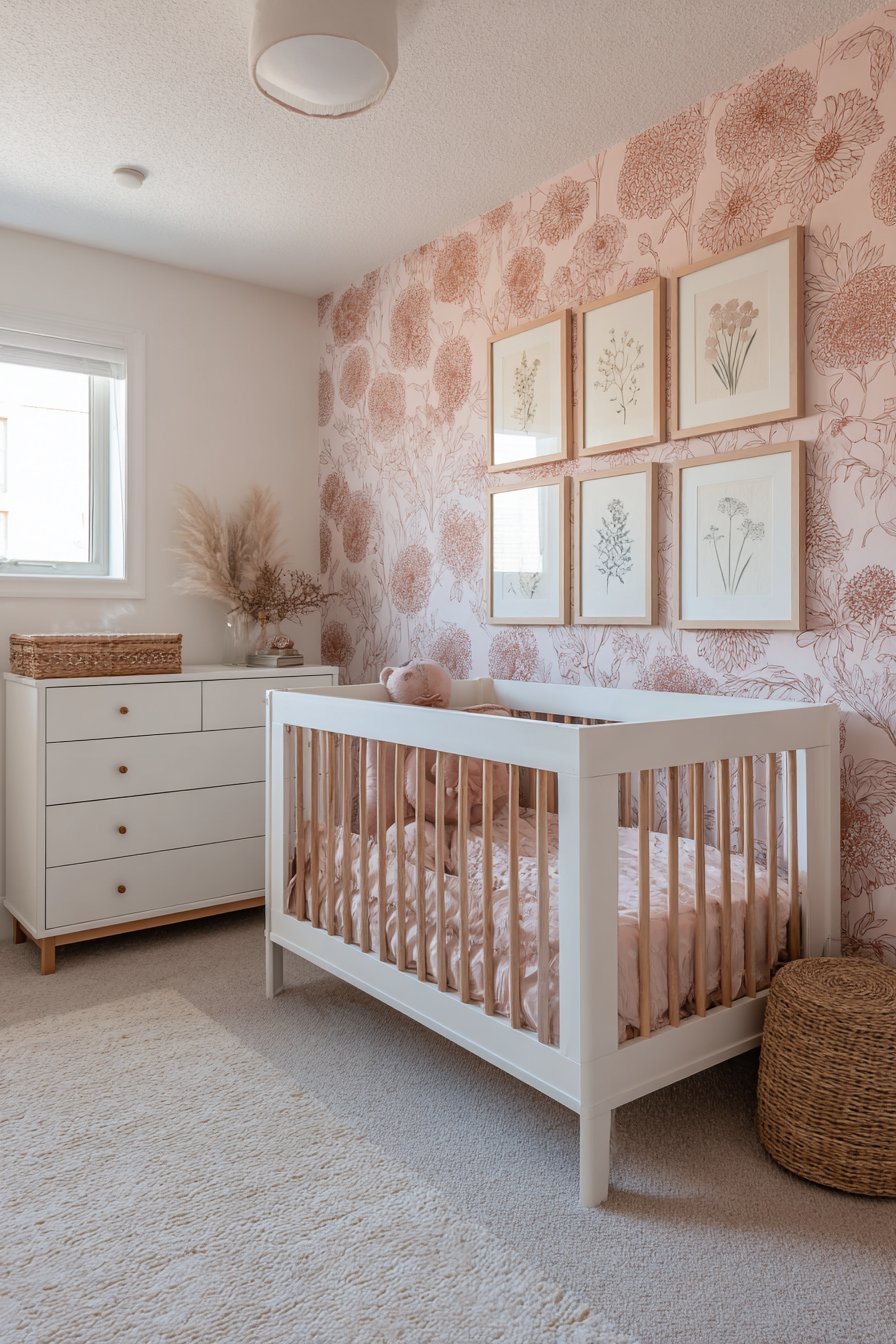
The human response to flowers is not merely aesthetic — it is deeply psychological, rooted in millions of years of evolutionary association between flowering plants and environments rich in food, water, and safety. Research has consistently shown that exposure to floral imagery reduces stress, elevates mood, and promotes feelings of calm, optimism, and emotional warmth. These are precisely the qualities most needed in a space designed for a vulnerable new life.
Biophilic design — the practice of incorporating natural elements into built environments to support human wellbeing — has been validated by decades of environmental psychology research. Floral nursery design is biophilic design in its most instinctive, accessible form. When a room is filled with botanical imagery, the brain responds as though it is in proximity to nature — triggering the parasympathetic nervous system’s rest-and-digest response, lowering cortisol, and creating the physiological conditions for calm and sleep.
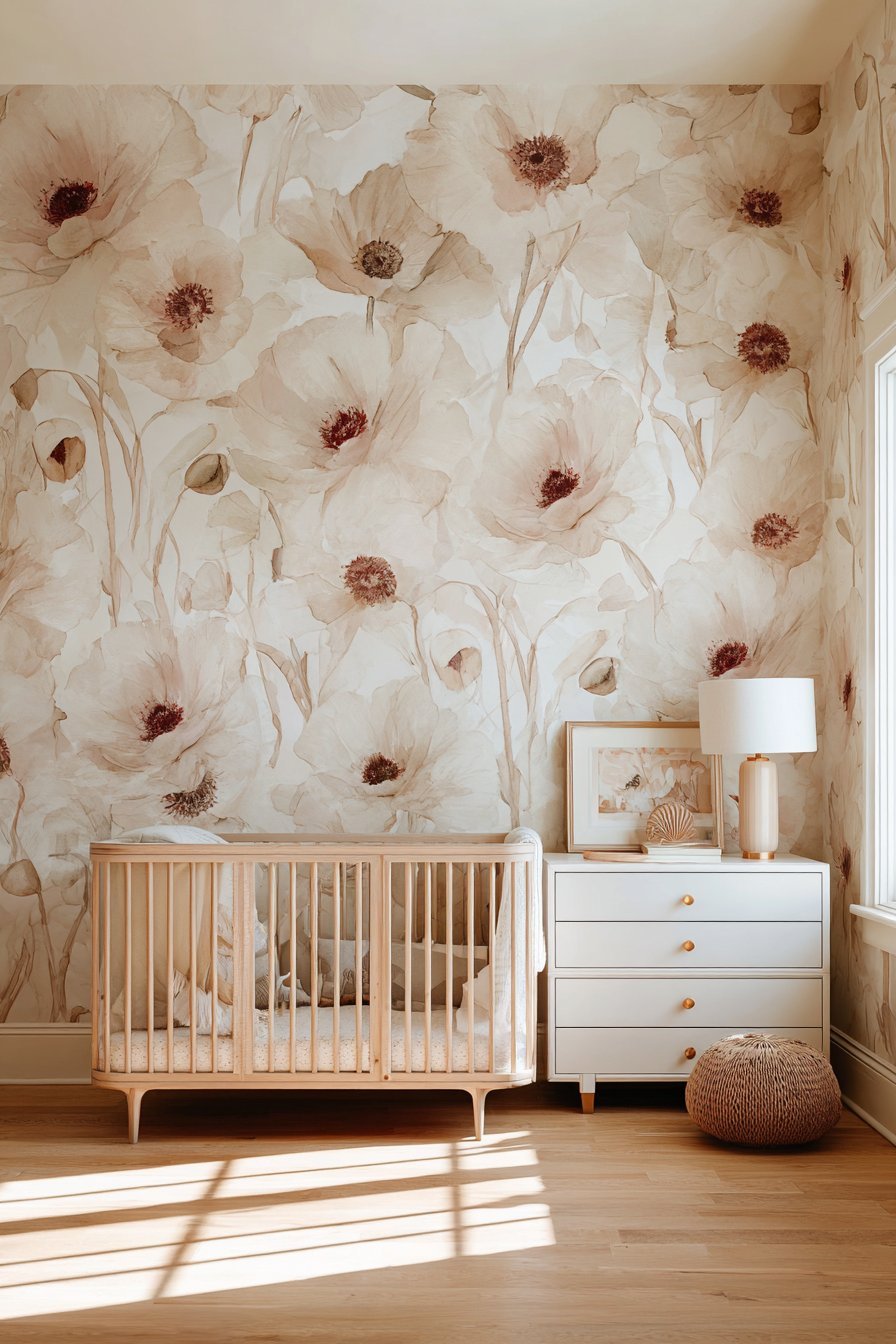
For babies in particular, soft, curvilinear patterns — the rounded petals, flowing stems, and organic shapes that characterize floral design — are significantly less stimulating to the developing visual system than hard geometric forms or high-contrast imagery. The gentle complexity of a floral print engages a baby’s vision without overwhelming it, providing just enough visual interest to encourage healthy neurological development without triggering the overstimulation that makes settling to sleep more difficult.
- Choose floral patterns with soft, rounded forms and muted tones for the most calming visual effect
- Incorporate botanical imagery throughout the nursery — wallpaper, textiles, art — for a fully immersive effect
- Select floral designs with organic, flowing compositions rather than rigid, symmetrical arrangements
- Layer botanical elements at different scales — large statement prints alongside small, delicate motifs
- Trust the psychological instinct toward floral imagery — it reflects genuine evolutionary comfort with nature
2. Floral Wallpaper Creates an Immersive Garden Environment
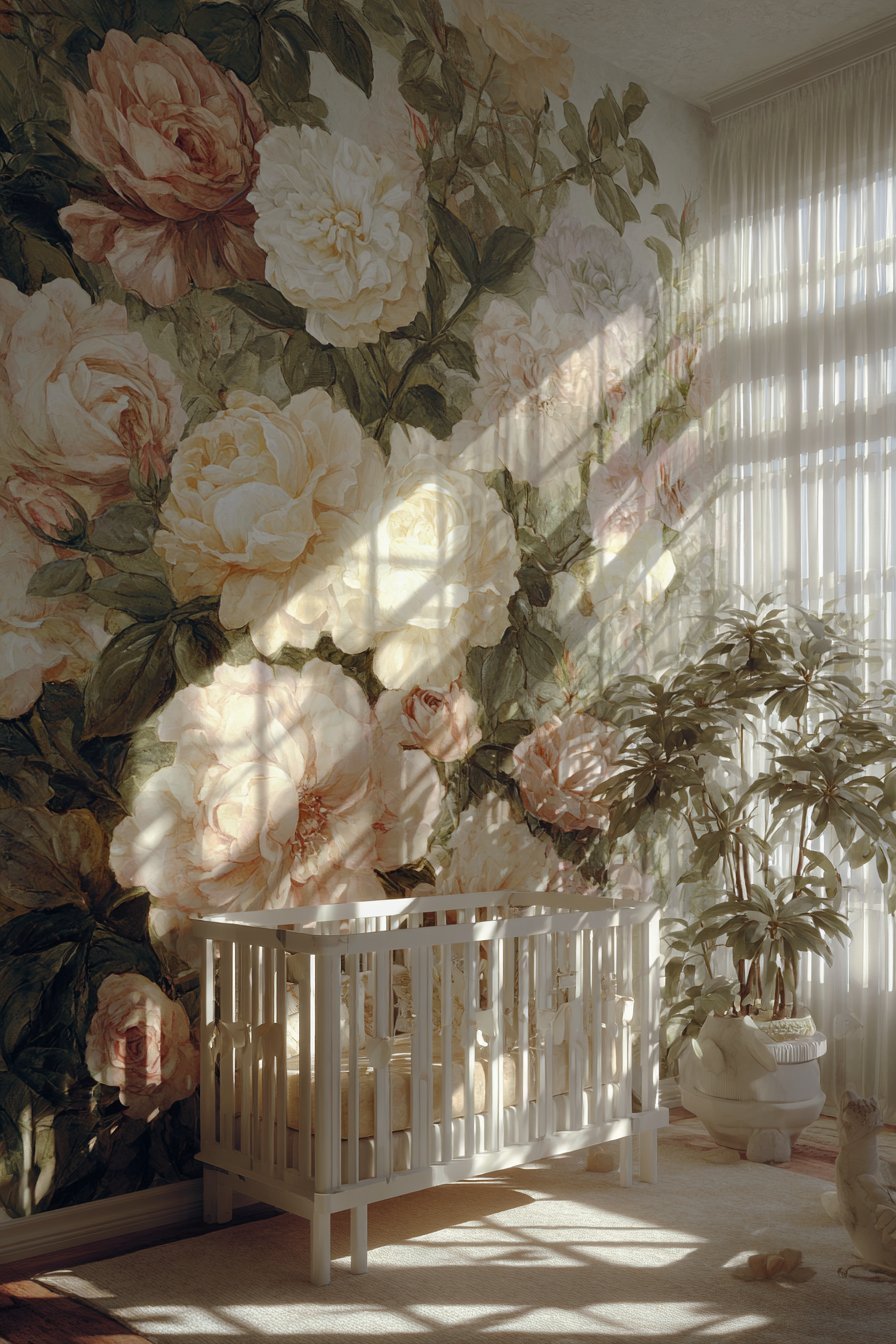
Wallpaper is the single most transformative element in a floral nursery. Where paint creates a backdrop, wallpaper creates a world. A beautifully chosen floral wallpaper envelops the room in botanical imagery from every angle — turning the nursery into an immersive environment that feels genuinely like stepping inside a garden, a meadow, or an enchanted forest in bloom. This quality of total environmental immersion is what distinguishes a truly dreamy floral nursery from one that merely incorporates a few botanical accessories.
The scale of the floral motif is one of the most important decisions in choosing nursery wallpaper. Large-scale florals — oversized blooms, dramatic botanical illustrations, and painterly floral murals — create an immediate sense of drama and lushness that feels genuinely breathtaking. These statement-scale designs work particularly well on a single feature wall behind the crib, where they create a stunning backdrop without overwhelming a smaller room. Smaller-scale, all-over repeat patterns bring a more delicate, cottage-like quality to the space — equally beautiful, but softer and more enveloping in character.
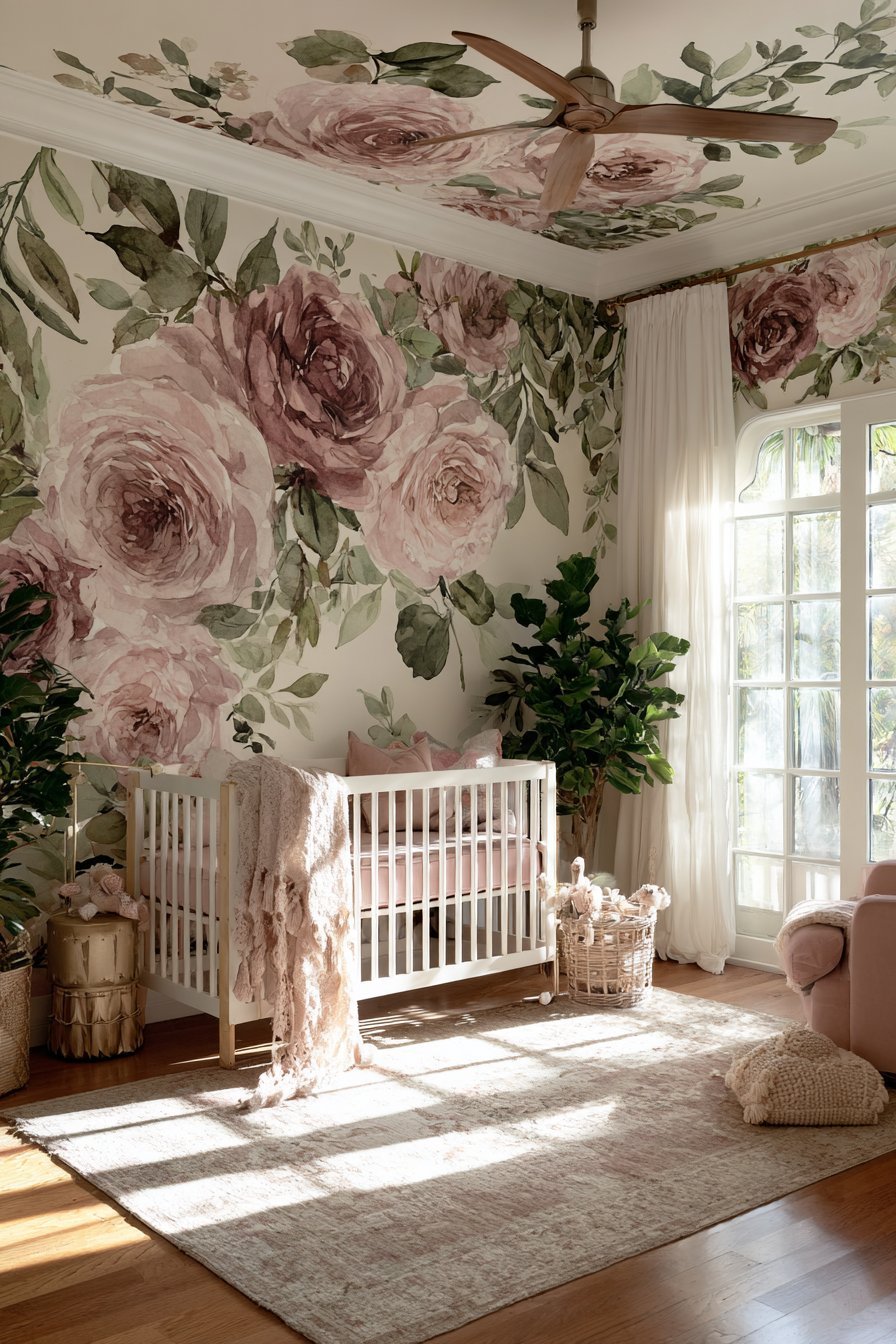
Mural-style floral wallpapers represent the most extraordinary end of the floral nursery spectrum. A hand-painted or digitally illustrated botanical mural — featuring trailing wisteria, climbing roses, or a lush jungle scene in soft, dreamy tones — transforms the nursery wall into a genuine work of art. These large-scale botanical murals have become one of the defining features of the most beautiful contemporary nursery designs, creating spaces that feel like living paintings and that reward close inspection with layers of botanical detail and artistry.
- Choose a large-scale botanical mural or oversized floral print for the crib feature wall
- Use a smaller-scale all-over floral repeat on remaining walls for a more delicate, enveloping effect
- Select wallpapers with a soft, painterly or watercolor quality for the most dreamy, romantic atmosphere
- Pair bold floral wallpaper with plain, coordinating paint on other walls to avoid visual overwhelm
- Invest in quality wallpaper — premium papers hang more cleanly, last longer, and look significantly richer
3. The Color Palette of Floral Design Supports Rest and Calm
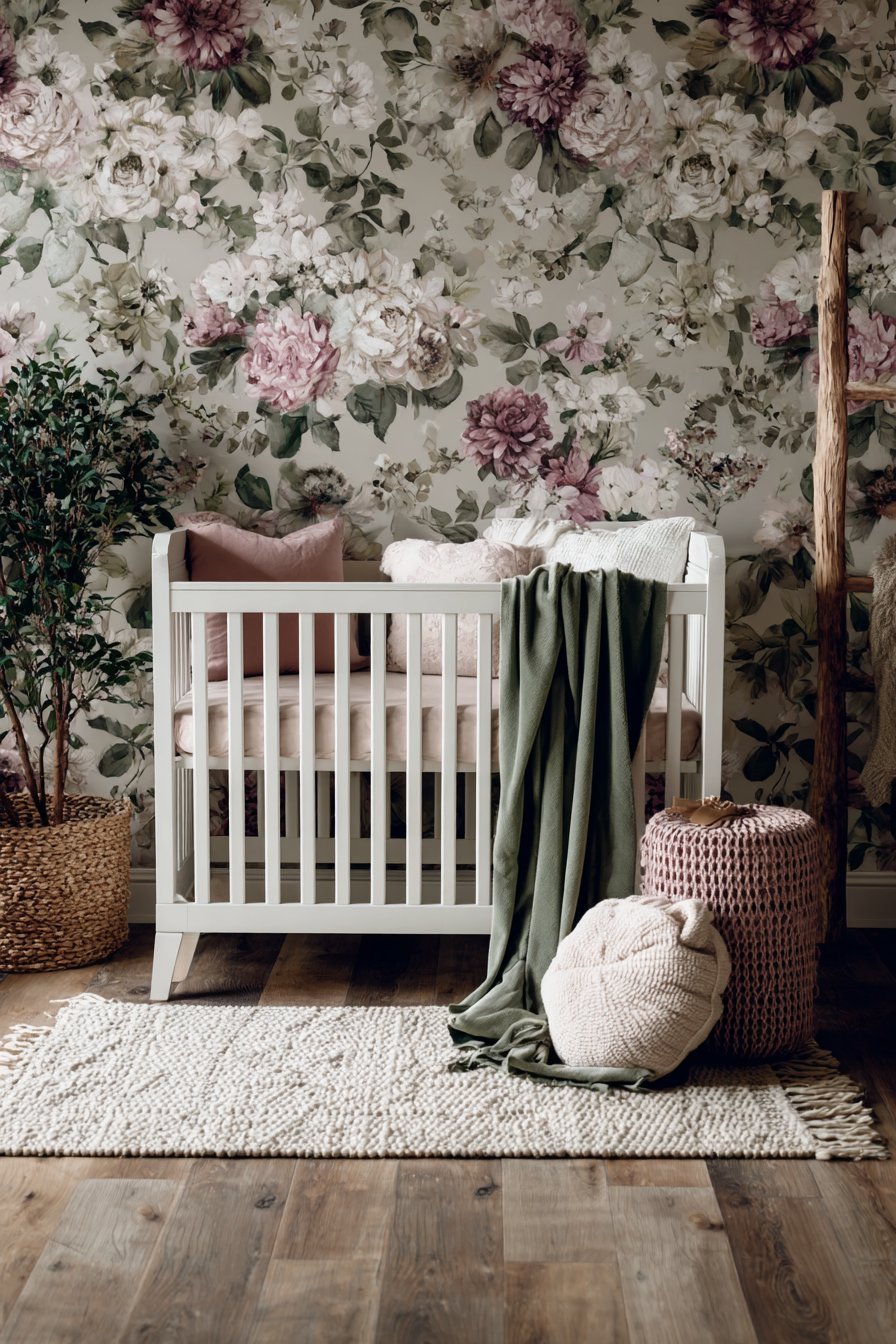
Color psychology and floral design are natural partners. Flowers exist in nature in every color imaginable, but the palette most associated with floral nursery design draws from the softer, more muted end of the botanical spectrum — dusty rose, sage green, antique white, warm lavender, soft peach, and muted gold. These tones are not merely conventionally pretty; they are psychologically calibrated to support the calm, rest, and gentle stimulation that a nursery environment requires.
Muted, desaturated floral palettes are consistently more effective in nursery environments than their vivid counterparts. Bright, saturated florals — the kind you might find in a bold maximalist living room — introduce a visual energy that is better suited to active, social spaces than to sleep-oriented rooms. The most dreamy floral nurseries work in tones that have been softened by the addition of grey, white, or warm beige — reducing their stimulating intensity while preserving all of their natural beauty and warmth.
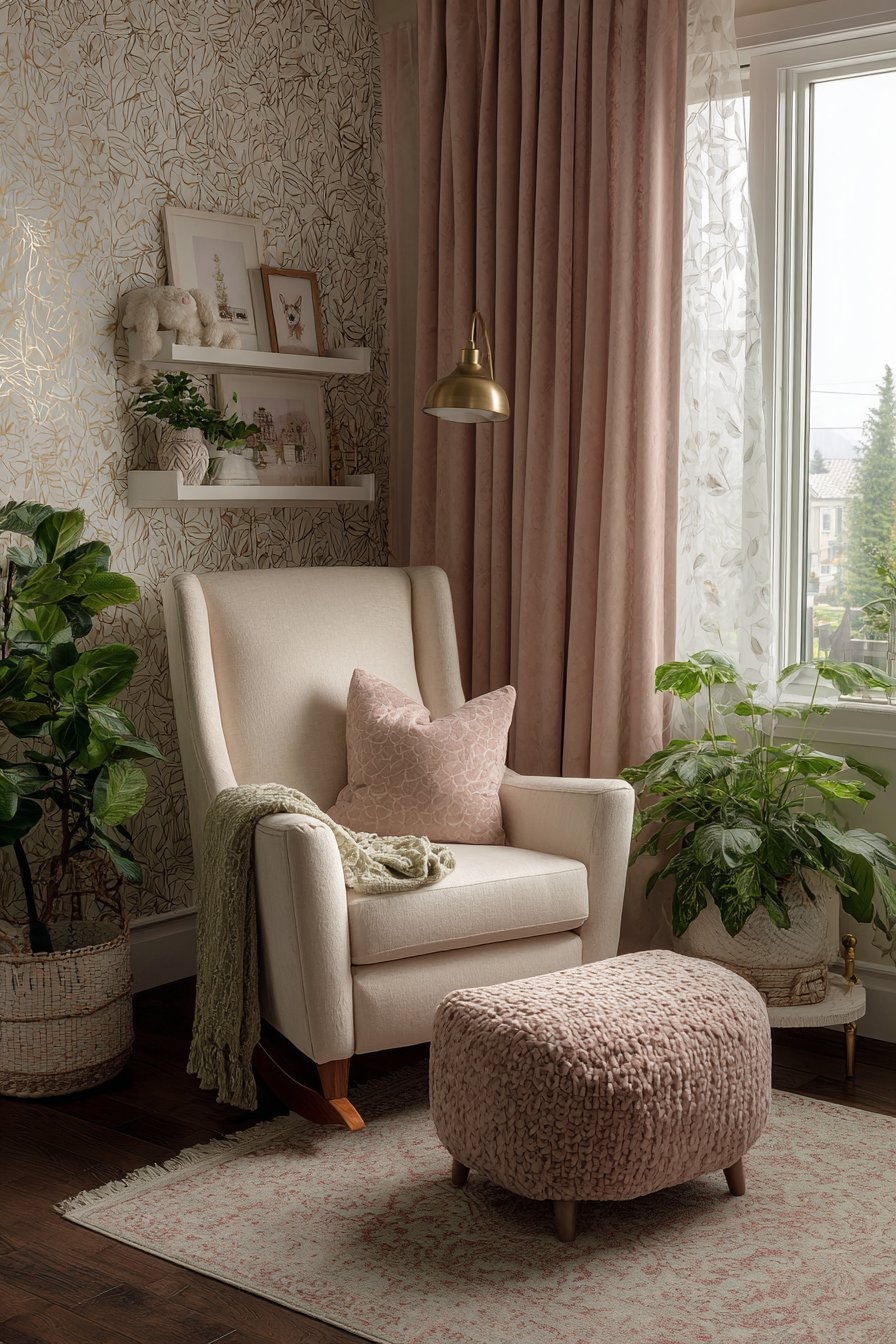
The green of botanical foliage is one of the most important and underappreciated elements of floral nursery color design. Sage, dusty sage, olive, and soft forest green provide a grounding, natural quality that balances the warmth of pinks and the softness of creams within a floral palette. Green is the color most associated with rest and restoration in color psychology research — its presence in a floral nursery is not merely compositionally beautiful but genuinely supportive of the calm, settled atmosphere that parents need most in a sleep space.
- Build your floral nursery palette around muted, desaturated tones — dusty rose, sage, antique white, warm lavender
- Include botanical greens — sage, olive, dusty forest — as a grounding, restorative element in the palette
- Avoid highly saturated or vivid floral colors in a nursery — their visual energy works against rest and calm
- Use the dominant color of your floral wallpaper or textile as the starting point for the entire room palette
- Balance warm floral tones — pinks, peaches, golds — with cool greens and soft whites for visual equilibrium
4. Floral Textiles Layer Warmth and Sensory Richness
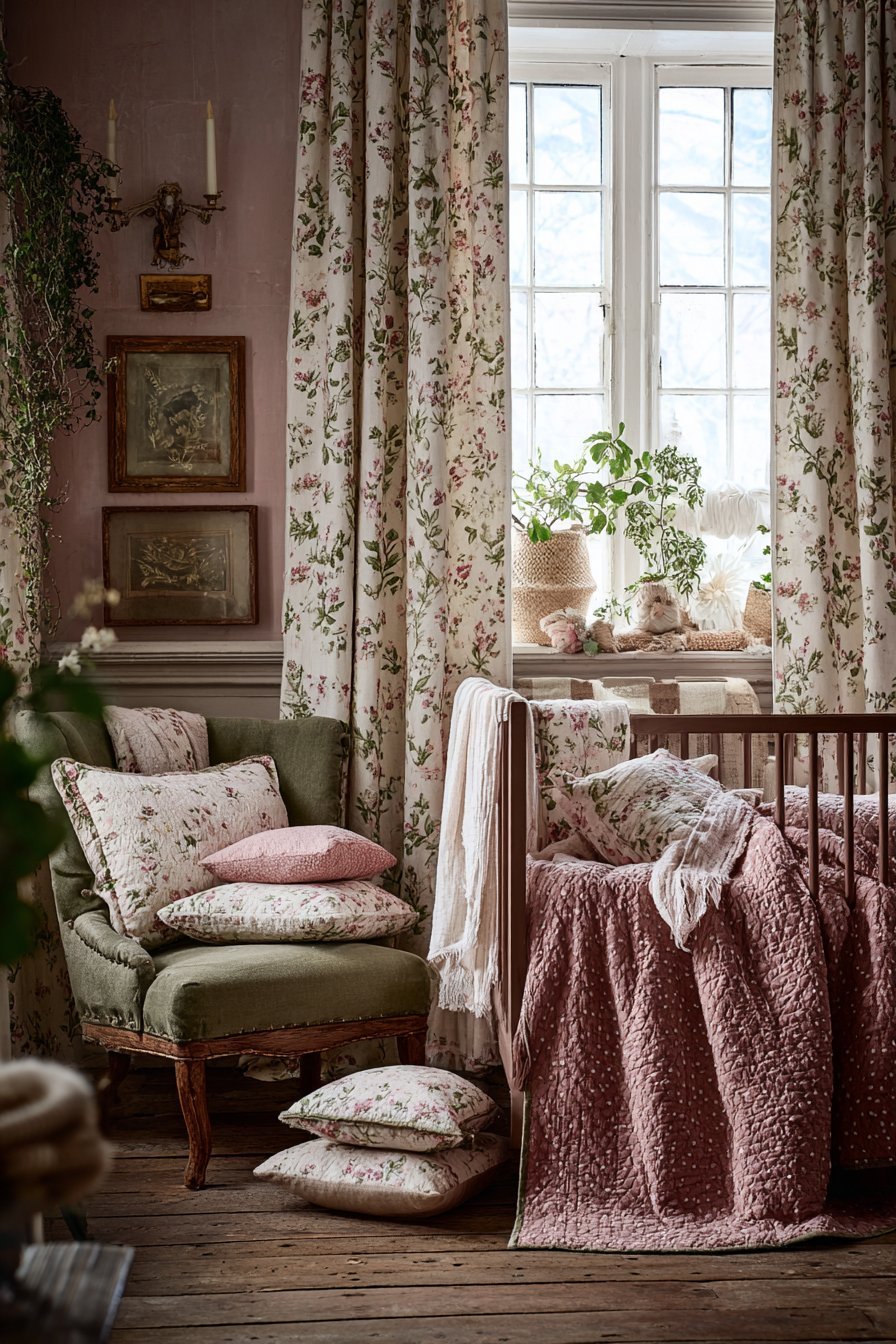
Textiles are where floral design truly comes alive in a three-dimensional sense. Where wallpaper and artwork present floral imagery as a flat, visual experience, floral textiles add tactile dimension — the soft weight of an embroidered quilt, the delicate texture of a broderie anglaise cot bumper, the gentle pattern of a floral-print linen curtain catching afternoon light. This combination of visual and tactile botanical richness creates a sensory environment of extraordinary depth and warmth.
Embroidered and appliquéd floral textiles have a particularly special quality in a nursery context. The visible craft of hand or machine embroidery — the individual stitches that build a flower petal by petal, leaf by leaf — carries a quality of loving human attention that printed fabric alone cannot replicate. An embroidered floral cot blanket or an appliquéd botanical cushion communicates care and craftsmanship that a baby may not consciously register but that contributes meaningfully to the room’s overall atmosphere of warmth and tenderness.
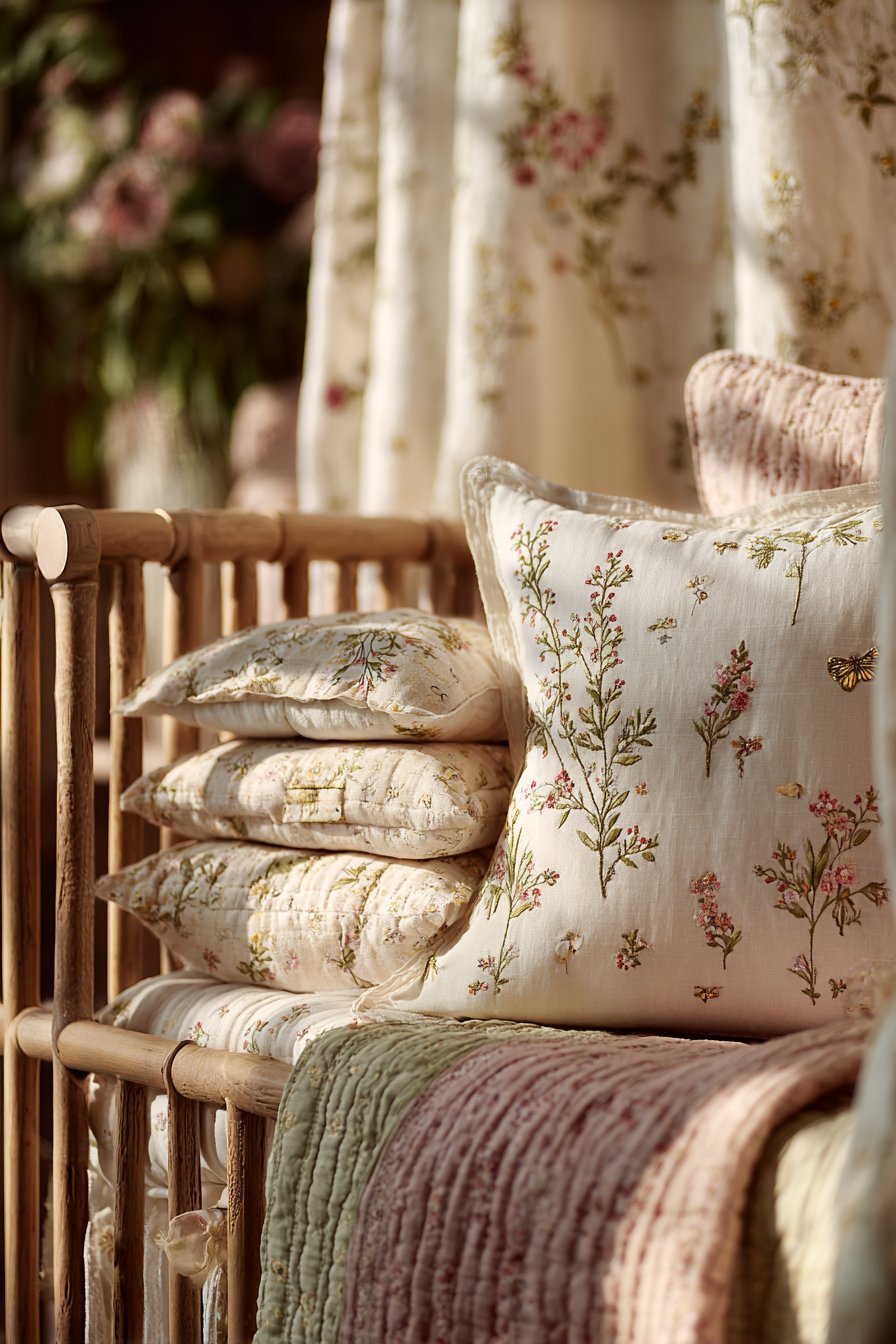
The layering of floral textiles in harmonious scales and tones is the technique that separates a truly dreamy floral nursery from one that merely uses floral pattern. Combine a large-scale floral quilt with a smaller ditsy floral print on the cushions, a plain botanical-green velvet throw, and sheer curtains with a delicate embroidered floral border. Each layer adds depth without competing — the key is that all florals share a common color story, even when their scale and character differ significantly.
- Layer floral textiles in multiple scales — large statement prints alongside small ditsy patterns
- Choose embroidered or appliquéd floral pieces for their quality of craft and loving human attention
- Combine floral pattern with botanical-tone plains — sage velvet, dusty rose linen — for visual balance
- Select natural fiber fabrics — cotton, linen, wool — for their tactile warmth and breathability
- Ensure all floral textiles share a cohesive color story even when their patterns differ significantly in scale
5. Natural Light Transforms Floral Interiors Throughout the Day
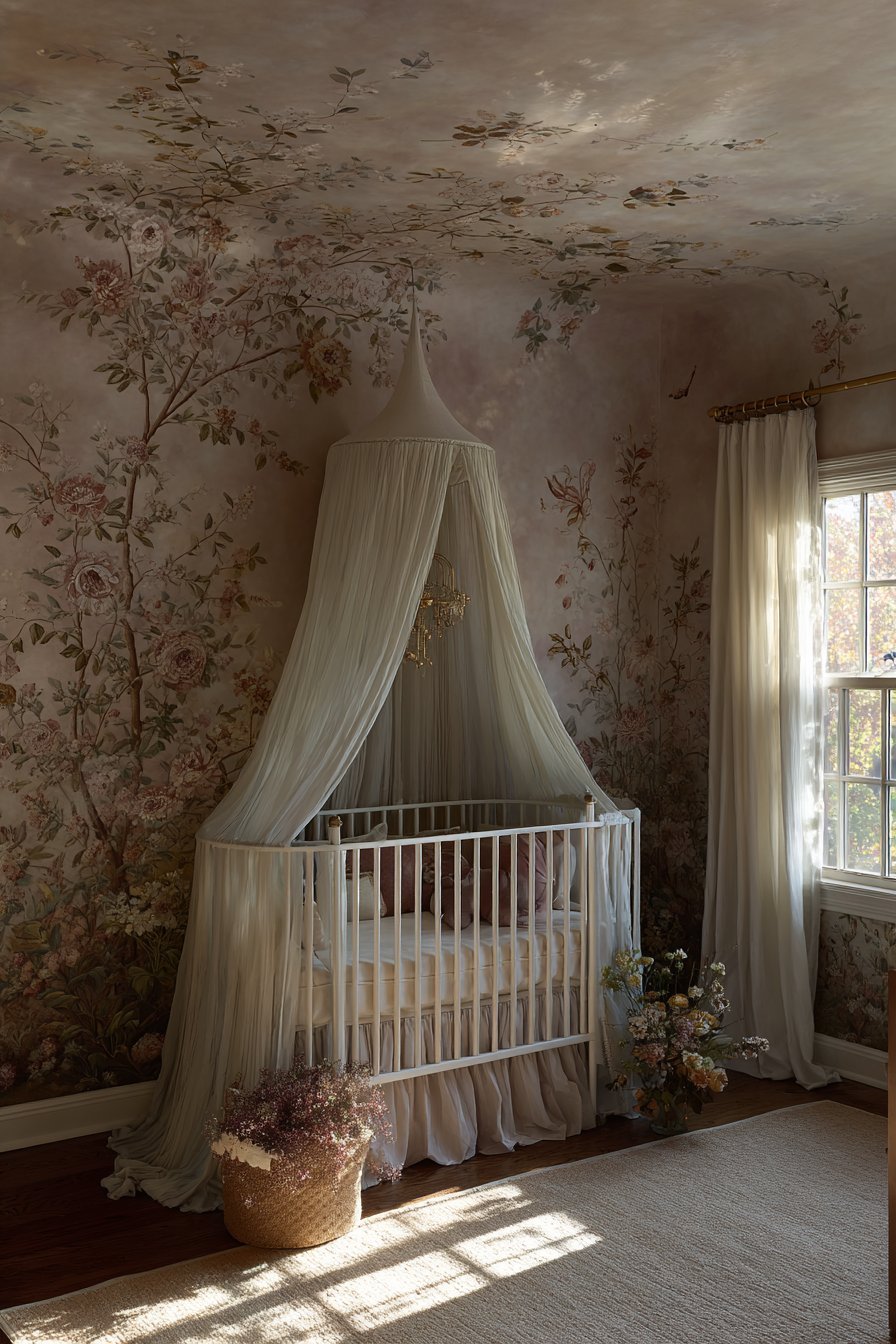
One of the most magical qualities of a well-designed floral nursery is the way it changes throughout the day as natural light moves through the space. Morning light, afternoon sun, the soft grey of a cloudy day, and the warm glow of evening all illuminate floral wallpaper, textiles, and artwork in subtly different ways — giving the room a living, shifting quality that makes it feel genuinely dynamic and enchanting at every hour.
Sheer curtain panels are one of the most powerful tools for creating the dreamy, diffused light quality most associated with floral nursery atmospheres. A light breeze moving through sheer linen or cotton voile curtains — filtering the light into soft, scattered patterns across floral wallpaper and a sleeping baby’s crib — creates a scene of almost unbearable tenderness. This quality of dappled, filtered light is impossible to achieve with heavier window treatments and is worth designing for deliberately.
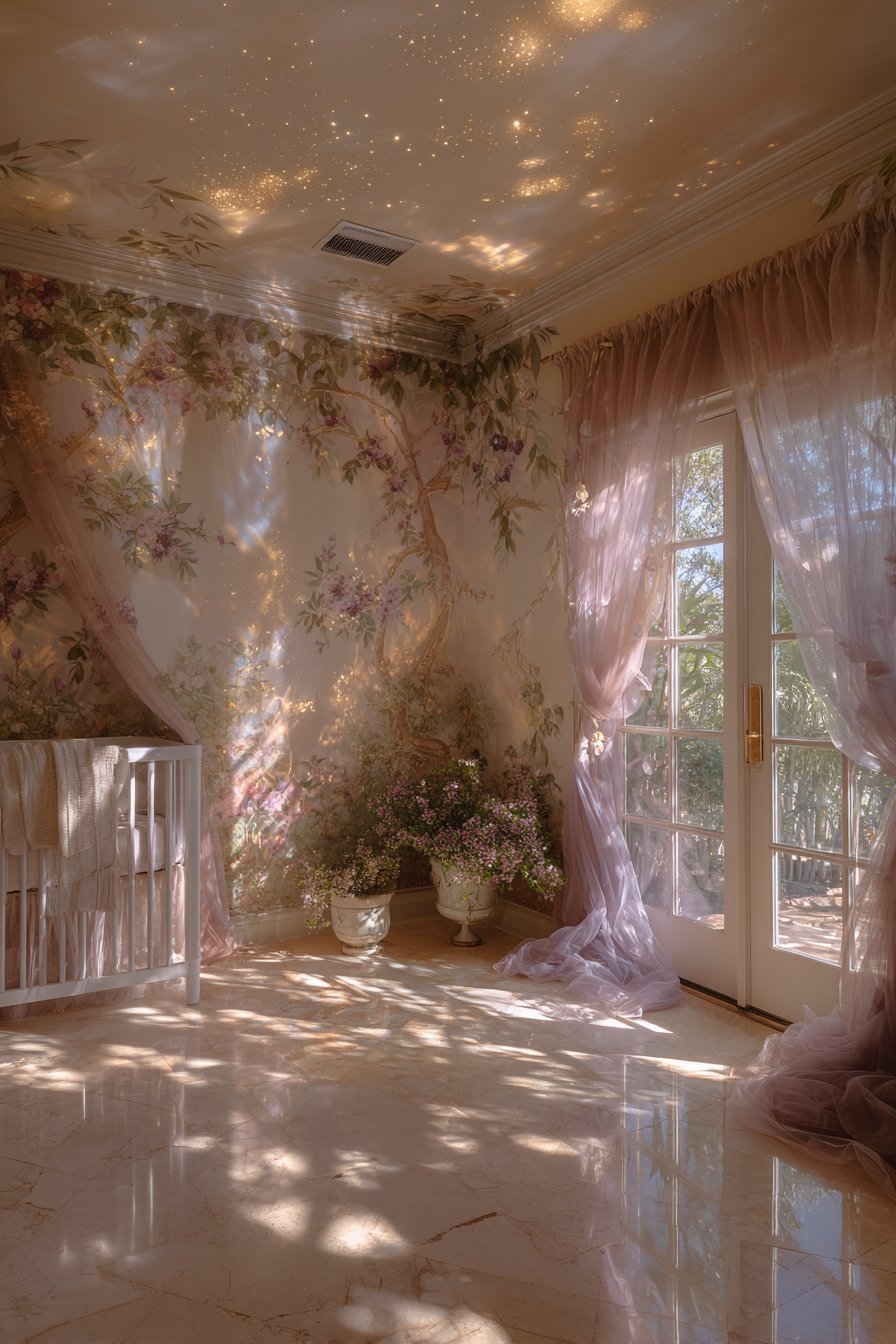
East-facing nurseries receive the warm, golden quality of morning light — a soft, low illumination that makes floral interiors glow with particular beauty. West-facing rooms catch the warmer afternoon and evening tones, which deepen the pink and gold tones of a floral palette in a way that feels almost painted. Understanding your nursery’s orientation and designing the window treatment to work with the light rather than simply against it gives the room a luminous quality that no artificial lighting can replicate.
- Install sheer curtain panels as a daytime layer to create soft, diffused, dappled light through the room
- Layer sheer panels with blackout blinds or curtains to give full light control for nap and sleep times
- Position the crib to receive gentle morning or afternoon light without any direct sun falling on the sleep surface
- Choose wallpaper and textile colors that are tested in the room’s specific natural light quality
- Allow the floral nursery to change through the day — the shifting light is part of its beauty and magic
6. Botanical Art and Illustration Add Depth and Storytelling
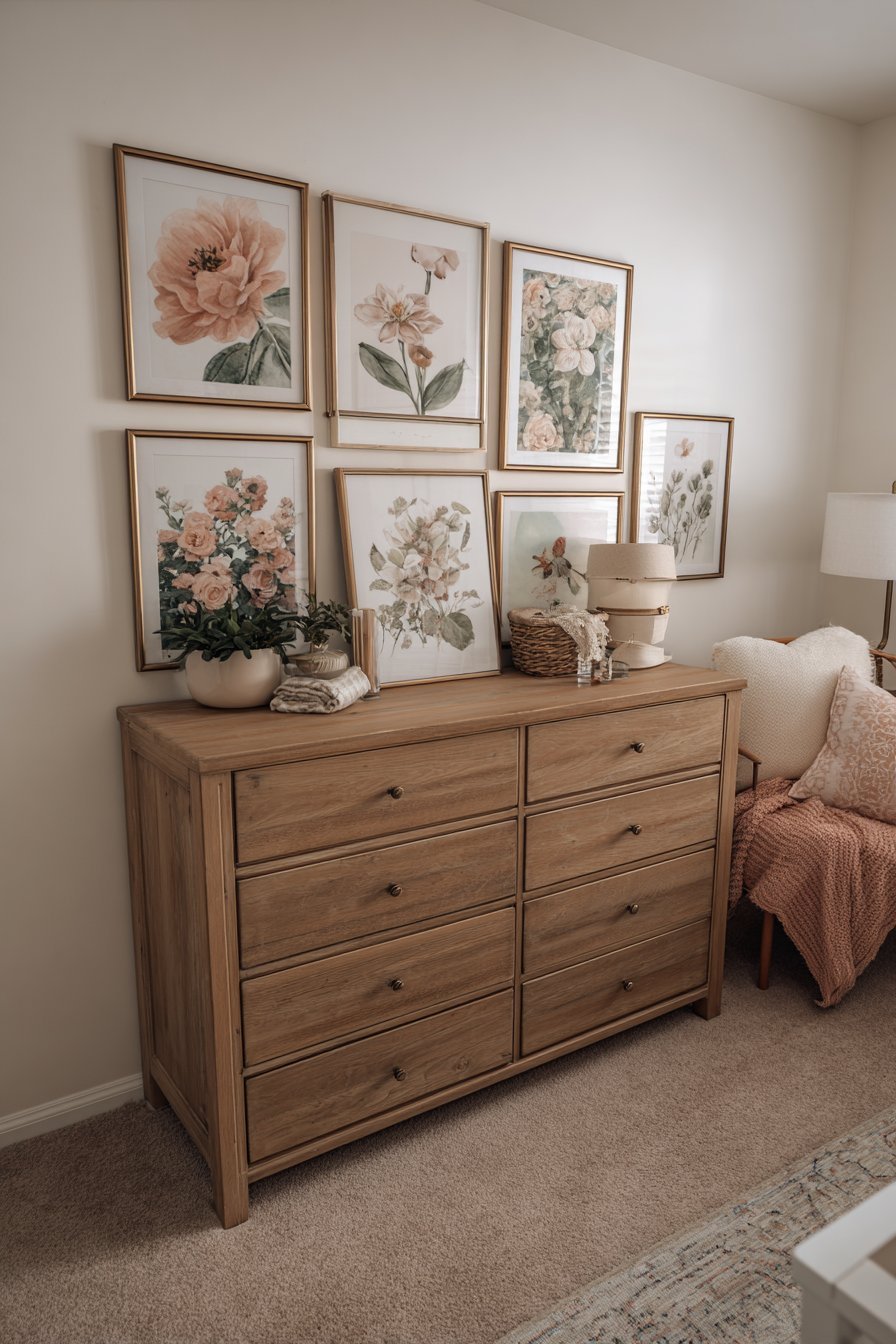
Botanical illustration has a rich artistic history stretching back centuries — from the exquisite hand-drawn studies of natural history illustrators to the watercolor garden paintings of the nineteenth century. When this tradition of careful, loving observation of the natural world is brought into a nursery, it introduces a layer of cultural richness and artistic depth that elevates the space well beyond decorative prettiness into something genuinely meaningful.
Framed botanical prints — whether antique originals, quality reproductions, or contemporary illustrations — are among the most versatile and sophisticated art choices for a floral nursery. A gallery wall composed of three to five botanical prints in coordinating frames, arranged above a dresser or along a reading nook wall, creates a curated, museum-quality display that feels both beautiful and intellectually rich. These are images that grow with a child — the scientific names, the careful detail, and the inherent elegance of botanical illustration have enduring value well beyond the nursery years.
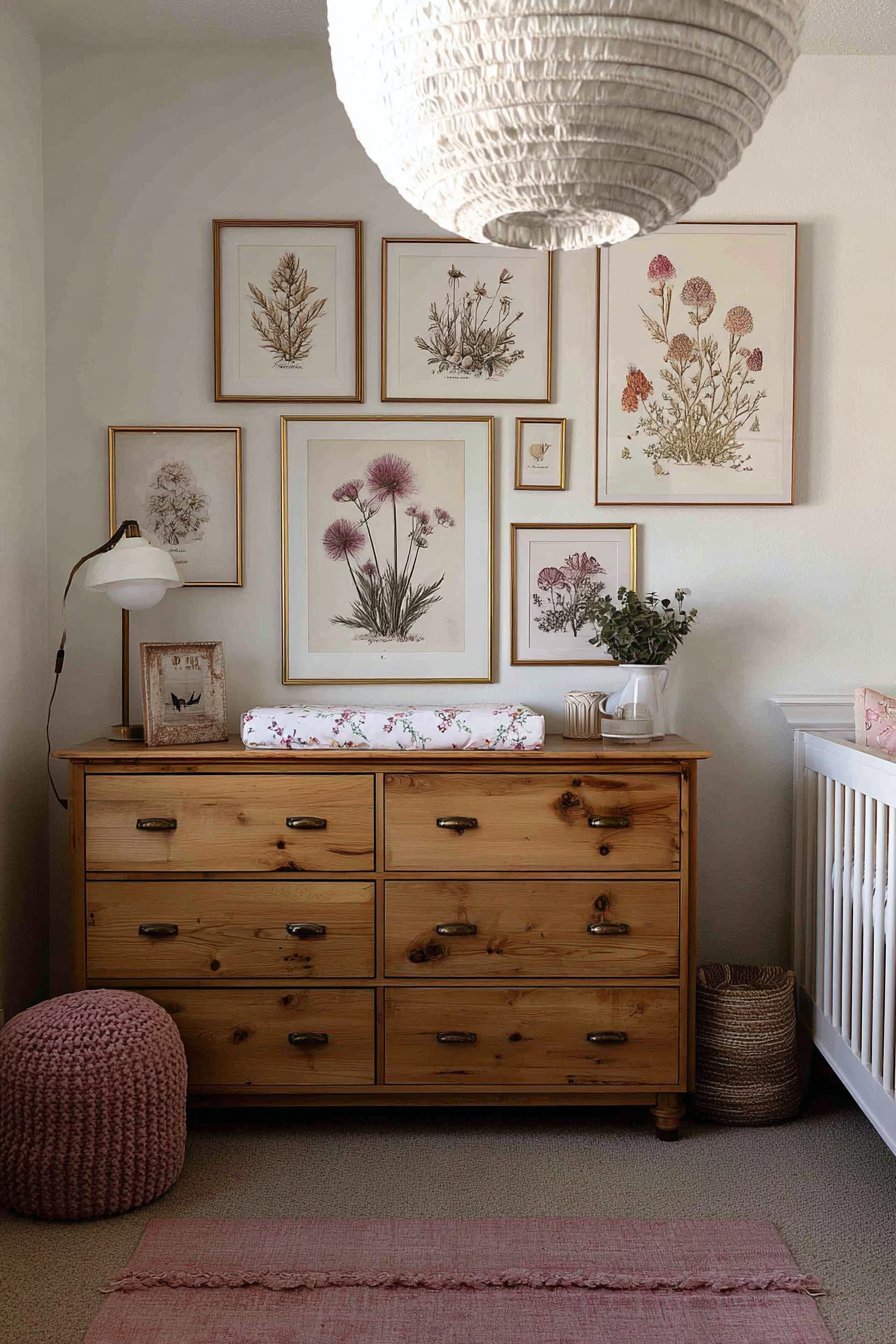
Illustrated children’s book-style botanical art brings a different quality of warmth and narrative to floral nursery walls. Prints that depict animals among flowers, fairies in garden settings, personified blooms with gentle expressions, or imaginary botanical worlds invite a child’s imagination into a story that begins before they are old enough to read. These narrative botanical images create a sense of world-building within the nursery — a personal mythology of flowers, creatures, and gentle magic that a child carries with them as they grow.
- Create a gallery wall of framed botanical prints above a dresser or along a feature wall
- Mix antique botanical reproductions with contemporary illustrations for a layered, collected aesthetic
- Choose frames in a consistent finish — all brass, all natural timber — for a cohesive gallery arrangement
- Include illustrated botanical art with animal or narrative elements to invite imagination and storytelling
- Position the most detailed, beautiful artwork at adult eye level where parents can enjoy it during feeds
7. Floral Accessories and Details Complete the Enchantment
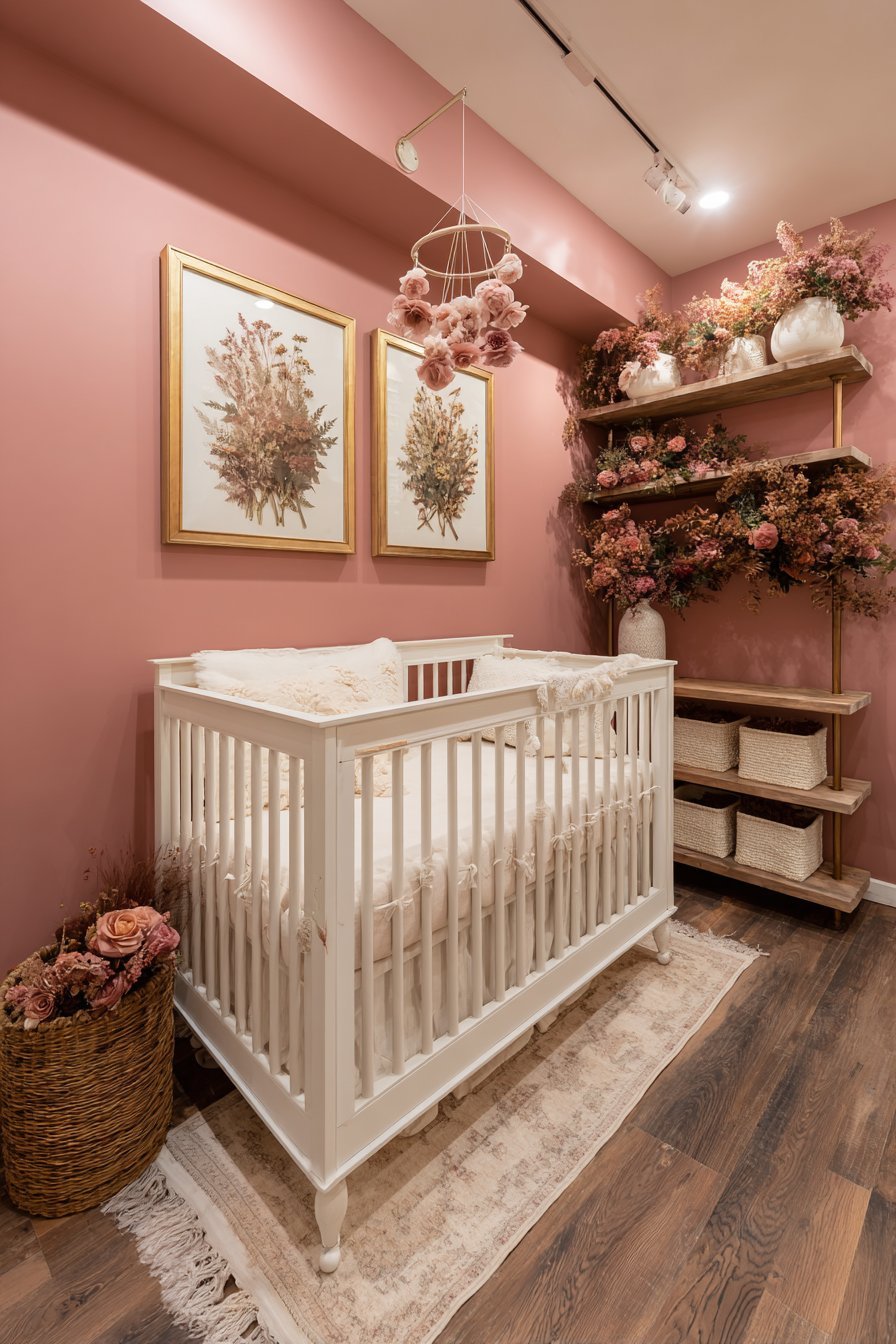
The finishing layer of a floral nursery — the accessories, decorative details, and small thoughtful touches that complete the environment — is where the room’s dreamy atmosphere is finally sealed. These details are often inexpensive individually, but collectively they create the atmosphere that visitors and parents feel the moment they step through the nursery door: a sense of entering somewhere carefully, lovingly, and beautifully made.
Floral crib mobiles are among the most enchanting nursery accessories available. A mobile of soft felt flowers, paper blooms, or fabric blossoms in the nursery’s color palette, turning slowly above the crib, creates a gently mesmerizing focal point that soothes babies while reinforcing the room’s botanical visual world. Choose mobiles with slow, graceful movement rather than fast or jerky rotation, and ensure the color and scale of the blooms complement rather than compete with the room’s existing floral elements.
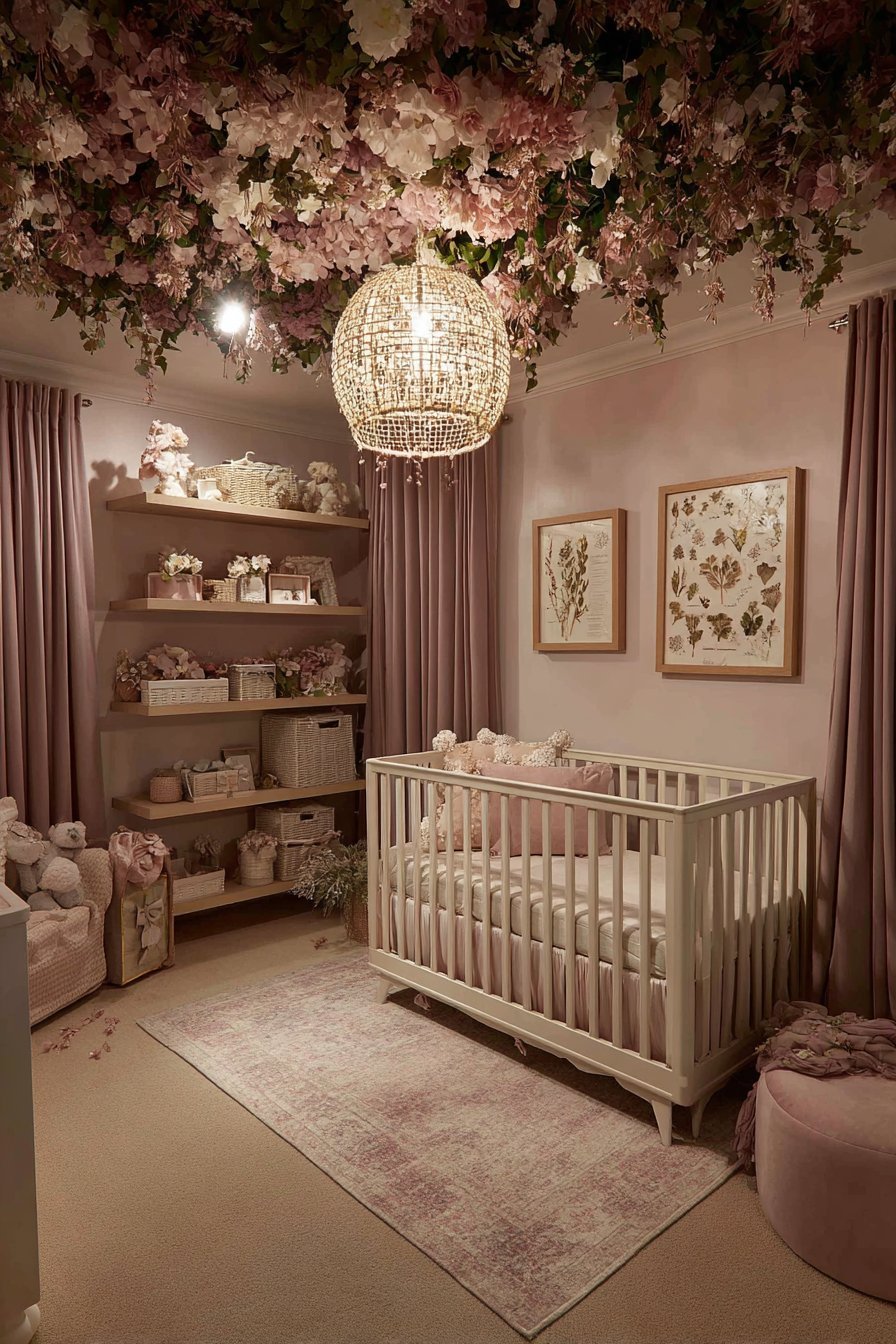
Pressed flower frames, terrarium displays, and preserved botanical arrangements bring a genuinely natural botanical element into the nursery that printed and illustrated florals alone cannot achieve. A framed pressed flower collection — meadow flowers, rose petals, or wildflower specimens arranged on a cream ground and mounted in a deep float frame — is simultaneously a piece of natural history, a decorative object, and a connection to the living world outside the nursery window. These objects carry a quality of wonder and natural magic that is perfectly suited to the atmosphere of a floral nursery.
- Choose a floral crib mobile in soft felt or fabric blooms that complement the nursery’s color palette
- Display pressed flower frames or preserved botanical arrangements as natural focal points
- Use floral ceramic planters, bud vases, and botanical-print storage boxes as decorative accessories
- Add a floral or botanical-patterned lamp shade to the nursing area lamp for a cohesive finishing detail
- Place a single fresh or dried floral arrangement in a beautiful vessel as the room’s one truly living accent
8. Why Floral Nurseries Age Beautifully Into Childhood Rooms
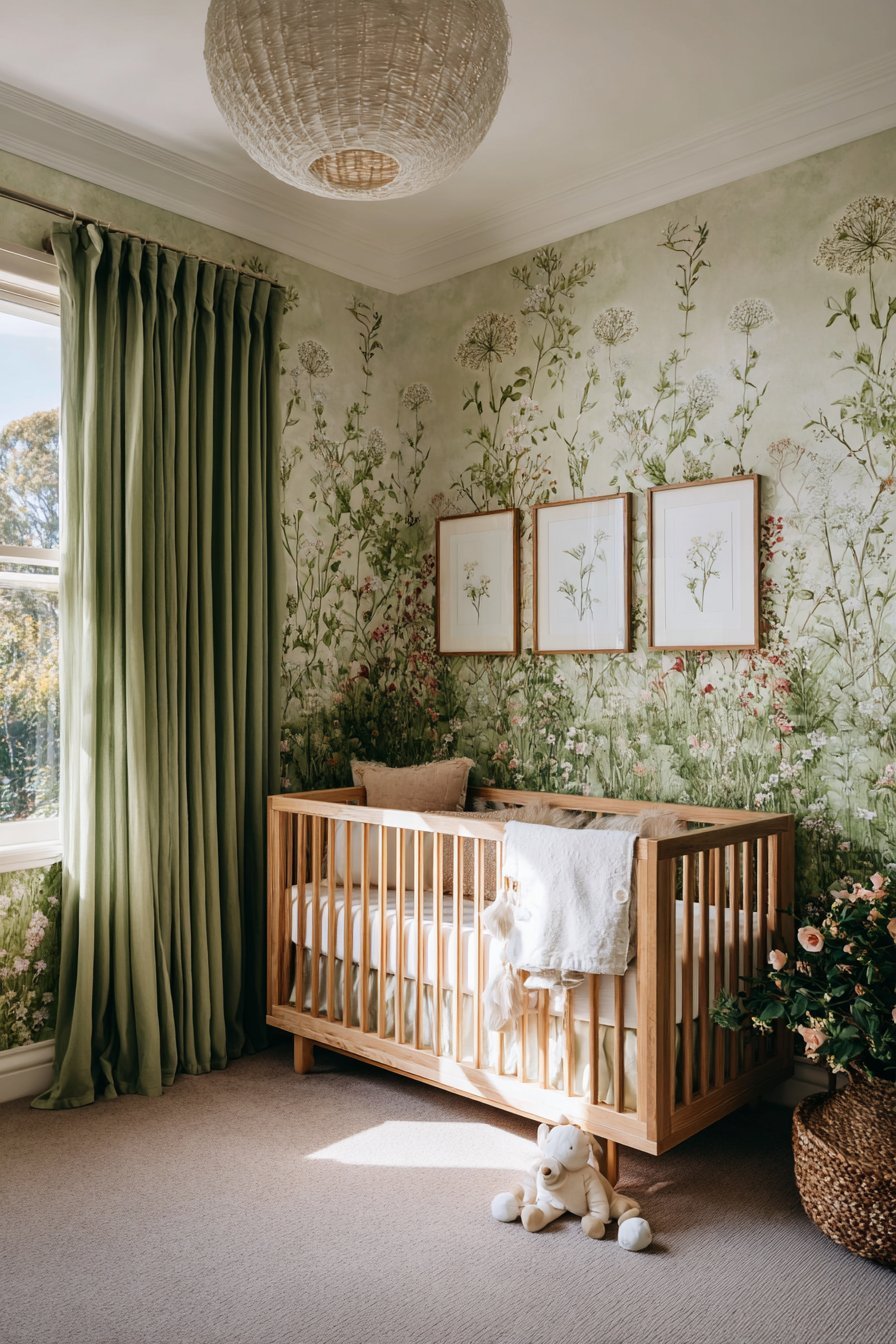
One of the most practical arguments for designing a floral nursery — beyond its extraordinary visual beauty — is how gracefully it transitions from infant nursery to toddler room to older child’s bedroom. The botanical and floral aesthetic is among the most age-appropriate and enduringly beautiful design directions available, remaining relevant and lovely through every stage of childhood in a way that character-licensed nursery themes simply cannot.
Botanical themes grow with children in a uniquely seamless way. The floral wallpaper that surrounded a sleeping infant becomes the backdrop for a toddler’s imaginative play — the flowers on the wall becoming characters in invented stories, the botanical prints becoming a source of genuine curiosity and early nature learning. As a child grows, the sophistication inherent in good botanical design means the room ages upward rather than downward — looking more considered, not less, as the child develops the visual literacy to appreciate it.
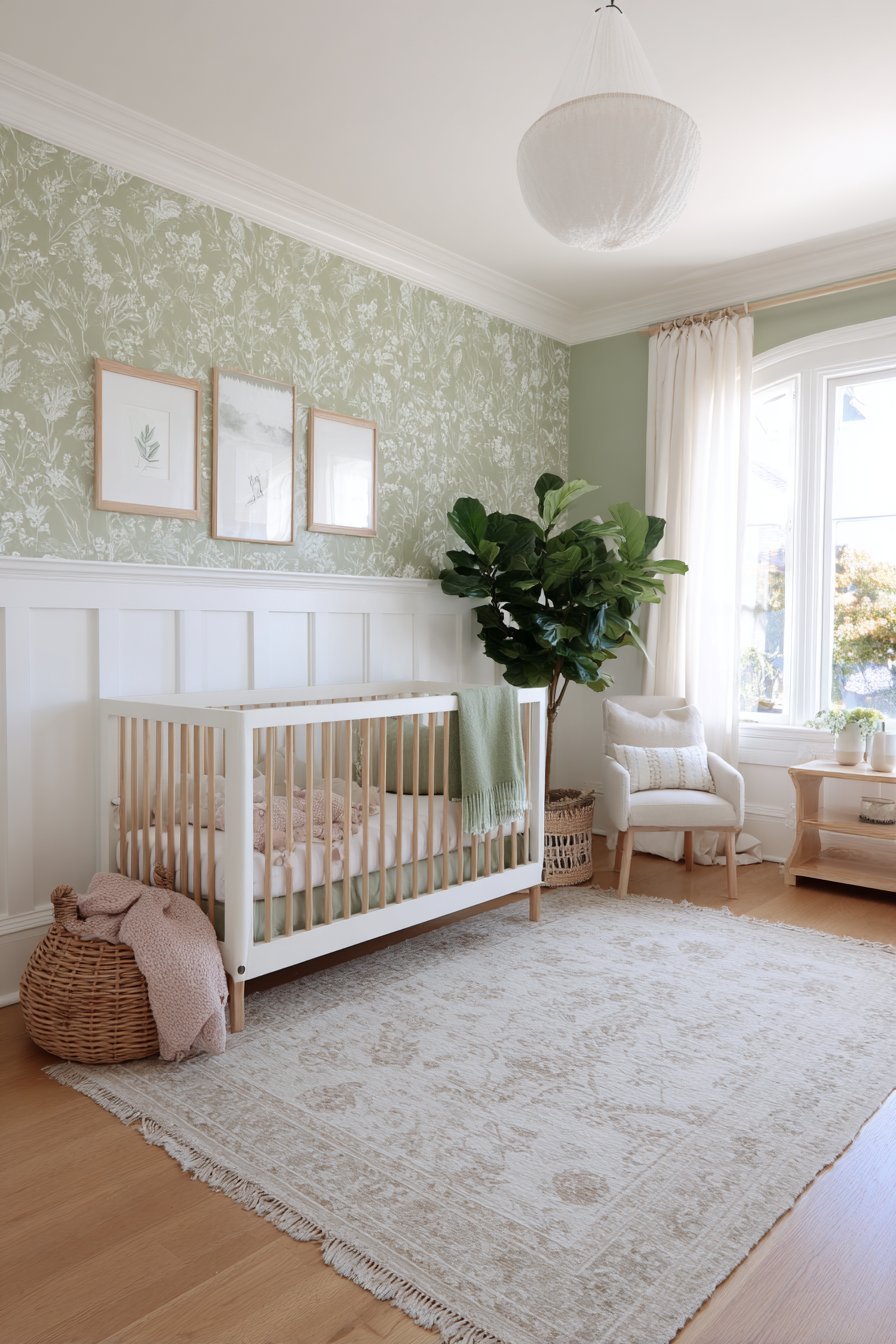
Refreshing a floral nursery for an older child requires only the simplest interventions — swapping out the crib for a bed, updating the textile layers to reflect the child’s growing personality, introducing new artwork and accessories that speak to their emerging interests — while retaining the room’s foundational botanical beauty. A floral nursery designed with quality materials, a considered color palette, and an investment in the bones of the room will serve a child well from their first weeks of life through their primary school years and beyond.
- Choose botanical themes with broad, enduring appeal — garden florals, meadow wildflowers — over trend-specific designs
- Invest in quality floral wallpaper that will look as beautiful at age five as it does at age five weeks
- Design the nursery furniture in natural finishes that transition easily from infant to child styling
- Plan the room layout with the eventual bed position in mind — often the same wall as the original crib
- As your child grows, involve them in choosing new textiles and accessories that layer onto the floral foundation
Conclusion
A floral nursery is more than a design choice — it is an act of welcome, a declaration that this child is entering a world of beauty, tenderness, and natural wonder. The dreamy atmosphere that floral nurseries so consistently create is not accidental; it emerges from the deep psychological comfort of botanical imagery, the extraordinary visual richness of floral pattern, the way soft colors support rest and calm, and the quality of loving intention that every carefully chosen petal and bloom communicates.
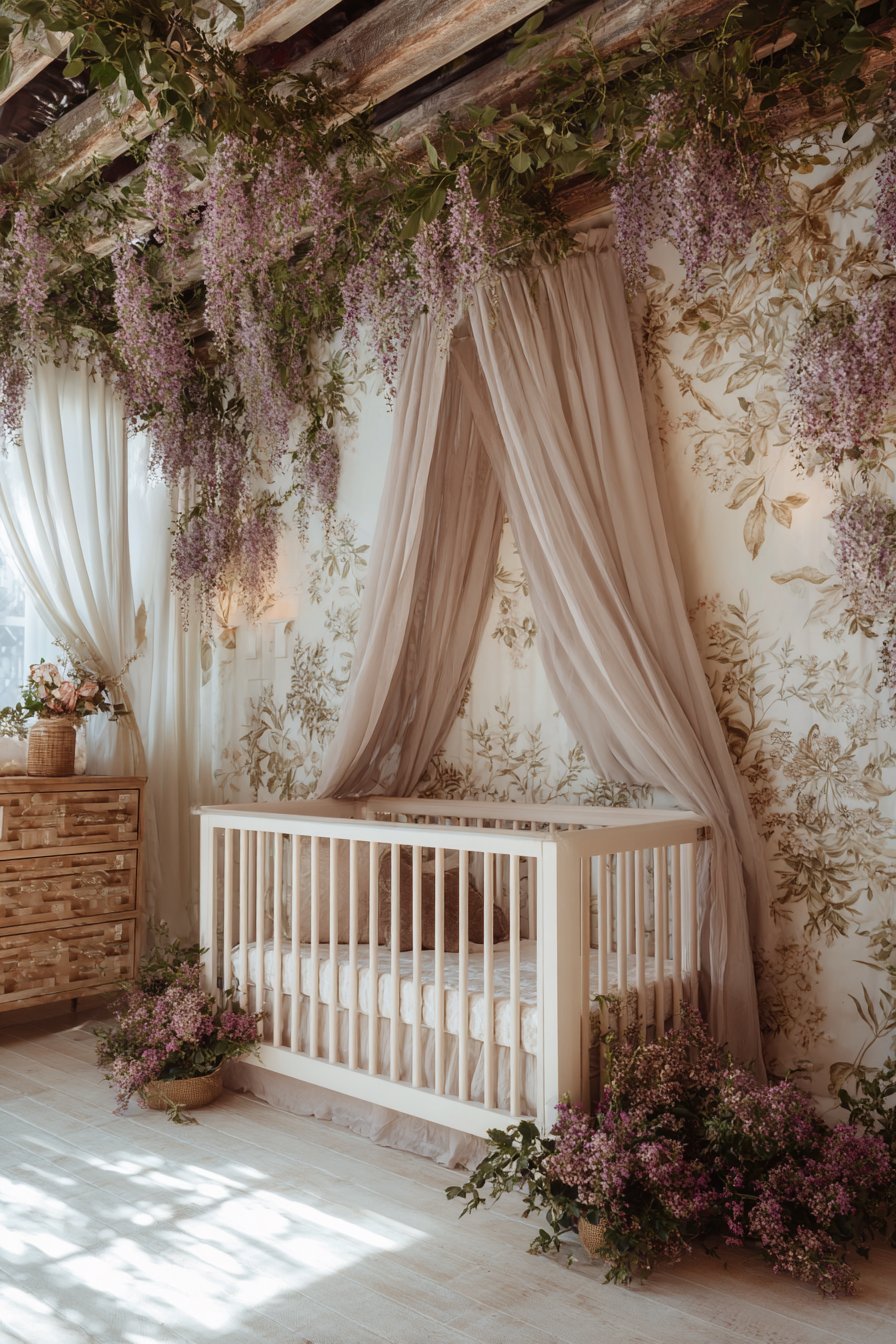
Whether you cover every wall in a painterly botanical mural, build a gentle floral world through layered textiles and carefully chosen art, or simply add the most beautiful floral mobile you can find above the crib, flowers have a unique ability to make a nursery feel like somewhere truly extraordinary — a garden within four walls, a world of gentle magic, and the most beautiful possible beginning for a brand new life.
