

Designing a nursery is one of the most exciting and meaningful projects a parent can take on. It is more than just decorating a room — it is creating a safe, nurturing sanctuary where your baby will sleep, explore, and grow. Every choice you make, from the color on the walls to the furniture on the floor, shapes the environment your child will spend countless hours in during their earliest years.
The challenge most parents face is designing a space that is beautiful and functional today while remaining relevant as the child grows. Baby trends come and go quickly, and a room designed too narrowly for infancy can feel outdated by the toddler years. Thoughtful interior design solves this by prioritizing timeless aesthetics, adaptable furniture, and flexible layouts that evolve alongside your child without requiring a full renovation.
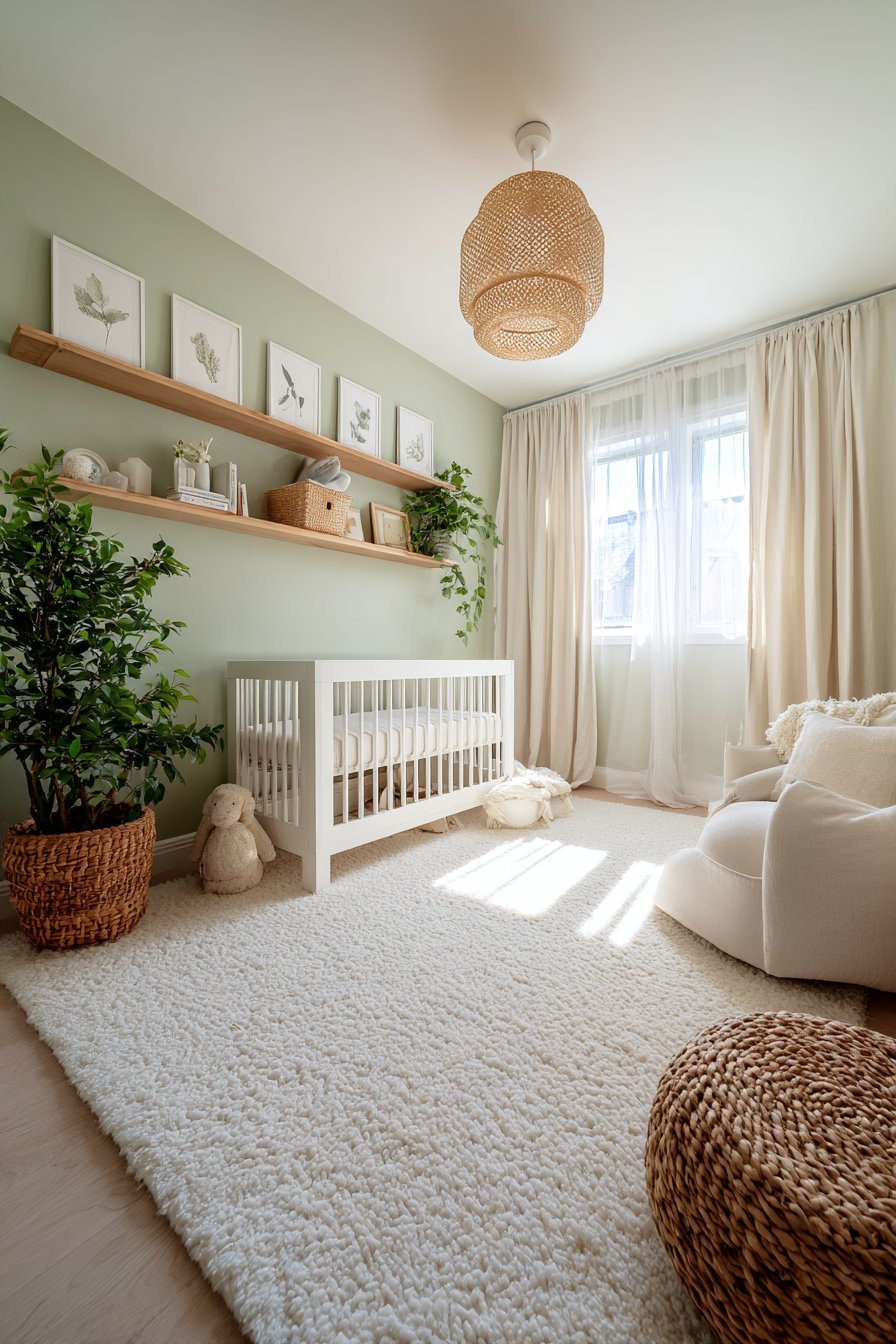
This article explores six inspired ways to create a nursery that is both elegantly styled and built for the long term. Whether you lean toward soft minimalism, classic traditional looks, or modern Scandinavian vibes, these tips will help you design a room that serves your baby beautifully today and your growing child for years to come.
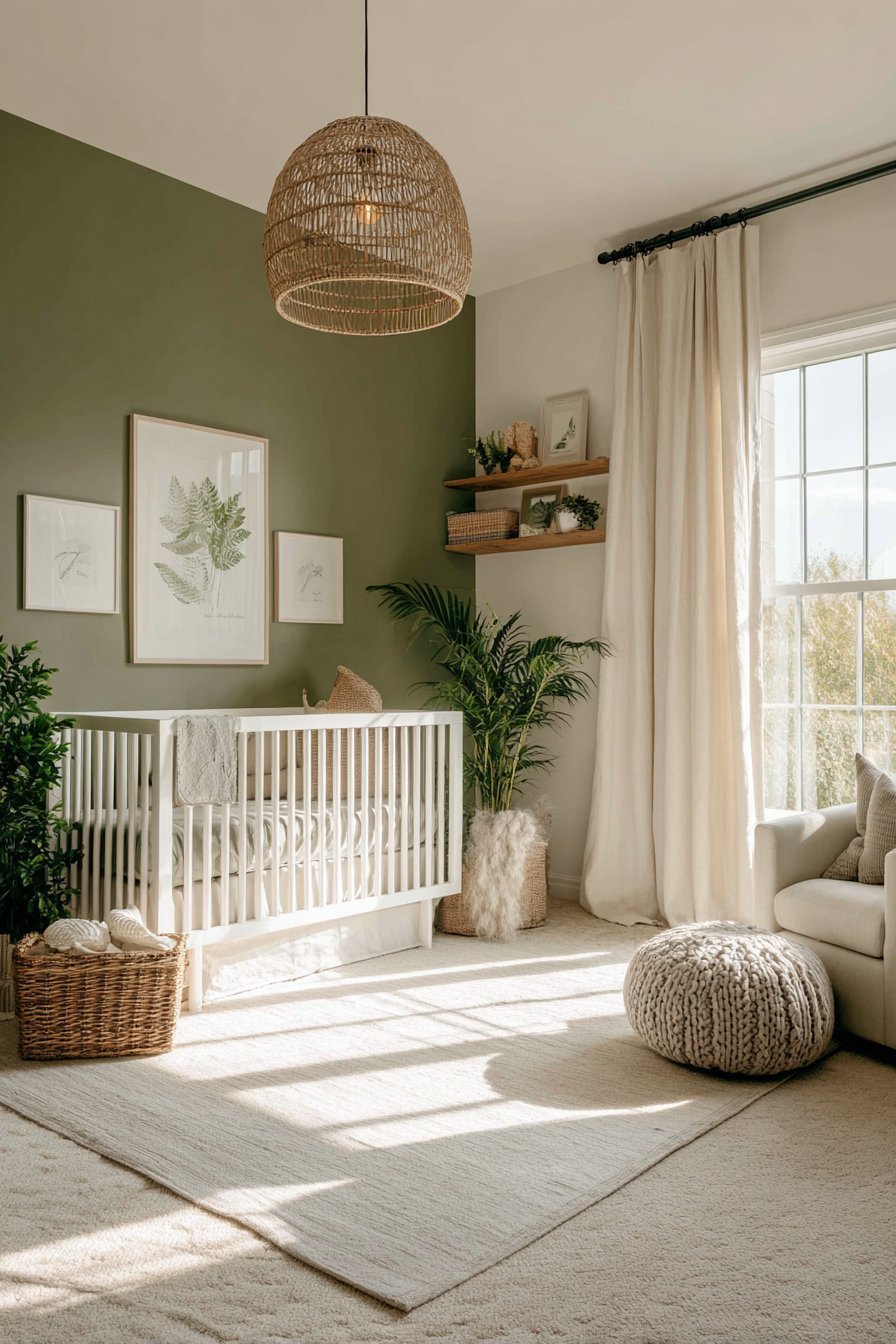
1. Choose a Timeless, Neutral Color Palette
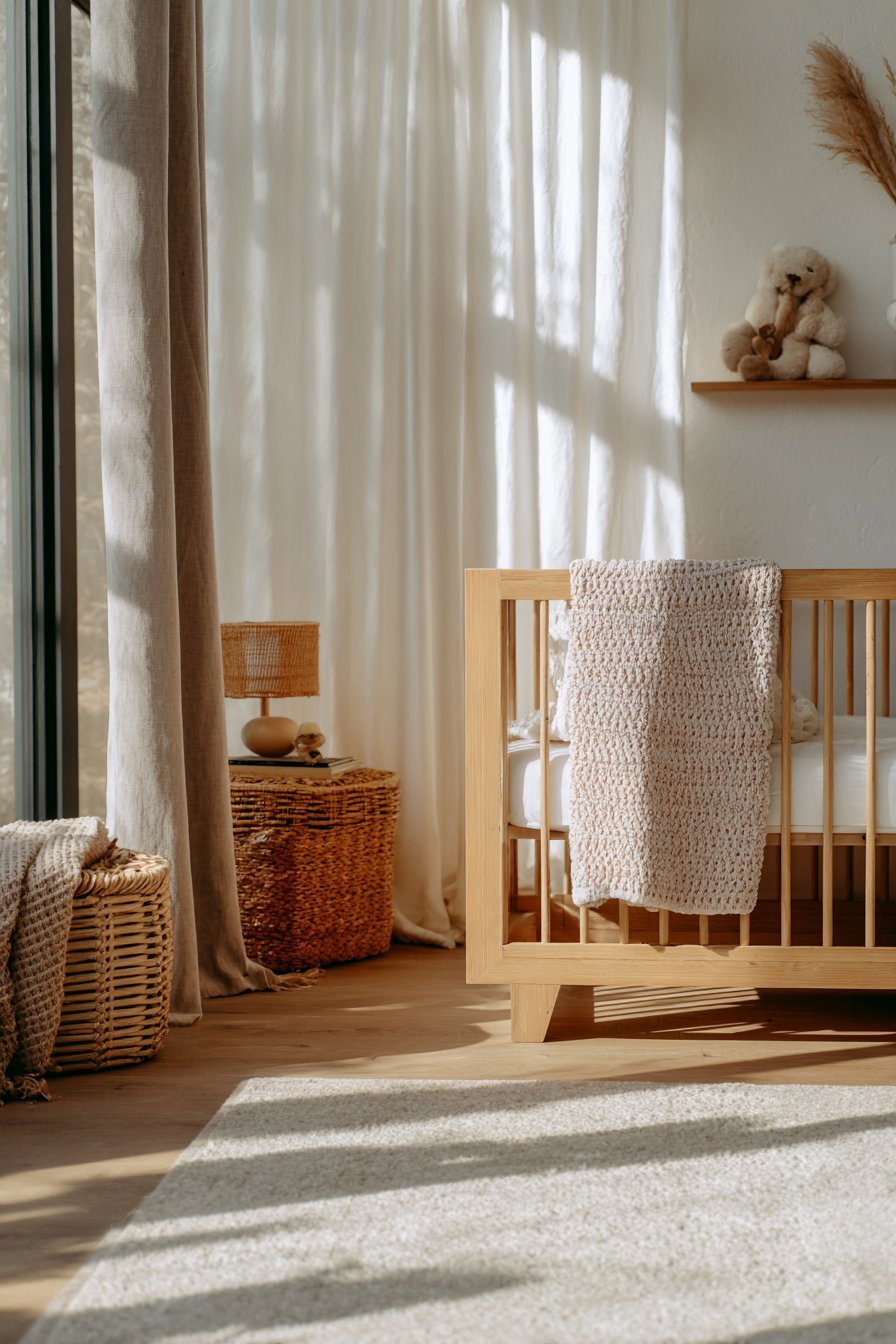
Color sets the emotional tone of any room, and in a nursery, it plays an especially powerful role. Soft, neutral tones like warm white, sage green, dusty blush, muted taupe, and gentle greige create a calm and soothing atmosphere that is ideal for infant sleep and relaxation. These shades are also endlessly versatile, making them easy to refresh as your child’s personality develops over time.
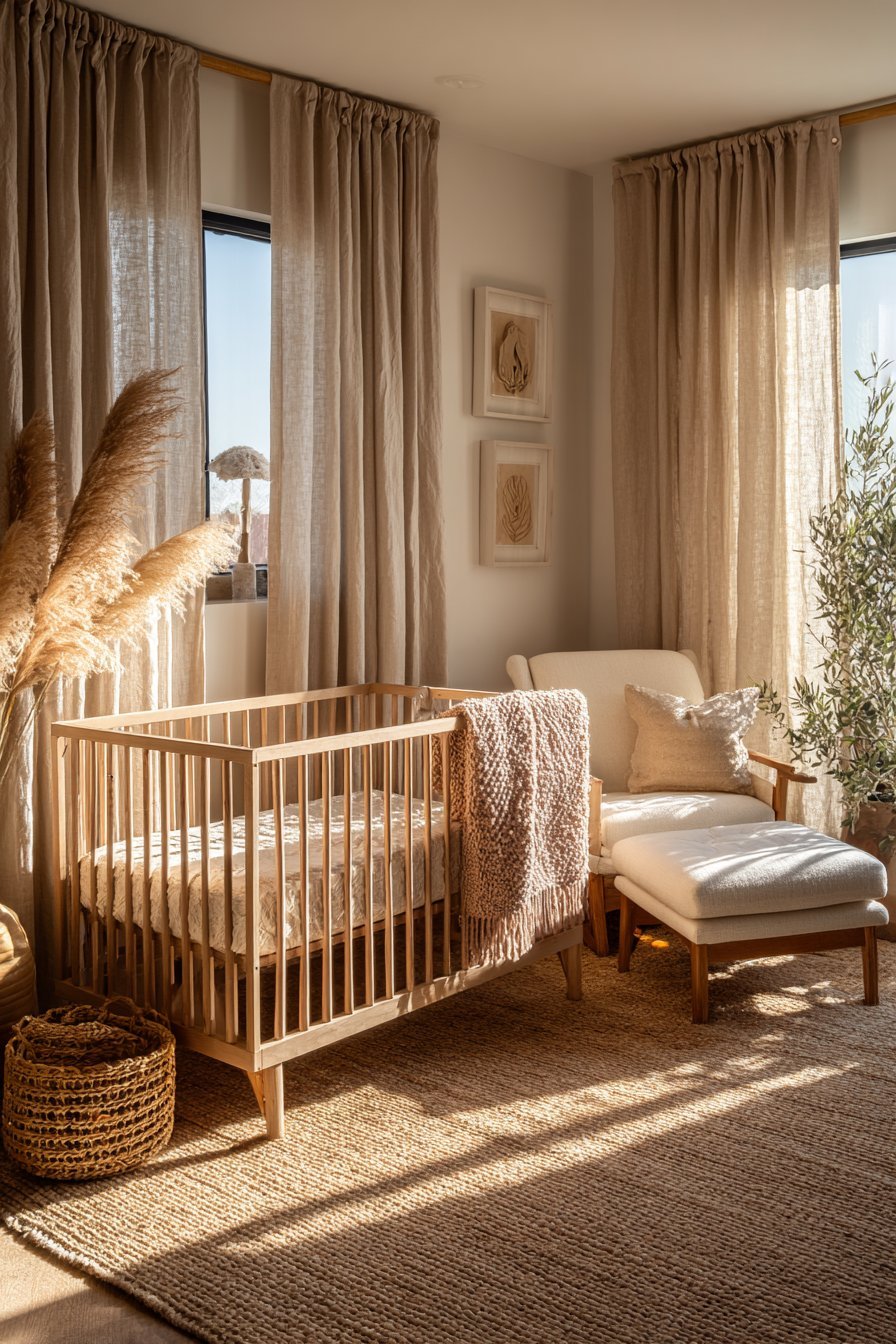
Avoid the temptation to go too theme-heavy with bold cartoon colors or ultra-specific palettes. A room painted in muted earth tones can transition from a dreamy infant nursery to a sophisticated toddler bedroom simply by swapping out textiles and accessories. The walls stay the same; the personality of the room evolves through layered decor instead.
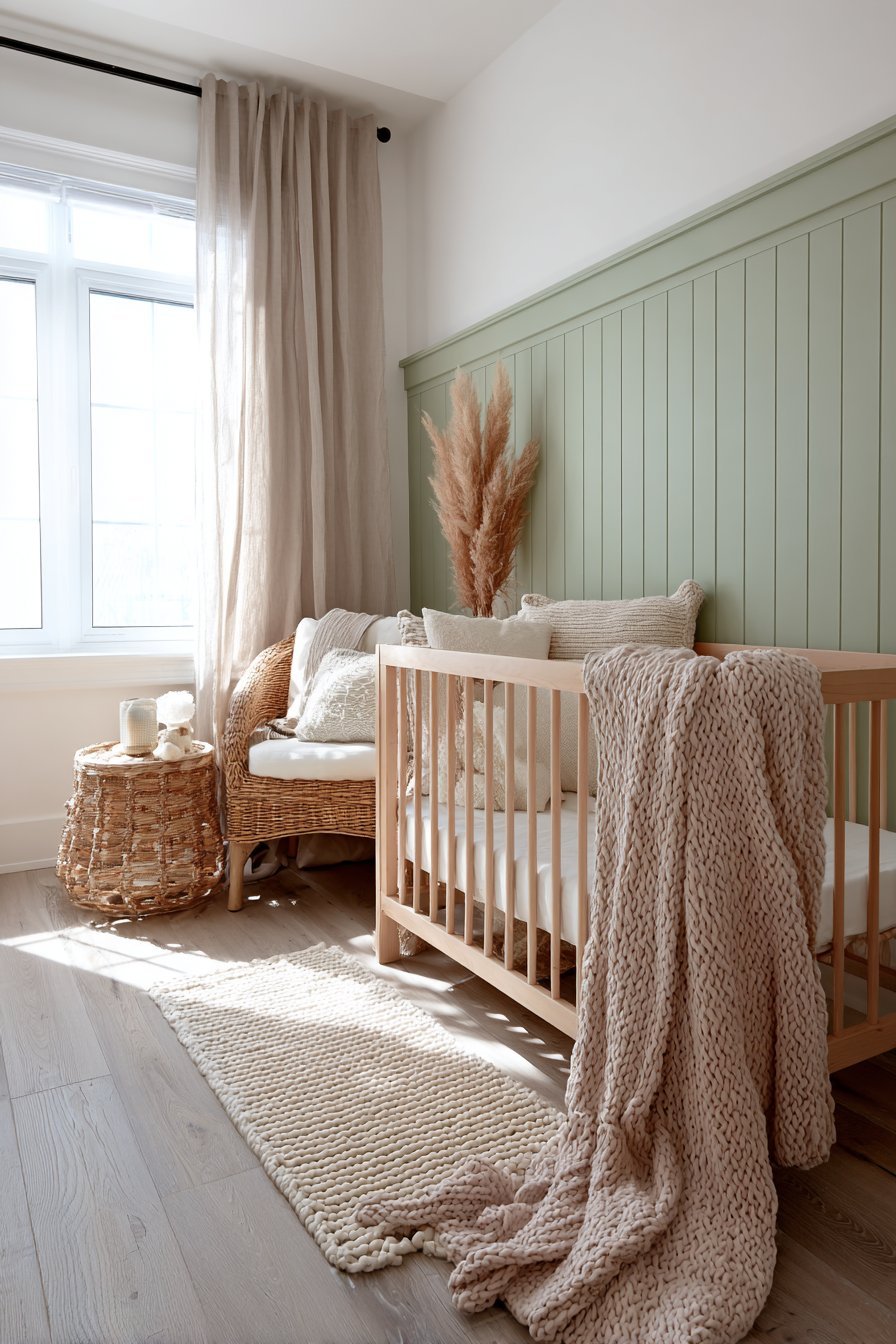
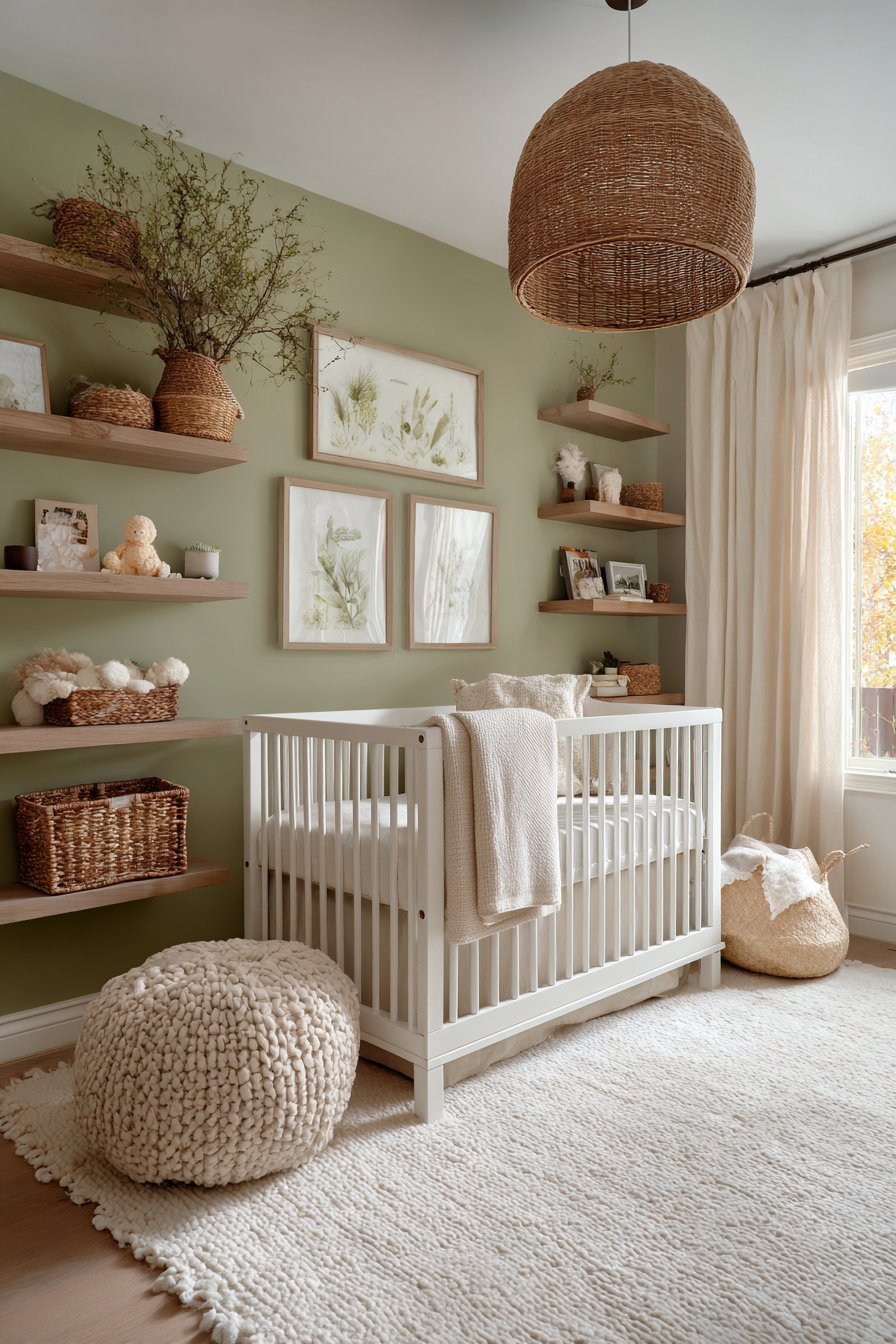
Consider using color in intentional layers — a neutral base on the walls, a slightly deeper tone on an accent wall, and warmth introduced through wood tones, woven baskets, and soft textiles. This approach creates visual depth without overwhelming the senses, keeping the room feeling elegant at every stage.
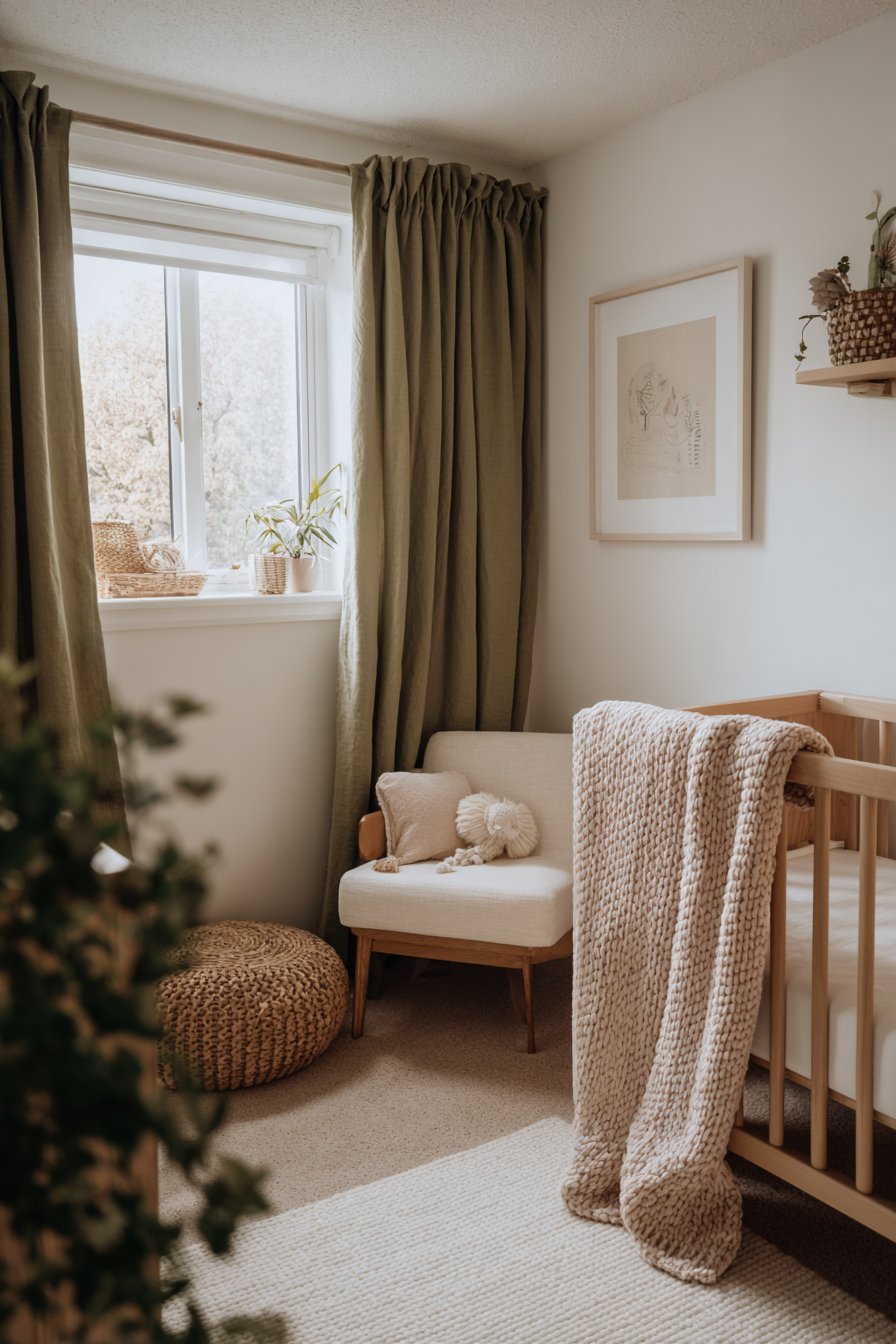
- Choose wall colors in warm whites, sage greens, or muted blush tones
- Avoid highly saturated or trendy colors that date quickly
- Use an accent wall in a slightly deeper shade for visual interest
- Layer color through rugs, bedding, curtains, and decor accessories
- Test paint samples in the room under natural and artificial light before committing
- Consider light-reflective finishes to keep the space feeling bright and airy
2. Invest in Convertible, Multi-Stage Furniture
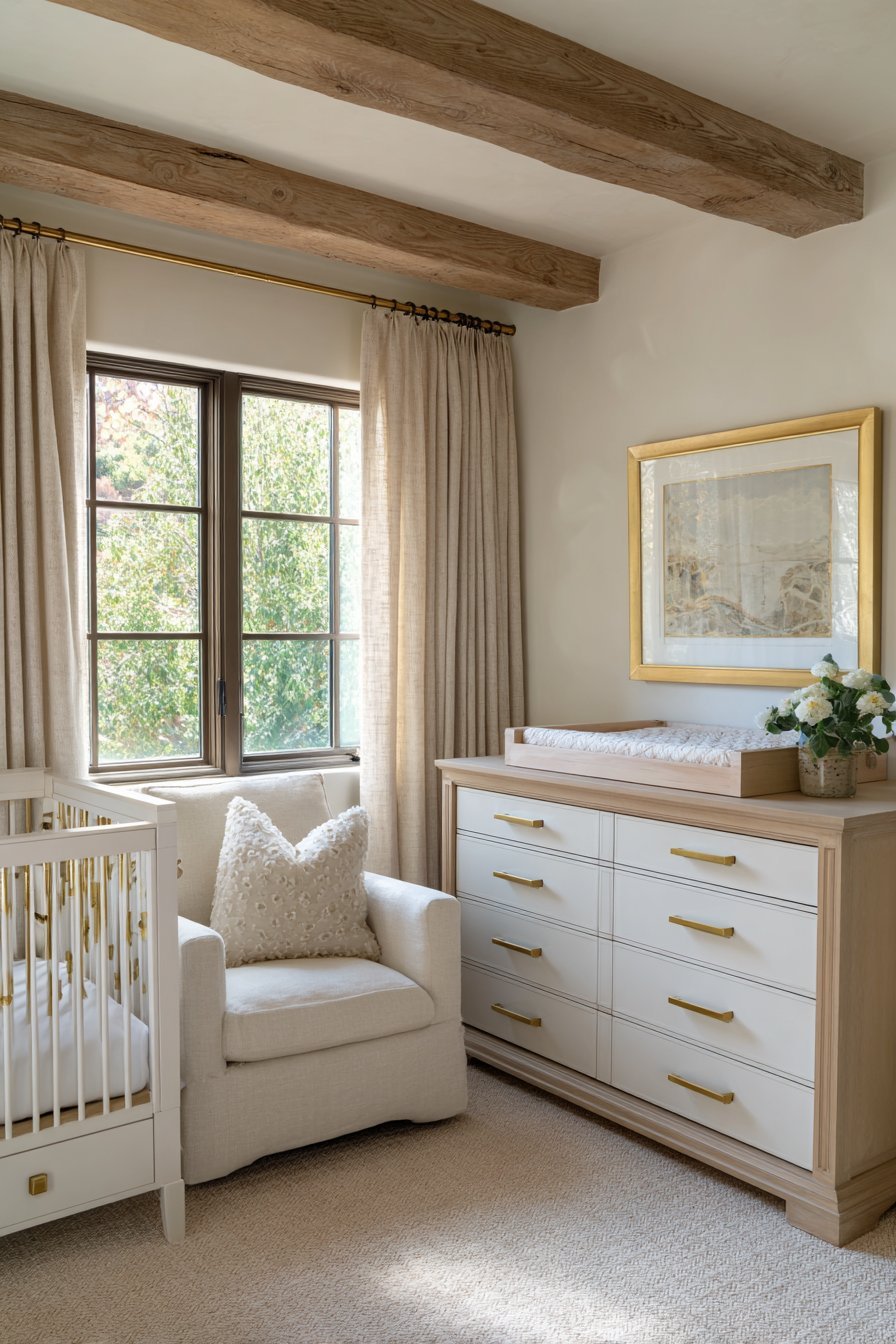
Furniture is the single largest investment you will make in a nursery, and choosing pieces that adapt as your child grows is one of the smartest financial decisions you can make. A convertible crib that transforms into a toddler bed, daybed, and eventually a full-size bed is the cornerstone of a grow-with-me nursery strategy. These pieces cost more upfront but deliver exceptional long-term value.
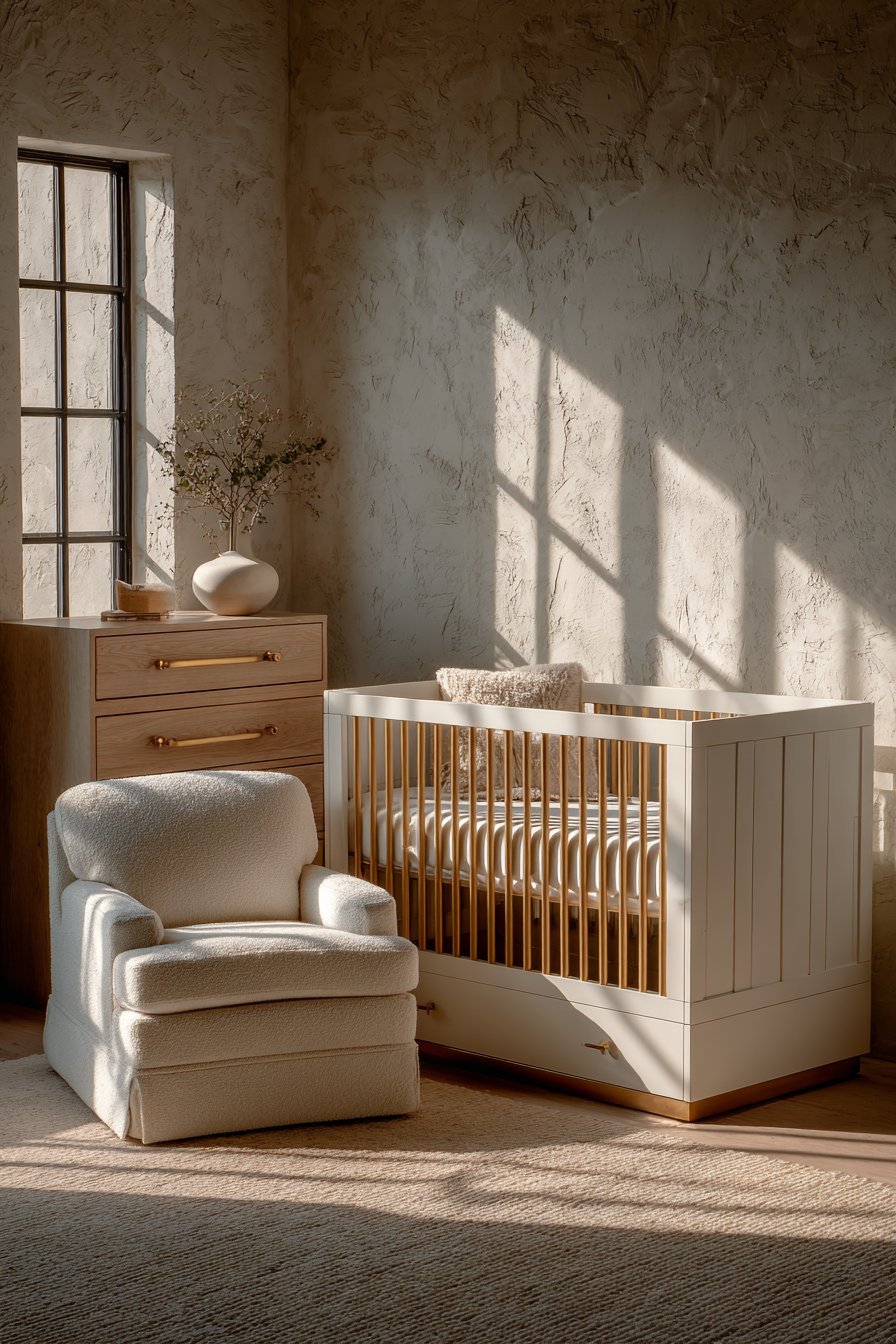
Look for a changing table with removable topper that converts into a standard dresser once diaper changes are behind you. Many high-quality nursery dressers are designed exactly this way, giving you a functional changing station now and a timeless bedroom dresser later. This eliminates the need to replace furniture every few years and keeps the room looking cohesive as it evolves.
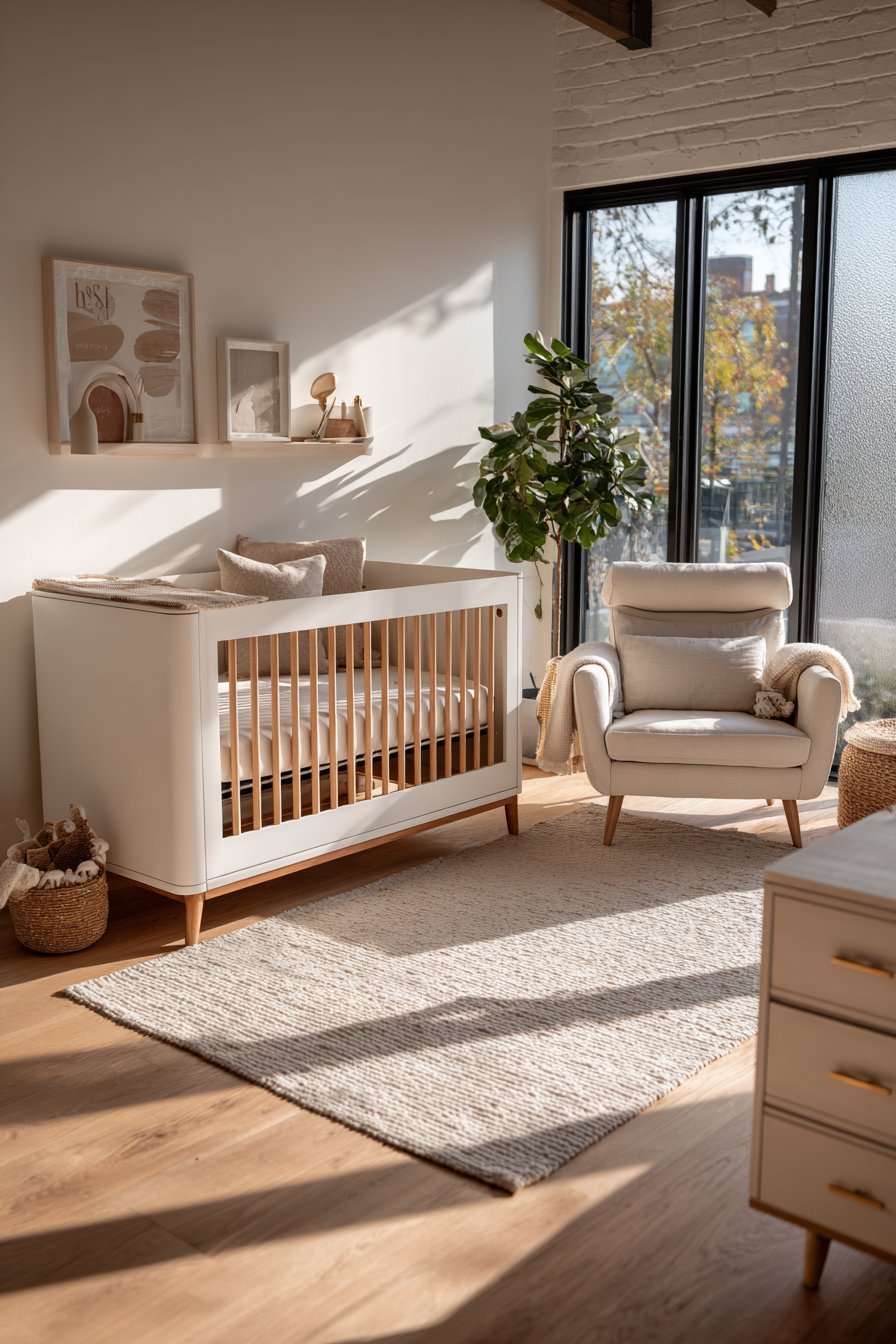
Beyond cribs and dressers, consider a comfortable glider or rocking chair that works just as well as a reading nook chair for a school-age child. Furniture that serves multiple life stages makes the room feel intentionally designed rather than temporary, adding to the overall elegance of the space.
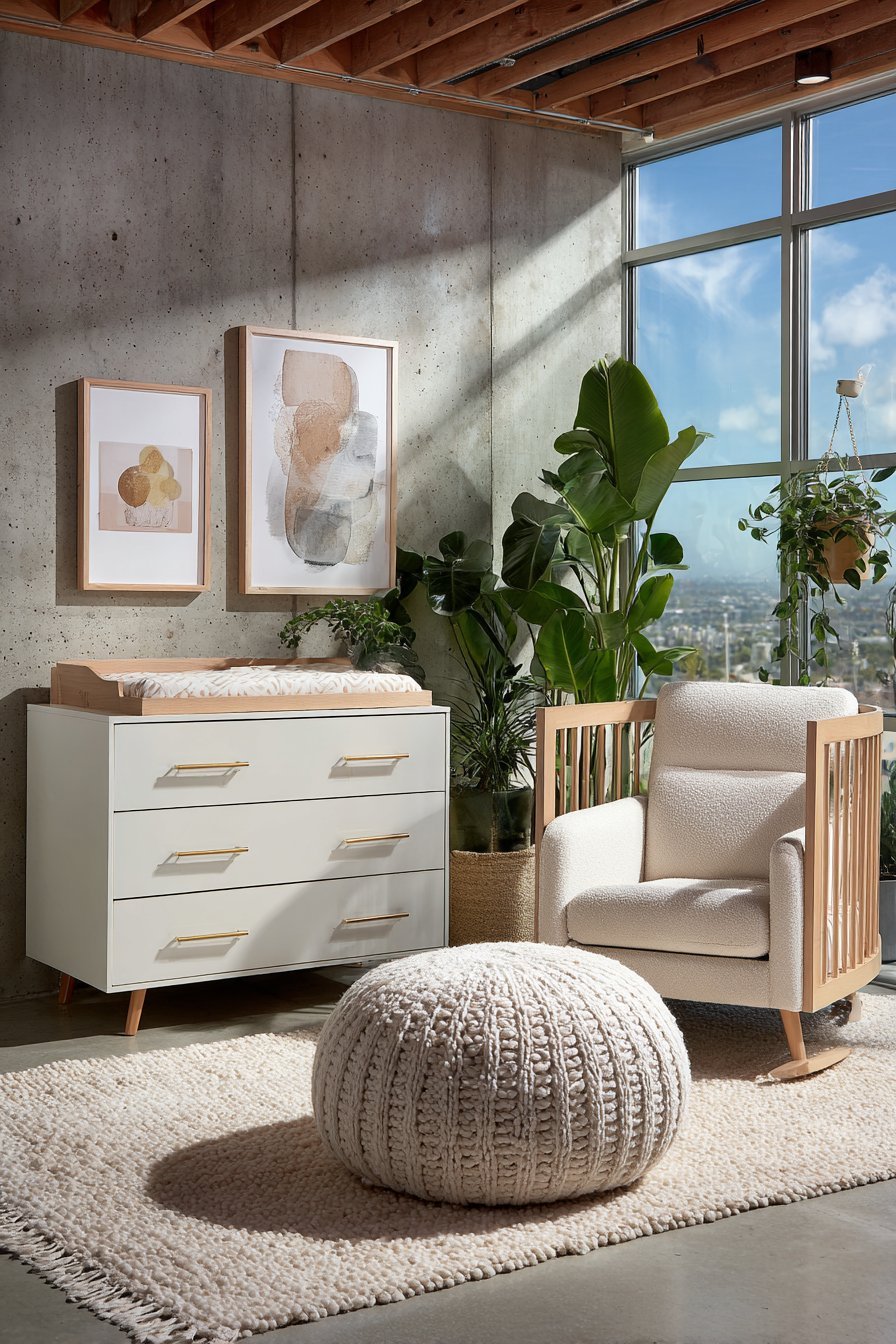
- Choose a 4-in-1 convertible crib that grows through multiple bed stages
- Select a dresser with a removable changing topper for long-term use
- Opt for a glider or armchair that suits adults and older children equally
- Prioritize solid wood construction for durability and longevity
- Look for neutral hardware finishes like brushed brass or matte black
- Avoid novelty-shaped or character-themed furniture that limits longevity
3. Layer Soft Textiles for Warmth and Texture
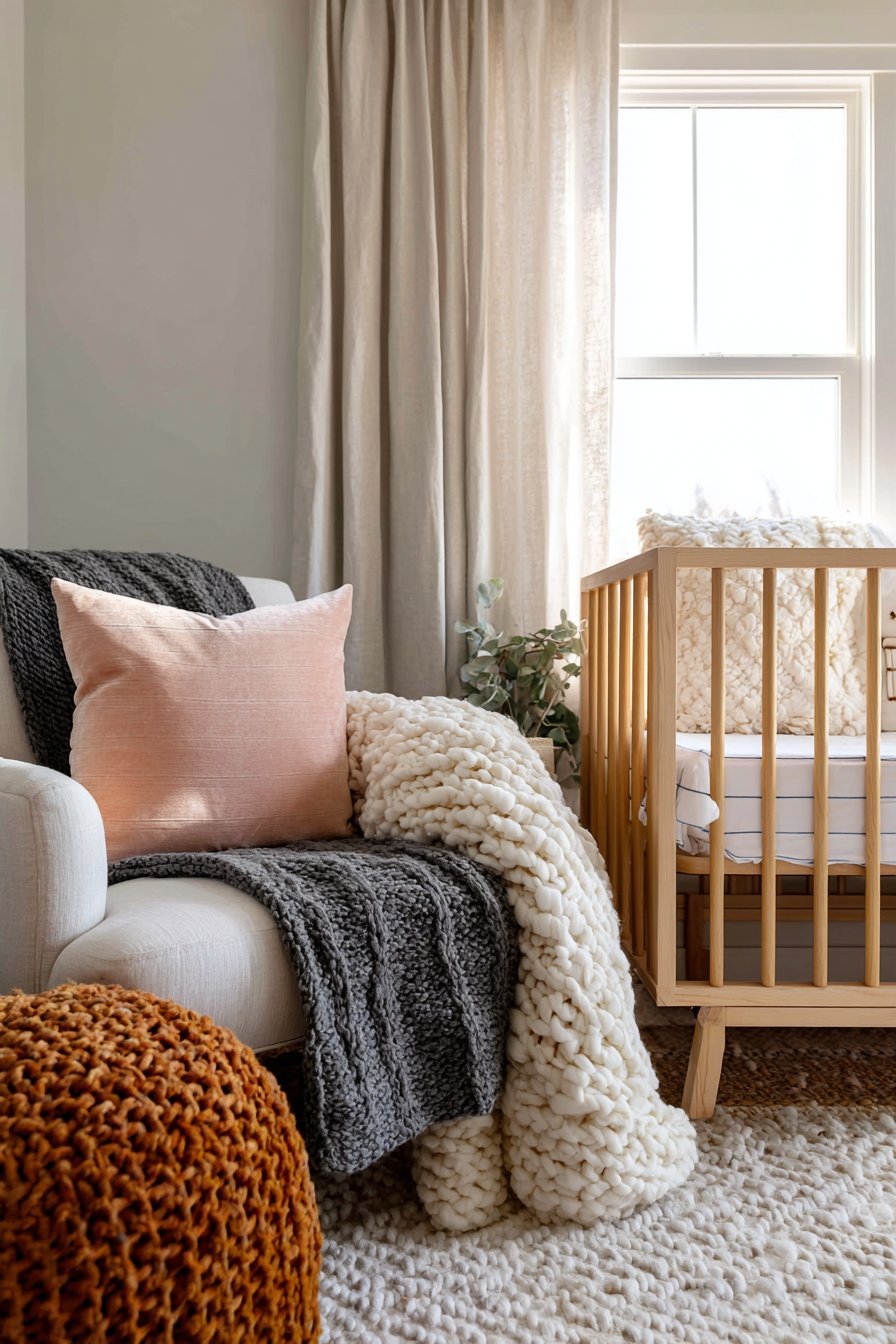
Texture and softness are what make a nursery feel truly magical. Layering different fabrics and materials throughout the room creates a sense of warmth, comfort, and visual richness that photographs beautifully and feels wonderful in everyday life. Think plush area rugs, linen curtains, knitted throws, and velvet accents working together in a cohesive palette.
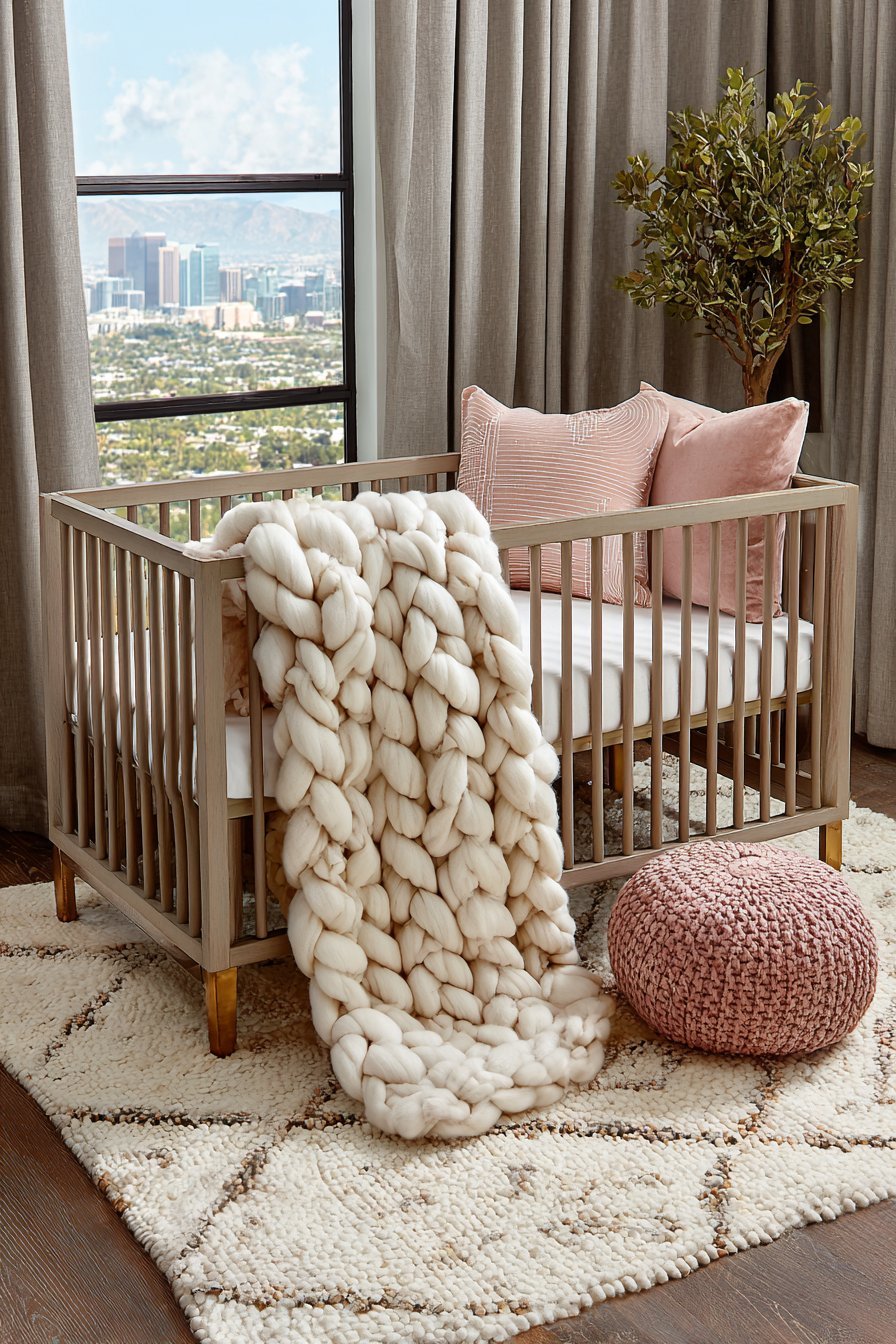
A high-quality area rug is one of the most impactful additions to any nursery. It defines the space, cushions little ones during tummy time, and adds significant warmth to hard flooring. Choose a rug in a durable, washable material with a low-pile construction. Patterns like simple stripes, geometric prints, or subtle abstract designs hold up stylistically better than novelty prints over time.
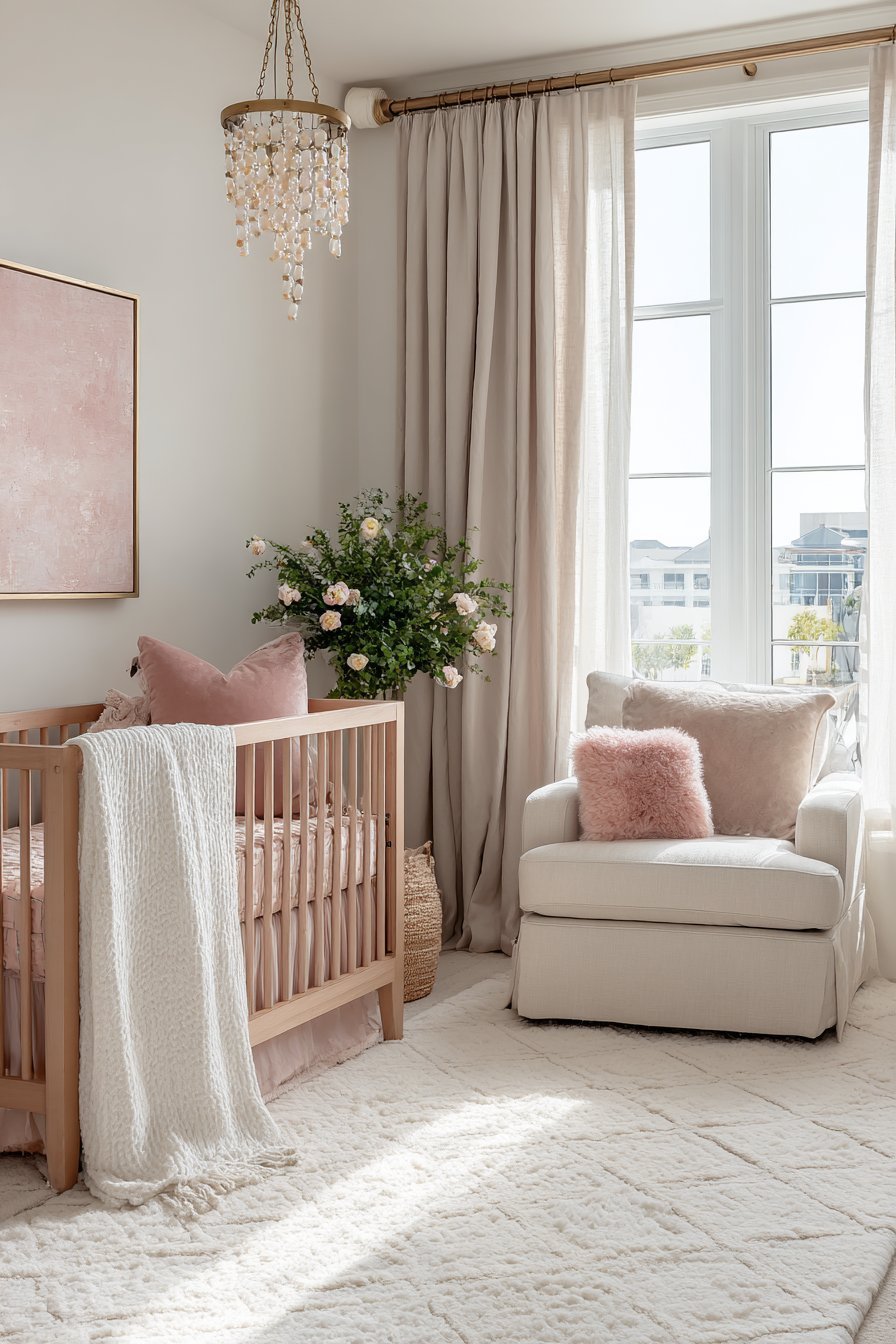
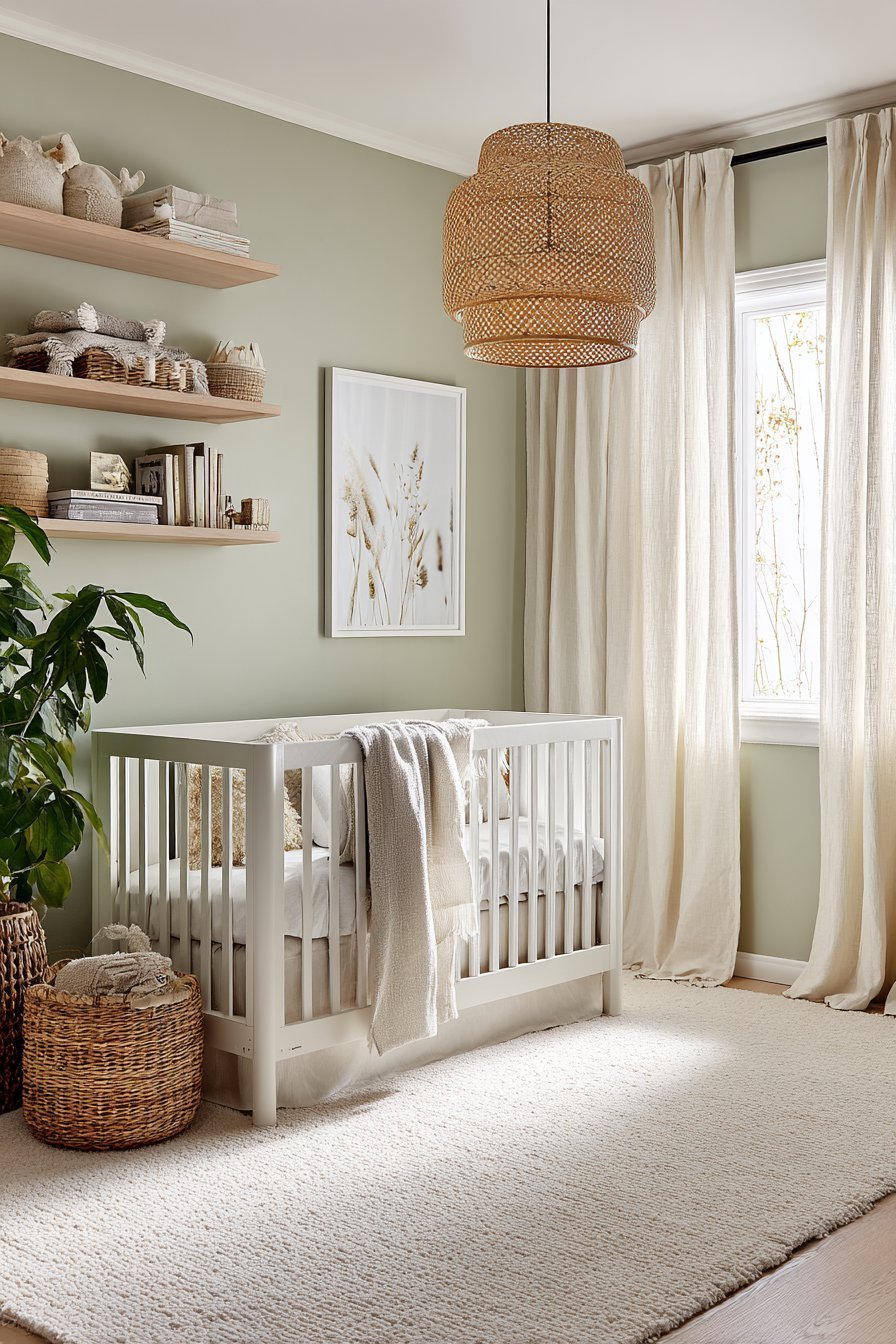
Window treatments offer another powerful layering opportunity. Sheer linen curtains in a soft ivory or warm white allow natural light to filter in gently while maintaining privacy. Pair them with blackout curtains in a complementary neutral for sleep times. This dual-layer window treatment approach is both functional and deeply elegant, adding height and softness to the room.
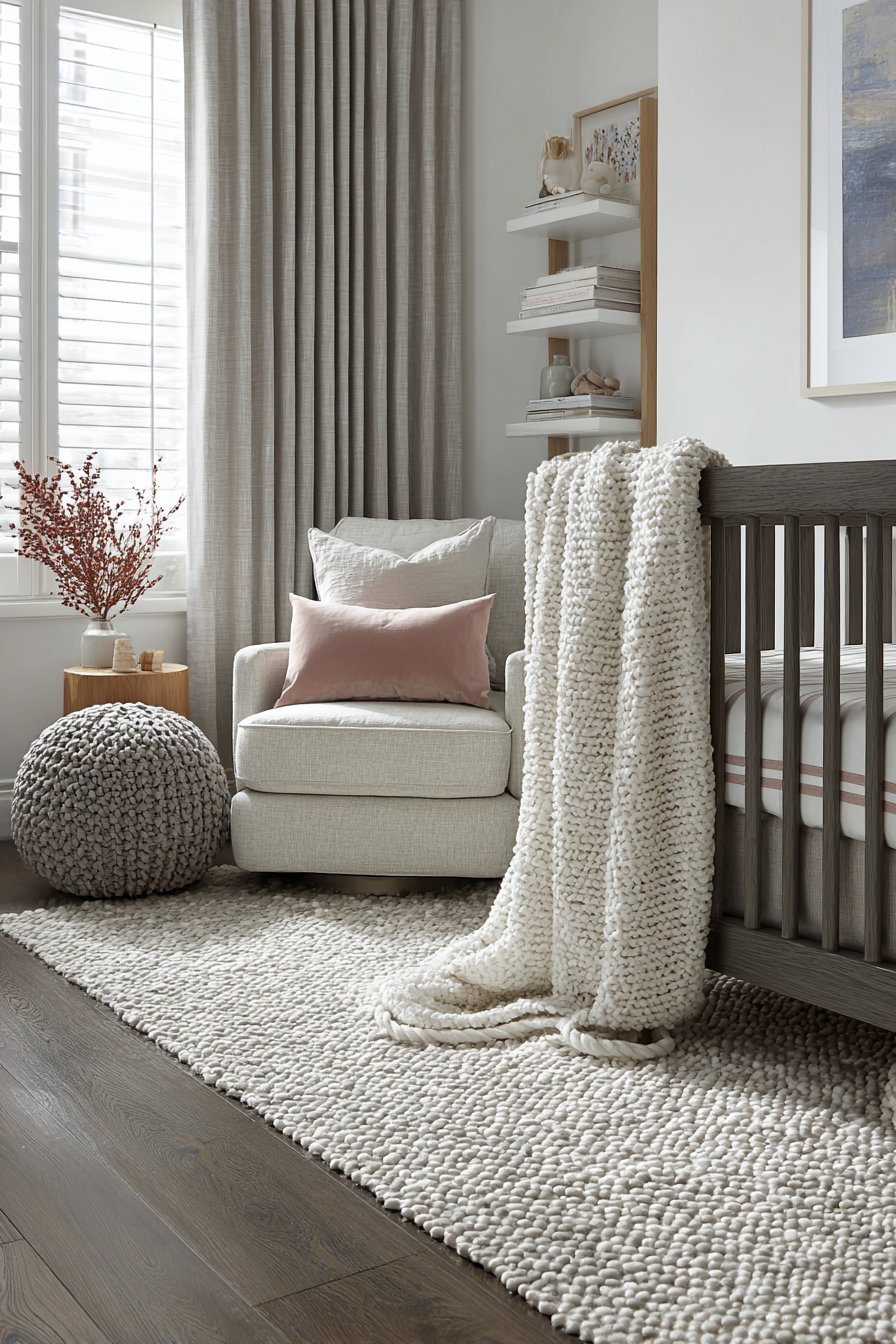
- Choose a washable, low-pile area rug in a timeless pattern
- Layer sheer curtains with blackout panels for style and function
- Add a knitted or waffle-weave throw blanket to the glider or crib rail
- Use crib bedding in high-quality cotton or linen in soft neutral tones
- Incorporate a mix of textures: smooth, woven, fluffy, and matte
- Keep textiles in a cohesive color family for a curated, elegant look
4. Maximize Storage With Stylish Organization Systems
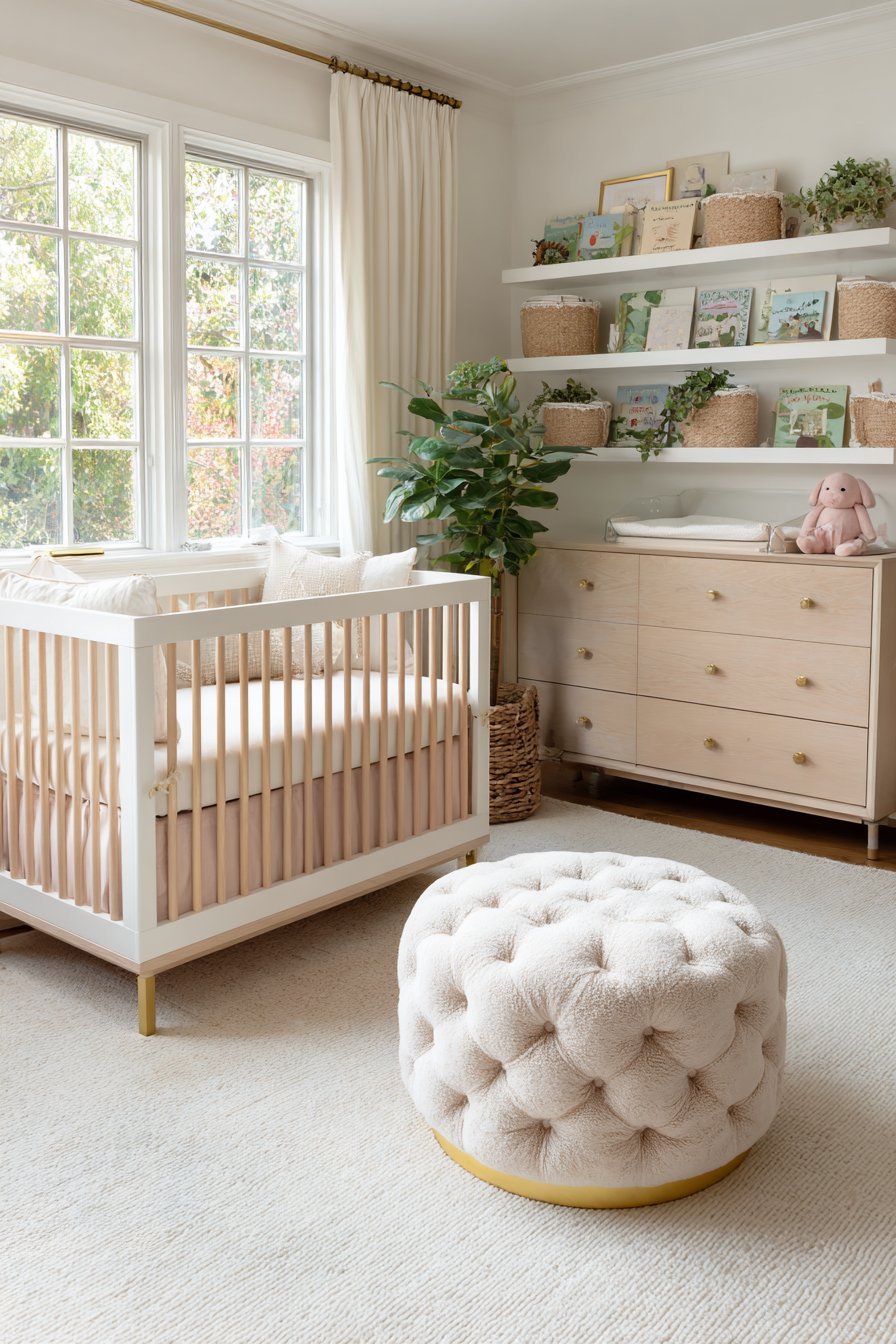
A well-organized nursery is a calm nursery. Babies come with an astonishing amount of gear, and without thoughtful storage planning, even the most beautifully designed room can quickly feel chaotic. The key is to integrate storage solutions that are functional and aesthetically pleasing so that organization feels like part of the design, not an afterthought.
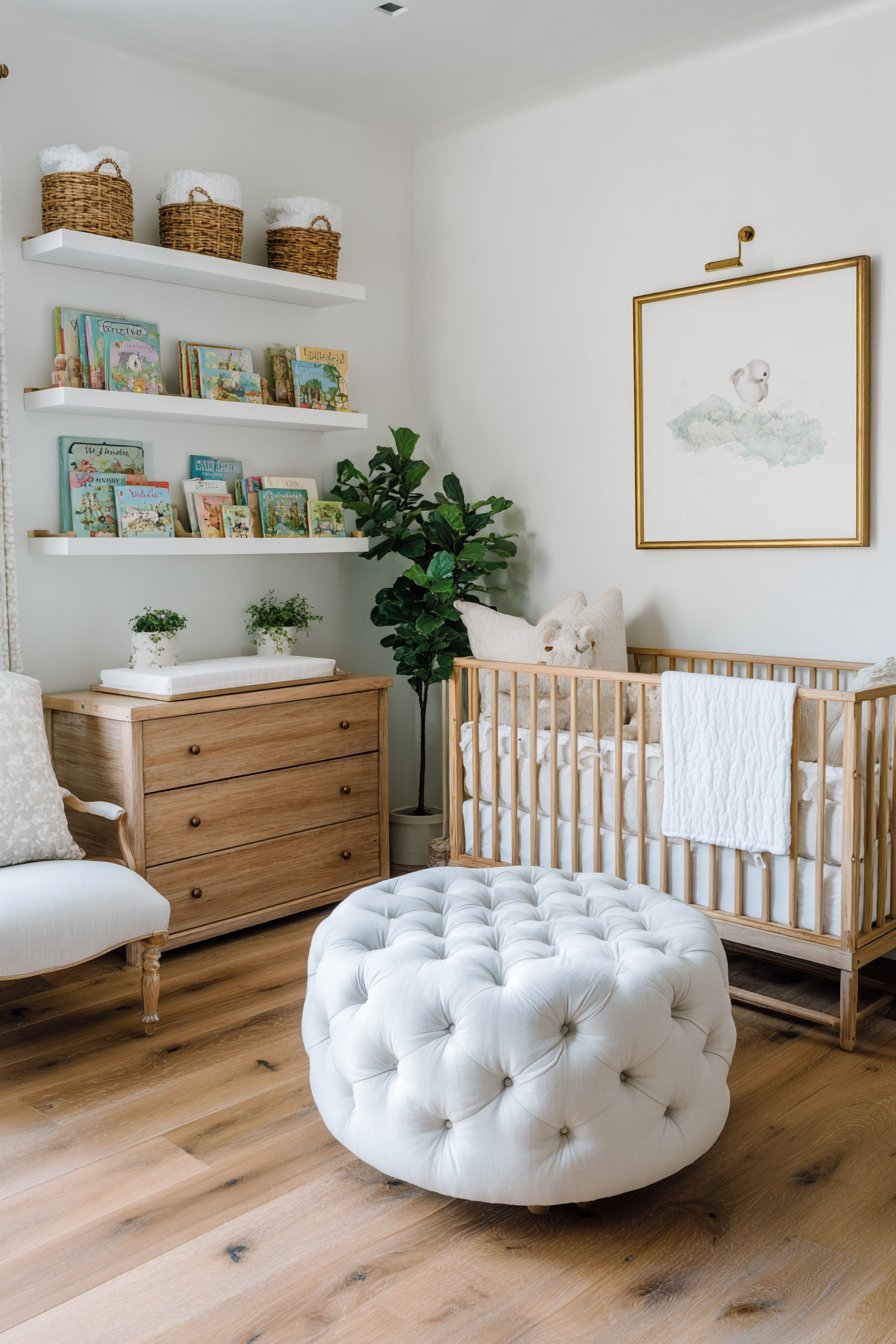
Open shelving is one of the most elegant and practical storage solutions for a nursery. Floating shelves in white or natural wood allow you to display beautiful children’s books, small plants, framed art, and decorative baskets while keeping everyday essentials within easy reach. Style them intentionally with a mix of functional items and curated decor to keep the look refined.
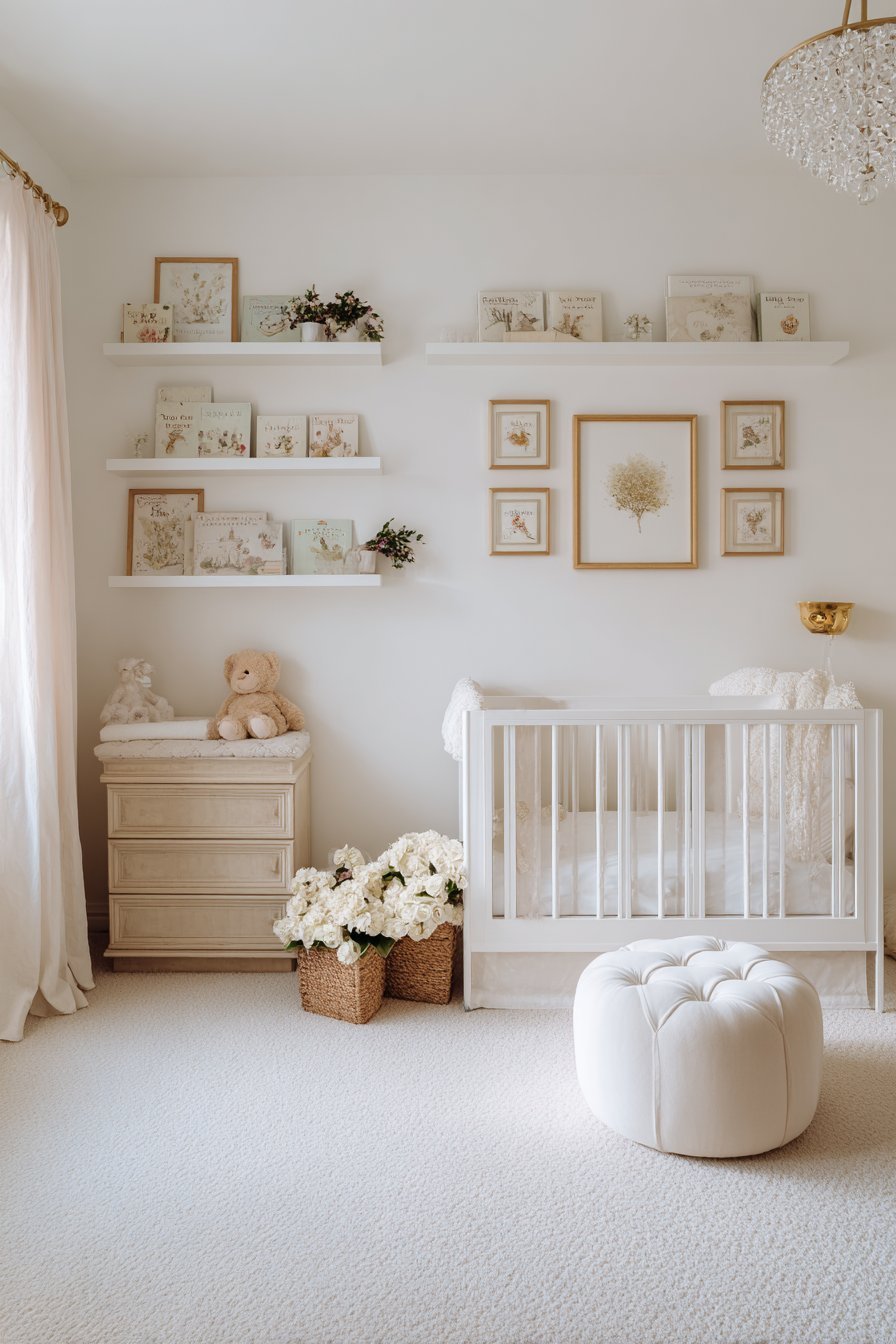
For hidden storage, choose dressers, ottomans, and storage benches that conceal clutter behind closed doors or lids. A tufted storage ottoman at the foot of the crib can hold extra blankets and stuffed animals while adding a sophisticated design element to the room. As the child grows, these same storage pieces serve equally well in a big kid bedroom.
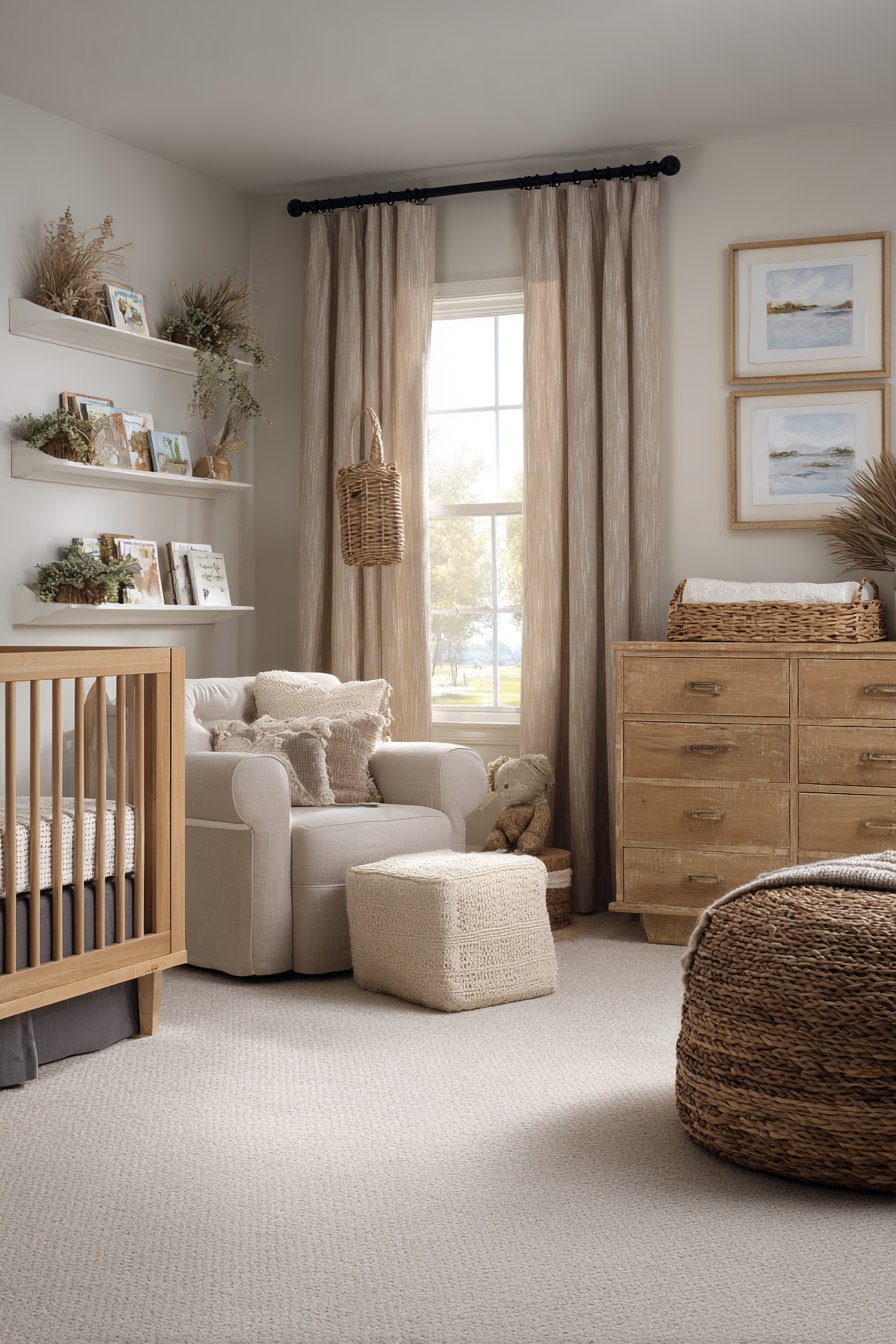
- Install floating shelves for stylish, accessible storage
- Use woven baskets and fabric bins to organize and conceal smaller items
- Choose a dresser with deep drawers for clothing and supply storage
- Add a storage ottoman for hidden toy and blanket storage
- Label bins and baskets for easy access and visual organization
- Plan storage locations before finalizing furniture placement
5. Design Thoughtful, Adaptable Lighting
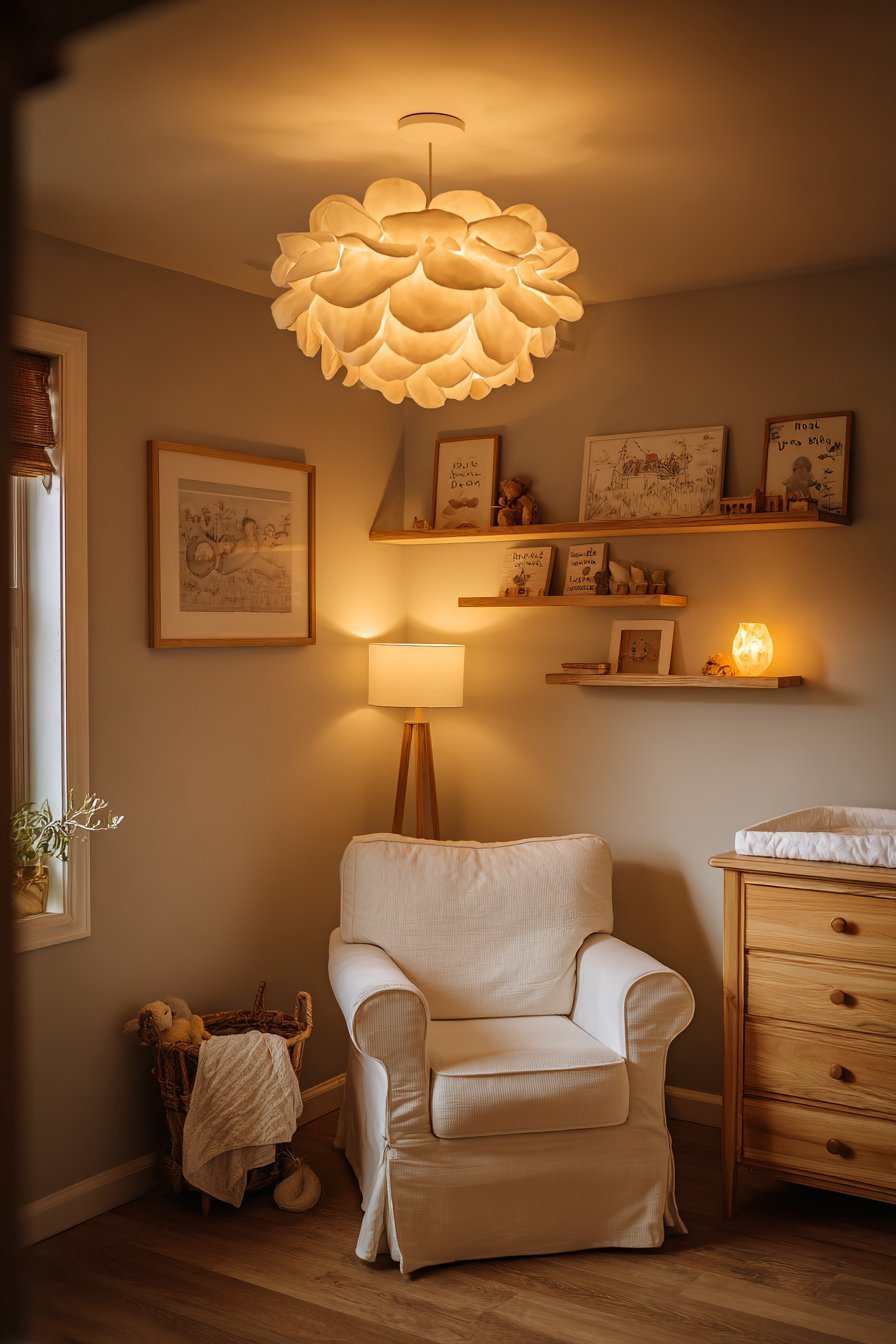
Lighting design is often overlooked in nursery planning, yet it is one of the most powerful tools for creating atmosphere and functionality. A well-lit nursery needs multiple layers: ambient lighting for general illumination, task lighting for nighttime feeds and diaper changes, and soft accent lighting for a calming bedtime atmosphere.
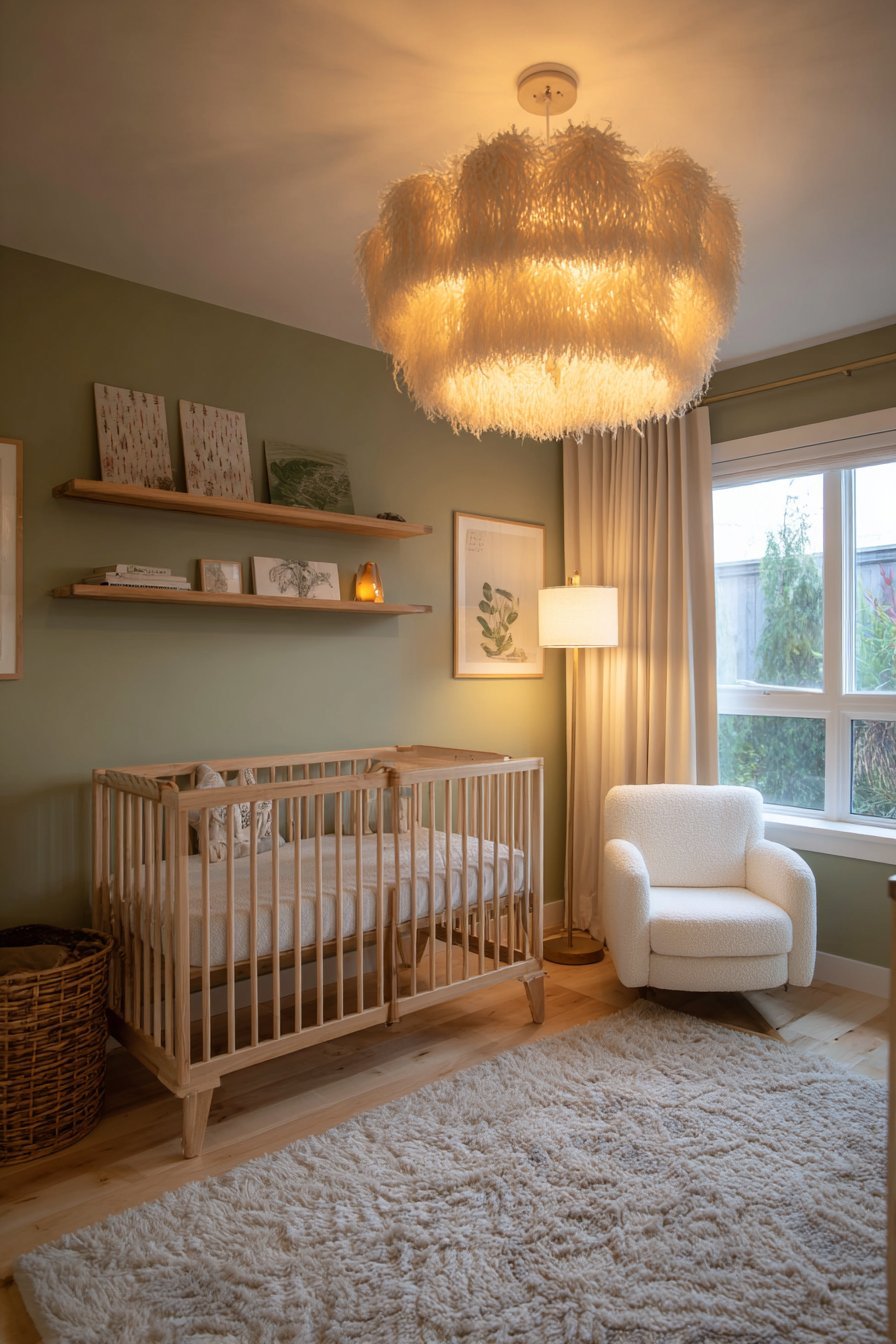
A statement ceiling fixture sets the tone for the entire room. Rattan pendant lights, ceramic globe pendants, or a simple linen drum shade all add elegance and warmth without being too babyish. Choose a fixture that feels at home in an adult space and it will feel equally appropriate in a child’s room years down the line. Avoid novelty nursery fixtures shaped like stars or animals if longevity is your goal.
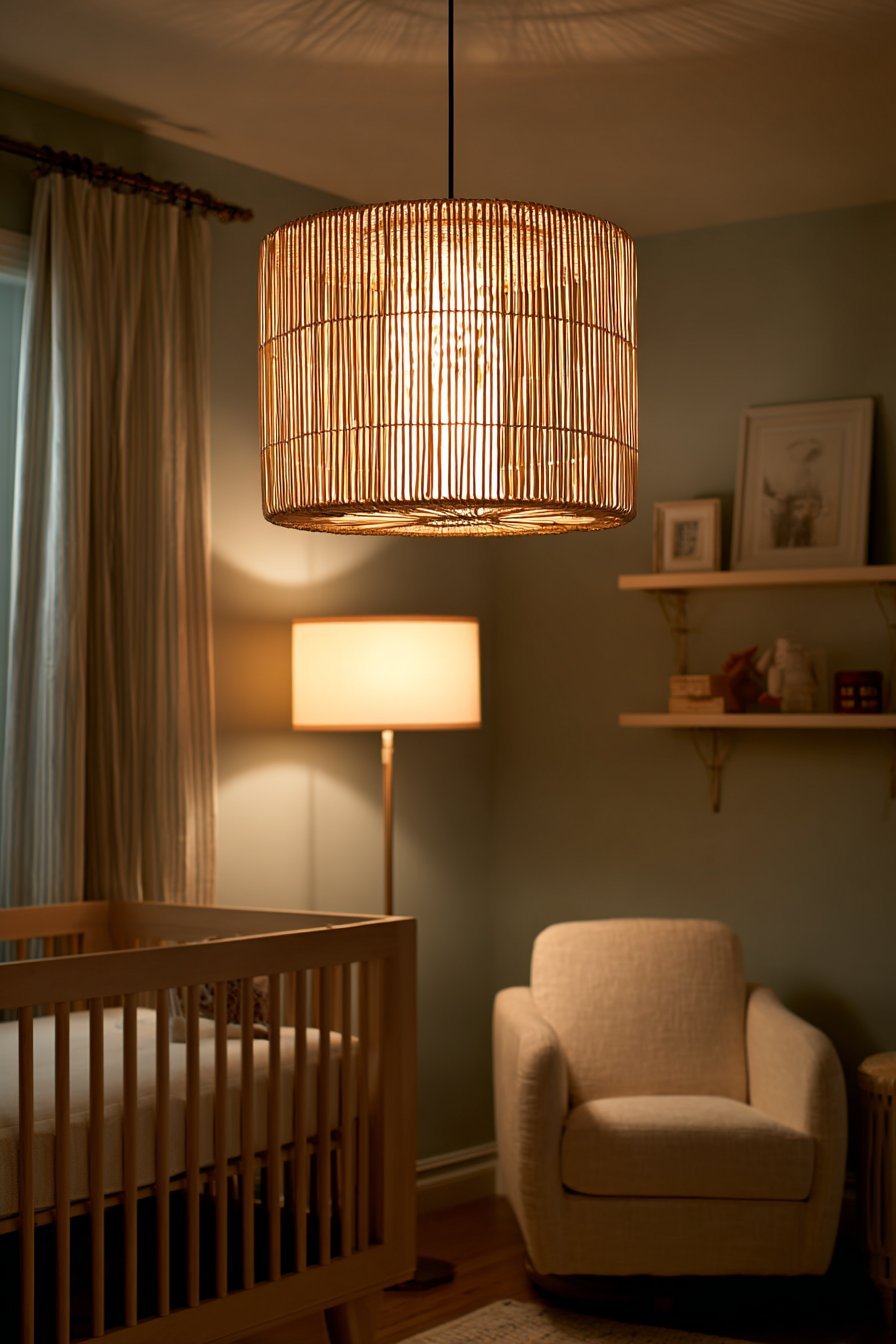
Dimmer switches are an absolute non-negotiable in a well-designed nursery. The ability to adjust lighting from bright and functional to soft and sleepy gives you complete control over the room’s mood throughout the day. Add a small, warm-toned nightlight for those middle-of-the-night moments when you need just enough light to navigate without fully waking the baby.
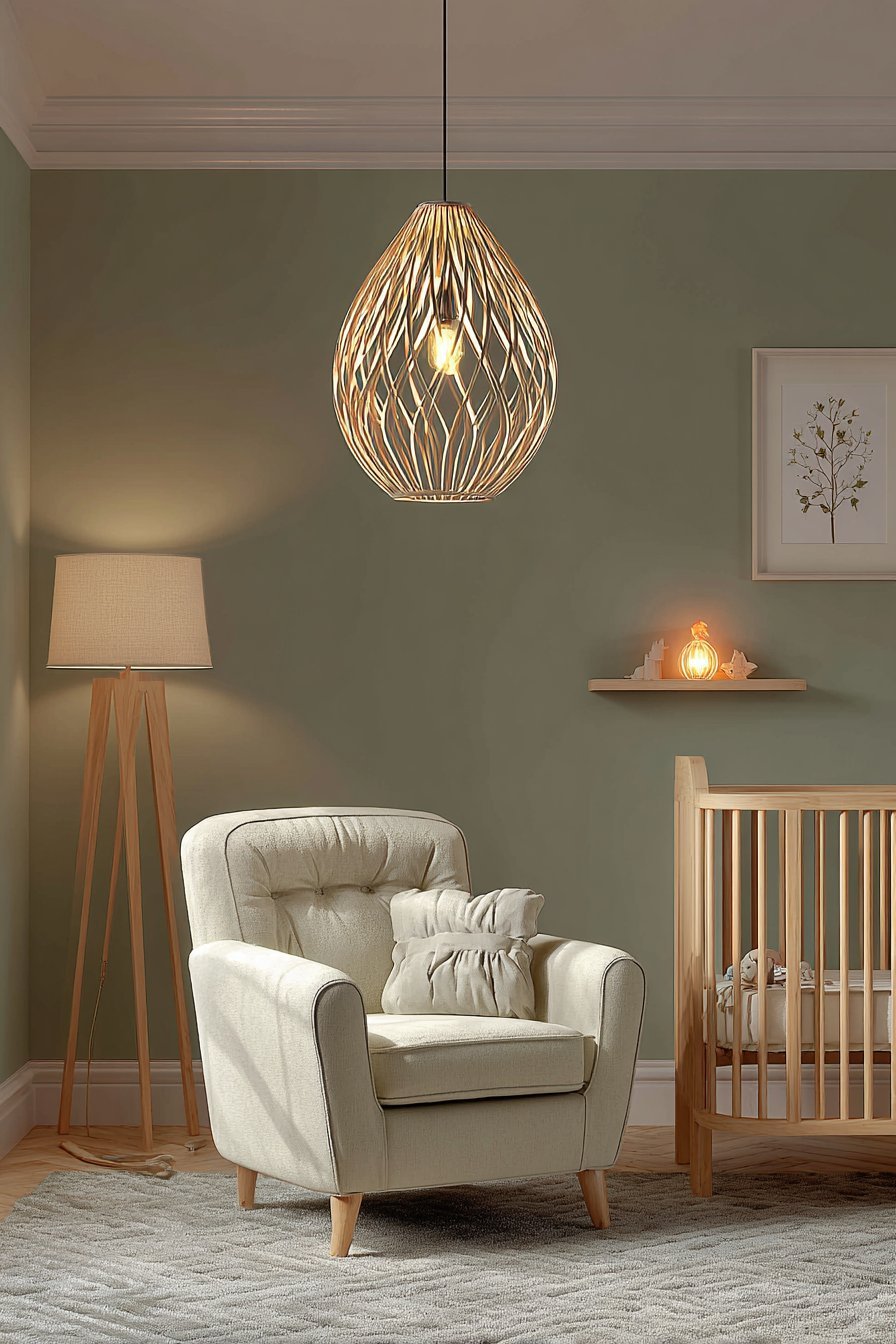
- Install a dimmer switch on all overhead lighting circuits
- Choose a timeless pendant or chandelier as the room’s focal fixture
- Add a table or floor lamp near the glider for task lighting during feeds
- Use a warm-toned nightlight for safe, subtle overnight illumination
- Layer lighting at different heights for depth and atmosphere
- Select bulbs in a warm white tone (2700K–3000K) for a cozy glow
6. Incorporate Meaningful Art and Personalized Decor
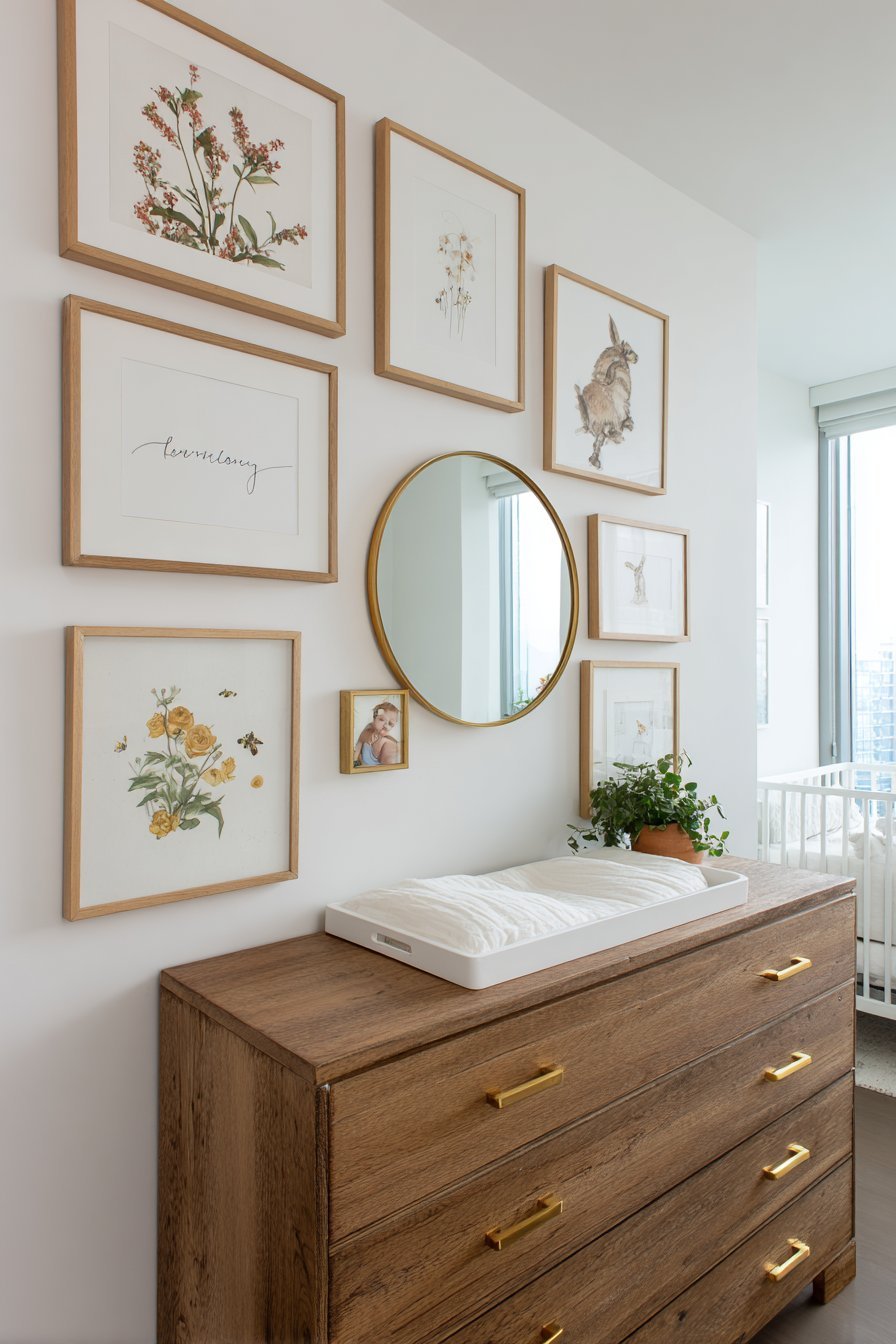
The decor you choose for a nursery gives the room its soul and personality. Art, accessories, and personalized elements transform a well-designed room into a space that feels deeply intentional and full of love. The key is to choose pieces that are beautiful as standalone art rather than relying solely on their baby-specific theme to carry the design.
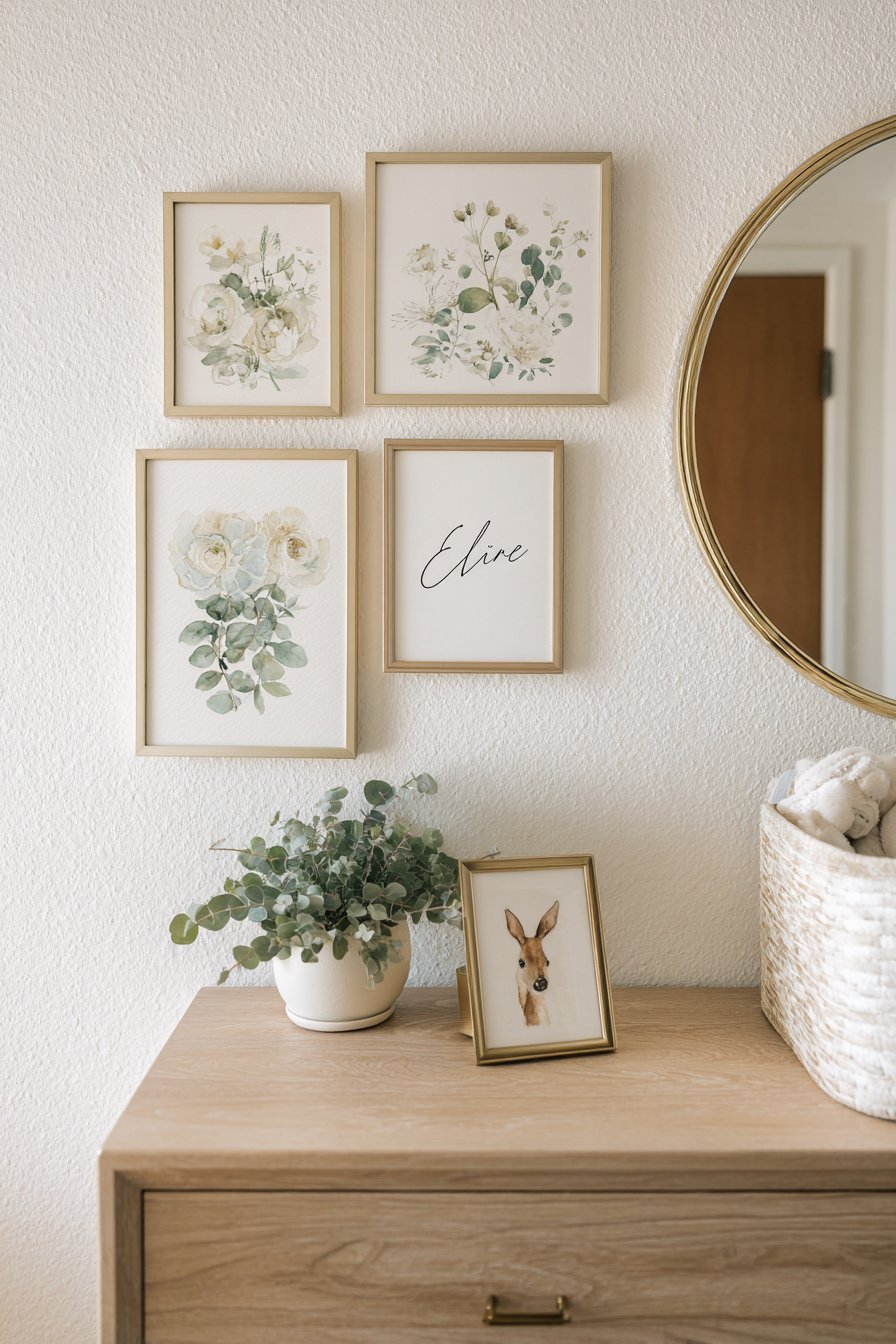
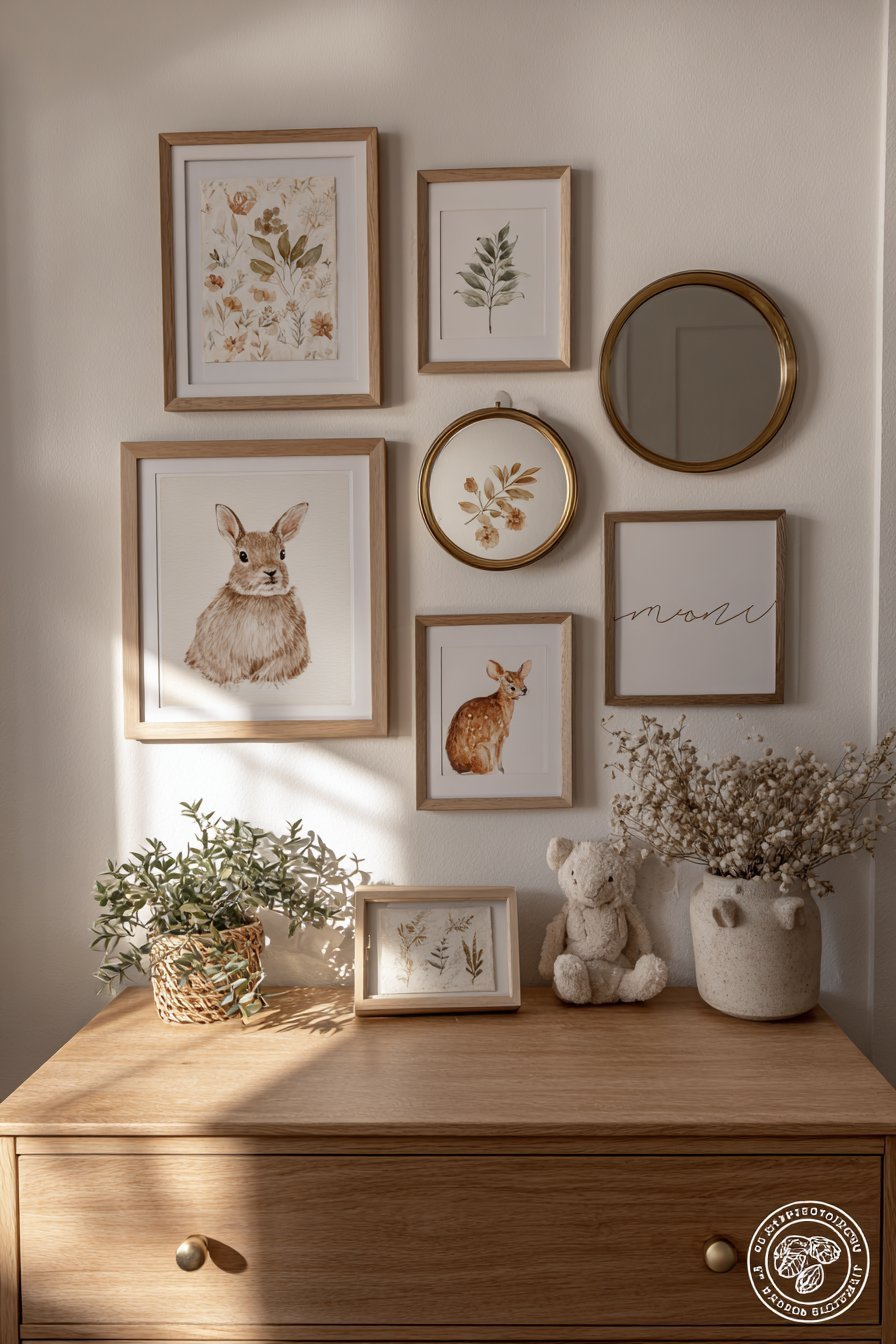
Framed prints and original artwork in soft, muted tones are an excellent choice for nursery walls. Think watercolor botanicals, abstract landscapes, delicate line drawings of animals, or typographic prints in elegant scripts. These pieces feel artistic and grown-up while remaining completely appropriate for a child’s room. As the child grows, simply swap the frames or rearrange the gallery wall to refresh the look without a full redesign.
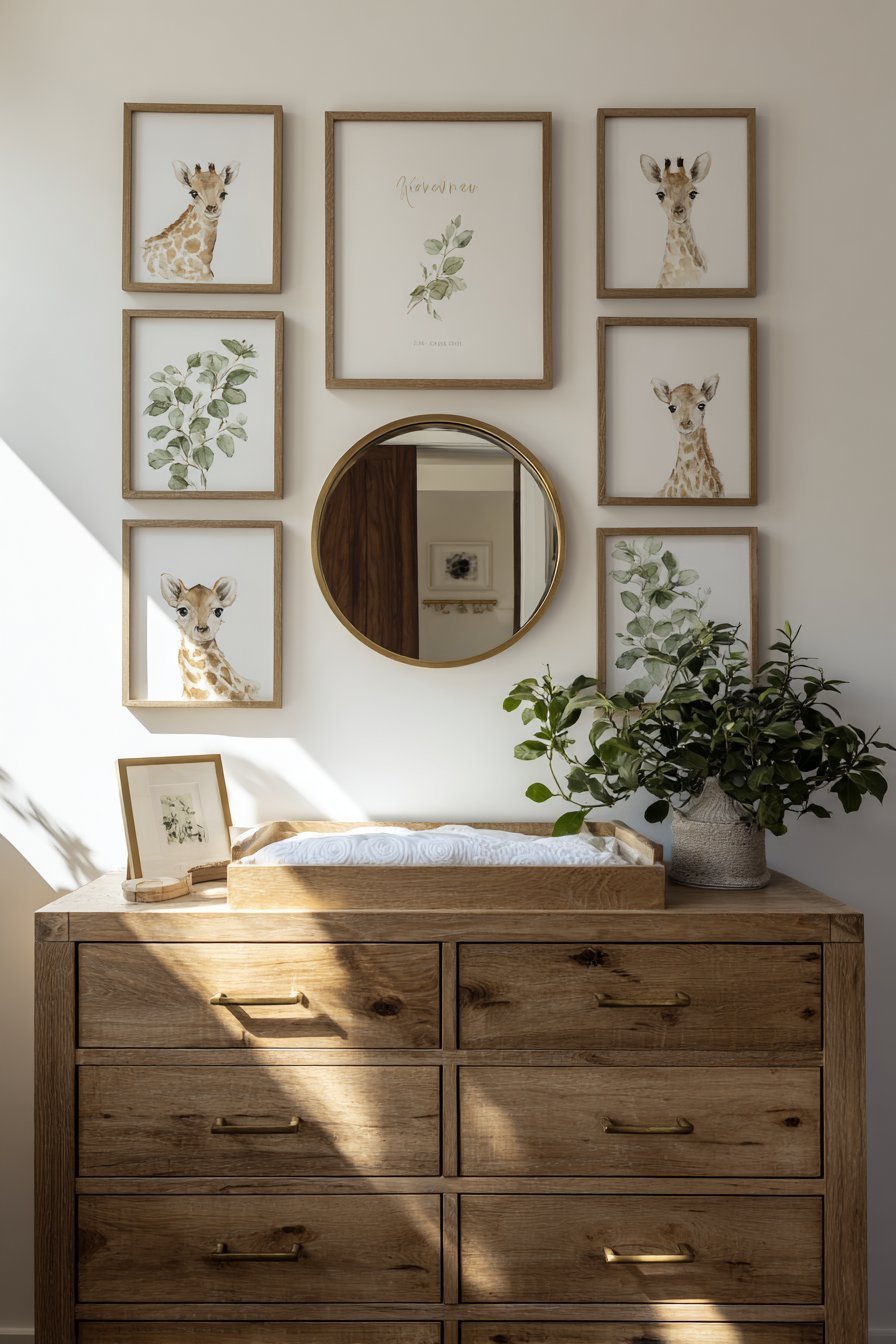
Personalization adds warmth and meaning to a nursery without compromising elegance. A custom name print, a hand-painted wooden letter, or a personalized star map of the night sky on the baby’s birth date are all sophisticated options that feel special without being kitschy. These touches make the room feel uniquely theirs from day one, creating memories that last long beyond the nursery years.
- Choose art prints that stand alone as beautiful, timeless pieces
- Create a gallery wall with a mix of framed art, mirrors, and objects
- Add one personalized element that celebrates the child’s identity
- Incorporate a small indoor plant or botanical element for natural warmth
- Use decorative hooks for hanging hats, bags, and small accessories
- Rotate and refresh accessories seasonally to keep the room feeling current
Conclusion
Creating an elegant nursery that grows with your baby is entirely achievable with the right approach. By choosing timeless colors, adaptable furniture, and layered design elements, you build a room that serves your child beautifully from infancy through childhood without needing constant overhauls. Every decision made with longevity in mind is also a decision made with intention and care.
The most memorable nurseries are those that feel both functional and deeply personal — spaces where practicality and beauty coexist effortlessly. Use these six strategies as your design framework, trust your instincts, and enjoy every moment of the process. Your child’s first room is one of the most meaningful spaces you will ever design, and with a little thoughtfulness, it can be truly extraordinary.
