

Welcoming a new baby is one of life’s most transformative experiences — and it comes with an almost irresistible urge to create the most beautiful, perfect nursery imaginable. But the baby industry is extraordinarily skilled at convincing new parents that luxury requires a large budget. The truth is far more encouraging: with thoughtful planning, smart sourcing, and a few well-chosen investments, you can design a nursery that looks and feels genuinely high-end for a fraction of what the showroom might suggest.
The secret to a luxury baby room on a budget lies not in how much you spend, but in where you spend it. A $3,000 nursery and a $300 nursery can look almost identical when the budget version has been designed with intention — focusing on quality paint, layered textiles, considered lighting, and a few standout pieces that carry the entire room. Strategic investment and creative resourcefulness are the hallmarks of truly smart nursery design.
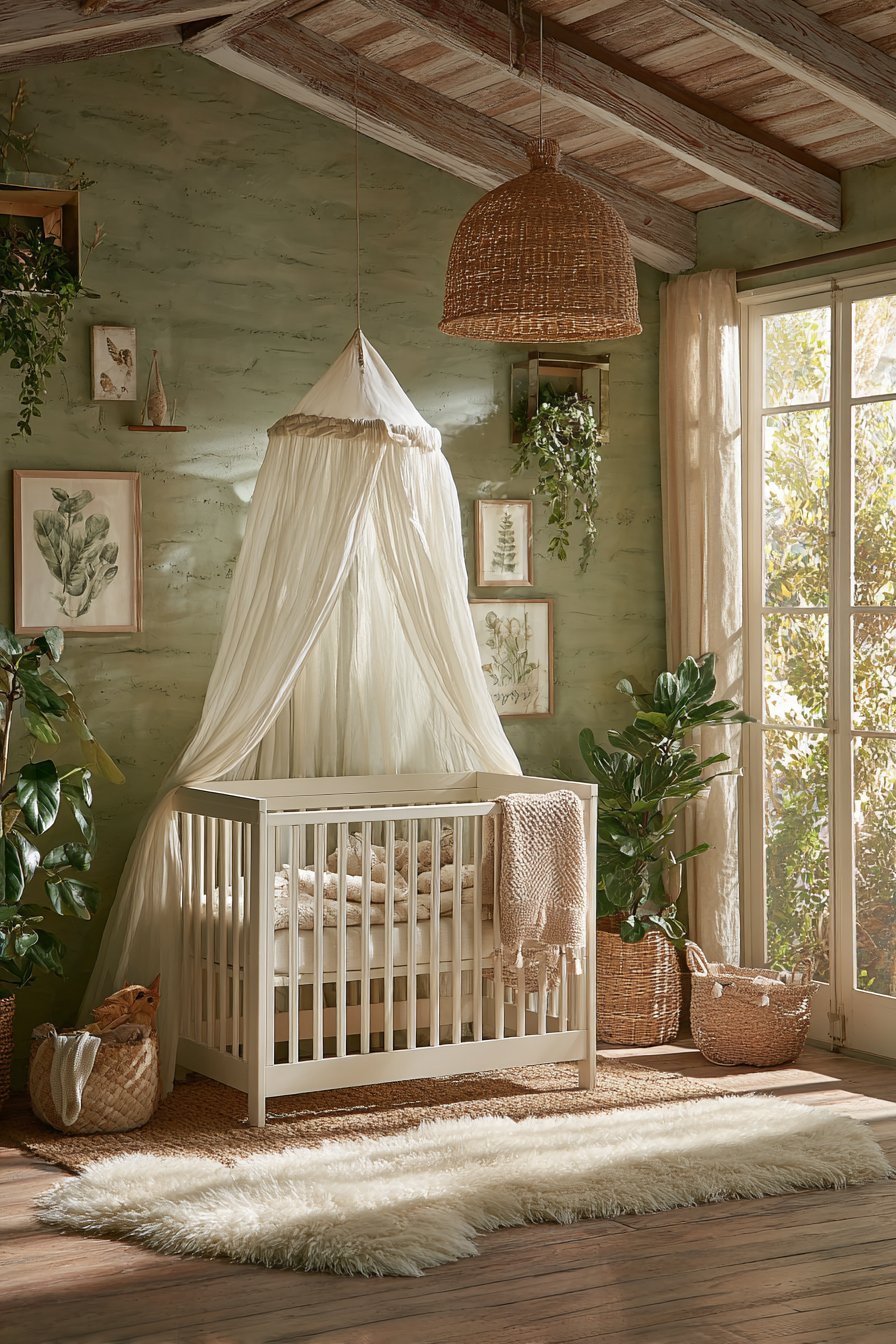
This article shares seven of the most effective, designer-approved tips for achieving a luxurious nursery aesthetic without the luxury price tag. Whether you are working with a very tight budget or simply want to make every dollar count, these ideas will help you create a baby room that feels genuinely beautiful, deeply considered, and worthy of the little one who will call it home.
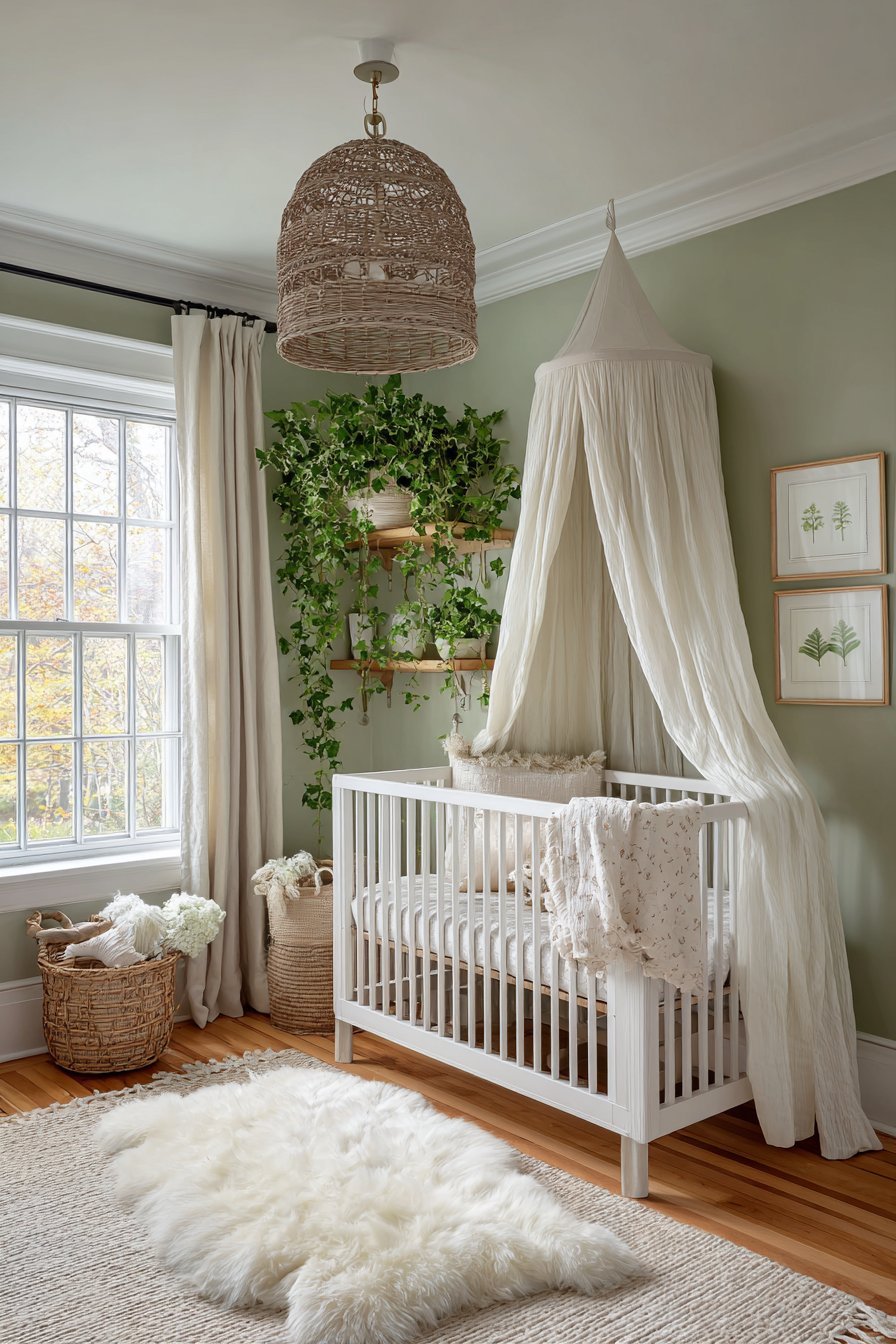
1. Invest in Paint and Let the Walls Do the Heavy Lifting
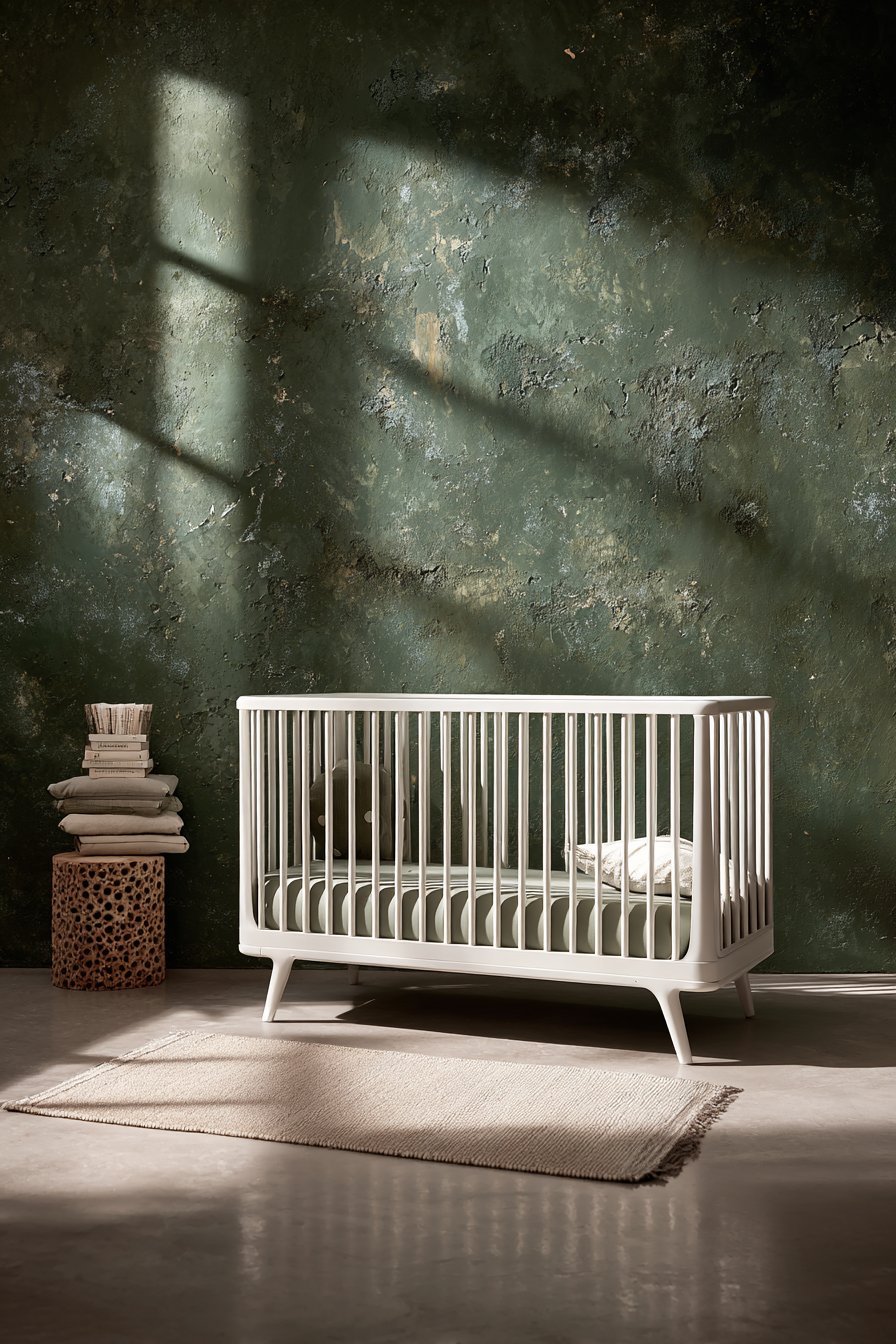
Paint is the highest-return investment in any room — and nowhere is this more true than in a nursery. A beautifully chosen wall color transforms the entire atmosphere of a space at a fraction of the cost of new furniture or premium textiles. The right paint color makes inexpensive furniture look more considered, gives the room a cohesive visual identity, and creates an emotional tone that no accessory can replicate. Never compromise on paint quality when working to a budget — it is the foundation everything else builds upon.
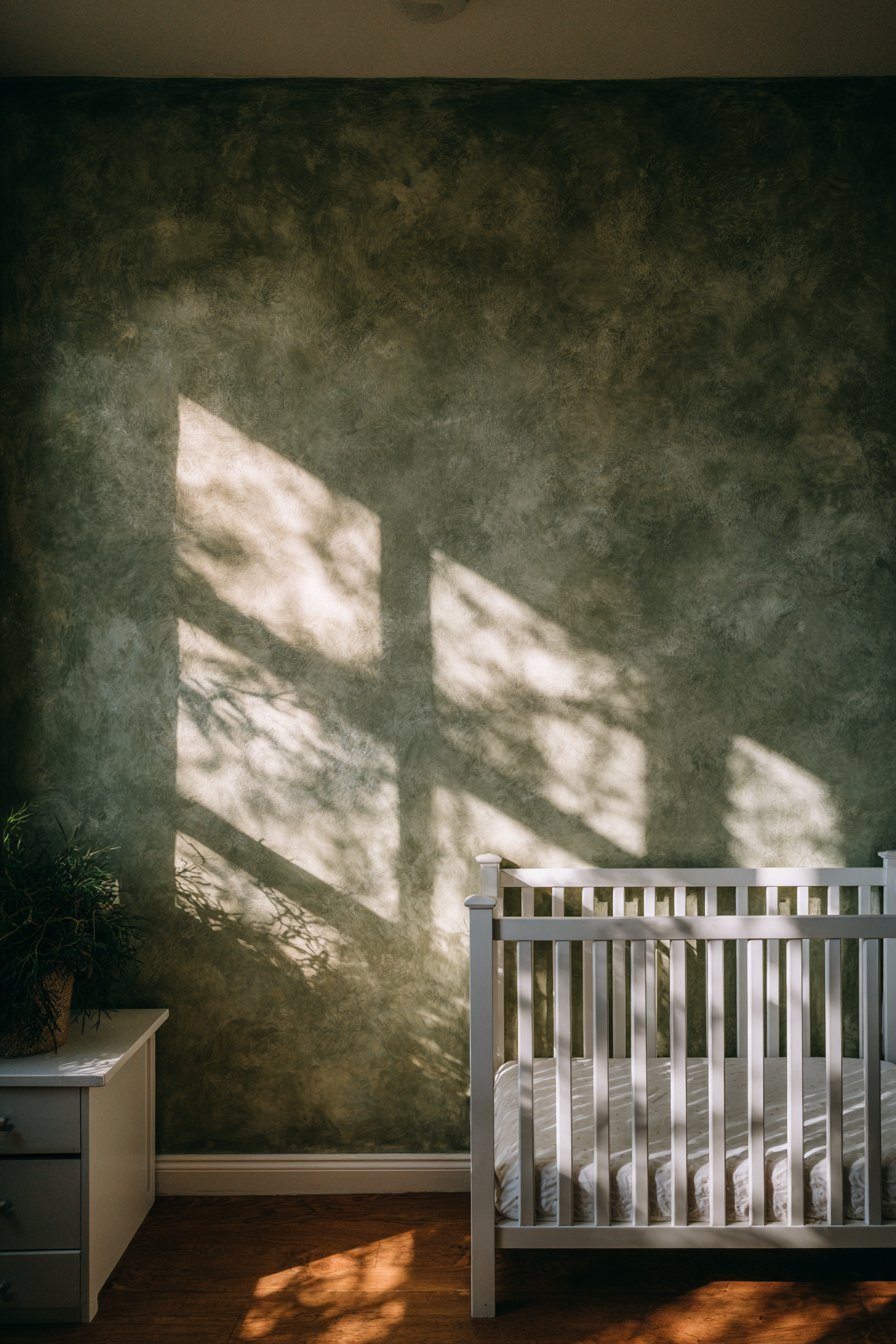
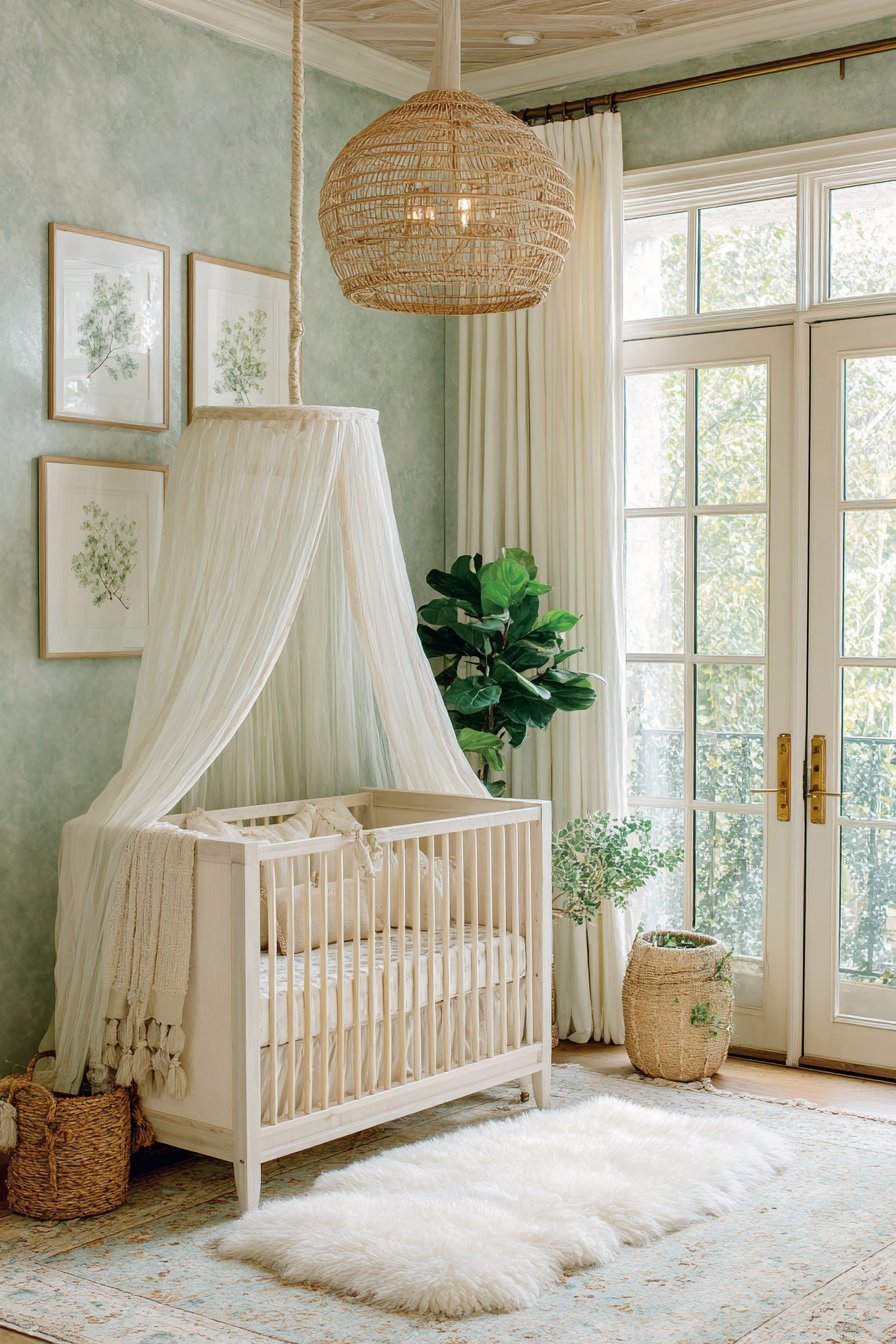
For a luxury nursery aesthetic, move beyond flat white walls and commit to a soft, sophisticated color that gives the room genuine depth and character. Muted sage green, dusty rose, warm greige, chalky blue, and antique white are all colors that read as elevated and considered without requiring any additional investment to look beautiful. A single feature wall in a deeper tone — a rich terracotta, a moody forest green, or a warm charcoal — behind the crib creates a dramatic focal point that gives the room the kind of designer flair that looks far more expensive than it is.
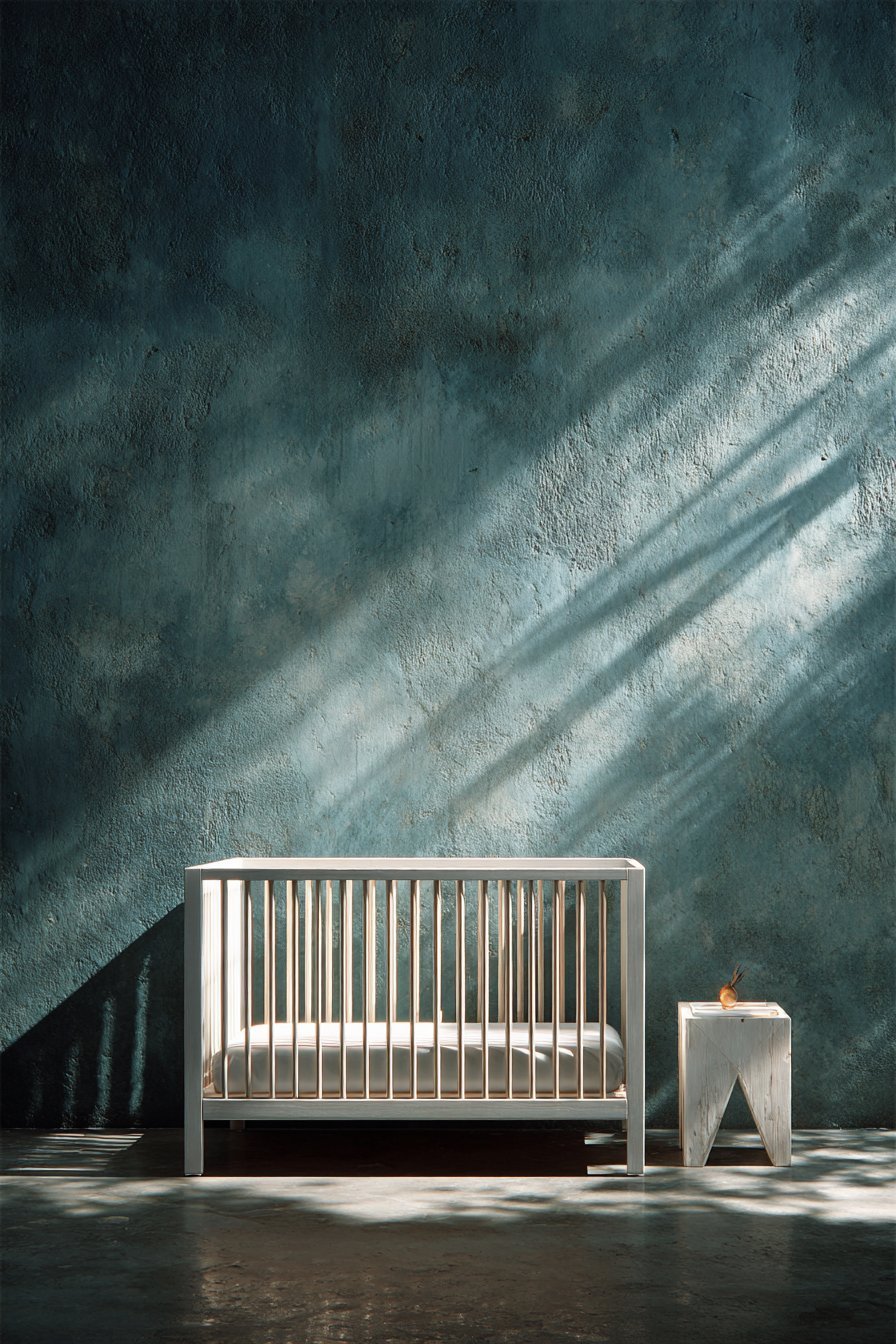
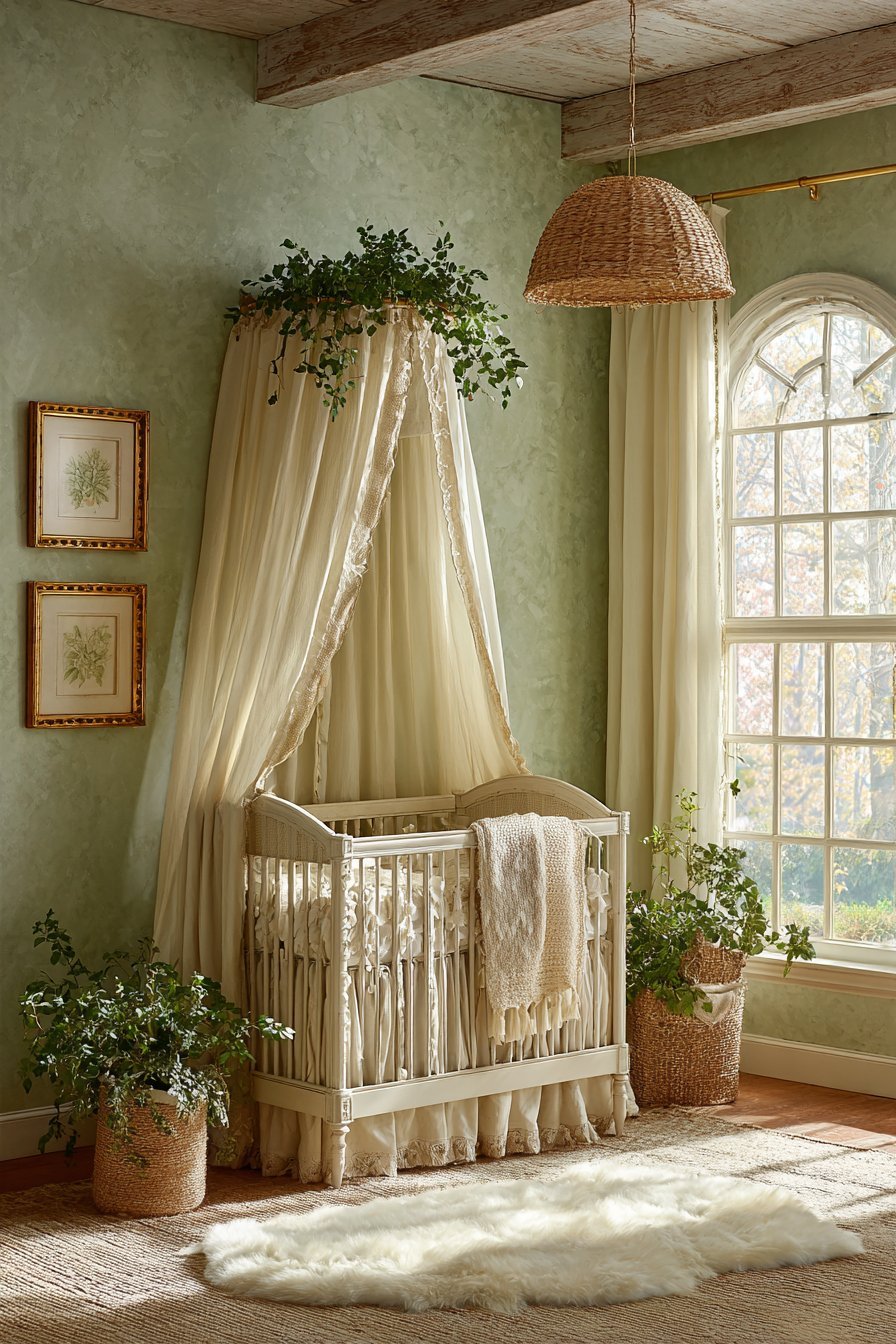
Limewash and color wash paint techniques have surged in popularity precisely because they deliver extraordinary visual texture and depth at very low cost. A limewash finish — applied with a brush in loose, overlapping strokes — creates a softly mottled, aged effect that looks like expensive Venetian plaster from across the room. With a single can of specialist limewash paint and an afternoon of your time, you can give your nursery walls a bespoke, artisanal quality that would cost thousands to achieve any other way.
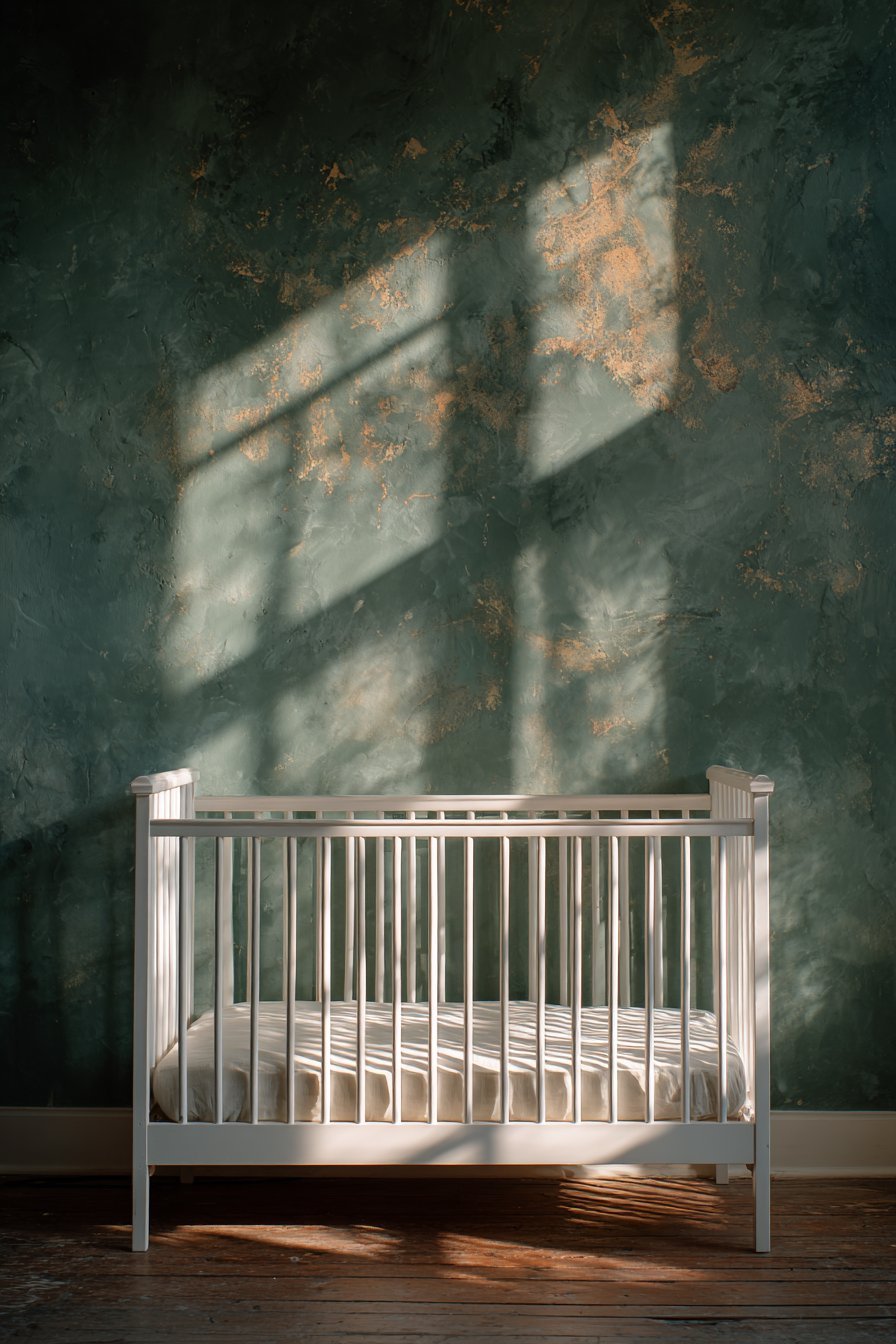
- Choose a sophisticated, muted paint color — sage, dusty rose, warm greige — over plain white
- Create a feature wall behind the crib in a deeper complementary tone for a designer focal point
- Explore limewash or color wash painting techniques for a high-end textured wall effect on a low budget
- Always invest in quality paint — premium brands cover better, last longer, and look richer on the wall
- Test large paint sample patches on the actual nursery wall in both natural and artificial light before committing
2. Source Secondhand and Vintage Furniture Strategically
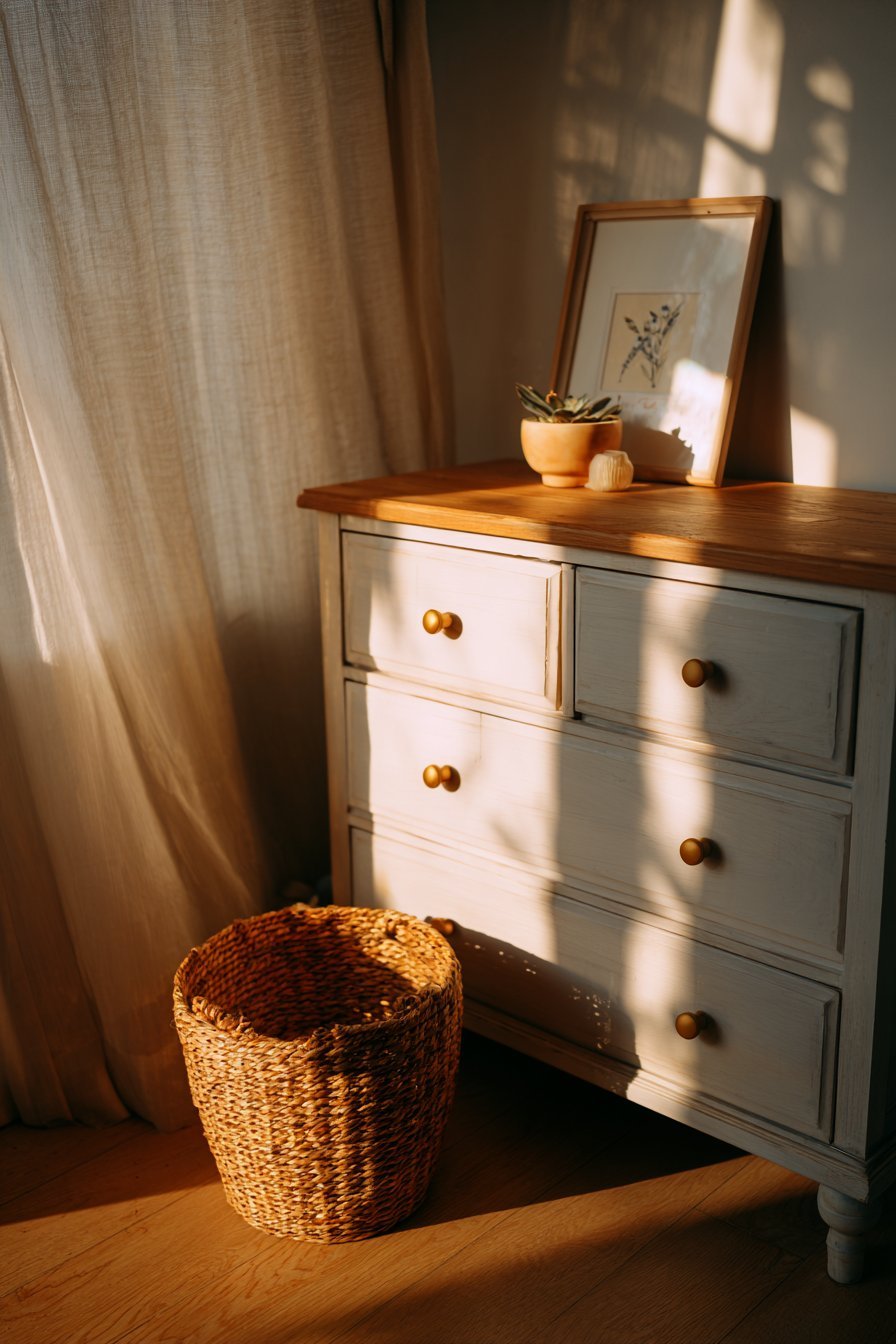
Secondhand furniture is one of the most powerful tools in the budget-conscious nursery designer’s toolkit. Babies grow with extraordinary speed — a nursery that serves an infant gives way to a toddler room within a year or two, making it one of the most financially illogical spaces in the house to furnish entirely with new, premium-priced pieces. Previous owners have already absorbed the depreciation, leaving you to acquire beautiful, well-made furniture at a small fraction of its original cost.
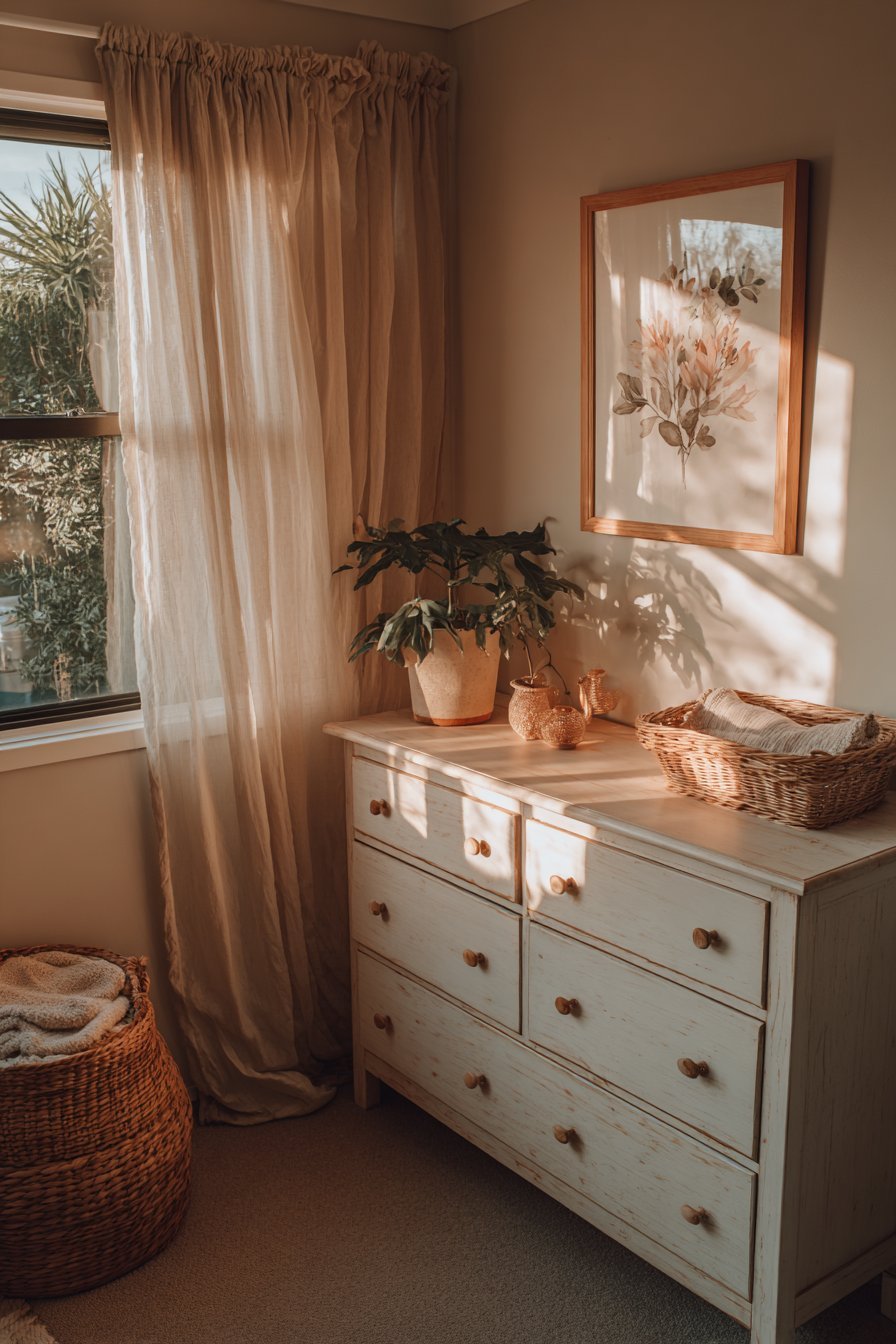
The best places to source secondhand nursery furniture include Facebook Marketplace, Gumtree, eBay, local consignment stores, and estate sales. High-quality solid wood furniture — dressers, wardrobes, bookshelves, and side tables — holds up extraordinarily well and can be sanded, painted, and styled to look completely current regardless of its original era. A solid timber dresser painted in a chalky white or warm sage and fitted with new brushed brass or ceramic handles is virtually indistinguishable from a $600 designer piece — yet might have cost $40 secondhand and $20 in hardware.
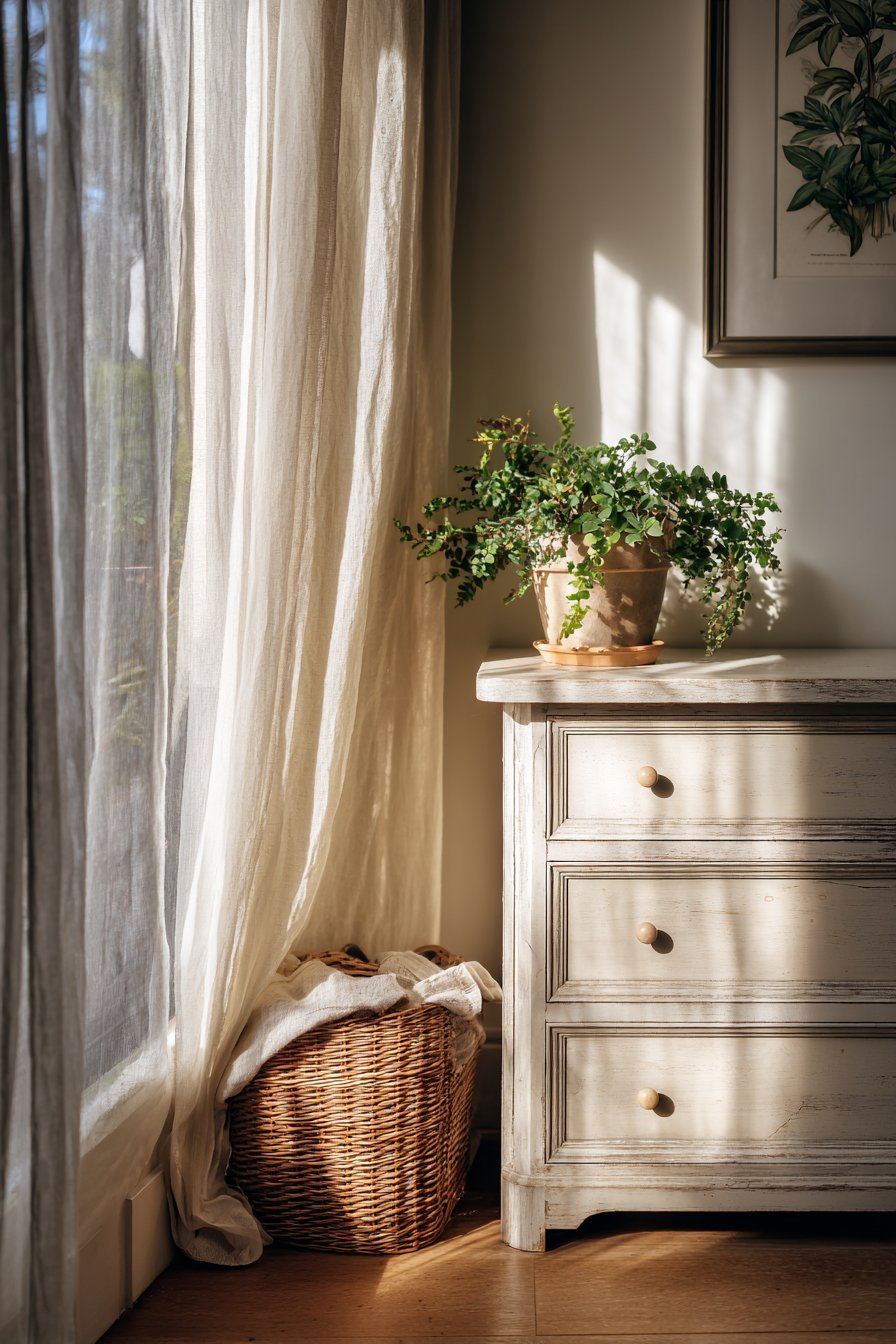
Important safety considerations apply specifically to cribs and sleep surfaces, which should always be purchased new or from a source with a verified safety history. Current safety standards for infant sleep equipment are updated regularly, and secondhand cots and mattresses carry genuine risk if their origins are unknown. Invest in a new, safety-certified crib and mattress — these are non-negotiable — and direct your secondhand sourcing toward all the other furniture pieces where safety regulations are less critical.
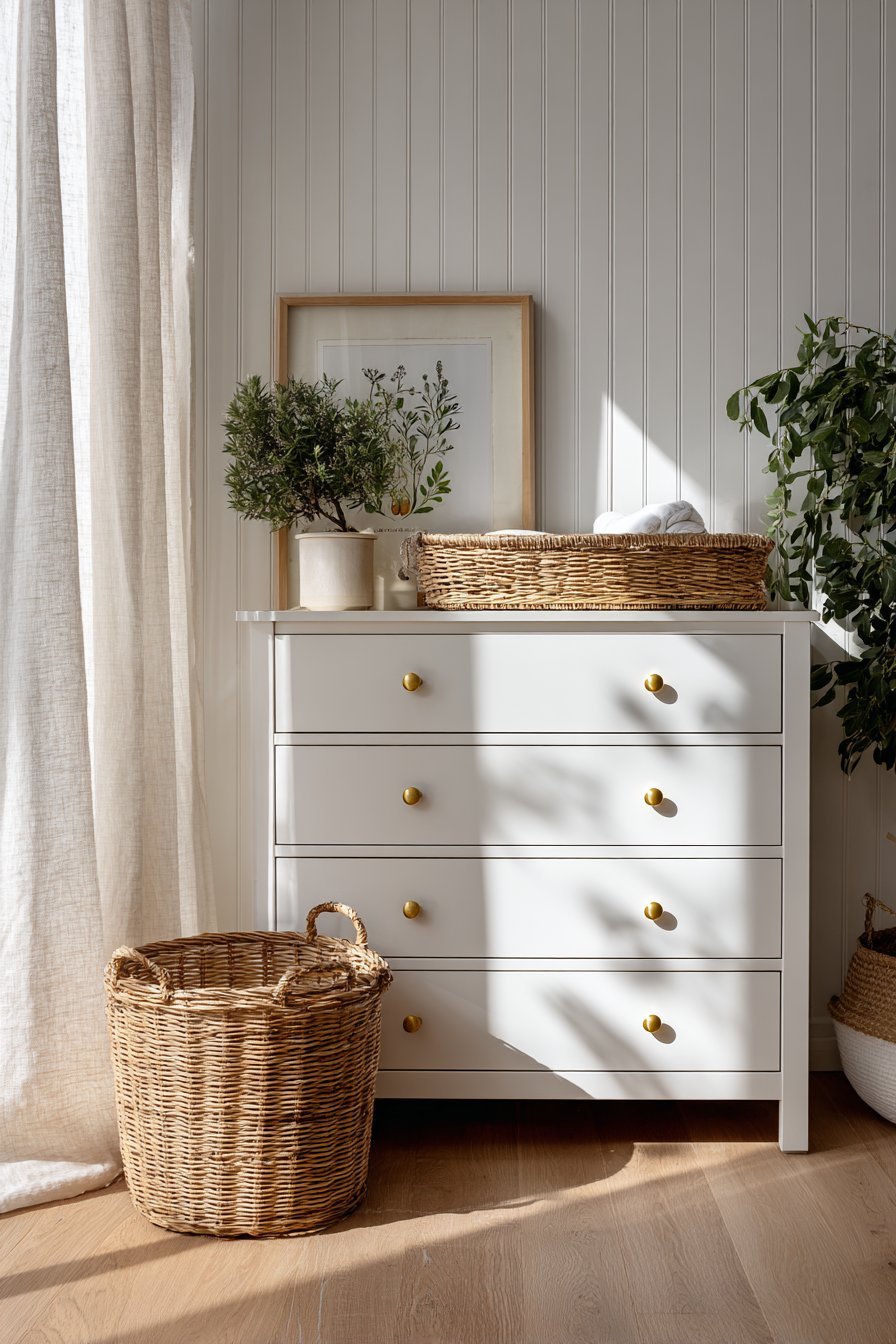
- Source solid timber dressers, wardrobes, and bookshelves secondhand and refresh them with paint and new hardware
- Check Facebook Marketplace, Gumtree, and local consignment stores for quality pieces at low prices
- Always purchase a new, safety-certified crib and mattress — never compromise on infant sleep surface safety
- Sand, prime, and paint secondhand furniture with quality chalk or mineral paint for a premium finish
- Replace outdated hardware — handles, knobs, hinges — with brushed brass or ceramic for an instant luxury upgrade
3. Layer Textiles to Create a High-End Sensory Environment
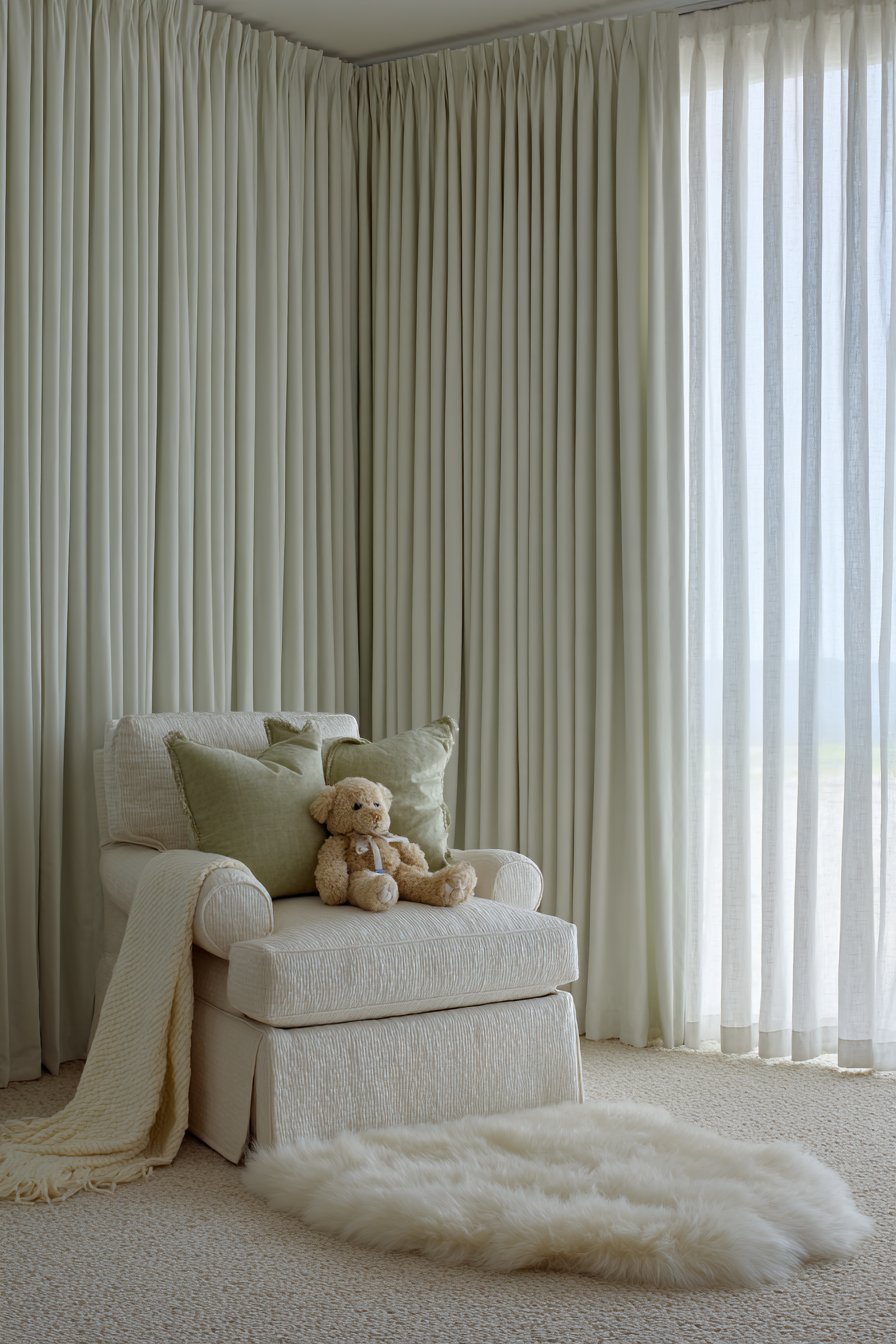
Textiles are the great equalizer in interior design. A room furnished with inexpensive pieces can be elevated dramatically by the quality, quantity, and thoughtful layering of fabric — and conversely, even the most expensive furniture can look cold and unfinished without generous textile investment. In a nursery, layered textiles create the warm, cocooning atmosphere that makes the space feel genuinely luxurious while also serving the deeply practical purpose of making baby feel safe and settled.
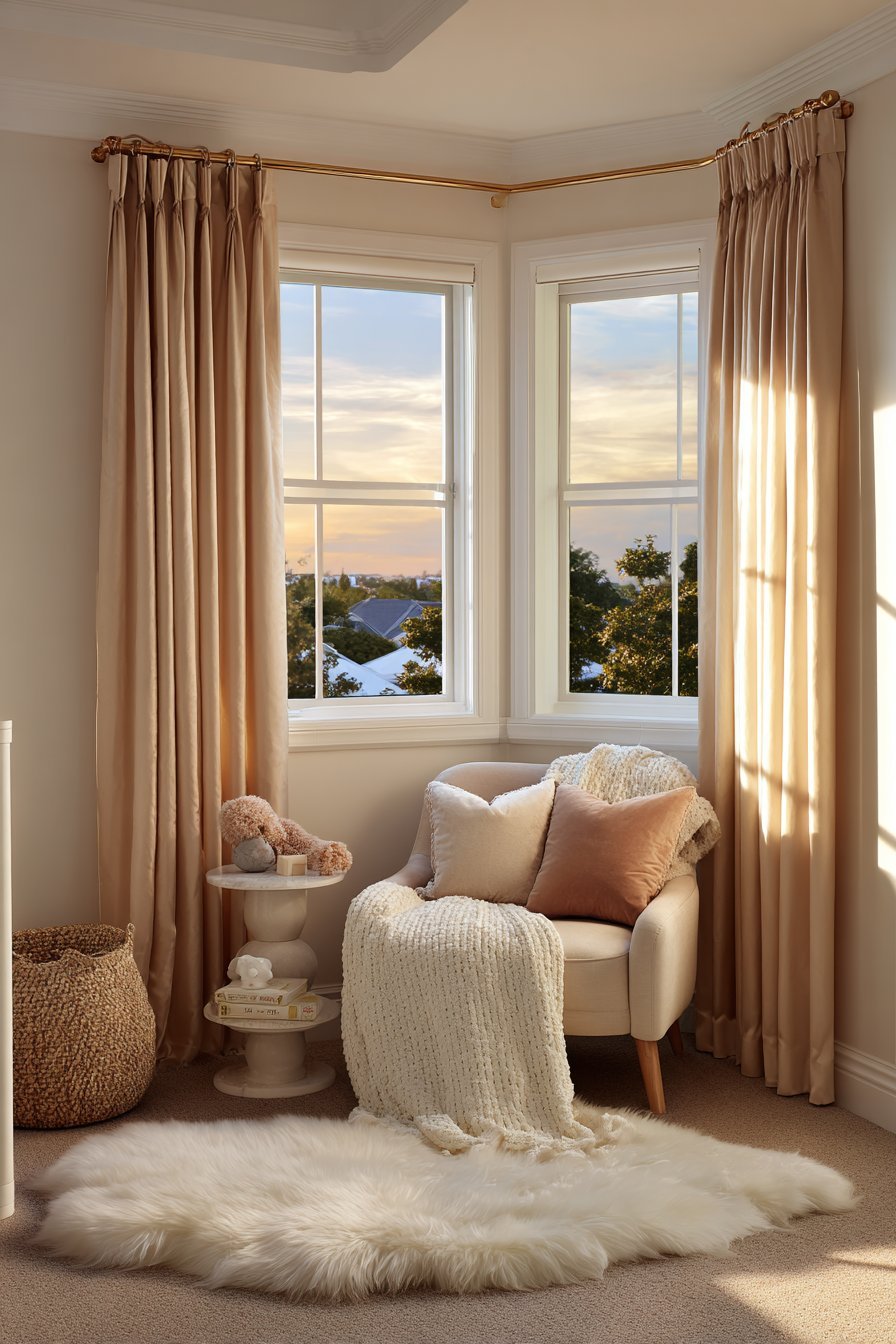
The key to luxurious textile layering on a budget is to focus on texture and tonal harmony rather than expensive individual pieces. A $15 waffle-knit throw draped over the arm of a nursing chair, paired with two or three cushions in complementary blush and cream tones, creates a vignette of genuine warmth and style. A $30 faux sheepskin rug layered atop a simple flat-weave base rug introduces richness and dimension to the floor. Mixing textures — knit, velvet, linen, cotton, bouclé — creates the layered complexity that reads as luxury, regardless of the price paid for any individual piece.
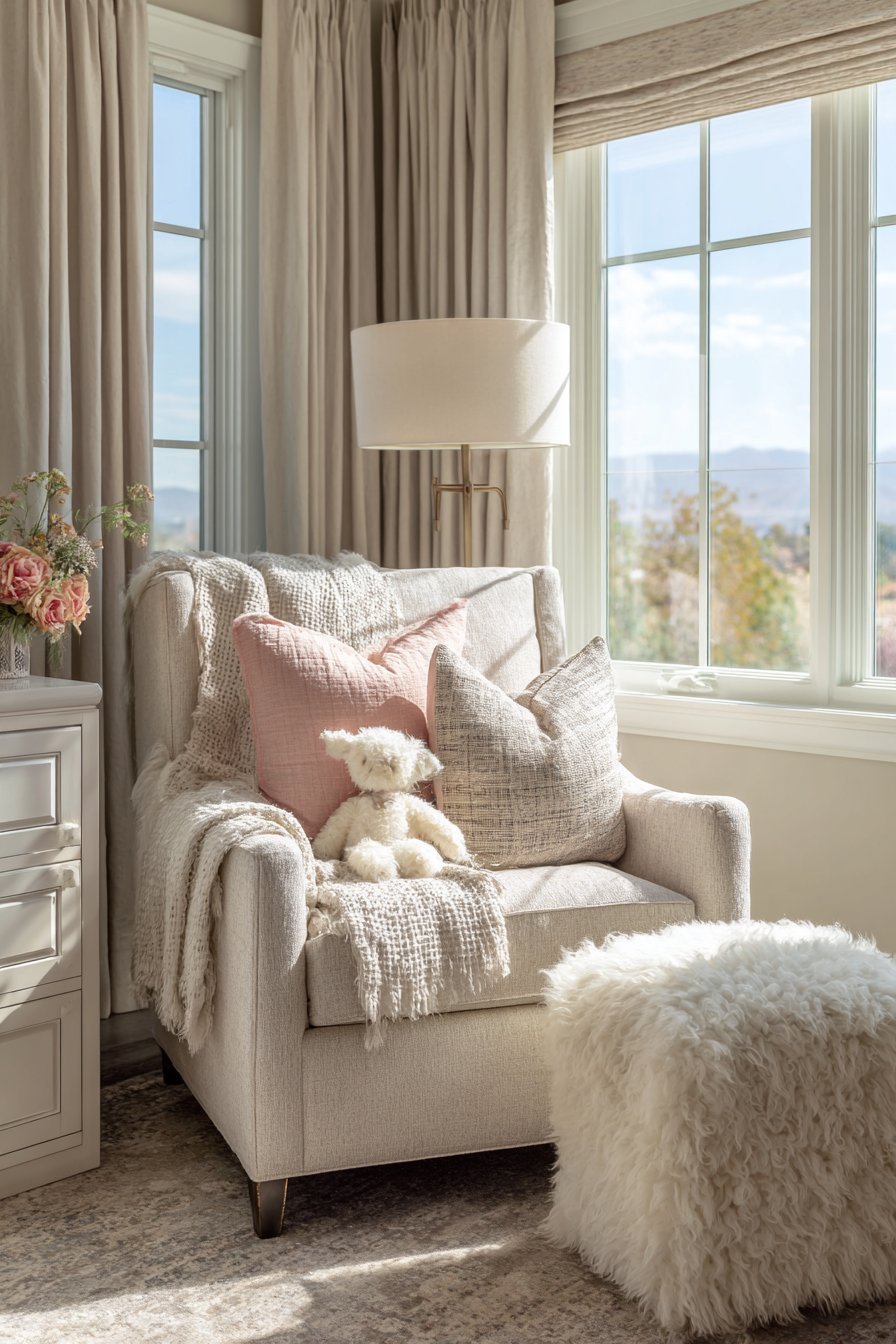
Window treatments have an outsized impact on how luxurious a nursery looks and feels. Floor-length curtains that pool slightly at the bottom, hung from ceiling height rather than window frame height, make a room feel taller, grander, and more considered than curtains hung at standard height ever can. Sourcing curtains from discount fabric retailers and making simple unlined panels, or purchasing inexpensive ready-made curtains in a coordinating linen or cotton and adding a blackout lining, delivers a high-end window treatment result at a very accessible price point.
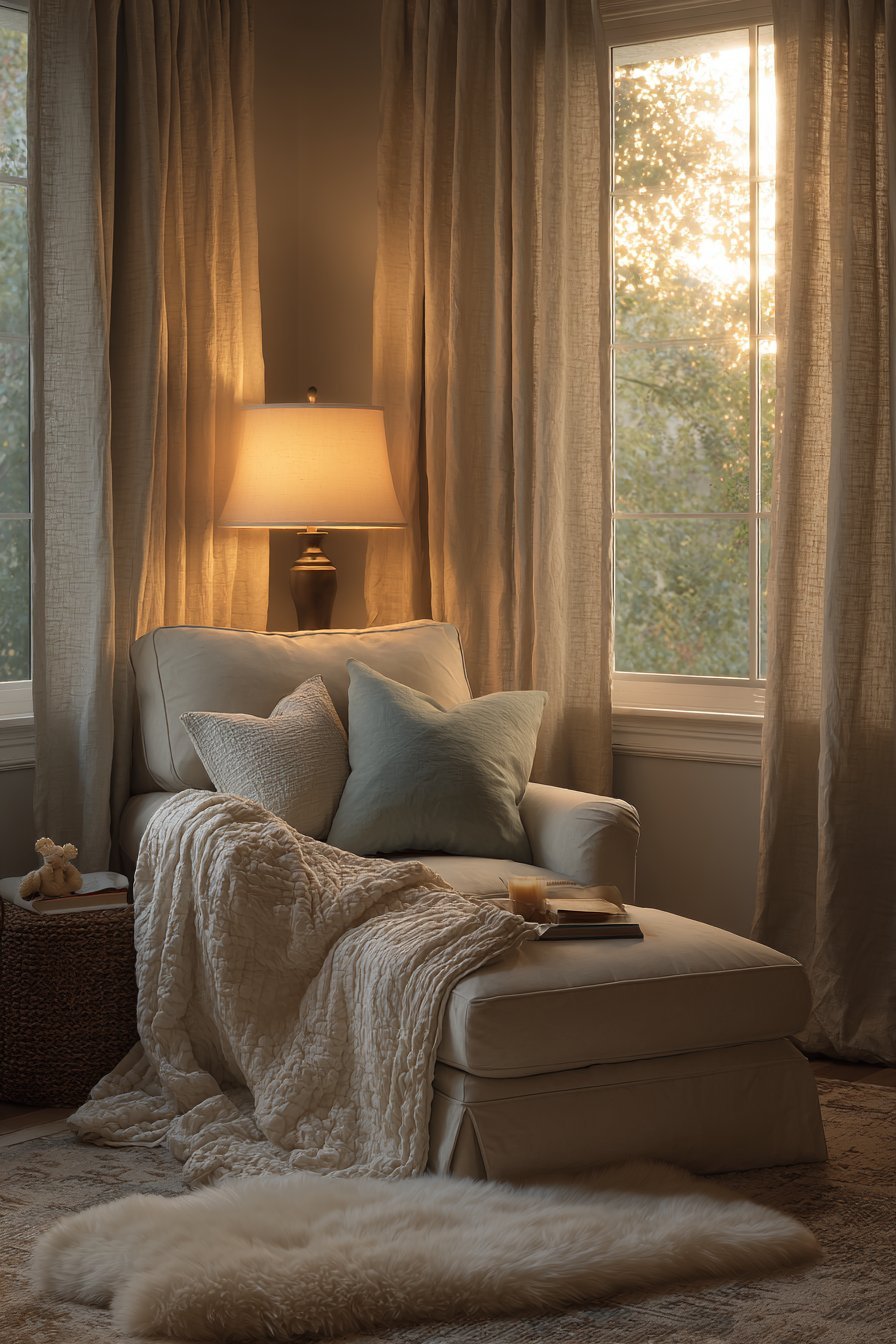
- Layer multiple textures — knit throws, velvet cushions, linen curtains, faux sheepskin — for a rich, luxurious feel
- Hang curtains from ceiling height rather than window frame height to make the room feel grander
- Add a blackout lining to inexpensive, ready-made curtains for a practical, elevated window treatment
- Use cushion covers rather than pre-filled cushions — covers are far cheaper and can be changed seasonally
- Focus on tonal harmony across all textiles — cohesive color creates the impression of a curated, designed space
4. Use Lighting to Create Atmosphere and Perceived Luxury
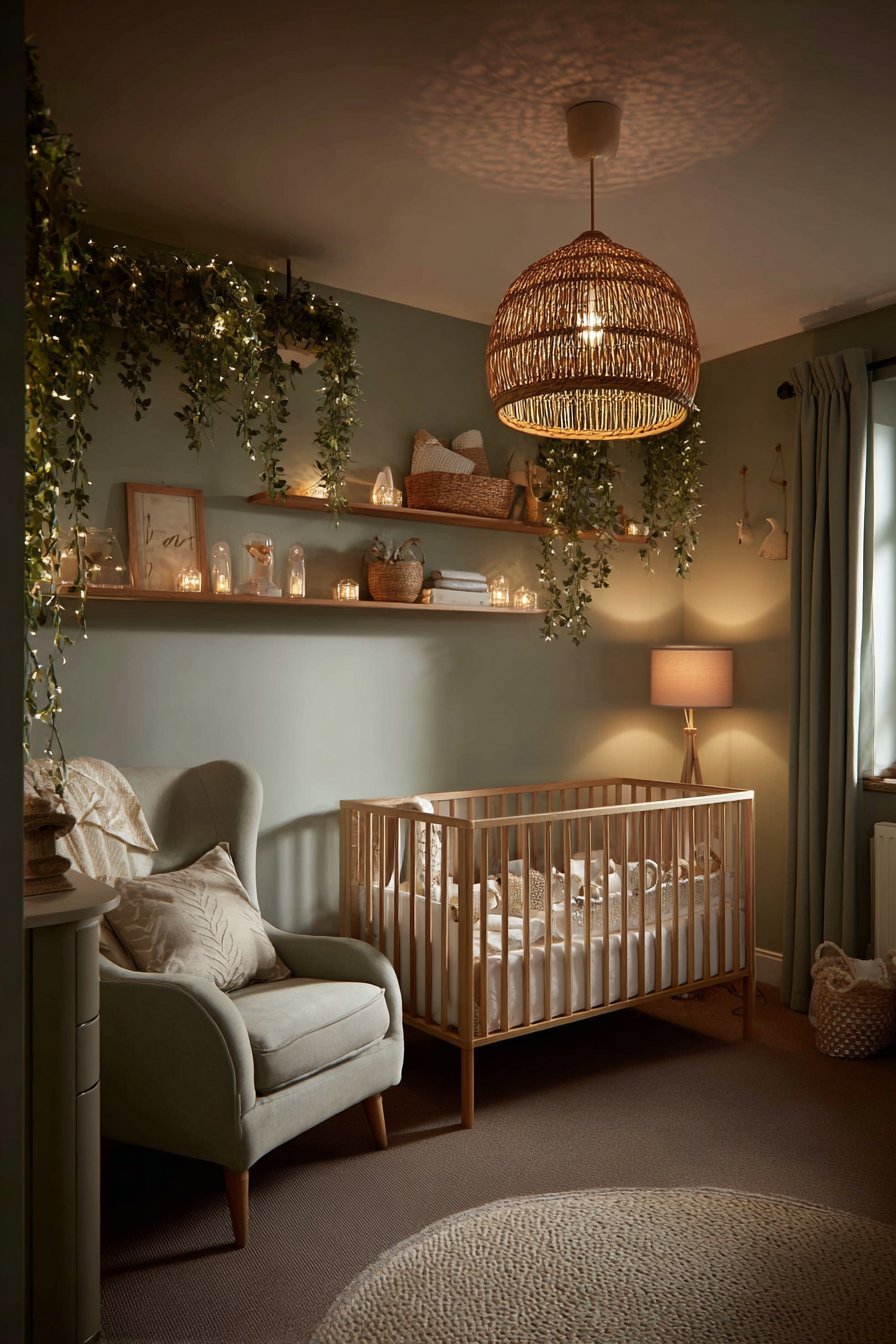
Lighting transforms rooms more dramatically than almost any other design element — and it does so at a relatively modest cost when compared to furniture or renovation. The difference between a nursery lit by a single overhead bulb and one with a carefully considered layered lighting scheme is the difference between a functional room and a space that feels genuinely beautiful, warm, and intentional. Lighting is one of the most impactful places to spend a small portion of your nursery budget.
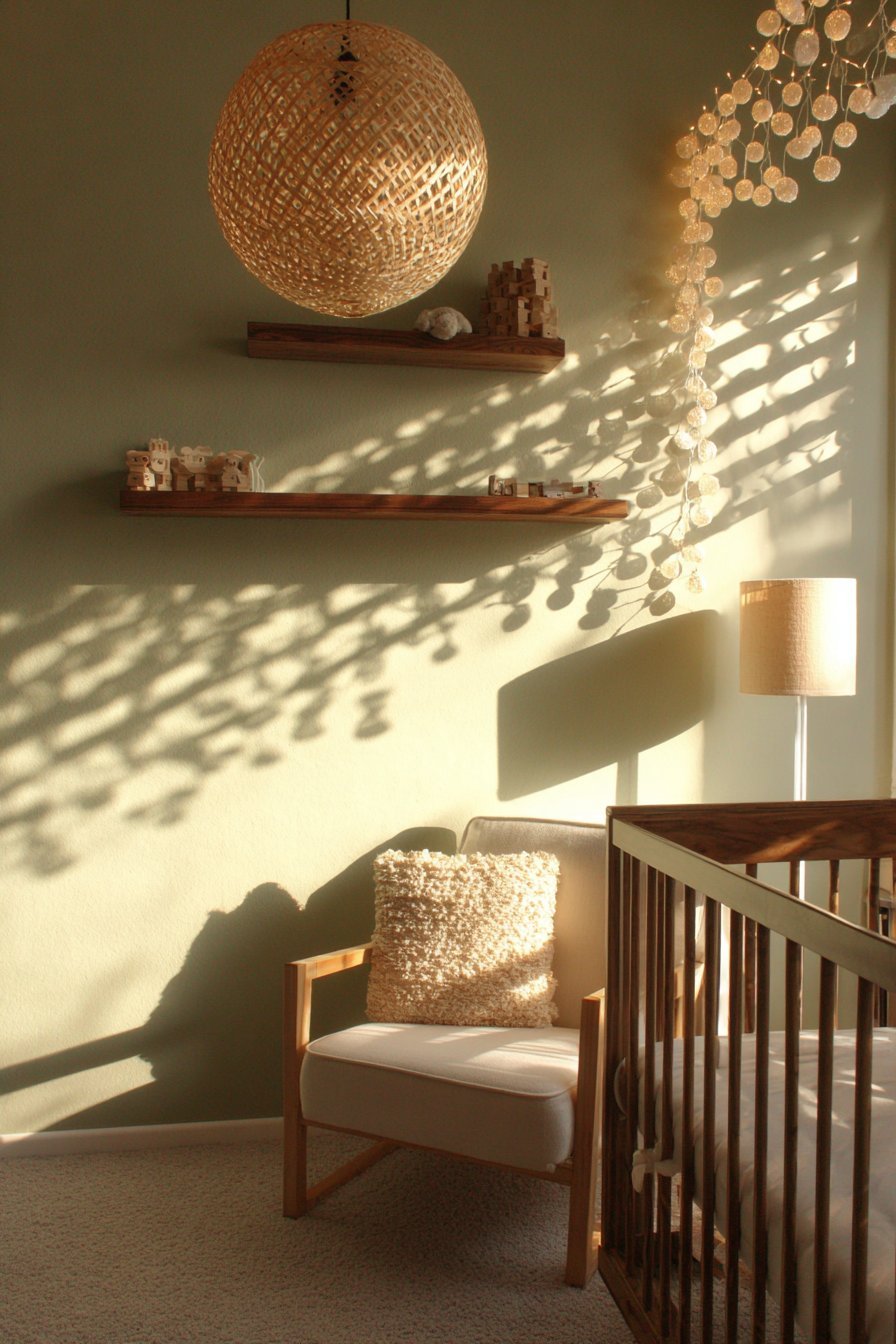
A statement ceiling pendant light instantly elevates the perceived quality of a nursery. A beautifully designed pendant — a rattan globe, a fabric shade in a coordinating nursery tone, a simple ceramic or paper lantern — draws the eye upward and gives the room a design focal point that signals intention and taste. Budget pendant lights from affordable homewares retailers can look extraordinarily chic in a nursery context, particularly when paired with a warm-toned Edison or globe LED bulb that enhances the pink or warm color tones of the room’s palette.
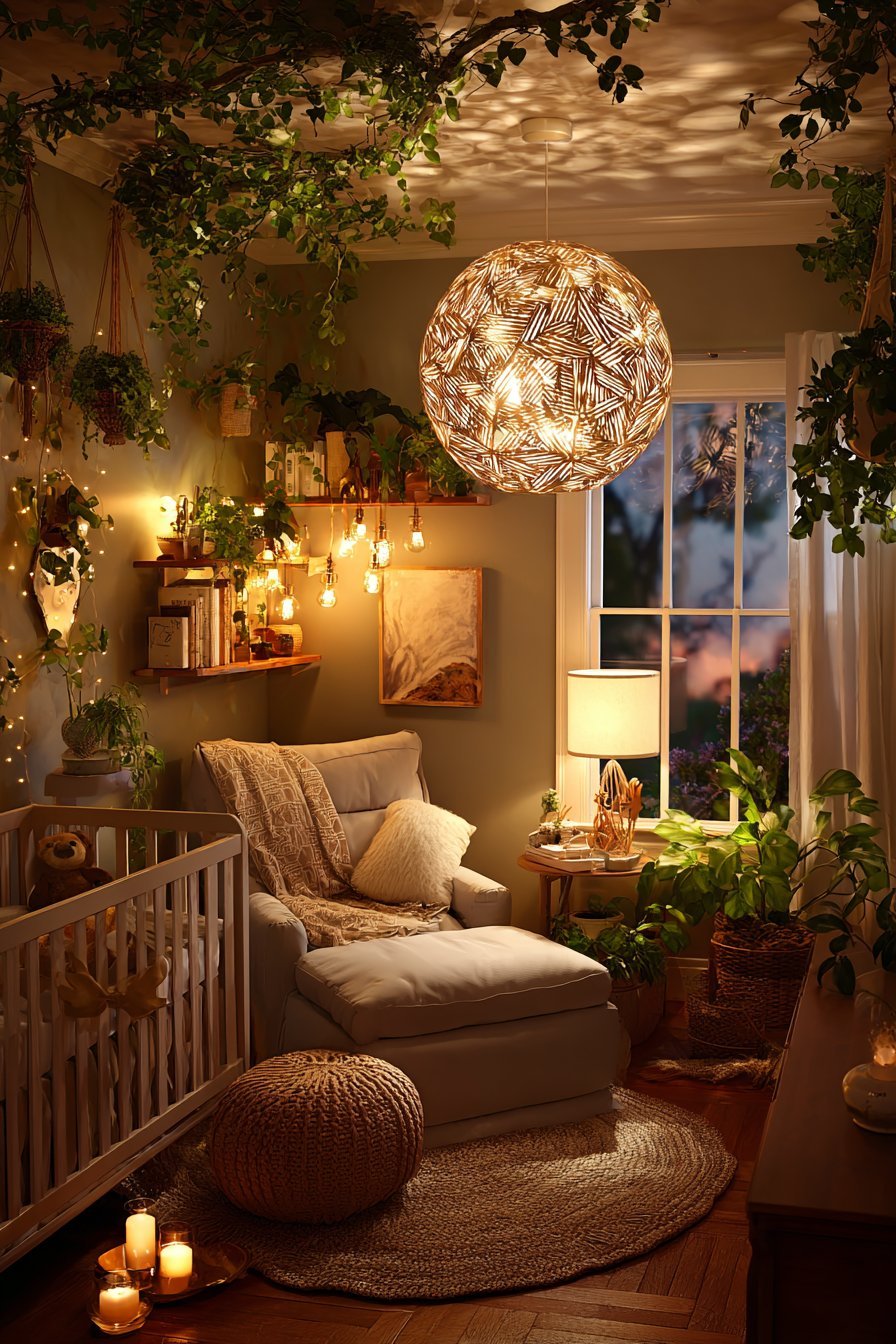
A dimmable floor lamp or table lamp beside the nursing chair is one of the most practically valuable lighting investments in the entire nursery. Soft, directed lamplight in this zone creates a warm, intimate atmosphere for nighttime feeds without waking the baby fully or requiring overhead lights that flood the entire room. Choose a lamp with a warm white shade — linen, cotton, or paper — and fit it with a warm-spectrum LED bulb of around 2200K to 2700K for the most flattering and sleep-supportive glow.
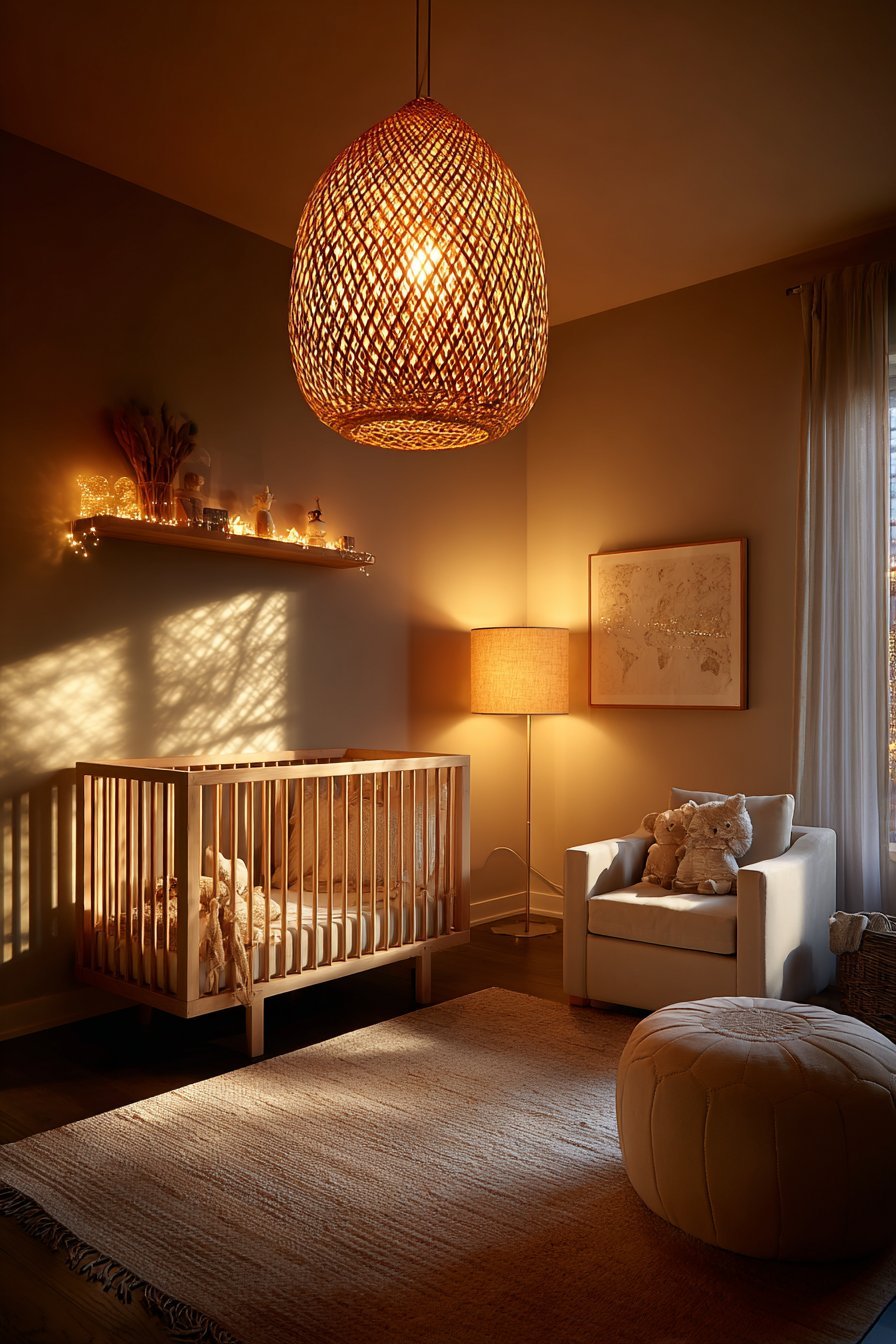
- Install a statement pendant light — rattan globe, fabric shade, ceramic lantern — as an affordable focal point
- Use warm Edison or globe LED bulbs throughout the nursery for a golden, flattering light quality
- Add a dimmable floor or table lamp beside the nursing chair for soft nighttime feed lighting
- Install a dimmer switch on the overhead light — it costs very little and transforms the room’s versatility
- String fairy lights along a shelf, above a canopy, or around a mirror for an enchanting, low-cost detail
5. DIY Artwork and Personalized Wall Décor
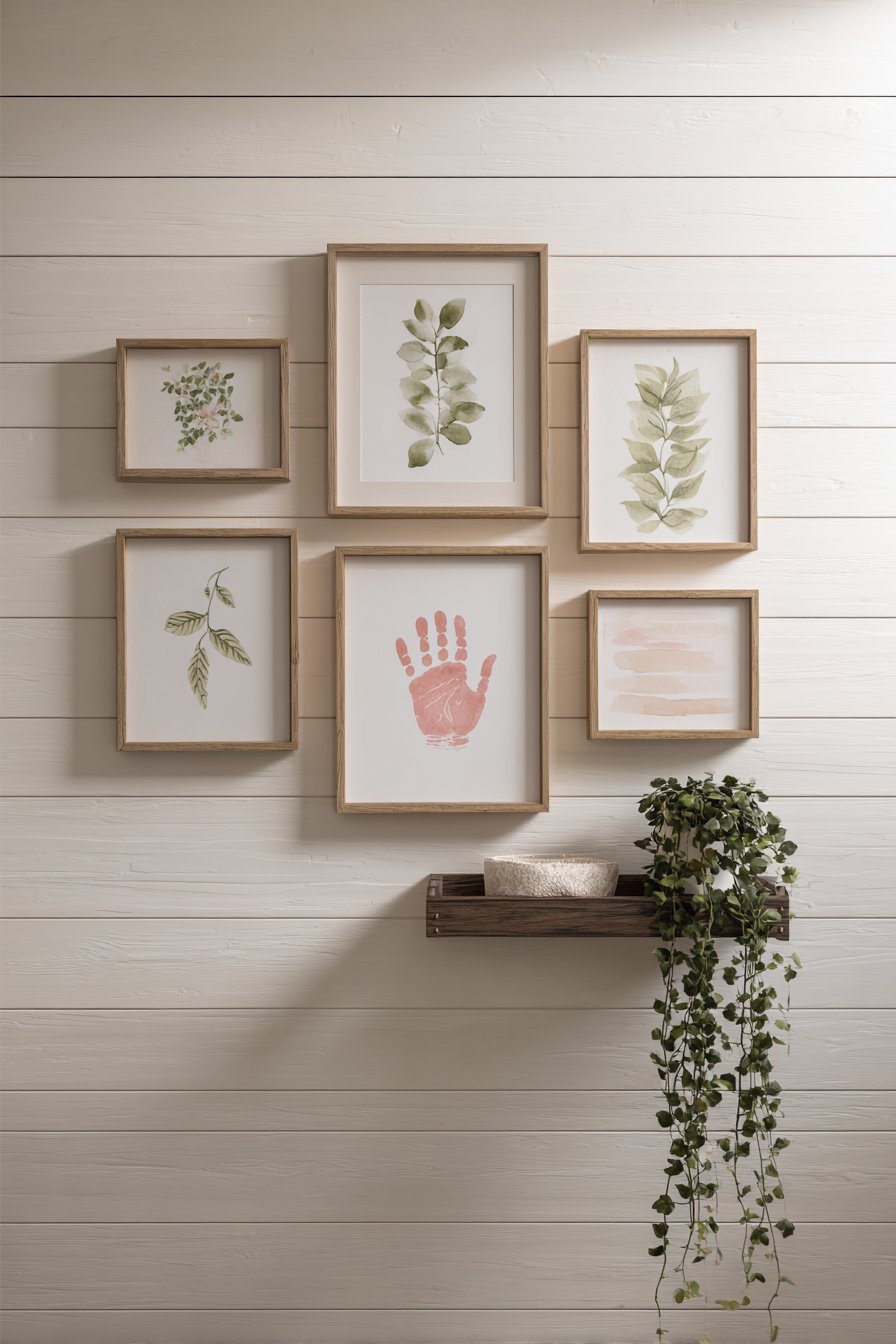
Wall art is one of the areas where the nursery industry charges the most for the least — simple prints in basic frames routinely retail for prices that bear no relationship to their actual production cost. Creating your own nursery artwork, or sourcing it through affordable digital print platforms, allows you to achieve a beautifully curated gallery wall for a tiny fraction of what a boutique baby brand would charge for a similar aesthetic.
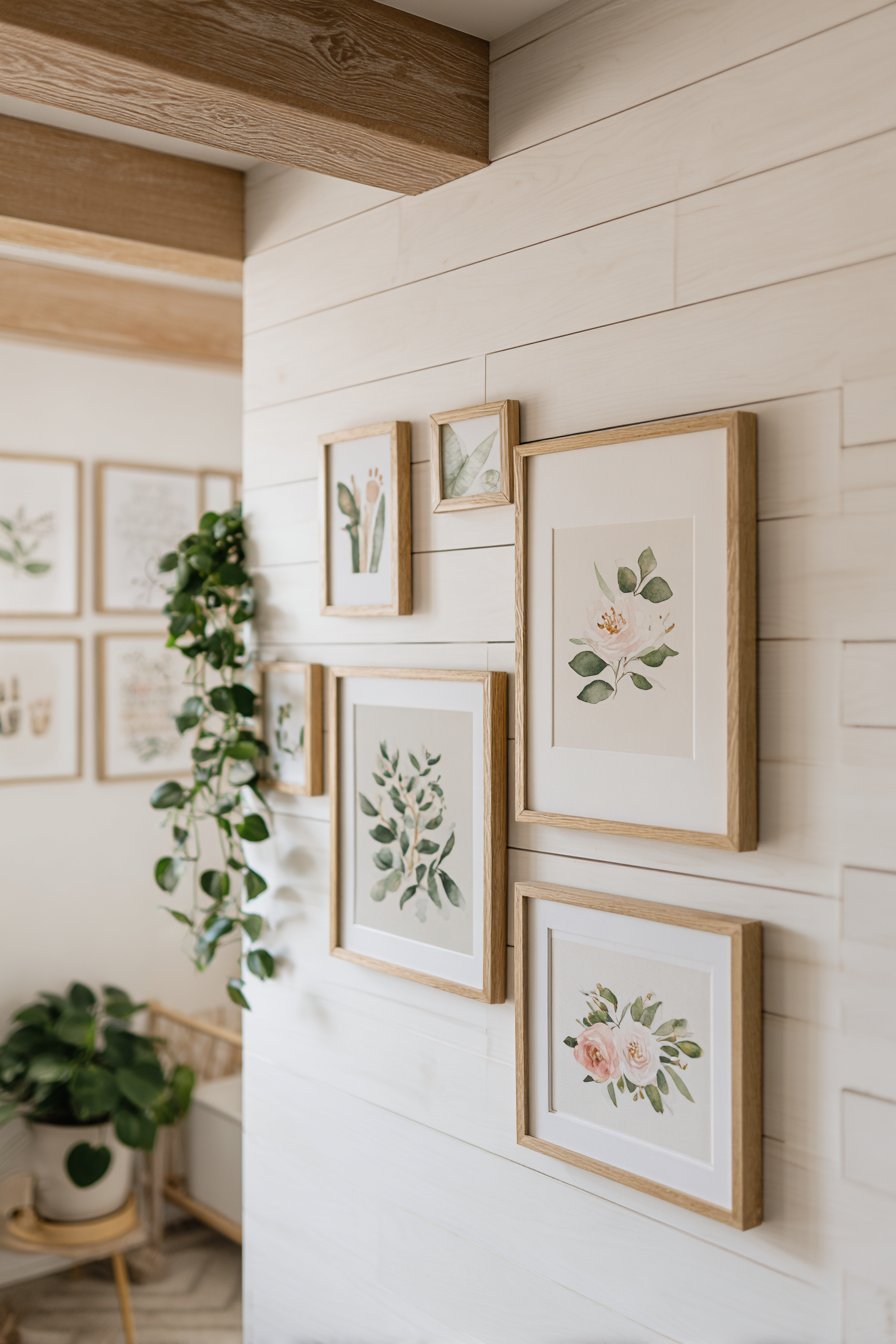
Printable digital art has transformed the accessible end of the wall art market. Platforms like Etsy offer thousands of professionally designed nursery prints — botanical illustrations, watercolor animals, alphabet posters, birth statistics prints, and abstract washes in any color palette imaginable — for between $3 and $15 per design. Download the file, send it to a local print shop or home printer at A3 or A2 size, and frame it yourself. The result is indistinguishable from a $120 framed print from a baby boutique.
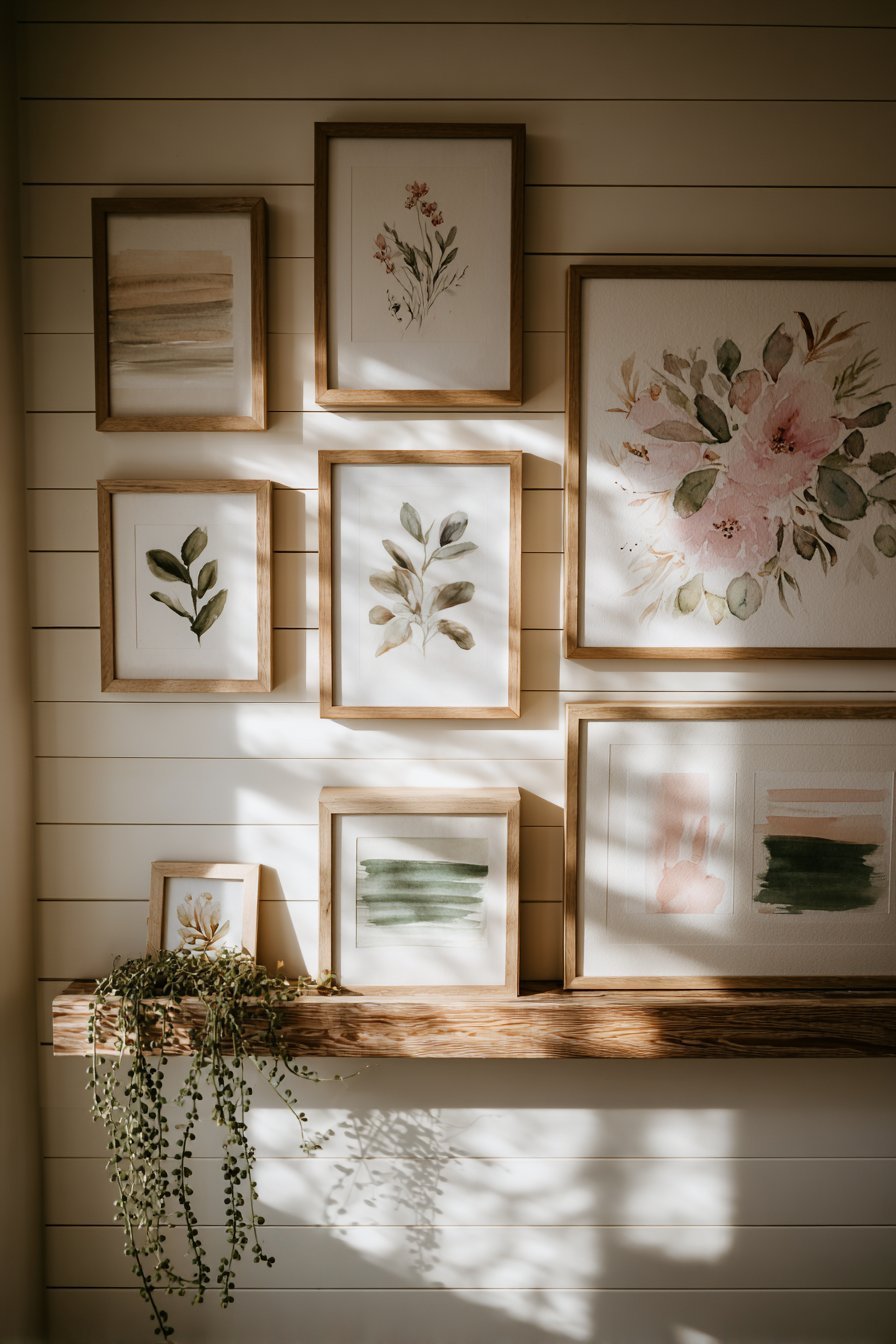
Creating your own nursery art is even more rewarding and costs almost nothing beyond basic materials. Watercolor washes in your nursery’s color palette, simple abstract shapes painted on watercolor paper, or a child’s hand or footprint pressed onto quality card and framed are all examples of meaningful, beautiful nursery art that money genuinely cannot buy. These personal, handmade pieces give a nursery a warmth and authenticity that no commercial print can replicate — and they become treasured keepsakes as your child grows.
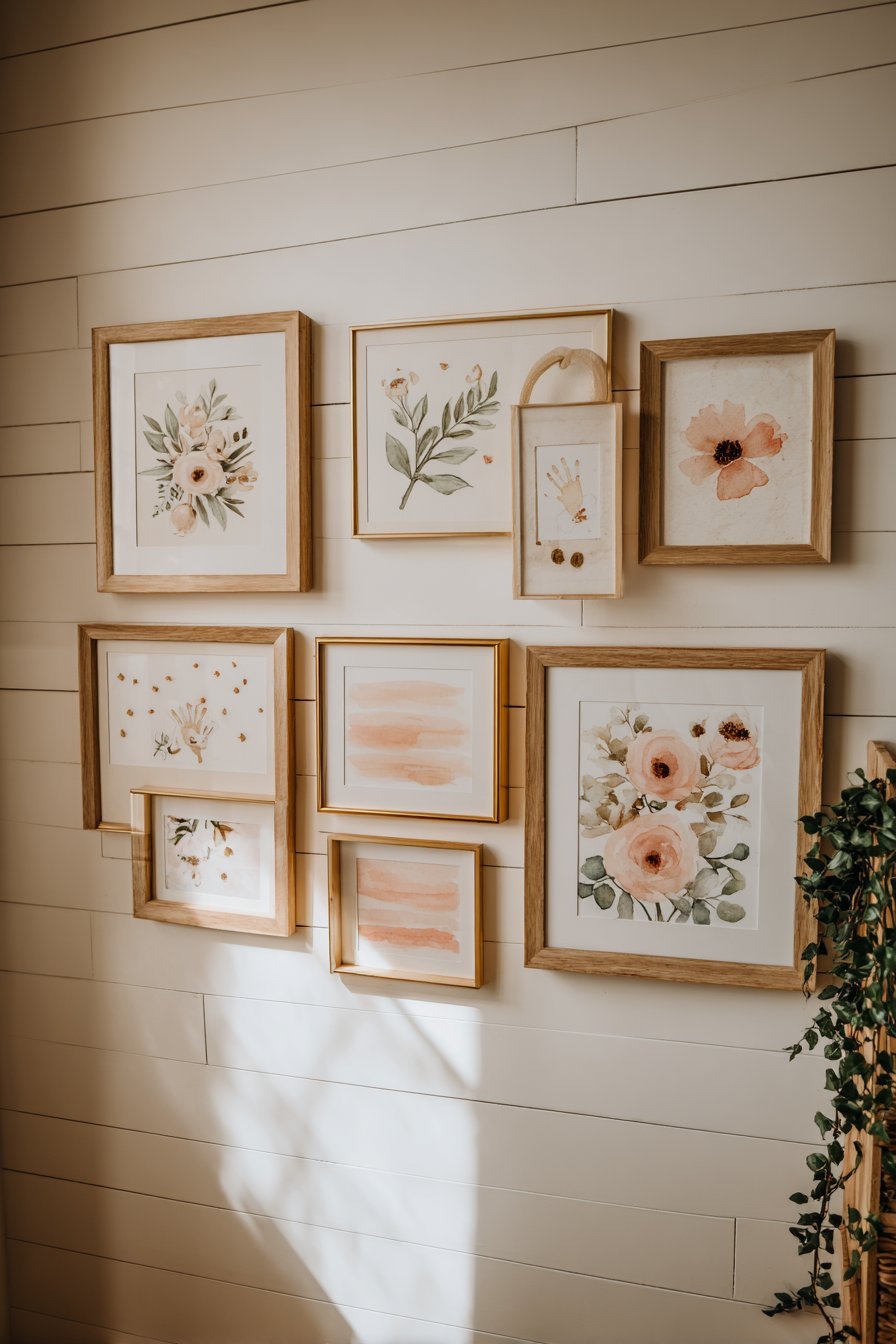
- Purchase downloadable digital prints from Etsy for professional-quality nursery art at minimal cost
- Print digital art at A3 or A2 size through a local print shop for the best quality and size impact
- Create your own watercolor washes, abstract prints, or botanical sketches in your nursery color palette
- Frame prints in consistent frame styles — all natural timber or all white — for a cohesive gallery wall
- Include one deeply personal piece — a handprint, a family photo, a meaningful quote — among commercial prints
6. Style with Plants and Natural Elements for Organic Luxury
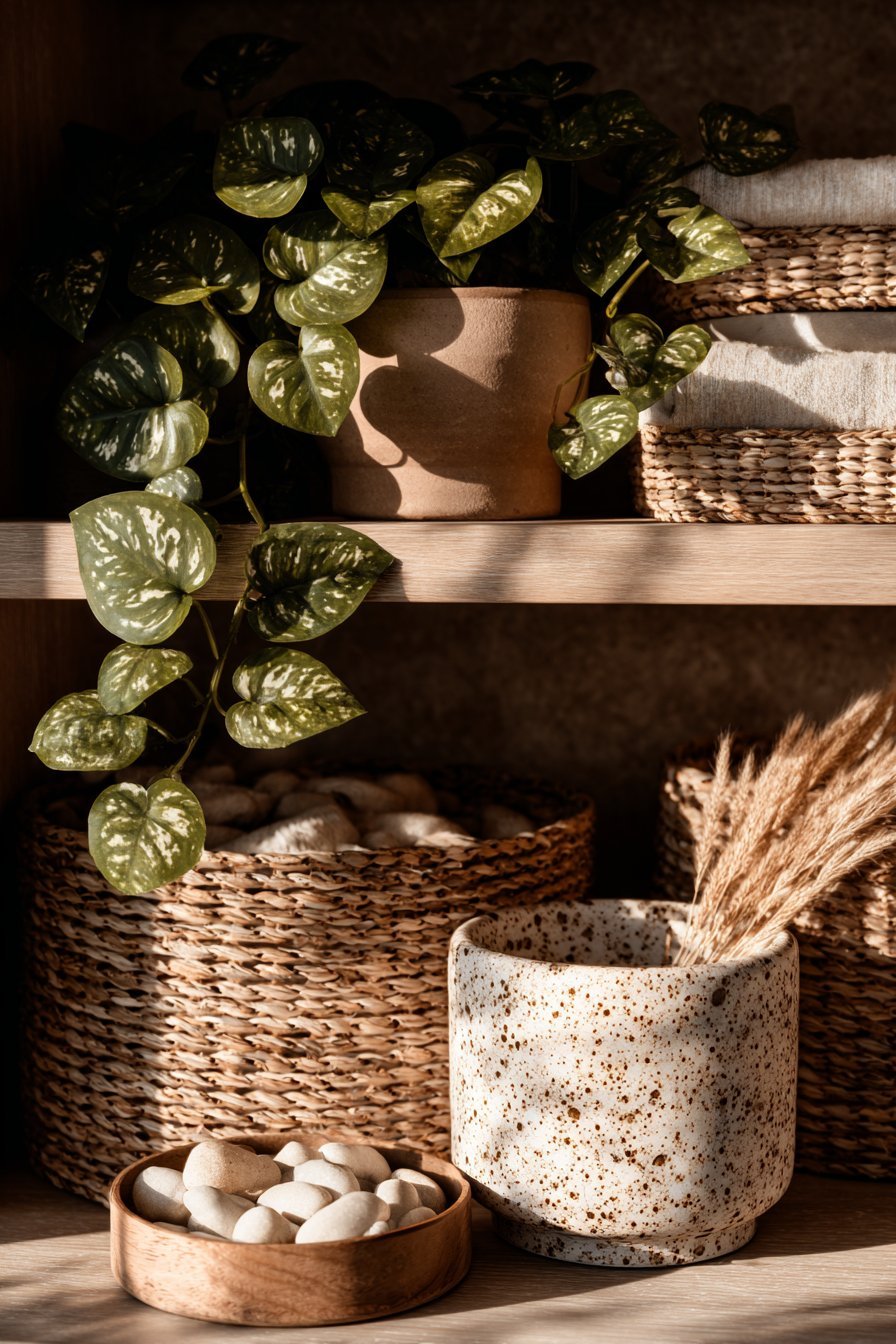
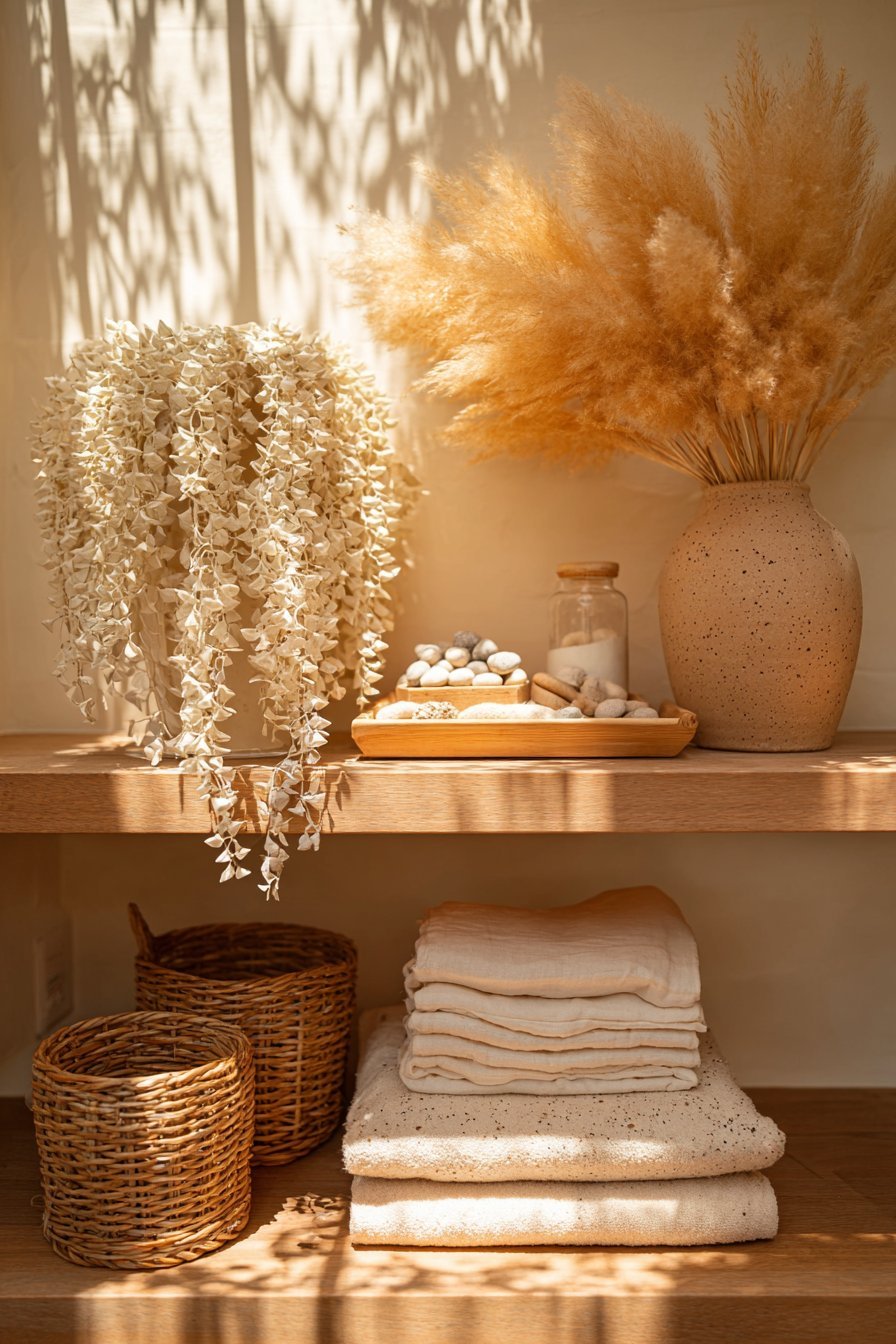
Natural elements deliver some of the highest visual returns available at any budget level. A well-chosen plant, a bowl of smooth river pebbles, a branch of dried eucalyptus, or a cluster of wicker baskets introduces organic warmth, texture, and life into a nursery that no manufactured product can replicate. These elements feel inherently luxurious because they are real, variable, and alive — qualities that instantly distinguish a thoughtfully designed space from a generic showroom display.
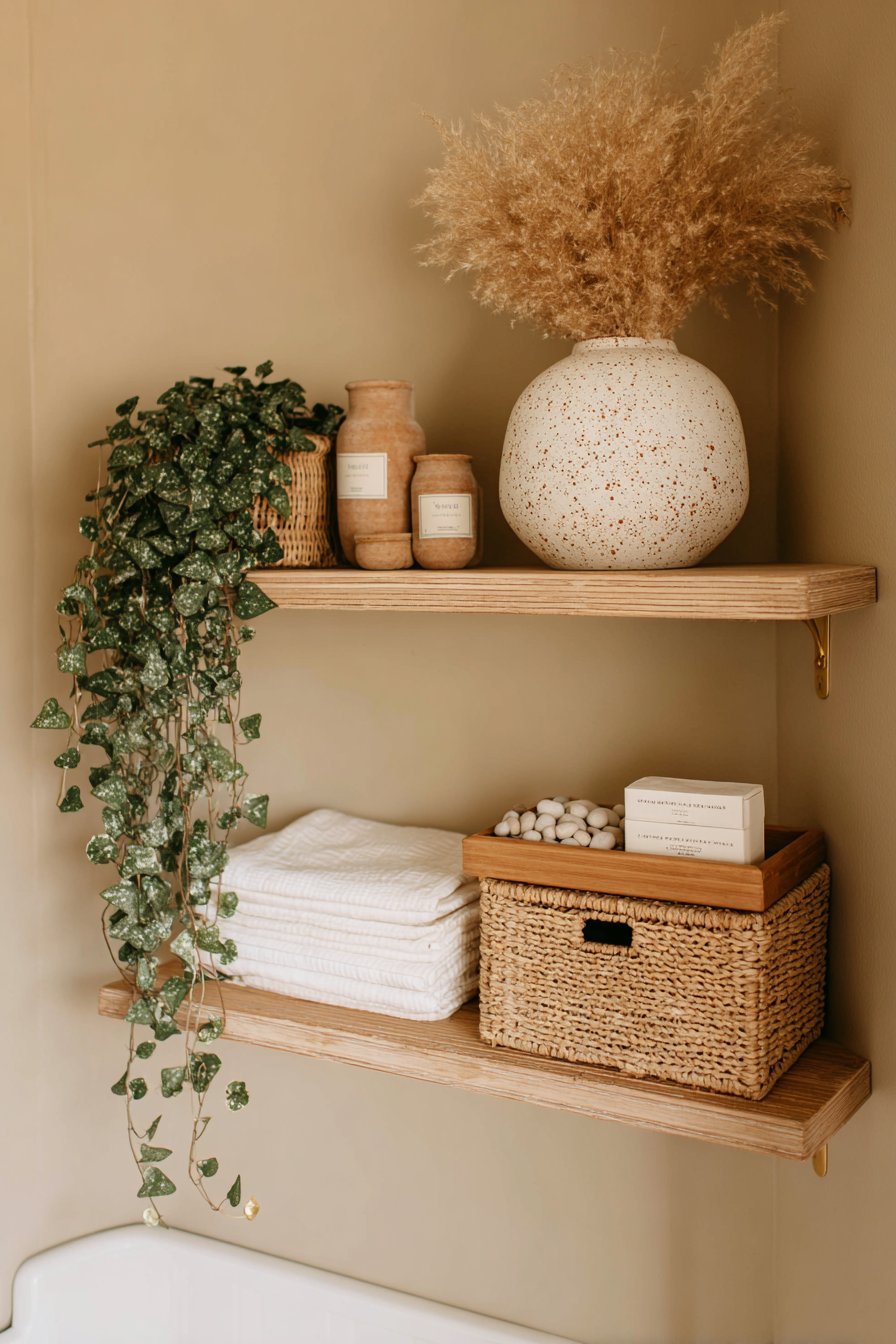
Indoor plants appropriate for nurseries include species that are both non-toxic and genuinely easy to care for amid the demands of new parenthood. Pothos, spider plants, Boston ferns, and prayer plants are all beautiful, safe, and forgiving options that thrive in the warm, moderately lit conditions of a typical nursery. A single trailing pothos in a beautiful ceramic pot positioned on a high shelf, its vines cascading toward the floor, contributes an element of lush, botanical drama that looks like a considered design choice worth far more than its $15 price tag.
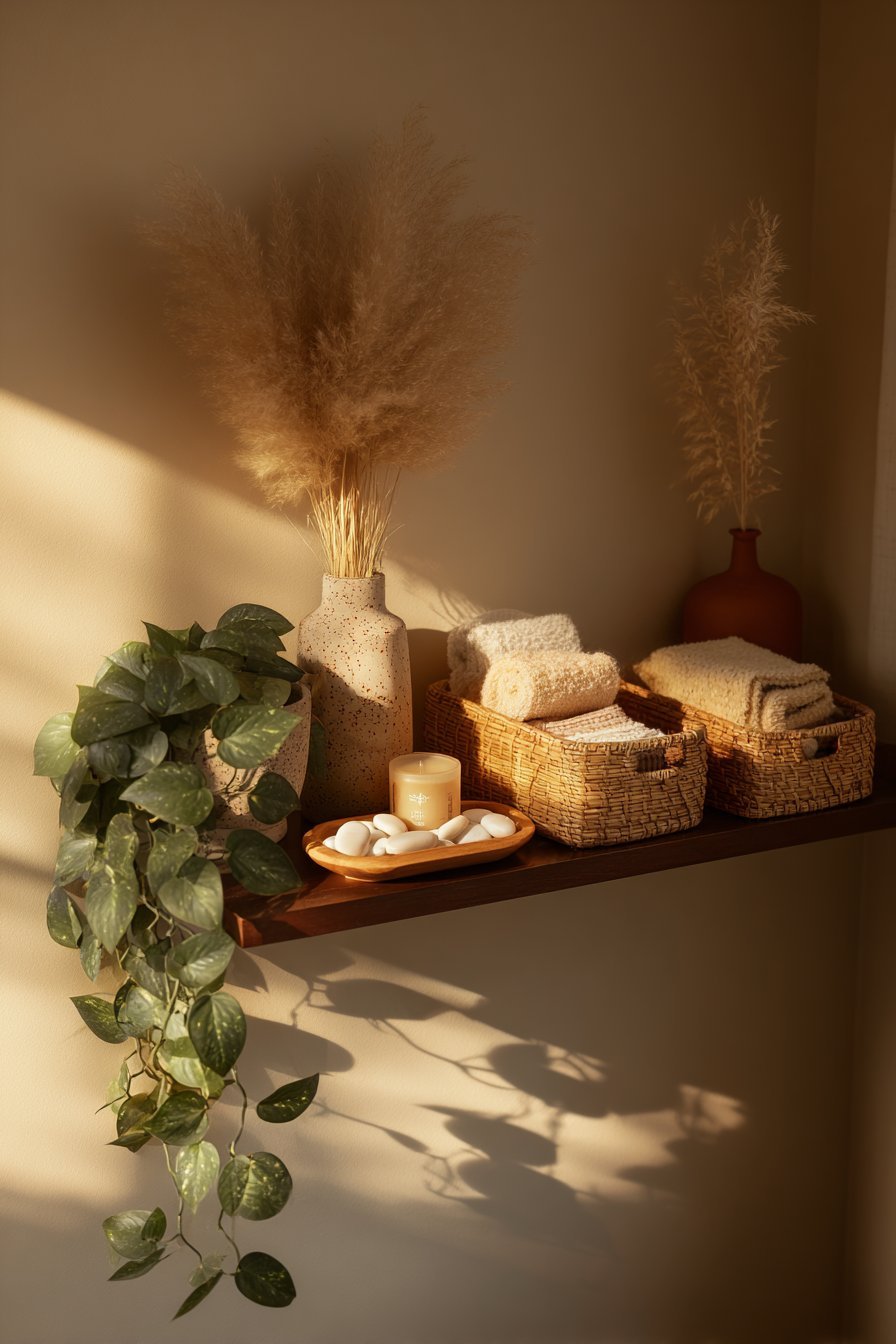
Dried botanicals and natural accessories are among the most cost-effective luxury styling tools available. A bundle of dried pampas grass in a simple terracotta pot costs very little from a market stall or dried flower supplier yet photographs beautifully and contributes a warm, textural focal point to any styled corner or shelf. Wicker baskets in varying sizes serve as beautiful storage solutions that also function as décor — hiding nappy changing supplies, spare blankets, and toy collections behind an organic, natural aesthetic that is inherently charming.
- Choose non-toxic indoor plants — pothos, spider plant, Boston fern — for safe nursery greenery
- Position a trailing pothos or fern on a high shelf for a lush, botanical design element
- Style shelves and corners with dried pampas grass, eucalyptus, or cotton stems in terracotta pots
- Use wicker baskets in varying sizes as decorative storage that serves both function and aesthetic
- Incorporate natural wood elements — a small log stool, a timber tray, a branch mobile — for organic warmth
7. Create a Focal Point That Anchors the Entire Room
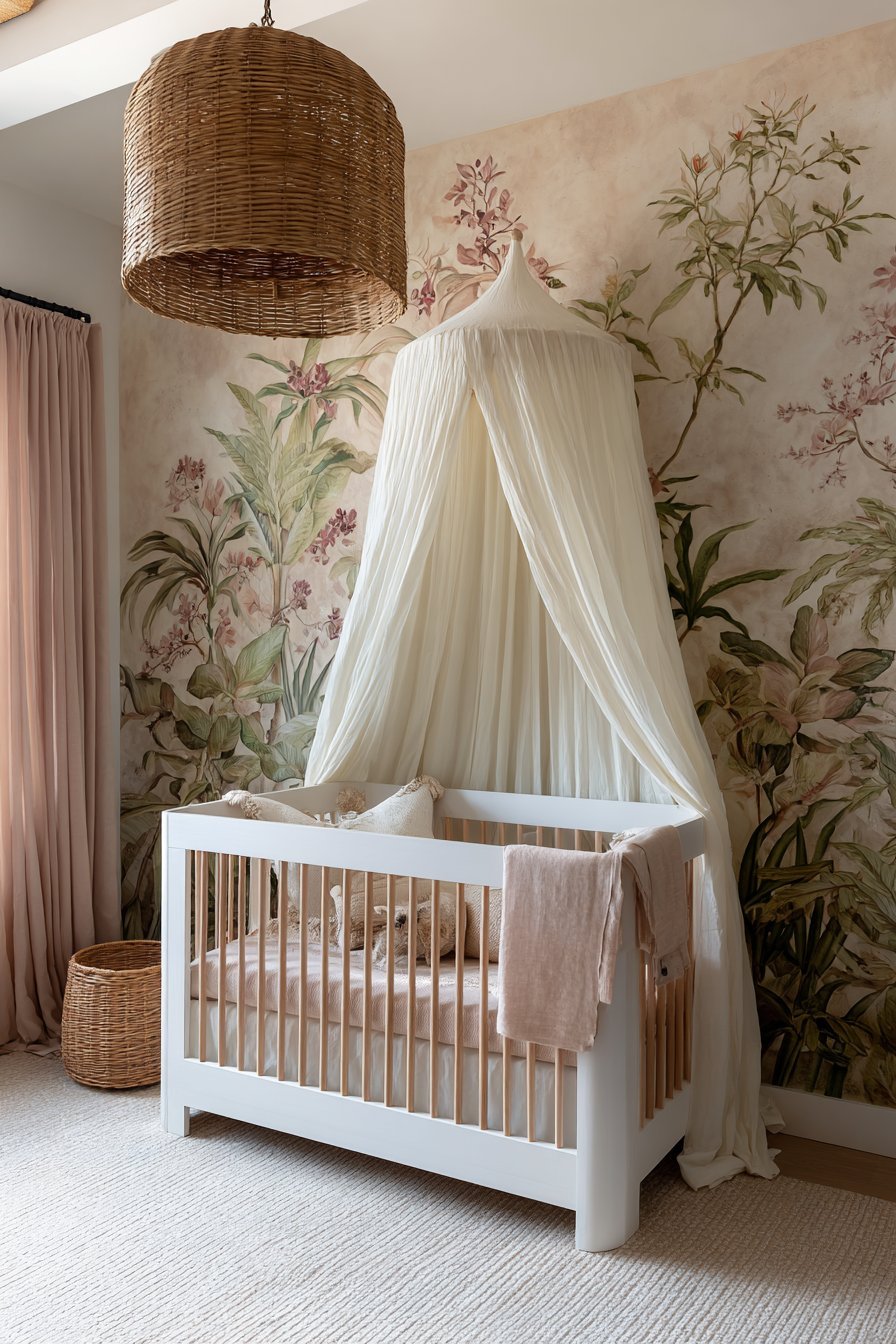
Every truly luxurious room has a clear focal point — a single element that draws the eye, anchors the design, and gives the space its defining visual identity. In a nursery, this focal point is most commonly the crib wall: the surface directly behind the crib that is seen every time someone enters the room. Investing creative energy and even a small amount of budget into making this wall extraordinary delivers more visual impact per dollar than almost any other design decision you can make.
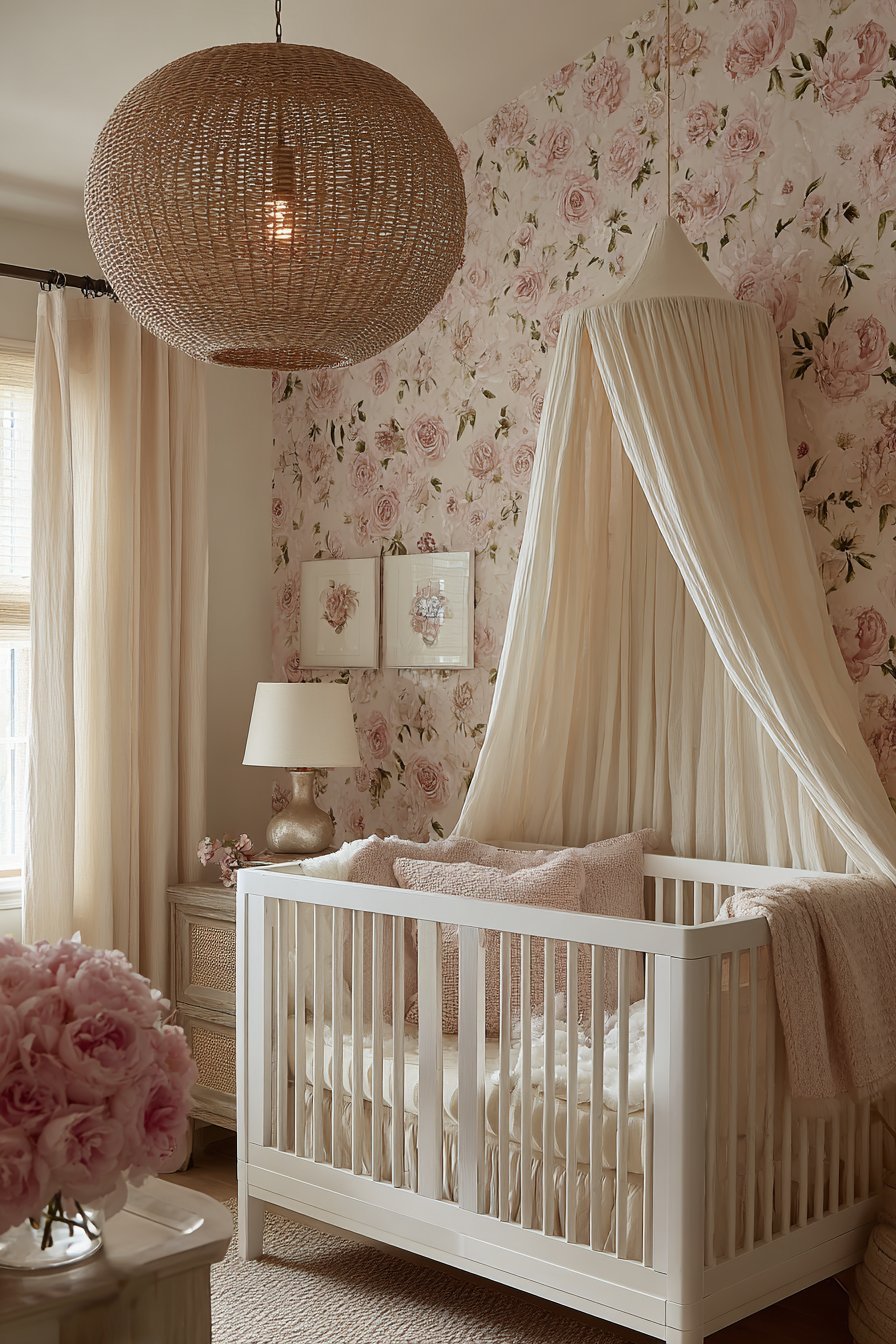
A crib canopy is one of the most romantically beautiful and astonishingly affordable focal points available in nursery design. A simple wooden dowel, a length of sheer or linen fabric, and two ceiling hooks are all that is required to create a dreamy, billowing canopy that transforms the crib wall into something genuinely enchanting. The entire assembly costs less than $30 in most cases, yet the visual effect — the sense of a softly enclosed, protected sleep space — is one that parents and guests consistently identify as the most beautiful element of the nursery.
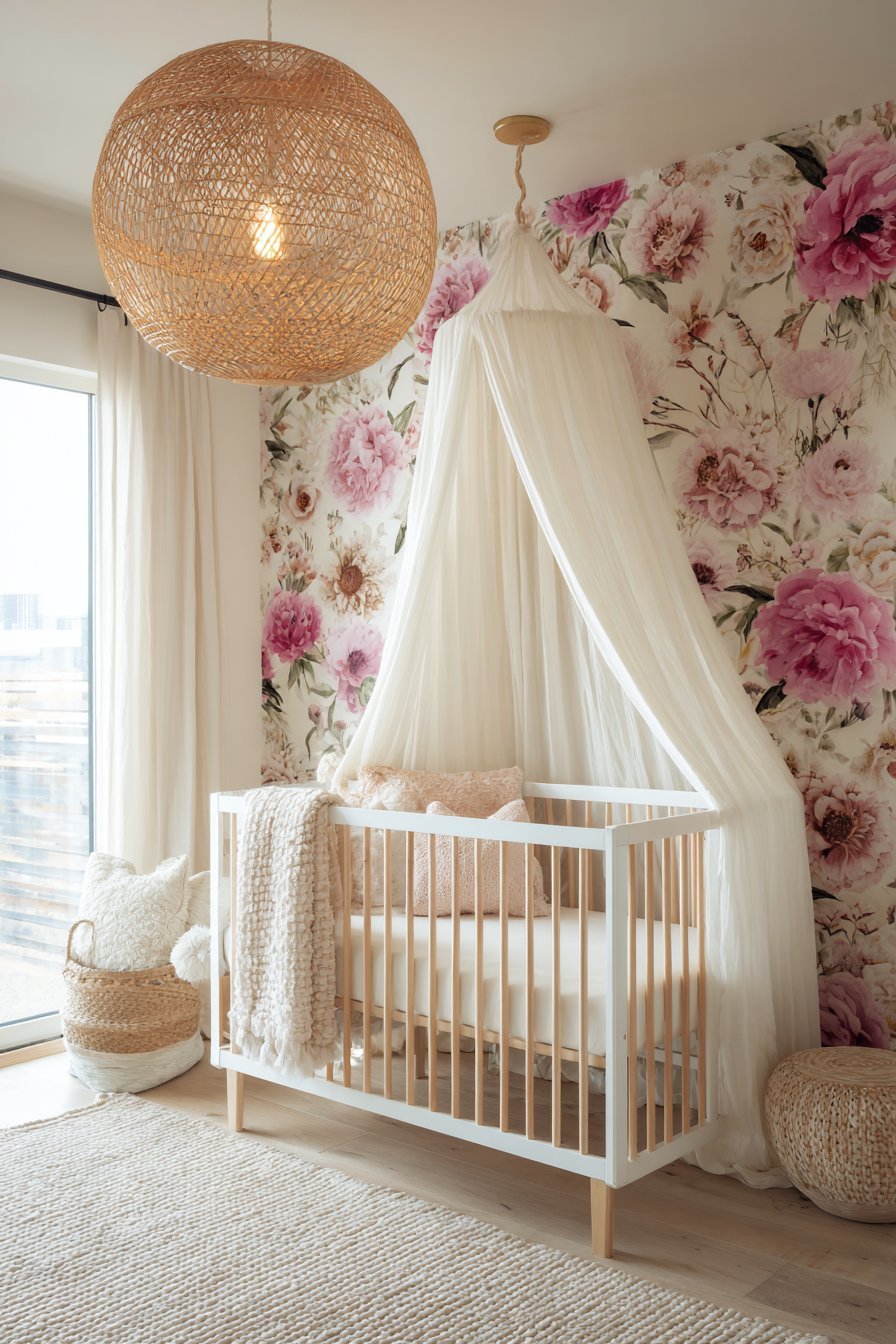
Removable wallpaper or peel-and-stick wall murals offer another extraordinary focal point solution at a budget-friendly price point. A single accent wall in a beautiful botanical print, a soft geometric pattern, a dreamy watercolor landscape, or a charming illustrated scene creates an immediate design statement without the commitment or cost of traditional wallpaper. These products have improved enormously in recent years — the best removable wallpapers are virtually indistinguishable from their permanent counterparts and can be removed cleanly when you are ready for a refresh.
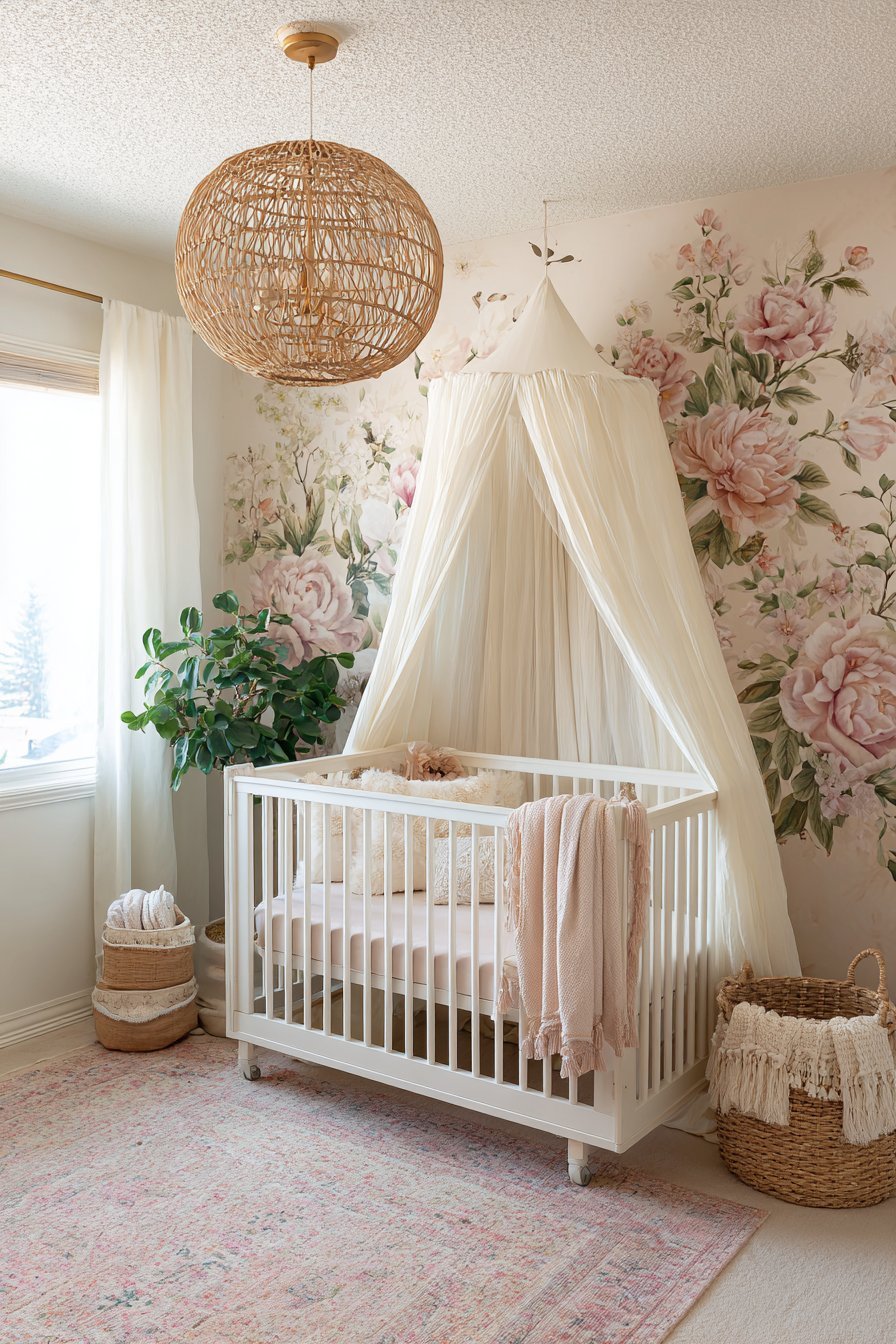
- Create a crib canopy from a wooden dowel and sheer fabric — it costs under $30 and looks extraordinary
- Install removable peel-and-stick wallpaper on the crib feature wall for a bold, beautiful focal point
- Frame the crib wall with a gallery arrangement of coordinating prints and personal photographs
- Add a beautiful pendant light directly above the crib zone to reinforce the focal point from above
- Use a large round mirror above a dresser as an alternative focal point — it reflects light and adds visual depth
Conclusion
Luxury in a nursery is never about the price tag — it is about intention, cohesion, texture, and the quality of thought behind every decision. A room designed with care, resourcefulness, and a genuine creative vision will always outshine one assembled by simply purchasing the most expensive items available. The tips in this article prove that beautiful, considered nursery design is available to every family, at every budget level.
Start with paint, build with textiles, light it beautifully, and fill it with meaningful details — a handmade artwork, a trailing plant, a simple canopy above the crib. Each small decision, made with love and intention, contributes to a nursery that your baby will thrive in and you will treasure looking back on for years to come. The most luxurious thing you can give your baby’s room is not money — it is your time, your creativity, and your heart.
