

Your backyard should feel like a personal retreat — a place where you can unwind, entertain, and simply breathe without feeling exposed to the world outside. Yet for many homeowners, lack of privacy remains one of the most frustrating obstacles to truly enjoying their outdoor space. Neighbors, passing traffic, and overlooking windows can make even a beautifully designed yard feel uncomfortably open.
The good news is that creating outdoor privacy does not mean erecting a fortress or sacrificing the beauty of your landscape. Modern privacy solutions range from lush living walls and elegant pergolas to smart fencing choices and creative planting strategies. With the right approach, your backyard can feel like a secluded sanctuary while remaining visually stunning from every angle.
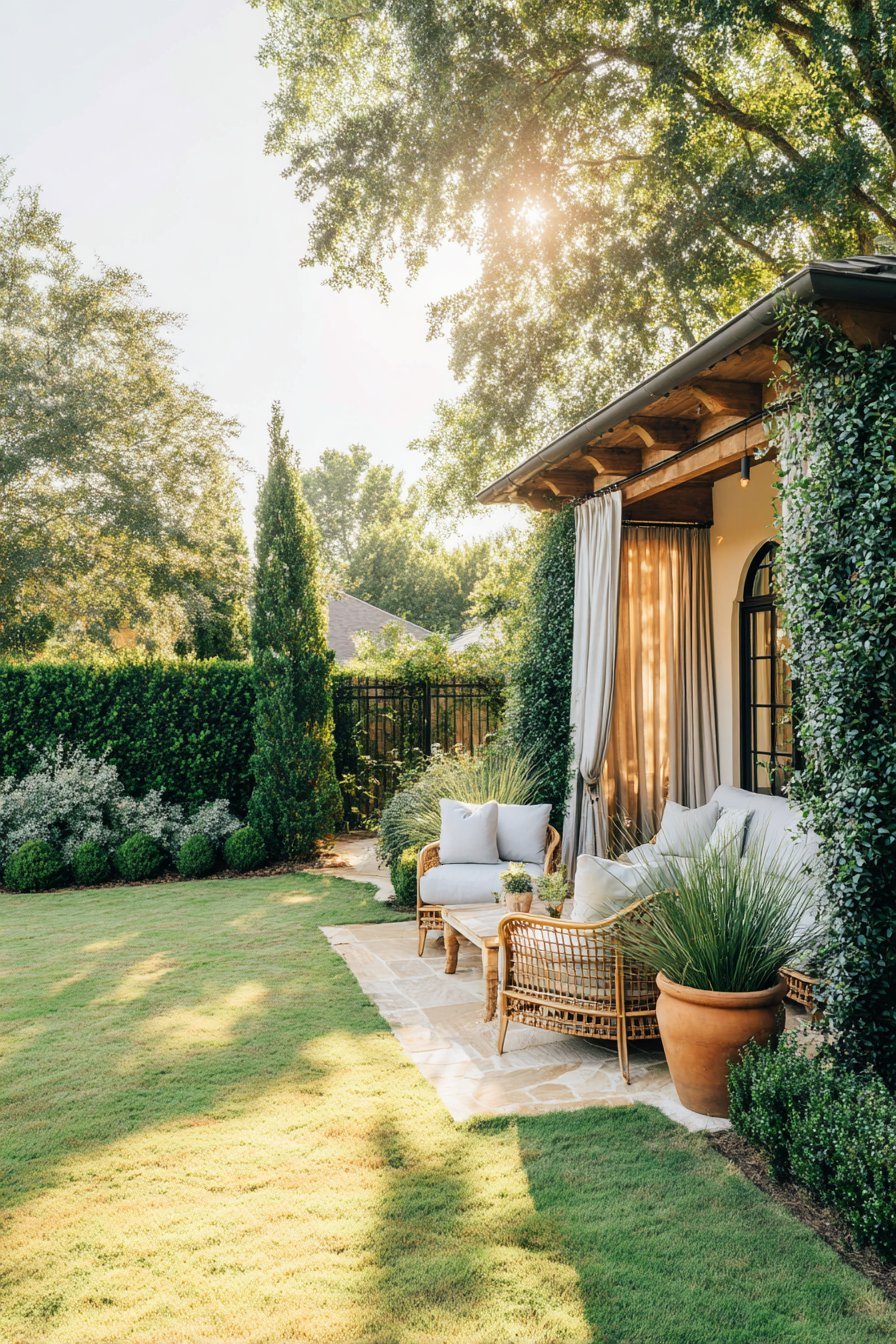
This article walks through eight of the most effective, design-forward tips for bringing genuine privacy to your outdoor space. Whether your yard is large or small, urban or suburban, these ideas will help you create an environment where you can relax, entertain, and live outdoors with complete comfort and confidence.
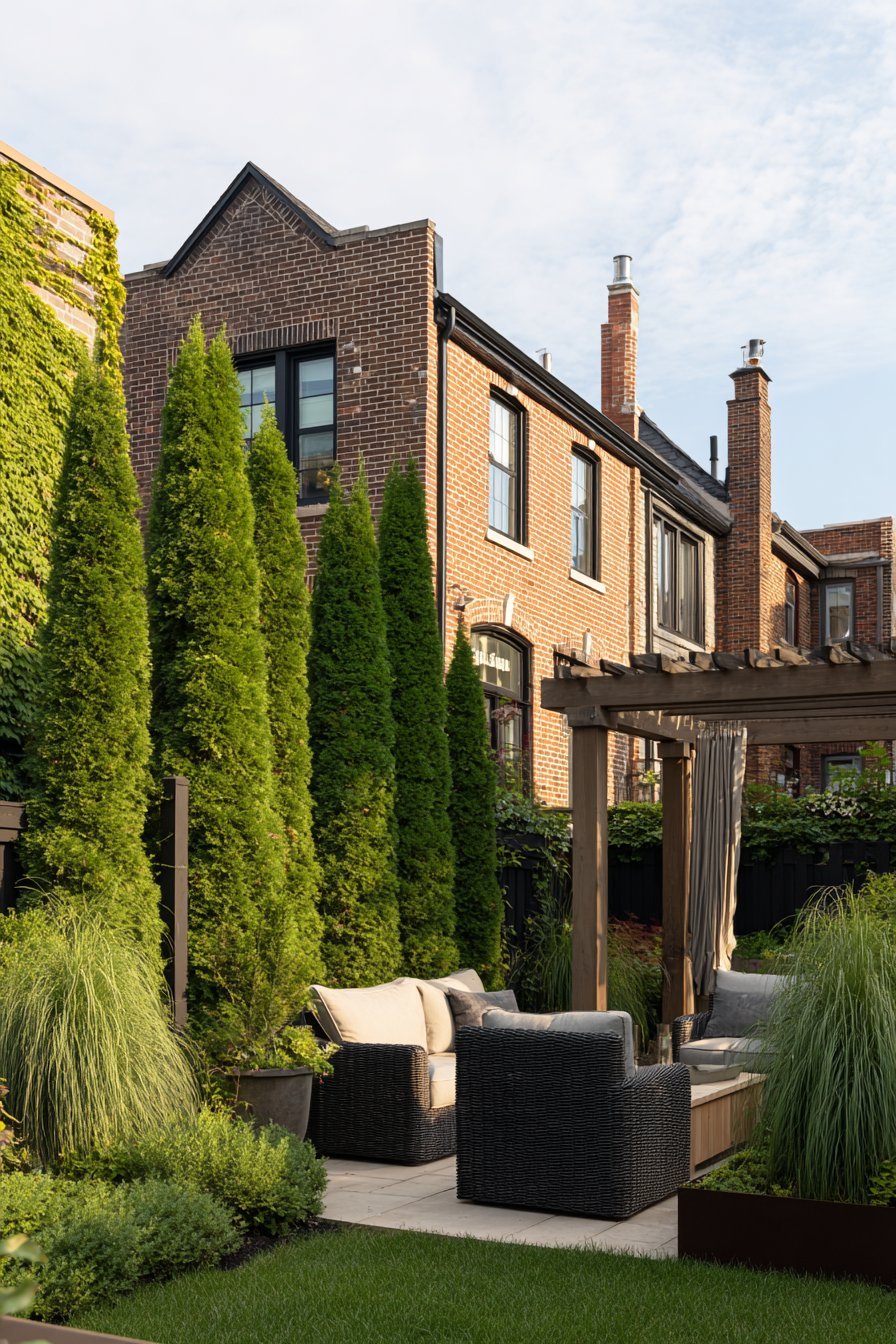
1. Plant a Living Privacy Screen
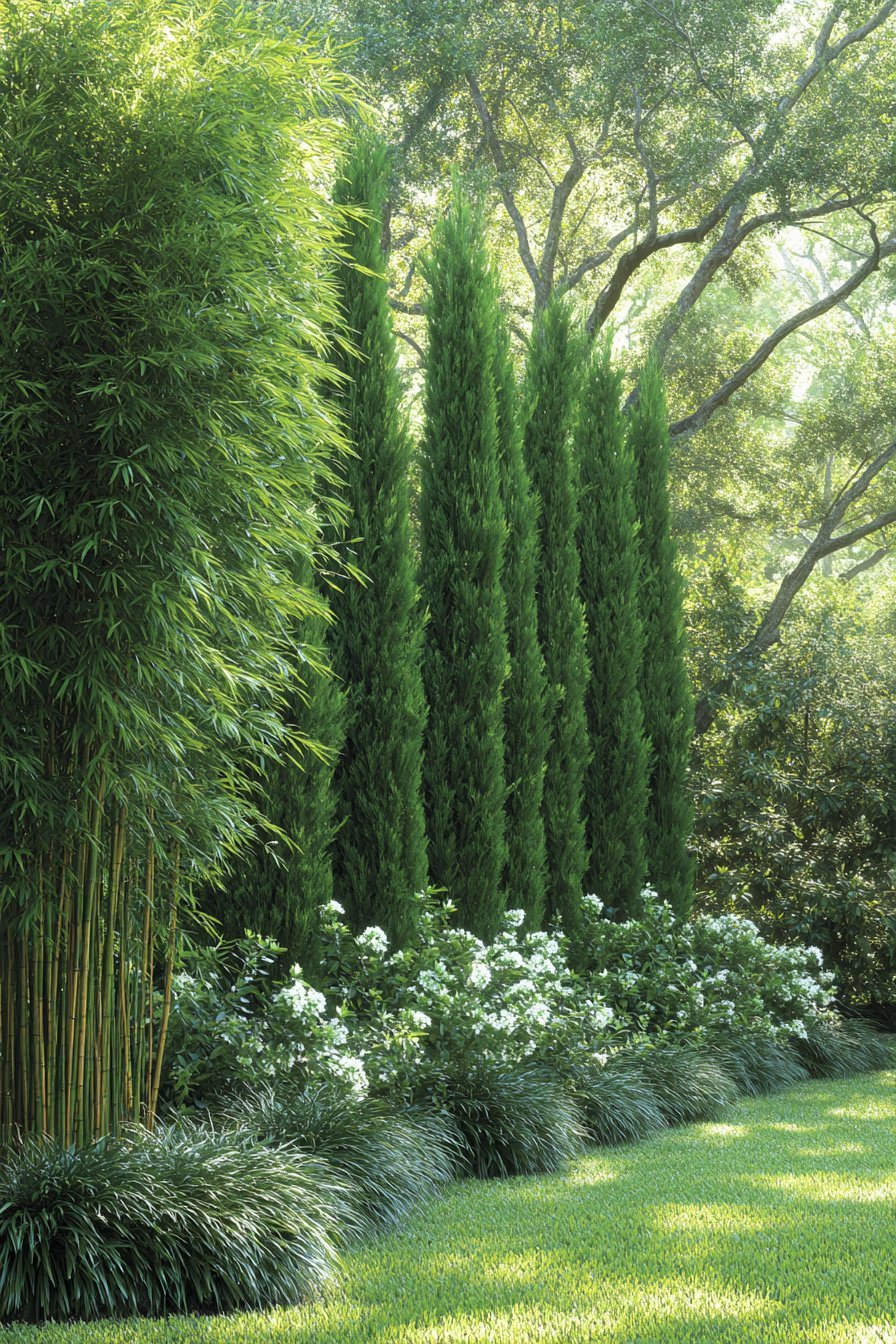
Living privacy screens are among the most beautiful and natural solutions available to homeowners. Unlike solid fences or walls, a well-planted screen of trees, shrubs, or ornamental grasses creates a soft, textured boundary that feels like part of the landscape rather than a barrier imposed upon it. Over time, these plantings mature into lush, sculptural features that add enormous value to the property.
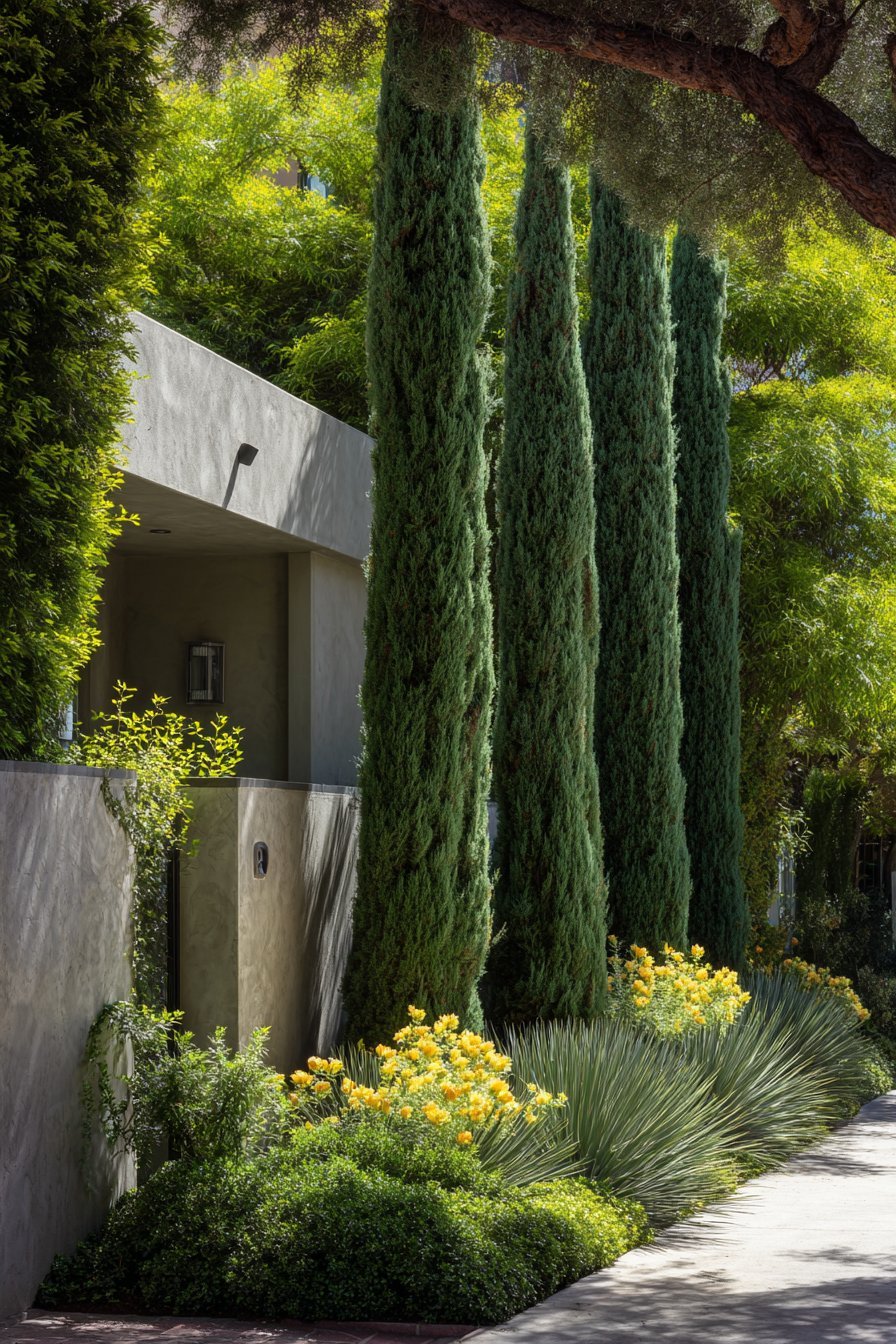
Tall, fast-growing species are the most practical choice for privacy planting. Arborvitae, Leyland cypress, bamboo, and privet are all popular options that establish quickly and create dense coverage within two to three growing seasons. For a more ornamental look, clumping bamboo varieties — which do not spread invasively — offer dramatic vertical height with a tropical, exotic character that suits both modern and Bohemian garden styles.
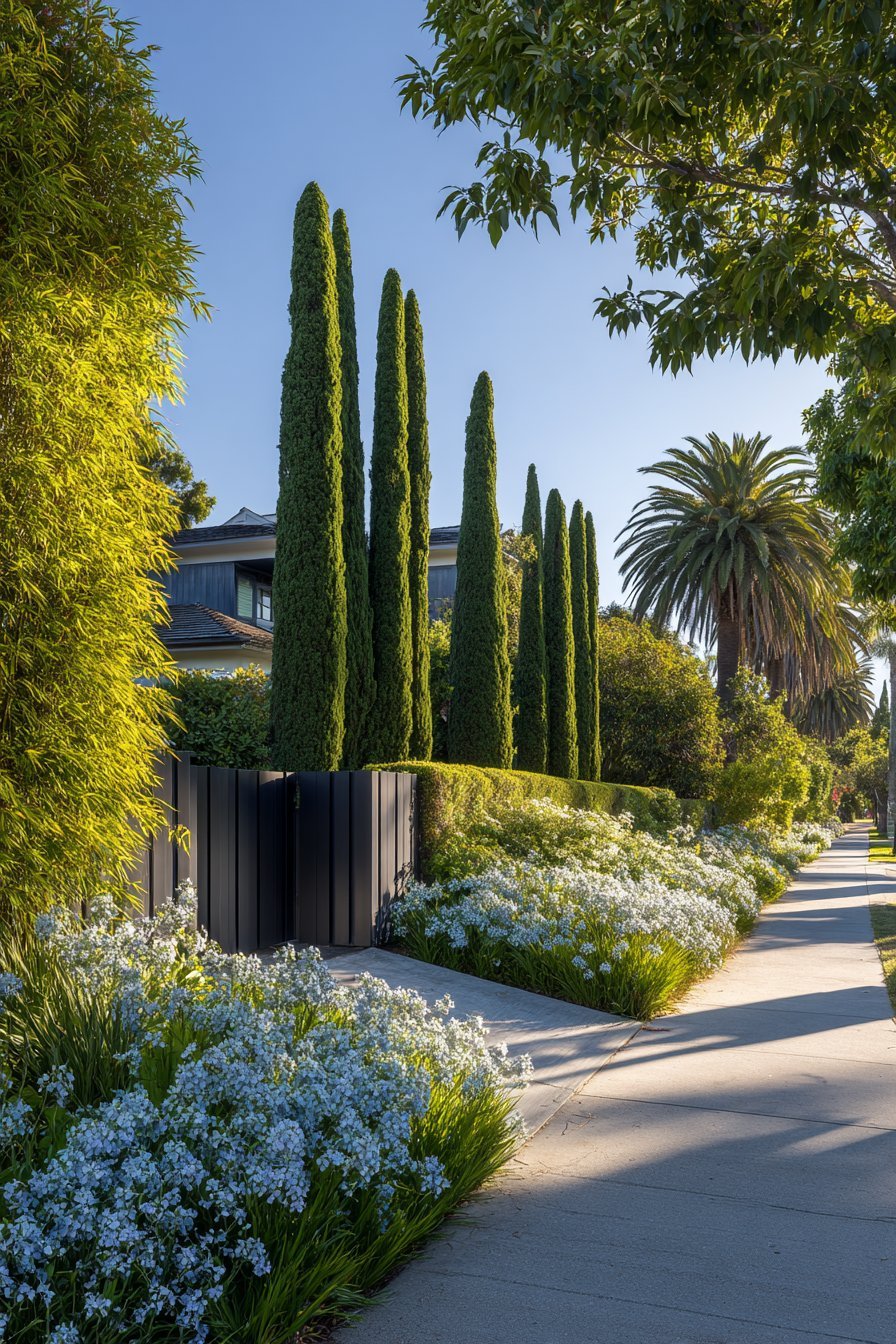
For smaller yards or tighter spaces, columnar trees such as Italian cypress, Sky Pencil Holly, or columnar oak take up minimal horizontal space while delivering impressive height. Planted in a row, these slender specimens create a striking, architectural privacy wall that works beautifully in contemporary landscape designs. Combine them with mid-level shrubs for a layered screen that blocks views at multiple heights.
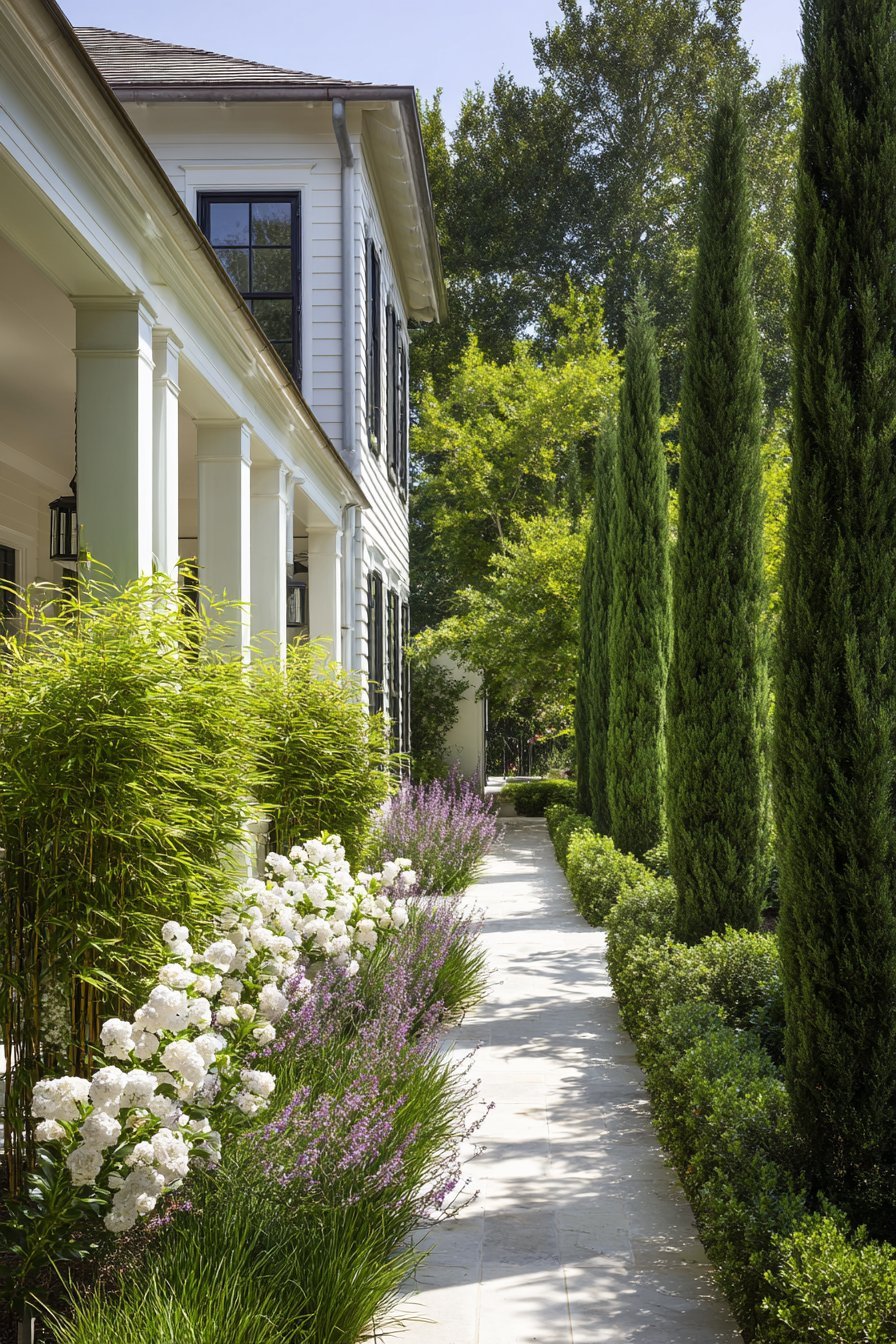
- Choose fast-growing evergreen species like arborvitae or Leyland cypress for year-round coverage
- Use clumping bamboo varieties for a dramatic, tropical privacy screen without invasive spreading
- Plant columnar tree varieties in rows for a sleek, architectural privacy solution
- Layer tall trees with mid-level shrubs and low ground covers for complete screening
- Space plants according to their mature spread to avoid overcrowding as they establish
2. Install a Stylish Privacy Fence
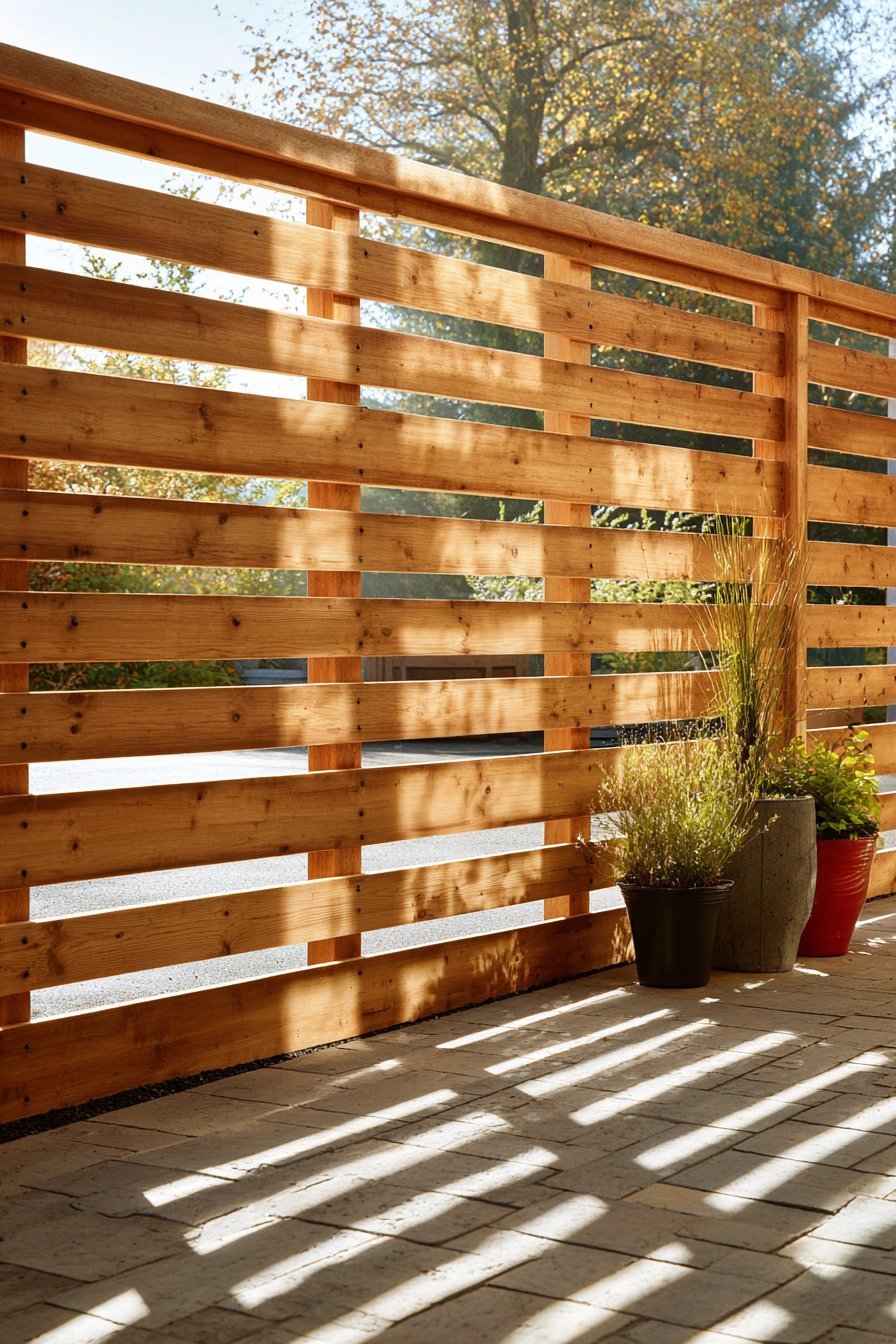
A well-chosen fence is the most immediate and reliable privacy solution for any backyard. Where planting requires seasons to establish, a fence delivers full privacy from the day it is installed. The key is selecting materials and styles that enhance the aesthetic of your outdoor space rather than simply enclosing it.
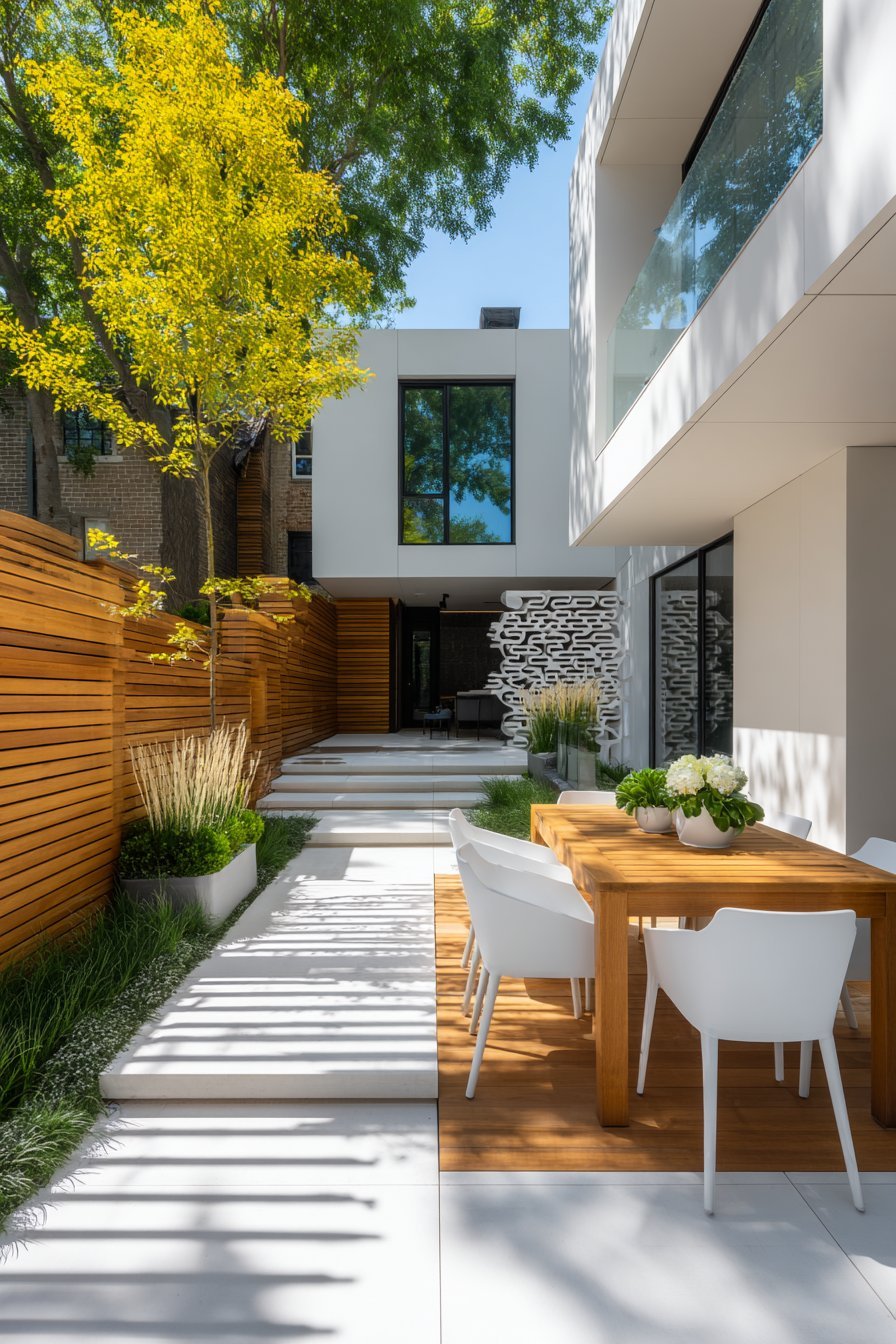
Horizontal slat fencing has become one of the most sought-after styles in contemporary landscape design. The clean, linear lines of horizontal boards create a sleek, modern look that complements minimalist and Scandinavian-inspired outdoor spaces beautifully. Cedar and redwood are the most popular choices for their natural beauty, resistance to rot, and warm tonal range that weathers gracefully over time.
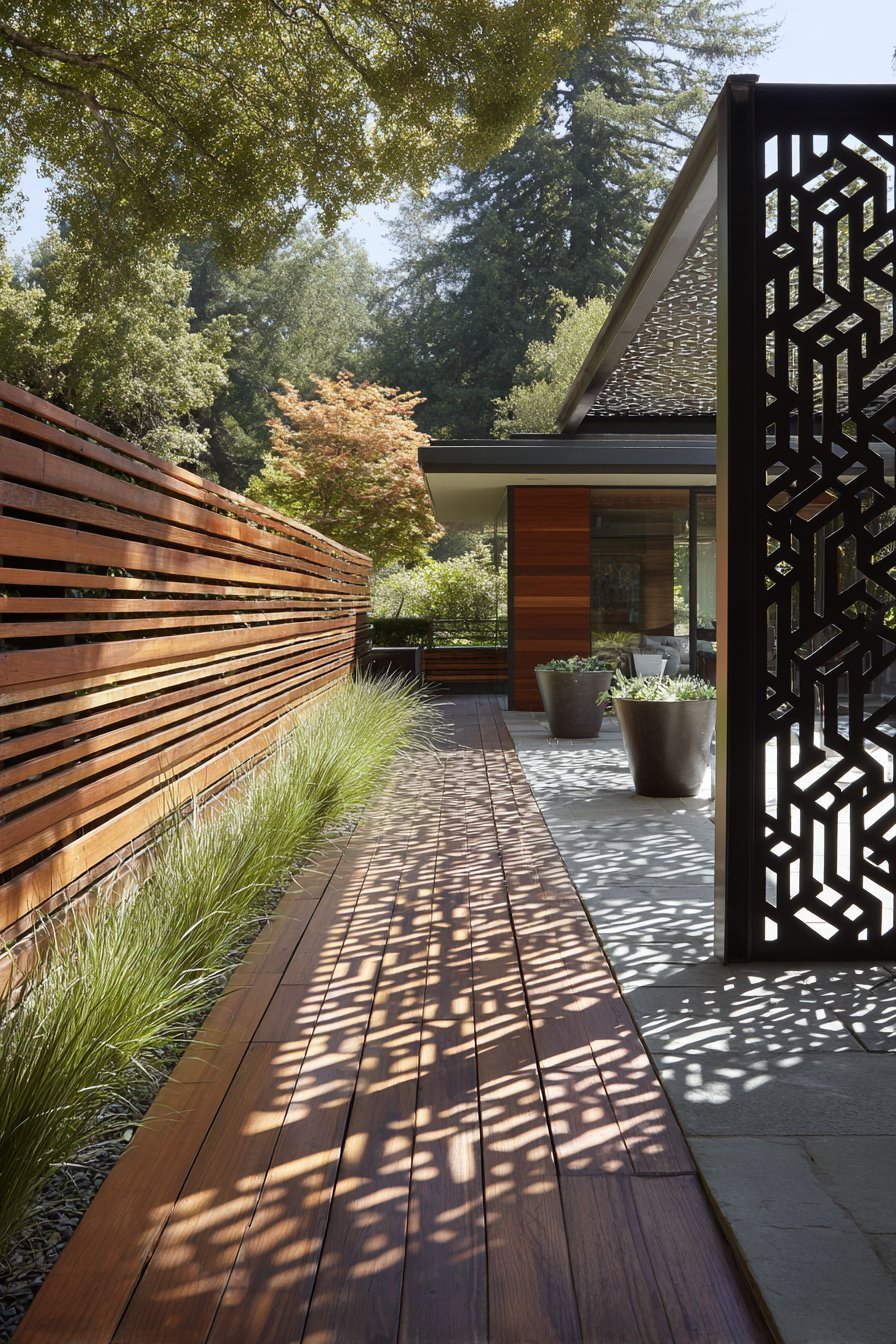
For a more decorative approach, laser-cut metal privacy panels offer stunning visual interest alongside complete screening. These panels — available in geometric, botanical, or abstract patterns — cast beautiful shadows across patios and decking throughout the day, transforming a functional privacy element into a genuine piece of garden art. Powder-coated steel or aluminum panels are highly durable and require virtually no maintenance.
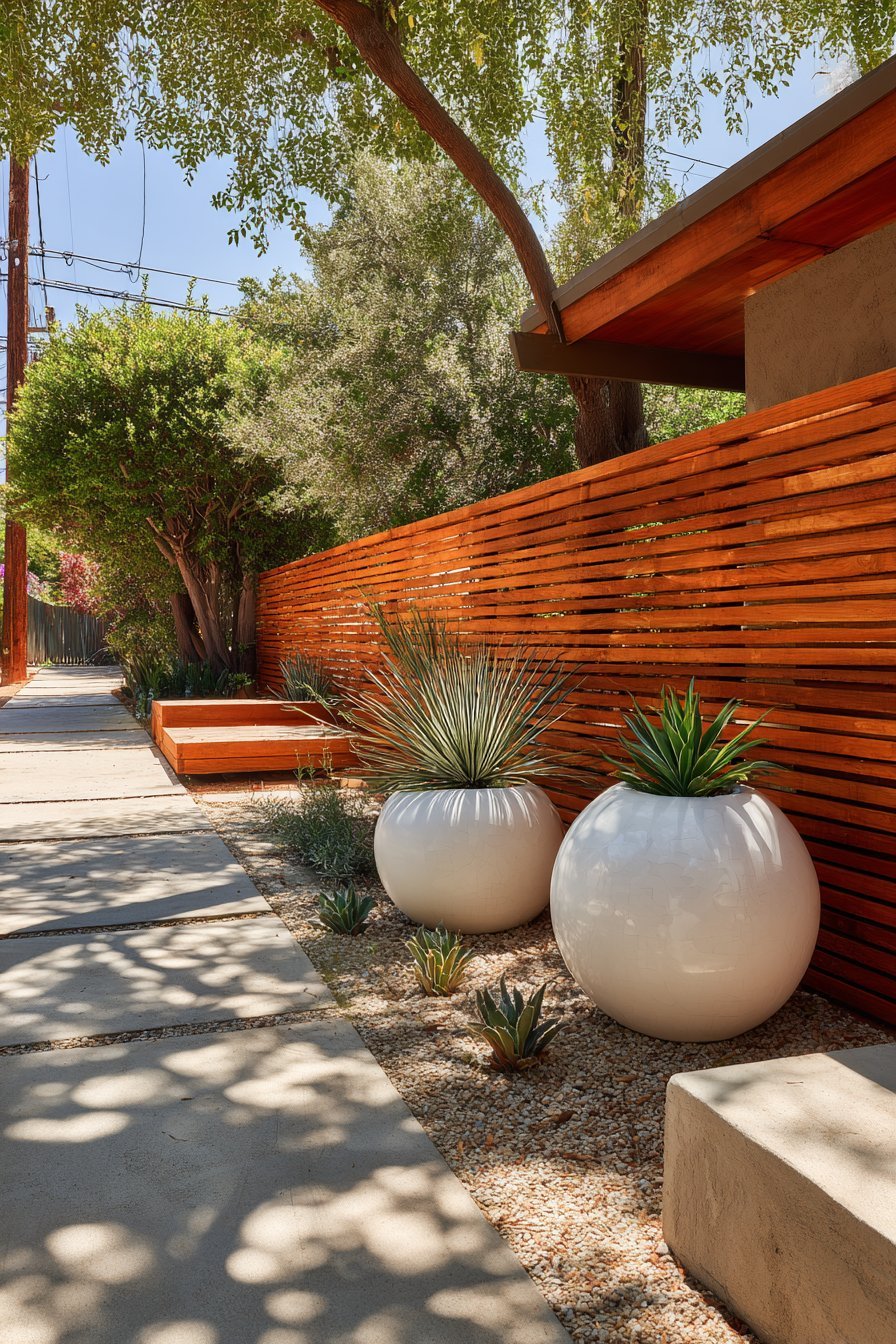
- Choose horizontal slat fencing in cedar or redwood for a modern, elegant look
- Use laser-cut metal panels for a decorative privacy screen that doubles as garden art
- Paint or stain timber fencing in a color that complements your home’s exterior palette
- Consider composite fencing materials for a low-maintenance alternative to natural timber
- Ensure fence height meets local regulations — typically 6 feet maximum for residential properties
3. Build a Pergola or Overhead Structure
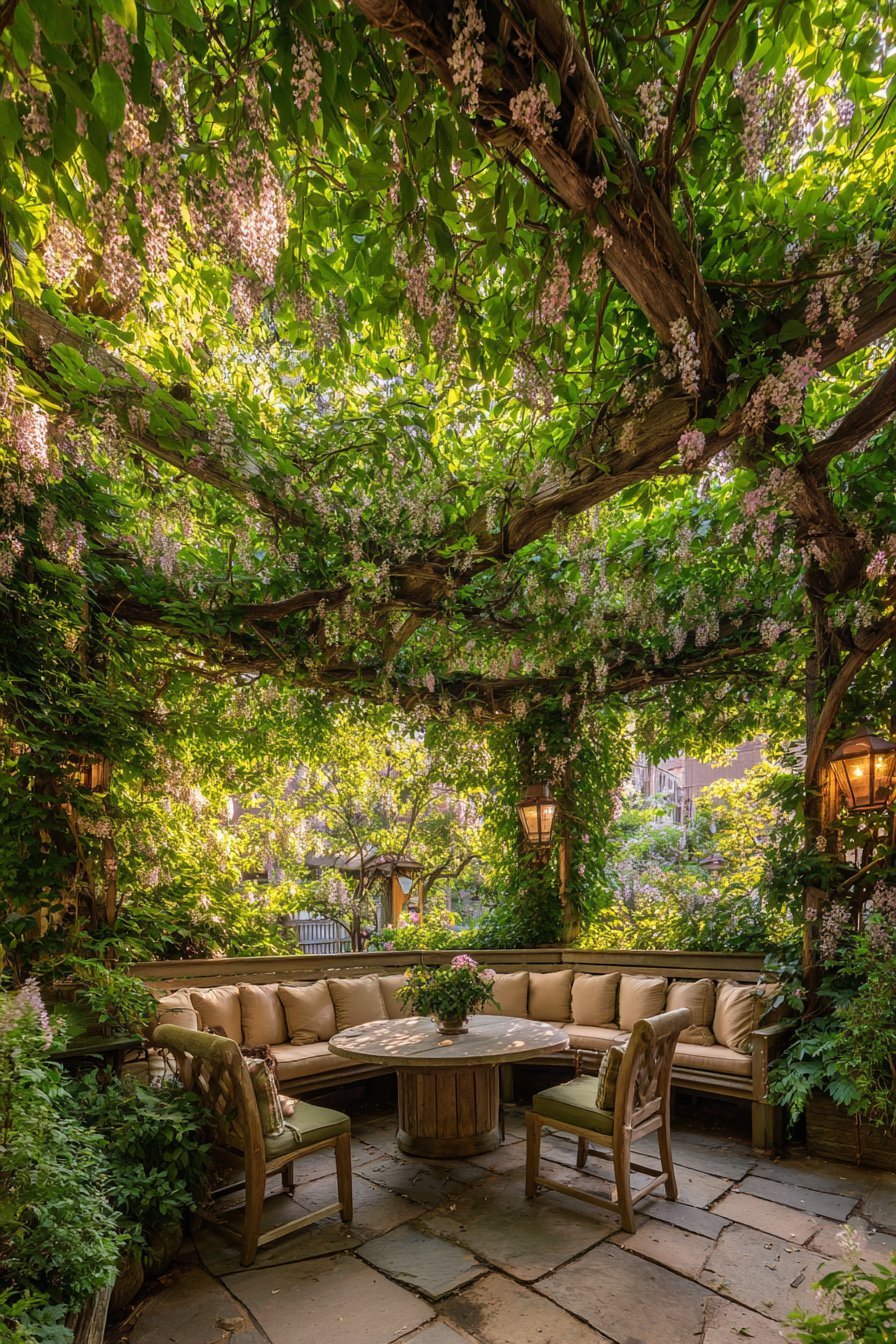
Overhead privacy is just as important as lateral screening — especially in urban areas where neighboring properties have upper-story windows or balconies that overlook your yard. A pergola, shade sail, or covered patio structure addresses this vertical dimension of privacy while simultaneously creating a defined outdoor living room beneath it.
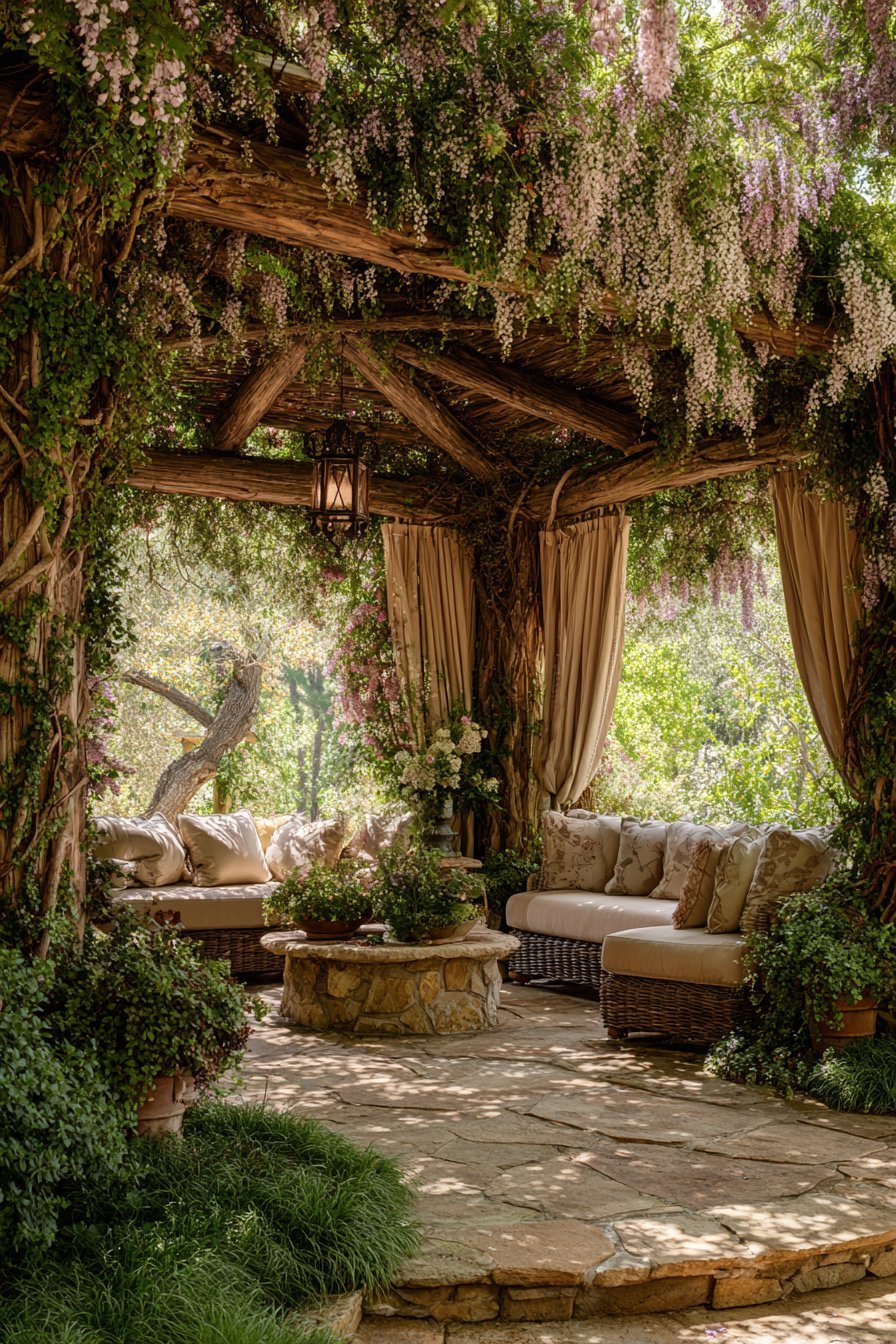
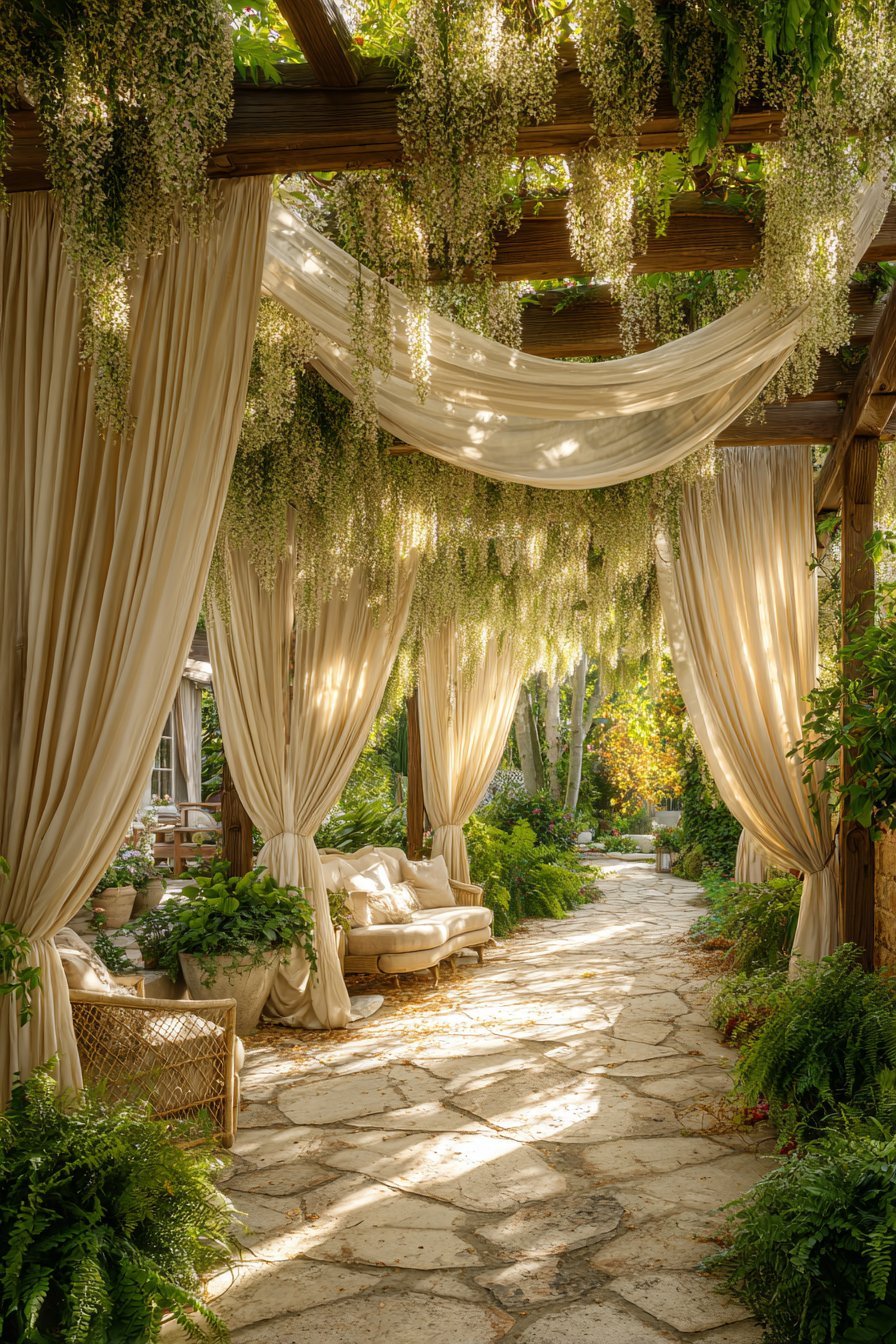
A timber or steel pergola draped with climbing plants is one of the most romantic and effective privacy solutions in garden design. As climbers like wisteria, jasmine, grapevine, or star jasmine establish across the overhead beams, they create a living canopy that filters light beautifully and provides dense screening from above. The result feels like a secret garden room — enclosed, intimate, and utterly serene.
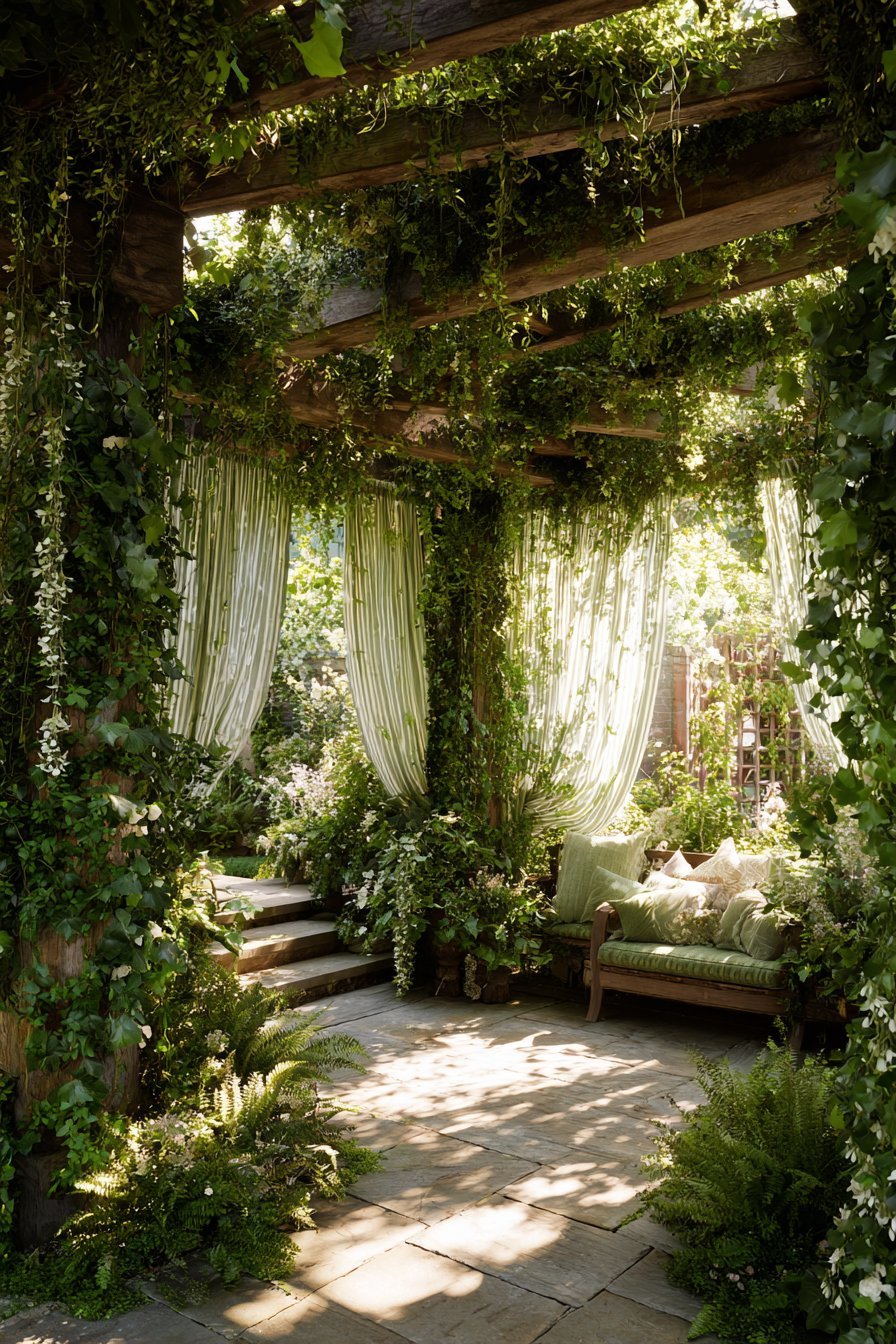
Shade sails and retractable awnings offer a more flexible approach to overhead privacy. These fabric structures can be adjusted seasonally, angled to block specific sight lines, and retracted when not needed. In a range of materials from UV-resistant canvas to breathable HDPE mesh, shade sails add a contemporary, architectural quality to outdoor spaces while solving the overhead exposure problem quickly and affordably.
- Install a timber or steel pergola as a permanent overhead structure for your entertaining zone
- Train climbing plants — wisteria, jasmine, or grapevine — across pergola beams for living coverage
- Use shade sails angled strategically to block specific overlooking windows or sight lines
- Add a retractable awning to an existing covered area for flexible, adjustable overhead privacy
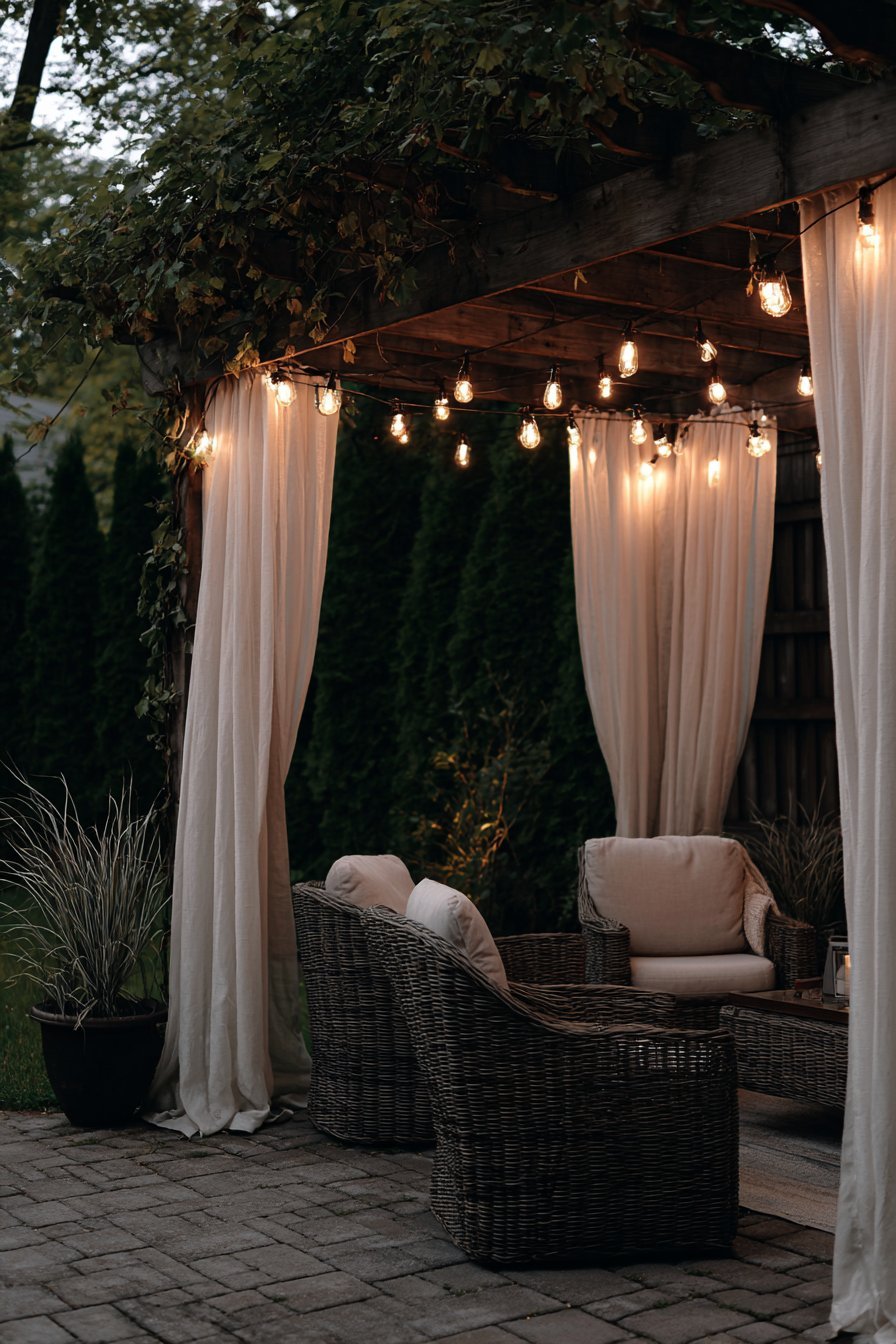
- Hang outdoor curtains from pergola beams for a soft, adjustable privacy screen at eye level
4. Use Tall Ornamental Grasses and Hedges
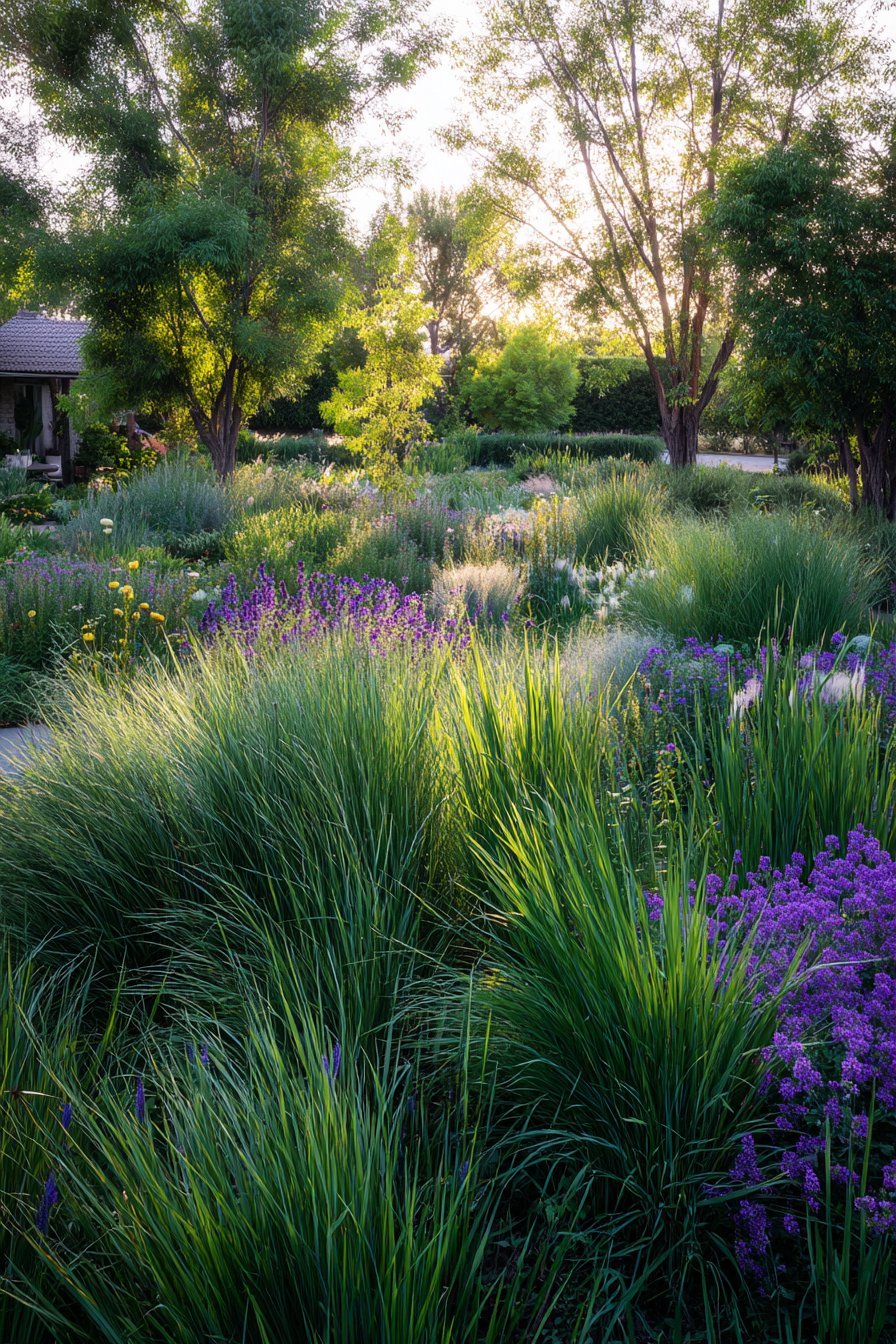
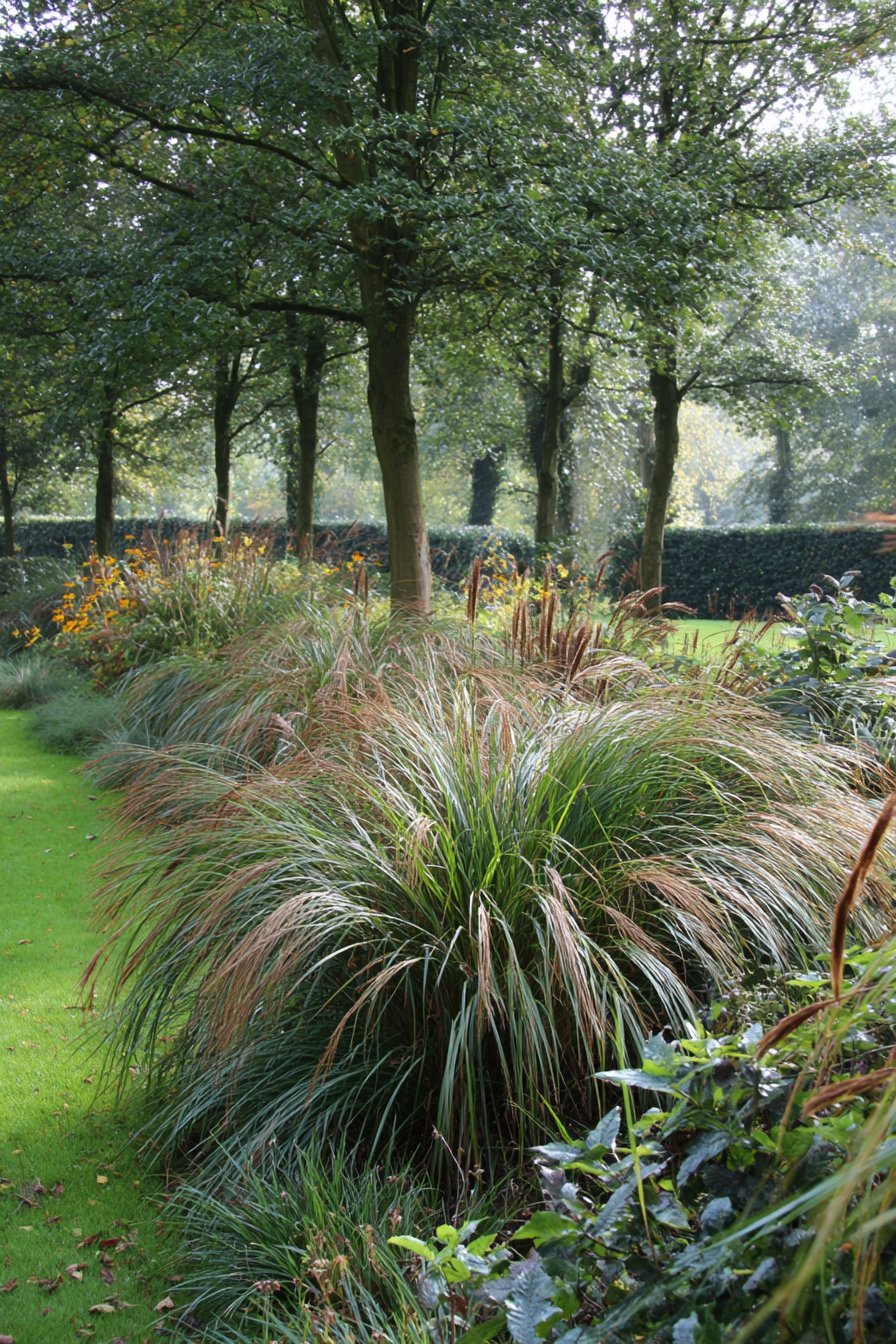
Ornamental grasses are one of the most underutilized tools in the privacy garden toolkit. Species like Miscanthus, Karl Foerster feather reed grass, and giant Miscanthus sinensis can reach heights of 5 to 8 feet within a single growing season, creating dramatic, flowing screens of texture and movement. They require minimal maintenance, return reliably each year, and look extraordinary in both naturalistic and contemporary garden settings.
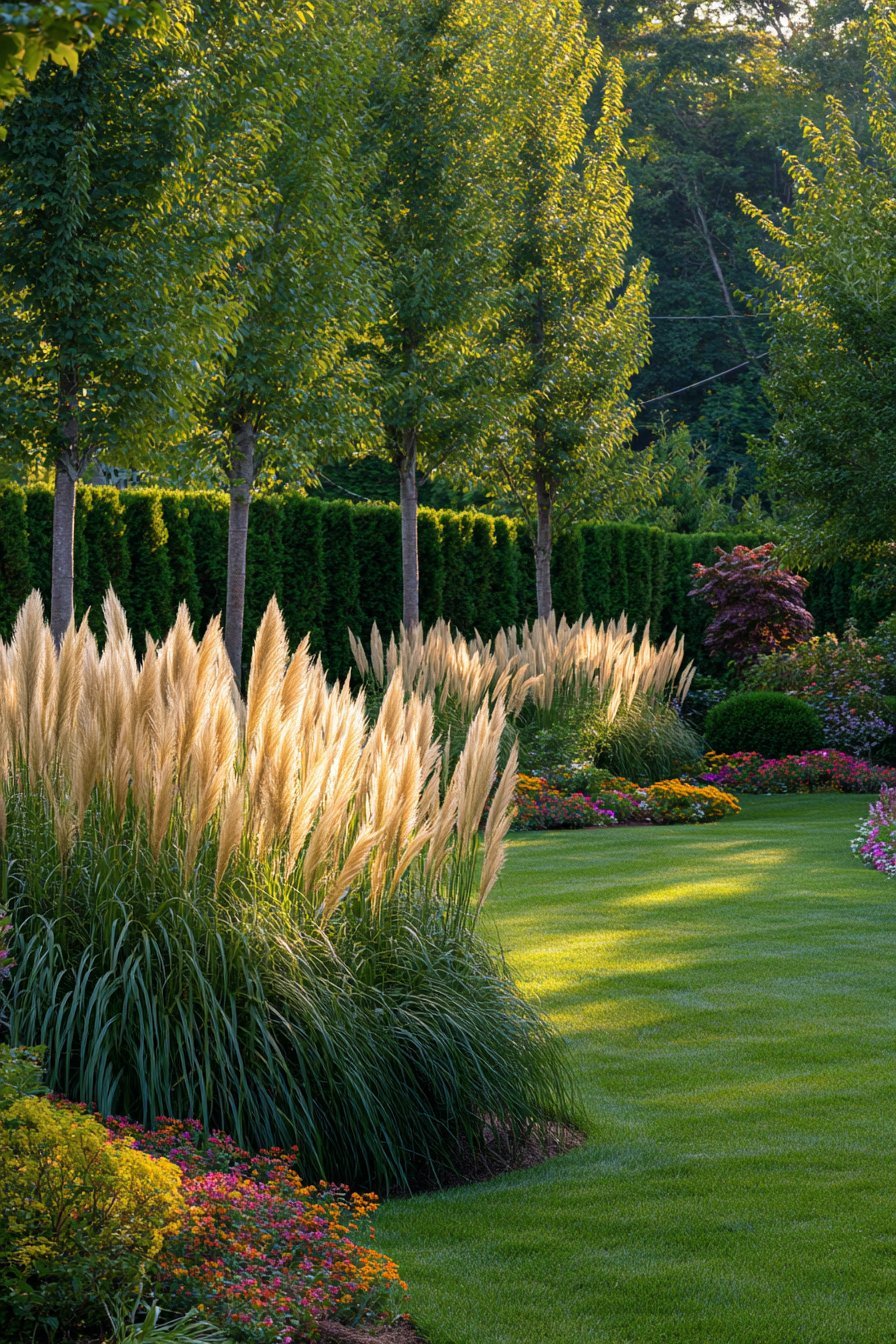
Unlike rigid fences or walls, ornamental grasses move with the breeze — a quality that makes them feel alive, dynamic, and deeply relaxing to watch. This gentle movement also creates a soft, rustling sound that adds to the sensory richness of the outdoor space. Planted in bold sweeps or clustered groupings, tall grasses can screen entire sections of a boundary without ever looking like a barrier.
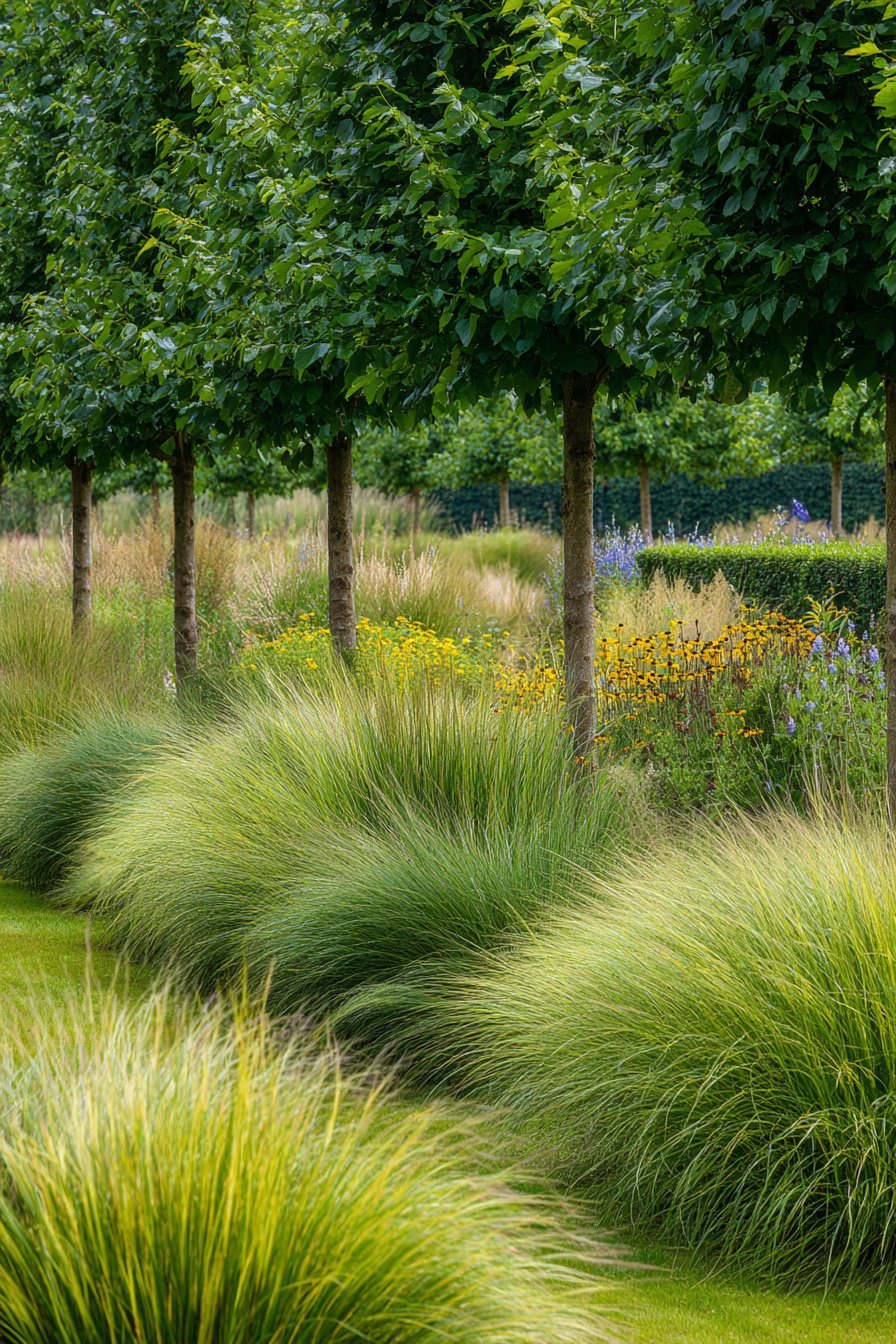
Formal hedges offer a more structured alternative to ornamental grasses. Boxwood, hornbeam, yew, and Portuguese laurel all clip into dense, clean walls of green that create superb privacy while lending a timeless, European garden quality to the landscape. For faster results, pleached trees — where trunks are trained into clear stems with flat, horizontal canopies — create elegant, architectural privacy screens at fence-top height.
- Plant Miscanthus or Karl Foerster grass in bold groupings for fast-growing seasonal screens
- Use formal clipped hedges in hornbeam or yew for a structured, year-round privacy wall
- Consider pleached trees — hornbeam or lime — for an elegant, elevated screening solution
- Combine ornamental grasses with flowering perennials for a privacy planting that also blooms
- Cut ornamental grasses back in late winter to allow fresh new growth each spring
5. Create Privacy with Outdoor Curtains and Screens
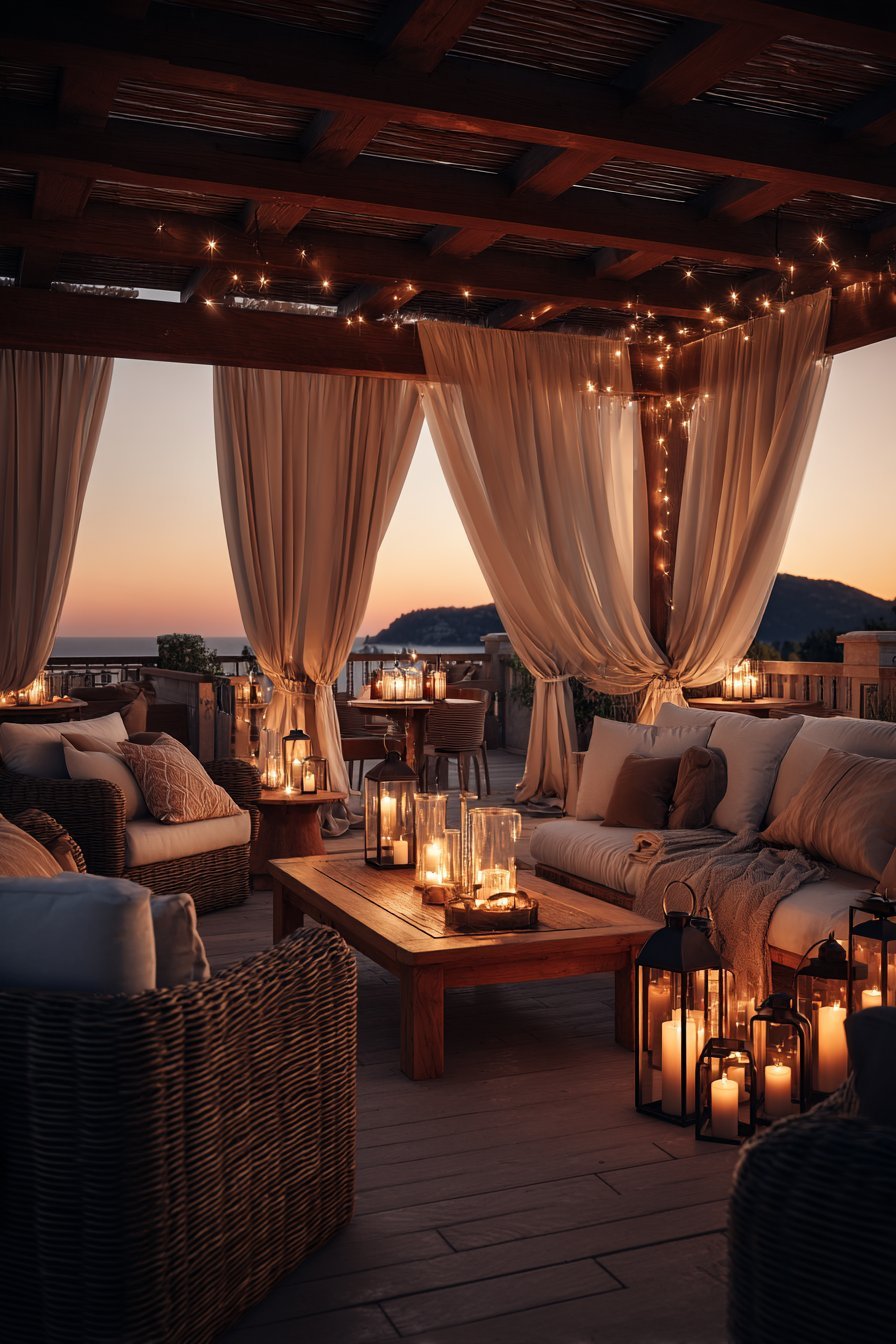
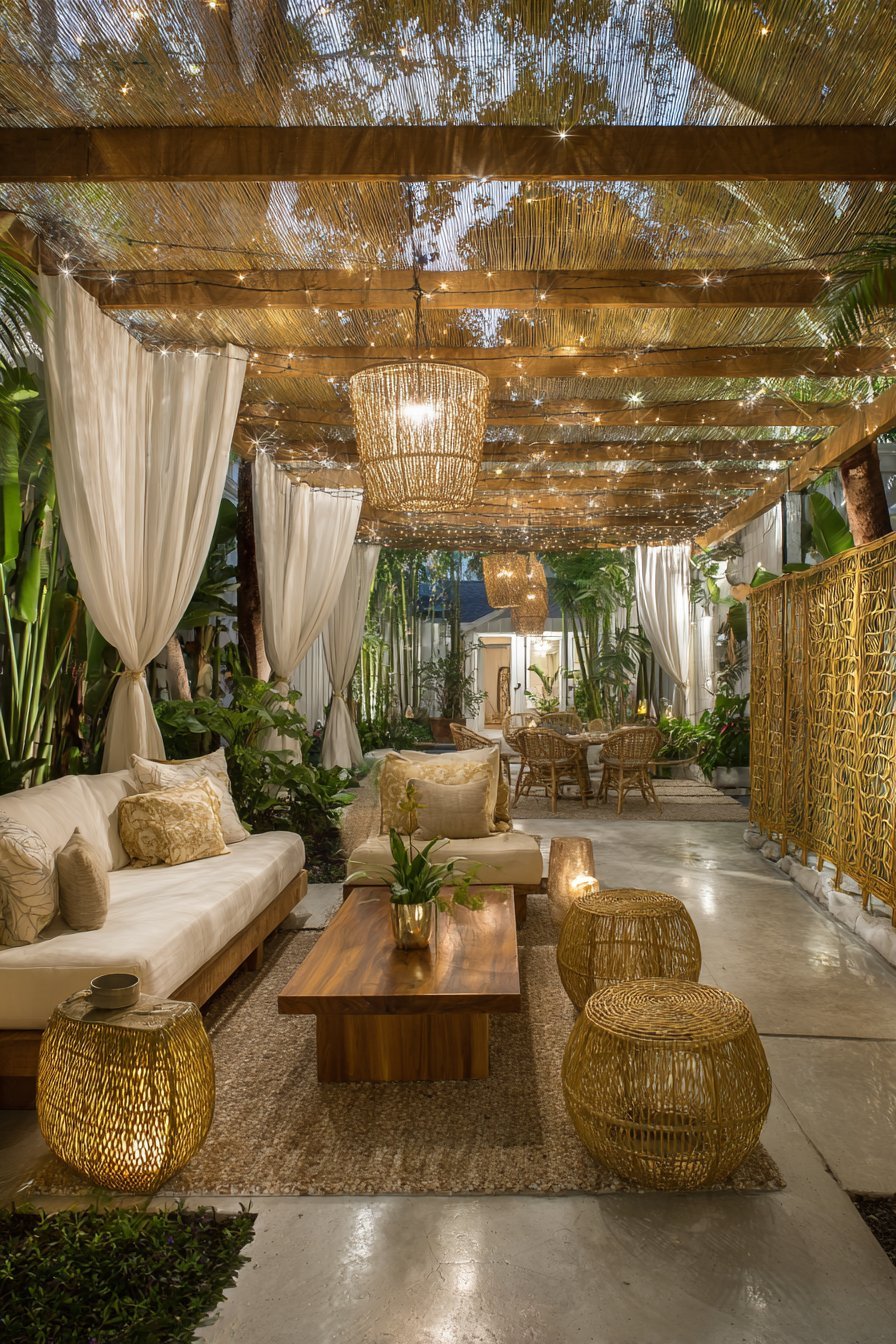
Outdoor curtains are one of the fastest, most affordable, and most visually dramatic ways to add instant privacy to any backyard space. Hung from pergola beams, tension wires, or freestanding curtain poles, these fabric panels transform an open patio into an intimate, enclosed room with a simple draw of fabric. The effect is equal parts practical and theatrical.
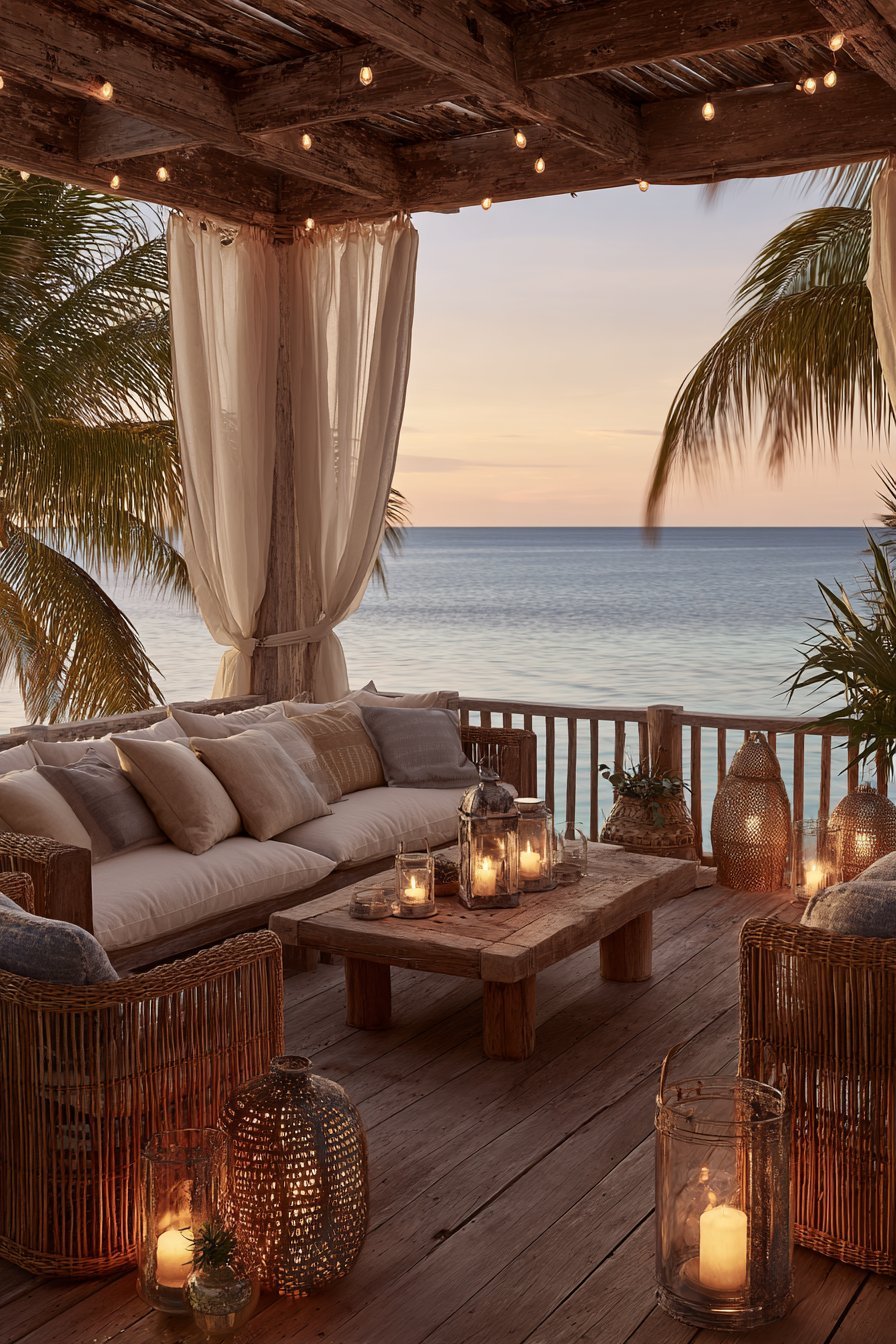
Choose fabrics rated for UV and weather resistance — solution-dyed acrylic or outdoor polyester are the best performers for longevity and color retention. Natural-looking linens in neutral tones create a relaxed, Bohemian atmosphere, while crisp white canvas panels bring a fresh, coastal quality to the space. For evening entertaining, sheer outdoor curtains filter light beautifully from string lights and candles behind them, creating a luminous, romantic ambiance.
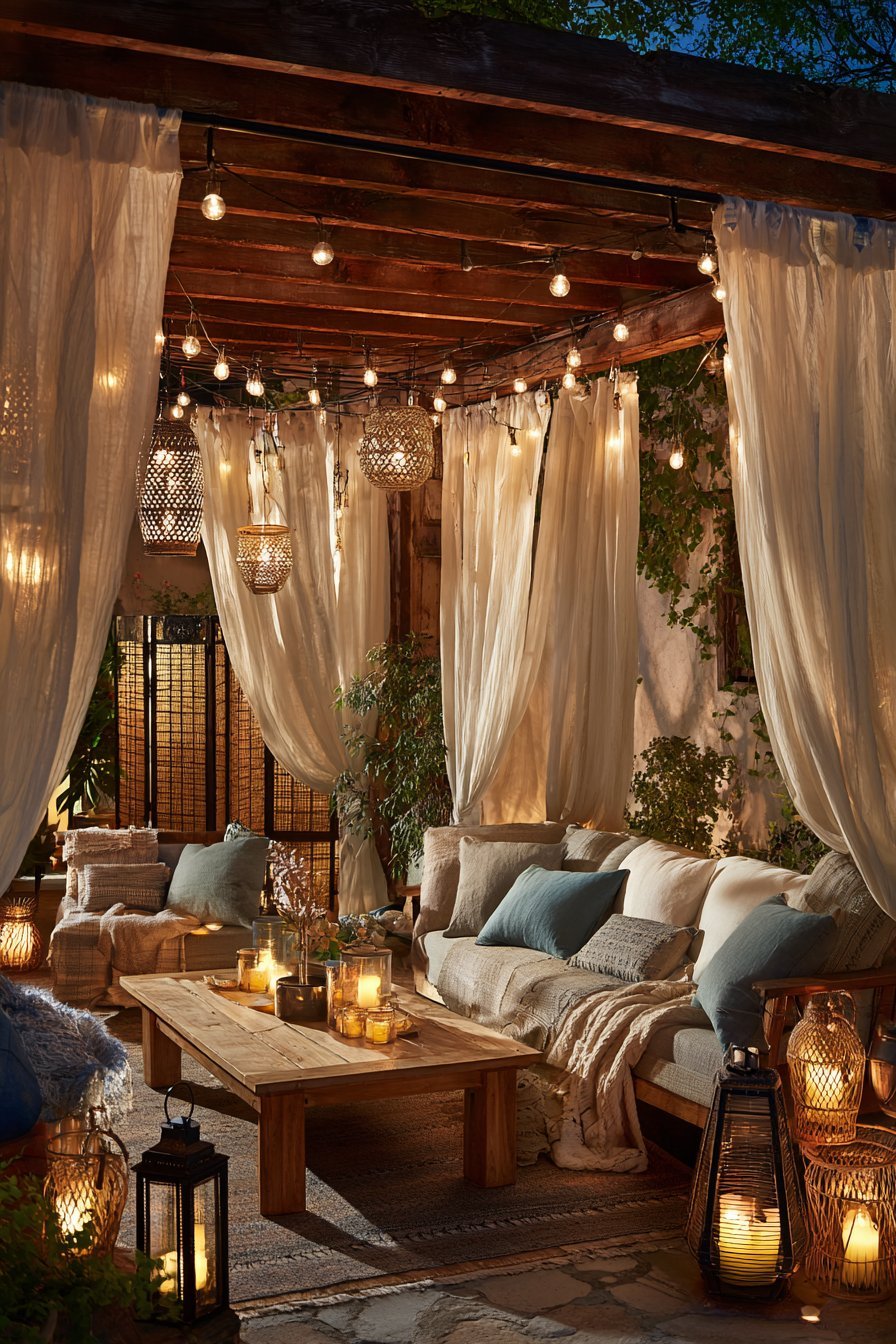
Decorative screen panels — in materials ranging from woven rattan and natural bamboo to powder-coated steel and polished timber — offer a more permanent, sculptural approach to instant privacy. These freestanding or wall-mounted panels can be repositioned seasonally, used to define zones within the yard, and selected in designs that contribute significant aesthetic value to the overall space. A beautifully patterned screen is as much art as it is architecture.
- Hang weather-resistant curtains from pergola beams or tension wires for instant enclosure
- Choose solution-dyed acrylic fabric for the best UV and fade resistance outdoors
- Use sheer curtain panels for evening privacy that still allows ambient light to filter through
- Install freestanding bamboo or rattan screen panels to create flexible, moveable privacy zones
- Layer curtains with climbing plants for a combined soft and structural privacy solution
6. Elevate Your Garden with Raised Planters and Planter Walls
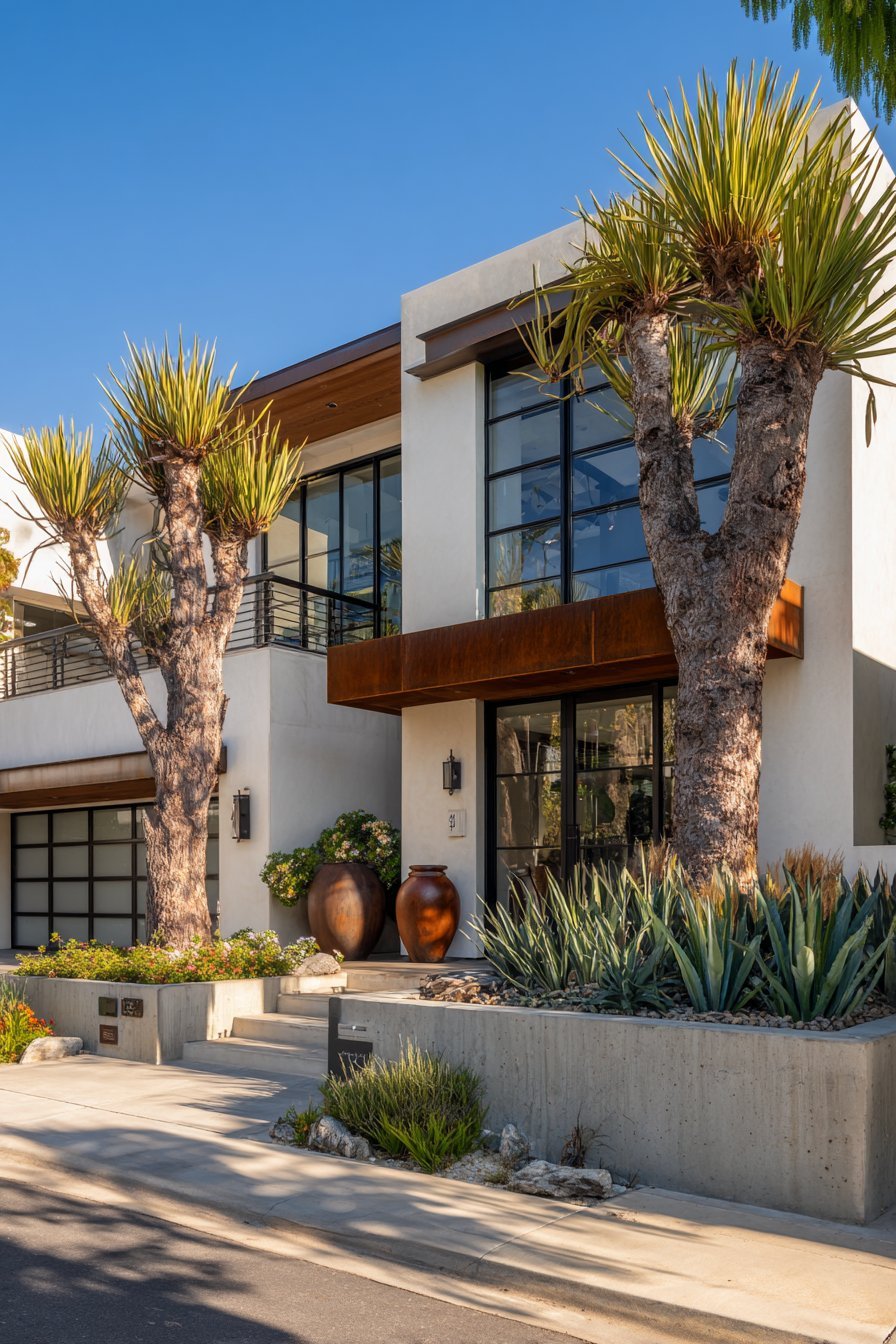
Raised planters serve double duty in the privacy backyard — they elevate plants to a height where they can screen sight lines more immediately, and they add beautiful architectural structure to the landscape. A planter wall along a fence line or patio edge, filled with tall grasses, phormiums, or trained climbers, creates an instant living screen at exactly the right height.
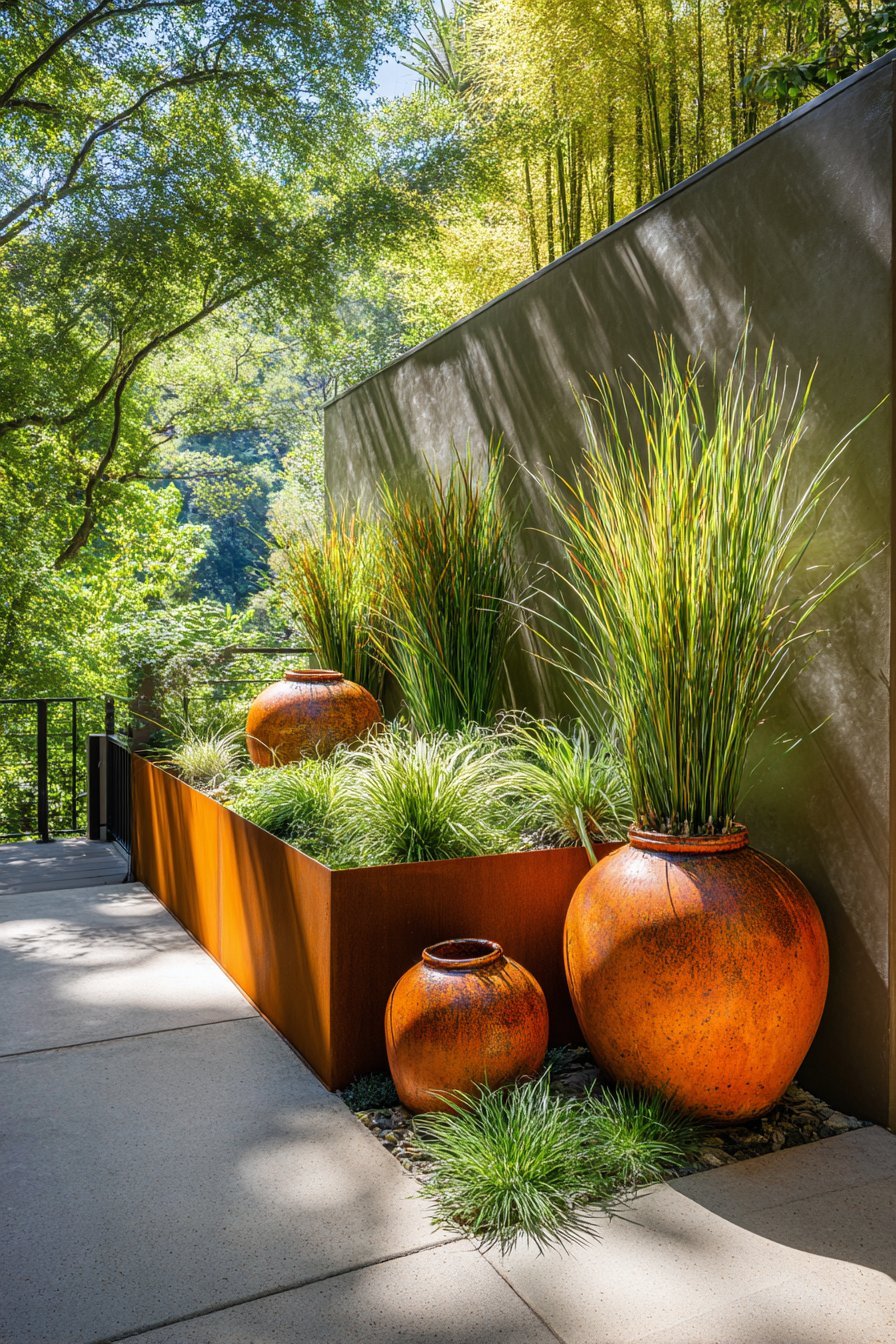
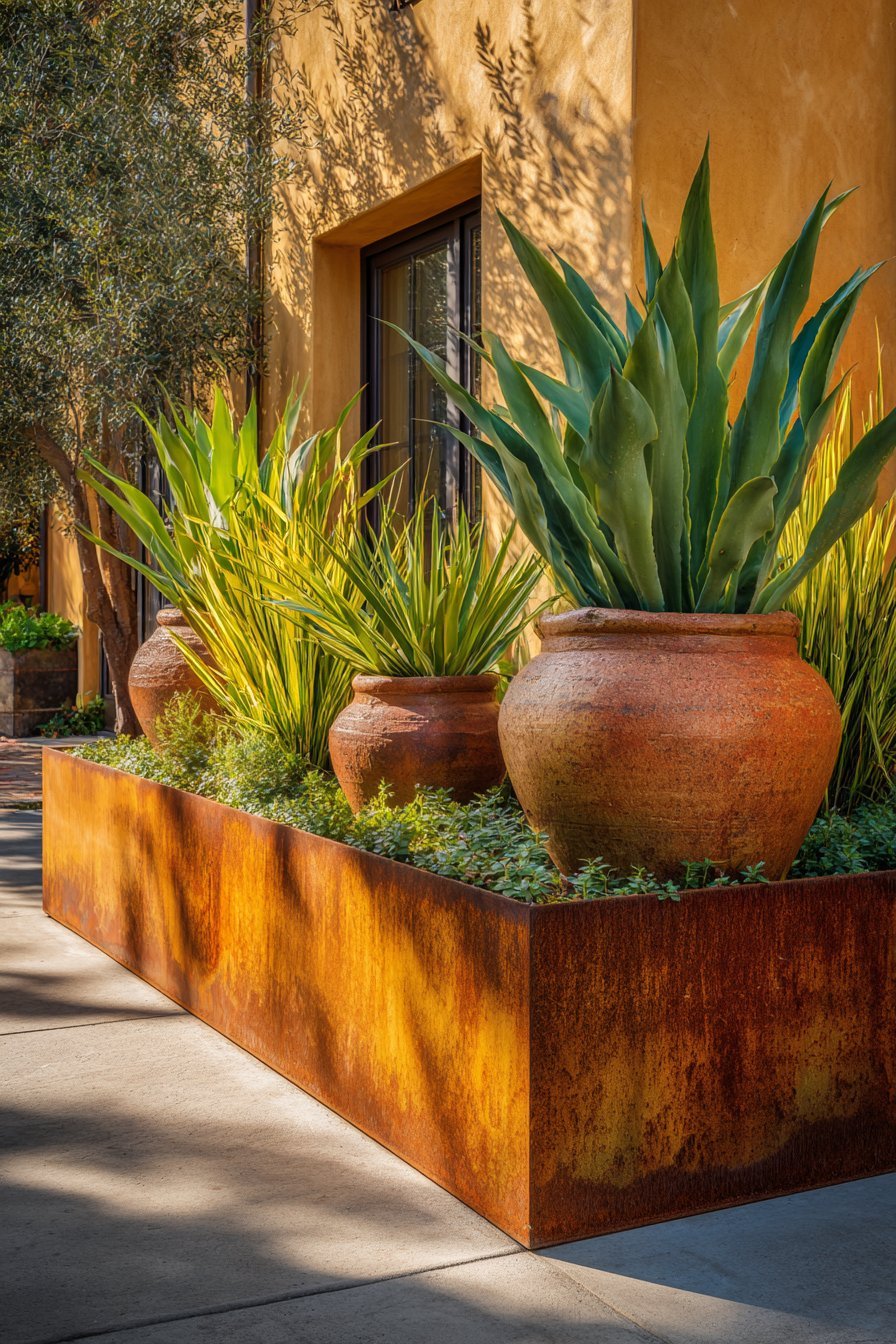
Planter walls built from Corten steel, concrete, or treated timber are among the most design-forward elements you can introduce to a contemporary outdoor space. These structural planters act as low walls in their own right, raising the height of your boundary by 18 to 24 inches before the plants even begin to grow. Filled with bold architectural plants — agave, phormium, cordyline, or tall ornamental grasses — they create a striking, gallery-quality privacy feature.
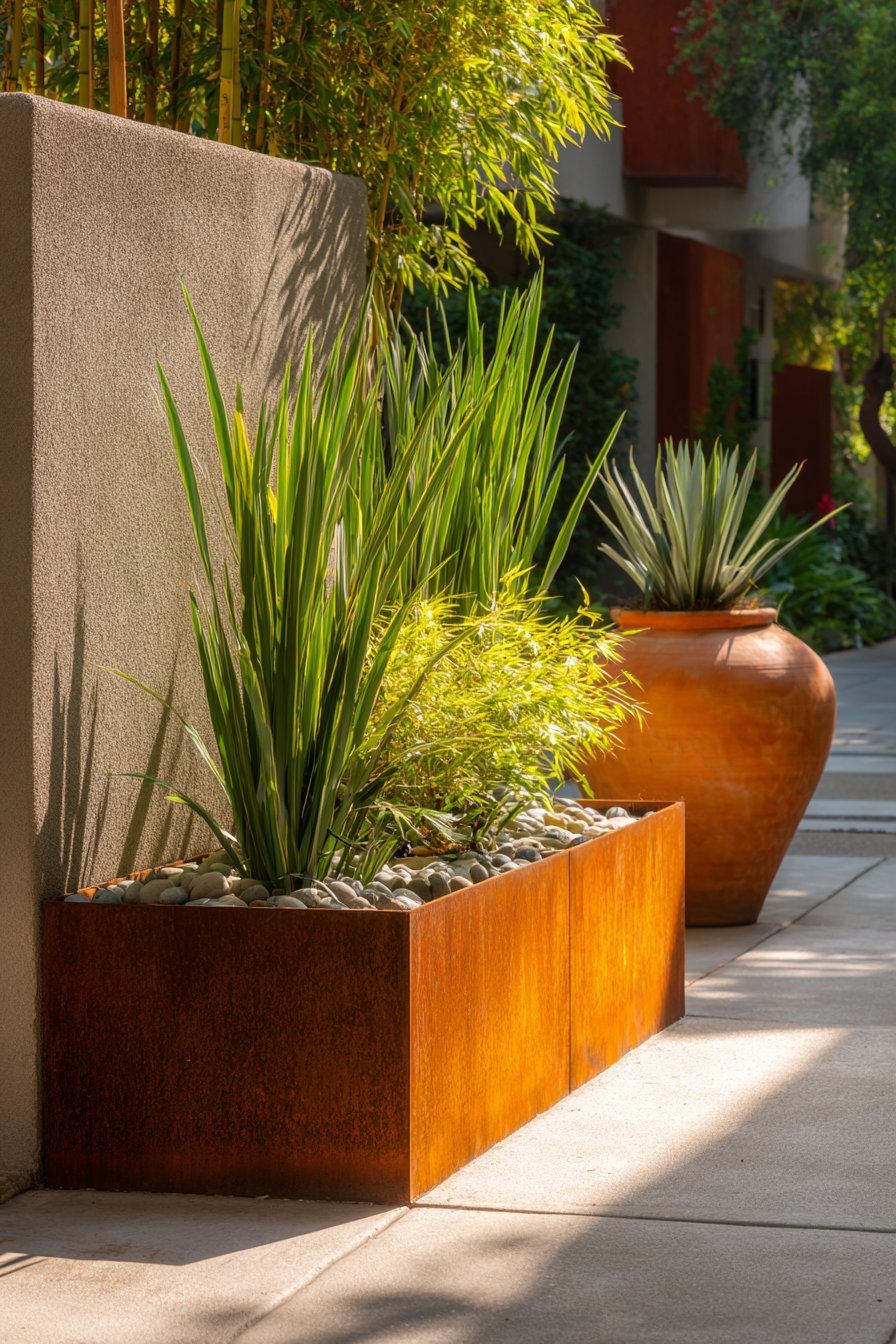
For smaller patios and balconies, large ceramic or terracotta planters positioned strategically can screen specific sight lines without requiring permanent construction. A cluster of three to five oversized planters filled with bamboo, phormium, or tall shrubs creates a flexible, moveable privacy screen that can be reconfigured as your needs change. This approach is particularly valuable for renters who cannot make permanent changes to the property.
- Build raised planter walls in Corten steel or timber along fence lines to boost boundary height
- Fill raised planters with tall architectural plants — phormium, cordyline, or agave
- Use large ceramic or terracotta pots as flexible, moveable privacy screens for smaller spaces
- Train climbing plants up trellises attached to the backs of raised planters for vertical screening
- Group planters in odd numbers for a more natural, visually balanced arrangement
7. Add Trellises and Climbing Plant Structures
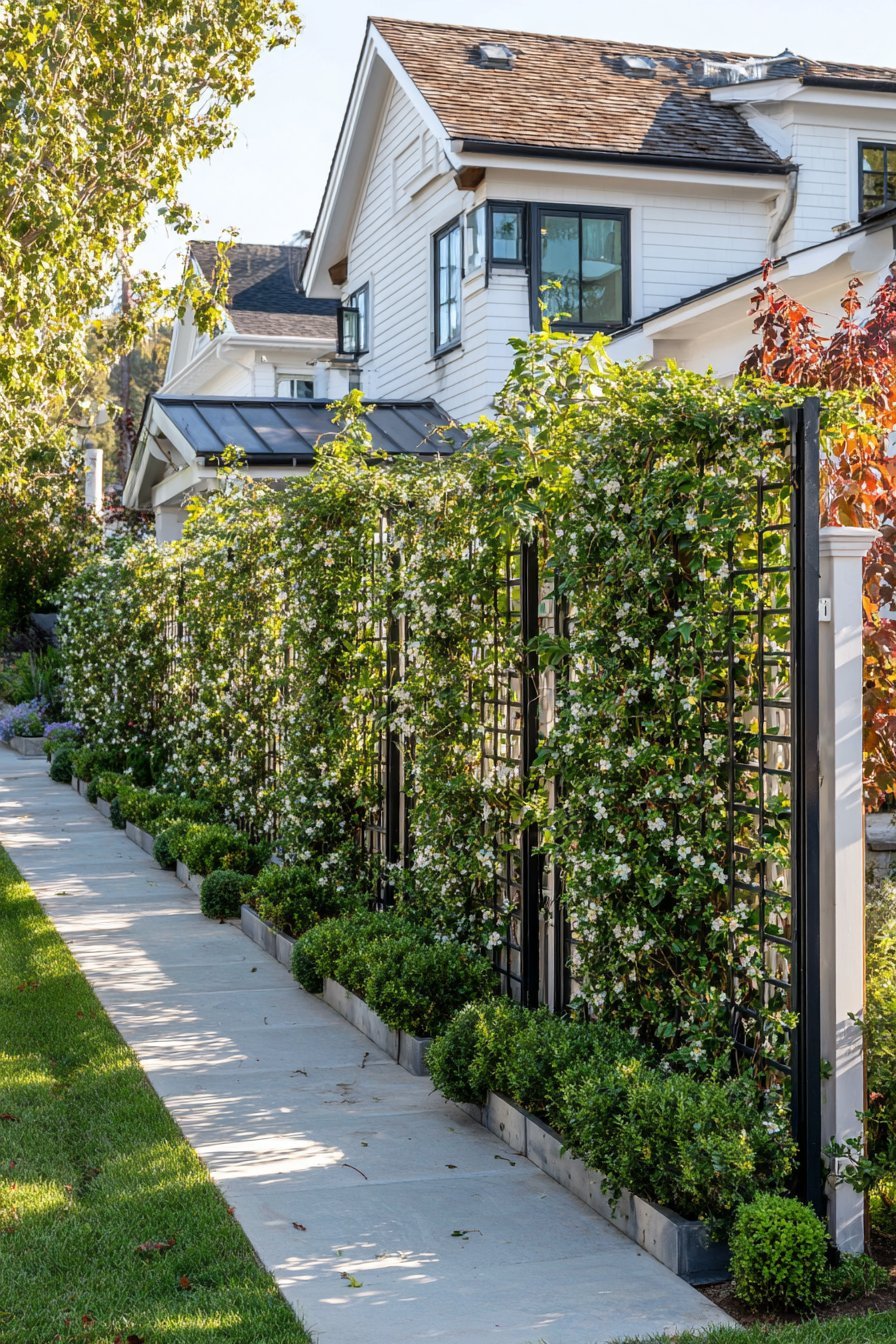
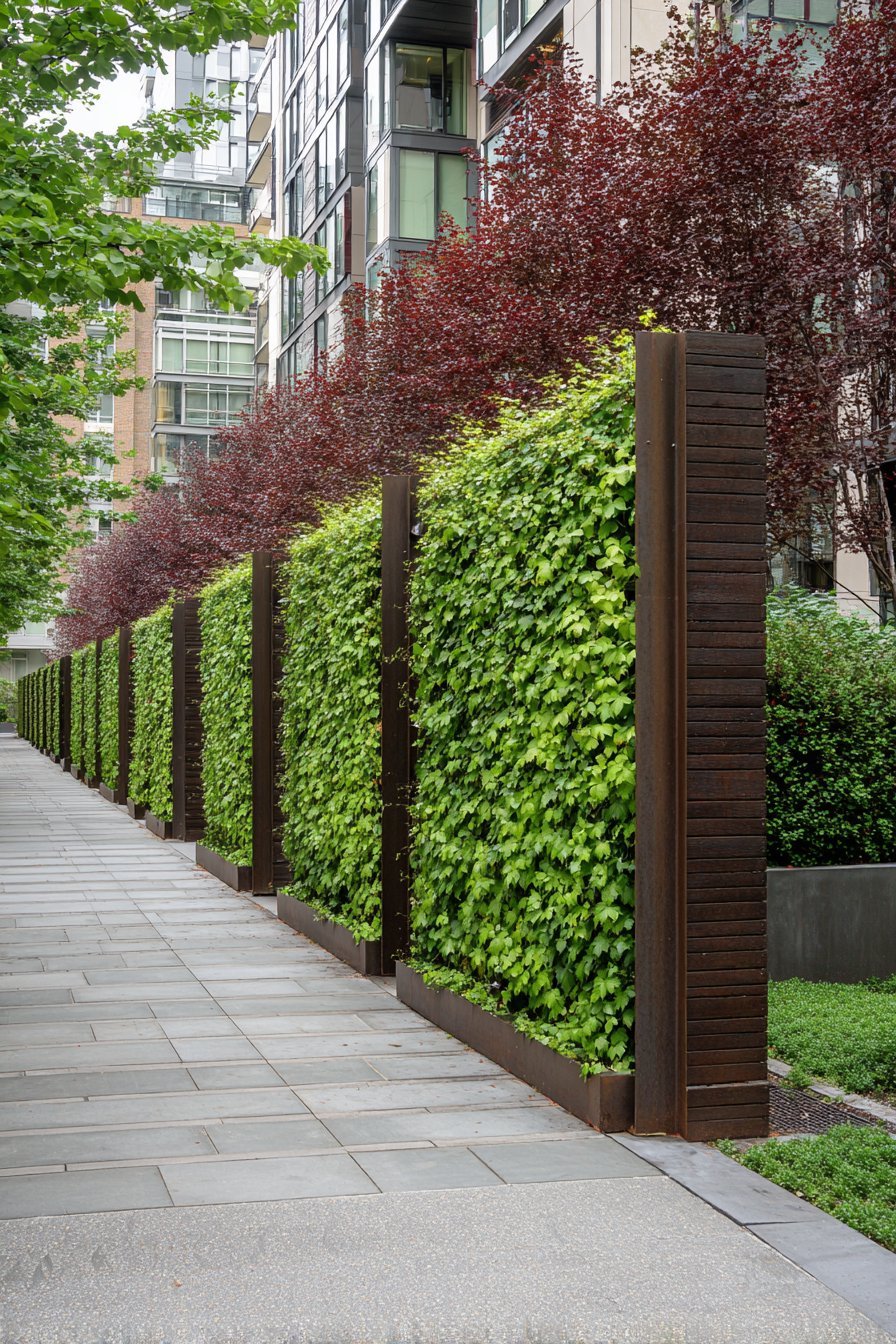
Trellises are one of the most versatile and cost-effective privacy tools in any garden. Mounted to an existing fence to extend its height, freestanding as a garden divider, or built into a pergola structure, trellises provide an instant framework for climbing plants that quickly fill in to create dense, beautiful screening. A well-placed trellis with a fast-growing climber can transform a problematic sight line within a single growing season.
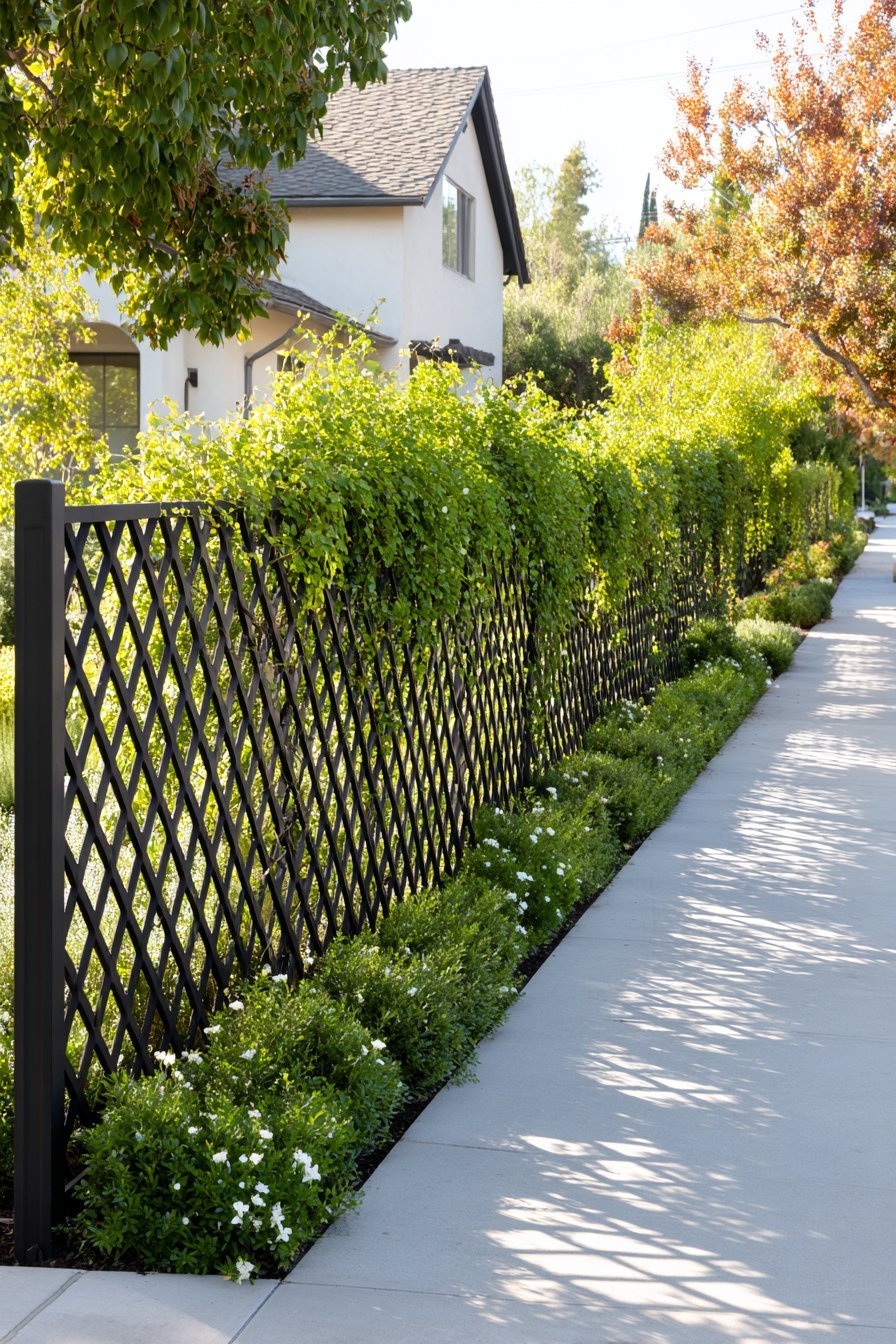
The most effective climbing plants for privacy are those that establish quickly, produce dense foliage, and maintain coverage through as much of the year as possible. Evergreen climbers like star jasmine, climbing hydrangea, and ivy provide year-round screening. Deciduous climbers such as wisteria, grapevine, and Virginia creeper offer spectacular seasonal displays — lush summer coverage transitioning into dramatic autumn color — while admitting more light in the winter months when privacy is less critical.
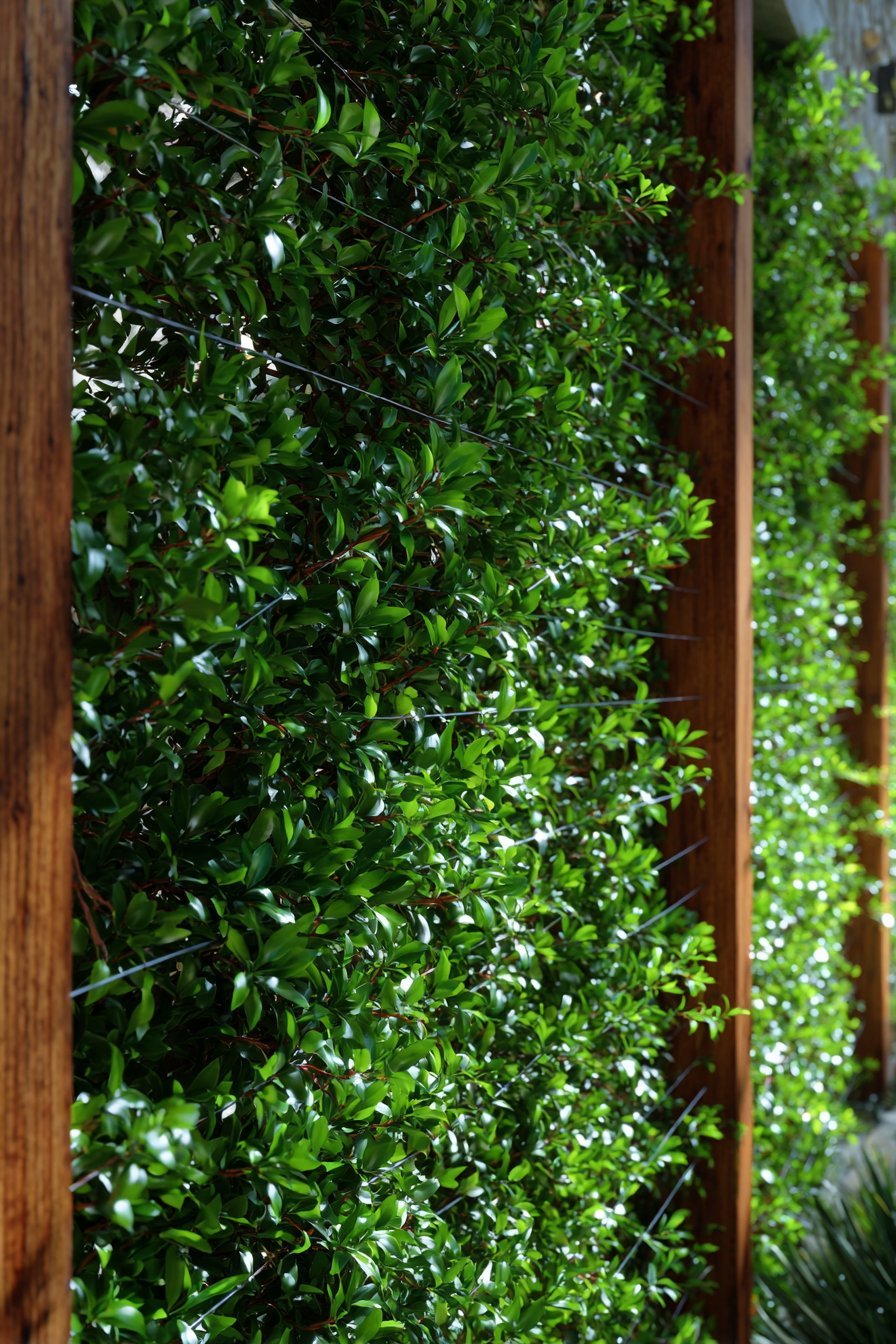
Trellis materials range from simple painted timber lattice panels to elegant powder-coated steel cable systems. Contemporary cable and tensioned wire systems are barely visible once plants establish, creating the impression of a floating wall of foliage that is extraordinarily beautiful and supremely effective as a privacy screen. These systems suit modern architectural homes particularly well and can be custom-designed to any size or configuration.
- Mount trellis panels to fence tops to extend boundary height by 12 to 24 inches
- Choose evergreen climbers — star jasmine, ivy, climbing hydrangea — for year-round screening
- Install tensioned wire cable systems for a contemporary, barely-there trellis structure
- Use freestanding trellis panels as garden dividers to create separate zones within the yard
- Feed and water climbers regularly in their first two seasons to encourage rapid establishment
8. Use Lighting Strategically to Define and Enclose the Space
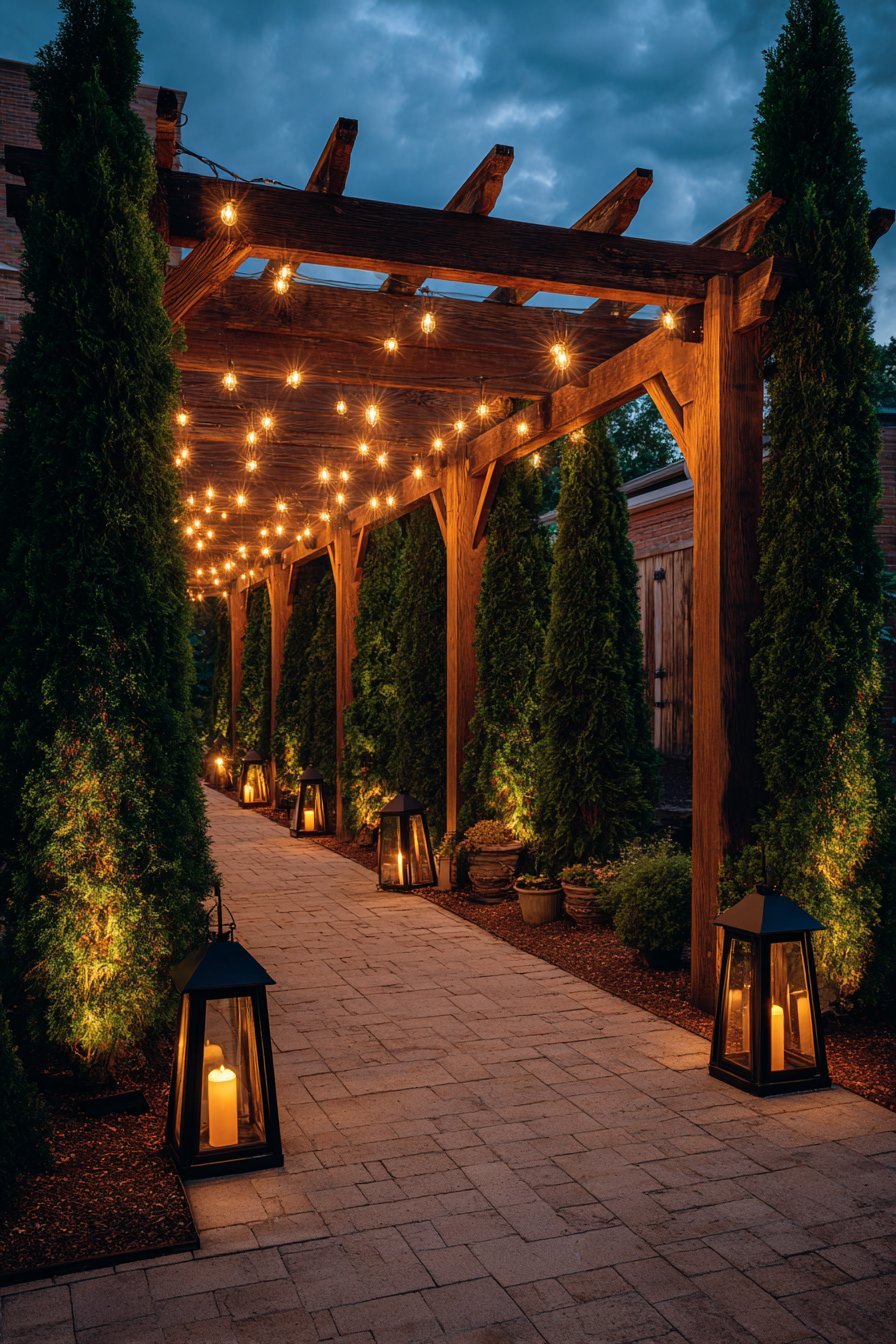
Strategic lighting is the most overlooked element of backyard privacy — yet it is one of the most powerful. After dark, thoughtful lighting design can make an open yard feel completely enclosed and intimate, drawing the eye inward toward your beautifully lit space rather than outward toward neighboring properties. The way you light your backyard fundamentally changes how private it feels in the evening hours.
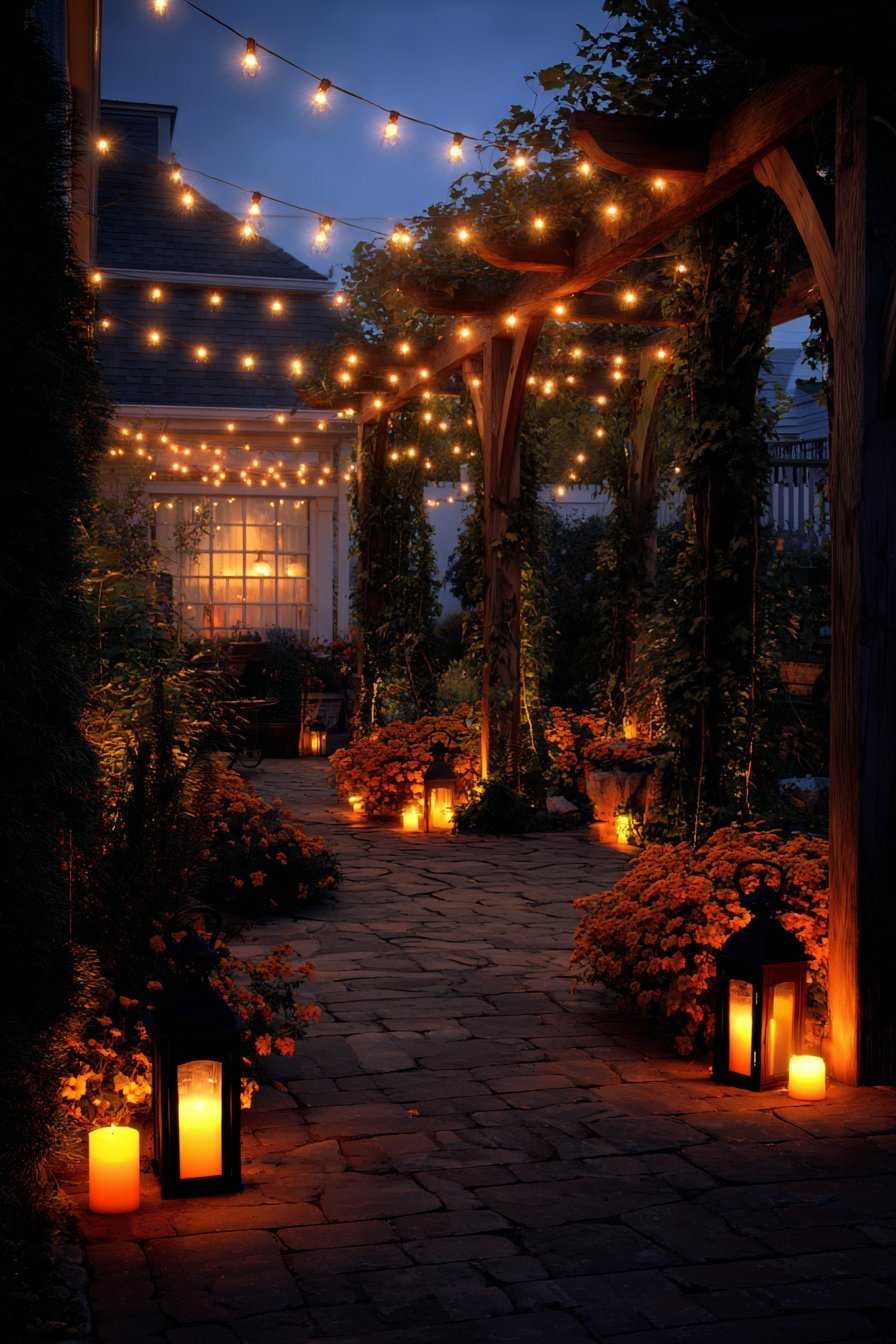
Downlighting from overhead structures — string lights, pendant lights, and recessed pergola lighting — creates a warm pool of light that defines your outdoor living area and effectively makes the space beyond it disappear into darkness. When your patio glows warmly and the surrounding yard fades to shadow, the psychological experience is one of complete enclosure and privacy, regardless of what lies beyond the boundary.
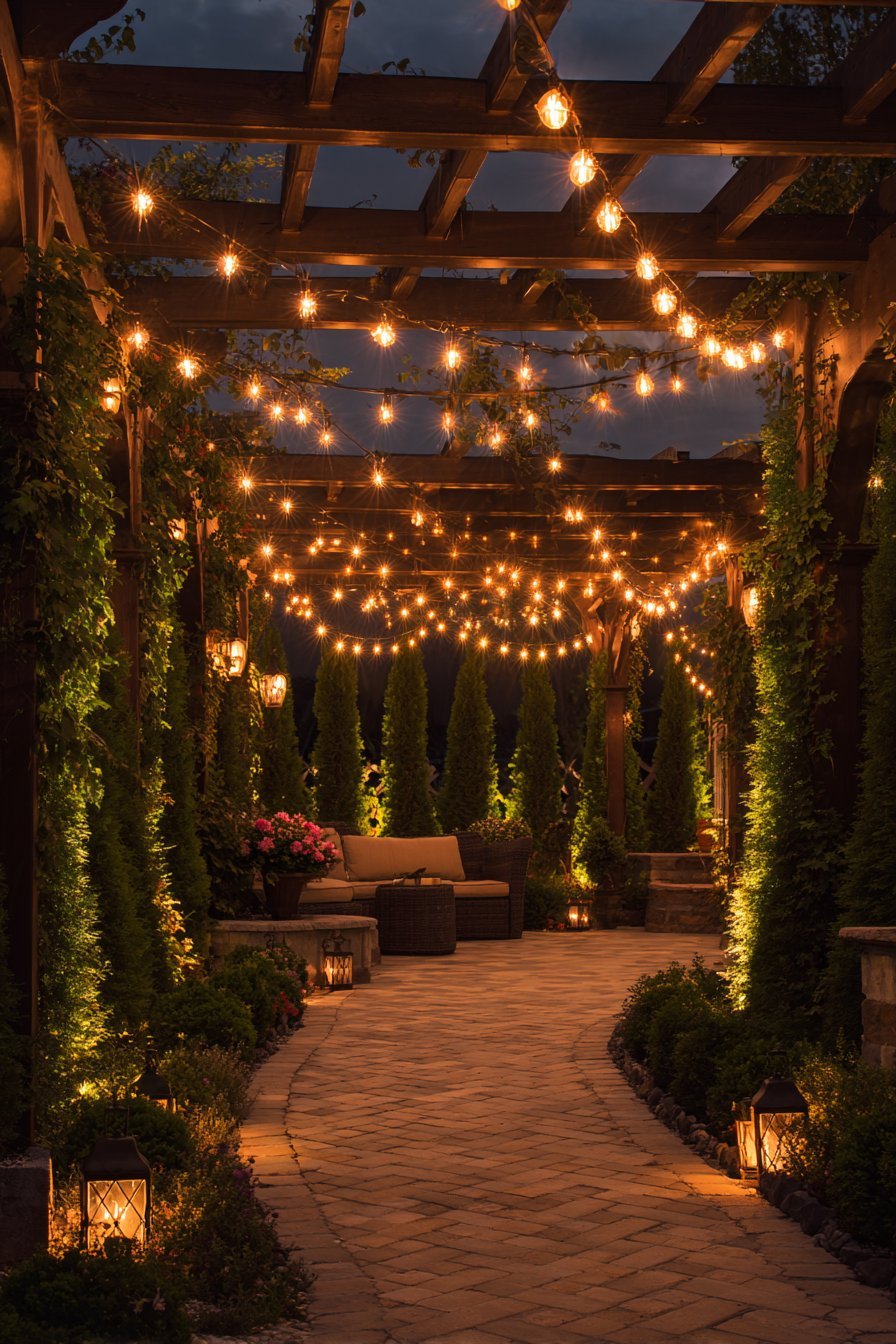
Uplighting specimen trees, hedges, and privacy screens serves a dual purpose: it highlights the beautiful structure of your planting while simultaneously reinforcing the visual boundary of your yard. A row of arborvitae uplighted from below becomes a dramatic, illuminated wall at night — far more visually impactful than it appears in daylight. Combine uplighting with warm string lights overhead and low path lighting at ground level for a fully layered evening atmosphere that feels completely private and utterly magical.
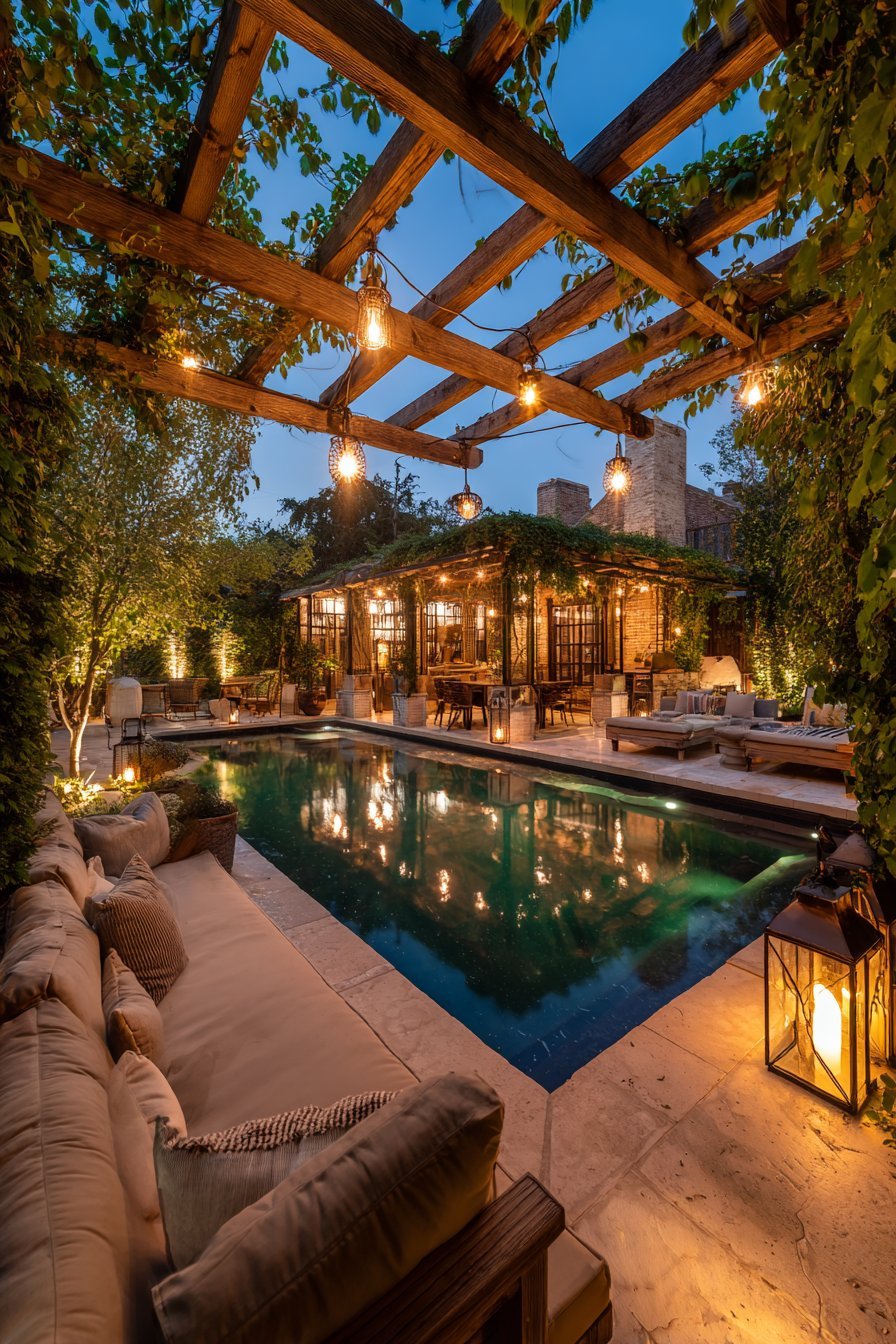
- Install string lights overhead to create a warm, enclosed glow over your seating area
- Use downlighting from pergola beams to define your outdoor room after dark
- Uplight privacy hedges, trees, and screens to reinforce boundaries and add drama
- Choose warm white bulbs (2200K–2700K) for the most intimate, flattering evening atmosphere
- Layer ground-level path lighting, mid-level lanterns, and overhead string lights for maximum effect
Conclusion
Privacy transforms a backyard from an exposed outdoor area into a true personal sanctuary. Whether you choose living screens of lush planting, elegant fencing, overhead pergola structures, or the strategic glow of evening lighting, every one of these approaches brings you closer to the outdoor retreat you deserve.
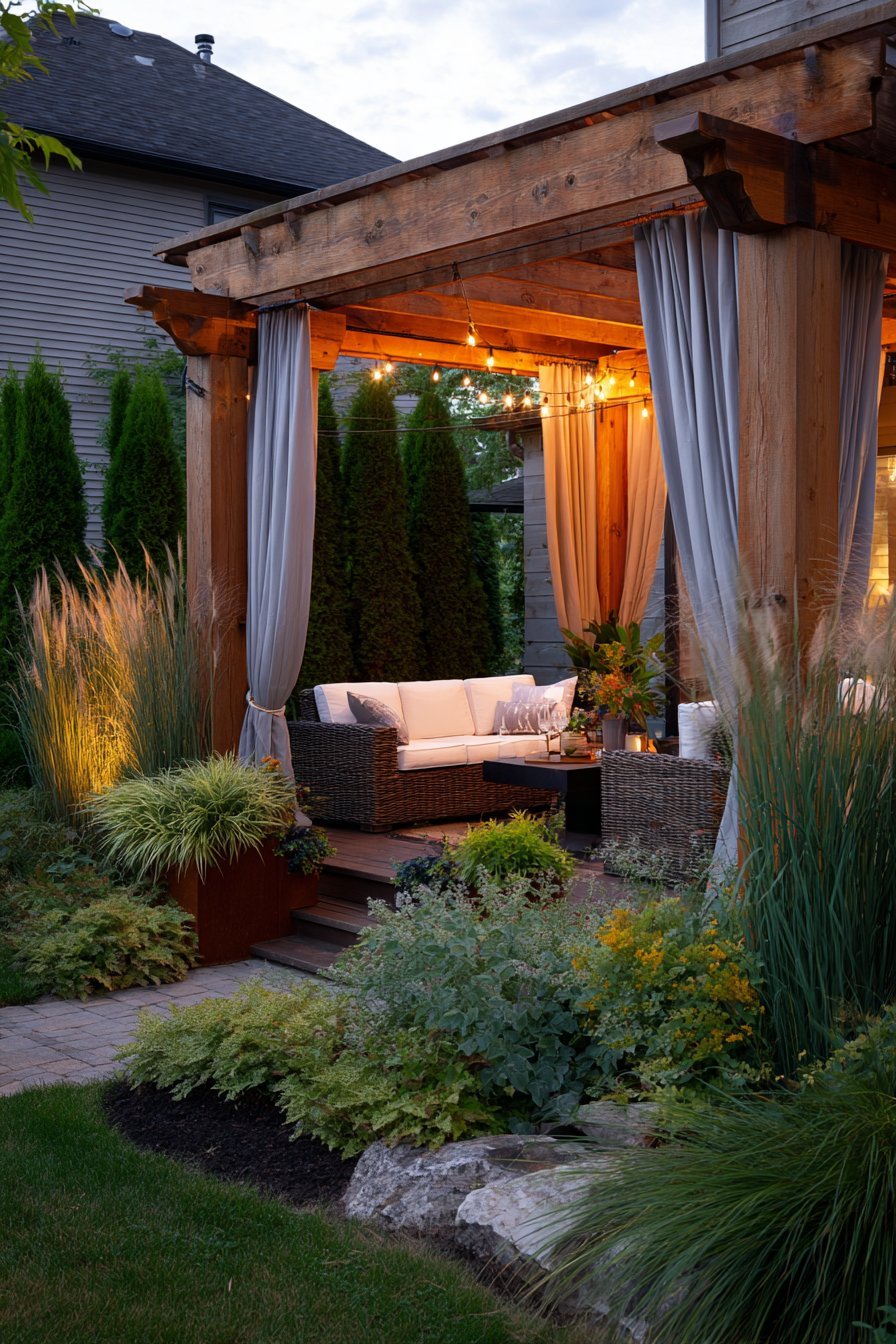
The most beautiful and effective privacy backyards combine multiple strategies — layering plants with structures, softening fences with climbers, and using lighting to enclose the space after dark. Start with the tip that addresses your most pressing privacy challenge, then build from there. With patience, creativity, and a clear vision, your backyard will become the private paradise you have always imagined.
