

Japanese gardens have captivated the world for centuries with their profound ability to create spaces of tranquility and contemplation. These carefully designed outdoor sanctuaries offer more than just visual beauty—they provide a retreat from the chaos of modern life. The principles behind Japanese backyard design stem from ancient philosophical traditions that emphasize harmony with nature, mindfulness, and the art of finding peace in simplicity.
Creating a zen-inspired backyard isn’t about replicating an exact Japanese aesthetic. It’s about understanding the core principles that make these spaces so uniquely calming. From the deliberate placement of rocks to the soothing sound of water, every element serves a purpose in crafting an environment that nurtures the spirit. Whether you have a sprawling yard or a modest patio, the wisdom of Japanese garden design can transform your outdoor space into a personal sanctuary that promotes relaxation and mental clarity.
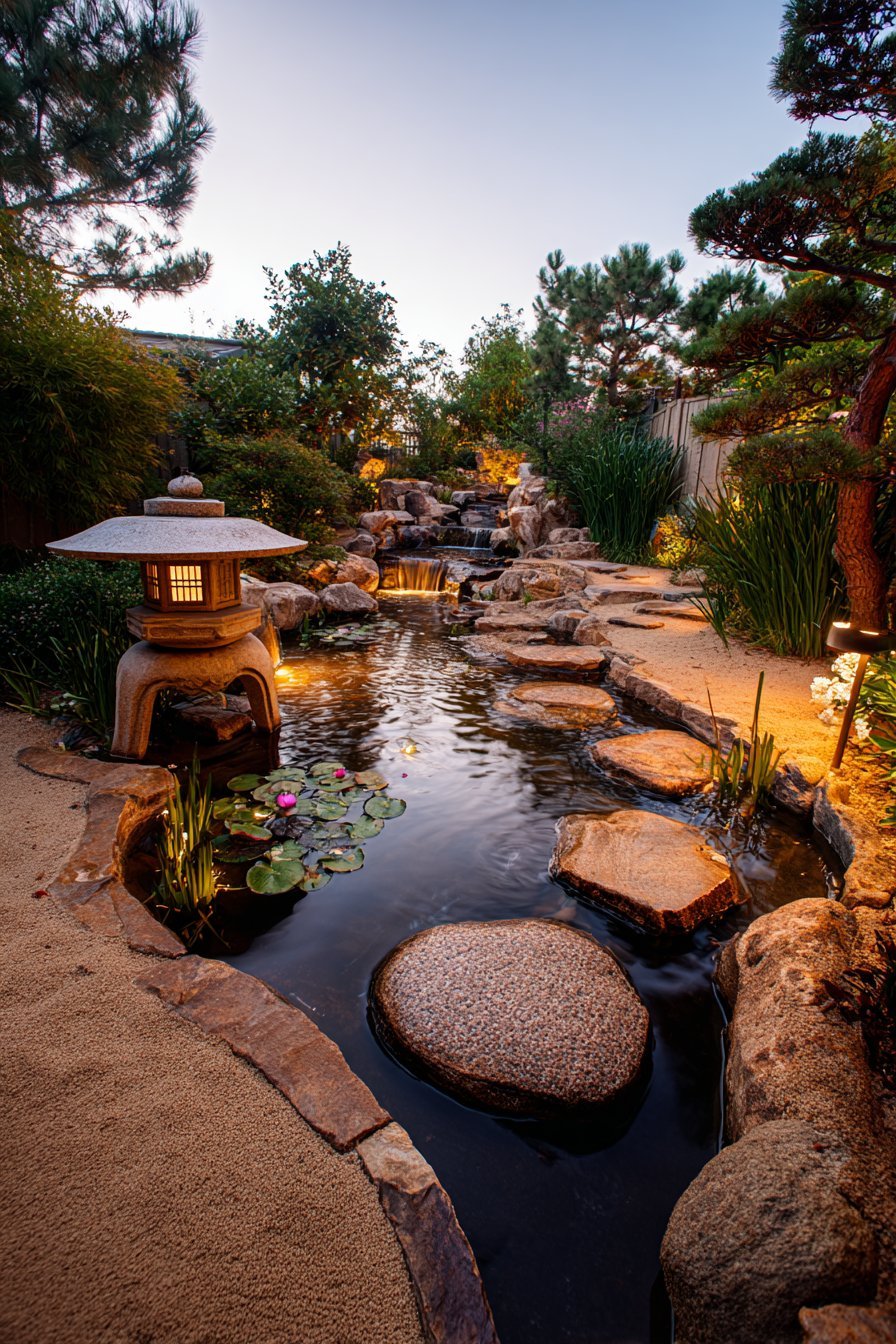
1. The Philosophy of Wabi-Sabi and Imperfect Beauty
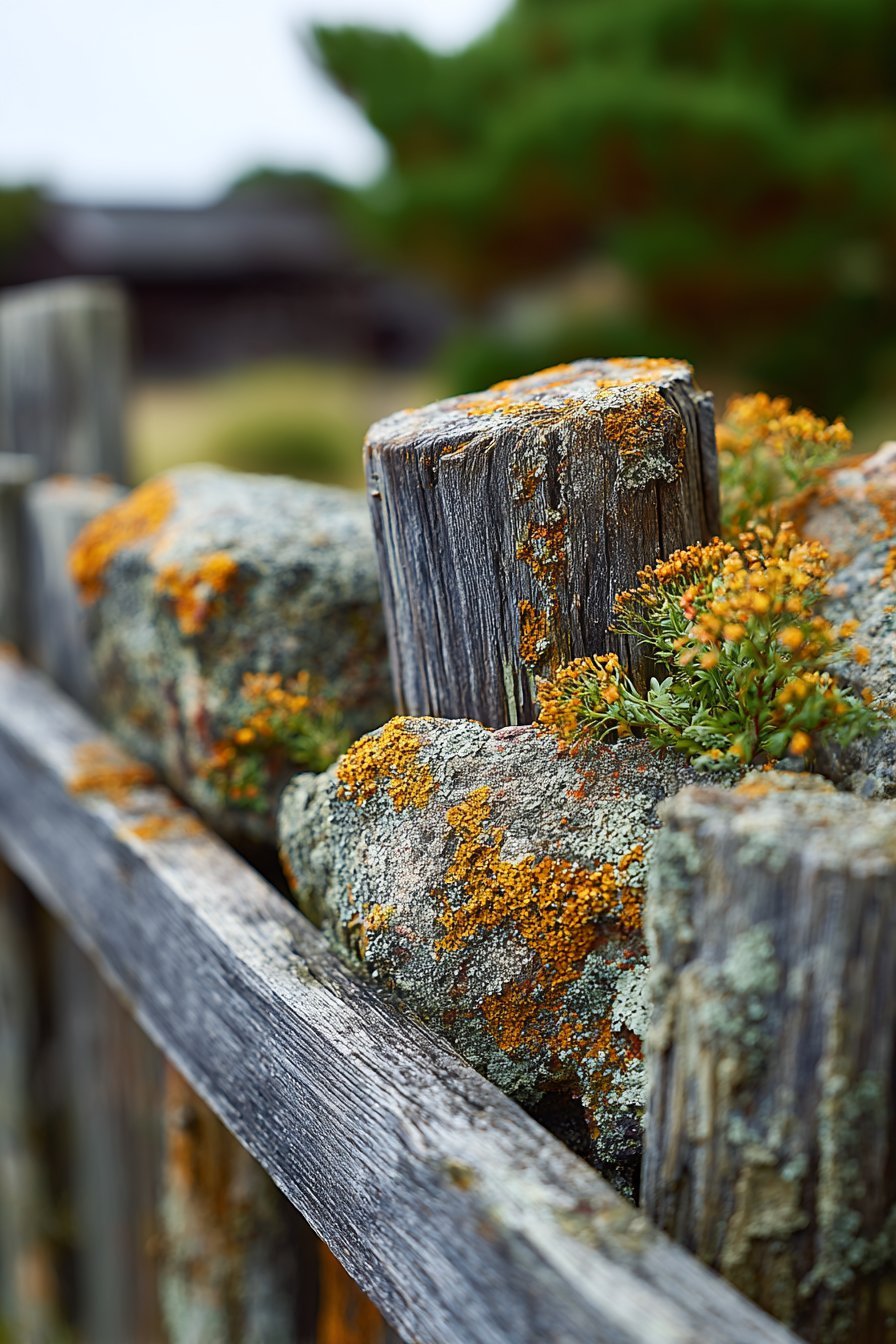
Japanese gardens embrace wabi-sabi, the aesthetic philosophy that finds beauty in imperfection and impermanence. This concept celebrates the natural aging process of materials and the organic irregularities found in nature. Rather than striving for symmetrical perfection, Japanese backyards honor weathered stones, moss-covered surfaces, and the gentle decay that time brings to all living things.
This philosophy encourages us to see beauty in simplicity and rusticity. A carefully aged wooden fence or a stone lantern covered in patina becomes more valuable with time. The approach shifts our perspective from constantly maintaining pristine conditions to appreciating the natural evolution of our outdoor spaces. This mindset alone can reduce stress and create a more peaceful relationship with your garden.
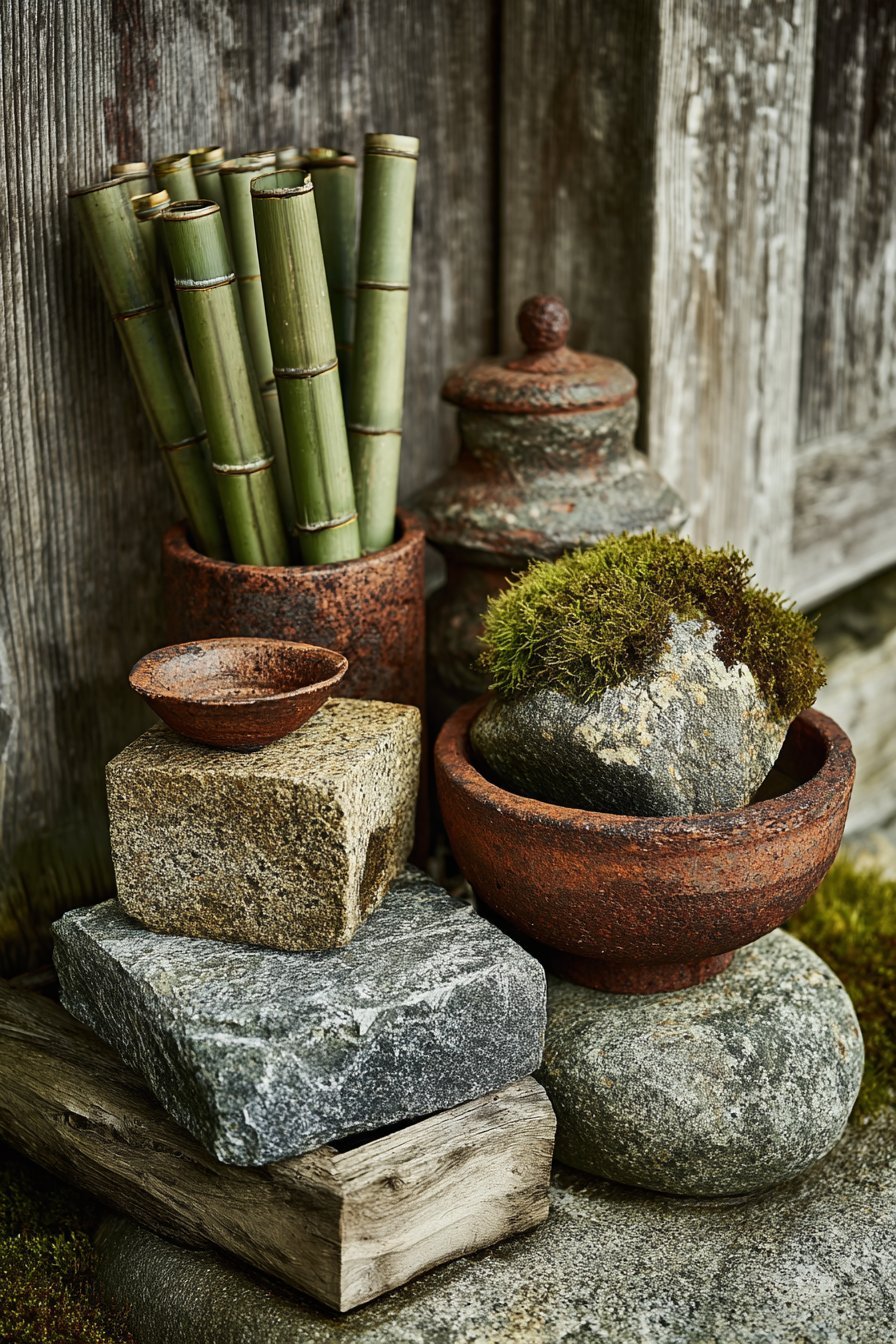
Implementing wabi-sabi means selecting materials that age gracefully and resisting the urge to over-manicure. Allow moss to grow on stones, let wooden elements develop their silver-gray patina, and embrace the subtle imperfections that make each garden unique. This acceptance of natural processes creates an environment that feels authentic and deeply restful.
- Choose natural materials like wood, stone, and bamboo that weather beautifully over time
- Allow moss and lichen to develop naturally on stones and pathways
- Select irregularly shaped rocks and branches rather than perfectly uniform pieces
- Embrace the changing seasons and the natural cycle of growth and dormancy
- Avoid overly manicured or artificial-looking elements
- Focus on creating aged character rather than pristine newness
2. Strategic Use of Negative Space
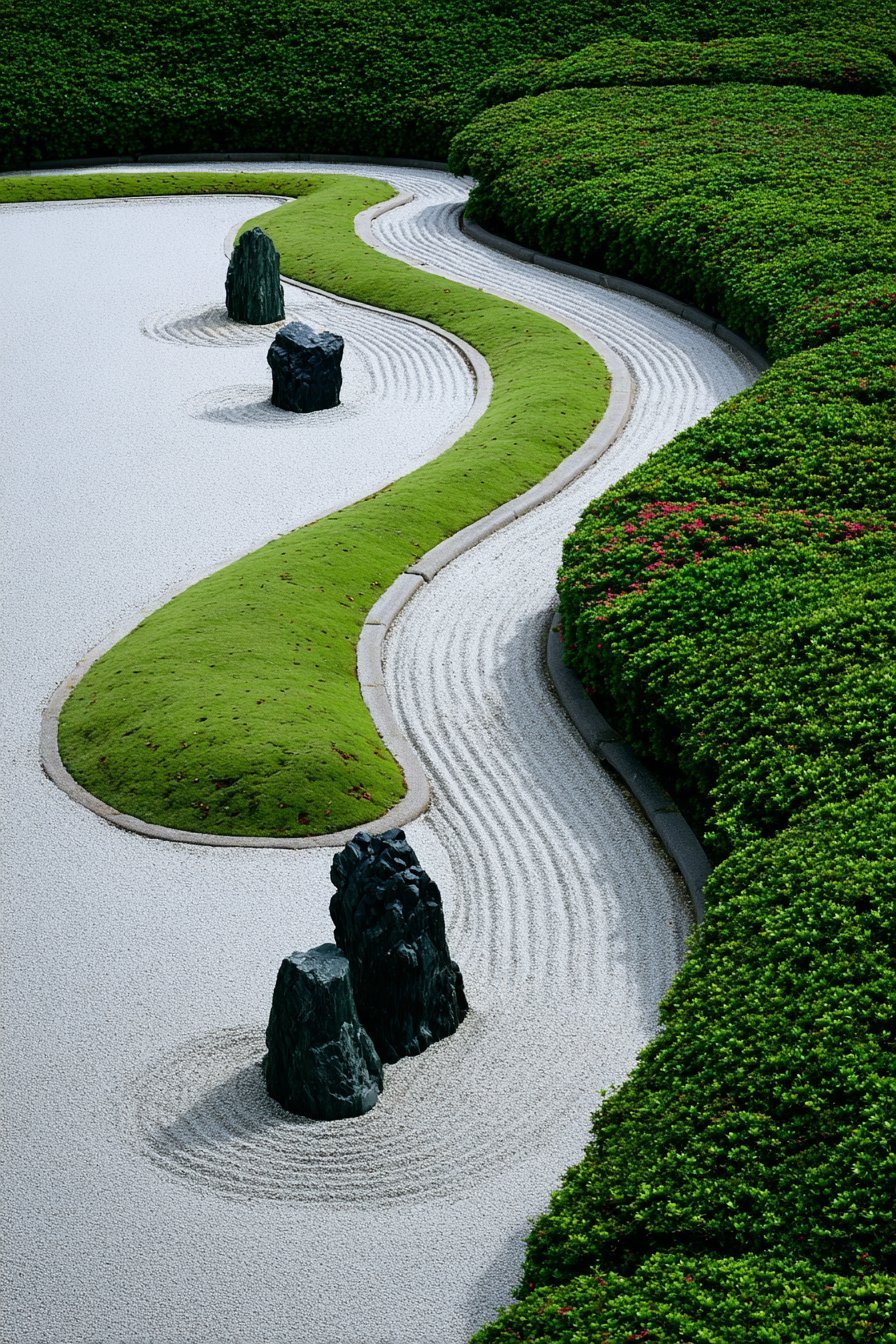
One of the most powerful elements in Japanese garden design is ma, the concept of negative space or purposeful emptiness. Western gardens often emphasize filling every inch with plants and features, but Japanese backyards understand that empty space is essential for creating calm. These open areas allow the eye to rest and the mind to settle into a meditative state.
Negative space provides visual breathing room that prevents sensory overload. A simple expanse of raked gravel or smooth sand can be as impactful as the most elaborate floral display. This emptiness isn’t boring—it’s deliberately contemplative, offering a place where thoughts can flow freely without constant visual stimulation competing for attention.
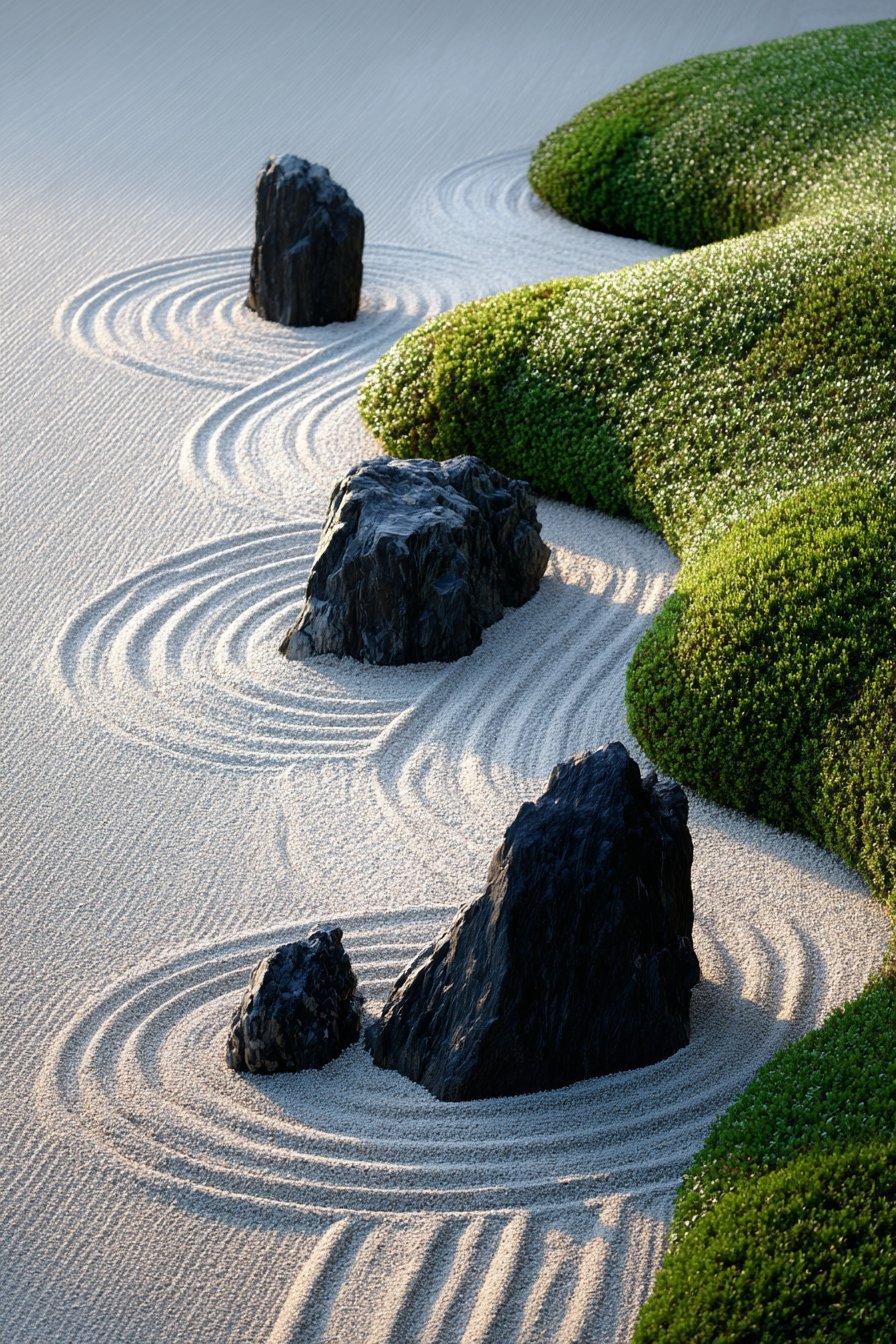
The strategic placement of negative space also enhances the perceived importance of the elements you do include. When each rock, plant, or water feature is given space to stand alone, it becomes more meaningful. This principle of less is more creates gardens that feel spacious and serene, even in compact areas.
- Incorporate areas of raked gravel or sand to create visual calm
- Avoid overcrowding plants or decorative elements
- Leave significant space between major features
- Use negative space to highlight focal points like specimen trees or sculptures
- Consider the ratio of planted to open space, aiming for balance
- Allow pathways to meander through empty areas for contemplative walking
3. The Calming Power of Water Elements
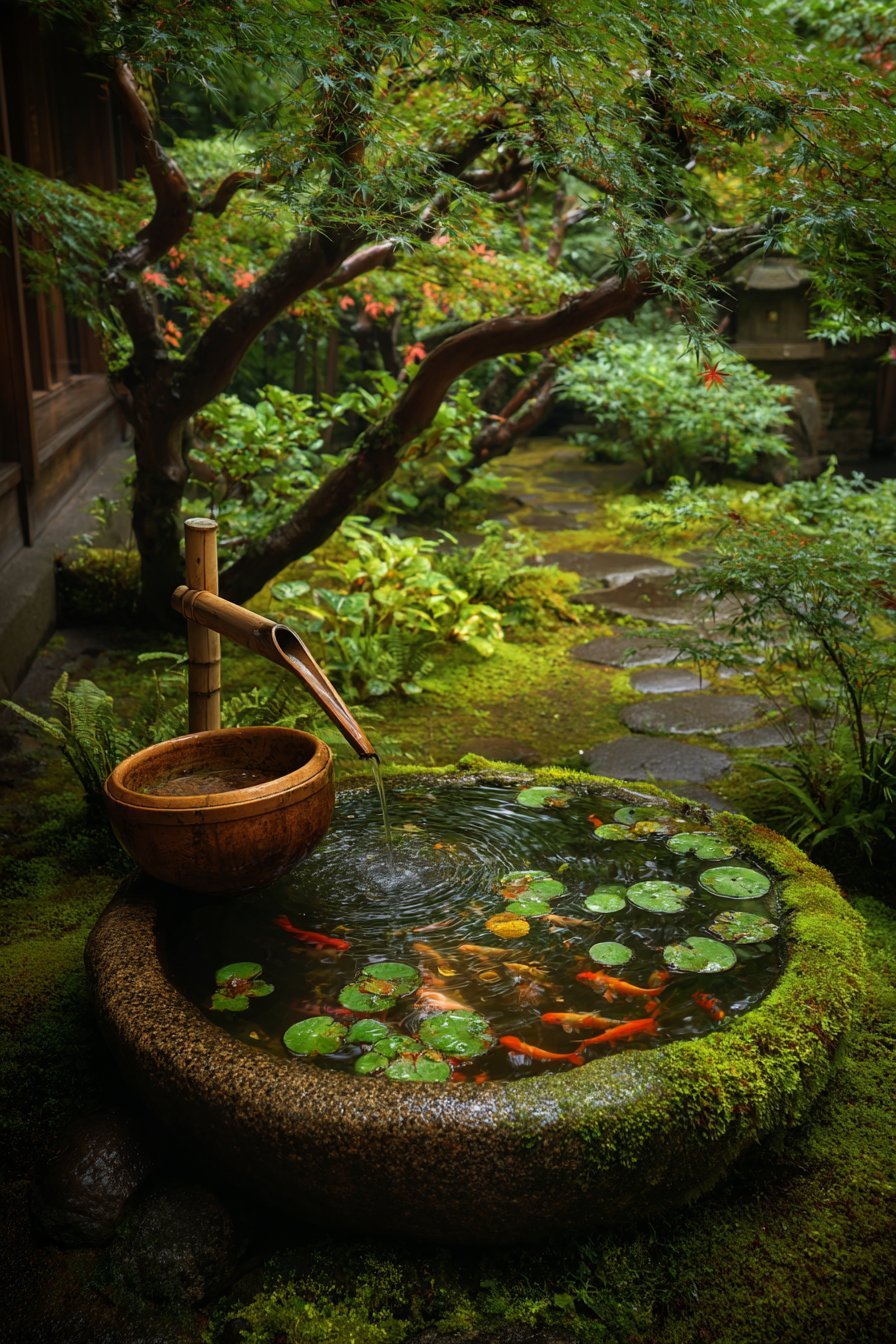
Water is considered the soul of Japanese gardens, bringing both visual beauty and soothing auditory experiences. The gentle sound of flowing water has a scientifically proven calming effect on the nervous system, reducing stress hormones and promoting mental relaxation. Whether it’s a traditional tsukubai (water basin), a small fountain, or a koi pond, water elements create instant tranquility.
The movement of water adds living energy to static garden spaces. Even a simple bamboo fountain or a stone basin with a trickling spout can transform the atmosphere of your backyard. The sound masks urban noise pollution while providing a natural white noise that helps quiet racing thoughts and encourages mindfulness.
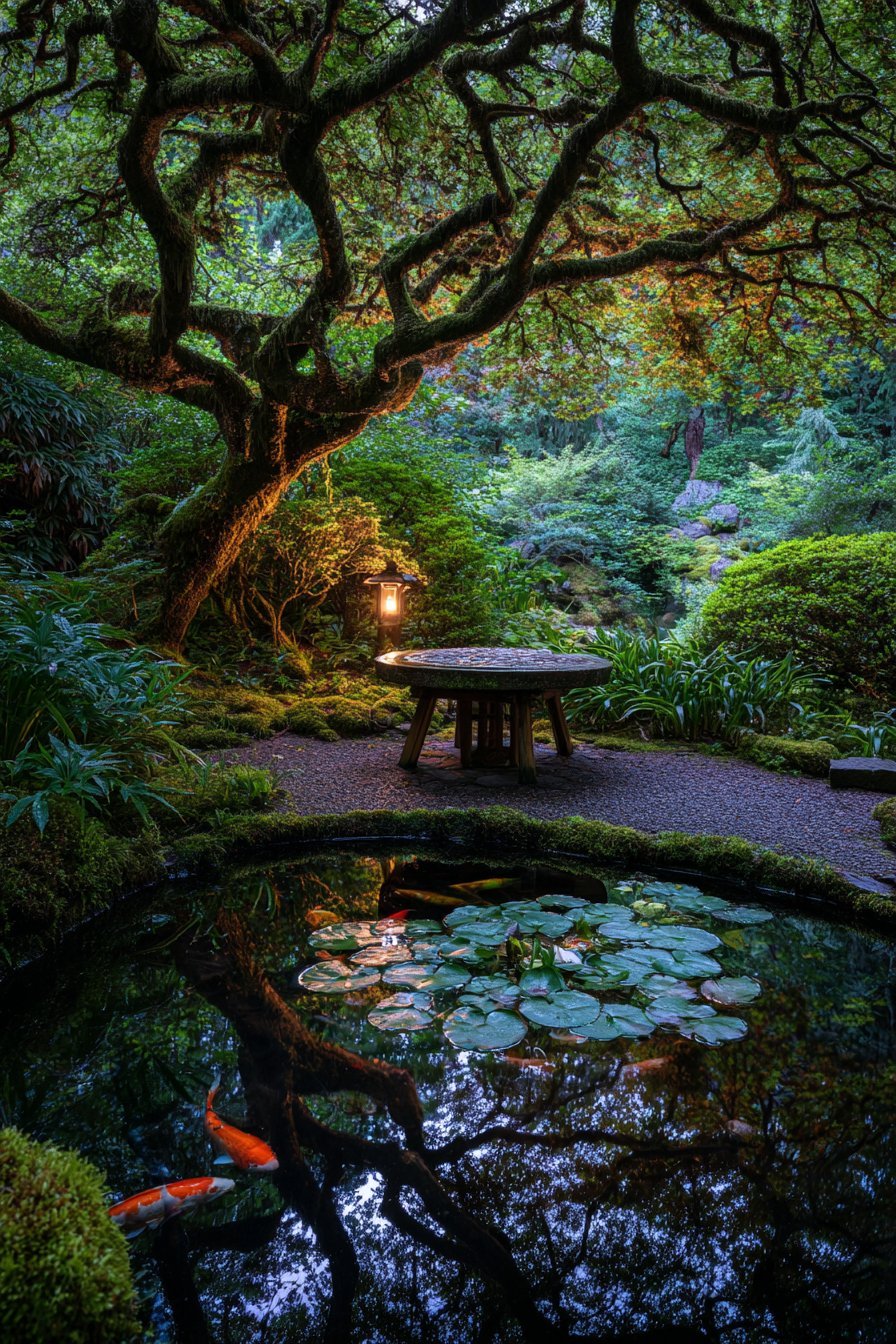
Japanese water features are typically designed to be subtle rather than dramatic. The goal is gentle, continuous sound rather than loud splashing. The reflective quality of still water pools also serves a purpose, mirroring the sky and surrounding plants to create a sense of expanded space and connection between earth and heaven.
- Install a simple bamboo shishi-odoshi (deer scarer) fountain for gentle rhythmic sounds
- Create a small koi pond with proper filtration for living tranquility
- Position a stone tsukubai basin near a seating area for contemplative focus
- Use recycling pumps to maintain water movement in small spaces
- Ensure water features are sized appropriately—subtle sounds work best
- Include aquatic plants like water lilies to soften edges and add natural beauty
4. The Art of Strategic Rock Placement
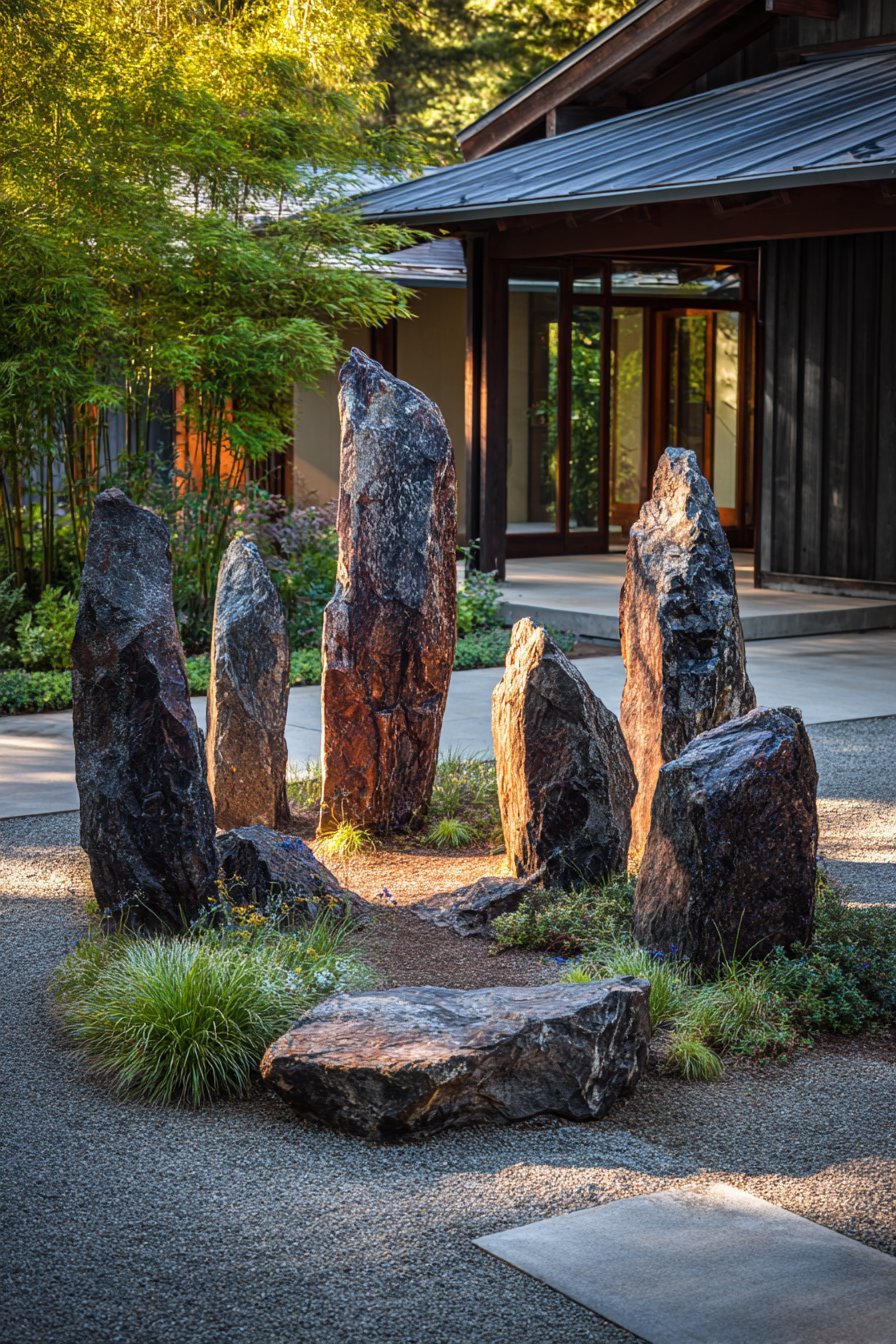
In Japanese garden philosophy, rocks represent mountains and permanence, serving as the backbone of the design. The careful selection and placement of stones is considered an art form that requires deep contemplation. Each rock is chosen for its unique shape, color, and character, then positioned to create natural-looking compositions that feel as if they’ve always existed in that spot.
Large rocks serve as visual anchors that ground the garden and provide stability. They’re typically placed in odd-numbered groupings (three, five, or seven) to create dynamic balance. The Japanese concept of ishi-gumi (stone arrangement) emphasizes creating relationships between rocks that mimic natural formations found in mountains and riverbeds.
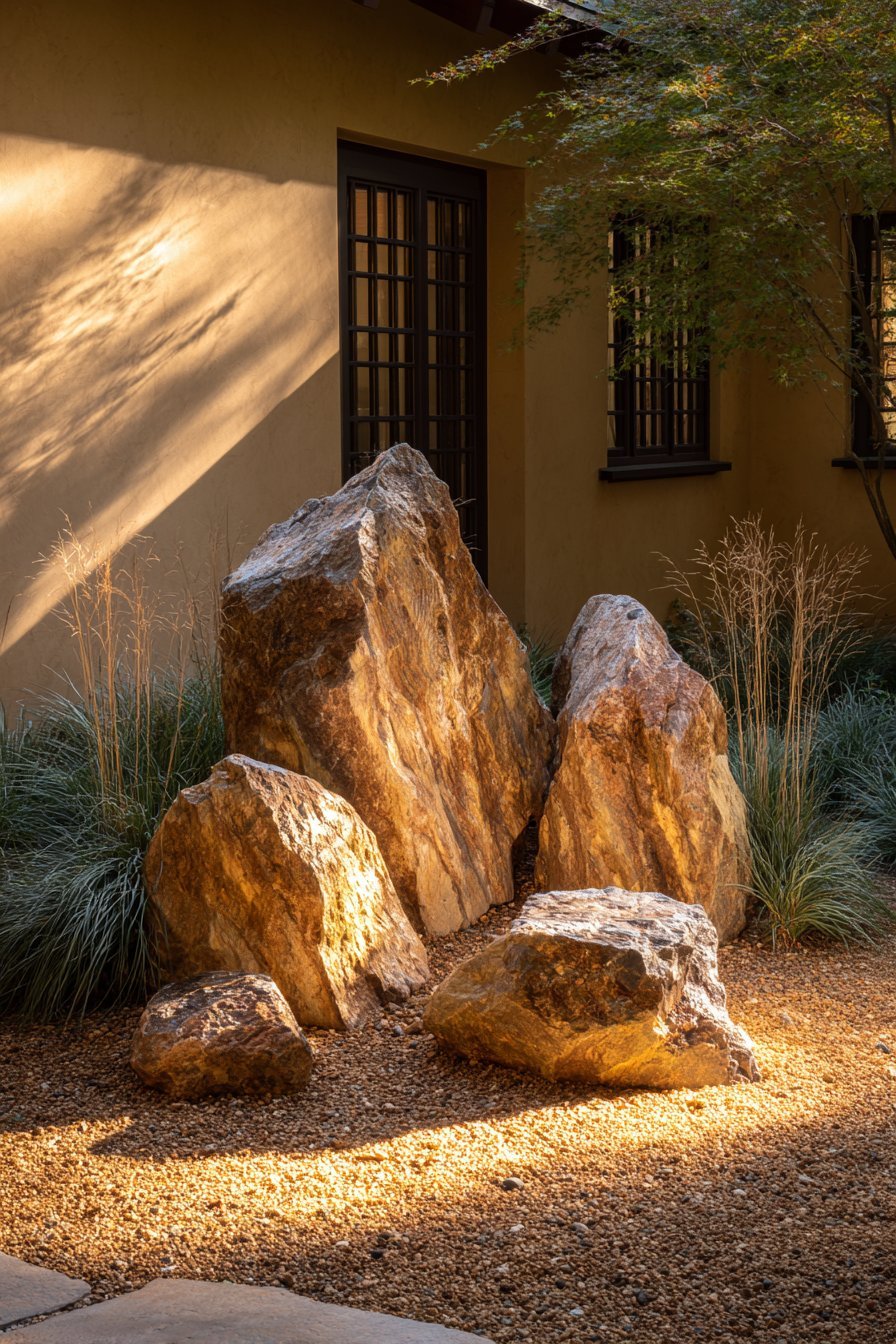
The permanence of stone contrasts beautifully with the ephemeral nature of plants and seasons. While flowers bloom and fade, rocks remain constant, providing year-round structure and a sense of timelessness. This combination of the permanent and the changing creates philosophical depth that encourages contemplation of life’s cycles.
- Select rocks with interesting textures, colors, and natural weathering
- Place larger “parent” stones first, then add smaller “child” stones around them
- Bury rocks partially (one-third to one-half) to create the illusion they’re naturally emerging
- Use odd numbers of rocks in groupings for visual interest
- Consider the “face” of each rock and position it at the most attractive angle
- Create pathways with flat stepping stones placed at natural stride intervals
5. Carefully Curated Plant Selection
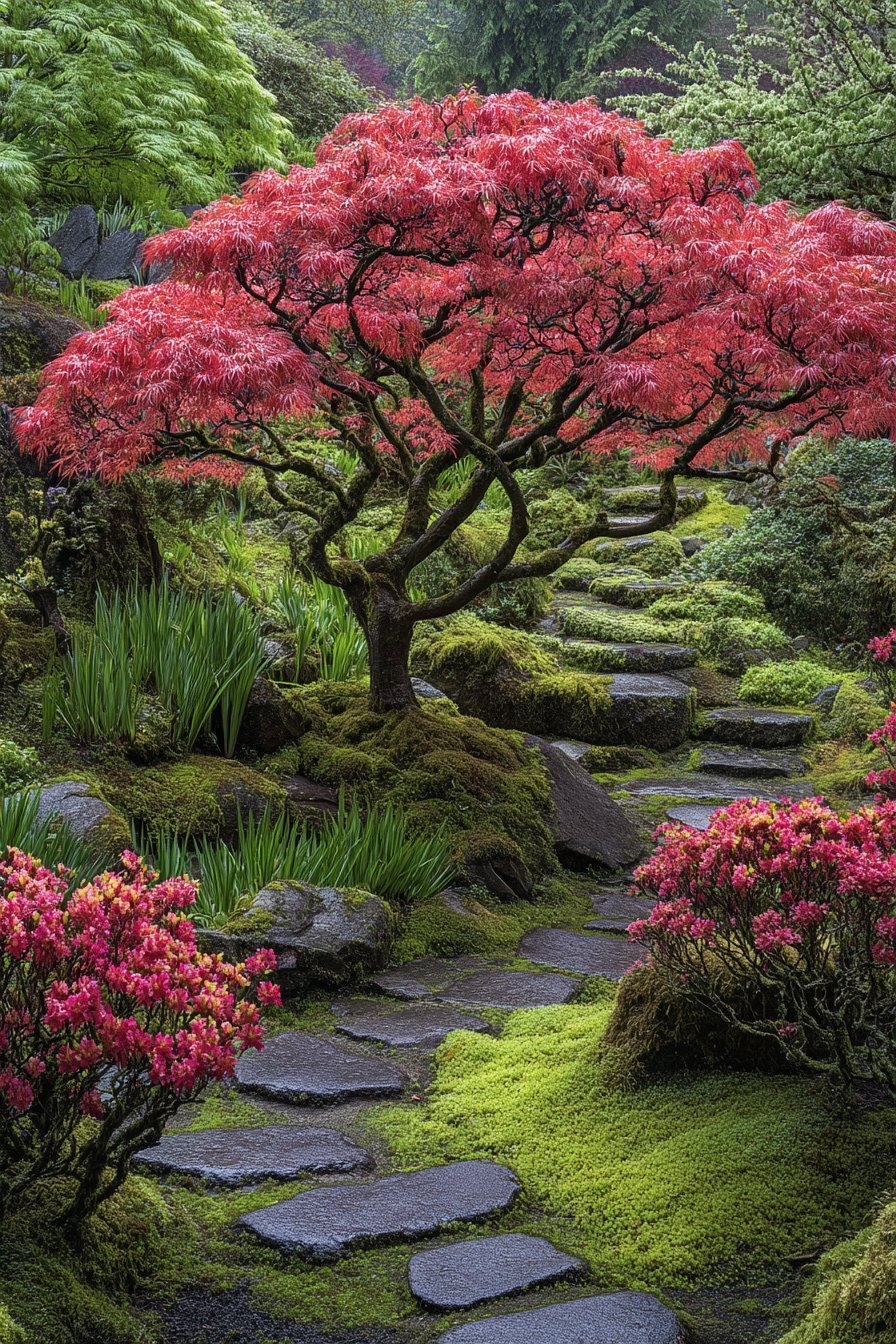
Japanese gardens favor a limited plant palette over diverse collections, creating cohesion and calm. The focus is on plants with strong structural qualities and year-round interest rather than temporary bursts of color. Evergreens like pines, bamboo, and Japanese maples form the backbone, providing consistent beauty through all seasons while requiring minimal maintenance once established.
The practice of shakkei (borrowed scenery) is also important in plant selection. This technique frames views of distant landscape elements, integrating them into your garden design. Trees and shrubs are carefully pruned to create viewing windows that connect your intimate backyard space with the broader natural world beyond your property lines.
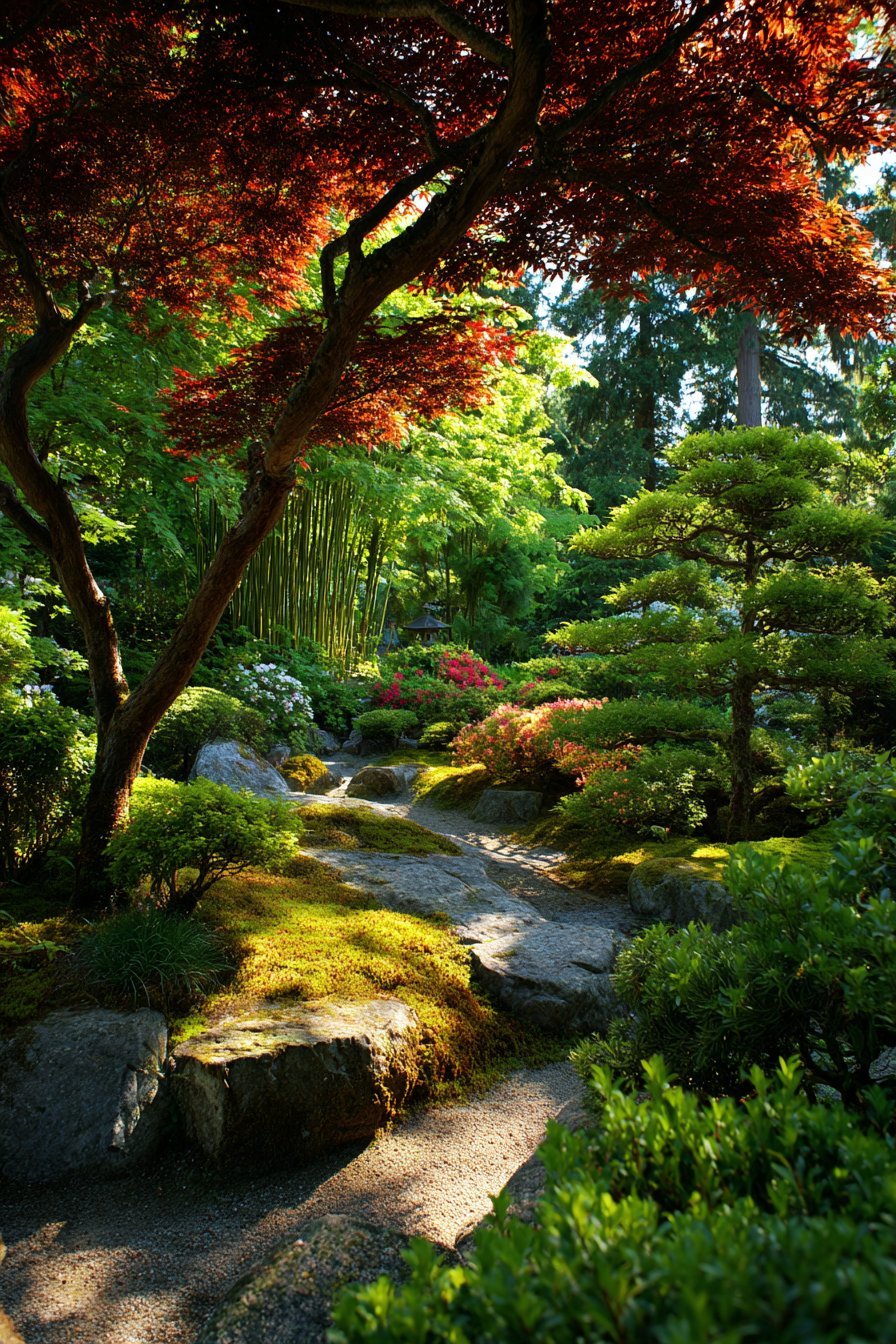
Plants are chosen for their symbolic meanings and the way they change with seasons. Japanese maples offer brilliant autumn color, cherry trees bring spring blossoms, and bamboo represents resilience and flexibility. This intentional symbolism adds layers of meaning that deepen your connection to the space and encourage contemplative appreciation.
- Plant Japanese maples for elegant structure and seasonal color transitions
- Incorporate bamboo for sound (rustling leaves) and vertical interest
- Use low-growing azaleas and moss for groundcover in shaded areas
- Select evergreen pines and junipers for year-round structure
- Practice careful pruning to maintain natural but refined shapes
- Include ferns and hostas in shaded areas for lush, peaceful greenery
6. The Role of Pathways in Mindful Movement
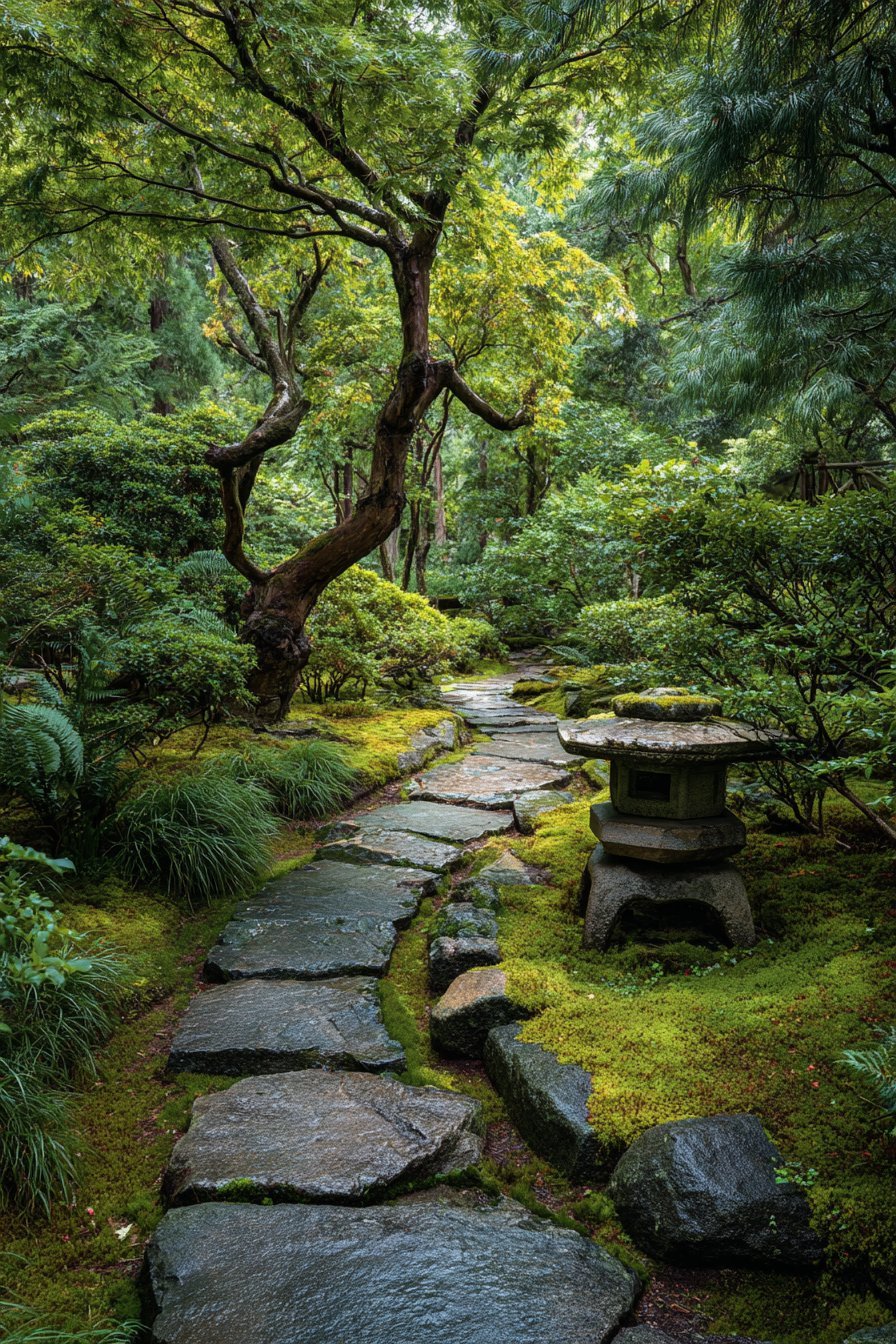
Garden paths in Japanese design are never merely functional—they’re contemplative journeys that slow your pace and encourage awareness. Unlike straight Western walkways that prioritize efficiency, Japanese paths meander deliberately, revealing new views with each turn and preventing the mind from rushing ahead to the destination. This design philosophy transforms a simple walk into a meditative practice.
Stepping stone paths called tobi-ishi are spaced to require careful attention to each step. This intentional spacing forces you to look down, notice where you’re placing your feet, and move with mindful deliberation. The rhythm of stepping from stone to stone becomes a form of moving meditation that naturally quiets mental chatter.
Path materials and their arrangement also contribute to the sensory experience. The crunch of gravel underfoot provides auditory feedback, while the texture variation between smooth stones and soft moss creates tactile interest. These multisensory elements keep you anchored in the present moment rather than lost in thought.
- Create meandering paths that curve gently rather than running straight
- Space stepping stones 18-24 inches apart for natural, mindful pacing
- Use contrasting materials like gravel and stone to create textural variety
- Position paths to reveal garden views gradually as visitors move through the space
- Include occasional wider areas along paths for pausing and contemplation
- Edge pathways with low plants or moss to soften transitions
7. Borrowed Scenery and Framed Views
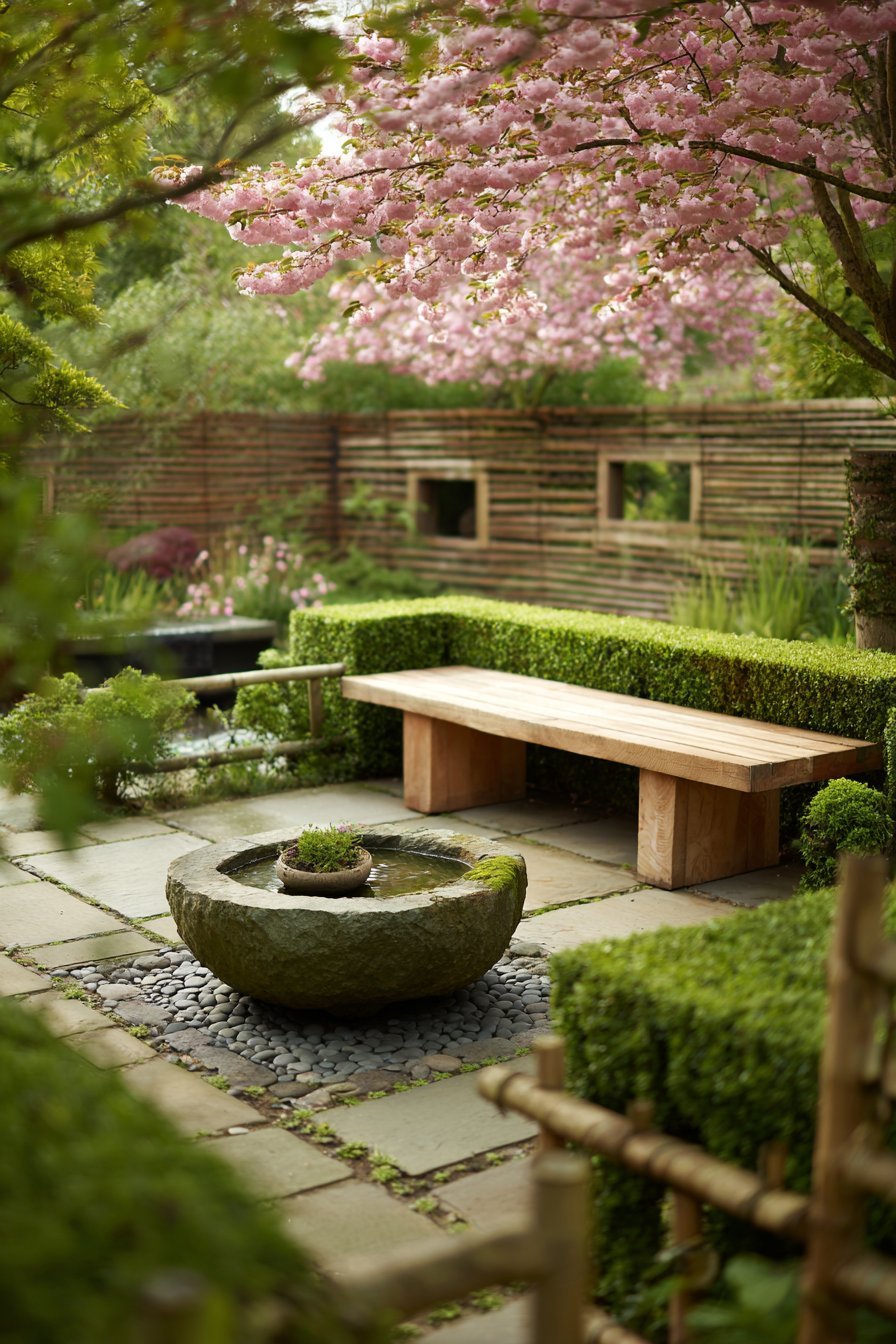
The Japanese technique of shakkei integrates distant landscape elements into your garden design, creating the illusion of expanded space and connecting your private sanctuary to the wider natural world. By carefully framing views of nearby trees, mountains, or even architecture, you can make your backyard feel larger and more connected to something greater than itself.
This principle works even in urban settings. A thoughtfully positioned opening in your fence or a strategic gap between shrubs can frame a view of a neighbor’s tree, turning it into part of your garden’s composition. This approach recognizes that beauty exists beyond property lines and teaches us to appreciate borrowed elements rather than trying to control everything within our boundaries.
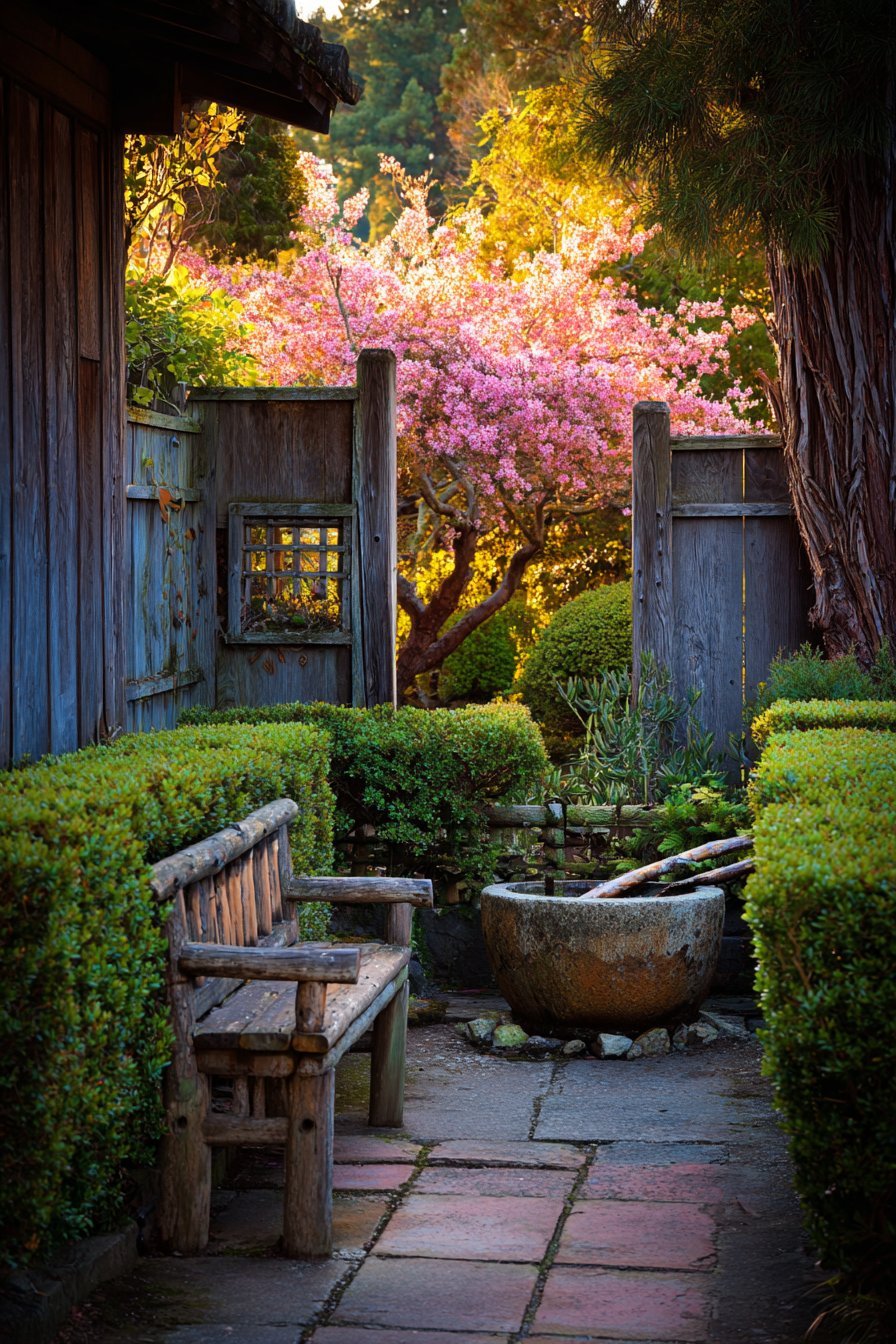
Framed views also create focal points that draw the eye outward, preventing the claustrophobic feeling that can develop in small enclosed yards. By incorporating these distant elements, you’re practicing a form of visual generosity that acknowledges the interconnectedness of all spaces and encourages a more expansive state of mind.
- Identify attractive views beyond your property and design plantings to frame them
- Use carefully placed trees or structures as natural framing elements
- Create “windows” in fences or hedges to borrow appealing scenery
- Position seating areas to take advantage of borrowed views
- Prune trees selectively to reveal distant mountains, buildings, or sky
- Consider how borrowed scenery changes with seasons and time of day
8. The Symbolism of Lanterns and Ornaments
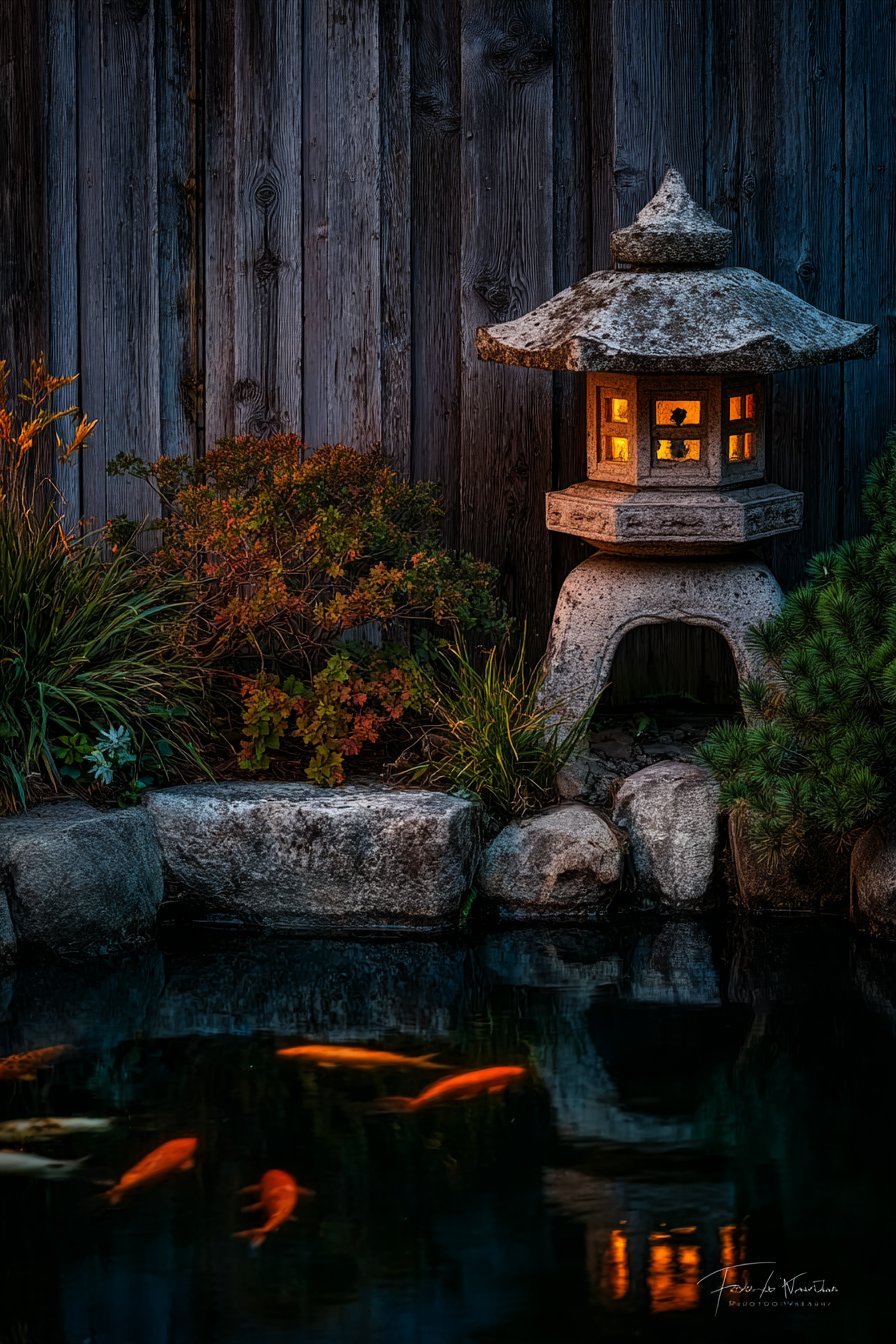
Stone lanterns called tōrō serve both practical and spiritual purposes in Japanese gardens. Originally used to light pathways to tea houses, these sculptural elements now primarily function as focal points that add vertical interest and cultural authenticity. Their weathered stone surfaces embody wabi-sabi principles while providing visual anchors that draw the eye through garden spaces.
The placement of lanterns is deliberate and meaningful. They’re often positioned near water features, along pathways, or at transition points between different garden areas. Rather than lighting them constantly, many gardeners reserve illumination for special occasions, maintaining the mystery and quietness that darkness brings to a zen garden environment.
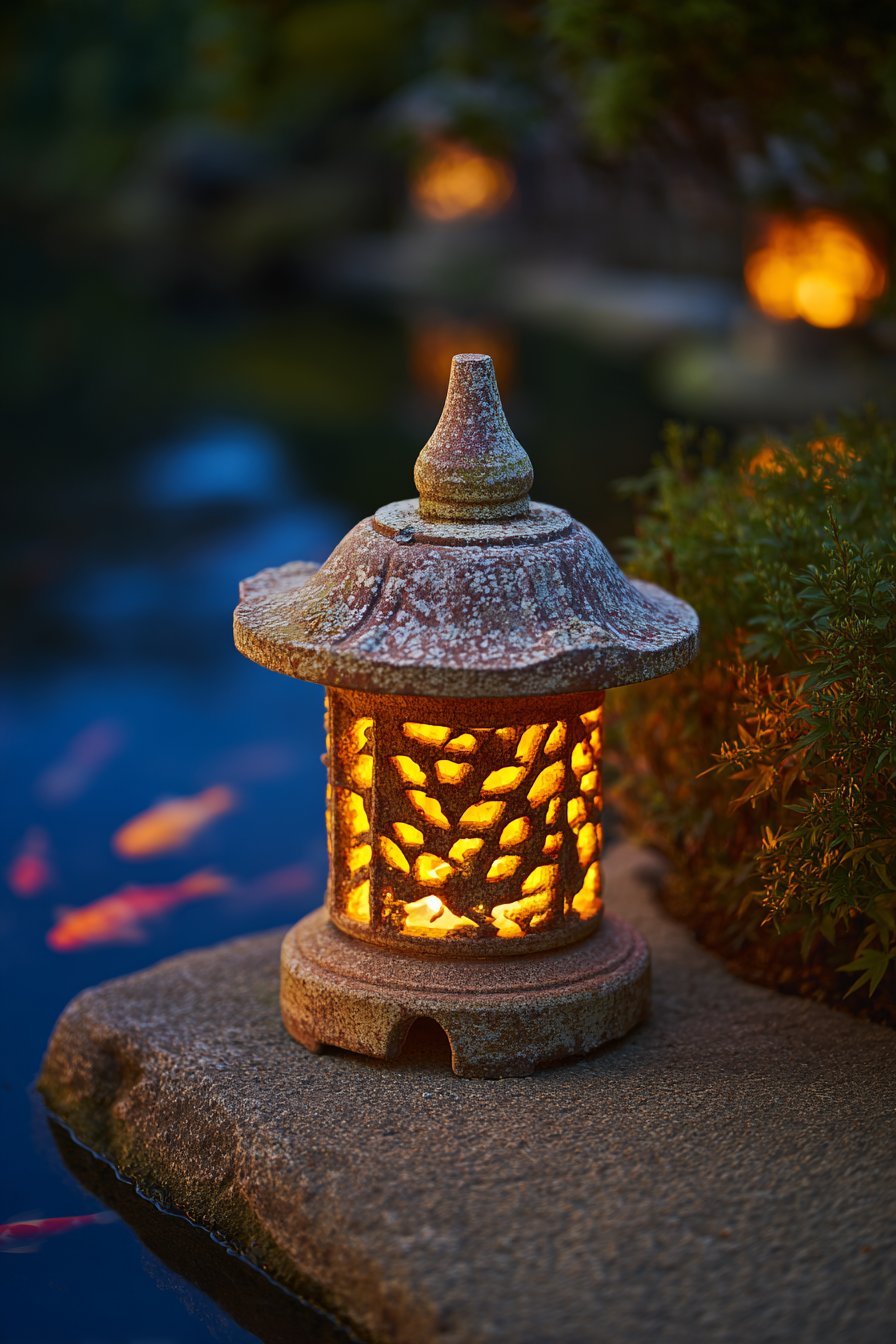
Other ornamental elements like bamboo fences, stone basins, and wooden bridges should be selected with restraint and purpose. Each piece should feel necessary rather than decorative, contributing to the overall sense of harmonious simplicity. The goal is to create interest without clutter, adding cultural depth without overwhelming the natural beauty of plants and stones.
- Position stone lanterns near water features or at path intersections
- Choose weathered or naturally aged lanterns over bright new replicas
- Limit ornaments to 2-3 key pieces rather than scattering many throughout
- Use bamboo fencing for privacy screens that maintain natural aesthetics
- Include a stone basin (tsukubai) as both functional and contemplative element
- Select ornaments with traditional designs that complement rather than dominate
9. The Practice of Karesansui (Dry Landscape Gardens)
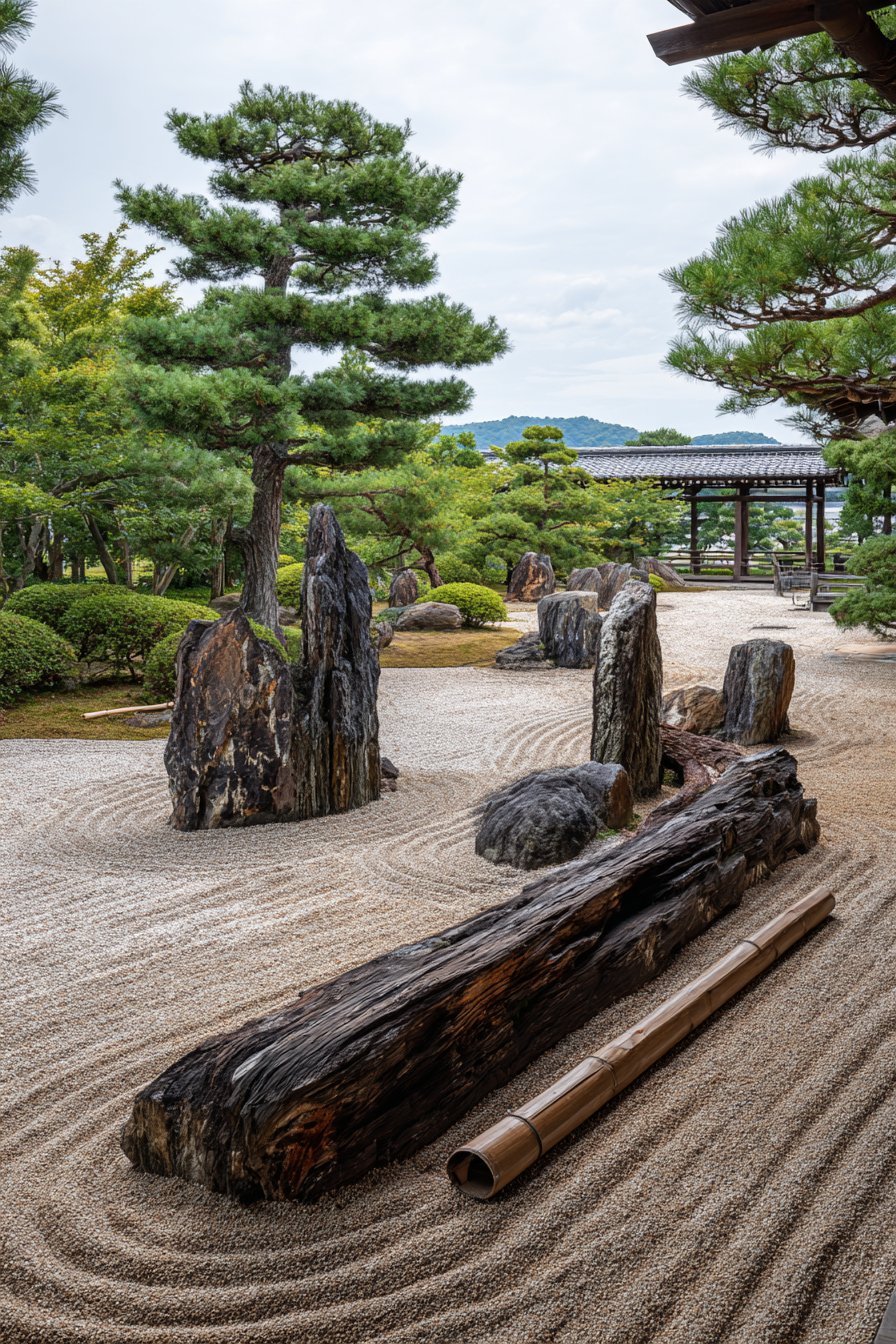
Karesansui or dry landscape gardens use rocks and gravel to symbolize water and islands, creating meditative compositions that require no actual water features. These minimalist designs originated in Zen Buddhist temples and represent the ultimate expression of simplicity in garden art. Raked gravel patterns symbolize flowing water or ocean waves, while carefully positioned rocks represent mountains, islands, or other natural formations.
The act of raking gravel itself becomes a meditative practice that many find deeply calming. The repetitive motion and focus required to create clean, flowing patterns quiets mental chatter and promotes mindfulness. Whether you create an entire dry garden or incorporate a small raked area, this element adds contemplative depth to your backyard sanctuary.
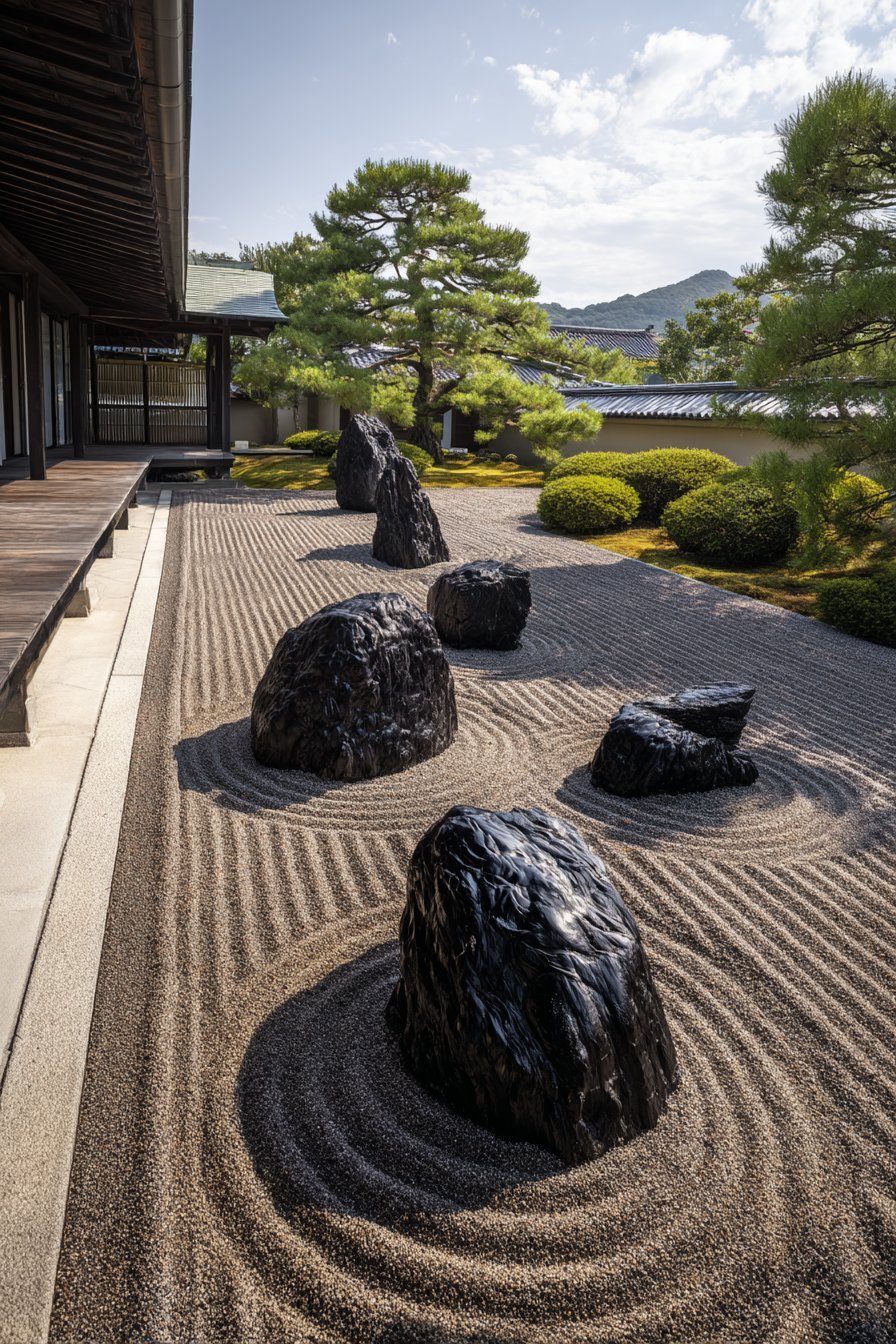
Dry gardens offer practical advantages for those in drought-prone areas or who prefer low-maintenance landscapes. They require no irrigation, minimal weeding, and create year-round visual interest without seasonal changes. This constancy provides a stable, peaceful backdrop for contemplation regardless of weather or time of year.
- Create a dedicated karesansui area using fine gravel or decomposed granite
- Position three to seven rocks in asymmetrical groupings to represent islands
- Use a wooden rake with evenly spaced tines to create wave patterns
- Edge the dry garden with low borders to contain gravel
- Rake patterns regularly as a meditative practice
- Keep the design simple—resist adding too many rocks or complex patterns
10. Seasonal Awareness and Connection to Nature
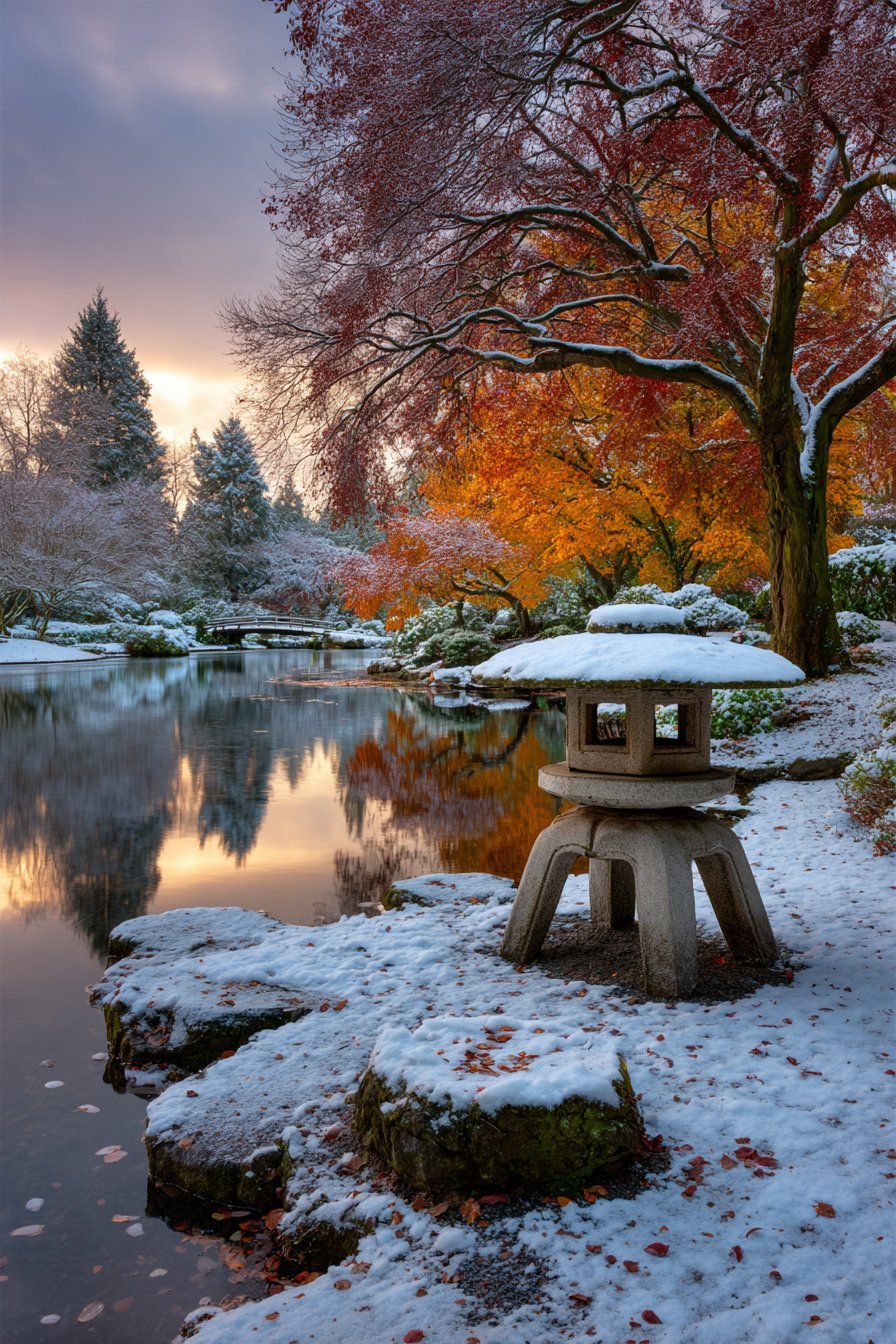
Japanese garden design celebrates tsukimi (moon viewing), hanami (flower viewing), and other seasonal practices that deepen our connection to natural cycles. This seasonal awareness transforms a static backyard into a dynamic space that changes throughout the year, offering new discoveries and reflections with each passing month. The goal is to create gardens that reveal the beauty of impermanence.
Planning for seasonal interest means selecting plants and features that highlight each season’s unique character. Spring brings cherry blossoms and emerging leaves, summer offers lush greenery and water lily blooms, autumn provides spectacular foliage color, and winter reveals the elegant structure of bare branches and evergreens dusted with snow or frost.
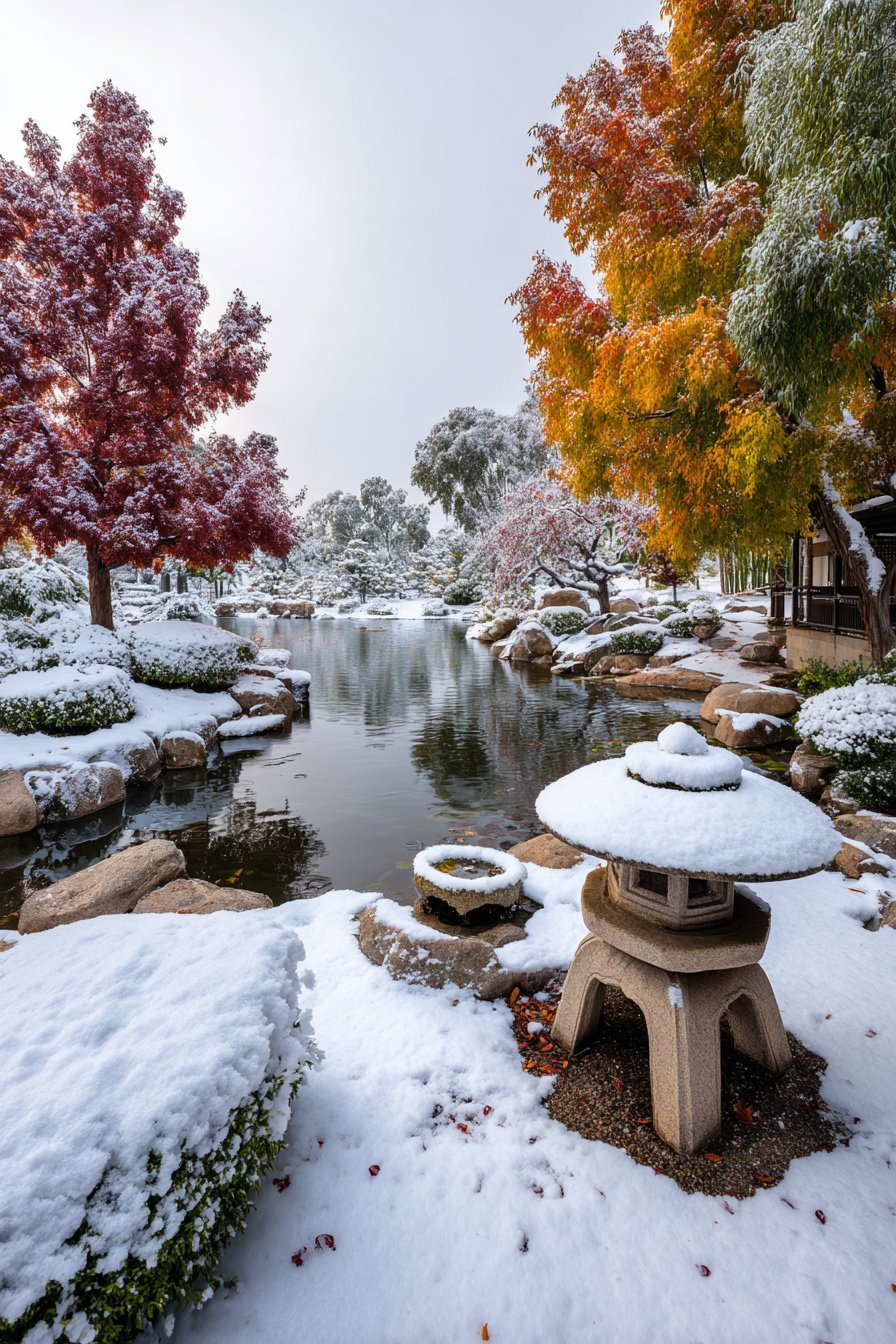
This seasonal sensitivity encourages regular engagement with your garden space. By observing subtle changes—the first bud, the turning leaf, the way light shifts—you develop mindfulness and appreciation for the present moment. This practice of noticing transforms your backyard into a teacher of patience, acceptance, and the natural rhythm of life itself.
- Plant cherry or plum trees for spectacular spring blossoms
- Include Japanese maples for stunning autumn color displays
- Select evergreens to provide structure and beauty in winter months
- Create a viewing area specifically for moon-watching on clear nights
- Document seasonal changes through photography or journaling
- Plan for at least one striking feature in each of the four seasons
Conclusion
Creating a peaceful Japanese-inspired backyard isn’t about perfectly replicating traditional designs—it’s about embracing the principles that make these spaces so profoundly calming. By incorporating elements like strategic rock placement, water features, negative space, and carefully selected plants, you can transform any outdoor area into a personal sanctuary that promotes relaxation and mental clarity.
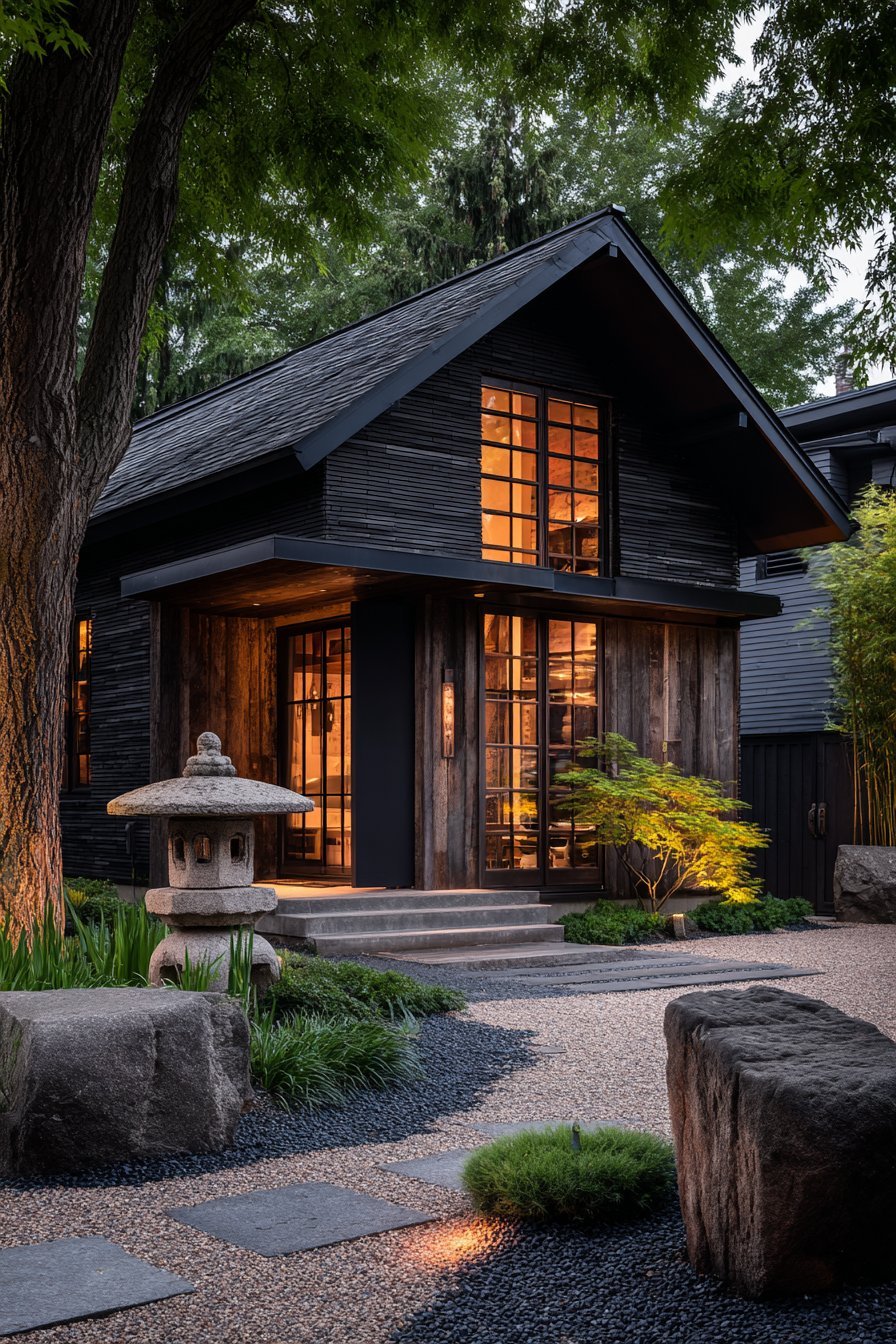
Start small with one or two elements that resonate most strongly with you. Perhaps begin with a simple water feature or create a small raked gravel area for contemplation. As you work with these principles, you’ll discover that the process of creating your zen garden is as therapeutic as enjoying the finished space. Let your backyard become a place where you can disconnect from daily stress and reconnect with the timeless rhythms of nature.
