

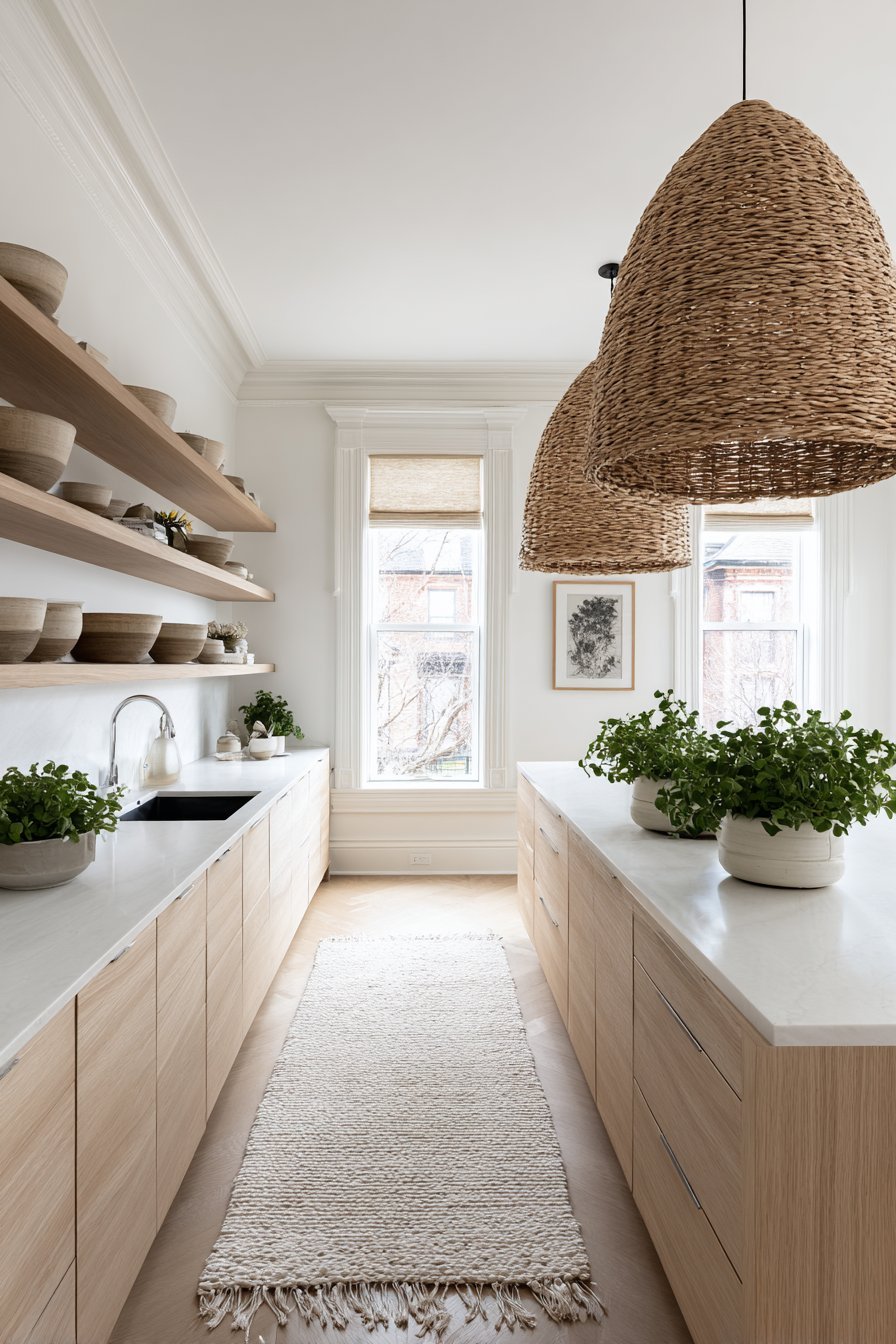
The kitchen has evolved from a purely functional space into the heart of the home, where aesthetics and practicality must coexist harmoniously. As homeowners increasingly seek refuge from chaotic lifestyles, the Japandi design philosophy offers a compelling solution that marries Japanese minimalism with Scandinavian warmth. This hybrid approach creates kitchens that feel both serene and inviting, striking a perfect balance between form and function.
Japandi design isn’t just another fleeting trend—it represents a thoughtful lifestyle choice that prioritizes intentional living and mindful consumption. By blending the clean lines and natural materials of Scandinavian design with the zen-like simplicity and craftsmanship of Japanese aesthetics, this style creates kitchens that reduce visual noise while maximizing usability. Whether you’re renovating your entire kitchen or simply seeking to refresh your space, understanding these core principles will help you create a culinary environment that promotes both calm efficiency and everyday joy.
The beauty of Japandi kitchen design lies in its universal applicability. From compact urban apartments to spacious family homes, these principles adapt beautifully to various spaces and budgets. The following six principles will guide you through creating a kitchen that honors both aesthetic restraint and practical necessity, proving that minimalism doesn’t mean sacrificing warmth or functionality.
1. Embrace Natural Materials and Organic Textures
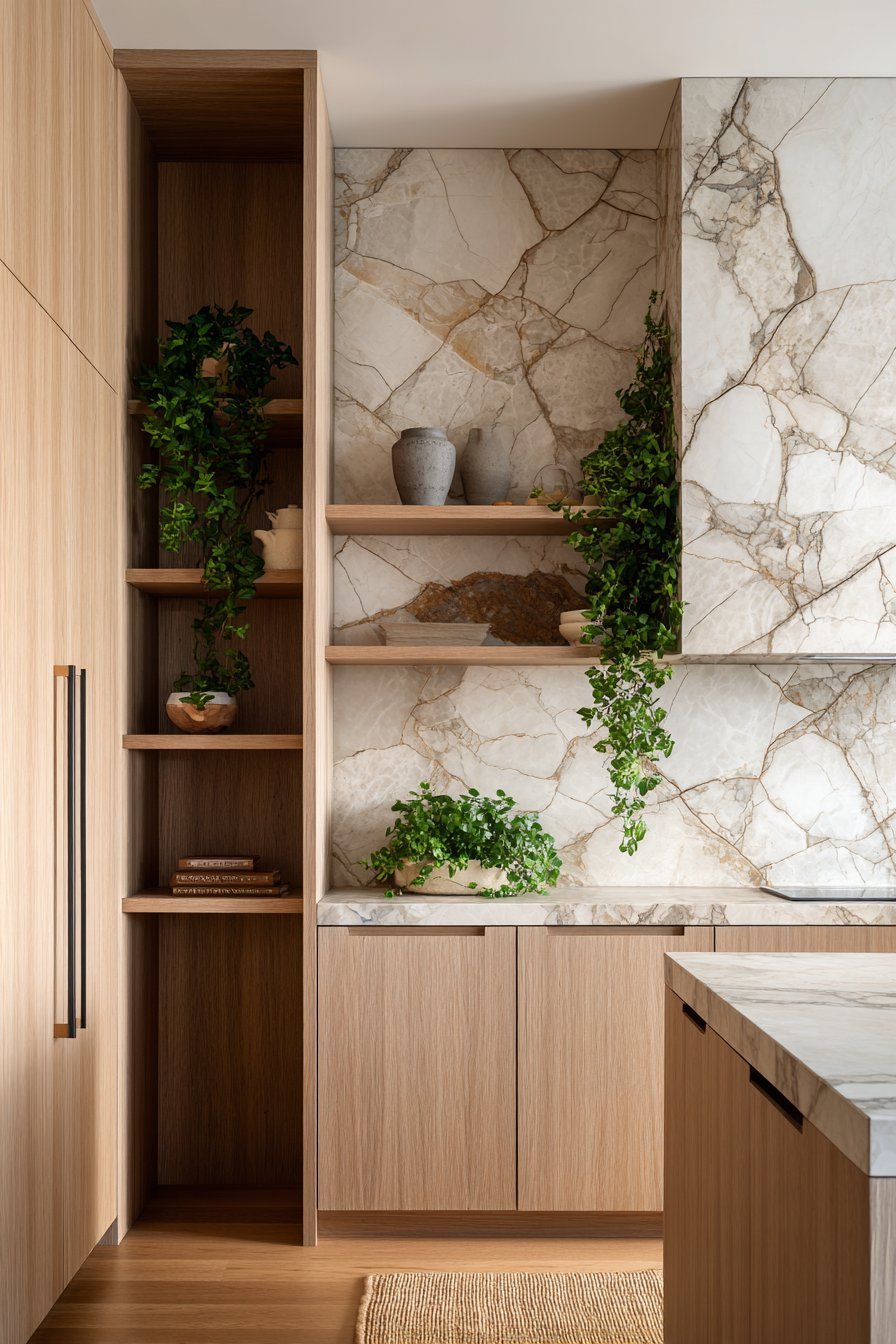
The foundation of any Japandi kitchen begins with authentic natural materials that age gracefully and connect inhabitants to nature. Unlike synthetic alternatives, wood, stone, and clay bring inherent warmth and textural richness that synthetic materials simply cannot replicate. Light woods like oak, ash, and birch dominate Scandinavian influences, while darker walnut and teak reflect Japanese sensibilities.
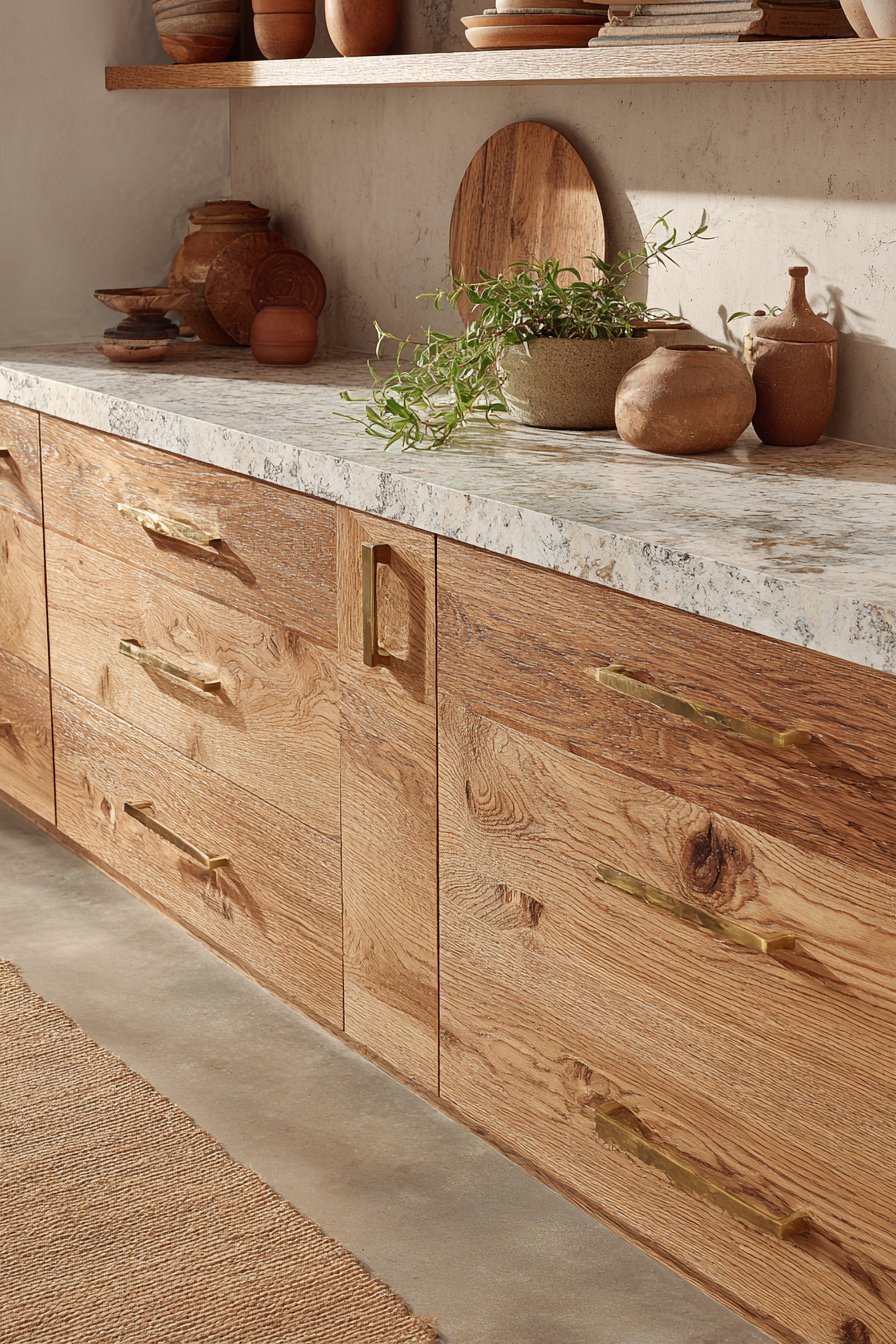
Consider incorporating solid wood cabinetry with visible grain patterns rather than painted surfaces. Stone countertops in matte finishes—such as honed granite, soapstone, or concrete—provide durability while maintaining the understated elegance central to this aesthetic. Ceramic tiles in neutral tones, handcrafted pottery for storage, and woven baskets for produce add layers of organic texture without creating visual chaos.
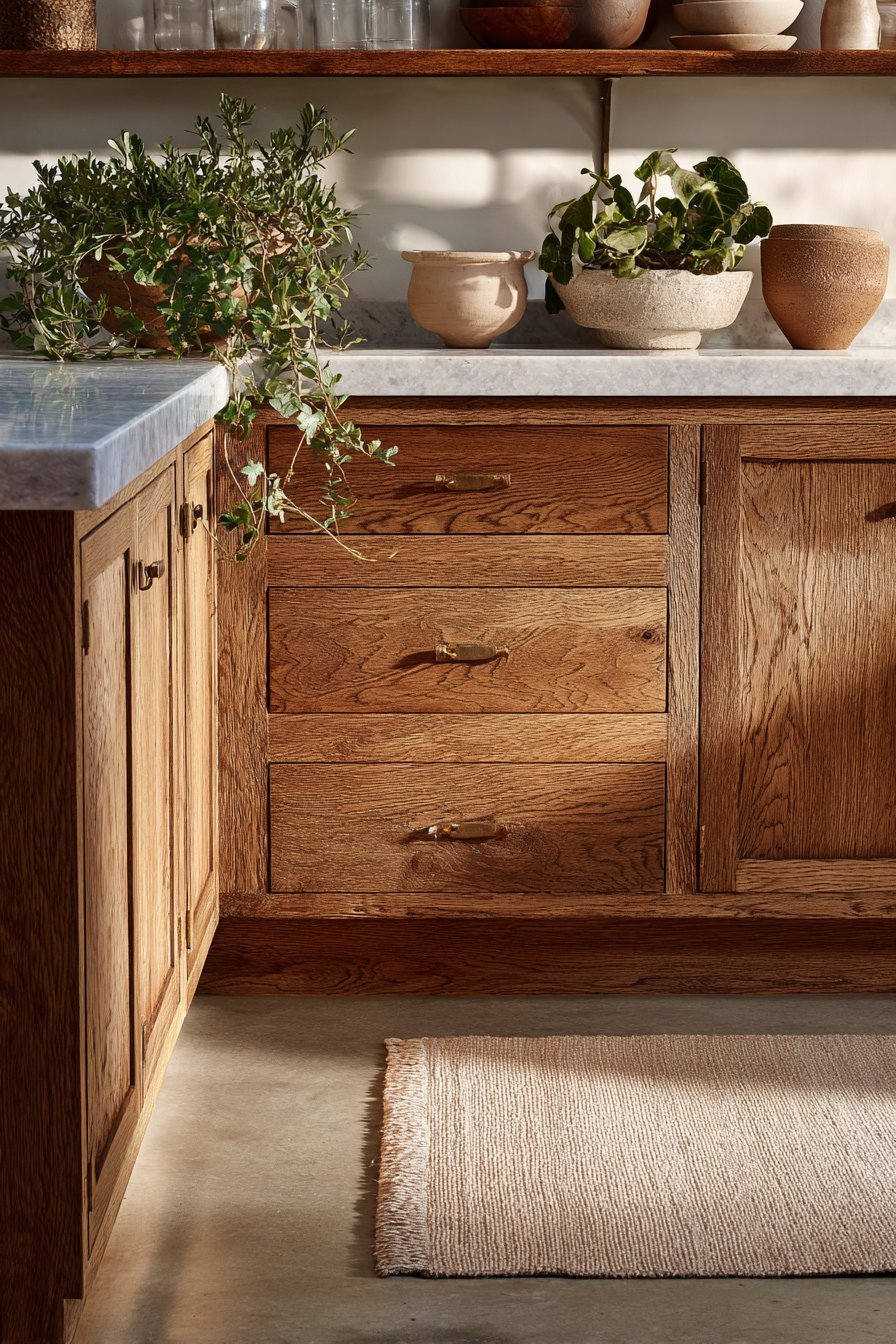
The key lies in allowing materials to showcase their natural imperfections rather than hiding them. Knots in wood, variations in stone veining, and the unique patina that develops over time all contribute to the authentic, lived-in quality that makes Japandi kitchens feel grounded and timeless. These materials also support sustainable living, as they’re often locally sourced and highly durable.
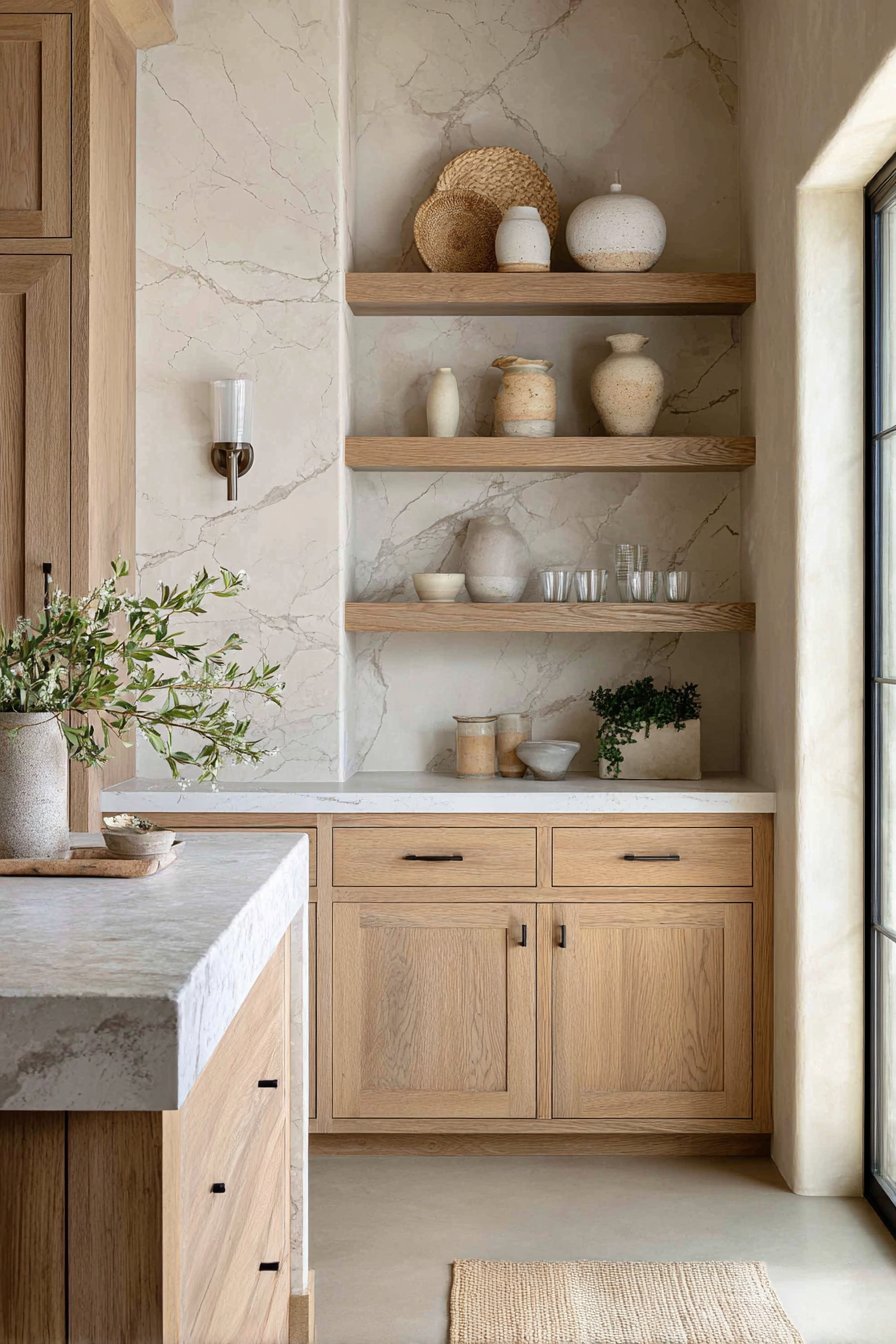
- Select cabinet wood with prominent grain patterns for visual interest
- Choose matte or honed finishes over glossy surfaces for countertops
- Incorporate natural fiber elements like jute rugs or linen textiles
- Use ceramic or stoneware for open shelving displays
- Opt for brass or bronze hardware that develops patina over time
- Include living plants in simple ceramic planters for organic connection
2. Prioritize Functional Minimalism Over Decoration
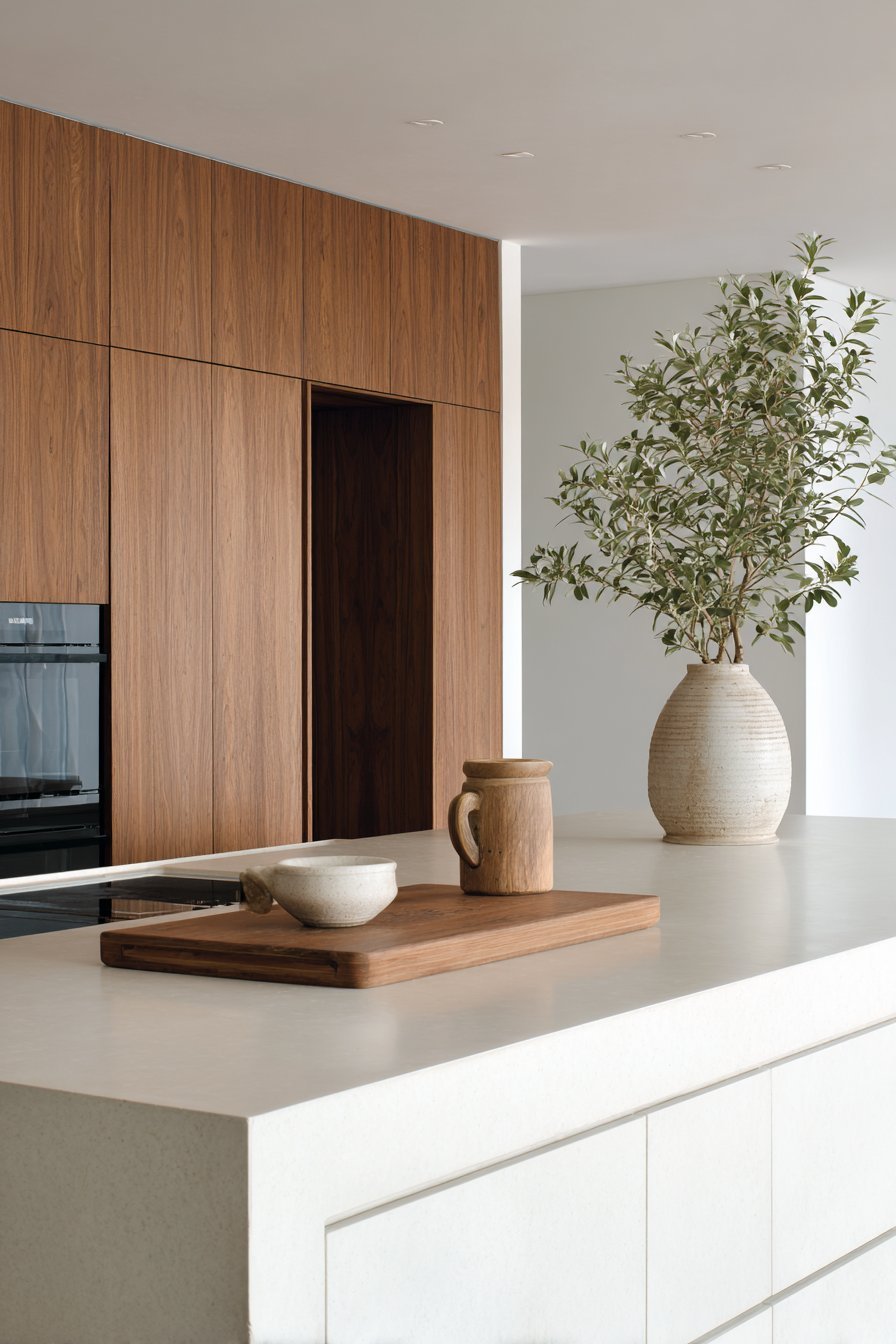
Japandi design champions purposeful simplicity, where every element serves a clear function rather than existing purely for decoration. This principle requires thoughtful curation of kitchen items, keeping only what you regularly use and truly value. The result is a space with breathing room that feels organized and peaceful rather than cluttered and overwhelming.
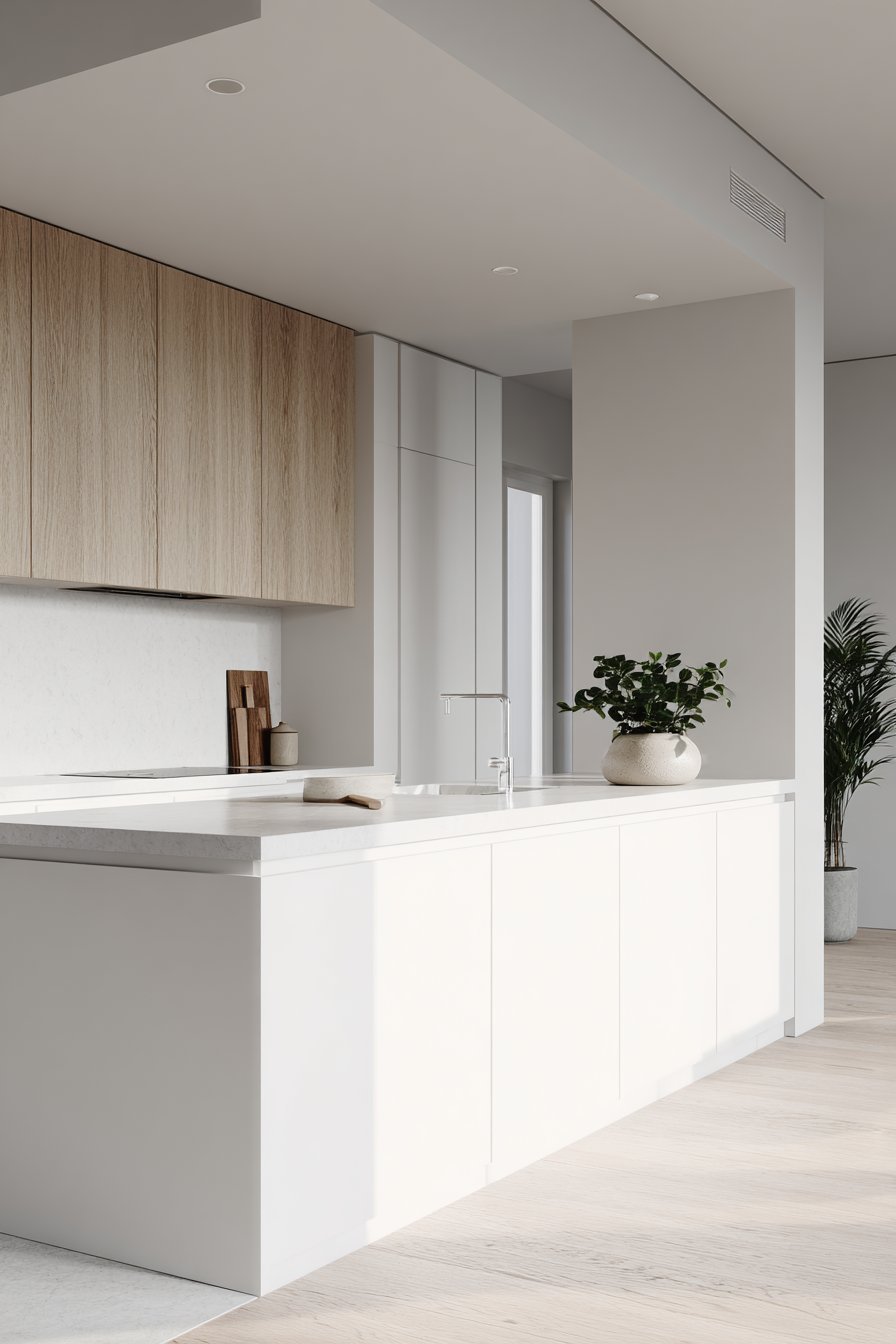
Begin by conducting a thorough inventory of your kitchen possessions. Remove duplicate items, specialty gadgets used once yearly, and anything that doesn’t earn its place through regular utility. Store seasonal or infrequently used items elsewhere, keeping daily essentials within easy reach. This approach dramatically reduces visual noise while improving workflow efficiency.
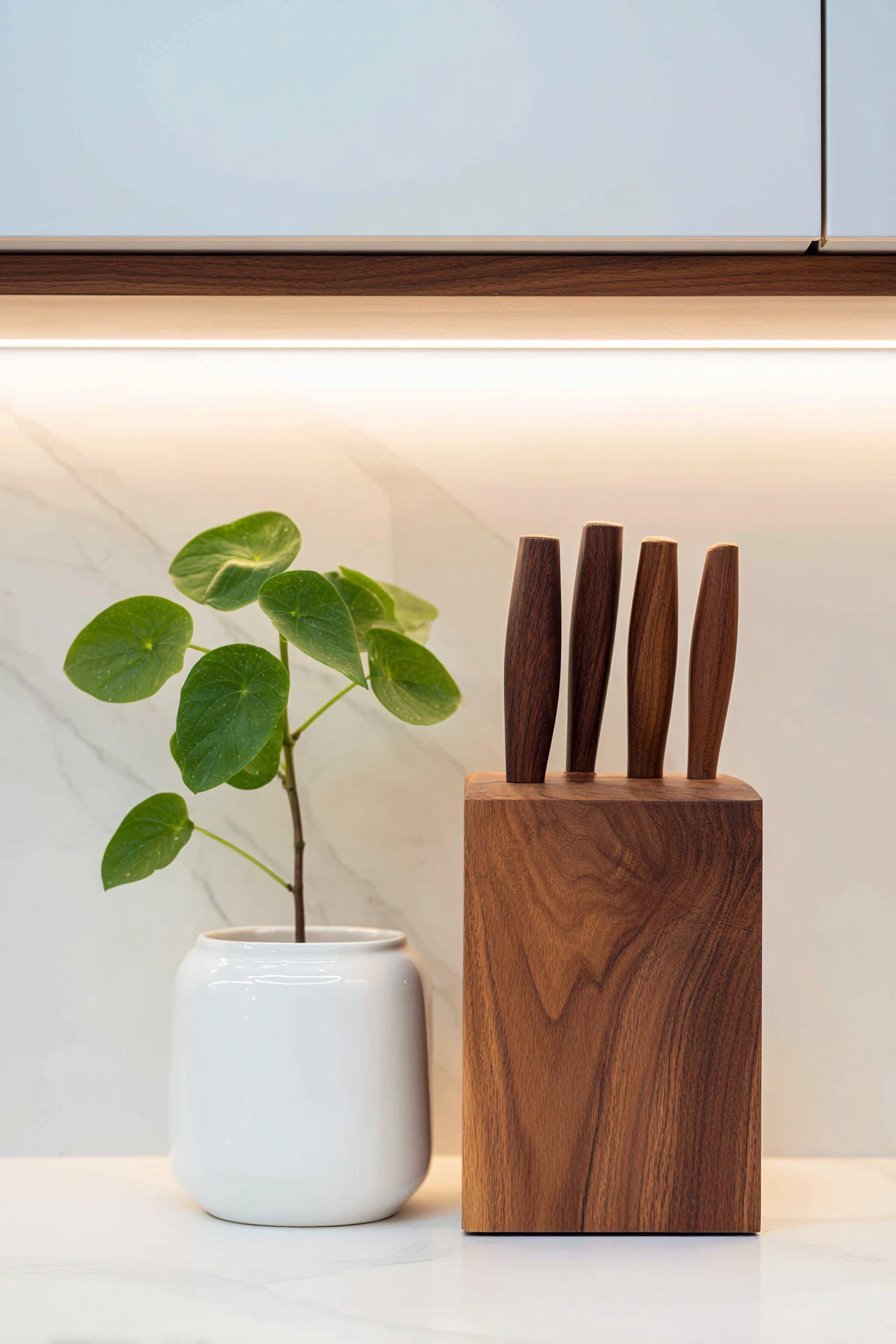
Counter surfaces should remain largely clear, with only permanent fixtures like a knife block, cutting board, or coffee maker visible. Even these items should be chosen for their aesthetic contribution as well as function. Beautiful wooden utensils displayed in a simple ceramic crock become both decoration and tool storage, exemplifying the dual-purpose philosophy central to Japandi thinking.
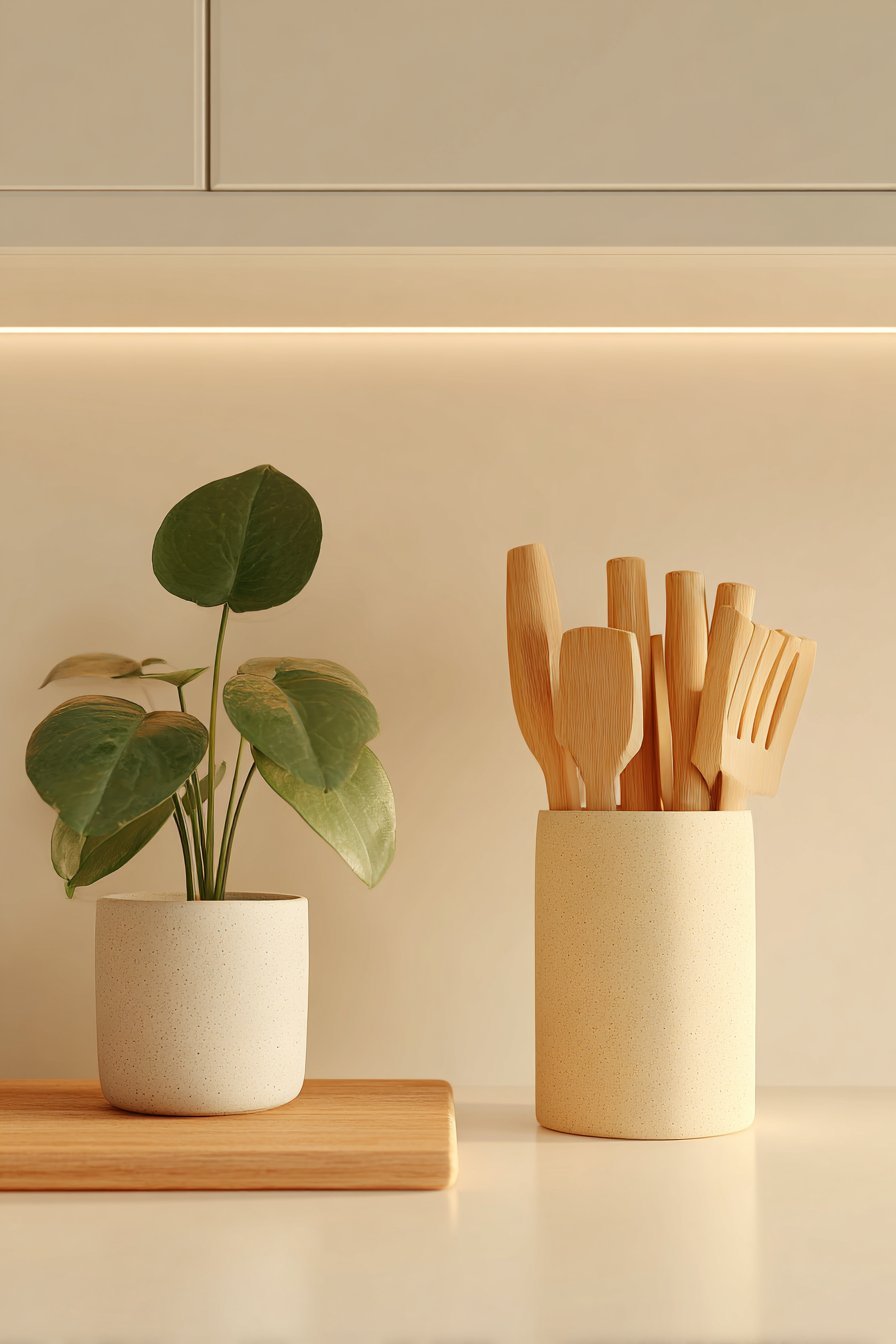
- Limit countertop items to three or fewer permanent fixtures
- Choose appliances in muted tones that blend with cabinetry
- Implement closed storage for 80% of kitchen items
- Display only beautiful, frequently used items on open shelves
- Invest in quality multi-functional tools over specialized gadgets
- Maintain empty space as a design element rather than filling every surface
3. Adopt a Neutral and Natural Color Palette
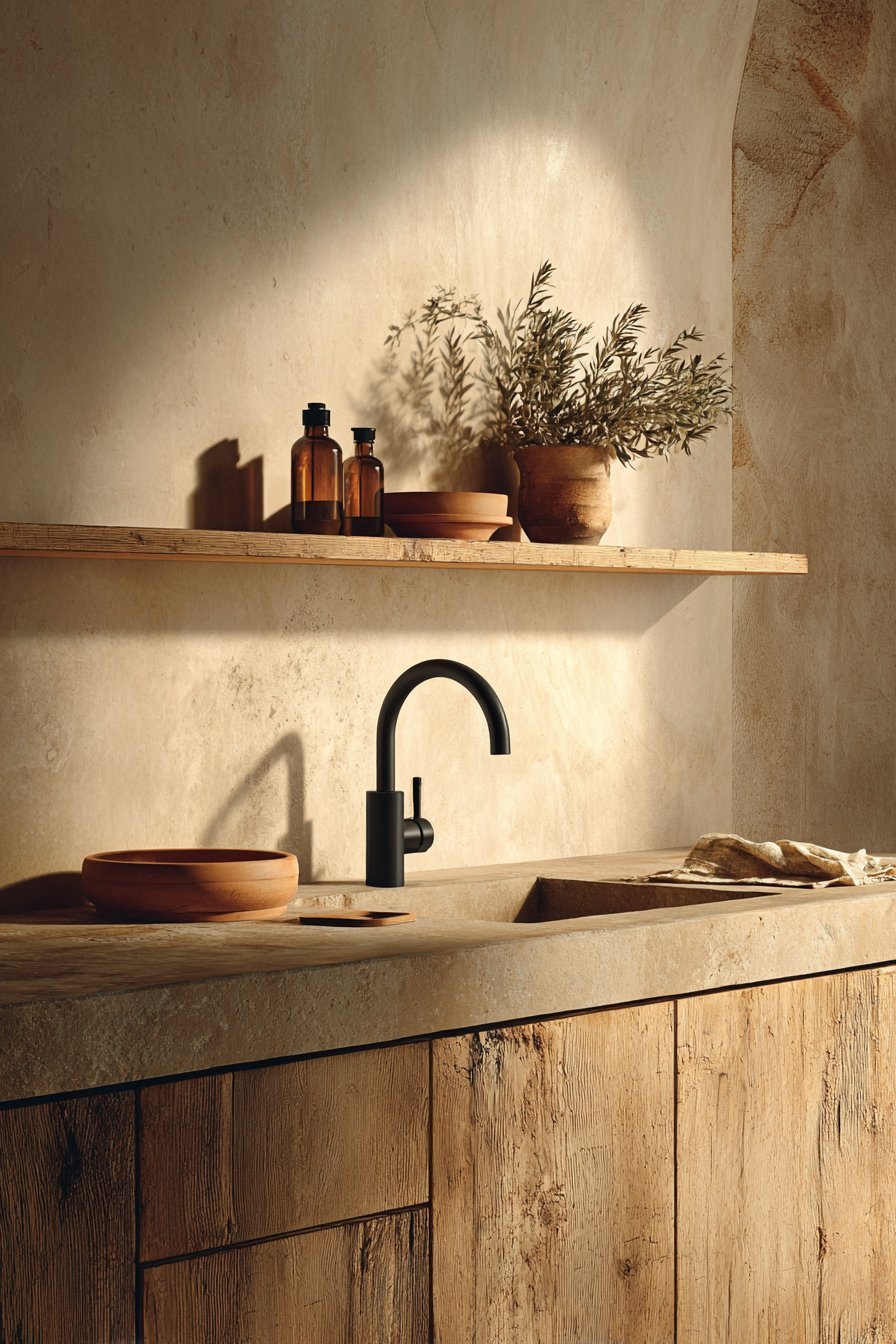
The Japandi color scheme draws exclusively from nature’s palette, creating spaces that feel cohesive, calming, and timeless. Base colors include soft whites, warm grays, beige, and various shades of brown ranging from pale birch to deep walnut. These earthy foundations provide a serene backdrop that never feels cold or sterile.
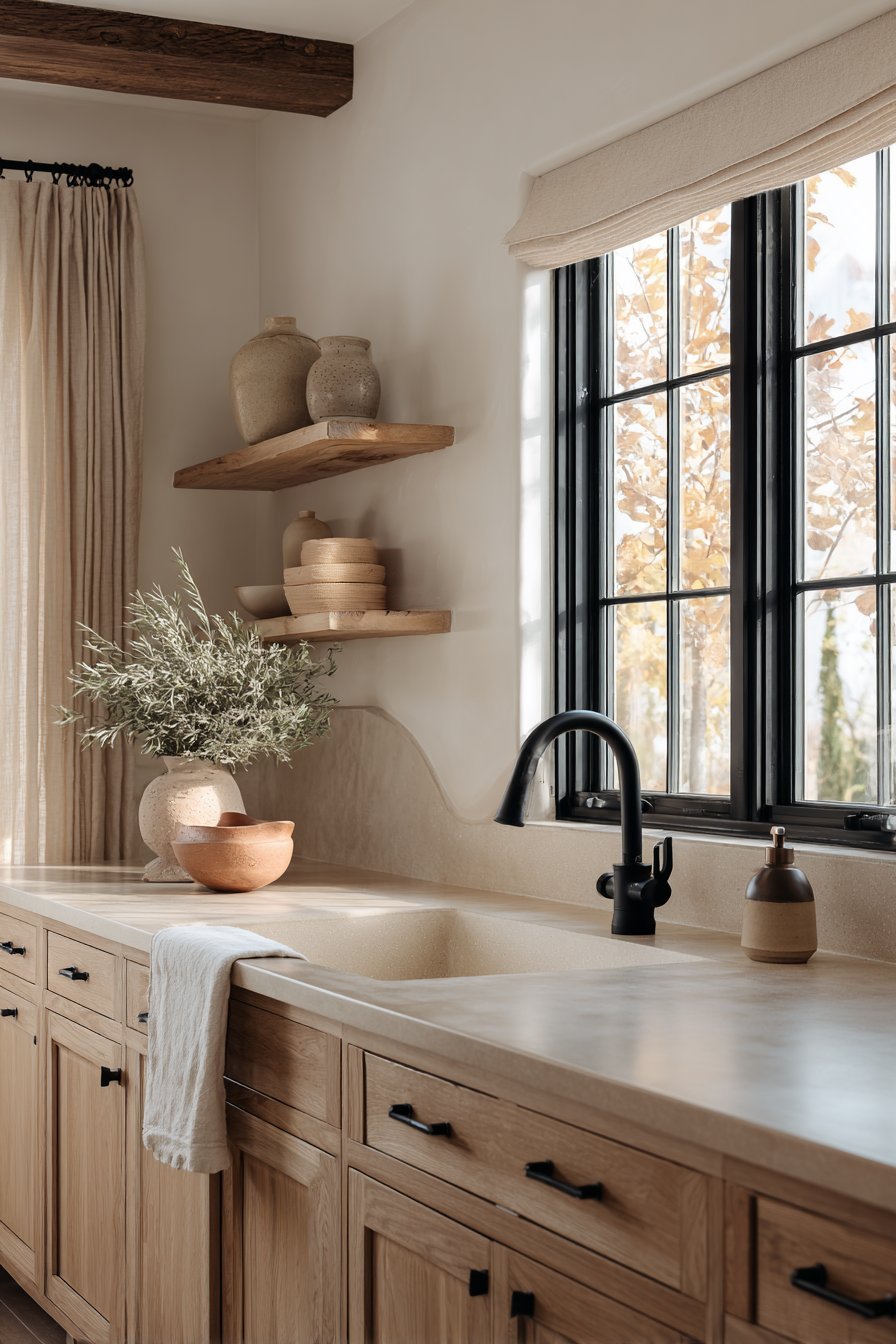
Accent colors should be equally restrained, pulling from natural sources like terracotta clay, charcoal stone, soft sage, or muted blue-gray. The overall effect should feel monochromatic yet layered, with subtle variations in tone creating depth without contrast. Avoid pure white, which can feel clinical, instead favoring warm whites with undertones of cream or gray.
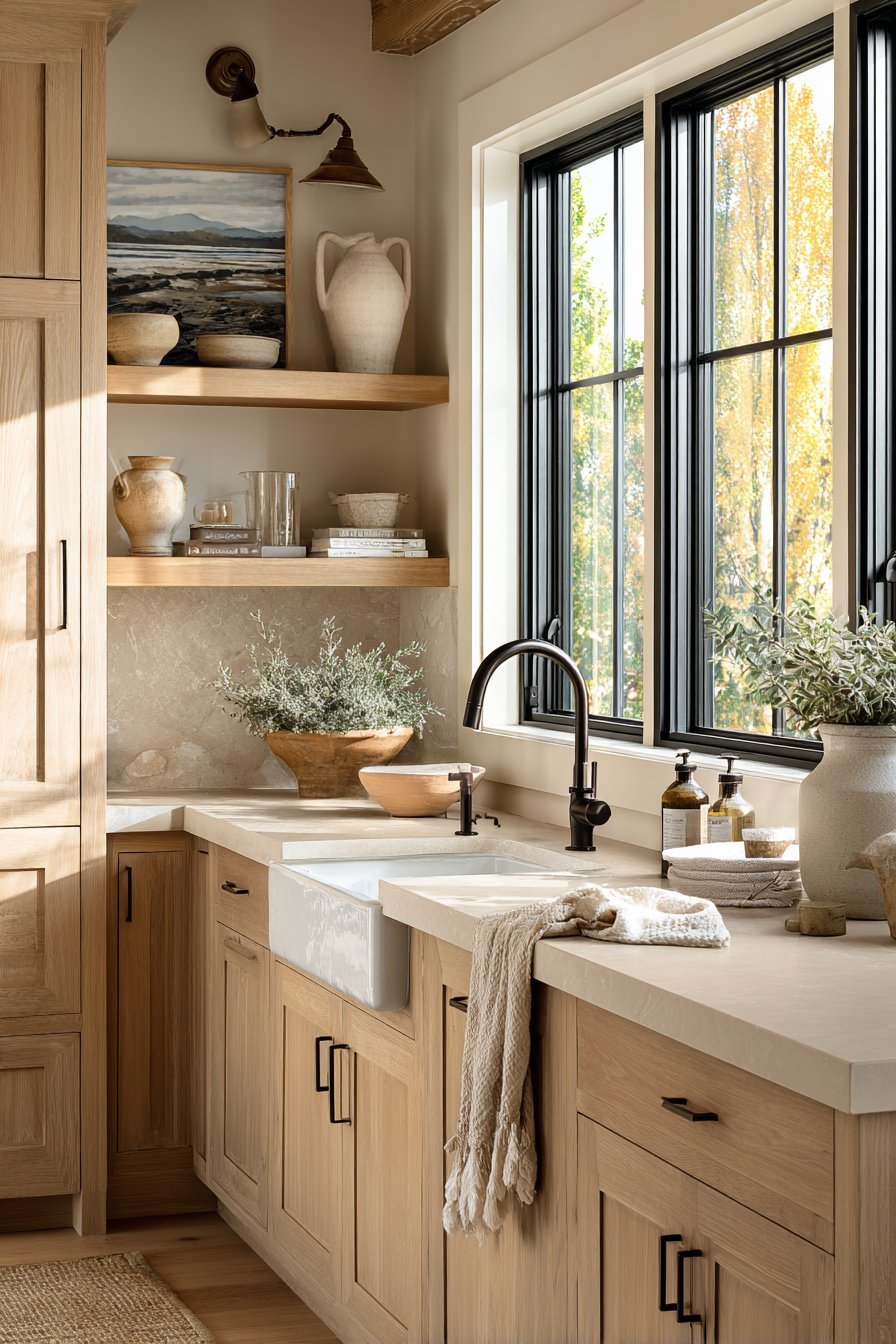
This limited palette doesn’t mean boring uniformity. Instead, it allows textural variations to take center stage, with wood grain patterns, stone veining, and fabric weaves providing visual interest. The neutral background also allows seasonal produce, fresh herbs, and occasional flowers to become colorful focal points that feel intentional rather than chaotic.
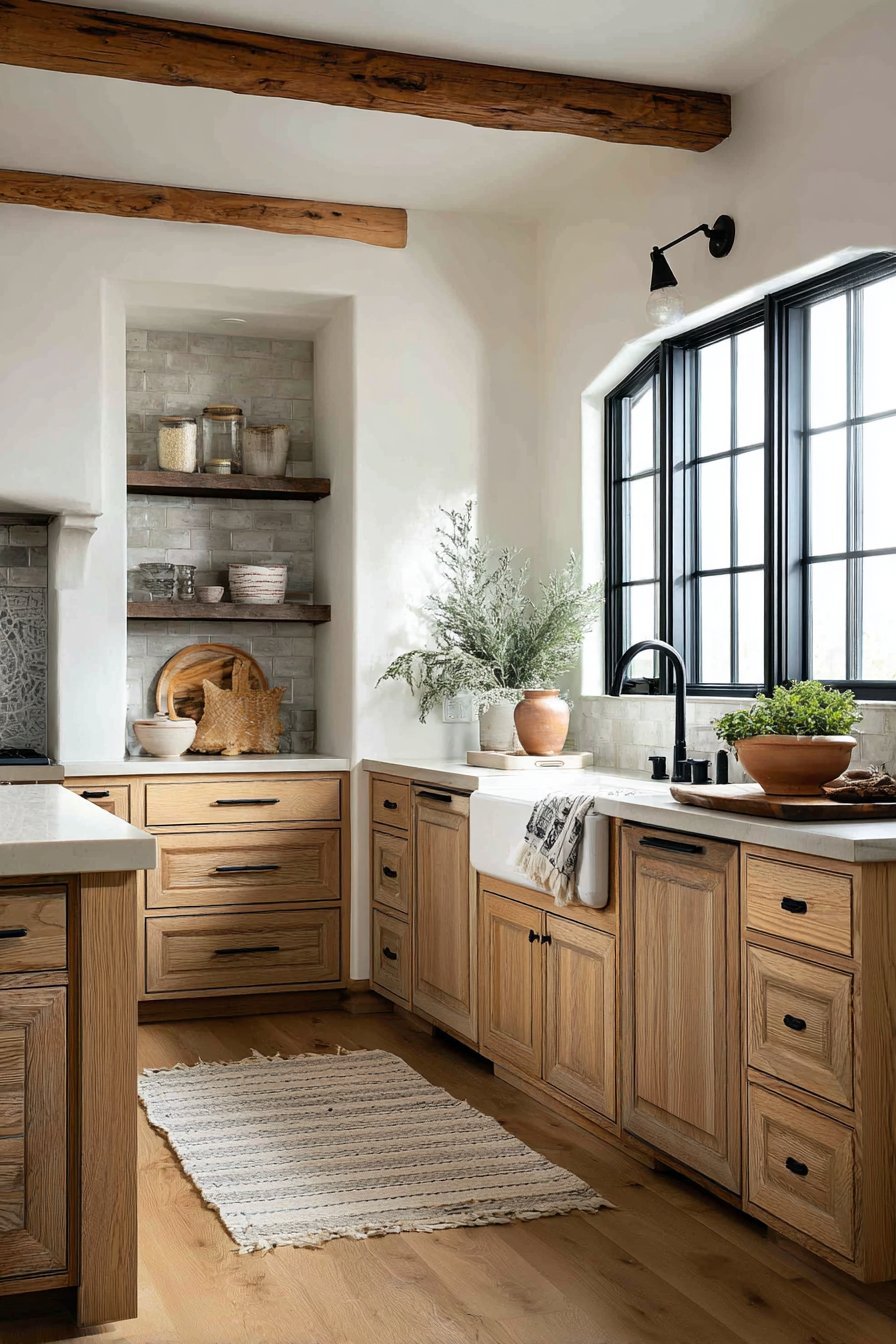
- Use warm white paint with gray or cream undertones for walls
- Select wood cabinetry in light oak or medium walnut tones
- Choose countertops in soft gray, beige concrete, or honed black stone
- Limit accent colors to two maximum, drawn from nature
- Consider matte black fixtures for subtle contrast and definition
- Allow natural food colors to provide seasonal variation
4. Integrate Thoughtful Lighting Layers
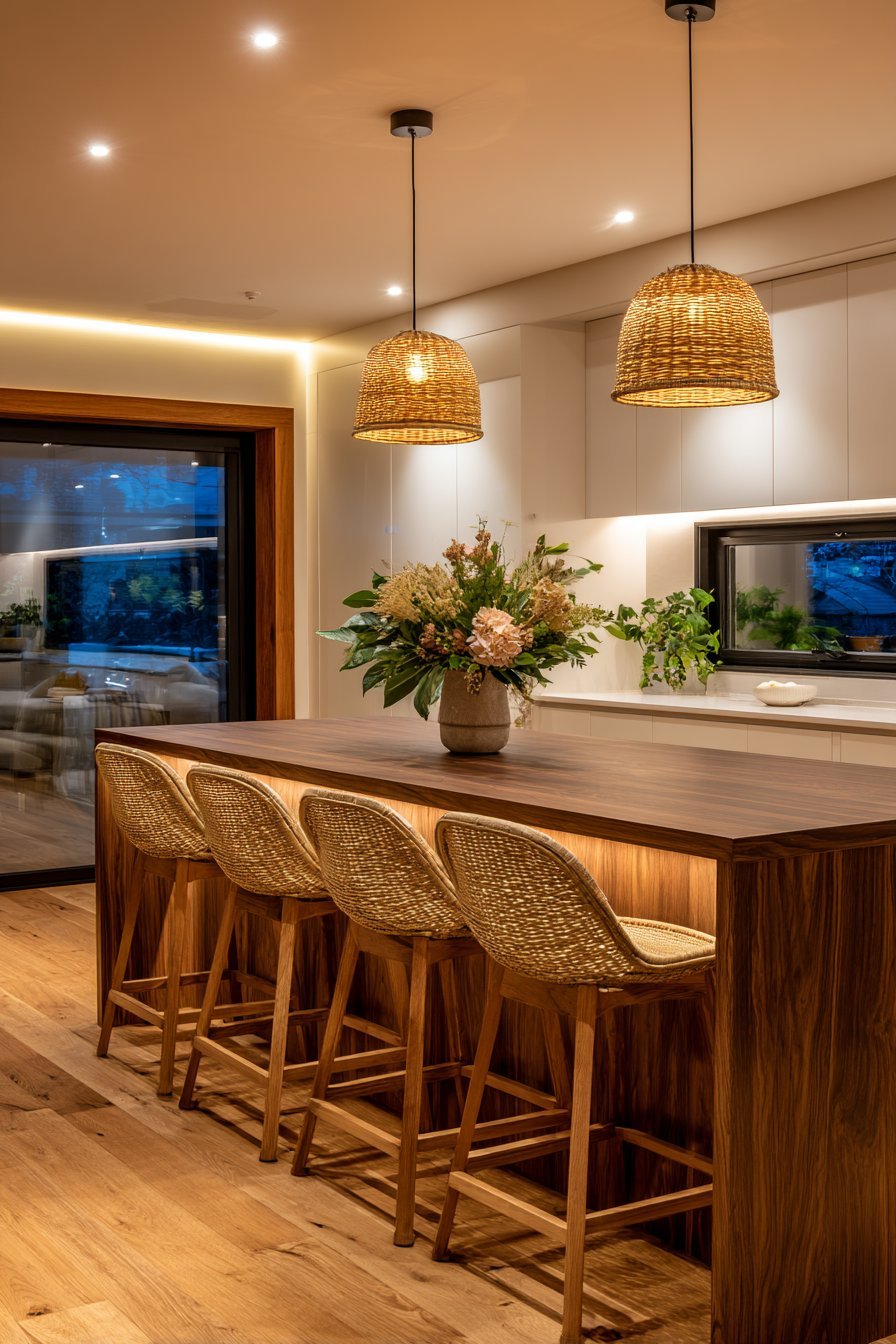
Lighting in Japandi kitchens serves both practical functionality and atmospheric ambiance, requiring multiple layers working in harmony. Harsh overhead lighting alone creates an institutional feel, while insufficient task lighting compromises cooking safety and efficiency. The solution lies in combining general, task, and accent lighting with warm color temperatures between 2700K and 3000K.
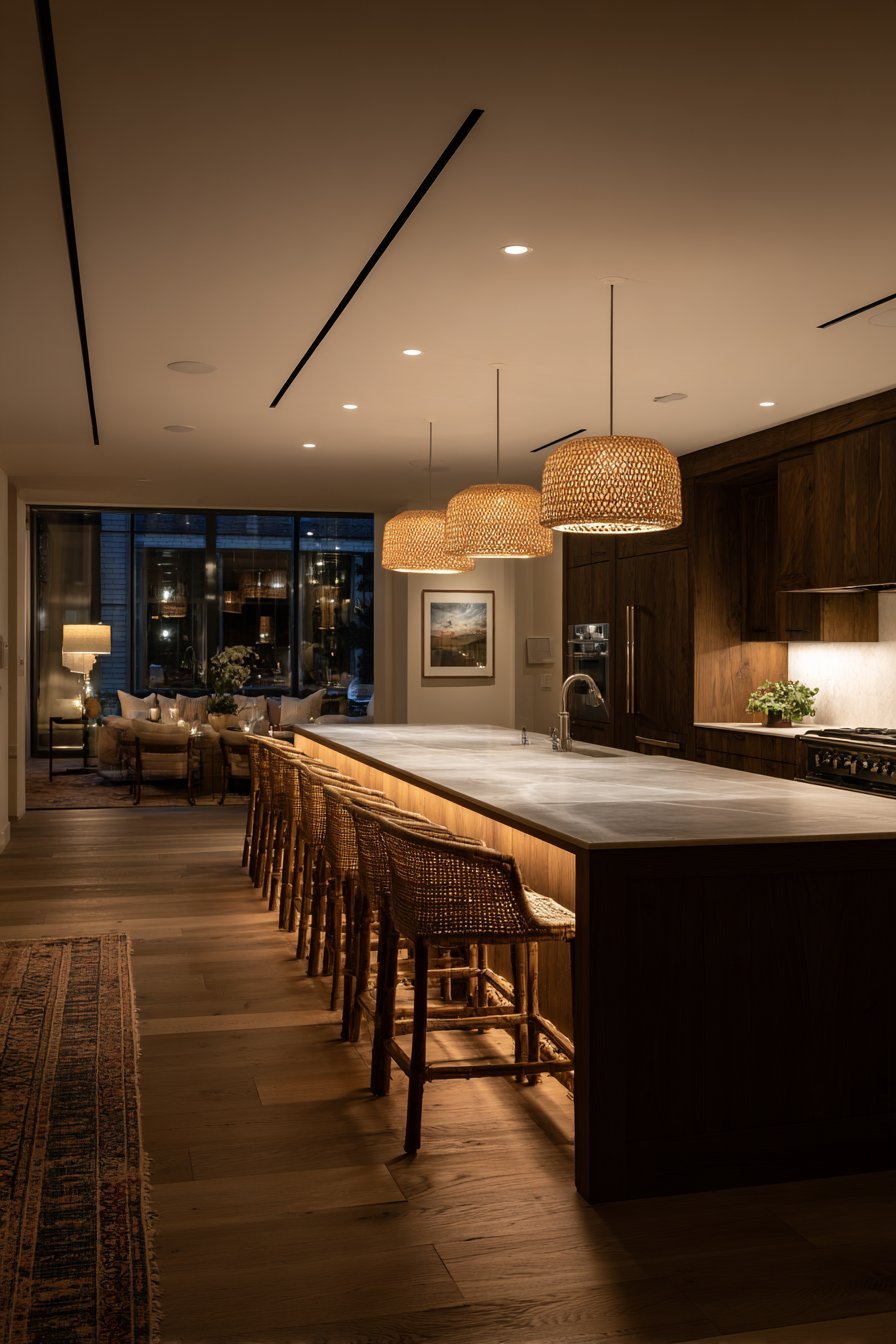
Install recessed ceiling lights or semi-flush fixtures for general illumination, ensuring even coverage without dark corners. Add dedicated task lighting under cabinets to illuminate work surfaces where you prep, cook, and clean. These should provide bright, shadow-free light exactly where needed without contributing to overall room brightness when not required.
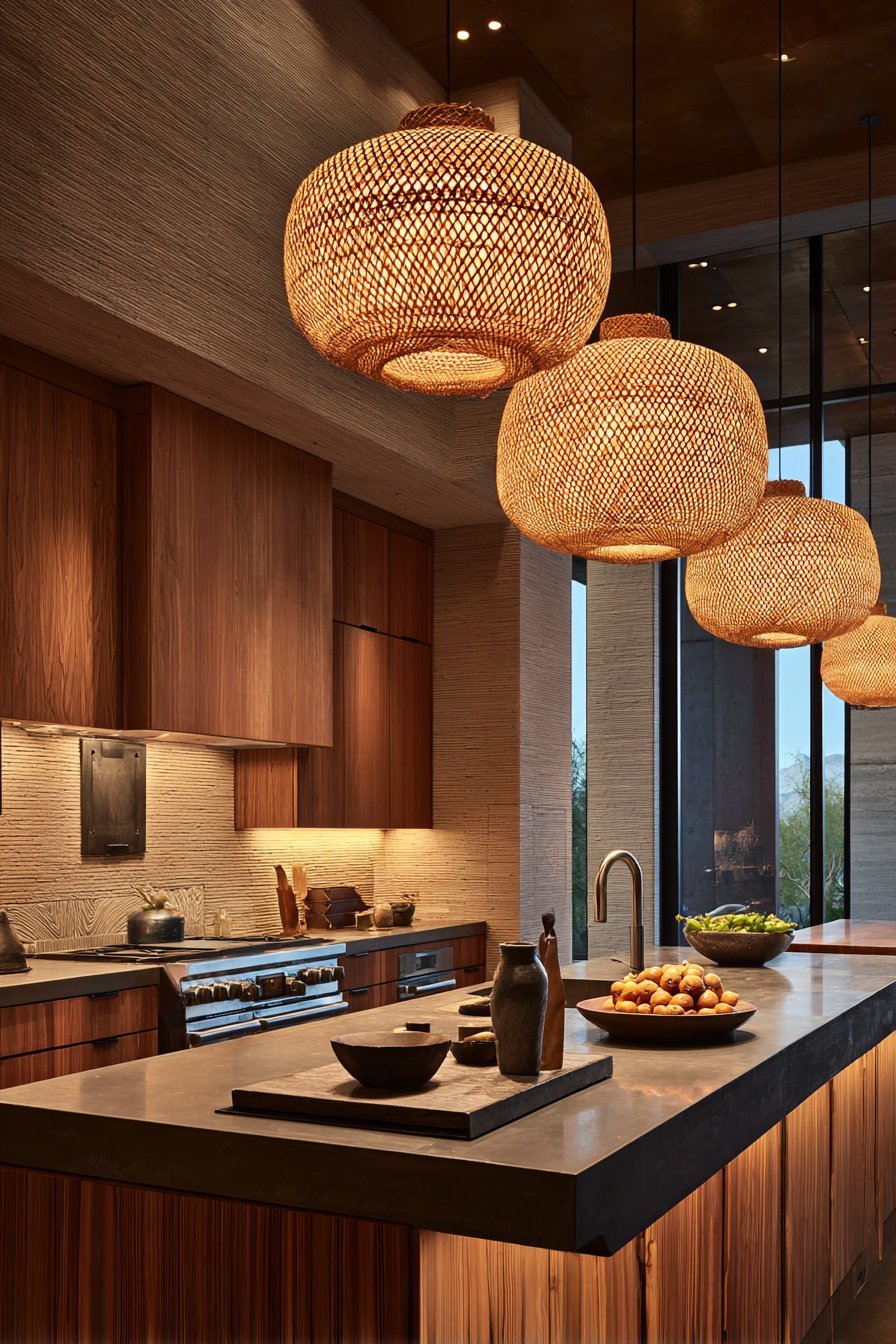
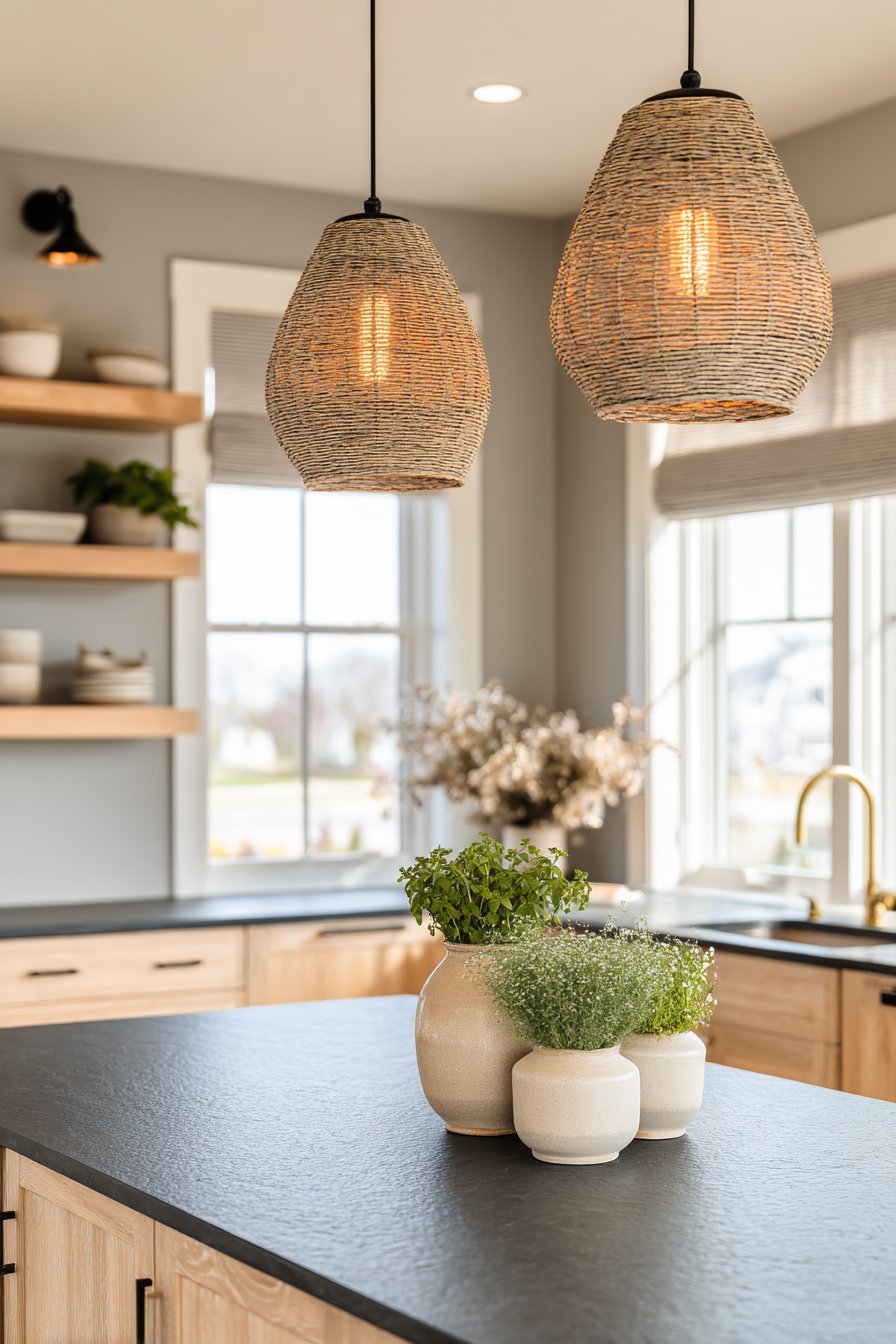
Incorporate ambient lighting through pendant fixtures over islands or dining areas, choosing designs in natural materials like woven rattan, rice paper, or ceramic. Dimmer switches on all circuits allow you to adjust lighting intensity based on time of day and activity, transitioning from bright functionality during cooking to soft ambiance during evening relaxation.
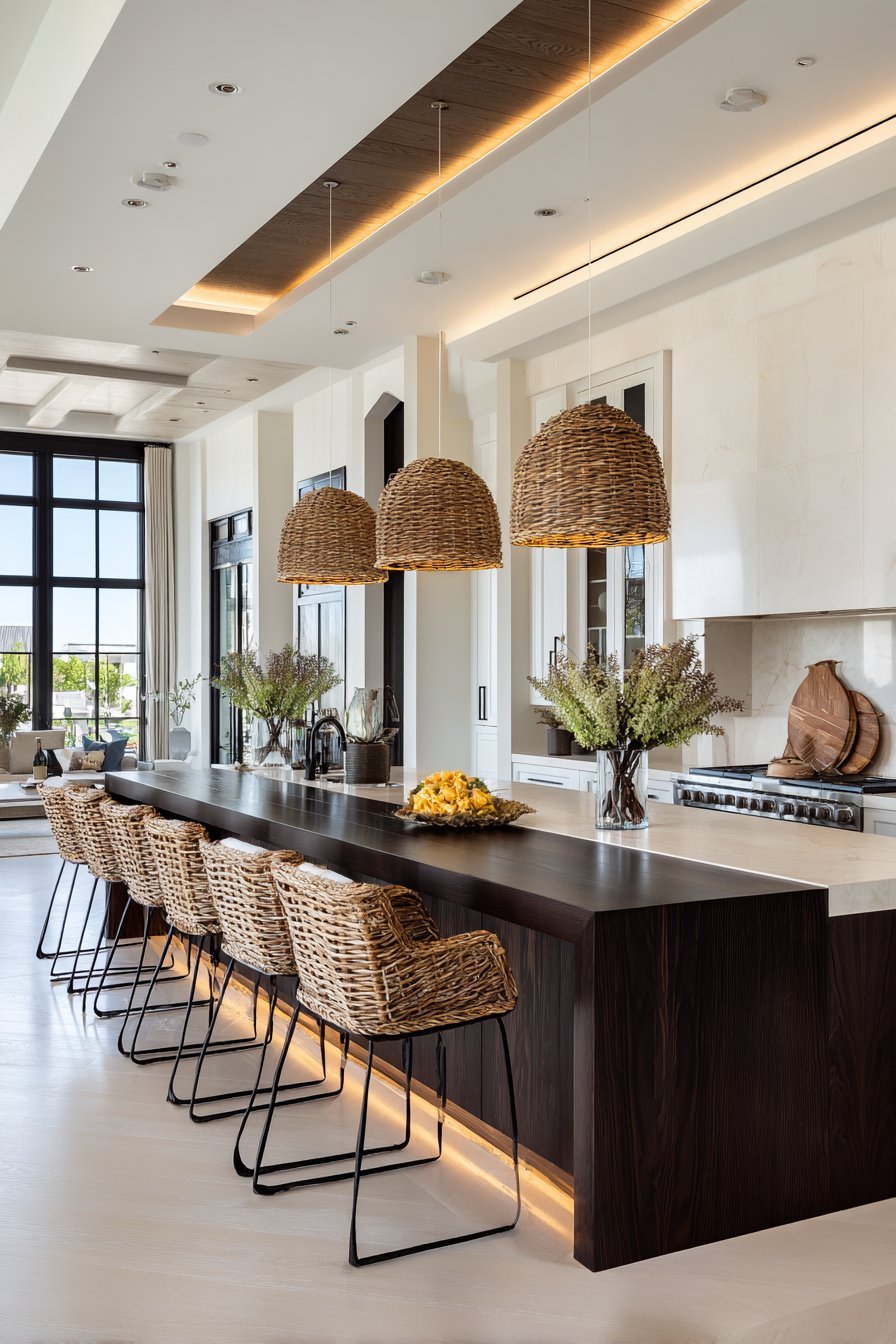
- Install under-cabinet LED strips with warm color temperature
- Choose pendant lights in natural materials with simple forms
- Add dimmer switches to all lighting circuits for flexibility
- Position task lighting to eliminate shadows on work surfaces
- Consider toe-kick lighting for subtle nighttime navigation
- Avoid cool-toned or blue-spectrum bulbs that feel harsh
5. Design for Seamless Organization and Hidden Storage
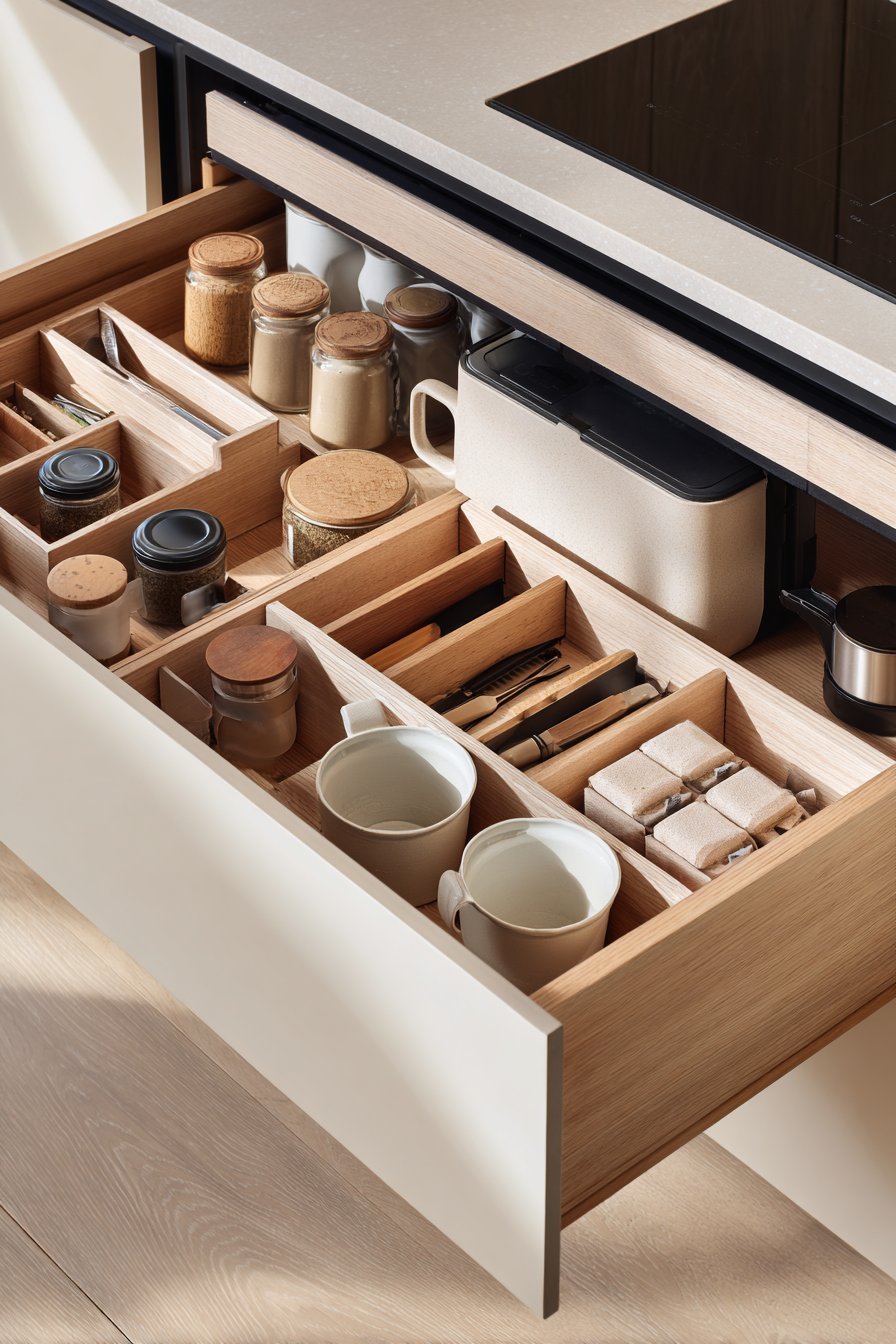
The clutter-free appearance of Japandi kitchens relies heavily on intelligent storage solutions that keep items accessible yet invisible. Every drawer and cabinet should be meticulously organized with dividers, organizers, and designated zones for specific items. This systematic approach transforms daily routines into effortless rituals rather than frustrating searches.
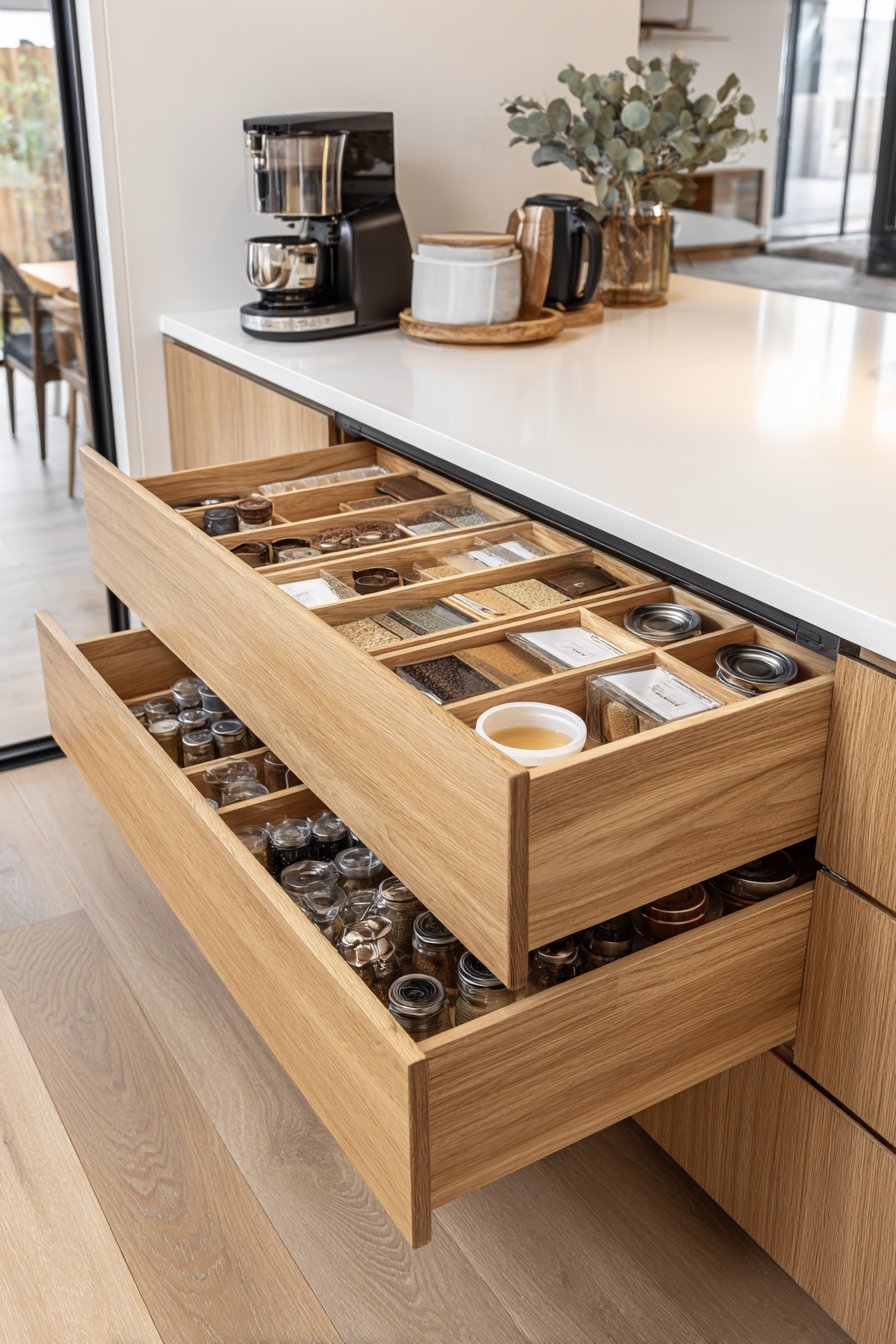
Invest in custom drawer inserts for utensils, spices, and tools, ensuring everything has a designated home. Pull-out organizers for pots, pans, and lids maximize cabinet accessibility while maintaining order. Consider vertical storage solutions like pegboards inside cabinet doors or pull-out pantry units that utilize narrow spaces efficiently.
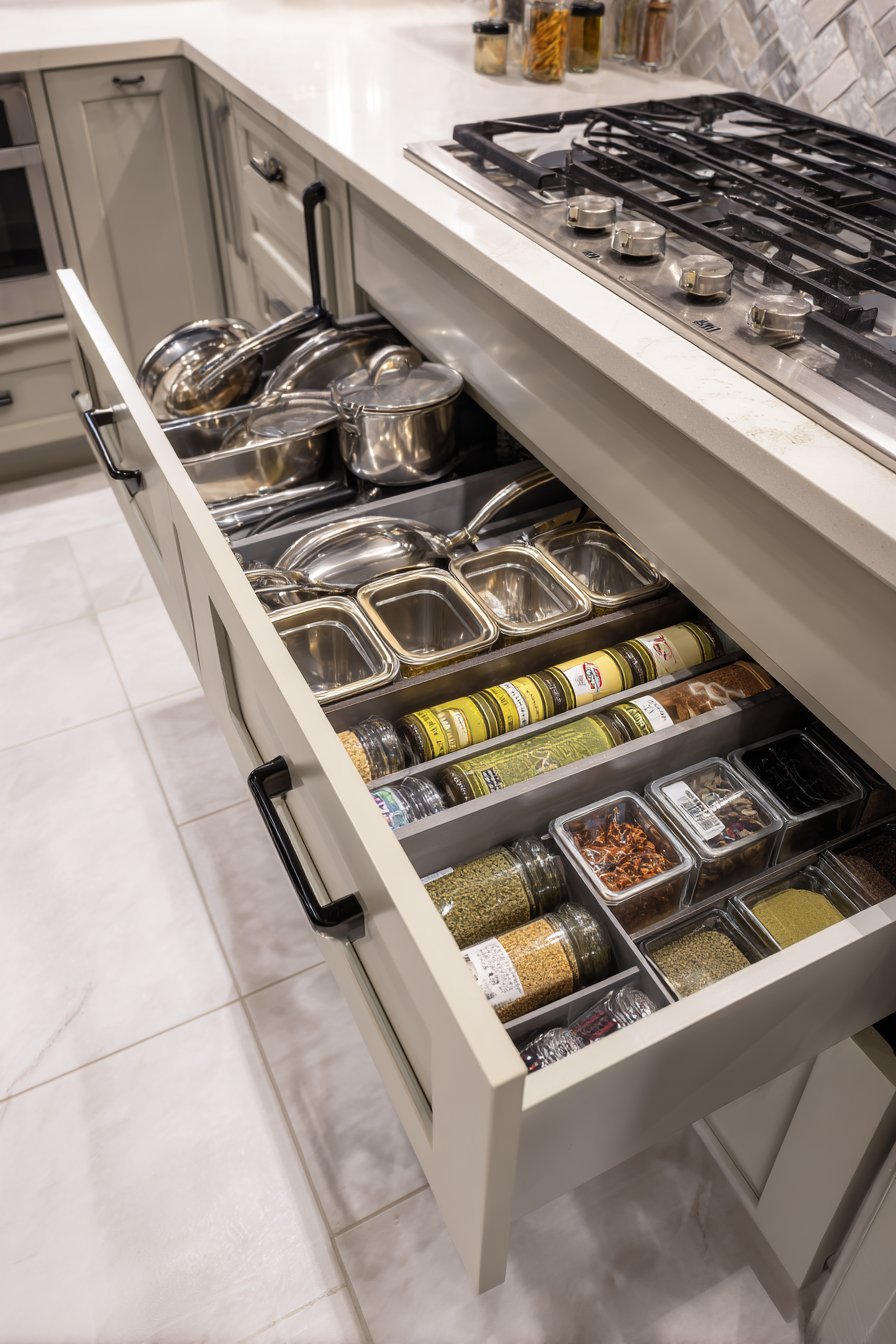
Appliance garages or lift-up cabinet doors can hide small appliances like toasters and coffee makers while keeping them readily accessible. The goal is operational efficiency without visual chaos, allowing you to work smoothly without sacrificing the serene aesthetic that makes the space feel calming rather than cluttered.
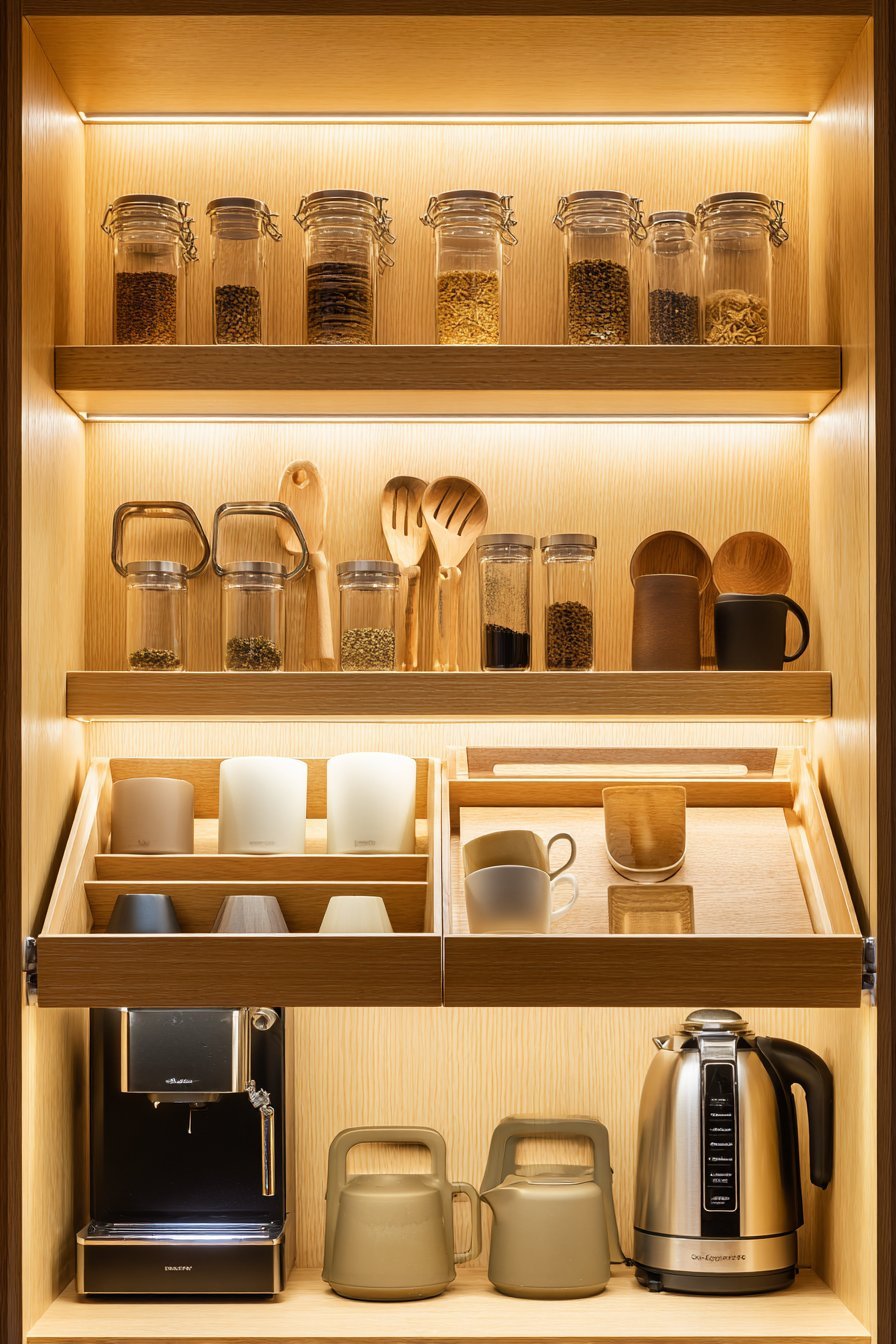
- Install drawer dividers custom-sized to your specific items
- Use pull-out organizers for deep cabinets and corner spaces
- Create appliance garages with outlets for small electronics
- Designate specific zones for baking, cooking, and prep activities
- Label storage containers in subtle, cohesive style
- Implement vertical storage solutions inside cabinet doors
6. Balance Openness with Strategic Display
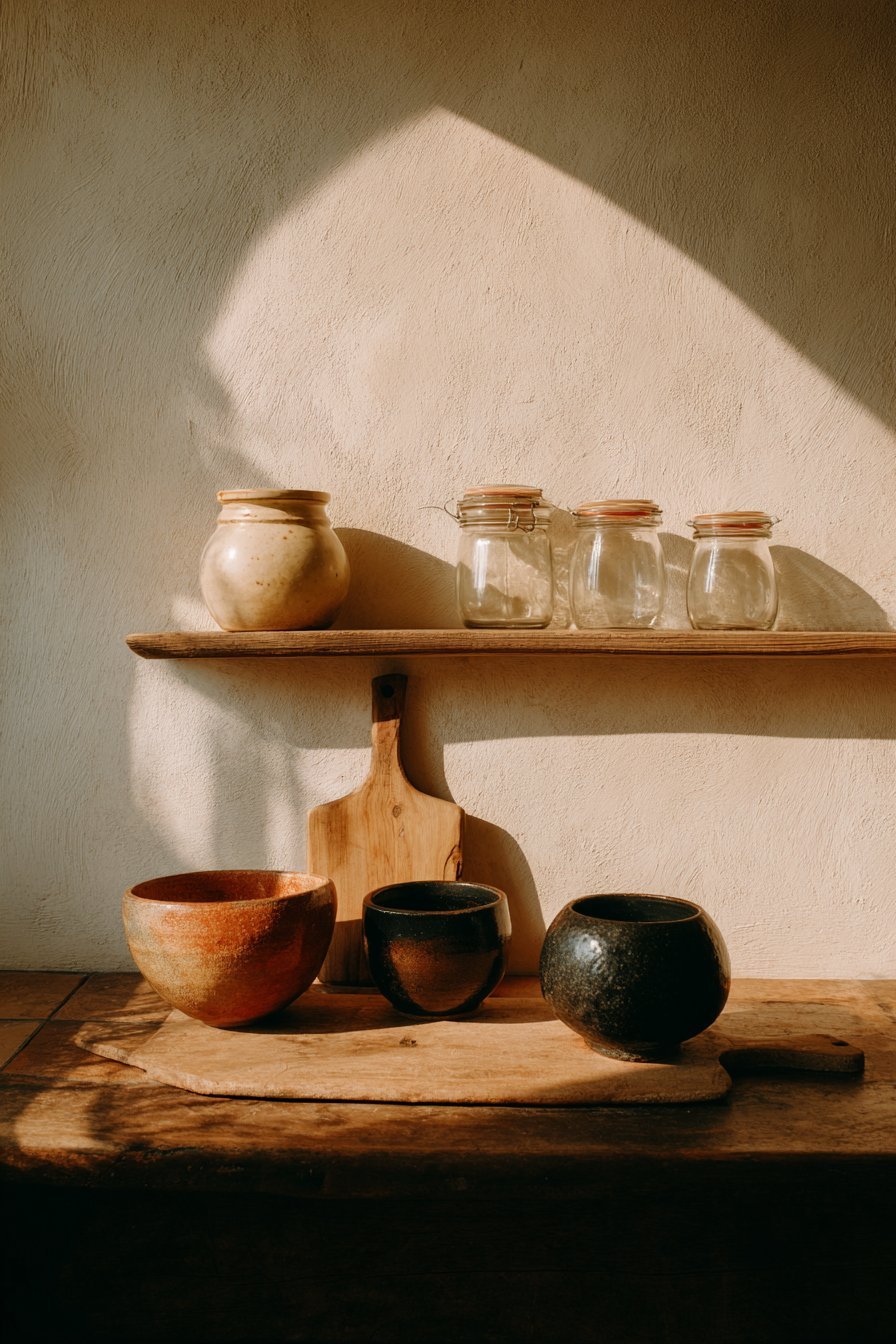
While Japandi design favors closed storage for most items, selective open shelving adds warmth and personality when curated thoughtfully. The key lies in displaying only beautiful, cohesive items that enhance rather than detract from the overall aesthetic. Think of open shelves as edited vignettes rather than utilitarian storage.
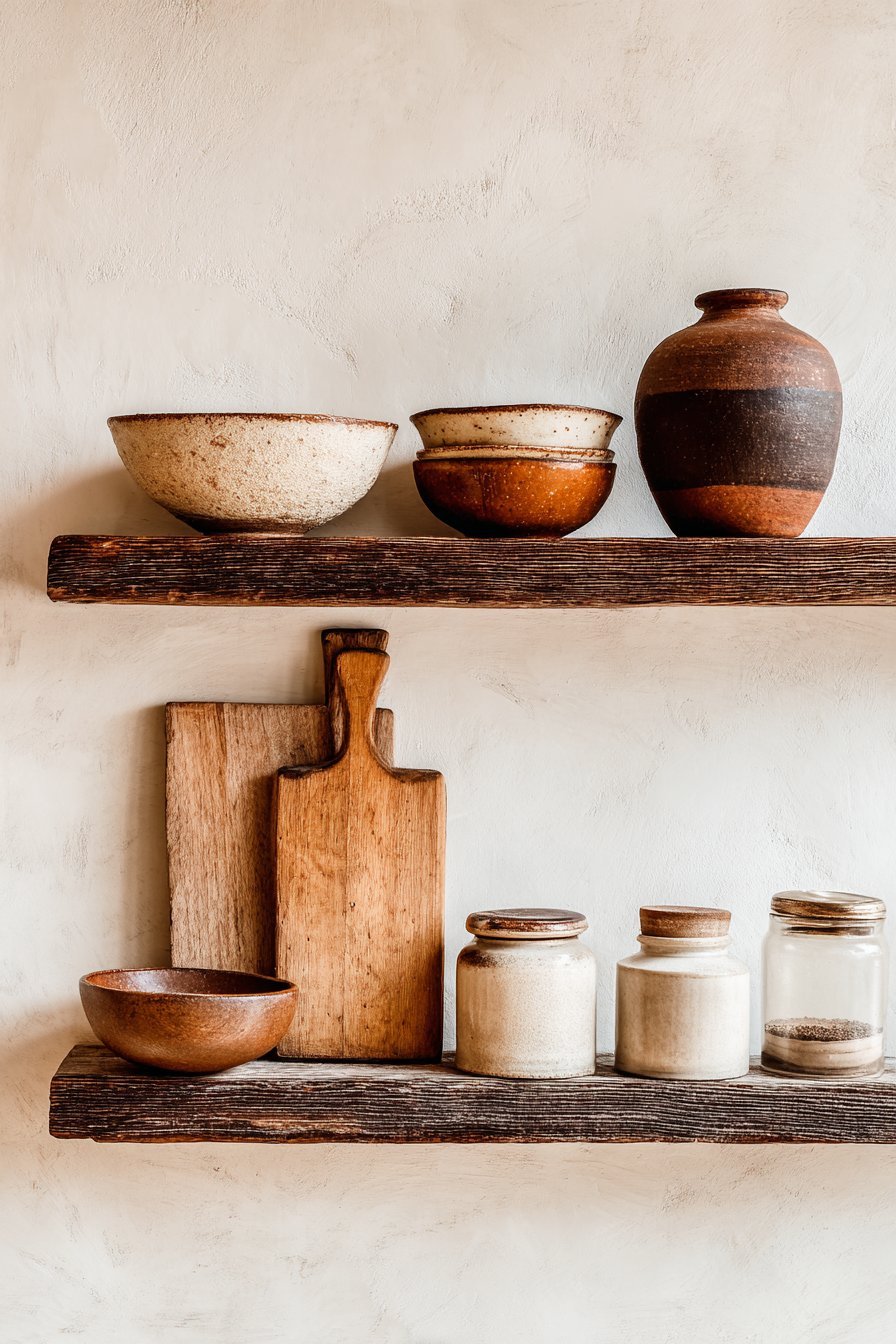
Choose items for display based on both form and function—handcrafted ceramic bowls, wooden cutting boards, artisanal pottery, or uniform glass storage jars. Group items in odd numbers, vary heights slightly, and leave significant negative space between groupings. This restraint prevents shelves from appearing cluttered while maintaining visual interest.
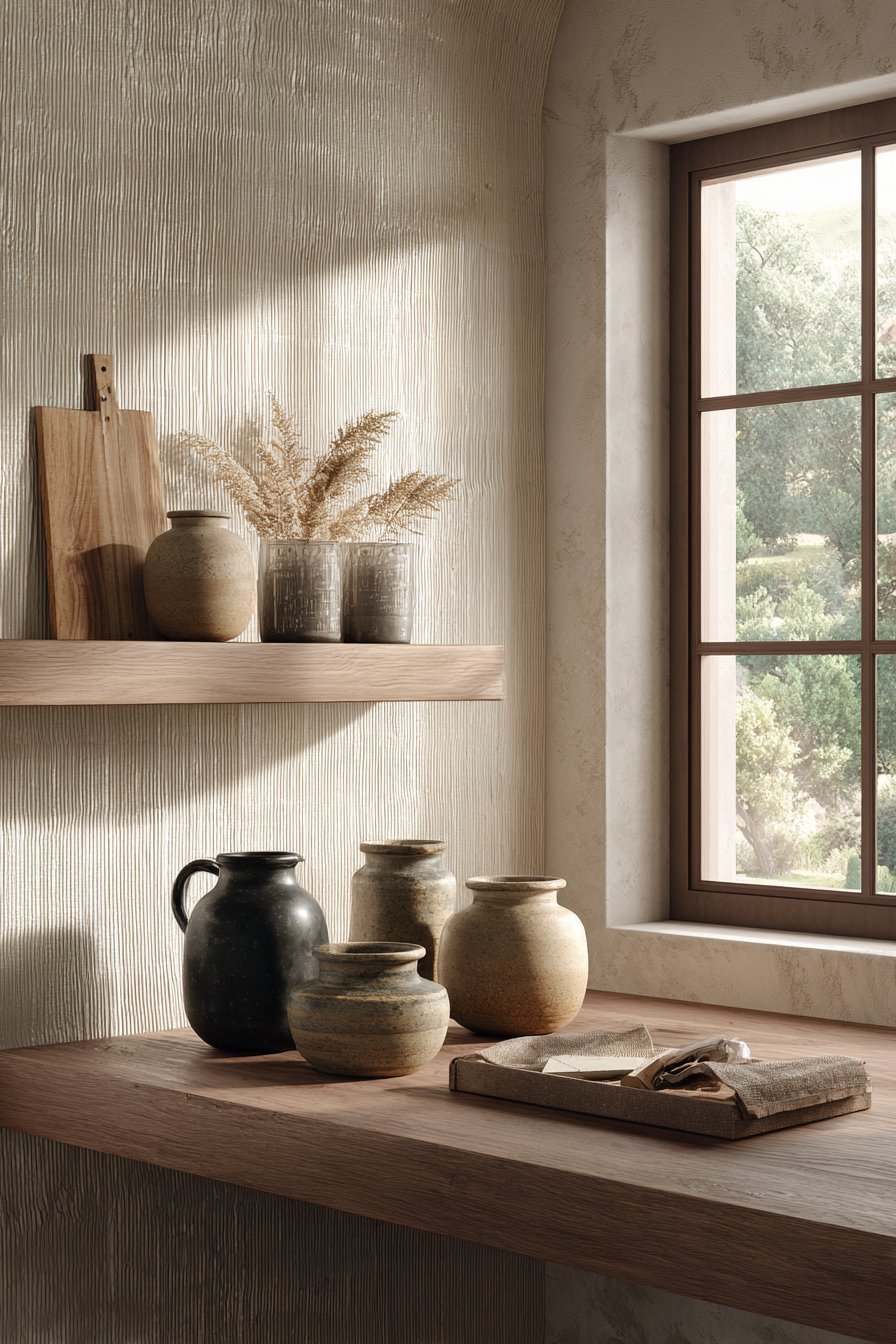
Limit open shelving to one or two strategic locations rather than entire walls. A single floating shelf displaying matching dinnerware or a small collection of hand-thrown pottery becomes a focal point that feels intentional. Rotate displayed items seasonally to maintain freshness, always maintaining the principle that less creates more impact than abundance.
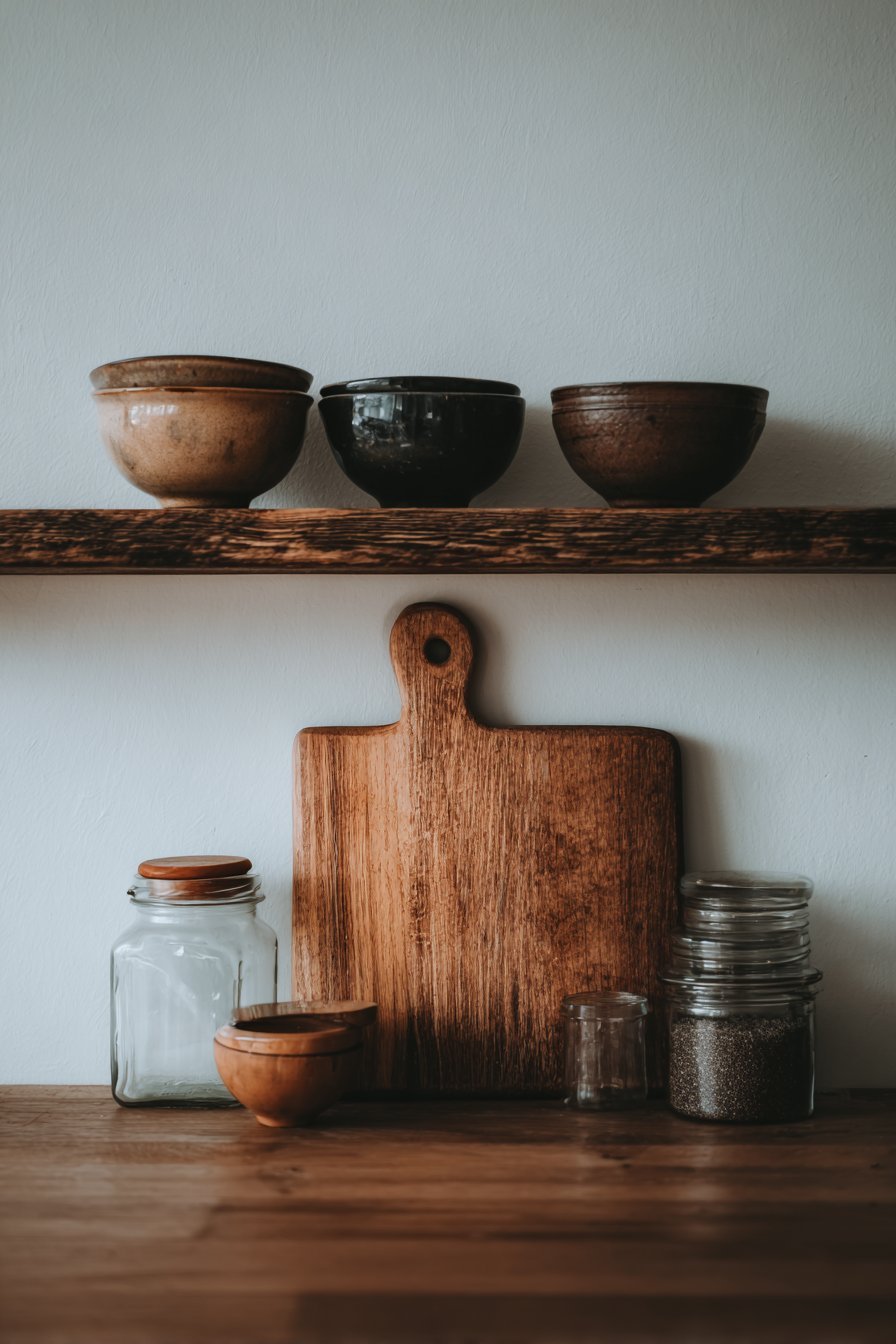
- Display items in cohesive color palette matching overall scheme
- Use uniform containers for open storage of dry goods or utensils
- Limit open shelving to 15-20% of total storage capacity
- Group items in odd numbers with varied heights
- Maintain significant empty space between displayed objects
- Choose handcrafted items that showcase natural materials and textures
Conclusion
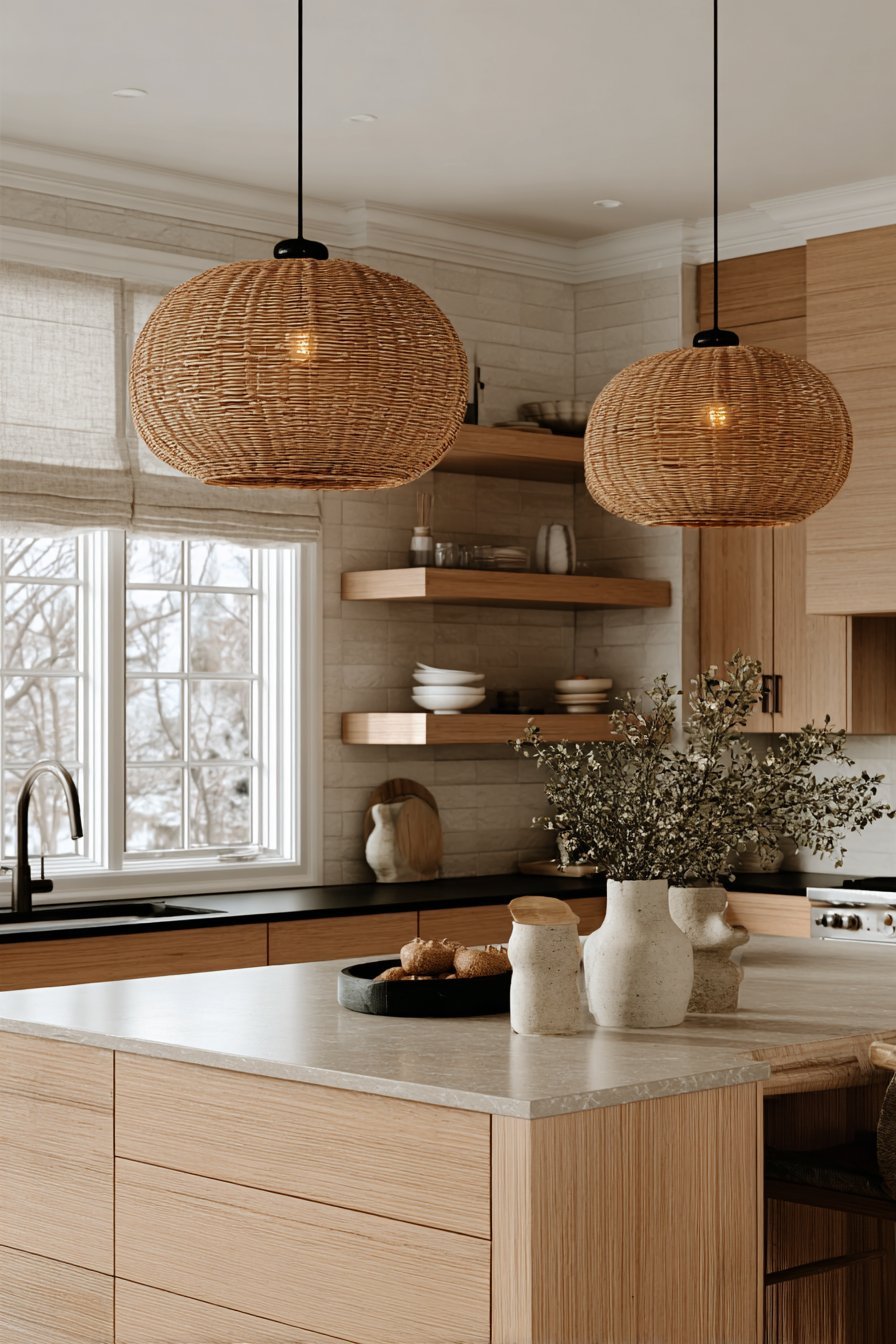
Creating a Japandi kitchen isn’t about following rigid rules or purchasing specific products—it’s about embracing a design philosophy that prioritizes calm, function, and intentional living. By focusing on natural materials, functional minimalism, neutral palettes, thoughtful lighting, organized storage, and strategic display, you craft a space that serves both practical needs and psychological wellbeing.
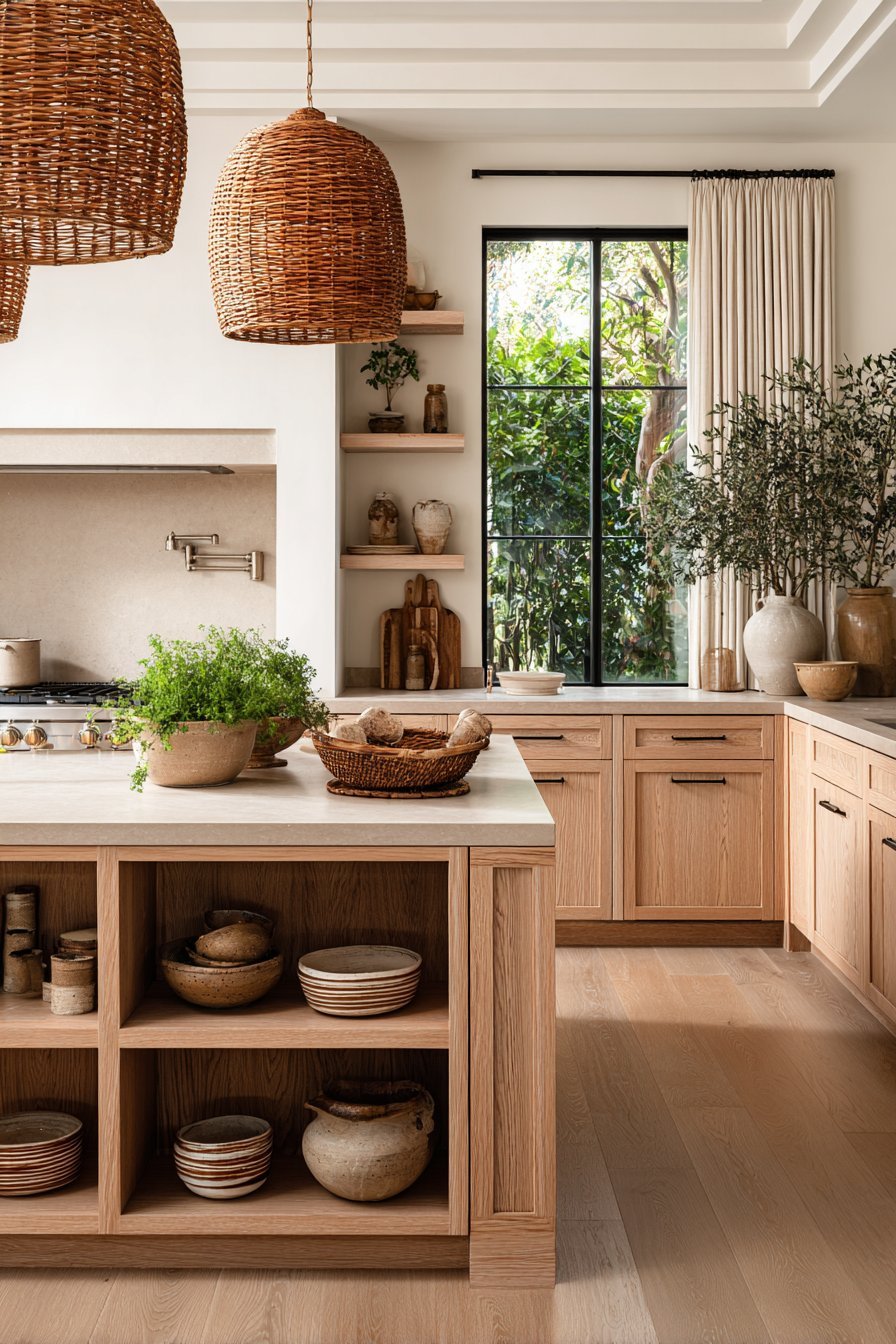
Start implementing these principles gradually, beginning with decluttering and reorganization before making material investments. Remember that authentic Japandi design evolves over time as you curate items you truly love and use regularly. The result will be a kitchen that not only looks beautiful but actively supports a more mindful, peaceful approach to daily life—proof that great design enhances how we live, not just how spaces appear.
