

Minimalist bedrooms often get a bad reputation for feeling cold, sterile, or impersonal. However, when designed thoughtfully, these pared-down spaces can become the most welcoming sanctuaries in your home. The key lies in understanding that minimalism isn’t about emptiness—it’s about intentional design choices that create calm, comfortable environments where every element serves a purpose.
The challenge of making minimalist bedrooms feel cozy requires balancing simplicity with warmth. This approach focuses on quality over quantity, selecting fewer items that genuinely enhance comfort and atmosphere. When you strip away visual clutter, what remains should nourish your senses and support restful sleep. The techniques covered in this article demonstrate how texture, lighting, color, and thoughtful placement transform sparse spaces into inviting retreats that feel both serene and genuinely livable.
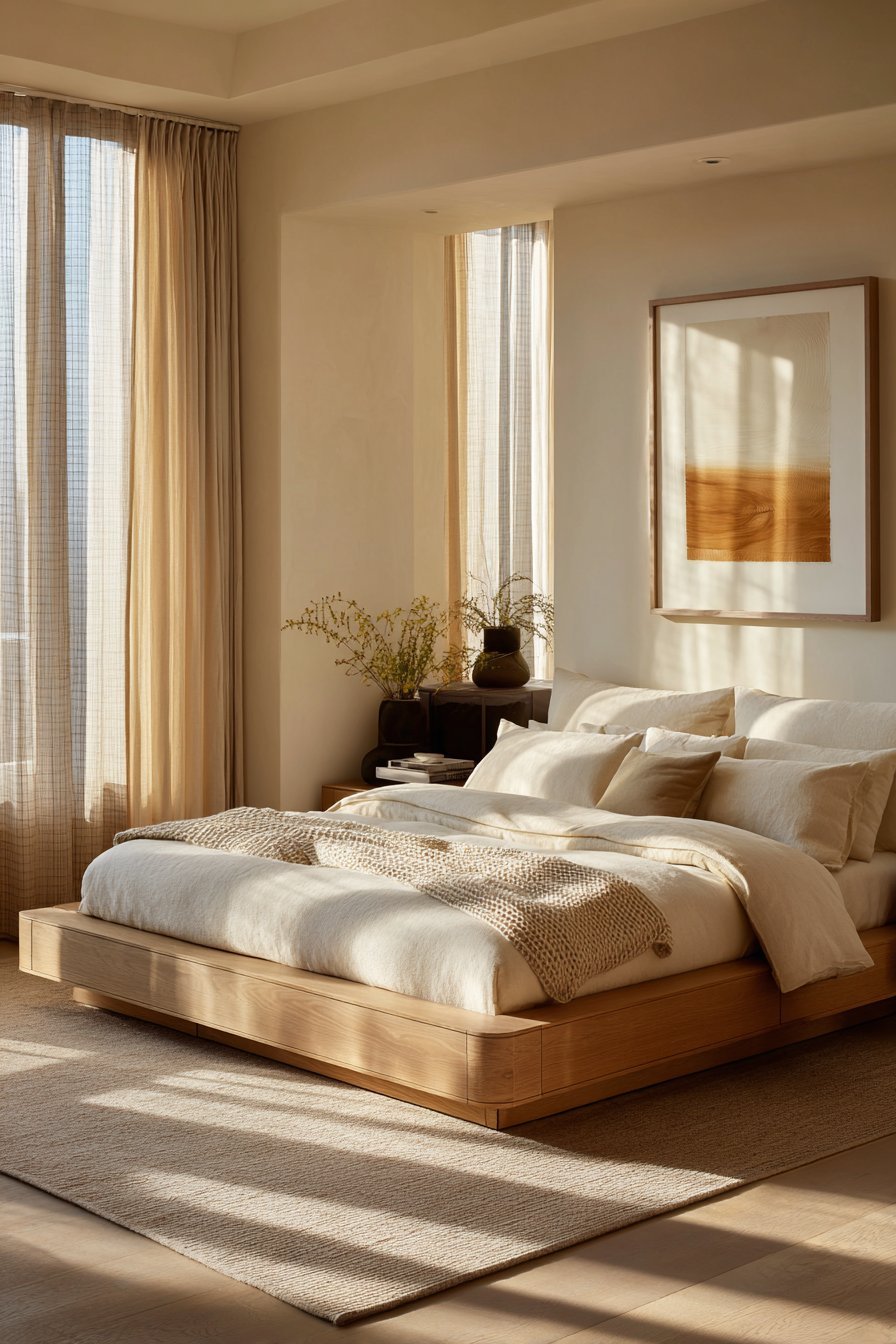
Creating a cozy minimalist bedroom means understanding the difference between stark and simple. These design strategies prove that less can feel like more when you prioritize comfort, incorporate natural elements, and pay attention to the sensory experience of your space. Whether you’re working with a small apartment bedroom or a spacious master suite, these principles will help you achieve that perfect balance between minimalist aesthetics and genuine warmth.
1. Layered Textiles Create Depth Without Clutter
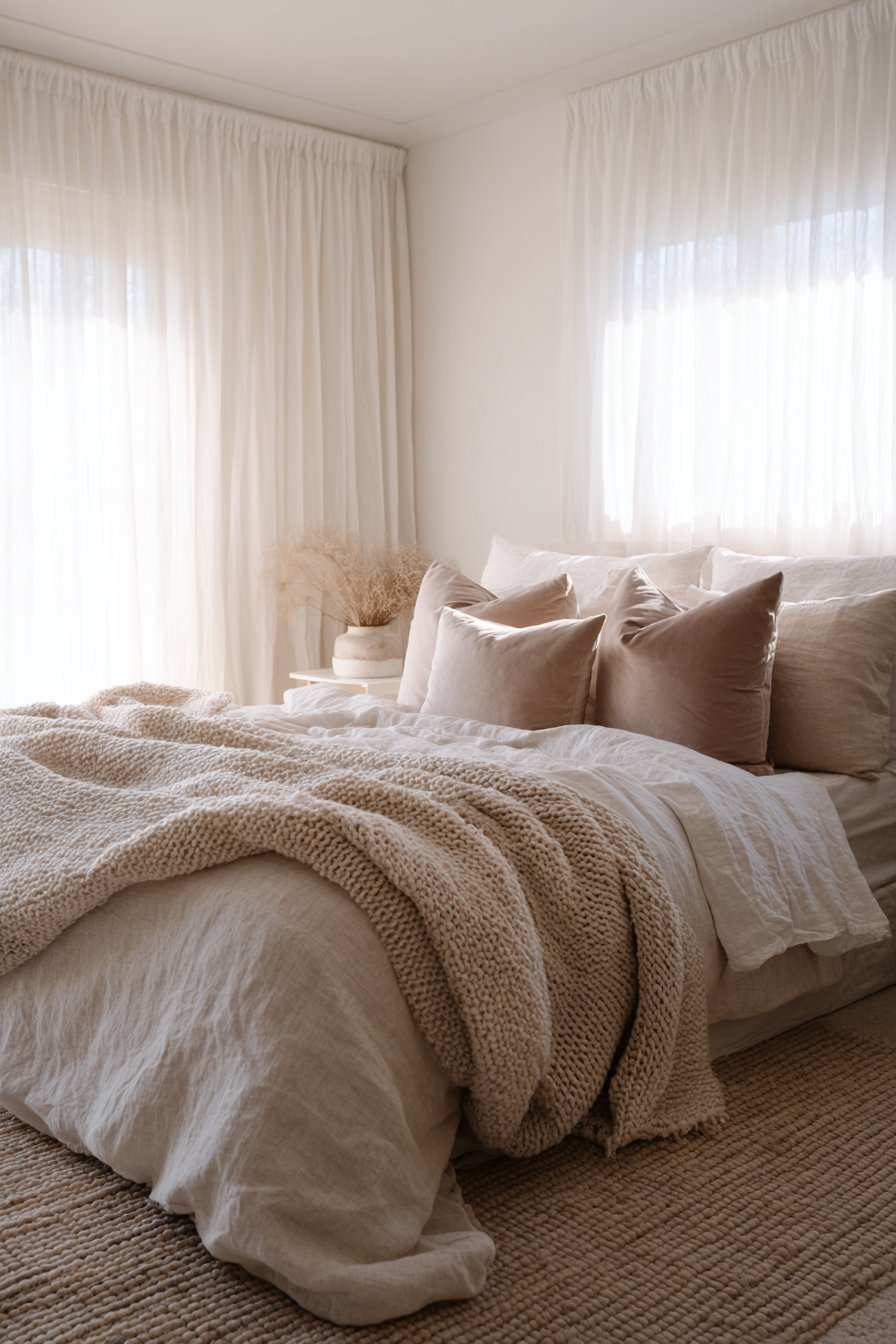
The foundation of any cozy minimalist bedroom lies in strategic textile layering. While minimalism emphasizes clean lines and uncluttered surfaces, incorporating multiple fabric layers adds visual interest and tactile comfort. This approach transforms a simple bed into an inviting focal point that beckons you to relax without overwhelming the space with unnecessary decorative elements.
Start with high-quality bedding in neutral tones that feel luxurious against your skin. Layer a textured duvet or comforter over crisp sheets, then add a lightweight blanket folded at the foot of the bed. This creates dimensional interest while maintaining the clean aesthetic minimalism demands. The key is choosing pieces in complementary textures rather than competing patterns or colors.
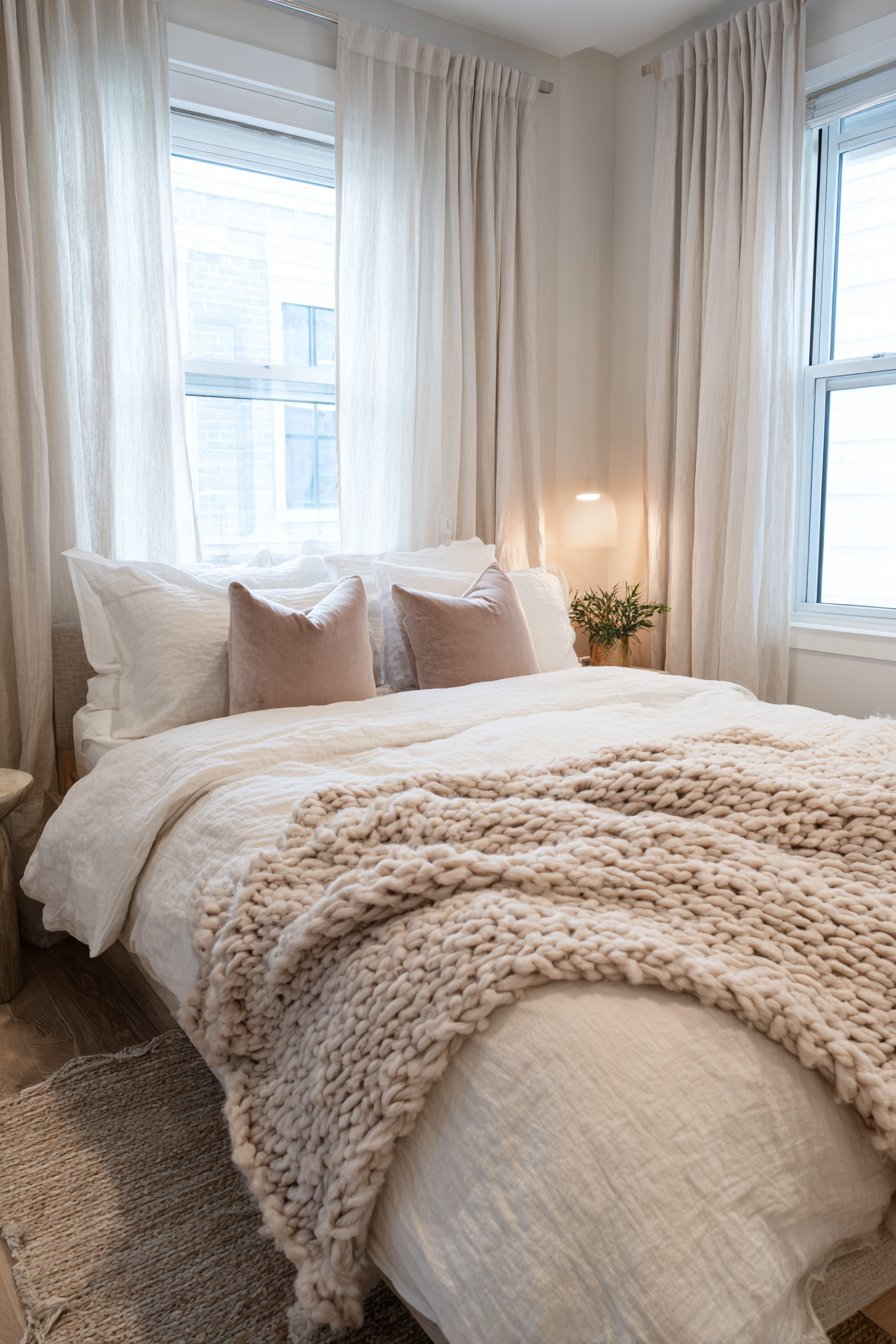
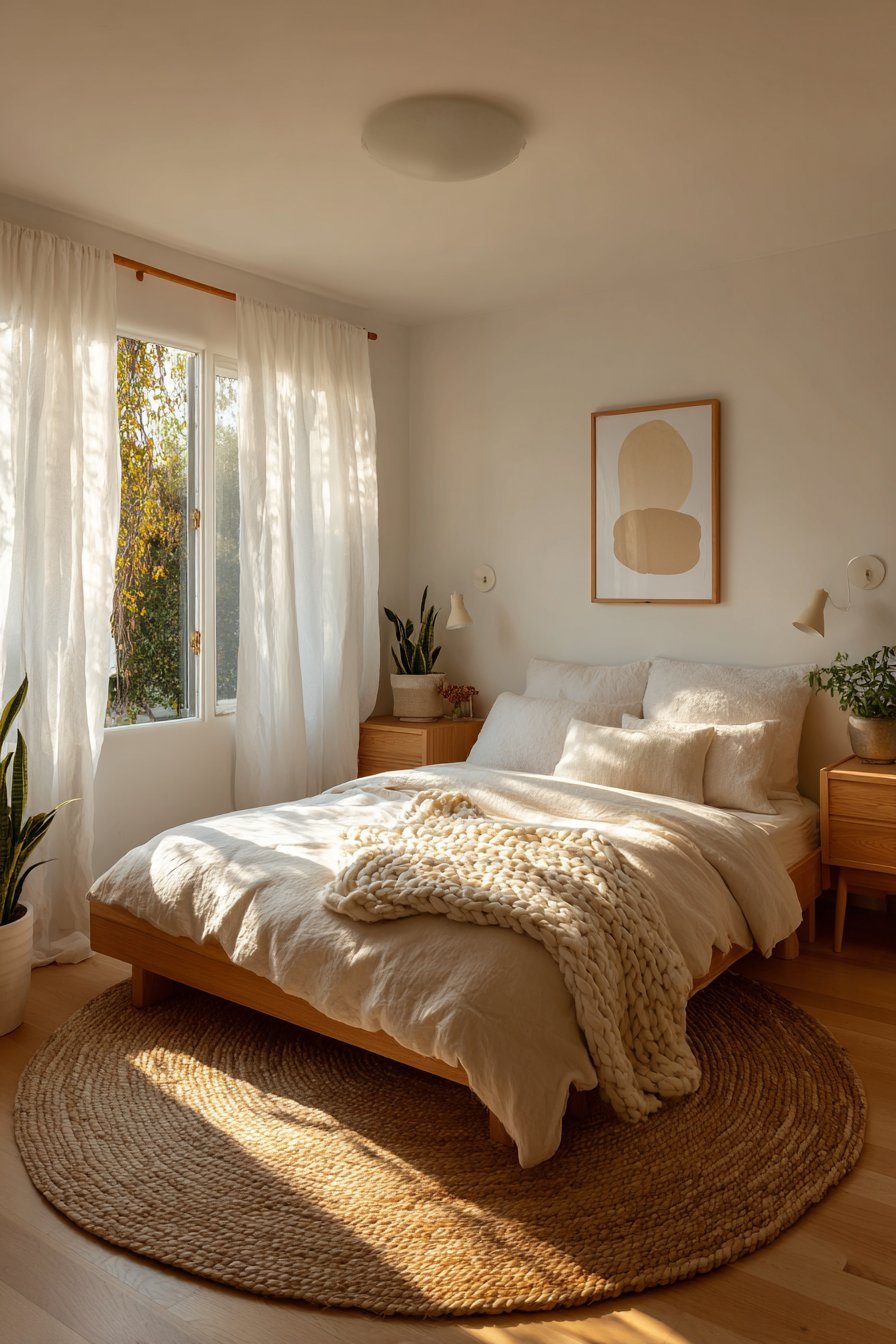
Consider the tactile experience of your textile choices as equally important as their visual appeal. A chunky knit throw, linen curtains, or a soft area rug introduces warmth through texture alone. These elements soften the hard edges of furniture and architecture while remaining true to minimalist principles of simplicity and functionality.
- Invest in high-thread-count sheets in natural fibers like cotton, linen, or bamboo for luxury and comfort
- Layer 3-4 textile elements on your bed: fitted sheet, flat sheet, duvet, and one accent throw
- Choose textures that contrast subtly: smooth against nubby, crisp against soft, matte against subtle sheen
- Select window treatments in natural fabrics that filter light softly while maintaining privacy
- Add one quality area rug in a neutral tone to warm hard flooring surfaces
- Limit patterns to subtle textures or tone-on-tone designs that don’t compete visually
2. Warm Lighting Schemes Transform Ambiance
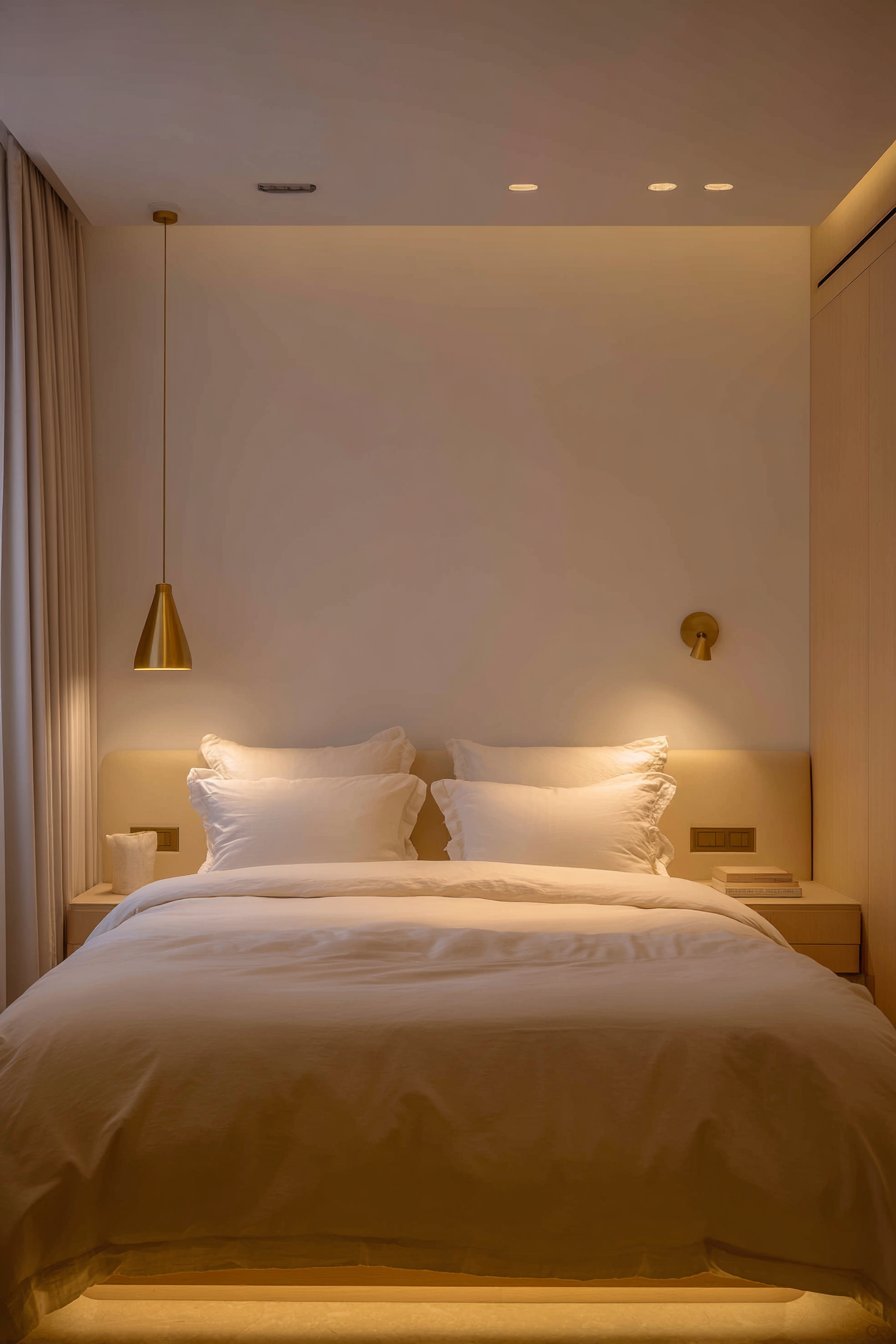
Lighting makes or breaks the coziness factor in minimalist bedrooms, yet it’s often overlooked in favor of aesthetic concerns. Multiple light sources at different heights create layers of illumination that allow you to adjust the mood throughout the day. This approach replaces harsh overhead lighting with softer, more inviting options that enhance relaxation and comfort.
The most successful minimalist bedrooms incorporate at least three types of lighting: ambient, task, and accent. Warm-toned LED bulbs with color temperatures between 2700K-3000K mimic the gentle glow of candlelight and create an instantly cozy atmosphere. Dimmer switches provide flexibility, allowing you to transition from bright morning light to subdued evening ambiance without adding multiple fixtures.
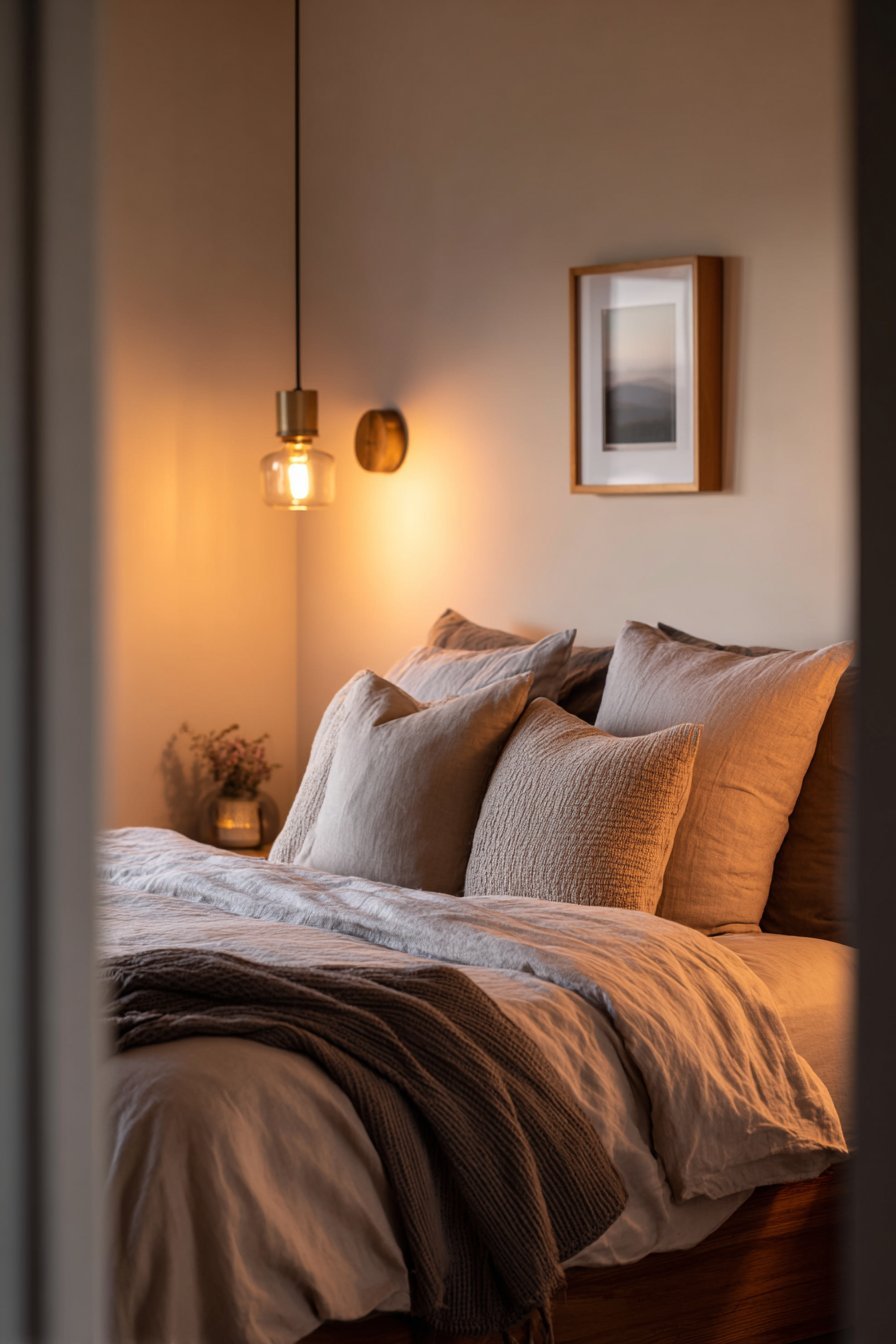
Position lighting thoughtfully to eliminate dark corners while maintaining the room’s clean aesthetic. Wall-mounted sconces free up valuable nightstand space while providing reading light, and pendant lights on either side of the bed serve as sculptural elements that don’t require surface area. Under-bed lighting creates a floating effect that adds warmth without visible hardware.
- Install dimmer switches on all lighting circuits for complete control over ambiance and brightness levels
- Use 2700K-3000K warm white bulbs exclusively to avoid the cold, clinical feel of daylight bulbs
- Position table lamps or sconces 24-30 inches above mattress height for optimal reading light
- Add one statement pendant or chandelier as a focal point that provides ambient illumination
- Consider LED strip lighting under the bed frame or behind headboards for soft, indirect glow
- Place task lighting strategically where you need it most: reading areas, closet spaces, dressing zones
3. Natural Materials Ground the Space
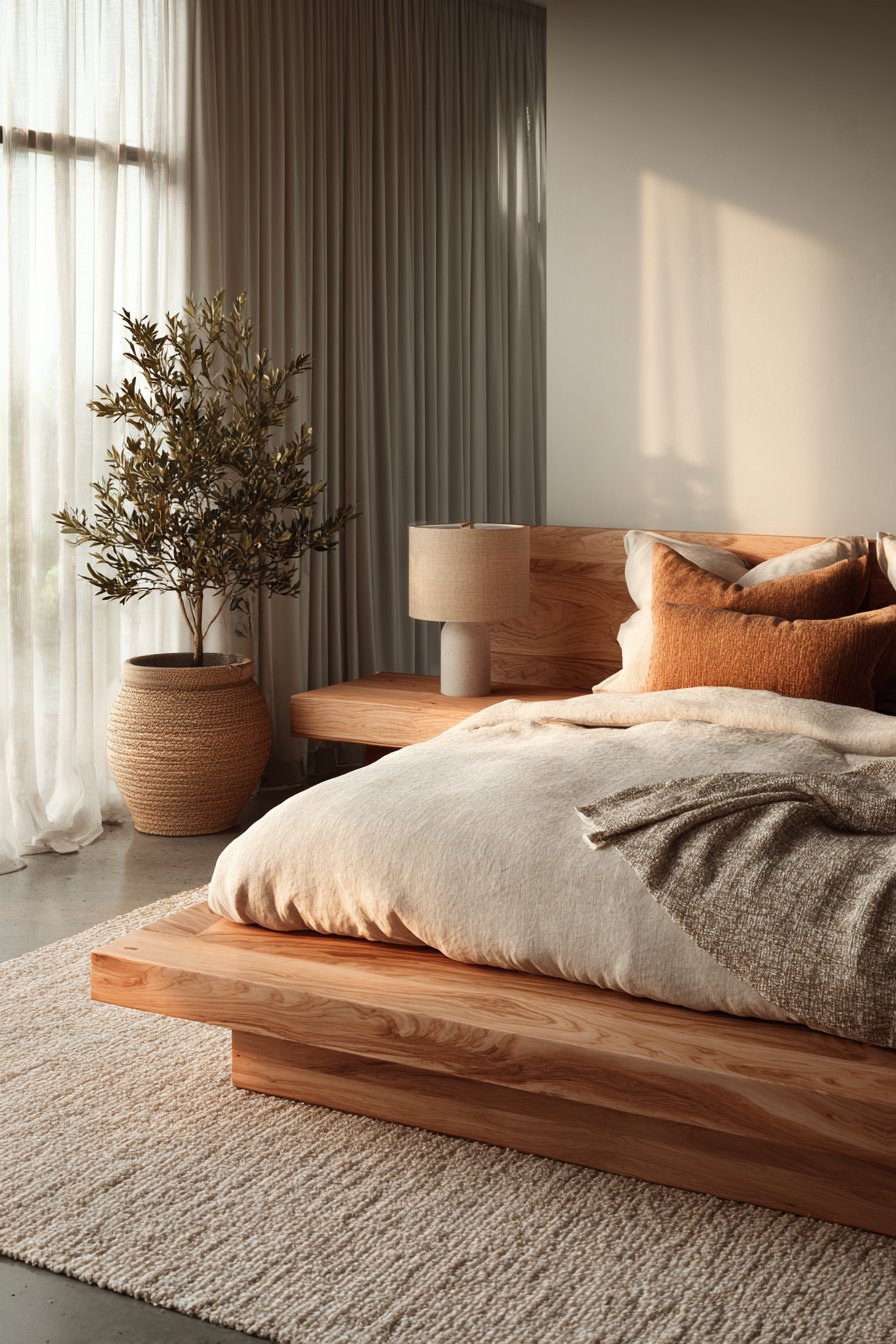
Incorporating organic materials bridges the gap between minimalist simplicity and inviting warmth. Wood, stone, linen, cotton, wool, and other natural elements introduce subtle variations in color and texture that synthetic materials cannot replicate. These materials age beautifully, developing unique patinas that add character without compromising the clean aesthetic minimalism requires.
Wood furniture in lighter tones like oak, ash, or maple contributes warmth while maintaining the airy feel essential to minimalist design. The natural grain patterns provide visual interest without busy decorations or ornamentation. Live-edge wood pieces add organic curves that soften the geometric precision typical of minimalist spaces.
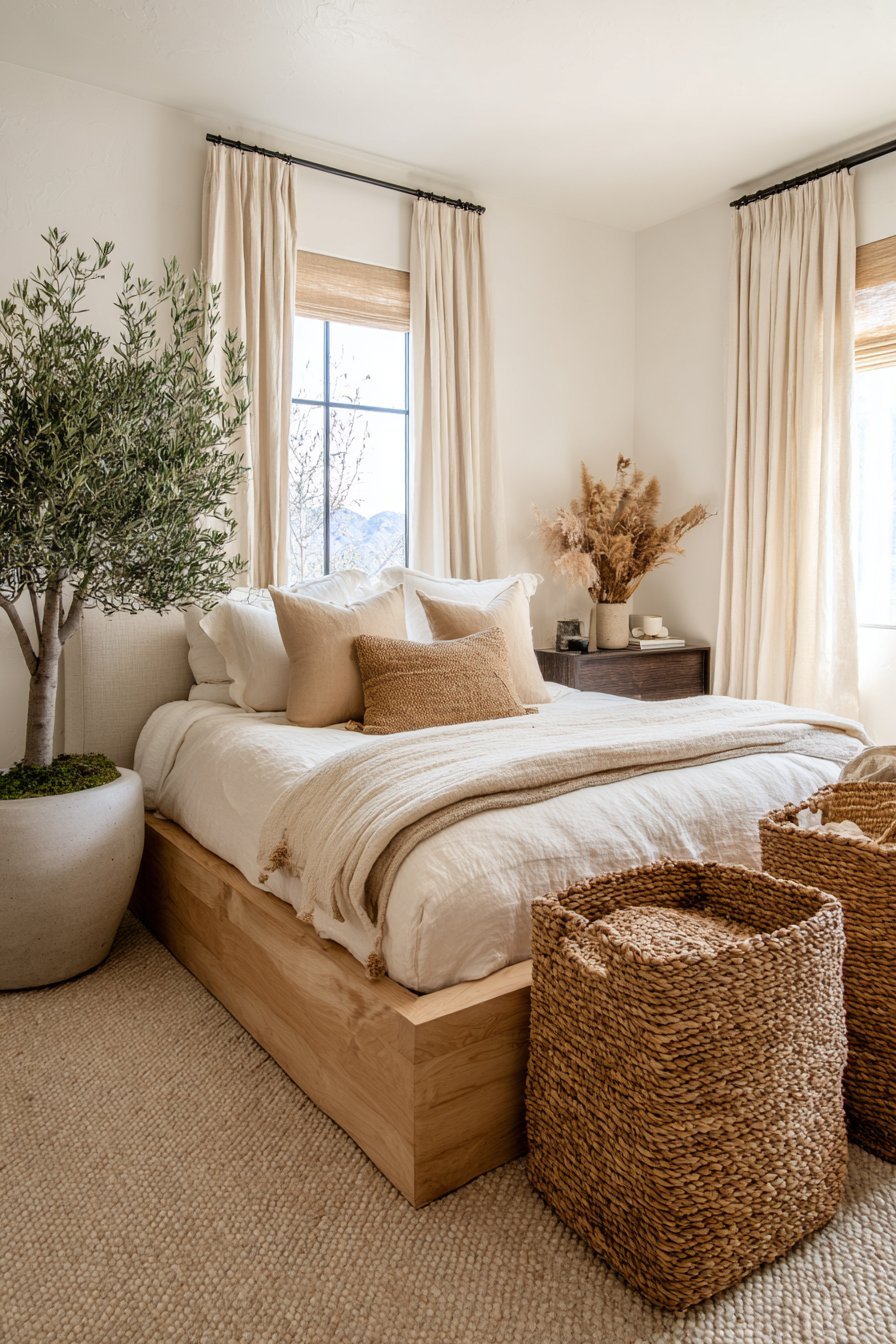
Natural materials also improve the room’s environmental quality and sensory experience. A wool rug underfoot, linen curtains that move gently with air currents, or a cotton duvet cover that breathes naturally all contribute to physical comfort. These elements connect your bedroom to the natural world, creating a grounding effect that synthetic materials simply cannot achieve.
- Choose wood furniture with visible grain patterns in light to medium tones for warmth
- Select stone or concrete elements as accent pieces that add textural contrast and visual weight
- Incorporate live plants in simple containers to introduce life and improve air quality naturally
- Use woven baskets in natural fibers like seagrass or rattan for concealed storage that looks beautiful
- Install wood flooring or add wood elements through bed frames, nightstands, or wall panels
- Prioritize natural fiber textiles: cotton sheets, linen curtains, wool rugs, and silk accent pillows
4. Intentional Color Palettes Warm Without Overwhelming
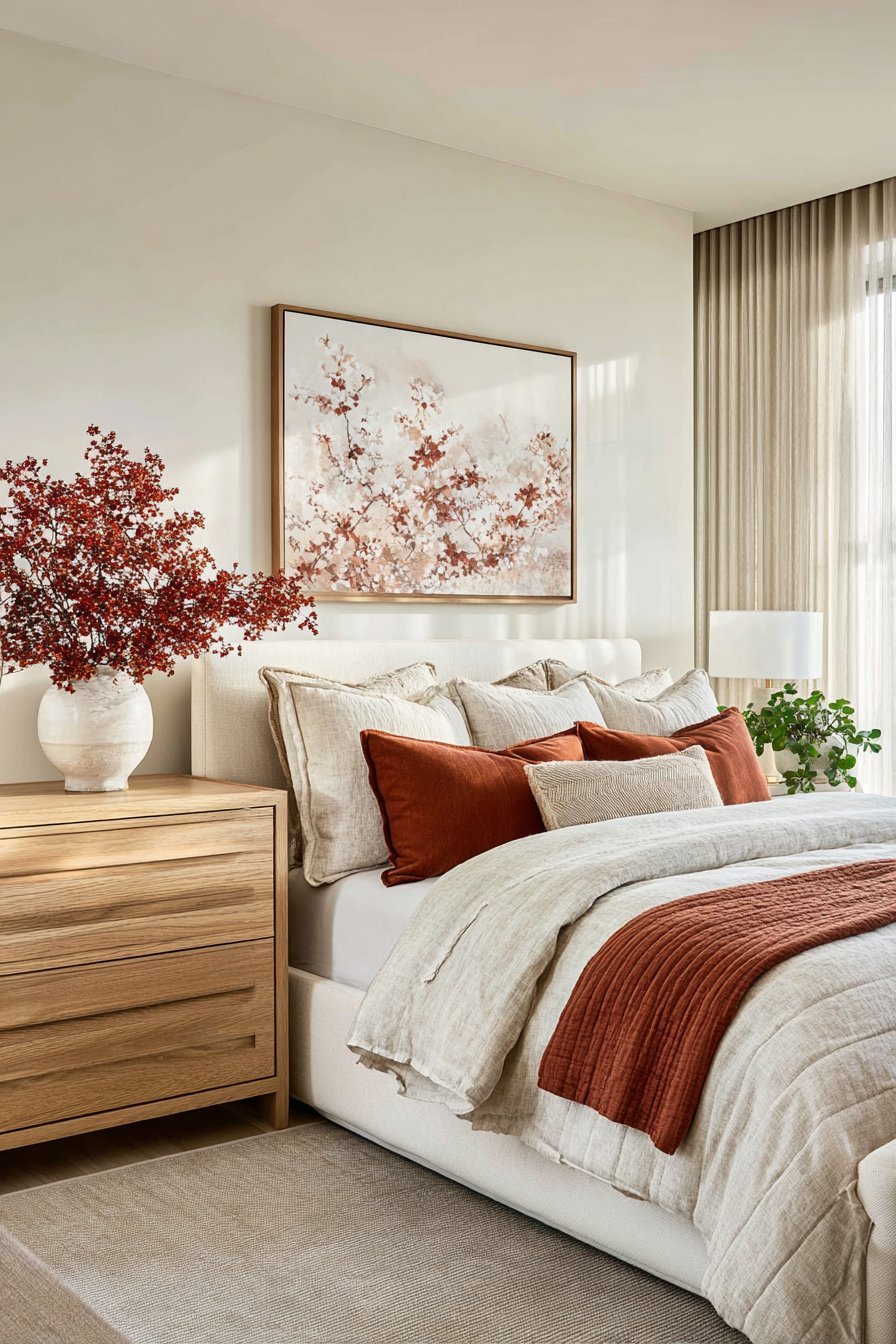
Minimalist bedrooms don’t require stark white walls to achieve their signature simplicity. Warm neutral palettes in creams, taupes, soft grays, and gentle earth tones create coziness while maintaining the clean aesthetic. These colors provide a soothing backdrop that helps the mind relax, essential for quality sleep and genuine comfort.
The key to warming a minimalist space through color lies in subtle variation rather than bold contrast. Choose three to five closely related tones that create depth through nuance rather than drama. This might mean pairing warm white walls with beige textiles, caramel wood furniture, and rust-colored accent pillows for a cohesive look that feels layered and intentional.
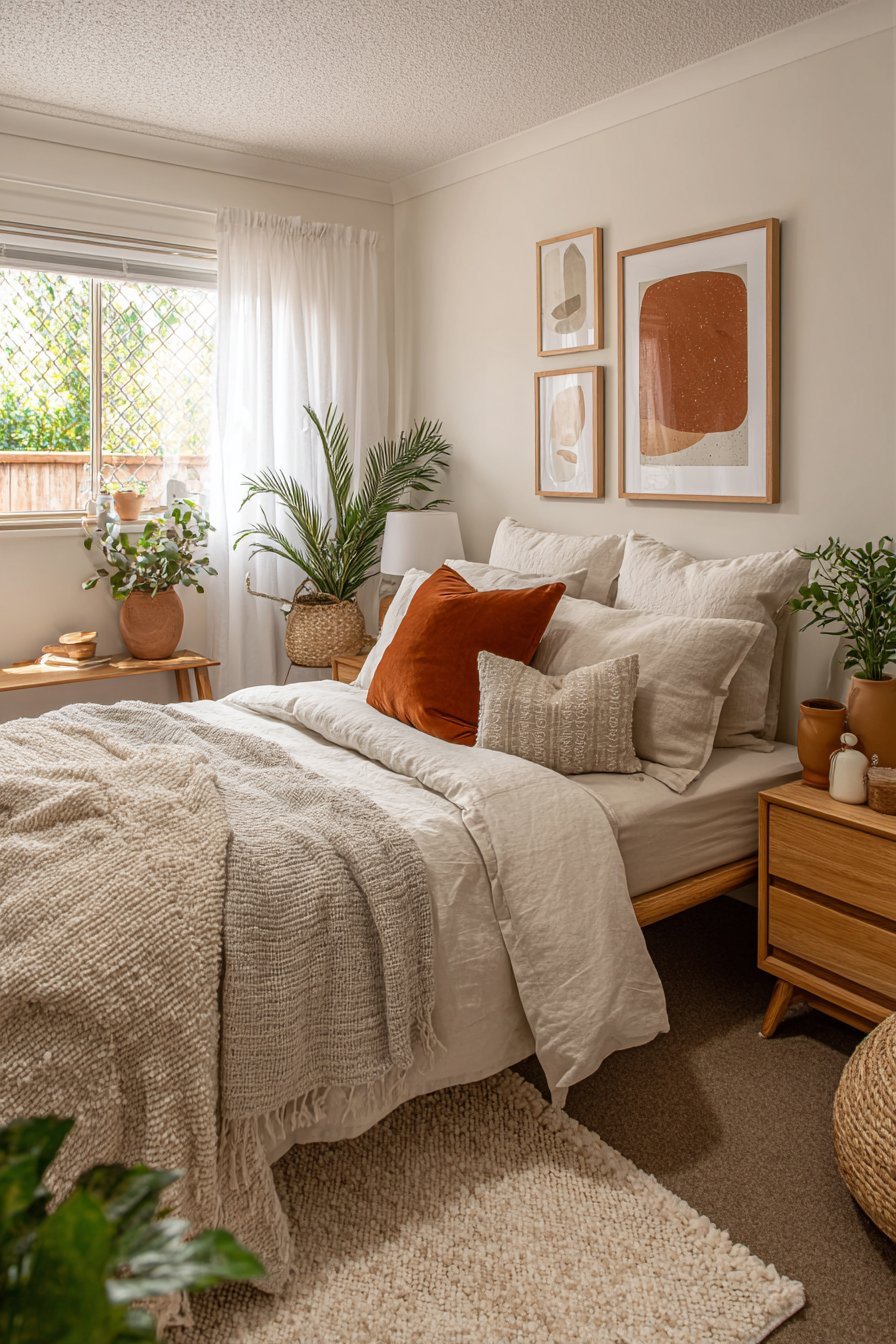
Consider how natural light interacts with your chosen colors throughout the day. North-facing rooms benefit from warmer paint colors with yellow or orange undertones, while south-facing spaces can handle cooler neutrals without feeling cold. Test paint samples in different lighting conditions before committing to ensure the desired warmth translates into actual lived experience.
- Select wall colors with warm undertones: creamy whites, greiges, warm grays, or soft beiges
- Use the 60-30-10 color rule: 60% dominant neutral, 30% secondary tone, 10% accent color
- Incorporate one or two deeper accent colors through textiles, artwork, or small decorative objects
- Consider painted accent walls in deeper, warmer tones like terracotta, sage, or muted mustard
- Layer multiple shades of the same color family for sophisticated depth without visual complexity
- Test paint colors in your actual bedroom lighting conditions before making final selections
5. Personal Touches Make Minimalism Livable
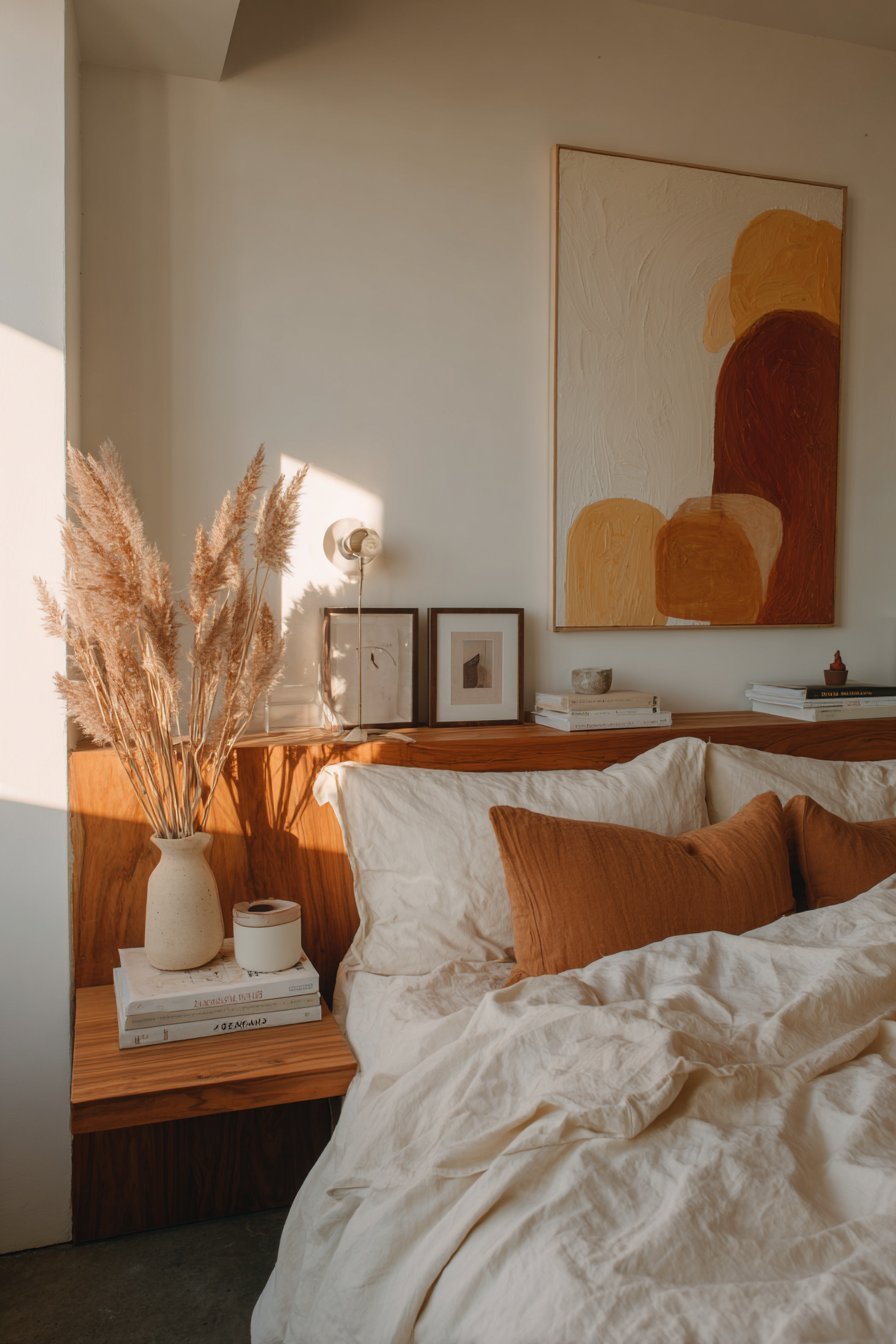
The difference between cold minimalism and cozy minimalism often comes down to thoughtful personalization. A bedroom without any personal elements feels like a hotel room—beautiful but impersonal. The challenge lies in incorporating meaningful items without creating visual clutter or abandoning minimalist principles of restraint and intentionality.
Quality artwork serves as an excellent vehicle for personalization in minimalist spaces. One or two carefully chosen pieces make stronger statements than gallery walls crowded with frames. Select art that resonates emotionally and complements your color palette, preferably in simple frames that don’t compete for attention. Photography, abstract paintings, or line drawings work particularly well in minimalist contexts.
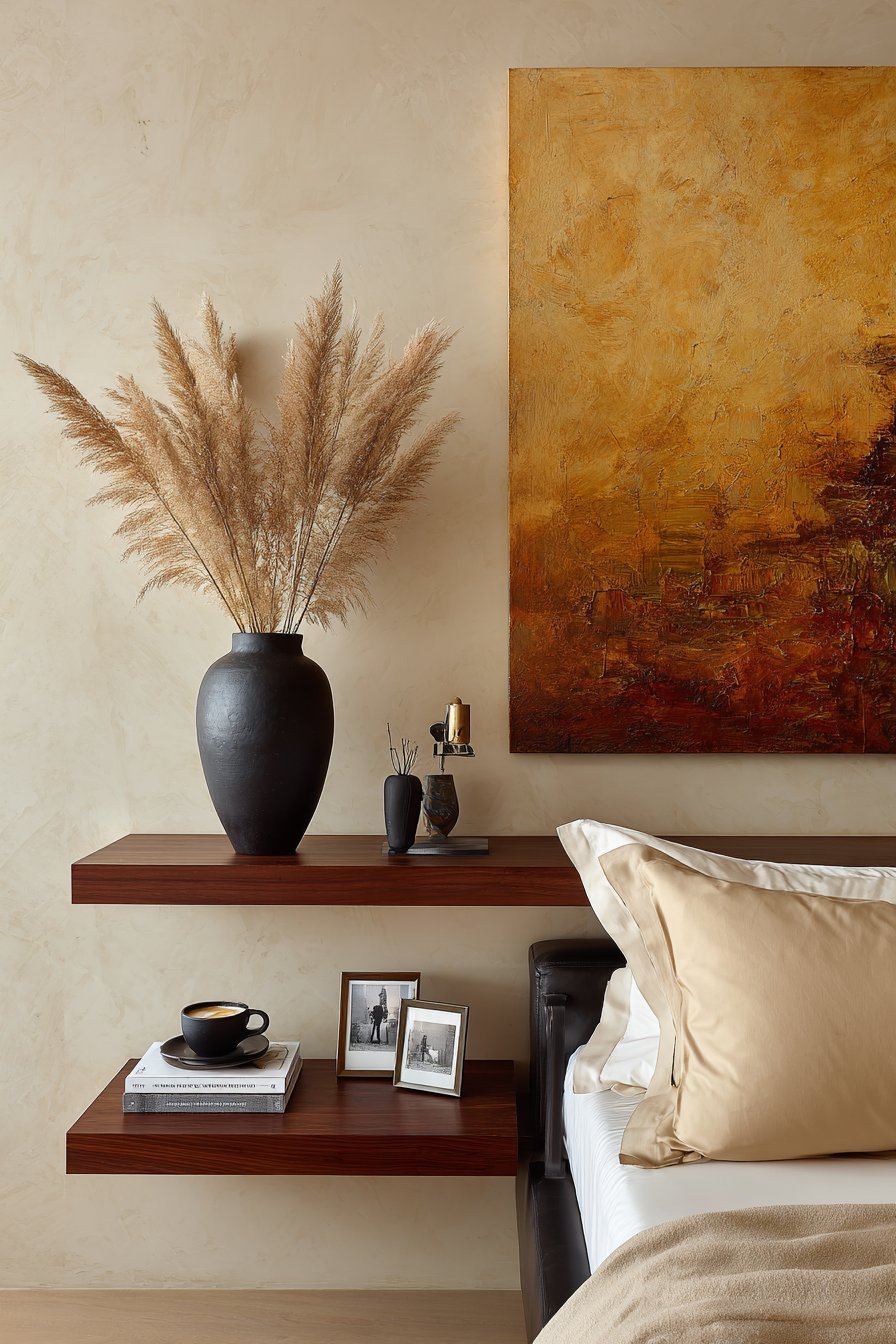
Personal items earn their place in minimalist bedrooms when they’re both meaningful and beautiful. This might include a handcrafted ceramic vase, a treasured book collection displayed spine-out, or family photographs in matching frames. The key is curating rather than accumulating, keeping only items that genuinely enhance your emotional connection to the space.
- Display one to three meaningful art pieces with ample negative space surrounding each one
- Curate book collections to show only favorites or frequently referenced volumes on open shelving
- Use matching frames or a consistent frame style for any photographs or prints you display
- Incorporate one or two handmade or artisan pieces that tell your personal story
- Rotate seasonal items or decorative objects to keep the space fresh without permanent additions
- Apply the “one in, one out” rule: when adding new personal items, remove something else
6. Strategic Storage Maintains Clean Lines
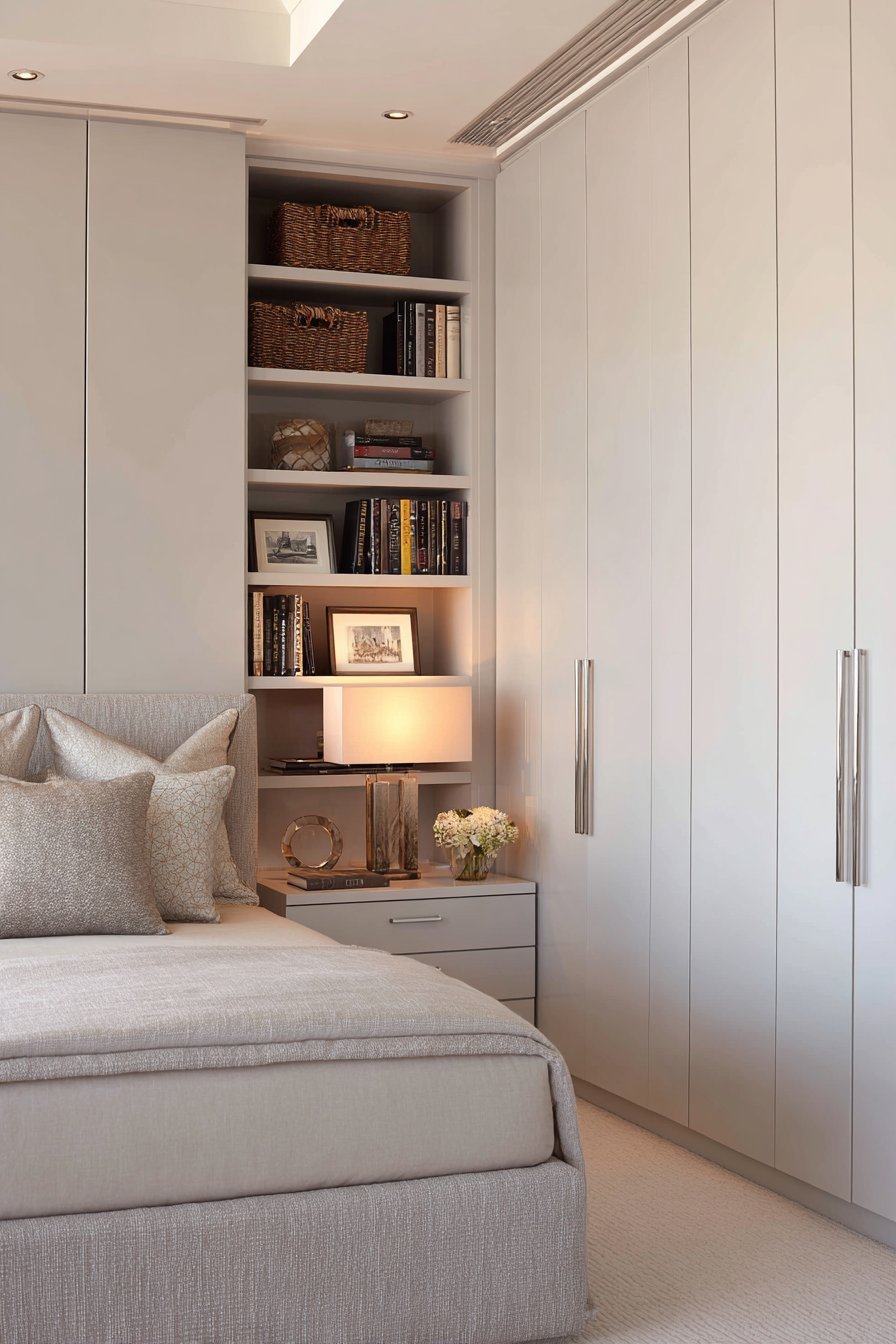
Clutter represents the antithesis of minimalism and the enemy of coziness. Hidden storage solutions allow you to maintain the clean aesthetic minimalism requires while keeping all necessary items within reach. This approach ensures your bedroom remains functional without sacrificing the visual calm that makes minimalist spaces so appealing.
Built-in storage maximizes space efficiency while maintaining clean architectural lines. Floor-to-ceiling wardrobes with simple, handle-free doors blend seamlessly into walls, creating uninterrupted surfaces that enhance the sense of spaciousness. Under-bed storage drawers or lift-up bed frames hide bedding, seasonal clothing, or rarely used items without adding visible furniture pieces.
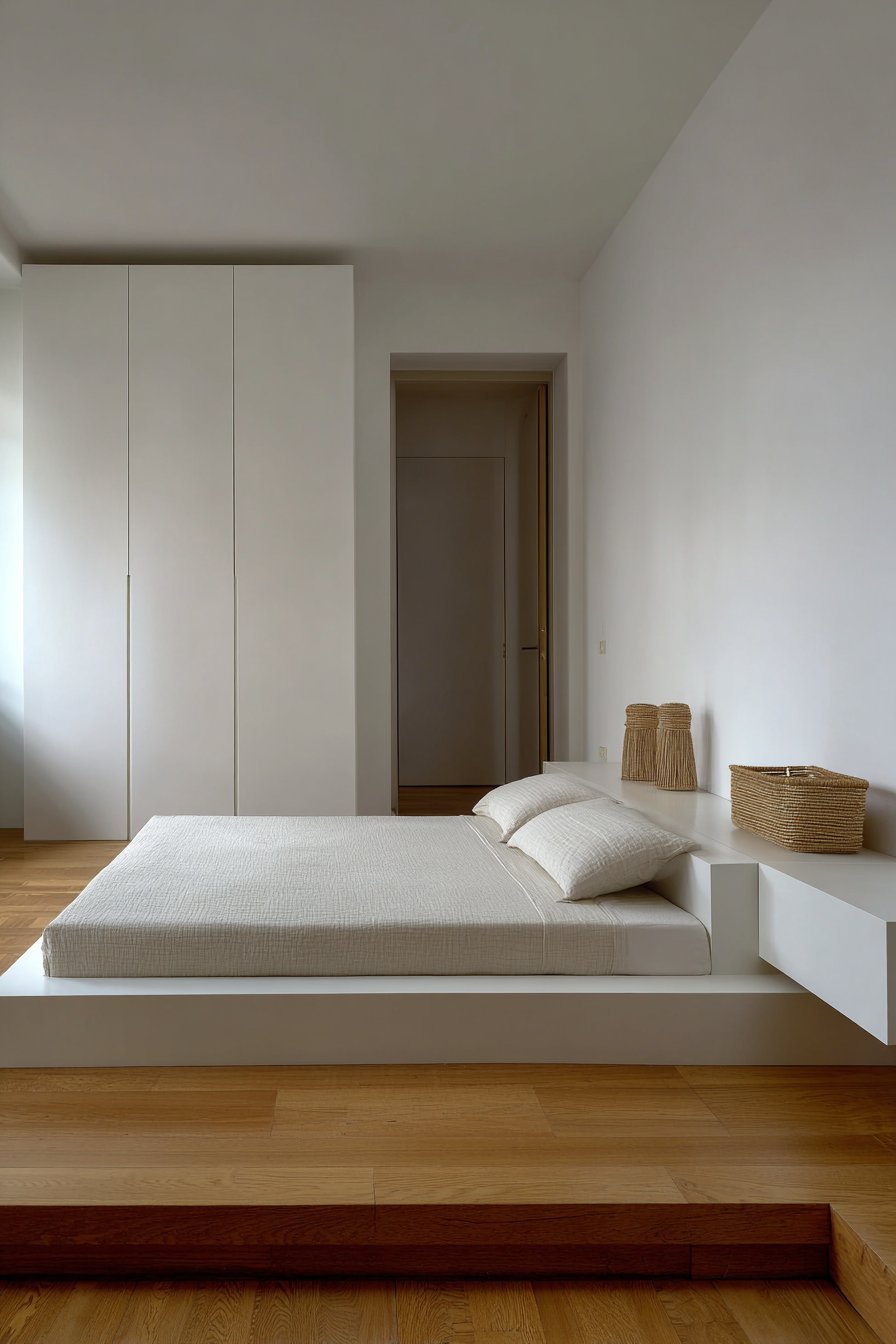
The most successful minimalist bedrooms incorporate storage that doubles as design elements. A sleek storage bench at the foot of the bed provides seating and conceals extra blankets. Floating nightstand shelves eliminate visual bulk while offering essential bedside storage. These solutions prove that functionality and aesthetics can coexist without compromise.
- Install floor-to-ceiling built-in wardrobes with push-to-open doors for seamless wall integration
- Choose beds with integrated storage drawers or hydraulic lift mechanisms for hidden compartments
- Use matching storage boxes or baskets on open shelving to conceal items while maintaining visual order
- Install floating shelves or wall-mounted nightstands to free floor space and reduce visual weight
- Designate closed storage for 90% of belongings, keeping only daily-use items on visible surfaces
- Incorporate multi-functional furniture like storage ottomans or benches that serve dual purposes
7. Softened Window Treatments Filter Light Beautifully

Window treatments significantly impact both the coziness and functionality of minimalist bedrooms. Light control and privacy remain essential, but the right treatments also soften architecture and introduce texture without adding visual complexity. The goal is filtering natural light rather than blocking it completely, creating gentle, diffused illumination that enhances the room’s warmth.
Layered window treatments offer flexibility while maintaining minimalist aesthetics. Install sheer curtains for daytime privacy that allows filtered light, paired with blackout roller shades or lined curtains for sleeping. This combination provides functional control without heavy, fussy treatments that overwhelm windows or collect dust. Choose floor-to-ceiling panels that create vertical lines and make ceilings appear higher.
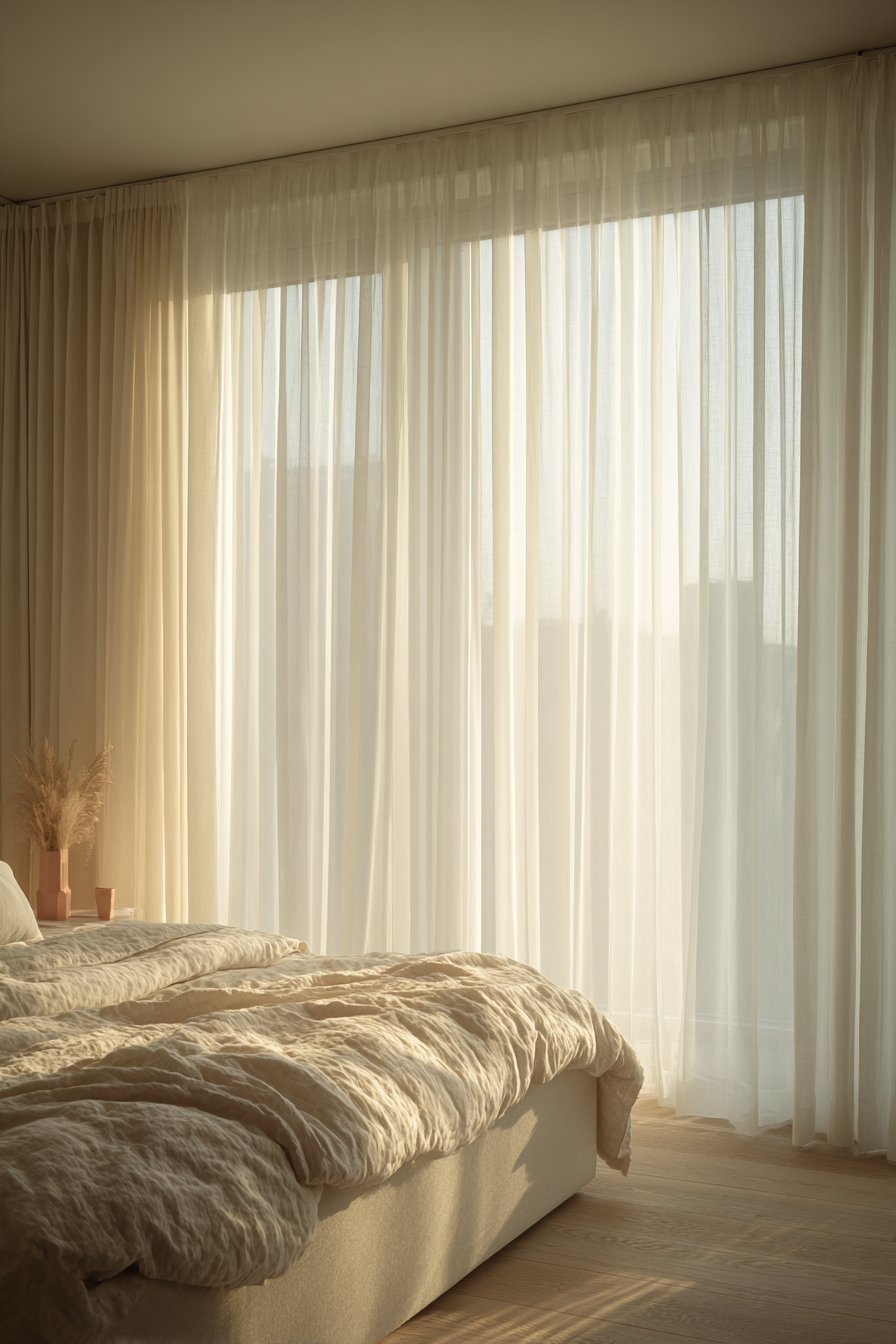
Natural fiber curtains in linen or lightweight cotton introduce texture while remaining true to minimalist principles. These fabrics move gently with air currents, adding subtle movement that makes spaces feel lived-in rather than staged. Avoid heavy drapes, elaborate valances, or busy patterns that fight against the clean aesthetic you’ve carefully cultivated throughout the room.
- Hang curtains at ceiling height and extend rods 6-12 inches beyond window frames on each side
- Choose floor-length panels that barely kiss the floor or pool slightly for elegant proportions
- Layer sheer curtains with blackout shades or lined panels for complete light and privacy control
- Select natural fabrics like linen or cotton that filter light beautifully and age gracefully
- Use simple, minimal hardware in brushed metals or wood that complement your overall design
- Avoid patterns, ruffles, or elaborate headings that add visual complexity and collect dust
8. Thoughtful Furniture Placement Optimizes Flow
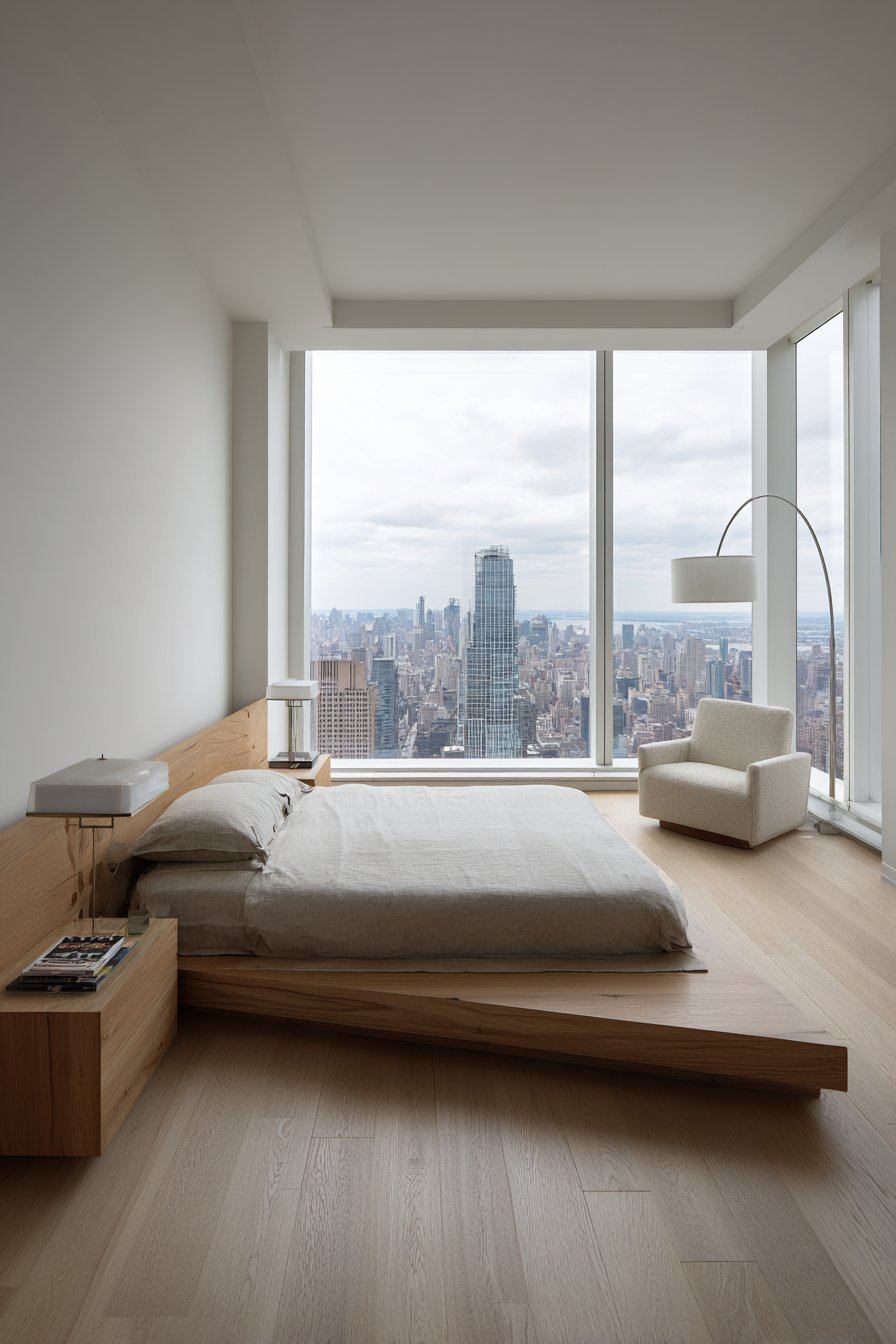
The arrangement of furniture dramatically affects how cozy and inviting a minimalist bedroom feels. Thoughtful spatial planning ensures easy movement, creates intimate conversation areas, and prevents the room from feeling like a furniture showroom. In minimalist design, every piece should have clear purpose and intentional placement that enhances both function and comfort.
Position the bed as the room’s focal point, typically centered on the longest wall or facing the entrance. Allow 24-30 inches of clearance on each side for easy access and cleaning. This spacing prevents the cramped feeling that undermines coziness while maintaining the open, breathable quality essential to minimalist aesthetics.
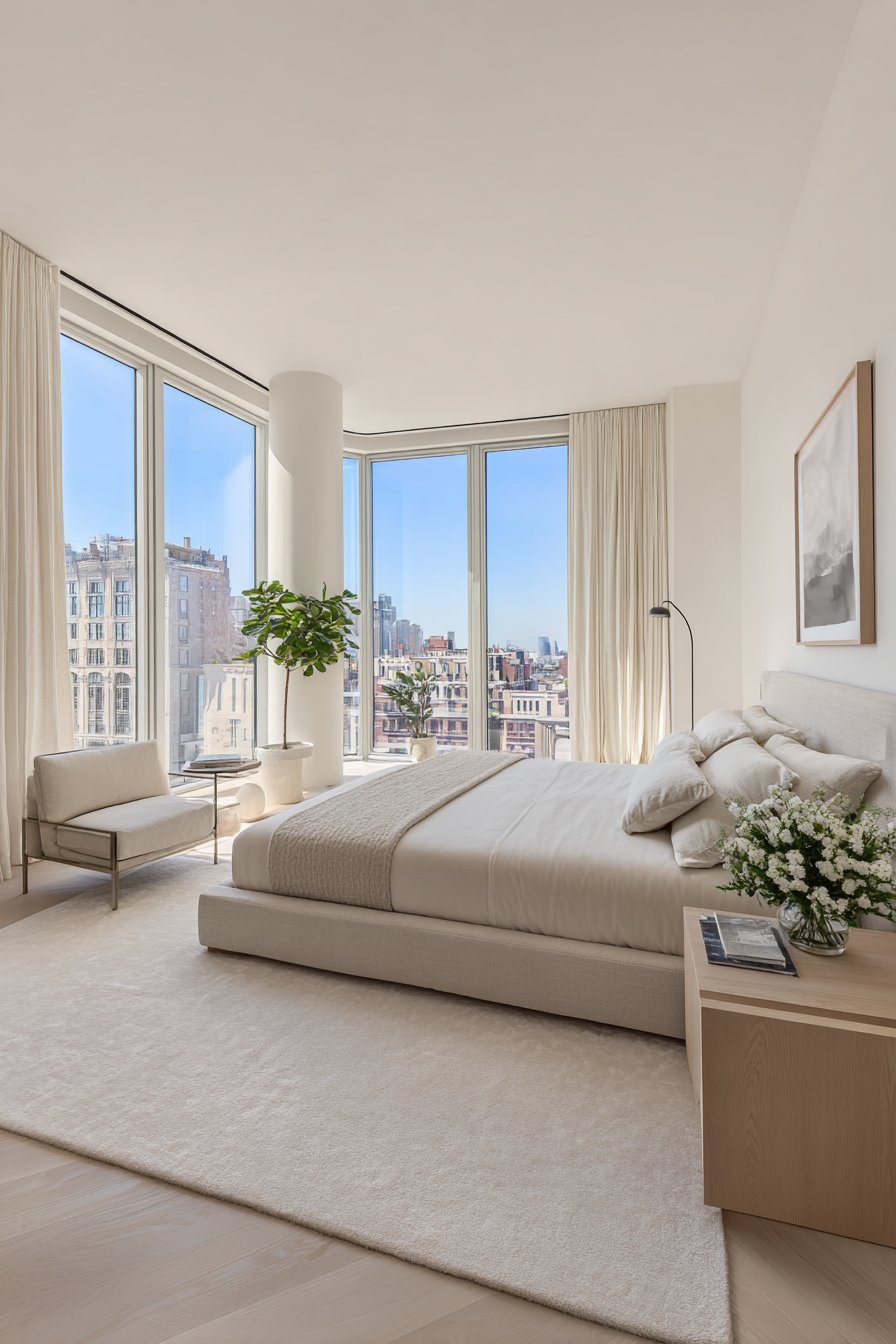
Limit additional furniture to pieces you genuinely use daily. Two nightstands, a dresser, and perhaps a reading chair represent sufficient furnishings for most bedrooms. Each piece should stand slightly apart from others, creating negative space that allows the eye to rest. This breathing room between furniture makes minimalist spaces feel intentional rather than empty or sparse.
- Center the bed on the room’s visual axis or against the longest uninterrupted wall
- Maintain 24-30 inches of walkway space on both sides of the bed for comfortable movement
- Position a reading chair near windows with adequate task lighting for functional comfort
- Angle furniture slightly rather than pushing everything against walls for softer, more inviting arrangements
- Leave at least 36 inches between furniture pieces for comfortable circulation and cleaning access
- Remove any furniture that doesn’t serve a daily purpose or significantly enhance room functionality
9. Sensory Elements Beyond Visual Design
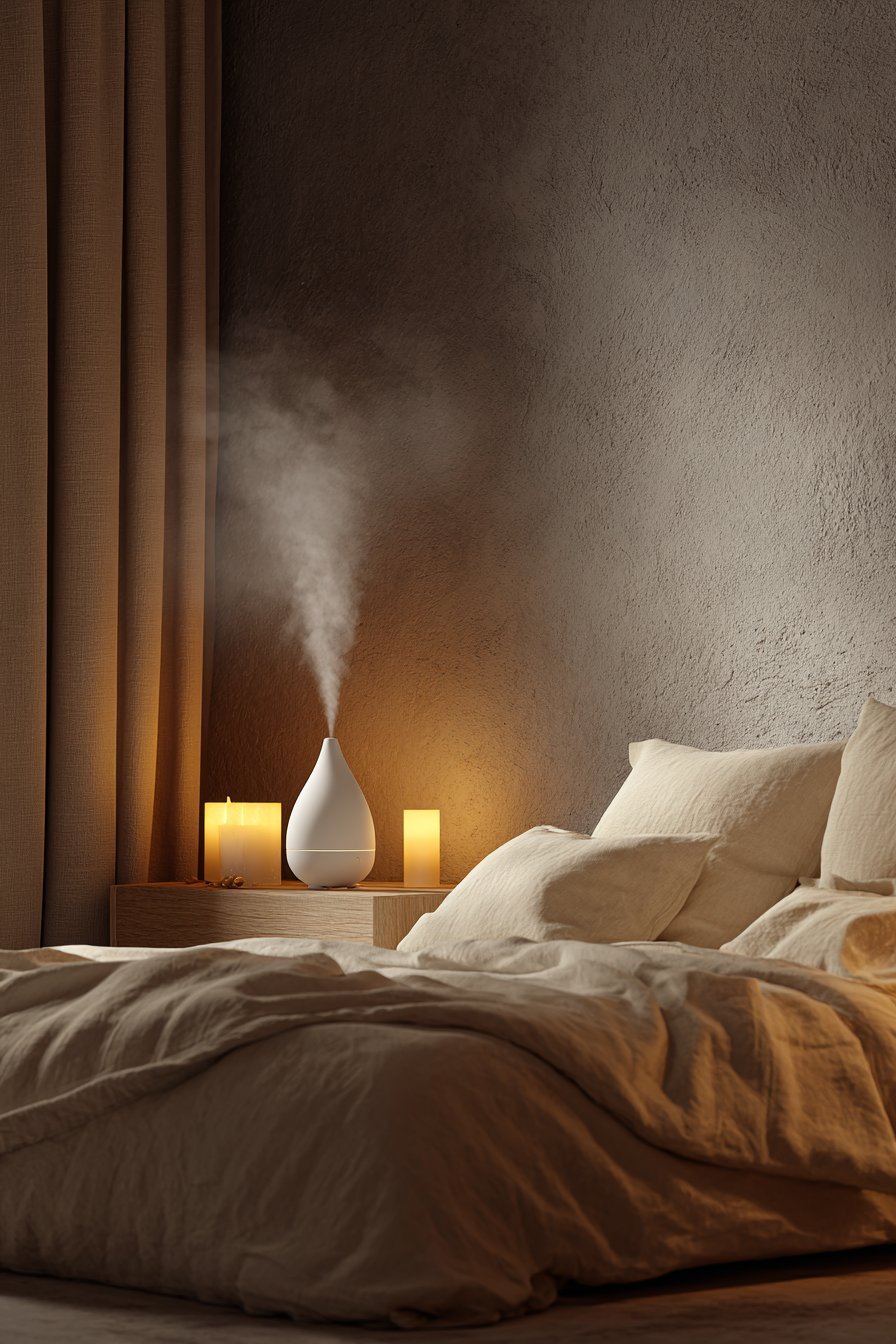
True coziness engages multiple senses simultaneously, not just sight. Aromatherapy, sound, and temperature control transform minimalist bedrooms from visually appealing spaces into genuine sanctuaries that nurture wellbeing. These invisible elements cost nothing in visual complexity yet dramatically enhance the lived experience of your bedroom.
Scent profoundly affects mood and memory, making it a powerful tool for creating cozy atmospheres. Essential oil diffusers, scented candles, or linen sprays introduce subtle fragrances without cluttering surfaces. Choose calming scents like lavender, chamomile, sandalwood, or vanilla that promote relaxation and signal to your brain that it’s time to unwind and rest.
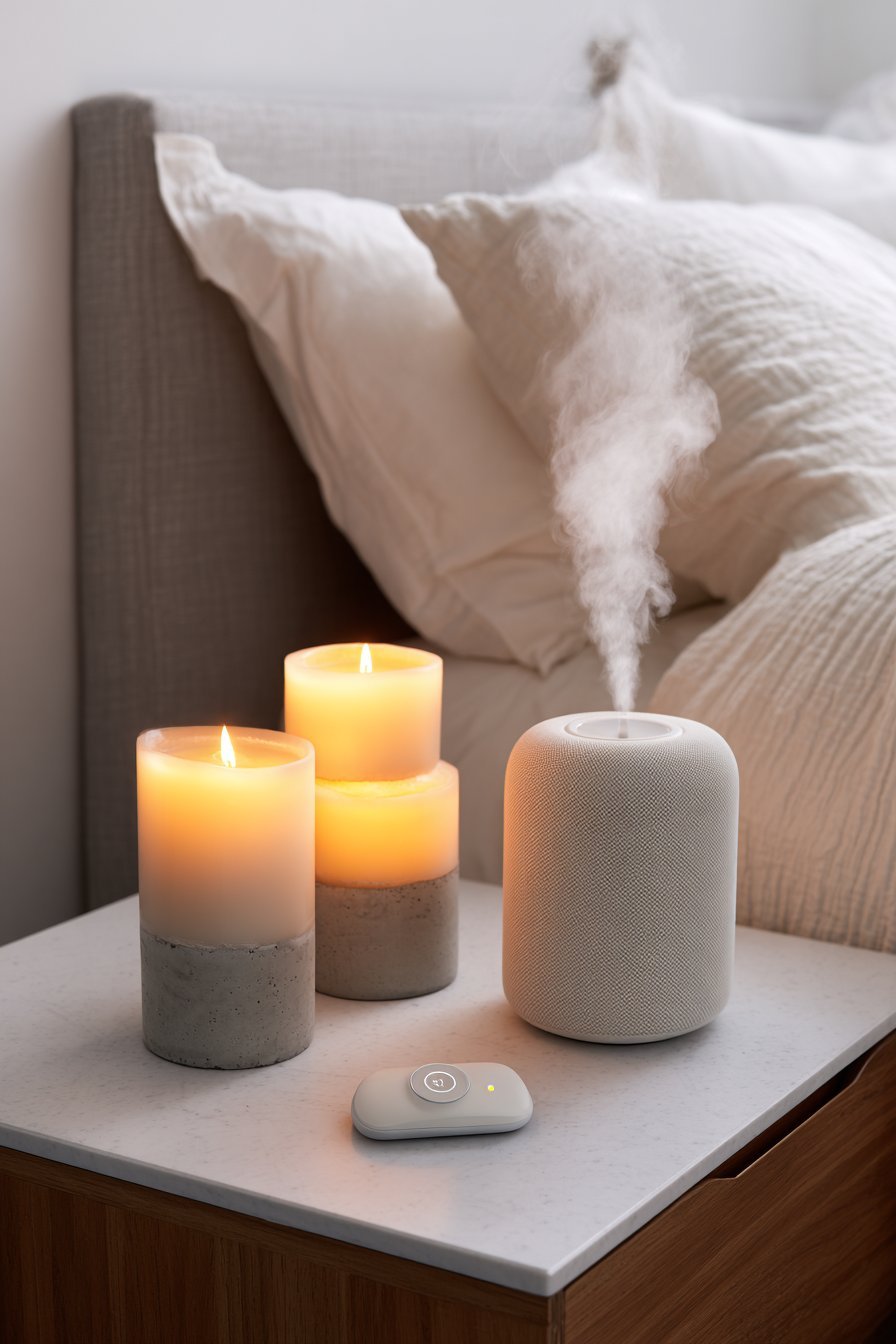
Temperature regulation matters more than most people realize for genuine comfort. Programmable thermostats maintain ideal sleeping temperatures between 60-67°F, while layered bedding allows personalized adjustment. Quality mattresses and pillows support restful sleep, the ultimate measure of bedroom coziness. These practical elements work invisibly to create physical comfort that complements your minimalist aesthetic.
- Use essential oil diffusers with calming scents like lavender, cedarwood, or chamomile for aromatherapy
- Maintain bedroom temperatures between 60-67°F for optimal sleep quality and physical comfort
- Invest in a quality mattress that properly supports your preferred sleeping position and body type
- Add a white noise machine or fan to mask disruptive sounds and create consistent auditory background
- Use blackout window treatments to eliminate light pollution that disrupts natural sleep cycles
- Incorporate one or two candles in simple holders for soft, flickering light and gentle scent
10. Seasonal Adaptations Keep Spaces Fresh
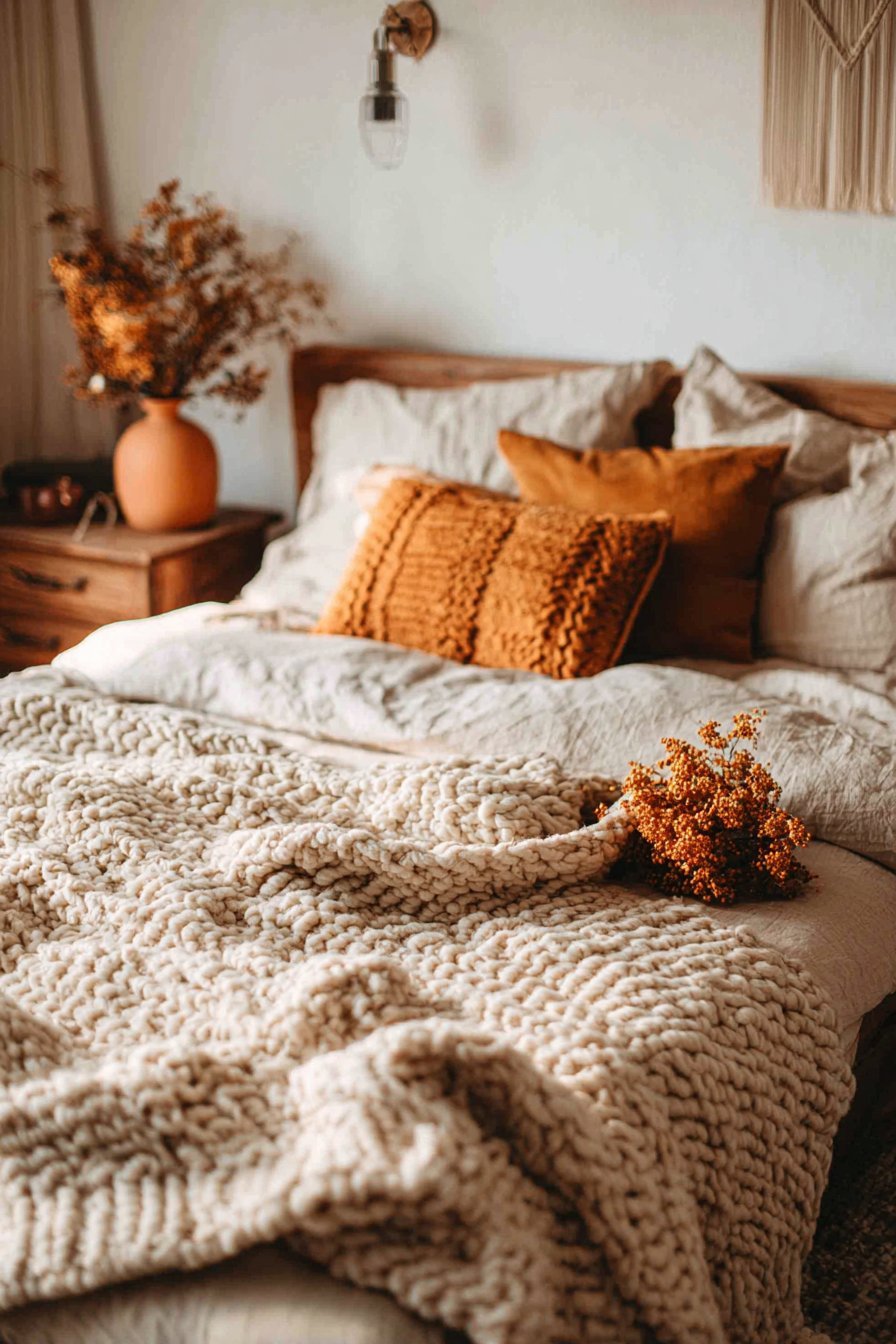
Minimalist bedrooms benefit from subtle seasonal adjustments that maintain interest without requiring major overhauls. These small changes acknowledge the natural rhythm of the year while respecting the clean aesthetic you’ve created. The key is swapping a few carefully chosen elements rather than completely redecorating with each season’s arrival.
Textile swaps represent the easiest seasonal transition in minimalist spaces. Exchange lightweight cotton or linen bedding for warmer flannel or jersey knits in autumn and winter. Swap thin throws for chunky knit blankets that add visual and physical warmth. These simple changes dramatically affect the room’s coziness factor without adding permanent clutter or requiring storage space.
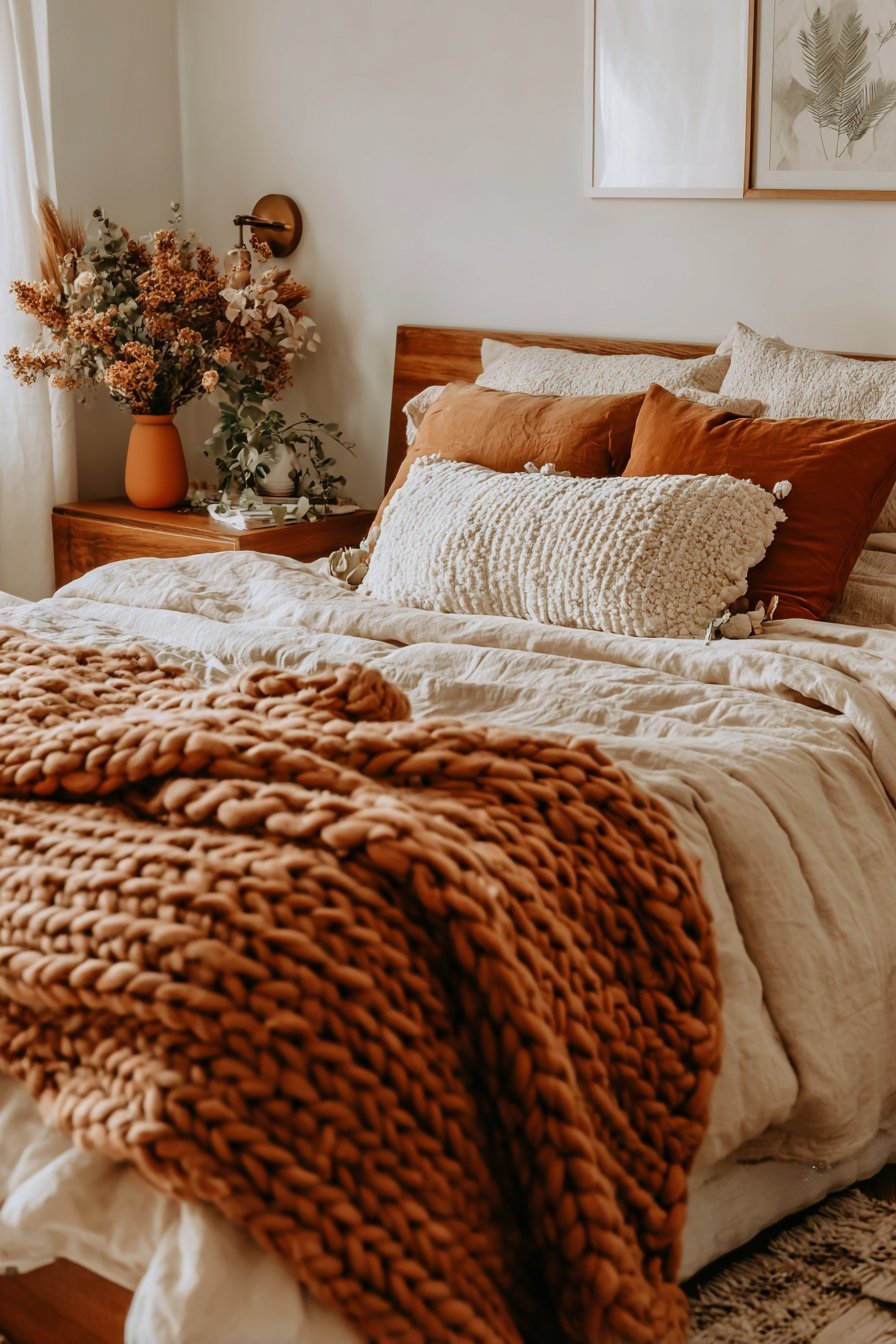
Color temperature shifts subtly with seasons while maintaining your overall neutral palette. Summer might favor cooler grays and crisp whites, while winter welcomes warmer creams and caramels. A single accent pillow in seasonal tones or a small arrangement of seasonal branches provides enough change to feel fresh without overwhelming your carefully curated aesthetic.
- Swap lightweight summer bedding for warmer flannels, jerseys, or fleece options in fall and winter
- Exchange thin cotton throws for chunky knit blankets that add visual and physical warmth seasonally
- Rotate between cooler-toned neutrals in summer and warmer earth tones in fall and winter
- Add one or two seasonal accent pillows in colors that complement your existing neutral palette
- Bring in seasonal natural elements like branches, pinecones, or fresh flowers in simple vessels
- Adjust lighting warmth with smart bulbs that allow temperature changes without replacing fixtures
Conclusion
Creating a cozy minimalist bedroom requires understanding that warmth and simplicity coexist beautifully when approached thoughtfully. The strategies outlined demonstrate how texture, lighting, natural materials, and intentional choices transform sparse spaces into inviting retreats. By focusing on quality over quantity and engaging multiple senses, you can achieve the rare balance between aesthetic minimalism and genuine comfort.
Remember that minimalism serves you, not the other way around. Your bedroom should support restful sleep and daily wellbeing while reflecting your personal aesthetic. Start with one or two techniques that resonate most strongly, then gradually incorporate others as you discover what makes your space feel most like home. The result will be a sanctuary that calms your mind and welcomes you home each evening—the true measure of cozy minimalist success.
