
White oak cabinets have emerged as a cornerstone of contemporary kitchen design. They bring warmth, natural beauty, and timeless elegance to any culinary space. The distinctive grain patterns and honey-toned hues create inviting atmospheres that balance modern aesthetics with organic charm.
These versatile cabinets complement virtually every design style imaginable. From sleek minimalist kitchens to cozy farmhouse retreats, white oak adapts beautifully. The wood’s natural characteristics include visible grain patterns, subtle ray fleck figure, and warm undertones. These qualities make each cabinet installation uniquely captivating.
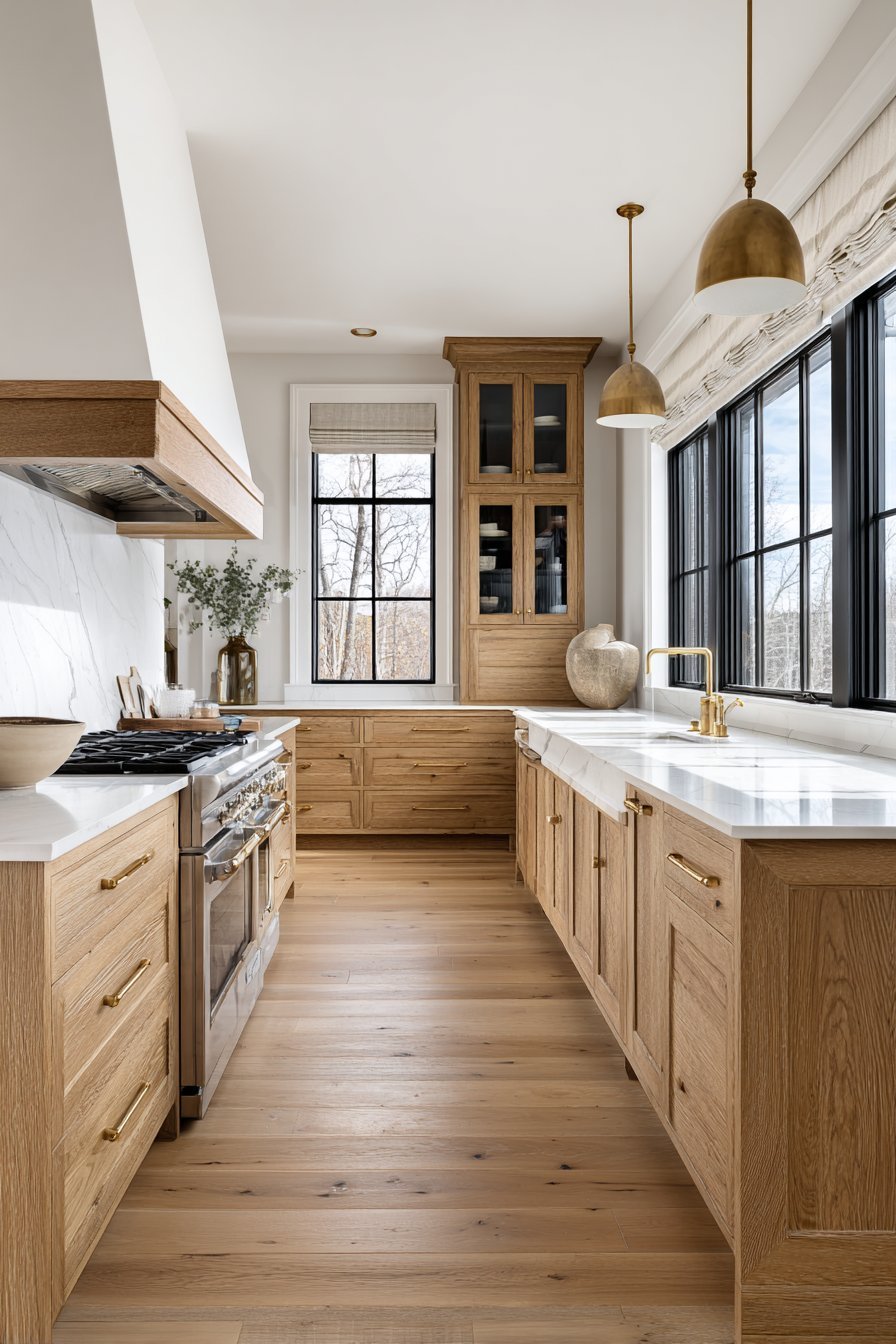
This comprehensive guide explores twenty exceptional white oak cabinet designs. Each concept demonstrates different applications, finishes, and styling approaches. You’ll discover how this remarkable material transforms ordinary kitchens into extraordinary spaces. Whether you’re planning a complete renovation or a cabinet refresh, these ideas offer inspiration and practical guidance.
1. Modern Floor-to-Ceiling White Oak Elegance
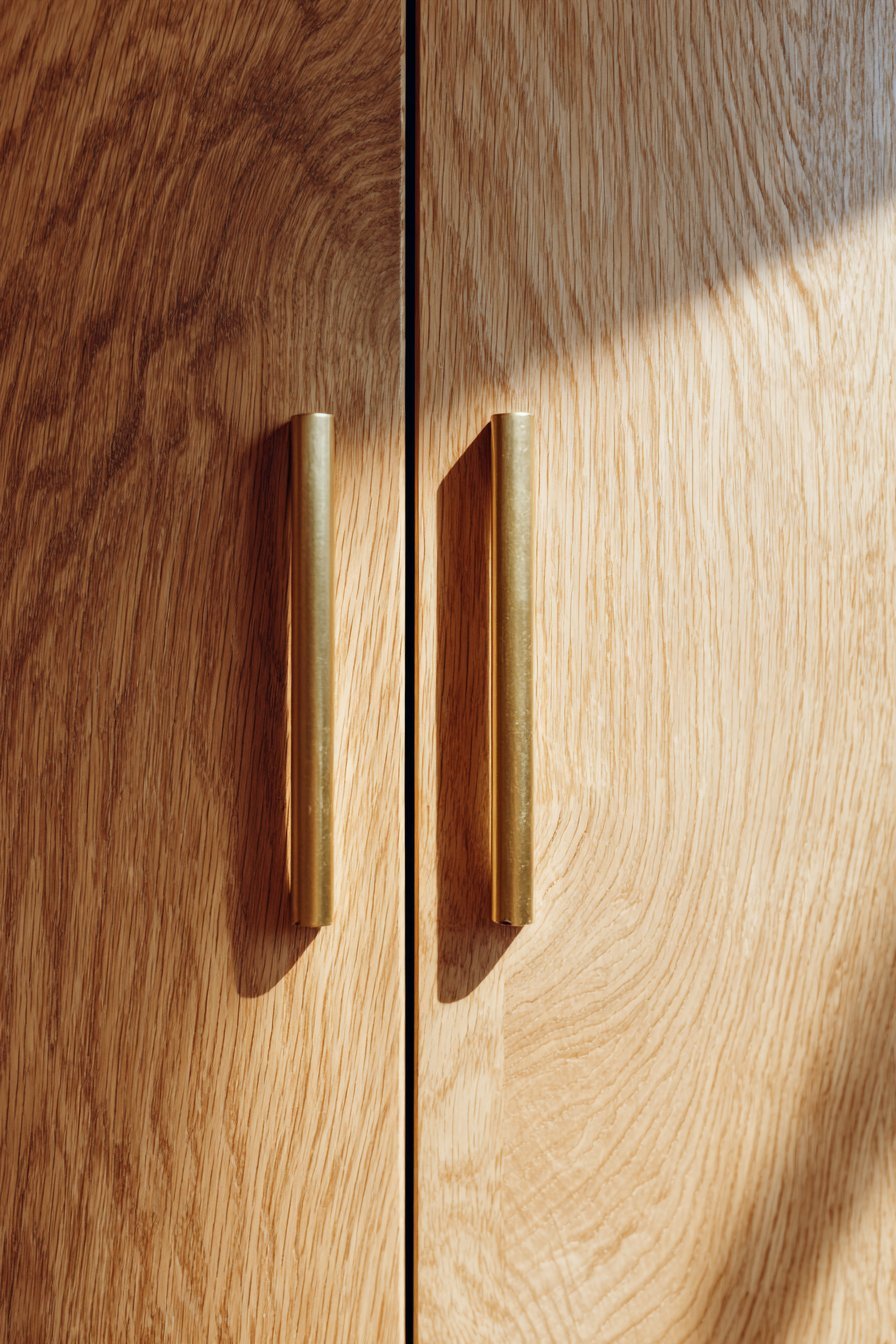
Picture a kitchen where white oak cabinets stretch from floor to ceiling. The natural grain patterns flow continuously across every surface. A clear matte finish highlights the wood’s inherent beauty. The warm honey tones create an inviting atmosphere that feels both sophisticated and welcoming.

Sleek brushed brass hardware punctuates the light wood surfaces. These elegant accents add just the right amount of visual interest. The metal’s warm tone complements the oak’s natural coloring perfectly. Wide-angle views reveal the impressive scale of this cabinet installation.
Natural lighting plays a crucial role in this design. Nearby windows allow sunlight to stream across the wood surfaces. Soft shadows emphasize the grain texture and directional patterns. The interplay between light and wood creates dynamic visual interest throughout the day.

The floor-to-ceiling approach maximizes storage capacity without sacrificing aesthetics. Every inch of vertical space serves a purpose. This design demonstrates how functional requirements and beautiful design coexist harmoniously. The continuous wood installation creates visual cohesion that makes the space feel larger.
Key Design Tips:
- Choose clear matte finishes to showcase natural grain without excessive shine
- Install cabinets to the ceiling to maximize storage and create visual height
- Select brushed brass hardware for warm metallic accents that complement oak tones
- Position cabinets near windows to take advantage of natural light
- Maintain consistent grain direction across adjacent cabinet faces for cohesive appearance
2. Scandinavian Simplicity with Shaker Style
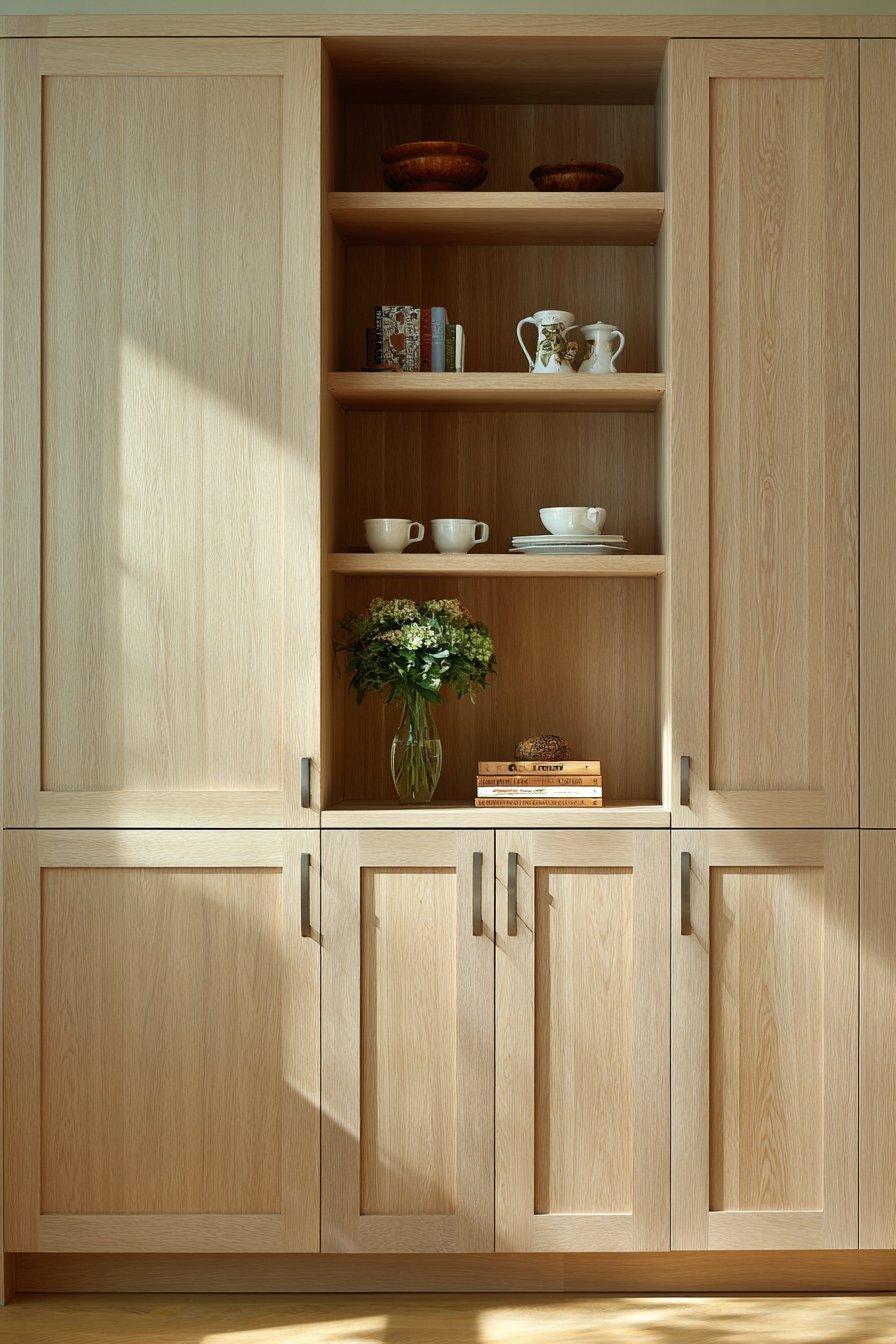
A Scandinavian-inspired kitchen embraces minimalist principles through white oak shaker cabinets. The simple recessed panel doors exemplify understated elegance. Minimal hardware maintains the clean aesthetic that defines Nordic design. The pale creamy color of white oak provides the perfect foundation.

The characteristic straight grain pattern creates subtle visual rhythm. Open shelving sections integrate seamlessly within the cabinetry system. This combination of closed and open storage adds functional versatility. The shelving displays curated items while closed cabinets hide everyday necessities.

Morning light illuminates the natural variations in the oak grain. Authentic wood character shines through with subtle color shifts. Medullary ray flecking adds dimensional interest to the smooth surfaces. These natural imperfections contribute to the design’s organic appeal.

The Scandinavian approach prioritizes both form and function equally. Every element serves a clear purpose without unnecessary embellishment. The white oak’s natural warmth prevents the minimalist space from feeling cold. This balance creates kitchens that feel serene yet inviting for daily living.
Key Design Tips:
- Opt for shaker-style doors with simple recessed panels for timeless appeal
- Incorporate open shelving to break up solid cabinetry and display decorative items
- Choose minimal hardware or consider push-to-open mechanisms for seamless fronts
- Embrace natural wood variations rather than seeking perfectly uniform color
- Balance closed storage with open elements for functional and visual variety
3. Contemporary Waterfall Island Showpiece

A stunning white oak island commands attention with its waterfall edge design. The countertop cascades down both sides in continuous wood flow. This seamless wood-on-wood construction creates dramatic visual impact. Flat-panel slab doors maintain the contemporary aesthetic throughout.
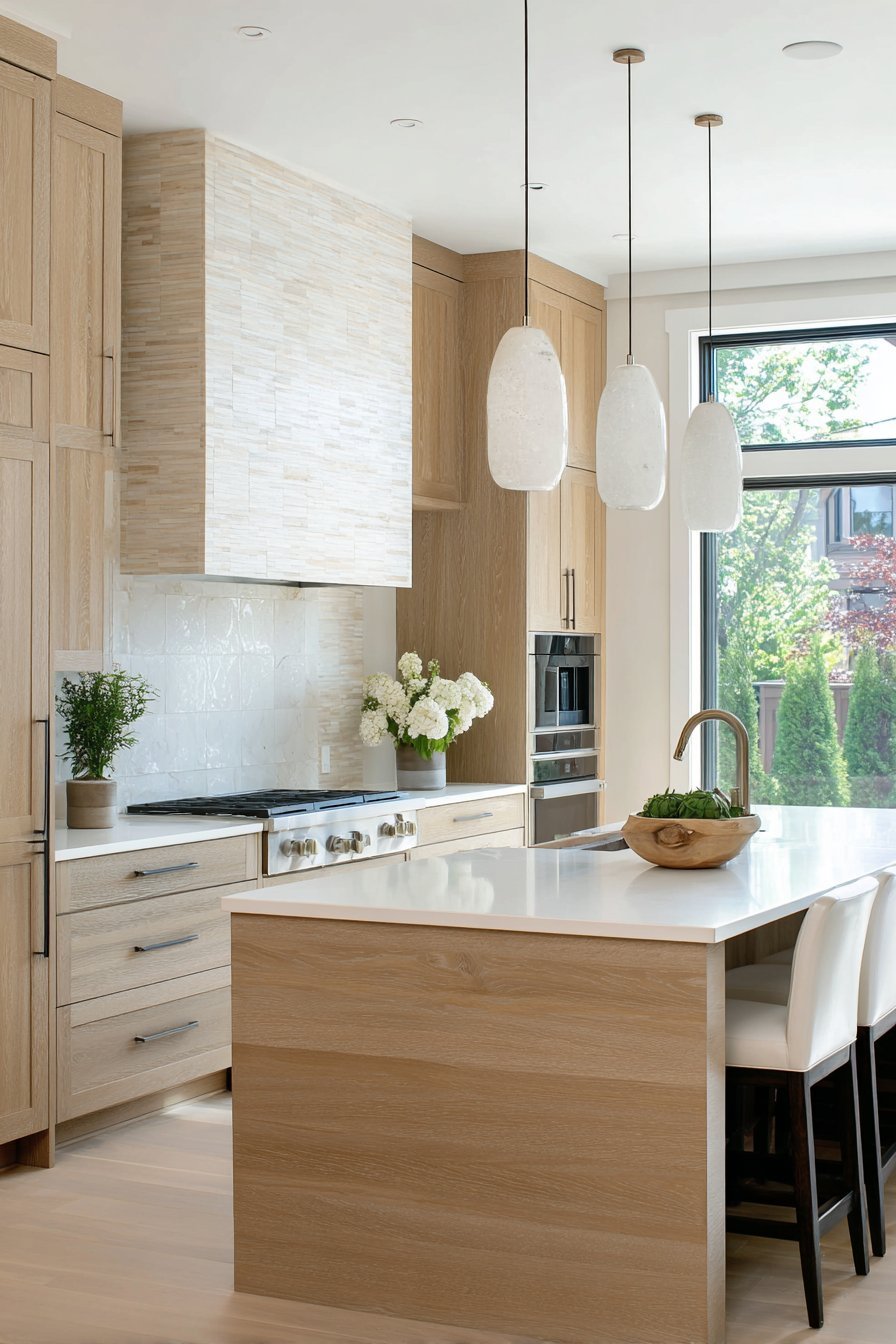
Push-to-open mechanisms eliminate the need for visible hardware. The handleless appearance emphasizes the cabinet’s clean lines. The grain runs continuously across cabinet fronts and down the waterfall edges. This intentional grain direction creates mesmerizing visual continuity.

Natural daylight brings out the warm undertones in the wood. The finish develops a natural luster under proper lighting conditions. Balanced exposure highlights subtle grain variations across different surfaces. The island becomes a sculptural element within the kitchen landscape.

This design demonstrates white oak’s versatility in furniture-quality applications. The island serves multiple functions as workspace, storage, and gathering spot. The waterfall detail elevates the piece from functional furniture to design statement. It proves that kitchen islands can be both practical and breathtaking.
Key Design Tips:
- Specify waterfall edges for a seamless, high-end appearance on islands
- Choose flat-panel slab doors for contemporary, minimalist aesthetics
- Install push-to-open hardware for handleless fronts that emphasize clean lines
- Ensure grain continuity across adjoining surfaces for professional appearance
- Position the island to receive natural light that enhances wood character
4. Transitional Glass-Front Upper Cabinets
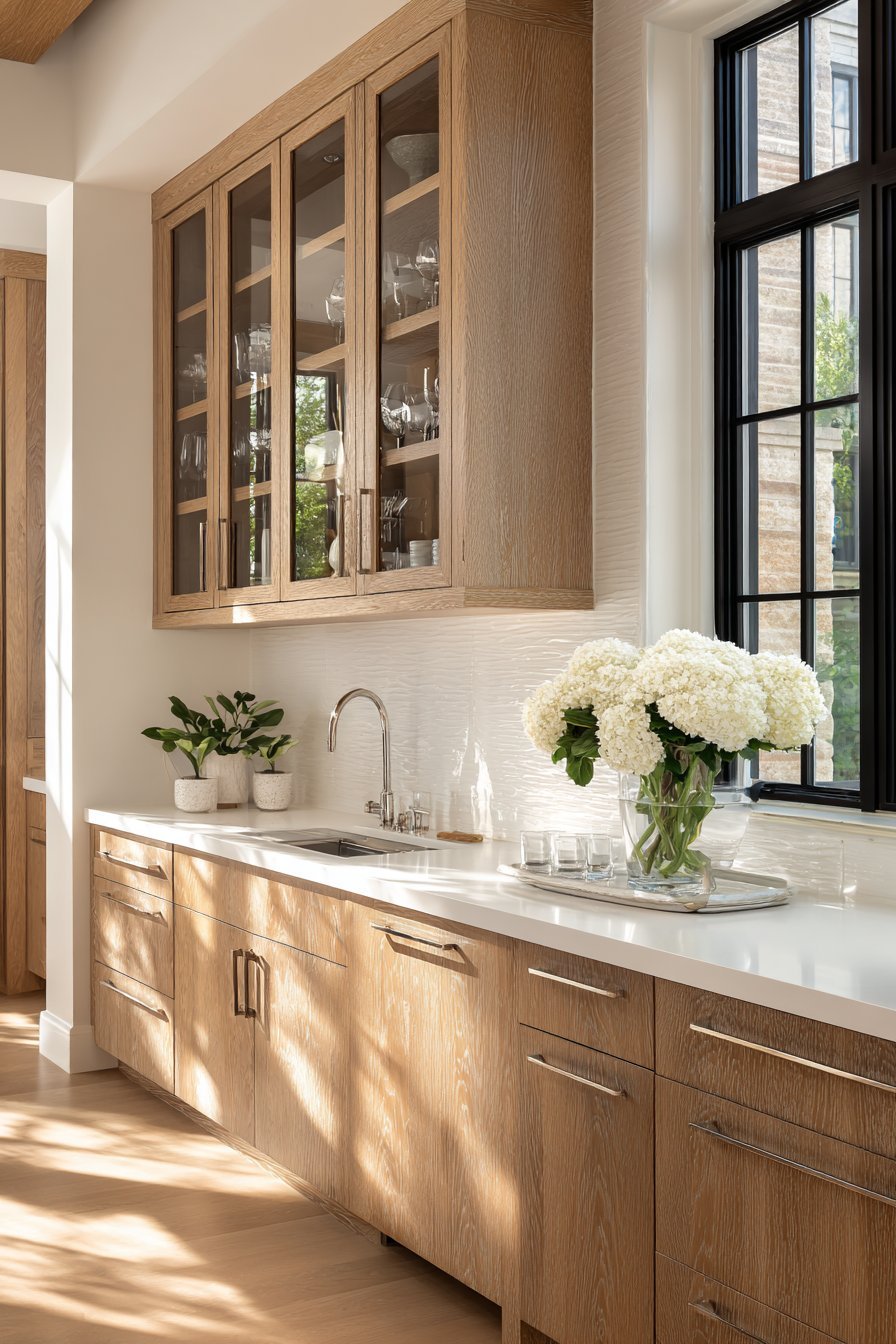
White oak upper cabinets feature glass-front doors revealing organized interiors. The transparency adds depth and visual interest to the kitchen design. Lower cabinets in complementary white oak finish provide grounded solidity. Polished nickel hardware bridges traditional and contemporary design elements.
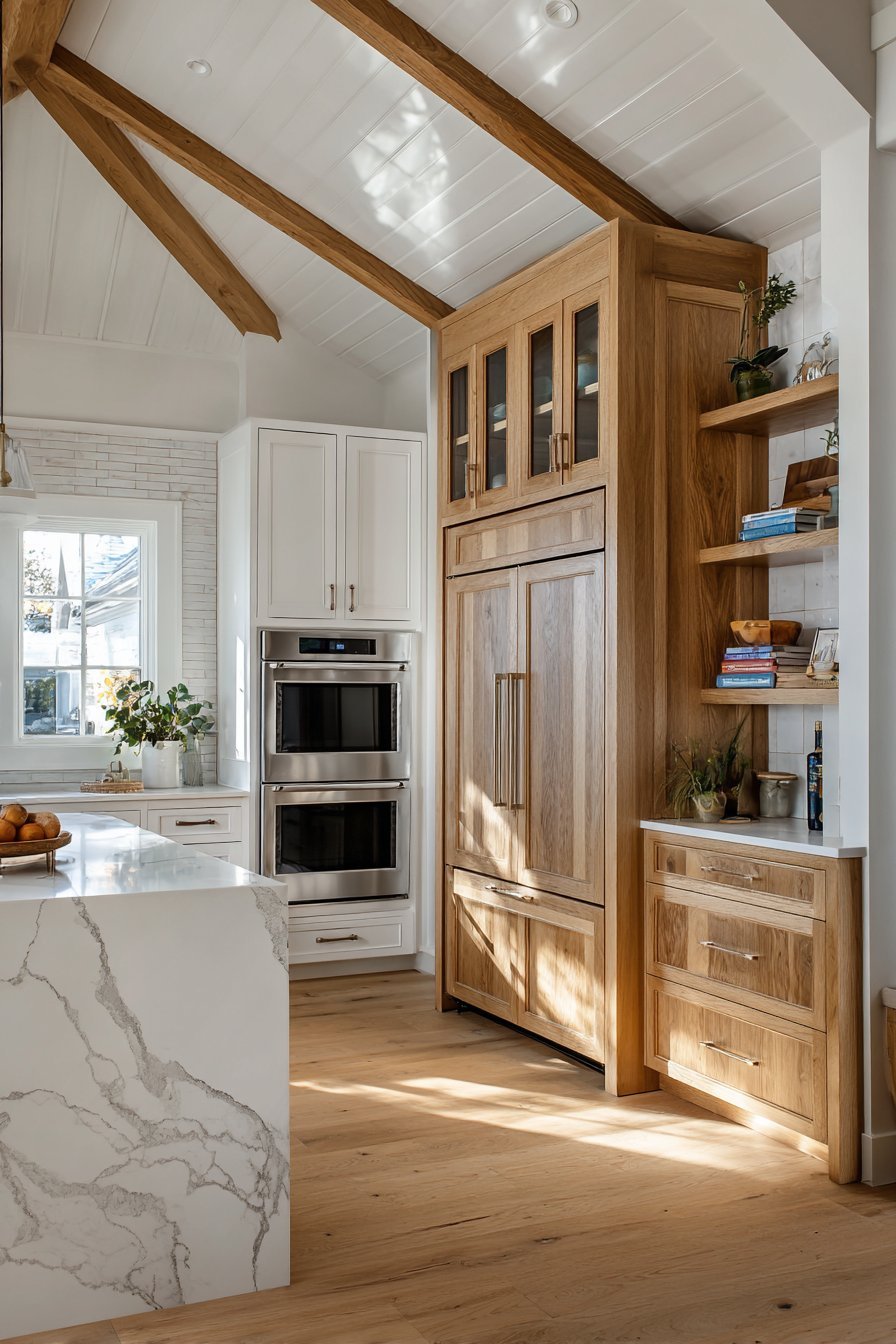
The wood displays authentic white oak characteristics throughout. Visible pores and ray fleck patterns contribute natural texture. These organic details prevent the design from feeling too manufactured. White quartz countertops provide clean contrast against the warm wood tones.

Window light creates depth through subtle shadows on cabinet surfaces. The dimensional quality makes the cabinetry feel alive and dynamic. Architectural photography captures how light interacts with both solid and glass elements. The varied cabinet treatment prevents visual monotony.

This transitional approach appeals to those who appreciate multiple design styles. It successfully combines traditional craftsmanship with modern sensibilities. The glass fronts allow display of beautiful dishware while maintaining protection. The result feels collected rather than overly coordinated.
Key Design Tips:
- Mix glass-front uppers with solid lowers for visual interest and display options
- Choose polished nickel hardware for transitional style that bridges design eras
- Pair white oak with white quartz countertops for clean, bright contrast
- Organize cabinet interiors thoughtfully since glass fronts reveal contents
- Consider interior cabinet lighting to enhance displayed items behind glass
5. Modern Farmhouse Wire-Brushed Texture

A modern farmhouse kitchen showcases white oak cabinets with wire-brushed finish. This treatment accentuates the wood’s natural grain texture beautifully. The brushing creates dimensional surface quality that invites touch. Simple shaker-style doors provide the perfect canvas for textural exploration.

The texture remains clearly visible across each cabinet panel. This tactile quality adds substantial character to the space. Matte black hardware provides striking contrast against the light oak. The combination of rustic texture and modern hardware bridges design styles.
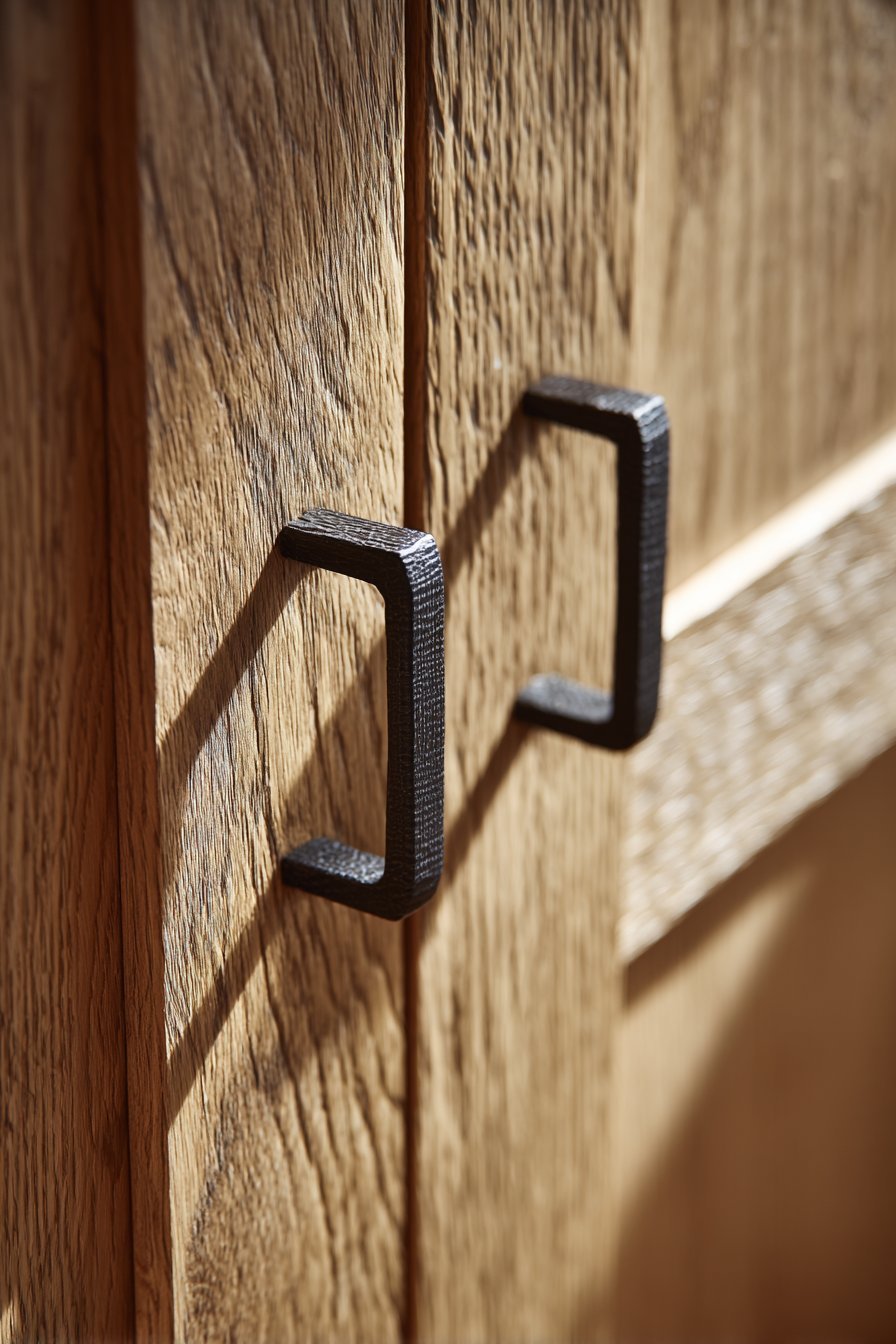
Side lighting emphasizes the dimensional texture throughout the cabinetry. The interplay of light and shadow reveals the wood’s organic patterns. Professional photography captures the tactile quality that photographs struggle to convey. The brushed surface catches light differently than smooth finishes.
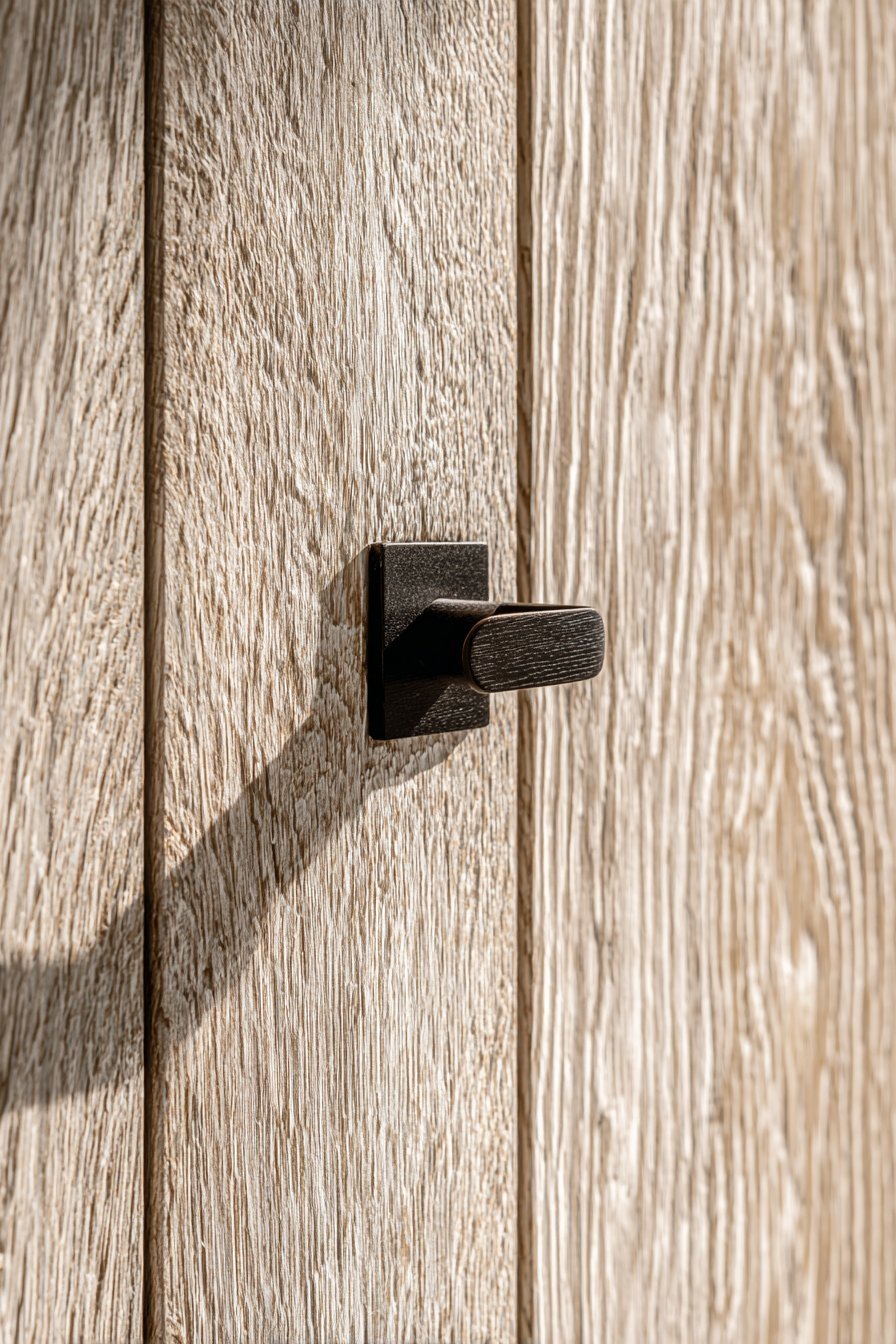
This approach satisfies those seeking character without excessive rusticity. The wire-brushing enhances rather than obscures the wood’s natural beauty. The technique works particularly well in farmhouse and transitional kitchens. It adds depth while maintaining the sophistication of white oak.
Key Design Tips:
- Specify wire-brushed finish to add texture and enhance grain visibility
- Pair textured oak with matte black hardware for modern farmhouse contrast
- Use side lighting to emphasize the dimensional quality of brushed surfaces
- Choose shaker doors to showcase the texture without competing details
- Consider the tactile experience alongside visual appeal in material selection
6. Minimalist Horizontal Grain Installation

Horizontal-grain white oak cabinets create distinctive linear visual patterns. The wood grain runs sideways across cabinet fronts deliberately. This unconventional orientation demands attention and creates modern sophistication. Rift-sawn white oak displays straight, uniform grain with minimal cathedral patterns.

Integrated handle pulls route directly into cabinet faces. This detail maintains the minimalist aesthetic without added hardware. The clean lines emphasize the horizontal grain direction. Soft diffused lighting shows the consistent grain pattern across all surfaces.
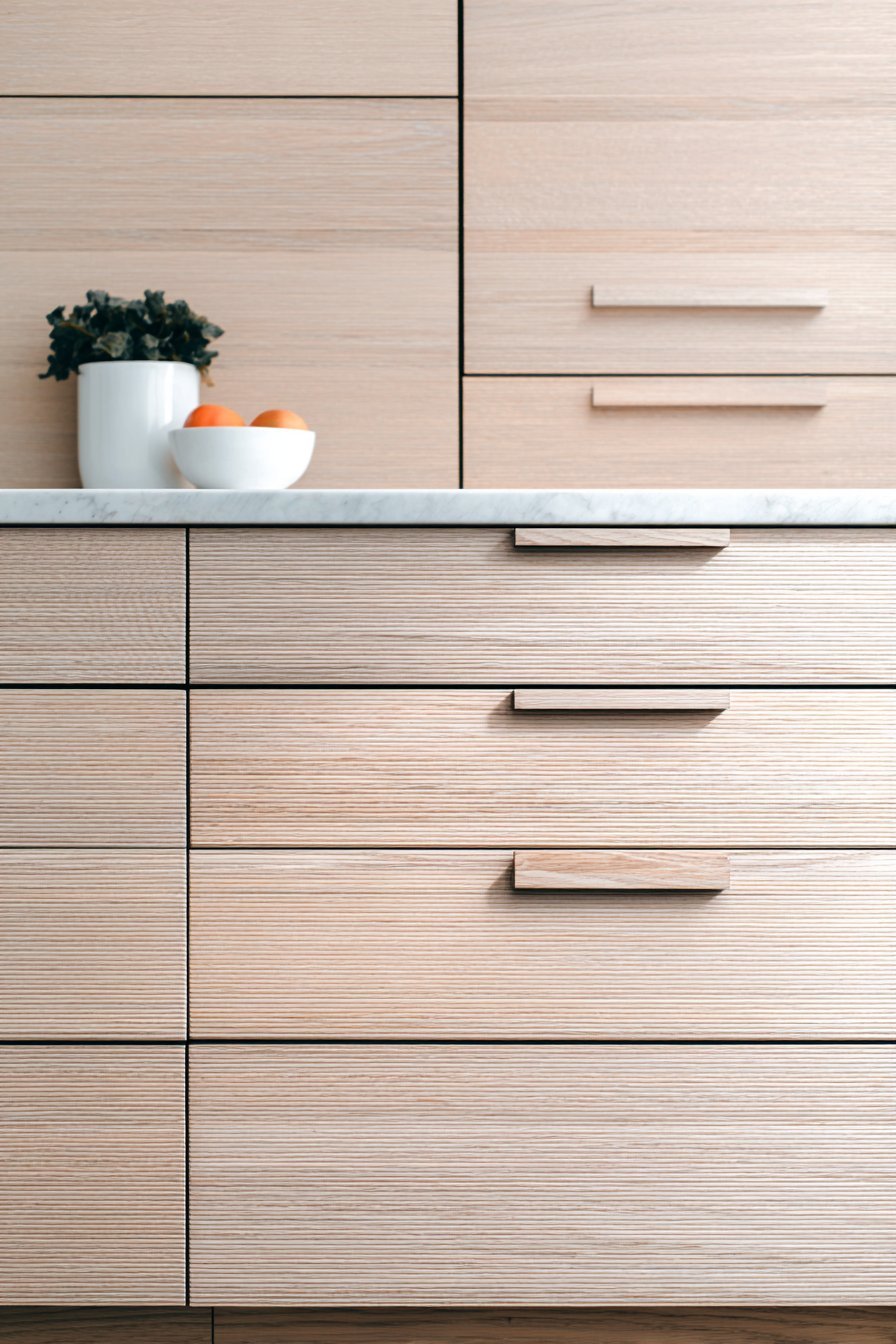
The rift-sawn cutting method produces exceptionally straight grain. This uniformity appeals to those preferring contemporary, orderly aesthetics. Subtle color variations remain inherent to natural white oak. These variations prevent the design from feeling sterile or manufactured.

The horizontal orientation changes how the eye travels across the cabinetry. It creates visual movement that differs from traditional vertical grain. This design choice demonstrates how grain direction impacts overall aesthetic. It proves that subtle details create significant visual impact.
Key Design Tips:
- Specify horizontal grain orientation for contemporary, distinctive appearance
- Choose rift-sawn white oak for straight, consistent grain patterns
- Route integrated handle pulls directly into cabinet faces for seamless look
- Use diffused lighting to highlight grain consistency without harsh shadows
- Consider how grain direction influences visual flow throughout the space
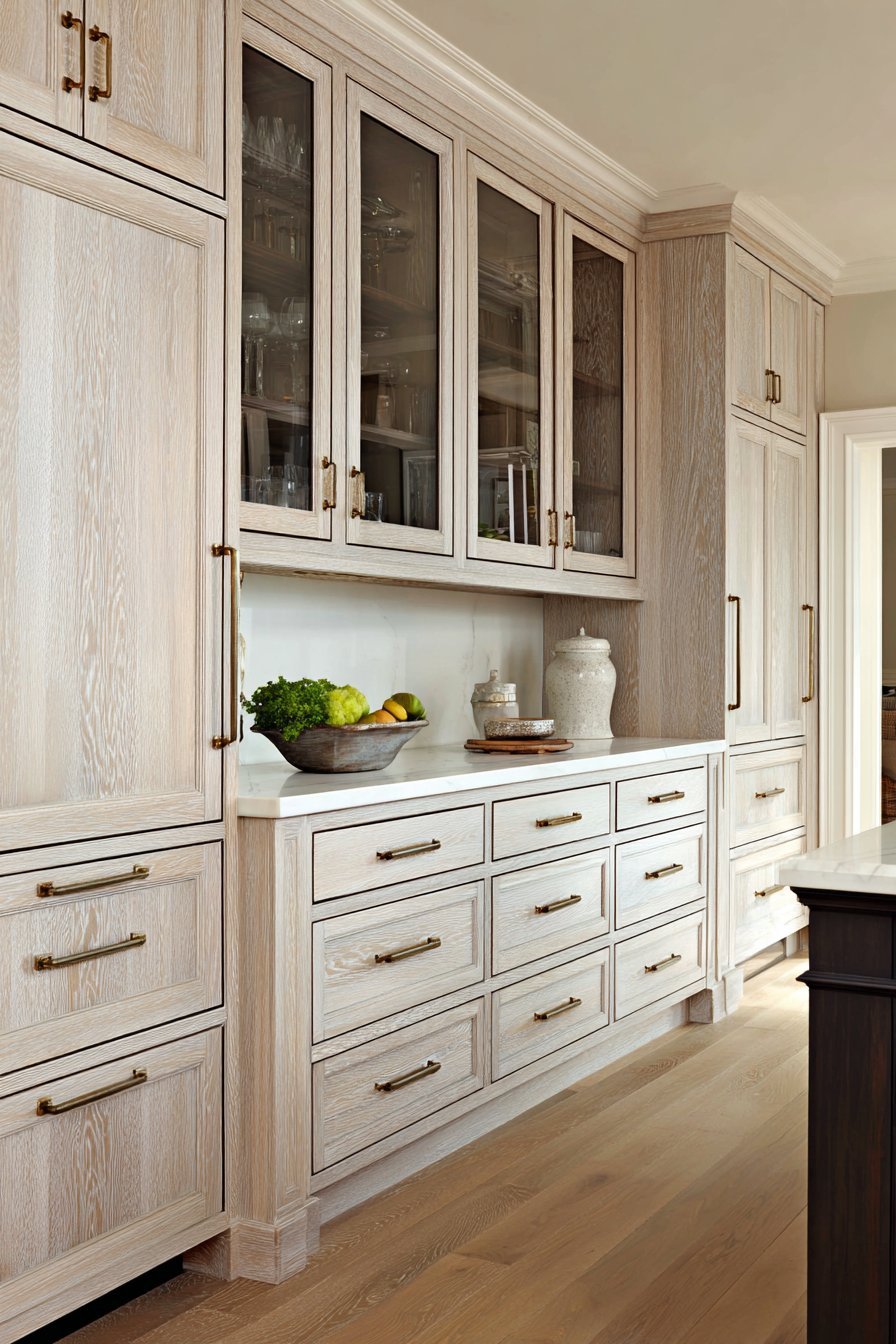
7. Luxurious Cerused White Oak Finish
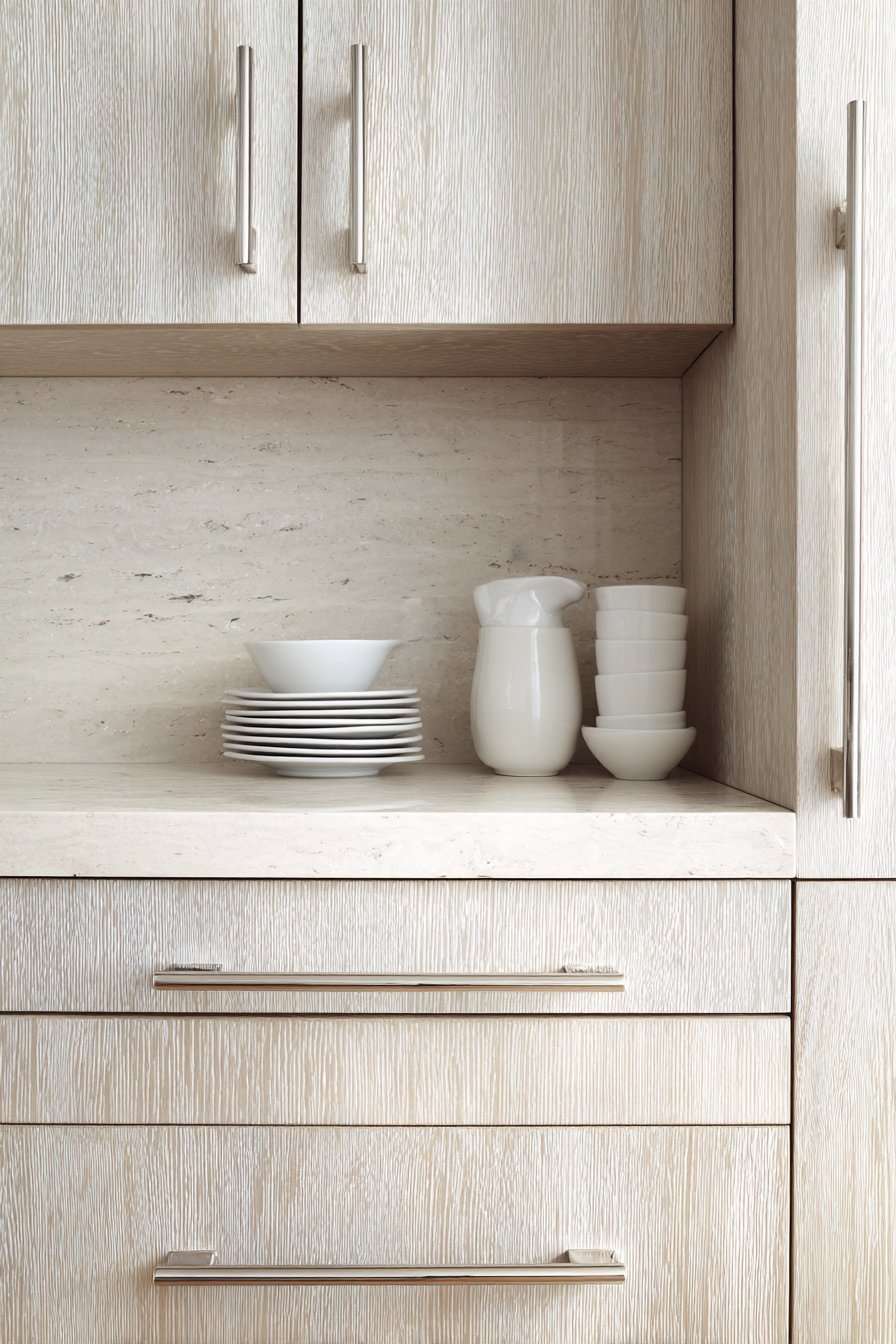
A luxurious kitchen features white oak cabinets with cerused finish. White filler highlights the oak’s naturally porous grain structure. This treatment creates subtle two-tone effect throughout the cabinetry. Pale grain lines contrast against the natural oak background color.

The cerusing process emphasizes the wood’s organic texture. Each cabinet displays intricate grain-filling detail that requires close inspection. Polished chrome hardware complements the refined finish beautifully. The combination feels both traditional and fresh simultaneously.

Studio-quality lighting reveals the sophisticated surface treatment. The balanced illumination shows every nuanced detail of the finish. This technique transforms white oak into something unexpected and luxurious. It demonstrates the wood’s versatility beyond natural finishes.

The cerused finish works particularly well in formal kitchen settings. It adds refinement without sacrificing the wood’s inherent warmth. The technique has historical precedence while feeling entirely contemporary. This duality appeals to those appreciating both tradition and innovation.
Key Design Tips:
- Consider cerused or limed finish for unique, refined white oak treatment
- Pair the detailed finish with polished chrome hardware for elegant contrast
- Ensure proper lighting to showcase the intricate grain-filling detail
- Choose this finish for formal kitchens where sophistication is paramount
- Understand that cerused finishes require skilled application and maintenance
8. Contemporary Two-Tone Color Combination

A contemporary kitchen combines white oak upper cabinets with painted lower cabinets. The soft sage green paint provides beautiful color contrast. Natural white oak uppers showcase clear grain and warm honey tones. The material difference creates visual interest without overwhelming the space.

Brass hardware ties both cabinet sections together cohesively. The warm metal complements both the natural wood and painted surfaces. Morning light highlights the material contrast throughout the kitchen. The white oak brings necessary warmth to the overall color scheme.

This two-tone approach allows personality expression through color choices. The natural wood prevents the painted cabinets from dominating. The combination feels balanced and intentional rather than haphazard. It demonstrates how mixing materials creates dynamic kitchen designs.
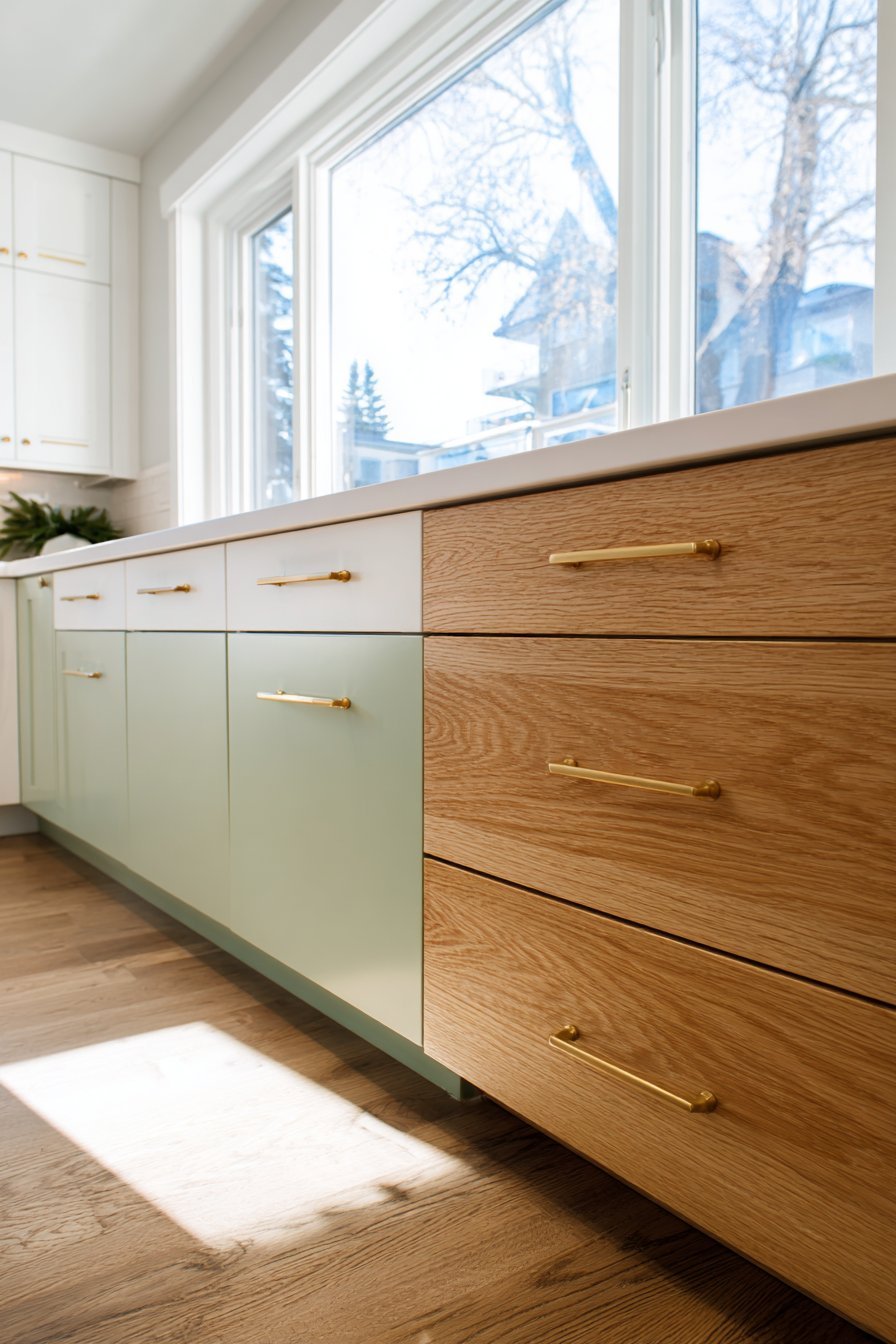
The color selection process becomes crucial in two-tone designs. The paint color should complement rather than compete with oak tones. Soft, muted colors work better than saturated, bright hues. The result should feel harmonious when viewed as complete composition.
Key Design Tips:
- Combine natural white oak uppers with painted lowers for two-tone interest
- Choose muted, complementary paint colors like sage, navy, or charcoal
- Use matching hardware across both sections to create visual unity
- Position natural oak uppers to maximize light reflection and warmth
- Ensure sufficient contrast between wood and paint for clear definition
9. Compact Galley Kitchen Efficiency

A compact galley kitchen maximizes storage with floor-to-ceiling white oak cabinets. Varied door heights create visual interest within the narrow space. Integrated appliance panels maintain the cohesive white oak aesthetic. The continuous wood installation prevents visual fragmentation.

Recessed lighting illuminates the natural wood tones from above. The vertical emphasis makes the compact space feel taller. Different heights accommodate various storage needs efficiently. The design proves that small kitchens can showcase beautiful materials.
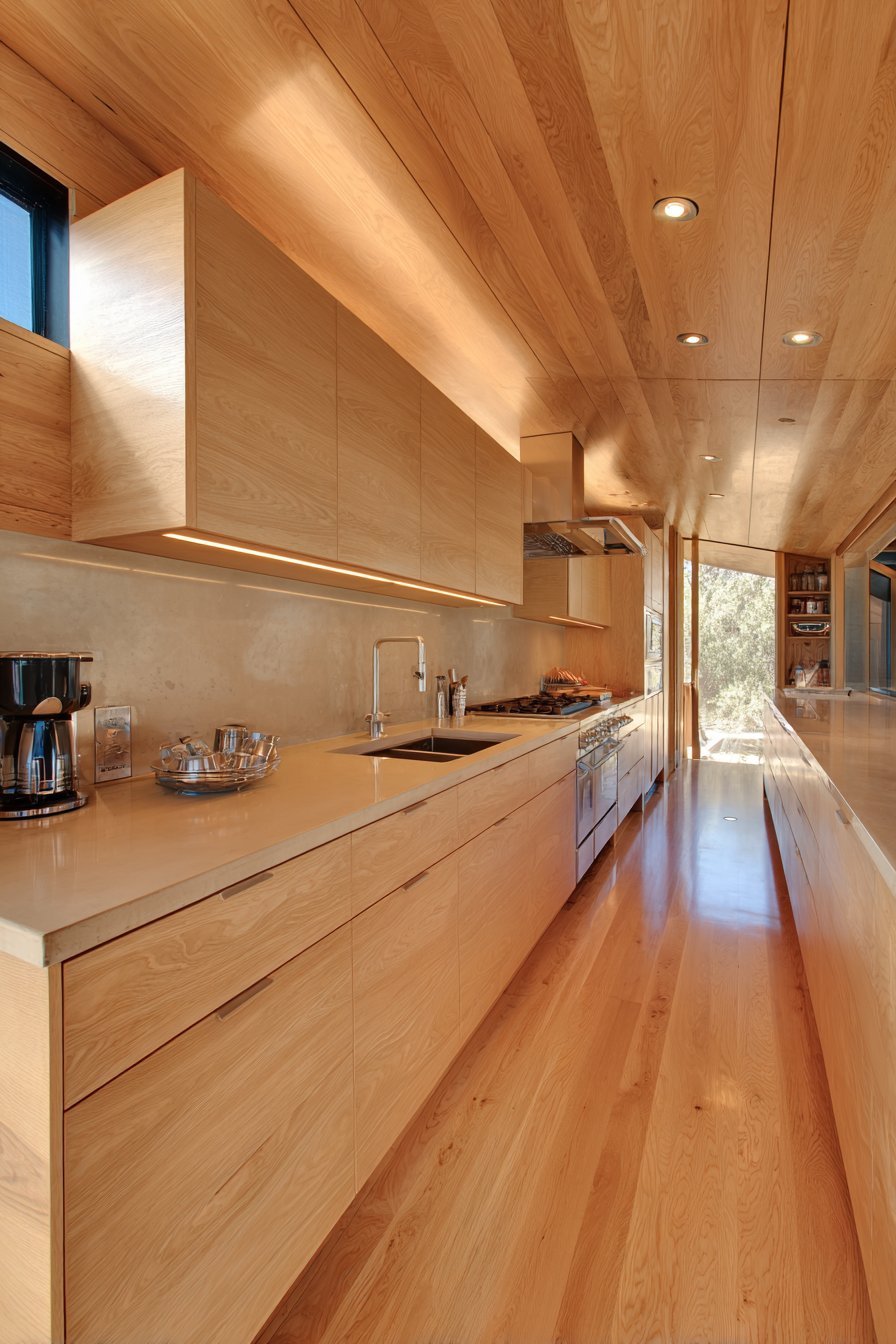
Strategic cabinet arrangement optimizes the narrow footprint. Every inch serves functional purpose without wasted space. The white oak’s warm tones prevent the galley from feeling claustrophobic. Lighting interaction with wood grain occurs at multiple heights.

This approach demonstrates intelligent space planning in constrained areas. The material consistency creates visual calm despite storage density. White oak’s versatility shines in small-scale applications. The design shows that compact kitchens deserve quality materials and thoughtful design.
Key Design Tips:
- Extend cabinets to the ceiling in small kitchens to maximize storage
- Vary cabinet heights to accommodate different storage needs and add interest
- Use integrated appliance panels to maintain visual continuity in tight spaces
- Install adequate recessed lighting to illuminate wood tones throughout
- Choose lighter wood tones to prevent small spaces from feeling dark
10. Rustic Modern Live-Edge Details

A rustic modern kitchen features white oak cabinets with live-edge accents. Floating shelves and range hood surround showcase raw wood edges. Book-matched cabinet doors display mirrored grain patterns beautifully. The natural beauty of white oak takes center stage.
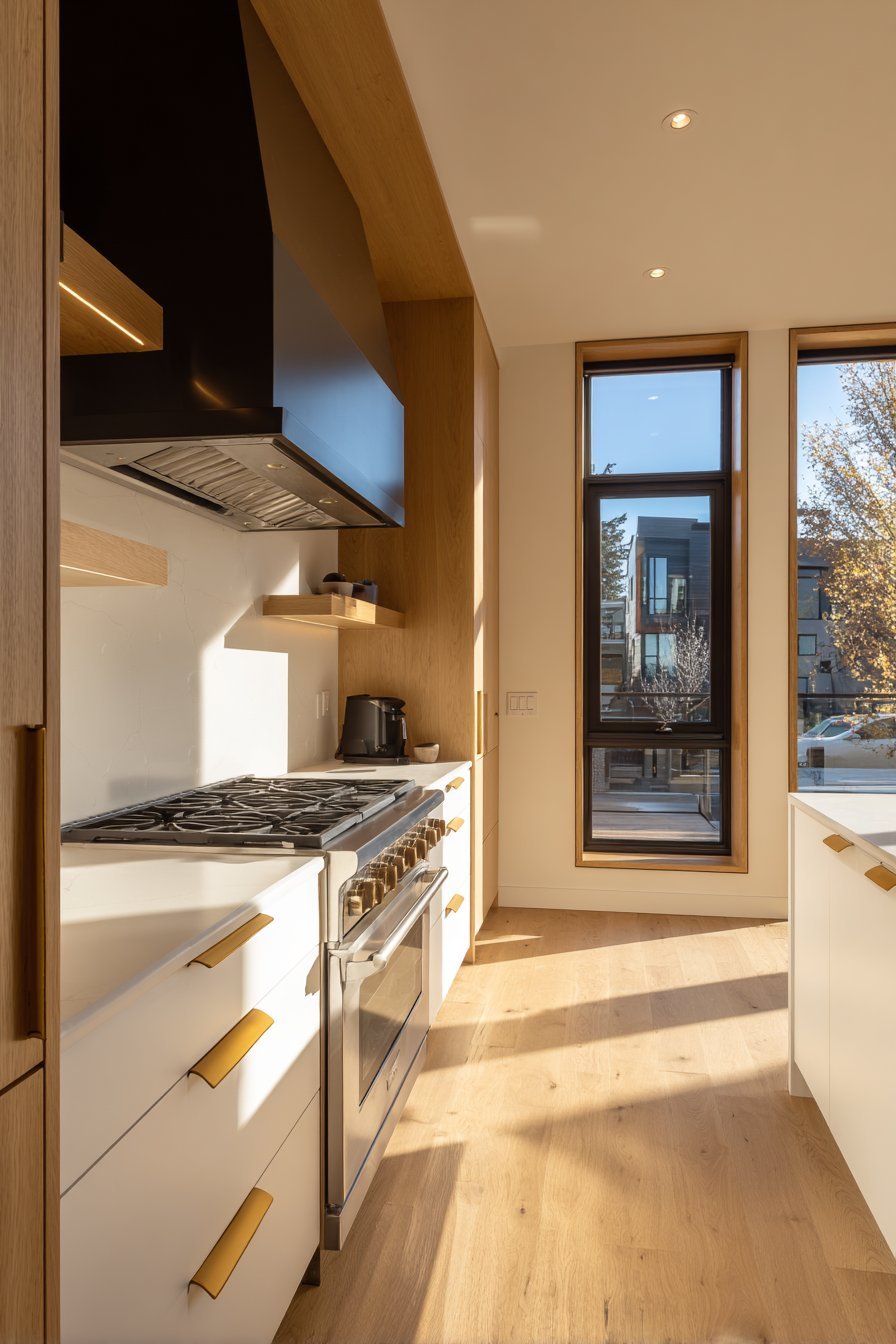
Leather cabinet pulls add unexpected textural contrast. These organic details complement the live-edge elements perfectly. Golden hour lighting streams through nearby windows dramatically. The warm glow emphasizes the wood’s organic character throughout.

The book-matching technique creates stunning visual symmetry. Adjacent doors mirror each other’s grain patterns precisely. This craftsmanship demonstrates respect for the material’s natural beauty. The effect feels both intentional and organic simultaneously.

This design bridges rustic and contemporary aesthetics successfully. The live-edge elements add character without overwhelming sophistication. The combination appeals to those appreciating natural materials with refined execution. It proves that rustic details work in polished kitchen designs.
Key Design Tips:
- Incorporate live-edge shelving or accents for organic, natural character
- Specify book-matched doors where grain patterns mirror for visual impact
- Choose leather pulls for textural contrast against smooth wood surfaces
- Position cabinets to receive golden hour light for maximum warmth
- Balance refined cabinetry with raw-edge elements for rustic modern aesthetic
11. Japanese-Inspired Minimalist Zen

A Japanese-inspired kitchen features white oak cabinets with clean-lined flat slab doors. Integrated finger pull grooves eliminate the need for hardware. Quarter-sawn white oak displays distinctive ray fleck patterns. The natural oil finish deepens the wood’s inherent warmth.

The meditative simplicity reflects Japanese design principles perfectly. Every element serves clear purpose without superfluous decoration. Soft indirect lighting showcases the honest material beauty. The design creates calm, contemplative atmosphere for culinary activities.

The quarter-sawn cutting method produces unique ray fleck figure. These natural markings add subtle visual interest to flat surfaces. The oil finish penetrates deeply rather than sitting on the surface. This treatment enhances rather than masks the wood’s character.

This minimalist approach requires exceptional craftsmanship and material quality. Flaws become obvious in such simplified designs. The white oak must be carefully selected and precisely installed. The result rewards with timeless beauty and serene functionality.
Key Design Tips:
- Choose flat slab doors for clean, minimalist Japanese-inspired aesthetic
- Route finger pull grooves for handleless cabinets with functional simplicity
- Specify quarter-sawn white oak to showcase distinctive ray fleck patterns
- Apply natural oil finish to deepen warmth while maintaining honest appearance
- Use soft, indirect lighting to create meditative, calm atmosphere
12. Transitional Inset Door Construction
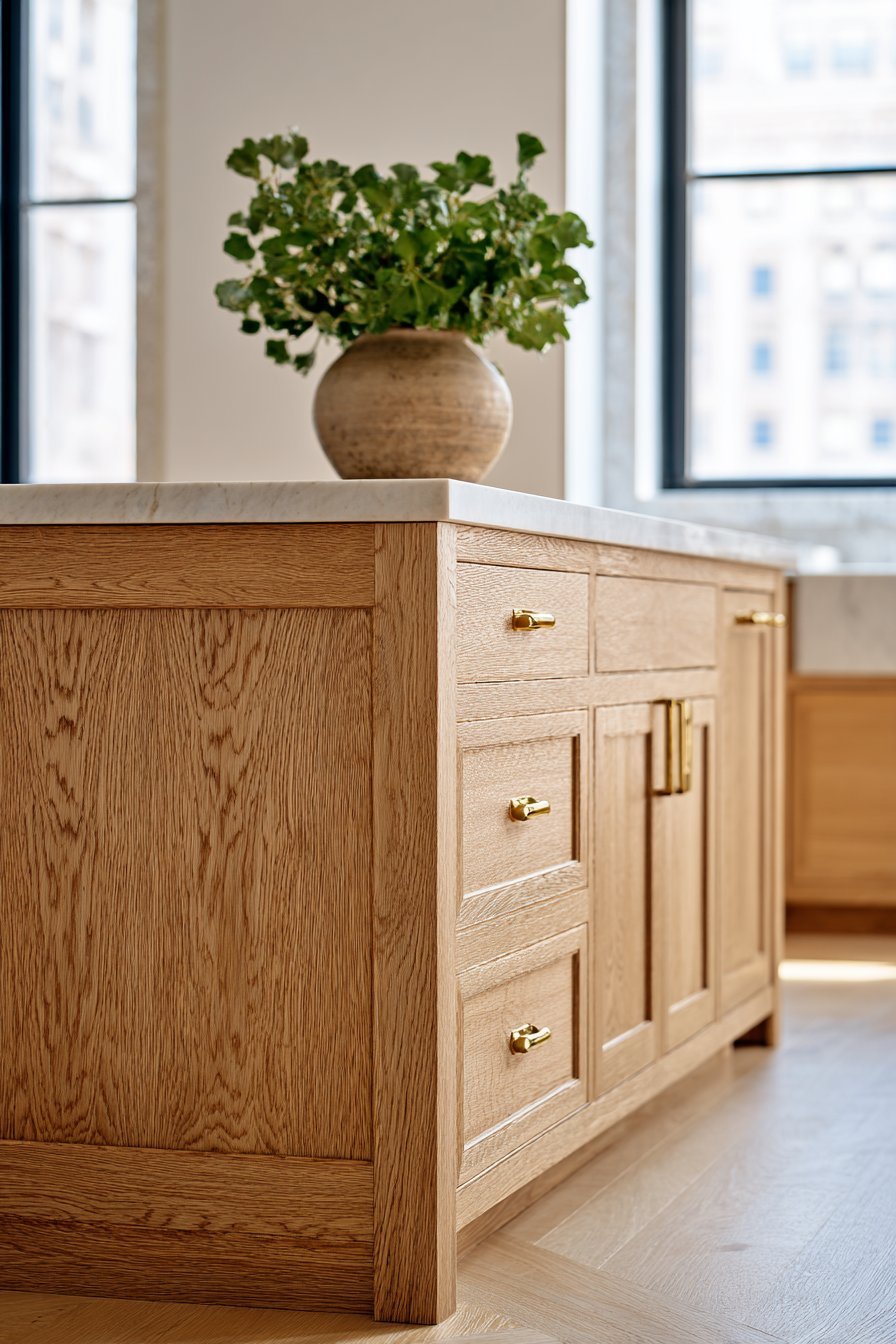
A transitional kitchen showcases white oak cabinets with inset door construction. Cabinet doors sit flush within the face frame precisely. The precision craftsmanship highlights the wood’s quality throughout. Visible joinery details demonstrate traditional building methods.
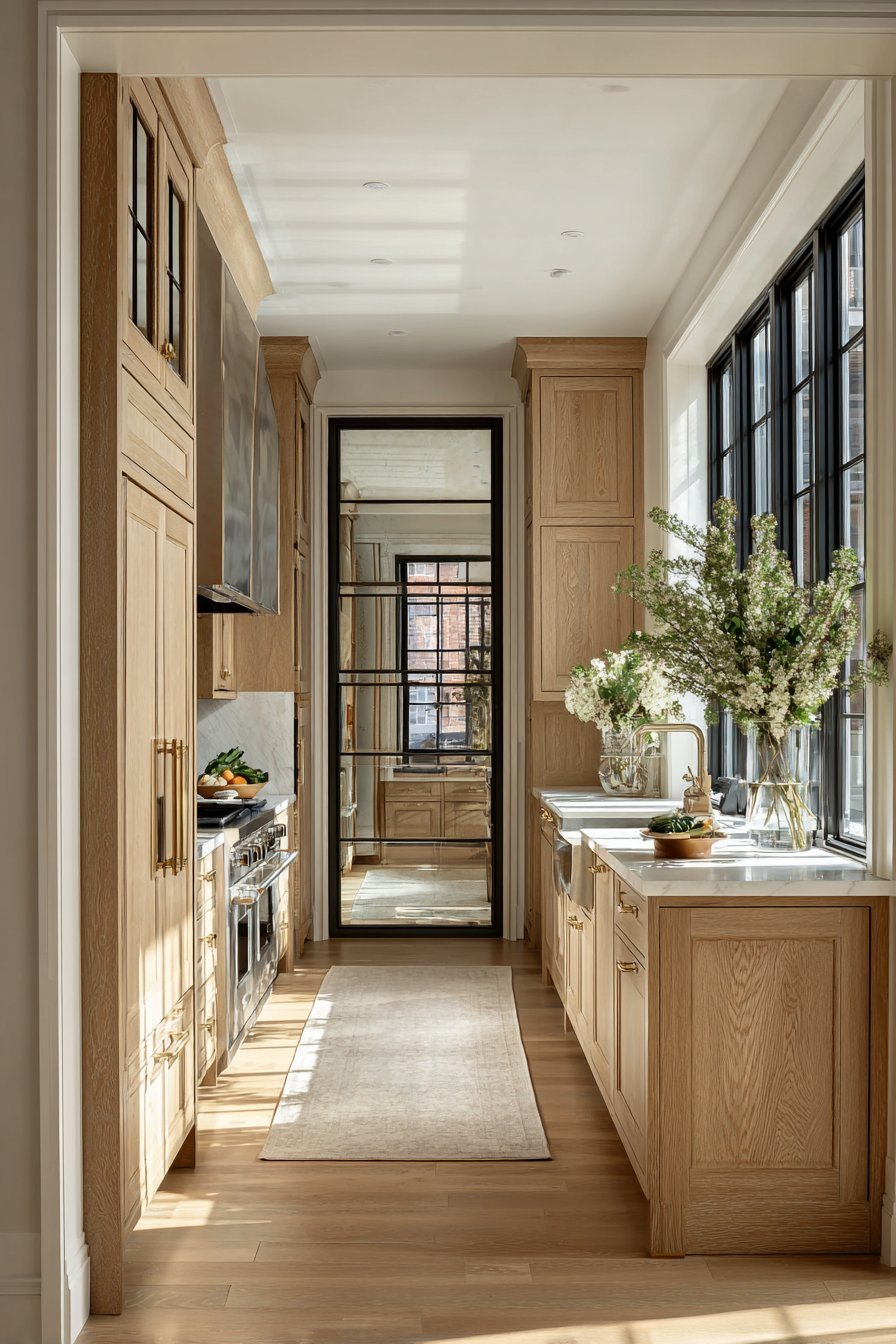
Antique brass hardware complements the traditional construction perfectly. The warm metal ages beautifully alongside natural wood. Balanced natural light reveals refined cabinet construction details. Consistent grain matching appears across all adjacent door surfaces.
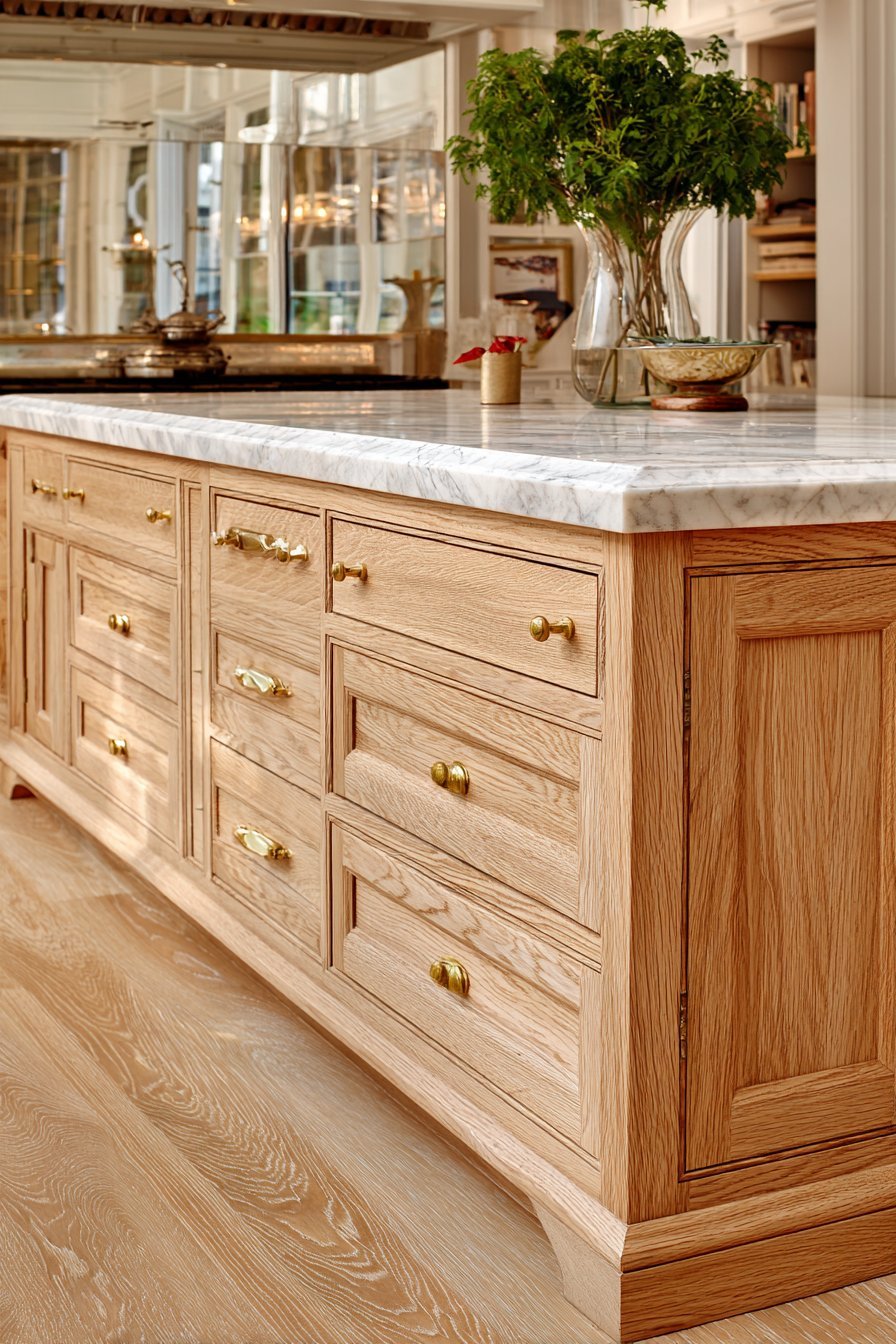
The inset construction requires exceptional skill and precise measurements. Gaps must remain consistent around every door and drawer. This method represents the pinnacle of cabinet craftsmanship. The flush appearance creates sophisticated, furniture-quality aesthetic.
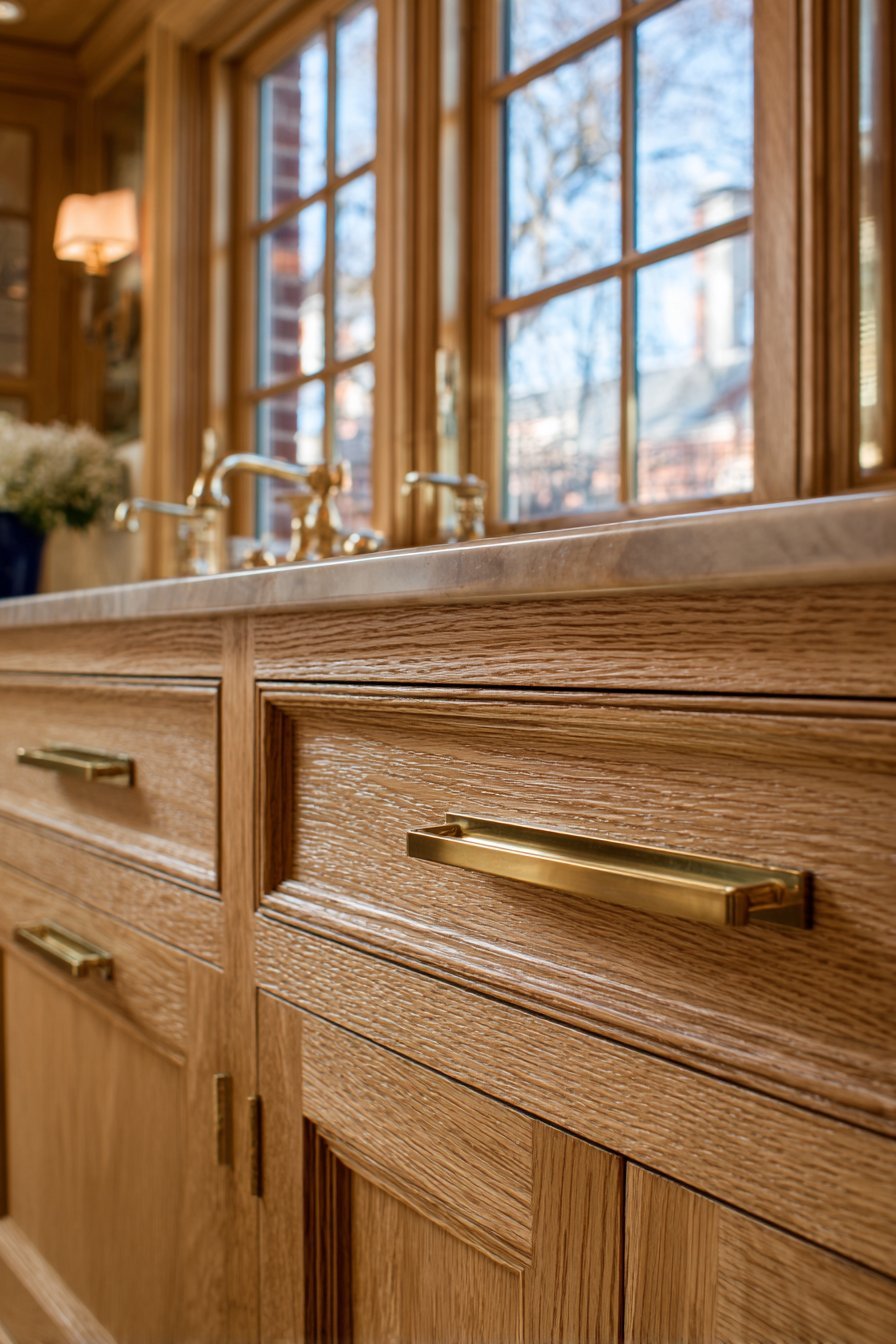
This approach appeals to those valuing traditional quality in contemporary spaces. The construction method has centuries of proven performance. White oak’s stability makes it ideal for inset applications. The result combines heritage craftsmanship with timeless material selection.
Key Design Tips:
- Specify inset construction for traditional, furniture-quality cabinet appearance
- Ensure consistent reveal gaps around all doors for professional finish
- Choose antique brass hardware to complement traditional construction methods
- Match grain patterns across adjacent doors for cohesive appearance
- Work with experienced cabinet makers familiar with precise inset construction
13. Modern Integrated LED Lighting

A modern kitchen showcases white oak cabinets with integrated LED lighting. Light strips mount under upper cabinets and within glass-front interiors. The lighting creates warm glow enhancing natural honey tones. Handleless cabinets maintain the clean, contemporary aesthetic.
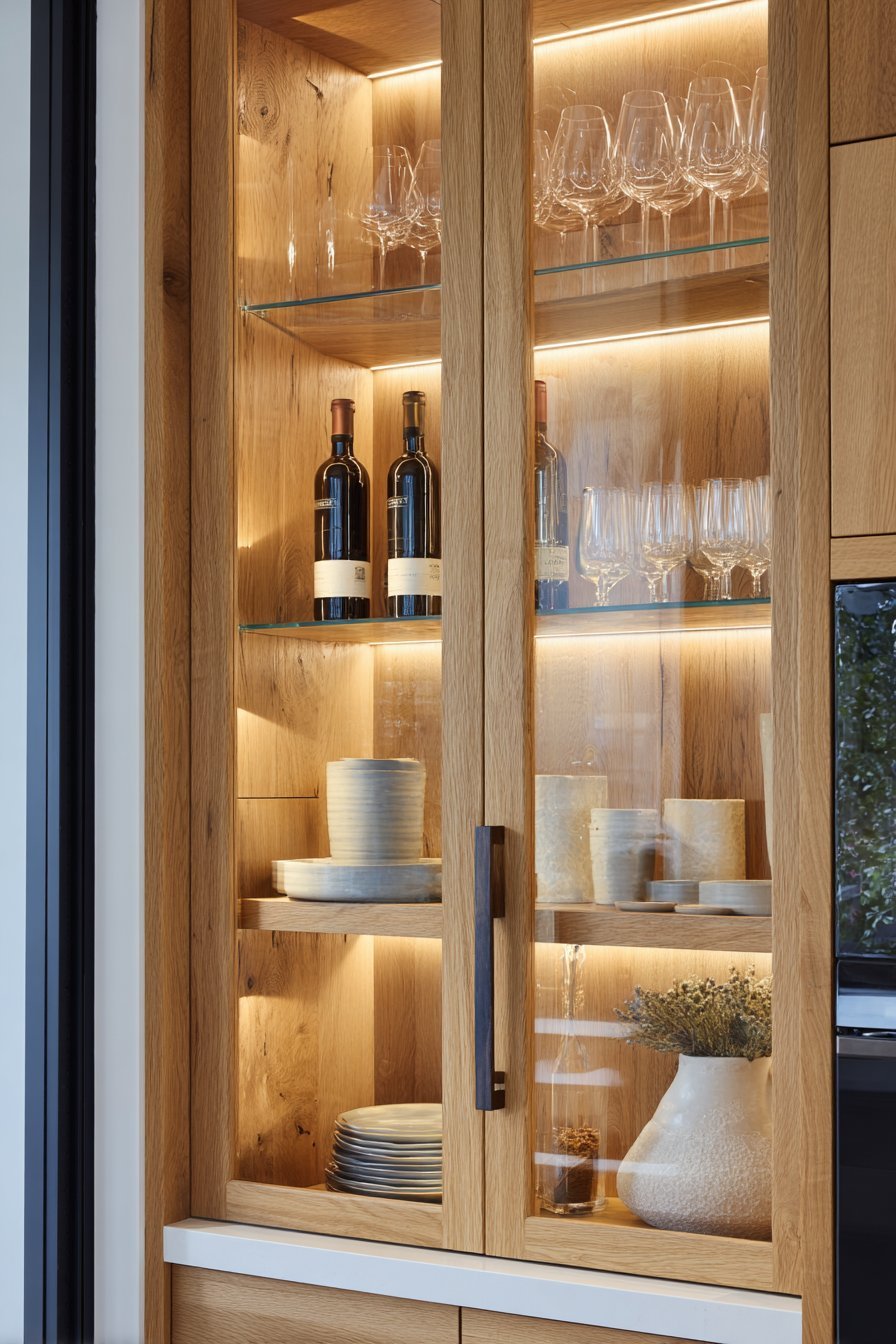
Evening light reveals how artificial lighting interacts with wood grain. The LED strips provide both task and ambient illumination. The warm color temperature complements rather than fights oak tones. Glass-front cabinet interiors glow invitingly from within.

The integrated lighting serves both functional and aesthetic purposes. It eliminates shadows on work surfaces below cabinets. The interior cabinet lighting highlights displayed items beautifully. The effect transforms the kitchen from daylight to evening seamlessly.

This approach represents modern kitchen design at its finest. The technology integrates invisibly into the cabinetry design. White oak’s warm tones work perfectly with LED lighting. The combination creates inviting atmosphere throughout day and night.
Key Design Tips:
- Install LED strips under upper cabinets for task lighting and ambiance
- Add interior cabinet lighting in glass-front units for display enhancement
- Choose warm color temperature LEDs to complement white oak tones
- Integrate lighting controls for adjustable ambiance throughout the day
- Ensure proper installation to hide wiring and maintain clean appearance
14. Coastal-Inspired Light and Airy

A coastal-inspired kitchen pairs white oak cabinets with bright, airy elements. The light natural finish maintains the beachy aesthetic perfectly. White subway tile backsplash reflects abundant natural light. Marble countertops add elegance without heaviness.

Polished nickel hardware echoes subtle nautical influences throughout. The pale oak brings organic warmth to the light palette. Abundant natural daylight floods the space from multiple windows. The white oak works beautifully without appearing too yellow or warm.

This design challenges assumptions about oak in light color schemes. The proper finish selection keeps the wood from dominating. The combination feels fresh, current, and beach-appropriate. Natural materials maintain connection to coastal environments.

The balance between warmth and brightness requires careful consideration. Too much white creates sterile, cold atmosphere. The white oak provides necessary organic warmth without heaviness. The result feels breezy, relaxed, and perpetually welcoming.
Key Design Tips:
- Choose light natural finish for white oak in coastal color schemes
- Pair with white subway tile and light countertops for airy aesthetic
- Select polished nickel hardware for subtle nautical-inspired details
- Maximize natural light to prevent oak from appearing too warm or yellow
- Balance white elements with natural wood for warmth without heaviness
15. Contemporary Mixed Grain Direction
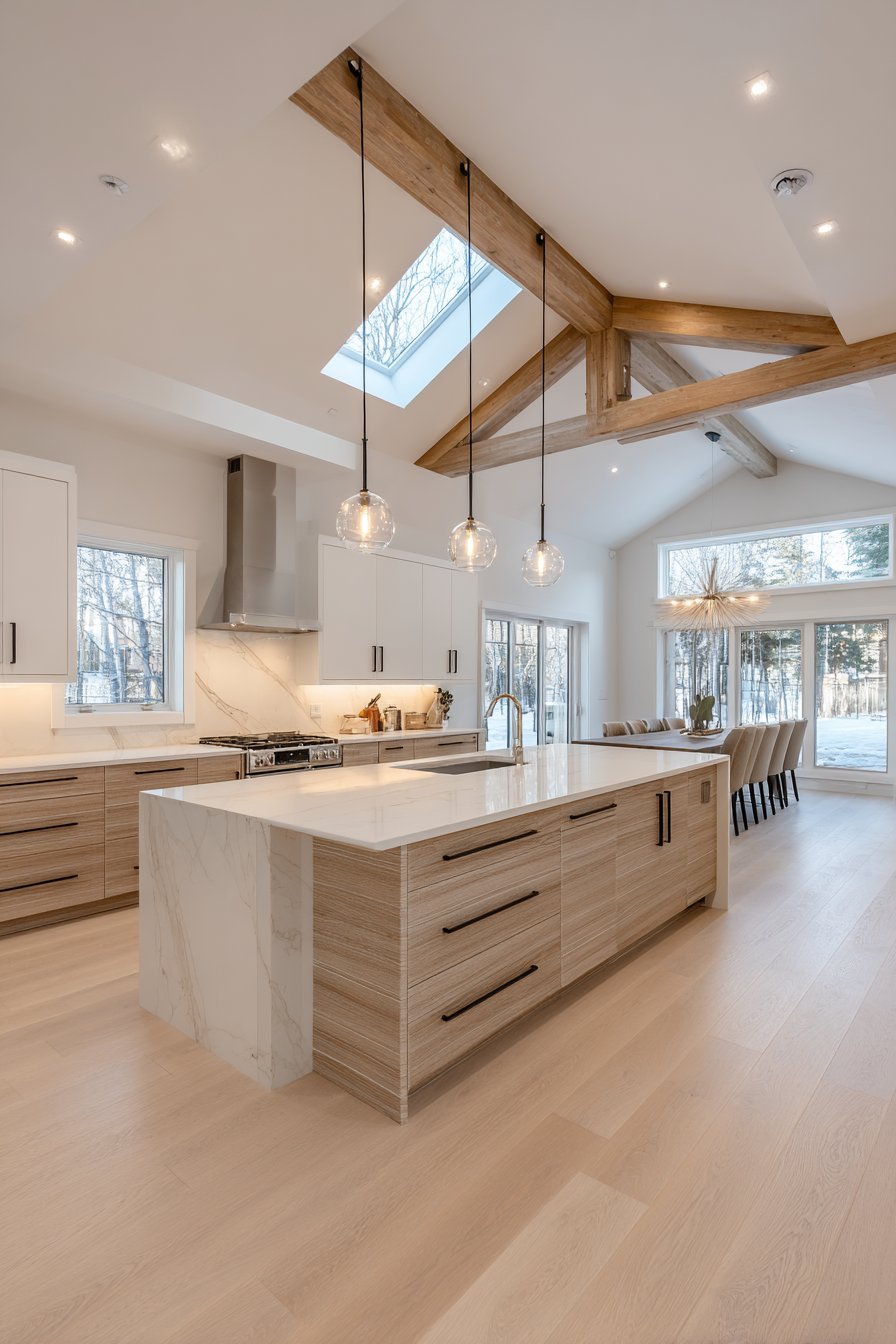
A contemporary kitchen features white oak cabinets with varied grain orientation. Some cabinets display vertical grain while others run horizontally. Cathedral grain alternates with straight rift-cut patterns intentionally. Matte black integrated handles provide strong contrast.

The alternating grain directions create dynamic visual rhythm. This intentional variation demonstrates sophisticated design thinking. Professional lighting emphasizes the directional grain choices throughout. The effect feels contemporary and carefully composed.

The mixed grain approach requires careful planning during installation. Cabinet placement must follow logical visual flow. Random variation would appear haphazard rather than intentional. The design demonstrates how subtle details create significant impact.

This technique works particularly well in modern and contemporary kitchens. It adds visual interest without additional materials or colors. The white oak remains consistent while the grain provides variation. The approach showcases the wood’s versatility and natural beauty.
Key Design Tips:
- Mix vertical and horizontal grain orientation for contemporary visual interest
- Plan grain direction intentionally to create logical visual rhythm
- Combine cathedral and rift-cut patterns for textural variety
- Use matte black hardware for strong contrast against varied grain patterns
- Ensure professional installation to execute the mixed grain vision properly
16. Elegant Butler’s Pantry Storage

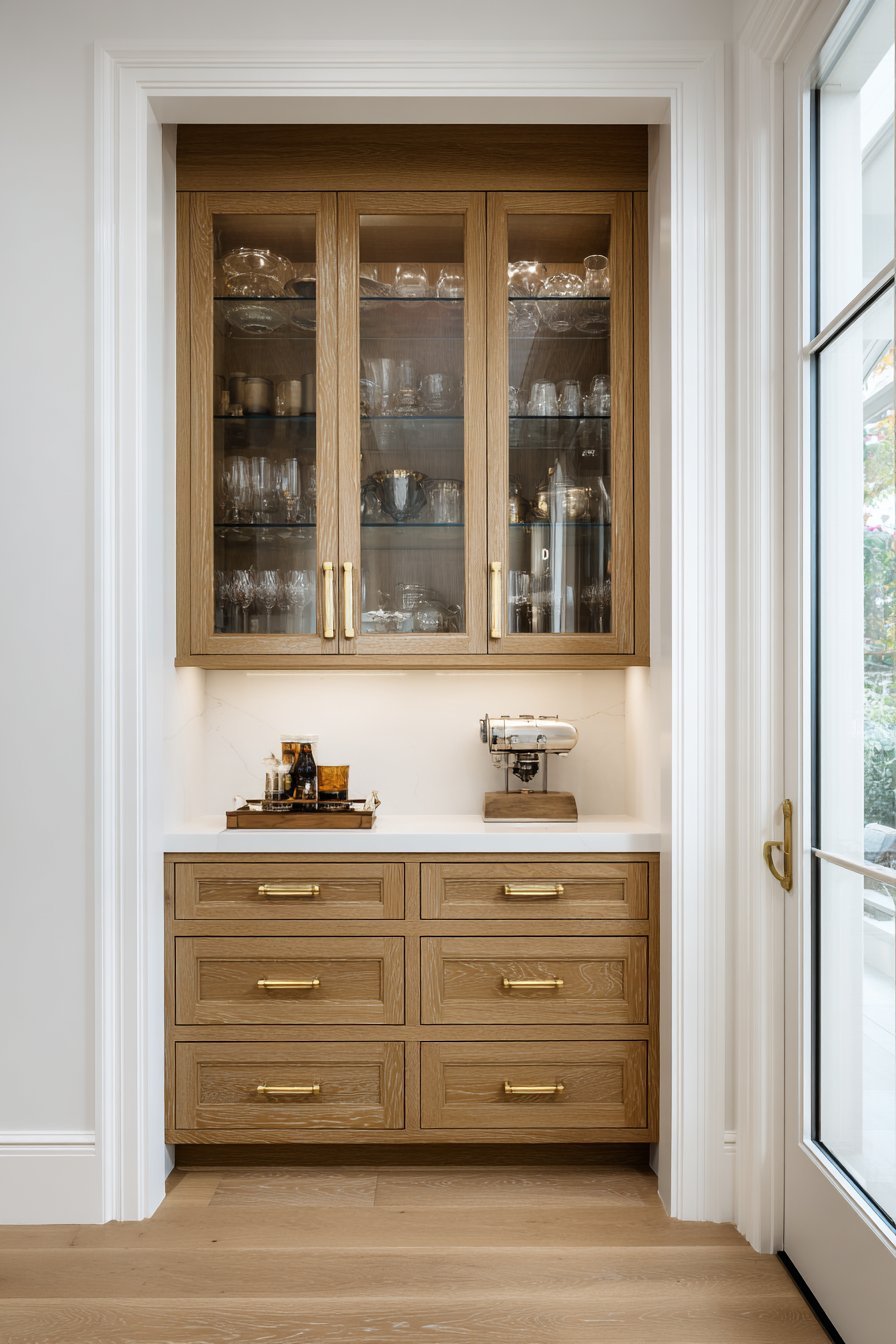
A butler’s pantry features floor-to-ceiling white oak cabinets throughout. Glass-front upper cabinets display organized dishware beautifully. Lower cabinets include deep drawers for serving piece storage. A small countertop workspace uses matching white oak.
Antique brass hardware adds refined elegance to the service space. Soft natural light from nearby windows illuminates warm wood tones. The functional organization demonstrates purposeful design thinking. This dedicated space showcases white oak in supportive role.

The butler’s pantry represents transitional space between kitchen and dining. The white oak creates visual continuity with adjacent spaces. The combination of open and closed storage serves different needs. Glass fronts allow quick visual inventory of serving pieces.
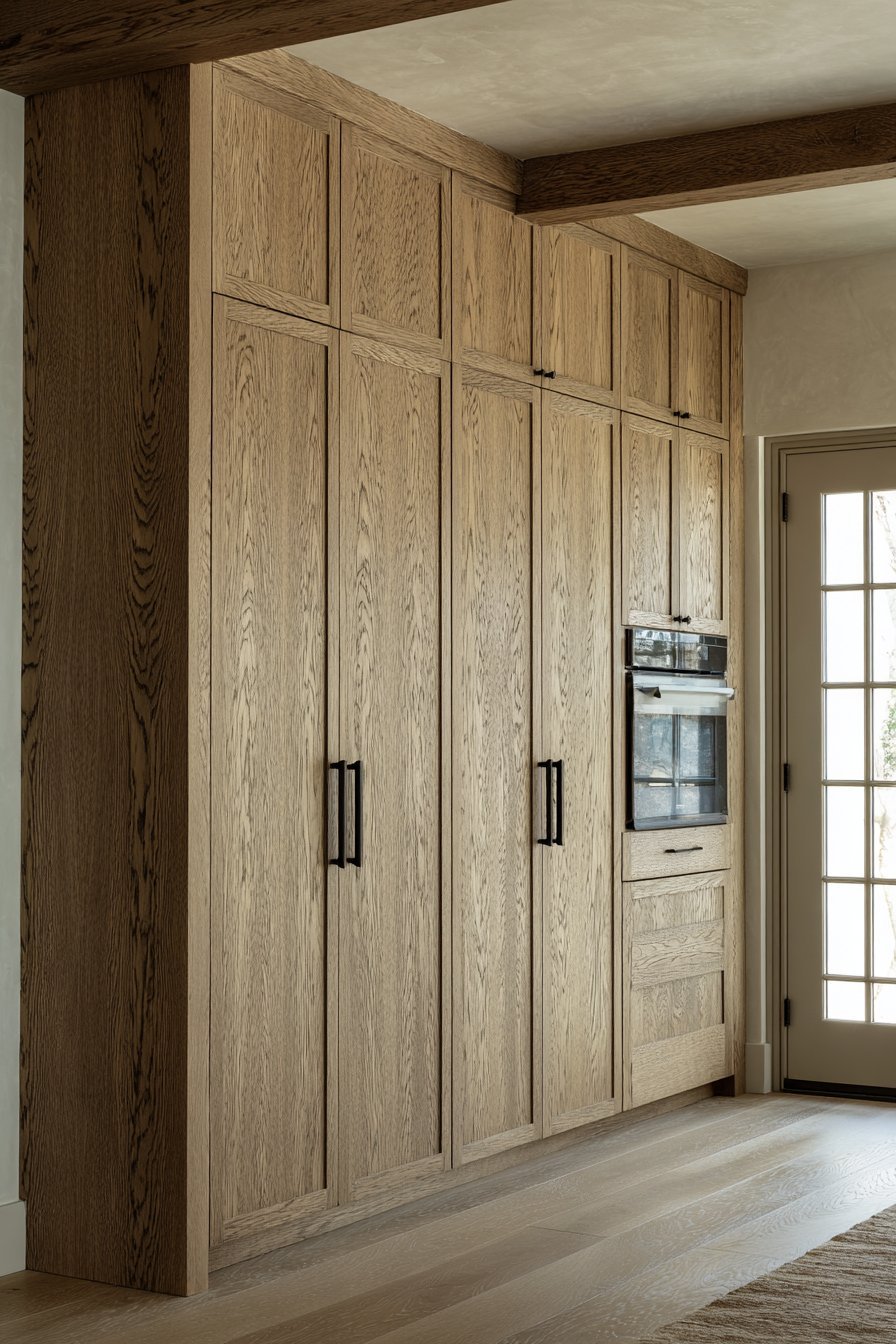
This application shows white oak’s versatility beyond primary kitchens. The material brings the same warmth to secondary spaces. The organized storage maximizes functionality in limited square footage. The result combines beauty with hard-working utility.
Key Design Tips:
- Use white oak consistently in butler’s pantries for visual continuity
- Combine glass-front uppers with solid lowers for balanced storage
- Include countertop workspace in matching oak for functional consistency
- Choose antique brass hardware for elegant, refined appearance
- Maximize vertical storage with floor-to-ceiling cabinet installation
17. European Frameless Construction
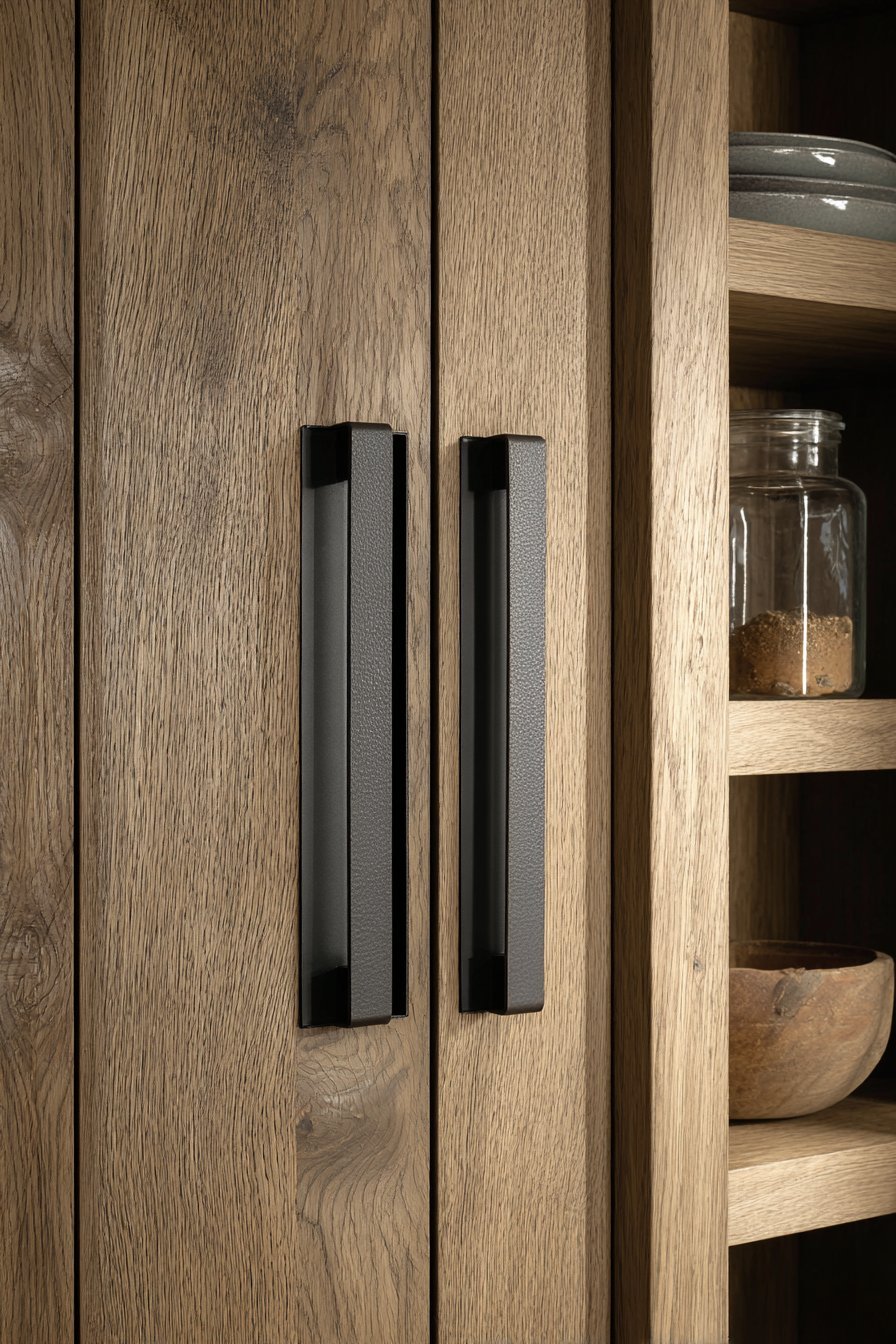
A contemporary kitchen features white oak cabinets with European frameless construction. Negative detail reveals create thin shadow gaps between doors. Large uninterrupted door panels showcase clean white oak grain. Leather tab pulls serve as minimal, tactile hardware.
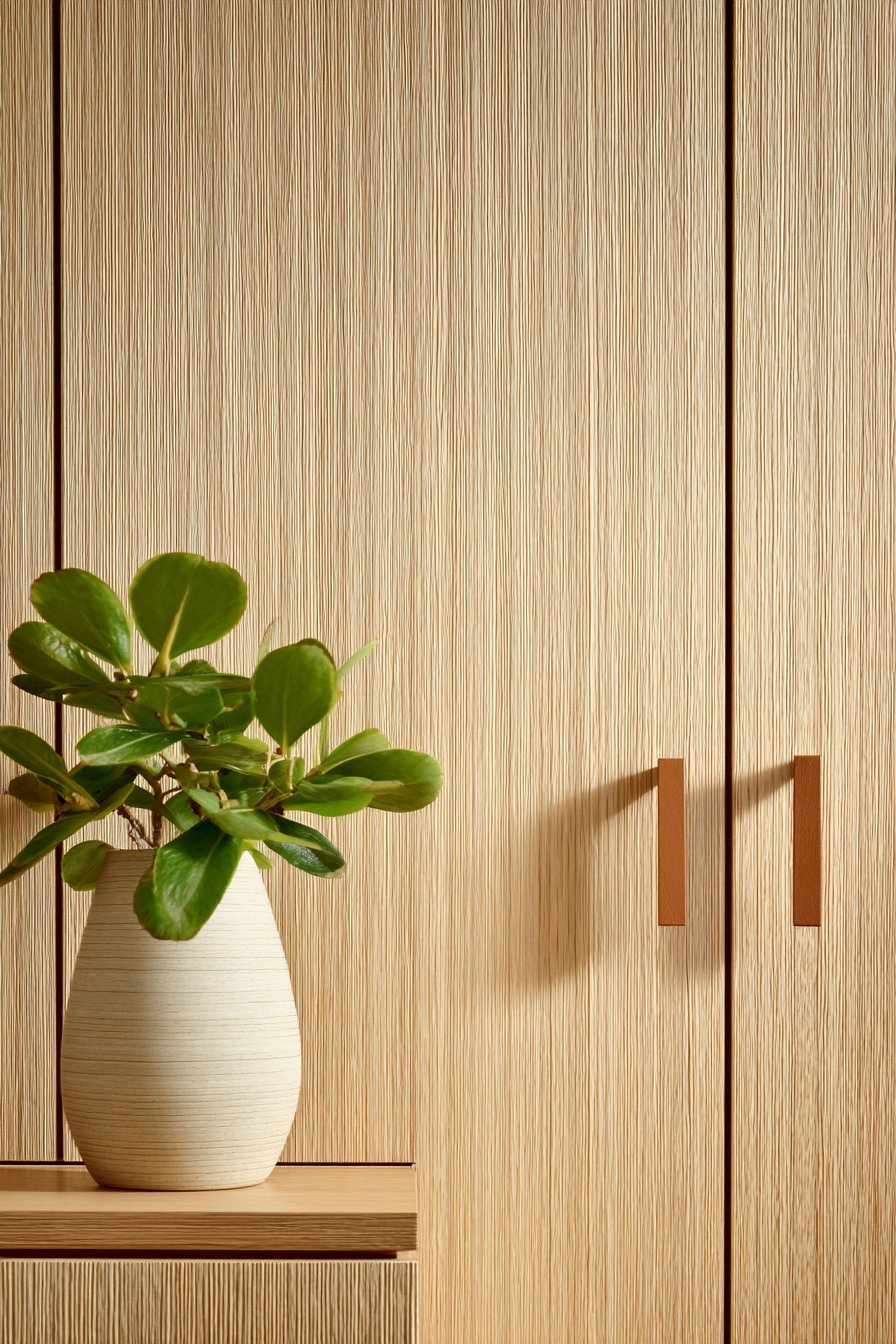
The frameless construction eliminates traditional face frames completely. This method maximizes interior storage space significantly. The precise modern joinery requires expert fabrication and installation. Shadow lines define each cabinet with architectural precision.
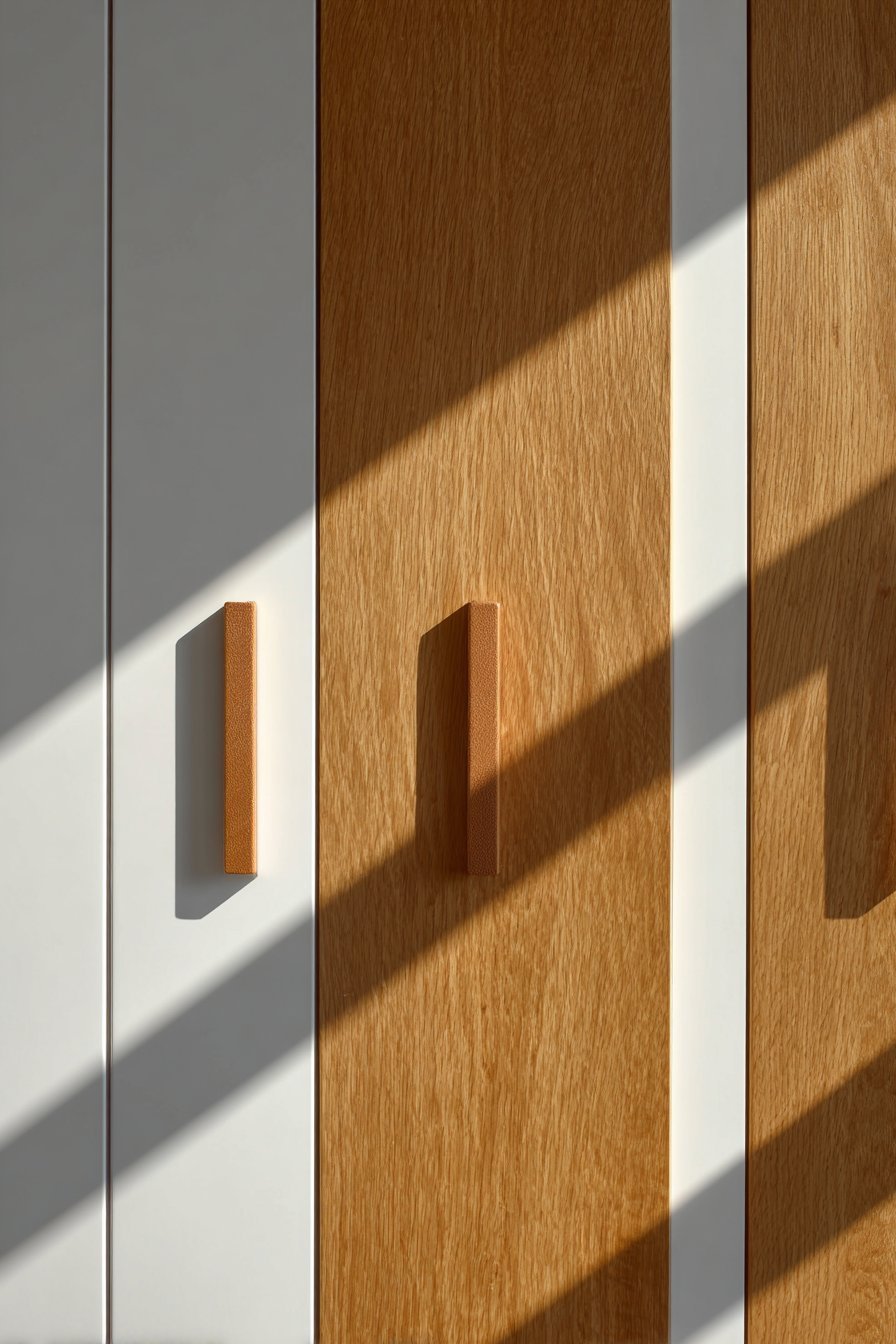
The European approach emphasizes sleek, contemporary aesthetics throughout. The large door panels display uninterrupted grain patterns. This construction method suits modern and minimalist design styles. The clean lines create sophisticated, uncluttered appearance.
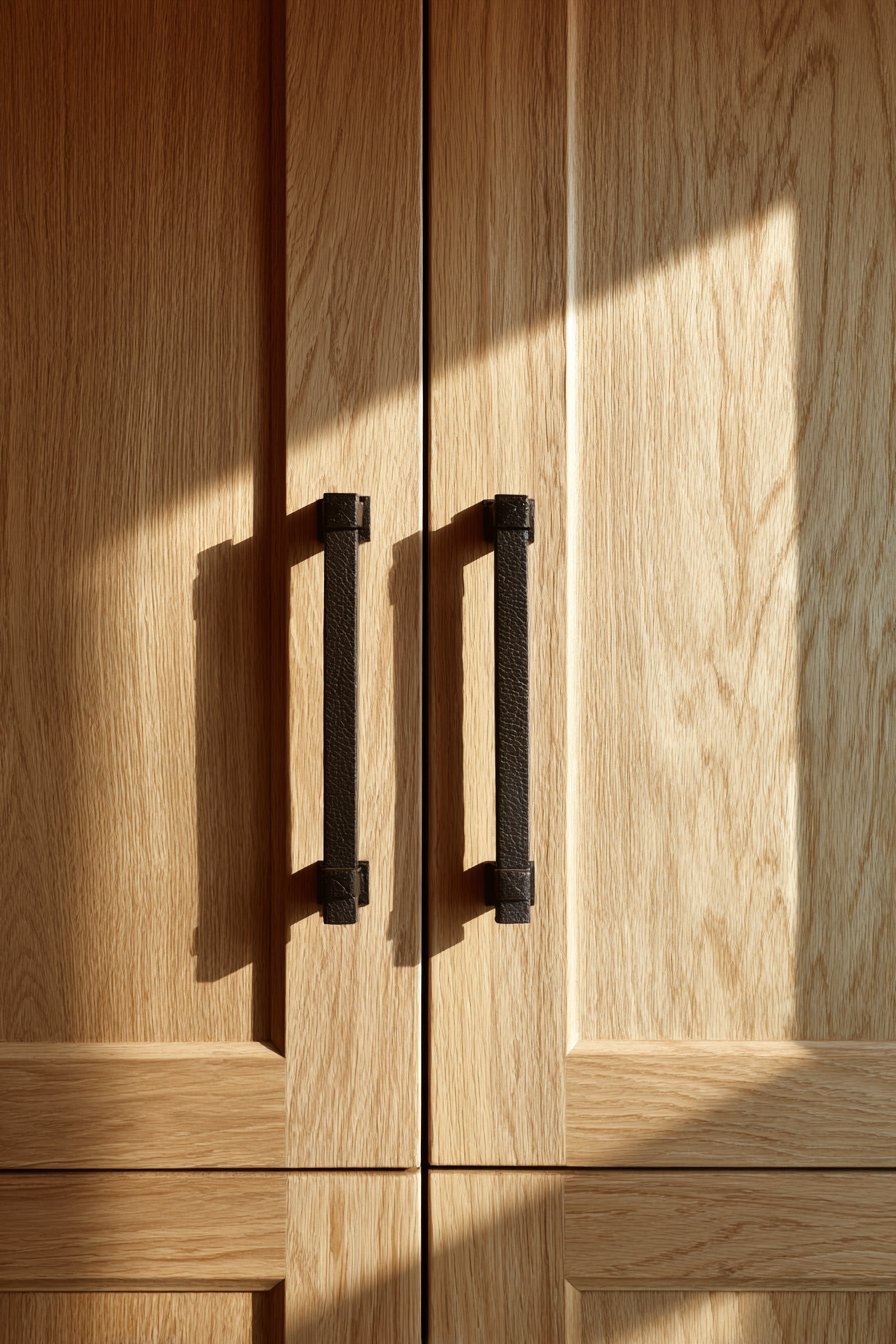
The frameless system represents modern cabinet construction at its finest. The method originated in Europe and gained worldwide popularity. White oak’s stability works perfectly with this construction style. The result combines contemporary design with natural material beauty.
Key Design Tips:
- Specify frameless construction for contemporary, European-inspired aesthetic
- Use negative detail reveals for clean shadow gaps between doors
- Choose large door panels to showcase uninterrupted white oak grain
- Select minimal hardware like leather tabs for subtle, tactile pulls
- Work with cabinet makers experienced in precision frameless construction
18. Warm Eclectic Mixed Applications

A warm eclectic kitchen mixes refined white oak cabinets with rustic shelving. Thicker white oak planks form open shelves with raw cut edges. Cabinets display natural oil finish for refined appearance. Shelves embrace rustic aesthetic with visible knots and imperfections.
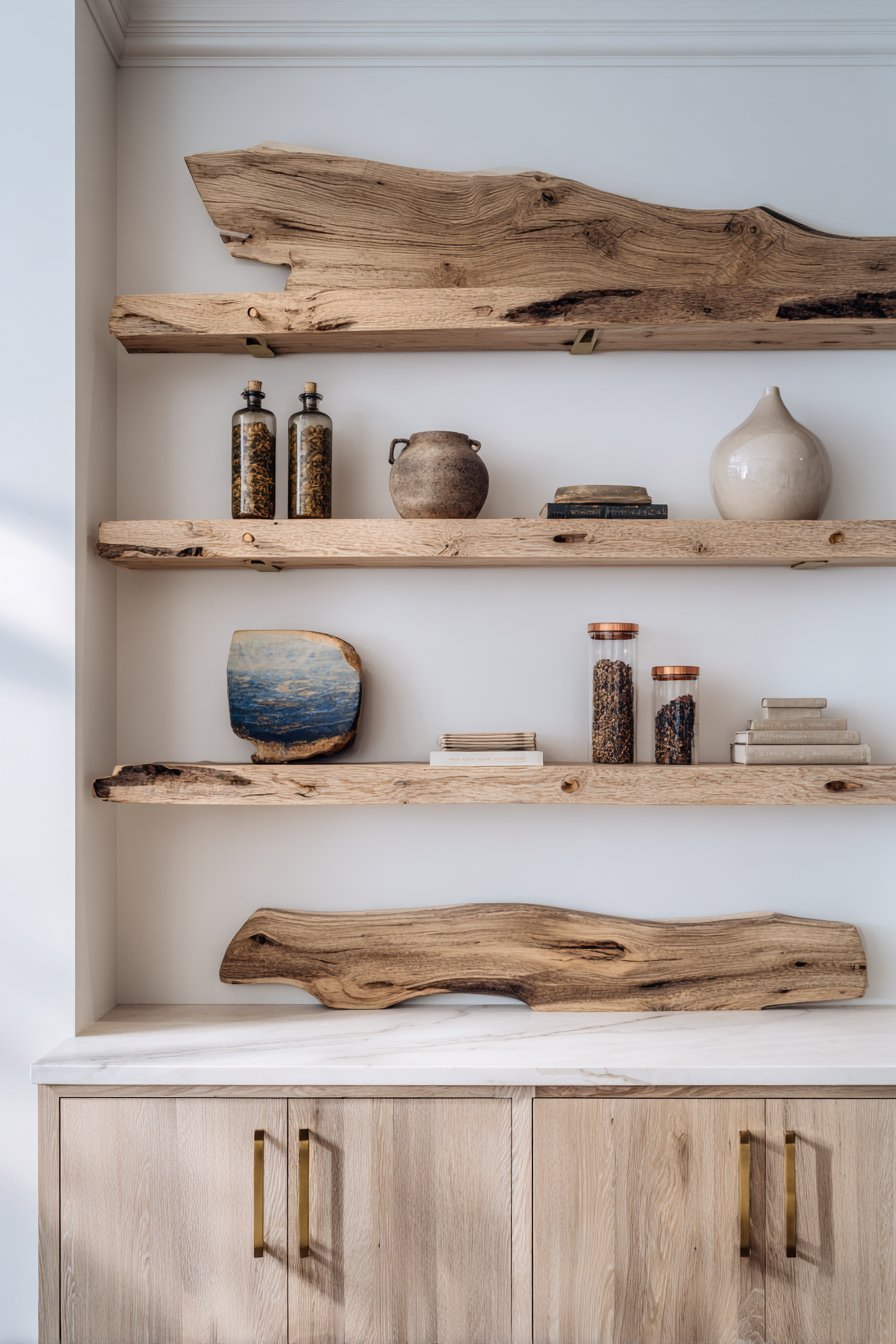
Mixed metal hardware in brass and copper adds collected character. Golden afternoon light streams across varied white oak surfaces. The design celebrates both refined and raw wood expressions. This combination creates authentic, personalized kitchen aesthetic.

The contrast between refined and rustic elements creates visual interest. The cabinets provide necessary polish while shelves add character. Natural imperfections in shelf wood tell authentic material story. The mixing demonstrates white oak’s range from formal to casual.

This approach suits those who reject overly coordinated design. The eclectic mix feels collected over time rather than purchased completely. White oak serves as common thread through varied expressions. The result feels personal, warm, and genuinely lived-in.
Key Design Tips:
- Mix refined white oak cabinets with rustic open shelving for eclectic character
- Embrace natural imperfections like knots in shelf wood for authenticity
- Use mixed metal hardware in brass and copper for collected appearance
- Apply different finishes to cabinets versus shelves for varied expression
- Allow natural light to showcase both refined and rustic wood surfaces
19. Dramatic Geometric Range Hood

A modern kitchen features dramatic range hood clad in white oak. The wood arranges in chevron or herringbone pattern creatively. The hood becomes major focal point showcasing white oak versatility. Cabinet fronts remain simple, allowing the hood to command attention.
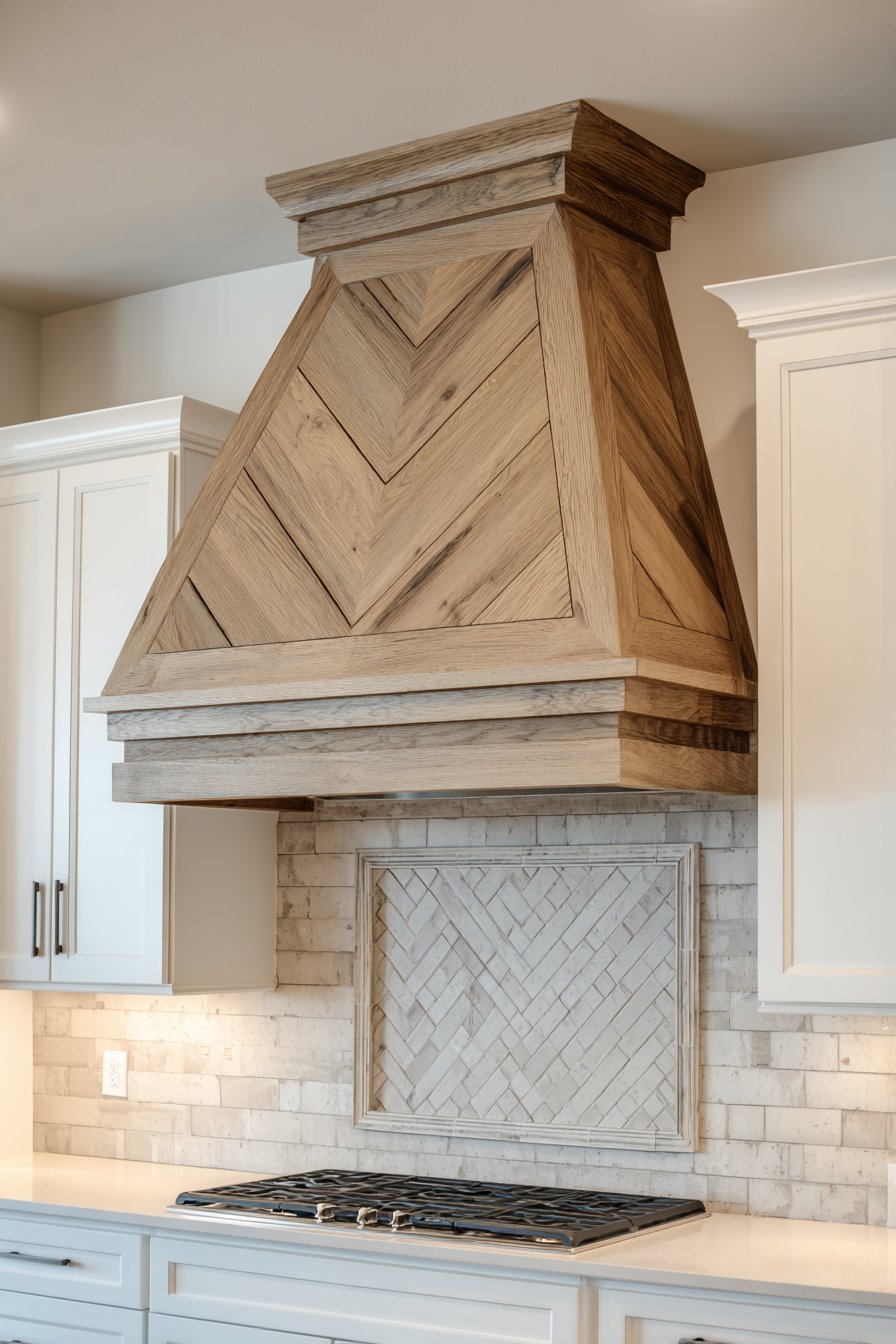
Strategic lighting highlights the geometric wood pattern against simpler surrounds. The installation demonstrates white oak applications beyond traditional cabinet boxes. The pattern requires precise cutting and careful installation. The result transforms functional element into design statement.

The geometric pattern adds substantial visual interest to the kitchen. The hood draws the eye immediately upon entering. The white oak consistency maintains material cohesion throughout. The pattern showcases the wood’s adaptability to creative applications.

This approach appeals to those seeking distinctive design statements. The hood demonstrates that kitchen elements can be sculptural. White oak proves suitable for architectural feature applications. The geometric pattern creates dynamic focal point within the space.
Key Design Tips:
- Create dramatic range hoods with white oak in geometric patterns
- Choose chevron or herringbone arrangement for striking visual impact
- Keep surrounding cabinets simple to allow hood to be focal point
- Install strategic lighting to emphasize geometric wood pattern
- Work with skilled installers for precise pattern execution
20. Sophisticated Wood Inlay Details

A sophisticated kitchen features white oak cabinets with decorative inlay. Book-matched walnut or darker wood creates subtle borders. The inlay provides refined contrast on select cabinet doors. White oak remains the dominant material throughout.
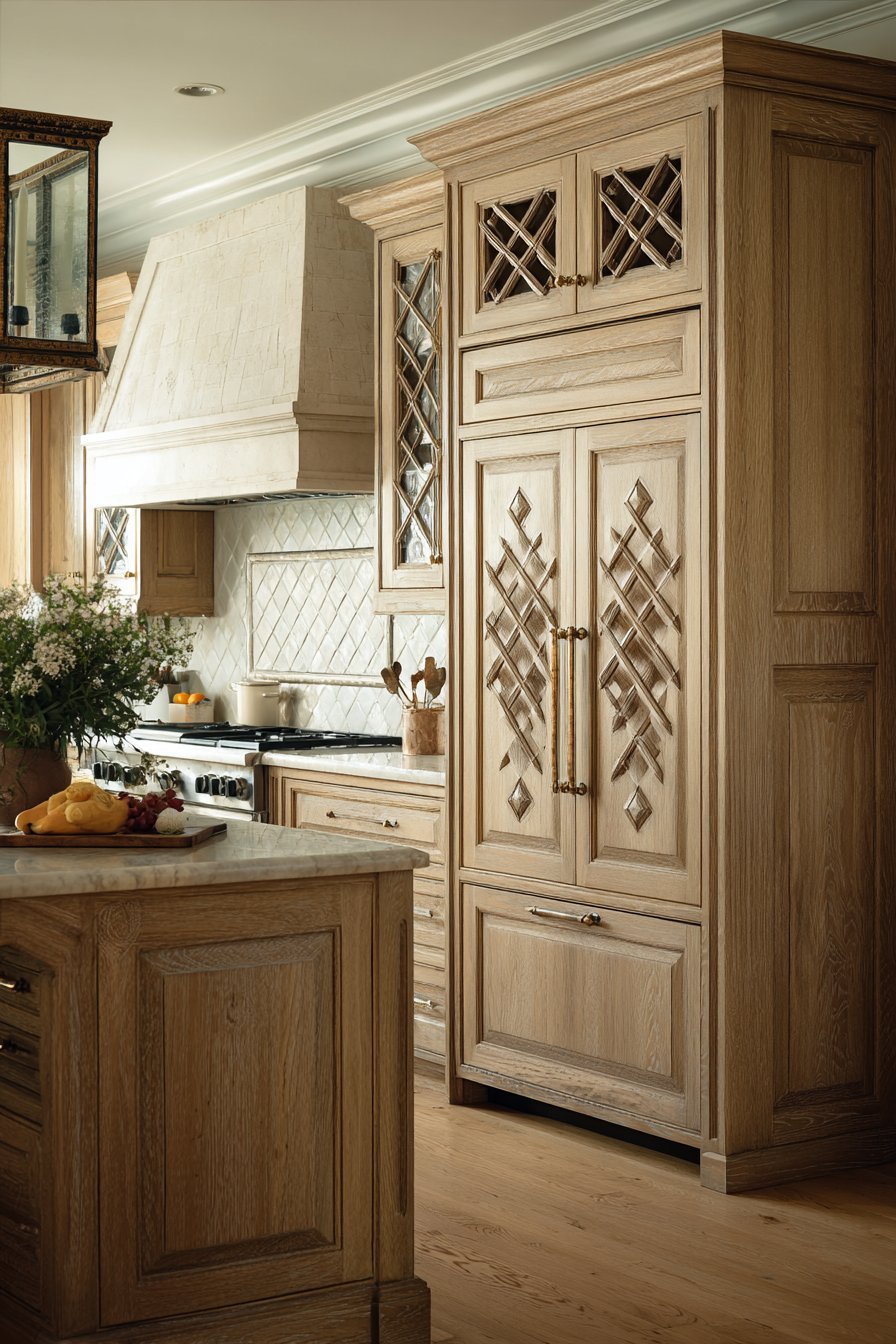
Unlacquered brass hardware develops natural patina over time. Balanced lighting reveals fine craftsmanship of inlay work. The complementary relationship between light and dark woods creates visual interest. The technique demonstrates exceptional attention to detail.
The inlay work represents traditional furniture-making techniques applied to cabinetry. The contrast adds sophistication without overwhelming the design. Selective application on specific doors creates intentional focal points. The book-matching ensures the inlay appears deliberate and refined.

This approach appeals to those appreciating fine craftsmanship and detail. The inlay elevates the cabinets to furniture-quality status. The technique has historical precedence in high-end cabinetry. The combination of light white oak with darker accent wood creates timeless elegance.
Key Design Tips:
- Add decorative inlay with darker woods for refined contrast details
- Apply inlay selectively on featured doors rather than throughout
- Choose book-matched inlay material for symmetrical, intentional appearance
- Pair with unlacquered brass hardware that develops natural patina
- Ensure skilled craftsmanship for precise inlay installation and finishing
Why These White Oak Cabinet Designs Are the Best
These white oak cabinet designs represent exceptional approaches to kitchen cabinetry. Each concept demonstrates thoughtful consideration of material characteristics, spatial requirements, and aesthetic preferences. White oak’s inherent qualities make it ideally suited for diverse design applications.
The wood’s natural warmth prevents kitchens from feeling cold or sterile. The distinctive grain patterns add organic visual interest without overwhelming. Color consistency across different pieces allows for cohesive installations. The material’s durability ensures cabinets withstand daily kitchen demands for decades.
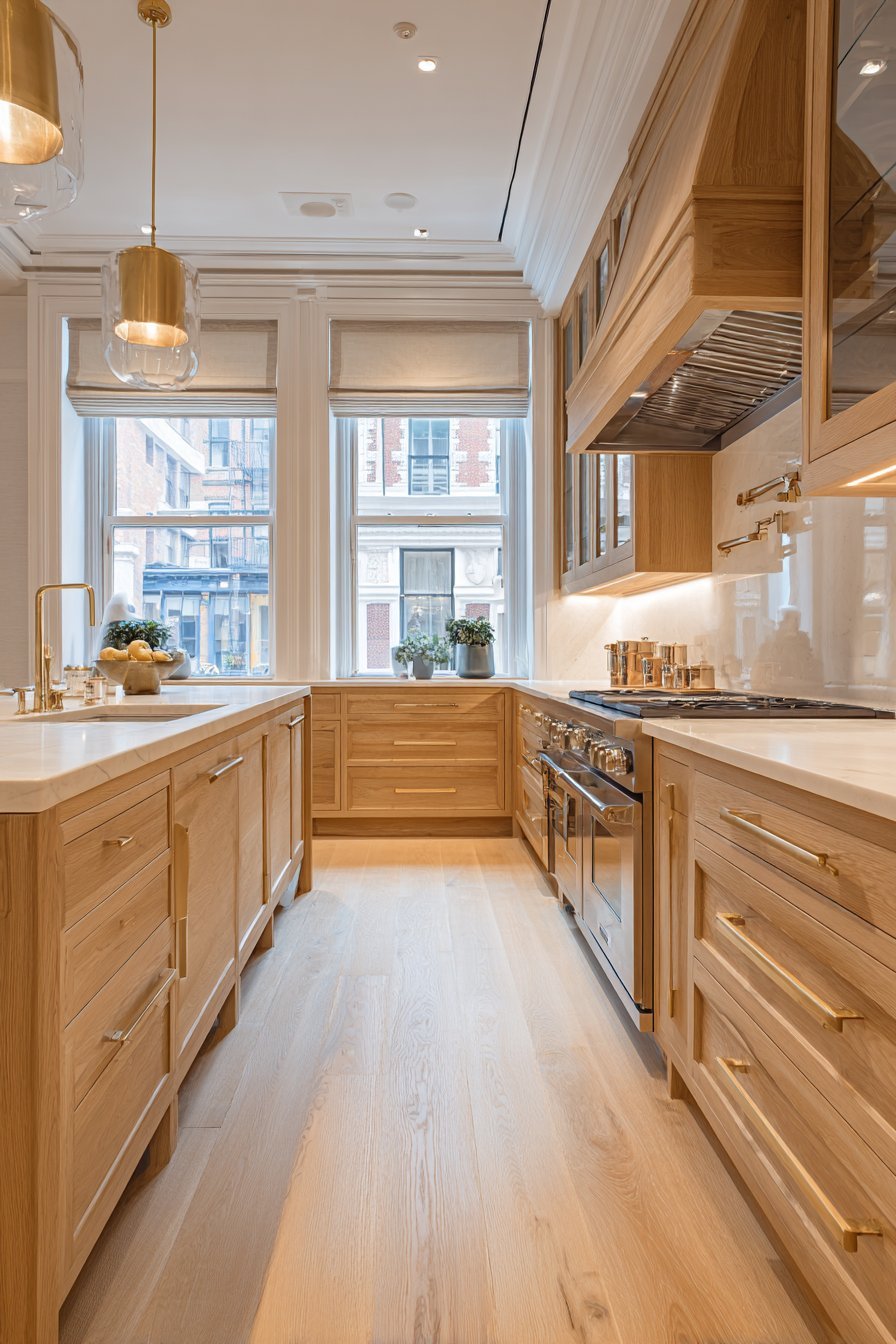
Different finishing techniques showcase white oak’s remarkable versatility. Clear natural finishes highlight authentic wood character and grain patterns. Wire-brushed textures add tactile dimension to contemporary farmhouse kitchens. Cerused treatments create sophisticated, refined appearances for formal spaces. Each finish responds differently to light, creating varied atmospheric effects throughout the day.
The designs address practical considerations including storage optimization and functionality. Floor-to-ceiling installations maximize vertical space efficiently. Mixed cabinet types combine closed storage with display options. Varied door styles accommodate different organizational needs and personal preferences.
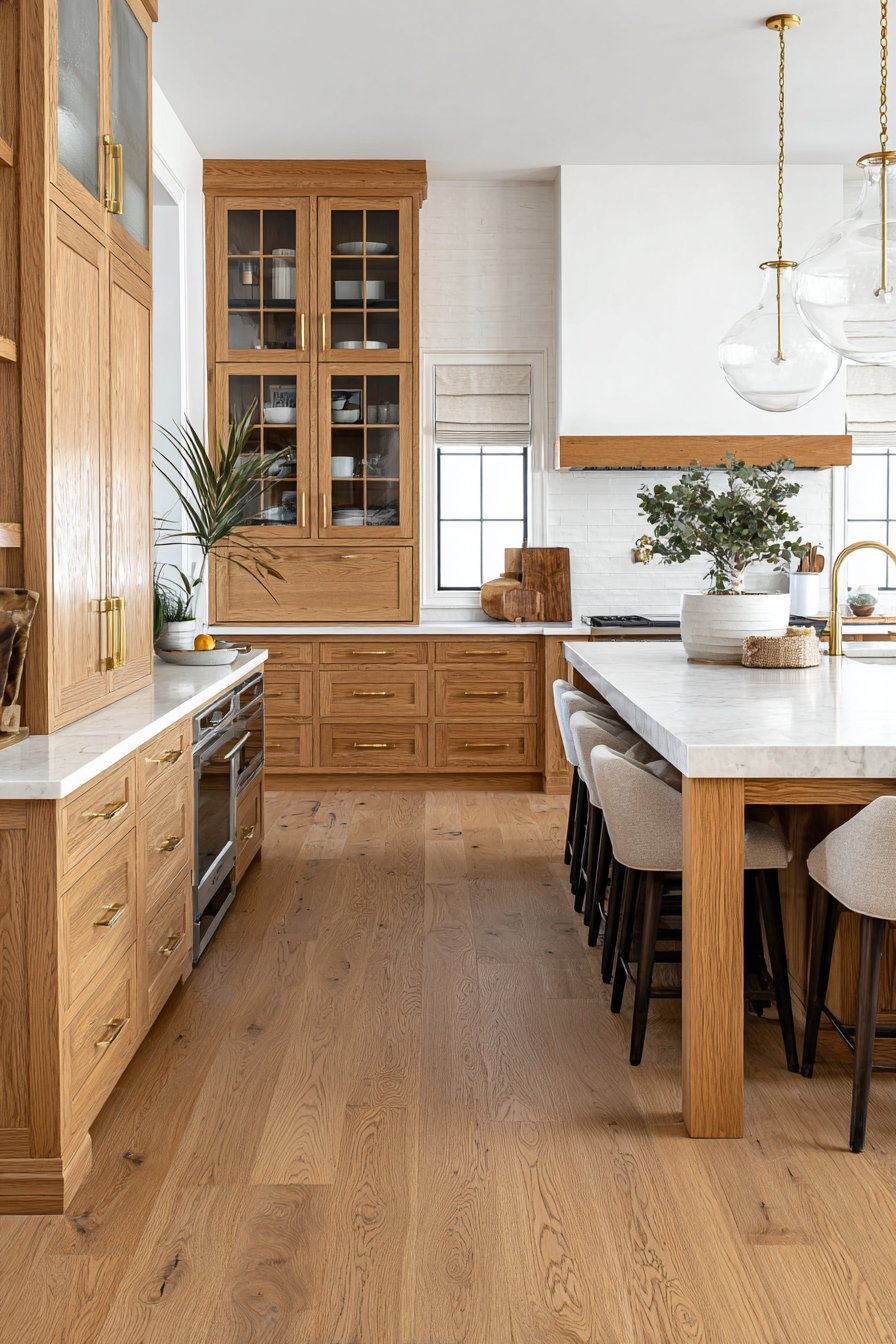
Color theory principles support white oak’s widespread appeal. The warm honey undertones complement both cool and warm color palettes. The neutral base allows bold accent colors or maintains monochromatic schemes. The wood bridges traditional and contemporary aesthetics successfully, making it remarkably adaptable.
Material science confirms white oak’s superior performance characteristics. The wood’s density provides structural strength for cabinet construction. Natural tannins offer inherent resistance to moisture and decay. The tight grain structure accepts various finishes beautifully. These properties ensure long-term performance and maintained appearance.
Spatial considerations prove white oak works across various kitchen sizes. Compact galleys benefit from the wood’s warmth in confined spaces. Open-concept kitchens use white oak to define zones while maintaining flow. The material scales appropriately from small butler’s pantries to expansive primary kitchens.
Sustainability concerns favor white oak as responsible material choice. Domestic harvesting reduces transportation environmental impact. The wood’s longevity means cabinets last generations rather than requiring replacement. The timeless aesthetic resists trend-driven obsolescence. These factors contribute to white oak’s environmental credentials.
Conclusion
These twenty white oak cabinet designs demonstrate the material’s exceptional versatility and enduring appeal. From minimalist contemporary kitchens to warm rustic spaces, white oak adapts beautifully. The natural grain patterns, warm honey tones, and superior durability make it outstanding choice.
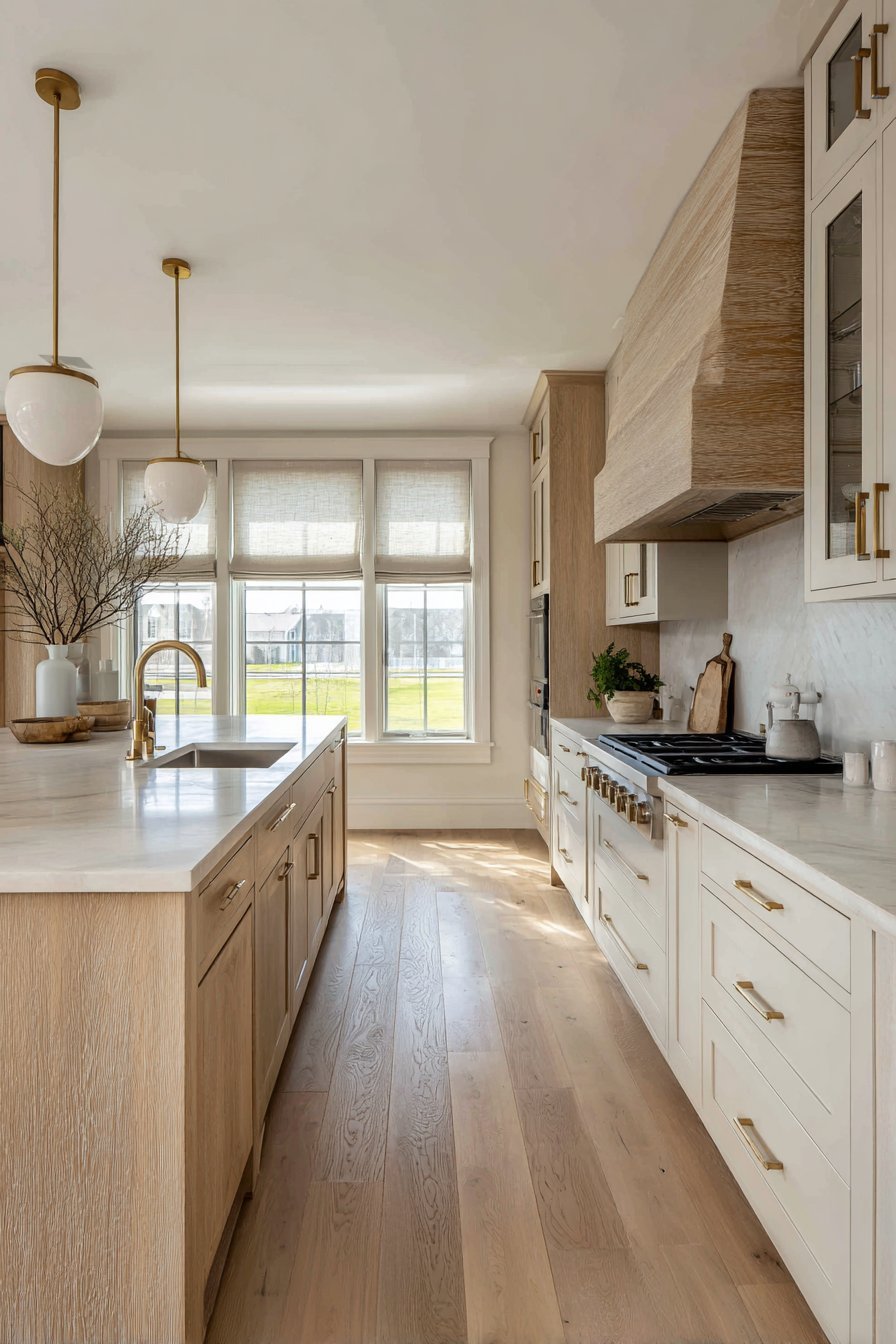
Key takeaways include the importance of finish selection, hardware choices, and lighting considerations. The grain direction impacts visual flow throughout the space. Mixed applications from refined to rustic expand design possibilities. Quality craftsmanship ensures the wood’s beauty shines properly.
Consider these designs as inspiration for your own kitchen transformation. Start by identifying which aesthetic resonates with your personal style. Consult with experienced cabinet makers who understand white oak’s characteristics. Your dream kitchen featuring stunning white oak cabinets awaits thoughtful planning and creative implementation.
