
Creating a bedroom that feels like a peaceful retreat starts with embracing nature’s palette and textures. A warm earthy aesthetic brings the calming essence of the outdoors into your personal sanctuary, transforming your space into a haven of comfort and tranquility. This design approach has gained immense popularity as people seek to reconnect with natural elements in their daily lives, especially in urban environments where greenery and organic materials may be scarce.
Earthy bedroom design goes beyond simply choosing brown furniture or adding a plant. It’s about creating a cohesive atmosphere that engages all your senses through thoughtful color selection, material choices, and layered textures. The beauty of this aesthetic lies in its versatility—it works equally well in minimalist spaces and more eclectic rooms, adapting to your personal style while maintaining that grounded, nurturing feeling. Whether you’re starting from scratch or refreshing your current bedroom, these seven tips will guide you toward achieving a warm, nature-inspired space that promotes rest and rejuvenation.
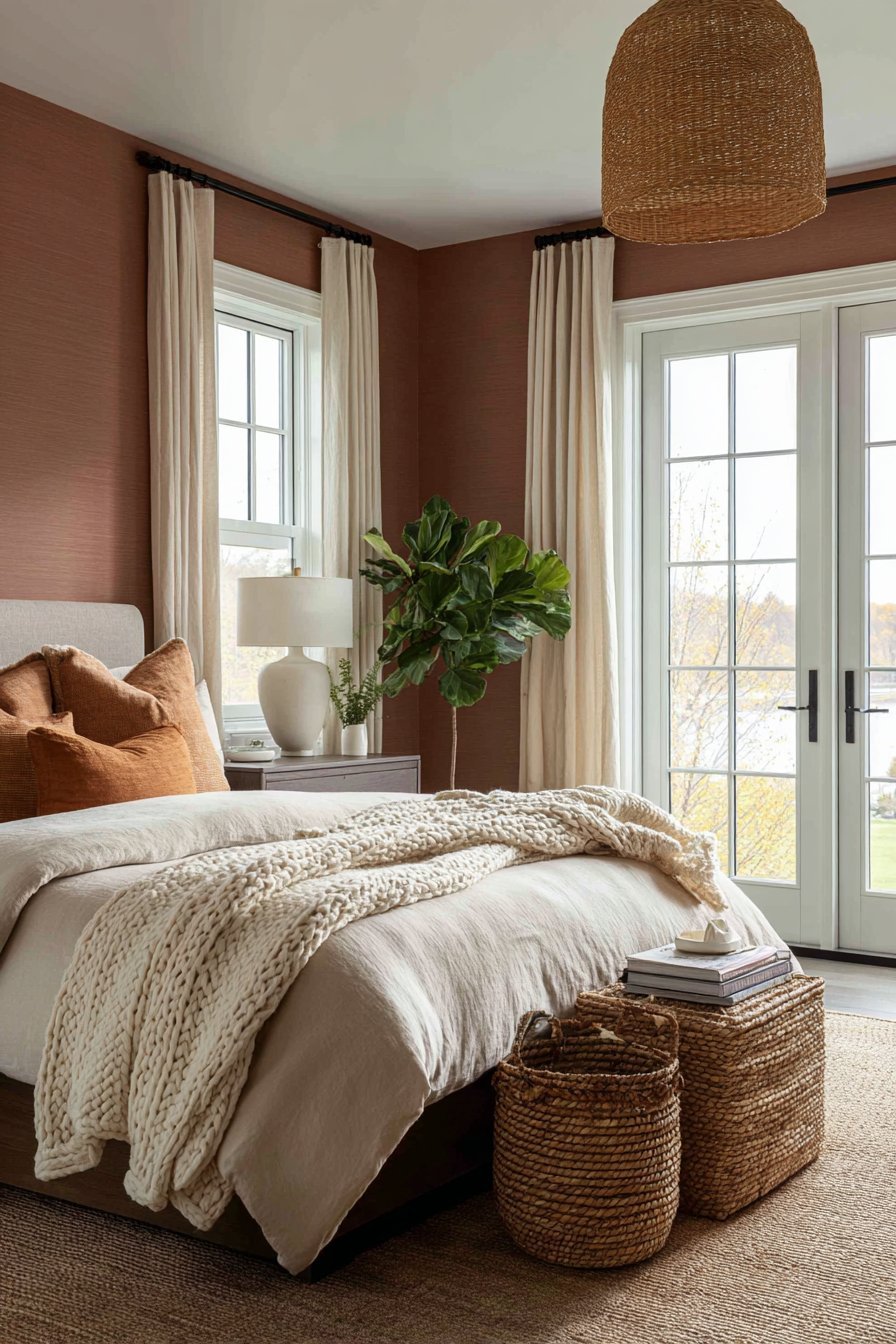
From selecting the perfect earthy color palette to incorporating natural materials and biophilic elements, each tip builds upon the next to create a harmonious bedroom environment. You’ll discover how to balance warmth with sophistication, texture with simplicity, and modern comfort with timeless natural beauty.
1. Establish Your Earthy Color Foundation
The cornerstone of any warm earthy bedroom begins with selecting the right color palette. Think beyond basic beige and explore the rich spectrum of nature’s hues—terracotta, clay, warm taupe, soft sage, muted ochre, and deep chocolate browns. These colors create an immediate sense of grounding and warmth that synthetic or cool tones simply cannot replicate. Your walls serve as the canvas for this natural aesthetic, so choosing wisely here sets the tone for everything that follows.
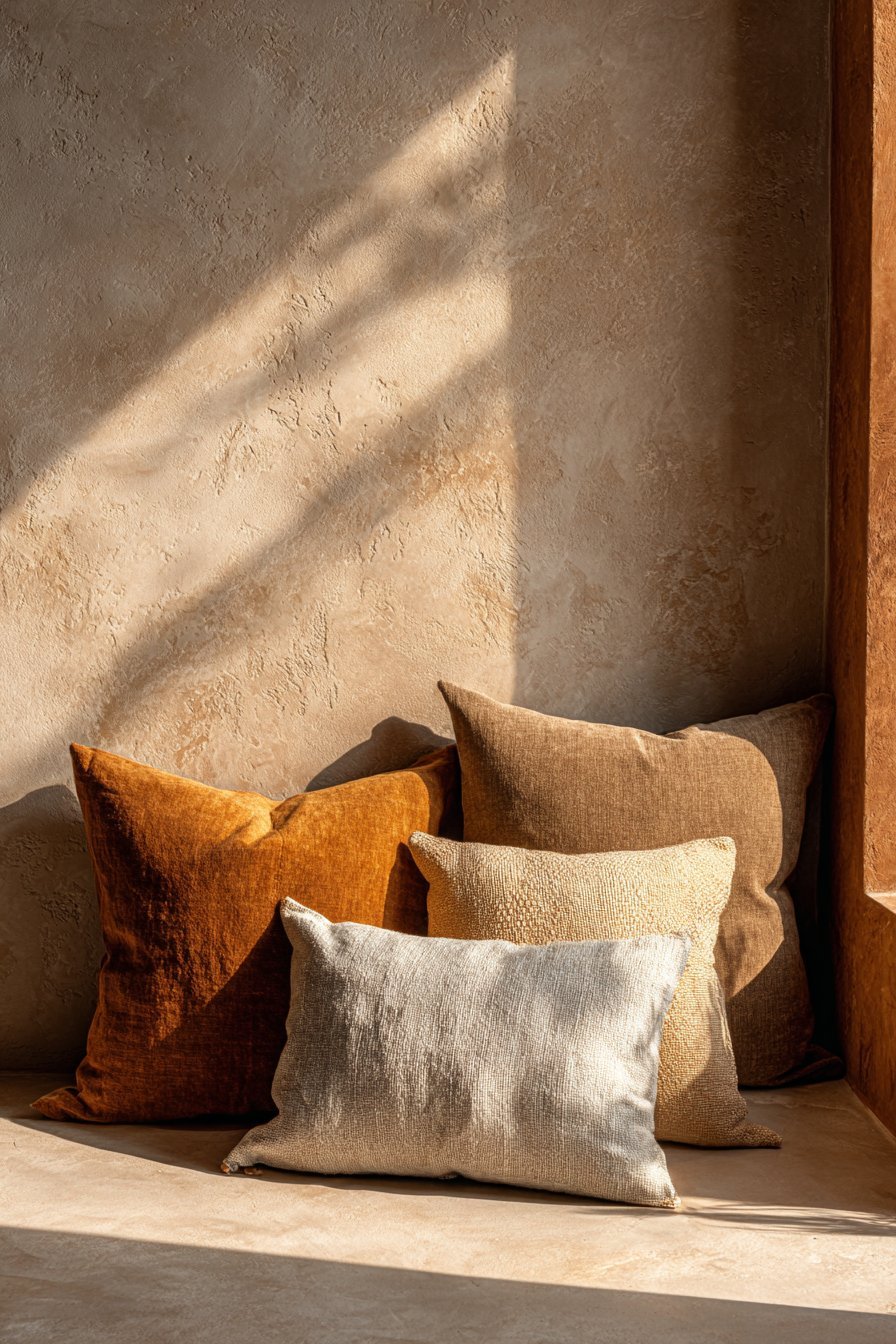
Consider the natural light your bedroom receives throughout the day when selecting your base color. North-facing rooms benefit from warmer tones like terracotta or warm beige to compensate for cooler natural light. South-facing spaces can handle deeper, richer earth tones without feeling too dark. The goal is creating a cocoon-like atmosphere that feels embracing rather than oppressive, so test paint samples at different times of day before committing.
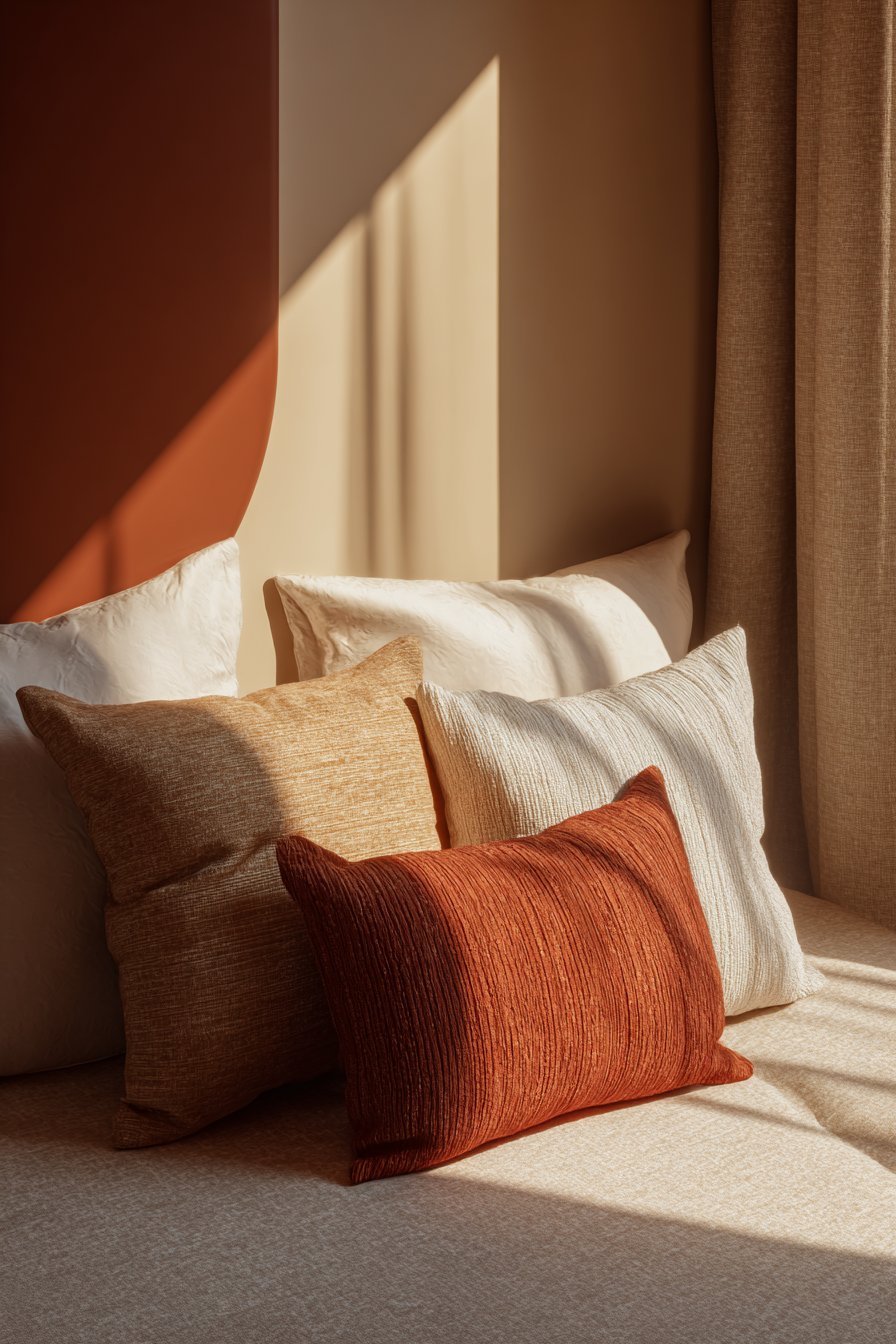
Layering different earthy tones creates visual depth and interest without introducing jarring contrasts. Start with a neutral base like warm taupe or creamy beige on the walls, then introduce deeper accent colors through textiles, artwork, and decorative elements. This approach allows you to adjust the intensity of your earthy palette over time without major renovations.
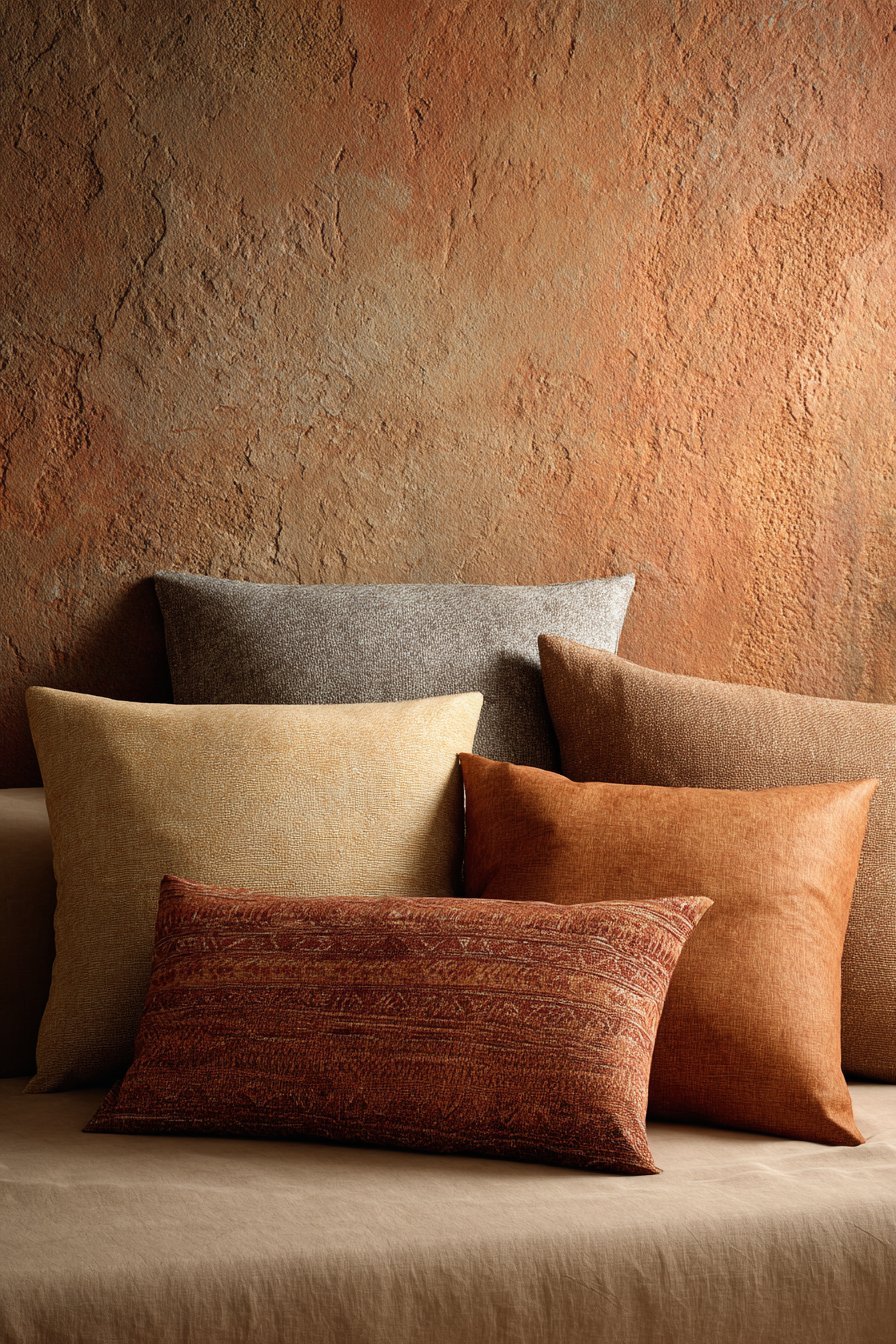
- Choose 3-4 complementary earth tones as your core palette to maintain cohesion
- Test paint colors in large swatches (at least 2×2 feet) on your walls for several days
- Consider matte or eggshell finishes that absorb light softly rather than reflecting it harshly
- Use deeper tones like burnt sienna or chocolate brown as accent colors on a single feature wall
- Incorporate warm whites or cream colors to prevent the space from feeling too heavy
- Reference nature directly—bring in leaves, stones, or soil samples to match authentic earth tones
2. Embrace Natural Wood Elements
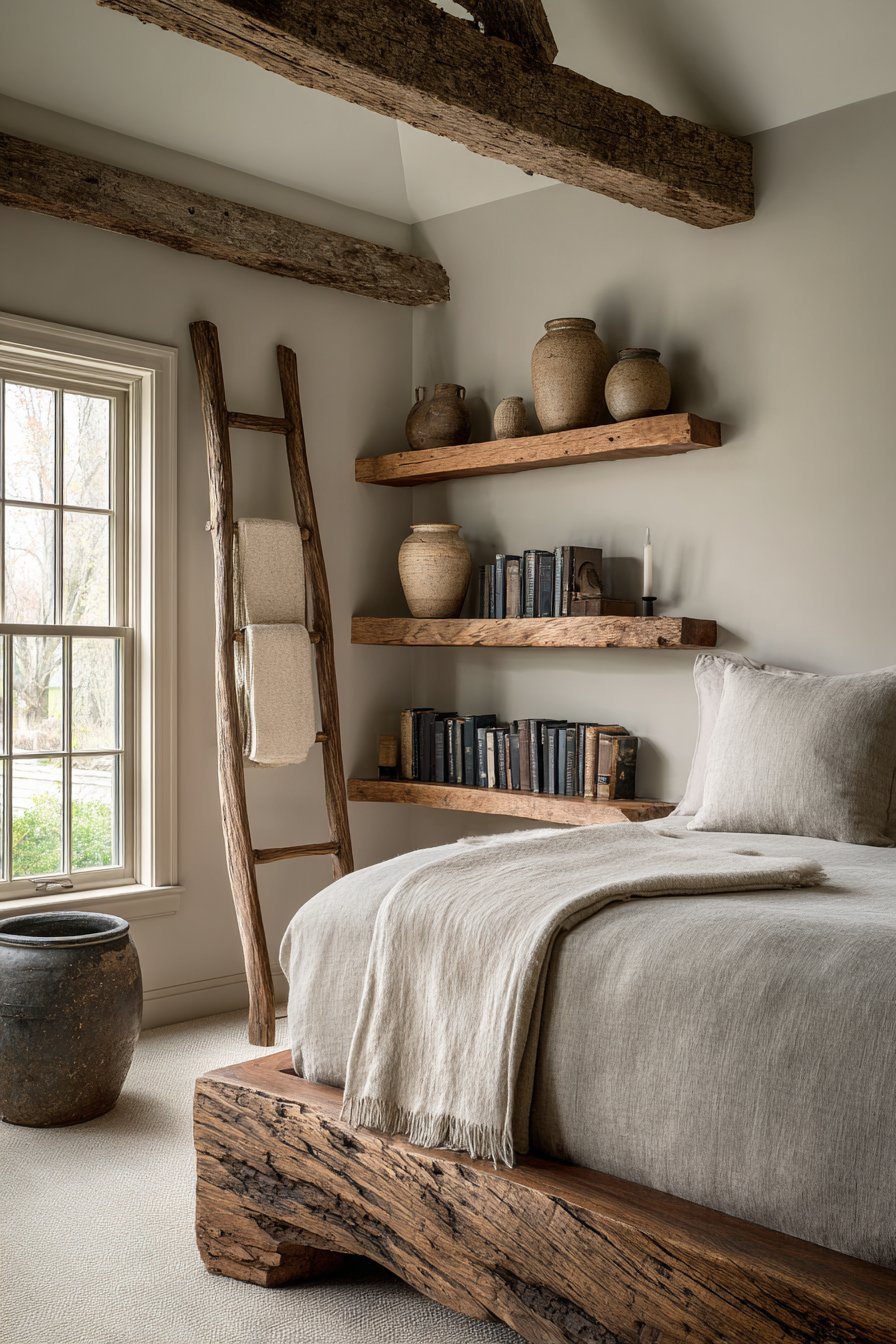
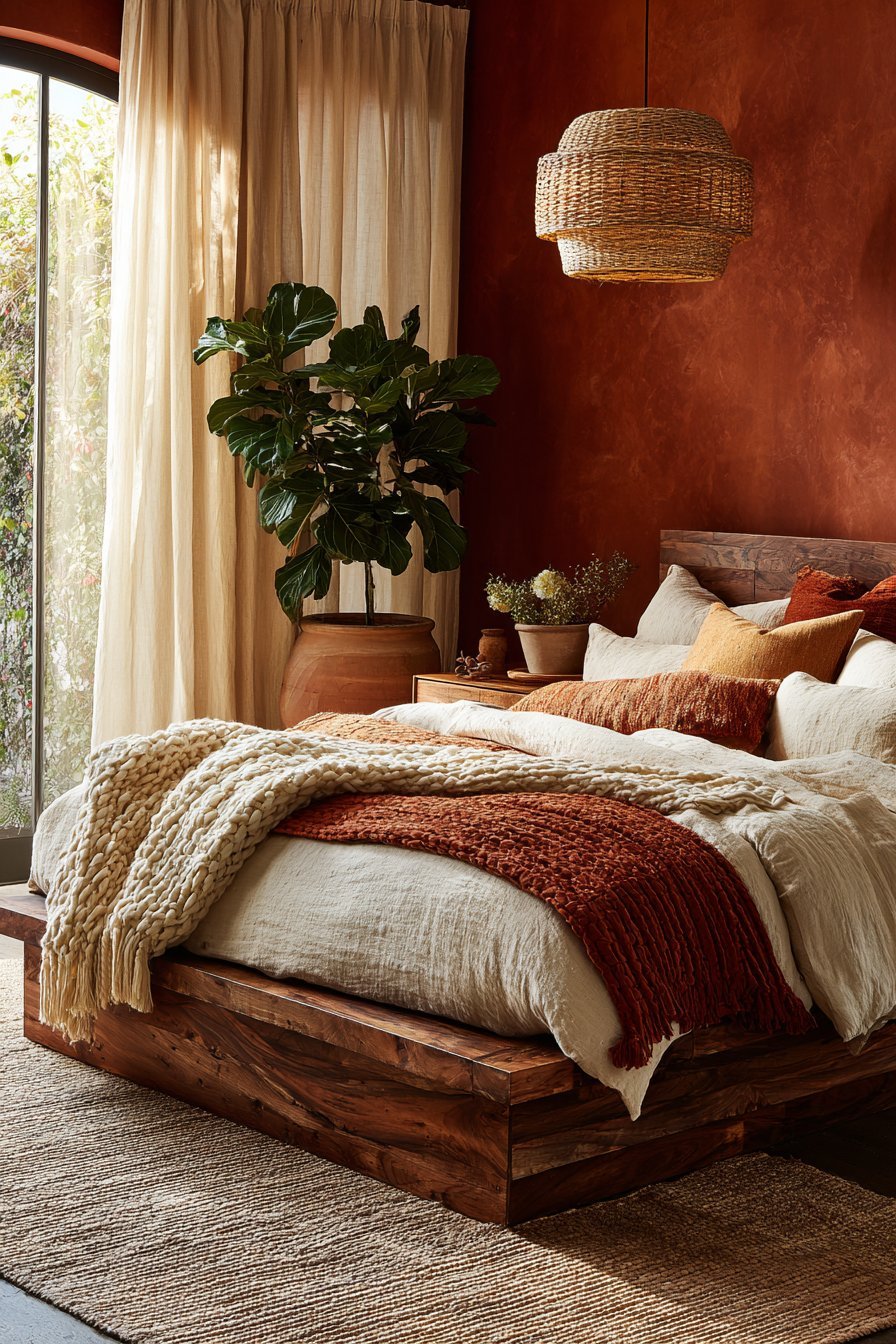
Nothing says “earthy” quite like authentic wood furniture and accents. Wood brings inherent warmth, organic texture, and a connection to nature that manufactured materials cannot replicate. The key is selecting pieces with visible grain patterns and natural finishes rather than heavily stained or painted options. Look for furniture in walnut, oak, teak, or pine that showcases the wood’s natural character, including knots, grain variations, and color inconsistencies that make each piece unique.
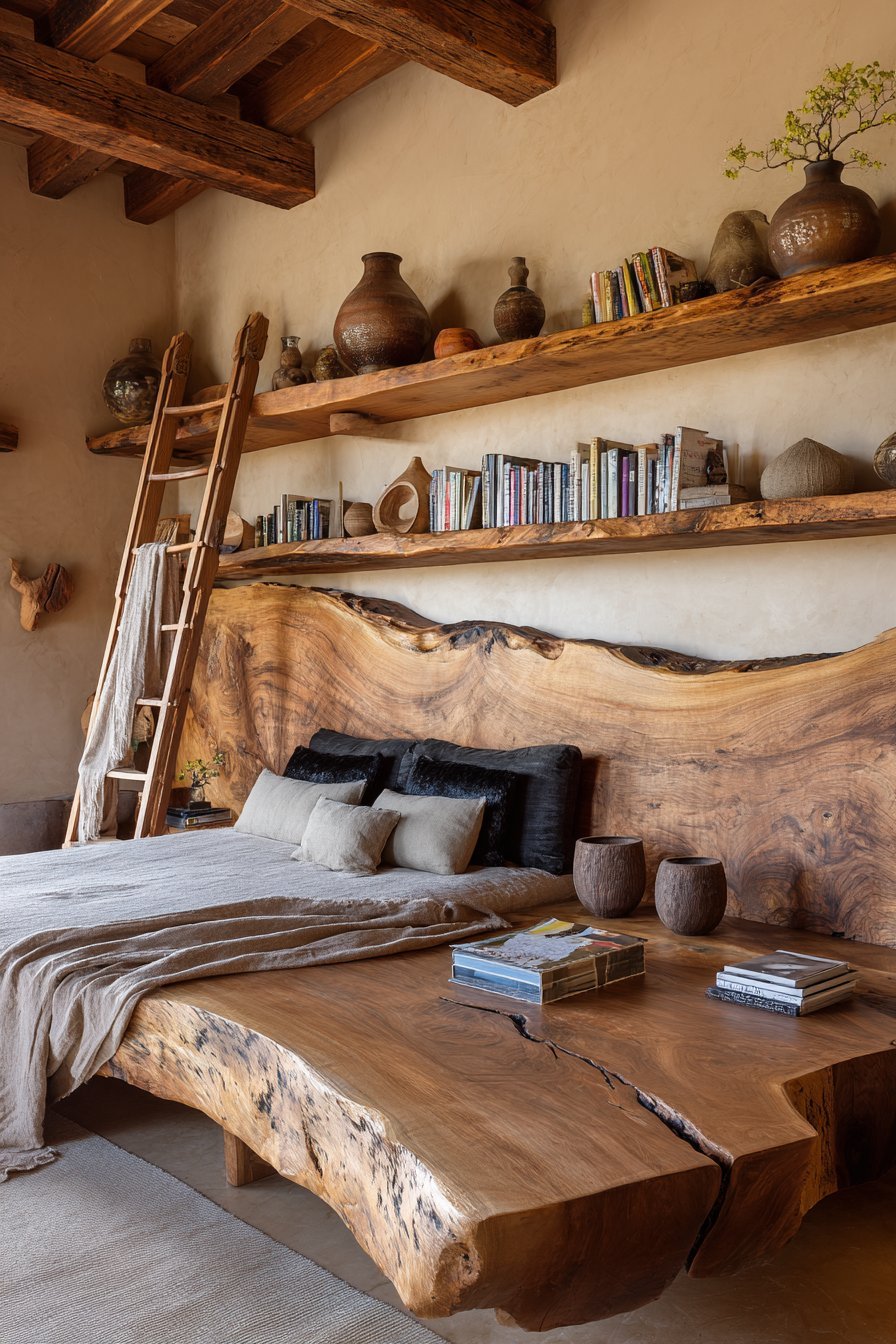
Your bed frame serves as the visual anchor of the room, making it the ideal place to introduce substantial wood elements. A platform bed in warm walnut or a reclaimed wood headboard immediately establishes the earthy aesthetic you’re aiming for. Complement this with wooden nightstands, dressers, or even a simple wooden bench at the foot of the bed to reinforce the natural theme without overwhelming the space.
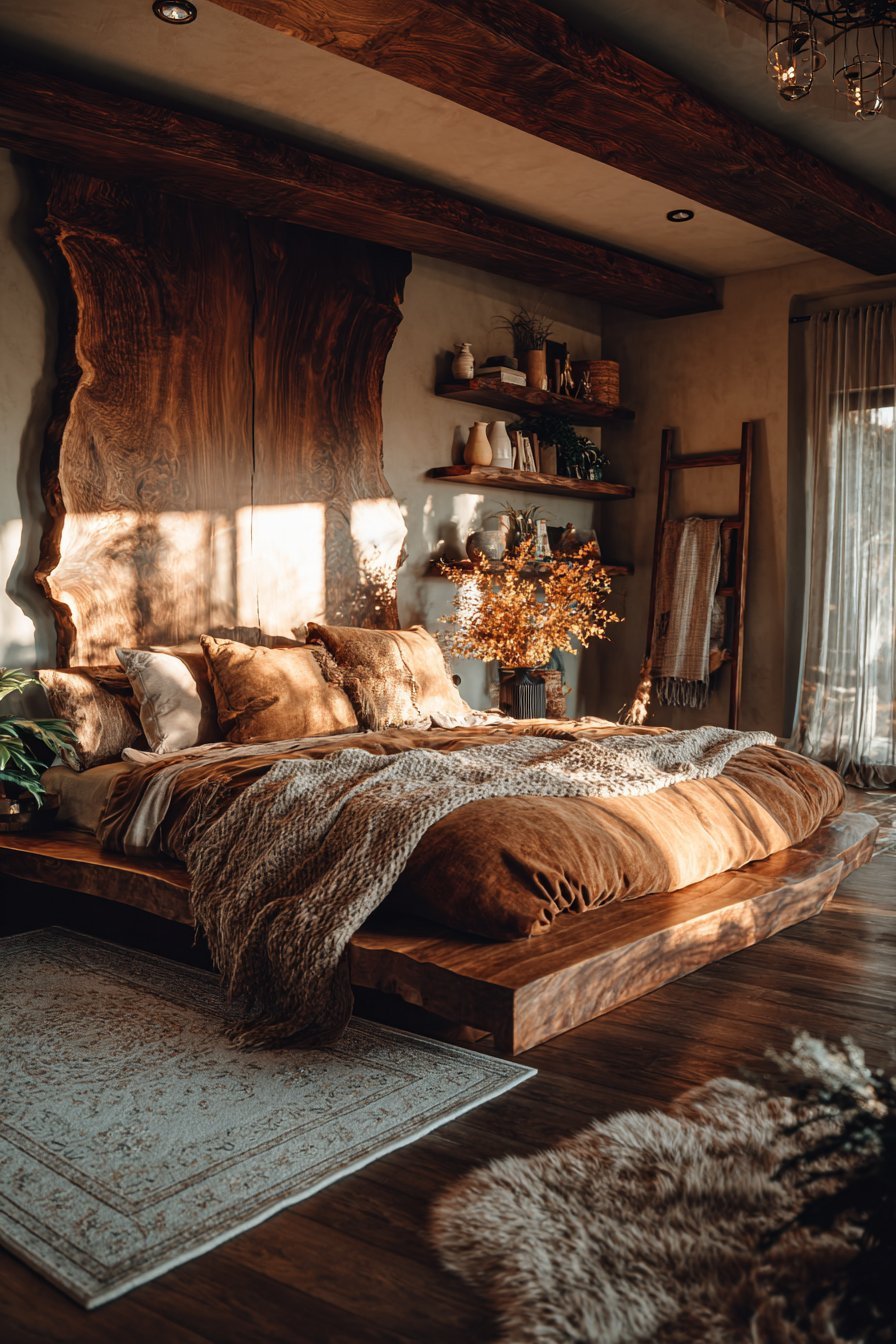
Don’t limit wood to furniture alone. Architectural elements like exposed ceiling beams, wood paneling on an accent wall, or even a wooden ceiling fan bring the material into unexpected places. Floating wooden shelves provide both function and form, displaying plants, books, and decorative objects while adding horizontal lines that guide the eye through the space.
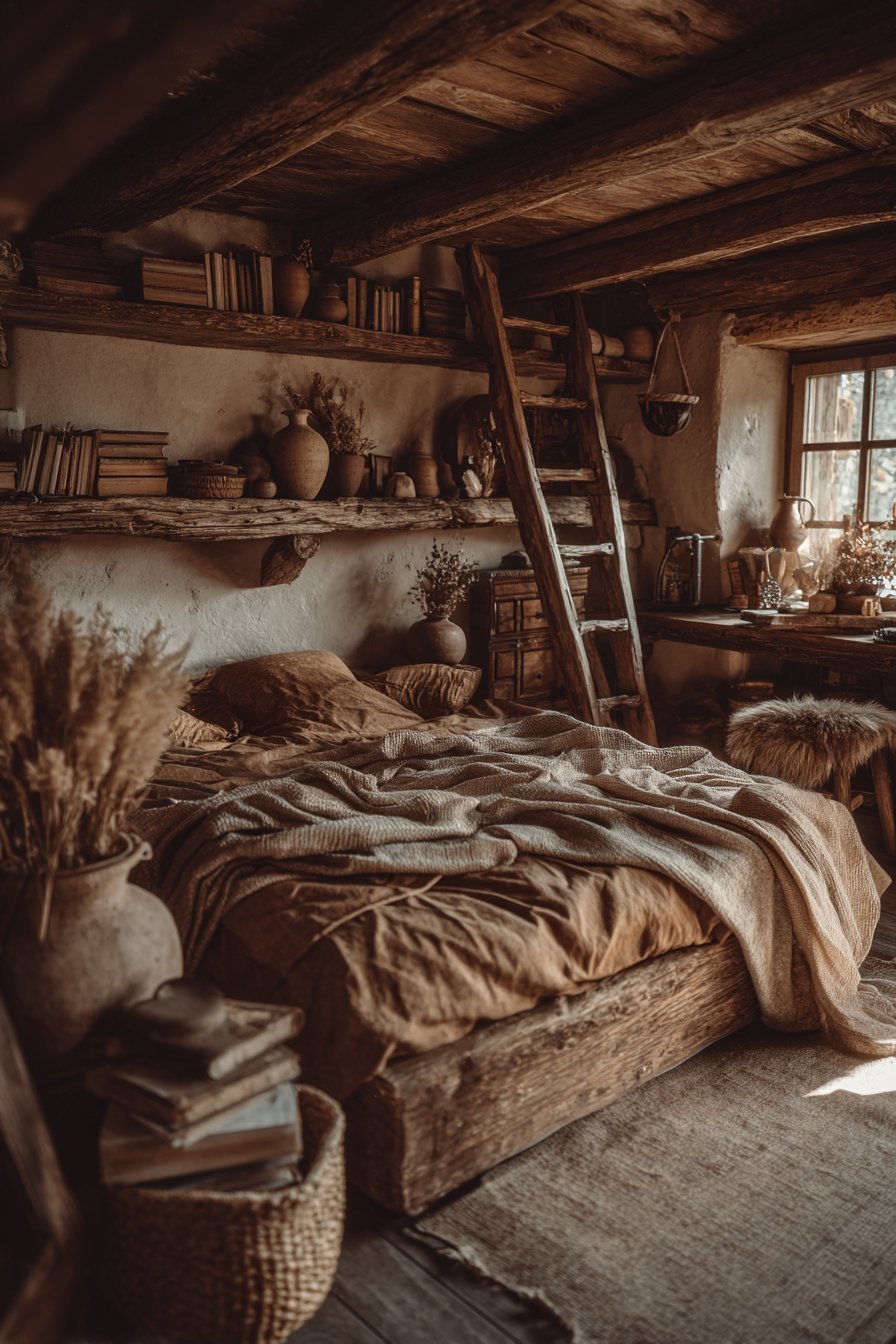
- Mix wood tones thoughtfully—combine medium and light woods rather than drastically different colors
- Incorporate live-edge pieces that celebrate the tree’s natural form and imperfections
- Add wooden picture frames, mirrors, or wall art to extend the material throughout the room
- Consider a wooden ladder as a decorative element for hanging blankets or displaying plants
- Opt for natural oil or wax finishes rather than glossy polyurethane for a more organic look
- Include smaller wooden accents like bowls, trays, or candleholders on surfaces
3. Layer Organic Textiles and Natural Fabrics

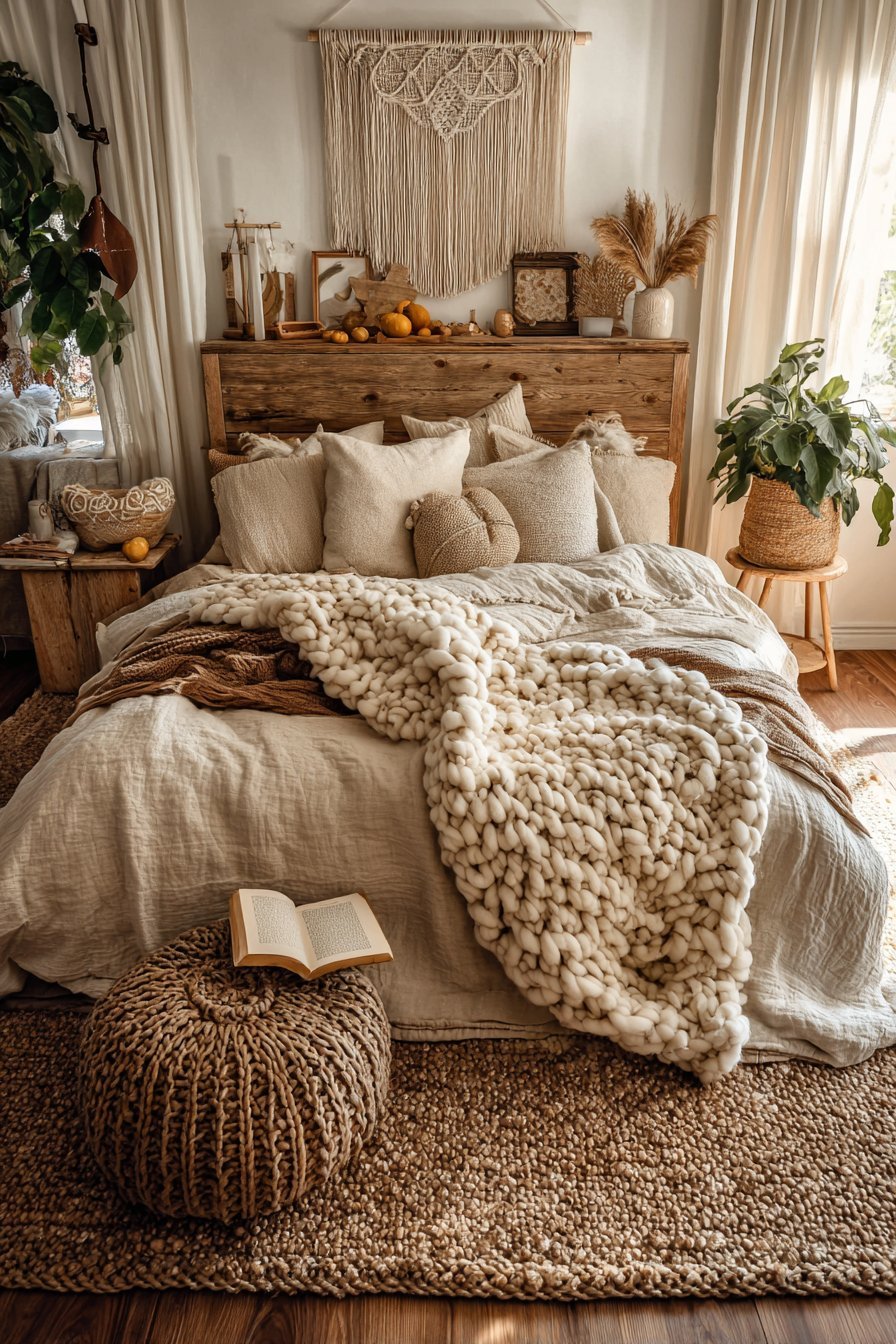
Textiles provide the tactile warmth essential to an inviting earthy bedroom. Natural fabrics like linen, cotton, wool, jute, and hemp not only look beautiful but also feel connected to the earth in a way that synthetic materials never can. These fibers breathe naturally, regulate temperature better, and develop a lovely patina over time that adds character to your space. Start with your bedding as the primary textile layer, choosing high-quality linen sheets in warm neutrals or cotton duvets in earthy tones.
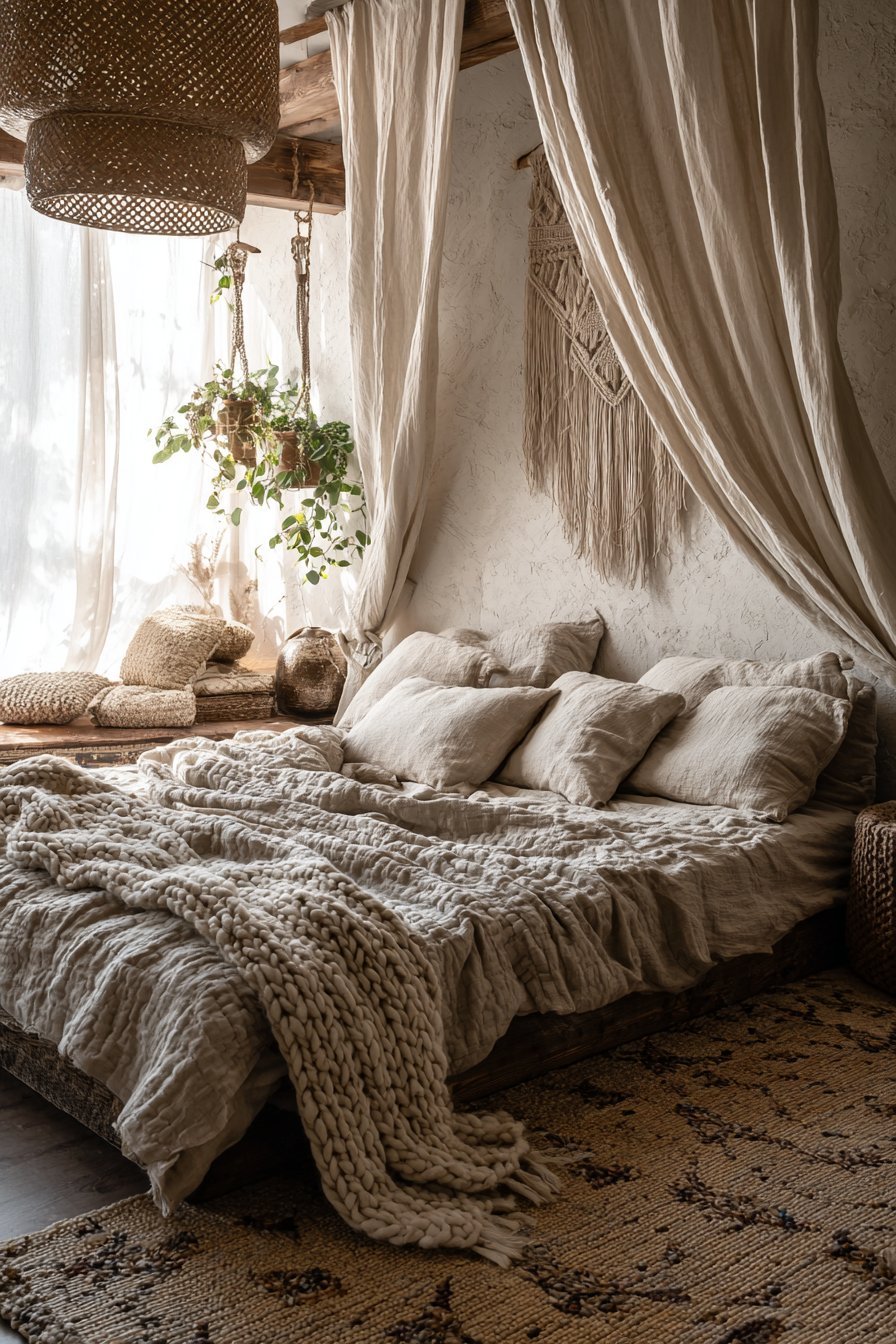
Layering is crucial for creating visual and physical depth. Begin with your fitted and flat sheets, add a textured quilt or coverlet in a complementary earth tone, then finish with a chunky knit throw blanket at the foot of the bed. Each layer should vary slightly in texture and tone to prevent the monochromatic palette from feeling flat. Include plenty of pillows in different sizes with covers made from linen, cotton, or even wool for added dimension.
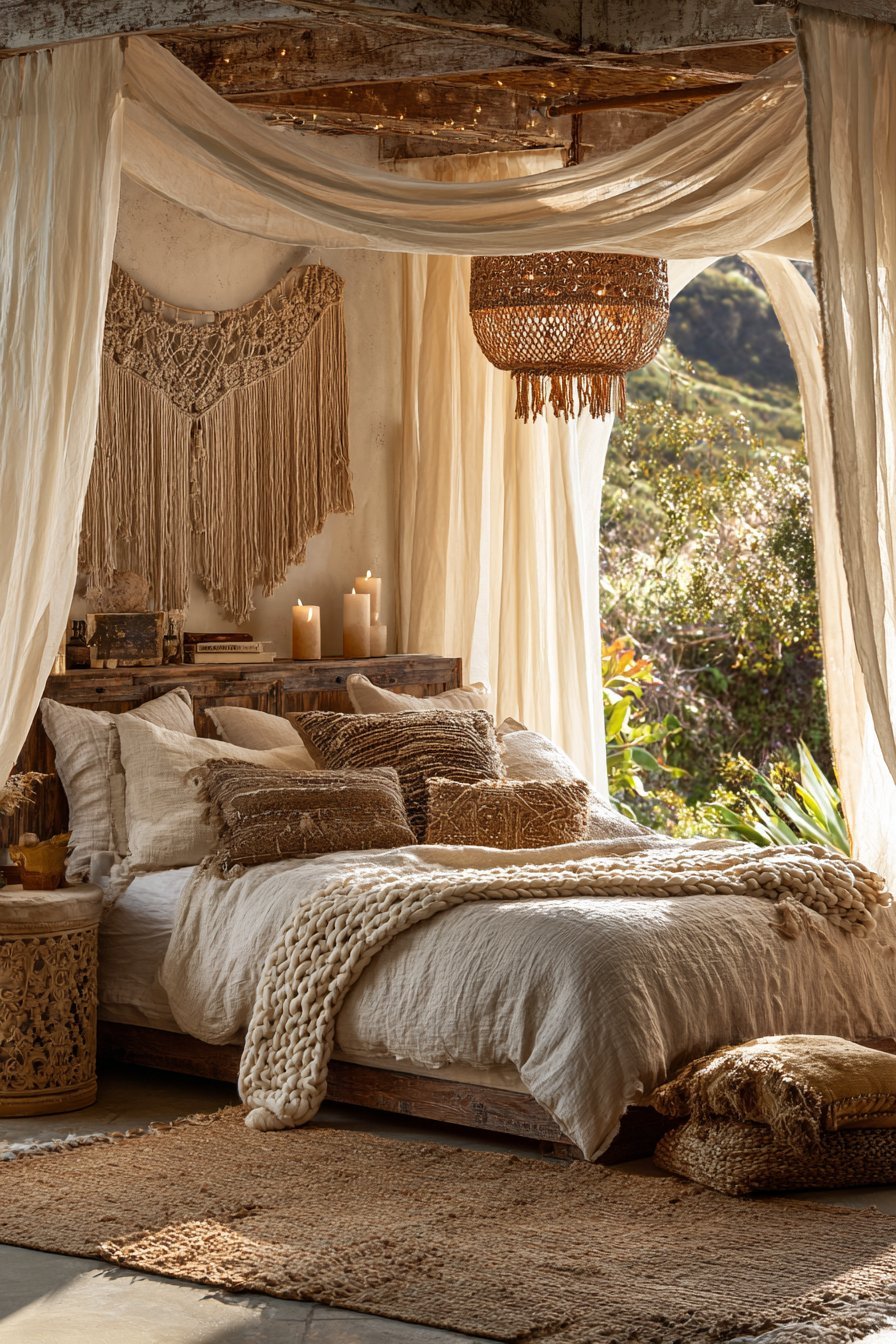
Window treatments offer another opportunity to introduce natural textiles while controlling light and privacy. Heavy linen curtains in warm oatmeal or light tan soften the windows and complement your earthy palette. Jute or bamboo roman shades provide texture while maintaining clean lines. The key is choosing materials that filter light beautifully rather than blocking it completely, maintaining that connection to the natural world outside.
- Select undyed or naturally dyed fabrics to minimize chemical processing and enhance earth-tone authenticity
- Include a jute or wool area rug to ground the space and add warmth underfoot
- Mix smooth and textured fabrics—pair smooth linen sheets with a chunky knit throw
- Choose natural fiber baskets for storage that double as decorative texture
- Add linen or cotton curtains that puddle slightly on the floor for a relaxed, organic feel
- Incorporate macramé wall hangings or woven tapestries as artistic focal points
4. Integrate Living Plants and Botanical Elements
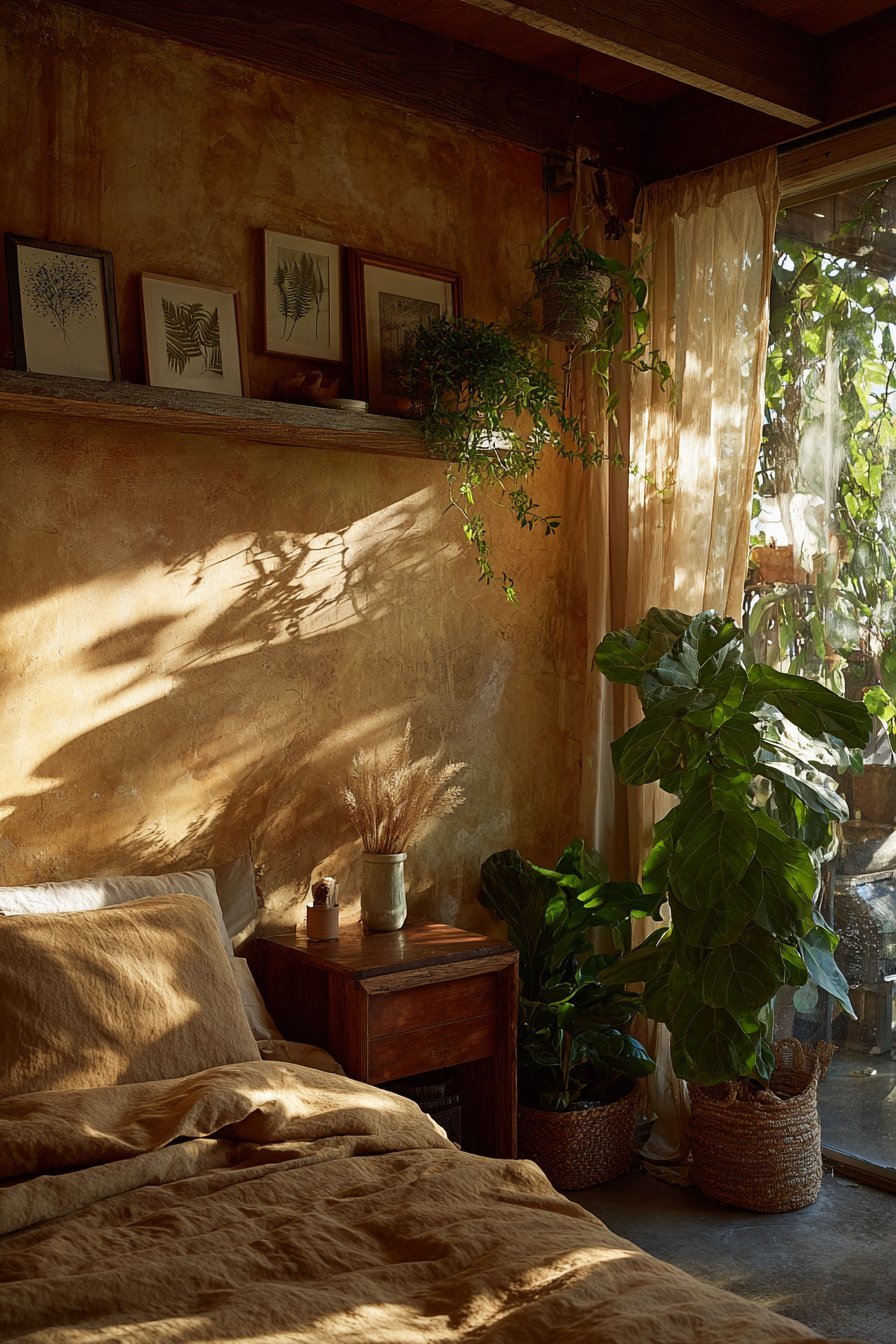
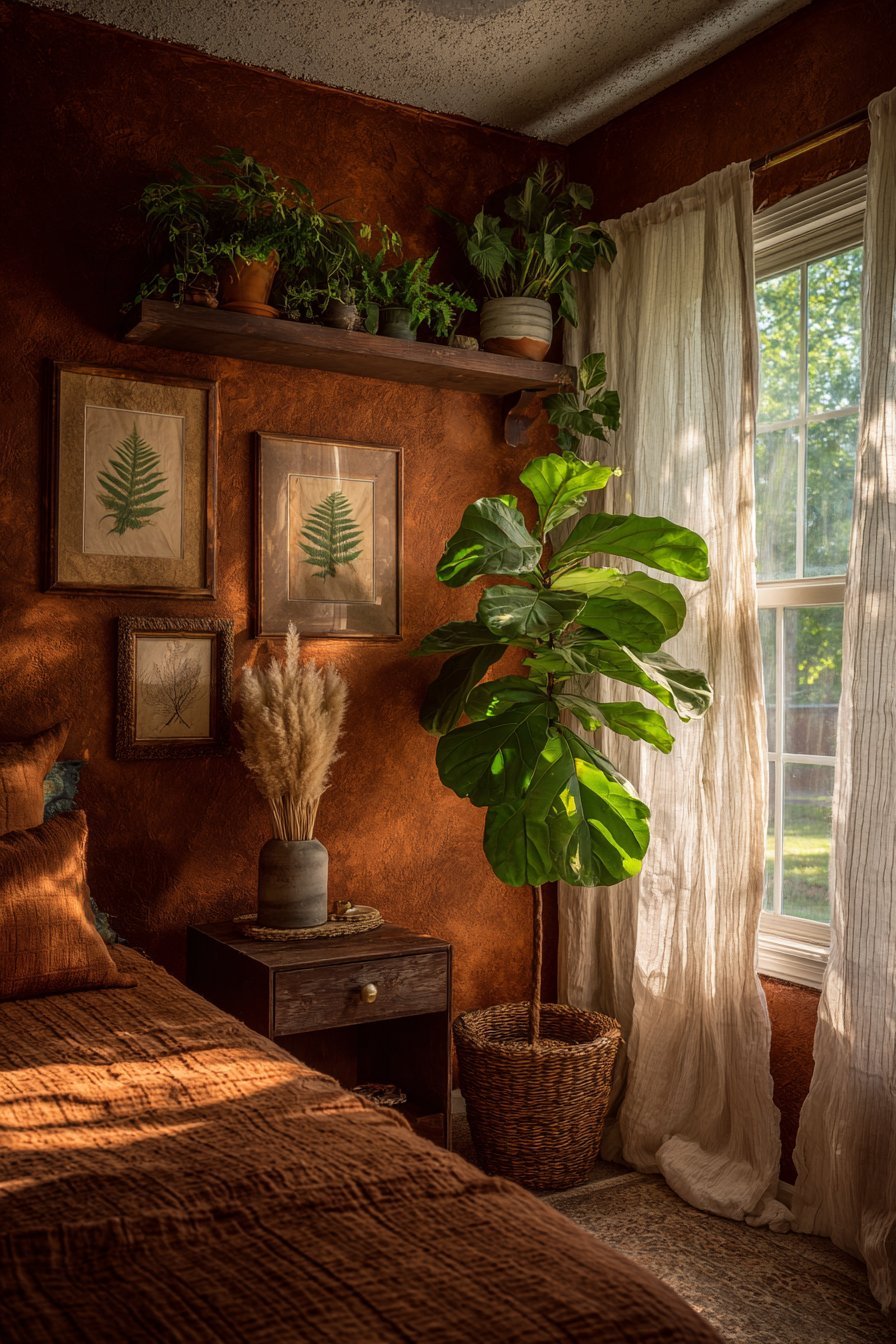
Bringing living greenery into your bedroom is perhaps the most direct way to create an earthy atmosphere. Plants purify the air, add oxygen, and provide an unmistakable connection to nature that no decorative object can replicate. Choose varieties that thrive in bedroom conditions—lower light and less frequent watering—such as pothos, snake plants, ZZ plants, or peace lilies. These hardy options require minimal maintenance while providing maximum visual impact and air-purifying benefits.
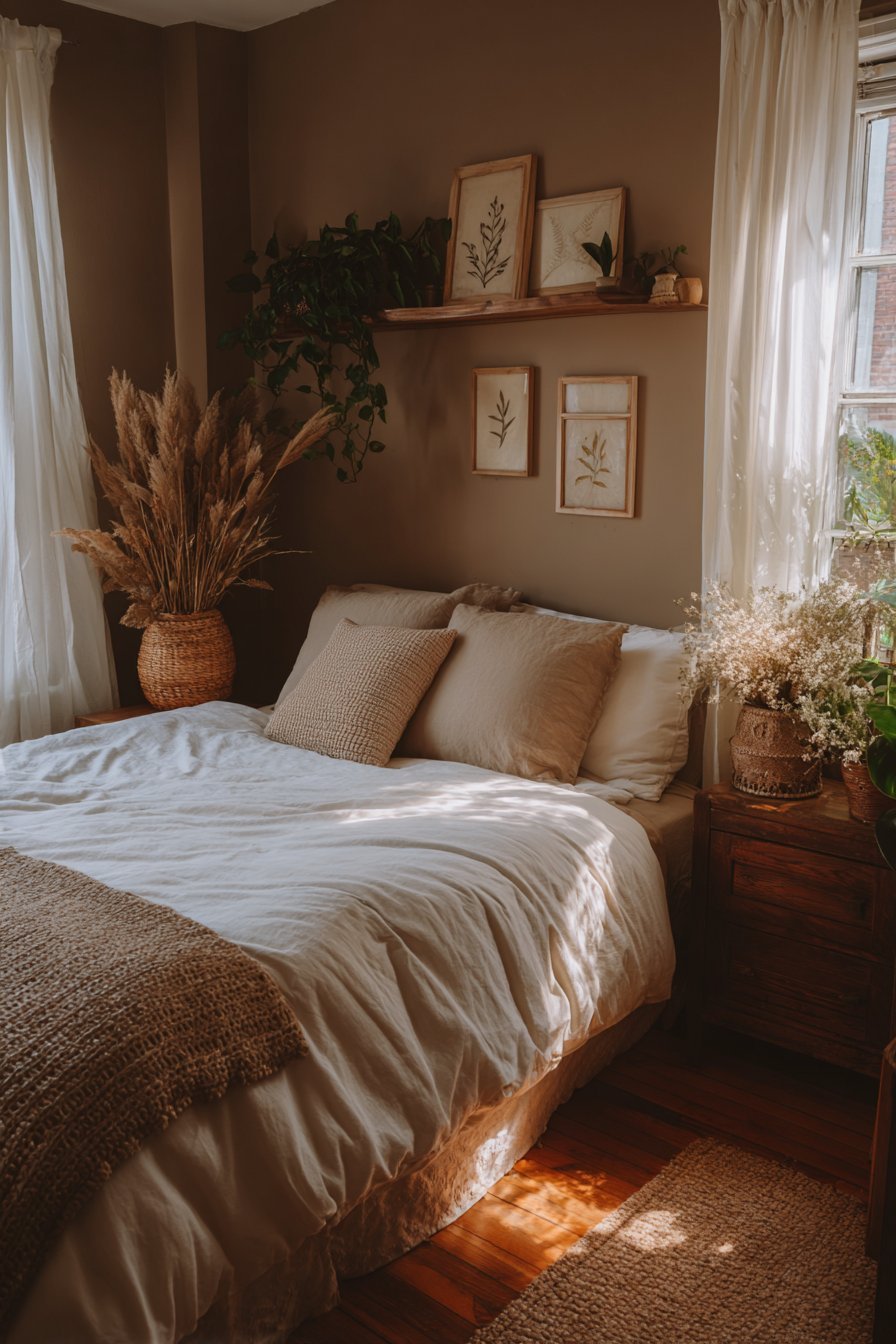
Strategic placement of plants creates natural focal points throughout the room. A large floor plant like a fiddle leaf fig or bird of paradise makes a bold statement in a corner, while smaller plants on nightstands, dressers, or floating shelves distribute greenery throughout the space. Consider hanging plants near windows or from ceiling hooks to add vertical interest and draw the eye upward, making the room feel larger and more dynamic.
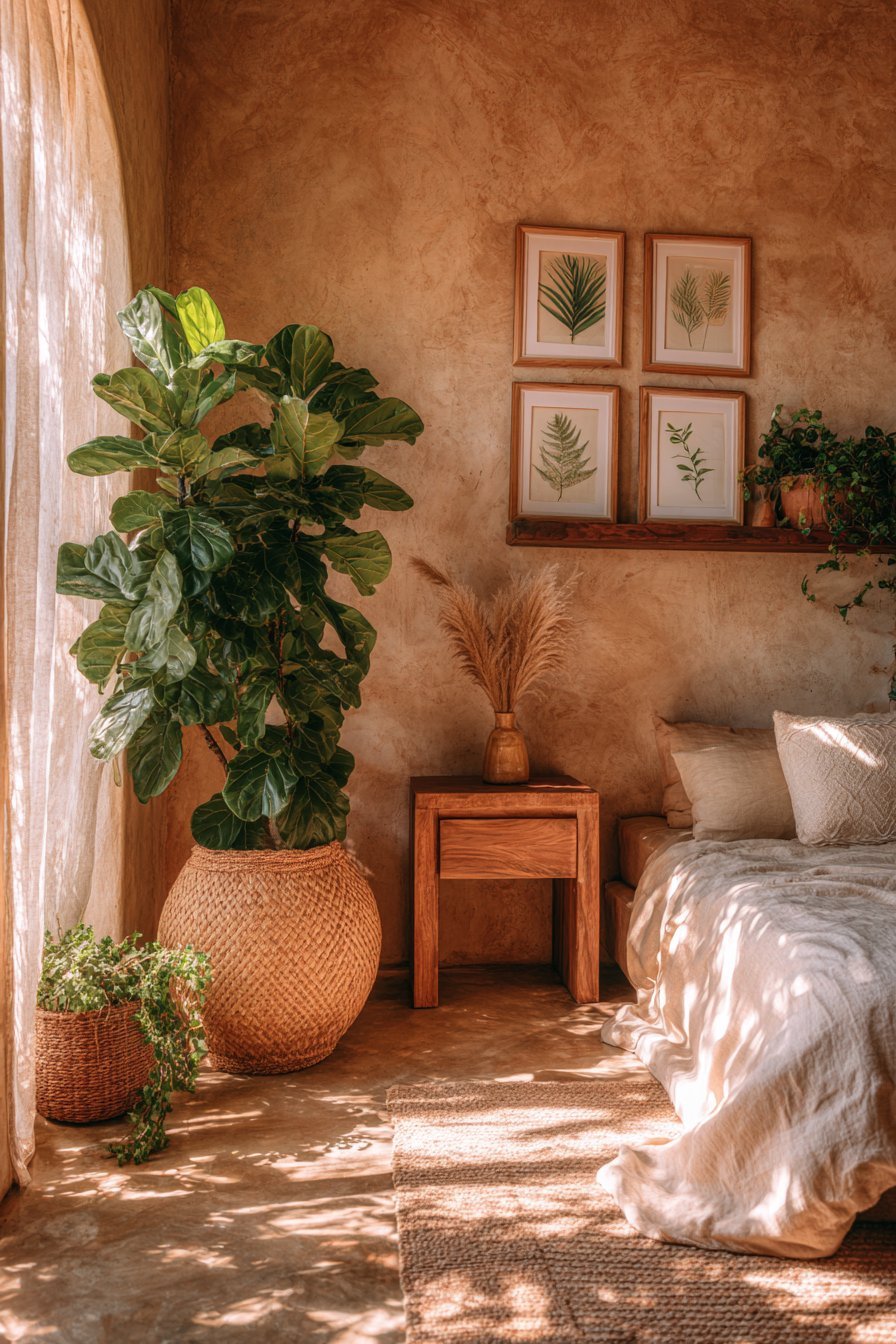
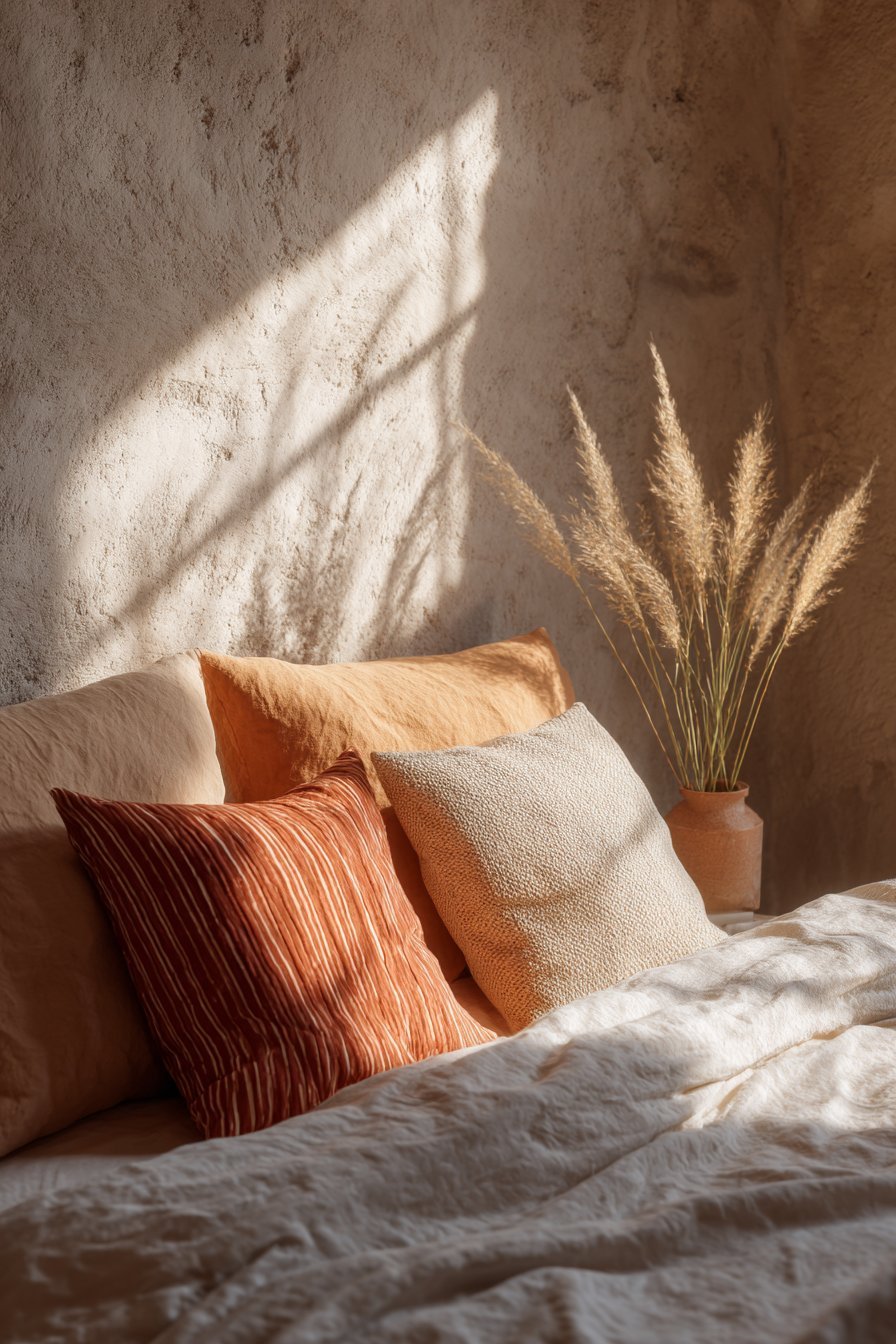
Beyond living plants, dried botanicals offer lasting beauty without the maintenance requirements. Pampas grass in a tall floor vase creates dramatic texture and movement. Dried eucalyptus branches add a subtle, pleasant aroma while contributing silvery-green tones to your palette. Pressed botanical prints in simple wooden frames bring nature to your walls in an artistic, sophisticated way that reinforces the overall earthy aesthetic.
- Start with 3-5 plants of varying sizes to create a balanced, natural distribution
- Use terracotta, ceramic, or woven basket planters that complement your earthy color scheme
- Group plants in odd numbers (3 or 5) on surfaces for a more organic, visually appealing arrangement
- Include plants with different leaf shapes and textures to add variety and interest
- Place a small plant on your nightstand for a calming presence to wake up to each morning
- Rotate plants seasonally or add flowering varieties like orchids for subtle color accents
5. Incorporate Natural Stone and Ceramic Accents
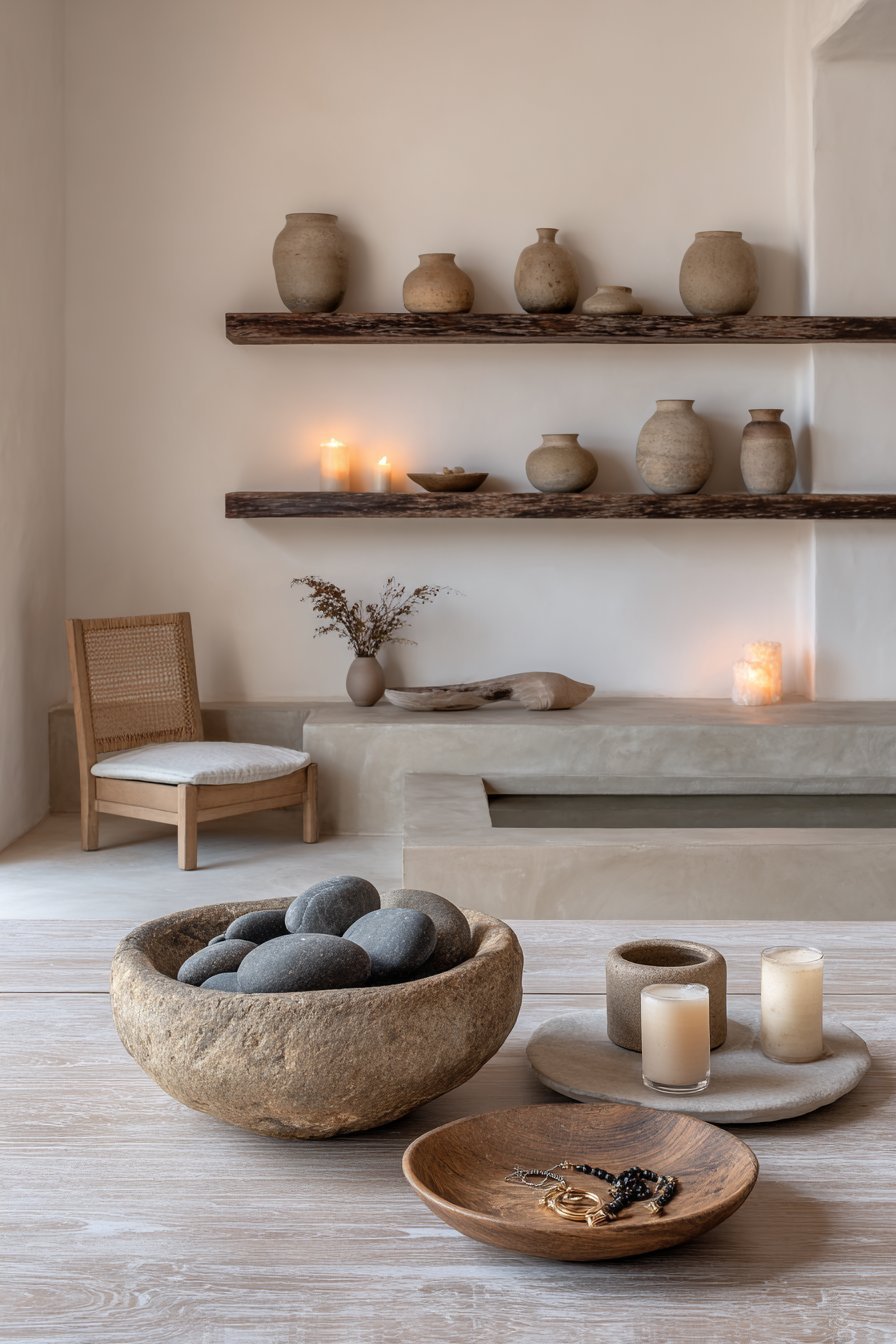
Stone elements bring grounding energy and ancient beauty into your bedroom space. Materials like marble, granite, slate, or river rocks connect us to the earth’s foundation in the most literal sense. These elements work beautifully as decorative accents without overwhelming the space—think stone bookends, a marble tray on your dresser for jewelry, or a collection of smooth river rocks arranged in a wooden bowl. Each piece adds weight and substance to the overall design while maintaining the natural aesthetic.
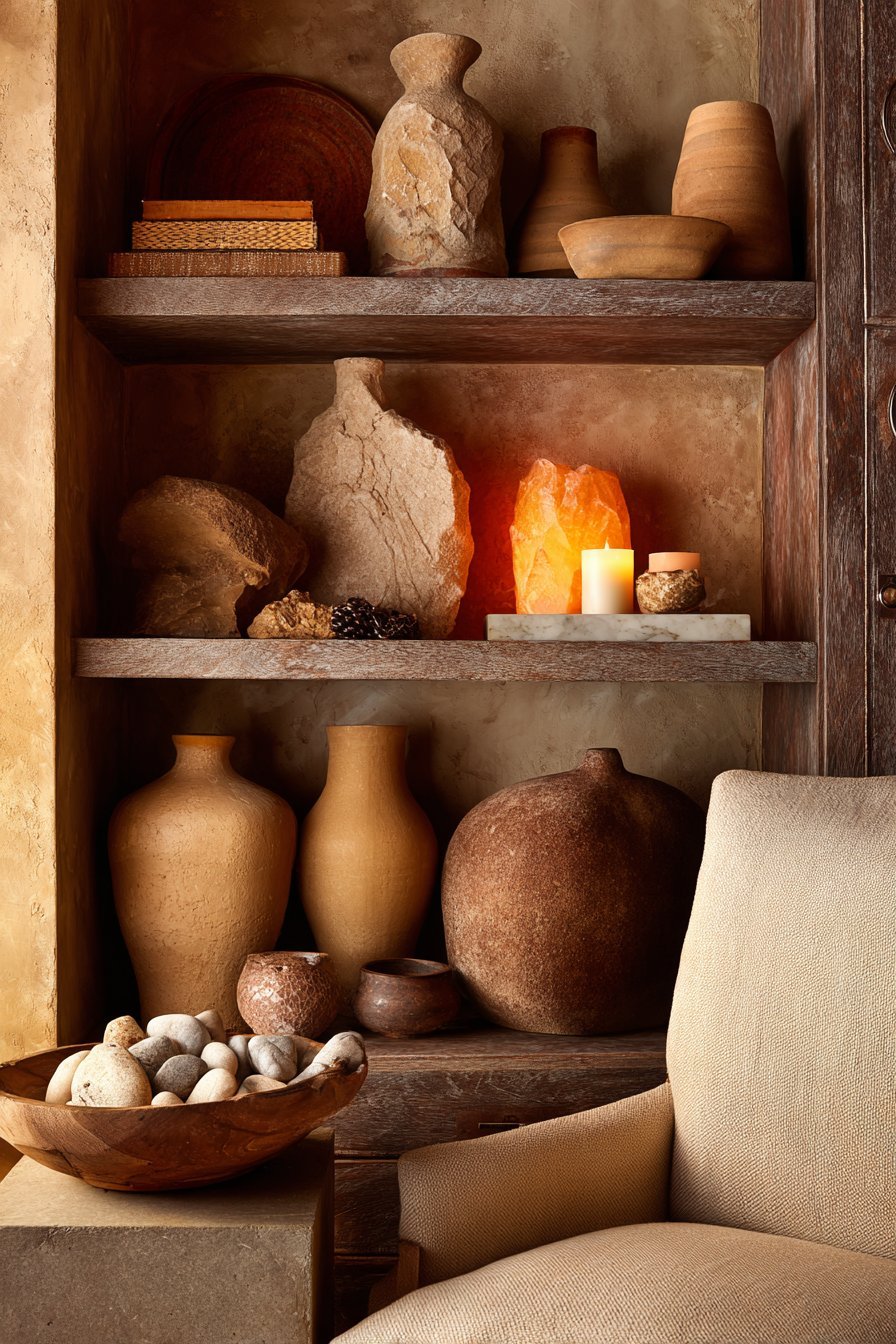
Ceramic and pottery pieces handmade by artisans introduce human craftsmanship that honors earth materials. Choose vases, bowls, or decorative objects in matte finishes and earth tones that look like they emerged directly from a potter’s wheel. Irregular shapes and visible handwork add character and authenticity that mass-produced items lack. These pieces serve both functional and decorative purposes, holding plants, storing small items, or simply existing as beautiful sculptural elements.
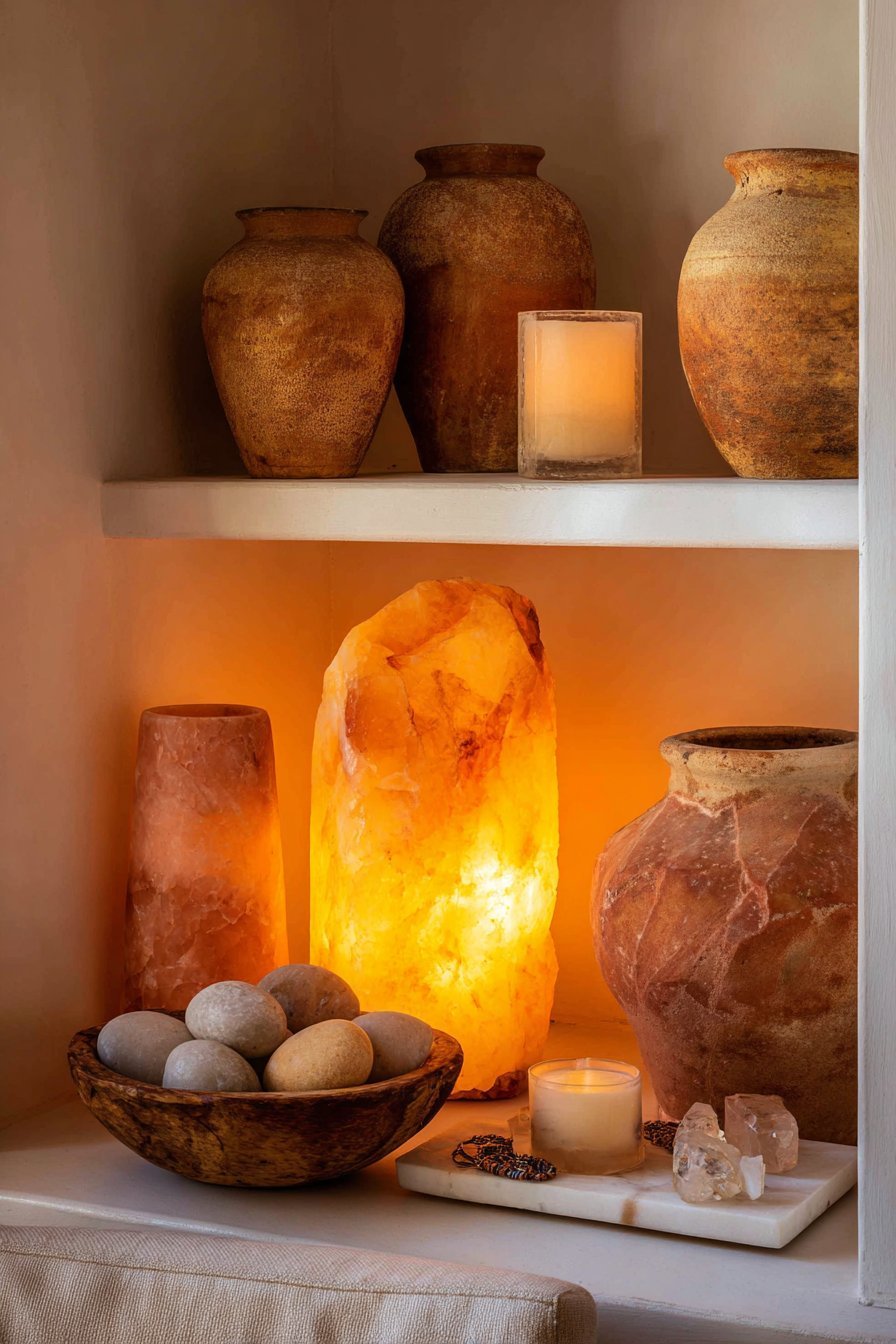
Consider a stone or concrete accent in unexpected places for dramatic effect. A concrete side table pairs beautifully with wood furniture, offering textural contrast while maintaining the earthy palette. A slate tray can serve as an elegant base for candles and small decorative objects on a dresser. Natural stone coasters protect wood surfaces while adding another layer of earth-derived material to your collection of tactile elements.
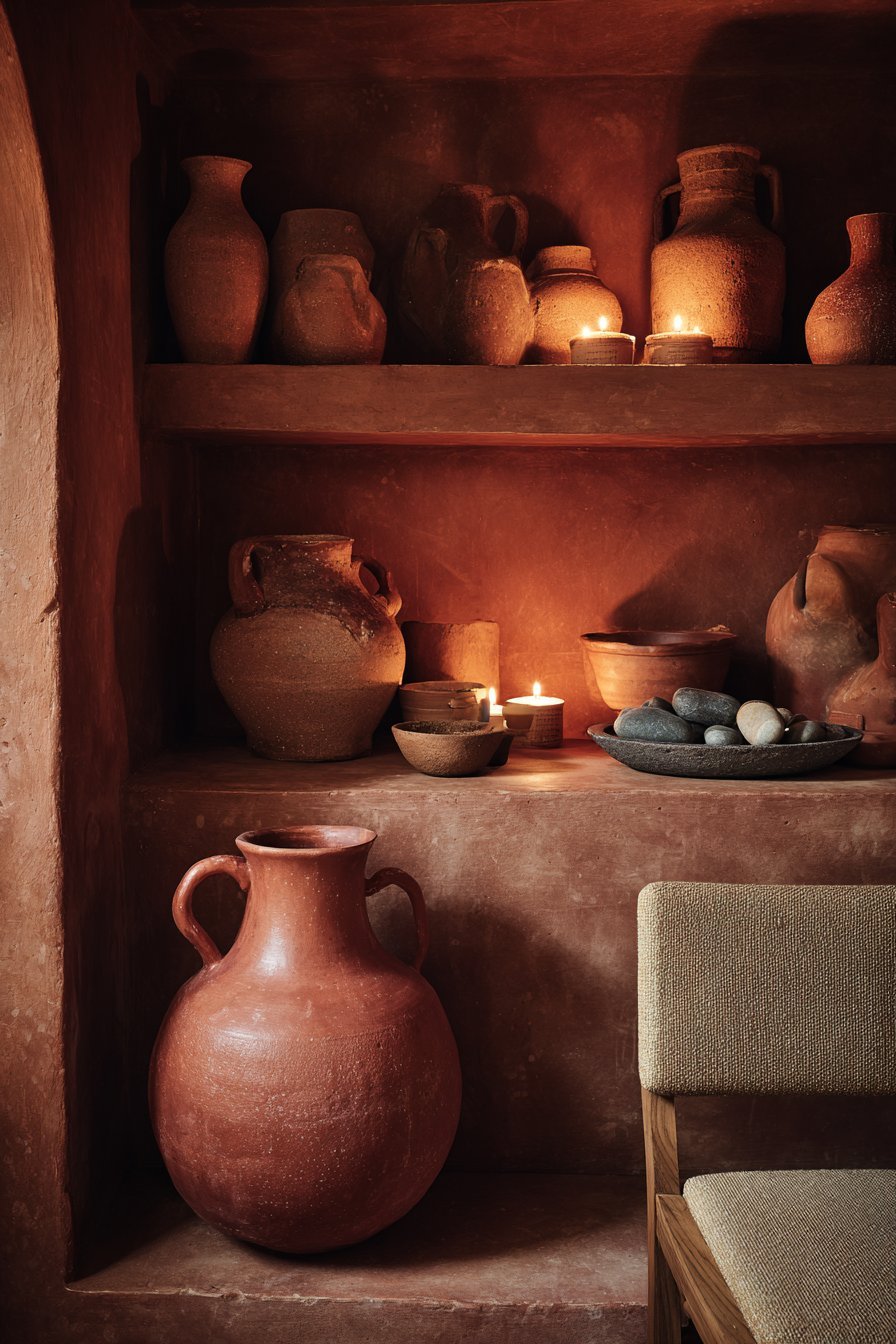
- Display a collection of naturally shaped stones or geodes on shelves or windowsills
- Choose ceramic lamps with organic, irregular shapes rather than perfectly symmetrical designs
- Incorporate a stone or concrete planter for larger floor plants
- Use slate or marble as a base under candles to create elegant vignettes
- Select ceramic dishes or catchalls in warm clay tones for jewelry and small items
- Consider a Himalayan salt lamp for ambient lighting with natural crystal form
6. Master Warm Lighting for Ambiance
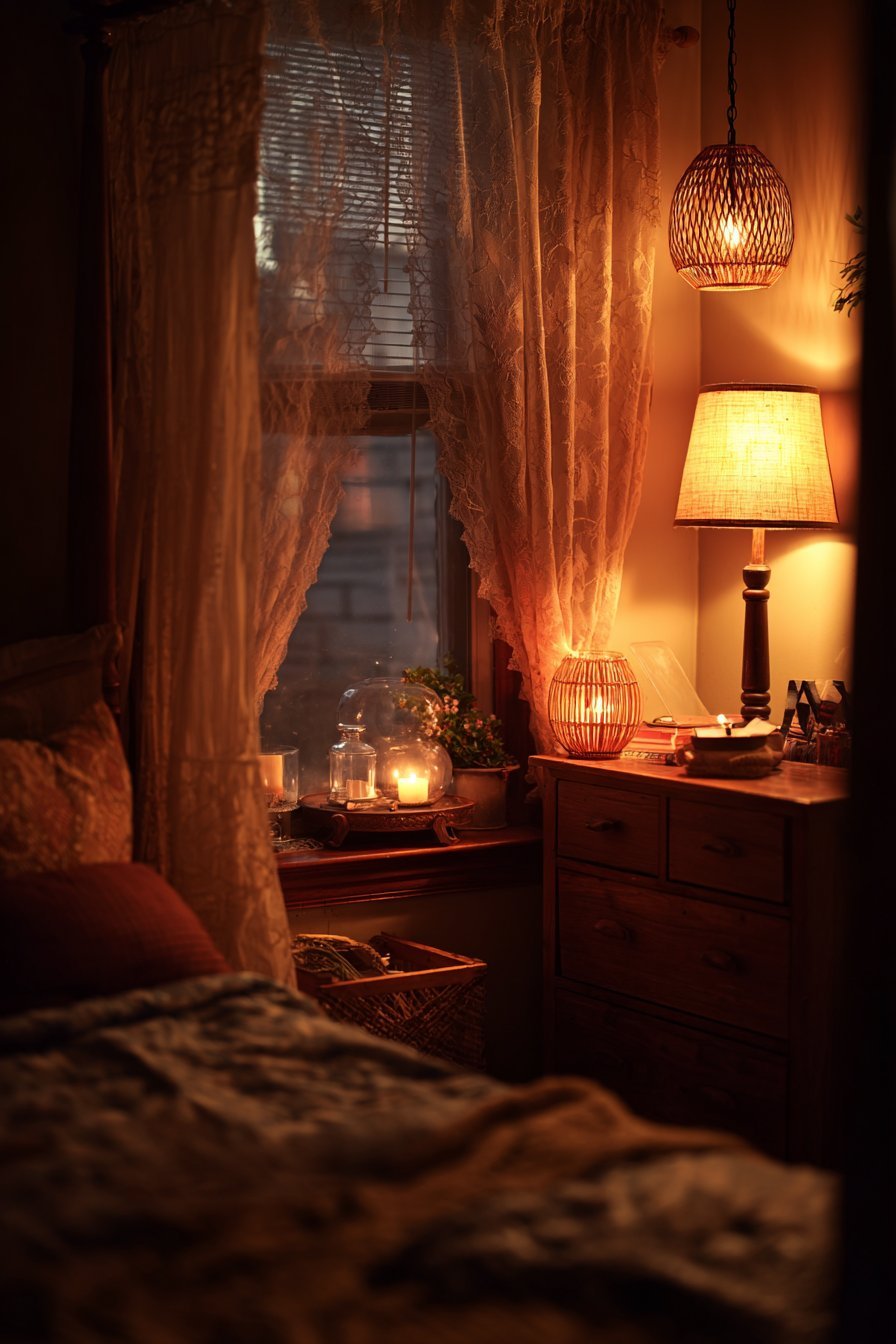
Lighting dramatically impacts how earthy and warm your bedroom feels. Harsh overhead lighting destroys the cozy atmosphere you’ve carefully created with colors and textures. Instead, focus on layered lighting that mimics natural light patterns—bright enough to function by, but warm and dimmable to create evening ambiance. Choose light bulbs in the 2700K-3000K range, which emit a warm glow similar to candlelight or sunset rather than the sterile blue-white light of typical LEDs.
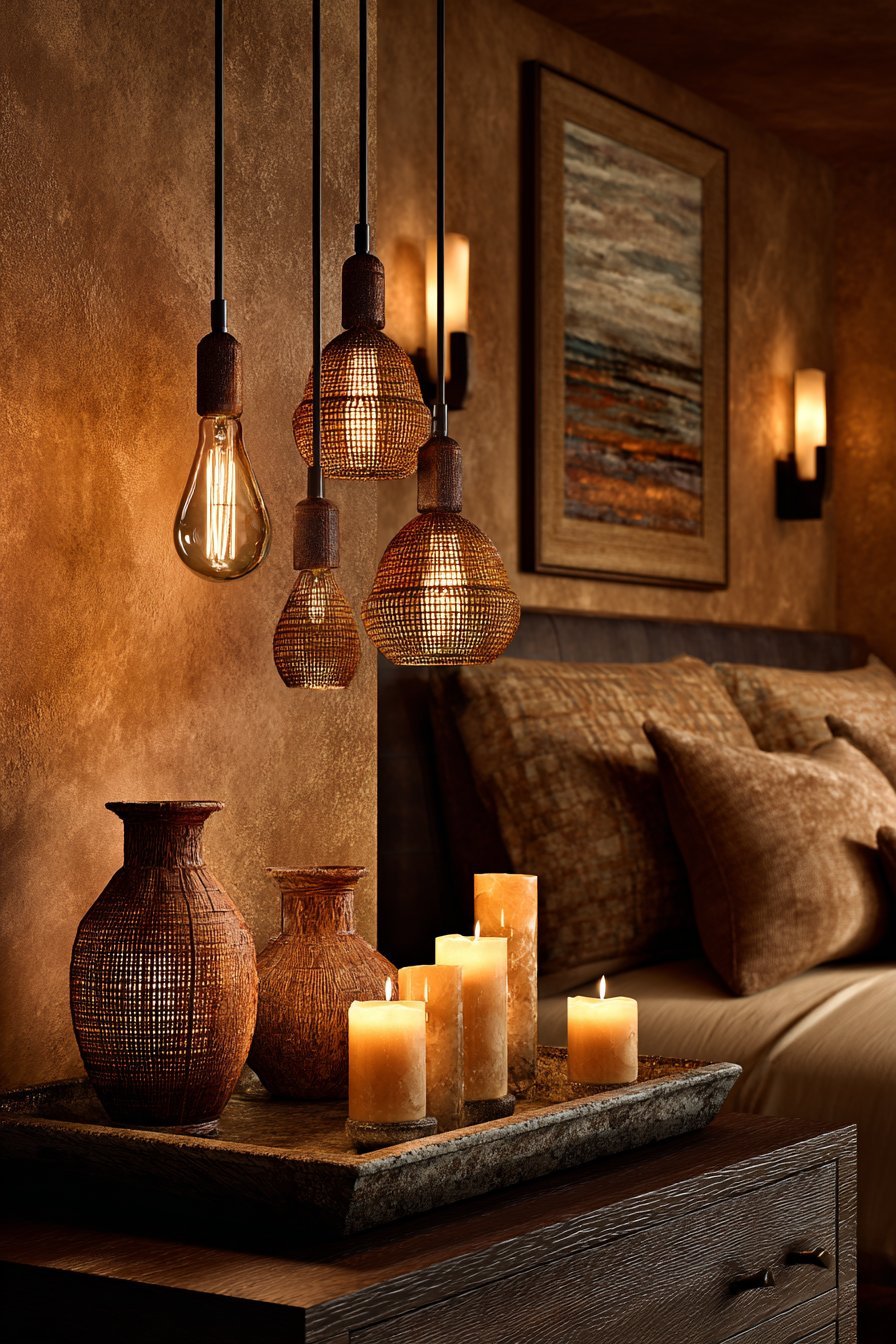
Multiple light sources at different heights create depth and allow you to adjust the mood throughout the day. Table lamps on nightstands provide essential reading light, while floor lamps in corners illuminate dark spaces and add vertical elements. Consider wall-mounted sconces to free up surface space while casting beautiful ambient light. Each fixture should contribute to the earthy aesthetic through natural materials like wood, ceramic, or woven rattan rather than chrome or glass.
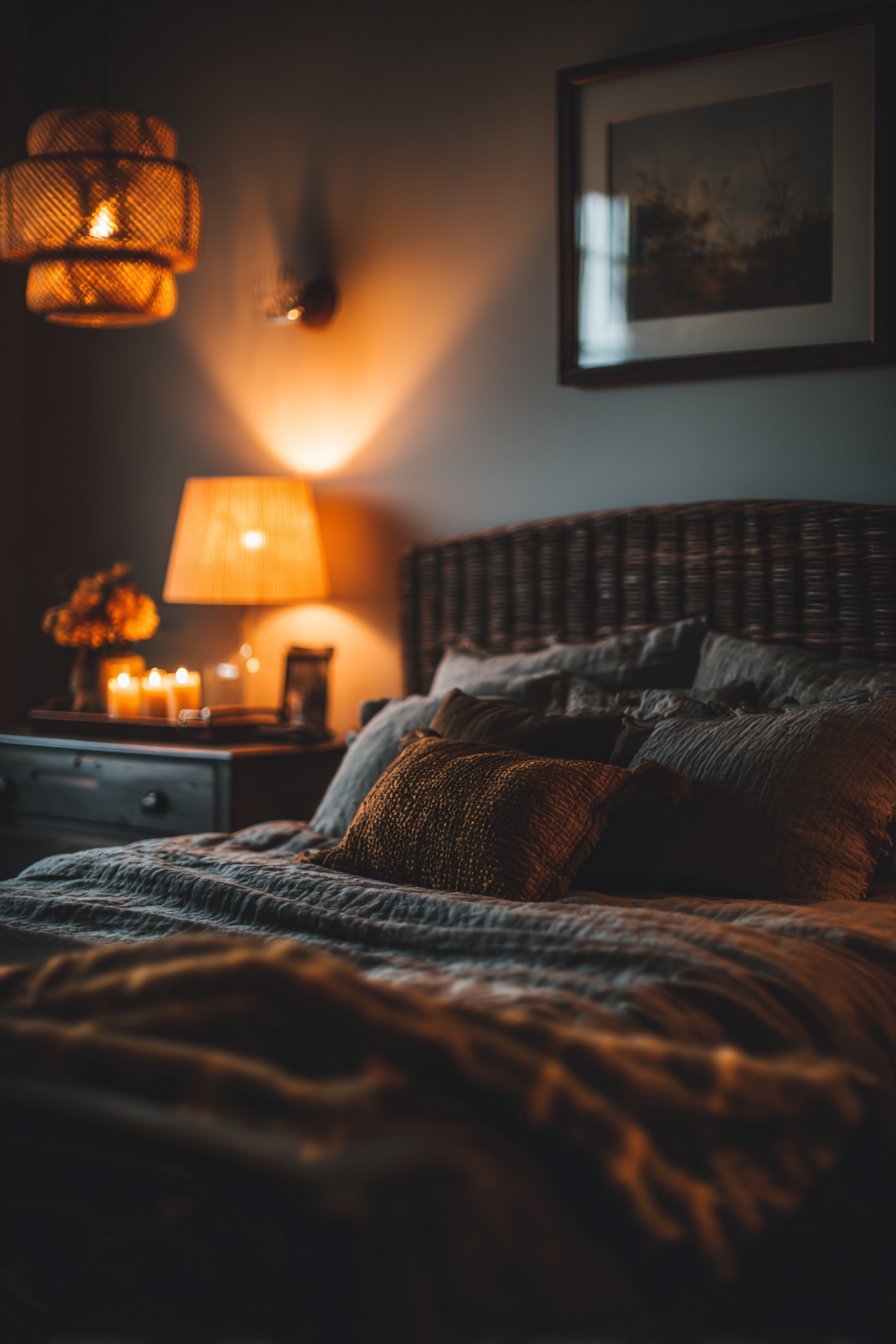
Don’t underestimate the power of candlelight for creating the ultimate warm, earthy ambiance. Real candles in ceramic holders or wooden trays add a living, flickering quality that electric lights cannot replicate. Beeswax or soy candles in unscented or subtly scented varieties contribute to air quality while providing beautiful ambient light. Place them safely on stone trays or ceramic plates, and never leave them burning unattended.
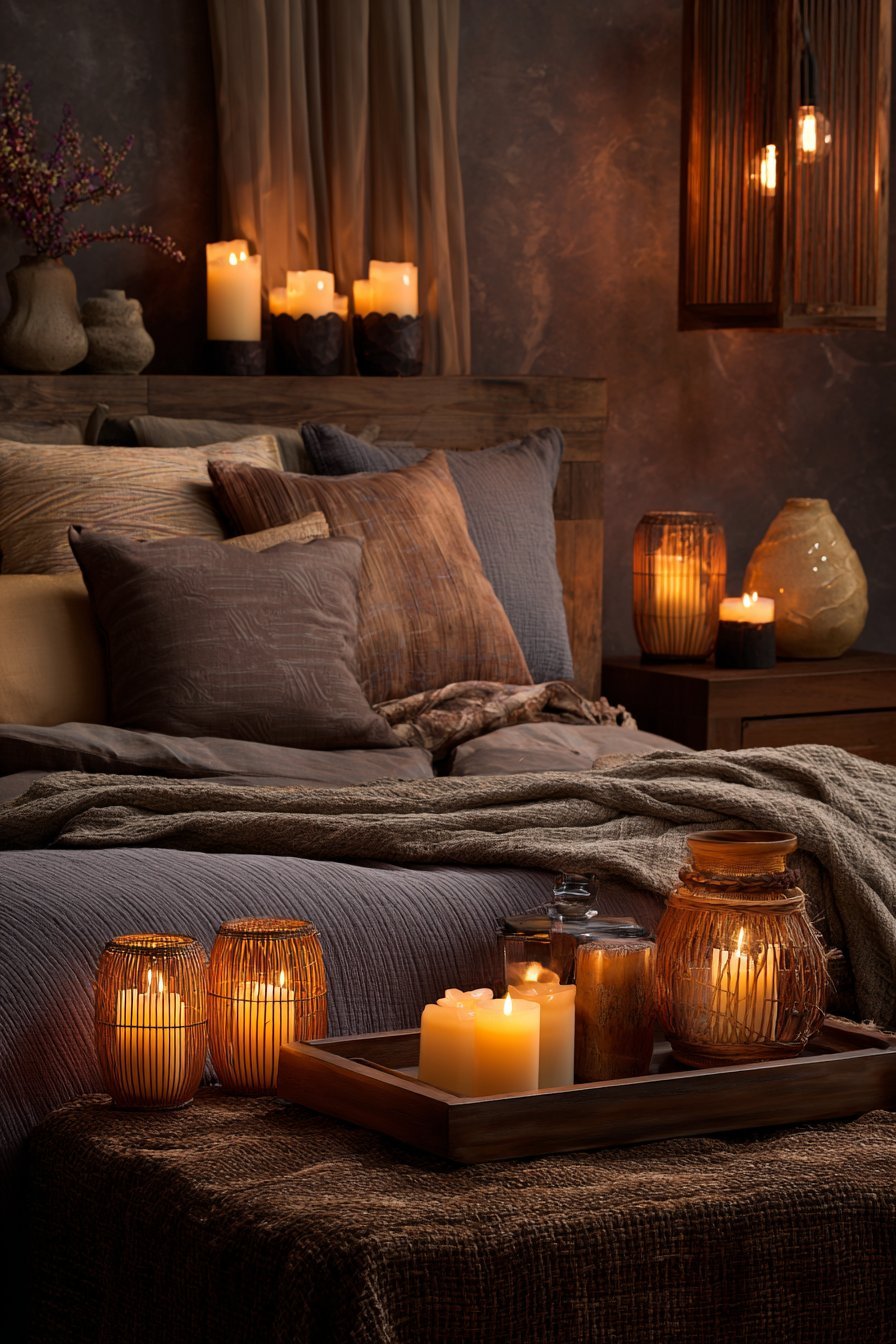
- Install dimmer switches on all light fixtures to control intensity throughout the day
- Choose lamp shades in natural linen or rice paper that diffuse light softly
- Position lamps to illuminate specific areas rather than flooding the entire room
- Avoid blue-spectrum light bulbs that disrupt sleep patterns and feel sterile
- Include Edison-style bulbs with visible filaments for vintage industrial charm
- Place candles at varying heights on a dresser or shelf to create a warm focal point
7. Add Handcrafted and Artisanal Details
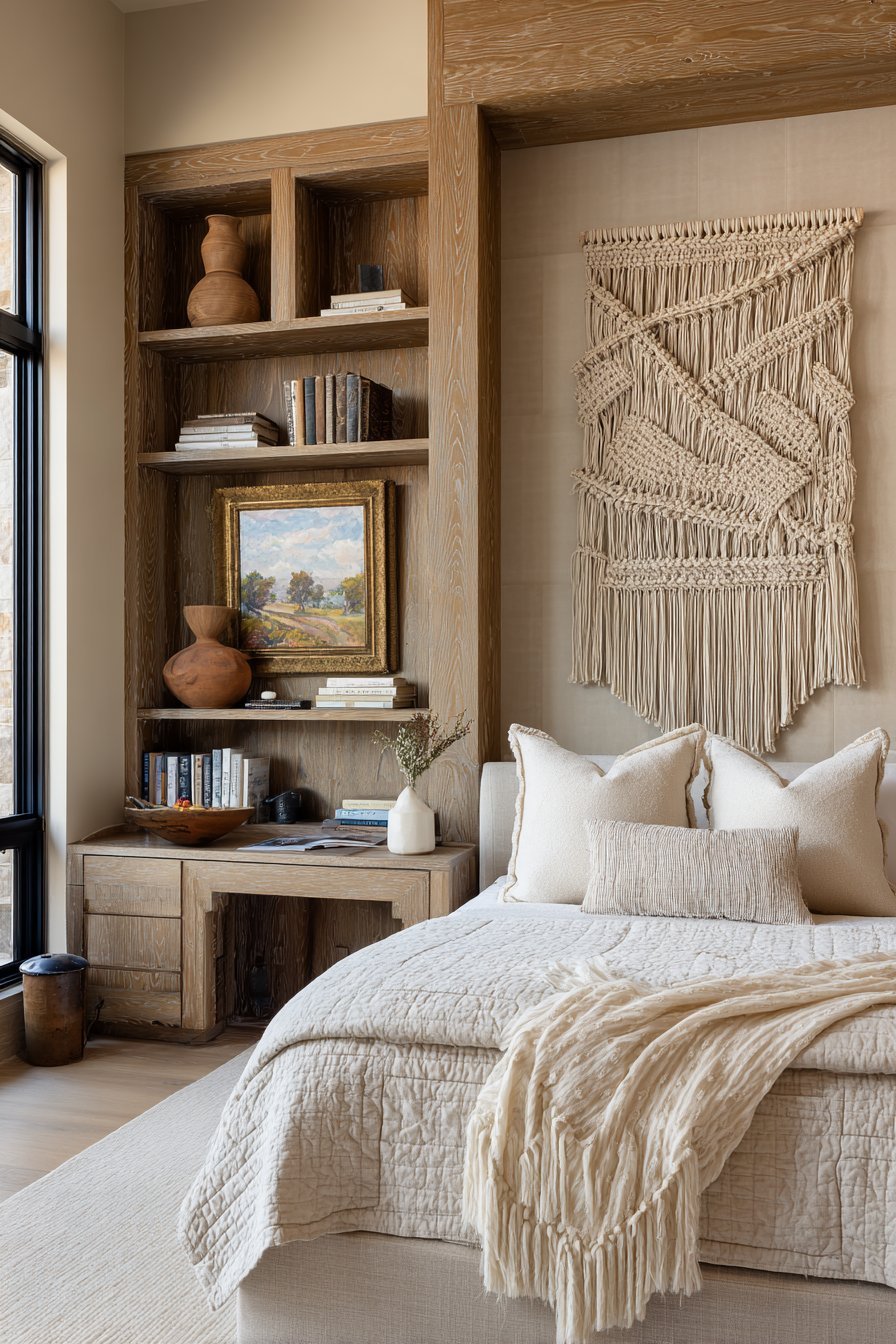
The final layer of an authentic earthy bedroom comes from handcrafted elements that showcase human artistry and imperfection. Mass-produced décor lacks the soul and character that artisanal pieces bring to a space. Seek out woven wall hangings, hand-thrown pottery, carved wooden bowls, or handmade quilts that carry the mark of their makers. These pieces tell stories and add depth to your design that generic store-bought items simply cannot provide.
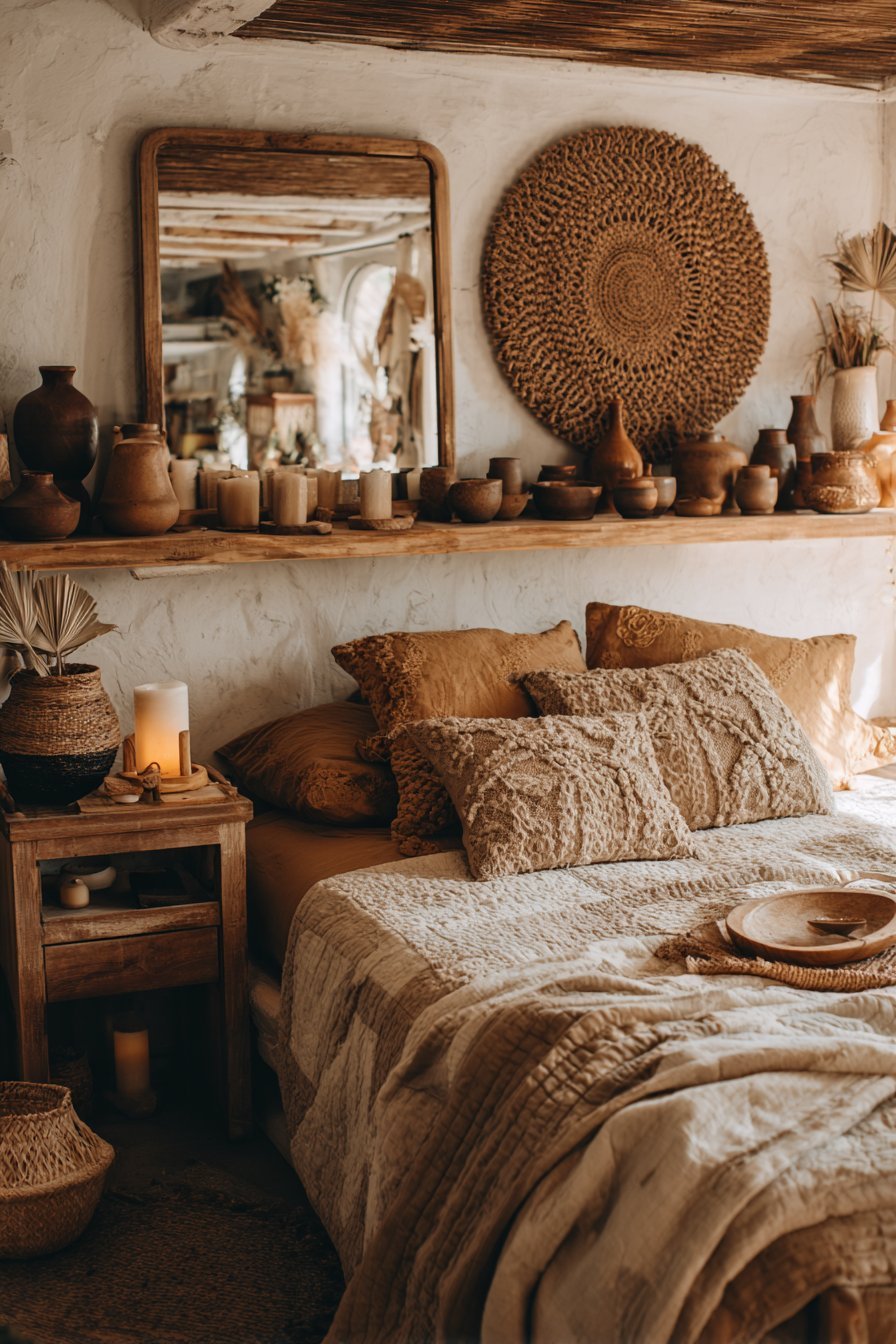
Texture and craftsmanship become focal points when you incorporate handmade items thoughtfully. A woven rattan mirror frame adds intricate texture to your wall while serving a practical purpose. A hand-carved wooden bowl on your nightstand holds jewelry or small objects while displaying the artist’s skill. These elements don’t need to be expensive—local craft fairs, artisan markets, and online platforms offer accessible options for incorporating genuine handwork into your space.
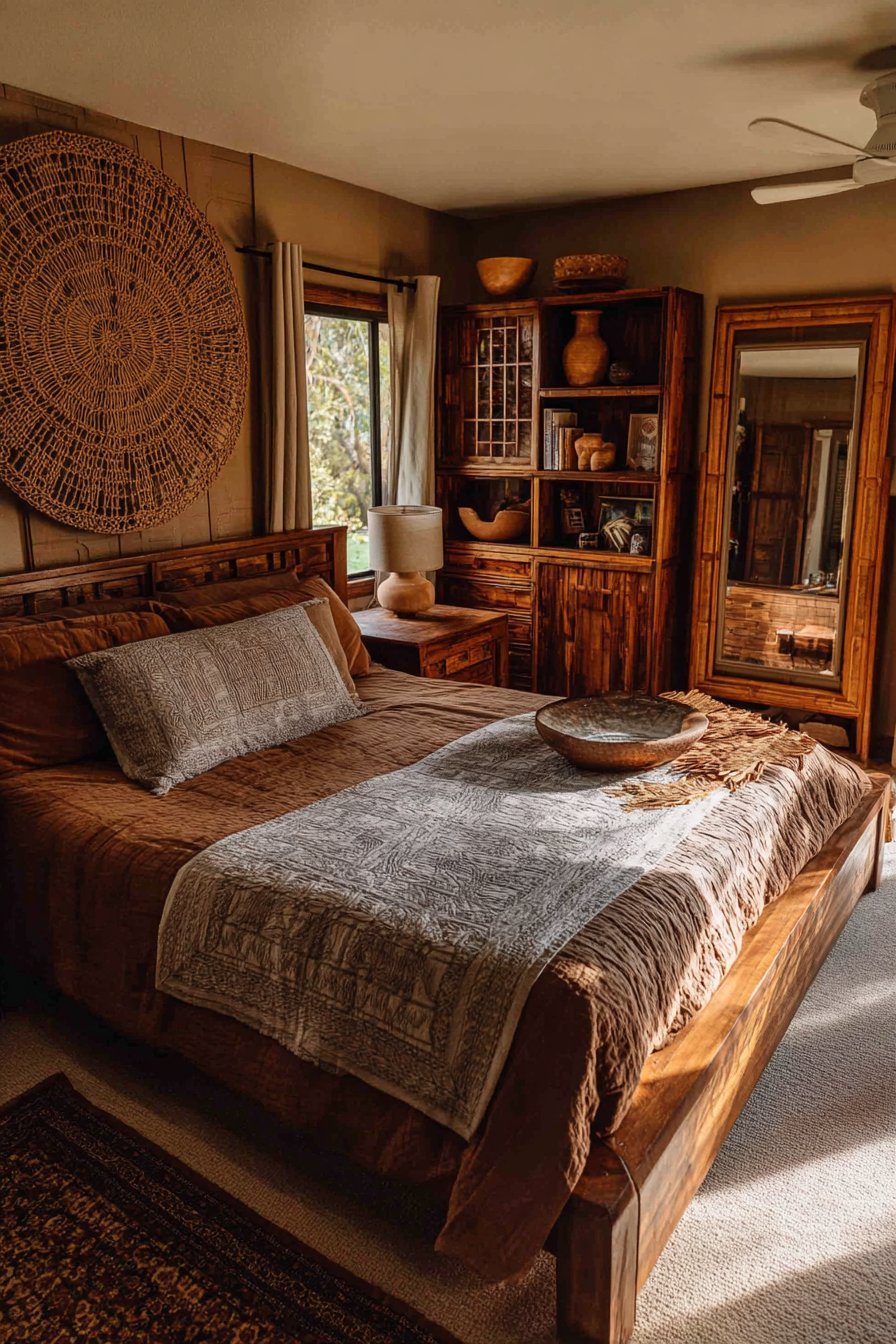
Consider the cultural and personal significance of the artisanal items you choose. Pieces that connect to your heritage, travels, or personal interests make your earthy bedroom uniquely yours rather than a replica of a catalog photo. A hand-woven basket from a specific region, pottery in traditional patterns, or textiles with cultural significance all add layers of meaning while maintaining the natural, grounded aesthetic you’re creating.
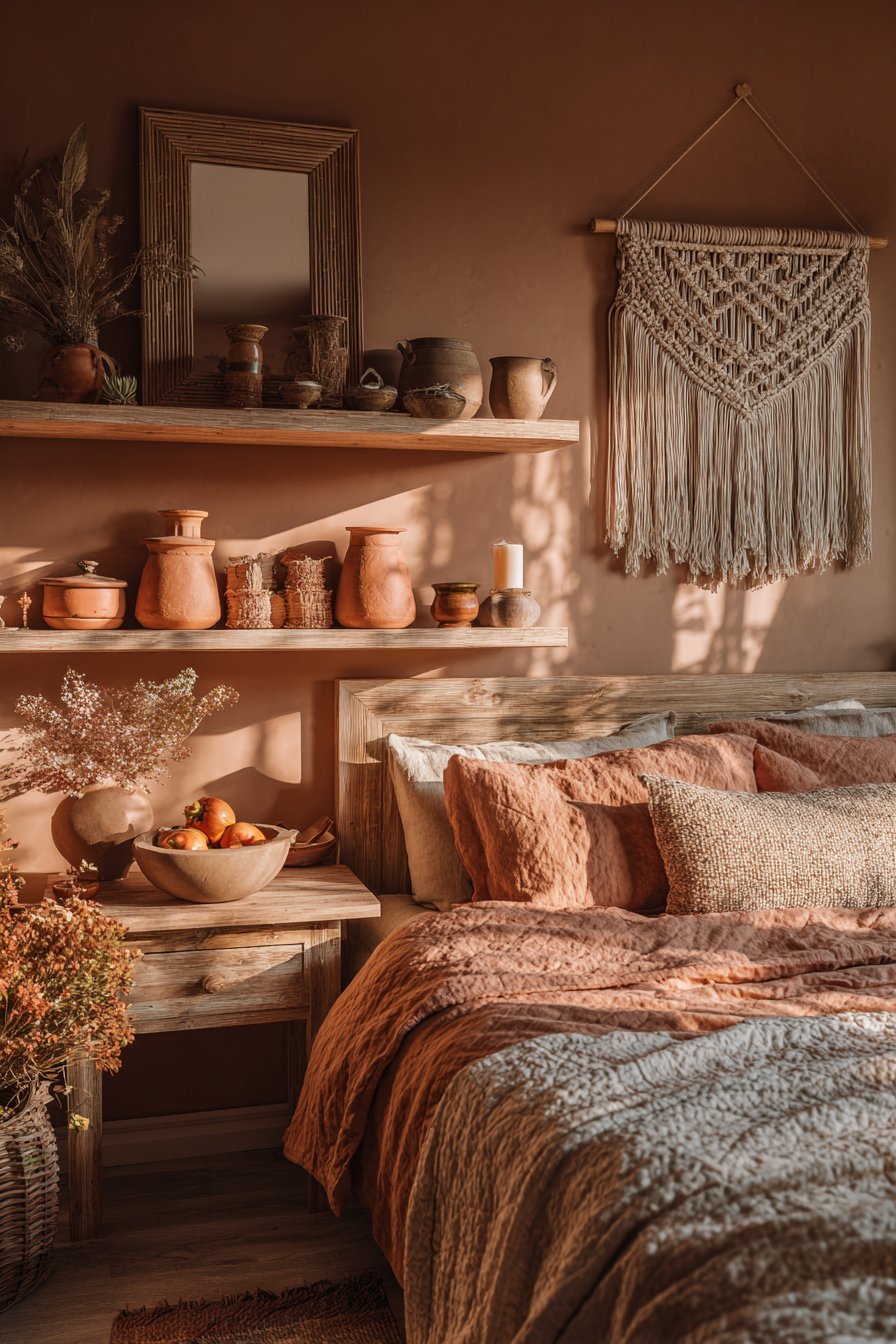
- Source items from local artisans and craft fairs to support makers and find unique pieces
- Look for visible signs of handwork—slight irregularities that prove human creation
- Display a collection of handmade ceramic pieces in varying sizes on open shelving
- Incorporate vintage or antique items that show patina and history
- Choose artwork from local artists that depicts natural scenes or abstract earth elements
- Include one statement handcrafted piece like a large woven wall hanging or macramé artwork
Conclusion
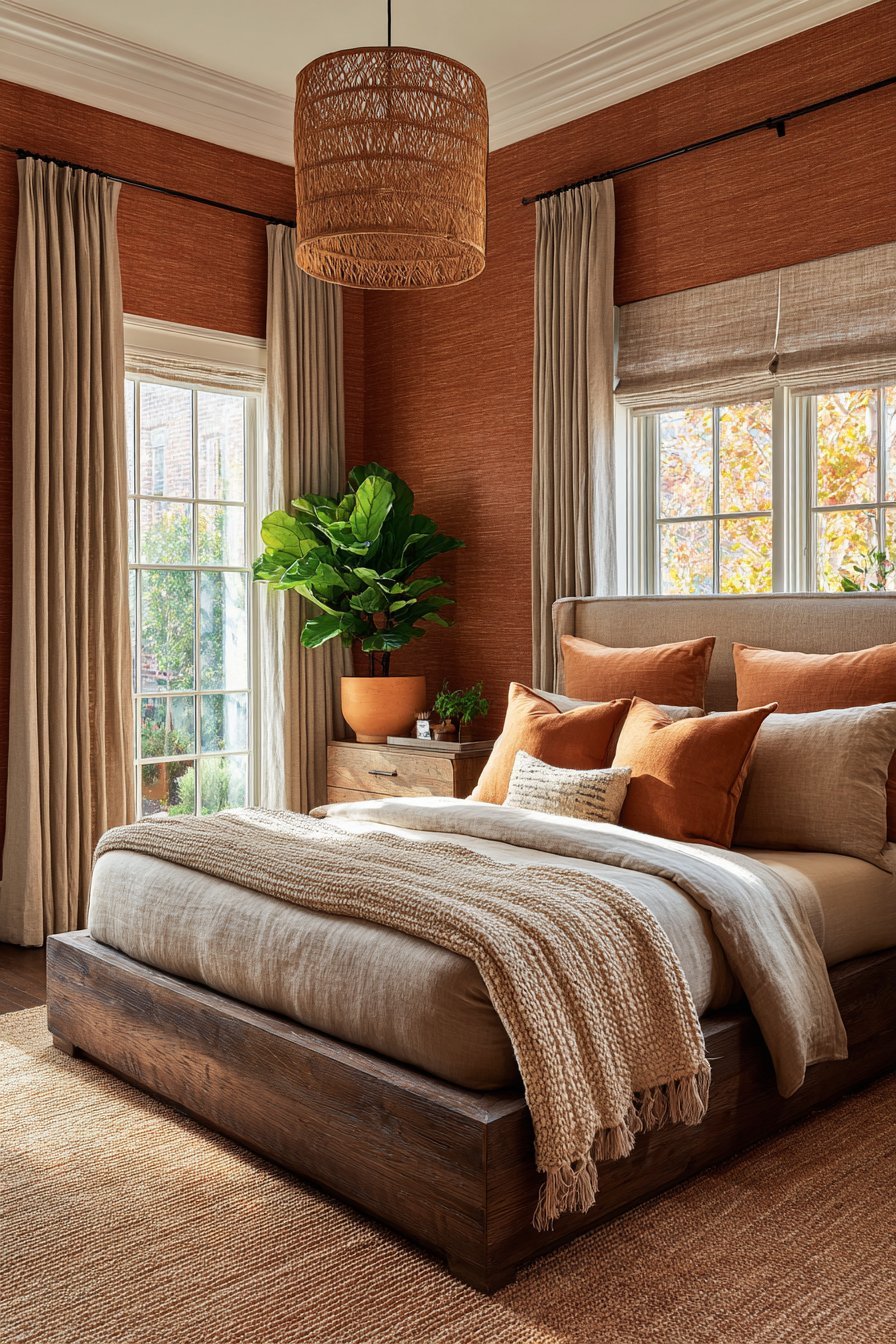
Creating a warm earthy bedroom aesthetic is about more than following design trends—it’s about crafting a personal sanctuary that nurtures your well-being through natural materials, soothing colors, and thoughtful details. By establishing an earthy color foundation, embracing natural wood, layering organic textiles, integrating living plants, incorporating stone elements, mastering warm lighting, and adding handcrafted details, you build a space that feels both timeless and deeply personal.
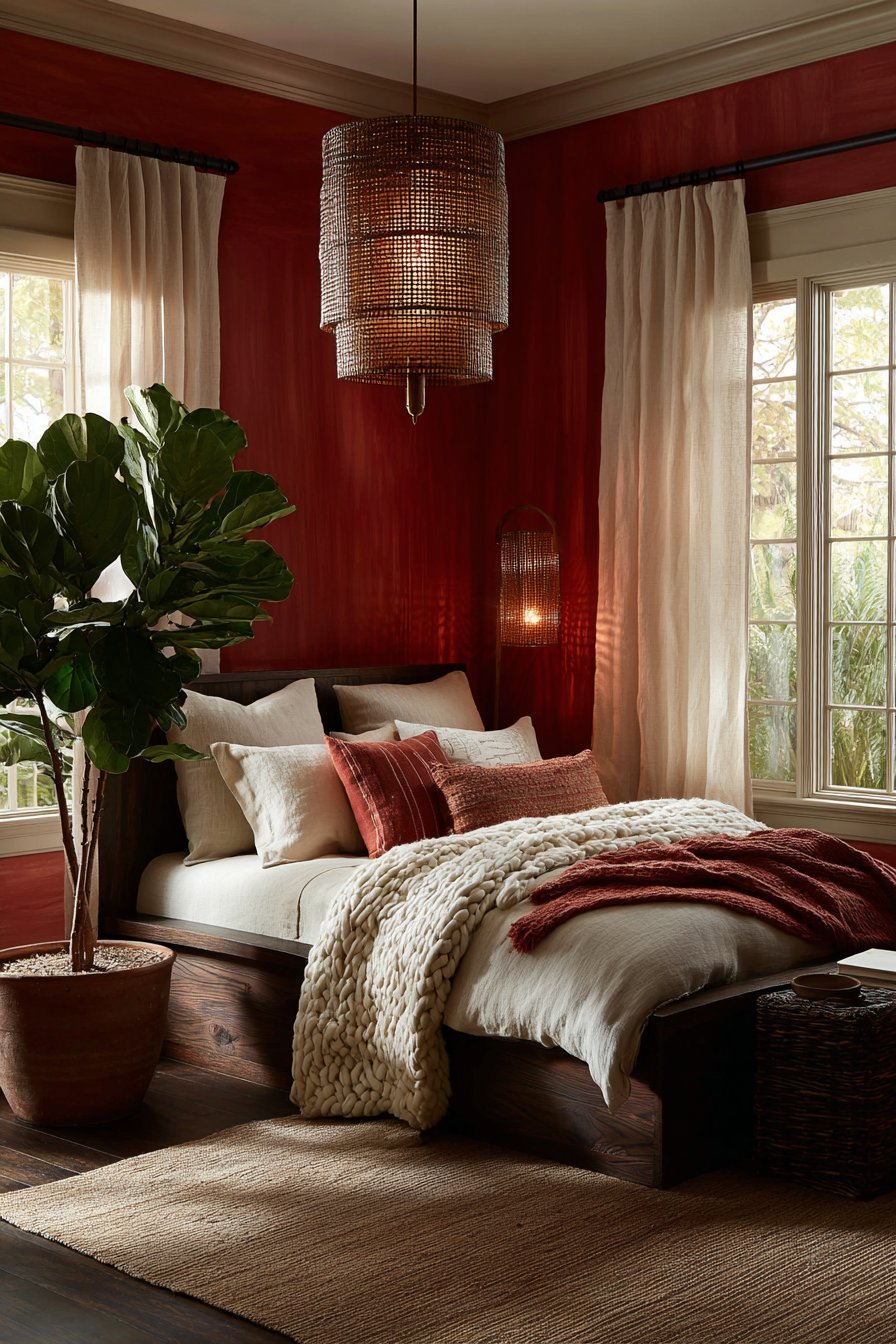
The beauty of this design approach lies in its flexibility and scalability. You don’t need to implement all seven tips at once or invest heavily in expensive furnishings. Start with the elements that resonate most with you—perhaps a coat of warm paint and a few well-chosen plants—then gradually layer in additional natural materials and textures as your budget and vision allow. The earthy aesthetic rewards patience and intentionality, creating a bedroom that grows more comfortable and authentic over time. Let nature be your guide, trust your instincts, and enjoy the process of transforming your bedroom into a warm, grounding retreat that welcomes you home every day.
