
The walls in your home serve as blank canvases waiting for creative expression. They define the character of each room and set the mood for daily living. Thoughtful wall design transforms ordinary spaces into extraordinary environments that reflect personal style and enhance functionality.
Wall treatments have evolved beyond simple paint colors. Today’s design landscape offers endless possibilities from textured materials to architectural elements. Modern homeowners embrace diverse approaches including paneling, wallpaper, natural materials, and artistic installations. Each technique brings unique visual interest and tactile appeal to interior spaces.

This comprehensive guide explores twenty distinctive wall design concepts. The featured designs span multiple styles from contemporary minimalism to rustic farmhouse aesthetics. Whether renovating a single room or planning a whole-home refresh, these ideas provide inspiration and practical guidance. Each concept demonstrates how strategic wall treatments create focal points, enhance architectural features, and establish cohesive design narratives throughout your living spaces.
1. Mixed-Frame Gallery Wall Arrangement
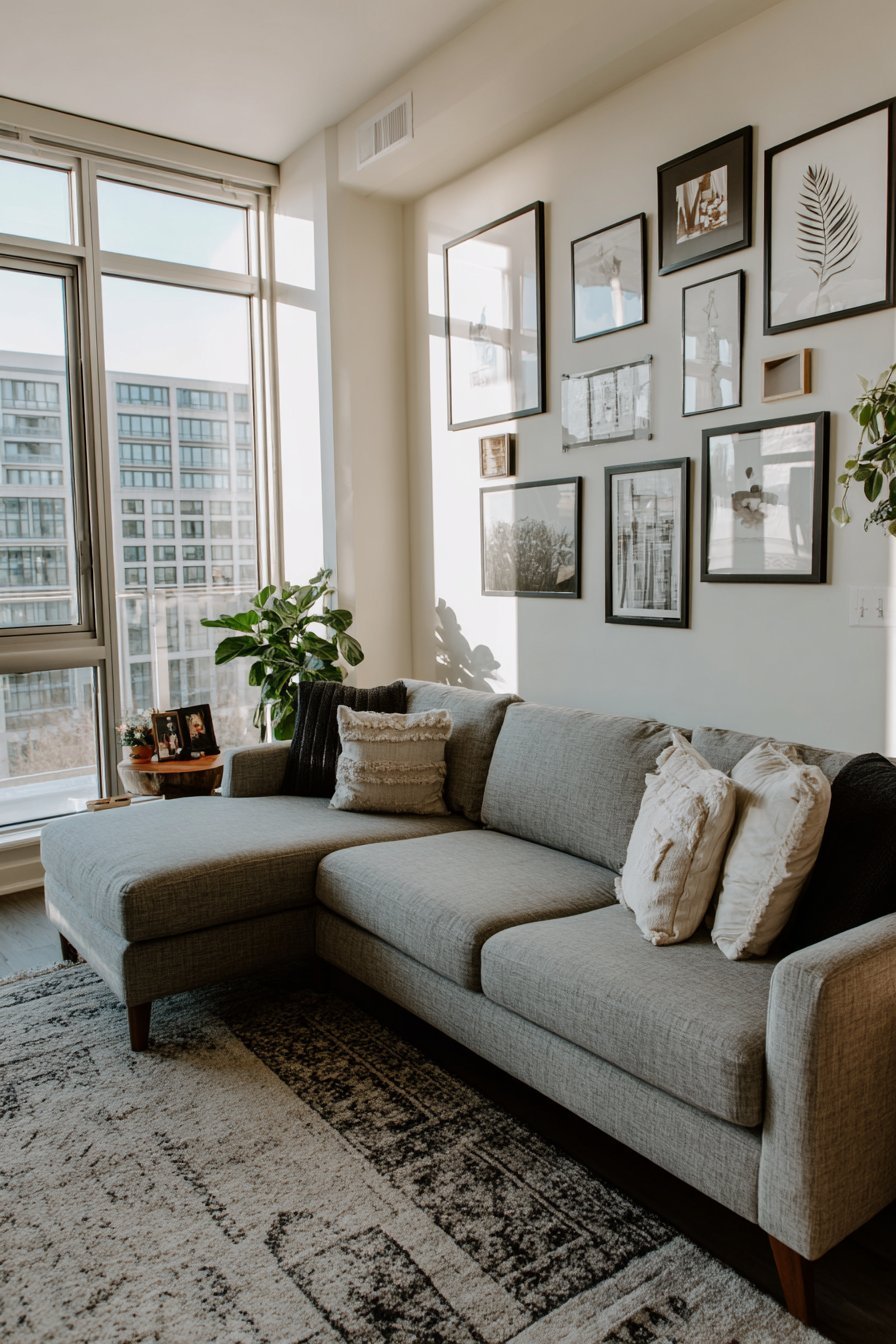
A modern living room comes alive with a carefully curated gallery wall. Black frames in varying sizes create visual rhythm against pristine white walls. The asymmetric layout feels organic yet intentional. Family photographs mingle with abstract prints and botanical artwork. Each piece contributes to a cohesive narrative.

The mid-century modern sofa in soft grey linen anchors the space below. Morning light streams through adjacent windows. Subtle shadows enhance the dimensional quality of framed pieces. The arrangement demonstrates personal style while maintaining sophisticated restraint.

Gallery walls require careful planning for maximum impact. The spacing between frames creates breathing room. Too close feels cluttered while too far apart loses cohesion. This design strikes the perfect balance with varying distances that guide the eye naturally.

Key Design Tips:
- Start with the largest frame as your anchor piece
- Maintain consistent frame color for unified appearance
- Mix artwork types including photos, prints, and illustrations
- Use paper templates to plan layout before hammering nails
- Keep 2-3 inches between frames for optimal spacing
- Position the center of the arrangement at eye level
2. Textured Geometric Wallpaper Accent

The contemporary dining room showcases sophisticated wallpaper selection. Raised fabric-like texture creates subtle geometric patterns. Warm taupe tones add depth without overwhelming. The wallpaper serves as an elegant backdrop to solid walnut furniture.

Upholstered chairs complement the textured wall surface. A modern linear chandelier hangs overhead. Warm light creates gentle highlights on the wallpaper texture. The interplay between textured walls and smooth furniture finishes adds layers of visual interest.
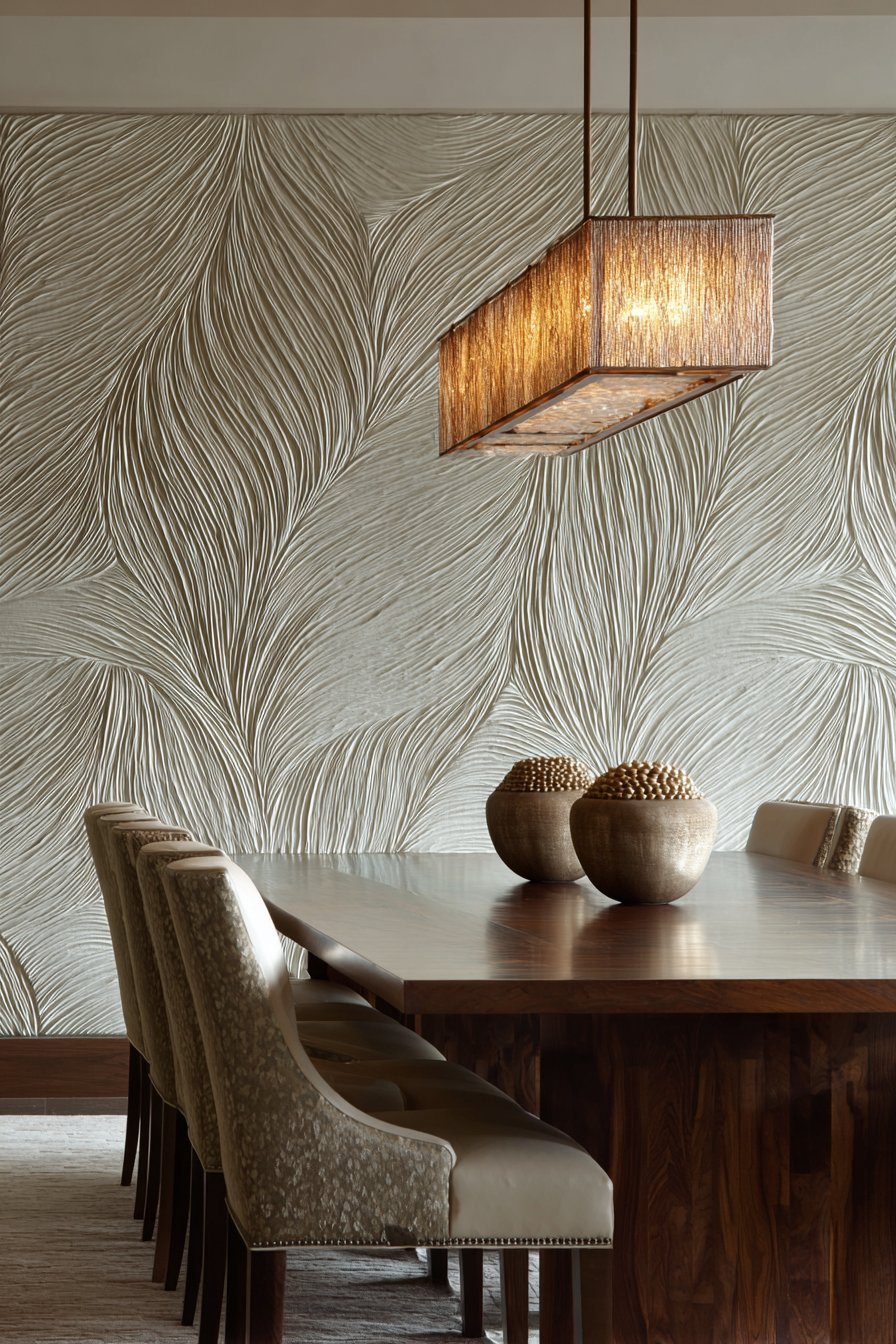
This design demonstrates wallpaper’s power to elevate dining experiences. The neutral color palette allows flexibility in table settings. Seasonal decorations work beautifully against this backdrop. The texture adds luxury without requiring expensive materials.

Key Design Tips:
- Choose wallpaper with subtle texture for sophisticated look
- Select neutral tones for long-term versatility
- Install professional wallpaper for best results with textured designs
- Use quality adhesive suitable for heavy wallpaper
- Consider one accent wall rather than entire room
- Ensure proper wall preparation for smooth application
3. Vertical Wood Slat Paneling Feature
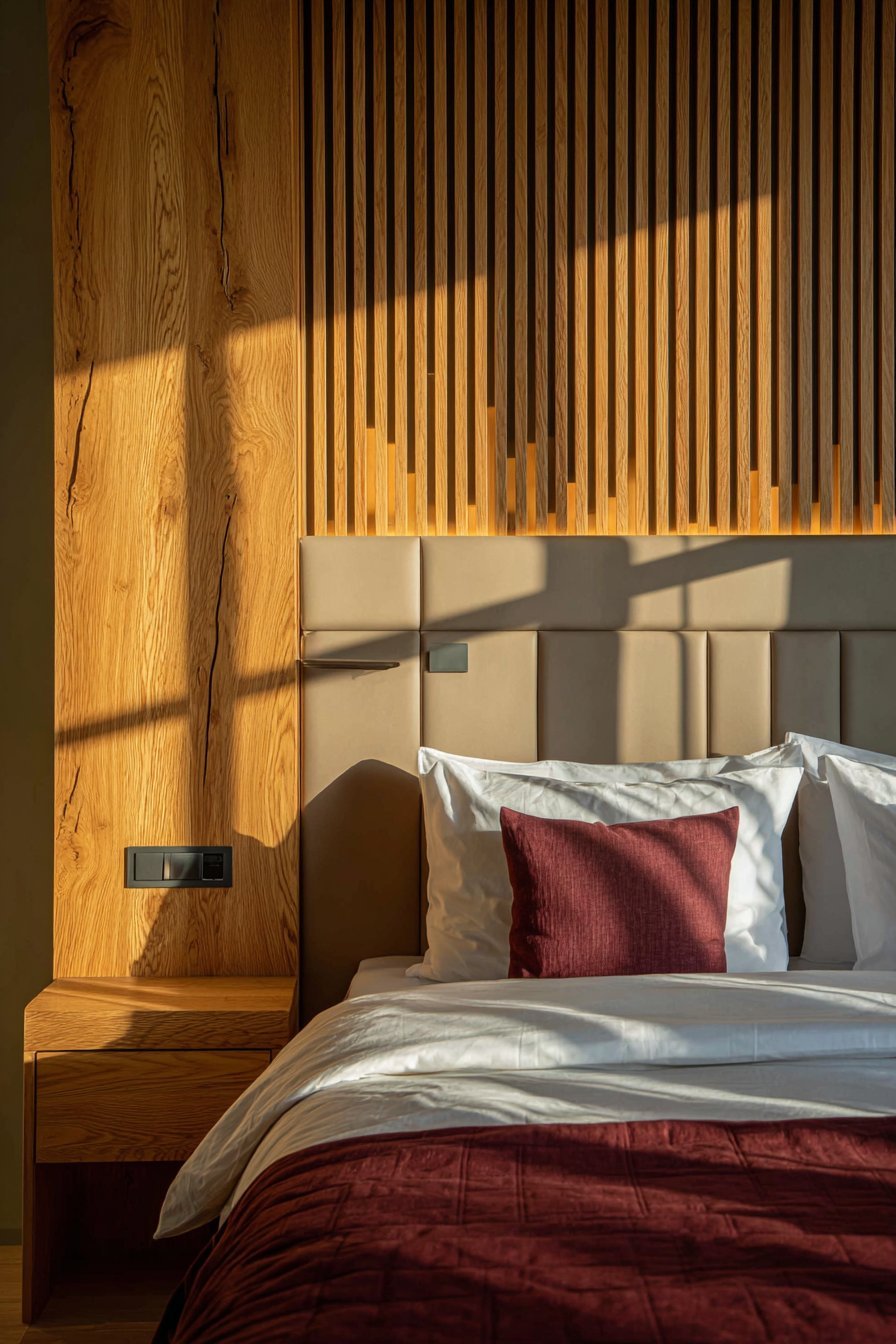
Natural oak slats extend from floor to ceiling behind the upholstered headboard. The vertical wood paneling creates architectural interest and warmth. Visible grain variations celebrate the organic nature of wood. Even spacing with shadow gaps adds subtle depth.
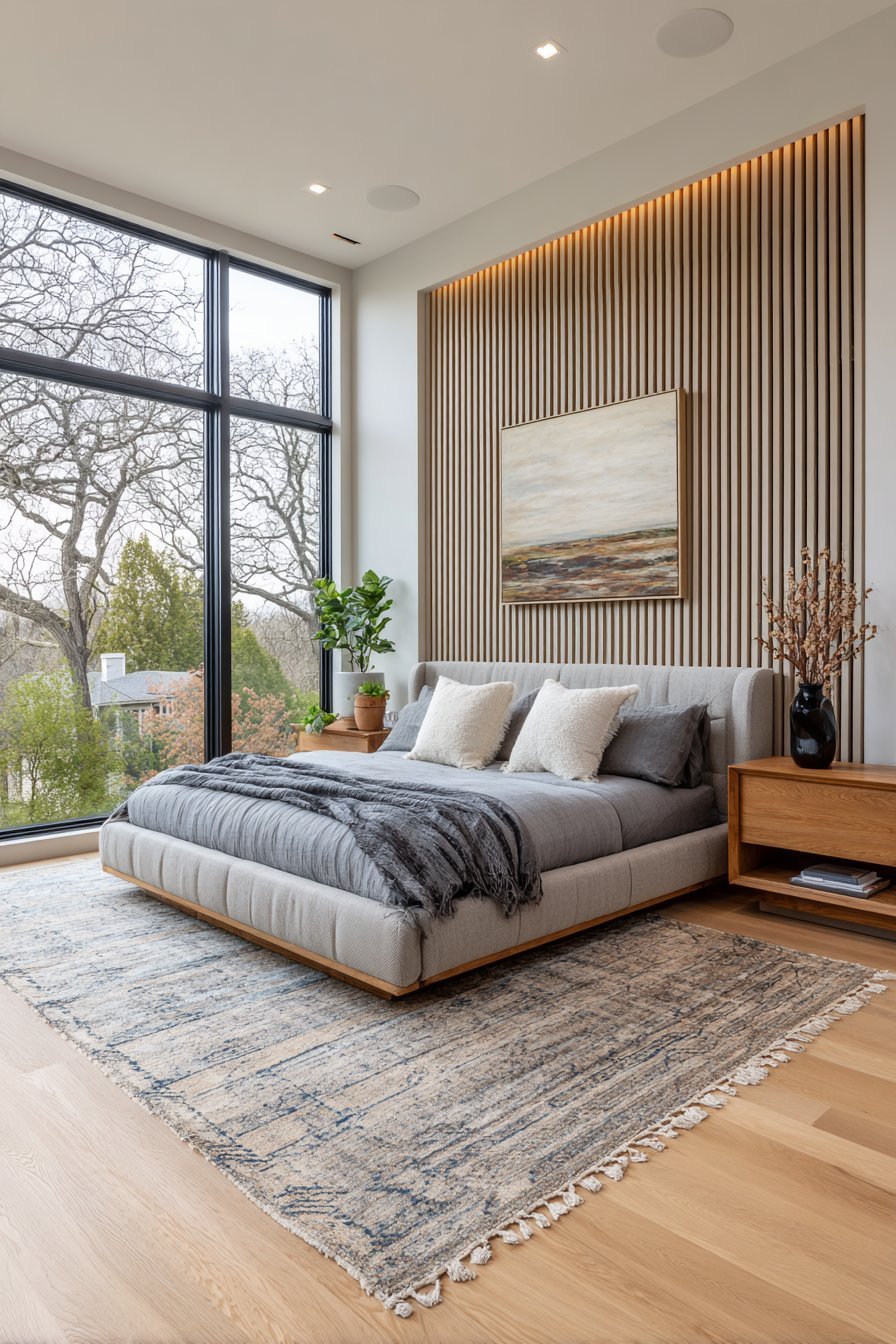
Integrated LED strip lighting transforms the wall at night. Backlighting creates ambient glow between slats. The effect is both dramatic and soothing. Daylight highlights the wood texture differently throughout the day.
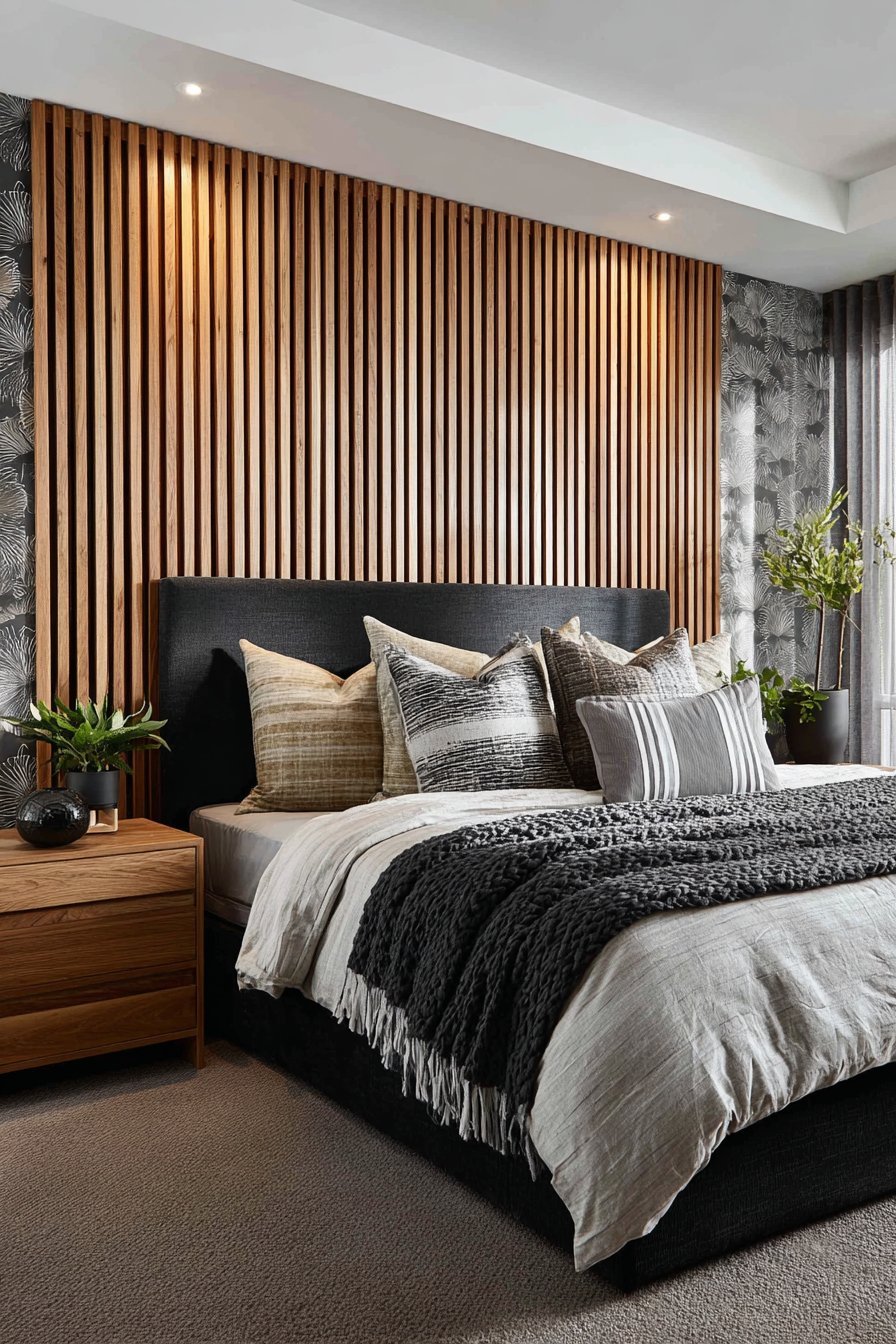
This bedroom design demonstrates how architectural elements become focal points. The wood slats add acoustic benefits along with visual appeal. The natural material brings connection to organic elements. The installation requires precision but delivers lasting impact.

Key Design Tips:
- Use real wood rather than laminate for authentic appeal
- Space slats evenly at 1-2 inches apart
- Install LED strips behind panels for backlighting effect
- Seal wood properly to prevent warping
- Consider vertical orientation to increase ceiling height visually
- Match wood tone to existing furniture for cohesion
4. Floor-to-Ceiling Built-In Bookshelves

White painted bookshelves span the entire living room wall. Adjustable shelving accommodates books of varying heights. Decorative objects and small plants add personality. The combination creates both function and beauty.

Closed cabinet storage at the bottom maintains clean lines. Sleek push-to-open mechanisms eliminate visible hardware. Brass picture lights mounted above key shelves illuminate displayed items. The lighting adds warmth and draws attention to curated collections.
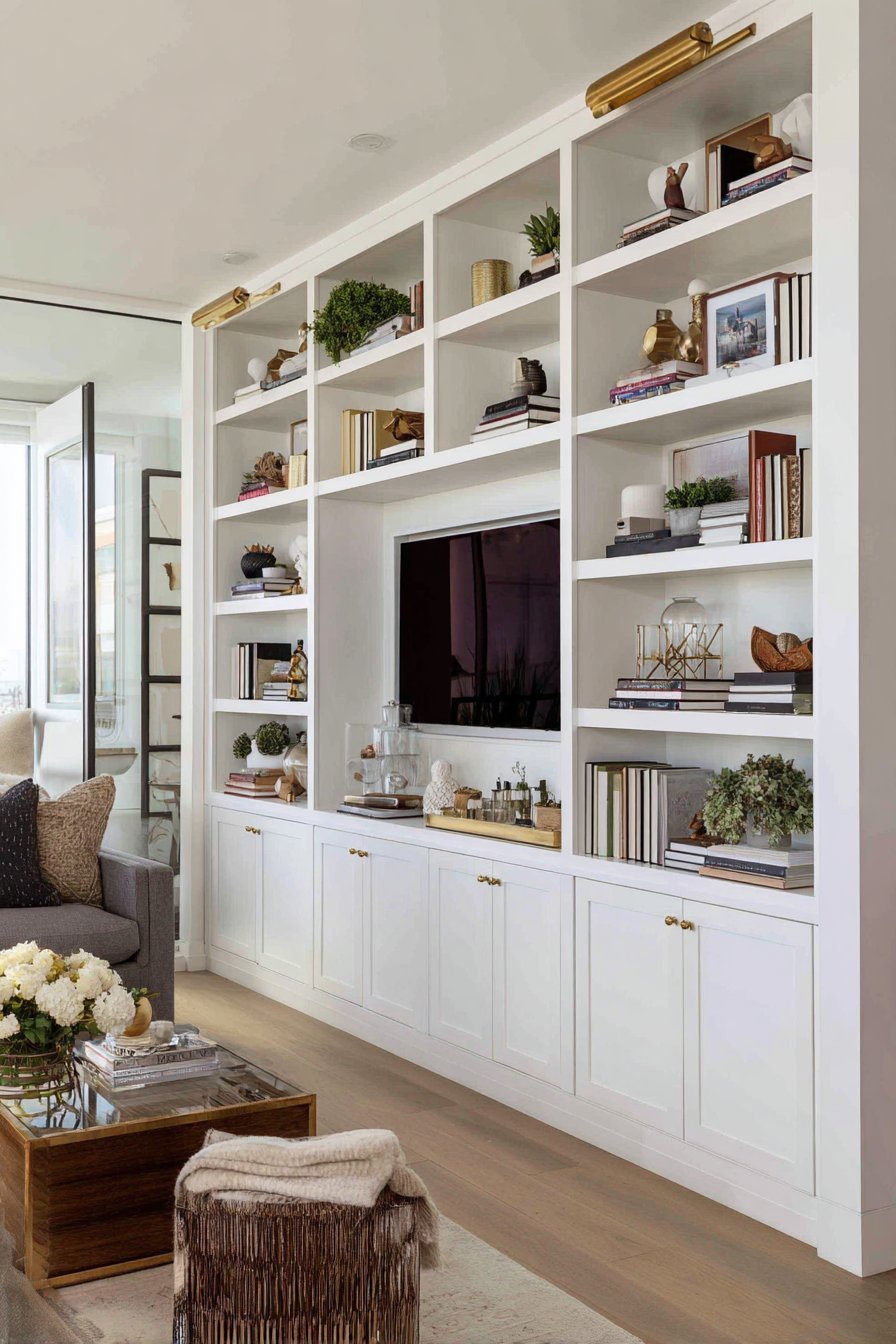
This wall design maximizes vertical space efficiently. The built-ins provide substantial storage without consuming floor area. The white finish keeps the look light and airy. The design works equally well in traditional and contemporary homes.

Key Design Tips:
- Install adjustable shelves for maximum flexibility
- Include closed storage to hide less attractive items
- Add picture lights for focused illumination
- Paint built-ins same color as walls for seamless look
- Use mix of horizontal and vertical arrangements
- Leave some shelves partially empty to avoid cluttered appearance
5. Large-Format Marble Porcelain Panels

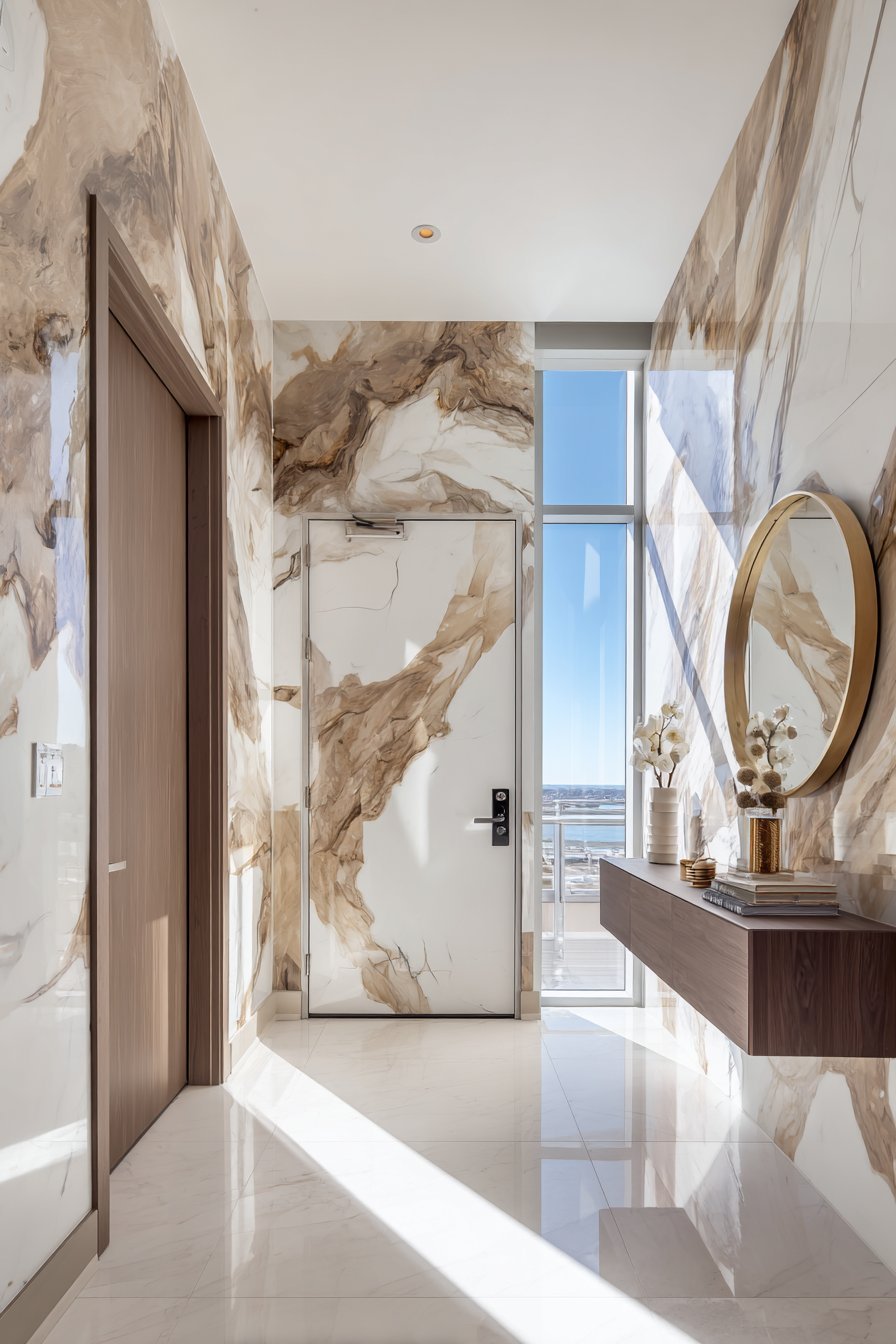
The minimalist entryway makes immediate impact with dramatic wall treatment. Large-format porcelain panels mimic book-matched marble. Grey veining flows continuously across vertical surfaces. The pattern creates visual drama at the home’s entrance.
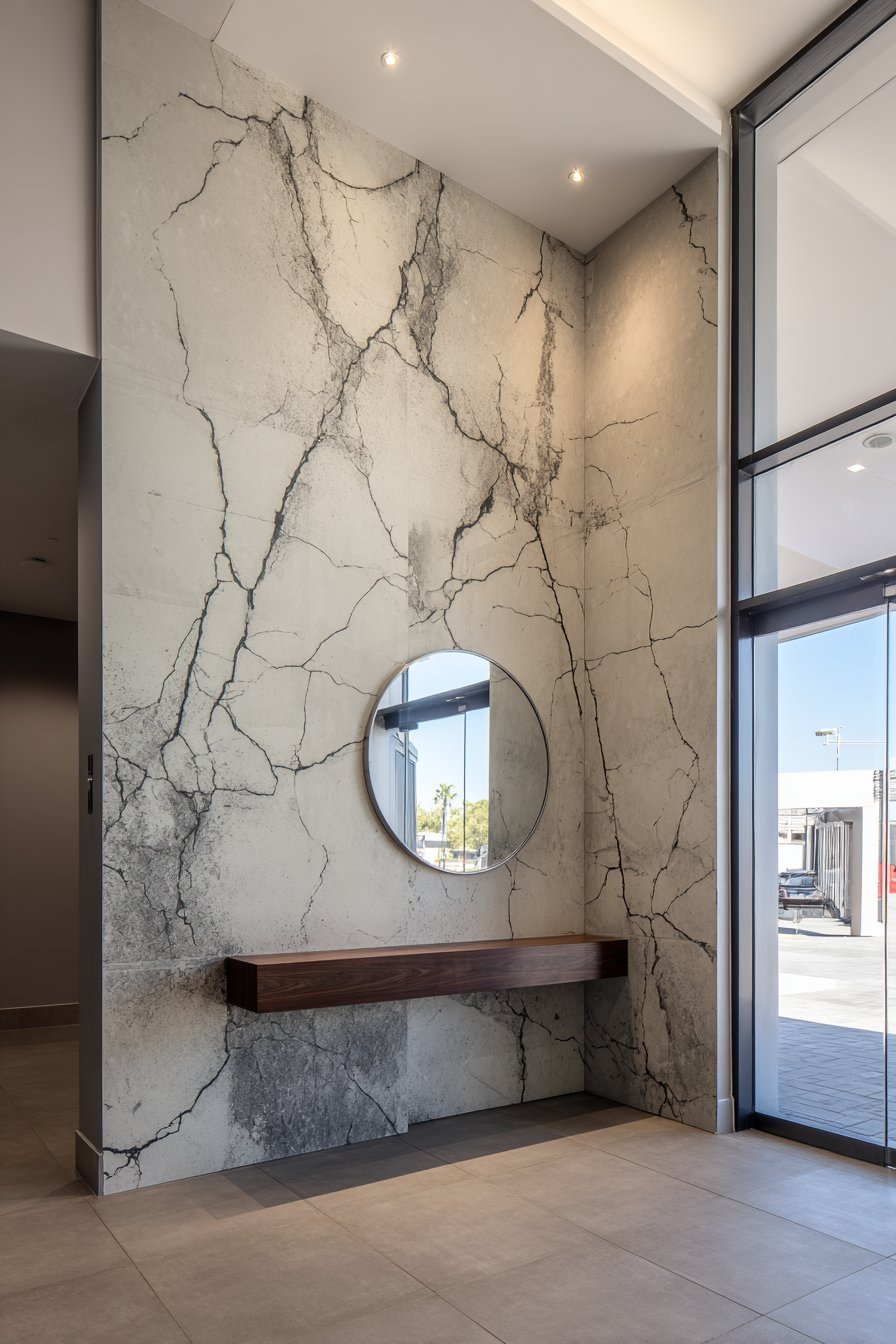
A floating walnut console sits against the statement wall. The circular mirror at eye level reflects the marble pattern. Natural lighting from nearby door creates reflections on polished surfaces. The sophisticated entrance sets expectations for the entire home.

Book-matched patterns require careful installation planning. The panels must align perfectly to maintain pattern continuity. The result justifies the extra effort and expense. This design proves luxury doesn’t always require natural stone.
Key Design Tips:
- Choose large-format panels to minimize grout lines
- Book-match panels for dramatic pattern continuity
- Hire experienced installer for precision alignment
- Use rectified edges for tightest possible joints
- Consider porcelain over natural marble for durability
- Seal grout properly to maintain pristine appearance
6. Deep Forest Green Statement Wall

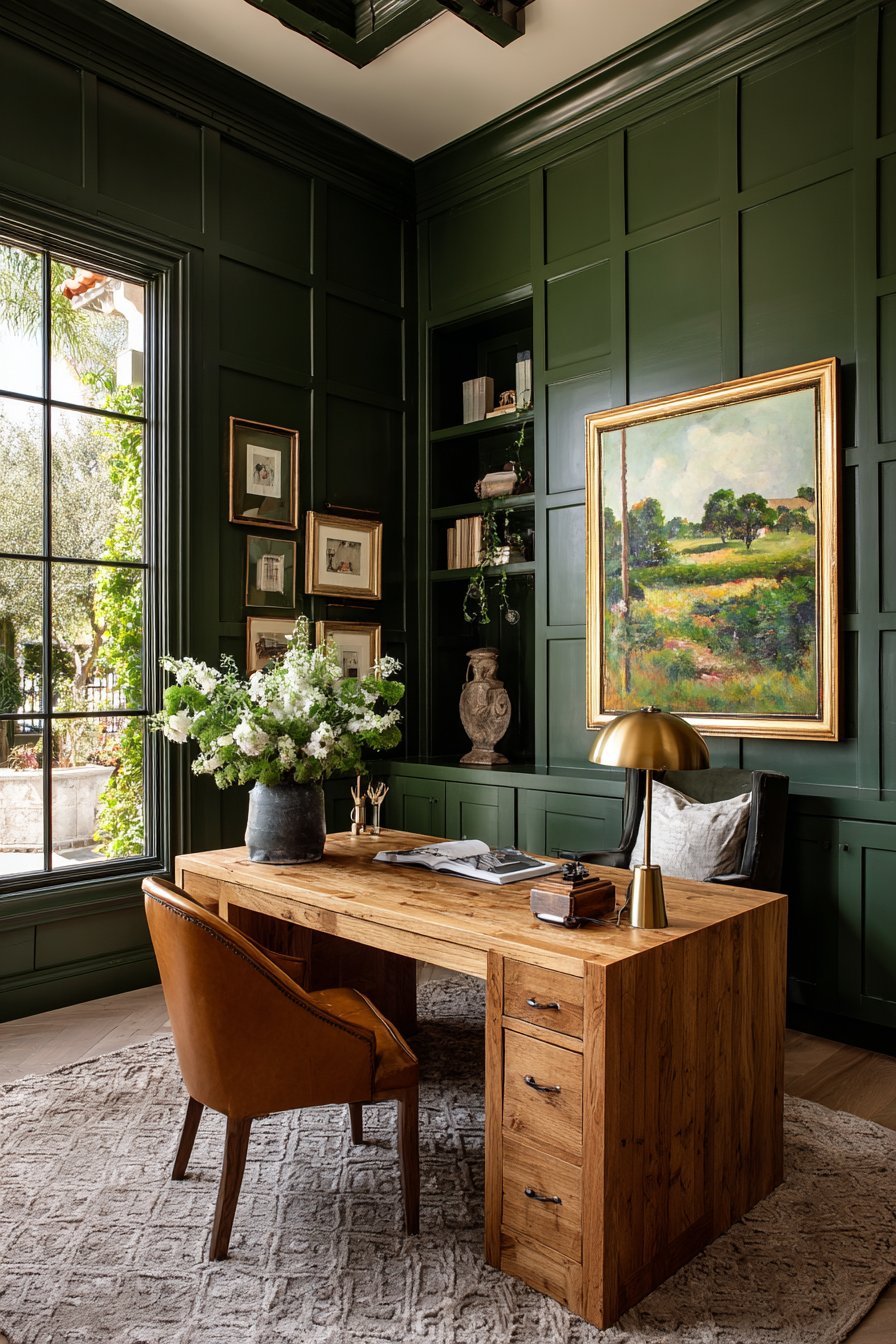
The home office embraces bold color with deep forest green walls. Matte finish creates sophisticated depth and richness. Crown molding in crisp white adds traditional architectural detail. The contrast between green walls and white trim feels fresh.

A wooden desk in warm honey-toned oak creates beautiful contrast. Brass desk lamp and gold-framed artwork complement the rich wall tone. The green changes character throughout the day. North-facing window light shows the color’s full depth.
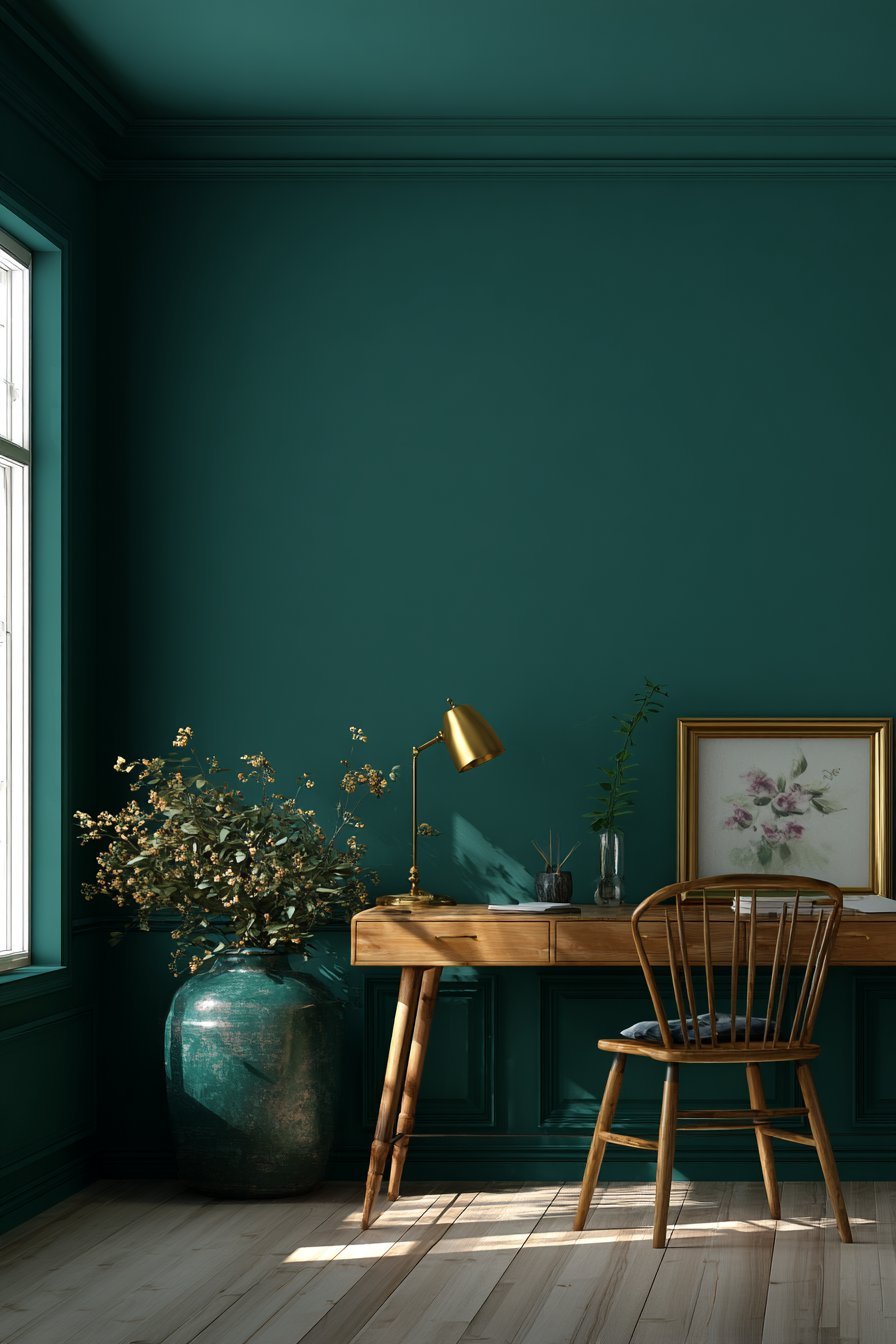
This design demonstrates confidence in color selection. The dark walls create cozy atmosphere perfect for focused work. The green provides backdrop that makes lighter furniture pop. The traditional trim work adds classic elegance.
Key Design Tips:
- Test paint samples in different lighting conditions
- Use matte finish for sophisticated appearance
- Add white trim to prevent dark walls from feeling heavy
- Incorporate brass and gold accents with green tones
- Choose warm wood furniture for contrast
- Consider one accent wall if full room feels overwhelming
7. Three-Dimensional Geometric Tile

White ceramic tiles with angular surfaces create dimensional wall art. The geometric pattern catches light differently throughout the day. Subtle shadows and highlights change constantly. The effect is dynamic yet calm.
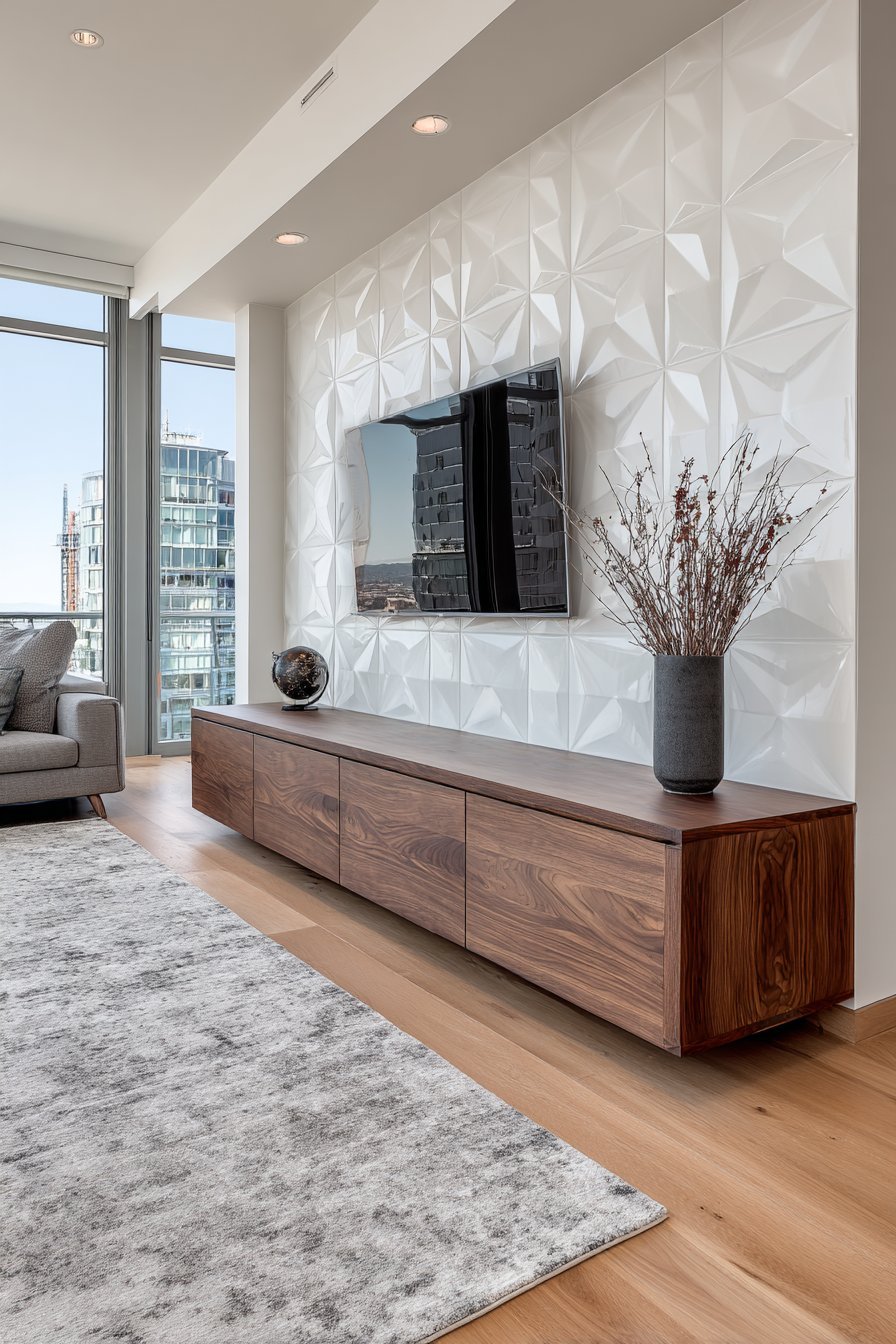
A low-profile media console in dark walnut sits beneath. The organic wood grain contrasts beautifully with geometric wall pattern. Wall-mounted television integrates seamlessly into the design. Recessed lighting above grazes the textured surface.

This modern living room proves walls can be sculptural elements. The three-dimensional tiles add architectural interest without color. The white finish maintains bright, airy feeling. The design works particularly well in contemporary spaces.

Key Design Tips:
- Install grazing light above to emphasize texture
- Choose matte white for sophisticated appearance
- Hire professional tile installer for precise alignment
- Use this treatment on single accent wall
- Combine with smooth surfaces for contrast
- Consider smaller scale tiles for easier installation
8. Horizontal Shiplap Paneling

Soft grey-white shiplap creates clean architectural lines. The horizontal paneling extends across the entire focal wall. Subtle wood grain texture remains visible through paint. The Scandinavian-style approach emphasizes simplicity and natural materials.
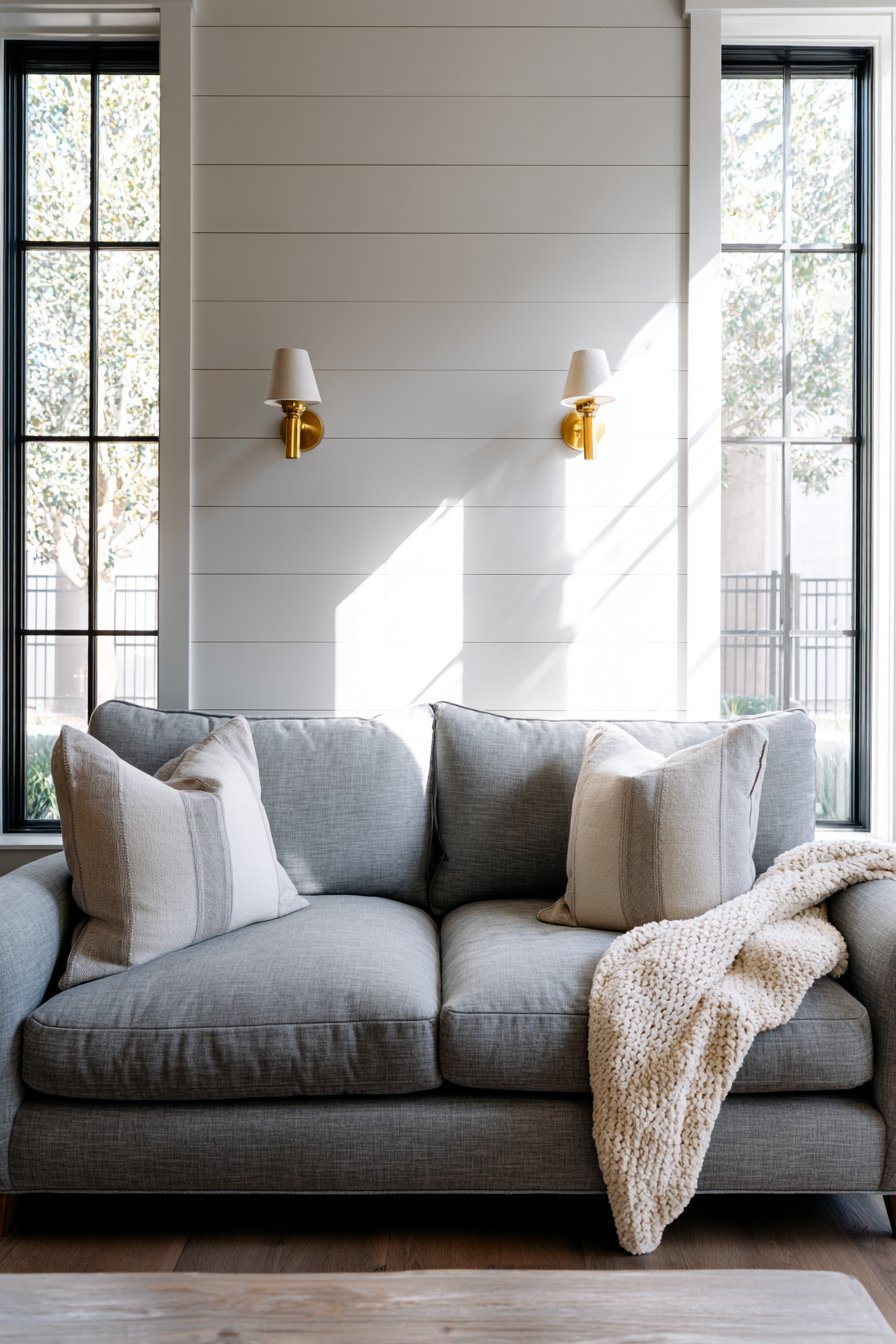
A comfortable grey sofa with knitted throws sits centered. Simple wall-mounted reading sconces feature brass arms. Afternoon light streams through nearby windows. Gentle shadows form between shiplap boards throughout the day.
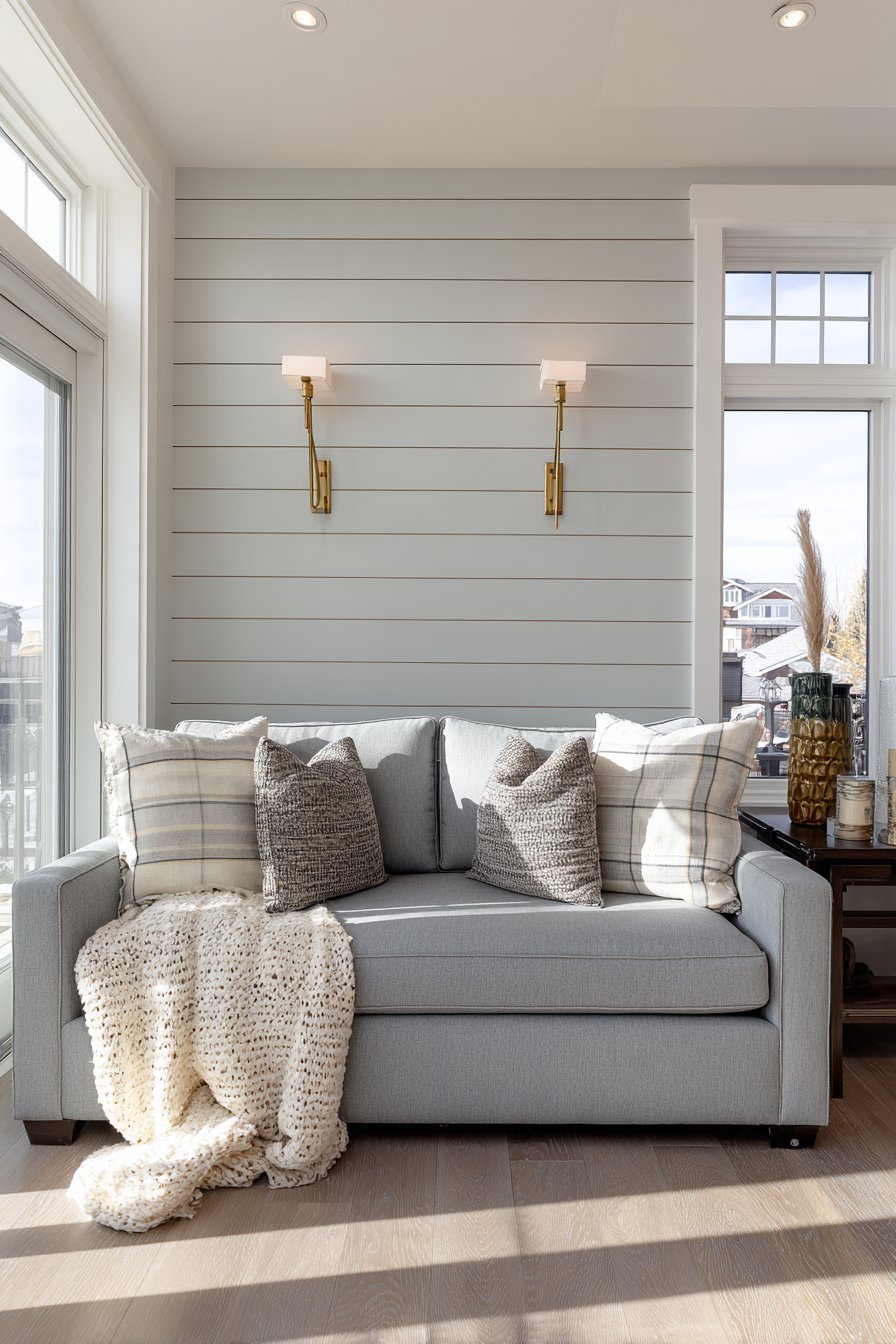
This design celebrates understated elegance and craftsmanship. The horizontal lines make rooms feel wider. The neutral color palette creates calm atmosphere. The style works beautifully in casual and formal settings.

Key Design Tips:
- Install shiplap horizontally to widen room visually
- Use real wood for authentic texture and durability
- Paint with quality primer and finish coat
- Space boards with consistent 1/8 inch gaps
- Seal wood properly before painting
- Choose soft grey-white for Scandinavian aesthetic
9. Woven Rattan Panel Installation

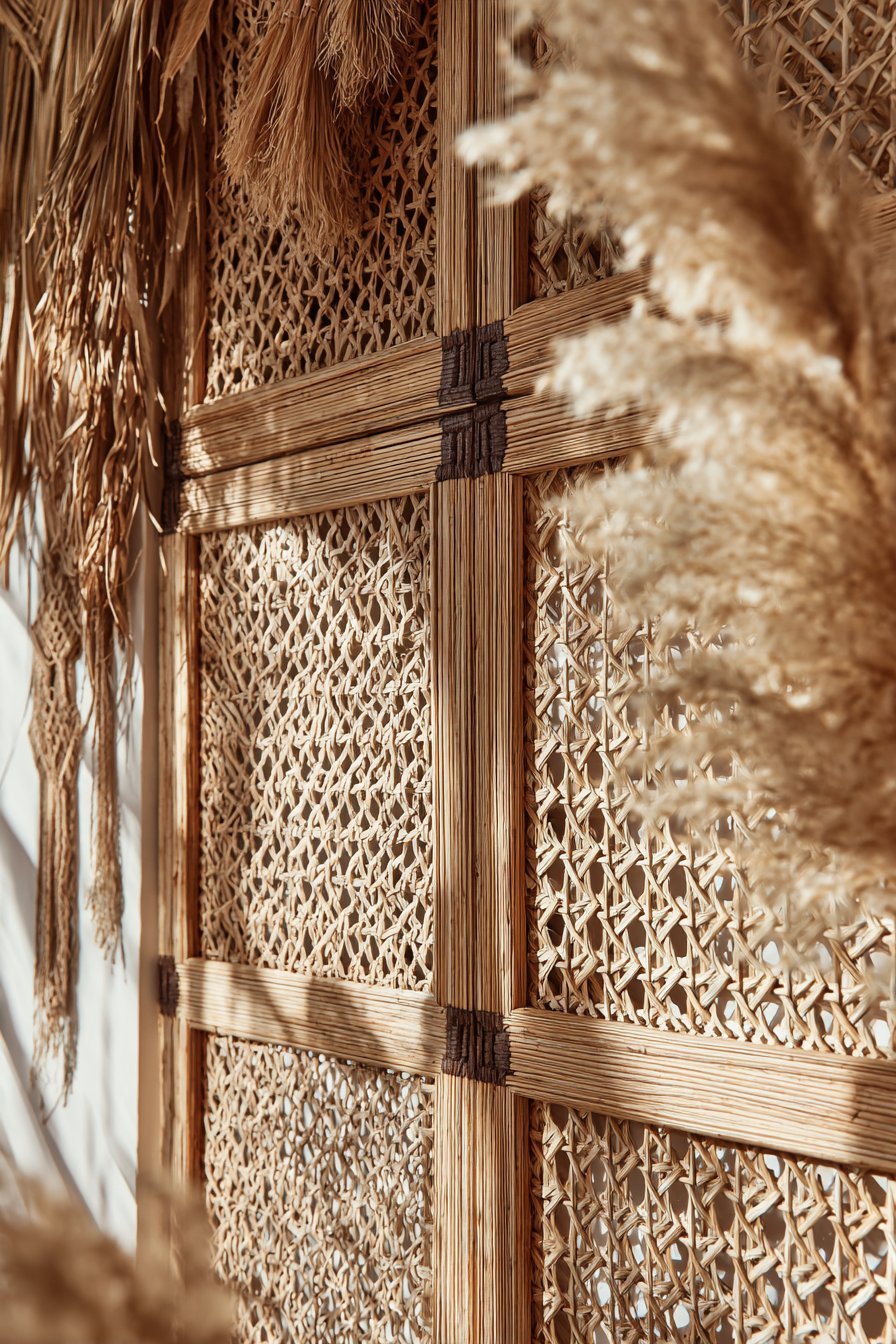
Natural rattan panels create organic warmth behind the bed. The grid pattern installation uses visible dark brown binding. Honey to amber color variations showcase authentic material. The bohemian aesthetic celebrates handcrafted elements.
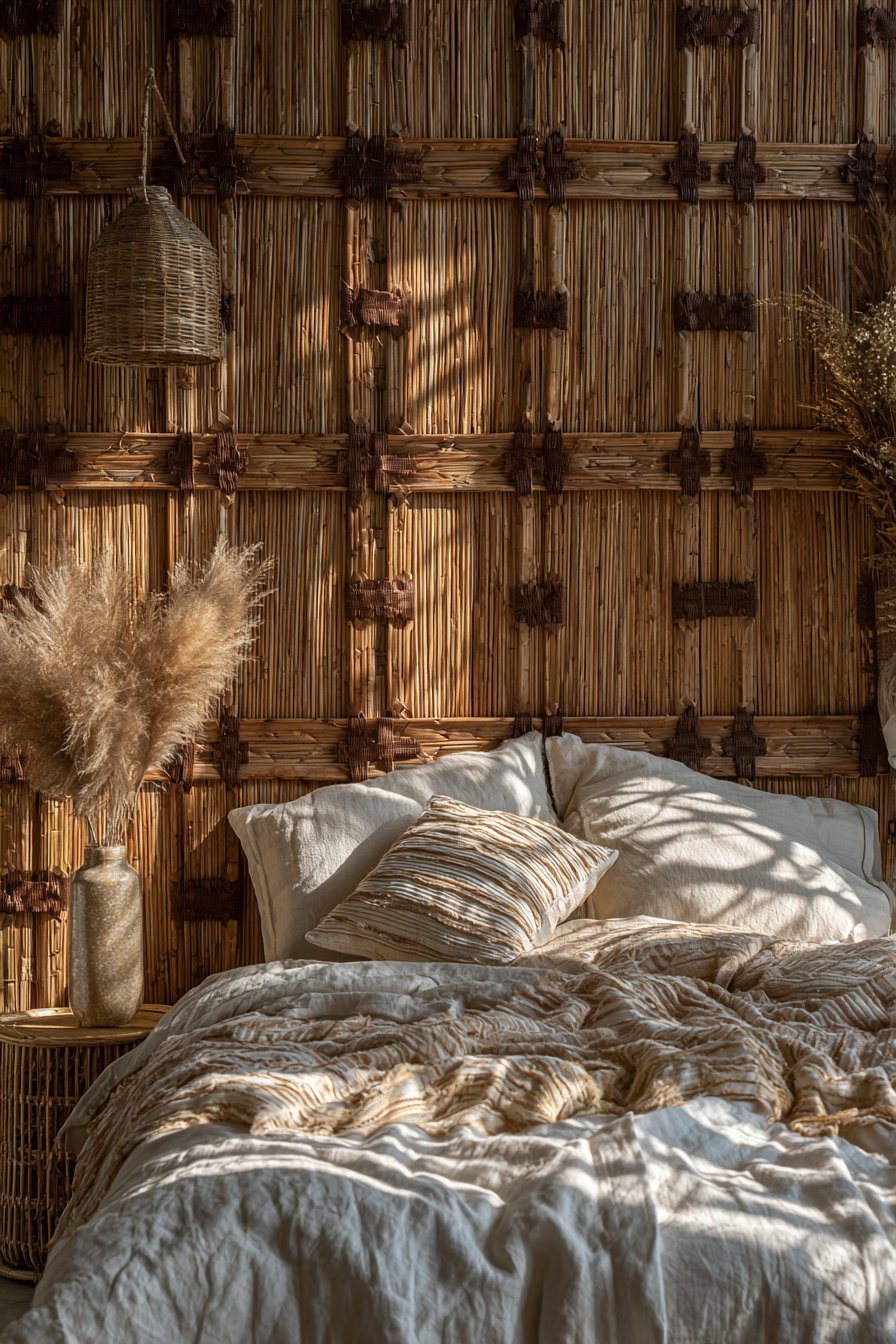
Macramé wall hangings and dried pampas grass complement the natural material. Soft diffused daylight highlights intricate weaving patterns. Shadow effects emphasize the three-dimensional texture. The tactile quality invites touch and creates cozy atmosphere.
This bedroom design connects interior spaces with natural world. The rattan panels provide texture without pattern overwhelm. The neutral tones work with various color schemes. The installation brings warmth that paint alone cannot achieve.
Key Design Tips:
- Source authentic rattan panels with visible weave variations
- Install panels in grid pattern for clean appearance
- Use appropriate adhesive for permanent installation
- Combine with other natural materials like wood and linen
- Add macramé and dried botanicals for layered bohemian look
- Avoid direct sunlight to prevent fading
10. Tropical Leaf Peel-and-Stick Wallpaper

Large-scale palm fronds in deep green dance across cream background. The removable wallpaper creates instant accent behind tan leather sofa. Brass nailhead trim adds sophisticated detail. The pattern matching at seams appears seamless.
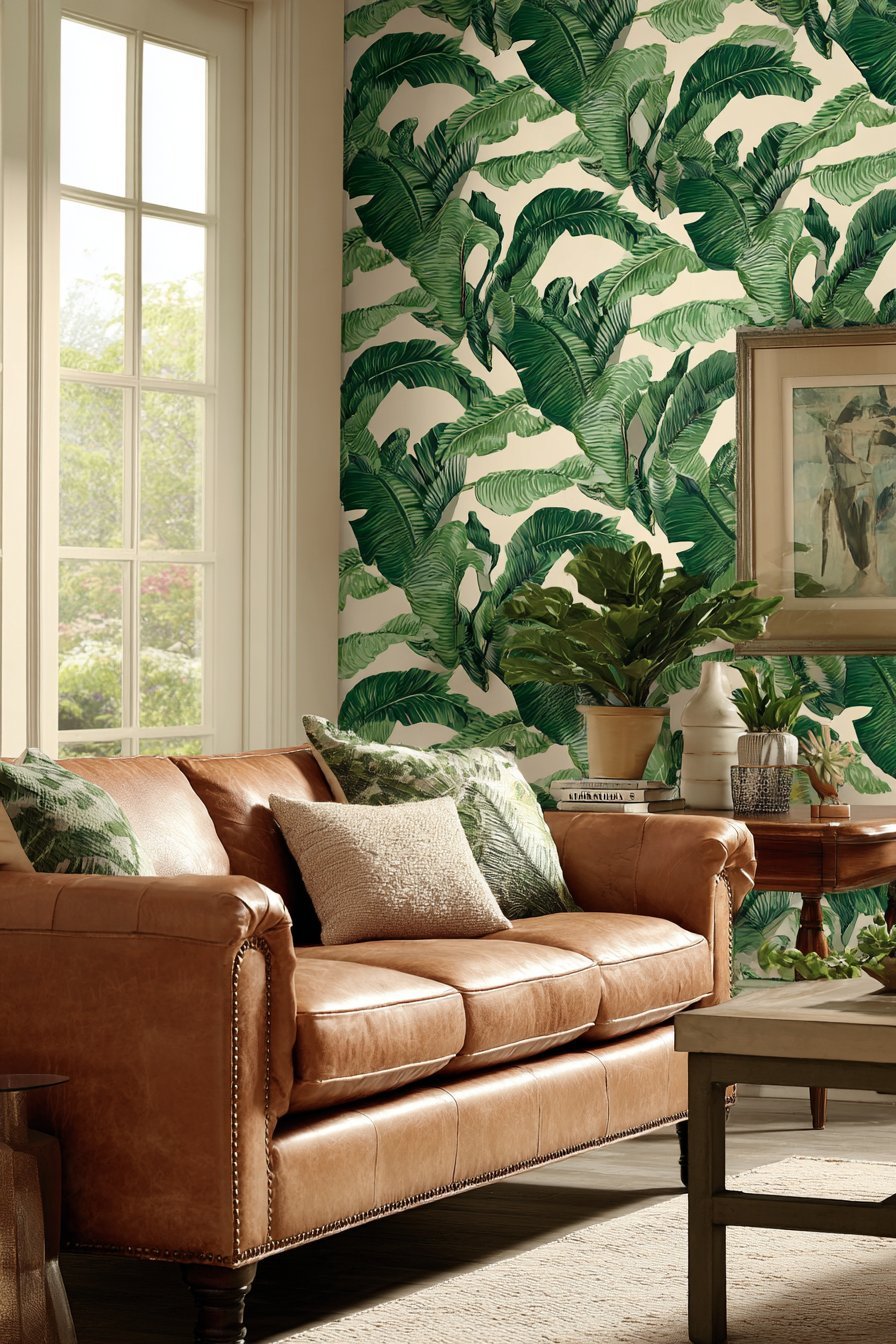
Natural window light brings out various green tones. The botanical print adds life without living plants. The peel-and-stick application allows for renter-friendly transformation. The tropical theme creates vacation-like atmosphere year-round.
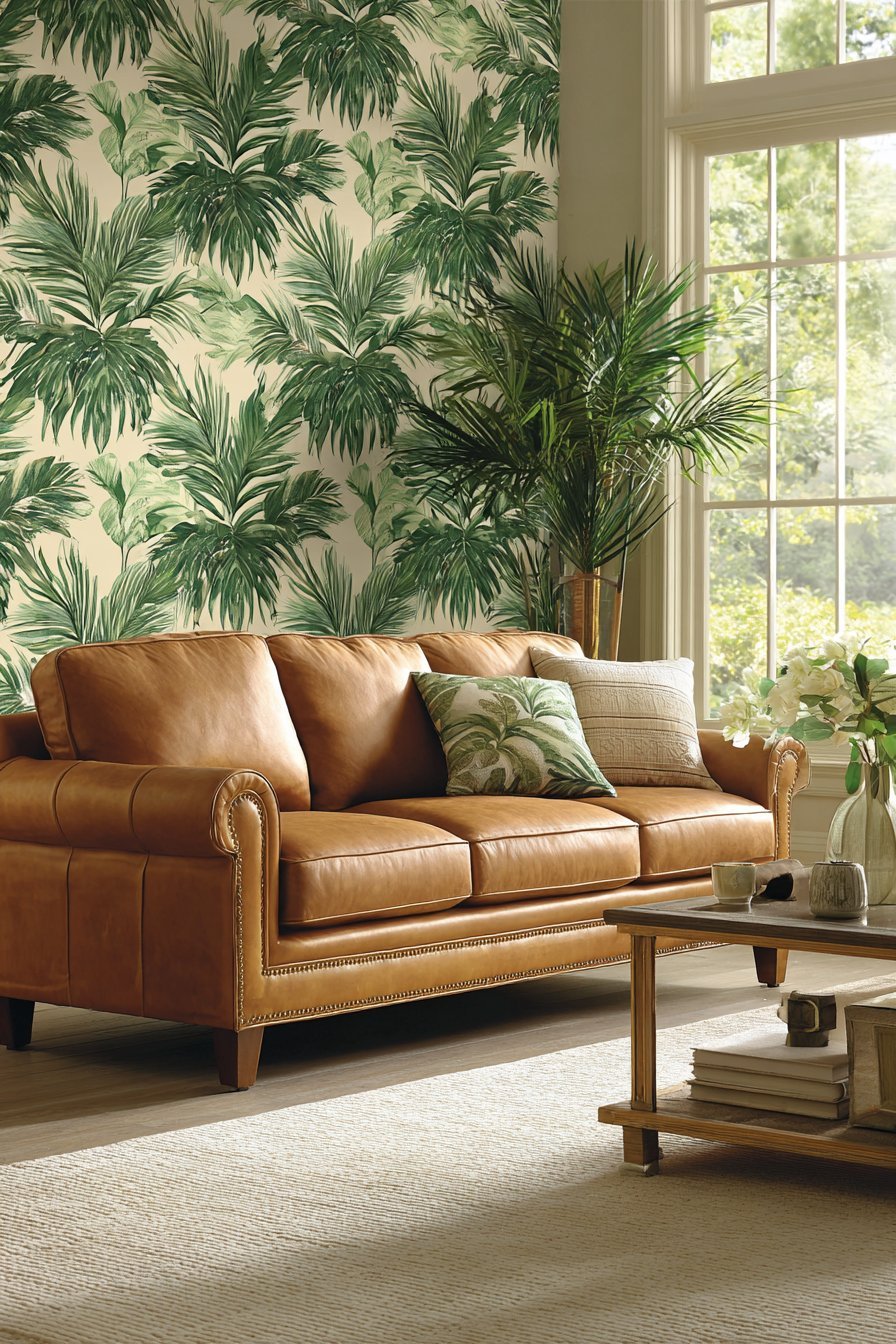
This contemporary living room proves temporary doesn’t mean compromise. The quality wallpaper rivals traditional paste applications. The large-scale pattern makes bold statement. The removal process leaves no damage for future changes.

Key Design Tips:
- Measure walls carefully before ordering wallpaper
- Order extra for pattern matching allowance
- Apply to smooth, clean walls for best adhesion
- Use wallpaper smoother tool to eliminate bubbles
- Match patterns carefully at seams for professional look
- Choose large-scale patterns for dramatic impact
11. Exposed Brick Industrial Character
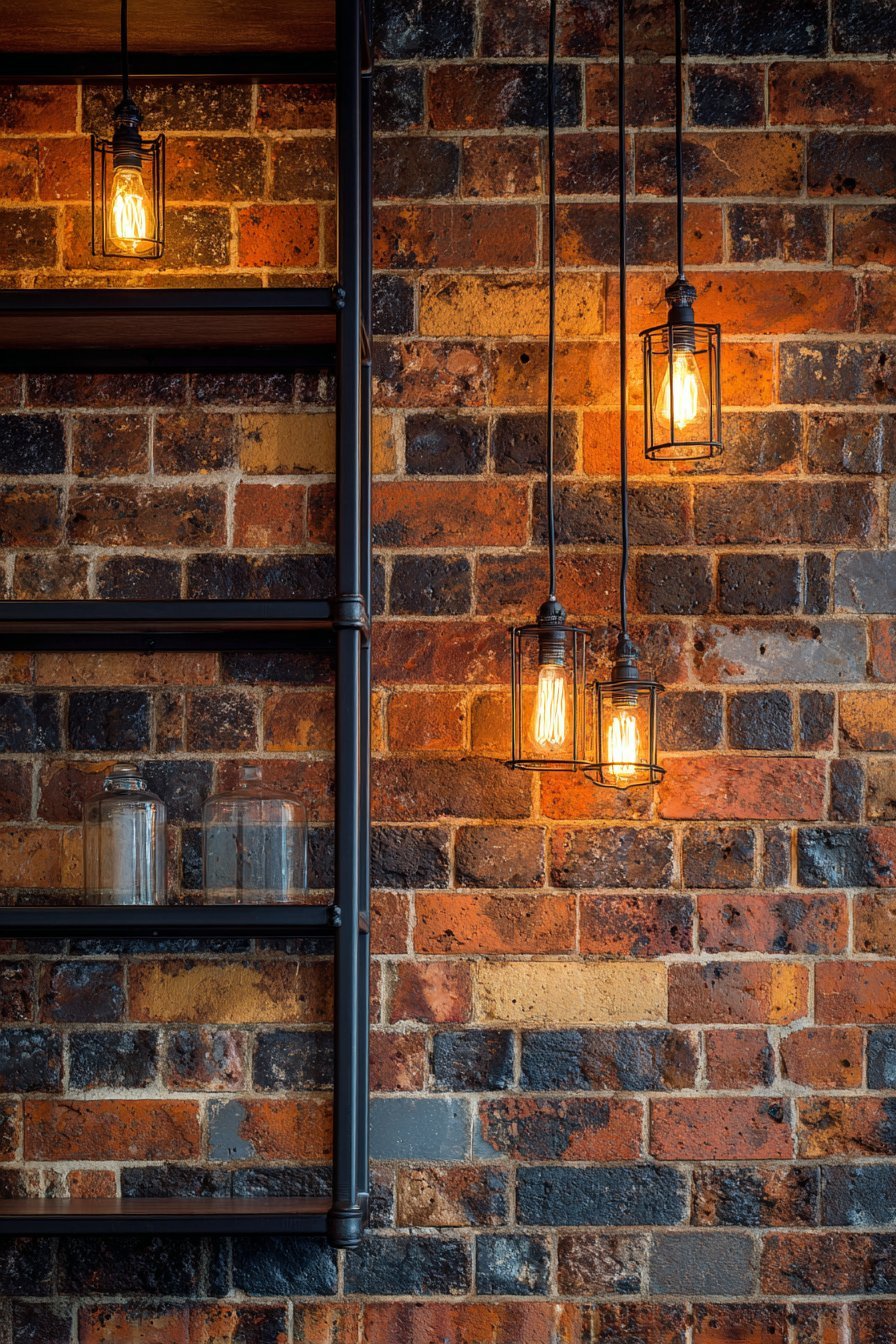
Original brick shows authentic weathering and patina. Color variations range from deep red to orange-brown. Slightly uneven mortar joints add historical character. The industrial loft aesthetic celebrates raw materials.
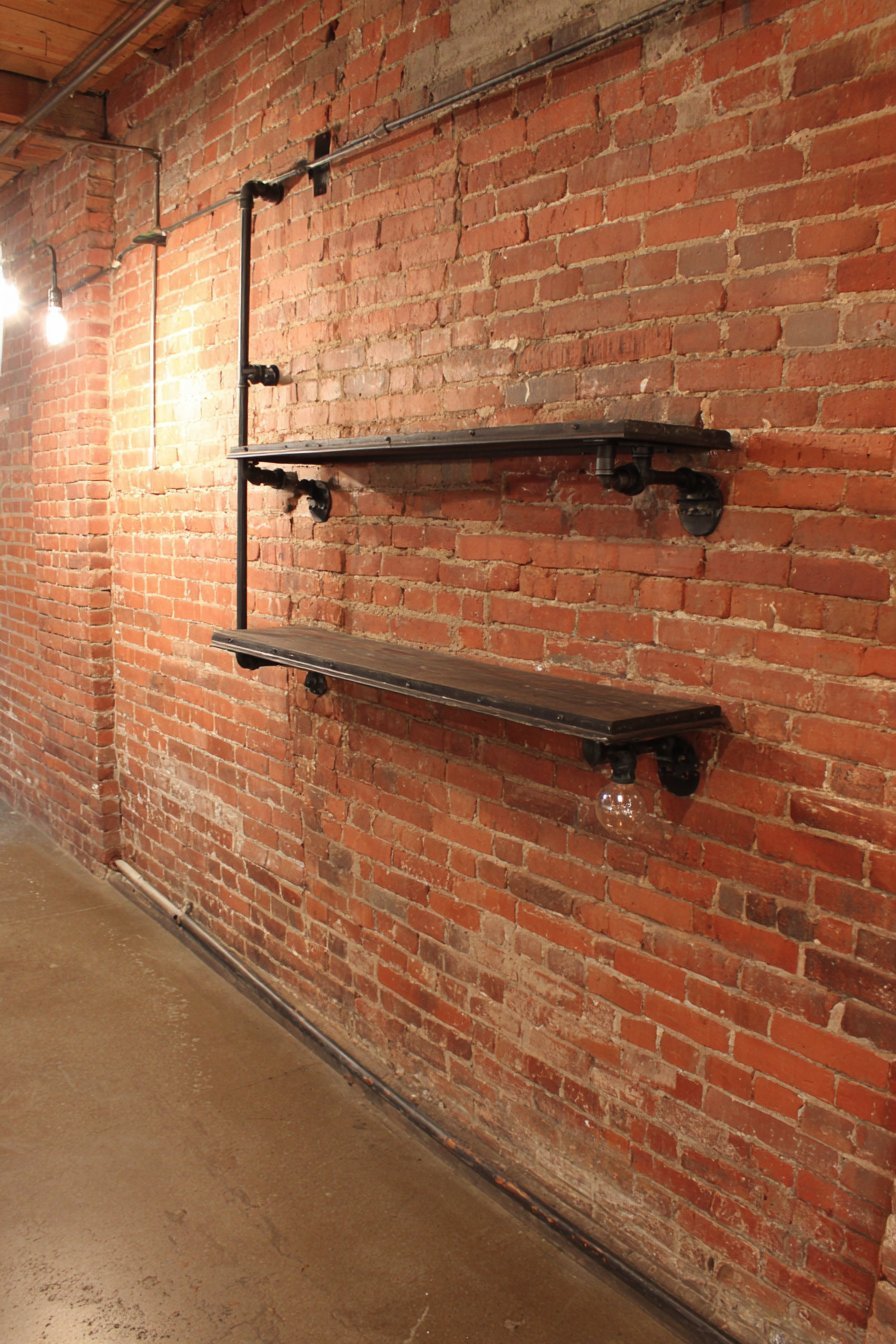
Black metal pipe shelving mounts against brick providing functional storage. Vintage Edison bulb fixtures create warm ambient lighting. The fixtures emphasize brick texture through shadow play. The authentic material tells stories of building history.

This design requires no artificial creation of character. The existing brick becomes the star feature. The rough texture contrasts with smooth modern furnishings. The look works particularly well in converted industrial spaces.

Key Design Tips:
- Clean exposed brick carefully without damaging mortar
- Seal brick to prevent dust and crumbling
- Leave brick natural rather than painting
- Add industrial metal shelving and fixtures
- Use warm Edison bulbs to enhance texture
- Embrace imperfections as character elements
12. Contemporary Board and Batten

Wide boards and minimal trim create modern interpretation. Sophisticated sage green paint adds subtle depth. The paneling extends from chair rail height to ceiling. Integrated picture molding allows damage-free artwork hanging.

The upholstered grey linen bed sits against the architectural wall. Morning light creates shadows emphasizing dimensional trim work. The contemporary approach updates traditional technique. The result feels fresh rather than dated.

This bedroom design proves classic elements work in modern contexts. The sage green adds color without overwhelming. The board and batten adds architectural interest to plain walls. The picture molding provides practical artwork solutions.

Key Design Tips:
- Use wider boards for contemporary interpretation
- Paint same color for subtle dimensional effect
- Extend from chair rail to ceiling for modern look
- Add picture molding for flexible artwork display
- Choose matte finish paint for sophisticated appearance
- Measure and mark carefully for even spacing
13. Large-Scale Abstract Art Statement

Bold brushstrokes in navy blue, burnt orange, and cream create focal point. The original painting becomes primary architectural element. Otherwise neutral pale grey walls allow artwork to shine. The philosophy embraces art as design foundation.
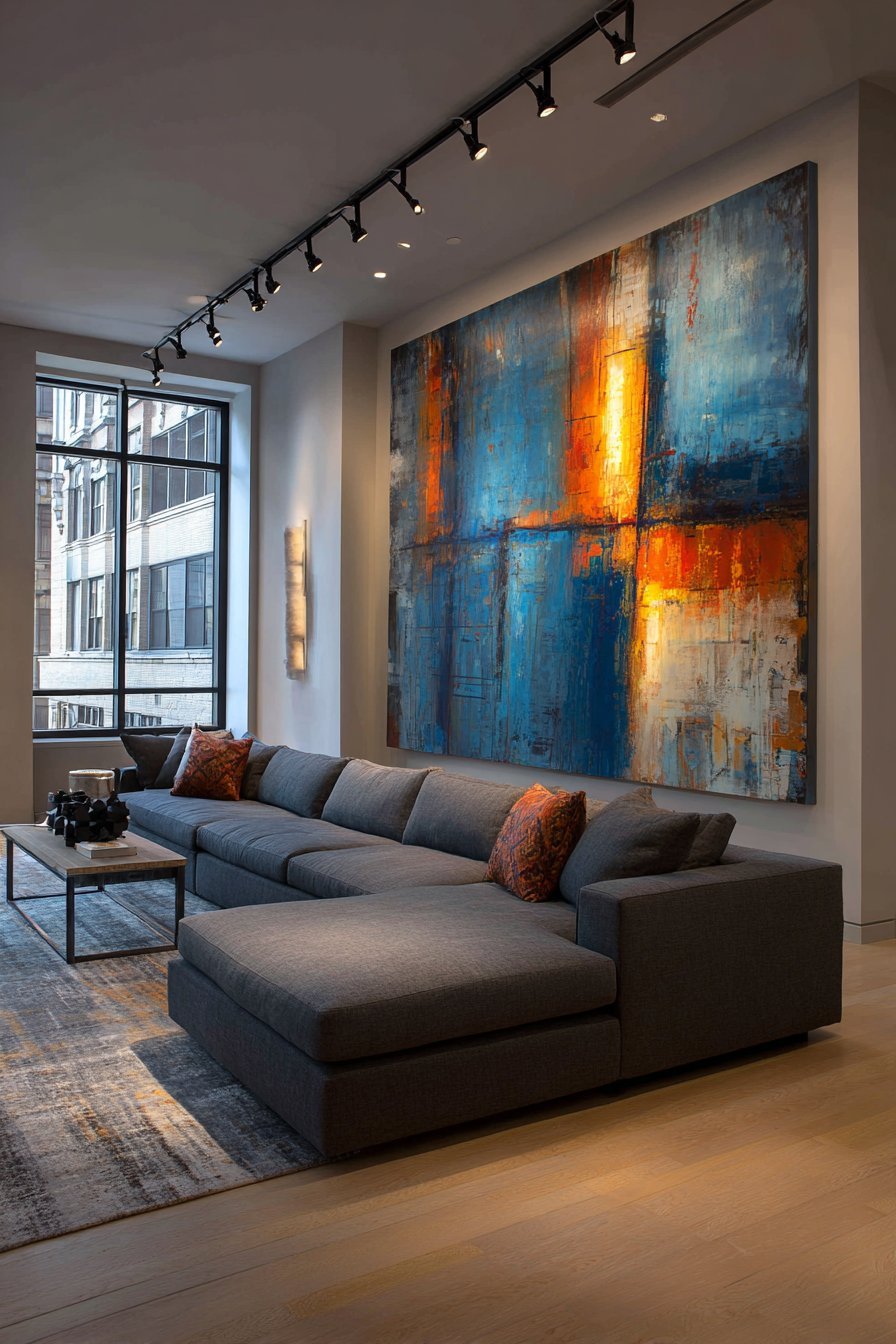
Modern sectional sofa in charcoal grey faces the art. Complementary throw pillows echo painting’s color palette. Adjustable track lighting focuses specifically on artwork. The gallery-quality lighting reveals texture and color depth.
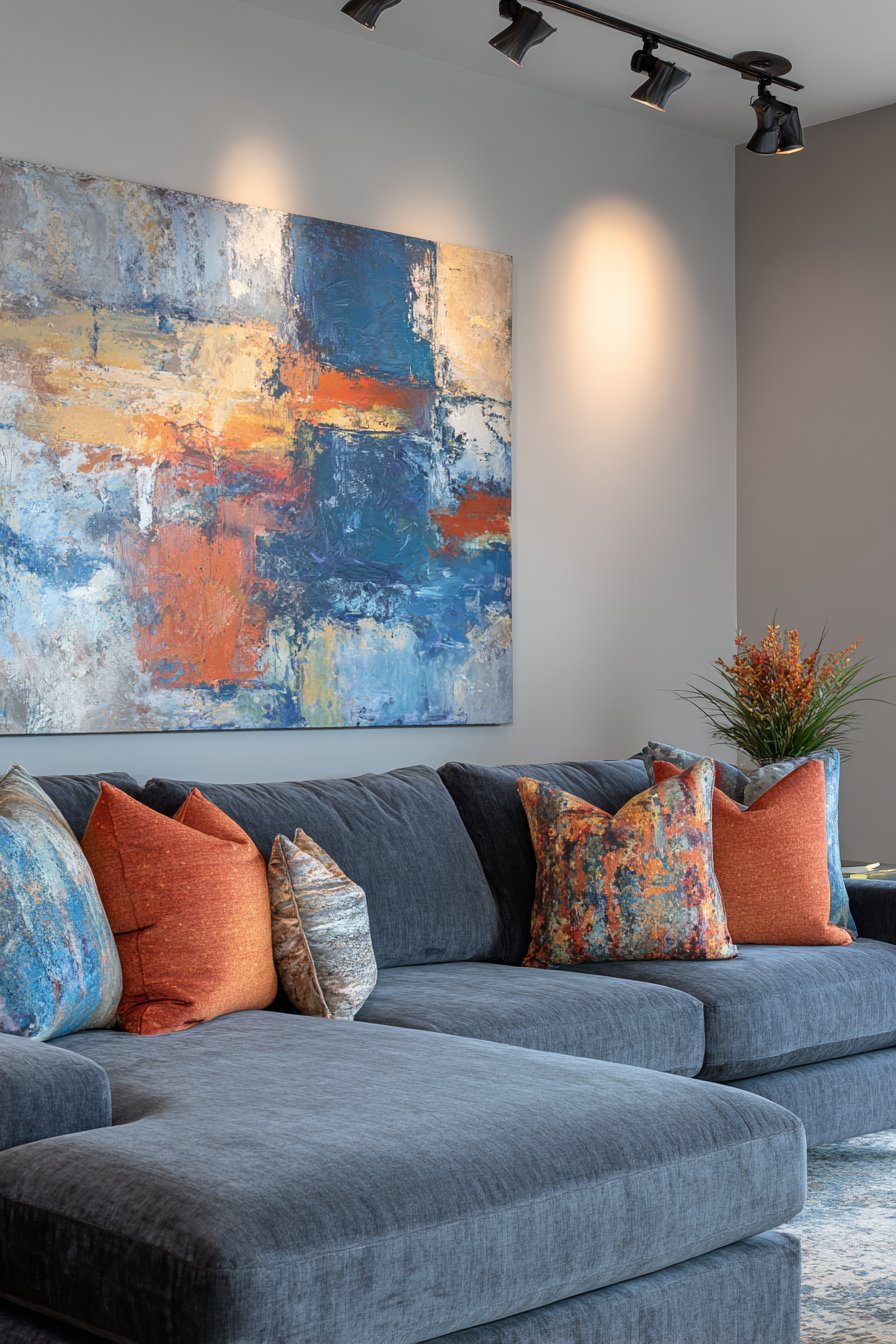
This living room demonstrates art-centered design approach. The large-scale piece eliminates need for gallery wall. The bold colors inform entire room palette. The investment in quality art transforms the space.

Key Design Tips:
- Invest in large-scale original art as focal point
- Keep surrounding walls neutral to feature artwork
- Install track or picture lighting for proper illumination
- Choose furniture and accessories echoing art colors
- Hang art at proper height with center at eye level
- Consider art as starting point for entire room design
14. Classic Wainscoting with Two-Tone Paint
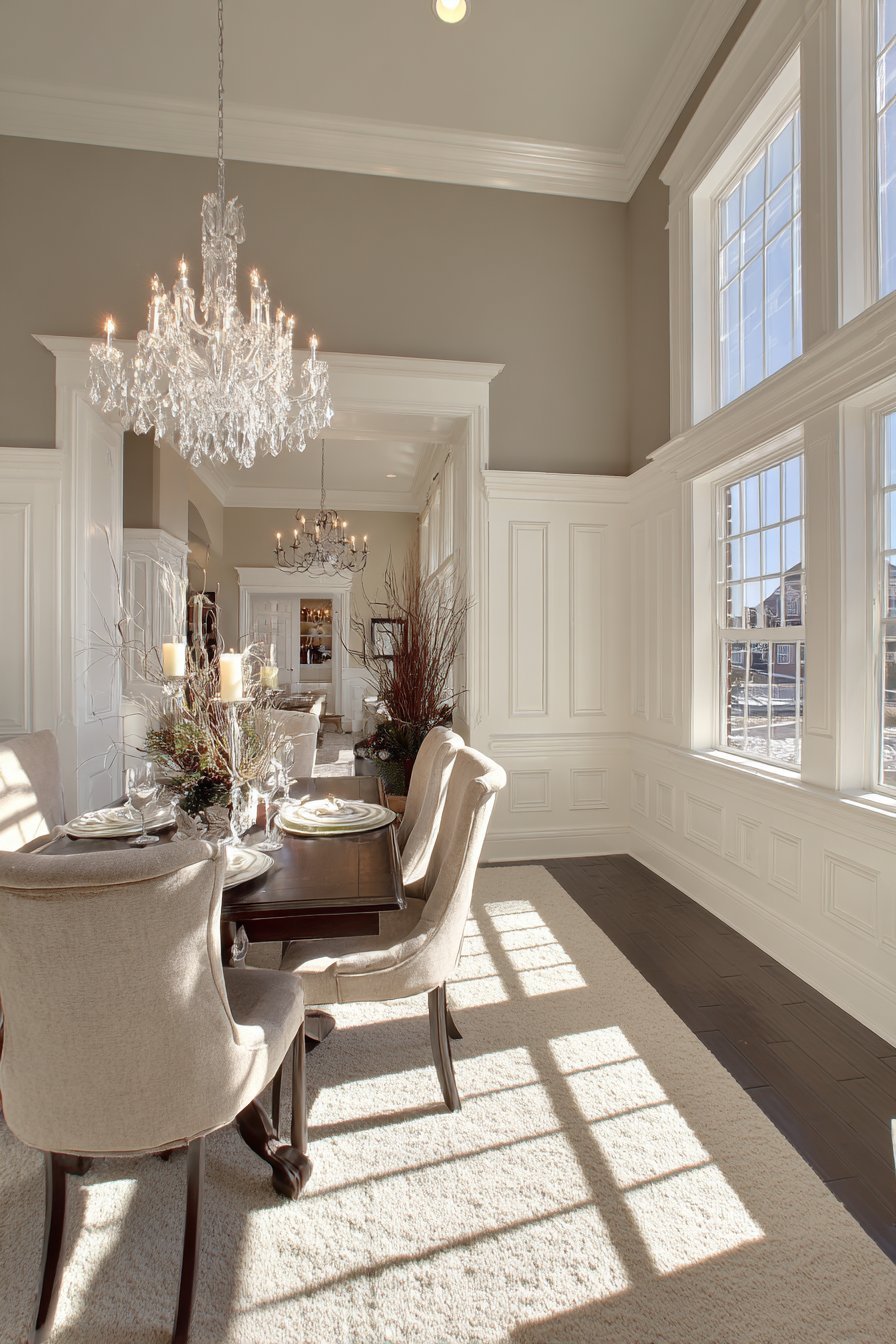
Traditional wainscoting extends forty inches from floor. Recessed panels show detailed chair rail and subtle shadow lines. The two-tone scheme features crisp white wainscoting below. Soft greige covers walls above the chair rail.
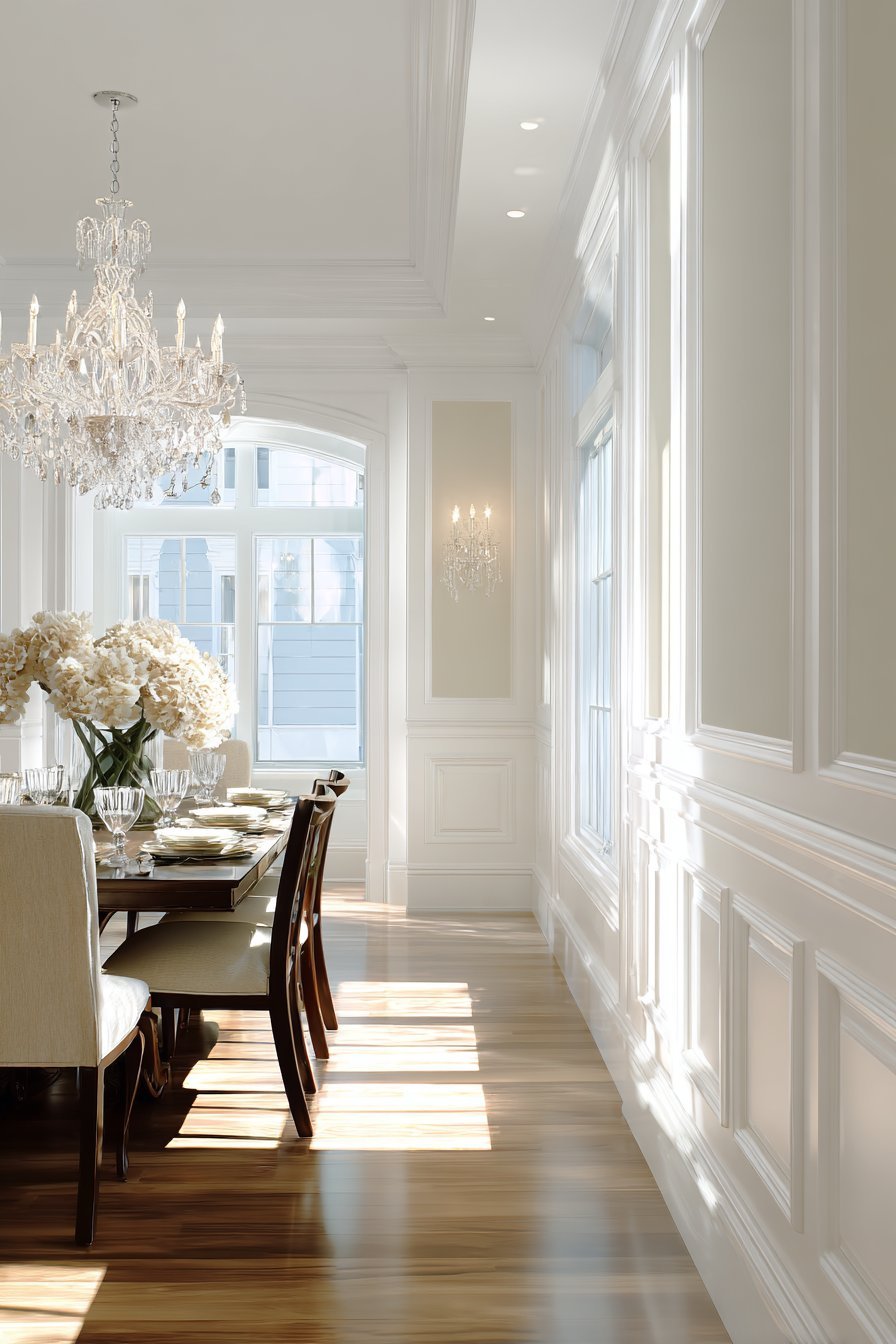
The transitional dining room balances traditional and contemporary elements. Upholstered chairs complement the architectural detail. Crystal chandelier adds elegance overhead. Natural window light creates highlights on painted trim work.

This design celebrates architectural craftsmanship and attention to detail. The wainscoting adds protection along with beauty. The two-tone paint creates visual interest. The approach works in formal and casual dining spaces.

Key Design Tips:
- Install wainscoting at 36-40 inches height
- Use quality trim materials for clean lines
- Paint wainscoting in crisp white for classic look
- Choose soft neutral for upper wall color
- Add chair rail for clean color transition
- Fill nail holes and sand smooth before painting
15. Hand-Painted Mountain Mural

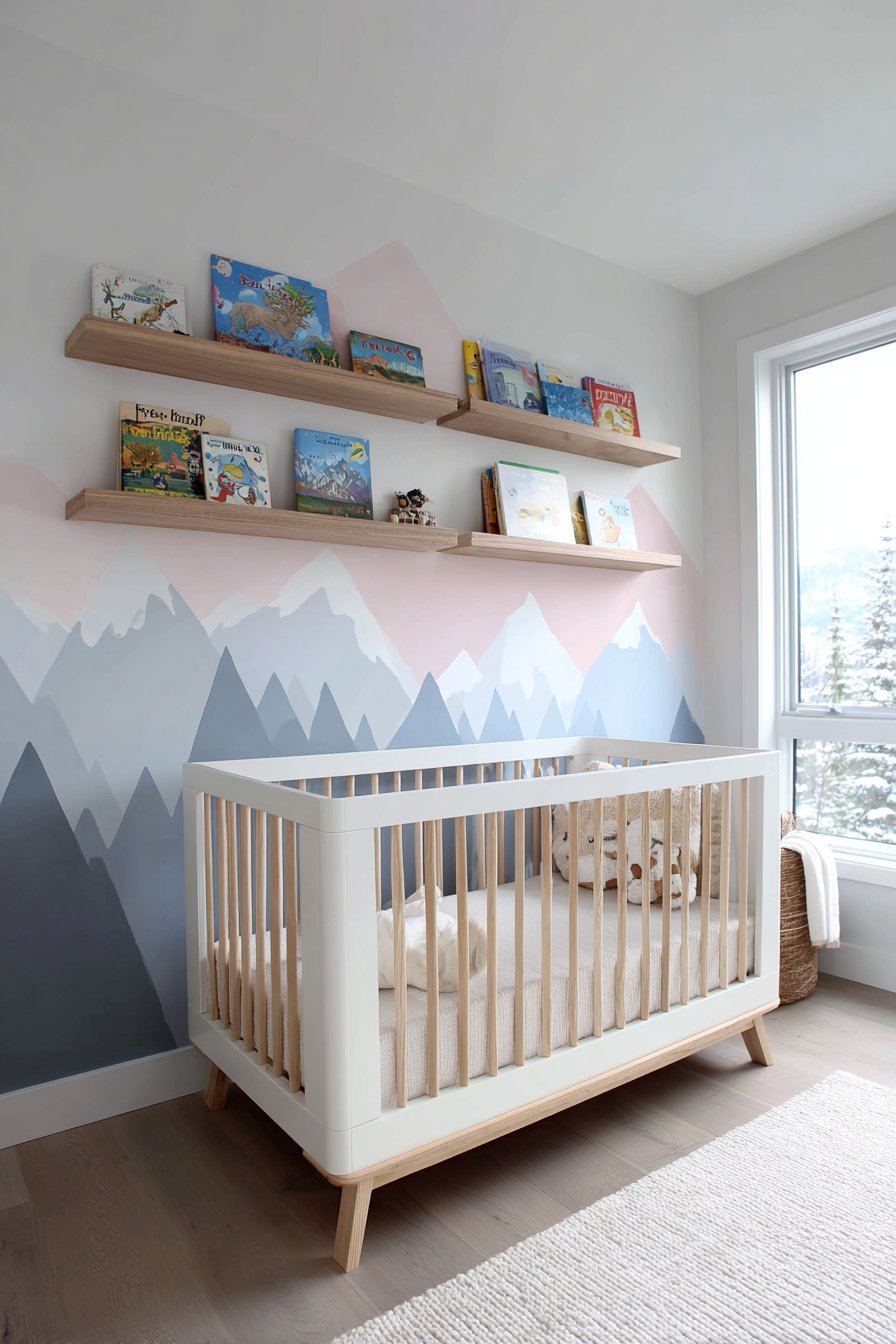
Soft watercolor mountains in grey, blue, and blush pink create dreamy landscape. The hand-painted mural shows realistic brush strokes. Visible color blending creates artistic rather than graphic appearance. The gentle peaks rise behind white crib.

Natural wood legs on crib complement the organic artwork. Floating shelves in light oak display books and decorative items. Soft diffused window light enhances watercolor quality. The nursery feels peaceful and imaginative.

This wall design creates unique focal point impossible to replicate. The hand-painted quality adds personality and warmth. The soft colors suit nursery atmosphere perfectly. The mural grows with child through different ages.
Key Design Tips:
- Hire artist for authentic hand-painted quality
- Choose soft watercolor style for nursery spaces
- Use low-VOC paints for child safety
- Select calming colors like soft blues and pinks
- Position mural behind crib as focal wall
- Consider mountains or clouds for timeless appeal
16. Floor-to-Ceiling Mirror Grid
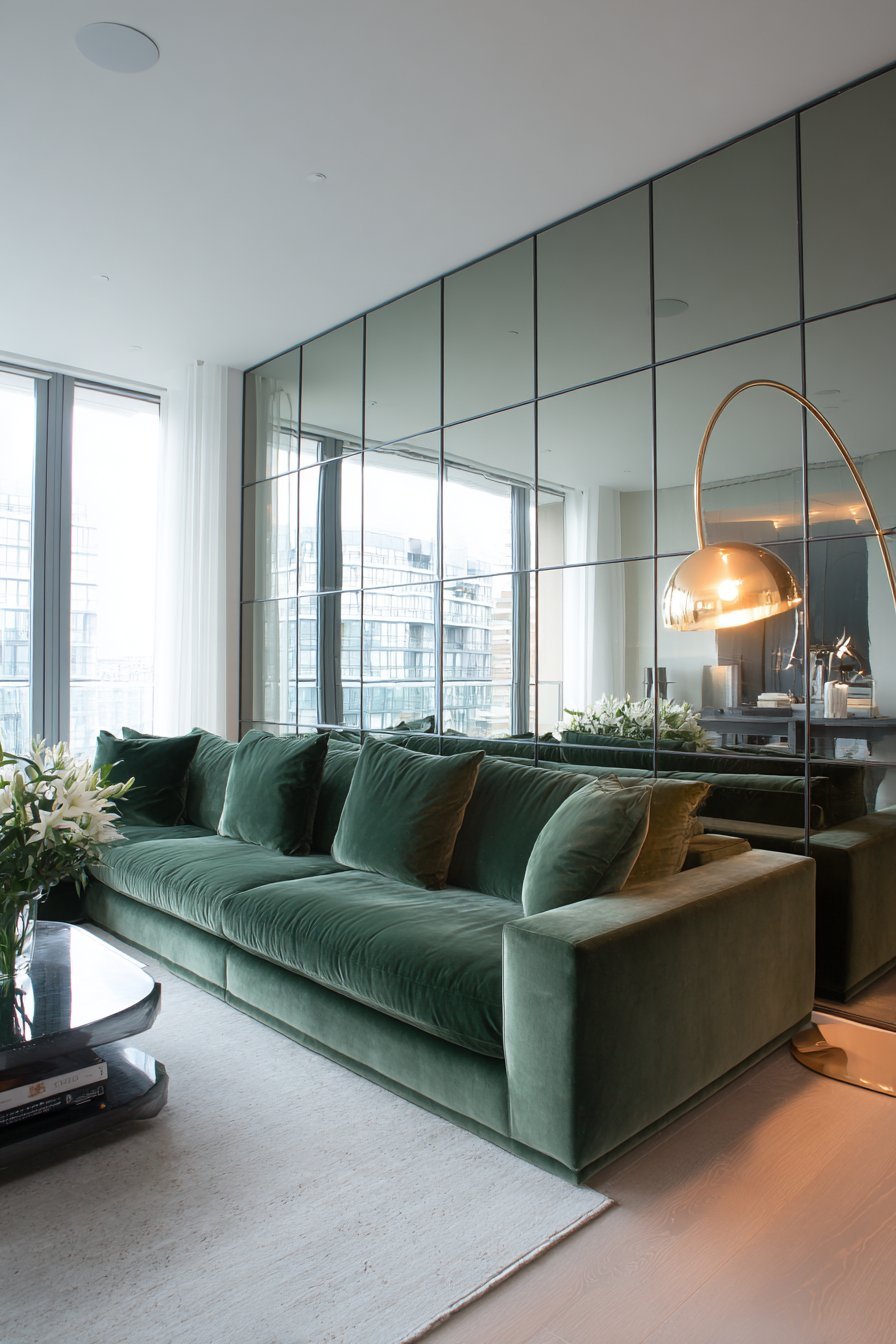
Black metal frames create sophisticated gallery effect with mirrors. The grid pattern amplifies natural light throughout space. Mirrors make room feel significantly more spacious. The architectural interest comes from arrangement rather than ornamentation.
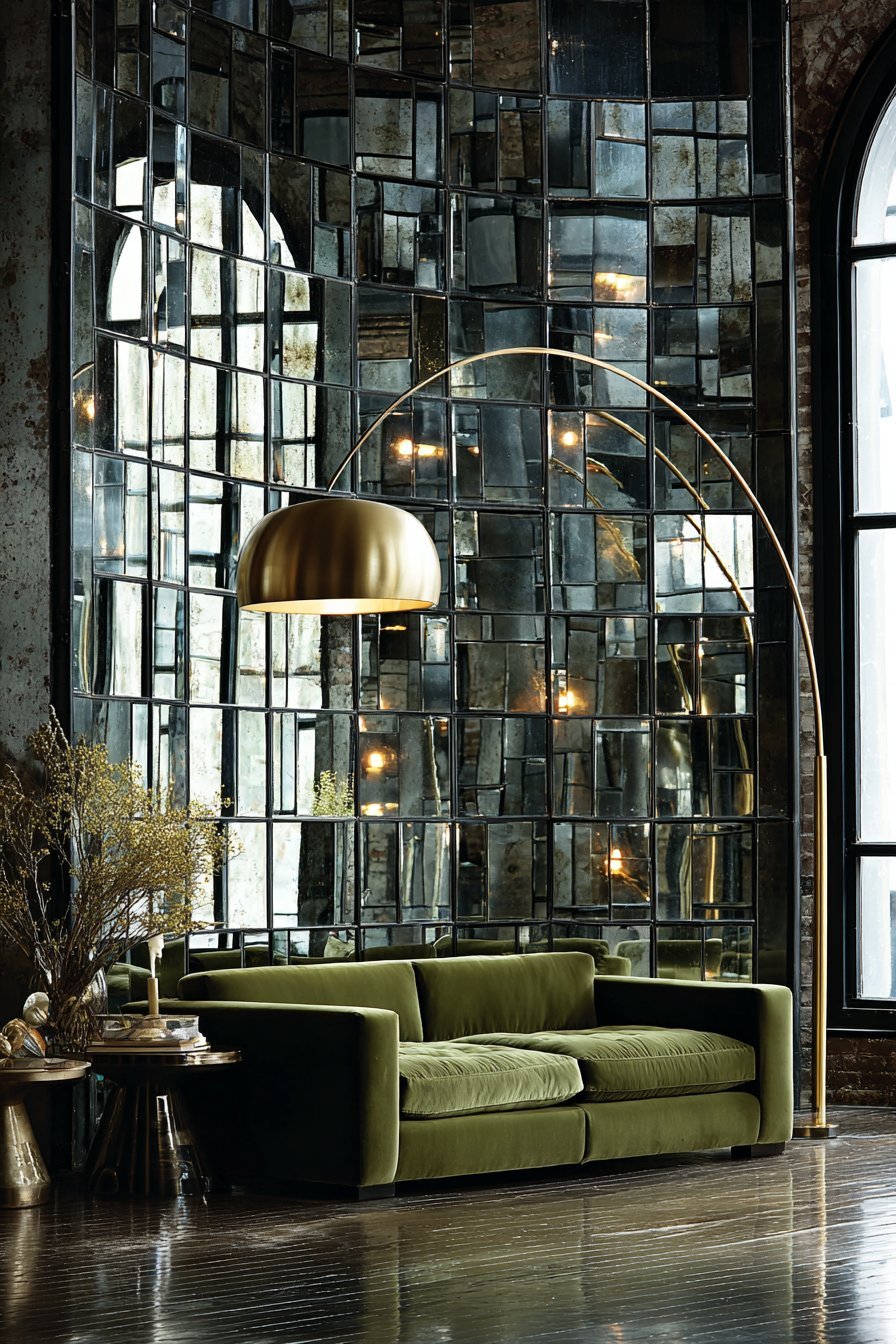
Velvet emerald green sofa faces the mirrored wall. Brass arc floor lamp provides warm illumination. The mirrors reflect carefully curated design elements. The effect is dramatic yet functional.
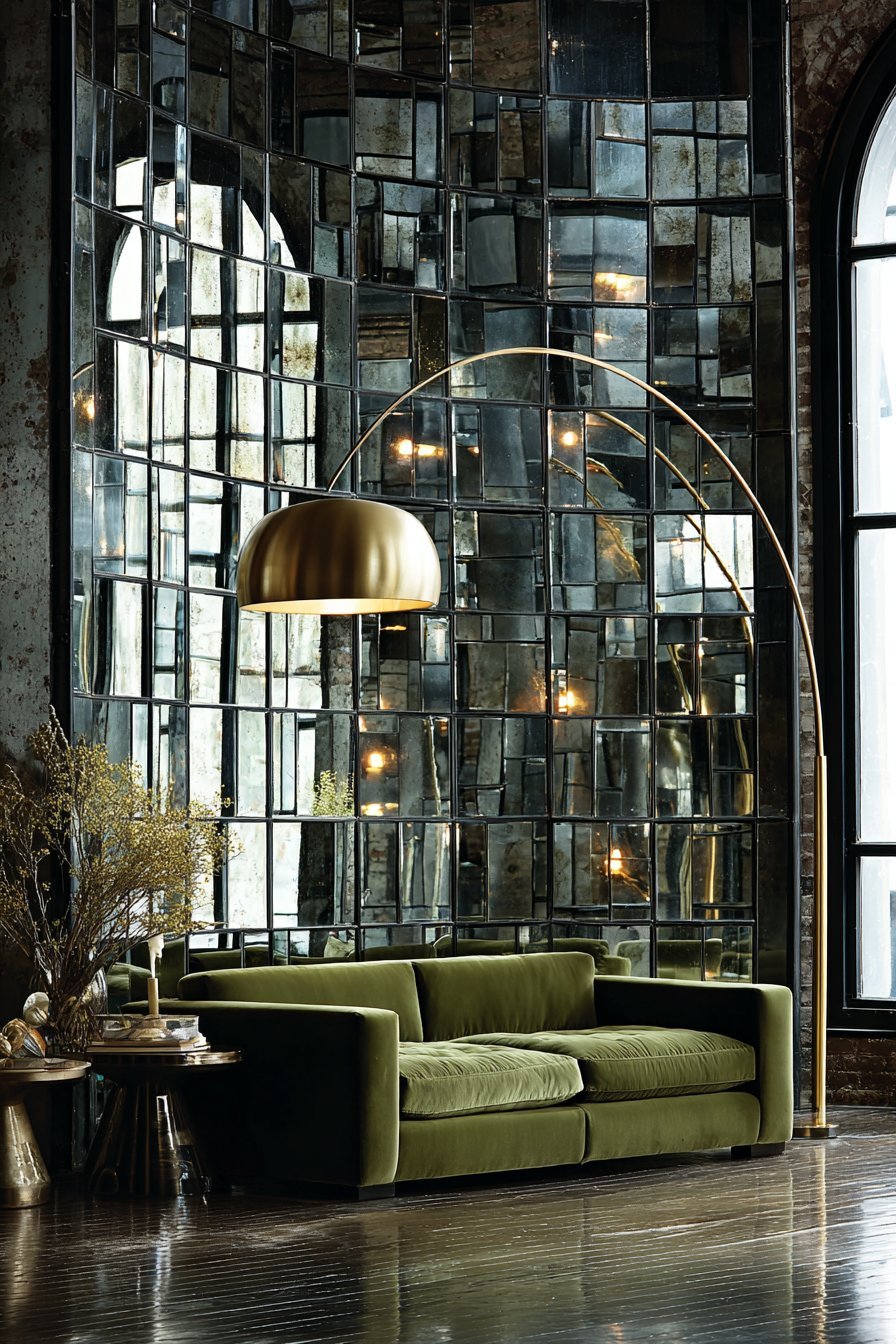
This contemporary living room uses mirrors as architectural feature. The grid organization keeps mirrors from feeling dated. The black frames add modern edge. The design works particularly well in smaller spaces.

Key Design Tips:
- Use slim black frames for contemporary appearance
- Arrange mirrors in precise grid pattern
- Clean mirrors regularly to maintain reflective quality
- Position to reflect attractive room elements
- Avoid placing directly opposite windows to prevent glare
- Use this technique to make small rooms feel larger
17. Vertical Tongue-and-Groove Planking

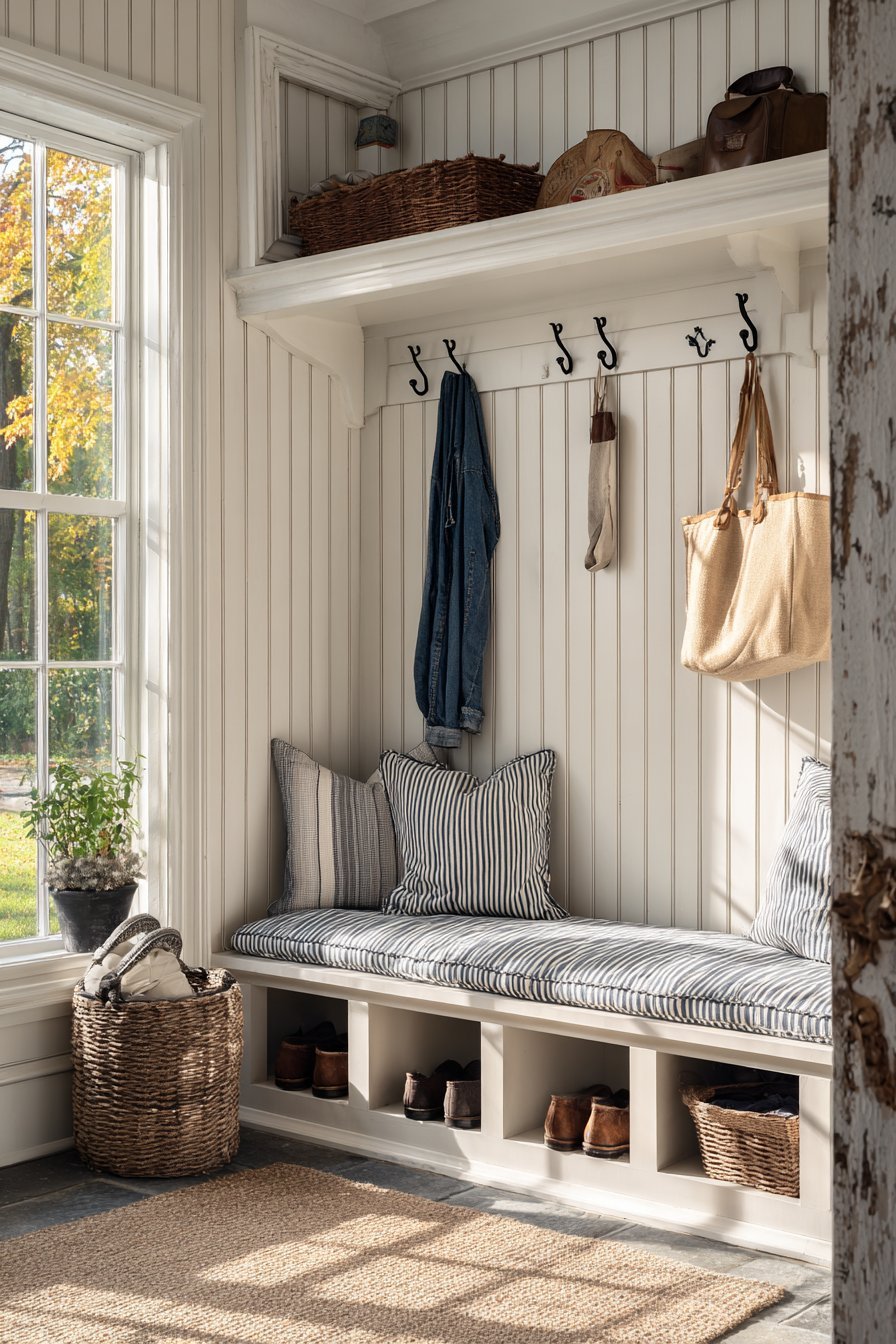
White painted planking shows visible wood grain texture. Vertical installation creates farmhouse authenticity. Integrated black wrought iron hooks appear at regular intervals. The functional design serves mudroom needs beautifully.

A cushioned bench in ticking stripe fabric sits below. Open cubbies provide shoe storage underneath. Slight imperfections and natural wood characteristics add character. Daylight from nearby window creates shadows between planks.

This mudroom design balances beauty with hard-working functionality. The vertical planking adds height to the space. The white paint keeps the look fresh and clean. The integrated hooks eliminate need for separate hardware.
Key Design Tips:
- Install planking vertically for farmhouse aesthetic
- Use tongue-and-groove boards for tight joints
- Paint with durable semi-gloss finish
- Add wrought iron hooks at consistent spacing
- Include bench with storage for functionality
- Embrace natural wood imperfections for authenticity
18. Book-Matched Marble Bathroom

Calacatta gold marble slabs feature distinctive gold and grey veining. Book-matching creates mirror-image pattern flow. The floor-to-ceiling installation shows minimal grout lines. Chrome fixtures and glass enclosure showcase the stone.

The luxury bathroom elevates daily routines to spa experiences. Recessed lighting creates highlights on polished surfaces. The stone’s natural variations ensure uniqueness. The translucent quality adds depth and dimension.
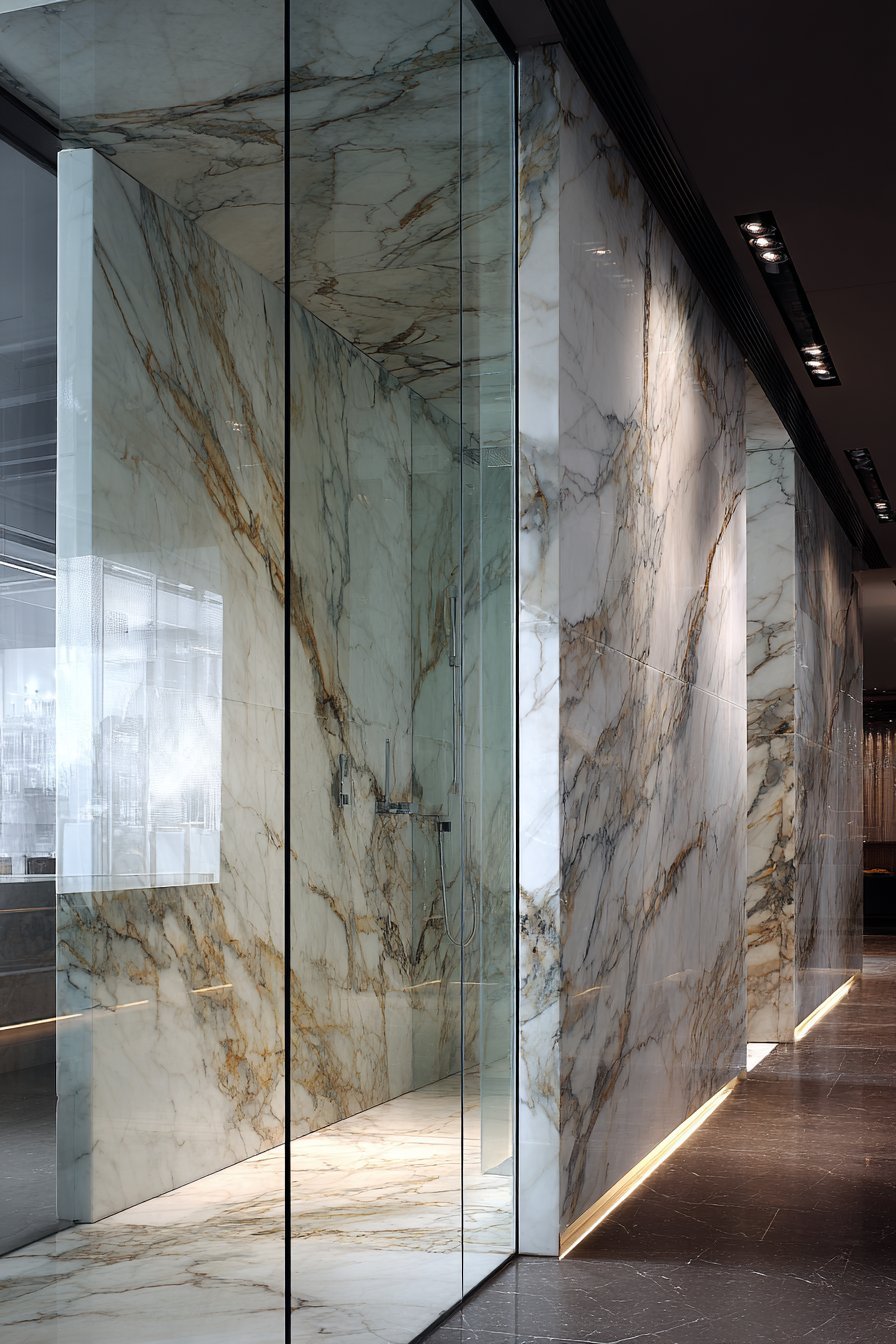
This design represents ultimate bathroom luxury and sophistication. The book-matched marble creates striking visual impact. The minimal grout lines emphasize stone’s natural beauty. The investment in quality materials shows in every detail.

Key Design Tips:
- Choose book-matched slabs for dramatic pattern
- Install with minimal grout lines for seamless appearance
- Use professional installer experienced with large-format stone
- Seal marble properly to prevent staining
- Add recessed lighting to highlight stone features
- Select chrome fixtures to complement marble tones
19. Acoustic Fabric Panel Installation

Charcoal grey fabric panels float on walls with hidden mounting. Asymmetric arrangement serves dual purpose of sound absorption and visual interest. The home theater design prioritizes both acoustics and aesthetics. Various panel sizes create dynamic composition.
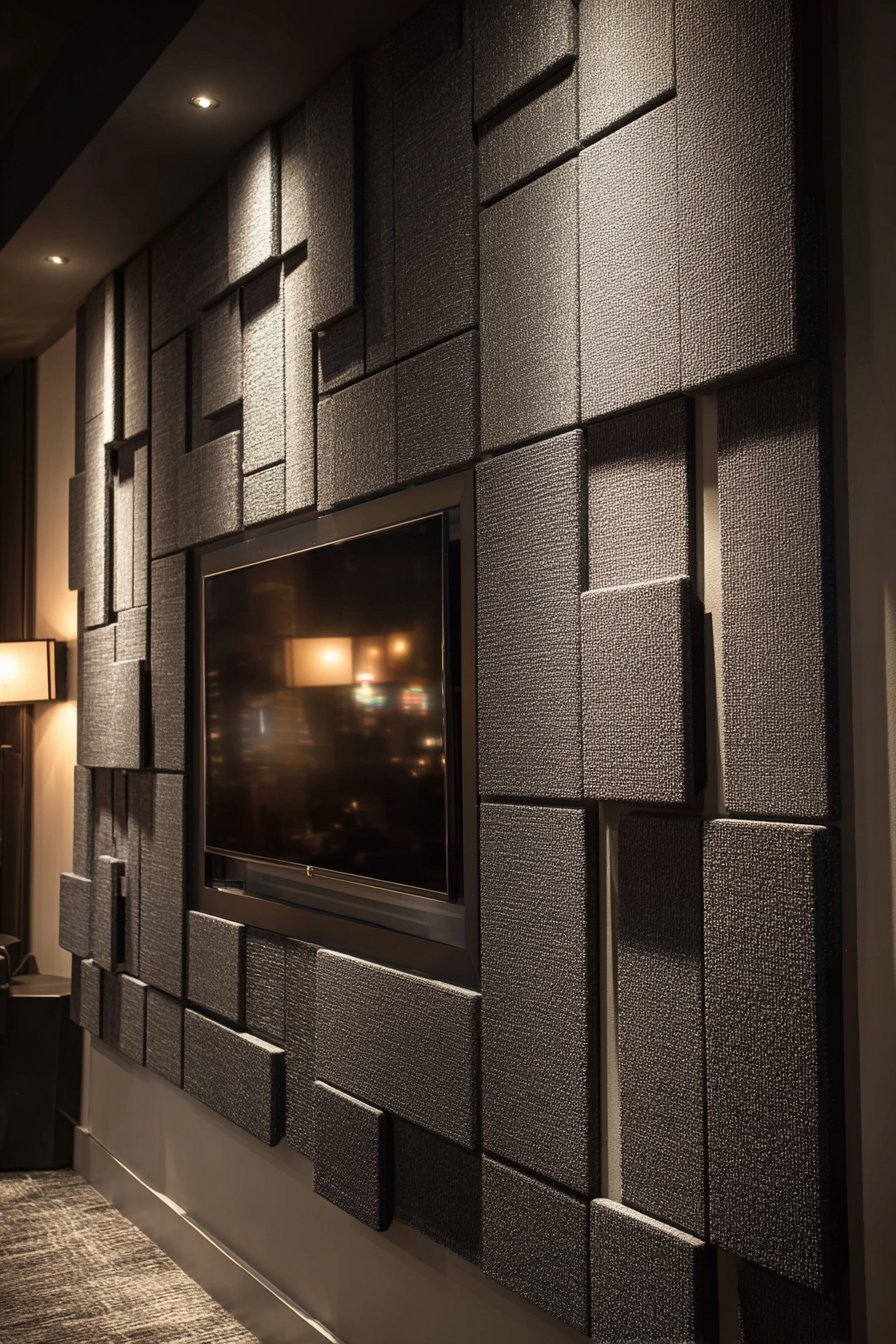
Wall-mounted television centers with acoustic panels surrounding. Tight weave fabric shows quality texture up close. Low ambient lighting creates sophisticated entertainment environment. The dark panels enhance screen viewing experience.
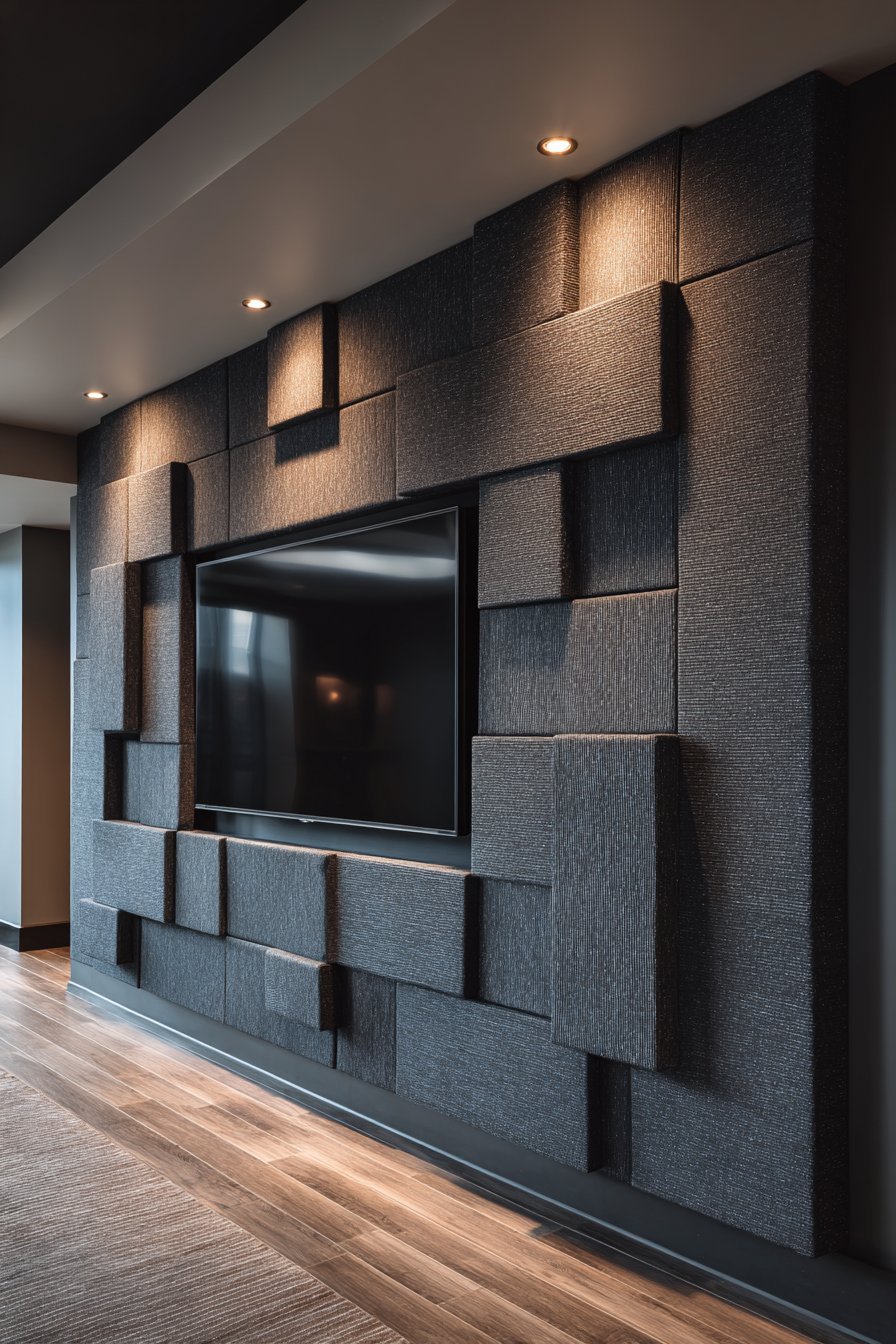
This modern home theater proves functional can be beautiful. The acoustic treatment improves sound quality dramatically. The floating panels appear as intentional art installation. The charcoal color absorbs light for better viewing.

Key Design Tips:
- Use acoustic fabric panels rated for sound absorption
- Arrange asymmetrically for visual interest
- Install with hidden mounting systems for clean look
- Choose dark colors to minimize light reflection
- Position panels strategically around screen and speakers
- Combine with proper lighting for entertainment atmosphere
20. Distressed Coastal Shiplap

Soft white paint shows intentional distressing revealing weathered wood. The horizontal shiplap runs across focal wall with tight joints. Visible nail holes add rustic coastal character. The authentic beach cottage aesthetic feels relaxed and inviting.
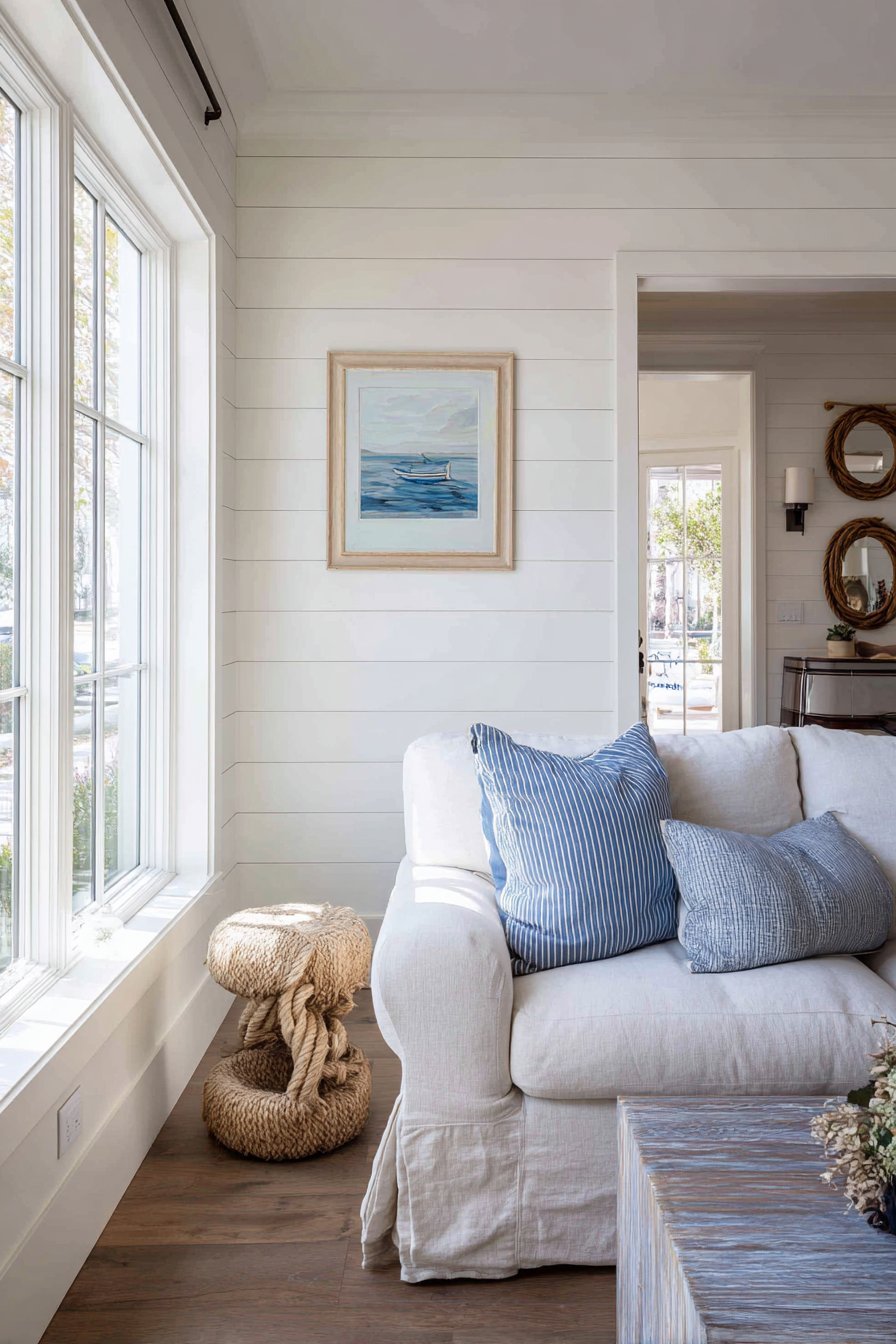
Slipcovered sofa in natural linen anchors the space. Blue and white striped pillows reinforce coastal theme. Vintage nautical artwork and rope-wrapped mirrors complete the look. Large windows flood the space with natural light.
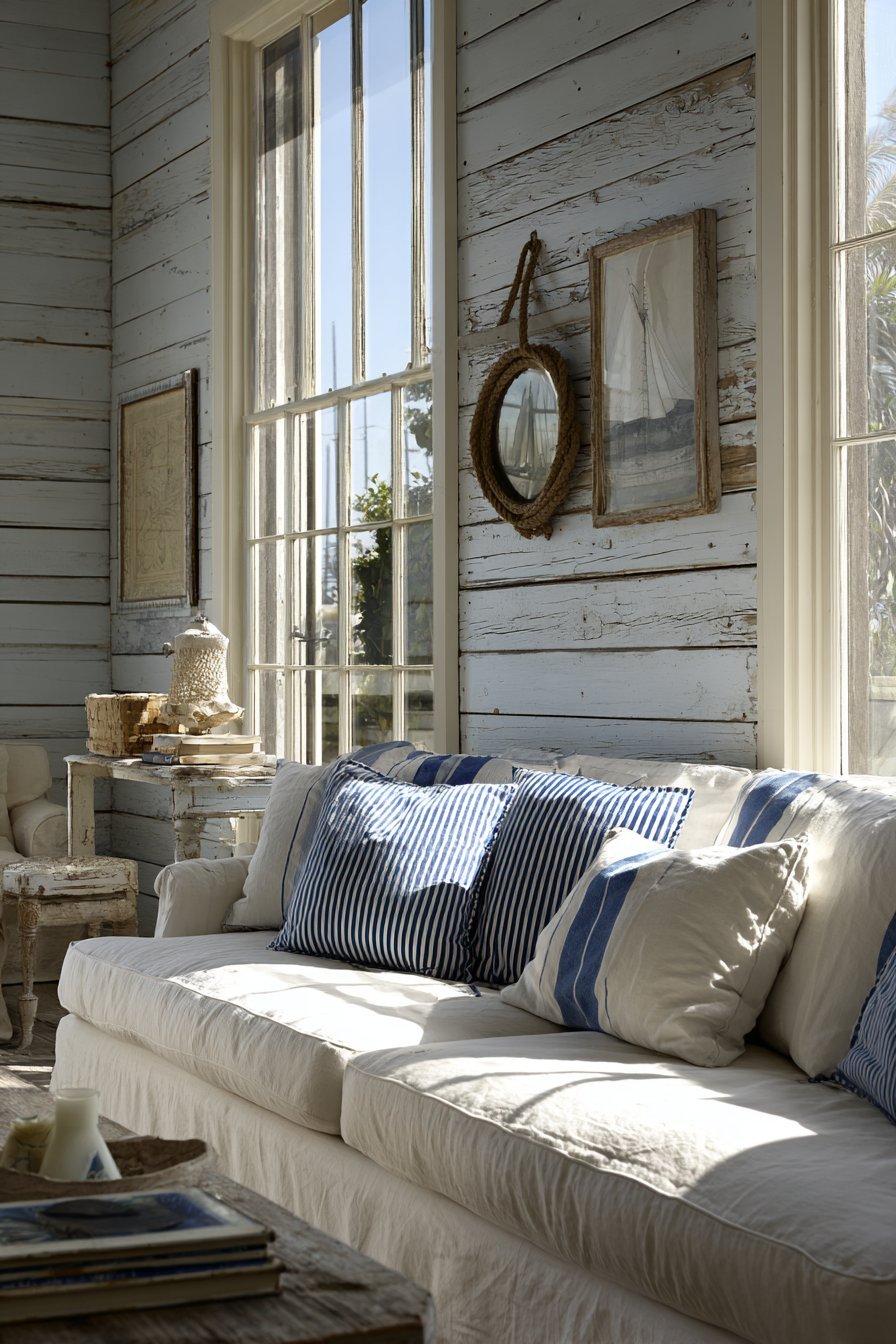
This coastal living room captures vacation home feeling year-round. The distressed finish adds instant age and character. The white paint keeps the look fresh and bright. The approach works in beachside and inland homes alike.

Key Design Tips:
- Apply paint then distress with sandpaper for authentic look
- Use horizontal shiplap for classic coastal appearance
- Add visible nail holes for rustic character
- Combine with natural linen and cotton textiles
- Include nautical elements like rope and vintage artwork
- Maximize natural light for airy coastal feeling
Why These Wall Design Concepts Are the Best
These wall design concepts represent thoughtful approaches to transforming vertical surfaces into architectural features. Each technique addresses different aesthetic preferences while maintaining practical functionality. The versatility across styles ensures suitable options for every home and personal taste.
The featured designs demonstrate how wall treatments create focal points and define room character. From natural materials like wood and rattan to sophisticated finishes like marble and textured wallpaper, each approach brings unique advantages. Traditional techniques like wainscoting and shiplap gain contemporary relevance through modern color choices and updated proportions. Meanwhile, innovative applications like three-dimensional tiles and acoustic panels merge function with visual interest.

Material selection plays crucial role in design success. Natural materials like wood and stone bring organic warmth and timeless appeal. They age gracefully and offer sustainability benefits through durability and reduced replacement needs. Manufactured options like porcelain and quality wallpaper provide cost-effective alternatives that deliver impressive results. The key lies in choosing materials appropriate for specific spaces and usage patterns.
Color theory informs successful wall design across all concepts. Neutral palettes create versatile backdrops allowing furniture and accessories to shine. Bold color choices like forest green establish dramatic focal points that define room personality. The interplay between wall color, lighting, and surrounding elements creates cohesive design narratives.

Spatial considerations influence design selection significantly. Vertical elements like floor-to-ceiling paneling increase perceived ceiling height. Horizontal installations make rooms feel wider and more expansive. Mirrors amplify natural light and create spacious feelings in smaller areas. Textured surfaces add dimension without consuming physical space.
These designs accommodate various budgets and skill levels. Some approaches like paint and removable wallpaper offer accessible entry points. Others like marble installation and custom millwork represent significant investments. The common thread connects thoughtful planning with quality execution regardless of budget constraints.
Conclusion
These twenty wall design concepts demonstrate the transformative power of thoughtful vertical surface treatments. The featured approaches span diverse styles from rustic farmhouse to contemporary minimalism. Each design offers unique benefits while maintaining practical functionality and aesthetic appeal.

The key takeaways emphasize material quality, color consideration, and spatial awareness. Successful wall design begins with understanding room purpose and desired atmosphere. Natural materials provide lasting value through durability and timeless appeal. Architectural elements like paneling and molding add dimension and character that paint alone cannot achieve.
Start your wall transformation journey by identifying rooms needing refresh. Consider which design approach aligns with your personal style and practical needs. Whether choosing bold wallpaper, natural wood paneling, or sophisticated paint treatments, commit to quality materials and proper installation. Your walls await transformation from simple barriers into defining architectural features that elevate daily living experiences.
