
Narrow spaces present some of the most interesting — and most frequently mishandled — design challenges in the home. Hallways, stairwells, awkward corridors, and slender wall panels between windows and doors are often treated as afterthoughts, left bare or decorated without intention in a way that makes them feel even more constricted than they already are. Yet these same spaces, approached with the right vertical design strategy, can become some of the most visually exciting and characterful moments in the entire home.
The secret to transforming a narrow space lies in understanding and working with the vertical dimension rather than fighting against the horizontal limitations. Where a narrow wall cannot accommodate the broad, expansive wall decor that suits a large living room, it offers something equally valuable: extraordinary vertical height that is almost always underutilized. A slender wall panel three meters tall is not a design problem — it is an opportunity to create a dramatic, soaring vertical composition that draws the eye upward, makes the space feel taller, and delivers a visual impact that a wider, lower wall arrangement could never achieve.
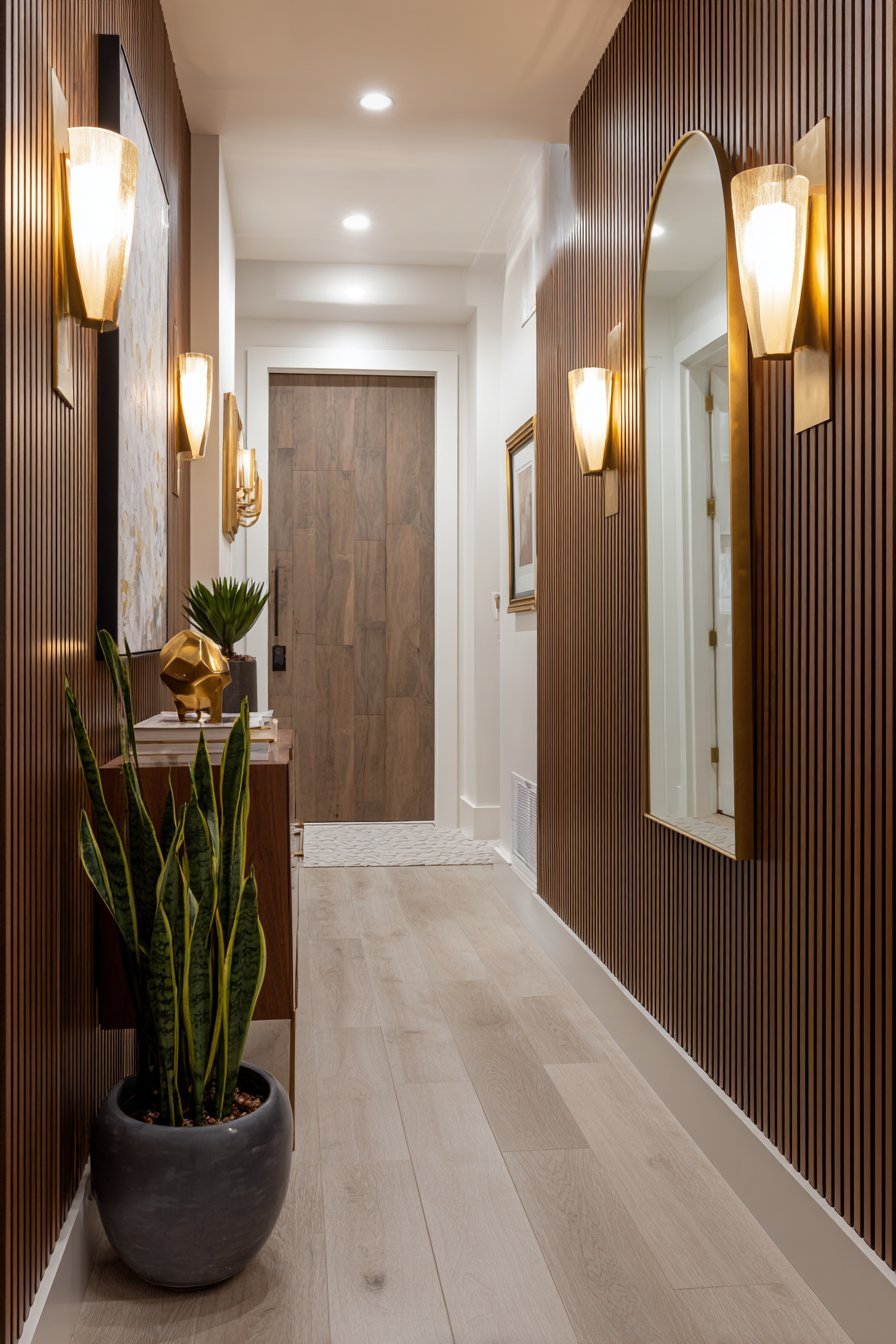
This article explores six of the most effective and beautiful ways to style vertical wall decor in narrow spaces — from tall single-piece statements and stacked vertical gallery arrangements to architectural wall treatments, mirror strategies, and the specific lighting techniques that make narrow spaces feel expansive, luminous, and genuinely beautiful. Each approach is practical, designerly, and achievable in real homes at a range of budget levels.
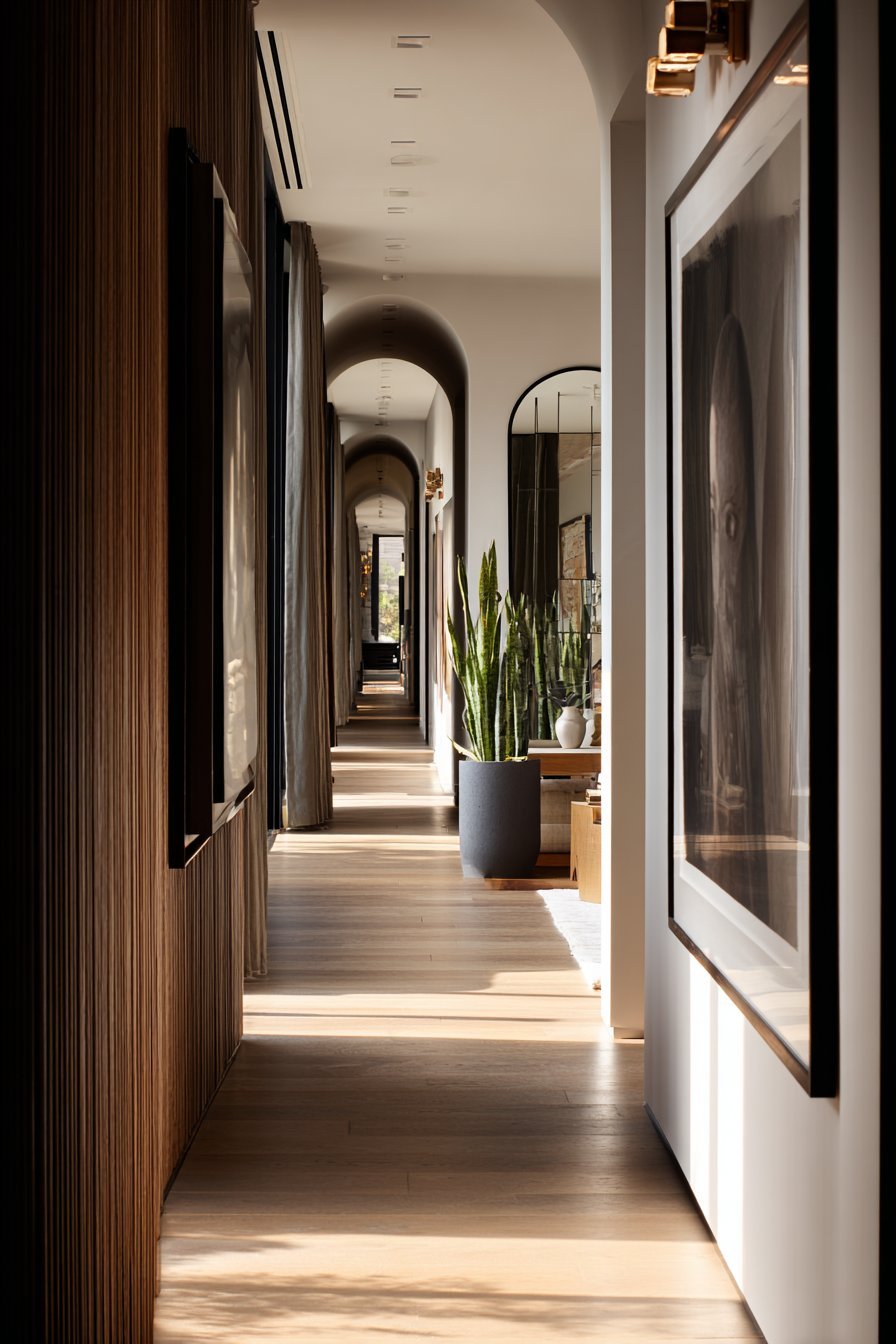
1. Embrace a Tall, Narrow Single-Statement Piece
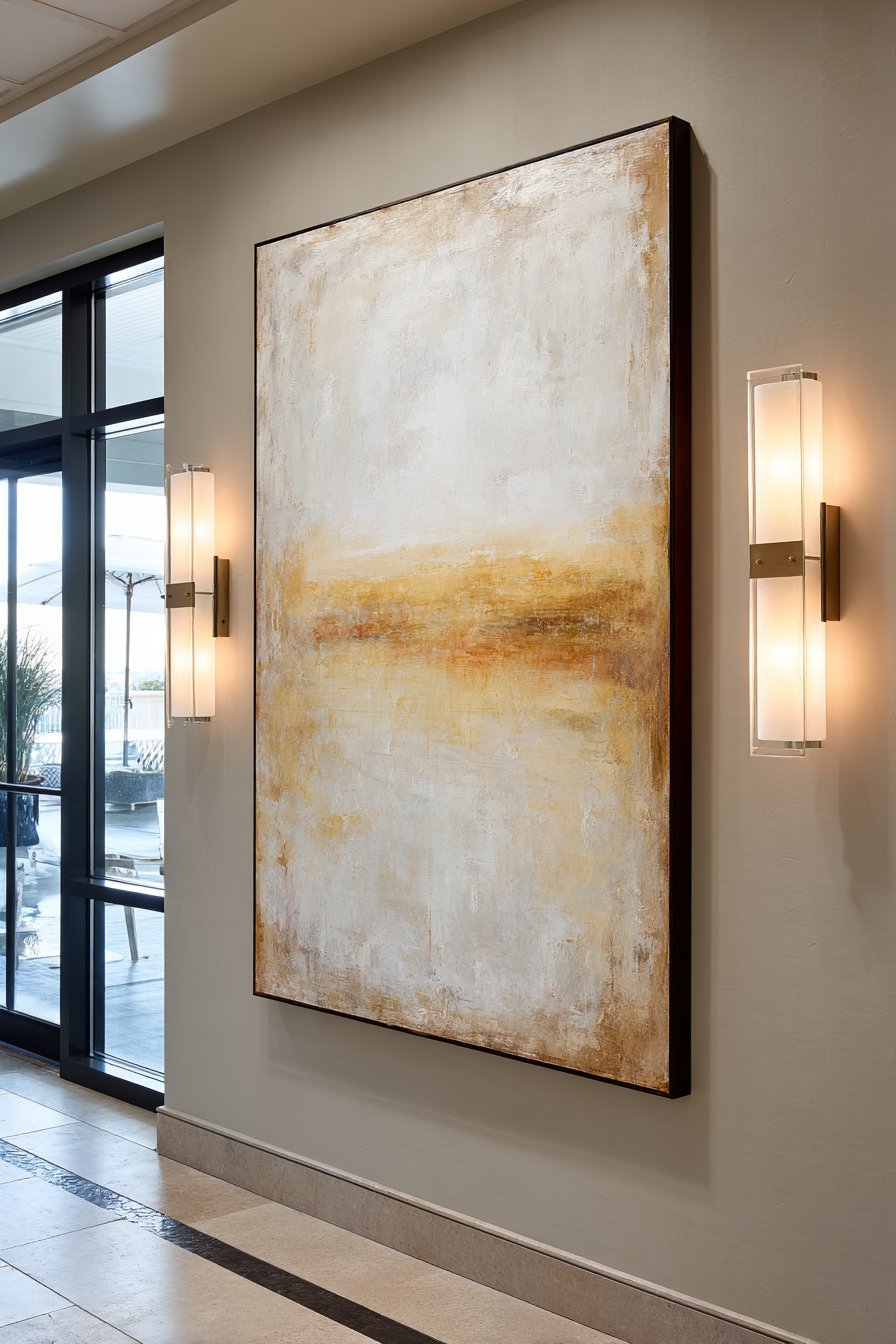
The single most effective wall decor strategy for a narrow space is to lean fully into the verticality of the wall with one tall, narrow statement piece that fills the height confidently and completely. This approach — choosing one significant vertical artwork, mirror, or decorative panel rather than multiple smaller pieces — creates an immediate sense of visual confidence and spatial authority that transforms a constricted wall into a dramatic design feature.
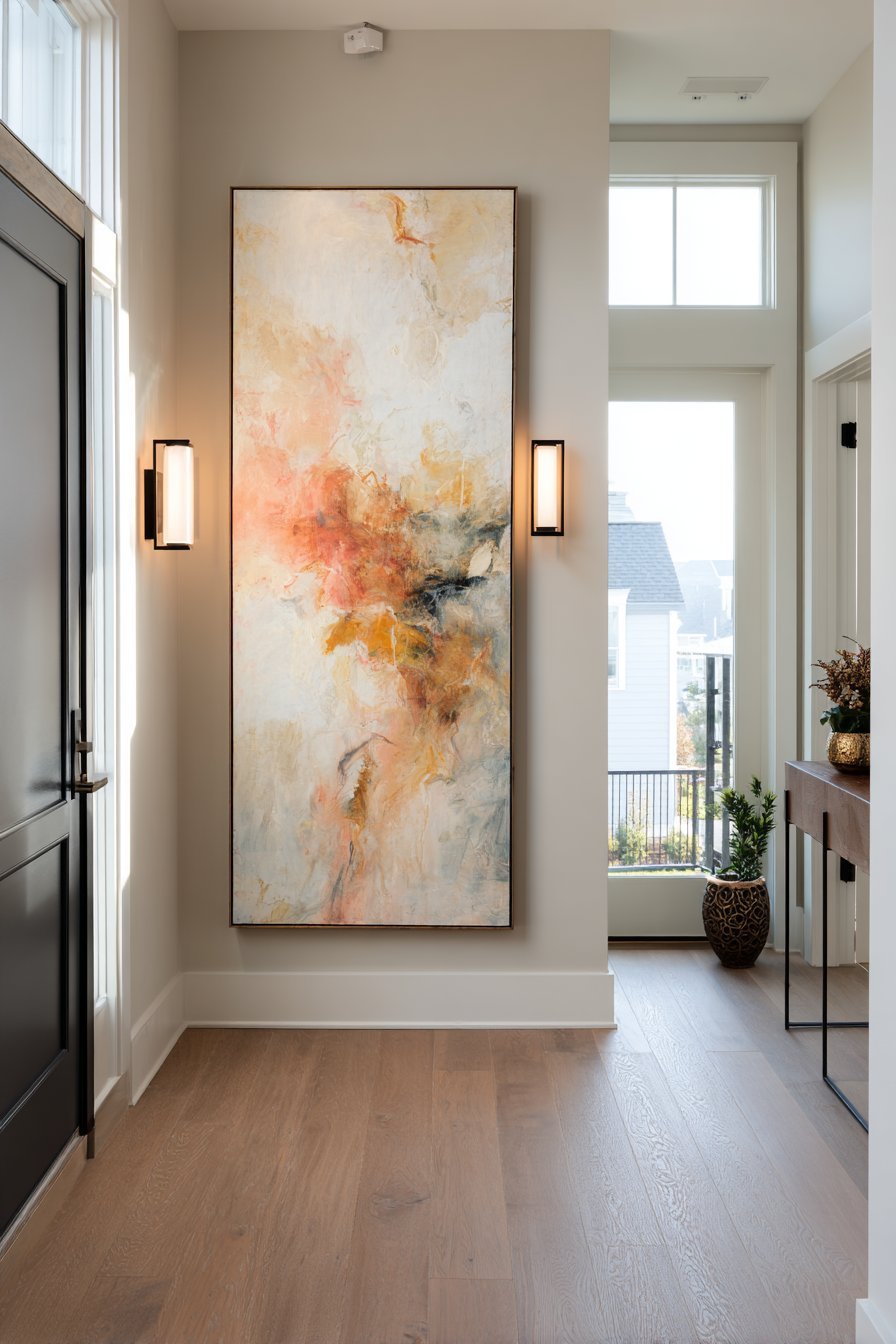
Tall, narrow artworks — portrait-format paintings, vertical photographic prints, elongated botanical illustrations, and abstract canvases in a 1:2 or 1:3 aspect ratio — are specifically suited to the proportions of narrow walls and corridors. A single large canvas in portrait orientation, hung so that it spans from near dado-rail height to within 20 to 30 centimeters of the ceiling, fills the wall with authority and draws the eye upward in a way that makes the entire space feel taller and more expansive. This effect is the vertical equivalent of a wide landscape painting anchoring a large living room wall.
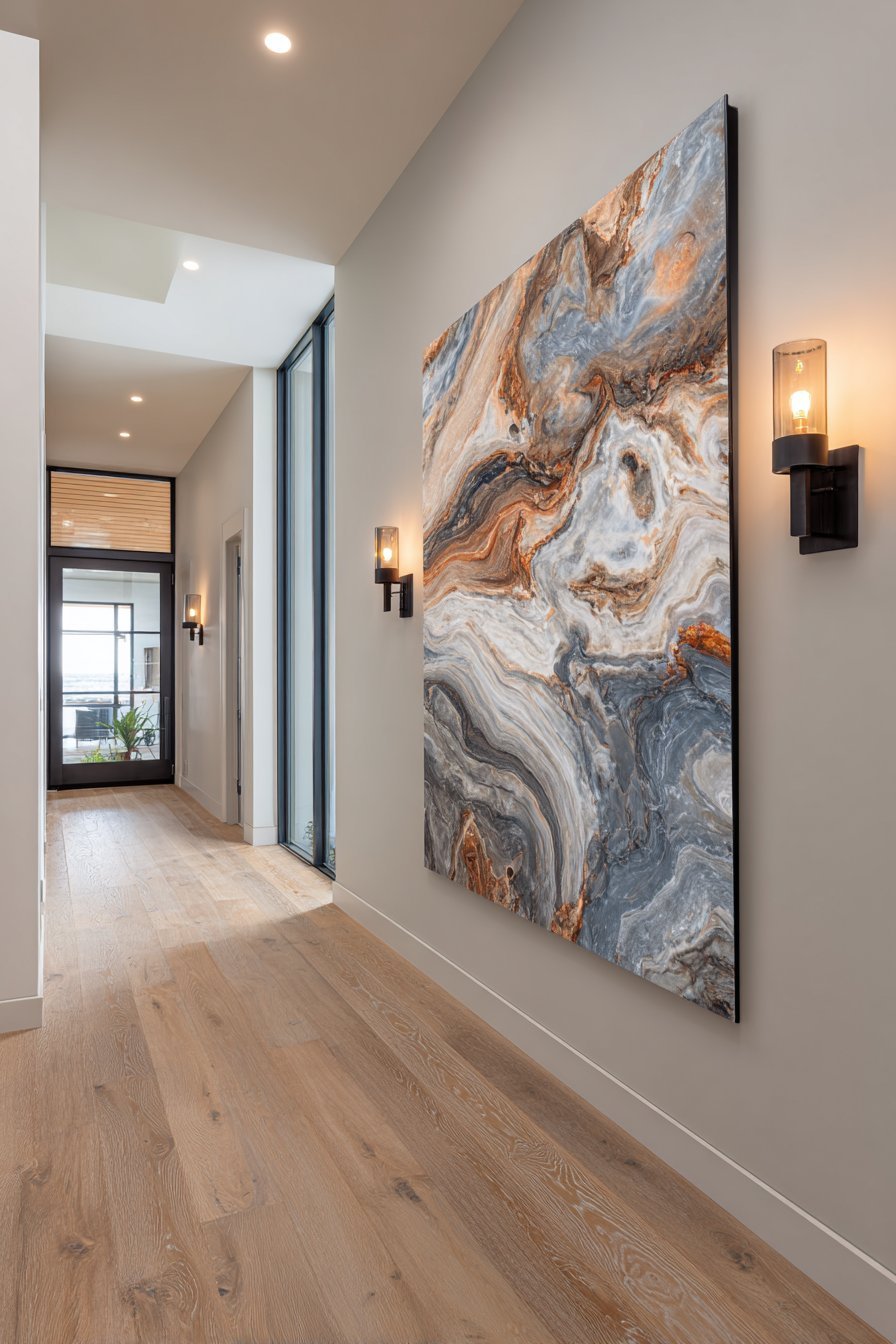
Tall decorative mirrors are perhaps the single most transformative object available to narrow space styling. A full-length or near-full-length mirror in a slender, vertical frame placed on a narrow corridor wall does three things simultaneously: it draws the eye upward along its vertical axis, it reflects light and the view beyond to make the space feel significantly wider and deeper, and it provides a functional moment in what might otherwise be a purely transitional space. A well-chosen mirror in a narrow hallway is one of the highest-return design investments available at any budget level.
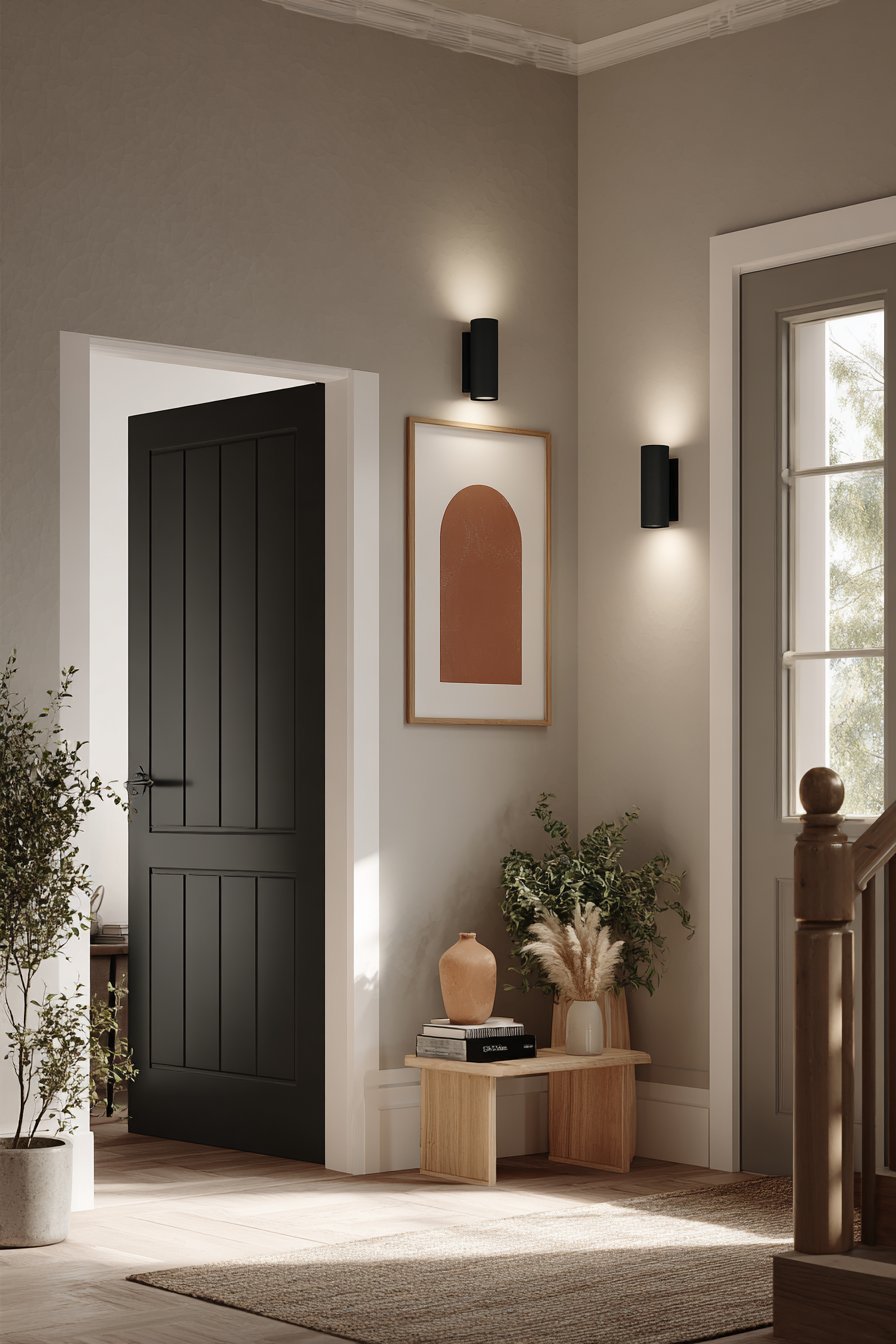
- Choose a portrait-format artwork with a 1:2 or 1:3 aspect ratio to suit the proportions of a narrow wall
- Select a piece that spans at least two-thirds of the wall’s height for maximum vertical impact
- Install a full-length or near-full-length mirror to simultaneously draw the eye up and expand the space visually
- Hang a single tall piece centered on the narrow wall rather than offset — centered placement maximizes the vertical emphasis
- Choose artwork or mirrors with simple, clean frames that do not compete with the vertical impact of the piece itself
2. Stack Artwork Vertically for a Gallery Column Effect
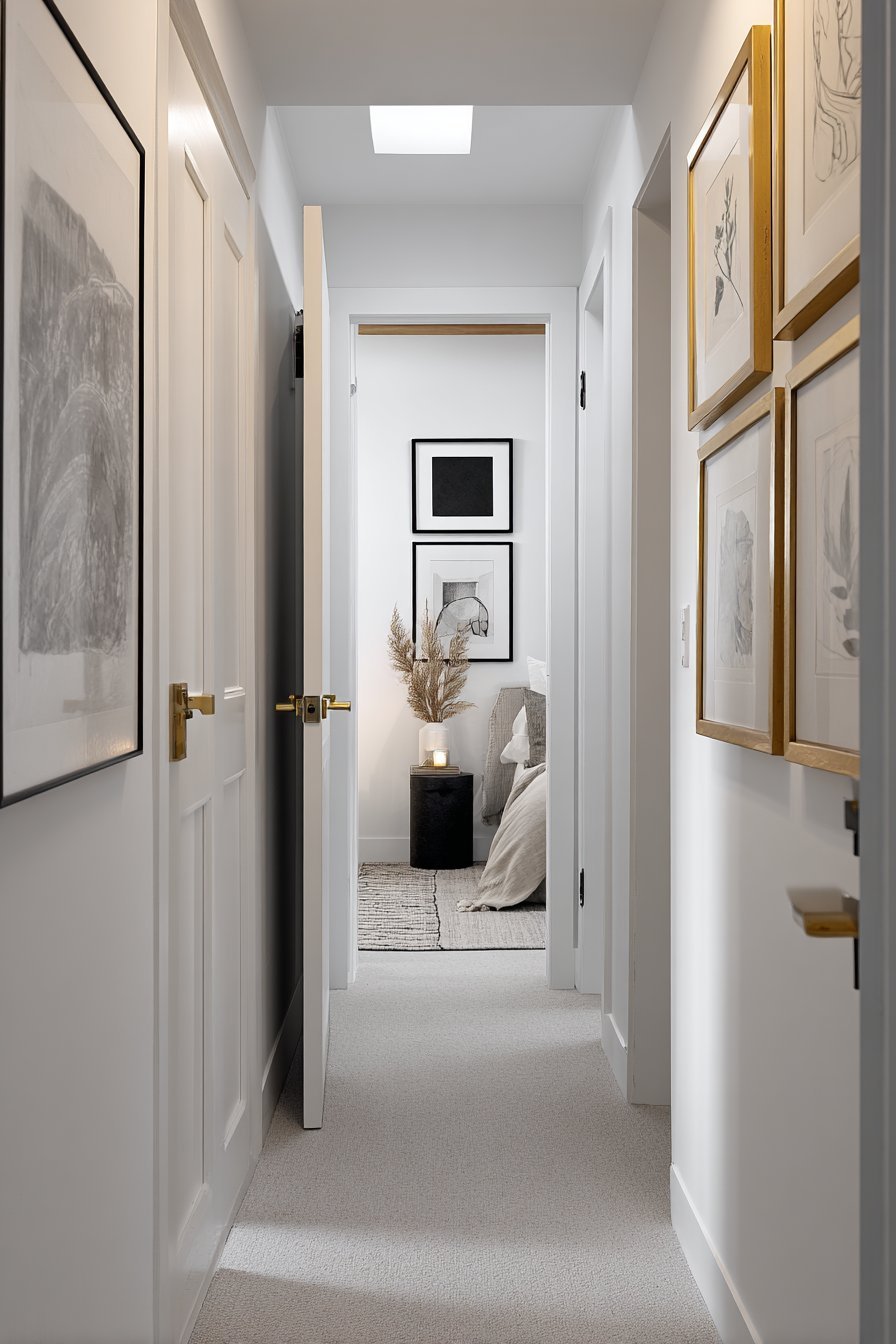
A vertical gallery column — a curated stack of artworks arranged one above another in a single, narrow vertical line — is one of the most design-forward and space-appropriate approaches to gallery display in a narrow corridor or hallway. Unlike the traditional horizontal gallery wall spread that requires lateral space, a vertical stack arrangement uses height rather than width, making it perfectly suited to the proportions of slender walls that cannot accommodate side-by-side hanging.
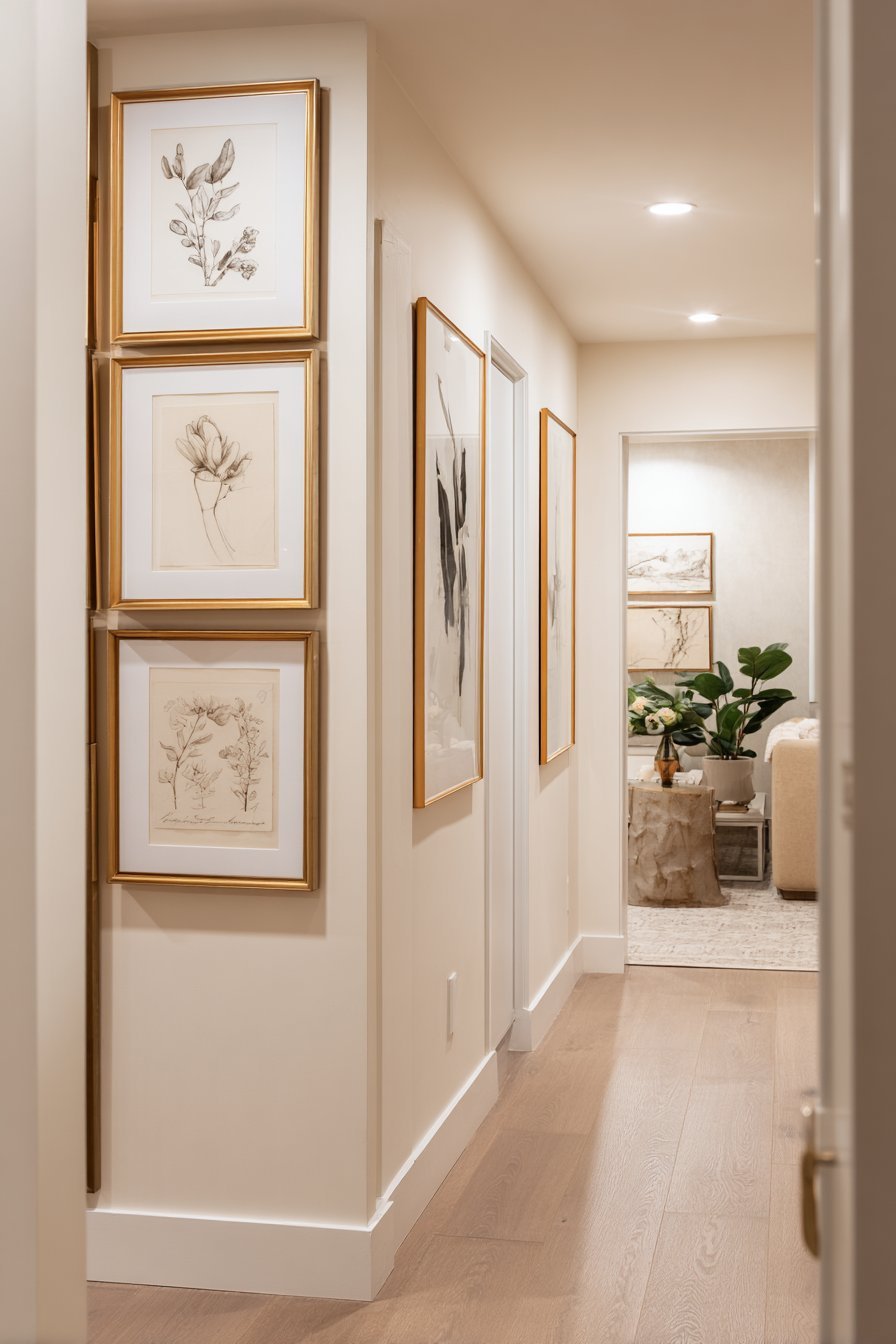
The composition principles for a vertical gallery stack differ from those of a horizontal gallery wall. Consistent horizontal centering on a single vertical axis is non-negotiable — every piece in the stack must be precisely centered on the same vertical line for the arrangement to read as intentional rather than haphazard. Frame width consistency is equally important: pieces in a vertical stack should be within a similar width range — ideally no more than 20 to 30 centimeters variation between the widest and narrowest piece — so that the column reads as a unified composition rather than a collection of mismatched sizes.
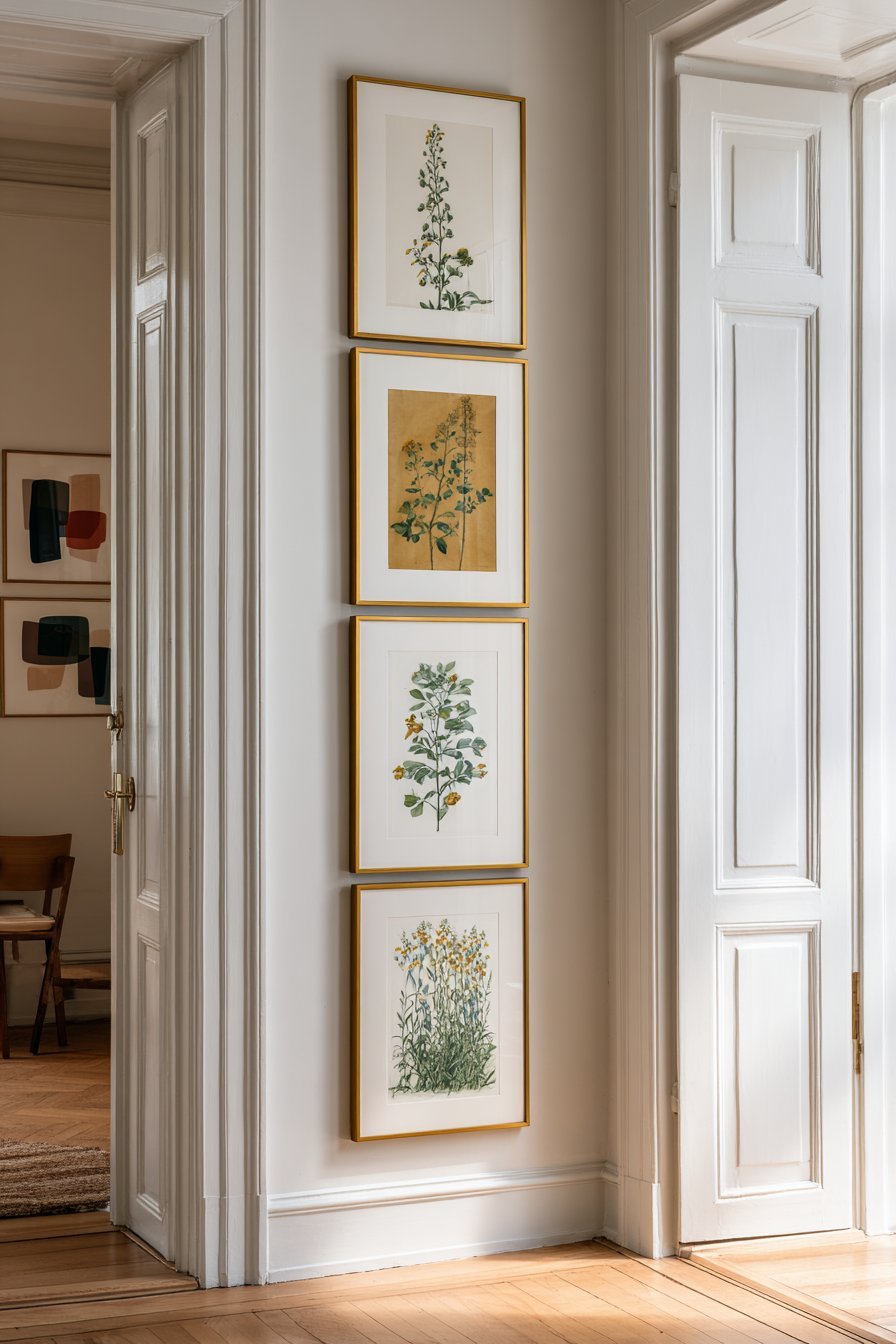
Spacing within the vertical stack requires careful calibration. Gaps that are too large make the arrangement feel disconnected — a series of individual pieces rather than a unified composition. Gaps that are too small make the stack feel compressed and uncomfortable. A consistent gap of 4 to 8 centimeters between frames is the range most consistently used by professional stylists and interior designers for vertical gallery arrangements — close enough to read as a unified column while allowing each piece enough breathing room to be appreciated individually.
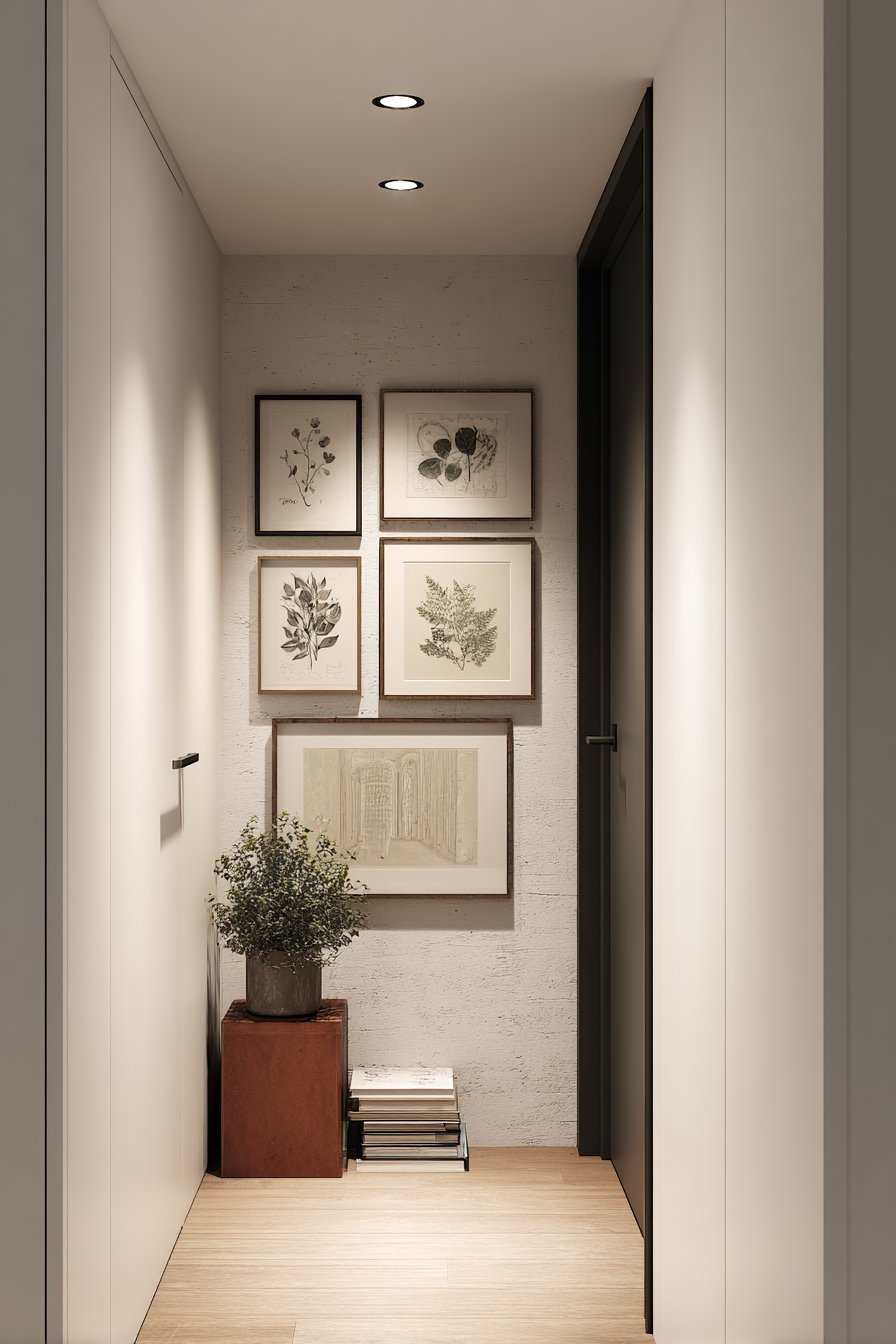
- Align every piece in a vertical stack on the same centered vertical axis — use a spirit level and plumb line
- Keep frame widths within a similar range — no more than 20 to 30 centimeters variation between widest and narrowest
- Maintain consistent gaps of 4 to 8 centimeters between frames throughout the vertical arrangement
- Use a consistent frame finish throughout the stack for visual cohesion — all timber, all black, or all brass
- Mix artwork mediums within the stack — photography, illustration, abstract art — for visual interest within a unified format
3. Use Architectural Wall Treatments to Create Vertical Interest
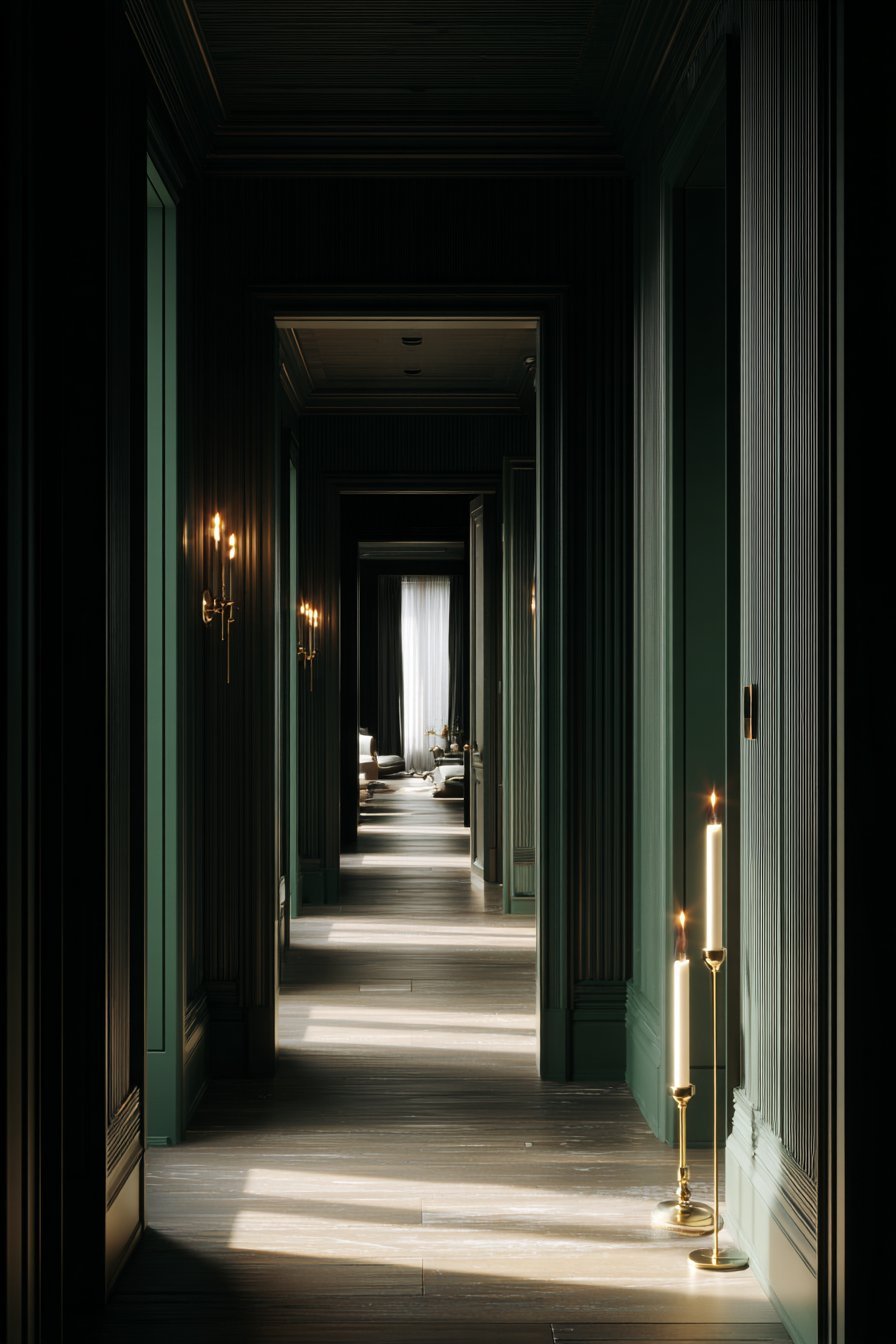
Architectural wall treatments — paneling, molding, battens, shiplap, and decorative plaster finishes — are among the most powerful tools available for transforming narrow spaces from plain, undistinguished walls into features of genuine architectural character. These treatments work with the vertical dimension of the wall rather than simply decorating its surface, creating depth, shadow, and structural interest that makes narrow spaces feel considered, crafted, and beautifully finished.
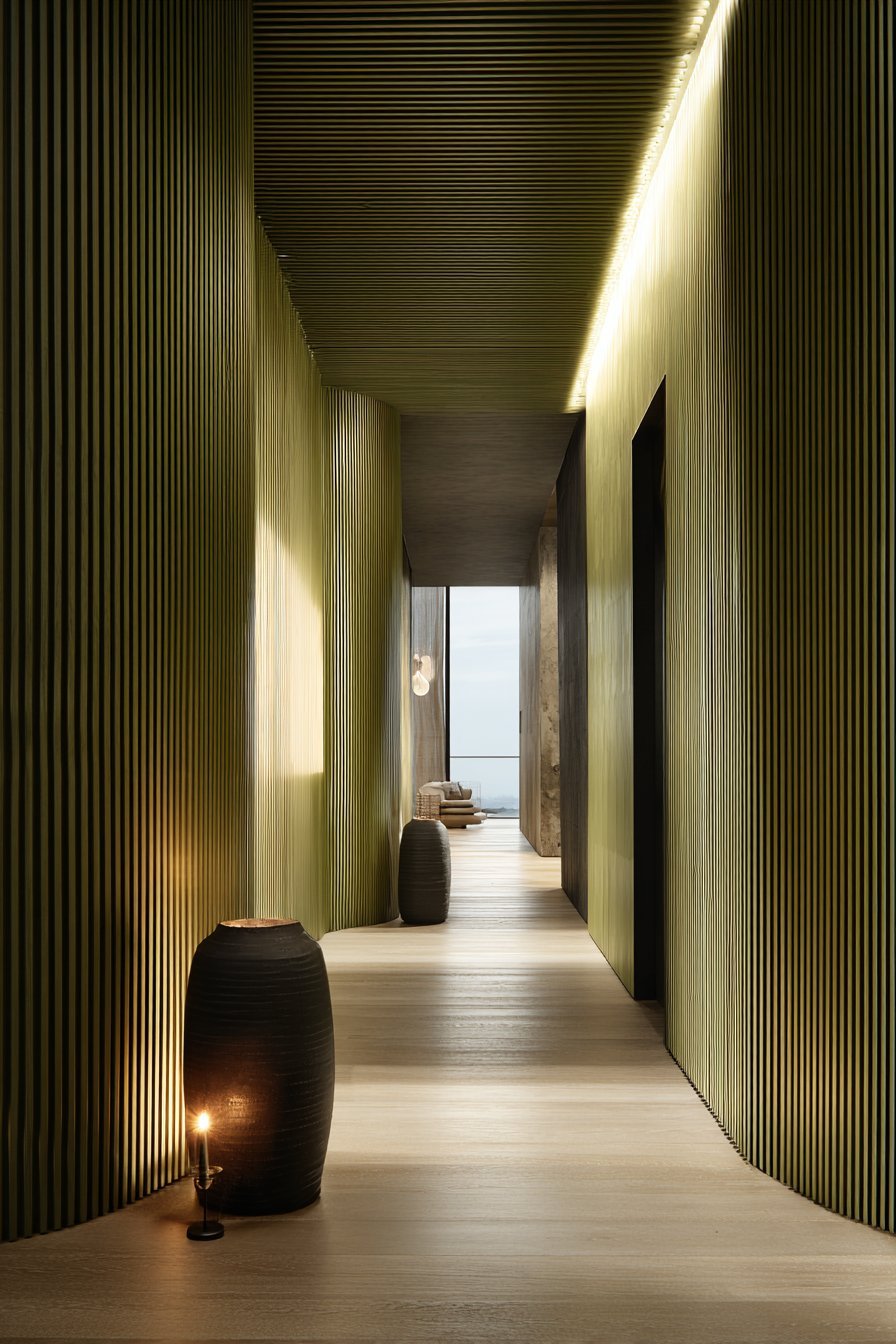
Vertical battens or slat wall panels are particularly effective in narrow spaces because their inherent directionality — rows of vertical lines running from floor to ceiling — actively emphasizes and celebrates the wall’s height rather than drawing attention to its limited width. A narrow hallway lined with vertical timber slats, painted in a deep accent color or left in natural timber tone, reads as dramatically architectural rather than constrainedly narrow. The rhythm of the vertical lines creates a sense of movement and energy that makes the corridor feel like a destination rather than a passage.
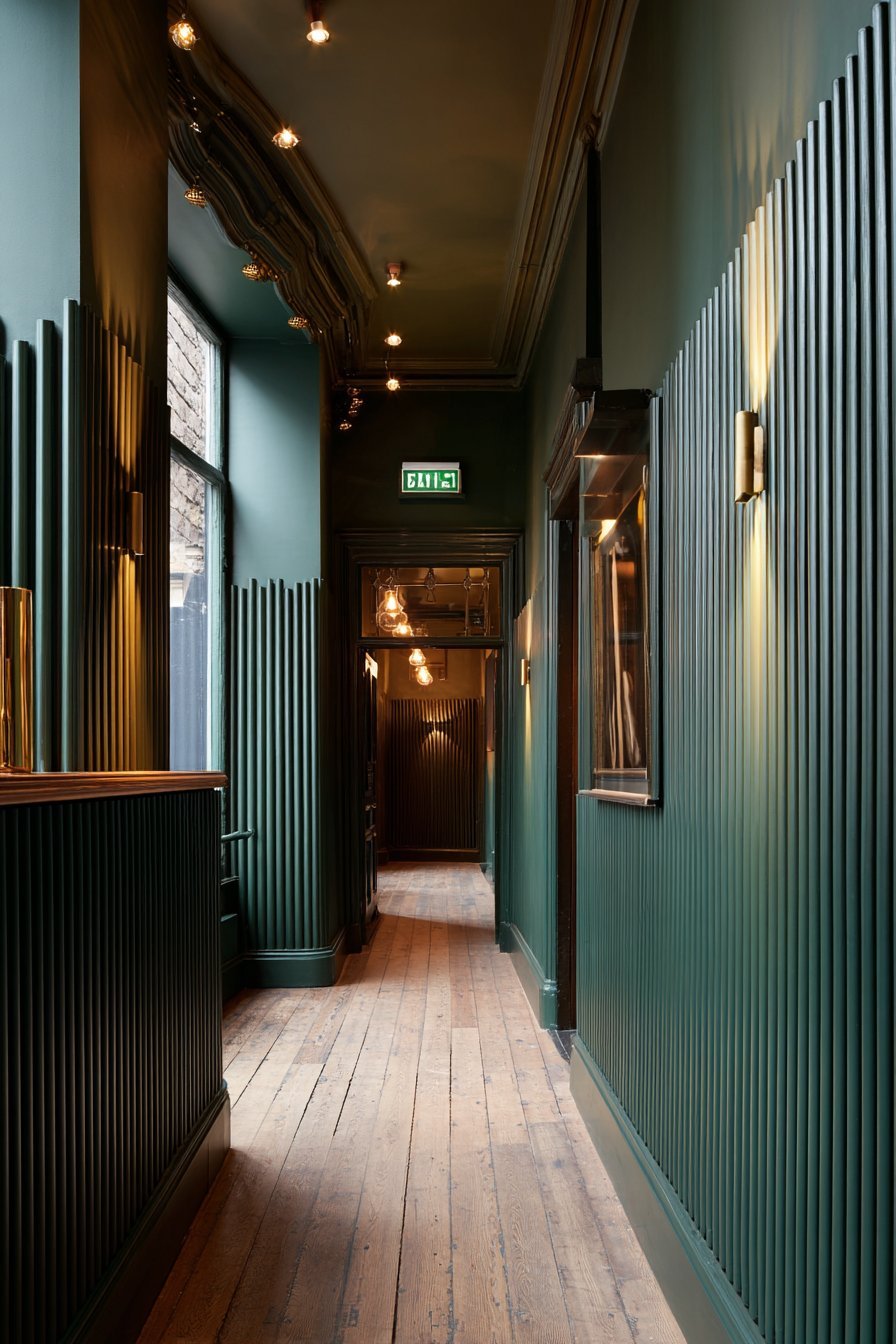
Panel molding and wainscoting adapted for narrow walls in tall, elongated configurations creates the architectural richness of a Georgian or Victorian interior without requiring the substantial room widths those periods typically assumed. Tall, narrow panel proportions — vertically elongated rectangular panels with generous height relative to their width — suit narrow walls perfectly and create the impression of a room with genuine architectural pedigree. Painted in a rich, sophisticated accent color — deep teal, warm forest green, dusty plum — these panels transform a narrow corridor into an interior moment of extraordinary beauty.
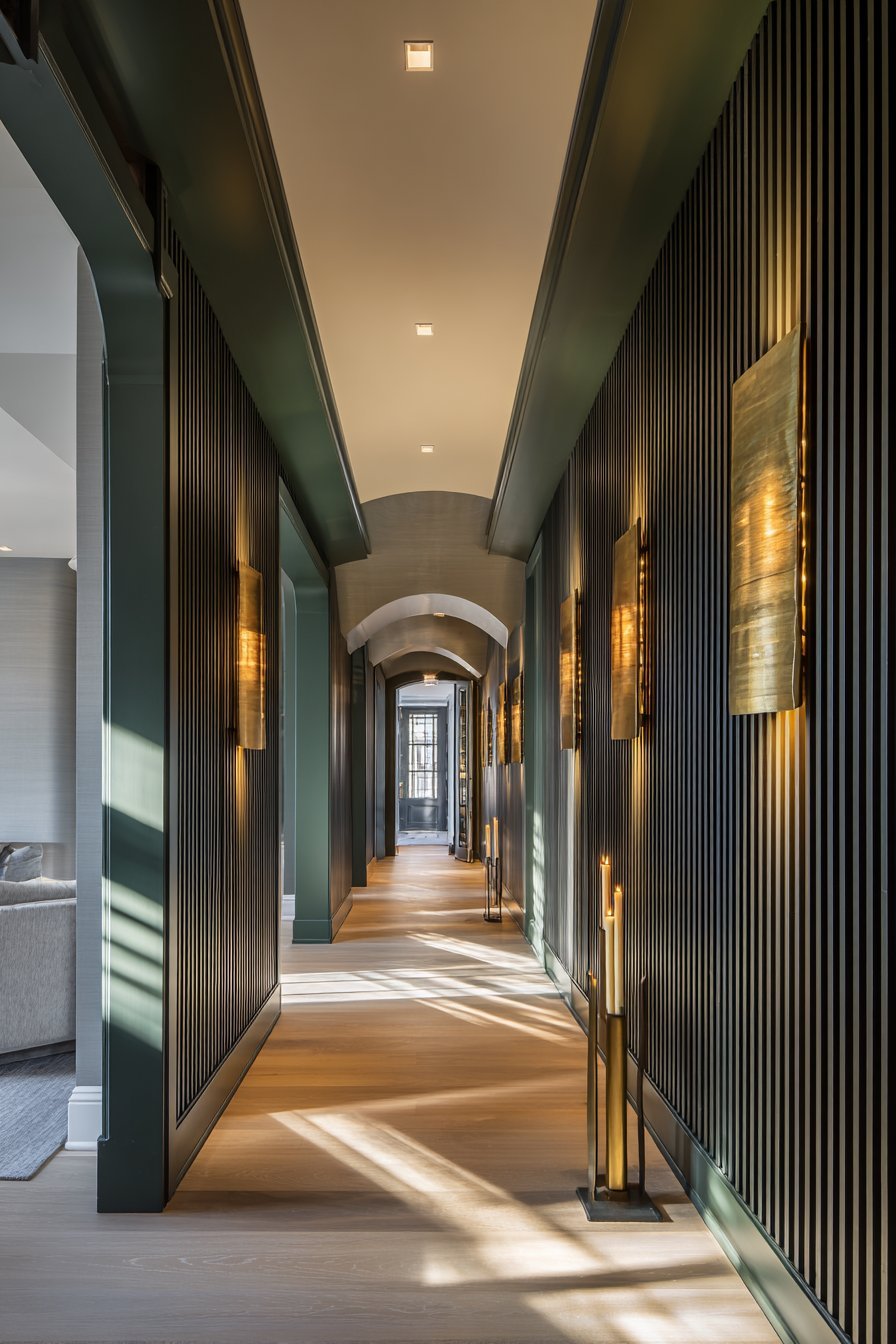
- Install vertical timber slat panels on narrow walls to emphasize height and create architectural rhythm
- Use tall, elongated panel molding proportions on narrow walls for a sophisticated architectural effect
- Paint architectural wall treatments in a rich accent color to transform a narrow corridor into a dramatic feature
- Combine vertical battens with integrated shelf brackets for storage that reinforces the vertical design language
- Use a limewash or textured plaster finish on narrow walls for organic surface depth without structural installation
4. Leverage Mirrors Strategically for Light and Depth
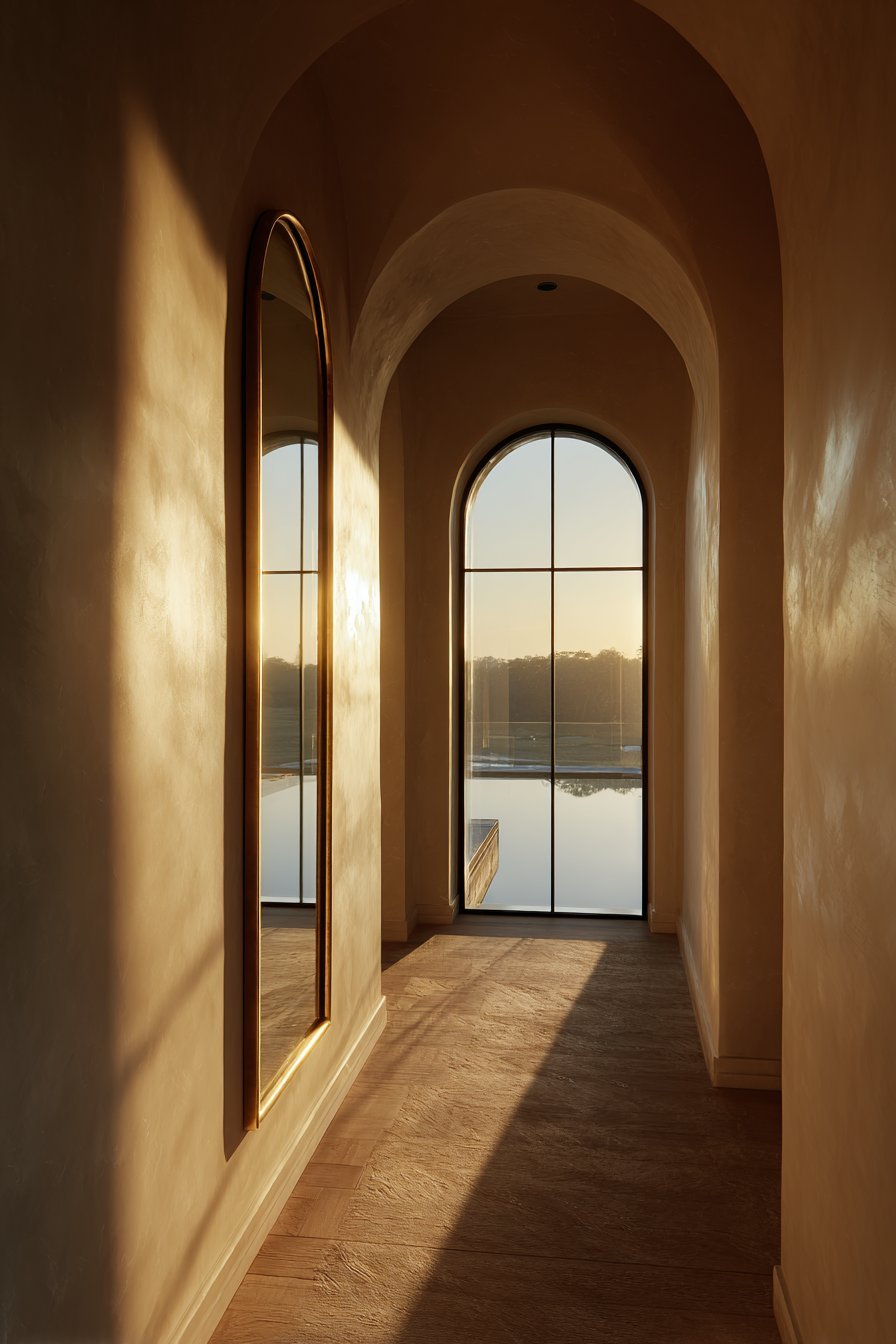
Mirrors are the most powerful optical tools available to the decorator of narrow spaces — and using them strategically rather than simply placing them wherever a wall is available unlocks their full transformative potential. A mirror positioned with deliberate attention to what it reflects, how it responds to light sources, and where it draws the eye can make a narrow corridor feel like an entirely different spatial experience from the same corridor without it.
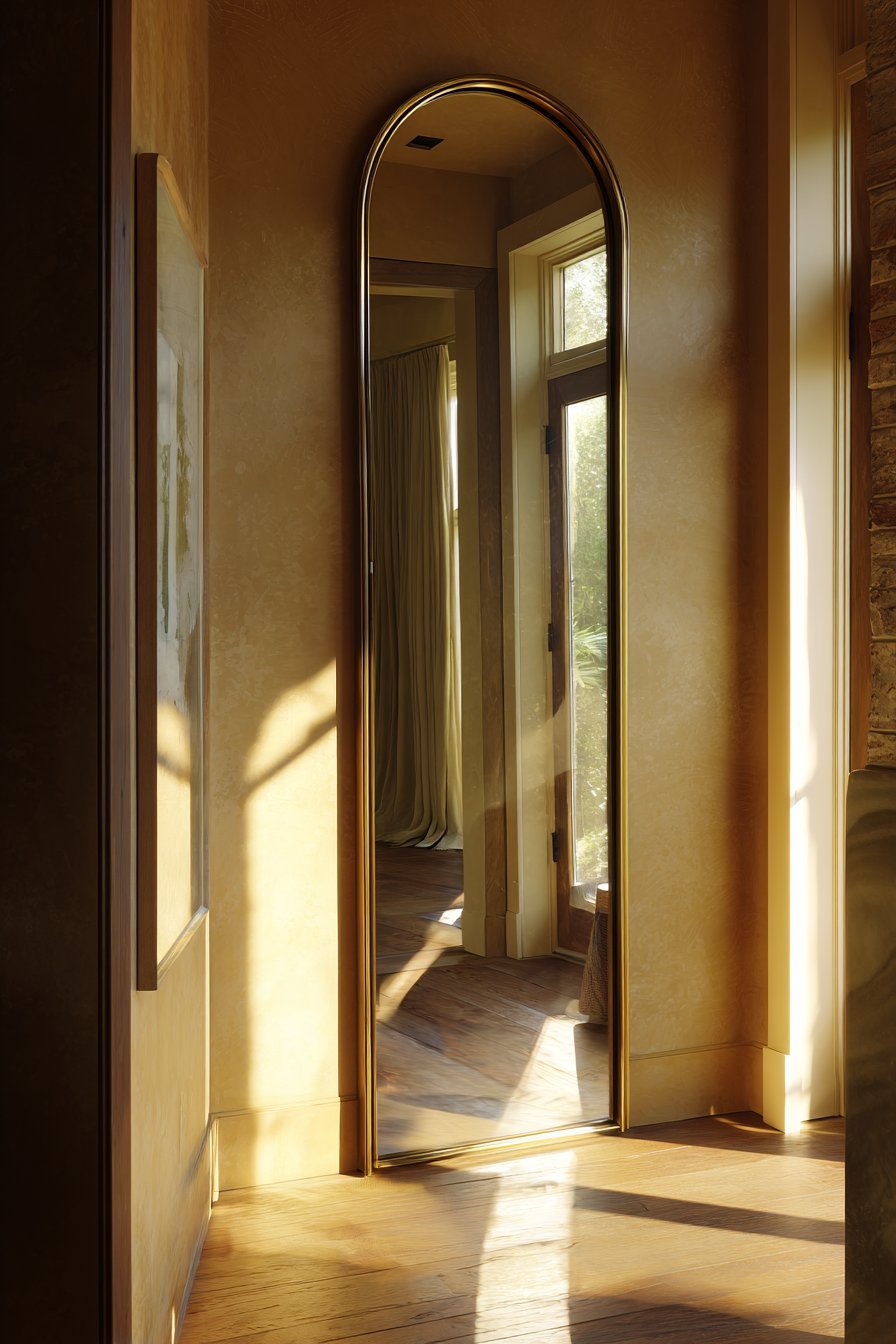
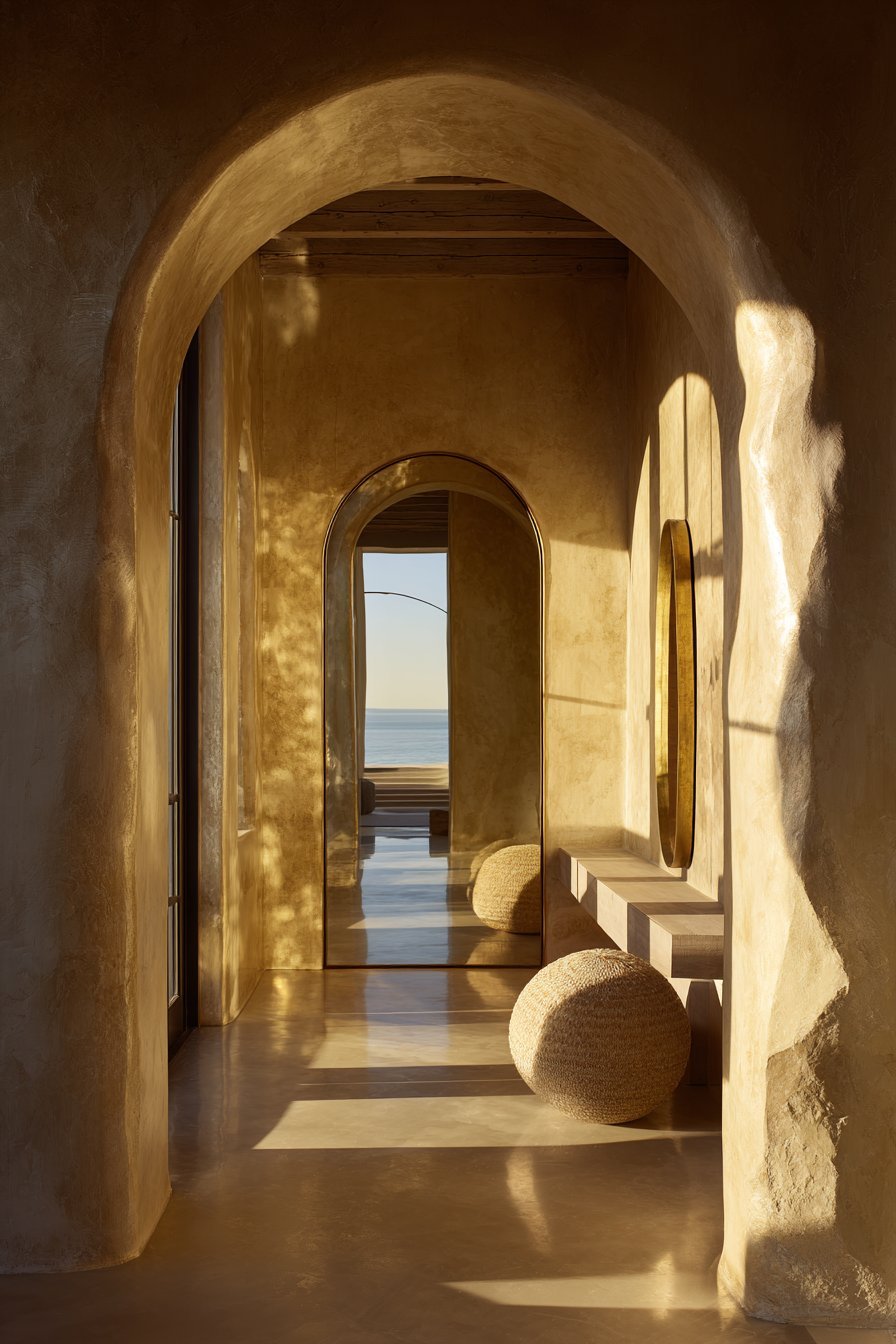
The most effective mirror placement in a narrow space positions the mirror so that it reflects either a window, a light source, or a visually attractive view deeper into the space. A mirror hung opposite a window doubles the apparent natural light in the corridor and creates the impression of a second window — a visual trick that makes narrow hallways feel immediately less enclosed and more luminous. A mirror hung at the end of a corridor reflects the length of the corridor back at itself, creating a sense of infinite depth and spatial expansion that is one of the most dramatic effects available in interior design.
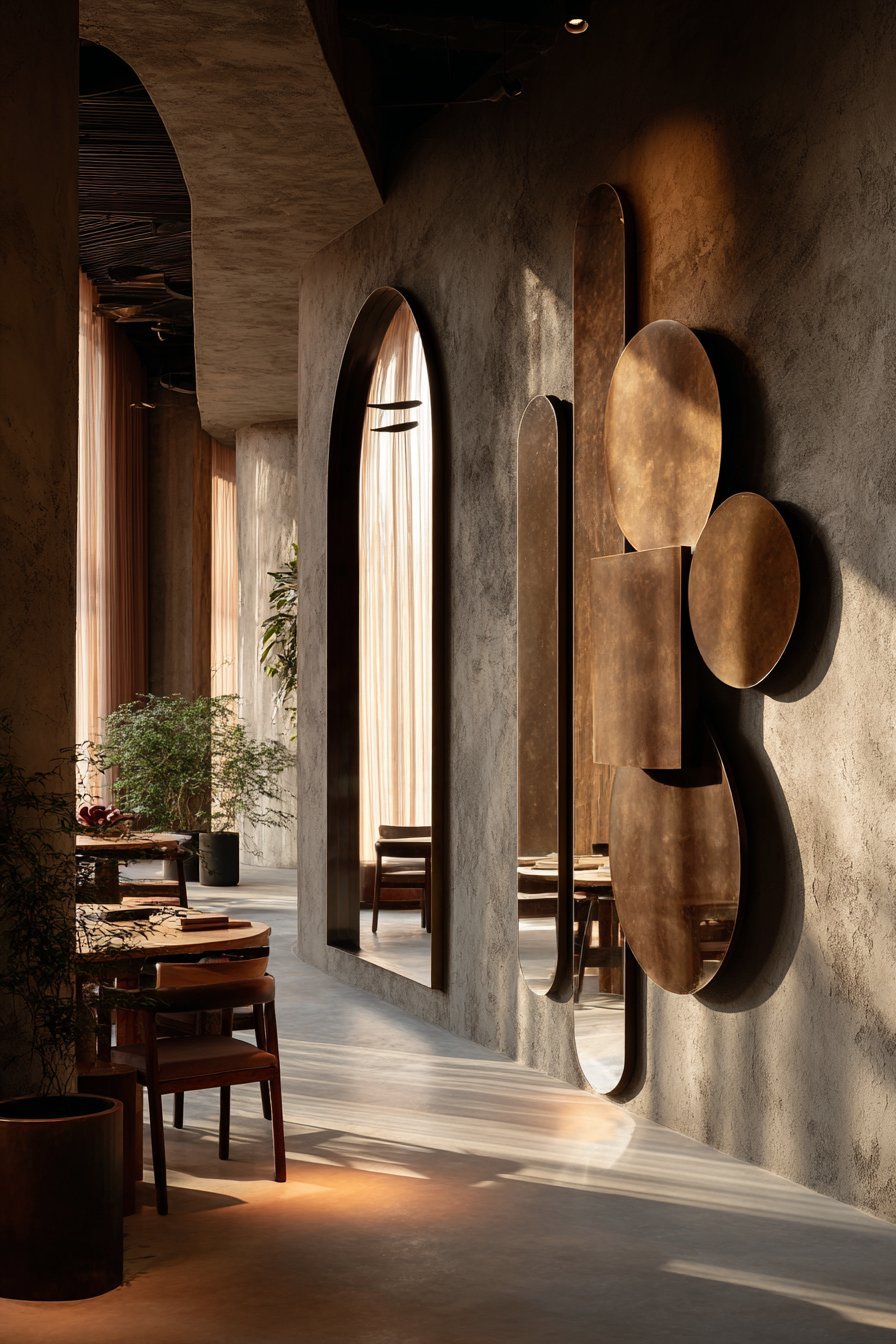
Multiple mirrors in a vertical arrangement — three or more mirrors of varying shapes and sizes stacked in a vertical column — create the gallery effect of a multi-piece wall arrangement while delivering all the light-reflecting and space-expanding benefits of mirror surfaces. Mixing mirror shapes — a round mirror, an oval mirror, and an arch-topped mirror arranged in a vertical stack — adds visual variety and organic charm to what might otherwise be a very linear arrangement. This approach is particularly beautiful in entrance hallways where it greets guests with warmth, light, and a touch of the unexpected.
- Position mirrors to reflect natural light sources or windows for maximum space-expanding luminosity
- Place a mirror at the end of a corridor to create the illusion of depth and spatial continuation
- Arrange multiple mirrors of varying shapes in a vertical stack for a gallery effect with spatial benefits
- Choose mirrors with frames that complement rather than compete with the narrow wall’s other design elements
- Use an oversized arched mirror leaning against a narrow wall for a casual, contemporary alternative to hung placement
5. Incorporate Tall Plants and Botanical Elements as Living Decor
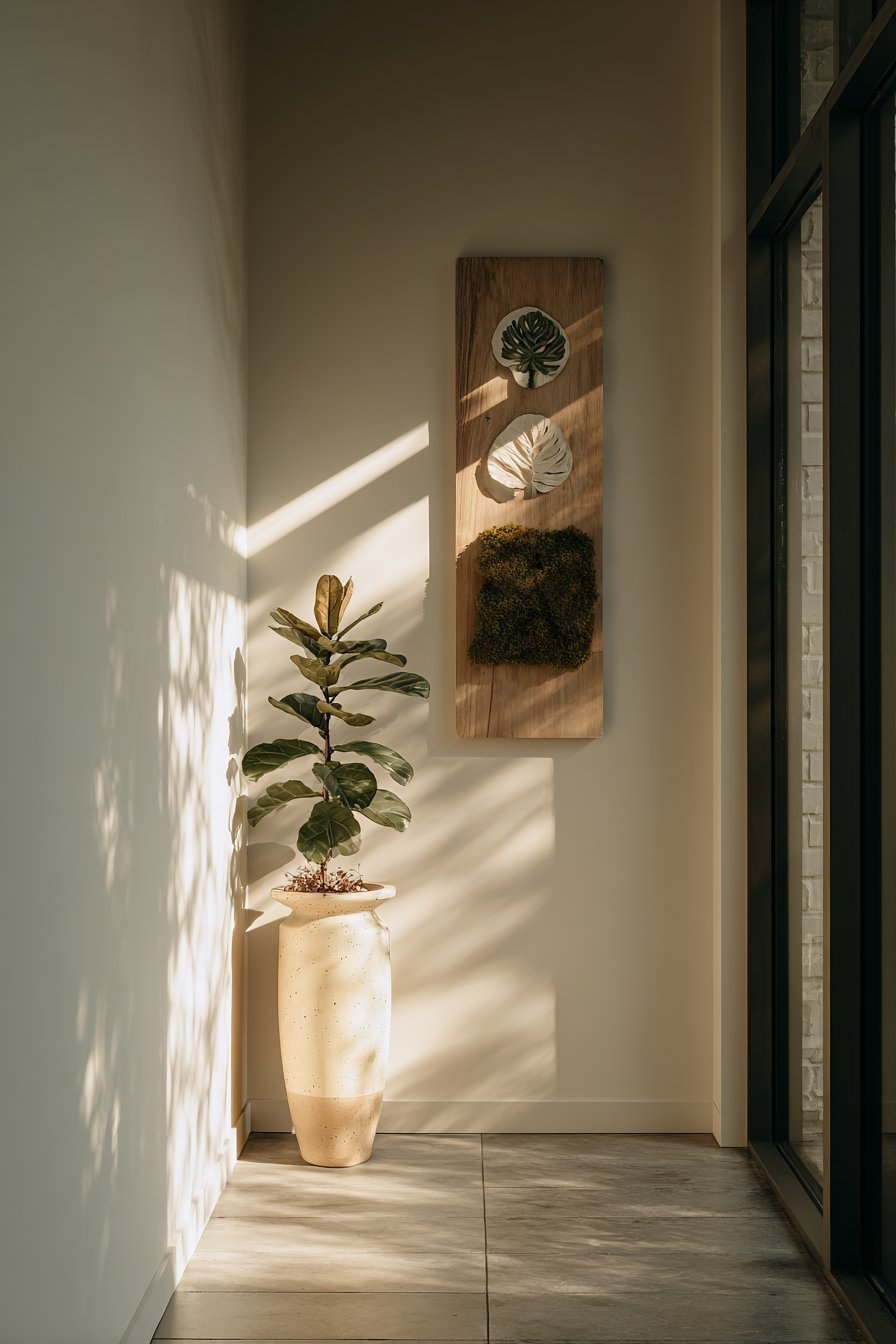
Living vertical elements — tall indoor plants, climbing vines, and botanical installations — bring a uniquely powerful quality to narrow spaces that no manufactured wall decor can replicate. The organic verticality of a tall plant — a fiddle leaf fig, a snake plant, a bamboo palm, or a dramatic monstera trained upward on a moss pole — draws the eye naturally and effortlessly upward while introducing life, movement, and the grounding quality of natural forms into a space that might otherwise feel static and constricted.
A tall, slender indoor plant placed beside or in front of a narrow wall integrates beautifully with vertical wall decor to create a layered, living wall composition. A cluster of three botanical prints stacked vertically above a potted snake plant creates a composition that moves from the artwork down through the plant’s upright leaves to the pot at floor level — a continuous vertical design narrative that engages the eye through the full height of the wall in a way that purely wall-hung decor rarely achieves. The plant’s natural variation and gradual growth mean the composition is never static, always subtly evolving.
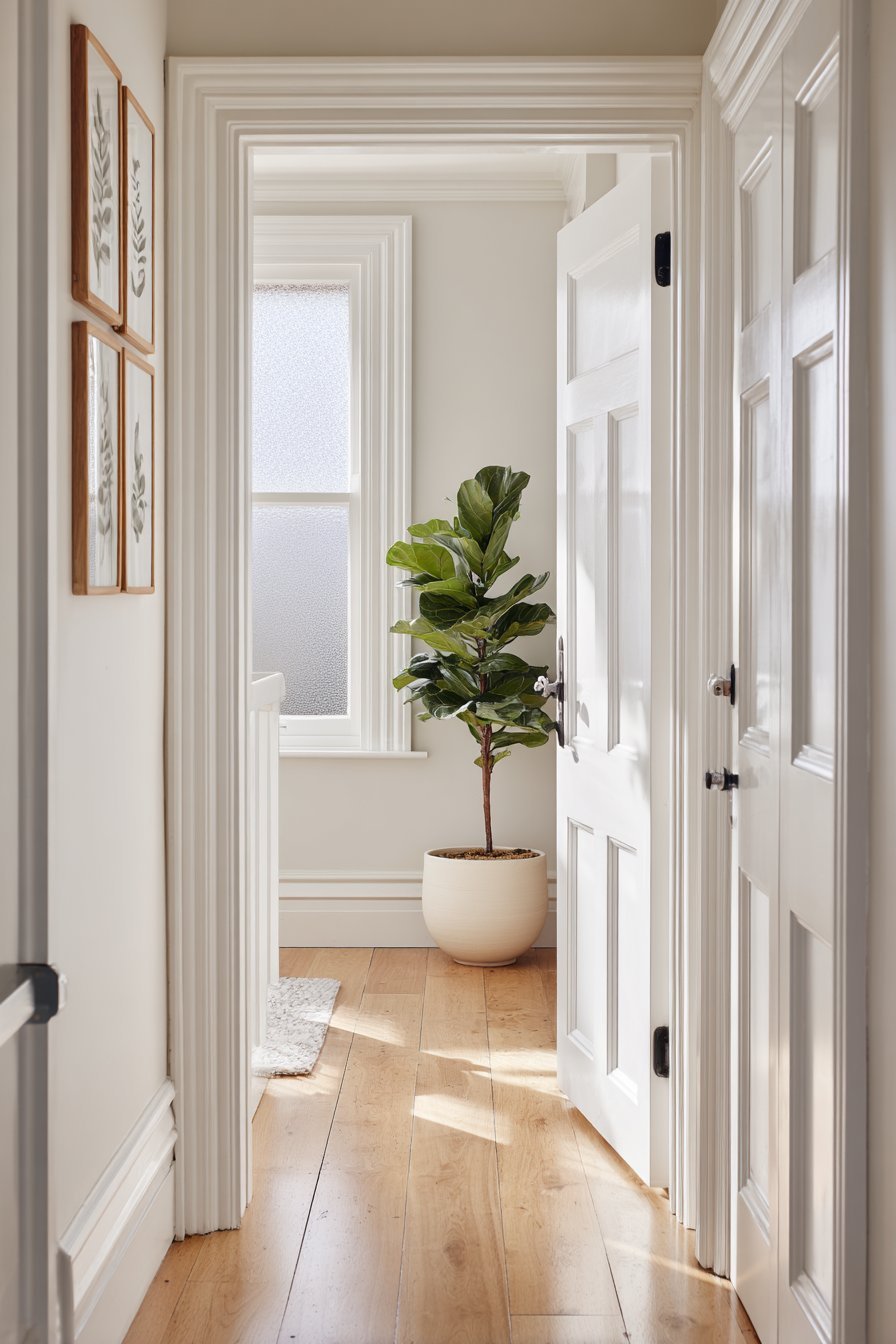
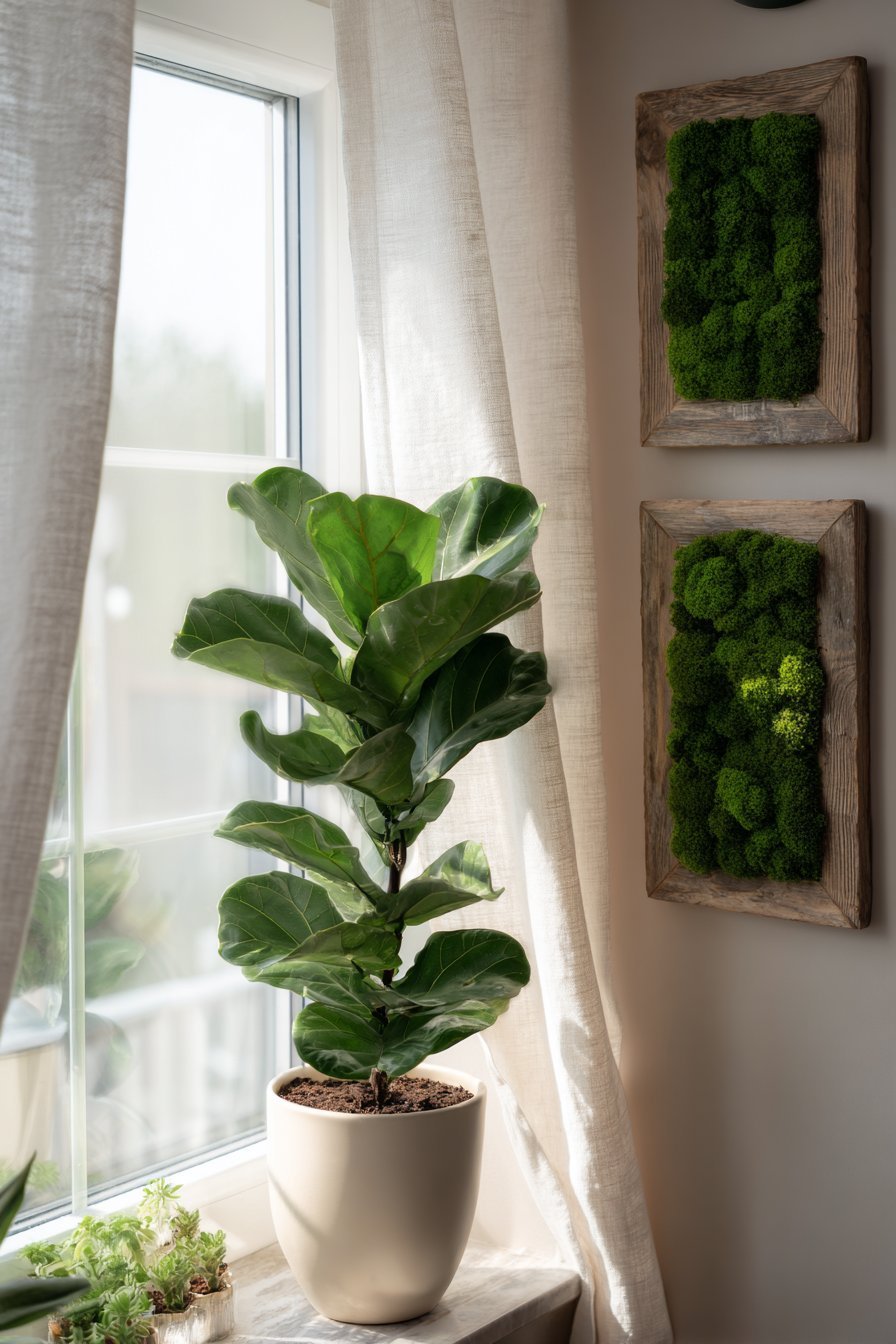
Botanical wall installations — including living moss walls, preserved plant panels, air plant displays, and dried botanical arrangements mounted as wall art — offer an even more direct integration of plant material and wall decor in narrow spaces. A preserved moss panel in a timber frame, hung as a single statement piece on a narrow wall, delivers the organic warmth and textural richness of living plant material without any of the ongoing watering or light requirements. These botanical wall pieces have an extraordinary ability to make narrow spaces feel alive, connected to nature, and genuinely inviting in a way that conventional wall art alone rarely achieves.
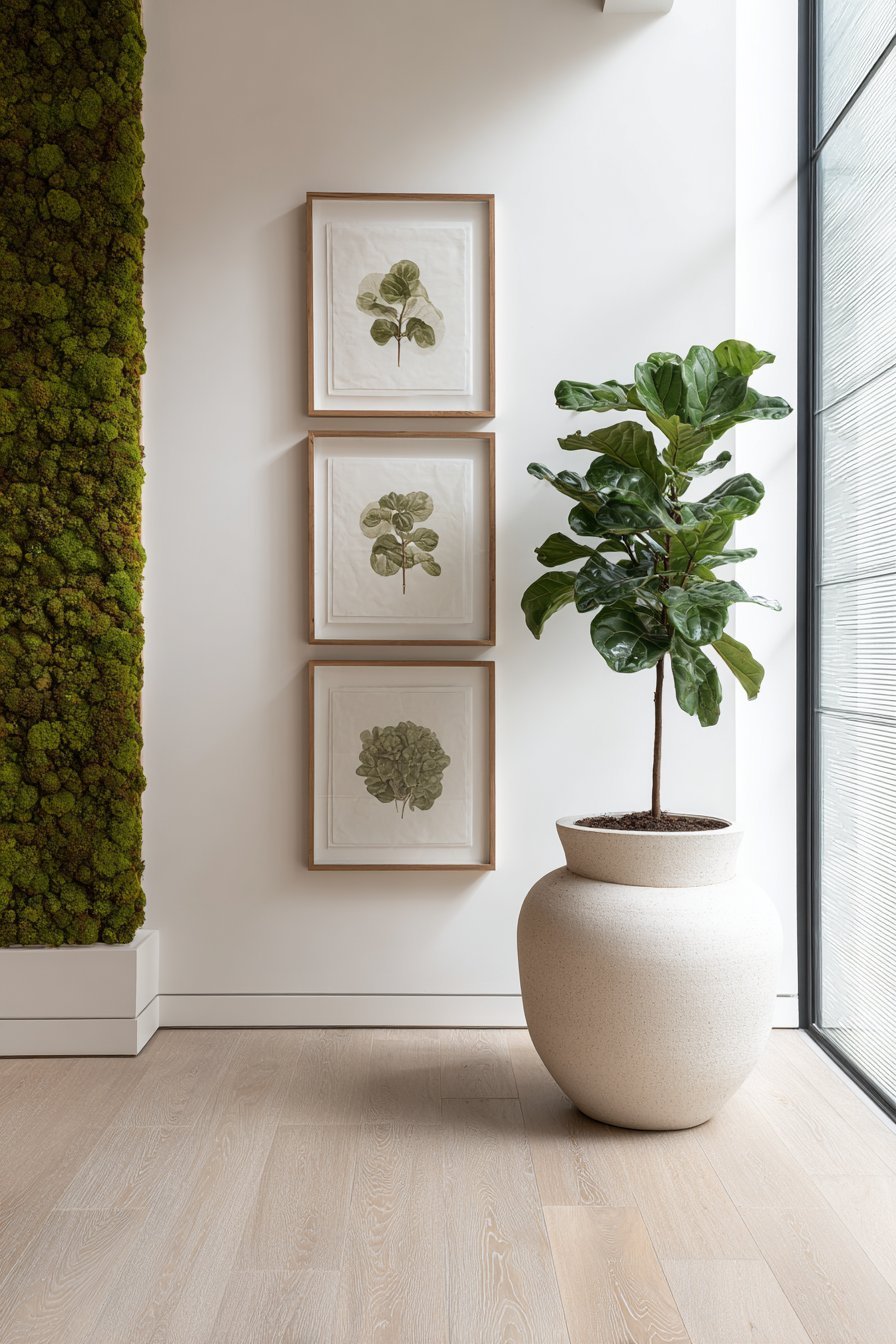
- Place a tall, slender plant — fiddle leaf fig, snake plant, bamboo palm — beside a narrow wall as living vertical decor
- Layer botanical wall art above a potted plant to create a continuous vertical design narrative from floor to ceiling
- Install a preserved moss or dried botanical panel as a low-maintenance living wall element in a narrow corridor
- Train a climbing plant up a narrow wall-mounted trellis for a growing, living vertical installation
- Choose plants with upright, vertical growth habits — not sprawling varieties — for narrow space applications
6. Use Lighting as a Vertical Design Element
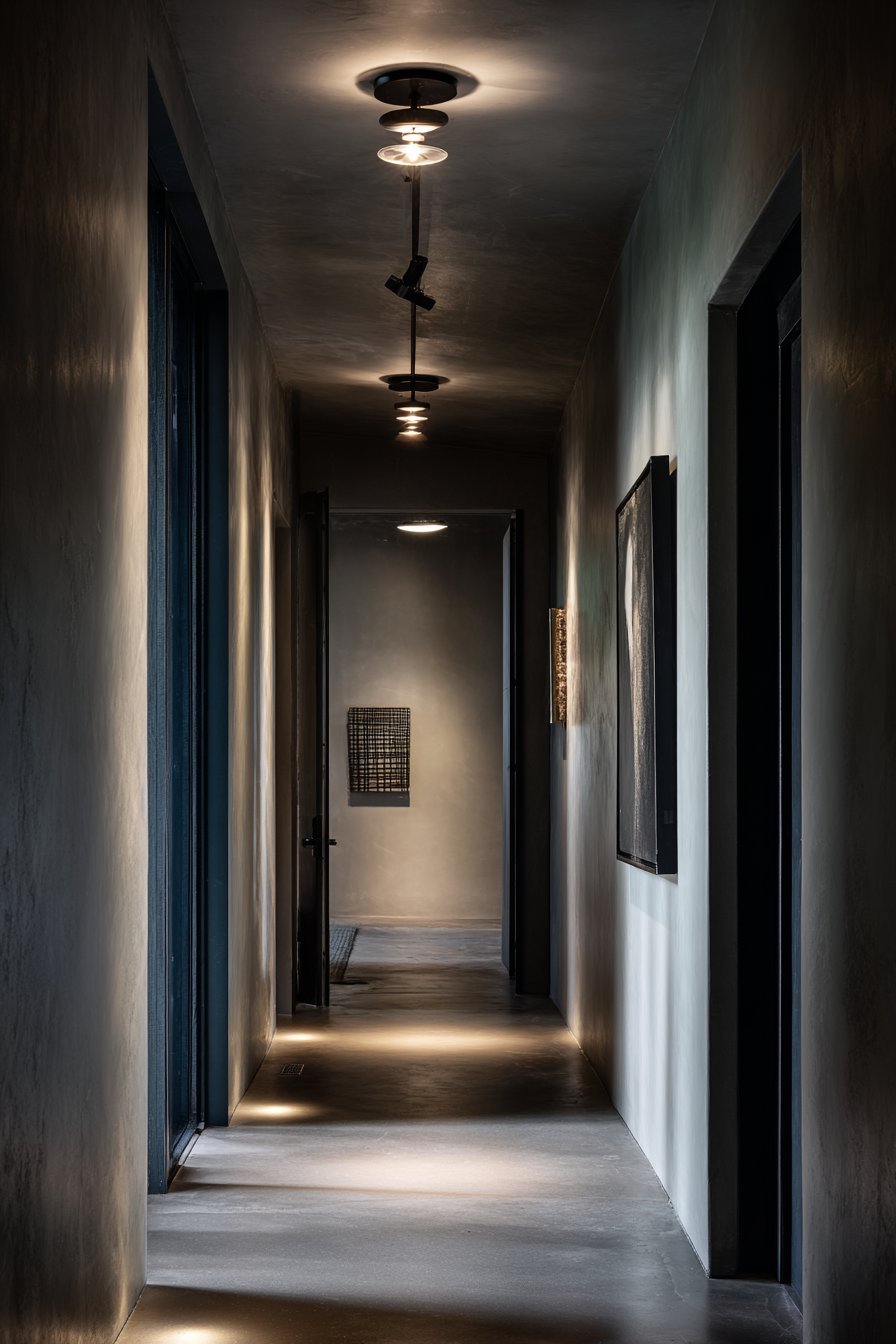
Lighting in a narrow space serves a dual function that is more significant than in any other interior context: it provides the illumination the space needs to feel safe and welcoming, and it shapes the spatial perception of the entire corridor — making it feel taller, wider, more dramatic, or more intimate depending entirely on how the lighting is positioned and directed. In a narrow space, lighting is not a finishing detail — it is a primary design decision with direct spatial consequences.
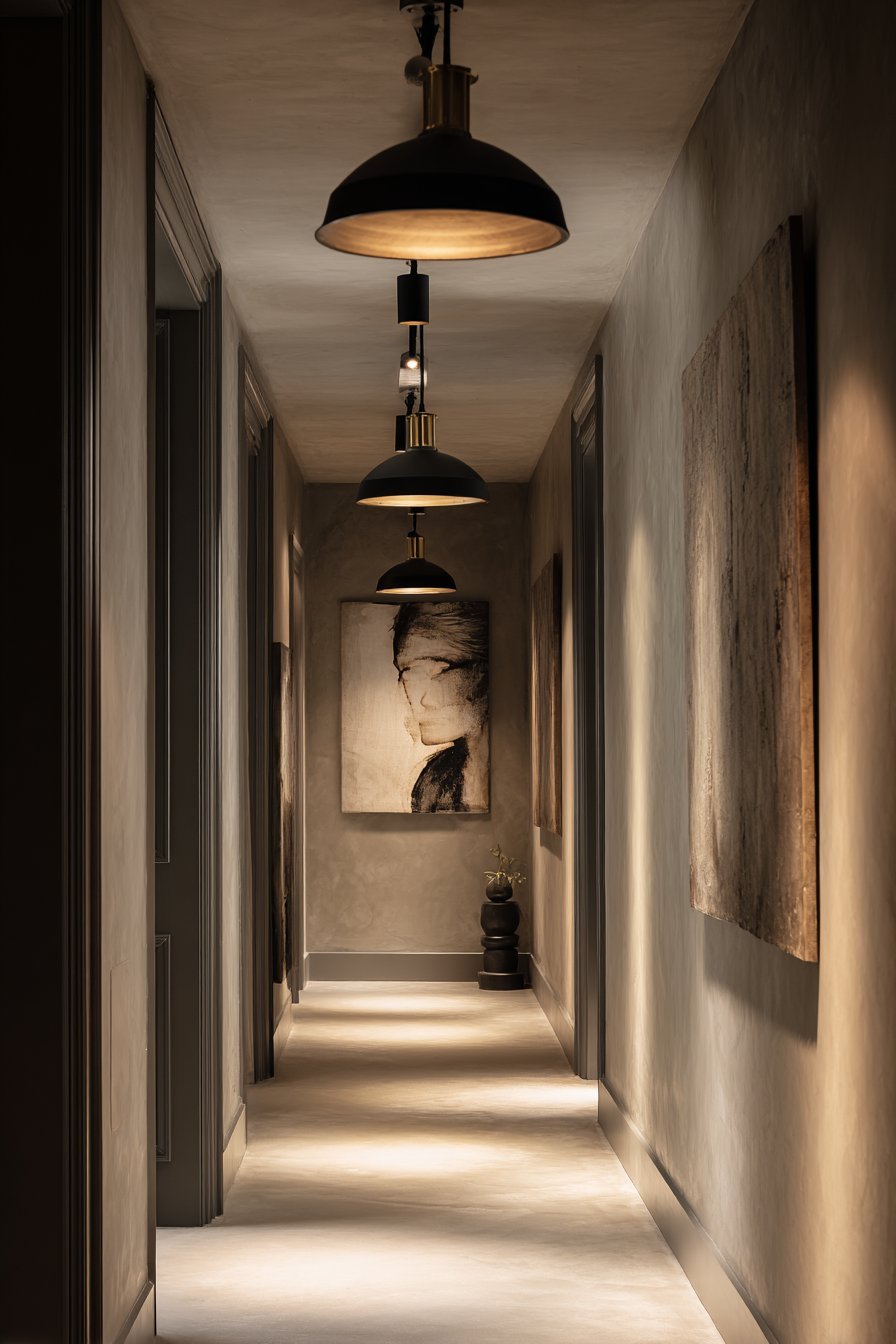
Vertical uplighting — positioning light sources at floor level or low on the wall and directing them upward — is one of the most dramatically effective lighting strategies for narrow corridors and hallways. Uplighting washes the wall with light from bottom to top, emphasizing the full height of the wall, creating beautiful gradients of light and shadow that add depth and dimension to the surface, and drawing the eye naturally upward along the lighted surface. A pair of uplighters flanking a tall artwork or architectural wall treatment creates a theatrical, gallery-quality effect that transforms the most modest narrow corridor into something genuinely spectacular.
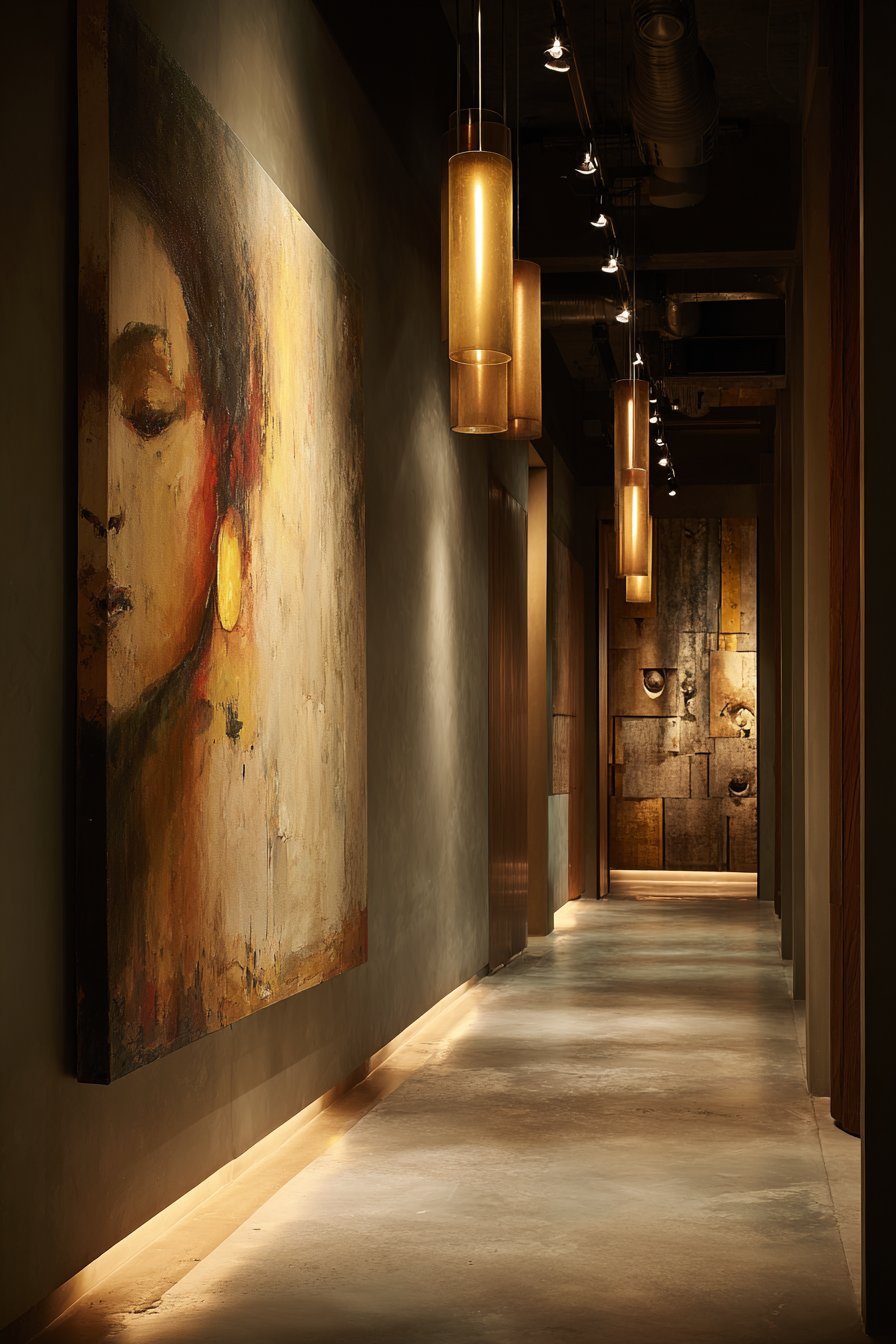
Pendant lights in a vertical series — two or three pendant lights hung at descending heights along the length of a corridor — create a powerful visual rhythm that draws the eye forward through the space and makes a long, narrow hallway feel like a journey with intention and destination rather than a constricted passage to be hurried through. The pendants function simultaneously as light sources and as decorative vertical elements — their hanging forms contributing to the space’s vertical emphasis while their warm light illuminates the corridor and the wall decor within it from above.
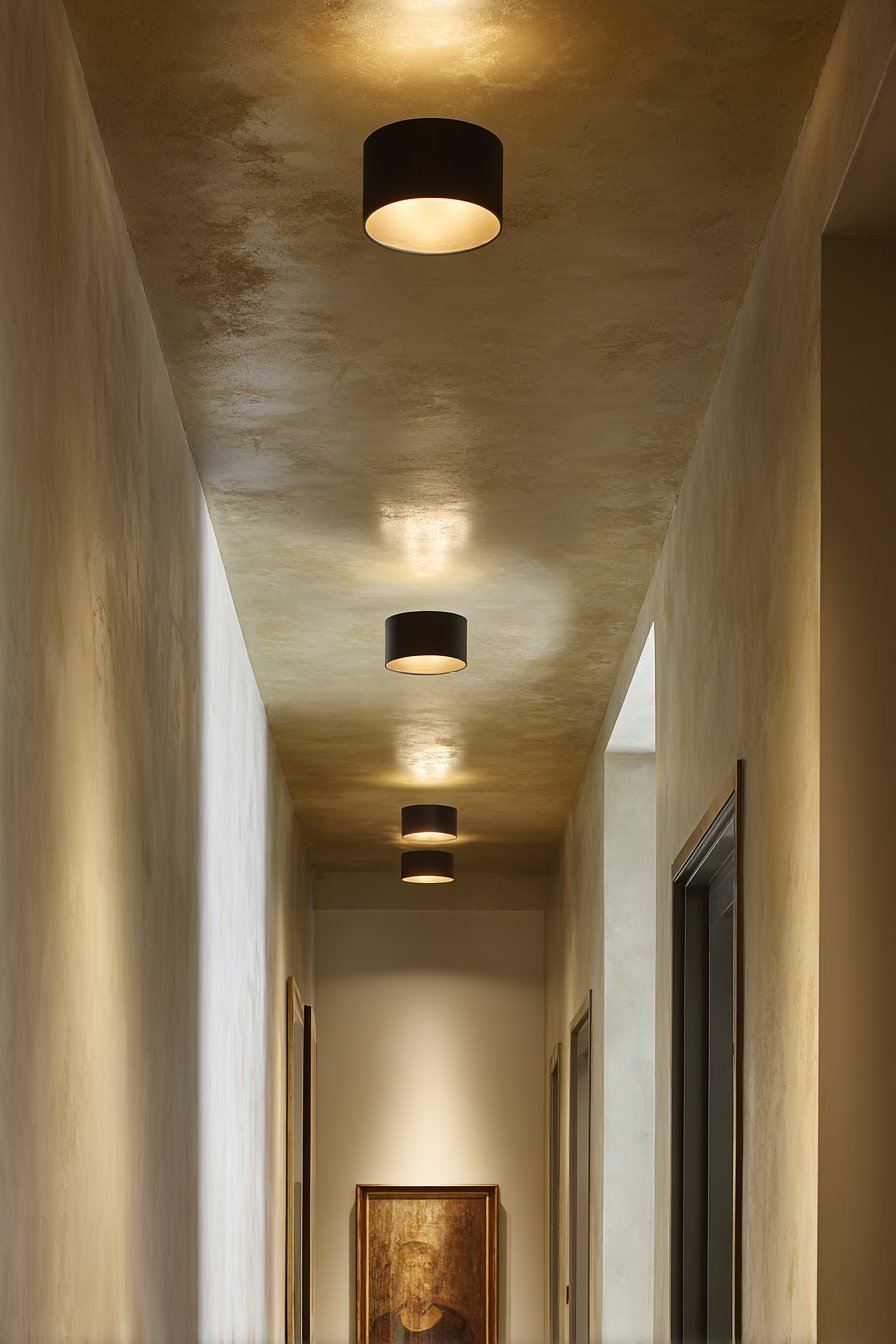
- Install floor-level or low wall-mounted uplighters to wash narrow walls with dramatic upward light
- Hang pendant lights in a series along a corridor ceiling to create rhythm, movement, and vertical emphasis
- Use wall sconces mounted at mid-height on narrow walls for warm, directional light that adds depth to the surface
- Direct adjustable spotlights at specific wall decor pieces — artworks, mirrors, architectural features — for gallery quality illumination
- Choose warm-spectrum bulbs throughout narrow spaces — 2700K to 3000K — for the most flattering, welcoming light quality
Conclusion
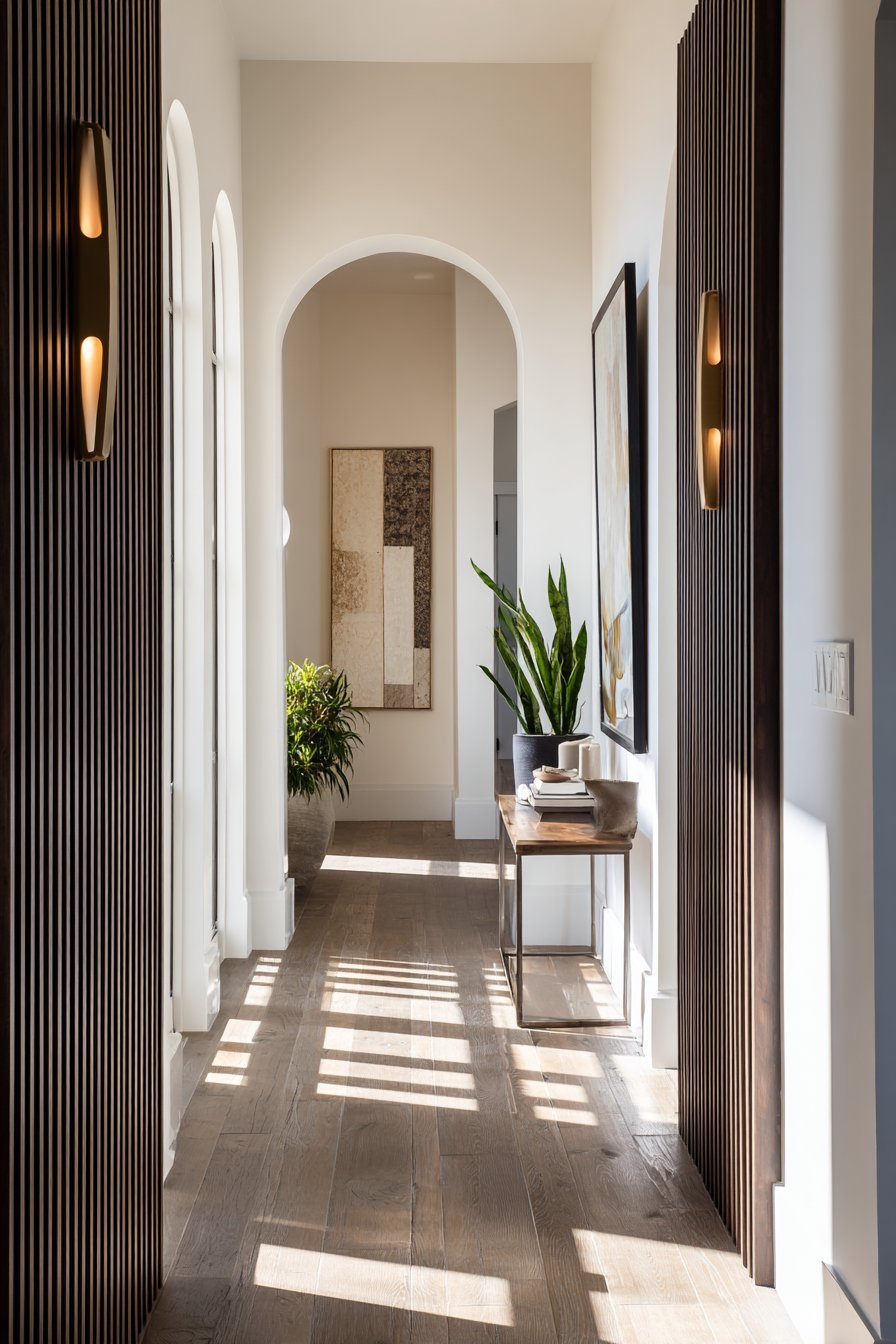
Narrow spaces are not design problems — they are design opportunities that simply require a different toolkit from the one used in larger, more conventional rooms. The six strategies explored in this article — tall single statements, vertical gallery stacks, architectural treatments, strategic mirror placement, botanical living elements, and vertical lighting design — all share a common underlying principle: working with the verticality of the space rather than against its horizontal limitations.
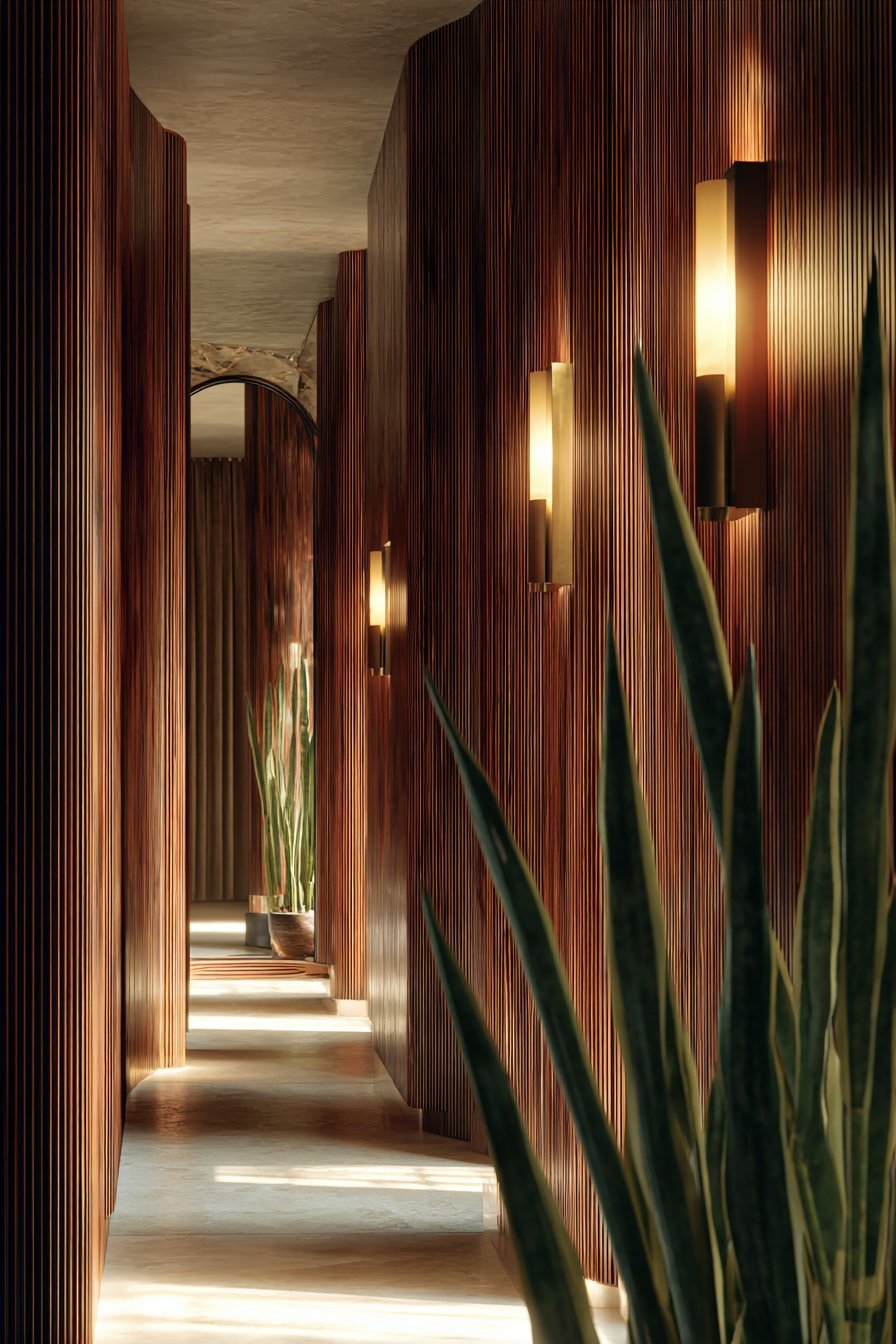
The most beautifully decorated narrow corridors, hallways, and slender wall panels are always those where the designer has embraced the constraints, found the opportunity within them, and made a series of confident, intentional decisions that transform a spatial challenge into a spatial asset. Apply these principles to the narrow spaces in your own home and discover that the walls you once saw as problems are, in fact, among the most exciting canvases you have.
