
Traditional kitchen design represents the pinnacle of timeless elegance and functional beauty in home interiors. These spaces combine classic architectural details with practical layouts that have served families for generations. The enduring appeal of traditional kitchens lies in their ability to create warm, welcoming environments that never go out of style.
Today’s homeowners increasingly appreciate the sophistication and craftsmanship inherent in traditional kitchen design. Rich wood cabinetry, natural stone countertops, and ornate hardware create spaces that feel both luxurious and comfortable. These kitchens celebrate quality materials and expert craftsmanship while incorporating modern conveniences seamlessly into classic aesthetics.
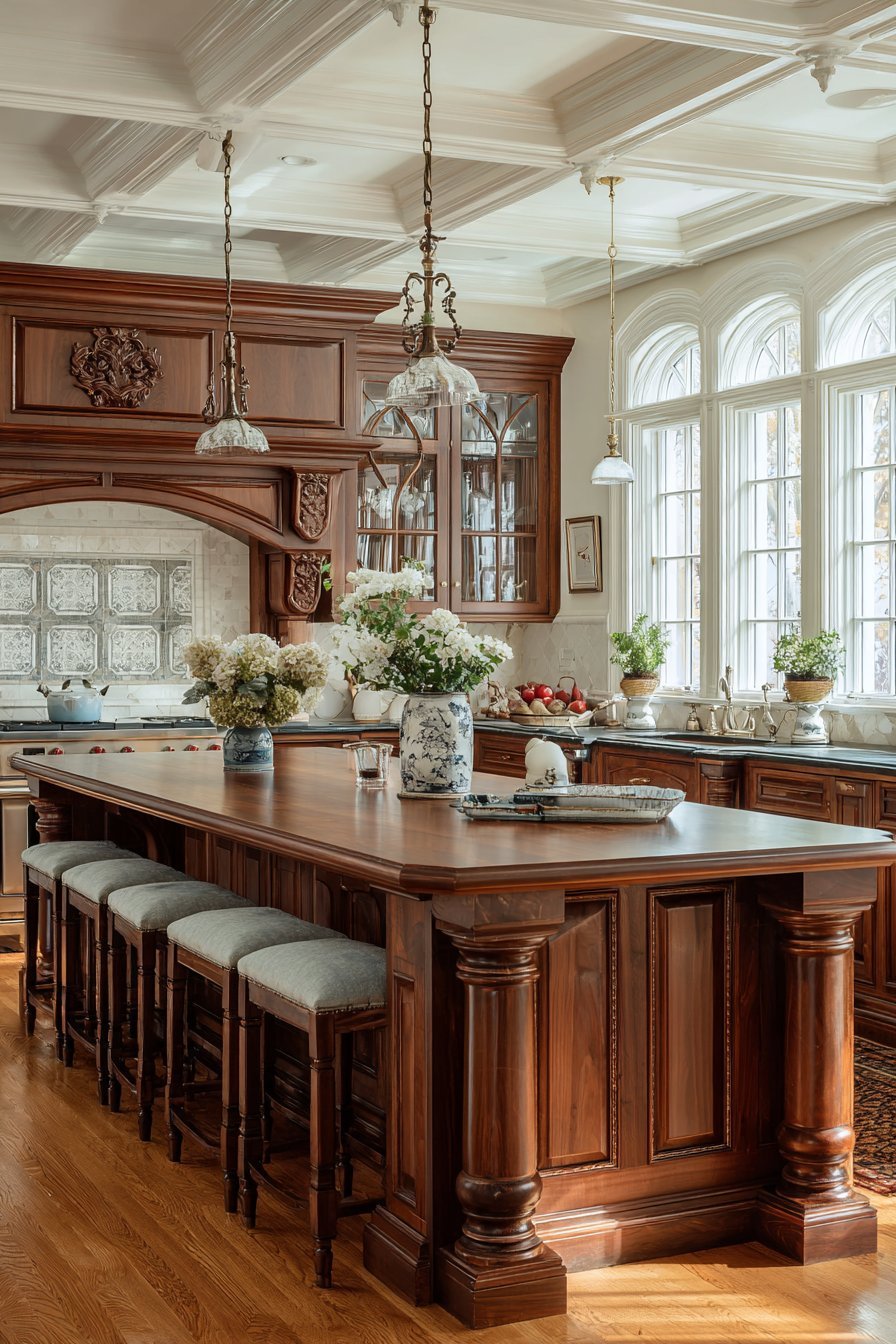
This article explores twenty distinctive traditional kitchen concepts that showcase the versatility of this beloved design style. From rich cherry wood cabinetry to elegant cream-painted finsets, each design demonstrates how traditional elements can create unique and inspiring cooking spaces. Whether you prefer formal entertaining areas or cozy family gathering spots, these traditional kitchen ideas offer inspiration for every lifestyle and taste.
1. Rich Cherry Wood Traditional Kitchen Excellence

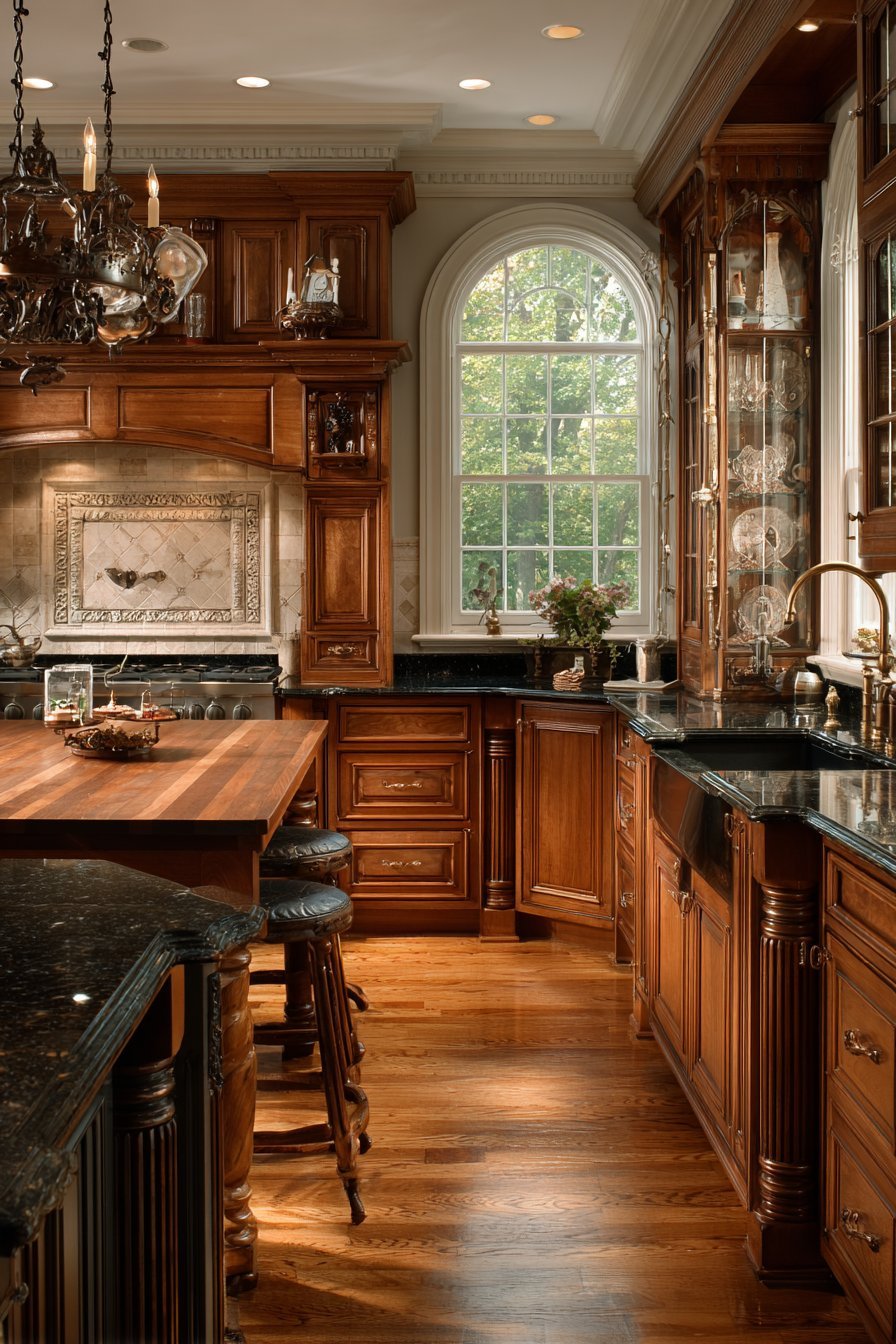
The foundation of this traditional kitchen lies in its stunning cherry wood cabinetry with raised panel doors. The rich wood tones create instant warmth throughout the space. Ornate crown molding crowns the upper cabinets with architectural distinction. The craftsmanship evident in every detail speaks to enduring quality.
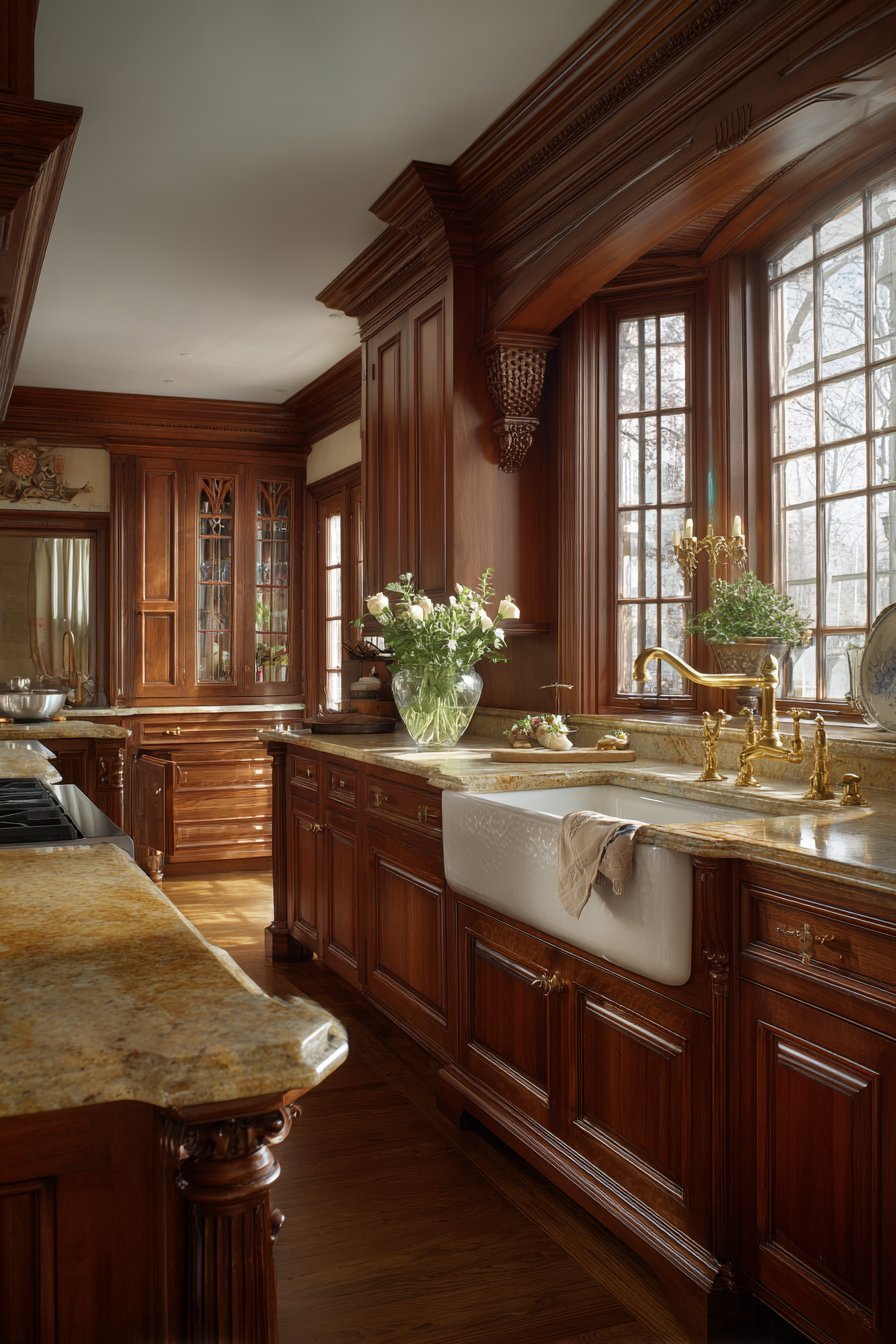
A substantial kitchen island anchors the center of this design. The honed granite countertop displays warm beige tones that complement the cherry cabinetry beautifully. Matching perimeter counters create visual continuity throughout the space. The island provides both additional workspace and casual seating for family meals.
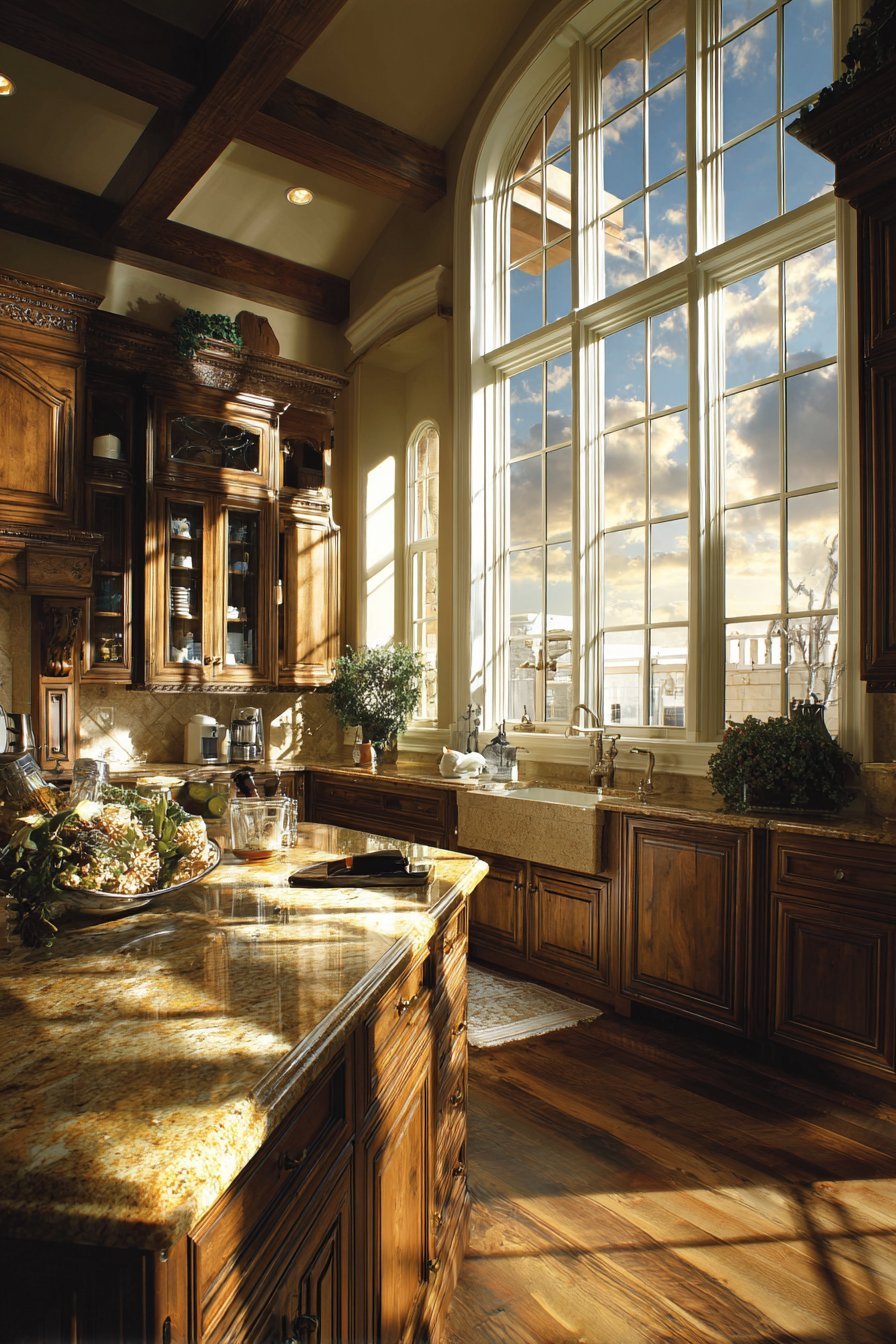
Antique brass hardware adorns each cabinet door and drawer. These polished fixtures catch natural light streaming through mullioned windows. A farmhouse-style apron front sink serves as the functional focal point. The traditional aesthetic remains consistent from the largest architectural element to the smallest decorative detail.
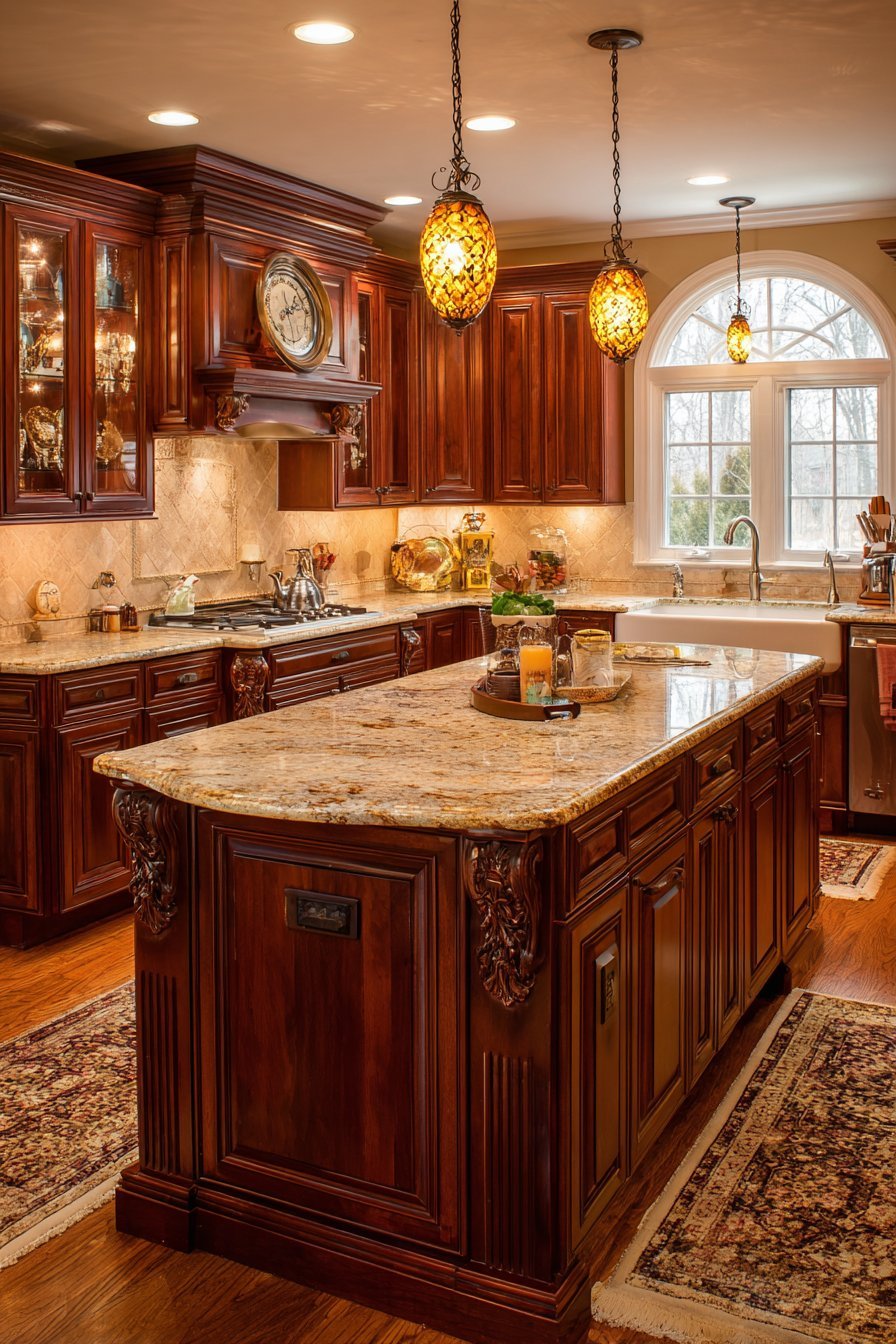
Morning light plays across the wood grain variations in fascinating ways. The natural illumination highlights the dimensional quality of raised panel construction. Soft shadows emphasize the detailed millwork throughout the space. This interplay of light and shadow enhances the room’s traditional character throughout the day.
Key Design Tips:
- Select cherry wood cabinetry for warmth and rich color that deepens beautifully with age
- Install raised panel doors with crown molding for authentic traditional architectural detail
- Choose honed granite in warm neutral tones that complement rather than compete with wood cabinetry
- Use antique brass hardware consistently throughout for cohesive traditional styling
- Position mullioned windows above the sink area to maximize natural light on primary work surfaces
2. Cream Glazed Traditional Kitchen Sophistication
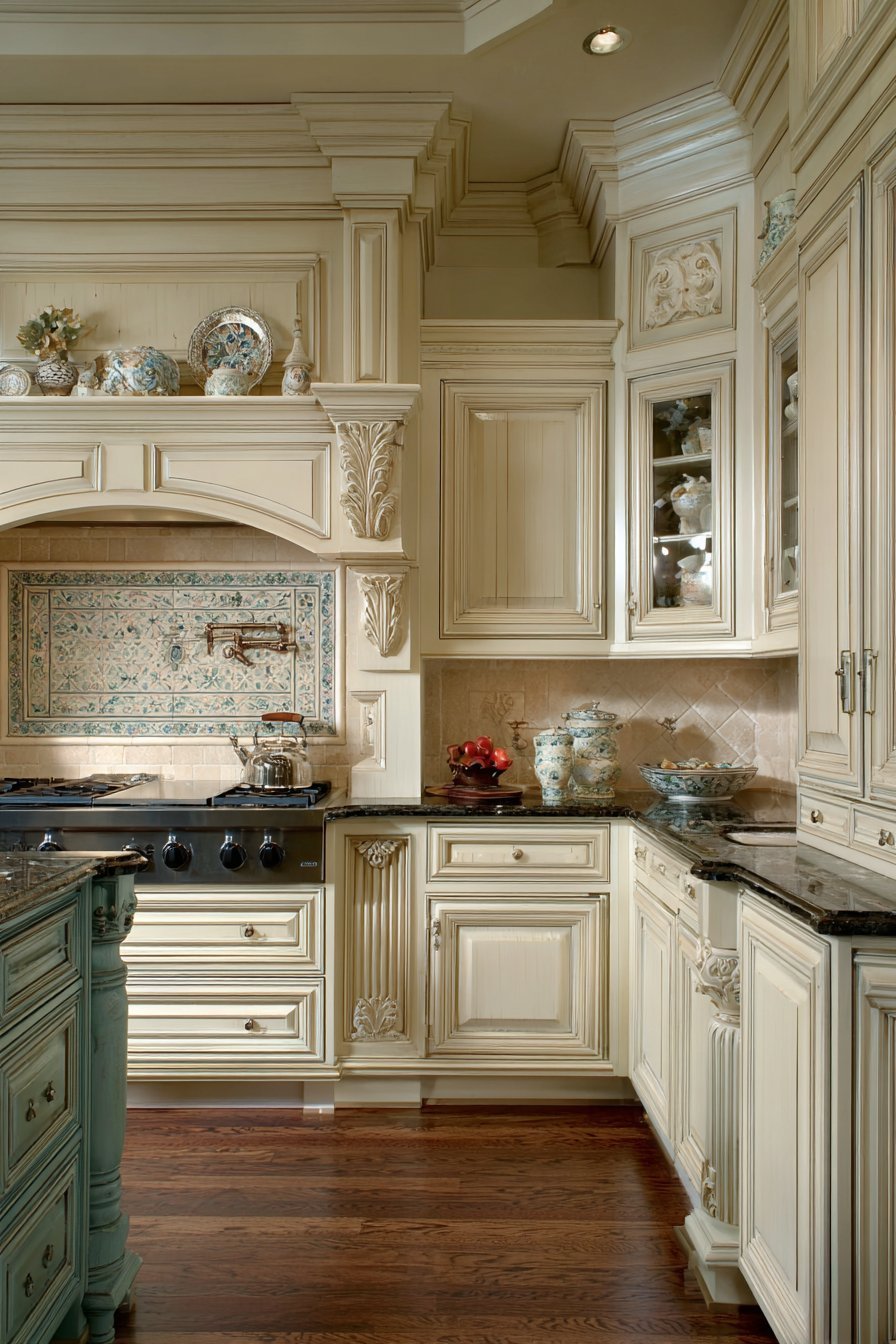
Custom inset cabinetry painted in classic cream establishes the refined foundation of this kitchen. The glazed finish technique highlights every recessed panel detail with subtle shadowing. This traditional finishing method adds depth and visual interest to painted surfaces. The craftsmanship becomes evident upon close inspection.
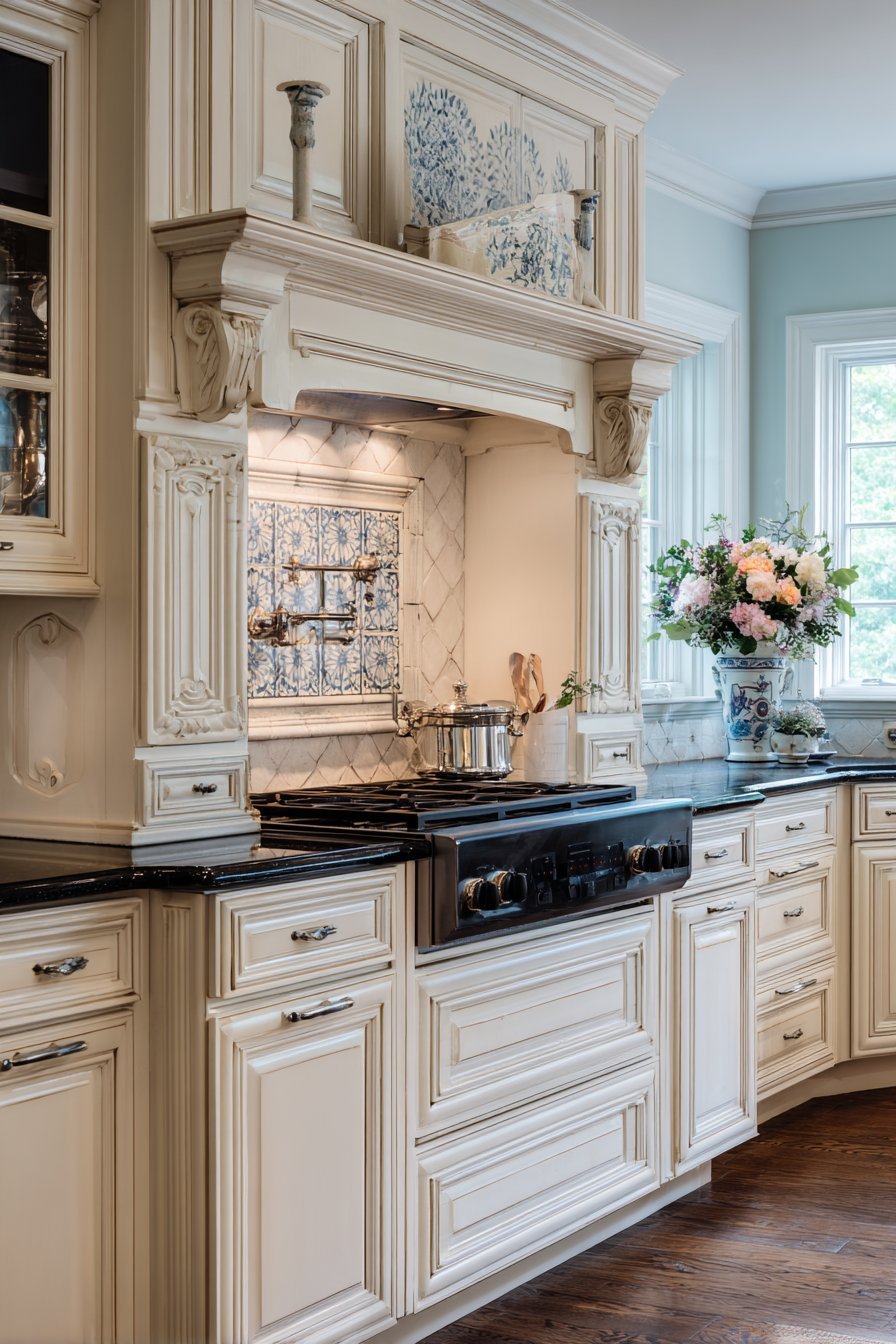
Black granite countertops provide striking contrast against the cream cabinetry. The dark surfaces ground the design while offering practical durability. A decorative tile backsplash features hand-painted ceramic in soft blue and white patterns. Each tile displays slight variations that announce its handcrafted origins.
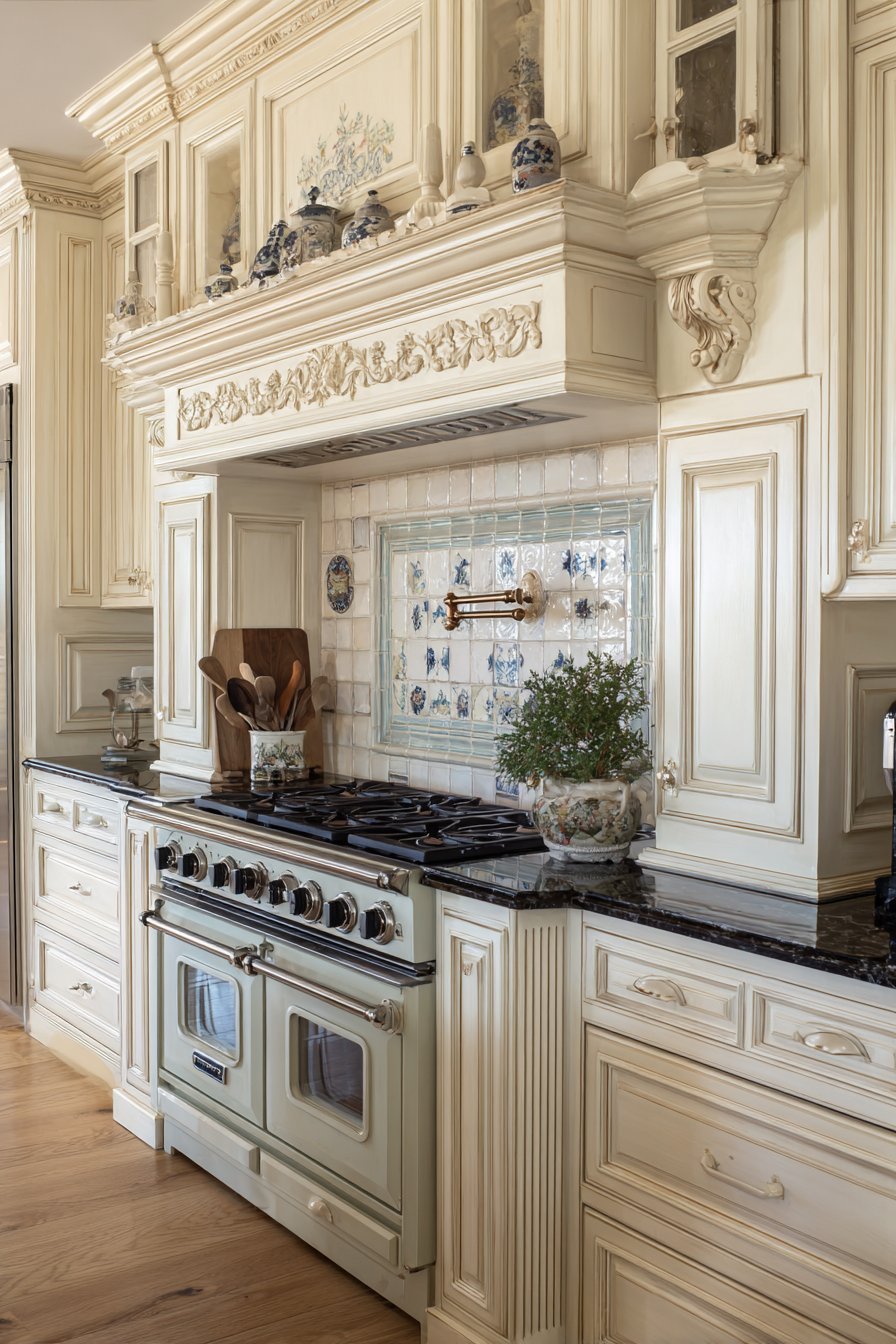
An ornate pot filler faucet mounts above the professional-grade range. This functional element adds elegant traditional detailing to the cooking zone. The brass finish coordinates with other metal fixtures throughout the space. Form and function merge seamlessly in this thoughtful design choice.
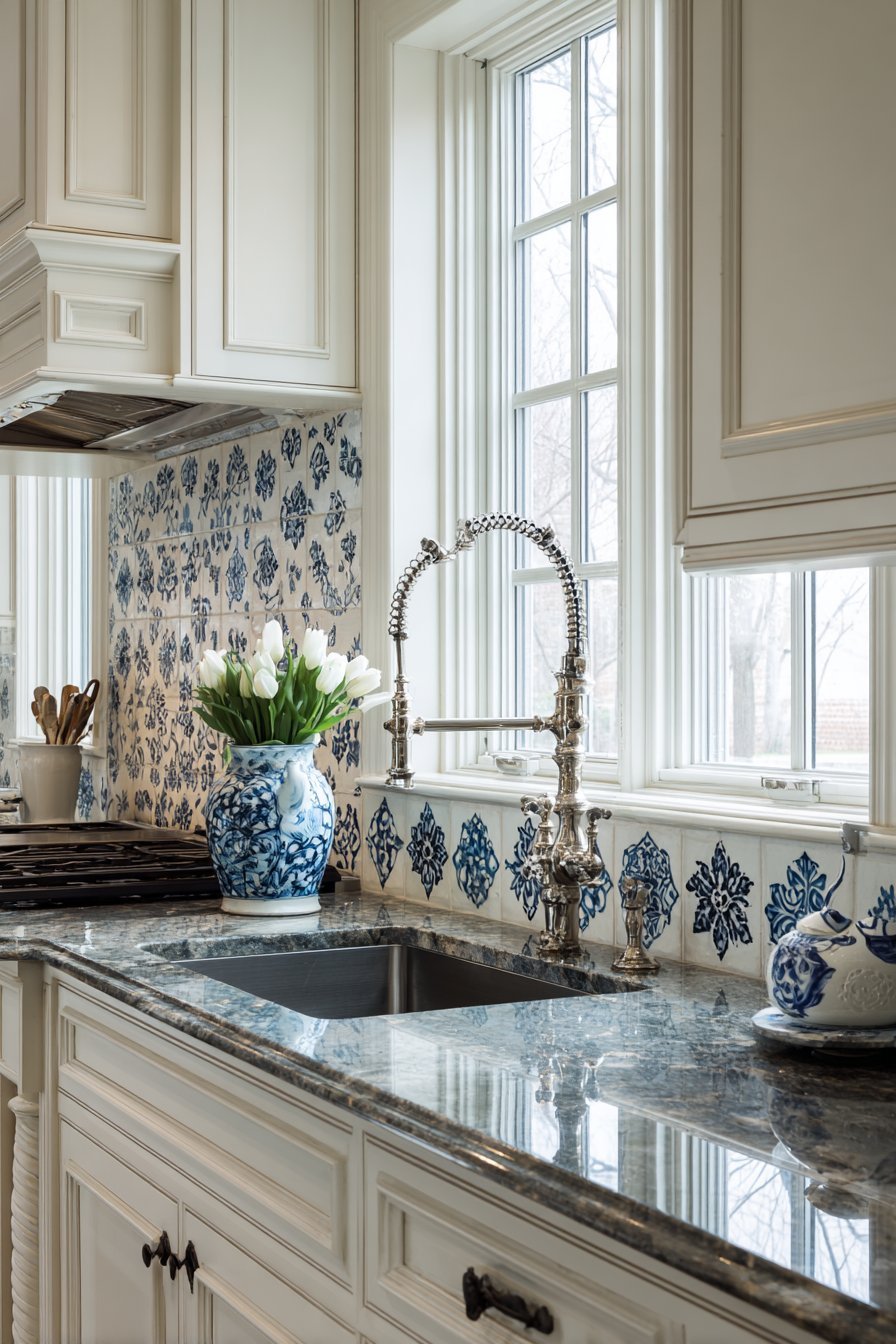
Soft diffused daylight illuminates the space with gentle consistency. This natural lighting emphasizes the subtle brush strokes in the cabinet finish. The handcrafted tile work reveals its artisanal quality under proper illumination. Every surface texture becomes more pronounced and appreciated in this lighting environment.
Key Design Tips:
- Apply glazed finishes to painted cabinetry for depth and traditional character enhancement
- Create visual contrast with dark granite countertops against light-colored cabinets
- Incorporate hand-painted decorative tiles for authentic artisanal charm and uniqueness
- Install pot filler faucets above ranges for both functionality and traditional elegance
- Choose inset cabinet construction for the most authentic traditional appearance and superior craftsmanship
3. Traditional Kitchen with Integrated Breakfast Nook

Built-in bench seating with beadboard backing creates an intimate dining area within the kitchen. The coordinating cushions feature classic toile fabric patterns. This integrated approach maximizes space while maintaining traditional design integrity. The breakfast nook feels like a natural extension of the kitchen itself.
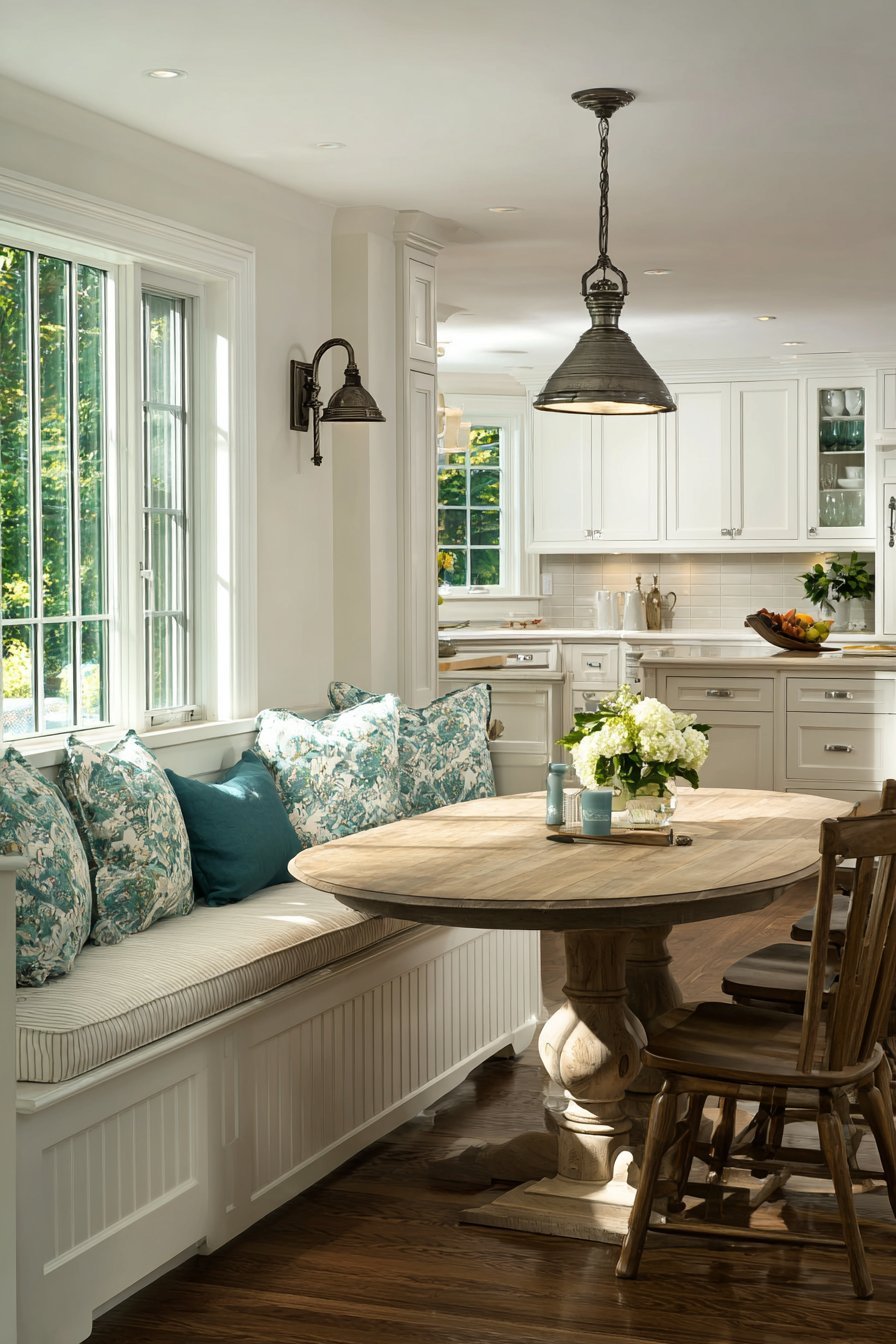
A pedestal dining table in distilled oak finish centers the eating area perfectly. The wood tone harmonizes with the surrounding traditional kitchen elements. White shaker-style cabinetry visible in the background provides clean traditional lines. Oil-rubbed bronze hardware adds warmth and traditional authenticity throughout.
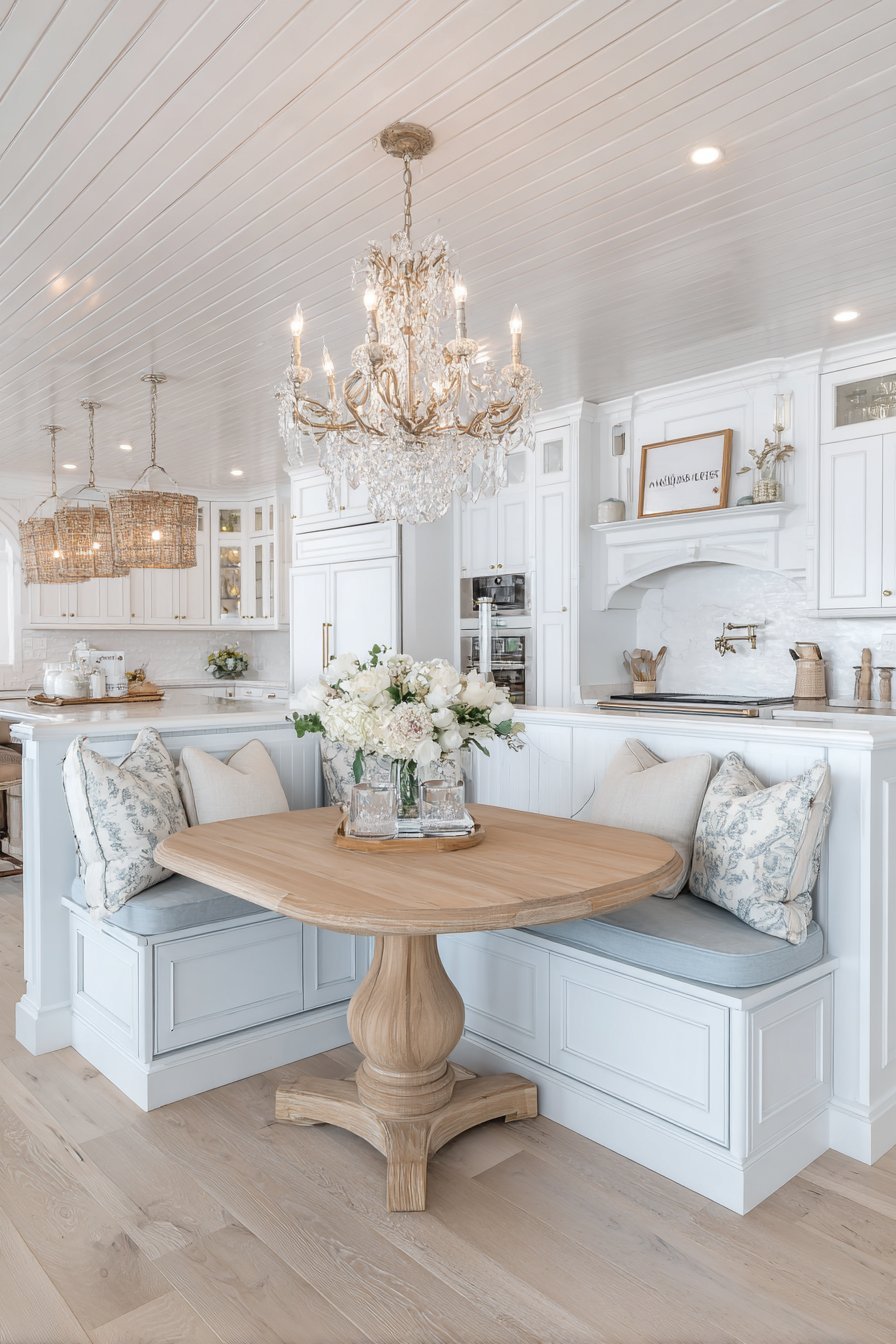
Natural light floods the breakfast nook from nearby windows. This illumination creates a warm and inviting ambiance for morning meals. The space encourages family gatherings and casual dining experiences. Professional photography captures the livable quality that defines successful traditional kitchen design.
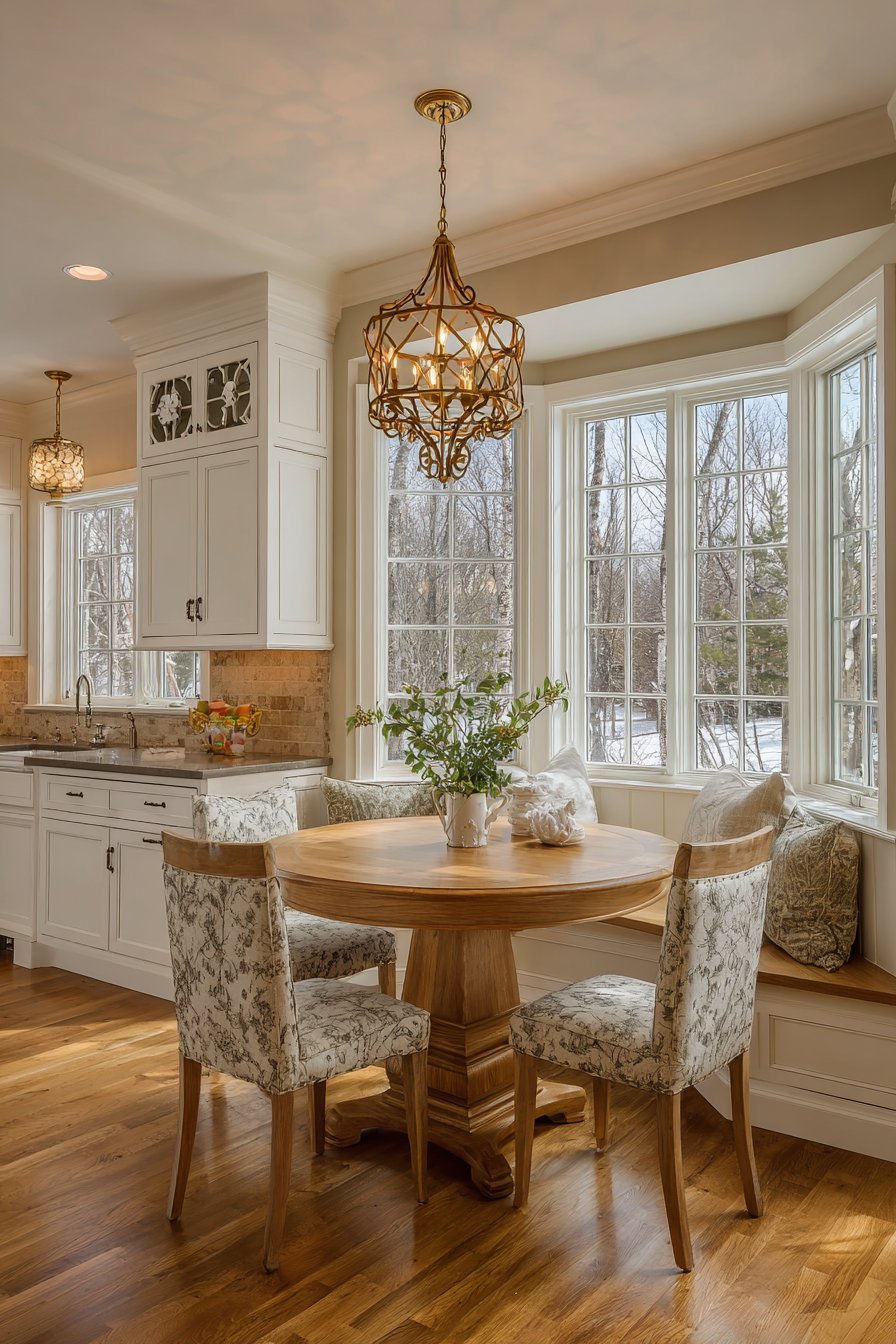
The fabric textures in the cushions add softness to the predominantly hard-surfaced kitchen. Wood finishes display natural grain variations that prevent monotony. The combination of materials creates visual and tactile interest. This layering of textures exemplifies thoughtful traditional design execution.
Key Design Tips:
- Integrate built-in breakfast seating with beadboard backing for space efficiency and traditional charm
- Select classic fabric patterns like toile for cushions that reinforce traditional styling
- Choose pedestal tables in traditional wood finishes for timeless breakfast nook furniture
- Use shaker-style cabinetry as a versatile traditional option that pairs well with various elements
- Coordinate hardware finishes throughout adjacent spaces for visual continuity and polish
4. Traditional Kitchen Peninsula with Architectural Details

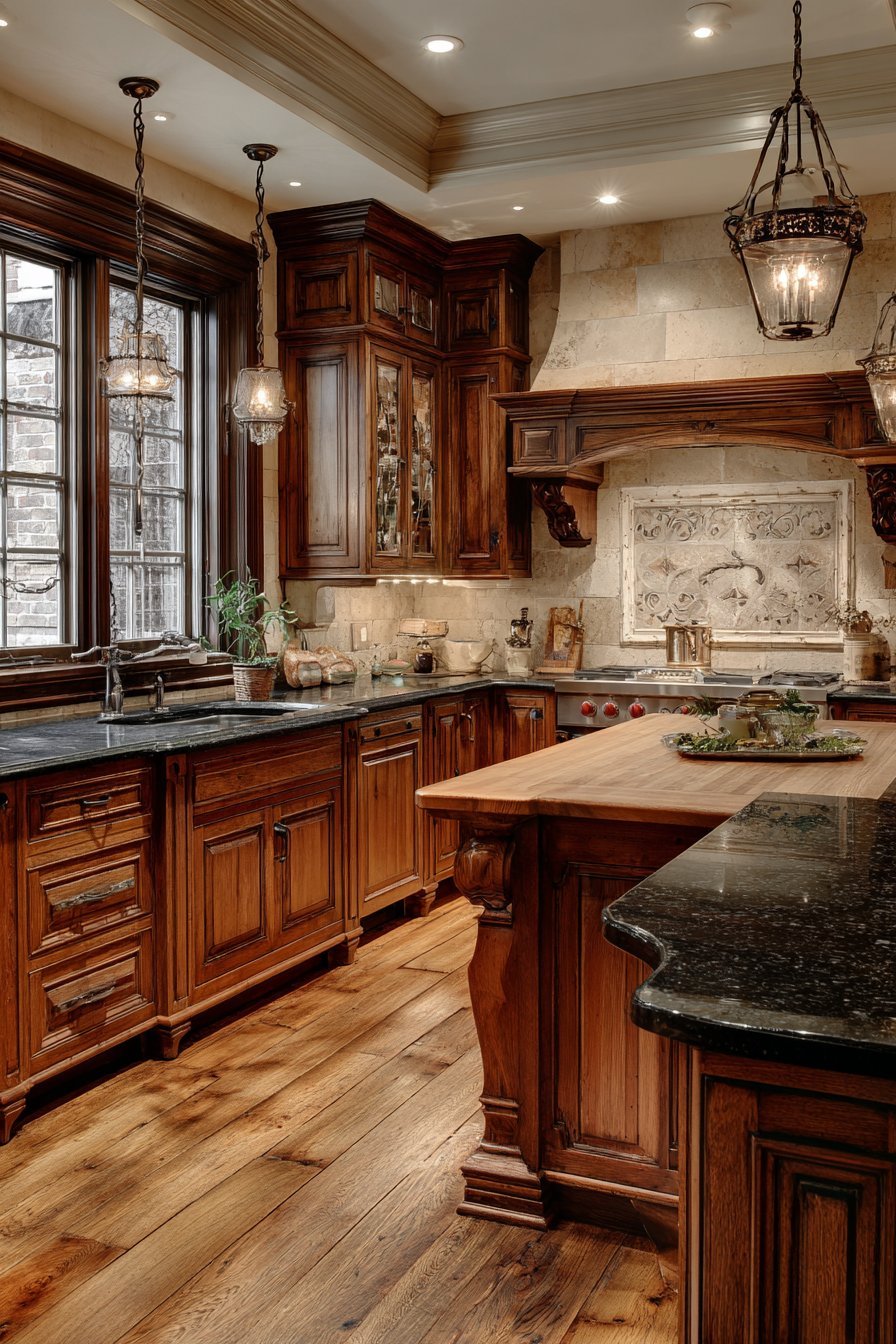
Decorative corbels support the extended countertop overhang on this functional peninsula. These architectural elements add traditional visual interest while serving structural purposes. The casual dining bar created by this extension provides convenient seating. Upholstered counter stools feature elegant nailhead trim detailing.
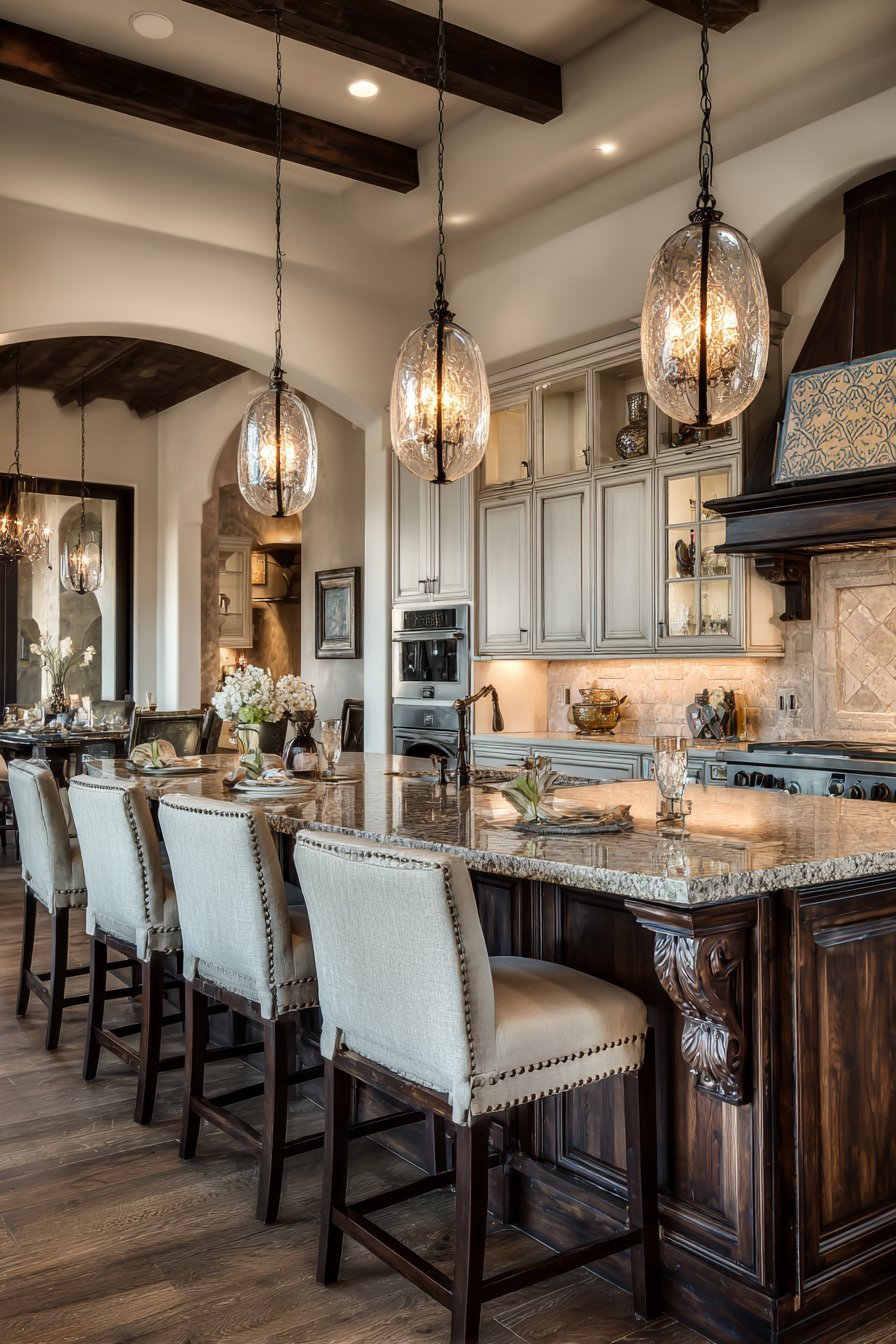
Two-tone cabinetry creates visual depth throughout this kitchen design. Darker stained lower cabinets anchor the space with substantial presence. Lighter painted upper cabinets prevent the design from feeling heavy. This balanced approach maximizes visual interest while maintaining traditional sensibility.
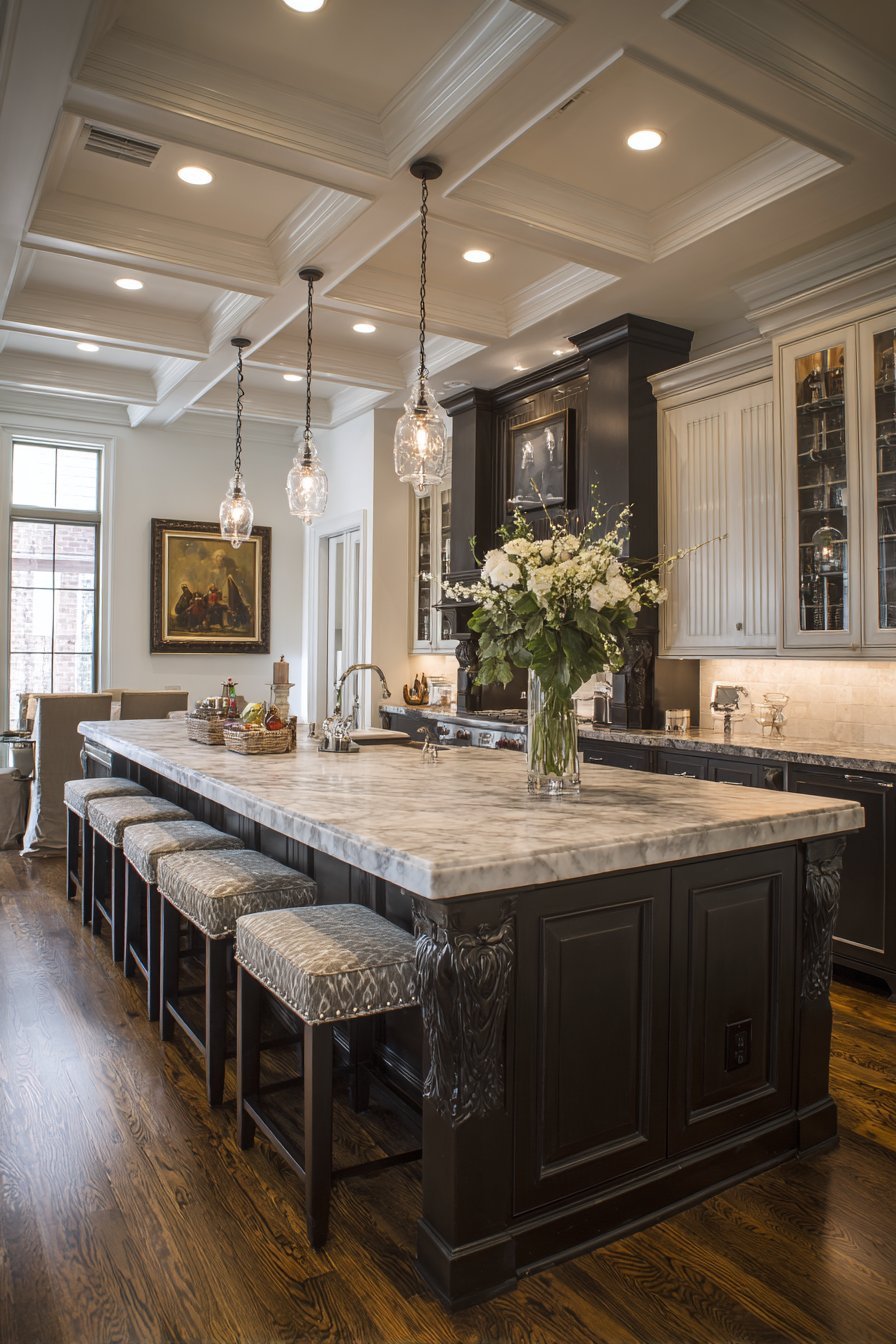
A coffered ceiling adds significant architectural interest overhead. This traditional ceiling treatment elevates the entire kitchen design. Pendant lights with seeded glass shades hang purposefully over the peninsula. The vintage-style glass creates charming light diffusion patterns.
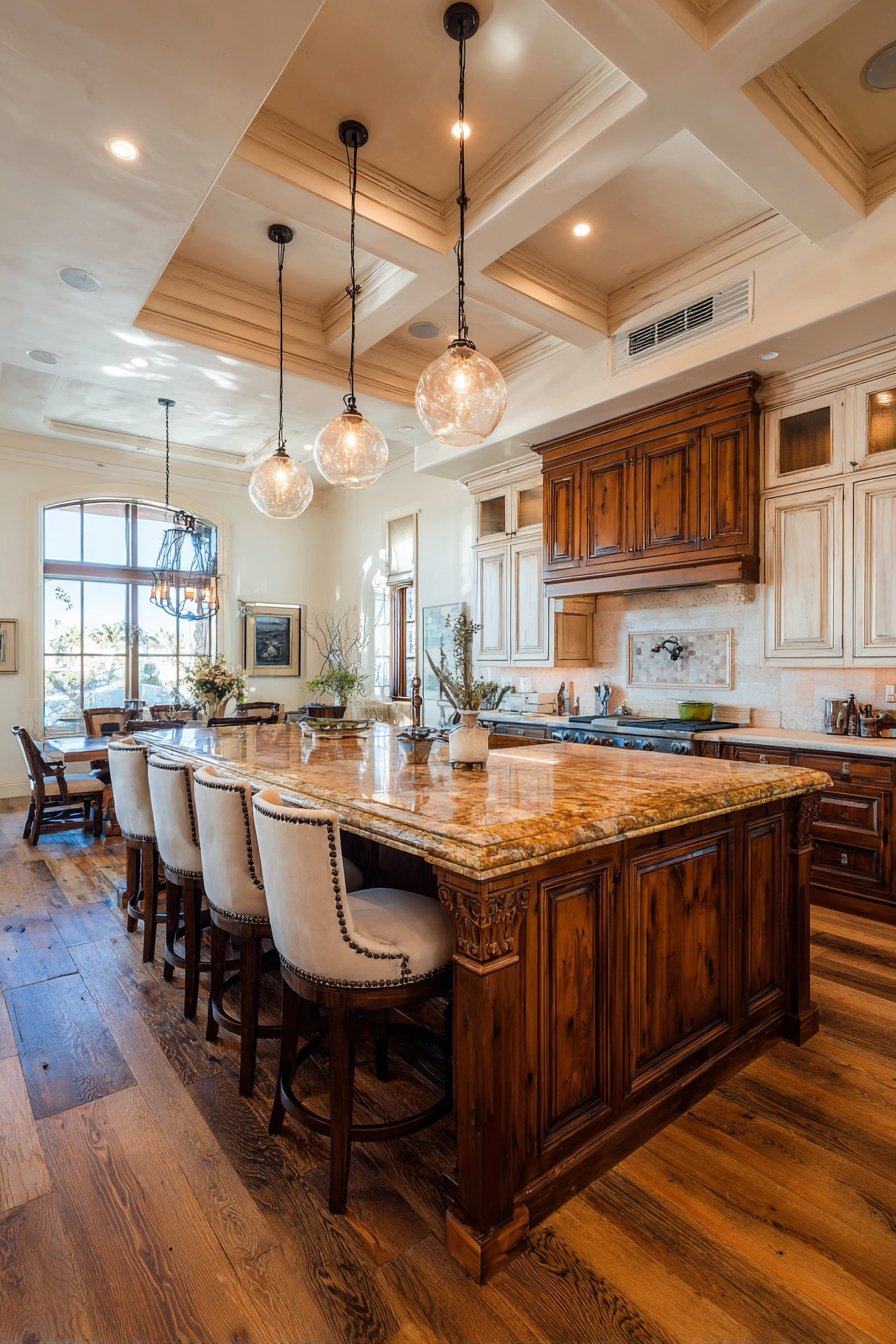
The functional layout demonstrates thoughtful space planning principles. Traffic flow remains unobstructed despite the peninsula’s prominent position. Balanced lighting combines natural daylight with carefully placed artificial sources. Traditional architectural details receive proper emphasis through strategic illumination choices.
Key Design Tips:
- Add decorative corbels under countertop overhangs for authentic traditional architectural support details
- Employ two-tone cabinetry with darker lowers and lighter uppers for visual balance
- Install coffered ceilings to add architectural gravitas and traditional character overhead
- Select seeded glass pendant shades for vintage charm and interesting light patterns
- Choose upholstered seating with nailhead trim for comfortable traditional styling at dining bars
5. Traditional Range Wall with Custom Wood Hood
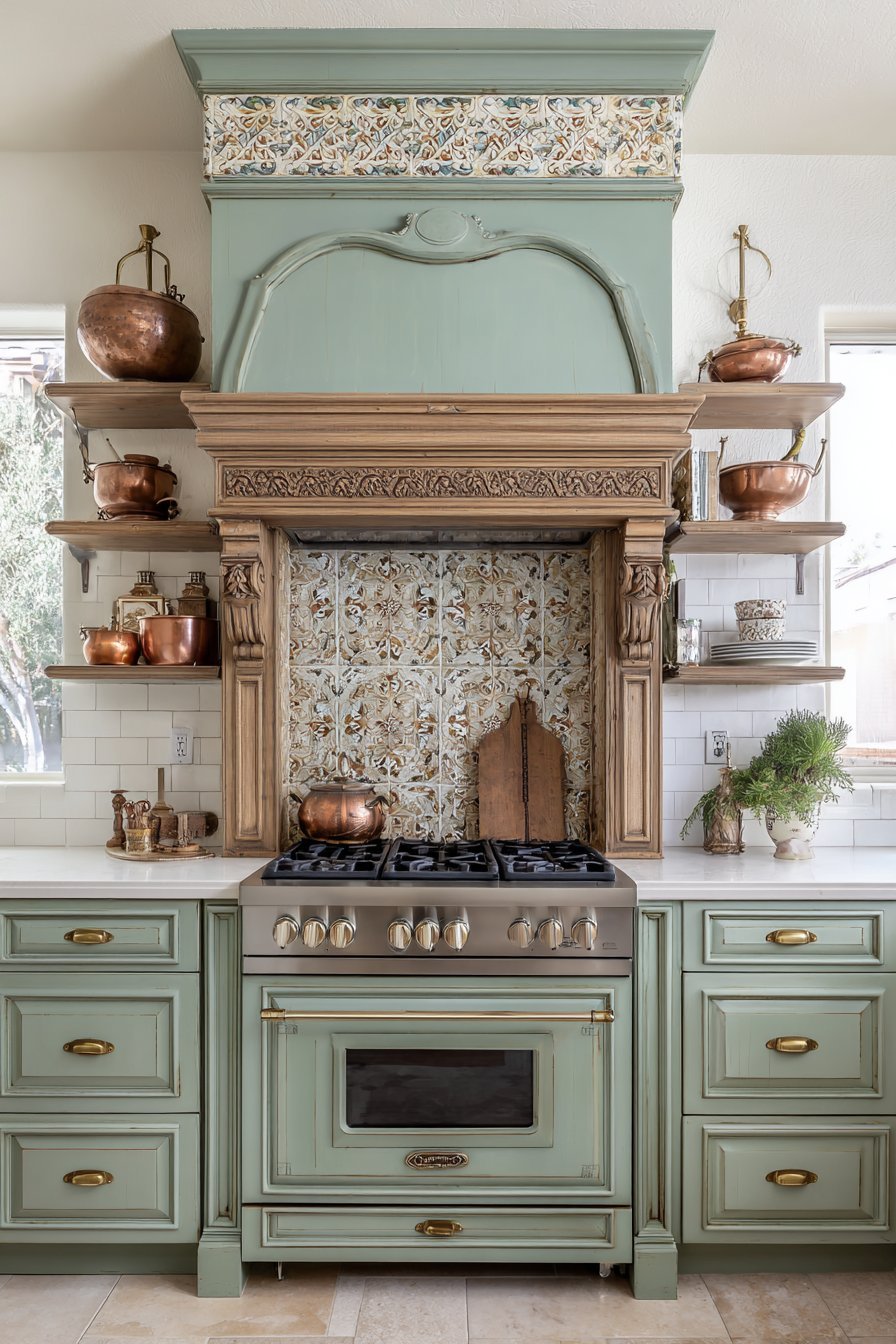
The custom wood hood dominates this traditional kitchen’s range wall with commanding presence. Corbel supports and decorative molding details showcase exceptional craftsmanship. Professional gas ranges deserve this level of architectural attention. The hood becomes a true focal point rather than merely functional equipment.
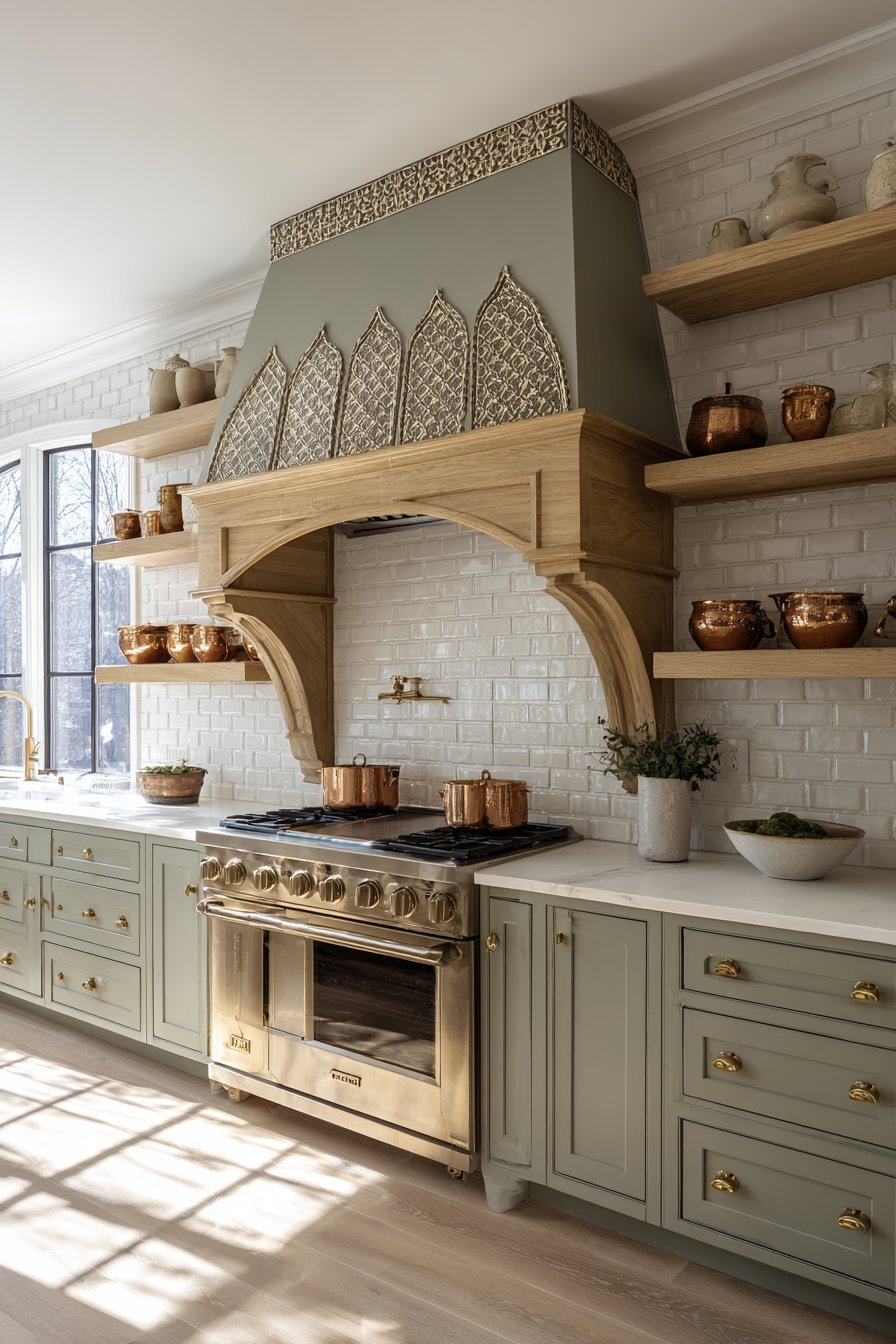
Traditional cabinetry in sage green flanks the cooking area symmetrically. Antique brass cup pulls and knobs adorn each cabinet door. White subway tile backsplash extends vertically to the ceiling. Decorative border tiles at the top add a finishing touch of traditional elegance.
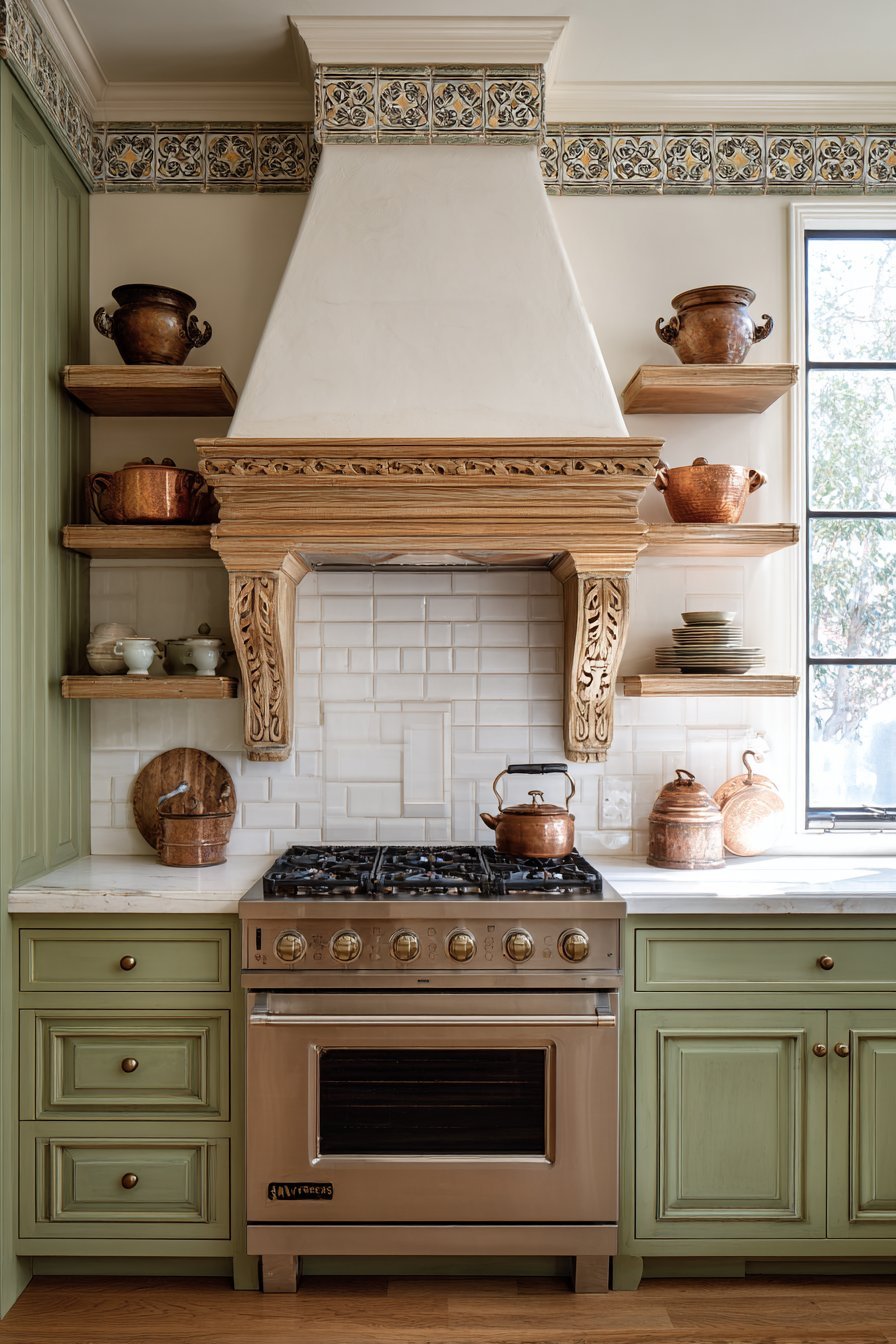
Open shelving on either side of the range provides practical display opportunities. Traditional dishware and copper cookware arrange attractively on these shelves. The display elements contribute to the overall traditional aesthetic. Functional items become decorative when carefully selected and arranged.
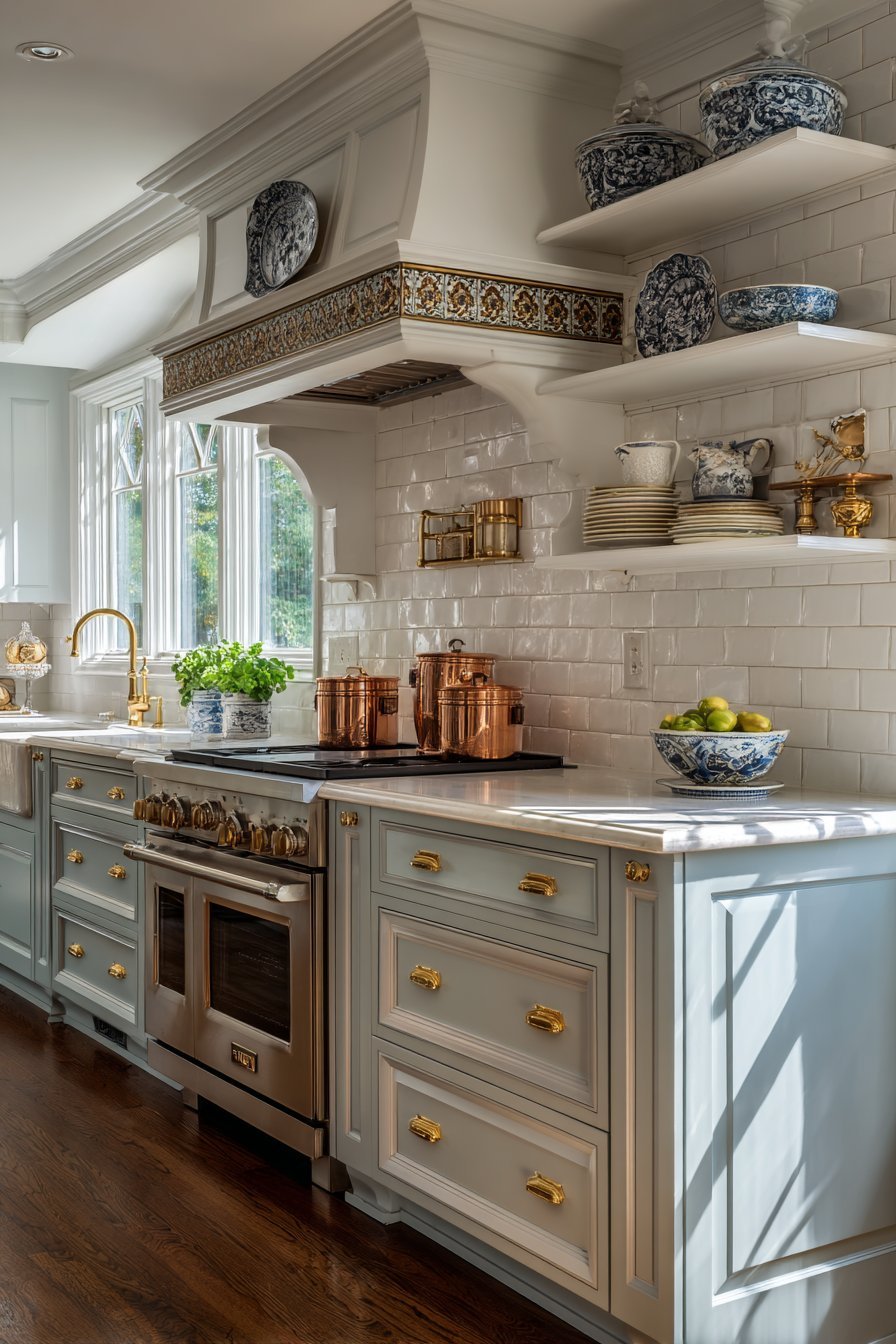
Natural window light creates highlights on varied textures throughout this cooking zone. Metallic finishes on hardware and cookware reflect light beautifully. The subway tile surface provides subtle texture variation. Symmetrical arrangement creates visual calm and traditional order.
Key Design Tips:
- Design custom wood hoods with corbels and molding for dramatic traditional focal points
- Use sage green cabinetry as a sophisticated alternative to standard white or wood tones
- Extend subway tile backsplashes to ceiling height with decorative border tiles for traditional completeness
- Install open shelving near the range for displaying traditional cookware and serving pieces
- Maintain symmetrical arrangements around major appliances for classic traditional balance and harmony
6. Traditional Kitchen with Butcher Block Island
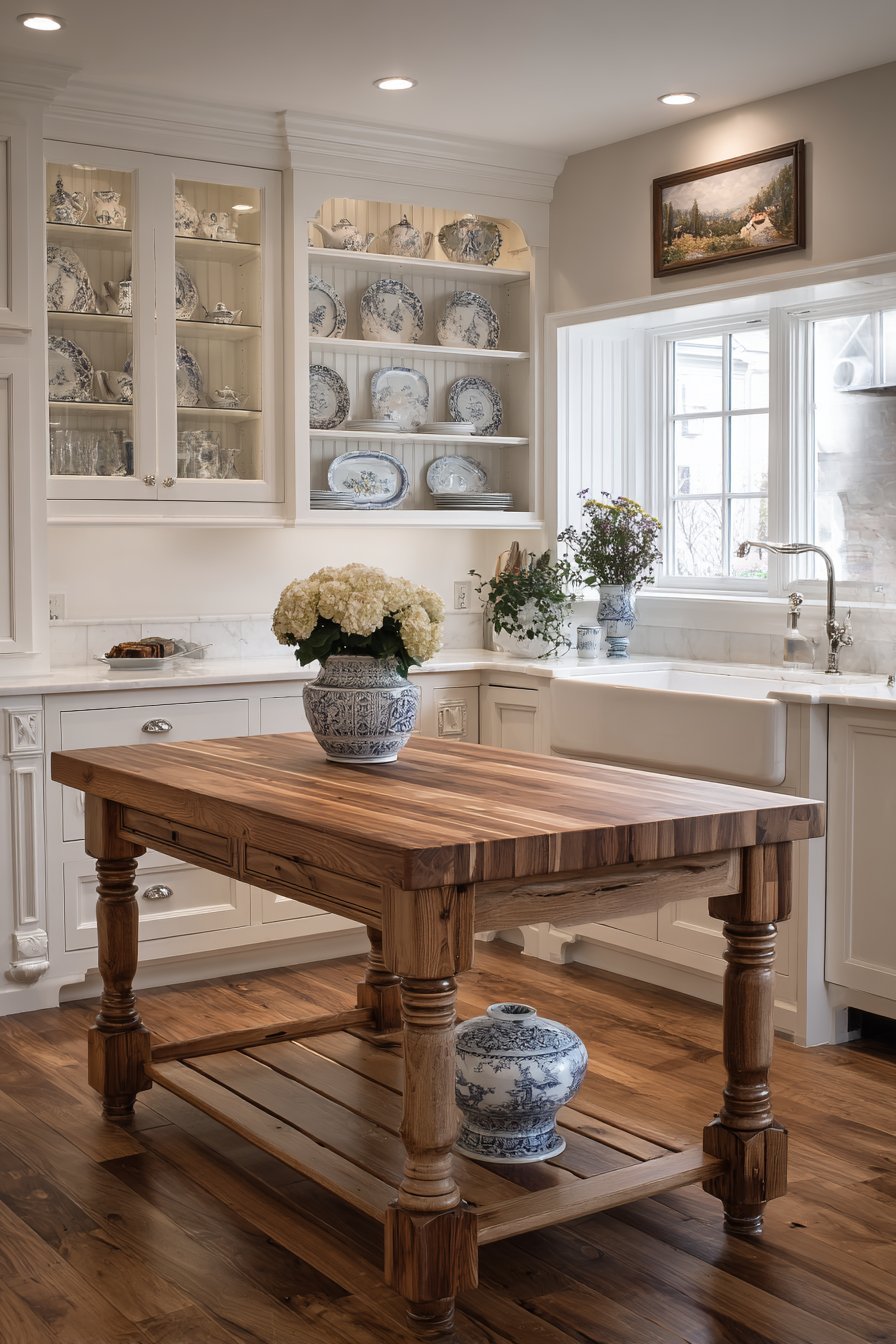
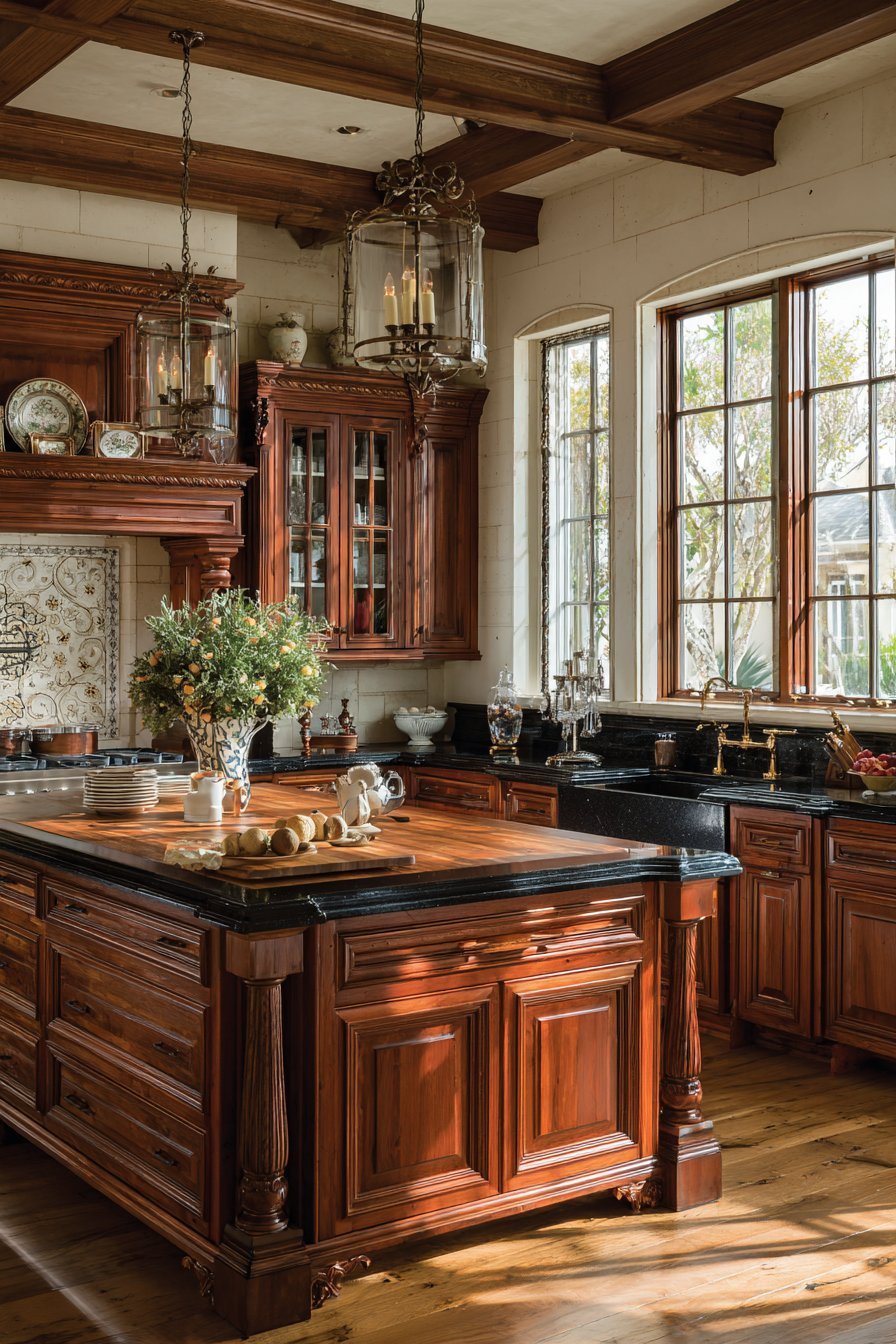
Butcher block countertops grace the central prep island in this traditional kitchen. The natural wood surface provides ideal functionality for food preparation. Turned legs and decorative stretchers give the island furniture-quality appearance. This approach creates a traditional focal point that serves multiple purposes.
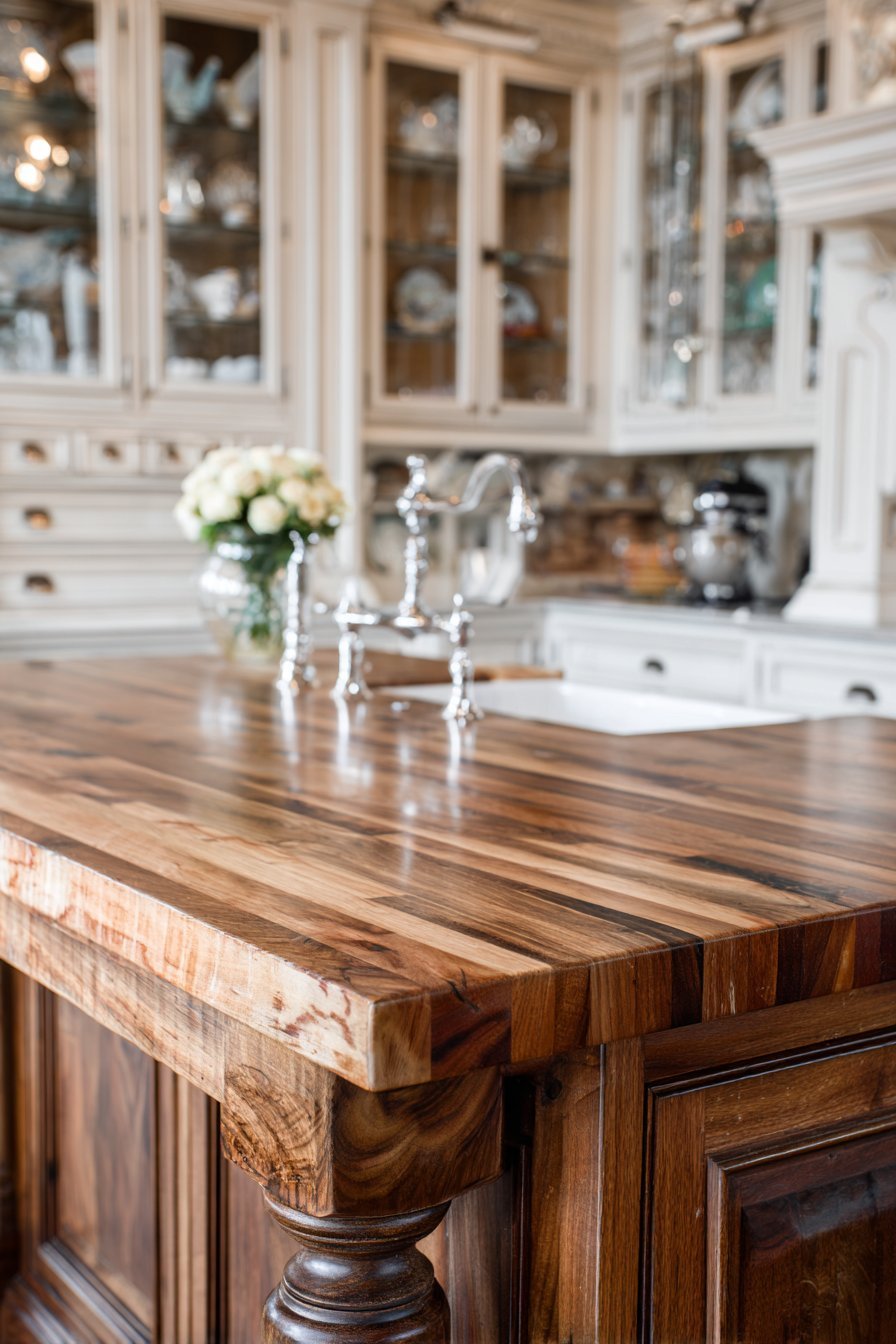
Glass-front upper cabinets surround the kitchen perimeter showcasing china collections. These display cabinets add traditional elegance while serving practical storage needs. Lower cabinets feature solid raised panel doors in warm walnut stain. The combination of open and closed storage creates visual interest.
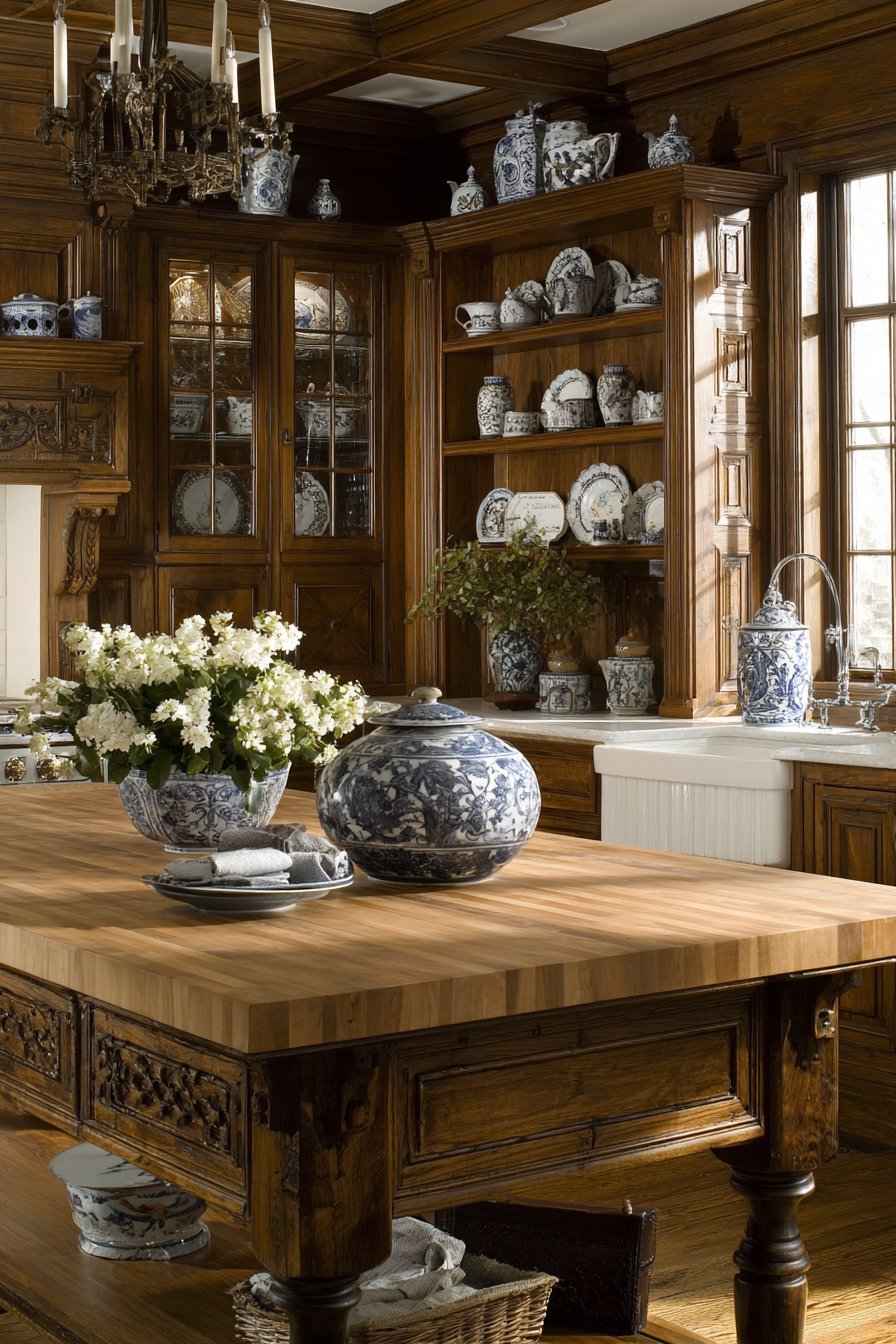
An undermount farmhouse sink with bridge-style faucet provides traditional functionality. The polished nickel finish adds refined traditional detailing. This sink style has served kitchens for generations with proven practicality. The generous basin accommodates large pots and baking sheets easily.
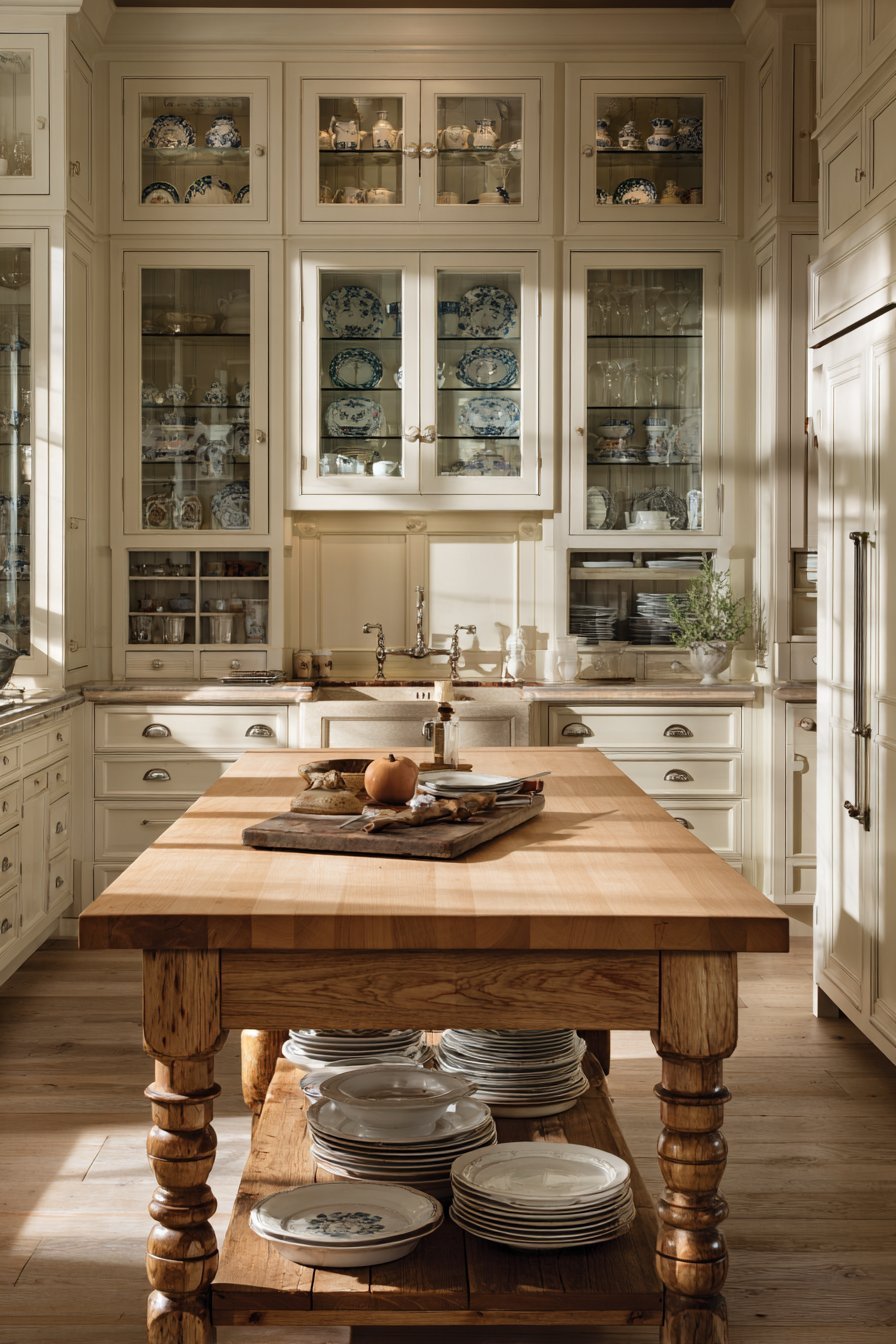
Soft natural lighting emphasizes the warm wood tones throughout this space. The butcher block surface displays natural grain patterns beautifully. Professional photography captures authentic traditional design elements in proper context. Practical work surfaces receive the attention they deserve in traditional kitchen planning.
Key Design Tips:
- Install butcher block countertops on islands for warmth and practical food preparation surfaces
- Add turned legs and stretchers to islands for furniture-style traditional character
- Use glass-front upper cabinets to display china collections and break up solid cabinet runs
- Choose bridge-style faucets in polished nickel for authentic traditional sink area detailing
- Select warm walnut stains for lower cabinets to add richness and traditional depth
7. Traditional Floor-to-Ceiling Pantry Design
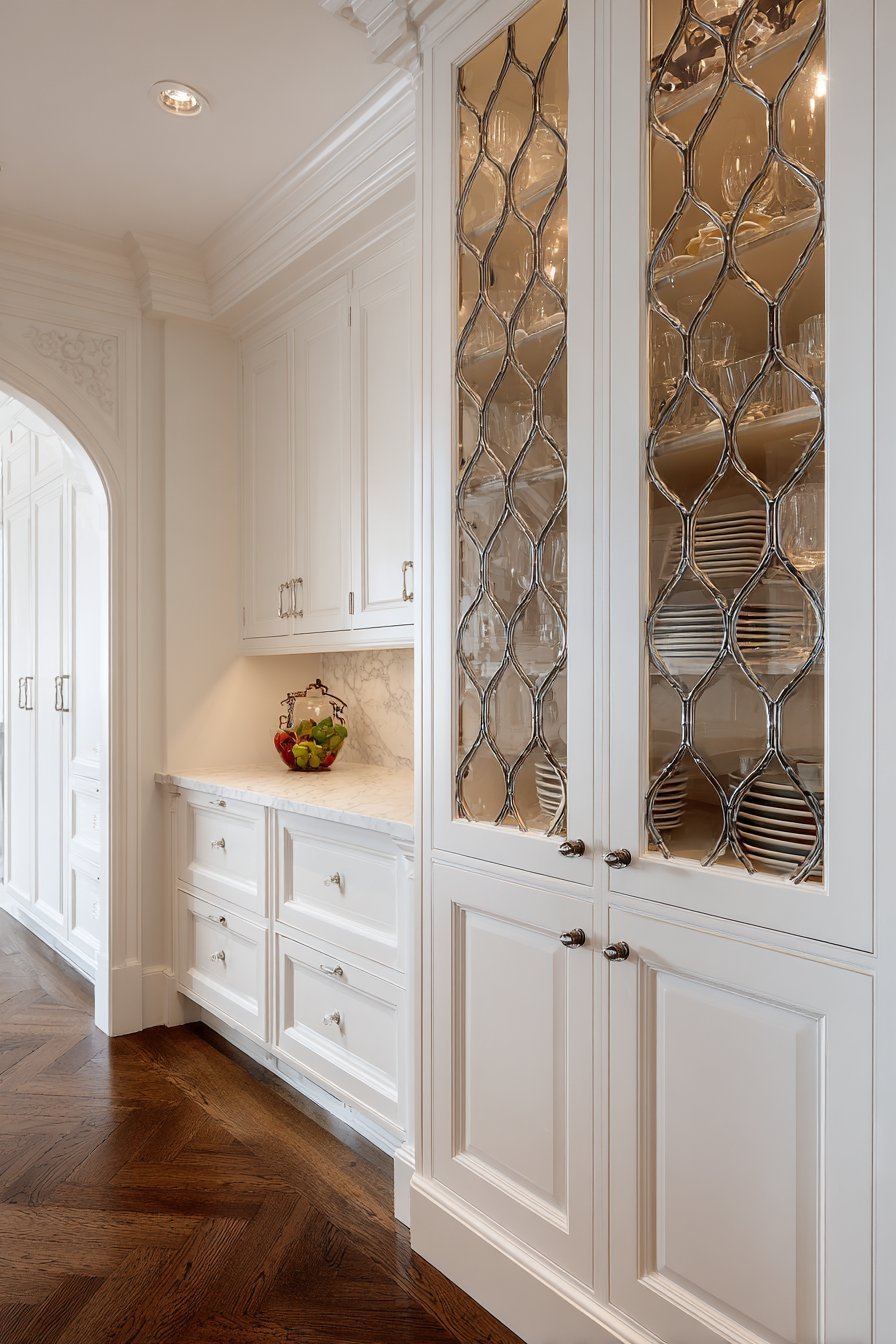
Floor-to-ceiling custom cabinetry creates impressive pantry storage in this traditional kitchen. Traditional mullioned glass doors reveal adjustable wooden shelving behind elegant glass panels. The transparency allows easy inventory of stored items. This practical approach maintains traditional aesthetic standards throughout.
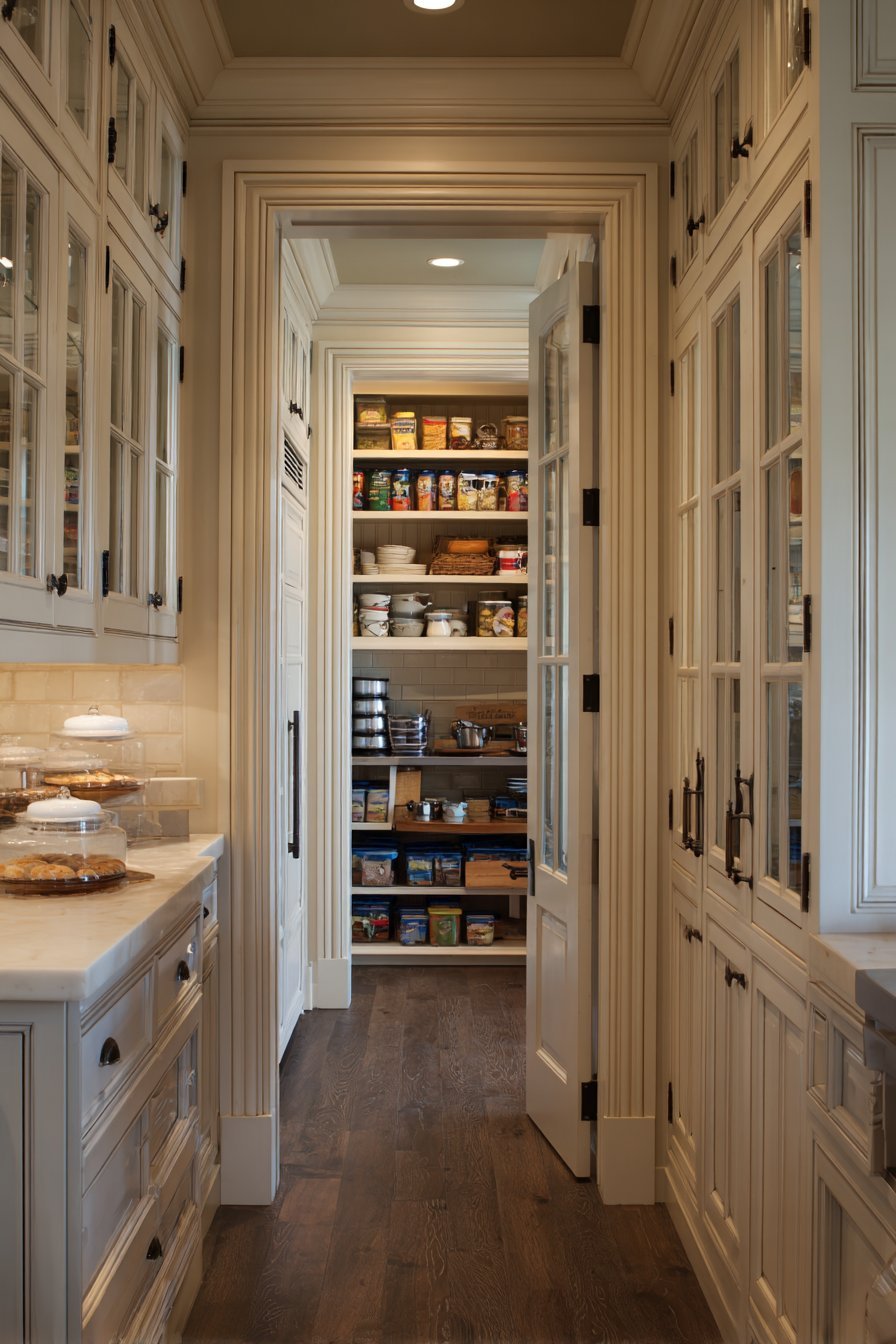
The cabinetry matches the main kitchen in painted linen white. Oil-rubbed bronze hardware provides consistent traditional detailing. Detailed crown molding tops the tall cabinets with architectural finish. Traditional baseboards ground the design with proper proportions.
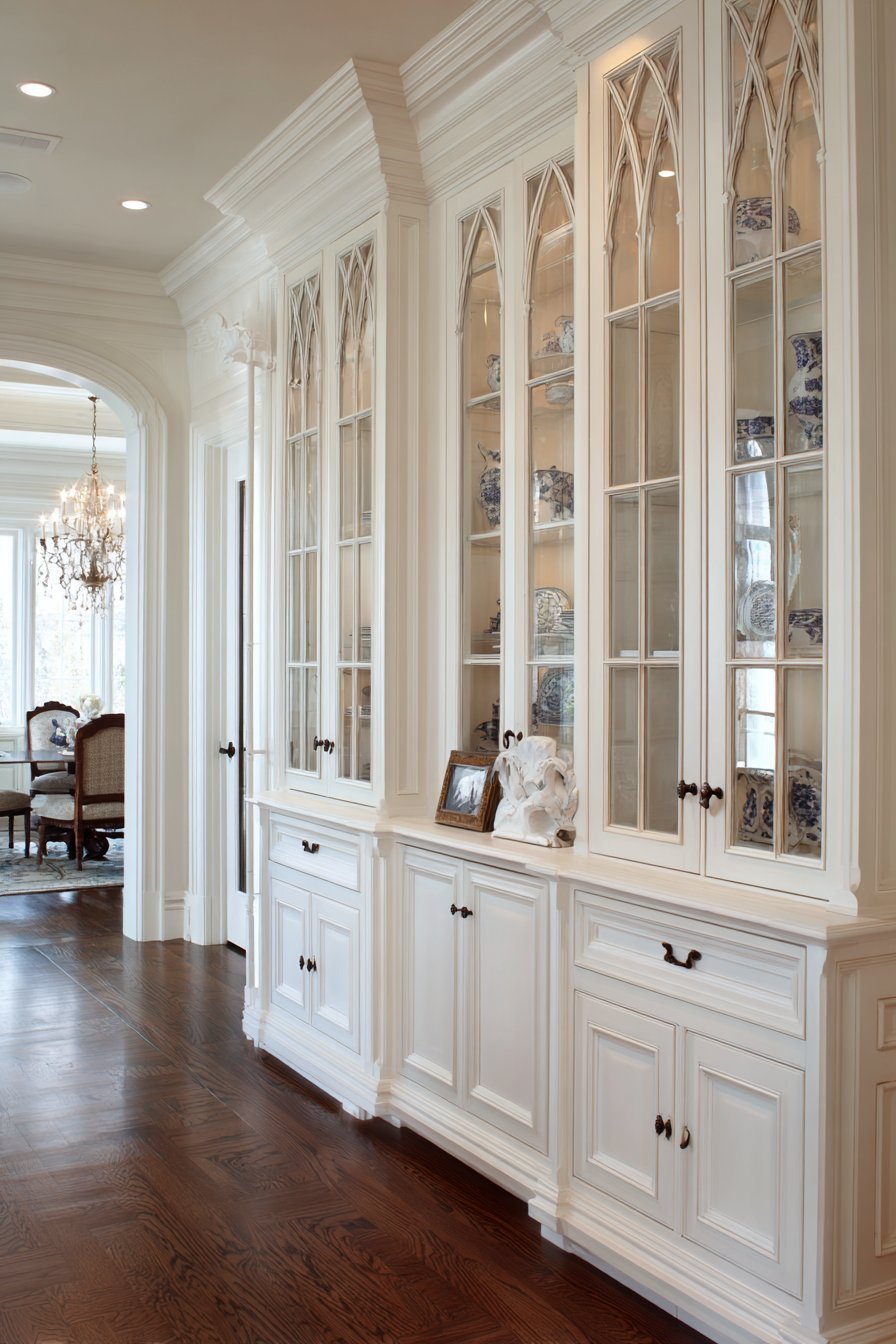
The interior organization system demonstrates thoughtful traditional cabinetry planning. Adjustable shelves accommodate items of varying heights efficiently. The wooden shelf construction maintains quality throughout visible and hidden areas. This attention to detail characterizes authentic traditional craftsmanship.
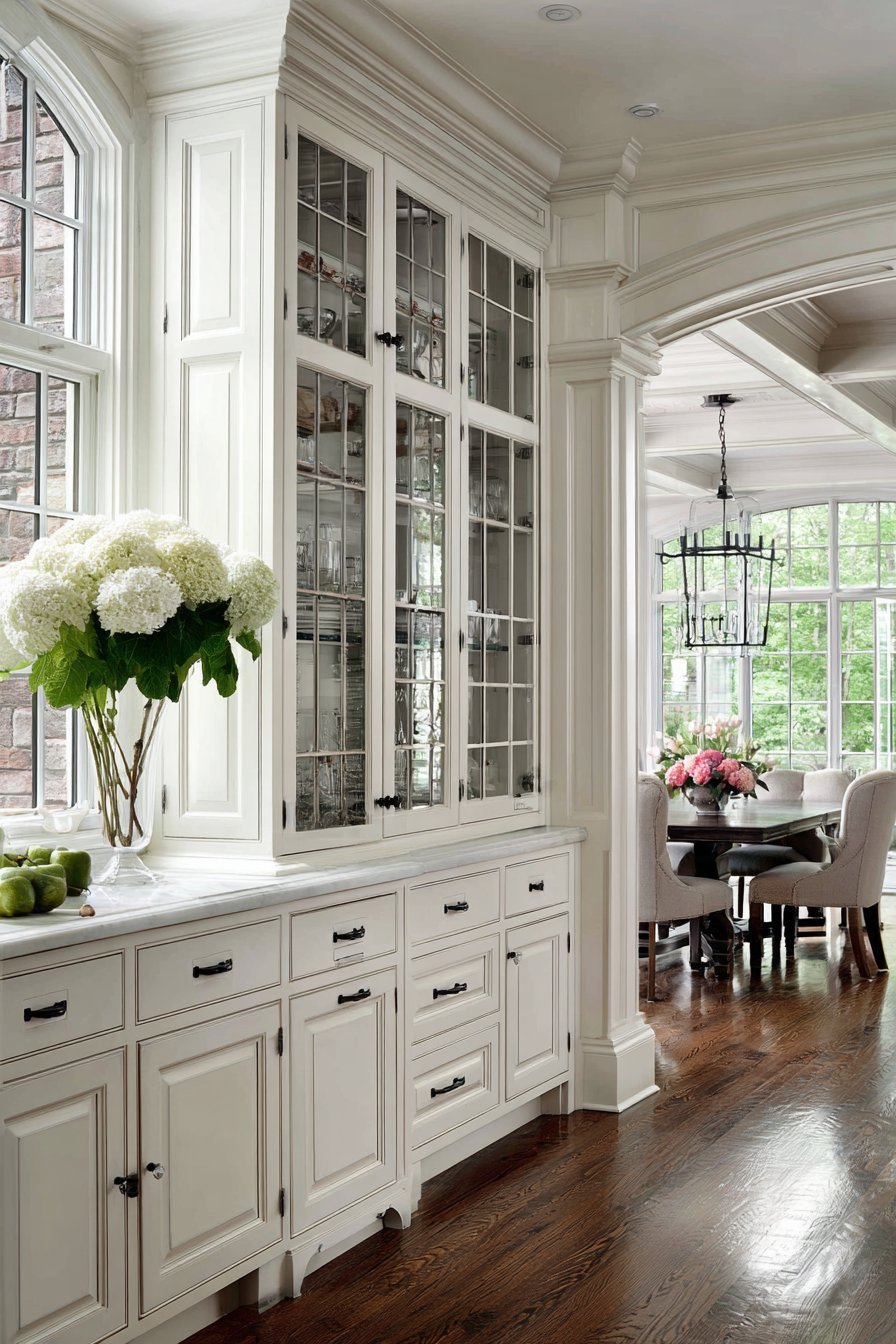
Balanced exposure in professional photography reveals the cabinetry joinery quality. Glass work displays traditional muntins with proper proportions. The complete composition demonstrates how traditional design serves both beauty and function. Practical organization merges seamlessly with traditional aesthetic values.
Key Design Tips:
- Design floor-to-ceiling pantry cabinetry to maximize vertical storage in traditional kitchens
- Use mullioned glass doors for traditional character while maintaining visibility of contents
- Install adjustable wooden shelving for flexible organization that accommodates changing needs
- Apply detailed crown molding and baseboards for proper traditional architectural transitions
- Maintain consistent hardware and finish choices between pantry and main kitchen cabinetry
8. Traditional Kitchen Corner with Soapstone Counters

A decorative plate rack integrates beautifully into cream-painted cabinetry in this corner design. This traditional storage solution displays dishes attractively while keeping them accessible. Soapstone countertops below showcase natural veining patterns unique to this material. The soft grey tones complement the cream cabinetry elegantly.
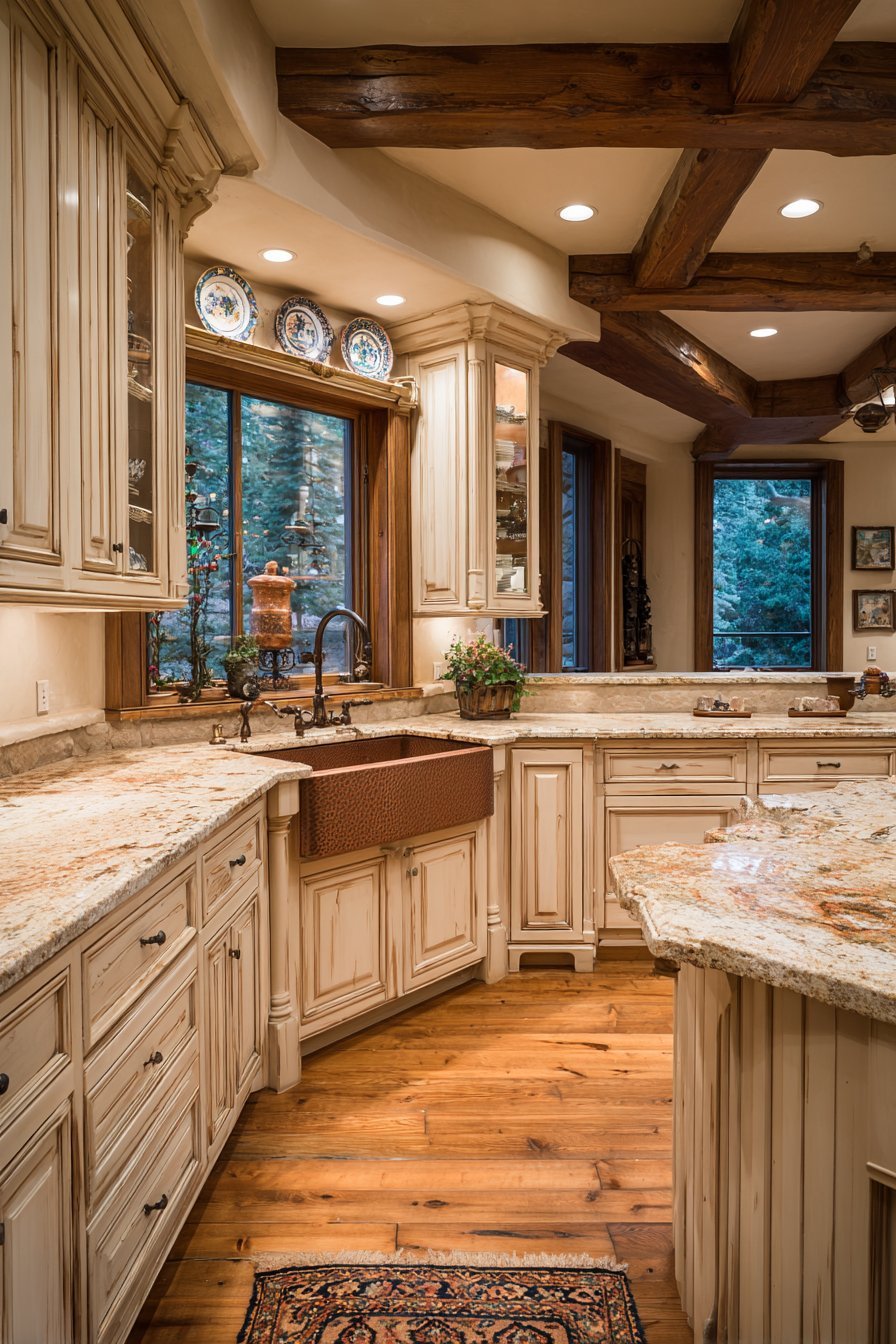
Exposed wood beams on the ceiling add rustic traditional character overhead. These architectural elements provide visual interest without overwhelming the space. Recessed lighting offers modern functionality within traditional aesthetics. The combination proves that traditional design can incorporate contemporary conveniences.
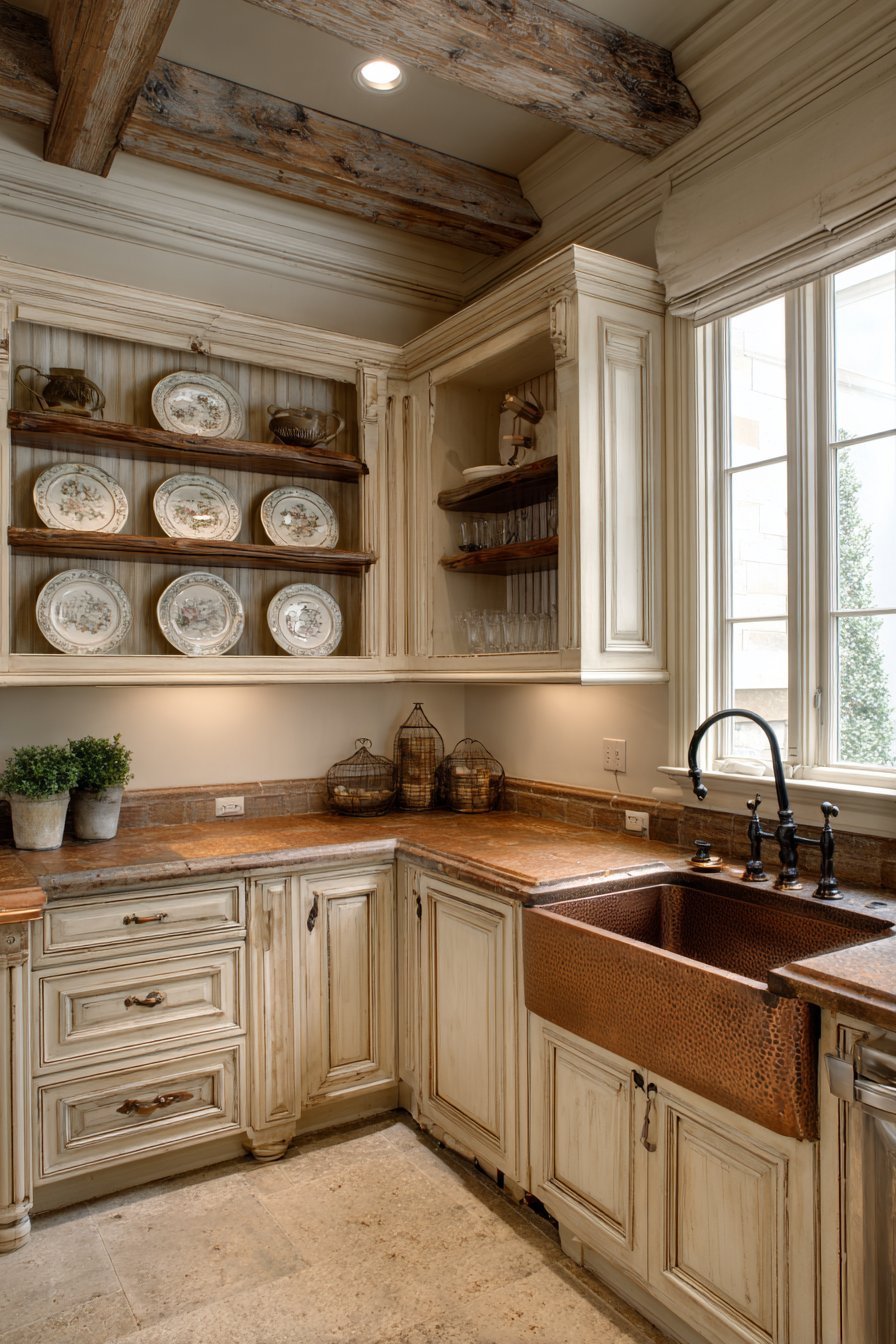
A copper farmhouse sink provides a stunning focal point in this kitchen corner. The deck-mounted faucet features antique copper finish for coordinated traditional styling. This warm metallic tone adds richness to the overall color palette. Copper develops a beautiful patina over time that enhances traditional character.
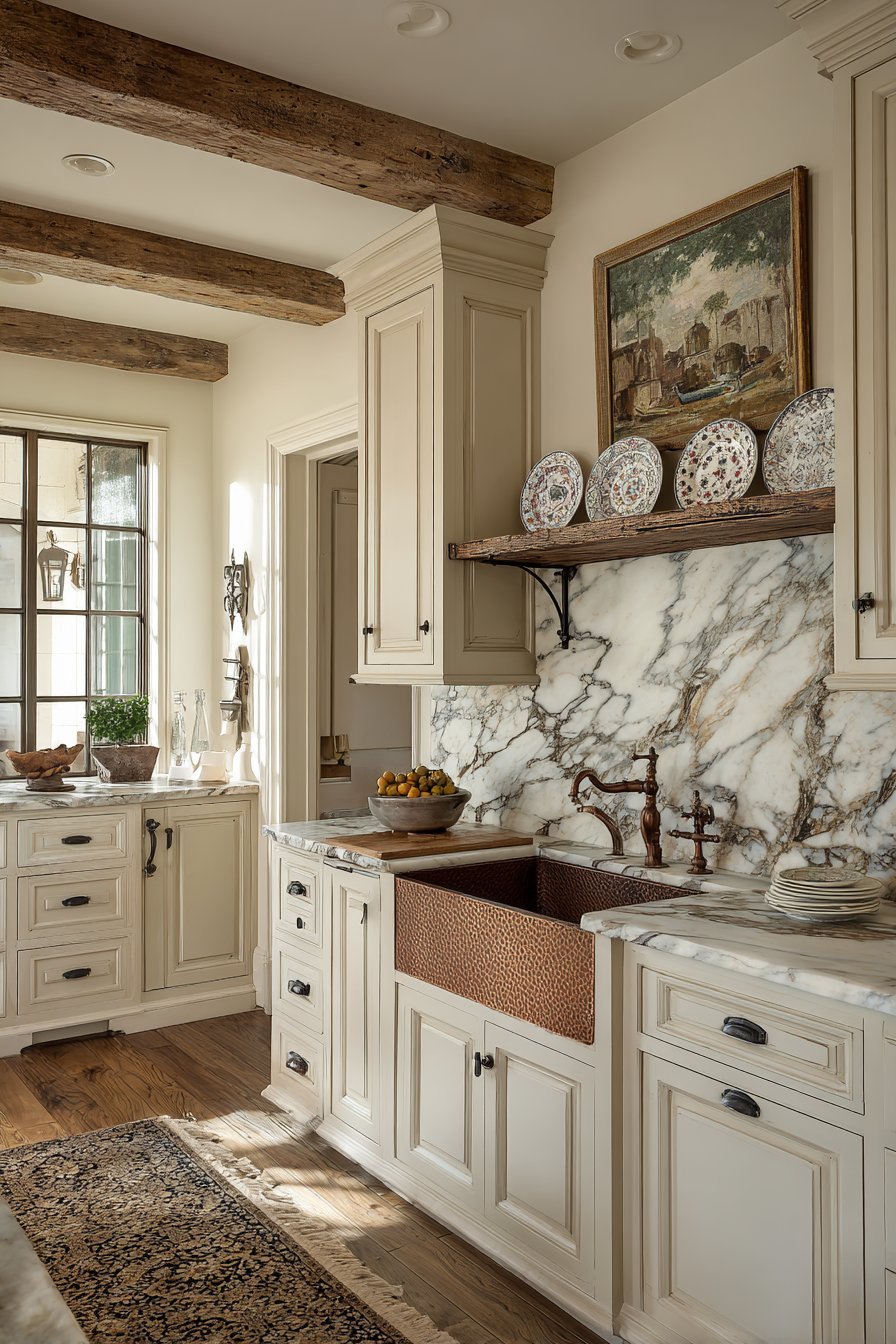
Natural daylight from adjacent windows highlights material variations throughout this corner. The soapstone surface displays authentic wear patterns that tell stories of use. Professional photography captures these realistic details that distinguish lived-in traditional spaces. Material authenticity receives proper emphasis in traditional kitchen design.
Key Design Tips:
- Incorporate decorative plate racks into cabinetry for traditional dish storage and display
- Choose soapstone countertops for unique natural veining and surfaces that develop character with use
- Add exposed wood ceiling beams for rustic traditional architectural interest overhead
- Install copper farmhouse sinks that develop beautiful patina enhancing traditional authenticity
- Combine recessed modern lighting with traditional elements for functional illumination without style compromise
9. Traditional Cooking Alcove with Delft Tile
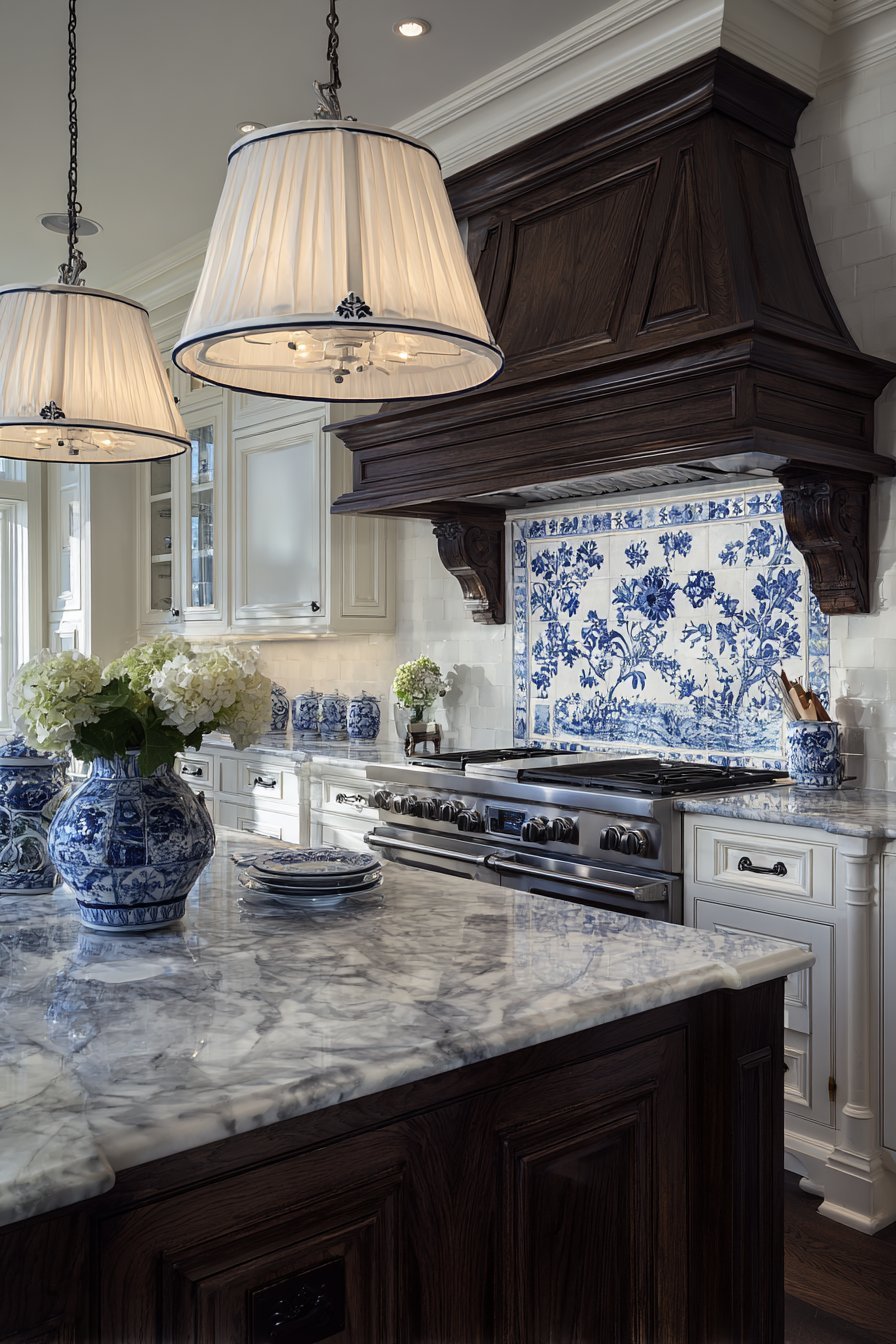
A dedicated cooking alcove features decorative tile surround in classic Delft blue and white patterns. The handcrafted tile work creates an impressive traditional focal point. Custom wood cabinetry frames the professional range with intentional symmetry. Traditional beadboard backing and plate grooves provide additional display opportunities.
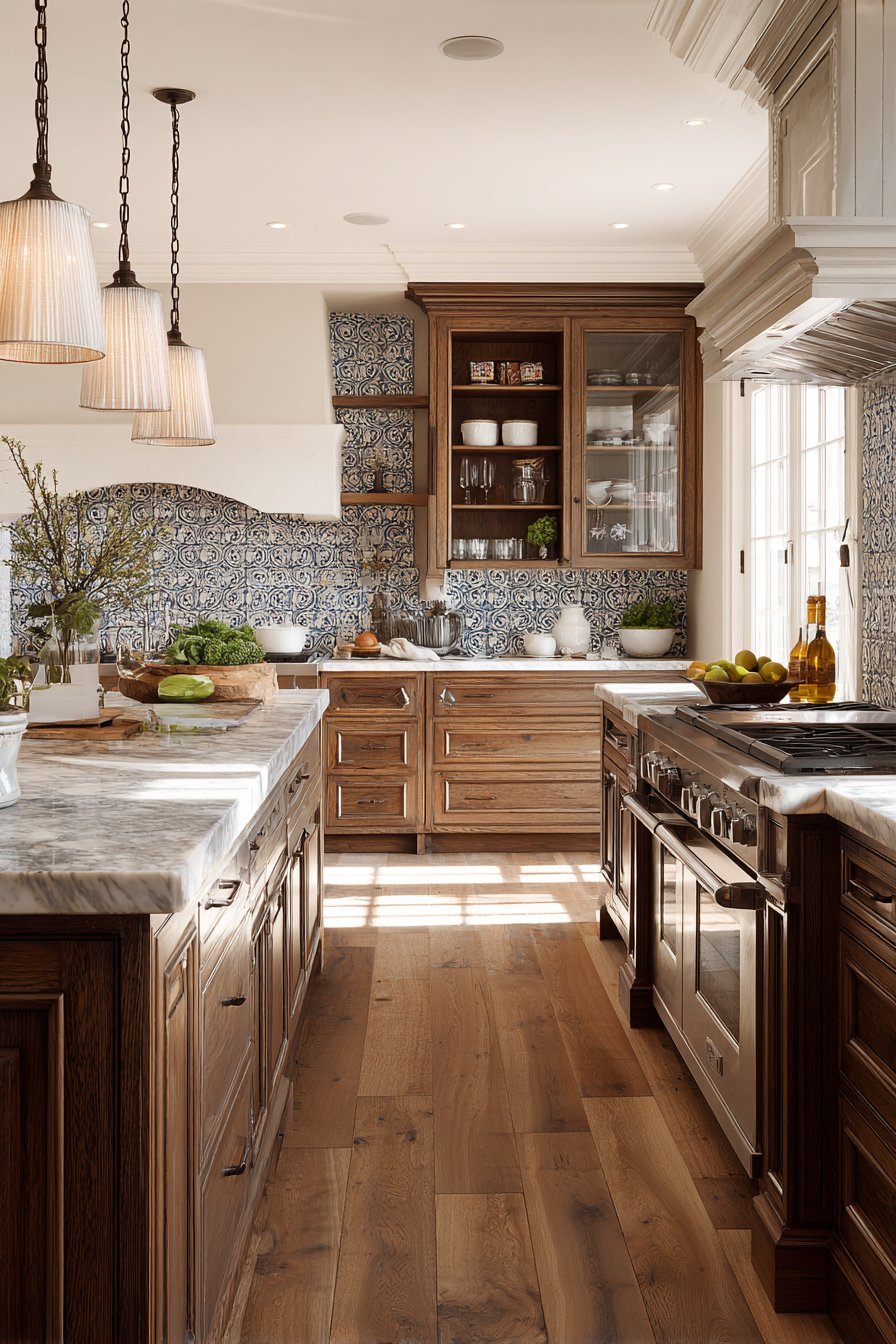
Marble countertops with grey veining extend along the perimeter with eased edge profile. This classic stone choice offers both beauty and durability. The subtle veining adds visual interest without overwhelming other design elements. Eased edges provide traditional detailing with comfortable functionality.

Pendant lights with traditional fabric shades deliver focused task lighting over work areas. The soft illumination complements natural window light throughout the space. Wide-angle photography captures the complete traditional kitchen layout effectively. The handcrafted tile work receives proper emphasis in compositional framing.
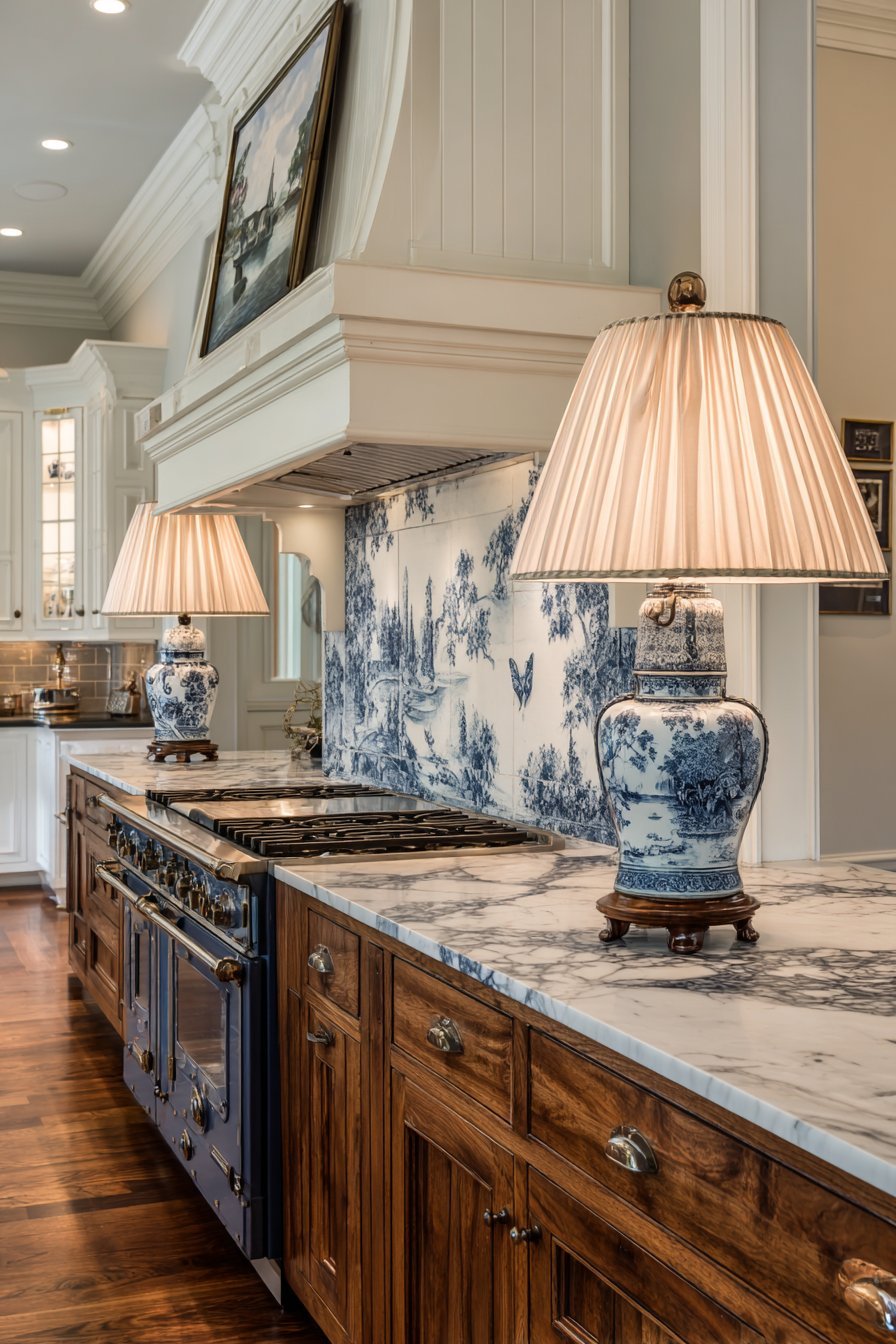
Natural material variations contribute authentic character to this traditional kitchen. Each tile displays slight differences that announce handcrafted origins. The marble veining creates unique patterns never exactly repeated. These organic variations prevent the space from feeling manufactured or sterile.
Key Design Tips:
- Create cooking alcoves with decorative tile surrounds for dramatic traditional focal points
- Use classic Delft blue and white tile patterns for timeless traditional European character
- Install traditional beadboard backing behind ranges with plate grooves for functional display
- Choose marble countertops with grey veining for classic traditional elegance and durability
- Add pendant lights with fabric shades for soft task lighting that maintains traditional aesthetics
10. Traditional Butler’s Pantry Transition Space
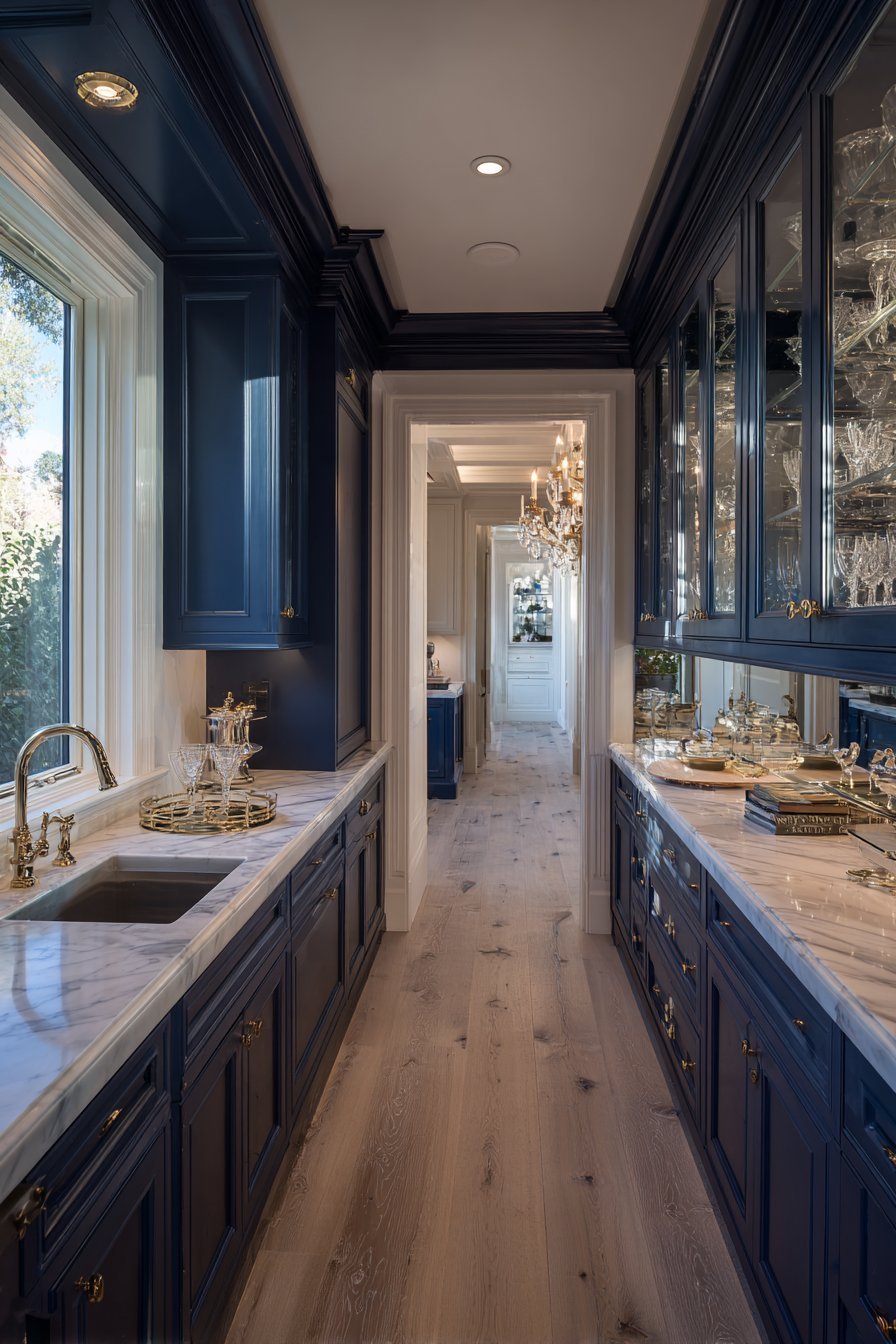
This butler’s pantry serves as an elegant transition space with traditional glass-front cabinets. Crystal and fine china display attractively behind the glass doors. The narrow space maximizes storage efficiency while maintaining traditional styling. Traditional cabinetry in deeper navy blue creates sophisticated visual impact.
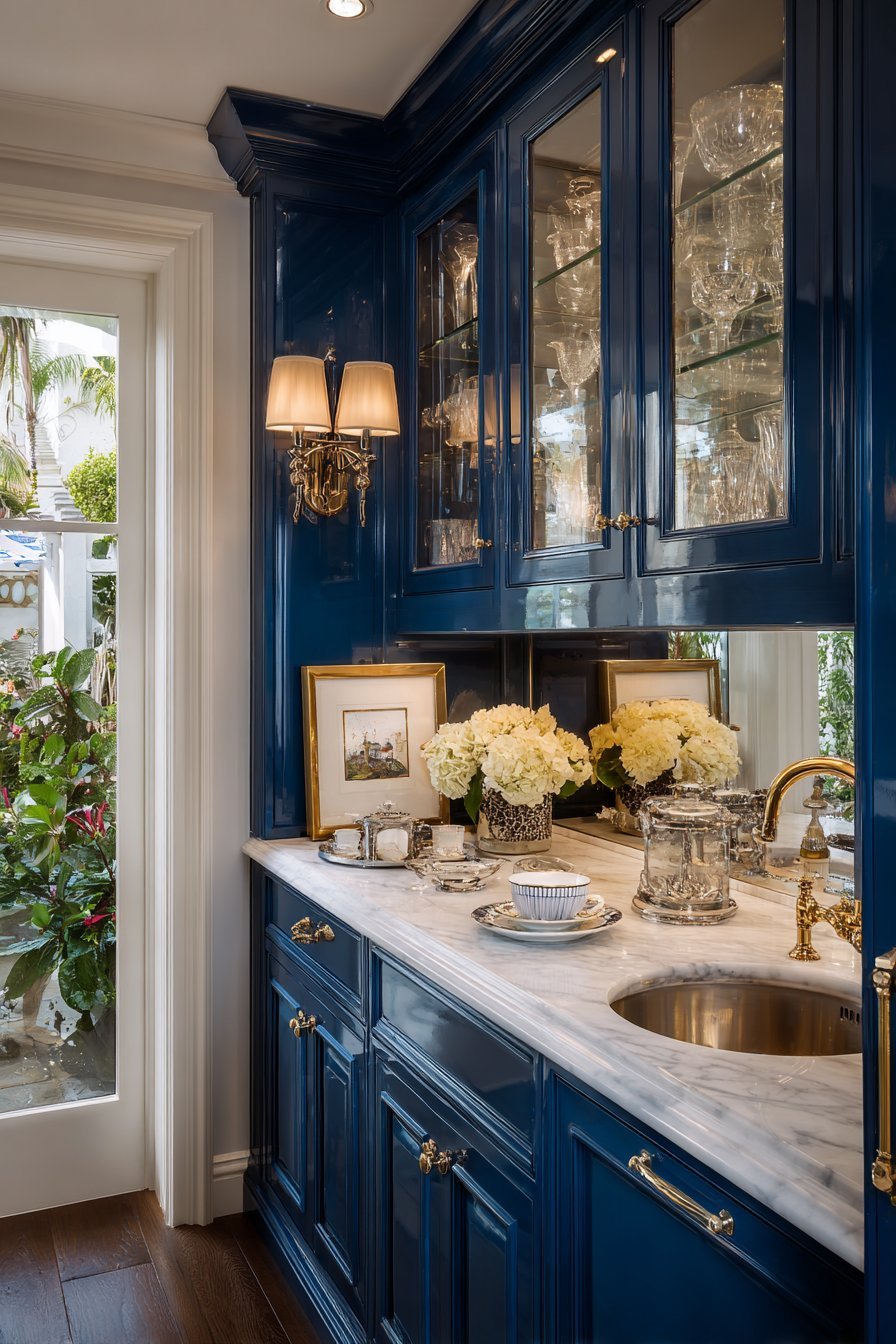
Polished brass hardware adorns each cabinet door and drawer. White marble countertops provide bright contrast against the rich cabinet color. A small undermount bar sink with traditional gooseneck faucet adds functionality. This compact sink serves beverage preparation and quick cleanup needs.
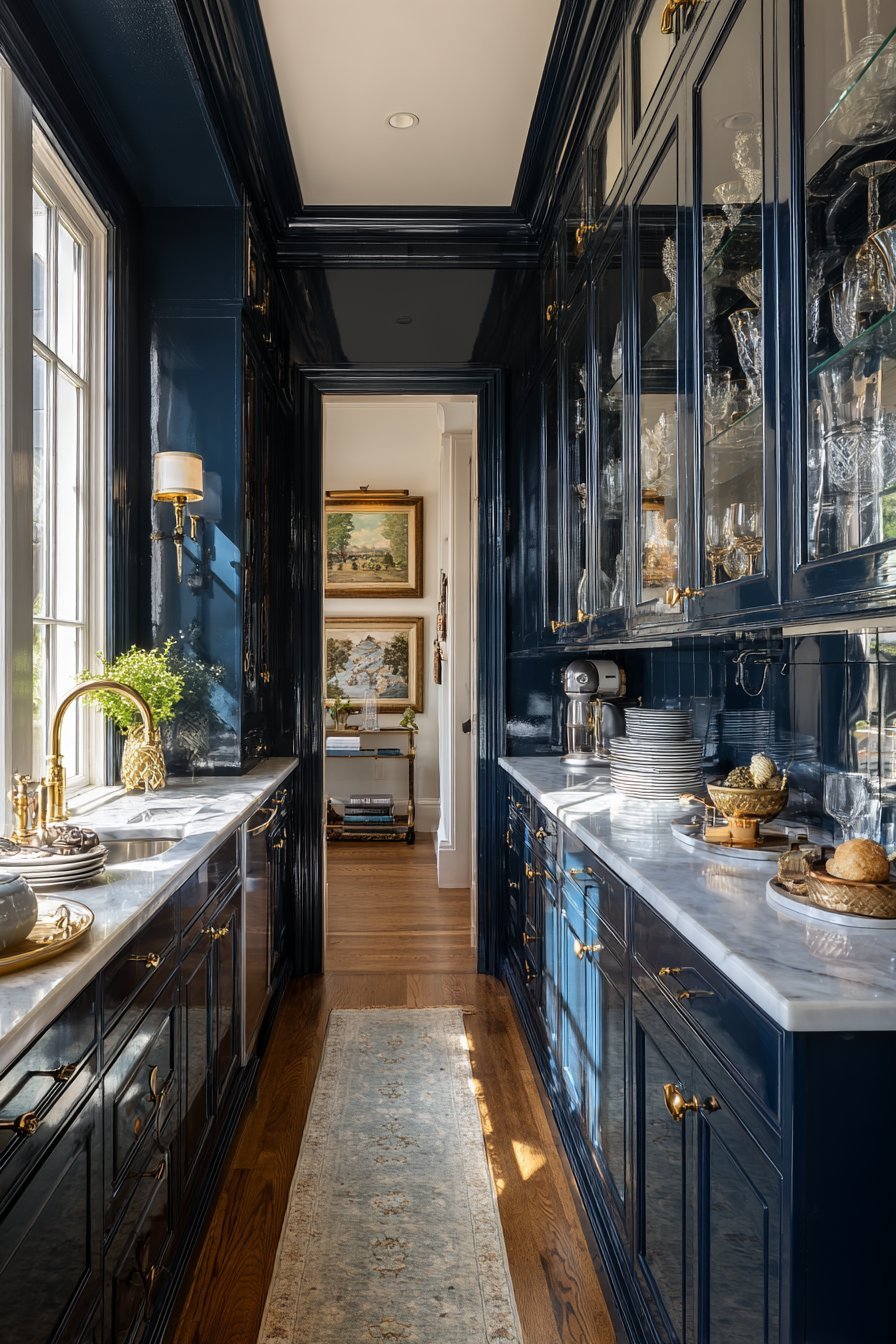
Natural light from a nearby window illuminates this transitional space beautifully. The narrow footprint requires careful planning for maximum functionality. Every inch serves a purpose while maintaining traditional design standards. The space proves that traditional style adapts to various room sizes successfully.
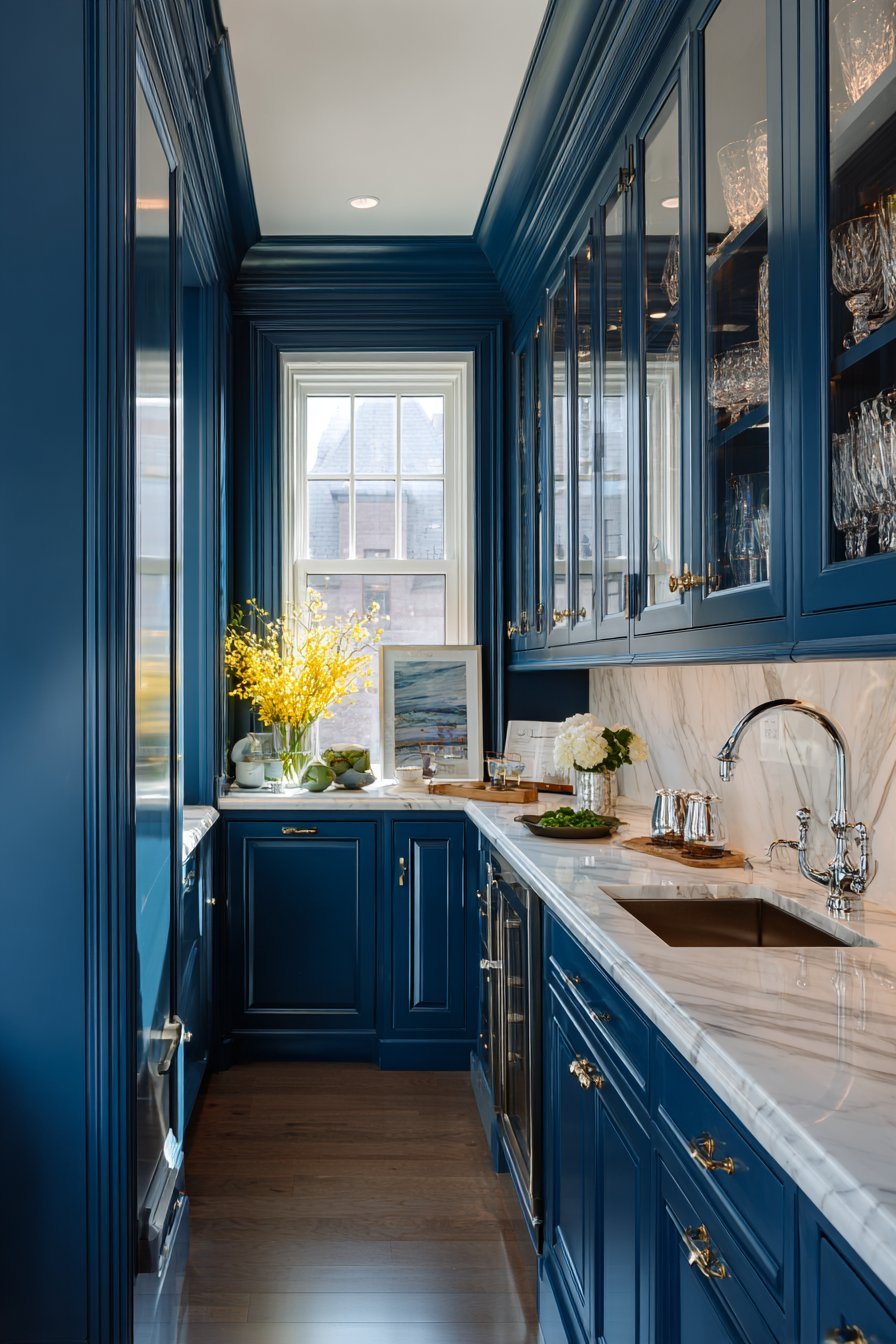
Interior photography emphasizes the rich cabinet color and reflective glass surfaces. The polished brass hardware catches light like jewelry. This elegant traditional design suits formal entertaining needs perfectly. The butler’s pantry exemplifies how traditional design serves both beauty and practical function.
Key Design Tips:
- Design butler’s pantries with glass-front cabinets for elegant china and crystal display
- Use deeper colors like navy blue in smaller spaces for sophisticated traditional impact
- Install polished brass hardware for refined traditional detailing that catches light beautifully
- Add small bar sinks with gooseneck faucets for beverage preparation functionality
- Choose white marble countertops to brighten narrow spaces and contrast with dark cabinetry
11. Traditional Kitchen Island with Furniture-Style Legs
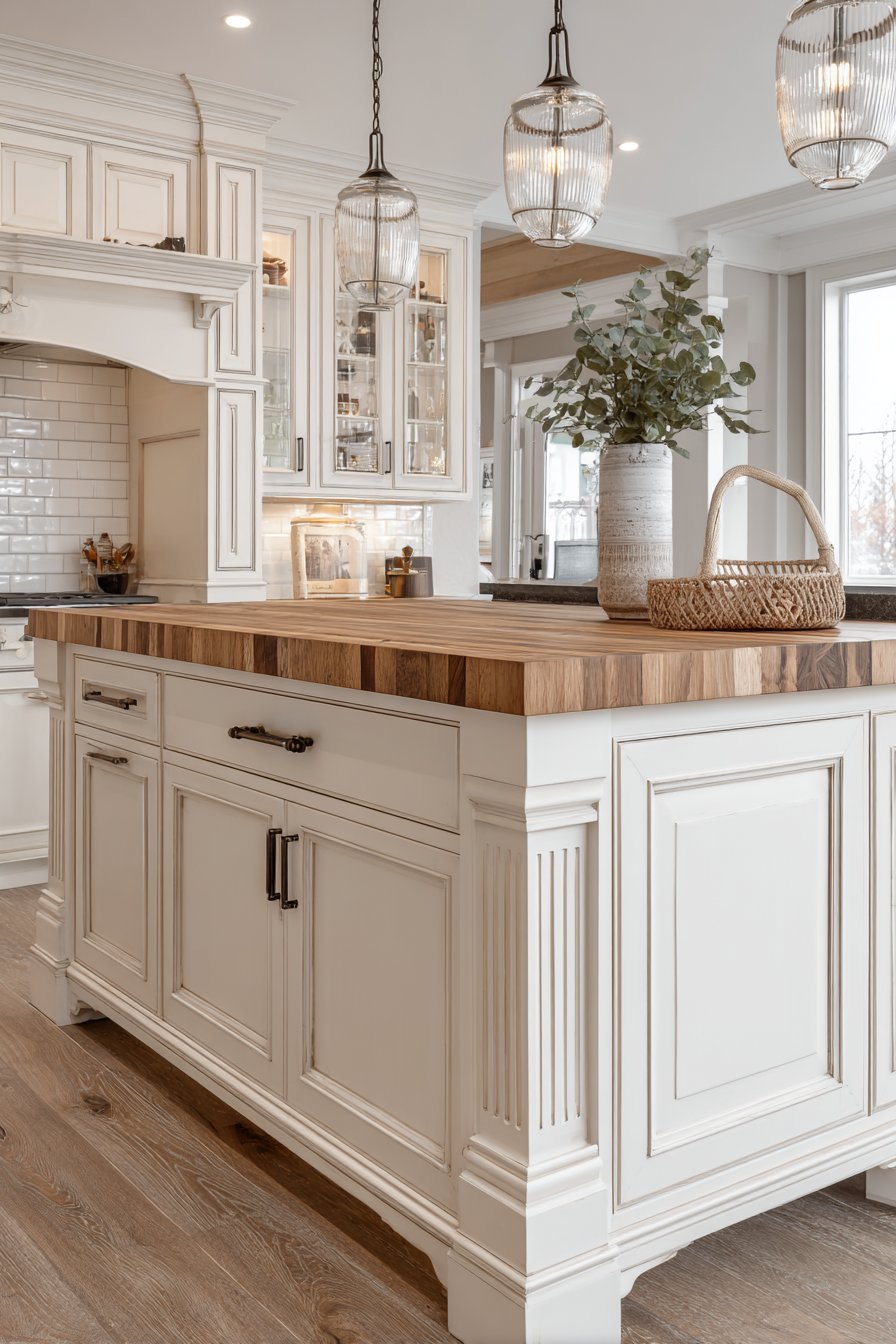
A large working island features furniture-style legs and decorative brackets in this design. The contrasting darker stained base stands out against white perimeter cabinetry. This two-tone approach creates a focal point while maintaining traditional sensibility. The island becomes furniture rather than merely cabinetry.
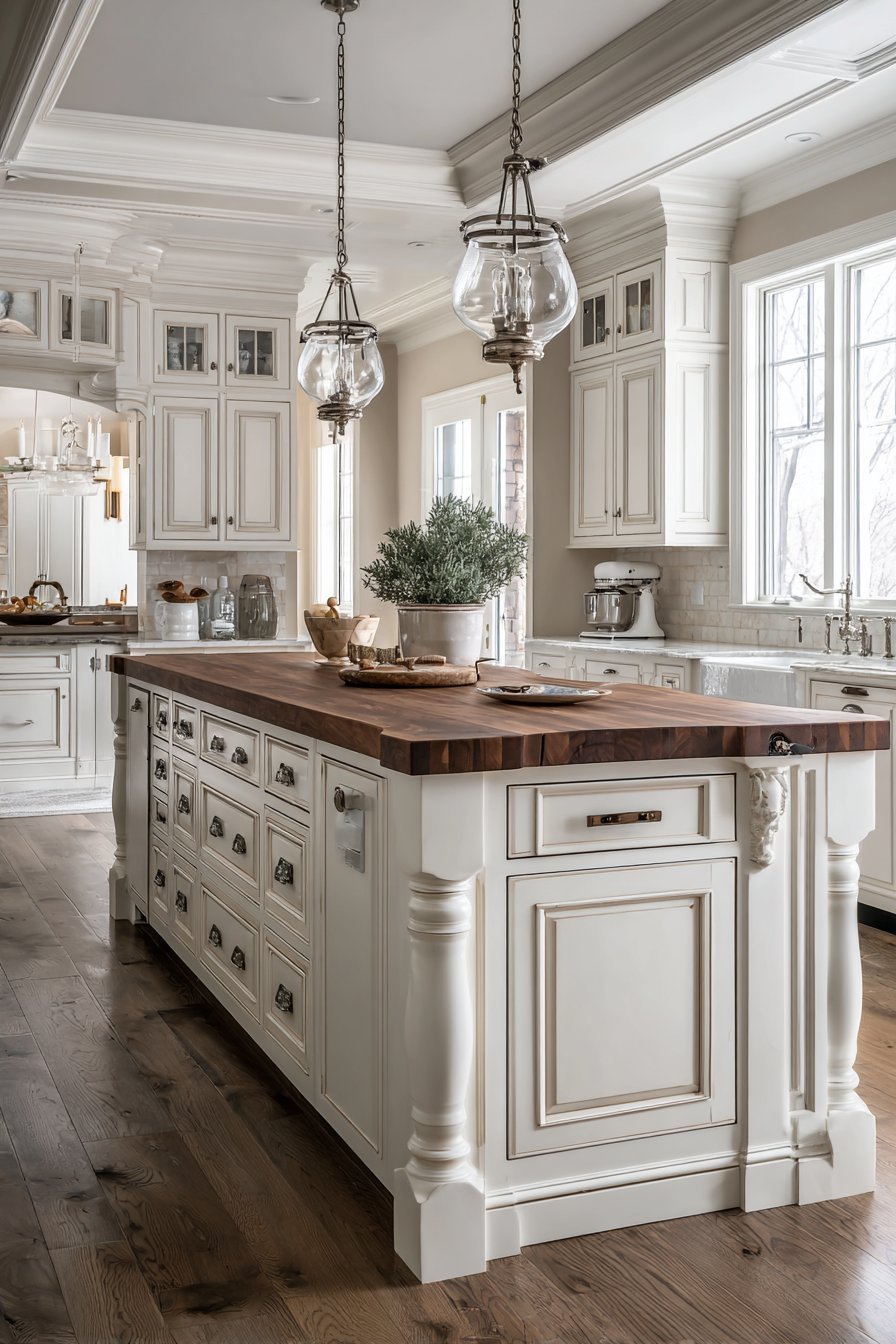
The island top showcases thick butcher block with visible wood grain. Natural edge detail adds organic character to the refined space. Traditional pendants with mercury glass shades hang overhead at proper heights. The vintage glass creates warm light diffusion patterns throughout the work area.
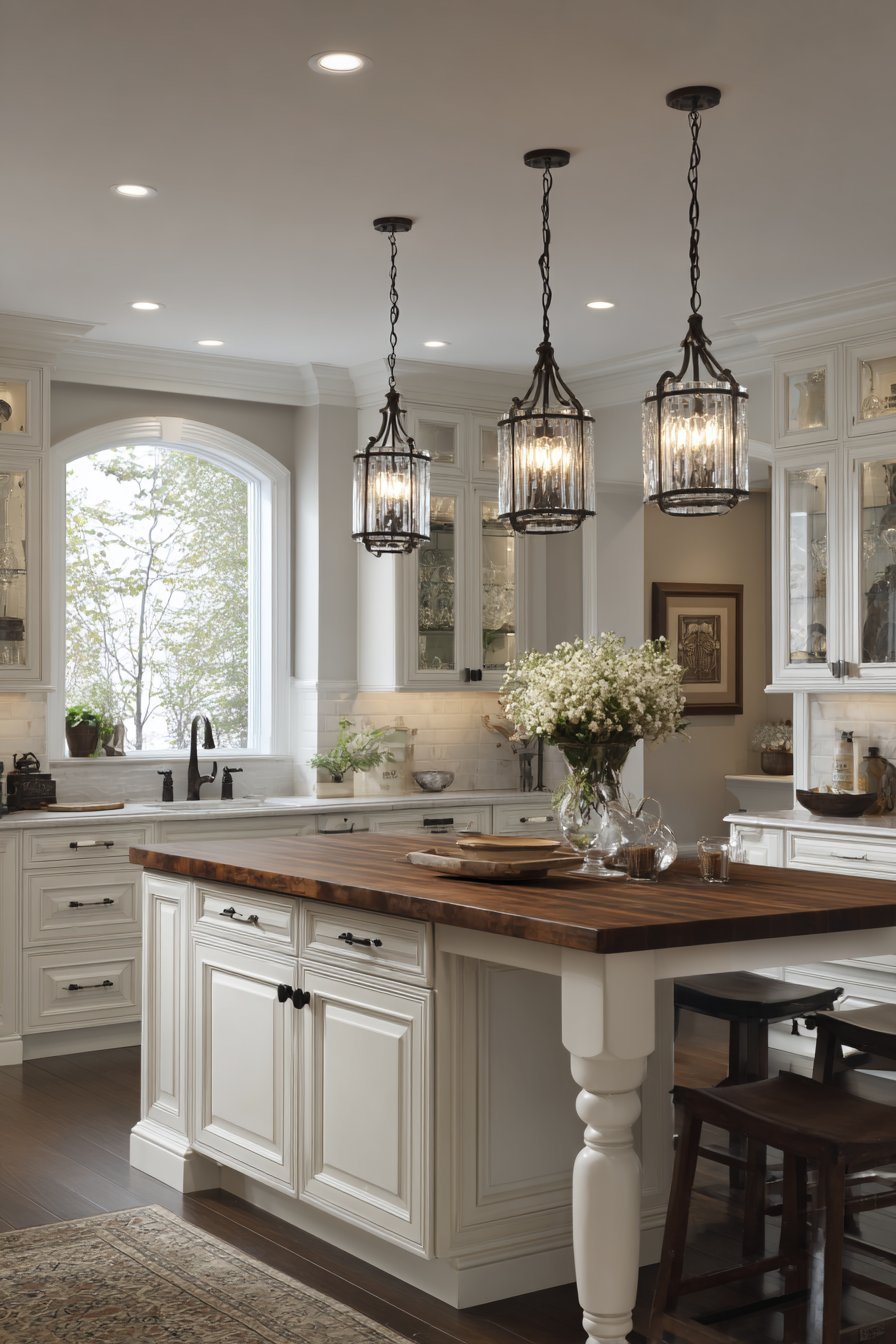
Background cabinetry displays traditional raised panel construction throughout. Antique pewter hardware adds subtle traditional detailing. The hardware finish provides softer appearance than bright polished metals. This muted metallic tone suits the overall traditional color palette perfectly.
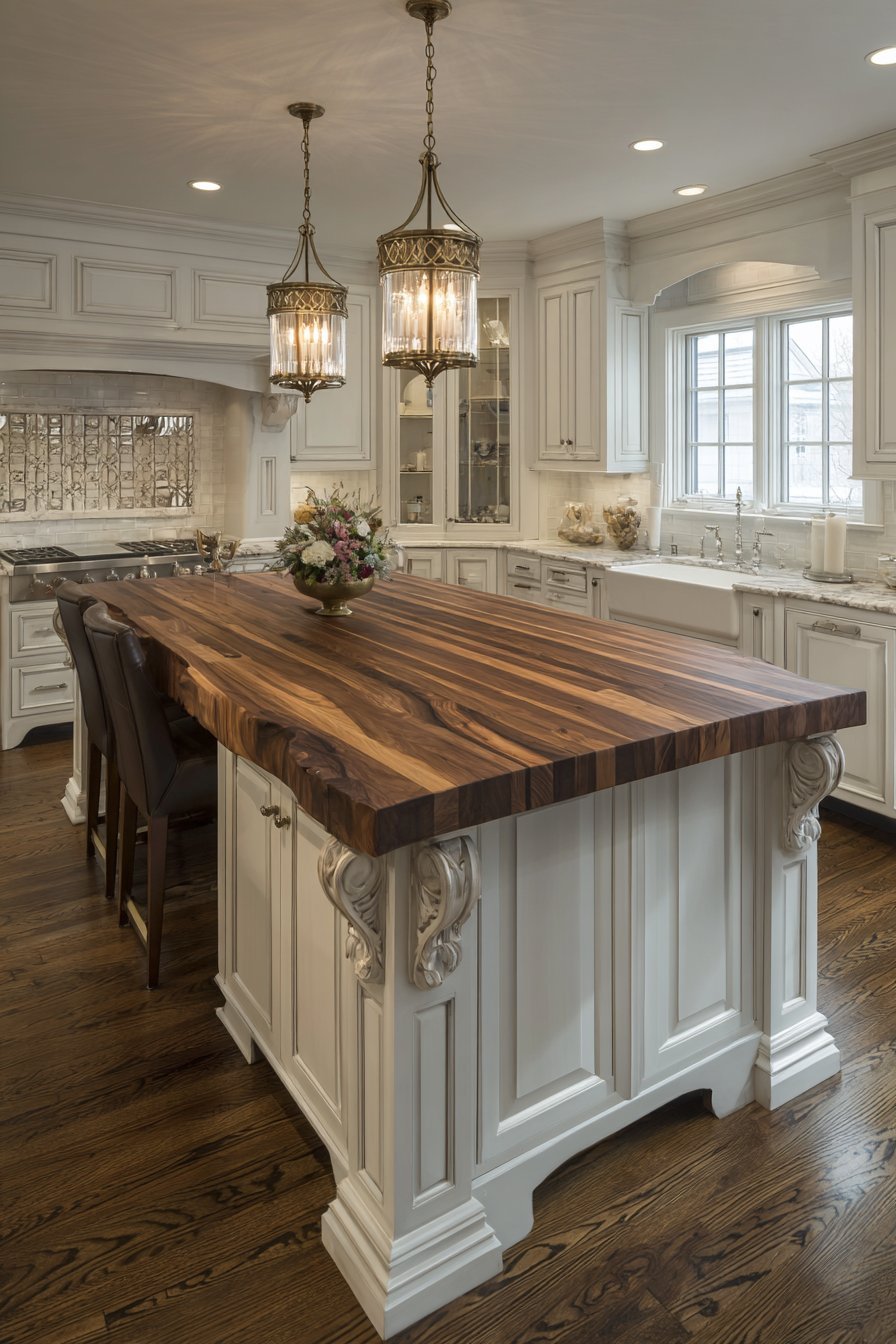
Professional photography with soft natural lighting captures furniture-quality details effectively. The warm wood tones photograph beautifully in balanced illumination. Every design element receives proper emphasis through thoughtful composition. This approach characterizes successful traditional kitchen photography and design documentation.
Key Design Tips:
- Design islands with furniture-style legs and brackets for traditional focal points
- Use contrasting stains between island and perimeter cabinets for visual interest and definition
- Install thick butcher block island tops with natural edges for organic traditional character
- Hang mercury glass pendant lights over islands for vintage charm and warm illumination
- Choose antique pewter hardware for subtle traditional detailing with softer metallic appearance
12. Traditional Kitchen Window with Apron Front Sink

A deep apron front sink positions beneath a large window in this classic arrangement. The window features traditional divided light pattern with interior shutters. This combination provides light control while maintaining traditional character. Polished marble countertops flank the sink with traditional edge detailing.

Classic white subway tile creates the backsplash extending from counter to window sill. This timeless material choice never goes out of style. Traditional cabinetry in soft grey provides storage on either side. Cup pulls offer comfortable traditional hardware that’s easy to grasp.

Morning light streams through the window highlighting the sink area beautifully. Water spots on the sink surface show realistic kitchen use. Natural wear on the marble adds authentic character. These realistic details distinguish lived-in traditional spaces from showroom perfection.
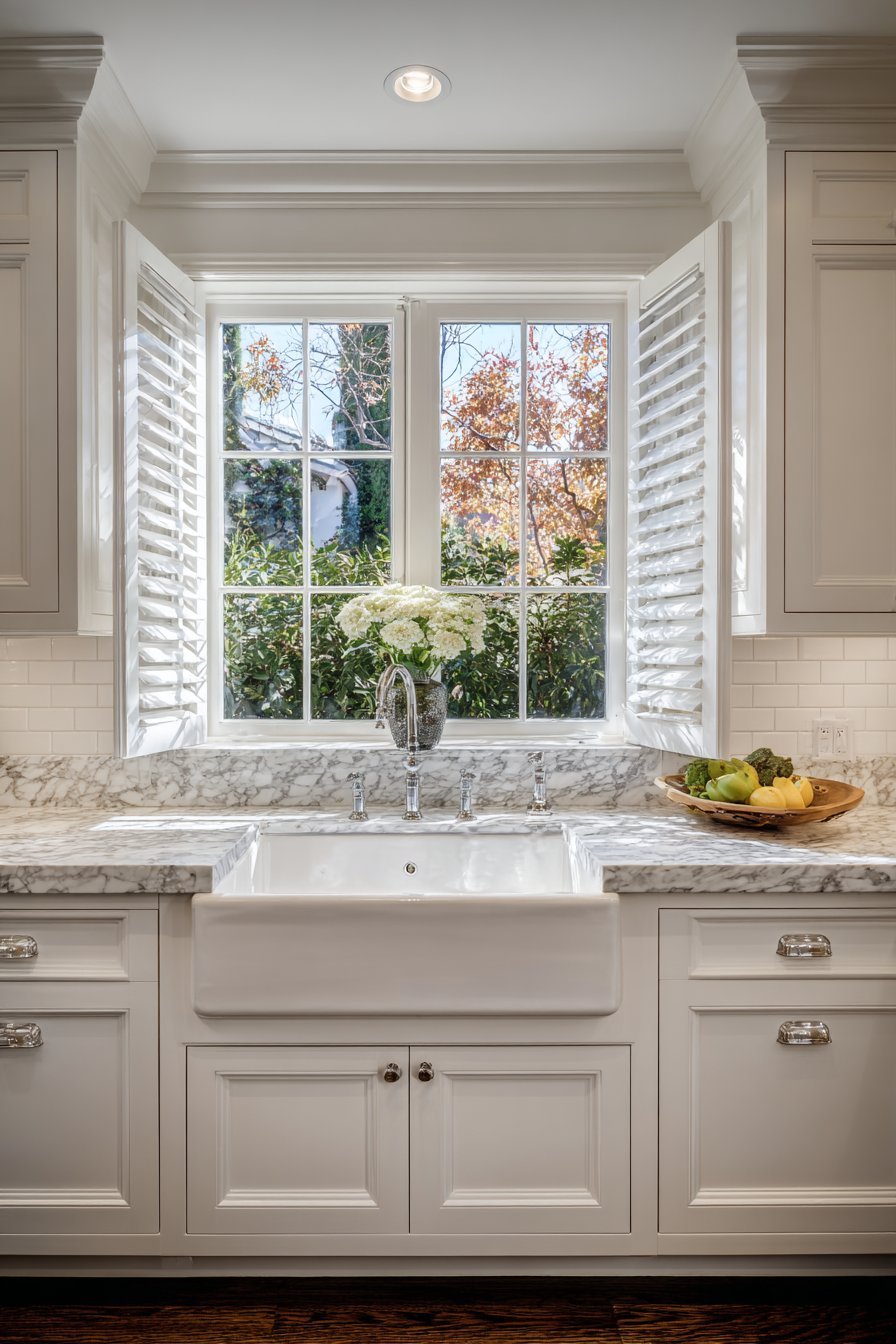
Interior design photography captures functional traditional kitchen reality honestly. The window placement provides ideal natural task lighting. The sink area becomes a pleasant workspace throughout the day. Traditional design serves daily life rather than existing merely for appearance.
Key Design Tips:
- Position apron front sinks beneath windows for natural task lighting and traditional placement
- Install windows with divided light patterns and interior shutters for light control with character
- Use polished marble countertops with traditional edge details for classic elegance and durability
- Apply classic white subway tile backsplashes for timeless traditional styling that never dates
- Choose soft grey cabinetry as a sophisticated neutral alternative to stark white or dark stains
13. Traditional Kitchen with Exposed Ceiling Beams
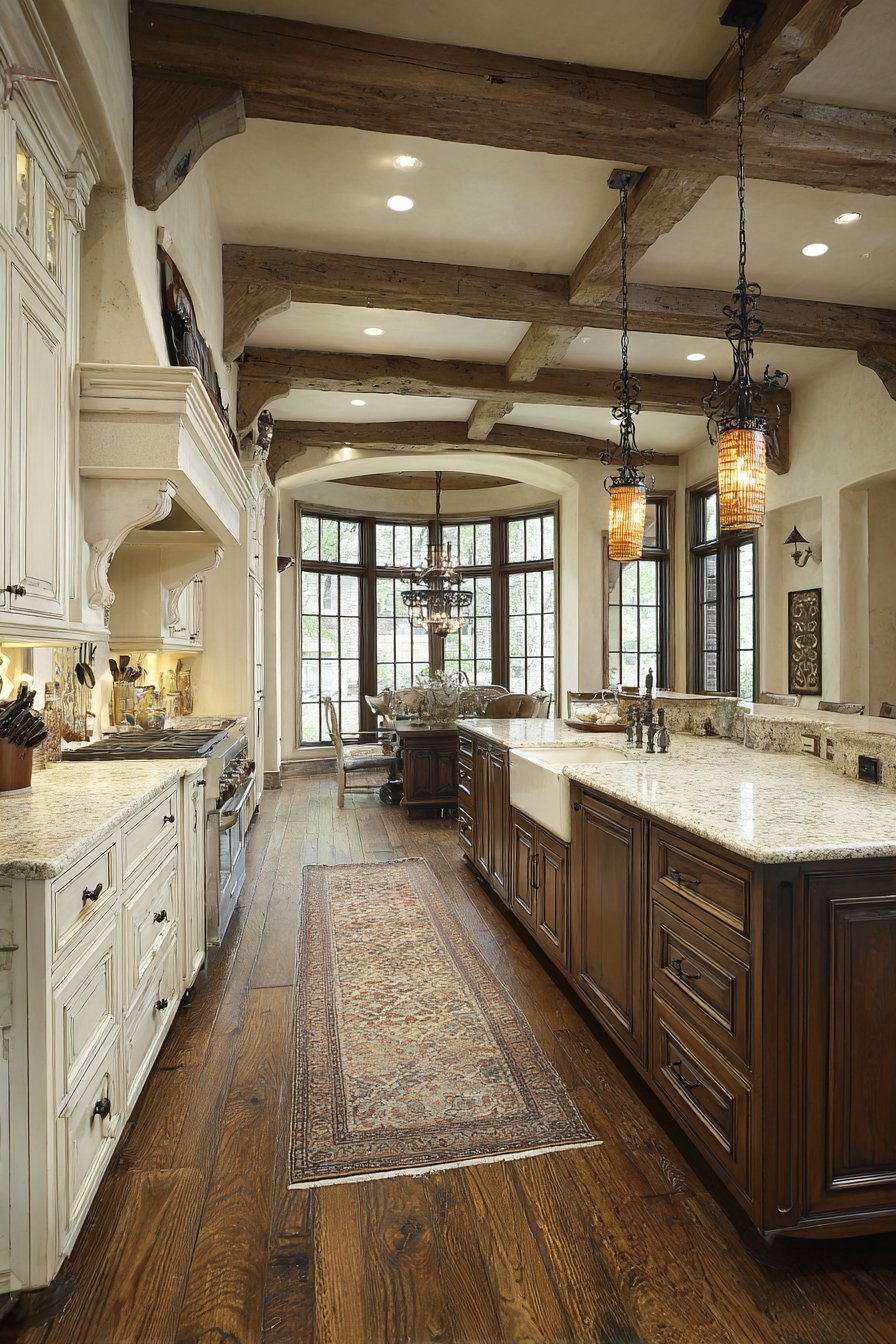
Exposed ceiling beams in natural wood finish add architectural interest overhead. The beams create vertical drama above cream-painted shaker cabinetry. Traditional proportions maintain authentic styling throughout the cabinetry design. An antique Persian runner defines the kitchen work zone on hardwood flooring.
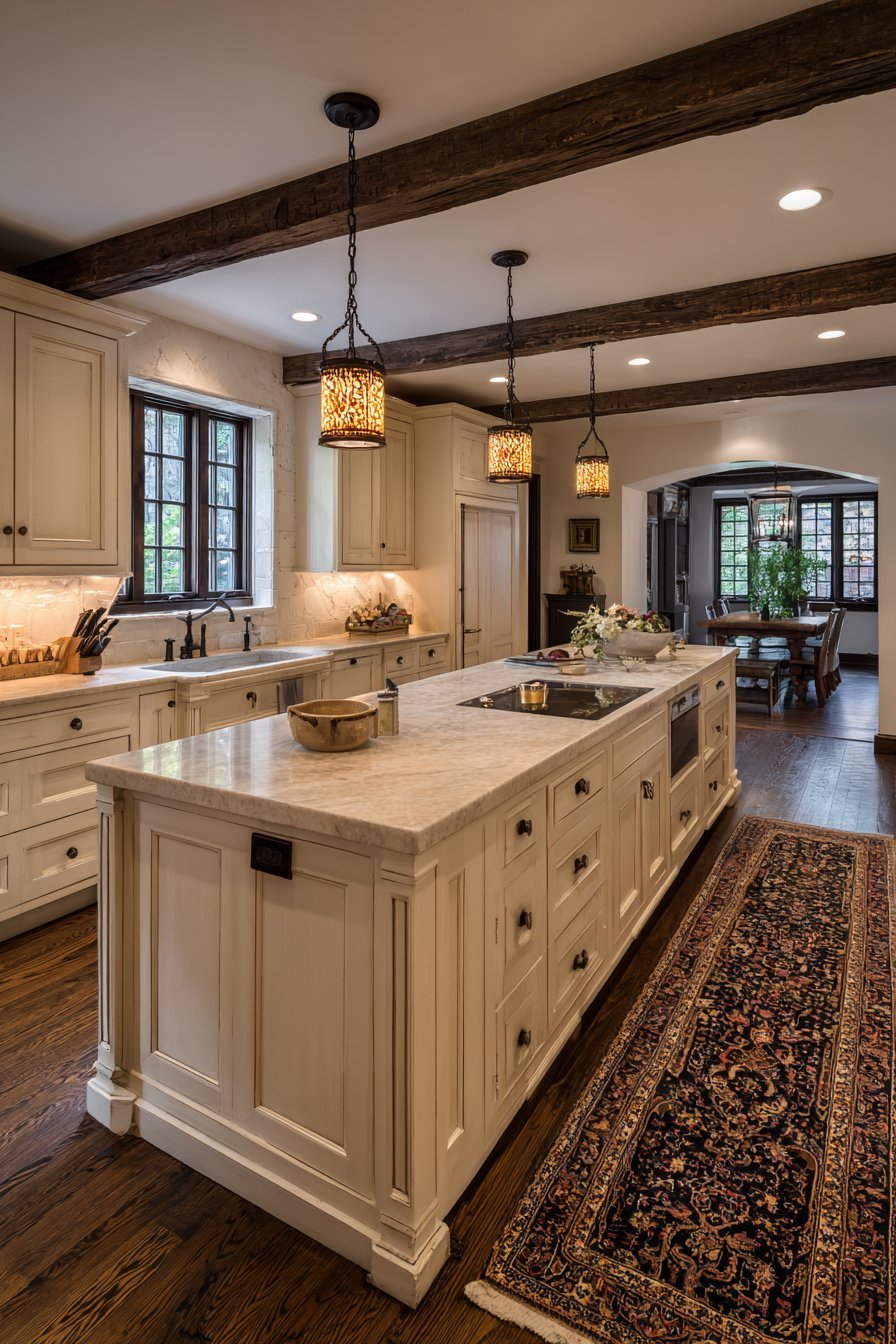
Wide-plank hardwood flooring displays natural color variation characteristic of authentic wood. The flooring shows realistic wear patterns from regular use. Traditional wrought iron pendant lights with amber glass provide ambient lighting. The warm glass tone complements the natural wood finishes beautifully.
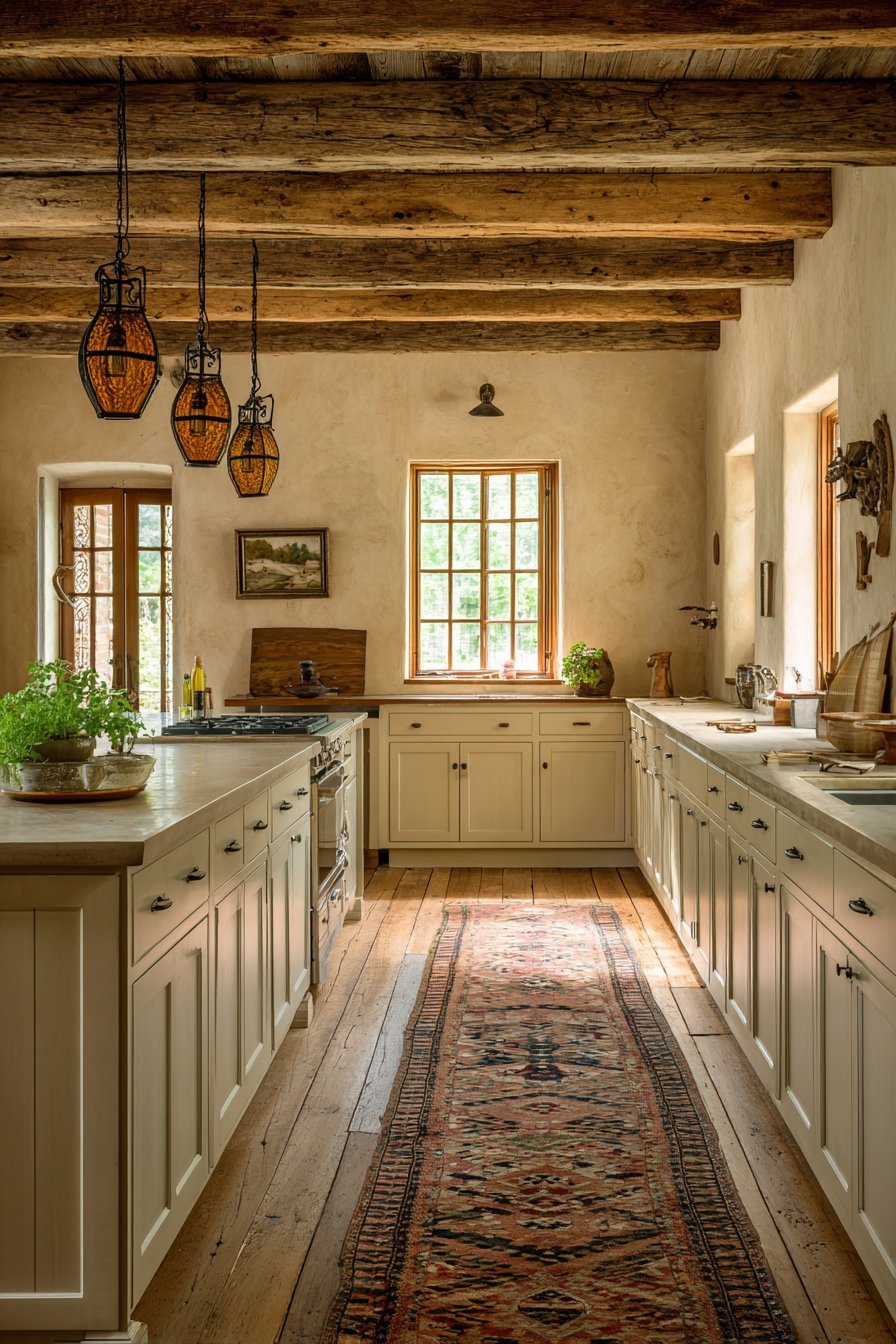
The central island serves as the primary work surface and gathering spot. Its traditional construction matches the perimeter cabinetry styling. Natural window light emphasizes authentic wood textures throughout the space. The aged patina on decorative elements adds collected-over-time character.

Wide-angle architectural photography captures the vertical space created by exposed beams. The complete traditional architectural elements receive proper documentation. This perspective shows how ceiling treatments contribute to overall traditional kitchen design. Vertical elements balance horizontal cabinet runs for proper spatial proportion.
Key Design Tips:
- Add exposed ceiling beams in natural wood for architectural interest and traditional character
- Use antique runners on hardwood floors to define work zones while adding traditional textiles
- Install wrought iron pendant lights with amber glass for warm traditional ambient lighting
- Choose wide-plank hardwood flooring for authentic traditional appearance with natural variation
- Select cream-painted shaker cabinetry for versatile traditional styling with clean lines
14. Traditional Kitchen Baking Station Design

A dedicated baking station features marble-topped section ideal for pastry work. Lower cabinet storage keeps baking supplies organized and accessible. Open shelving above displays traditional mixing bowls and baking tools attractively. The cabinetry matches the main kitchen in traditional white painted finish.

Simple knob hardware in polished nickel provides easy operation and traditional styling. A traditional wall-mount pot filler adds water access for baking needs. A small prep sink offers convenient cleanup without traveling to the main sink. These thoughtful details make baking more efficient and enjoyable.
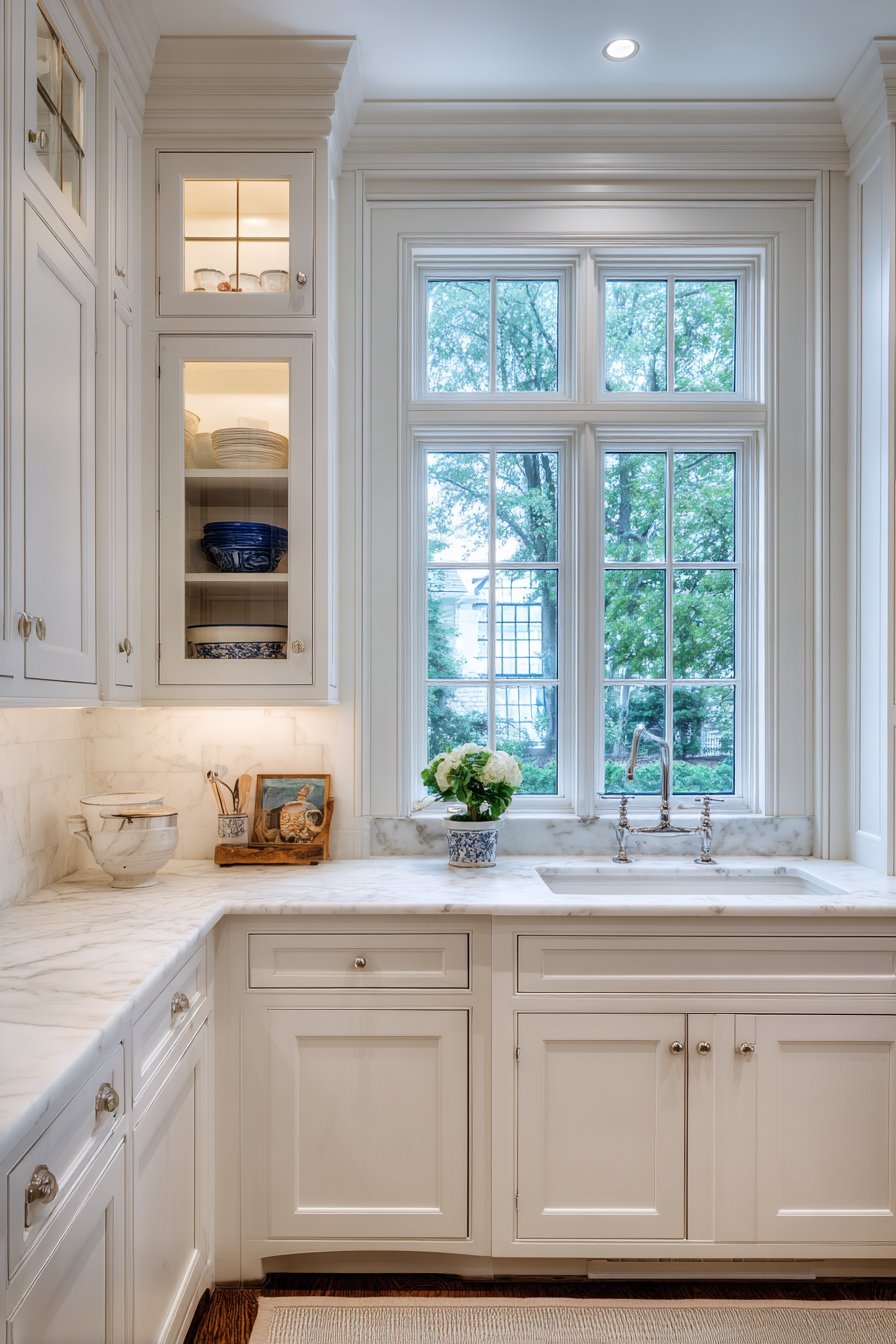
Soft natural lighting highlights the cool marble surface perfect for pastry preparation. The marble naturally stays cooler than other countertop materials. This temperature quality makes it ideal for working with butter and dough. Functional considerations drive material selection in traditional kitchen planning.
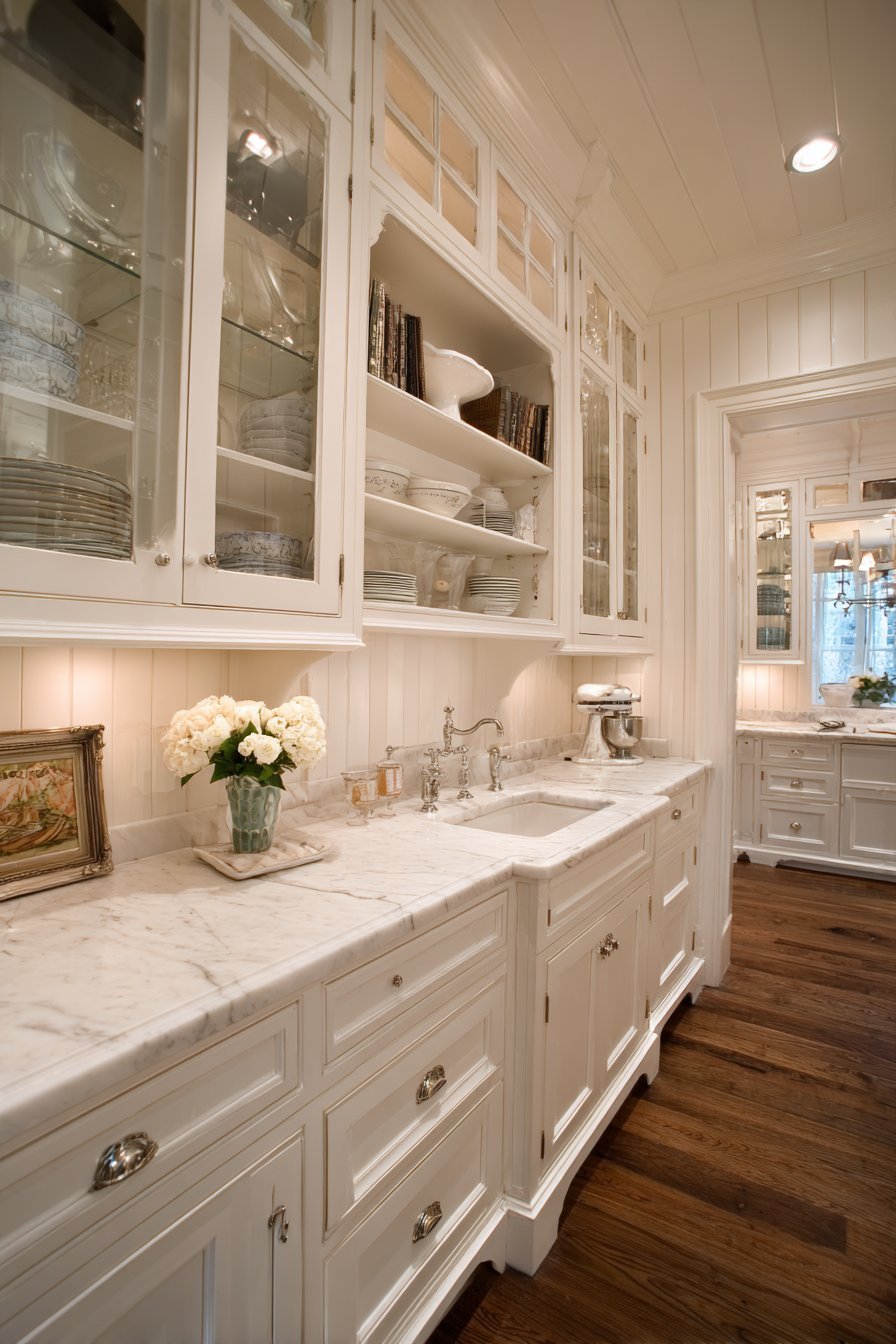
Interior photography captures the practical traditional kitchen workspace with attention to detail. Material choices serve specific purposes rather than purely aesthetic goals. The baking station demonstrates how traditional design accommodates specialized kitchen activities. Dedicated work zones enhance functionality while maintaining cohesive traditional styling.
Key Design Tips:
- Create dedicated baking stations with marble countertops that stay naturally cool for pastry work
- Install wall-mount pot fillers near baking areas for convenient water access during preparation
- Add small prep sinks in baking zones for efficient cleanup without disrupting main sink use
- Use open shelving to display traditional baking tools and mixing bowls as decorative elements
- Choose simple polished nickel knobs for traditional hardware that’s easy to operate with floury hands
15. Traditional Coffee and Beverage Bar Area

Floor-to-ceiling traditional cabinetry in rich espresso stain creates this beverage bar. Glass-front upper cabinets with traditional muntins display coffee mugs and glassware. The transparency keeps items visible while protecting them from dust. Lower cabinets with raised panels hide small appliances when not in use.

A small marble countertop section provides dedicated prep space for beverage preparation. Traditional tile backsplash in soft greens and creams adds color and pattern. The scale of the tile suits the compact space appropriately. Under-cabinet lighting illuminates the work surface for early morning coffee preparation.
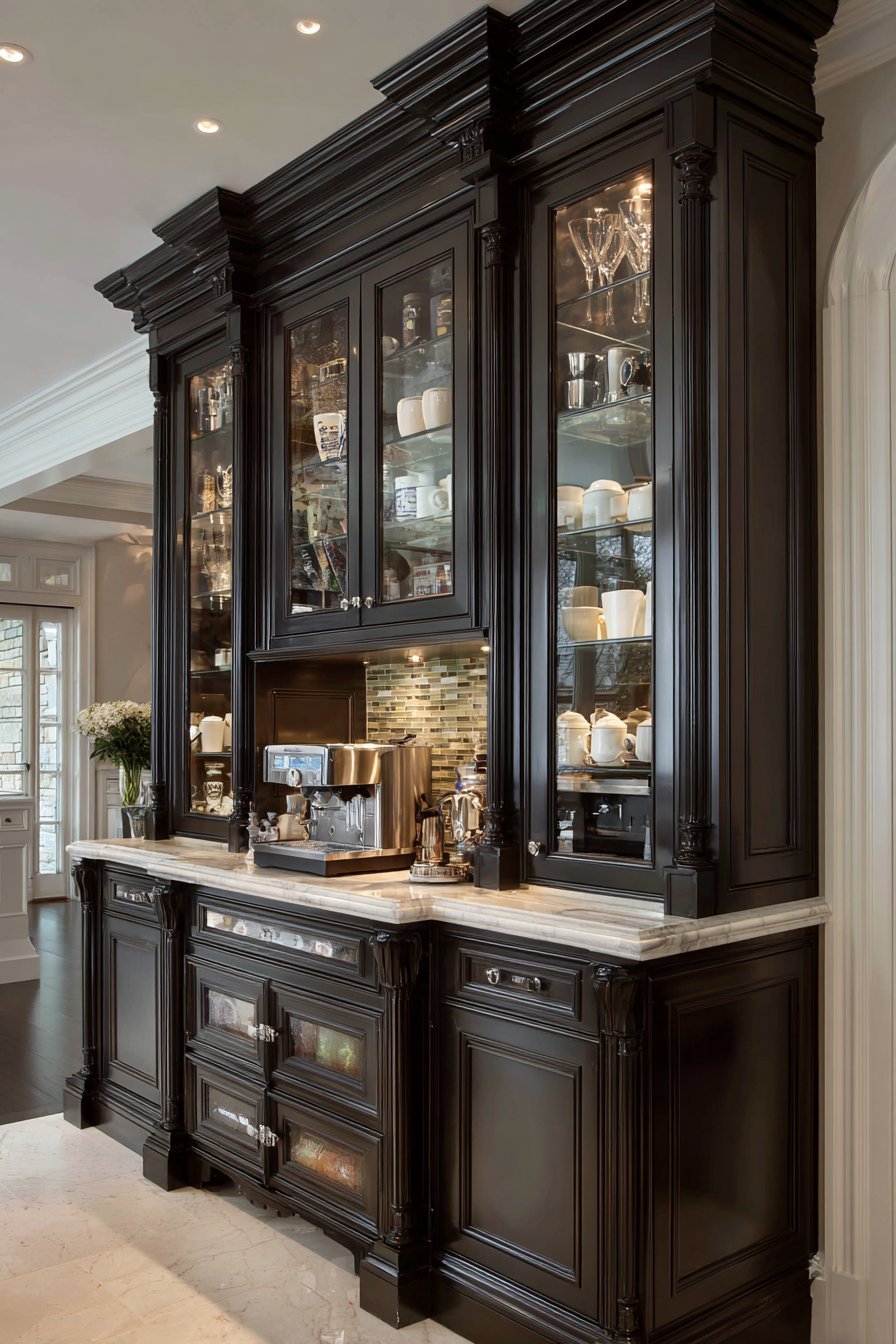
This dedicated beverage area keeps coffee-making equipment separate from cooking zones. The organization prevents counter clutter in the main kitchen workspace. Wide-angle photography shows seamless integration with overall traditional kitchen design. The beverage bar feels like a natural extension rather than an afterthought.
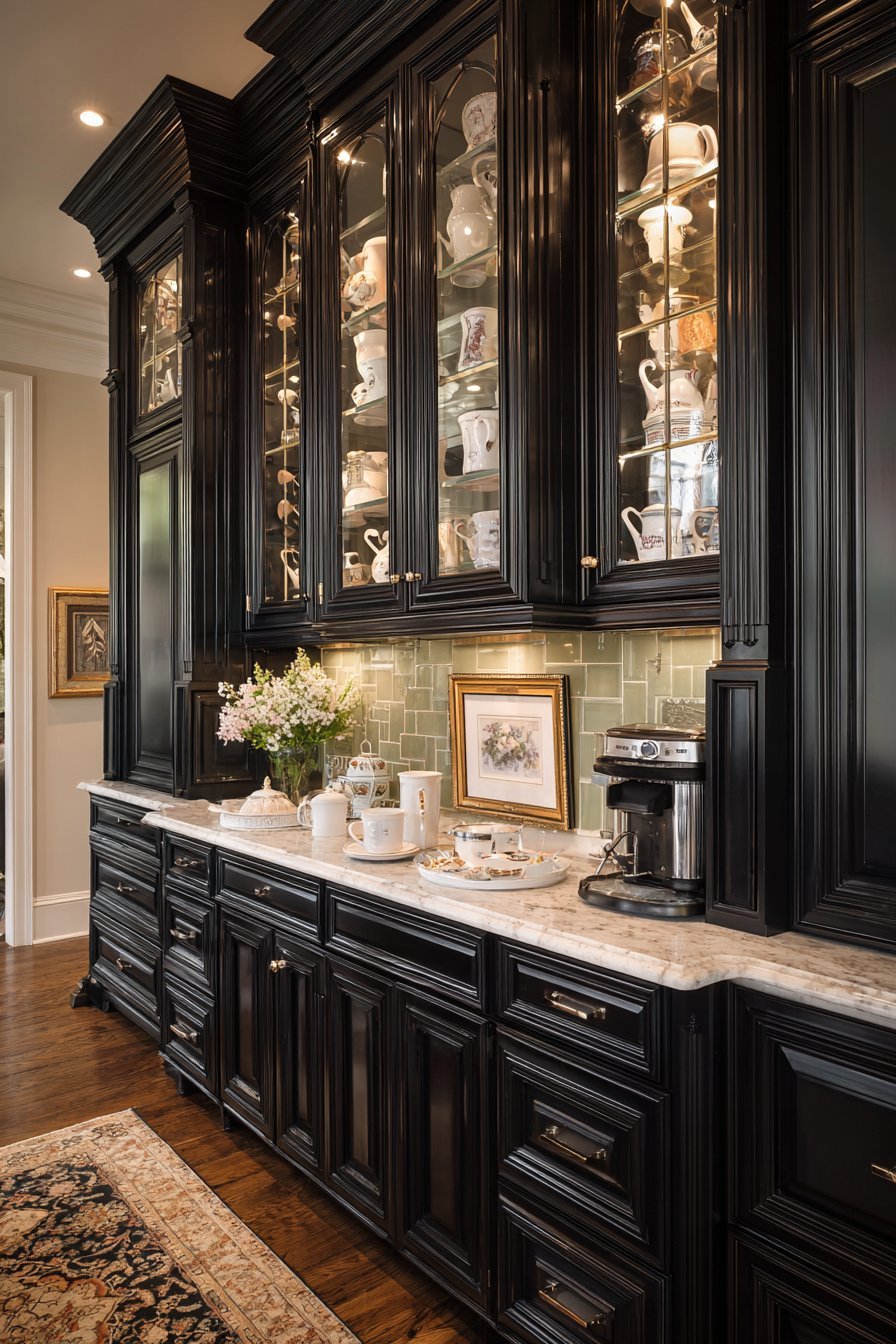
The rich espresso stain creates visual warmth in this functional area. The dark cabinetry contrasts beautifully with marble countertops. Traditional styling remains consistent despite the specialized function. This approach demonstrates traditional design’s adaptability to modern lifestyle needs.
Key Design Tips:
- Design dedicated coffee bars with floor-to-ceiling cabinetry for complete beverage station organization
- Use rich espresso stains for visual warmth and sophisticated traditional character
- Install glass-front uppers with muntins for displaying coffee mugs while keeping them dust-free
- Add under-cabinet lighting for task illumination during early morning beverage preparation
- Choose small marble sections for beverage prep areas that complement main countertop materials
16. Traditional Kitchen with Tongue and Groove Ceiling
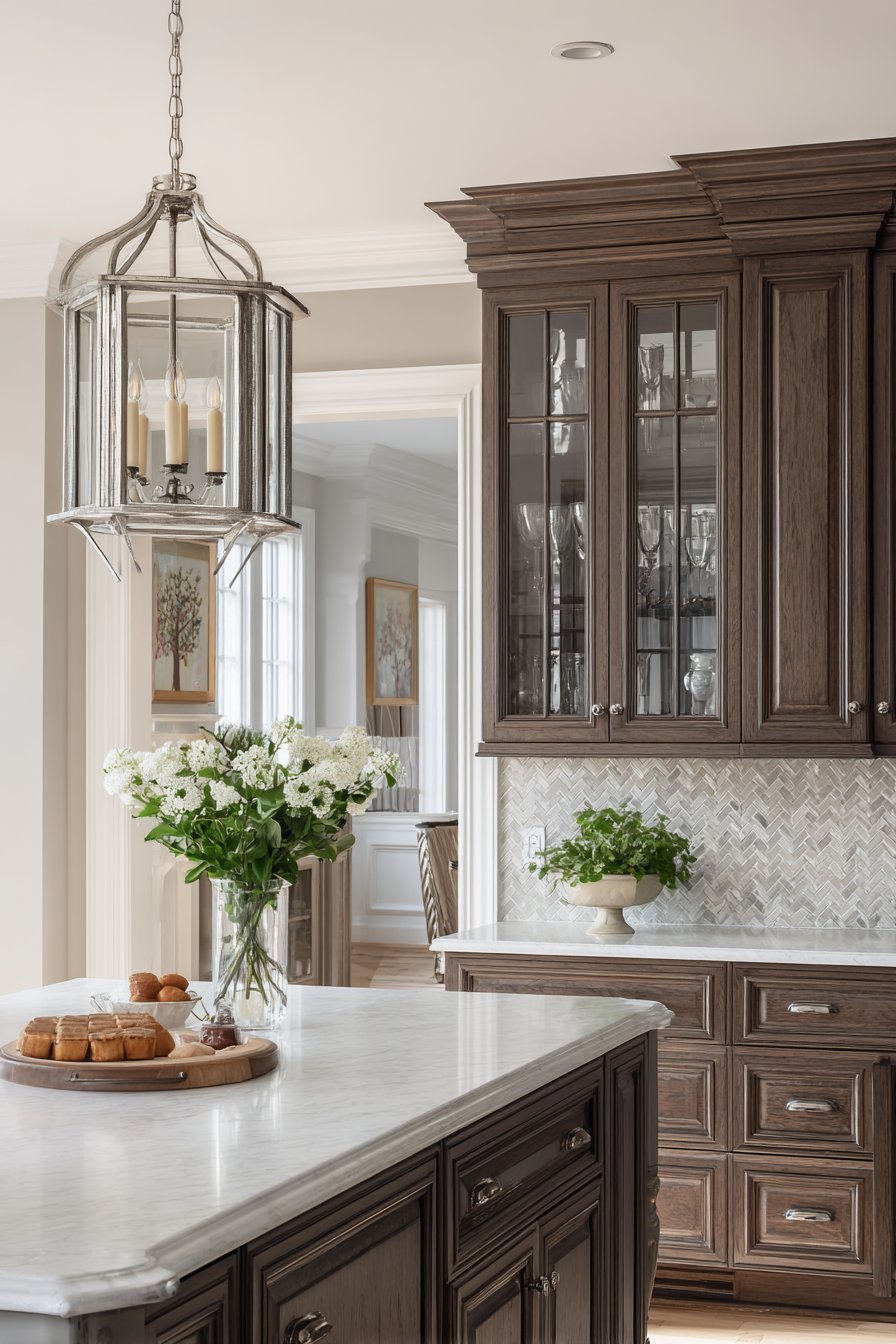
Traditional tongue and groove ceiling painted in soft white creates architectural interest overhead. This ceiling treatment adds textural detail without overwhelming the space. Dark stained traditional cabinetry below provides strong visual contrast. Detailed moldings and traditional hardware in aged brass complete the refined look.
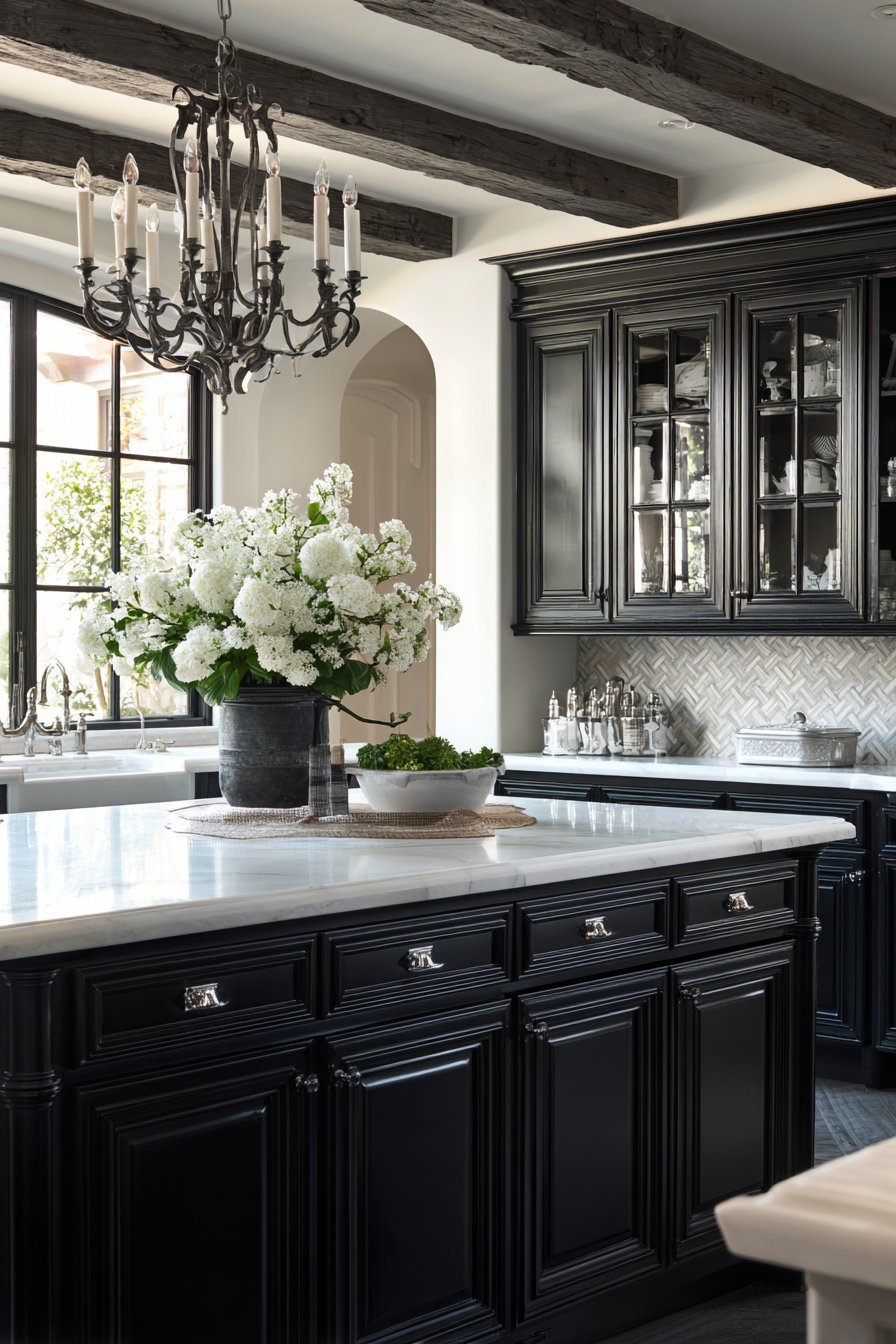
White carrara marble countertops with subtle grey veining provide elegant contrast. The light stone brightens the design against dark cabinetry. Traditional tile backsplash in basket weave pattern adds textural interest. This classic pattern creates visual movement at human scale.
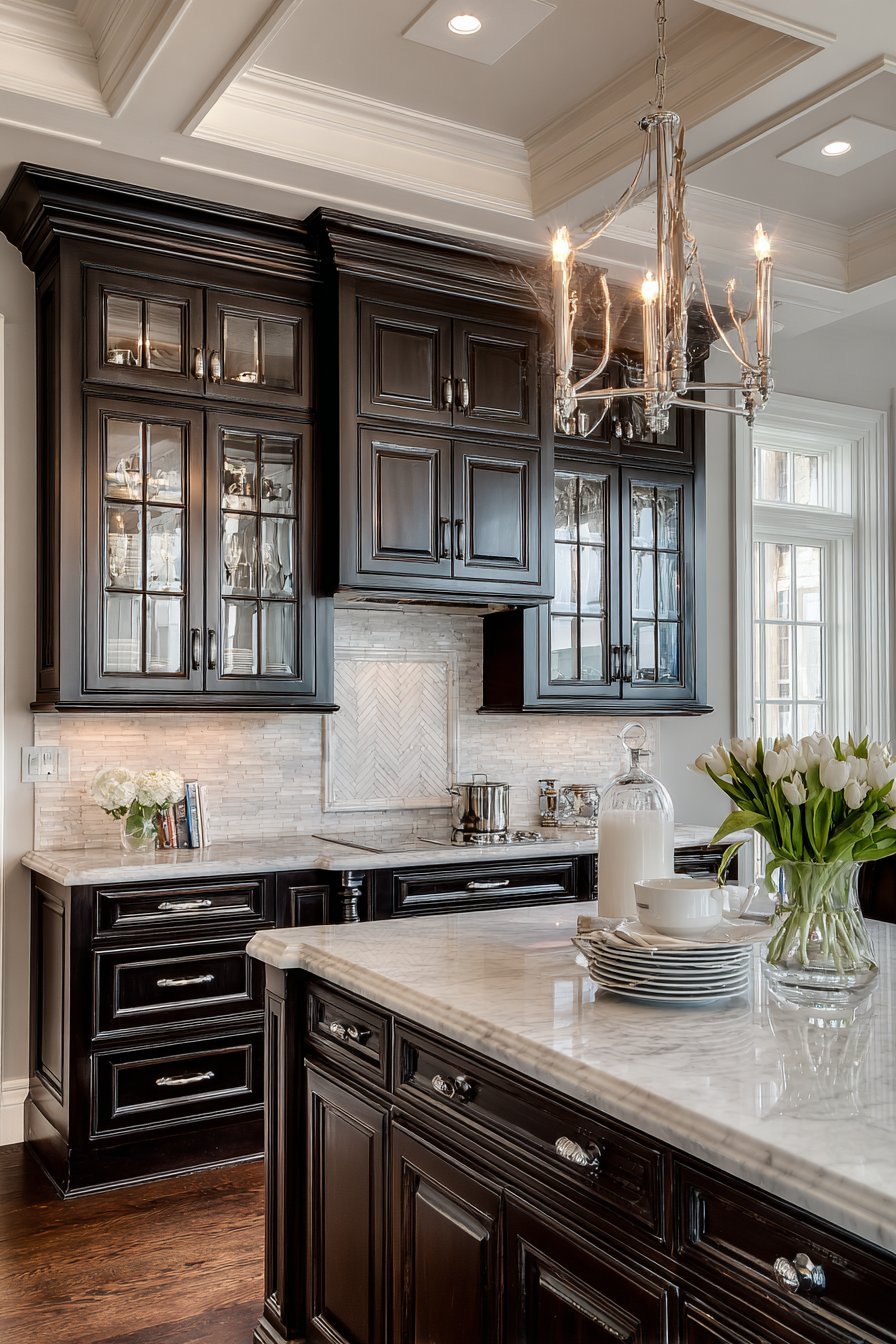
A traditional chandelier with candle-style lights provides central illumination. The fixture adds formal traditional elegance to the kitchen space. Multiple light sources at different heights create layered lighting. This approach serves both functional and aesthetic purposes in traditional design.
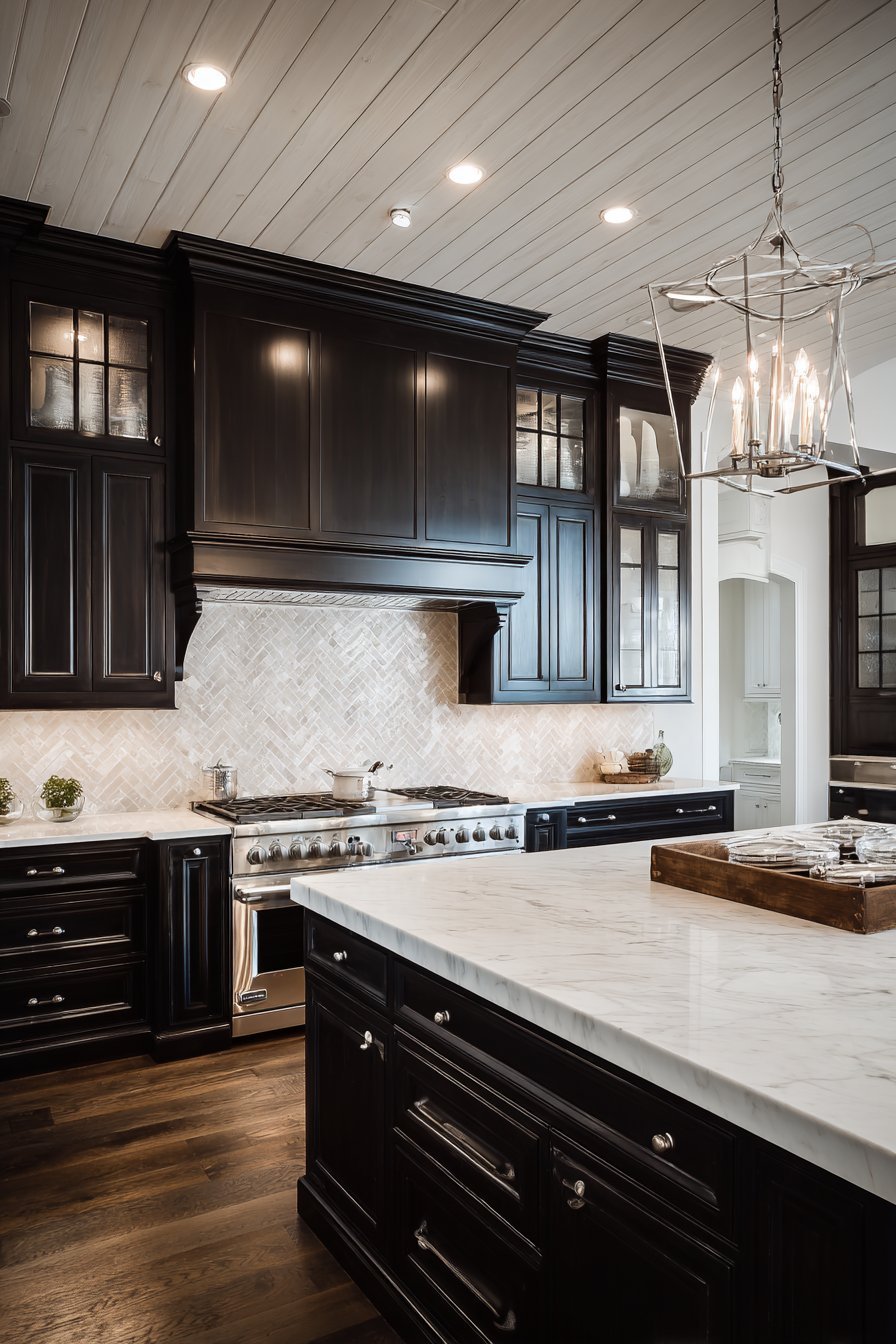
Interior design photography captures the sophisticated traditional palette with balanced lighting. The interplay between dark cabinetry and bright countertop surfaces creates drama. Professional lighting shows material variations and surface qualities accurately. This documentation style suits traditional kitchen design presentation effectively.
Key Design Tips:
- Install tongue and groove ceilings painted white for traditional textural interest overhead
- Use dark stained cabinetry with white marble counters for sophisticated high-contrast traditional palettes
- Add basket weave tile backsplashes for classic traditional pattern at appropriate scale
- Hang traditional chandeliers with candle-style lights for formal central illumination
- Choose aged brass hardware for warm traditional metal finishes that complement dark wood stains
17. Traditional Scullery with Chicken Wire Cabinet Inserts

A traditional scullery features cabinetry with chicken wire inserts in upper doors. These inserts provide ventilation while adding authentic traditional character. Open shelving in matching finish displays everyday dishware accessibly. A deep farmhouse sink in fireclay white provides ample workspace for cleanup.
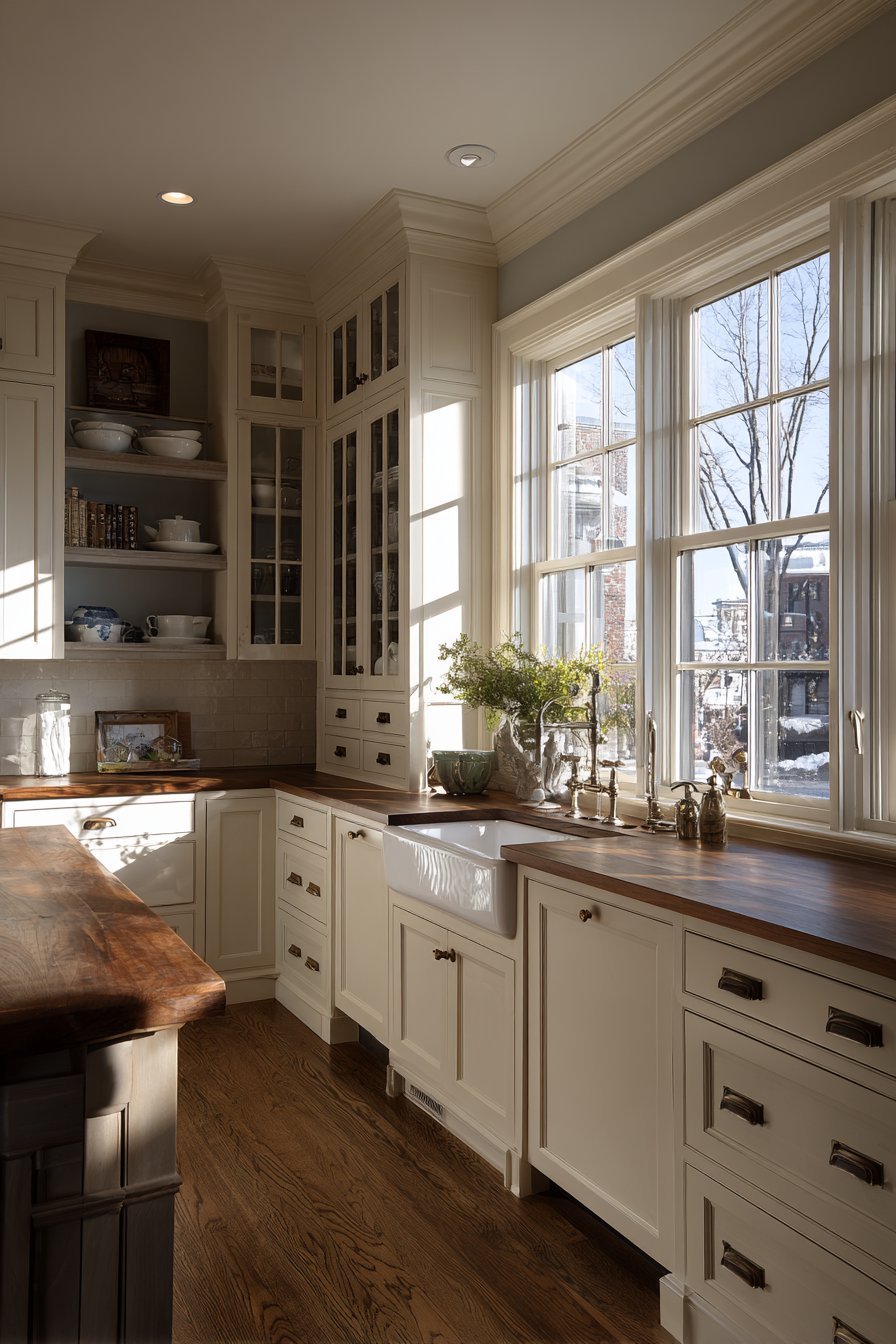
Traditional wood countertops show natural wear and water marks from regular use. These authentic details distinguish working kitchens from pristine showrooms. The patina tells stories of meals prepared and shared. Traditional design celebrates these marks of authentic use rather than hiding them.

Natural light from a nearby window creates realistic shadows in this practical space. The illumination shows the working nature of this traditional kitchen area. Professional photography captures lived-in details honestly and attractively. This documentation approach respects the traditional working kitchen aesthetic.

The scullery demonstrates how traditional design serves hard-working kitchen functions. Every element prioritizes durability and practical functionality. The traditional styling makes even service areas beautiful. This philosophy characterizes authentic traditional kitchen planning and design.
Key Design Tips:
- Add chicken wire cabinet inserts for traditional ventilation and authentic farmhouse character
- Install deep fireclay farmhouse sinks for generous workspace in scullery and prep areas
- Choose traditional wood countertops that develop beautiful patina with regular use
- Display everyday dishware on open shelving for accessibility in working kitchen areas
- Embrace natural wear marks on surfaces as authentic evidence of traditional kitchen functionality
18. Traditional Kitchen with Furniture-Style Cabinetry

Traditional furniture-style cabinetry features furniture feet and decorative valances throughout. Traditional panel construction demonstrates quality craftsmanship in painted sage green. Limestone countertops with chiseled edges provide rustic traditional character. The rough texture contrasts beautifully with refined cabinet surfaces.
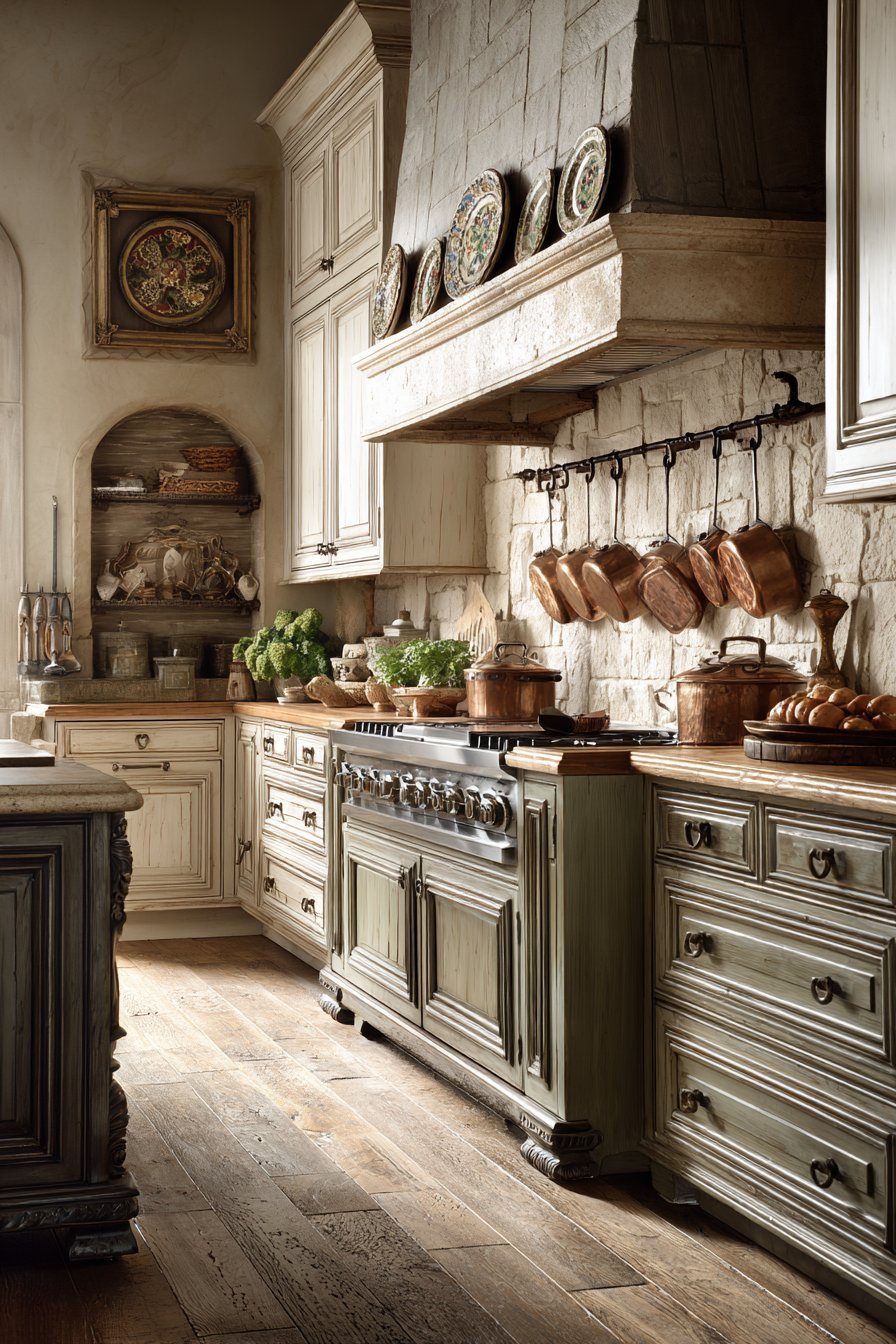
Traditional iron hardware adds authentic period detail throughout the kitchen. A traditional plate rack above the range displays decorative plates as artwork. Pot rails hang copper cookware within easy reach. These functional elements double as decorative traditional details.
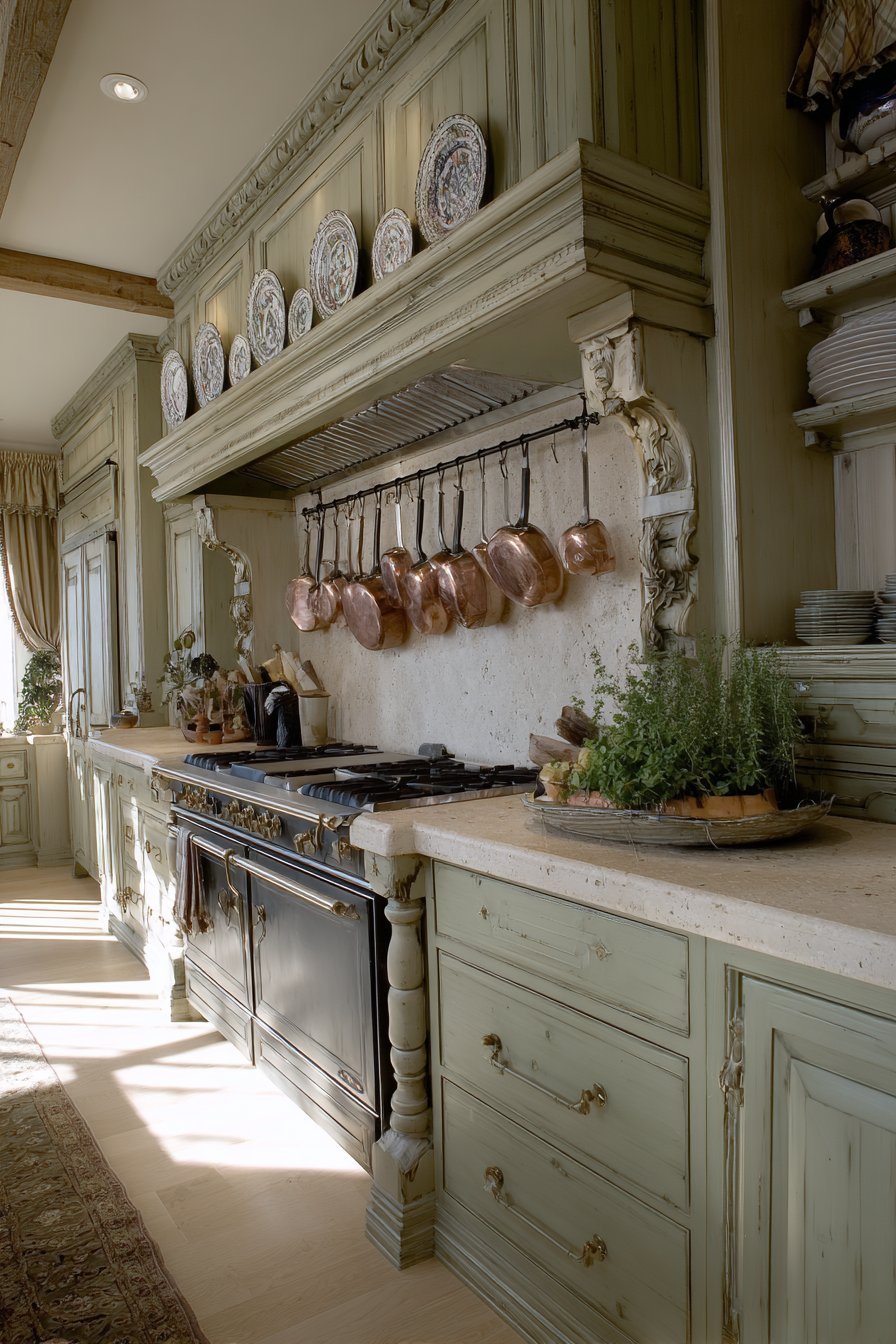
The sage green paint color creates a sophisticated alternative to standard neutrals. The color feels grounded in nature while maintaining traditional elegance. Furniture-style construction elevates cabinetry beyond basic built-ins. Each piece appears carefully selected rather than merely installed.
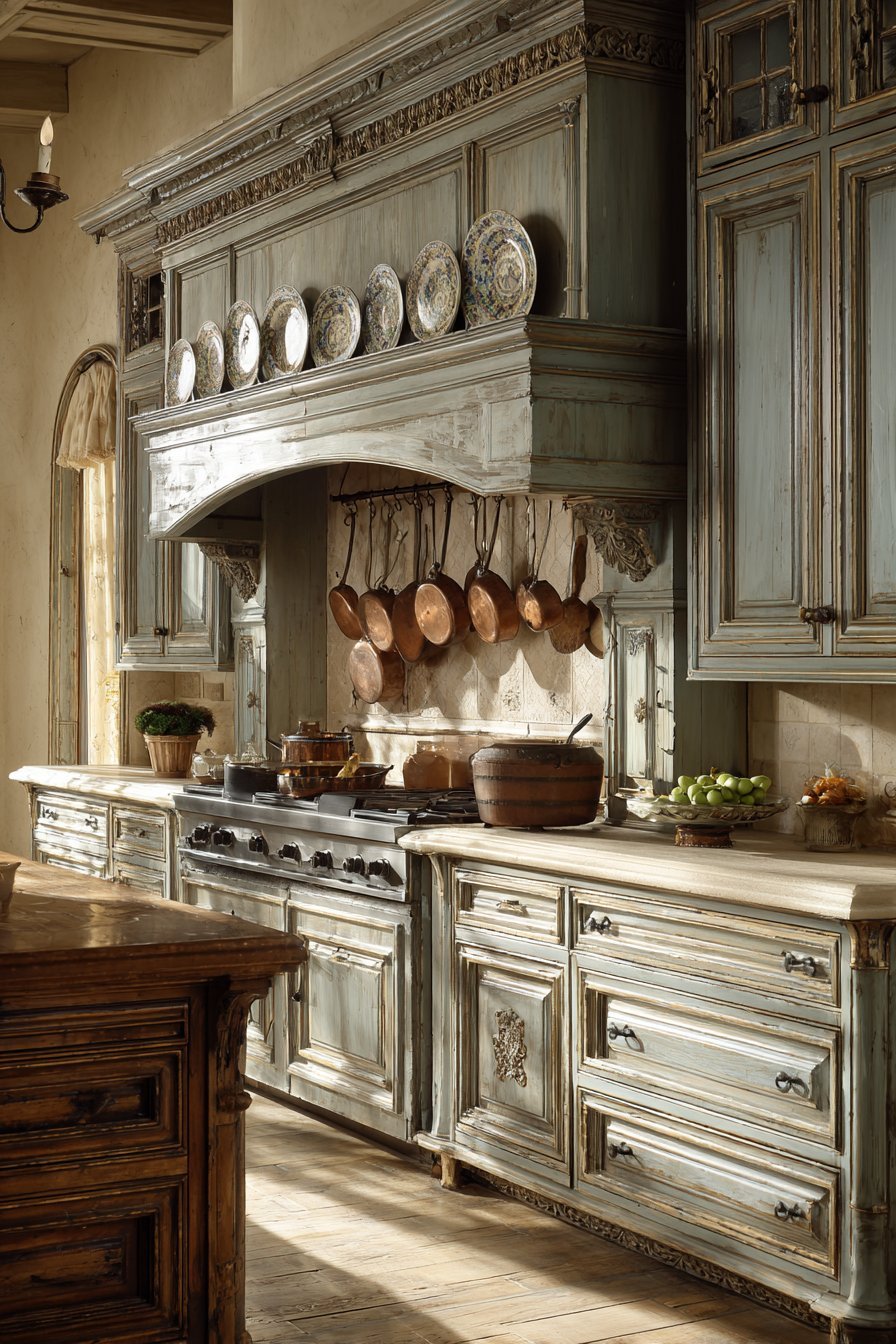
Wide-angle photography captures the complete traditional kitchen with soft natural lighting. Handcrafted qualities receive proper emphasis in compositional framing. Natural material variations add organic character throughout the space. This documentation style suits traditional furniture-style kitchen presentation perfectly.
Key Design Tips:
- Design cabinetry with furniture feet and valances for authentic furniture-style traditional character
- Use sage green paint for sophisticated traditional color grounded in natural tones
- Install limestone countertops with chiseled edges for rustic traditional texture and character
- Add plate racks above ranges to display decorative plates as functional traditional artwork
- Hang pot rails with copper cookware for practical storage that enhances traditional aesthetics
19. Traditional Kitchen Desk and Planning Center
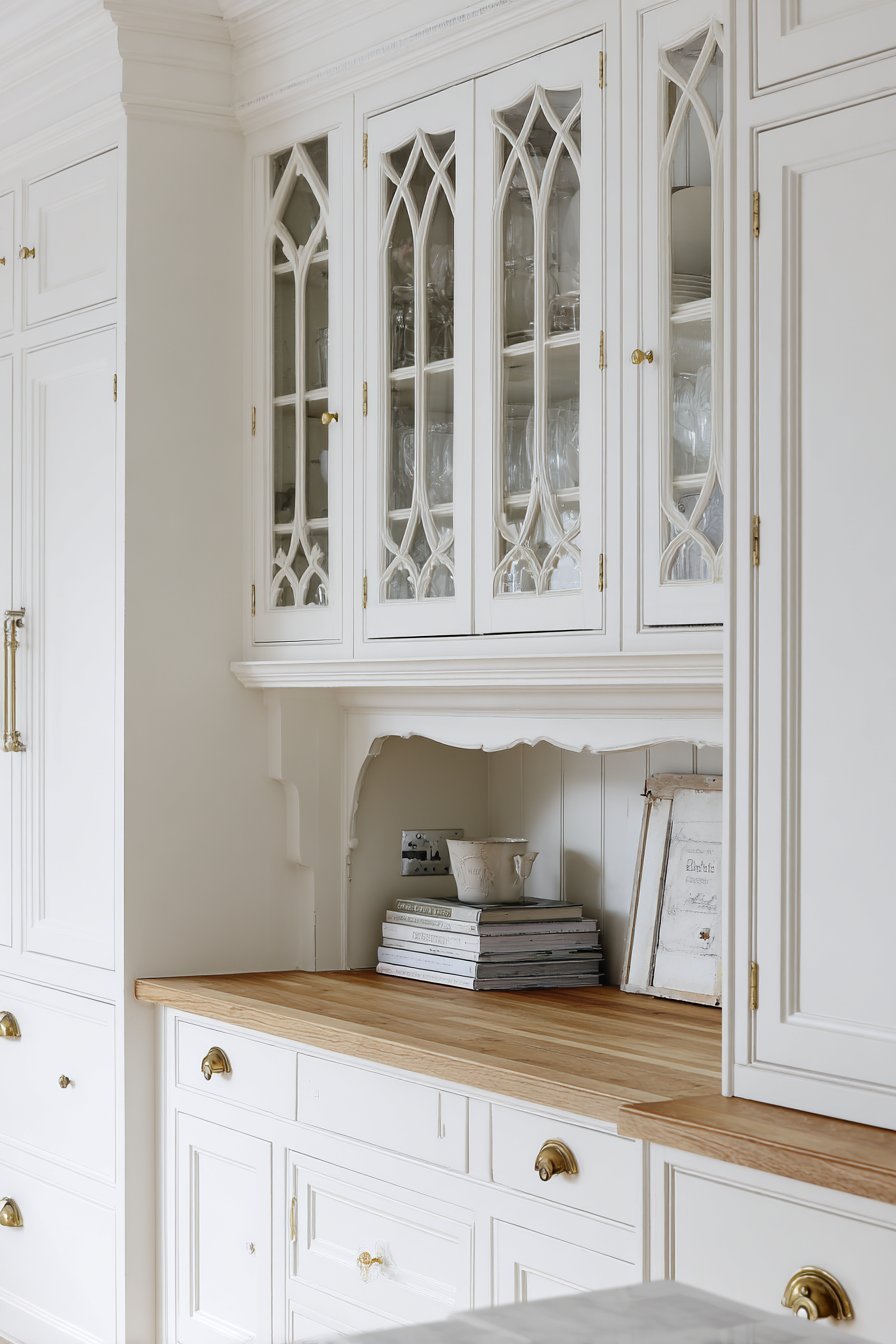
A kitchen desk area integrates into the cabinetry run seamlessly. Traditional panel doors below conceal office supplies and paperwork storage. A pull-out shelf provides laptop workspace when needed. Traditional hutch storage above features glass doors and interior lighting.
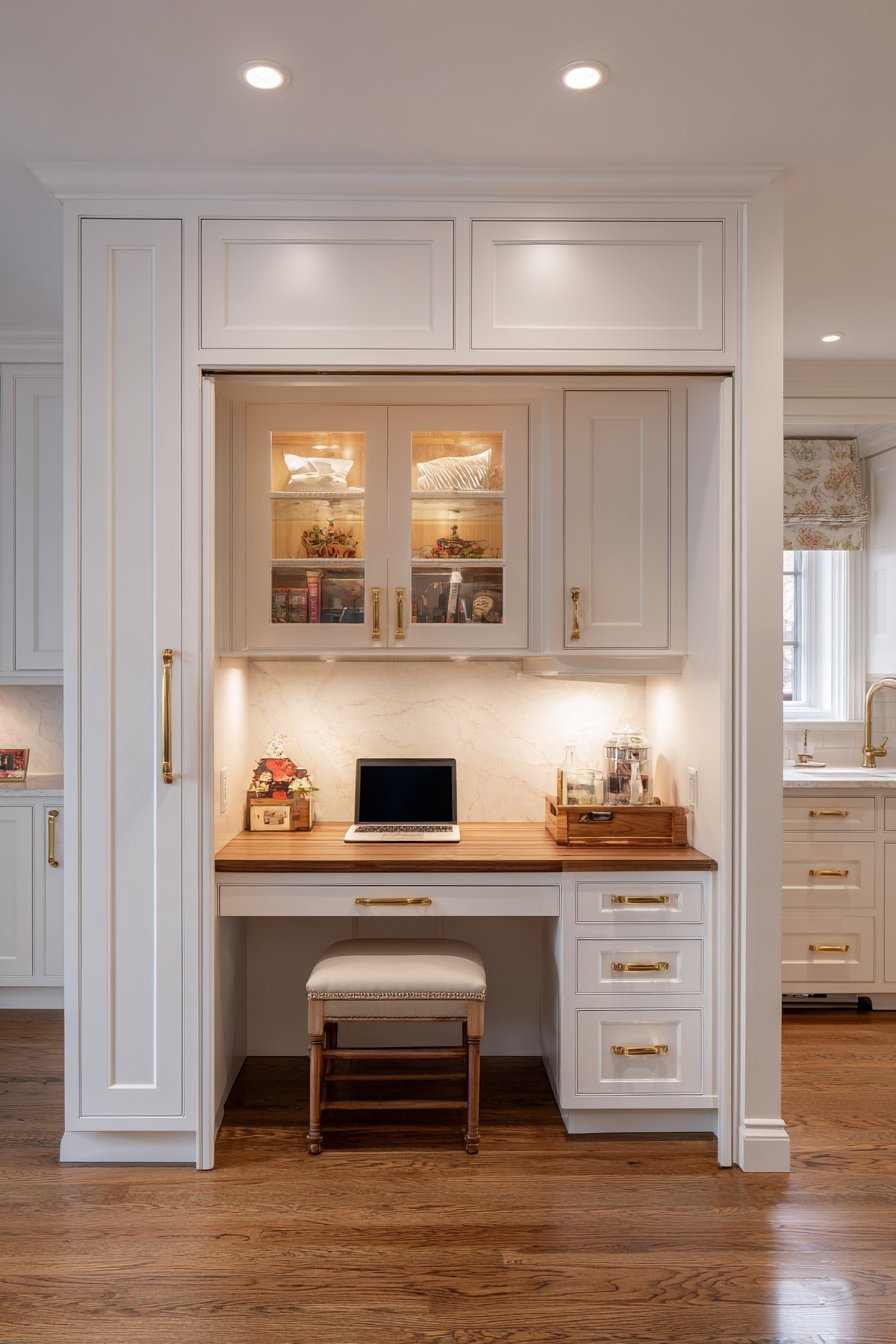
The desk area matches the main kitchen in traditional white painted cabinetry. Traditional brass hardware maintains consistent detailing throughout. A traditional wood countertop section provides the work surface. Subtle wear patterns from use add authentic character to the surface.
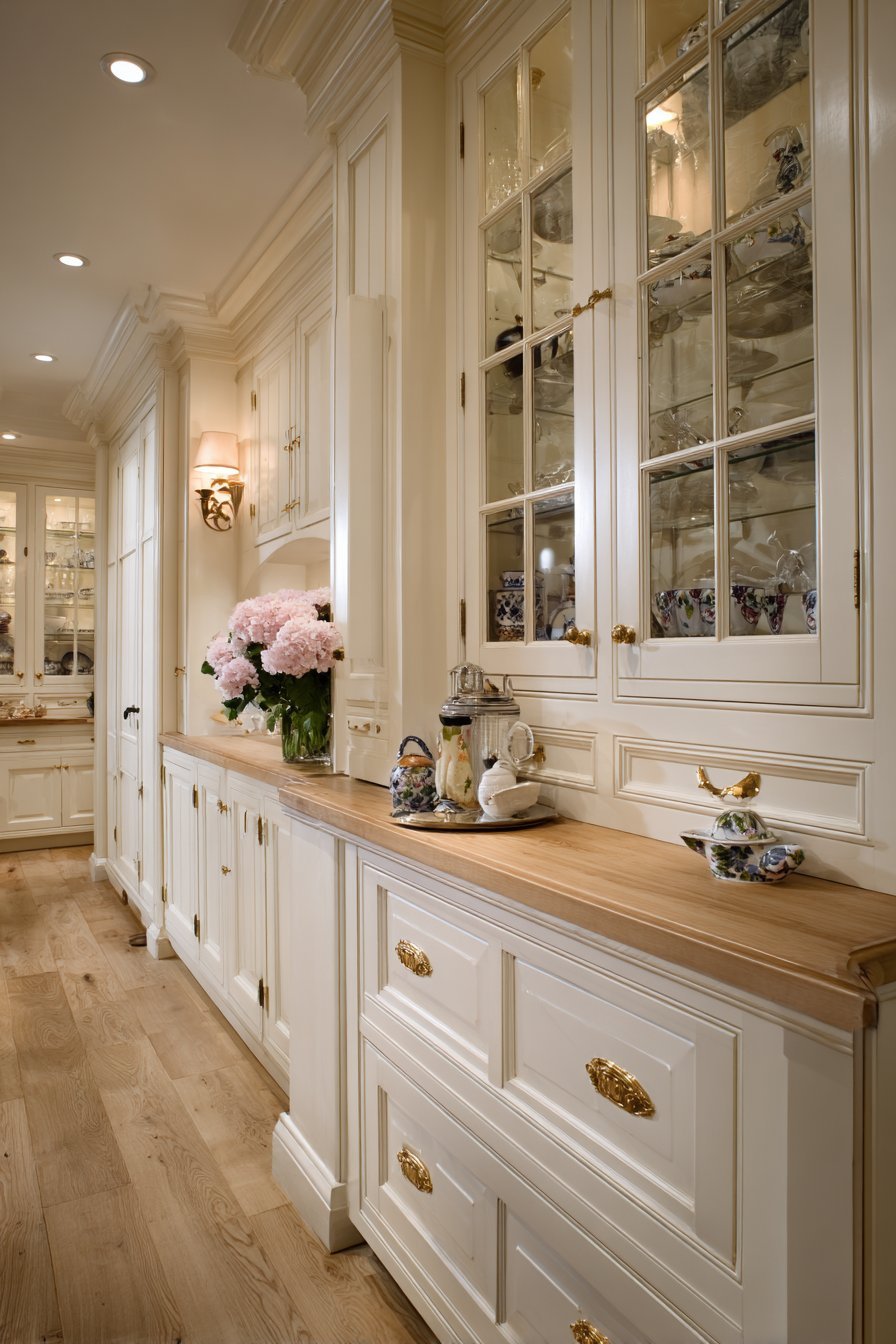
This functional planning center keeps household management organized within the kitchen. The location allows supervision of cooking while handling administrative tasks. Interior photography shows practical traditional design serving modern lifestyle needs. Natural daylight highlights traditional design details in this workspace.
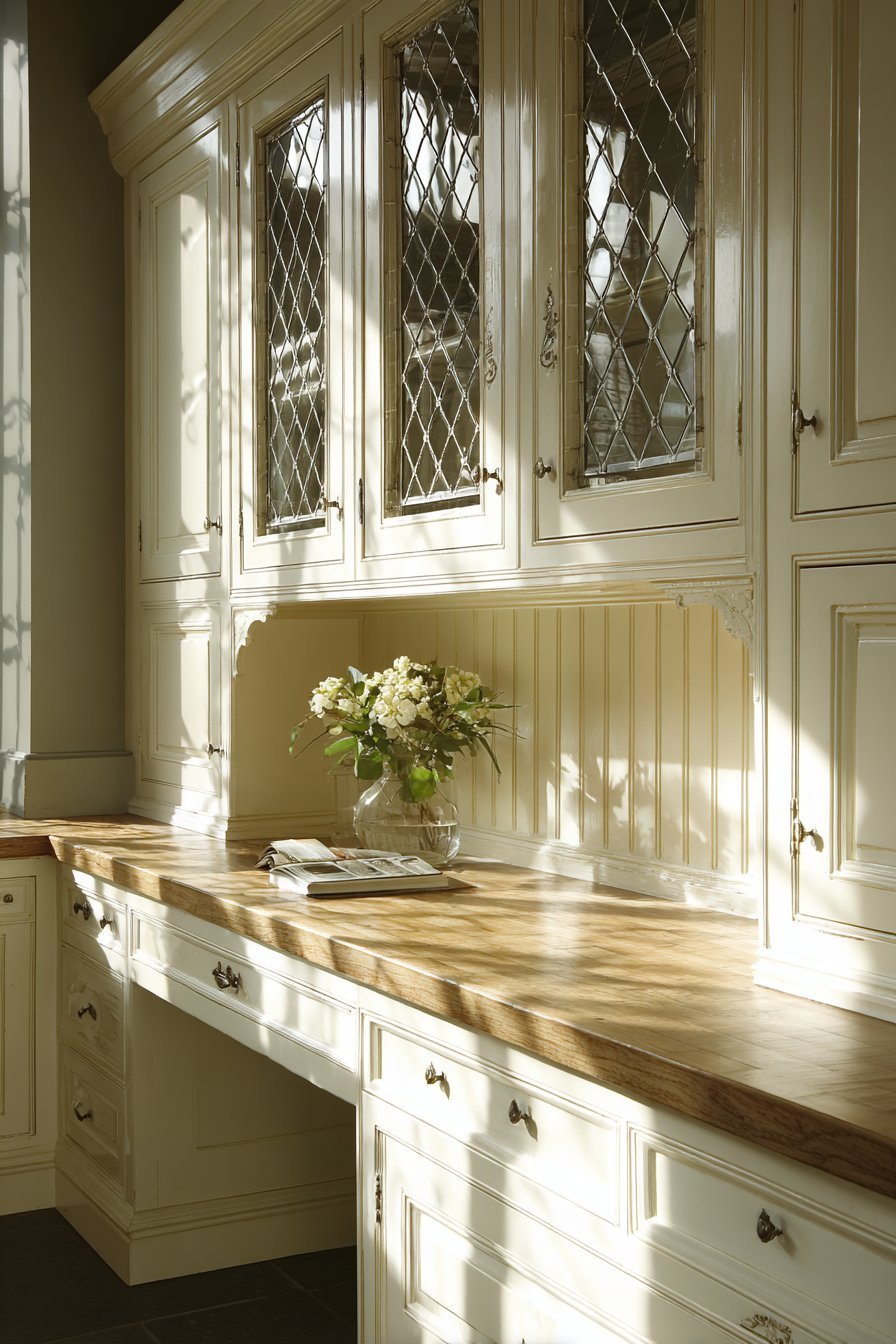
The integration demonstrates traditional design’s adaptability to contemporary requirements. The desk area feels like original design rather than added afterthought. Traditional styling remains consistent despite specialized function. This approach characterizes successful traditional kitchen planning for modern life.
Key Design Tips:
- Integrate desk areas into kitchen cabinetry runs for household planning and management centers
- Install pull-out shelves in desk areas for flexible laptop workspace when needed
- Add hutch storage above desks with glass doors and interior lighting for display
- Use traditional wood countertop sections in desk areas for warm writing surfaces
- Maintain consistent hardware and finish choices between desk areas and kitchen cabinetry
20. Traditional Spice Storage Pull-Out Cabinet
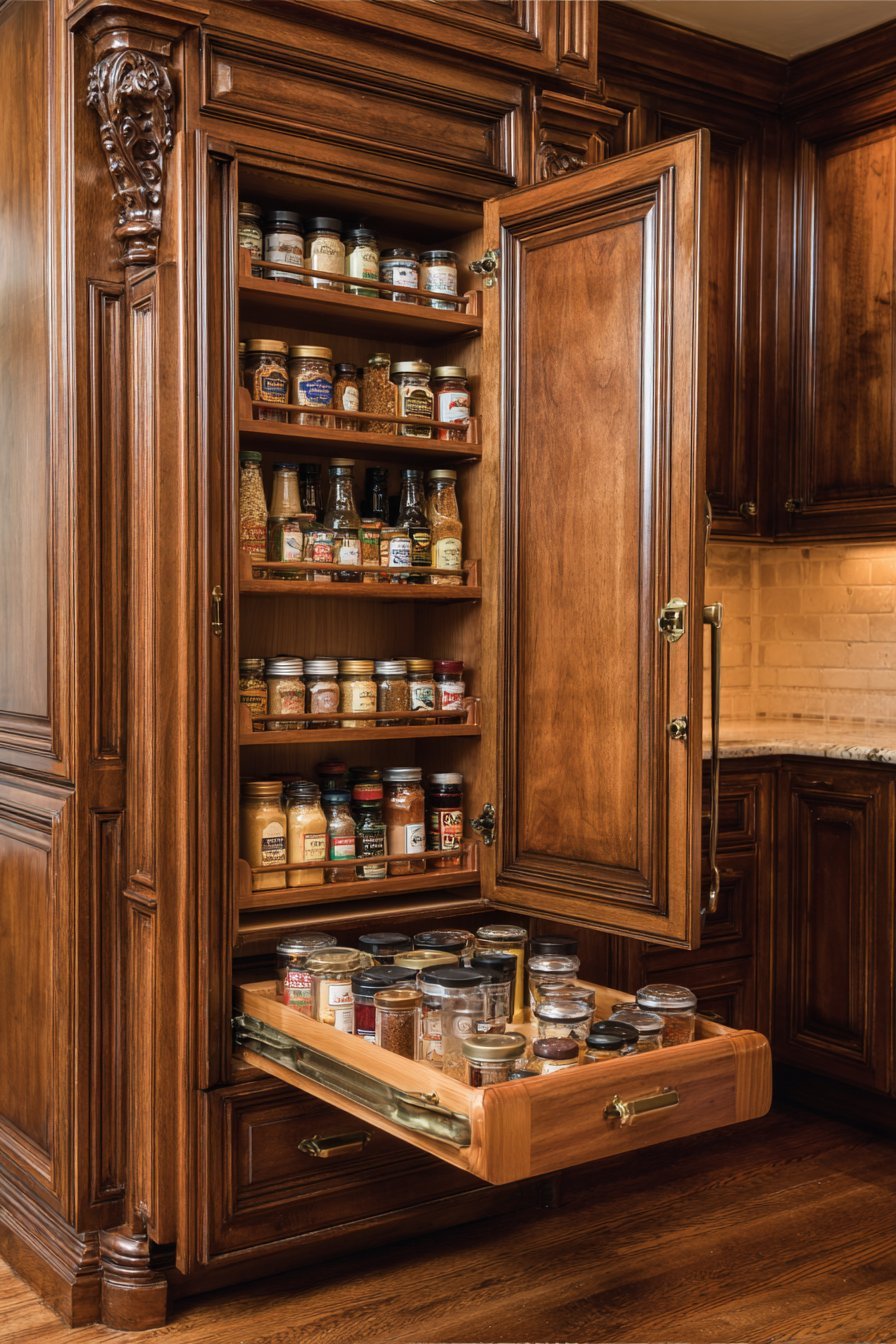
A narrow pull-out cabinet provides dedicated spice storage with traditional construction. Multiple wooden shelves organize spice jars efficiently by height. The cabinet door features traditional raised panel construction matching surrounding cabinetry. Traditional brass label holders identify contents for easy selection.
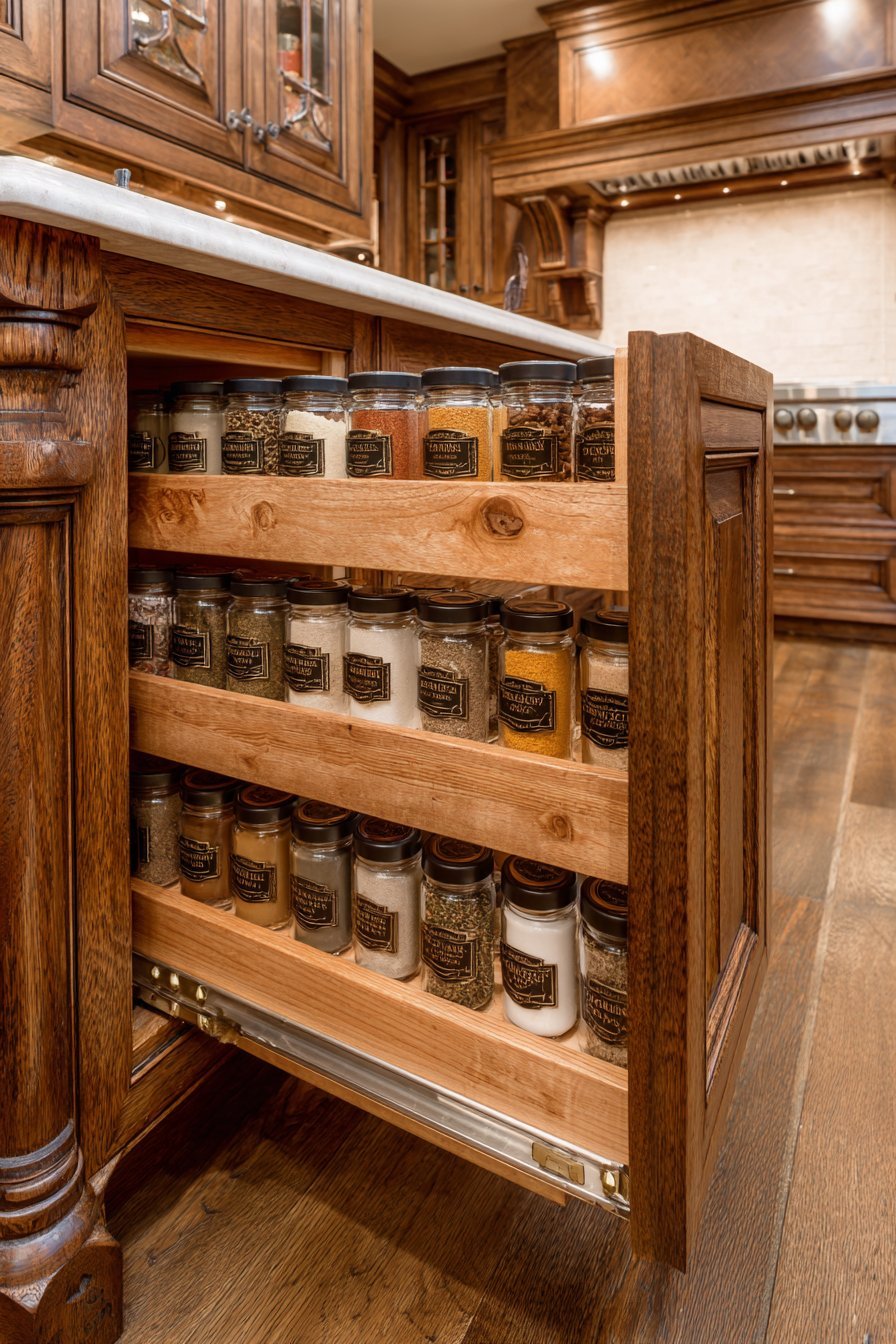
The interior shows natural wood construction throughout hidden areas. This attention to quality extends beyond visible surfaces. Traditional cherry cabinetry surrounds this specialized storage solution. The pull-out mechanism operates smoothly for easy access to all spices.
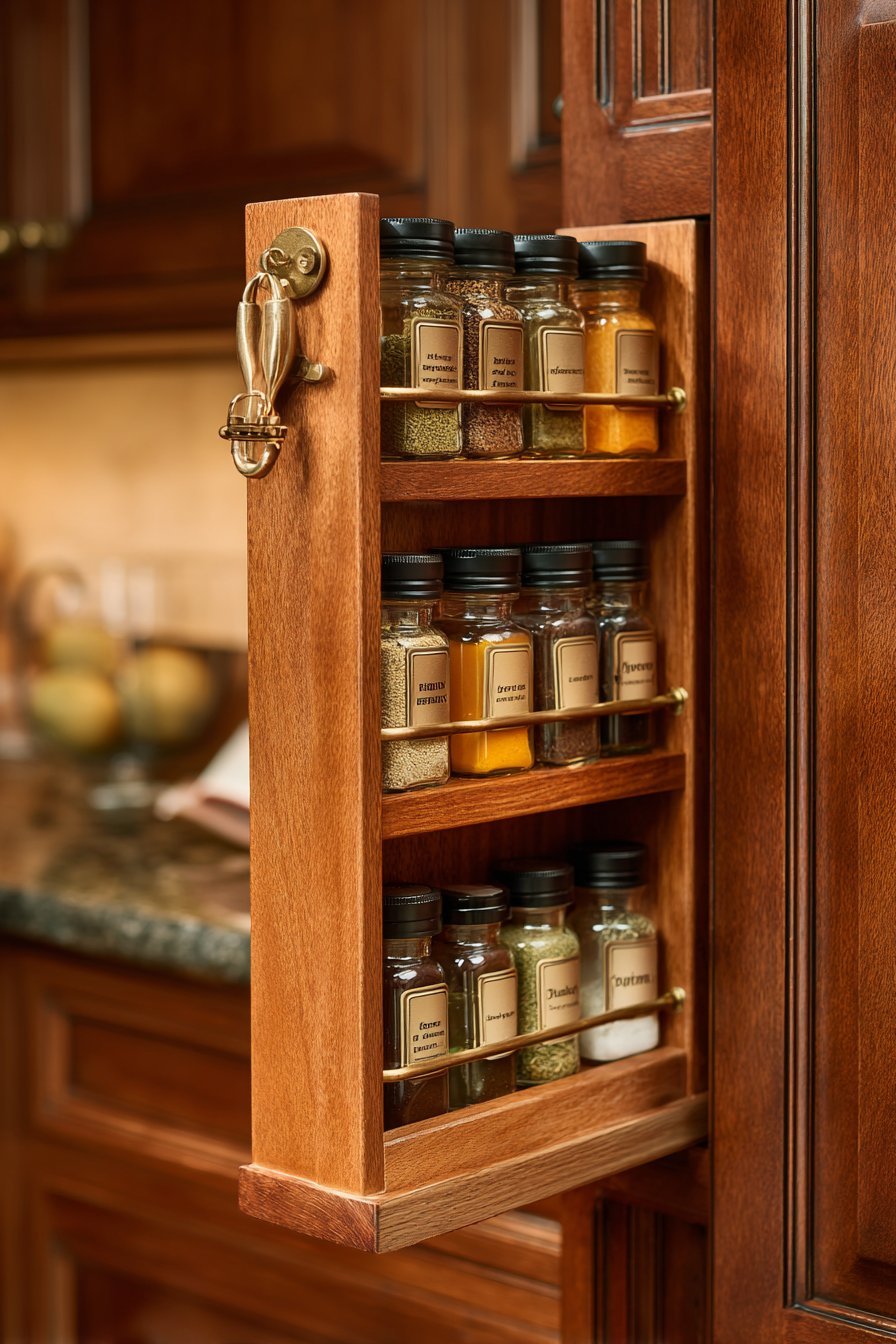
Soft lighting from the main kitchen illuminates the interior when opened. The organization system keeps spices visible and accessible. Detail photography captures craftsmanship and practical traditional storage solutions. Wood grain and joinery details receive proper emphasis in close documentation.
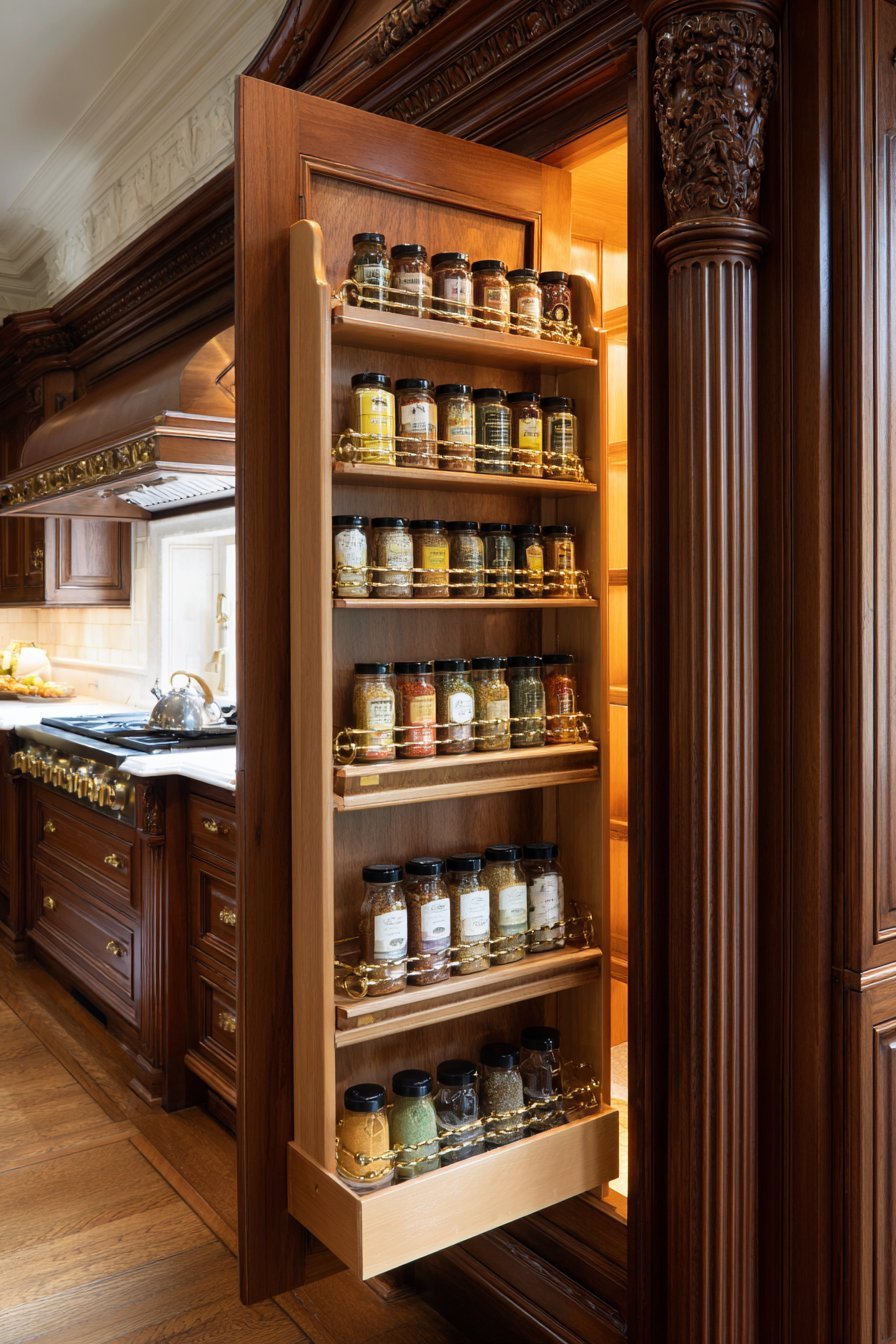
This specialized storage demonstrates traditional cabinetry’s ability to solve modern organizational needs. The solution combines beauty with practical functionality seamlessly. Traditional construction methods create durable storage that serves for decades. Quality traditional cabinetry solves problems while enhancing overall kitchen design.
Key Design Tips:
- Design narrow pull-out cabinets with multiple shelves for dedicated spice organization
- Use traditional raised panel construction on pull-out doors to match surrounding cabinetry
- Add traditional brass label holders for identifying contents in organized storage systems
- Extend quality natural wood construction to cabinet interiors for complete traditional craftsmanship
- Install smooth-operating pull-out mechanisms for easy access to organized spice collections
Why These Traditional Kitchen Designs Are the Best
Traditional kitchen designs represent time-tested approaches to creating beautiful, functional cooking spaces. These concepts demonstrate how quality materials and expert craftsmanship create kitchens that improve with age. The versatility shown across these twenty designs proves traditional styling adapts to various tastes and lifestyles.
The incorporation of natural materials like wood, stone, and ceramic provides inherent sustainability. These materials often last generations when properly maintained. Traditional construction methods prioritize durability over disposability. Quality traditional kitchens become long-term investments rather than temporary installations.
Color theory in traditional design emphasizes warm neutrals, rich wood tones, and classic accent colors. These palettes create welcoming environments that never feel cold or sterile. The use of varied textures prevents visual monotony despite restrained color schemes. Traditional design proves that sophistication doesn’t require bold contemporary colors.
Spatial considerations in traditional kitchens prioritize functional work triangles and logical flow patterns. These layouts have evolved through generations of practical use. Whether working with compact galley arrangements or expansive open concepts, traditional design principles scale effectively. The emphasis on quality over quantity means traditional kitchens work beautifully in various sizes.
Design principles like symmetry, proportion, and balance govern successful traditional kitchens. These fundamental concepts create spaces that feel naturally harmonious. The attention to architectural details like moldings, proper hardware scale, and cabinet proportions elevates traditional design above basic construction. Each element receives consideration for its contribution to the whole composition.
Conclusion
These traditional kitchen designs demonstrate how timeless styling creates spaces of enduring beauty and functionality. The key takeaways include the importance of quality materials, expert craftsmanship, and thoughtful architectural details. Natural materials like wood, stone, and handcrafted tile provide foundations that improve with age and use.
Successful traditional kitchen design balances aesthetic elegance with practical daily functionality. The various concepts shown prove traditional styling adapts to different tastes and requirements. From formal entertaining spaces to hardworking family kitchens, traditional design serves diverse needs beautifully.
Start your traditional kitchen journey by selecting one quality element that speaks to your style. Perhaps it’s a farmhouse sink, custom wood hood, or furniture-style island. Build from this foundation with complementary materials and finishes. Your dream traditional kitchen awaits creation through thoughtful planning and appreciation for timeless design principles.
