
Creating a functional and beautiful tiny bedroom requires thoughtful planning and creative solutions. Limited square footage doesn’t mean sacrificing style or comfort. Smart furniture choices and strategic design approaches transform compact spaces into cozy retreats.
Tiny bedrooms present unique opportunities for innovative design thinking. The constraint of small spaces encourages efficiency and intentionality in every decision. From murphy beds to platform storage systems, modern solutions make tiny bedrooms both practical and aesthetically pleasing.
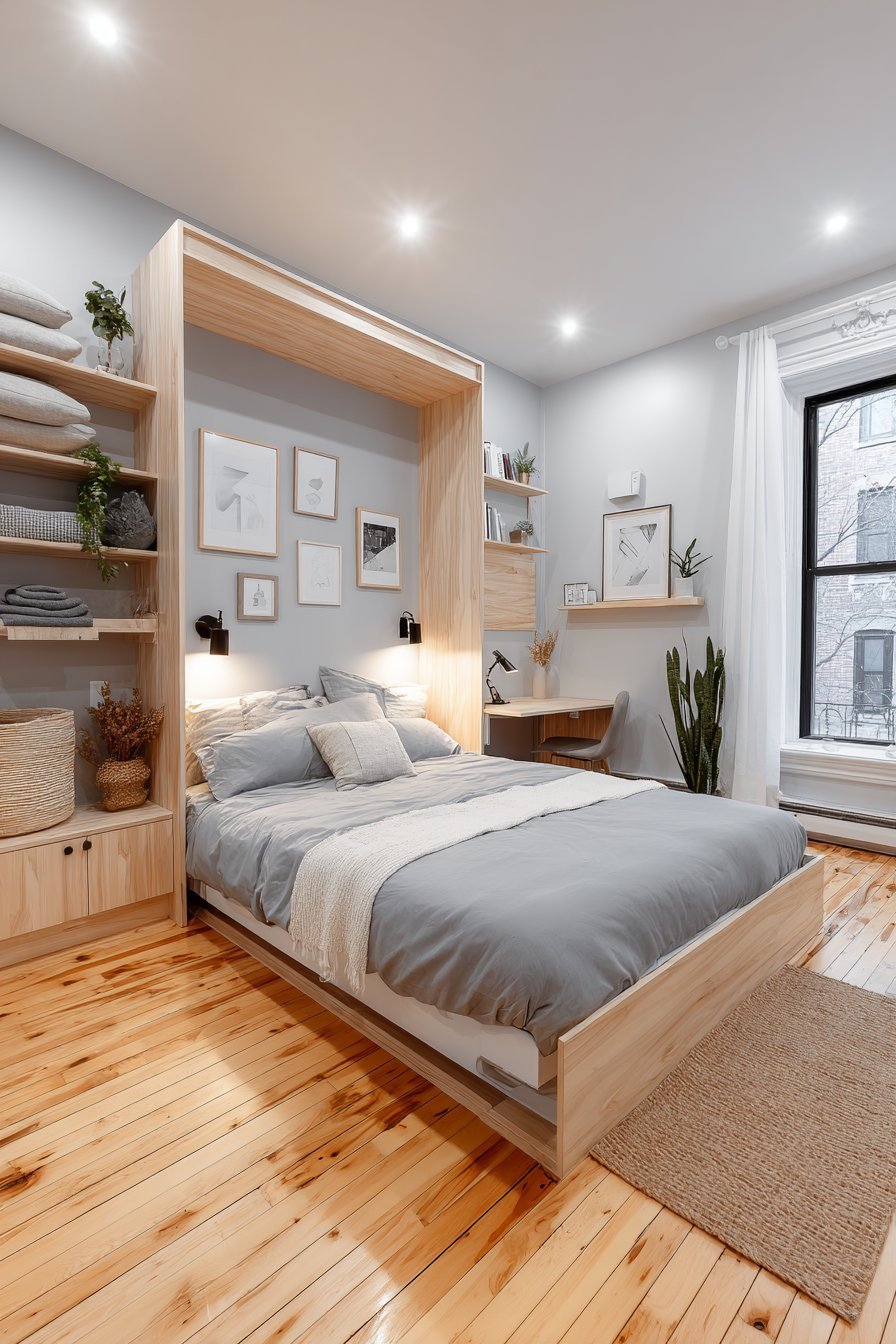
The following designs showcase diverse approaches to maximizing small bedroom spaces. Each concept addresses storage challenges while maintaining visual appeal. These ideas prove that tiny bedrooms can feel spacious, organized, and deeply personal.
1. Murphy Bed With Integrated Storage
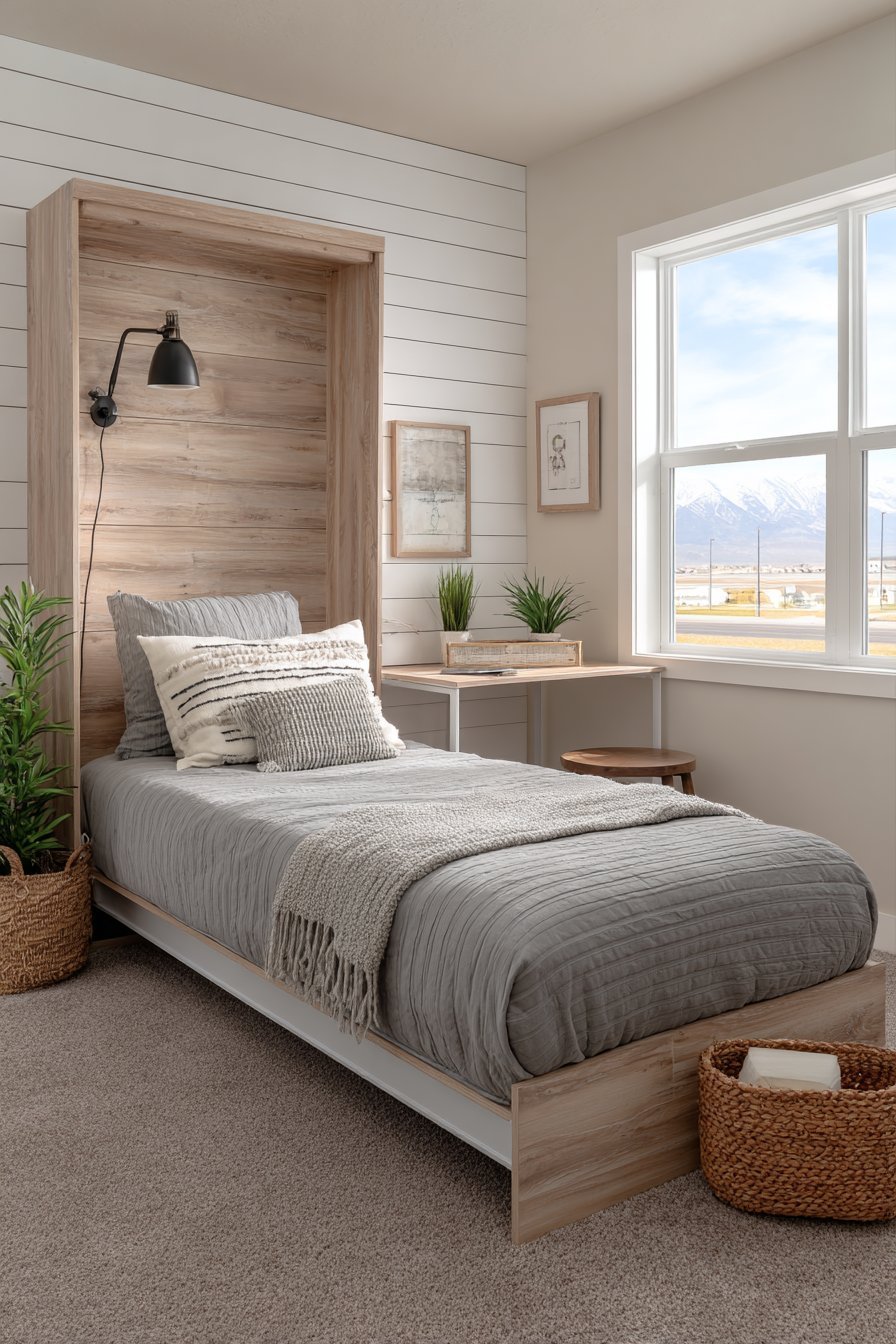
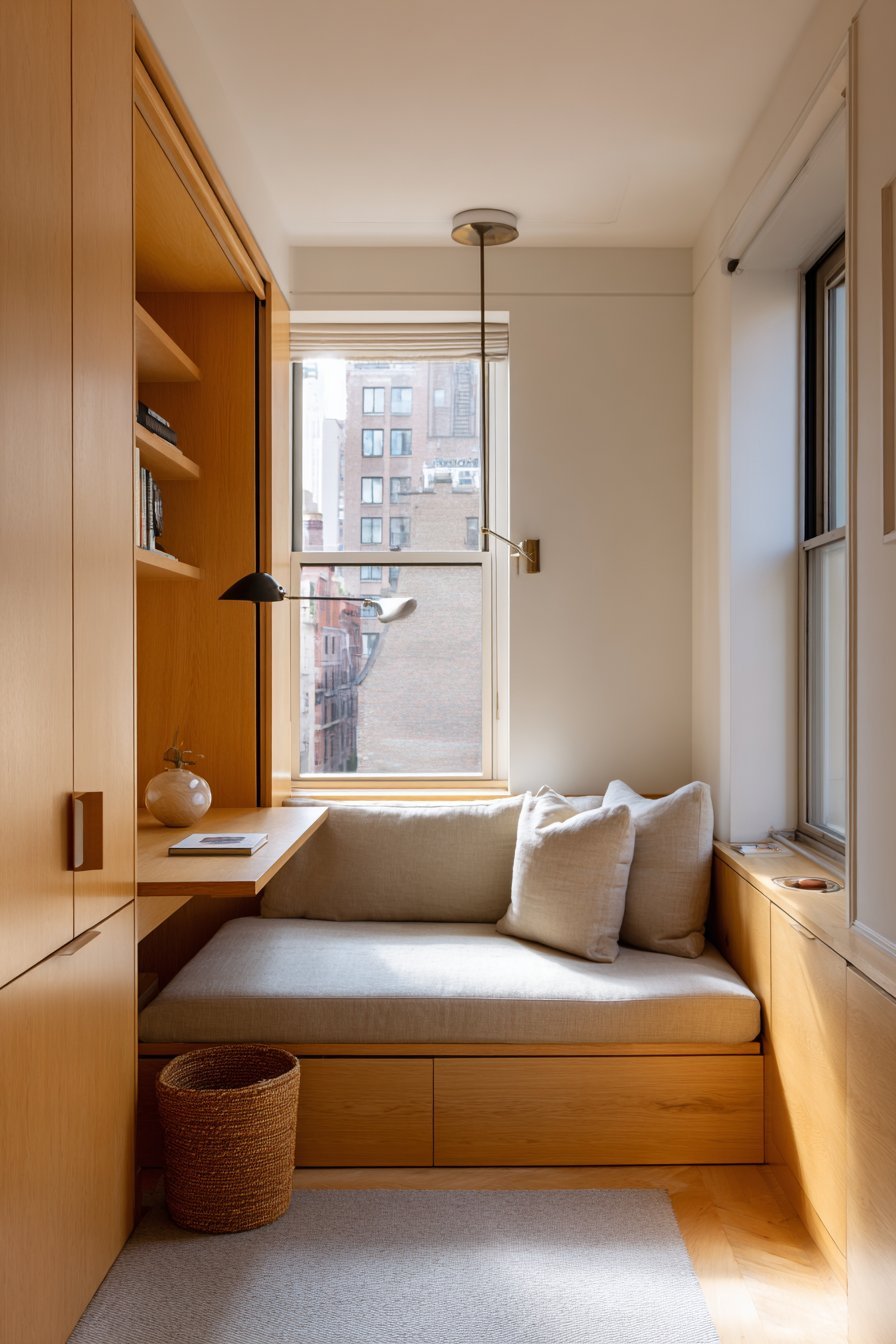
A murphy bed system revolutionizes tiny bedroom functionality through vertical space optimization. The light oak finish brings warmth against white shiplap walls. When folded up, the bed reveals integrated side storage compartments. These hold essentials without consuming floor space.
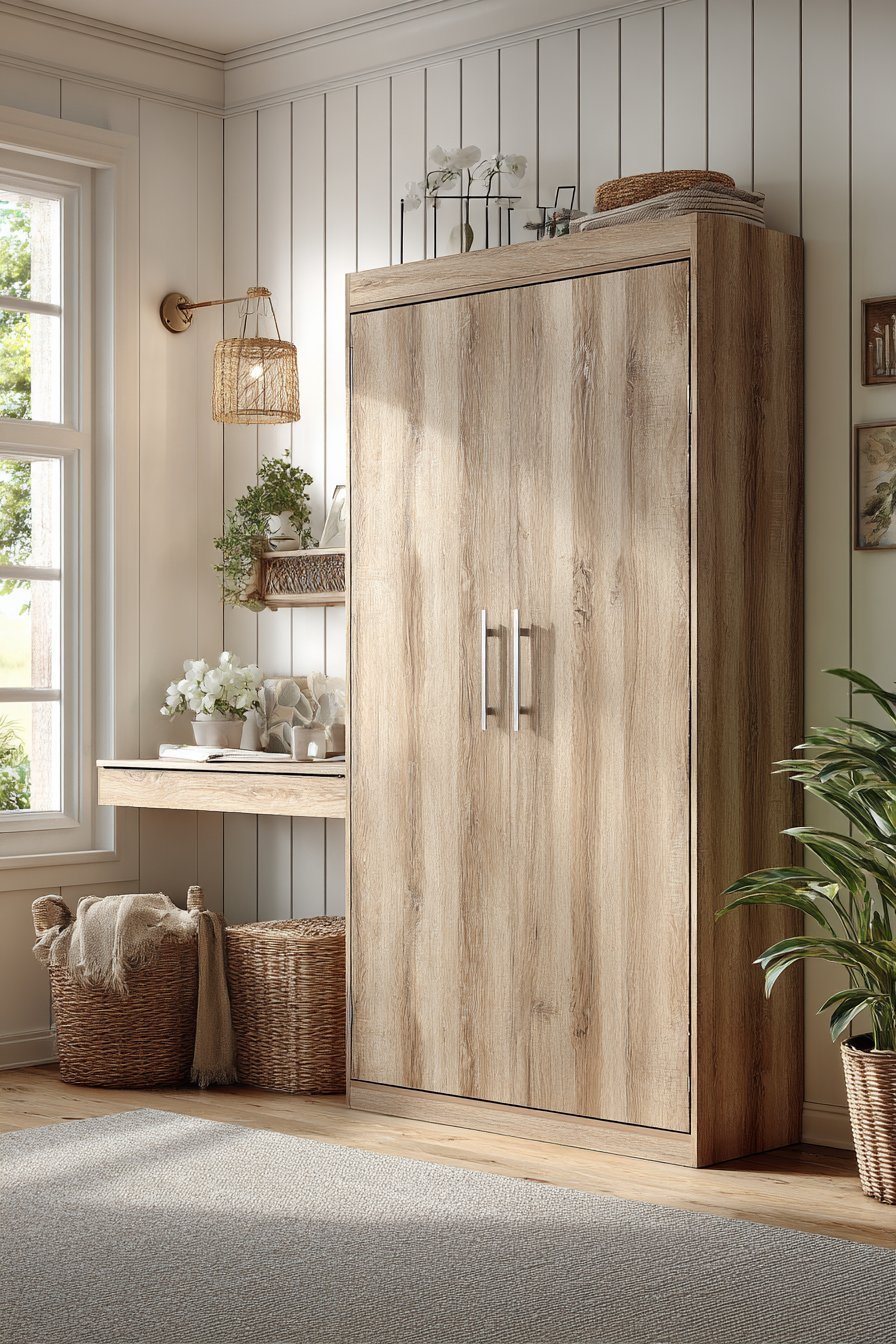
Below the murphy bed, a narrow floating desk creates a workspace. The minimalist wall-mounted task lamp provides focused lighting for work or reading. Soft grey carpeting adds comfort underfoot. The texture creates visual softness in the compact room.
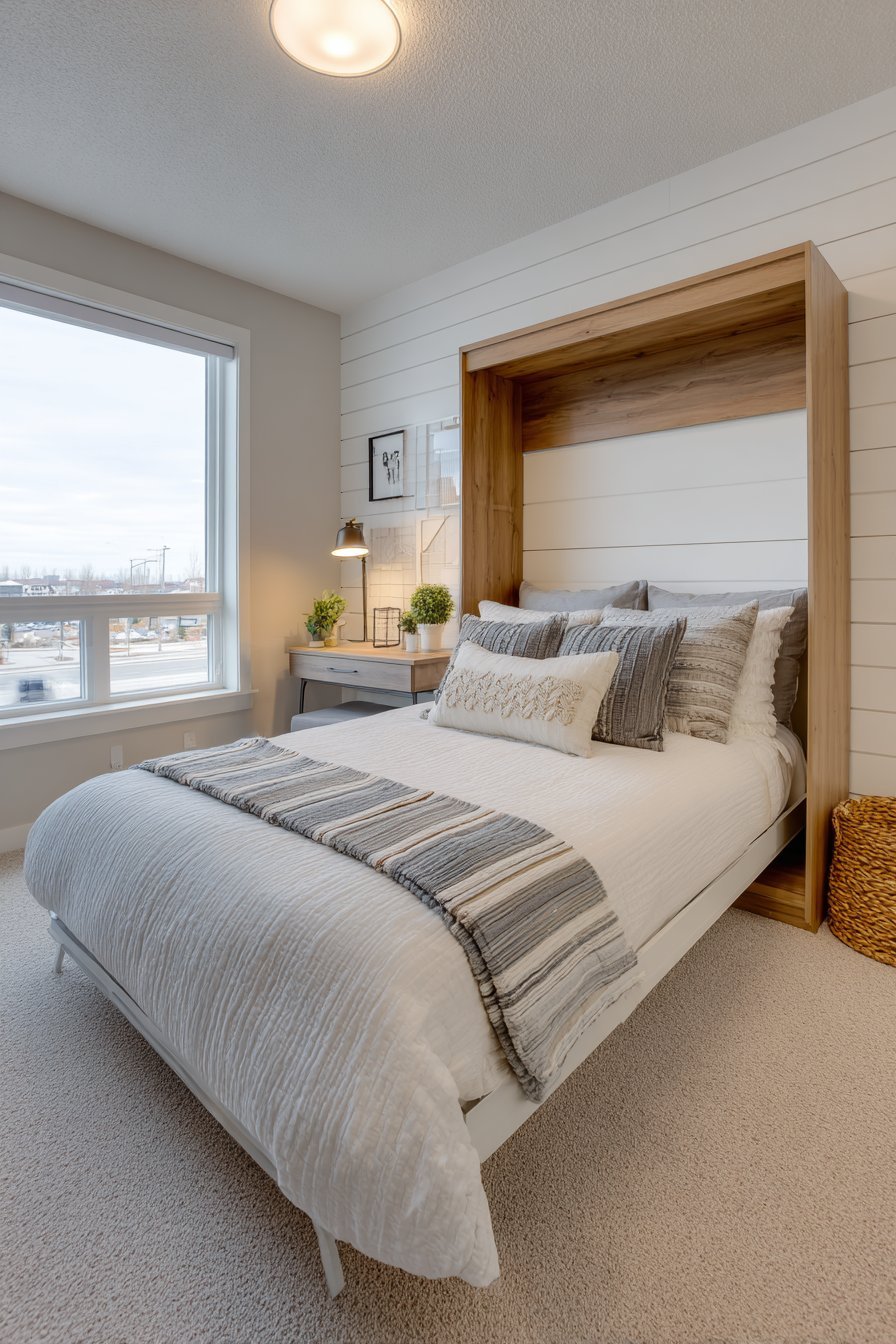
Natural morning light streams through a nearby window. This illuminates the clever storage solutions throughout the space. Small woven baskets organize daily necessities within easy reach. The multipurpose design allows the room to transform between sleeping and working functions seamlessly.
The beauty of this design lies in its adaptability. During daytime hours, the bed disappears completely. The room serves as a home office or study area. Evening brings a simple transformation back to sleeping quarters.
Key Design Tips:
- Choose murphy beds with built-in side storage to maximize vertical space
- Install floating desks underneath to create dual-purpose areas
- Use light wood finishes to add warmth without visual weight
- Position the bed near windows to take advantage of natural light
- Add soft carpeting for comfort and sound absorption
- Keep wall-mounted lighting minimal and functional
2. Lofted Platform Bed With Reading Nook
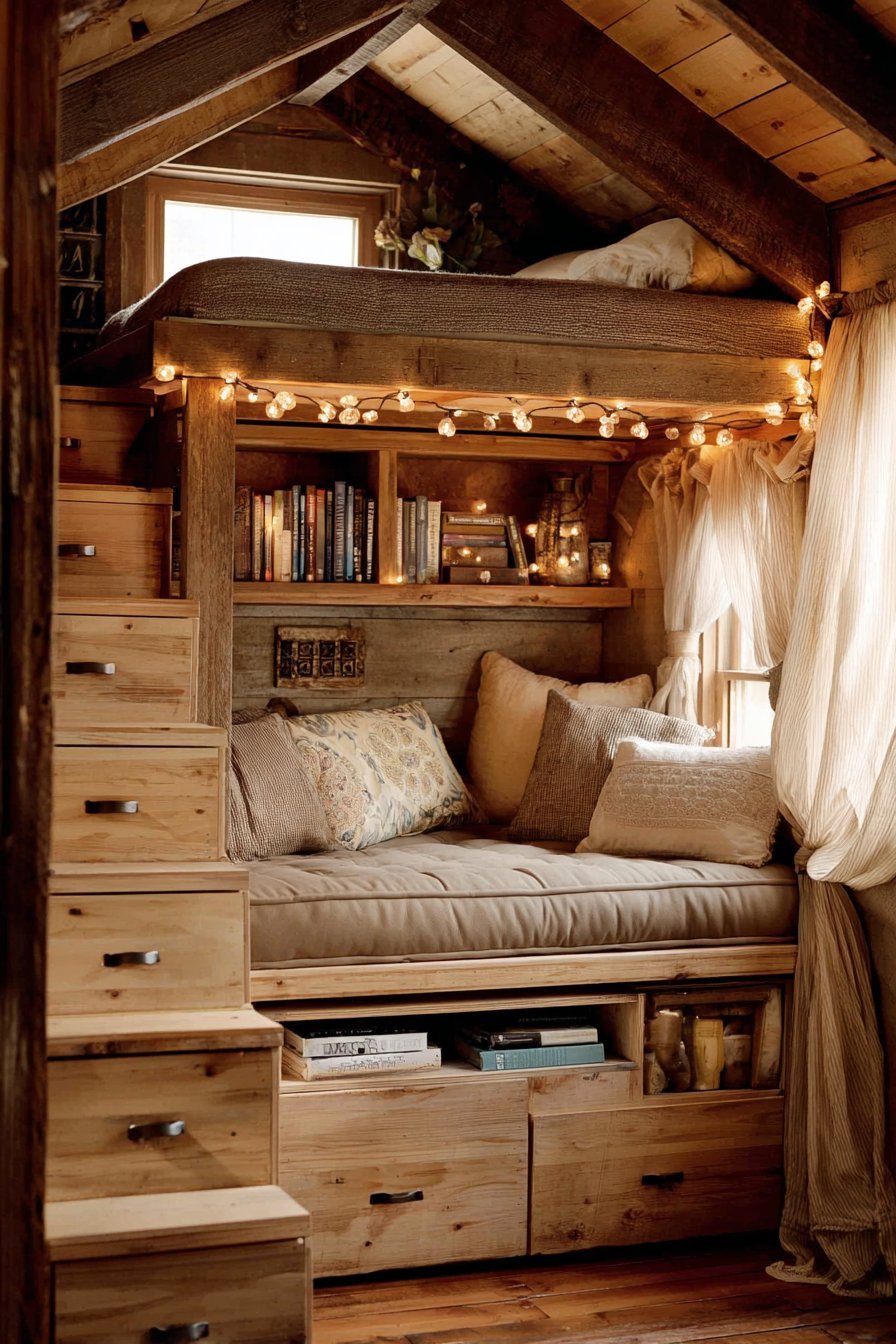
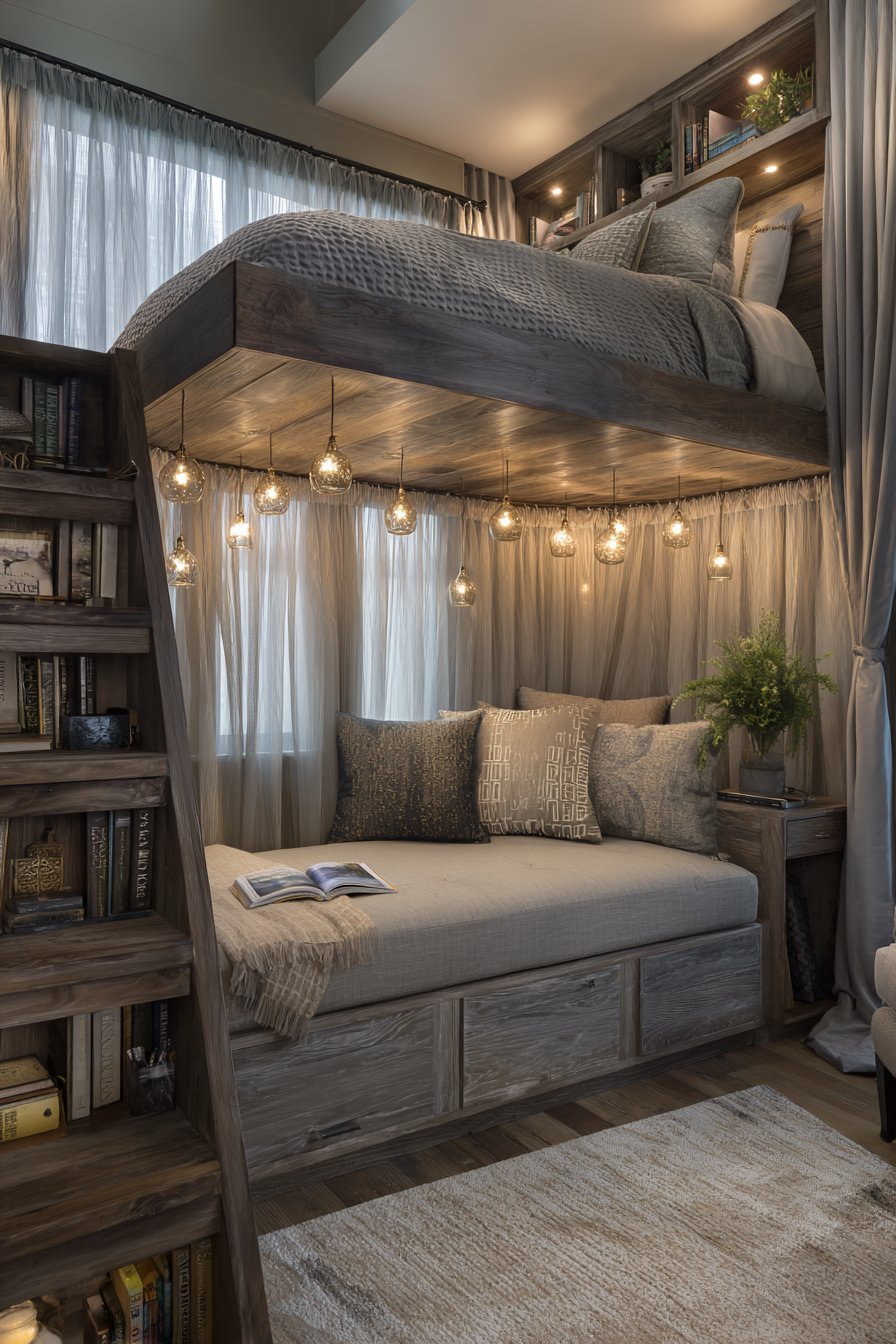
Elevating the sleeping area creates valuable space underneath for multiple functions. Natural pine construction provides sturdy support with visual warmth. The ladder features integrated drawer steps that serve dual purposes. Each step offers concealed storage while providing safe access upward.
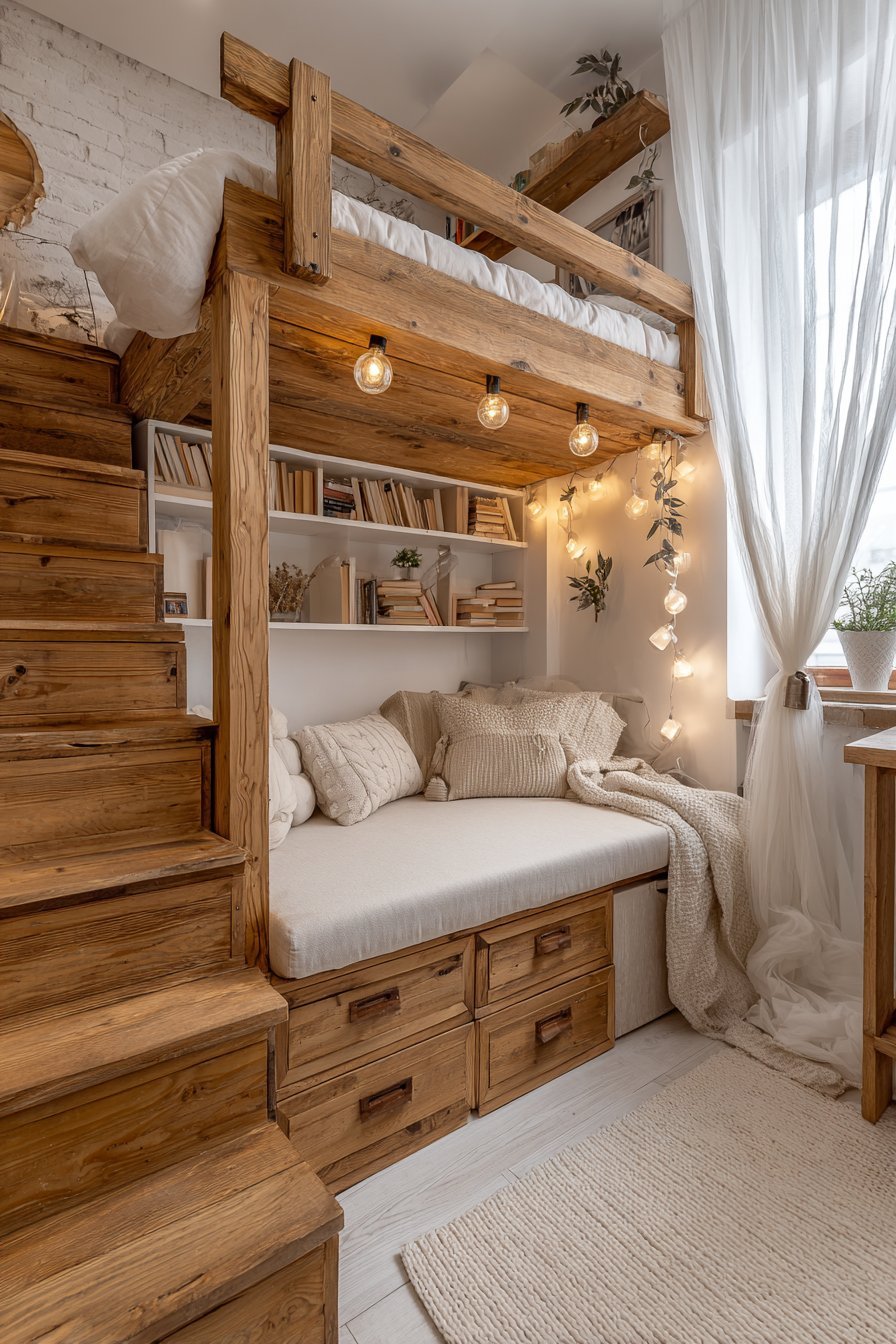
Below the loft, a cushioned bench invites relaxation with built-in storage drawers. Open shelving displays books and decorative items within arm’s reach. This creates a dedicated reading area that feels cozy and contained. The vertical arrangement maximizes every cubic foot of the room.
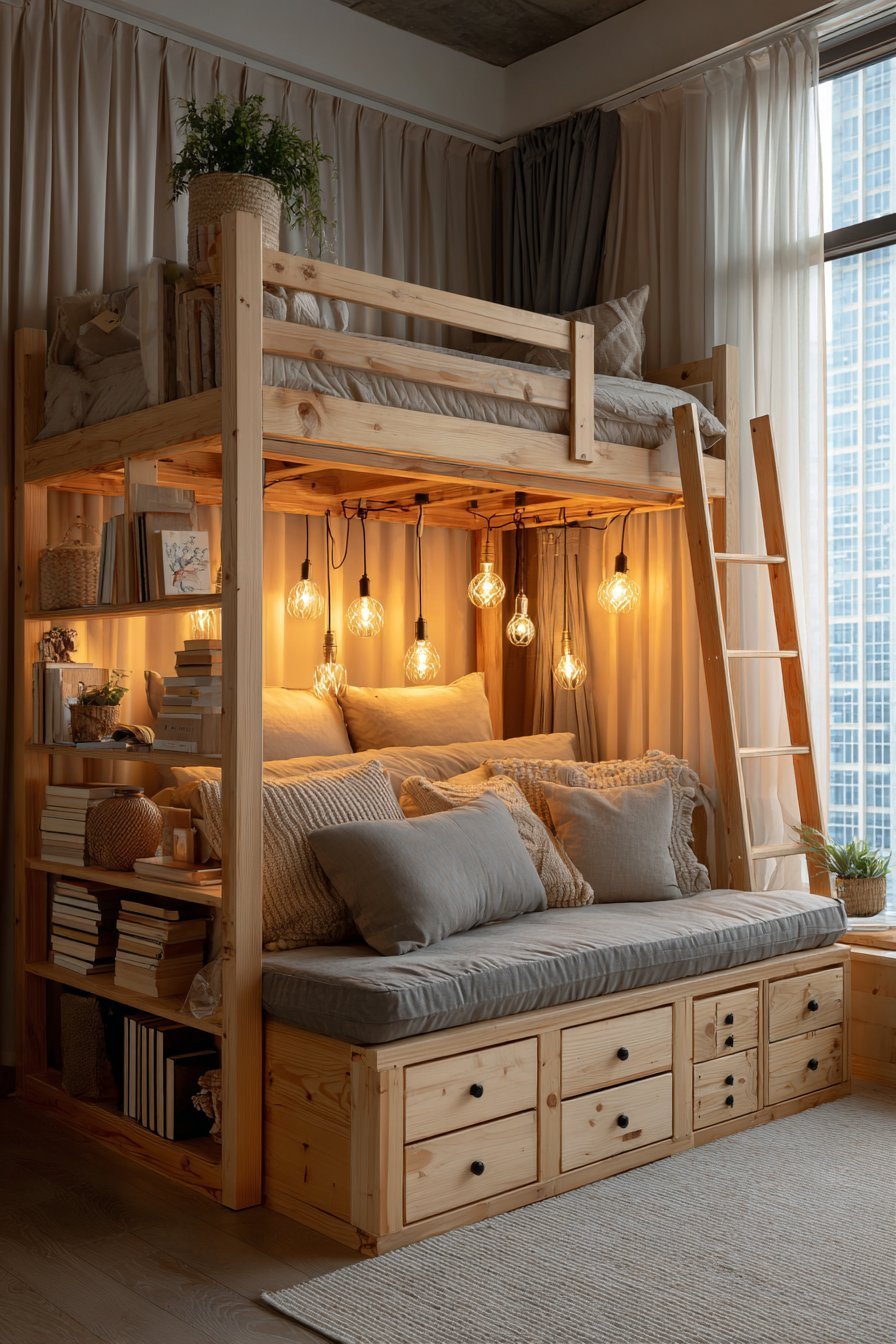
Warm Edison bulb string lights create magical ambient lighting under the loft. The soft glow defines the reading nook as a separate zone. Sheer curtains filter natural light gently throughout the day. The filtered illumination prevents the elevated bed from feeling dark or closed-in.
This design particularly suits those who value distinct zones within their tiny bedroom. The loft creates psychological separation between sleeping and waking activities. The underneath space becomes a treasured retreat for quiet moments.
Key Design Tips:
- Ensure ceiling height accommodates comfortable sitting space under the loft
- Install drawer steps for combined access and storage functionality
- Add string lights to create ambiance and prevent darkness underneath
- Include cushioned seating with hidden storage compartments
- Use open shelving to display items without feeling cramped
- Choose natural wood materials for warmth and durability
3. Daybed Configuration With Under Storage
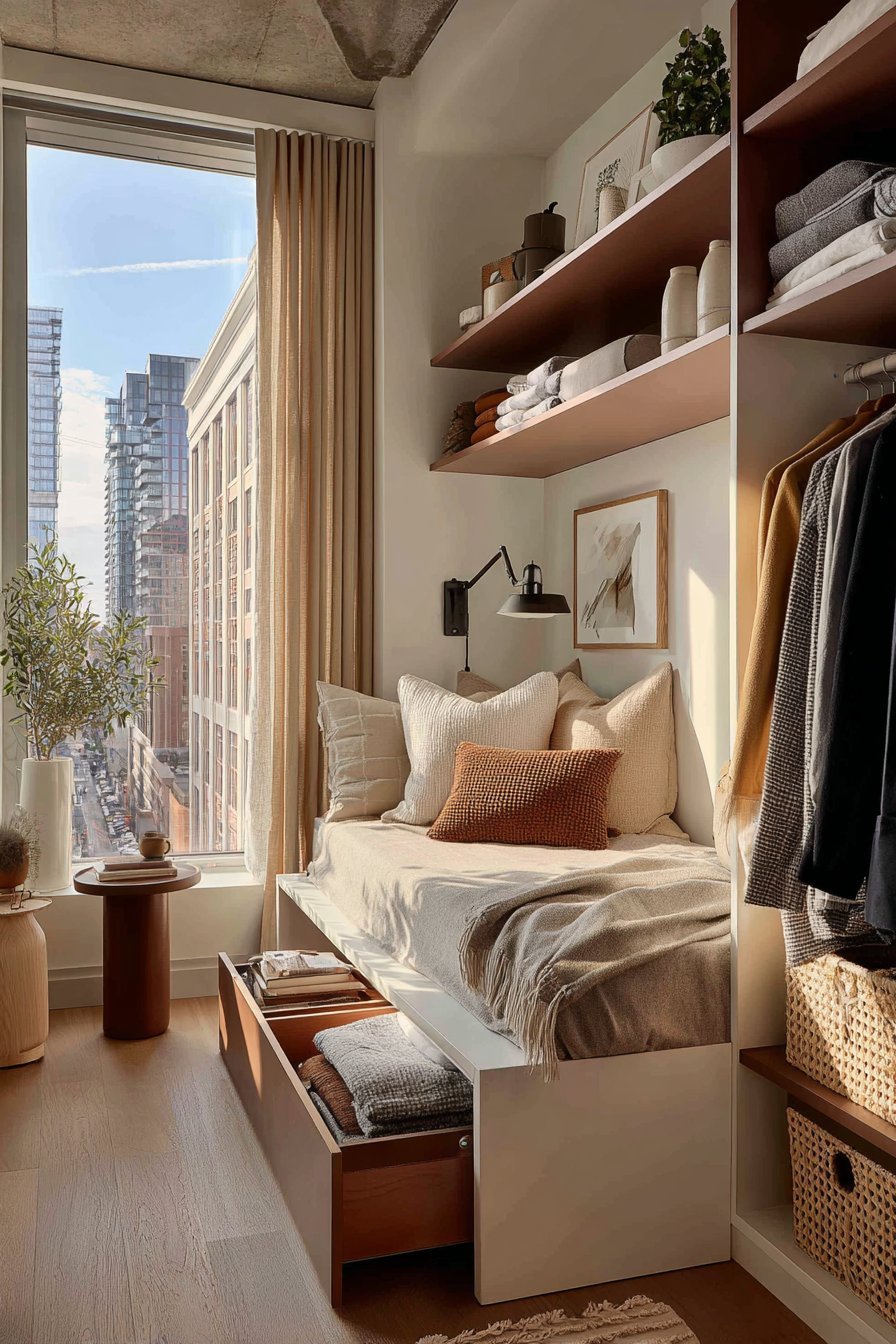
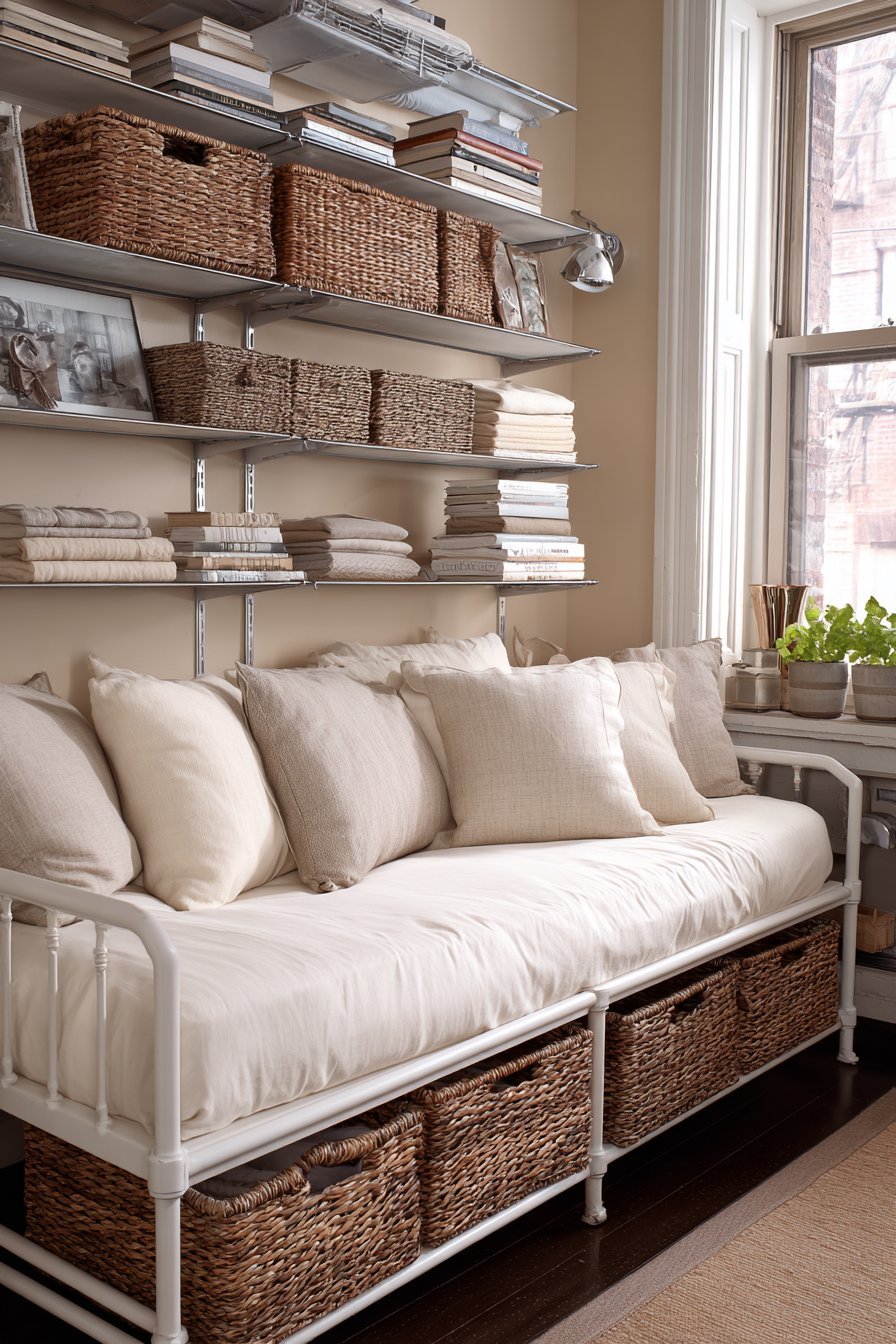
A daybed against the longest wall serves triple duty in this tiny bedroom. The white metal frame provides airy structure without visual bulk. Layered neutral textiles and multiple throw pillows create inviting comfort. The styling transforms the bed into a sofa during daytime hours.
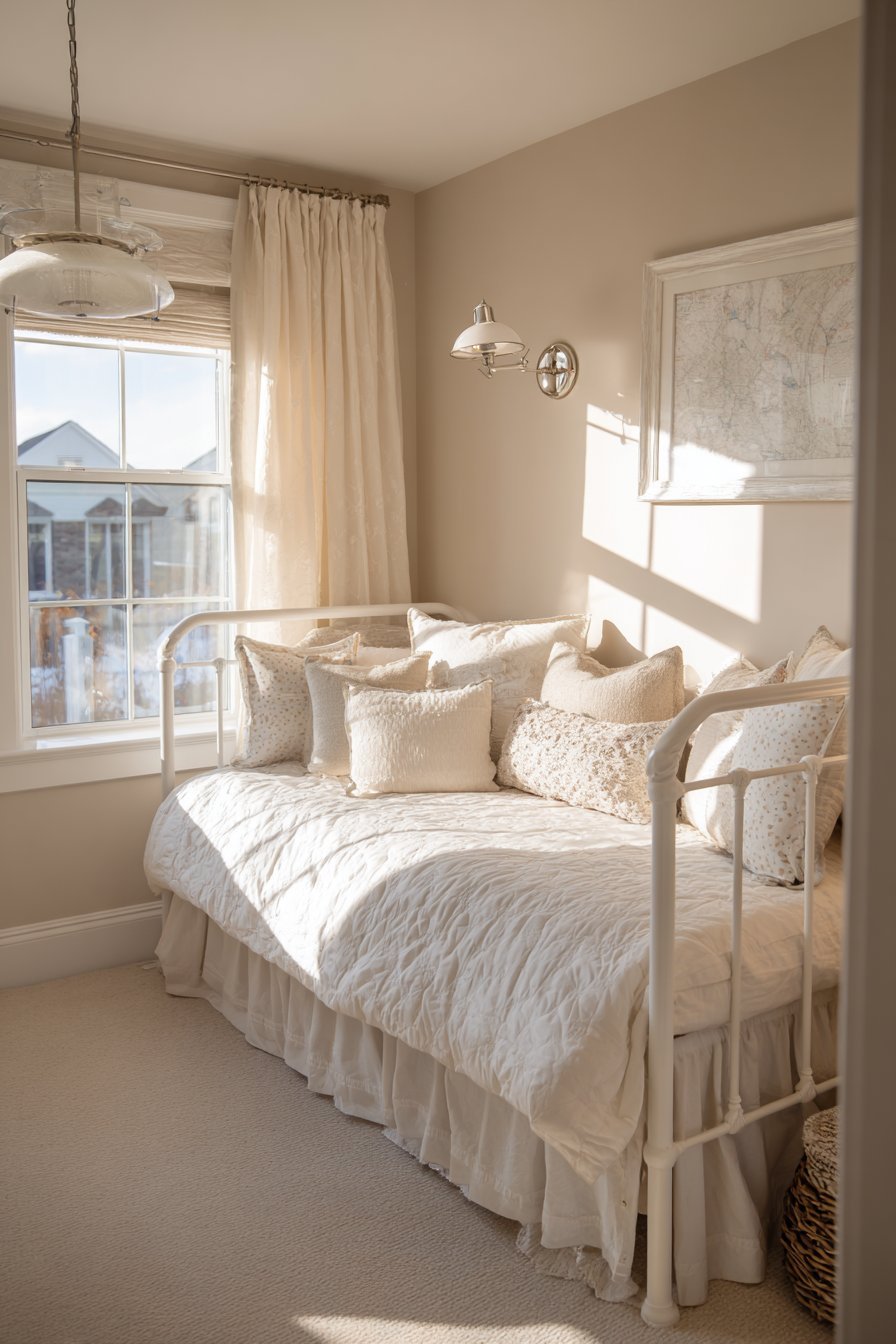
Underneath, woven storage baskets slide out easily for seasonal clothing organization. The accessible storage keeps items contained yet readily available. A narrow console table behind the daybed serves as both headboard and display shelf. This clever positioning maximizes functionality without consuming additional floor space.
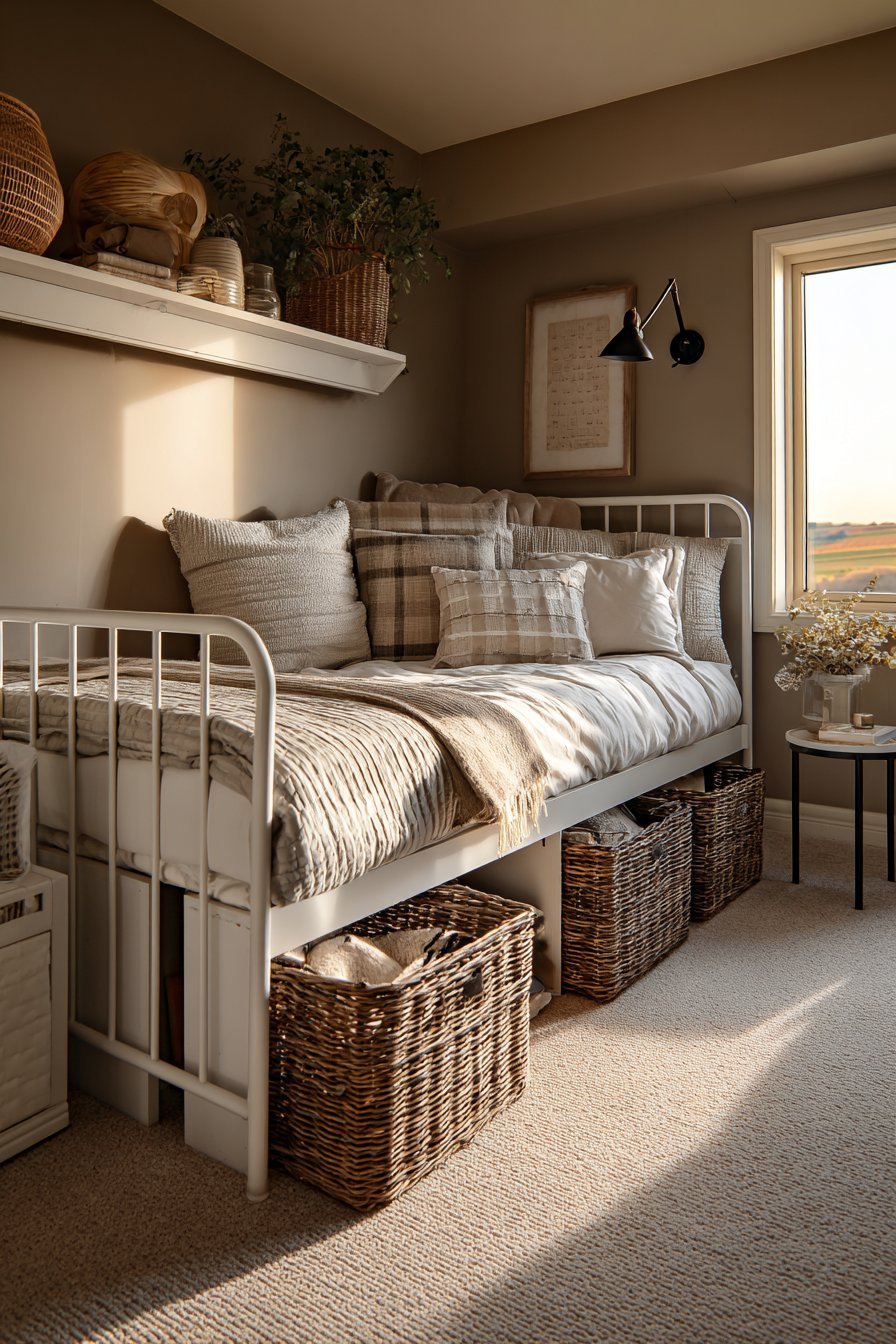
A small round side table provides surface area for necessities. The wall-mounted swing arm reading light eliminates the need for table lamps. This preserves precious surface space on the bedside table. Golden hour lighting bathes the room in warmth during evening hours.
The daybed configuration works beautifully for studio apartments or multipurpose rooms. The space functions as bedroom and sitting room simultaneously. Guests feel welcome without the room appearing exclusively bedroom-focused.
Key Design Tips:
- Position the daybed against the longest wall to maximize floor space
- Use woven baskets underneath for attractive accessible storage
- Add a console table behind as combination headboard and display
- Choose white or light metal frames to maintain airiness
- Layer textiles to create sofa-like comfort during daytime
- Install swing arm lamps to free up surface space
4. Floor-to-Ceiling Custom Built-Ins
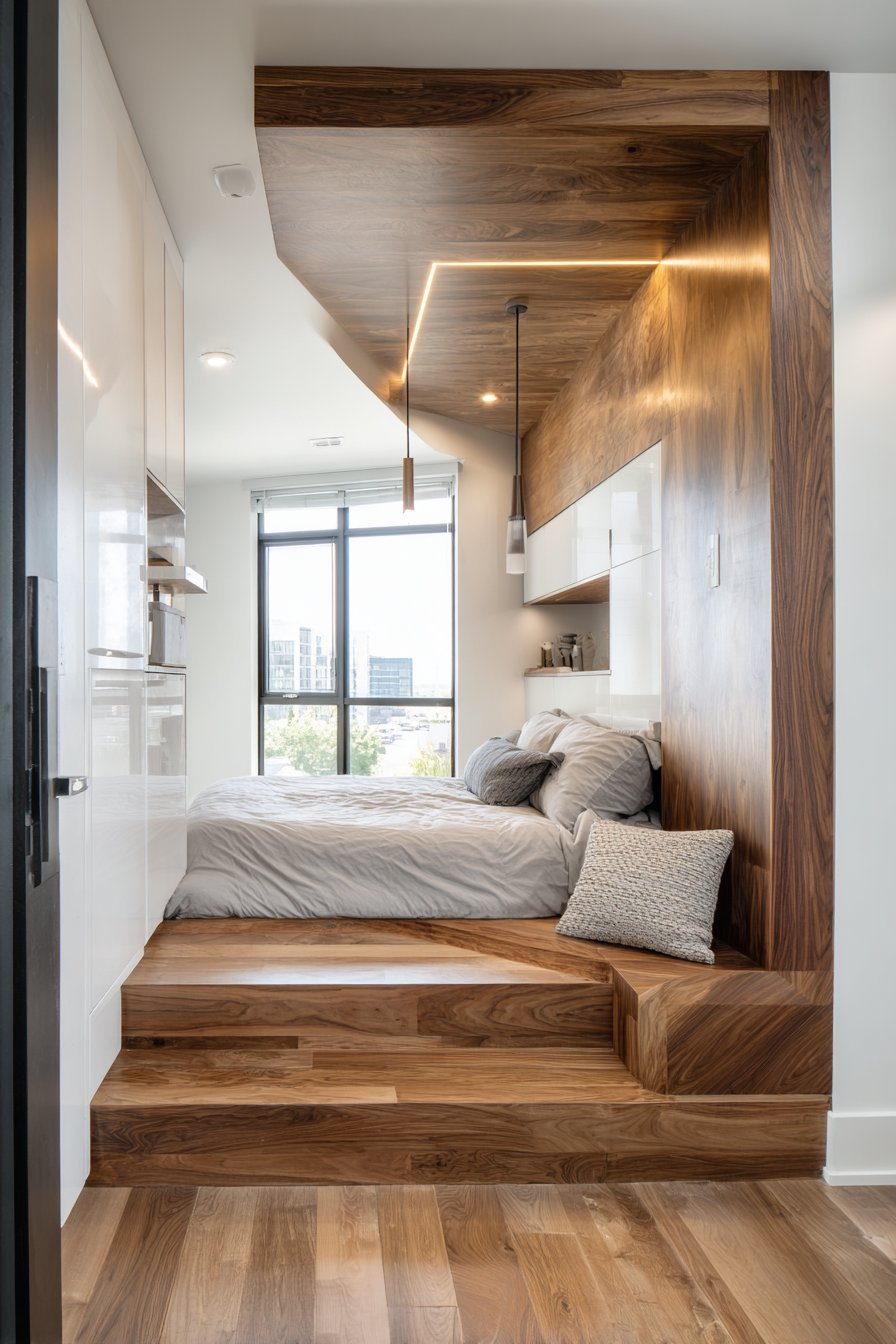
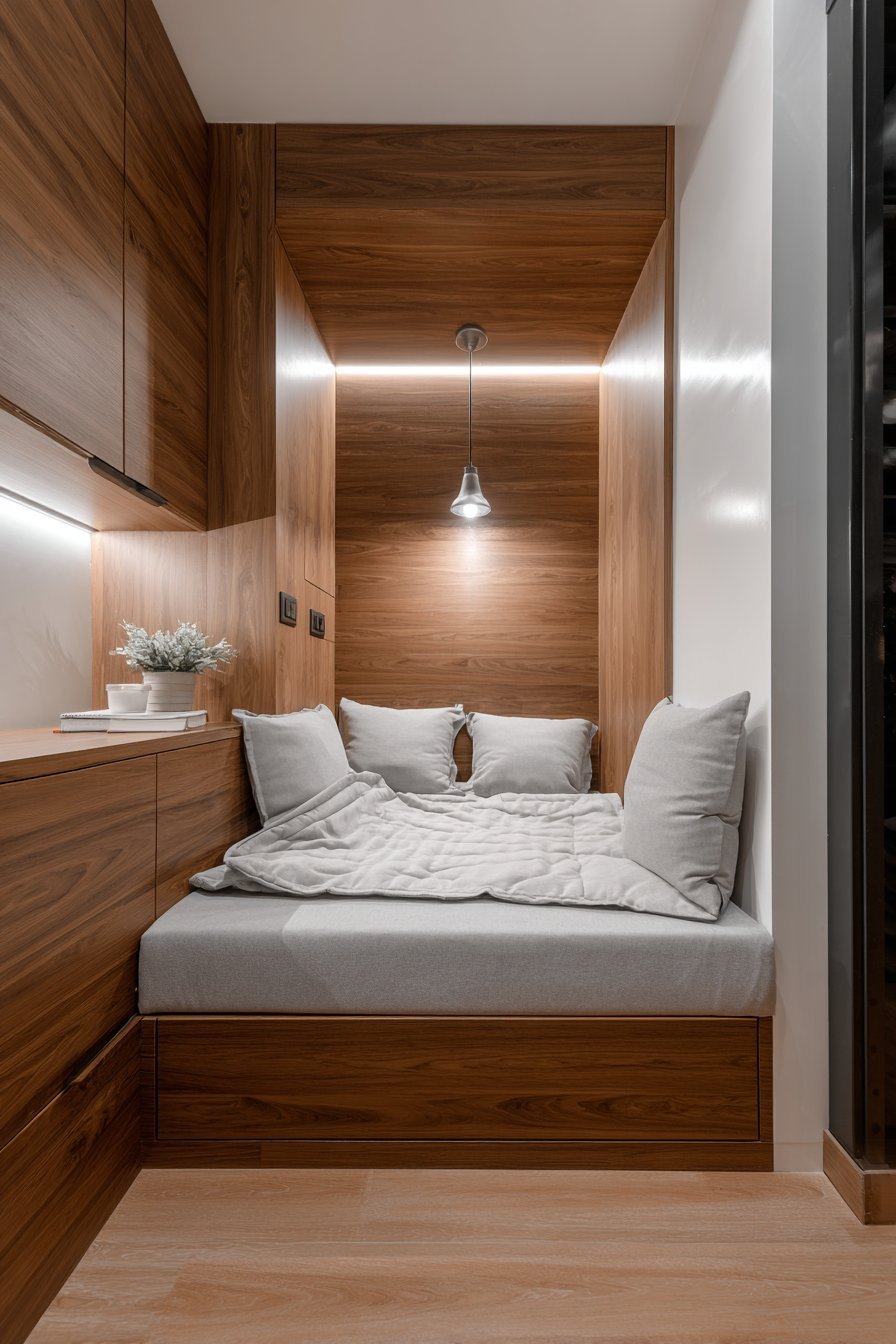
Custom built-in storage flanking a recessed bed alcove creates architectural interest. The warm walnut finish brings richness without overwhelming the compact space. Built-ins include varied storage types: open shelving, closed cabinets, and a fold-down desk. This combination accommodates diverse organizational needs efficiently.
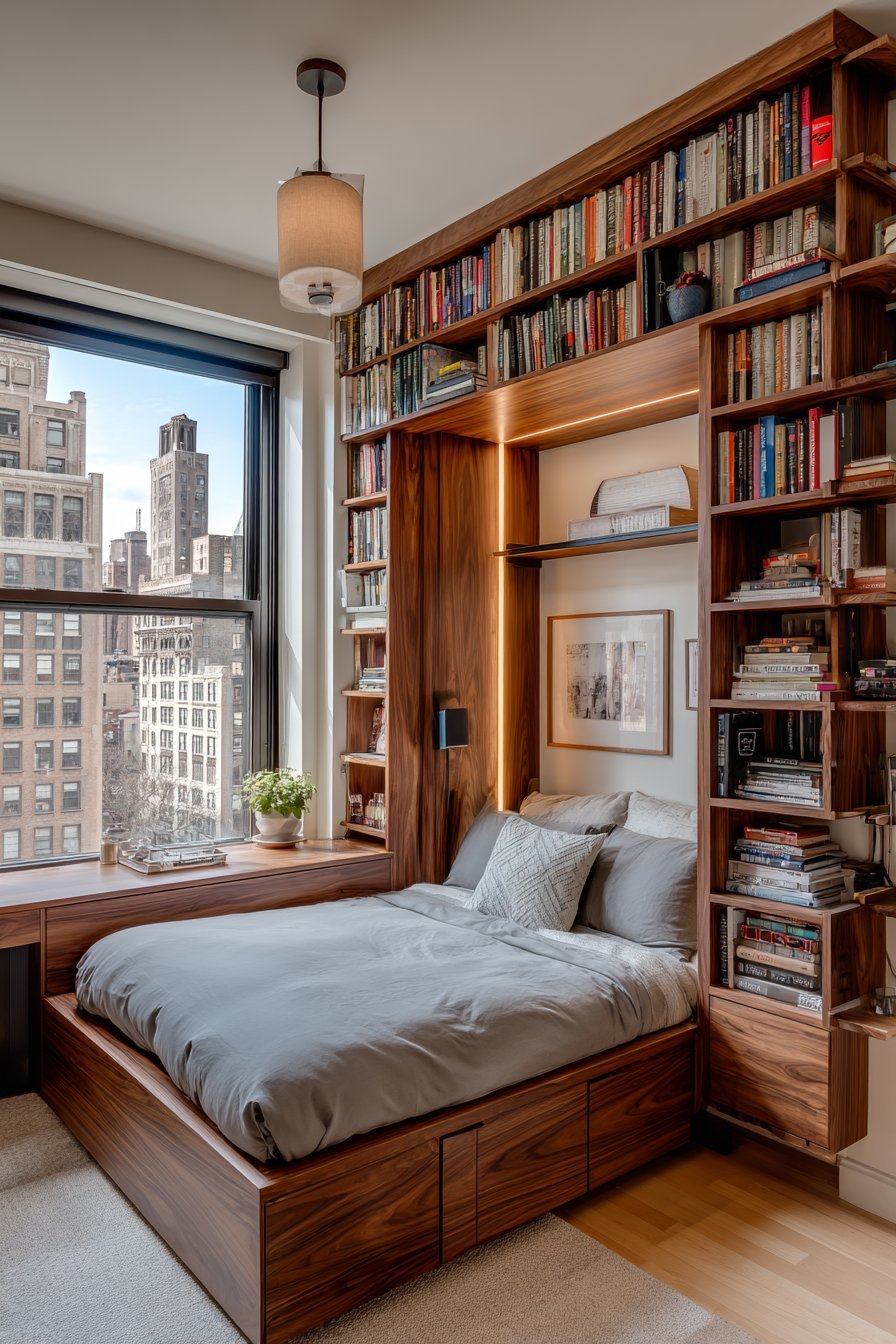
Integrated LED strip lighting highlights the architectural details beautifully. The lighting creates visual interest while providing functional illumination. The recessed platform bed alcove feels cocooned and intimate. Light grey bedding maintains simplicity within the sleeping zone.
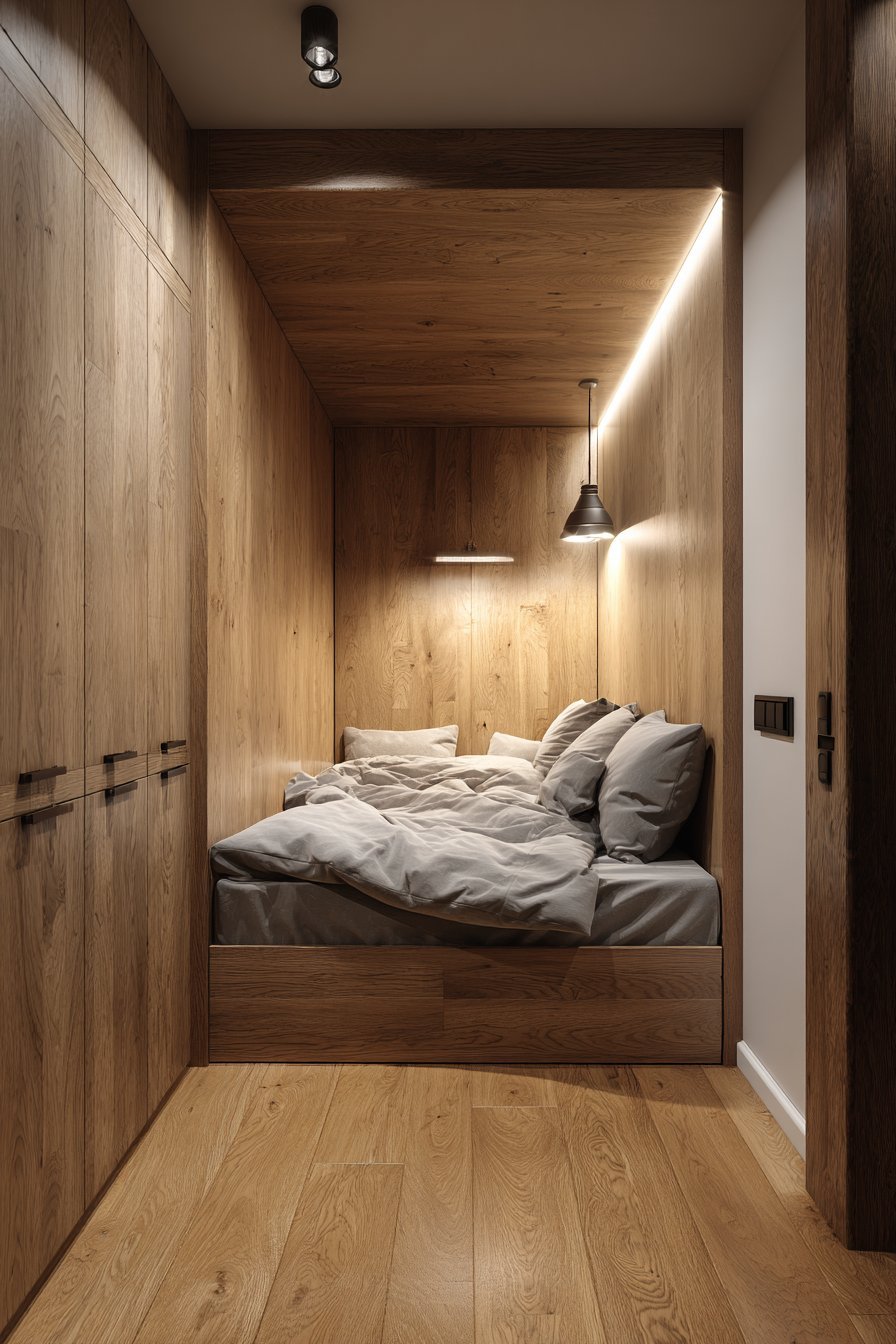
A single pendant light hangs above the bed for focused reading light. The minimal fixture prevents visual clutter in the small space. The built-in desk surface folds completely flat when not needed. This preserves floor space during non-working hours.
This design demonstrates how custom millwork transforms tiny bedrooms into sophisticated spaces. The investment in quality built-ins pays dividends in functionality. Every inch serves a purpose without feeling cramped or cluttered.
Key Design Tips:
- Invest in custom built-ins to maximize storage in exact dimensions
- Include varied storage types for different organizational needs
- Add integrated LED lighting for ambiance and functionality
- Recess the bed into an alcove for a cozy feeling
- Choose fold-down surfaces to maintain flexibility
- Use warm wood tones to add richness to small spaces
5. Corner L-Shaped Platform Bed
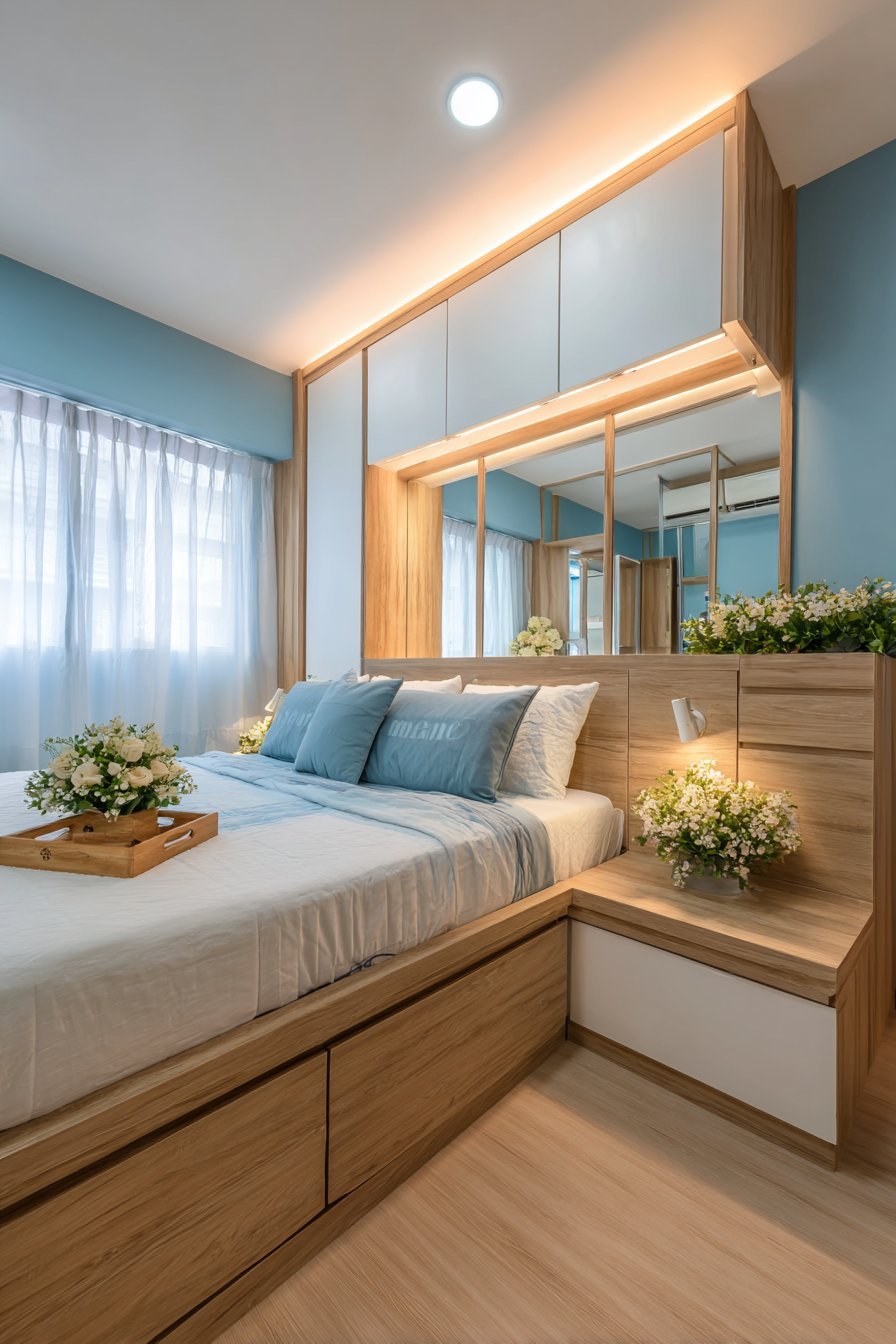
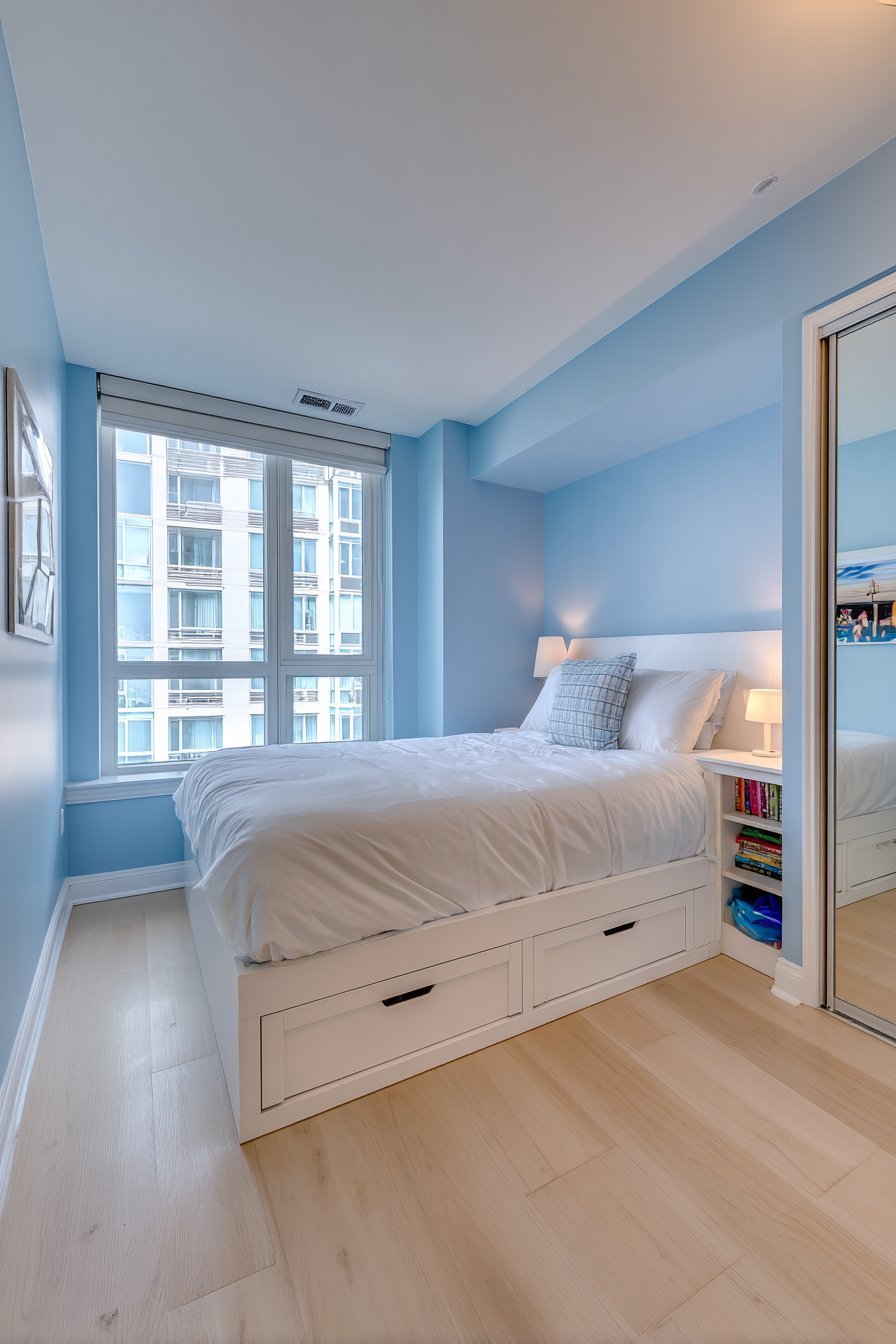
Utilizing corner space efficiently creates surprising storage capacity. The L-shaped elevated bed platform features storage drawers beneath the sleeping surface. This corner configuration naturally integrates nightstands and reading lights into the headboard wall. The built-in elements eliminate freestanding furniture needs.
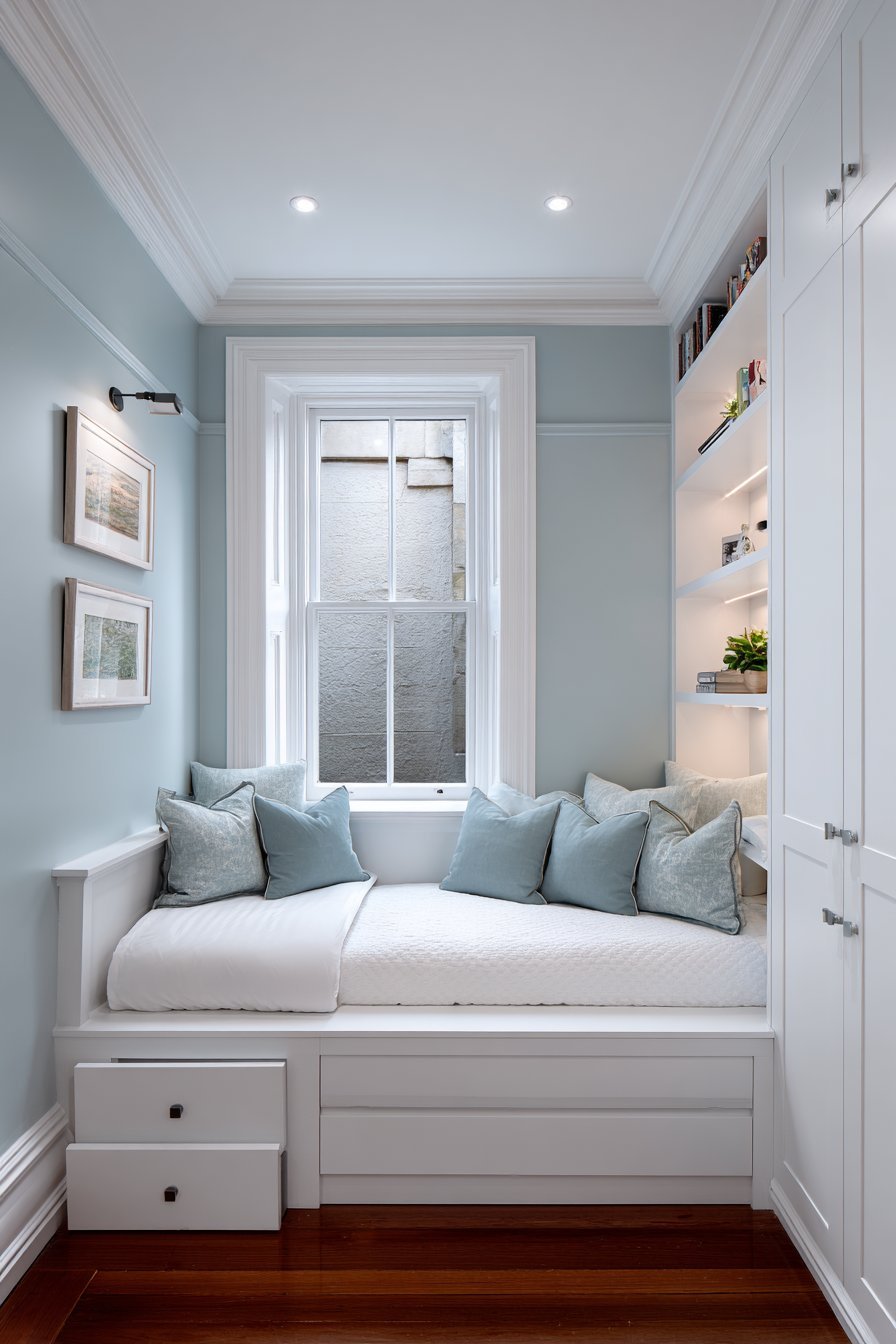
The opposite wall features a slim profile wardrobe with mirrored sliding doors. The mirrors visually double the room’s apparent size. The reflection bounces light throughout the space effectively. Soft blue-grey walls create a calming atmosphere conducive to rest.
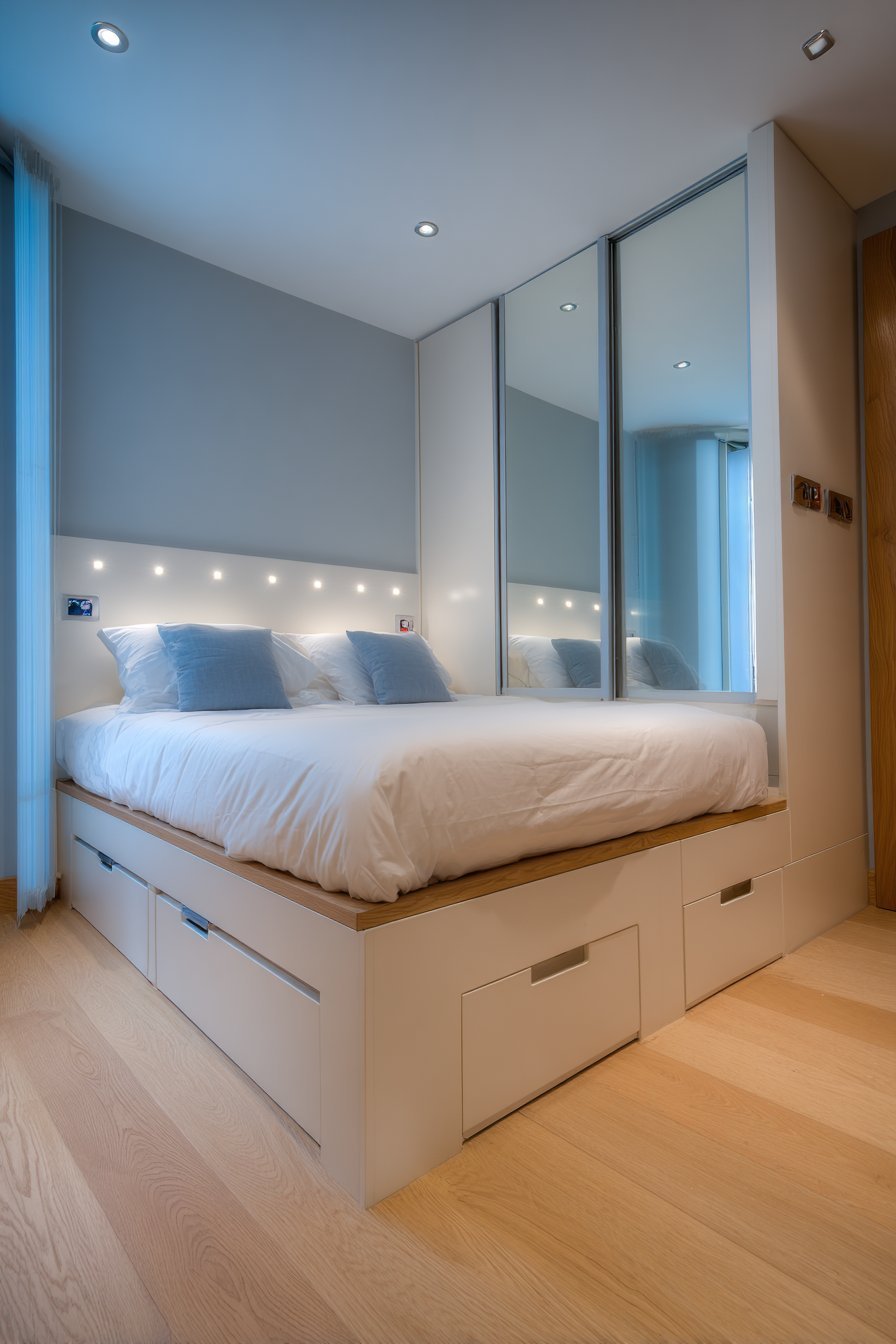
White oak flooring runs throughout the room. The natural wood grain adds subtle texture and warmth. The corner bed arrangement leaves the room’s center completely open. This creates better traffic flow despite the small footprint.
Natural diffused daylight enters through windows positioned to illuminate both sleeping and storage areas. The corner placement maximizes window access from the bed. Morning light becomes a natural wake-up feature.
Key Design Tips:
- Position the bed in an L-shape to maximize corner utilization
- Build nightstands directly into the headboard wall structure
- Install mirrored wardrobe doors to expand visual space
- Choose soft calming colors for bedroom walls
- Include storage drawers under the elevated platform
- Leave the room’s center open for better flow
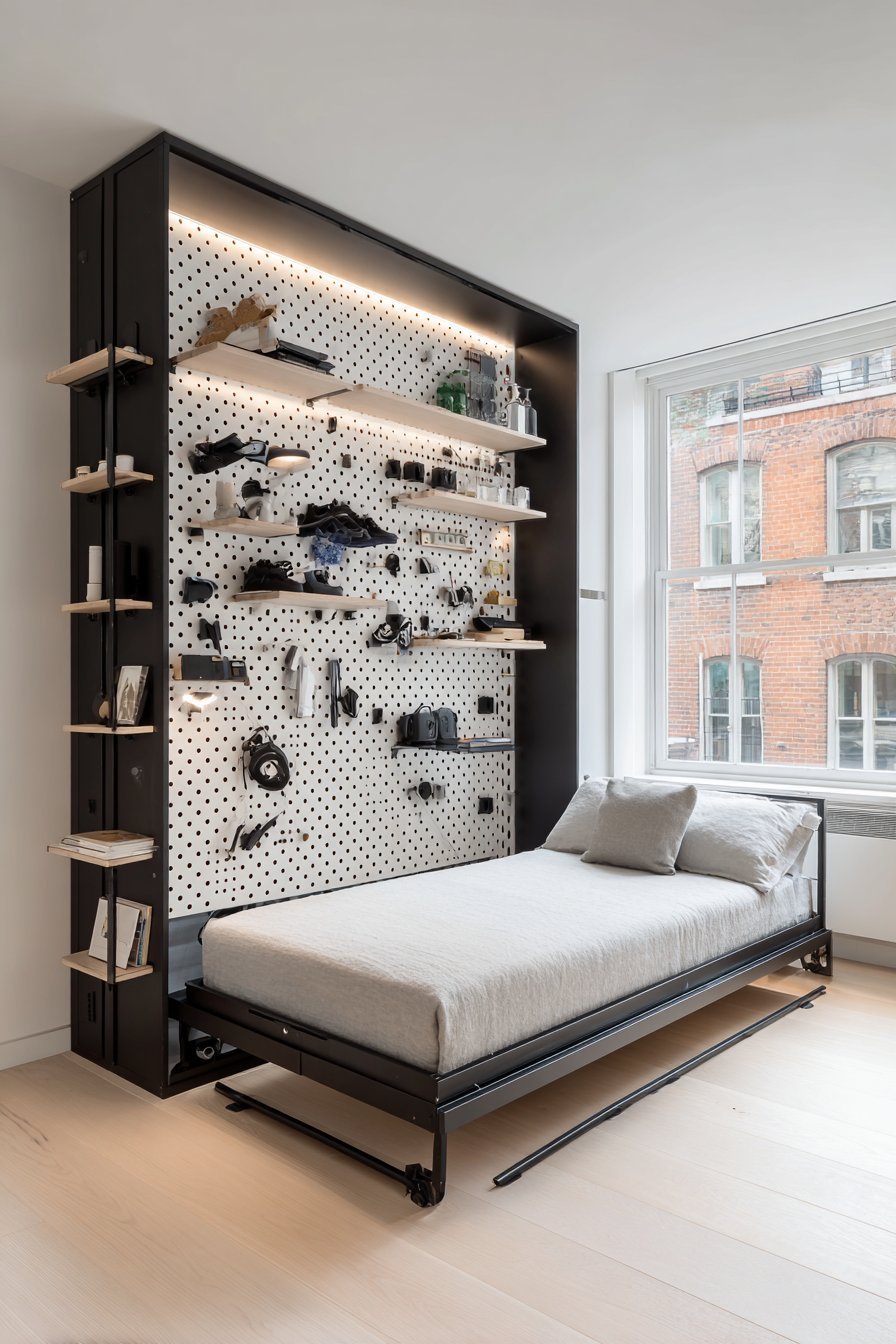
6. Wall-Mounted Folding Bed
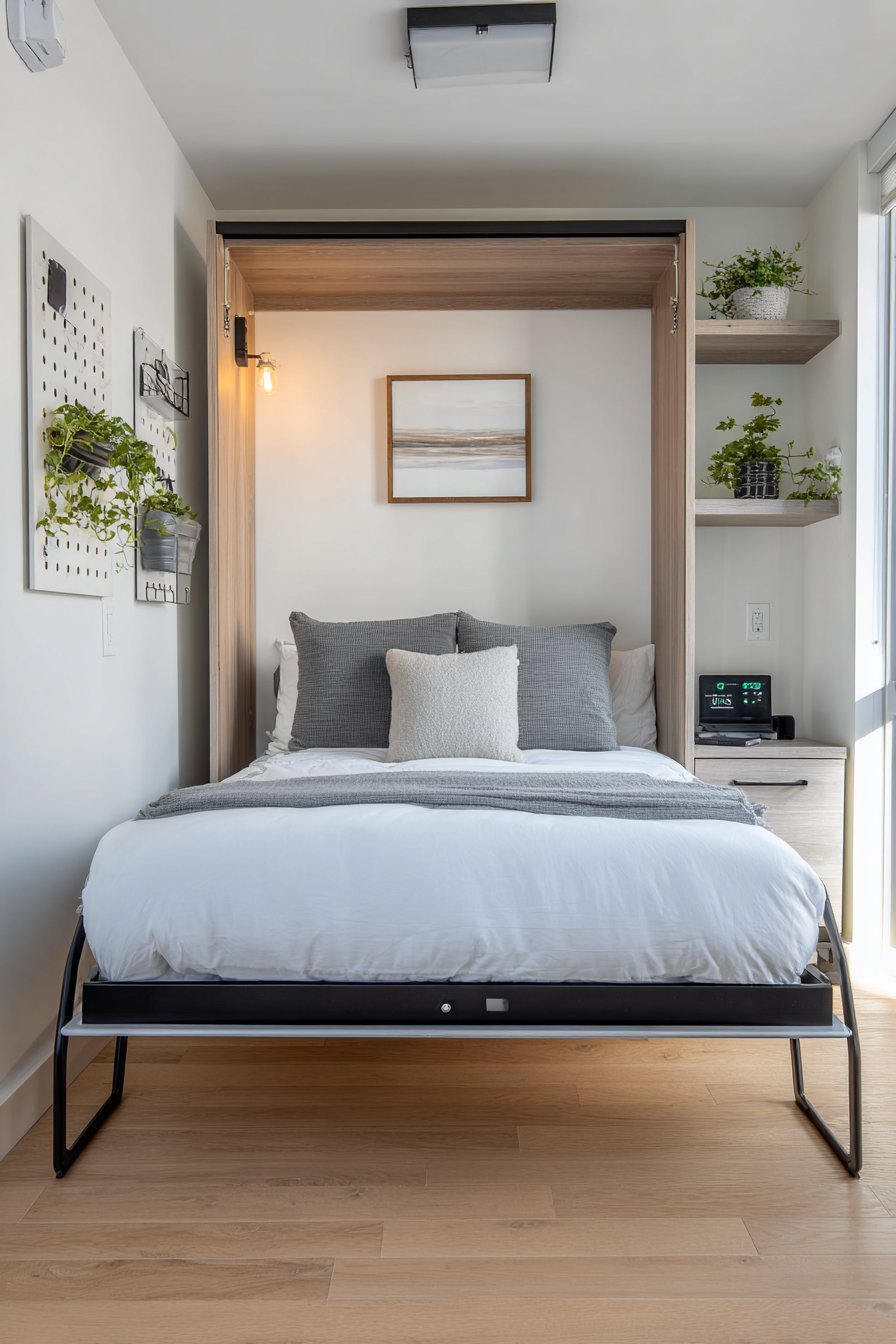
A wall-mounted folding bed in matte black metal offers ultimate flexibility. When folded completely flat against the wall, the room transforms entirely. The bed reveals built-in side tables and USB charging stations when open. Modern technology integrates seamlessly with space-saving functionality.
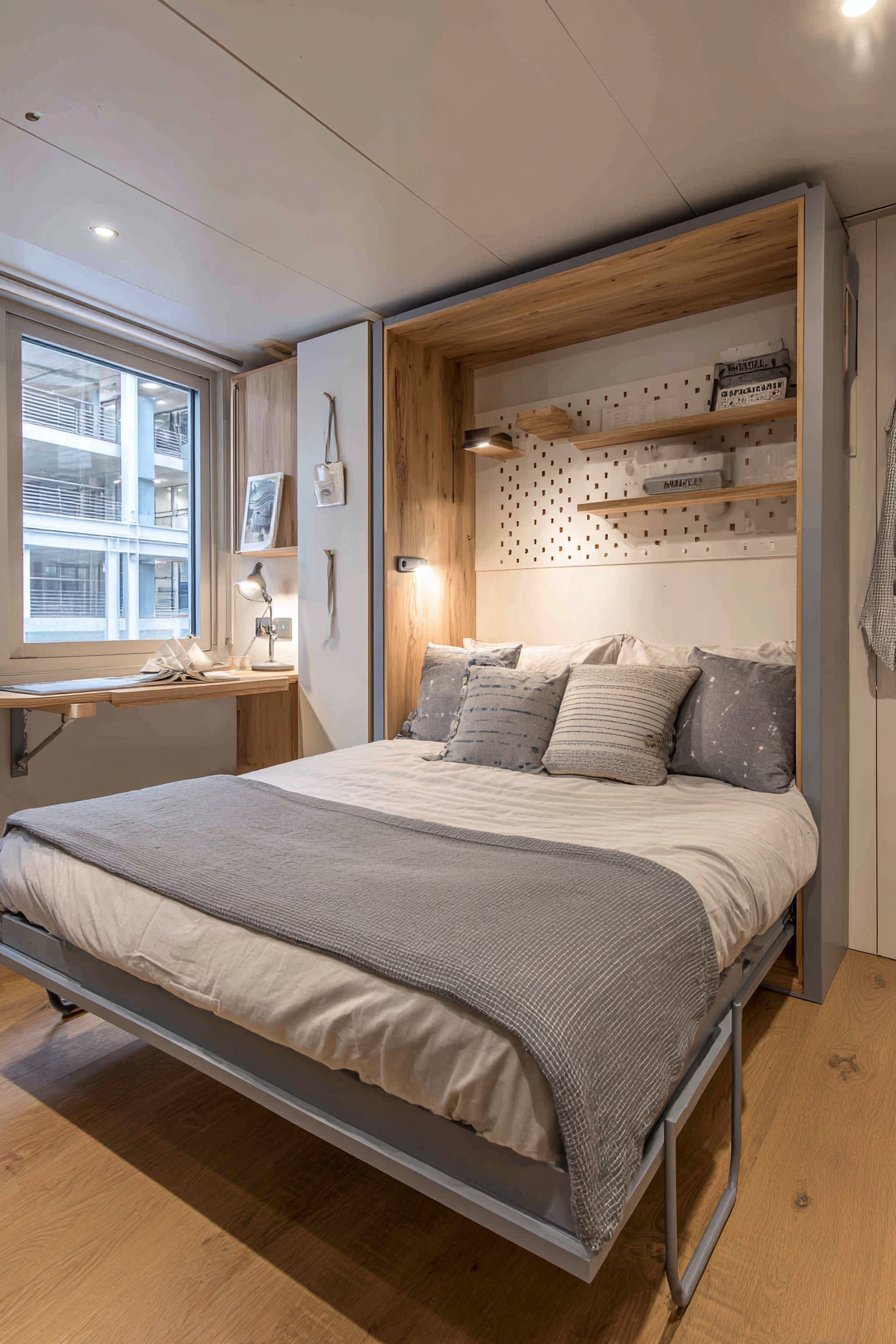
Surrounding walls feature pegboard organization with floating shelves and hooks. Daily essentials have designated homes within easy reach. The pegboard system adapts easily as needs change. Light wood flooring and white walls maximize brightness throughout the day.
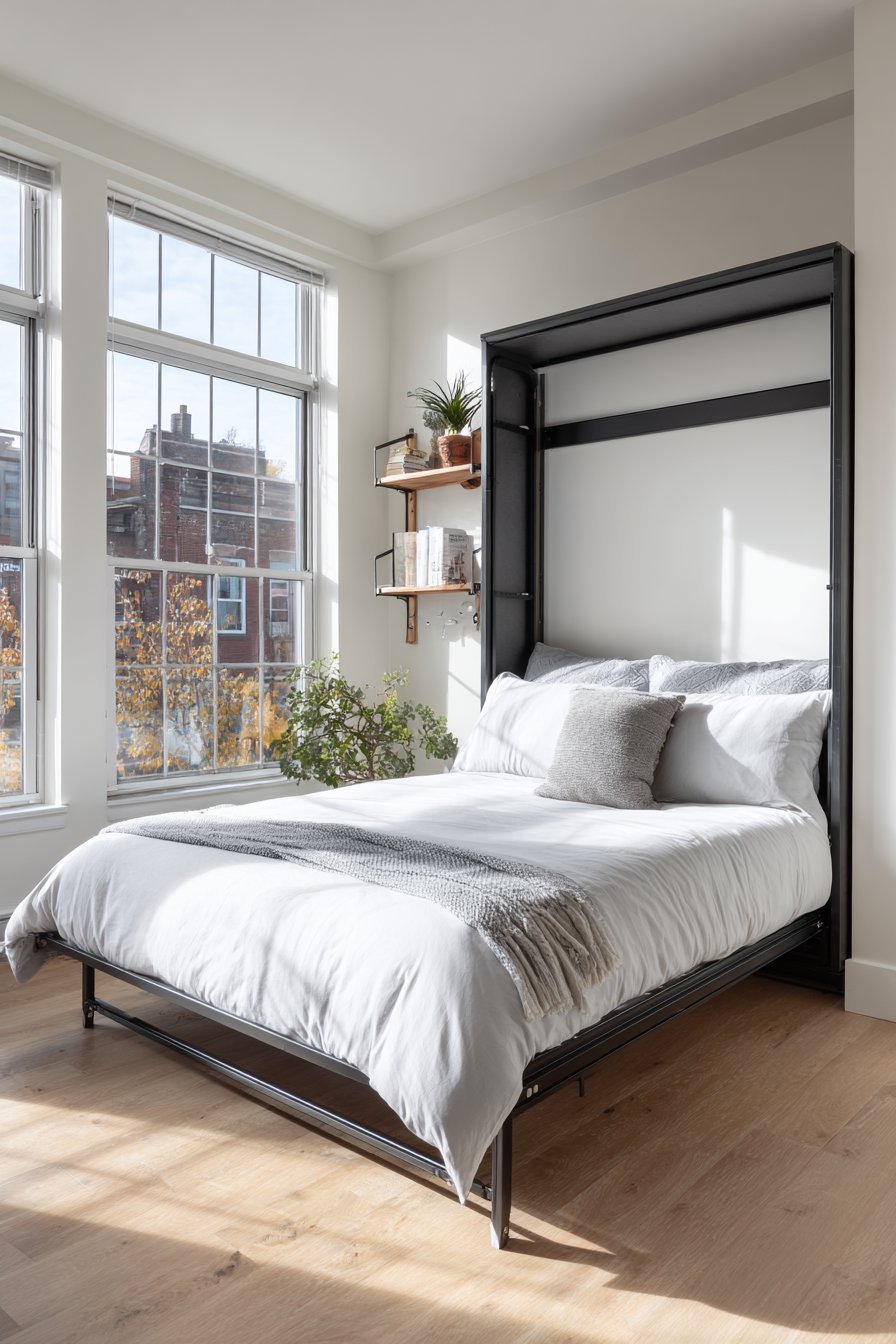
This design shines in its transformability. During daytime, the space serves multiple functions. The room might become a home gym, art studio, or play area. Evening brings quick transformation back to sleeping quarters. The folding mechanism operates smoothly for daily use.
Natural light emphasizes the room’s adaptable nature. The space never feels permanently committed to bedroom use. This psychological flexibility makes tiny living feel less restrictive.
Key Design Tips:
- Choose quality folding mechanisms for daily reliability
- Include built-in charging stations for modern convenience
- Install pegboard systems for adaptable organization
- Paint walls white to maximize light reflection
- Use light flooring to enhance spaciousness
- Ensure the folding bed includes safety locks
7. Japanese-Inspired Low Platform Bed
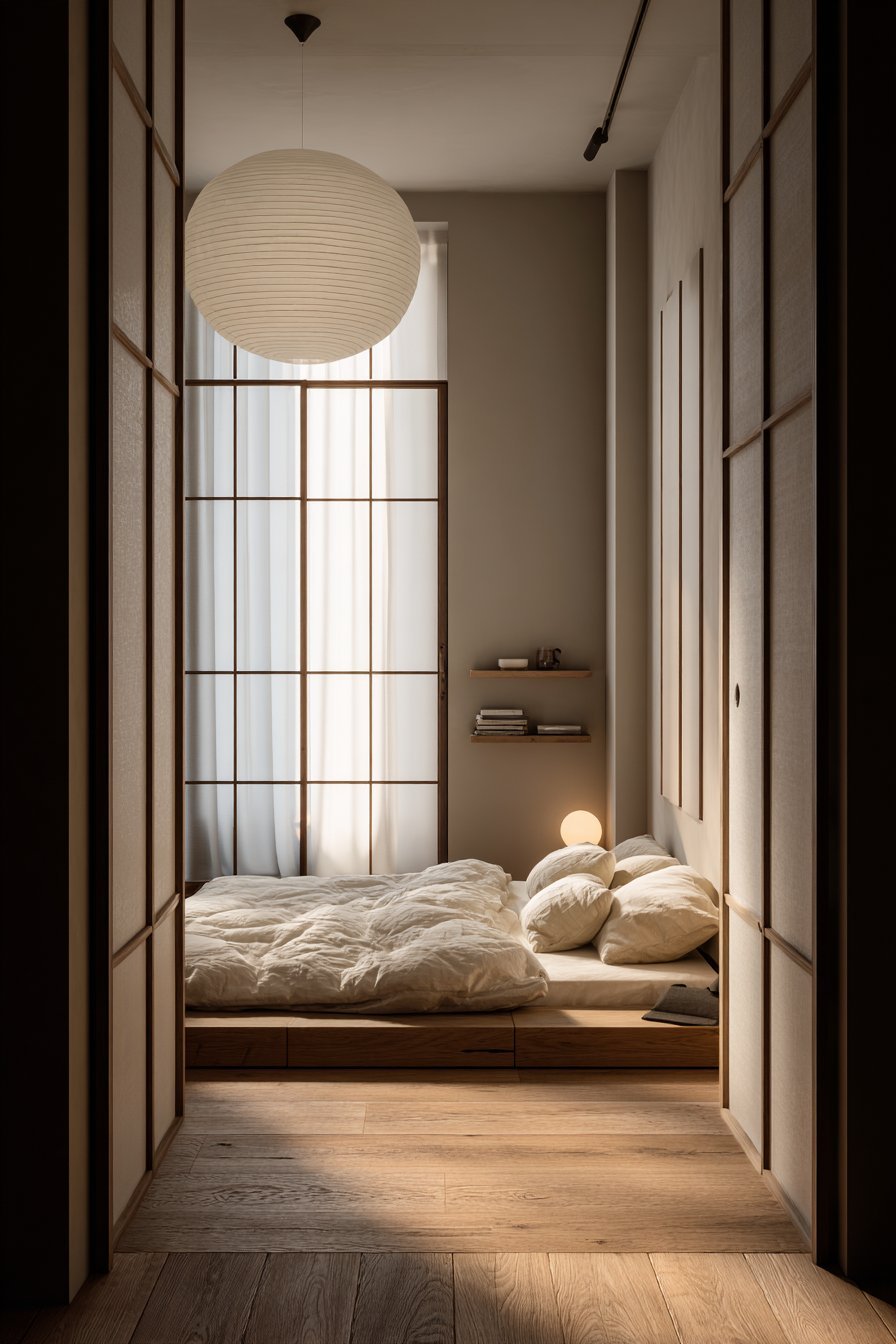
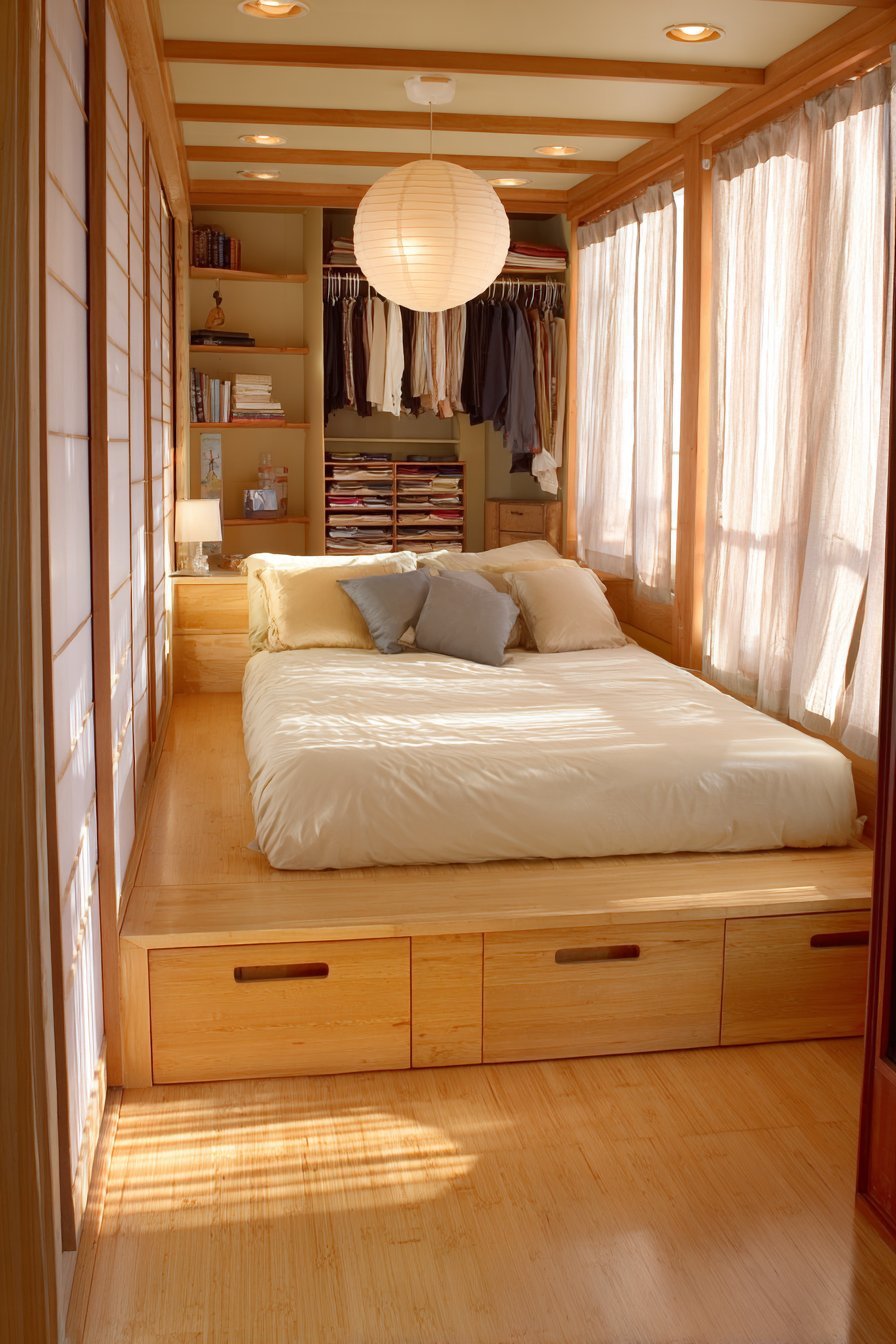
A low profile platform bed sits directly on light bamboo flooring. The Japanese-inspired design embraces minimalist principles completely. Built-in storage drawers accessible from the sides keep belongings concealed. The low height makes the ceiling appear higher proportionally.
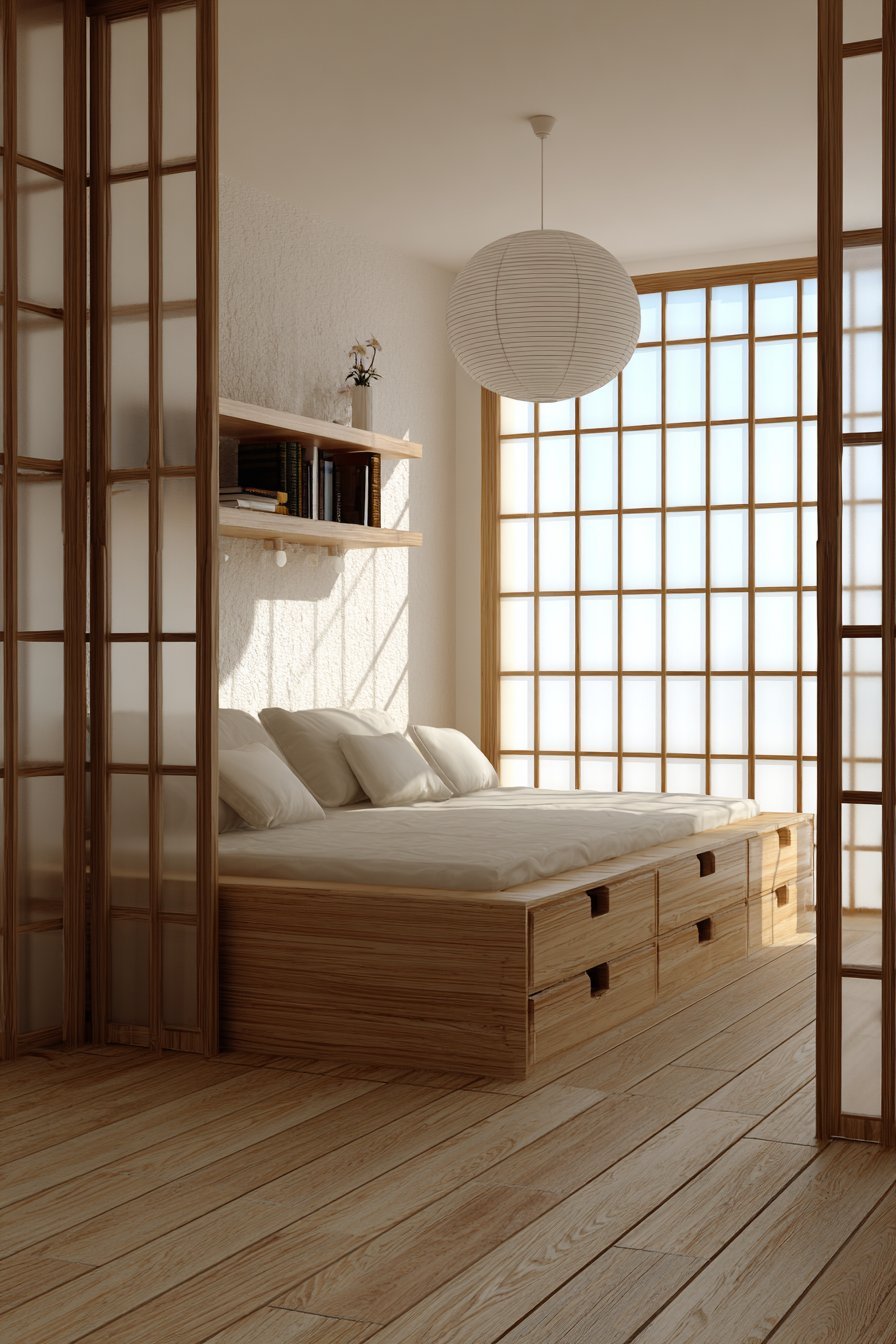
Minimal furnishings include a single floating shelf serving as nightstand. The reduction of furniture creates visual calm and spaciousness. A paper pendant light fixture provides soft ambient illumination. Sliding shoji-style closet doors conceal clothing storage elegantly.
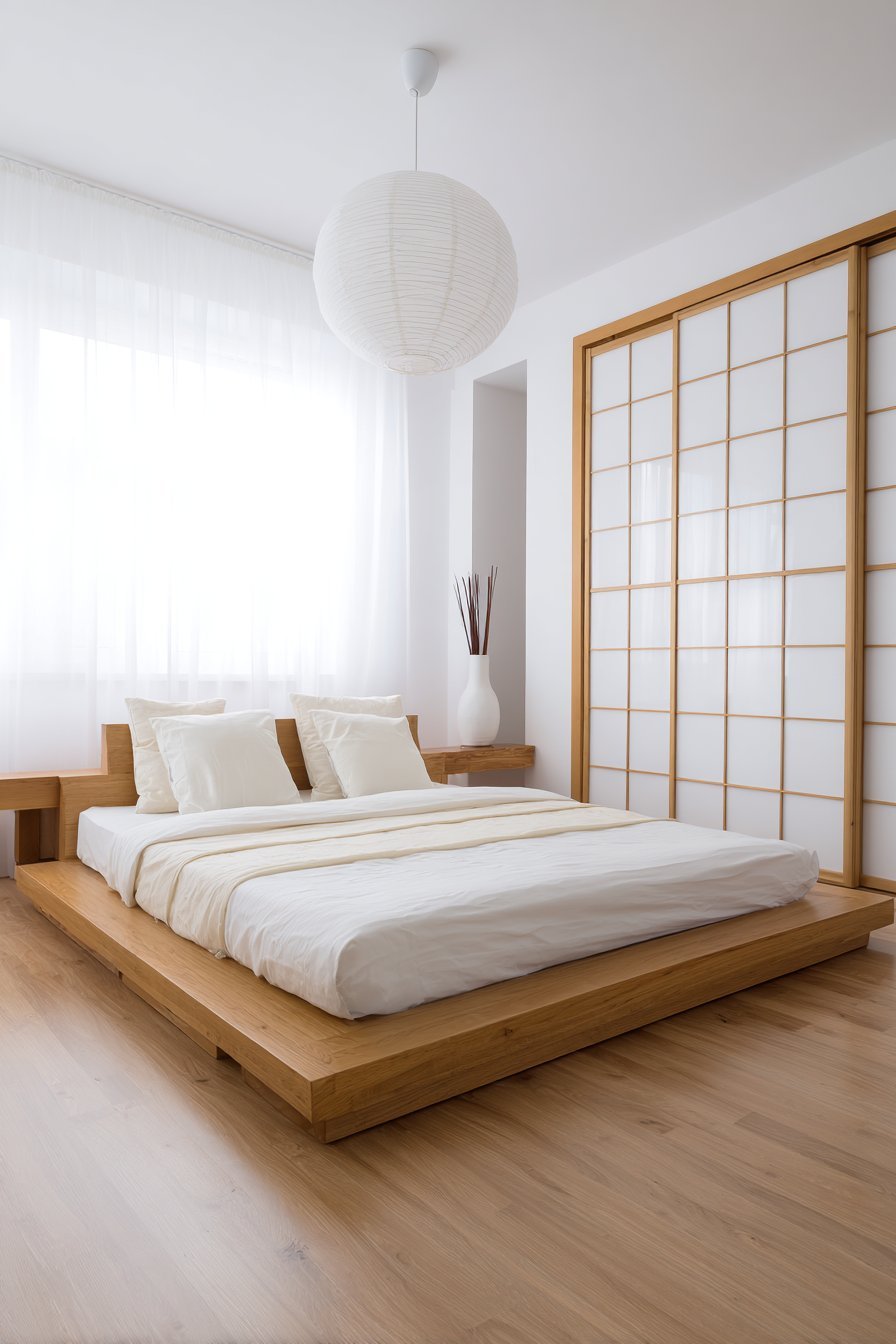
Natural linen bedding in ivory tones maintains the serene aesthetic. The neutral palette promotes relaxation and restfulness. Soft morning light filters through rice paper window coverings. The diffused illumination enhances the peaceful Japanese-inspired atmosphere.
This minimalist approach requires disciplined editing of possessions. Every item must earn its place in the room. The reward is extraordinary tranquility despite limited square footage.
Key Design Tips:
- Choose low platform beds to create height perception
- Install side-accessible storage drawers for convenience
- Use sliding doors to eliminate door swing space requirements
- Select bamboo or light wood flooring for natural warmth
- Keep furnishings minimal to maintain visual calm
- Add rice paper coverings for soft diffused natural light
8. Windowed Alcove With Built-In Storage
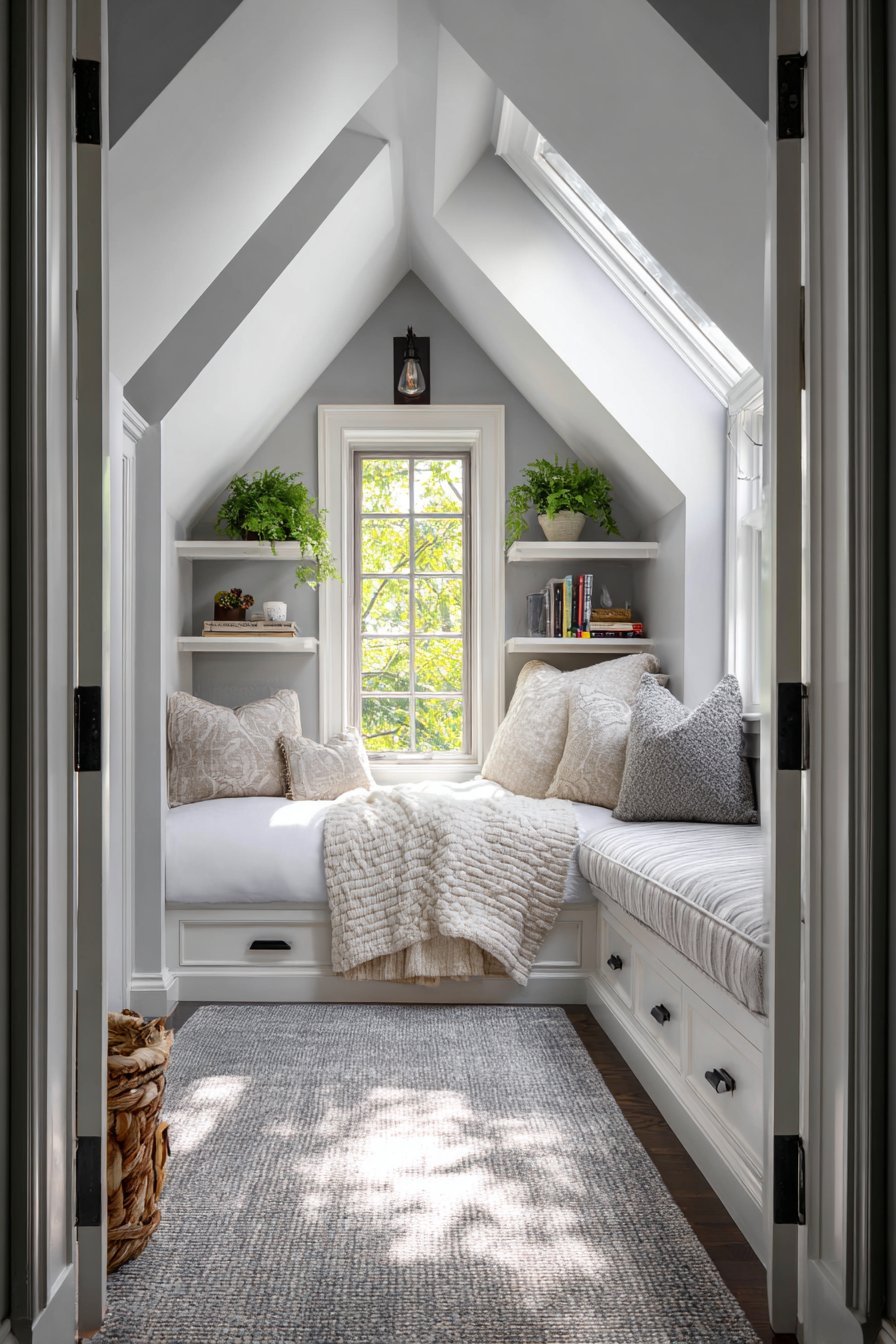
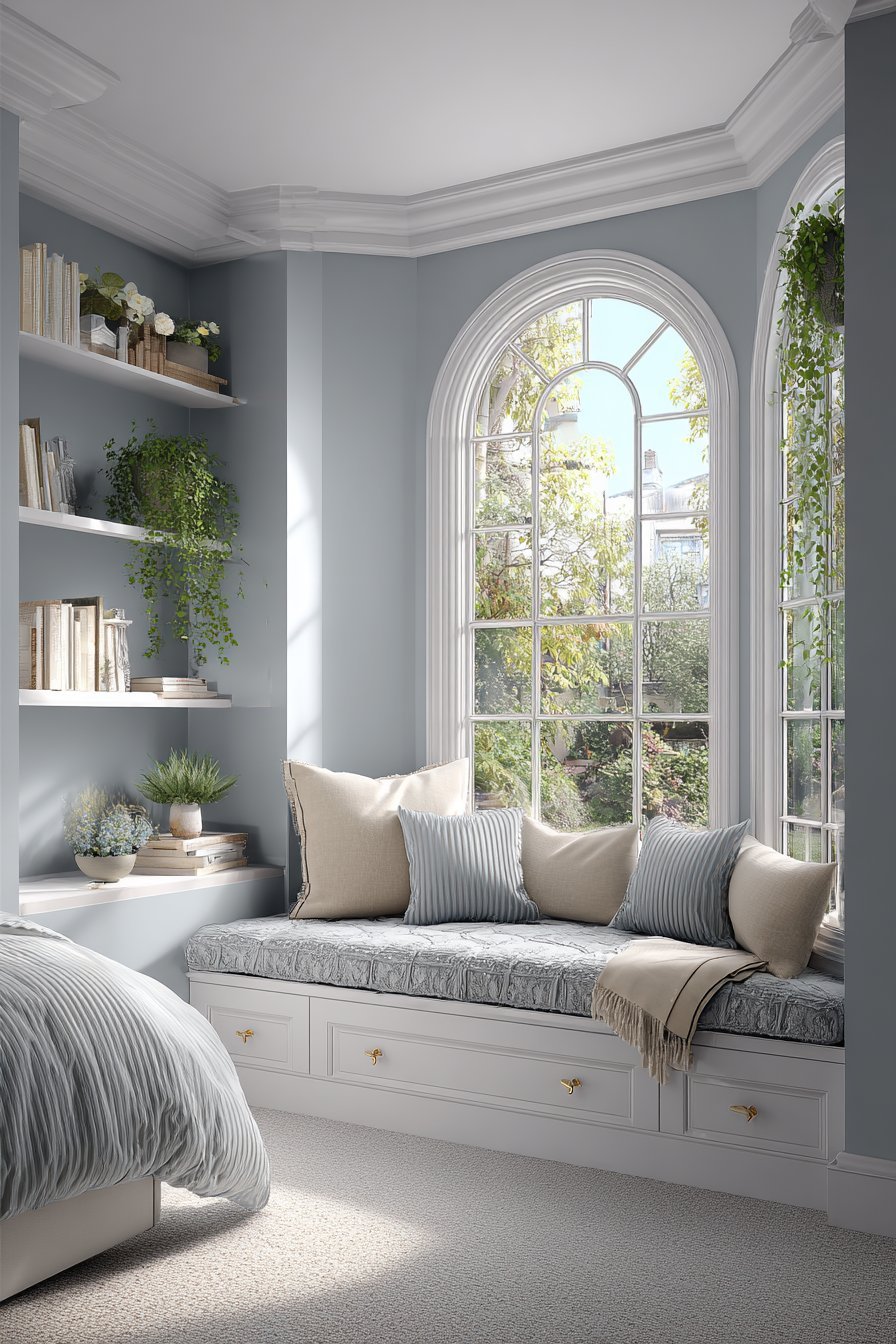
A bed tucked into a windowed alcove creates an enviable sleeping spot. Custom-fitted built-in storage benches flank both sides of the bed. The window seat extends along one wall with lift-up storage beneath cushioned seating. This maximizes every inch of the alcove’s footprint.
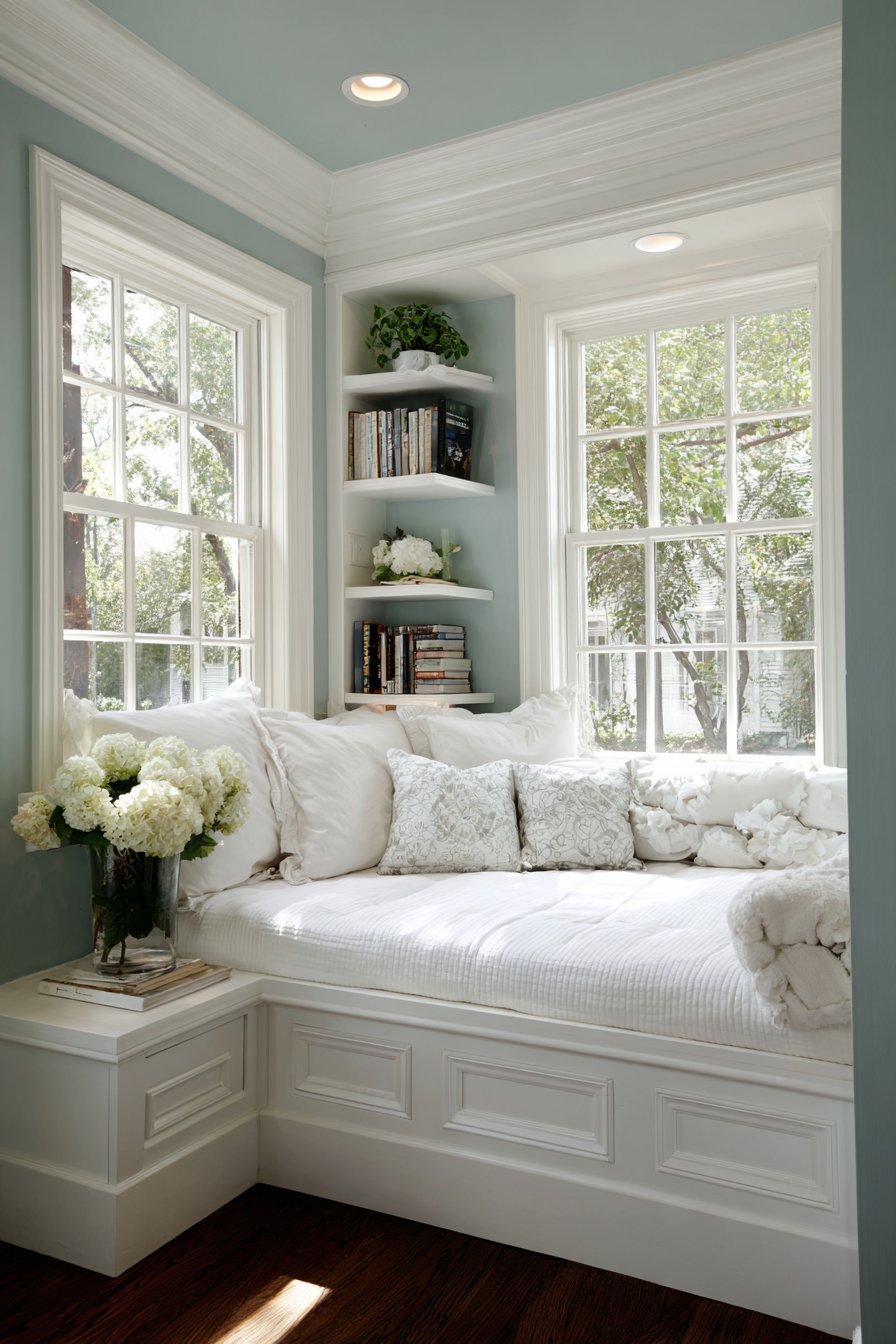
Above the bed, floating shelves display small plants and favorite books. The vertical storage keeps items accessible without consuming floor space. Soft grey-blue walls create a cottage-inspired atmosphere. White trim provides crisp architectural definition throughout.
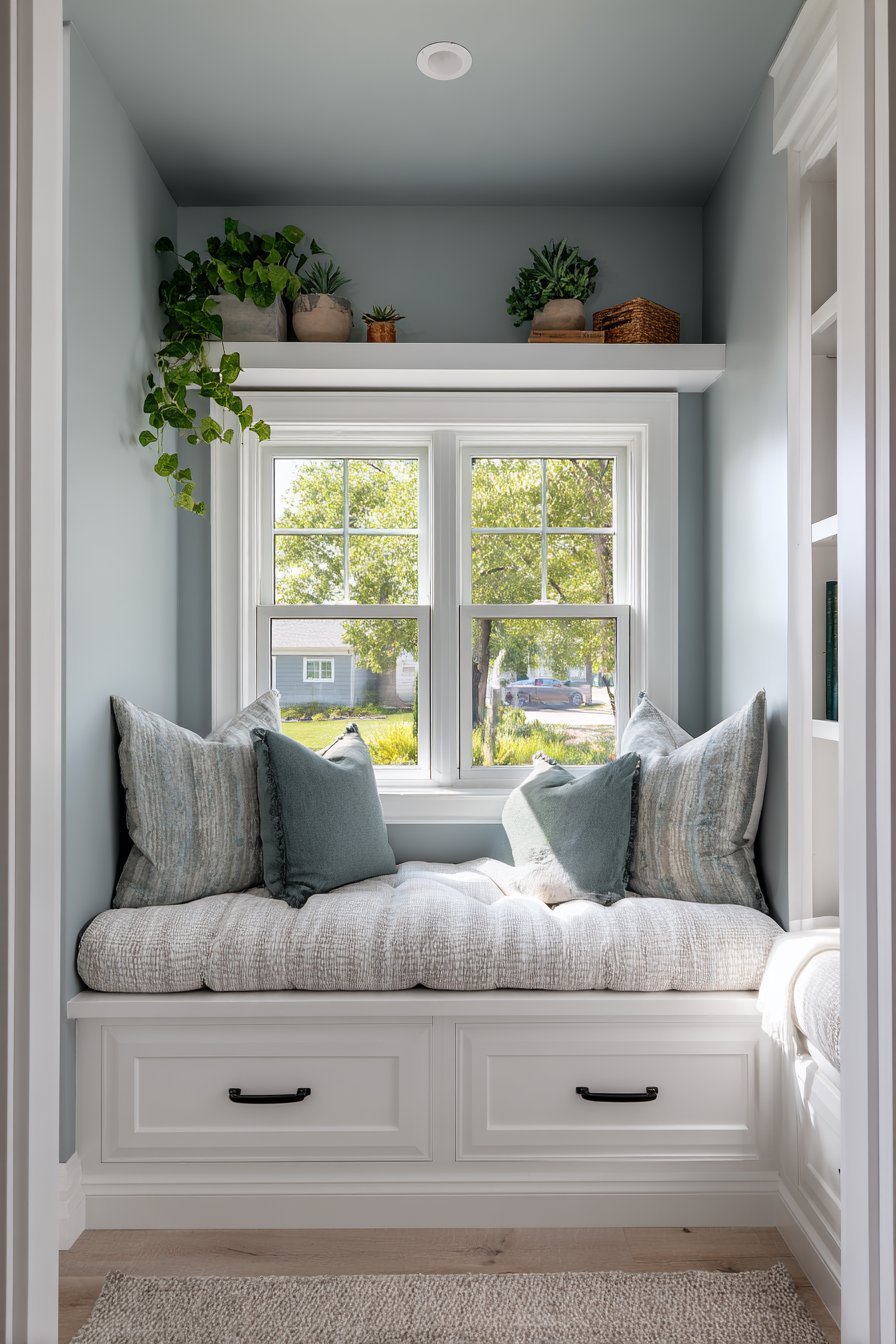
Natural light streams through multiple window panes surrounding the alcove. The abundant daylight makes the compact sleeping area feel expansive. Cushioned seating invites lingering with morning coffee or evening reading. The alcove becomes the room’s most cherished feature.
This design works particularly well in rooms with architectural quirks. Difficult spaces transform into the bedroom’s greatest assets. The built-in approach ensures perfect fit and maximum functionality.
Key Design Tips:
- Maximize window alcoves with custom-fitted solutions
- Add lift-up storage beneath all seating surfaces
- Install floating shelves above the bed for vertical storage
- Choose cottage-inspired colors for cozy warmth
- Ensure ample cushioning for comfortable seating
- Celebrate architectural features rather than hiding them
9. Captain’s Bed With Drawer Storage
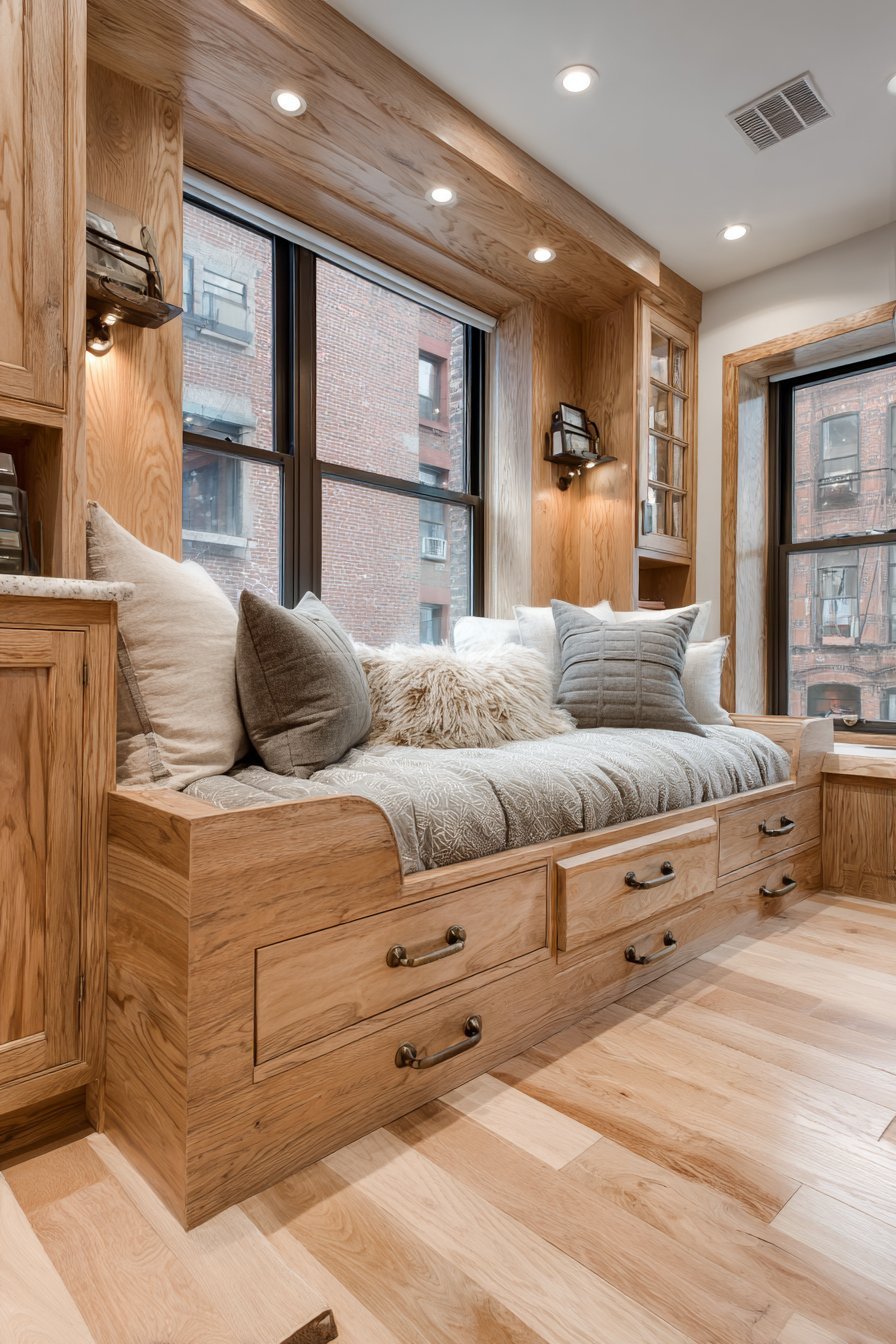
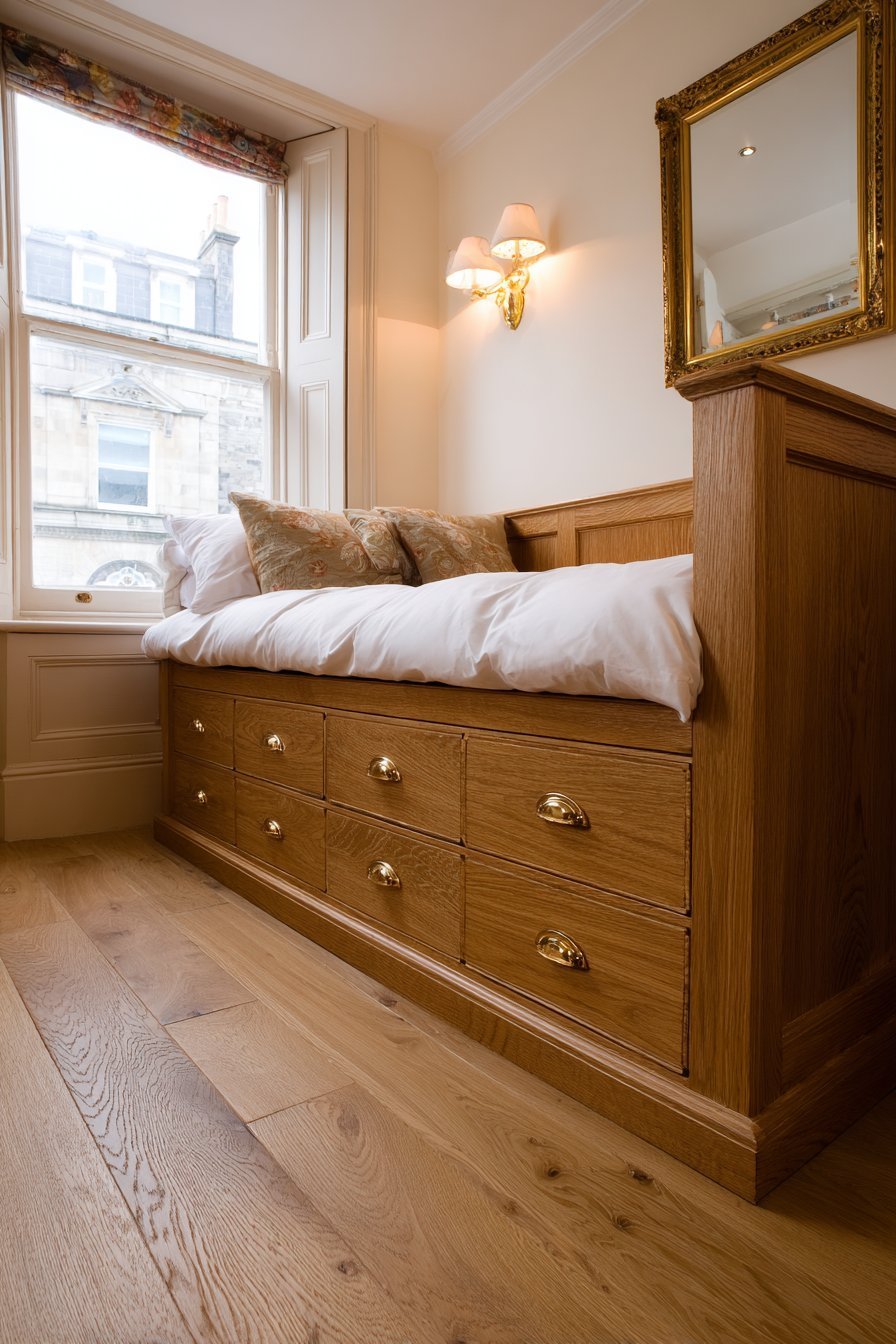
A captain’s bed design features six large storage drawers built into the base. Solid oak construction with brass drawer pulls creates traditional elegance. The bed sits low to maximize vertical space above for other functions. This traditional storage solution remains timelessly practical.
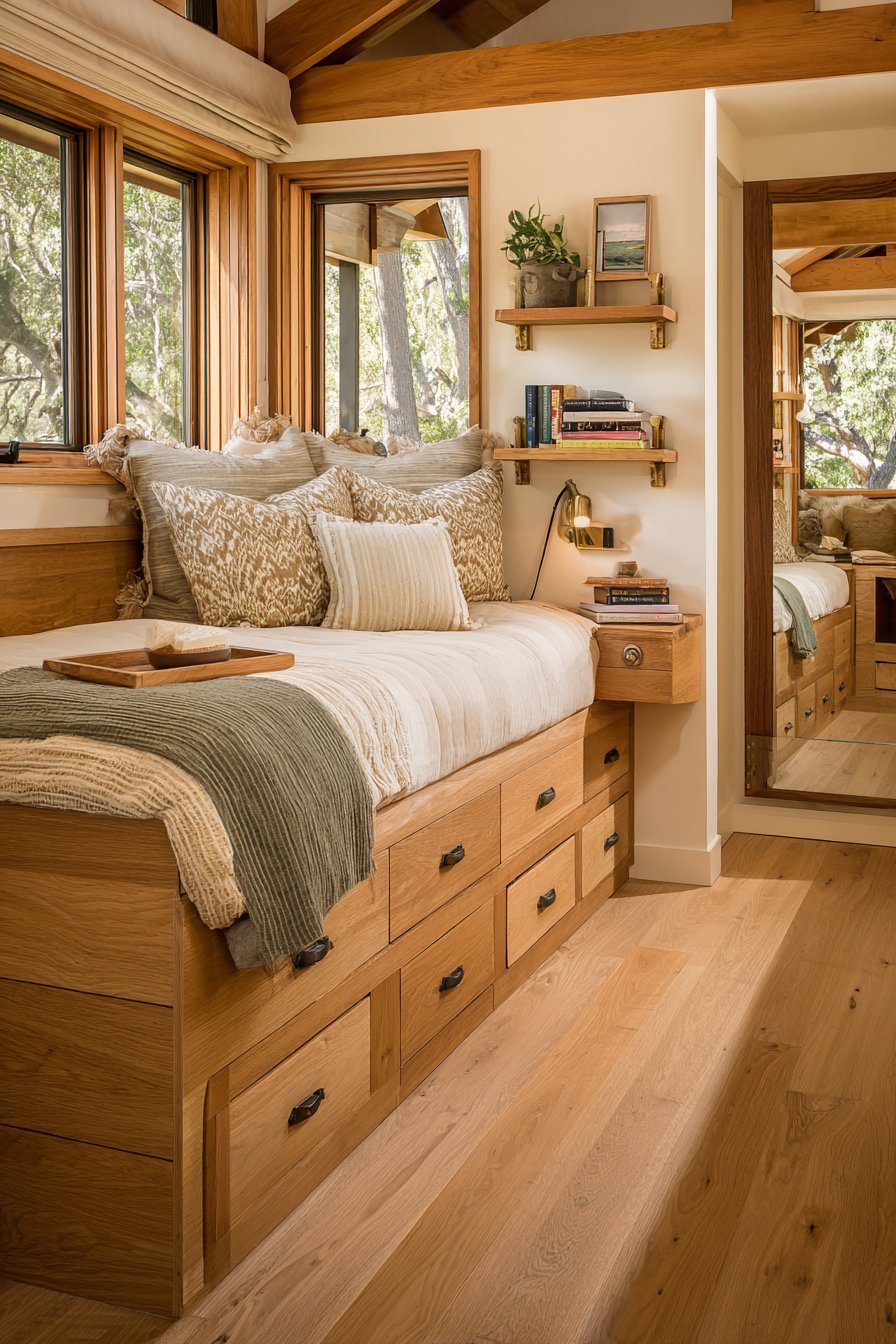
Wall-mounted bedside caddies hold essentials without requiring floor space. Books, phones, and glasses have designated spots within arm’s reach. A narrow full-length mirror leans against the opposite wall. The mirror serves functional needs while reflecting light throughout the room.
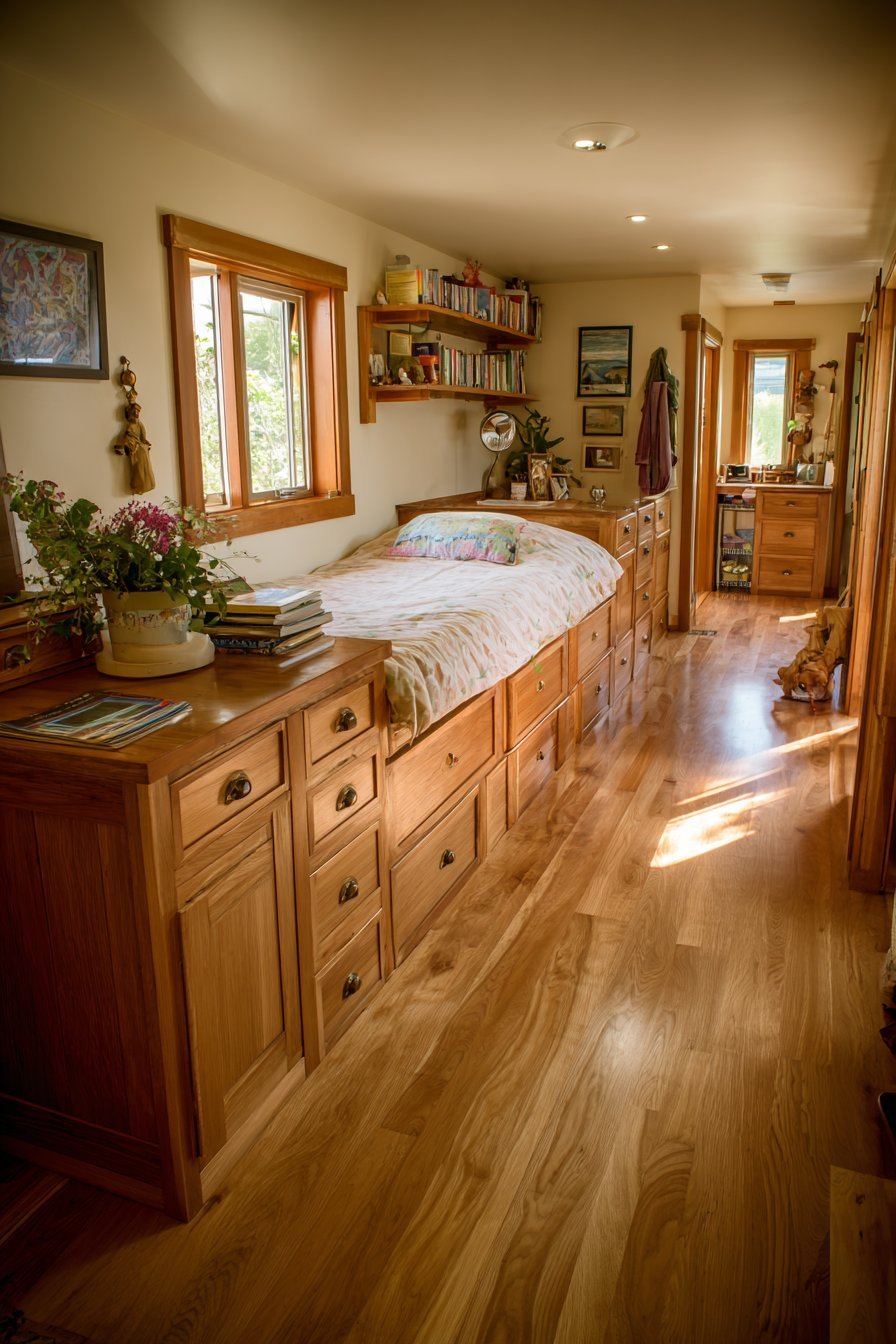
Warm honey-toned wood floors complement the oak furniture beautifully. The cohesive wood tones create harmonious warmth. Afternoon light showcases the natural beauty of the materials. The grain patterns and warm hues become design features themselves.
This traditional approach to tiny bedroom design proves that classic solutions endure. The substantial storage capacity accommodates significant wardrobe needs. The quality construction ensures decades of reliable use.
Key Design Tips:
- Choose captain’s beds with maximum drawer capacity
- Select solid wood construction for durability and beauty
- Add brass hardware for traditional elegant details
- Install wall-mounted caddies to preserve floor space
- Use leaning mirrors to avoid wall mounting
- Coordinate wood tones throughout for visual harmony
10. Convertible Sofa Bed Multipurpose Space
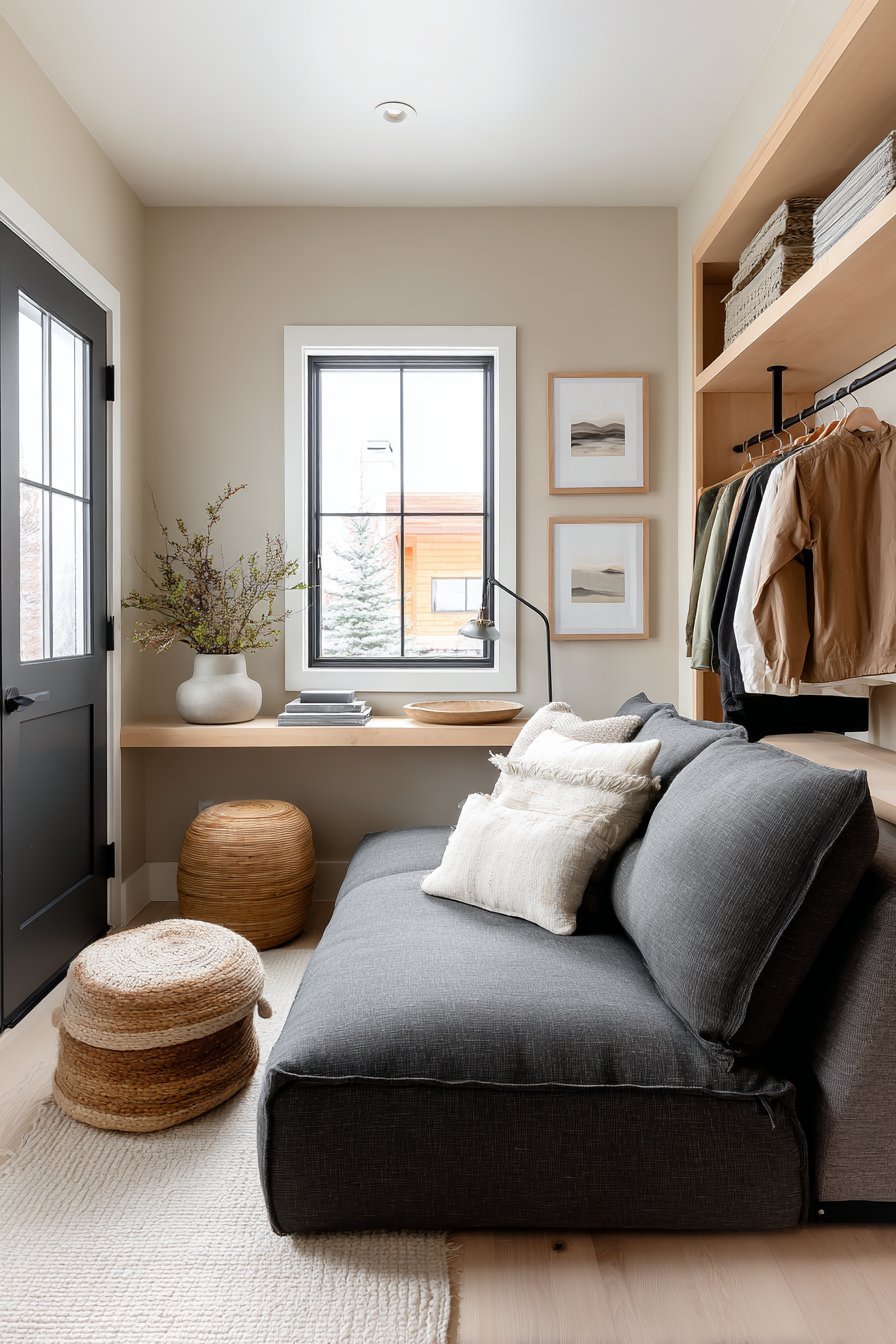
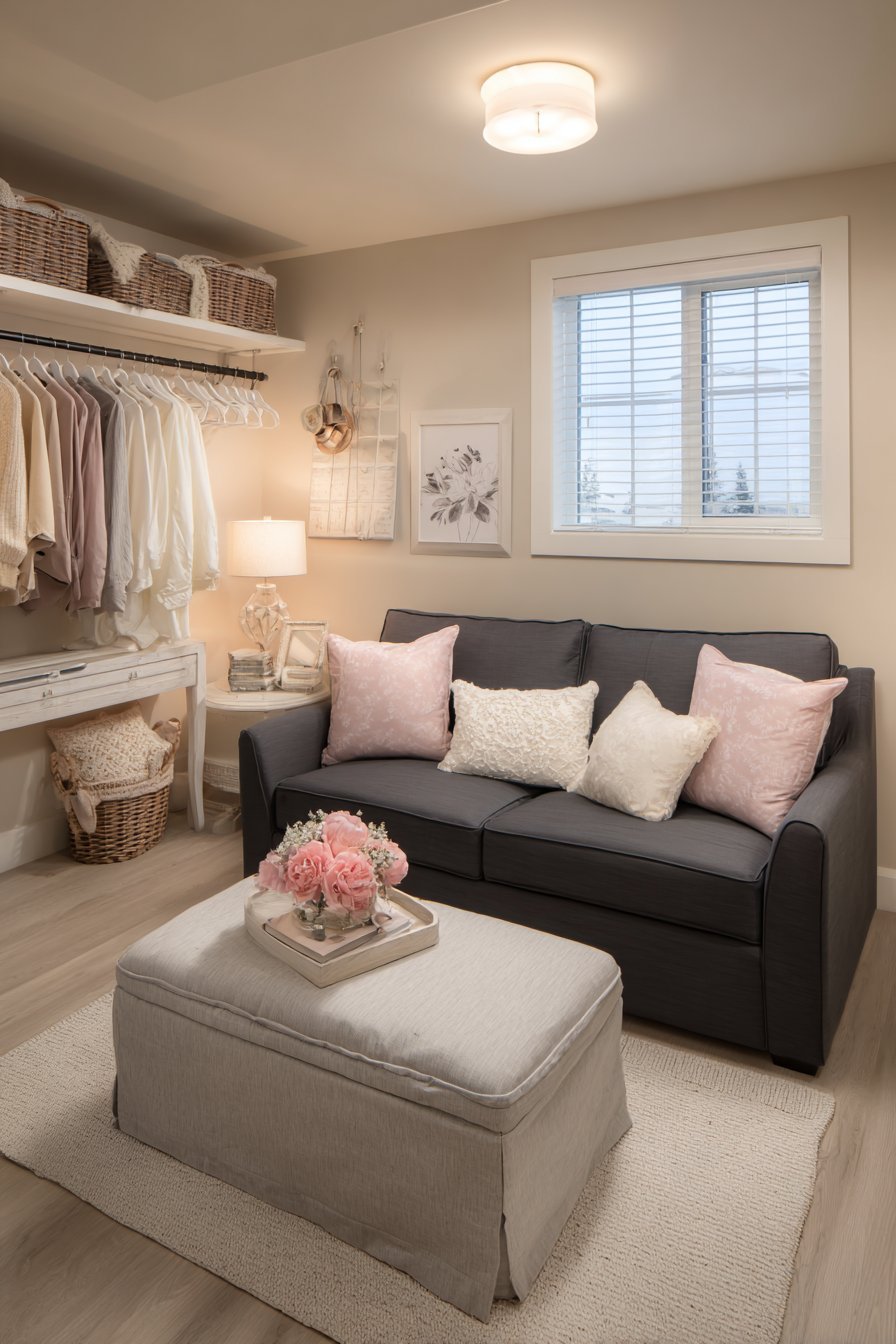
A convertible sofa bed in charcoal grey linen positions against the main wall. The sophisticated fabric elevates the daytime appearance significantly. A storage ottoman doubles as seating and nightstand when needed. The multipurpose furniture maximizes functionality without consuming extra space.
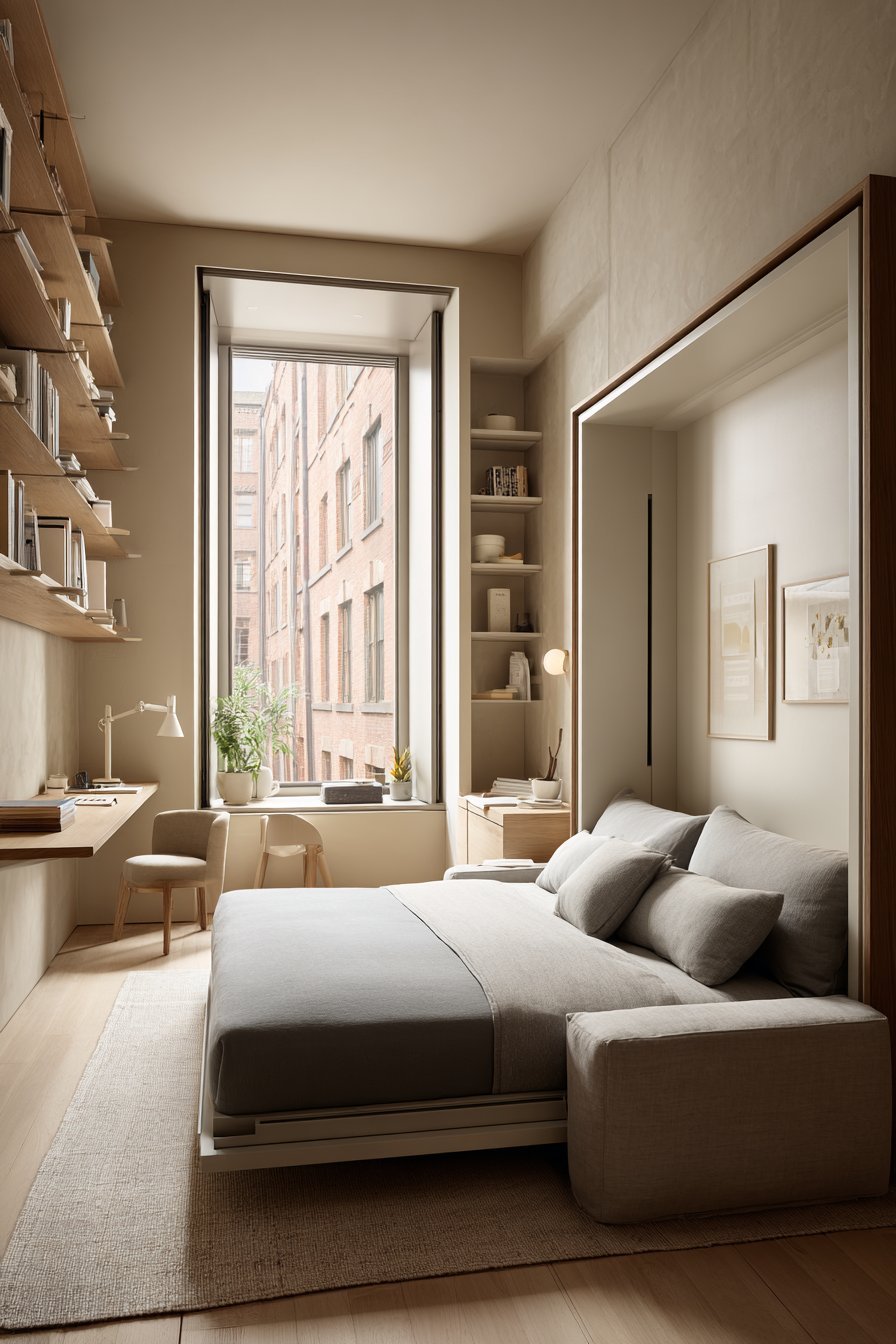
Behind the sofa, a console table with task lighting creates a slim workspace. The narrow profile doesn’t interfere with the sofa’s function. A wall-mounted fold-down clothing rack provides temporary hanging space. The rack folds completely flat against the wall when not needed.
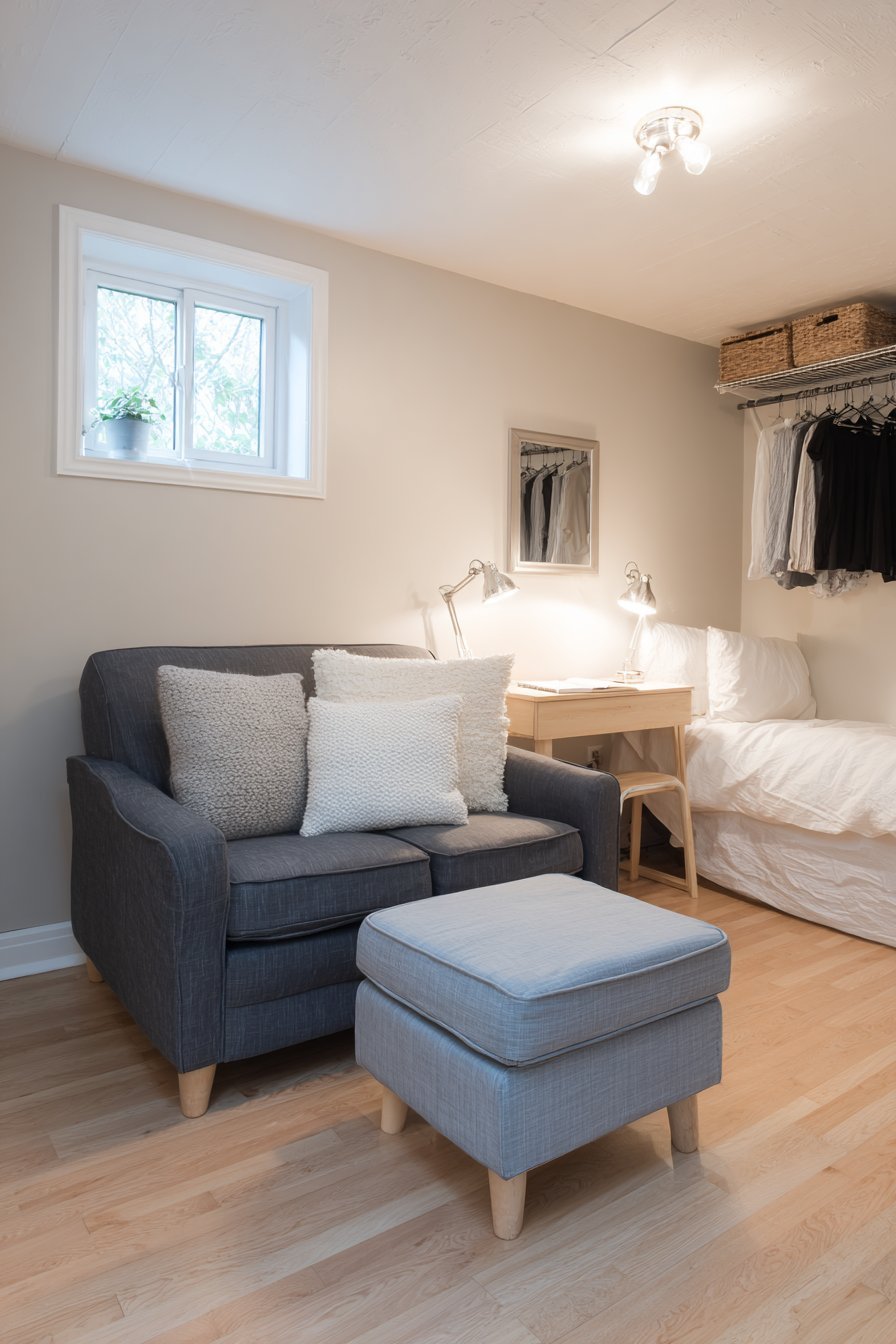
Neutral beige walls and light maple flooring keep the multipurpose space feeling open. The light palette prevents the room from feeling cramped. Natural light from a single window illuminates the space during daytime hours. The room successfully serves as both living space and bedroom.
This design particularly suits studio apartments where distinct rooms don’t exist. The space adapts to different needs throughout the day. Evening transformation to bedroom happens quickly and easily.
Key Design Tips:
- Choose quality sofa beds with comfortable mattresses
- Add storage ottomans for seating and hidden storage
- Install console tables behind sofas for workspace options
- Use fold-down clothing racks for flexibility
- Keep color palettes light and neutral
- Ensure adequate natural light from windows
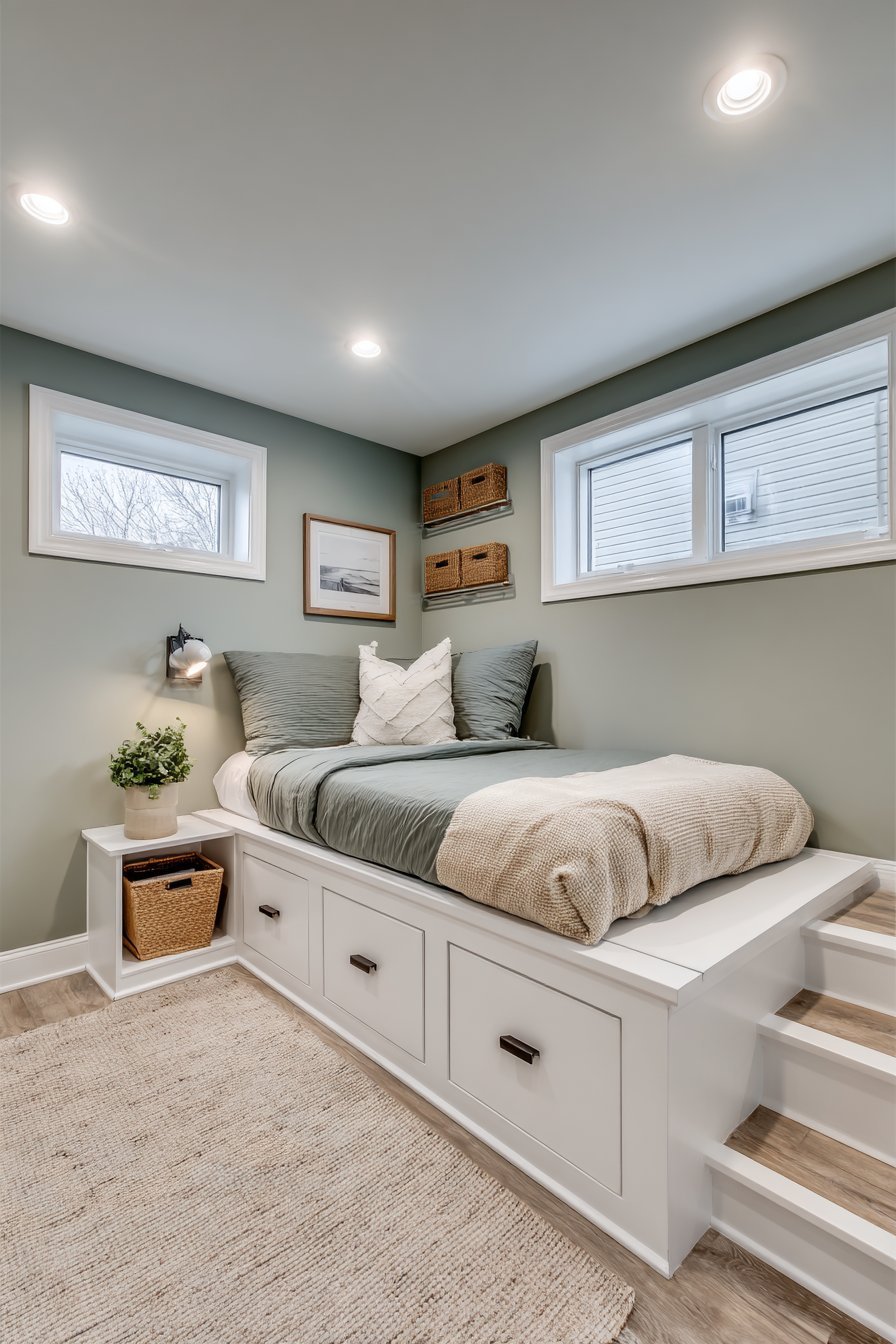
11. Raised Platform Bed Storage System
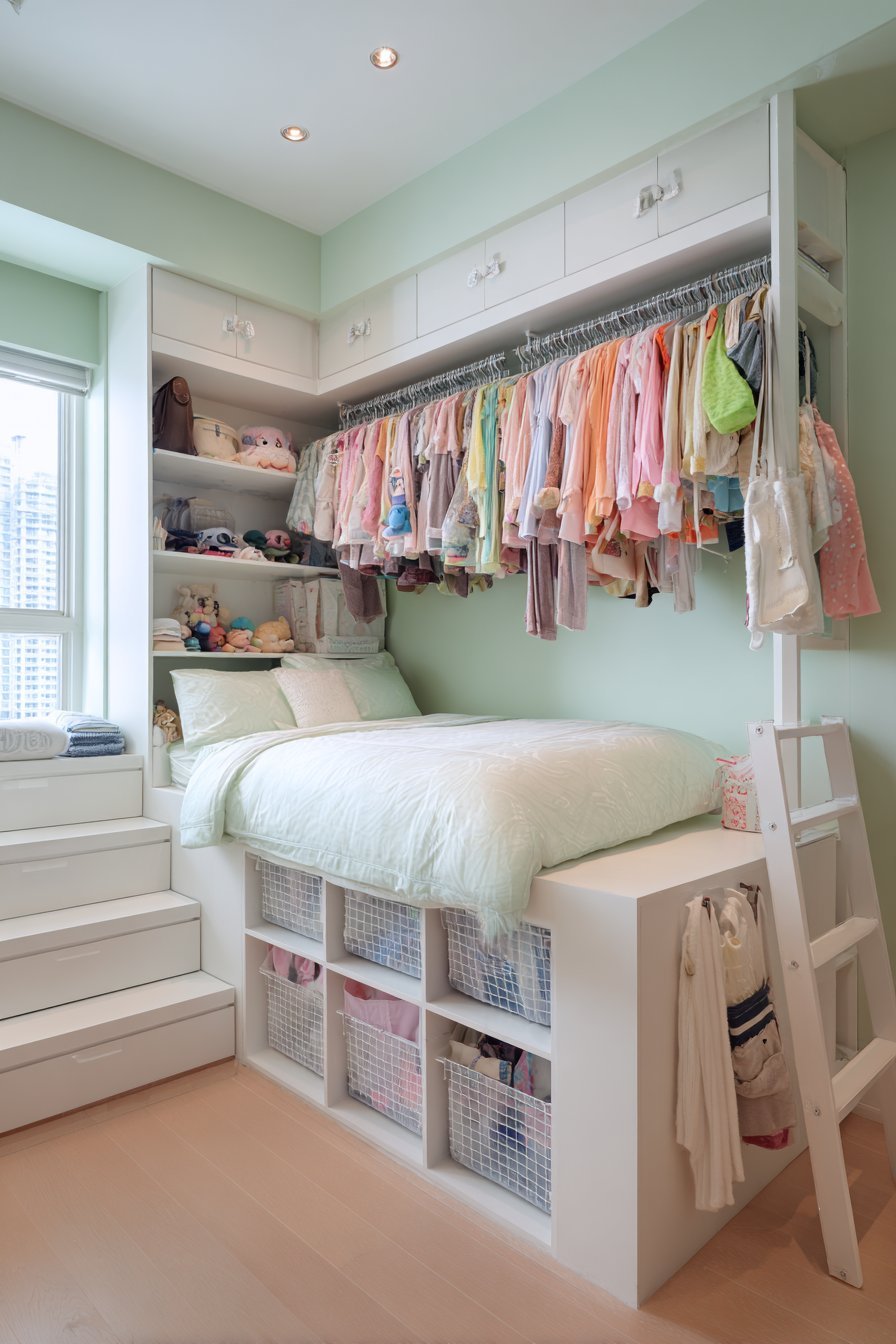
A raised platform bed system elevates the sleeping surface eighteen inches. This creates accessible storage space underneath with rolling bins and hanging organizers. The platform features a built-in step for safe access. Recessed LED lighting along the edges provides subtle ambient illumination.
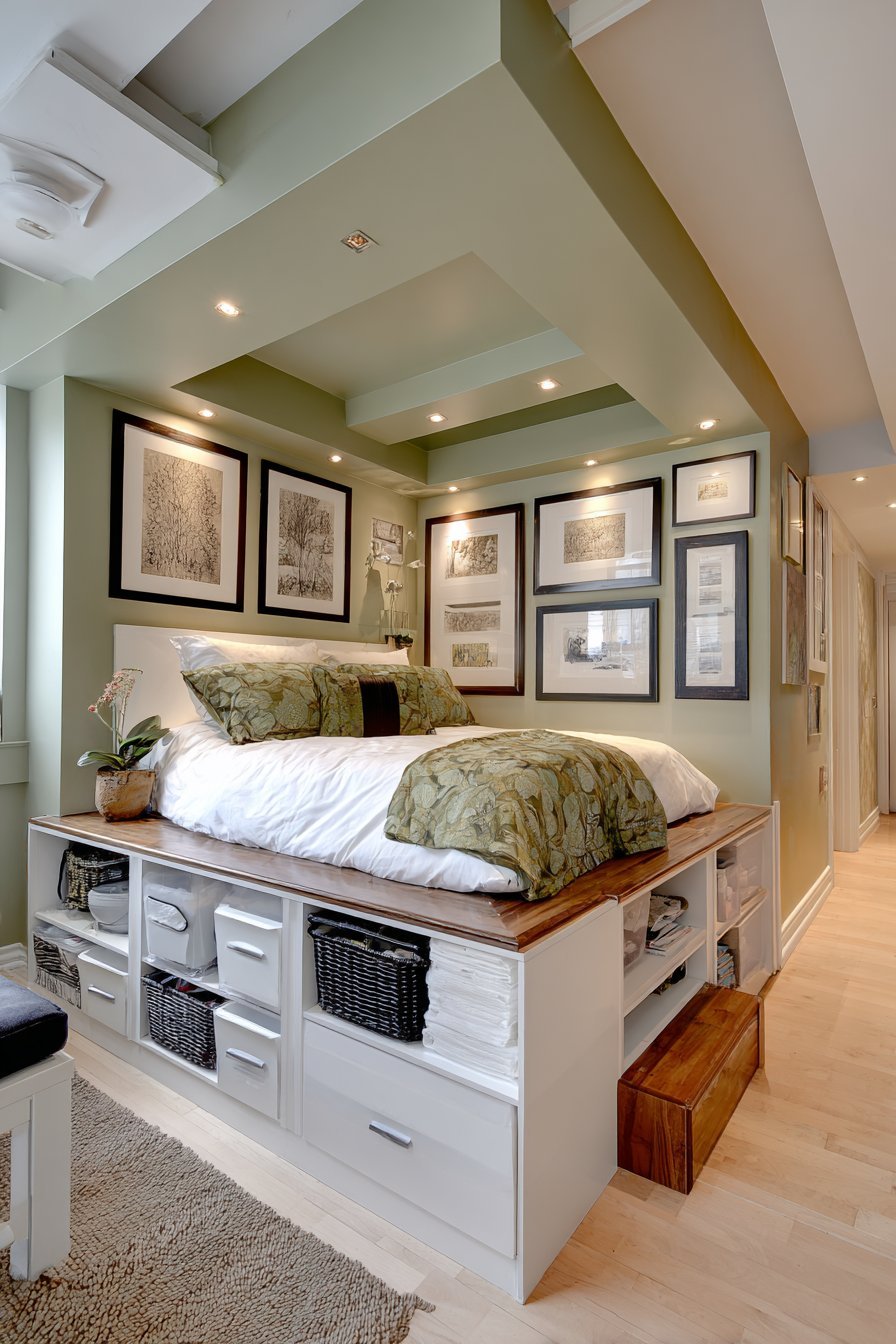
Walls painted in soft sage green create a calming environment. The white ceiling maintains airiness despite the raised platform. A small ladder shelf serves as nightstand and display simultaneously. The vertical storage adds functionality without consuming floor space.
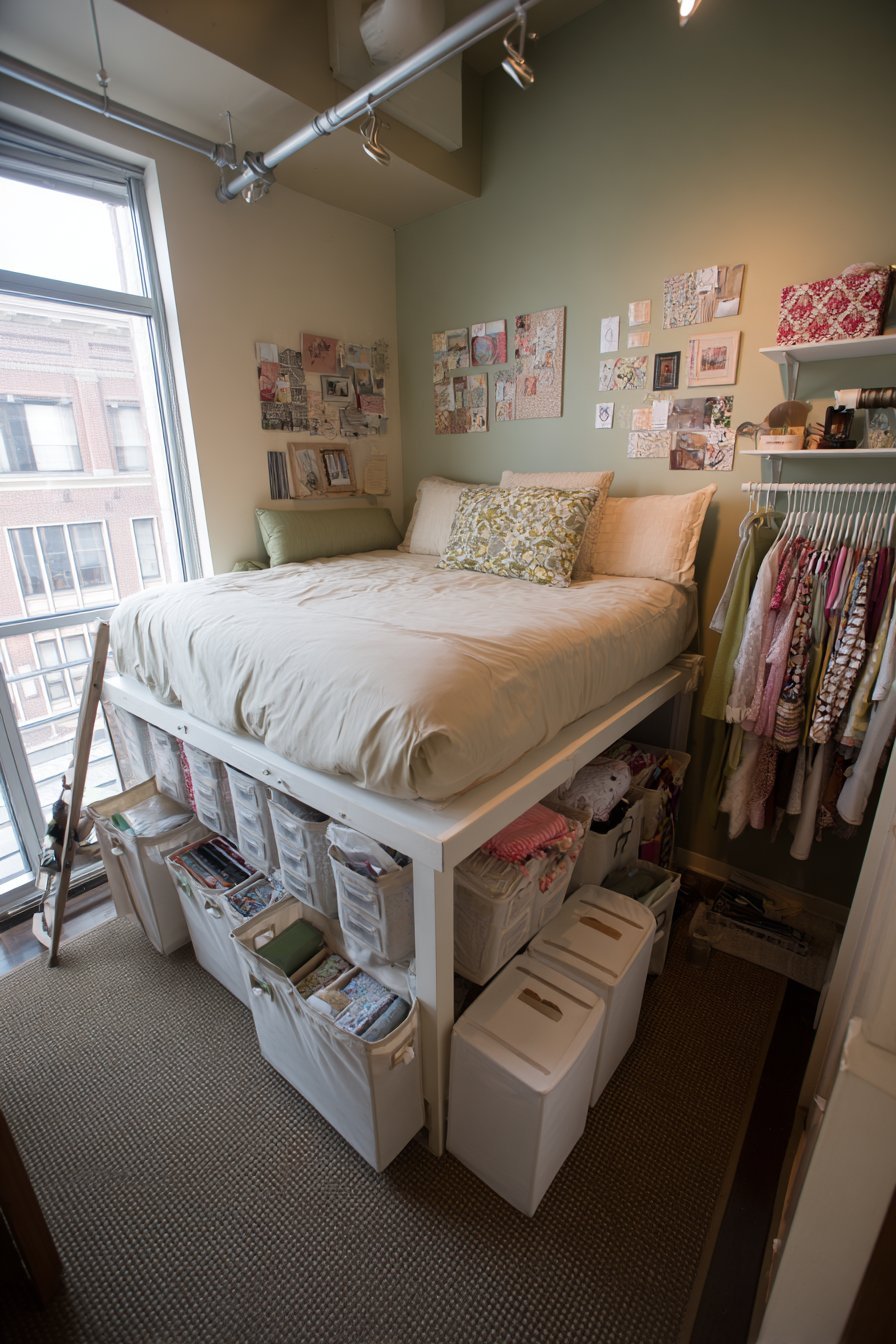
The organized storage system beneath remains easily accessible. Rolling bins slide out smoothly for seasonal rotation. Hanging organizers keep frequently used items visible and within reach. The elevated bed doesn’t feel disconnected from the room below.
Balanced lighting showcases both the elevated bed and the organized storage beneath. The recessed LEDs prevent the underneath area from feeling dark. Natural light complements the artificial lighting throughout the day.
Key Design Tips:
- Elevate platforms eighteen to twenty-four inches for usable storage
- Include built-in steps for safe convenient access
- Add recessed LED lighting along platform edges
- Use rolling bins for easy access to stored items
- Paint walls in calming colors for restful sleep
- Install ladder shelves for vertical storage solutions
12. Headboard Wall Storage Integration
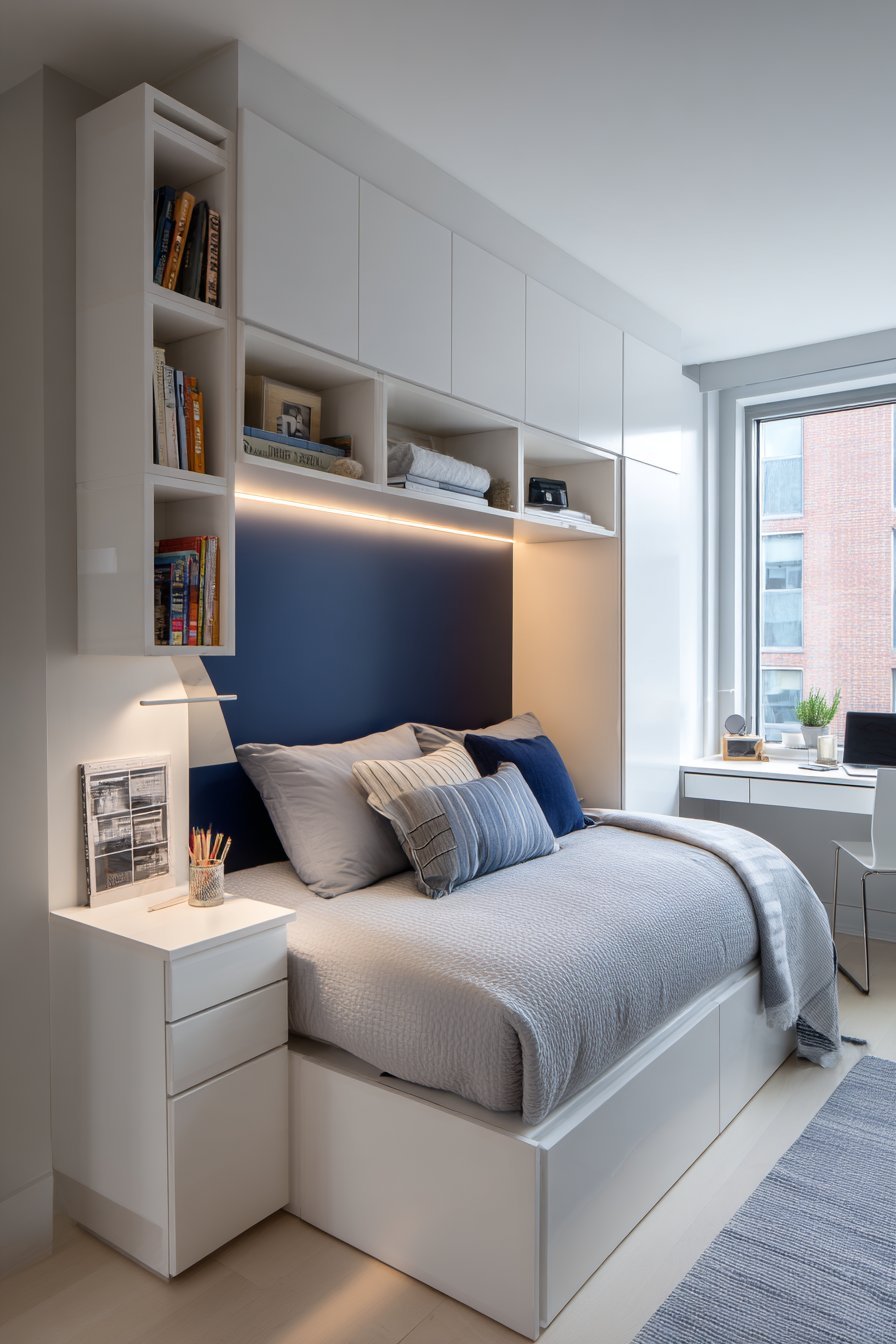
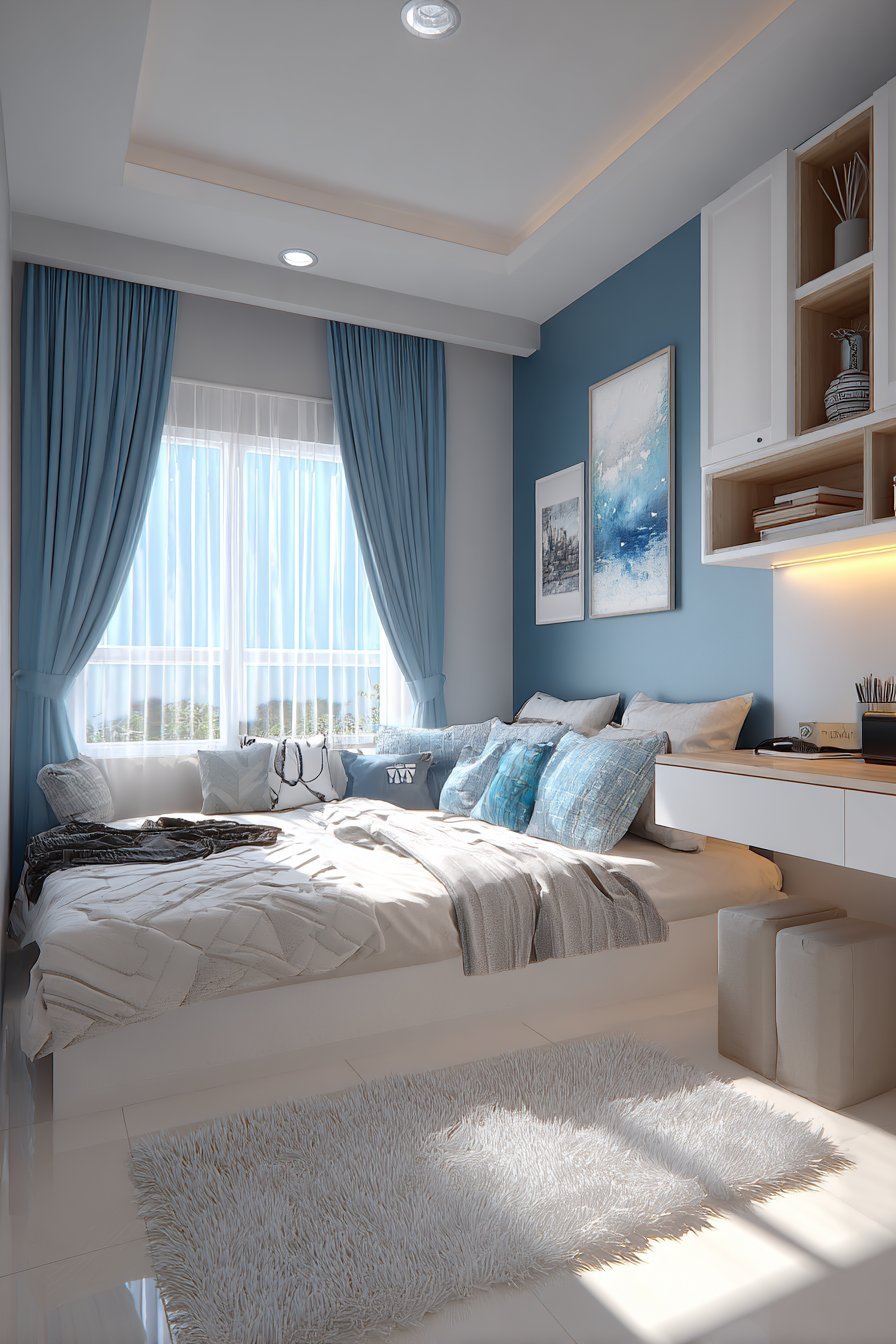
A bed positioned lengthwise against one wall features an impressive headboard system. The headboard incorporates full storage including cubbies, shelves, and a small integrated desk nook. This wall-length approach maximizes vertical and horizontal storage simultaneously. Every inch serves organizational purposes.
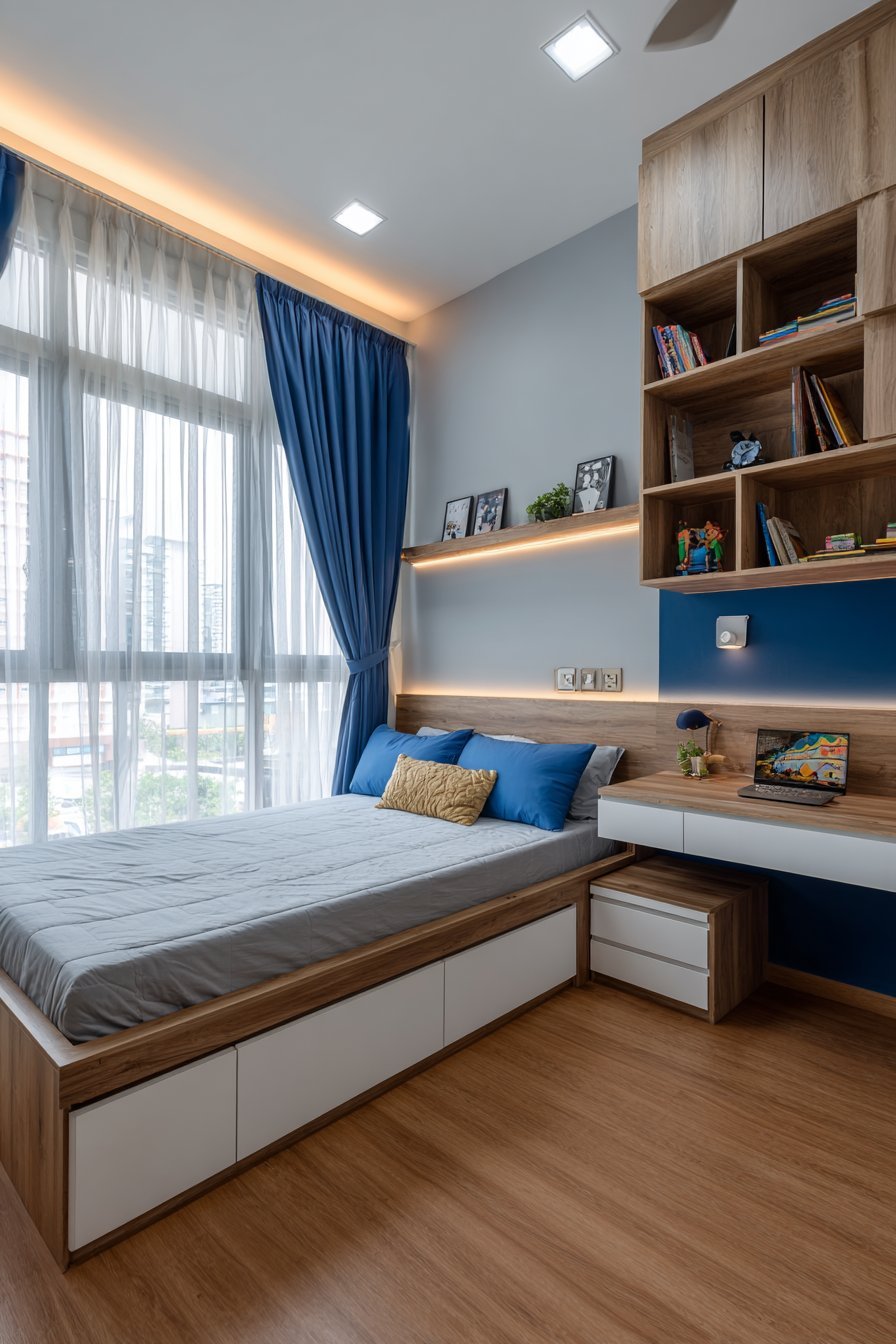
The opposite wall features a narrow wardrobe with interior LED lighting. Custom organizers within maximize the wardrobe’s efficiency. Floating bedside tables in white lacquer maintain precious floor space. The sleek surfaces clean easily and reflect light beautifully.
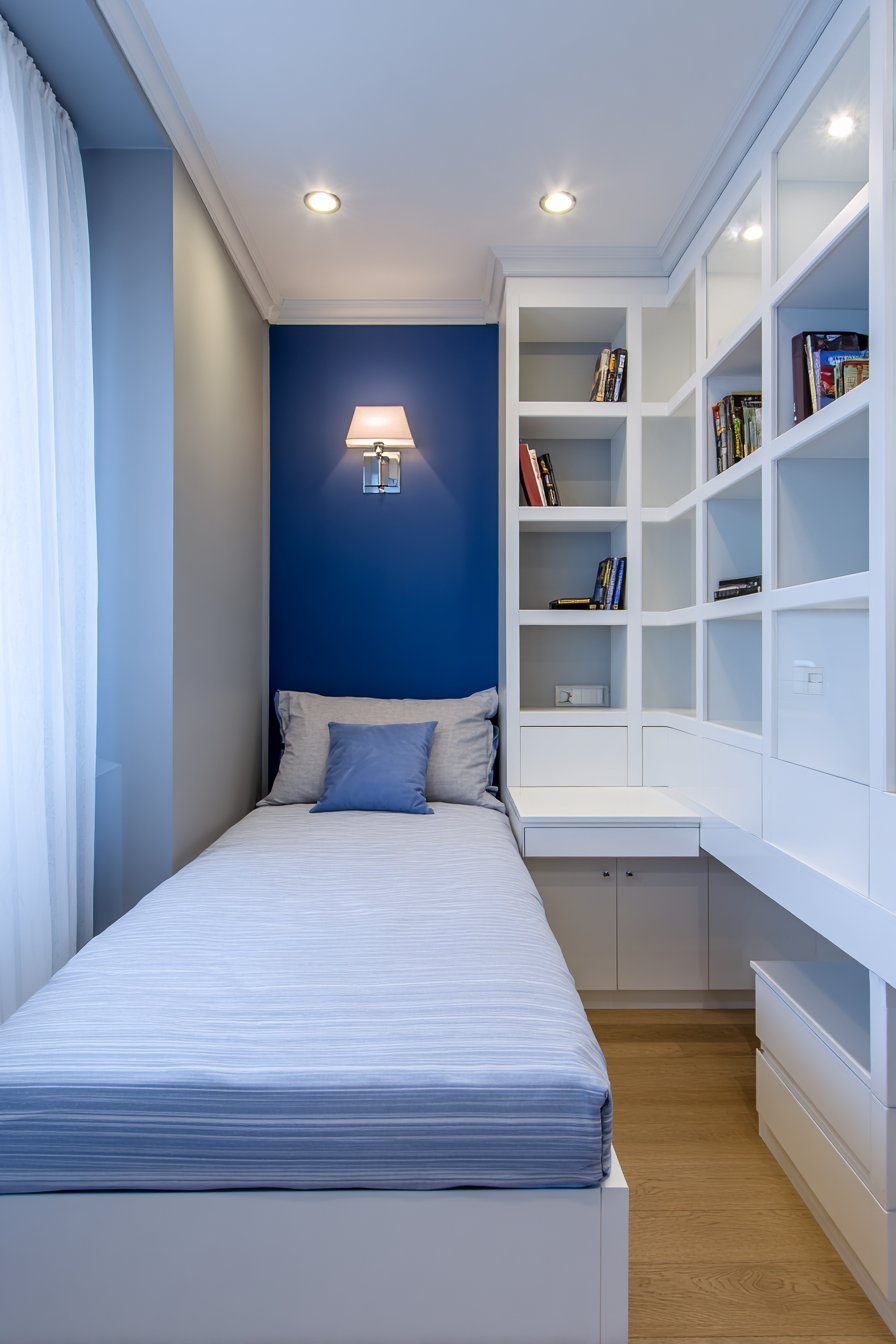
Light grey walls provide neutral backdrop for the navy blue accent wall behind the bed. The darker accent wall grounds the sleeping area psychologically. The color combination creates visual interest without overwhelming the small space.
Soft natural lighting highlights the thoughtful storage integration throughout. The room demonstrates that tiny bedrooms can contain surprising storage capacity. The wall-to-wall efficiency eliminates the need for additional furniture pieces.
Key Design Tips:
- Create headboard systems that extend the full wall length
- Include varied storage types within the headboard structure
- Install narrow wardrobes on opposite walls for clothing storage
- Use floating nightstands to preserve floor space
- Add accent walls behind beds for visual grounding
- Ensure interior wardrobe lighting for visibility
13. Hydraulic Lift Storage Bed
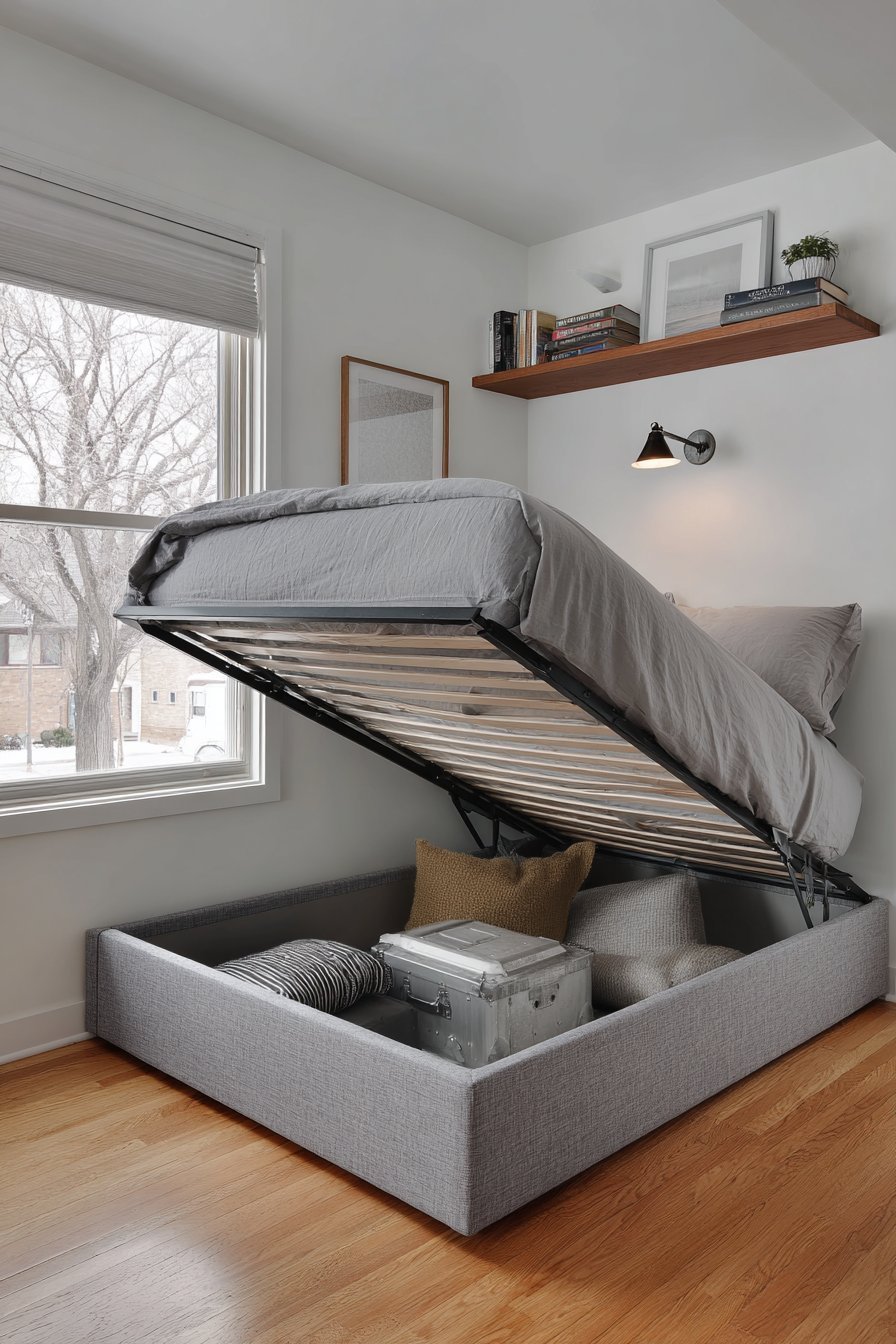
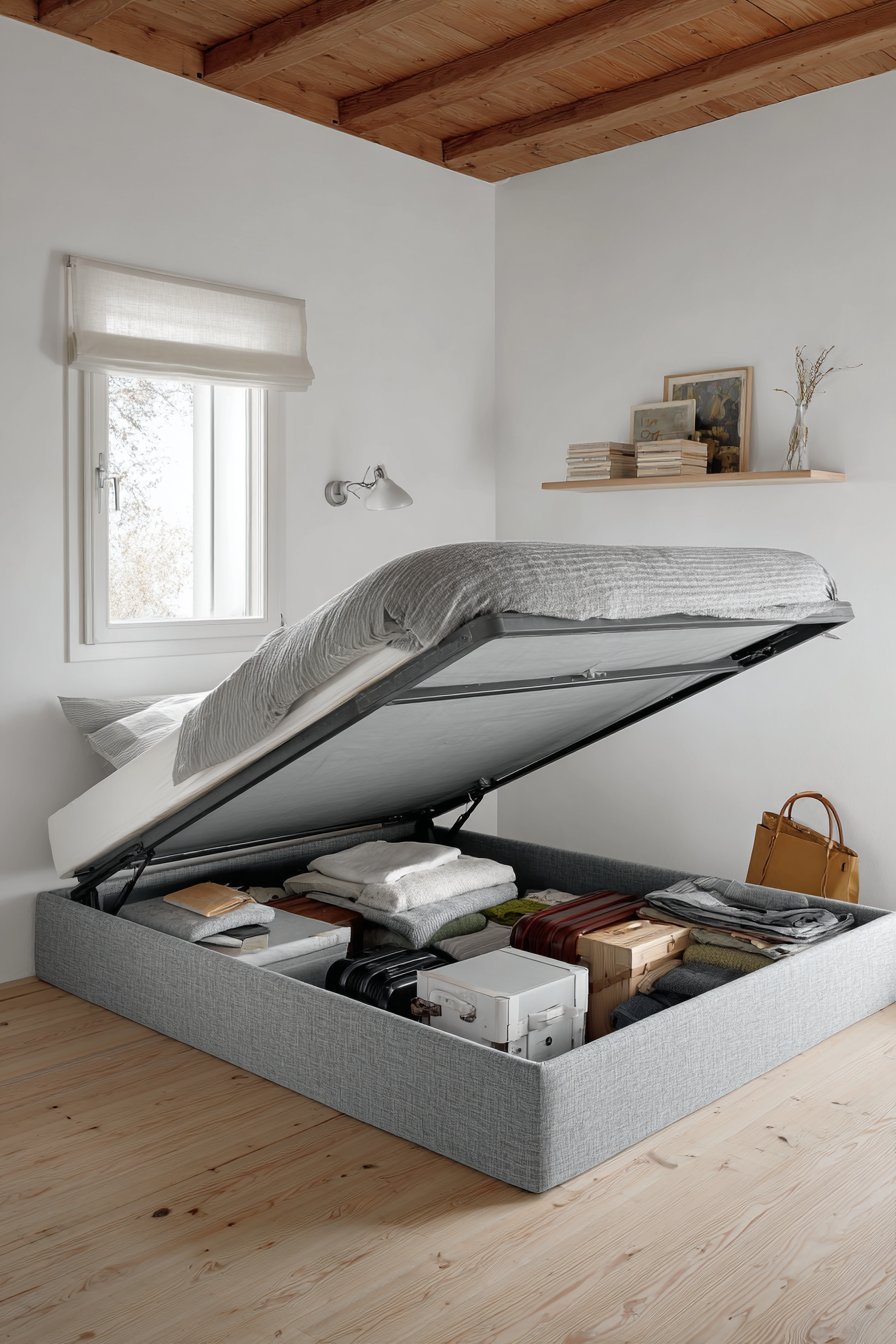
An upholstered grey fabric bed features a hydraulic lift storage system. The mattress platform lifts easily to reveal spacious storage underneath. Seasonal items and luggage store conveniently in this hidden compartment. The gas lift mechanism operates smoothly with minimal effort.
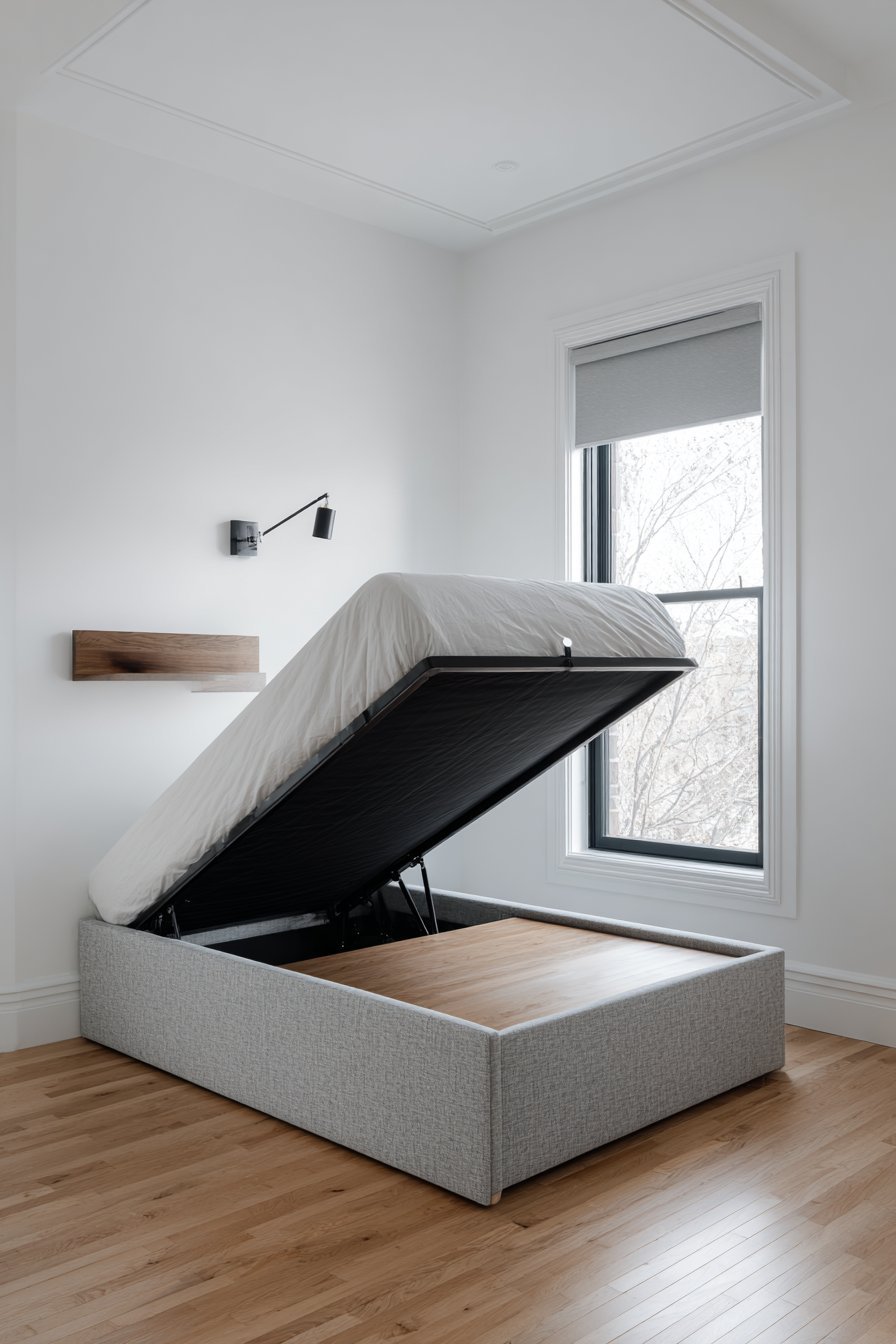
The minimal room includes only wall-mounted lighting and a small floating shelf. The reduction of furniture emphasizes the bed’s storage capabilities. White walls and natural oak flooring maximize the sense of openness. The light materials prevent the room from feeling heavy.
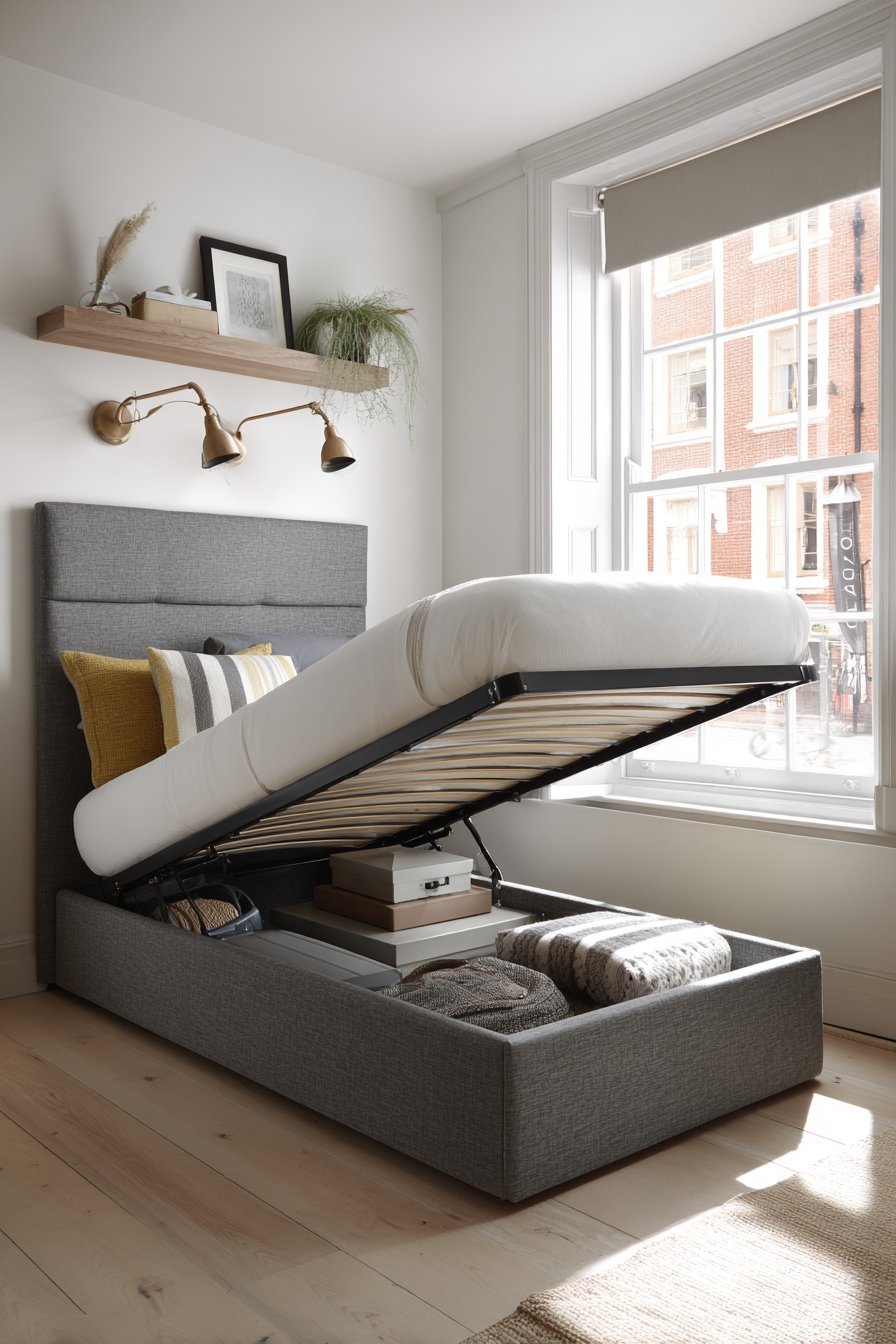
A single window with simple roller shade provides natural light and privacy. The unadorned window treatment maintains the minimal aesthetic. The hydraulic bed becomes the room’s primary storage solution. This eliminates the need for dressers or additional furniture.
The storage capacity surprises first-time users consistently. Large items store easily in the bed’s base. The smooth operation encourages daily use rather than treating storage as inaccessible.
Key Design Tips:
- Invest in quality hydraulic lift mechanisms for reliability
- Choose neutral upholstery colors for versatility
- Keep additional furniture minimal to emphasize storage bed
- Use white walls to maximize light reflection
- Install wall-mounted lighting to preserve floor space
- Add simple window treatments for clean lines
14. Built-In Closet Sleeping Nook
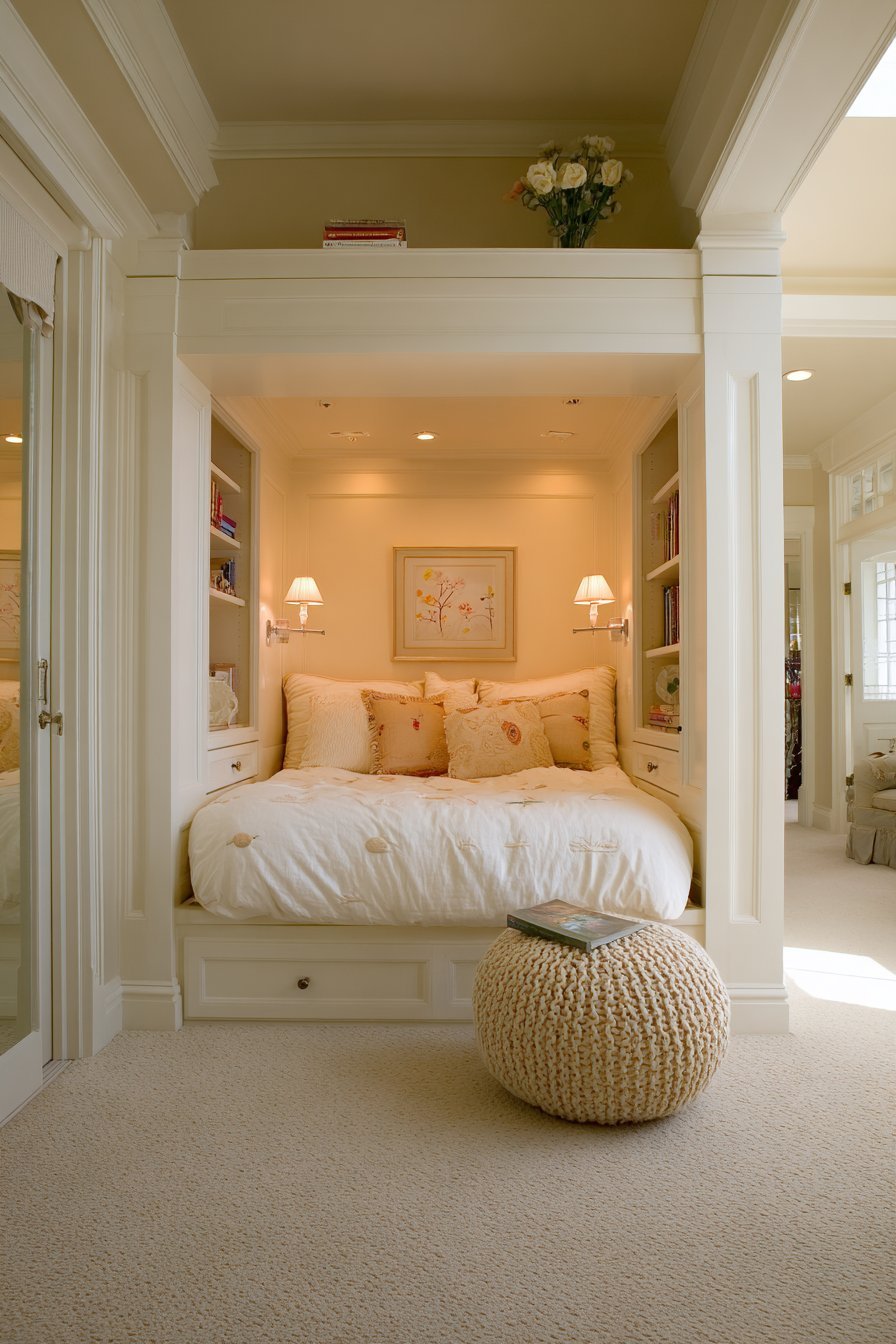
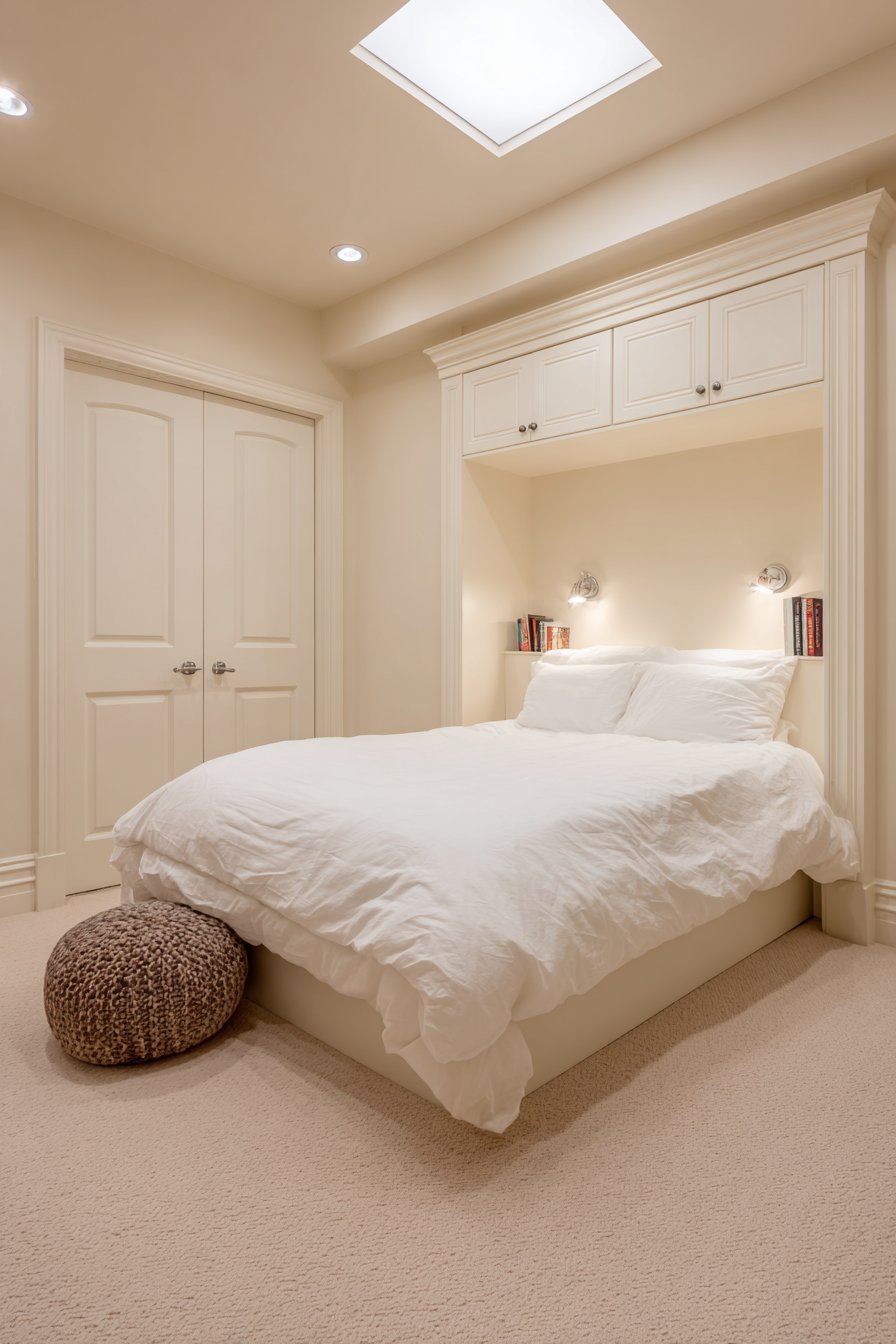
A bed built into a custom closet system creates a unique sleeping nook. The arrangement surrounds the bed with floor-to-ceiling storage on all sides. Integrated reading lights and small side shelves serve bedside needs. The cocoon-like environment feels secure and restful.
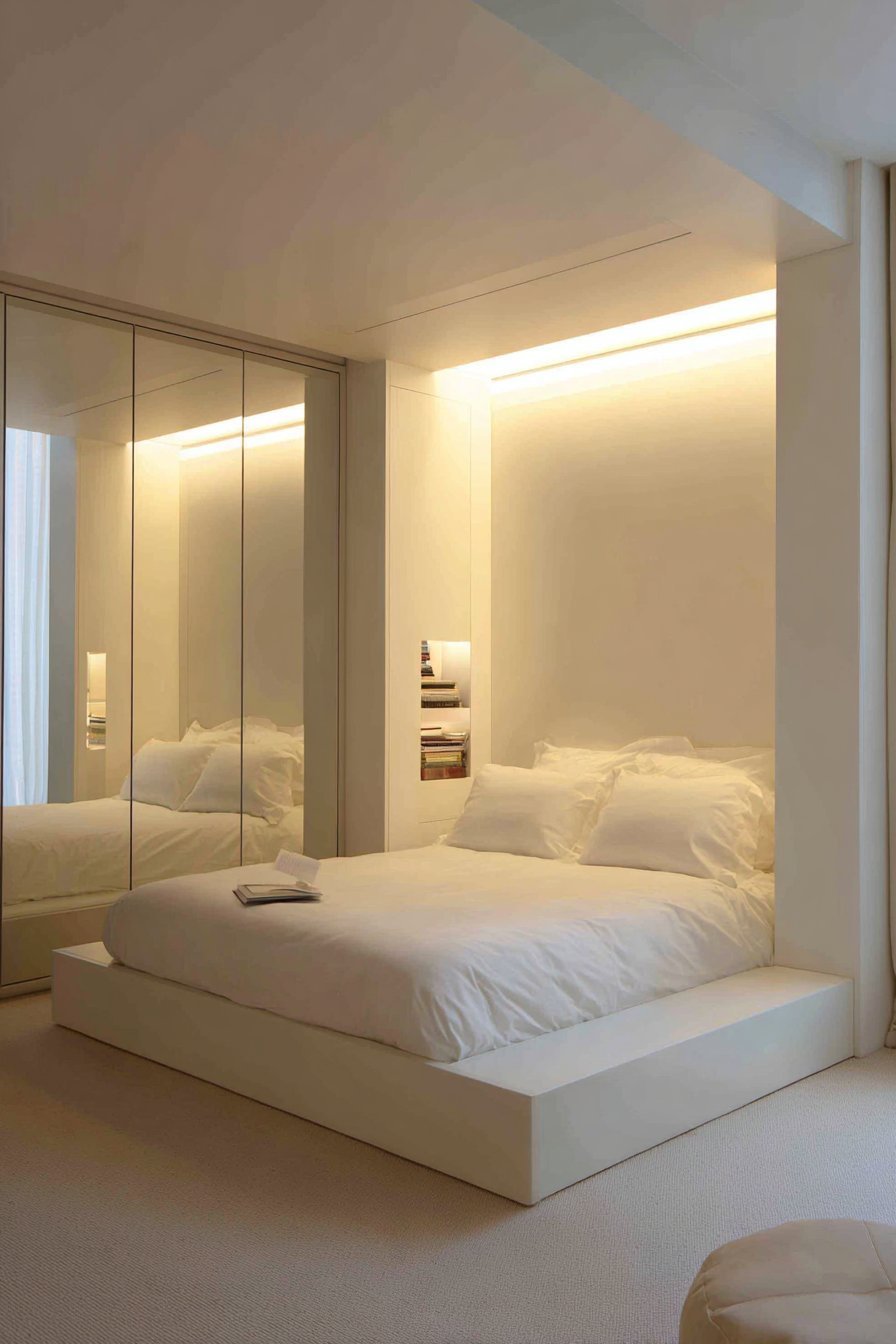
Closet doors with full-length mirrors flank both sides of the sleeping nook. The mirrors create the illusion of much larger space. The remaining floor space stays completely clear except for a small pouf ottoman. This openness contrasts beautifully with the enclosed sleeping area.
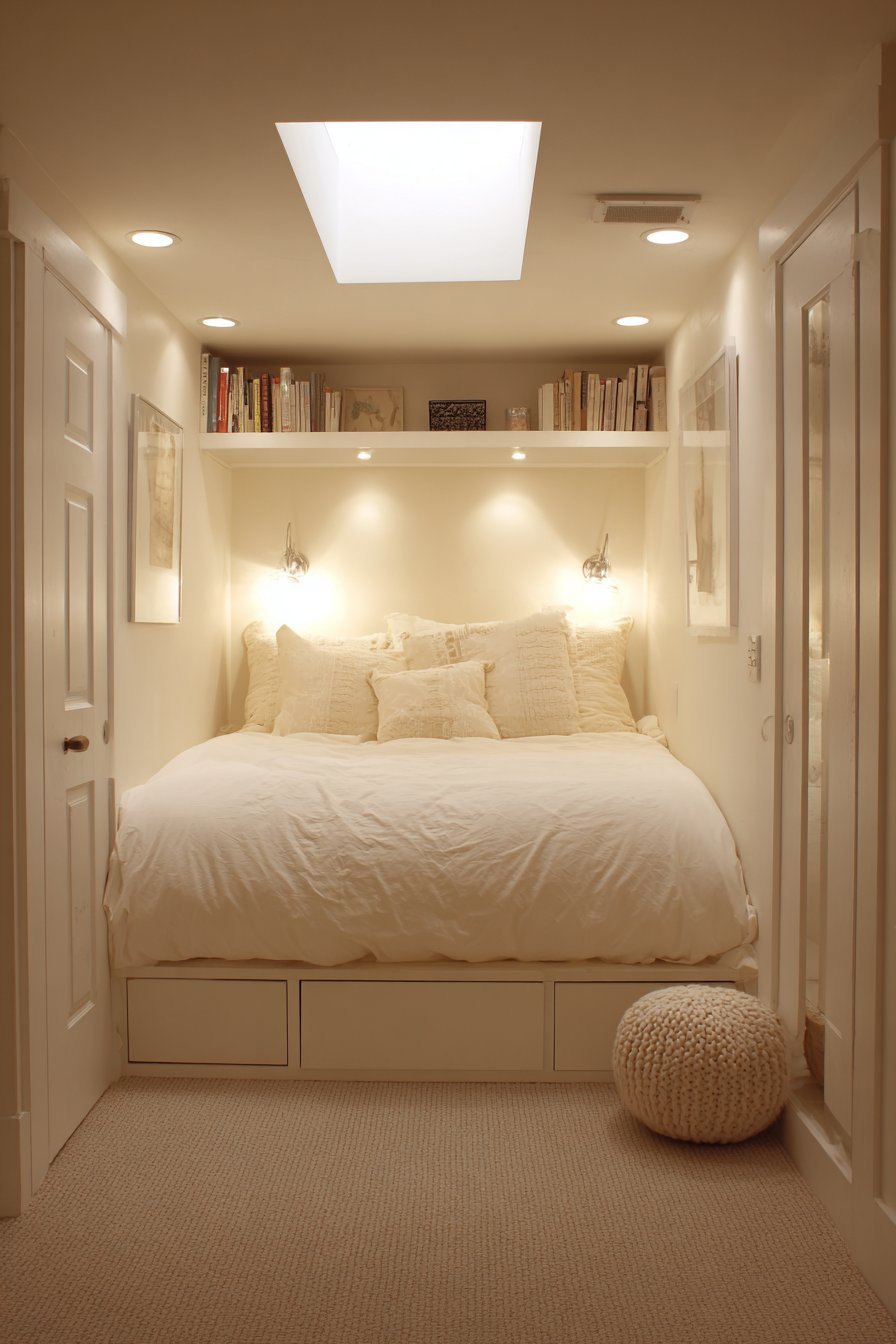
Warm white walls and light carpet create softness throughout. The carpet’s texture adds comfort and acoustic dampening. Natural light from a skylight above prevents the enclosed bed from feeling dark. The overhead illumination creates a unique quality of light.
This design transforms what might be wasted closet space into the room’s focal point. The built-in approach ensures perfect proportions and maximum efficiency. The sleeping nook becomes a treasured retreat within the tiny bedroom.
Key Design Tips:
- Convert closet spaces into built-in sleeping nooks
- Add integrated lighting within the sleeping alcove
- Install mirrored doors on remaining storage for space expansion
- Include skylights for natural overhead illumination
- Keep floor space completely clear for openness
- Use soft carpeting for comfort and warmth
15. Trundle Bed System
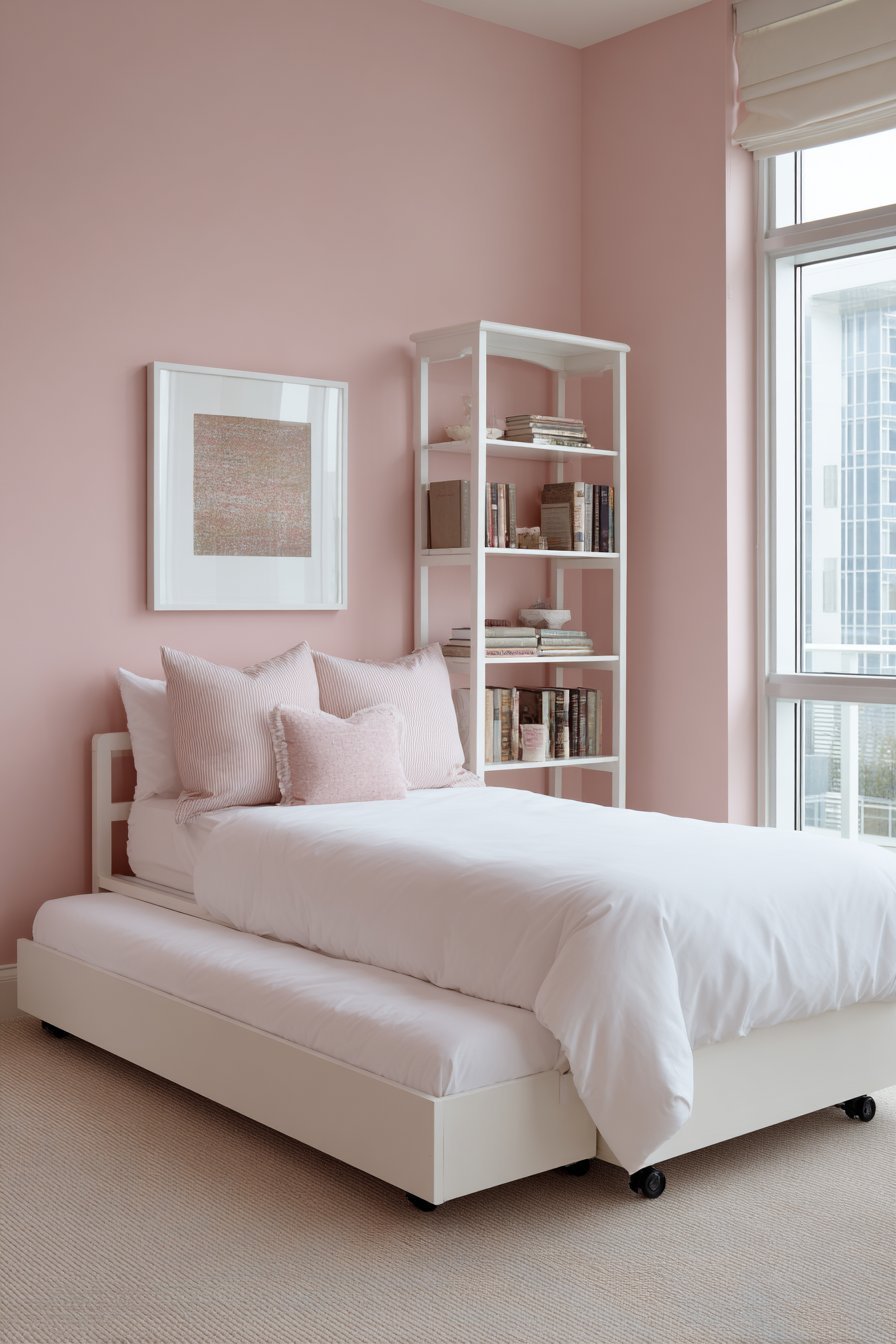
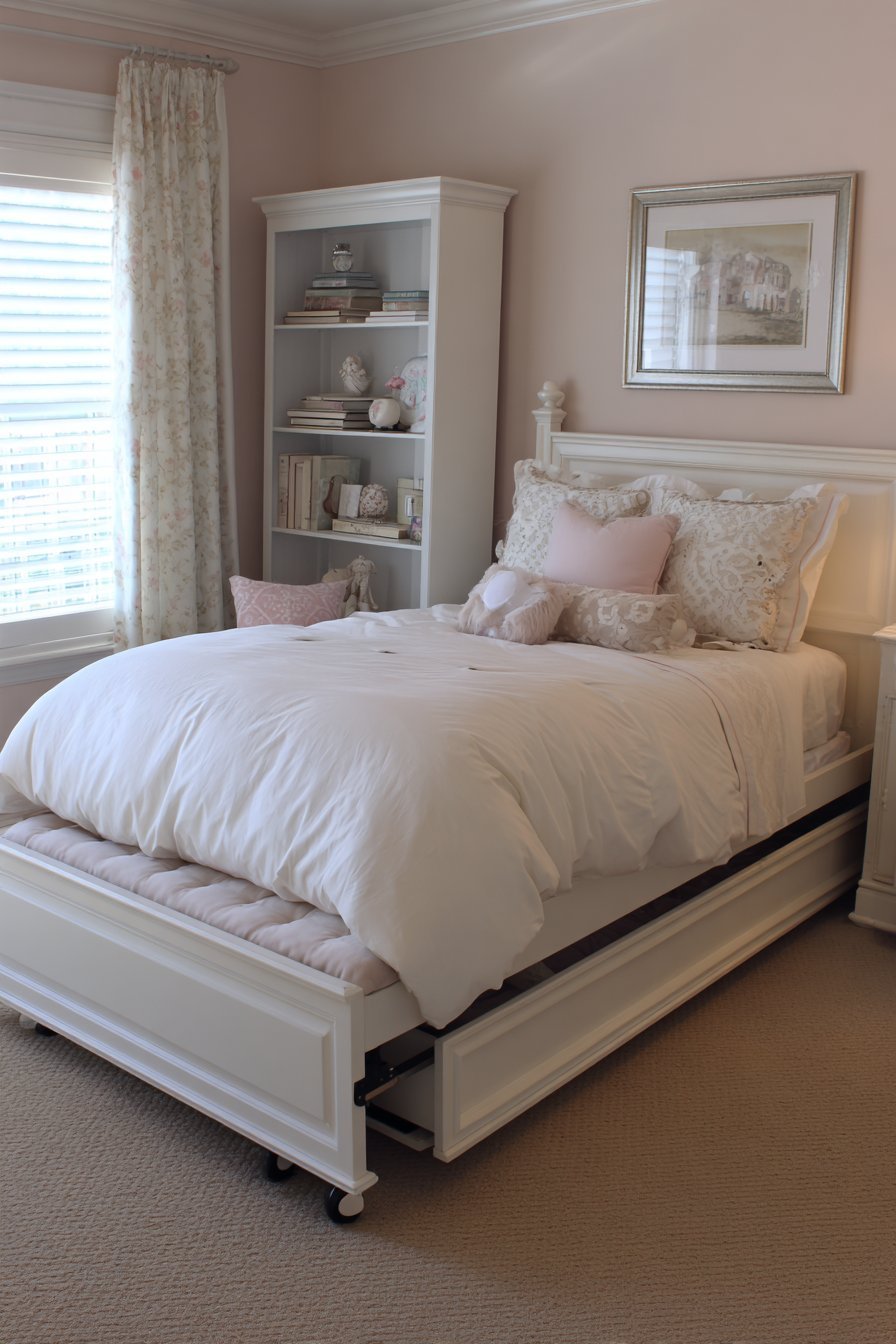
A trundle bed system features a lower bed tucked underneath a slightly elevated main bed. Both beds finish in white painted wood with simple modern lines. When needed, the lower bed slides out smoothly on casters. This provides sleeping space for guests without permanent footprint.
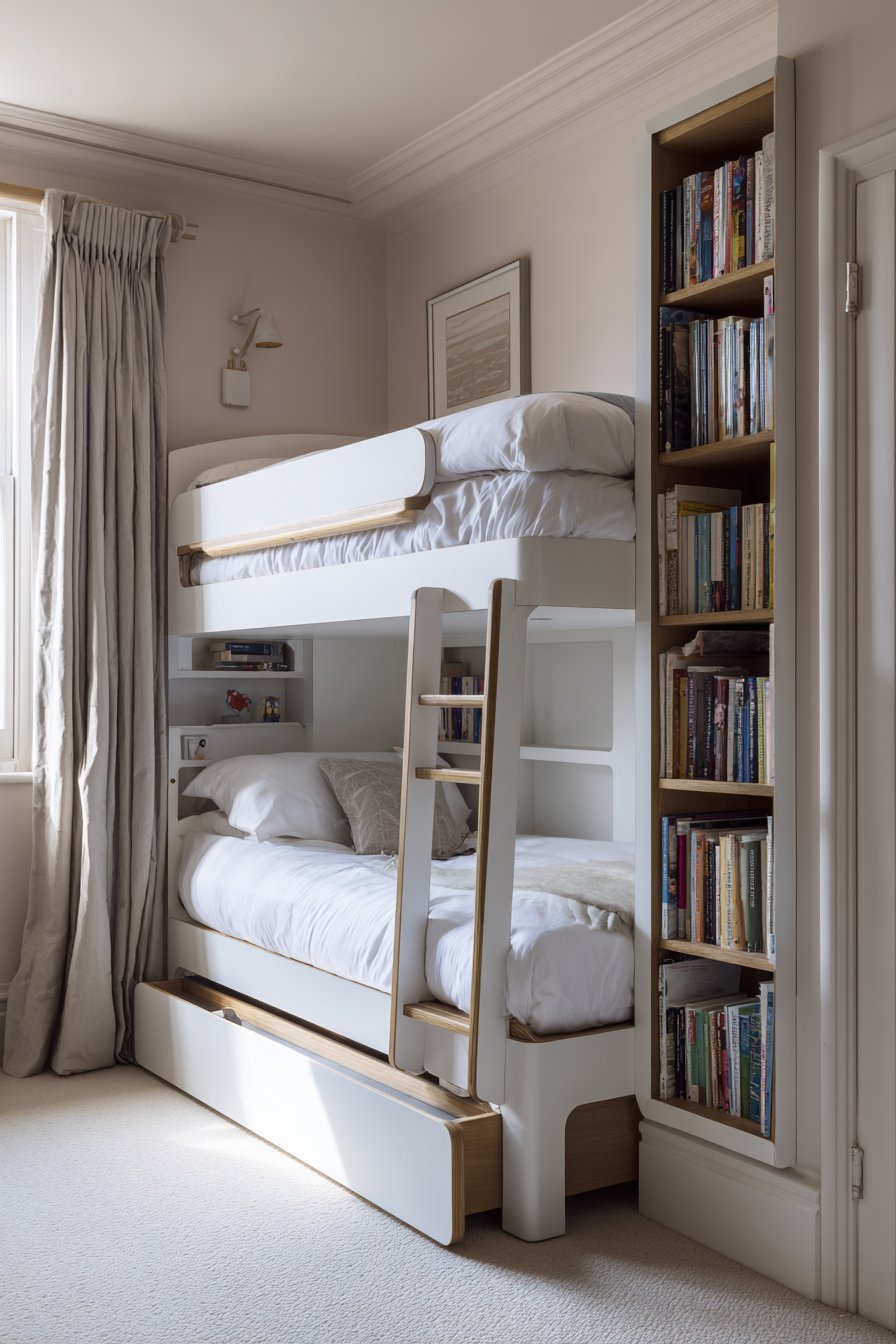
A tall narrow bookshelf in the corner maximizes vertical storage efficiently. The slim profile doesn’t consume significant floor space. Pale pink walls and white bedding create light and airy atmosphere. The soft color palette feels welcoming and calm.
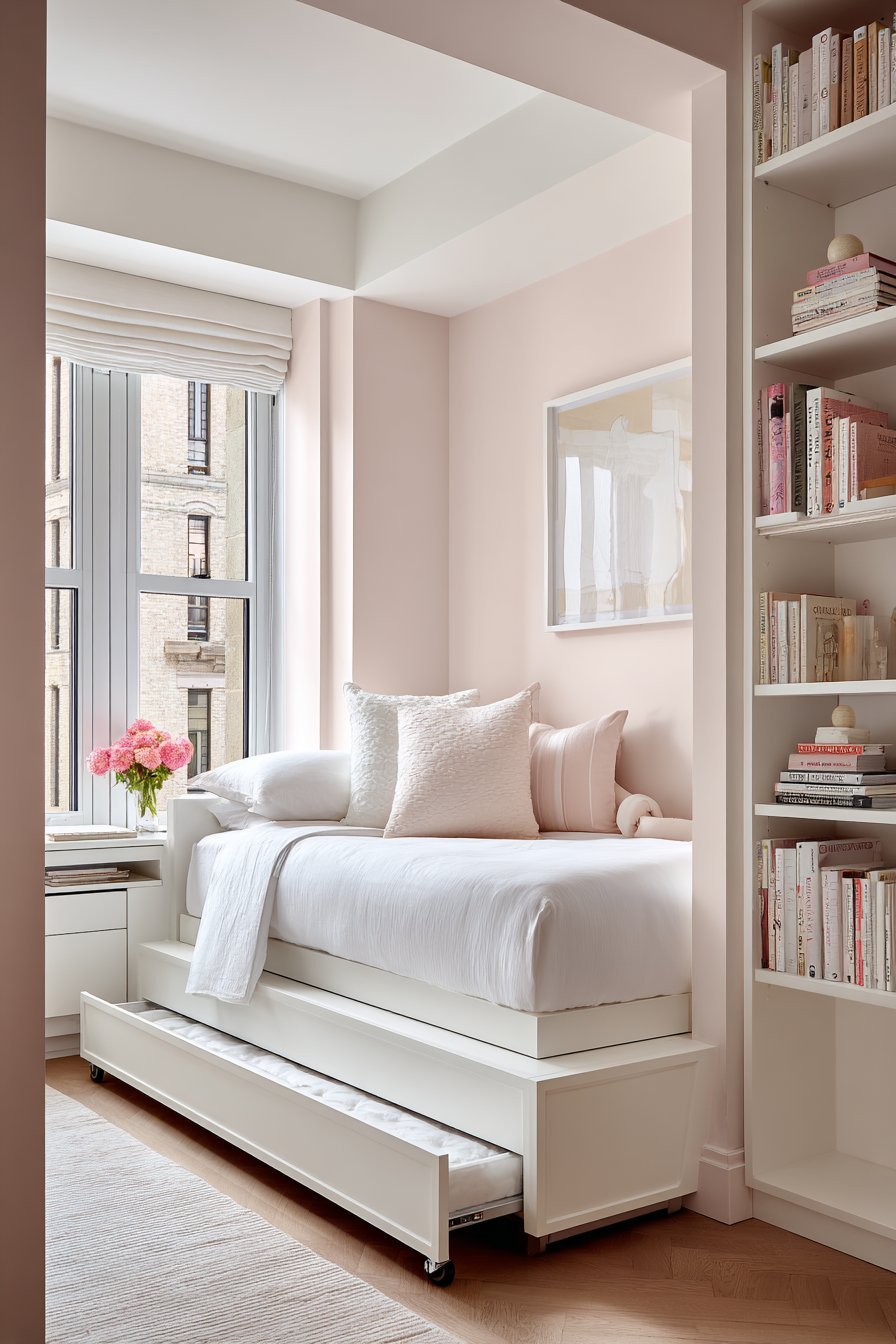
Natural morning light shows the space-saving daily configuration. With the trundle closed, the room functions as a single bedroom. The clean lines and minimal furniture maintain spacious feeling. The flexibility proves invaluable for accommodating occasional guests.
This solution works beautifully for children’s rooms or guest bedrooms. The extra sleeping surface appears only when needed. The remainder of the time, the room feels proportionate to its footprint.
Key Design Tips:
- Choose trundle systems with smooth-rolling casters
- Paint both beds in light colors for visual cohesion
- Add tall narrow storage in corners for vertical efficiency
- Use soft pale wall colors for airiness
- Keep bedding white or neutral for flexibility
- Ensure adequate clearance for trundle extension
16. Diagonal Corner Bed Placement
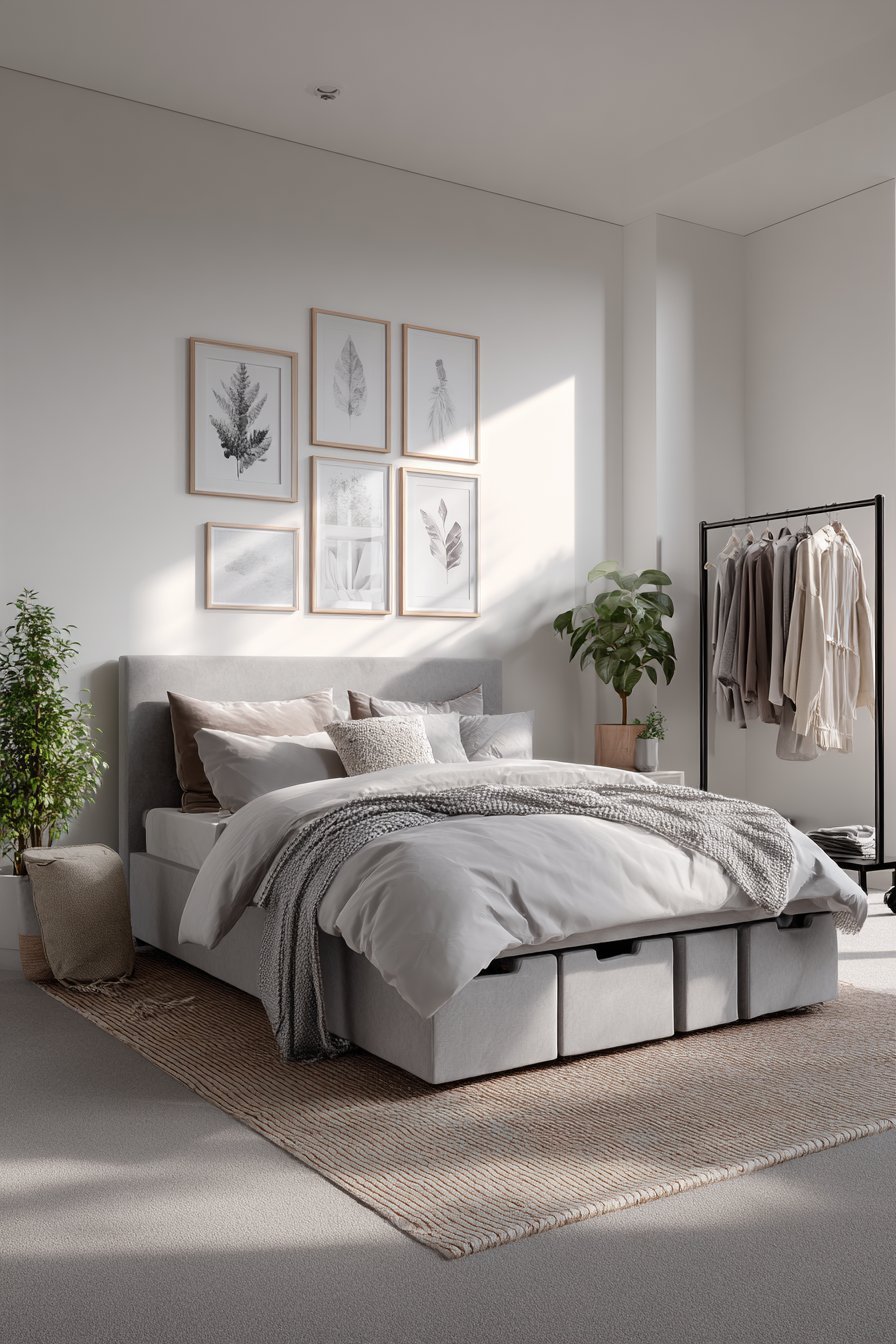
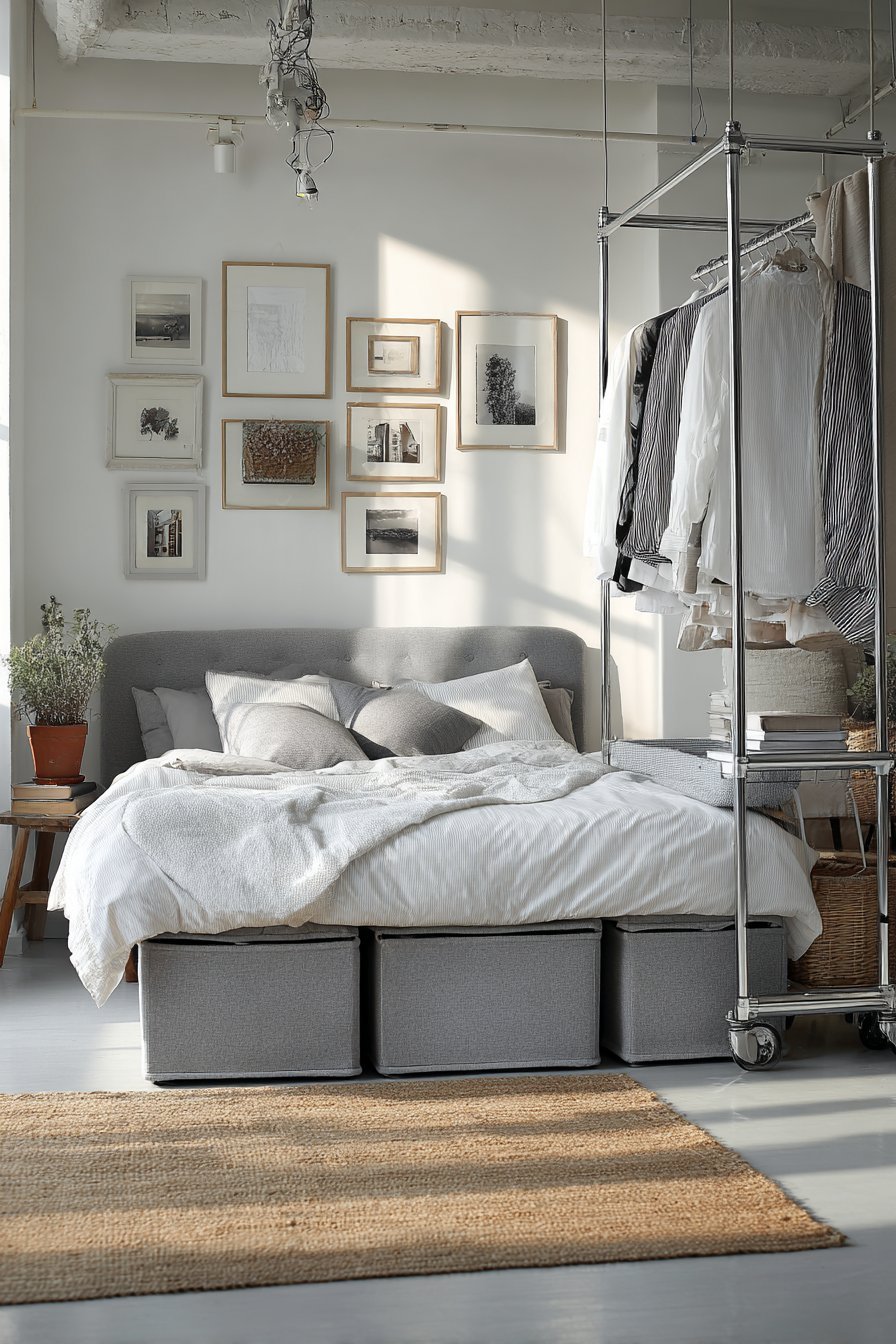
A bed positioned diagonally in one corner creates unconventional floor space. The simple upholstered headboard in soft grey fabric provides comfort. Under-bed storage boxes in matching grey fabric slide out from both accessible sides. The diagonal placement makes storage access easier.
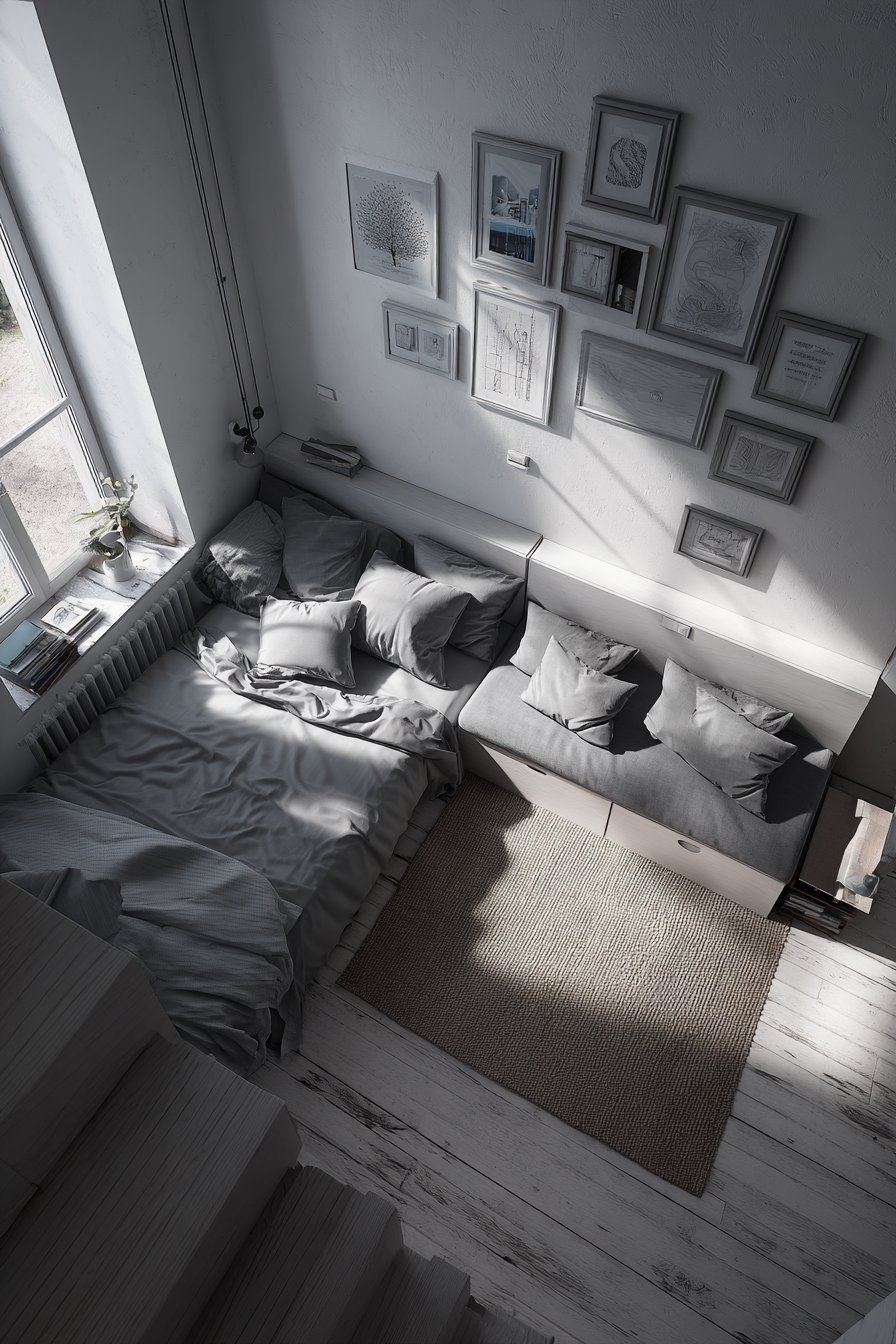
A narrow clothing rack on wheels serves as mobile closet solution. The flexibility allows position changes based on current needs. One wall features a gallery of small framed prints arranged artfully. The vertical display adds personality without consuming floor space.
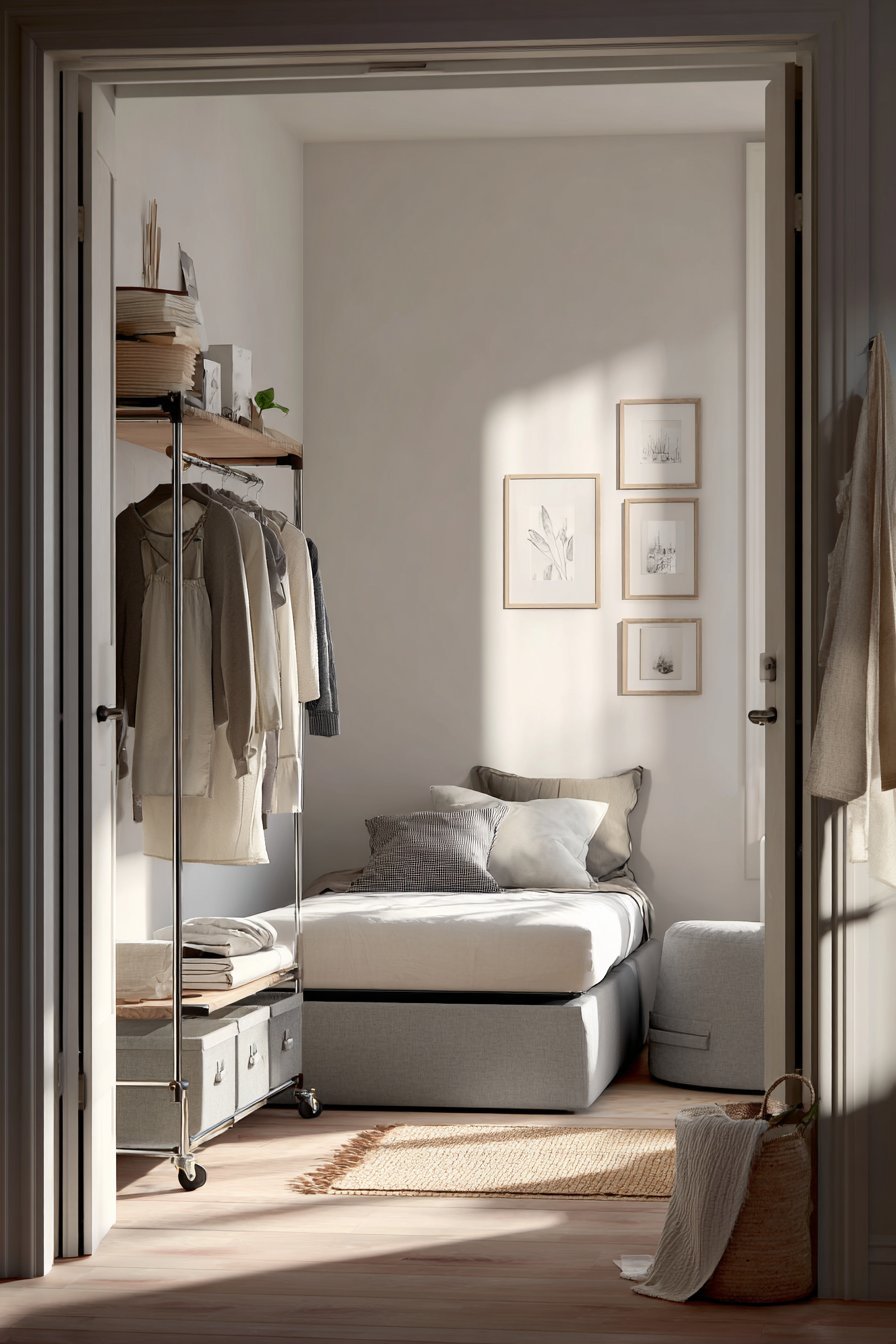
White walls and natural jute rug ground the space warmly. Afternoon light casts interesting shadows emphasizing the creative layout. The unconventional placement feels intentional rather than forced. The diagonal arrangement actually increases usable floor space.
This approach works particularly well in awkwardly shaped tiny bedrooms. The diagonal placement can solve difficult layout challenges. The creative solution becomes a design feature rather than compromise.
Key Design Tips:
- Position beds diagonally to create more usable floor space
- Use matching storage boxes for cohesive appearance
- Add mobile clothing racks for flexible storage
- Create gallery walls for personality without floor space
- Choose jute rugs for natural texture and warmth
- Embrace unconventional layouts in difficult spaces
17. Fold-Out Wall Desk And Mirror
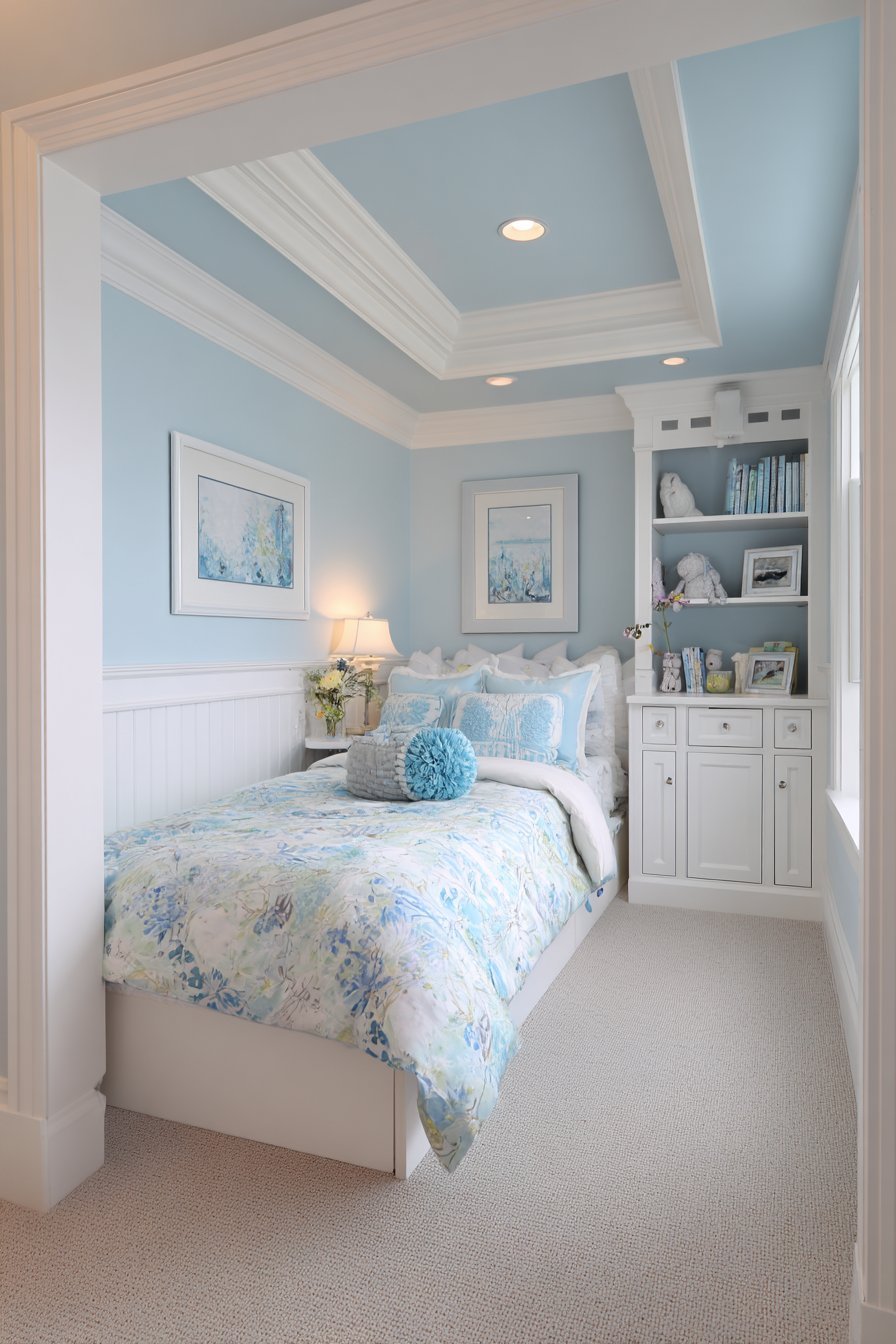
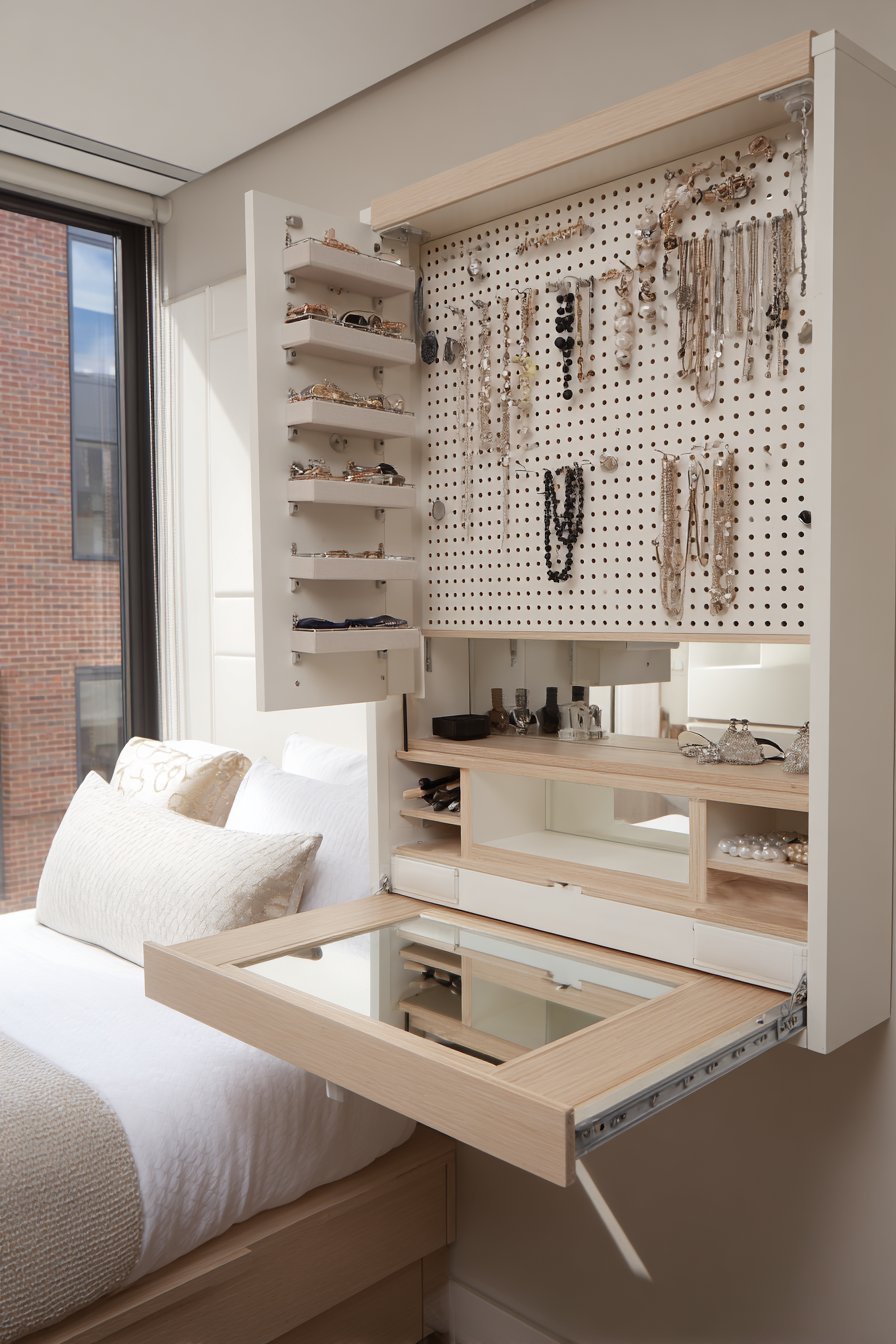
A fold-out wall desk system doubles as nightstand when closed. The desk folds completely flat revealing a mirror on its underside. Above, a pegboard organization system holds jewelry, accessories, and small items. The combined systems maximize wall space functionality dramatically.
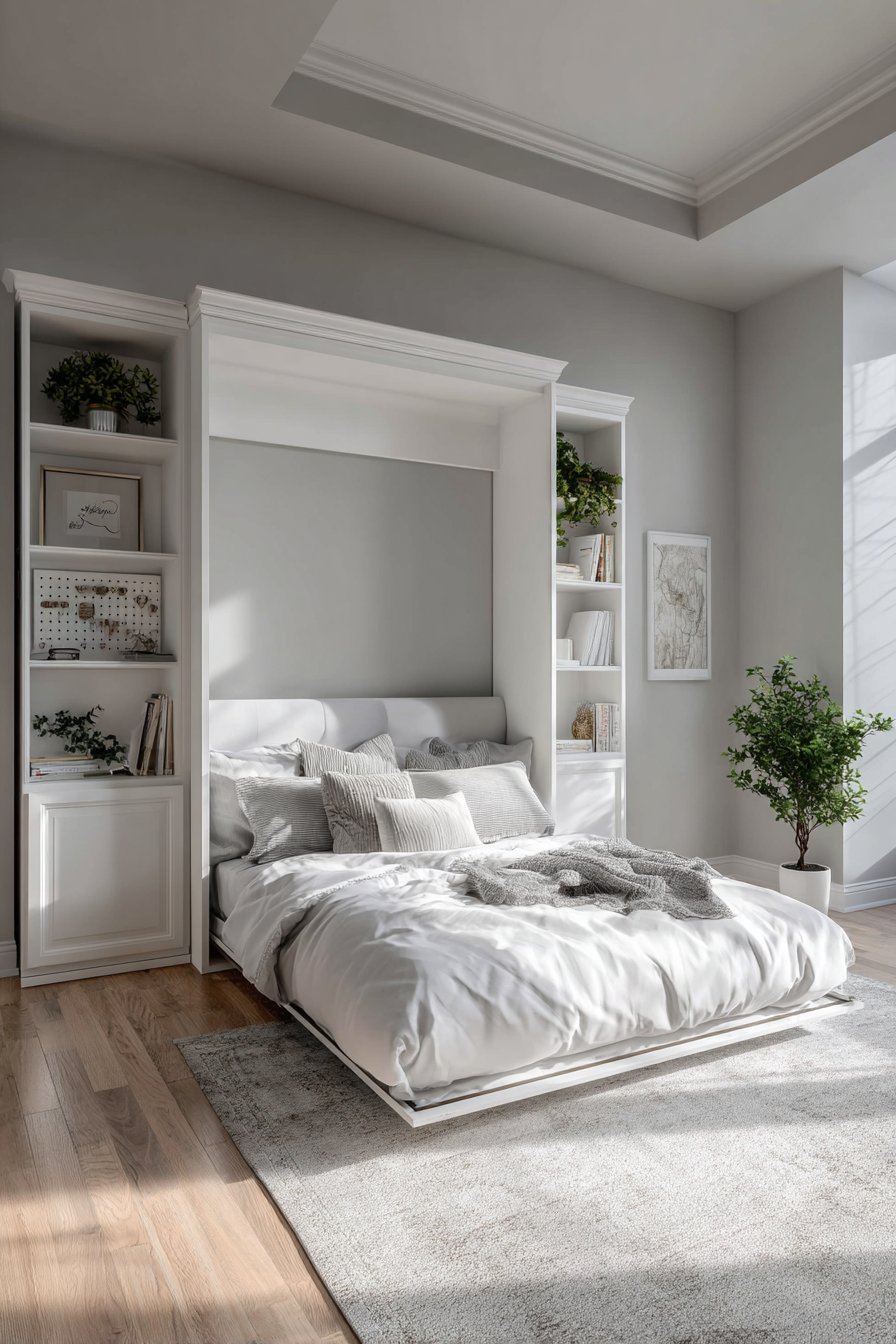
The compact bed features a storage headboard with cubbies for essentials. Light grey walls and white furniture maximize brightness throughout. The desk demonstrates both folded and unfolded positions through daily use. The transformation happens quickly for work or personal grooming needs.
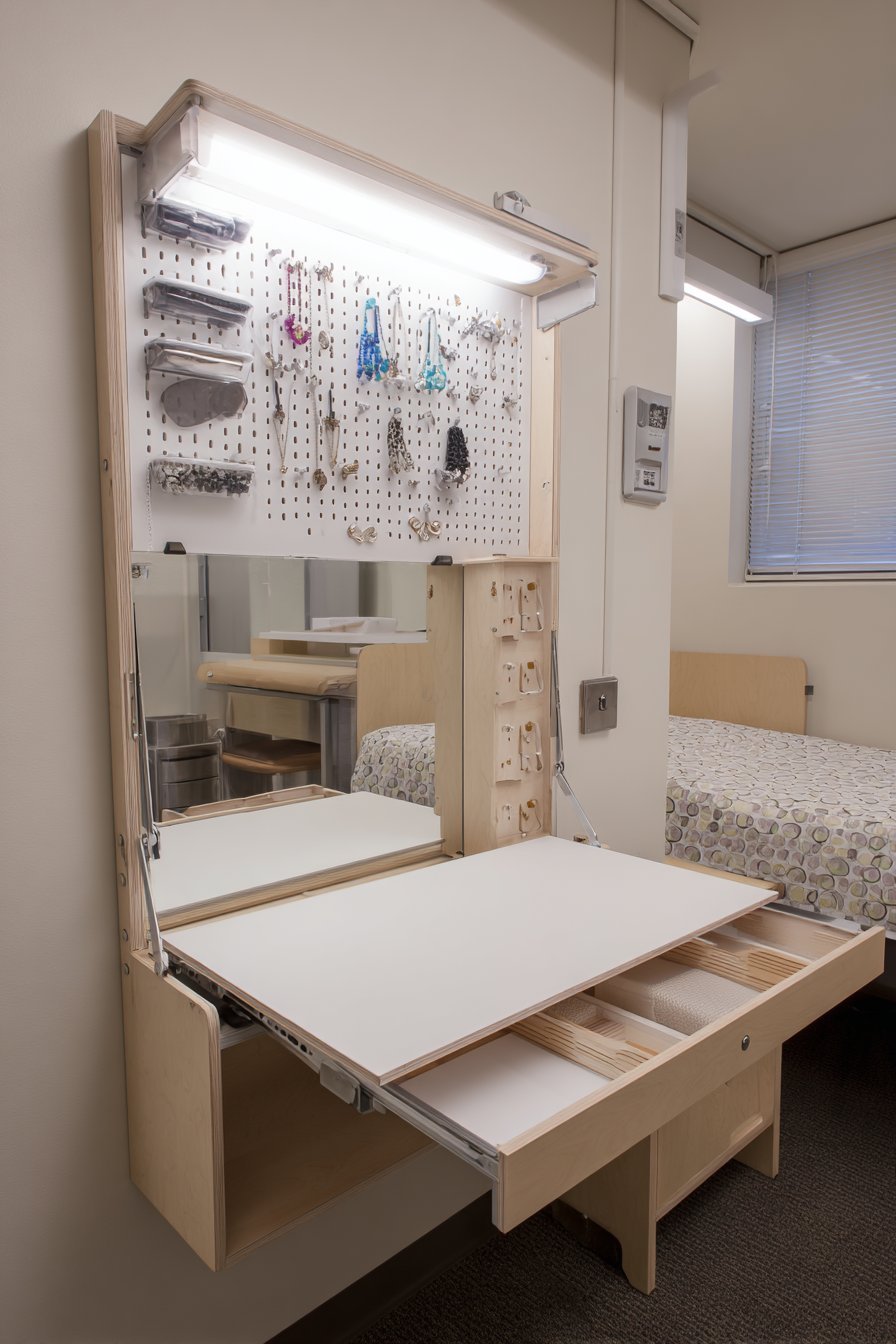
Professional lighting balances natural and artificial illumination. The multi-functional wall system eliminates the need for separate furniture pieces. The mirror serves grooming needs while the desk accommodates work tasks. The pegboard adapts as organizational needs change.
This design showcases how vertical surfaces provide untapped potential. Every wall becomes opportunity for increased functionality. The fold-away nature maintains openness when features aren’t actively used.
Key Design Tips:
- Install fold-out desks that reveal mirrors underneath
- Add pegboard systems above for adaptable organization
- Include storage headboards for bedside essentials
- Use light colors throughout for maximum brightness
- Choose furniture that serves multiple functions
- Ensure folding mechanisms operate smoothly daily
18. Tall Upholstered Headboard Storage
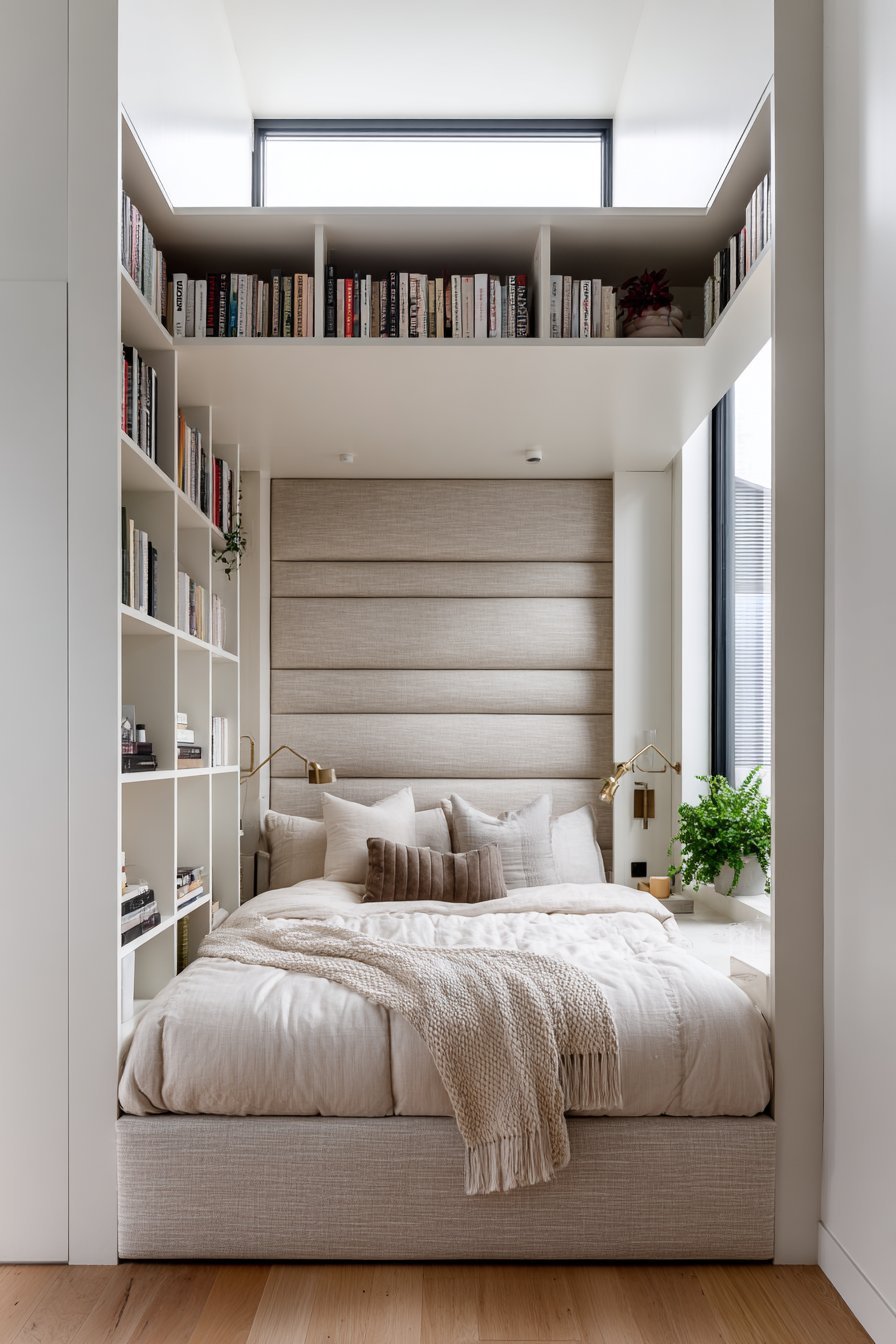
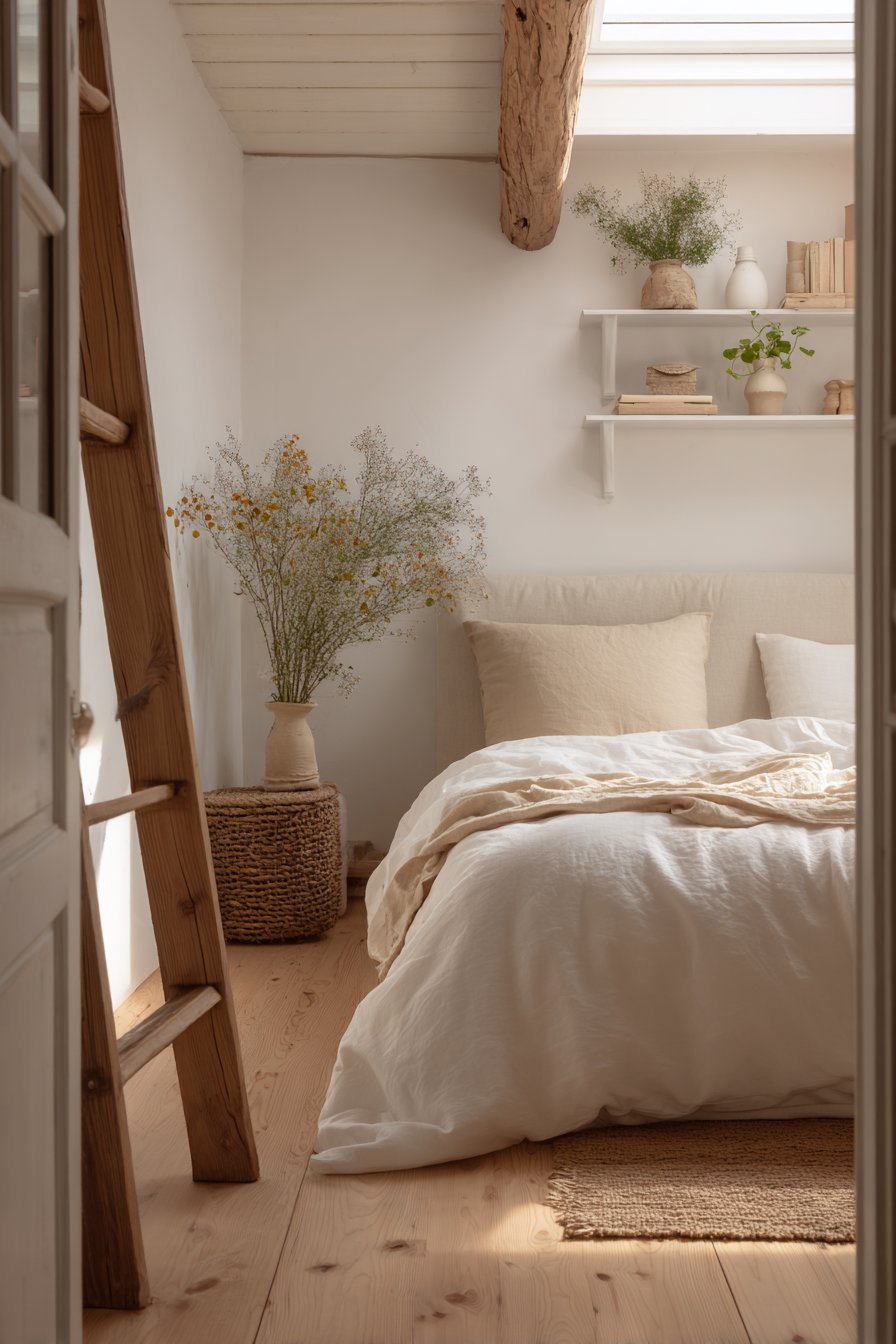
A bed features a tall upholstered headboard extending to the ceiling. The headboard incorporates hidden storage compartments and a floating shelf across the top. The soft taupe linen creates a statement wall while adding softness. The vertical emphasis draws the eye upward making ceilings appear higher.
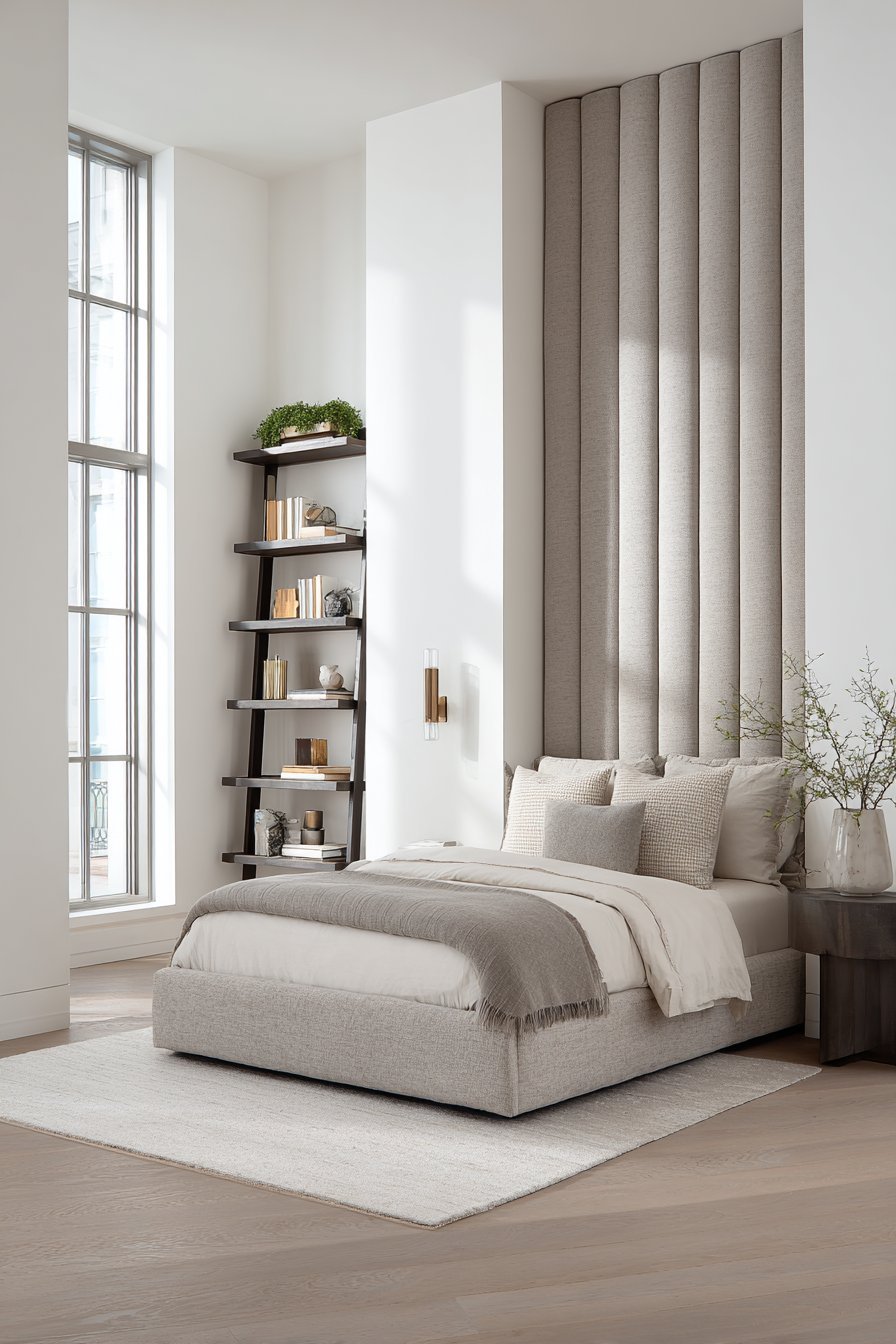
Beside the bed, a narrow ladder shelf provides vertical storage for books and plants. The slim profile doesn’t intrude into the limited floor space. Pale oak flooring and white walls keep the space feeling open and airy. Natural light from a clerestory window above illuminates the room gently.
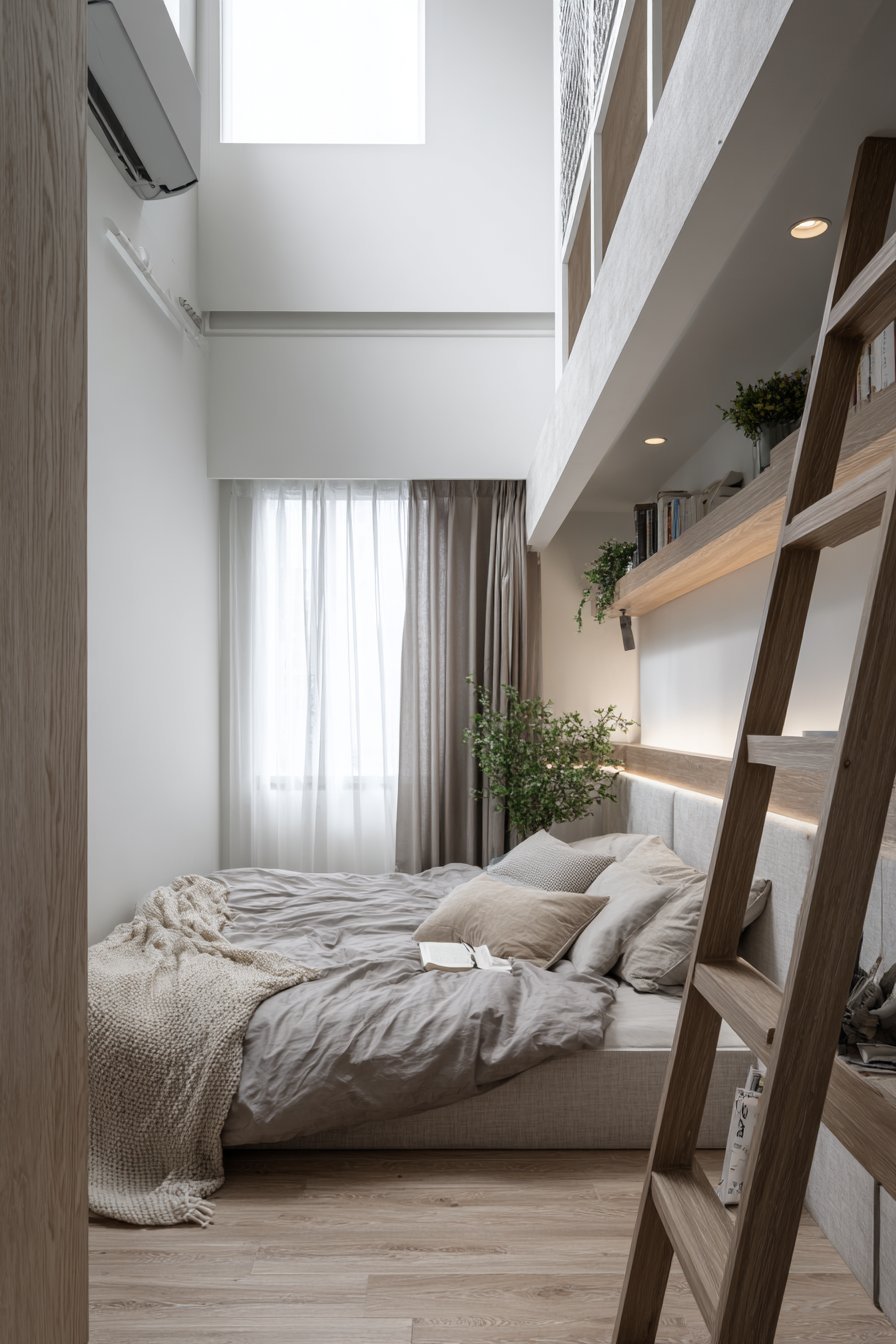
The textured upholstered headboard adds tactile interest and visual warmth. The height creates dramatic impact in the small space. Hidden compartments within the headboard store items completely out of sight. The top shelf displays decorative items at eye level when standing.
Soft diffused lighting highlights the upholstered texture beautifully. The tall headboard becomes both storage solution and design statement. The vertical approach maximizes storage without horizontal footprint.
Key Design Tips:
- Extend headboards to ceiling height for vertical storage
- Include hidden compartments within the headboard structure
- Add floating shelves across the top for display
- Choose textured upholstery for visual and tactile interest
- Install clerestory windows for overhead natural light
- Use narrow ladder shelves for additional vertical storage
19. Rolling Platform Bed
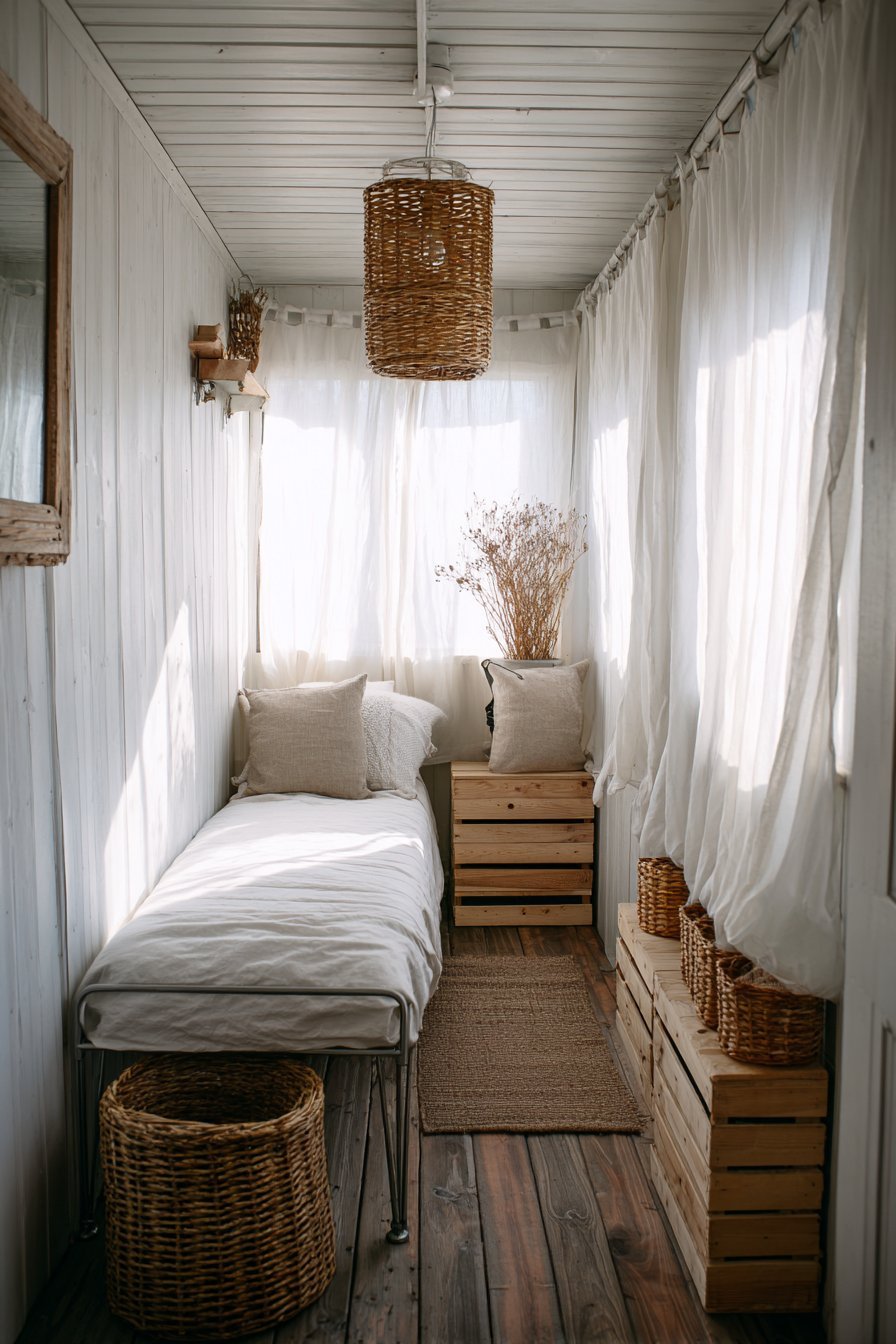
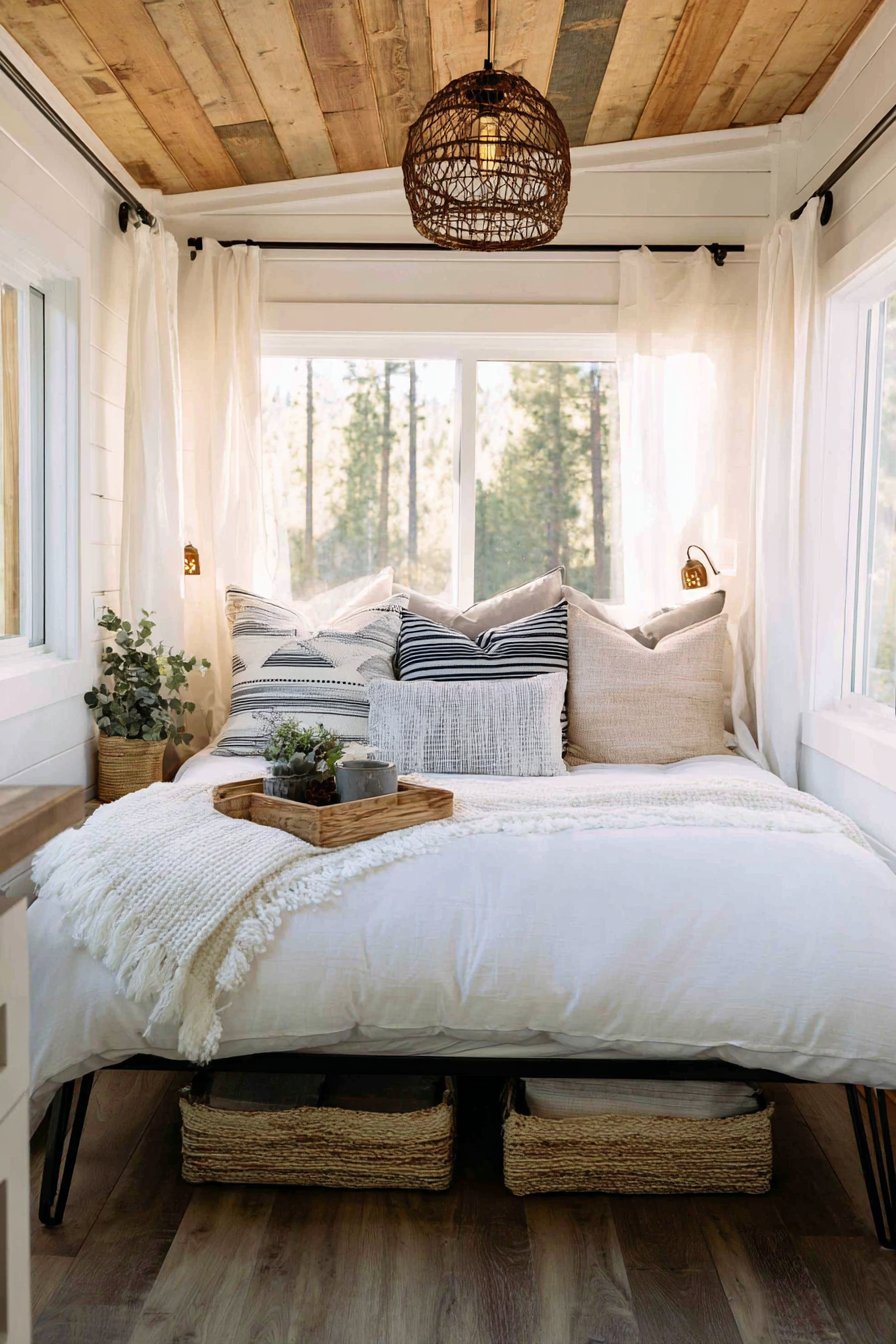
A bed on a rolling platform moves to different positions as needed. The simple metal frame with hairpin legs and casters provides industrial charm. When centered, access to storage exists on both sides. When pushed to one wall, floor space opens for yoga or exercise.
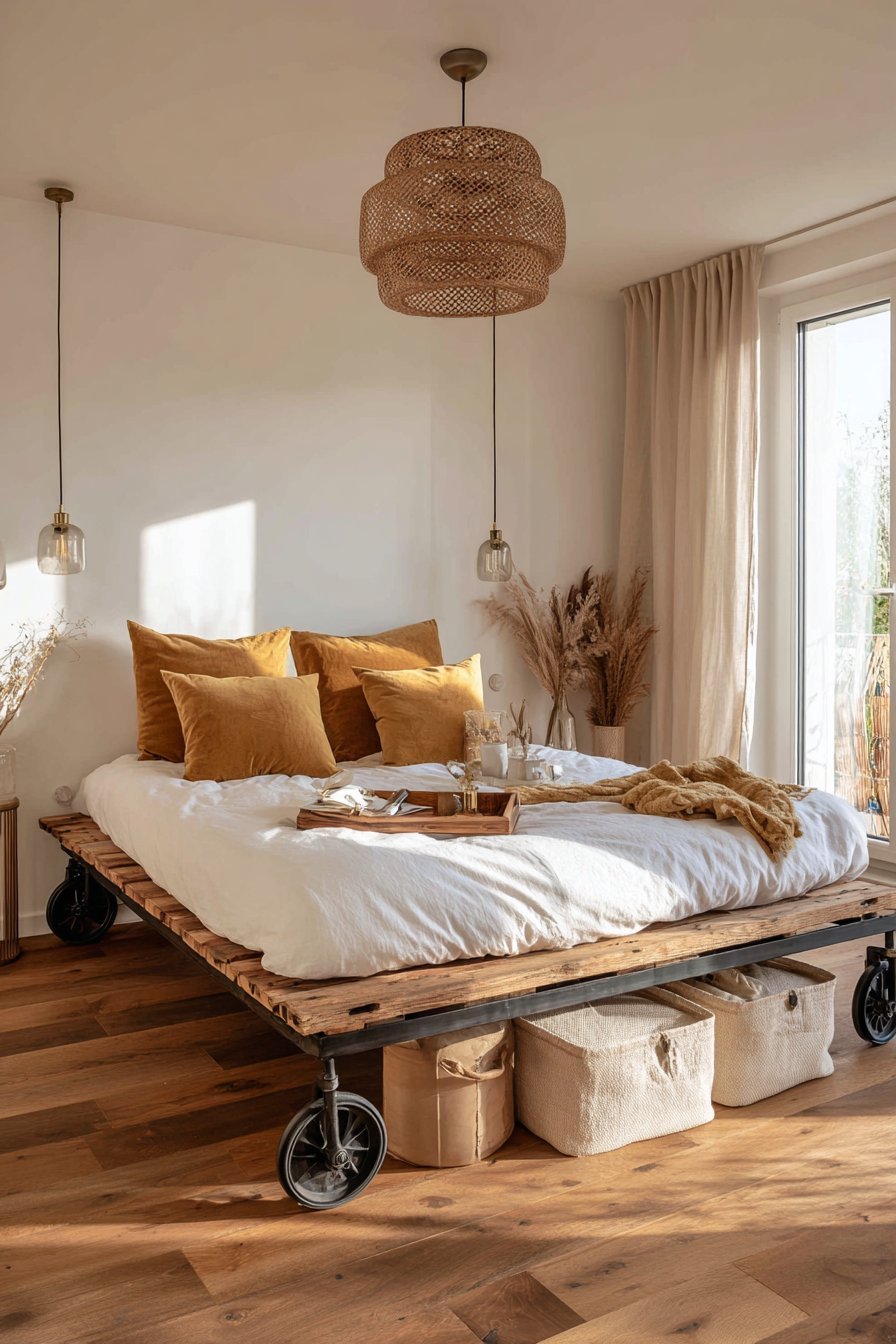
Under-bed storage boxes in natural canvas organize essentials accessibly. Warm white walls and vintage-inspired pendant lighting create character. Morning light streams through gauzy curtains softly. The mobile bed allows the room to adapt to different activities throughout the day.
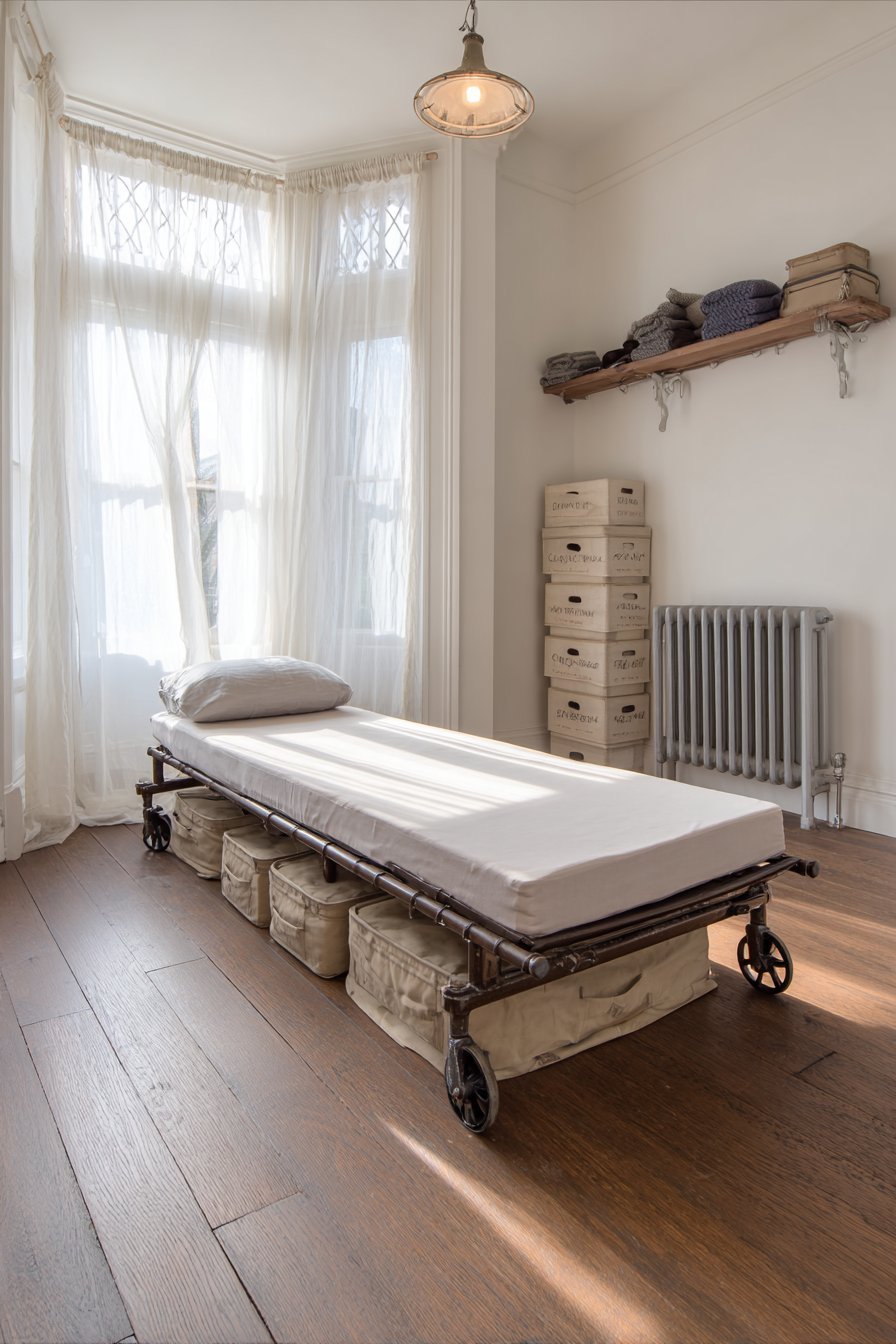
This innovative solution suits active lifestyles and multipurpose needs. The room serves exercise space, meditation area, or dance studio. Evening brings quick bed repositioning for sleeping. The flexibility eliminates feeling trapped by static furniture arrangement.
The rolling mechanism must be sturdy for daily movement. Quality casters prevent floor damage while supporting bed weight. The adaptability transforms tiny bedroom limitations into creative opportunities.
Key Design Tips:
- Install heavy-duty locking casters for stability and mobility
- Choose metal frames for an industrial aesthetic appeal
- Use canvas storage boxes for natural texture
- Add vintage lighting for character and warmth
- Position beds centrally when storage access is needed
- Protect floors with appropriate caster types
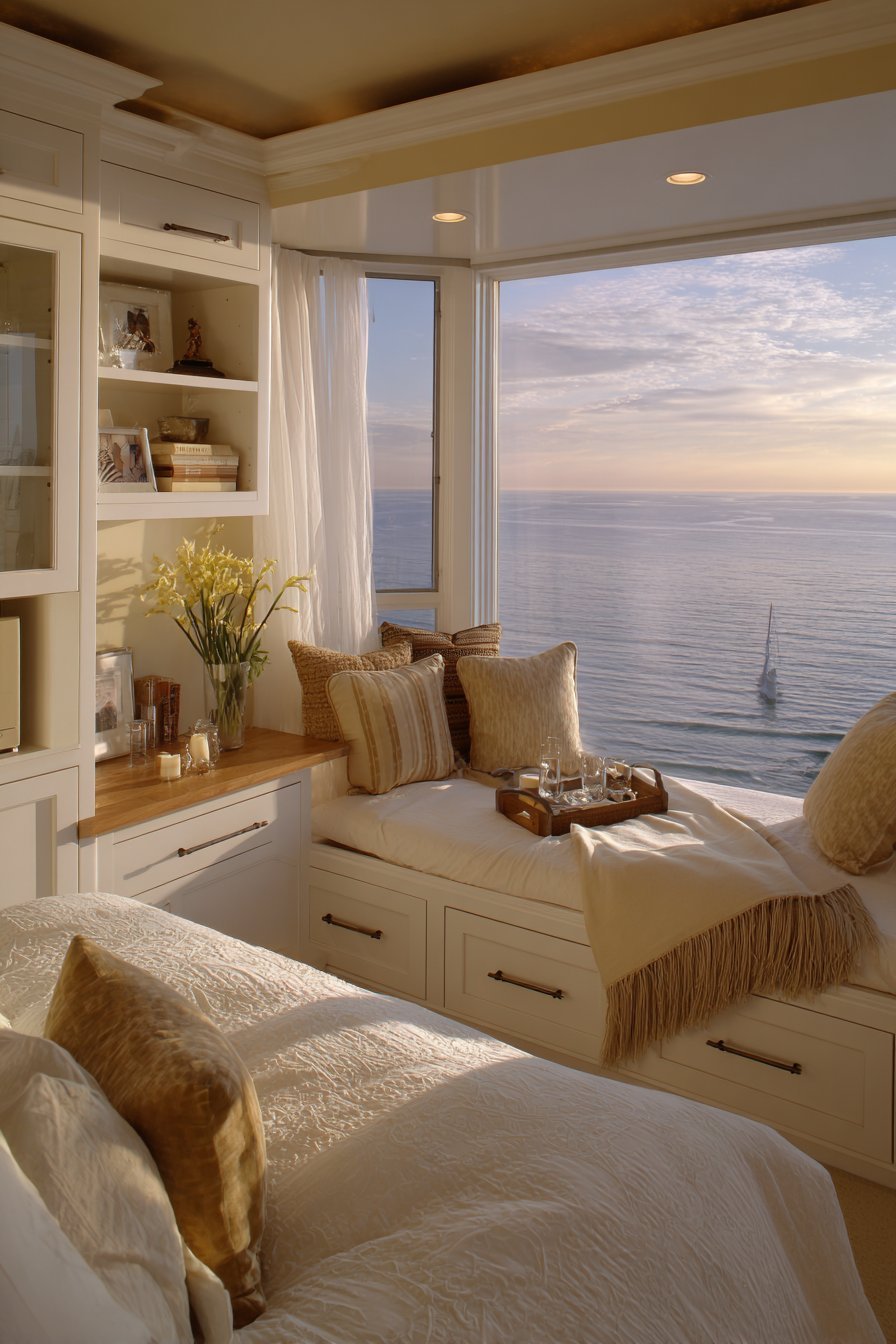
20. Bay Window Sleeping Nook
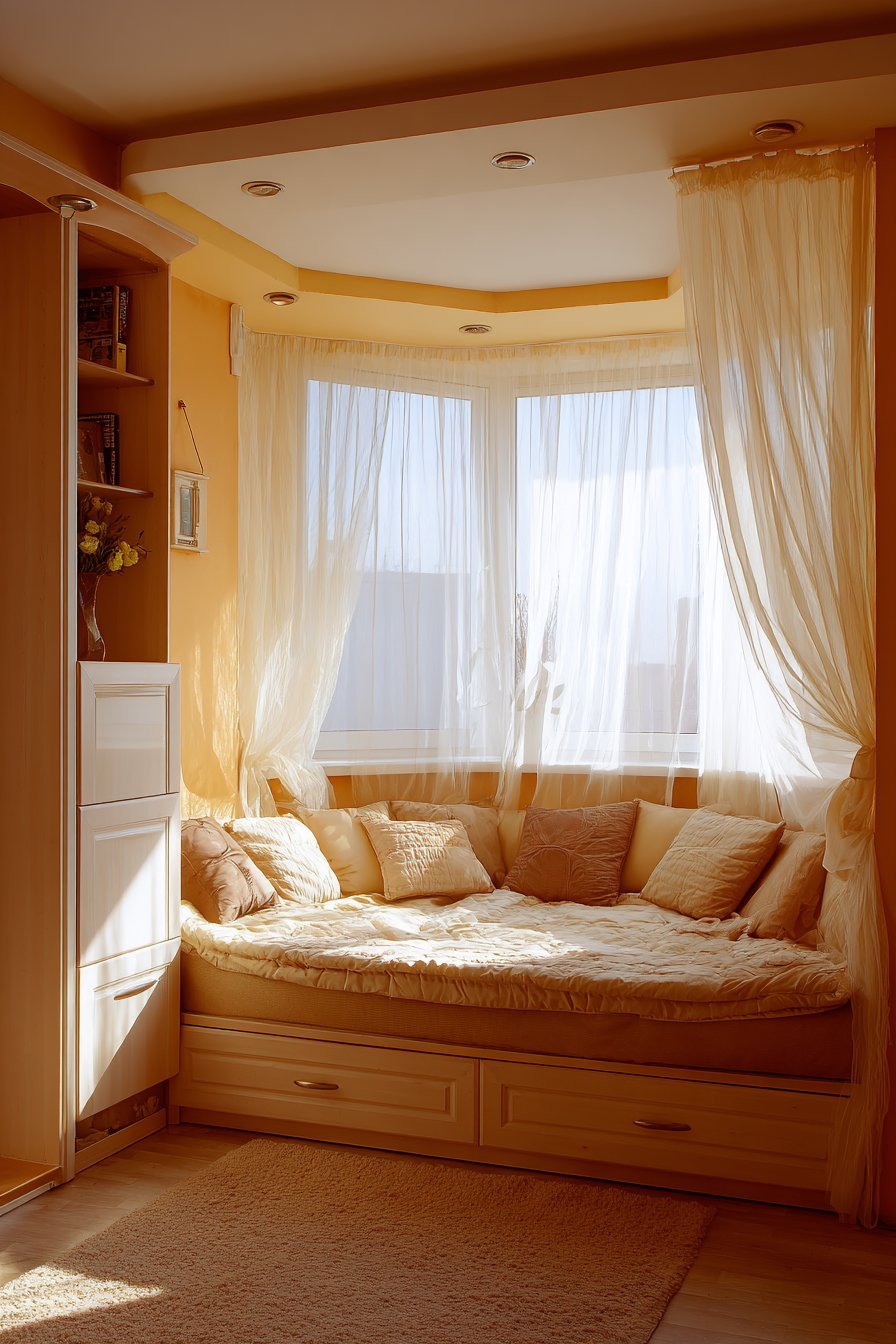
A bed built into a windowed bay area maximizes architectural features beautifully. Custom-fitted cushioned seating along the perimeter doubles as mattress base. Storage drawers built into the bay window seat structure hide belongings discreetly. The remaining wall space includes tall narrow wardrobe and corner floating shelves.
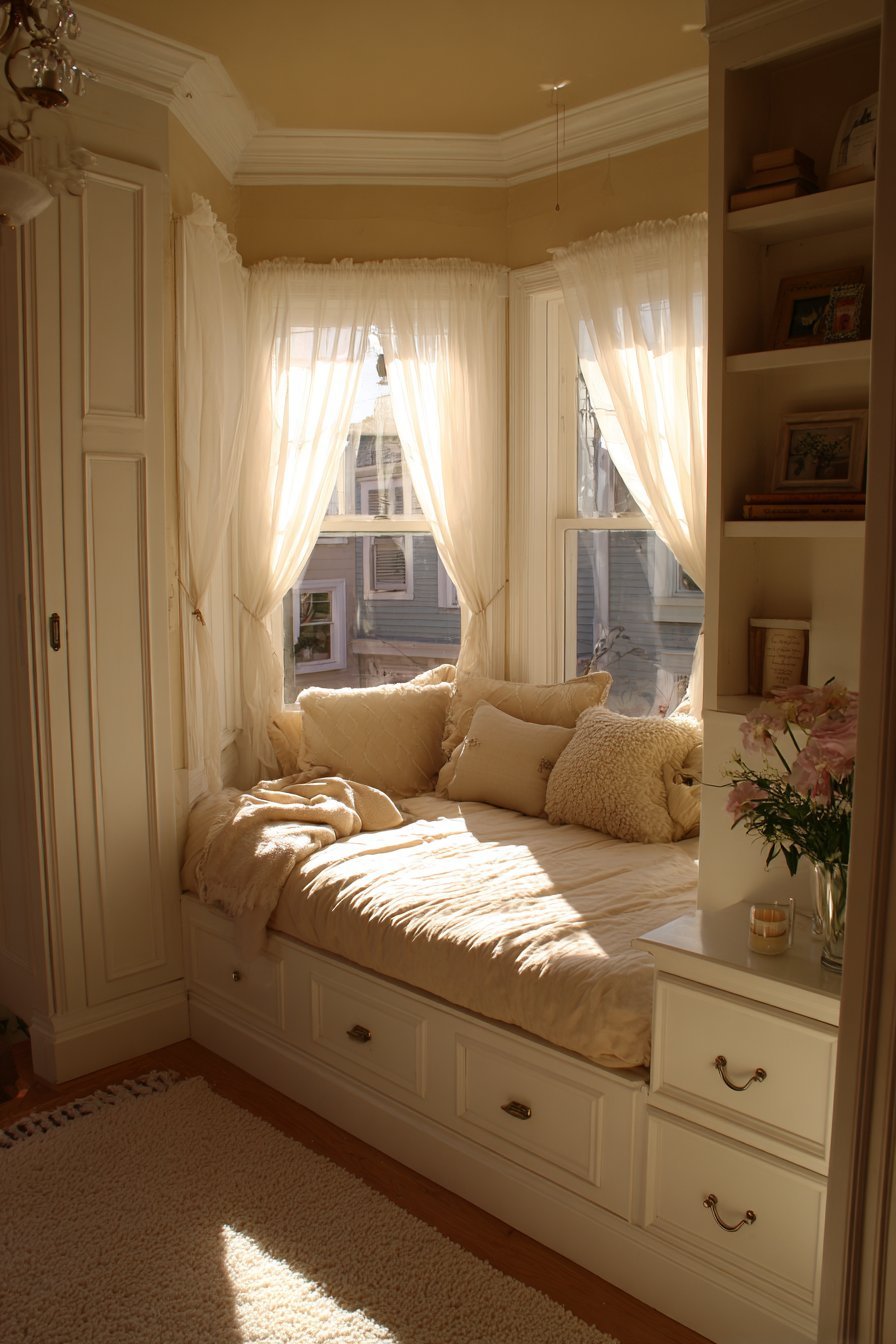
Soft cream walls and natural wood tones create warmth throughout. Sheer white curtains frame the bay window elegantly. Golden hour light floods the sleeping nook with magical illumination. The intimate scale and efficient use of architectural features create special atmosphere.
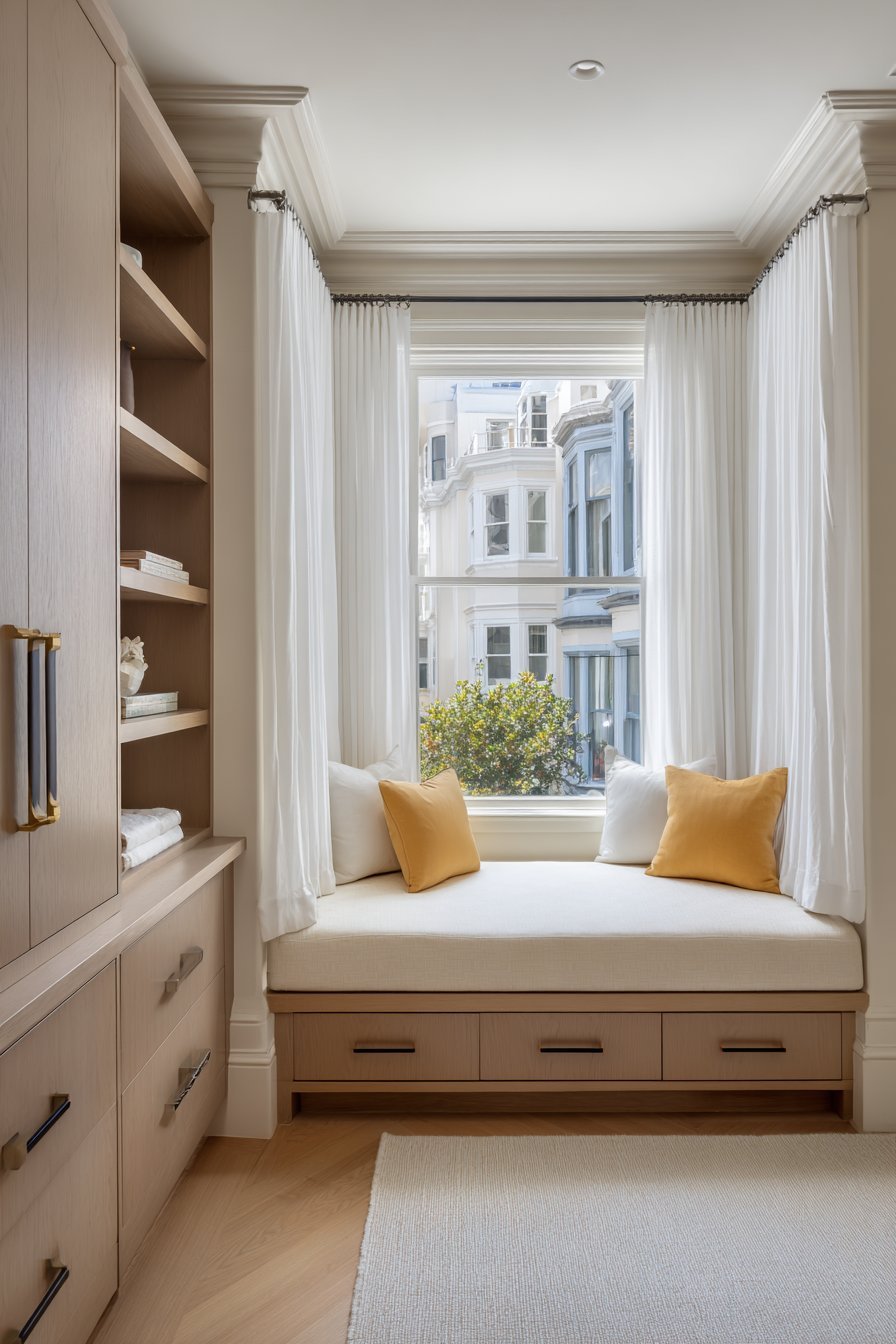
The bay window location provides views and natural light abundance. The surrounding windows make the sleeping area feel larger than actual dimensions. The built-in approach ensures every architectural angle serves functional purpose. Custom cushioning creates comfortable sleeping surface within the bay’s dimensions.
This design celebrates existing architectural character rather than fighting it. The bay window transforms from potential challenge into the room’s greatest asset. The sleeping nook becomes the most coveted spot in the home.
Key Design Tips:
- Convert bay windows into custom sleeping nooks
- Build storage drawers into window seat structures
- Add custom cushioning for comfortable sleeping surfaces
- Use sheer curtains to frame windows elegantly
- Choose cream walls for warmth and light reflection
- Celebrate architectural features with built-in solutions
Why These Tiny Bedroom Designs Work Best
These tiny bedroom designs succeed through thoughtful integration of storage, functionality, and aesthetic appeal. Each concept addresses the fundamental challenge of limited square footage while maintaining visual openness. The designs prove that constraints inspire creative solutions rather than limiting possibilities.
Vertical storage maximization appears consistently across successful tiny bedroom approaches. Floor-to-ceiling built-ins, lofted platforms, and tall headboards utilize often-wasted vertical space. This strategy preserves precious floor space while accommodating belongings. The vertical emphasis also creates psychological spaciousness by drawing eyes upward.
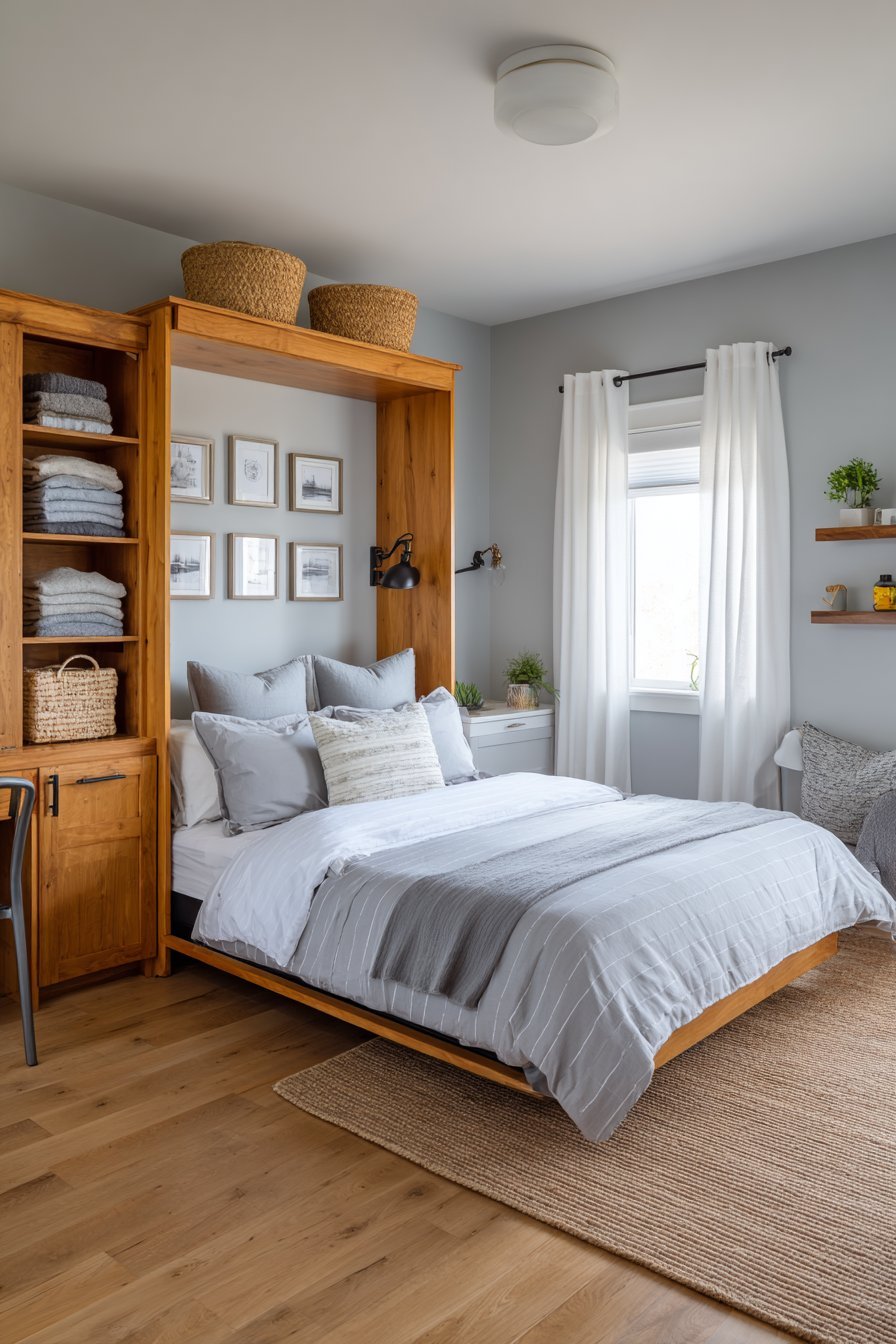
Multipurpose furniture forms the backbone of effective tiny bedroom design. Murphy beds transform bedrooms into offices. Daybeds function as sofas. Storage ottomans serve as seating and tables. This furniture efficiency eliminates the need for multiple single-purpose pieces. The reduced furniture count prevents cramped feelings despite small footprints.
Material choices significantly impact how tiny bedrooms feel and function. Light woods, white finishes, and soft neutral palettes reflect light throughout small spaces. Natural materials like linen, cotton, and wood add warmth without visual weight. Quality construction ensures longevity, making initial investments worthwhile. Durable materials withstand frequent use that tiny spaces demand.
Strategic lighting layers create depth and dimension in compact bedrooms. Combination of natural light, ambient illumination, and task lighting prevents flat appearance. Wall-mounted fixtures preserve surface space. Recessed lighting maintains ceiling height. Well-lit tiny bedrooms feel significantly more spacious than poorly lit equivalents.
The incorporation of mirrors throughout these designs expands visual space dramatically. Full-length closet doors, leaning mirrors, and reflective surfaces bounce light while creating depth illusion. Mirrors positioned opposite windows maximize natural light distribution. This simple addition makes remarkable difference in perceived spaciousness.
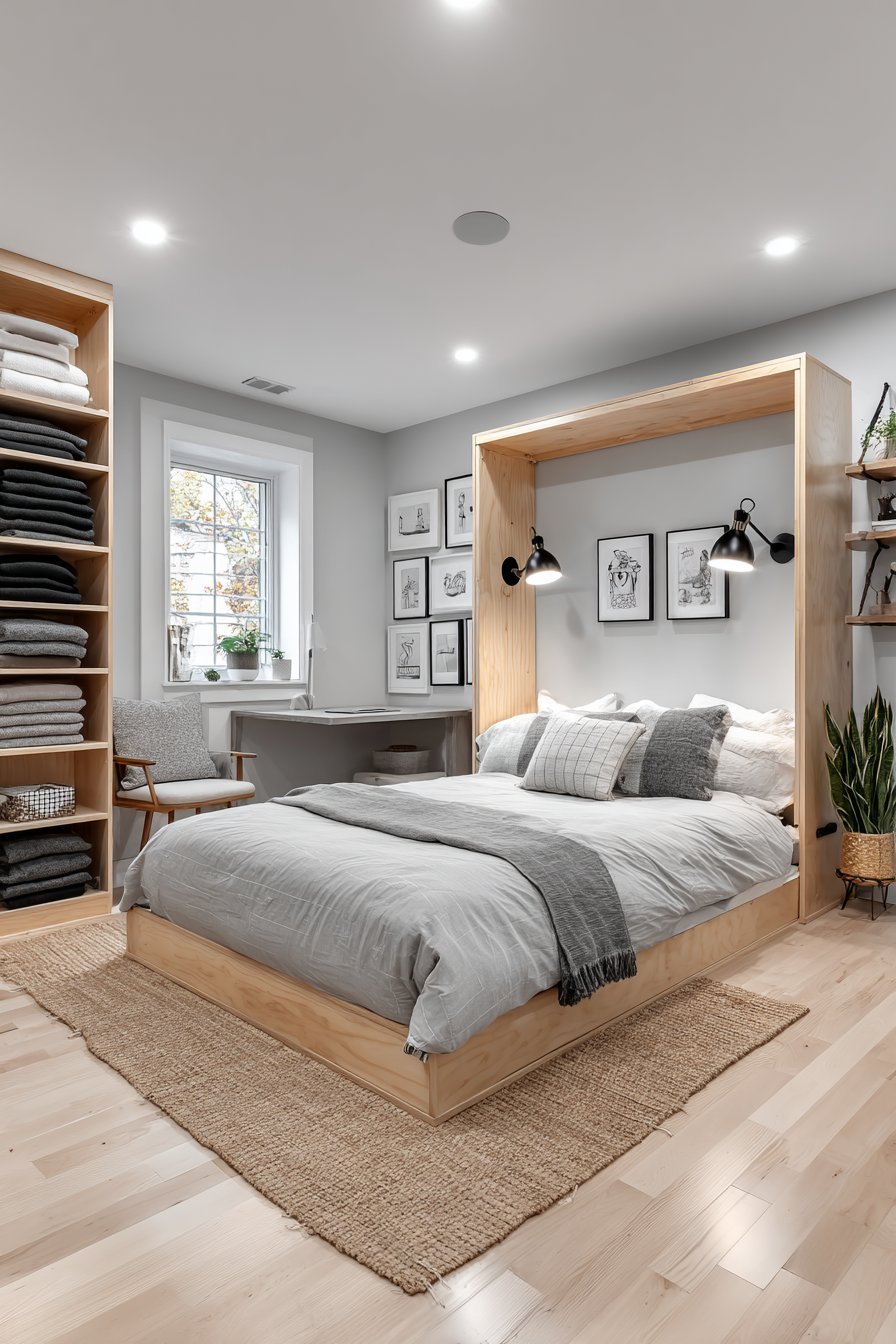
Color theory application proves crucial in tiny bedroom success. Light neutral palettes form the foundation while strategic accent colors add personality. The restraint prevents visual chaos that makes small spaces feel smaller. Cohesive color schemes create flow and unity throughout limited square footage.
These designs demonstrate that tiny bedrooms can feel spacious, organized, and deeply personal. The key lies in thoughtful planning, quality materials, and creative problem-solving. Small spaces become opportunities for innovative design rather than limitations.
Conclusion
These twenty tiny bedroom designs demonstrate that limited square footage need not limit style, comfort, or functionality. The key takeaways include maximizing vertical storage, choosing multipurpose furniture, and maintaining light neutral palettes. Each design proves that thoughtful planning transforms constraints into creative opportunities.
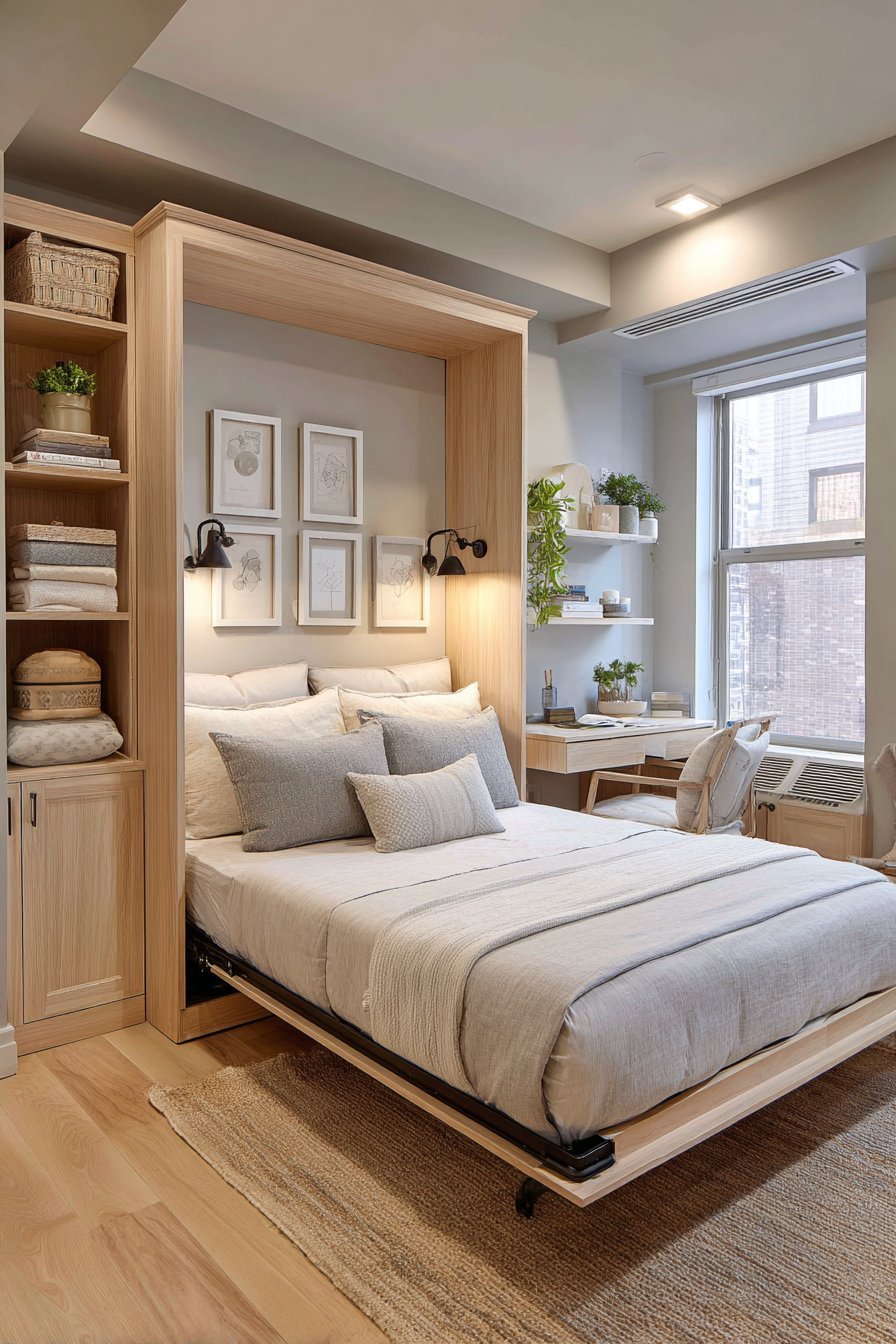
Successful tiny bedroom design balances practical storage needs with aesthetic appeal. The incorporation of natural materials, strategic lighting, and smart furniture choices creates spaces that feel both spacious and cozy. Quality investments in built-ins and multipurpose pieces provide long-term value and satisfaction.
Start your tiny bedroom transformation by identifying your most pressing storage needs. Choose one or two concepts that resonate with your lifestyle and space constraints. Your dream tiny bedroom awaits creation through careful planning and creative implementation. Small spaces can become your favorite rooms through thoughtful design and personal touches.
