
Creating a soft pink nursery offers a timeless approach to designing your baby’s first sanctuary. This gentle color palette creates calming environments that support rest and development. The versatility of soft pink allows for countless design possibilities.
Soft pink nurseries have transcended traditional gender-specific design trends. They now represent sophisticated spaces that blend functionality with aesthetic beauty. Modern parents appreciate how these delicate hues create serene atmospheres while providing flexibility for future updates. The color psychology behind soft pink promotes feelings of comfort and security for both babies and caregivers.
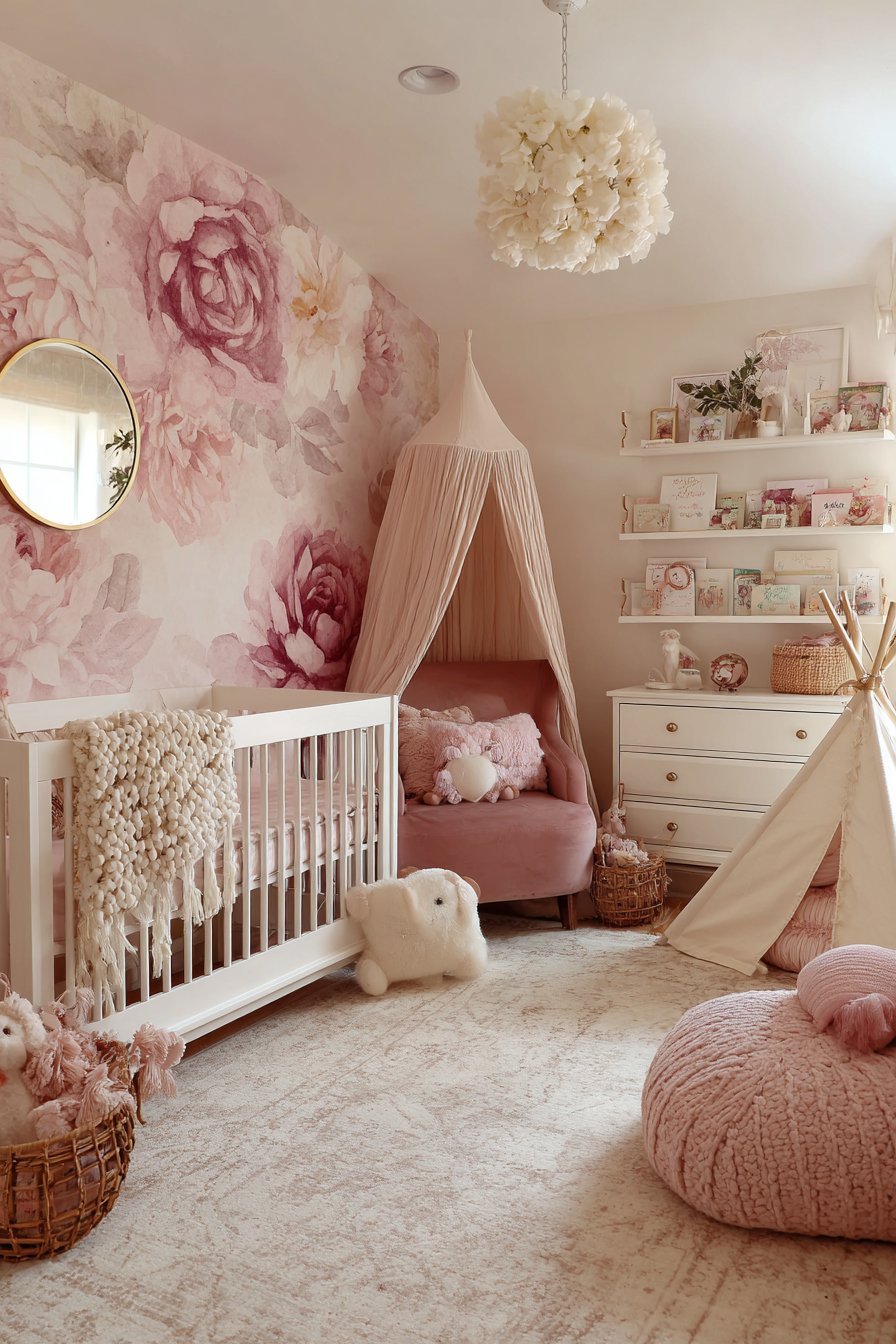
The designs featured in this article showcase diverse interpretations of soft pink nursery aesthetics. From minimalist Scandinavian approaches to richly textured bohemian spaces, each concept demonstrates unique ways to incorporate this beloved color. These carefully curated ideas address practical storage needs, comfortable feeding areas, and enchanting play spaces while maintaining cohesive design principles throughout.
1. Serene Blush Accent Wall Nursery
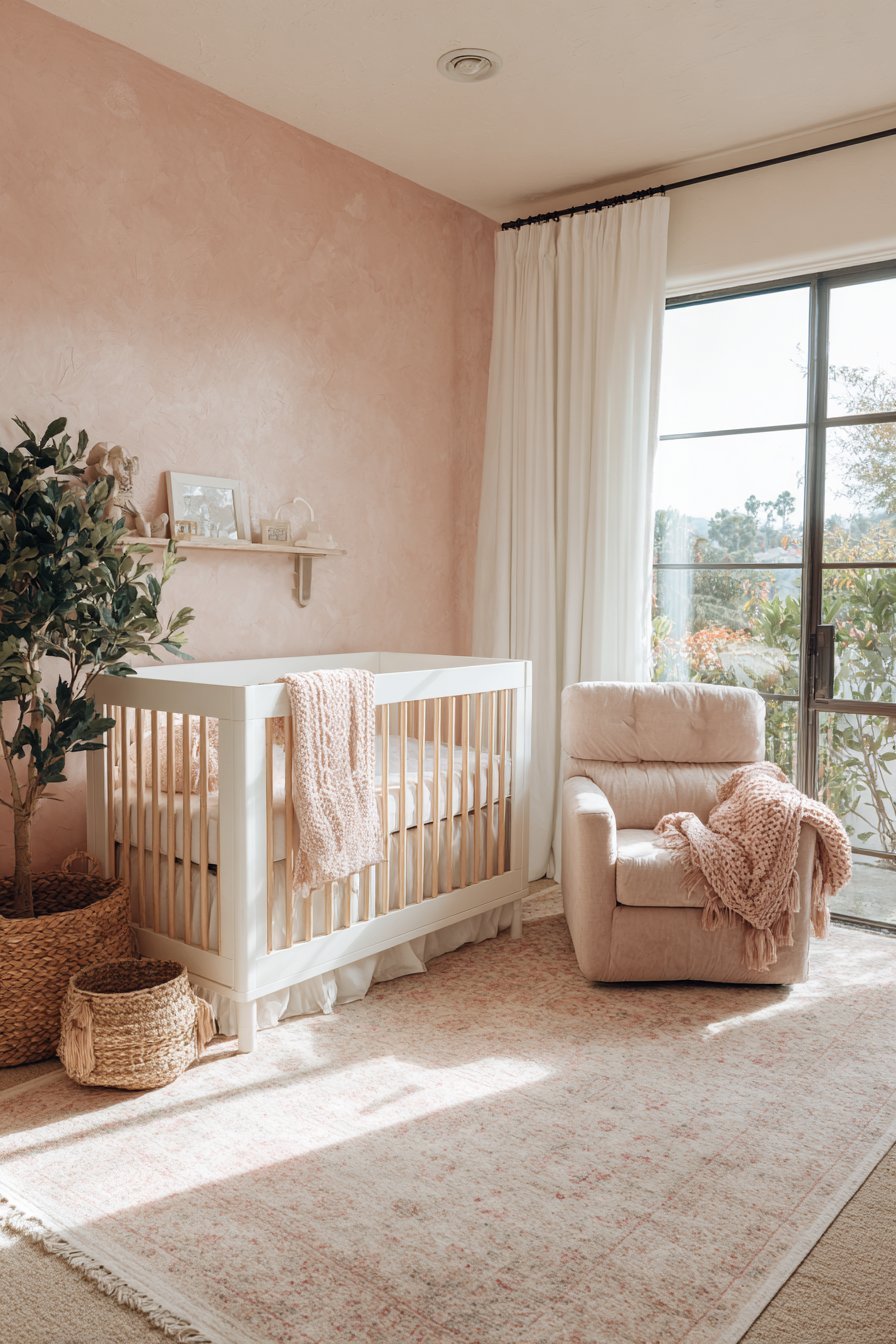
A white wooden crib with gently curved spindles creates the focal point of this tranquil space. The pale blush pink accent wall features subtle textured finish that adds depth. This treatment avoids overwhelming the senses. A plush cream area rug with delicate pink undertones anchors the sleeping zone perfectly.
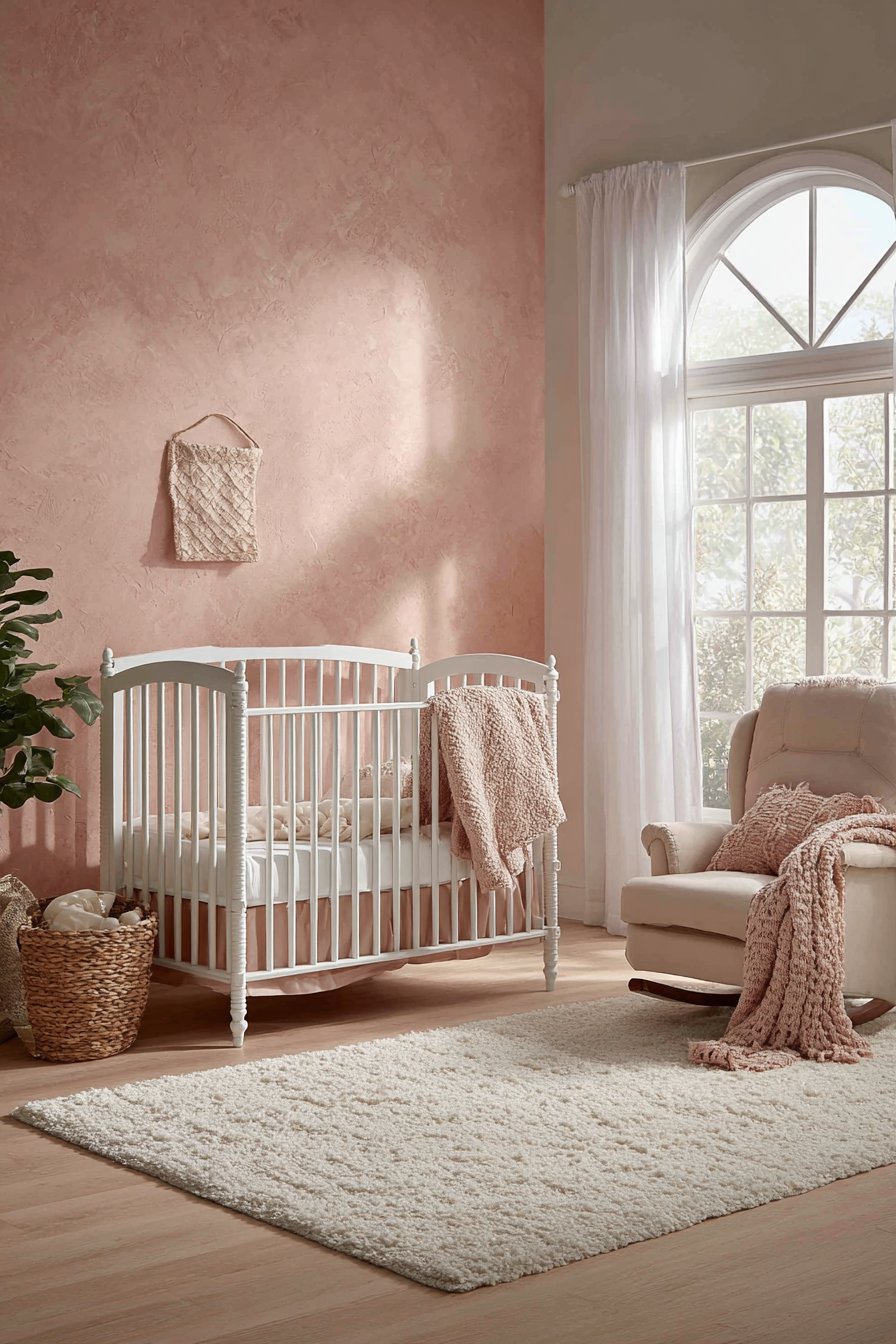
Sheer white curtains filter natural morning light through large windows. This creates a gentle glow across the entire room. The soft illumination highlights layered pink tones throughout the space. A comfortable glider chair upholstered in dusty rose linen occupies the corner. A knitted throw blanket drapes over the arm, adding textural interest.
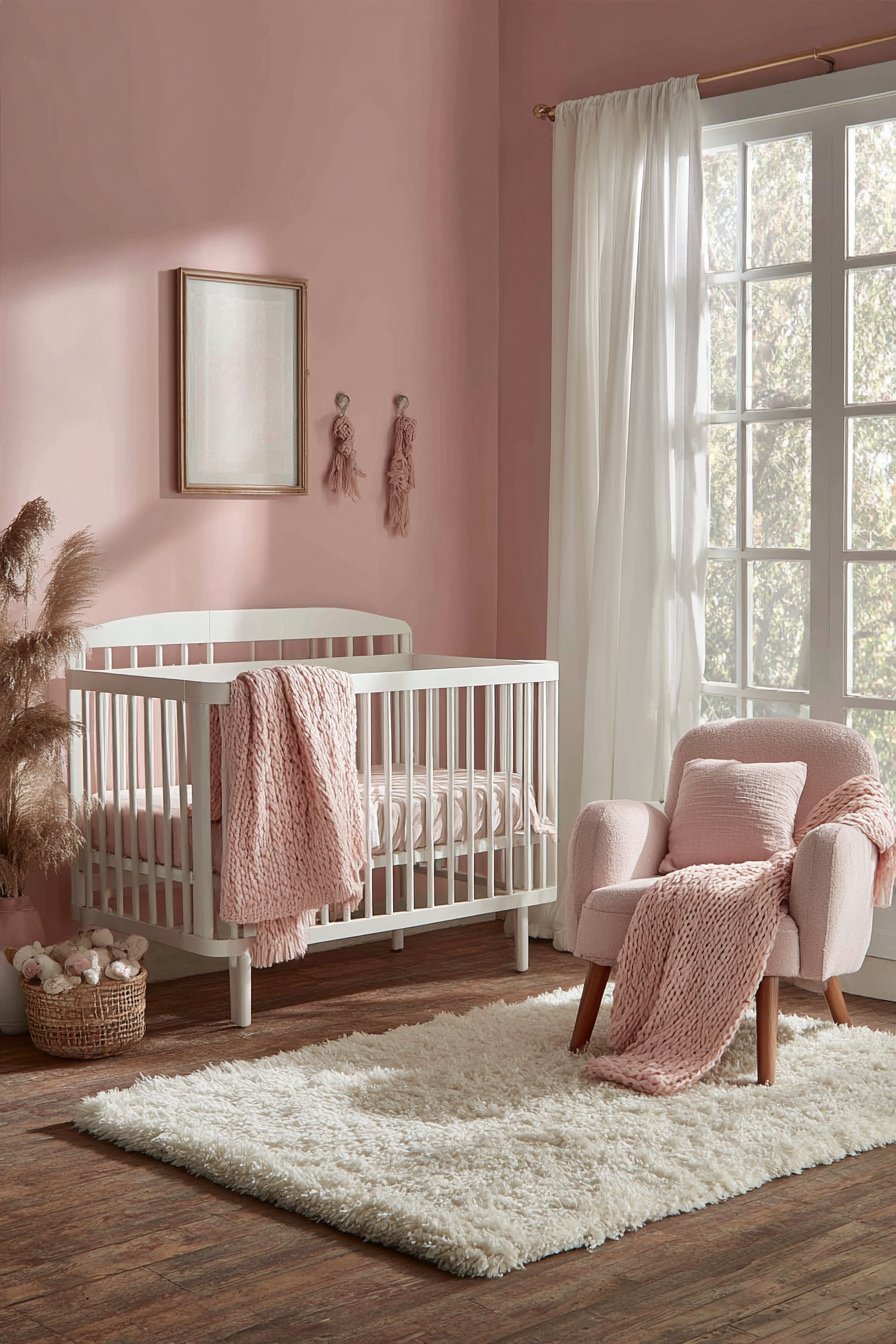
The beauty of this design lies in its restraint. The textured wall treatment provides visual interest without busy patterns. Natural light becomes a design element itself. The interplay between filtered sunlight and soft pink surfaces creates an ever-changing atmosphere. This dynamic quality keeps the space feeling fresh and alive.
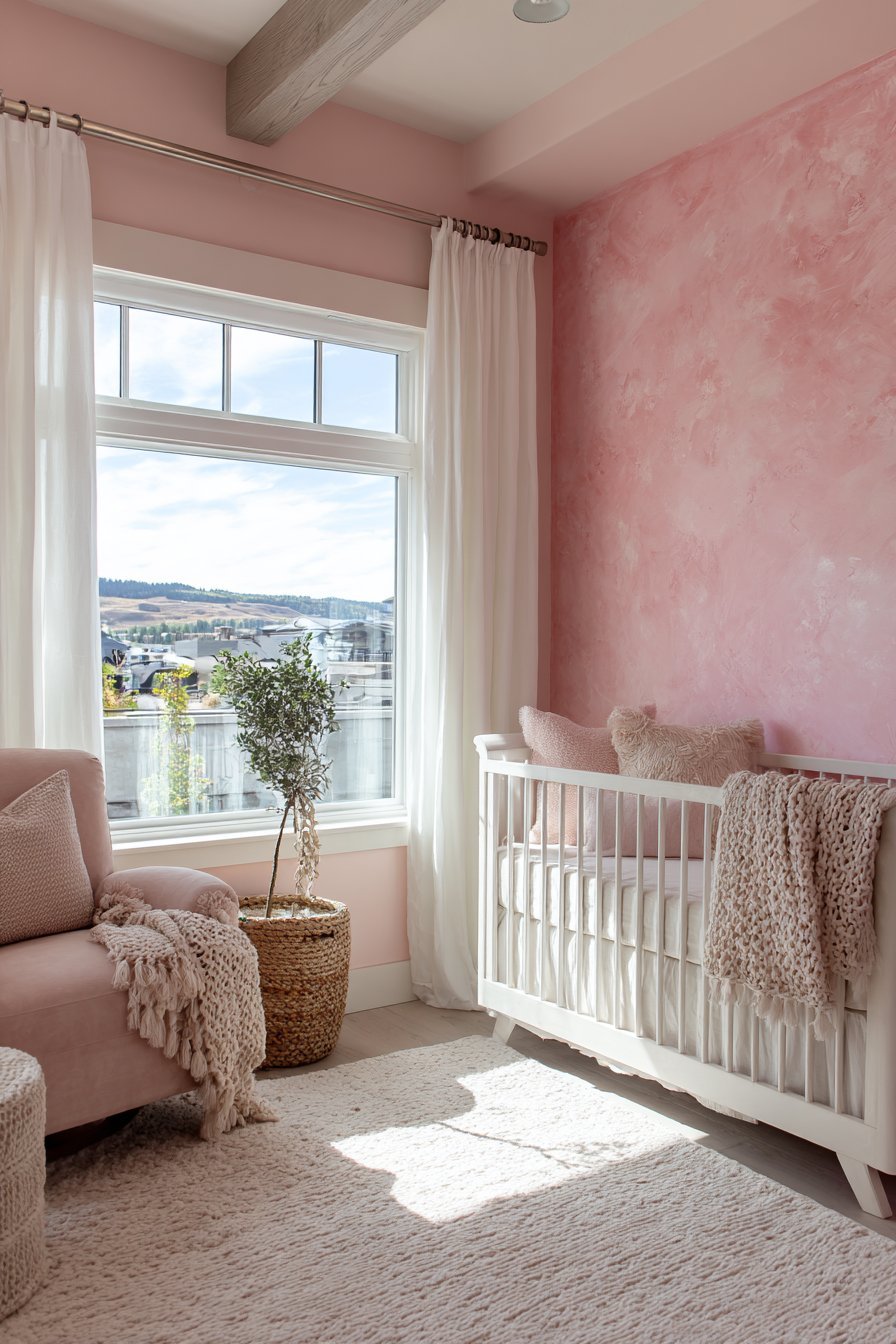
The furniture selection emphasizes both comfort and longevity. White wooden pieces offer timeless appeal that transcends nursery years. The curved spindles on the crib add gentle curves to balance straight lines. Dusty rose linen on the glider provides sophisticated warmth. These thoughtful choices create cohesive design that feels intentional yet relaxed.
Key Design Tips:
- Choose textured paint finishes for accent walls to add depth without patterns
- Layer different pink tones from pale blush to dusty rose for visual richness
- Select sheer curtains to maximize natural light while maintaining softness
- Invest in quality upholstered pieces that transition beyond nursery years
- Use cream and white as grounding neutrals to balance pink elements
2. Organized Storage Wall in Soft Pink
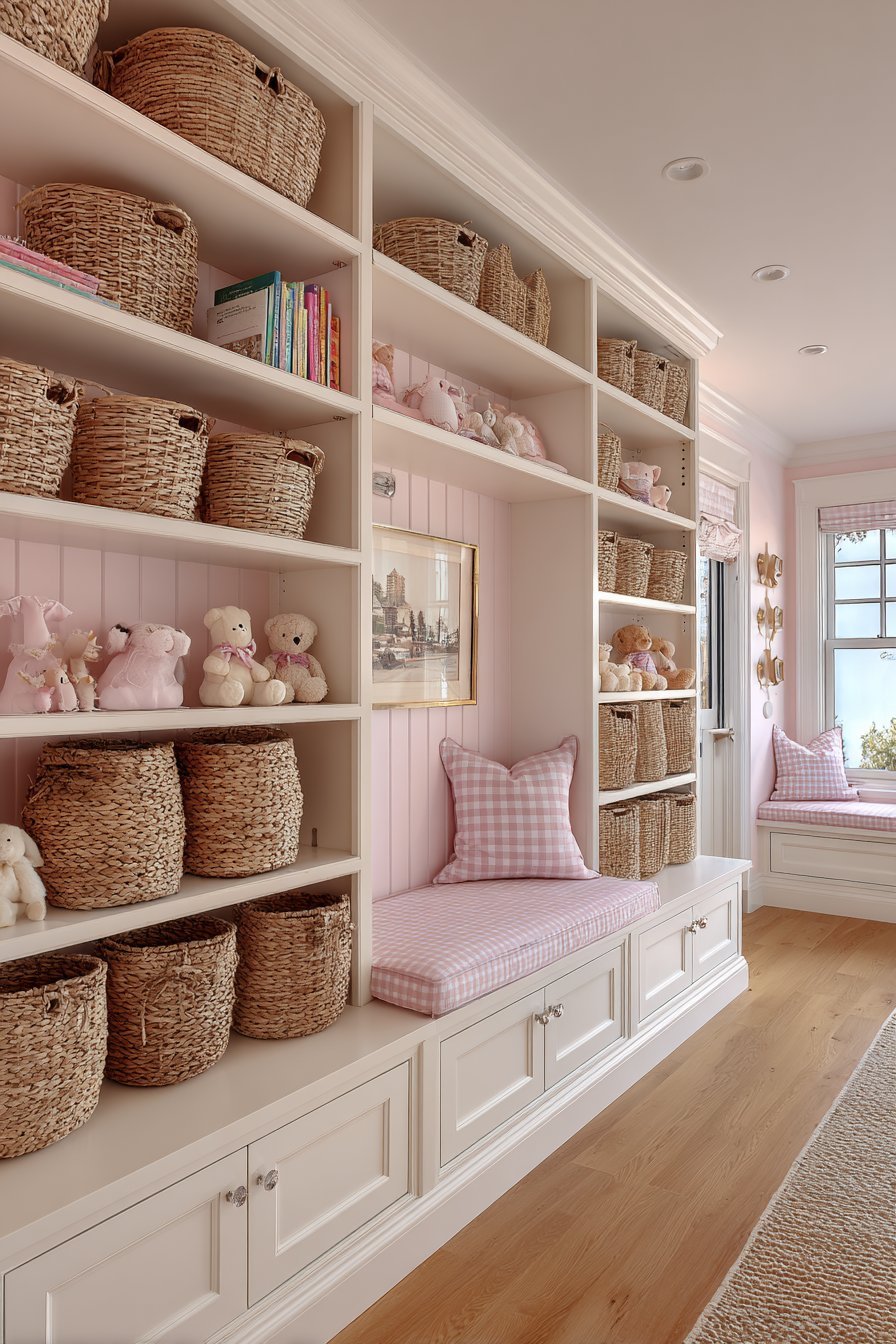
Built-in white shelving units transform one wall into functional beauty. Wicker baskets in natural tones alternate with soft pink fabric bins. This creates organized storage that looks curated rather than cluttered. Board books with pastel spines display alongside small stuffed animals. Minimal decorative elements in coordinating blush and cream complete the arrangement.
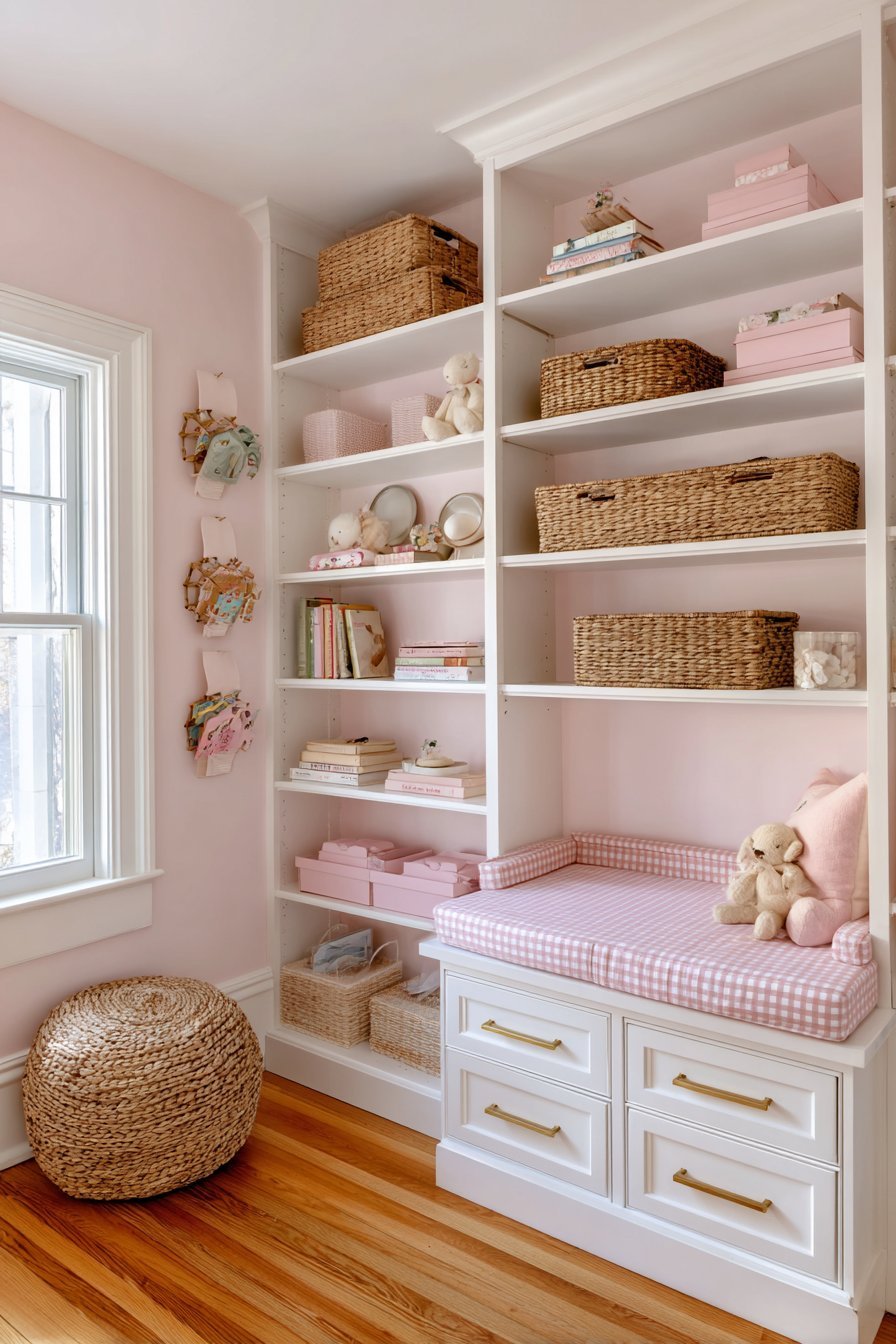
A changing station integrates into the lower section seamlessly. The cushioned pad features pink gingham fabric that adds subtle pattern. Natural oak flooring grounds the predominantly pink and white color scheme. This warm wood tone prevents the space from feeling too cool or sterile.
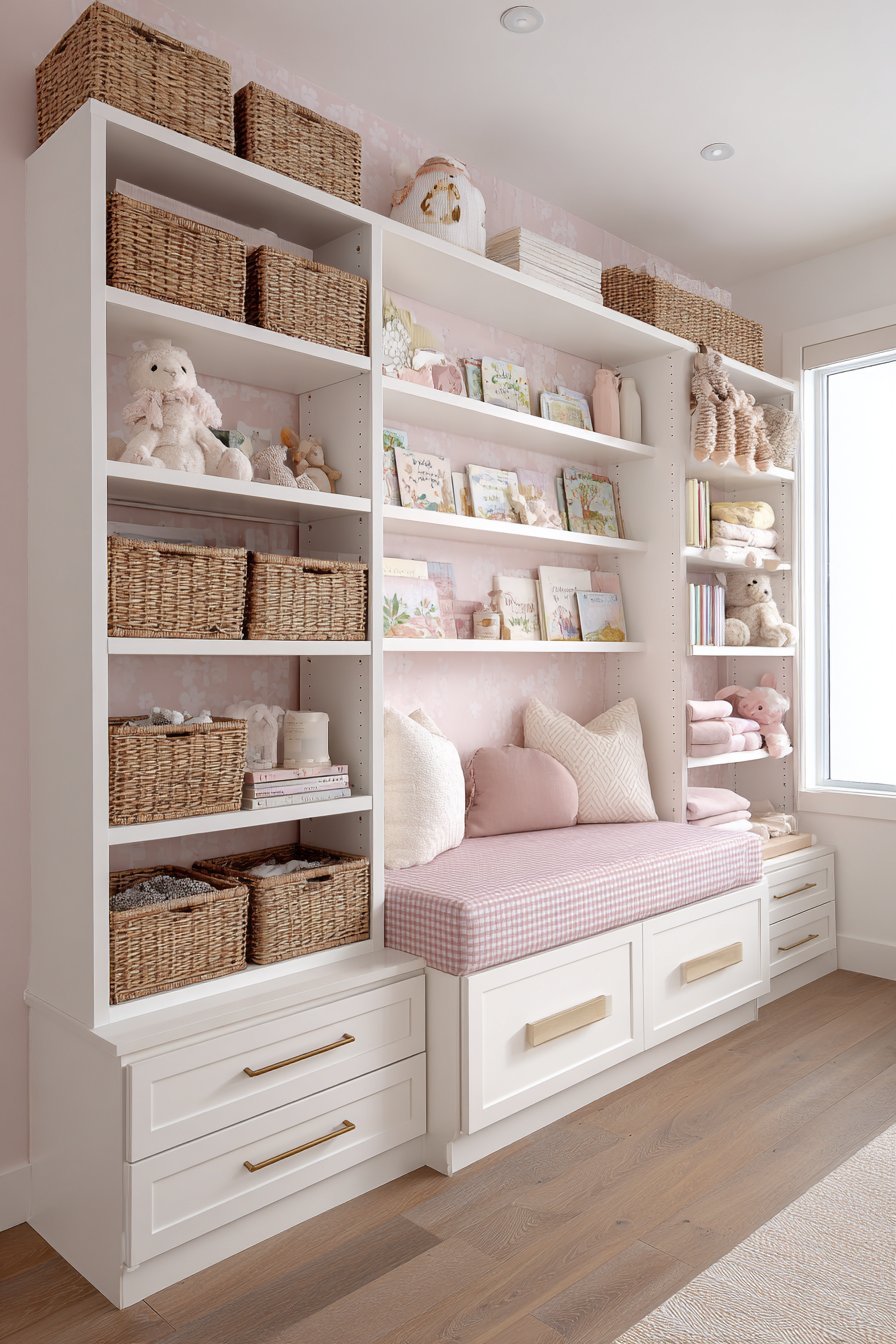
The genius of this design approach lies in accessibility. Everything has a designated place within easy reach. Open shelving allows quick visual inventory of supplies. The combination of baskets and bins accommodates different storage needs. Wicker baskets hold larger items while fabric bins contain smaller essentials.
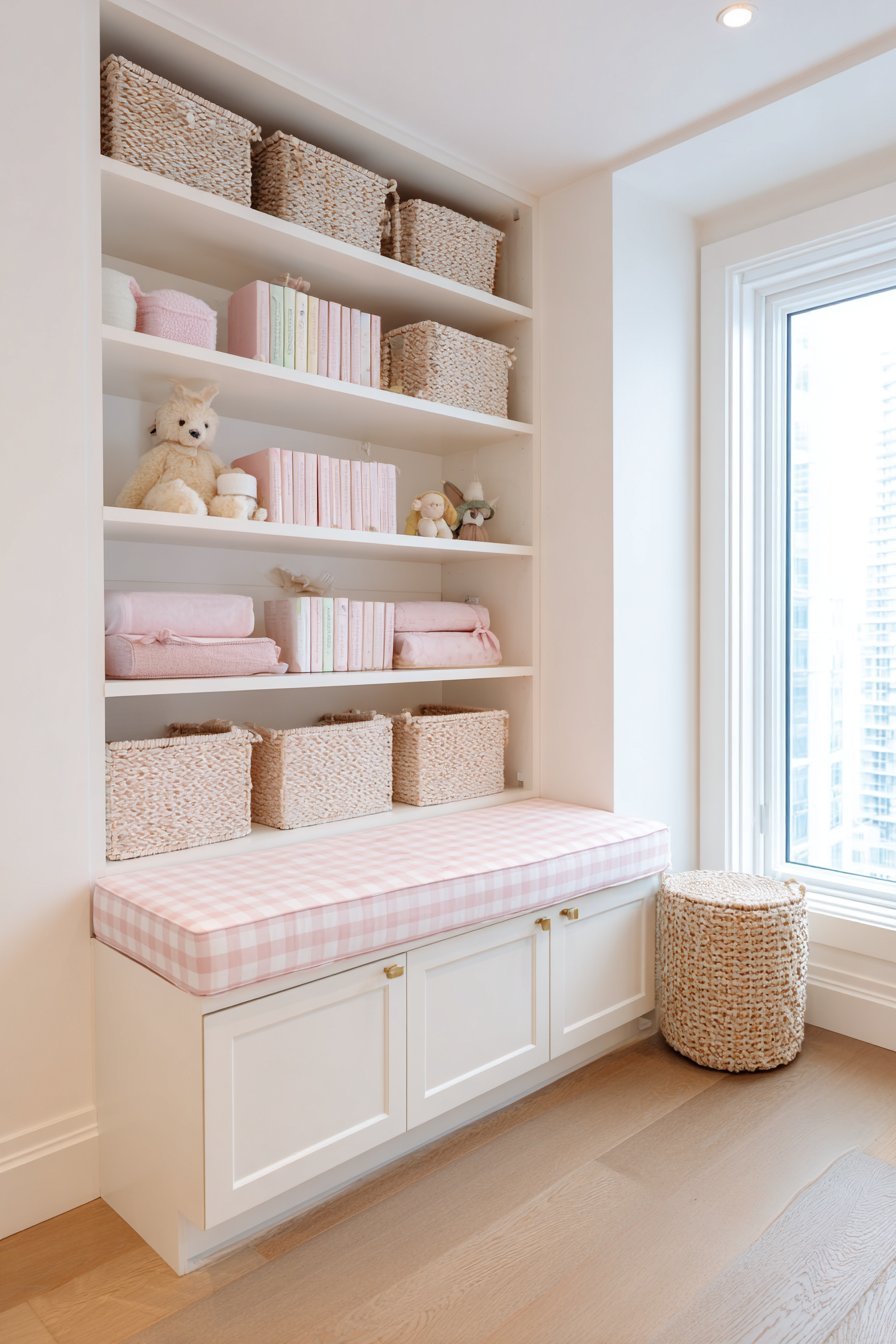
Professional organization meets aesthetic appeal in this thoughtfully planned space. The built-in nature of the shelving maximizes vertical space efficiently. Lower sections remain accessible for daily changing routines. Upper shelves display decorative items and less-frequently-used supplies. This hierarchy of storage creates both function and visual interest.
Key Design Tips:
- Install built-in shelving to maximize storage without consuming floor space
- Mix natural wicker baskets with fabric bins for varied texture and function
- Integrate changing stations into storage walls for efficient space planning
- Display books with spines facing out to add color and personality
- Use natural wood flooring to warm up predominantly pink and white schemes
- Keep lower shelves functional and upper shelves more decorative
3. Window-Side Reading Nook
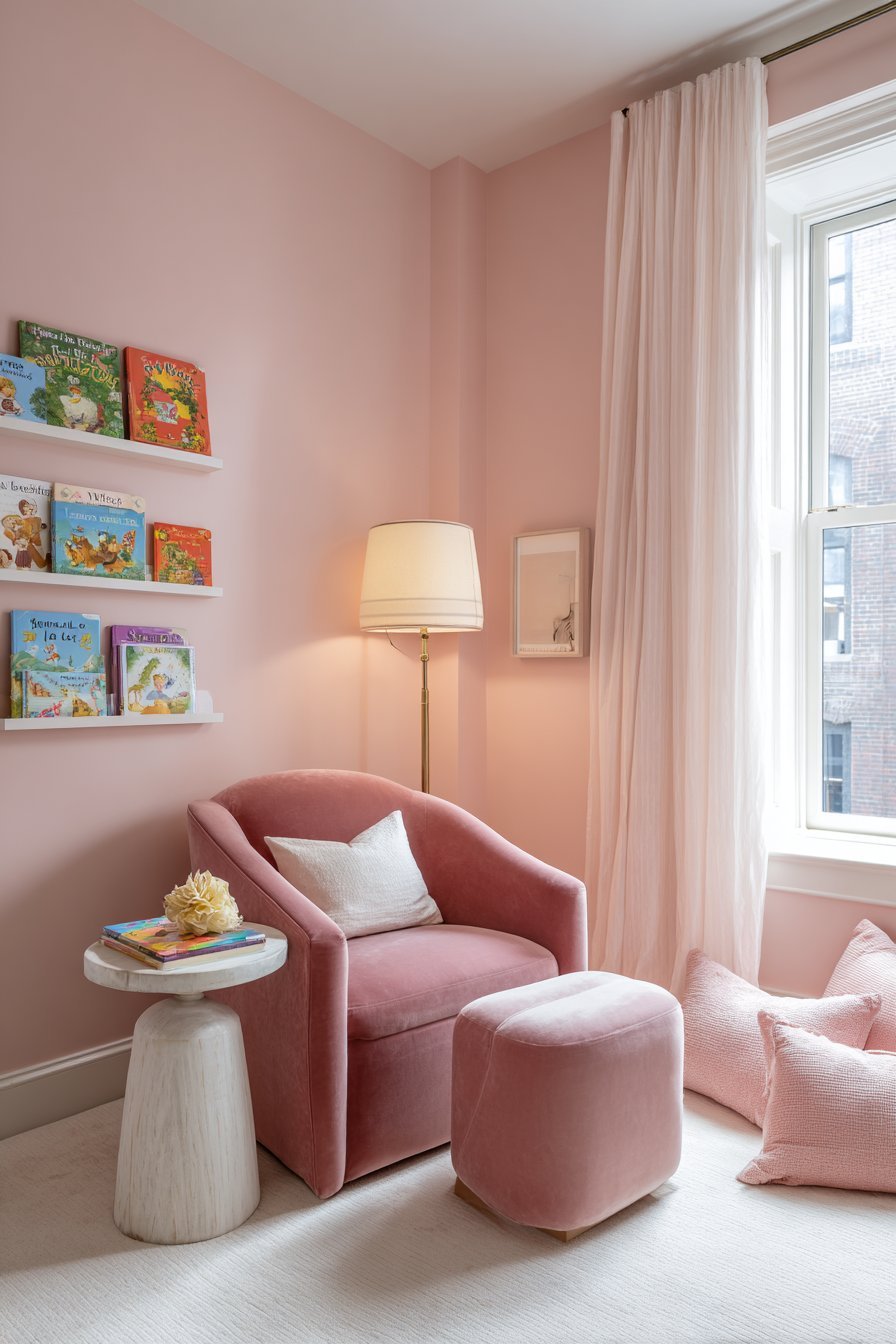
A low upholstered armchair in mauve pink velvet provides comfortable seating near the window. Abundant natural light floods this dedicated reading space. A small round side table in white-washed wood holds a vintage-style lamp. The cream linen shade on the lamp adds soft illumination for evening stories.
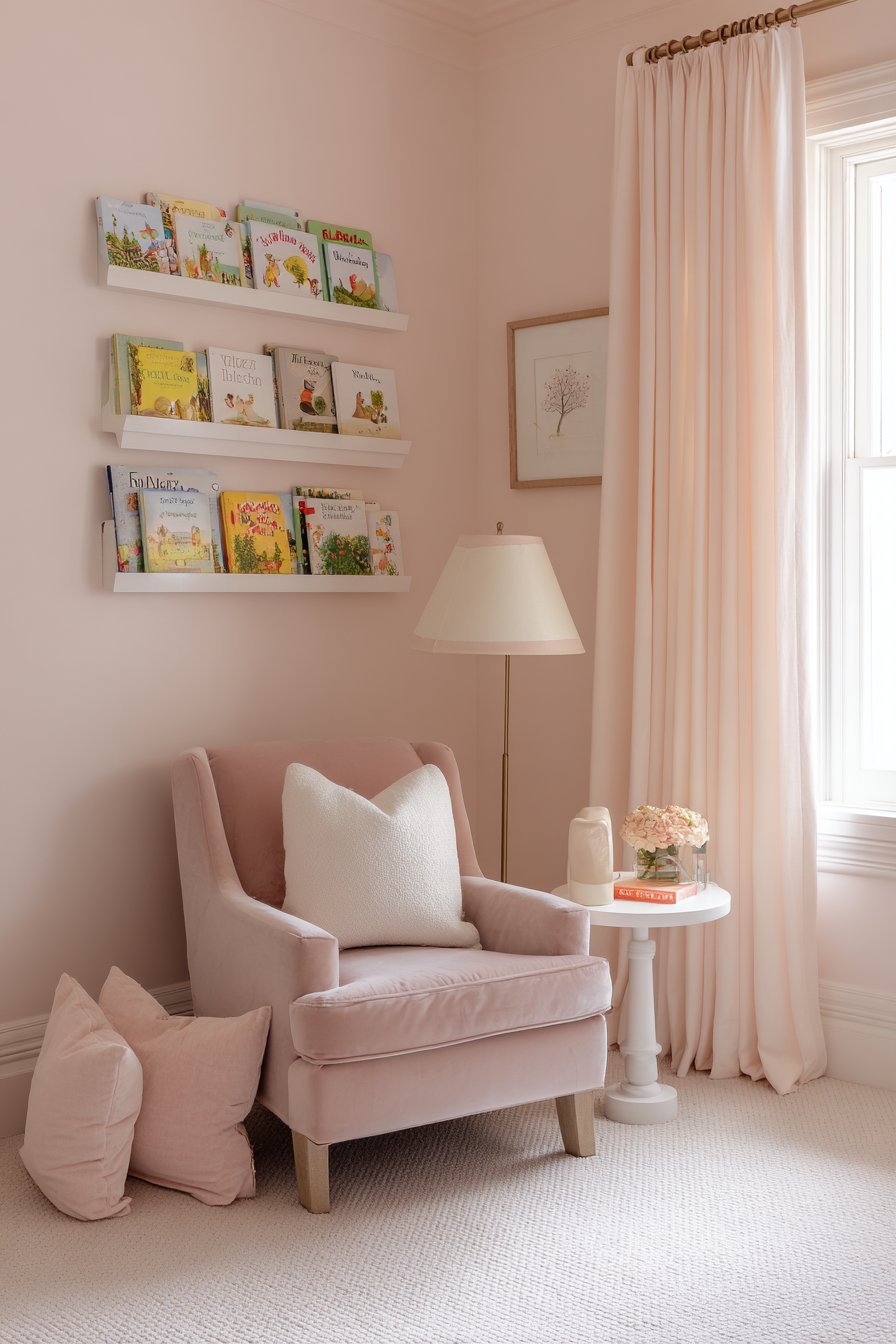
Floor cushions in varying shades of dusty rose and blush scatter nearby. They rest on soft cream carpet that invites barefoot comfort. A wall-mounted bookshelf in white displays children’s books with colorful covers. These bright spines create pops of interest against pale pink walls. Sheer pink curtains diffuse incoming sunlight beautifully.
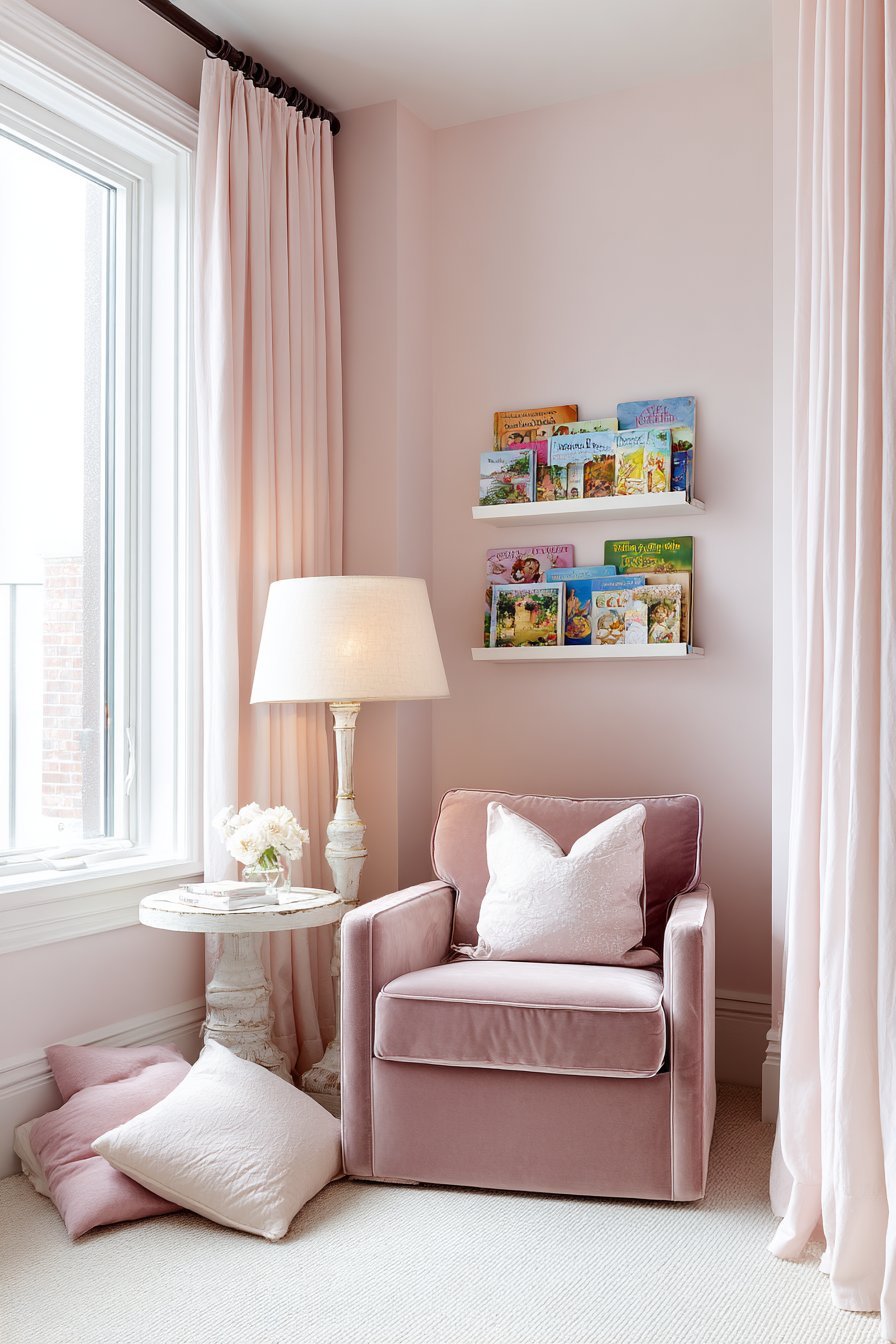
This reading nook demonstrates how dedicated spaces enhance daily routines. The positioning near natural light makes the area inviting during daytime. The addition of task lighting extends usability into evening hours. The low armchair accommodates comfortable reading positions for caregivers. Floor cushions provide flexible seating as children grow.
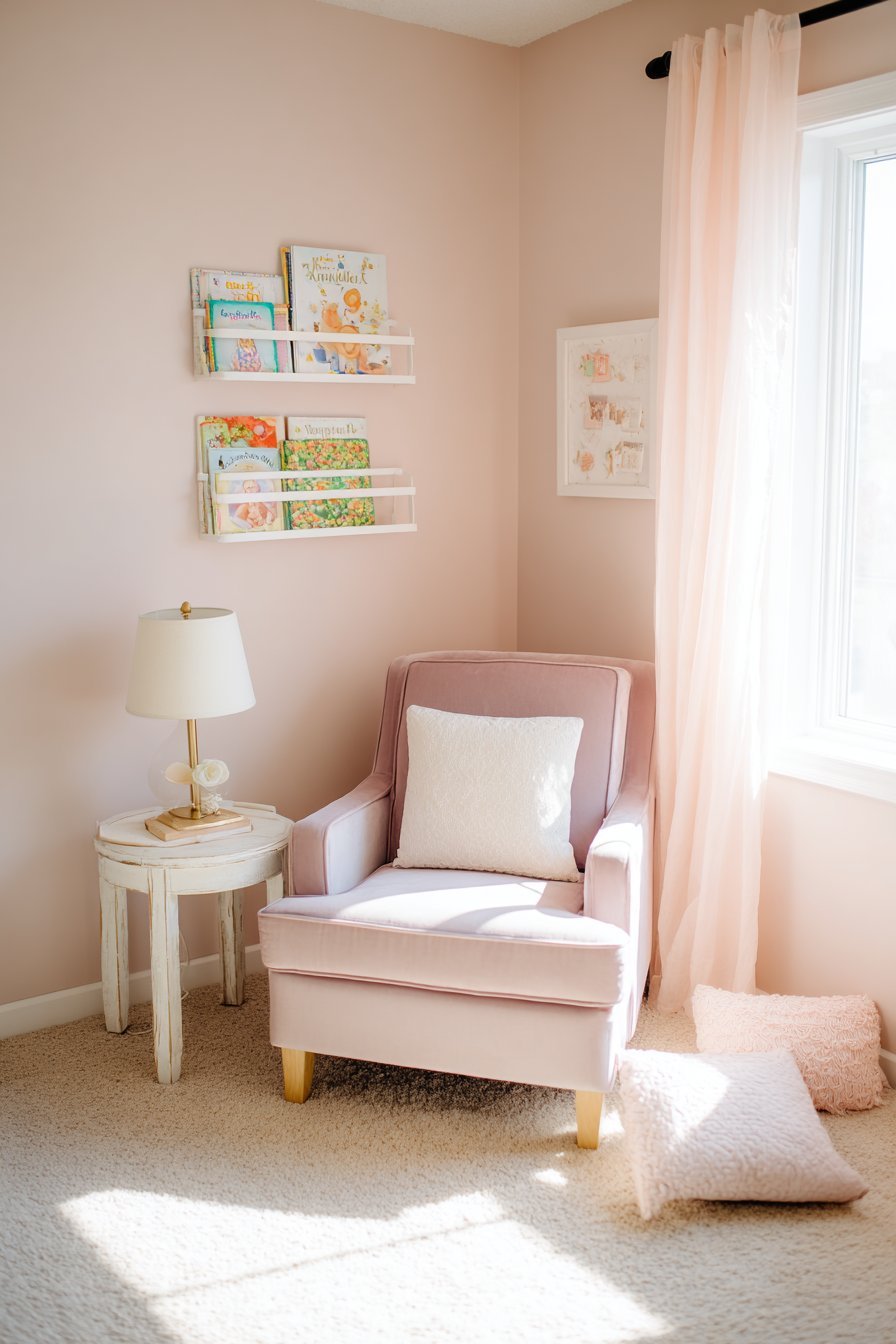
Texture plays a starring role in this intimate corner. The velvet armchair offers luxurious softness against skin. Natural linen provides organic contrast to synthetic materials. The cream carpet adds plush comfort underfoot. These varied textures create sensory interest that enhances the reading experience. The dreamy atmosphere encourages quiet bonding moments.
Key Design Tips:
- Position reading areas near windows to maximize natural light
- Choose velvet upholstery for luxurious texture and rich color depth
- Add floor cushions for flexible seating that grows with your child
- Install wall-mounted shelves to keep books accessible without floor clutter
- Layer sheer curtains over windows for light control without blocking views
- Include both natural and artificial lighting for all-day functionality
4. Brass Hardware Dresser Station
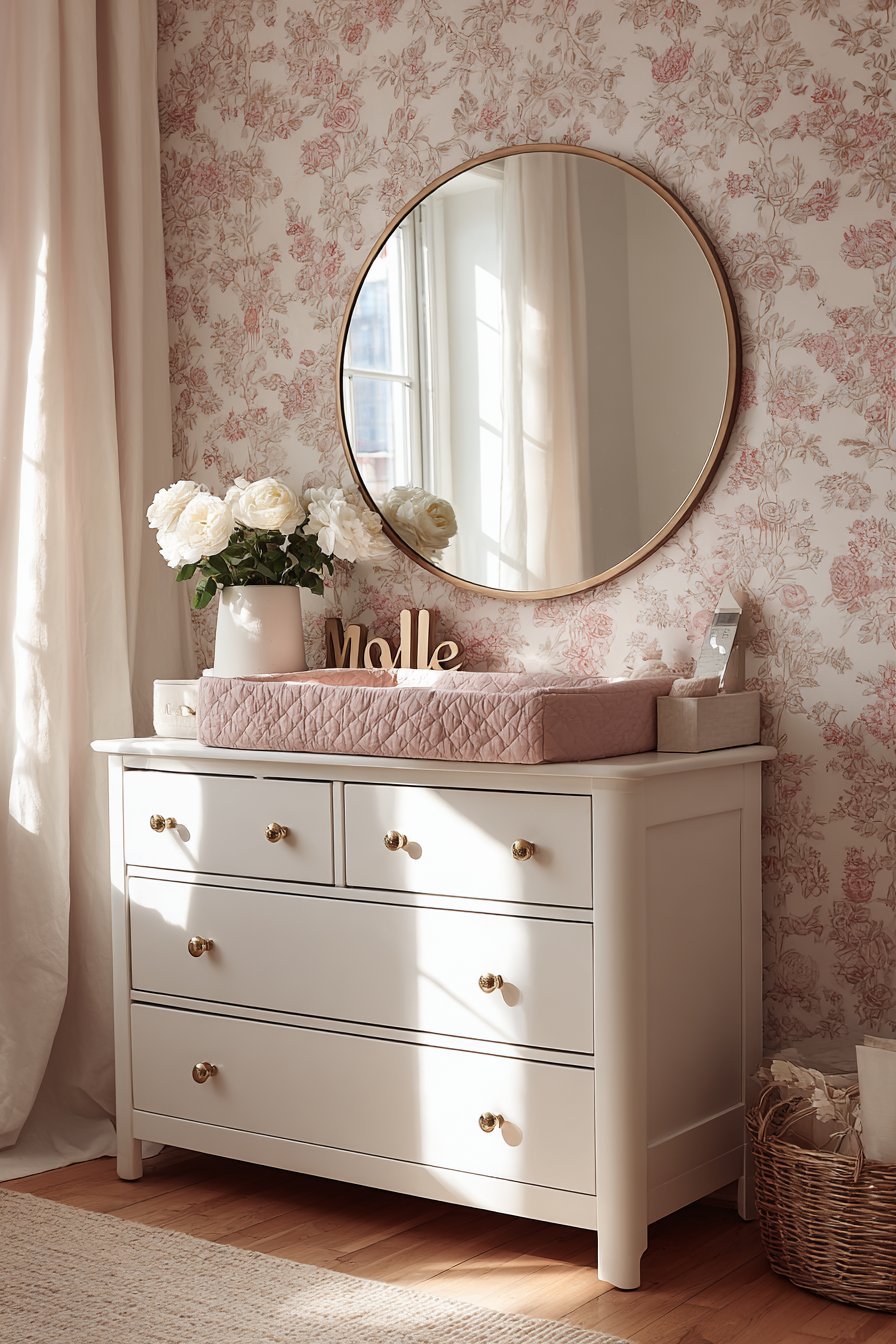
A white dresser with brass knob hardware doubles as a changing table. The quilted changing pad in soft pink cotton tops the surface. Above the dresser hangs a large round mirror with thin gold frame. This reflects natural light throughout the room and creates the illusion of more space.
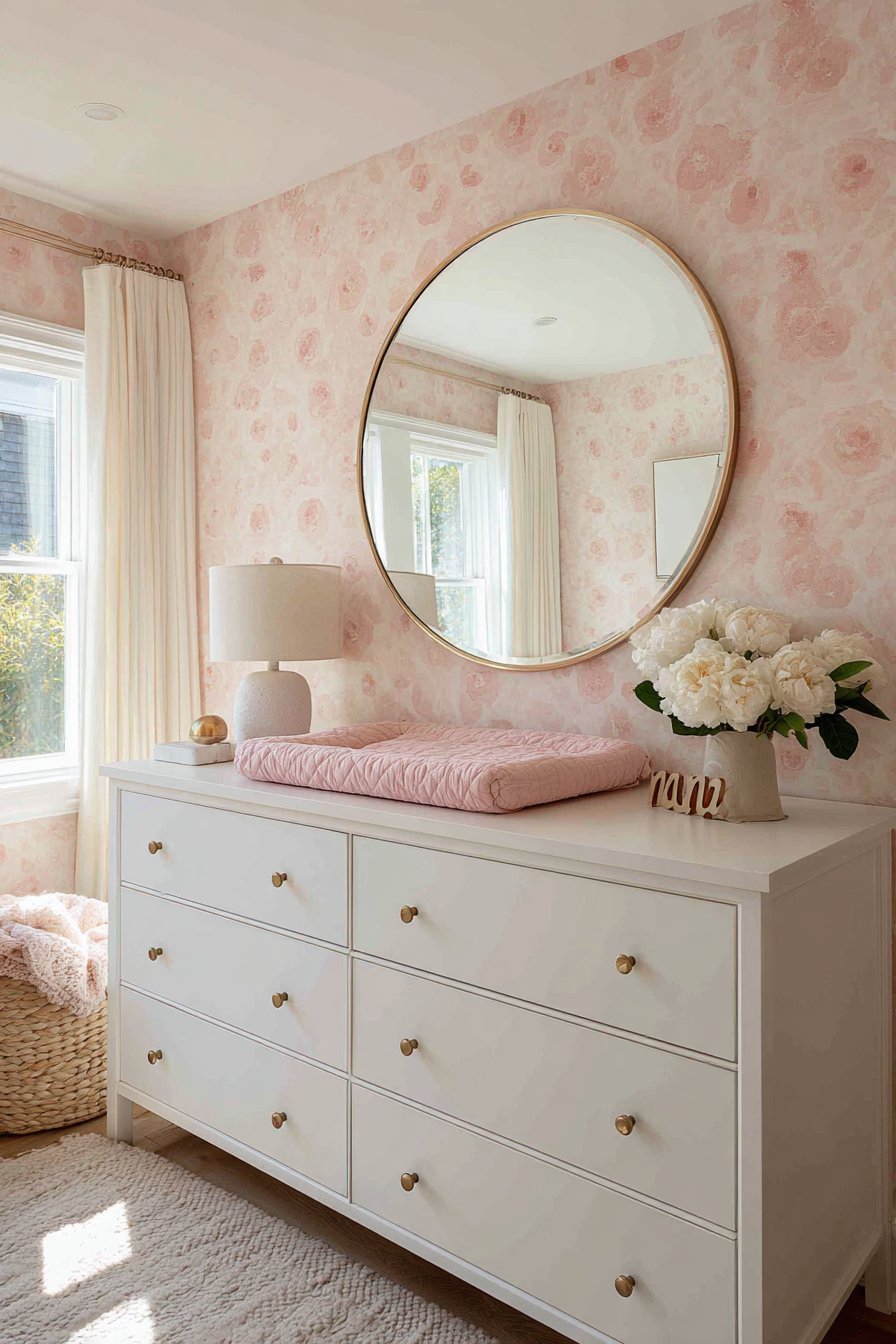
The wall behind features removable wallpaper with delicate pink watercolor florals. The cream background allows the pattern to read softly rather than boldly. Small decorative elements add personalized touches without cluttering. A ceramic vase holds fresh white peonies. A wooden letter spelling the baby’s name provides custom detail.
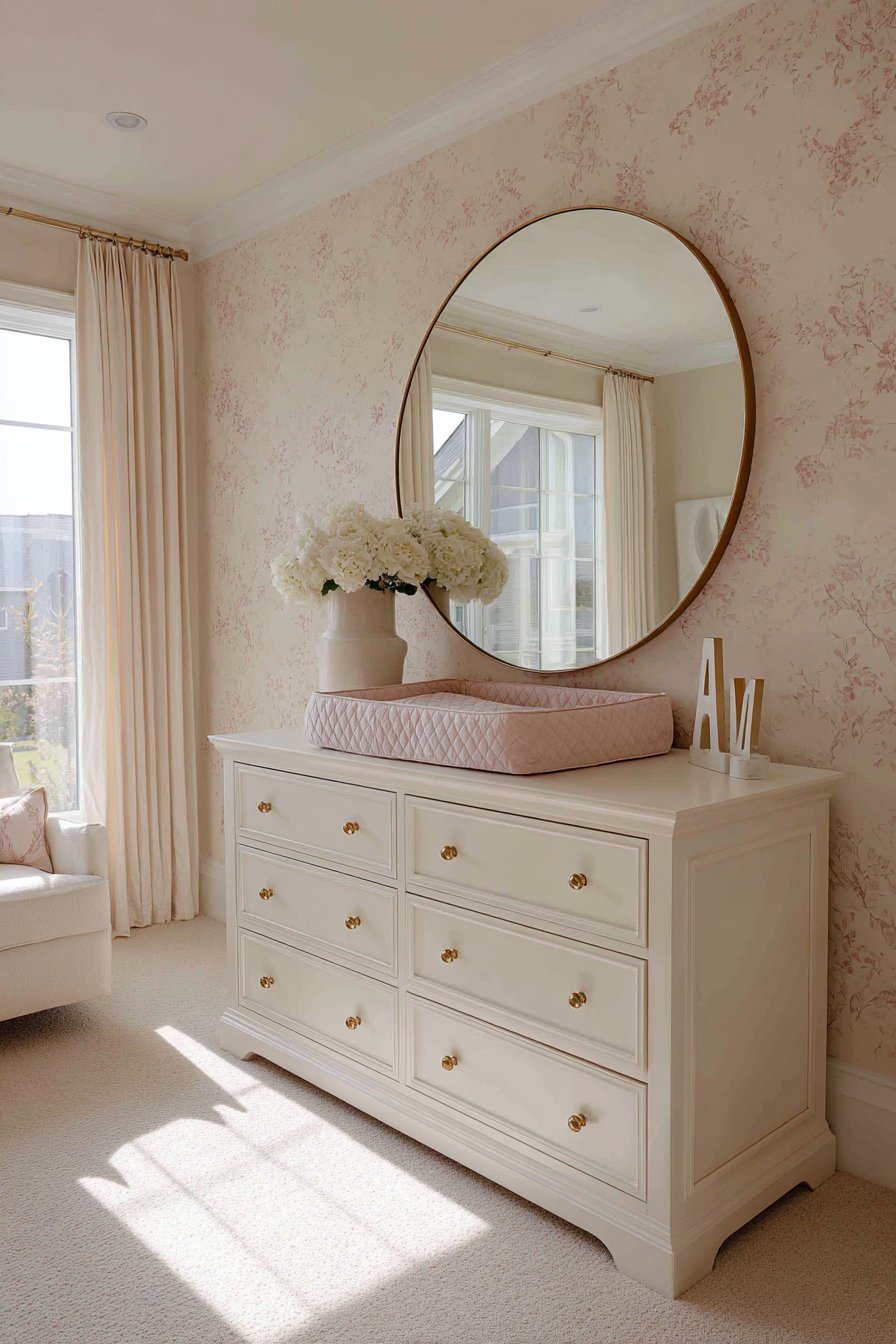
The functional beauty of this setup cannot be overstated. The dresser provides ample storage for clothing and supplies. The changing surface sits at comfortable height for caregivers. The mirror serves practical purposes while enhancing the room’s brightness. Morning light streaming through adjacent windows highlights the soft pink palette. It emphasizes the interplay between matte and reflective surfaces.
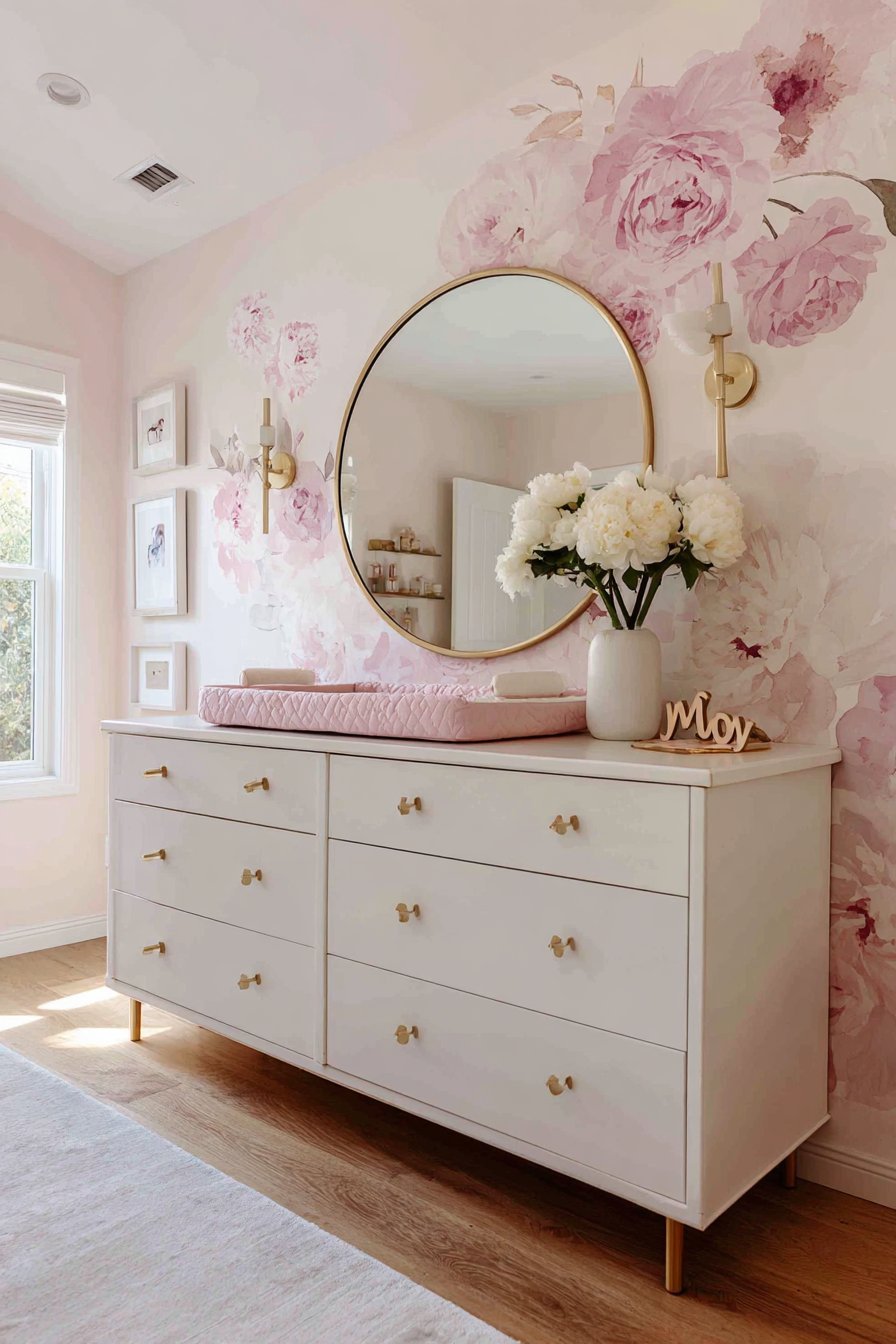
Brass hardware adds warmth and sophistication to white furniture. These metallic accents catch light and create subtle sparkle. The gold-framed mirror coordinates with hardware for cohesive design. Removable wallpaper offers pattern without permanent commitment. This allows for easy updates as tastes evolve. The watercolor florals add artistic quality without overwhelming the senses.
Key Design Tips:
- Select dressers with brass or gold hardware to add warmth to white furniture
- Use mirrors strategically to reflect light and expand visual space
- Choose removable wallpaper for commitment-free pattern incorporation
- Keep changing table surfaces clean and minimal for safety and function
- Add fresh flowers periodically to bring life and natural fragrance
- Personalize with single meaningful elements rather than multiple small items
5. Dreamy Fabric Canopy Installation
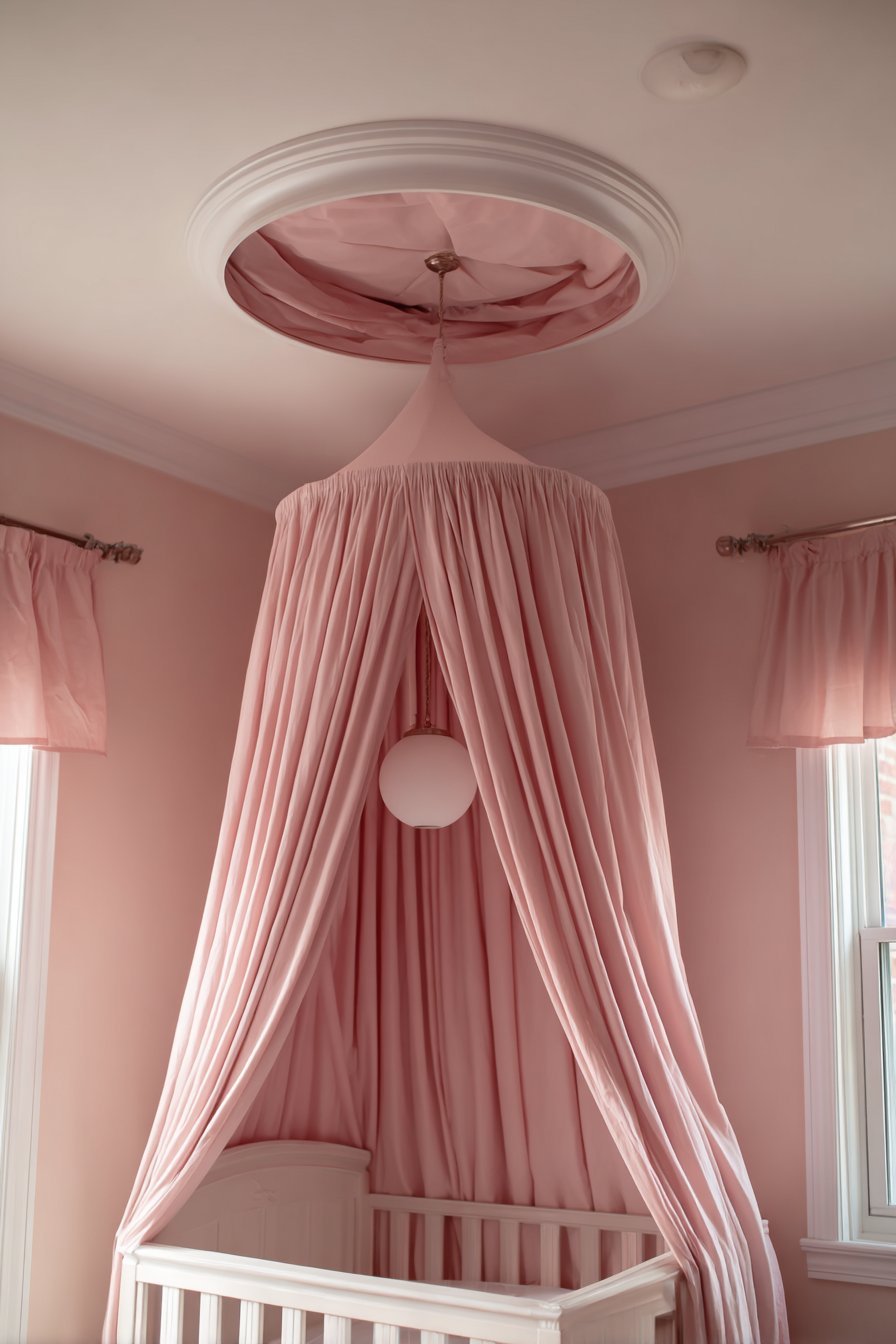
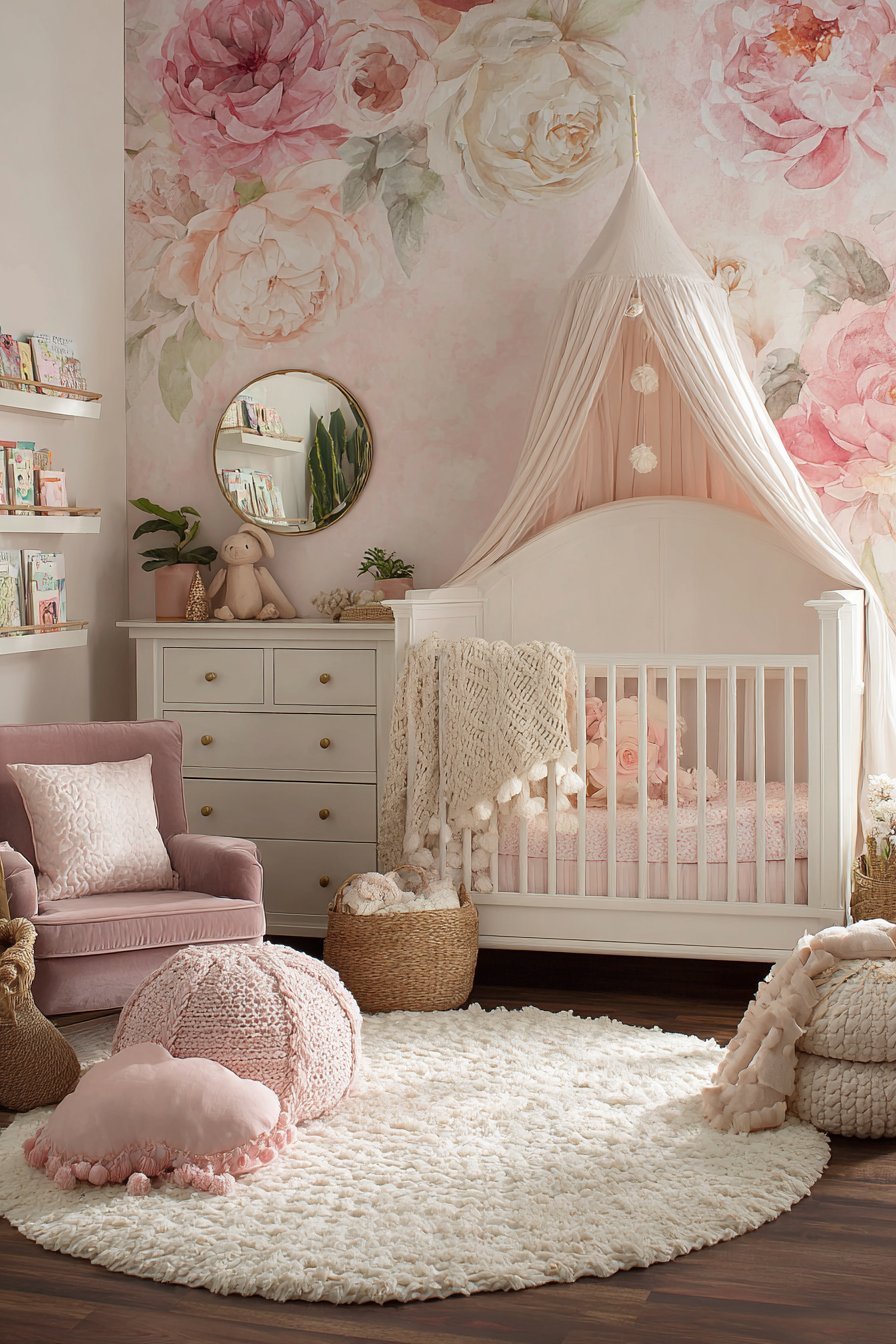
A fabric canopy drapes from a ceiling-mounted circular frame above a white bassinet. The lightweight cotton in pale blush pink features subtle gathering. These gentle folds create romantic draping that catches natural light. The surrounding walls in slightly deeper rose tone create subtle depth. This layering of similar hues adds sophistication to the soft palette.
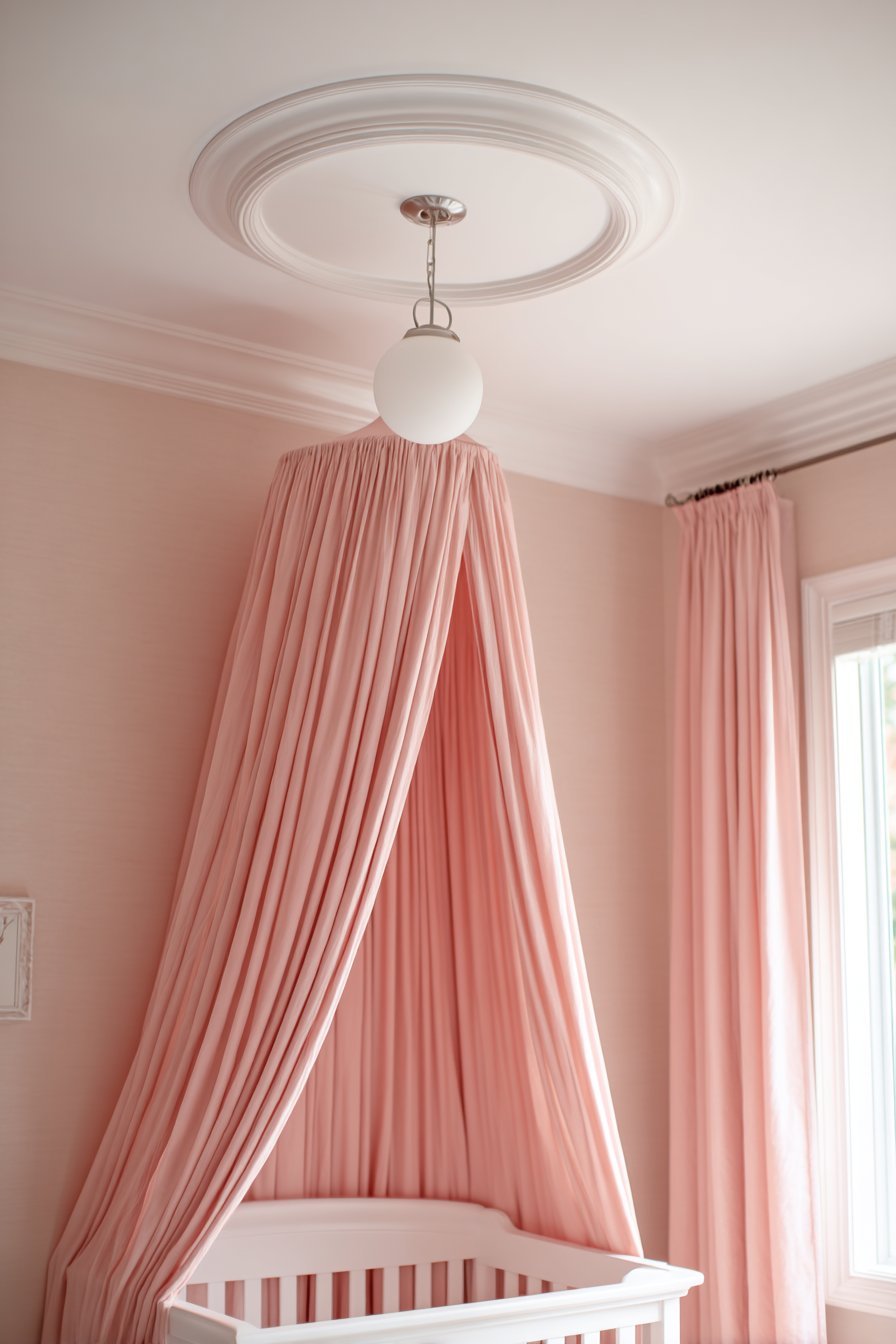
A simple pendant light fixture with white globe shade hangs to one side. This provides ambient illumination when natural light fades. The positioning prevents shadows directly over the sleeping area. Natural light from nearby windows creates soft highlights on fabric texture. These shifting patterns add visual interest throughout the day.
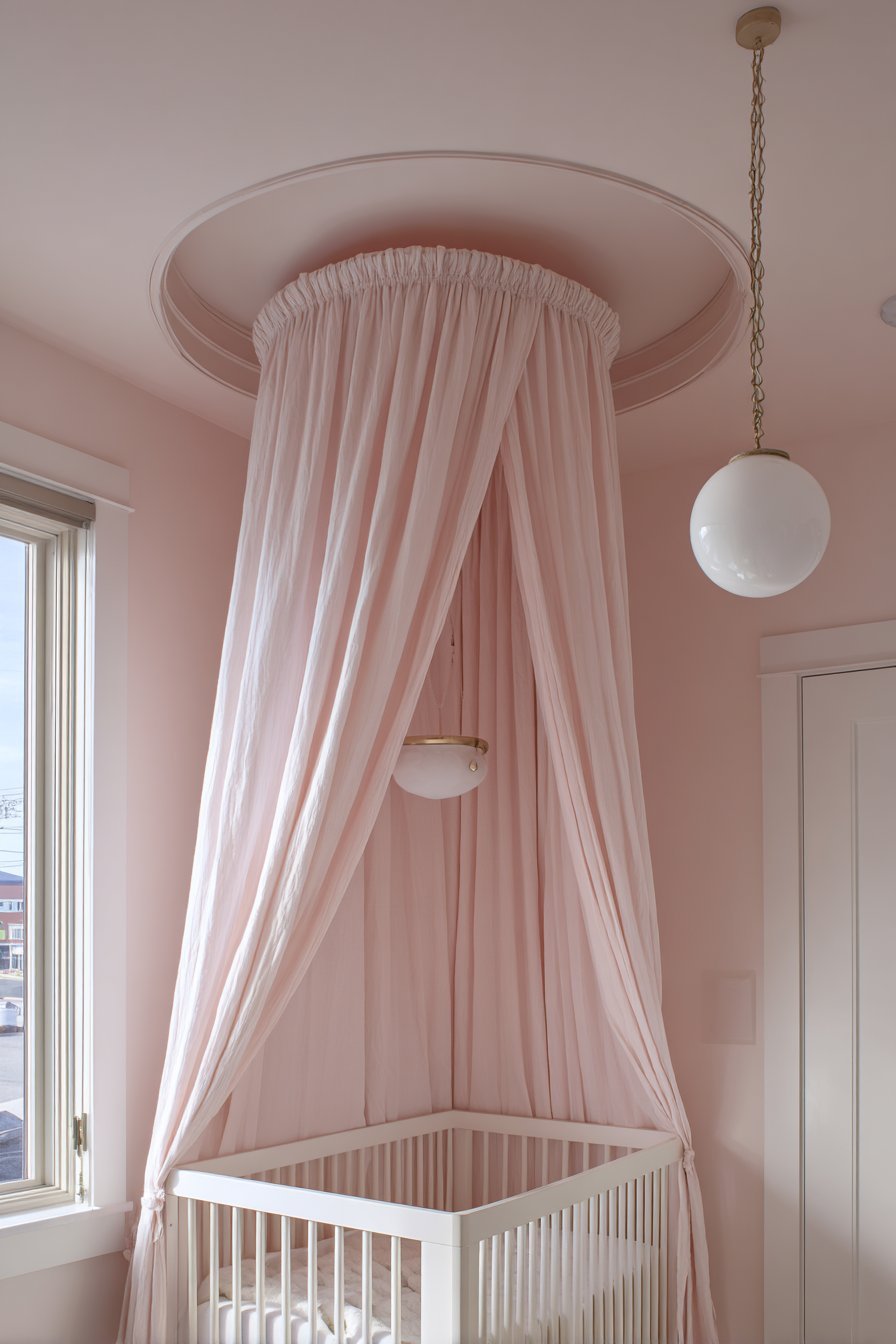
The ethereal quality of this design element cannot be replicated with other features. Canopies create intimate spaces within larger rooms. They define sleeping areas without physical barriers. The lightweight fabric moves gently with air circulation. This subtle motion provides visual stimulation appropriate for infants.
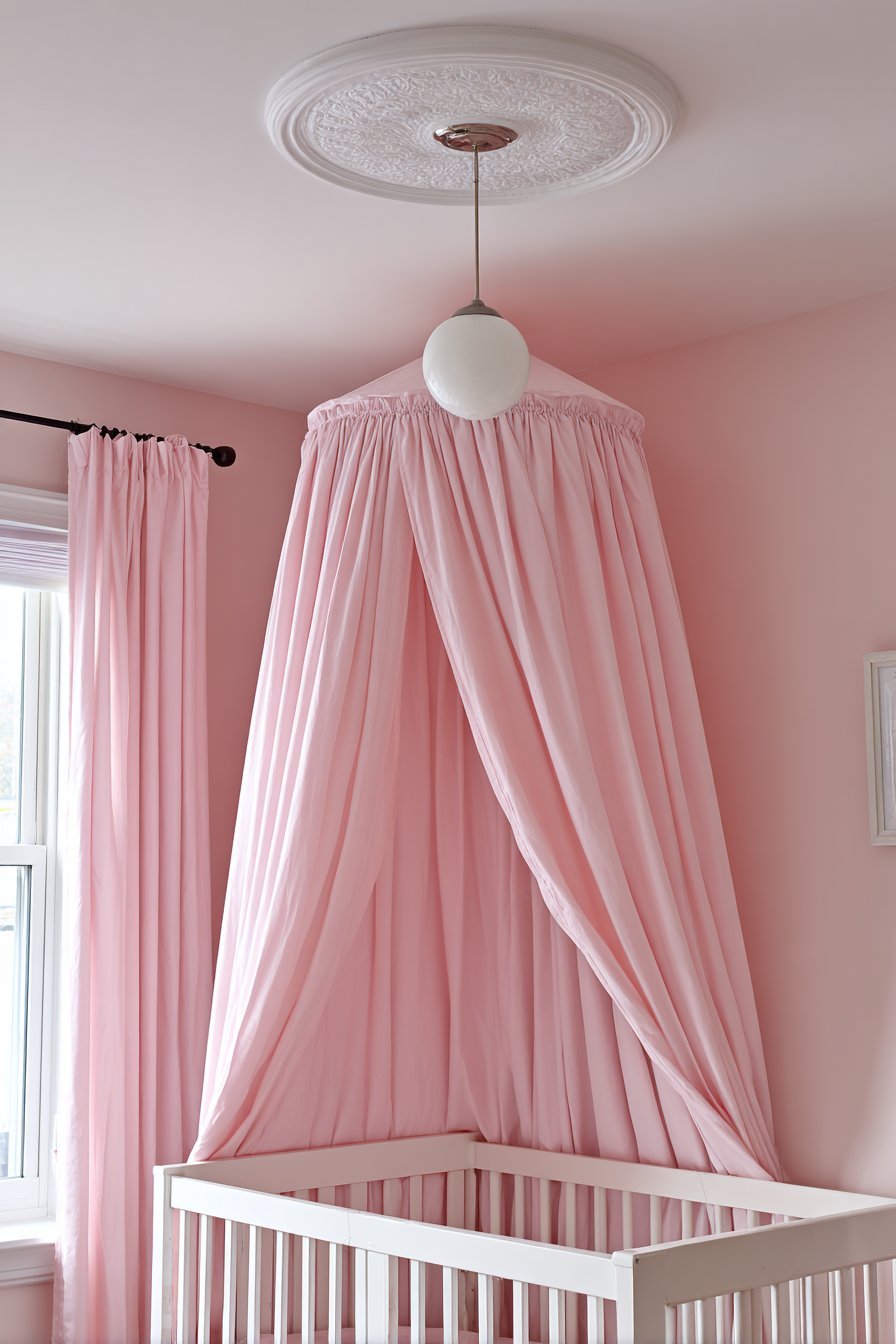
Installation requires careful planning for safety and aesthetics. The ceiling-mounted frame must attach securely to ceiling joists. The fabric should remain far enough from the bassinet to prevent entanglement. When properly installed, canopies become stunning focal points. They add vertical interest to otherwise horizontal room layouts. The soft pink cotton filters and diffuses light beautifully throughout the day.
Key Design Tips:
- Mount canopy frames securely to ceiling joists for safety
- Choose lightweight breathable fabrics that allow air circulation
- Position canopies to create visual interest without safety concerns
- Layer wall colors in similar tones for sophisticated depth
- Install ambient lighting adjacent to rather than directly above sleeping areas
- Select fabrics with subtle gathering for romantic draping effects
6. Organized Closet System
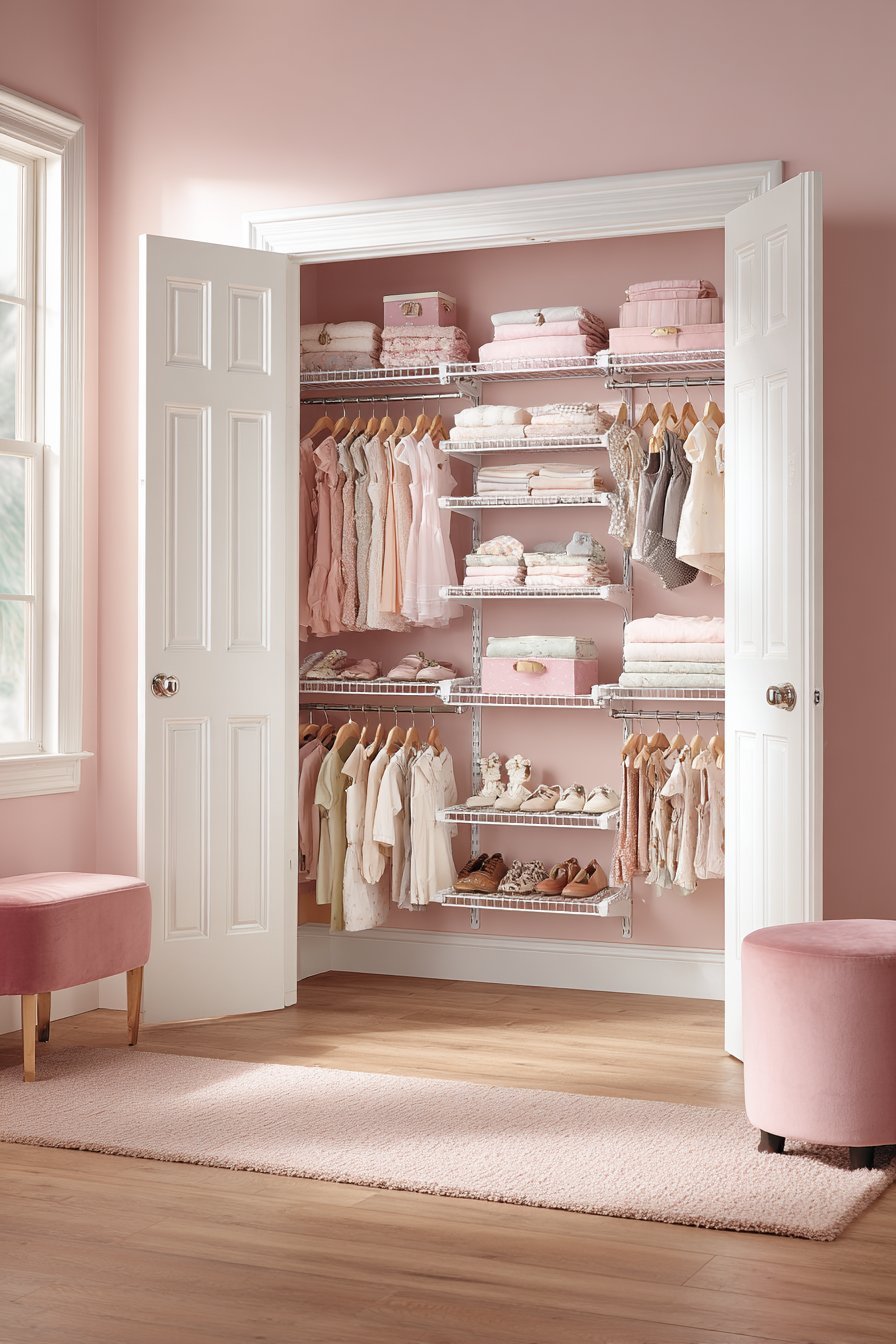
White adjustable shelving and hanging rods at varying heights maximize closet potential. The interior features pink fabric drawer organizers holding baby clothes sorted by size. Hanging sections display tiny outfits on small wooden hangers. Shoe cubbies at the bottom hold soft baby shoes in coordinating pink and neutral tones.
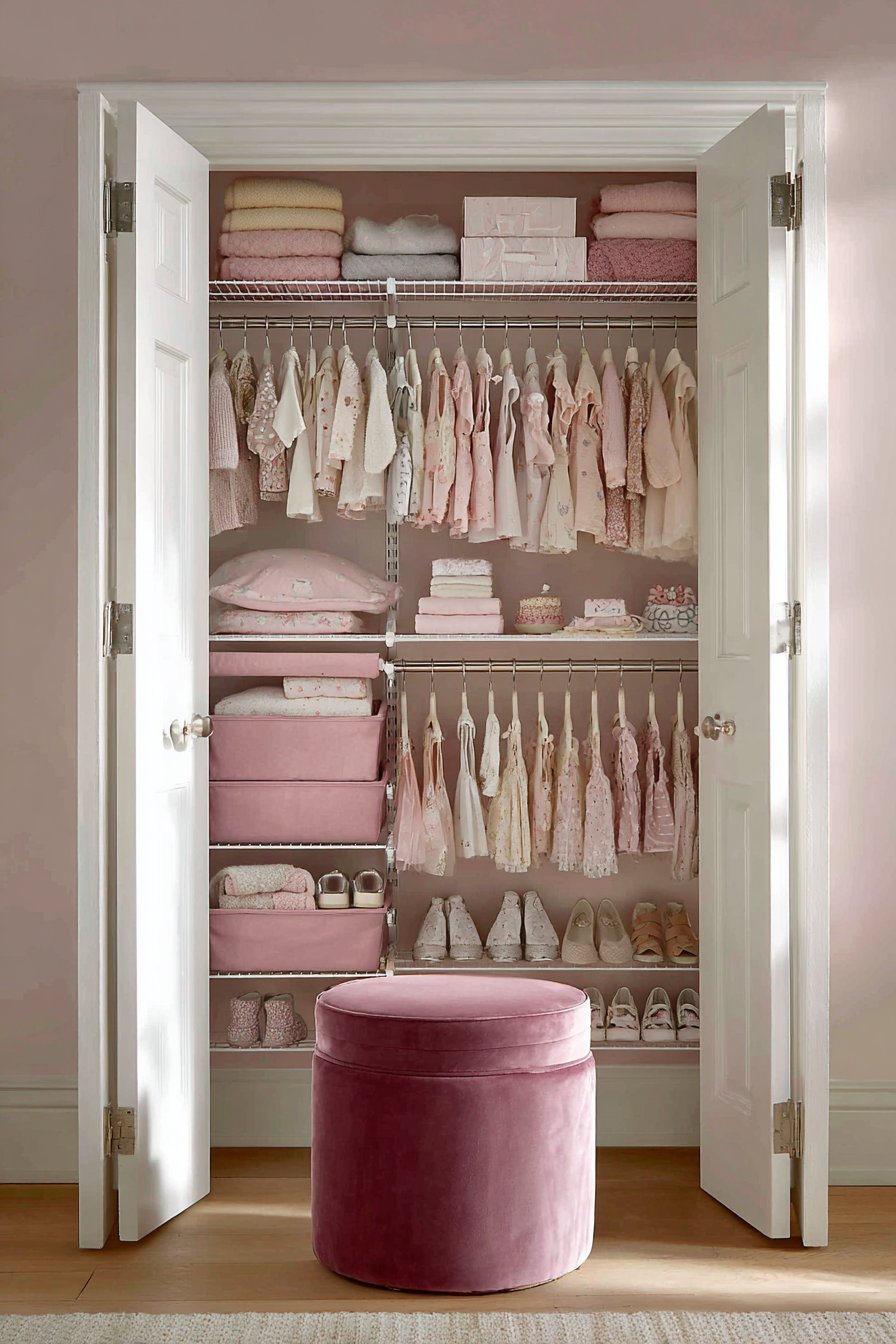
The closet doors painted white with simple hardware open to reveal organized interior. A pink velvet ottoman sits outside for comfortable dressing moments. This provides convenient seating during clothing changes. The thoughtful organization system makes finding items effortless during busy mornings.
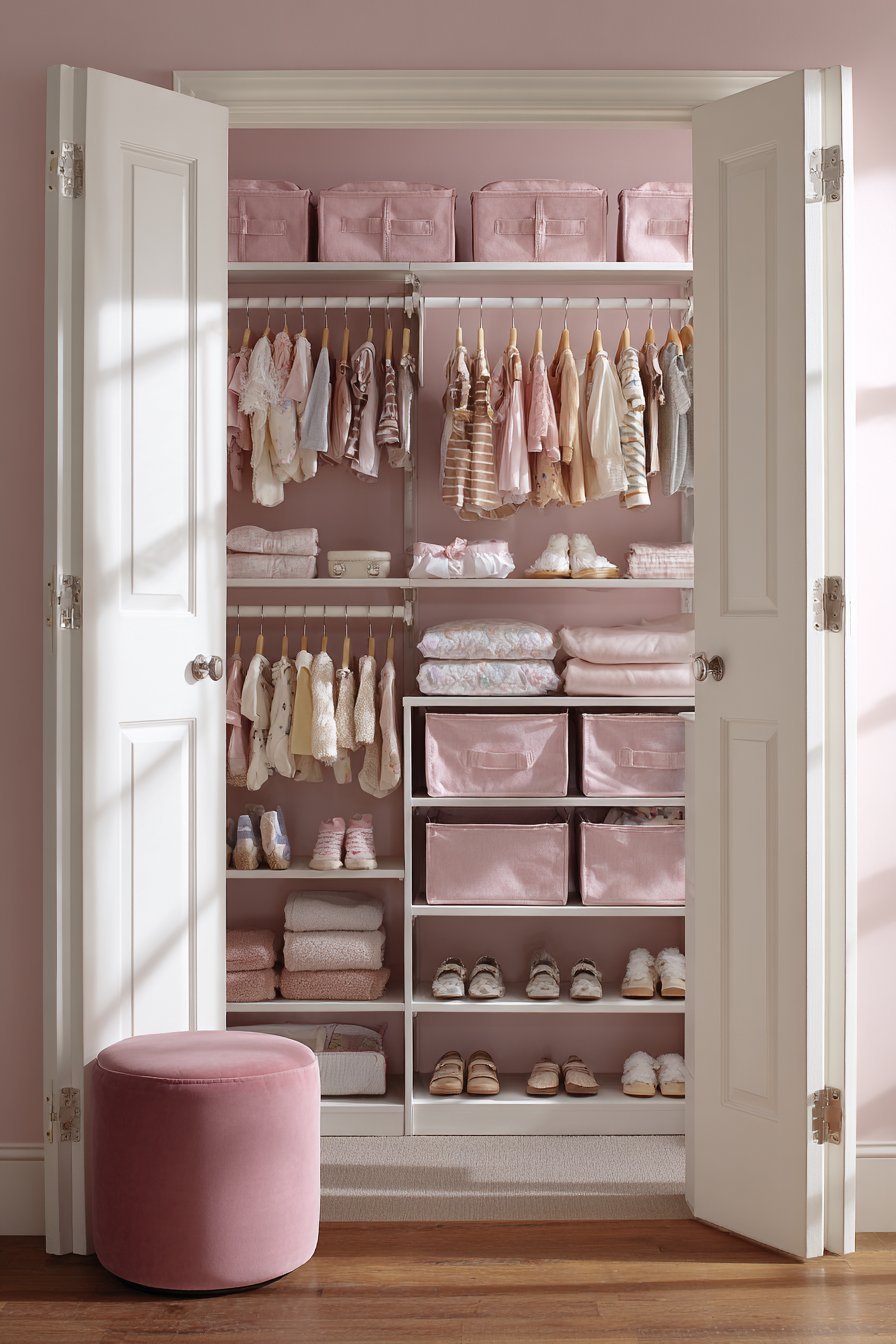
Adjustable shelving proves invaluable as babies grow rapidly. Rod heights can change to accommodate longer garments. Shelf spacing adjusts to fit different storage needs over time. This flexibility extends the system’s usefulness for years. The initial investment in quality organization pays dividends through extended use.
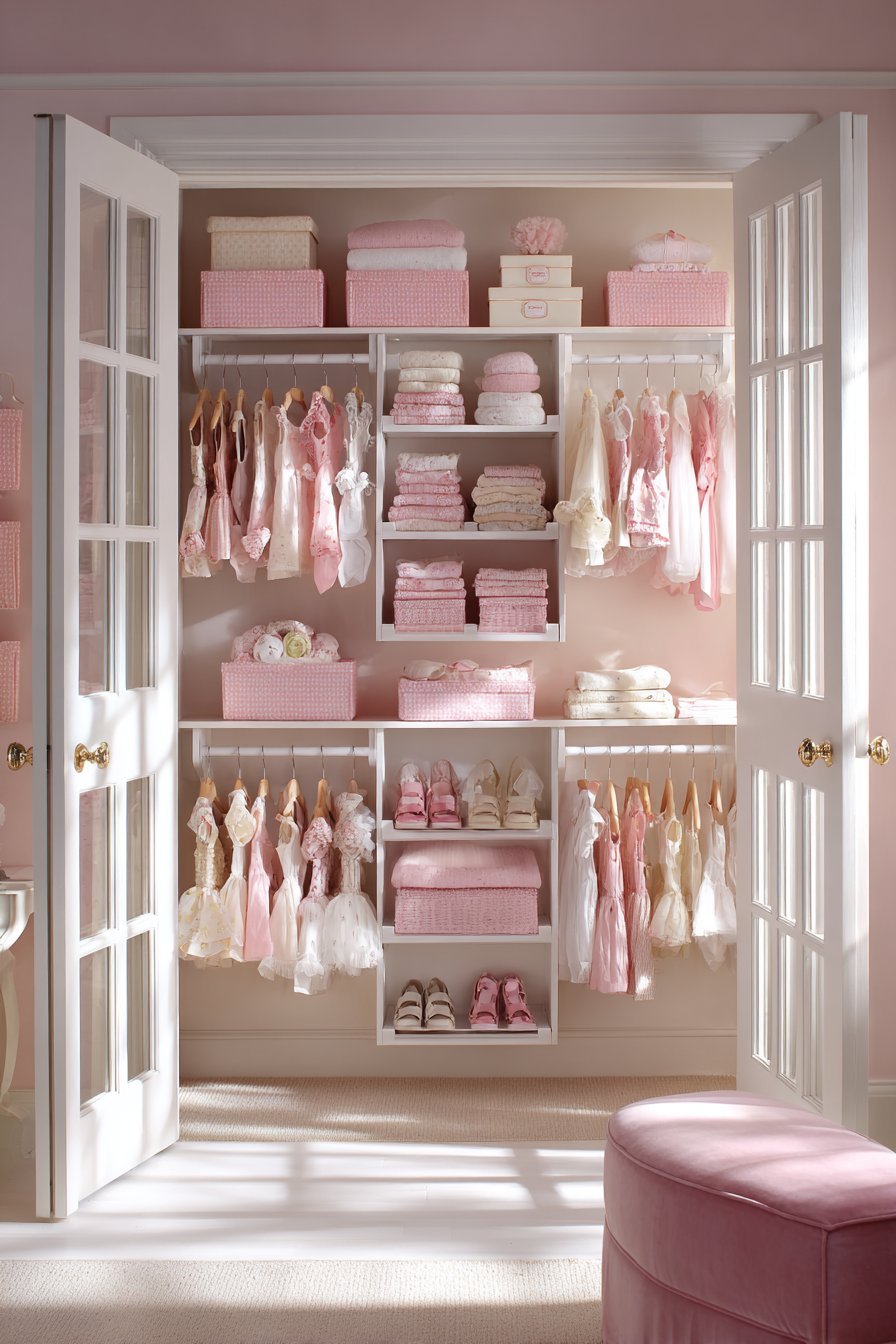
Pink fabric organizers maintain aesthetic cohesion with the nursery design. These soft storage solutions prevent small items from getting lost. Rolling diapers vertically in organizers maximizes space and visibility. Sorting clothes by size streamlines the process of switching seasonal wardrobes. This level of organization reduces stress during already demanding times.
Key Design Tips:
- Install adjustable shelving systems that grow with your child’s needs
- Use fabric drawer organizers to contain small items and maintain order
- Sort clothing by size for easy transitions as baby grows
- Include shoe storage at accessible heights for quick selection
- Add seating outside the closet for comfortable dressing sessions
- Choose wooden hangers to protect delicate baby clothing
7. Rolling Cart Diaper Station
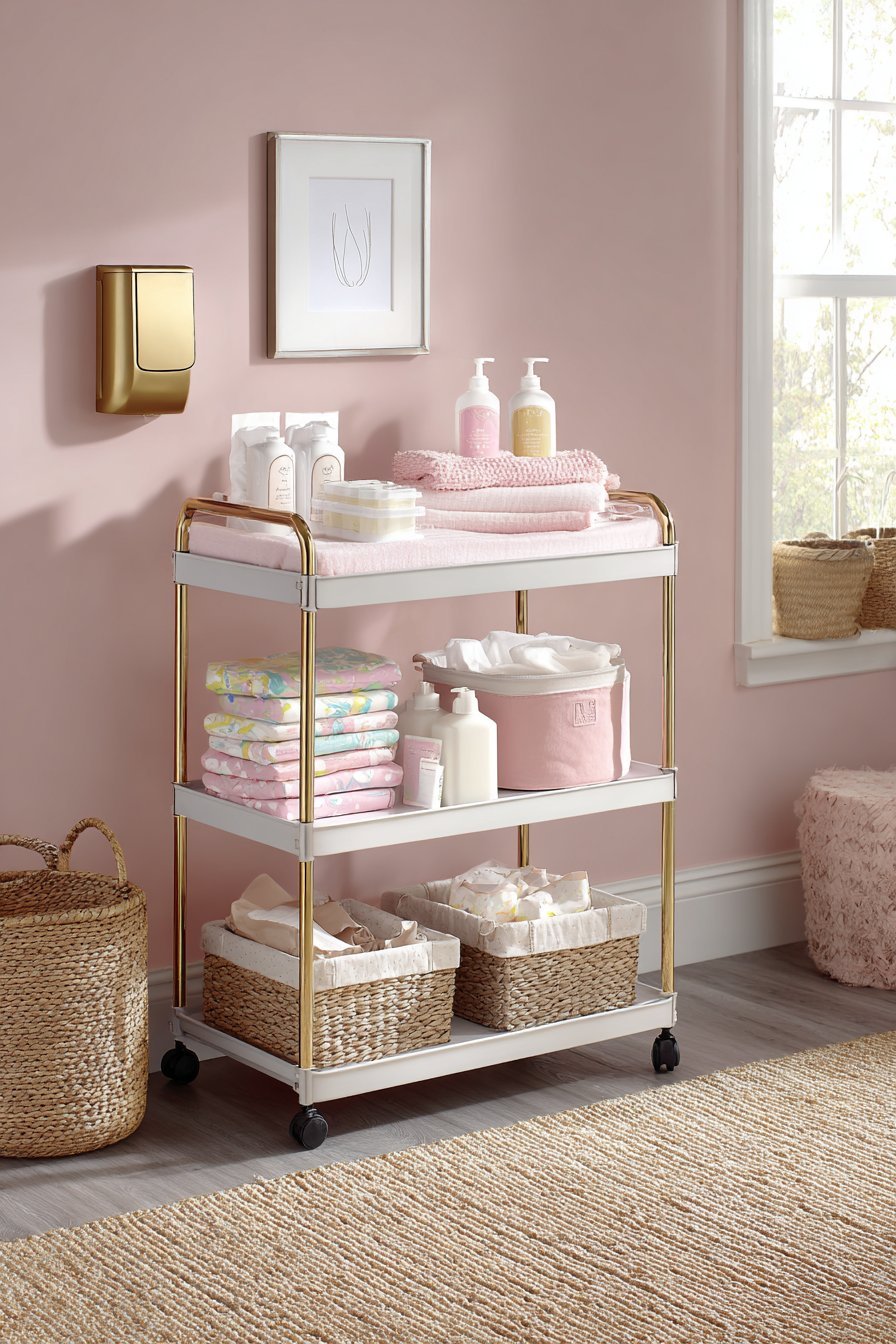
A white rolling cart system on natural jute rug creates mobile organization. The three-tiered design holds neatly stacked diapers on one level. A pink fabric container stores wipes on another tier. Small wicker baskets organize changing supplies on the third level. A wall-mounted dispenser for diaper disposal bags adds practical function.
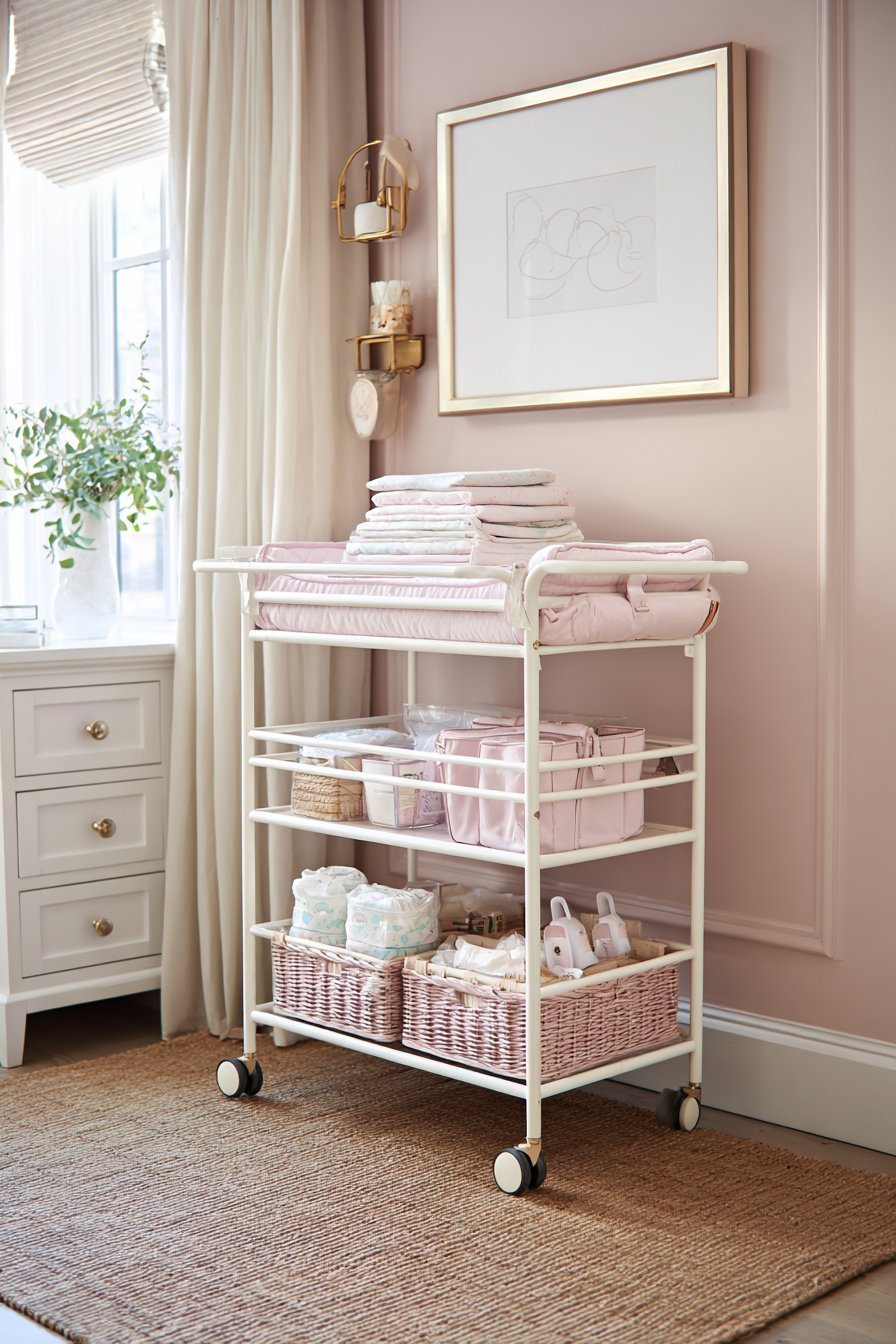
The surrounding soft pink walls create calming backdrop for care routines. A small framed print with simple line art hangs above. Natural light from nearby windows illuminates the organized setup. This positioning ensures good visibility during changing times. The jute rug defines the area while adding natural texture.
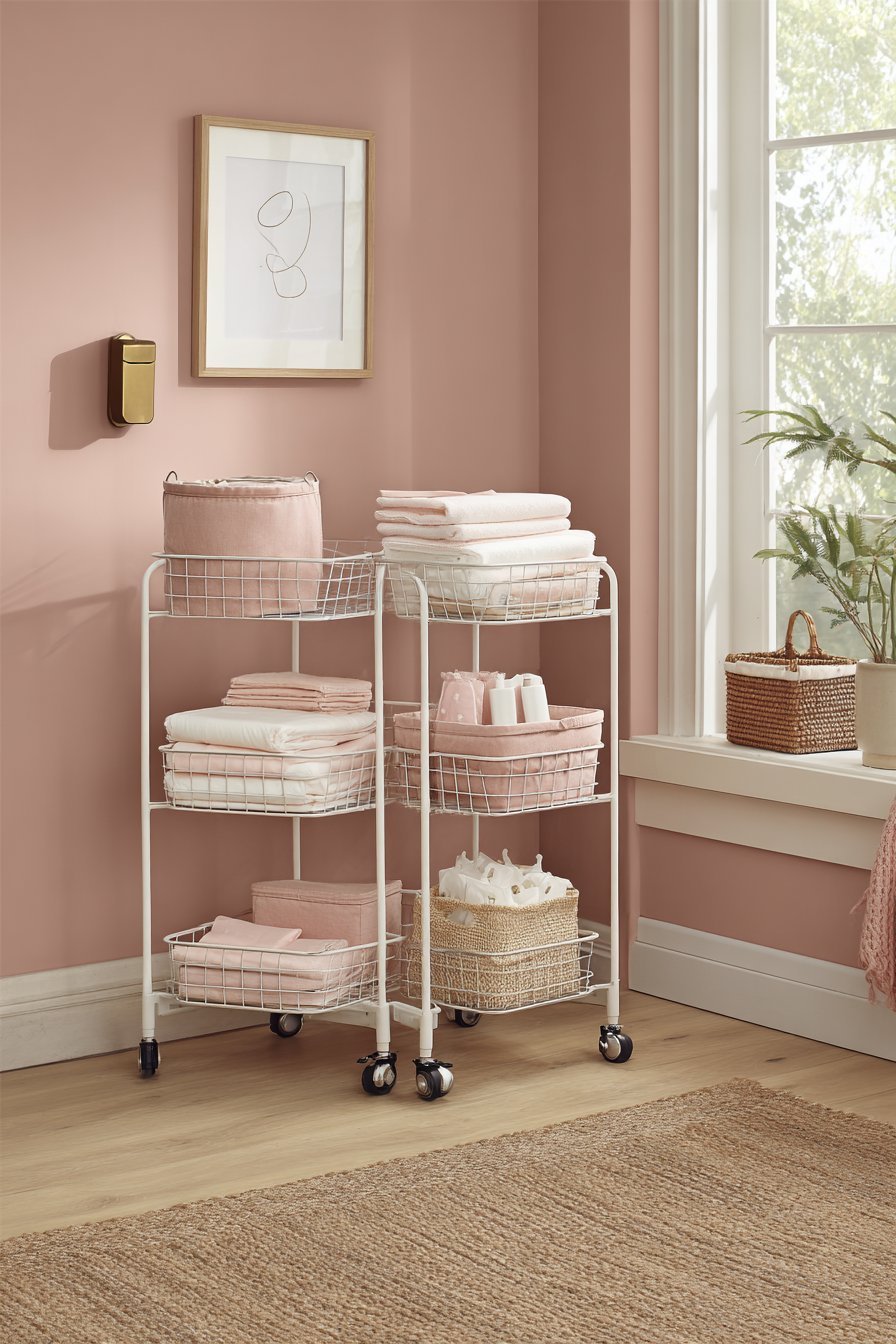
The mobility of rolling carts offers tremendous advantage in nursery design. Supplies move easily between changing station and crib areas. The cart can relocate to different rooms as needed. This flexibility supports various care routines throughout the home. Wheels should lock securely when stationary for safety.
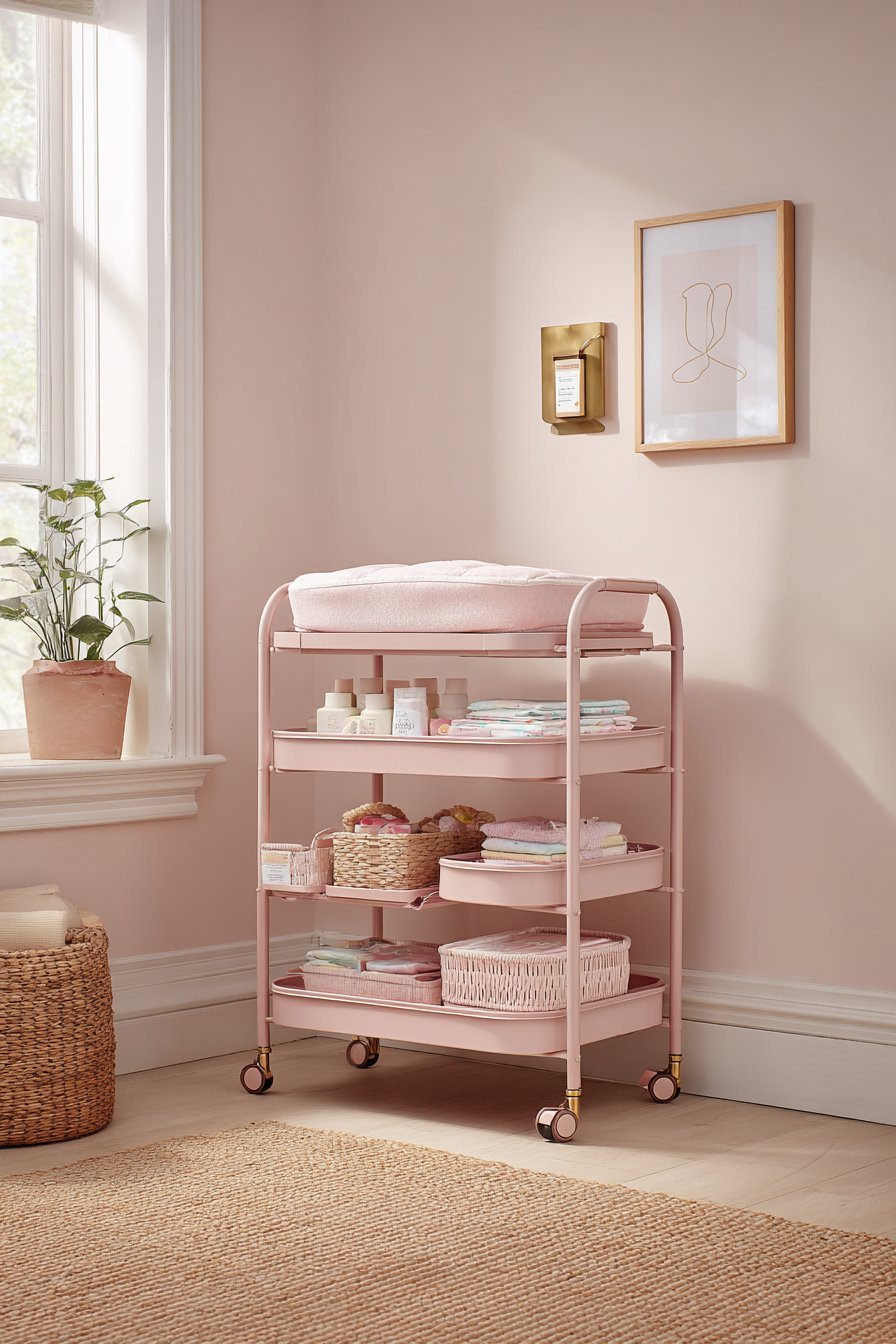
Each tier serves specific purpose in daily routines. Frequently used items occupy the top tier for easy access. The middle level holds adequate diaper supply to avoid constant refilling. The bottom tier accommodates larger or less-frequently-used supplies. This organizational hierarchy streamlines diaper changes. It reduces the time spent searching for necessary items.
Key Design Tips:
- Choose rolling carts with locking wheels for safety and mobility
- Organize supplies by frequency of use from top to bottom tiers
- Use fabric containers and wicker baskets for aesthetic storage
- Position carts near natural light sources for better visibility
- Add wall-mounted dispensers to keep countertops clear
- Define the area with natural fiber rugs that complement pink tones
8. Gallery Wall Play Corner
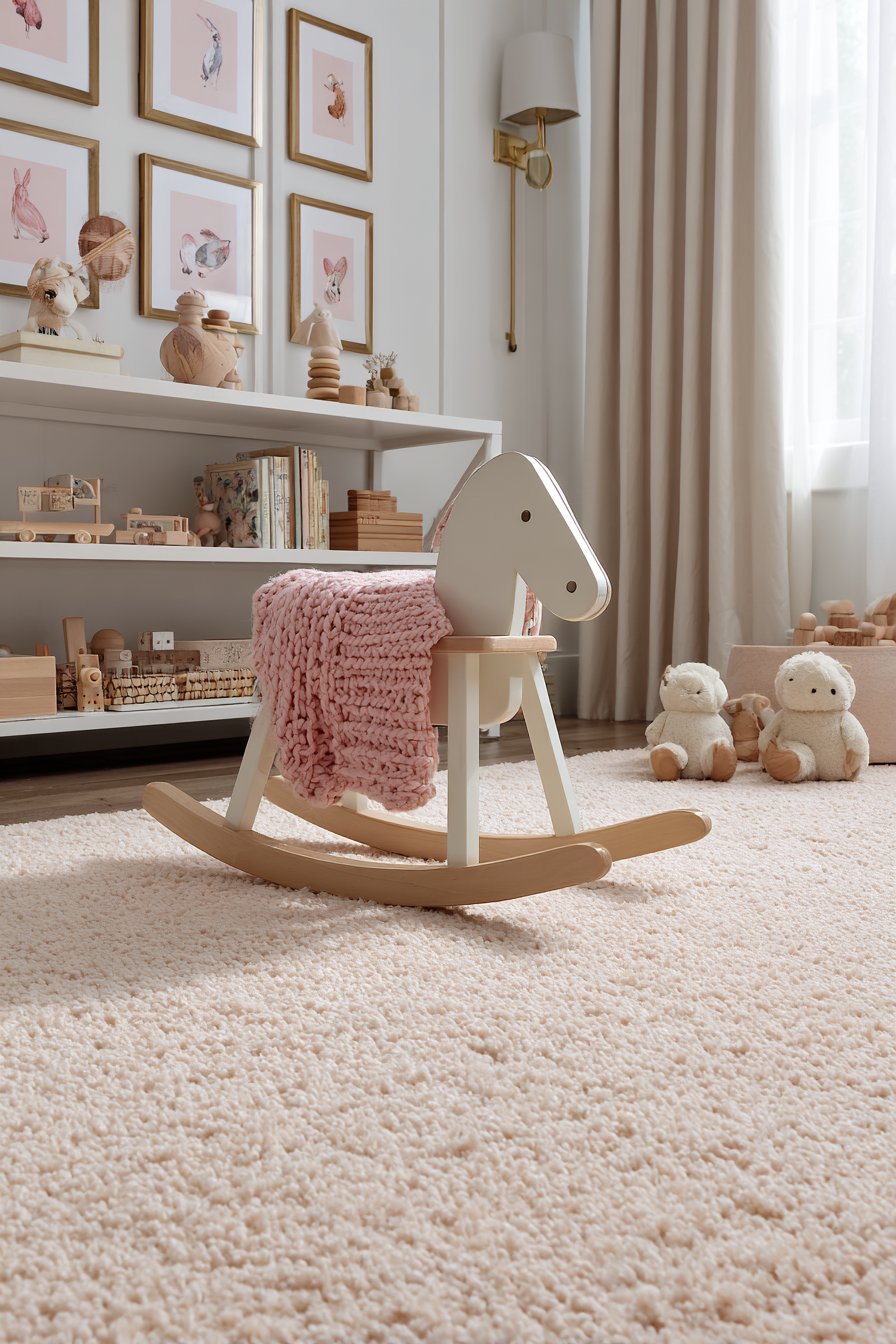
A white wooden rocking horse with hand-knitted pink saddle blanket sits on plush cream carpet. The wall behind displays a gallery arrangement of simple black frames. Soft pink watercolor prints of animals and botanicals fill each frame. A low white bookshelf nearby holds classic children’s books. Carefully chosen toys in natural wood and soft pink tones occupy shelf space.
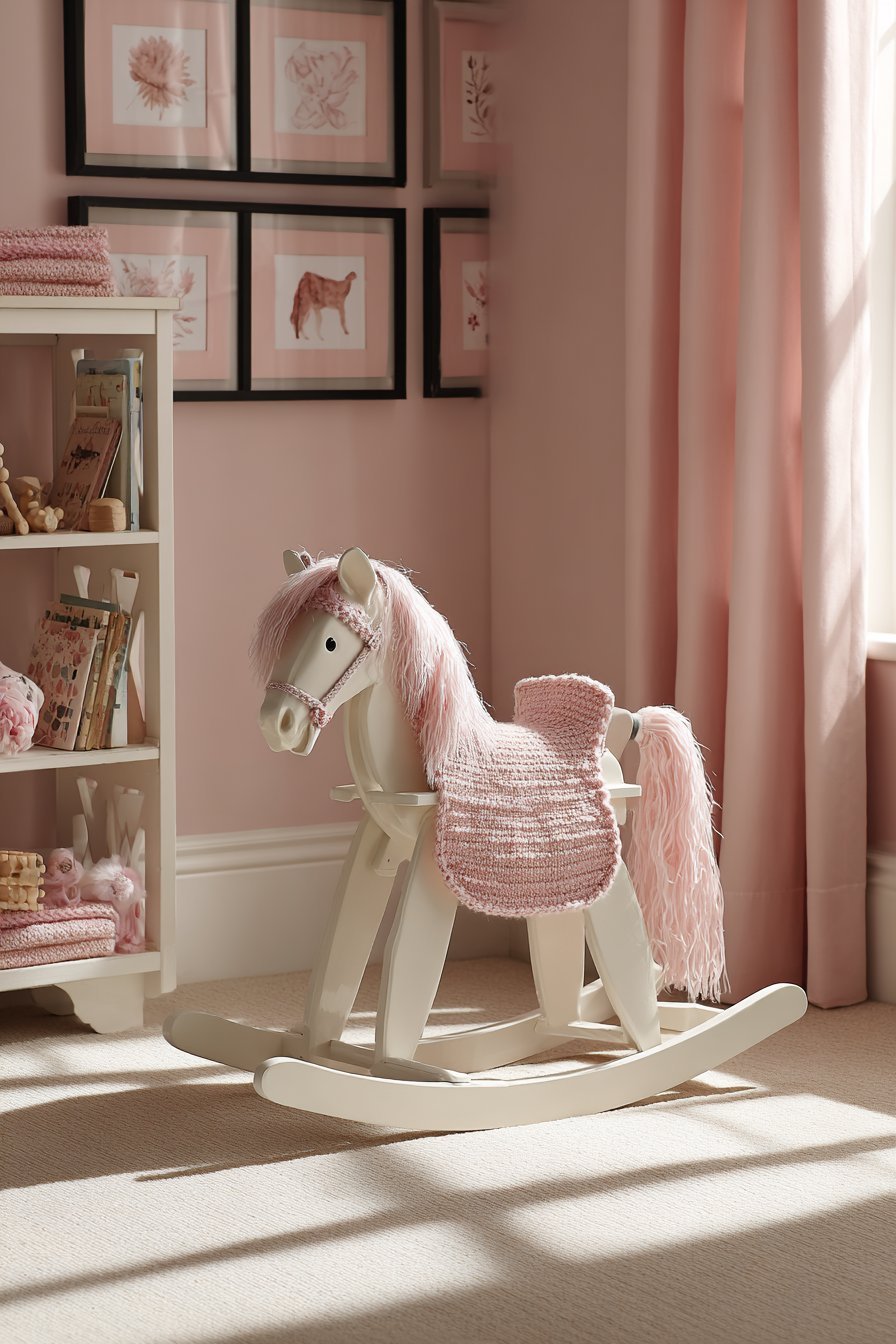
Afternoon sunlight filters through linen curtains creating gentle shadows. These shifting patterns add depth to the play area. The thoughtful curation of toys maintains the soft pink color palette. Each element serves both decorative and functional purposes. This dual-purpose approach maximizes limited nursery space.
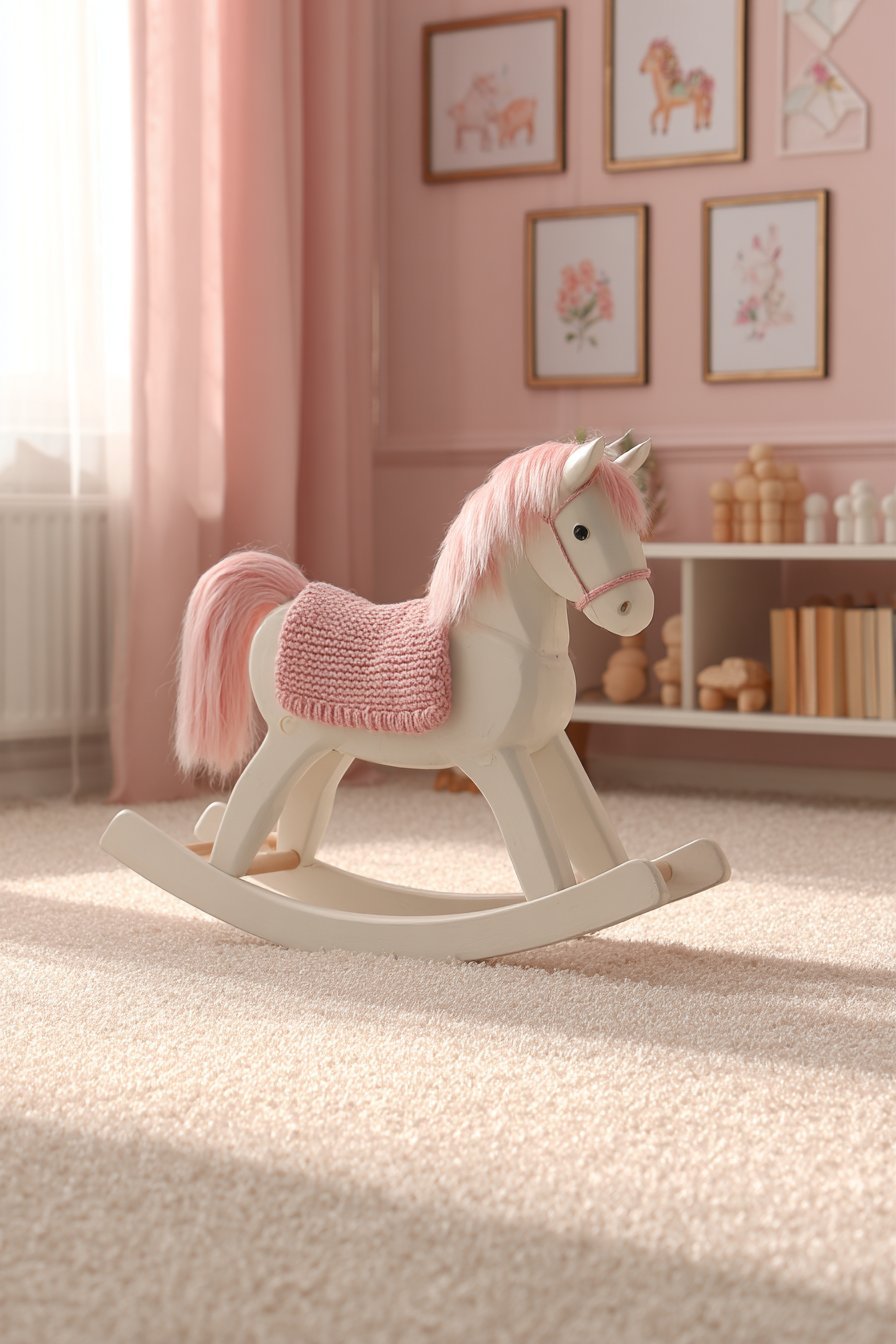
Gallery walls work beautifully in nurseries when properly scaled. Simple black frames create consistent borders for varied artwork. The watercolor prints add artistic quality without overwhelming young eyes. Animals and botanicals provide age-appropriate visual interest. As children grow, artwork can be changed without replacing frames.
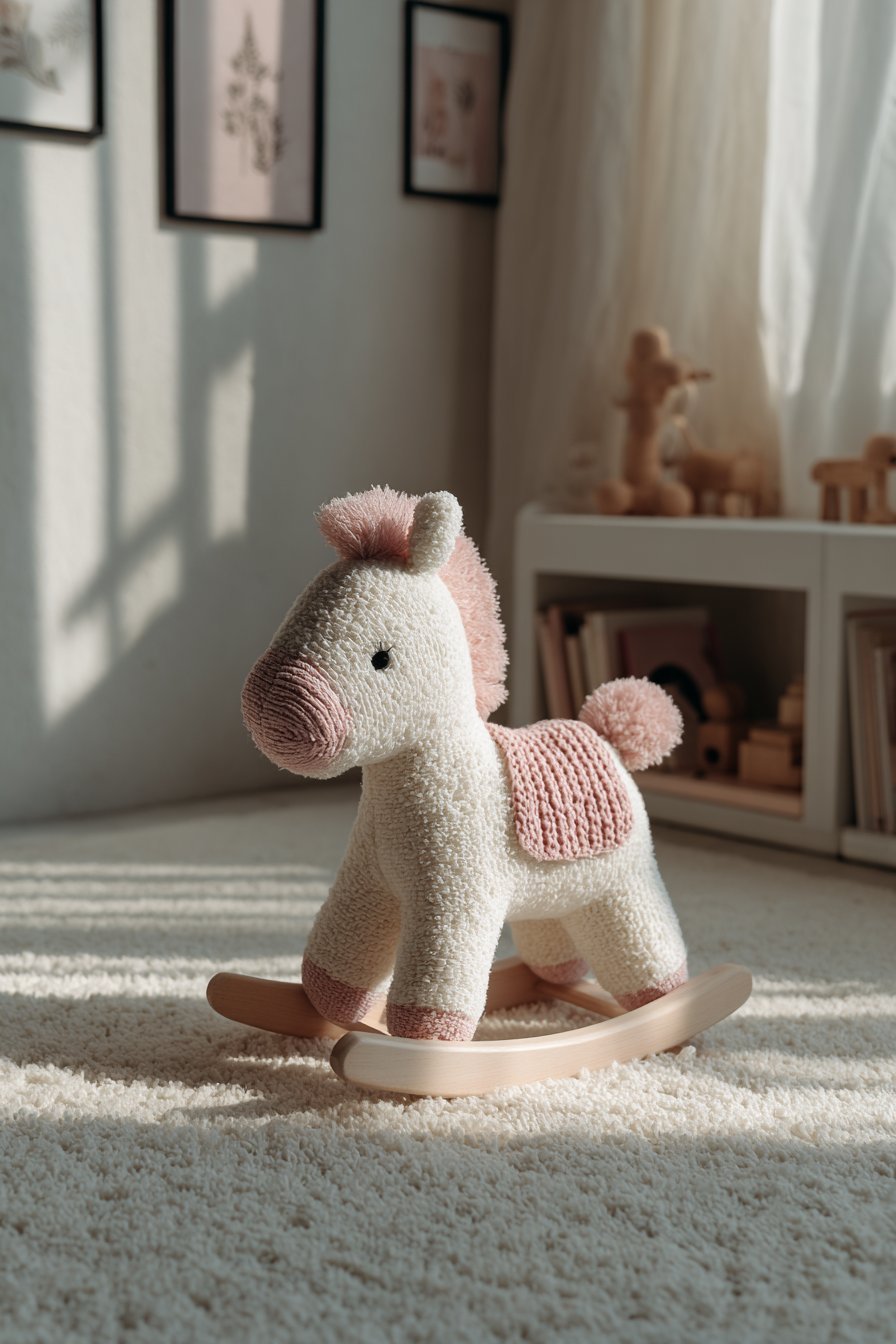
The selection of natural wood toys demonstrates commitment to quality over quantity. These materials age beautifully and withstand years of play. Wooden toys lack the visual noise of plastic alternatives. They coordinate seamlessly with intentional design schemes. The hand-knitted saddle blanket on the rocking horse adds handmade charm. These personal touches make the space feel loved and special.
Key Design Tips:
- Create gallery walls with consistent frame colors for cohesive look
- Choose watercolor prints for soft visual impact appropriate for nurseries
- Select natural wood toys that coordinate with design scheme
- Position play areas near natural light for inviting atmosphere
- Curate toy collections for quality over quantity
- Add handmade elements like knitted accessories for personal touches
9. Nursing Station Nightstand
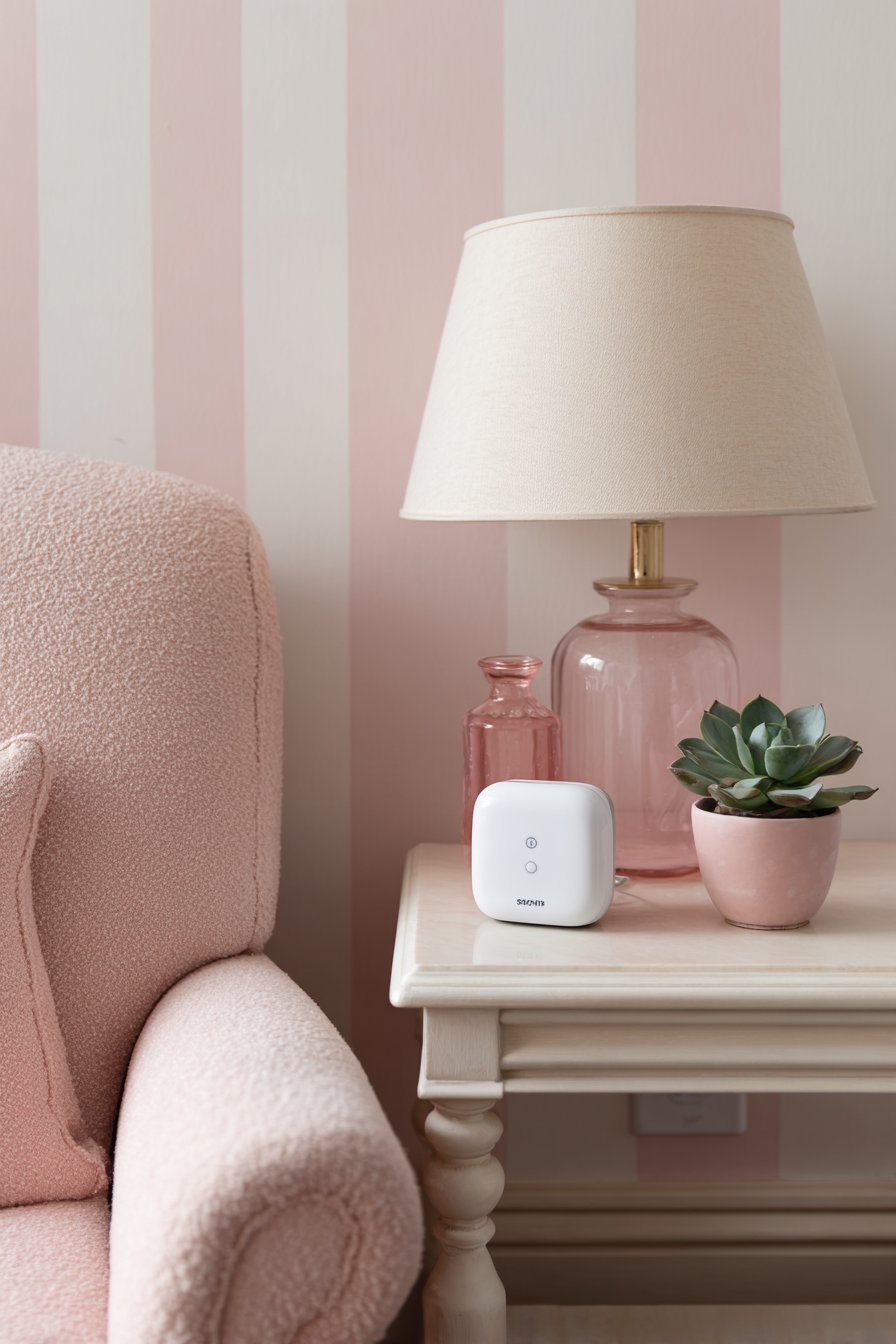
A small white pedestal table beside a nursing chair serves essential nighttime functions. The chair upholstered in pale pink bouclé fabric provides comfortable seating. The nightstand holds a modern white sound machine for sleep support. A pink glass water bottle ensures hydration during feeding sessions. A small succulent in ceramic pot with matte blush finish adds living element.
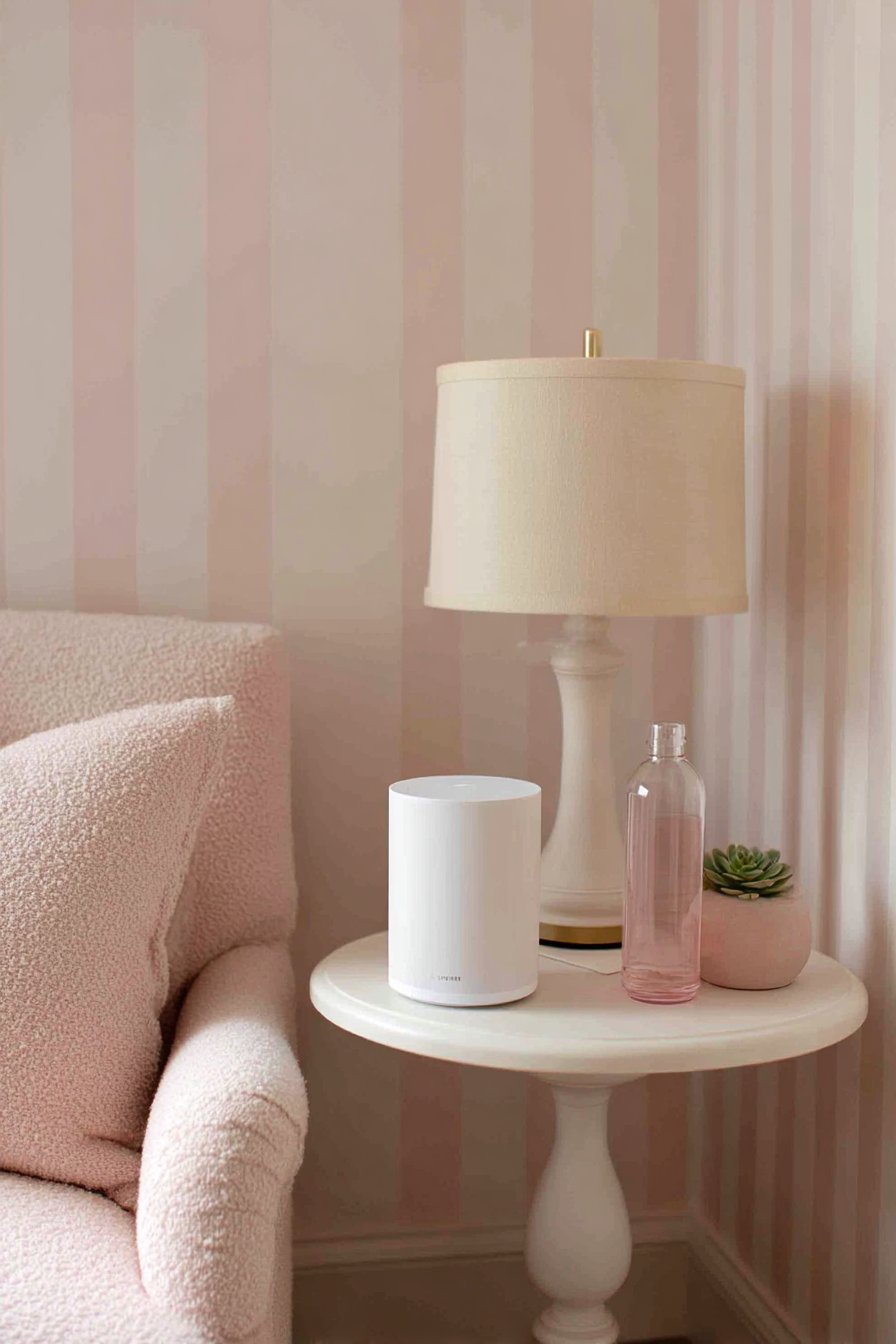
A simple table lamp with white ceramic base provides soft task lighting. The natural linen shade diffuses light gently. The wall behind features subtle pink and white vertical stripes. This matte finish pattern adds interest without overwhelming the intimate space. Natural light supplements the scene during daytime nursing sessions.
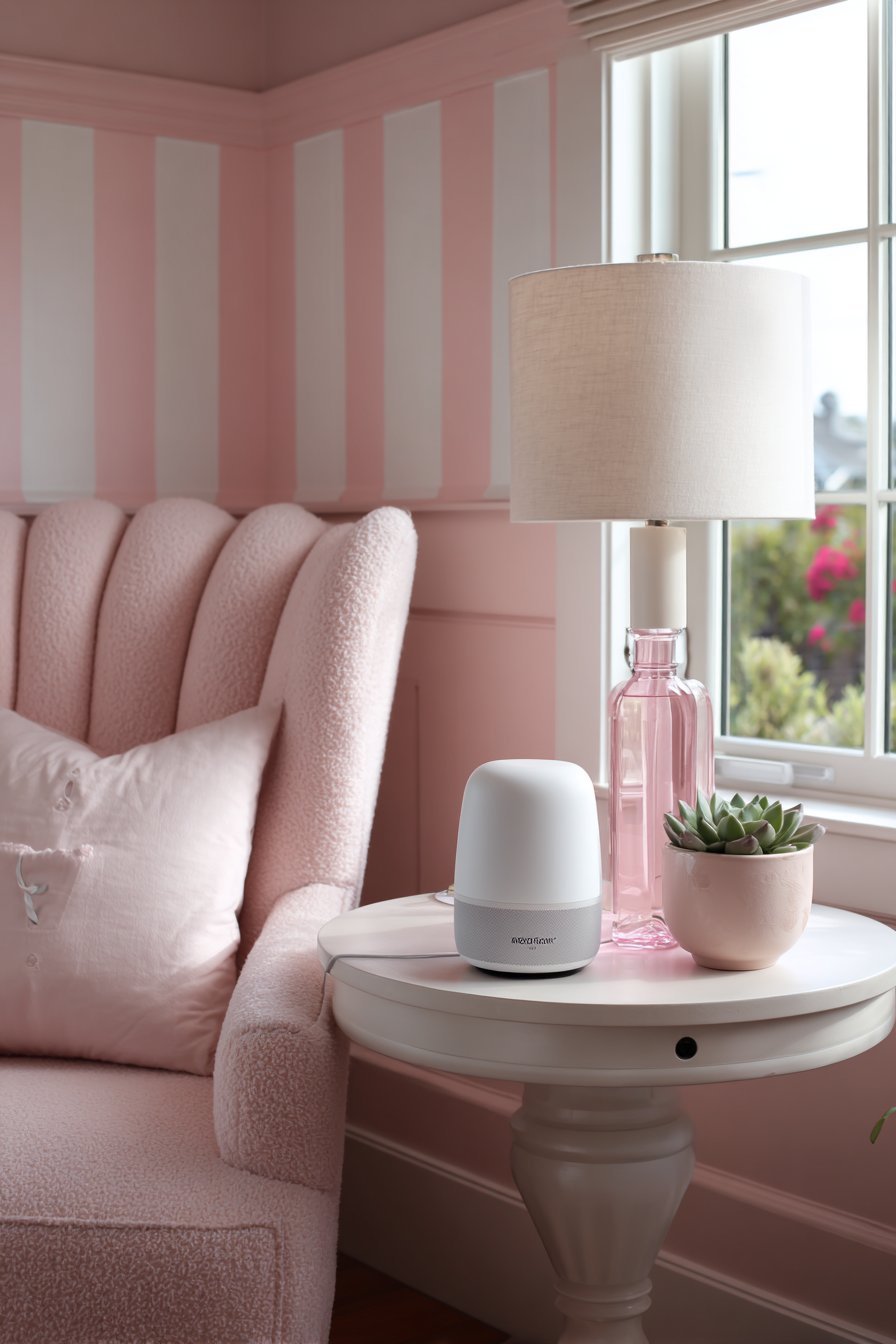
The thoughtful assembly of nighttime essentials demonstrates understanding of nursing realities. Hydration becomes crucial during extended feeding sessions. The water bottle within arm’s reach supports this need. Sound machines help establish consistent sleep associations. The soft lighting allows nighttime care without harsh brightness that disrupts circadian rhythms.
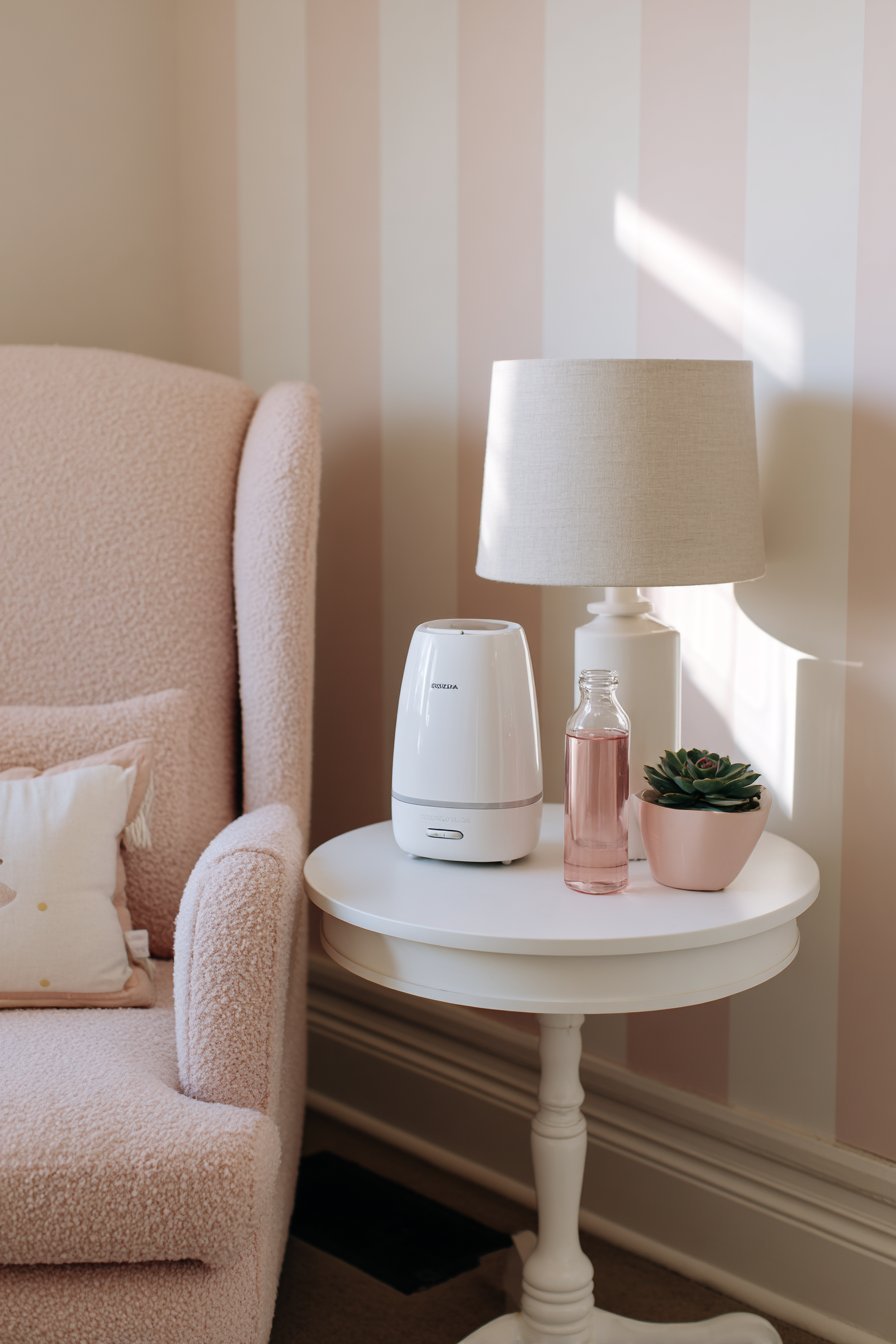
Bouclé fabric on the nursing chair offers textural luxury. This nubby material feels pleasant against skin during extended sitting. The pale pink color maintains the room’s cohesive palette. The white pedestal table takes up minimal floor space. Its compact footprint fits easily beside chairs. The living succulent adds natural element that requires minimal maintenance.
Key Design Tips:
- Position nightstands within arm’s reach of nursing chairs
- Include sound machines to establish consistent sleep associations
- Provide easily accessible hydration for nursing sessions
- Use task lighting with soft diffusion for nighttime functionality
- Choose low-maintenance plants to add life without extra work
- Select bouclé or similar textured fabrics for comfortable upholstery
10. Handmade Mobile Installation
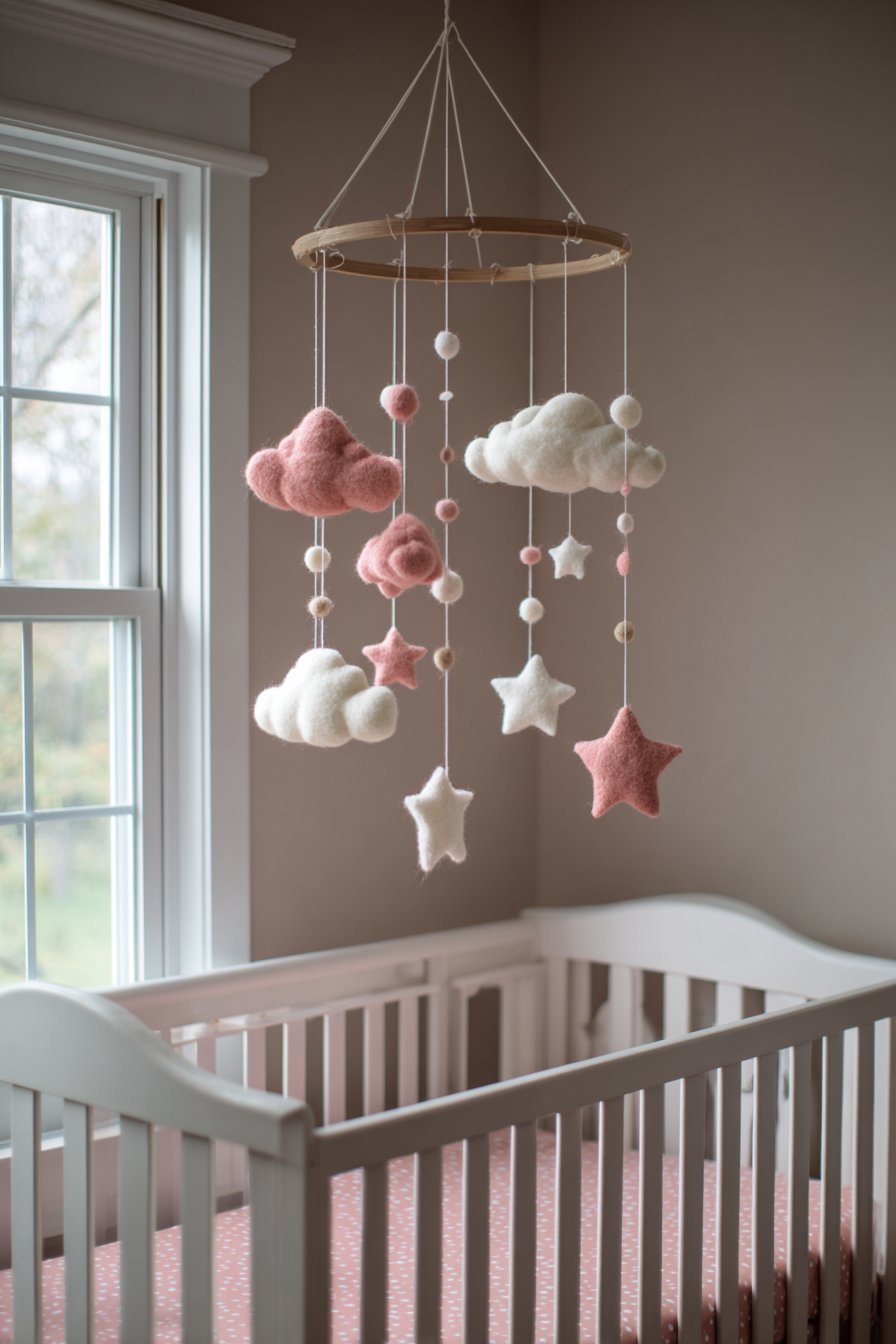
A mobile hangs above the crib area with handmade felt elements. The pieces come in graduating shades of pink, cream, and white. They suspend from a natural wood hoop creating gentle visual interest. The mobile includes soft stars, clouds, and simple geometric shapes. These rotate gently with air movement.
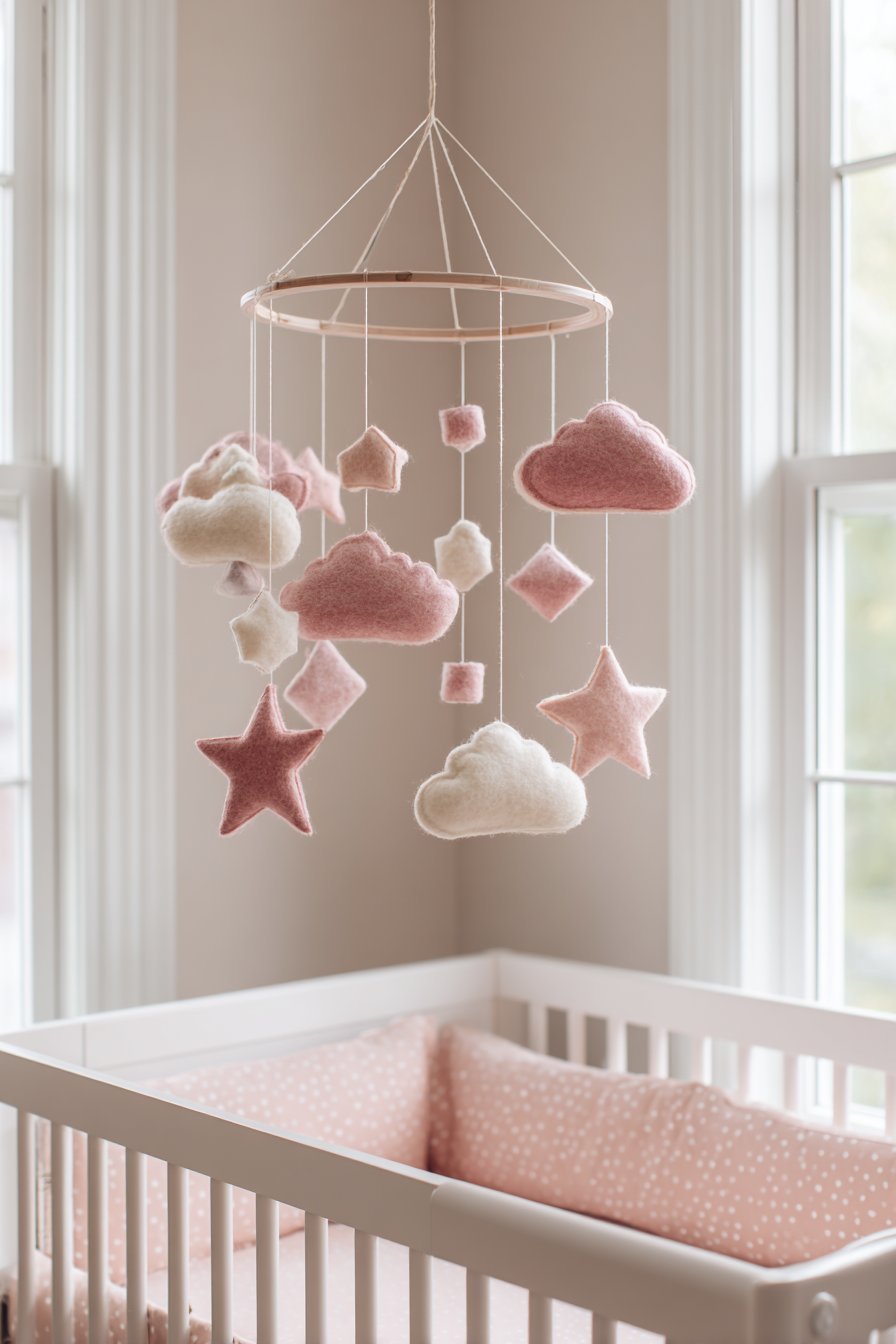
Below the mobile, the white crib has fitted sheets in soft pink. Subtle white polka dots add pattern without business. The surrounding walls painted in palest blush tone read almost white. This neutral backdrop allows the mobile to serve as focal point. Natural light from side windows creates gentle movement shadows on walls.
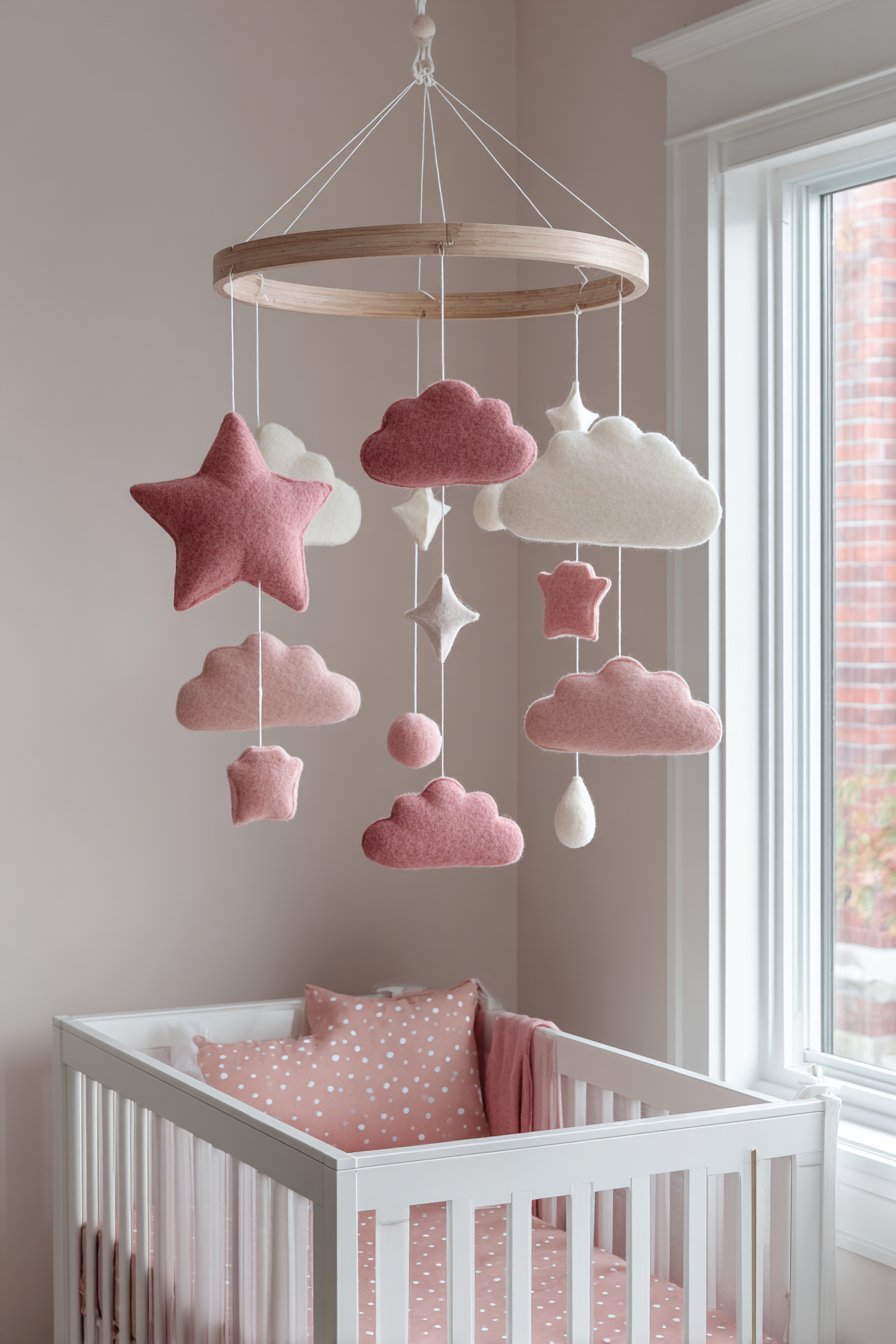
Handmade mobiles offer significant advantages over manufactured alternatives. The craftsmanship adds unique quality that mass-produced items lack. The felt elements provide appropriate visual stimulation for developing eyes. Simple shapes in graduated colors support early visual development. The natural materials align with conscious parenting choices.
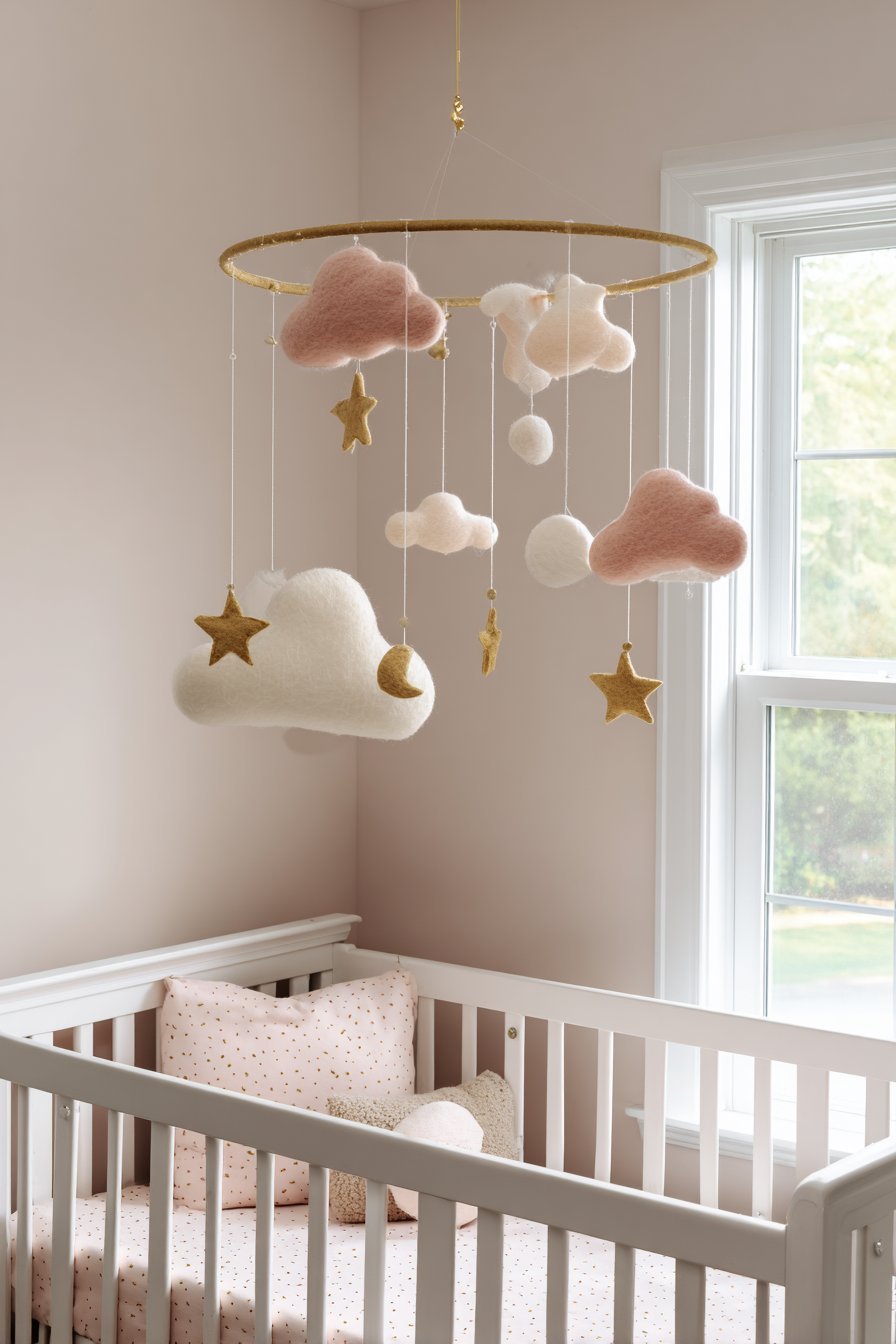
The careful color gradation from white through cream to deeper pink creates sophisticated palette. This thoughtful progression teaches color relationships naturally. The gentle rotation provides movement that fascinates without overstimulating. The natural wood hoop adds organic element. It coordinates with other wooden elements throughout the nursery. Safe installation height ensures visual interest without safety concerns.
Key Design Tips:
- Choose handmade mobiles for unique craftsmanship and quality
- Select elements in graduated color tones for visual development
- Install mobiles at safe heights that prevent reaching and entanglement
- Use simple shapes appropriate for infant visual development
- Coordinate mobile materials with other nursery elements
- Position mobiles to cast interesting shadows without blocking light
11. Watercolor Mural Accent Wall
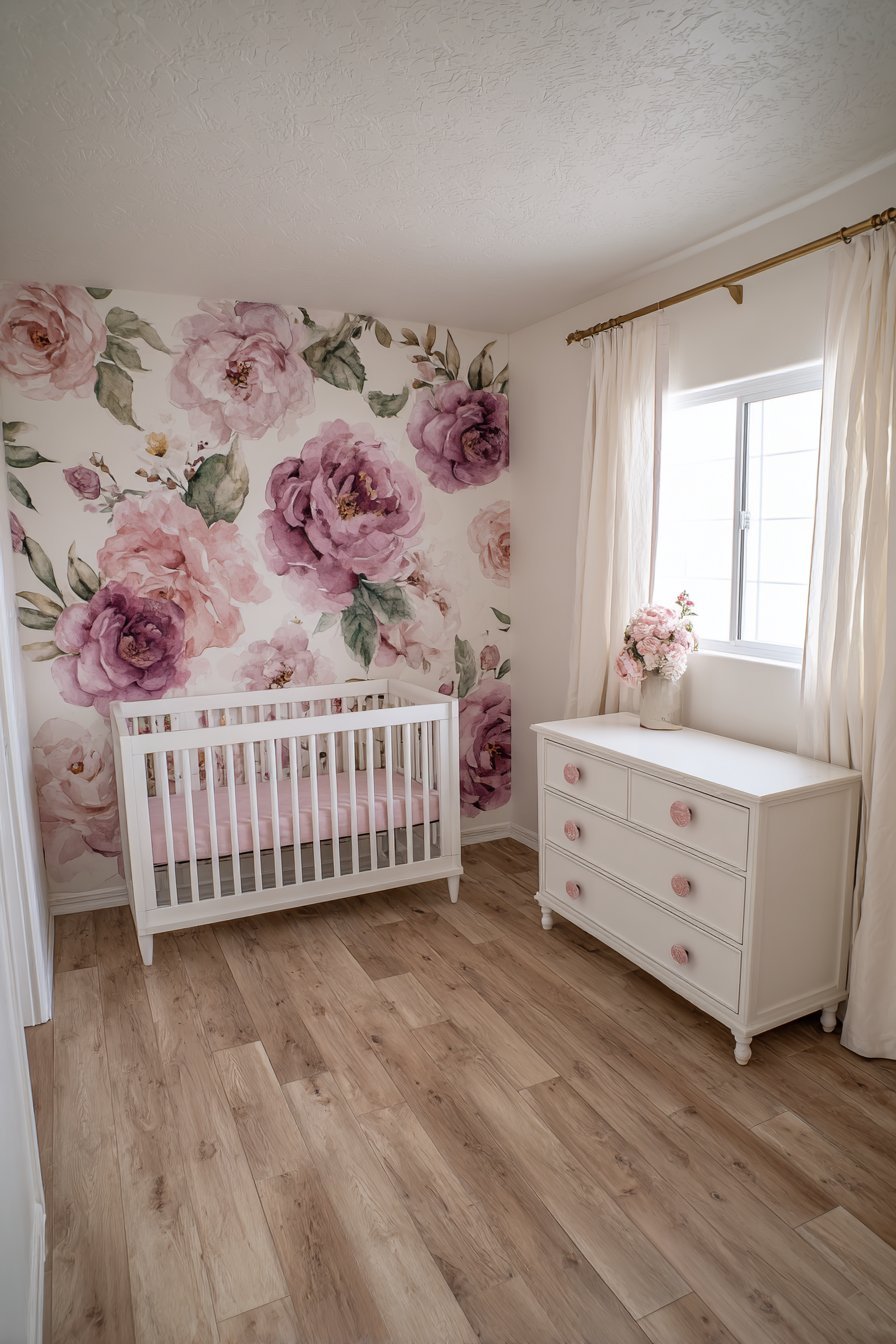
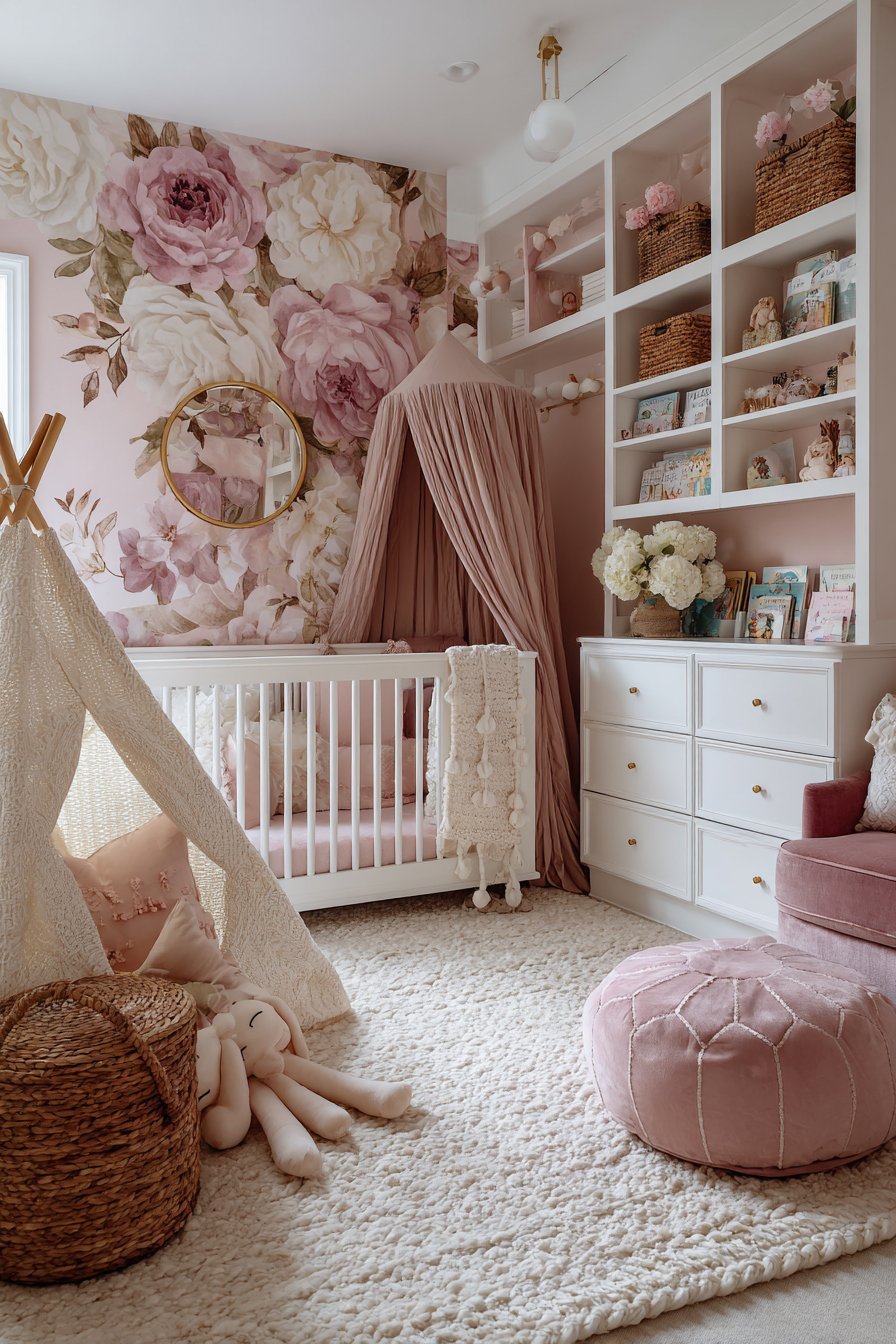
A custom wall mural of oversized watercolor flowers creates gentle focal point. Blush, mauve, and dusty rose tones appear against cream background. The mural spans one accent wall behind a simple white crib. This artistic treatment provides visual interest without overwhelming the space. A white dresser with pink ceramic knobs sits against adjacent solid pale pink wall.
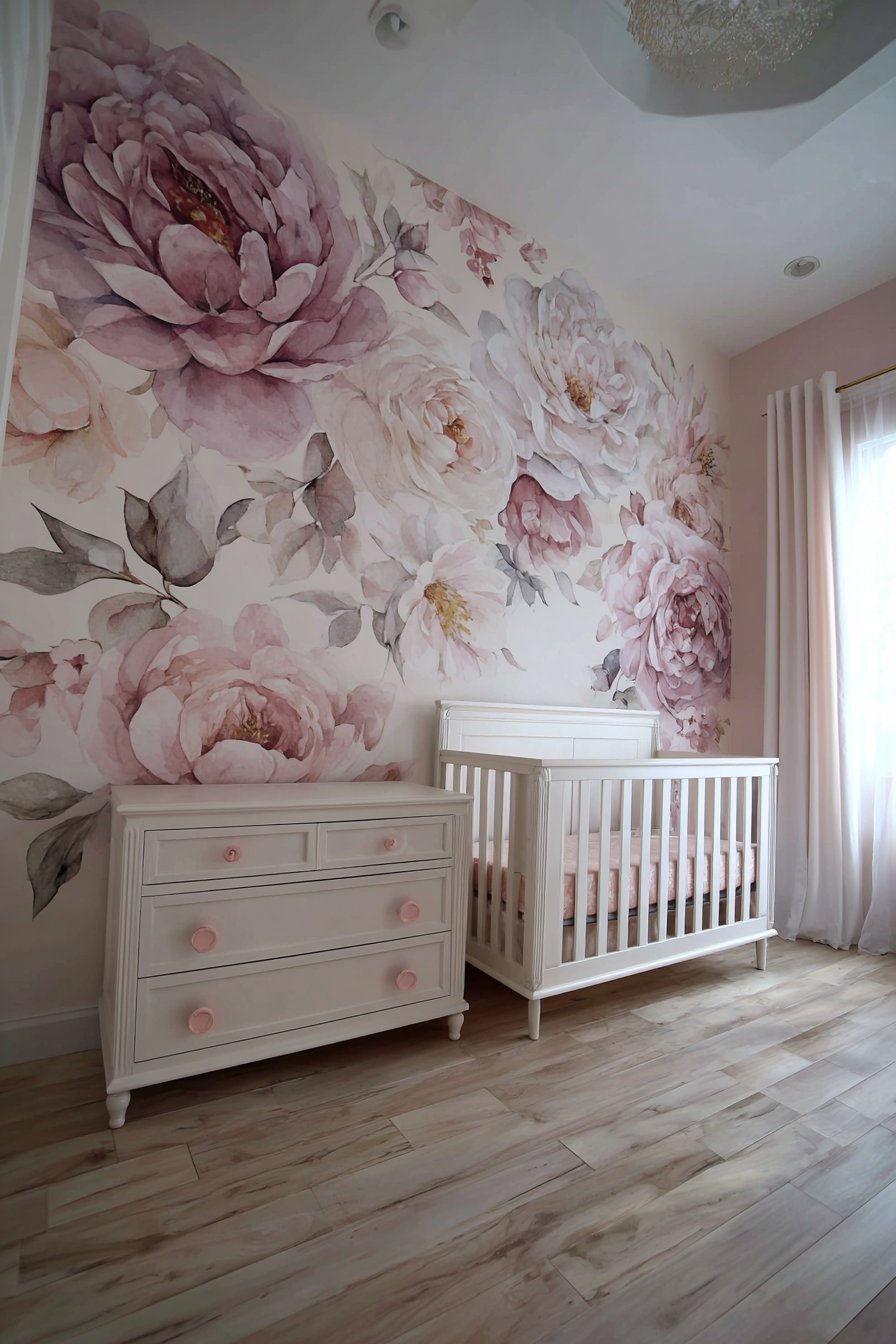
Natural wood flooring in light oak grounds the space with warm tones. Sheer curtains allow soft diffused daylight to illuminate the room. This natural light brings out subtle color variations in the watercolor mural. The artistic quality elevates the nursery beyond simple decoration. It creates gallery-worthy space that celebrates beauty.
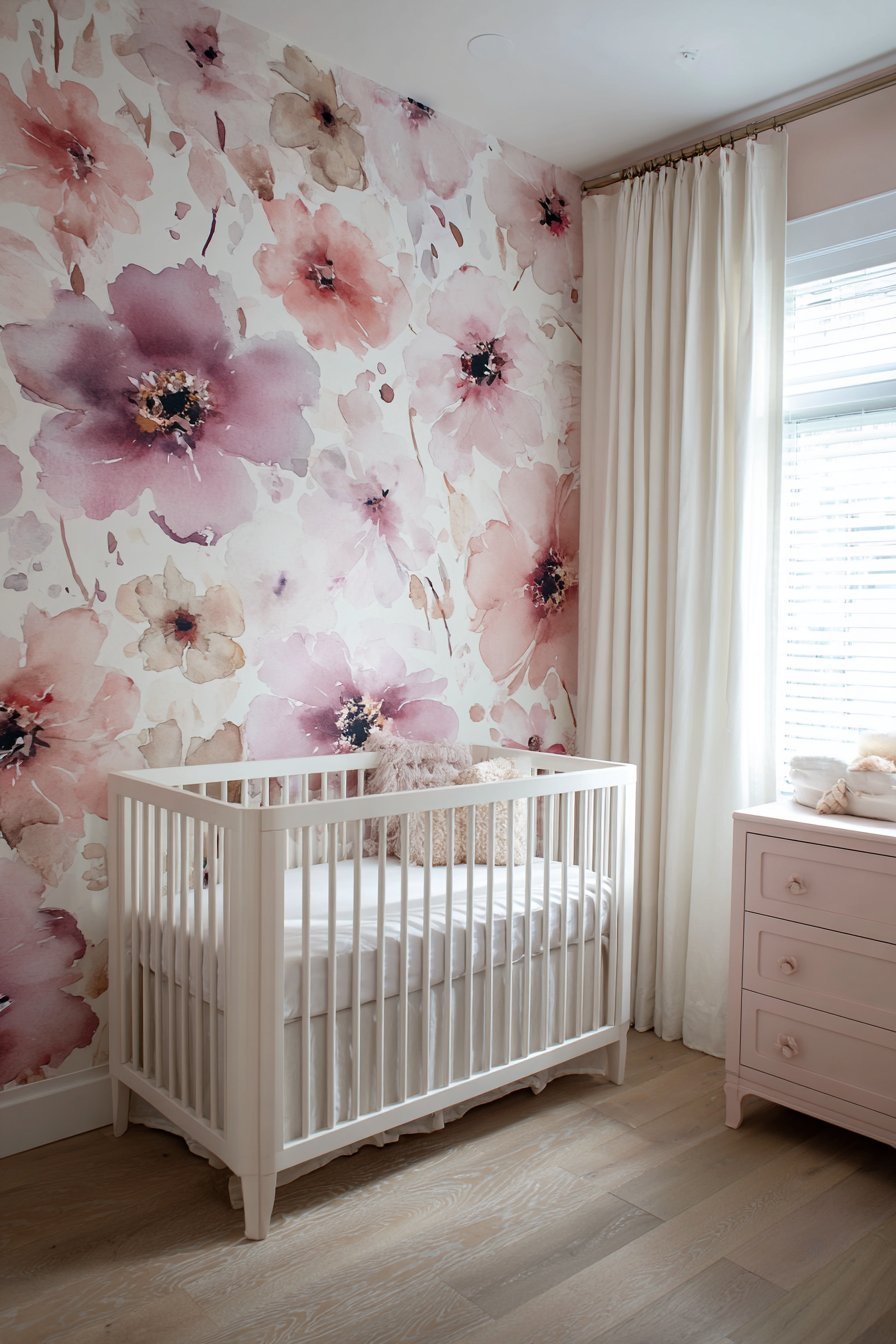
Watercolor murals offer distinct advantages over traditional wallpaper patterns. The artistic medium creates soft edges and organic shapes. These gentler visuals suit nursery environments better than hard-edged graphics. The oversized scale makes appropriate statement without visual clutter. Each flower bloom reads clearly from across the room.
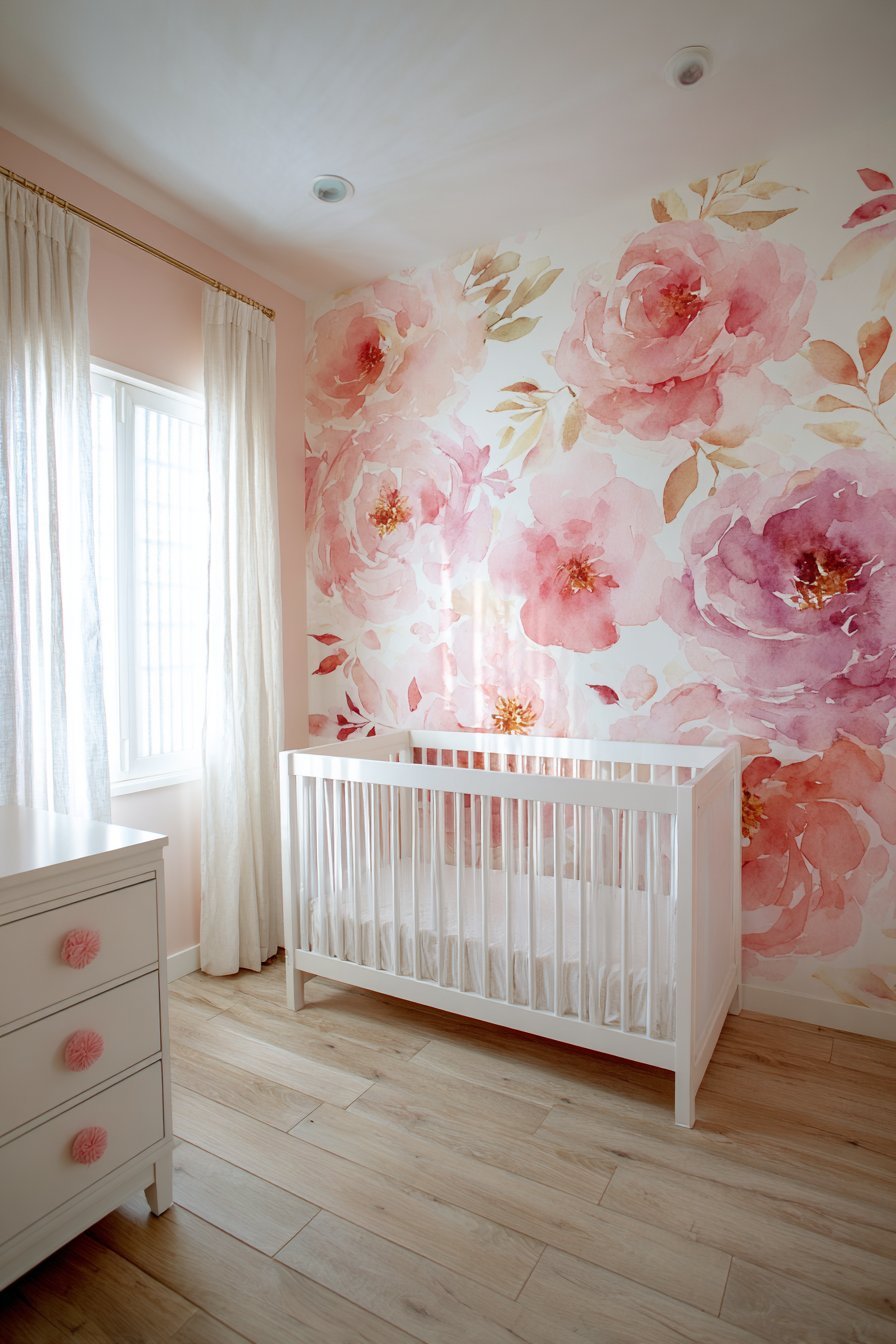
The cream background allows pink tones to shine without competing. This neutral base prevents the mural from overwhelming the space. The solid pale pink on adjacent walls provides continuity. It connects the mural to the overall color scheme. The white crib and dresser create clean breaks. They prevent the pink from becoming monotonous throughout the space.
Key Design Tips:
- Commission custom murals for truly unique nursery artwork
- Choose watercolor styles for soft edges and organic shapes
- Use oversized scale for clear visibility and bold statement
- Limit murals to single accent walls to prevent overwhelming spaces
- Coordinate mural colors with solid paint on remaining walls
- Position white furniture against murals for clean visual contrast
12. Laundry Management Corner
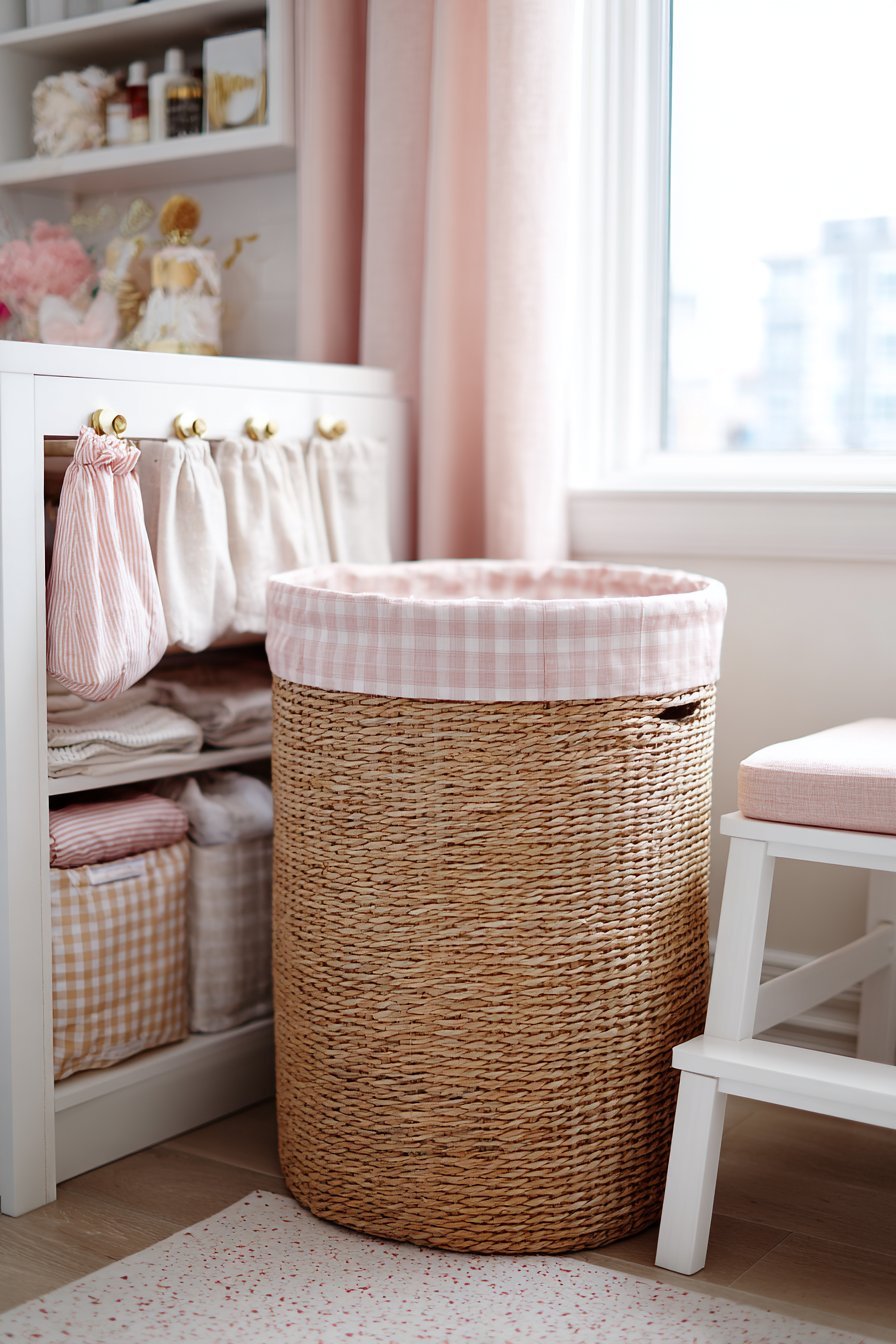
A large woven seagrass basket with pink fabric liner sits near the changing station. Wall-mounted hooks in brushed brass hold small laundry bags above. Pink gingham and cream muslin bags sort delicates from regular wash. A small wooden step stool in white features pink cushioned top. This assists with reaching higher shelves safely.
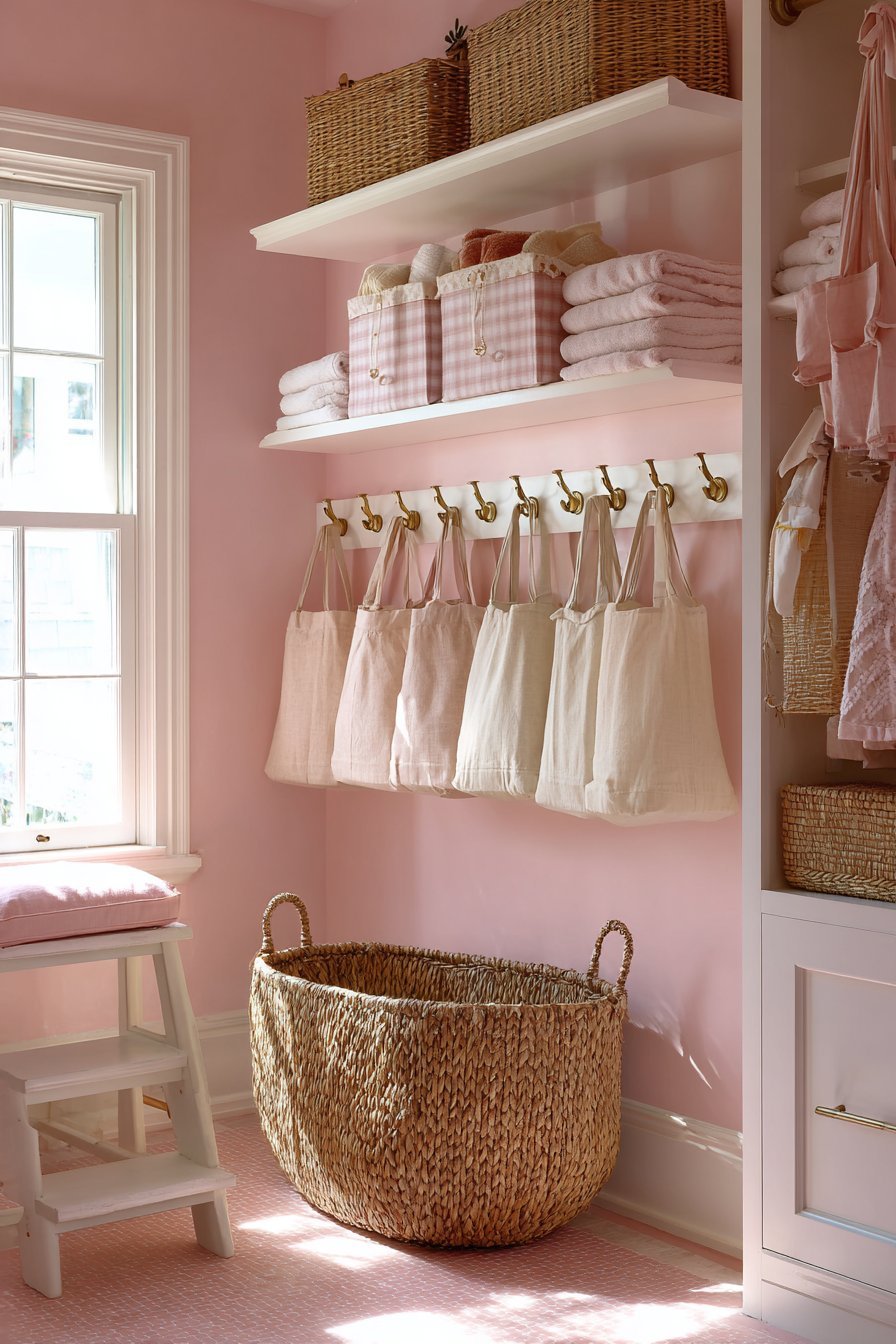
The floor covering consists of durable vinyl in soft pink terrazzo pattern. This practical flooring choice withstands frequent cleaning and moisture. Natural light from nearby window emphasizes the functional setup. The practical elements maintain cohesive soft pink aesthetic throughout. Nothing about this corner screams “laundry” yet everything functions perfectly.
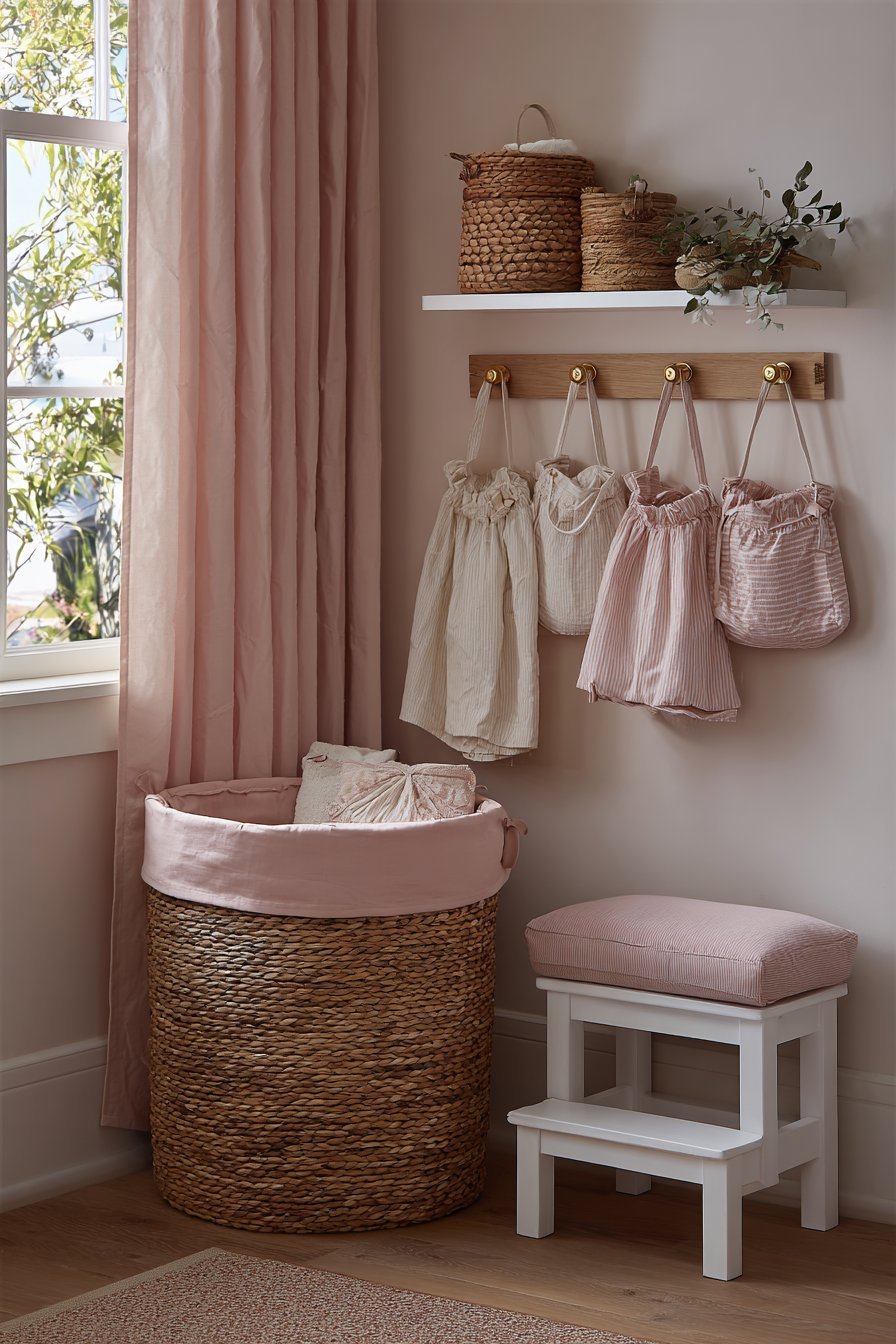
Laundry management often gets overlooked in nursery planning. Yet babies generate surprising amounts of dirty clothing and linens. Creating dedicated systems prevents laundry from piling up randomly. The seagrass basket provides ample capacity without looking institutional. The pink fabric liner maintains design continuity while protecting the natural basket.
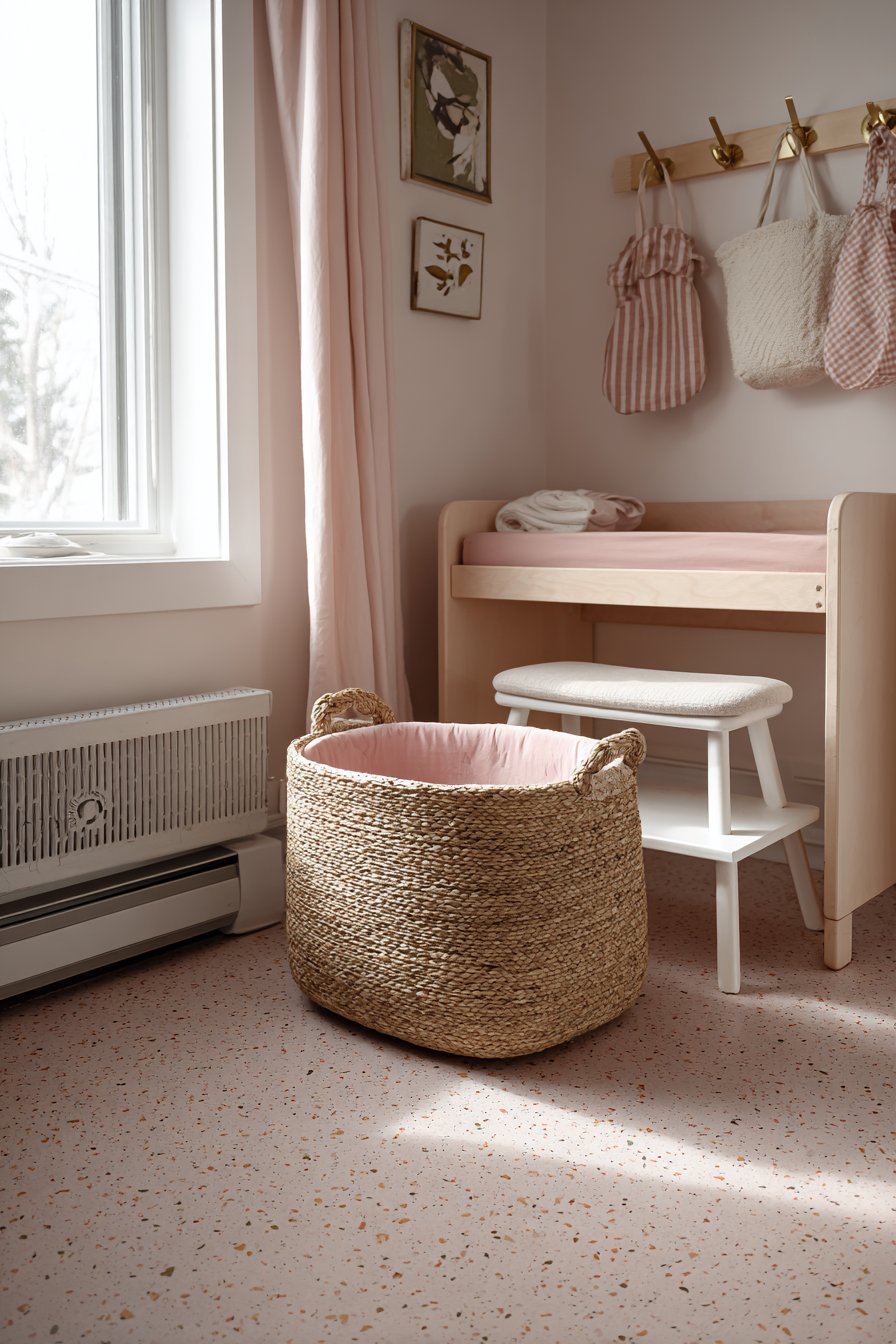
Sorting systems integrated from the start streamline laundry routines. The wall-mounted bags separate delicate items requiring special care. The gingham and muslin fabrics add pattern in subtle ways. The step stool serves multiple purposes beyond laundry access. It assists with reaching items stored on higher shelves. The pink cushioned top provides brief seating when needed.
Key Design Tips:
- Integrate laundry management systems into nursery planning
- Use seagrass baskets with fabric liners for aesthetic storage
- Install wall-mounted sorting bags to maximize floor space
- Choose durable vinyl flooring in coordinating patterns for easy cleaning
- Include step stools for safe access to higher storage areas
- Position laundry collection near changing stations for convenience
13. Dedicated Feeding Station
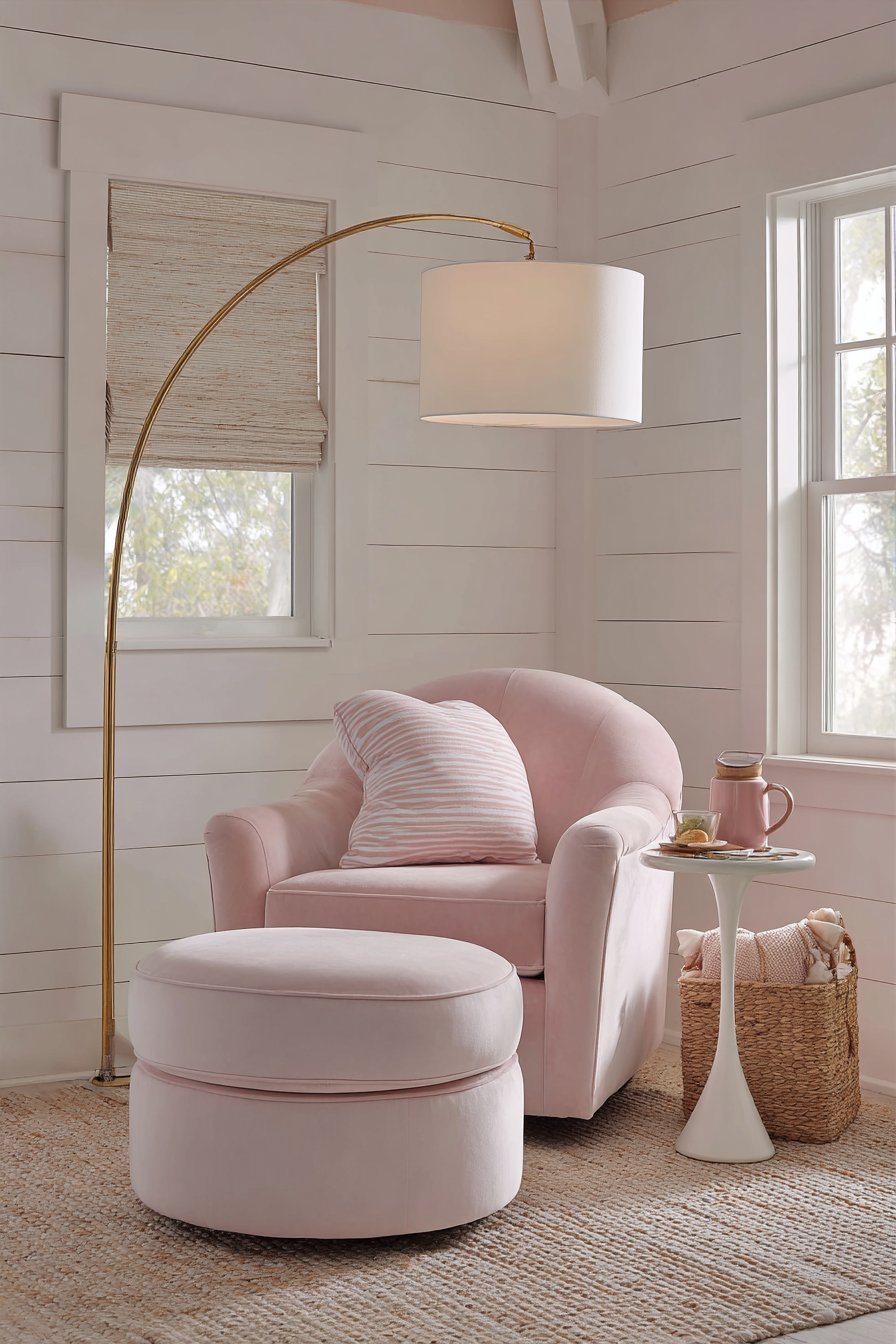
A comfortable upholstered glider in dusty rose velvet anchors the feeding area. A matching ottoman provides leg support during extended sessions. A C-shaped nursing pillow in pink and white striped cotton rests on the chair. A small accent table in white holds essential items. A pink ceramic mug, water carafe, and basket with nursing supplies occupy the surface.
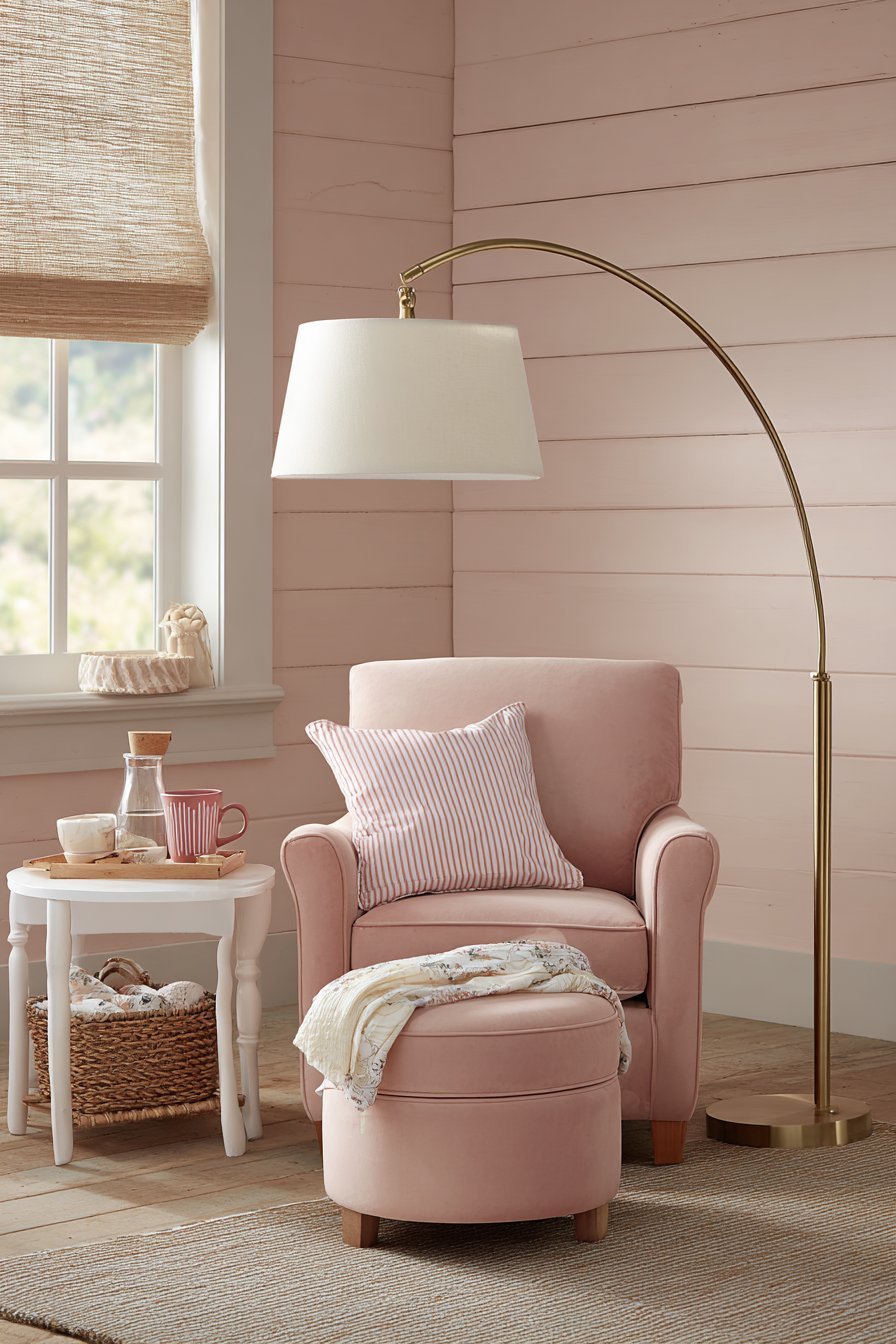
A tall arc floor lamp with brass stem provides adjustable task lighting. The white linen shade diffuses light gently throughout the area. The wall behind features tongue and groove paneling painted soft pink. White trim creates architectural detail and visual interest. A small side window with Roman shade in natural linen allows privacy. It maintains soft natural light during daytime feeding sessions.
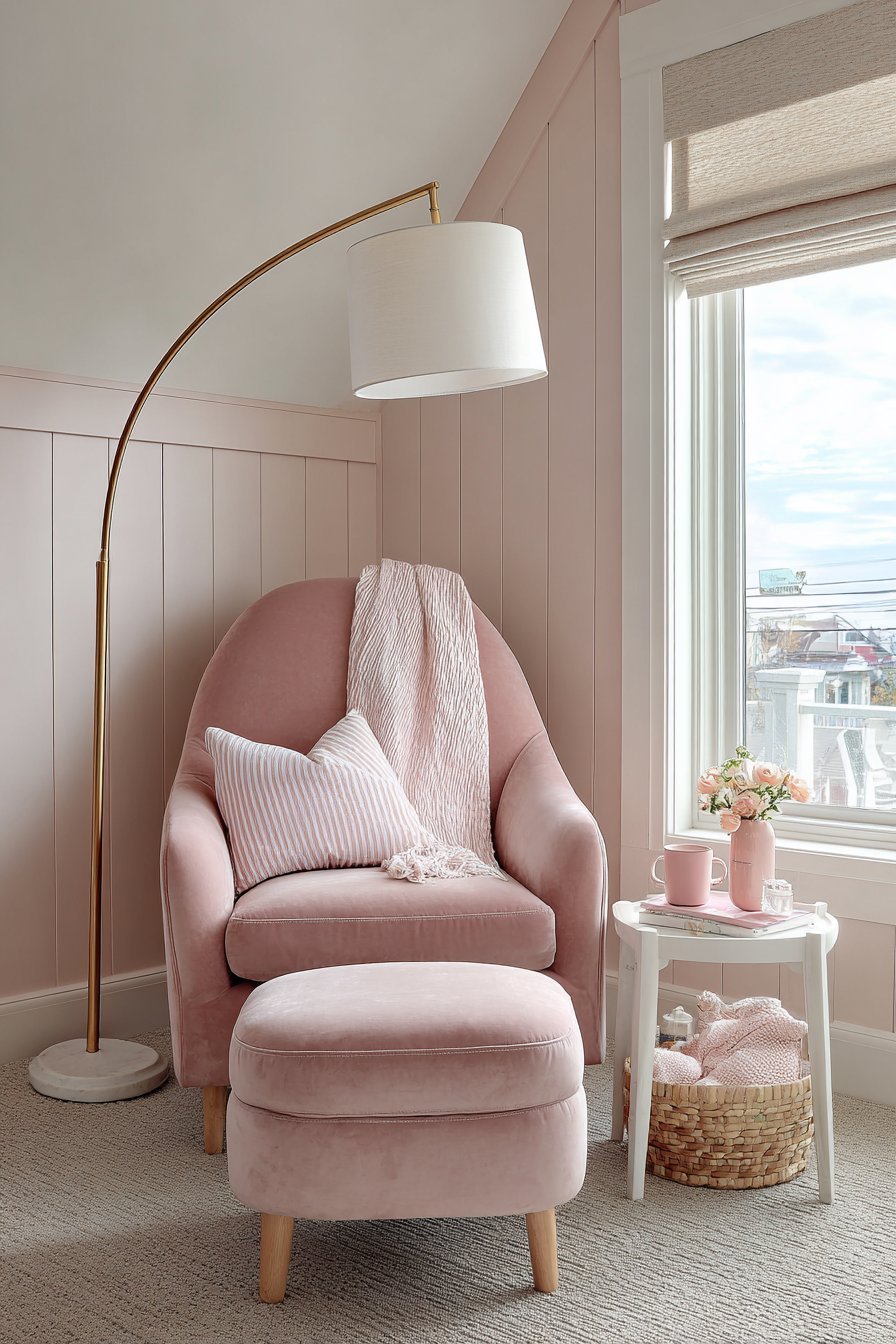
The investment in comfortable seating pays enormous dividends during nursing months. Quality gliders provide smooth motion that soothes both baby and caregiver. The velvet upholstery adds luxury to this frequently used space. Matching ottomans complete proper ergonomic positioning. They reduce strain during extended feeding sessions.
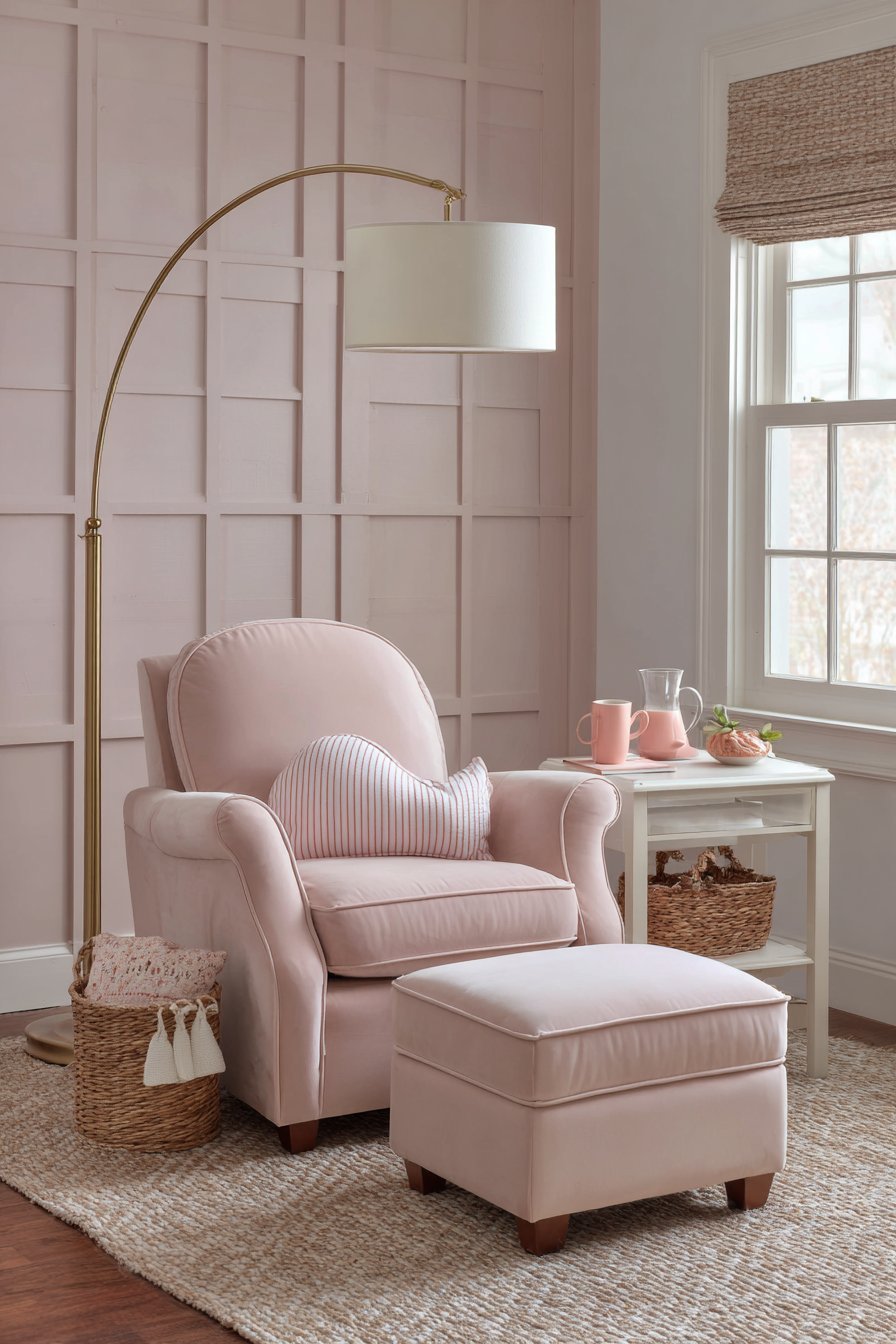
Lighting deserves careful consideration in feeding areas. The arc floor lamp allows light positioning adjustment. This flexibility accommodates different times of day and personal preferences. The brass stem adds warmth while the linen shade softens the illumination. The combination creates functional lighting that enhances rather than detracts from ambiance. Natural light from the side window supplements without creating glare.
Key Design Tips:
- Invest in quality gliders that provide smooth comfortable motion
- Add matching ottomans for proper ergonomic leg support
- Include adjustable task lighting for feeding sessions at all hours
- Keep essential items within easy reach on nearby accent tables
- Install window treatments that balance privacy with natural light
- Choose tongue and groove paneling for architectural interest and texture
14. Growth Documentation Wall
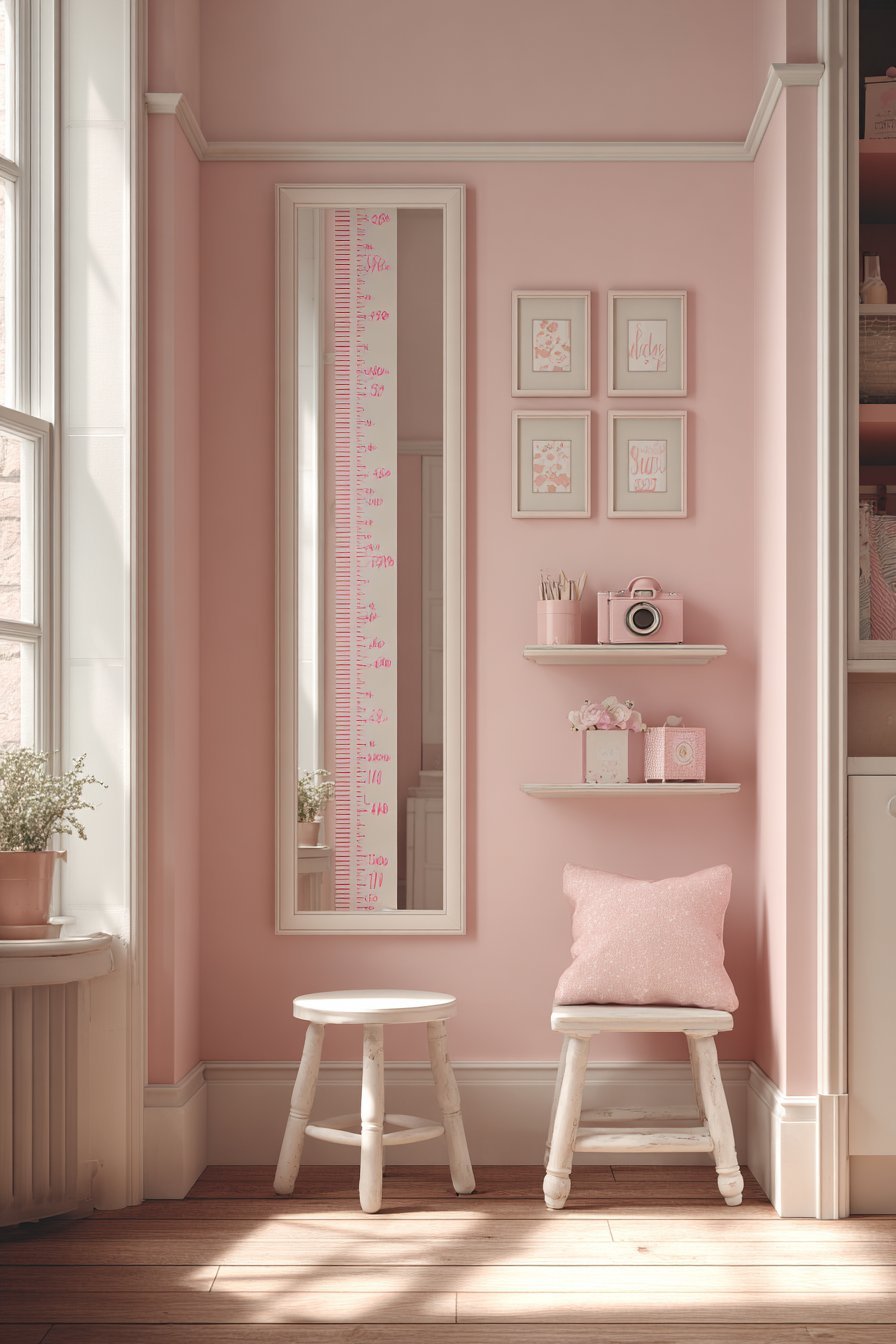
A canvas height chart in soft pink with white measurement markings hangs beside a mirror. The white-framed full-length mirror reflects light throughout the room. The surrounding wall features chair rail detail in white. This separates pale blush above from slightly deeper rose pink below. A small vintage-style white stool sits below for monthly photo sessions.
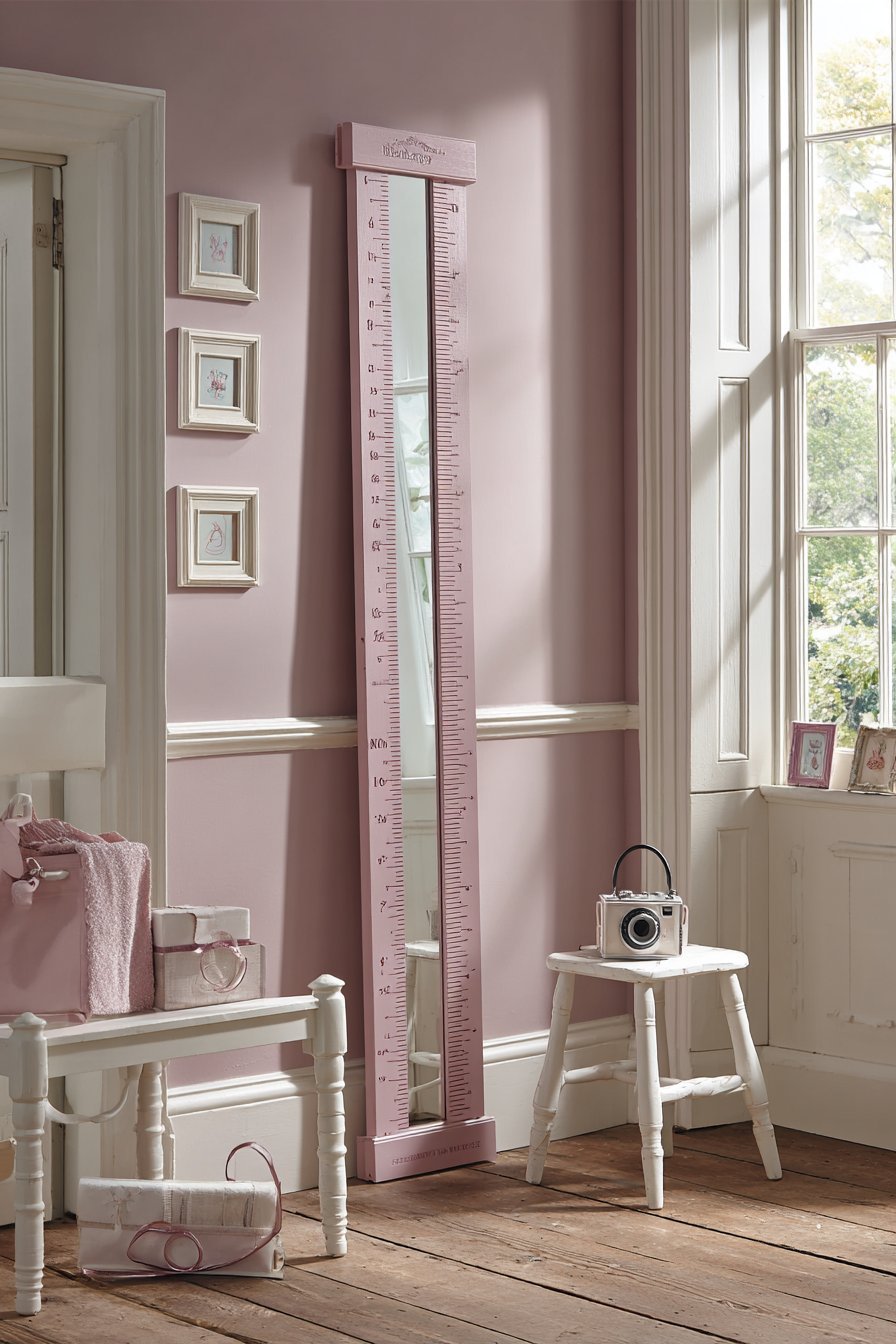
Framed milestone cards in simple white frames document important moments. A small shelf holds a camera and memory box in pink linen. Morning light from nearby window creates soft highlights. These illuminate the memory-keeping corner beautifully. The functional documentation area integrates seamlessly into the design scheme.
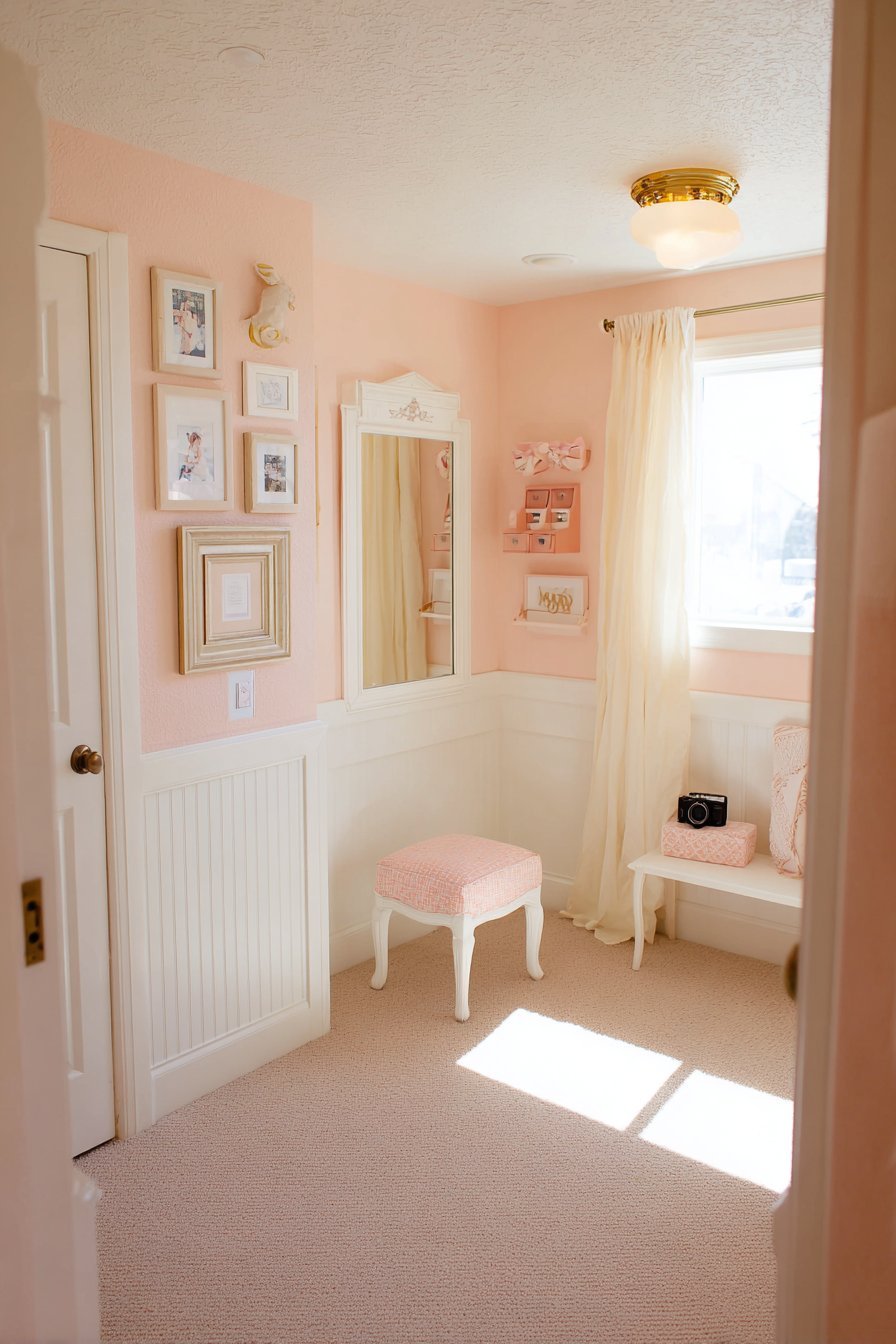
Documenting growth becomes important ritual in baby’s first years. The canvas height chart provides permanent record of physical development. The full-length mirror serves practical daily purposes. It also creates backdrop for milestone photography. The vintage-style stool positions babies at appropriate height for consistent documentation.
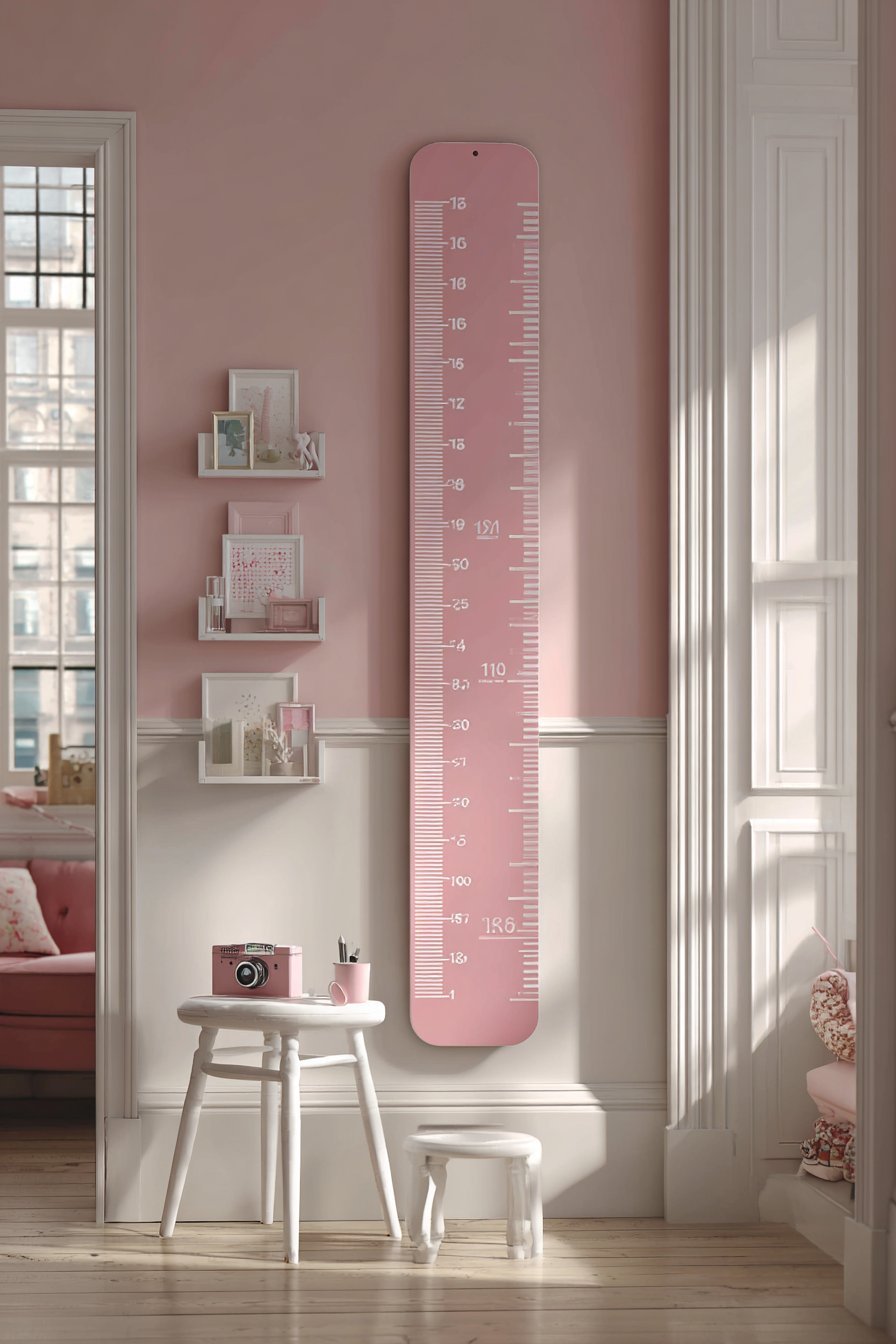
Memory-keeping elements deserve dedicated space in nursery design. The small shelf consolidates documentation supplies in one location. The camera stays readily accessible for spontaneous moments. The pink linen memory box stores precious keepsakes safely. The framed milestone cards create visual timeline on the wall. These elements transform functional documentation into beautiful display.
Key Design Tips:
- Install canvas height charts that grow with your child
- Position full-length mirrors for both function and photography backdrops
- Use chair rail details to separate wall colors for architectural interest
- Create dedicated spaces for documentation supplies and keepsakes
- Include sturdy stools for positioning during milestone photography
- Frame milestone cards to create visual timeline of important moments
15. Layered Window Treatments
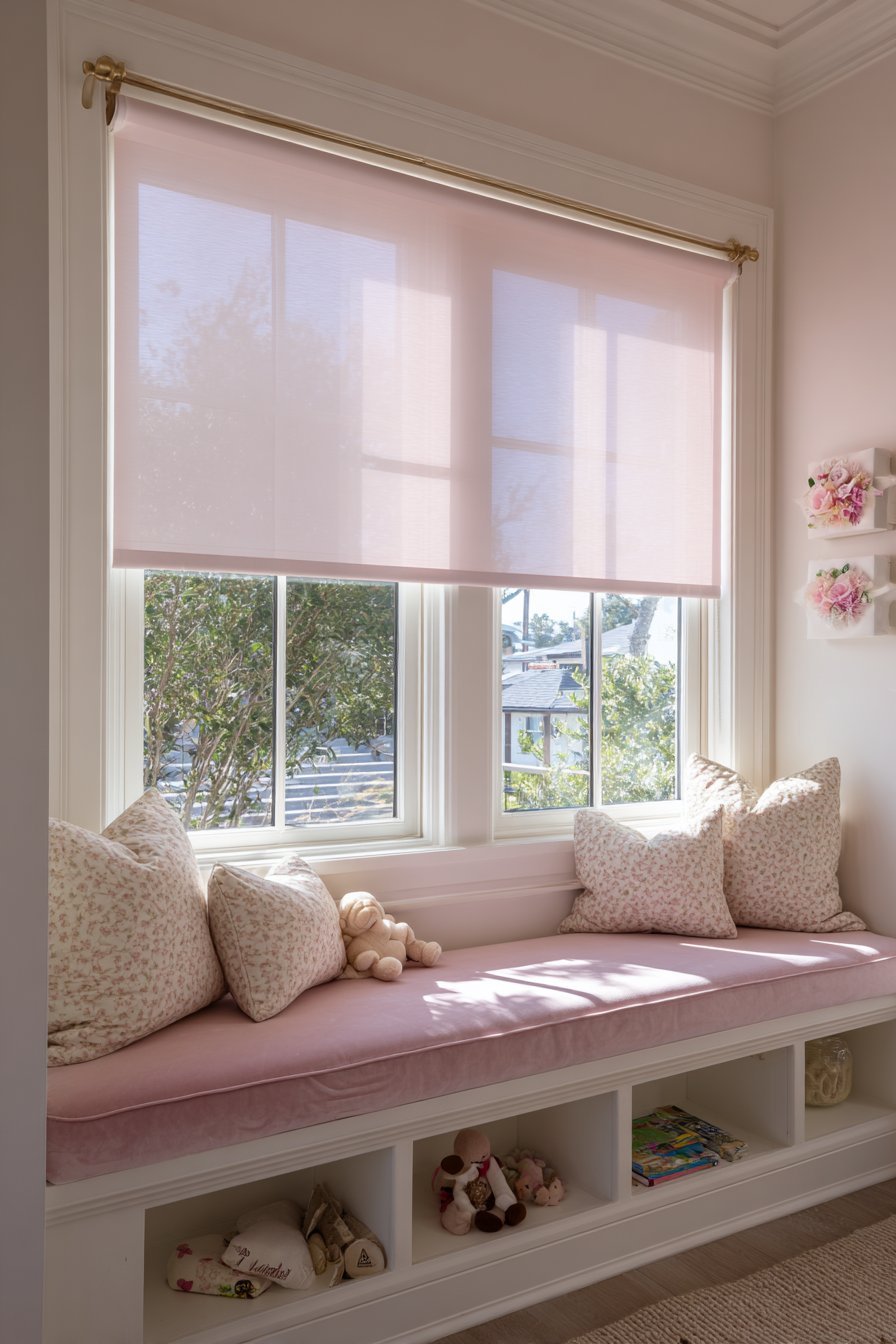
Blackout roller shades in soft pink fabric with white trim provide light control. They layer behind sheer white curtains on brass rod. The window treatment effectively blocks light during nap times. It maintains the room’s aesthetic when raised. The window seat below features built-in bench with pink velvet cushion. Coordinating pillows in cream and blush patterns add comfort.
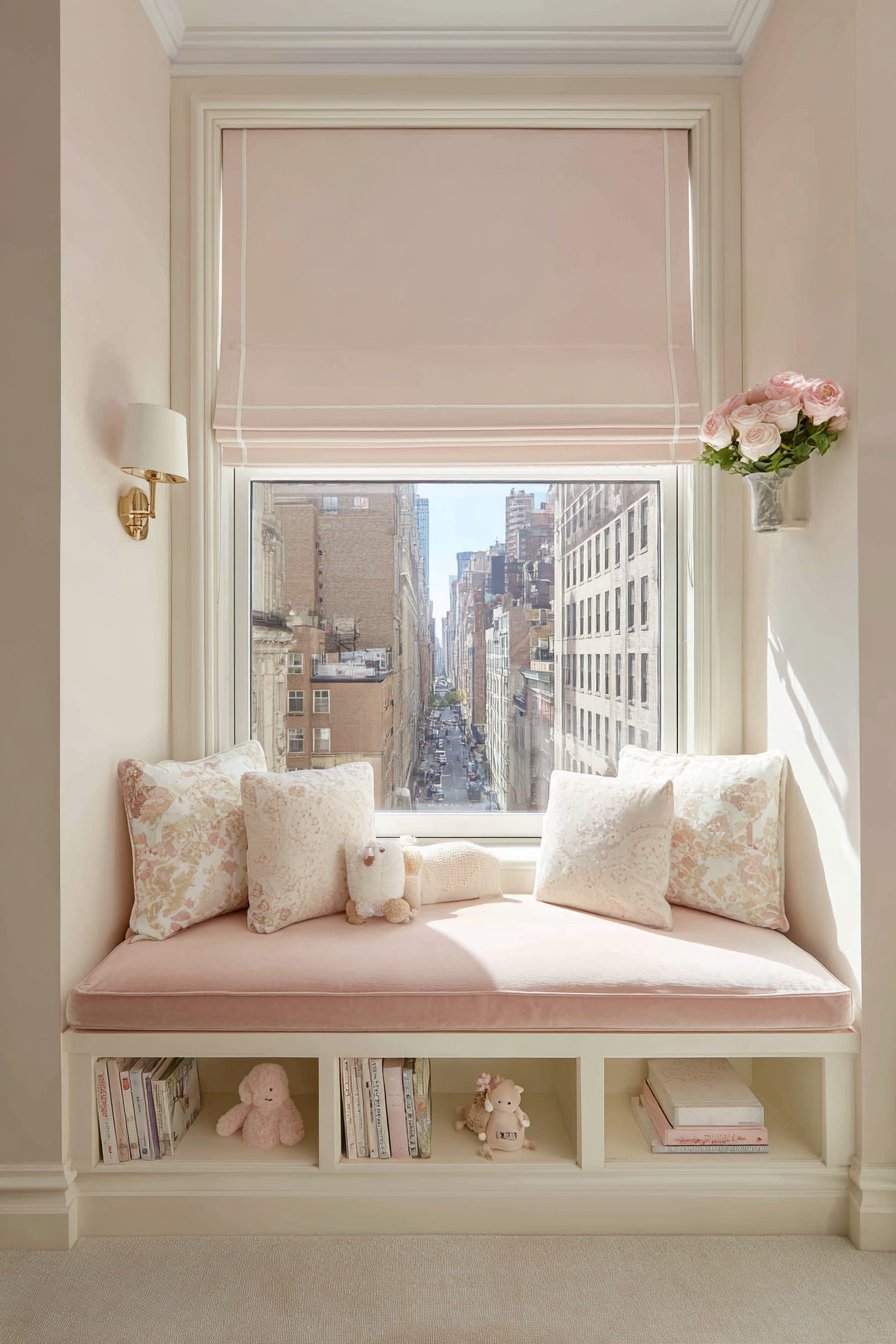
Small cubbies beneath the seat hold board books and soft toys. The walls surrounding the window feature pale pink paint. White wainscoting below adds architectural detail. Natural afternoon light filters through when shades are open. The complete window wall demonstrates practical layering of light control. It integrates functional design elements seamlessly.
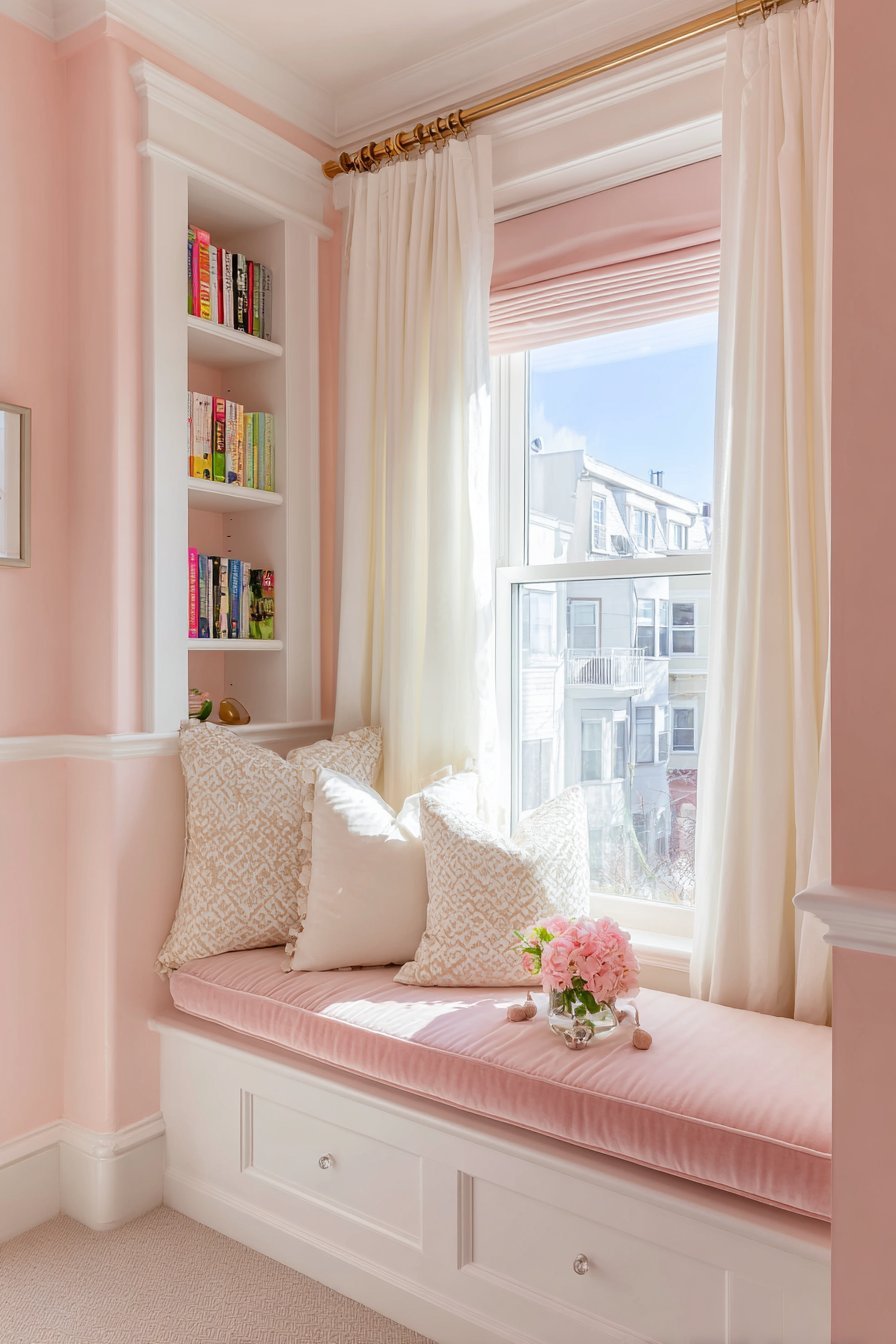
Window treatment layering offers flexibility for different times and needs. Blackout shades support healthy sleep patterns during daytime naps. The soft pink fabric maintains design continuity even when lowered. Sheer curtains provide privacy without blocking natural light entirely. The brass rod adds warmth and coordinates with other metallic accents.
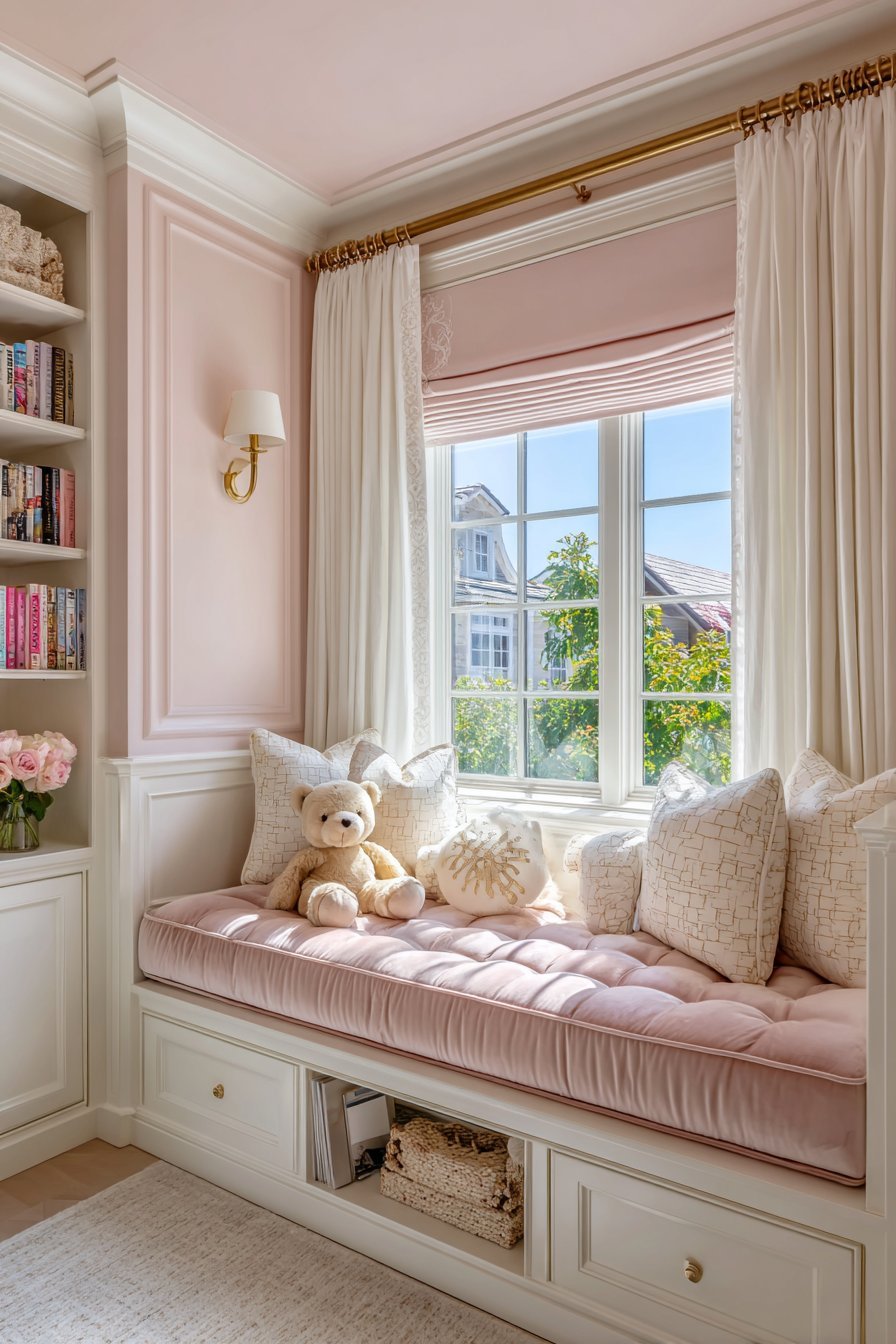
Built-in window seats maximize often-wasted space below windows. The storage cubbies keep toys and books organized yet accessible. The pink velvet cushion creates comfortable reading spot. The coordinating pillows add color variation and textural interest. This transformation of dead space into functional beauty exemplifies thoughtful design planning.
Key Design Tips:
- Layer blackout shades with sheer curtains for flexible light control
- Choose blackout fabrics in colors that coordinate with room palette
- Build window seats with storage cubbies to maximize space efficiency
- Add cushions and pillows to transform window seats into cozy spots
- Install wainscoting below windows for architectural detail
- Use brass curtain rods to add warmth and coordinate with other metals
16. Tiered Supply Caddy
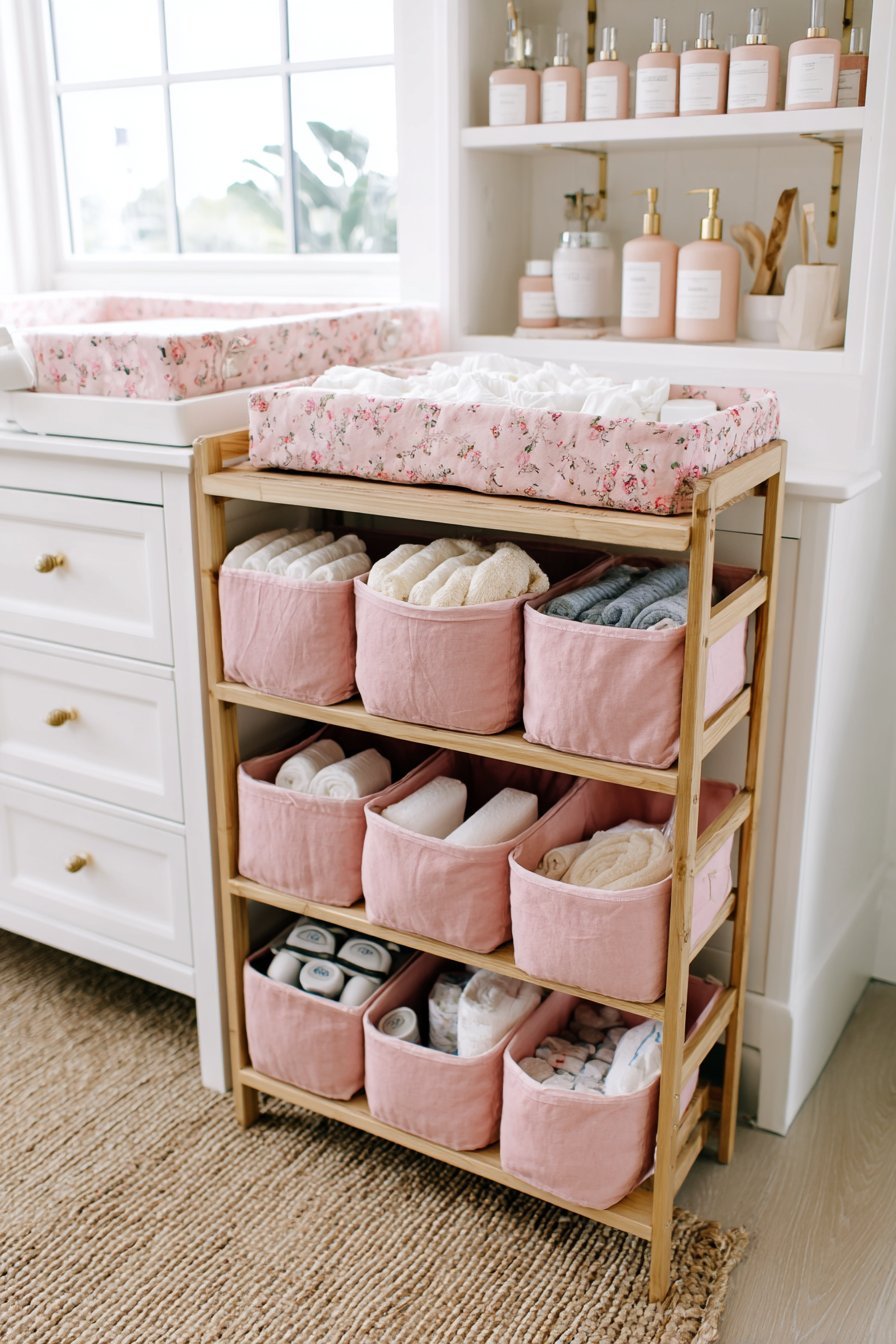
A wooden tiered stand in white features pink fabric-lined baskets on each level. The top tier holds frequently used items like diaper cream and wipes. The middle tier contains extra diapers rolled and stored vertically. The bottom tier accommodates larger supplies and backup items. The caddy sits on natural jute rug beside white changing table.
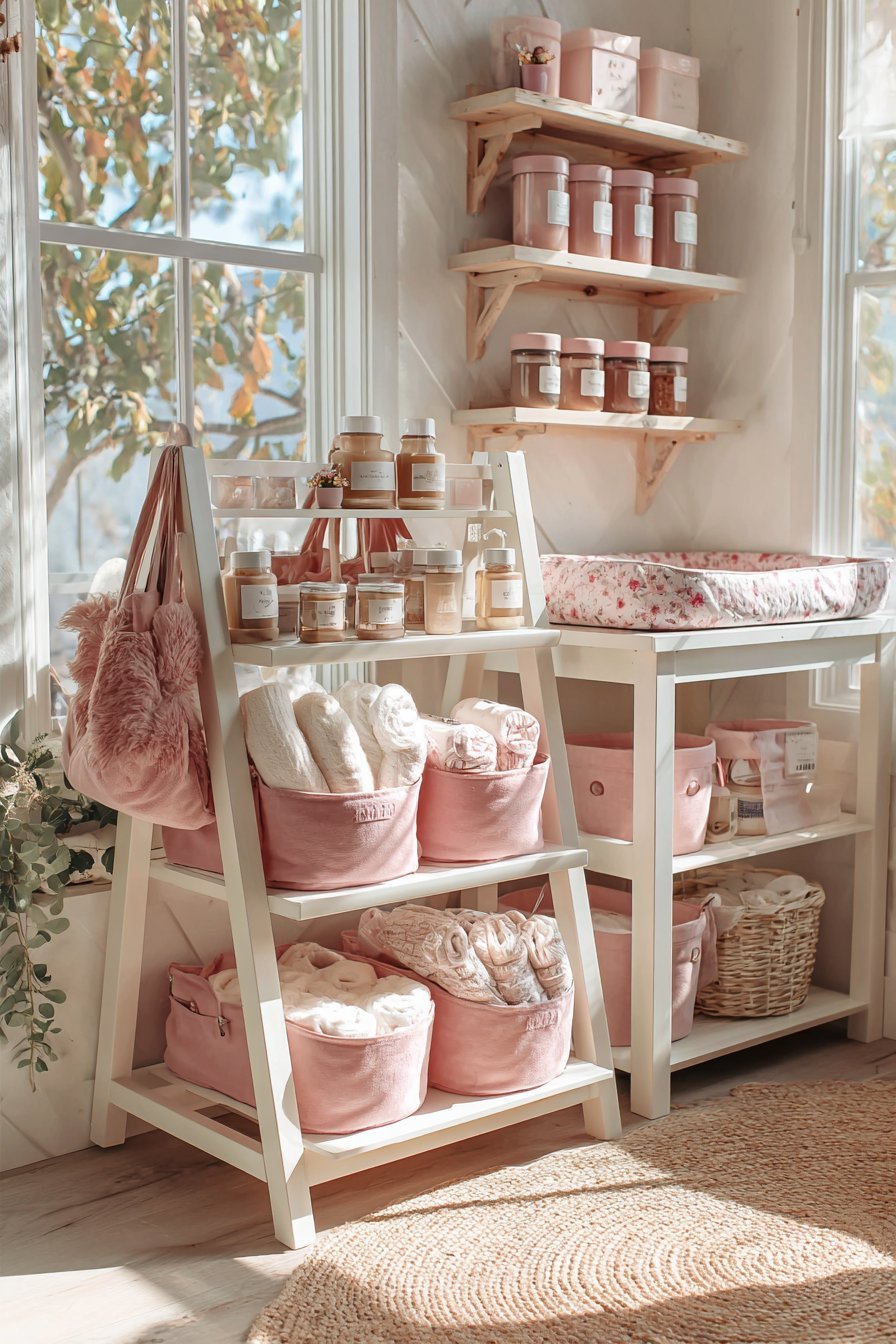
The changing table features pink floral changing pad cover that adds pattern. Wall-mounted shelving above displays additional supplies in matching containers. Pink and white storage pieces create cohesive organization system. Soft natural lighting from window illuminates the organized setup. Every item has designated place within easy reach.
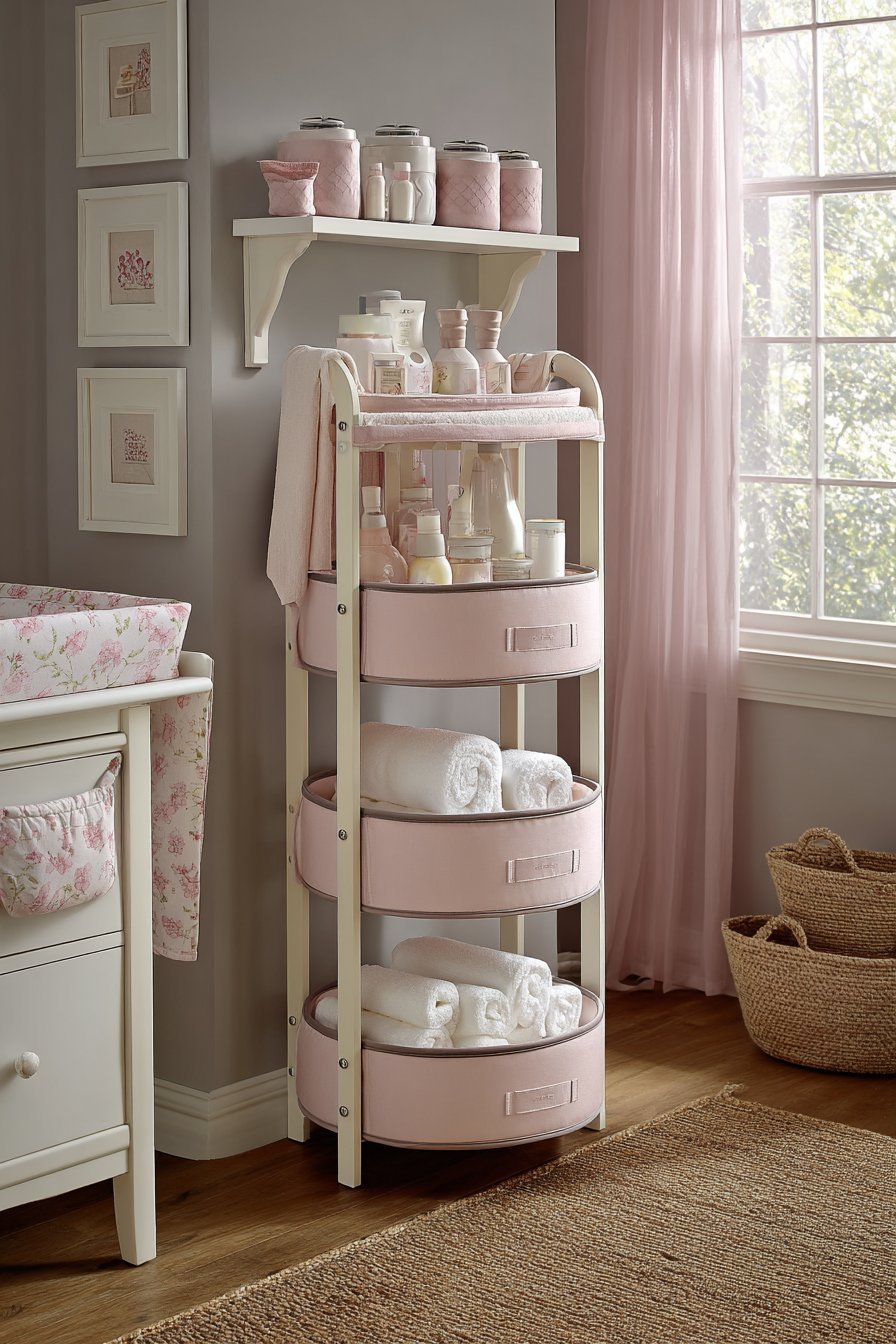
Vertical storage solutions maximize limited floor space in nurseries. The tiered design provides substantial storage capacity in compact footprint. The different level heights accommodate varied supply sizes logically. Rolling diapers vertically in baskets maximizes visibility and capacity. This storage method prevents diapers from becoming crushed or misshapen.
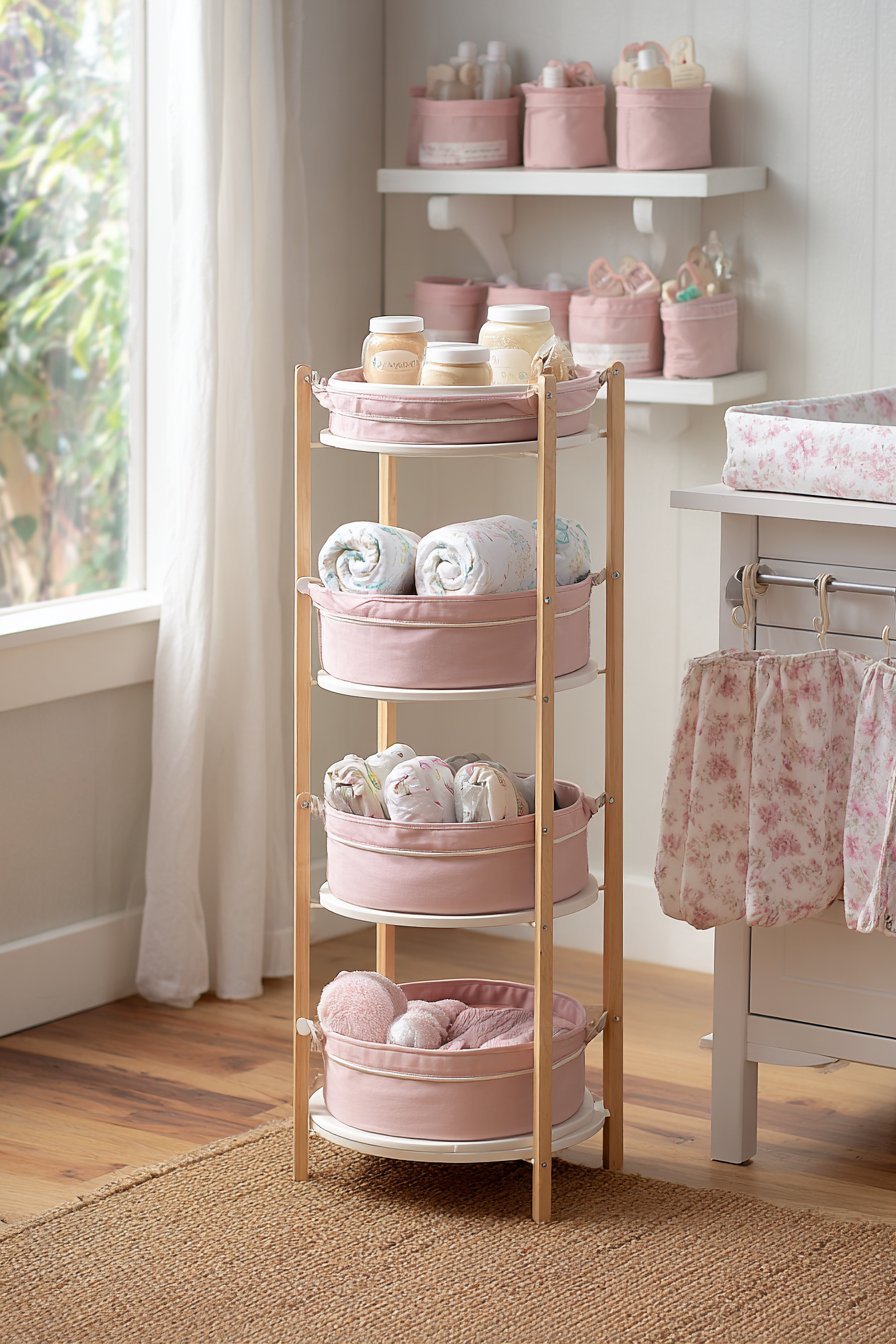
Pink fabric-lined baskets maintain aesthetic standards while serving practical functions. These liners protect wooden surfaces from moisture and spills. They add soft color that coordinates with the nursery palette. The natural jute rug defines the changing area while adding organic texture. This grounds the predominantly pink and white color scheme with natural warmth.
Key Design Tips:
- Use tiered storage stands to maximize vertical space efficiency
- Roll diapers vertically in baskets for better visibility and capacity
- Organize supplies by frequency of use across different tier levels
- Add fabric liners to baskets for protection and aesthetic appeal
- Position storage caddies within easy reach of changing surfaces
- Coordinate storage containers for cohesive organized appearance
17. Curated Art Gallery Wall
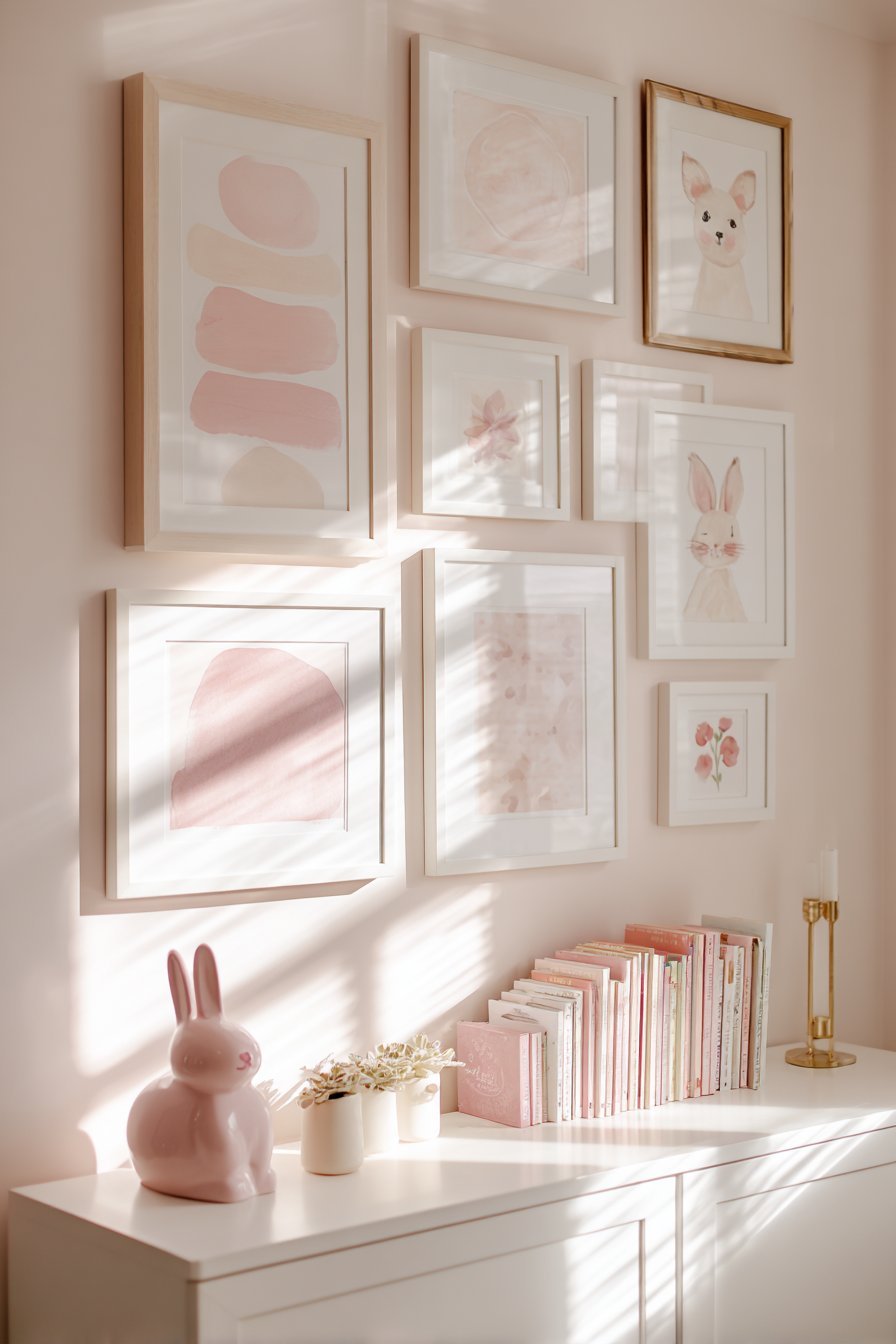
A gallery wall above a low white console table showcases curated prints. The frames vary in size but maintain consistent white and natural wood finishes. The artwork includes soft pink abstract shapes and simple line drawings. Animals rendered in dusty rose tones appear alongside botanical prints. Each piece features blush flowers or complementary pink elements.
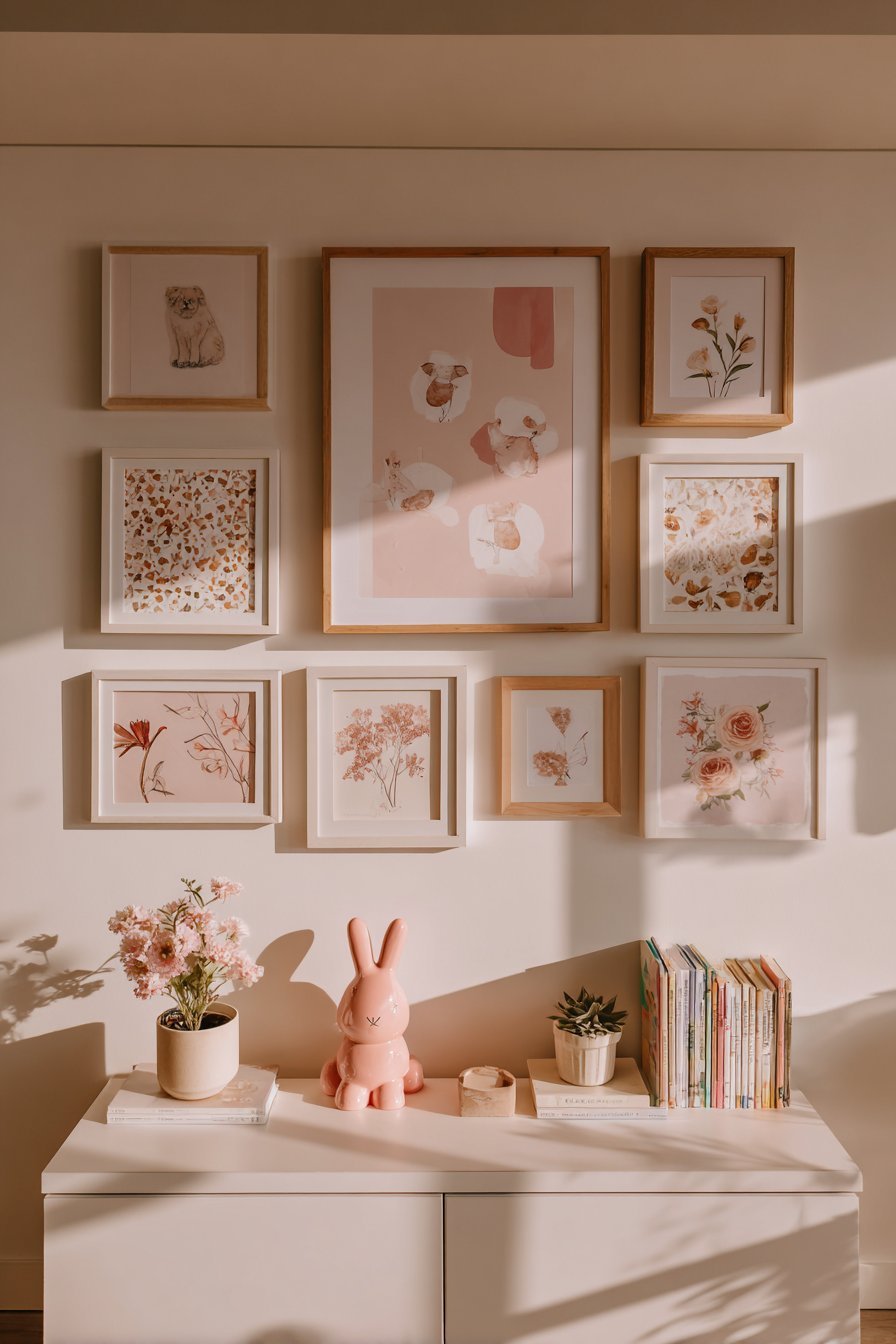
The console table holds small decorative objects carefully chosen. A pink ceramic rabbit adds whimsical touch. A small plant in cream pot brings living element. Several board books stand upright adding both function and color. The wall color in palest pink barely distinguishes from white. Natural light from the side creates subtle shadows adding dimension to framed art.
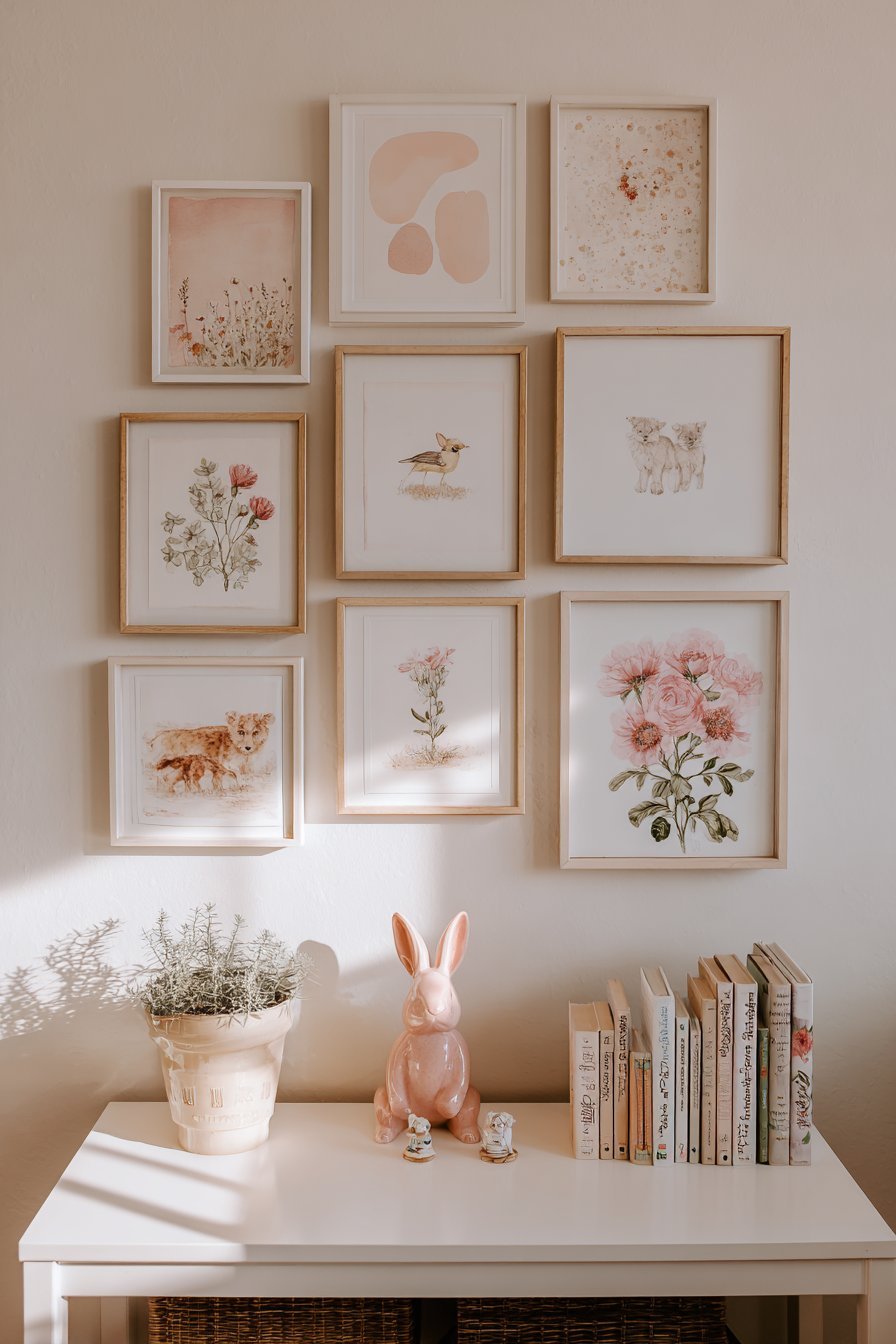
Gallery walls require careful curation to avoid cluttered appearance. The varied frame sizes create visual interest through scale variation. Consistent frame finishes prevent the arrangement from appearing chaotic. The artwork selection focuses on soft pink theme without being literal. Abstract shapes alongside representational drawings creates sophisticated balance.
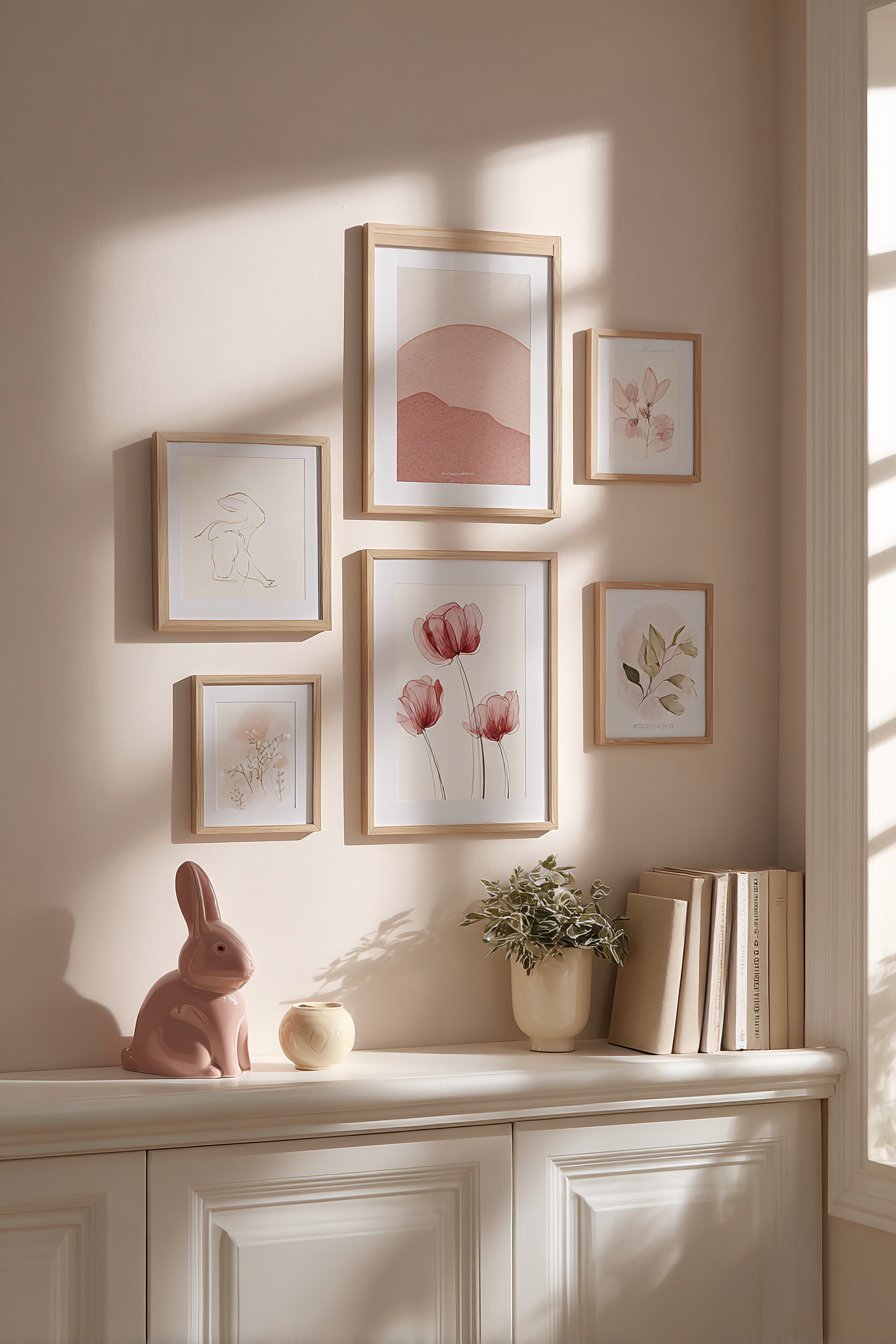
The low console table grounds the gallery wall physically and visually. Its placement provides surface for rotating decorative displays. The carefully chosen objects add personality without competing with artwork. The upright board books serve dual purpose as decoration and library. This practical beauty characterizes well-designed nursery spaces. Every element serves purpose while contributing to aesthetic whole.
Key Design Tips:
- Vary frame sizes within gallery walls for dynamic visual interest
- Maintain consistent frame finishes to prevent chaotic appearance
- Curate artwork around color themes rather than literal interpretations
- Position gallery walls above functional furniture pieces
- Include small decorative objects that add personality without clutter
- Use subtle wall colors that read nearly neutral as backdrops
18. Canvas Play Tent Retreat
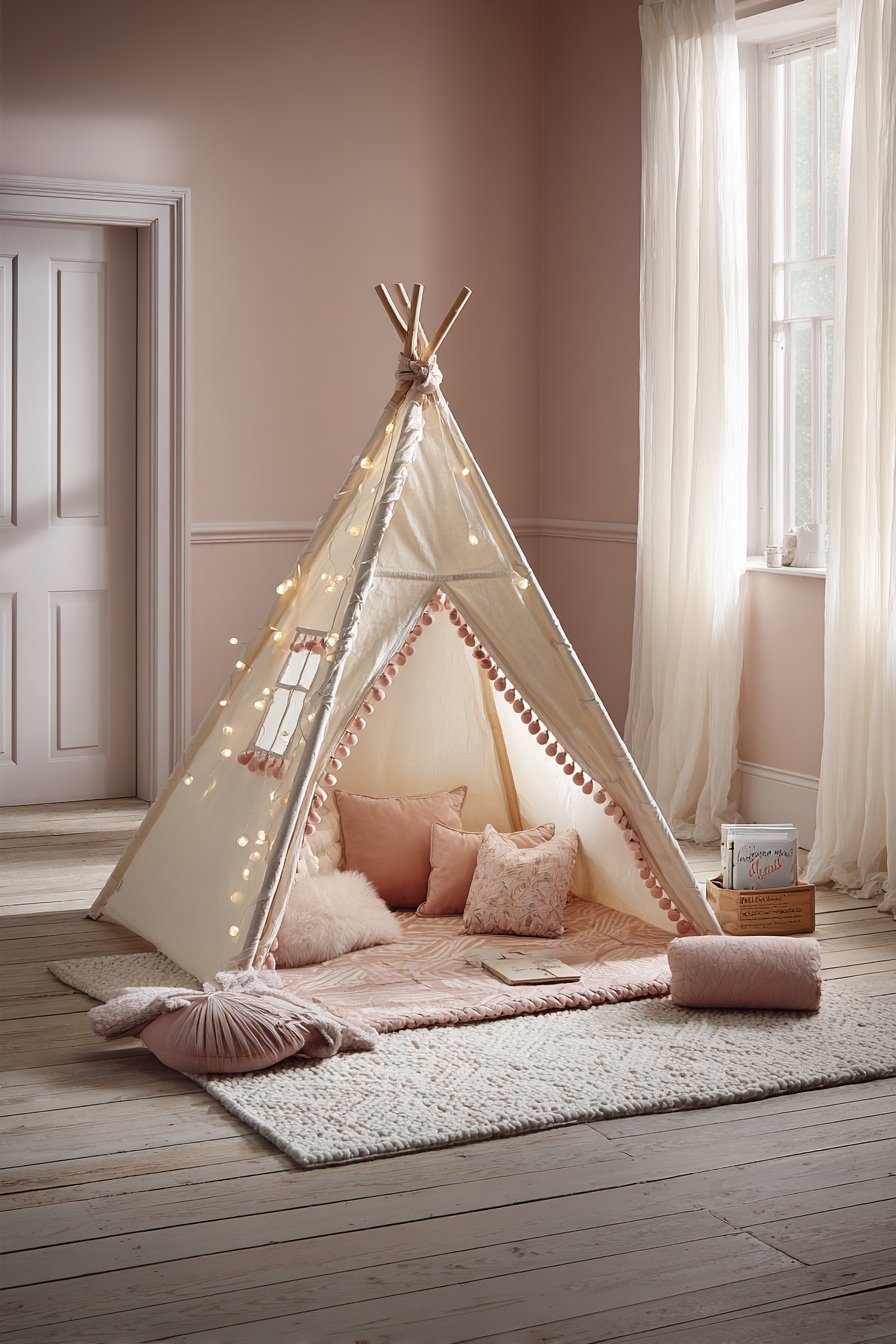
A teepee play tent in natural canvas features pink pom-pom trim along edges. Inside the teepee, a soft play mat in cream displays pink geometric patterns. Pink velvet floor cushions provide comfortable seating. A small wooden crate nearby holds soft toys and board books. These items remain within easy reach during play sessions.
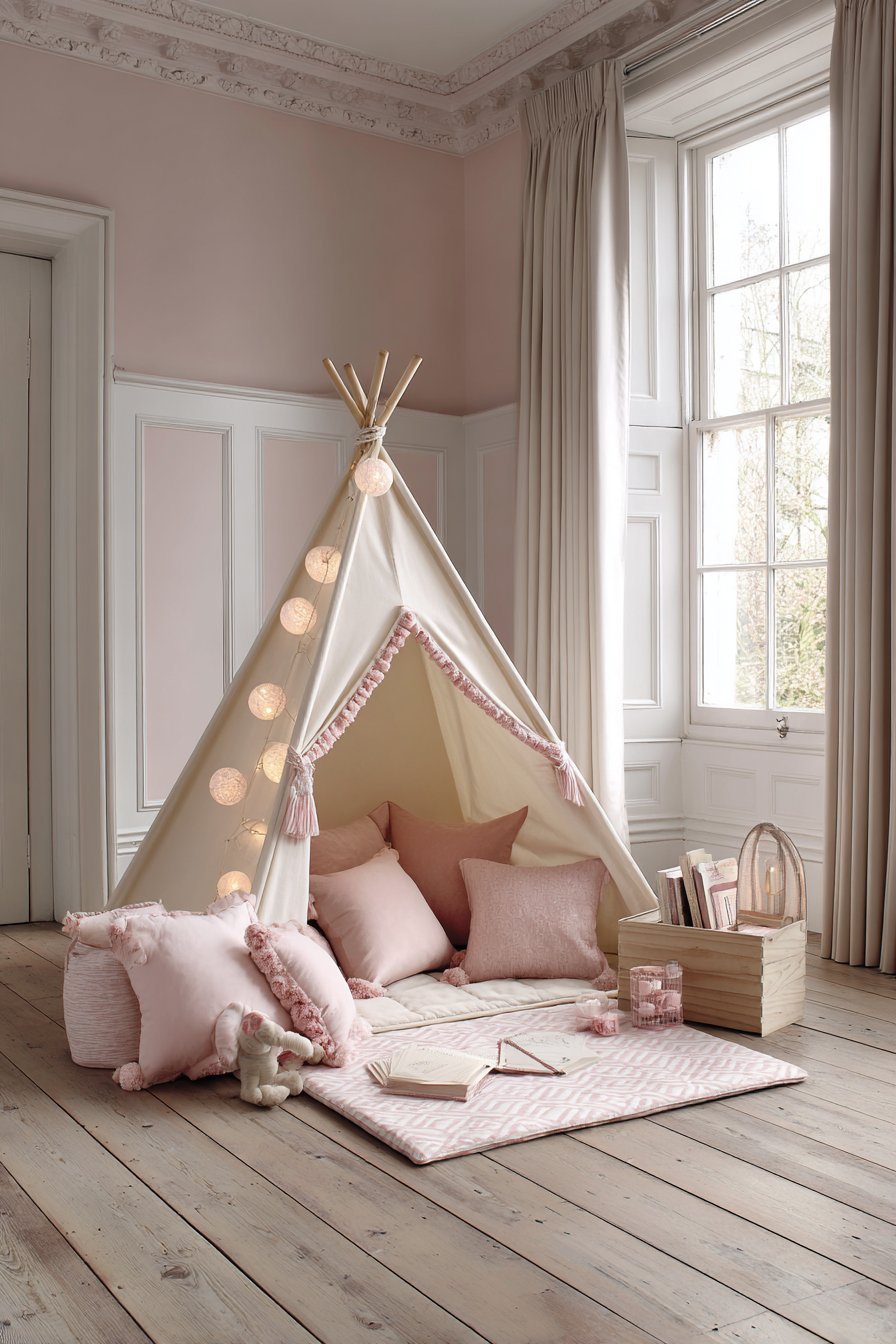
The surrounding walls in soft pink create cohesive backdrop. White baseboards add clean architectural detail. Natural light oak flooring grounds the play area. A string of simple white globe lights drapes inside the teepee. These provide gentle illumination during play. Natural window light filters through sheer curtains creating dreamy environment.
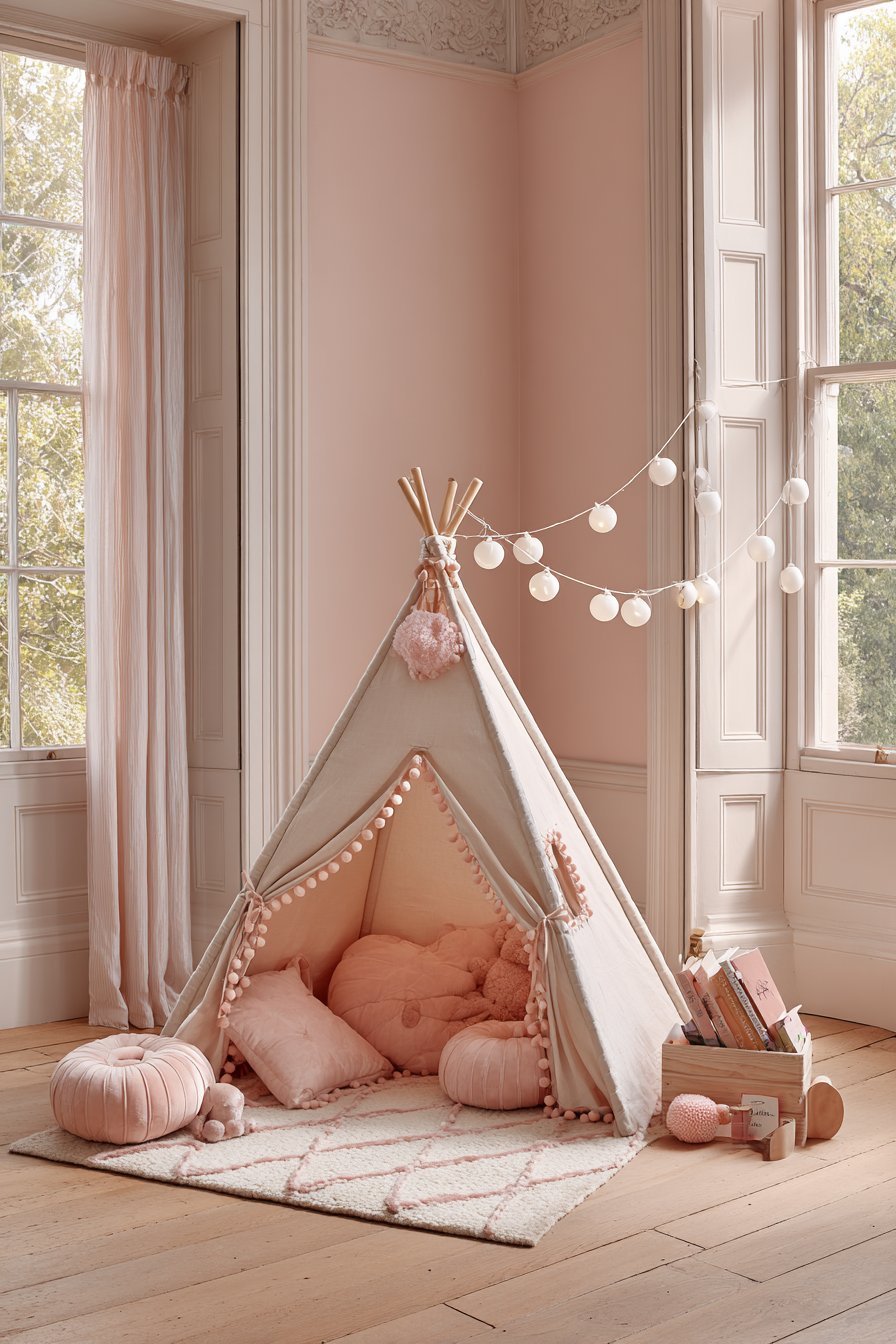
Play tents create defined spaces within larger rooms. They offer cozy retreats that appeal to children’s desire for smaller scaled environments. The natural canvas material provides neutral base. The pink pom-pom trim adds playful detail that coordinates with nursery palette. The structure remains lightweight enough to move as needs change.
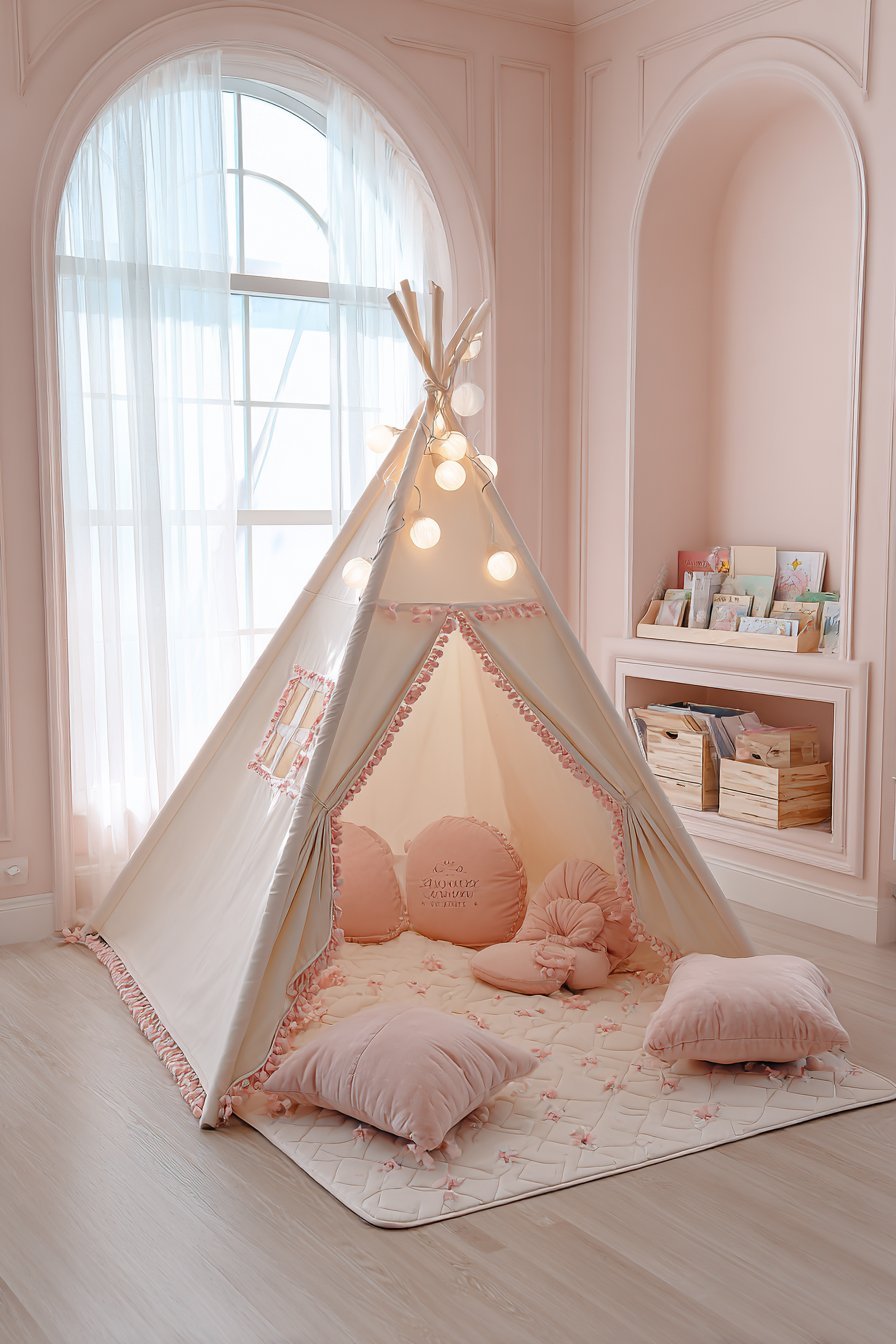
The interior setup encourages independent play and reading. The soft play mat cushions the floor for comfortable sitting. Pink velvet floor cushions add luxurious seating that children love. The geometric patterns on the mat add visual interest appropriate for development. The wooden crate keeps toys organized without requiring permanent furniture. This flexibility supports evolving play patterns as children grow.
Key Design Tips:
- Choose play tents in neutral canvas with colorful accent trim
- Include soft mats and cushions for comfortable floor play
- Add string lights inside tents for gentle ambient illumination
- Keep toy storage mobile and flexible within play areas
- Position play spaces near natural light sources
- Select geometric patterns for developmentally appropriate visual stimulation
19. Safe Sleep Environment
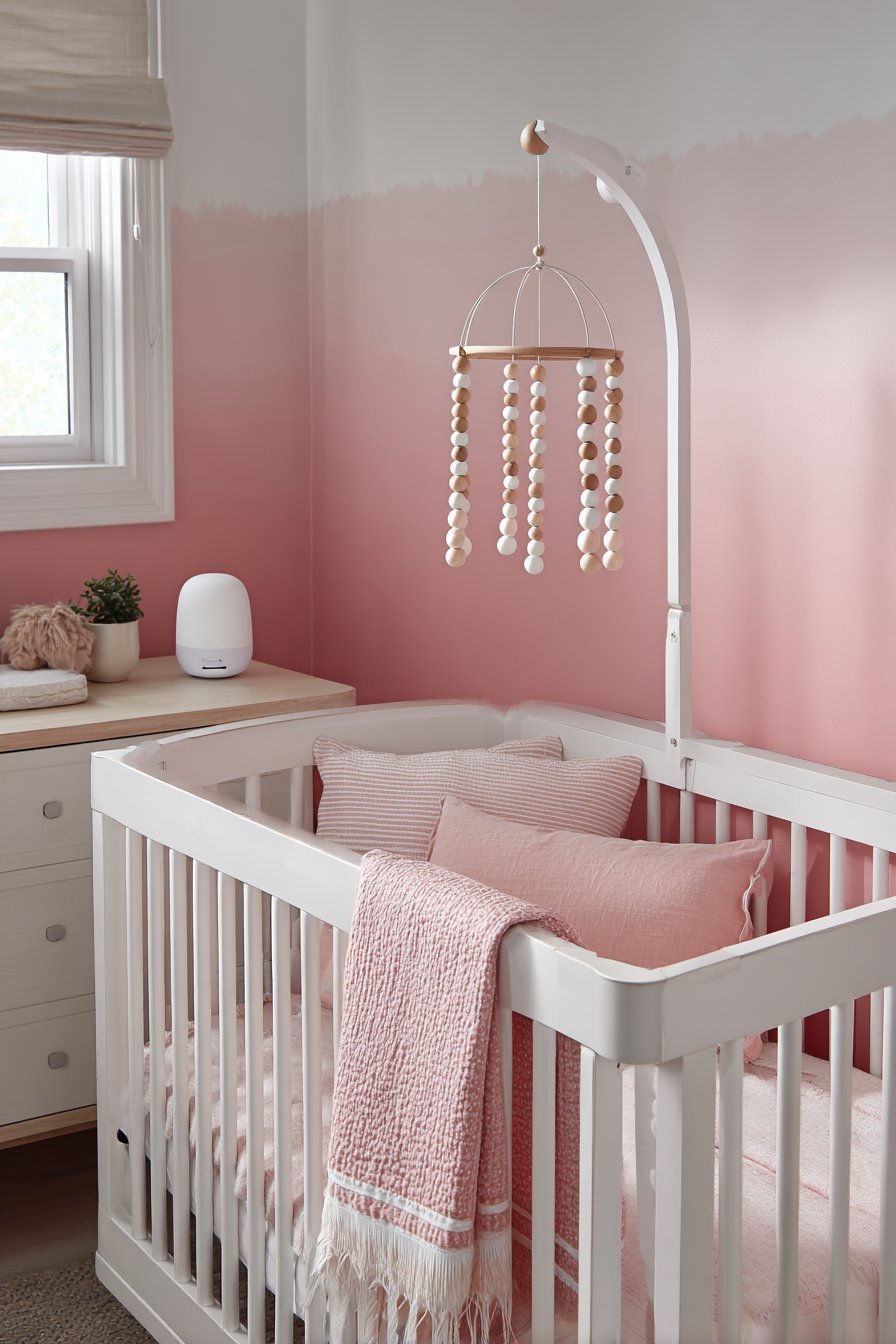
A white crib features attached mobile arm holding wooden bead mobile. The beads come in natural wood, white, and pink painted finishes. The crib dressing includes organic cotton sheets in solid soft pink. A lightweight muslin blanket in pink and white stripes folds at the foot. A breathable mesh crib liner in white provides safety while maintaining clean aesthetic.
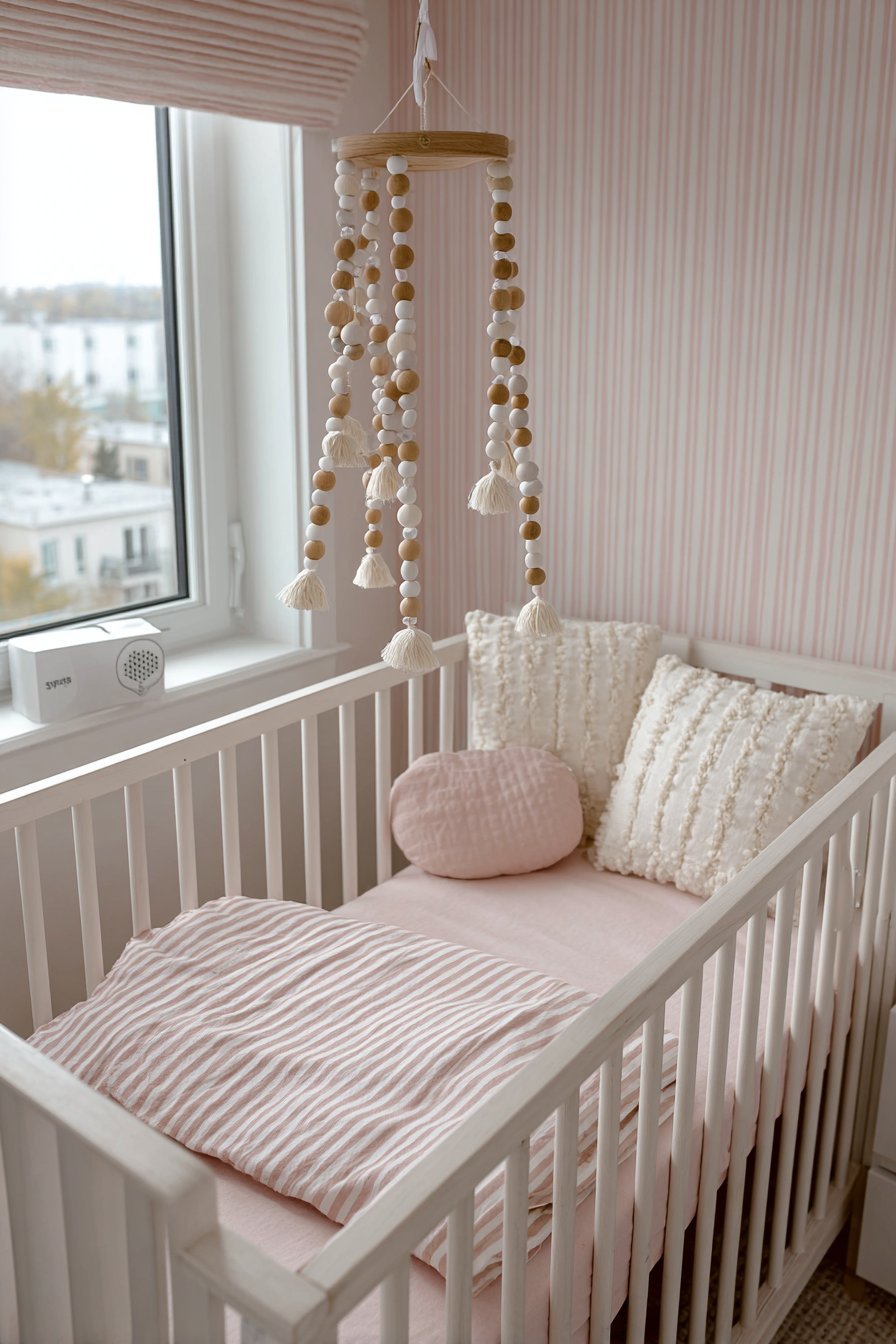
The wall behind features subtle ombré effect. White at the top gradually deepens to soft pink at the bottom. This creates visual interest without stimulation overload. A small white noise machine sits on nearby dresser. Natural morning light illuminates the sleeping area gently. Every element supports safe restful sleep.
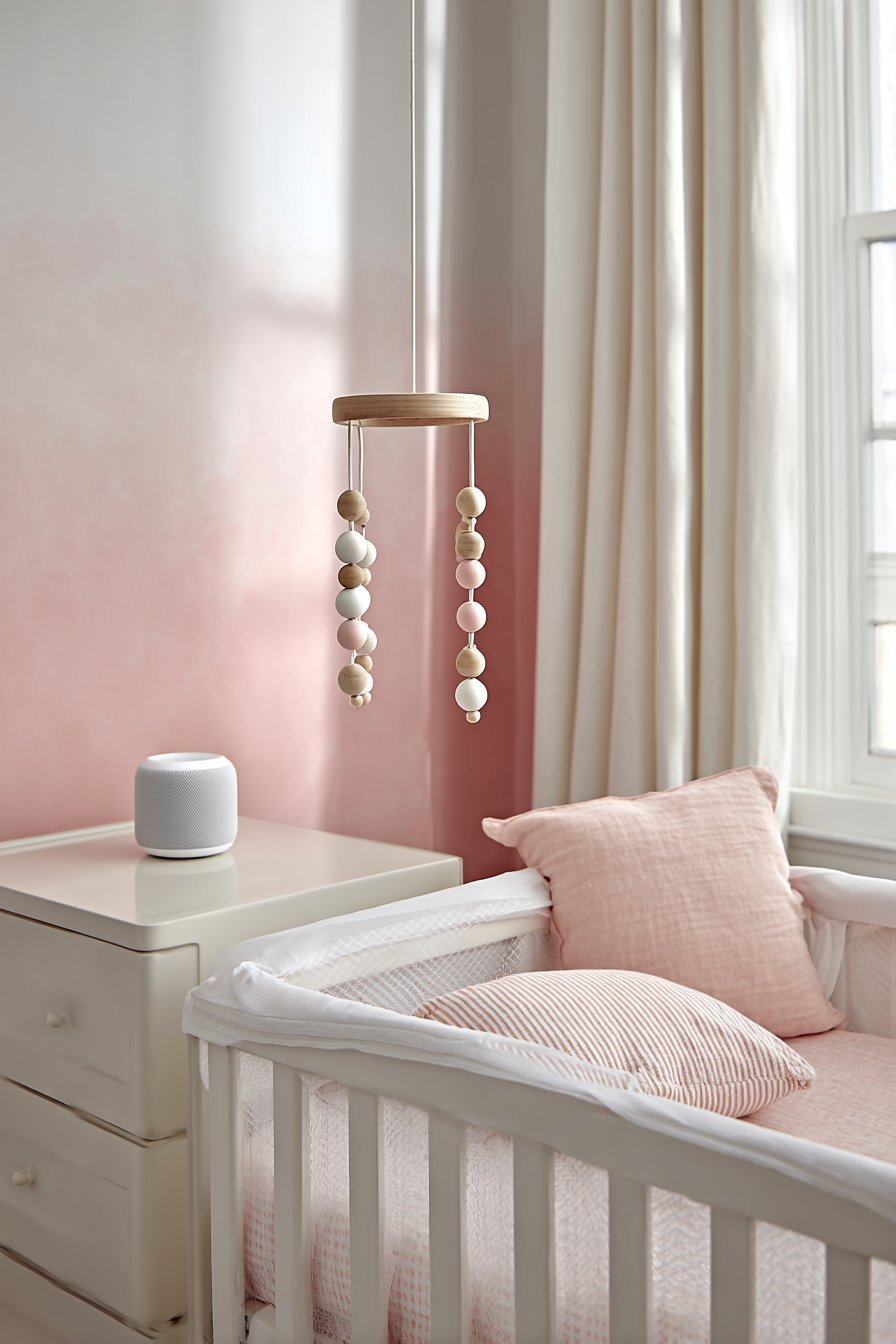
Safe sleep environments require careful consideration of current guidelines. The breathable mesh liner provides bumper alternative that reduces suffocation risk. Organic cotton sheets feel soft against delicate skin. They lack chemical treatments found in conventional bedding. The lightweight muslin blanket offers appropriate warmth without overheating risk.
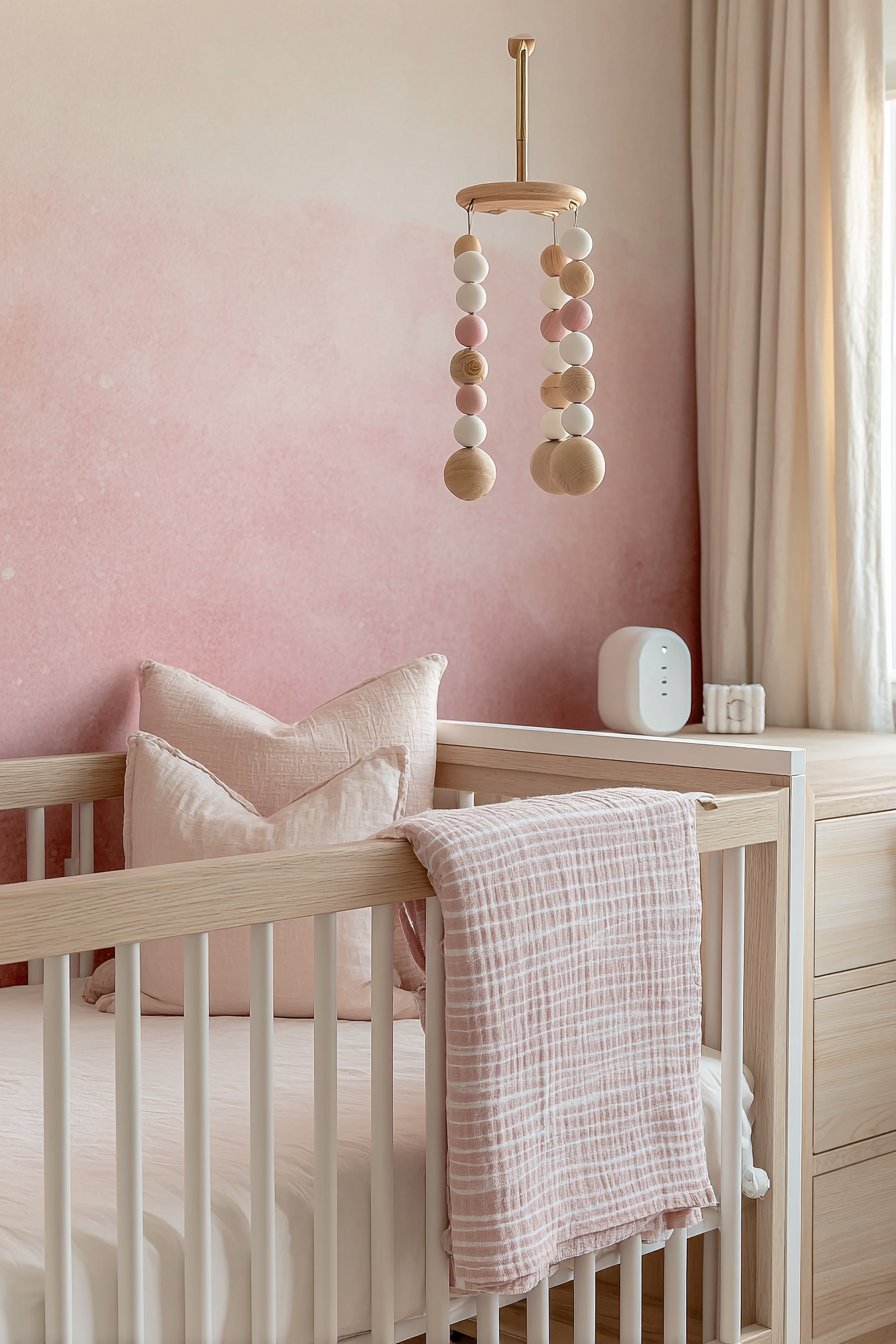
The wooden bead mobile provides appropriate visual stimulation for young infants. The natural materials and simple shapes support visual development. The attached mobile arm keeps the mobile securely positioned. The ombré wall treatment creates focal point without busy patterns. This subtle gradient adds interest while maintaining calming atmosphere. The white noise machine supports consistent sleep associations and masks disruptive sounds.
Key Design Tips:
- Follow current safe sleep guidelines when designing crib areas
- Choose breathable mesh liners instead of traditional bumpers
- Select organic cotton bedding to minimize chemical exposure
- Use wooden bead mobiles for natural materials and simple shapes
- Create subtle wall treatments that avoid overstimulating patterns
- Include white noise machines to support consistent sleep associations
20. Maternal Wellness Corner
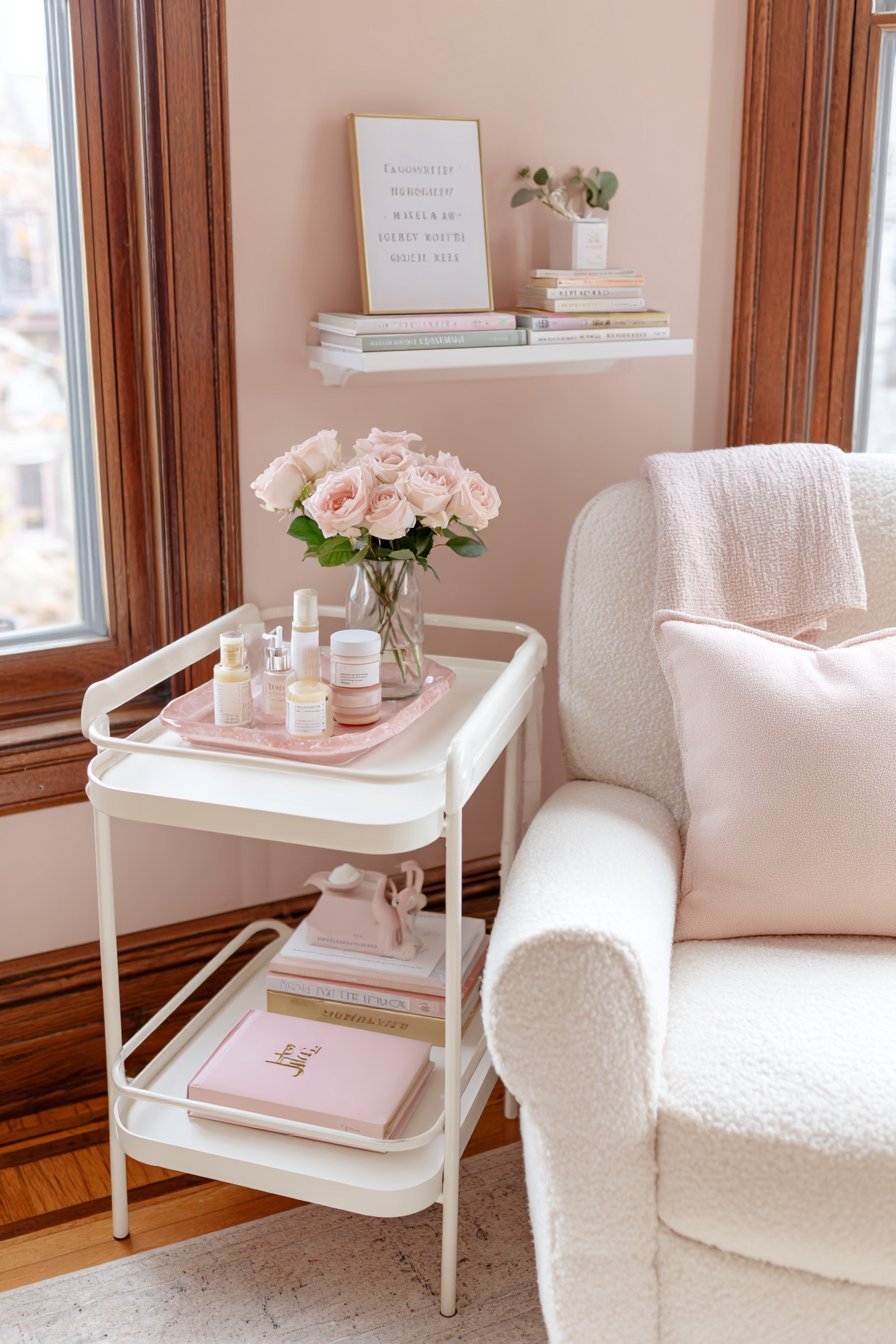
A corner devoted to mom’s comfort features small white vintage-style side table. The surface holds pink ceramic tray with natural skincare products. A soft pink journal with gold foil details provides space for thoughts. A small vase with fresh pink roses adds beauty and fragrance. Above the table, a simple white shelf holds self-care books.
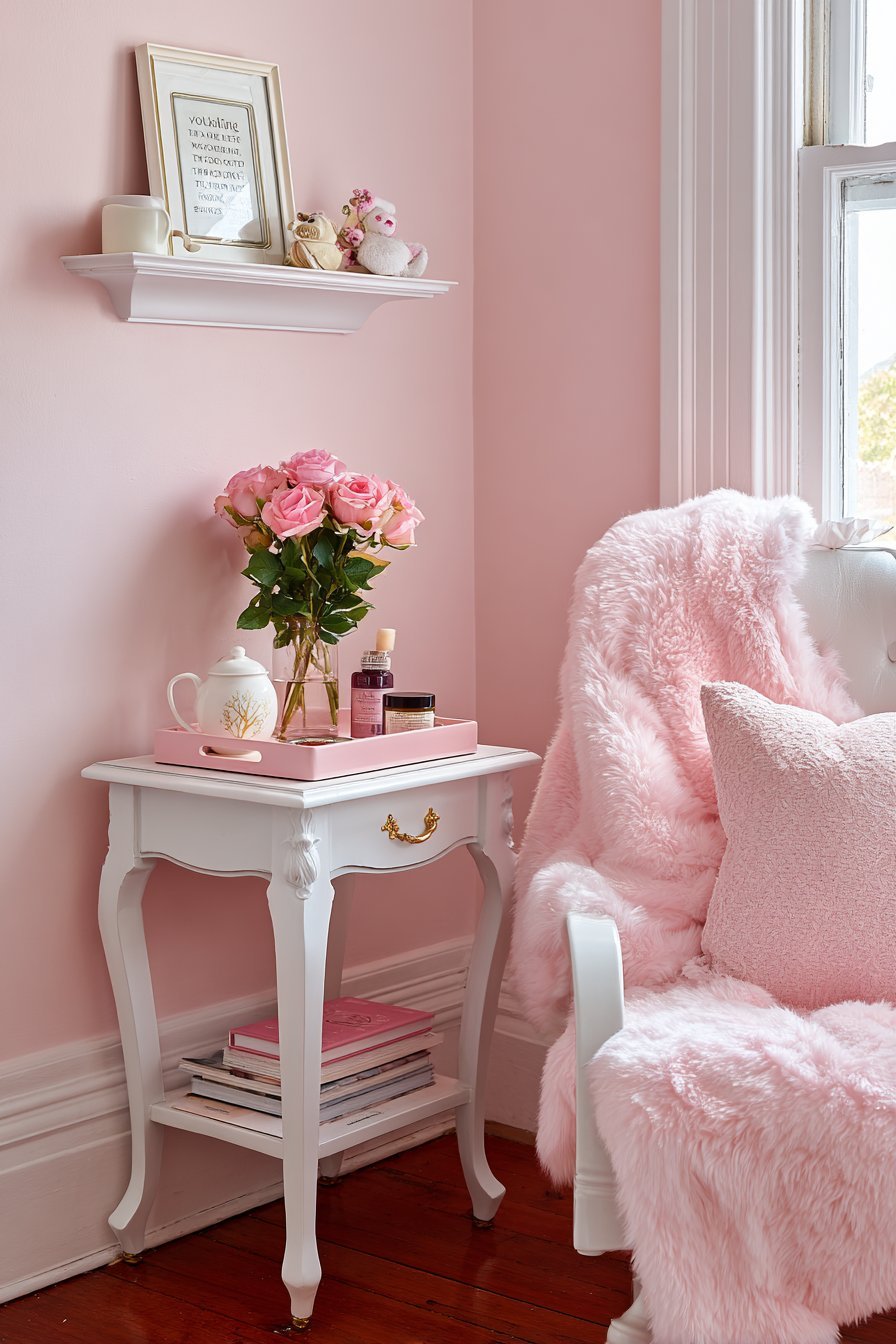
A small framed quote about motherhood hangs nearby. A plush throw in blush pink cashmere drapes over nearby glider chair. The walls painted in warm-toned soft pink create nurturing atmosphere. Soft afternoon light from window emphasizes the intentional space. This corner acknowledges maternal needs alongside baby’s comfort.
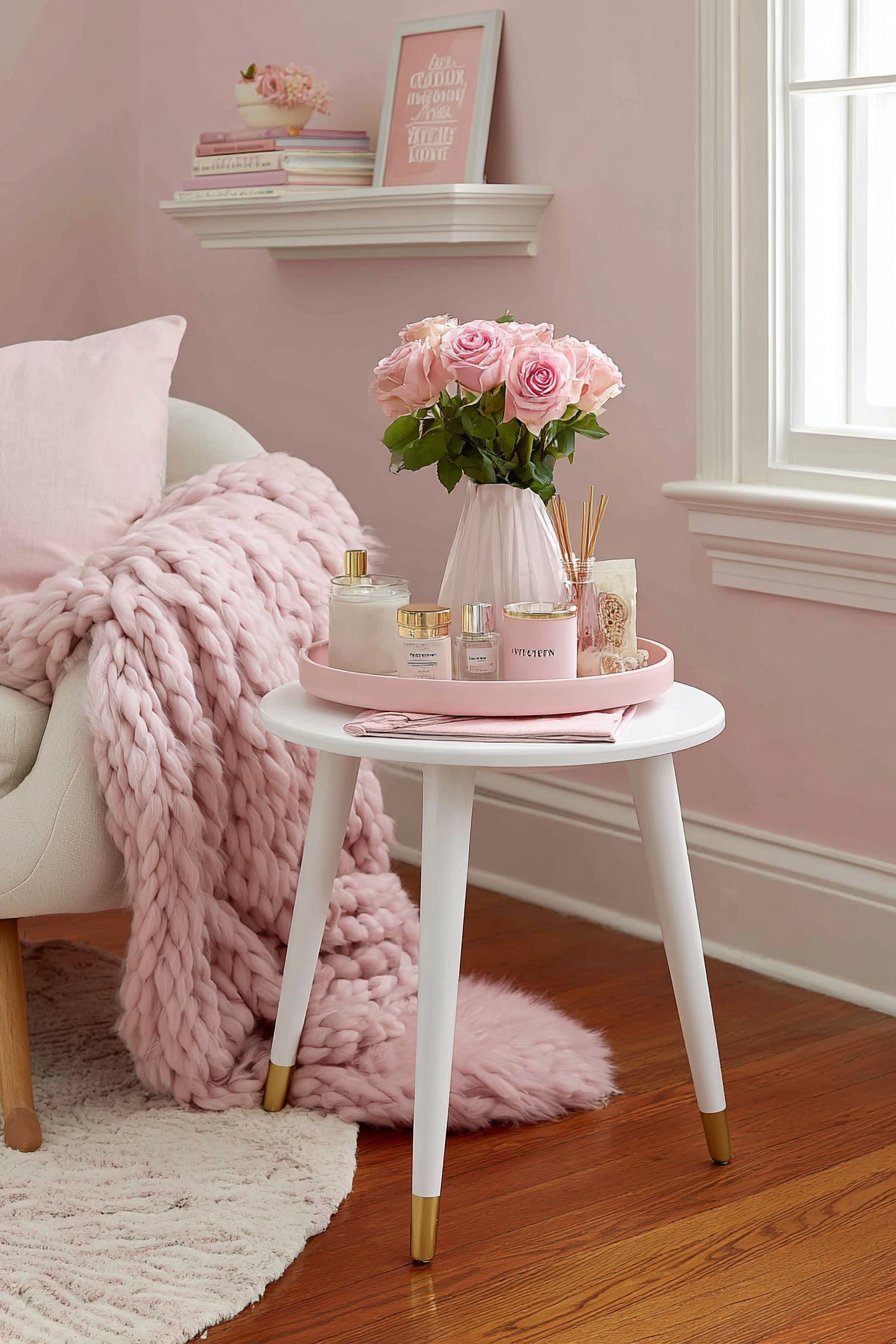
Nursery design too often focuses exclusively on baby’s needs. Creating dedicated space for maternal wellness acknowledges the realities of postpartum recovery. The vintage-style table adds character while providing functional surface. The pink ceramic tray corrals skincare products elegantly. These small luxuries support self-care during demanding newborn phase.
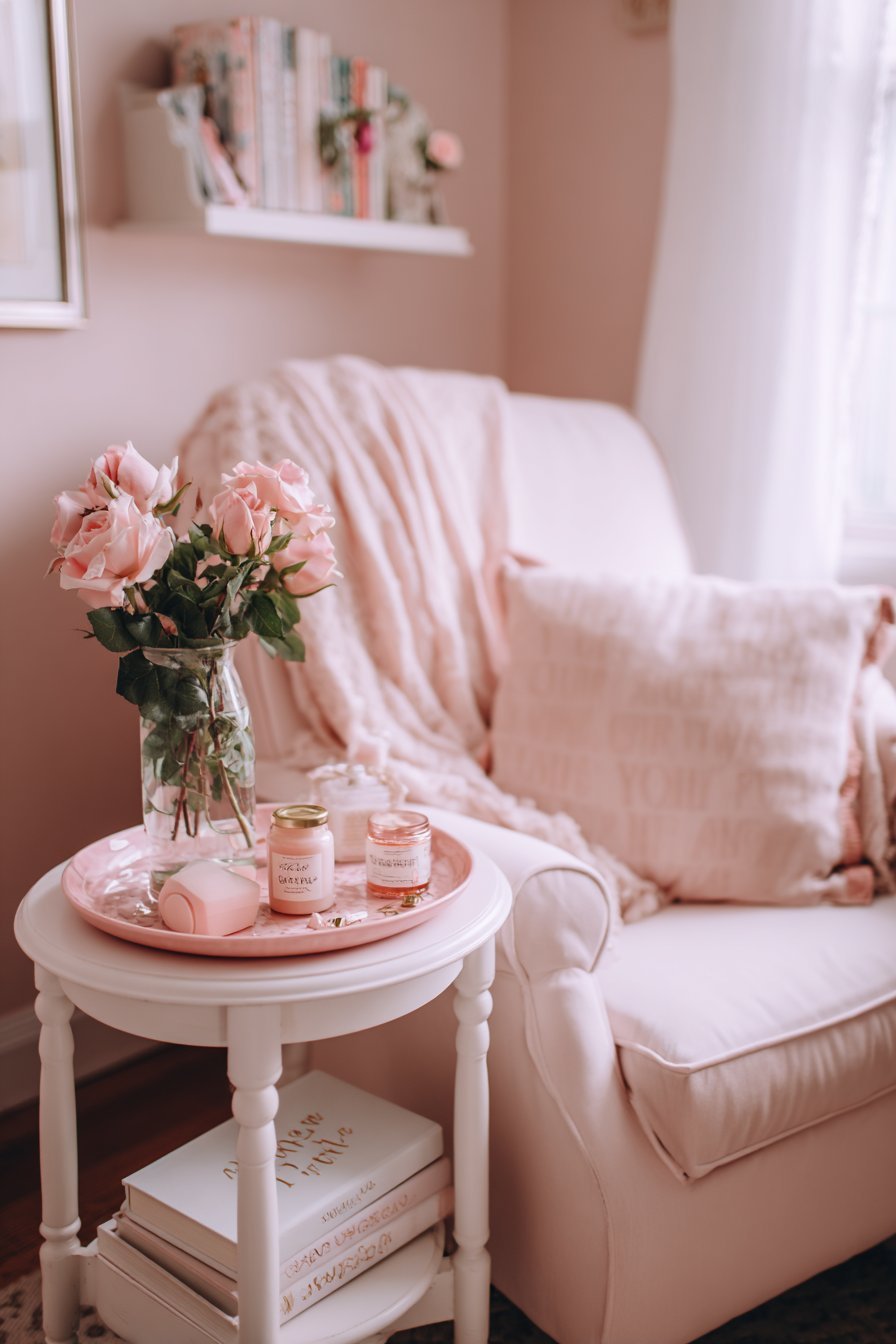
The soft pink journal offers outlet for processing new motherhood experiences. The gold foil details make the journal feel special and worthy of use. Self-care books on the shelf provide guidance and reassurance. The framed quote about motherhood offers daily encouragement. The cashmere throw provides tactile comfort and warmth. These thoughtful elements recognize that caring for the caregiver ultimately benefits the baby.
Key Design Tips:
- Dedicate nursery space specifically for maternal comfort and wellness
- Include surfaces for skincare products and self-care items
- Provide journals for processing emotions and documenting experiences
- Display books and quotes that offer encouragement and guidance
- Add luxurious textiles like cashmere for tactile comfort
- Position maternal wellness areas near comfortable seating
Why These Soft Pink Nursery Designs Are the Best
These soft pink nursery designs represent thoughtfully crafted approaches to creating serene infant spaces. Each concept balances aesthetic beauty with practical functionality that supports daily care routines. The versatility of soft pink allows expression across various design styles from minimalist Scandinavian to richly textured bohemian approaches.
The color psychology behind soft pink creates naturally calming environments. Research demonstrates that gentle pink tones reduce stress and promote feelings of security. This makes soft pink particularly suitable for nurseries where peaceful sleep and comfortable feeding sessions prove essential. The color also photographs beautifully, supporting parents’ desires to document early childhood memories in appealing settings.
Material choices throughout these designs prioritize natural elements that age gracefully. Organic cotton bedding, natural wood furniture, and authentic materials like linen and velvet create healthier indoor environments. These selections avoid off-gassing associated with synthetic materials while providing superior comfort. The investment in quality foundational pieces extends usability beyond nursery years.
Storage solutions integrated throughout demonstrate understanding of real nursery life. Babies require surprising amounts of supplies and equipment. The organized systems featured maintain visual appeal while providing practical accessibility. Rolling carts, built-in shelving, and dedicated organization areas prevent nurseries from becoming cluttered warehouses of baby gear.
The lighting strategies employed support circadian rhythm development and caregiver convenience. Layered approaches combining natural light, ambient illumination, and task lighting serve different times and needs. Soft diffusion through sheer curtains and linen shades prevents harsh brightness while maintaining functional visibility. These thoughtful lighting choices enhance both aesthetic appeal and practical usability throughout day and night.
Conclusion
These soft pink nursery designs demonstrate how thoughtful color selection creates serene spaces that support both infant development and parental comfort. The key takeaways include the importance of layering pink tones from pale blush to dusty rose, incorporating natural materials that age beautifully, and creating organized systems that maintain visual appeal. Quality pieces combined with personal touches result in nurseries that feel both beautiful and genuinely welcoming.
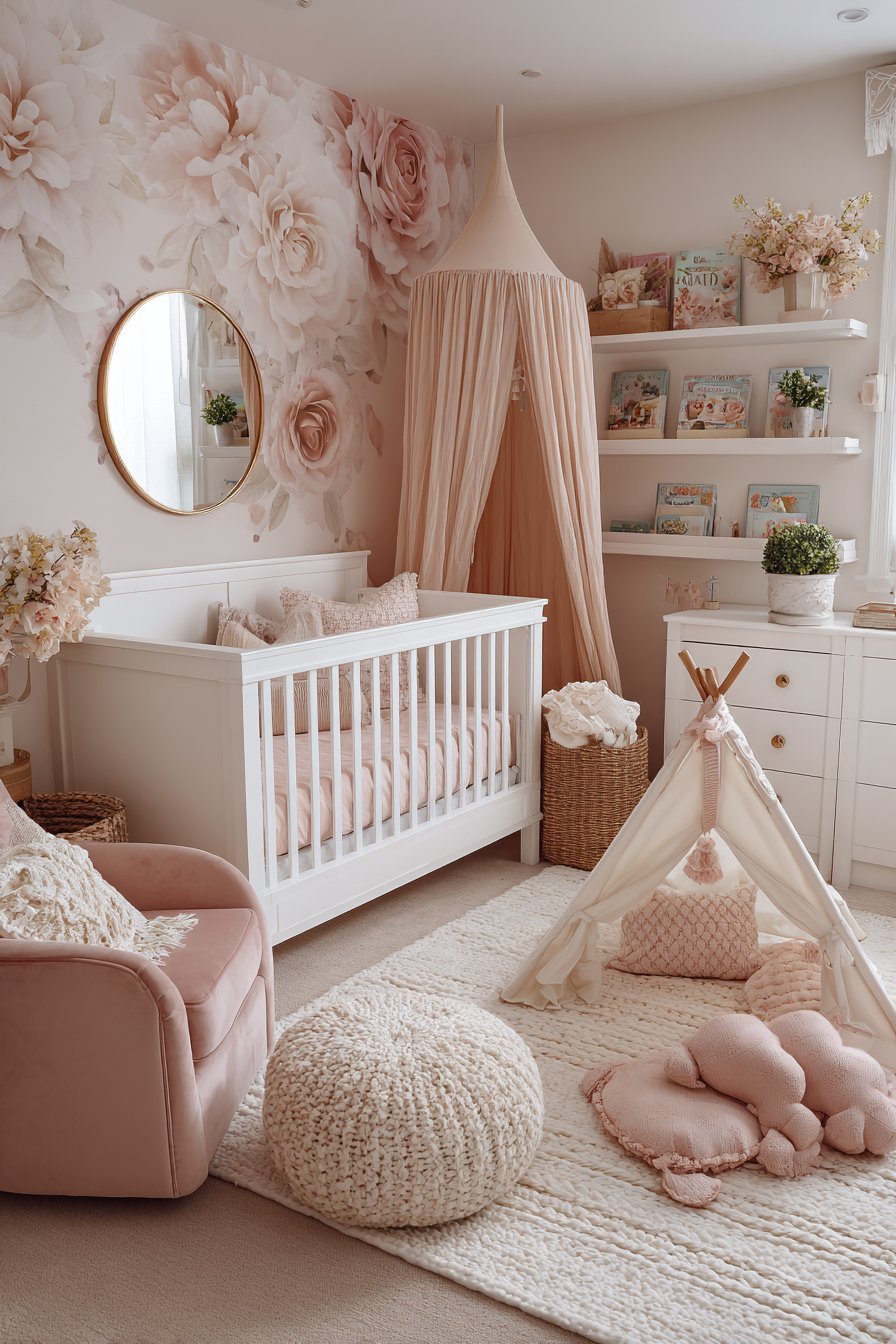
Successful soft pink nursery design balances aesthetic aspirations with practical realities of daily infant care. The incorporation of maternal wellness elements acknowledges that supporting caregivers ultimately benefits babies. Start by selecting one foundational piece in your preferred pink tone, then build your palette around that anchor. Your dream soft pink nursery awaits creation through thoughtful planning and attention to both beauty and function.
