
The nursery is one of the most emotionally significant rooms you will ever design. It is the first world your baby knows — a place of warmth, comfort, and the deep security that comes from being held close by familiar sights, sounds, and textures. Getting the design right is not merely an aesthetic exercise; it is an act of love that directly influences how well your baby sleeps, how calmly they settle, and how peacefully the entire family rests.
Pink remains one of the most enduringly popular nursery colors, and for compelling reasons that go well beyond tradition. Research in color psychology consistently shows that soft, muted pink tones have a measurably calming effect on the nervous system — reducing agitation, lowering heart rate, and creating an environment that naturally encourages rest. Far from the loud, sugary pinks of decades past, today’s nursery palette draws on dusty rose, blush, mauve, and petal tones that feel sophisticated, serene, and genuinely beautiful at every hour of the day and night.
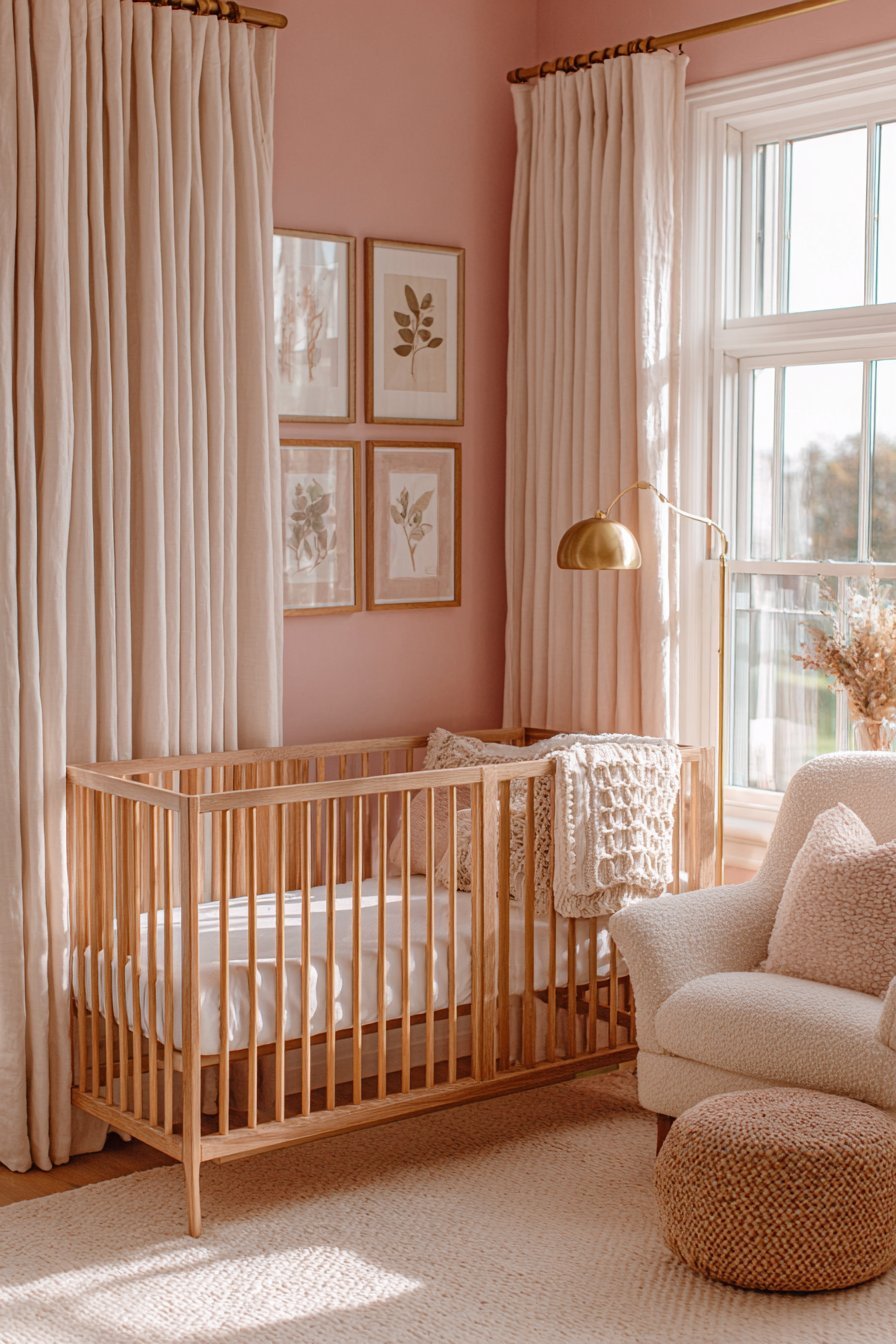
This article walks you through every key element of designing a calming pink nursery — from choosing the right shade of pink and layering complementary tones to selecting furniture, lighting, textiles, and sensory details that work together to support the best possible sleep environment for your baby. Whether you are designing from scratch or refreshing an existing space, these ideas will help you create a nursery that is as functional as it is beautiful.
1. Choose the Right Shade of Pink for a Restful Atmosphere
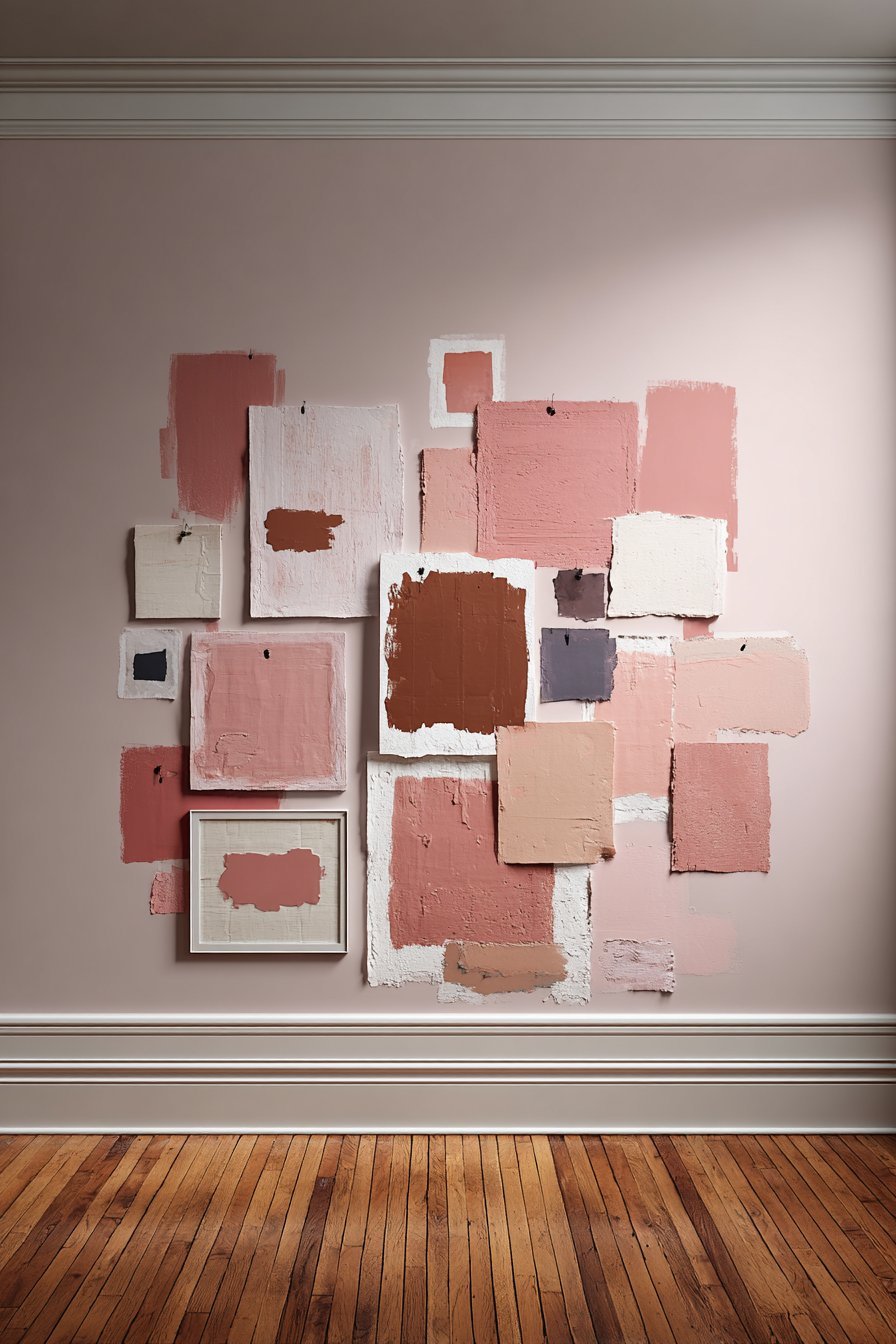
Not all pinks are created equal when it comes to creating a calming sleep environment. Bright, saturated pinks — hot pink, fuchsia, vivid coral — are visually stimulating and work against the goal of a restful nursery. The shades that support calm and sleep are the soft, desaturated tones: blush, dusty rose, antique pink, petal, and pale mauve. These muted, low-saturation colors carry just enough warmth to feel nurturing without any of the visual energy that disrupts rest.
Dusty rose is perhaps the single most versatile and sophisticated pink for a nursery. Its grey-pink undertone gives it a timeless, almost vintage quality that works beautifully with natural wood tones, warm whites, and soft sage or muted terracotta accents. Unlike pure pink, dusty rose reads as a genuinely neutral tone in many lighting conditions — calm enough for the walls of a sleep space while beautiful enough to anchor a room with real design depth.
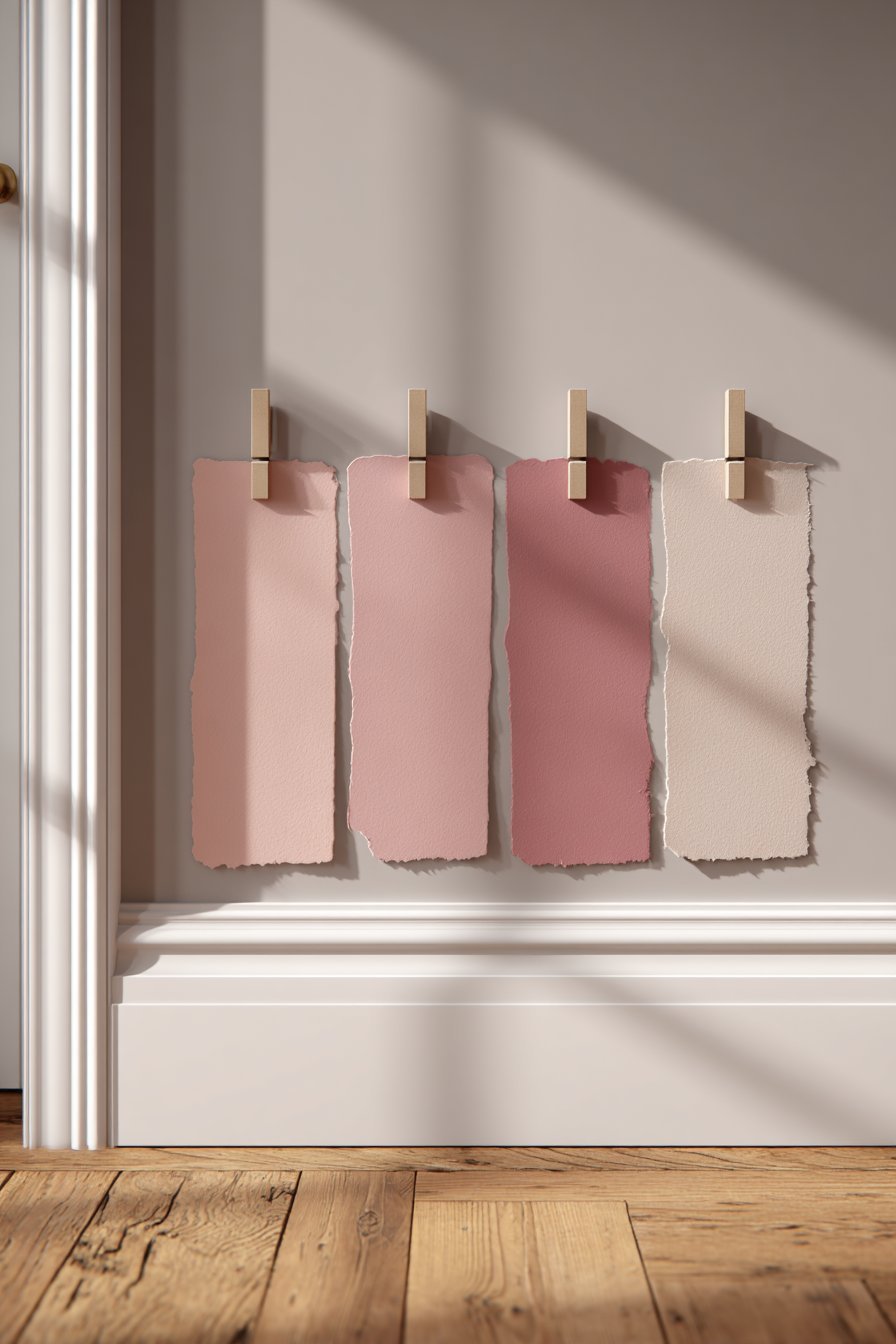
When selecting your pink, always test paint samples on the actual nursery walls in both natural and artificial light before committing. Pink is one of the most light-sensitive colors in the spectrum — a tone that appears warm and serene in the paint store can read as lilac in north-facing rooms or almost white in a sun-drenched space. Hold large sample patches against the room’s existing elements — flooring, trim, and furniture — and observe them at different times of day before making your final decision.
- Choose muted, desaturated pink tones — blush, dusty rose, petal, or antique pink — over bright saturated shades
- Test large paint samples on the nursery wall in both natural daylight and evening artificial light
- Consider dusty rose for the most versatile, sophisticated, and gender-neutral pink nursery palette
- Look for pink paints with warm grey or beige undertones for the most serene and timeless result
- Avoid whites with cool blue undertones when pairing with pink — they can make the room feel cold
2. Layer Complementary Colors for Depth and Calm
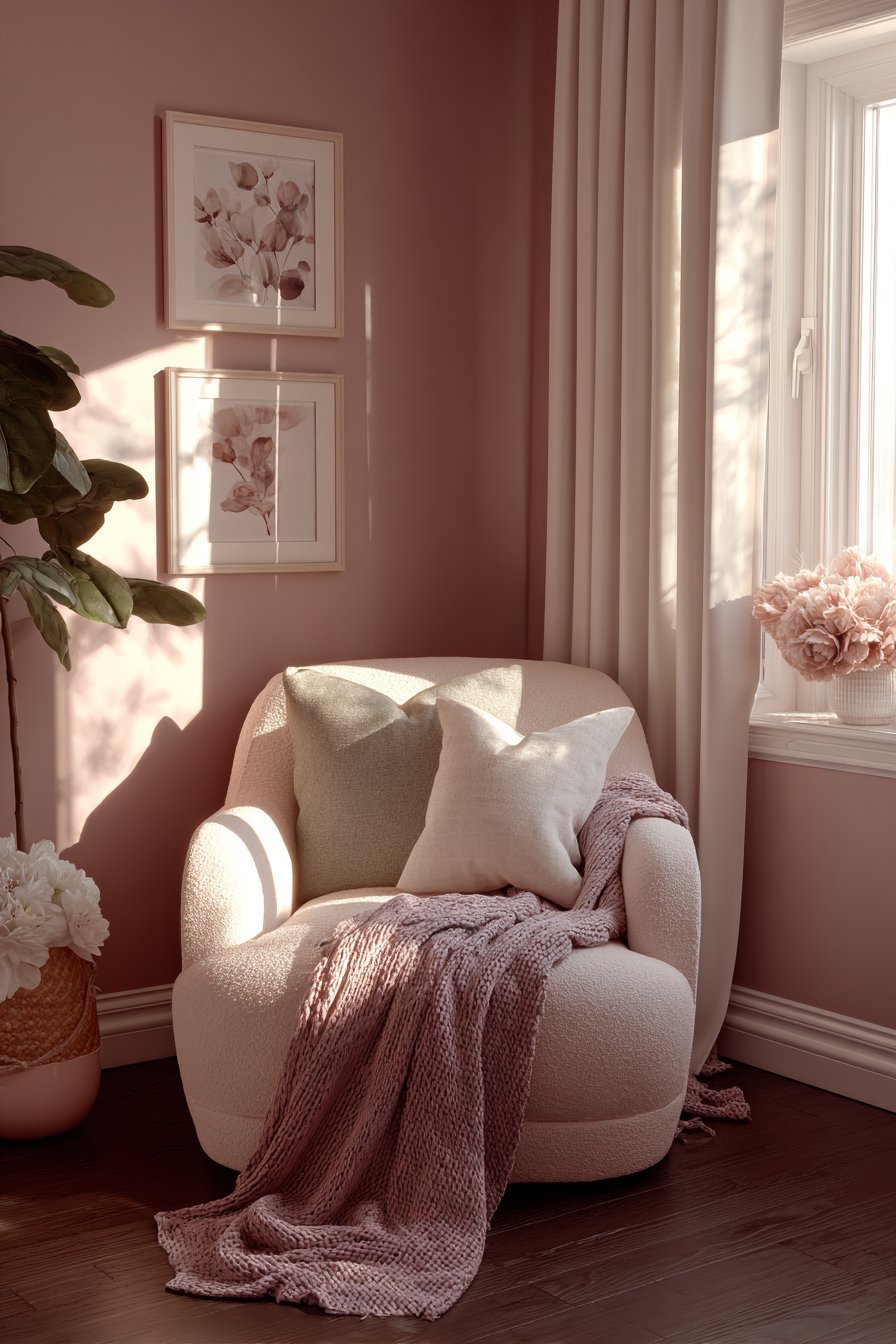
A single-color nursery risks feeling flat, one-dimensional, and ultimately less restful than a space with thoughtful tonal variation. The most calming nursery environments work with a palette of two to four harmonious tones — a primary pink wall color supported by carefully chosen secondary shades that add depth, interest, and visual warmth without introducing any of the stimulation that disrupts sleep.
Warm white and soft cream are the most natural partners for pink in a nursery setting. Use them on ceilings, trim, built-in furniture, and architectural details to create a light, airy framework that makes the pink feel luminous rather than heavy. Cream in particular carries a warmth that pure white lacks, and works beautifully with dusty rose or blush tones to create an enveloping, cocoon-like atmosphere that feels deeply safe and nurturing.
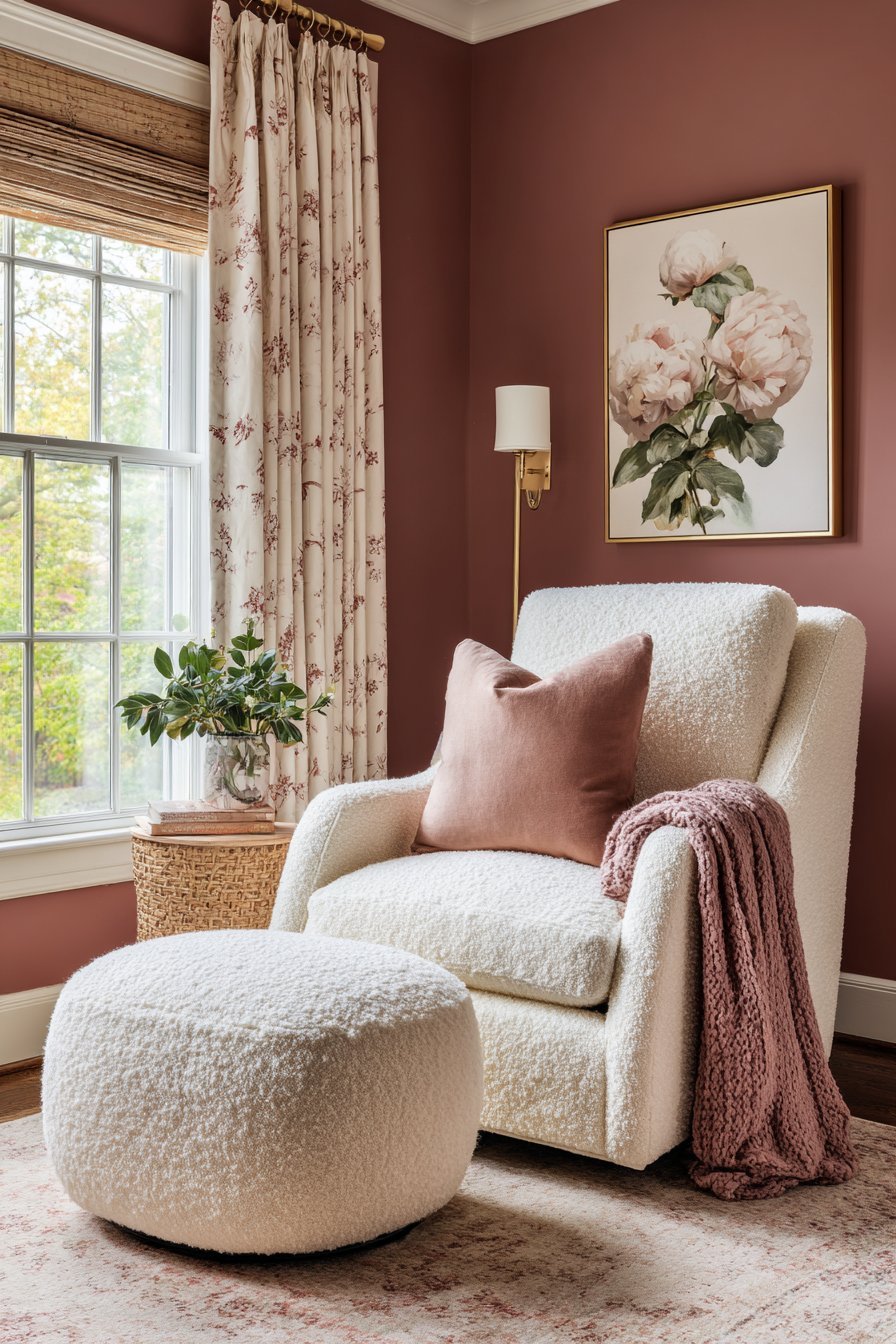
For a nursery palette with genuine design sophistication, introduce a soft accent tone — sage green, muted terracotta, warm taupe, or dusty lavender — as a third element in textiles, accessories, and decorative details. These nature-inspired accent colors sit harmoniously alongside pink while adding the kind of tonal complexity that makes a room feel considered and complete. Sage green is a particularly beautiful pairing with blush — its cool, botanical quality provides a gentle counterpoint to the warmth of pink.
- Build your nursery palette around pink, warm white or cream, and one soft botanical accent tone
- Use sage green, warm taupe, or dusty lavender as accent shades alongside blush or dusty rose
- Apply the 60-30-10 rule — 60% pink walls, 30% white or cream, 10% accent color in accessories
- Keep the ceiling white or very pale cream to maintain a sense of airiness and visual openness
- Introduce the accent color through textiles first — cushions, blankets — before committing to larger pieces
3. Select a Crib and Nursery Furniture That Supports Sleep
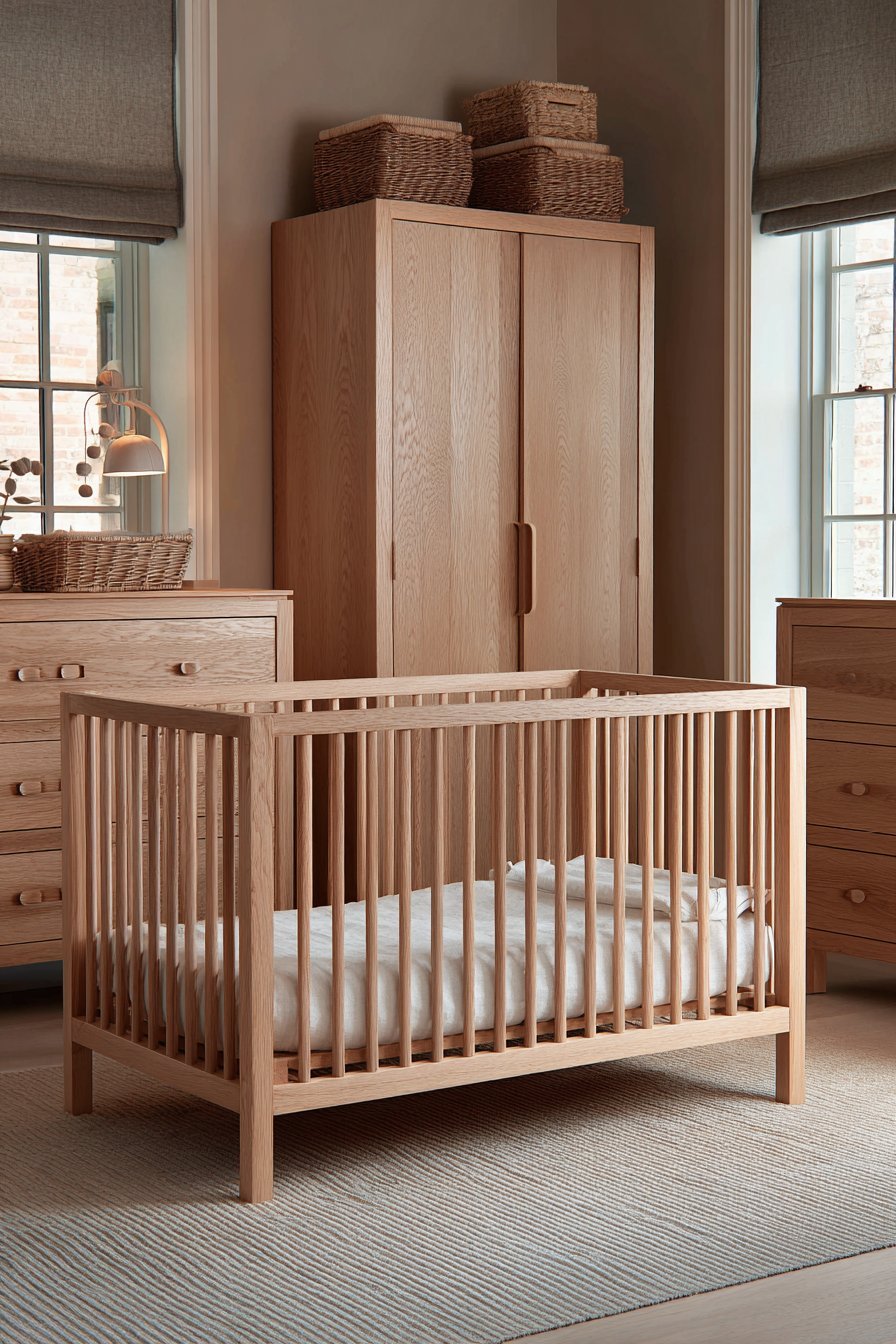
The crib is the functional heart of every nursery, and its design, placement, and quality have a direct impact on how safely and comfortably your baby sleeps. For a calming pink nursery, choose a crib that complements the room’s soft color palette without competing with it. Natural wood tones — light oak, pale ash, and warm maple — sit beautifully alongside blush and dusty rose, introducing an organic warmth that enhances the room’s nurturing atmosphere.
Crib placement requires careful thought beyond aesthetics. Position the crib away from windows to avoid direct sunlight during nap times and cold draughts in winter. Keep it away from external walls in colder climates, and ensure it is placed well clear of hanging window treatments, mobiles with long cords, and any shelving above. The ideal crib position is typically against an interior wall where temperature is stable, light is controllable, and the baby has a clear sightline to the room’s entry point — which research suggests provides a subtle but measurable sense of security.
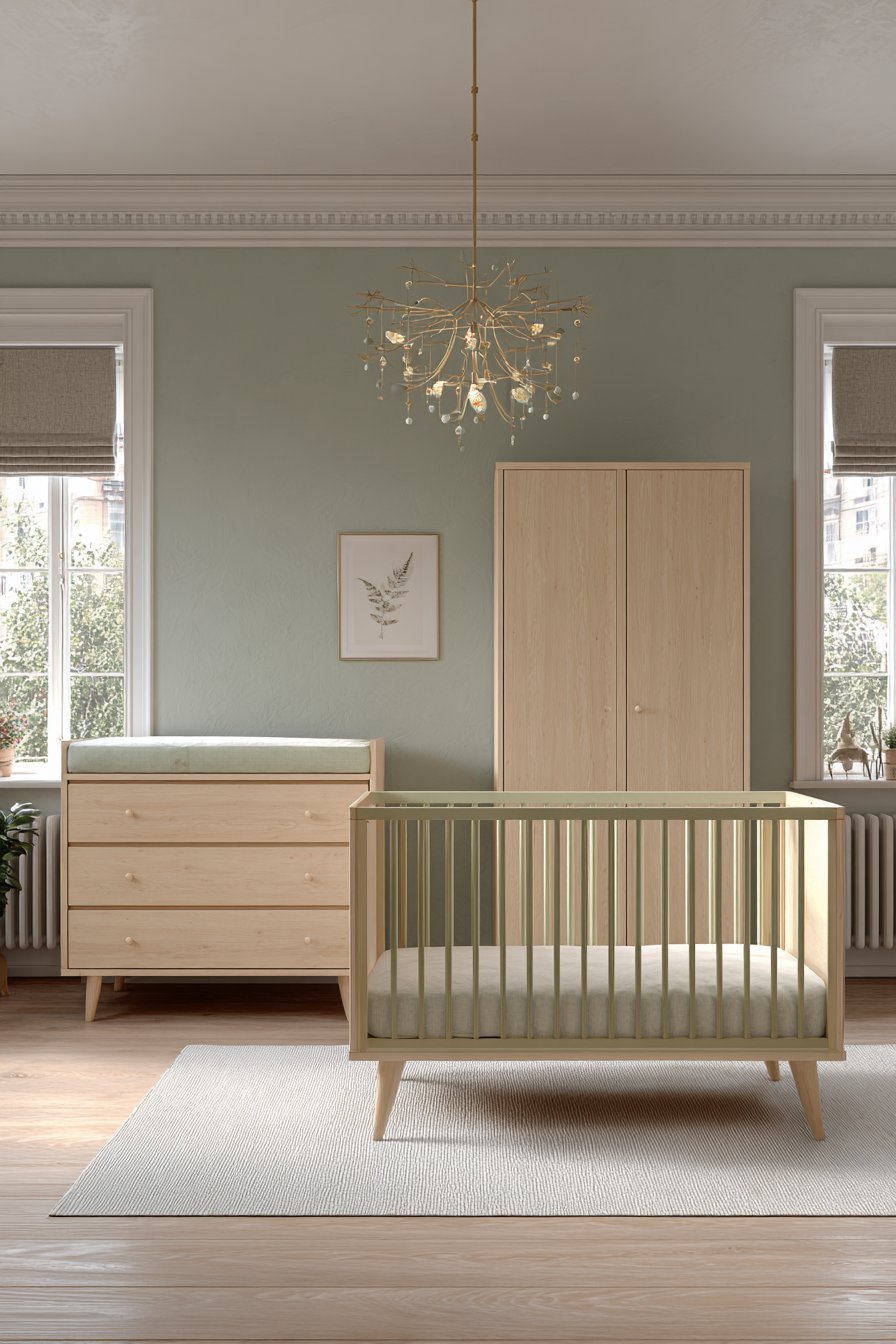
Convertible nursery furniture is a wise investment that extends the life and value of your nursery design well beyond the infant years. A crib that converts to a toddler bed, then to a daybed or full-size bed frame, allows your beautiful pink nursery to evolve gracefully as your child grows. Pair the crib with a matching changing table and wardrobe in the same wood tone for a cohesive, calm visual environment — furniture that reads as a unified suite rather than a collection of mismatched pieces.
- Choose a crib in natural light oak, pale ash, or white-painted wood to complement pink tones
- Position the crib away from windows, external walls, and direct sources of draught or sunlight
- Invest in a convertible crib that transforms into a toddler or full-size bed as your child grows
- Select a changing table at a comfortable adult working height to reduce back strain during night changes
- Keep furniture finishes consistent across all pieces for a cohesive, visually calm environment
4. Layer Textiles and Soft Furnishings for Sensory Comfort
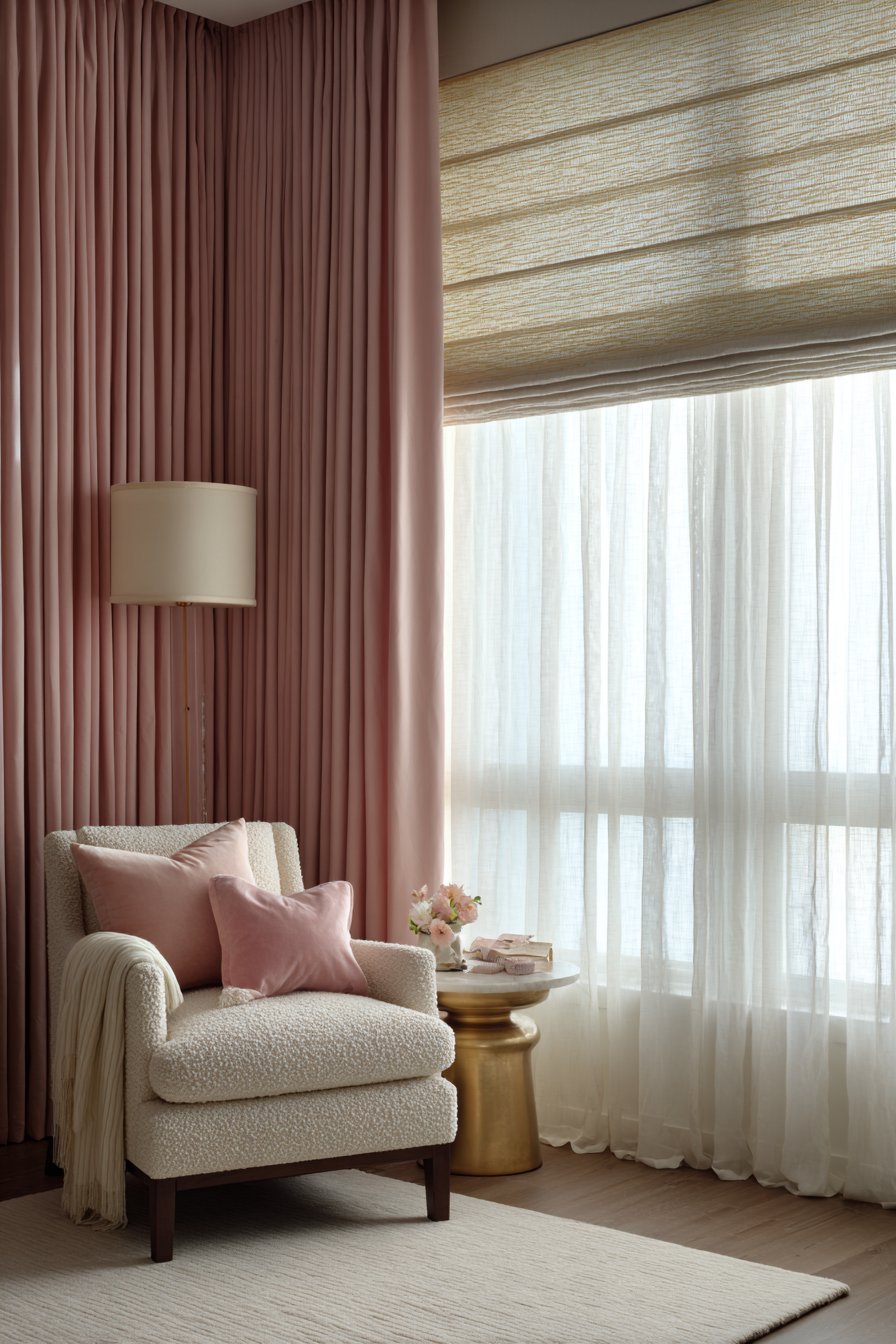
Textiles are the warmth of a nursery — the element that transforms a beautifully painted, well-furnished room into a truly cocooning, sensory-rich environment. Layers of soft fabric in complementary tones and textures create the kind of enveloping comfort that settles both baby and parent, signaling safety and rest through every sense simultaneously. In a pink nursery, textiles are also the primary vehicle for introducing pattern, texture, and tonal depth in a soft, non-stimulating way.
The nursing chair or glider is one of the most important textile investments in the entire nursery. Choose a chair with generous, supportive cushioning in a fabric that is both beautiful and practical — easy to wipe clean, resistant to moisture, and soft enough for prolonged nighttime feeding sessions. Bouclé, velvet, and performance linen are all excellent choices for a pink nursery — each adding a layer of tactile luxury while remaining within a calm, cohesive color palette. Position the nursing chair in a corner with good sightlines to the crib.
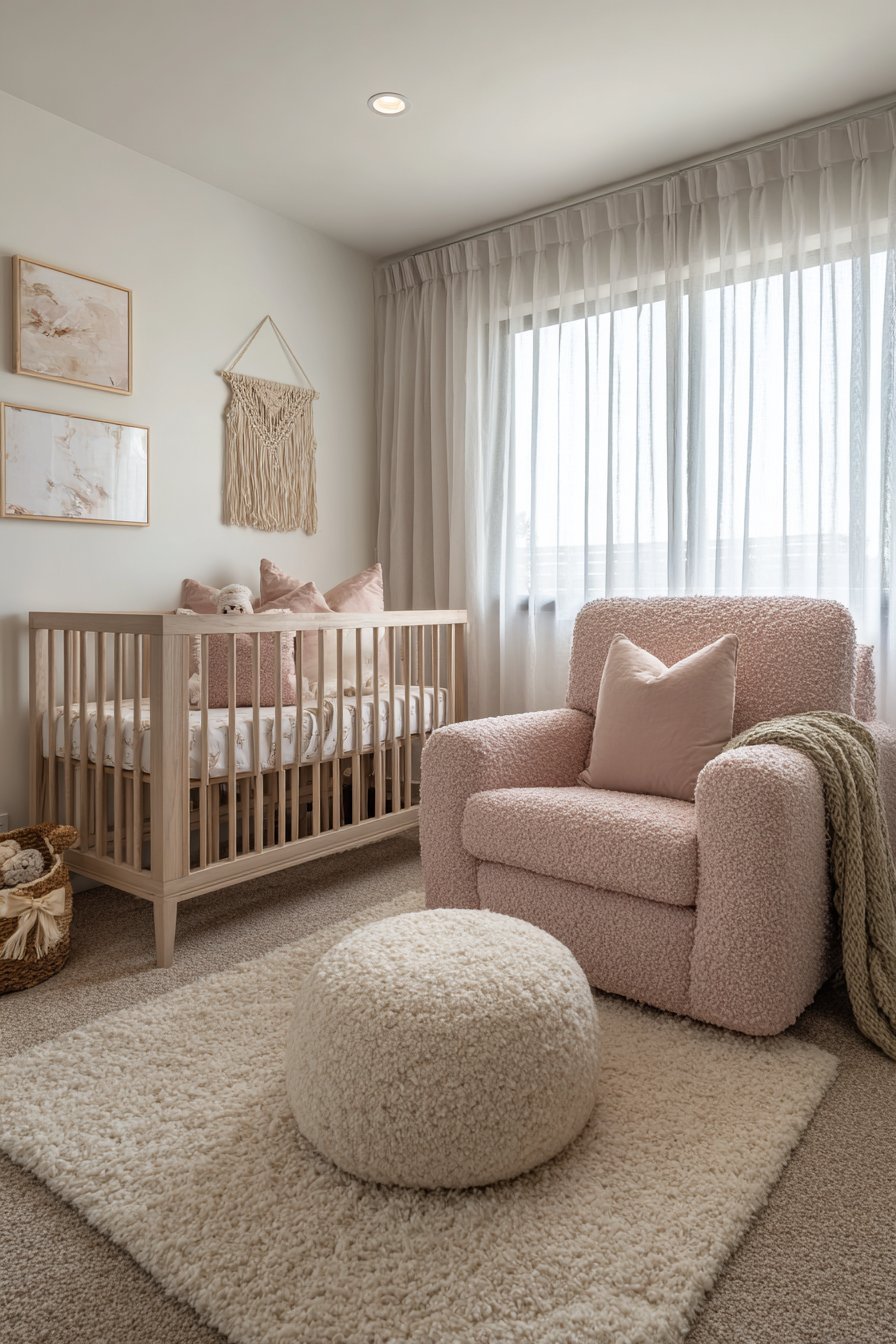
Layering the rug, cot bedding, window treatments, and wall textiles creates the multi-sensory richness that characterizes the most calming nursery environments. Choose a soft, low-pile rug in warm white, blush, or a subtle pattern that ties the palette together. Use blackout roman blinds or curtains in a coordinating linen or cotton as the primary window treatment, then layer with sheer panels for daytime filtering. Add a wall-hung textile — a woven tapestry, macramé, or embroidered piece — as a soft, sound-absorbing focal point above the crib.
- Choose a nursing glider or chair in bouclé, performance velvet, or linen for comfort and practicality
- Layer a soft, low-pile rug in warm white or blush as the foundational floor textile
- Install blackout roman blinds or curtains as the primary window treatment for all nap and sleep times
- Add sheer curtain panels for daytime light filtering while maintaining a soft, diffused glow
- Hang a woven textile or macramé piece above the crib as a beautiful, sound-softening wall feature
5. Design a Sleep-Supporting Lighting Scheme
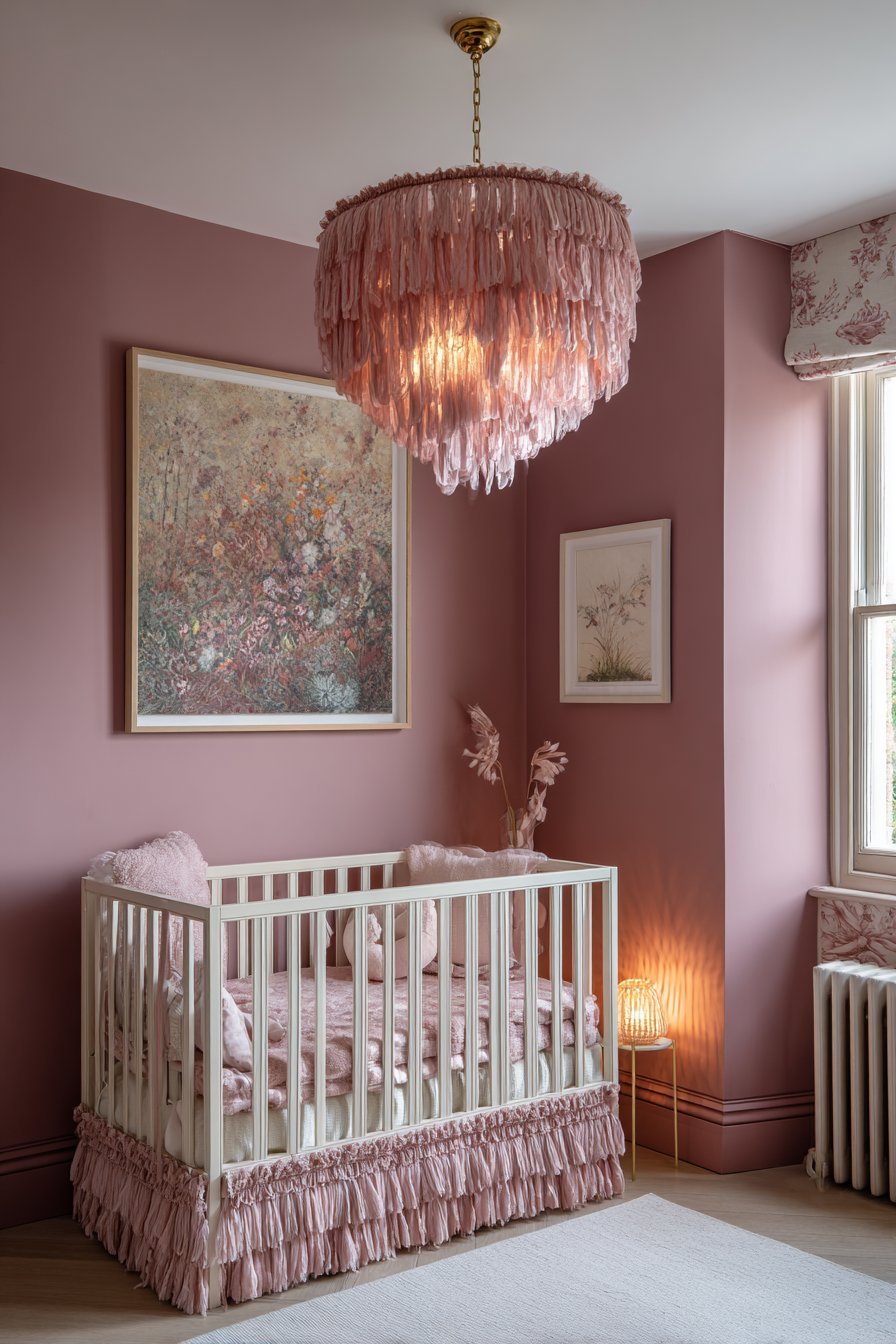
Lighting is the single most powerful design tool for regulating a baby’s sleep environment. The right lighting scheme — one that transitions from bright and stimulating during wakeful daytime hours to warm, dim, and deeply calming for sleep — works with your baby’s natural circadian rhythm to support easier settling and longer sleep cycles. In a pink nursery, thoughtful lighting also enhances the room’s color beautifully, making the soft pink tones glow with warmth in the evening hours.
Overhead lighting should be on a dimmer switch as a non-negotiable feature of any well-designed nursery. During the day, bright light supports alertness and play; as bedtime approaches, gradually dimming the room over 30 to 60 minutes signals to your baby’s brain that sleep is coming. Choose a ceiling fixture that diffuses light softly rather than directing it harshly — a fabric shade pendant, a frosted globe fitting, or a flush ceiling light with a warm white diffuser all work beautifully in a pink nursery without creating harsh shadows or glare.
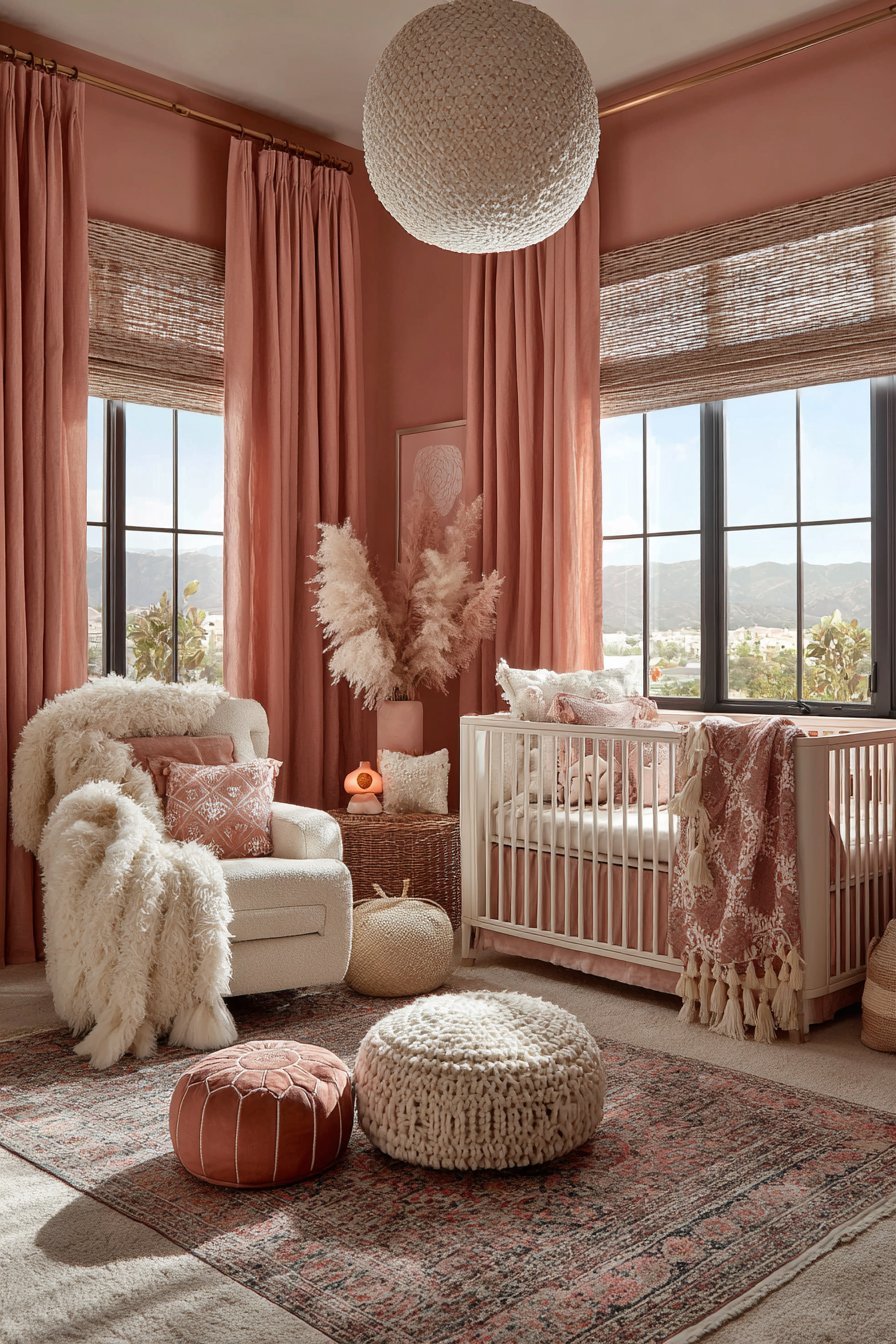
A dedicated nightlight or lamp at low level is essential for nighttime feeds and nappy changes that do not fully disrupt the sleep environment. Choose a nightlight that emits warm amber or red-spectrum light — these wavelengths have the least impact on melatonin production, meaning nighttime wake-ups are easier to recover from for both baby and parent. Avoid blue or cool white nightlights entirely in the nursery, as blue-spectrum light actively suppresses melatonin and makes resettling after feeds significantly more difficult.
- Install a dimmer switch on all overhead nursery lighting as a non-negotiable design feature
- Choose a fabric shade pendant or frosted globe ceiling fixture for soft, diffused overhead light
- Select a nightlight that emits warm amber or red-spectrum light for the least sleep disruption
- Avoid blue-spectrum or cool white nightlights — they actively suppress melatonin production
- Consider a smart bulb system that automatically shifts from bright daylight to warm amber tones at bedtime
6. Control Light and Sound for Optimal Sleep Conditions
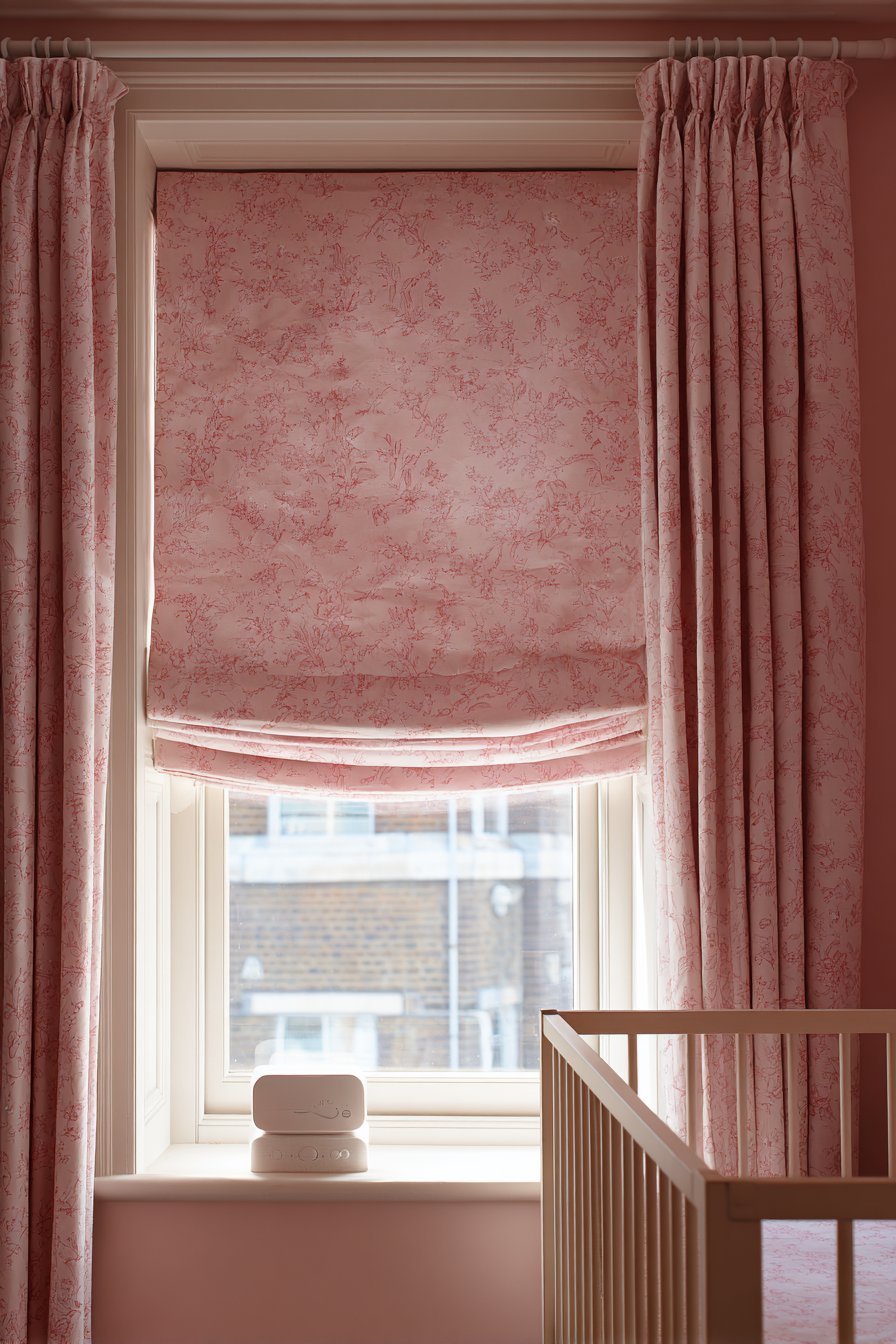
Darkness and quiet are the two most fundamental environmental requirements for healthy infant sleep. A nursery that allows early morning light to filter in through inadequate window treatments, or one positioned near a busy street or noisy household area, will consistently undermine your best efforts at settling and sleep training regardless of how beautifully it is designed. Getting the environment right is as important as any aesthetic decision you make.
Blackout window treatments are essential in a nursery, not optional. In summer months, early sunrise can wake babies as early as 4 or 5 AM — far earlier than developmentally appropriate for infant sleep. Full blackout curtains or Roman blinds, fitted snugly within the window recess to eliminate light gaps at the sides and top, maintain a sleep-conducive darkness during all nap times and early morning hours. For a pink nursery, choose blackout curtains in a coordinating blush, warm white, or soft floral print that contributes to the room’s design rather than detracting from it.
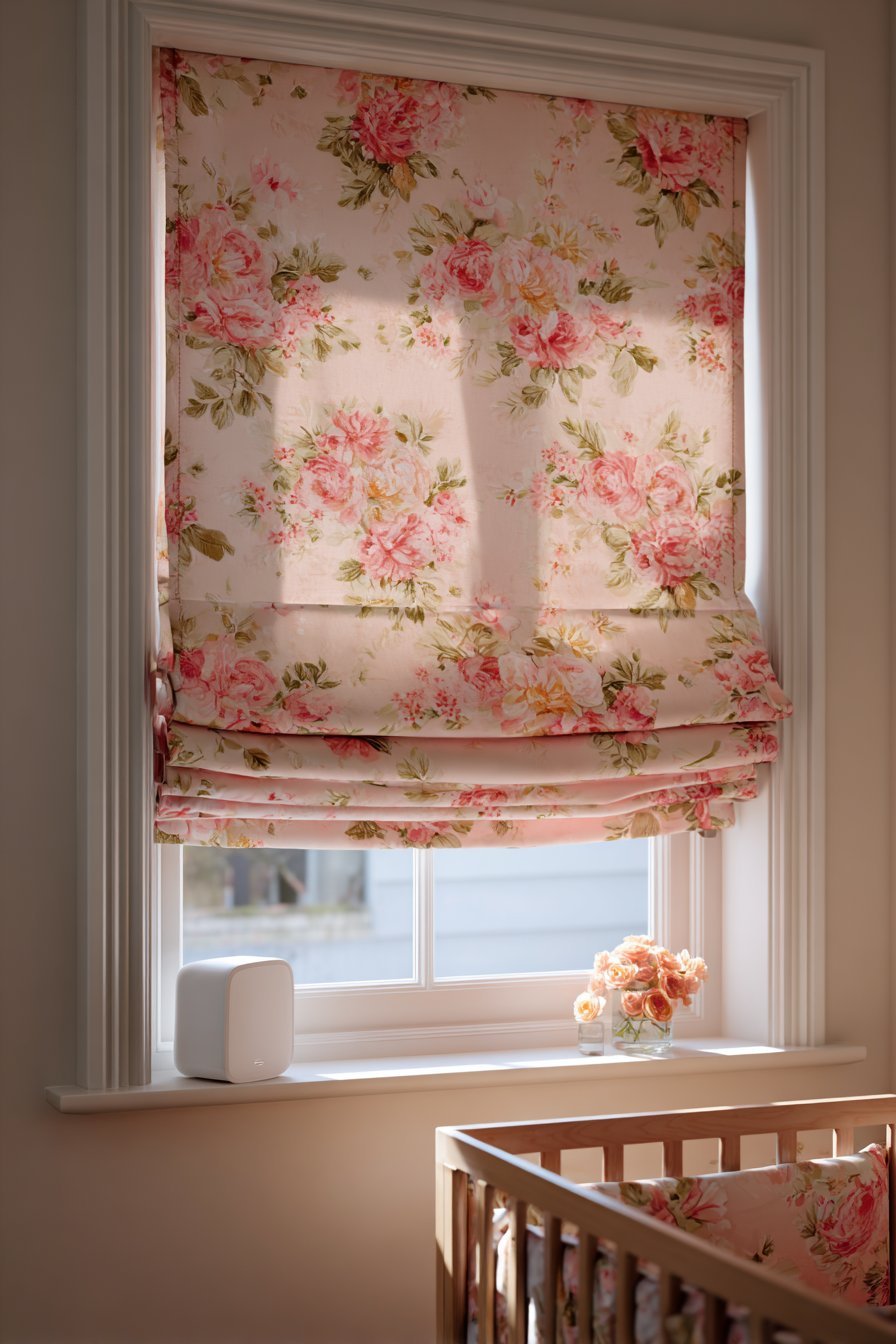
White noise machines are one of the most evidence-supported tools for infant sleep, and their inclusion in the nursery design deserves serious consideration. Continuous, consistent white or pink noise — played at around 60 to 65 decibels, roughly equivalent to a gentle shower — masks sudden environmental sounds that cause startle-wakening, and mimics the constant auditory environment of the womb. Position the machine near the crib but not directly beside it, and use it consistently for every sleep period to establish a powerful sleep association that helps your baby settle faster and stay asleep longer.
- Install full blackout curtains or blinds fitted snugly within the window recess to eliminate light gaps
- Treat all windows in the nursery — including any skylights or secondary windows — with blackout fabric
- Place a white noise machine near the crib at around 60–65 decibels for consistent sound masking
- Use white noise consistently for every sleep period — naps and nights — to build a strong sleep association
- Position the nursery away from high-traffic household areas, busy roads, or noisy mechanical systems where possible
7. Create a Calming Sensory Environment with Décor and Details
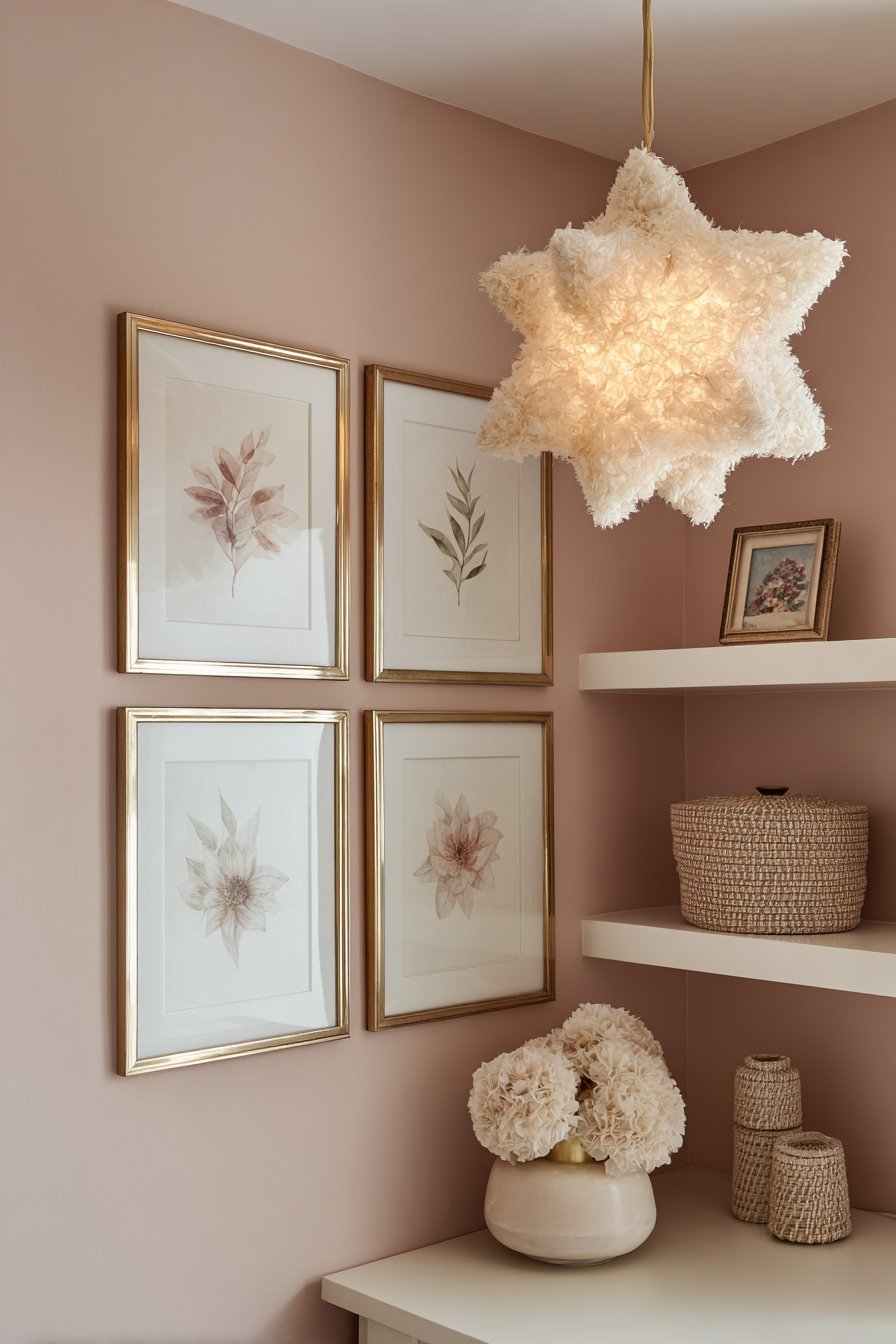
The sensory details of a nursery — the objects, artwork, accessories, and decorative elements that give the room its unique character — matter more than many parents realize. Babies are acutely sensitive to their visual environment, and a nursery filled with overly stimulating patterns, bright contrasting colors, and cluttered surfaces can actively interfere with the calm, settled state that precedes sleep. Every decorative decision should be evaluated through the lens of whether it supports or undermines a peaceful atmosphere.
Wall art in a pink nursery should be soft, simple, and gentle in subject matter and color. Botanical prints in muted tones, simple animal illustrations, abstract watercolor washes, and hand-lettered affirmations all contribute a layer of visual warmth and meaning without introducing stimulation. Avoid high-contrast black and white graphic prints above the crib — while these engage newborn vision during wakeful times, they are counterproductive in the sleep space. Frame artwork in natural timber or thin brass to complement the pink palette without adding visual weight.
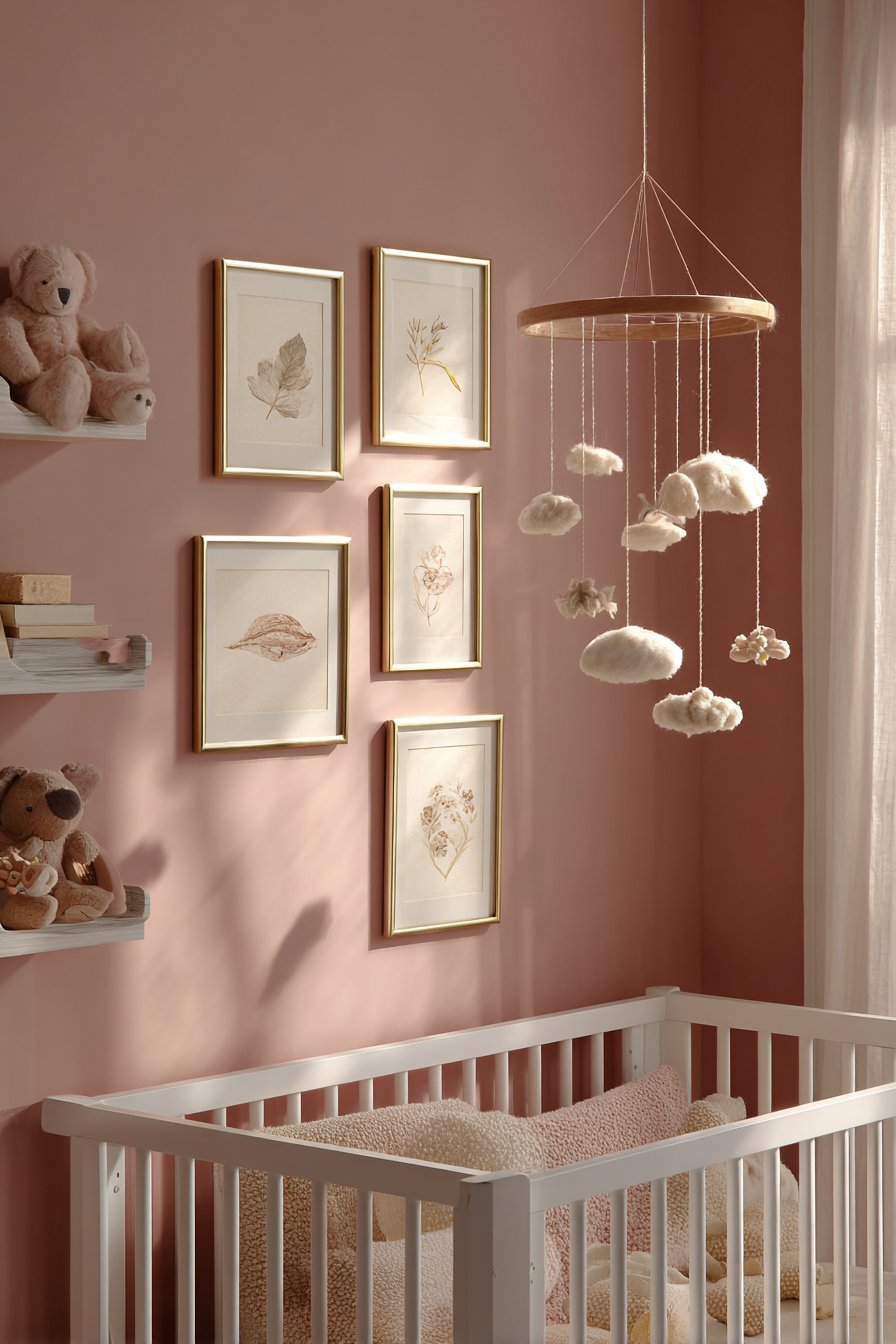
A mobile above the crib is one of the most classic and effective nursery sensory features. Choose a mobile designed for visual interest rather than stimulation — one that moves slowly and gracefully in gentle air currents, with soft forms in harmonious colors that complement the nursery palette. Felt florals, paper clouds, woven stars, and delicate fabric butterflies in blush, cream, and sage are all beautiful choices. Ensure the mobile is safely secured and positioned well above the baby’s reach, and remove it when the baby begins to push up on hands and knees.
- Choose wall art with soft subjects — botanicals, watercolors, gentle animals — in muted, coordinating tones
- Frame nursery artwork in natural timber or brushed brass for a warm, cohesive look
- Select a crib mobile with slow, graceful movement and soft forms in harmonious nursery tones
- Keep surfaces and shelving edited and uncluttered — a calm visual environment supports a calm mind
- Add a few meaningful personal objects — a treasured toy, a family photograph — for warmth and story
8. Design a Functional Layout That Supports Night Routines
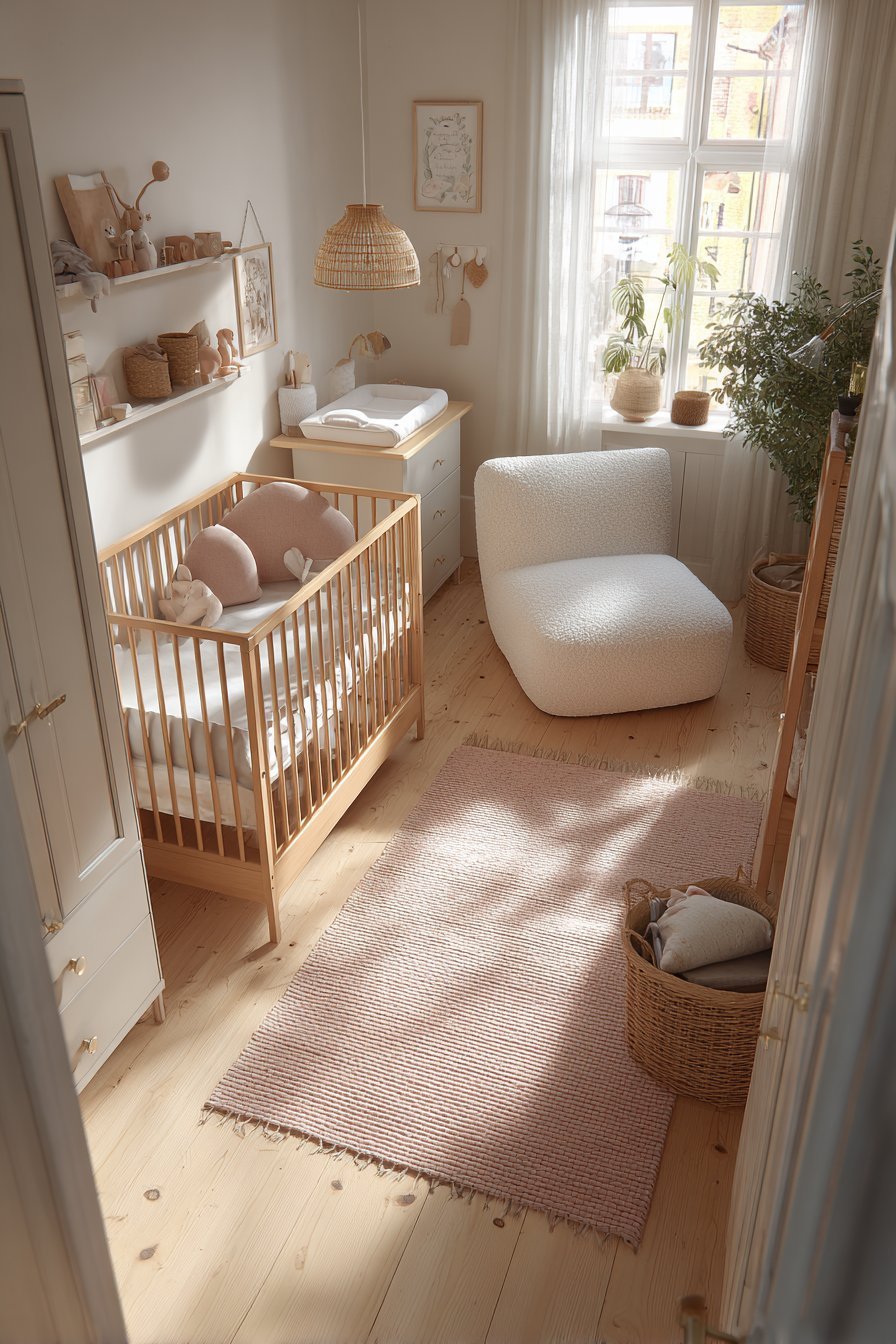
Nursery layout is where design meets the reality of nighttime parenting — the bleary-eyed feeds, the gentle nappy changes, the careful transfer of a sleeping baby to the crib. A layout that works intuitively at 3 AM, with everything exactly where you need it and no obstacles between key furniture pieces, makes the difference between a night routine that flows smoothly and one that escalates into fully woken babies and exhausted parents.
The golden rule of nursery layout is to create a clear, unobstructed path between the nursing chair and the crib. These two pieces of furniture are the axis of every night feed, and the journey between them — carrying a drowsy, hopefully-still-sleeping baby — must be completely free of trip hazards, squeaky floor spots, and any environmental disturbances. Position the changing table adjacent to the nursing chair so that nappy changes and feeds can be completed in a single zone without moving across the room.
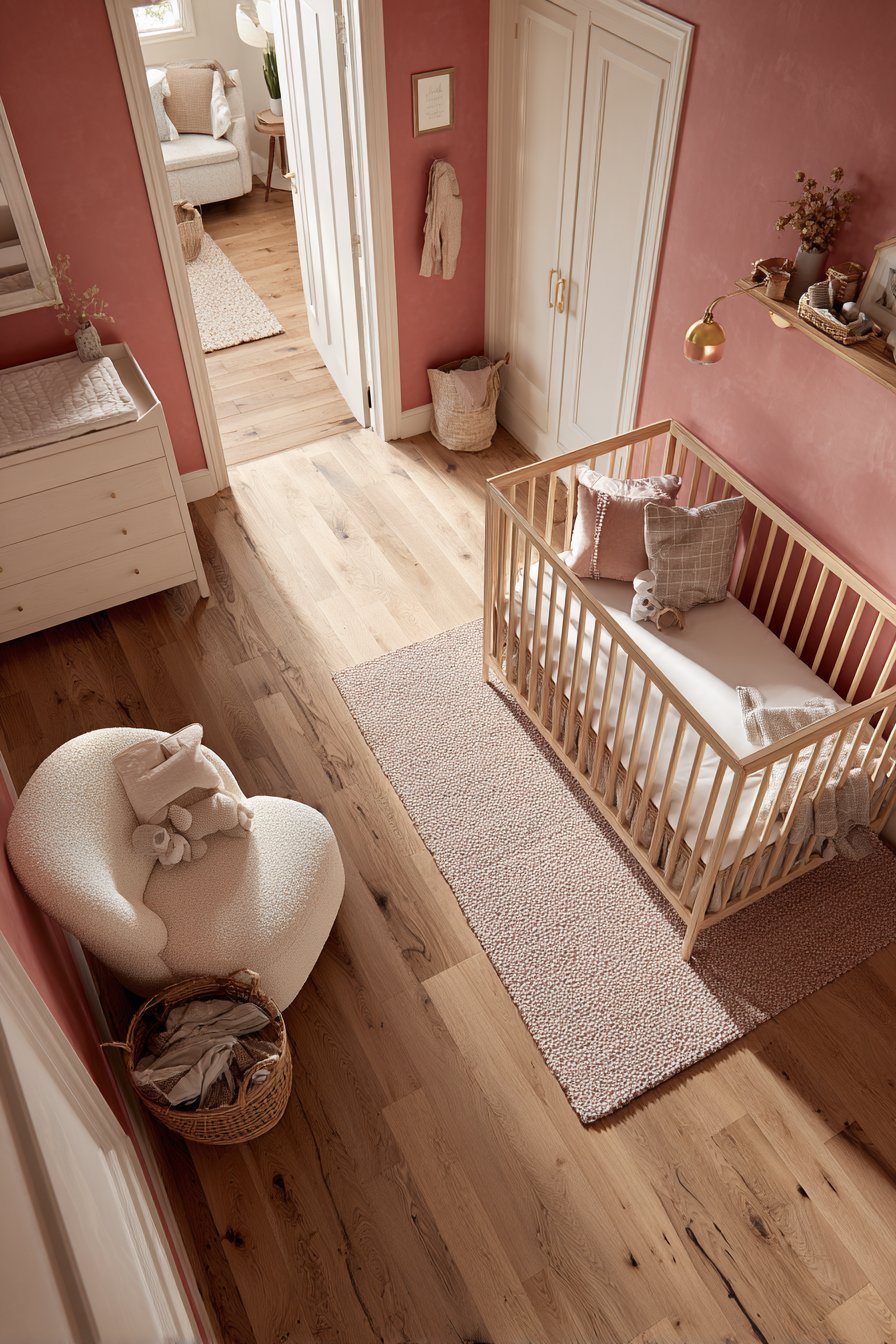
Storage design in the nursery deserves as much thought as any decorative element. A room with inadequate storage quickly becomes cluttered — and clutter, as any sleep-focused designer knows, creates visual noise that works against a calming atmosphere. Built-in or fitted wardrobes maximise storage capacity while keeping the room’s visual lines clean and uncluttered. Open shelving can display a curated selection of beautiful objects, books, and toys — but should be edited rigorously, with the majority of items stored behind closed doors.
- Position the nursing chair and crib close together with a completely clear, obstacle-free path between them
- Place the changing table adjacent to or within the same zone as the nursing chair for night efficiency
- Install adequate closed storage — built-in wardrobes or large dressers — to keep surfaces uncluttered
- Keep a small basket of night essentials — nappies, wipes, a change of clothes — beside the changing table
- Ensure the nursery door opens and closes silently — adjust hinges and fit a soft-close mechanism if needed
Conclusion
Designing a calming pink nursery for better sleep is one of the most meaningful and genuinely impactful projects a parent can undertake. When every element — from the muted, sleep-supportive shade of pink on the walls to the blackout blinds, the warm amber nightlight, the carefully positioned furniture, and the softly layered textiles — is chosen with both beauty and function in mind, the result is a room that truly works. A room that holds your baby gently, signals safety and rest through every sense, and gives the entire family the gift of restorative sleep.
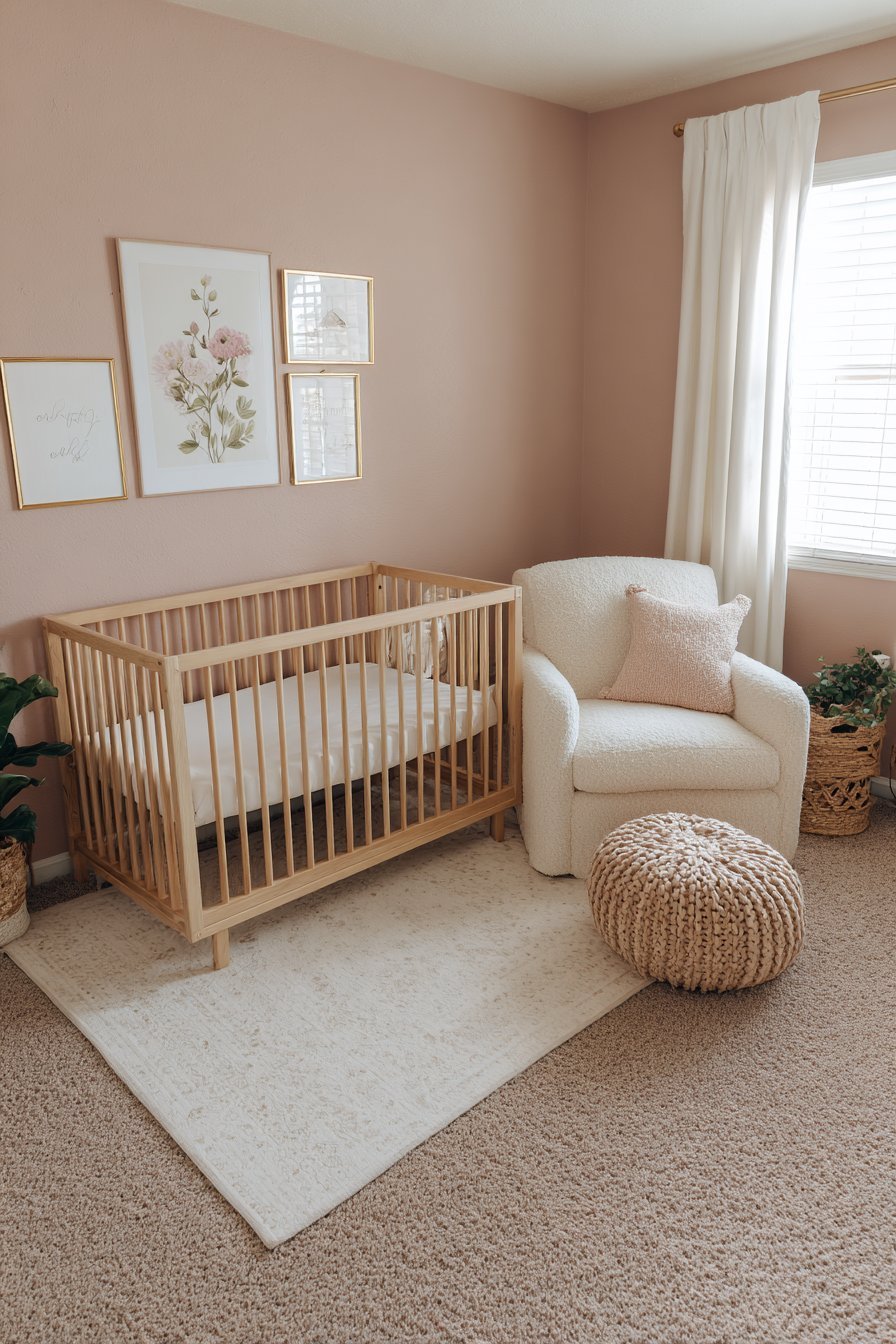
Begin with the elements that have the greatest functional impact — lighting, window treatments, and layout — and layer the beauty and personality on top. A pink nursery designed with this inside-out approach will always be more calming, more functional, and ultimately more beautiful than one designed purely for its visual impact. Trust the process, invest in quality where it matters most, and create a space that both you and your baby will love returning to, night after night.
