
Creating a nursery is one of the most exciting aspects of preparing for a new baby. This special space becomes a sanctuary for both parent and child. The right design choices foster comfort, safety, and developmental growth. A thoughtfully designed nursery balances aesthetic beauty with practical functionality.
Nursery decor has evolved significantly in recent years. Parents now seek spaces that reflect their personal style while meeting their baby’s needs. The designs range from serene minimalist havens to playful themed wonderlands. Each approach offers unique benefits for different lifestyles and preferences.
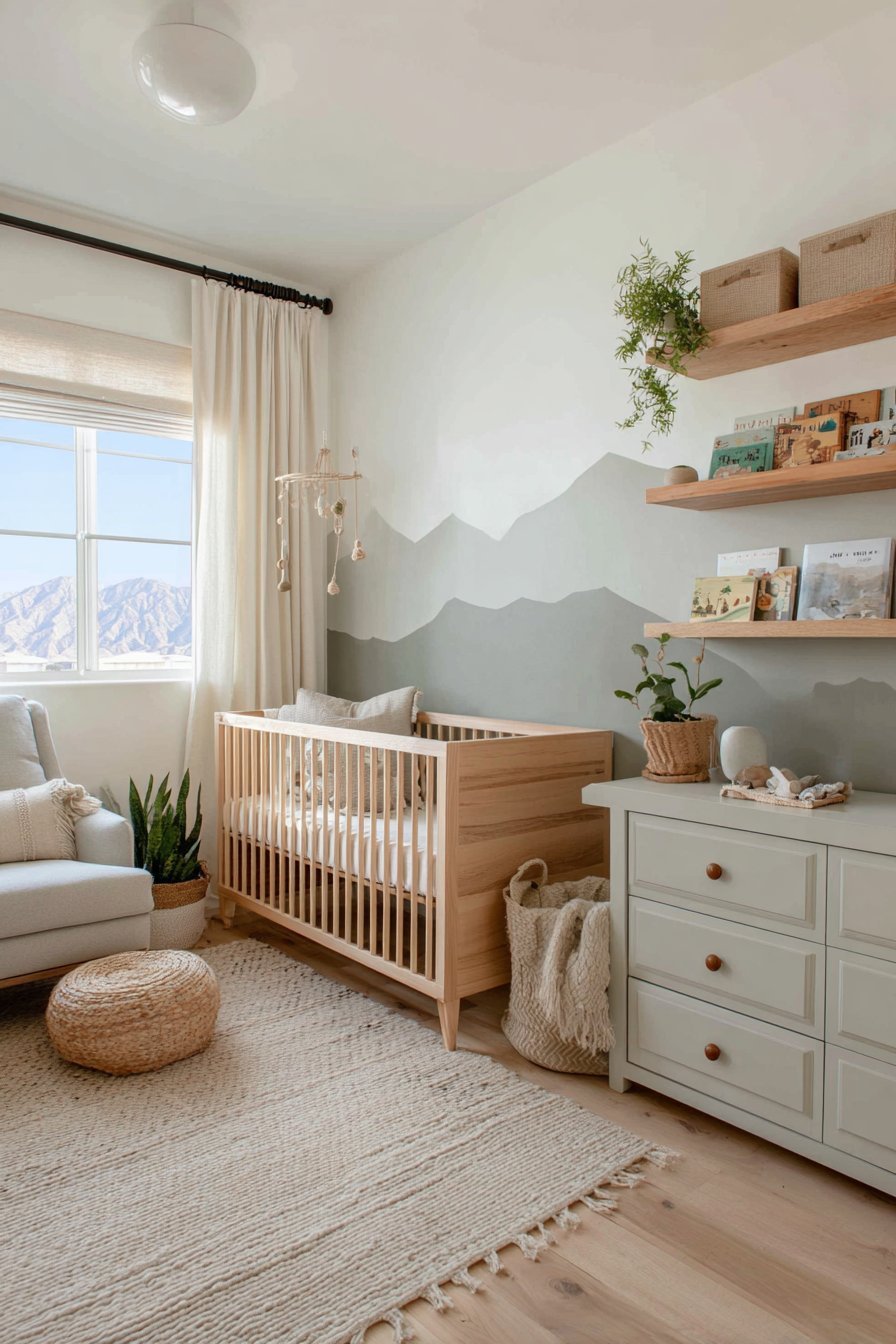
This article explores twenty distinct nursery design concepts. These ideas span multiple aesthetic directions. You’ll discover everything from Scandinavian simplicity to bohemian warmth. Each design demonstrates how thoughtful choices in materials, colors, and layouts create nurturing environments. These concepts prove that nurseries can be both beautiful and highly functional spaces.
1. Serene Scandinavian Simplicity
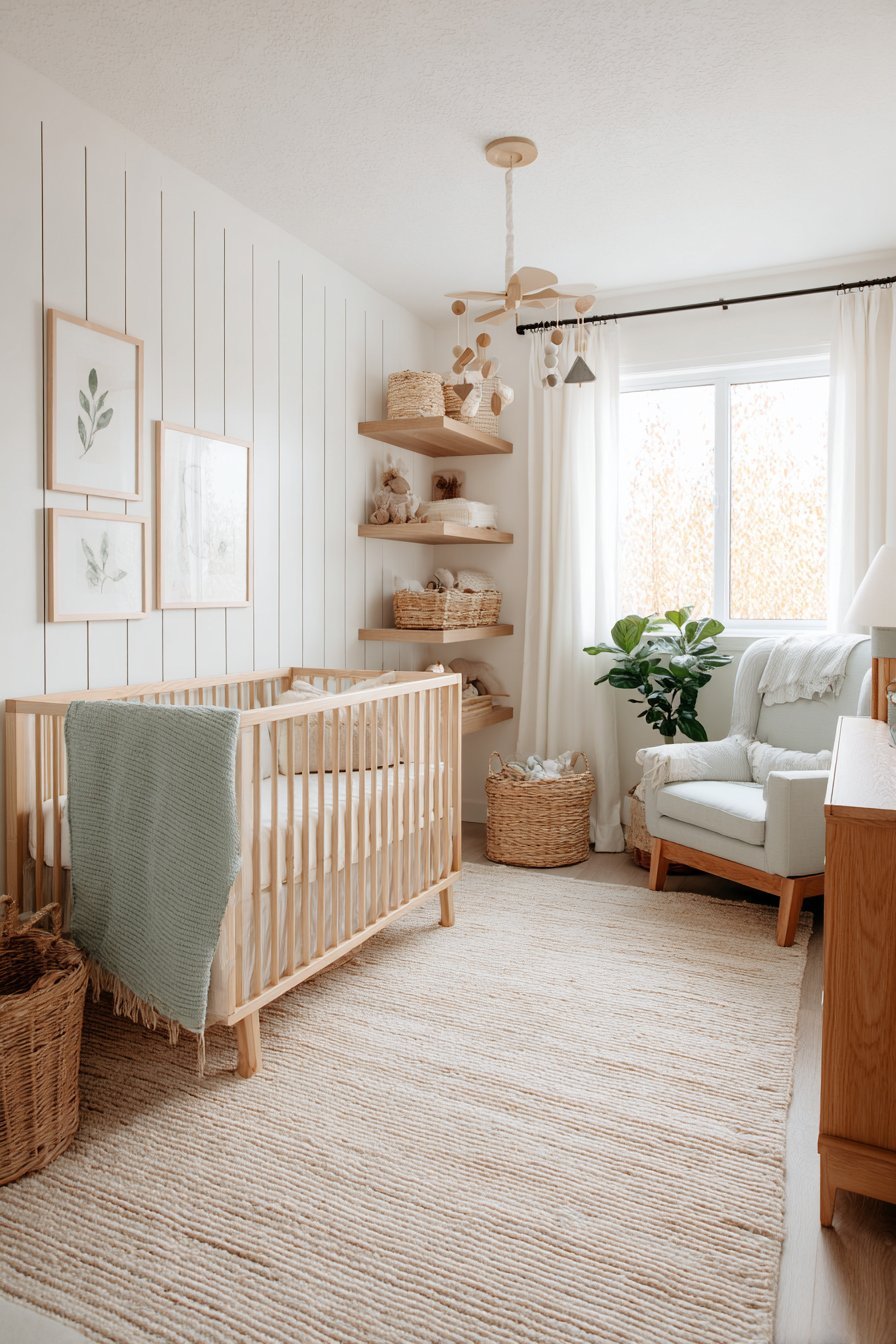
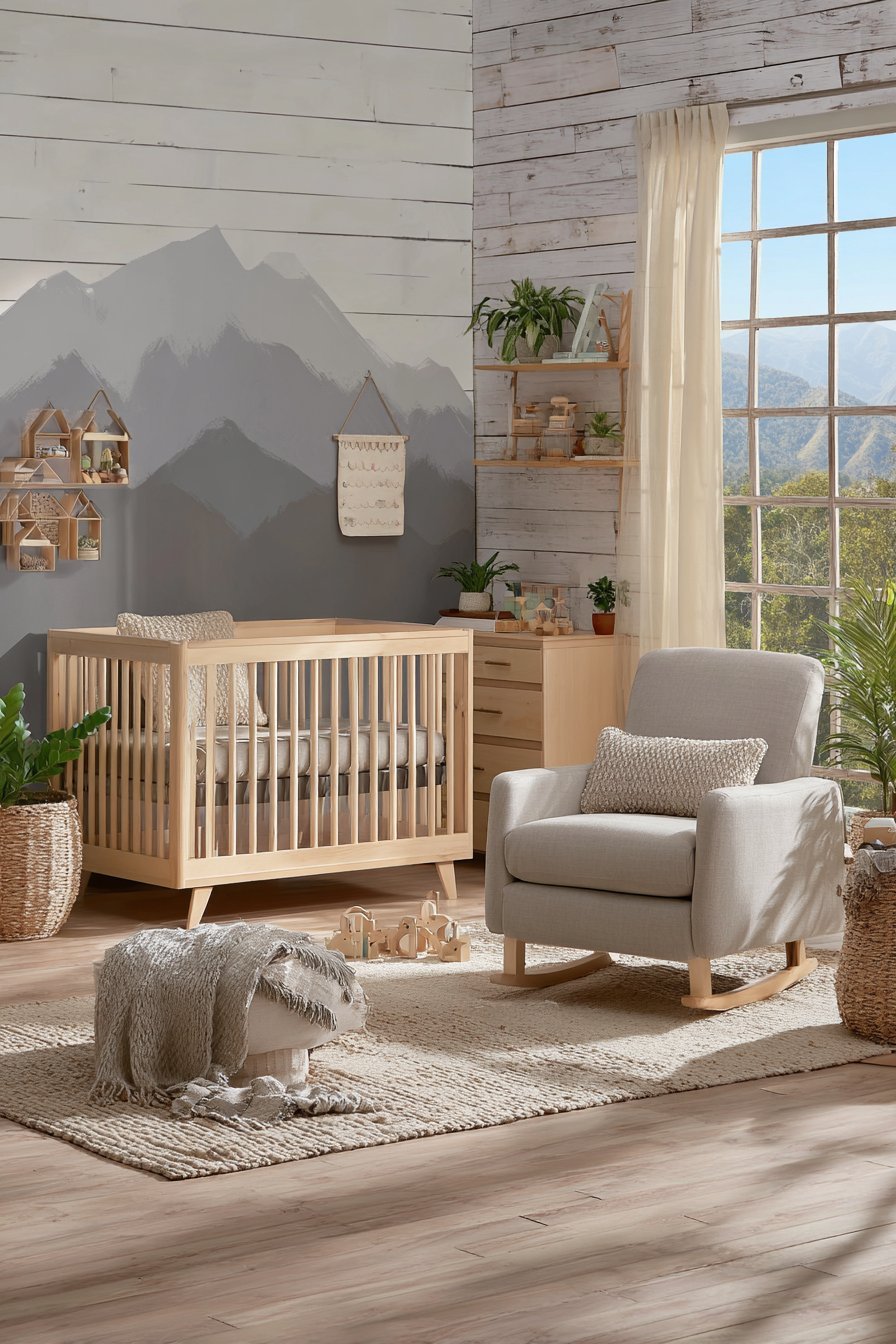
A Scandinavian nursery embodies the philosophy of peaceful minimalism. Natural oak furniture with clean lines forms the foundation. The crib sits against a soft white shiplap accent wall. This creates visual interest without overwhelming the senses.
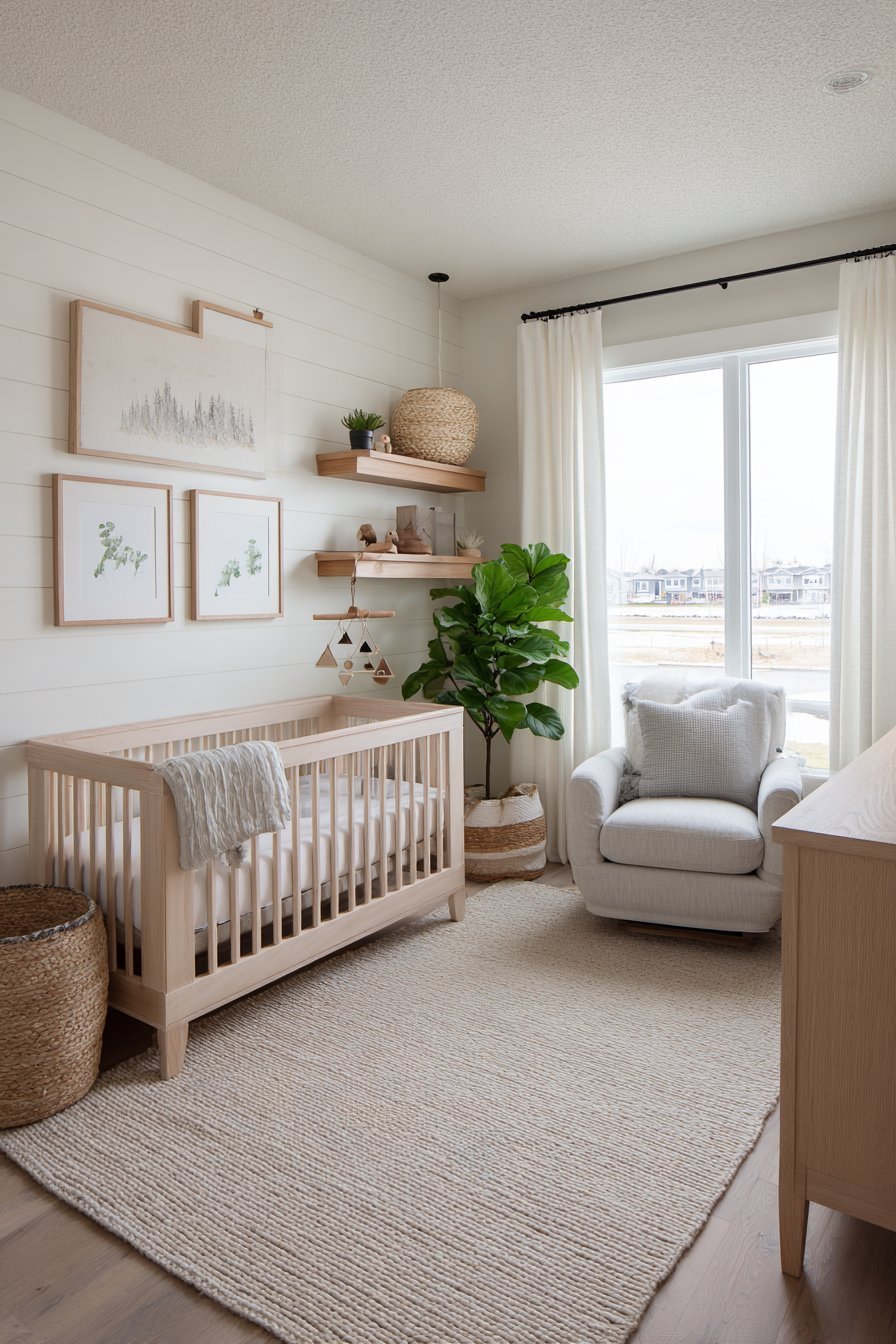
Light grey linen upholstery on the glider chair adds softness. Large windows invite morning light to flood the space. Sheer white curtains filter the brightness gently. The natural illumination enhances the room’s airy quality. This connection to daylight supports healthy sleep patterns.
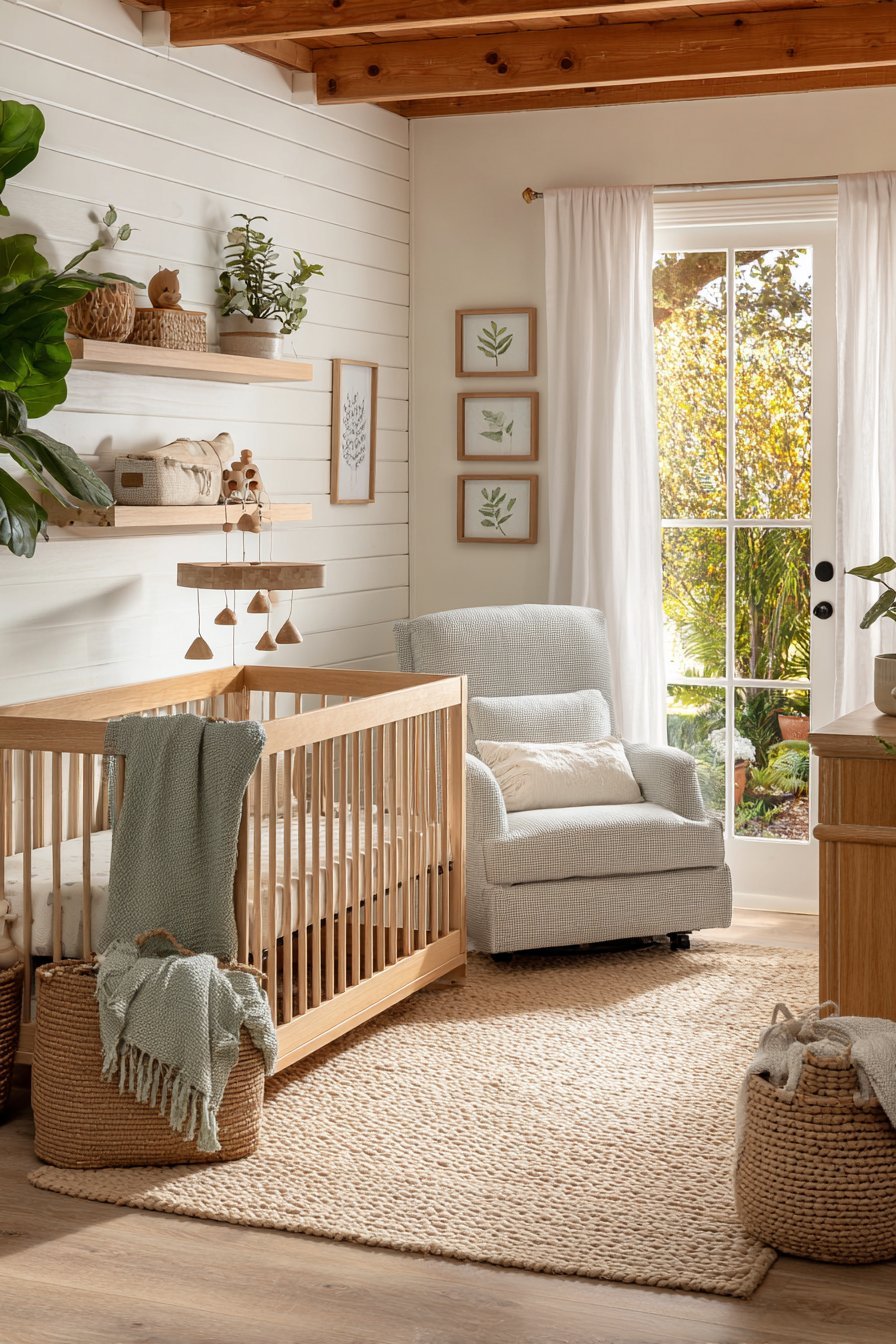
The layered textures create depth despite the minimal color palette. A woven jute rug defines the sleeping area. Floating shelves display cloth storage baskets and wooden toys. The dresser doubles efficiently as a changing station. Every piece serves multiple purposes without sacrificing style.
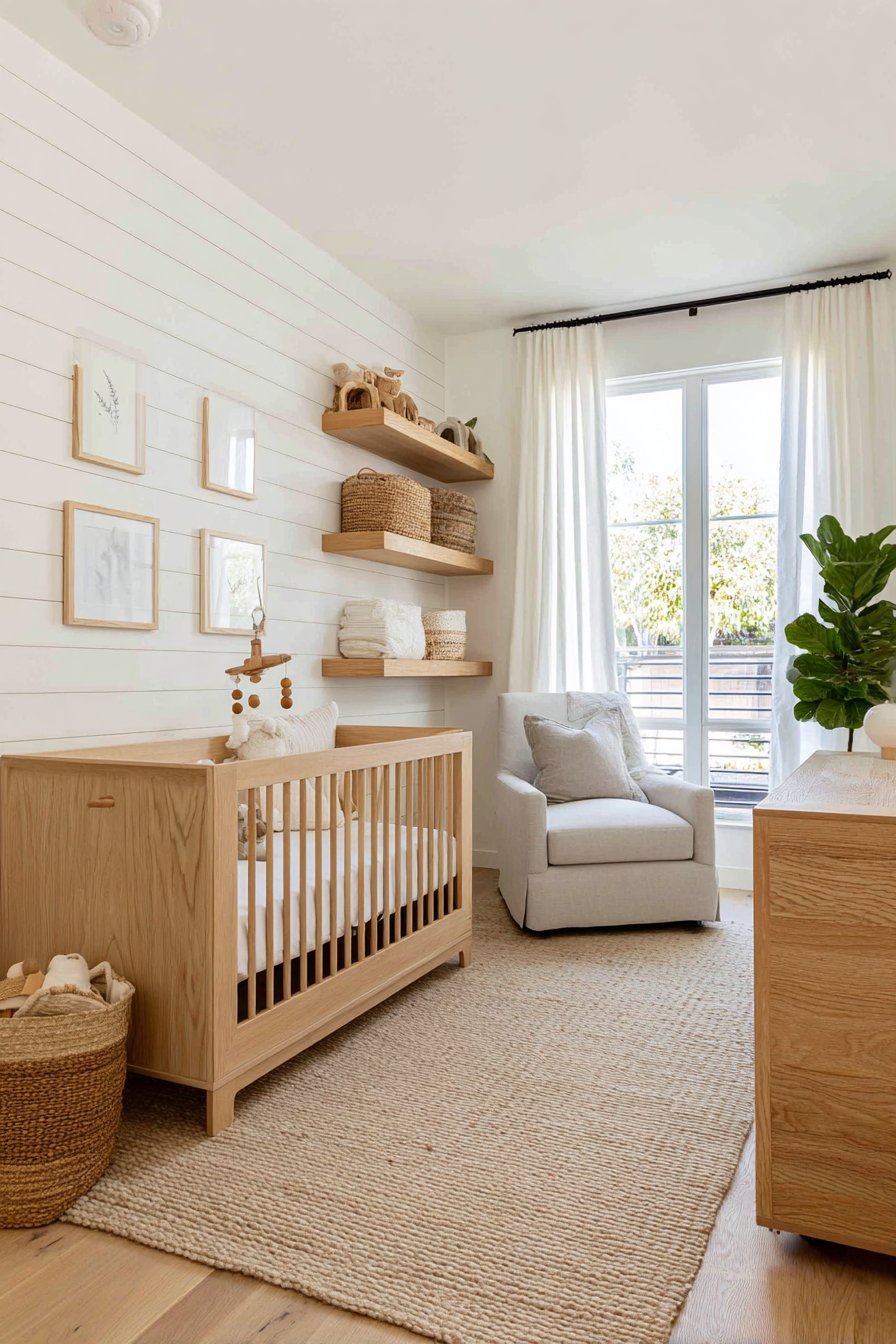
Thoughtful details complete the design. A simple mobile with wooden geometric shapes hangs above the crib. Framed nature prints in light wood frames adorn the walls. A small potted fiddle leaf fig adds living greenery. The color scheme stays neutral with warm wood tones and soft whites. Touches of sage green in textiles provide subtle color variation.
Key Design Tips:
- Choose furniture with clean lines and natural wood finishes for timeless appeal
- Maximize natural light with sheer curtains that filter rather than block
- Layer neutral textures like jute, linen, and cotton for visual depth
- Keep decorative elements minimal and purposeful
- Incorporate one or two live plants for air quality and natural beauty
- Use floating shelves to maintain an open, uncluttered feeling
2. Gender-Neutral Organization Haven
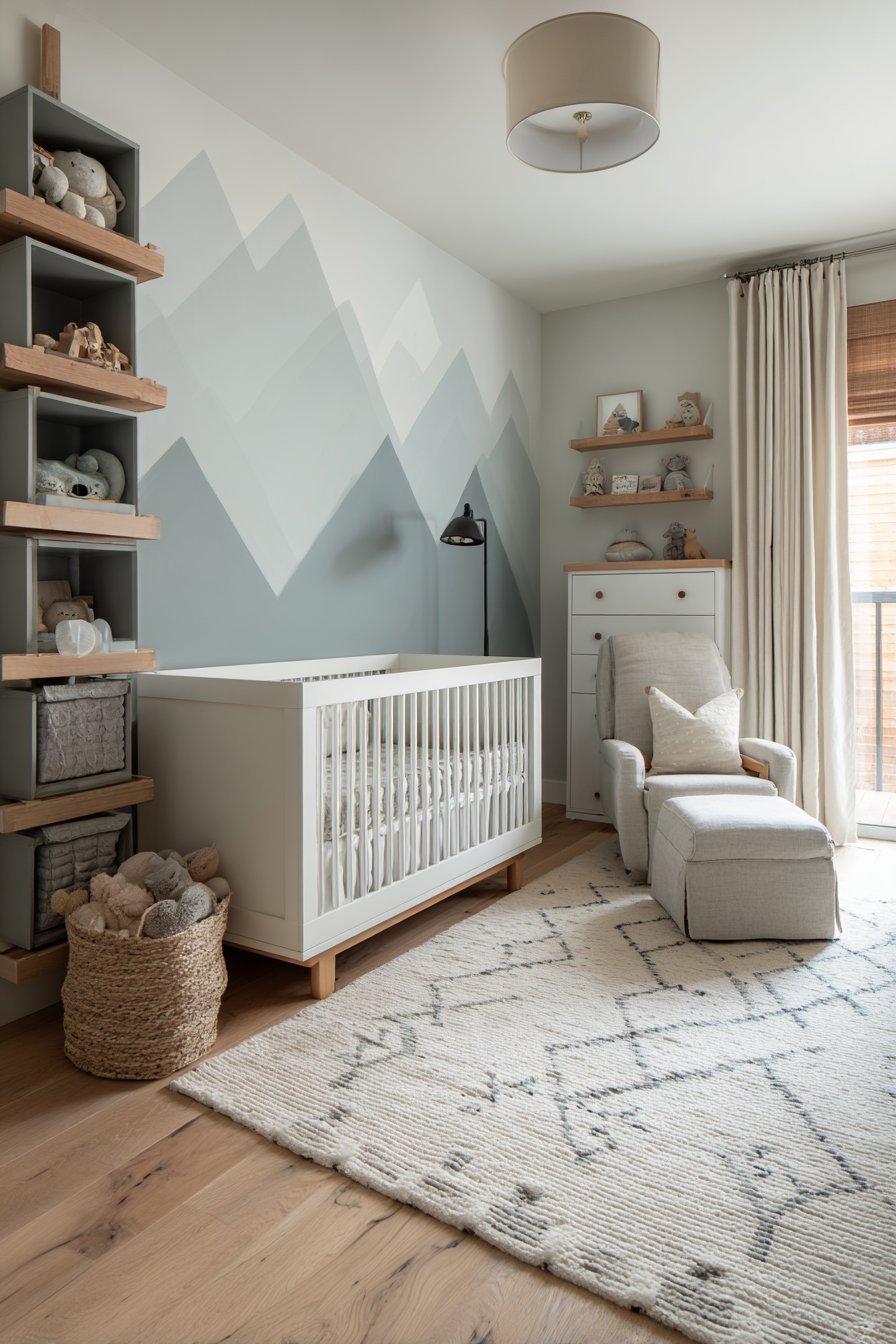
This practical nursery prioritizes organization without sacrificing style. A white convertible crib anchors one wall. The tall dresser beside it offers ample drawer storage. Open cube shelving units in soft grey house labeled fabric bins. Board books and simple toys sit at accessible heights.
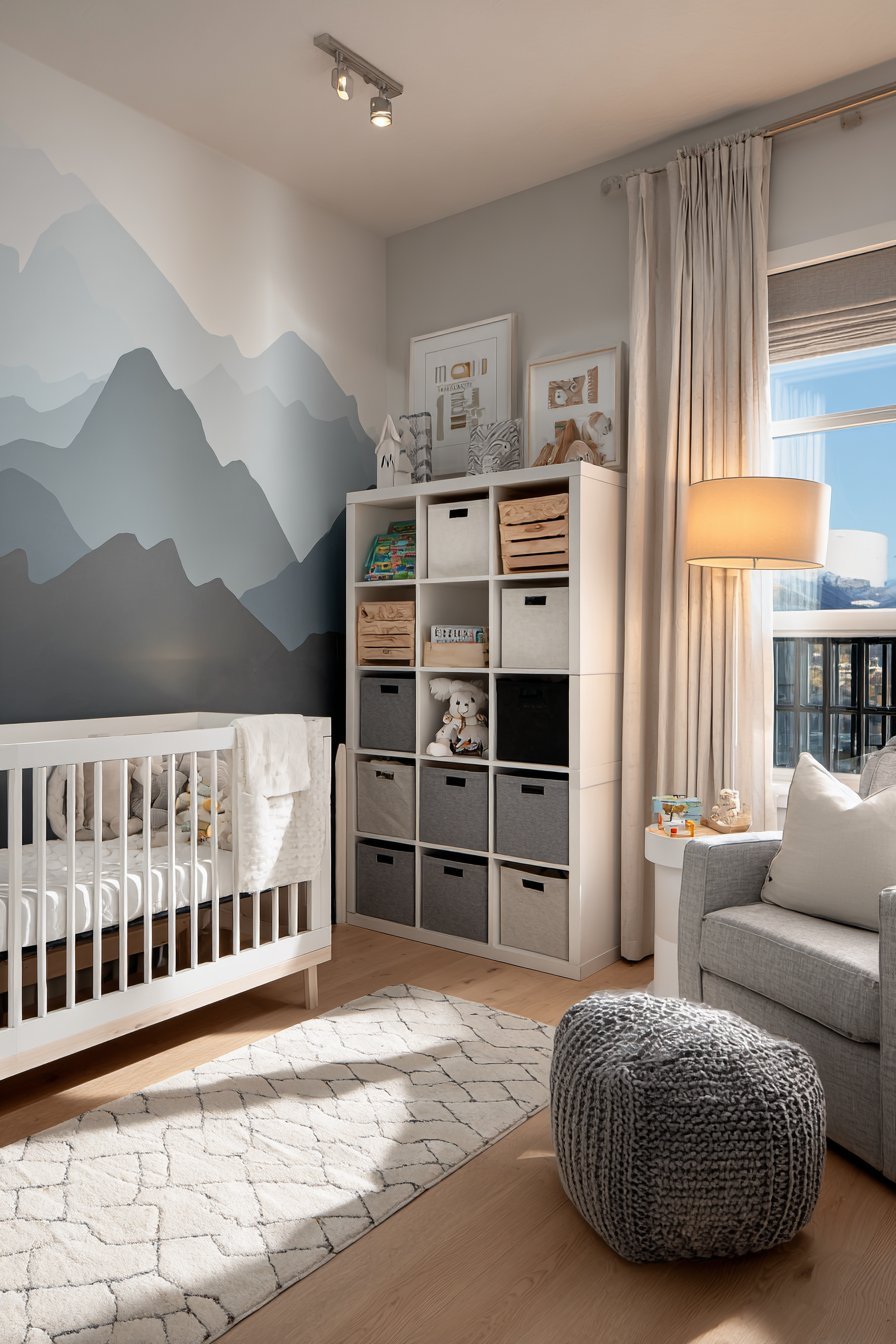
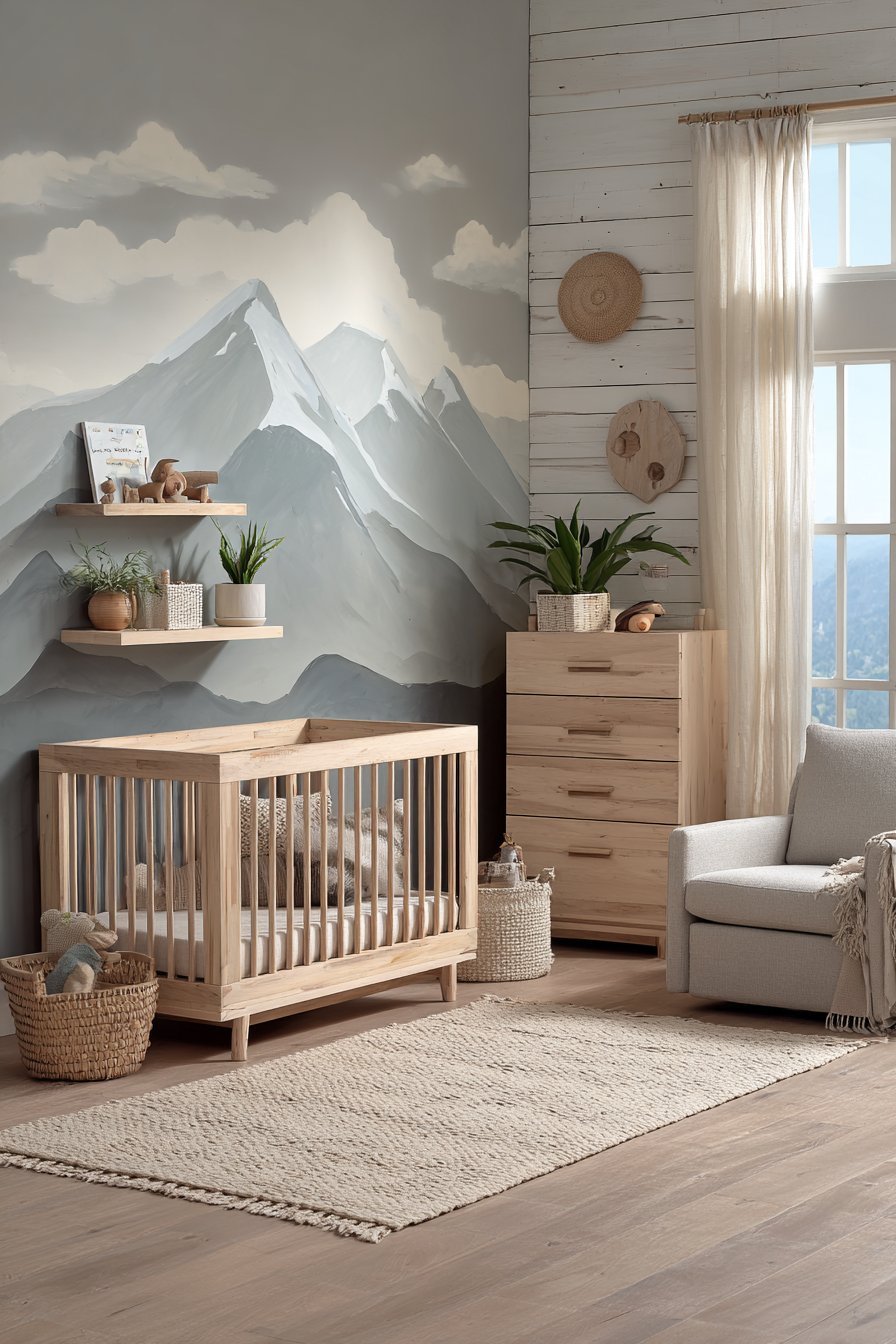
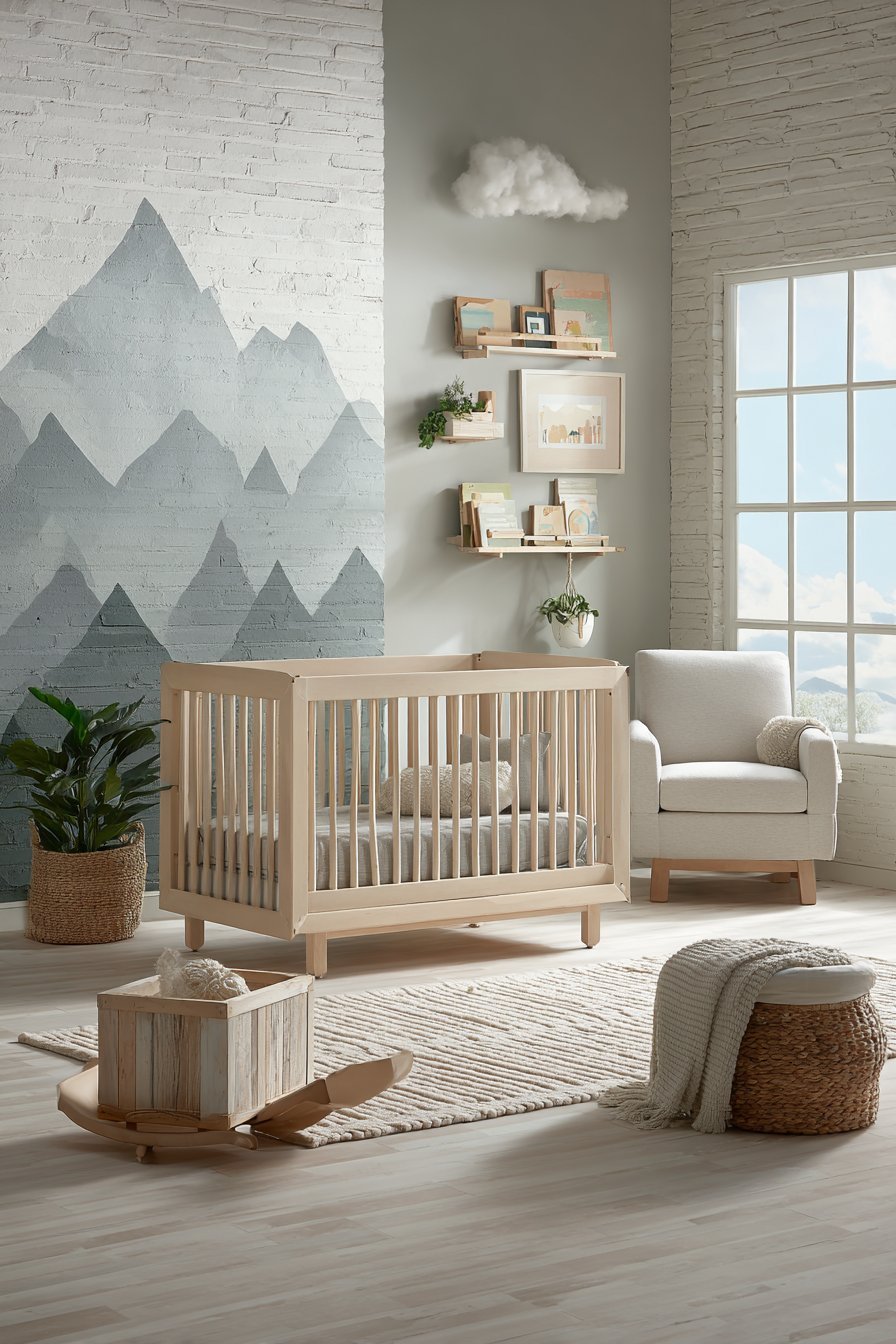
The walls feature a calming abstract mountain mural. Muted blue-grey tones create a serene atmosphere. This gender-neutral approach appeals to many modern families. The design grows with the child through various developmental stages.
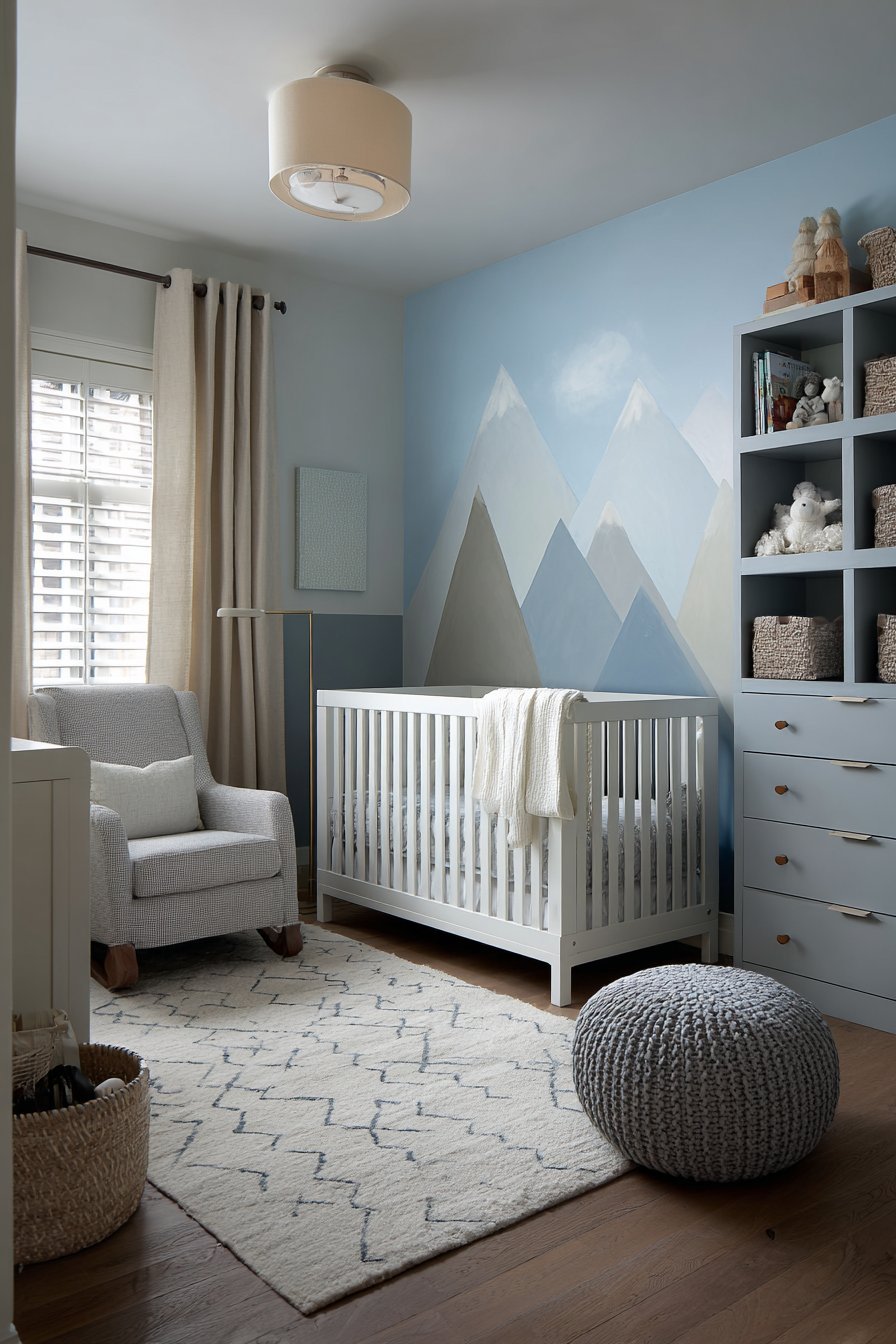
A comfortable nursing chair with ottoman occupies the corner. A floor lamp with warm LED bulbs provides task lighting. This creates a dedicated feeding zone. Blackout roller shades sit behind flowing linen curtains. The layered window treatments offer flexibility for different lighting needs.
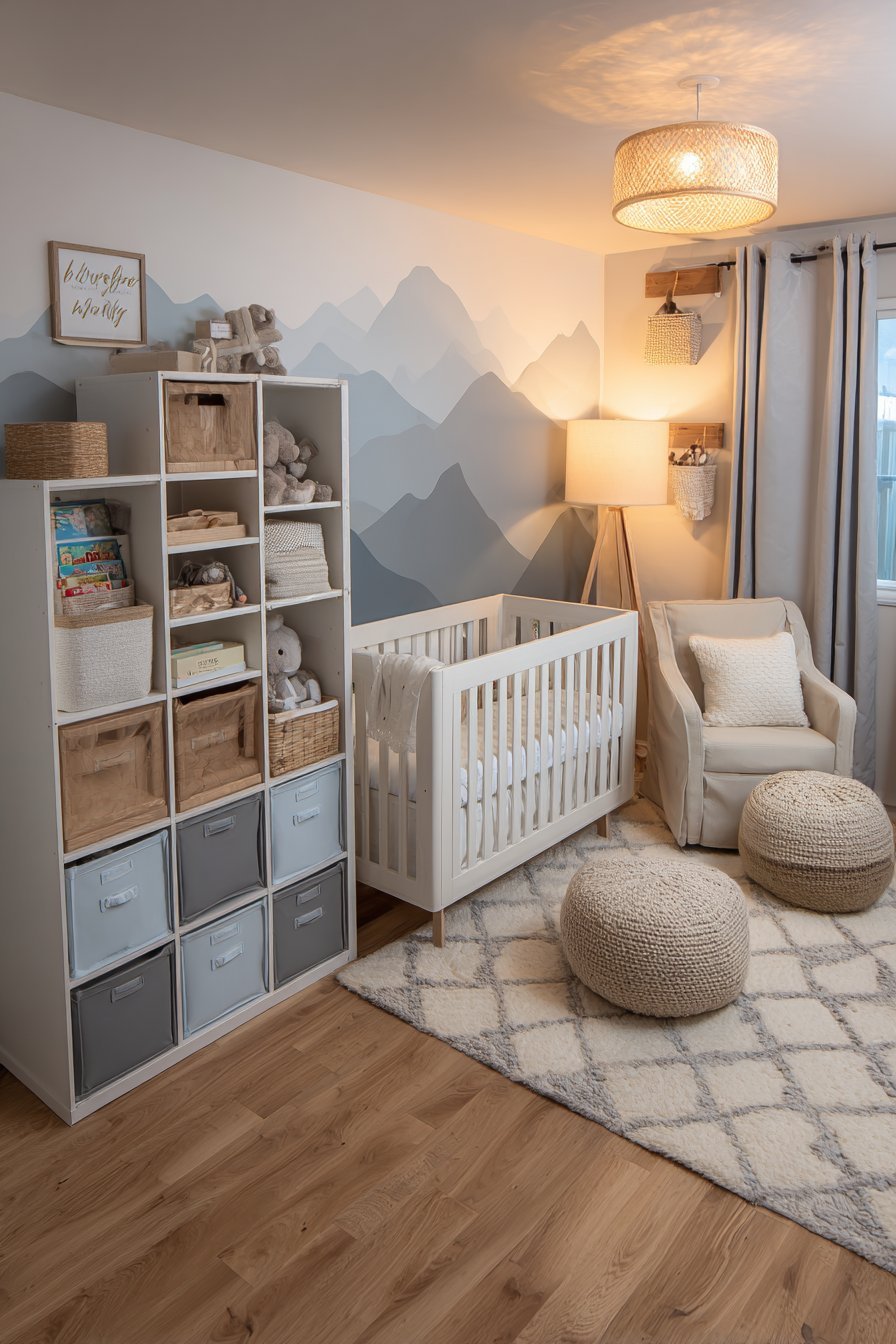
Storage solutions throughout the room demonstrate thoughtful planning. A wall-mounted diaper organizer sits near the changing pad. Everything needed for changes stays within arm’s reach. The soft cotton area rug features subtle geometric patterns. Natural oak flooring beneath ensures easy cleaning. The combination of practical elements and gentle aesthetics creates a lived-in functionality.
Key Design Tips:
- Install open shelving at accessible heights for future toddler independence
- Use labeled fabric bins to maintain organization as items multiply
- Create a dedicated nursing corner with proper lighting and comfort
- Layer window treatments for light control during different times of day
- Choose convertible furniture that adapts as your child grows
- Add a calming wall mural in neutral tones for visual interest
- Select easy-to-clean flooring materials for inevitable spills
3. Bohemian Texture Paradise
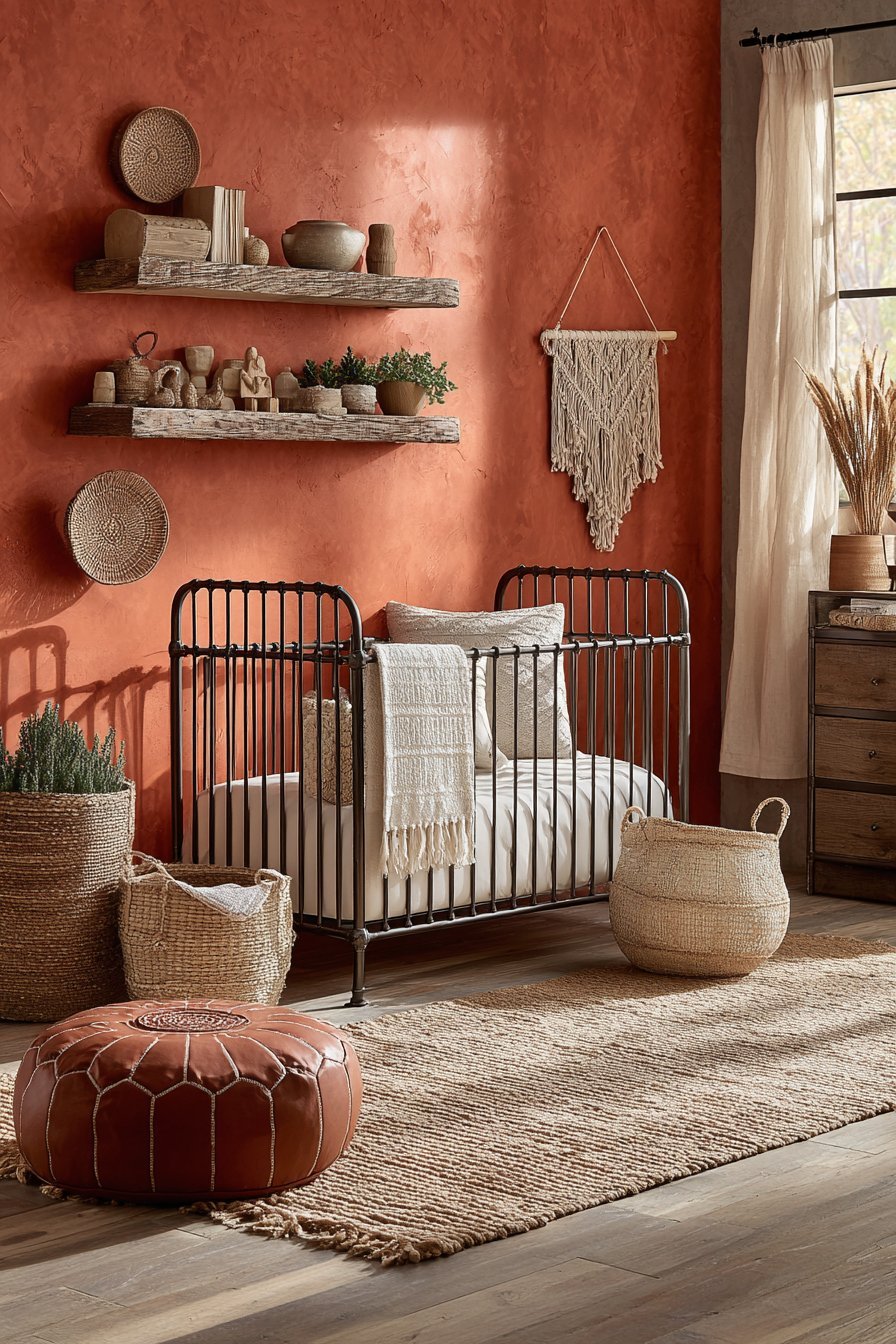
A bohemian nursery celebrates natural materials and handcrafted elements. The vintage-style iron crib becomes an artistic centerpiece. White bedding provides a clean canvas. A handwoven cotton blanket in neutral tones adds warmth. The layered textiles create visual richness.
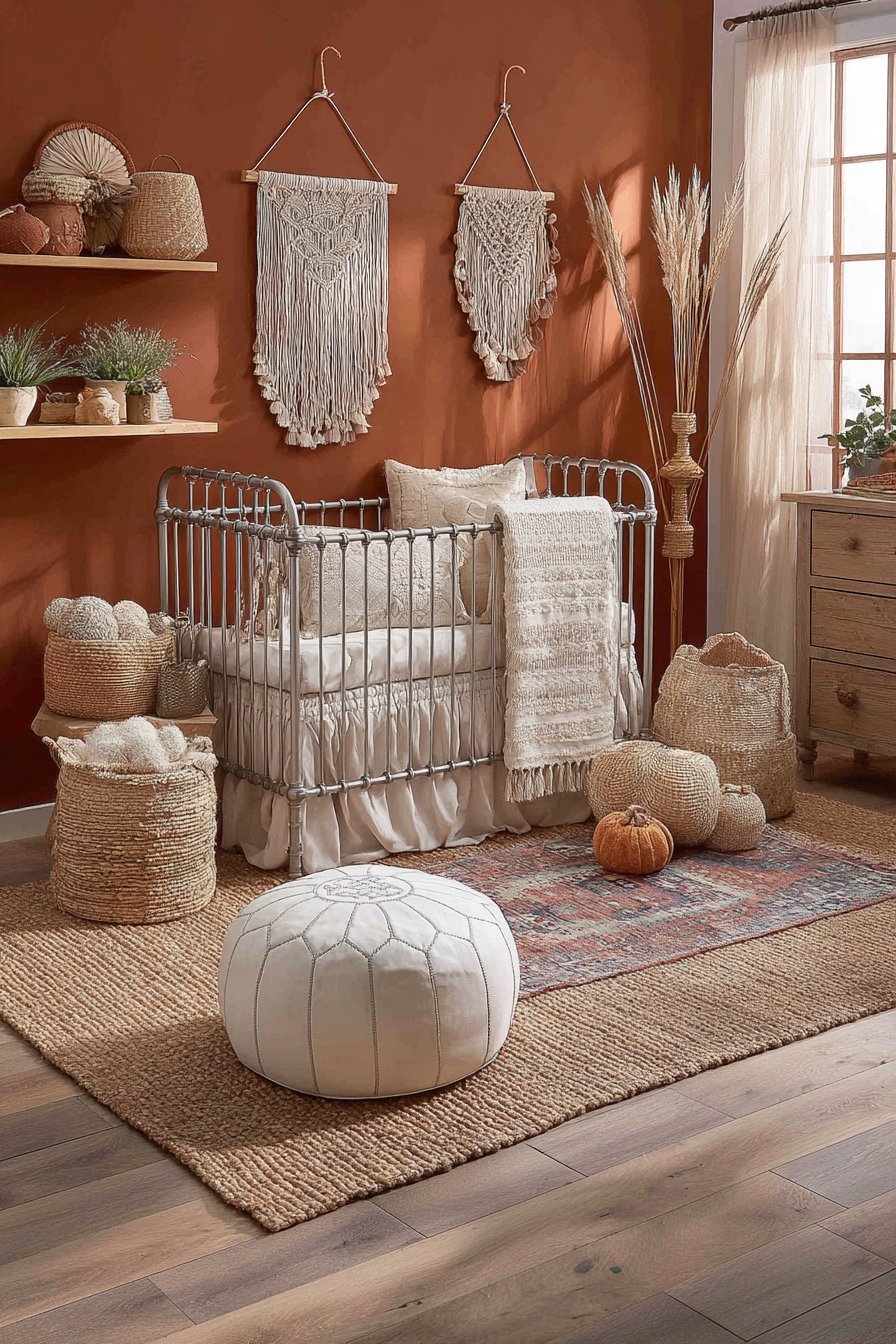
Macramé wall hangings in varying sizes adorn the terracotta accent wall. Floating shelves made from reclaimed wood display carefully curated items. Small potted succulents bring living greenery. Wooden rattles and cloth books add functional decoration. Each element tells a story of craftsmanship.
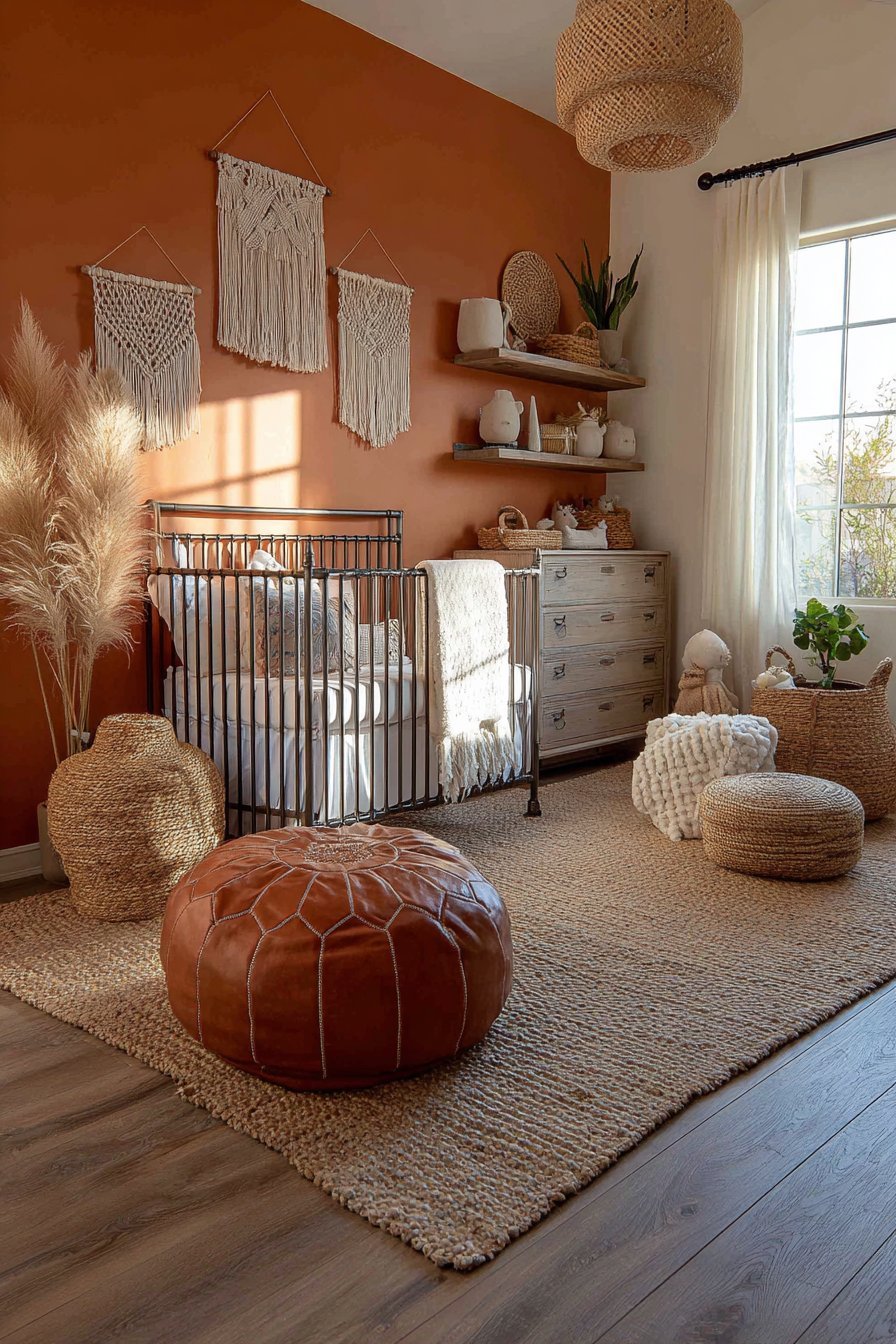
The seating area features a low-profile Moroccan-style pouf. This flexible piece moves easily around the room. Layered rugs demonstrate the bohemian love of texture. A natural jute base supports a smaller patterned kilim rug. The combination grounds the space while adding personality.
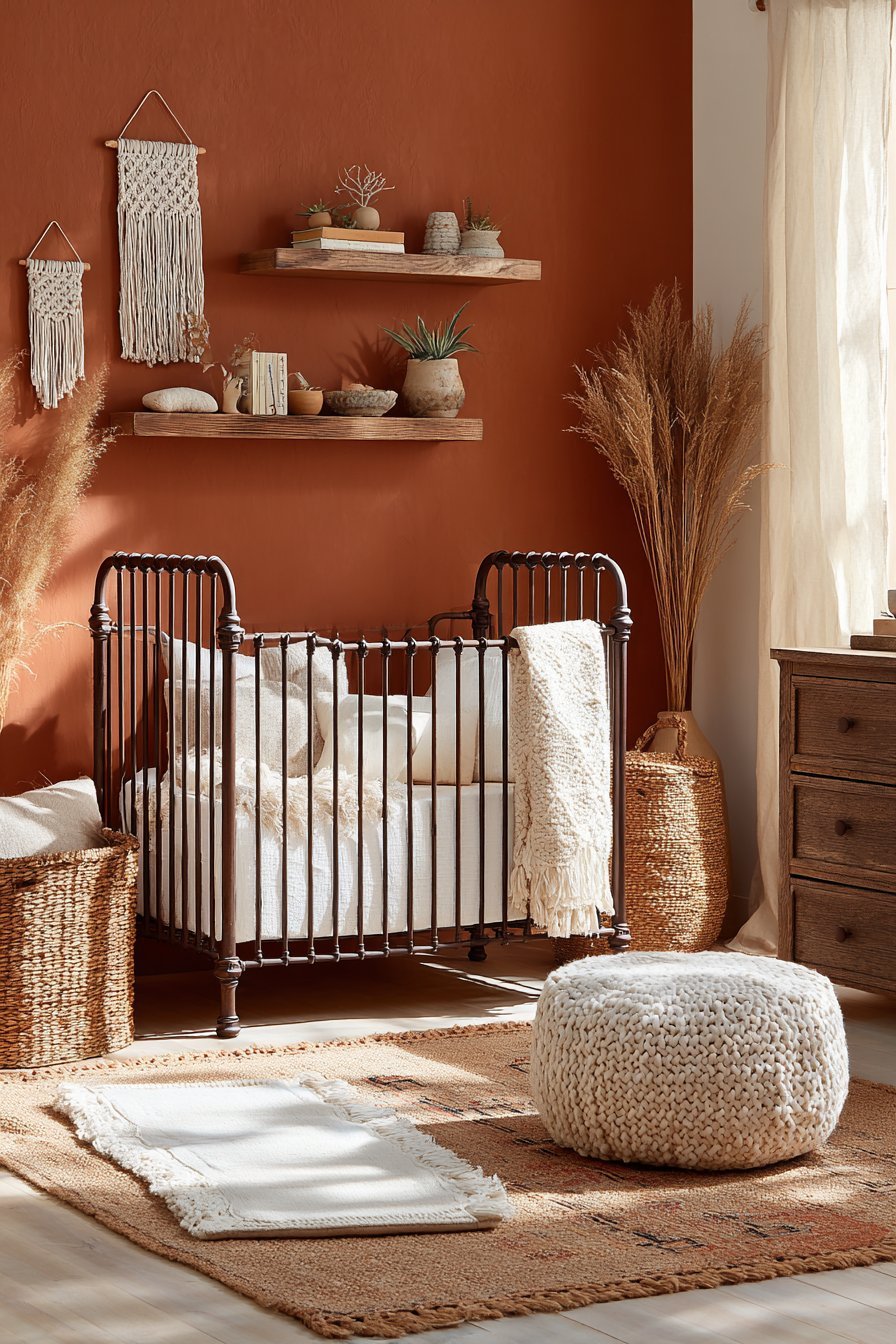
Sheer curtains in off-white filter natural light beautifully. Soft shadows highlight the textural variety throughout the space. Woven storage baskets in various sizes tuck under the crib. They also sit beside the simple wooden dresser. Dried pampas grass in a floor vase adds height. Simple string lights create magical evening ambiance. The room feels collected over time rather than purchased all at once.
Key Design Tips:
- Layer multiple rugs in complementary patterns for bohemian depth
- Incorporate handmade elements like macramé for authentic character
- Choose vintage or vintage-style furniture as focal points
- Use natural fibers throughout including jute, cotton, and wood
- Display plants at safe heights to bring life into the space
- Add string lights for soft, magical evening illumination
- Select a warm accent wall color like terracotta for grounding
4. Modern Minimalist Sanctuary
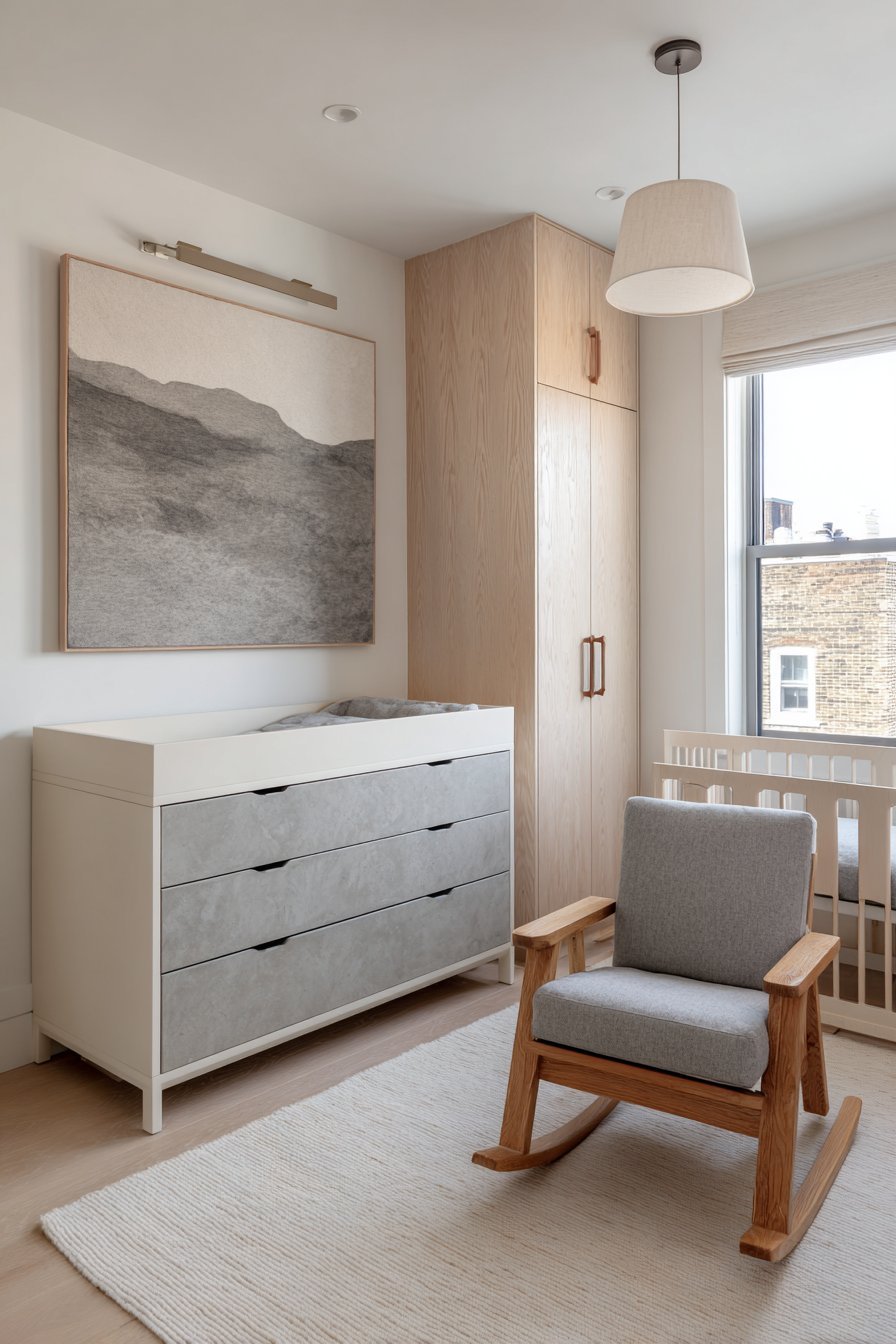
This minimalist nursery proves that less truly can be more. A sleek white crib with concealed hardware sits against light grey walls. The matching dresser features push-to-open drawers. A removable changing pad rests on top. The absence of visible hardware maintains clean lines throughout.
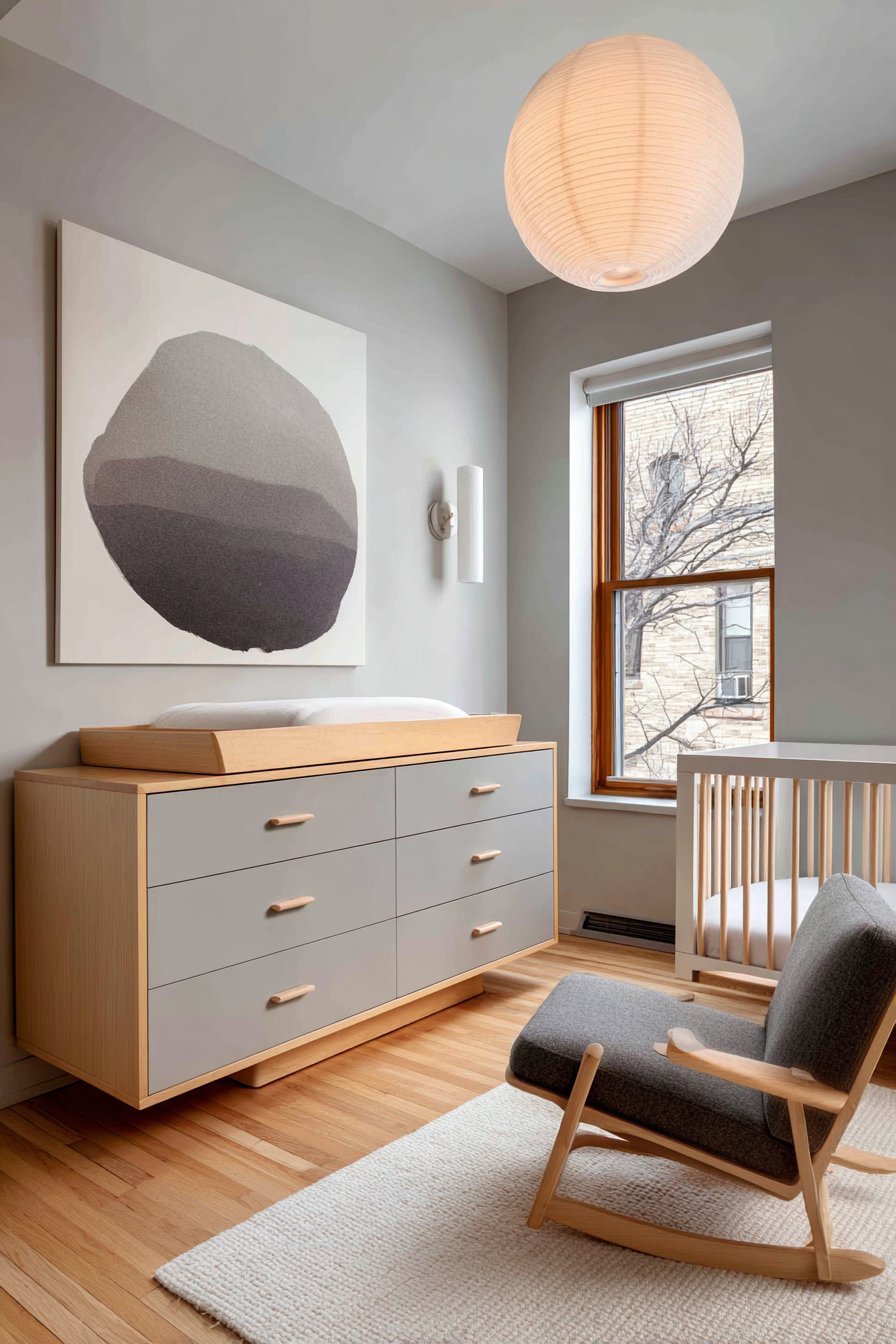
The strict palette of white, grey, and natural wood creates calm. One statement piece breaks the simplicity. A large-scale abstract print in soft charcoal tones commands attention. This single artwork provides all the visual interest needed.
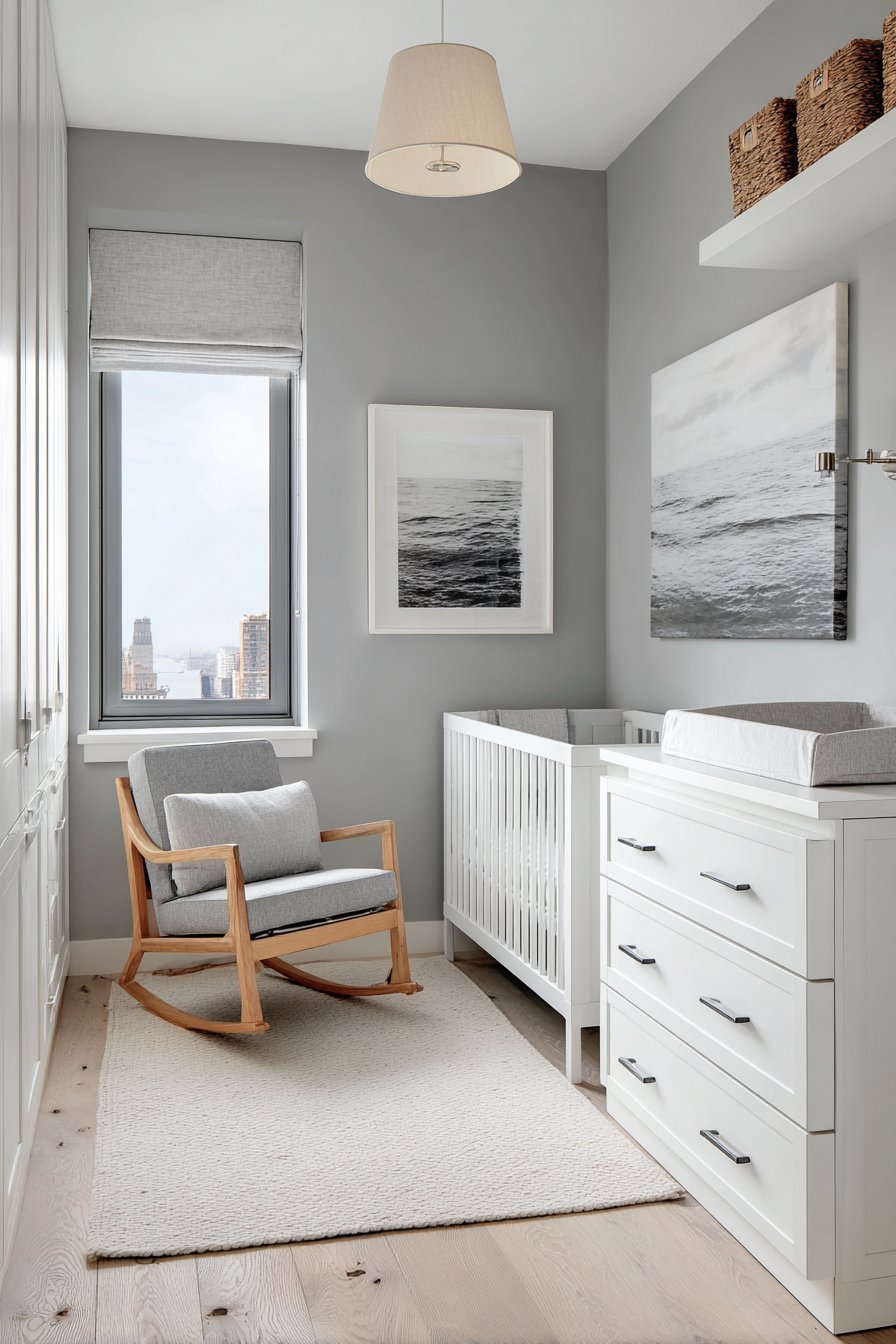
A mid-century modern rocking chair in natural oak offers comfort. Grey cushions add softness without visual clutter. Light blonde engineered hardwood flooring reflects natural light. A simple ivory wool rug partially covers the floor. The quality of each material shines through the minimal design.
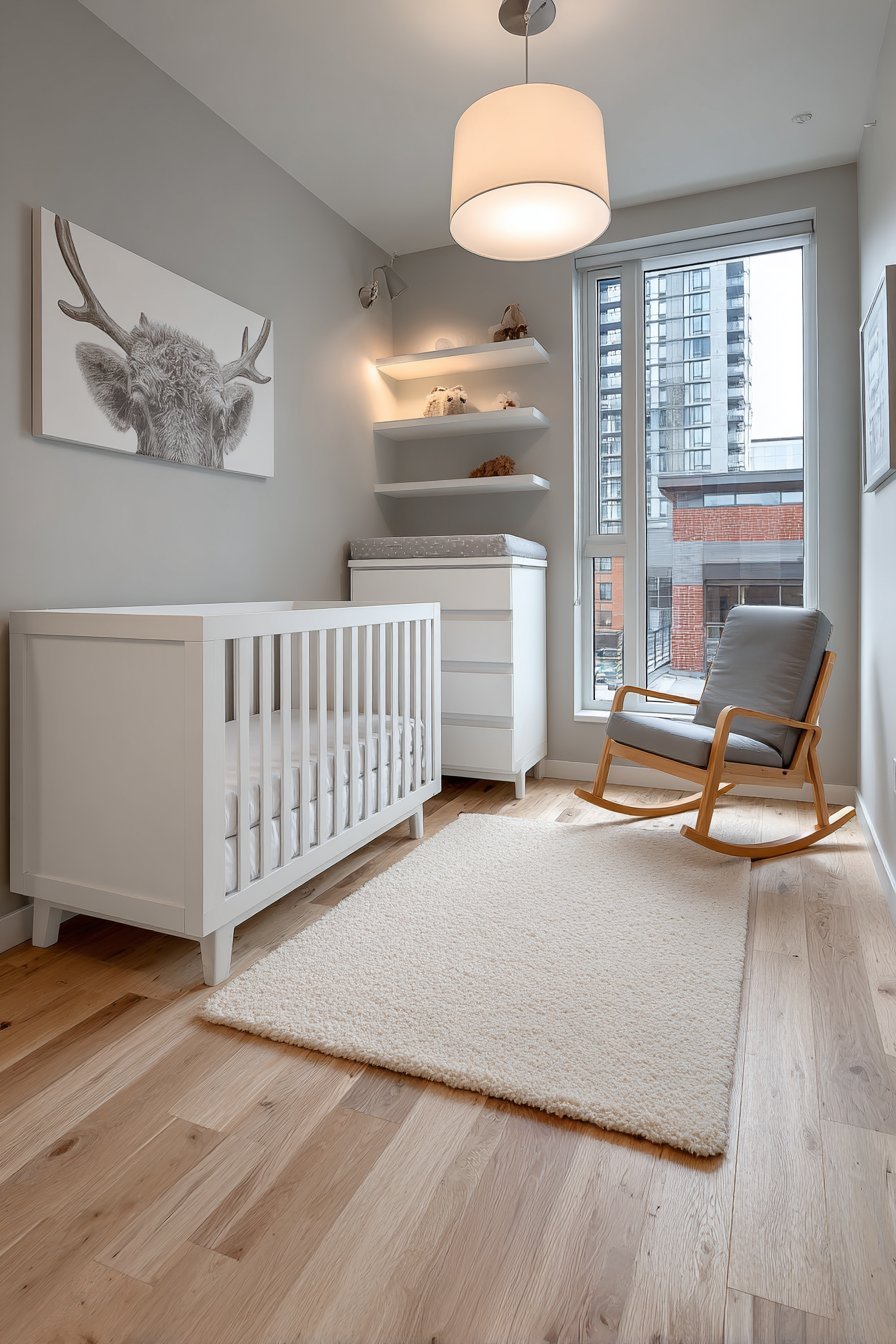
Built-in closet organization maximizes storage capabilities. All belongings stay hidden from view. A single pendant light with white fabric shade provides ambient lighting. A sleek wall sconce handles nighttime tasks. Cellular shades in crisp white offer light control and insulation. The intentional negative space defines this minimalist approach. Every item serves a clear purpose without unnecessary decoration.
Key Design Tips:
- Limit your color palette to three neutral tones maximum
- Invest in quality materials since each piece receives full attention
- Use concealed storage to maintain the uncluttered aesthetic
- Choose one statement art piece rather than multiple decorations
- Select furniture with clean lines and minimal hardware
- Incorporate built-in storage solutions whenever possible
- Embrace negative space as an intentional design element
5. Farmhouse Vintage Warmth
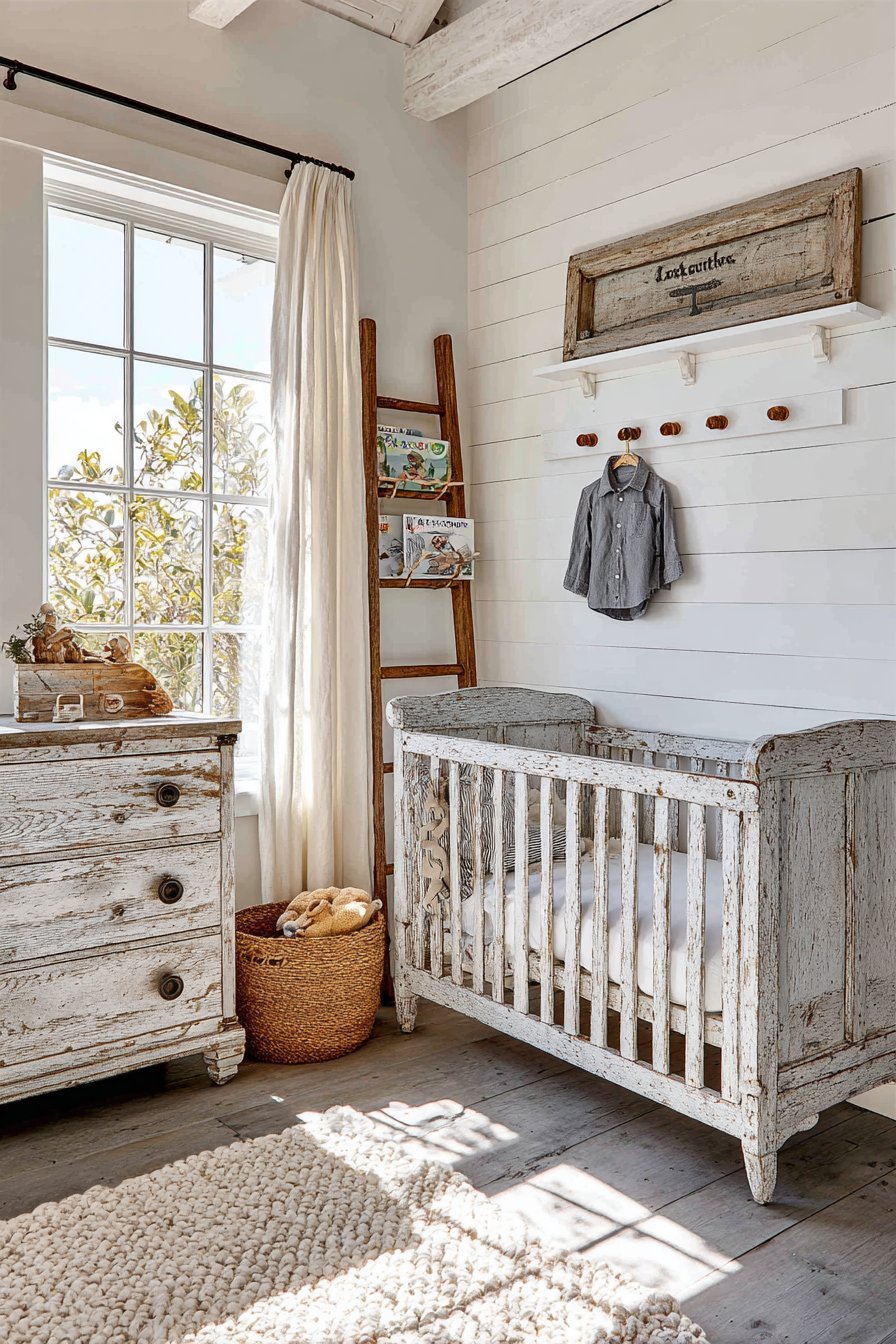
The farmhouse nursery embraces weathered wood and vintage character. A distressed white wooden crib shows subtle paint wear. The coordinating dresser features original metal cup pulls. Natural patina tells a story of authentic age. Shiplap walls in warm white create texture throughout.
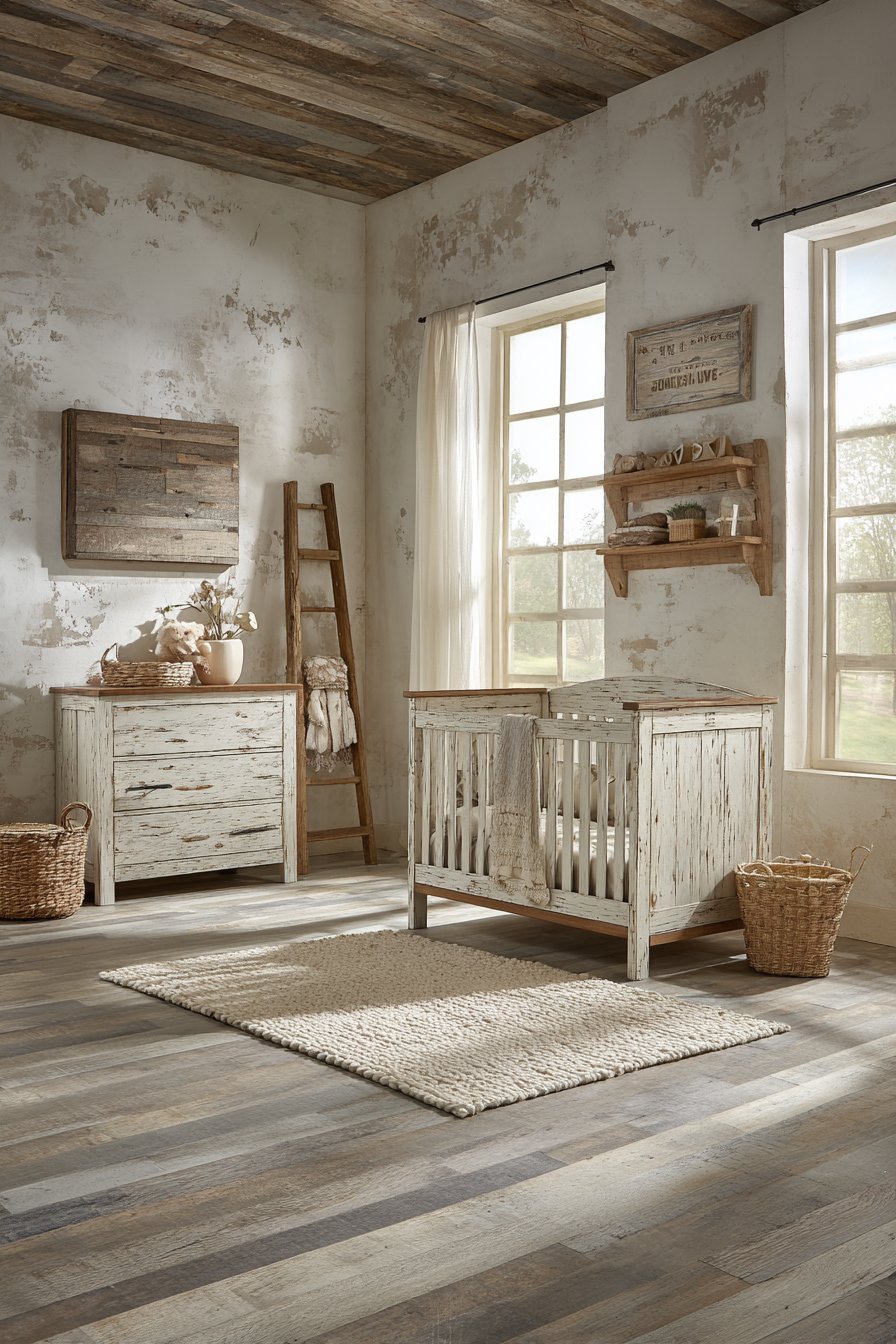
Weathered grey oak flooring adds rustic foundation. A comfortable slipcovered glider in natural linen invites relaxation. Tall windows dressed with simple cafe curtains welcome light. The white cotton fabric maintains the room’s bright airiness.
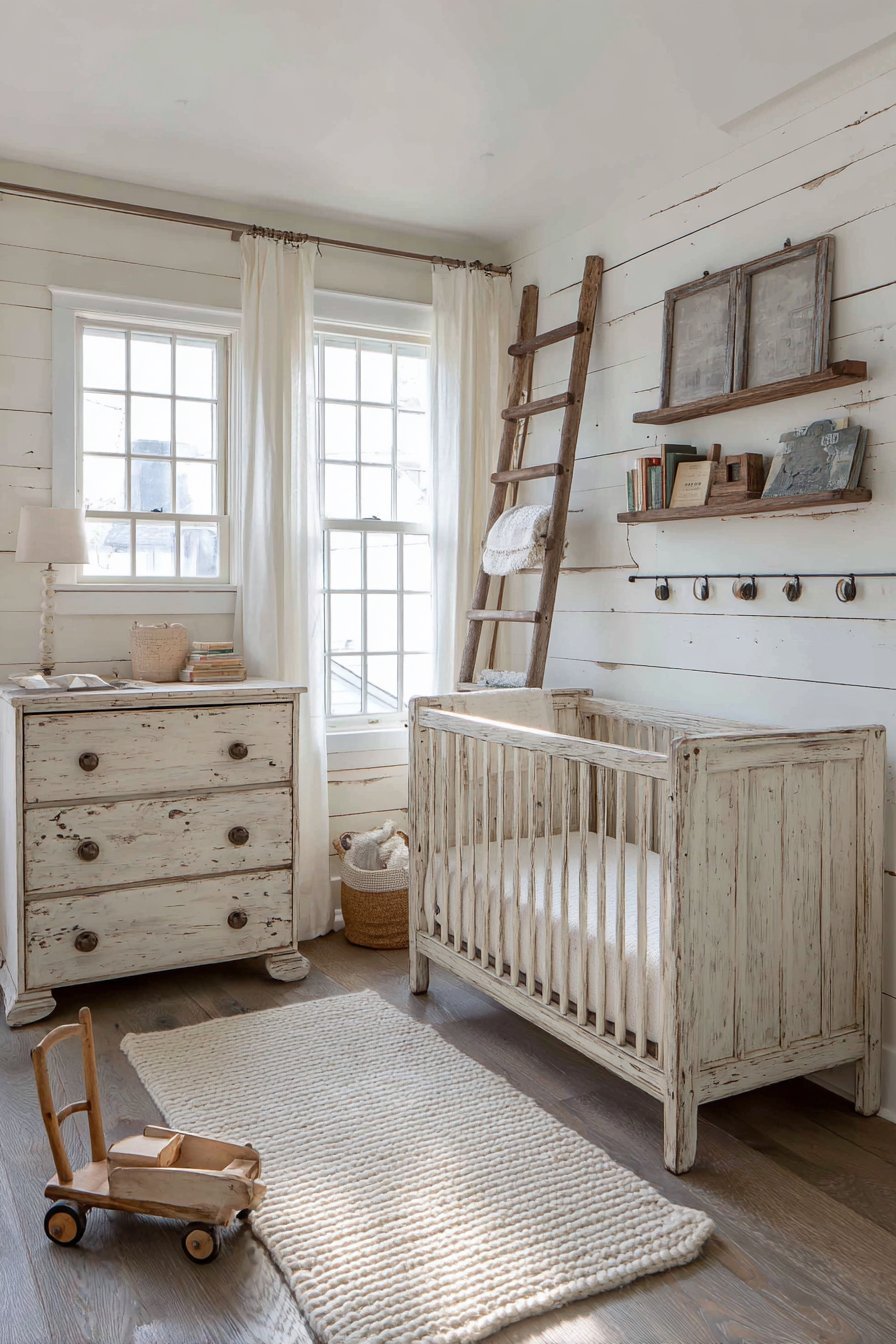
Practical vintage elements serve as decoration. A repurposed vintage ladder displays blankets beautifully. Galvanized metal bins offer toy storage with industrial charm. Simple wooden pegs mounted at low height hold small garments. Each functional piece adds to the farmhouse aesthetic.
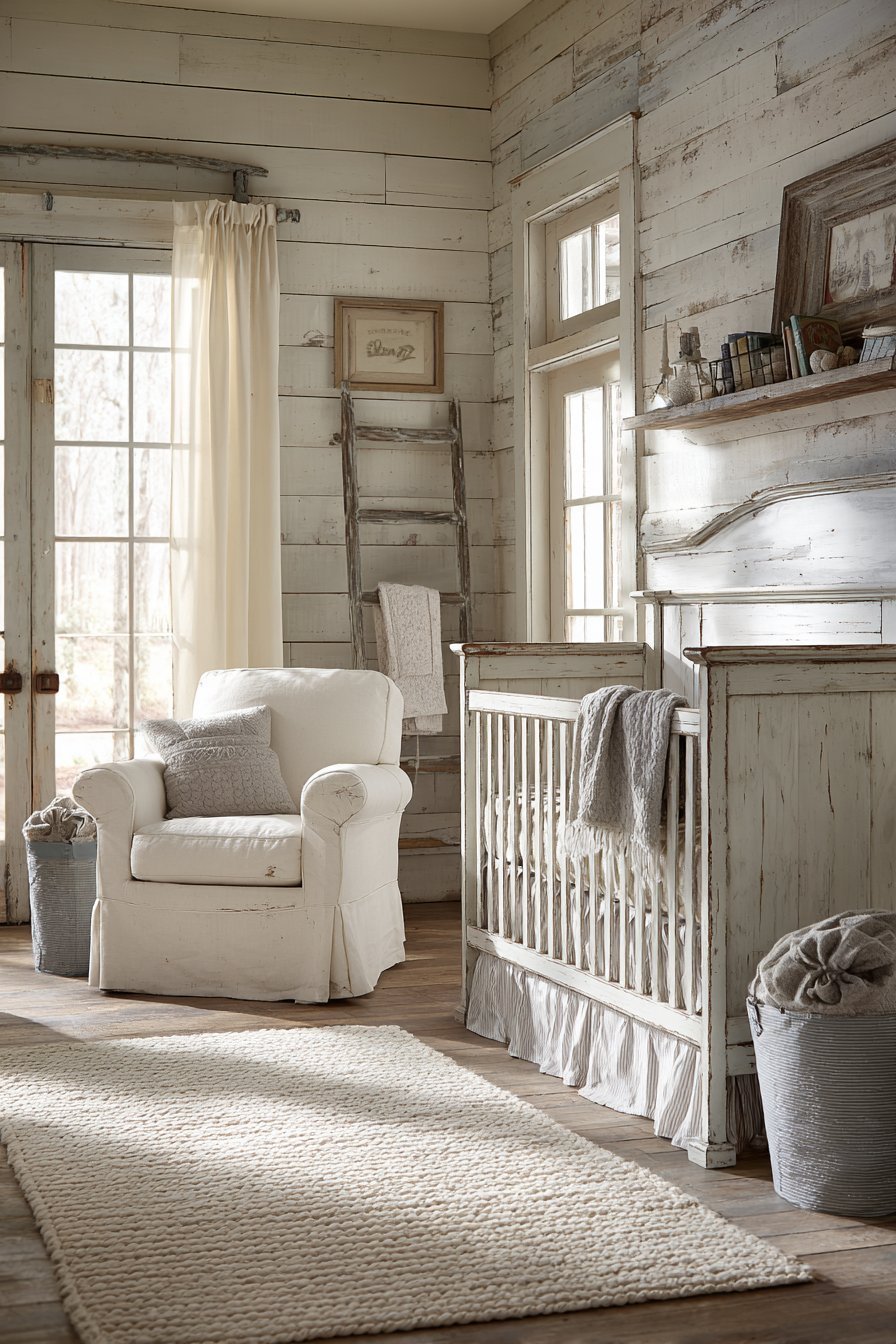
A braided wool rug in cream and grey tones defines the main area. The walls display carefully chosen vintage elements. A reclaimed window frame without glass serves as wall art. A hand-lettered wooden name sign shows visible grain. Simple floating shelves hold children’s books with worn covers. Natural lighting streams through windows creating soft shadows. The authentic wear patterns create genuine vintage character. This nursery celebrates history and simplicity in equal measure.
Key Design Tips:
- Source authentic vintage pieces rather than new distressed furniture when possible
- Use shiplap walls for instant farmhouse character and texture
- Repurpose vintage items like ladders for functional decoration
- Choose natural fiber textiles in neutral colors for cohesion
- Display the natural wear and patina on vintage hardware
- Keep window treatments simple and light to maximize brightness
- Add reclaimed wood elements for authentic rustic appeal
6. Contemporary Black and White Drama
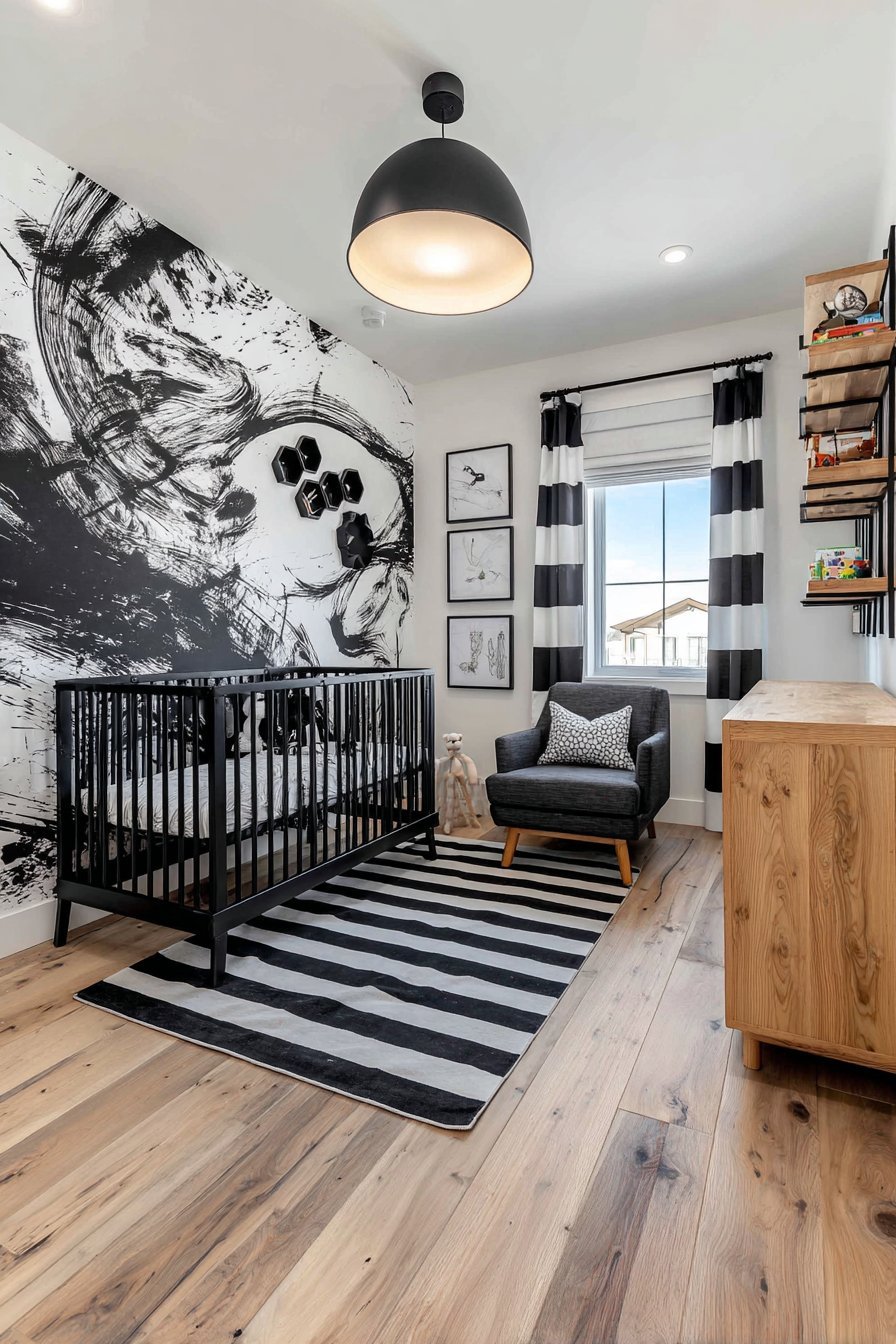
This bold nursery makes a sophisticated statement. A black metal crib with modern linear design creates a strong focal point. Crisp white walls provide the perfect backdrop. A light oak dresser adds warmth and storage functionality. The contrast between dark and light elements creates visual tension.
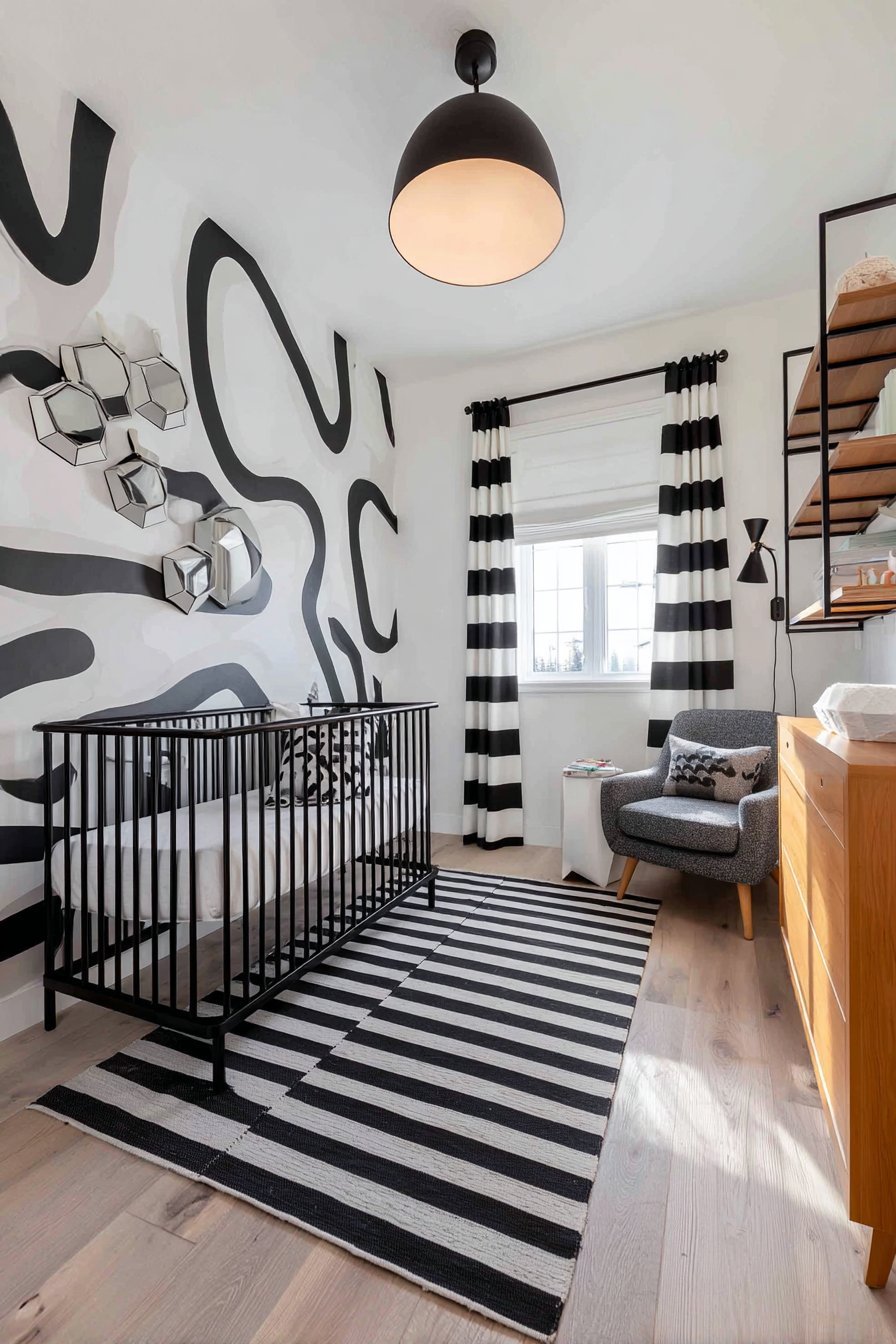
Wide-plank white oak flooring showcases natural grain variation. A statement wall behind the crib features hand-painted abstract art. Black organic shapes flow across the white surface. This dramatic backdrop transforms the sleeping area into a gallery space.
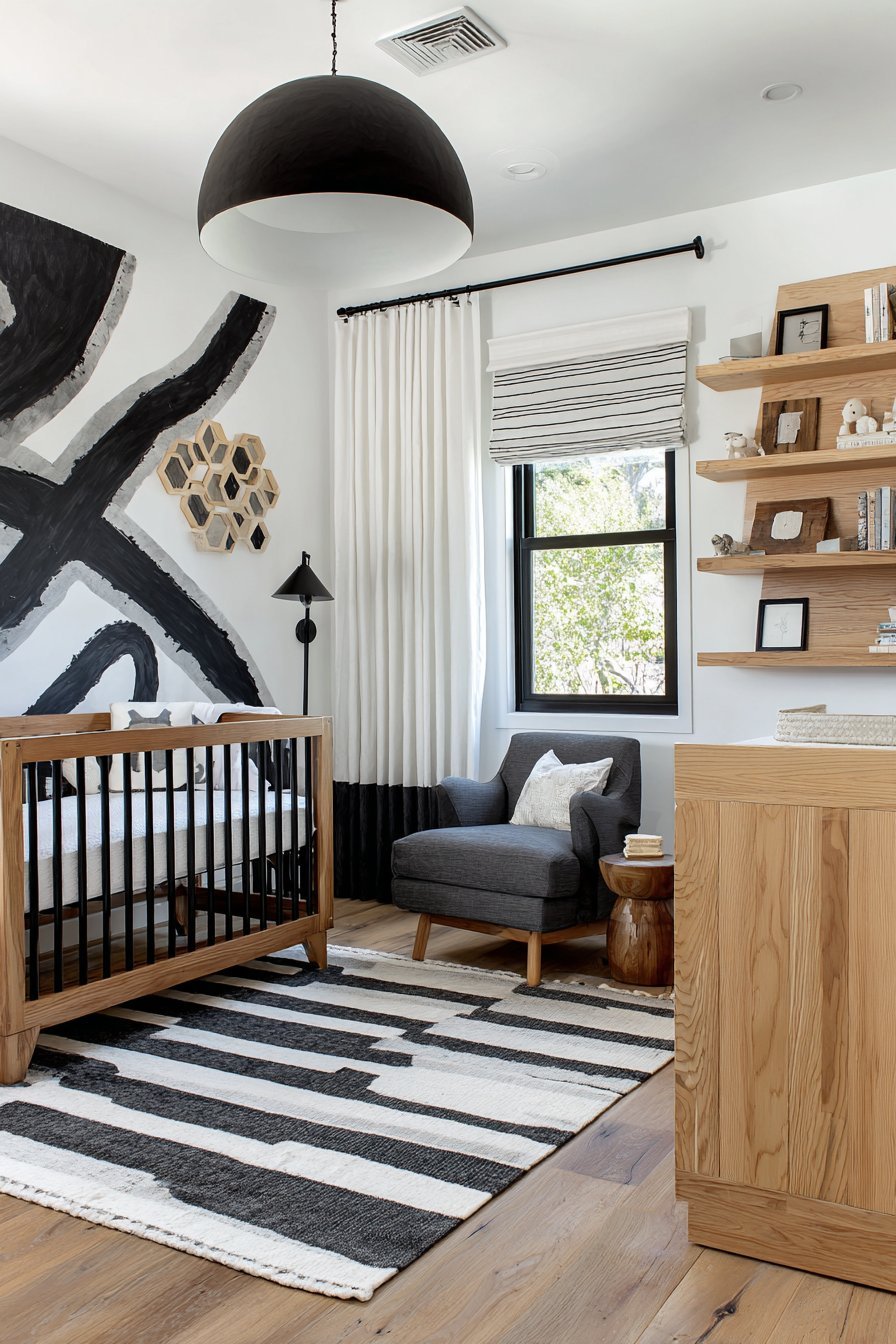
The seating area maintains the contemporary aesthetic. A charcoal grey upholstered glider features clean-lined wooden legs. A small side table in matching oak provides surface space. Window treatments combine white roller shades with black and white striped panels. The graphic pattern reinforces the room’s bold approach.
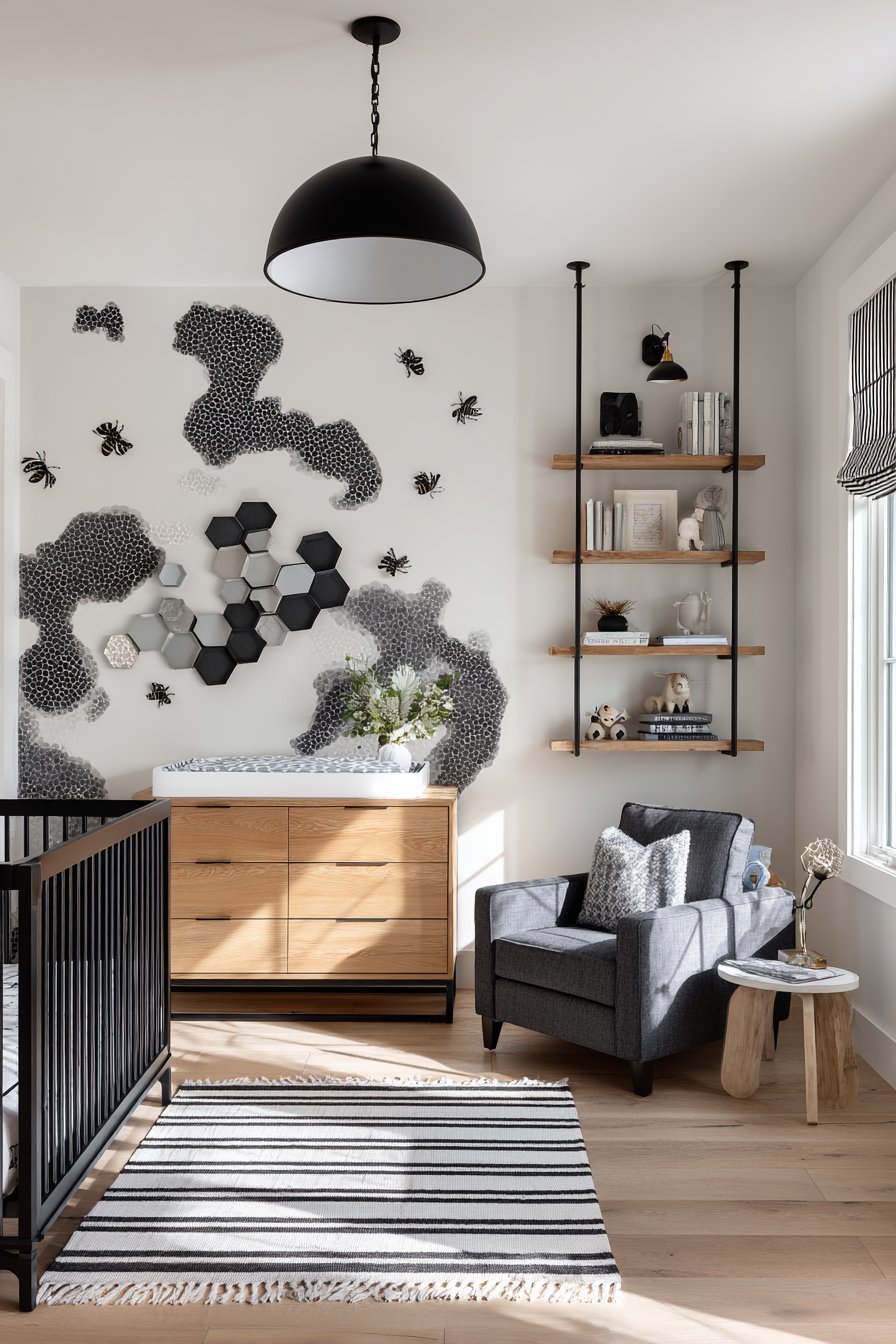
Geometric elements appear throughout the design. A black and white mobile with angular shapes hangs above the crib. Hexagonal mirror tiles cluster in an artistic arrangement. A bold striped area rug grounds the space. Open shelving in matte black metal and light wood displays monochrome books. Minimal toys in black, white, and wood maintain the palette. Modern lighting includes a dome pendant in matte black. A swing-arm wall sconce provides adjustable task lighting. The sophisticated color scheme proves nurseries need not be pastel.
Key Design Tips:
- Use high contrast colors to create visual drama and interest
- Balance bold black elements with warm wood tones for softness
- Incorporate geometric shapes in decor and accessories
- Choose modern lighting fixtures as sculptural elements
- Keep toys and books within the color palette for cohesion
- Add one hand-painted statement wall for personalized art
- Select furniture with clean contemporary lines throughout
7. Small-Space Efficiency Expert
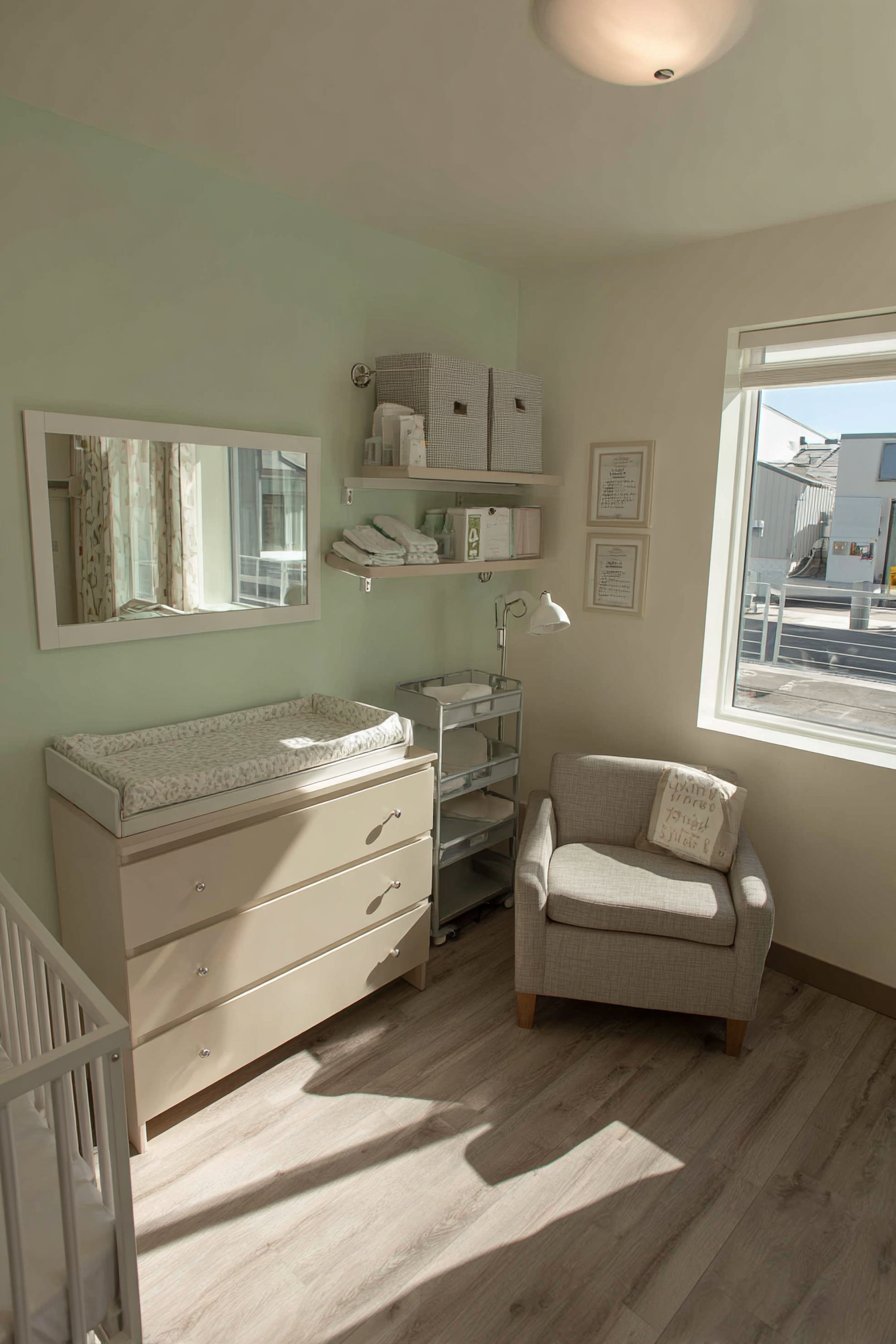
This compact nursery maximizes every square inch. A space-efficient mini crib in white fits snugly along one wall. A narrow dresser serves double duty as changing station. The contoured pad features raised edges for safety. A wall-mounted folding changing table saves precious floor space.
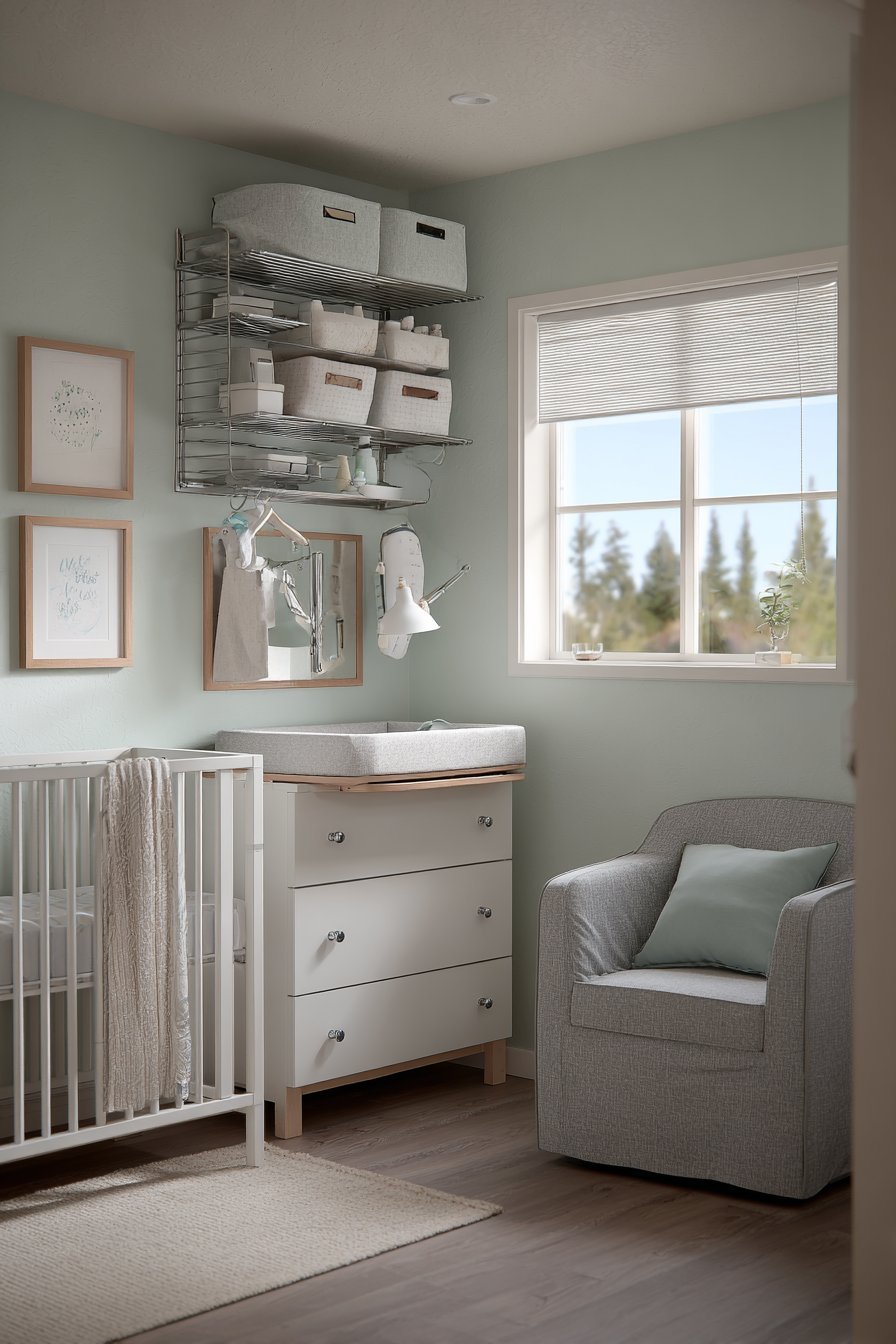
Vertical storage solutions prove essential in small spaces. Ceiling-height shelving holds labeled fabric boxes. Wall-mounted organizers with pockets store diapers and supplies. Over-door hanging storage utilizes often-forgotten space. These clever solutions keep necessities accessible without crowding the floor.
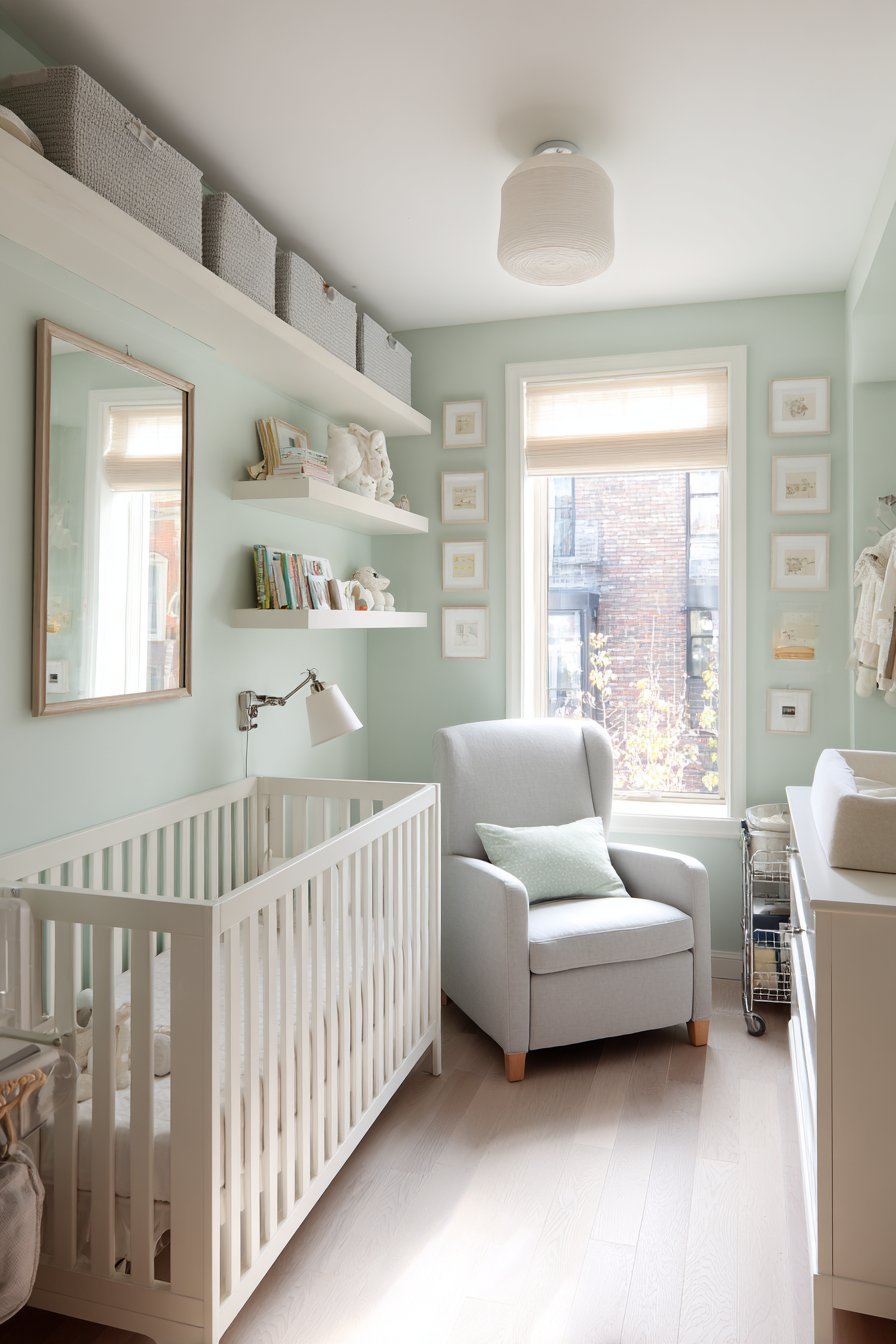
A petite armless nursing chair in soft grey fits the corner. A wall-mounted swing-arm lamp provides adjustable lighting. No floor space is wasted on a side table. The limited floor area features light-colored laminate. This choice enhances brightness and makes the room feel larger.
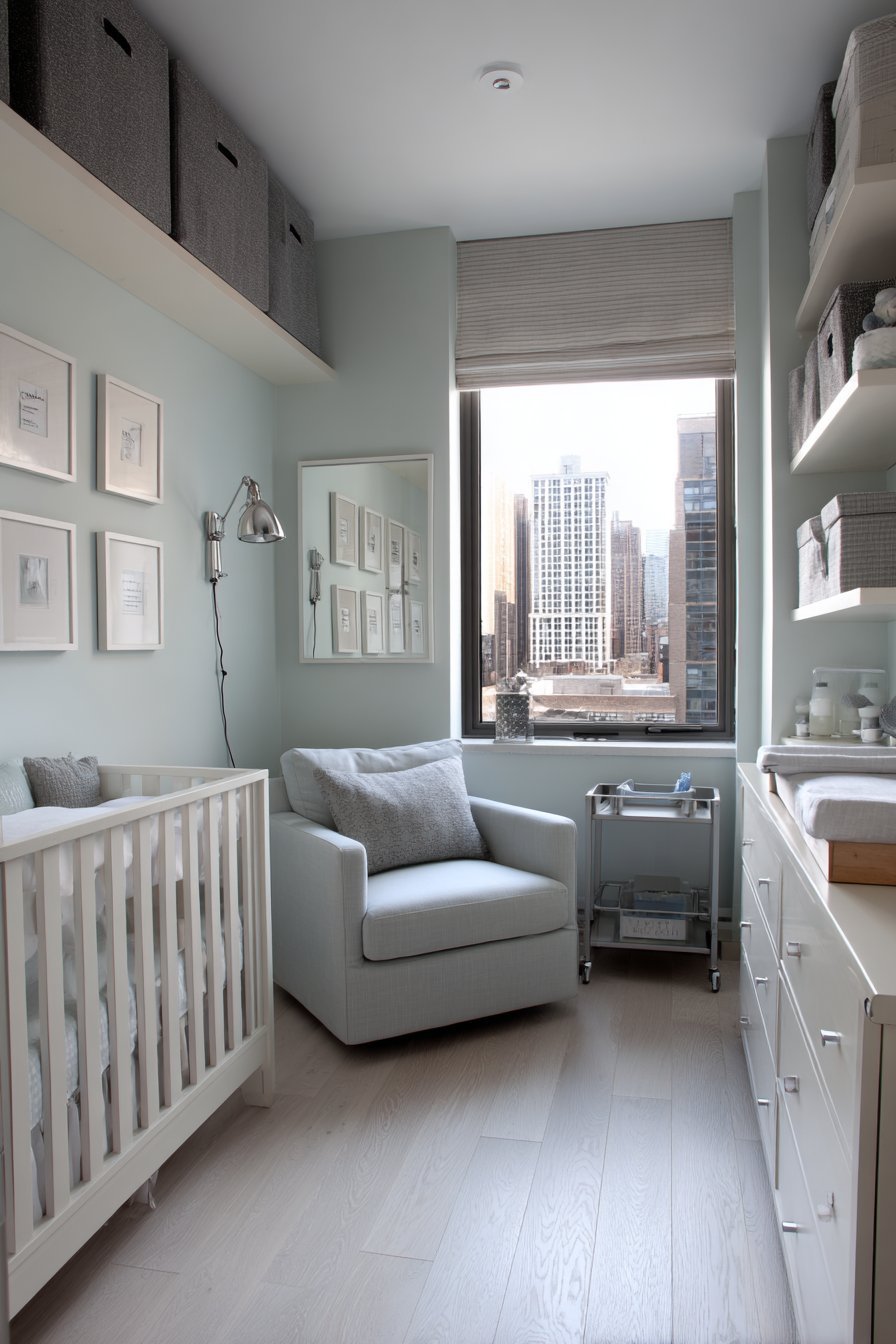
A large mirror with safety backing reflects natural light. The single window dressed with simple cordless cellular shade maximizes efficiency. Pale mint walls create an airy feeling. Small framed prints arranged vertically draw the eye upward. A narrow rolling cart holds frequently used items. It tucks beside the dresser when not needed. Every furniture piece serves multiple functions. This ingenious use of vertical space proves small nurseries can be highly functional.
Key Design Tips:
- Choose mini or compact furniture specifically designed for small spaces
- Utilize vertical wall space with ceiling-height shelving systems
- Install wall-mounted elements to free up valuable floor space
- Use light colors throughout to enhance the feeling of openness
- Add mirrors to reflect light and visually expand the space
- Select multi-functional furniture that serves multiple purposes
- Incorporate rolling storage that tucks away when not in use
8. Nature-Themed Forest Retreat
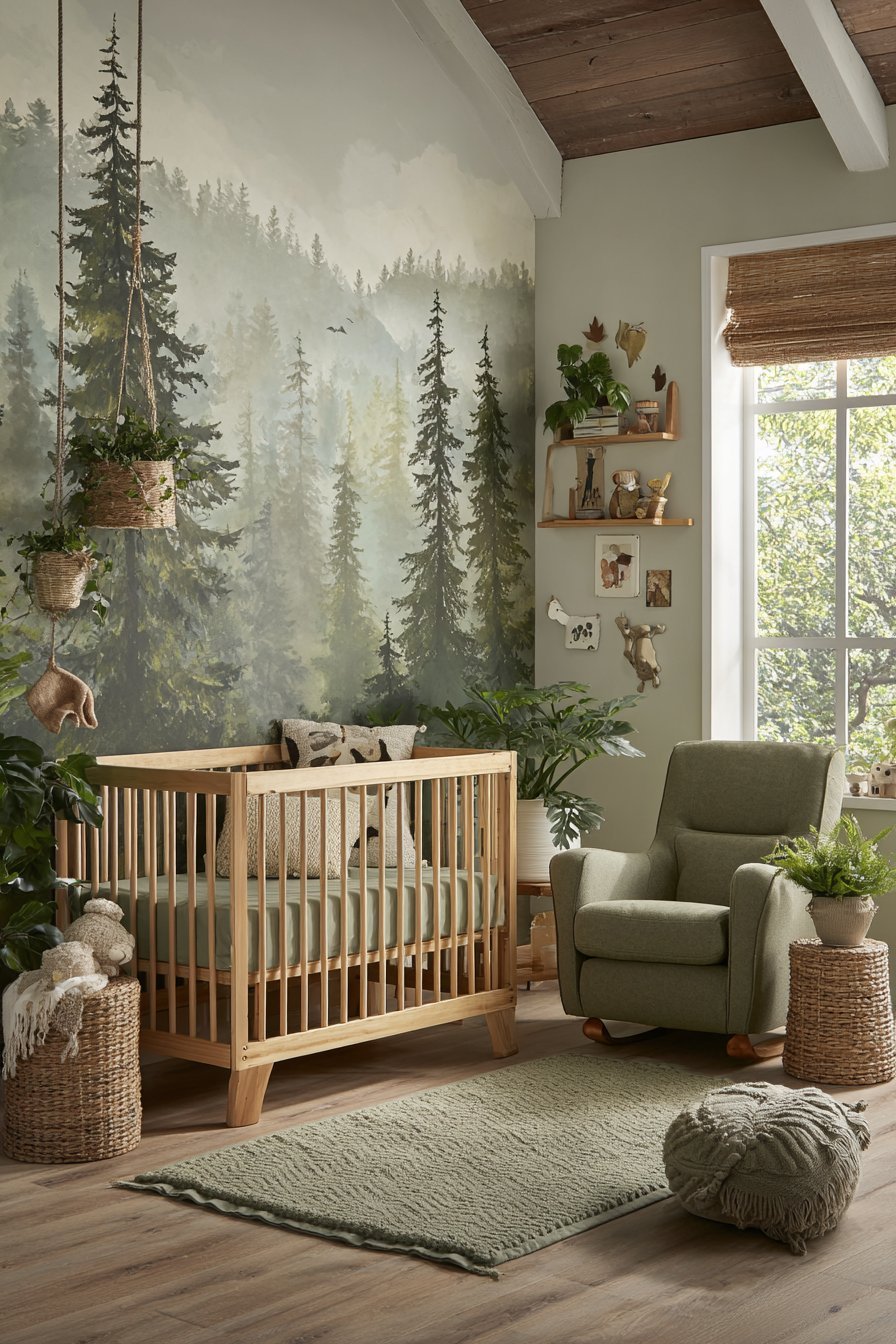
This nature-inspired nursery brings the outdoors inside. A natural wood crib in light ash finish provides a organic foundation. A large-scale forest mural covers the wall behind. Tall trees in muted greens and browns create a dreamy scene. The soft painting style feels peaceful rather than overwhelming.
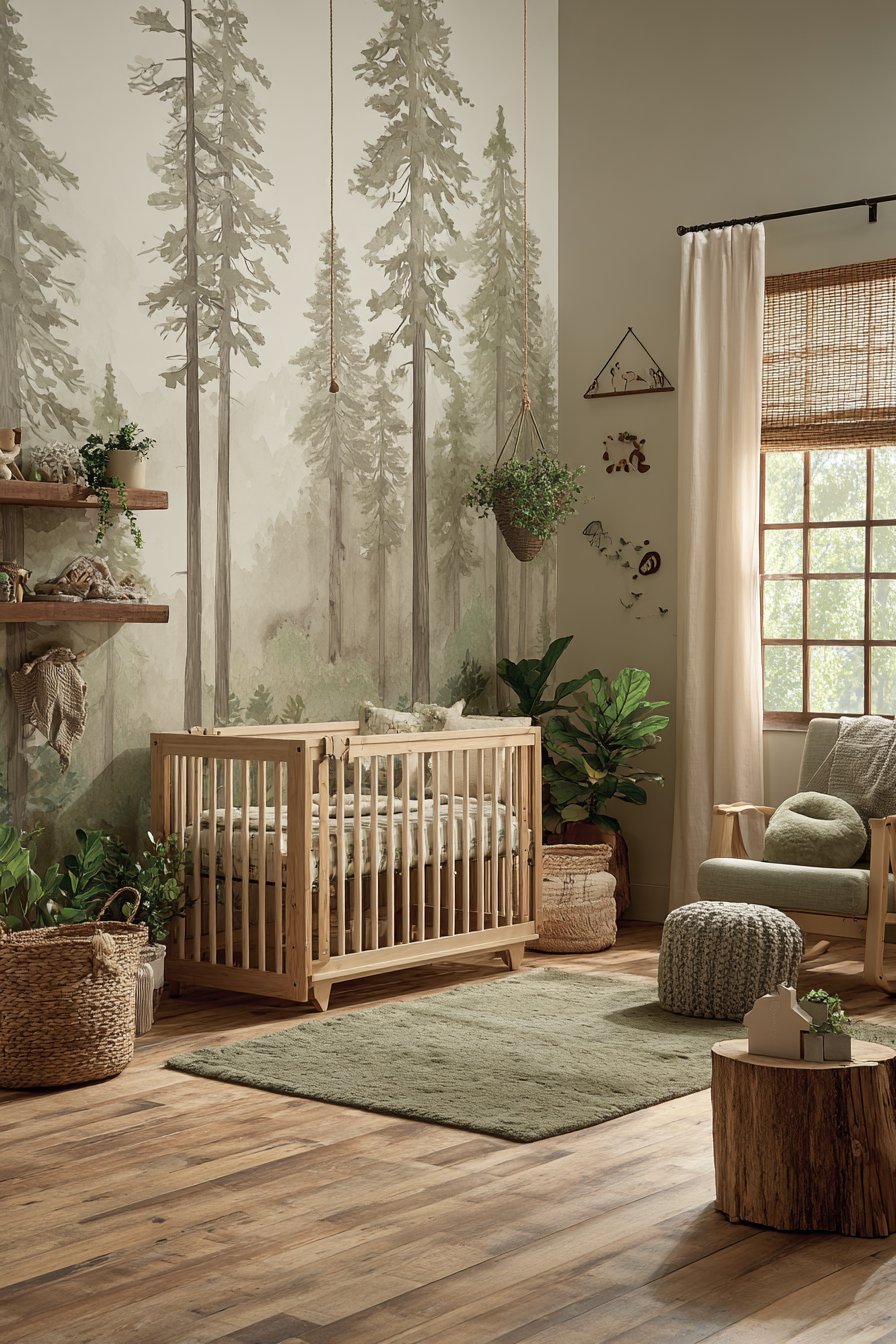
Medium-toned oak planks with visible grain cover the floor. An upholstered rocker in moss green fabric echoes the forest theme. A real wood stump serves as a unique side table. These authentic natural elements add genuine character. Bamboo roman shades at the window filter light naturally.
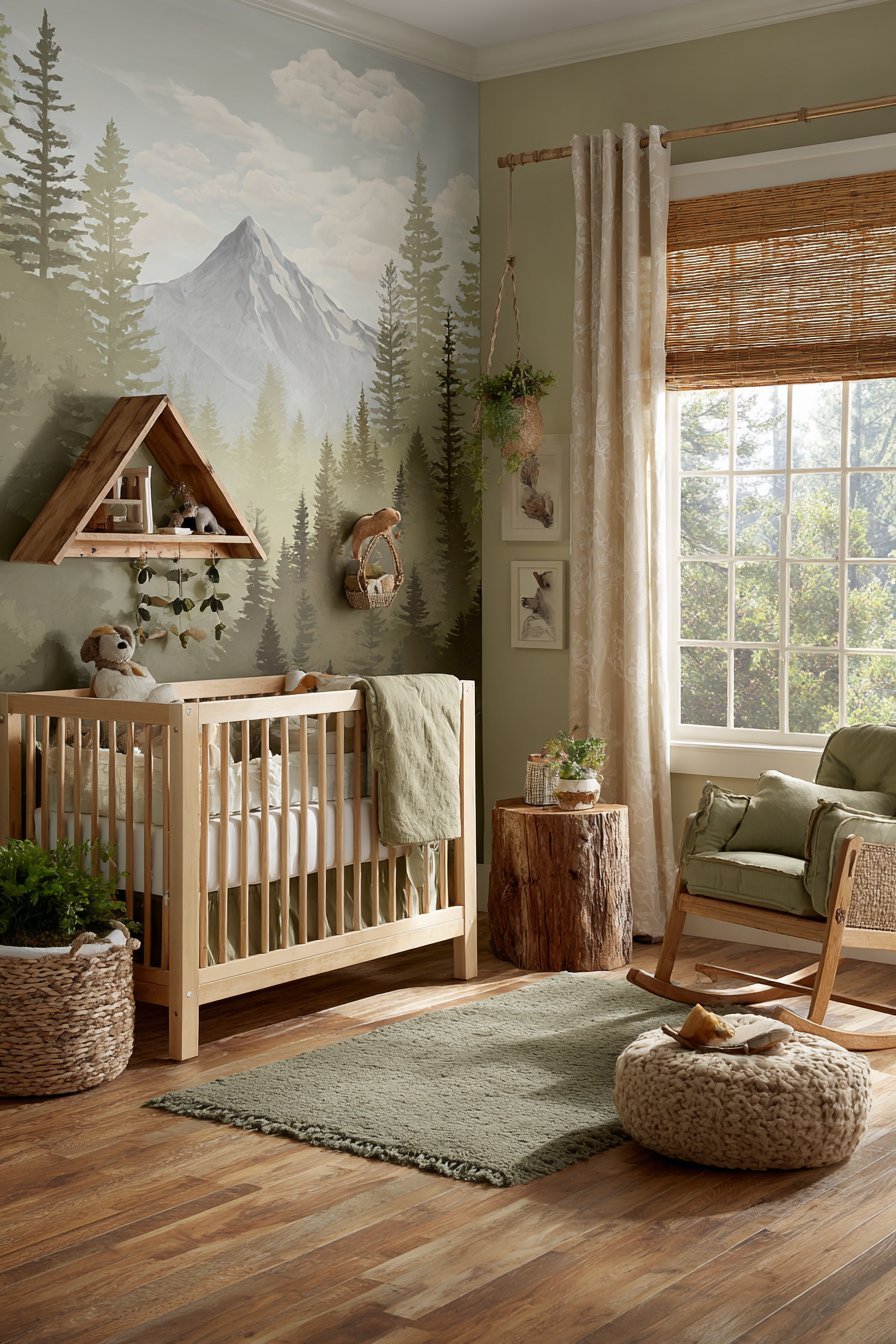
Live plants improve air quality while enhancing the theme. A hanging pothos and small rubber plant occupy safe high locations. Simple ceramic planters maintain the natural aesthetic. A tree-shaped bookshelf in natural wood holds children’s literature. Woven nest-like baskets provide storage with organic appeal.
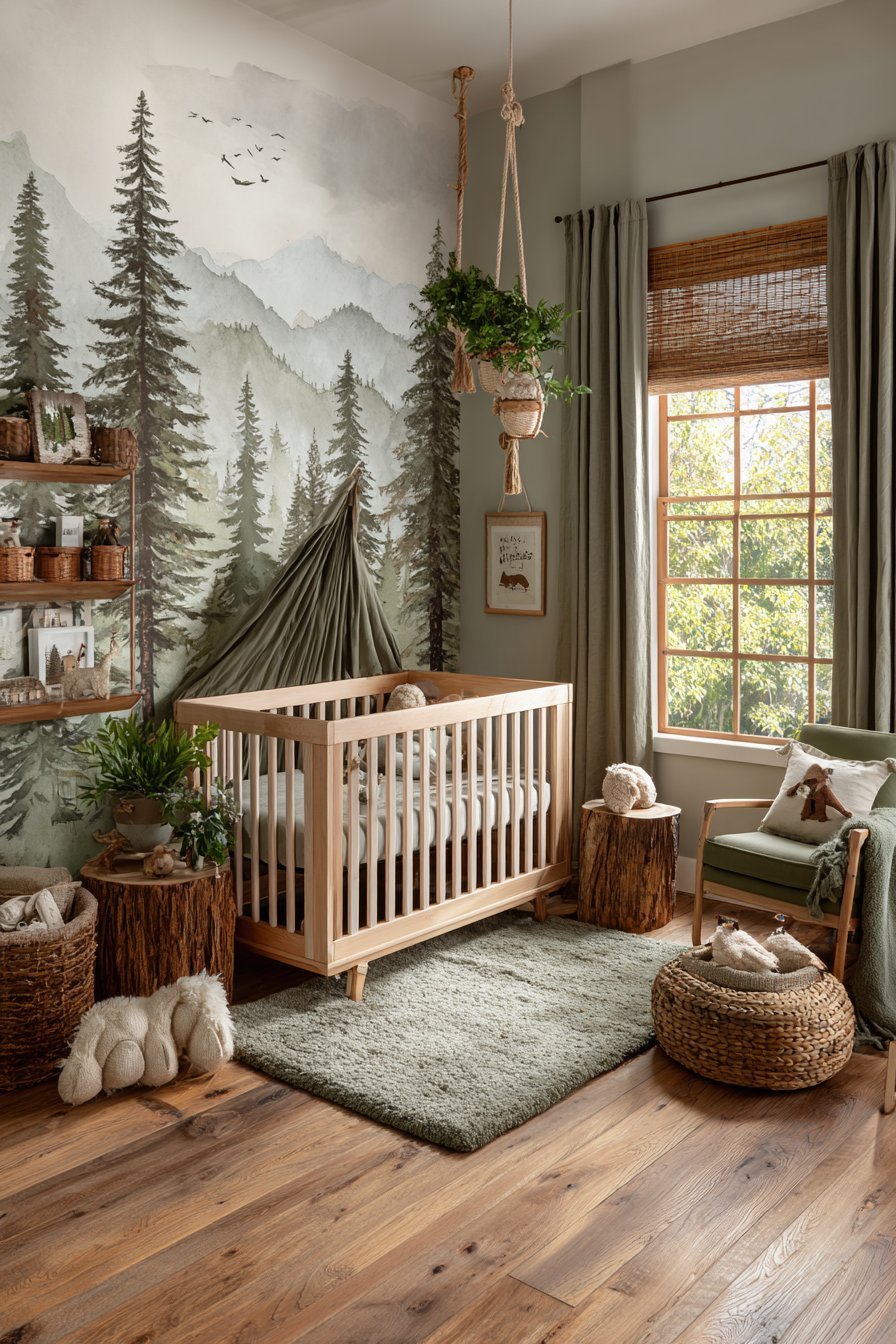
A plush area rug in forest green adds softness underfoot. High-low texture creates visual interest. Simple wooden animal silhouettes decorate the walls. A mobile featuring felt leaves and acorns hangs above the crib. Natural cotton curtains in cream feature subtle leaf prints. The earthy color palette includes sage greens and warm browns. Cream and natural wood tones balance the darker colors. Soft morning light filters through bamboo shades. The dappled effect mimics sunlight through tree canopy.
Key Design Tips:
- Use a large-scale mural as your nature-themed focal point
- Incorporate real wood elements like stumps for authentic character
- Add air-purifying plants in safe elevated locations
- Choose moss or forest green fabrics to reinforce the theme
- Use natural materials like bamboo, wood, and cotton throughout
- Create dappled lighting effects with filtered window treatments
- Select accessories that echo nature without appearing cartoonish
9. Vintage Heirloom Elegance
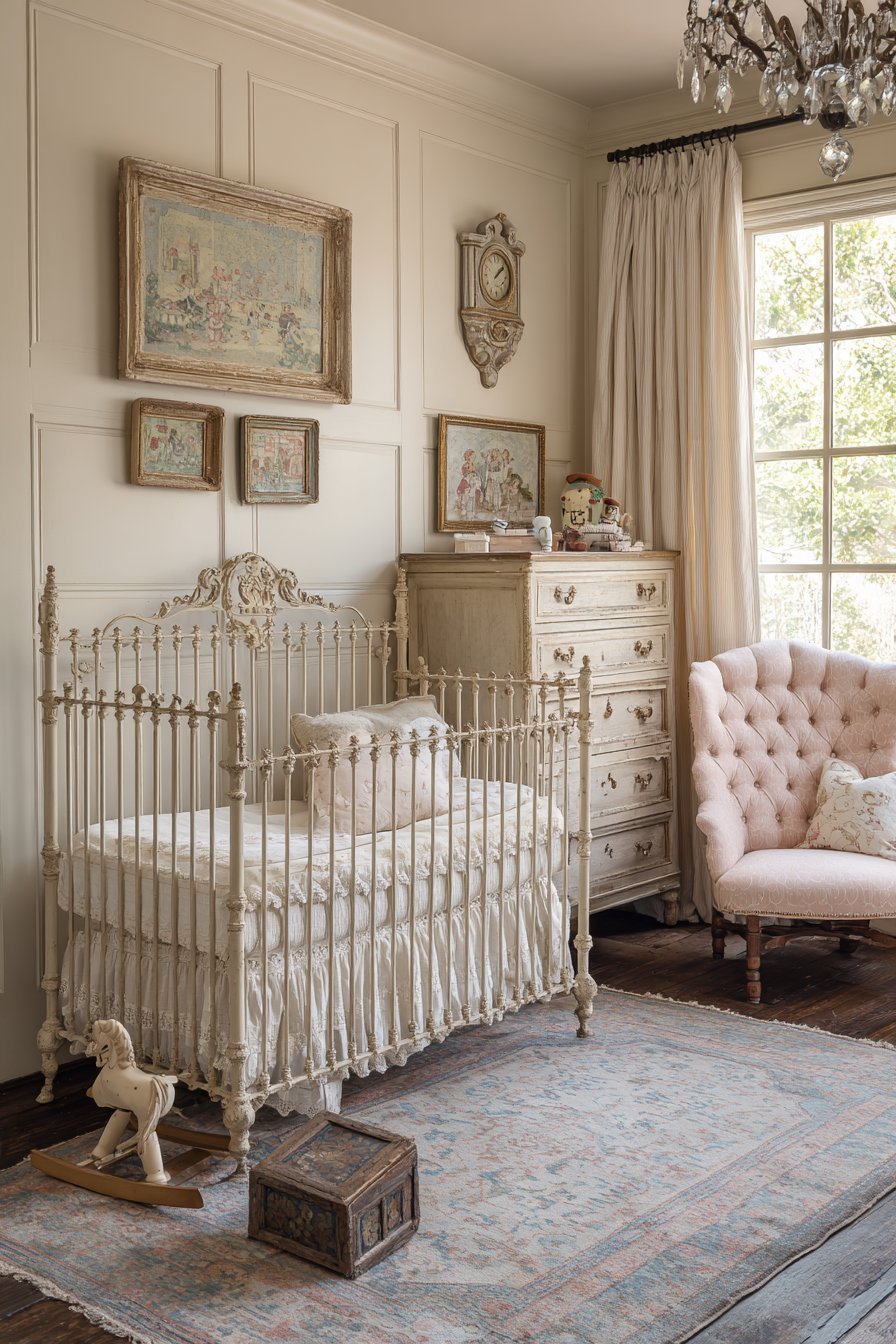
This vintage nursery celebrates timeless quality and collected beauty. An antique-white iron crib features ornate spindle details. Soft white cotton bedding with delicate eyelet trim adds romance. The crib becomes a cherished heirloom piece. A refinished antique dresser in distressed ivory provides character. Original crystal knobs catch and reflect light beautifully.
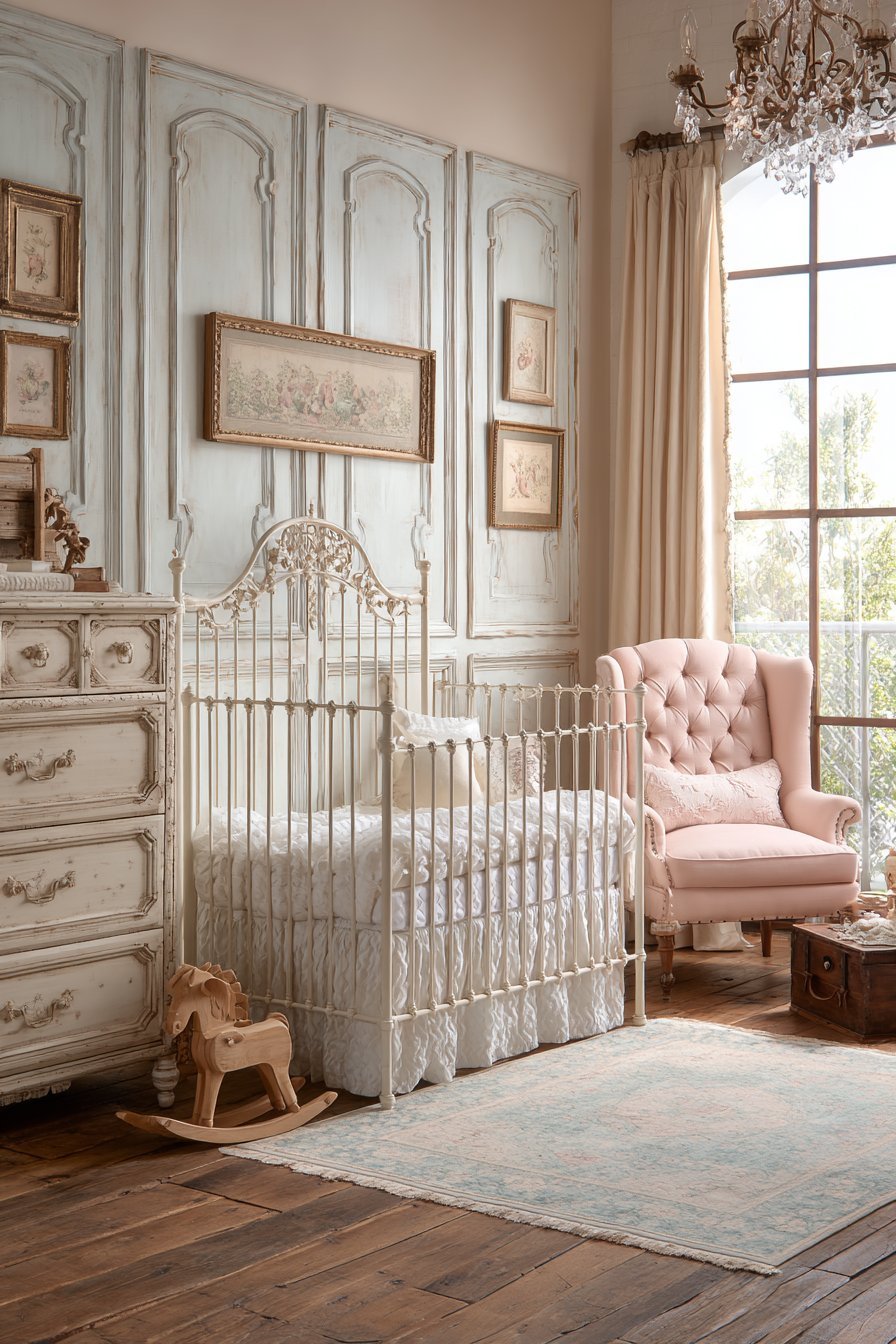
Traditional raised panel wainscoting in soft cream covers the lower walls. Pale blue-grey paint above creates gentle color. A tufted wingback chair reupholstered in soft pink linen offers comfort. The subtle floral pattern adds vintage charm. Tall windows feature full-length curtains in ivory damask. The formal fabric choice enhances the elegant aesthetic.
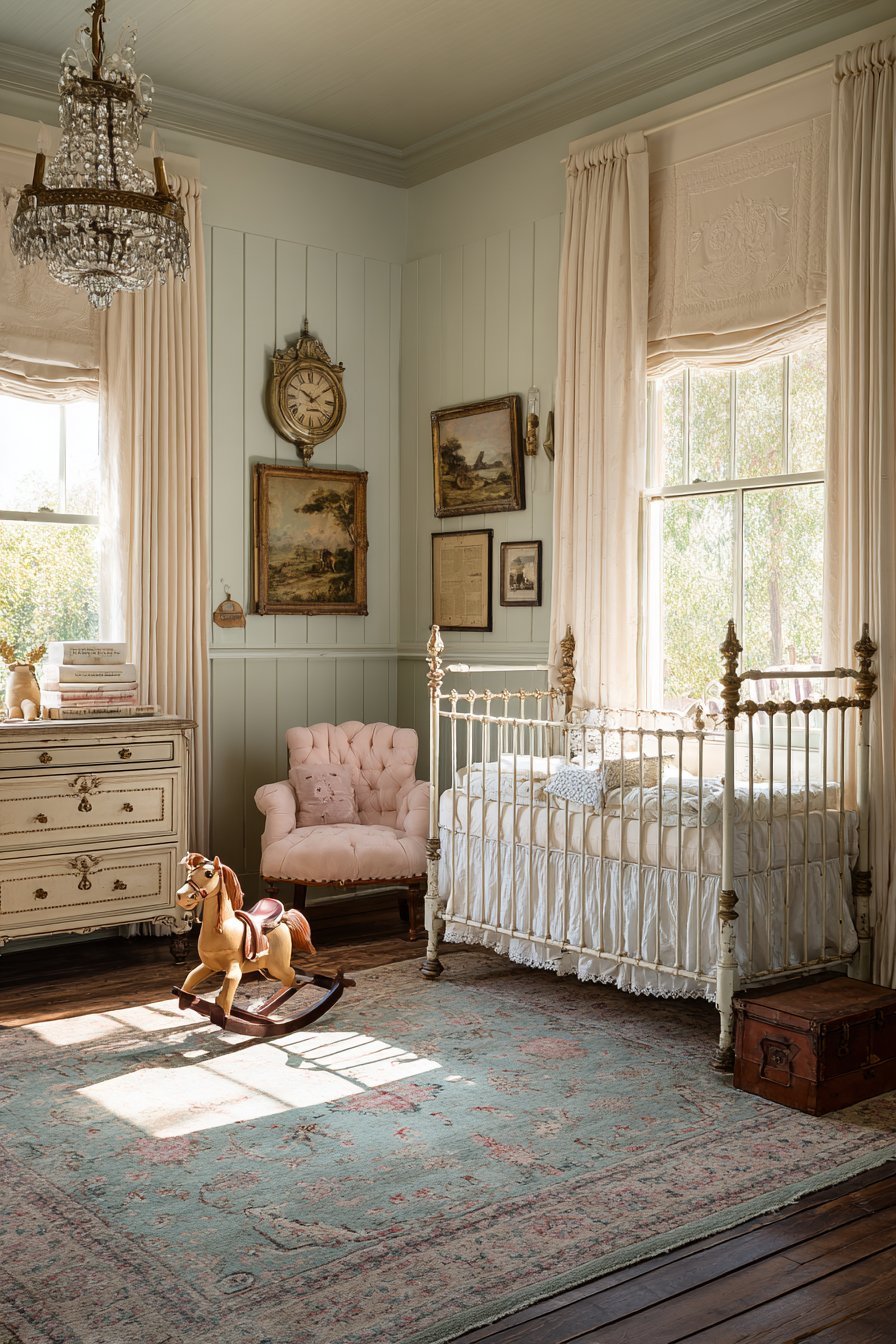
Thoughtful vintage elements complete the design. A restored wooden rocking horse shows gentle wear. Framed vintage children’s book illustrations hang in ornate gold frames. An antique wall clock with Roman numerals adds functional decoration. A crystal chandelier with fabric shades provides ambient lighting. The sparkling fixture elevates the entire space.
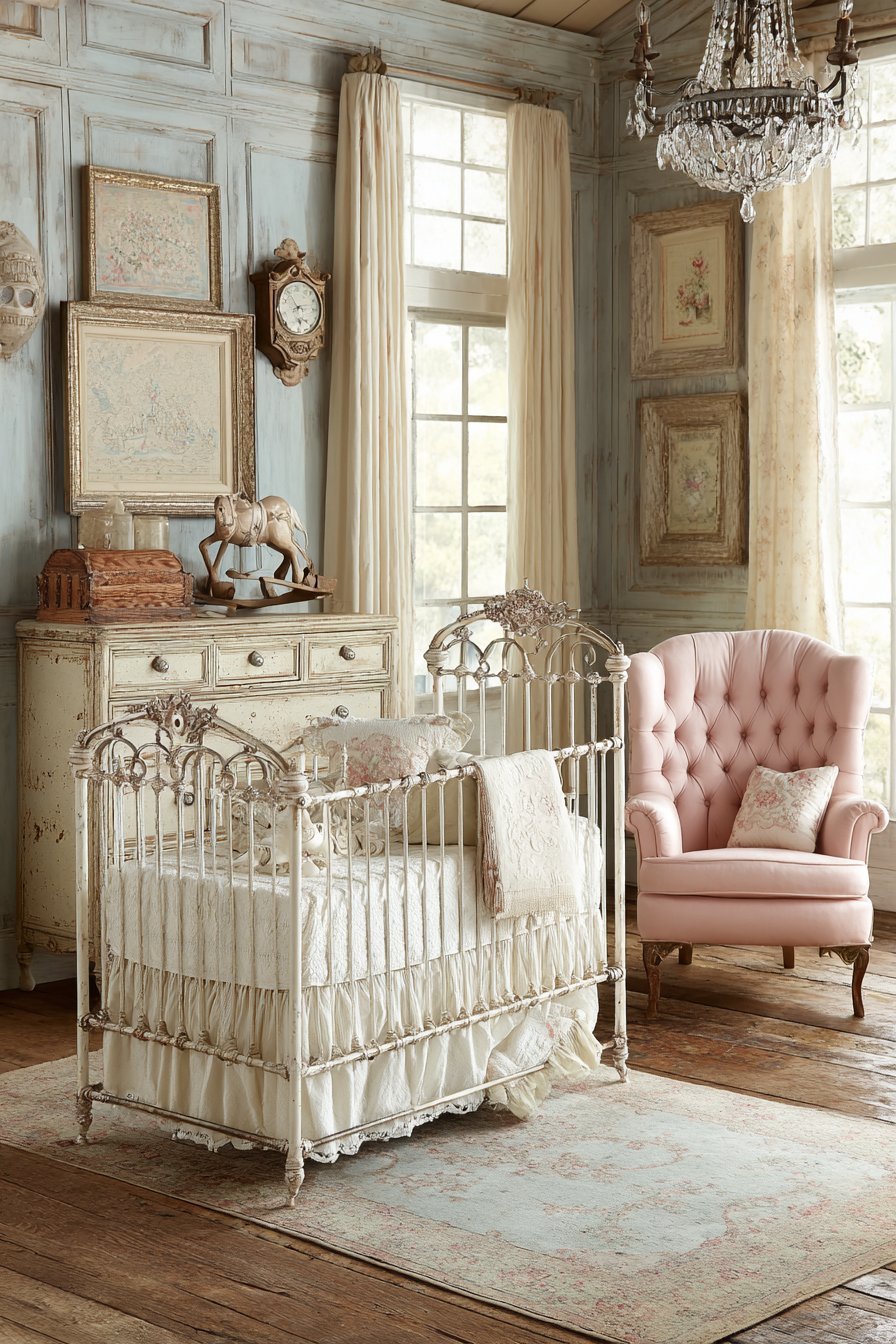
Restored original hardwood flooring shows subtle wear patterns. A traditional Persian-style rug in faded blues and pinks covers the center. The worn appearance adds authenticity. A vintage wooden toy chest with original hardware sits at the crib’s foot. Soft natural window light creates a nostalgic glow. The collected-over-time aesthetic demonstrates that patience creates the most meaningful spaces.
Key Design Tips:
- Source authentic antique furniture and refinish with care
- Preserve original hardware like crystal knobs for character
- Add architectural details like wainscoting for traditional elegance
- Choose one crystal or elegant lighting fixture as a focal point
- Use vintage textiles and trims like eyelet and damask
- Display framed vintage illustrations rather than modern prints
- Layer a traditional area rug over hardwood for warmth
- Embrace natural wear patterns as signs of authentic age
10. Safari Adventure Warmth
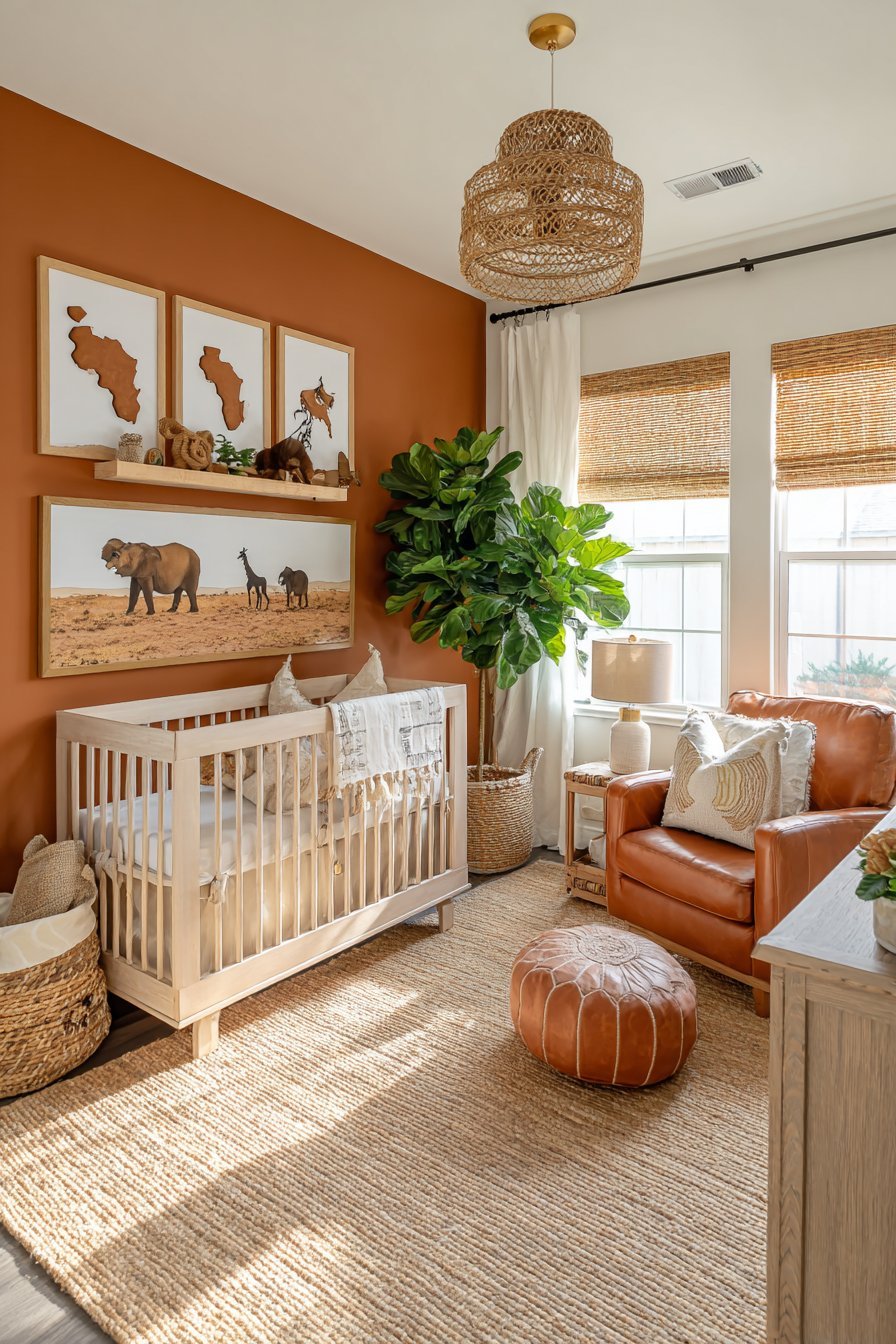
The safari nursery captures adventure through warm earth tones. A light oak crib sits against a sand-colored wall. A subtle large-scale map of Africa outlined in metallic gold adds geography. The understated approach avoids cartoon-like themes. A comfortable glider in terracotta faux leather provides seating. Woven bamboo shades at the windows filter natural light.
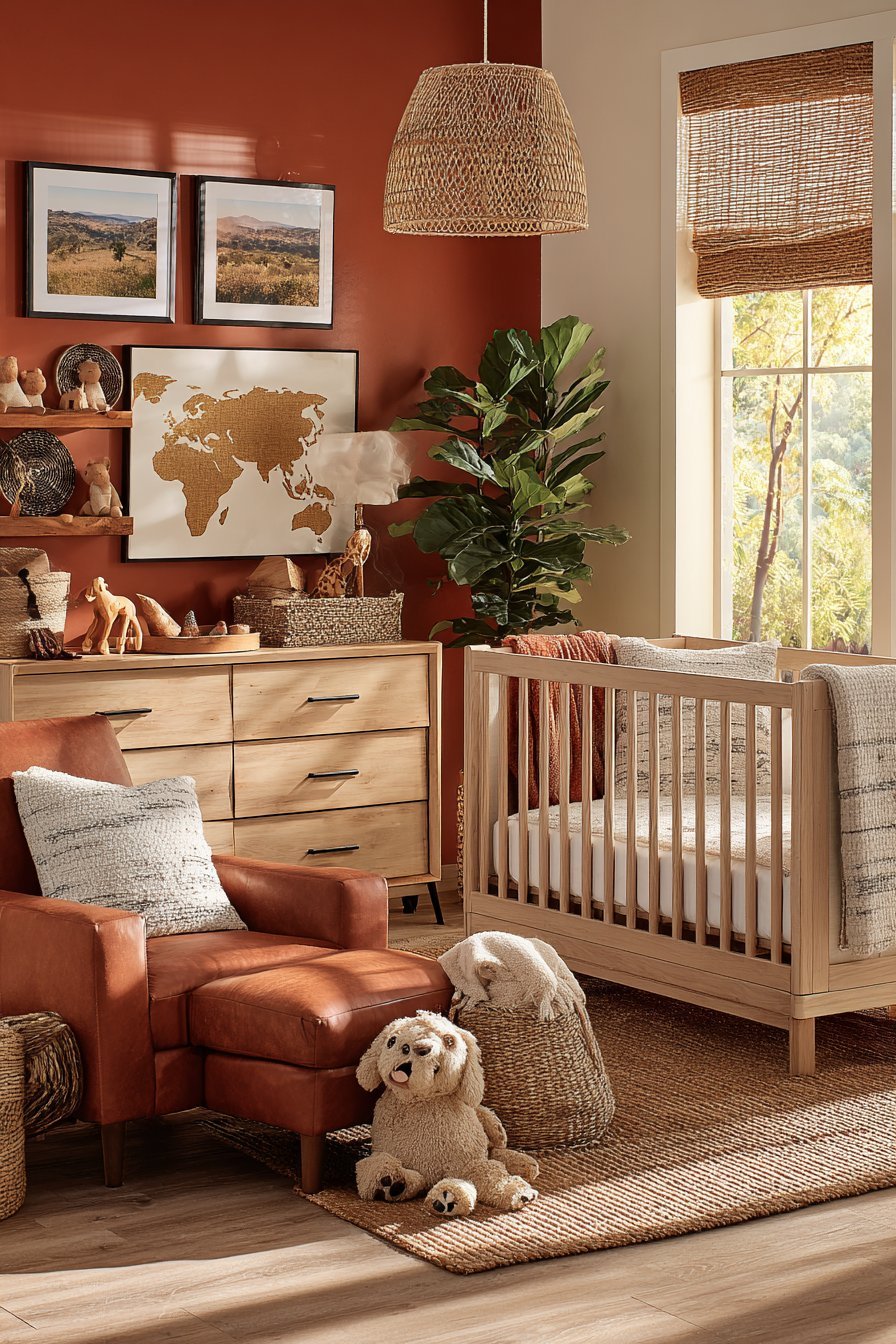
Sisal rug in natural beige covers light bamboo flooring. The natural materials create an organic foundation. Safari-inspired elements appear throughout the design. Wooden animal figurines including elephants, giraffes, and lions occupy floating shelves. The natural wood finish keeps them sophisticated. Neutral canvas storage bins with leather handles offer practical organization.
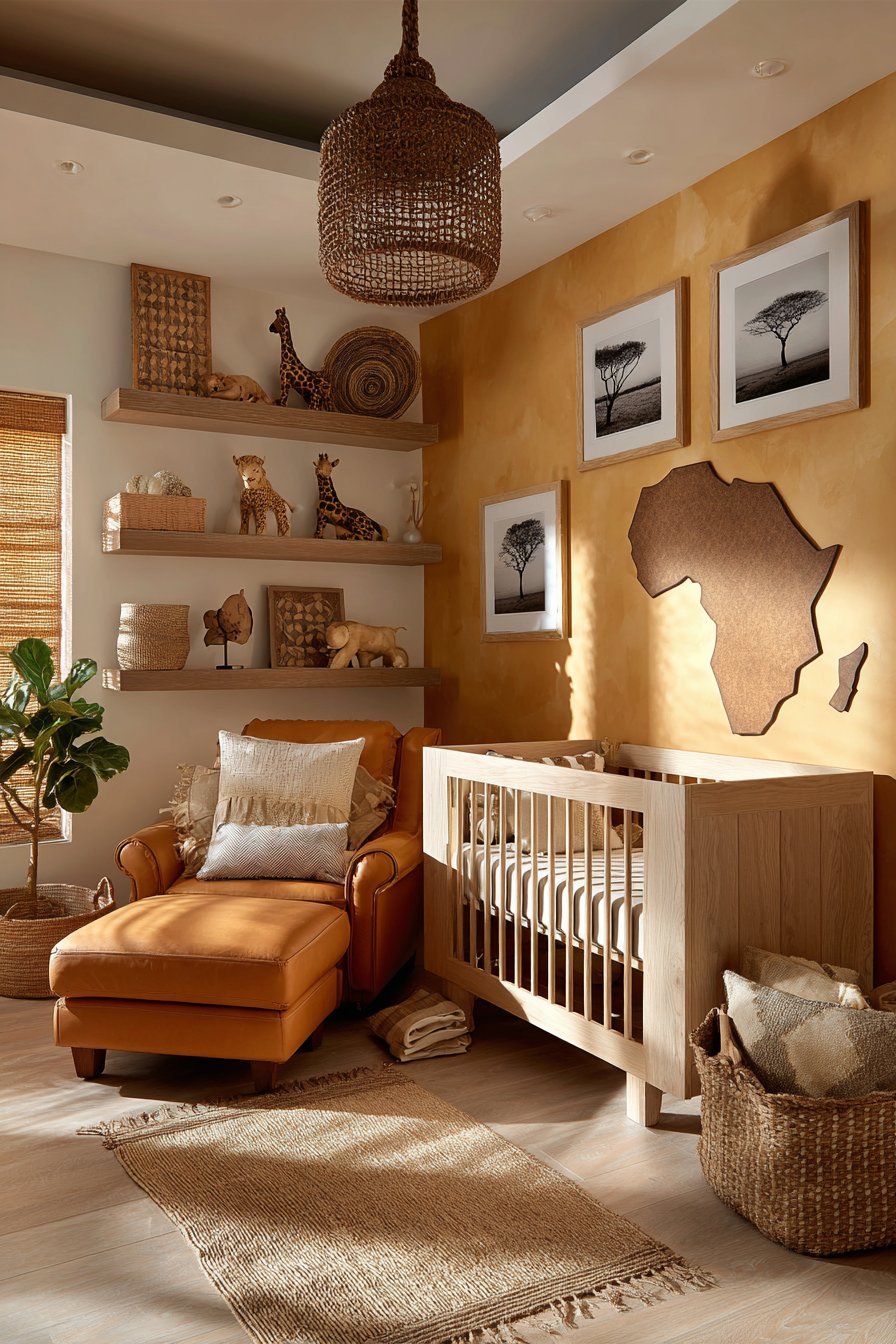
A mobile featuring felt safari animals hangs above the crib. The realistic proportions and natural colors avoid childish caricature. Framed photographs of African landscapes in black frames create gallery walls. Woven African baskets serve as three-dimensional wall art. These authentic textiles add cultural depth.
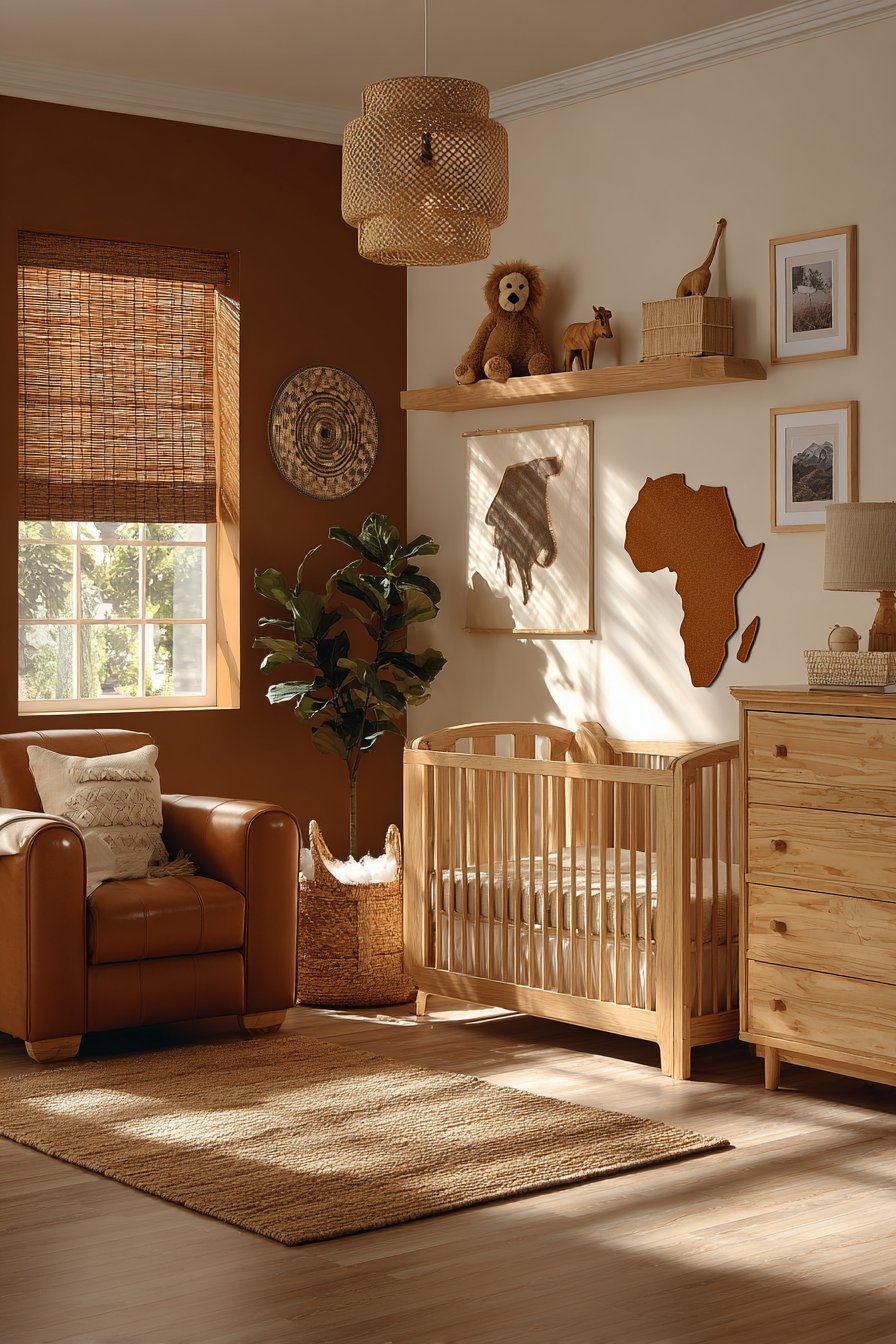
A tall artificial fiddle leaf fig in natural woven basket adds height. The dresser in light acacia wood features simple bronze hardware. Accent pillows on the glider showcase mudcloth patterns. Cream and charcoal designs add graphic interest. Lighting includes a rattan pendant shade and small table lamp. The ceramic base comes in burnt orange. Golden hour lighting through bamboo shades creates striped shadows. The warm tones and natural textures transport you to African savannas.
Key Design Tips:
- Use warm earth tones like terracotta, sand, and burnt orange
- Choose wooden animal figurines over plastic cartoon characters
- Incorporate authentic textiles like mudcloth and woven baskets
- Add natural materials including bamboo, sisal, and rattan
- Display framed landscape photography for sophisticated themes
- Use metallic gold accents sparingly for subtle elegance
- Create layers of warm neutrals rather than bright colors
11. Coastal Breeze Serenity
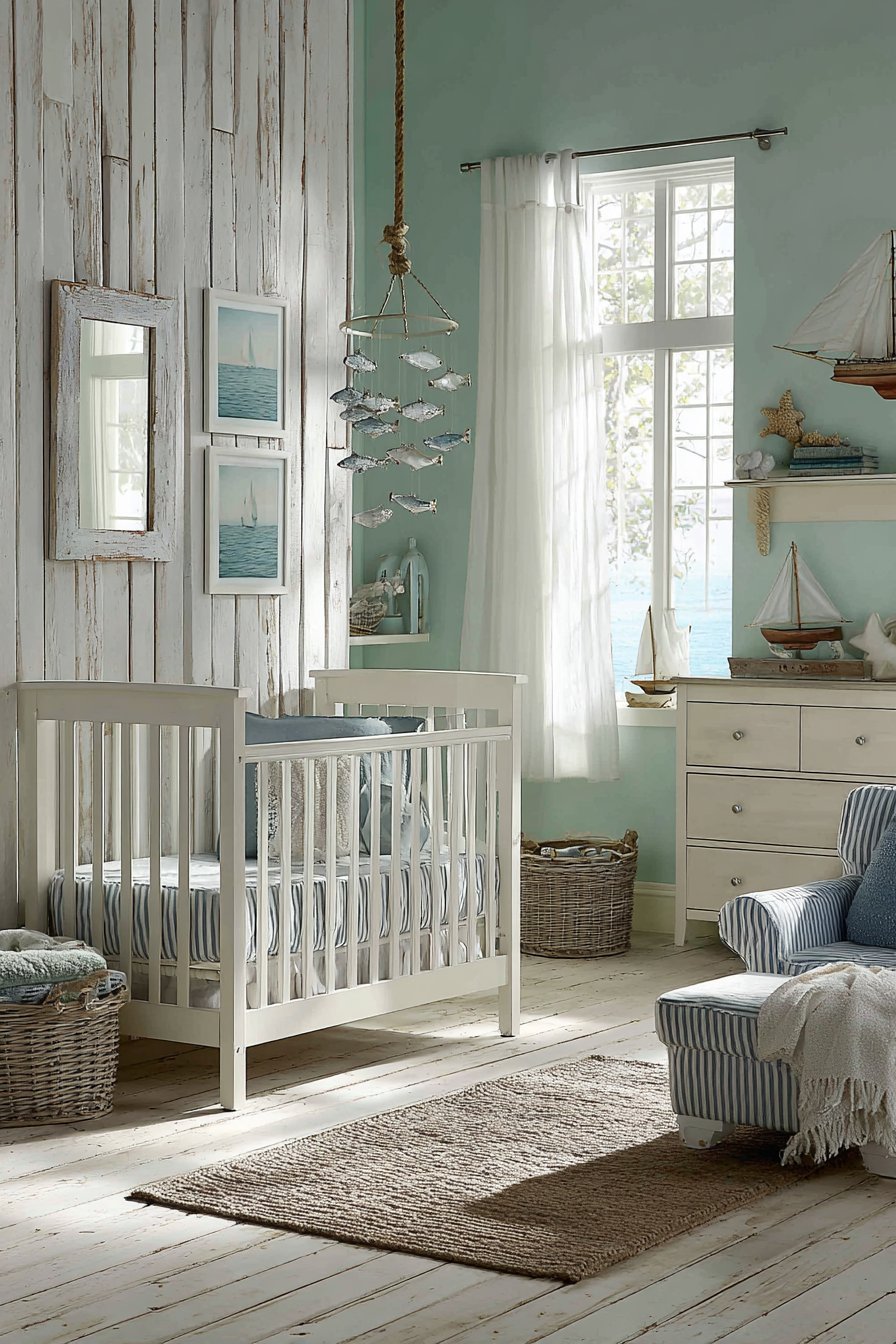
This coastal nursery captures ocean tranquility without nautical clichés. A white-painted wooden crib features subtle shiplap detailing. The walls in soft seafoam green evoke calm waters. One accent wall showcases vertical white shiplap for texture. A light driftwood-finish dresser provides storage and changing surface. Rope-handled baskets on top add coastal character.
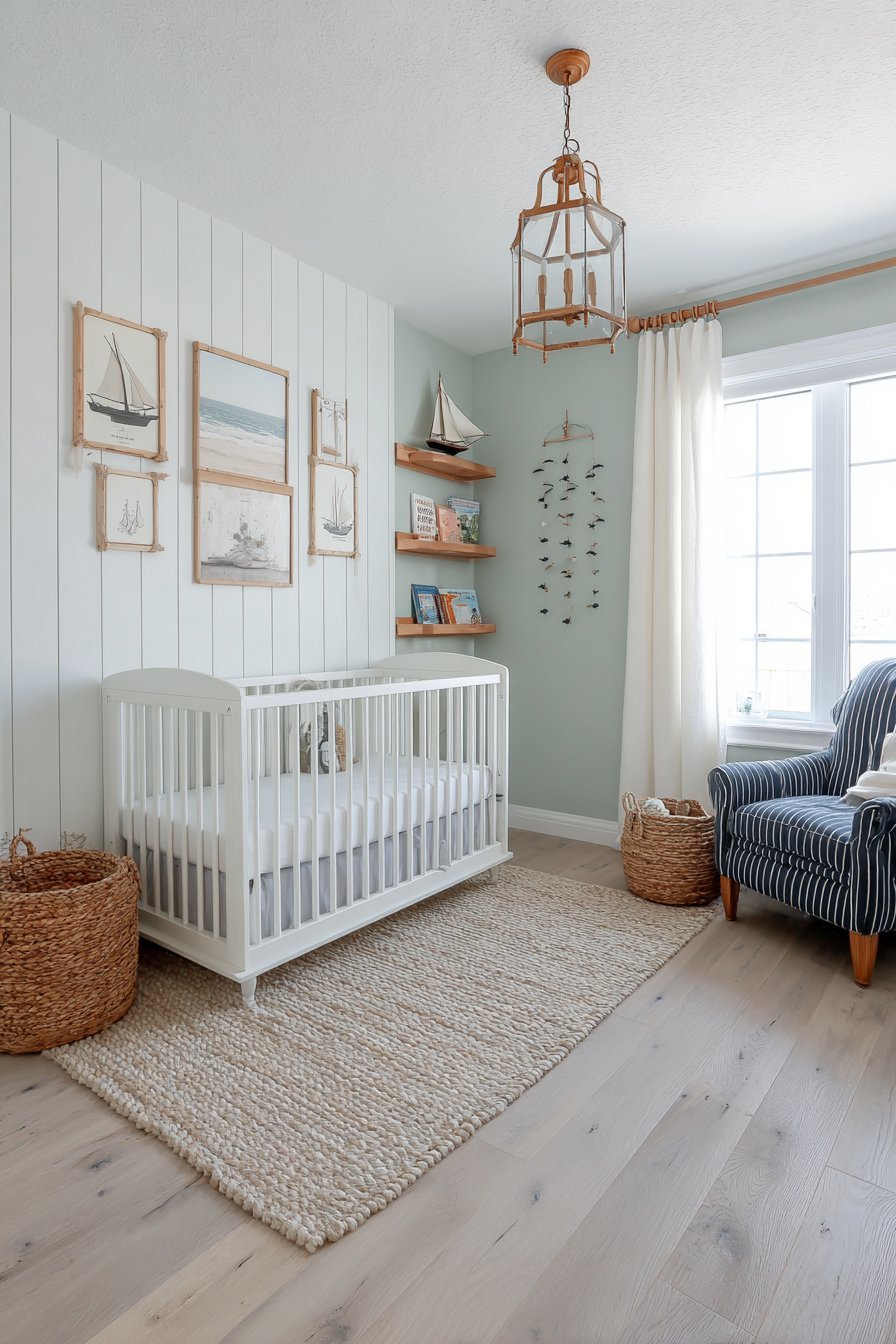
Whitewashed oak planks cover the floor. A braided jute rug in natural and white defines the space. The neutral foundation allows ocean-inspired accents to shine. A slipcovered chair in navy and white stripes offers comfortable seating. White linen curtains frame the windows. The breezy fabric moves gently with air currents.
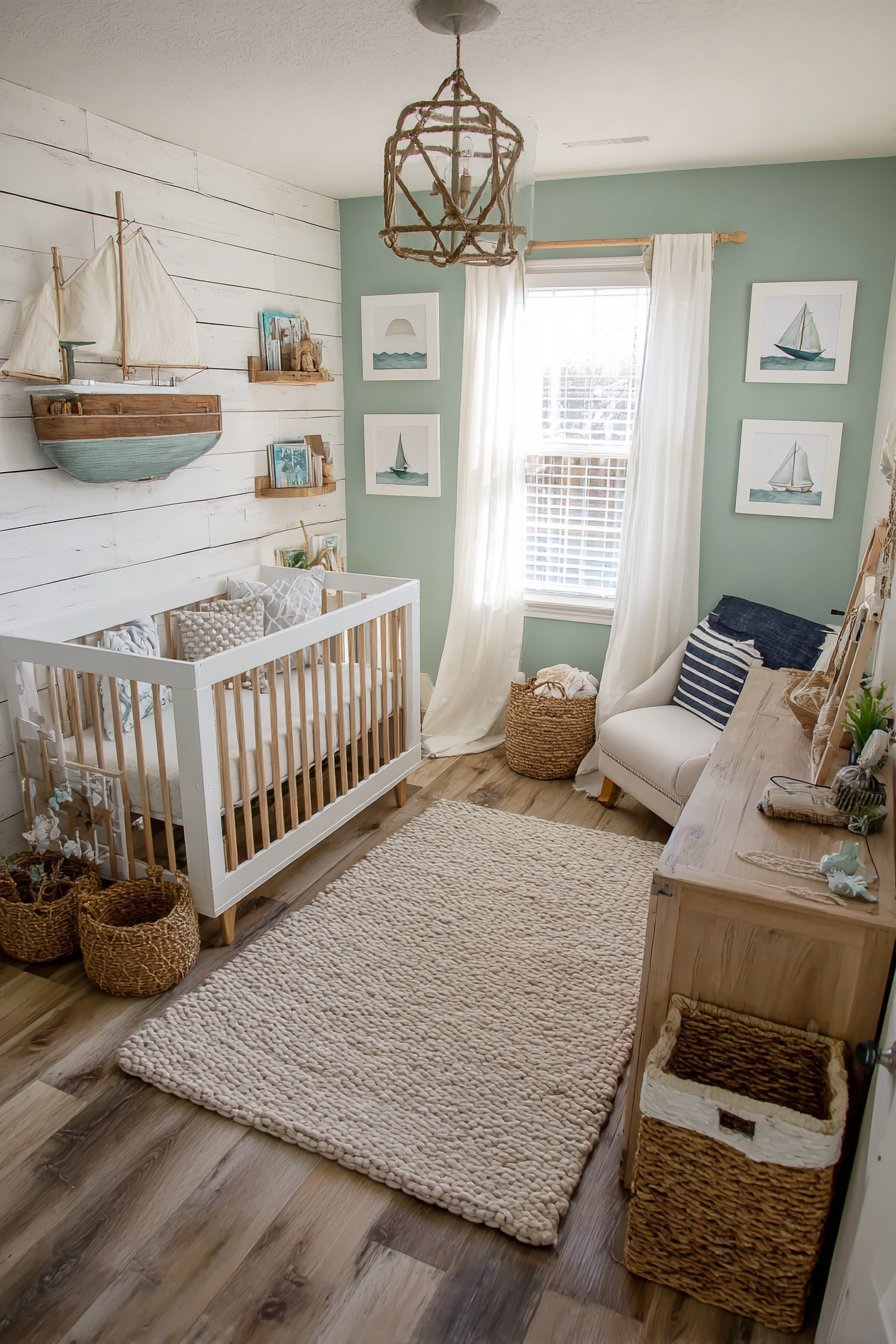
Coastal elements appear throughout without overwhelming. A rope-framed mirror reflects light around the room. A wooden boat shelf displays children’s books creatively. A glass jar filled with collected shells sits on a high shelf. Simple rope ladder against the wall holds blankets. These thoughtful touches reference the coast subtly.
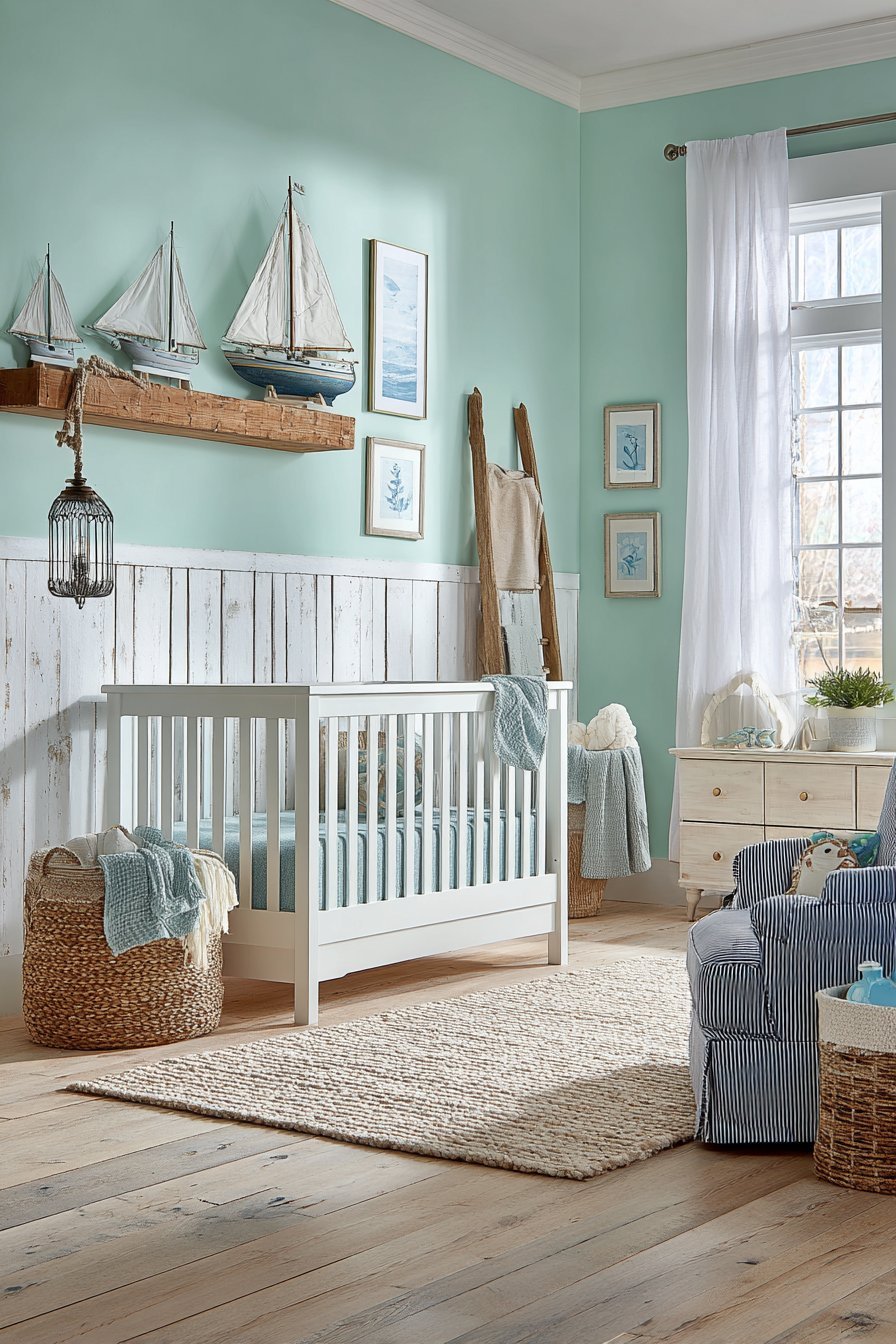
Framed prints of watercolor sailboats adorn the walls. A large wooden anchor painted in distressed white serves as statement art. A mobile featuring fabric fish in blue and grey shades hangs above the crib. Simple ship’s lantern-style sconce provides warm task lighting. The seafoam green, navy blue, and white palette feels fresh. Natural wood and rope elements add warmth. Bright natural light reflects off lighter surfaces. The breezy coastal atmosphere avoids overly themed decoration.
Key Design Tips:
- Choose seafoam green or soft aqua instead of bright blue
- Incorporate rope elements in mirrors, baskets, and accessories
- Use whitewashed or driftwood finishes for coastal authenticity
- Add navy blue as a grounding anchor to lighter colors
- Display collected natural items like shells in glass containers
- Choose nautical elements with vintage or weathered finishes
- Keep the palette light and bright to maximize airy feeling
12. Modern Luxury Sophistication
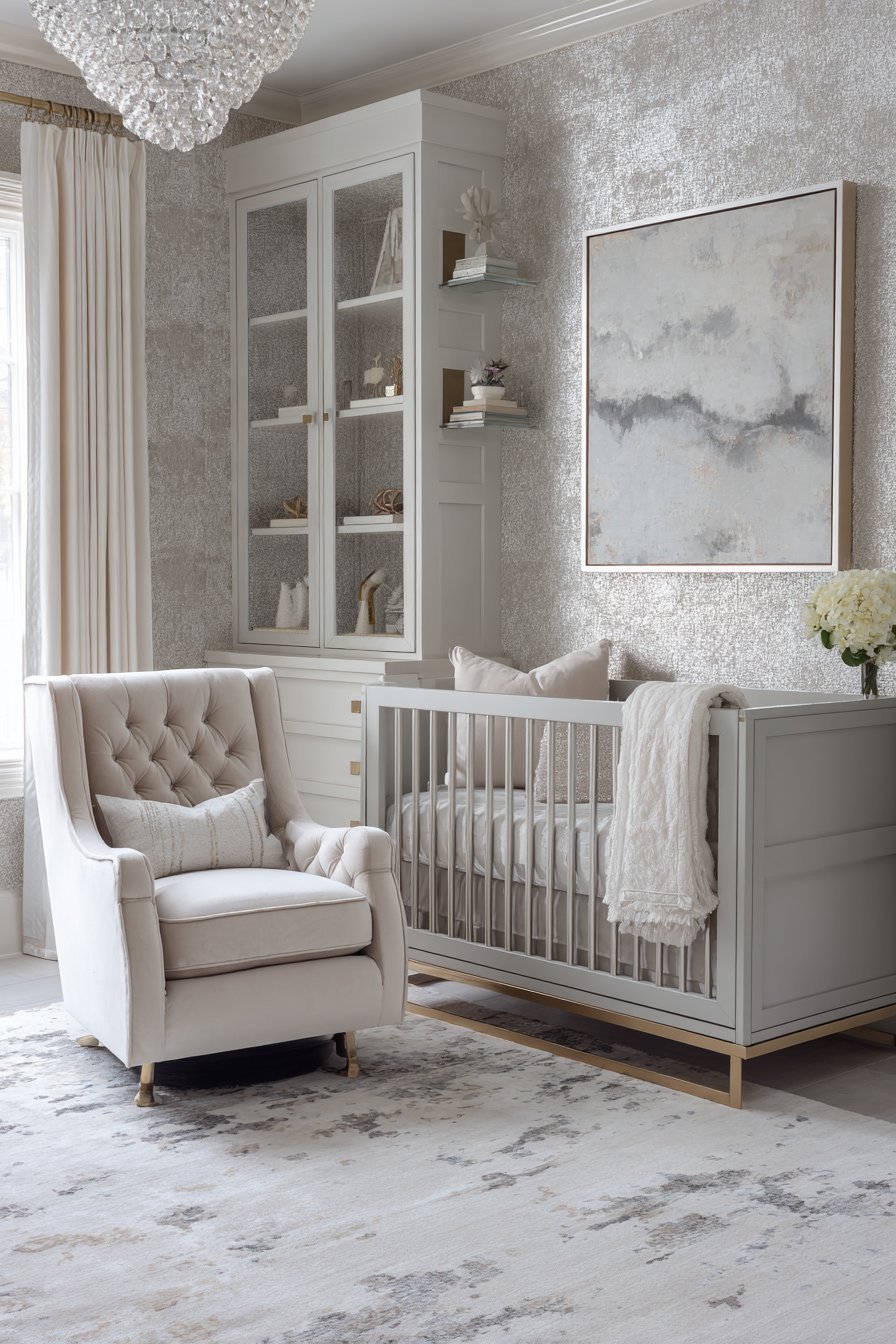
This luxury nursery elevates design with high-end finishes. A designer crib in matte grey features brass accents. Textured wallpaper in soft metallic champagne covers the feature wall. An upholstered glider in pale blush velvet feels plush. Tufted back and brass legs add refined details. The sophisticated palette sets this room apart.
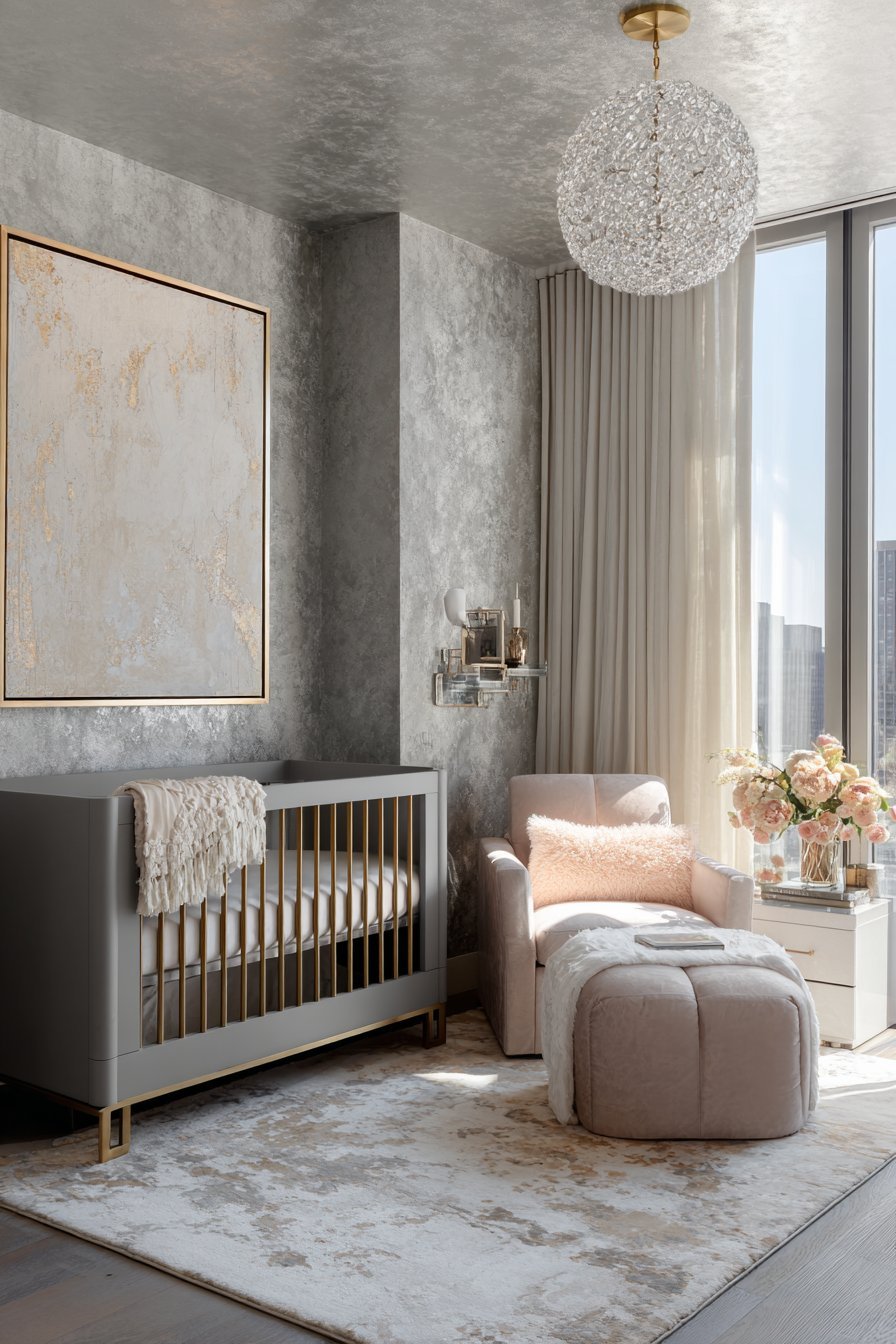
Wide-plank European white oak flooring shows subtle wire-brushed texture. A hand-knotted wool rug in abstract pattern covers the center. Grey, blush, and cream tones create sophisticated color play. A custom built-in closet system features glass-front cabinets. Folded clothing displays like boutique merchandise. This thoughtful detail elevates storage to design feature.
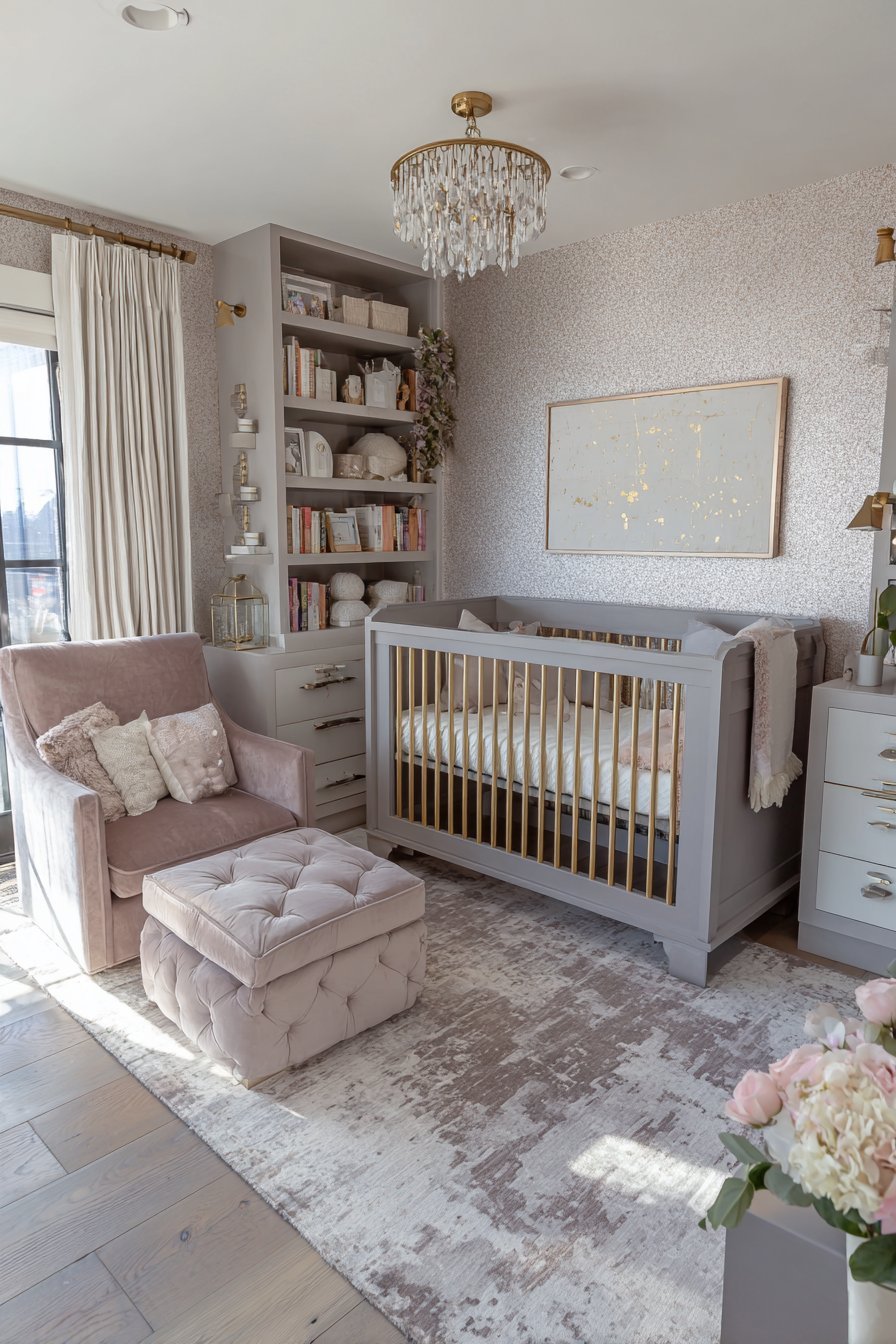
Quality materials define the luxury approach. A marble-topped dresser includes soft-close drawers. An integrated charging station adds modern convenience. Custom window treatments feature motorized blackout shades. Silk drapery panels layer over them for elegance. A crystal chandelier with adjustable dimming provides flexible lighting. The sparkling fixture adds glamour appropriate for a nursery.
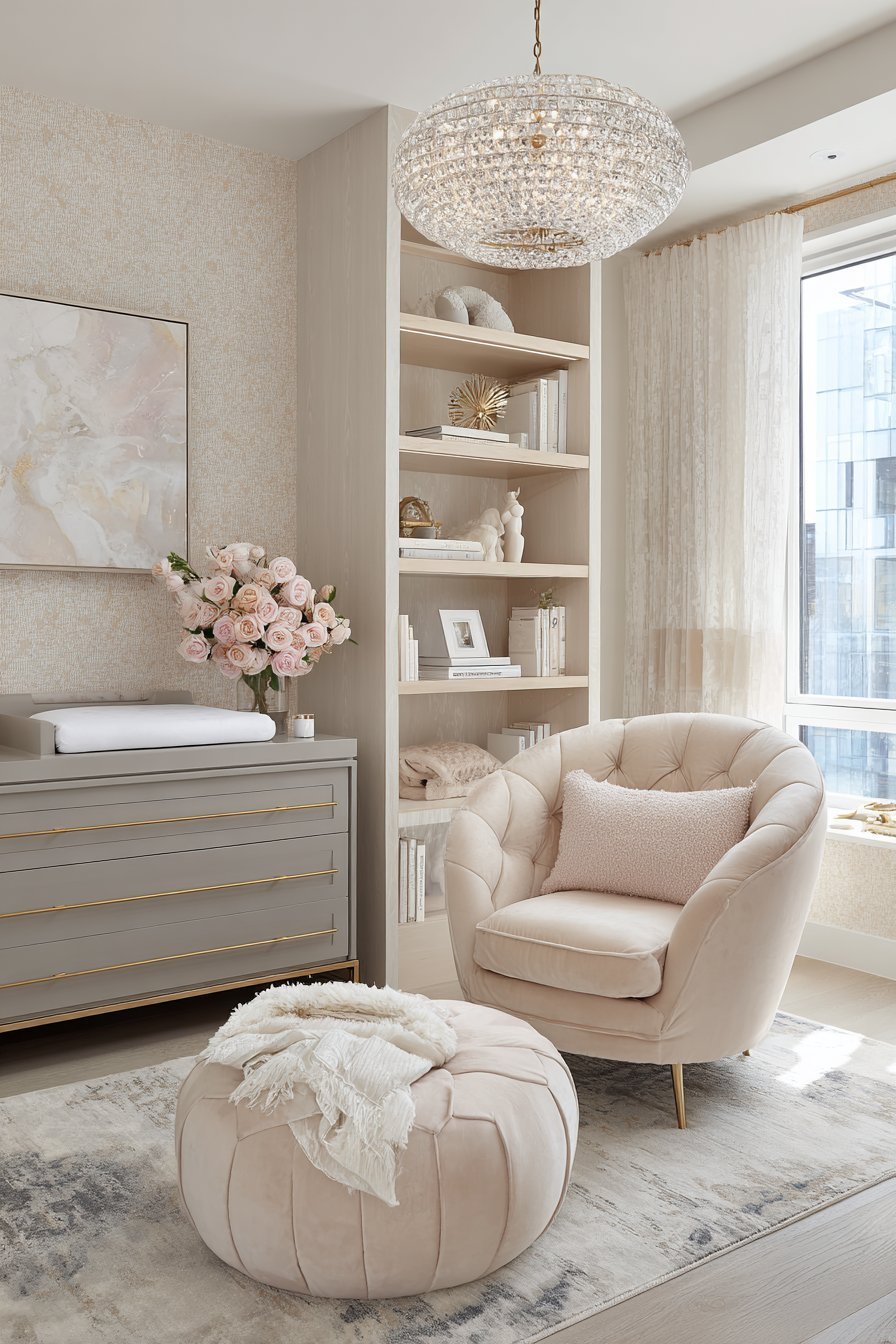
Large-scale abstract art in lucite frame adorns the walls. Small sculptural elements occupy floating shelves with integrated LED lighting. A full-length mirror with beveled edges reflects light throughout. Accent elements include a cashmere throw across the chair. Fresh flowers in a crystal vase add living beauty. Carefully curated books with decorative spines complete the styled look. The refined aesthetic proves nurseries can be sophisticated design showcases.
Key Design Tips:
- Invest in one or two designer furniture pieces as focal points
- Use luxe fabrics like velvet, silk, and cashmere for softness
- Incorporate metallic accents in brass or gold for warmth
- Install custom window treatments with motorized features
- Choose statement lighting like crystal chandeliers
- Add textured wallpaper for depth and visual interest
- Display decorative objects as curated art throughout the space
- Select high-quality materials that will stand the test of time
13. Montessori Child-Centered Independence
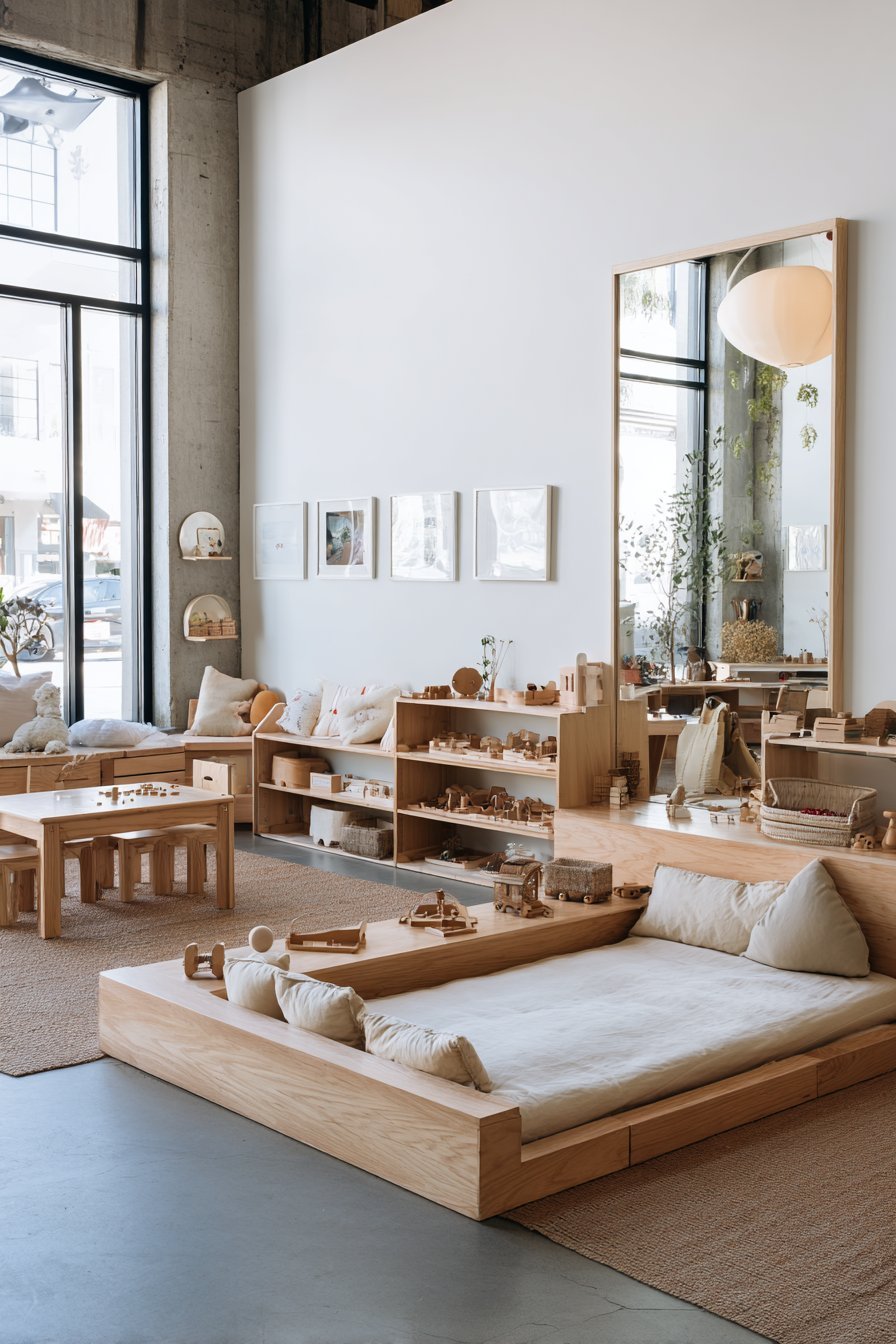
This Montessori nursery prioritizes child development and independence. A floor bed consisting of firm mattress on low wooden platform allows autonomous access. The child controls their own sleep environment. Low open shelving units in natural wood sit at child height. Carefully selected wooden toys, cloth books, and simple puzzles arrange in clear baskets.
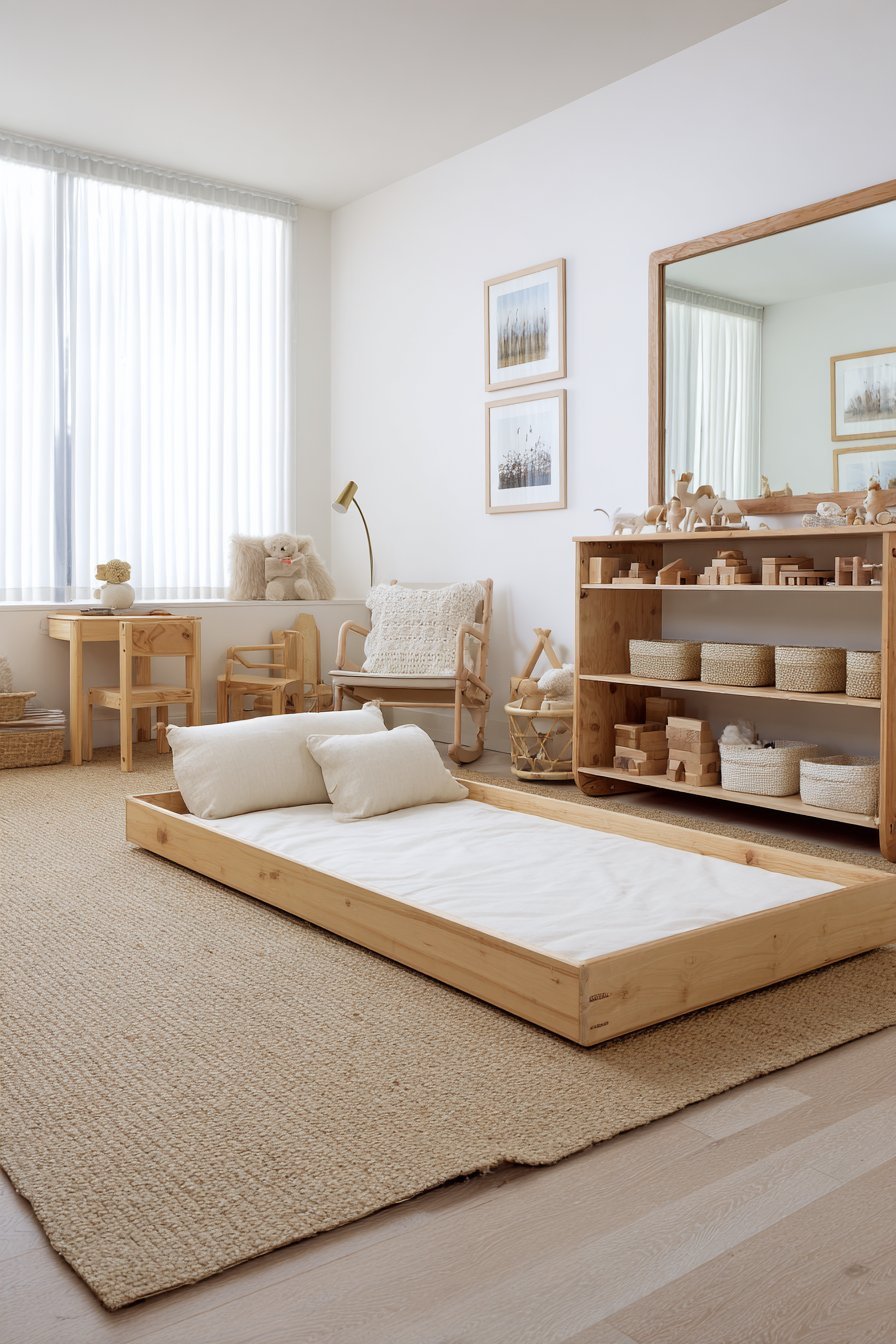
A full-length mirror with safety backing mounts at floor level. This placement allows for self-discovery and movement practice. The walls remain mostly clear in soft white. Minimal decoration appears at child’s eye level. Simple framed photographs of family and nature hang low. The child can view and appreciate these images independently.
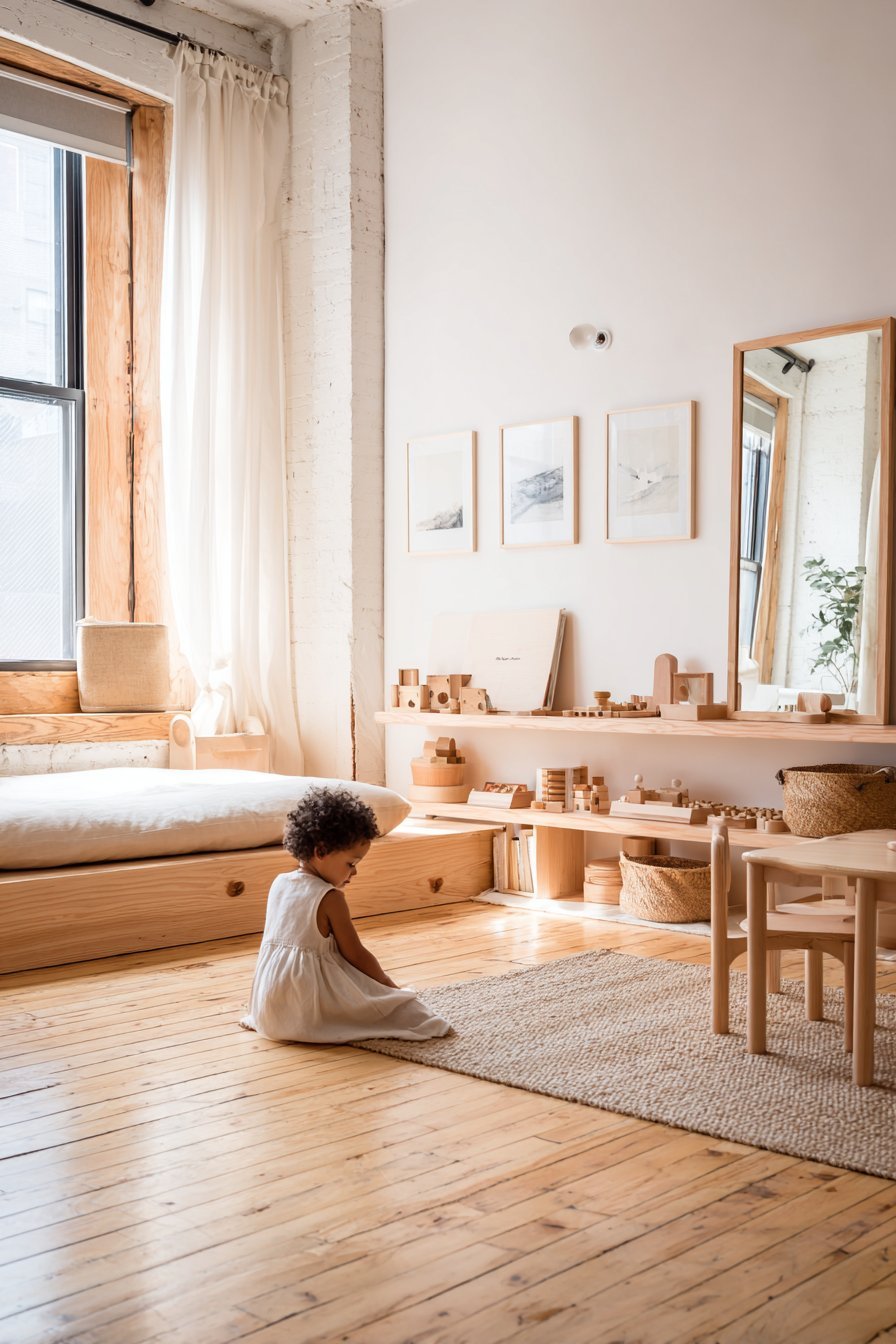
A small child-sized table and chair set in natural wood provides designated activity space. The floor showcases cork flooring for warmth and cushioning. A low-pile natural fiber rug defines the movement area. Window treatments include cordless cellular shades for safety. An adult rocking chair sits discretely in the corner. This allows supervision and nursing without dominating the space.
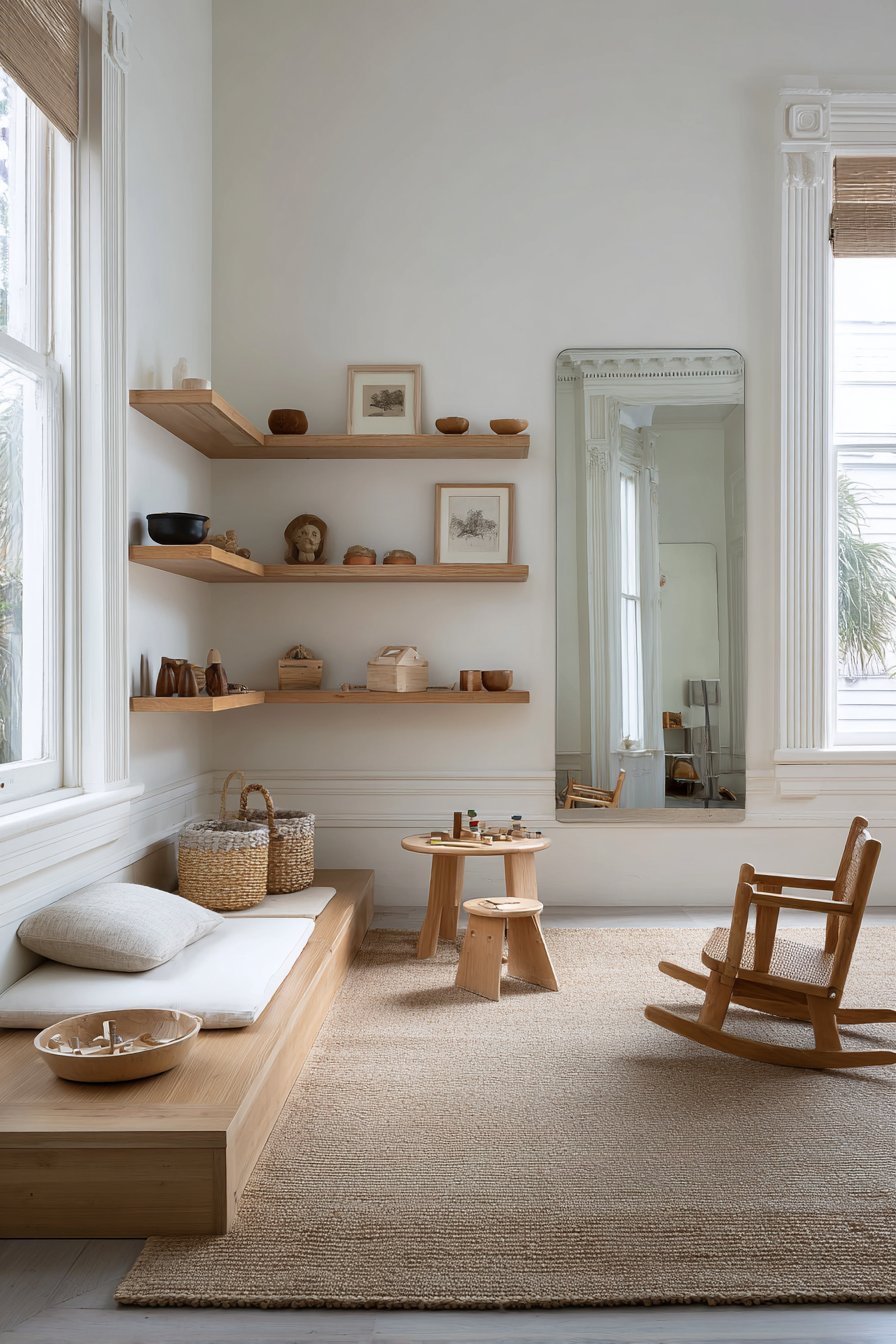
The room embodies Montessori principles through intentional simplicity. Limited color stimulation uses natural wood tones and whites. Clear organization supports developing independence. Safe exploration spaces encourage learning through movement. The open, uncluttered layout puts the child’s needs first. Bright natural diffused lighting emphasizes the accessible environment. Every element supports the child’s natural development at their own pace.
Key Design Tips:
- Use floor beds to enable independent sleep transitions
- Place all furniture and storage at child height for accessibility
- Install a full-length floor mirror for movement and self-awareness
- Minimize wall decorations and keep them at child’s eye level
- Choose natural materials like wood and cork throughout
- Organize toys in clear containers for easy identification
- Eliminate safety hazards like cords on window treatments
- Create open movement spaces free from obstacles
14. Woodland Enchanted Forest Magic
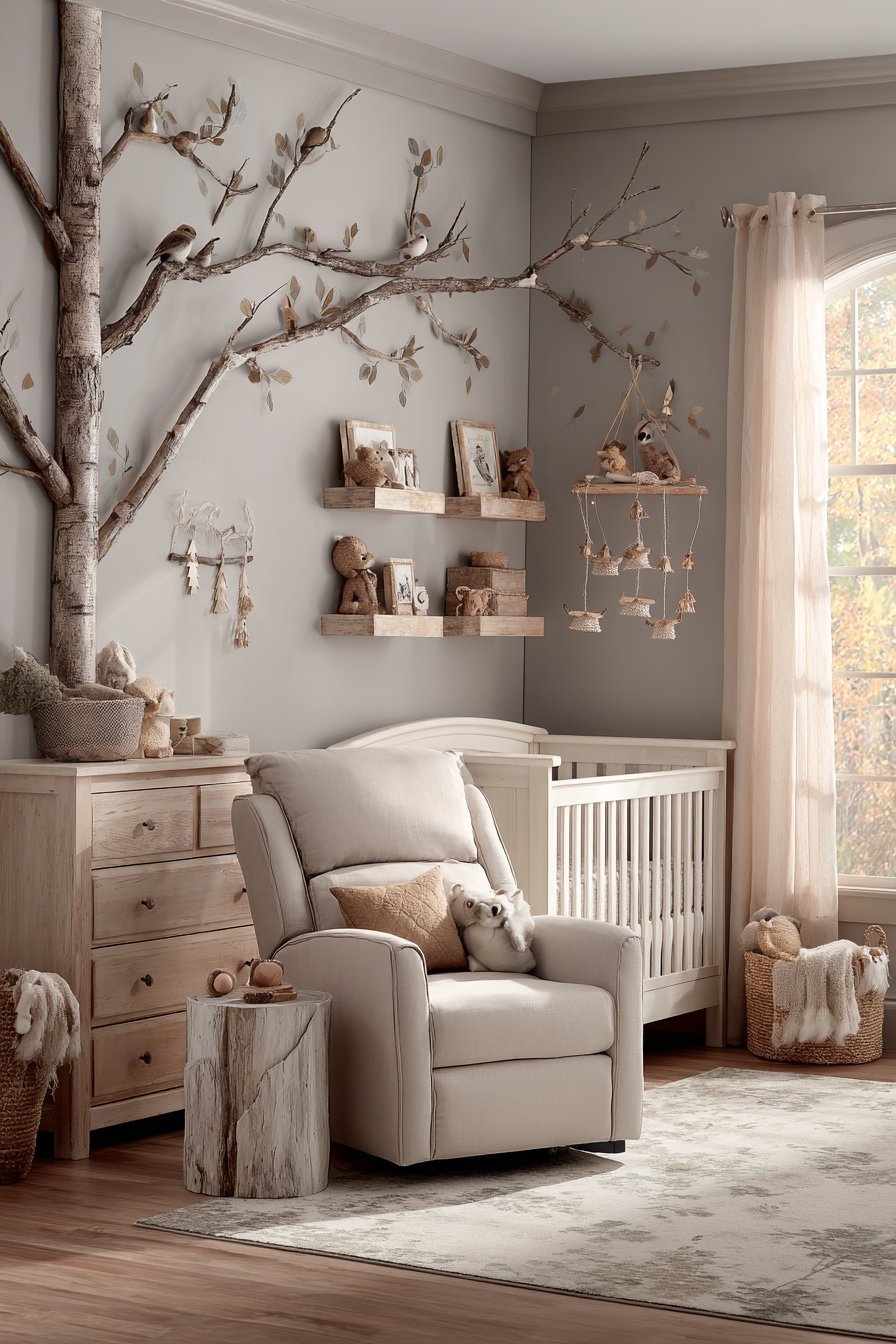
This woodland nursery creates a gentle storybook atmosphere. A white wooden crib sits beneath delicate tree branch decals. Soft grey-brown branches extend across the pale grey wall. Small fabric birds in muted colors perch on painted branches. The subtle wall treatment adds whimsy without overwhelming.
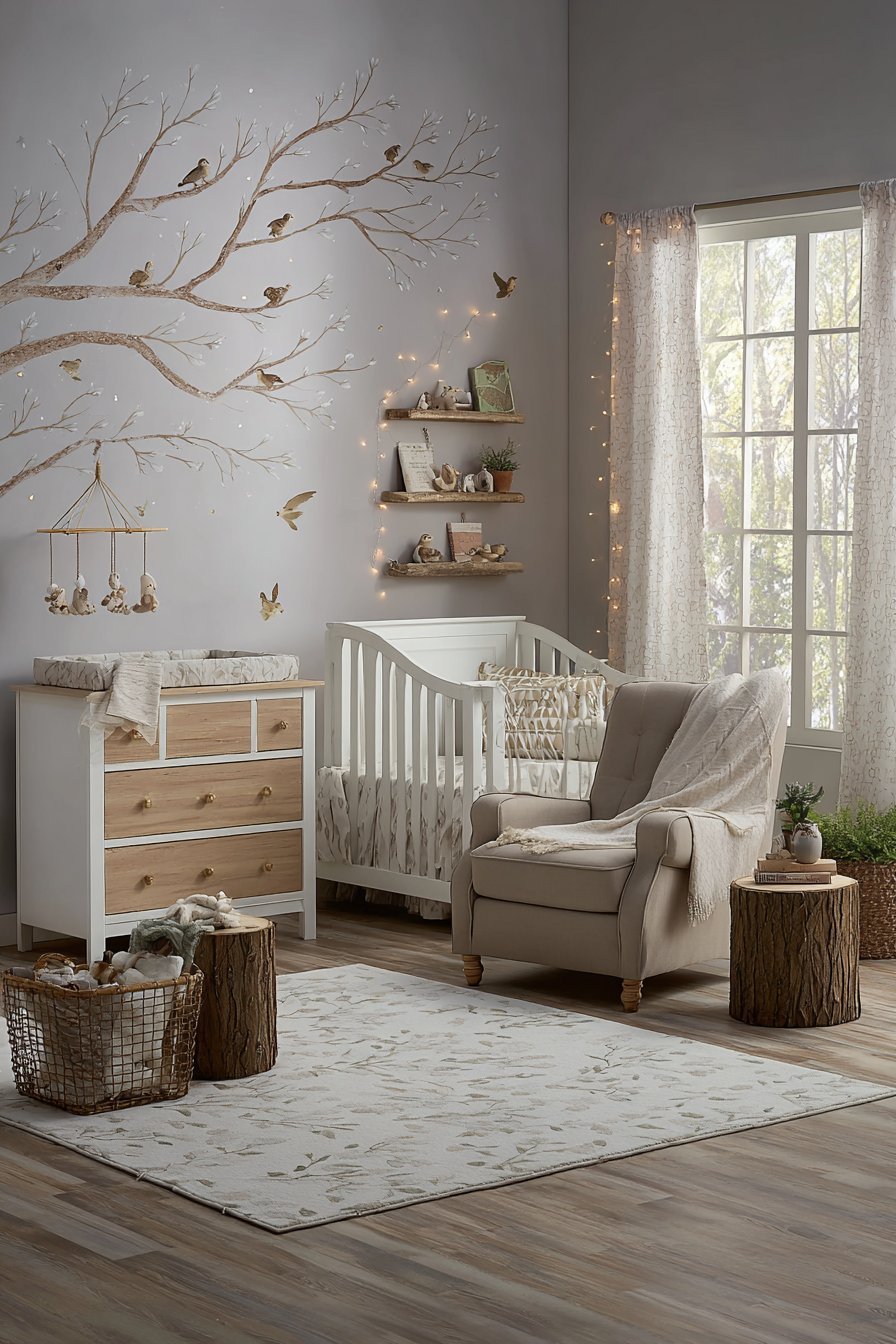
An upholstered glider in warm taupe provides comfortable seating. A white wooden side table shaped like a tree stump adds playful charm. Light ash hardwood flooring creates a natural foundation. A large area rug features subtle forest scene in sage green. Cream and soft brown tones complete the gentle palette.
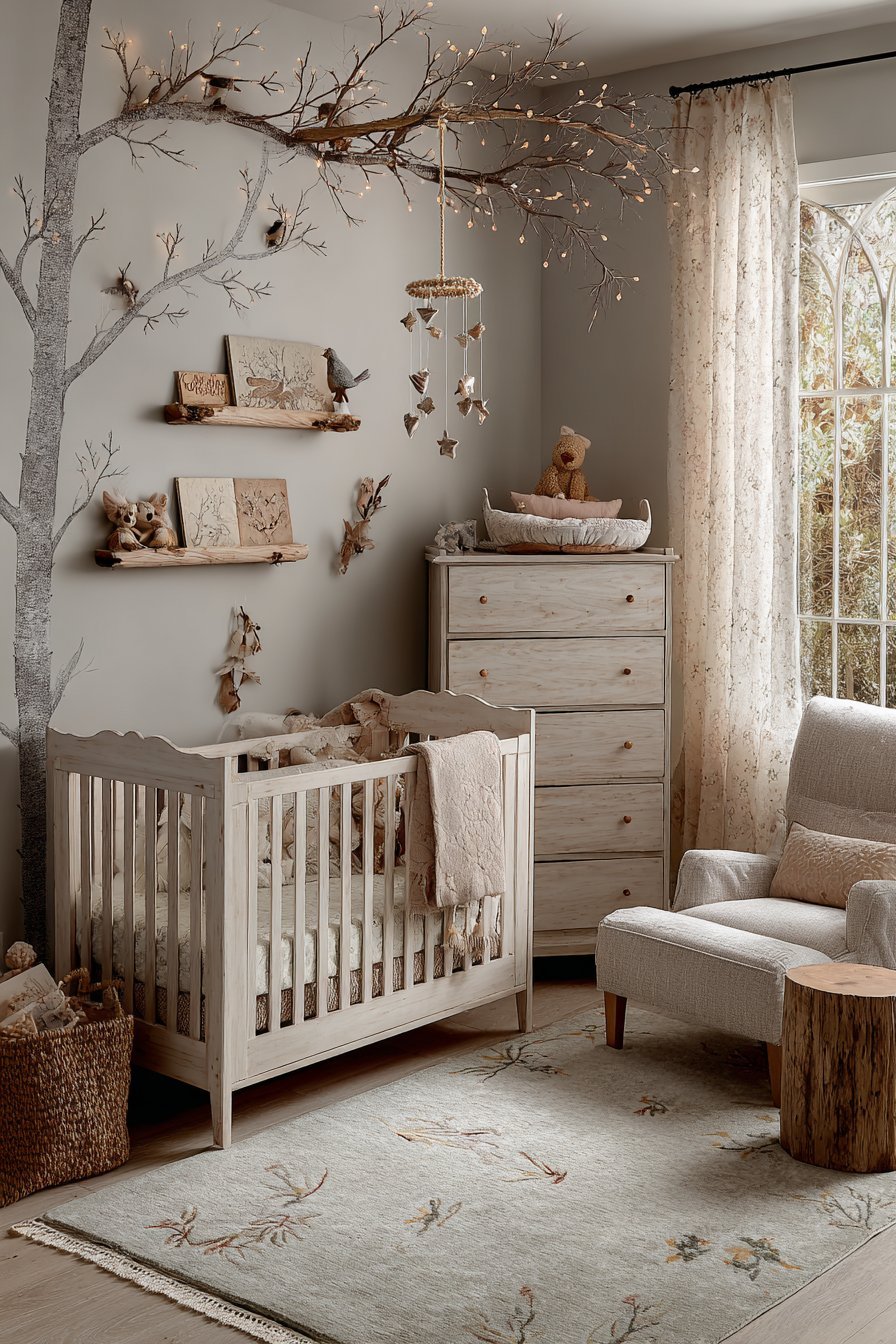
Woodland elements appear throughout the thoughtful design. Floating shelves in natural wood hold small ceramic woodland animals. Board books stand ready for bedtime stories. A fabric banner with felt pine trees hangs above the dresser. A mobile featuring wooden leaves and mushrooms dangles above the crib. The dresser in whitewashed wood features branch-shaped drawer pulls.
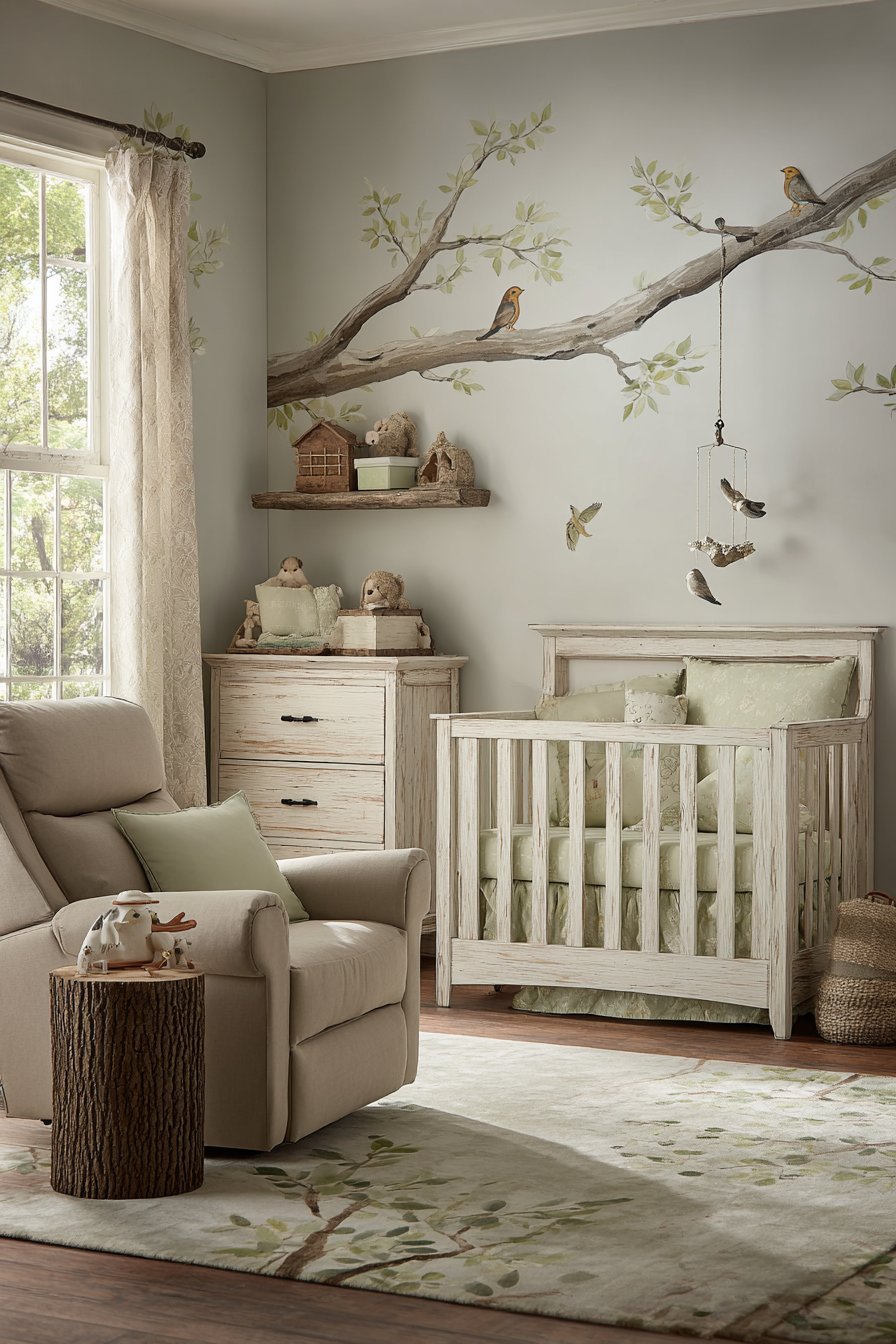
Soft string lights with warm white LEDs wind around a wall-mounted branch. This creates magical evening ambiance. Sheer curtains in natural linen feature subtle leaf embroidery. A woven basket in natural finish holds soft stuffed woodland creatures. The color palette remains gentle throughout. Sage green, warm grey, and cream create peaceful harmony. Natural wood tones ground the design. Soft afternoon light filters through curtains creating peaceful glow. The dreamy quality transports you to an enchanted forest.
Key Design Tips:
- Use wall decals for temporary, changeable nature themes
- Choose muted colors rather than bright, saturated tones
- Incorporate natural wood elements in various finishes
- Add string lights for magical evening ambiance
- Select fabric and felt accessories over plastic decorations
- Keep woodland animals realistic rather than cartoonish
- Layer sheer curtains for soft, filtered natural light
15. Twin Nursery Organization Mastery
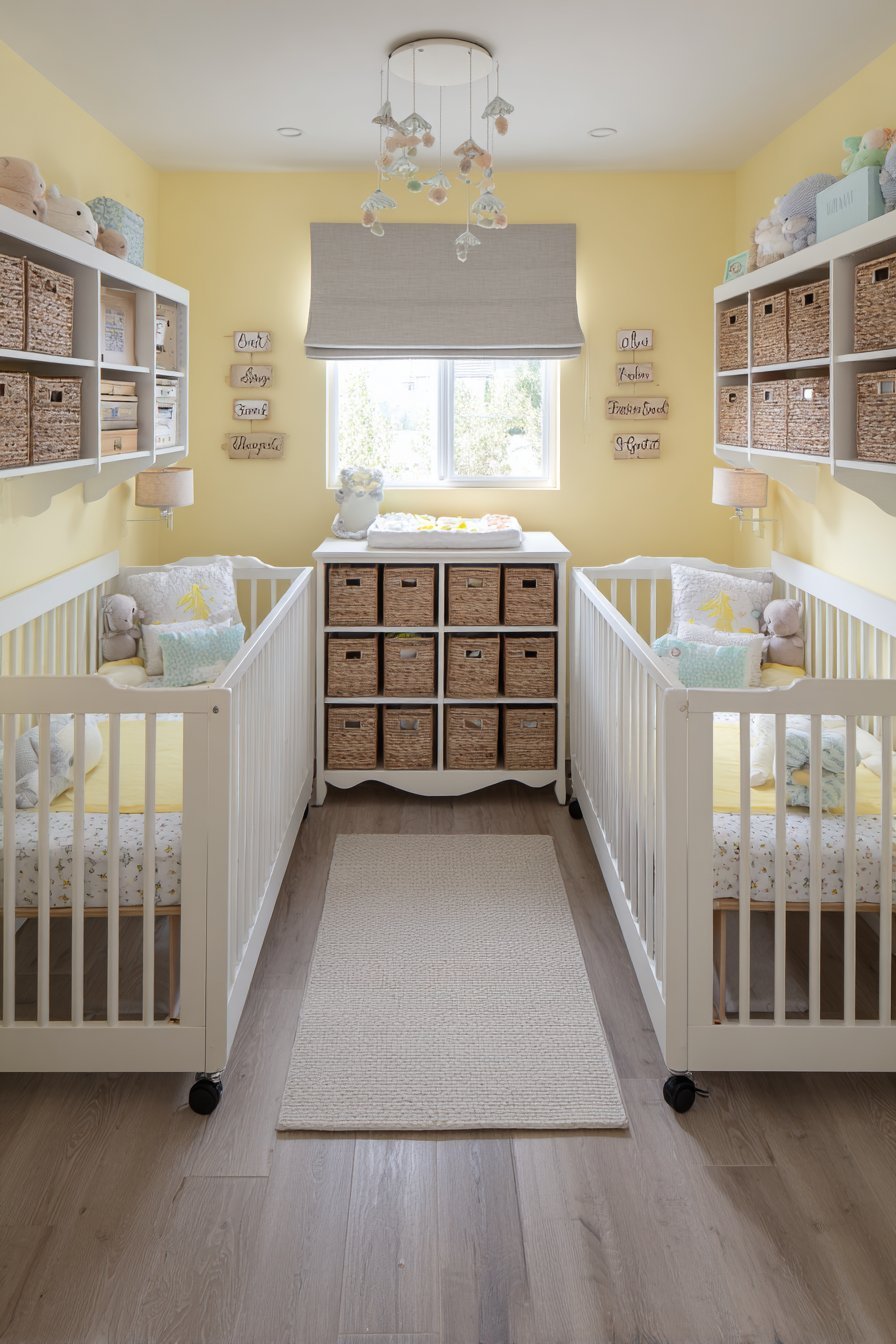
This twin nursery demonstrates efficient design for two babies. Two matching cribs in white with clean lines position symmetrically. A shared nightstand between them features two small lamps. Individual nighttime care becomes possible without disturbing the other baby. A long dresser serves both children equally. Organized drawer dividers separate each baby’s items. Two changing pad stations sit on top with divider between.
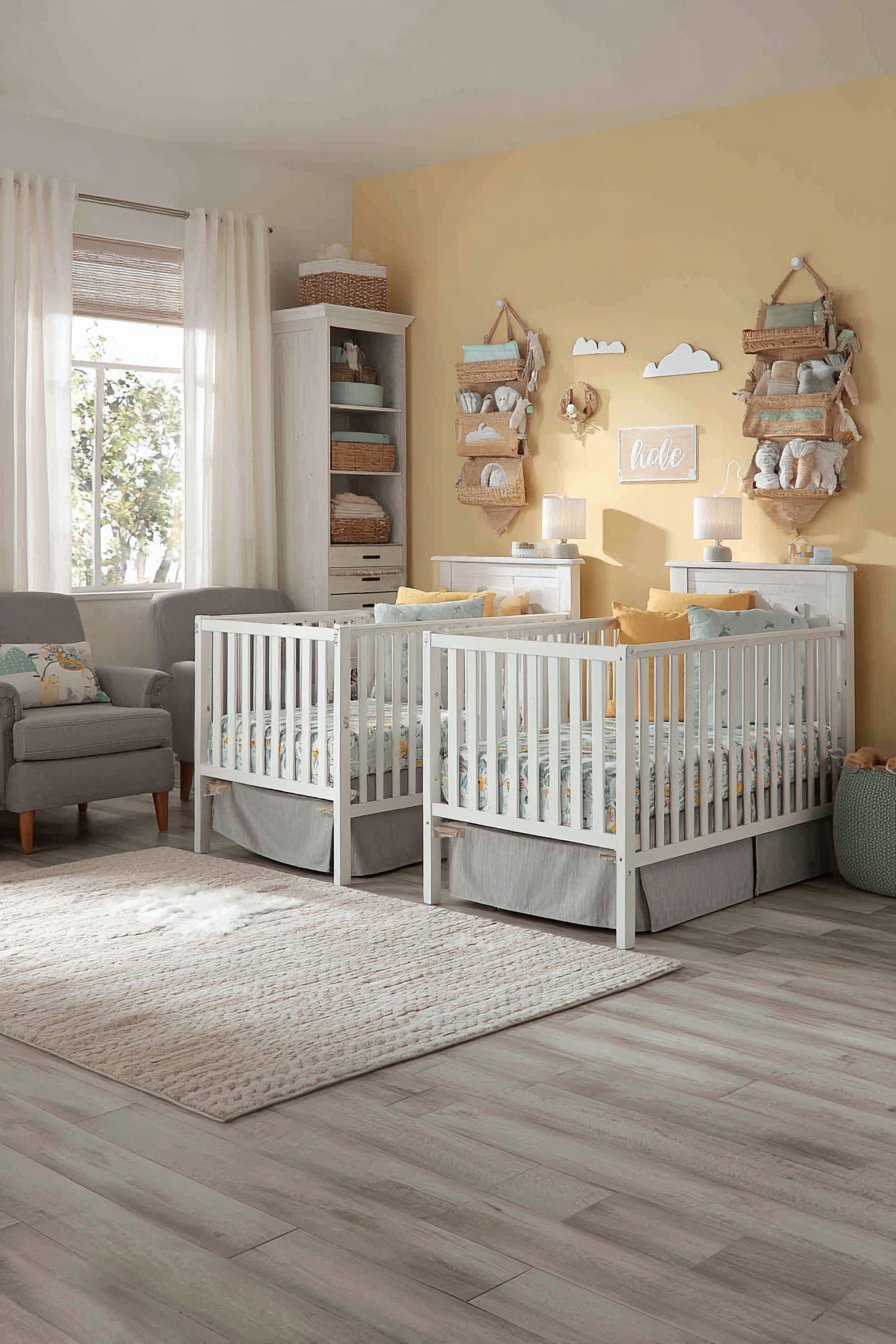
Duplicated seating allows simultaneous care. Two glider chairs in grey fabric face each other near the window. Two caregivers can feed or comfort babies together. Closet organization features clearly divided sections. Color-coded hangers and labeled bins distinguish each baby’s belongings. This system prevents mix-ups during rushed moments.
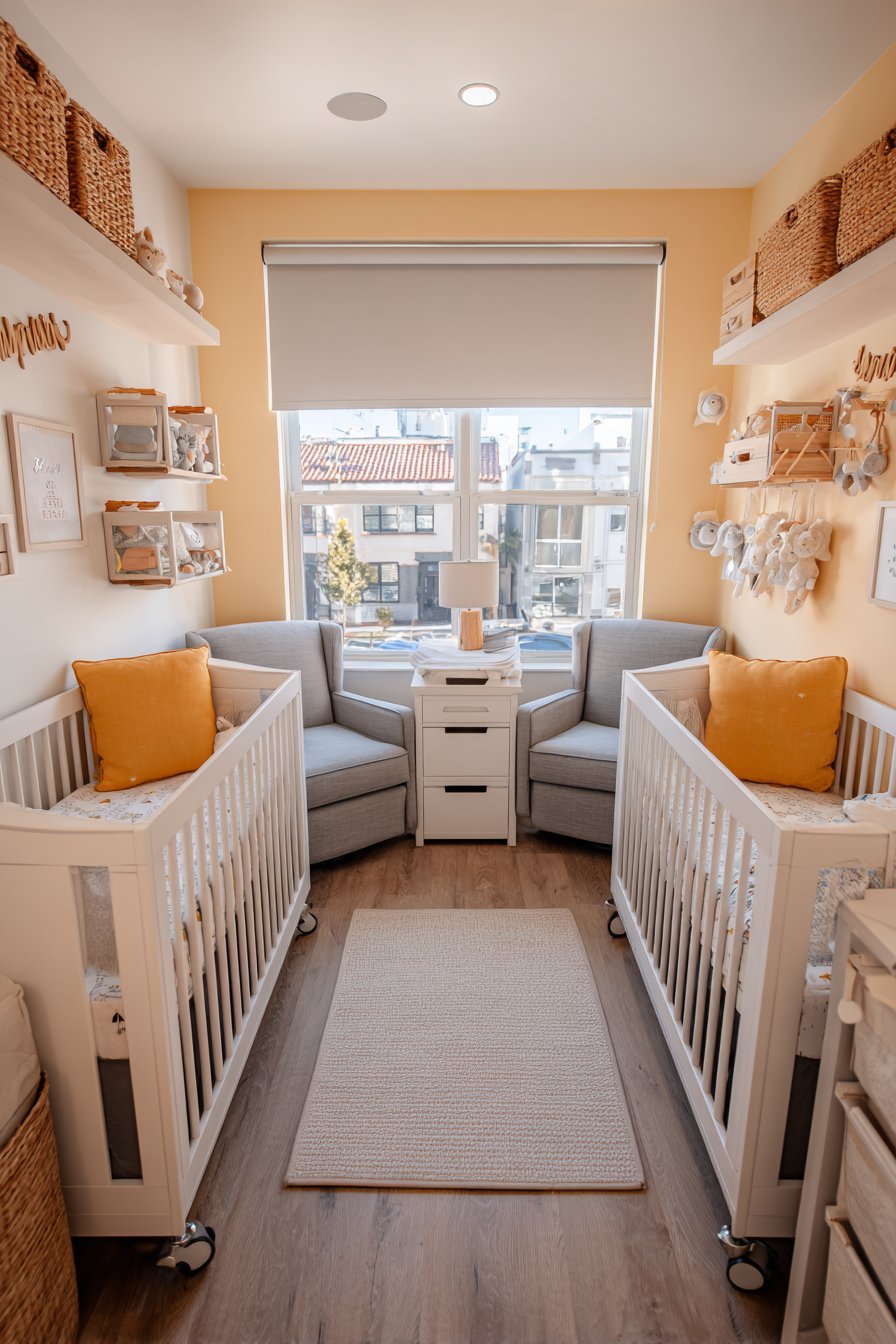
Soft yellow walls create cheerful gender-neutral space. Simple name signs in wooden letters hang above each crib. Individual identity remains important even in shared space. Storage solutions maximize vertical space. Vertical shelving with labeled baskets keeps items organized. Under-crib storage drawers on wheels provide additional capacity. Wall-mounted organizers keep supplies accessible.
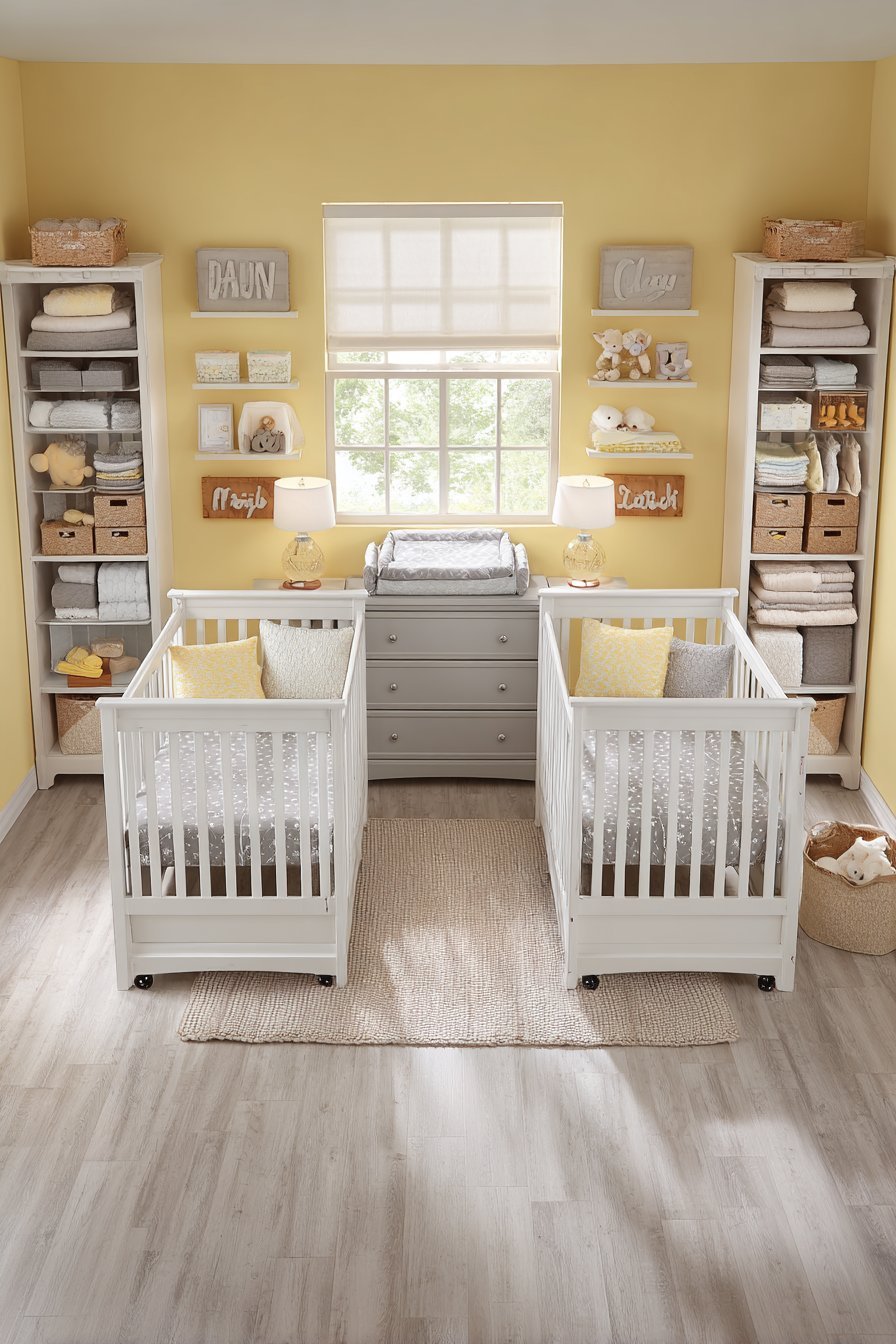
A large play mat in the center offers shared tummy time space. The window features a wide cordless shade in white. Twin nursery design emphasizes symmetry and clear organization. Matching mobiles hang above each crib. Coordinating but distinct bedding patterns allow personal expression. Clear labeling systems appear throughout. Light grey laminate flooring handles double the wear. The thoughtful layout accommodates two infants while maintaining order. Each child has individual identity within the shared space.
Key Design Tips:
- Position cribs symmetrically with shared storage between them
- Provide duplicate seating for simultaneous feeding or care
- Use color-coded organization systems to prevent mix-ups
- Label everything clearly for easy identification
- Install under-crib storage to maximize floor space
- Create individual identity through distinct bedding patterns
- Choose durable, easy-clean flooring for double the mess
- Maintain symmetry for visual balance and fairness
16. Transitional Growth-Focused Design
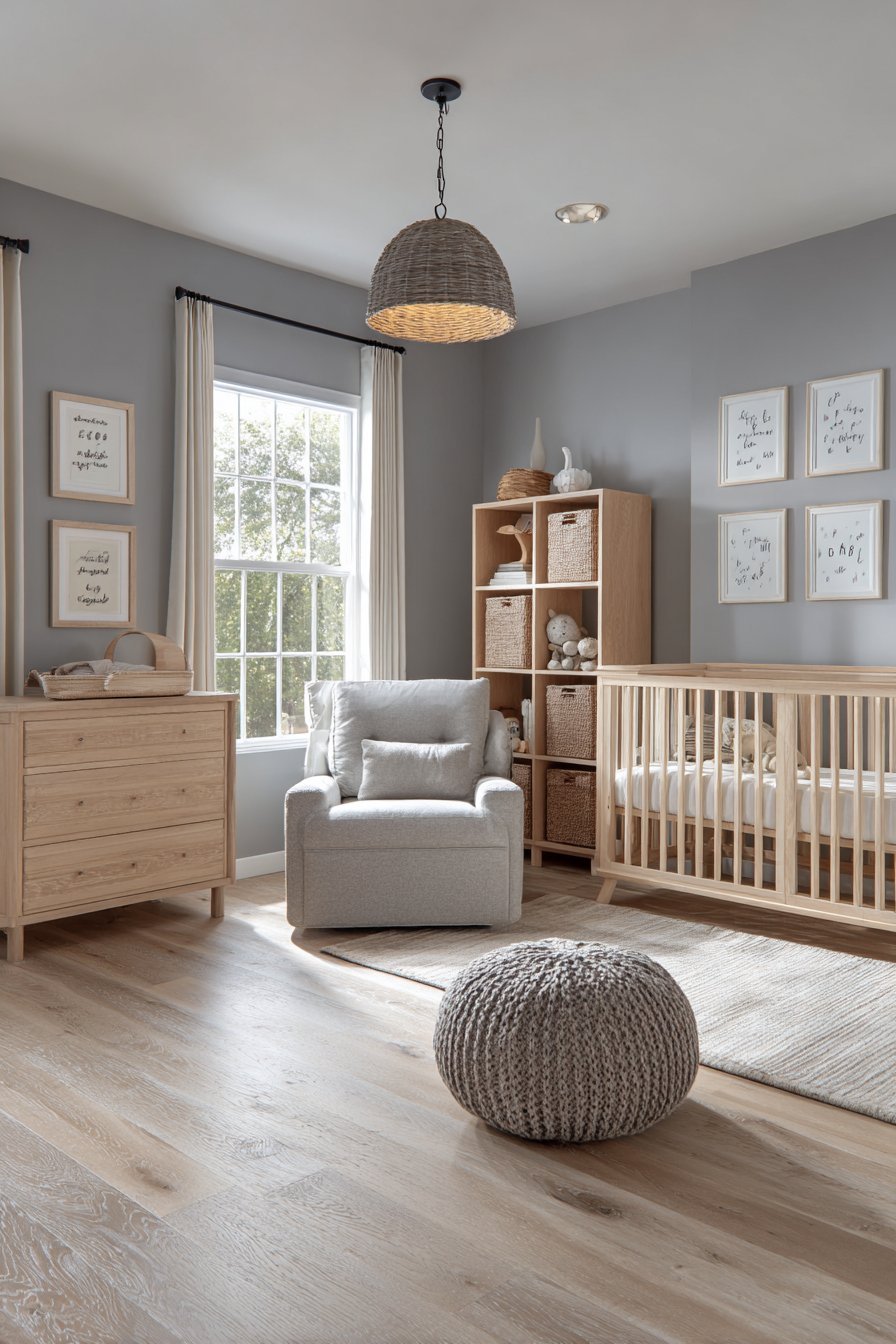
This adaptable nursery grows with your child through multiple stages. A convertible crib in natural oak transforms easily into toddler bed. The timeless design serves for years. A quality dresser with classic design currently holds a removable changing pad. Later it functions as regular storage. The long-term thinking saves money and reduces waste.
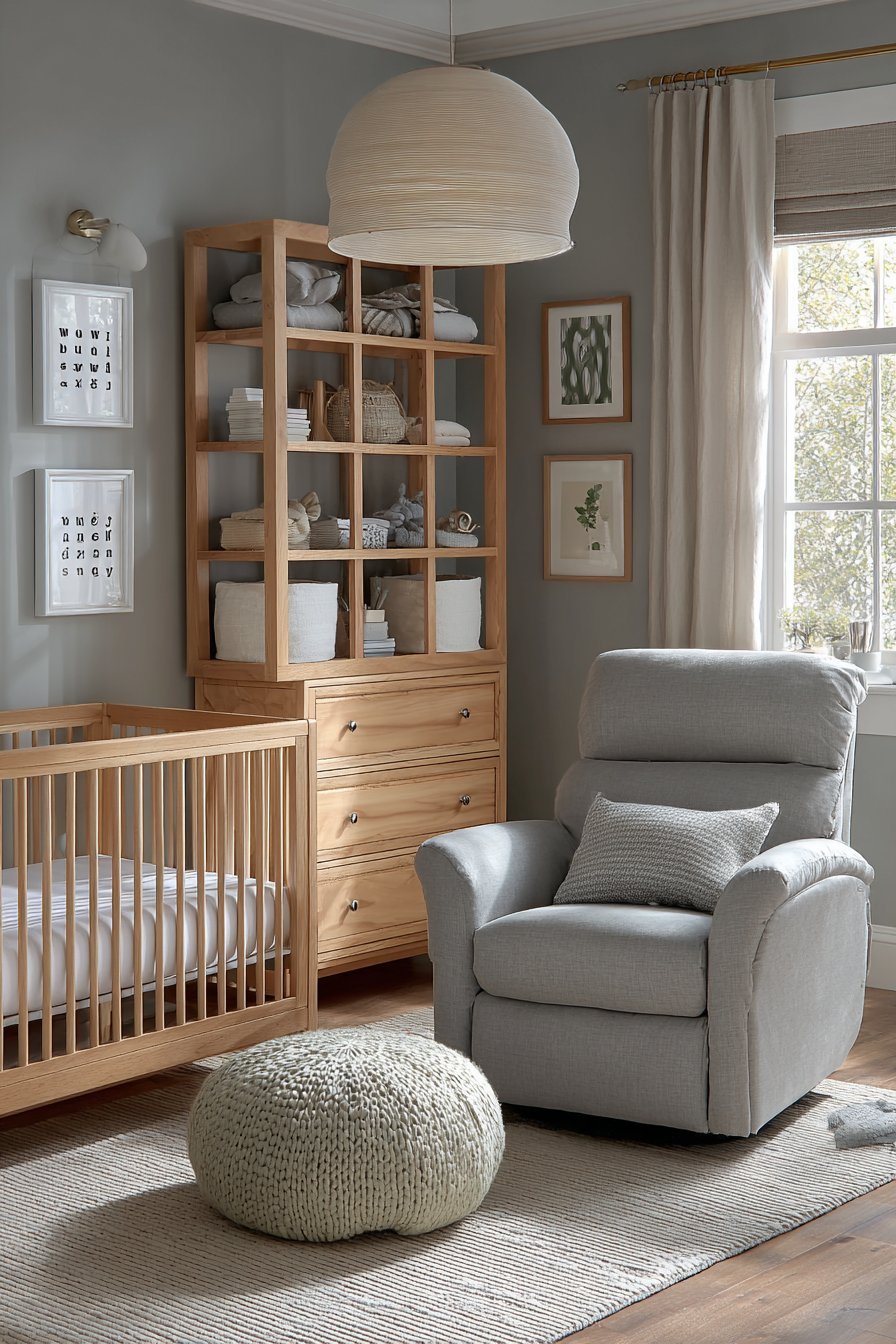
Modular cube shelving system reconfigures as needs change. Lower cubes currently hold baby items in fabric bins. Upper cubes display decorative elements. As the child grows, toy heights adjust accordingly. A comfortable upholstered glider includes removable cushions. Neutral grey fabric suits long-term use. The investment piece serves through multiple children.
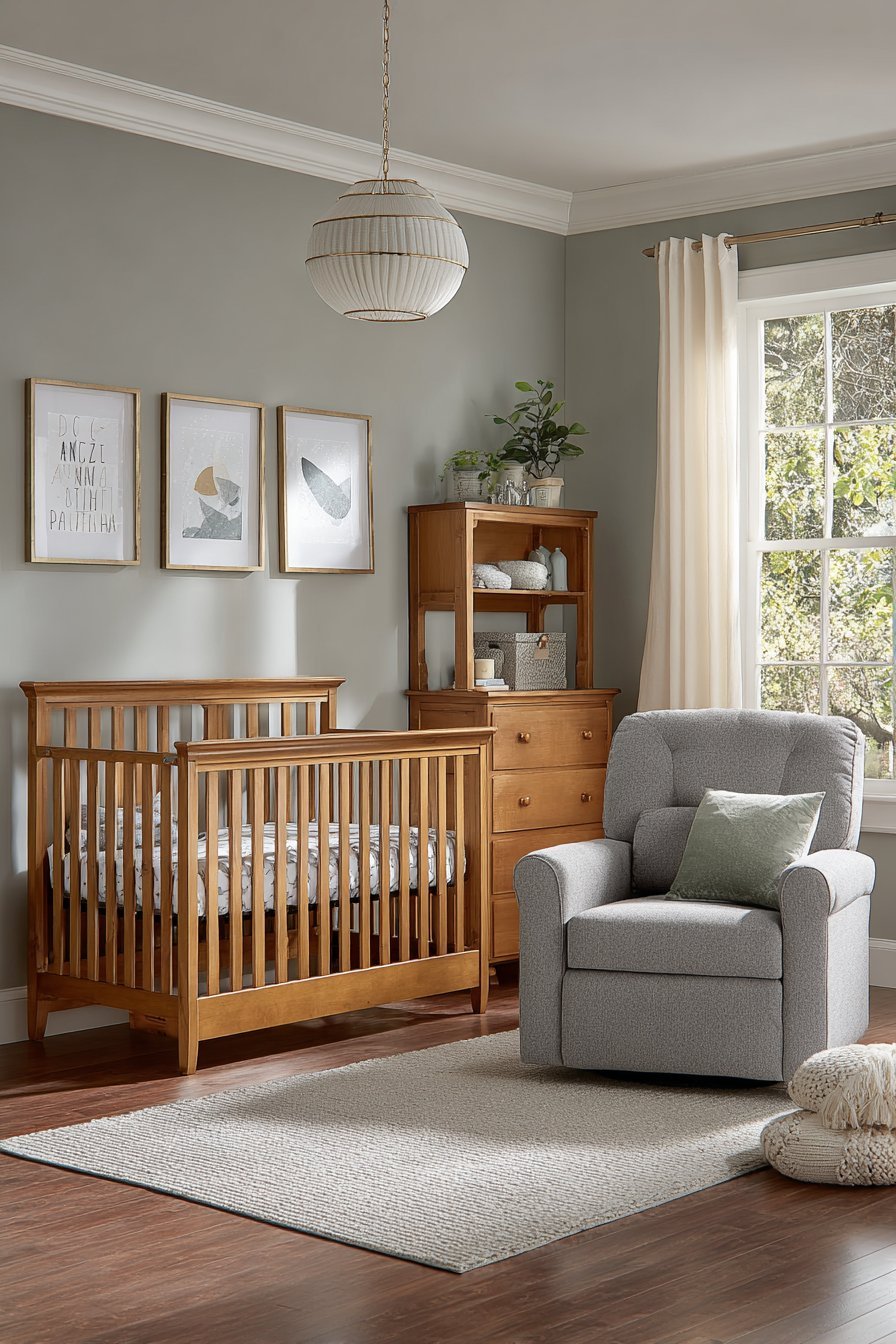
The walls display art hung with adjustable hanging systems. Easy updates accommodate changing interests. Currently simple alphabet prints in white frames provide visual stimulation. Cordless cellular shades and simple curtain panels in durable neutral linen dress the windows. These quality window treatments last through many years. Engineered hardwood in medium walnut tone features investment-quality construction. The floor withstands years of active use.
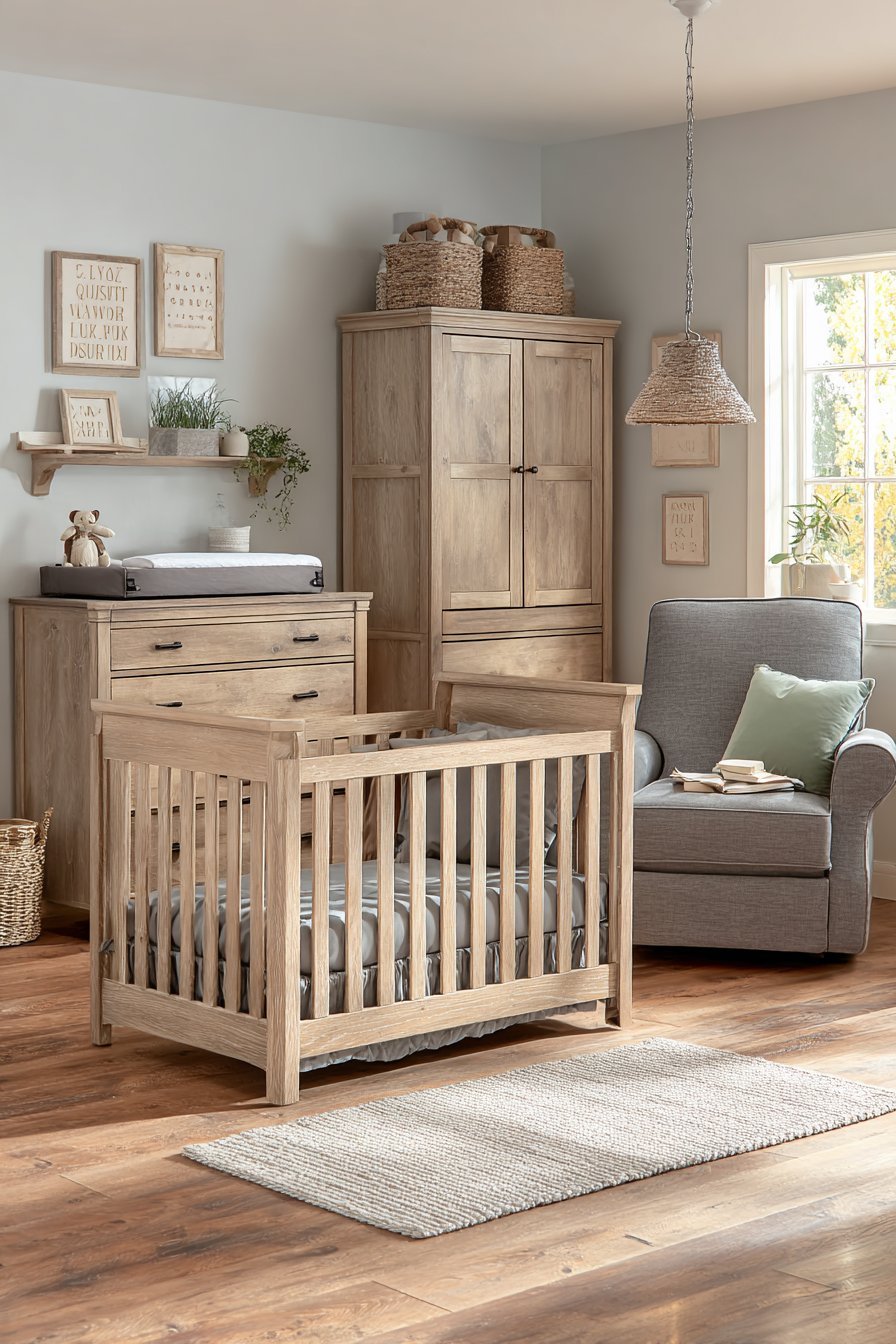
The color palette of grey, white, natural wood, and soft green remains sophisticated. These colors transition well through childhood stages. Convertible elements appear throughout. Adjustable closet rod heights accommodate growing wardrobes. Removable safety gates install when needed. Furniture pieces feature timeless design rather than babyish themes. Classic pendant lighting works for any age. Thoughtful long-term planning reduces future renovation needs. Quality pieces serve multiple life stages beautifully.
Key Design Tips:
- Invest in convertible furniture that transforms as child grows
- Choose neutral, sophisticated colors that transcend age
- Select quality materials that withstand years of use
- Use modular storage systems that reconfigure easily
- Install adjustable hanging systems for evolving art displays
- Avoid overly babyish themes that require future replacement
- Plan for long-term use to reduce waste and expense
17. Rainbow Muted Color Harmony
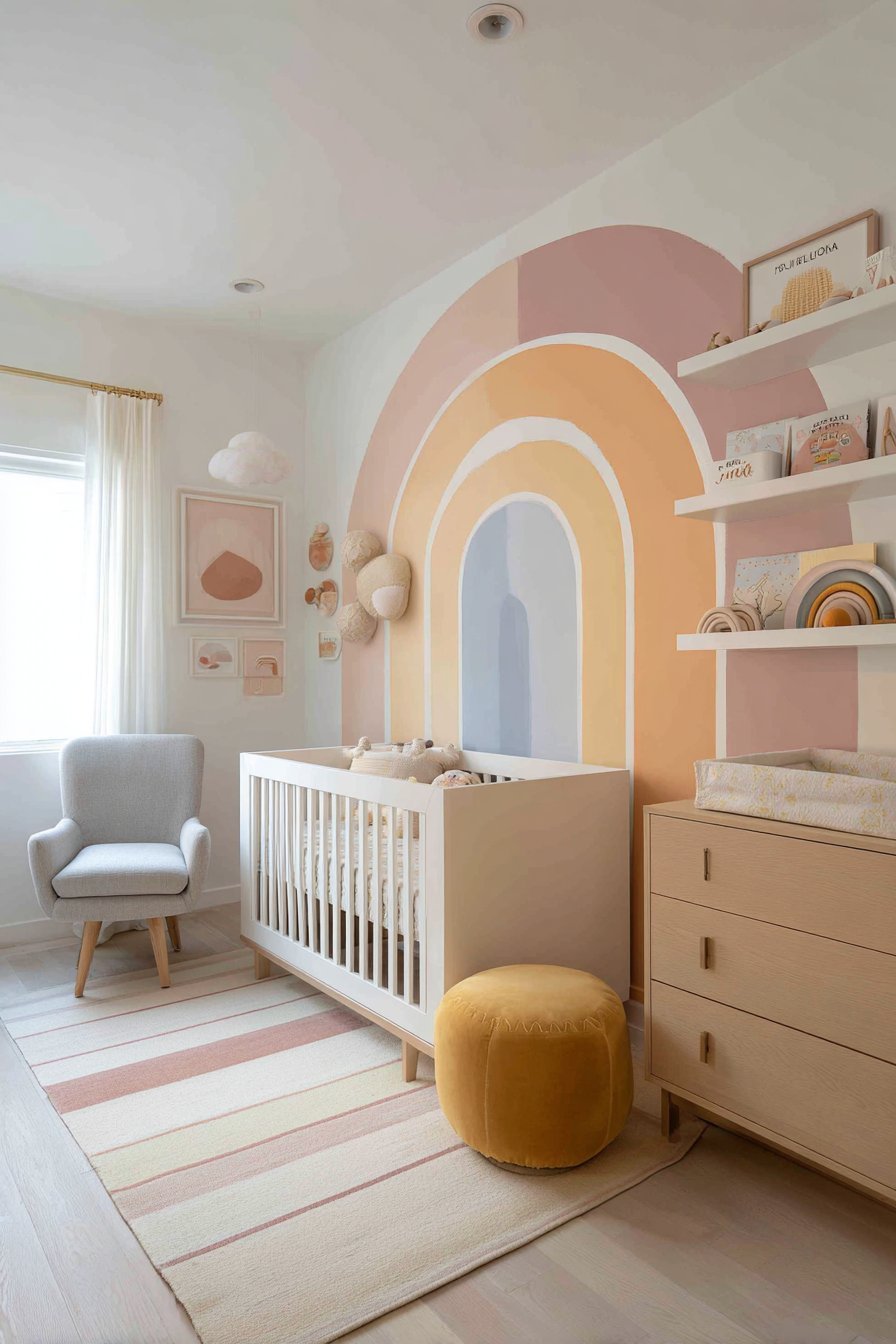
This rainbow nursery uses color thoughtfully without overwhelming. A white crib sits against a feature wall with painted rainbow arch. Soft blush, peach, marigold, sage, dusty blue, and lavender flow across white. The gentle watercolor-style gradient creates calm color interest. A natural oak dresser provides neutral grounding. Small organizers in coordinating rainbow colors add functional beauty.
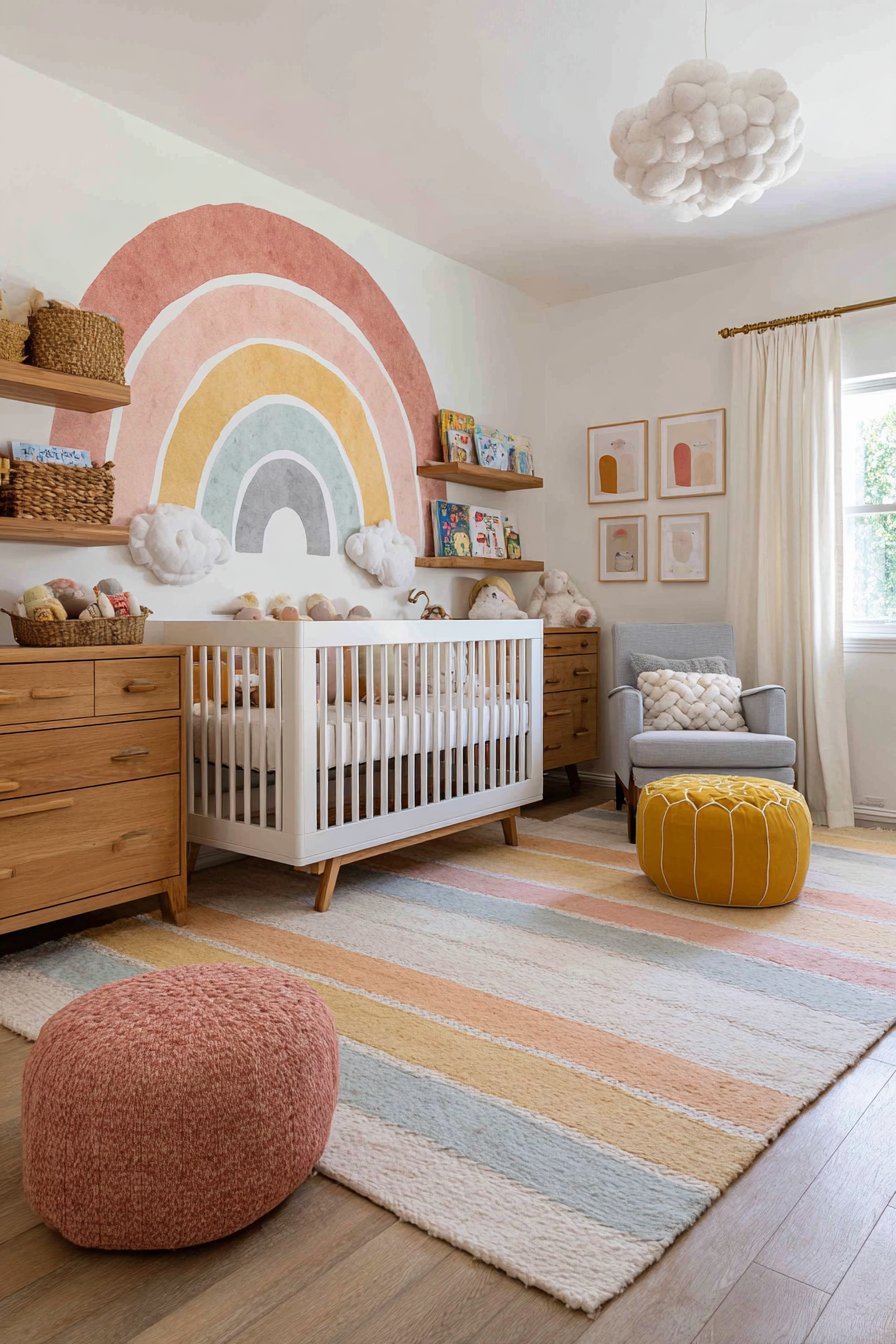
An upholstered chair in soft grey lets the wall be the color focus. A small ottoman in muted yellow provides subtle color pop. Light blonde wood flooring maintains brightness. A simple area rug features thin rainbow stripes on cream background. The muted palette prevents color chaos. The overall effect remains calm and cohesive.
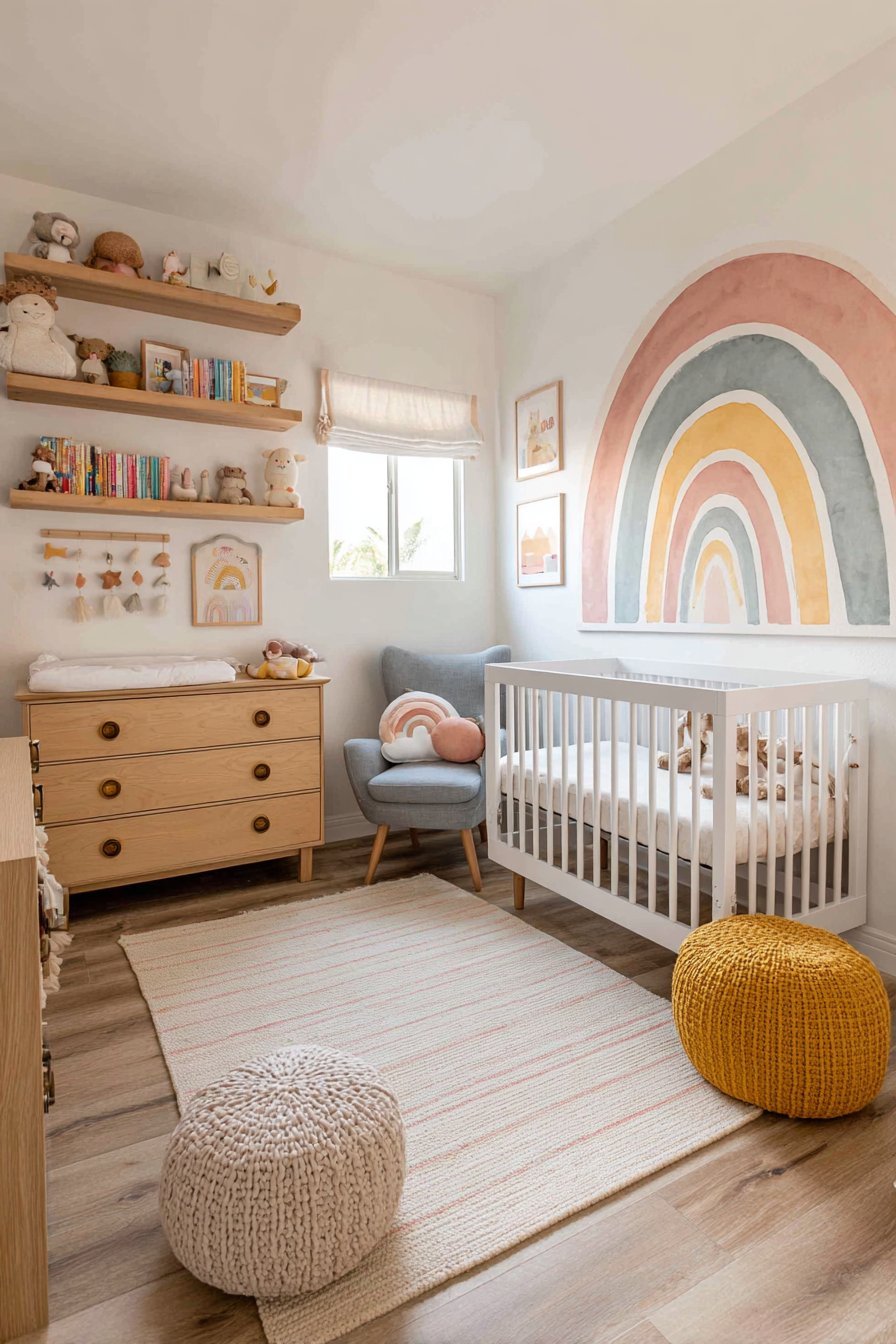
Rainbow elements appear in subtle touches throughout. Floating shelves hold books arranged by color creating rainbow effect. Small decorative elements in each arch color distribute throughout the space. A mobile features felt clouds and soft rainbow colors. Storage baskets in graduated rainbow tones organize toys and supplies. The color coordination brings order to the collection.
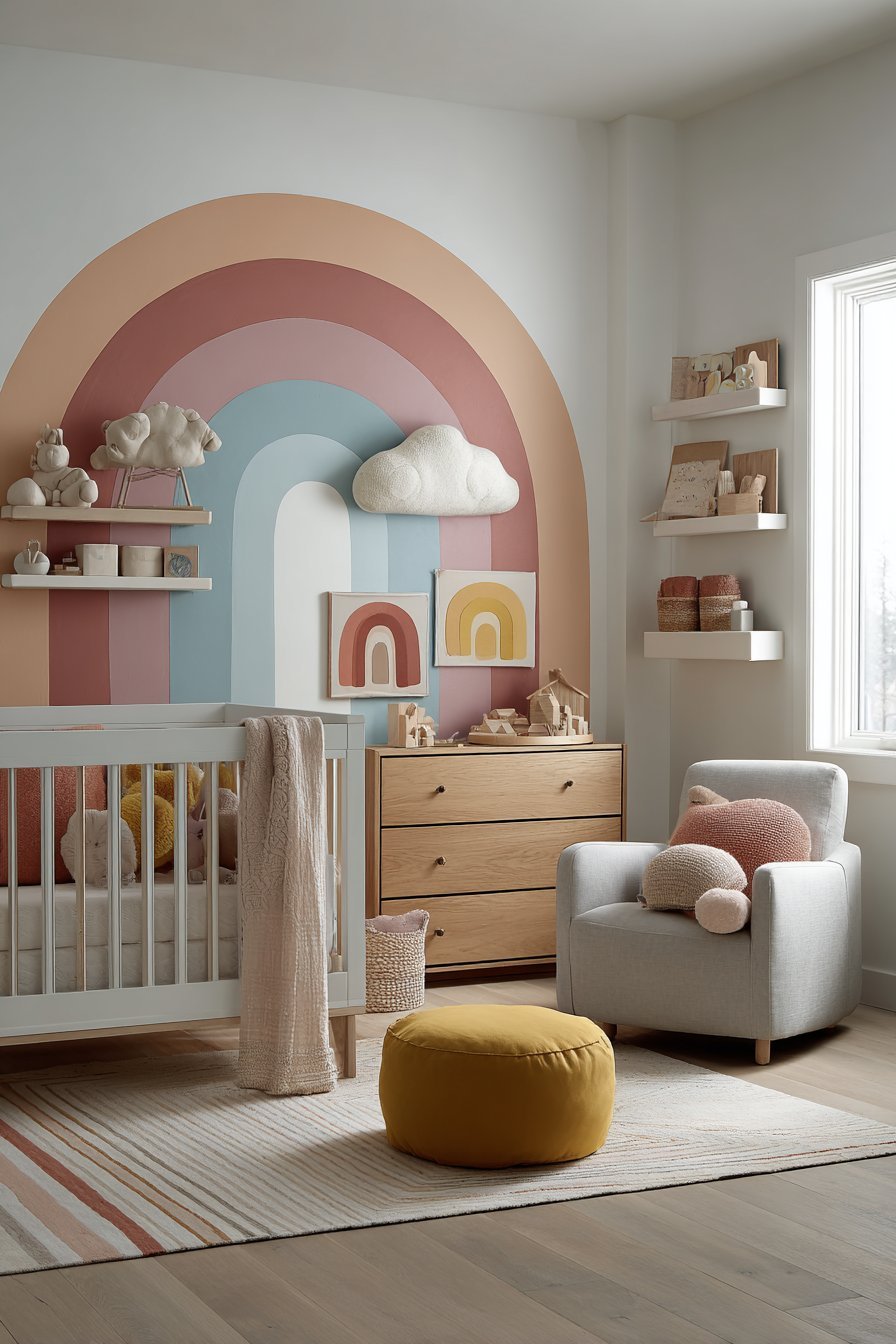
Simple white curtains feature delicate rainbow print visible when backlit. Additional color comes from a small pouf in soft pink. Artwork shows simple geometric shapes in the rainbow palette. The muted tones create visual interest without overstimulation. Colors balance carefully across the entire space. Bright natural light enhances the painted rainbow. The thoughtfully executed color scheme proves rainbows need not be garish. Subtle tones create cheerful yet serene atmosphere perfect for sleep and play.
Key Design Tips:
- Use muted versions of rainbow colors instead of bright primaries
- Create one large-scale rainbow feature rather than multiple elements
- Choose grey furniture to let the rainbow be the color focus
- Arrange books by color for subtle rainbow organization
- Select graduated color tones for storage and organization
- Keep most surfaces neutral with color in accents only
- Use watercolor-style gradients for softer color transitions
18. Celestial Space Explorer Dreams
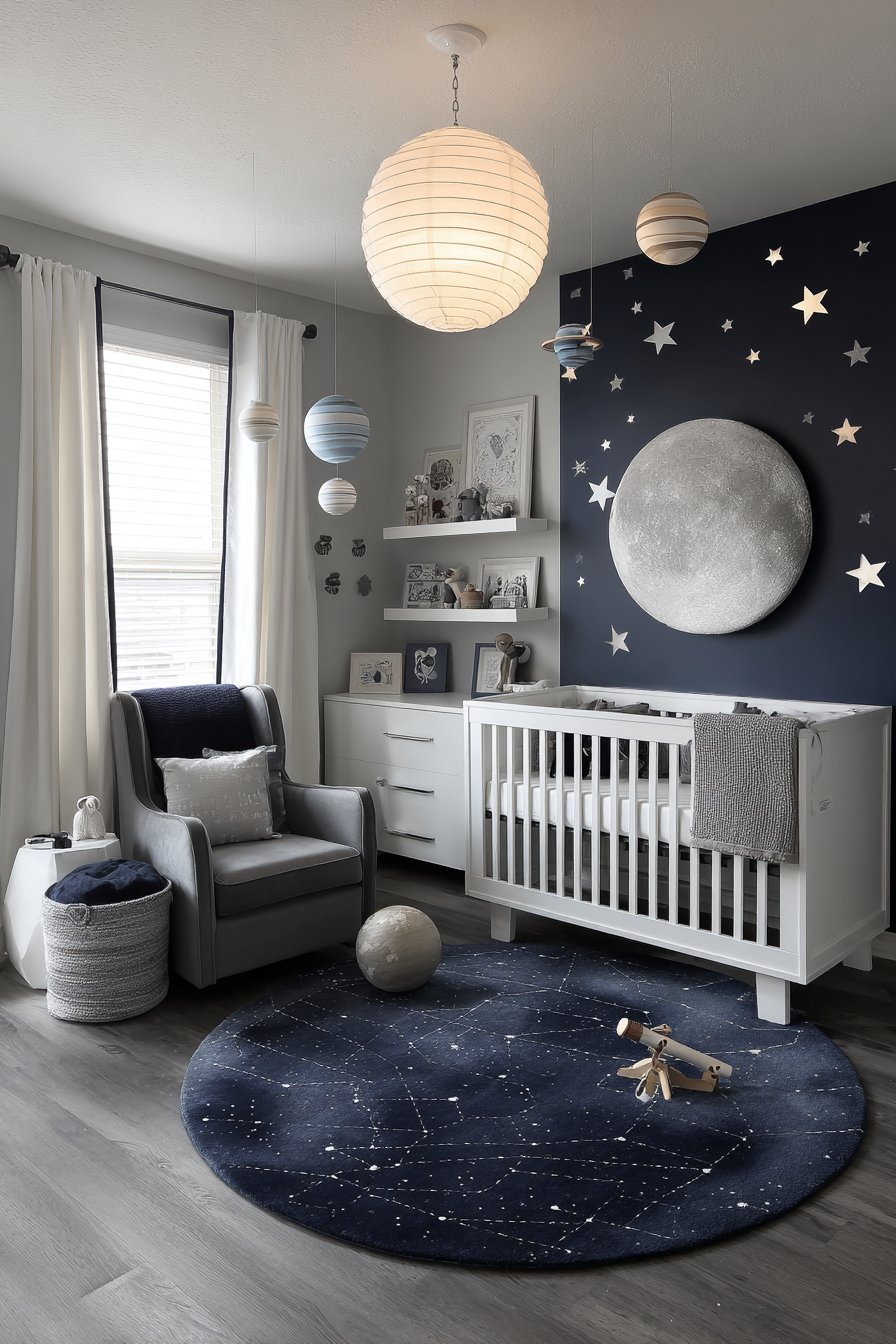
This space-themed nursery captures cosmic wonder sophisticatedly. A navy blue accent wall features hand-painted silver stars. Various sizes with subtle shimmer create depth. Remaining walls stay soft grey for balance. A white crib with simple modern lines sits beneath a planet mobile. Felt planets in realistic colors and proportional sizes hang delicately. The educational approach teaches while decorating.
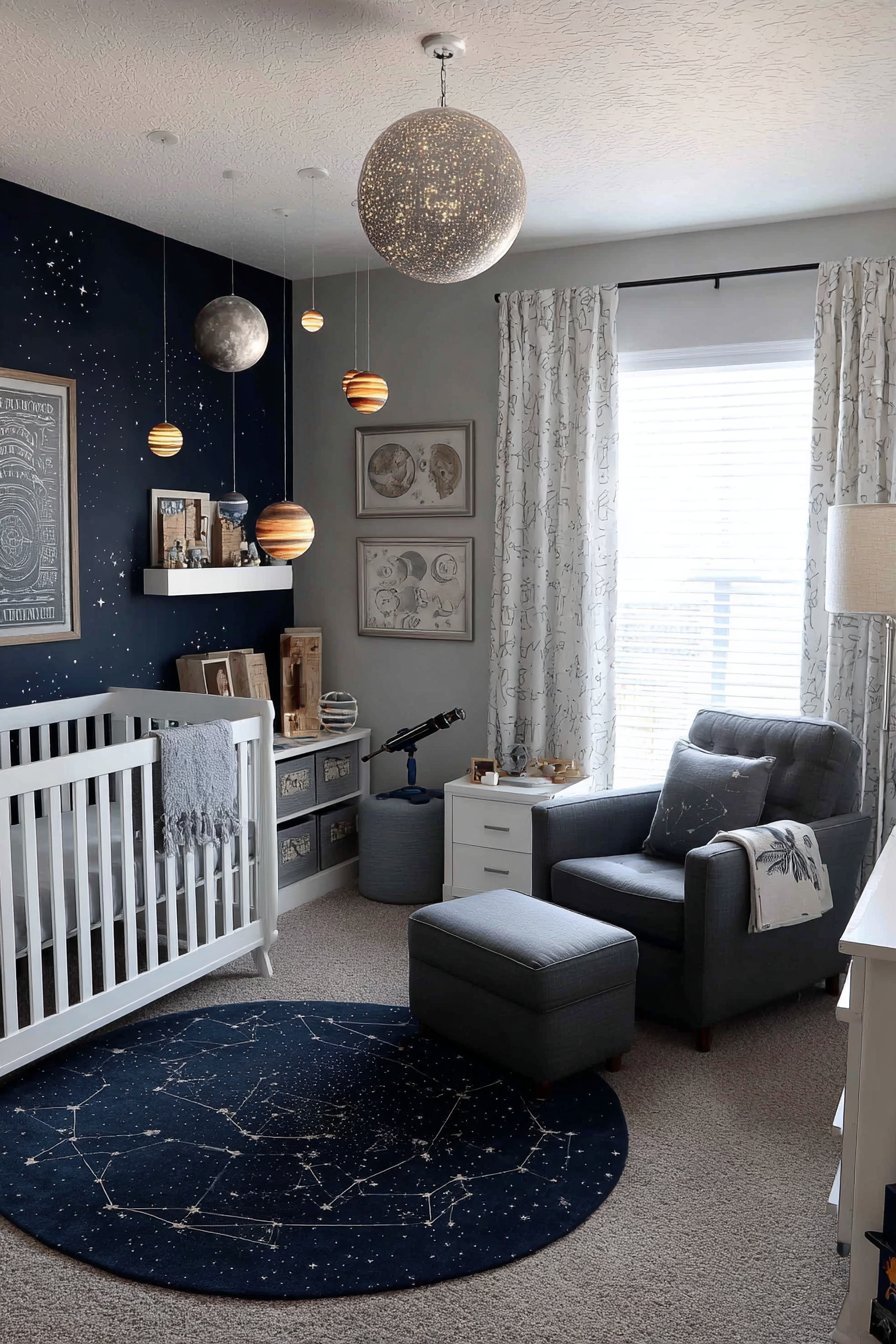
A glider chair in charcoal grey fabric provides comfortable seating. A small side table in white lacquer adds contemporary touch. Dark grey engineered wood flooring grounds the design. A large round rug in navy features subtle constellation pattern. Silver thread catches light creating twinkling effect. The sophisticated space theme avoids cartoonish interpretations.
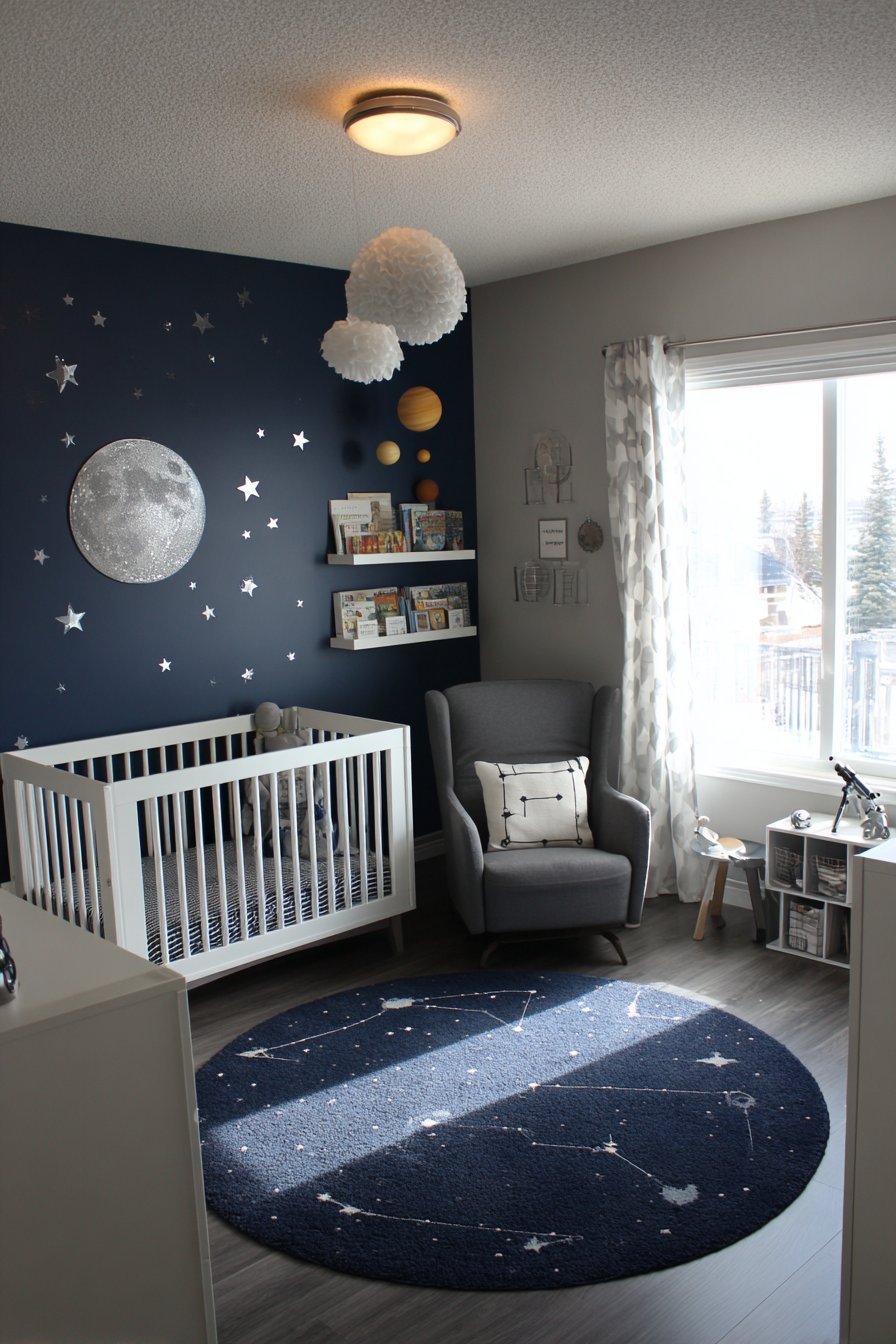
Celestial elements appear throughout the thoughtful design. A moon-shaped mirror with LED backlight provides soft nighttime glow. Floating shelves in white hold space-related books. A small telescope adds educational decoration. The dresser in white features rocket-shaped drawer pulls in brushed silver. These playful details maintain the contemporary aesthetic.
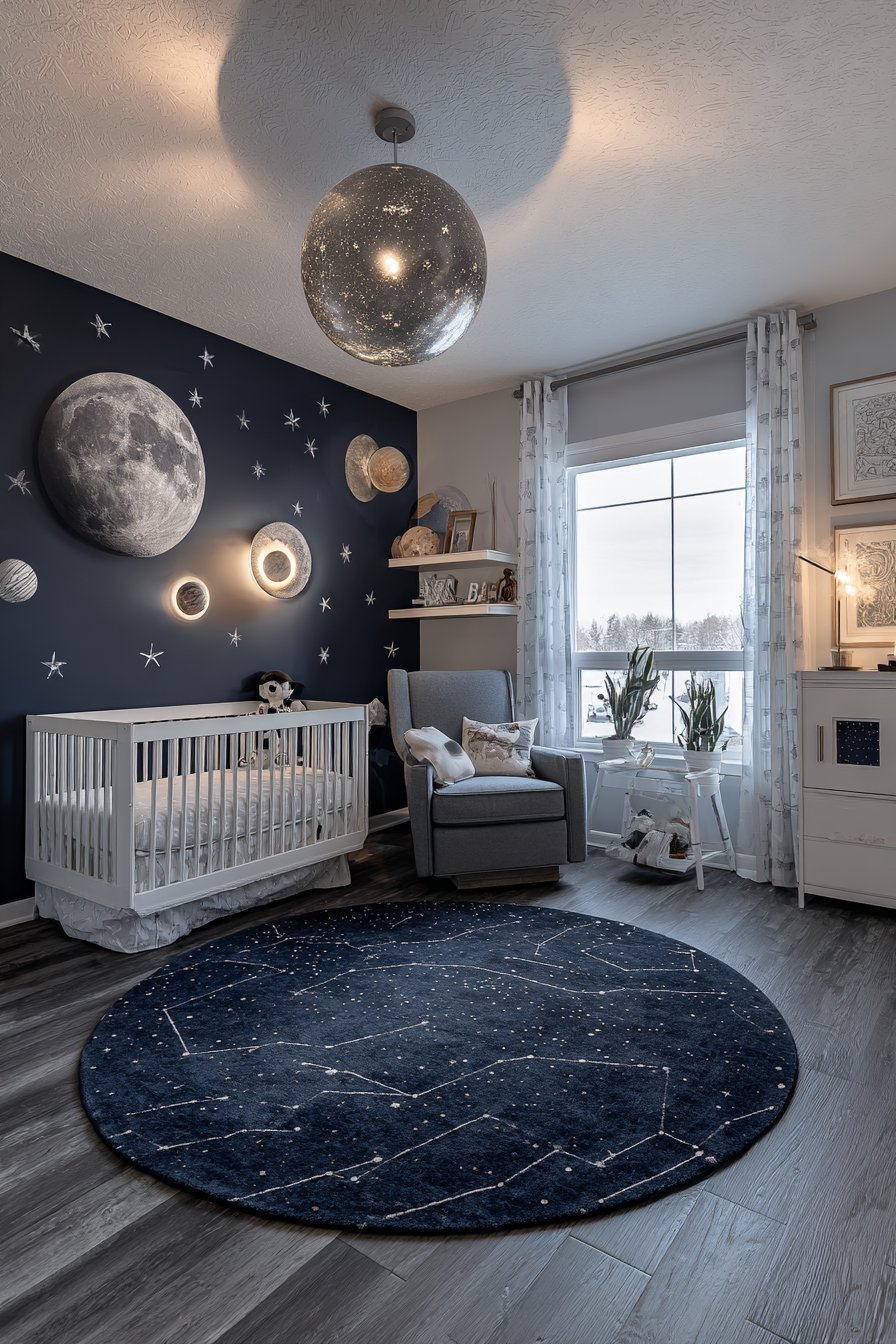
Window treatments combine blackout roller shade with starry curtains. White fabric scattered with small silver stars filters daylight beautifully. A fabric pennant banner features planets across one wall. Framed prints show vintage-style astronomical charts. Storage includes fabric bins in navy and grey with moon and star appliques. Statement pendant resembling paper lantern moon provides ambient lighting. Small planet-shaped nightlight adds gentle illumination. The darker color scheme creates cozy, contemplative atmosphere. The celestial theme suits any gender and grows with the child.
Key Design Tips:
- Use navy and grey for sophisticated space theme foundation
- Add metallic silver accents for twinkling star effect
- Choose realistic planet representations for educational value
- Incorporate constellation patterns subtly in textiles
- Select vintage astronomical prints for wall art
- Use moon-shaped lighting for thematic functional pieces
- Create darker ambiance suitable for quality sleep
- Avoid cartoon space characters in favor of real celestial bodies
19. Grandparent’s Flexible Guest Space
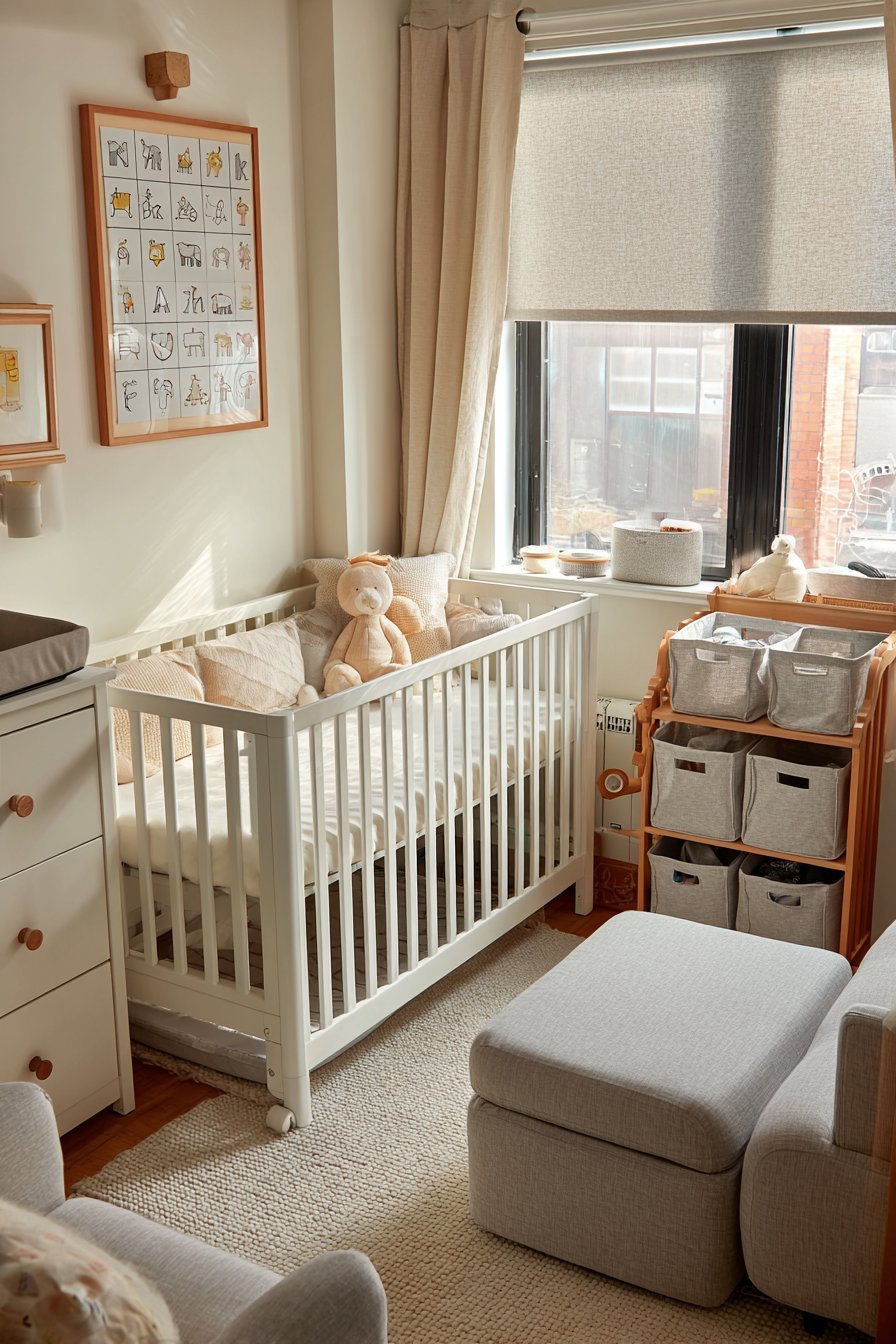
This practical nursery serves occasional visits without permanent commitment. A standard white crib with locked drop side sits in the corner. A compact dresser nearby holds essentials. A portable changing pad on top serves when needed. The multipurpose room maintains adult functionality. A daybed with trundle accommodates parent overnight stays. Durable grey cotton with washable slipcover ensures easy maintenance.
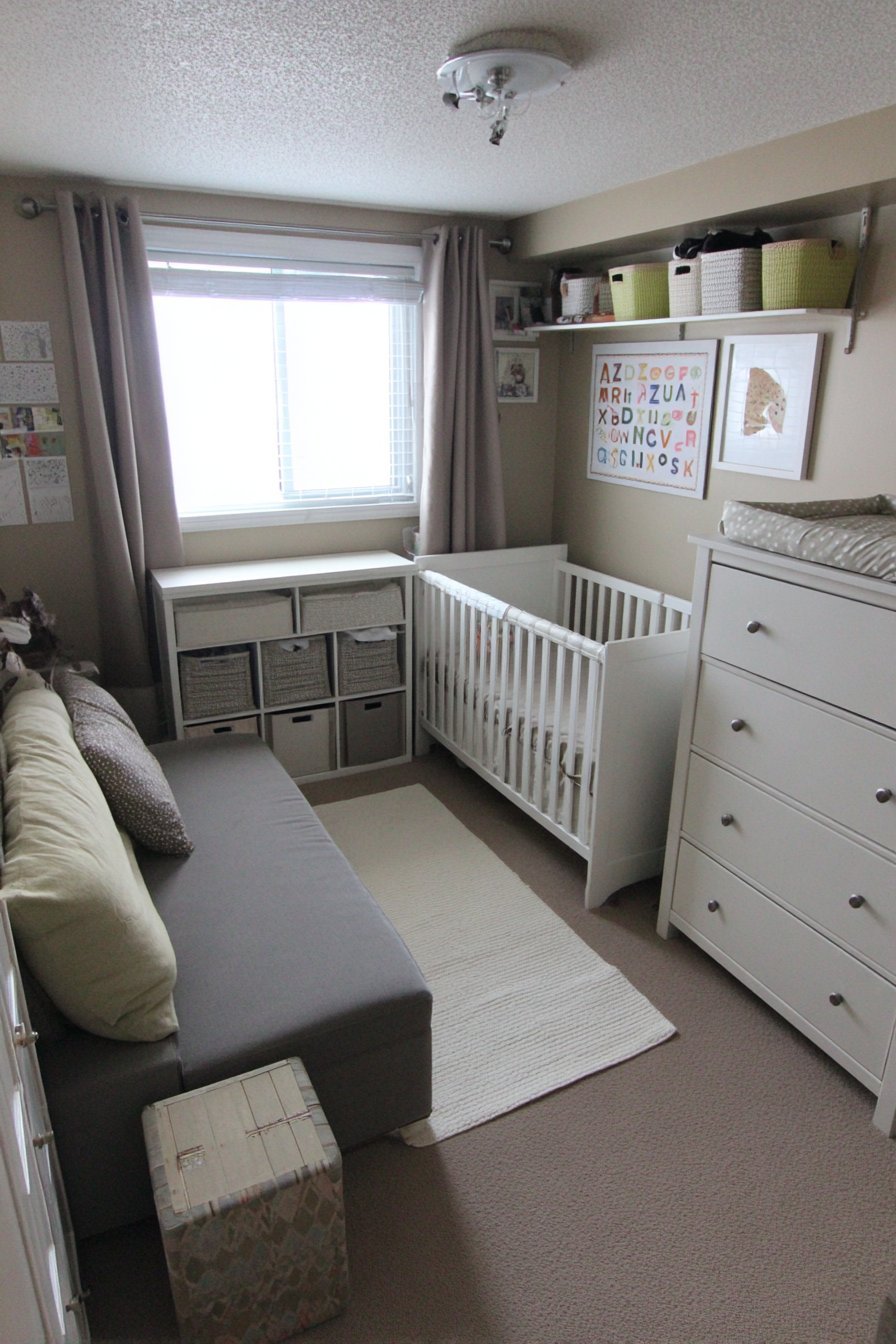
Storage solutions remain flexible and non-permanent. A clothing rack on wheels holds hanging outfits. Collapsible fabric bins store toys between visits. A few key items live permanently in the closet. Sliding doors keep baby items concealed when not needed. The walls in soft neutral beige work for dual purposes. Minimal nursery-specific decor avoids overwhelming the space.
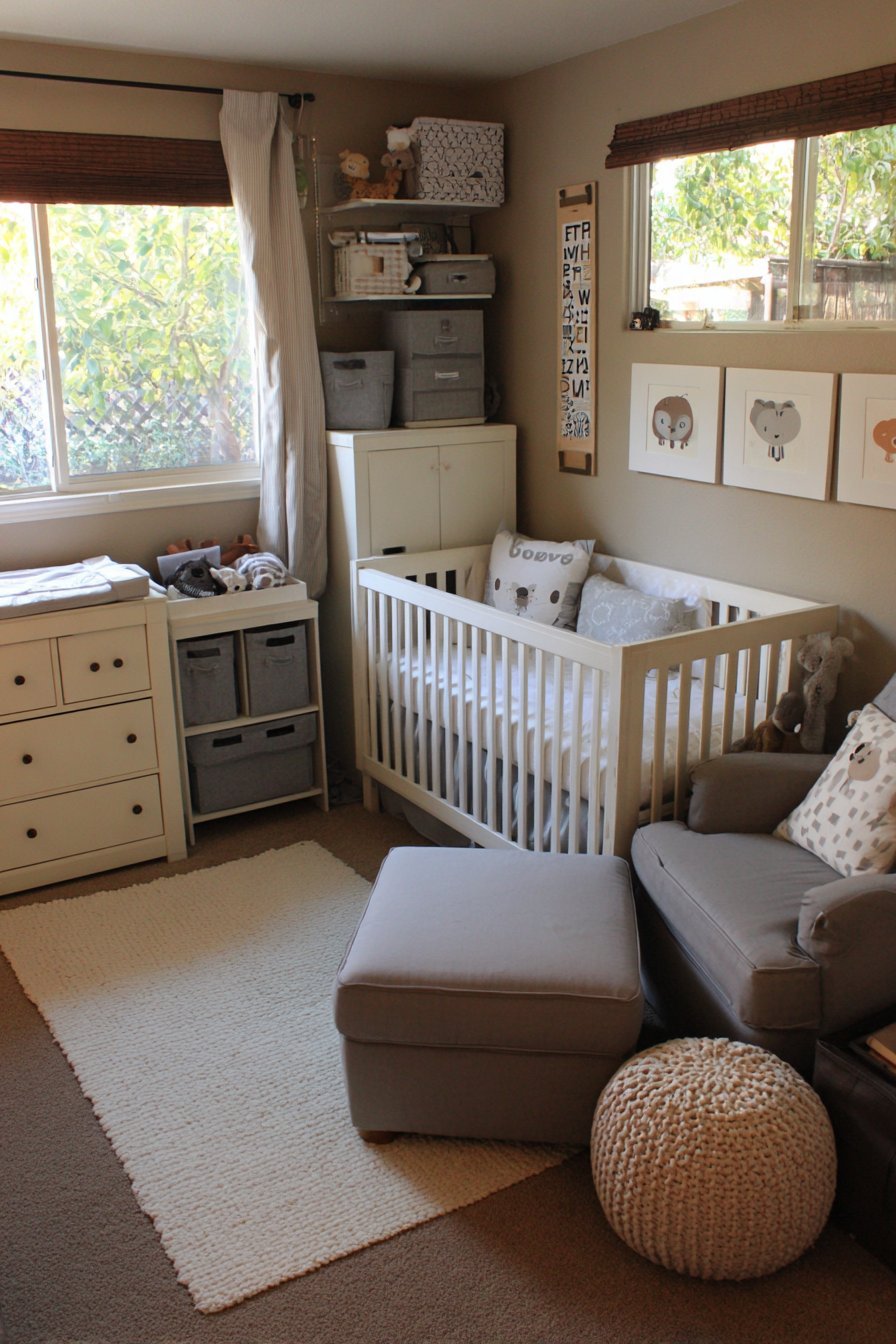
A simple framed print of alphabet animals adds gentle character. A peel-and-stick growth chart won’t damage walls. The existing upholstered armchair gains an additional lumbar pillow. This provides nursing support without replacing furniture. Window treatments consist of existing cellular shades. An added room-darkening liner makes them nursery-appropriate. Existing carpet in medium grey gets supplemented. A small washable rug in cream defines the baby care zone.
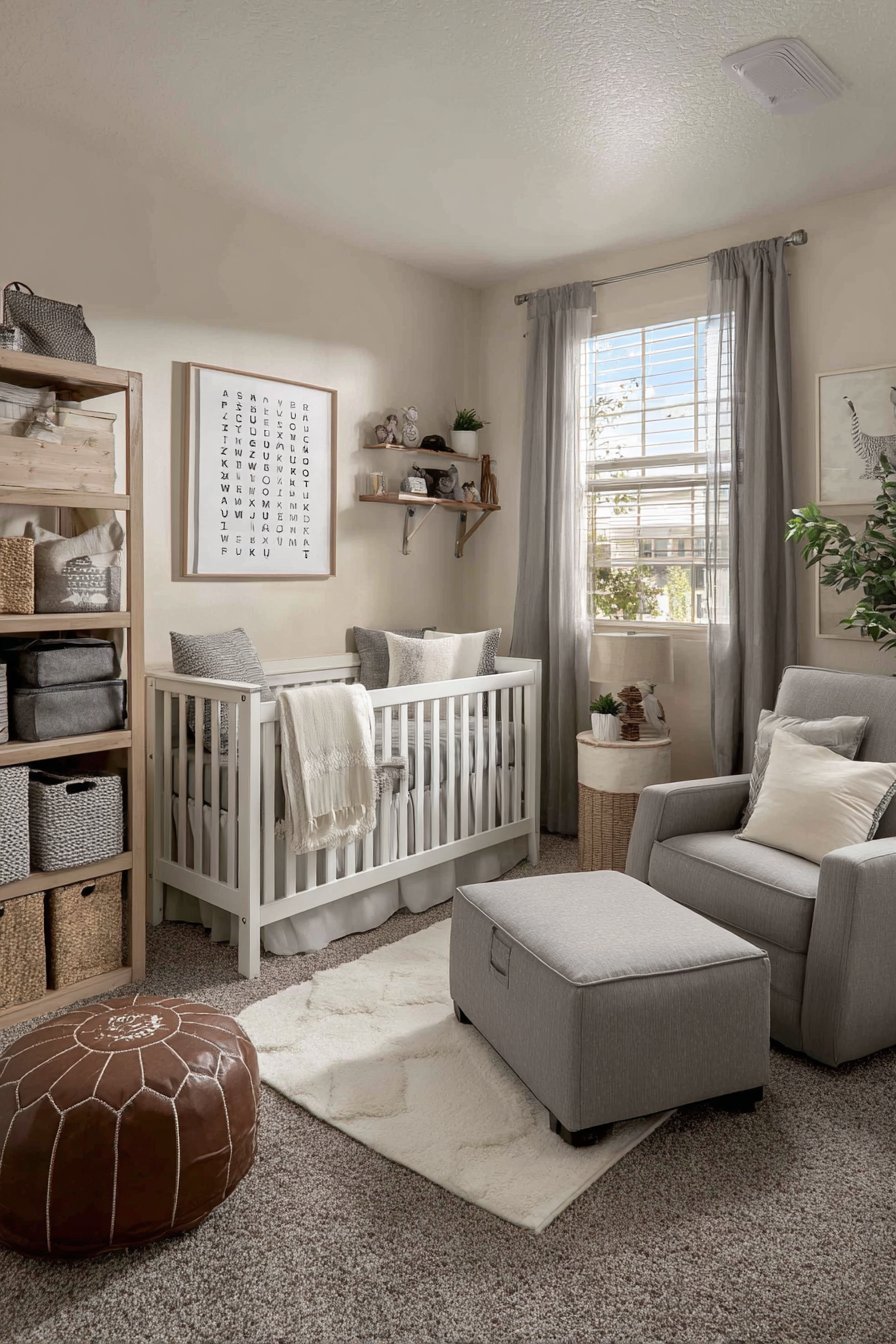
The adaptable approach emphasizes basics without major renovation. Safety features install without permanent changes. Portable and collapsible items store easily between visits. Multi-functional furniture serves both baby and guest needs. A portable sound machine provides sleep support. A small basket of board books and nightlight complete the essentials. The practical non-permanent setup integrates into existing spaces. No dedicated full-time nursery commitment required.
Key Design Tips:
- Use standard portable nursery equipment that stores easily
- Add baby-specific elements to existing adult furniture
- Choose non-permanent wall decorations like peel-and-stick
- Incorporate collapsible storage that tucks away between visits
- Supplement existing window treatments rather than replacing
- Define baby zone with small washable area rug
- Focus on safety basics without complete room renovation
- Maintain room’s dual functionality for multiple uses
20. Eco-Friendly Sustainable Choices
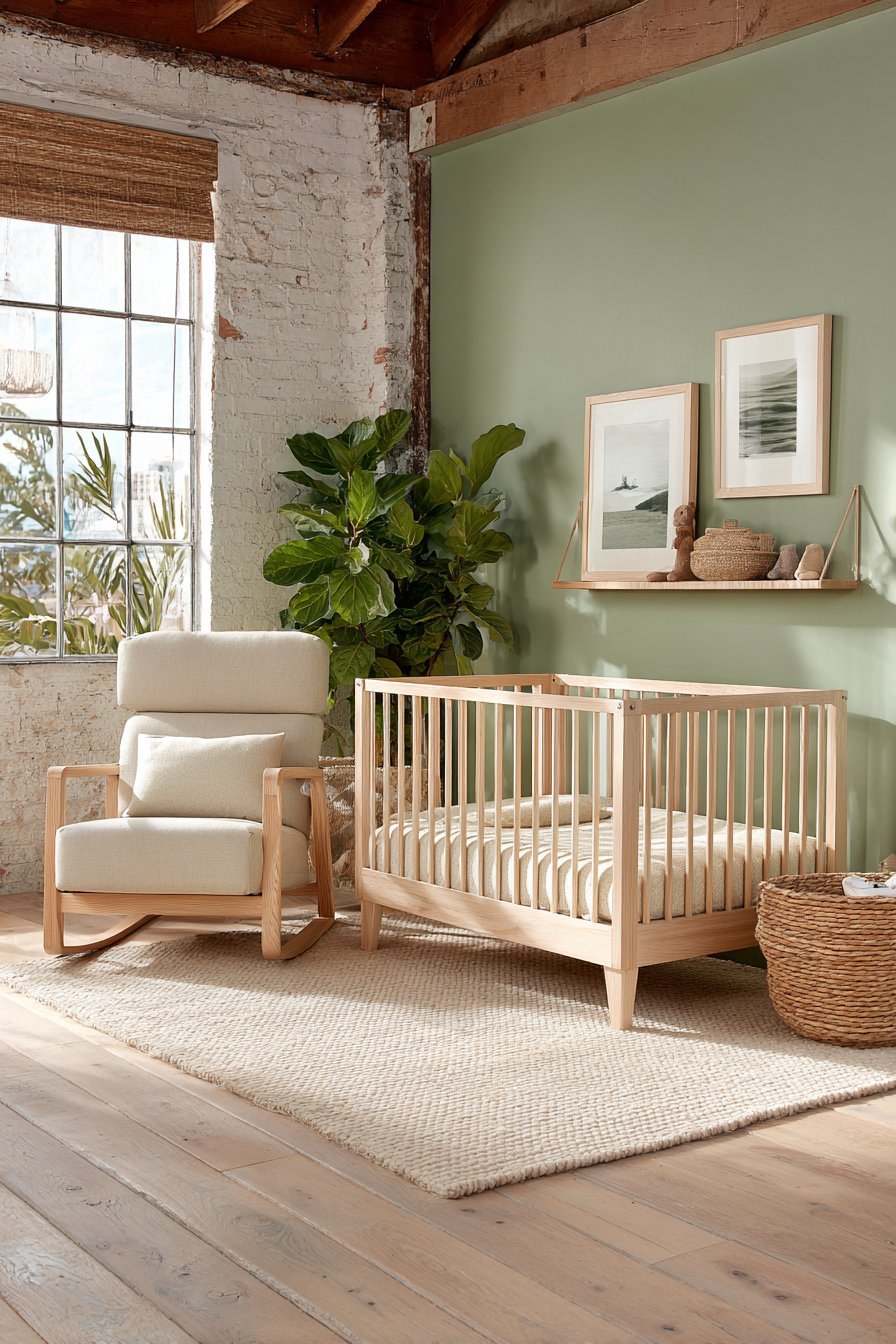
This eco-conscious nursery prioritizes environmental responsibility. Solid wood crib in natural unfinished maple comes from sustainably managed forests. Zero-VOC paint in soft sage green colors the walls. An antique dresser restored with non-toxic products provides storage. Organic cotton changing pad tops the dresser. Every material choice considers health and environment.
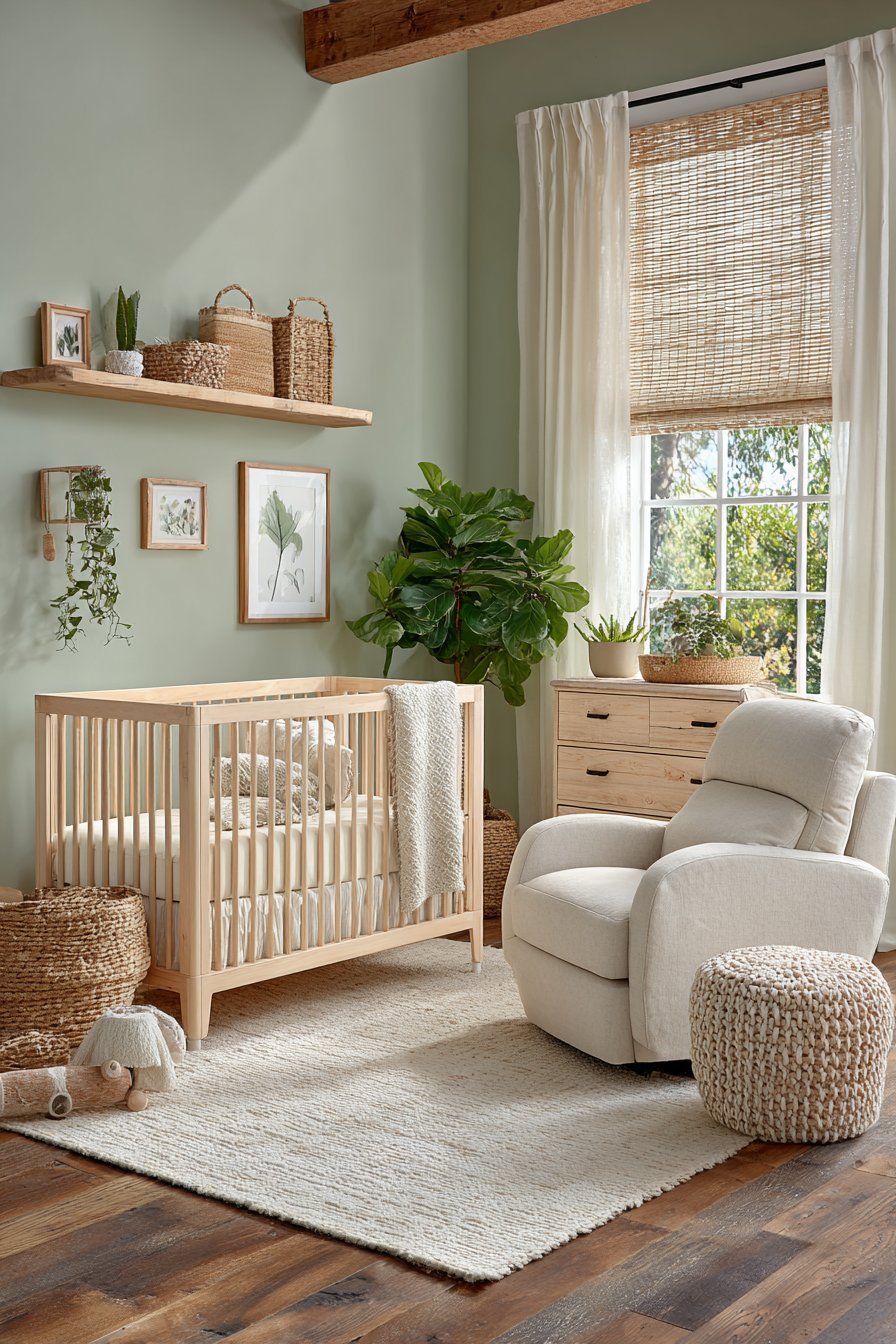
An upholstered glider features FSC-certified wood frame. Cushions contain natural latex and organic wool filling. GOTS-certified organic cotton covers them in natural oatmeal color. Reclaimed oak planks from old barn wood cover the floor. Visible nail holes and authentic weathering tell stories. A handwoven wool rug in natural undyed cream adds softness.
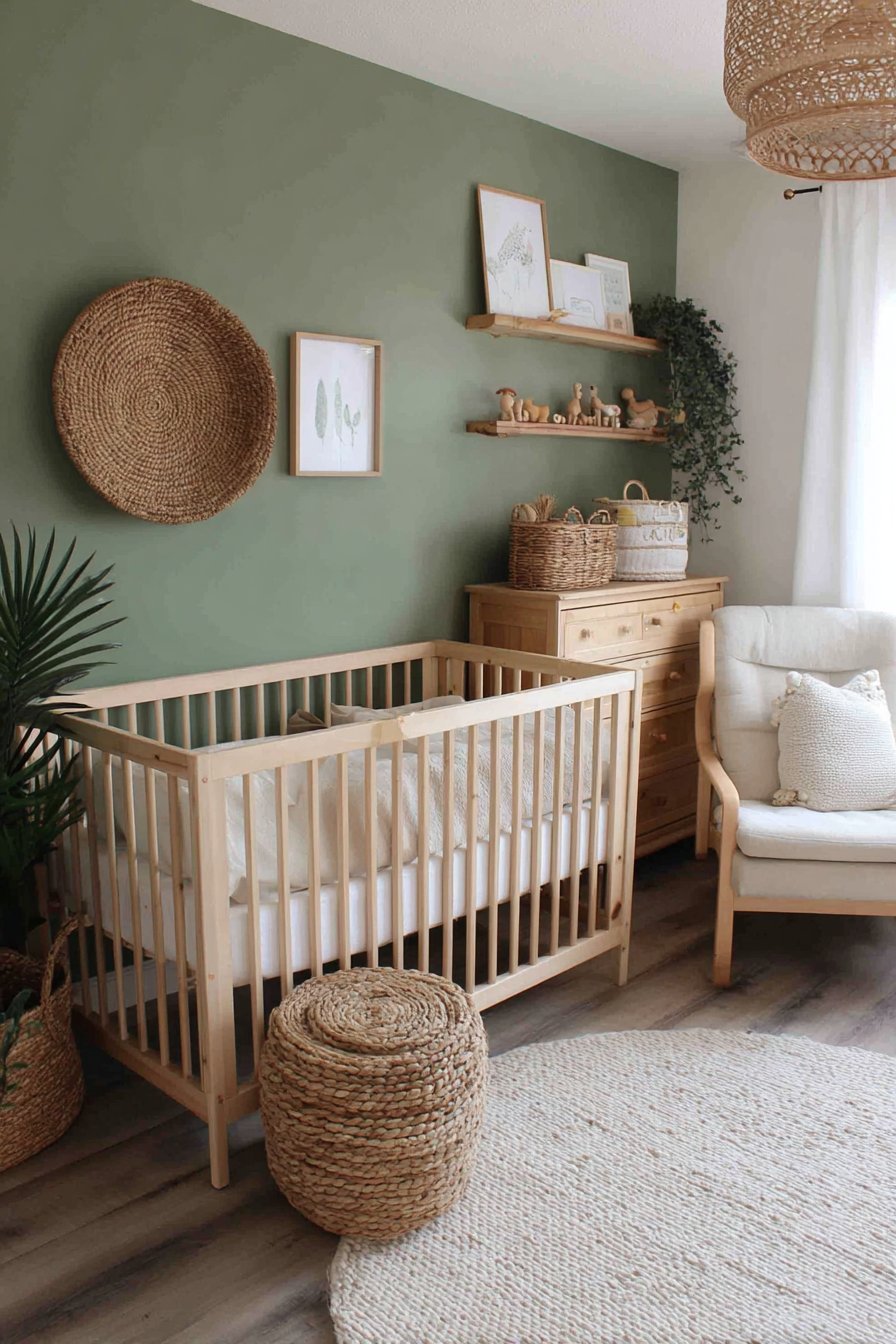
Sustainable choices appear throughout the design. Organic cotton curtains in unbleached natural color dress the windows. Bamboo roman shades provide light control from renewable resource. Secondhand items were carefully selected and restored. Vintage wooden toys, reclaimed wood floating shelves, and thrifted picture frames reduce consumption. Storage includes woven seagrass baskets and organic cotton bins. Repurposed wooden crates offer rustic charm.
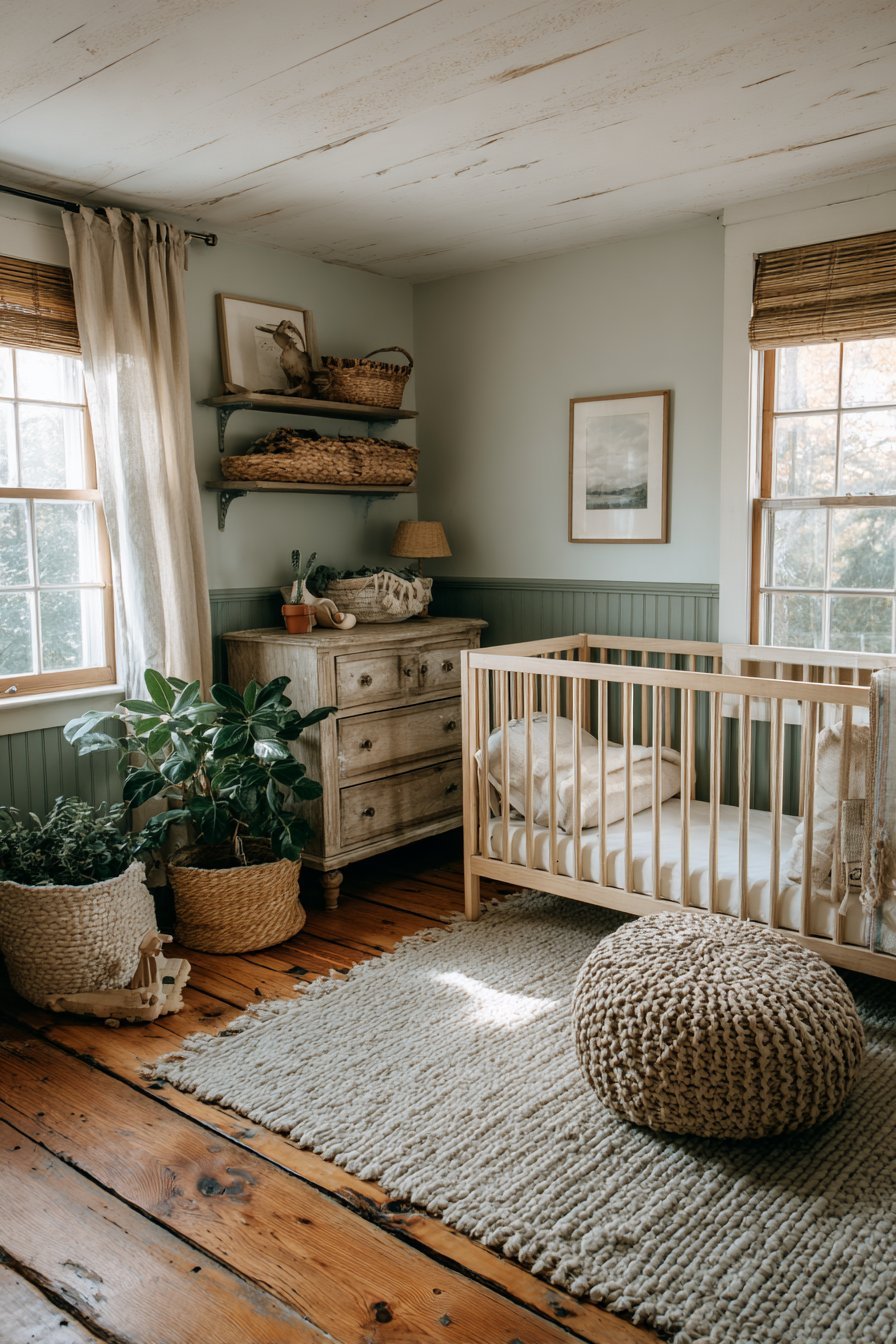
Nature photographs in sustainably sourced wood frames adorn walls. A small fabric wall hanging uses organic cotton. Bedding consists entirely of organic certified cotton in natural colors. A potted snake plant improves air quality from safe location. Lighting includes vintage lamp with LED bulbs. Natural soy wax candles on high shelf provide ambiance. The room demonstrates sustainability without sacrificing style. Muted natural color palette celebrates honest materials. Abundant natural daylight streams through windows. The thoughtful choices create gentle environmental footprint. Quality sustainable pieces provide long-term value.
Key Design Tips:
- Source solid wood furniture from sustainably managed forests
- Choose zero-VOC paints to protect indoor air quality
- Restore vintage furniture instead of buying new when possible
- Select organic certified textiles including cotton and wool
- Use reclaimed wood for flooring and shelving
- Incorporate natural, unbleached fabrics in their original colors
- Add air-purifying plants in safe elevated locations
- Choose LED lighting to reduce energy consumption
- Support craftsmanship through handwoven and handmade items
Why These Nursery Designs Are the Best
These nursery designs represent thoughtful approaches to creating nurturing spaces for infants and parents. Each concept demonstrates how intentional material selection, color theory, and spatial planning create environments supporting development and family bonding. The designs span multiple aesthetic directions while maintaining core functionality.
The versatility of these concepts allows adaptation to different home styles and budgets. Scandinavian minimalism offers timeless appeal through natural materials and uncluttered spaces. Bohemian approaches celebrate handcrafted elements and textural layering. Contemporary designs prove nurseries can be sophisticated through bold choices and quality finishes. Traditional vintage styles honor craftsmanship and heirloom quality.
Practical considerations make these designs successful in real-world application. Convertible furniture reduces long-term costs while adapting to changing needs. Thoughtful storage solutions accommodate the inevitable accumulation of baby items. Durable materials like hardwood flooring, natural fiber rugs, and quality upholstery withstand years of use. Multi-functional pieces maximize space efficiency in homes of all sizes.
Color theory plays an important role in nursery success. Soft neutrals create calm environments supporting healthy sleep patterns. Muted colors provide visual interest without overstimulation. Natural wood tones add warmth while maintaining versatility. Carefully chosen accent colors bring personality without overwhelming developing senses. These approaches recognize that nurseries serve both infant needs and parental aesthetic preferences.
Sustainability considerations appear throughout successful nursery design. Reclaimed and vintage materials reduce environmental impact while adding character. Organic textiles protect developing respiratory systems from harmful chemicals. Quality construction ensures pieces serve multiple children or generations. These choices demonstrate that environmental responsibility and beautiful design complement rather than conflict.
The spatial planning in these concepts addresses real family needs. Dedicated feeding areas with proper lighting support nighttime care. Accessible storage encourages organization despite exhaustion. Clear floor spaces allow safe movement as babies develop mobility. Window treatments balance natural light with sleep requirements. These practical elements separate theoretical design from lived experience.
Conclusion
These twenty nursery designs demonstrate that thoughtful planning creates spaces serving both practical needs and aesthetic desires. The key principles include choosing quality materials that age gracefully, planning for growth and change, balancing color and pattern carefully, and prioritizing safety without sacrificing style. Each approach offers valuable lessons regardless of your preferred aesthetic direction.
Successful nursery design emerges from understanding your family’s specific needs and lifestyle. Consider your daily routines, available space, budget constraints, and long-term plans. Start with essential furniture and layer in personality through textiles, art, and accessories. Quality foundational pieces combined with personal touches create rooms feeling both beautiful and deeply functional.
Your nursery awaits creation through thoughtful choices and creative expression. These designs prove that diverse approaches all lead to nurturing environments. Trust your instincts, adapt ideas to your circumstances, and enjoy the process of preparing this special space. The perfect nursery reflects your family’s unique story while supporting your baby’s earliest experiences.
