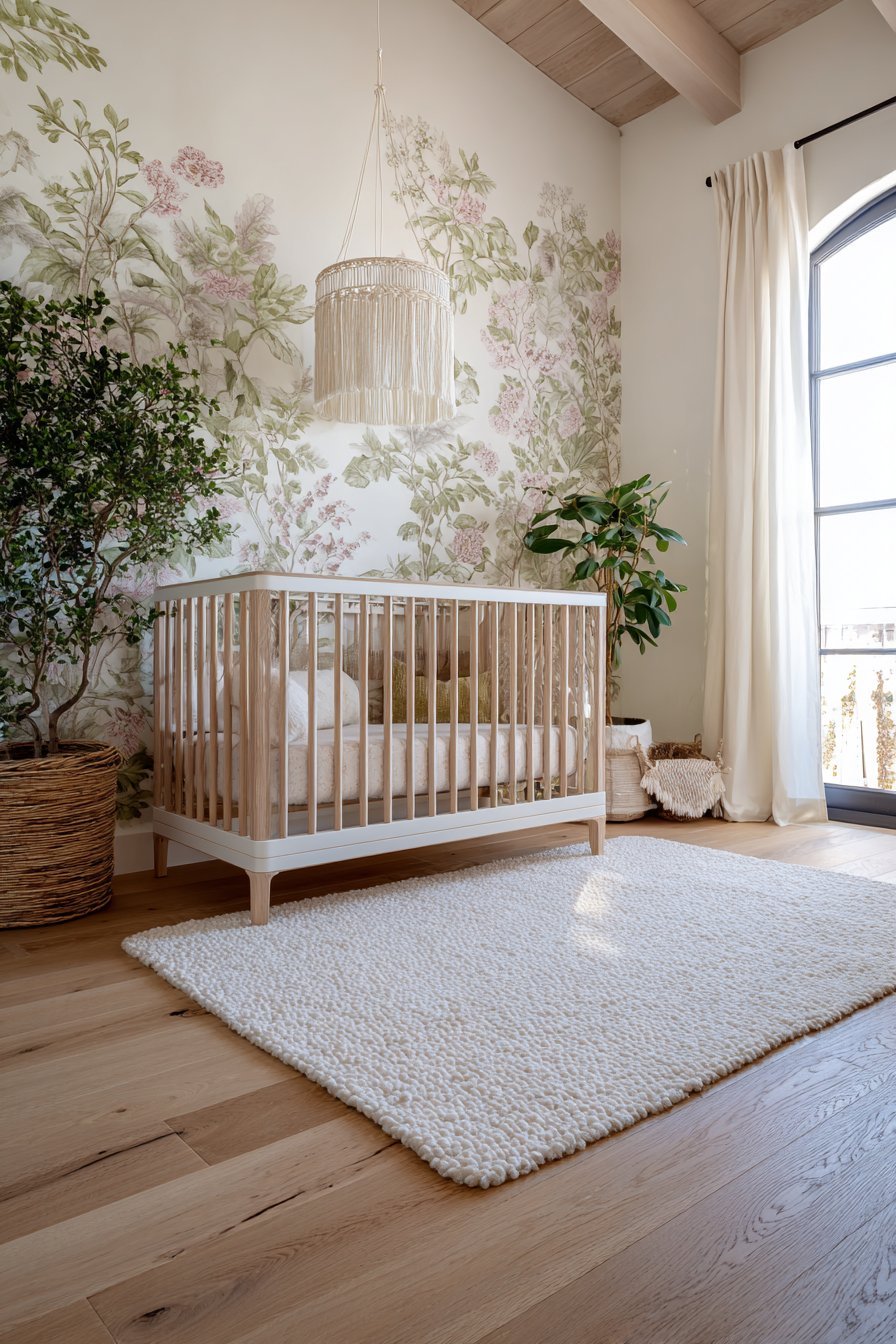
The accent wall is one of the most powerful design tools in any room — and nowhere does it deliver more transformative impact than in a nursery. A single thoughtfully designed wall can establish the entire personality of the room, create a breathtaking focal point behind the crib, and give the nursery the kind of distinctive, character-rich identity that elevates it from a simply decorated space into somewhere genuinely extraordinary. For parents who want their nursery to feel truly special, the accent wall is where that ambition becomes reality.
The nursery accent wall has evolved enormously in recent years. Where once a feature wall meant little more than a contrasting paint color, today’s options range from hand-painted murals and botanical wallpapers to dimensional timber cladding, fabric paneling, and hand-lettered typographic installations. Each approach brings its own aesthetic character, emotional tone, and degree of visual drama — giving parents an extraordinary range of creative possibilities at every budget level.
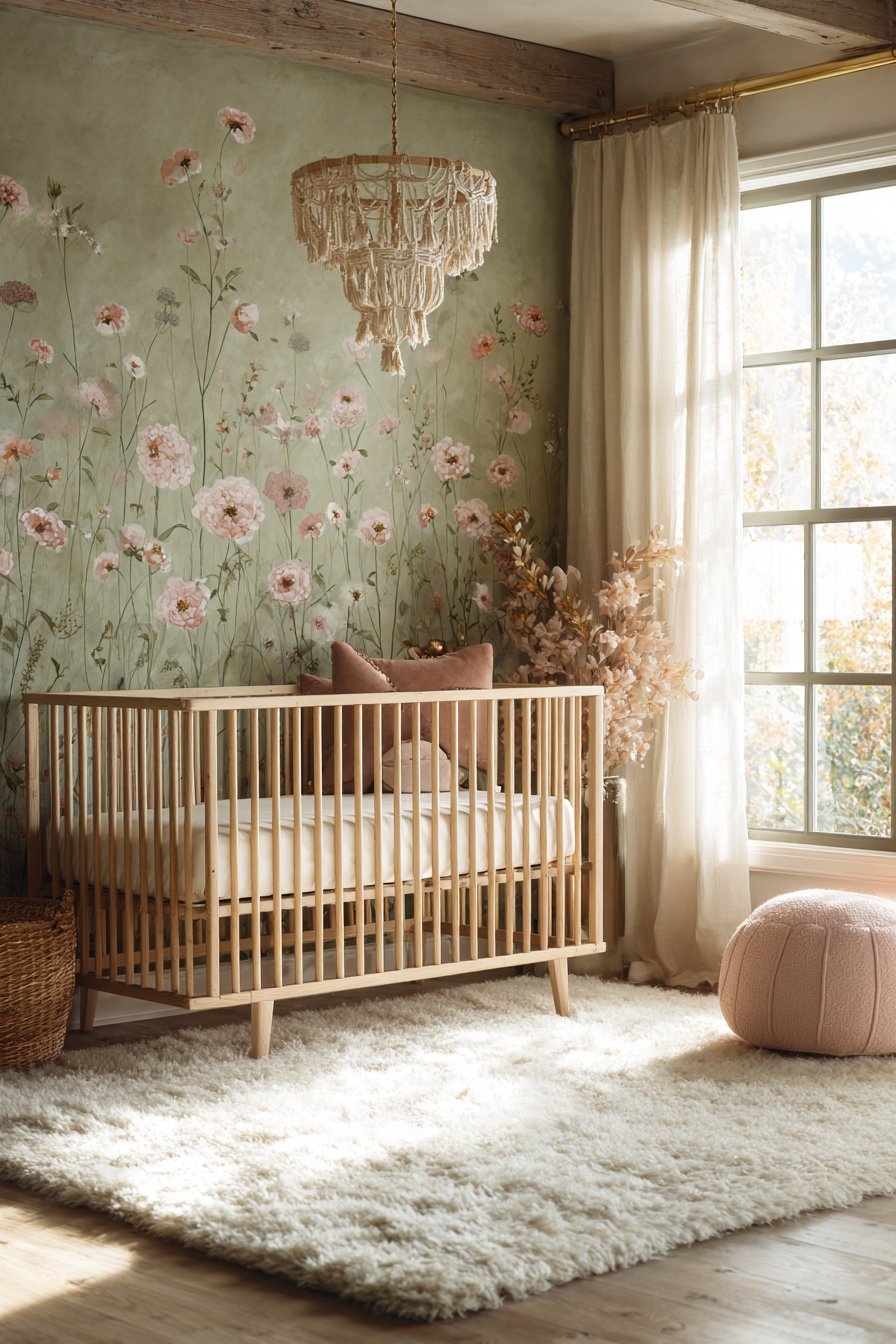
This article explores eight of the most beautiful, inventive, and characterful nursery accent wall ideas available today. Whether your nursery style is soft and romantic, bold and modern, nature-inspired, or playfully whimsical, at least one of these ideas will speak directly to your vision and help you create a focal wall that makes your nursery feel genuinely, memorably beautiful.
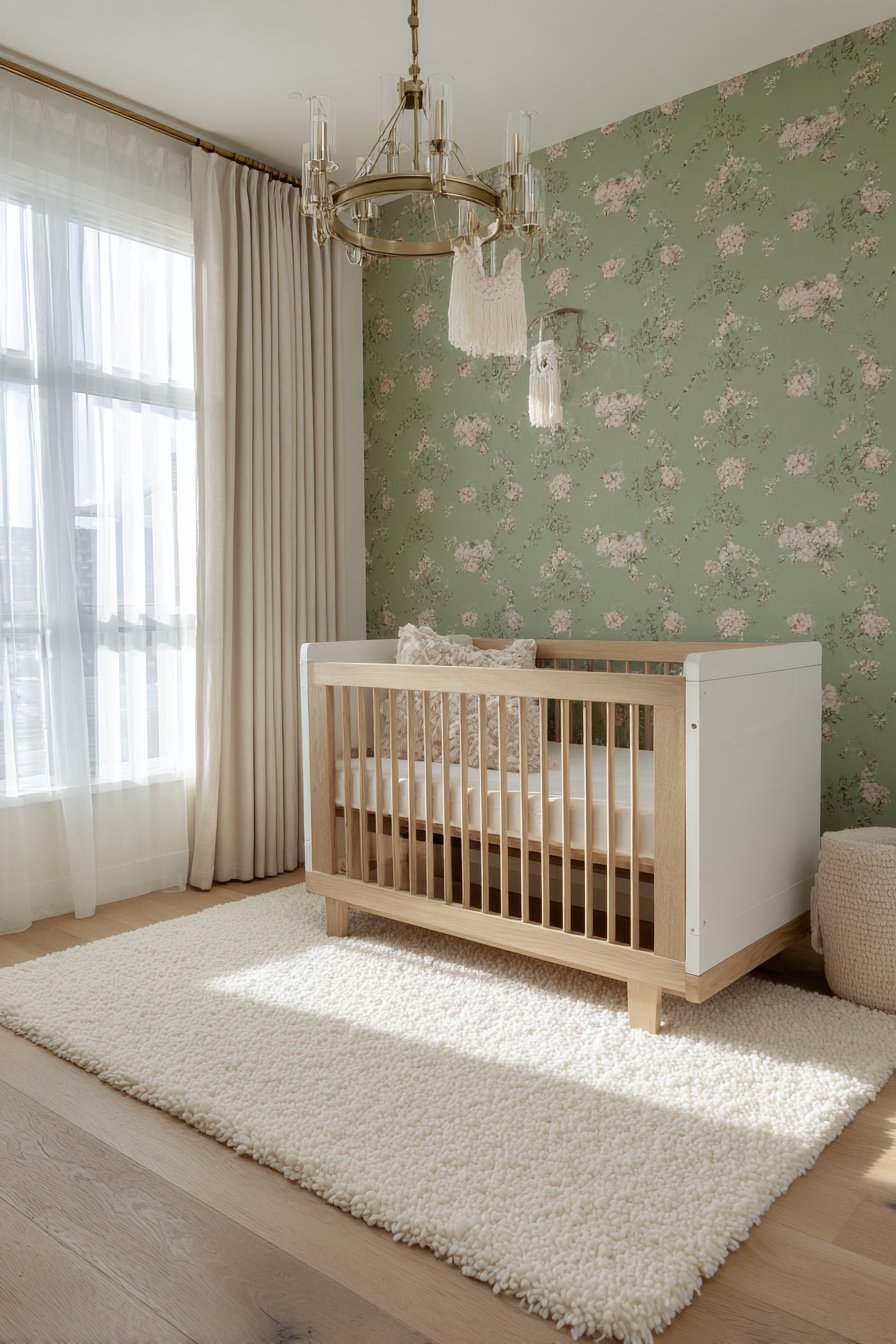
1. A Hand-Painted Mural for One-of-a-Kind Magic
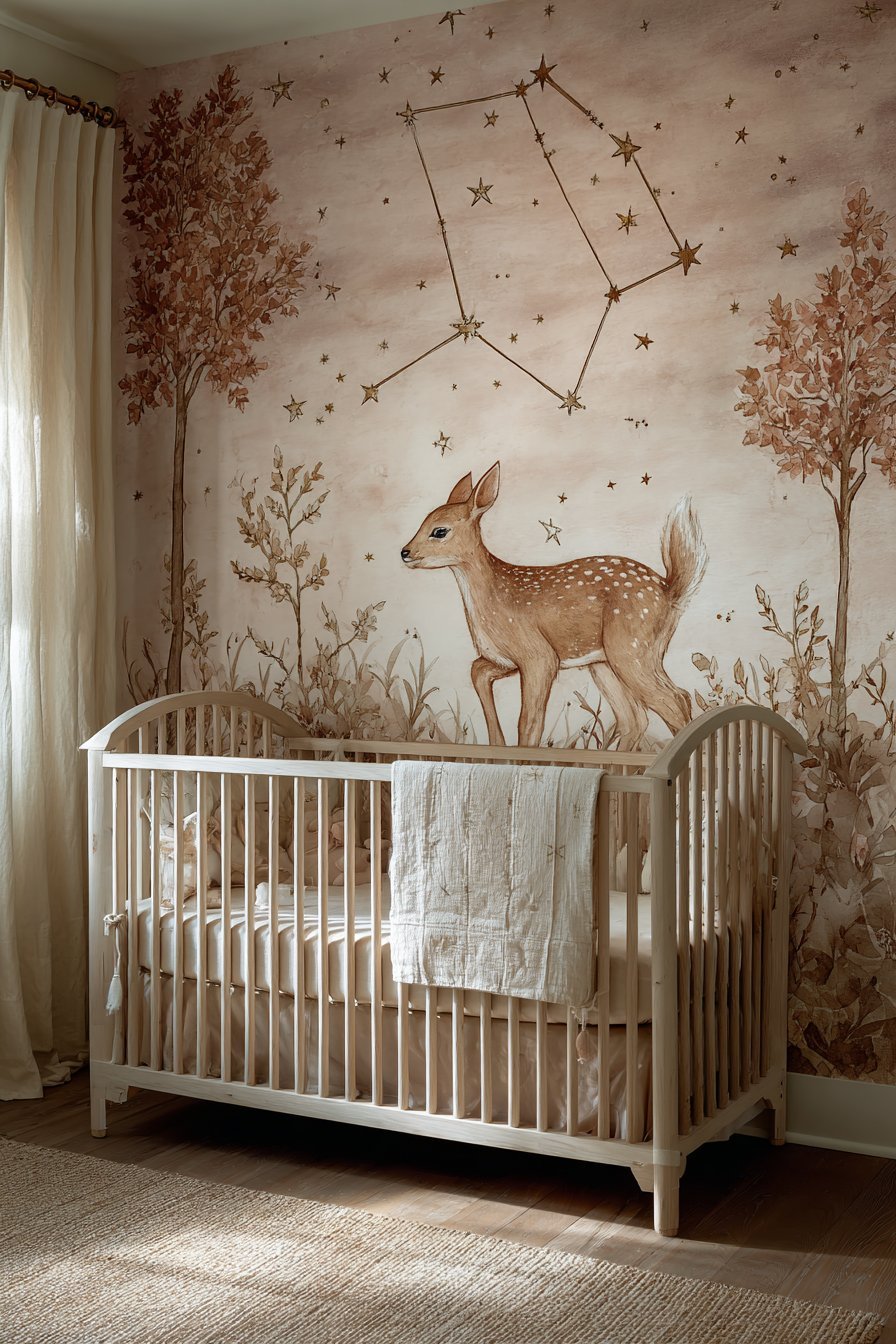
A hand-painted nursery mural is the most personal, most dramatic, and most genuinely one-of-a-kind accent wall treatment available. Unlike wallpaper or paint effects that can be reproduced in any nursery, a mural created specifically for your room — your colors, your theme, your child’s name woven into the design — is completely and irreplaceably yours. This quality of absolute uniqueness is something no commercial product can offer, and it gives the nursery an emotional richness that parents and children feel every time they enter the room.
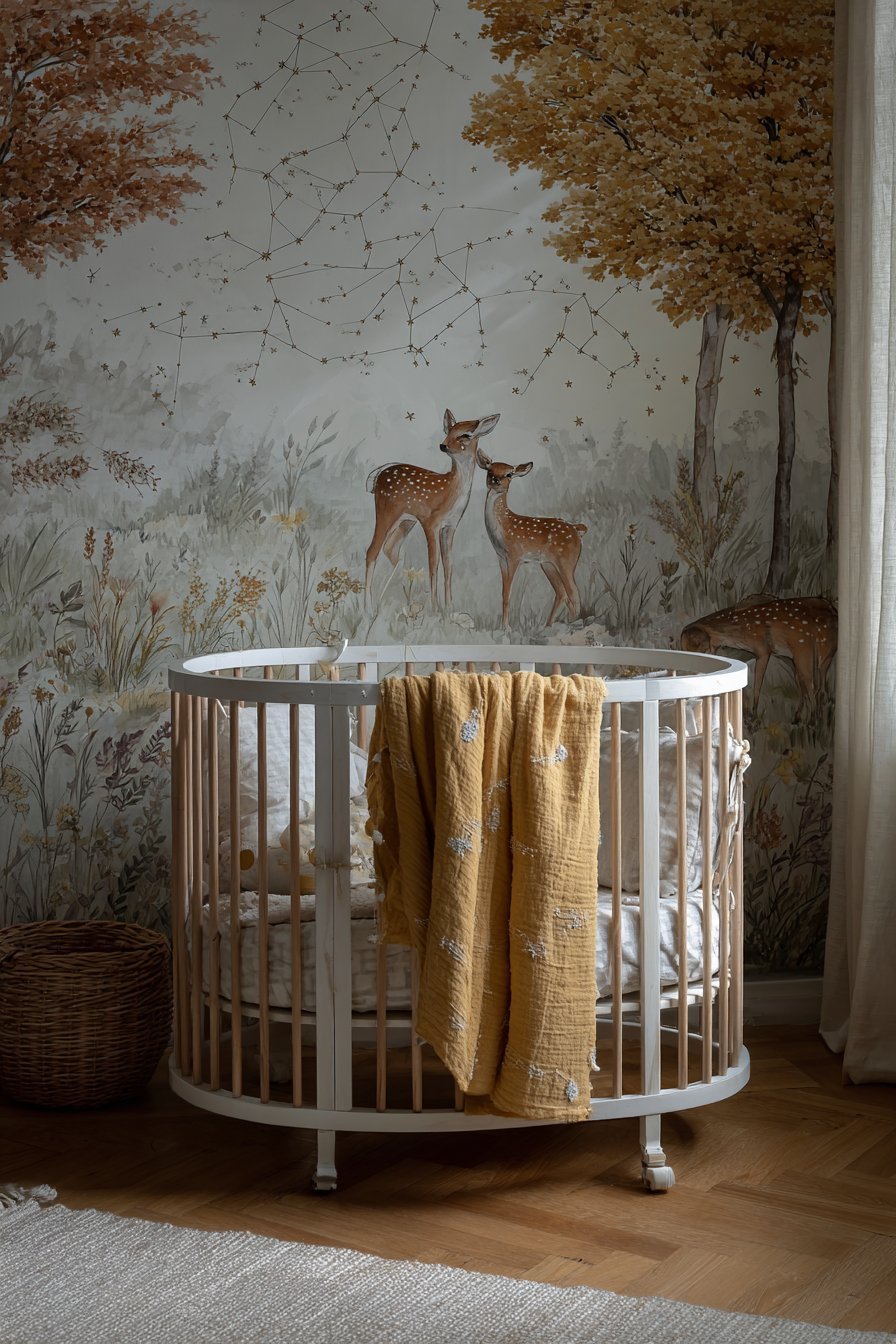
Professional mural artists who specialize in nursery and children’s room work can translate your vision into a breathtaking painted environment — trailing botanical gardens, enchanted forests with hidden animals, celestial skies with painted constellations, or soft watercolor landscape scenes that wrap around all four walls. The cost of commissioning a professional mural varies widely by artist and complexity, but even a modest hand-painted feature wall from a local illustrator creates an extraordinary focal point at a surprisingly accessible price point.
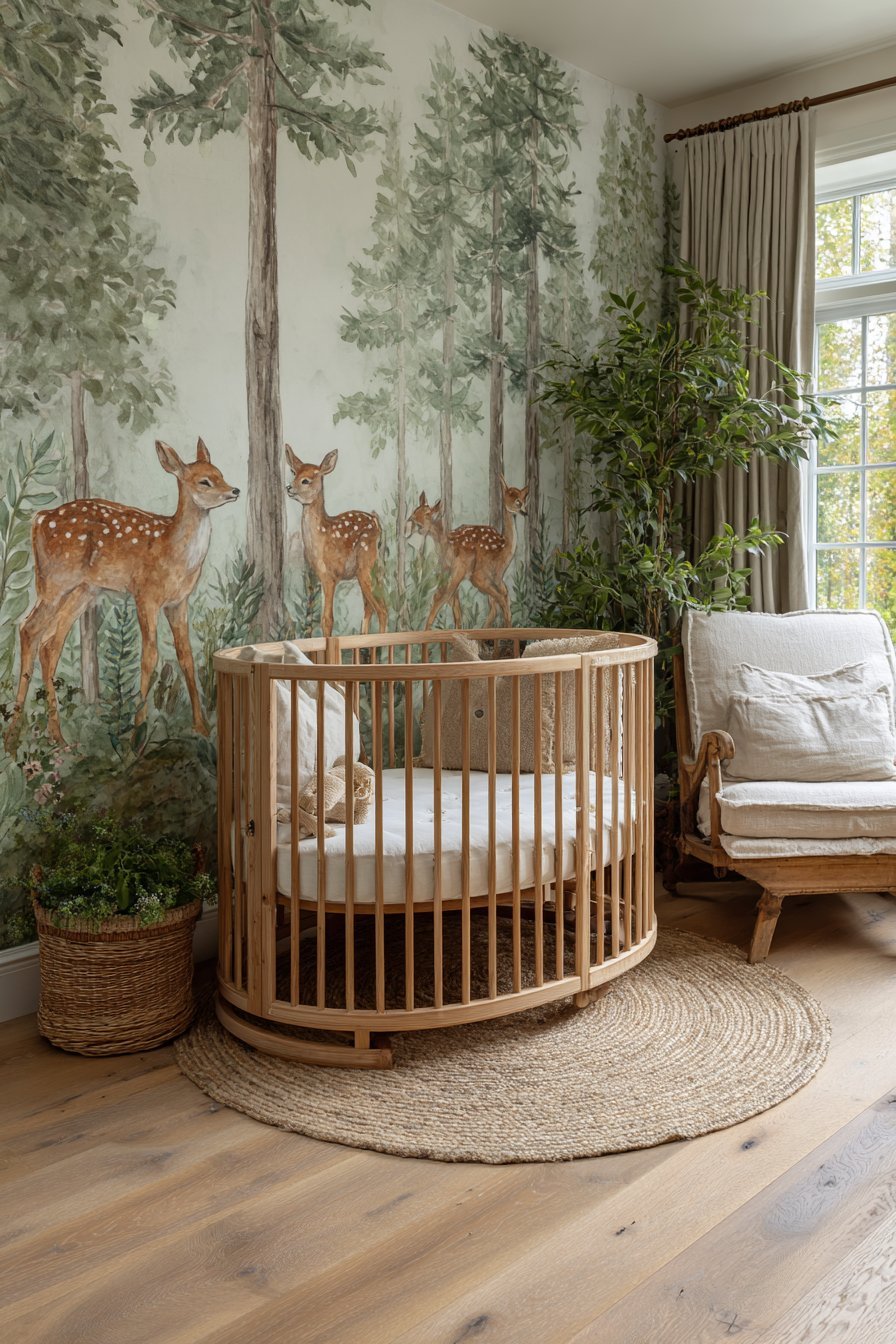
For the creatively confident parent, a DIY painted mural is entirely achievable with basic materials and a willingness to embrace imperfection. Simple mountain landscapes in a palette of soft earthy tones, abstract color wash backgrounds with painted botanical overlays, or large-scale geometric designs can all be executed with chalk paint, wall paint, and basic brushes by someone with no formal art training. The slightly imperfect quality of a hand-painted DIY mural often adds to its charm — giving the nursery an authenticity and handmade warmth that a professionally executed piece occasionally lacks.
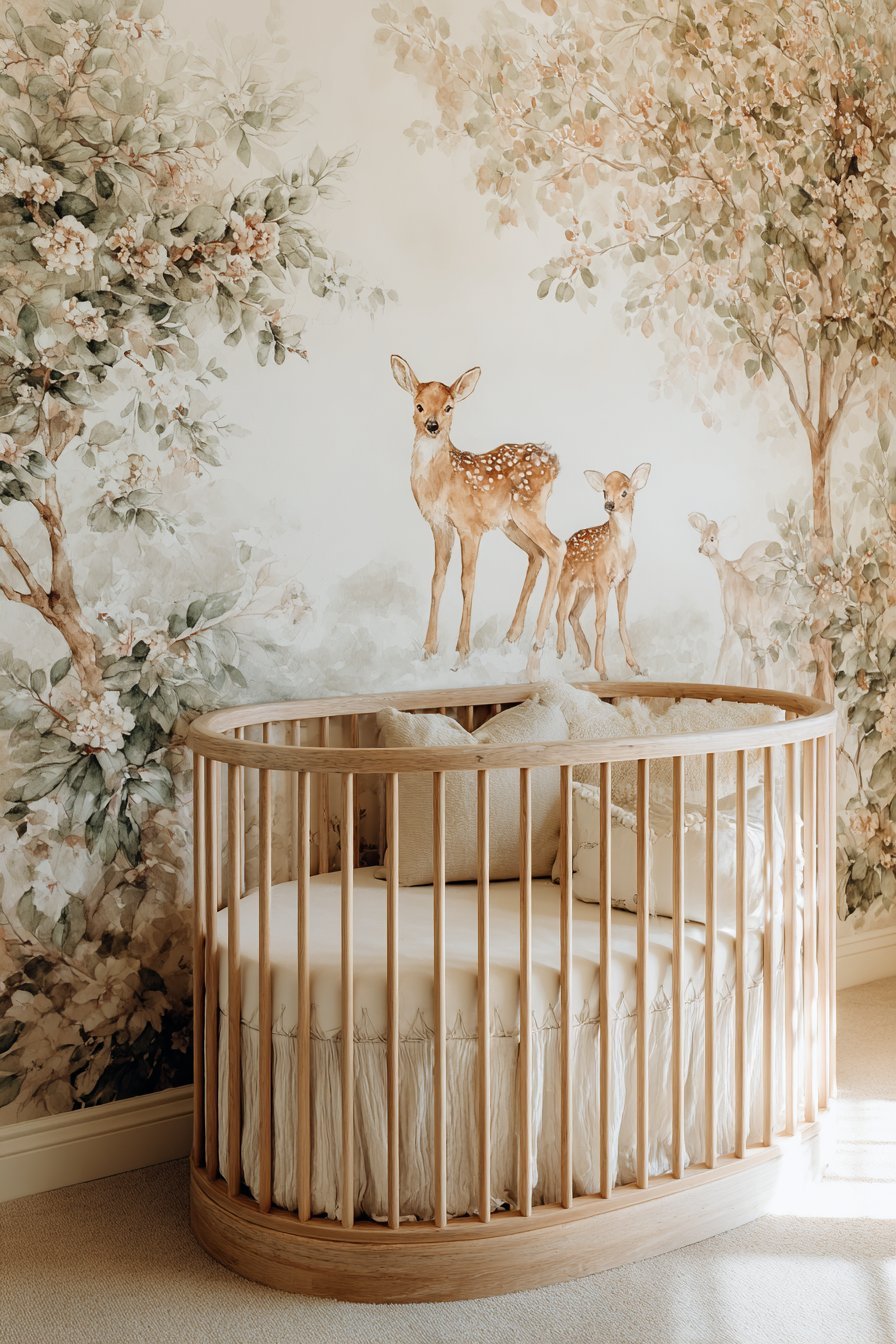
- Commission a local mural artist to create a custom design in your nursery’s specific color palette
- Discuss the design thoroughly — provide inspiration images, color swatches, and theme references
- For a DIY mural, start with a simple composition — mountains, abstract shapes, or a single large botanical form
- Use chalk paint or matte wall paint for DIY murals — these forgive mistakes and dry quickly for easy correction
- Seal a completed DIY mural with a clear matte varnish to protect it from cleaning and moisture
2. Botanical or Scenic Wallpaper for Immersive Beauty
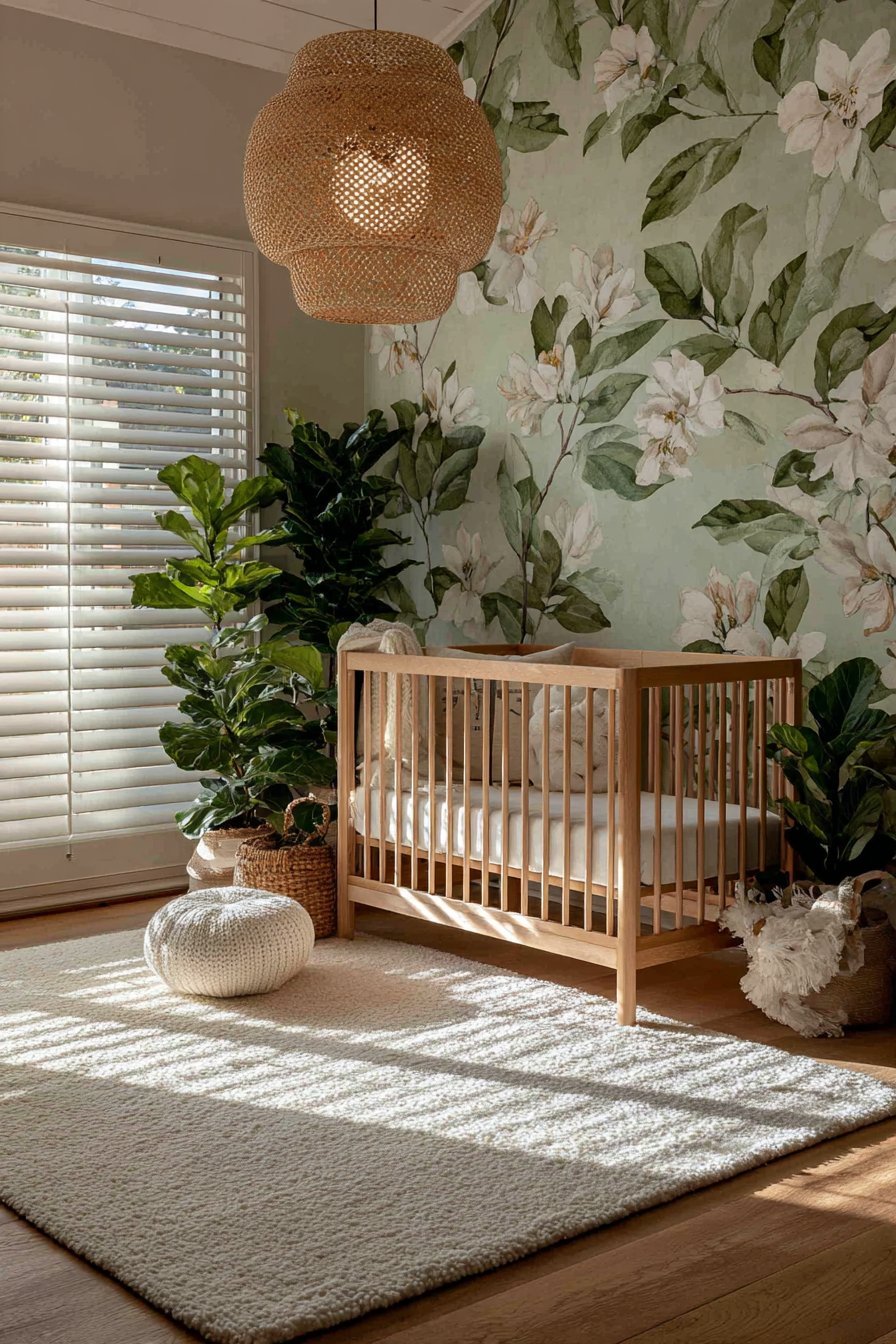
A single wall of beautifully chosen wallpaper creates more visual impact per square meter than almost any other nursery design intervention. Where a painted accent wall creates a backdrop, a wallpapered feature wall creates a world — an immersive botanical, scenic, or illustrated environment that transforms the crib wall into something genuinely spectacular. The right wallpaper pattern immediately establishes the nursery’s entire design identity and sets the emotional tone for everything else in the room.
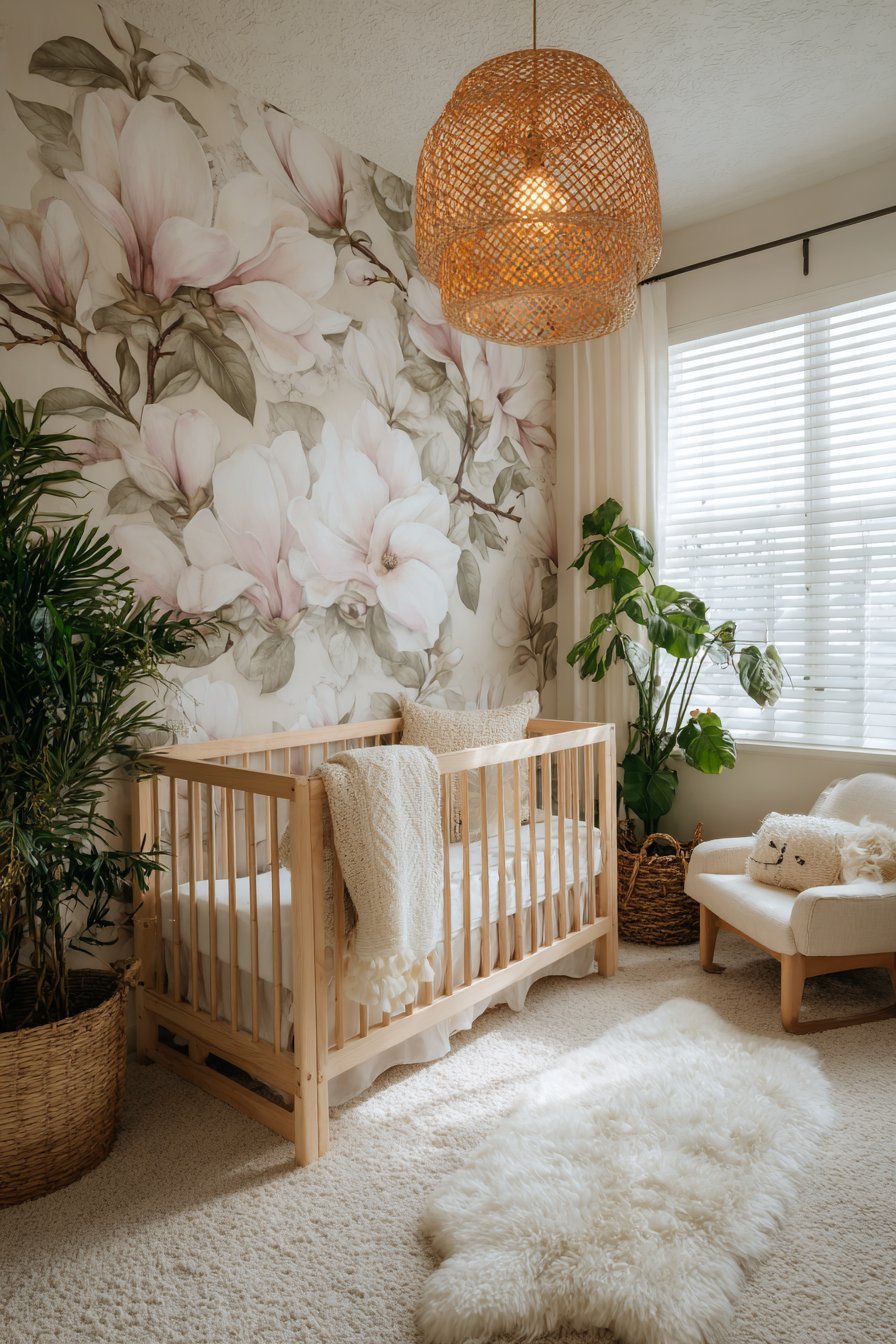
Botanical and floral wallpapers in soft, muted tones are among the most enduringly popular nursery accent wall choices. Oversized botanical prints — painted watercolor leaves, trailing vines, magnolia branches, or wildflower meadow scenes in dusty rose, sage, and antique white — create the dreamy, garden-like atmosphere that is universally associated with the most beautiful nursery design. These large-scale botanical designs look especially stunning behind a white or natural timber crib, where the contrast between the crisp, simple furniture and the richly illustrated wall creates a composition of real visual poetry.
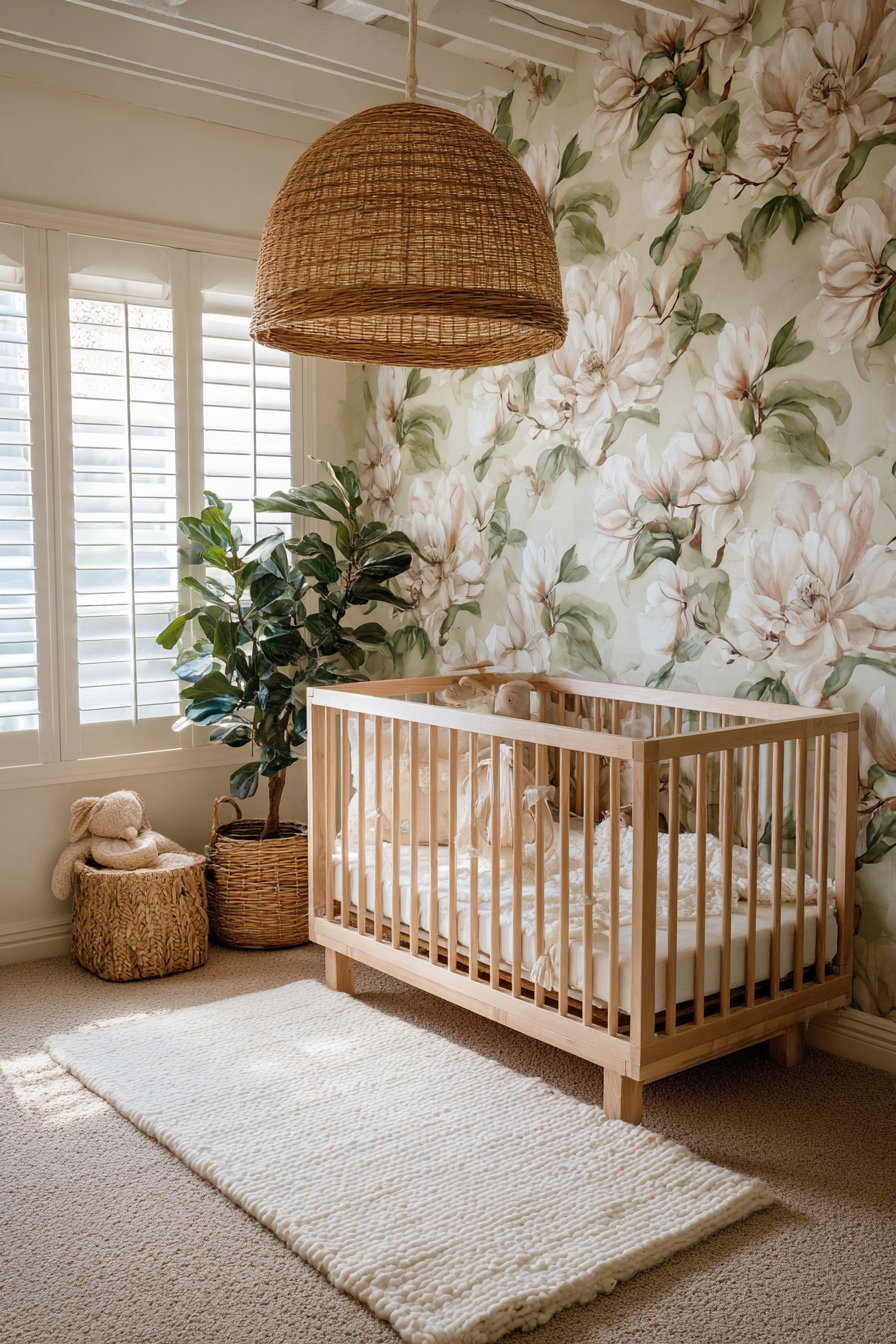
Scenic mural wallpapers — panoramic landscape designs that wrap around the feature wall in a single continuous image — represent the most dramatic end of the wallpaper spectrum. A hand-drawn forest scene, a painted mountain range at dusk, a soft watercolor cityscape, or an illustrated jungle panorama creates a nursery accent wall that functions as a genuine work of art. These mural papers are available from specialist wallpaper studios at a range of price points and can be ordered to custom dimensions to fit the exact proportions of your crib wall perfectly.
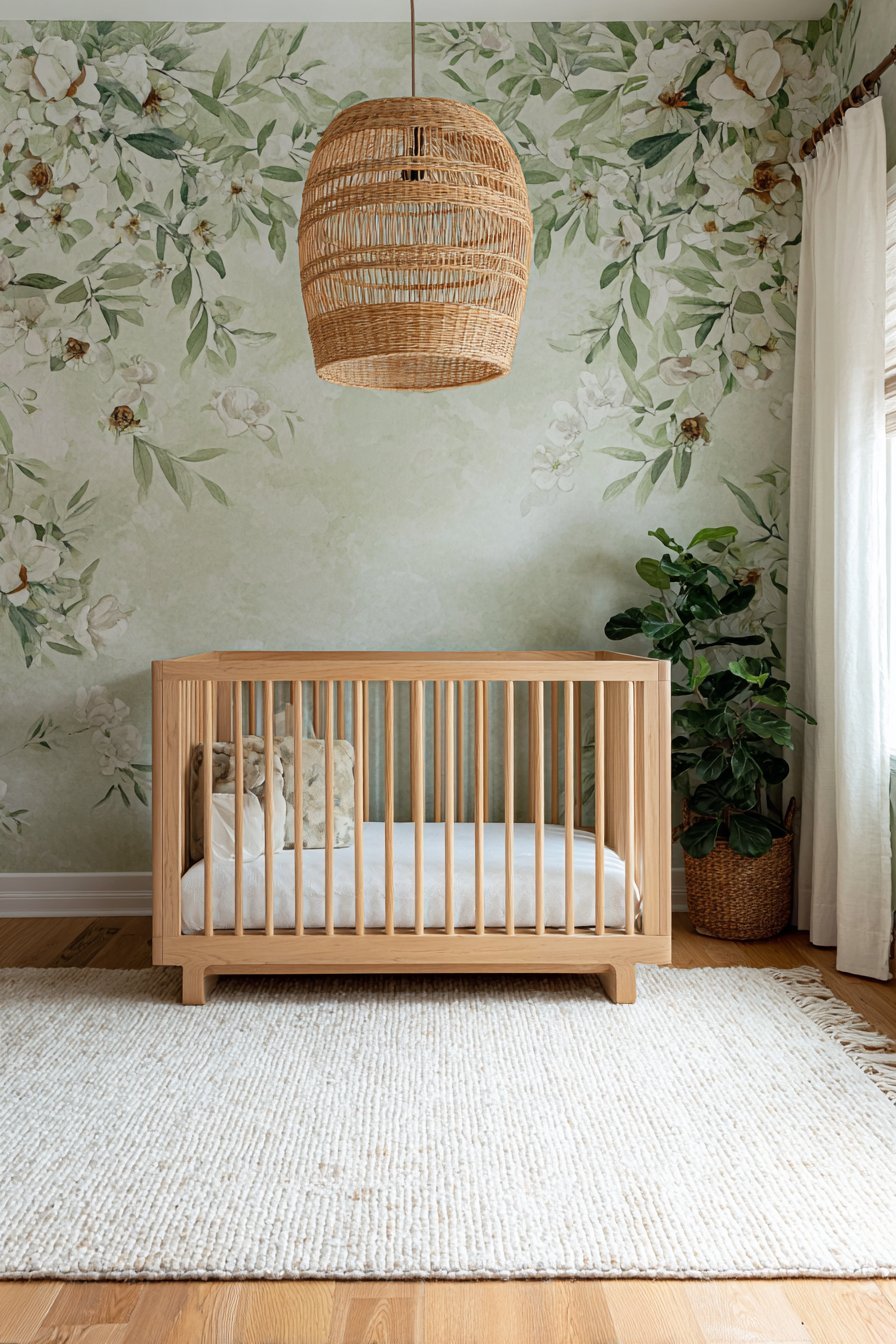
- Choose a wallpaper with a soft, painterly or watercolor quality for the most dreamy nursery atmosphere
- Measure the crib wall precisely and order wallpaper with a 10–15% overage to account for pattern matching
- Pair a bold botanical or scenic feature wall with plain coordinating paint on remaining walls
- Invest in quality wallpaper paste and follow the manufacturer’s hanging instructions precisely for a professional result
- Use a specialist nursery wallpaper installer for mural papers — precise alignment is critical for panoramic designs
3. Shiplap or Timber Cladding for Warmth and Texture
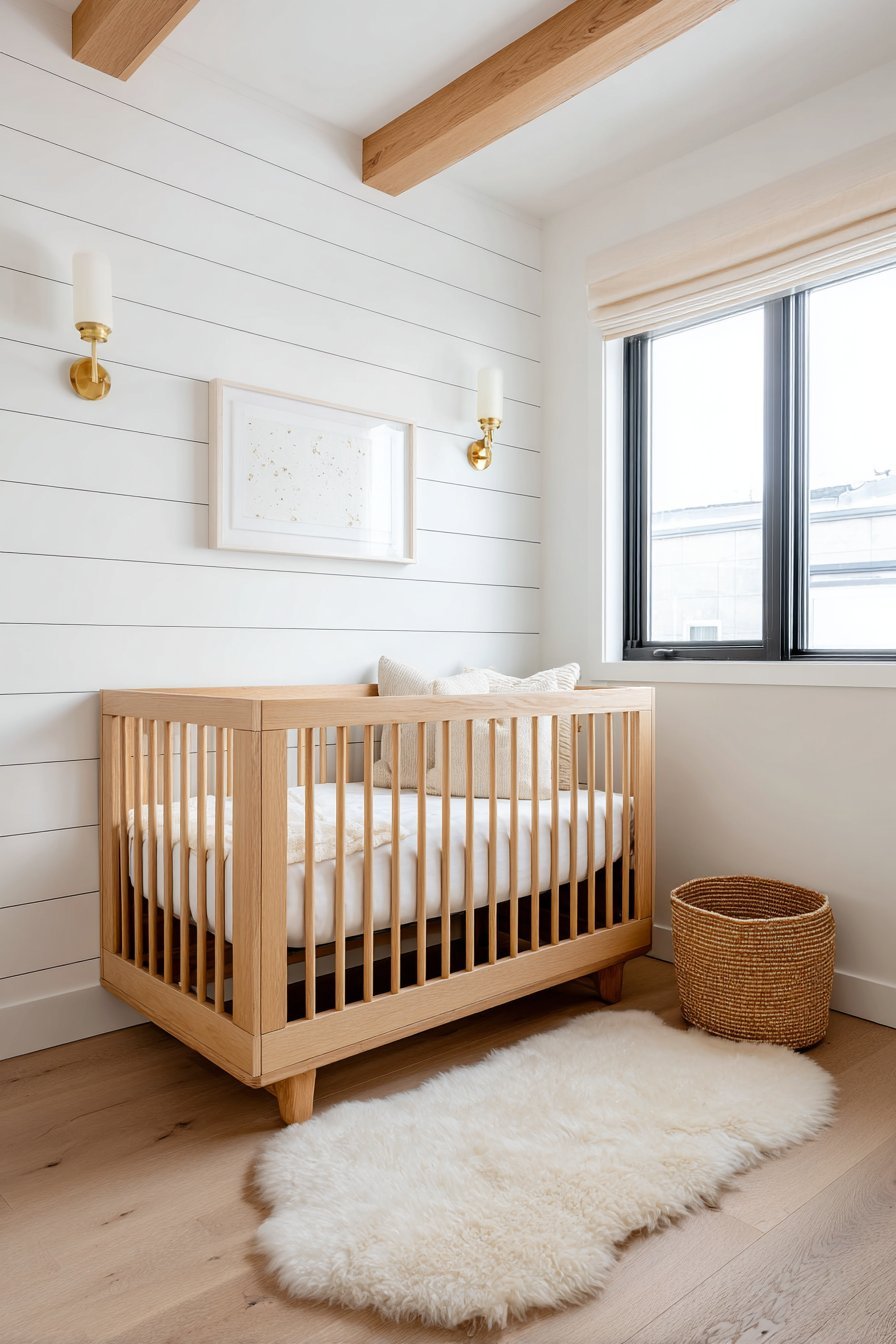
Dimensional wall treatments bring a quality of depth, warmth, and tactile richness to a nursery accent wall that flat paint and wallpaper alone cannot achieve. Shiplap, tongue-and-groove paneling, and horizontal timber cladding introduce a beautifully architectural quality to the nursery crib wall — one that reads as considered, crafted, and genuinely high-end without necessarily requiring a high-end budget to execute.
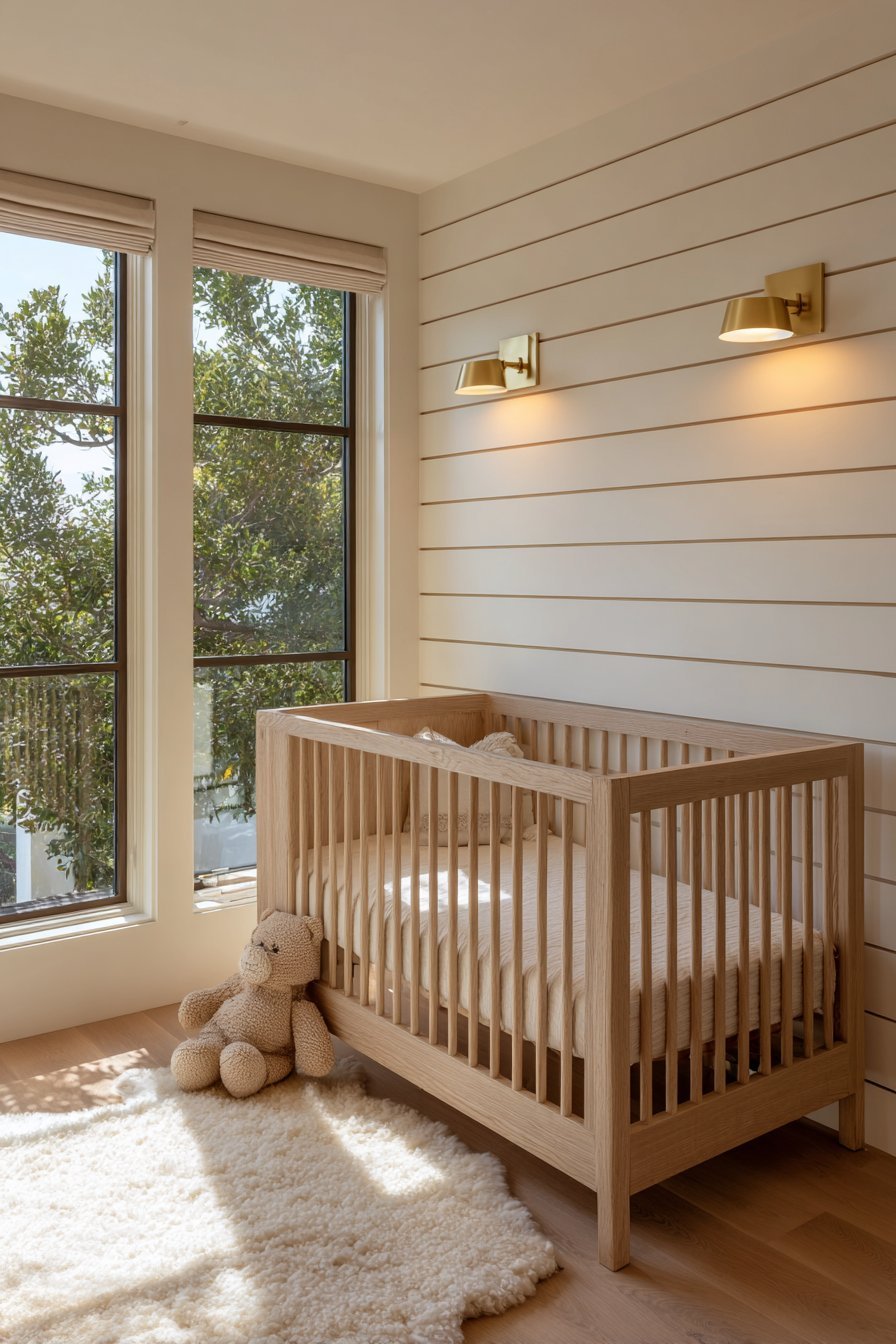
White-painted shiplap behind a crib creates a clean, Scandinavian-inspired backdrop with gentle texture and shadow that gives the wall visual interest without any pattern or color complexity. This approach suits the most contemporary, minimal nursery aesthetics beautifully — the crisp horizontal lines of the paneling adding architectural structure while remaining completely neutral as a backdrop for artwork, mobiles, and lighting above and around the crib. Painted in warm white or soft cream rather than pure brilliant white, shiplap takes on a warmth that suits nursery environments perfectly.
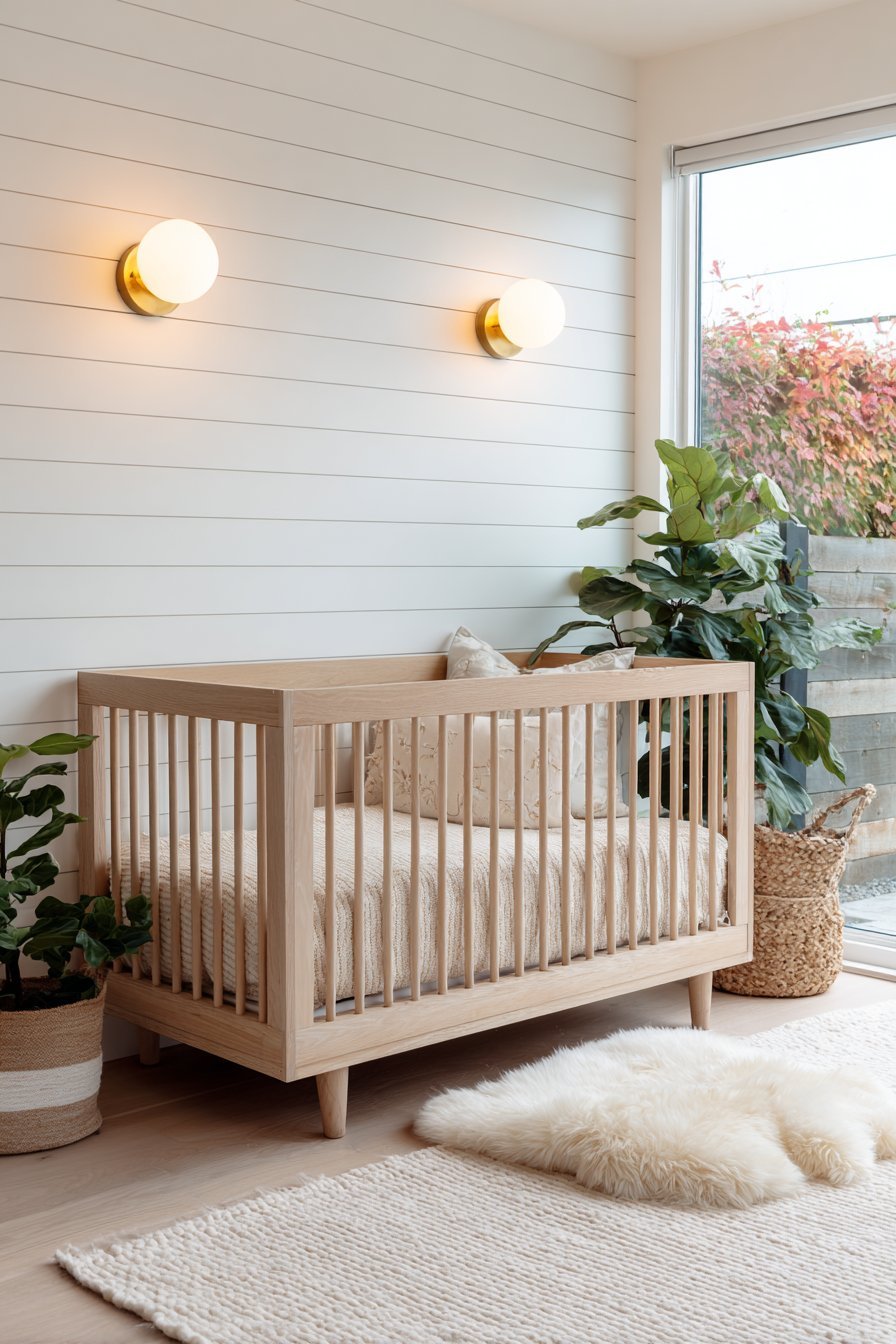
Natural timber cladding — in light oak, pine, or cedar — brings an entirely different quality to the nursery accent wall. Where painted shiplap reads as clean and architectural, natural timber brings warmth, organic texture, and a biophilic quality that connects the nursery to the natural world.
The grain variation, tonal variation, and living quality of real timber makes each installation completely unique. Paired with a nature-inspired nursery theme — woodland, botanical, safari — natural timber cladding creates an accent wall of extraordinary beauty and depth that photographs magnificently.
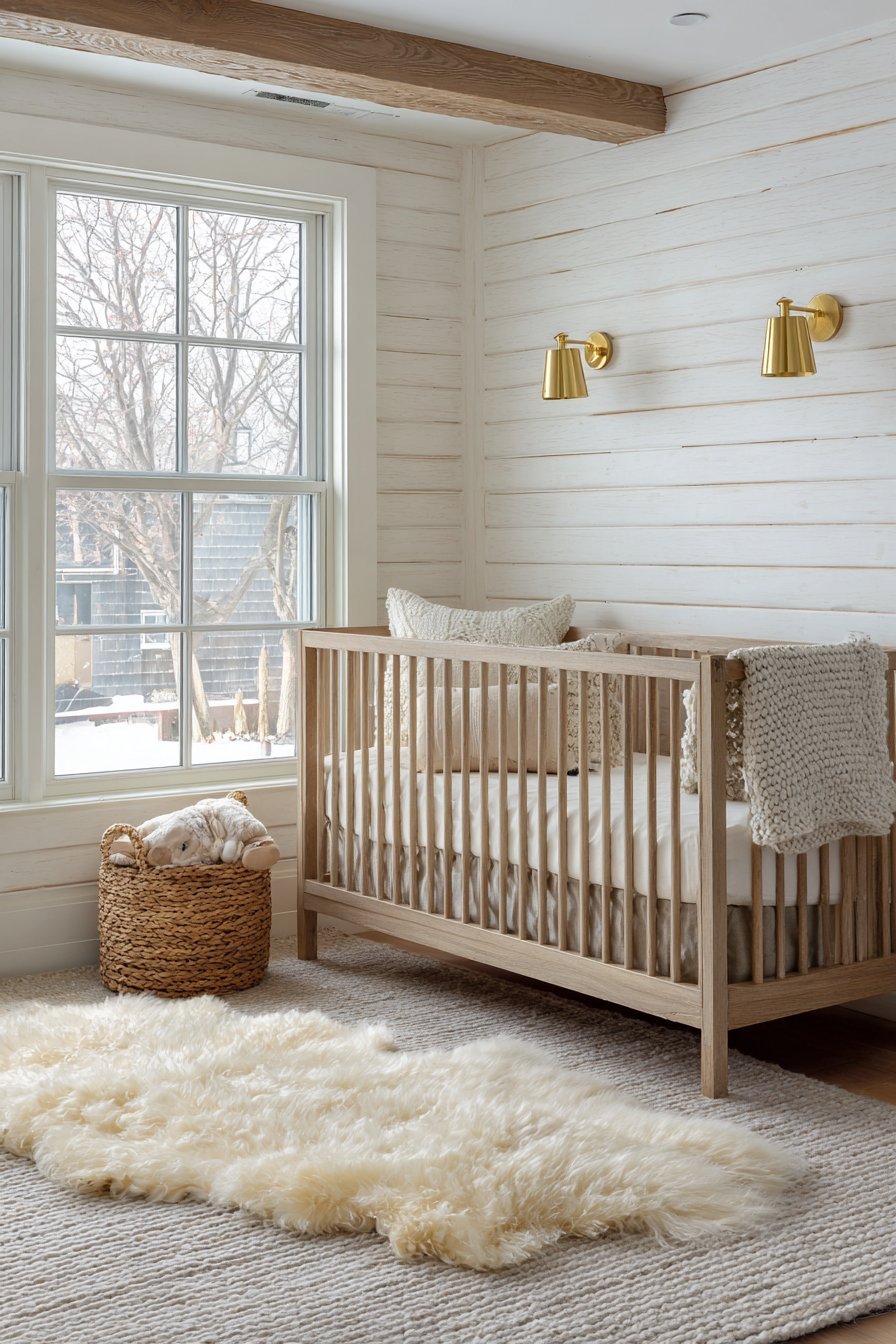
- Install white-painted shiplap for a clean, Scandinavian-inspired textural backdrop behind the crib
- Choose natural timber cladding in light oak or pine for a warm, biophilic nursery accent wall
- Paint timber cladding in a deep accent color — sage, navy, terracotta — for bold, contemporary impact
- Ensure all timber used in a nursery is properly sealed and free from harmful VOCs and finishes
- Use adhesive shiplap panels for a renter-friendly, damage-free installation that achieves a similar effect
4. Wainscoting and Paneling for Classic Elegance
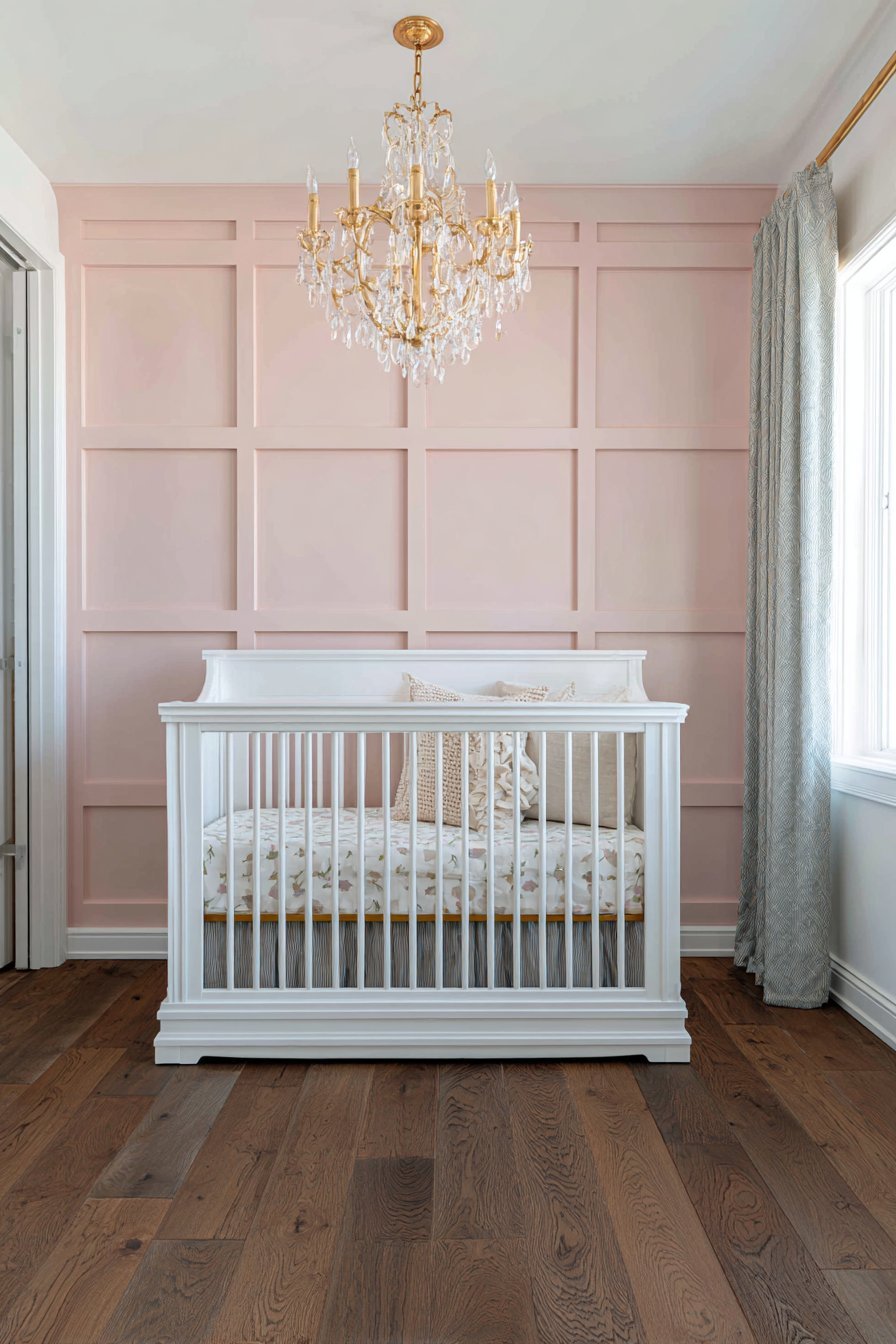
Architectural wall paneling — wainscoting, picture rail molding, board-and-batten, and raised panel treatments — brings a quality of timeless elegance and classical refinement to a nursery accent wall that no other treatment quite matches. These structural wall details transform a flat painted wall into something with genuine architectural character, creating shadow lines, depth, and visual rhythm that make the room feel considered, crafted, and beautifully finished.
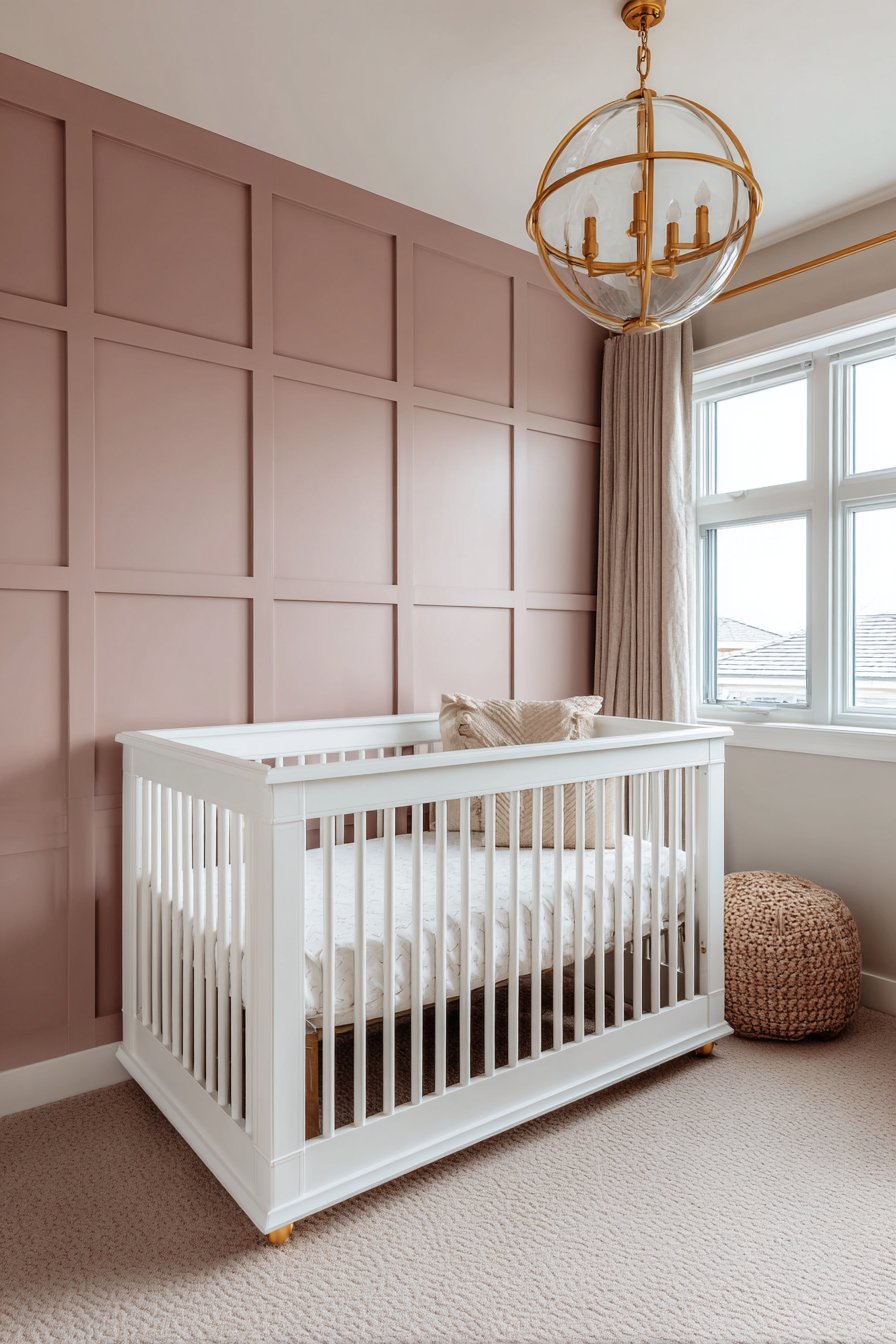
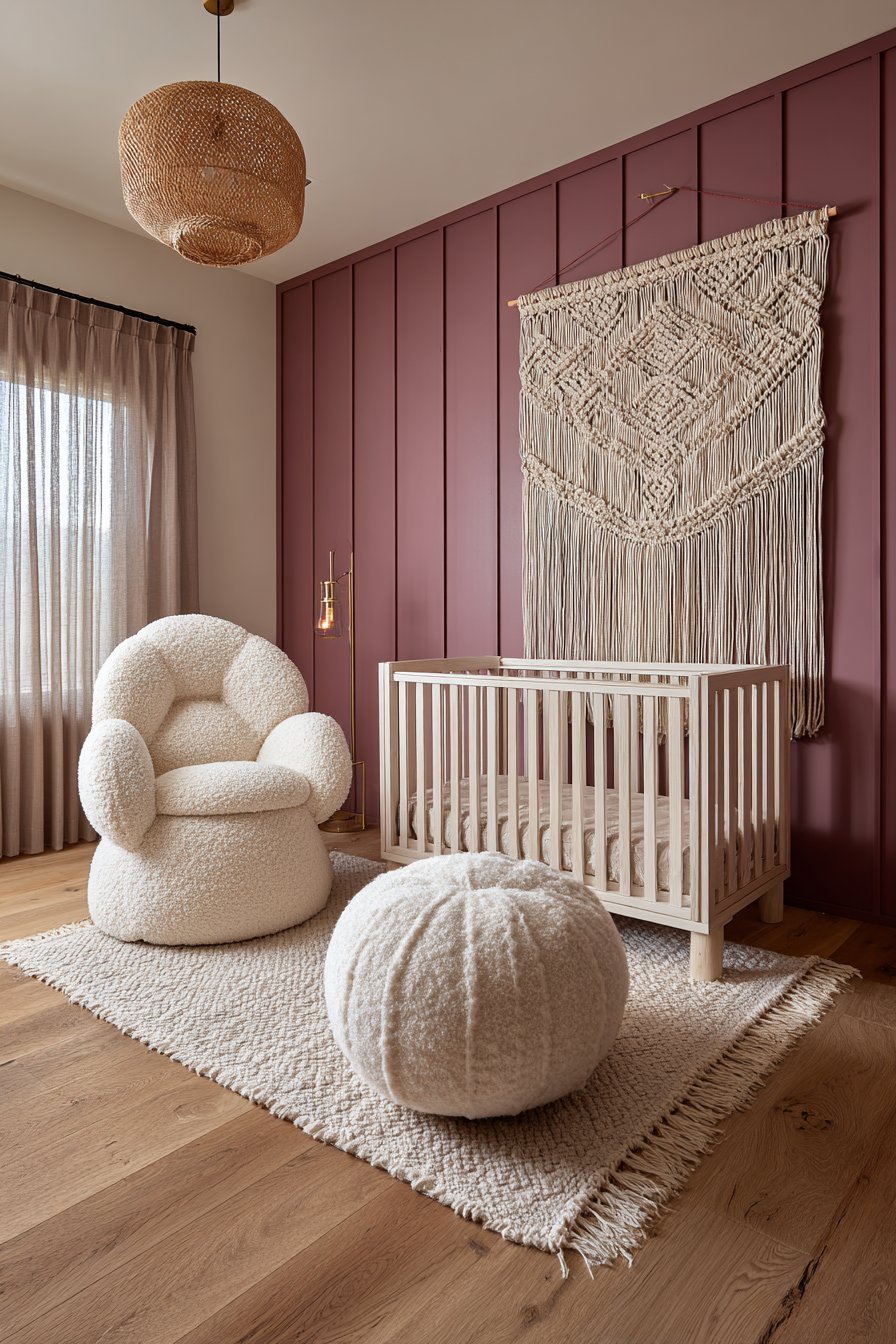
Board-and-batten paneling is among the most popular and accessible architectural wall treatments for contemporary nurseries. Vertical timber battens applied over a flat wall at regular intervals — typically 20 to 30 centimeters apart — create a crisp, graphic grid that suits both classic and contemporary nursery aesthetics. Painted in a muted accent color — dusty rose, sage green, warm navy, or soft terracotta — a board-and-batten feature wall behind the crib creates an elegant, designer-quality focal point that costs far less than its sophisticated appearance suggests.
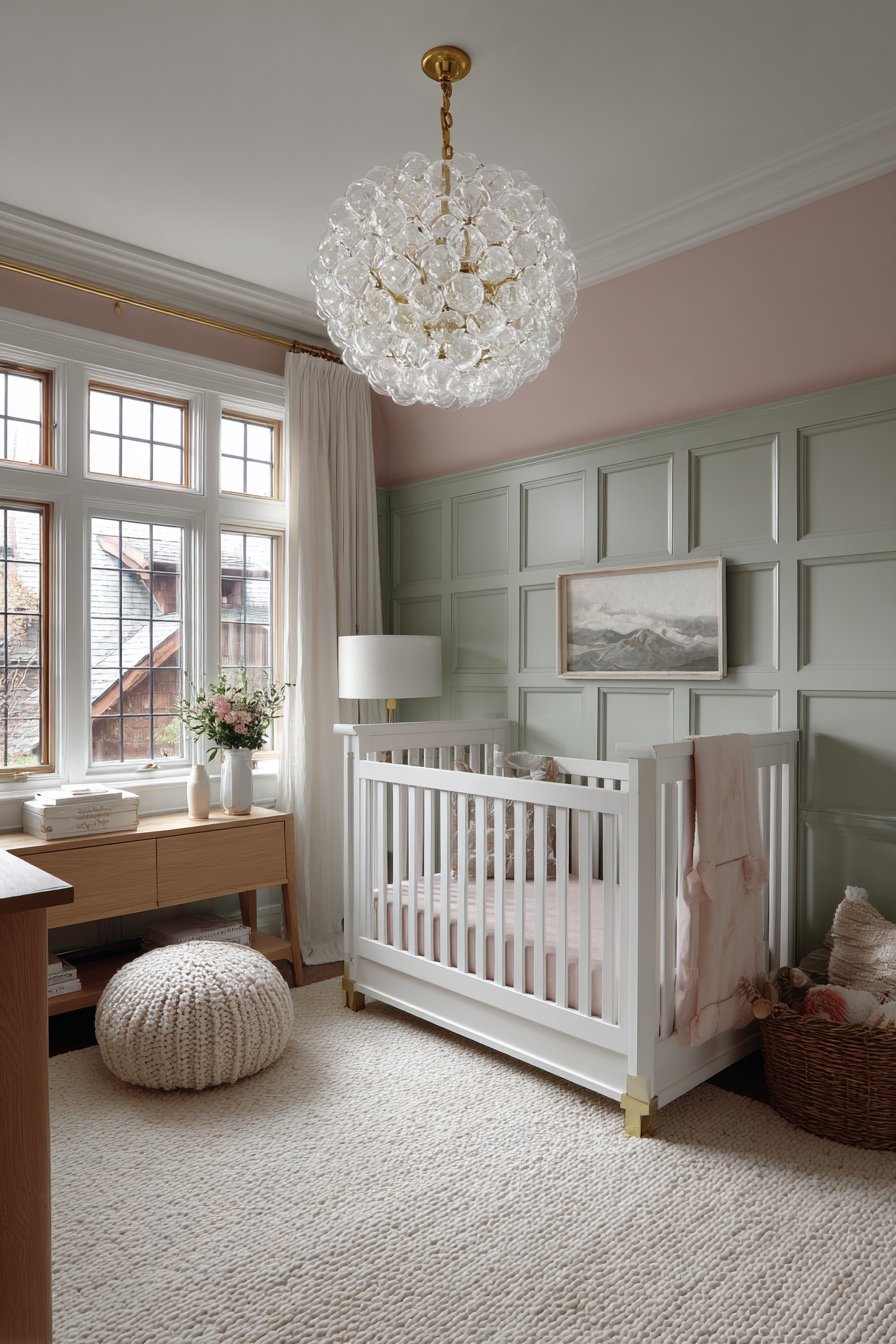
Picture rail and dado rail paneling divides the crib wall horizontally into distinct zones — typically a painted upper half and a paneled or differently treated lower half — that give the room a sense of classical proportion and interior architectural refinement.
Using a deeper accent color below the dado rail and a soft complementary tone above creates a two-toned effect that adds considerable depth and visual interest to the nursery crib wall. This approach works particularly beautifully in traditional, vintage-inspired, and cottagecore nursery aesthetics.
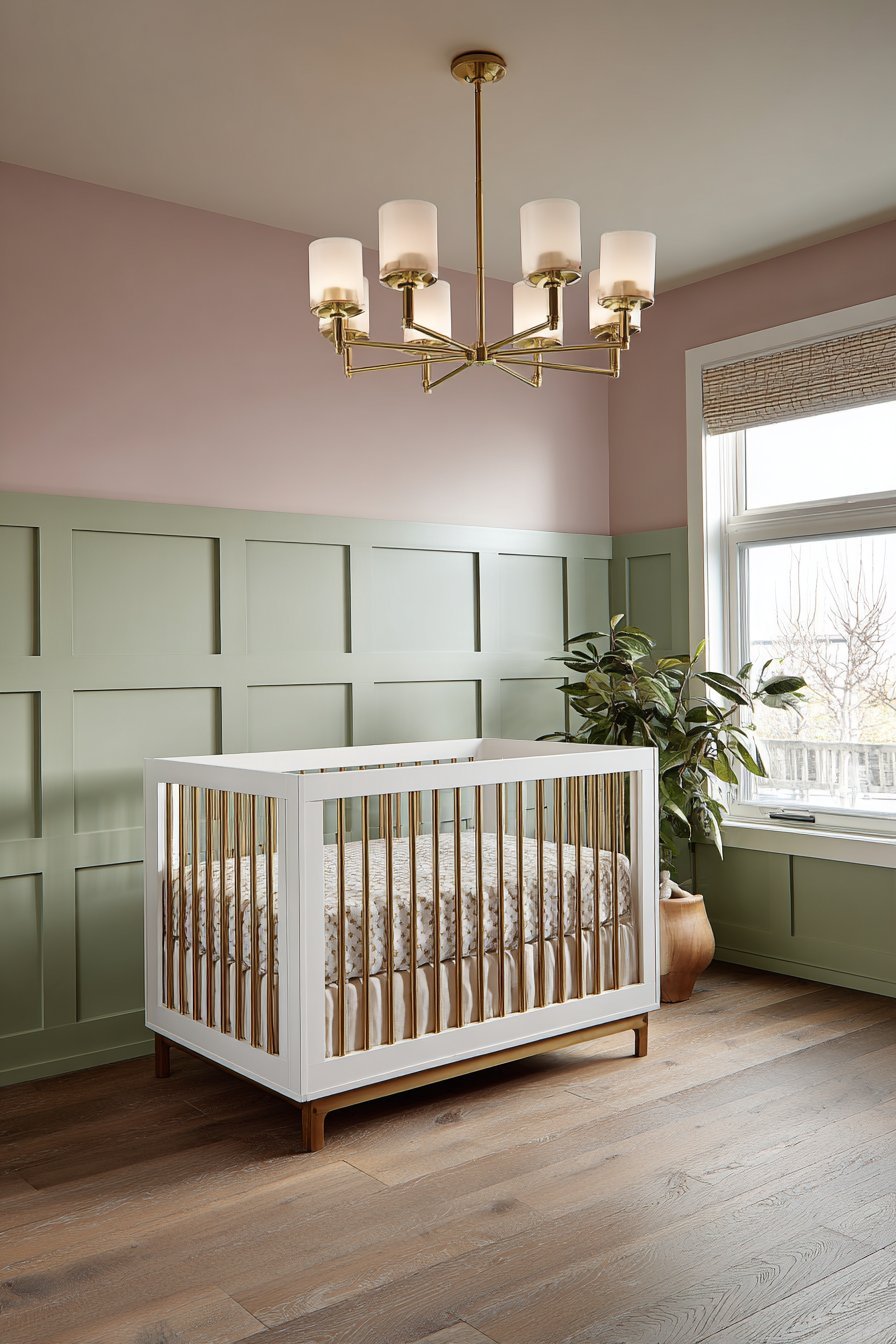
- Install board-and-batten paneling on the crib wall using thin MDF or timber battens and adhesive
- Paint paneling in a muted accent color — sage, dusty rose, warm navy — for elegant, considered impact
- Combine dado rail paneling with a two-tone paint treatment for a classically proportioned accent wall
- Use pre-primed MDF board and batten strips for the cleanest, most paintable paneling finish
- Finish all panel edges and joints carefully with caulk before painting for a crisp, professional result
5. A Gallery Wall for Curated Personality and Warmth
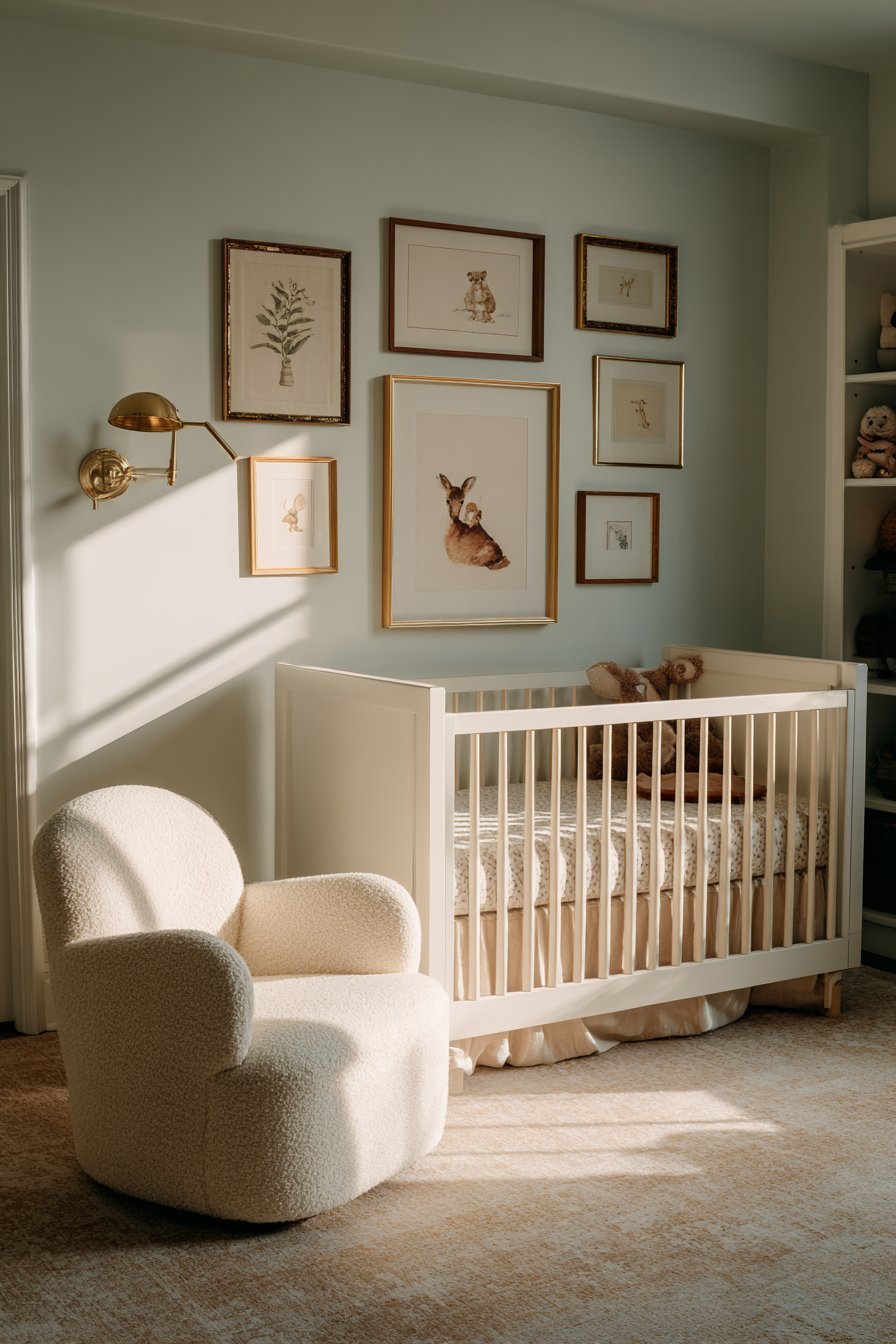
A gallery wall above the crib is one of the most beloved and versatile nursery accent wall treatments — a design approach that is simultaneously deeply personal, visually beautiful, and achievable at virtually any budget level. Unlike fixed wallpaper or structural paneling, a gallery wall is completely flexible — able to grow and change as your child develops, expanding with new additions, refreshing with seasonal updates, and evolving as the room transitions from nursery to toddler room to older child’s bedroom.
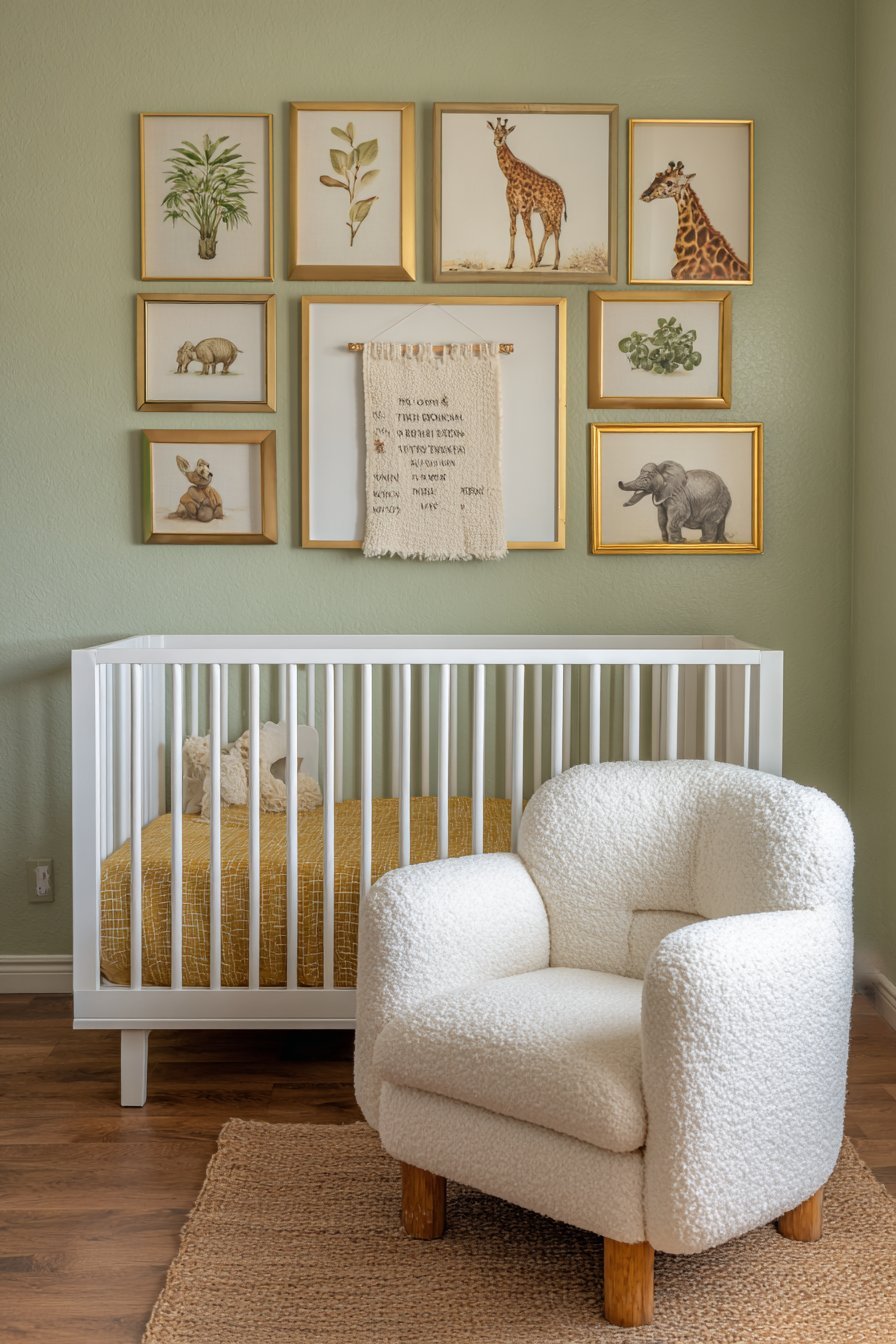
The art of a successful nursery gallery wall lies in its curation and composition. The most beautiful gallery arrangements achieve a balance between variety and cohesion — mixing different frame sizes, artwork subjects, and media types while maintaining a consistent color story and frame finish that ties everything together. A gallery composed entirely of botanical prints in brass frames creates a different atmosphere from one that mixes botanical prints with personal photographs, typographic quotes, and textile wall hangings — but both can be extraordinarily beautiful when the underlying color palette is shared across every piece.
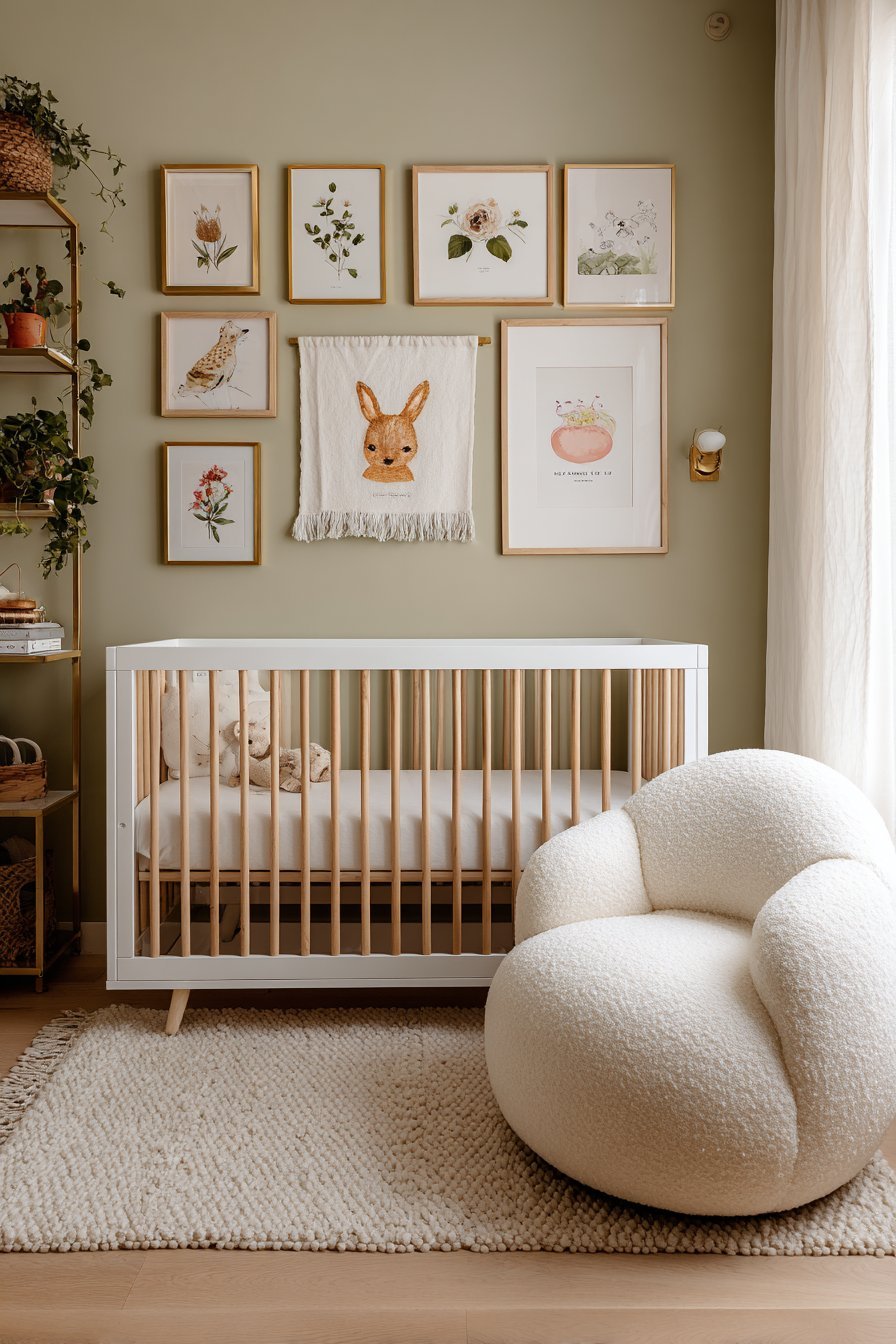
Building the gallery wall incrementally — adding pieces over time as you find them, rather than purchasing everything at once — creates a curated, collected quality that feels personal and authentic in a way that a single bulk purchase rarely achieves. Begin with two or three anchor pieces that establish the color palette and tone, then add to them over subsequent weeks and months. Allow some pieces to be deeply personal — a birth announcement print, a family photograph, a piece of artwork made by a loved one — and others to be purely beautiful, sourced from artists and illustrators whose work speaks to the nursery’s theme.
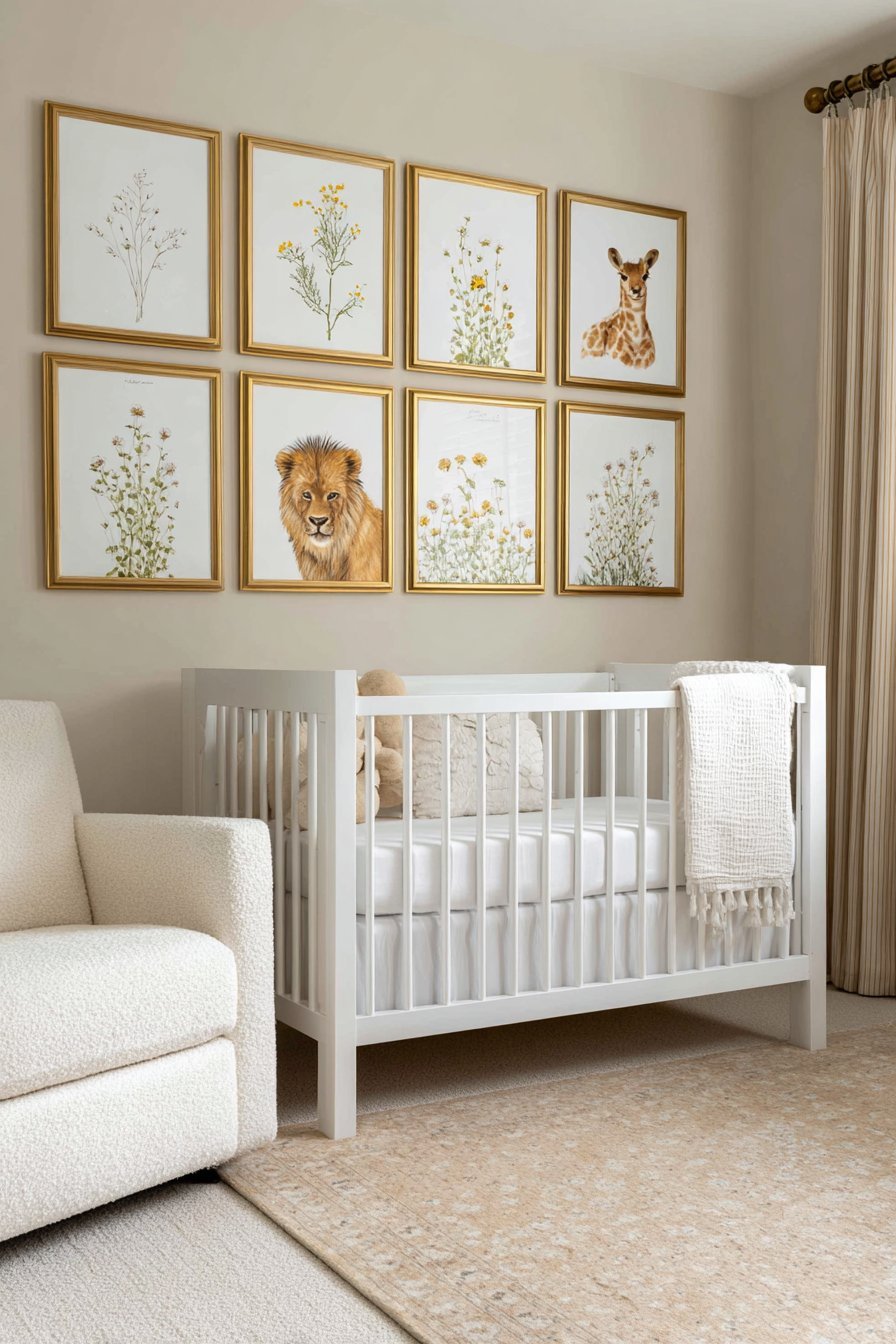
- Begin with two or three anchor prints that establish the gallery’s color palette and visual tone
- Mix frame sizes but keep the frame finish consistent — all brass, all black, or all natural timber
- Include deeply personal pieces — birth prints, family photographs, handmade art — among curated works
- Lay the gallery arrangement on the floor before hanging to plan composition without multiple nail holes
- Use picture-hanging strips for a damage-free installation that can be adjusted without repainting
6. Removable Wallpaper or Peel-and-Stick Panels
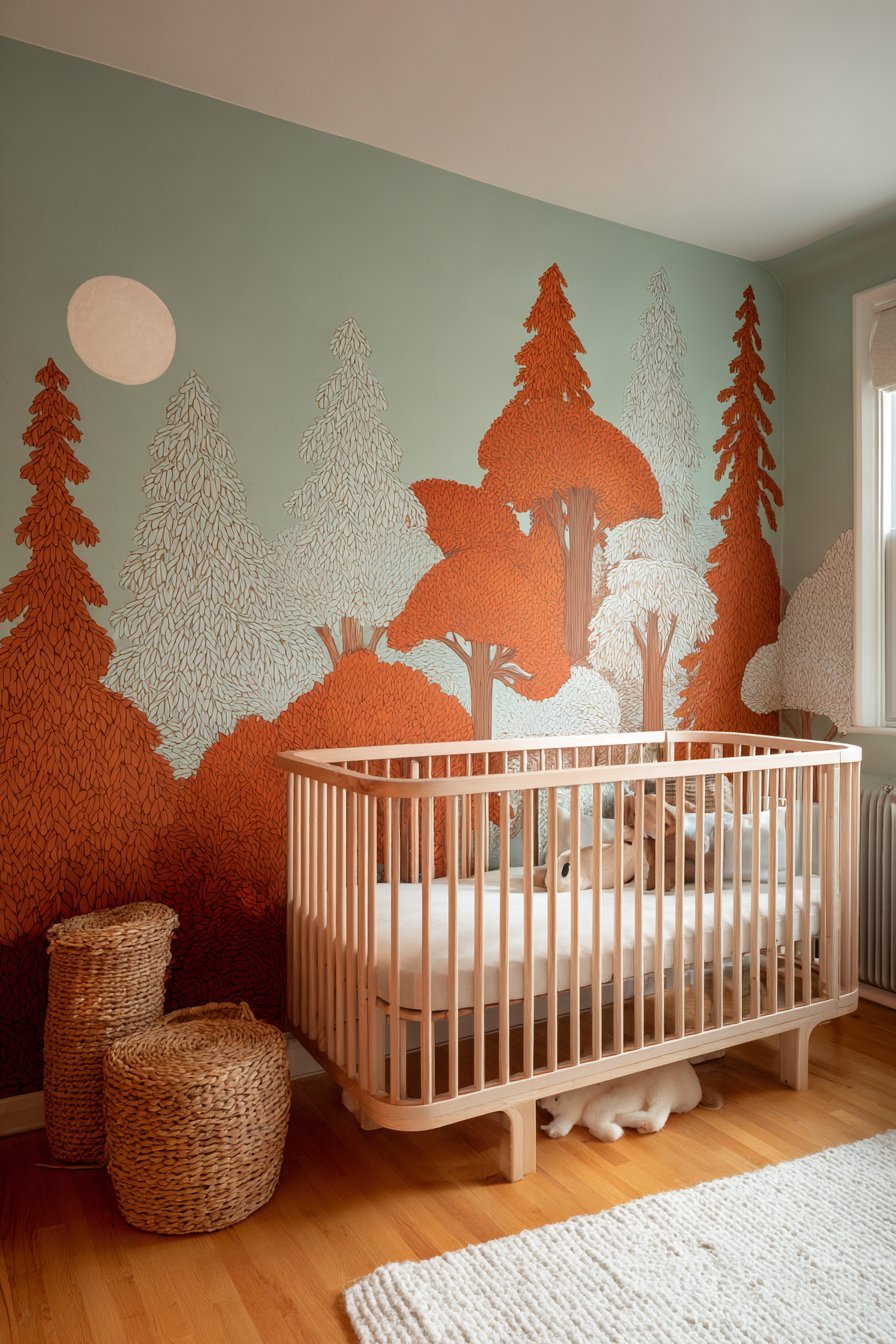
Removable wallpaper has transformed the nursery accent wall landscape for renters, design experimenters, and parents who want maximum visual impact with minimum long-term commitment. Peel-and-stick wallpaper products have improved dramatically in recent years — the best contemporary versions are virtually indistinguishable from traditional wallpaper in their visual quality, available in thousands of designs, and completely removable without wall damage when the time comes for a refresh.
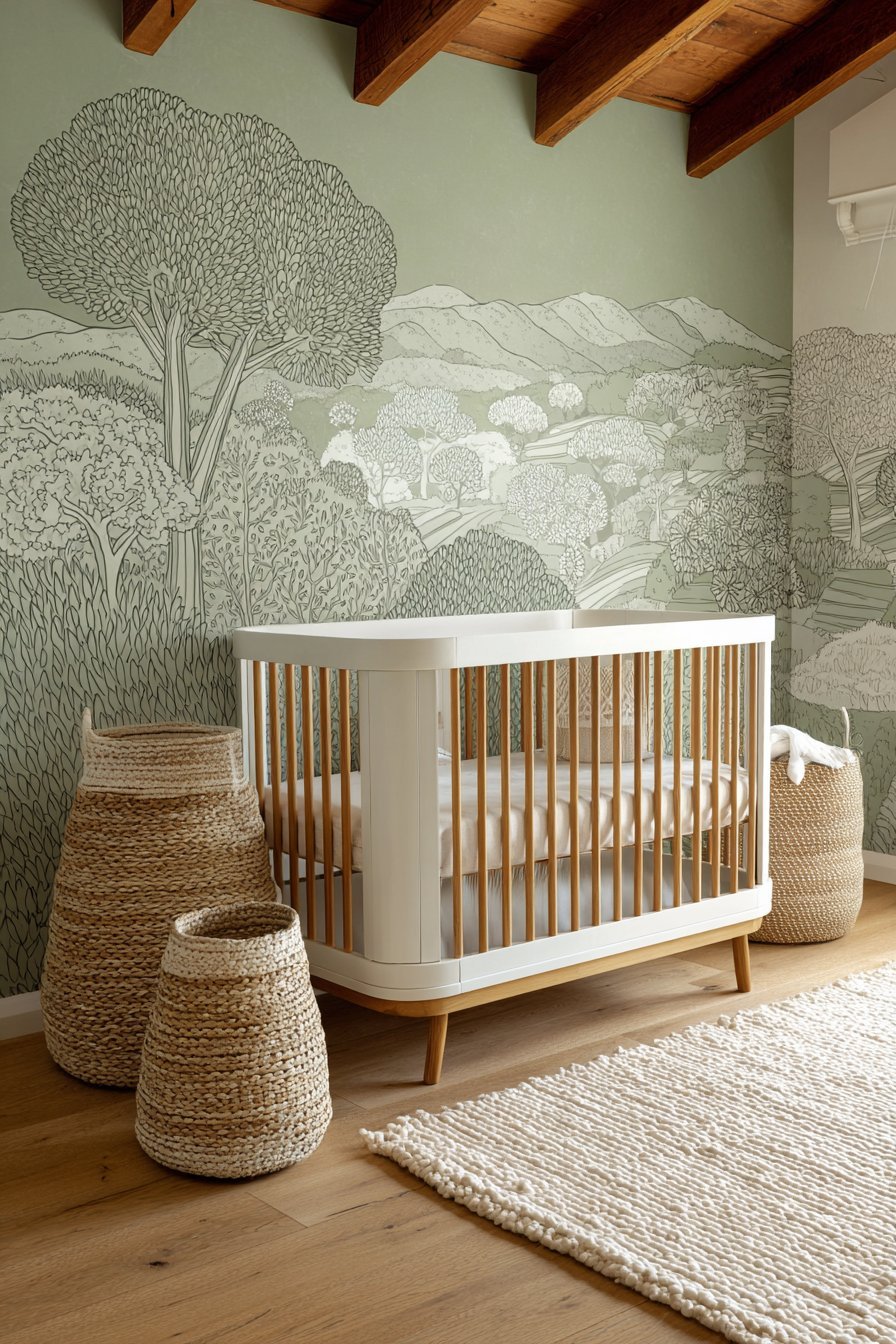
The design range available in removable wallpaper now spans the full spectrum of nursery aesthetics — from delicate botanical watercolors and painterly floral murals to bold geometric patterns, illustrated jungle scenes, soft celestial designs, and hand-drawn forest panoramas. Premium removable wallpaper brands produce designs at full commercial wallpaper quality, with the same richness of color, depth of pattern, and visual complexity as their permanently fixed equivalents. The only meaningful difference is the application and removal process.
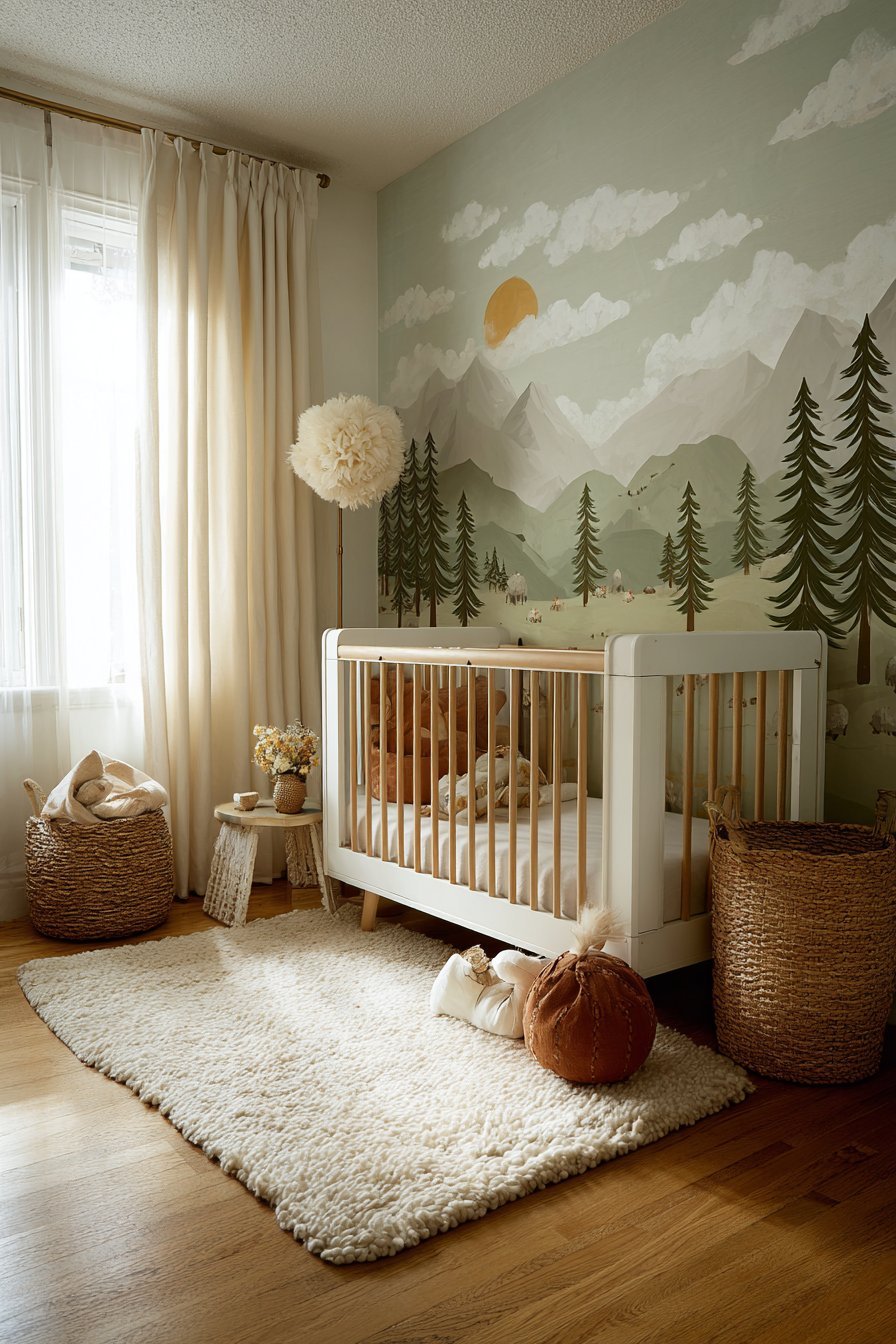
For parents uncertain about committing to a permanent accent wall treatment, removable wallpaper offers the perfect solution — the ability to create a fully immersive, beautifully designed feature wall that can be easily changed when the room grows with the child, when design tastes evolve, or when a new sibling arrives and the room is repurposed. Peel-and-stick panels can also be used to create partial feature treatments — a single panel grouping above the crib, a headboard-shaped installation, or a border treatment at dado height — that add character without overwhelming a smaller nursery.
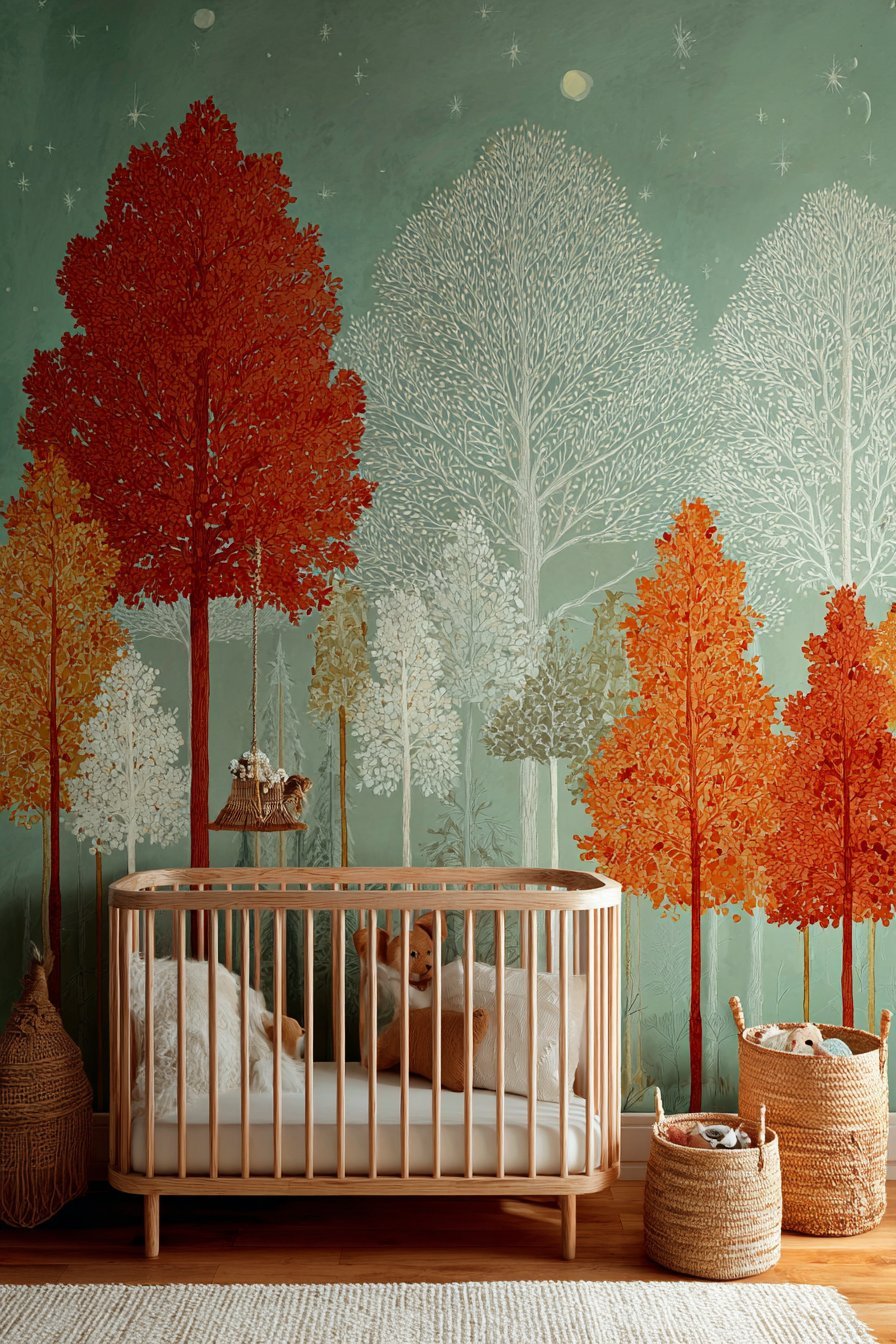
- Choose premium removable wallpaper brands for the best color richness and wall-safe adhesive quality
- Clean and dry the wall surface completely before applying peel-and-stick panels for optimal adhesion
- Apply panels slowly and carefully, smoothing out air bubbles with a squeegee as you work down the wall
- Use removable wallpaper on a single accent wall only — full-room application can feel overwhelming
- When removing, pull panels slowly at a low angle to the wall to avoid any paint lifting or surface damage
7. A Bold Paint Treatment or Color Drenching Effect
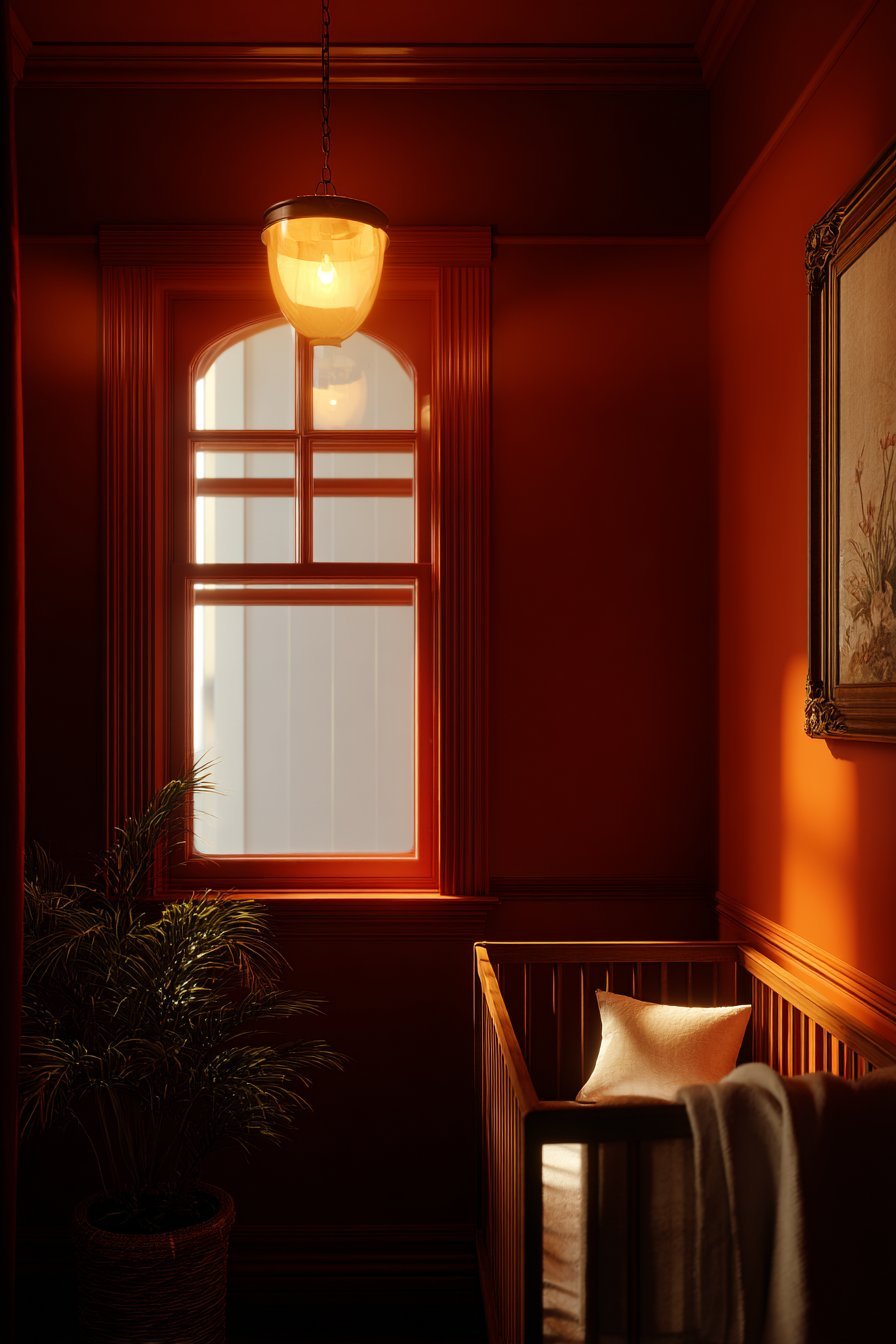
Paint remains the most accessible and most versatile of all nursery accent wall treatments — and in the hands of a thoughtful designer, it is capable of creating an accent wall of genuine sophistication and visual drama. Moving beyond a simple flat color, the most beautiful painted nursery accent walls employ layered techniques, contrasting finishes, and bold color choices that give the crib wall a distinctive, designed quality that goes far beyond what a single roller coat can achieve.
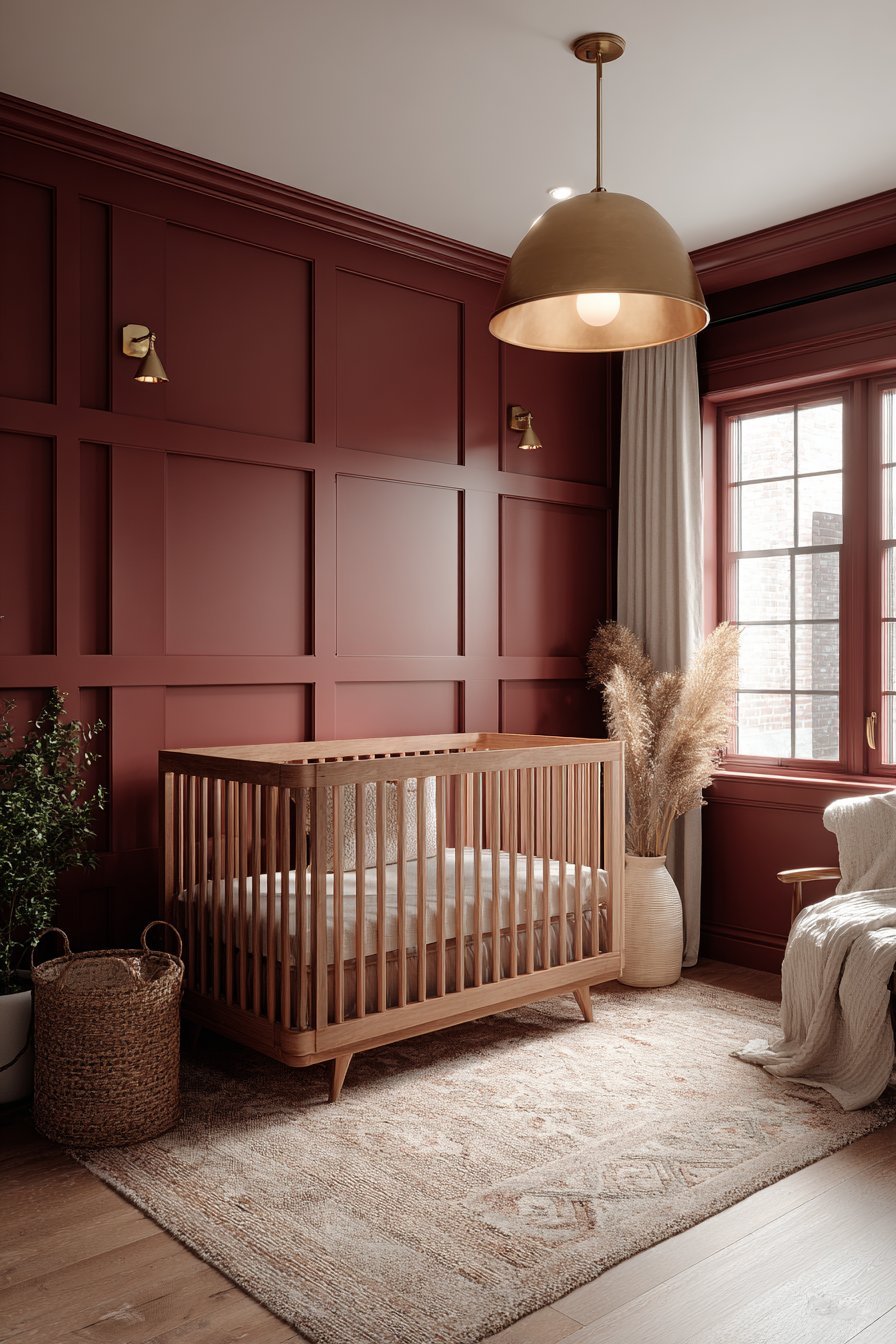
Color drenching — the technique of painting a single wall, and all its architectural elements including baseboards, window frames, and door architraves, in the same deep, saturated tone — creates an immersive, cocooning effect that is extraordinarily beautiful in a nursery context. A deeply pigmented sage green, dusty terracotta, warm navy, or soft charcoal applied as a color-drenched accent wall creates a backdrop of remarkable visual depth and sophistication. When the crib is positioned against this richly colored wall, the contrast between the deep accent color and the crib’s white or natural timber finish creates a composition of genuine visual drama.
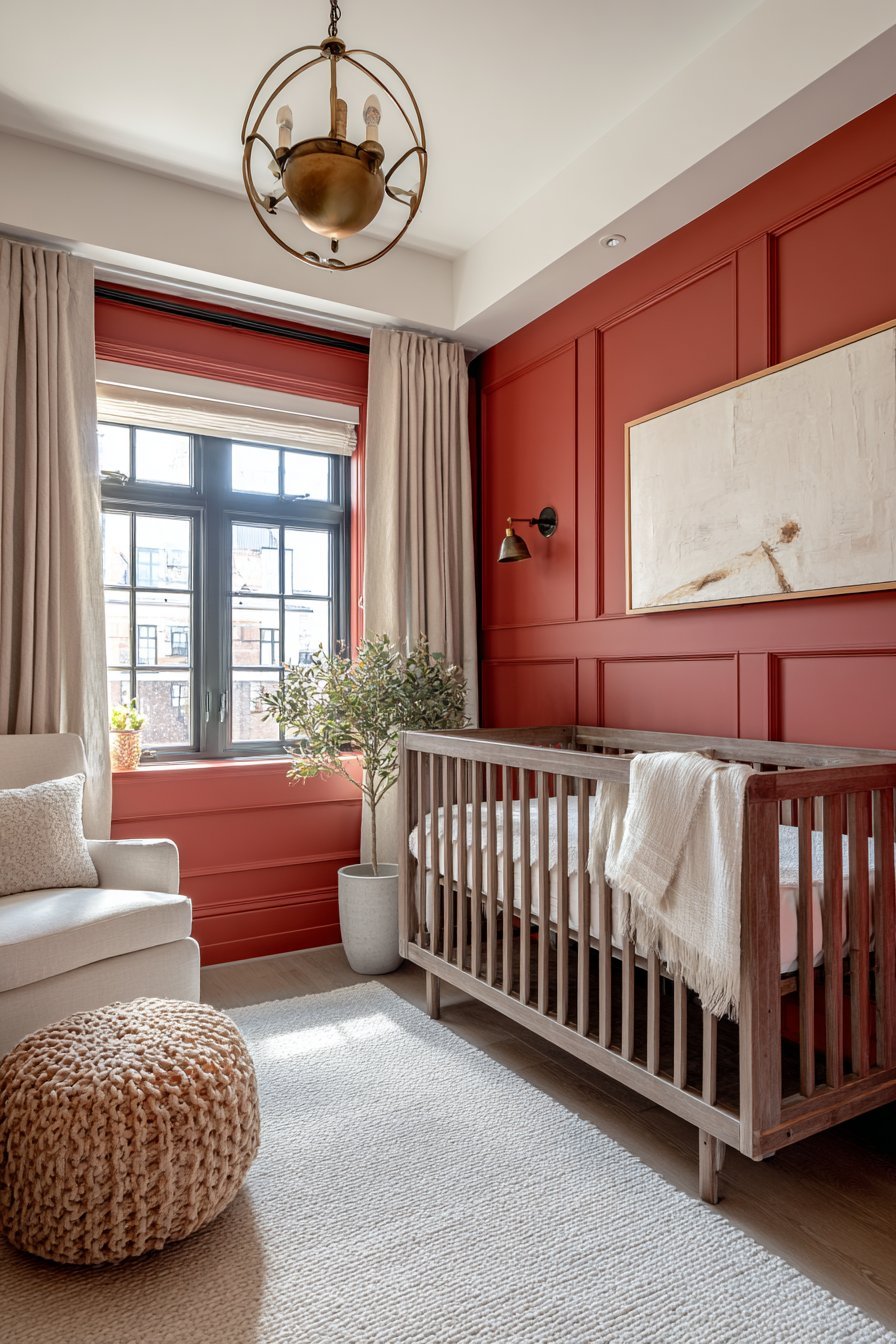
Limewash and color wash paint techniques deliver the most artisanal, textured quality available from a painted wall treatment. A limewash finish — applied in loose, irregular brushstrokes over a base coat — creates a softly mottled, aged effect that resembles expensive Venetian plaster from across the room. In a nursery context, a limewash crib wall in dusty rose, sage green, or warm ochre creates an accent wall of extraordinary organic beauty — one that looks different in morning light than in evening lamplight, and that rewards close inspection with layers of subtle tonal variation and texture.
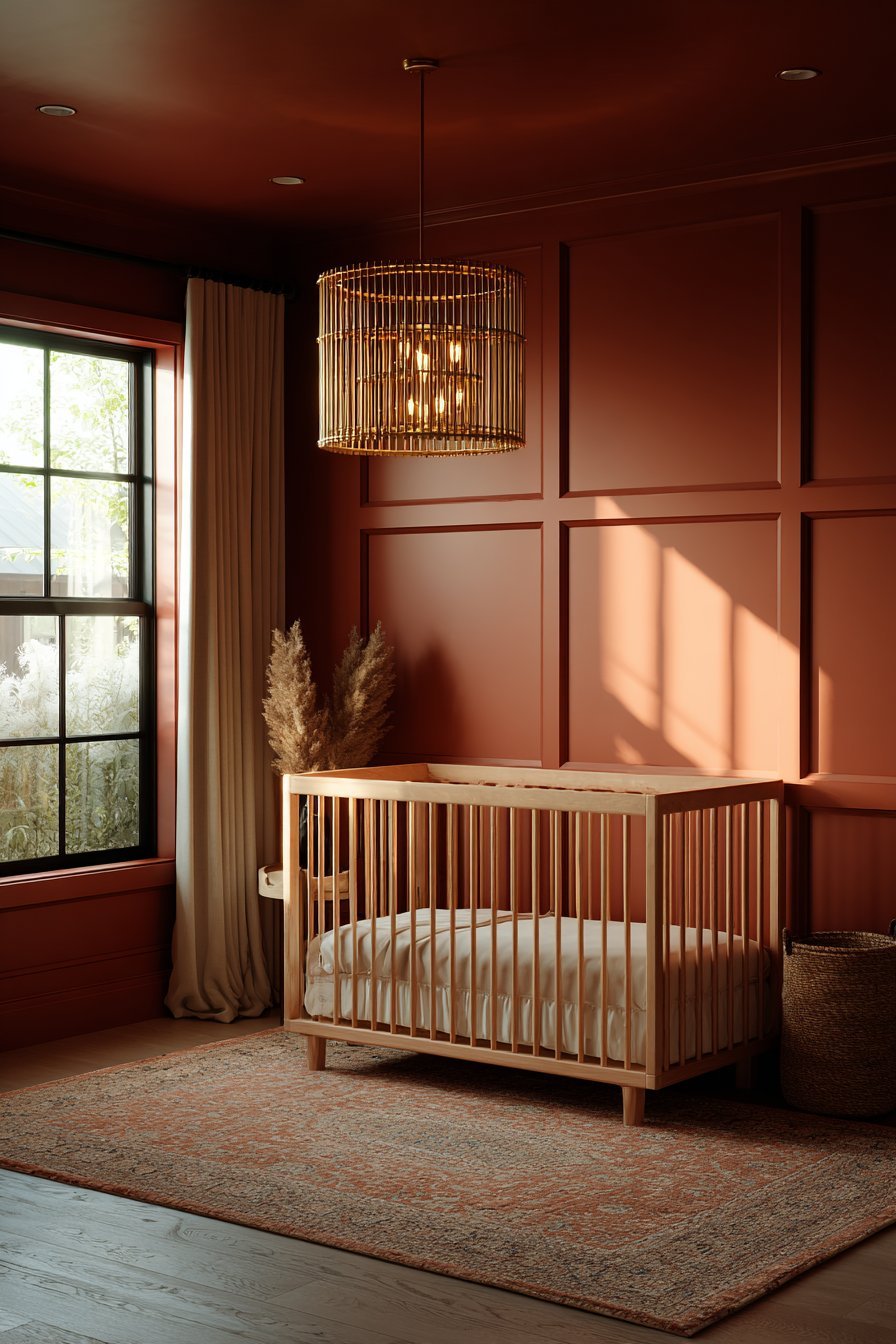
- Choose a deep, sophisticated nursery color — dusty terracotta, sage, warm navy — for a color-drenched crib wall
- Apply color drenching to all architectural elements on the accent wall for a truly immersive effect
- Try a limewash technique for an organic, artisanal finish that looks far more expensive than its actual cost
- Test the chosen accent color against your nursery furniture and textiles before committing to the full wall
- Finish a painted accent wall with a quality eggshell or matte sheen for the most beautiful, nursery-appropriate result
8. A Fabric Wall Hanging or Textile Focal Point
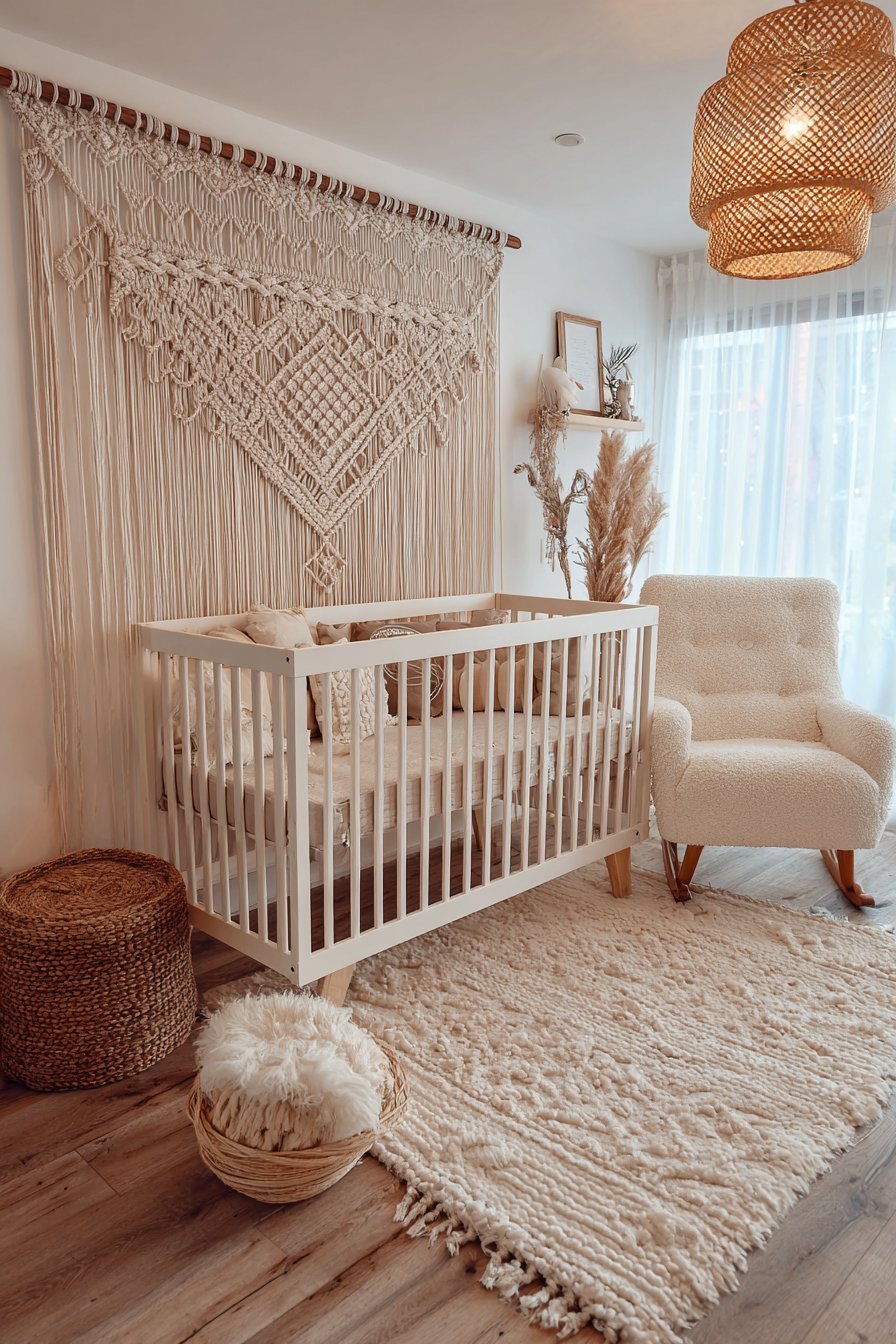
Soft textile installations are one of the most underutilized yet deeply beautiful options for a nursery accent wall. A large-scale fabric wall hanging — a woven tapestry, a macramé panel, an embroidered textile piece, or a quilt mounted as artwork — introduces warmth, texture, and sound-absorbing softness into the nursery crib wall in a way that no hard wall treatment can replicate. These textile focal points are also among the most renter-friendly, budget-accessible, and easily changed of all accent wall options.
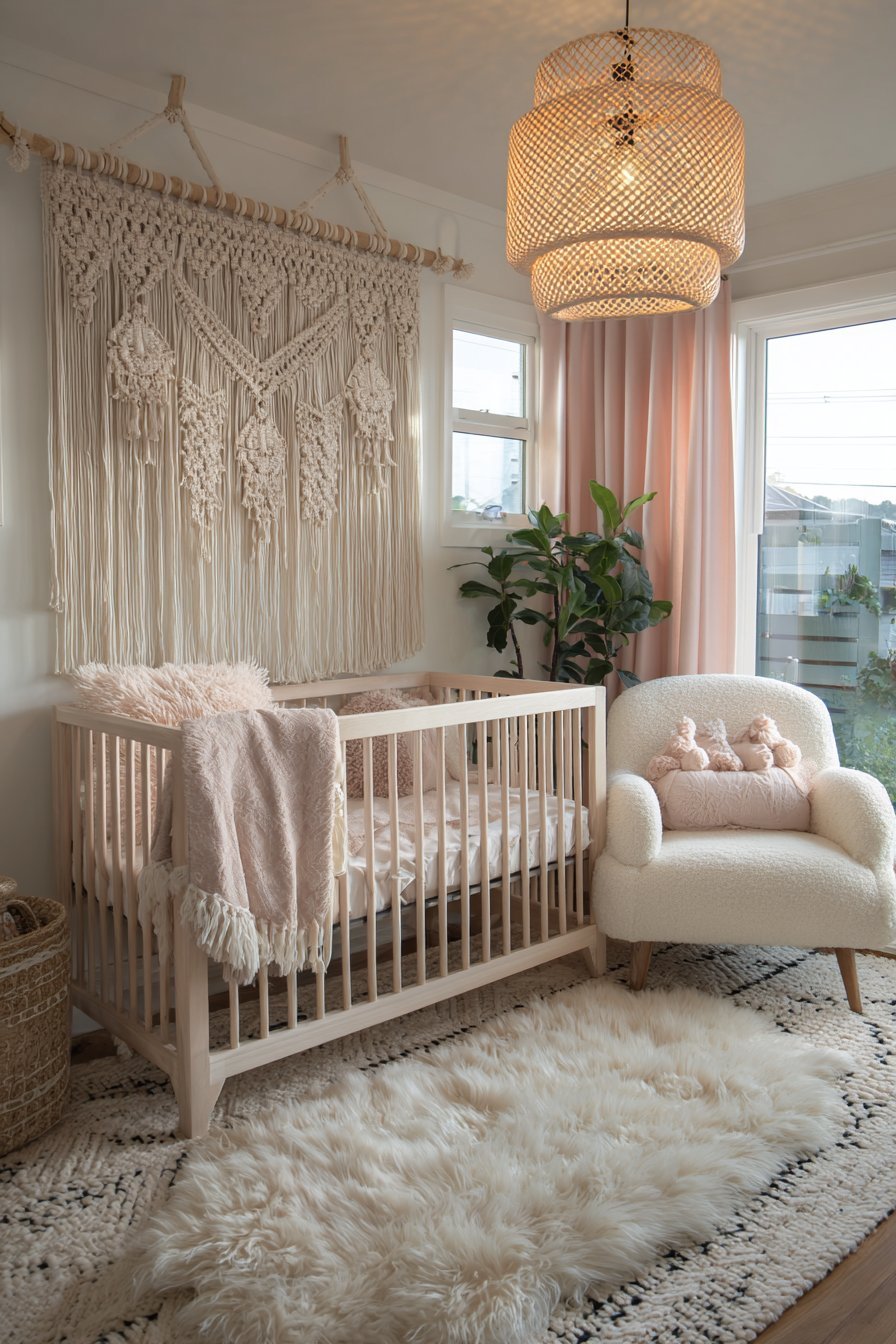
Macramé wall hangings have experienced an enormous resurgence in contemporary nursery design, and their popularity is entirely deserved. A large-format macramé panel in natural cotton cord — perhaps incorporating dip-dyed tones that coordinate with the nursery palette, or woven with botanical or geometric motifs — creates an organic, artisanal focal point above the crib that is simultaneously visually striking and genuinely beautiful as a craft object. The three-dimensional texture of macramé is particularly effective in photographing beautifully and in adding the kind of handmade depth that no manufactured product can replicate.
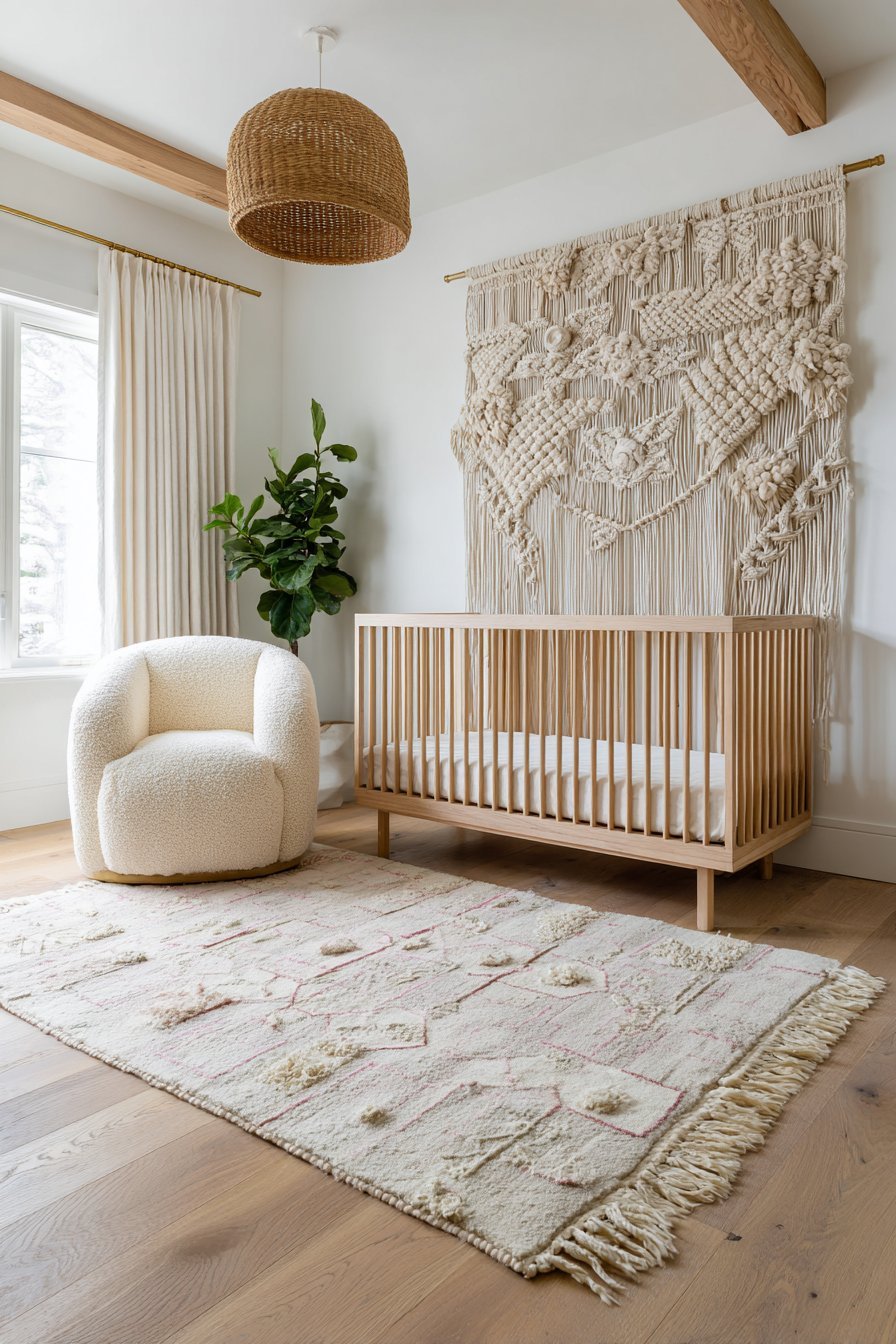
Woven tapestries and textile art from independent artists and craft markets bring a similar quality of handmade warmth and artisanal character to the nursery crib wall. A hand-woven tapestry in a palette of dusty rose, sage, and natural ivory, or a large-scale embroidered botanical panel mounted in a floating frame, creates a focal point of extraordinary textile beauty that becomes more impressive the closer you stand to it. These pieces function as art, as insulation, and as sound softening — absorbing the reflected sounds that make nurseries echo and contributing to the quiet, calm acoustic environment that supports infant sleep.
- Hang a large-format macramé panel in natural cotton or dip-dyed cord as the crib wall focal point
- Source hand-woven tapestries or embroidered textile art from independent makers at craft markets
- Mount a beautiful quilt or heirloom textile as a wall-hung art piece above the crib
- Ensure all wall-hung textiles are securely fixed and positioned well above the baby’s reach
- Layer a textile wall hanging over a softly painted wall for a combined paint-and-textile accent treatment
Conclusion
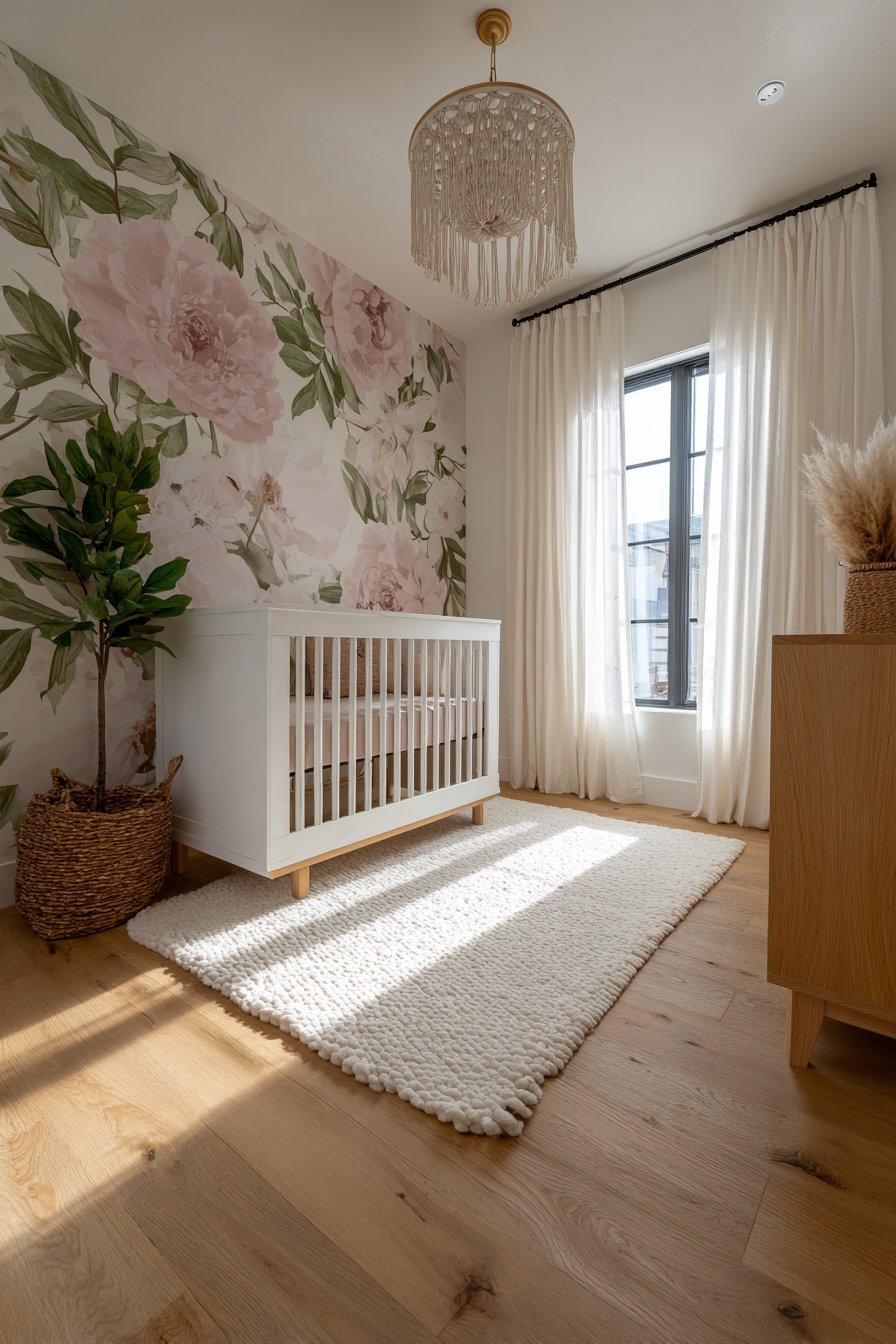
A nursery accent wall is where the room’s character is born. Whether you choose the irreplaceable magic of a hand-painted mural, the immersive beauty of a botanical wallpaper, the warm architectural depth of timber cladding, or the soft artisanal richness of a macramé textile installation, the feature wall behind the crib sets the emotional tone for the entire room and creates the enduring visual memory that parents and children carry with them long after the nursery years have passed.
Choose the approach that speaks most authentically to your vision, invest in its execution with care and quality, and trust that a nursery accent wall designed with genuine love and intention will reward you every single day — in the quiet early-morning feeds, the afternoon nap check-ins, and the tender nighttime moments that define the most precious season of family life.