
Creating a mint green nursery offers parents a refreshing alternative to traditional pink and blue color schemes. This gentle, soothing hue promotes calmness and tranquility in your baby’s space. The versatility of mint green allows it to work beautifully with various design styles and complementary colors.
Mint green has become increasingly popular in nursery design over recent years. This soft shade creates peaceful environments that support infant sleep and development. The color pairs wonderfully with natural wood tones, crisp whites, and soft neutrals. From classic traditional styles to modern minimalist approaches, mint green adapts to diverse aesthetic preferences.
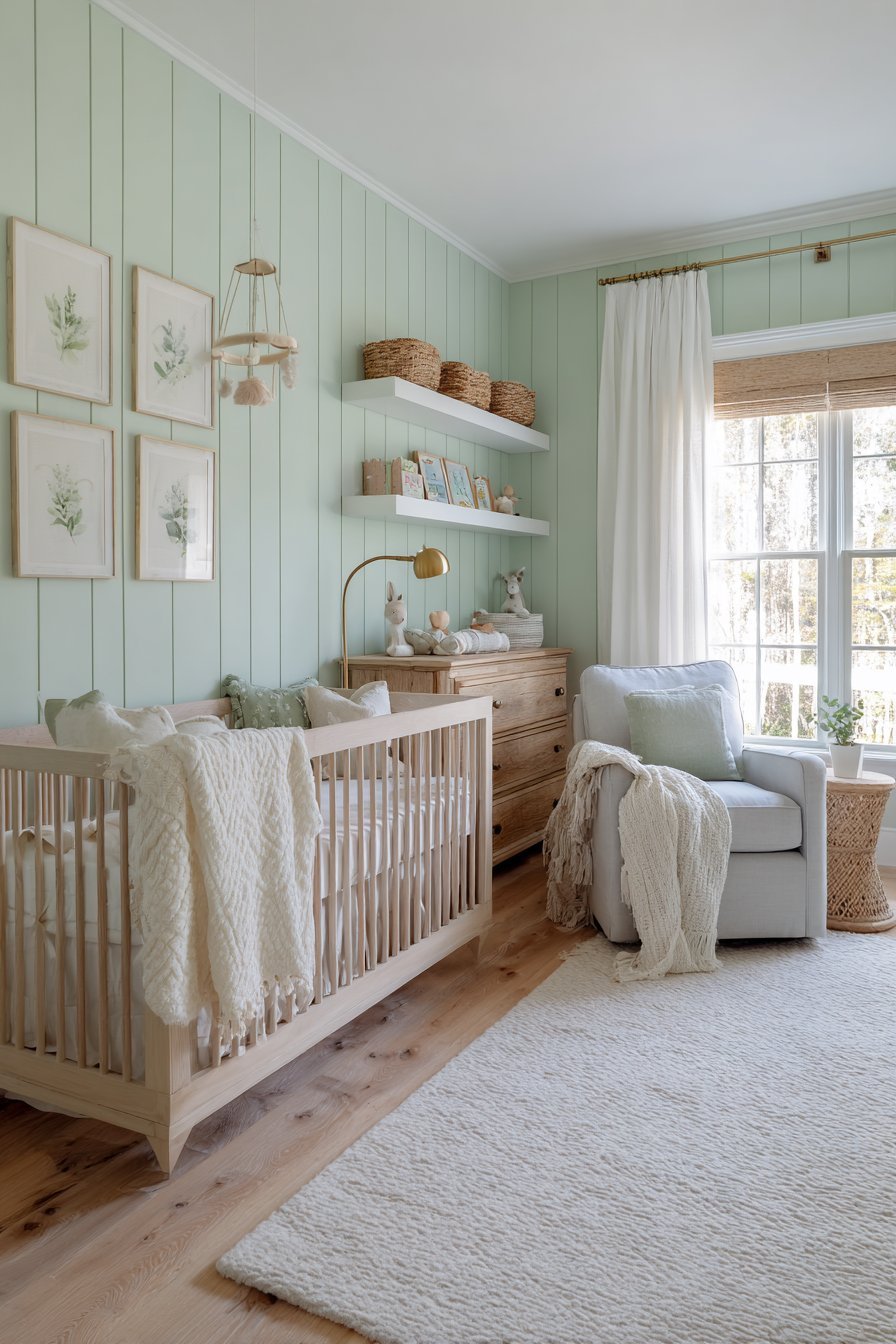
The designs featured in this article showcase the remarkable flexibility of mint green in nursery spaces. Each concept demonstrates unique ways to incorporate this calming color through wall treatments, furniture selections, and decorative accents. Whether you prefer vintage charm or contemporary simplicity, these ideas provide practical inspiration for creating your perfect nursery.
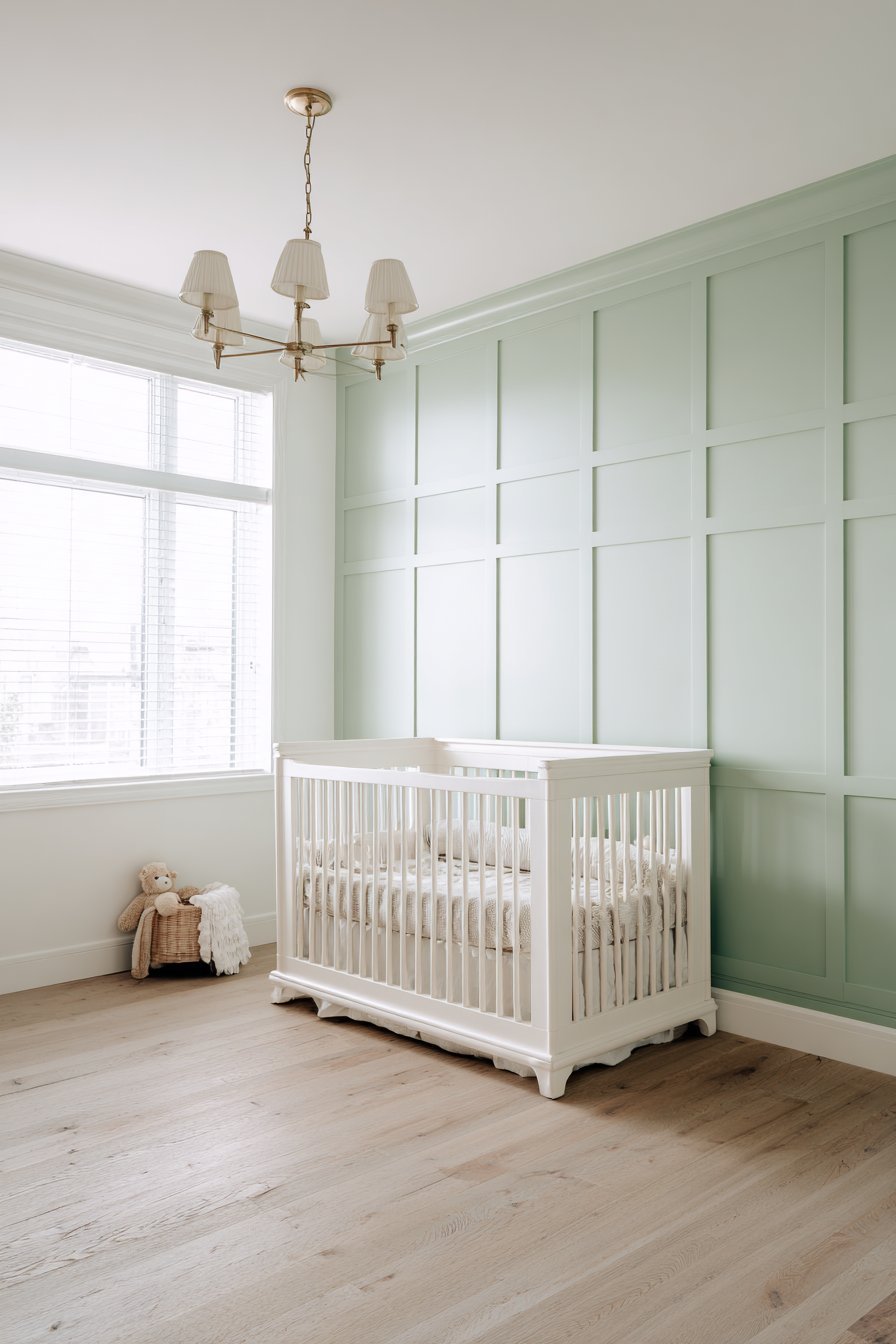
1. Classic White Crib Against Mint Shiplap
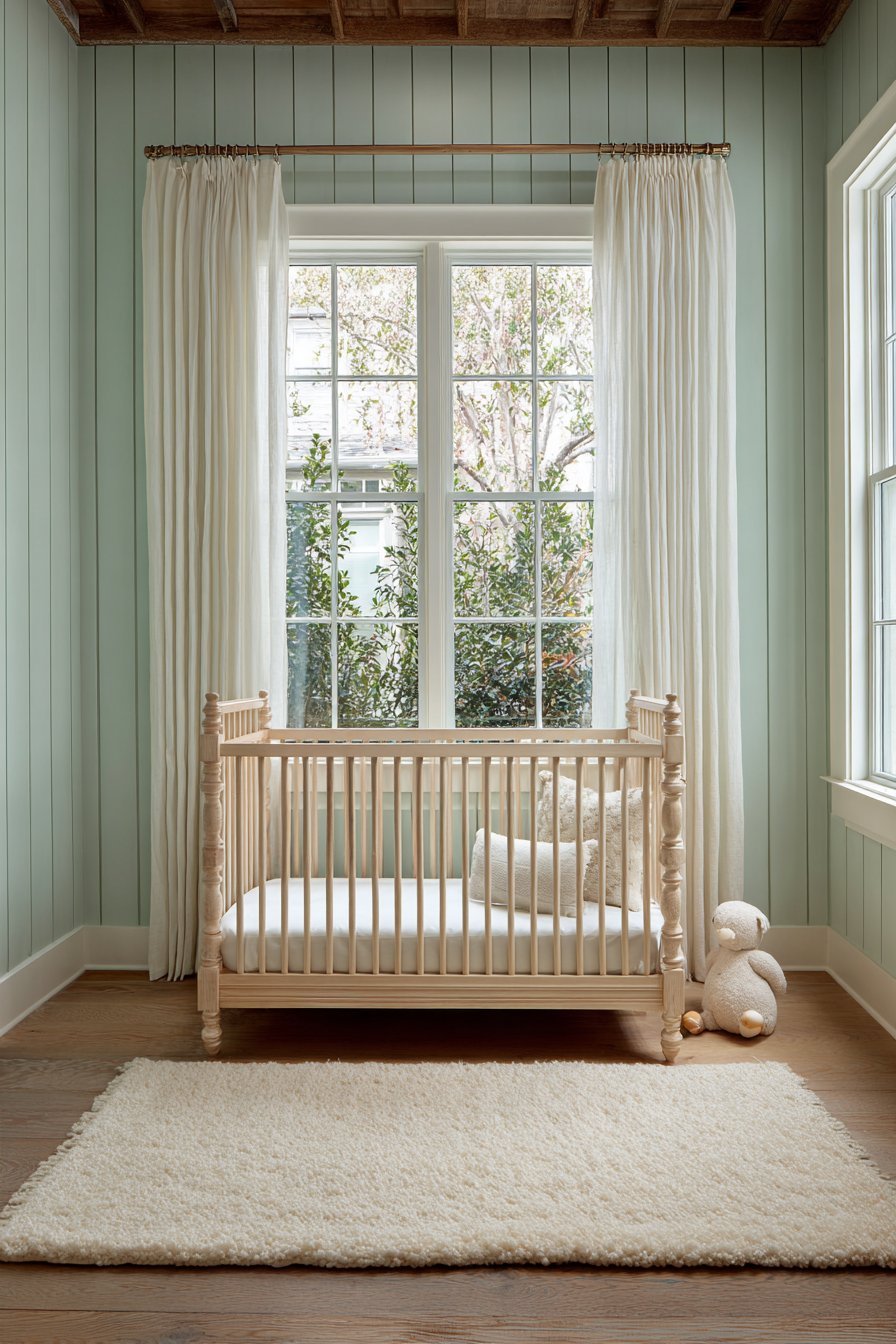
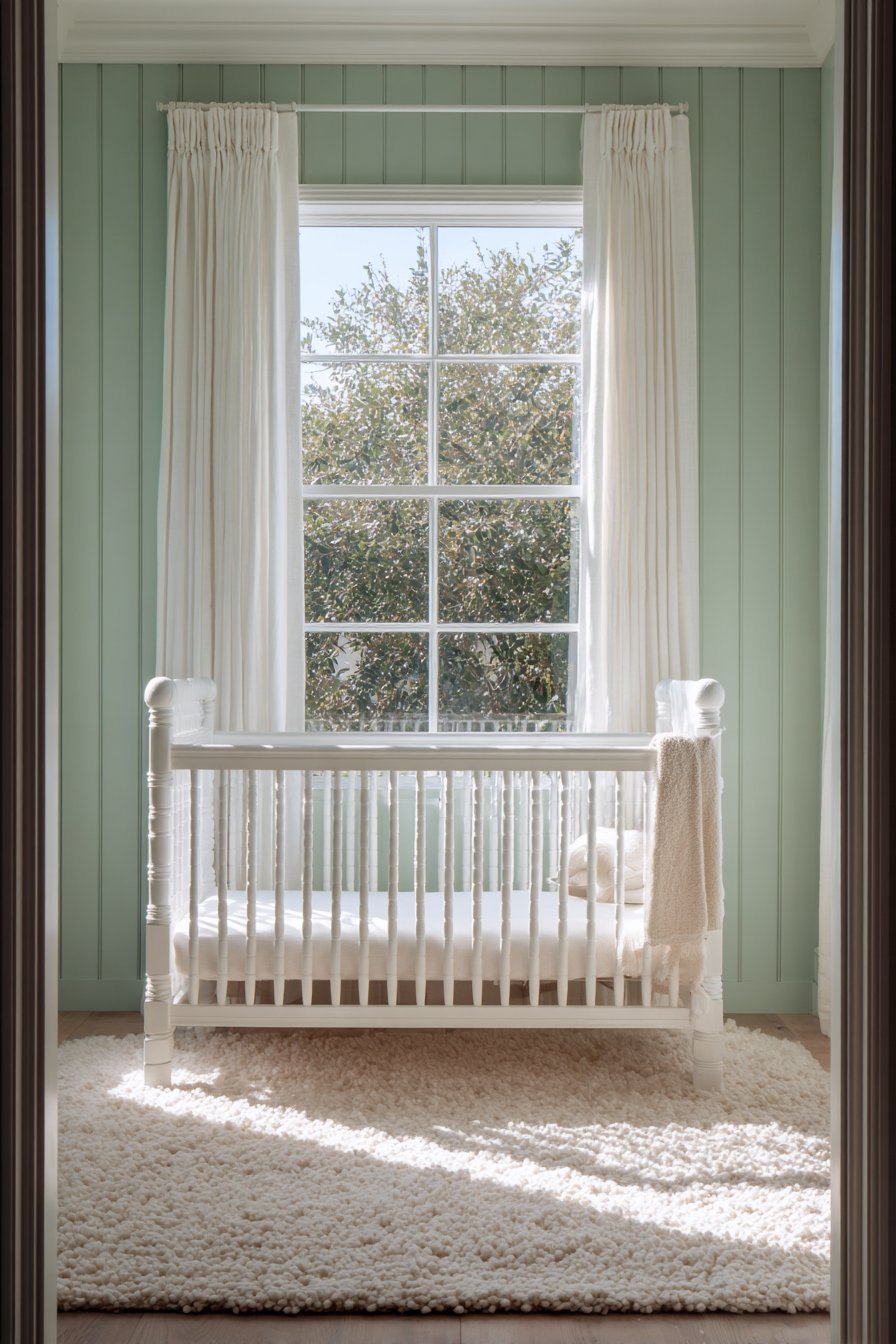
A serene mint green accent wall with vertical shiplap paneling creates the perfect backdrop for a white wooden crib. The subtle texture of the shiplap catches morning light beautifully. Delicate spindle details on the crib add timeless charm. A plush cream area rug anchors the space beneath the crib.
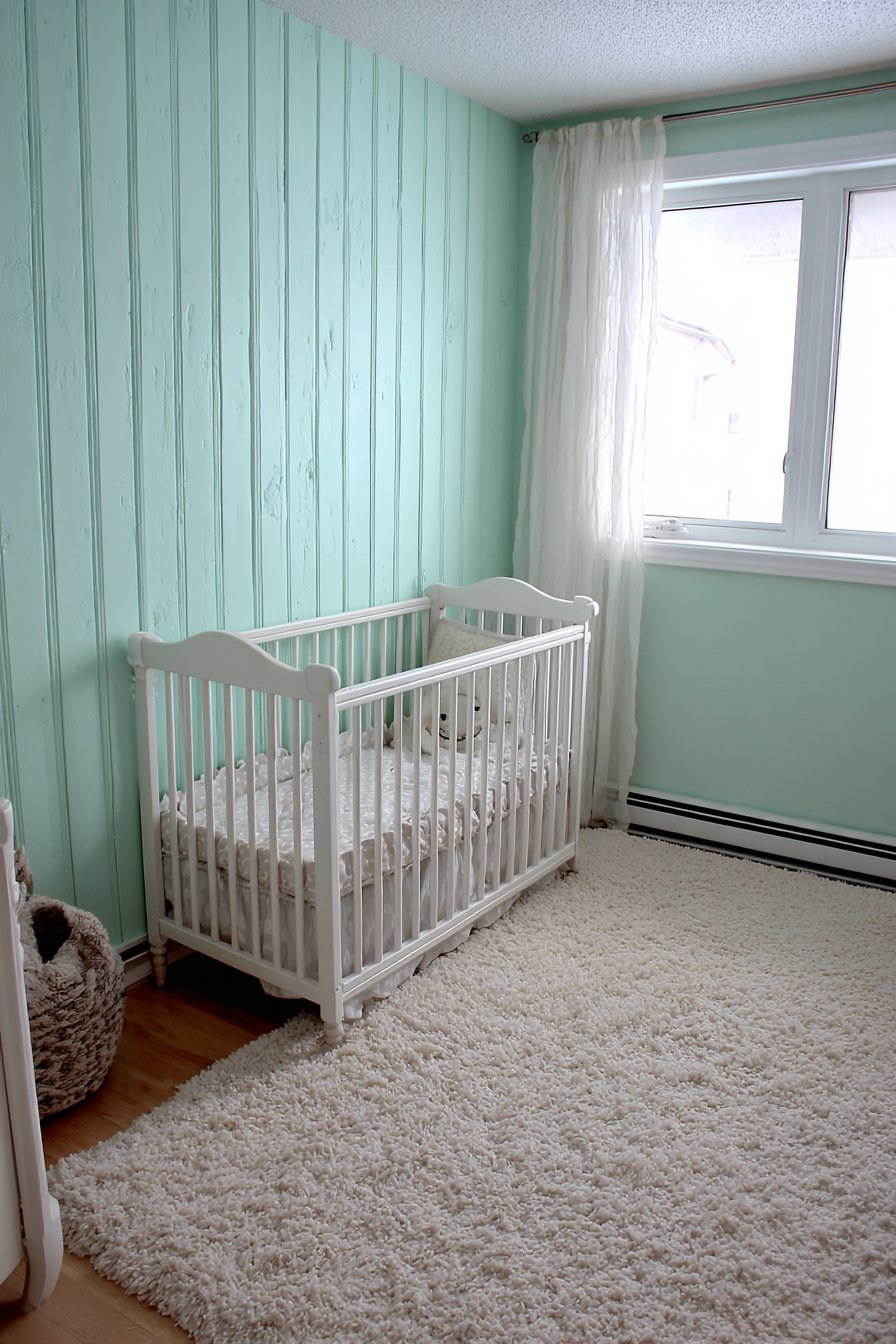
Sheer white curtains frame the large window, filtering natural daylight throughout the room. The soft illumination highlights the gentle mint tones and natural wood textures. The matte finish on the shiplap prevents harsh glare. This creates a peaceful atmosphere ideal for naptime and nighttime routines.
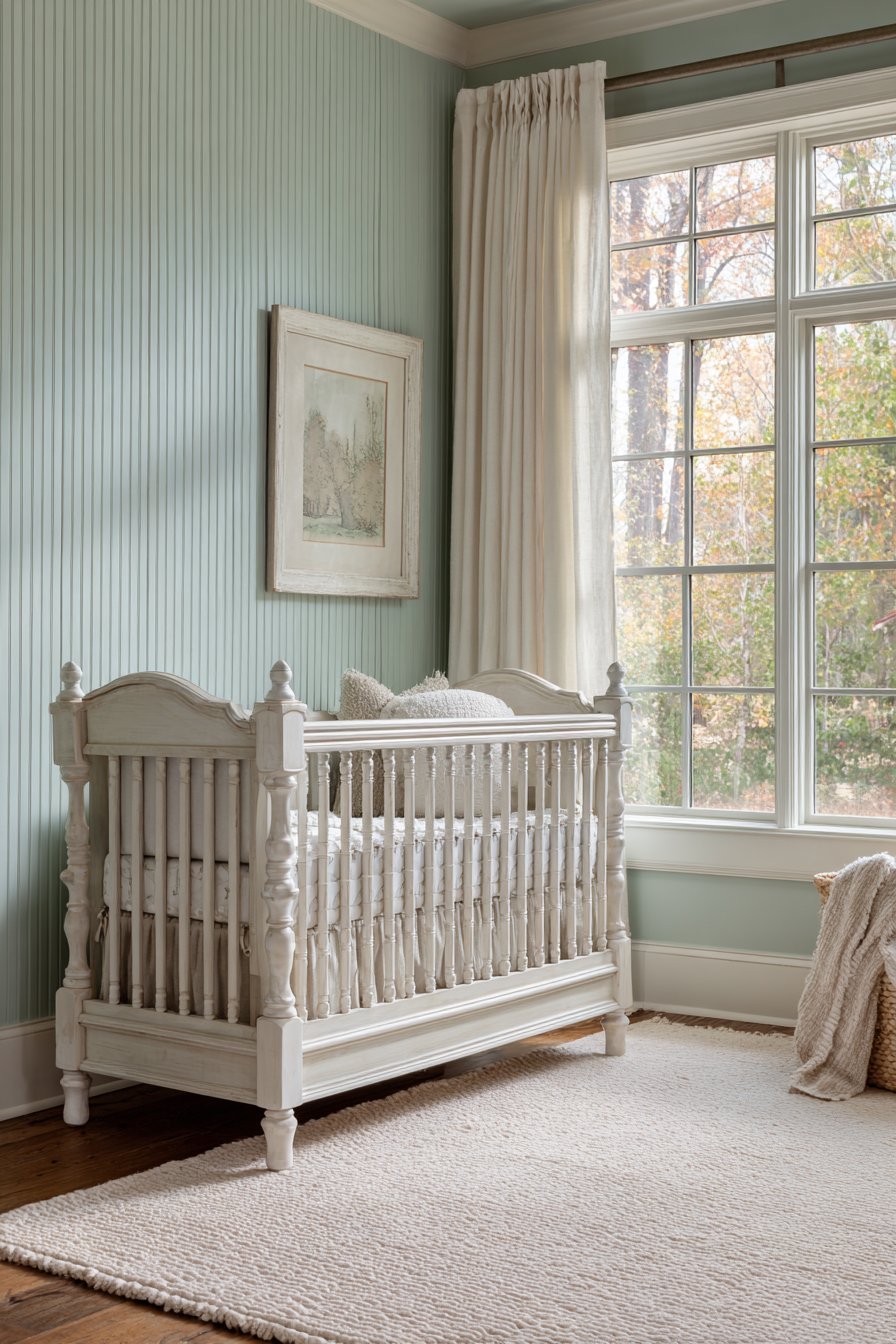
The combination of white furniture against mint walls offers visual balance and sophistication. The vertical lines of the shiplap add subtle architectural interest. Natural light plays a crucial role in bringing this design to life. The cream rug provides softness underfoot while maintaining the room’s light, airy feel.
Key Design Tips:
- Install vertical shiplap with a matte finish to add texture without overwhelming the space
- Choose a white crib with classic spindle details for timeless appeal
- Layer natural and filtered light through sheer curtains for gentle illumination
- Select a cream or ivory area rug to add warmth while keeping the palette light
- Use organic cotton bedding in white and cream tones for a cohesive look
2. Functional Oak Dresser Changing Station
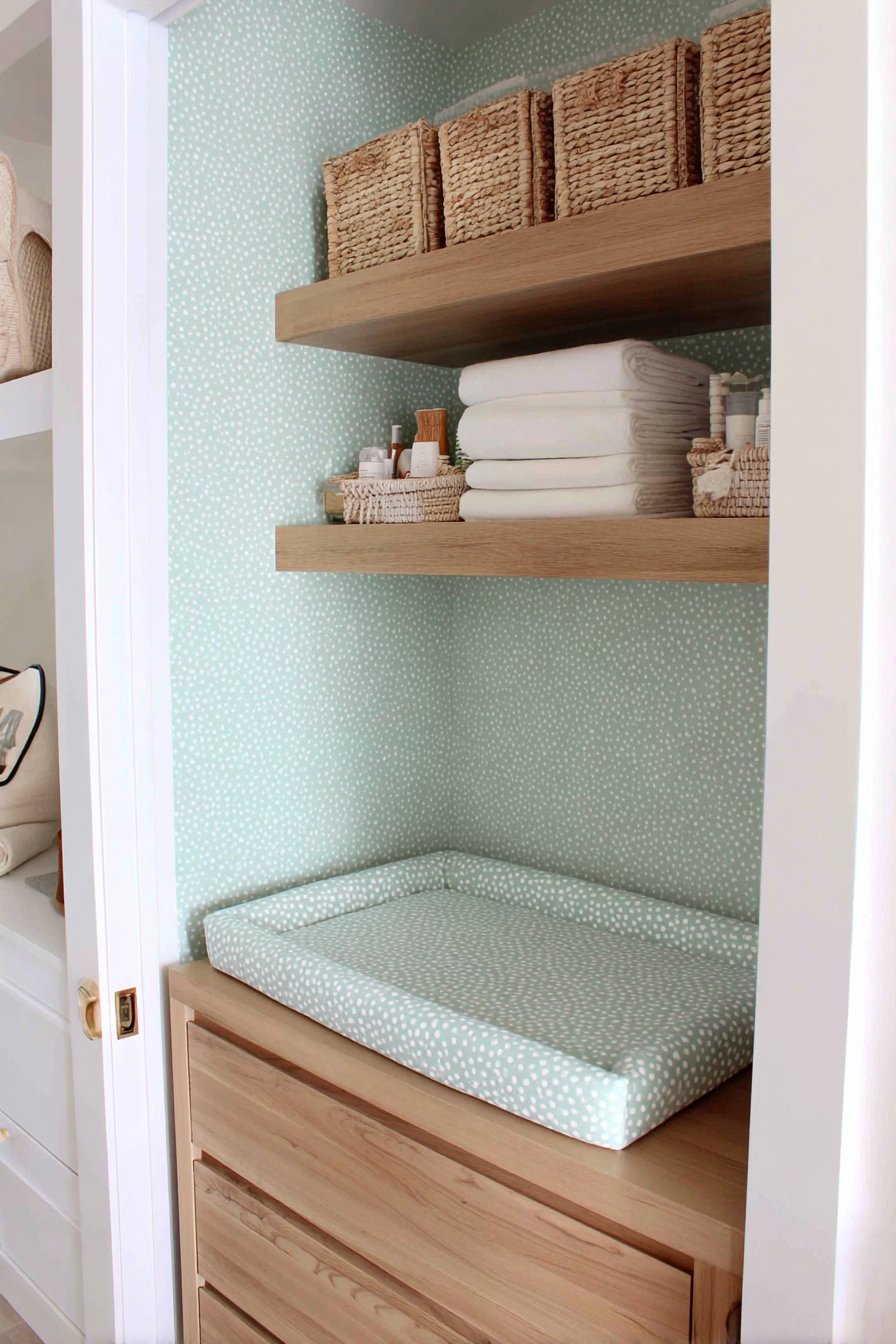
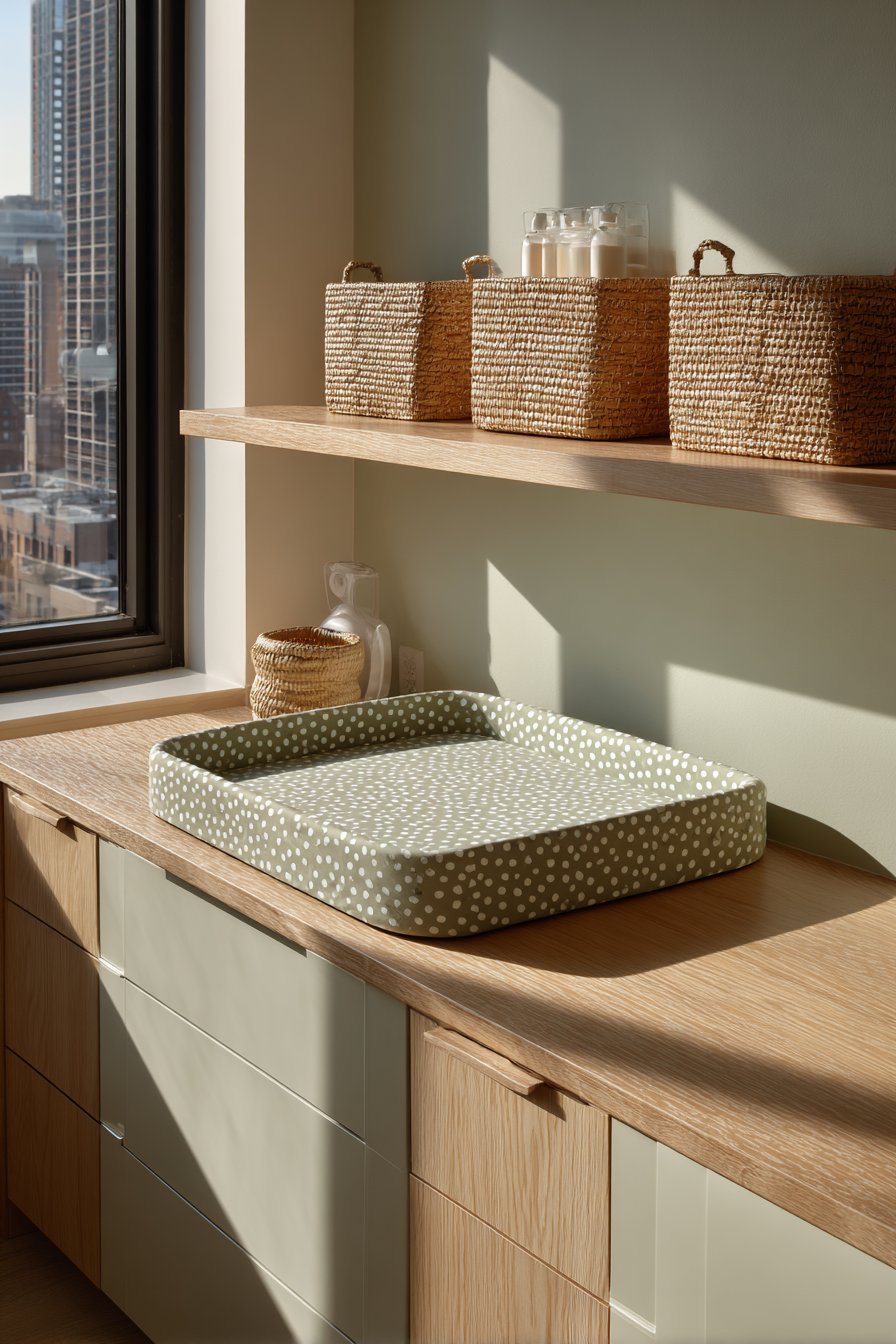
A solid oak dresser refinished in warm natural wood tones serves as a practical changing station. The contoured changing pad features organic cotton fabric in mint green with subtle white dots. Open shelving above displays woven baskets containing organized baby essentials. The surrounding wall showcases whisper-soft mint green paint with an eggshell finish.
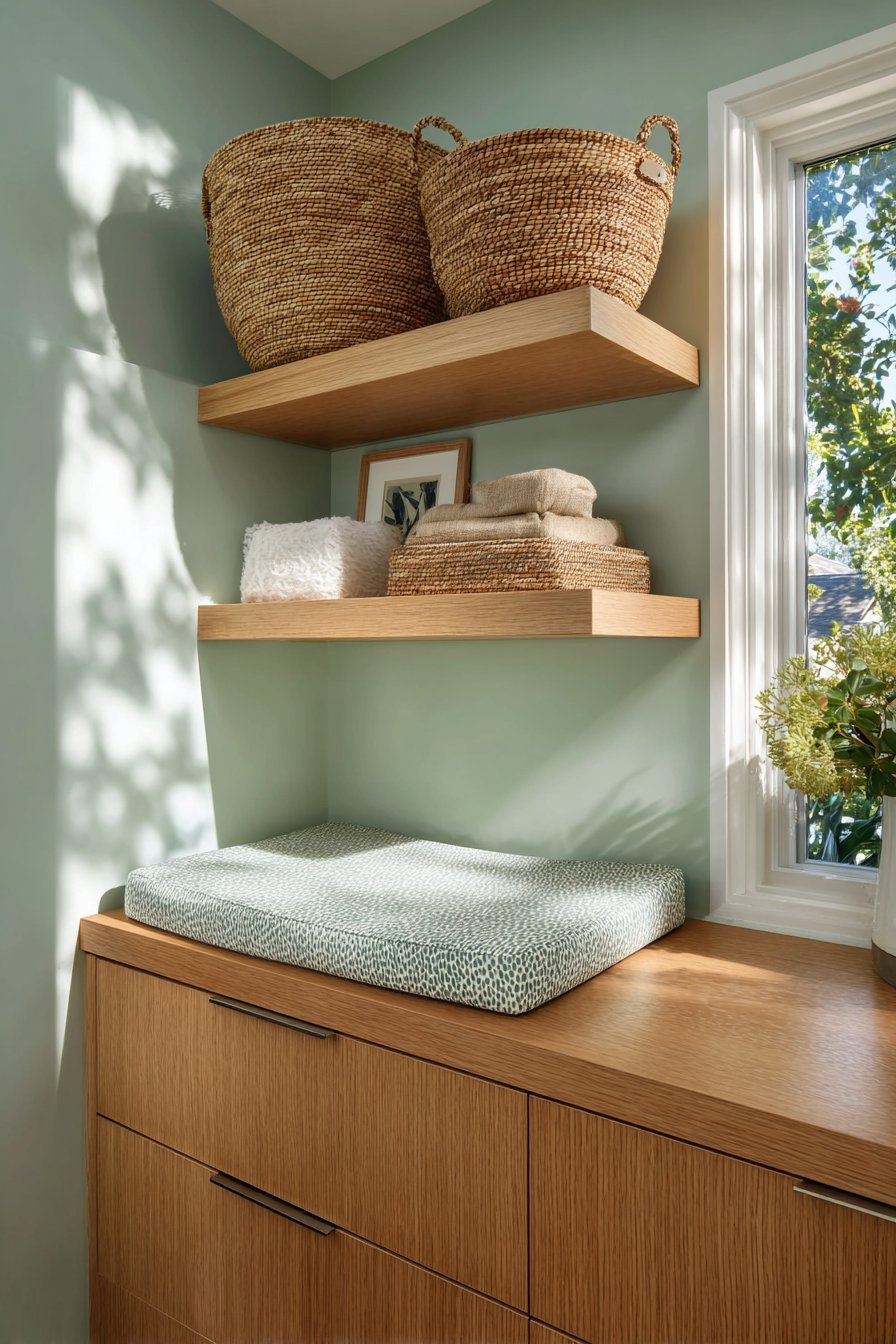
Natural light from an adjacent window illuminates the functional workspace. The wood grain patterns on the dresser add organic warmth to the cool mint tones. Soft shadows emphasize the practical organization and storage solutions. The combination of natural materials and thoughtful planning creates an efficient changing area.
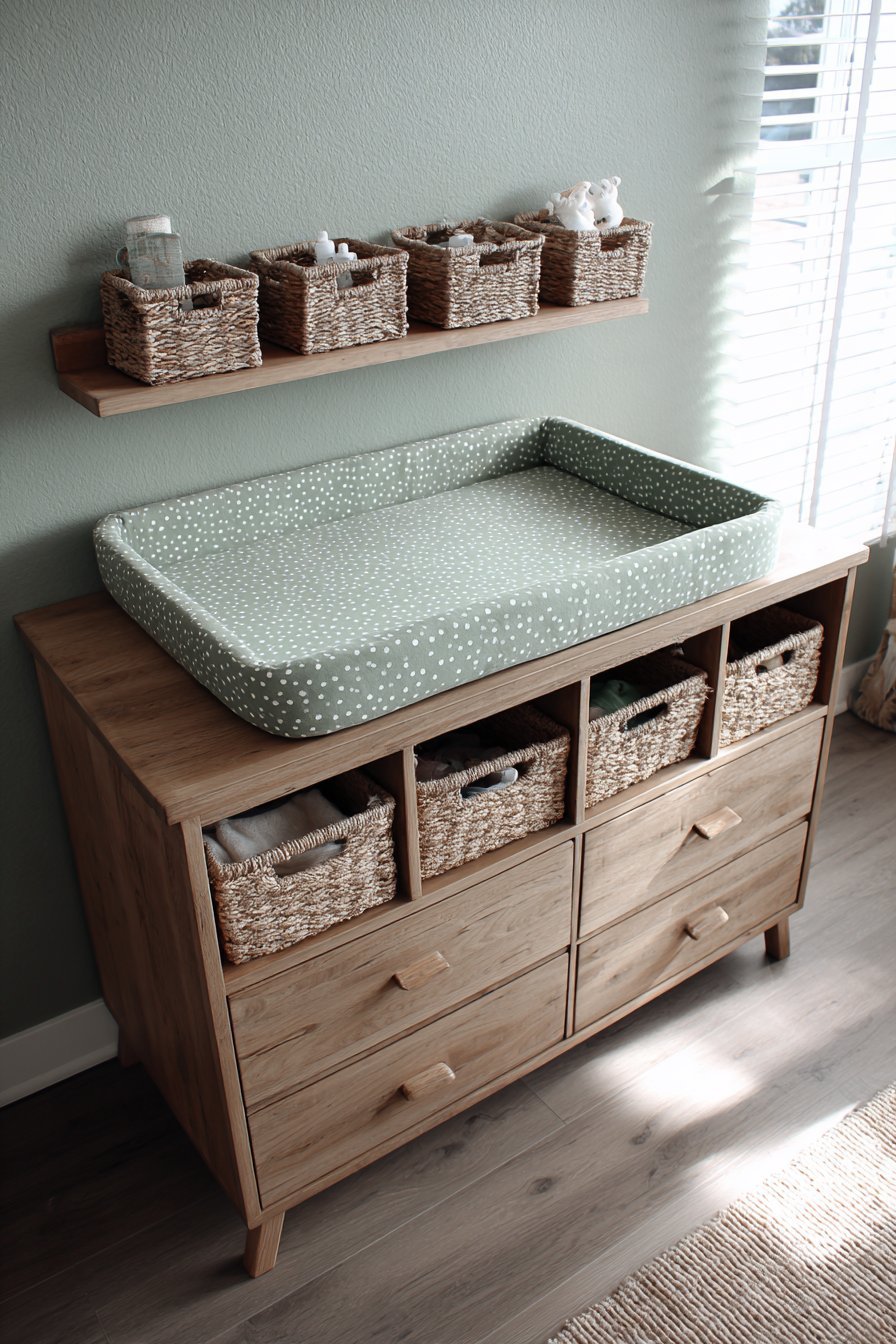
This design prioritizes functionality without sacrificing aesthetic appeal. The natural oak provides durability that will last through multiple children. The open shelving keeps frequently used items within easy reach. The mint green walls maintain visual continuity with the rest of the nursery.
Key Design Tips:
- Choose solid wood dressers that can transition beyond nursery years
- Use organic cotton fabrics for changing pad covers for baby’s comfort
- Install open shelving at convenient heights for one-handed access
- Select natural fiber baskets for attractive, functional storage
- Position the changing station near natural light sources for visibility
- Apply eggshell finish paint for easy cleaning on high-traffic walls
3. Cozy Grey Linen Reading Nook
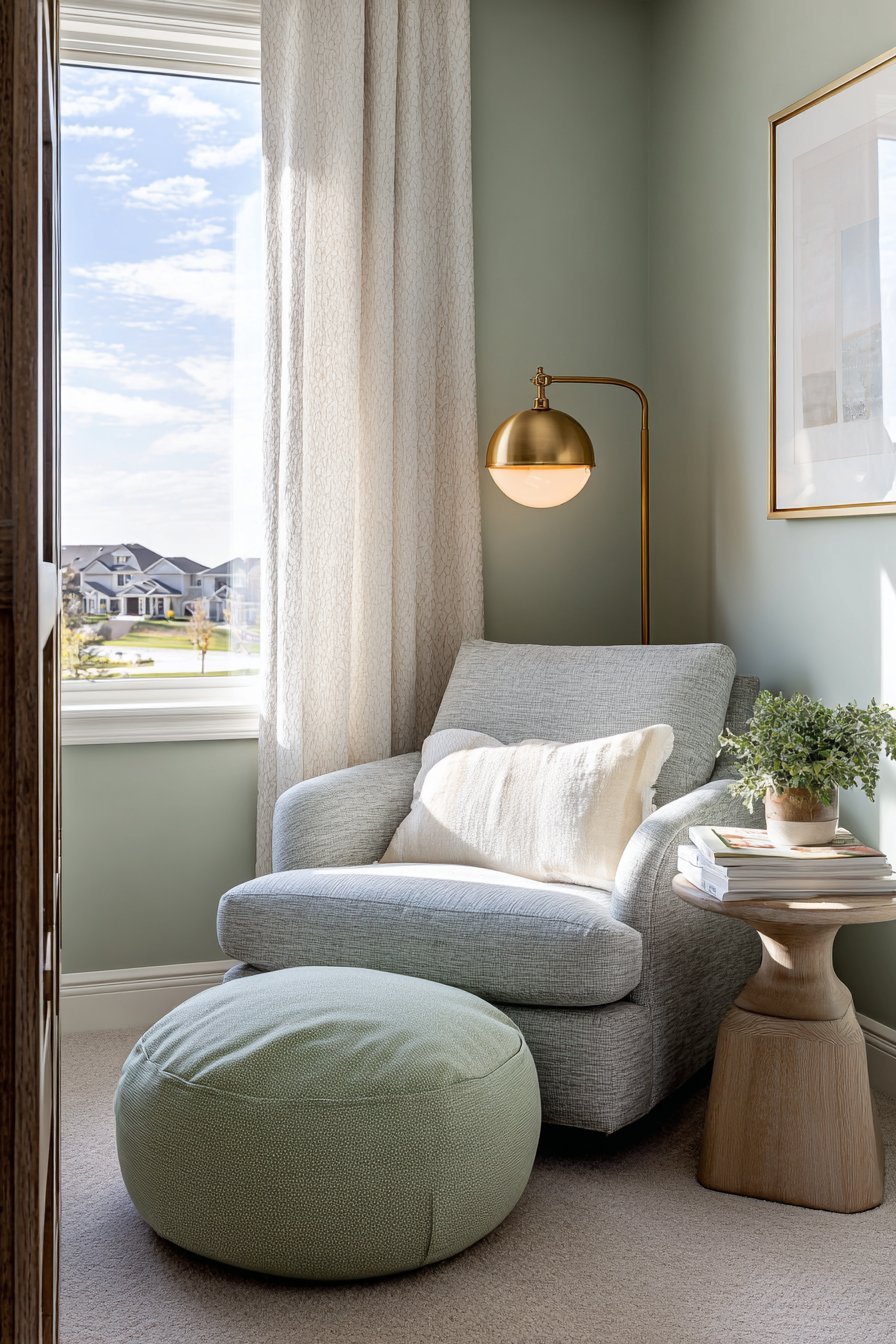
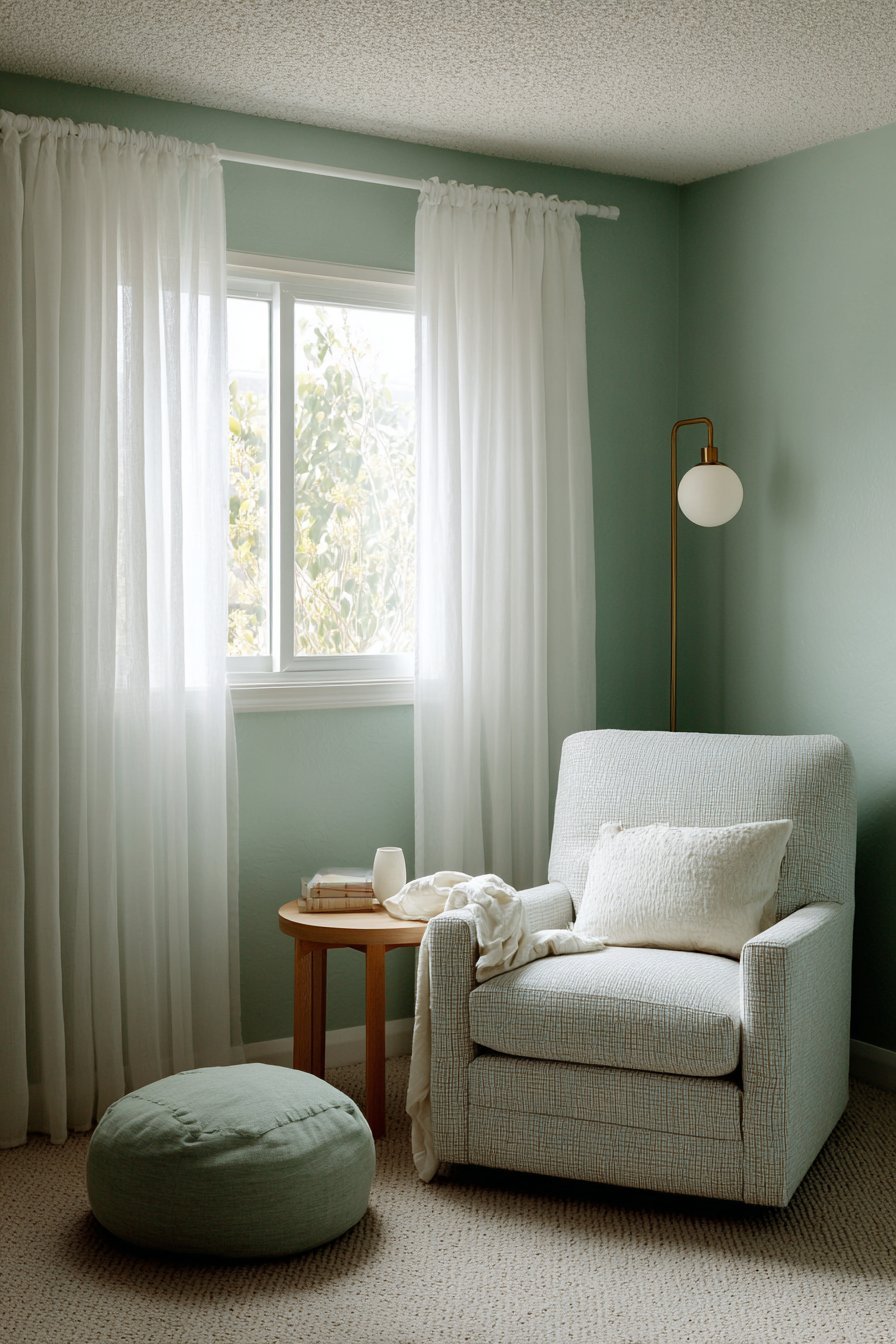
A comfortable upholstered glider chair in soft grey linen creates an intimate reading corner. The chair sits near a window with flowing sheer curtains that filter afternoon light. A small round side table in light oak holds a simple brass reading lamp. The mint green walls provide a soothing backdrop for storytime sessions.
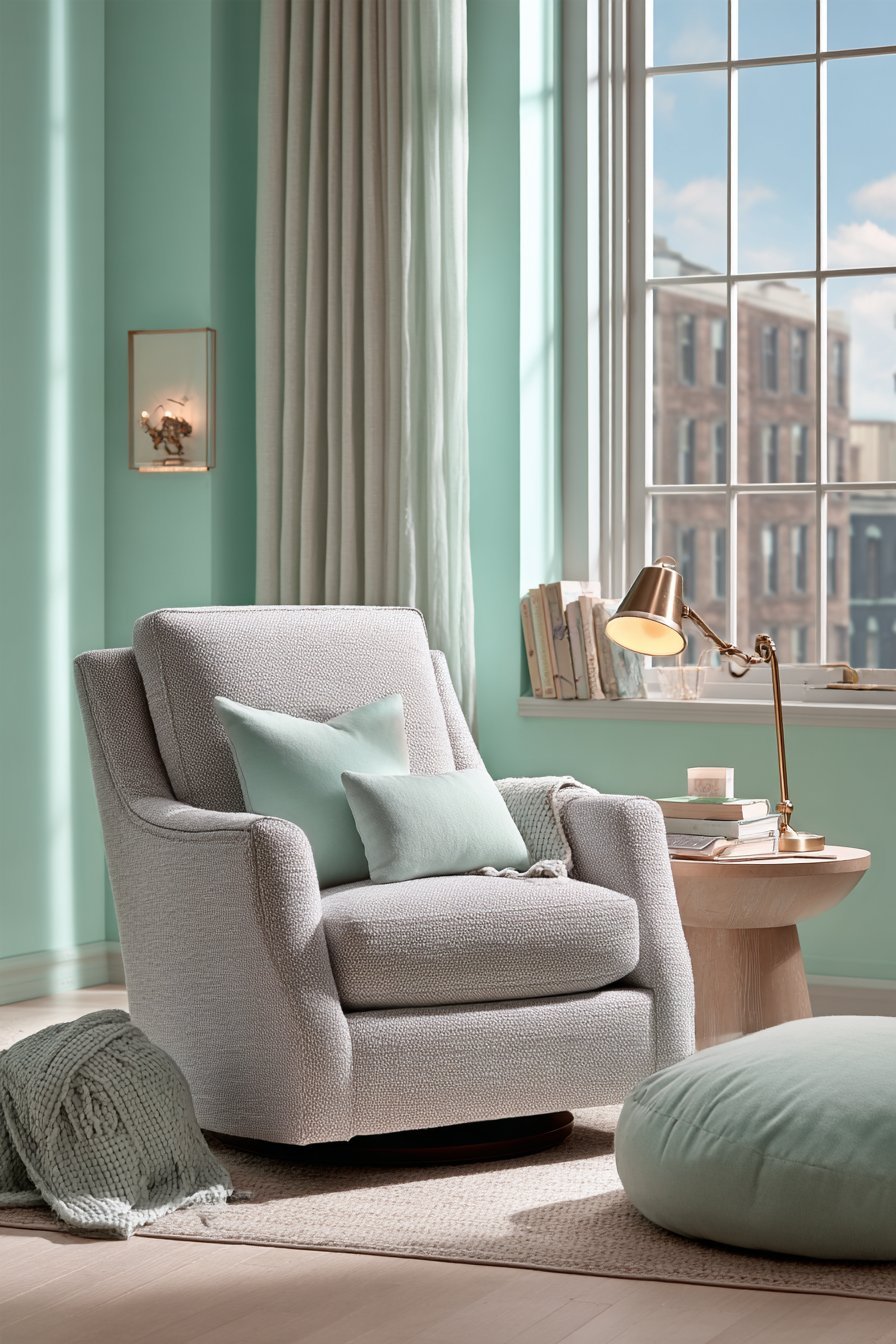
A floor cushion in complementary sage green rests nearby for flexible seating options. The warm-toned bulb in the brass lamp creates inviting illumination for evening reading. Natural afternoon light streams through the window during daytime. The combination of natural and artificial lighting ensures functionality throughout the day.
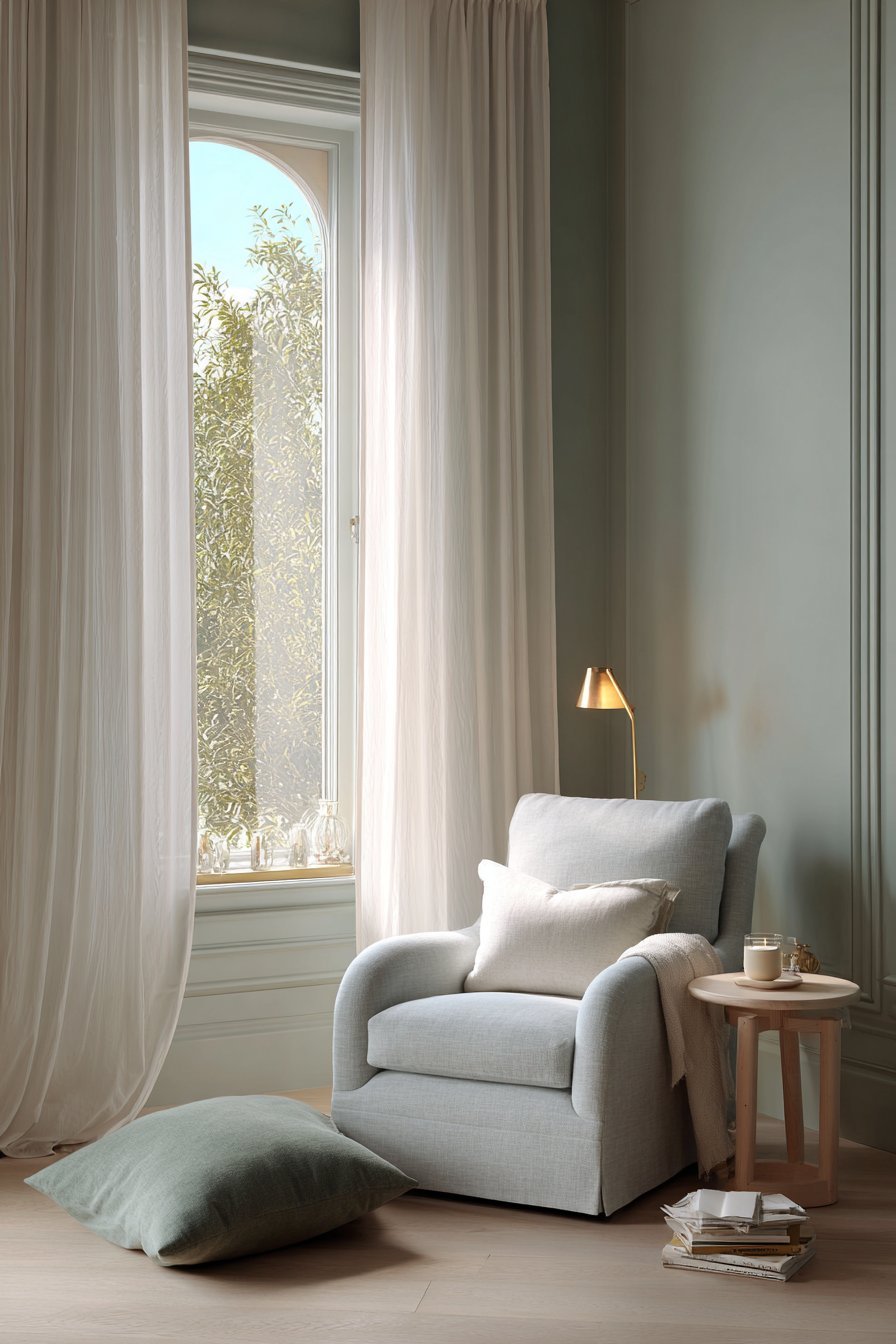
This dedicated reading space becomes a cherished corner for parent-child bonding. The glider’s gentle motion soothes fussy babies during late-night feedings. The carefully selected textiles add comfort and visual interest. The peaceful atmosphere encourages the development of early literacy habits.
Key Design Tips:
- Invest in a quality glider chair with supportive arms for comfortable feeding sessions
- Position the reading nook near natural light sources when possible
- Add a floor cushion in a complementary green tone for versatility
- Choose a brass reading lamp with a warm-toned bulb for cozy evening light
- Use flowing sheer curtains to soften window light without blocking it completely
4. Whimsical Watercolor Cloud Mural
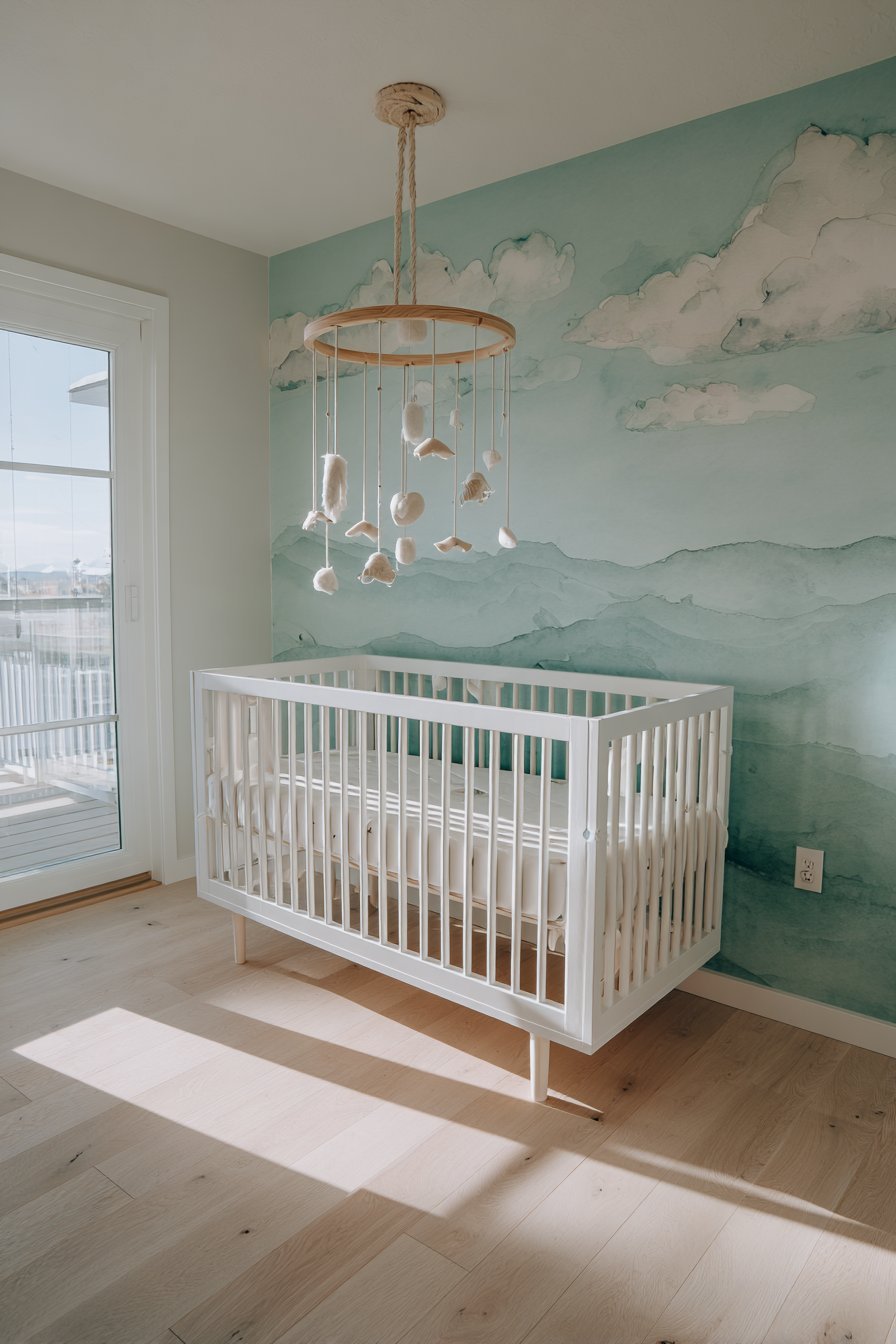
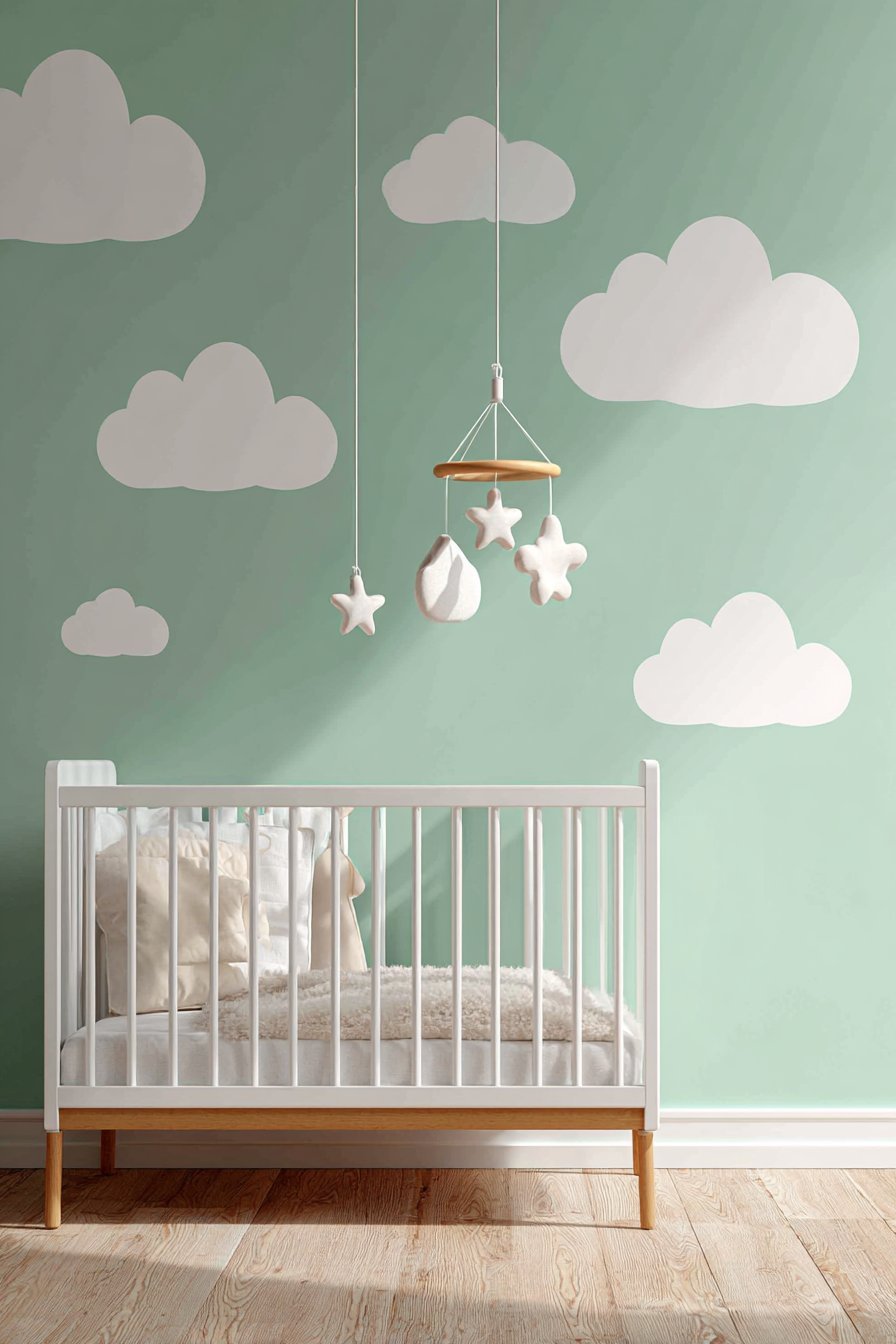
Hand-painted watercolor-style cloud murals float across the mint green wall in soft white and pale grey. The gentle artistic details create a dreamy atmosphere above a simple white modern crib. A mobile crafted from natural wooden elements and white felt shapes hangs above the crib. Light maple hardwood flooring with visible grain patterns adds warmth below.
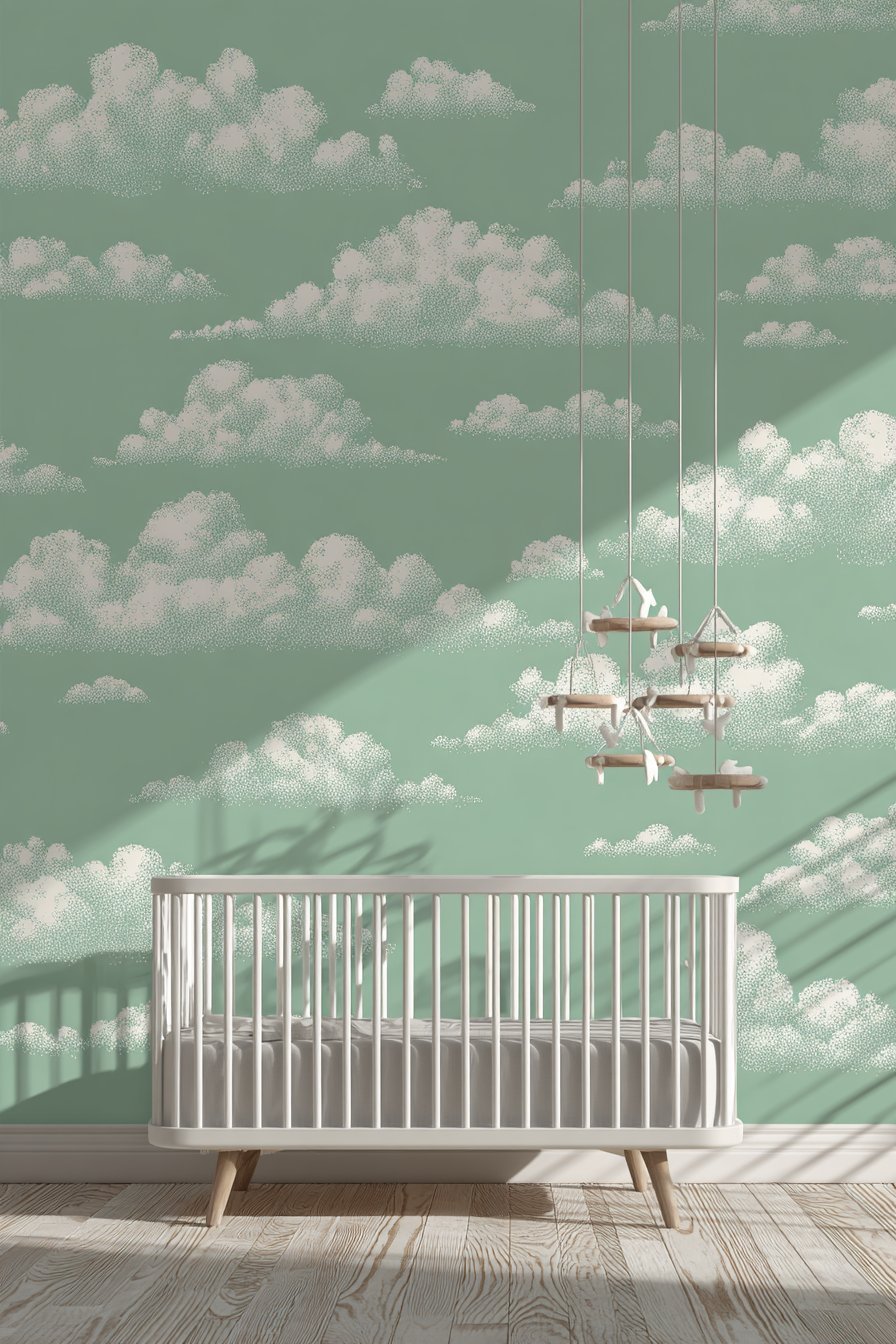
The delicate shadows cast by the mobile dance across the walls in natural light. The watercolor technique gives the clouds a soft, ethereal quality. The clean lines of the modern crib balance the whimsical wall treatment. The light flooring brightens the entire space while showcasing natural wood beauty.
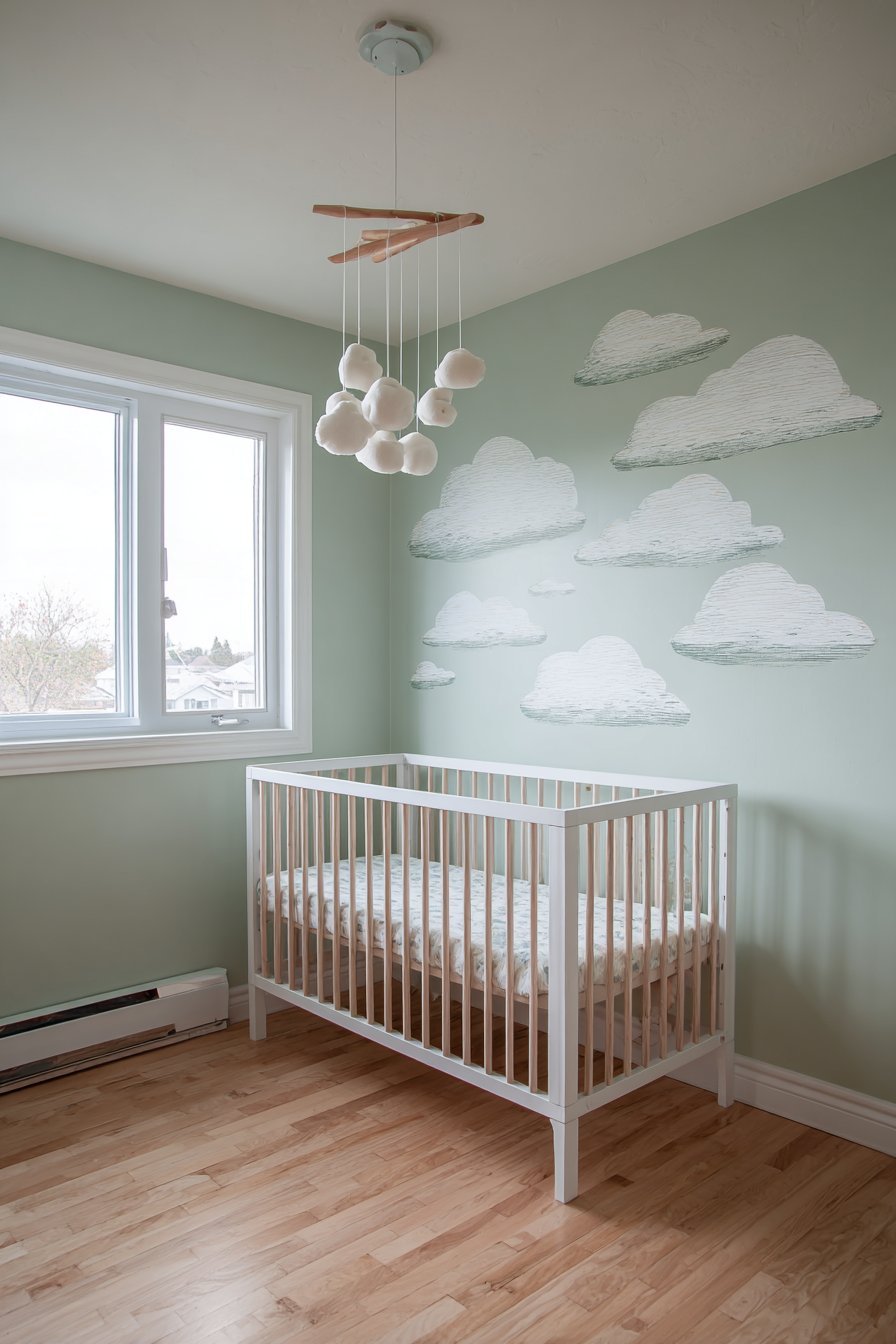
This design demonstrates how artistic wall treatments can be both sophisticated and playful. The achievable DIY painting technique makes this look accessible to creative parents. The combination of whimsy and minimalism prevents the room from feeling juvenile. The natural materials keep the design grounded and timeless.
Key Design Tips:
- Use high-quality watercolor techniques for soft, blended cloud edges
- Keep cloud designs simple and achievable for DIY projects
- Balance whimsical elements with clean-lined furniture for sophistication
- Choose natural wooden mobile elements over plastic alternatives
- Install light-colored hardwood flooring to brighten the space naturally
- Position the mobile high enough for safety while maintaining visual interest
5. Organized Mint Green Closet System
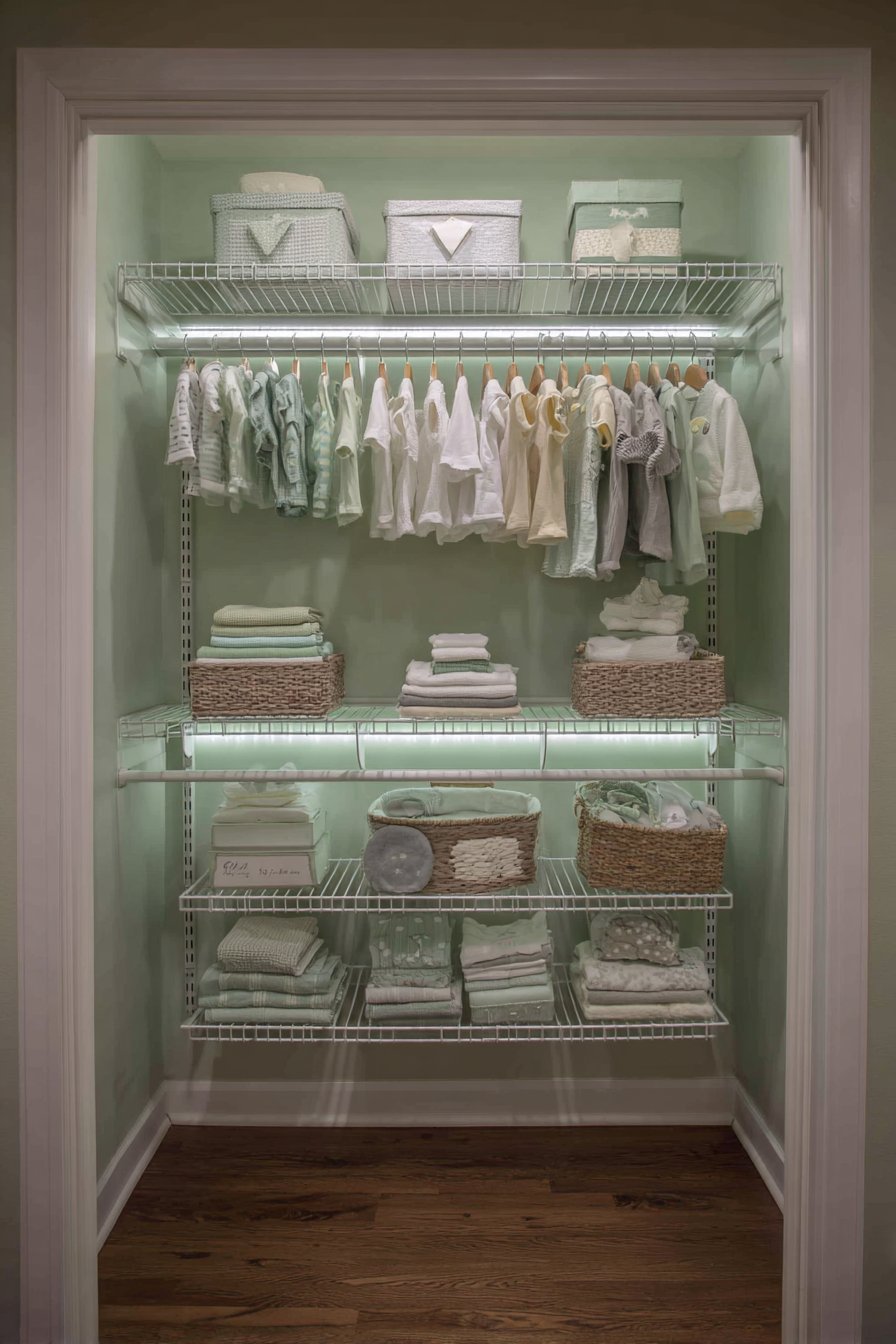
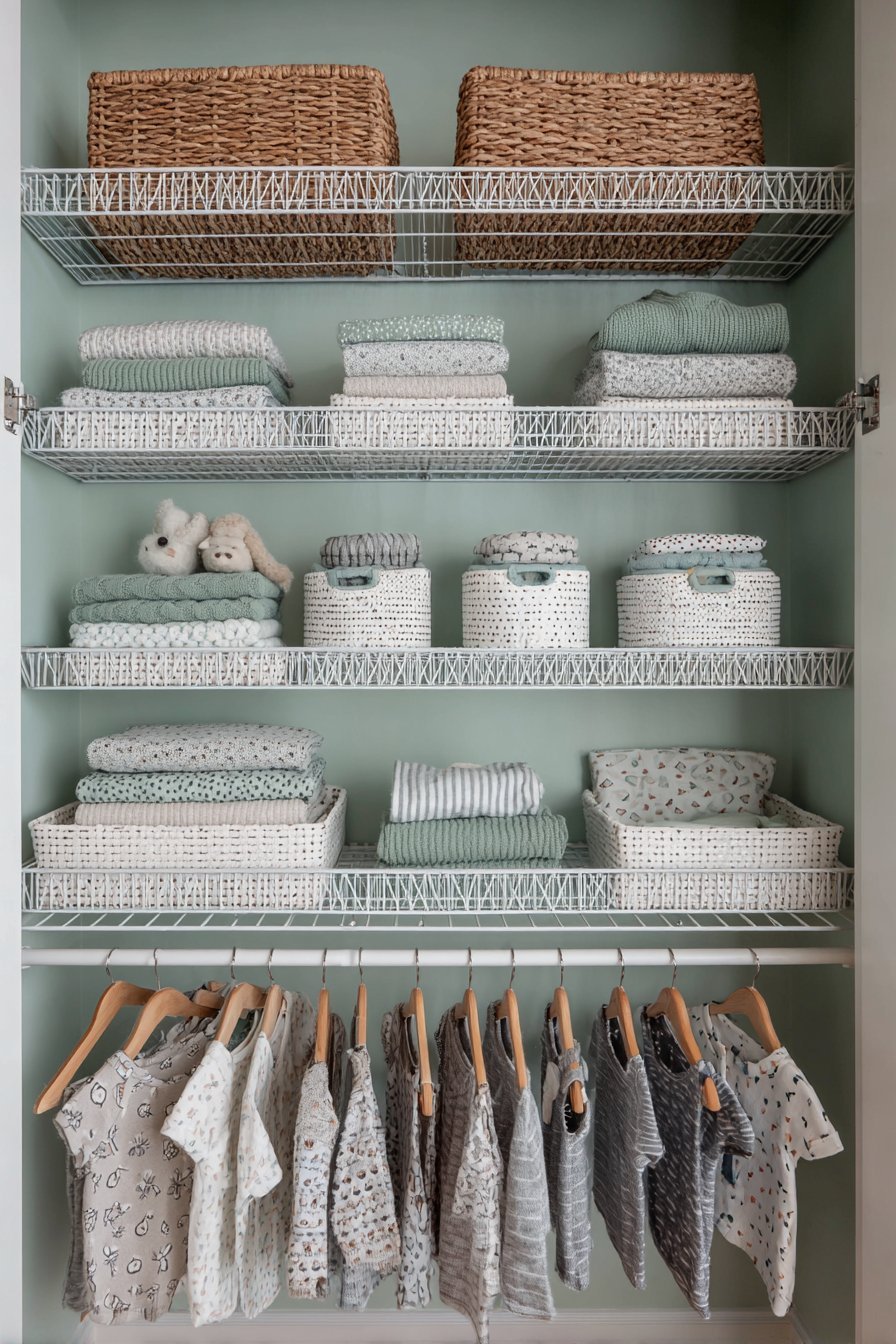
White wire shelving creates an efficient organization system inside the nursery closet. Neatly folded baby clothes in coordinating mint, white, and grey tones fill the shelves. Small woven baskets contain accessories while hanging rods display tiny garments on wooden hangers. The closet interior walls match the nursery’s soft mint green paint.
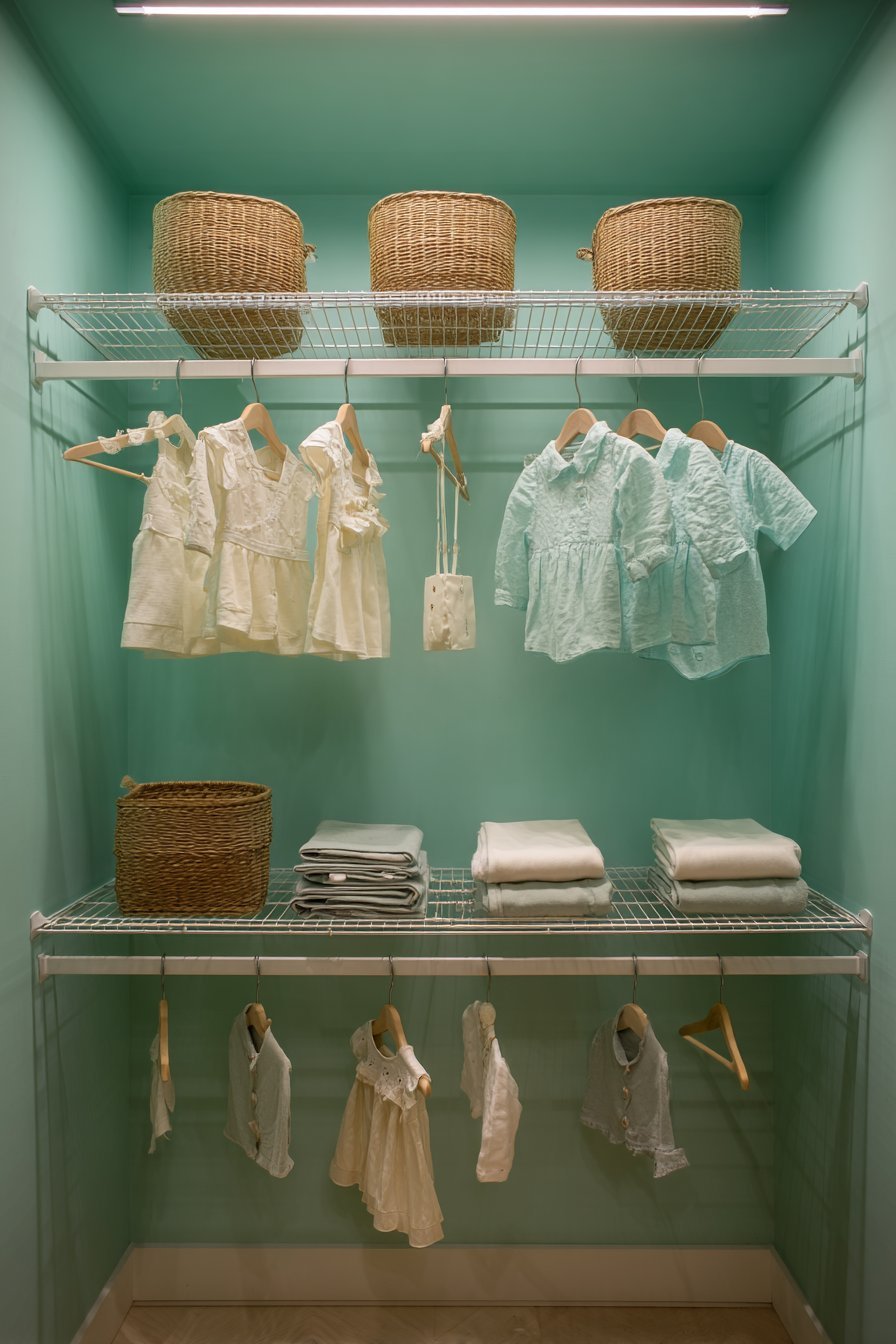
Overhead LED strip lighting provides clear illumination throughout the closet space. The color-coordinated storage approach makes finding items quick and easy. The wire shelving allows air circulation to keep clothes fresh. The organized system grows with your child’s changing needs.
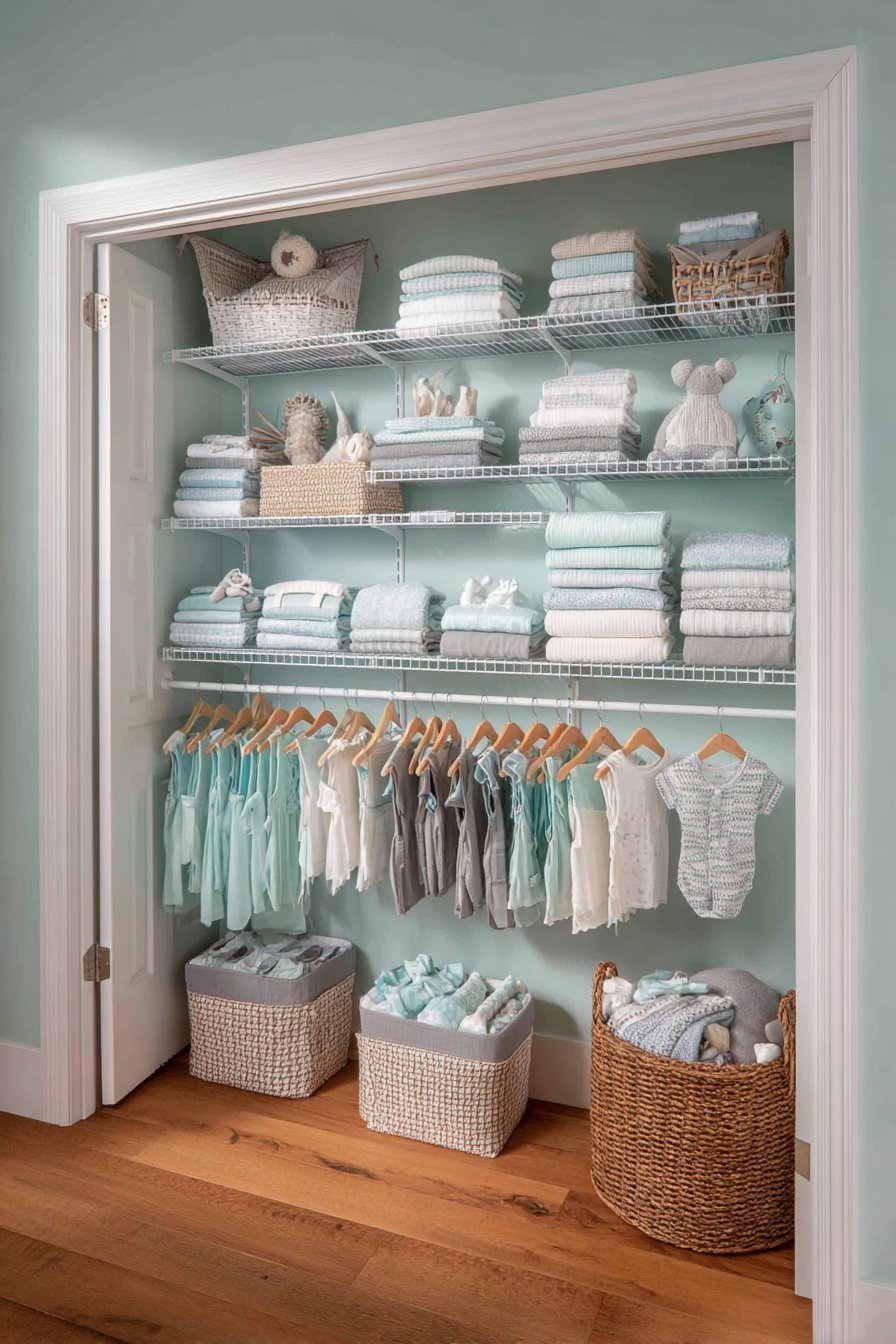
This practical solution proves that functional spaces can also be visually appealing. The consistent color palette creates a cohesive look even in hidden spaces. The combination of folded and hanging storage maximizes vertical space. The woven baskets add texture while concealing smaller items.
Key Design Tips:
- Install adjustable wire shelving to accommodate changing storage needs
- Color-coordinate clothing for visual appeal and easy item location
- Use wooden hangers for durability and a polished look
- Add LED strip lighting for clear visibility in closet spaces
- Select woven baskets in natural fibers for attractive small item storage
- Paint closet interiors to match the nursery for visual continuity
6. Vintage-Inspired White Iron Crib
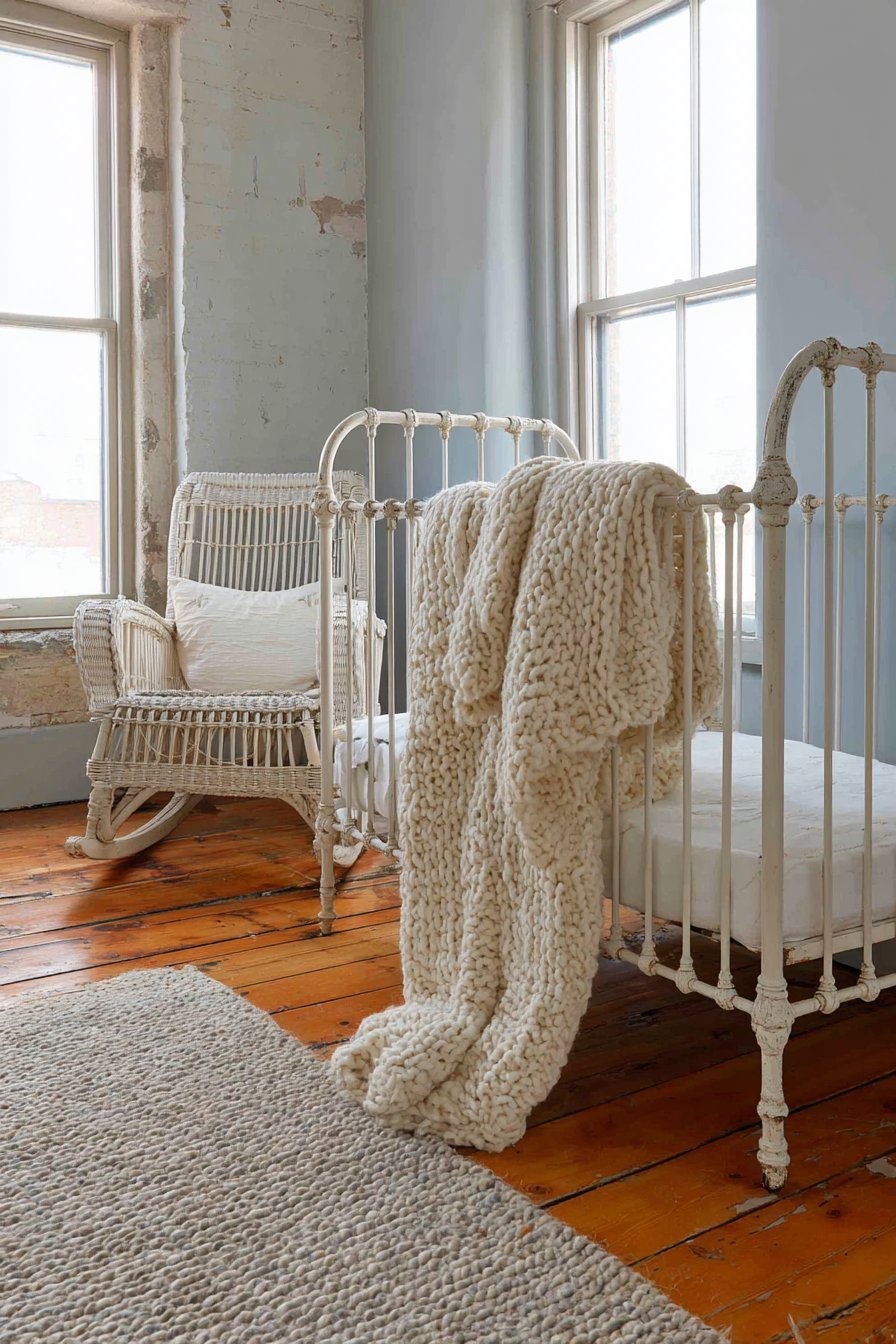
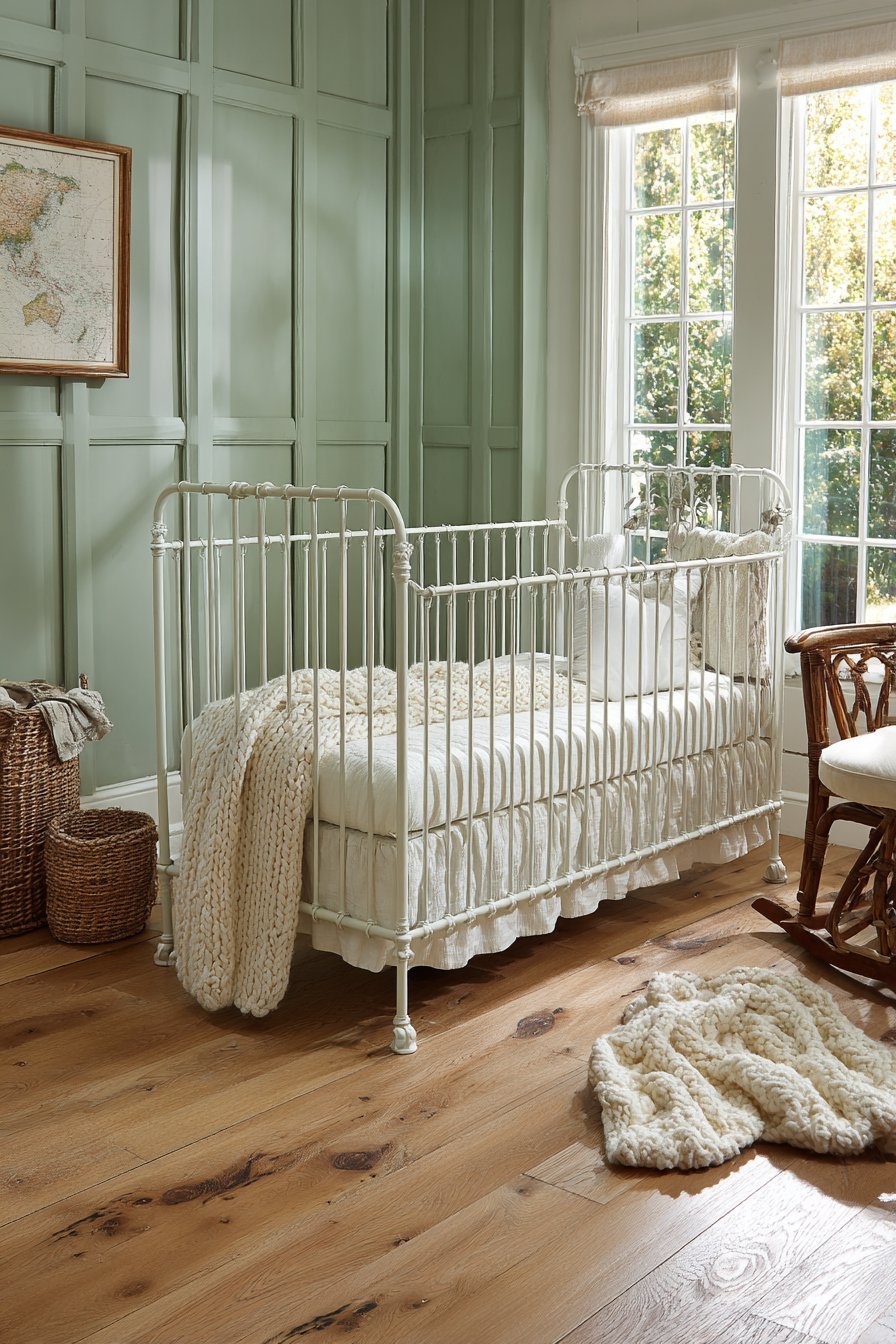
A vintage-inspired white iron crib with gentle curved details sits positioned diagonally for visual interest. The mint green walls feature a subtle linen texture finish. An antique white wooden rocking chair with woven cane back provides seating nearby. A chunky knit throw blanket in cream drapes casually over the chair.
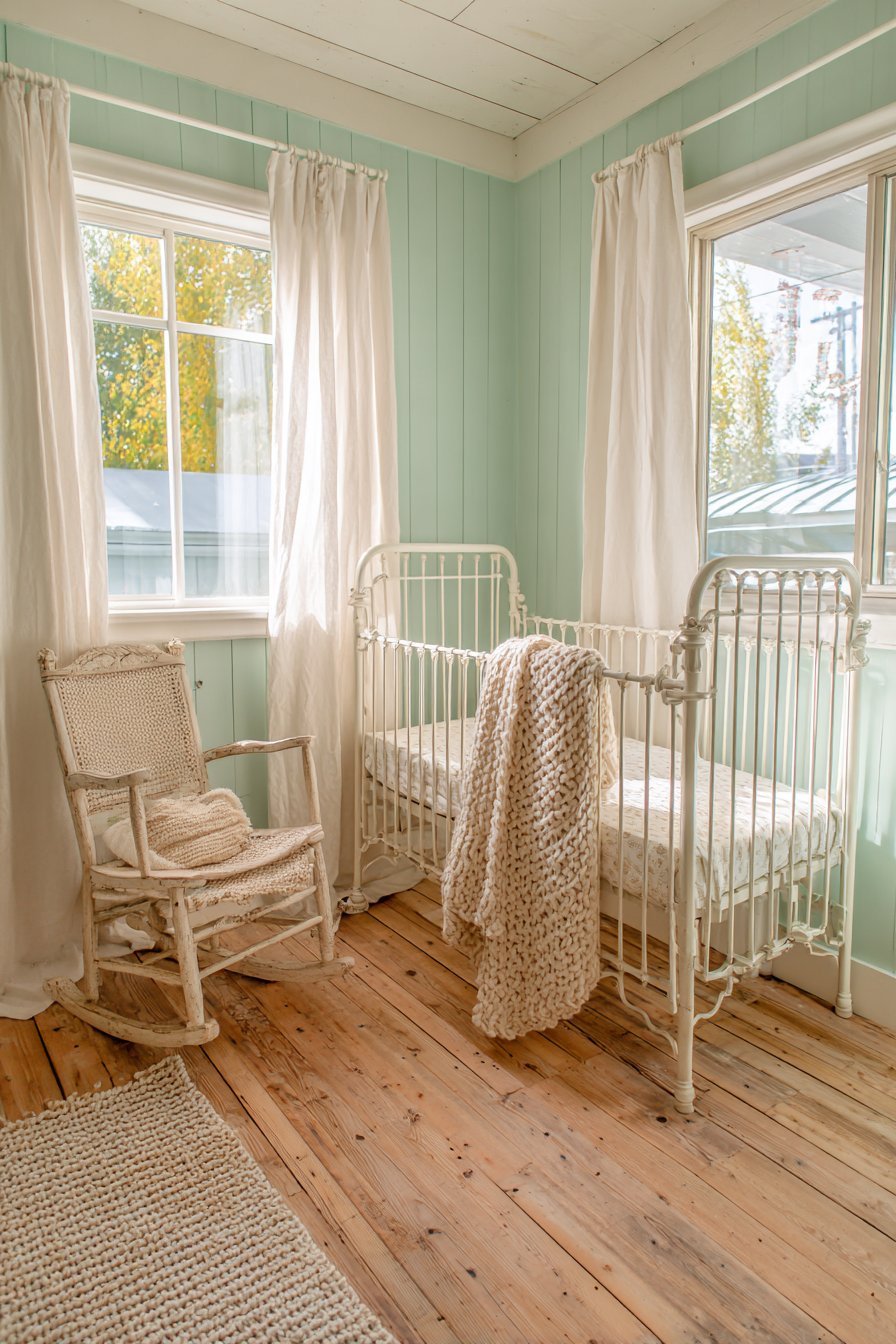
Honey oak hardwood floors show natural wear patterns and character marks. Natural window light creates soft highlights on the metal crib frame. The diagonal placement adds dynamic energy to the room layout. The combination of vintage pieces creates nostalgic charm with modern functionality.
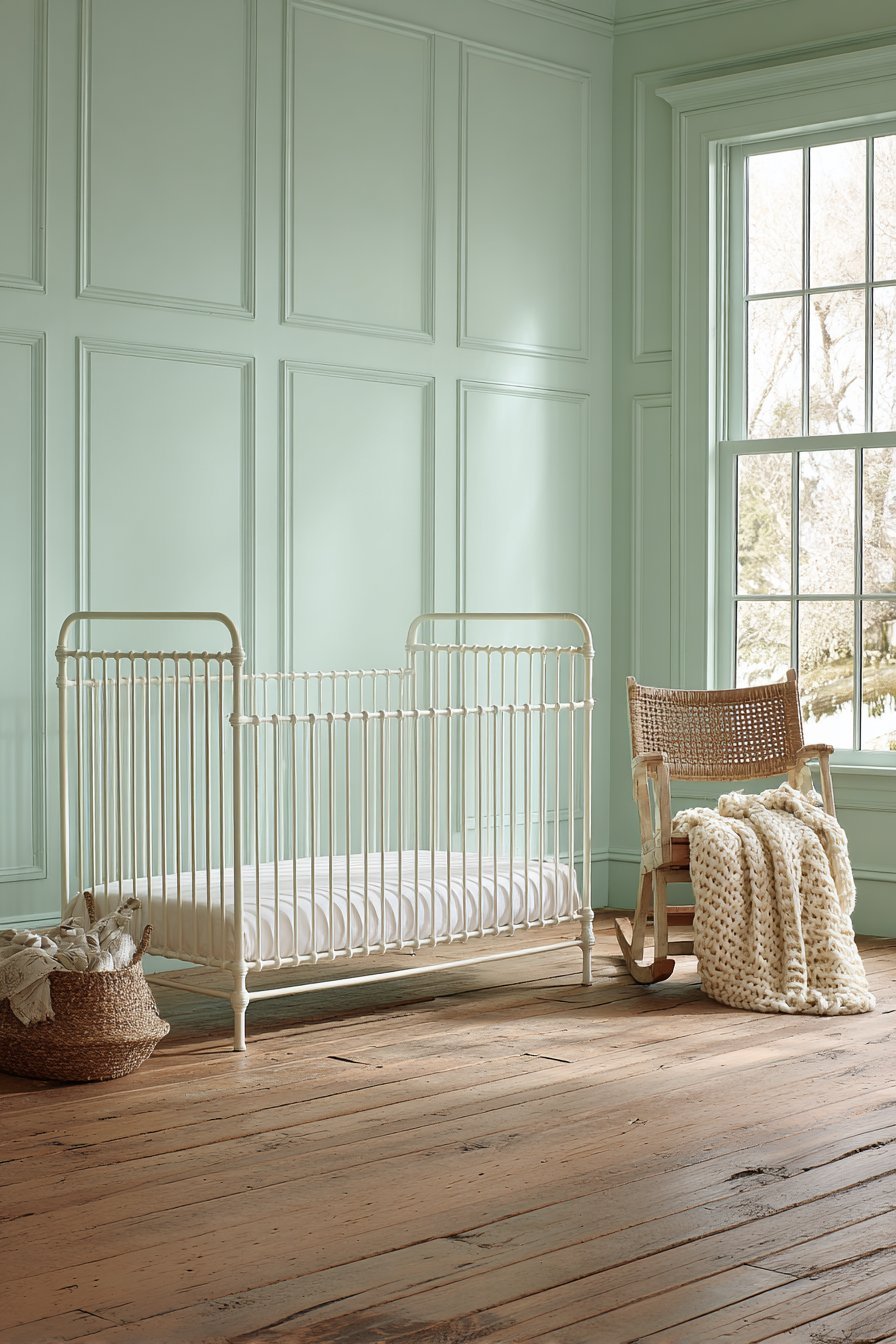
This design celebrates character and history while maintaining practical nursery needs. The iron crib offers durability and timeless style. The rocking chair becomes a treasured piece for generations. The textured walls add depth without pattern or color complexity.
Key Design Tips:
- Position cribs diagonally to create visual interest in square rooms
- Choose iron cribs for durability and classic vintage appeal
- Add linen texture to painted walls using specialty paint techniques
- Select antique furniture pieces with comfortable ergonomics for actual use
- Layer chunky knit textiles for warmth and texture contrast
- Embrace natural wear in hardwood floors as character rather than flaws
7. Modern Minimalist Mountain Mural
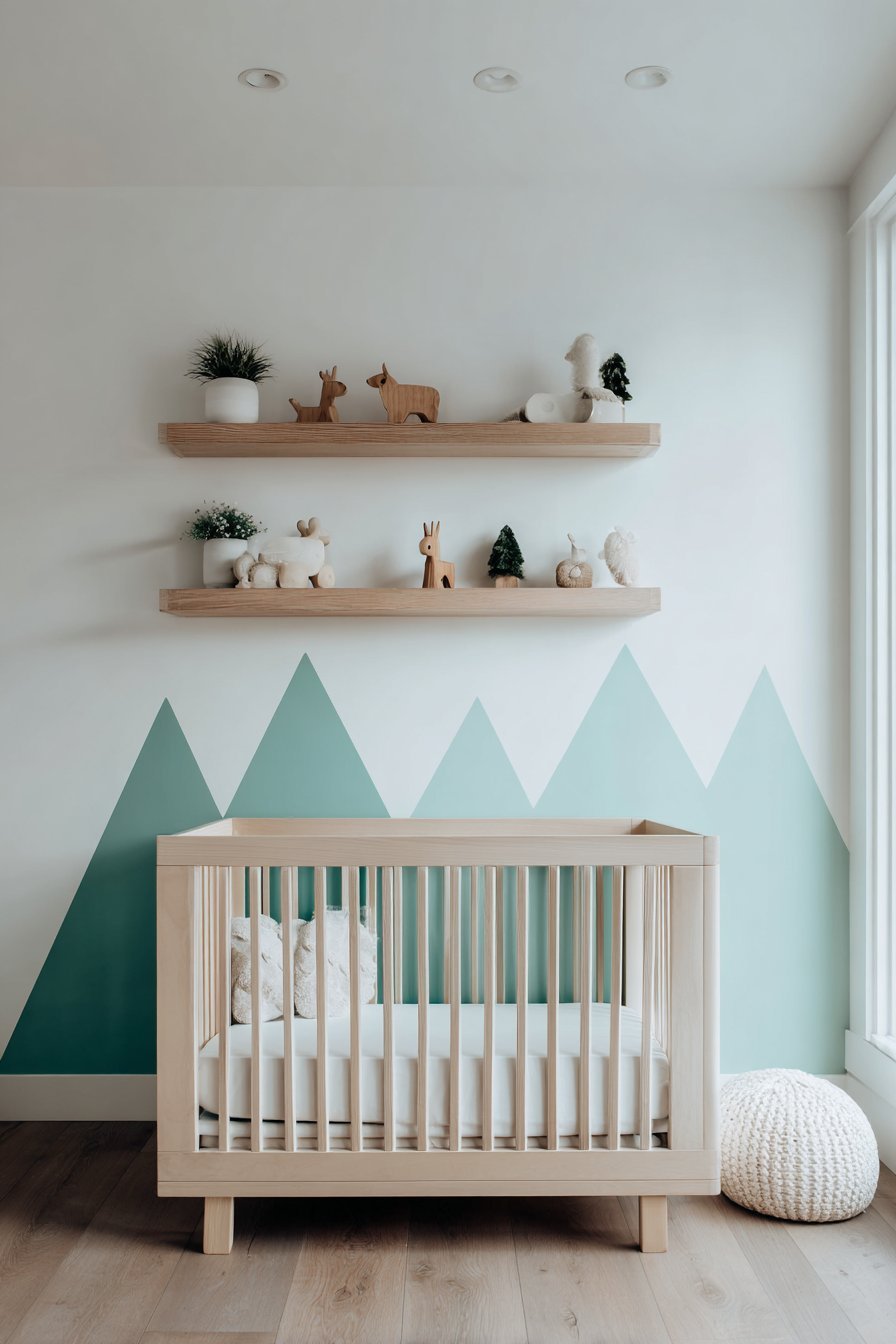
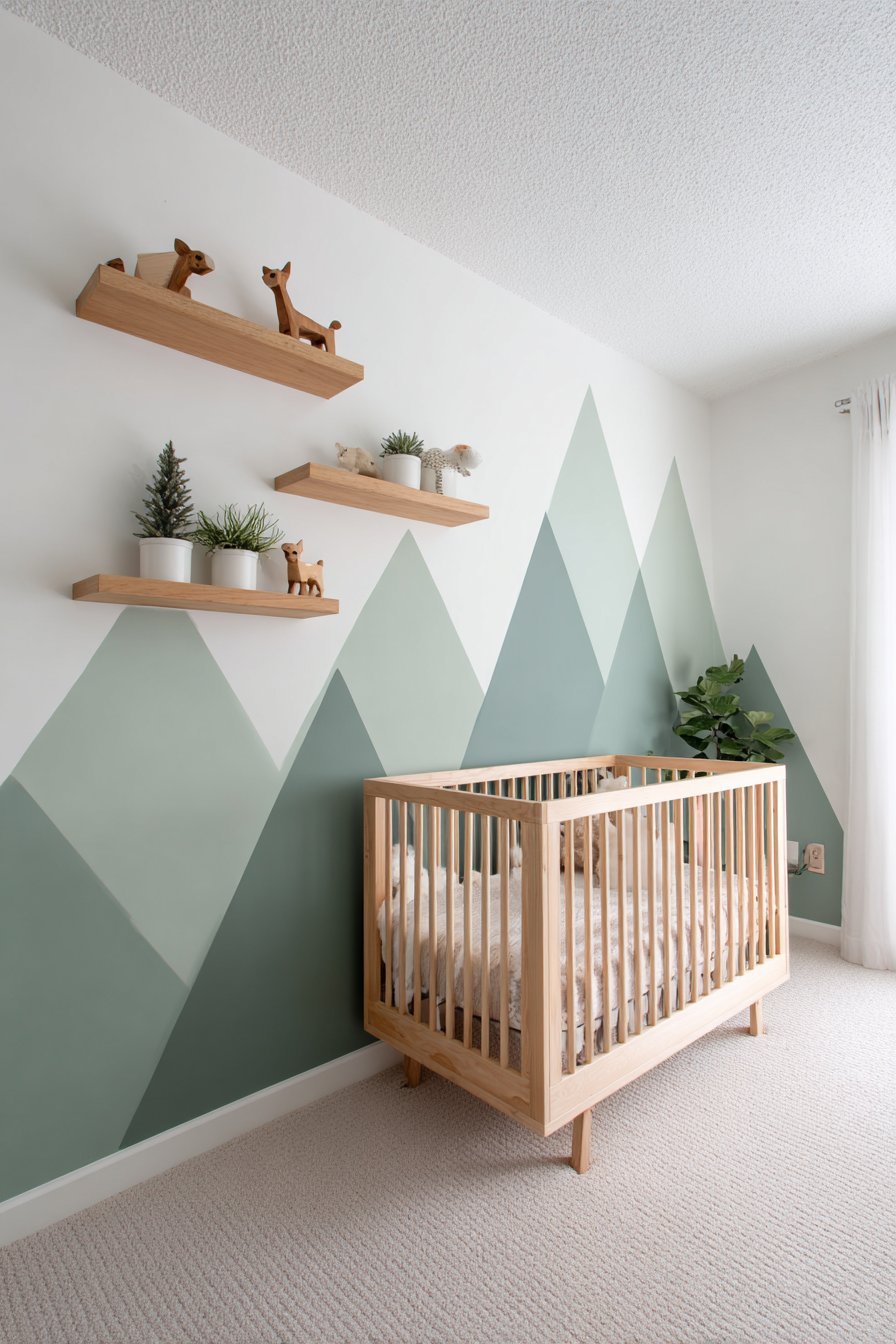
Geometric mountain silhouettes in varying shades of mint, sage, and white create a modern mural. The low-profile crib in natural ash wood centers below the mountain design. Simple floating shelves in matching wood display minimal white ceramic planters with small succulents. Wooden animal figurines add subtle decoration without clutter.
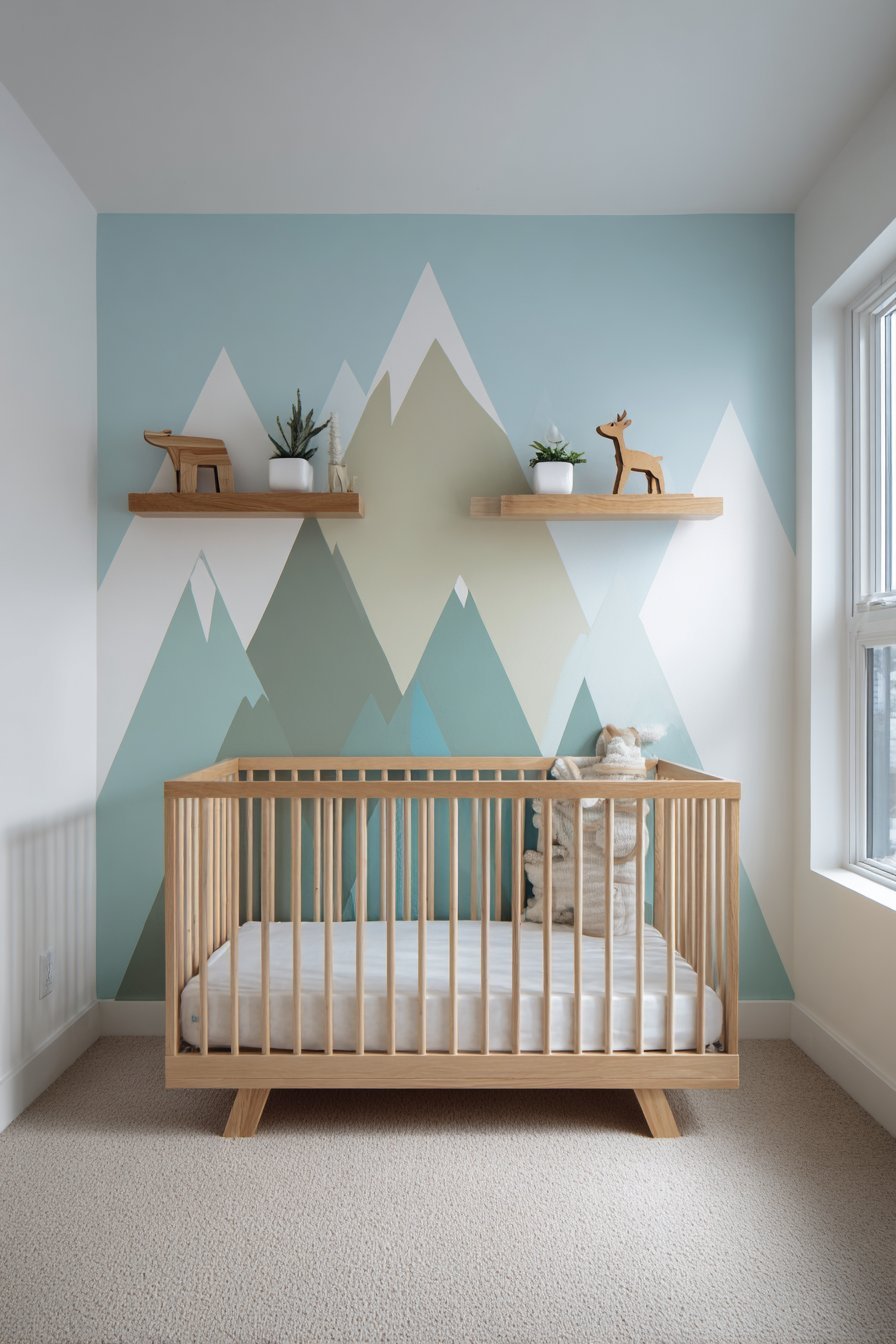
The adjacent walls remain crisp white for clean contrast against the accent wall. Natural daylight emphasizes the geometric shapes and contemporary aesthetic. The ash wood’s light tone complements both the mint and white elements. The minimalist approach creates calm visual space for developing minds.
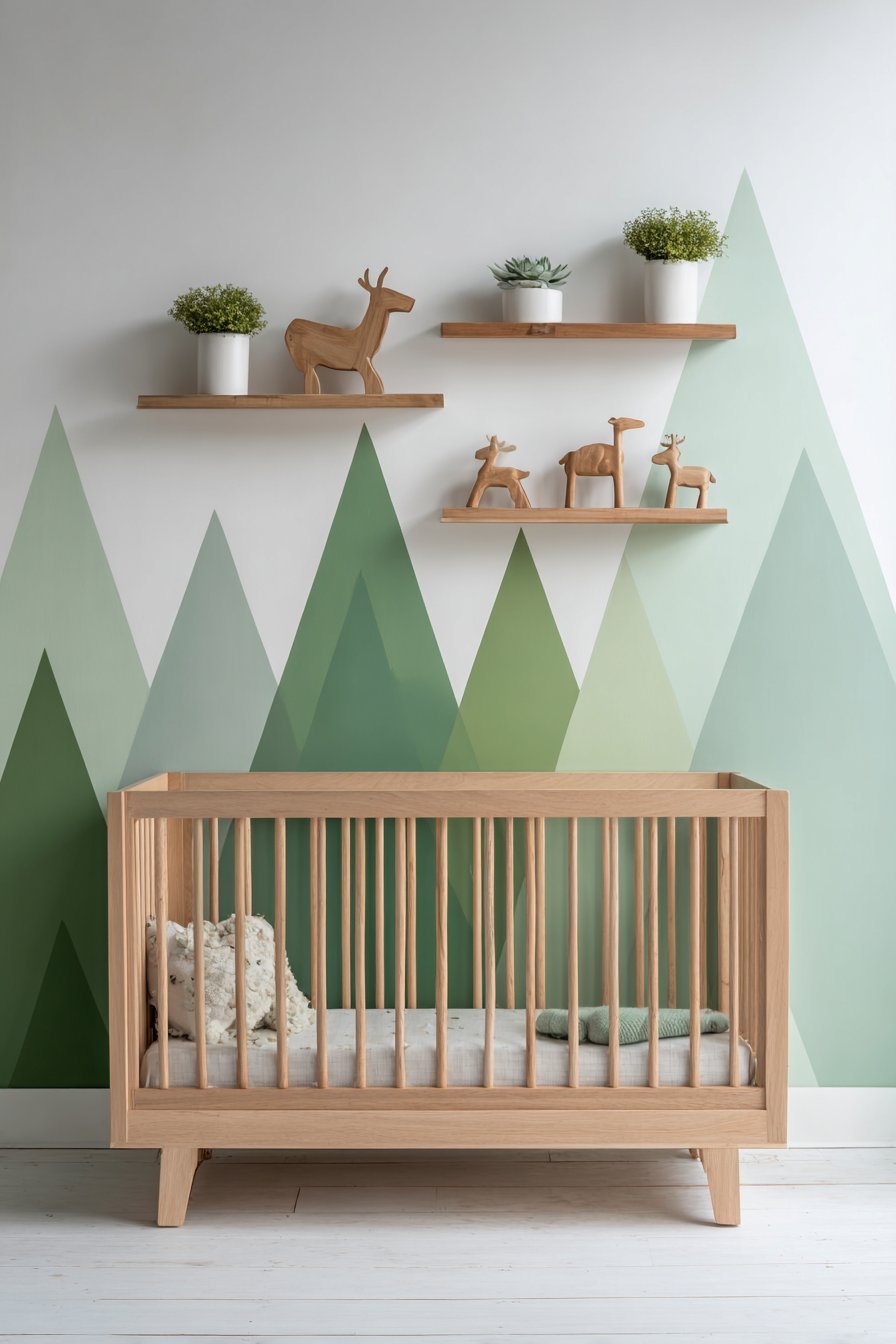
This design proves that nurseries can embrace modern design principles successfully. The geometric mountains provide visual interest without overwhelming patterns. The natural wood elements add warmth to the minimal palette. The carefully curated decorative items demonstrate intentional design choices.
Key Design Tips:
- Create geometric mountain murals using painter’s tape for clean lines
- Choose varying shades of green for depth and dimension in the mural
- Select low-profile cribs in natural wood for modern aesthetic
- Install floating shelves at safe heights away from crib reach
- Use minimal decorative items to maintain clean, uncluttered surfaces
- Keep adjacent walls white to let the accent wall become the focal point
8. Custom Striped Roman Shades
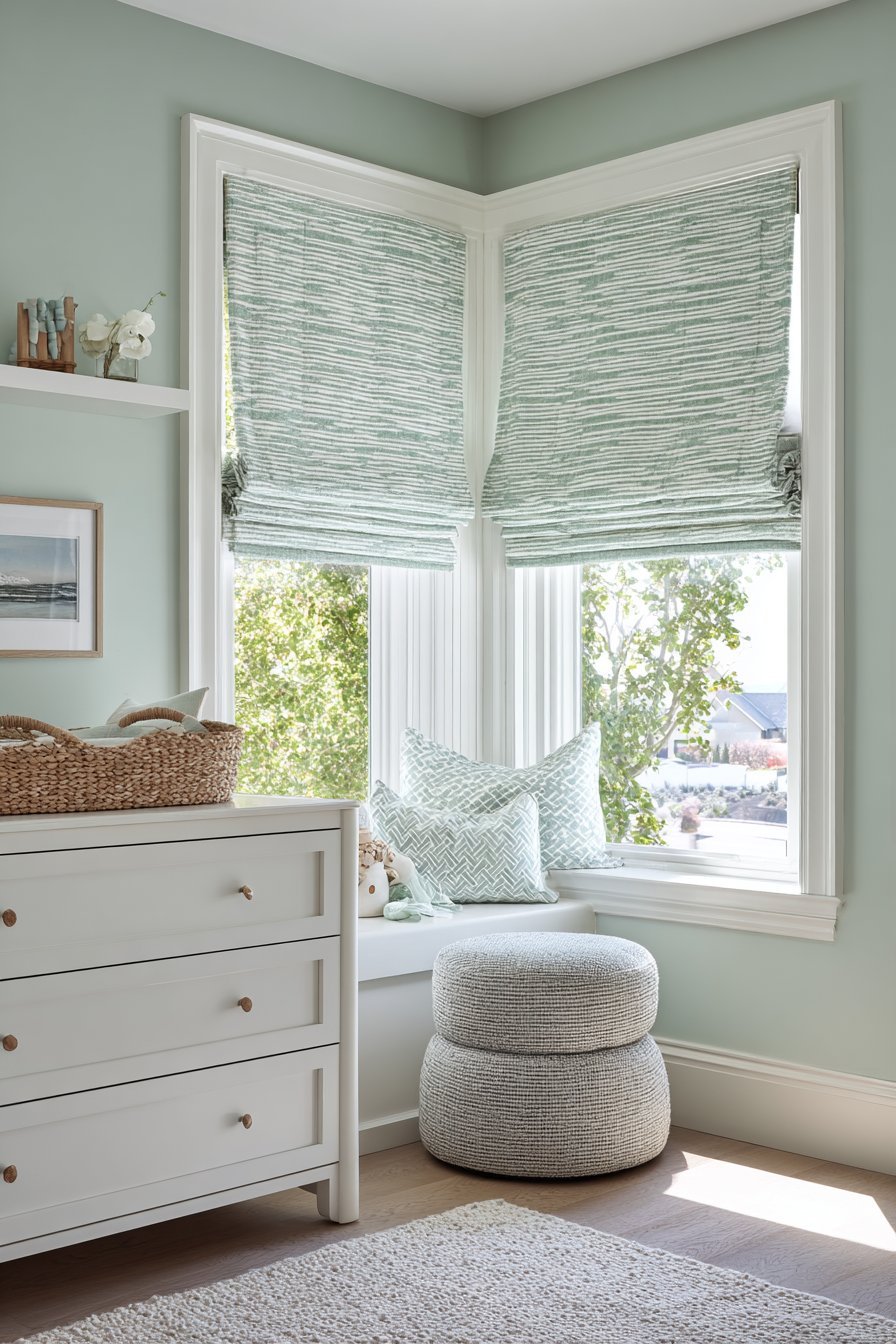
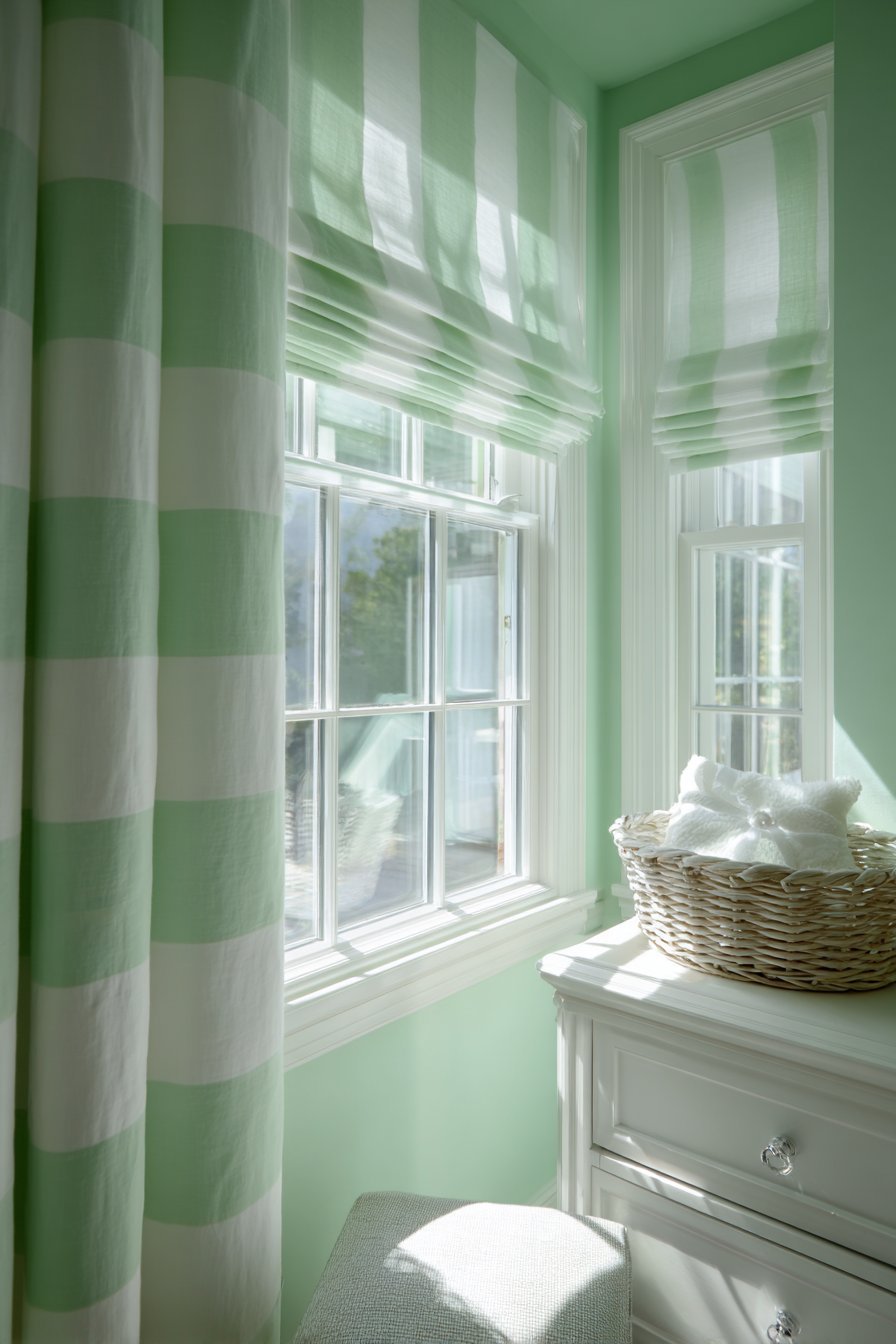
Custom roman shades in mint and white striped linen fabric filter light beautifully. The visible natural texture of the linen adds organic interest. The shades mount inside white-painted window frames for a clean look. Nearby, a white dresser topped with a wicker changing basket completes the functional area.
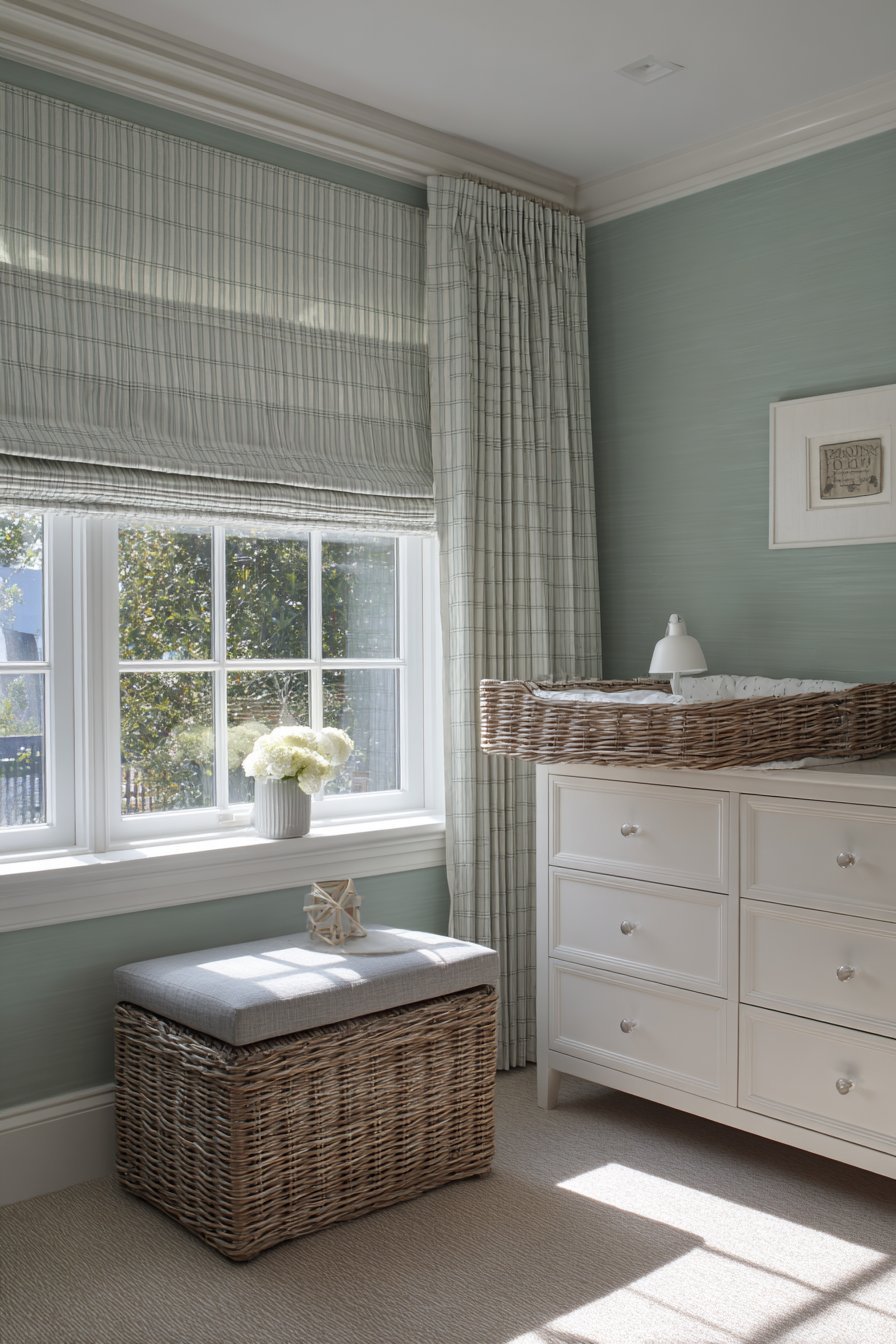
The coordinating solid mint green walls provide cohesion throughout the space. A small upholstered ottoman in grey linen sits below the window. Soft filtered light illuminates the dresser surface throughout the day. The striped pattern adds visual movement without overwhelming the peaceful atmosphere.
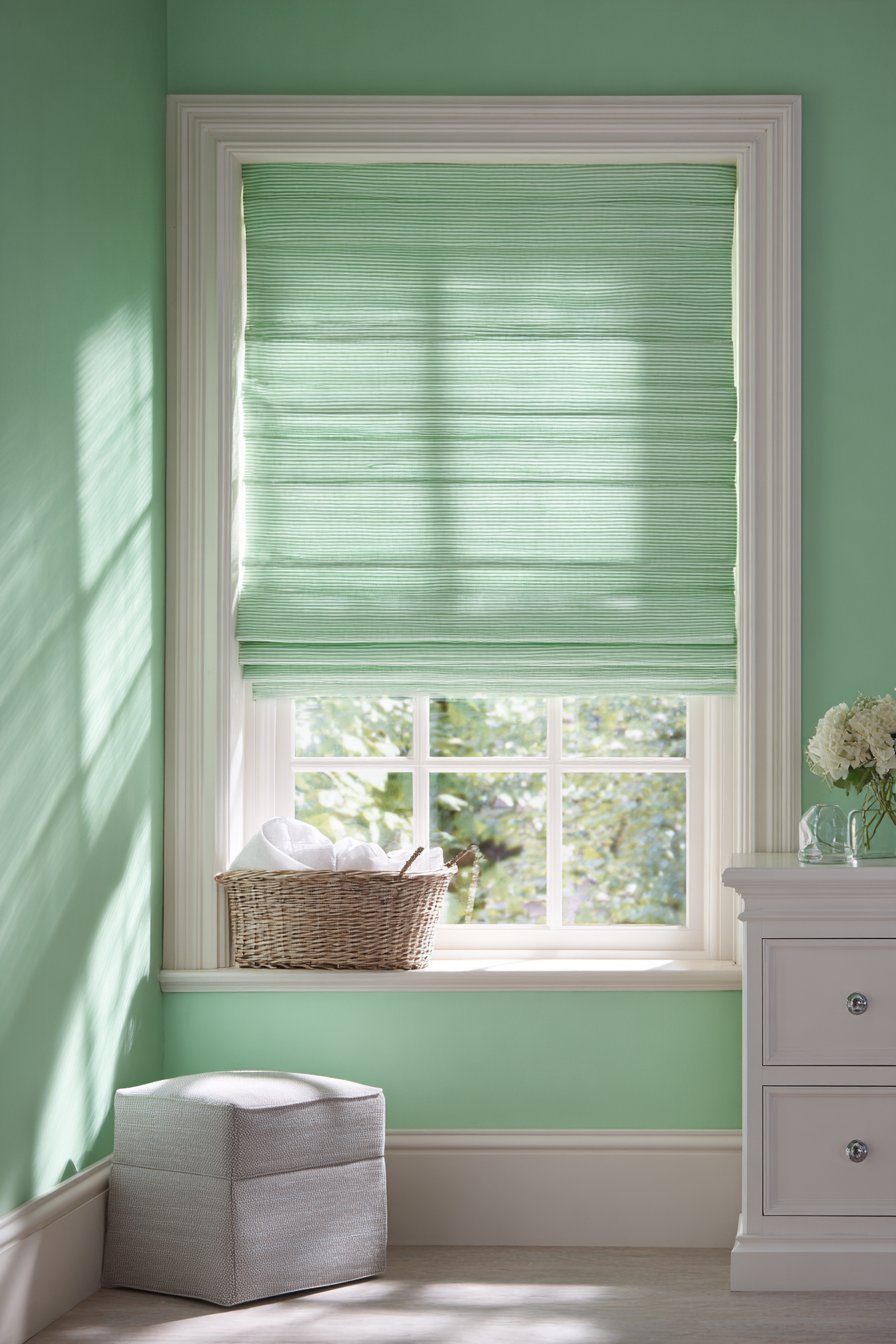
This design showcases how custom window treatments elevate nursery spaces. The natural linen fabric breathes well and ages beautifully. The roman shade mechanism allows precise light control for naptime. The neutral grey ottoman provides versatile seating or footrest functionality.
Key Design Tips:
- Invest in custom roman shades sized precisely for inside-mount installation
- Choose natural linen fabrics that filter light while maintaining privacy
- Select striped patterns with mint and white for cohesive color stories
- Position small ottomans under windows for flexible seating options
- Use wicker baskets on changing surfaces for attractive organization
- Mount shades inside window frames for clean, architectural lines
9. Built-In Corner Shelving Display
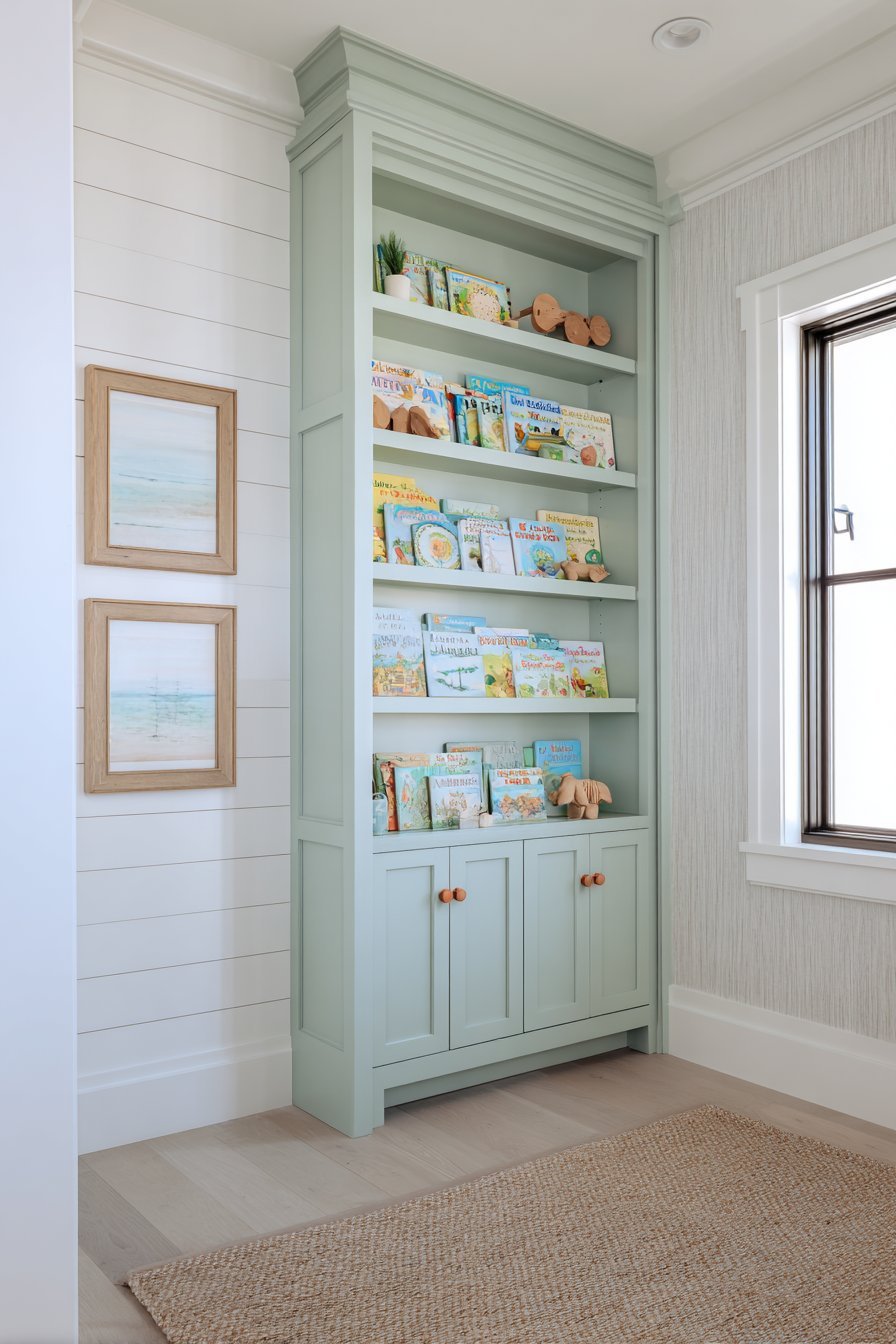
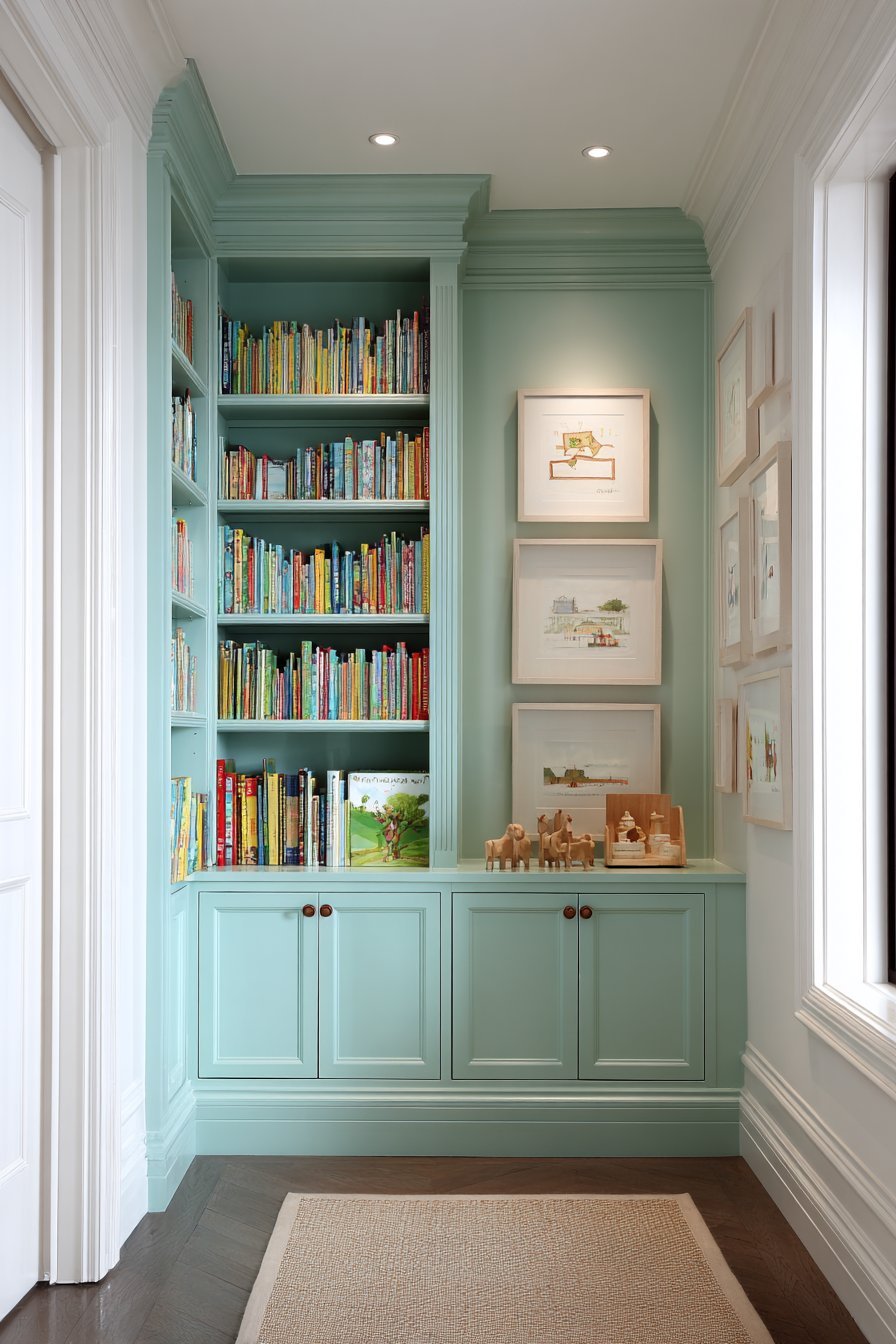
Built-in corner shelving painted in matching mint green displays a curated book collection. Colorful book spines create natural visual interest on the shelves. Small framed prints and natural wood toys complement the books. The shelving unit includes lower cabinets with simple round wooden knobs for hidden storage.
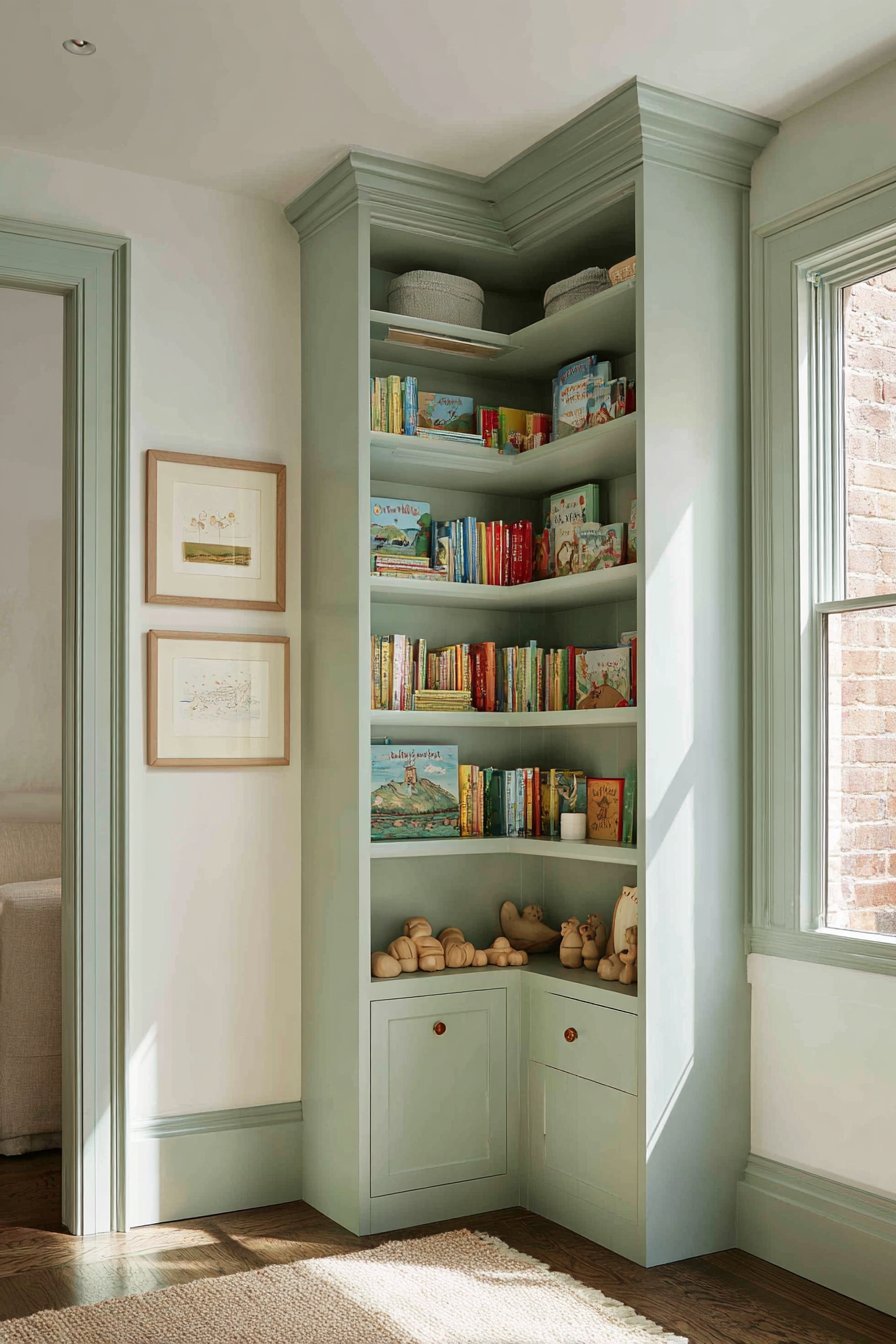
Adjacent walls remain white with subtle texture for contrast. A small area rug in neutral jute grounds the corner reading space. Natural side lighting from a nearby window highlights the dimensional shelving. The custom storage solution maximizes often-wasted corner space effectively.
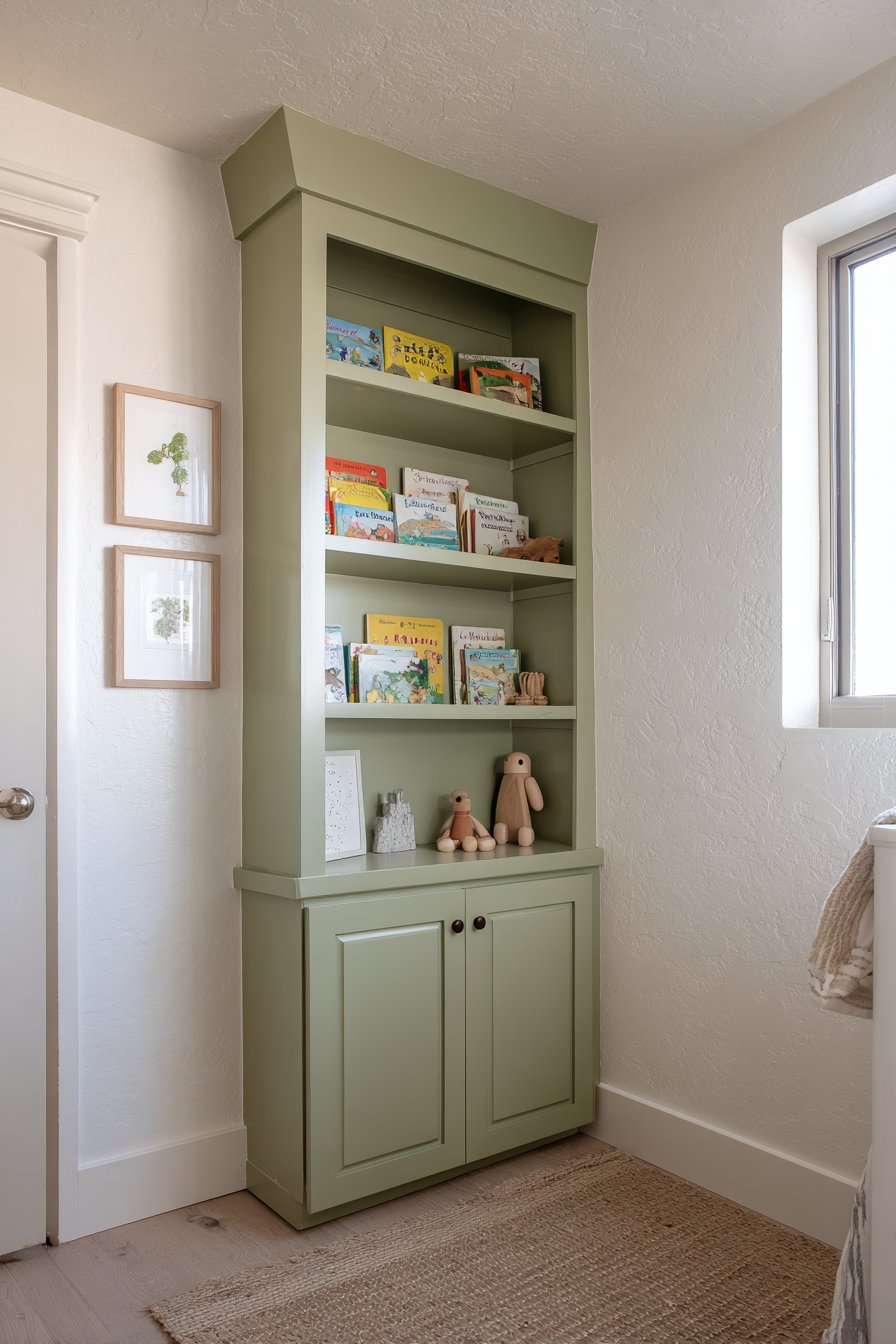
This design demonstrates thoughtful space planning and custom solutions. The painted shelving integrates seamlessly into the room’s architecture. The combination of open display and closed storage balances accessibility with organization. The corner placement creates a defined zone within the larger nursery.
Key Design Tips:
- Build corner shelving to utilize space that typically remains unused
- Paint built-ins in room colors for seamless architectural integration
- Include both open shelving and closed cabinet storage for flexibility
- Display children’s books with colorful spines as decorative elements
- Choose simple wooden knobs that small hands can eventually operate
- Add small area rugs to define specific zones within larger rooms
10. Painted Ceiling Beam Architecture
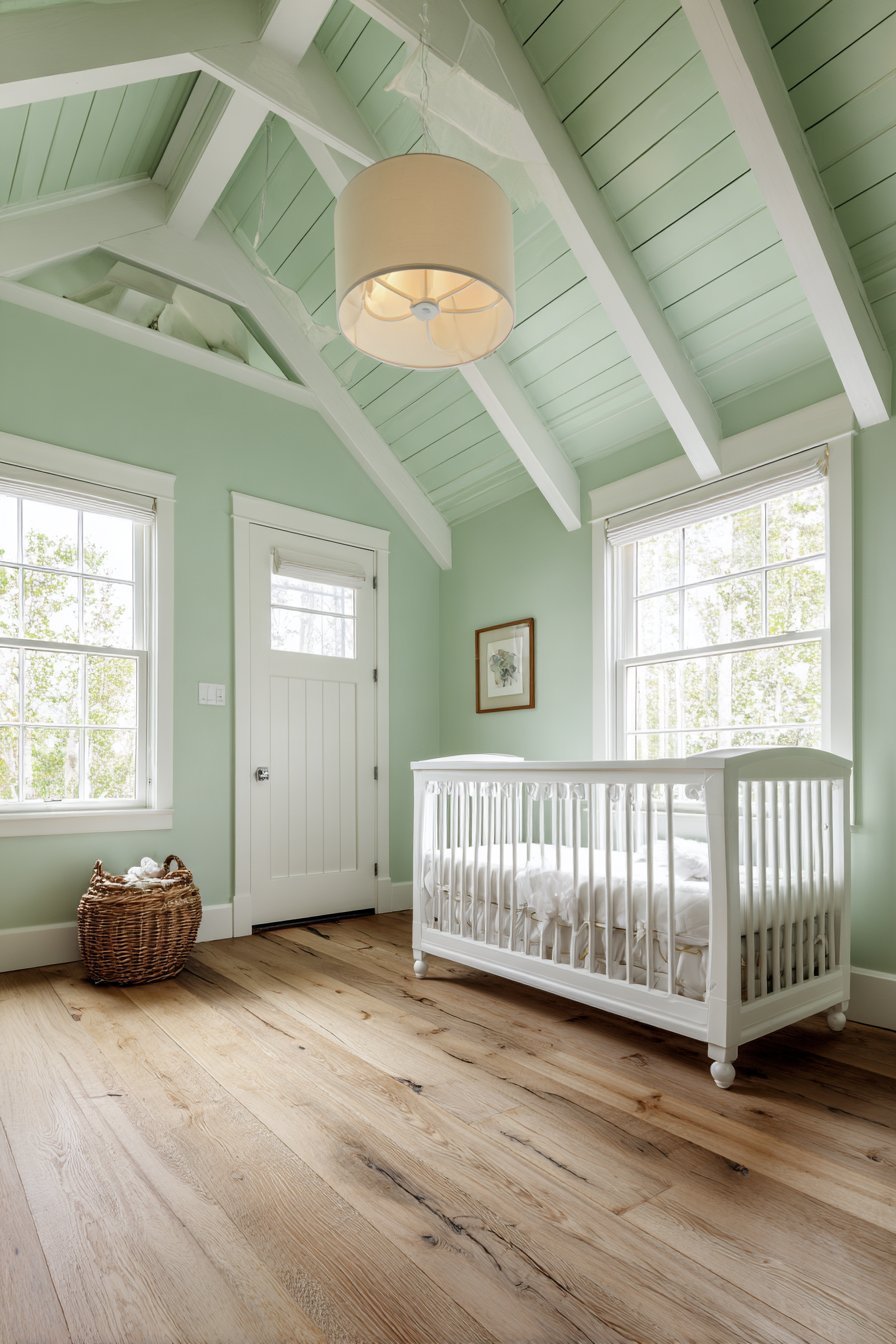
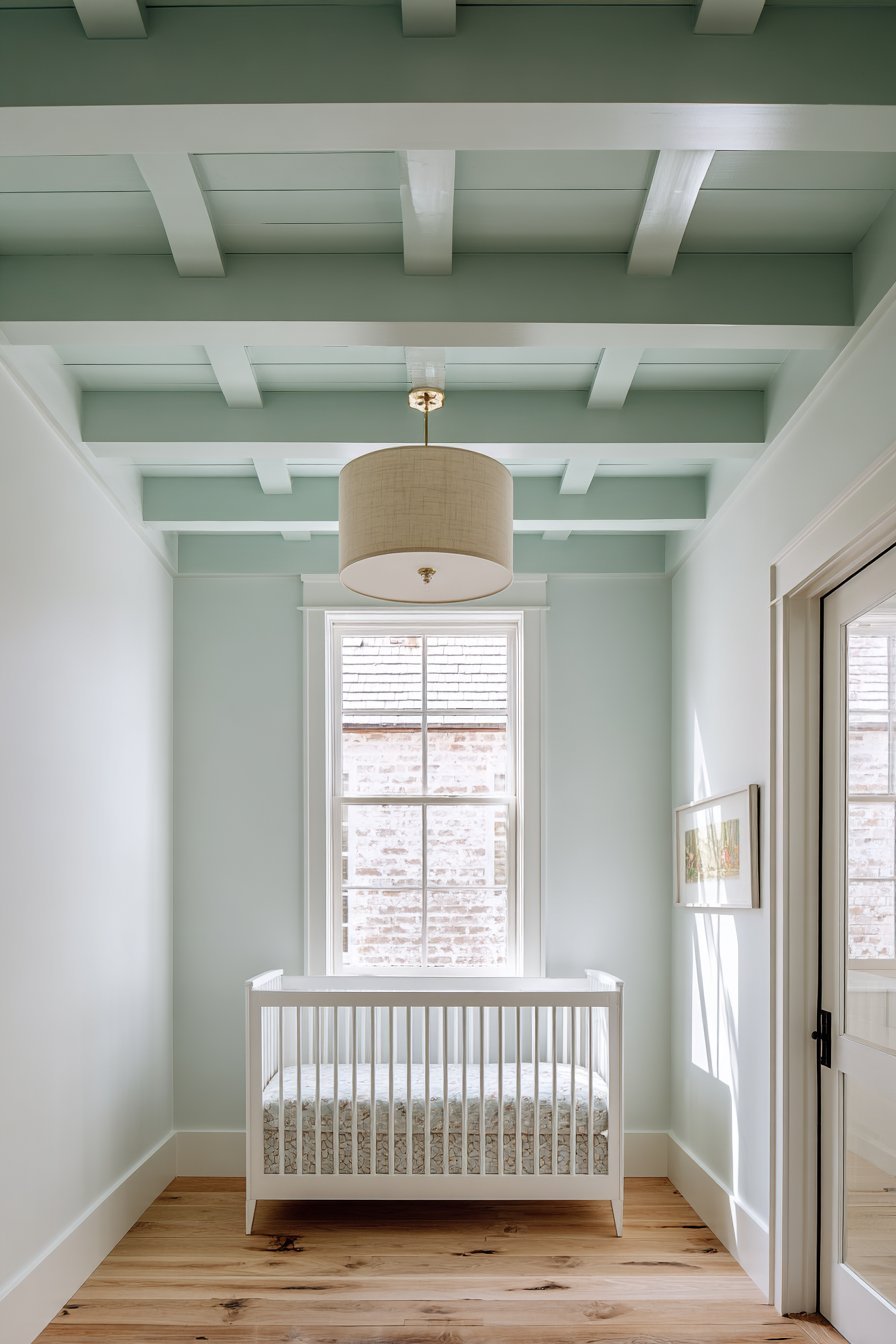
White wooden beams create subtle architectural interest against a soft mint ceiling. Below, a white convertible crib sits on medium-tone oak flooring. The walls feature coordinating mint green in a slightly deeper tone than the ceiling. A simple drum pendant light in natural linen fabric provides warm ambient lighting.
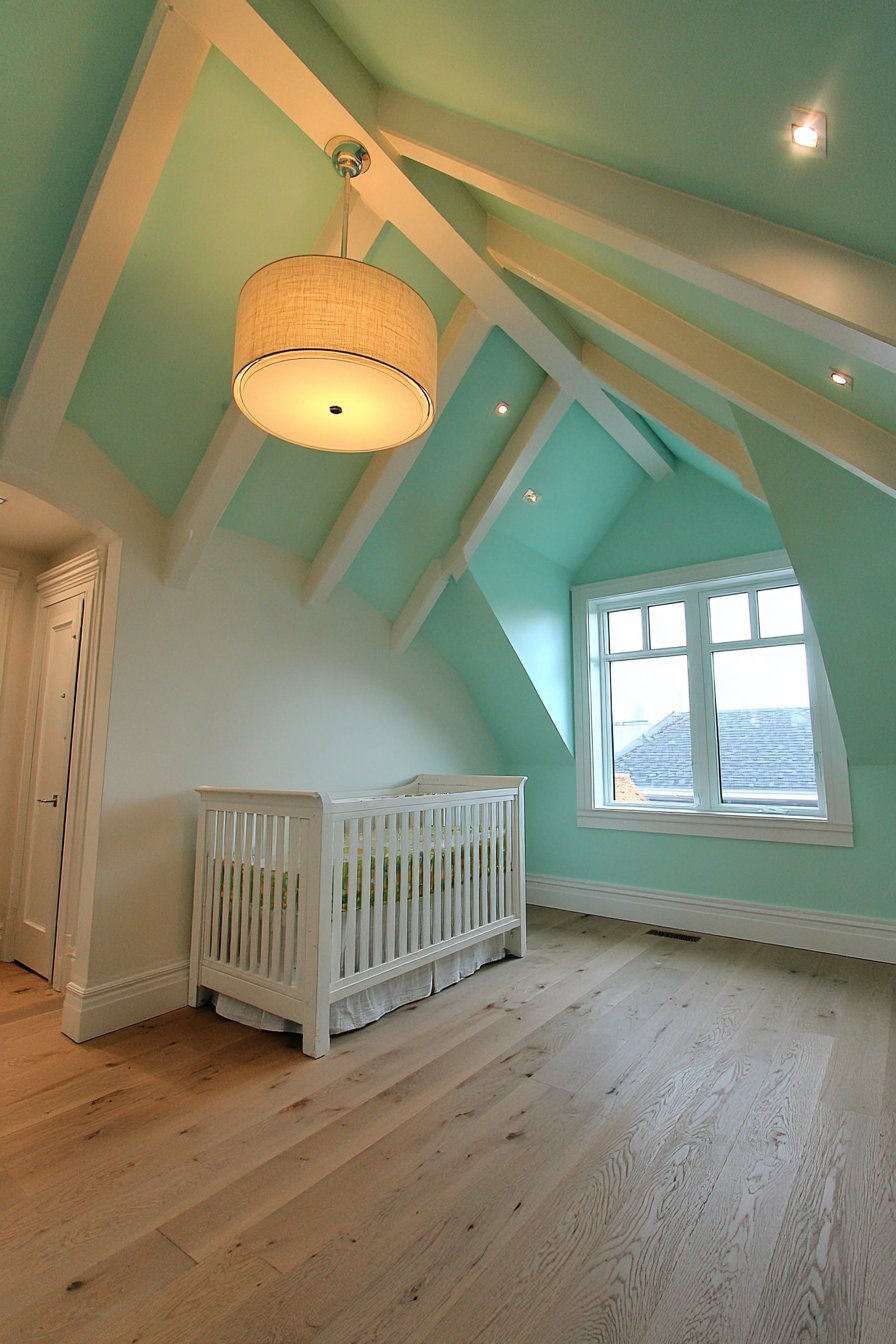
Natural window light supplements the artificial lighting for layered illumination throughout the day. The painted ceiling treatment draws the eye upward and adds perceived height. The convertible crib offers longevity as it transitions to a toddler bed. The tonal variation between ceiling and walls creates gentle depth.
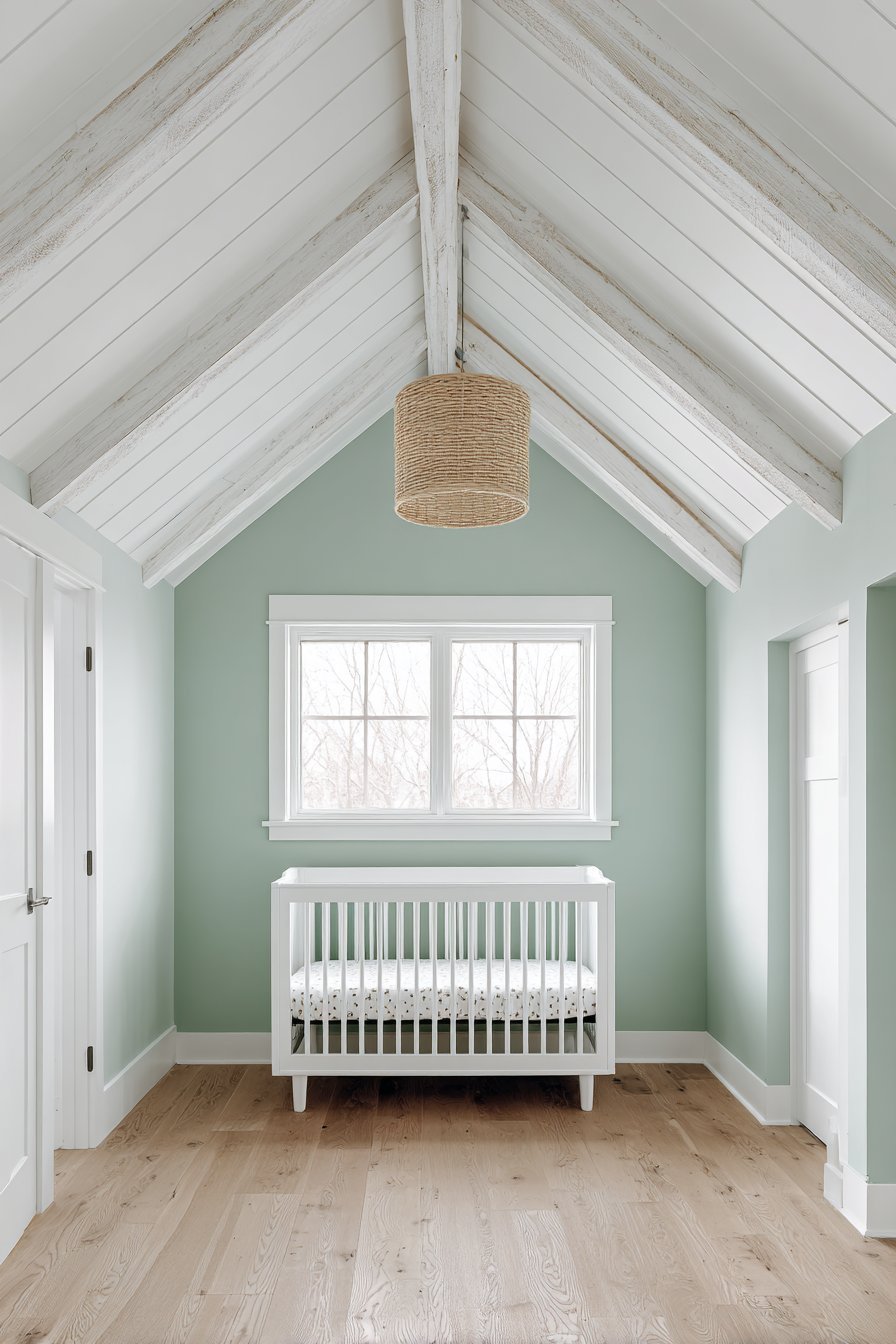
This design showcases how architectural elements elevate simple color schemes. The ceiling beams add character without requiring complex carpentry. The layered lighting approach ensures functionality for different activities and times. The convertible furniture demonstrates thoughtful planning for long-term use.
Key Design Tips:
- Paint ceiling beams white against mint ceilings for subtle contrast
- Use tonal variations of the same color on ceilings and walls for depth
- Choose convertible cribs that transform into toddler beds for longevity
- Layer ambient lighting with pendant fixtures and natural window light
- Select linen drum pendants for warm, diffused lighting quality
- Consider ceiling treatments to add architectural interest affordably
11. Mid-Century Modern Changing Table
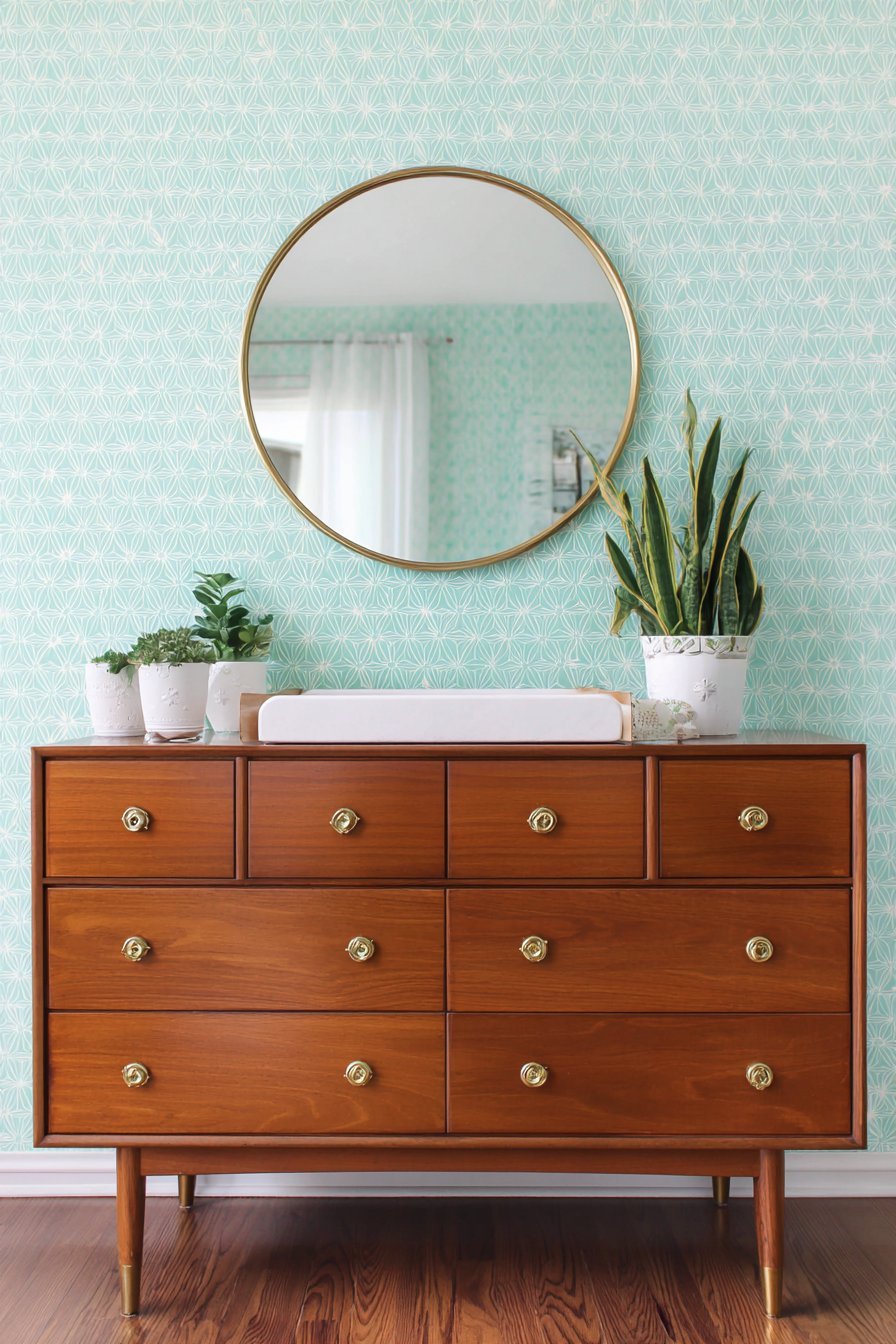
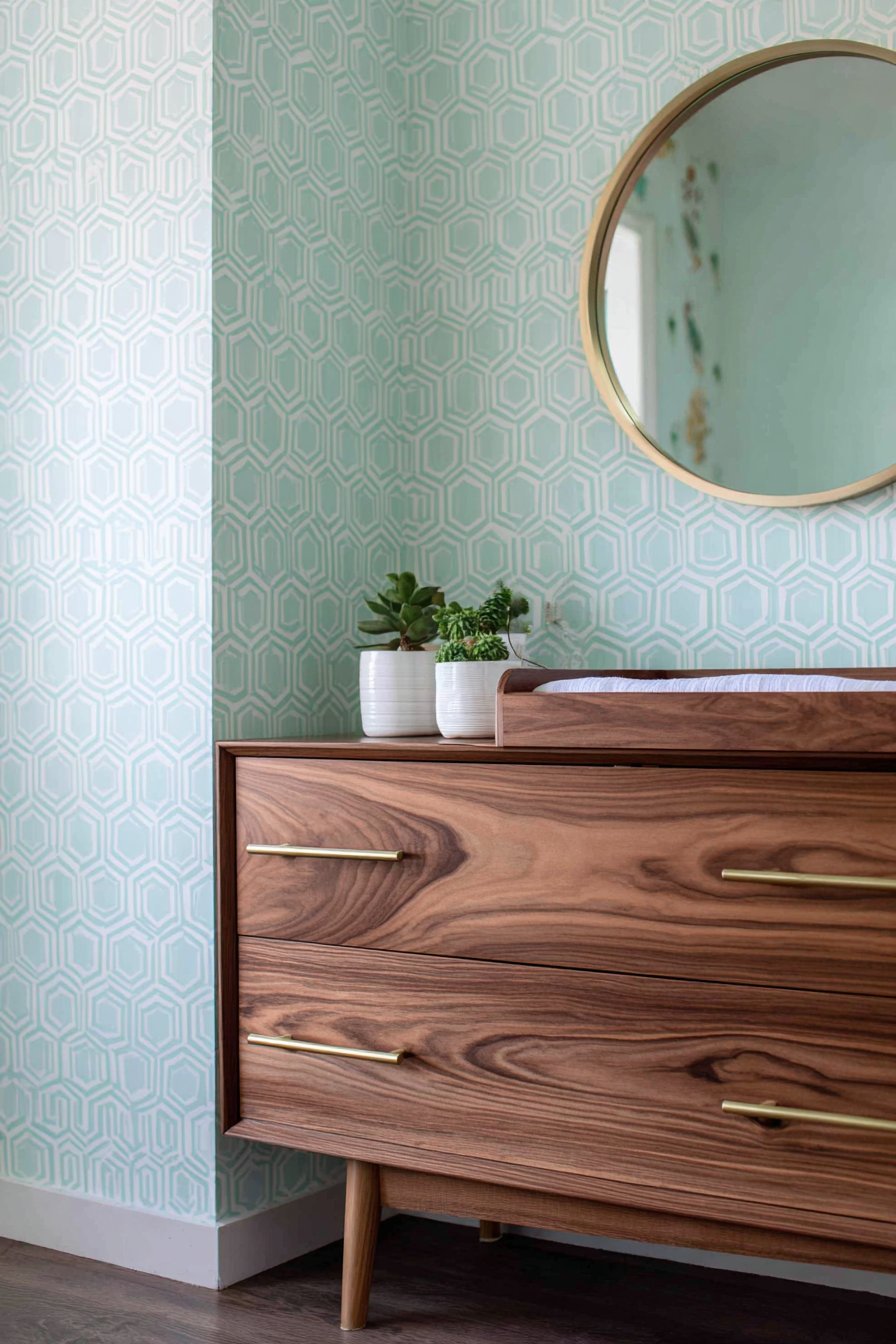
A mid-century modern inspired changing table in walnut wood features tapered legs and brass drawer pulls. Removable mint green and white geometric patterned wallpaper with hexagons adorns the wall behind. A simple round mirror with thin brass frame hangs above, reflecting natural light. Small potted plants in white ceramic containers add organic elements.
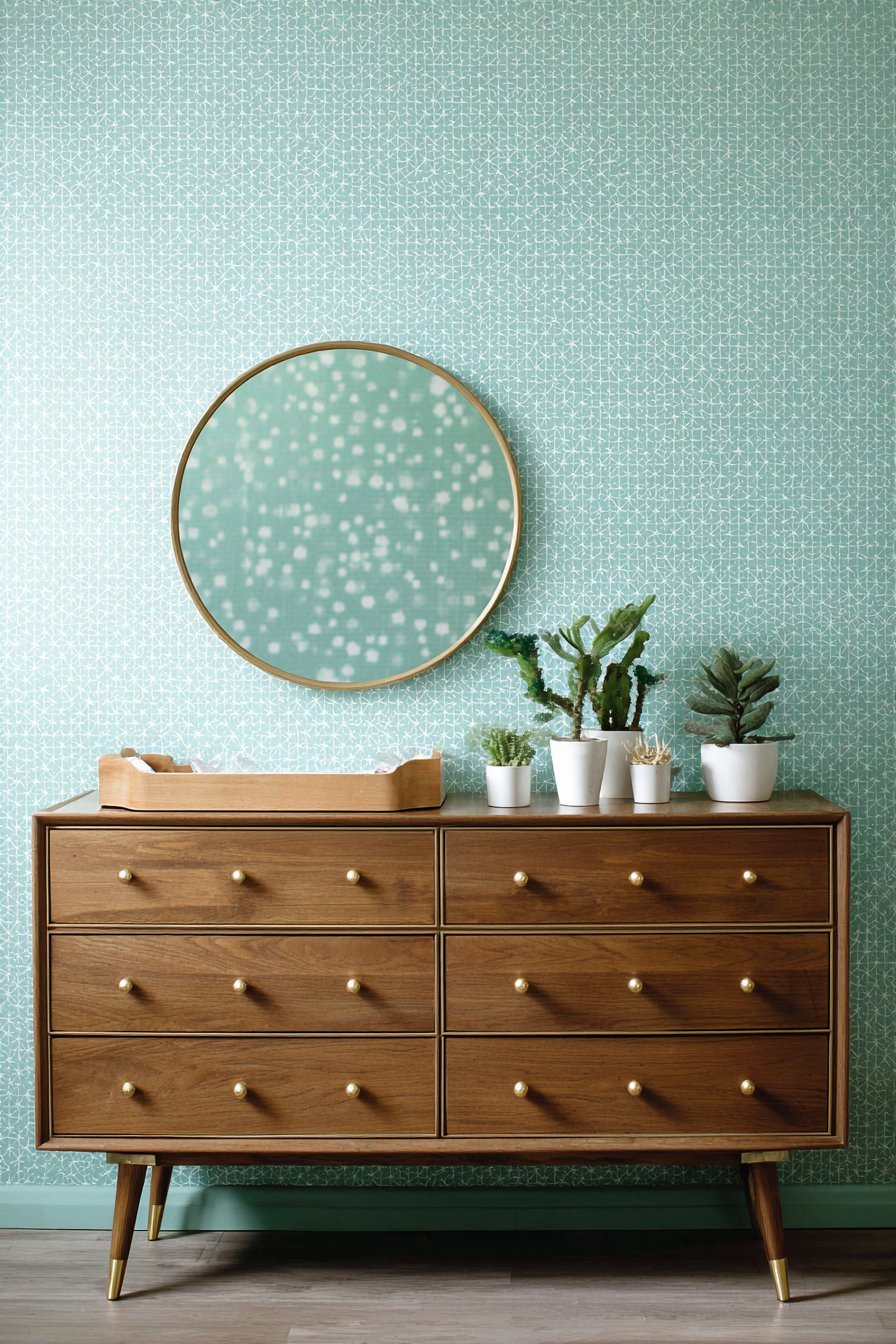
The walnut wood grain patterns bring warmth and sophistication to the space. The brass hardware throughout creates cohesive metallic accents. The geometric wallpaper adds pattern interest without permanent commitment. The reflected light from the mirror brightens the changing area effectively.
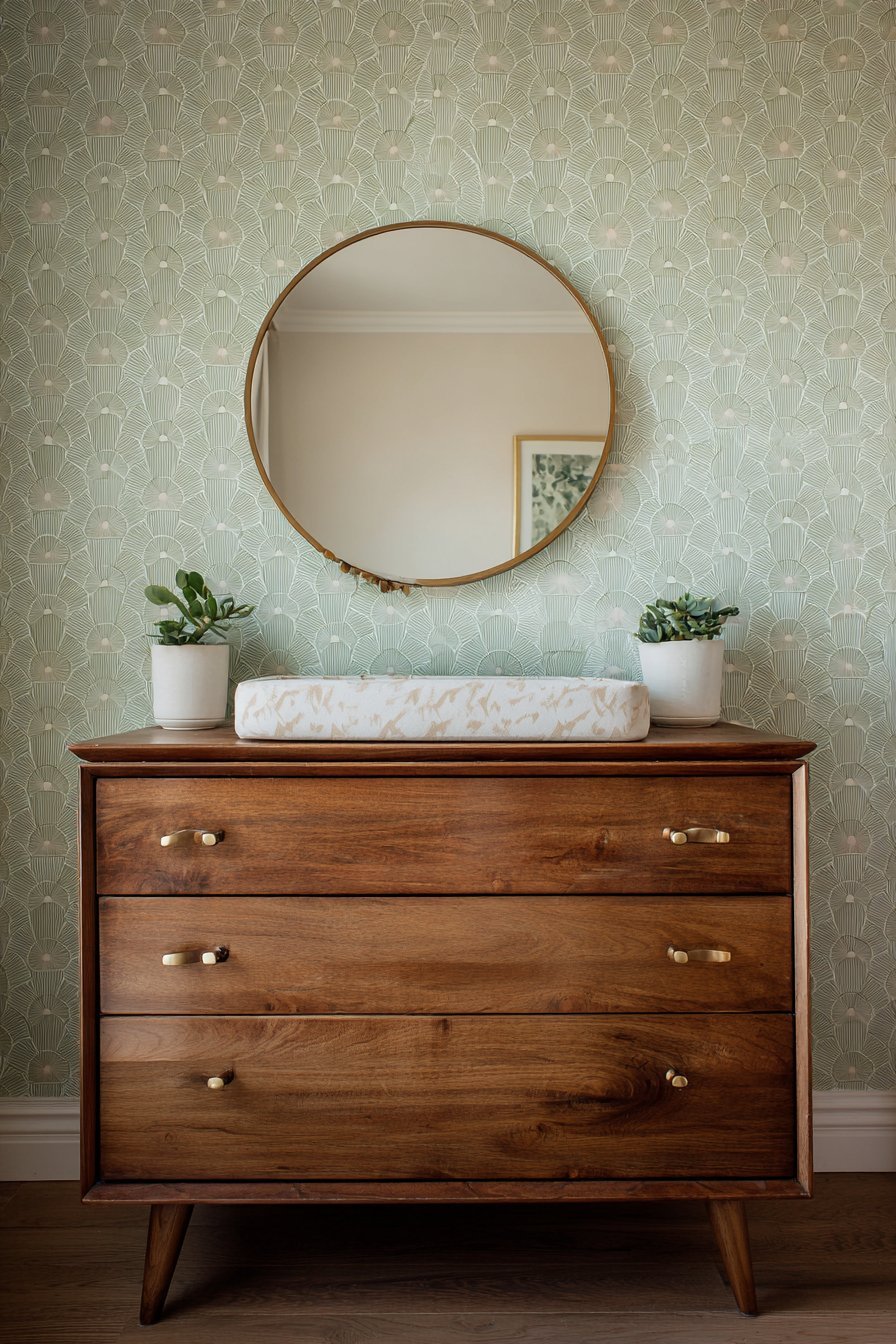
This design blends retro-modern aesthetic with practical nursery functionality. The removable wallpaper allows easy updates as styles change. The mid-century furniture pieces offer timeless style and quality construction. The plants introduce living elements that improve air quality naturally.
Key Design Tips:
- Choose mid-century furniture with tapered legs and quality wood construction
- Use removable wallpaper for pattern interest without permanent commitment
- Install round mirrors to reflect light and visually expand small spaces
- Add brass hardware and frames for warm metallic accent cohesion
- Include small potted plants in white containers for organic elements
- Select walnut wood tones to add warmth to cool mint color schemes
12. Montessori-Style Low Play Area
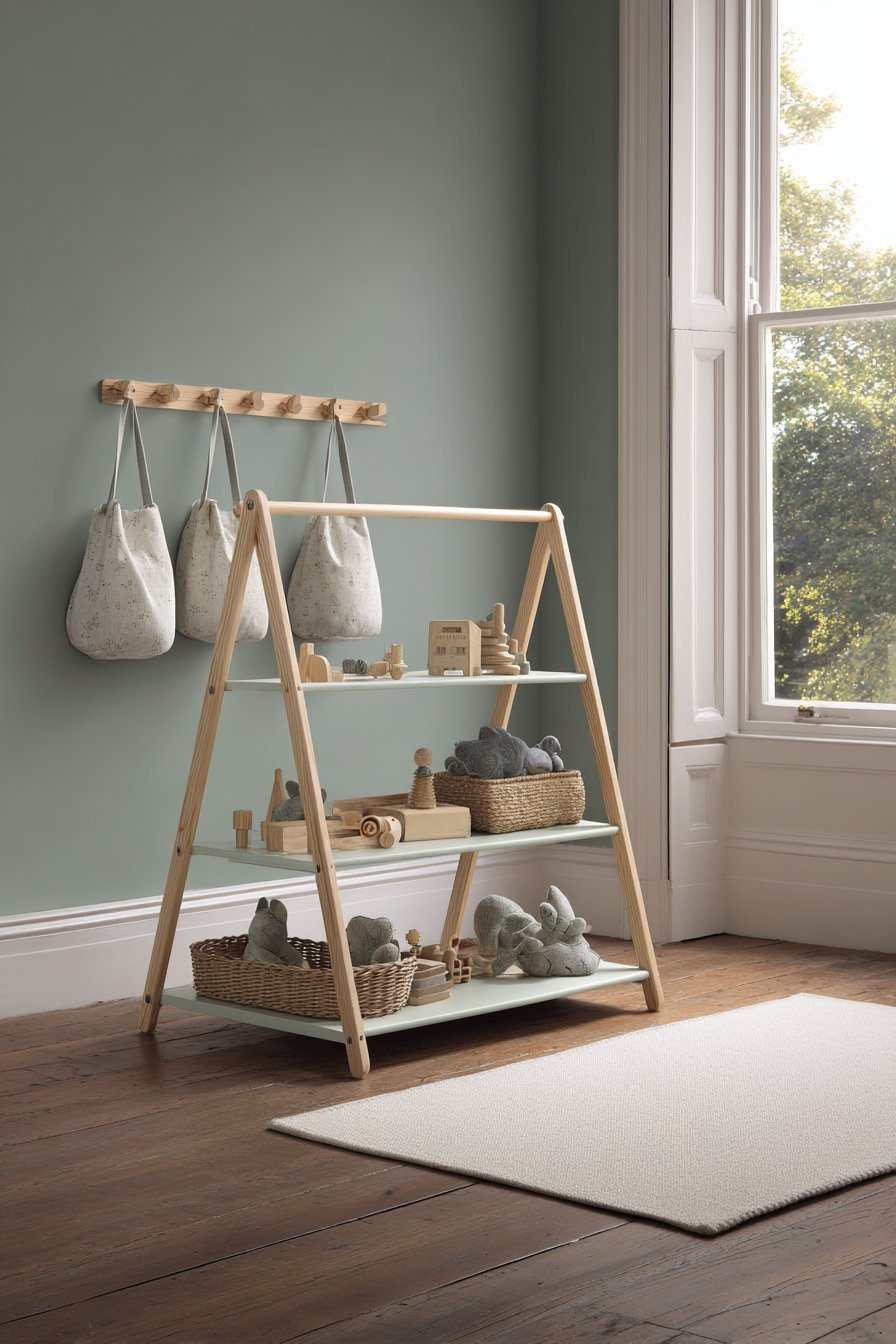
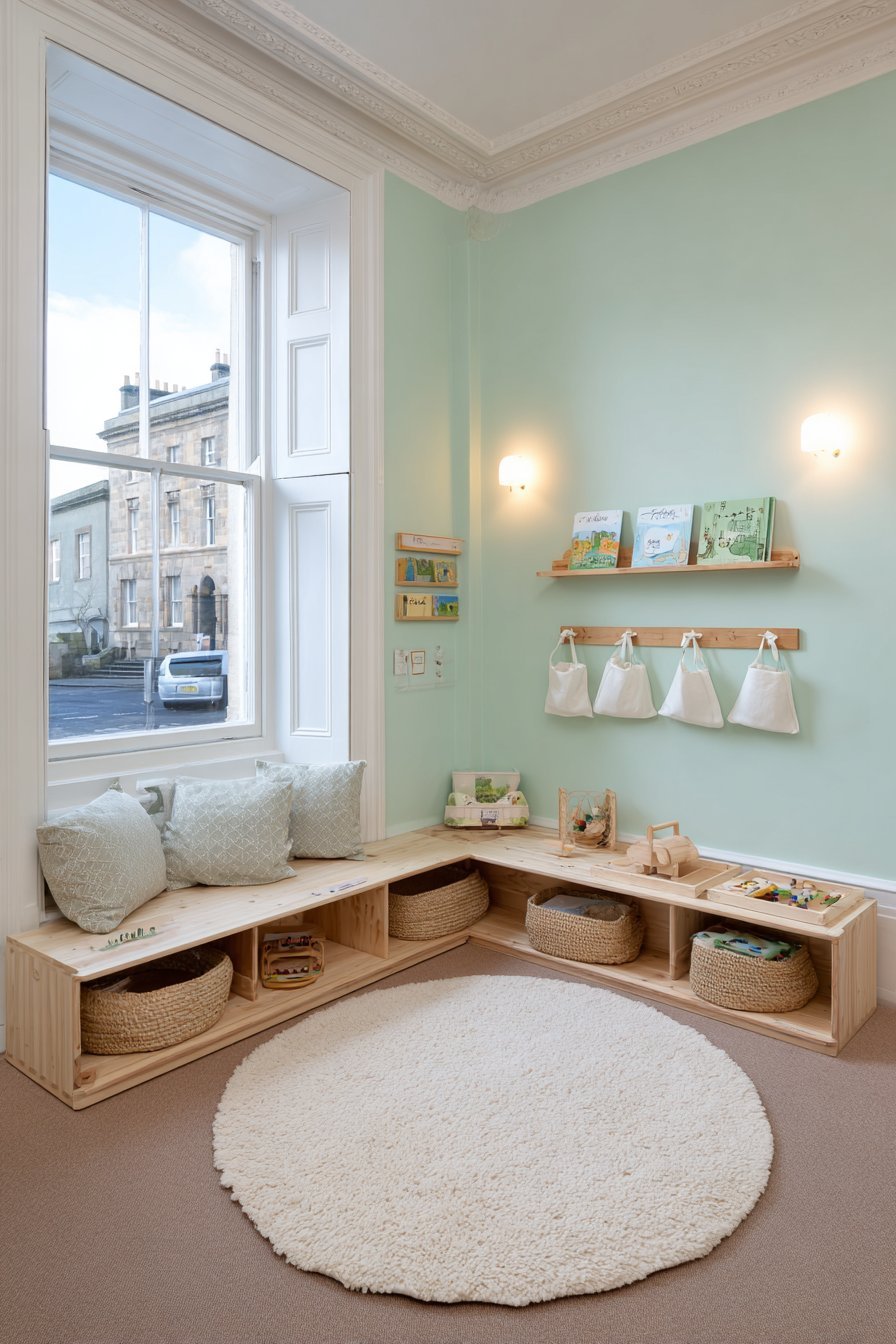
Low montessori-style shelving in natural birch wood displays woven baskets within easy reach. The mint green wall includes simple wooden peg rails at child height. Small fabric storage bags in white and grey hang from the pegs. A plush floor mat in cream with subtle texture provides comfortable play space.
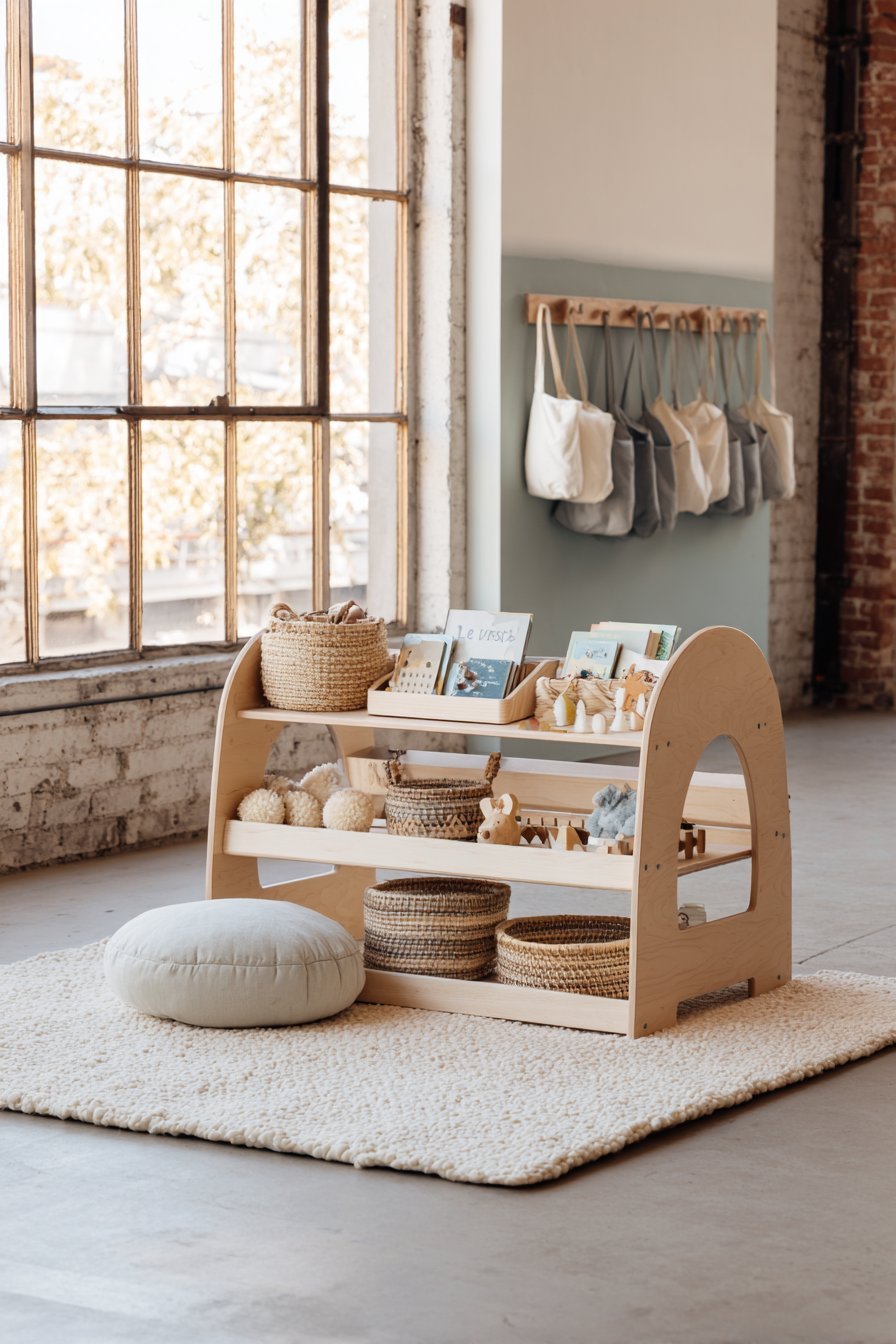
Natural light from a low window illuminates the child-friendly setup perfectly. The accessible organization encourages independence as children grow. The low shelving allows even young toddlers to select and return toys. The soft floor mat creates a defined play zone with cushioned comfort.
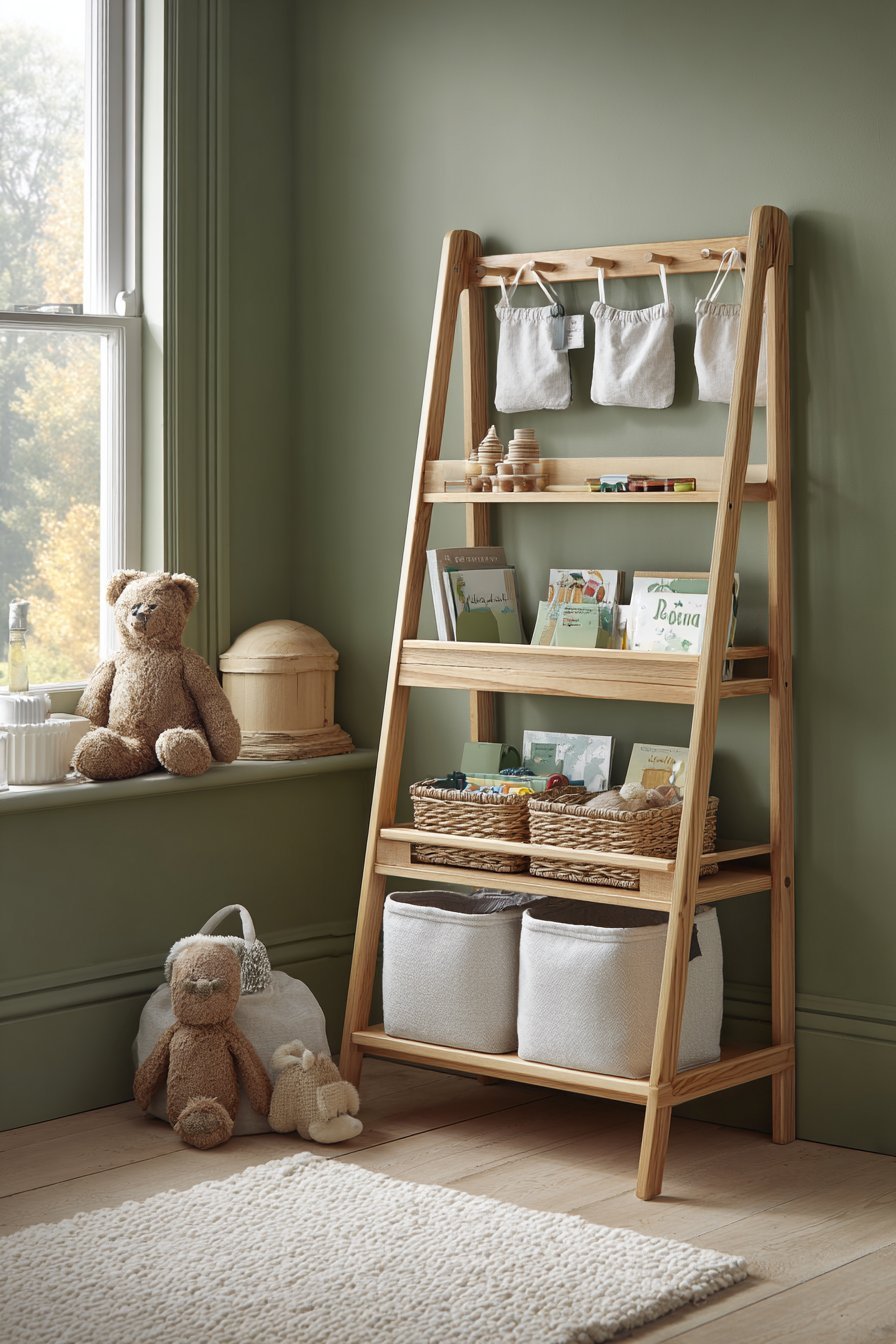
This design embraces developmental principles through intentional furniture placement. The montessori approach fosters independence and decision-making skills early. The natural materials create sensory-rich environments for exploration. The low window allows children to observe the outside world safely.
Key Design Tips:
- Install low shelving that allows toddler-height access for independence
- Use natural wood materials for shelving and organizational elements
- Add peg rails at child height for accessible storage options
- Choose woven baskets that are easy for small hands to handle
- Include soft floor mats to define play areas with cushioned comfort
- Position furniture near low windows to encourage environmental observation
13. Curated Gallery Wall Above Crib
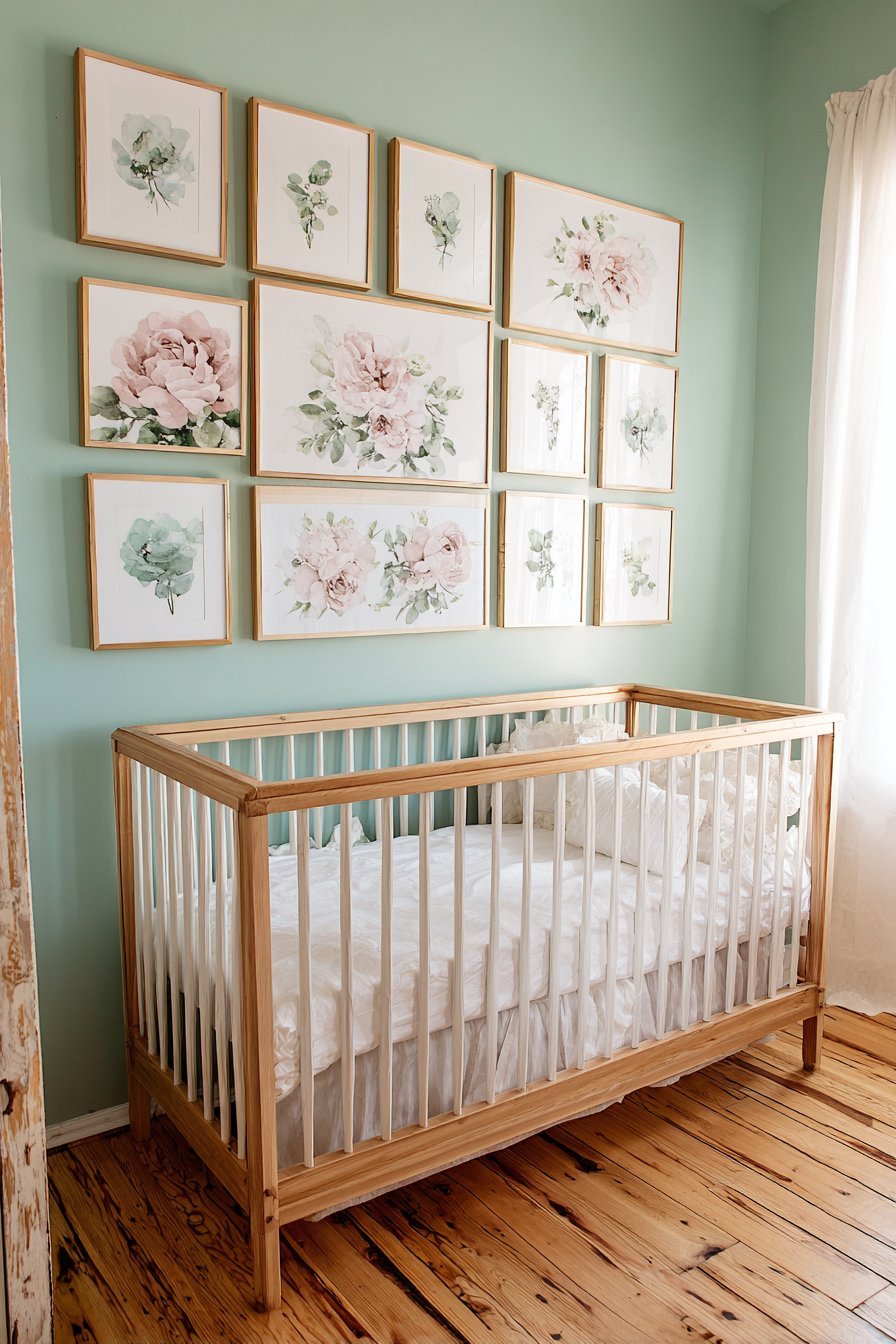
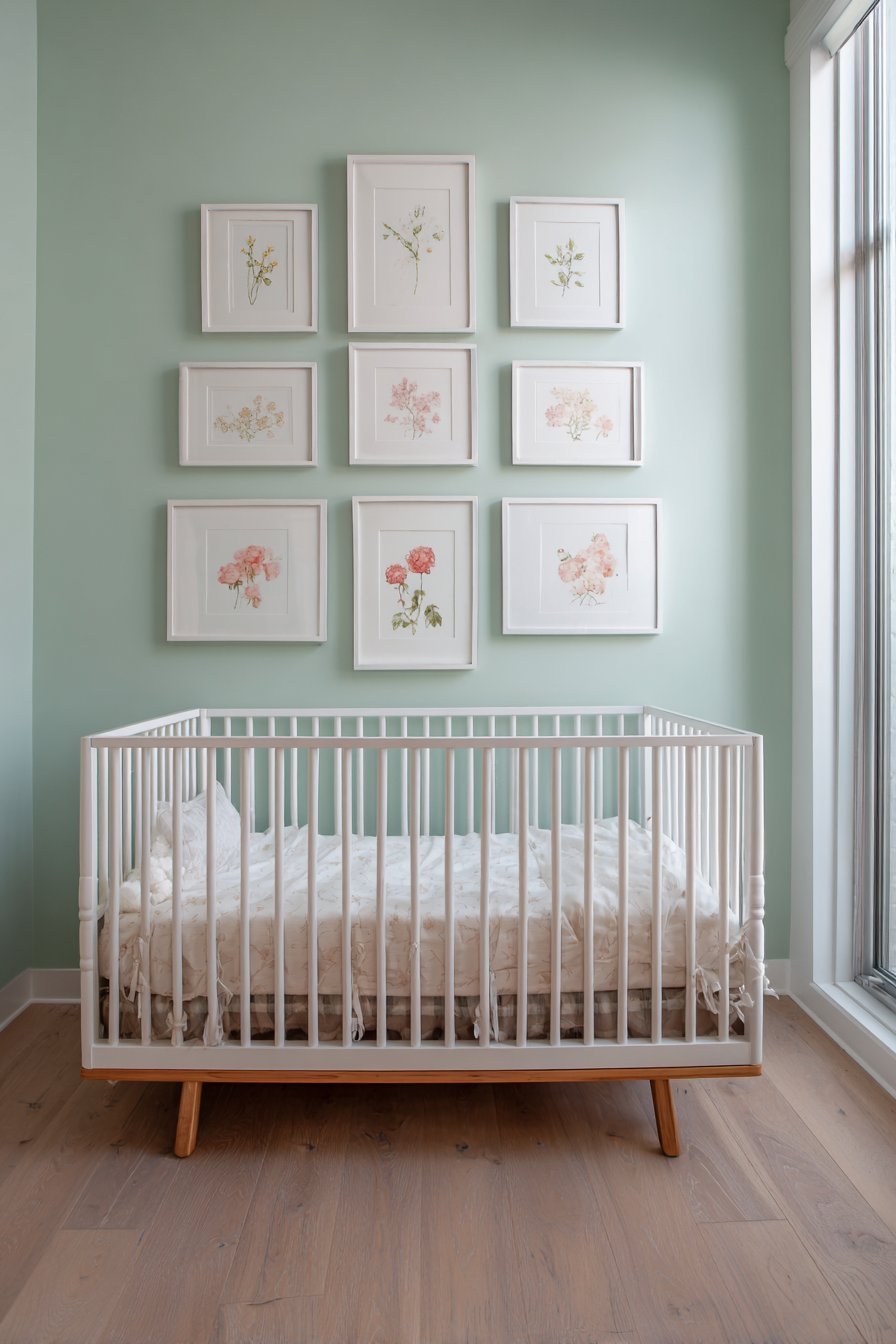
A gallery wall arrangement above the crib features simple white frames in various sizes. Soft watercolor prints in mint, blush, and grey tones fill the frames. The organic cluster pattern creates visual interest against the mint green wall. Below, a white spindle crib with natural cotton bedding provides a clean foundation.
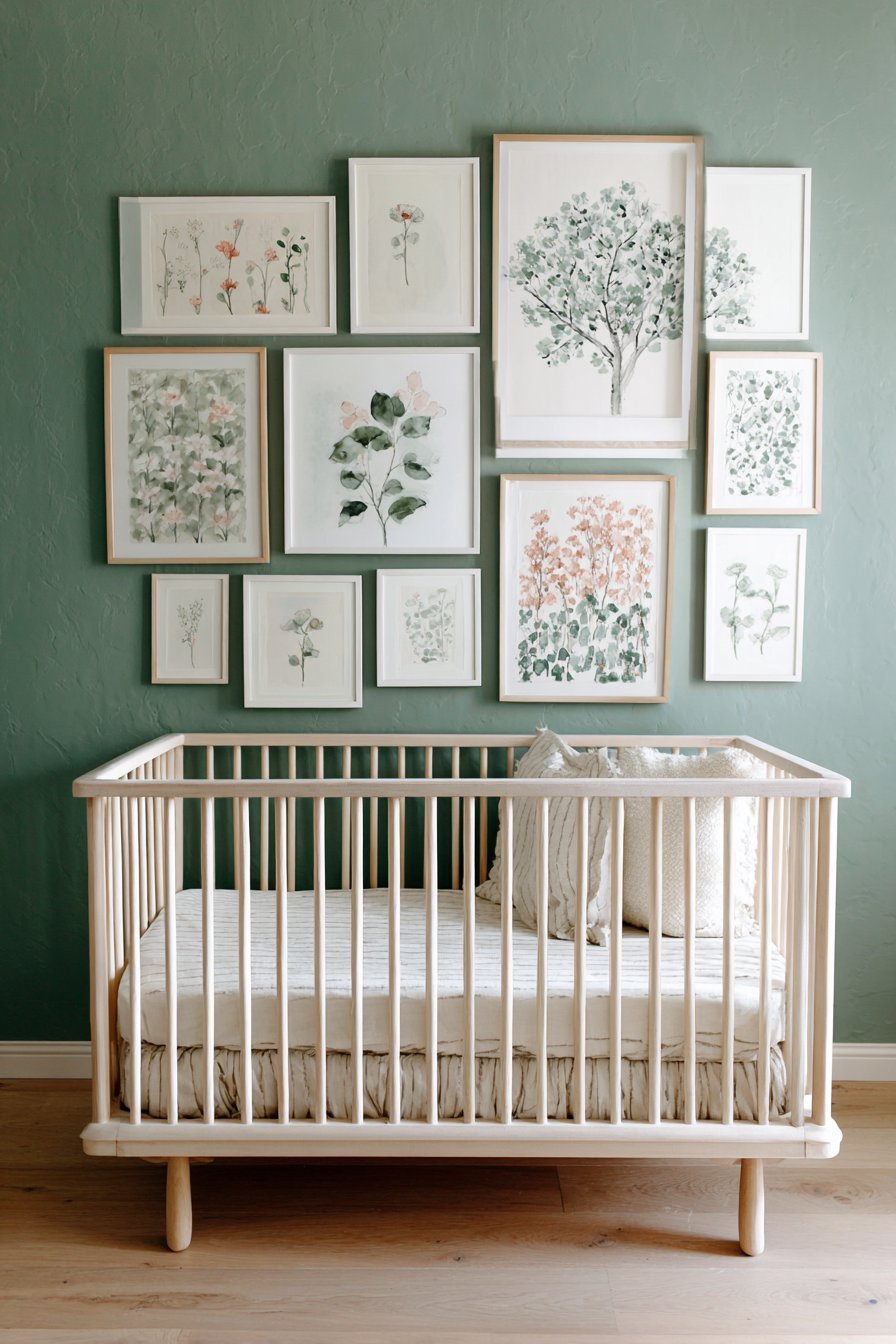
Light hardwood flooring shows natural color variation throughout the room. Soft diffused natural light creates even illumination across the wall display. The carefully composed arrangement demonstrates thoughtful spacing and visual balance. The watercolor artwork introduces gentle color variations within the mint palette.
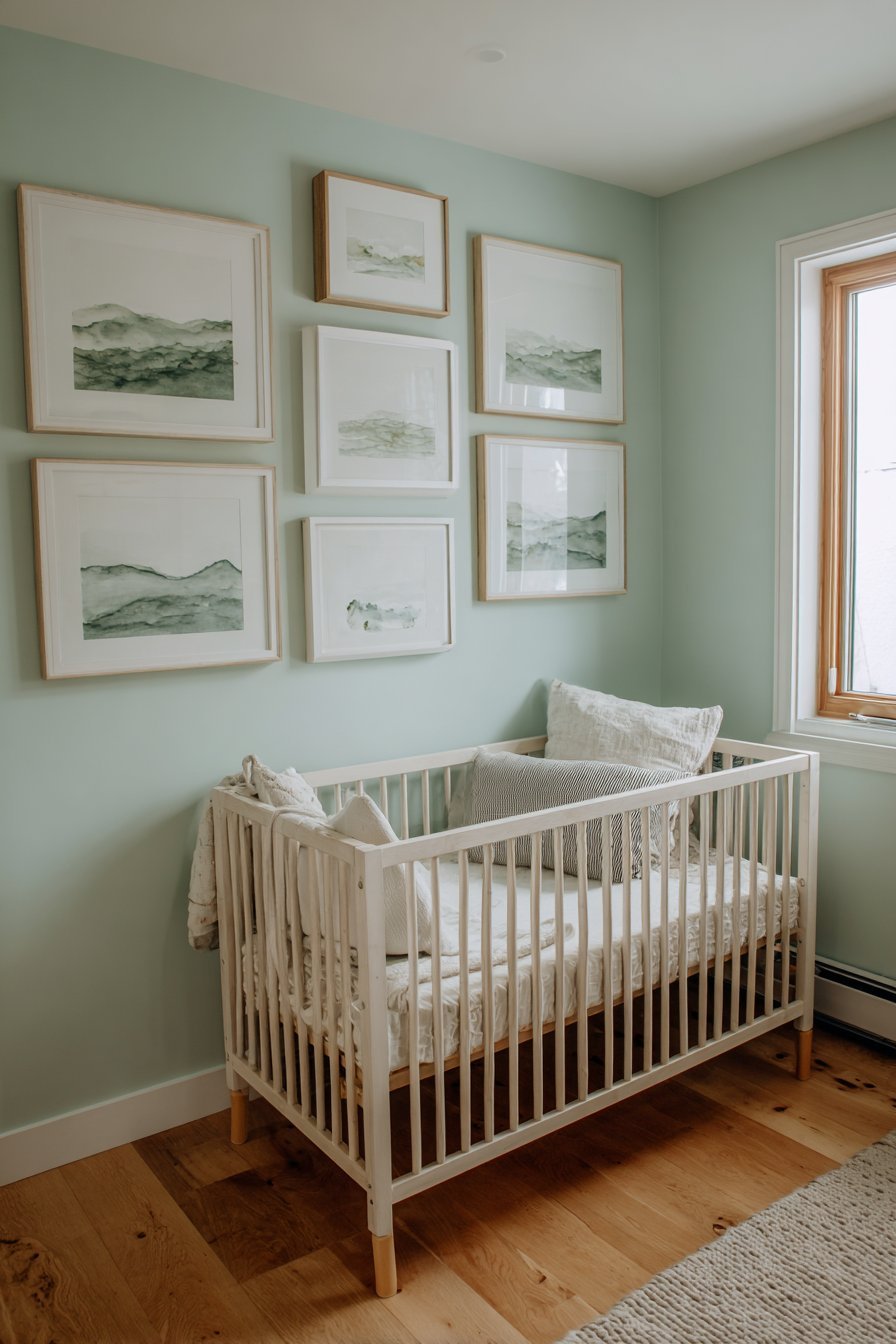
This design showcases how art elevates nursery spaces beyond basic decoration. The frame cluster creates a custom focal point above the crib. The watercolor medium adds softness appropriate for infant spaces. The color coordination between art and walls creates sophisticated cohesion.
Key Design Tips:
- Create gallery walls with various frame sizes for visual interest
- Choose watercolor artwork in coordinating mint, blush, and grey tones
- Arrange frames in organic clusters rather than rigid grids
- Maintain consistent white frames throughout for cohesive appearance
- Hang gallery walls securely above cribs at safe heights
- Use natural cotton bedding to complement rather than compete with wall art
14. Forward-Facing Children’s Bookshelf
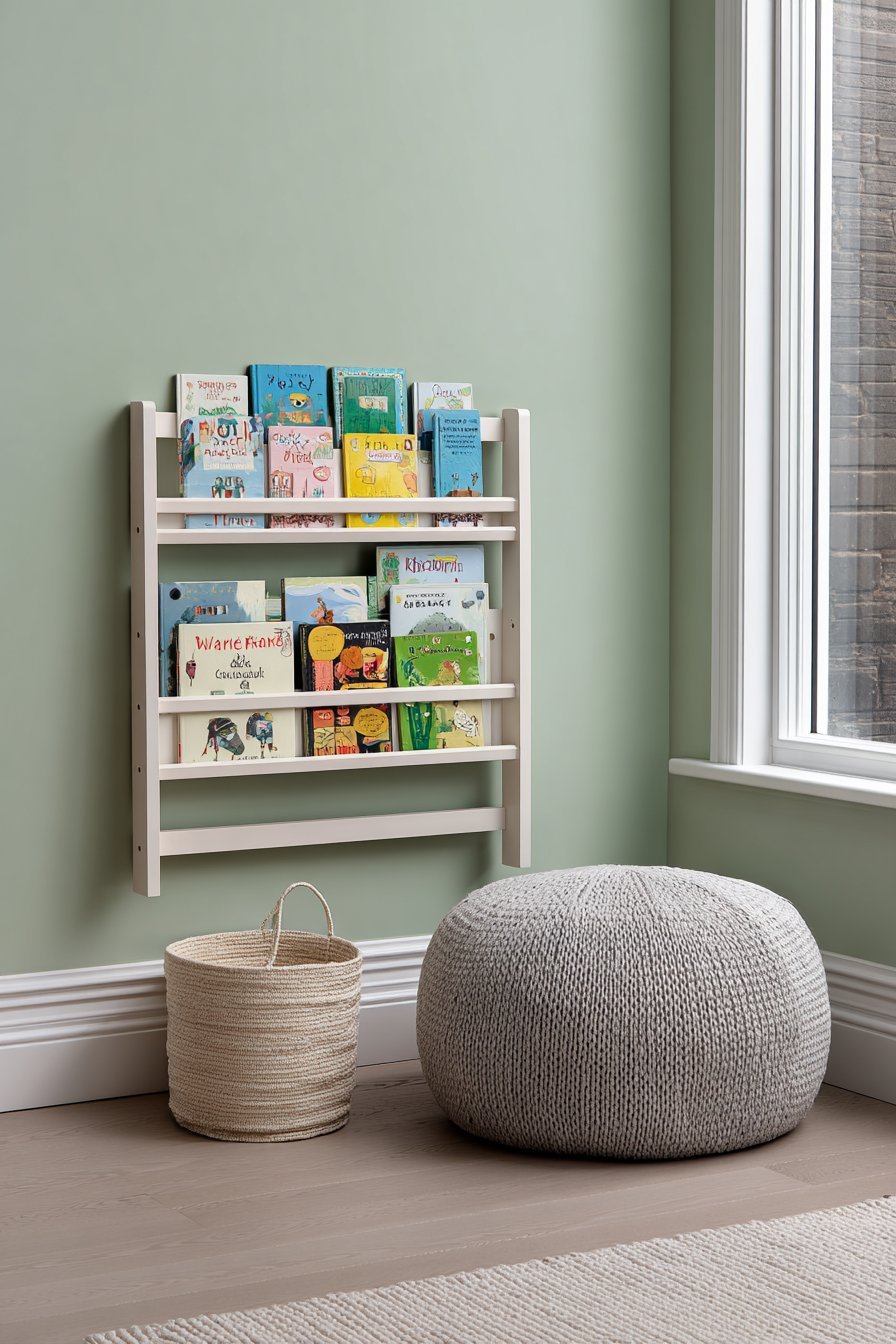
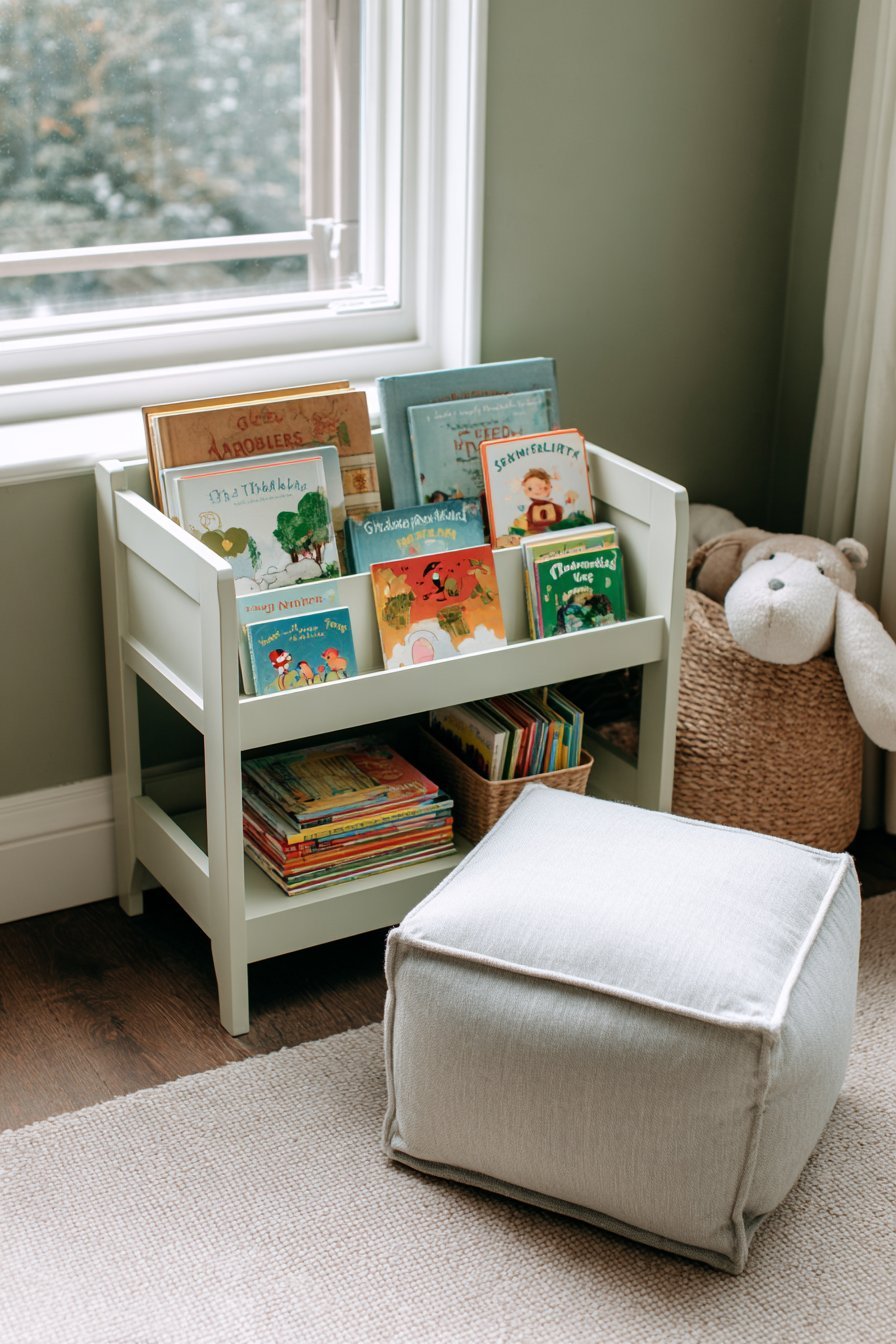
A small white wooden bookshelf designed for forward-facing book display sits in the corner. The mint green wall behind provides soft color contrast. Board books with colorful covers create natural visual interest on the display shelves. A small upholstered floor pouf in grey linen offers comfortable storytime seating.
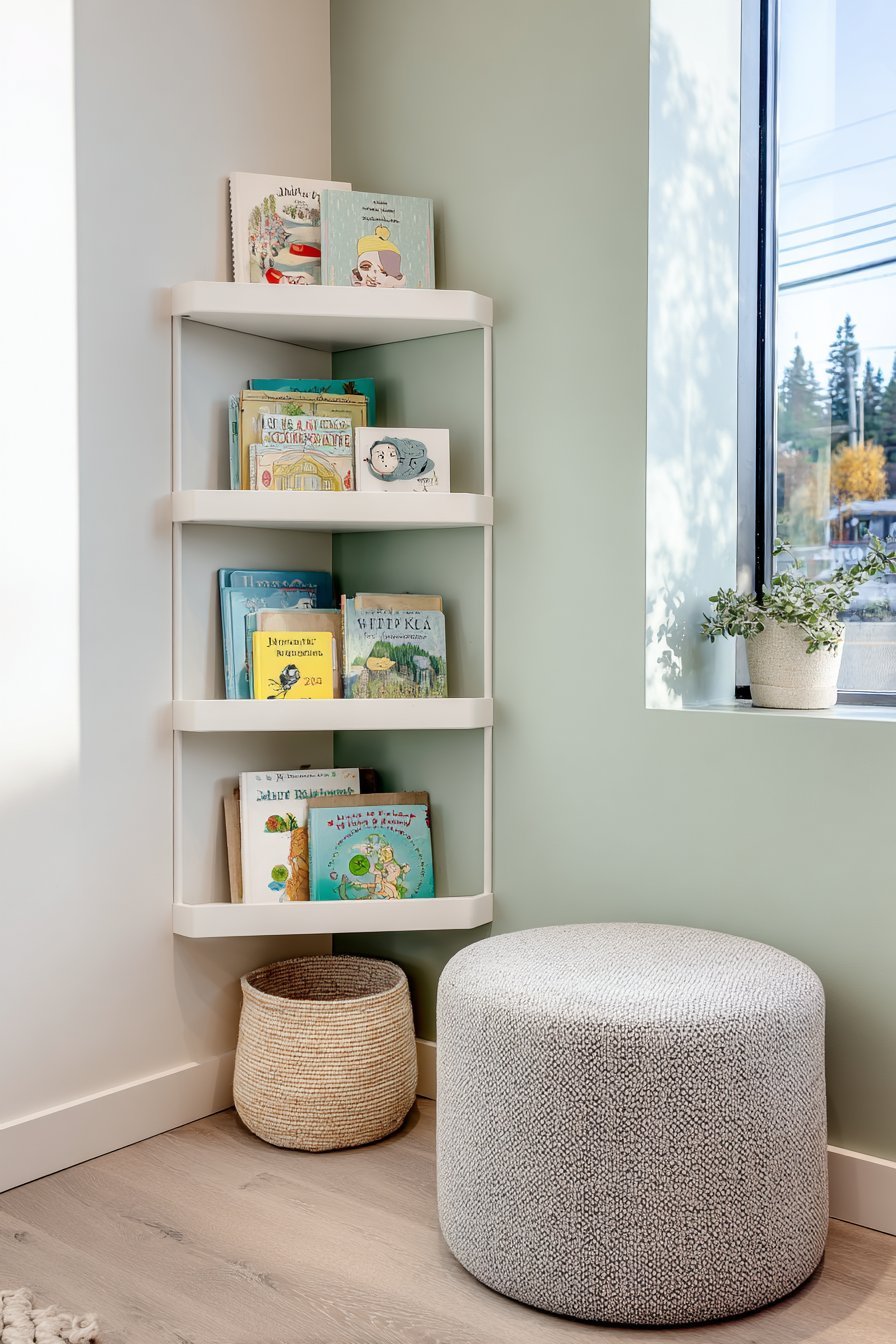
A natural jute basket on the lower shelf contains overflow books. Morning light from a nearby window illuminates the reading area beautifully. The forward-facing design makes book selection easy for young children. The accessible height encourages early literacy engagement and book exploration.
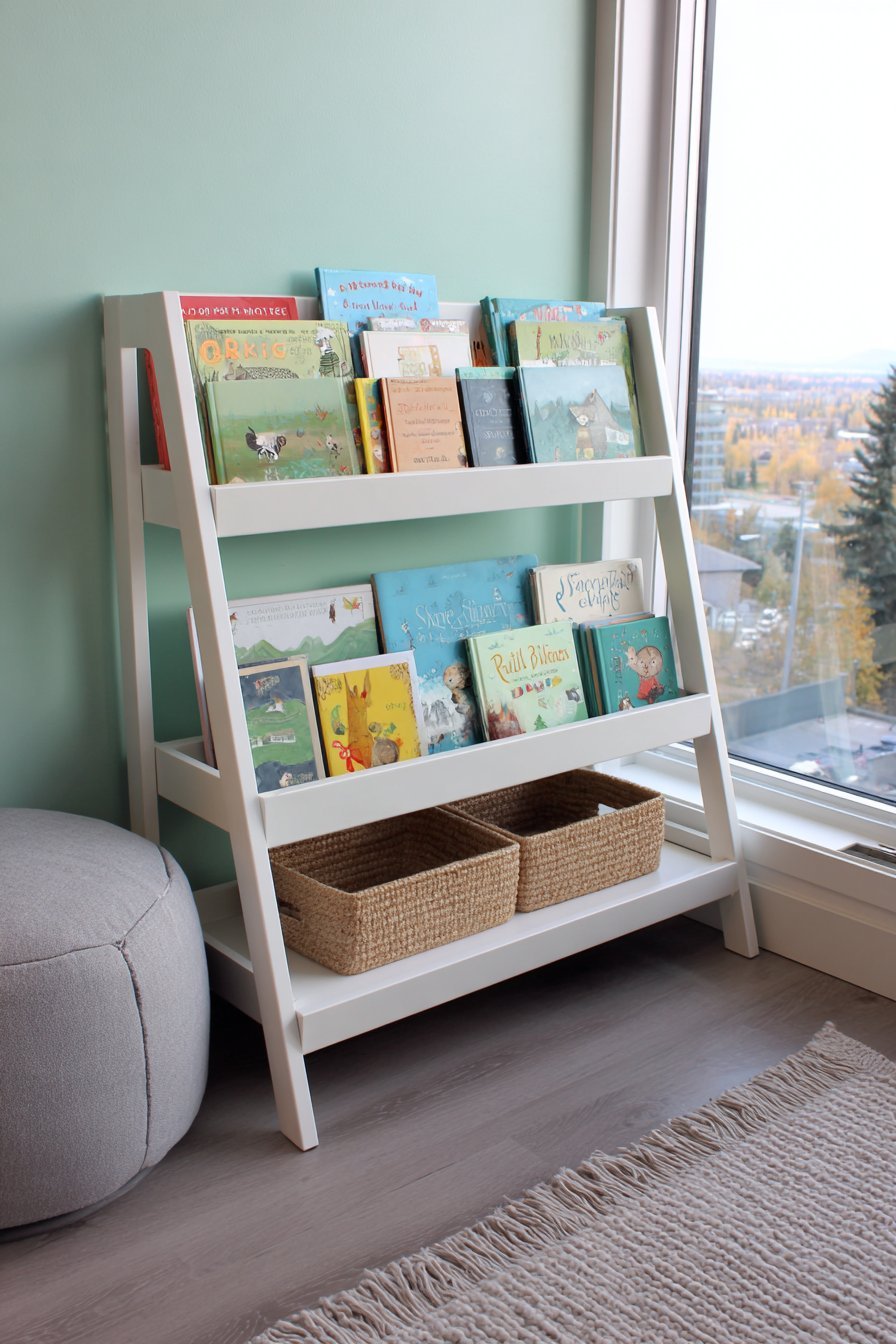
This design prioritizes early literacy through thoughtful furniture selection. The forward-facing shelves turn books into decorative elements. The floor pouf provides comfortable seating at an appropriate height. The corner placement creates a dedicated reading zone within the nursery.
Key Design Tips:
- Choose forward-facing bookshelves that display covers as decoration
- Position reading areas near natural light sources when possible
- Add floor poufs at child height for comfortable independent reading
- Use lower shelf baskets for overflow storage and organization
- Select white bookshelves that blend with various decor styles
- Create dedicated reading corners to establish literacy habits early
15. Modern Acrylic Panel Crib
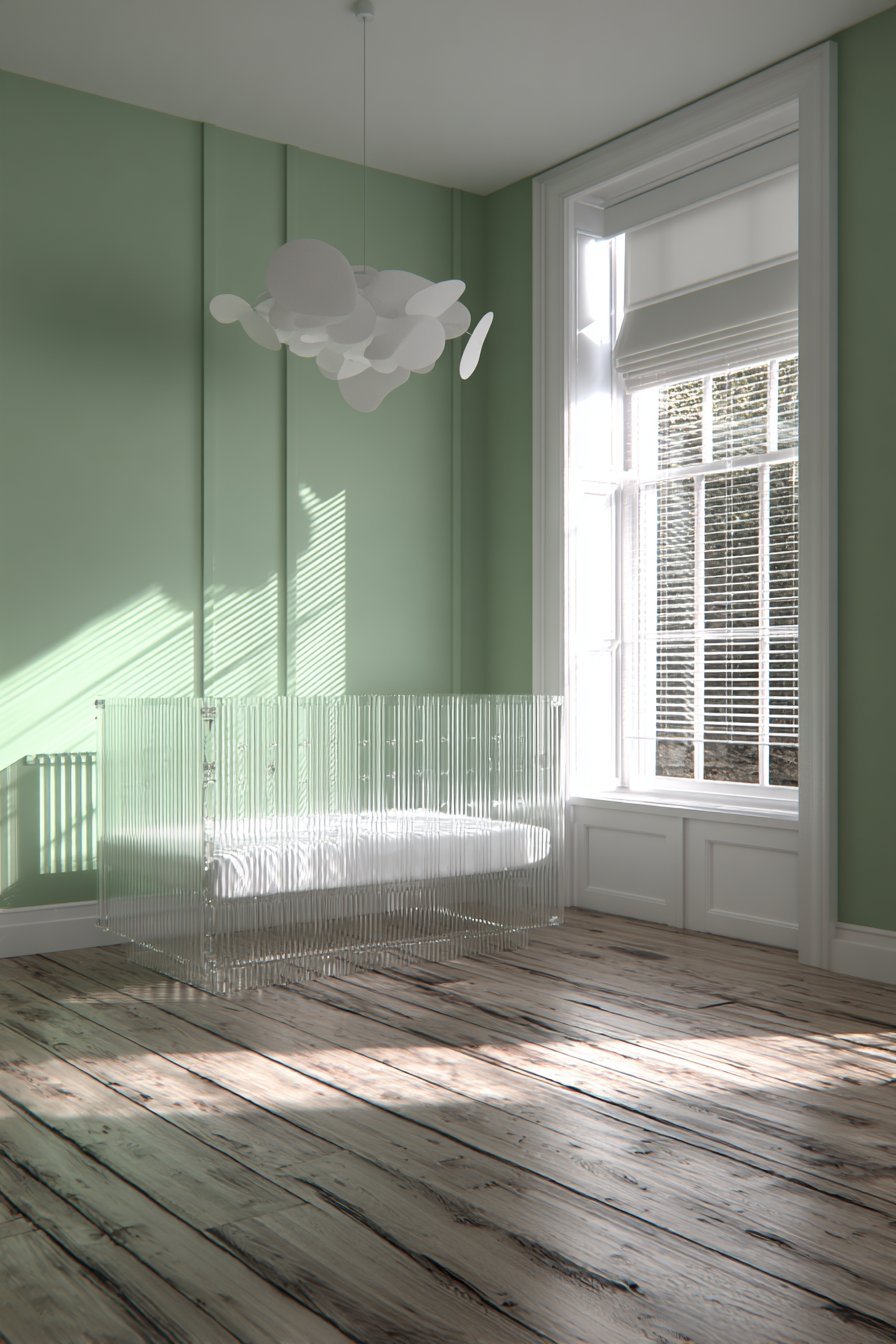
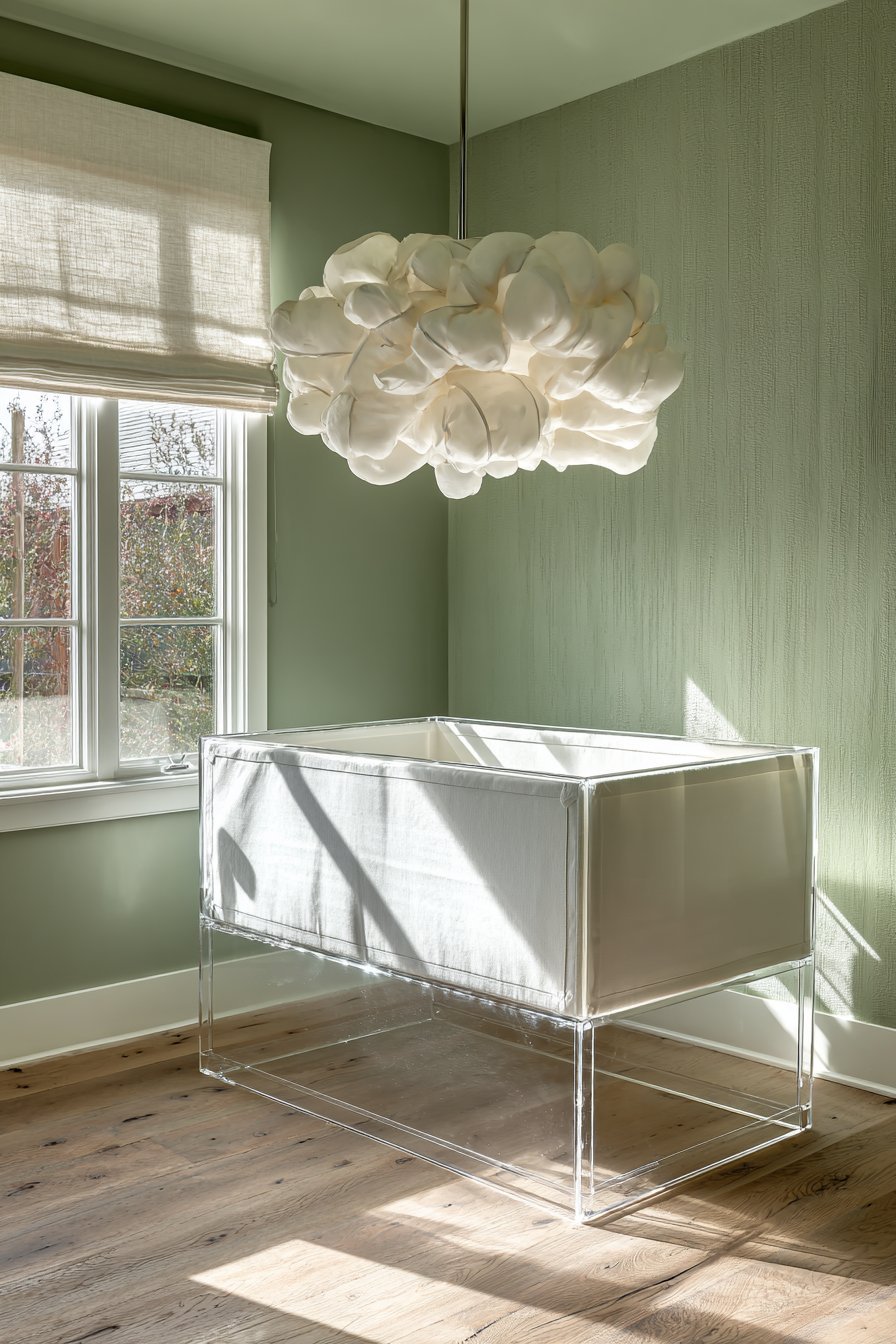
A modern white crib with clear acrylic panels replaces traditional slats. The mint green wall features subtle vertical texture from gentle stippling paint technique. A sculptural white mobile with organic shapes hangs above the crib. Wide-plank engineered hardwood in light greige tone covers the floor.
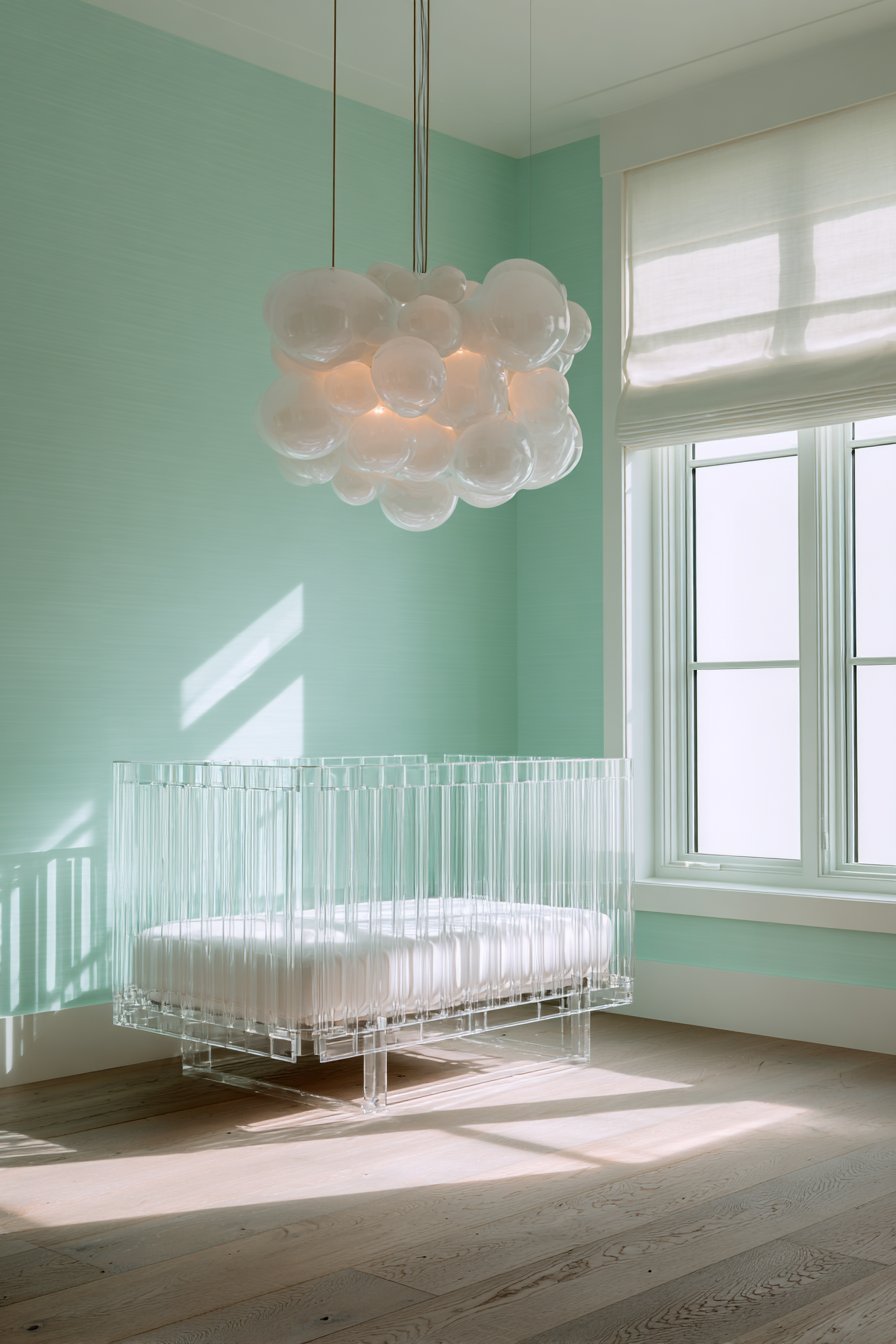
Simple white roman shades filter natural light creating soft ambient glow. Light passes through the acrylic panels creating interesting shadows and transparency effects. The contemporary design offers full visibility while maintaining modern aesthetic. The stippled wall texture adds depth without overwhelming pattern.
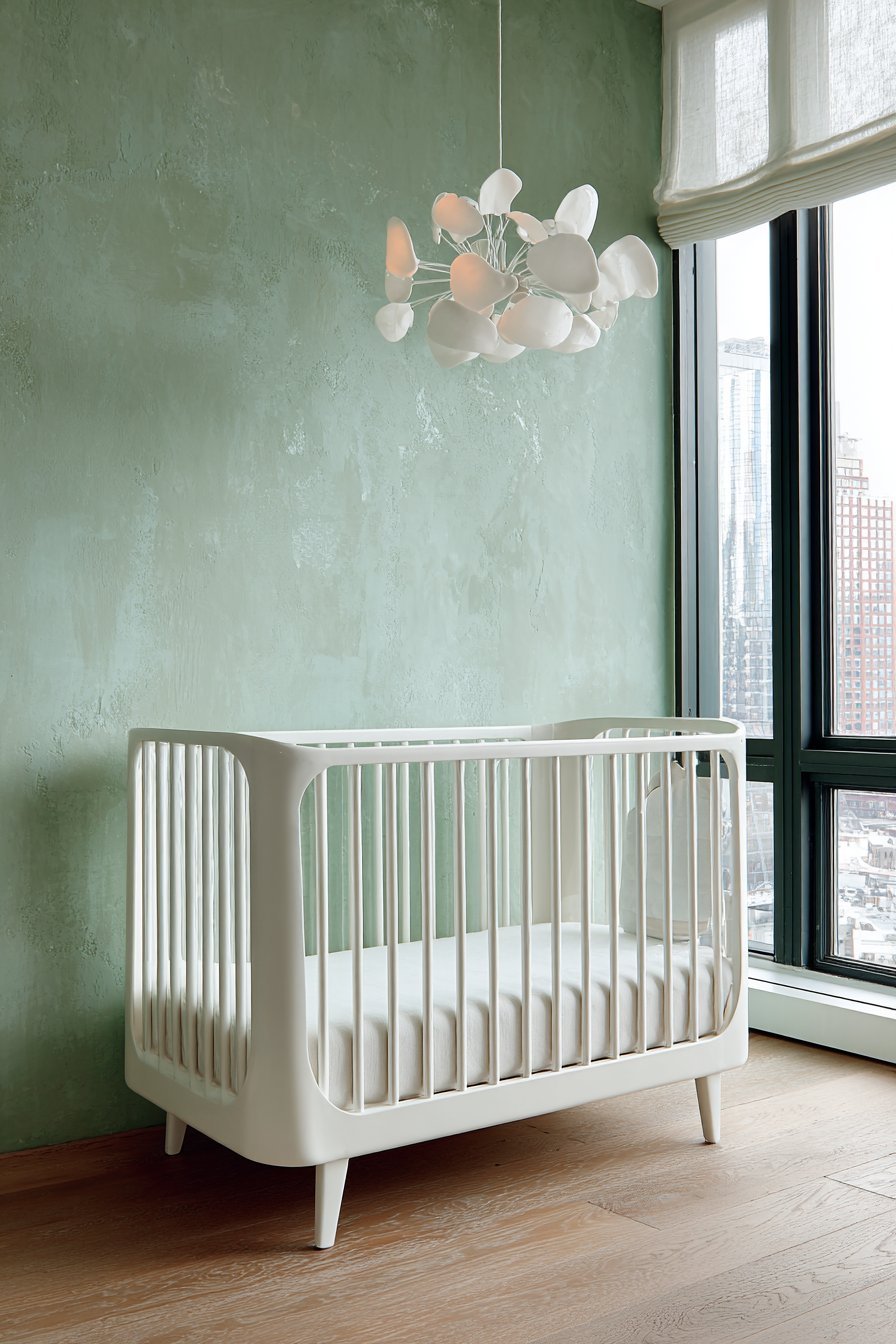
This design embraces contemporary aesthetics while maintaining practical functionality. The acrylic panels allow parents to see infants from any angle. The sculptural mobile provides visual interest with artistic quality. The wide-plank flooring adds modern sophistication to the foundation.
Key Design Tips:
- Consider cribs with acrylic panels for modern aesthetic and full visibility
- Create subtle wall texture using stippling or sponging paint techniques
- Choose sculptural mobiles with artistic quality rather than character themes
- Install wide-plank engineered hardwood for contemporary flooring appeal
- Use white roman shades for clean lines and effective light control
- Embrace transparency effects created by acrylic materials and natural light
16. Rolling Diaper Cart Organization
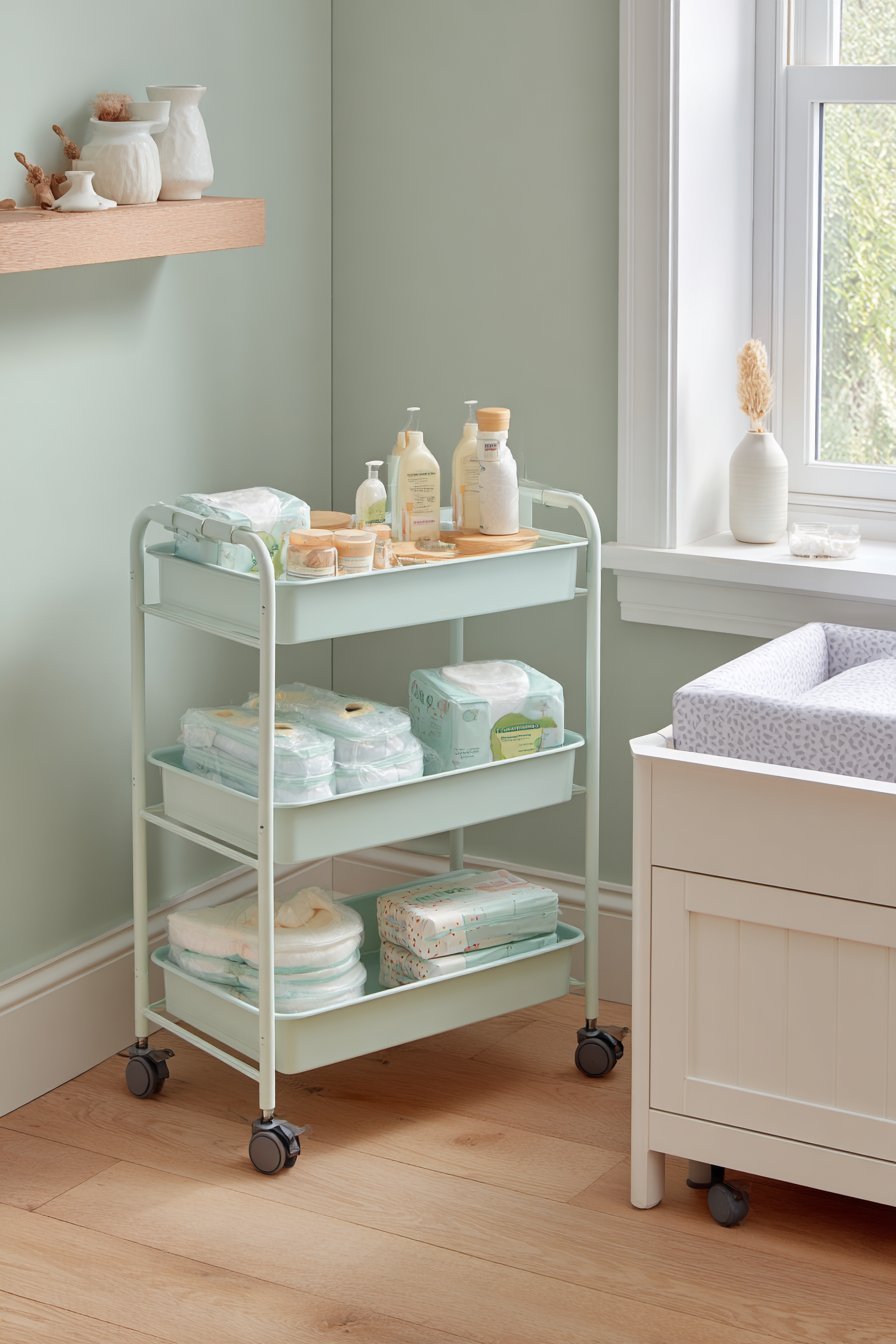
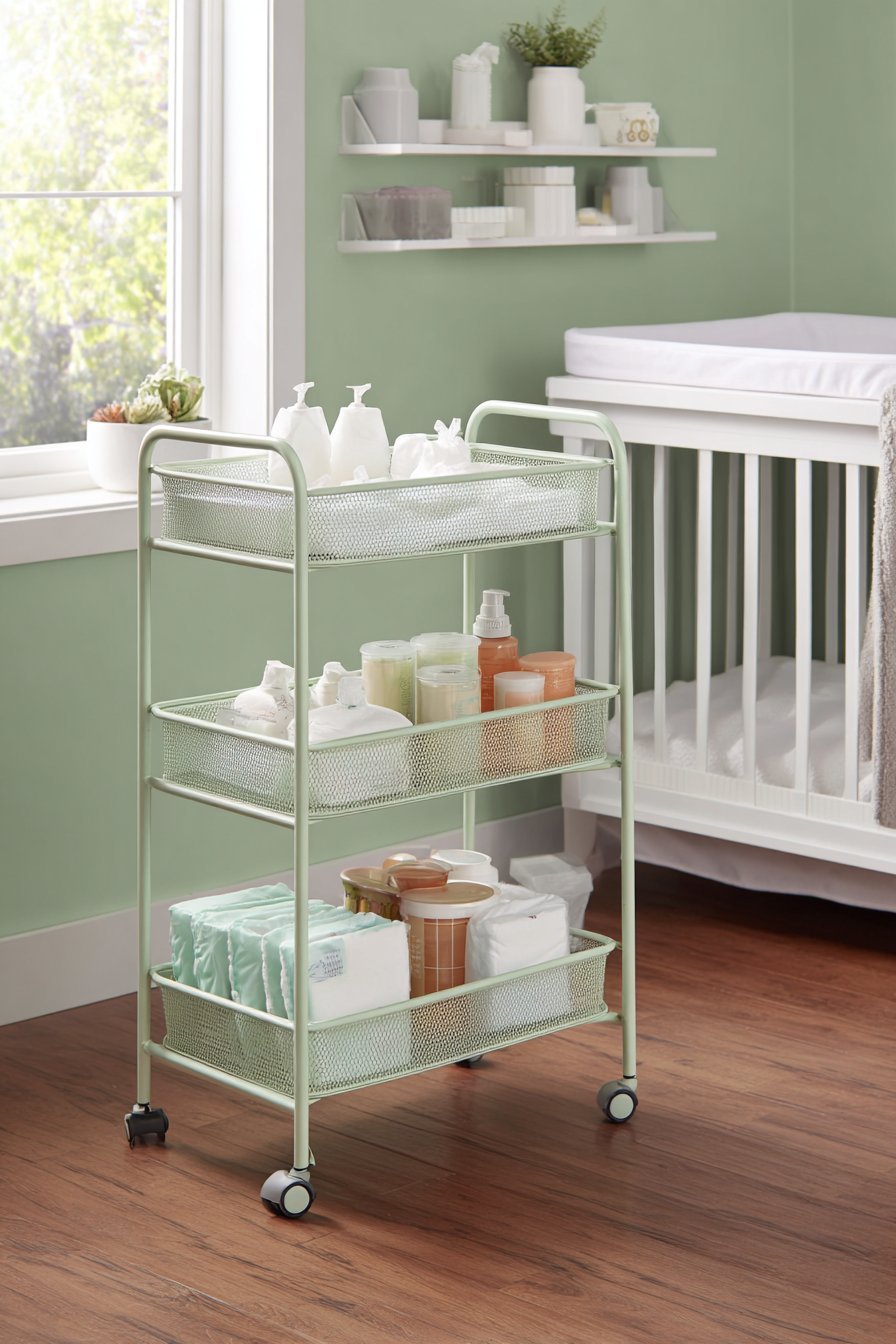
A rolling cart in white metal with three tiers holds organized diaper supplies. The cart sits against a mint green wall beside a white changing table. Neatly organized wipes, diapers, and changing essentials fill each tier. Small white ceramic containers organize cotton balls and small items on top.
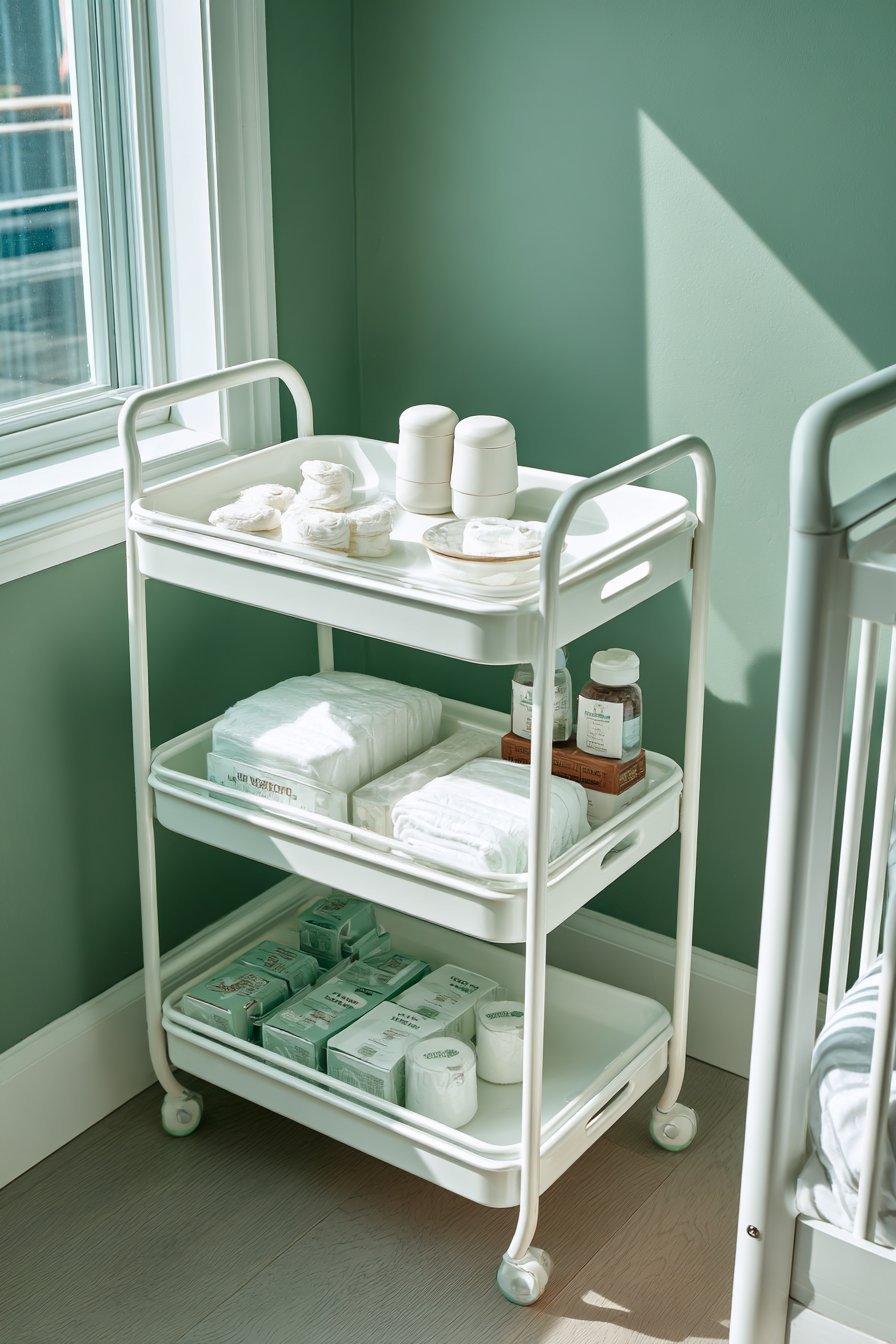
Natural window light creates clear visibility for the functional station. The mobile organization allows easy repositioning as needs change. The white metal coordinates with other nursery furniture finishes. The three-tier design maximizes vertical storage in minimal floor space.
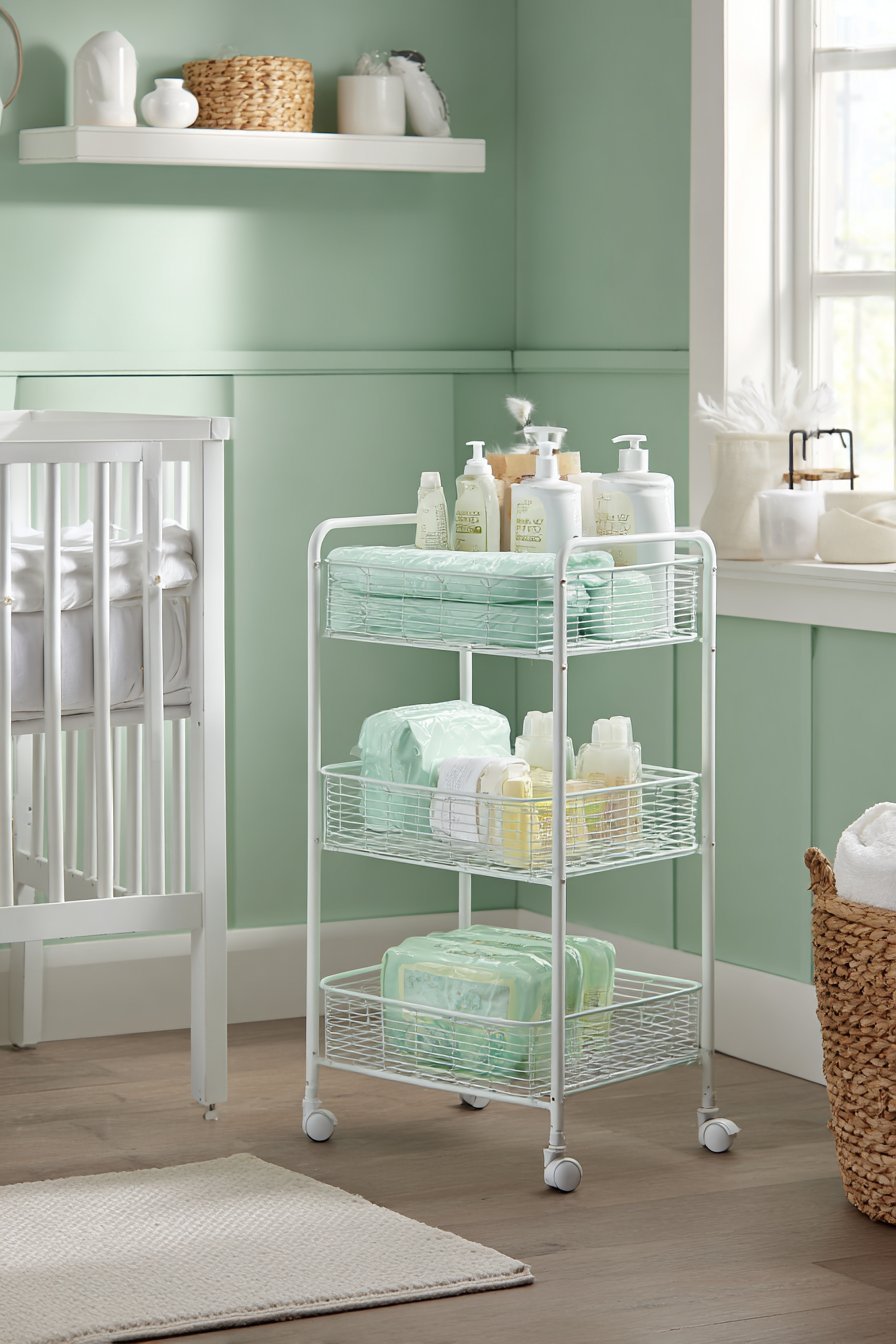
This design demonstrates that functional elements can maintain aesthetic appeal. The rolling cart provides flexibility that built-in storage cannot match. The organized approach reduces stress during changing time. The white ceramic containers add polished finishing touches.
Key Design Tips:
- Use rolling carts for flexible storage that moves where needed
- Choose white metal finishes that coordinate with nursery furniture
- Organize changing supplies on three-tier carts for easy access
- Add small ceramic containers for tiny items like cotton balls
- Position carts near natural light sources for visibility during changes
- Select wheels that lock securely for safety during use
17. Classic Wainscoting Two-Tone Walls
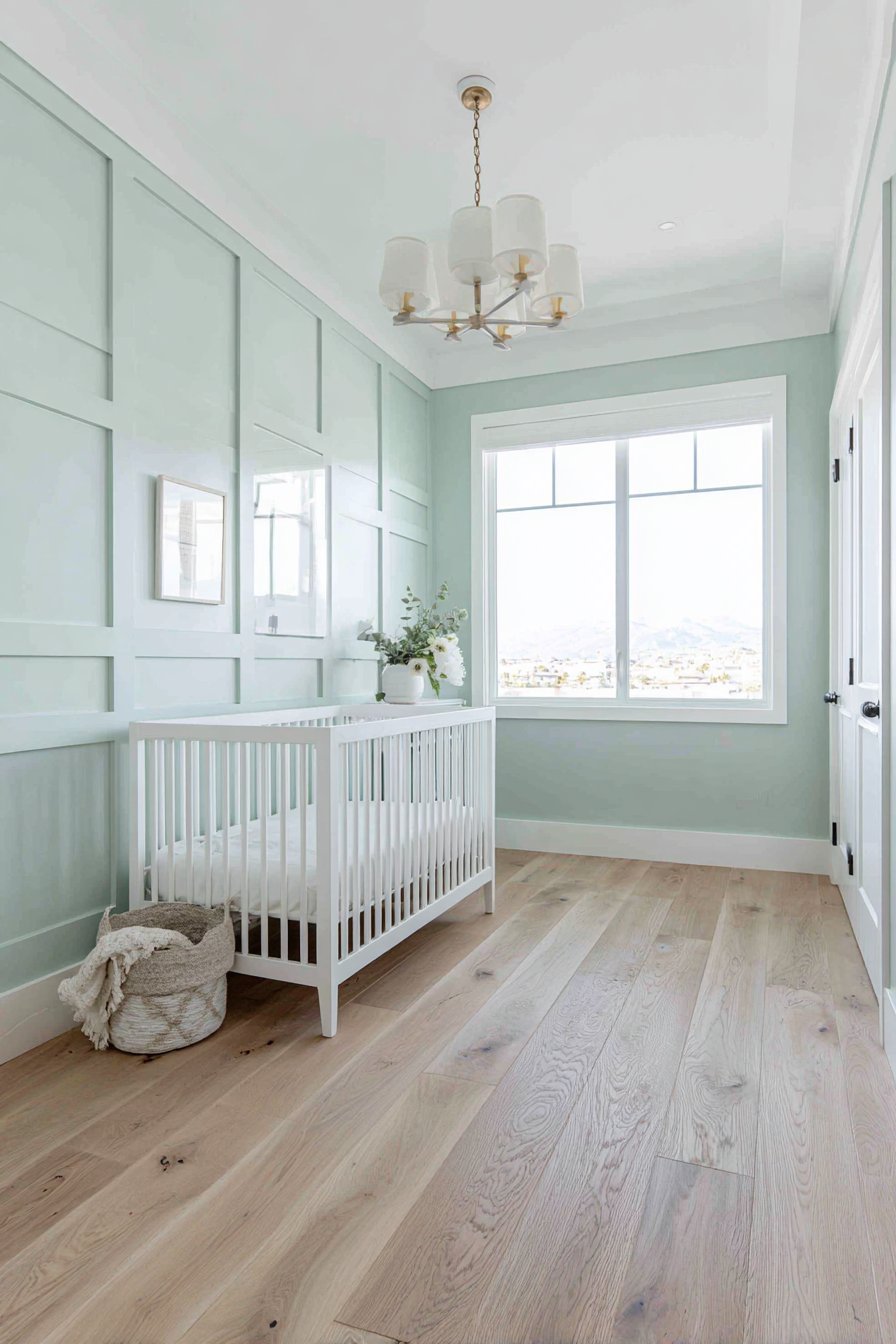
Custom wainscoting painted in white extends one-third up the wall. Thin white chair rail molding tops the wainscoting. The upper walls feature soft mint green creating classic two-tone treatment. A traditional white sleigh-style crib centers on the wall with a small bedside table.
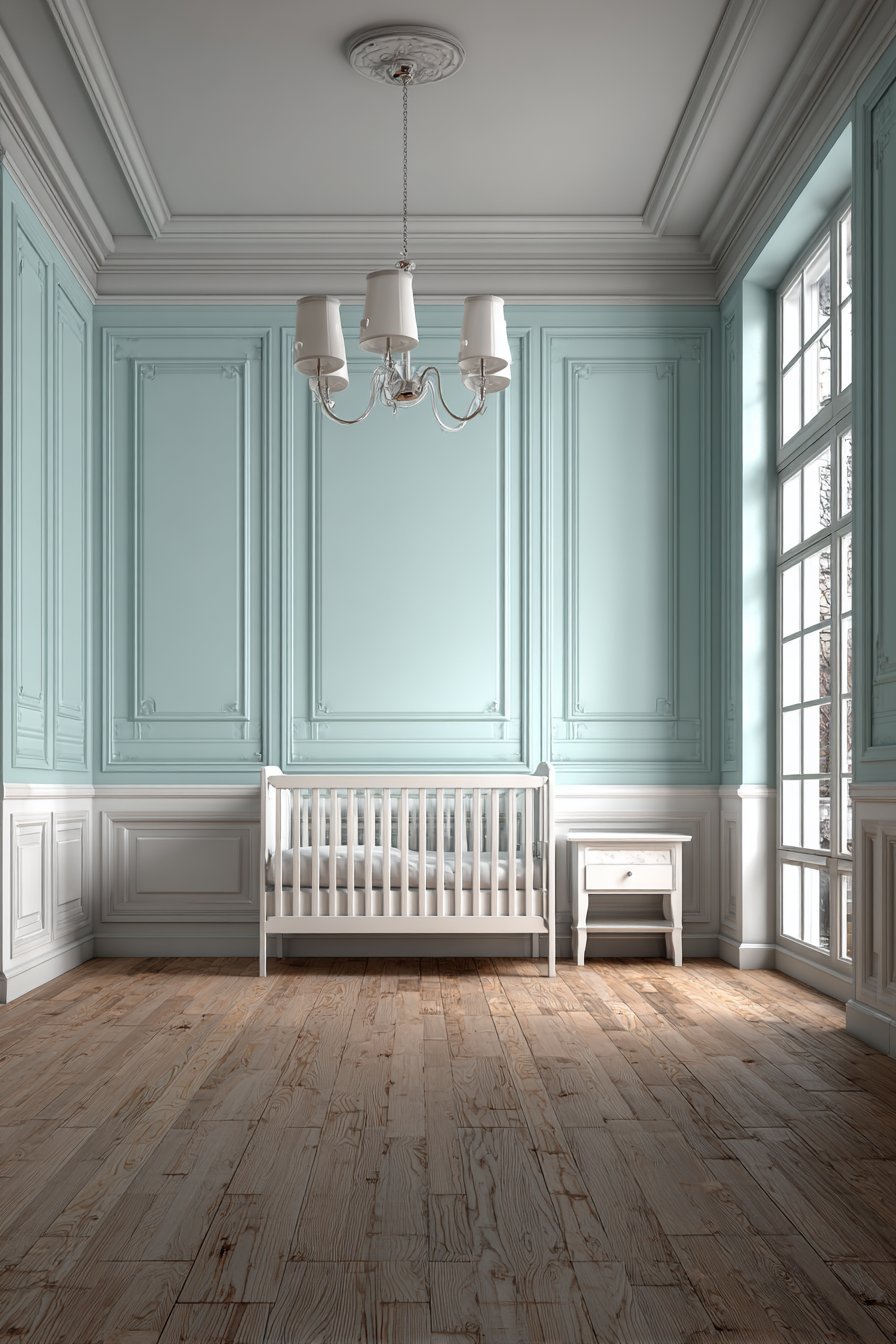
Medium oak hardwood floors show subtle hand-scraped texture. A simple white chandelier with fabric shades provides ambient lighting. Natural daylight from a tall window emphasizes the architectural wall treatment. The classic proportions create timeless elegance appropriate for any generation.
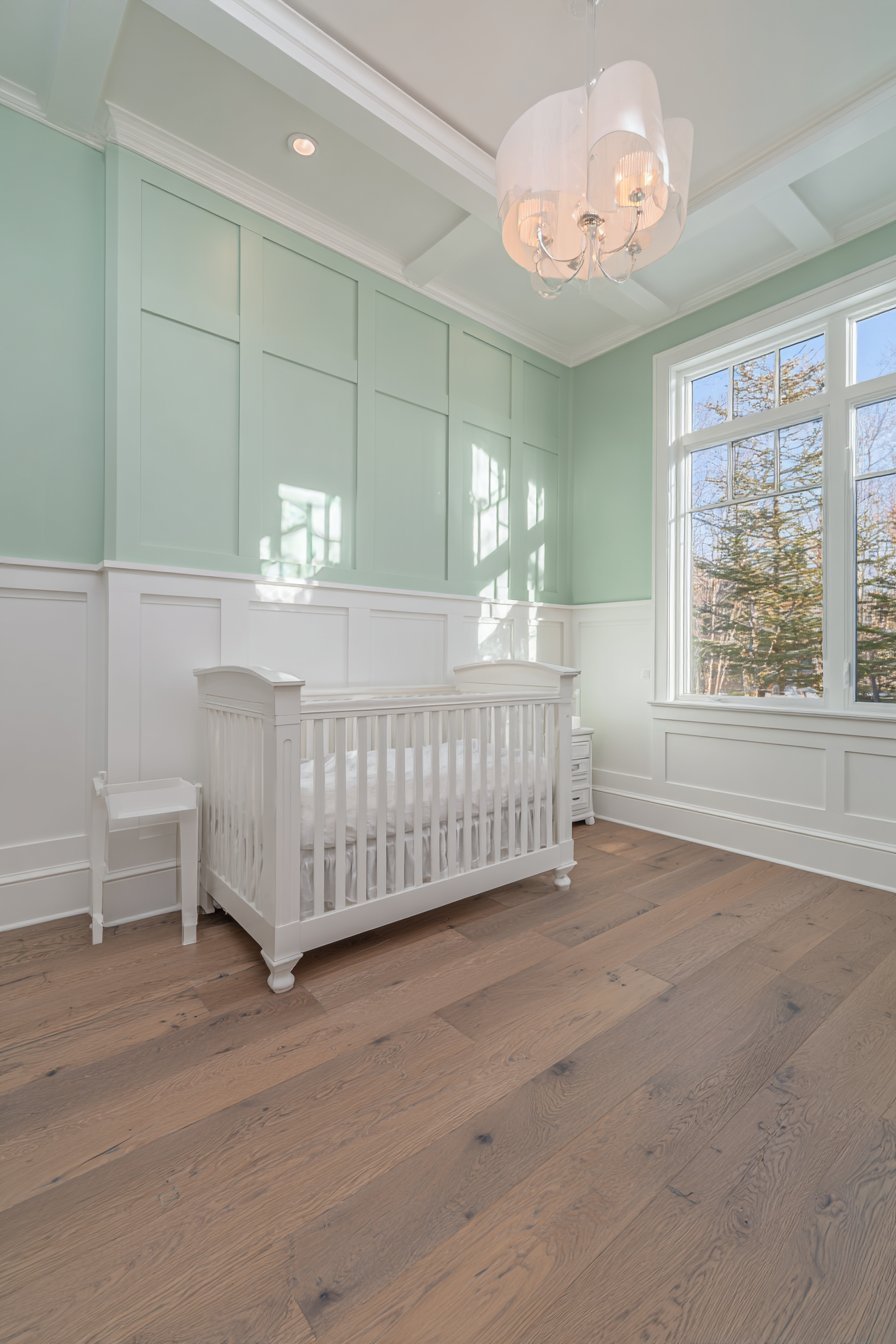
This design honors traditional nursery styling with proper architectural details. The wainscoting adds protection and visual interest to lower walls. The two-tone approach creates classic proportions and balance. The sleigh-style crib offers enduring style that never feels dated.
Key Design Tips:
- Install wainscoting to one-third wall height for proper classical proportions
- Use chair rail molding to create clean transitions between paint colors
- Choose traditional sleigh-style cribs for timeless nursery appeal
- Add chandeliers with fabric shades for soft ambient lighting
- Select hand-scraped hardwood floors for character and texture
- Embrace architectural details that add value beyond aesthetic appeal
18. Comfortable Nursing Station Setup
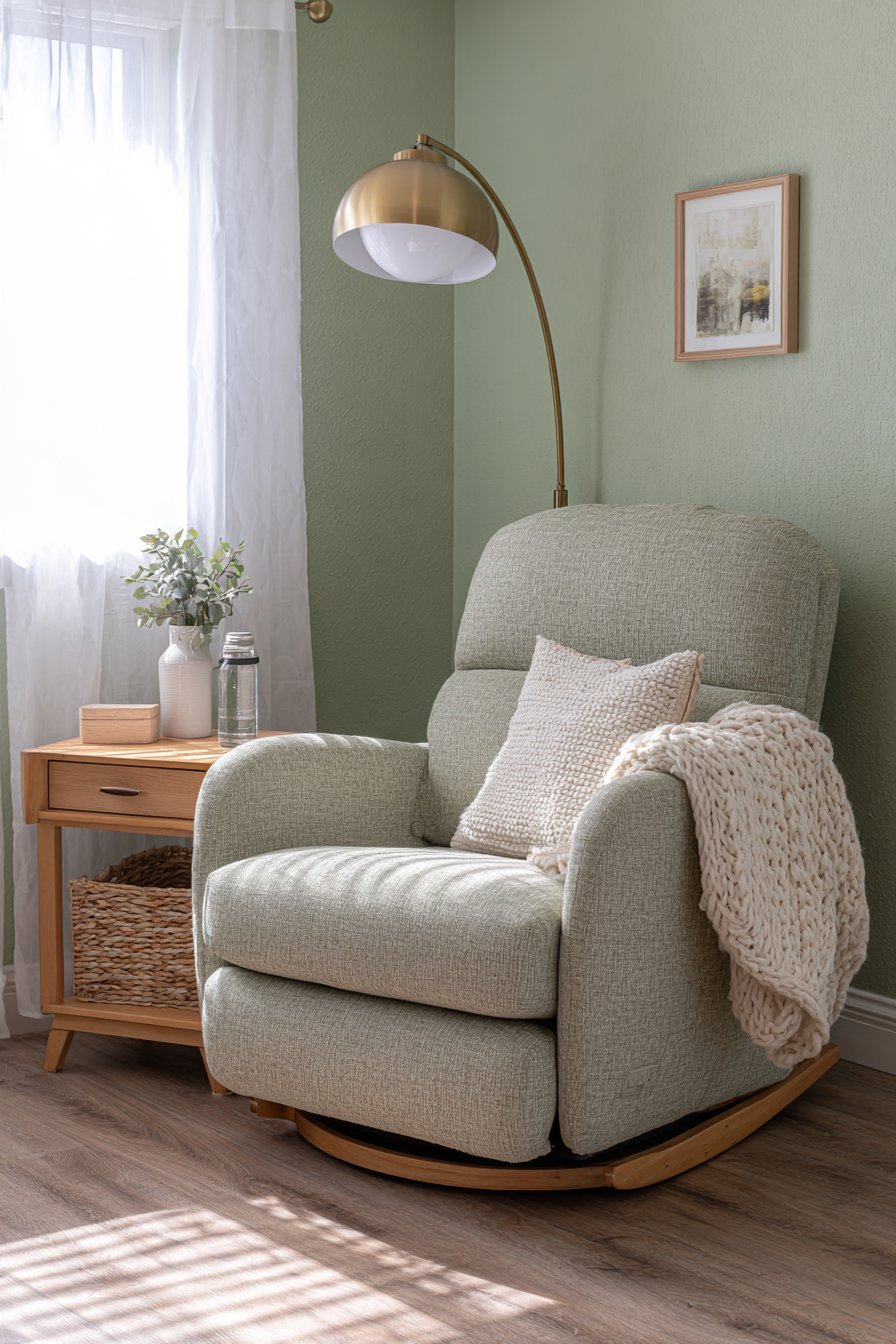
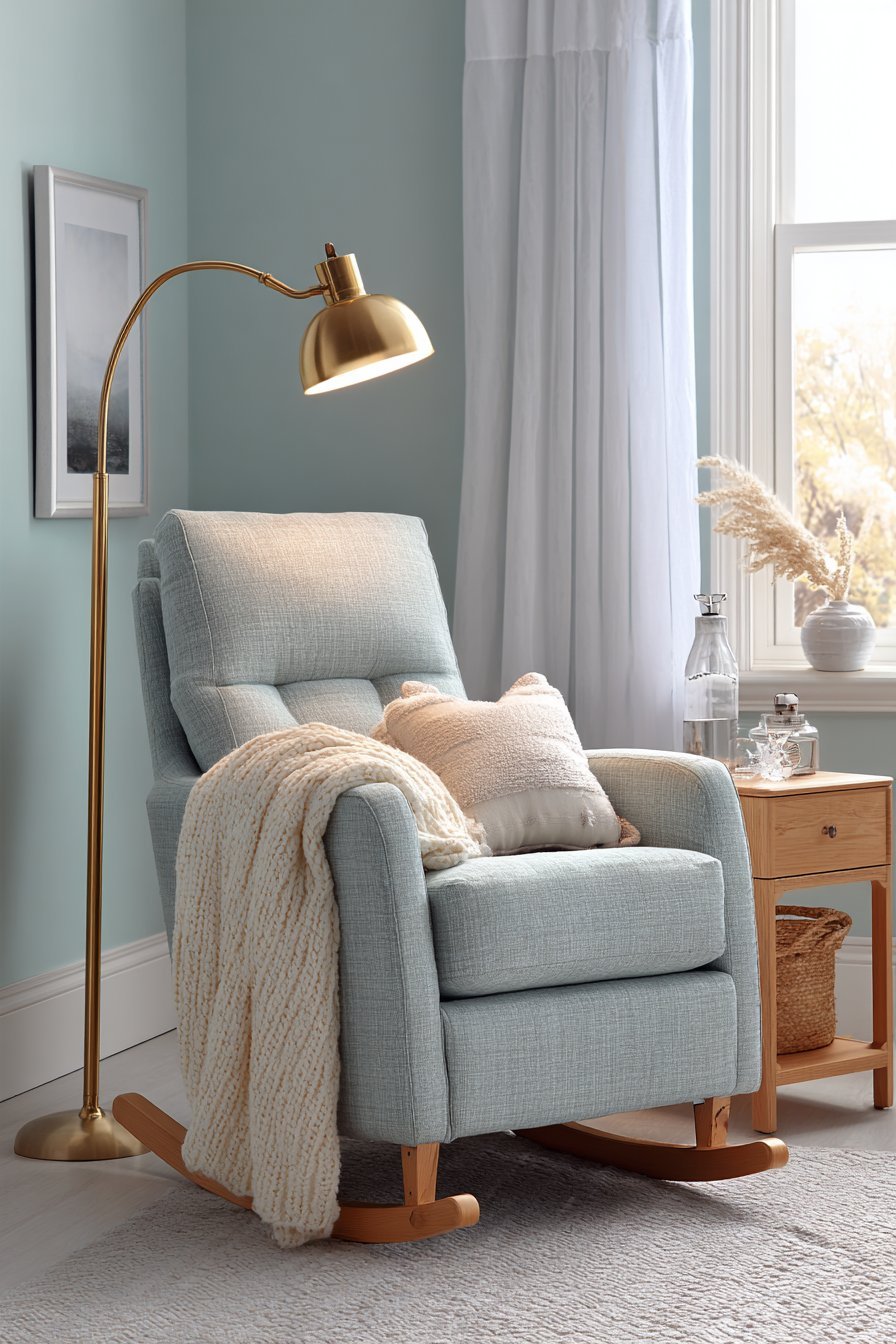
A comfortable upholstered rocking chair in performance fabric shows subtle heathered grey texture. A curved floor lamp with adjustable brass arm provides directed reading light. A small C-shaped side table in natural oak slides under the chair arm. The mint green wall provides a calming backdrop behind the nursing station.
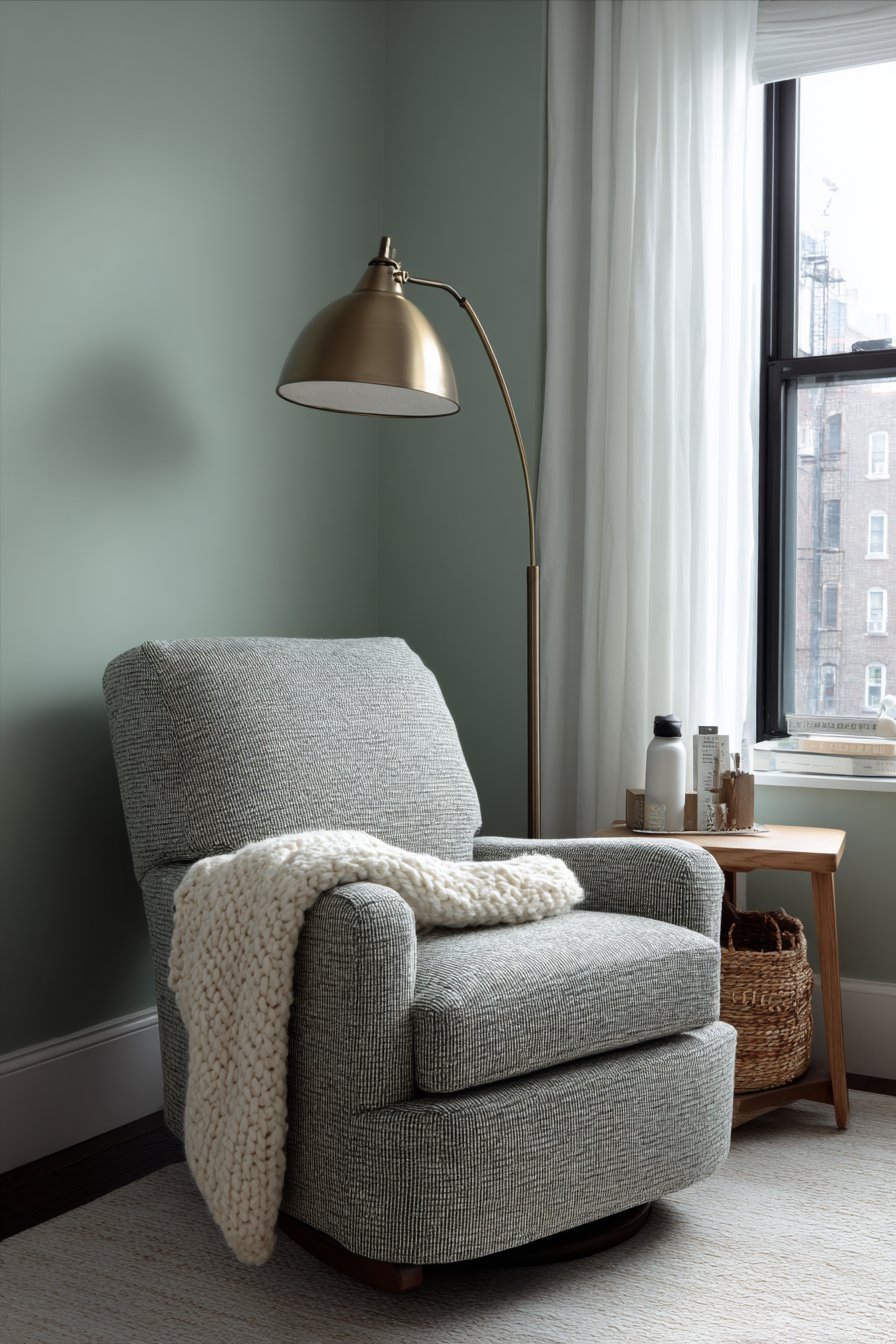
A white sheer curtain nearby filters natural light throughout the day. A cozy knit throw blanket in cream drapes over the chair. The adjustable lamp allows precise light direction for nighttime feedings. The C-shaped table keeps water and supplies within easy reach.
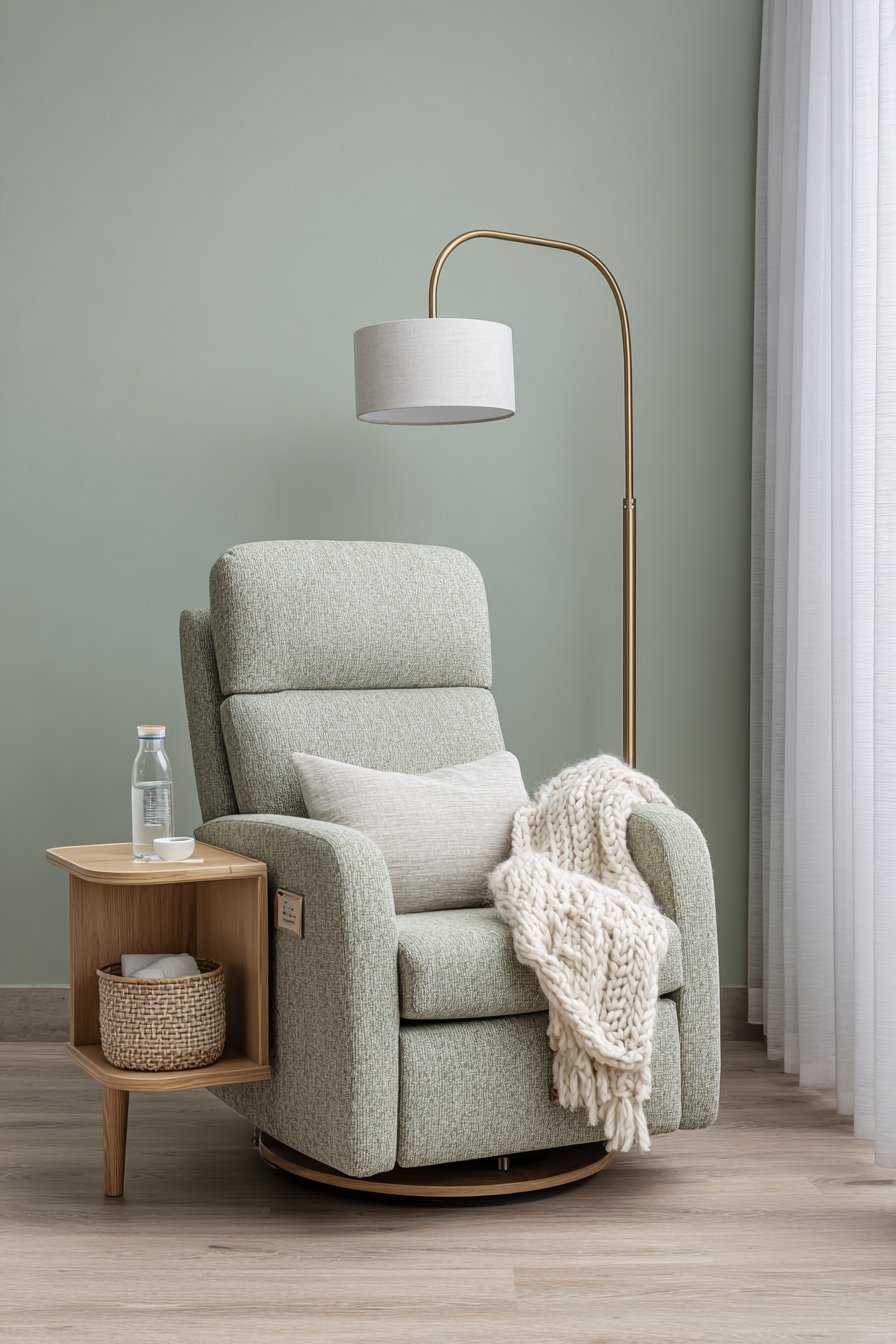
This design prioritizes comfort and functionality for nursing mothers. The performance fabric withstands inevitable spills and accidents. The adjustable lighting supports various activities from feeding to reading. The thoughtful furniture selection addresses real nighttime needs.
Key Design Tips:
- Choose performance fabric for nursing chairs that cleans easily
- Add adjustable floor lamps with brass arms for directed task lighting
- Use C-shaped side tables that slide under chair arms for convenience
- Include cozy throw blankets for warmth during nighttime feedings
- Position nursing stations near windows for natural daytime light
- Select heathered fabric textures that disguise minor stains effectively
19. Hand-Painted Growth Chart Feature
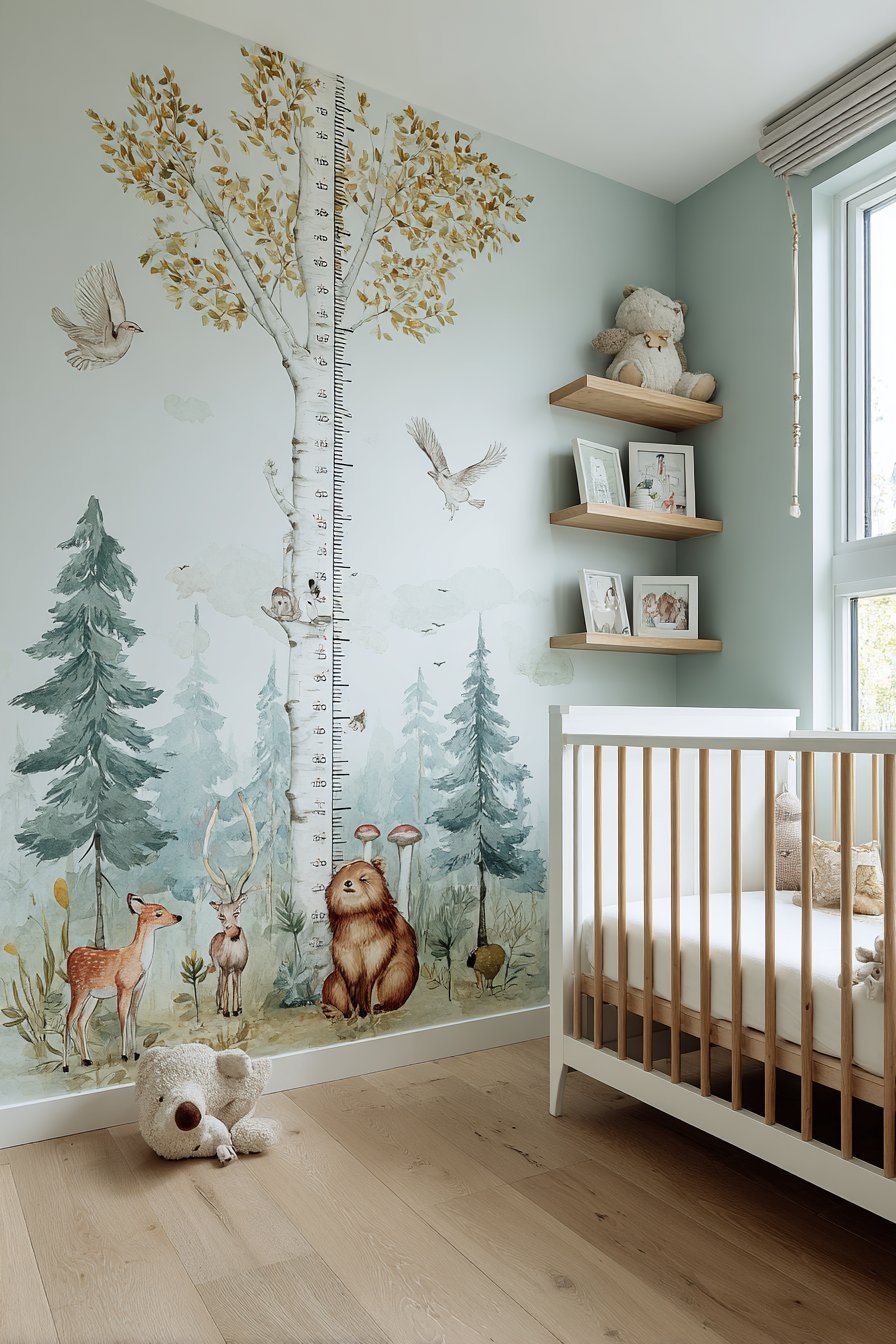
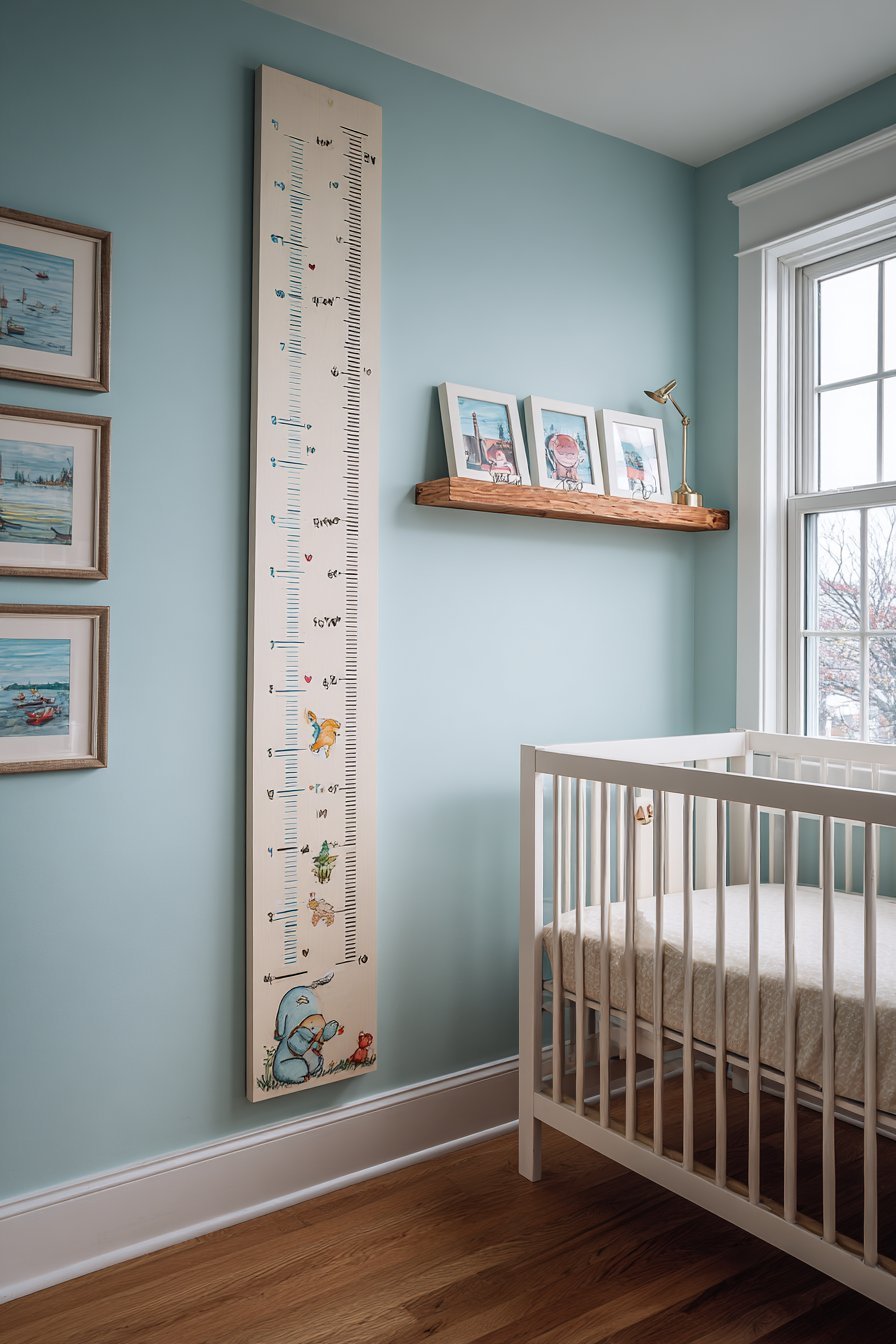
A growth chart painted directly on the mint wall features soft white ruler markings. Playful woodland animal illustrations appear at intervals along the chart. The chart extends from floor to approximately five feet high. A simple white crib sits beside the personalized measurement feature.
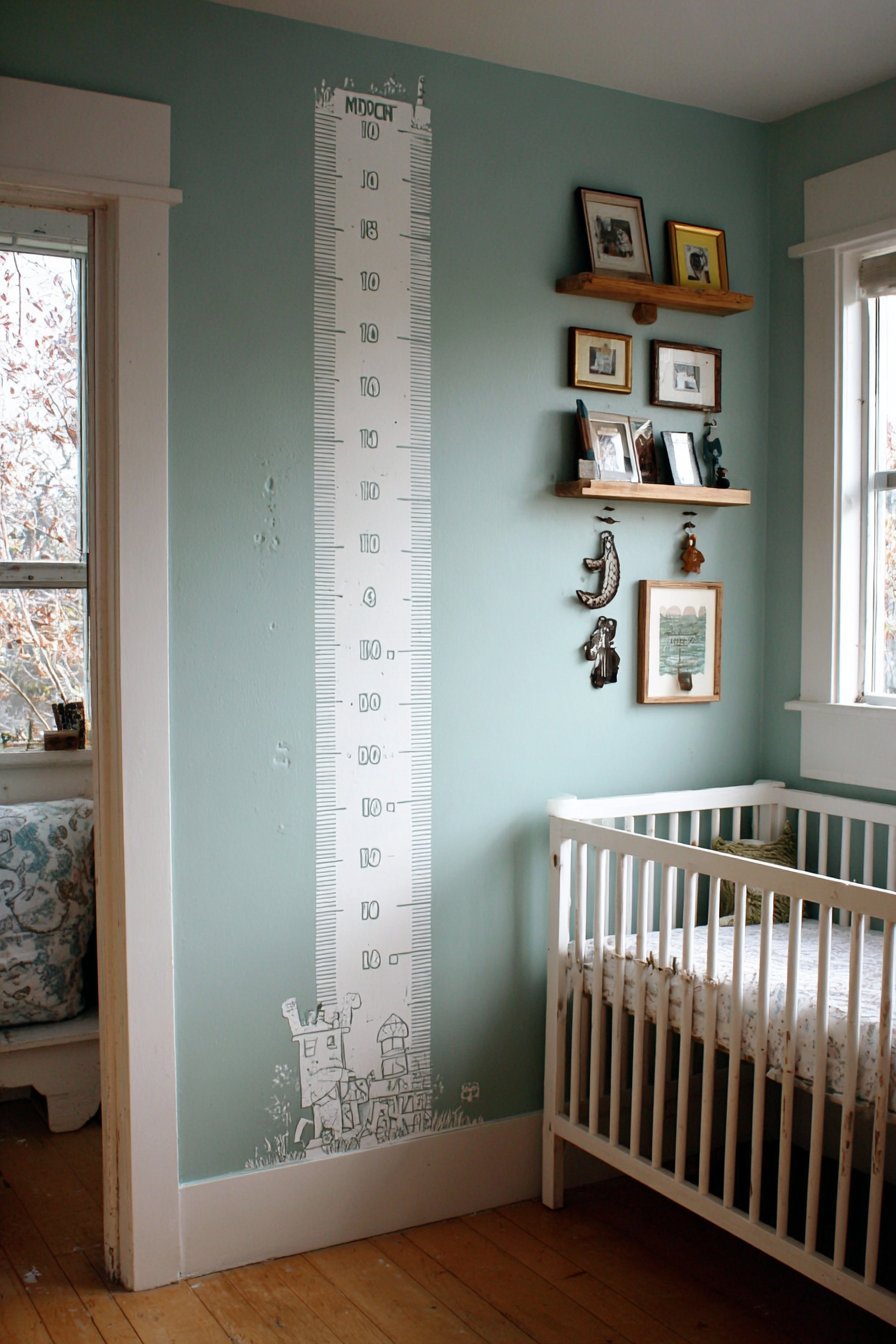
A natural wood picture ledge shelf nearby displays small framed photos and keepsakes. Light maple flooring provides warm contrast to the cool mint tones. Natural window light creates even illumination showing the hand-painted details. The custom feature becomes a treasured family heirloom over years.
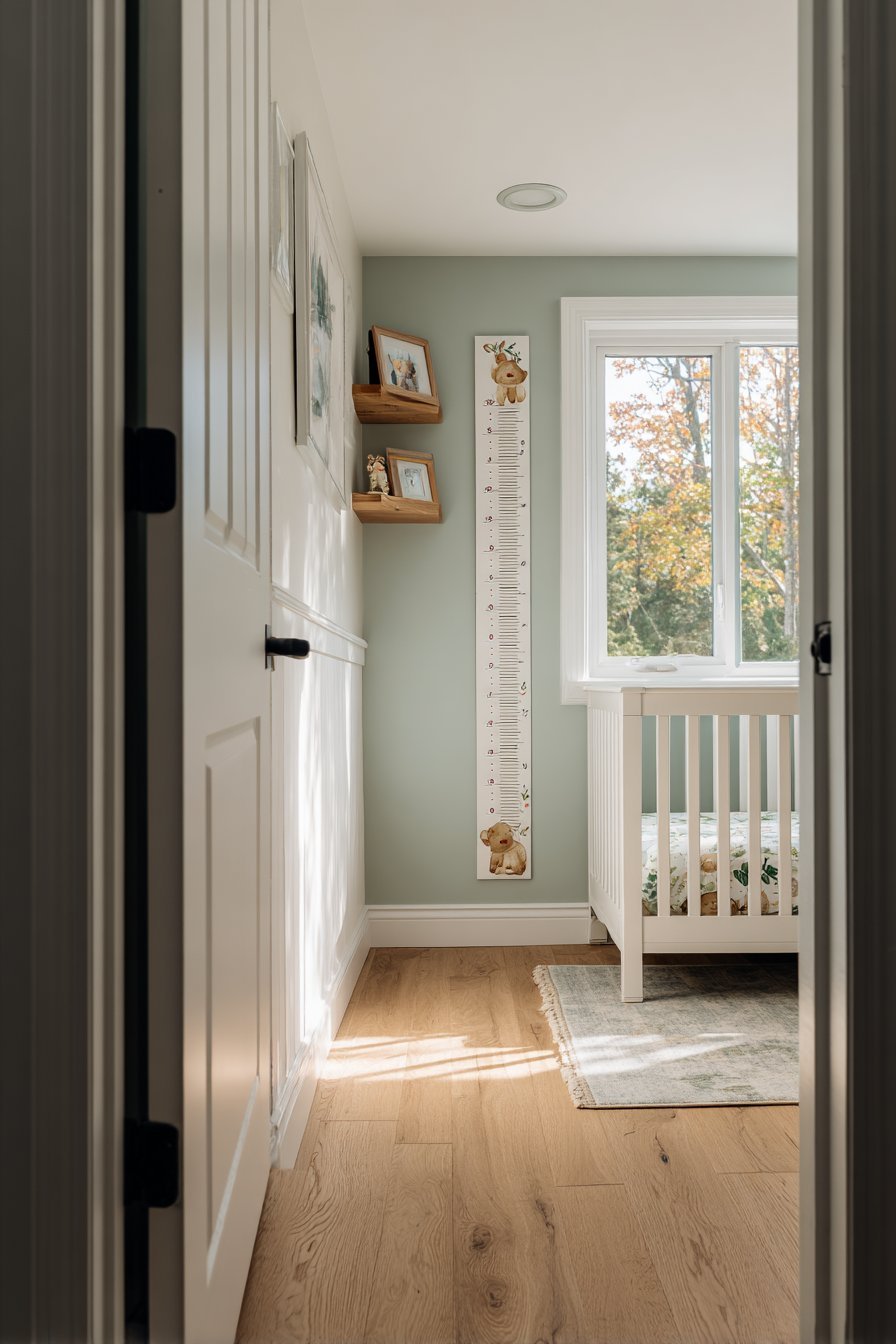
This design demonstrates how personalized elements create meaningful spaces. The hand-painted chart shows care and thoughtfulness beyond purchased items. The woodland animals add whimsy without requiring complex artistic skills. The permanent wall feature documents growth throughout childhood years.
Key Design Tips:
- Paint growth charts directly on walls for permanent family heirlooms
- Use soft white paint for markings that complement mint backgrounds
- Add simple woodland animal illustrations at regular intervals
- Position charts beside cribs or in easily accessible locations
- Install picture ledges nearby to display growth milestone photos
- Choose permanent features that gain sentimental value over time
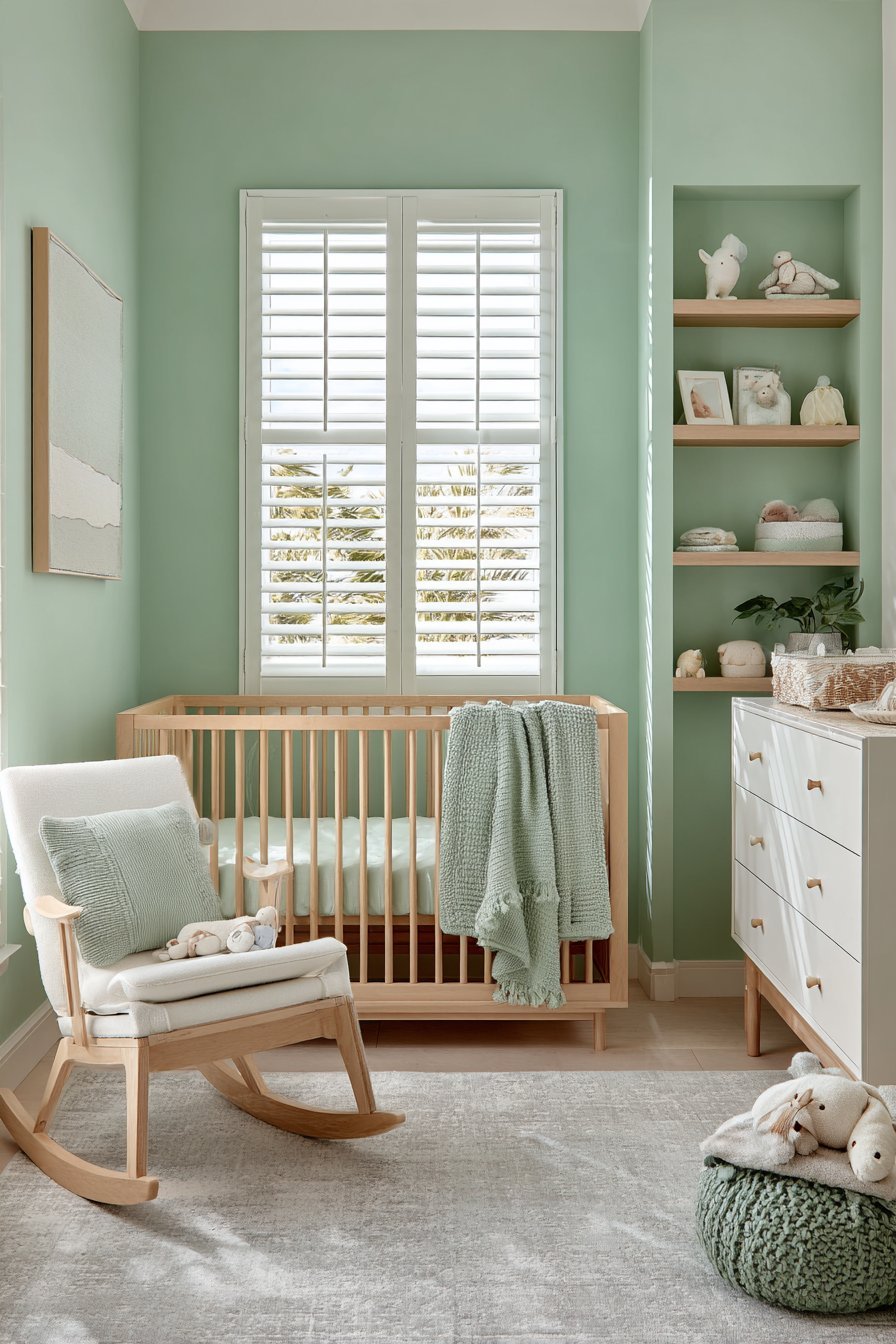
20. Complete Cohesive Mint Green Nursery
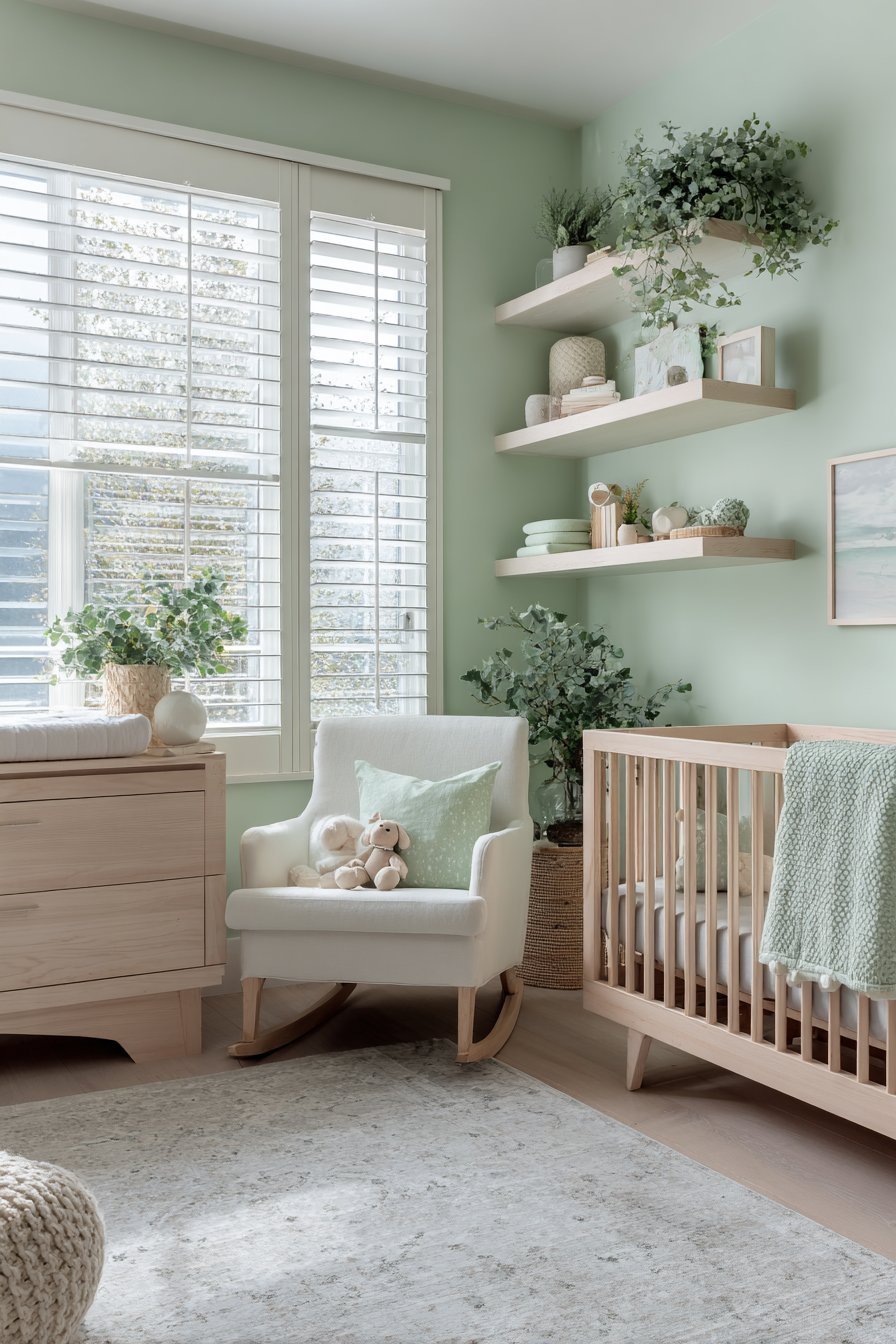
A convertible crib in natural light wood centers against the mint green focal wall. The room coordinates multiple mint and white elements throughout the space. A white rocking chair features a mint cushion. A white dresser showcases mint ceramic knobs. White floating shelves display mint and natural wood decor items.
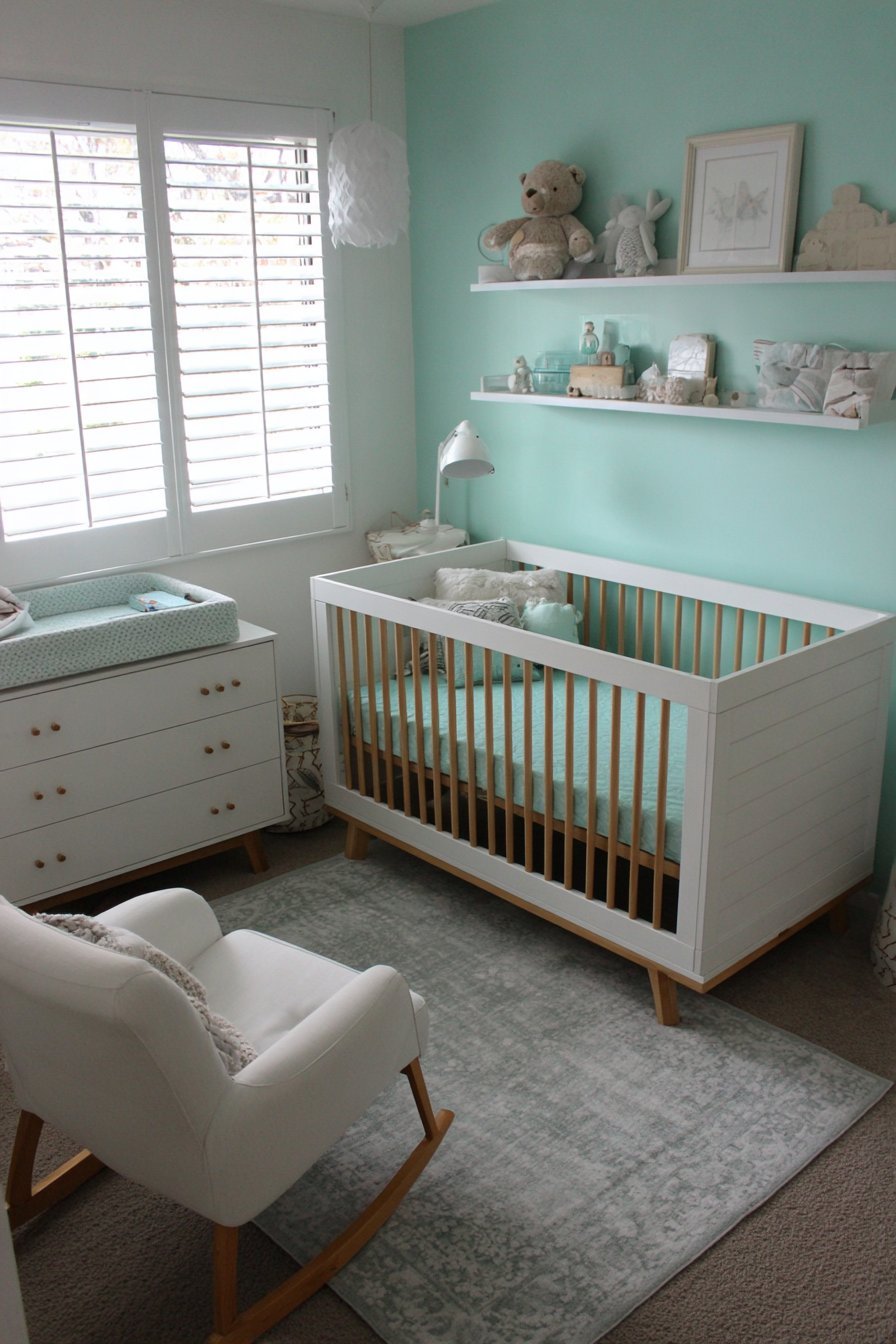
A soft grey area rug with subtle pattern grounds the furniture arrangement. Large windows with white plantation shutters allow filtered natural light. The space includes lived-in touches like folded receiving blankets and a small stuffed animal. A baby monitor sits on the dresser. The complete design demonstrates cohesive color story implementation.
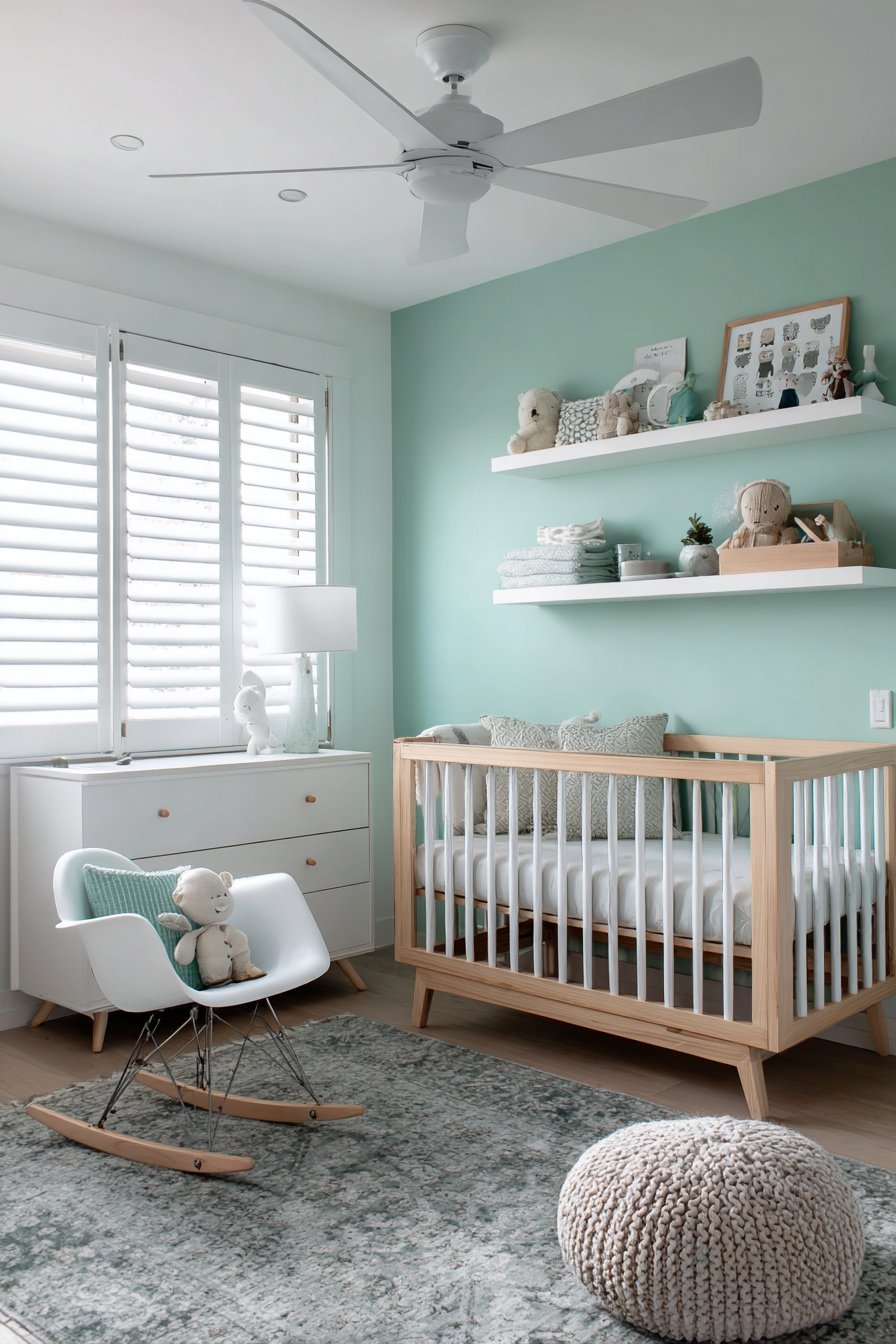
This comprehensive design brings together all the elements of successful nursery planning. The natural wood crib provides warmth against cool mint walls. The coordinated accents create intentional design flow. The practical touches acknowledge real daily nursery life.
Key Design Tips:
- Coordinate multiple elements in the main color throughout the space
- Choose convertible cribs in natural wood for longevity and warmth
- Add color through small accents like cushions, knobs, and decor items
- Include soft area rugs to define furniture groupings and add comfort
- Install plantation shutters for traditional charm and light control
- Incorporate practical items like monitors as part of the overall design
Why These Mint Green Nursery Designs Are the Best
These mint green nursery designs represent thoughtful approaches to creating calming infant spaces. The color psychology behind mint green supports its effectiveness in nurseries. This gentle hue promotes tranquility and restful sleep while remaining gender-neutral and versatile. The designs showcase mint green’s remarkable ability to work with diverse materials and styles.
The natural pairing of mint with white creates clean, fresh aesthetics that never overwhelm developing senses. Wood tones in oak, maple, walnut, and ash add essential warmth to balance mint’s cool undertones. These material combinations create spaces that feel both serene and inviting rather than sterile or cold.
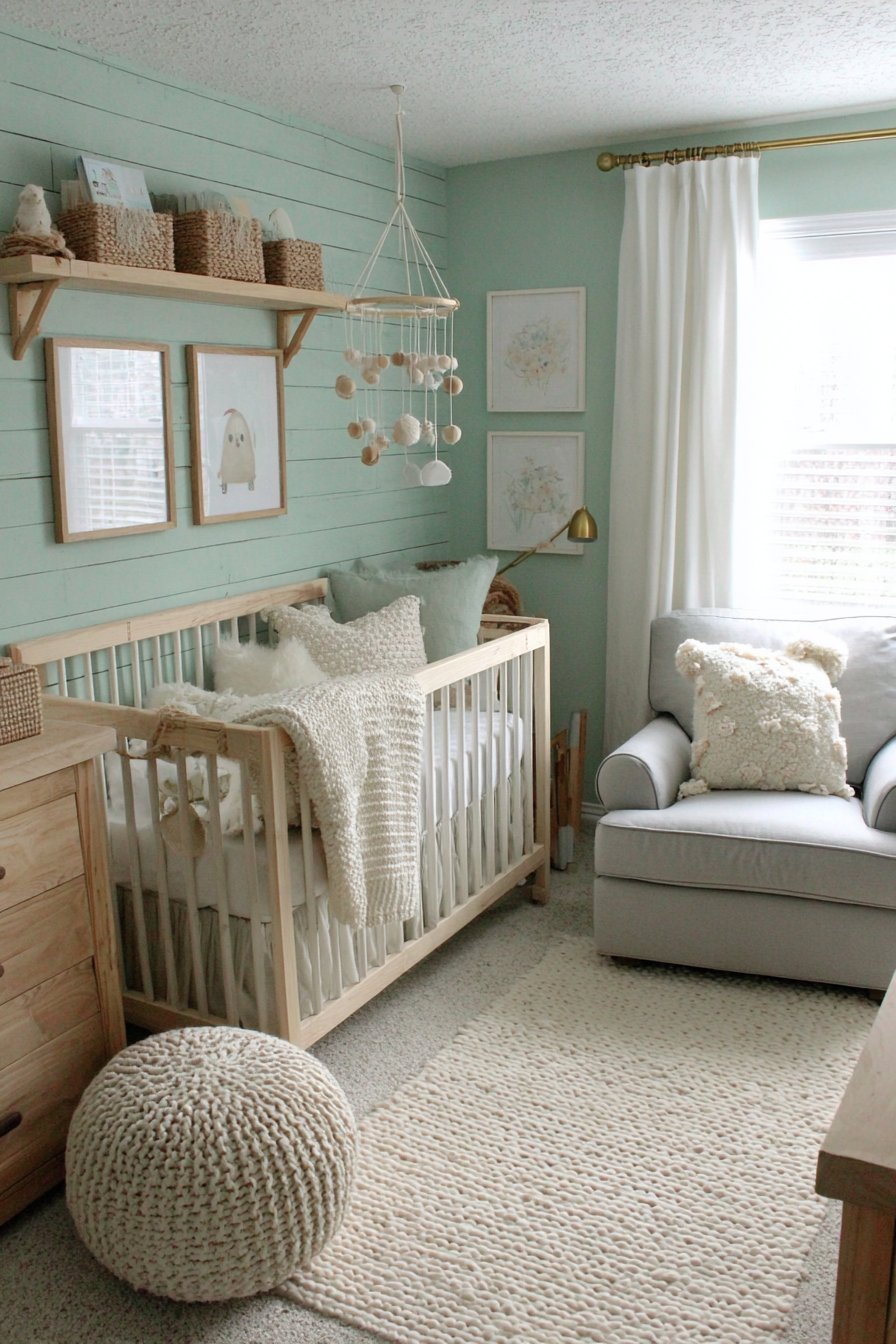
The versatility demonstrated across traditional, modern, vintage, and minimalist approaches proves mint green adapts to personal preferences. Traditional wainscoting designs offer timeless elegance while geometric mountain murals embrace contemporary aesthetics. This flexibility allows parents to honor their design sensibilities while maintaining appropriate nursery functionality.
Practical considerations make these designs particularly successful for real family life. The emphasis on natural materials like wood, linen, cotton, and jute ensures durability through infant and toddler years. Quality furniture pieces transition beyond nursery stages, providing long-term value. Storage solutions address genuine organizational needs without sacrificing visual appeal.
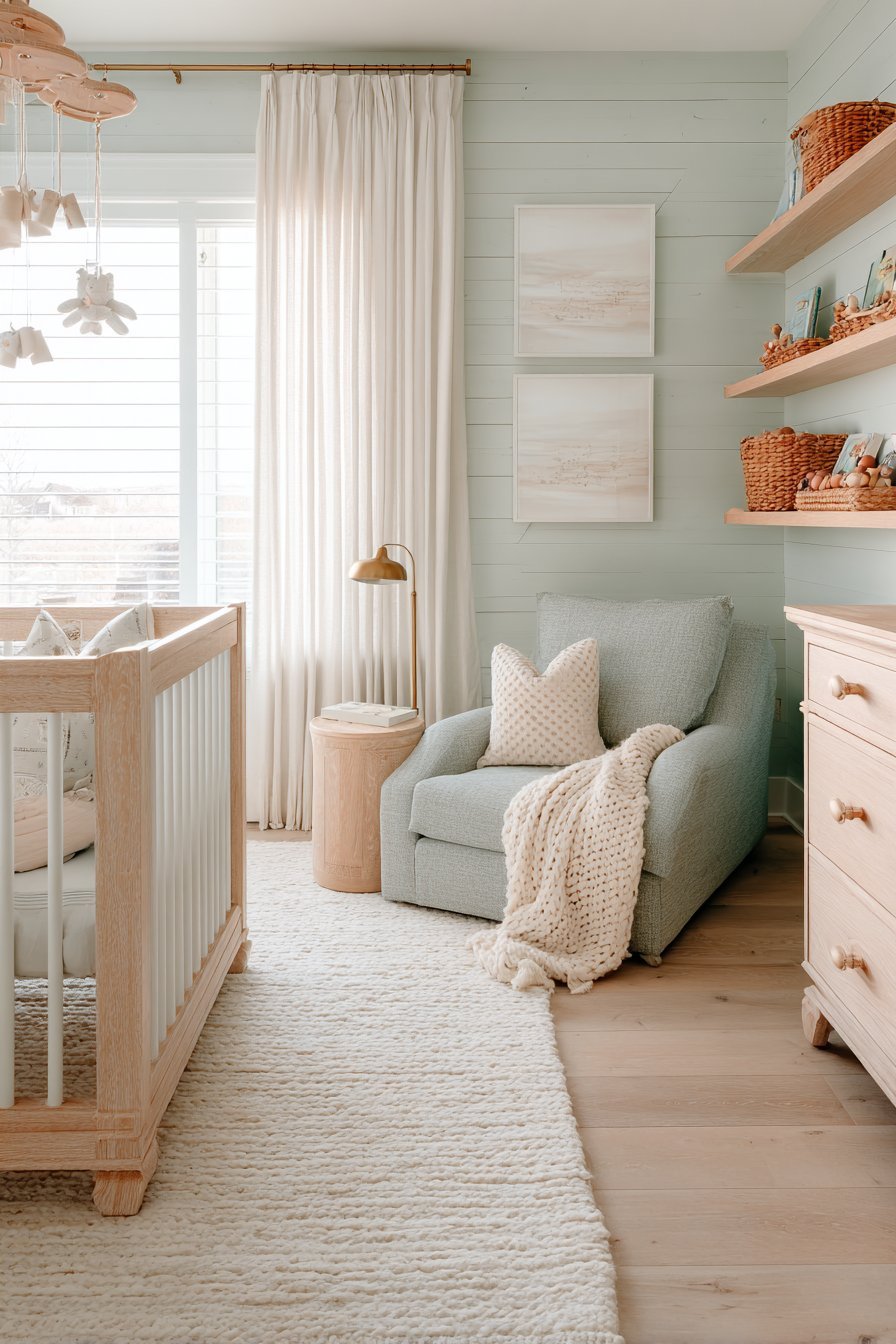
The lighting strategies throughout these designs recognize the importance of both natural and artificial illumination. Layered lighting approaches accommodate different activities from midnight feedings to afternoon play. The mint green walls reflect and soften light beautifully, creating gentle ambiance throughout changing daylight conditions.
Sustainability emerges naturally through emphasis on quality materials and convertible furniture. Solid wood pieces outlast trendy alternatives while aging gracefully. Removable wallpaper allows updates without waste. These choices support environmental responsibility while maintaining beautiful design standards.
The color theory behind mint green explains its widespread nursery success. The hue combines blue’s calming properties with green’s connection to nature and growth. This psychological foundation creates environments that inherently support infant development and parent wellbeing. The gentle saturation level prevents overstimulation while maintaining visual interest.
Conclusion
These mint green nursery designs demonstrate the remarkable versatility of this calming color in infant spaces. The key takeaways include the importance of balancing cool mint tones with warm wood elements. Quality natural materials provide durability while supporting healthy environments. Thoughtful lighting strategies ensure functionality throughout day and night activities.
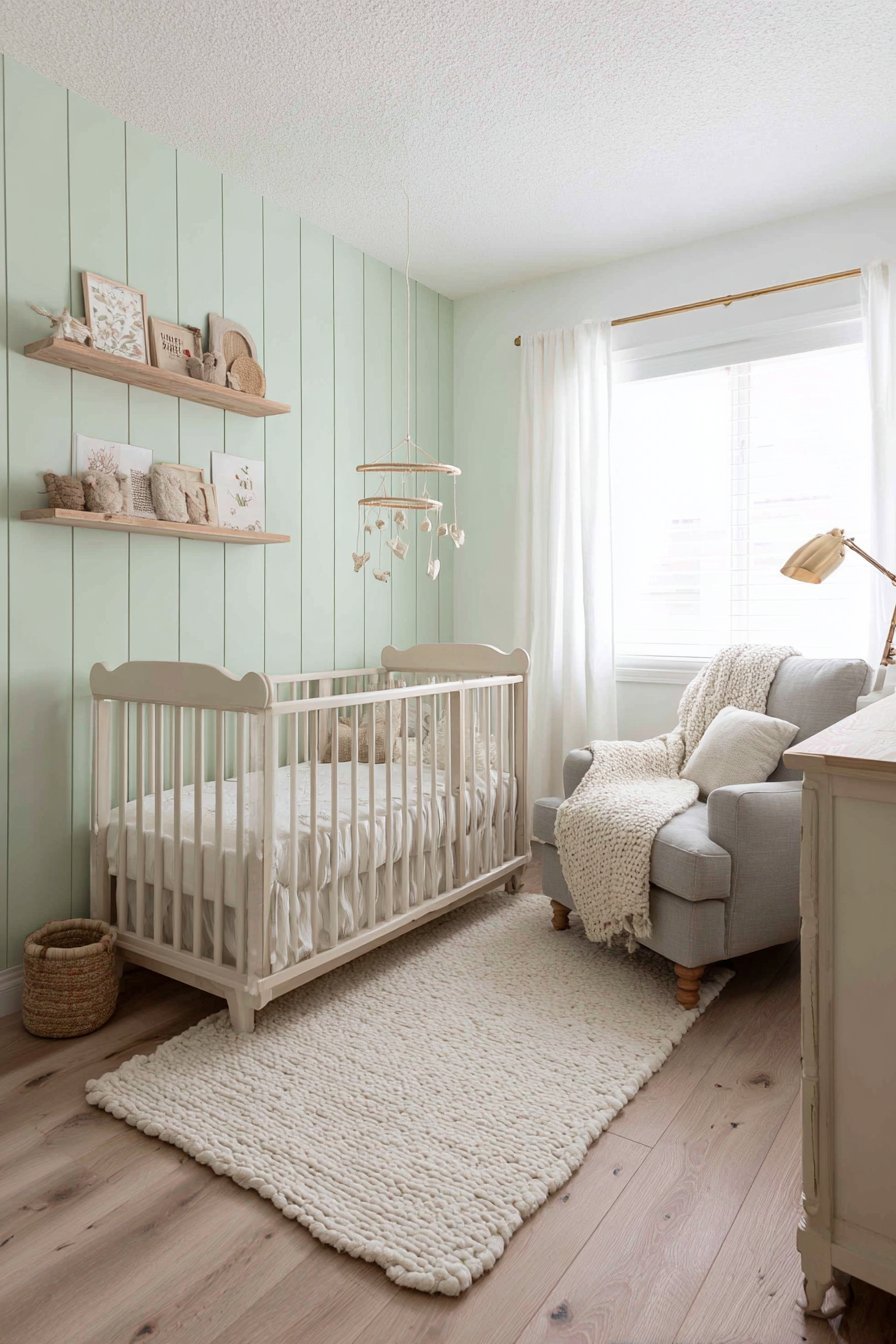
Successful nursery design combines aesthetic appeal with practical considerations for daily life. The mint green color story works beautifully across traditional, modern, vintage, and minimalist styles. Start with one inspiring element like a mint accent wall or natural wood crib. Build your nursery gradually with intentional choices that reflect your family’s personality. Your dream mint green nursery awaits creation through thoughtful planning and creative expression.
