
Creating a minimal kitchen transforms your cooking space into a haven of clarity and calm. This design philosophy embraces the principle that less is more. The result is a functional environment where every element serves a purpose. Clean lines, uncluttered surfaces, and thoughtful material choices define this aesthetic.
Minimal kitchen design has become increasingly popular among homeowners seeking tranquility in their daily lives. These spaces offer visual respite from the complexity of modern living. The streamlined approach reduces stress while maximizing efficiency. Each design demonstrates how restraint can create breathtaking beauty.
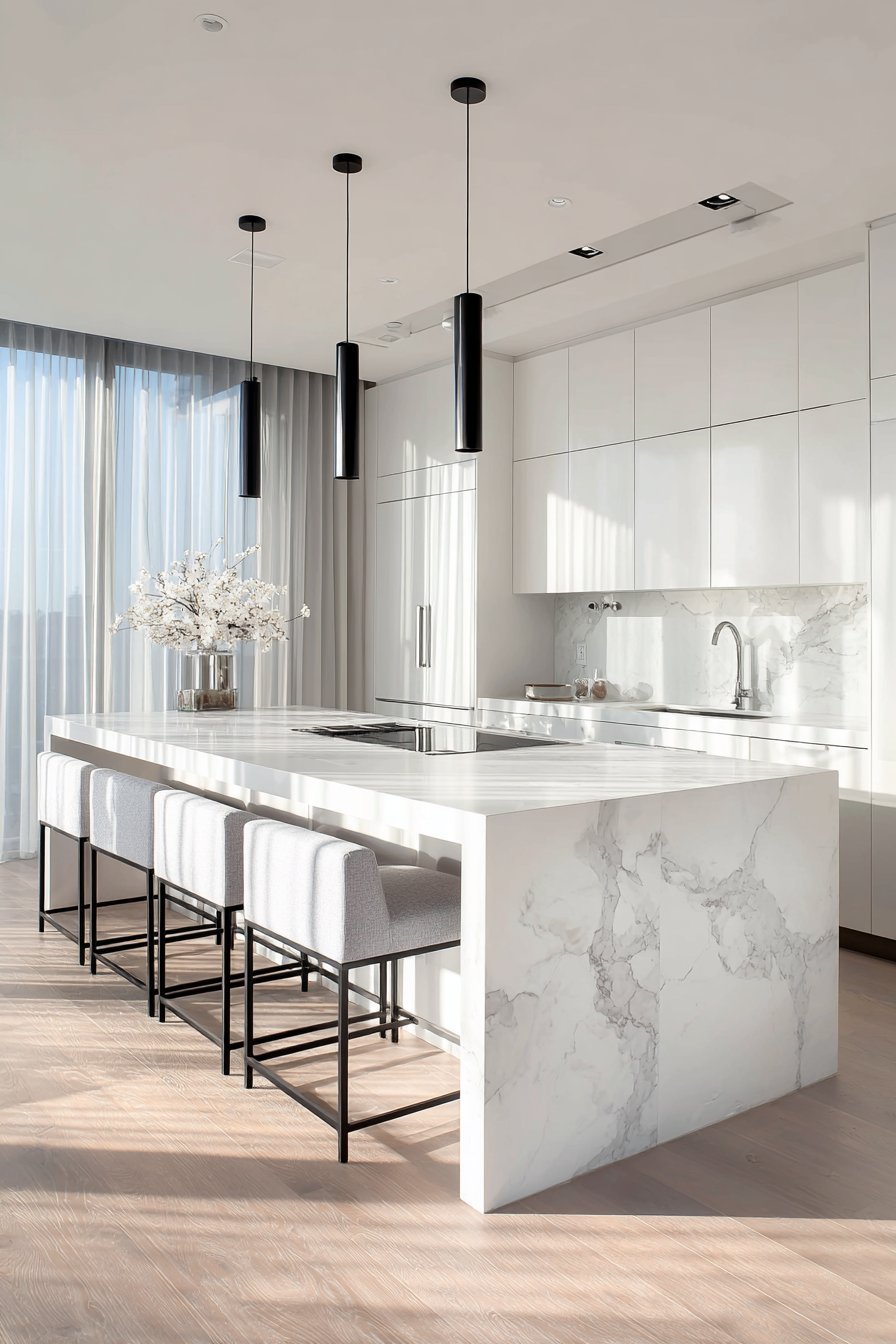
The concepts presented here showcase diverse interpretations of minimalism. From monochromatic white schemes to bold contrasts, each kitchen maintains essential simplicity. These designs prove that minimal doesn’t mean boring. Instead, they reveal how careful curation creates sophisticated, timeless spaces that enhance everyday life.
1. Seamless White Cabinet Kitchen with Waterfall Island
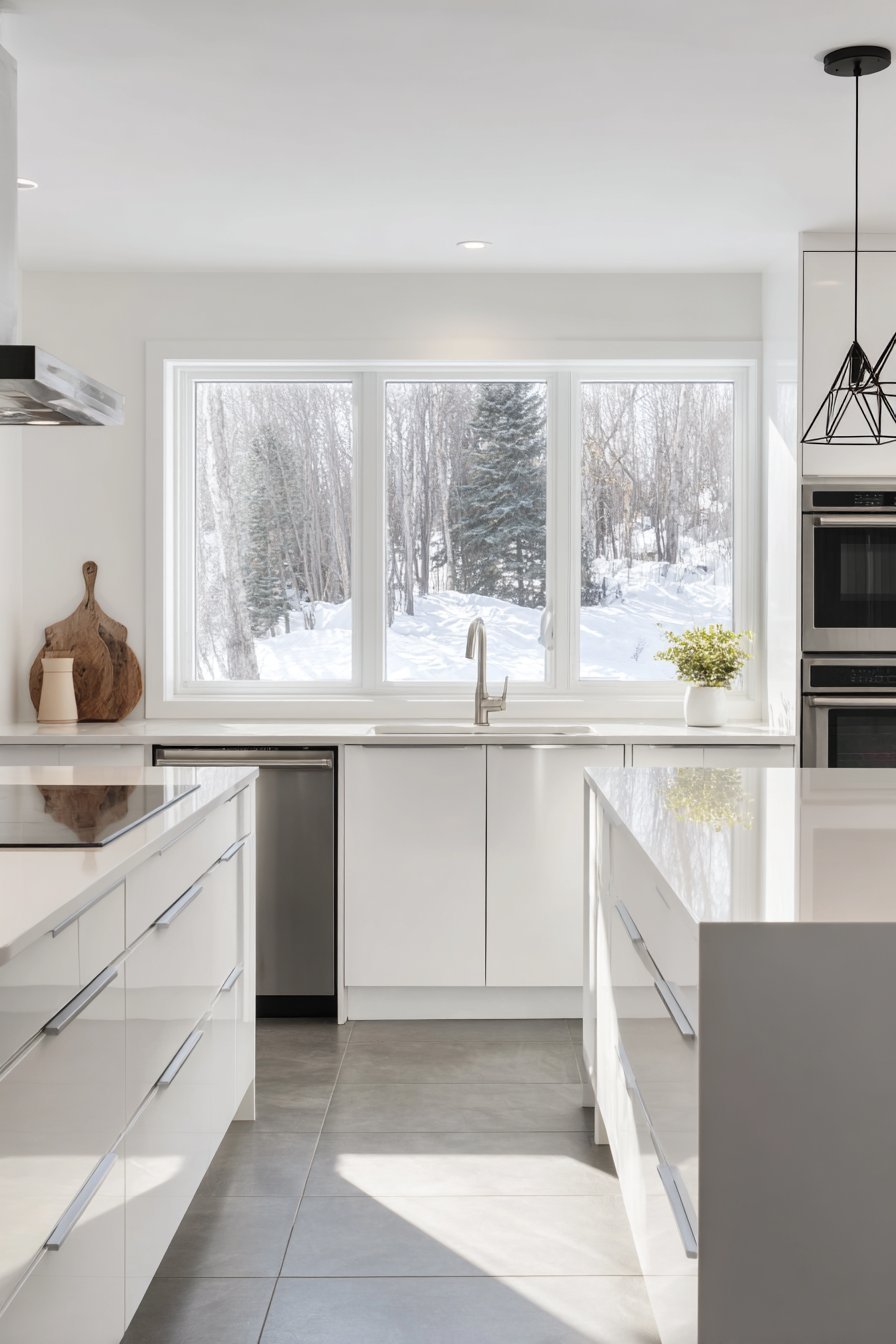
Picture a kitchen where pristine white cabinets create an uninterrupted visual flow across the walls. Flat-panel doors feature innovative push-to-open mechanisms. No hardware disrupts the clean surfaces. The centerpiece is a stunning waterfall island with white quartz cascading to the floor. An integrated induction cooktop sits flush within the countertop.
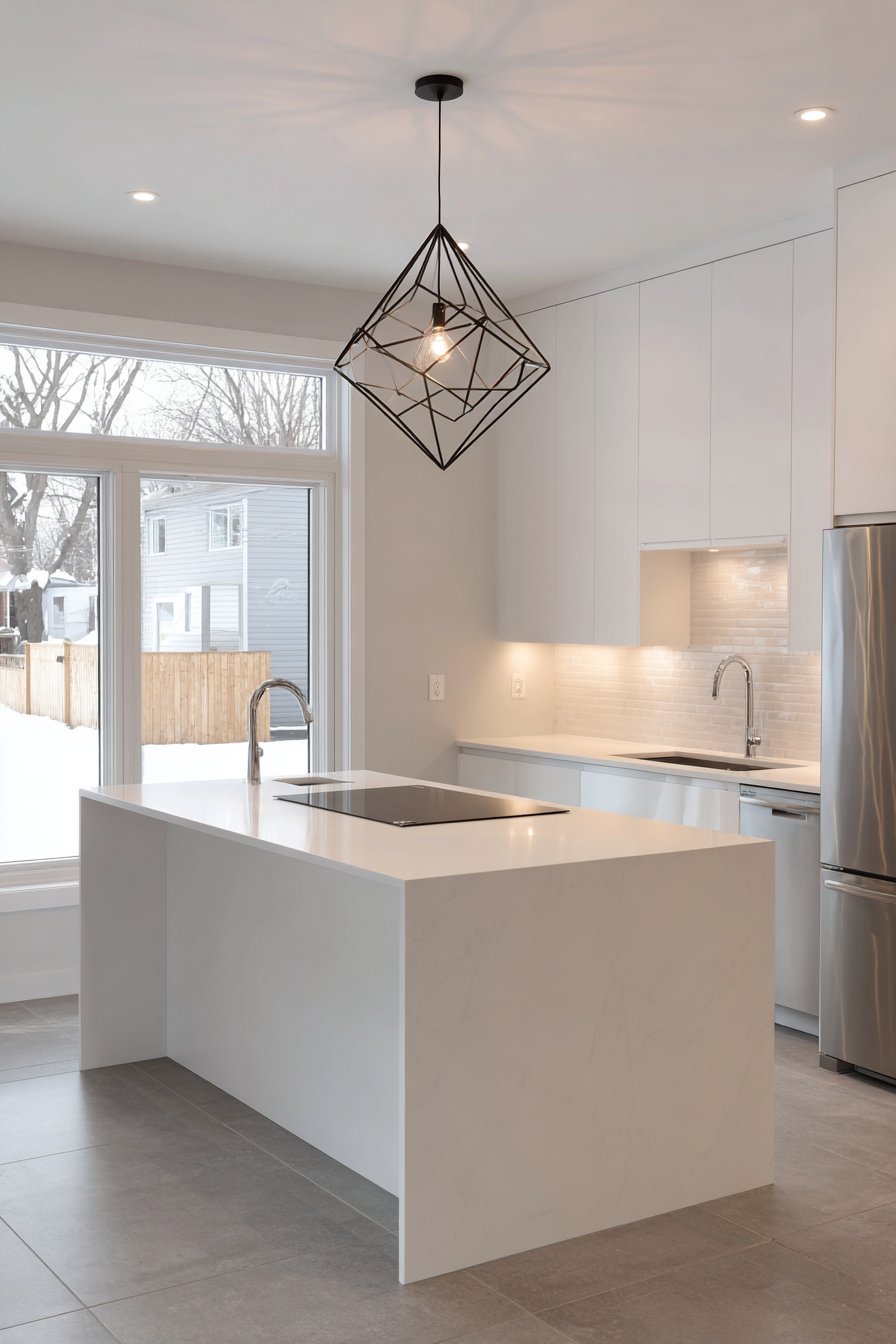
Light grey porcelain tile flooring adds subtle warmth beneath your feet. The contrast grounds the bright cabinetry without overwhelming the space. Stainless steel appliances disappear into flush-mounted positions. They maintain the cohesive aesthetic while providing professional functionality. Every surface reflects the commitment to simplicity.
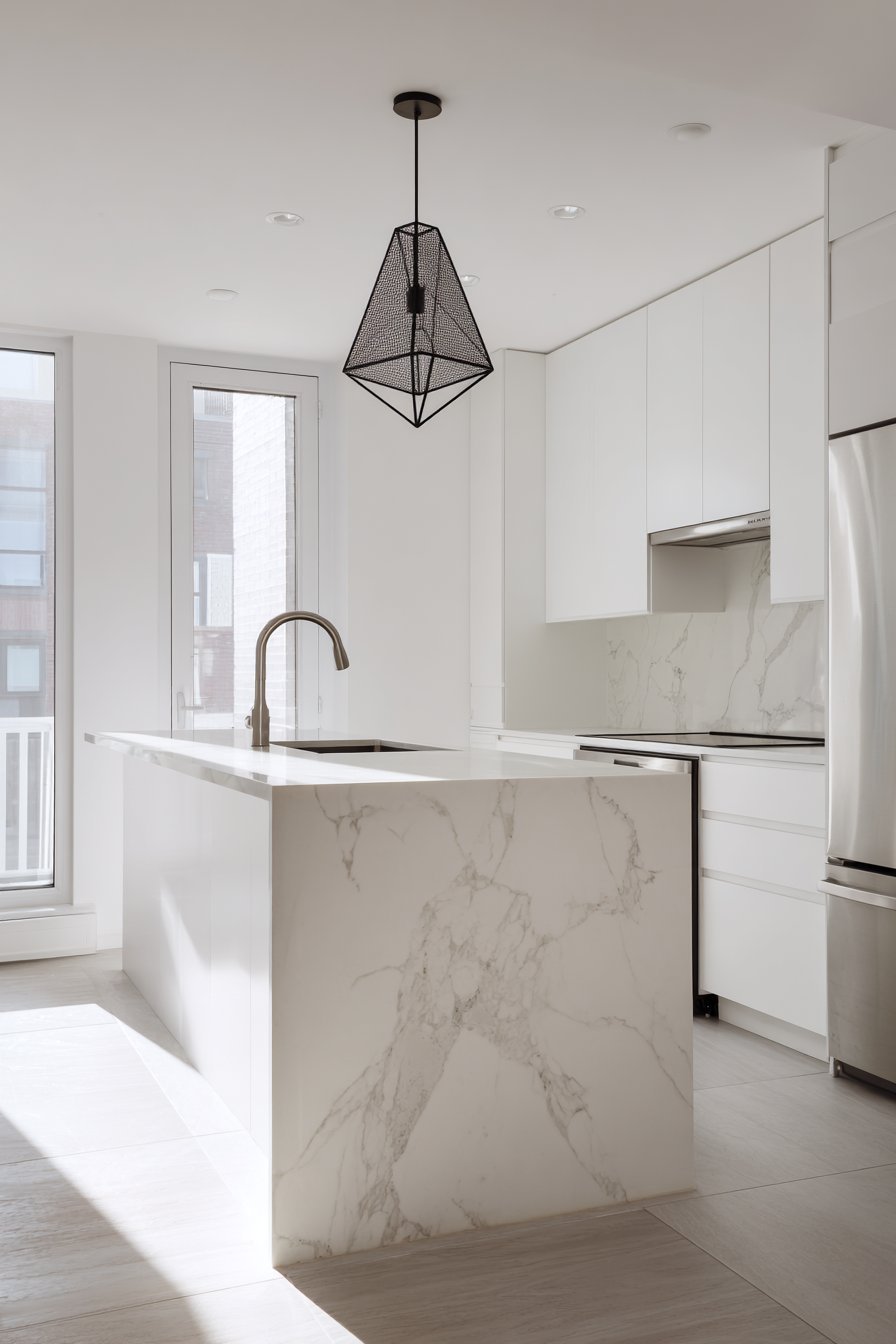
A single geometric pendant light in matte black hangs above the island. This solitary fixture provides focused task lighting exactly where needed. Natural morning light streams through a large window above the sink. Soft shadows play across the minimal forms. The interplay between natural and artificial light creates depth and dimension throughout the day.
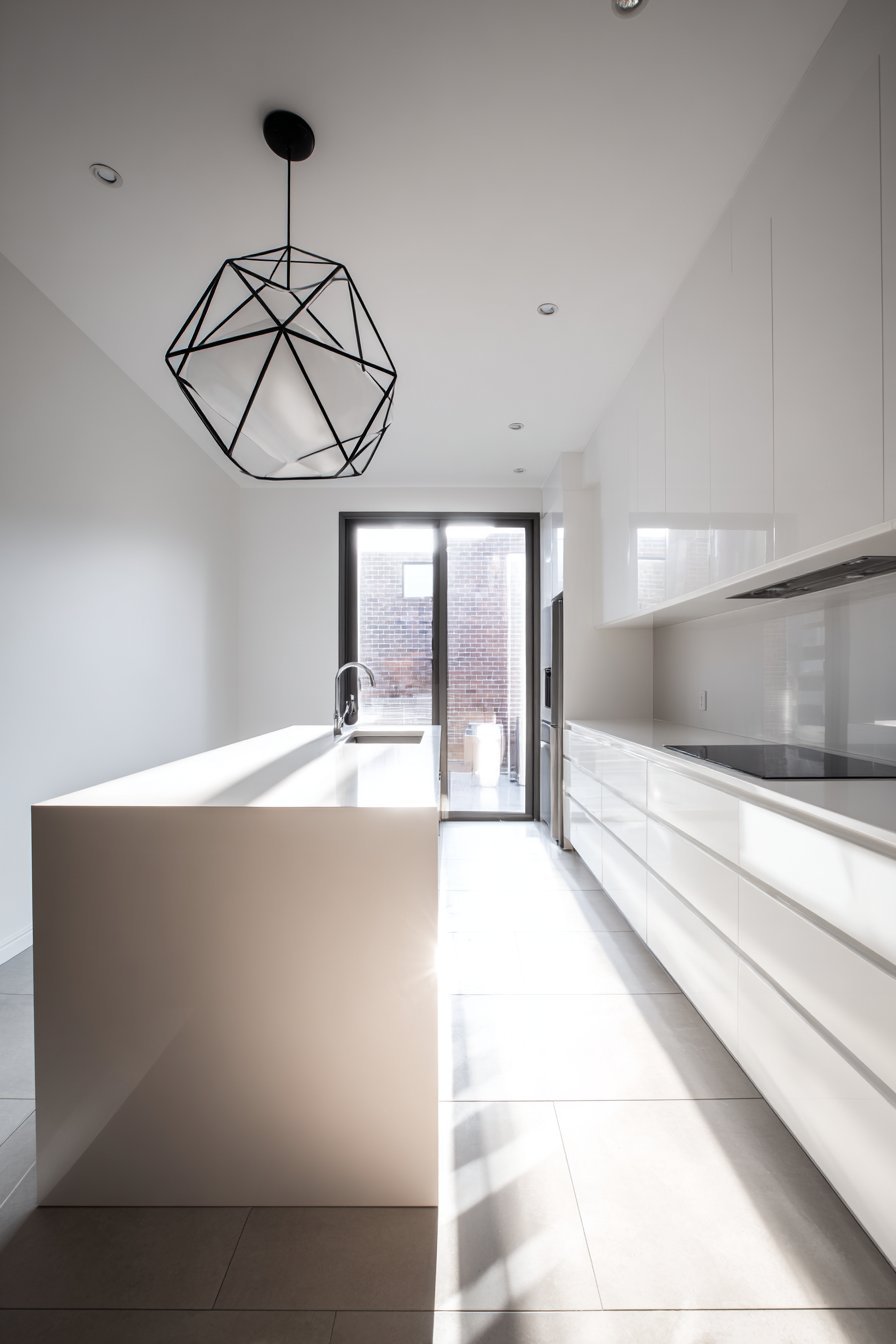
The absence of upper cabinets on one wall creates breathing room. This decision makes the space feel larger and more open. The kitchen demonstrates how removing elements can be as important as adding them. Clean horizontal lines draw the eye across the room rather than cluttering vertical space.
Key Design Tips:
- Install push-to-open mechanisms to eliminate visible hardware completely
- Choose waterfall edge countertops for dramatic visual impact
- Use flush-mounted appliances to maintain seamless cabinet lines
- Select one statement light fixture rather than multiple competing elements
- Incorporate large windows to maximize natural light and reduce artificial lighting needs
- Keep flooring in neutral tones that complement rather than compete with white cabinetry
2. Handle-Less Grey Kitchen with Floating Oak Shelves
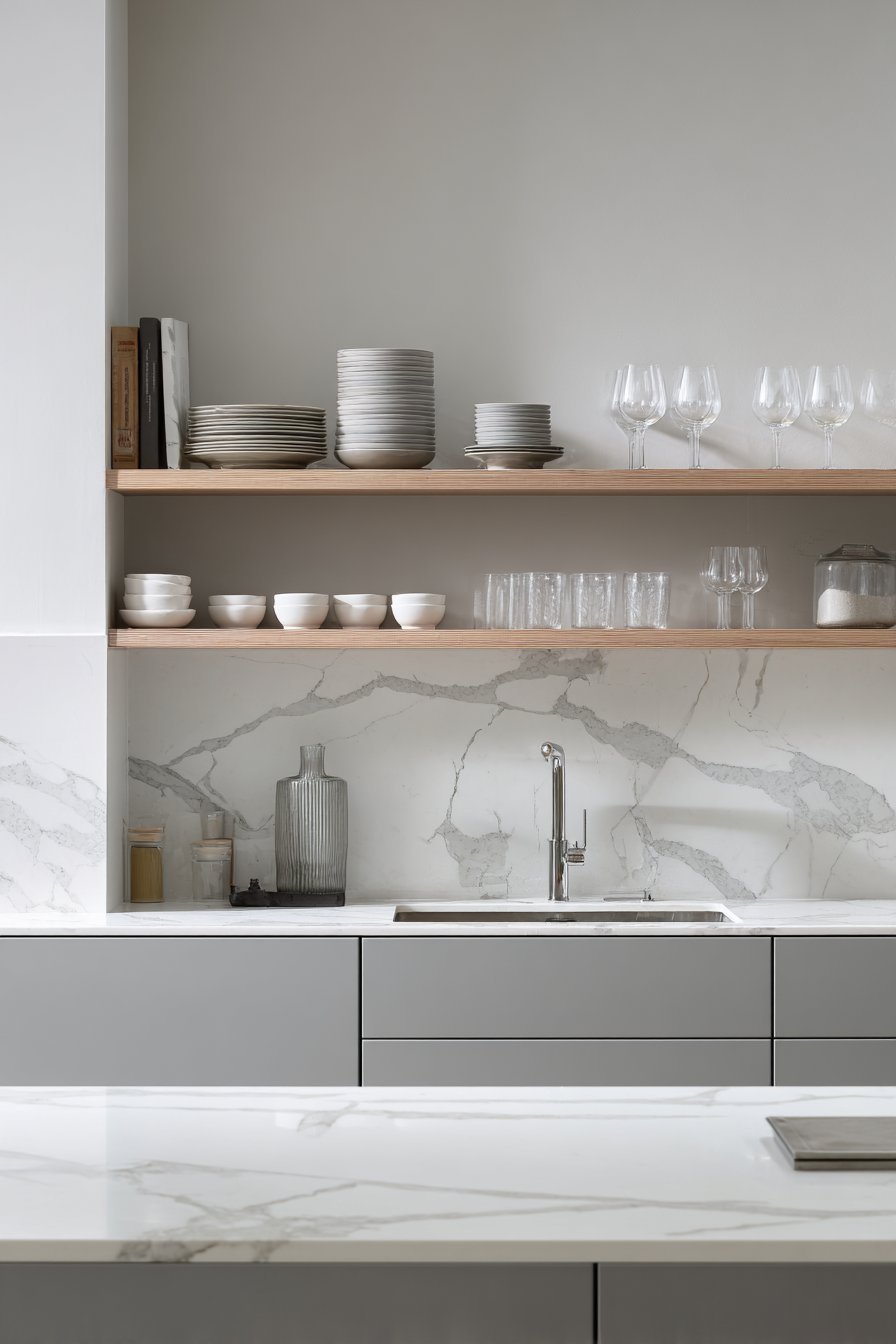
Enter a sophisticated space where grey matte cabinets create refined continuity along the walls. The handle-less design maintains unbroken visual flow from corner to corner. Light oak floating shelves interrupt the grey with warmth and texture. White ceramic dishes and simple glassware arrange with intentional precision.
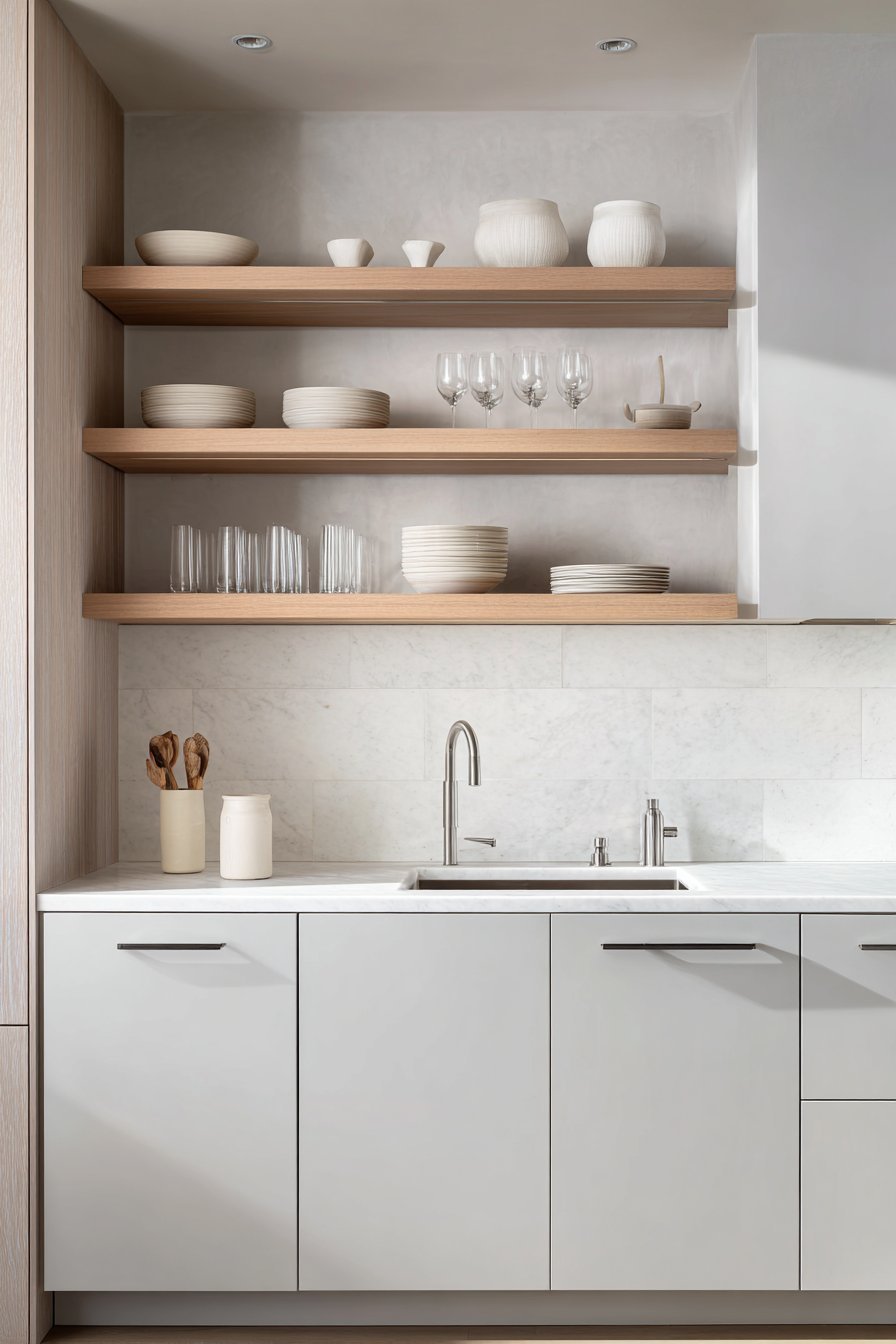
The backsplash features large-format white subway tiles with minimal grout lines. This classic choice adds subtle texture without overwhelming the restrained palette. A stainless steel faucet with clean geometric lines serves the undermount sink. The fixture’s angular design echoes the kitchen’s overall aesthetic philosophy.
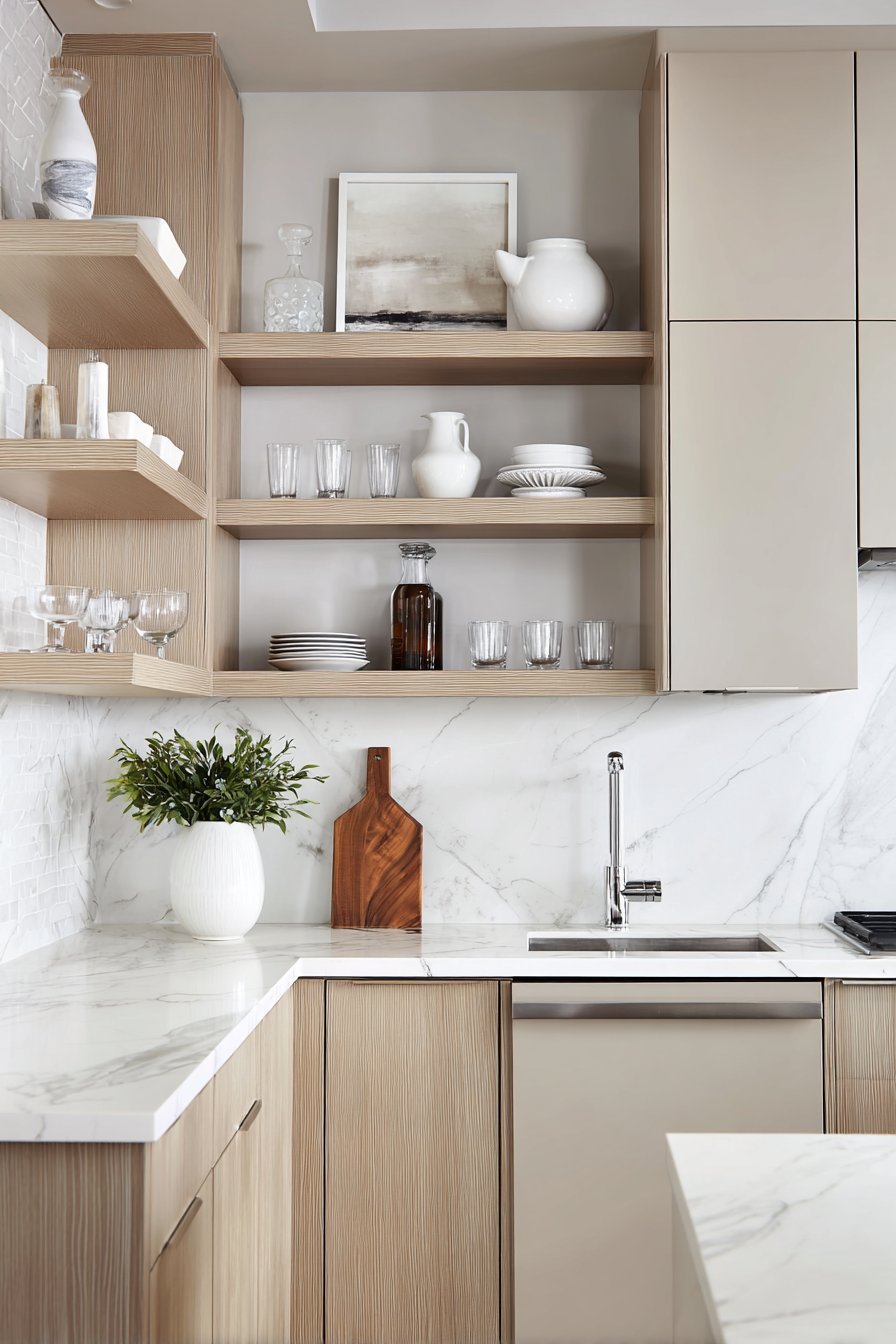
White Carrara marble countertops introduce organic movement through delicate grey veining. The natural stone patterns provide visual interest within the limited color scheme. Recessed LED lighting bathes the space in even illumination. No fixtures protrude to clutter the ceiling plane.
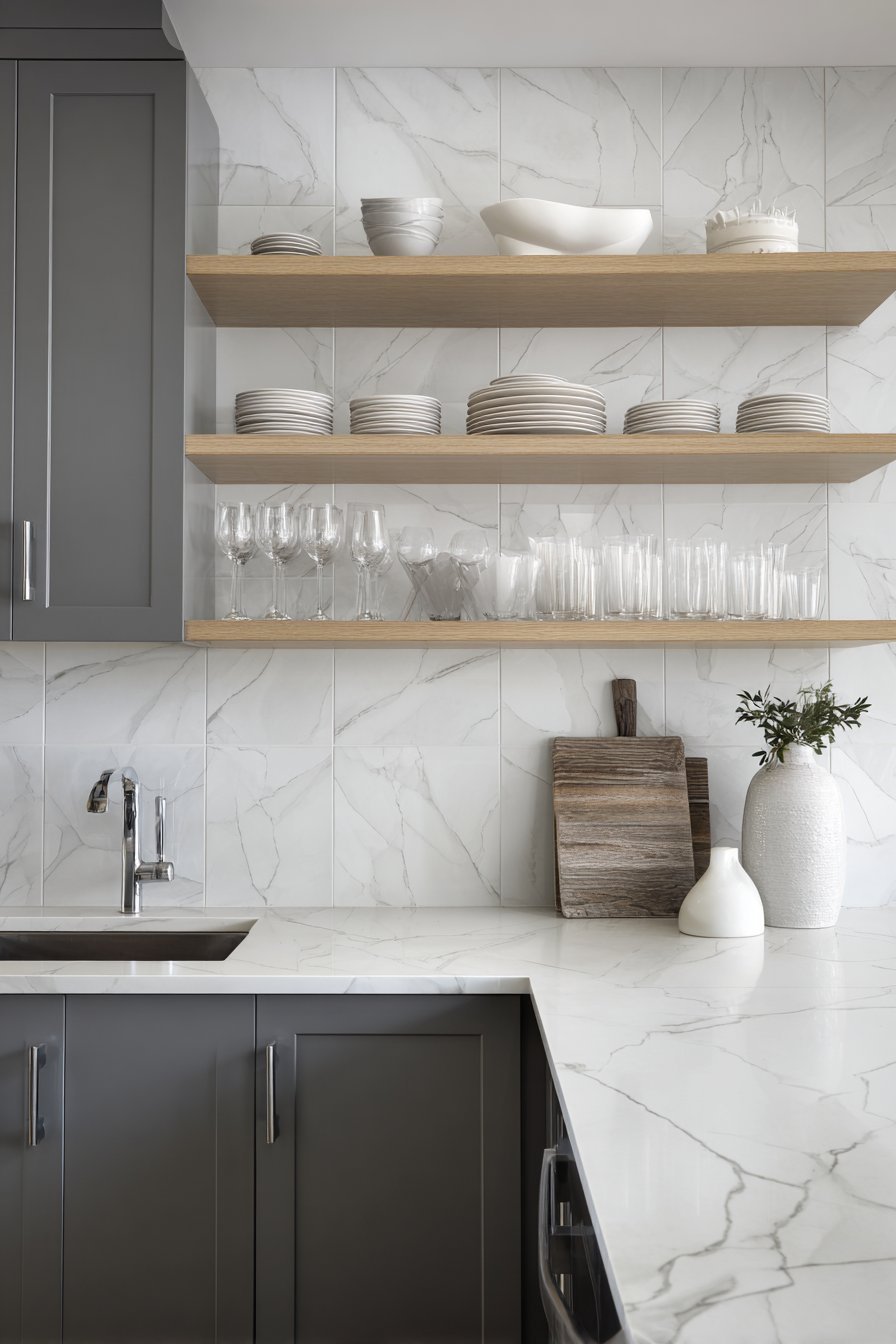
The open shelving displays only essential items chosen for both function and beauty. This curated approach prevents visual chaos while keeping necessities accessible. Each piece earns its place through usefulness or aesthetic contribution. The display becomes part of the design rather than storage afterthought.
Key Design Tips:
- Choose matte cabinet finishes to reduce glare and fingerprints
- Install floating shelves to break up solid cabinetry runs
- Display only curated collections in matching colors
- Use large-format tiles to minimize grout lines and visual noise
- Select natural stone with subtle patterns for organic interest
- Install recessed lighting to maintain clean ceiling lines
3. Efficient Galley Kitchen with Concealed Appliances
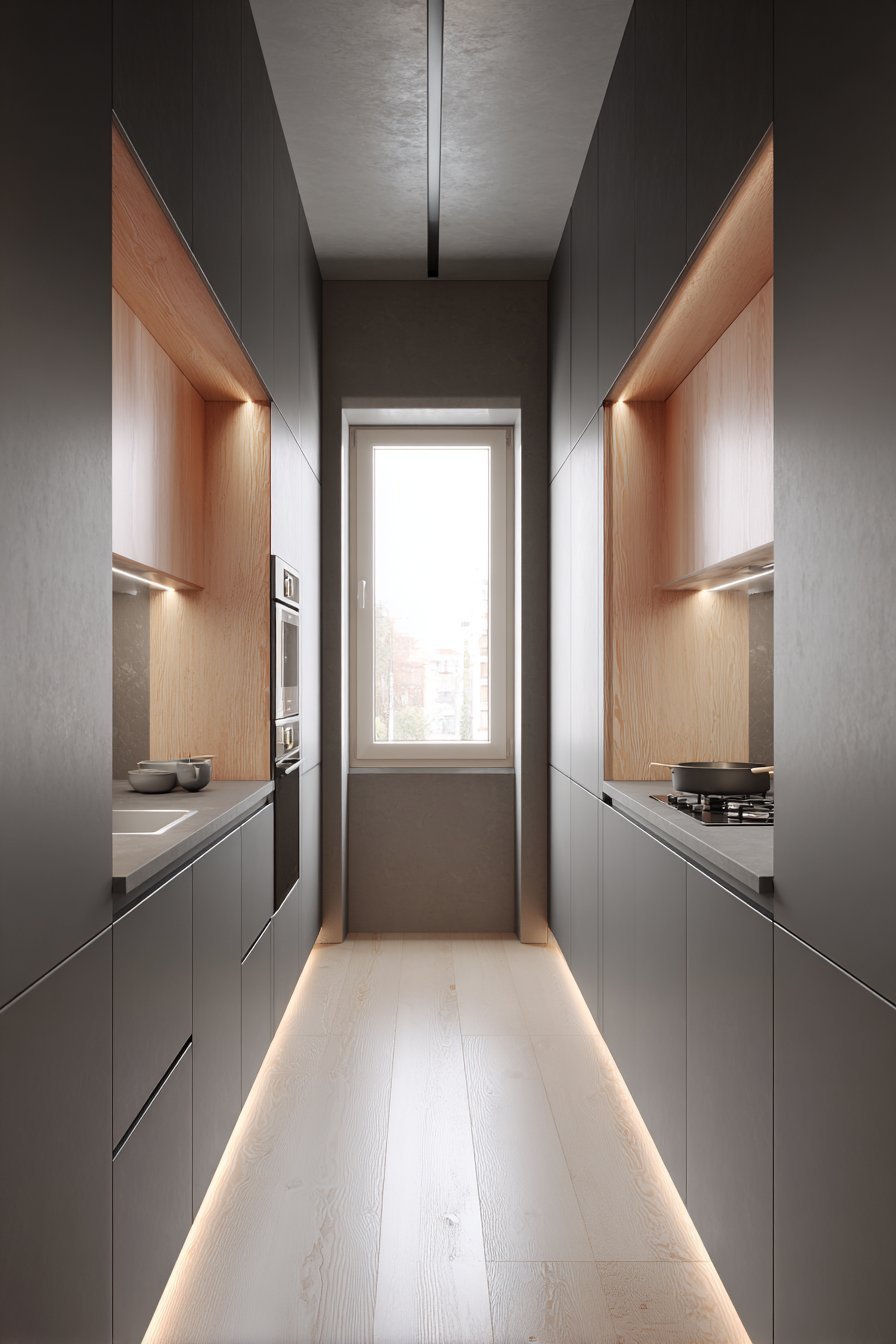
This galley kitchen maximizes efficiency through two parallel runs of warm grey cabinetry. Integrated appliances hide completely behind cabinet panels. The cohesive appearance eliminates visual interruptions. Concrete-look porcelain countertops provide industrial durability with sophisticated appeal. The material choice adds edge to the refined space.
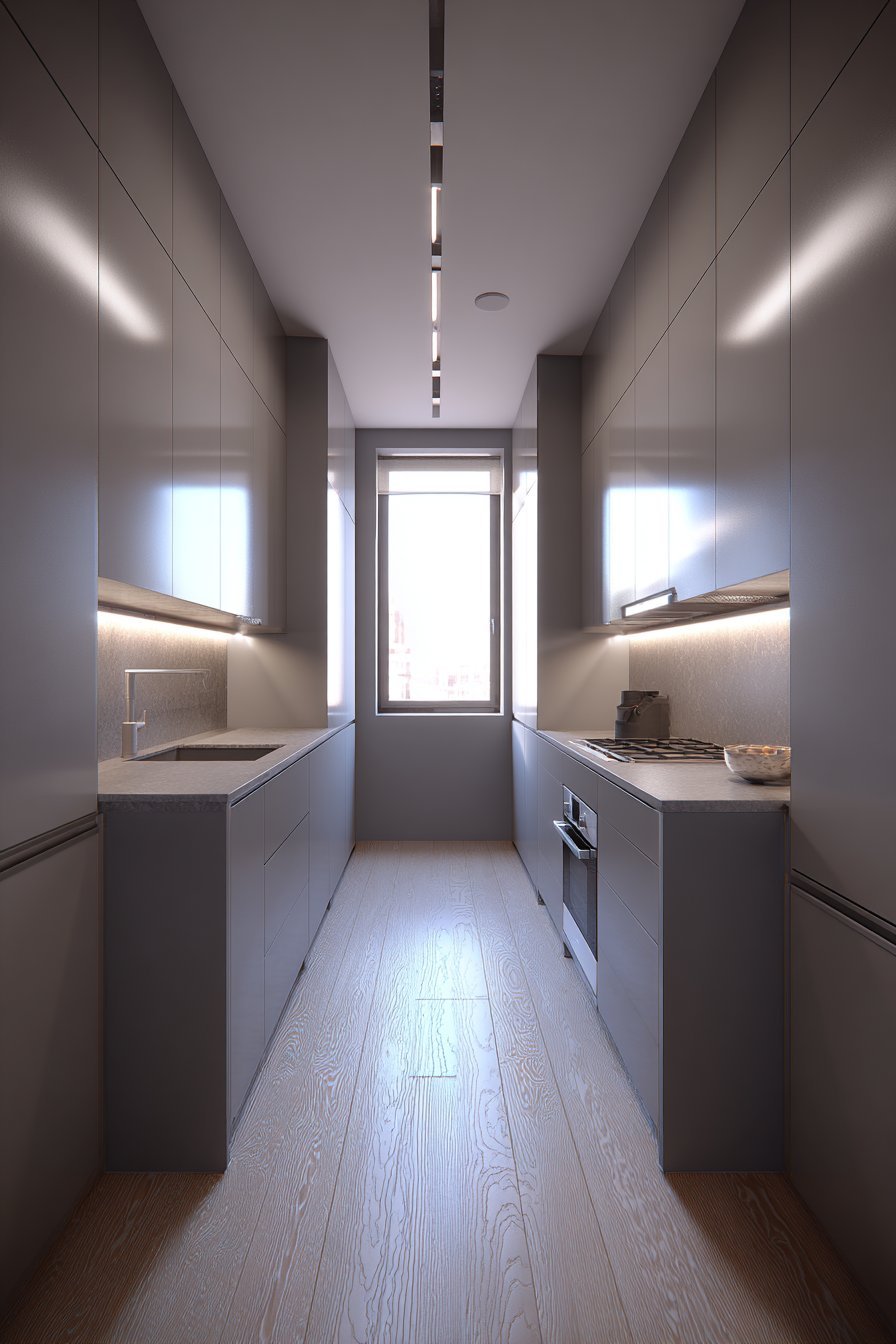
A single window at the galley’s end draws natural light through the corridor. The illumination travels the length of the kitchen, highlighting the clean lines. Simple linear LED strips under upper cabinets provide focused task lighting. The fixtures remain invisible while delivering practical illumination where you need it most.
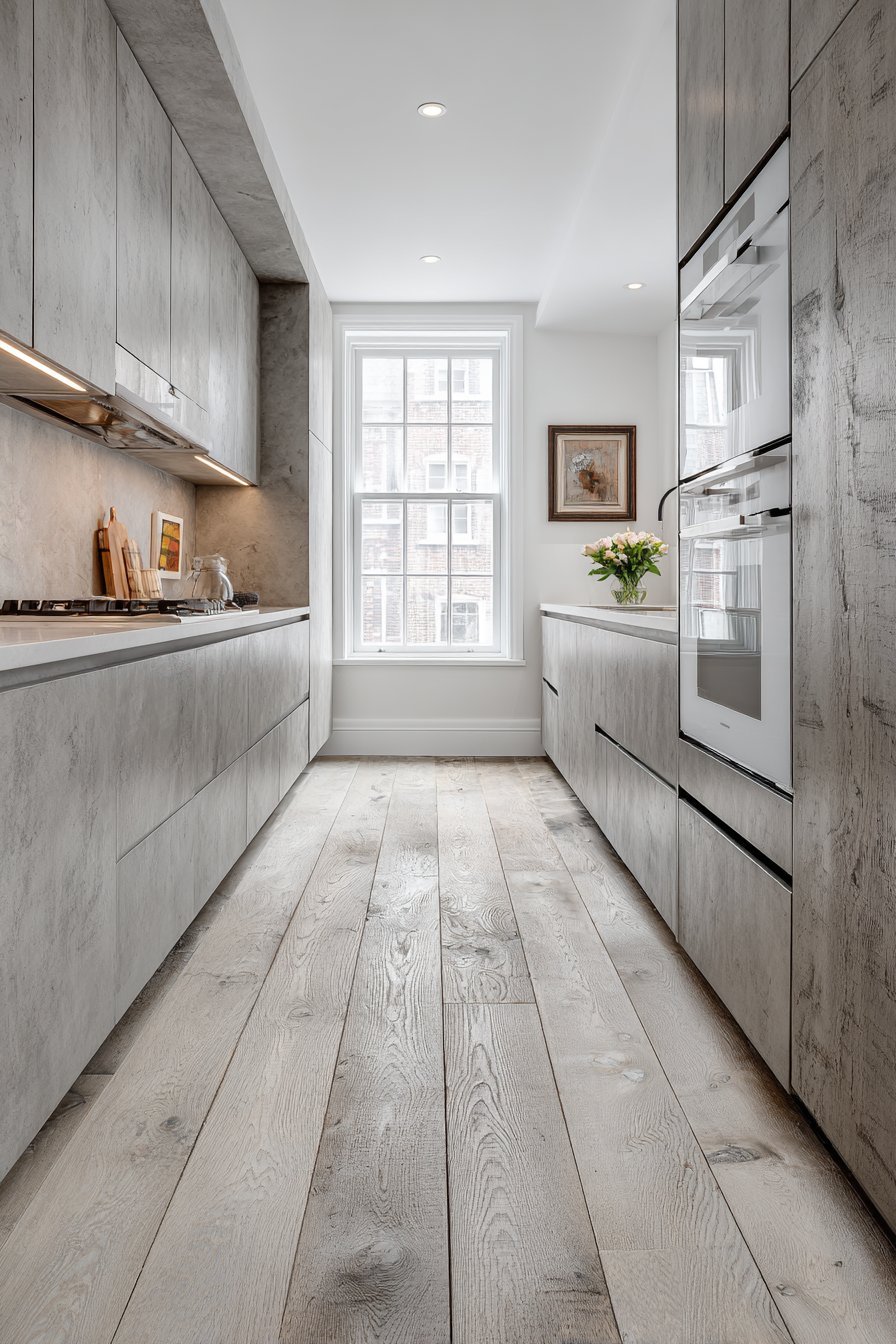
Wide-plank light oak flooring adds natural warmth underfoot. The subtle grain patterns introduce organic texture without competing for attention. The wood softens the harder surfaces of stone and metal. This balance creates a space that feels warm rather than cold.
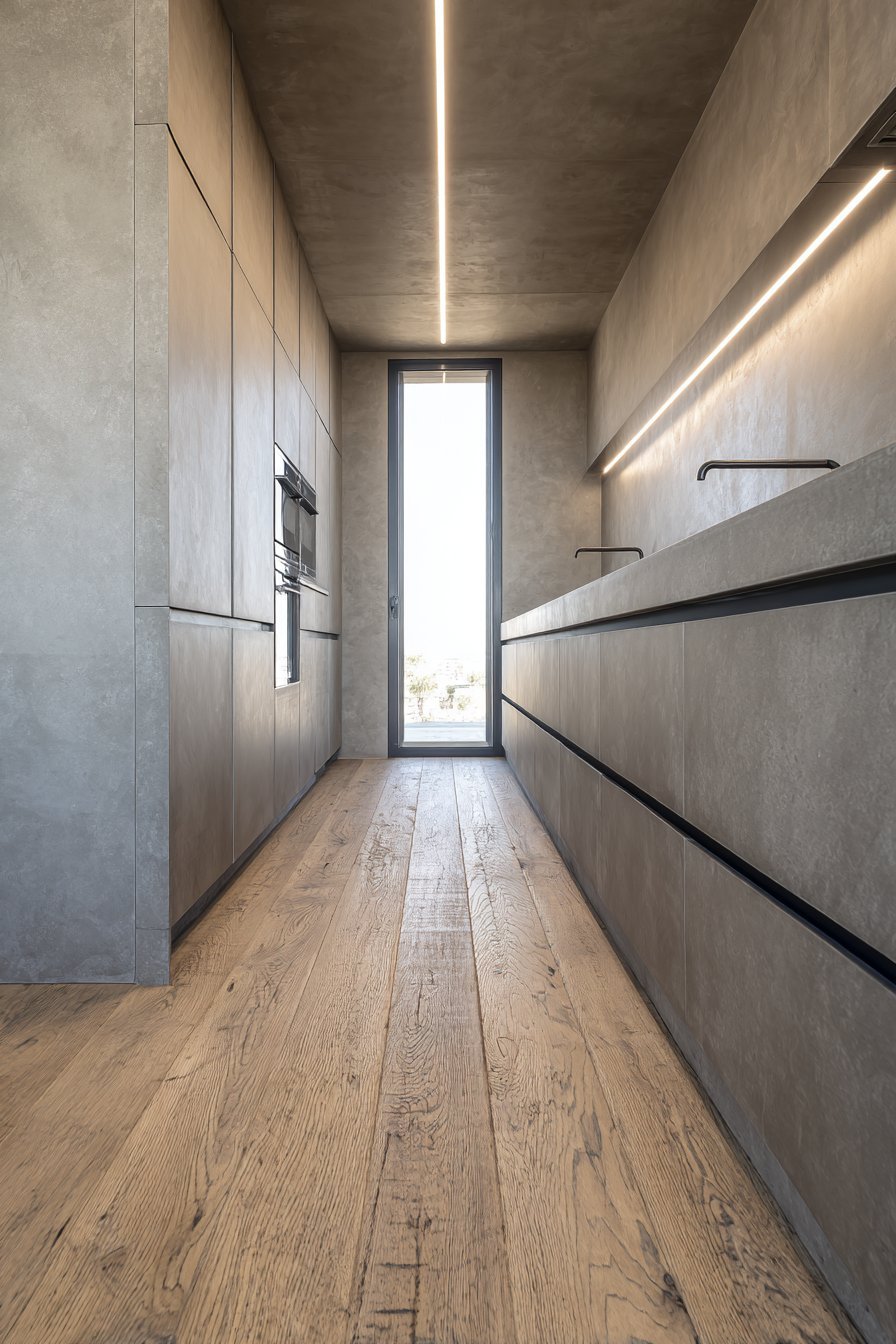
The parallel layout creates an efficient work triangle despite the narrow footprint. Every movement flows naturally from refrigerator to sink to cooktop. The design proves that minimal kitchens can maximize functionality. Compact spaces benefit especially from this disciplined approach to layout and storage.
Key Design Tips:
- Use panel-ready appliances to create seamless cabinet integration
- Install under-cabinet LED strips for practical task lighting
- Choose concrete-look materials for industrial sophistication
- Position windows strategically to maximize natural light flow
- Select wide-plank flooring to visually expand narrow spaces
- Create efficient work triangles even in compact galley layouts
4. Glossy White Kitchen with Breakfast Bar Island
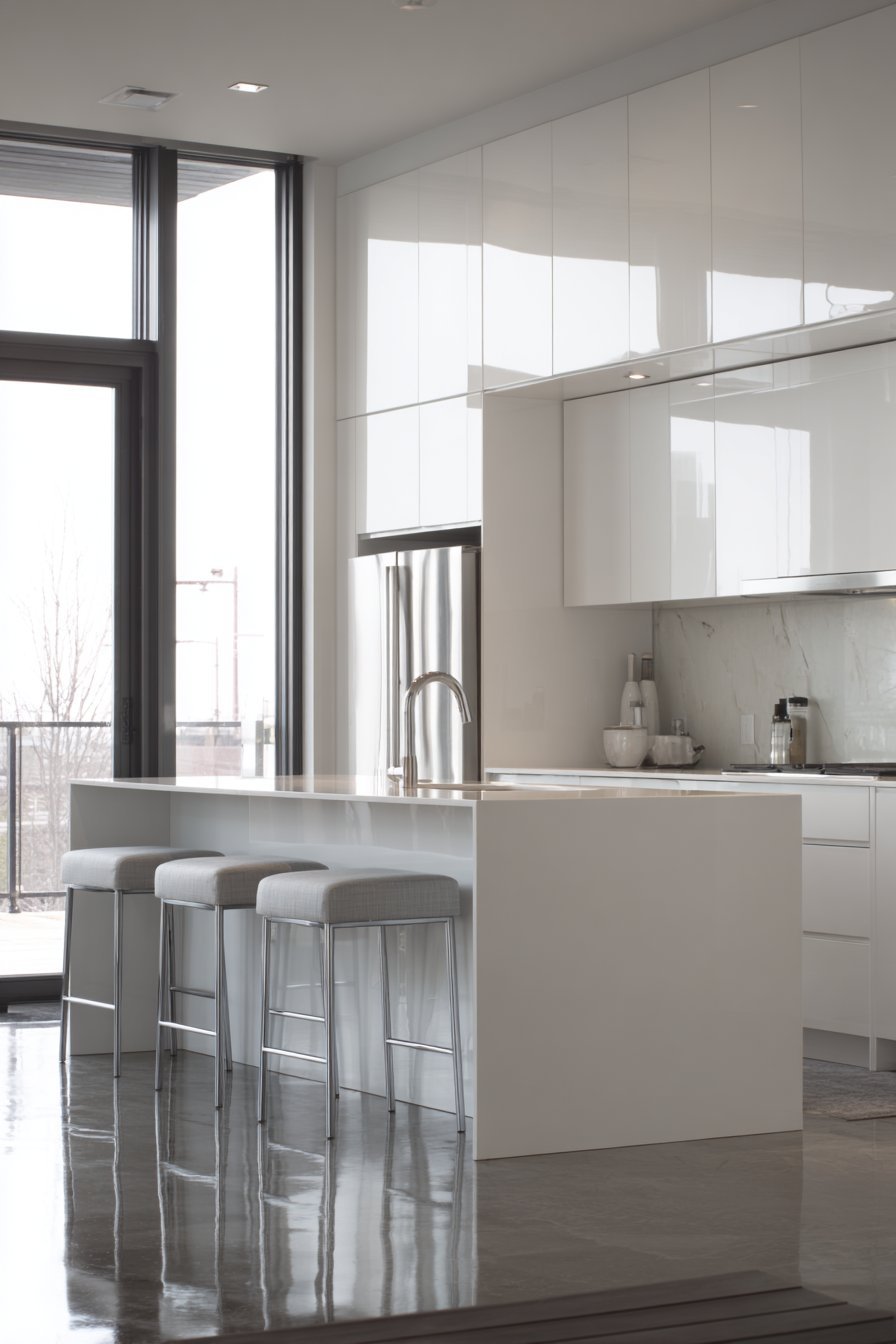
An all-white color scheme dominates this spacious kitchen design. Glossy lacquered cabinets reflect natural light throughout the entire space. The reflective surfaces amplify brightness and create airy openness. A generous island includes an integrated breakfast bar for casual dining.
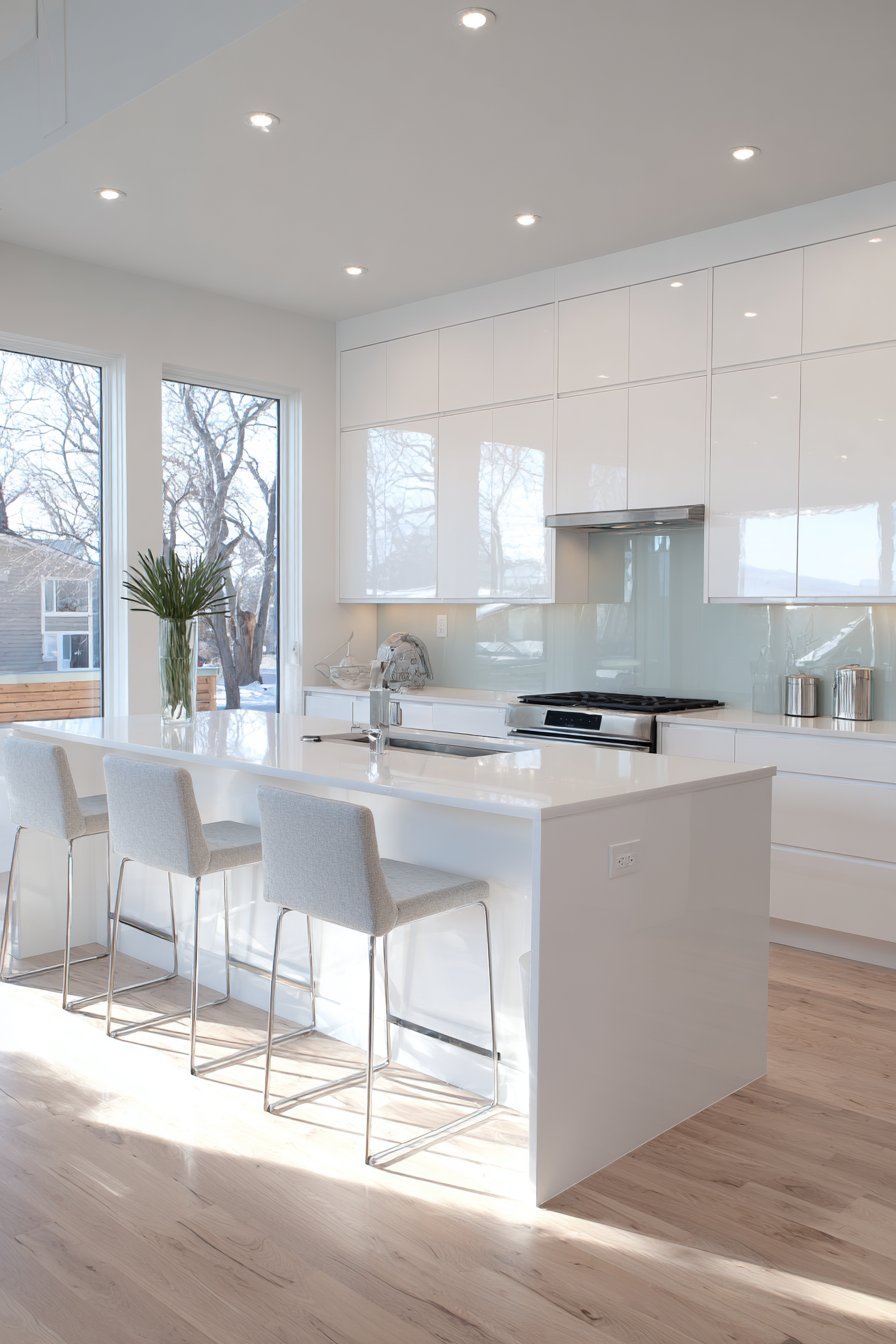
Three minimalist bar stools feature slim metal frames and light grey upholstery. The seating provides function without visual weight. White quartz countertops span the entire perimeter with seamless appearance. Invisible seams create the illusion of continuous stone surfaces flowing around the room.
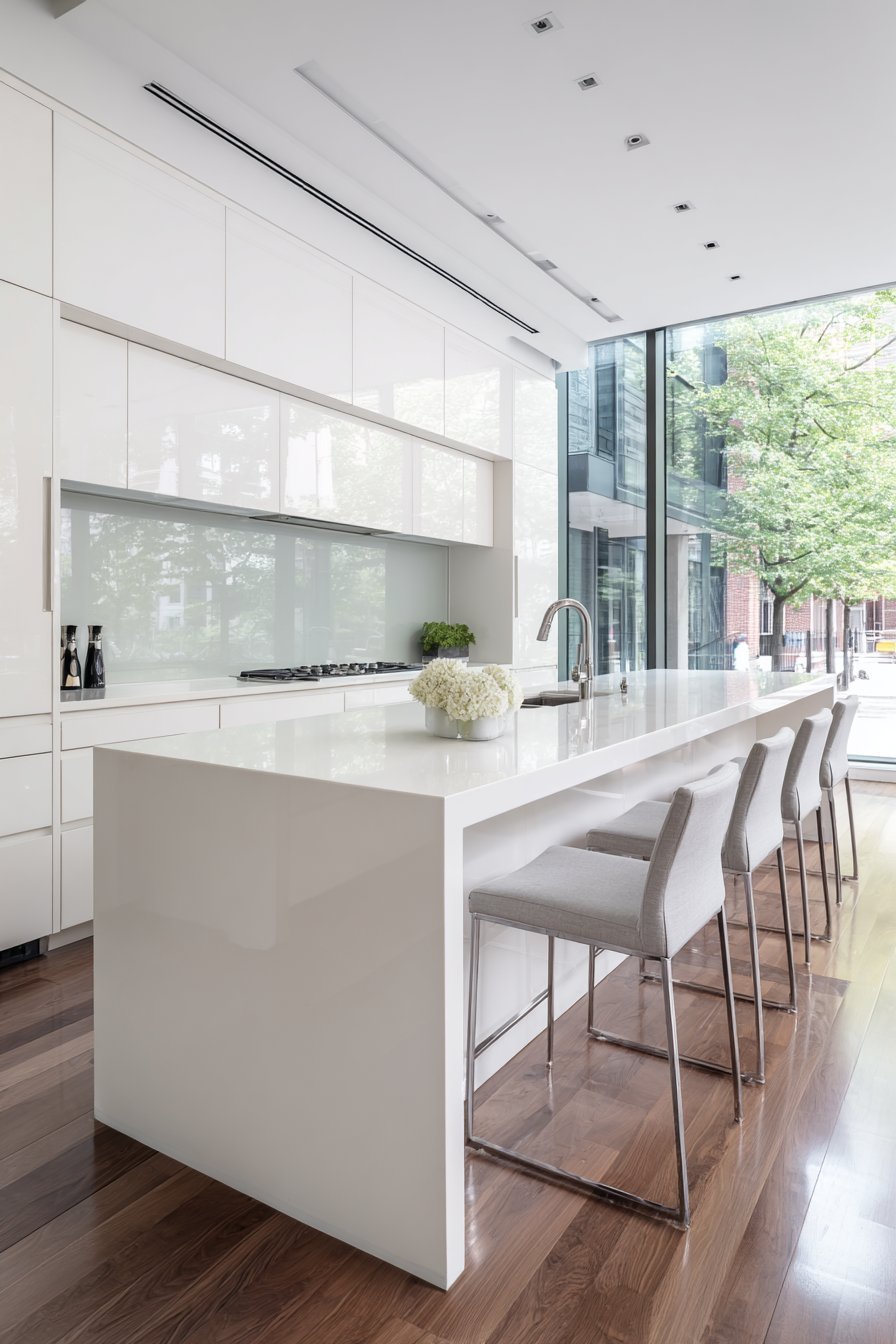
A frosted white glass backsplash adds subtle texture while maintaining the monochromatic palette. The translucent material catches light differently throughout the day. Brushed nickel fixtures provide the only metallic accent in the space. These elements add warmth without introducing competing colors.
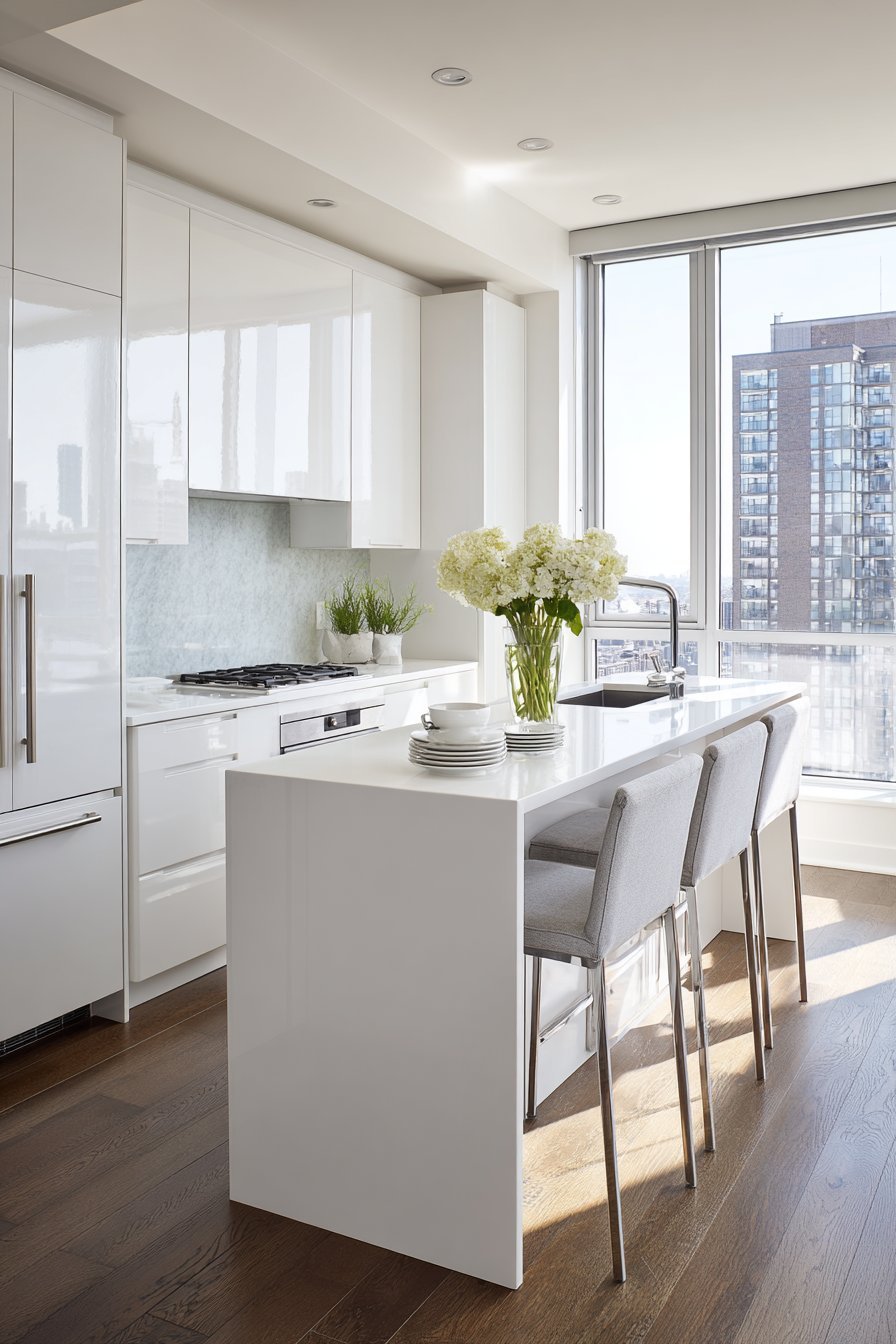
Floor-to-ceiling windows flood the kitchen with abundant daylight. Natural illumination eliminates the need for excessive artificial lighting during daytime hours. Sheer curtains soften the light without blocking it completely. The window treatments maintain privacy while preserving the bright, open feeling.
Key Design Tips:
- Choose glossy cabinet finishes to maximize light reflection
- Install generous islands that serve multiple functions
- Use monochromatic color schemes to create visual spaciousness
- Select slim-profile furniture to maintain open feeling
- Incorporate frosted glass for texture within minimal palettes
- Maximize natural light with large windows and sheer treatments
5. Charcoal and White Kitchen with Open Shelving
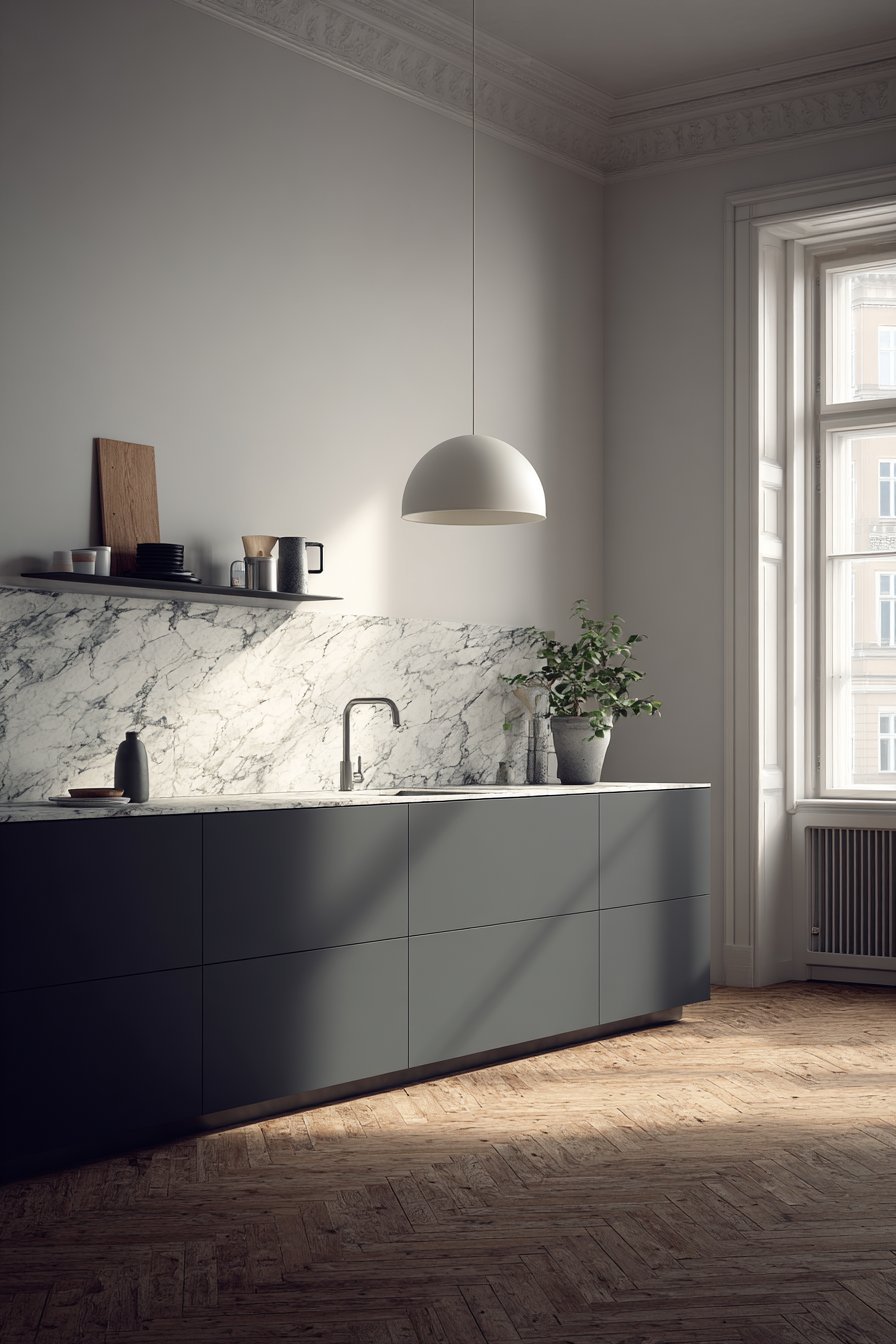
Lower cabinets in sophisticated charcoal grey anchor this striking kitchen design. Open upper shelving replaces traditional wall cabinets entirely. The decision creates visual lightness and accessible storage. White oak shelves display a minimal collection of essential items arranged with purpose.
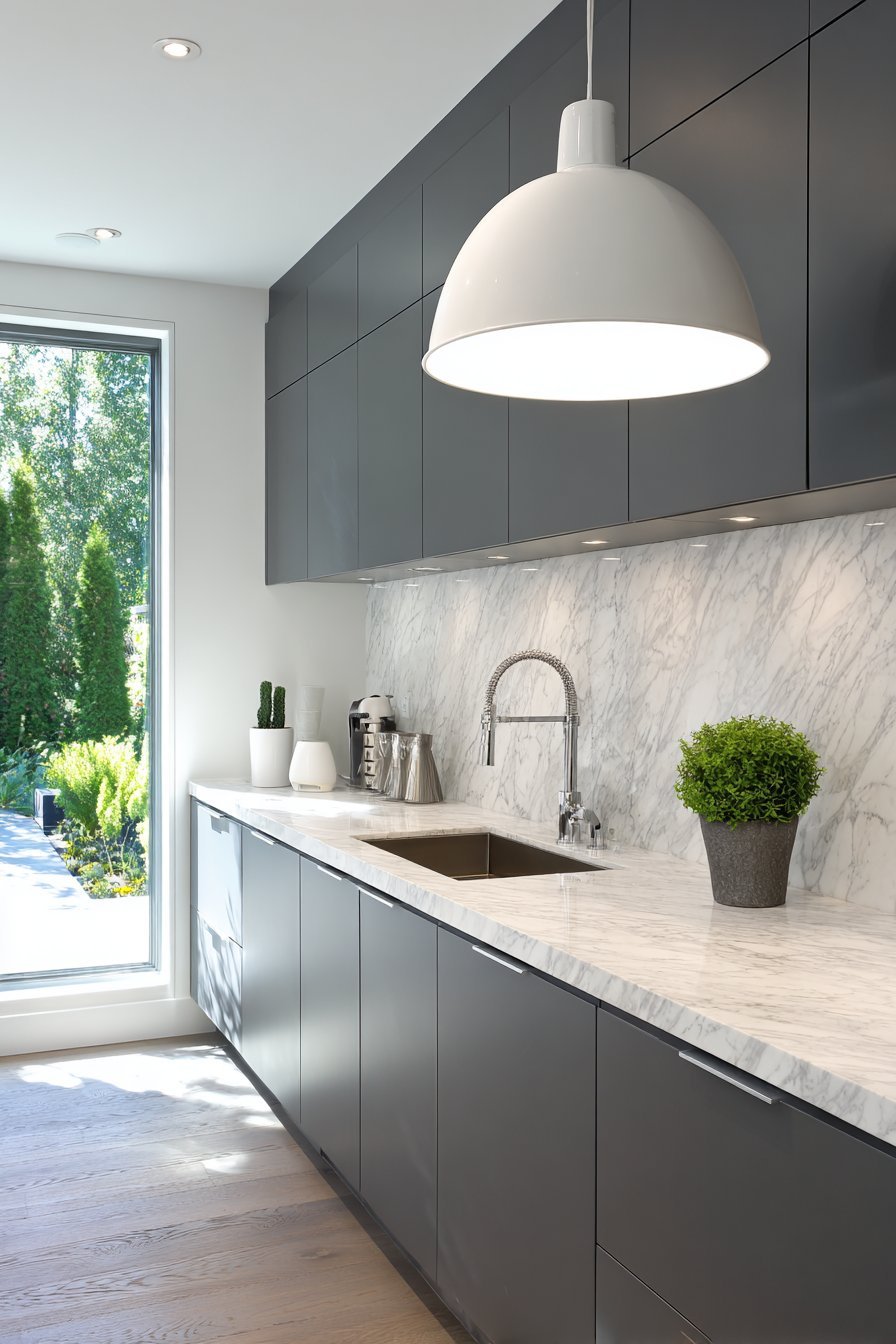
A single-bowl stainless steel sink commands attention as the primary focal point. The professional-grade faucet adds sculptural interest to the clean workspace. White marble countertops with grey veining provide subtle pattern within the restrained palette. The natural stone introduces organic movement and luxury.
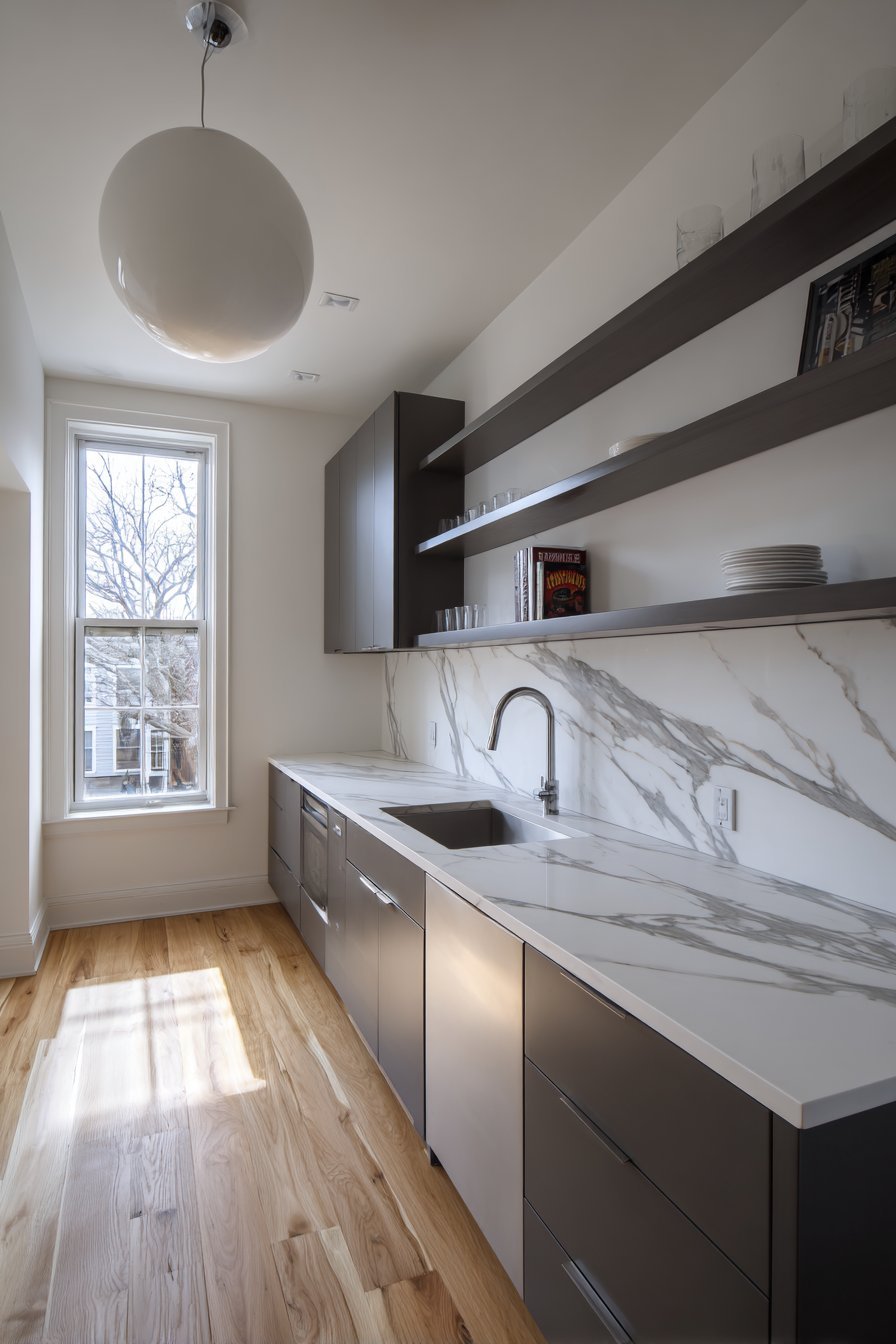
The backsplash consists simply of exposed white painted wall. This bold choice emphasizes the minimal philosophy through reduction. Wide oak floorboards add natural warmth that softens harder surfaces. A single dome pendant in matte white hangs above the main prep area.
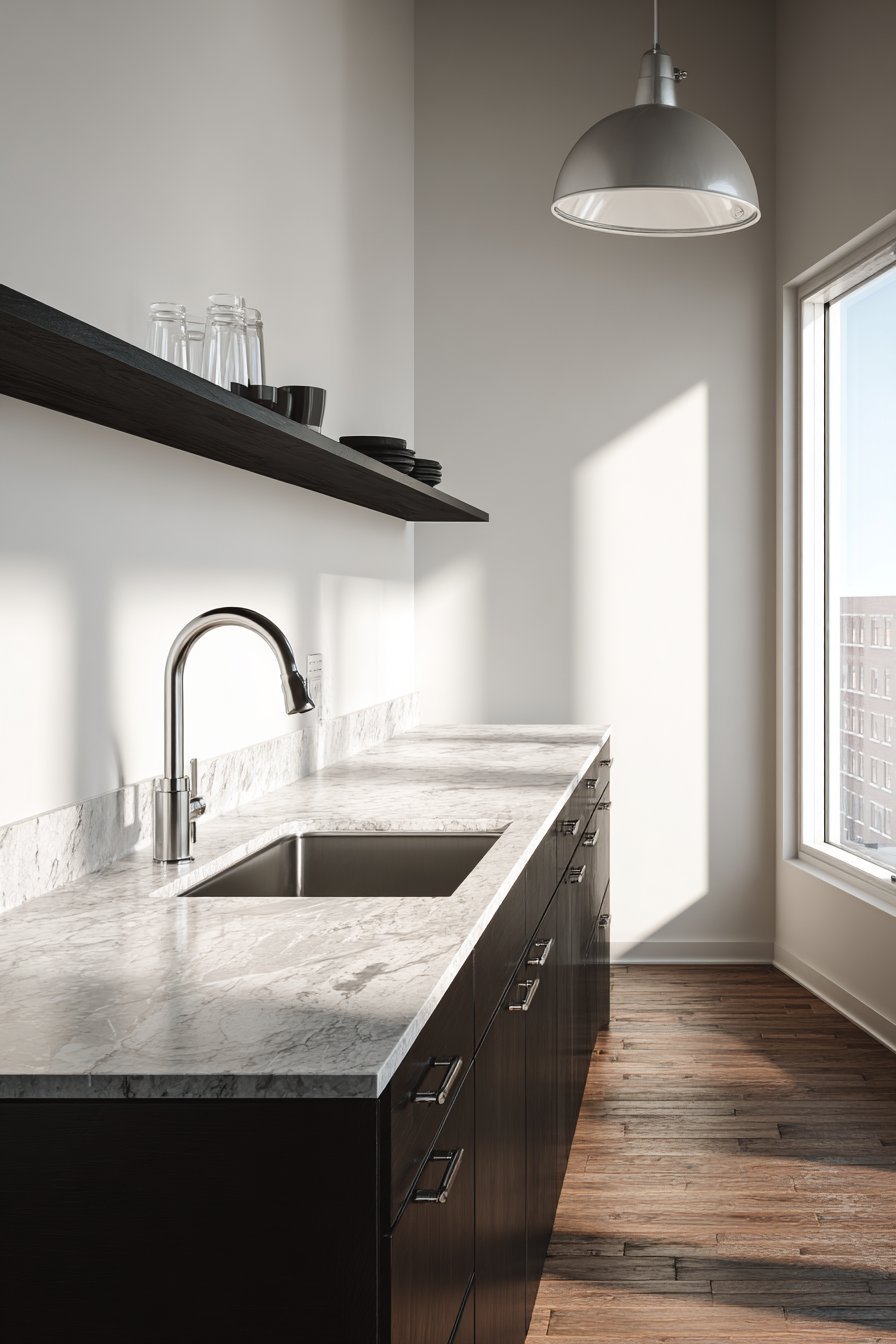
Natural afternoon light from a side window creates gentle highlights across varied textures. The light reveals the depth in the grey cabinets and marble veining. Shadows define edges and create dimension throughout the day. The interplay of light and material becomes part of the design itself.
Key Design Tips:
- Combine dark lower cabinets with open upper shelving for balance
- Choose professional-grade fixtures as sculptural focal points
- Use painted walls as backsplash for ultimate simplicity
- Select natural stone with subtle veining for organic pattern
- Install single statement pendants rather than multiple fixtures
- Maximize side lighting to create shadows and dimension
6. Monochromatic White Kitchen with Textured Elements
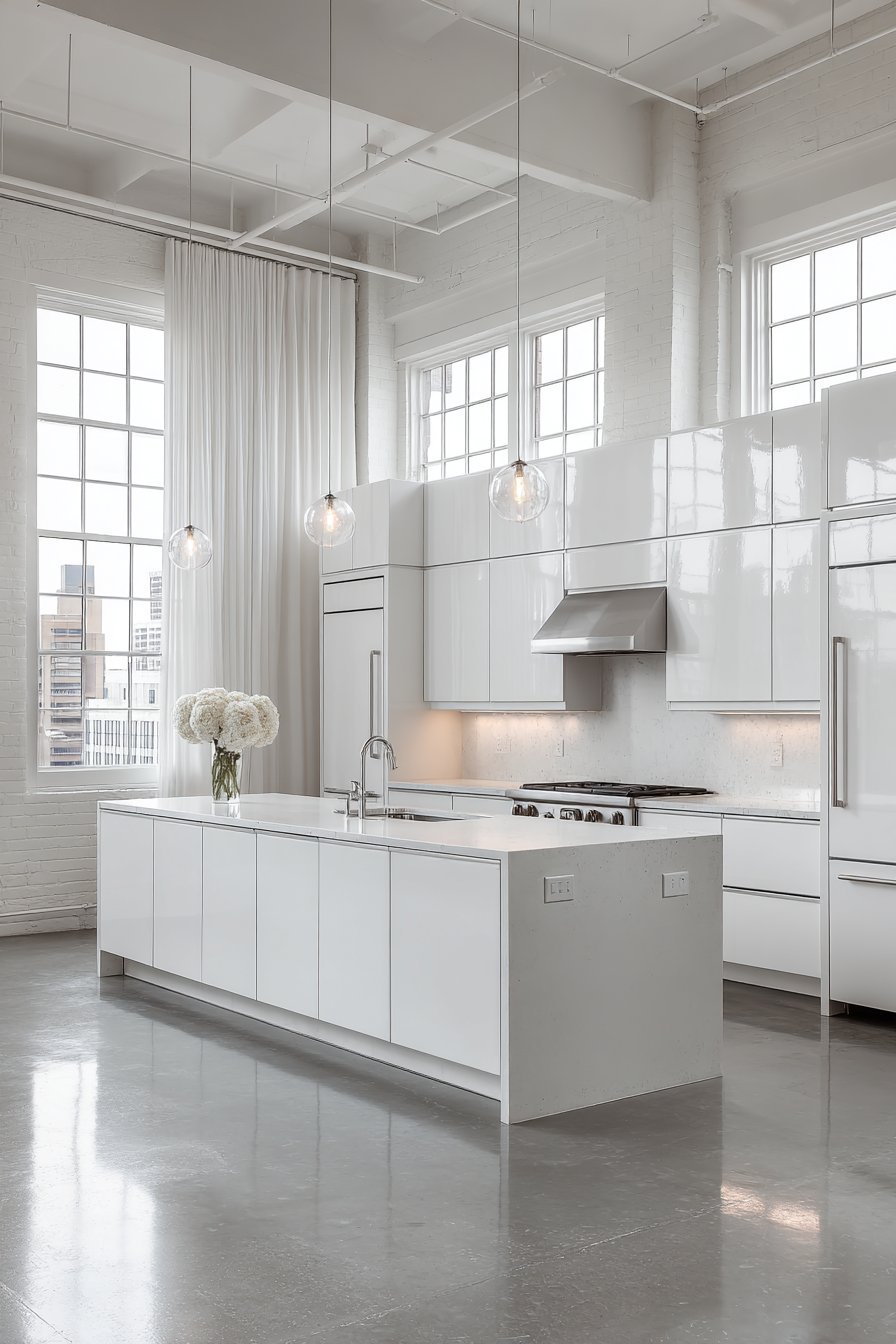
This design explores depth within a strictly white palette through varied textures. Flat-front matte white cabinets eliminate all ornamentation and hardware. The pure surfaces create canvas-like simplicity. A thick white quartz island countertop features dramatic waterfall edges on both sides.
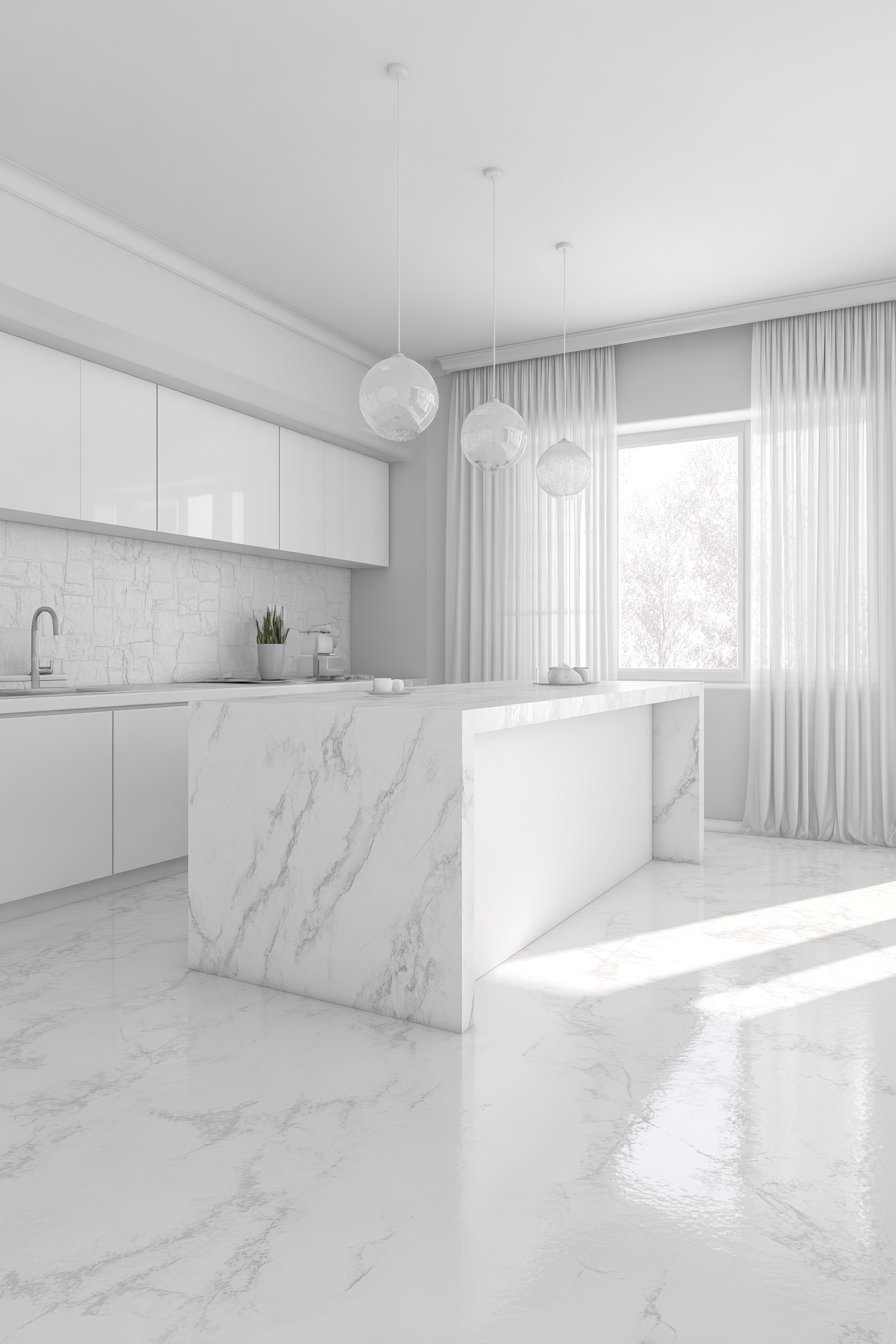
A white ceramic farmhouse sink provides the only traditional element in the contemporary space. The classic fixture adds character without compromising the minimal aesthetic. Panel-ready stainless steel appliances flush-mount within the cabinetry. They disappear completely when not in use.
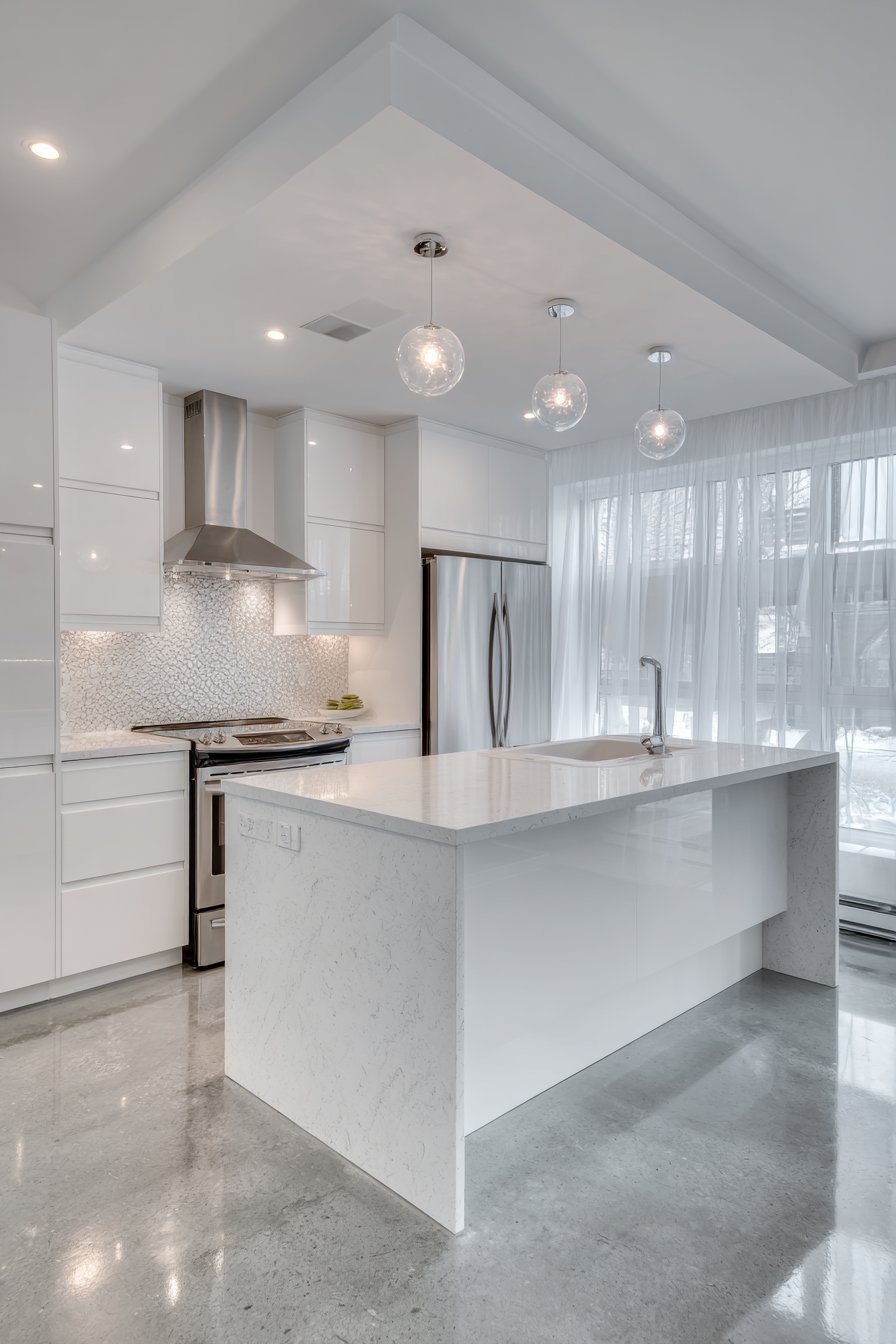
Polished concrete flooring in light grey adds subtle sheen and industrial edge. The smooth surface reflects light differently than the matte cabinets above. Three simple glass globe pendants provide ambient lighting with minimal visual weight. The transparent fixtures maintain the open feeling.
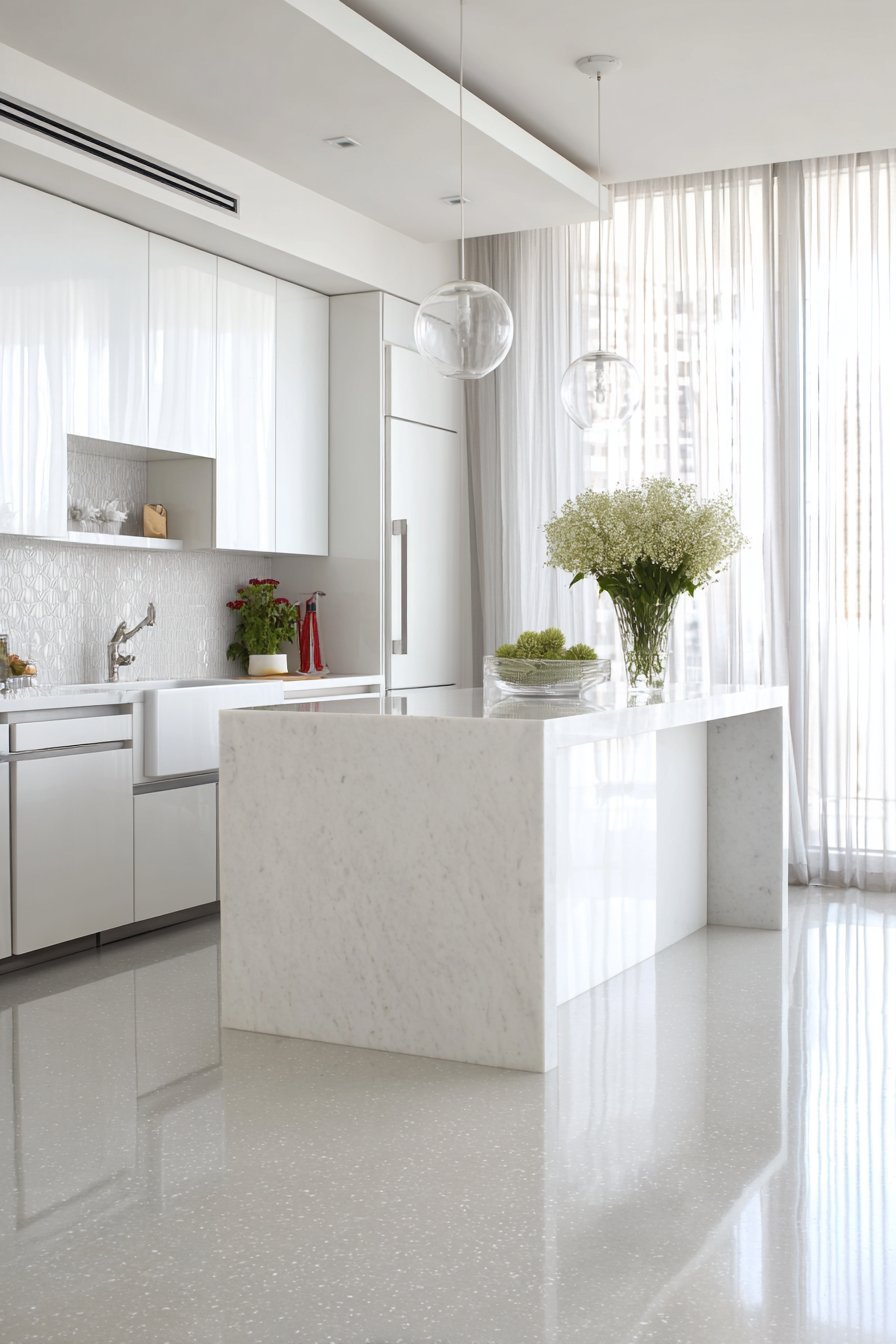
Large windows with sheer white curtains diffuse incoming natural light beautifully. The filtered illumination creates soft, even lighting throughout the space. Different white textures reveal themselves as light plays across surfaces. The monochromatic scheme proves that white contains infinite variation.
Key Design Tips:
- Layer different white textures for visual depth within monochromatic schemes
- Use waterfall edge countertops for dramatic architectural interest
- Incorporate one traditional element to add character to contemporary spaces
- Choose polished concrete flooring for industrial sophistication
- Select transparent light fixtures to maintain visual lightness
- Diffuse natural light with sheer curtains for soft, even illumination
7. Compact Urban Kitchen with Fold-Down Table
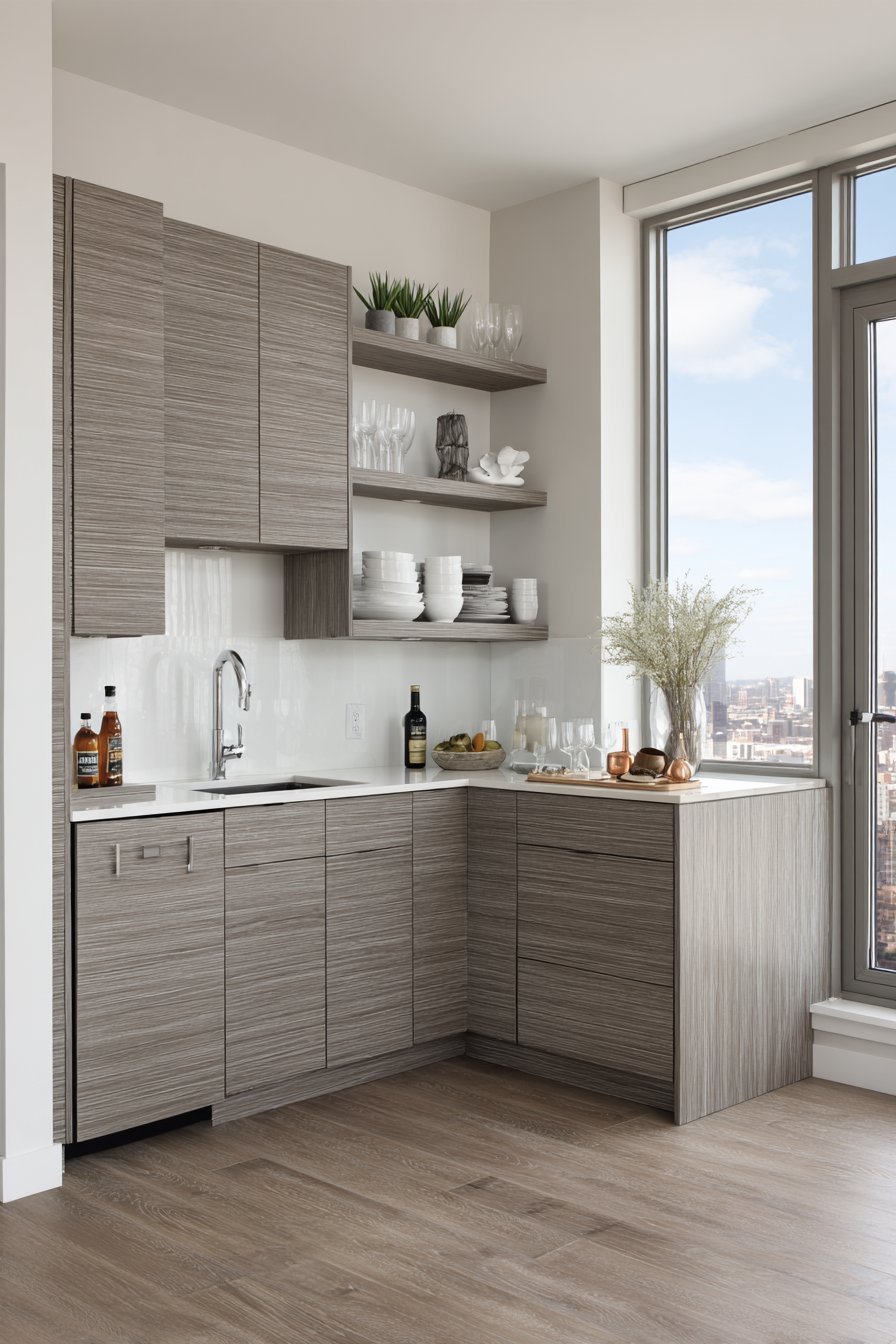
This space-efficient design proves minimal principles solve urban space constraints beautifully. Wall-mounted cabinets in light maple feature hidden hinges and integrated finger pulls. The hardware-free appearance maintains clean lines essential to small spaces. A small stainless steel sink mounts directly to the wall, saving valuable floor space.
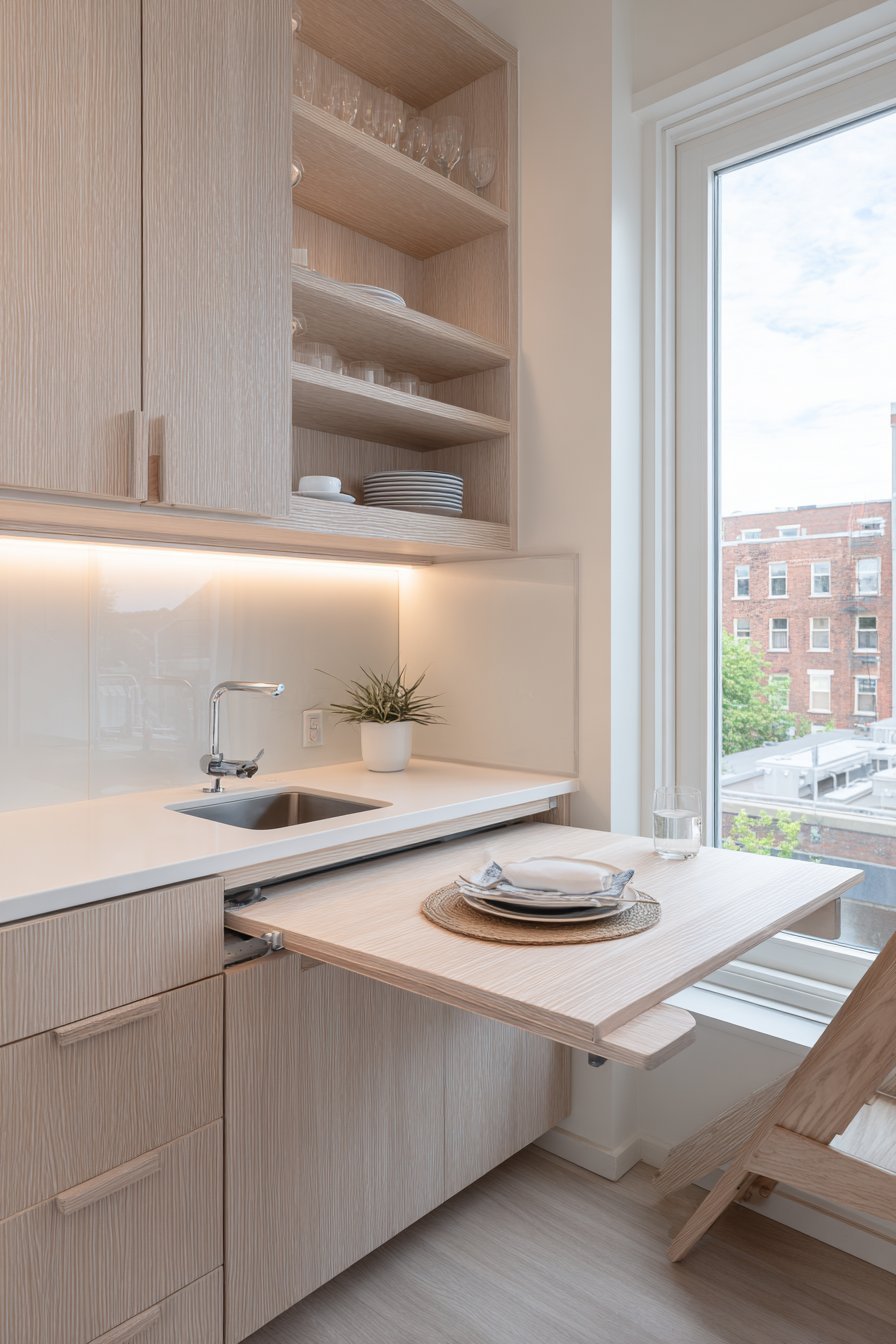
Open shelving holds minimal glassware and white dishes arranged with precision. Every item displays with purpose and accessibility. The white glass backsplash extends from counter to the bottom of upper cabinets. The seamless surface creates easy-to-clean efficiency.
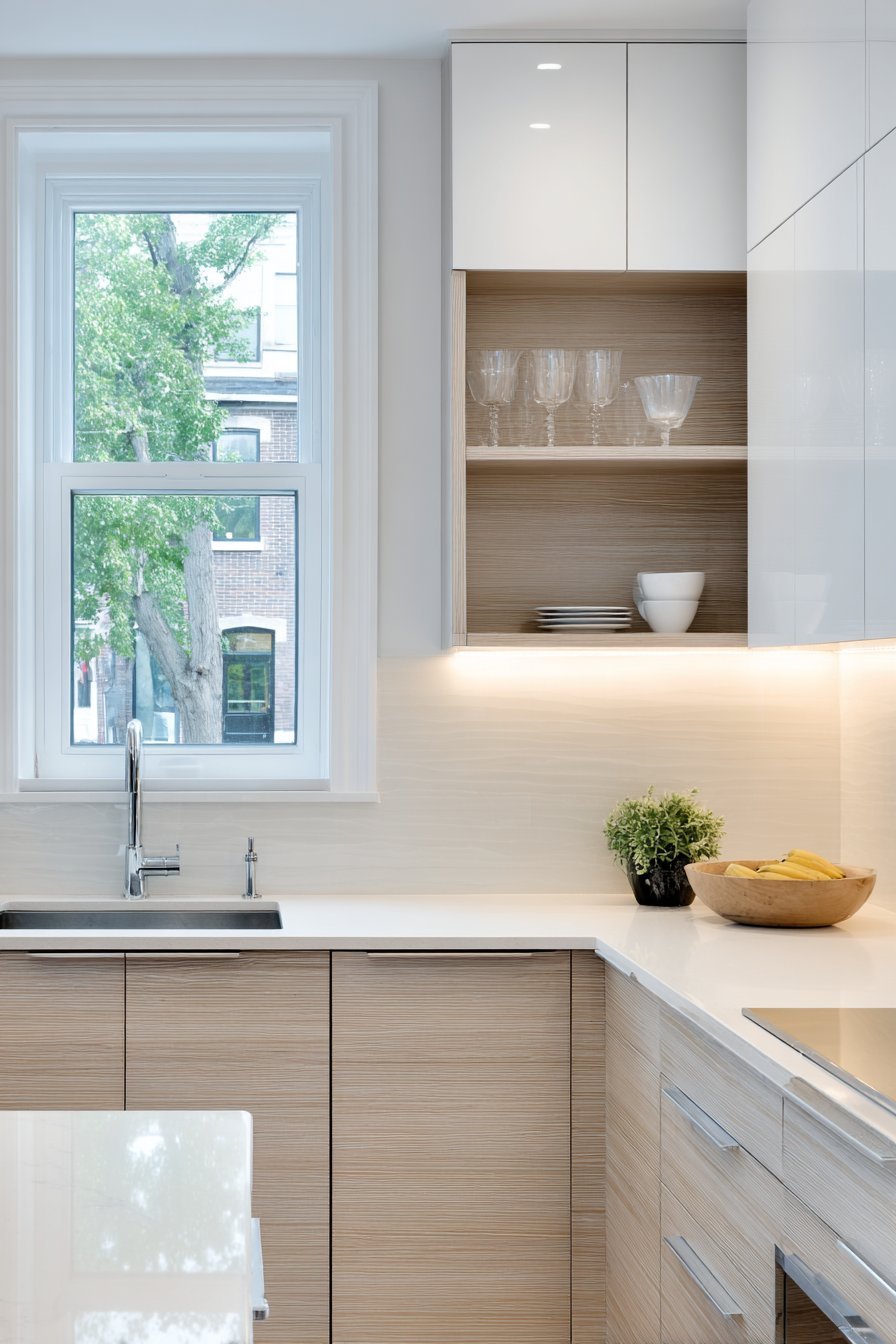
An innovative fold-down table attaches to the wall serving dual purposes. The surface provides both food preparation workspace and casual dining area. When closed, it disappears against the wall completely. LED strip lighting under cabinets provides focused task illumination exactly where needed.
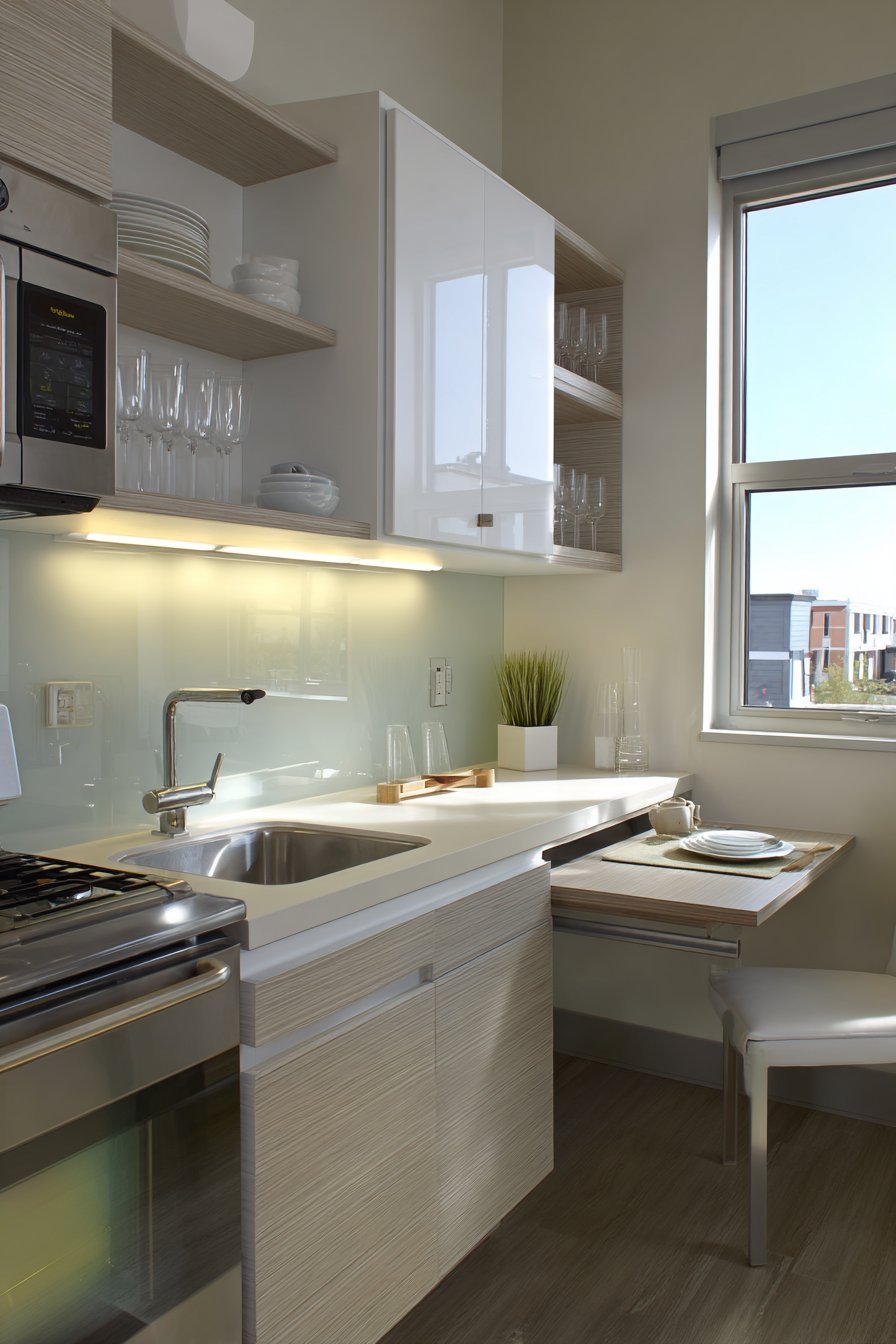
Natural light enters through a single strategically placed window. The opening brings brightness without sacrificing wall space for storage. The design demonstrates how limitations inspire creative solutions. Every element serves multiple purposes while maintaining aesthetic beauty.
Key Design Tips:
- Mount sinks and cabinets to walls to maximize floor space
- Install fold-down tables for flexible multi-purpose functionality
- Use integrated pulls rather than protruding hardware in small spaces
- Extend backsplash materials to create seamless vertical surfaces
- Choose wall-mounted solutions to create feeling of spaciousness
- Maximize single windows with strategic placement for light distribution
8. Navy and White Two-Tone Kitchen
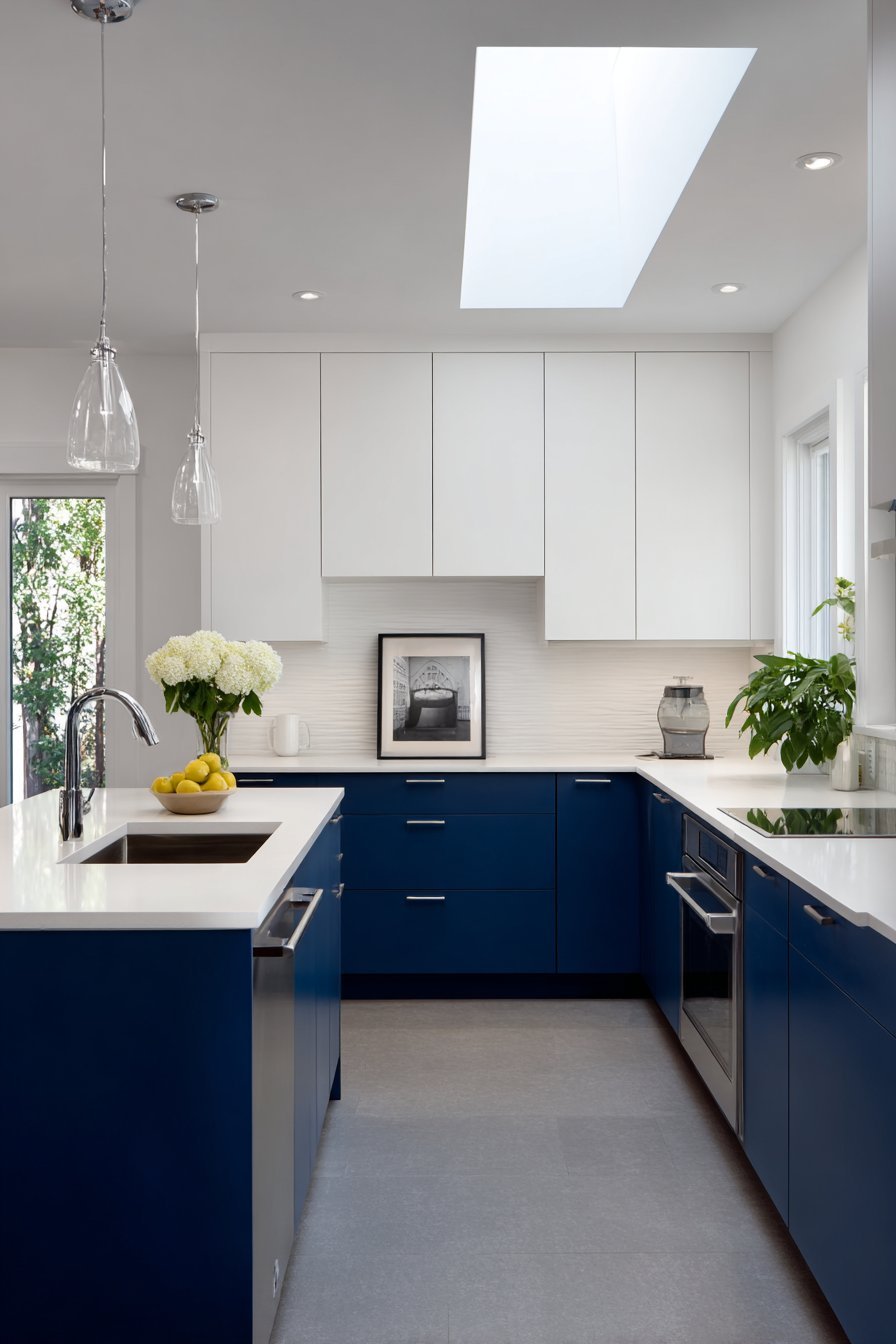
Two-tone cabinetry creates subtle contrast while maintaining essential simplicity. Deep navy blue lower units provide grounding weight to the design. Crisp white upper cabinets maintain brightness and openness above. The combination offers visual interest without overwhelming the space.
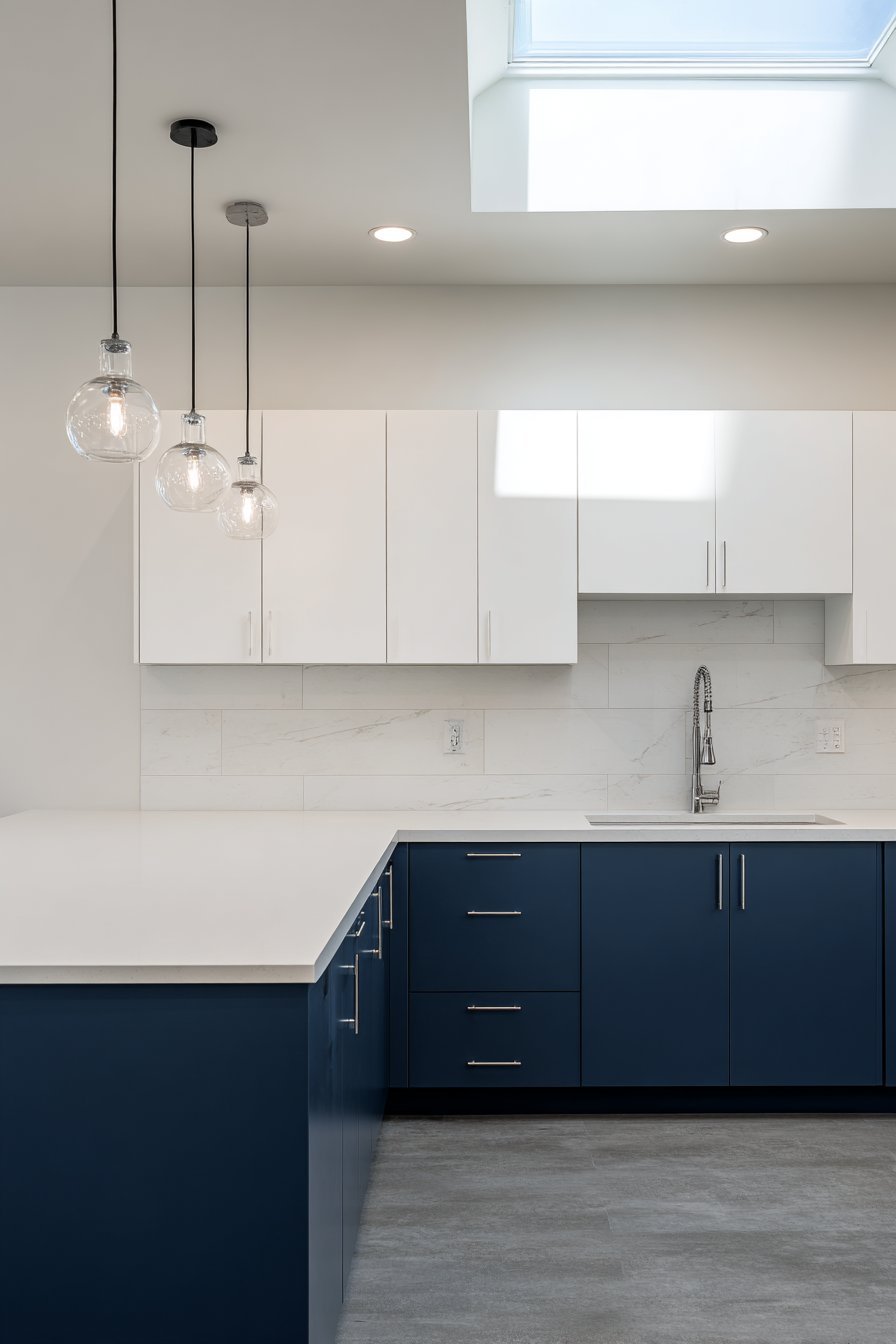
Integrated handles appear as recessed grooves in cabinet doors rather than protruding hardware. This detail-oriented approach maintains clean surfaces throughout. White Corian countertops provide seamless surfaces with no visible joins. The solid surface material offers practical durability with sophisticated appearance.
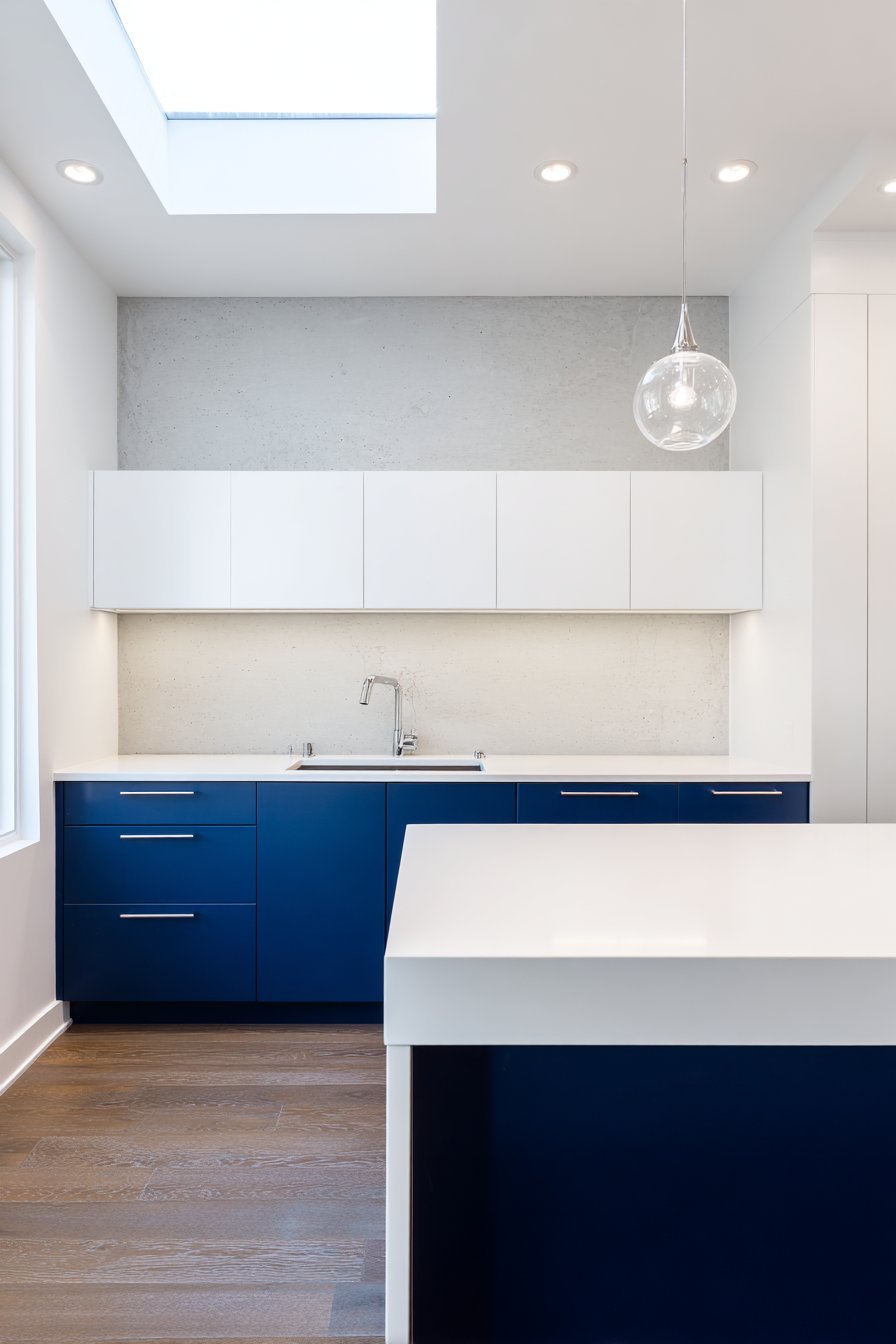
A simple chrome faucet with pull-down sprayer serves the single-bowl sink efficiently. The fixture’s clean lines complement the overall aesthetic perfectly. Large white tiles with minimal grout lines create the backsplash. Grey concrete-look flooring grounds the space with modern edge.
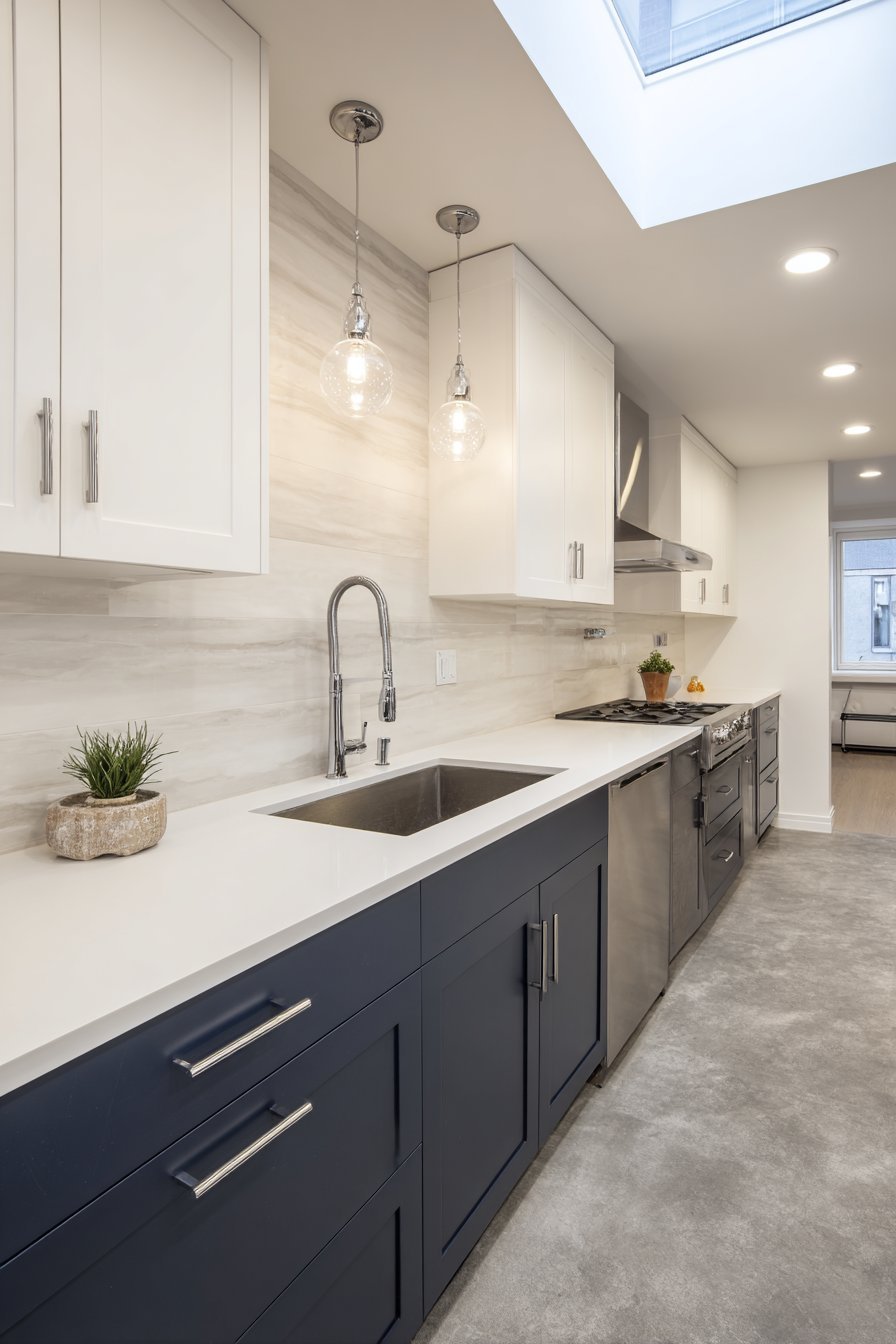
Two minimal pendant lights with clear glass shades hang above the breakfast bar. Natural light from a skylight provides even illumination from above. The overhead opening eliminates the need for excessive artificial lighting during daylight hours. The navy and white palette remains fresh and timeless.
Key Design Tips:
- Use two-tone cabinetry to add depth while maintaining simplicity
- Choose integrated groove handles over protruding hardware
- Select solid surface materials for seamless, easy-maintenance countertops
- Install skylights to provide natural overhead illumination
- Use concrete-look flooring for contemporary industrial appeal
- Limit pendant lights to minimal fixtures with clean lines
9. Black and White Contrast Kitchen
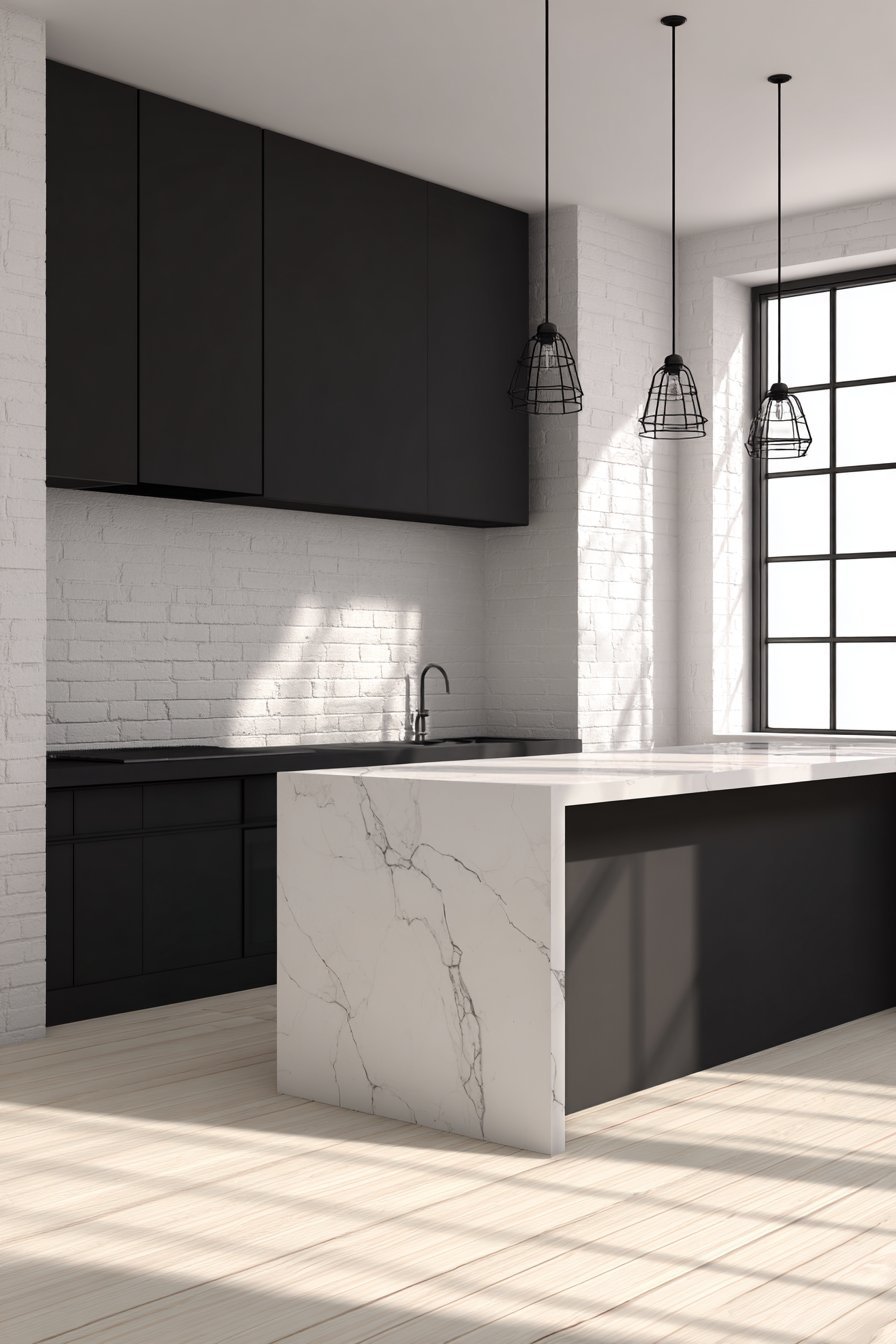
Bold contrast defines this striking minimal kitchen design. Sleek matte black lower cabinets anchor the space with dramatic weight. White upper cabinets and walls maintain brightness and prevent darkness. A narrow profile island features black base and white quartz countertop.
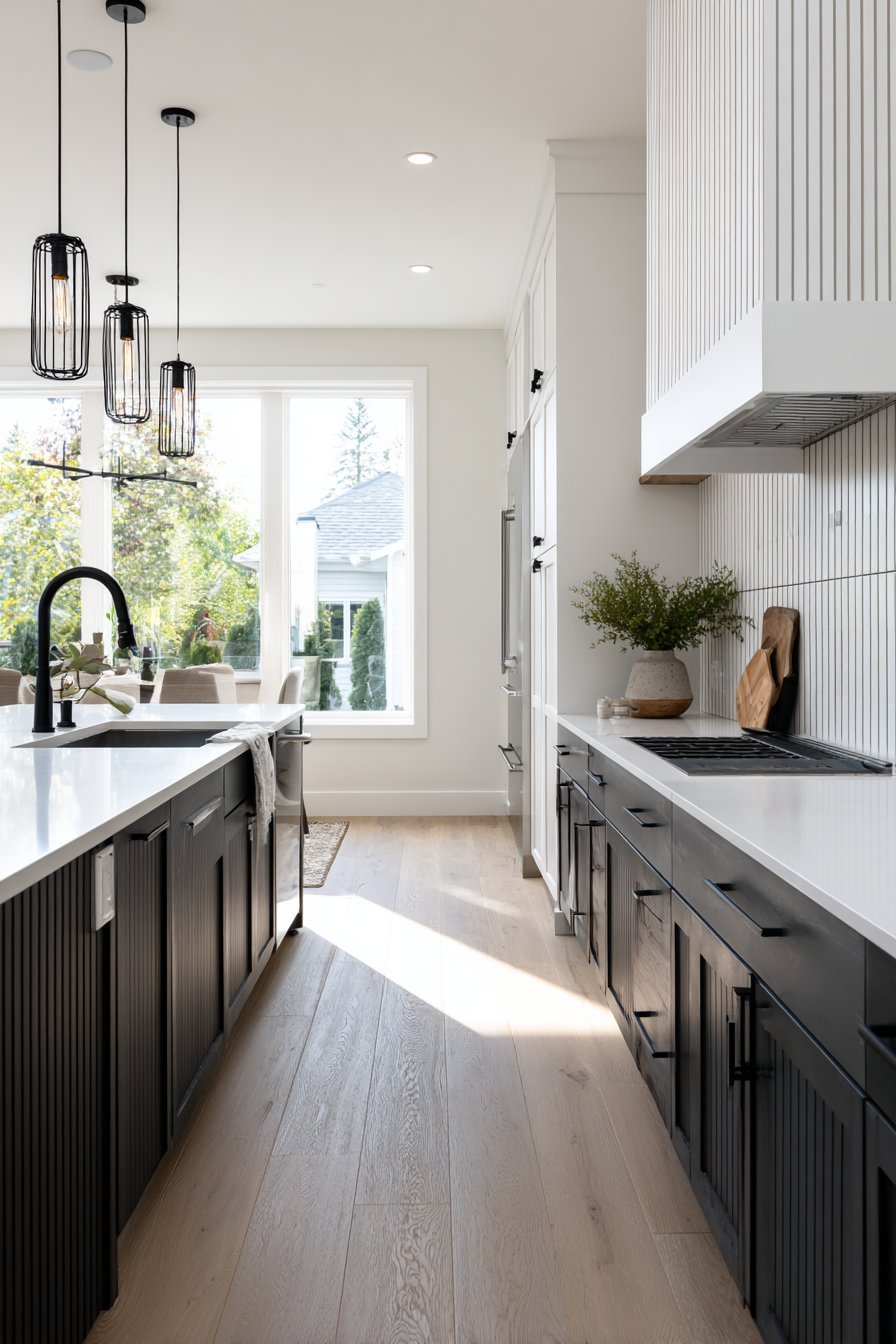
Matte black fixtures including faucet and cabinet pulls provide cohesive design details throughout. The hardware continues the graphic color blocking. White brick-style backsplash tile with white grout adds texture within the minimal palette. Light oak flooring introduces natural warmth that softens the stark contrast.
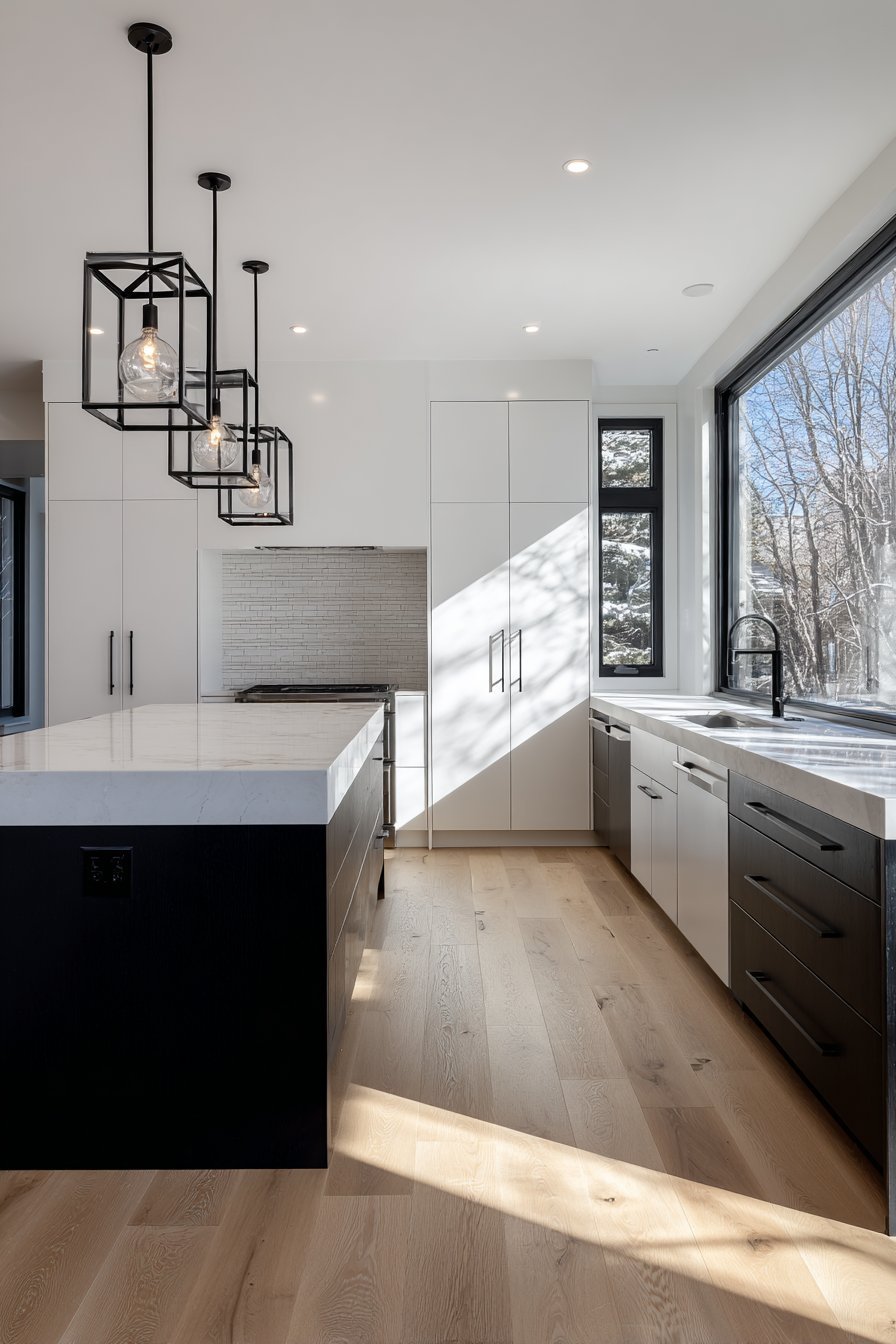
Three black metal pendant lights with exposed bulbs hang in precise alignment above the island. The fixtures add industrial edge while providing functional illumination. A large window provides natural sidelight that creates dramatic shadows. The light emphasizes the bold black and white composition throughout the day.
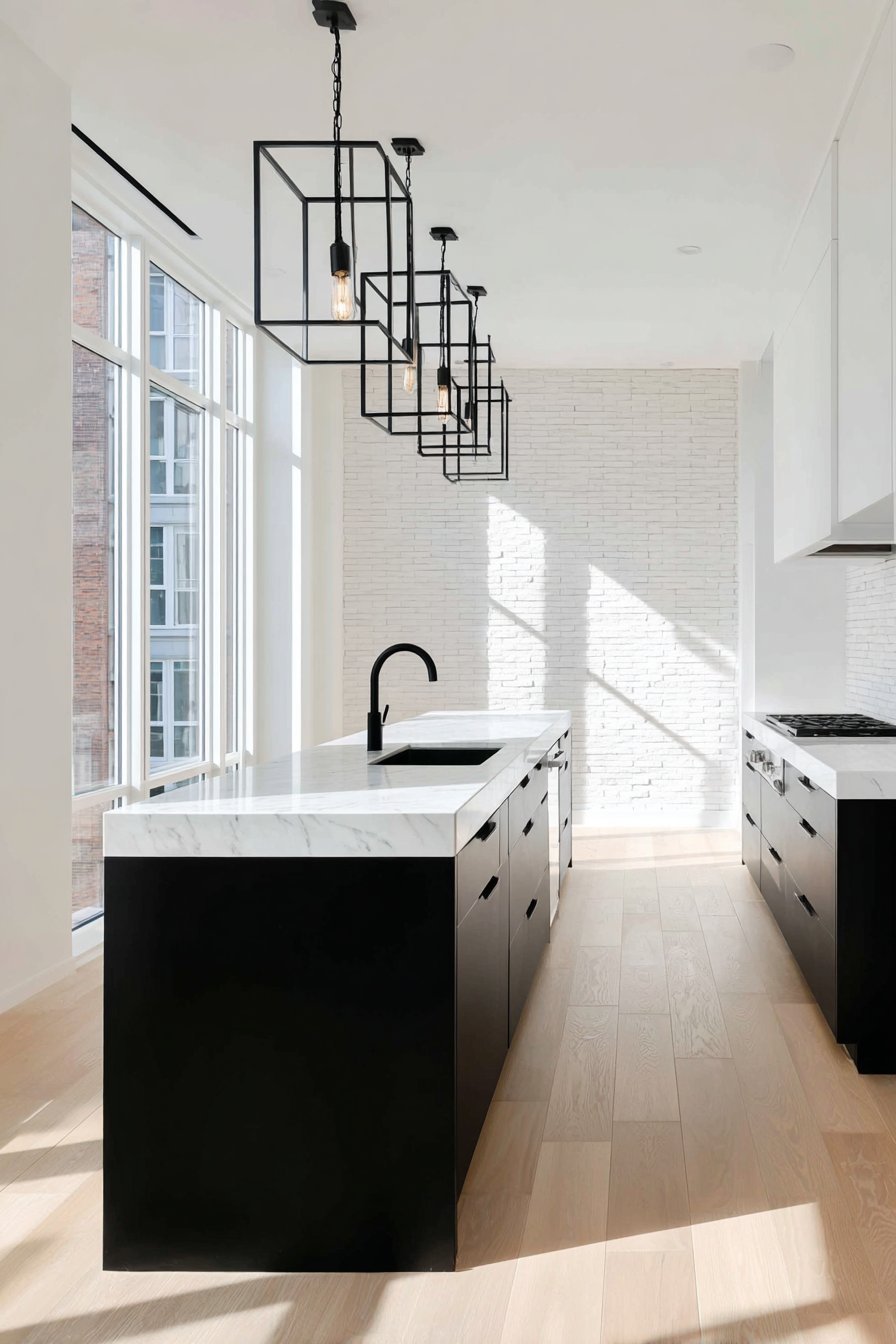
The graphic quality of this design makes a strong statement. The high contrast creates energy and visual interest. Despite the bold choices, the space maintains minimal principles through clean lines and uncluttered surfaces. The design proves minimal doesn’t require neutrality.
Key Design Tips:
- Embrace bold contrast while maintaining clean lines and simple forms
- Use matte black finishes to reduce glare and fingerprints
- Add natural wood flooring to warm stark black and white schemes
- Install industrial-style fixtures for edge within minimal frameworks
- Maximize side lighting to create dramatic shadows and dimension
- Maintain cohesion by repeating black elements throughout the space
10. L-Shaped Grey Kitchen with Integrated Pantry
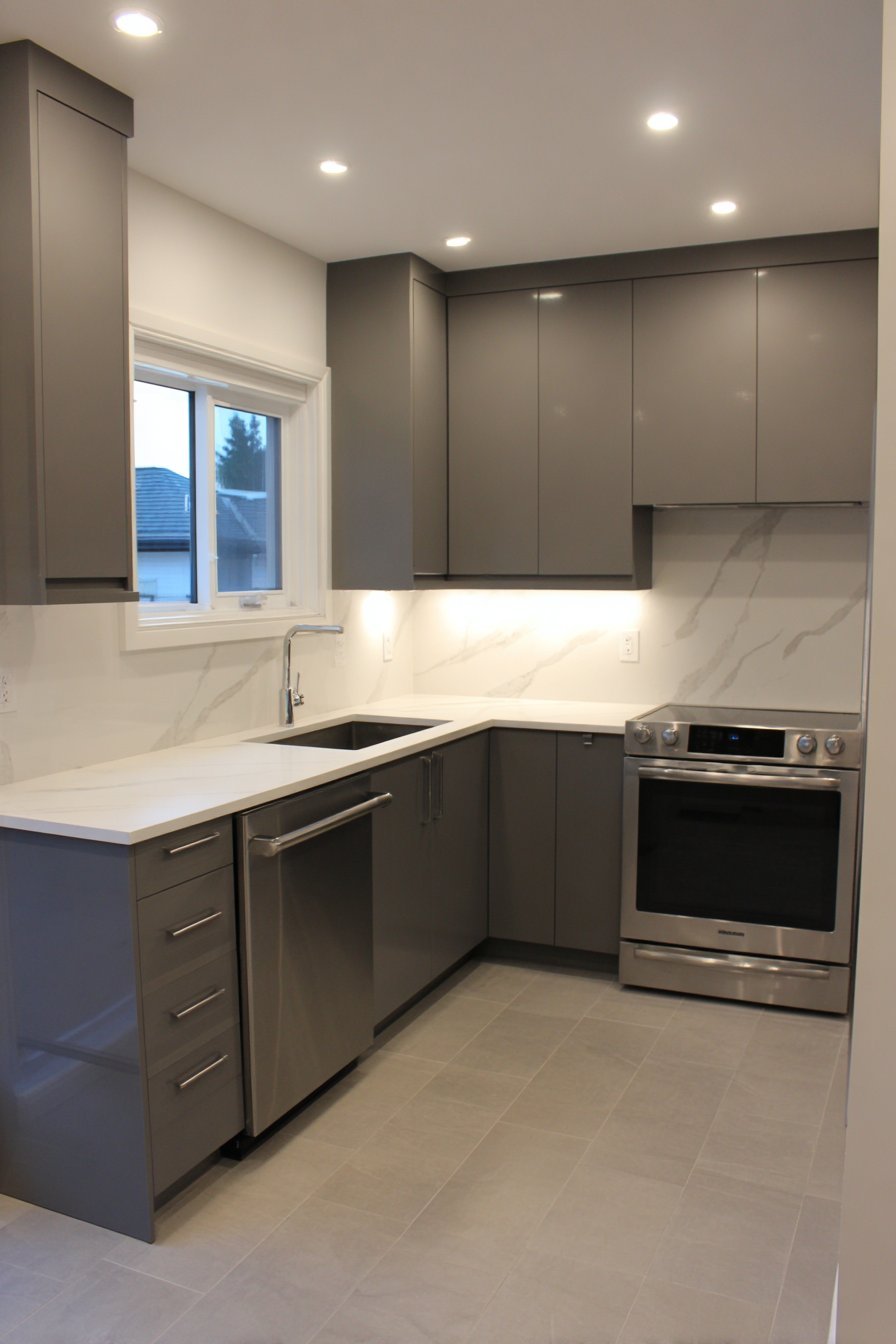
This efficient L-shaped layout maximizes corner space with sophisticated mid-tone grey cabinets. Handle-less doors maintain uninterrupted surfaces throughout. A full-height pantry unit integrates seamlessly with the main cabinetry. The tall storage provides ample space without cluttering the design.
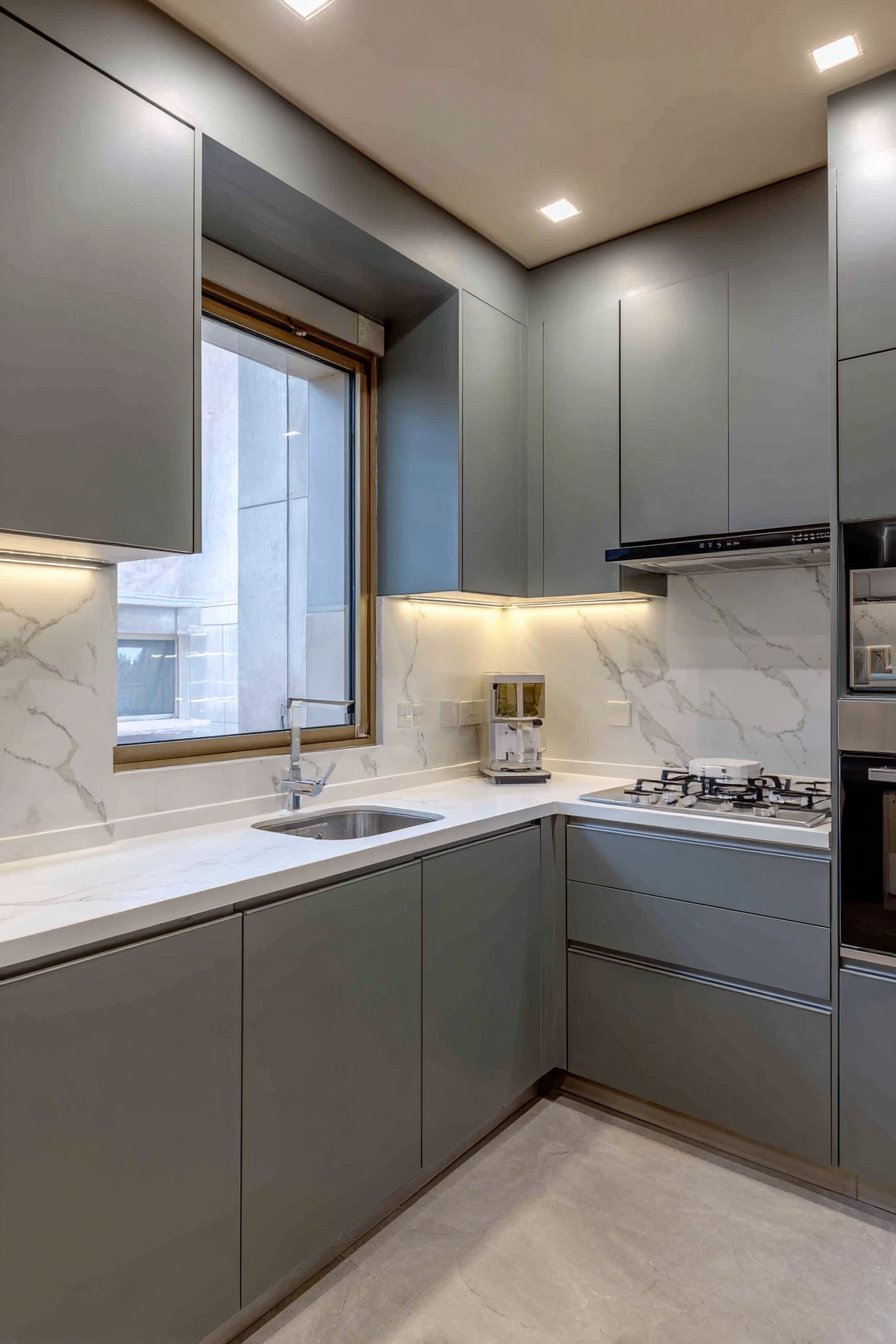
White quartz countertops feature subtle marble-like veining that adds organic interest. The stone provides durability and beauty in equal measure. Large-format grey porcelain tiles matching the cabinet color create visual continuity. The backsplash disappears into the cabinets rather than creating separation.
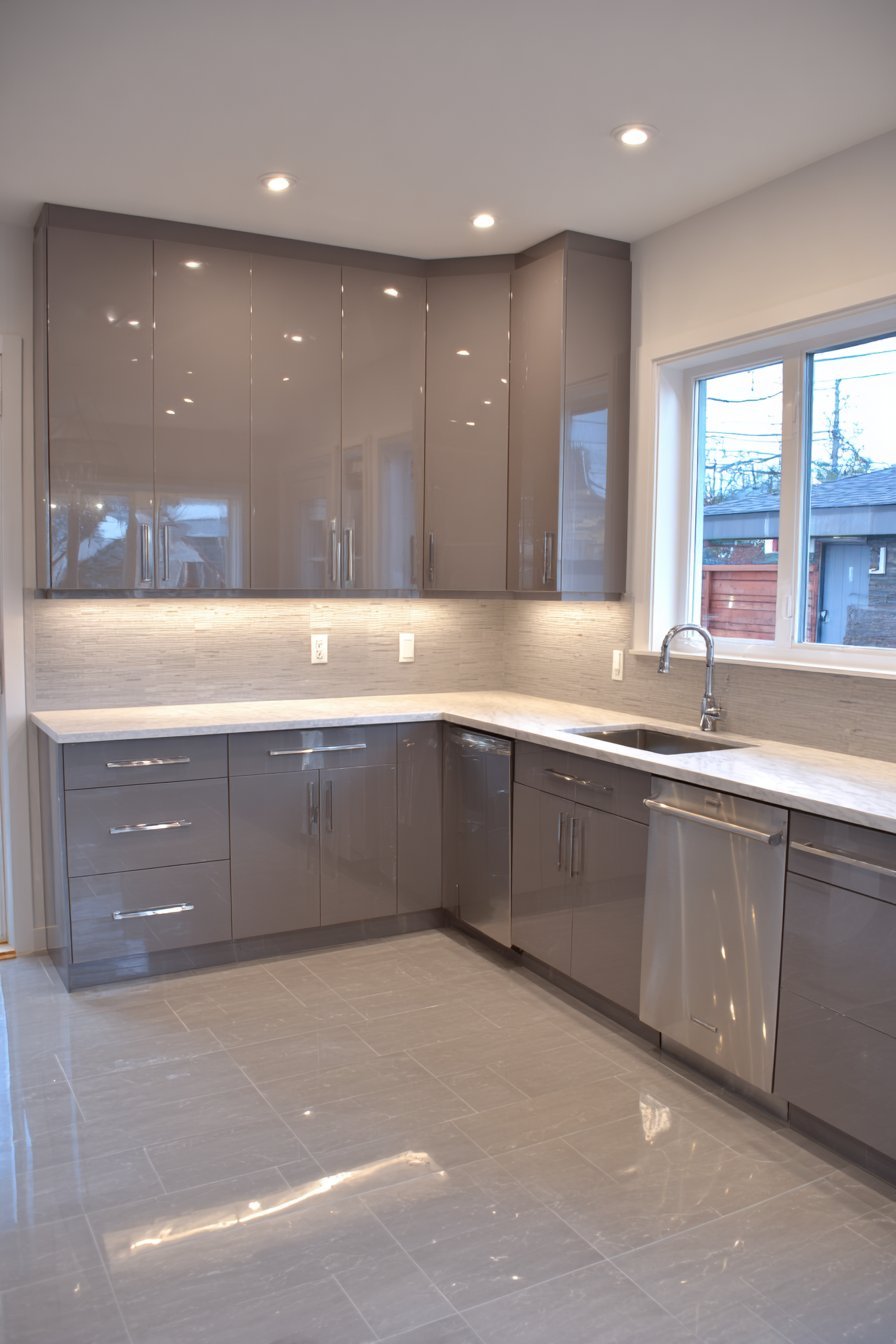
Built-in stainless steel appliances flush-mount for seamless integration. A small window above the sink allows natural light into the workspace. Under-cabinet LED lighting provides practical task illumination. Light grey tile flooring complements the overall palette perfectly.
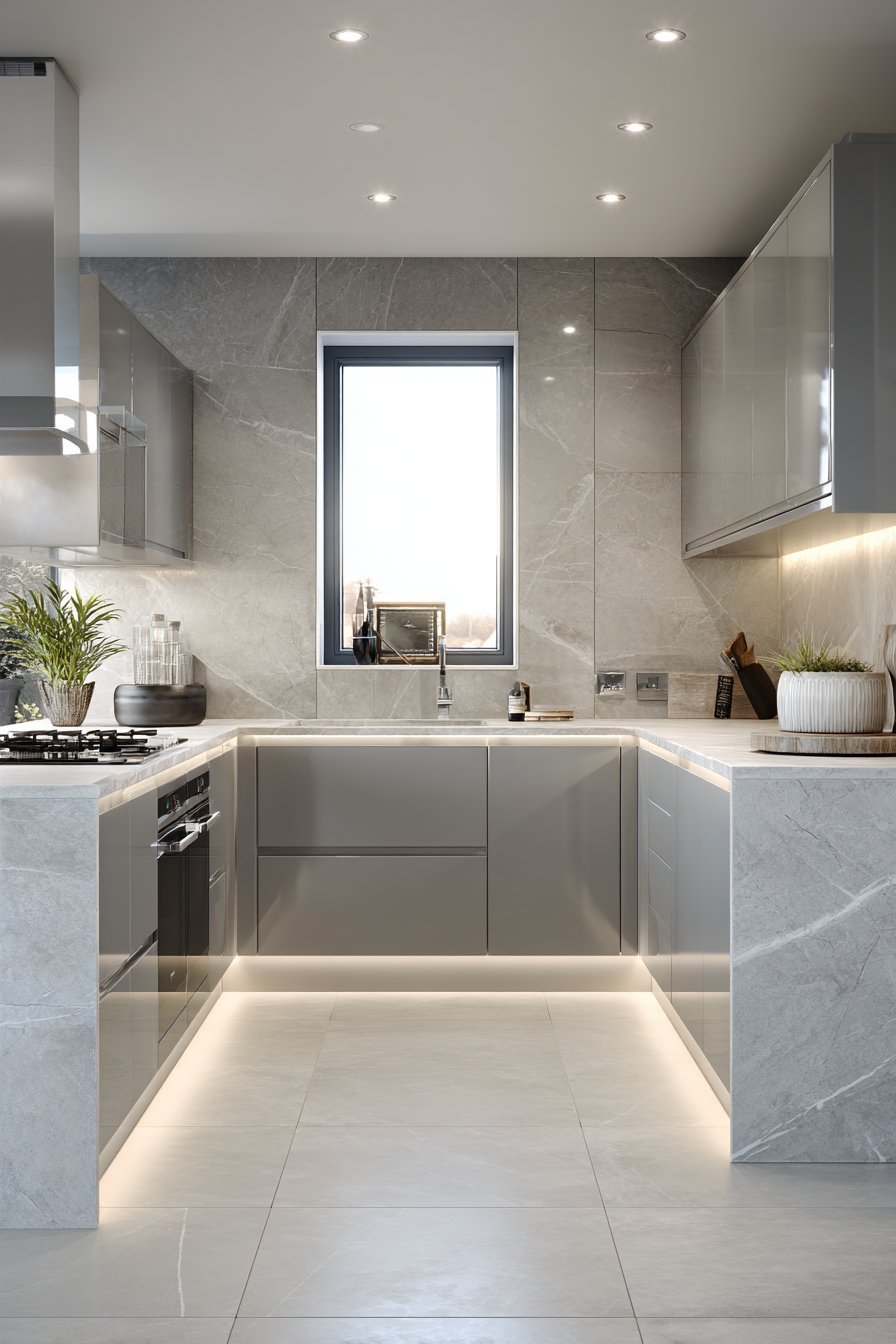
The L-shaped configuration creates an efficient work zone within compact footprint. The corner position maximizes wall space for storage and appliances. The design demonstrates how thoughtful planning creates functionality without sacrificing aesthetics. Every element serves the dual purpose of beauty and utility.
Key Design Tips:
- Choose L-shaped layouts to maximize corner space efficiency
- Integrate full-height pantries seamlessly within cabinet runs
- Match backsplash colors to cabinetry for visual continuity
- Use subtle stone patterns for organic interest within minimal palettes
- Install under-cabinet lighting for practical workspace illumination
- Select handle-less designs to maintain clean, uninterrupted surfaces
11. Single-Wall Kitchen with Floor-to-Ceiling Windows
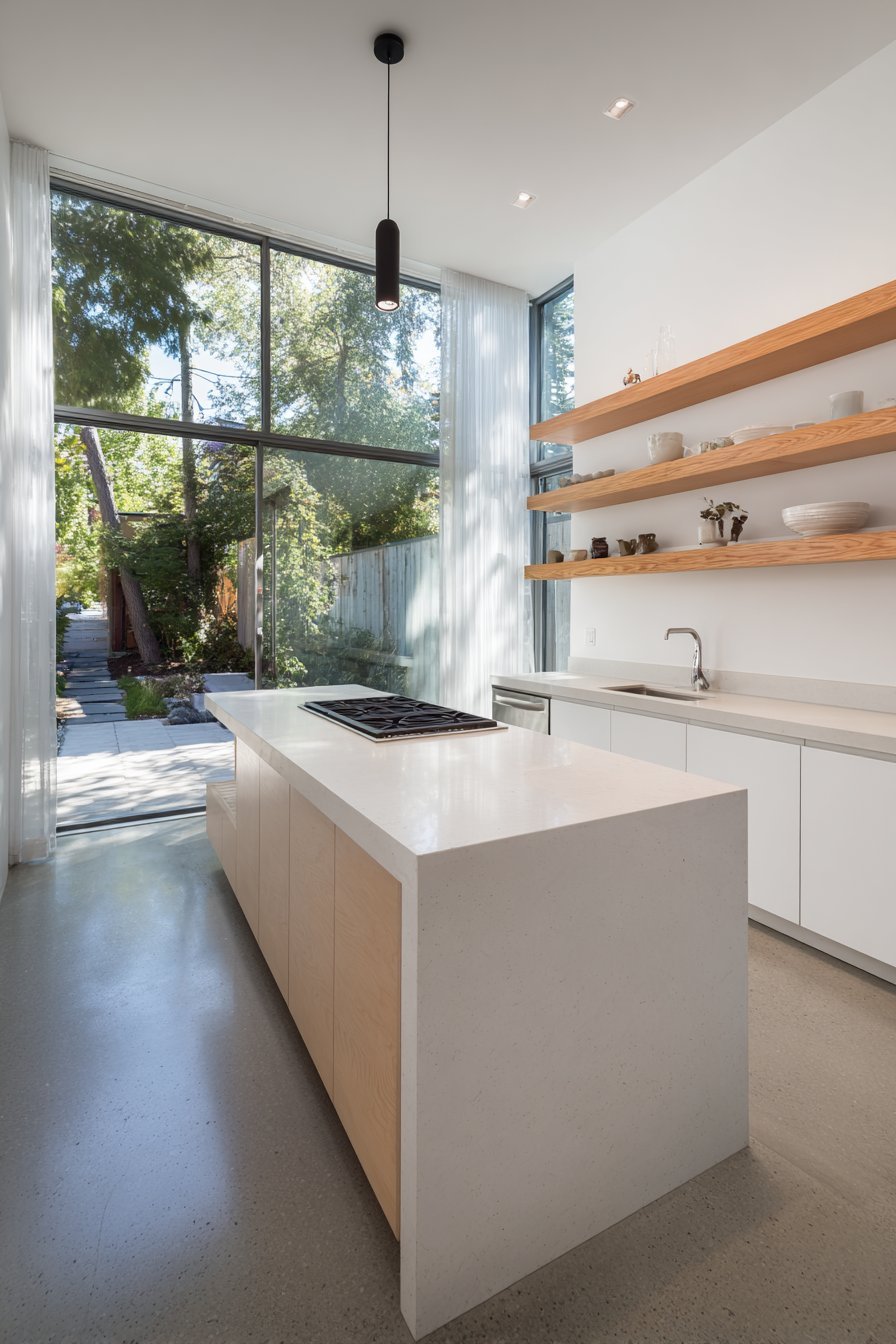
Natural light takes center stage in this stunning single-wall design. Floor-to-ceiling windows flood the space with abundant daylight. White handle-less cabinets create an unbroken horizontal line along the wall. The continuous cabinetry emphasizes the length rather than breaking it into segments.
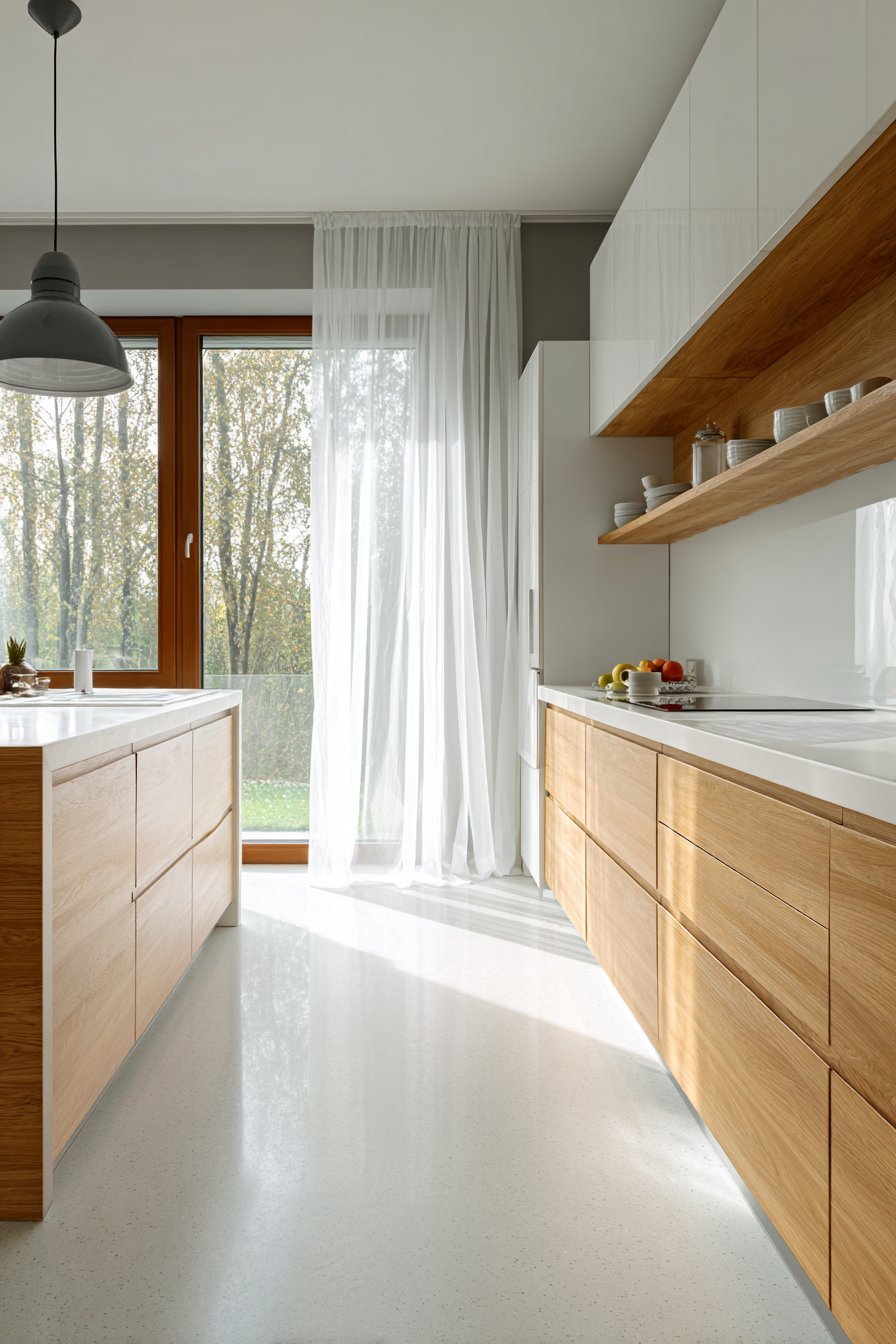
White quartz countertop extends the full length with integrated sink and cooktop. The seamless surface provides ample workspace without visual interruption. Floating open shelves in natural oak interrupt the upper portion with warmth. White dishware displays in carefully curated minimal arrangements.
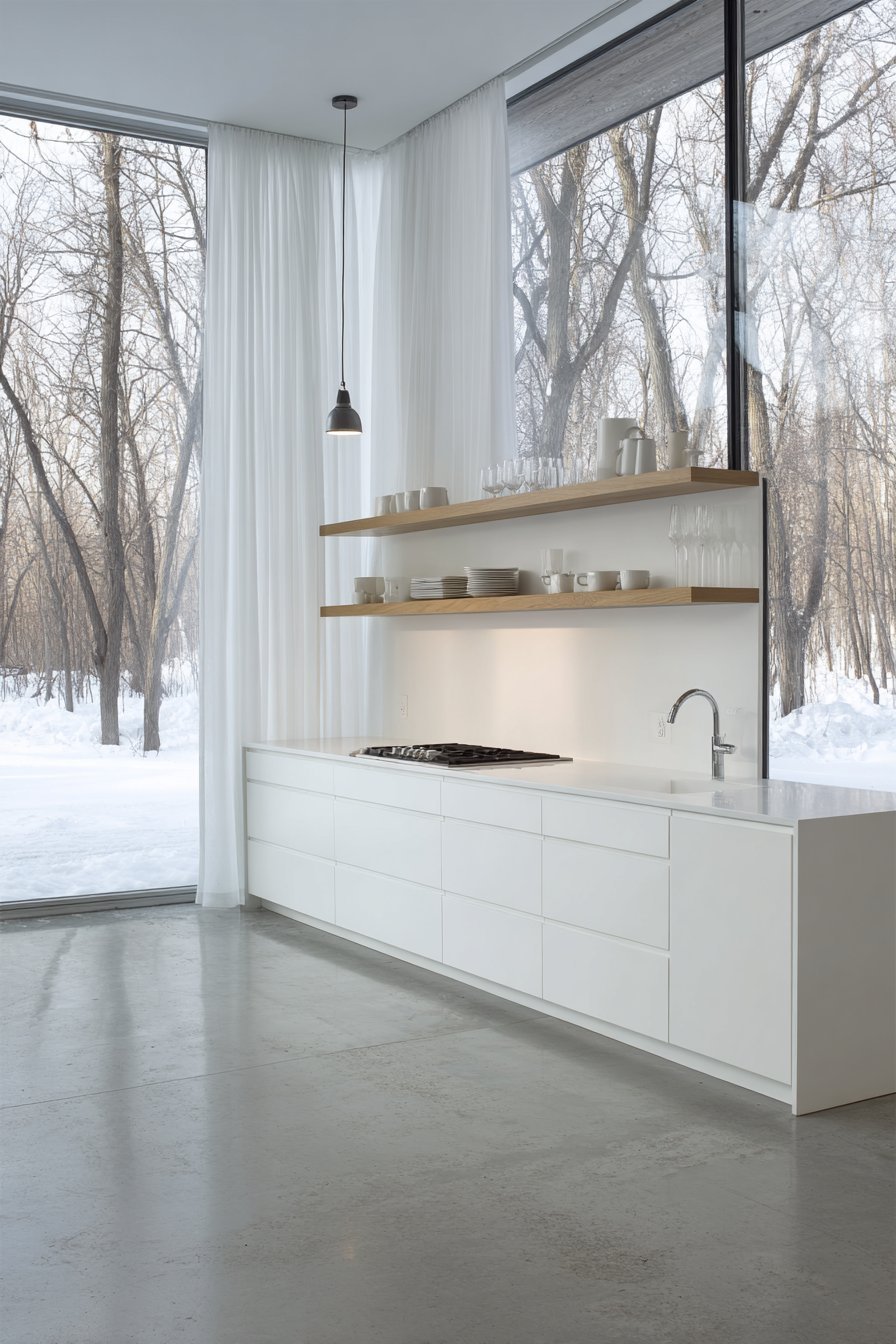
Polished light concrete flooring adds matte industrial sophistication underfoot. A simple industrial-style pendant in matte black provides focused task lighting. The single fixture maintains visual simplicity while offering practical illumination. The window view becomes integral to the design itself.
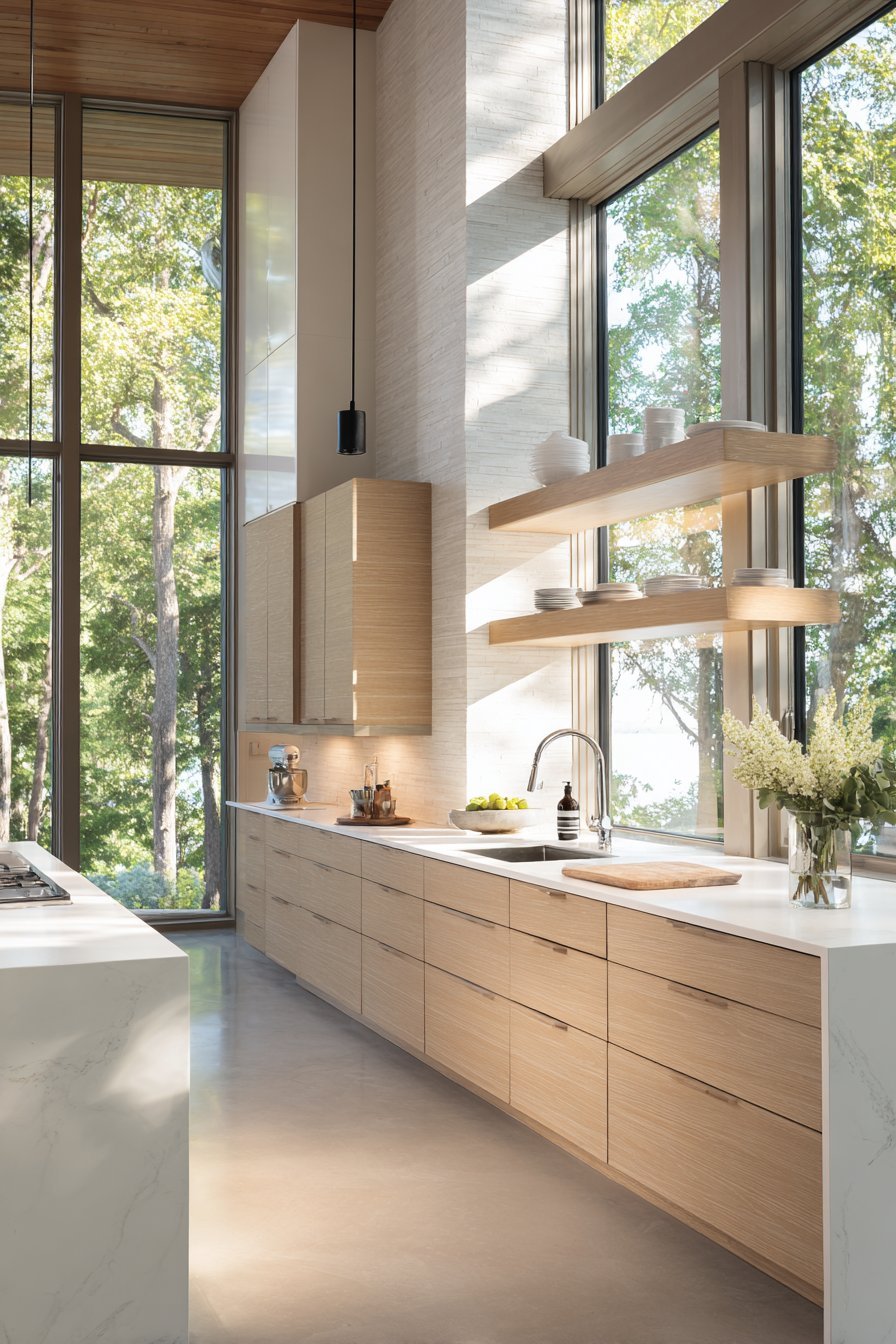
Sheer white curtains soften the abundant light without blocking it. The filtered illumination creates even, flattering lighting throughout the day. The design proves that minimal kitchens can maximize architectural features. The windows become the primary decorative element requiring no additional embellishment.
Key Design Tips:
- Maximize windows to make natural light the primary design feature
- Use single-wall layouts to emphasize horizontal lines and length
- Install floating shelves to break up continuous cabinetry runs
- Choose matte concrete flooring for industrial sophistication
- Select single statement pendants for focused task lighting
- Use sheer curtains to filter rather than block abundant natural light
12. Walnut Island Kitchen with White Perimeter
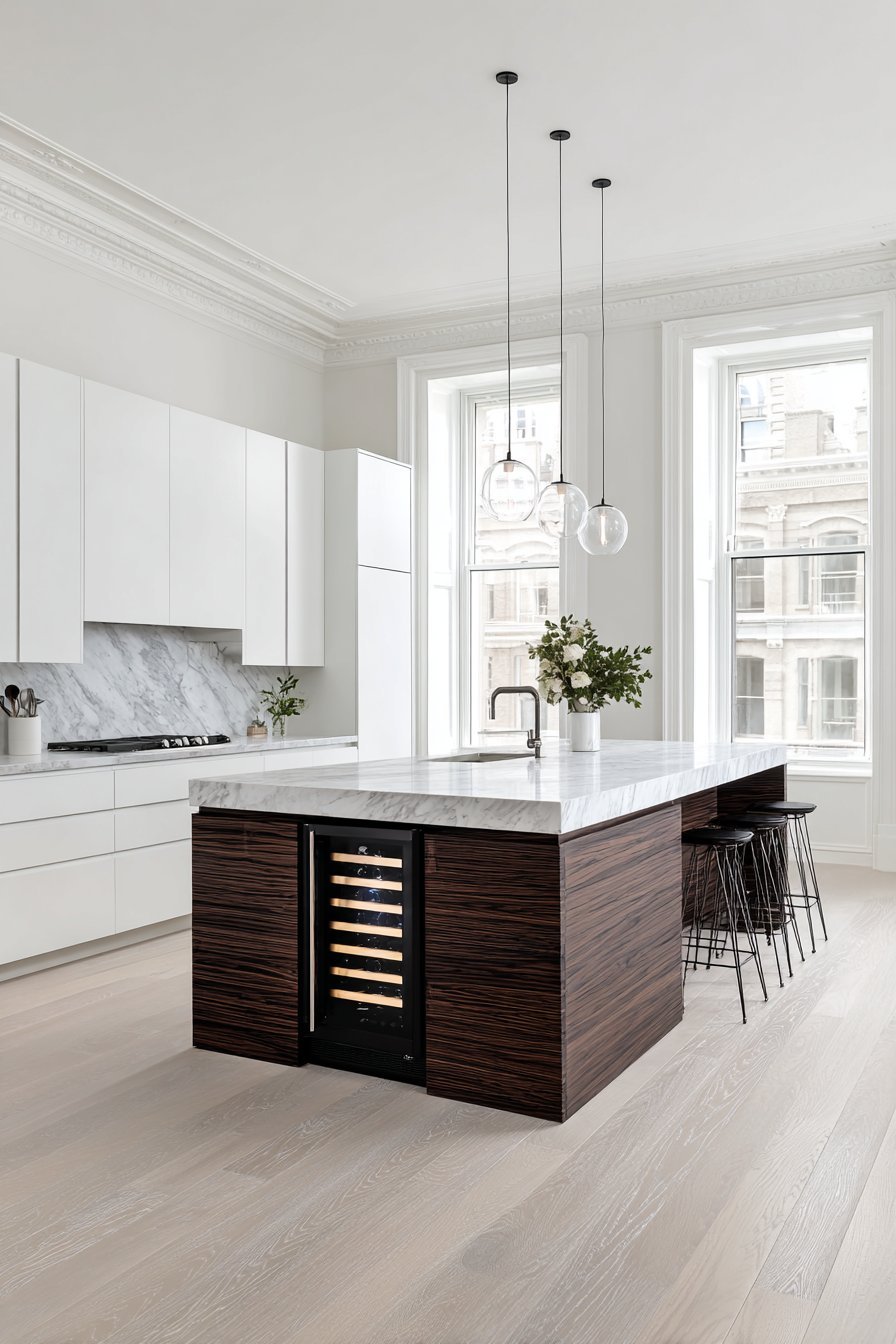
A central island in dark walnut wood provides dramatic focal point against all-white surroundings. White flat-panel cabinets with integrated pulls line the perimeter walls. The island includes built-in wine refrigerator and storage drawers. The wood grain runs horizontally emphasizing the island’s length.
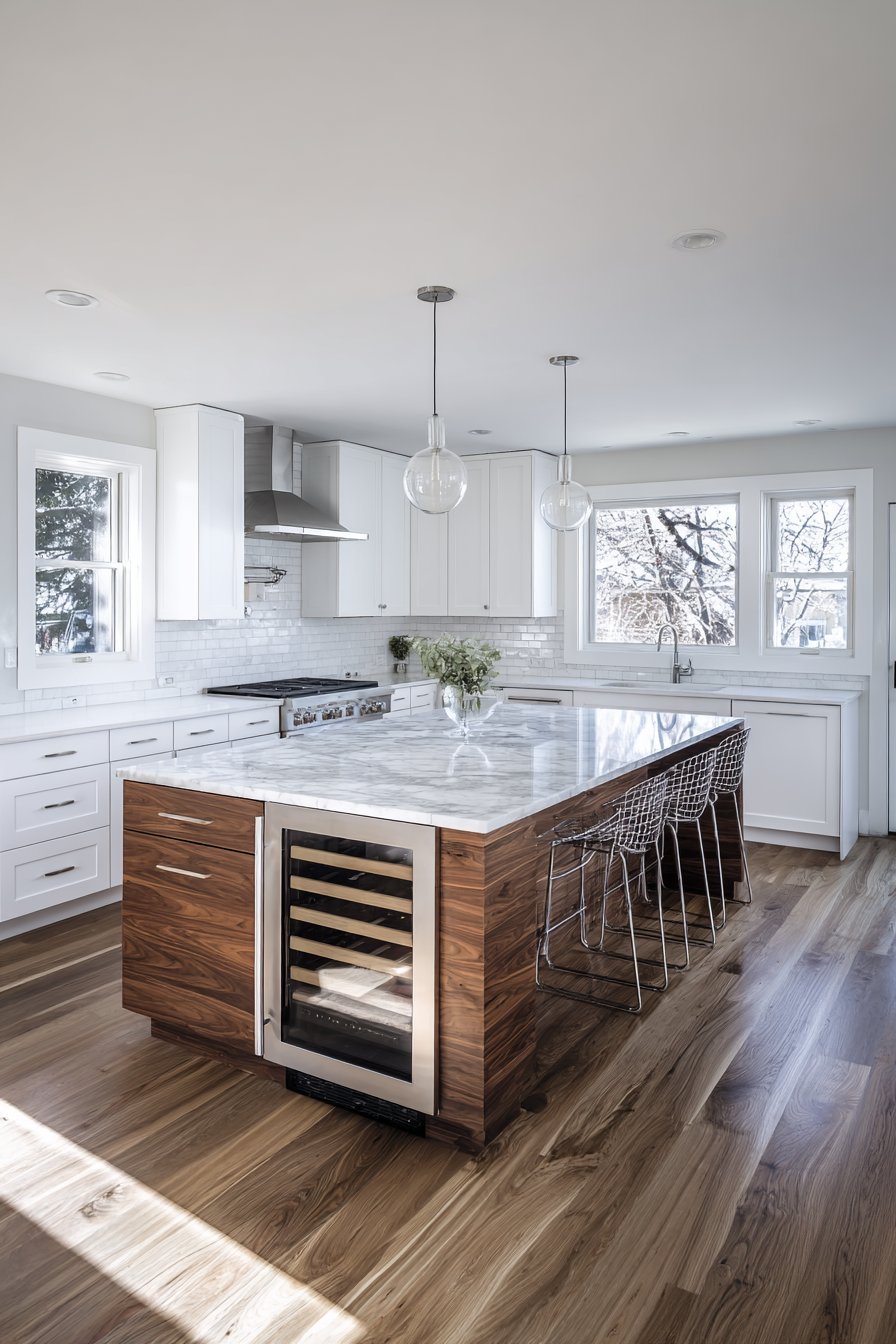
White marble countertops with grey veining top both island and perimeter cabinets. The natural stone adds luxury and organic pattern throughout. White ceramic tile backsplash features minimal grout lines maintaining clean appearance. Wide-plank white oak flooring with natural finish adds warmth underfoot.
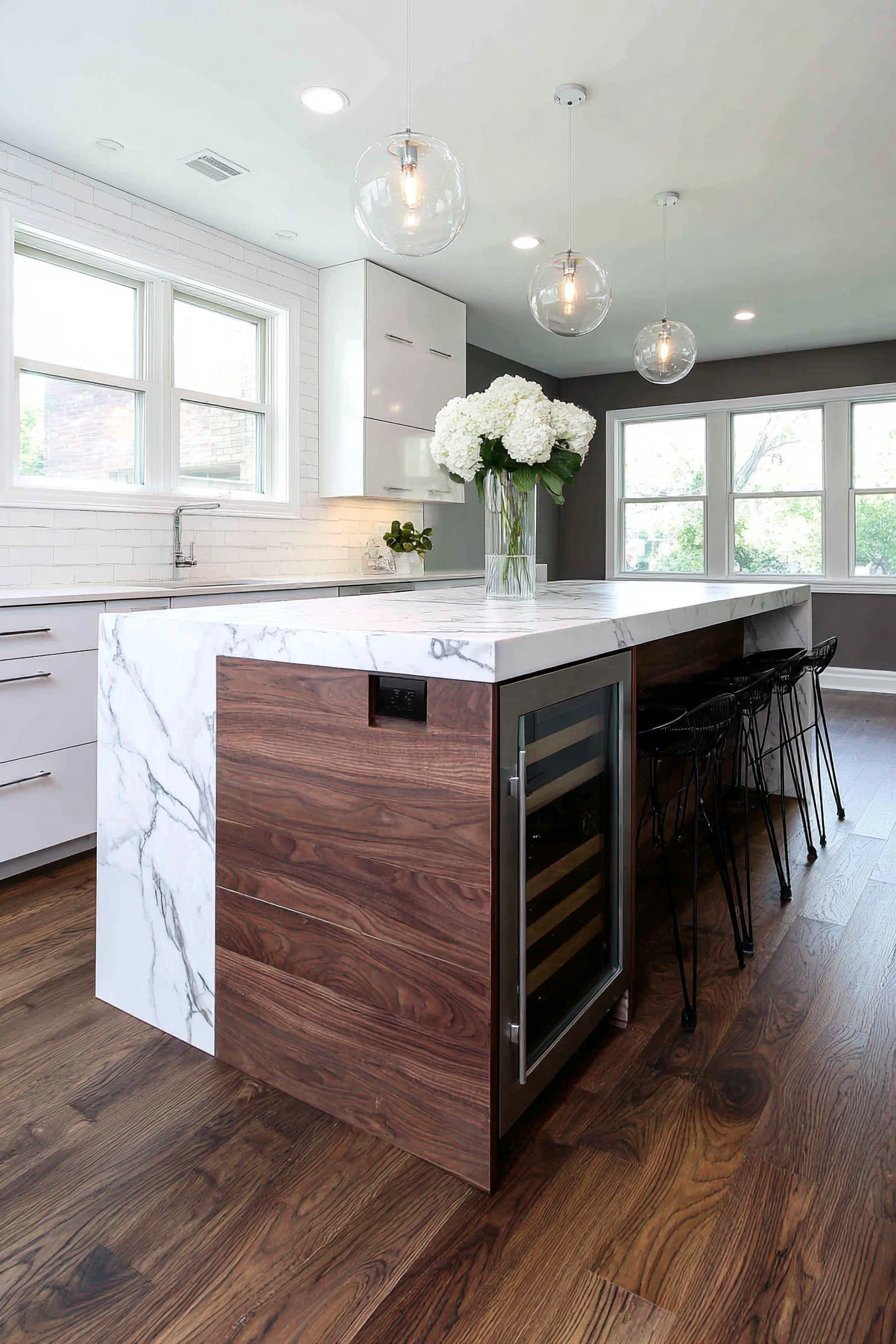
Four minimal wire bar stools in matte black provide seating without visual weight. The transparent frames maintain open sightlines through the space. Two simple glass pendants hang above the island providing focused illumination. Multiple windows create even natural light from several directions.
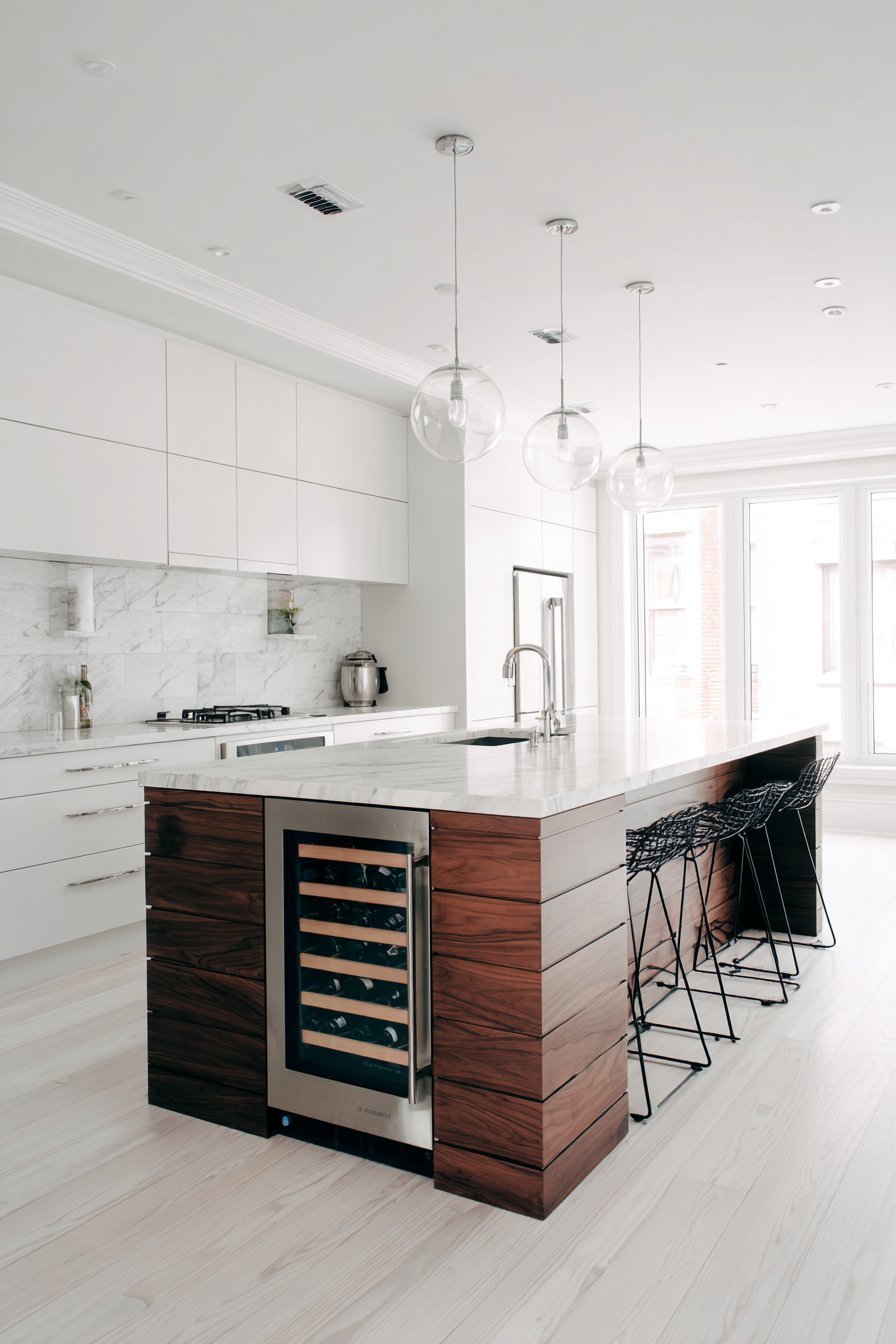
The dark wood island anchors the space while the white perimeter keeps things bright. The single statement element demonstrates restraint within minimal design philosophy. Every other surface remains neutral allowing the island to command attention. The design proves that one bold choice can define an entire space.
Key Design Tips:
- Use one statement element to create focal point in minimal spaces
- Choose horizontal wood grain to emphasize length and flow
- Select wire or transparent furniture to maintain open sightlines
- Install built-in specialty appliances for integrated functionality
- Use natural stone with veining for organic luxury
- Create even lighting through multiple window placements
13. Vertical Storage Kitchen with Floating Shelf
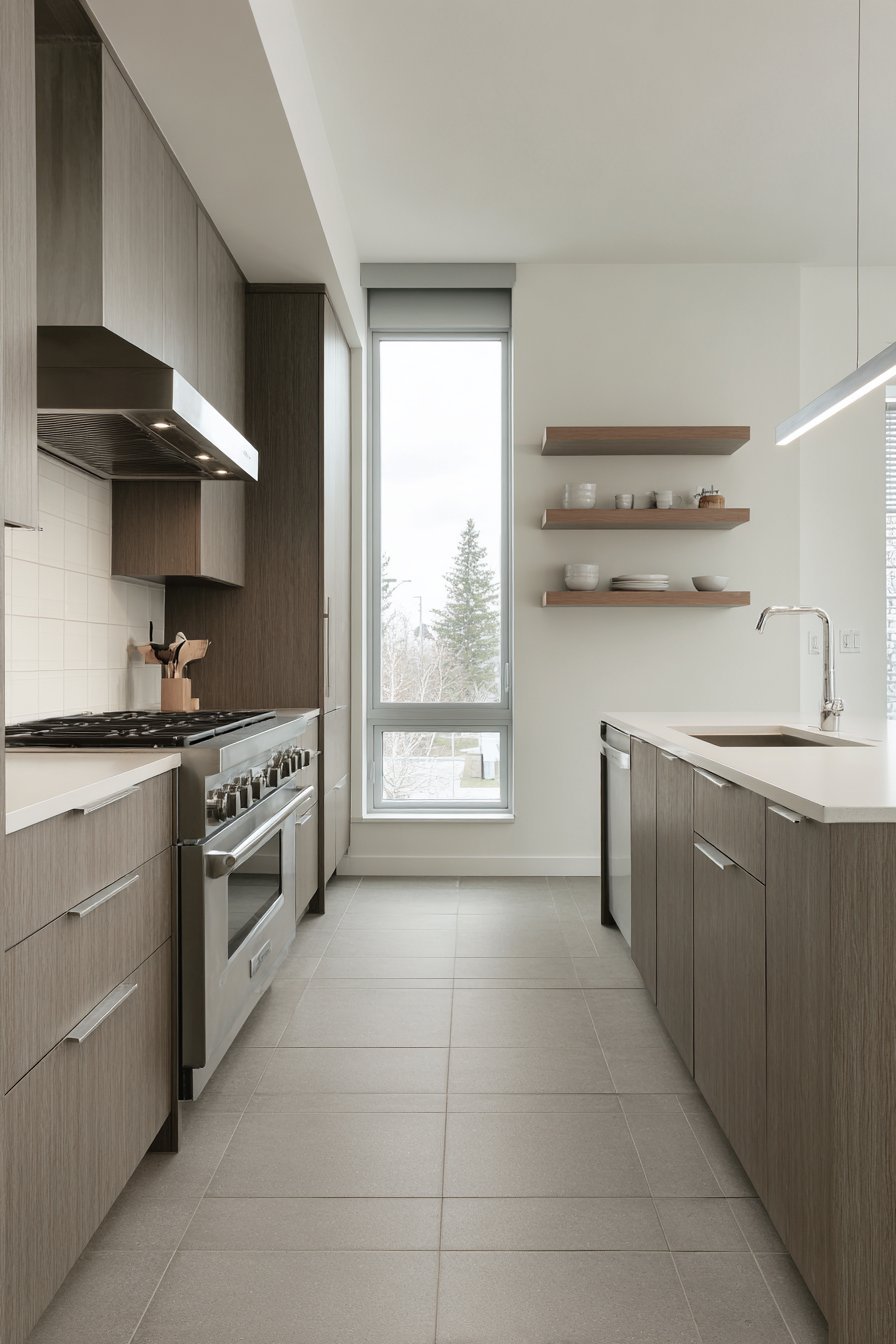
Floor-to-ceiling cabinets in light grey matte finish emphasize vertical storage capacity. The design eliminates upper wall cabinets entirely creating dramatic height emphasis. A single floating shelf in white oak replaces traditional upper cabinetry. The horizontal line breaks the vertical emphasis with warmth.
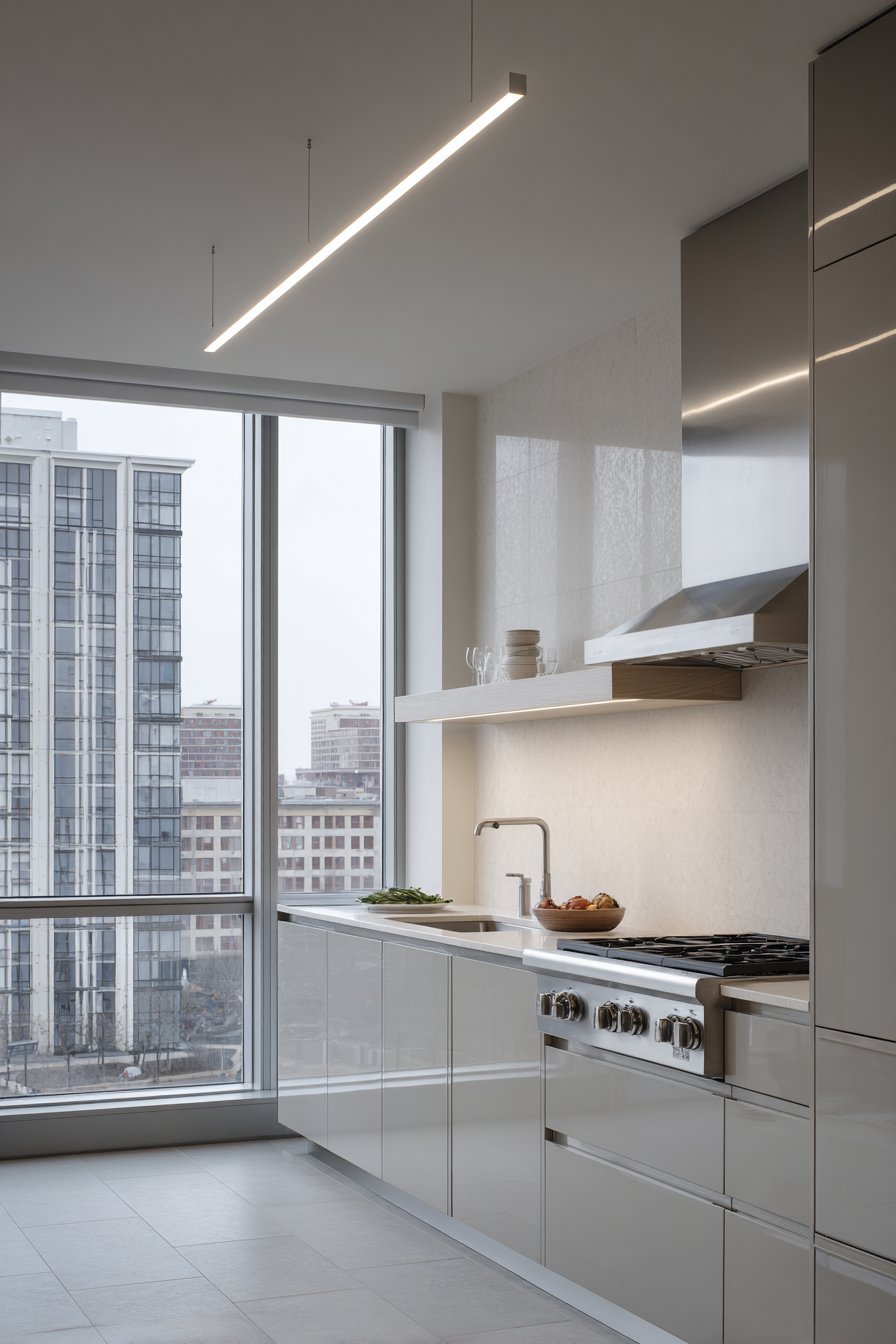
White solid surface countertops provide seamless work surfaces with integrated backsplash. The material rises four inches creating easy-to-clean surfaces. A professional-grade stainless steel range becomes the only decorative focal point. Simple chrome cabinet pulls provide minimal hardware visibility.
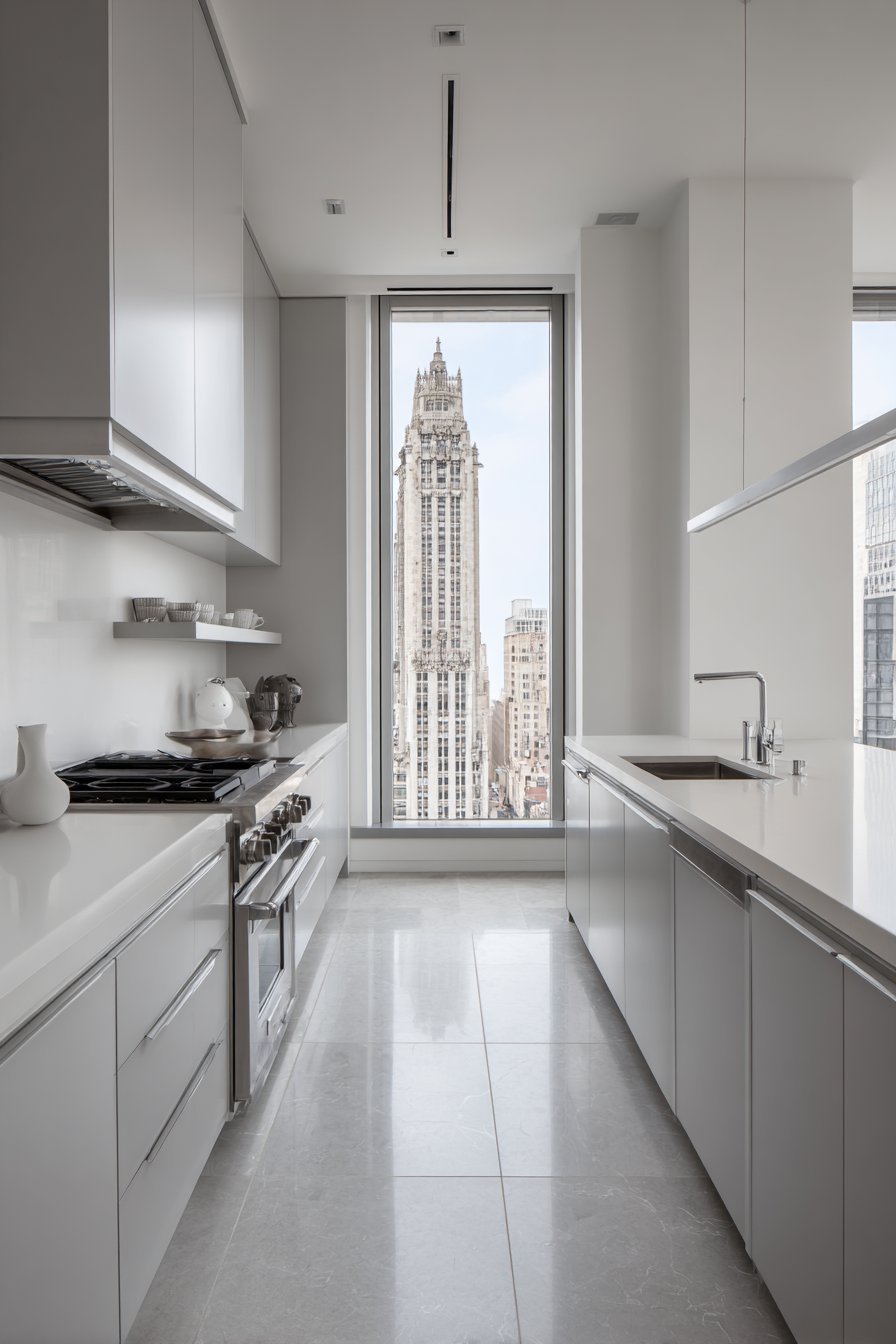
Large-format grey porcelain tile covers the floor in matching tones. A single linear LED pendant light spans the length of the prep area. Natural morning light from a large window illuminates the primary workspace. The vertical emphasis makes the ceiling feel higher than actual measurements.
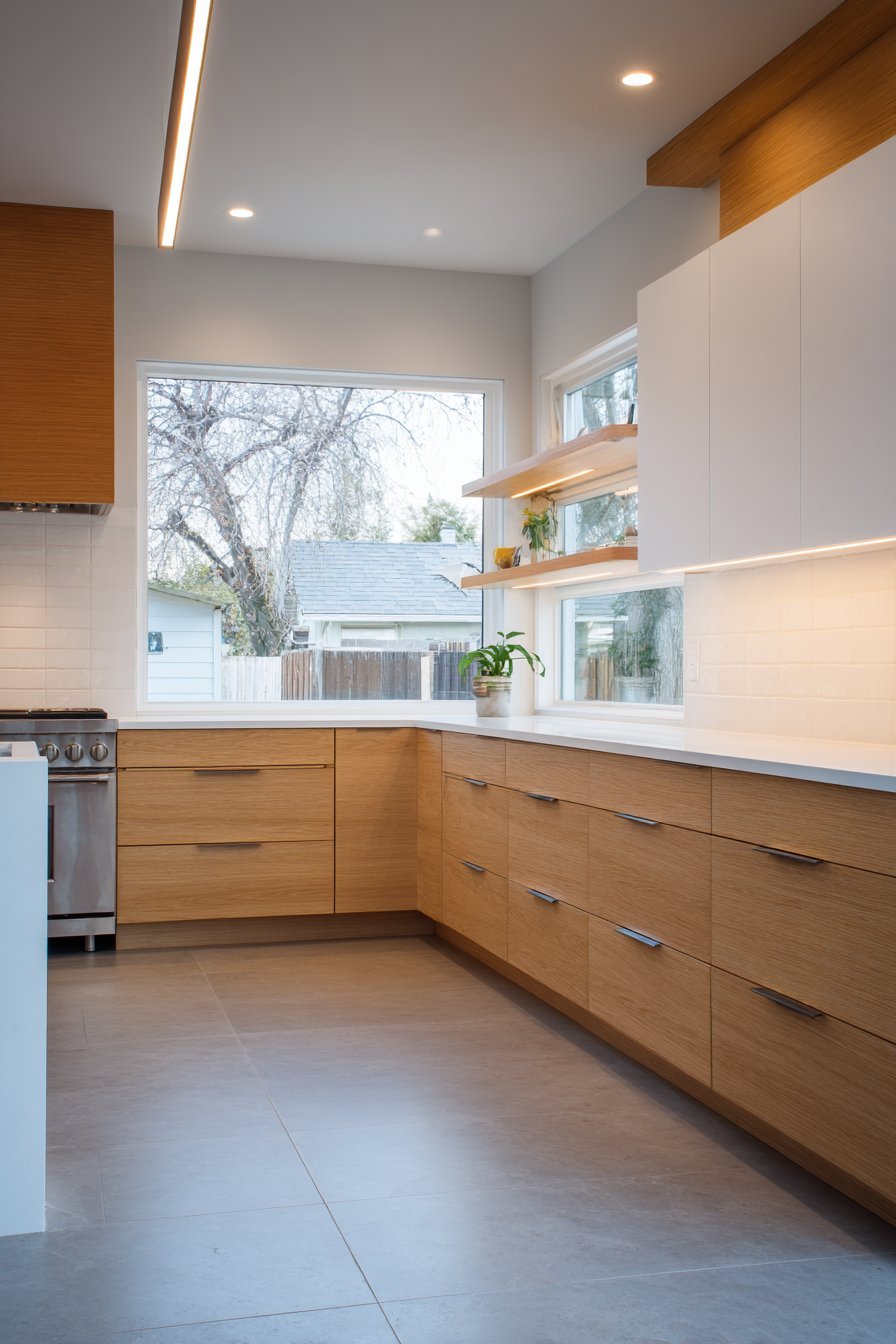
The elimination of upper cabinets creates unusual openness in the kitchen. The single floating shelf provides display space without visual weight. The design demonstrates how removing traditional elements can transform spatial perception. Vertical storage maximizes capacity while maintaining horizontal breathing room.
Key Design Tips:
- Install floor-to-ceiling cabinets to maximize vertical storage capacity
- Replace upper cabinets with single floating shelves for openness
- Use integrated backsplash to create seamless, easy-clean surfaces
- Choose professional-grade appliances as sculptural focal points
- Install linear pendant lights to emphasize length and direction
- Select large-format tiles to reduce grout lines and visual noise
14. Peninsula Kitchen with Shaker-Style Cabinets
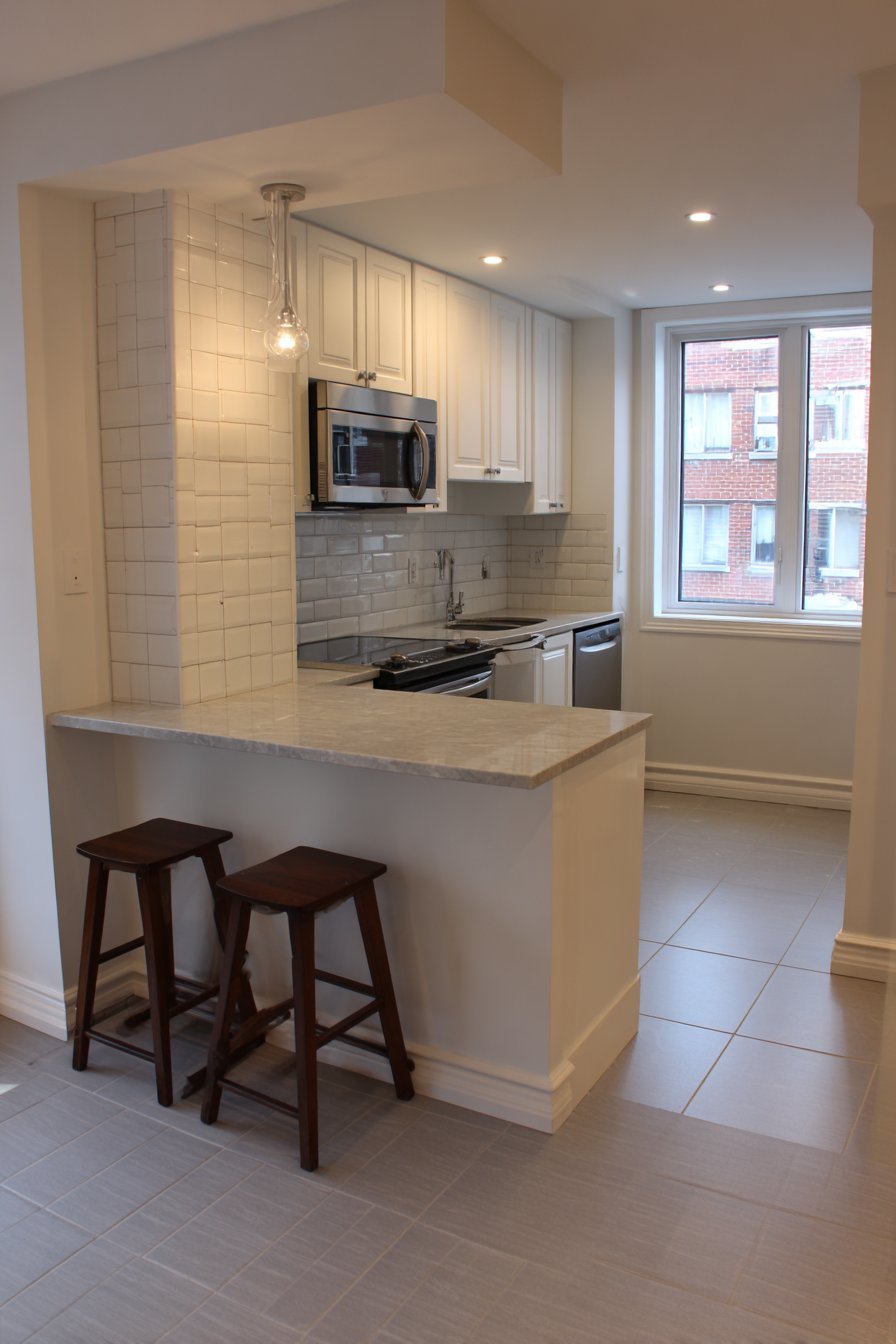
A small peninsula extends from the main counter creating subtle separation. White shaker-style cabinets with simple profiles provide detail within minimal framework. The classic door style adds interest without overwhelming simplicity. Grey quartz countertops with fine white veining span all surfaces.
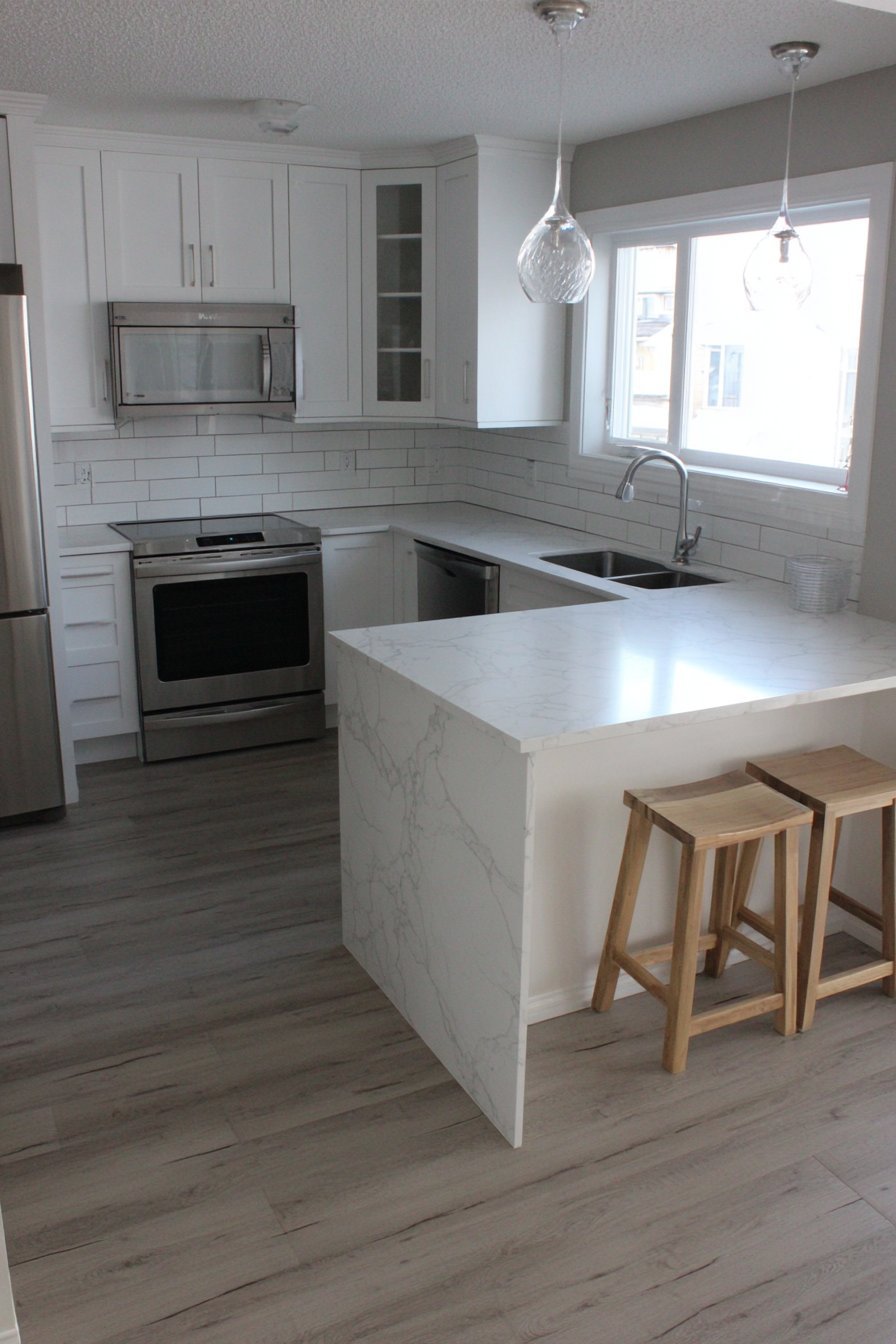
White subway tile backsplash with grey grout adds texture while maintaining simplicity. The traditional tile choice works within the minimal aesthetic through restraint. The peninsula houses built-in microwave and provides breakfast bar seating. Two simple wooden stools offer casual dining spots.
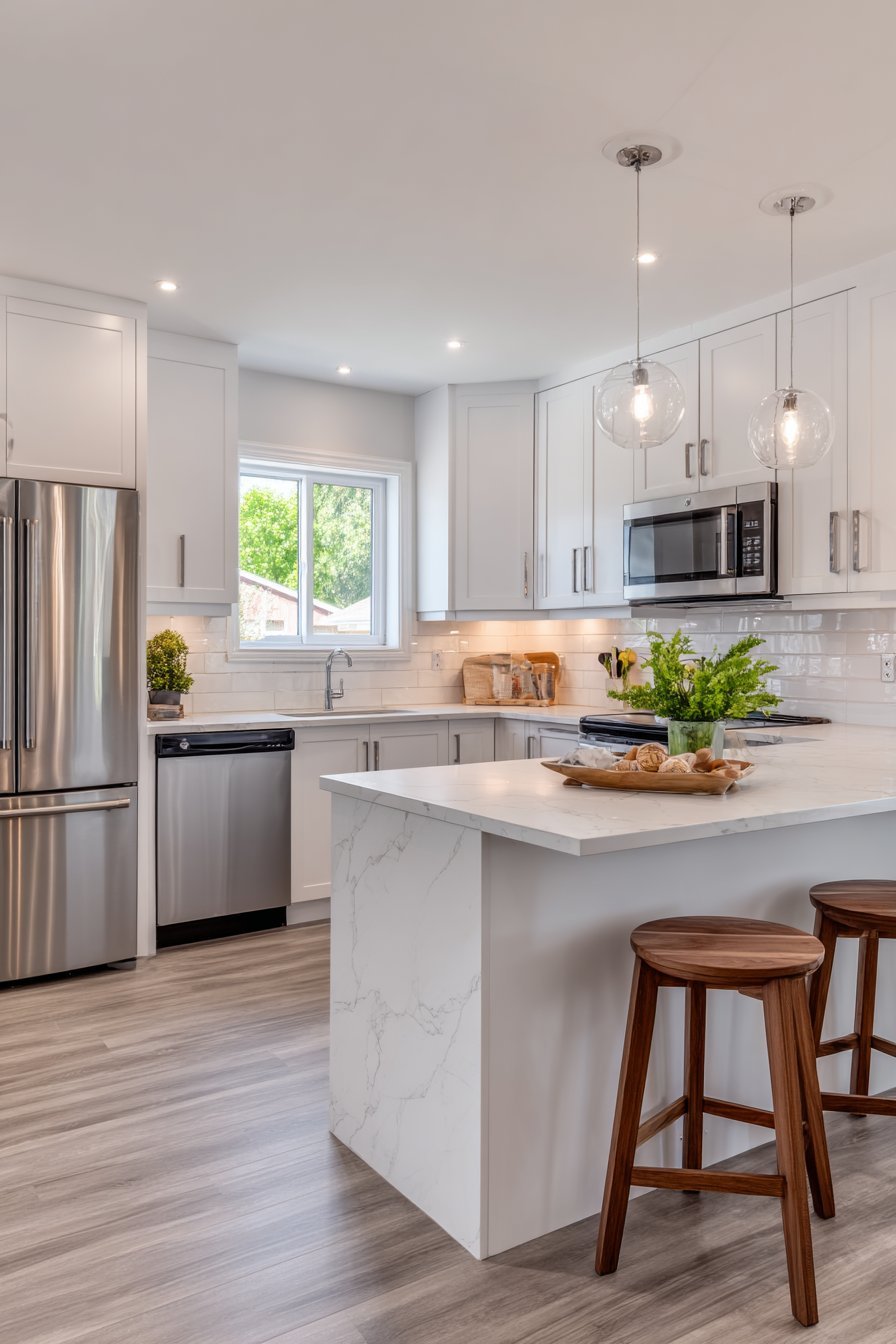
Stainless steel appliances use standard rather than built-in profiles. This practical choice reduces costs while maintaining clean appearance. Light grey vinyl plank flooring mimics natural wood convincingly. Three simple glass pendants hang above the peninsula providing focused lighting.
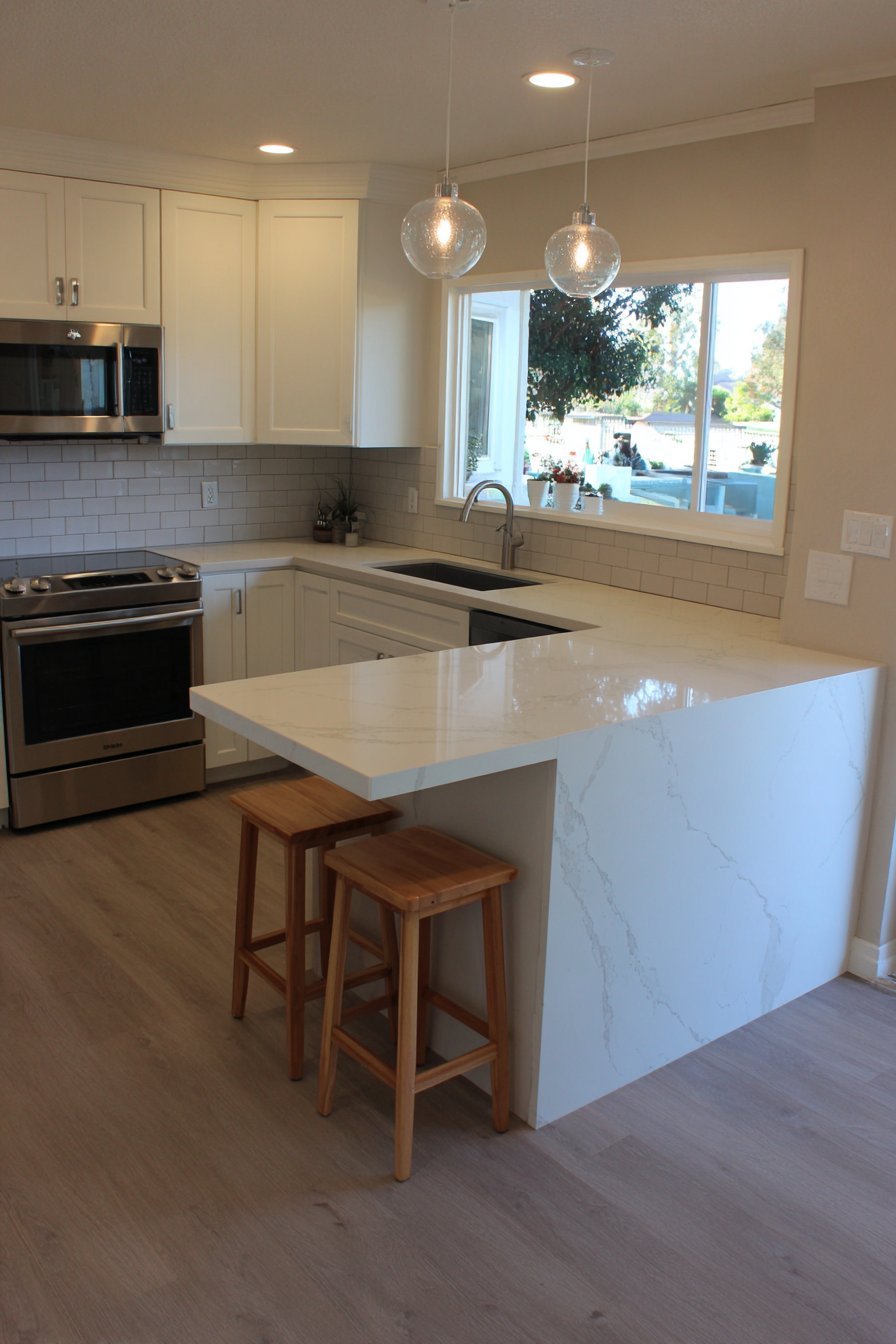
Natural light from a window above the sink provides primary illumination. The design demonstrates accessible minimal kitchen design using readily available materials. Budget-conscious choices don’t sacrifice aesthetic quality when selected thoughtfully. The space proves minimal design suits all price points.
Key Design Tips:
- Use peninsulas to create separation without building walls
- Choose shaker-style cabinets for subtle detail within minimal frameworks
- Install built-in appliances within peninsulas for space efficiency
- Select vinyl plank flooring as affordable wood alternative
- Use standard appliance profiles to reduce costs while maintaining aesthetics
- Maximize natural window light to reduce artificial lighting needs
15. Concrete Countertop Kitchen with Industrial Edge
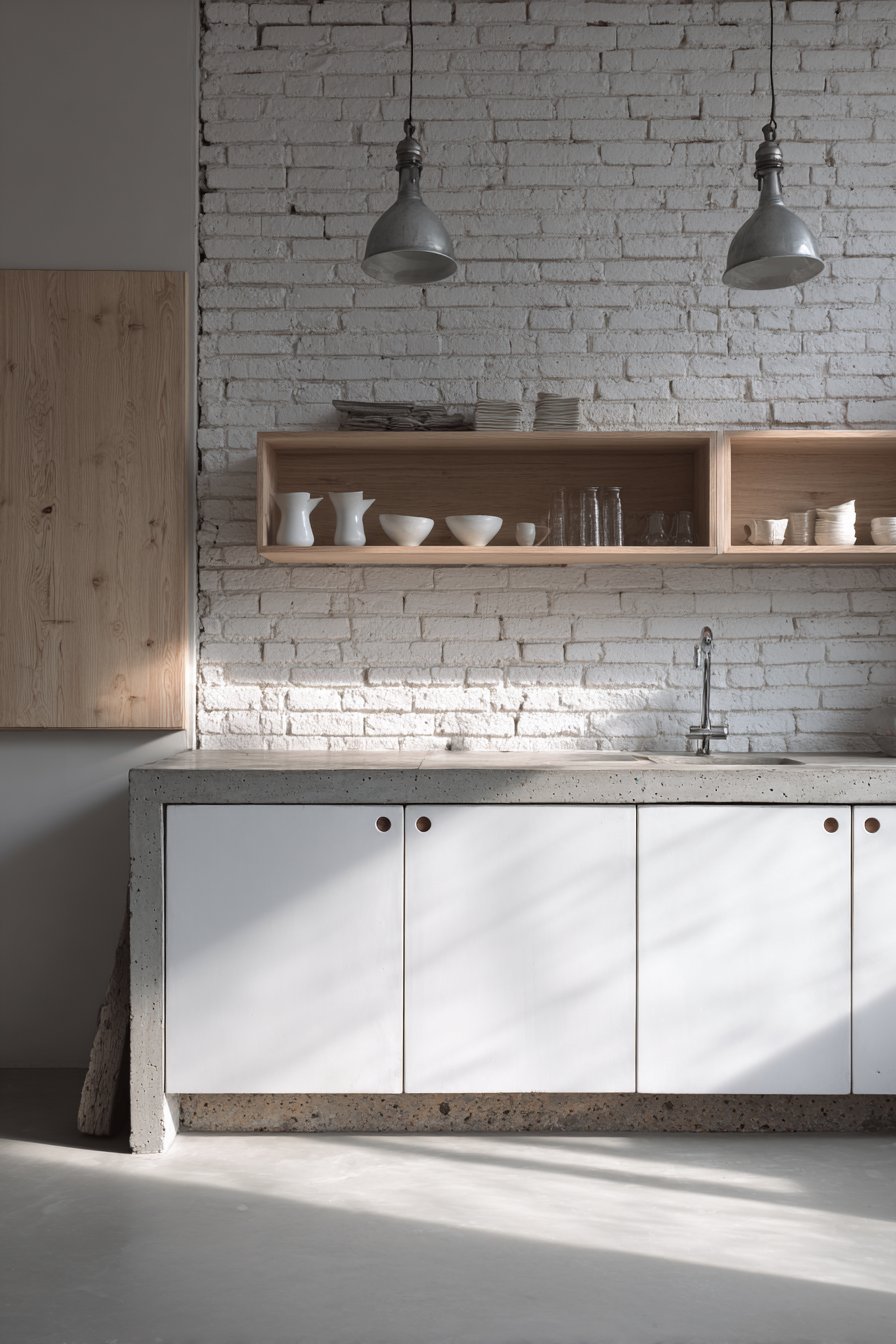
A striking concrete countertop serves as primary feature atop white flat-panel cabinets. The concrete shows natural color variation and slight texture. This organic quality adds industrial interest to the minimal palette. Small circular chrome knobs provide the only traditional hardware detail.
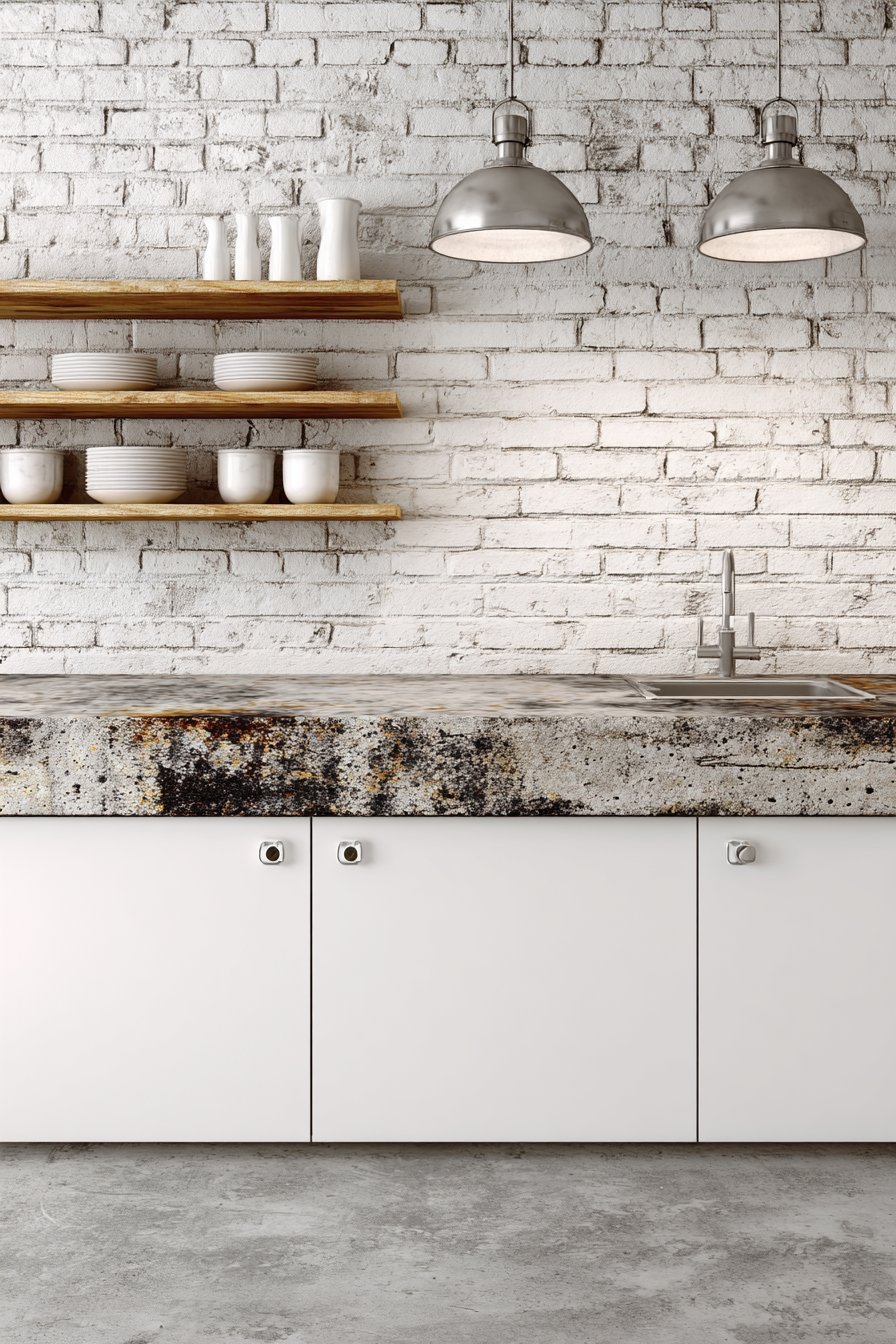
Open wooden shelving in natural maple displays carefully curated white ceramic pieces. The natural wood adds warmth against the concrete and white combination. White painted brick backsplash reveals visible texture beneath the paint. A stainless steel undermount sink pairs with modern chrome faucet.
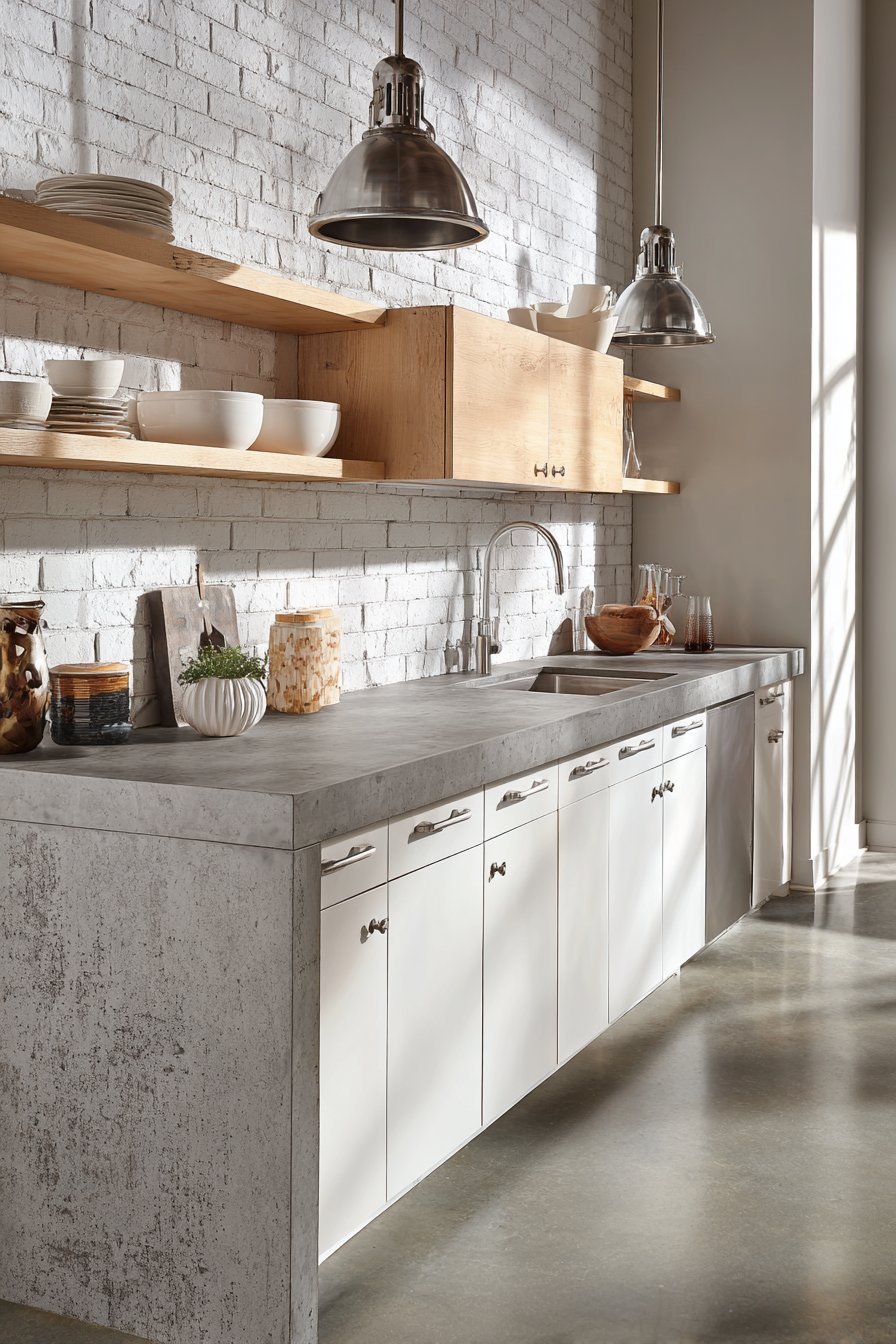
Polished concrete flooring in light grey matches the countertops creating material continuity. Two industrial-style pendant lights with metal shades hang above the work area. Natural side lighting creates shadows emphasizing the concrete texture throughout the day. The varied surface catches light differently creating visual interest.
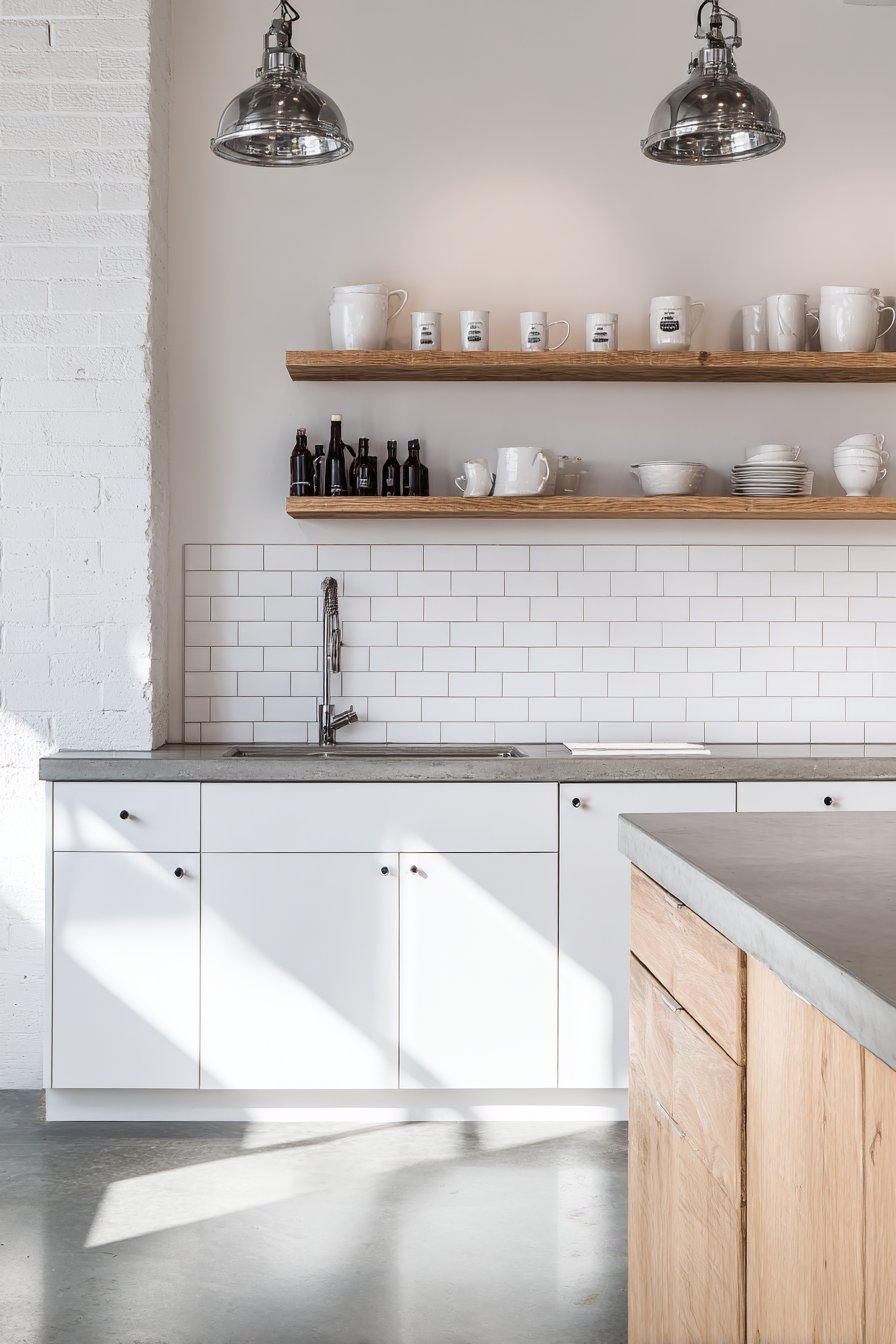
The industrial influence shows through material choices rather than decorative elements. The concrete provides durability matching its aesthetic appeal. The tactile quality invites touch while maintaining minimal visual simplicity. The design demonstrates how material selection creates character within restraint.
Key Design Tips:
- Choose concrete countertops for industrial sophistication and durability
- Display only curated collections on open shelving
- Use painted brick for subtle texture within smooth surfaces
- Match flooring material to countertops for visual continuity
- Install industrial pendants to reinforce material aesthetic
- Maximize side lighting to emphasize texture and surface variation
16. High-Gloss White Galley with Glass Backsplash
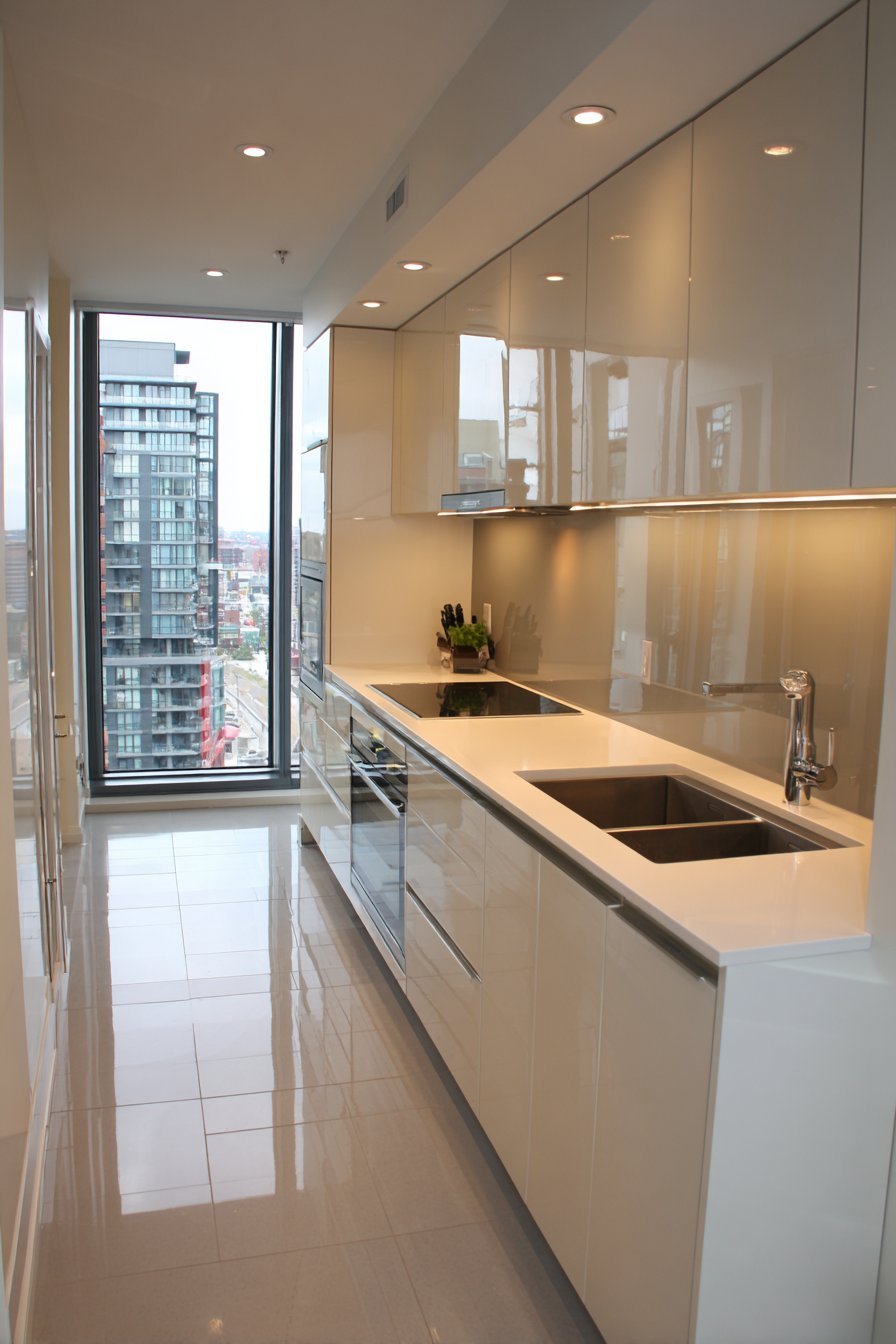
Ultra-streamlined galley design features high-gloss white cabinets creating bright reflective surfaces. The cabinets create floating effect through concealed organization systems. White glass backsplash extends from counter to ceiling creating seamless vertical surface. Integrated LED lighting within cabinets enhances the floating appearance.
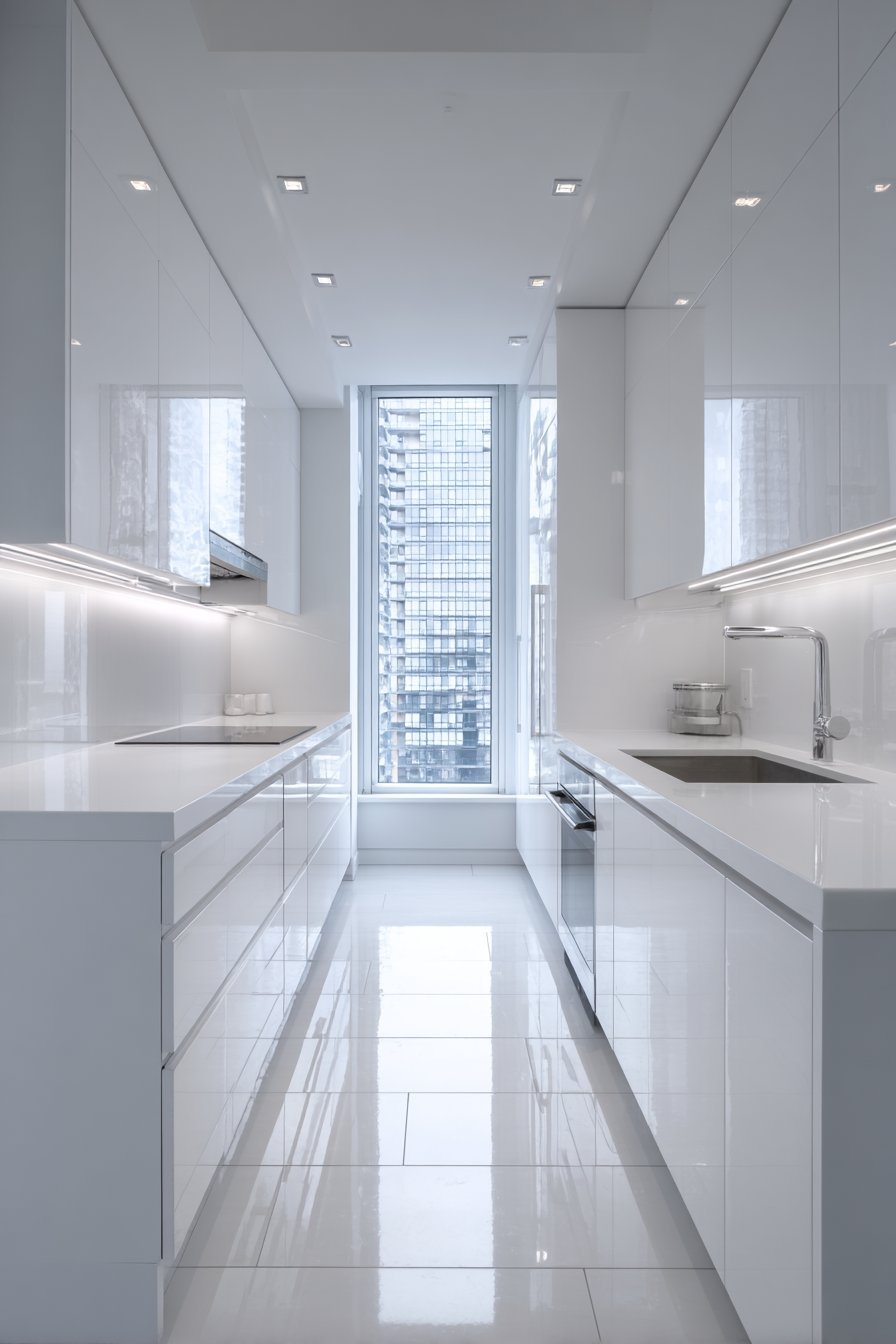
Thin-profile white quartz countertop features sharp square edges emphasizing geometric precision. A simple rectangular stainless steel sink with minimalist faucet provides functional workspace. Light grey porcelain tile flooring grounds the bright upper surfaces. One end features full-height window flooding the space with light.
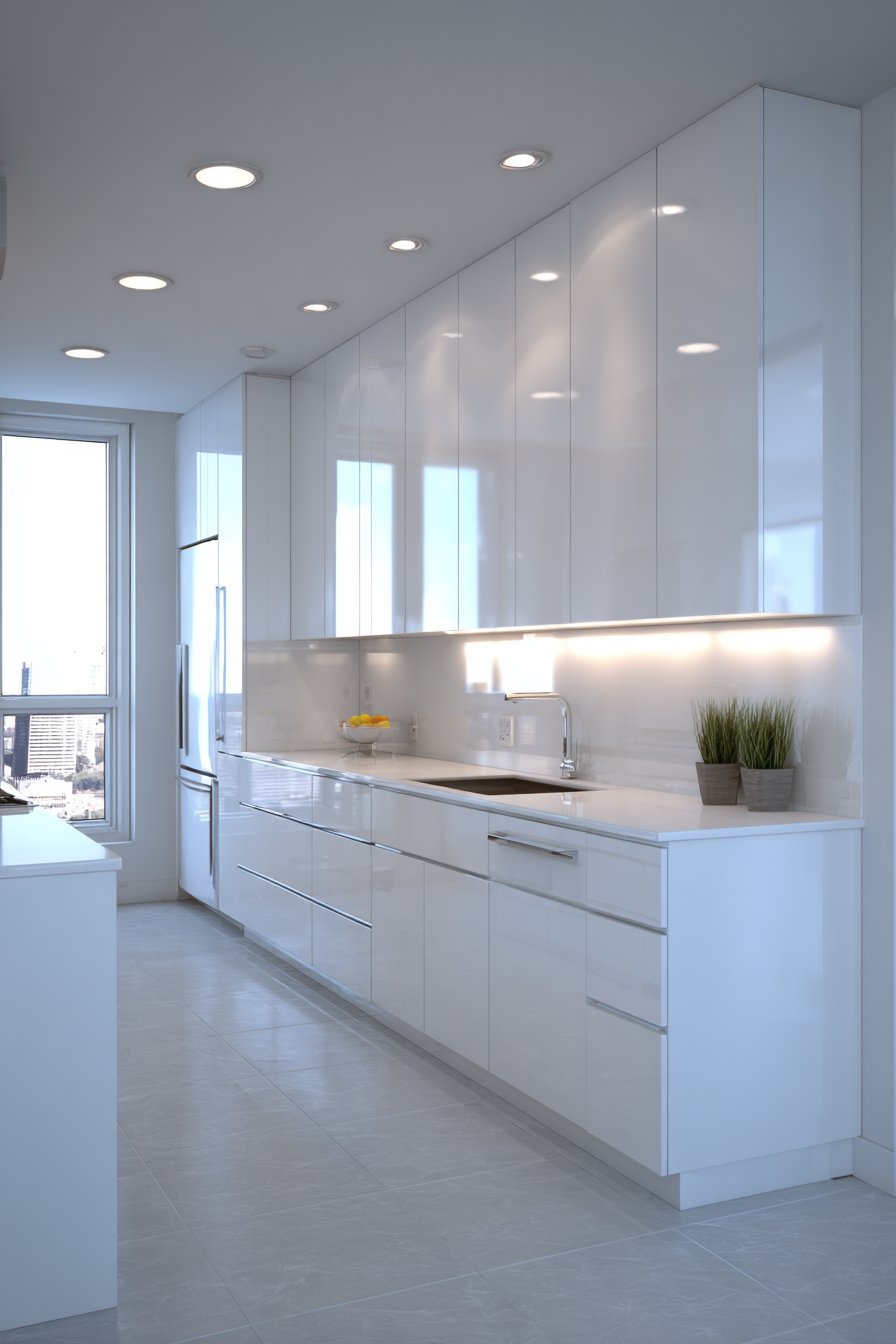
Hidden storage maximizes organization within every cabinet door. The streamlined exterior conceals maximum interior functionality. The glass backsplash reflects light multiplying the brightness. Reflective materials amplify both natural and artificial light sources.
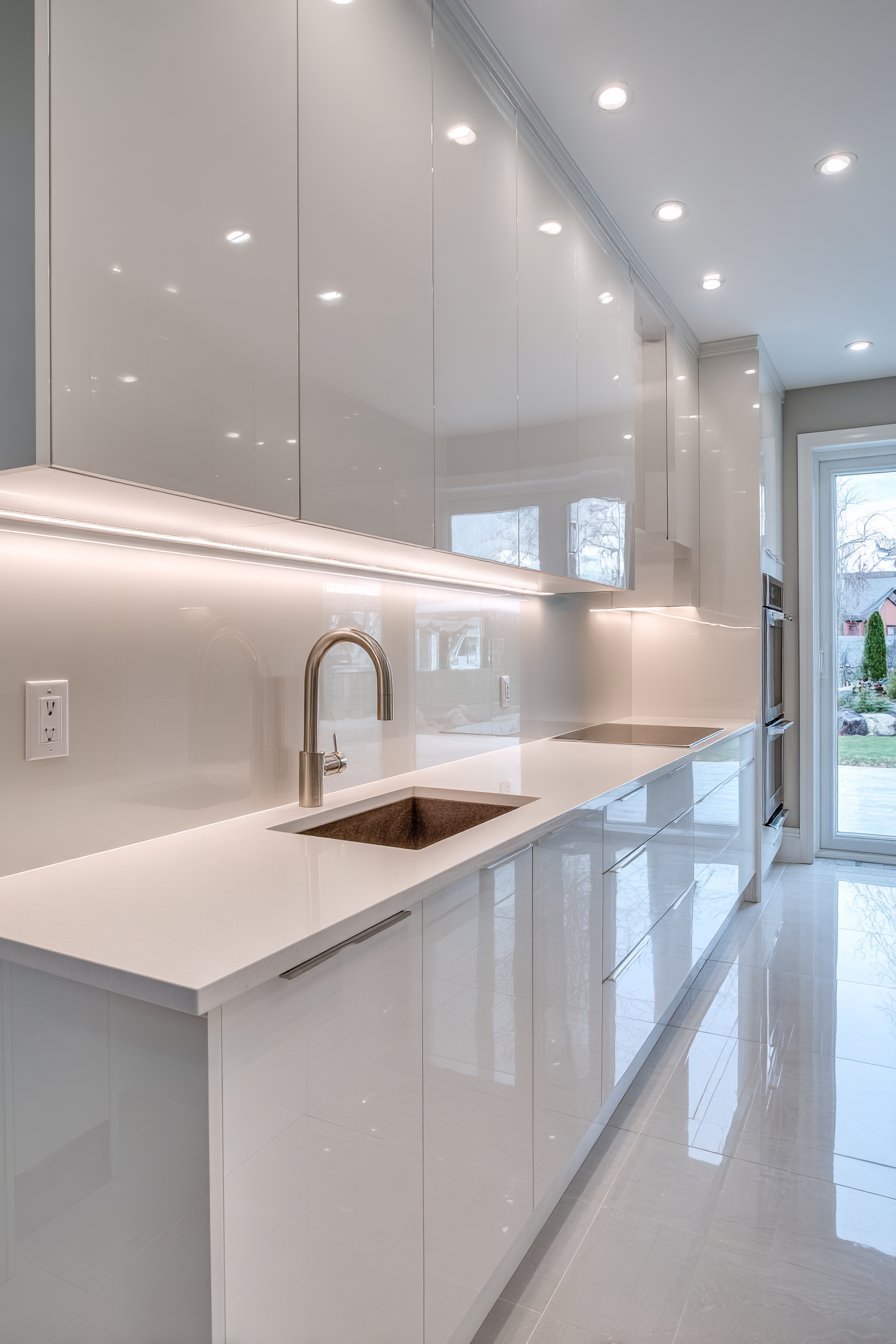
The galley layout suits narrow spaces while maintaining impressive style. The high-gloss finish requires maintenance but delivers stunning visual impact. The design proves that compact spaces can achieve luxury through thoughtful material selection. Mirror-like surfaces create illusion of expanded space beyond actual dimensions.
Key Design Tips:
- Use high-gloss finishes to maximize light reflection in compact spaces
- Extend glass backsplash to ceiling for seamless vertical surfaces
- Integrate LED lighting to create floating cabinet effects
- Choose thin-profile countertops with sharp edges for geometric precision
- Install full-height windows at galley ends for maximum natural light
- Conceal maximum organization systems behind streamlined cabinet doors
17. Warm Oak Kitchen with Brass Accents
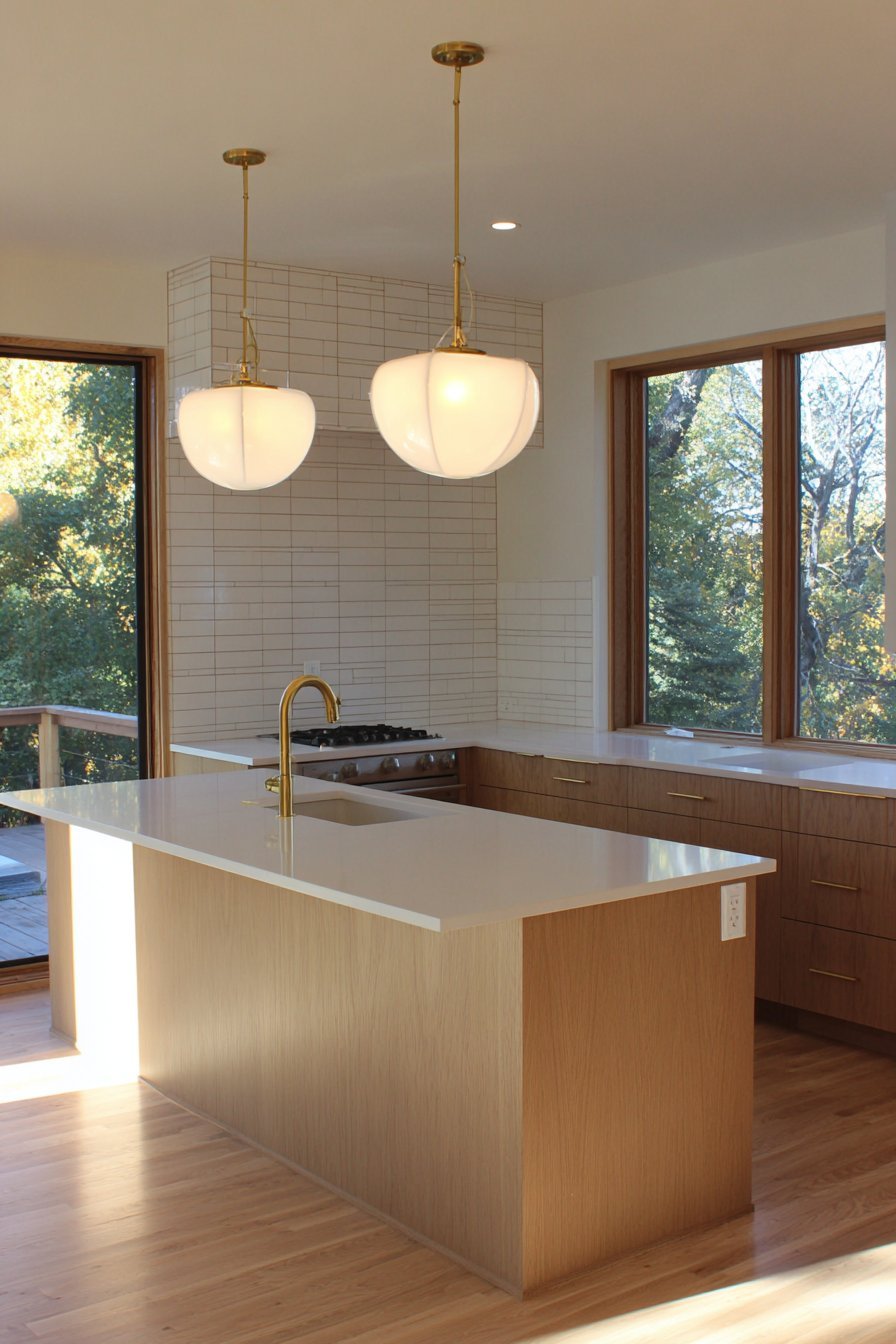
Light wood cabinets in white oak with visible grain bring warm minimalism. The natural material shows authentic wood character within minimal framework. Matte finish reduces sheen while highlighting grain patterns. Integrated groove handles eliminate protruding hardware maintaining clean surfaces.
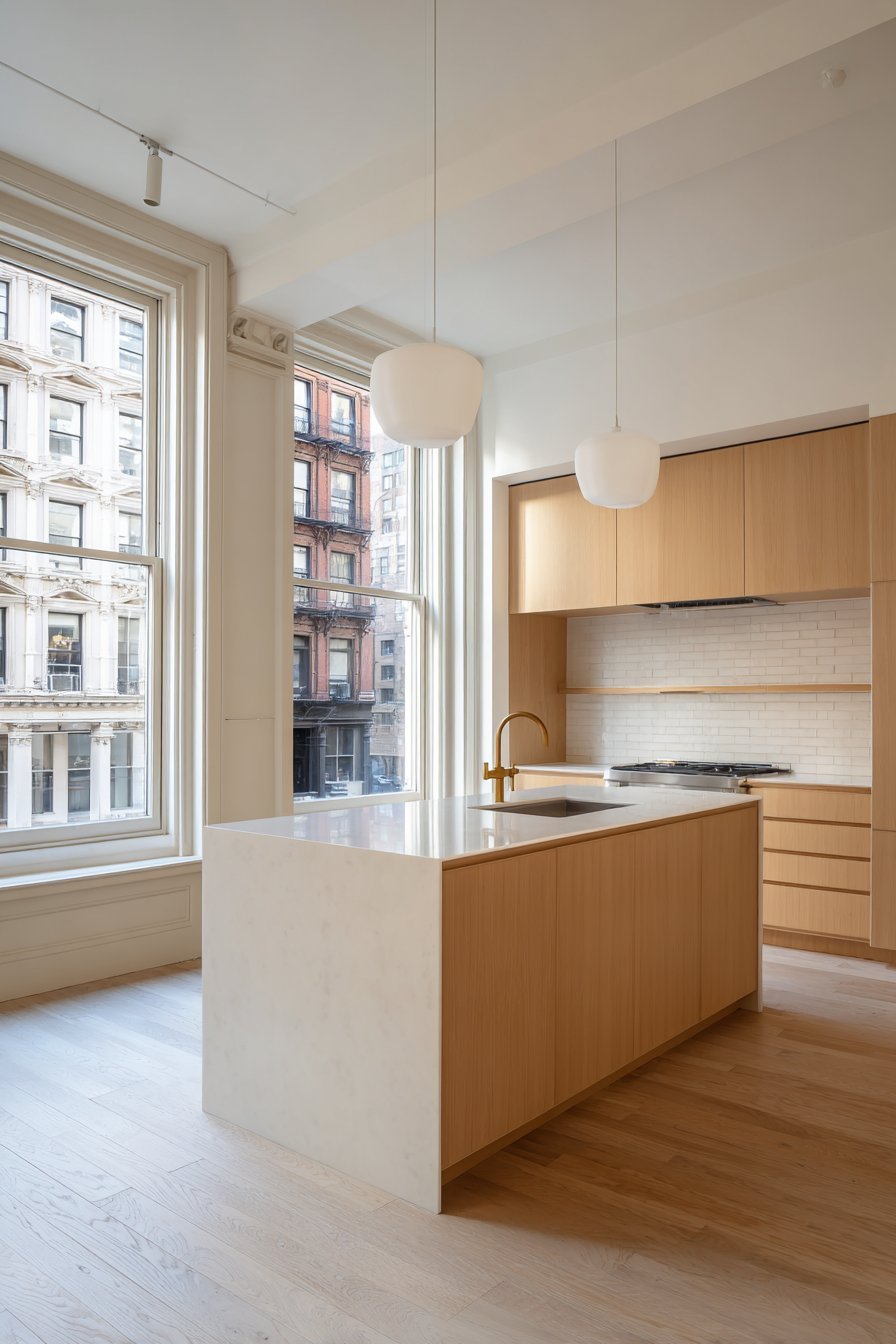
White Corian countertops create striking contrast against the natural wood. White ceramic tile backsplash with minimal grout lines maintains the clean look. The island features same oak cabinetry with waterfall edge white countertop. Brass fixtures including faucet and cabinet details add warm metallic accents.
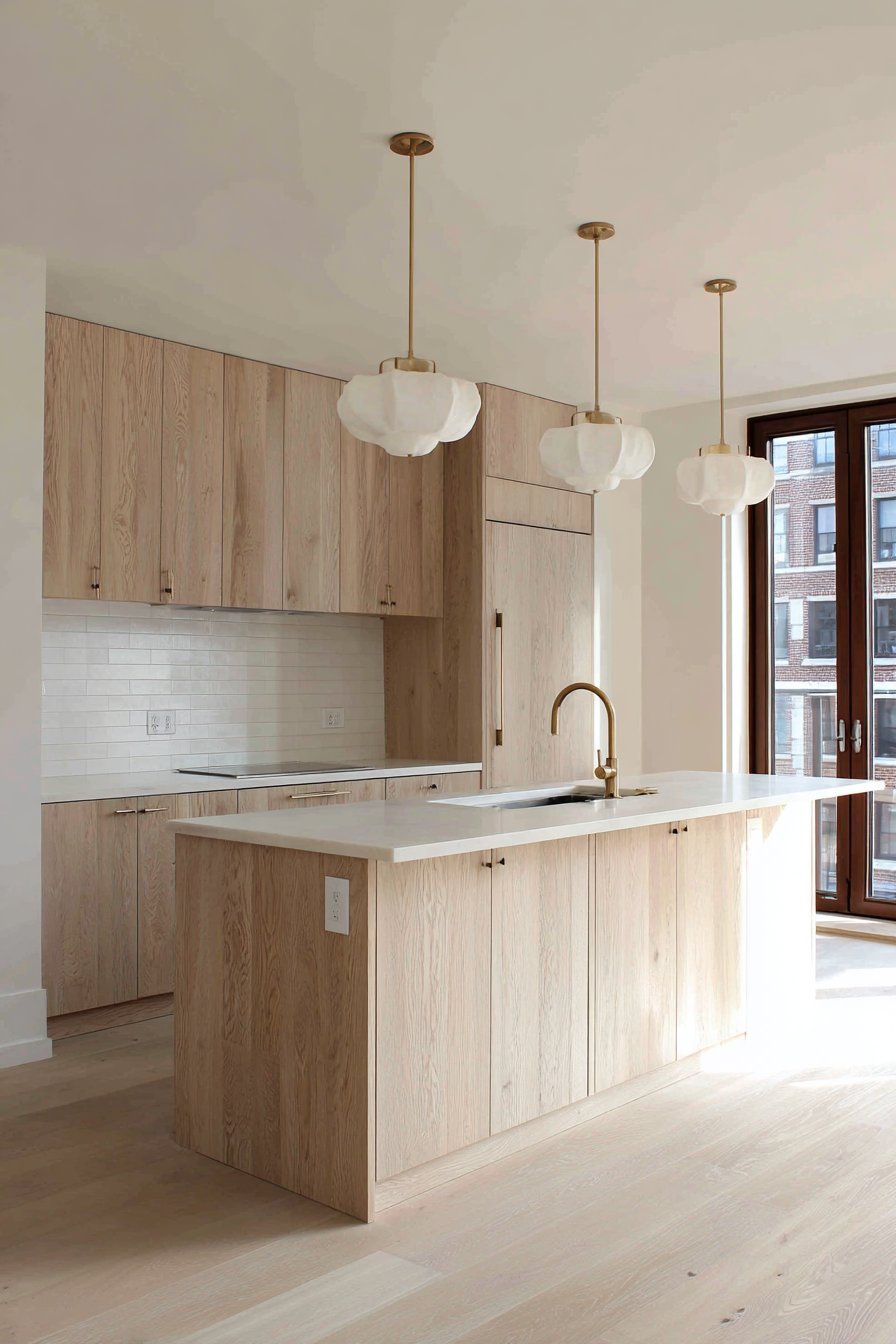
Matching white oak flooring in wide planks extends the wood presence throughout. Three simple pendant lights with white fabric shades provide ambient lighting. Large windows allow abundant natural light highlighting the wood grain. The natural illumination reveals the depth and variation in the oak.
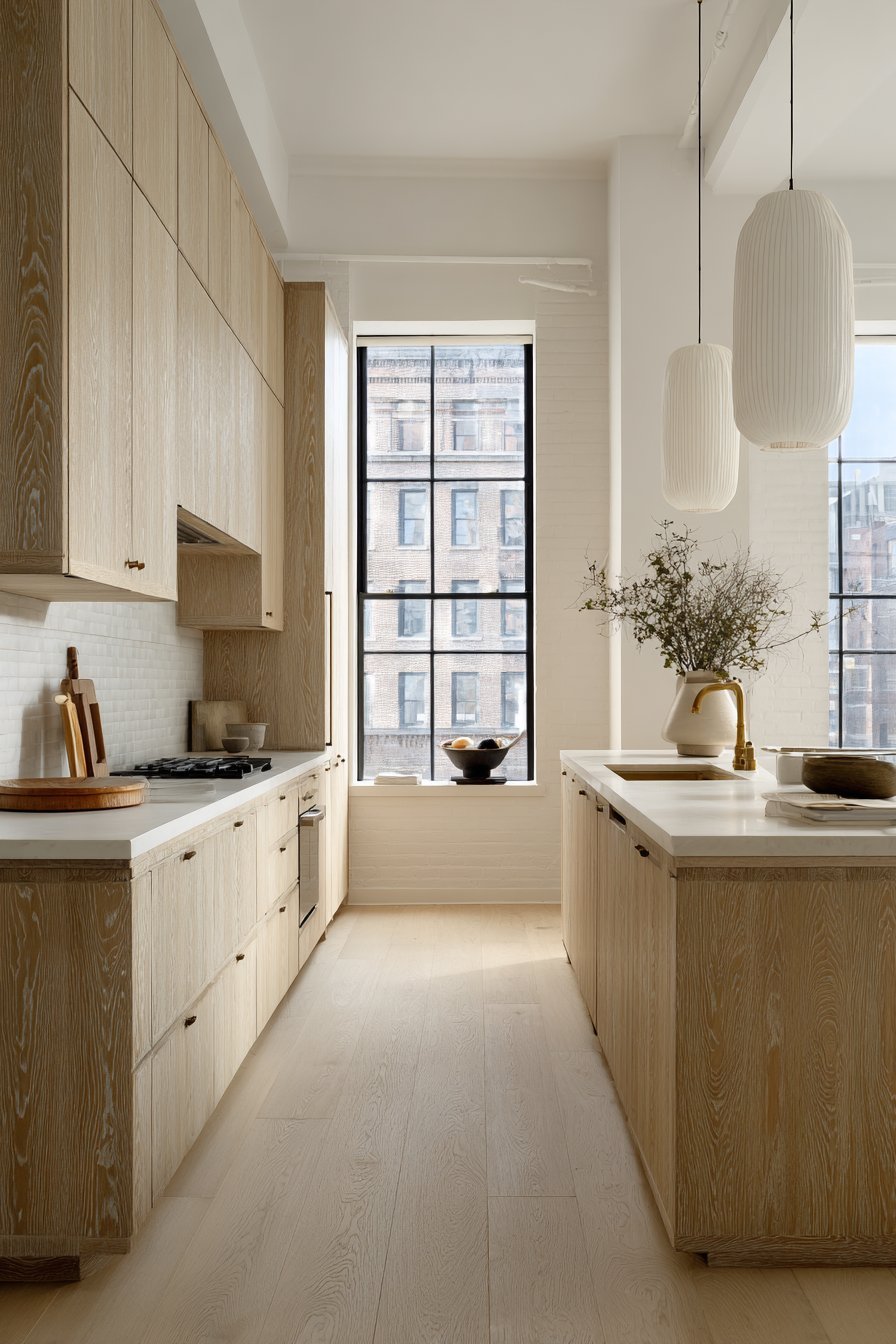
The design demonstrates that minimal kitchens can embrace warmth and natural materials. The wood grain provides organic pattern without overwhelming simplicity. Brass accents add luxury without excess. The combination creates inviting space maintaining minimal principles through restraint.
Key Design Tips:
- Choose natural wood cabinets to bring warmth within minimal frameworks
- Use groove handles integrated into doors rather than protruding hardware
- Add brass fixtures for warm metallic accents
- Match wood flooring to cabinetry for cohesive material flow
- Install fabric shade pendants for soft ambient lighting
- Maximize natural light to highlight wood grain depth and variation
18. Black Base Cabinets with Open Metal Shelving
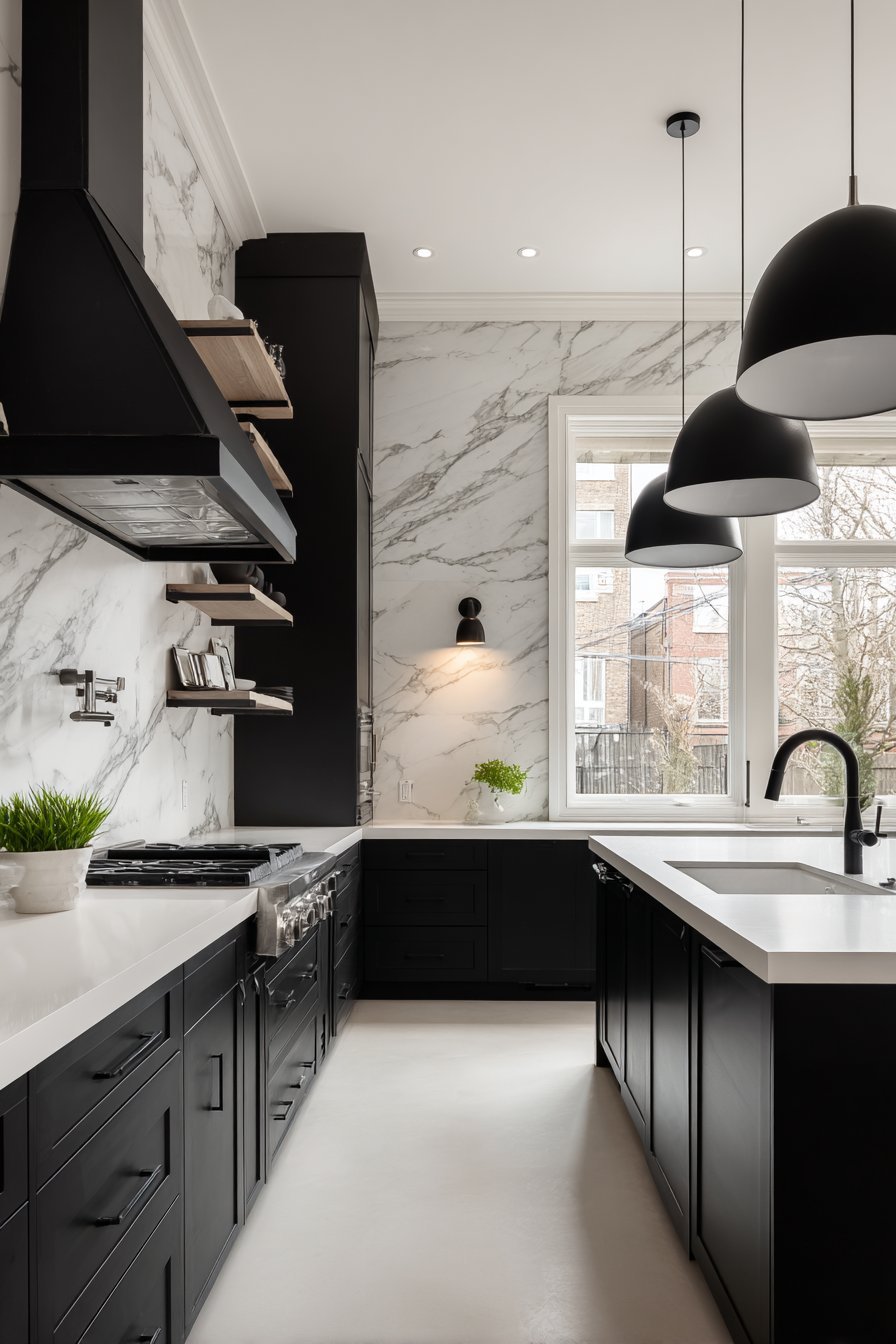
Bold matte black lower cabinets create dramatic anchor beneath open upper shelving. The elimination of upper cabinets creates unusual openness and accessibility. Simple black metal brackets support thick white oak shelves. White quartz countertops create striking contrast against black base cabinets.
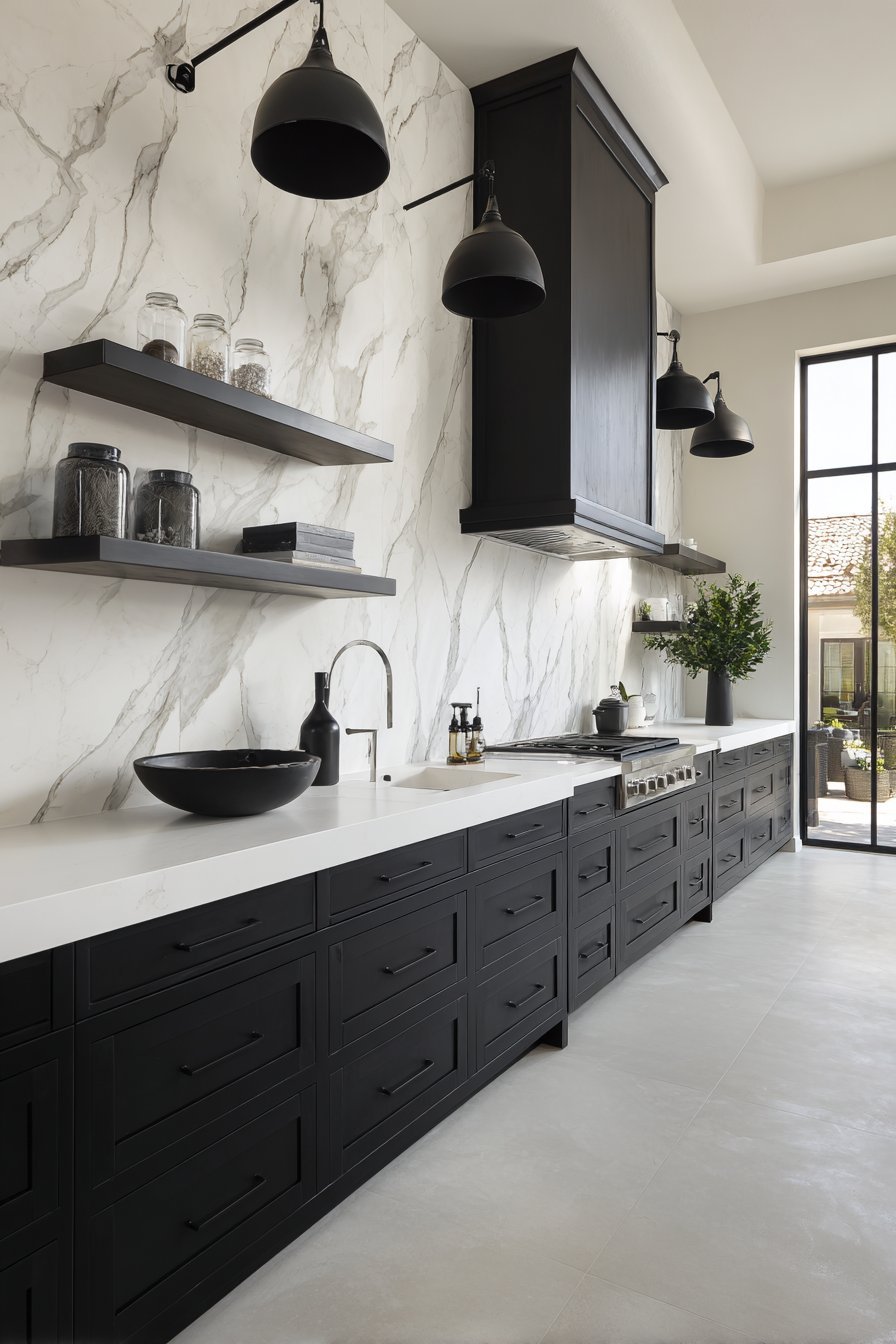
Large white marble-look tiles with grey veining cover the backsplash area. Black hardware including cup pulls and faucet provides cohesive details throughout. Light grey concrete flooring with smooth finish grounds the graphic composition. A black range hood continues the dark accent vertically.
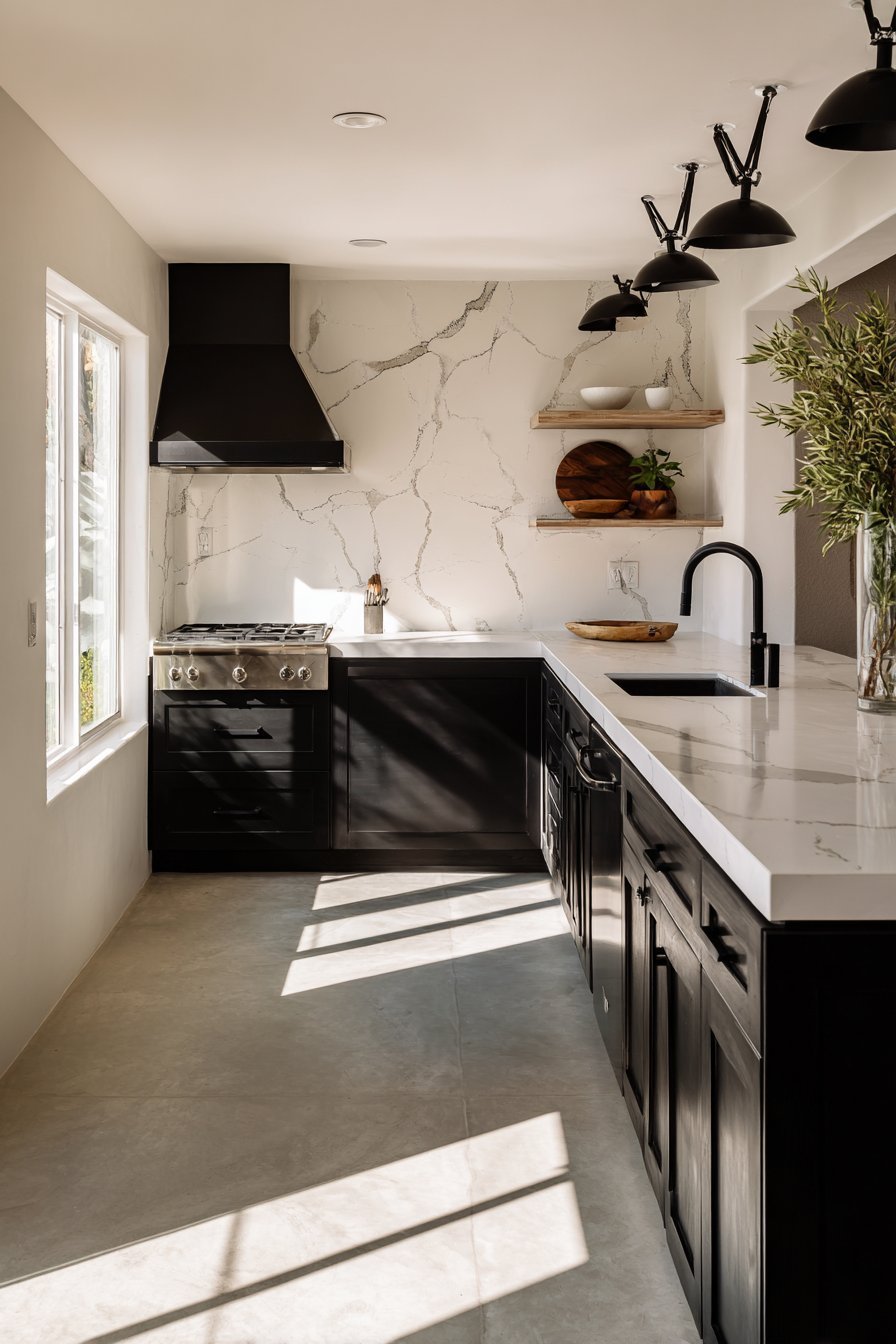
Three black dome pendant lights hang above the prep area in precise alignment. Natural light from corner window creates dramatic interplay between light and shadow. The black elements frame and define the white surfaces. The bold color choice maintains minimal principles through clean lines.
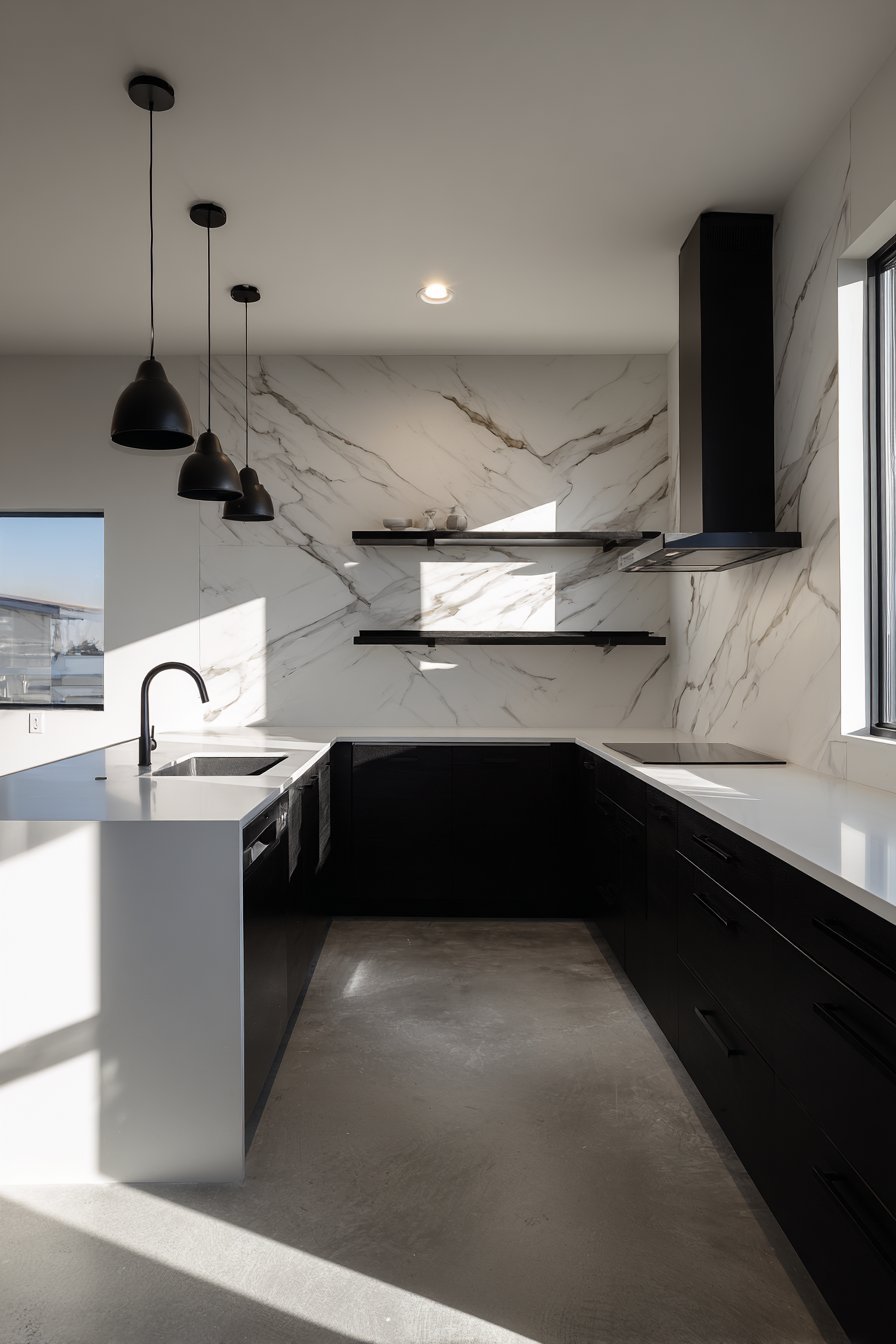
The design proves minimal aesthetic accommodates bold color statements. The open shelving provides accessibility while reducing visual weight. The black and white palette creates timeless graphic appeal. Material choices remain simple while color creates drama.
Key Design Tips:
- Use bold black lower cabinets to anchor space dramatically
- Replace upper cabinets with open metal and wood shelving
- Create graphic contrast through black and white color blocking
- Install matching black hardware and fixtures for cohesion
- Use corner windows to create dramatic shadow play
- Maintain clean lines despite bold color choices
19. Textured White Kitchen with Subtle Pattern
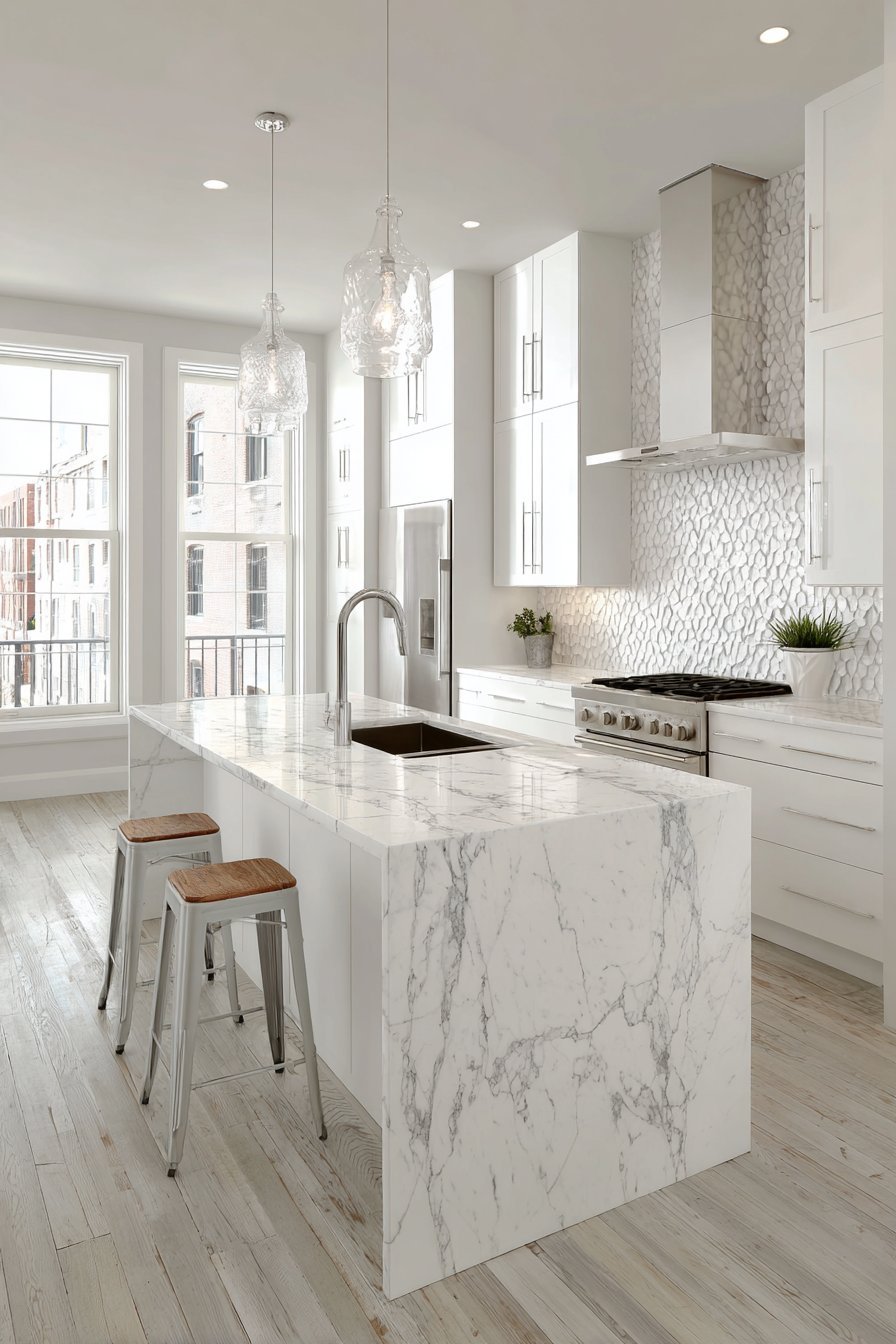
This design explores texture within strictly white palette. Matte white cabinets pair with textured white tile backsplash in subtle geometric pattern. The varied surfaces create visual interest without color. Slimmest possible profile pulls in brushed stainless steel provide minimal hardware.
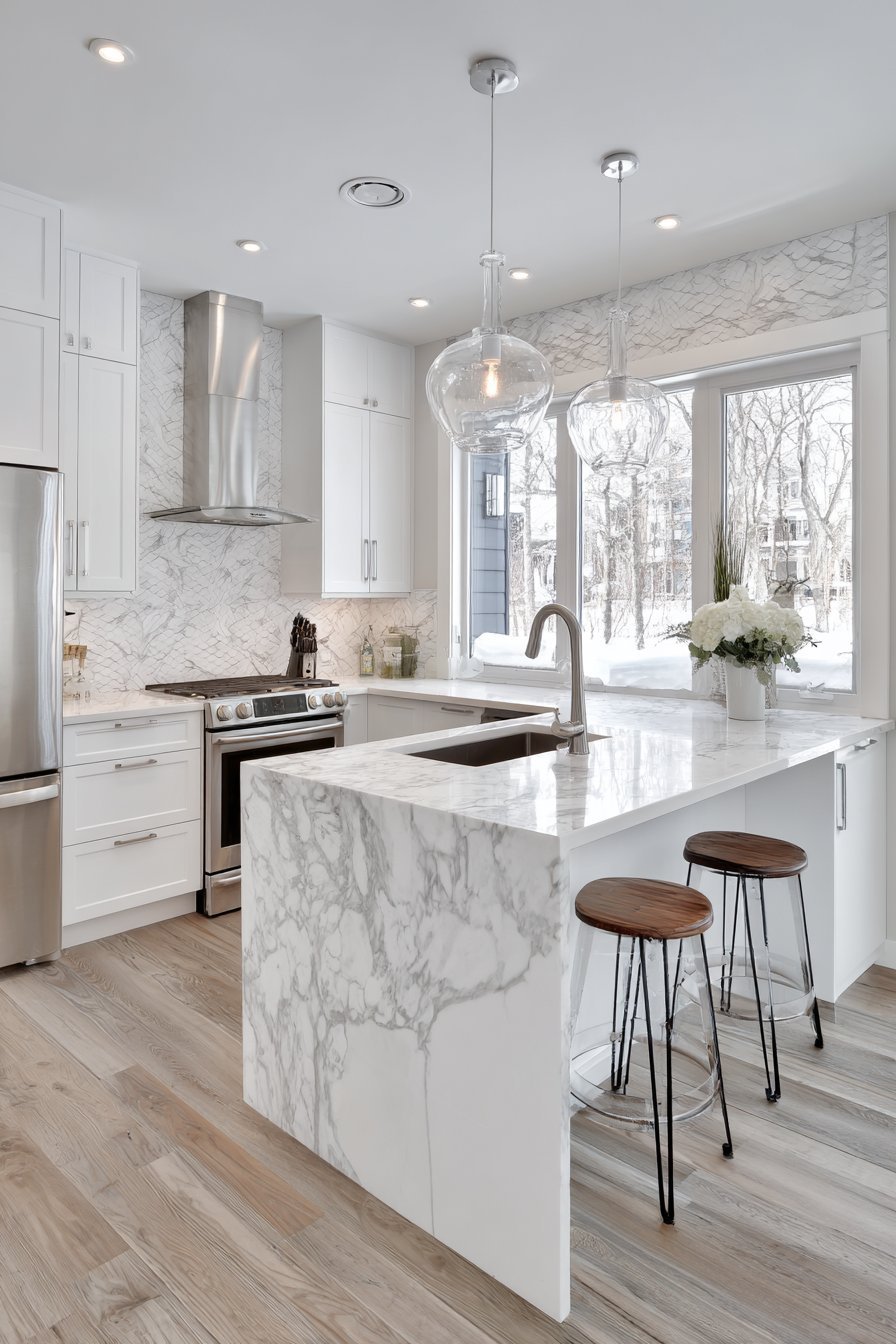
White marble countertops with delicate grey veining add organic movement and luxury. Professional stainless steel sink with commercial-style faucet provides functional focus. The island features same white cabinetry with seating for two. Simple metal and wood stools offer casual dining spots.
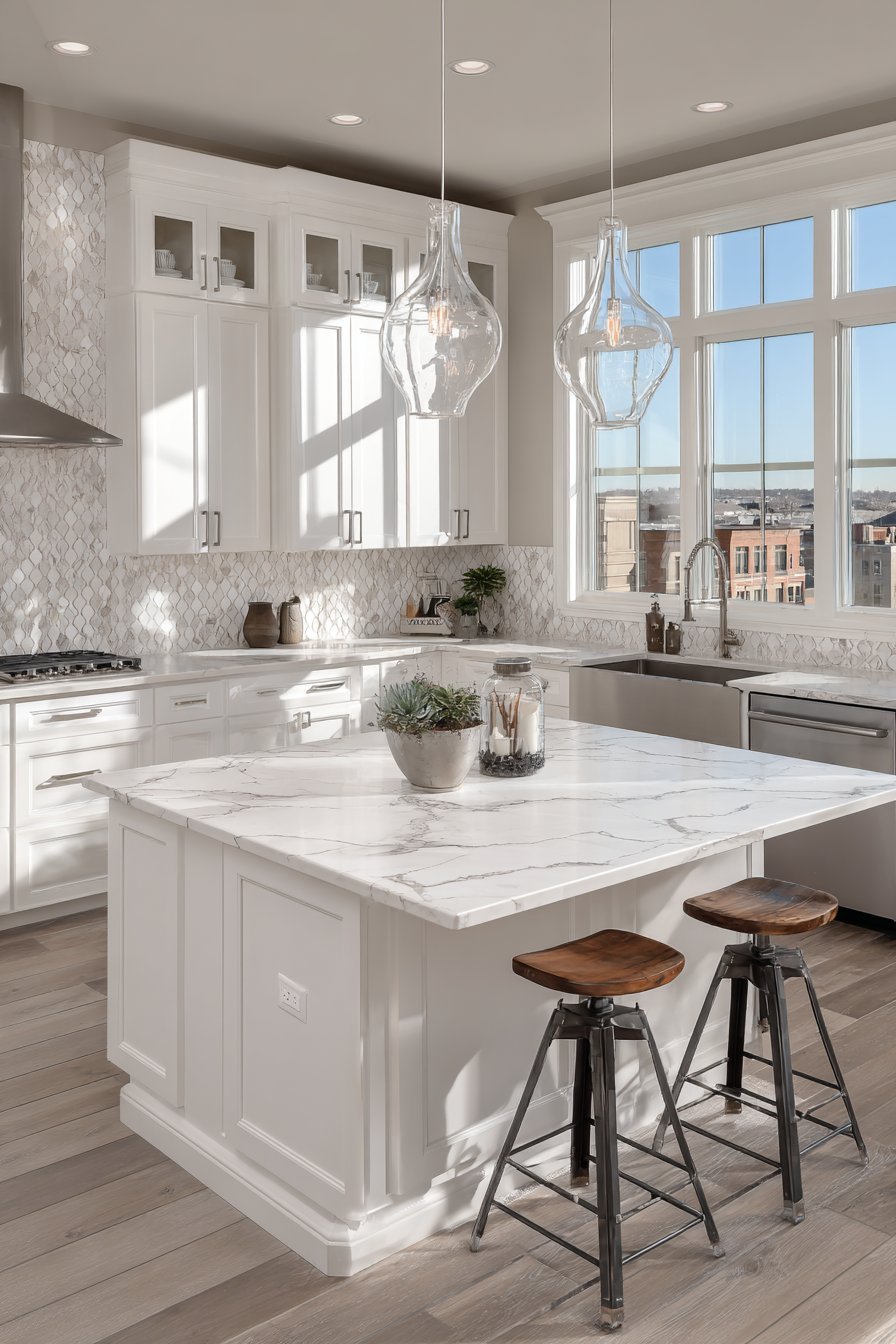
Wide-plank light grey engineered hardwood flooring adds subtle warmth beneath. Two clear glass pendant lights with minimal metal fittings hang above island. Abundant natural light from multiple windows emphasizes the play of textures. The varied surfaces reveal themselves as light moves through the space.
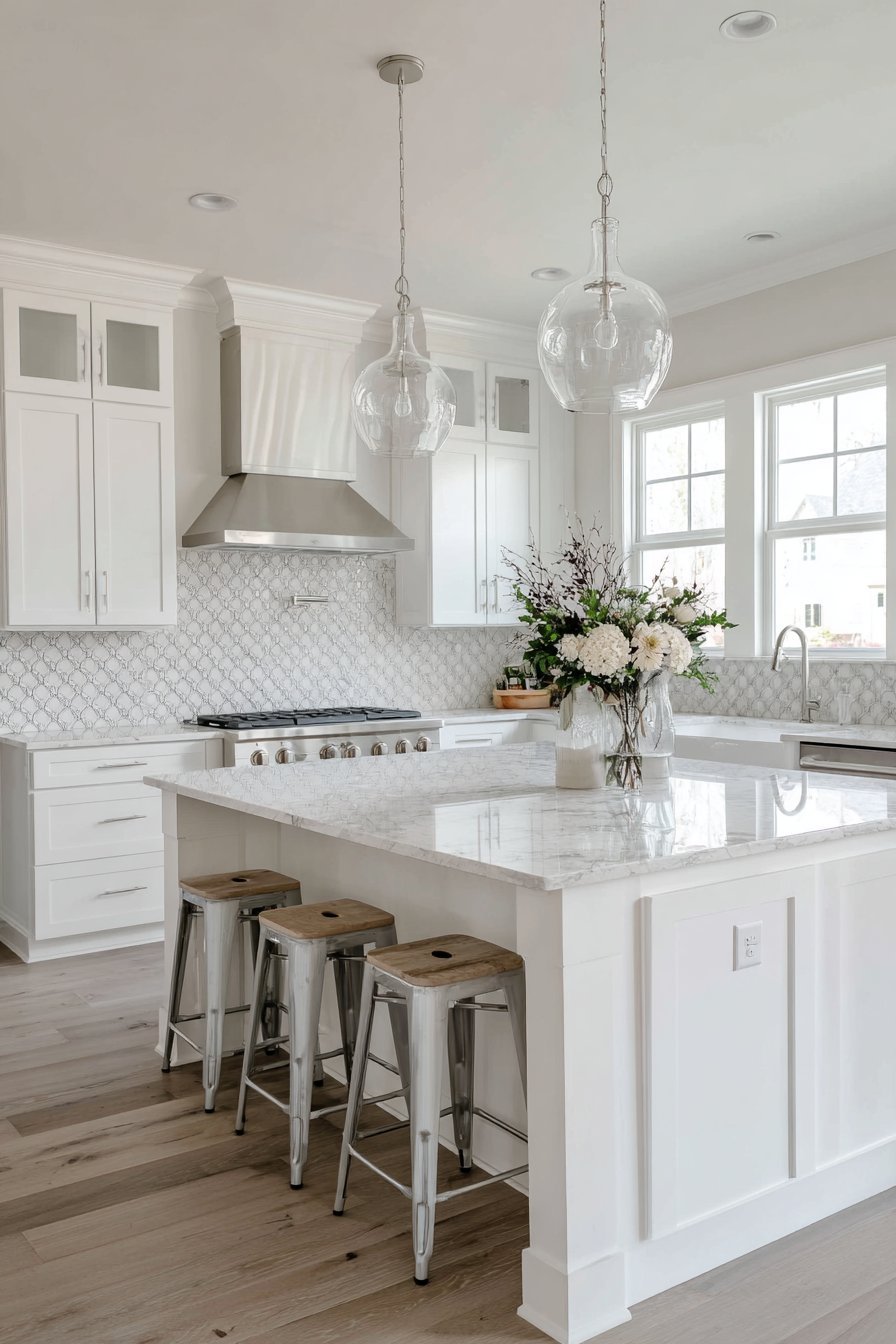
The layered approach to texture creates depth within the white scheme. Different materials catch light differently throughout the day. The design demonstrates that monochromatic spaces need not lack visual interest. Texture provides dimension where color does not.
Key Design Tips:
- Layer different textures within monochromatic color schemes
- Choose geometric tile patterns for subtle visual interest
- Use delicate stone veining for organic movement
- Install professional-grade fixtures as sculptural focal points
- Select transparent light fixtures to maintain visual lightness
- Maximize multiple window placements to reveal texture through natural light
20. Compact U-Shaped White Kitchen
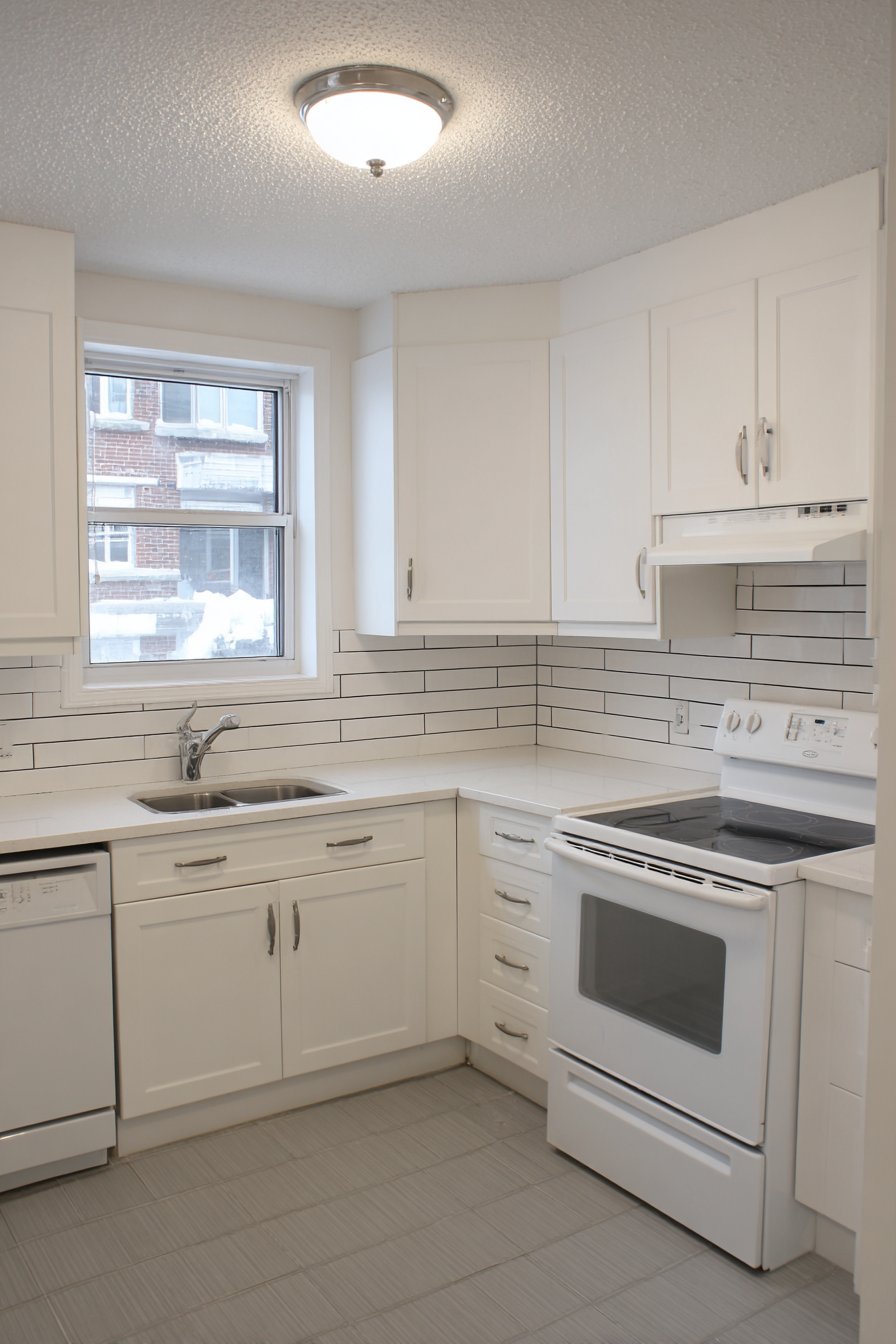
Continuous white flat-panel cabinets wrap three walls in compact U-shaped layout. The configuration maximizes storage while maintaining clean horizontal lines. White quartz countertops with subtle shimmer provide work surface on all three sides. Simple white subway tile backsplash covers walls between counter and upper cabinets.
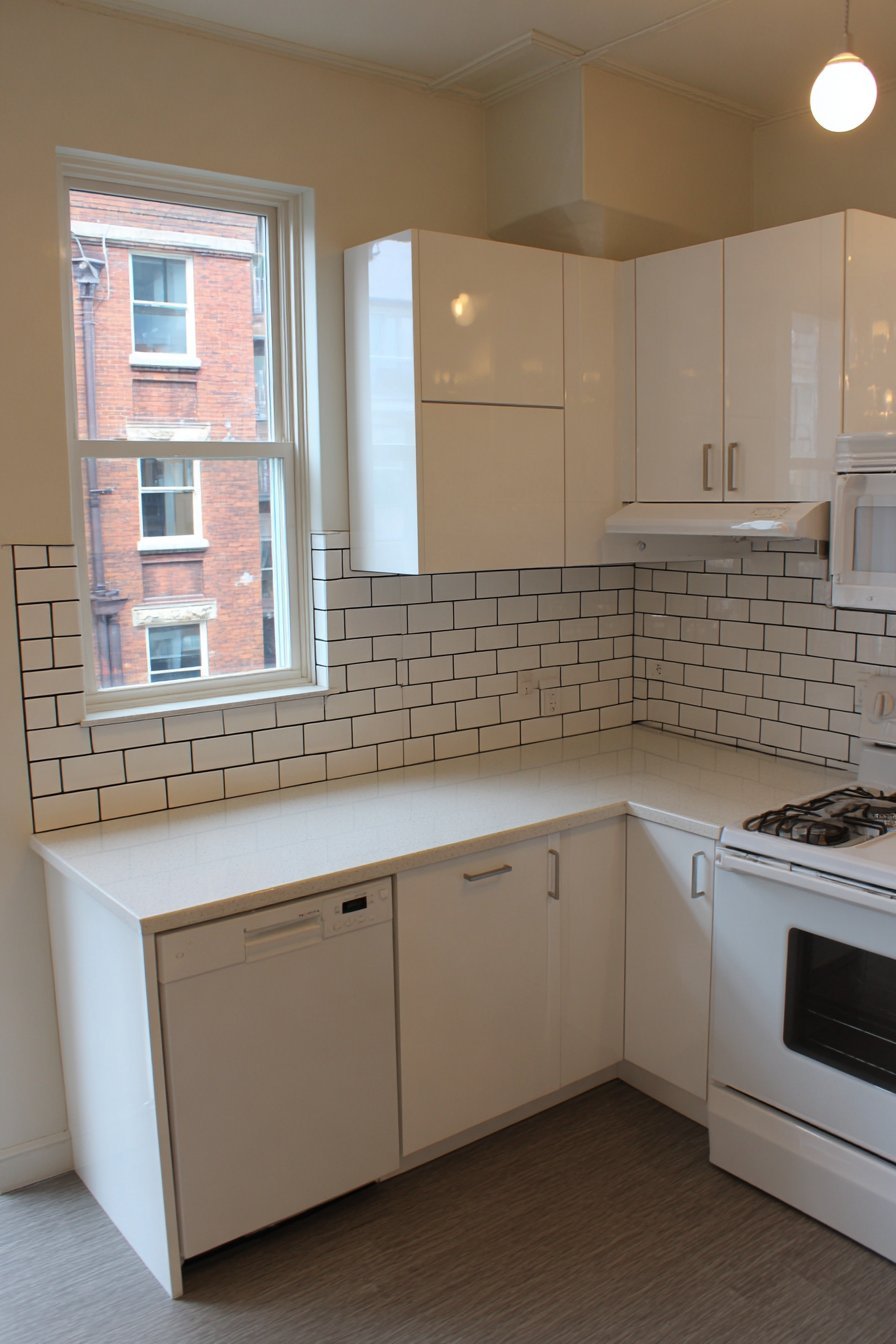
All appliances use white panel-ready models integrated into cabinetry. Simple chrome pulls provide minimal hardware detail throughout. Light grey vinyl tile in large format covers the floor. Under-cabinet LED strip lighting provides practical task illumination exactly where needed.
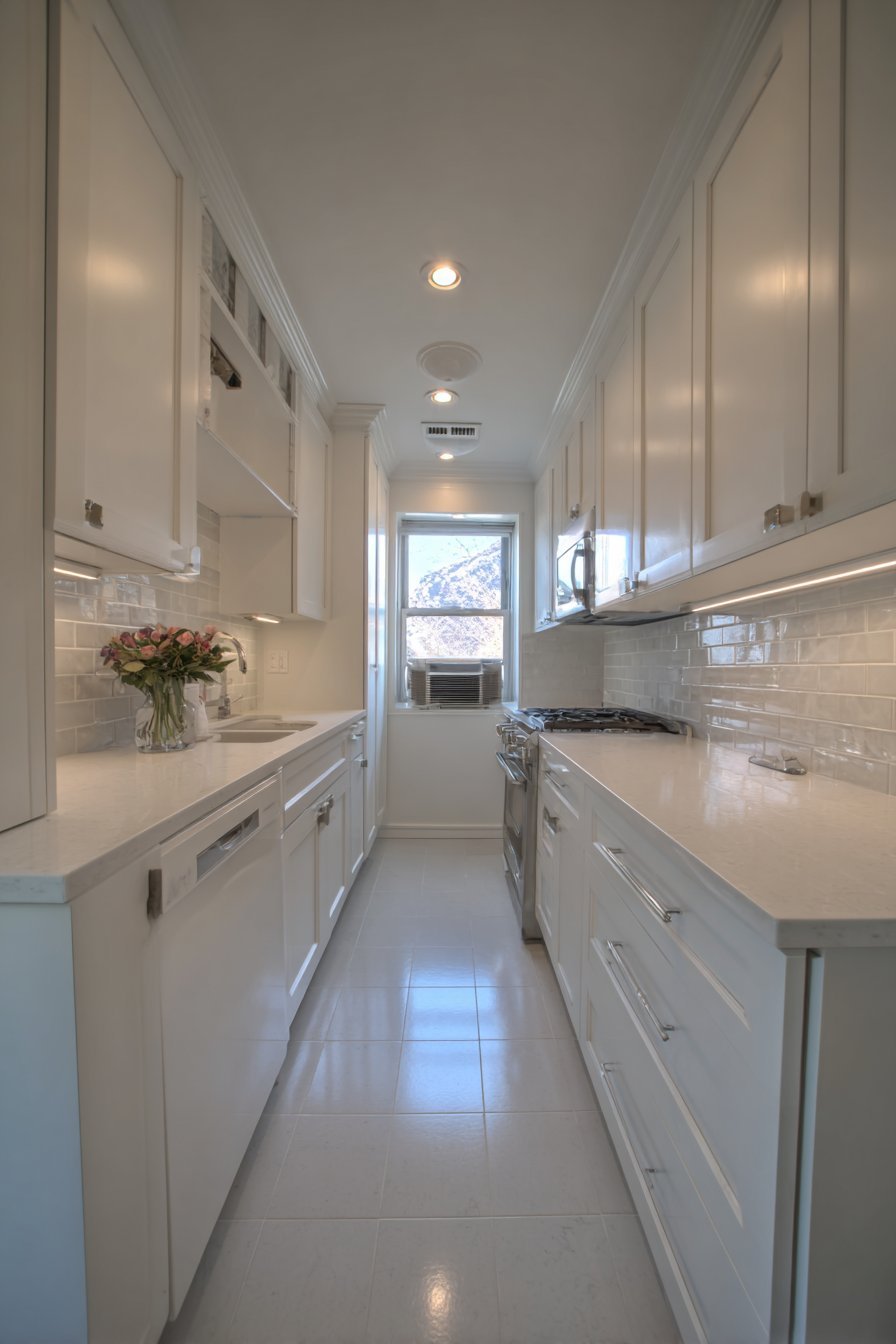
A single recessed ceiling fixture offers ambient light from above. A small window allows natural light into the enclosed space. The all-white palette creates visual spaciousness within the compact footprint. Consistent materials and colors eliminate visual fragmentation.
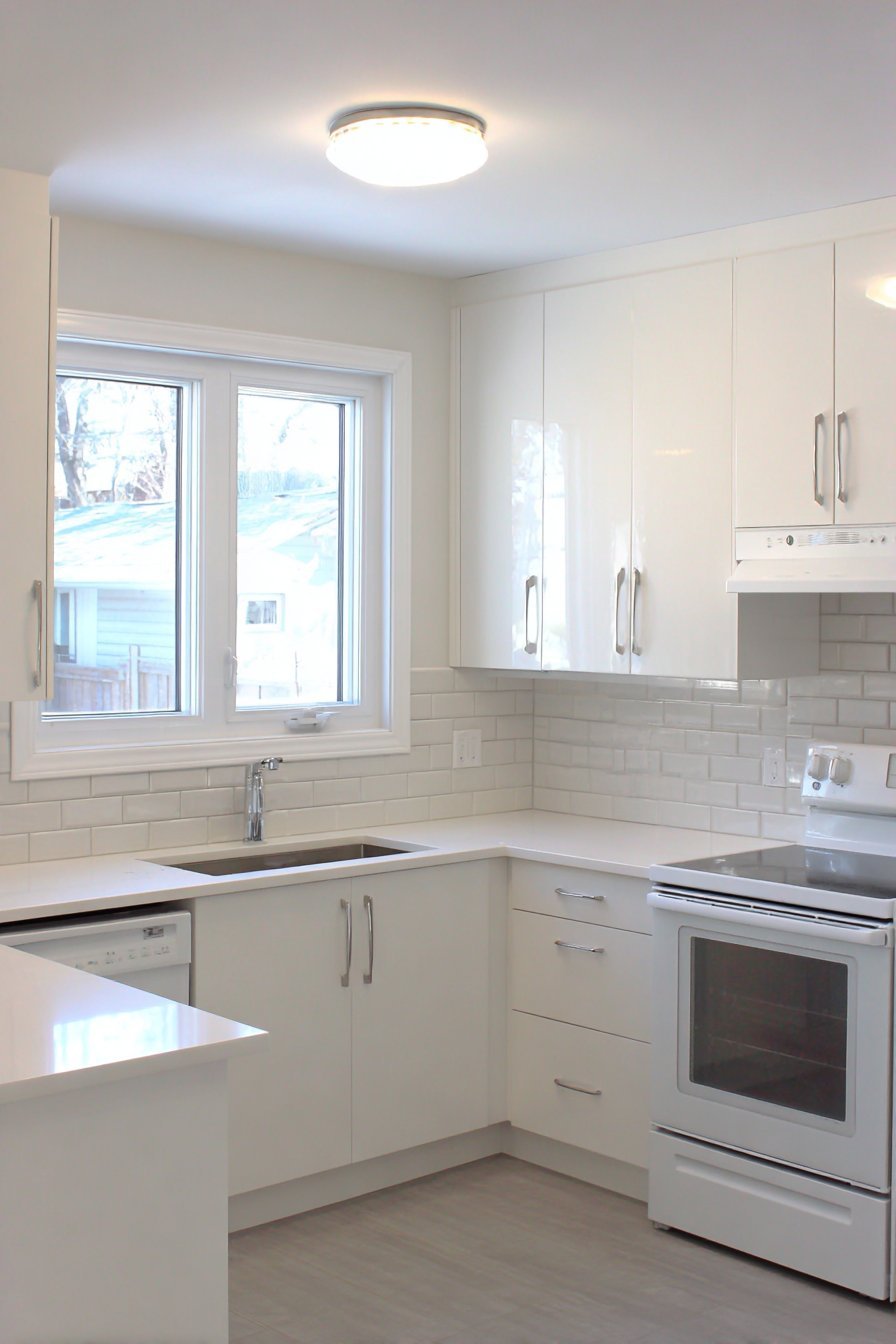
The wrapped layout creates efficient work triangle despite small size. Every surface provides either storage or workspace. The design proves that minimal principles suit small kitchens especially well. Restraint and consistency create perception of space beyond actual measurements.
Key Design Tips:
- Use U-shaped layouts to maximize storage in compact footprints
- Maintain consistent white palette to create visual spaciousness
- Install panel-ready appliances for complete integration
- Choose large-format flooring to reduce visual fragmentation
- Use under-cabinet LED strips for practical task lighting
- Add single ambient fixture rather than multiple competing sources
Why These Minimal Kitchen Designs Are the Best
These minimal kitchen designs represent thoughtful approaches to creating functional, beautiful spaces through intentional reduction. Each concept demonstrates how restraint amplifies rather than diminishes design impact. The versatility shown across these examples proves minimal aesthetics adapt to various spaces, budgets, and lifestyle needs.
The fundamental success of these designs lies in their material choices. Natural materials like wood, stone, and concrete provide organic warmth preventing the coldness sometimes associated with minimalism. These materials age gracefully, developing character over time rather than showing wear. Quality craftsmanship in cabinetry ensures longevity that transcends fleeting trends.
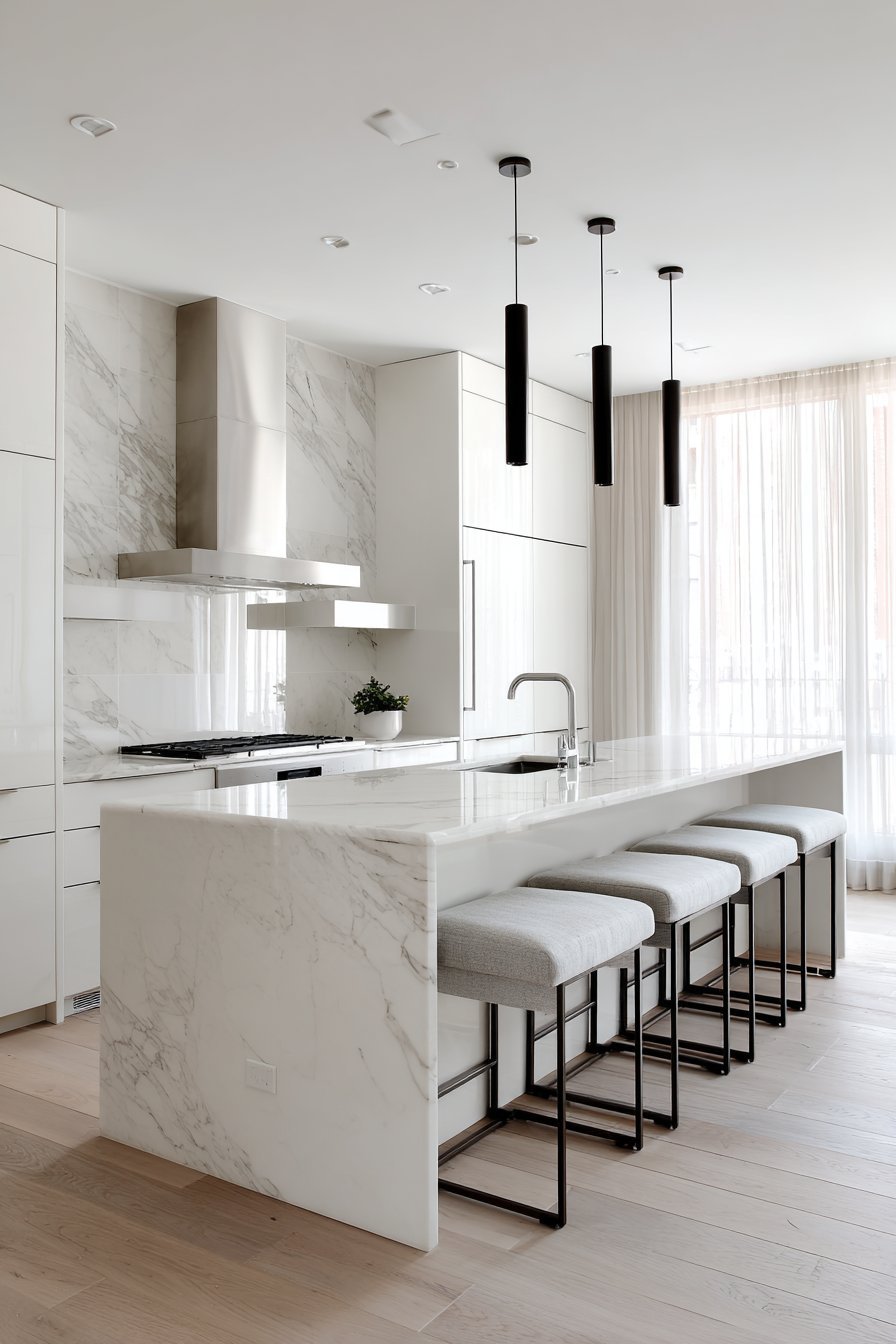
Color theory plays crucial role in minimal kitchen success. Monochromatic schemes create visual calm and spaciousness. Strategic contrast through two-tone cabinetry adds depth without complexity. White palettes maximize light reflection particularly valuable in compact urban spaces. Bold choices like navy or black prove minimal doesn’t require neutrality when applied with discipline.
Spatial considerations make these designs universally applicable. Galley layouts suit narrow footprints while U-shaped configurations maximize corner storage. Single-wall designs emphasize architectural features like windows. Islands create functional centers without requiring extensive square footage. Each layout demonstrates efficiency through thoughtful planning rather than excessive size.
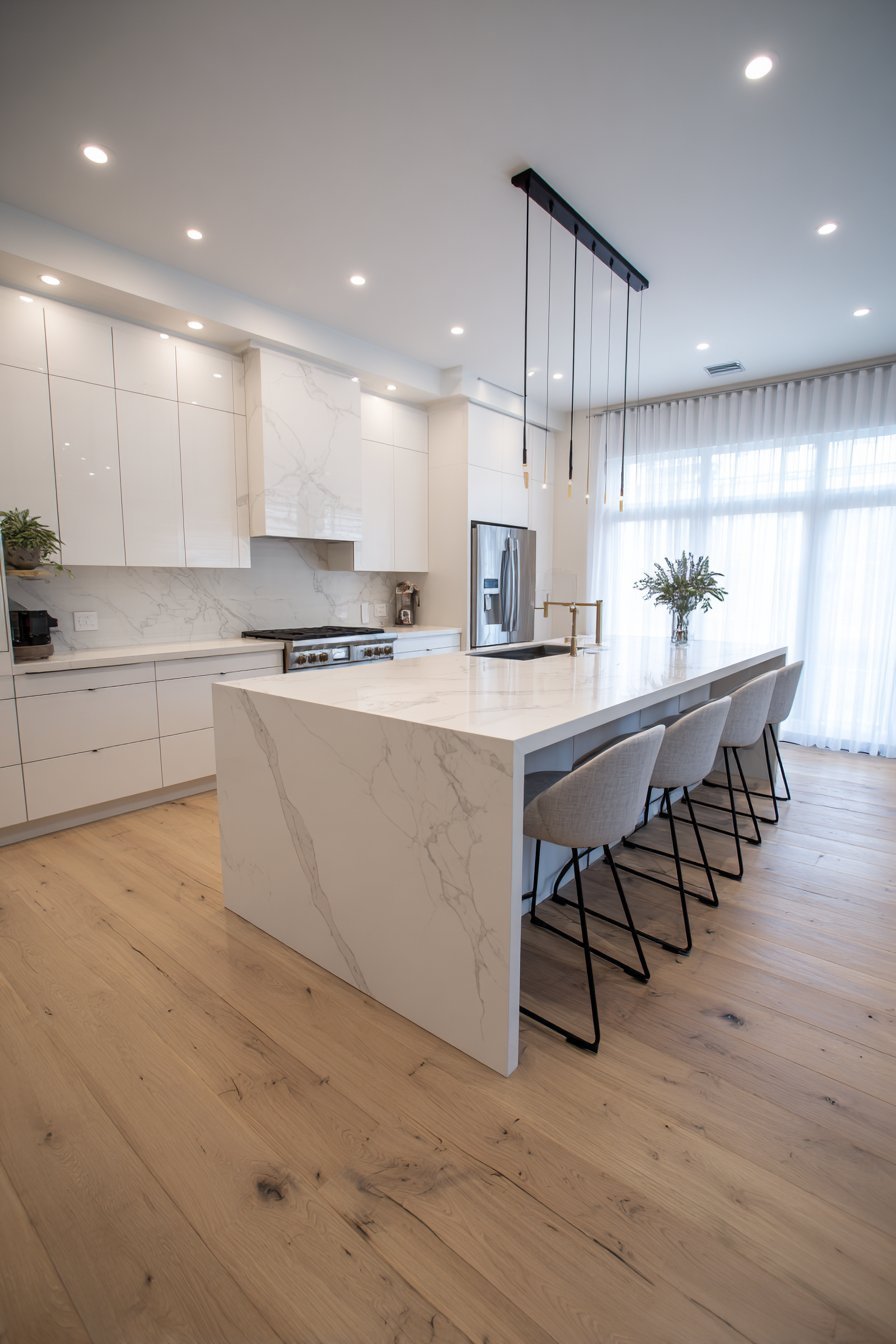
Functionality underlies every aesthetic decision in successful minimal kitchens. Integrated appliances maintain visual continuity while providing professional performance. Handle-less cabinets reduce visual clutter while offering ergonomic access. Strategic lighting layers natural and artificial sources for practical task illumination. Hidden storage systems maximize organization behind streamlined exteriors.
Sustainability emerges naturally from minimal design philosophy. Quality materials and timeless aesthetics reduce replacement cycles. Efficient layouts minimize wasted space and materials. Natural light emphasis reduces energy consumption. These environmental benefits align with the practical and aesthetic goals creating comprehensive value.
The designs address real-world considerations that determine long-term satisfaction. Durable surfaces withstand daily kitchen demands. Easy-to-clean materials reduce maintenance burden. Flexible layouts accommodate evolving needs. Budget-conscious options prove minimal design suits all price points through smart material selection rather than excessive spending.
Conclusion
These minimal kitchen designs demonstrate that simplicity and sophistication create spaces of lasting beauty. The key principles include quality materials, thoughtful layouts, and intentional reduction of unnecessary elements. Each design proves that removing excess reveals essential beauty.
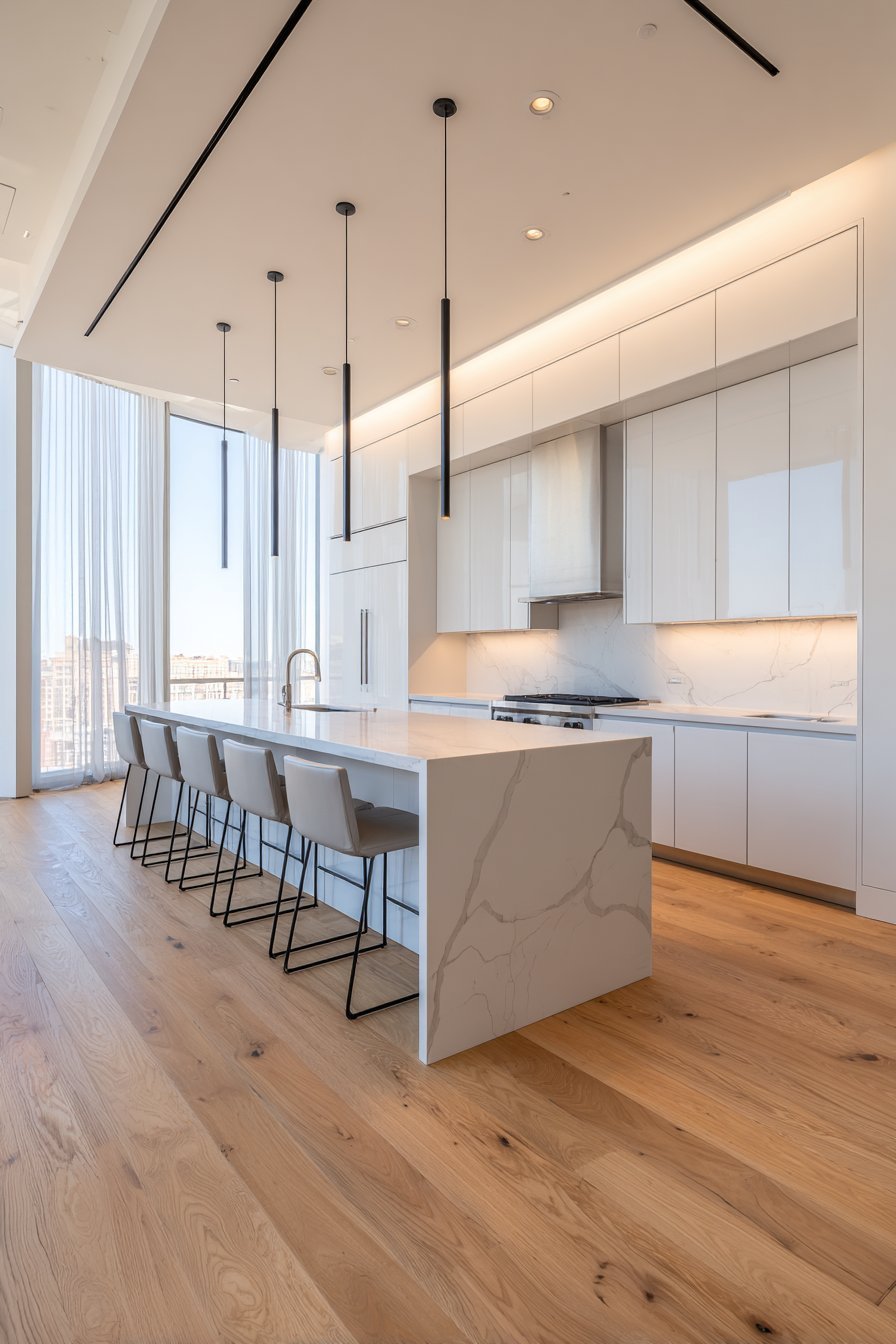
Successful minimal kitchens balance aesthetic restraint with practical functionality. The clean lines and uncluttered surfaces reduce visual stress while maximizing efficiency. Natural materials add warmth preventing coldness. Strategic lighting enhances rather than overwhelms.
Start your minimal kitchen journey by identifying which elements truly serve your needs. Remove or conceal everything else. Choose quality over quantity in materials and fixtures. Your dream minimal kitchen awaits creation through thoughtful editing and purposeful design decisions.
