
Mexican kitchen design captures the vibrant spirit of traditional hacienda living. Rich colors, handcrafted tiles, and natural materials create warm, inviting spaces. These kitchens blend functional cooking areas with artistic expression. The result is both practical and visually stunning.
Authentic Mexican kitchen decor celebrates centuries of artisan craftsmanship. From hand-painted Talavera tiles to hammered copper sinks, each element tells a story. These design choices transform ordinary kitchens into extraordinary gathering spaces. The combination of rustic wood, wrought iron, and colorful ceramics creates unforgettable interiors.
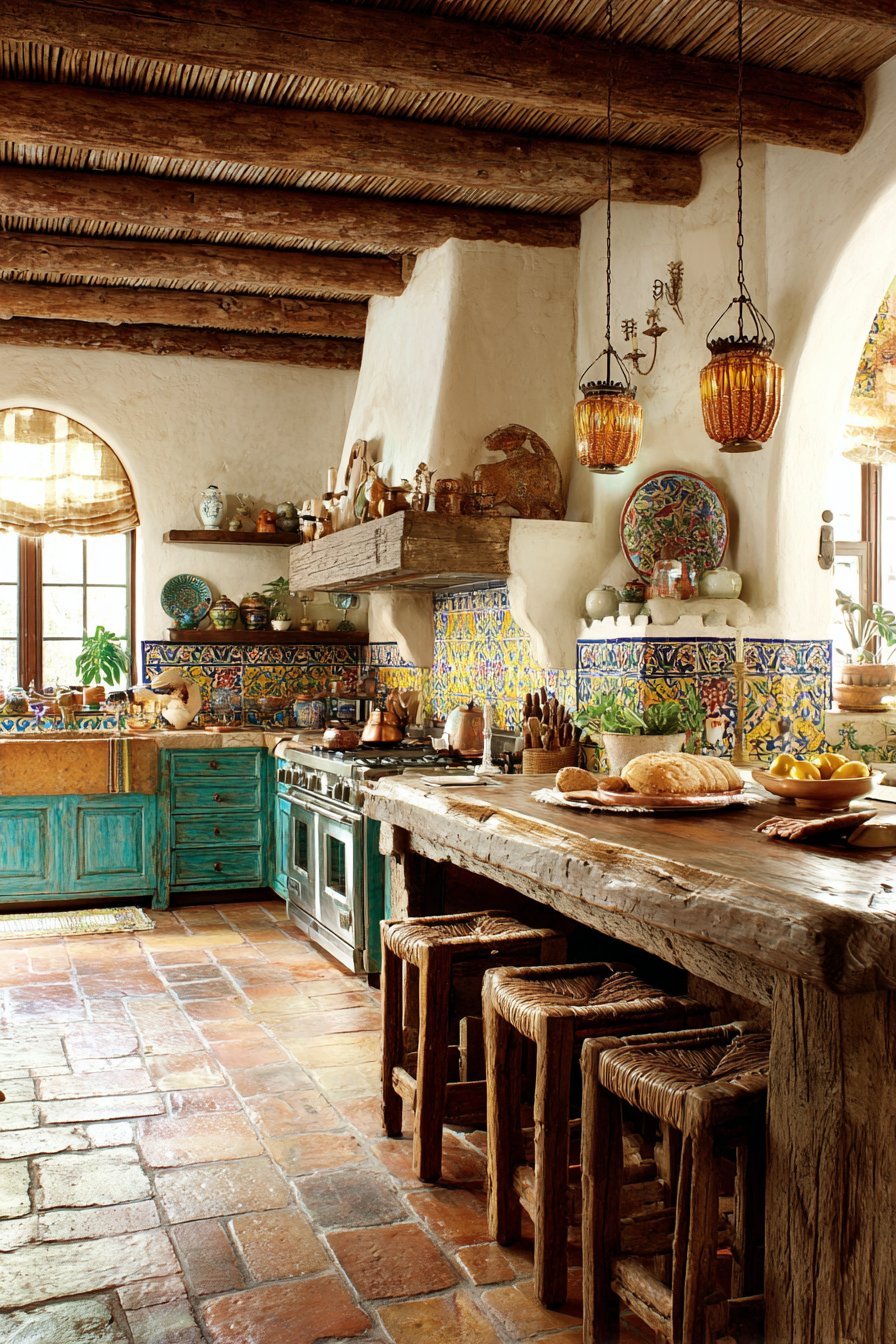
This article explores twenty distinct Mexican kitchen design concepts. Each approach offers unique interpretations of traditional Mexican style. Whether you prefer bold colors or subtle earth tones, these ideas provide inspiration. Discover how to bring authentic hacienda warmth into your modern cooking space.
1. Vibrant Talavera Tile Backsplash Kitchen
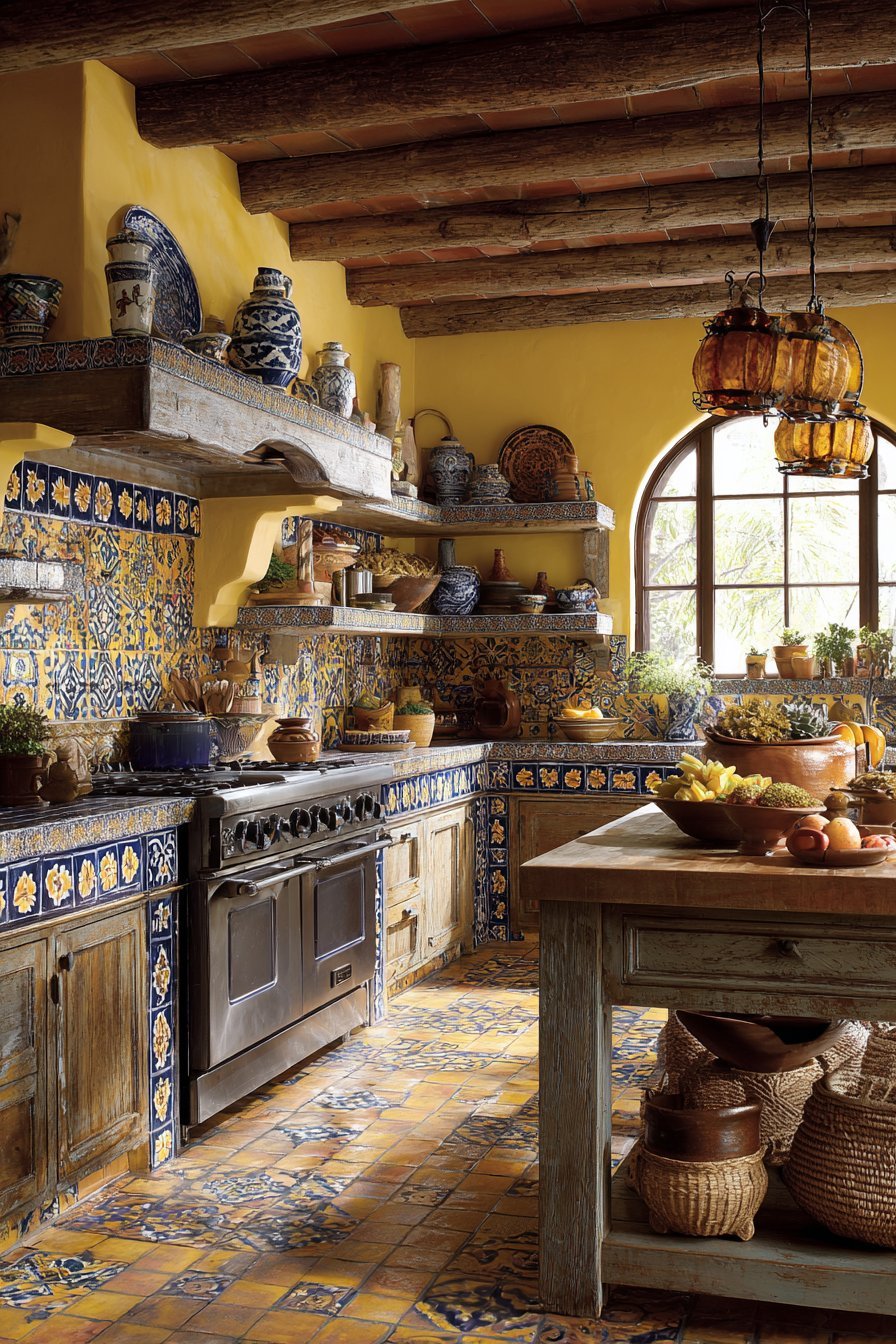
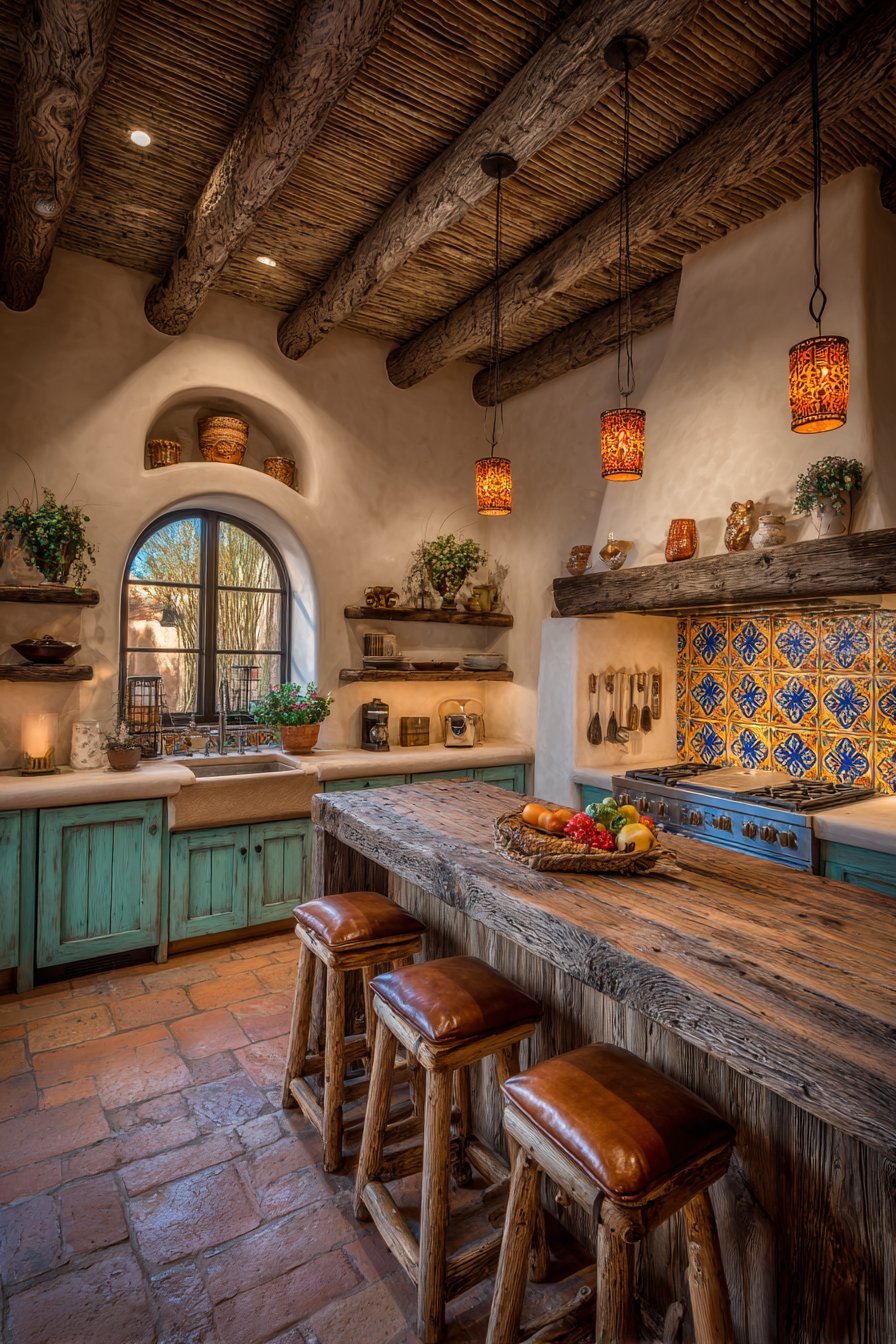
A stunning Mexican kitchen comes alive with hand-painted Talavera tiles covering the wall behind the range. The traditional patterns feature cobalt blue, sunflower yellow, and terracotta hues. Each tile displays intricate geometric and floral motifs. The visual impact creates an immediate focal point.
Exposed wooden ceiling beams in natural pine add architectural dimension overhead. These beams show authentic grain patterns and natural knots. Wrought iron pendant lights with amber glass shades hang gracefully. The warm glow complements the colorful tile work beautifully.
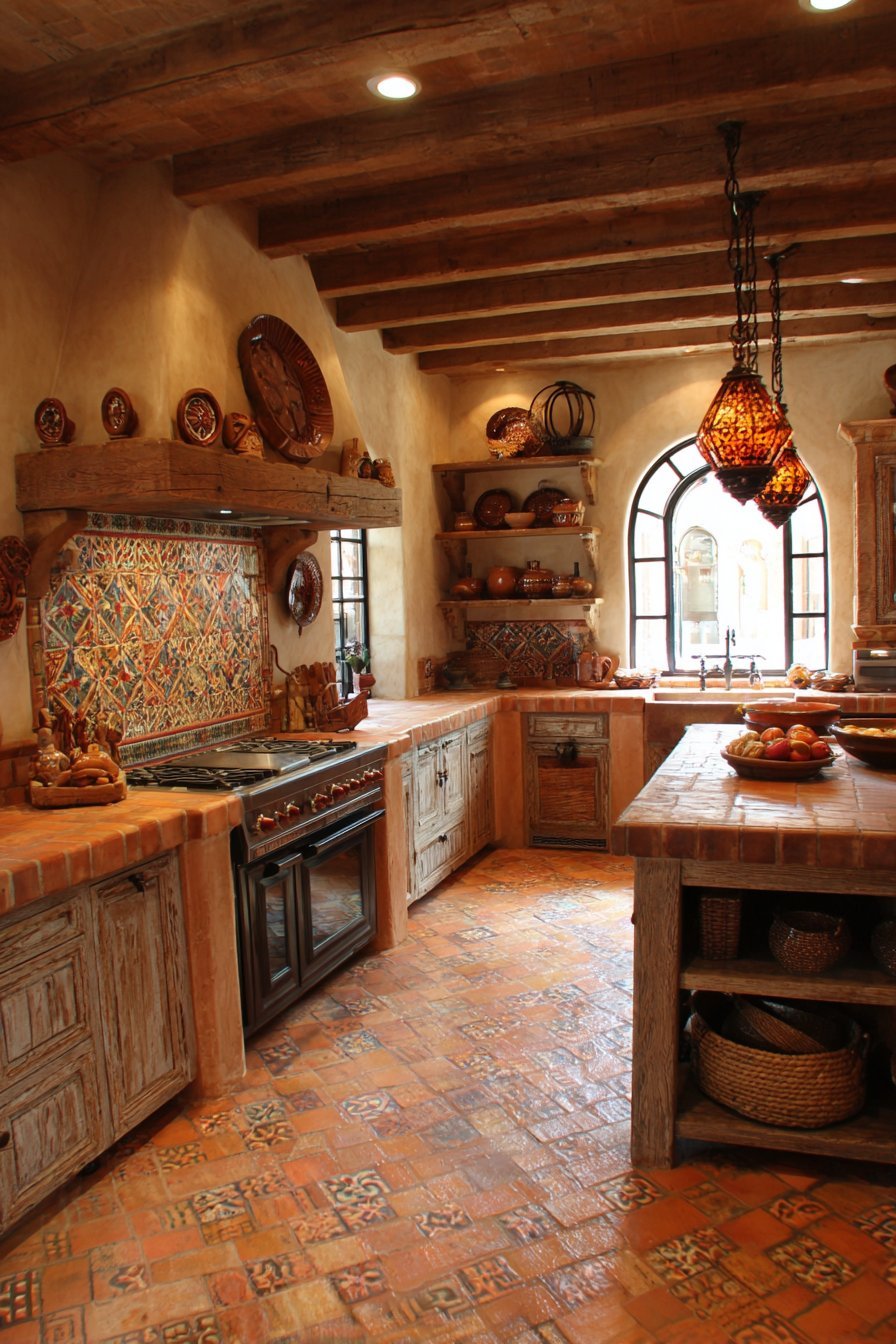
A distressed wood kitchen island serves as the central workspace. The reclaimed timber shows character from years of use. Terra cotta floor tiles extend throughout the space. Natural variations in the flooring add authentic charm.
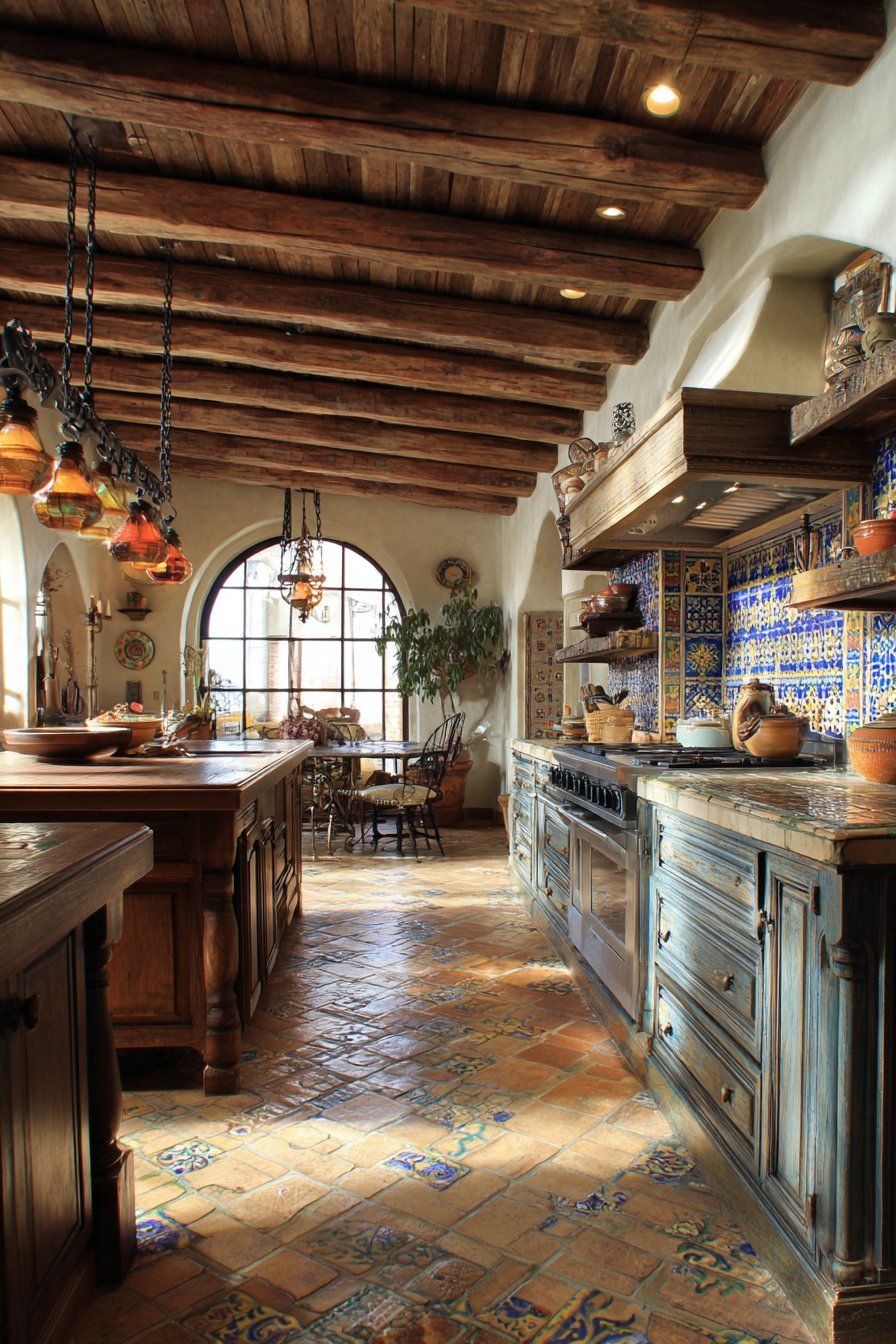
Open shelving displays colorful Mexican pottery and woven baskets. These functional storage solutions double as decorative elements. Wide arched windows allow natural daylight to stream inside. The sunlight highlights rich textures throughout the functional cooking space.
Key Design Tips:
- Select hand-painted Talavera tiles for authentic Mexican character and artisan quality
- Install exposed wooden beams to create traditional hacienda architecture
- Choose wrought iron lighting fixtures with amber glass for warm illumination
- Display colorful pottery on open shelves for functional decoration
- Use terra cotta floor tiles to establish warm, earthy foundation
2. Custom Talavera Range Hood Feature
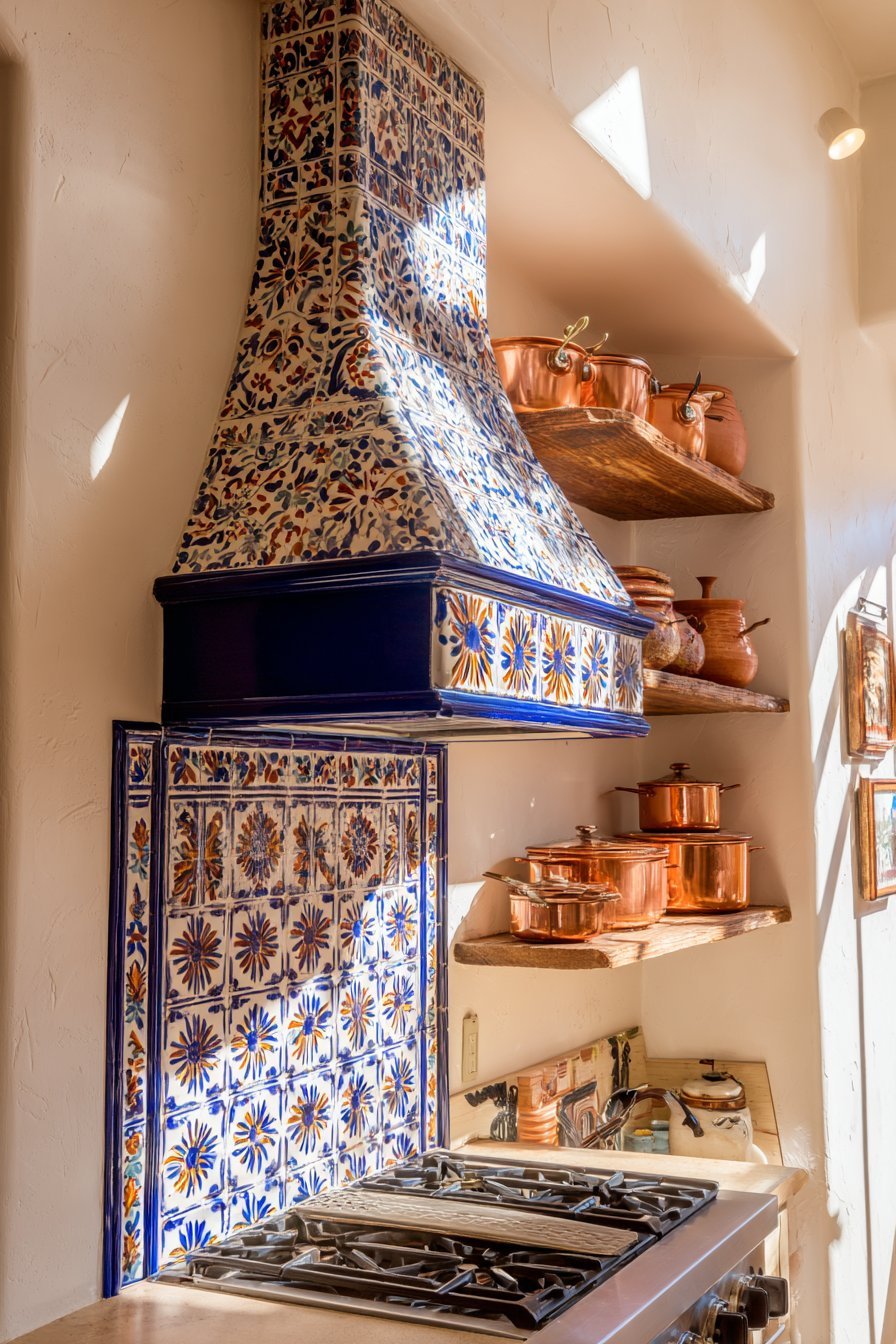
The custom range hood becomes a spectacular centerpiece covered in hand-painted Talavera tiles. Intricate floral and geometric patterns dance across the surface. Cobalt blue, sunflower yellow, and burnt orange create vibrant contrast. The craftsmanship demands attention and admiration.
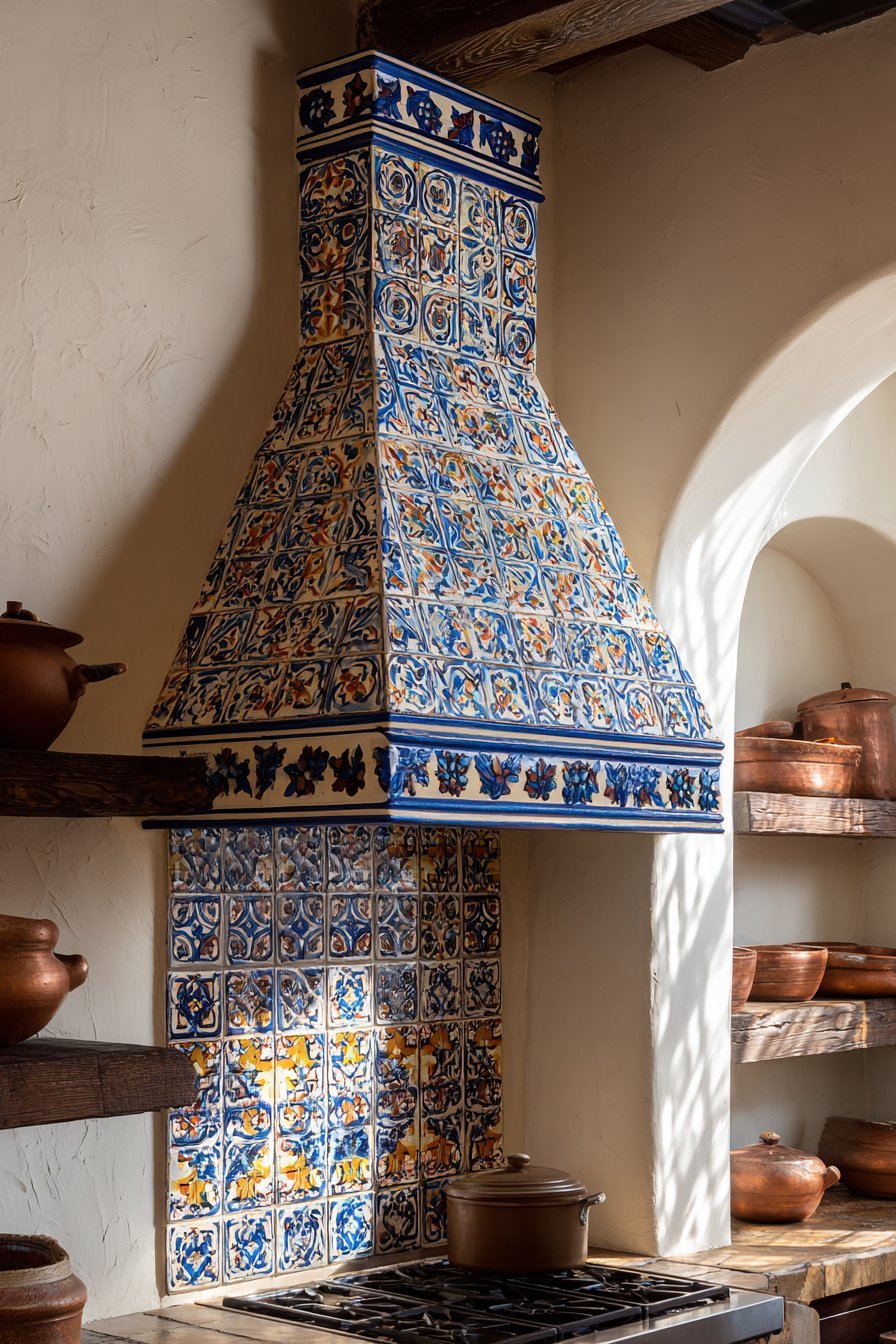
Flanking the hood, open shelving made from reclaimed wood displays terracotta cookware. Copper pots hang within easy reach. The natural wood grain adds warmth against whitewashed plaster walls. This combination maintains authentic hacienda style throughout.
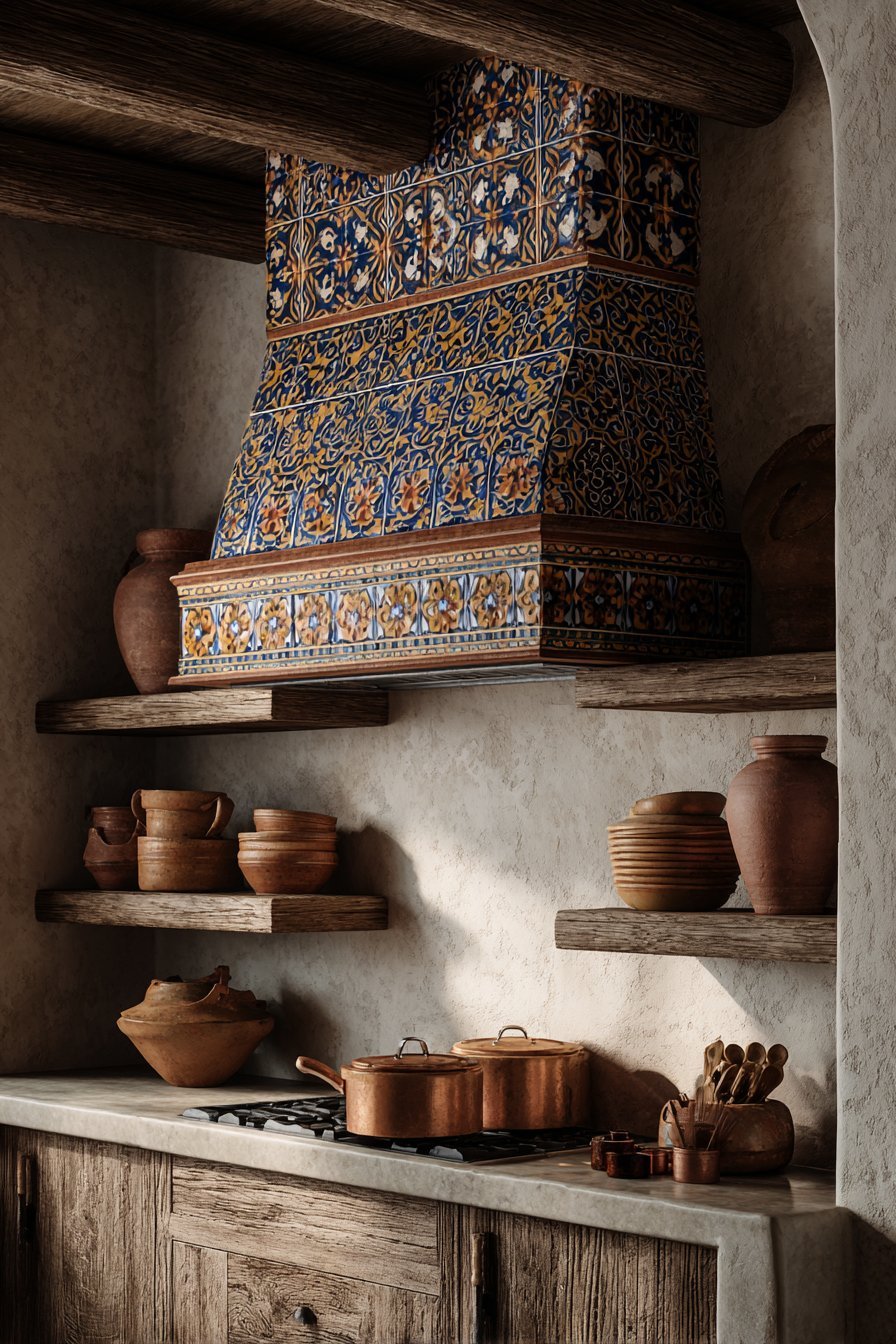
Natural light from a nearby window creates soft shadows. These shadows emphasize the dimensional quality of the tile work. The play of light across glazed surfaces changes throughout the day. Each hour brings new beauty to discover.
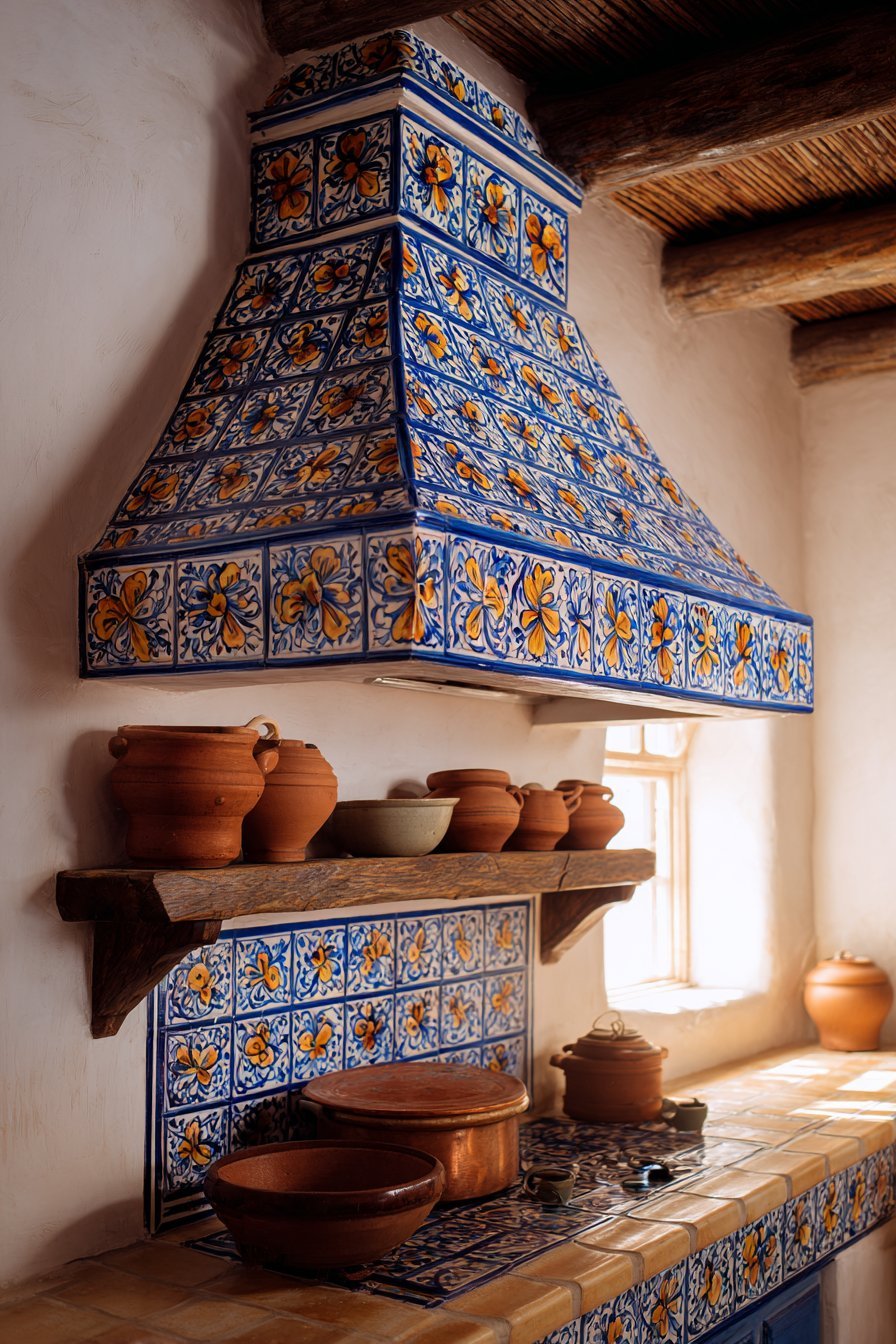
The whitewashed walls provide a neutral backdrop. This allows the colorful tile work to shine. The textured plaster surfaces add depth without competing visually. The balance between bold focal points and calm backgrounds works perfectly.
Key Design Tips:
- Commission custom tile work for range hoods to create unique focal points
- Combine open shelving with closed cabinets for practical storage solutions
- Use whitewashed plaster walls to balance vibrant tile patterns
- Position range hoods near windows for natural light enhancement
- Display copper cookware as functional art pieces
3. Sage Green and Terracotta Kitchen
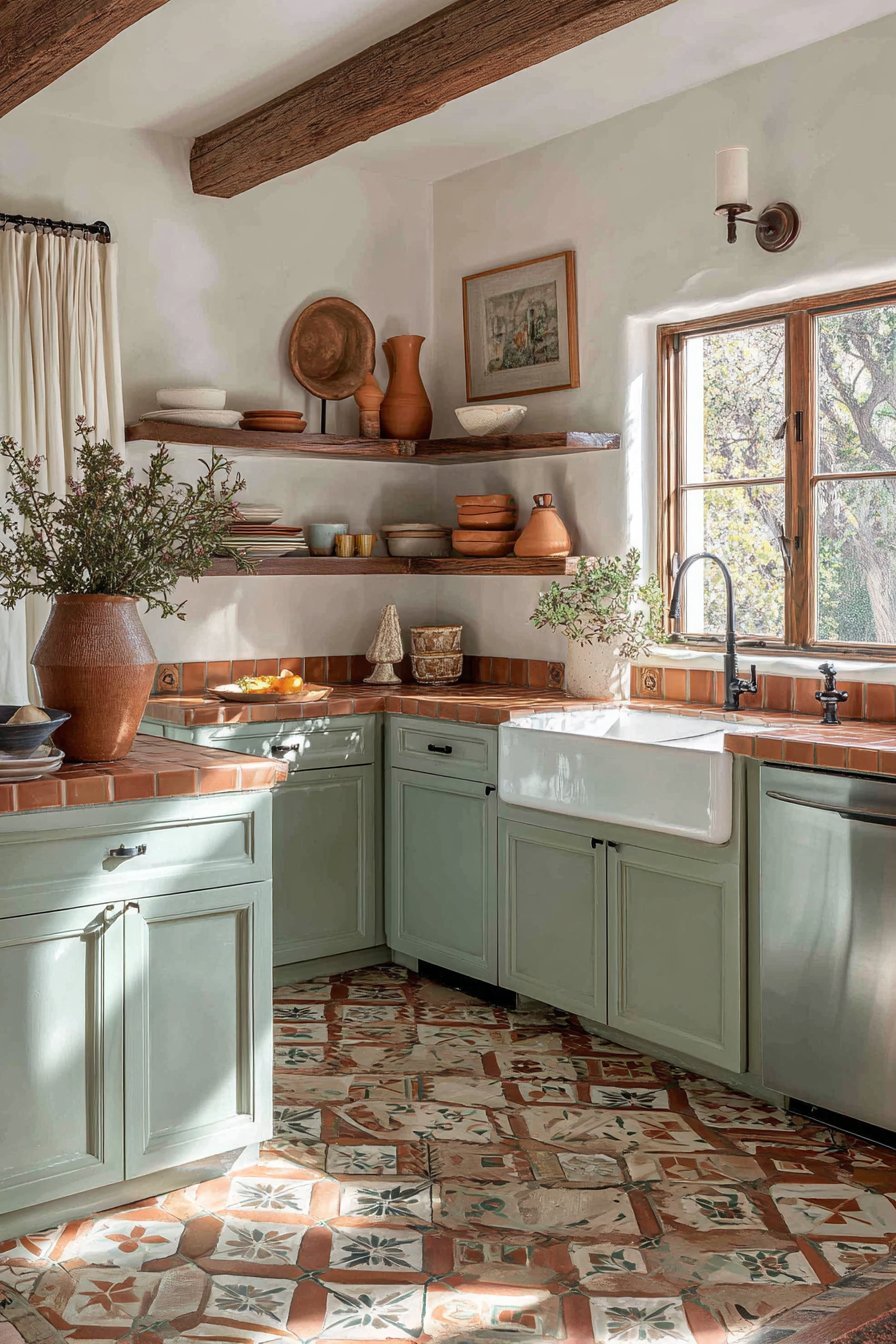
Sage green lower cabinets bring fresh color without overwhelming the space. The muted tone provides modern sophistication. Open upper shelving displays traditional Mexican pottery in warm earth tones. This creates visual interest while maintaining functionality.
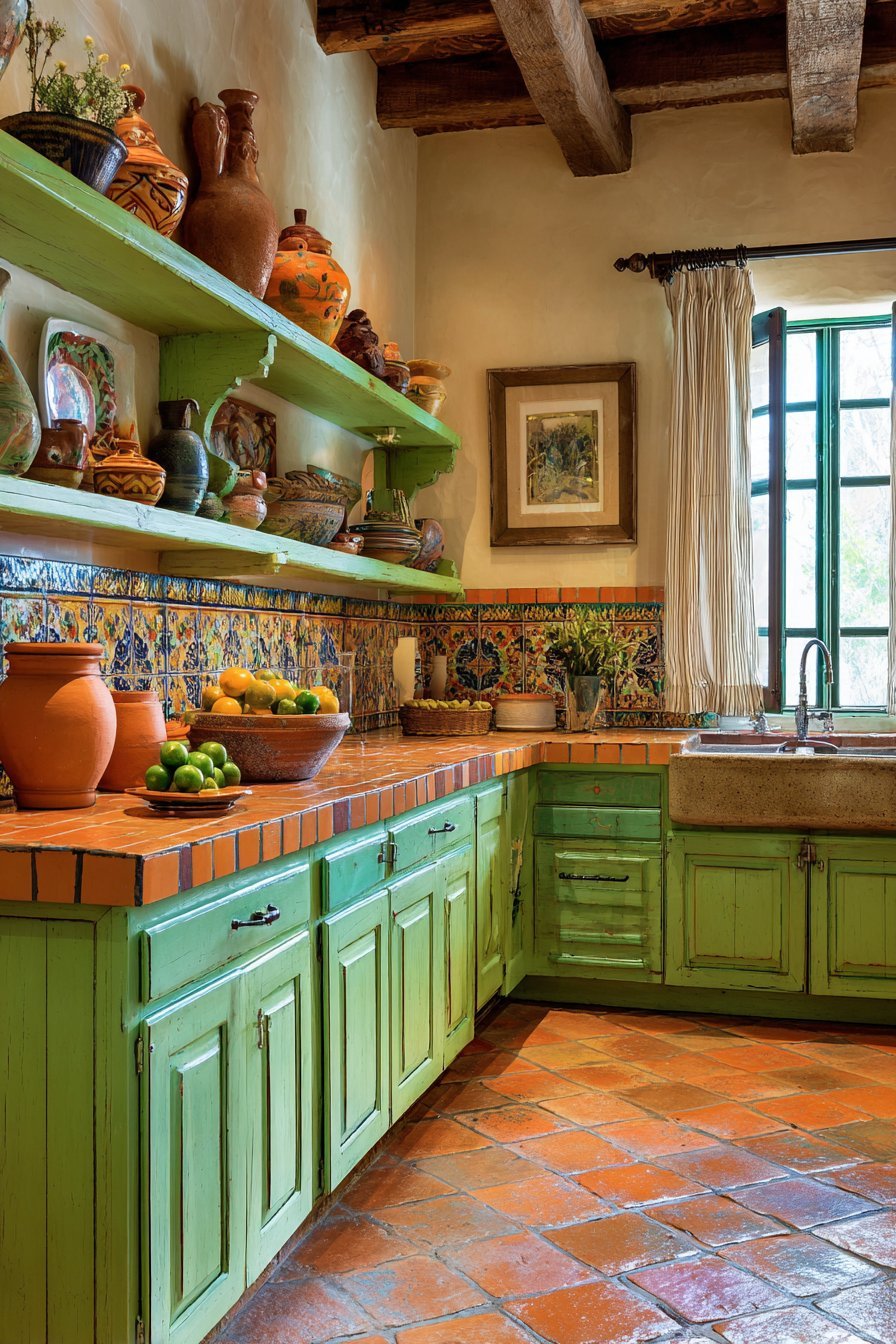
The backsplash features solid terracotta tiles interspersed with decorative Talavera accents. This mixed approach prevents pattern overload. The decorative tiles provide just enough visual interest. The balance feels natural and considered.
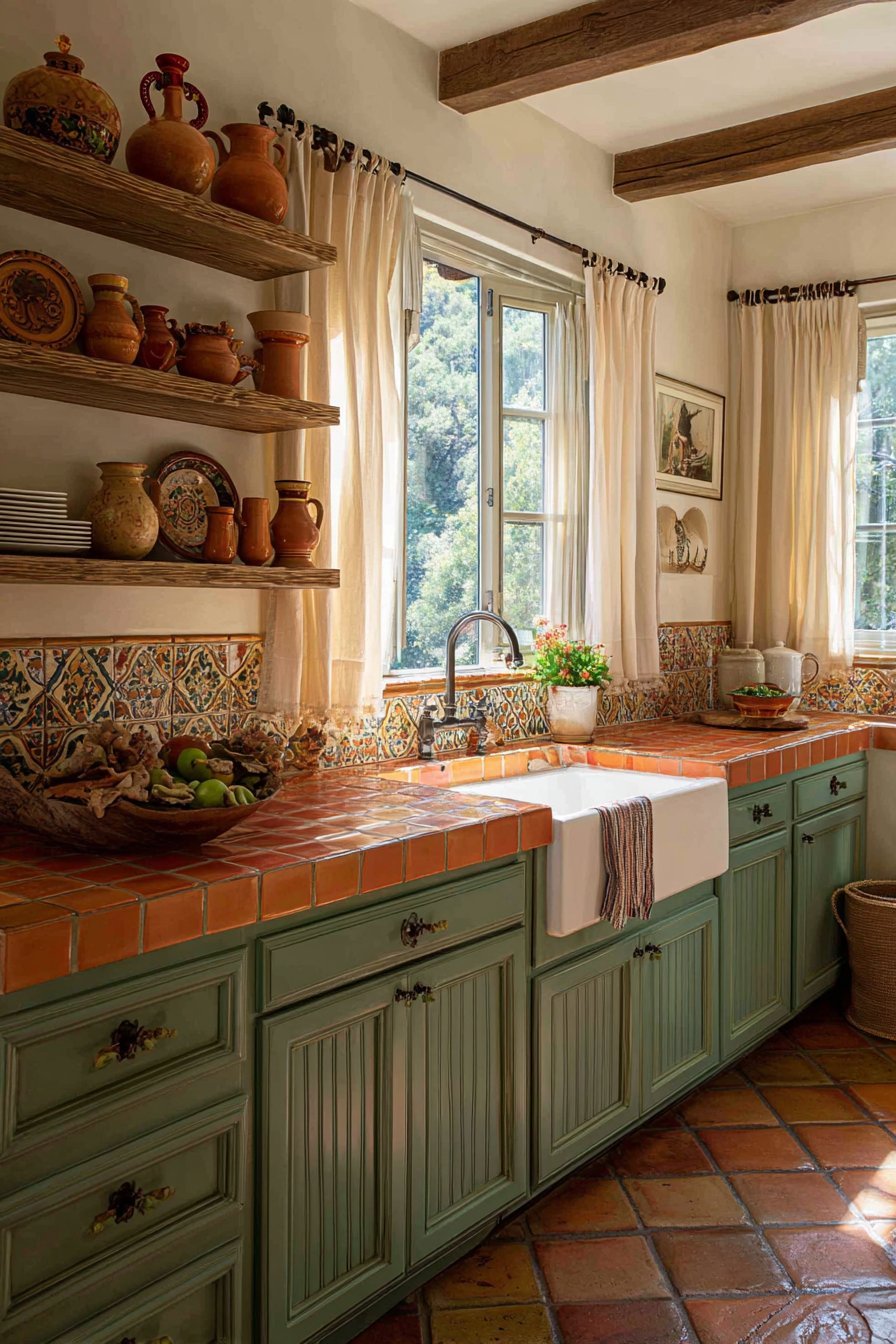
A farmhouse sink with oil-rubbed bronze faucet sits beneath a window. Simple linen curtains frame the view outside. Natural light floods the preparation area. The practical workspace feels bright and welcoming.
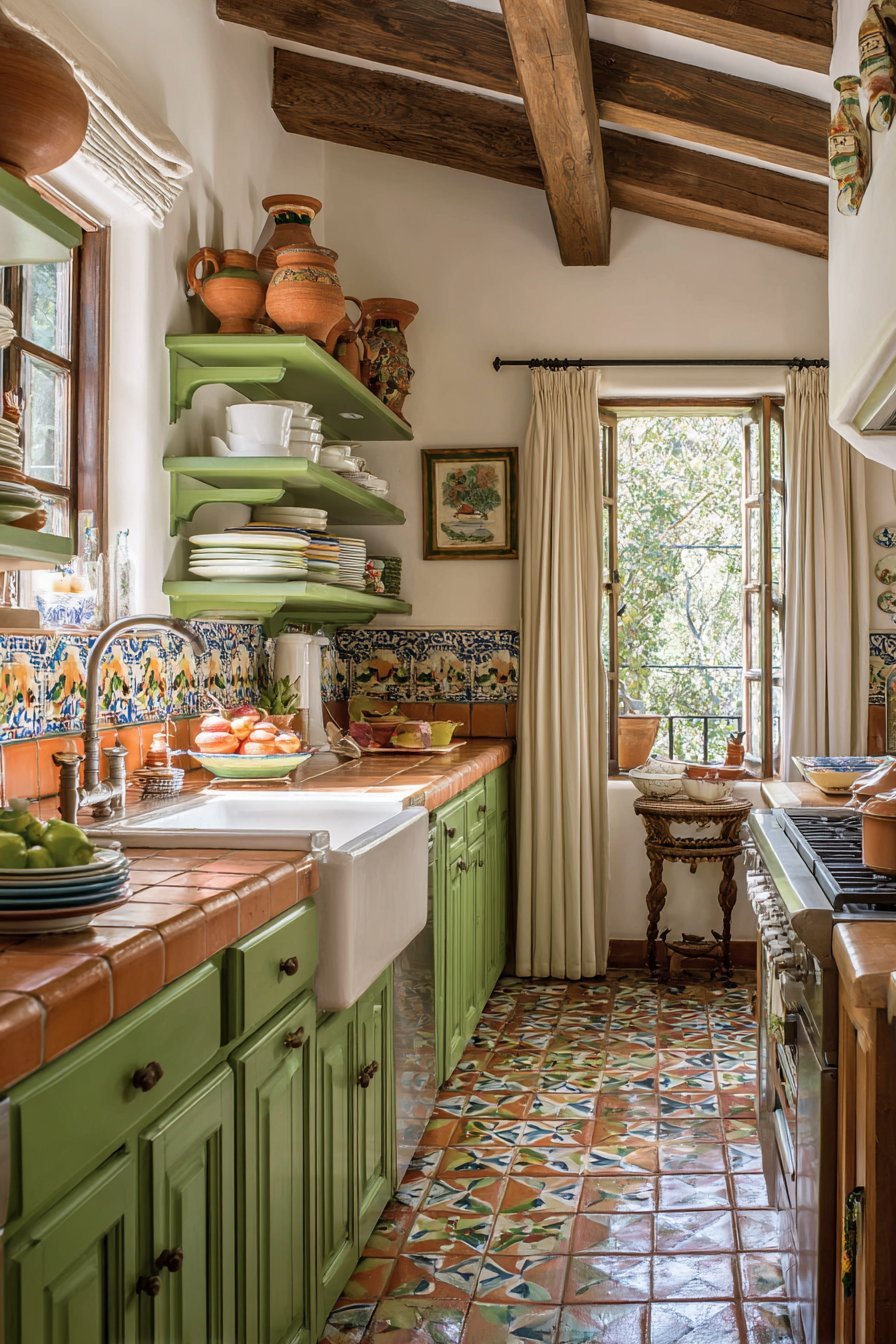
Saltillo tile flooring shows authentic color variations. No two tiles match exactly. This natural variation adds character and authenticity. Morning sunlight emphasizes the warm tones beautifully.
Key Design Tips:
- Paint lower cabinets in muted greens for contemporary Mexican style
- Mix solid tiles with decorative accents to control visual intensity
- Install farmhouse sinks for authentic rustic character
- Choose oil-rubbed bronze fixtures to complement earth tones
- Allow natural light to illuminate work areas for functionality
4. Reclaimed Wood Island with Blue Accents
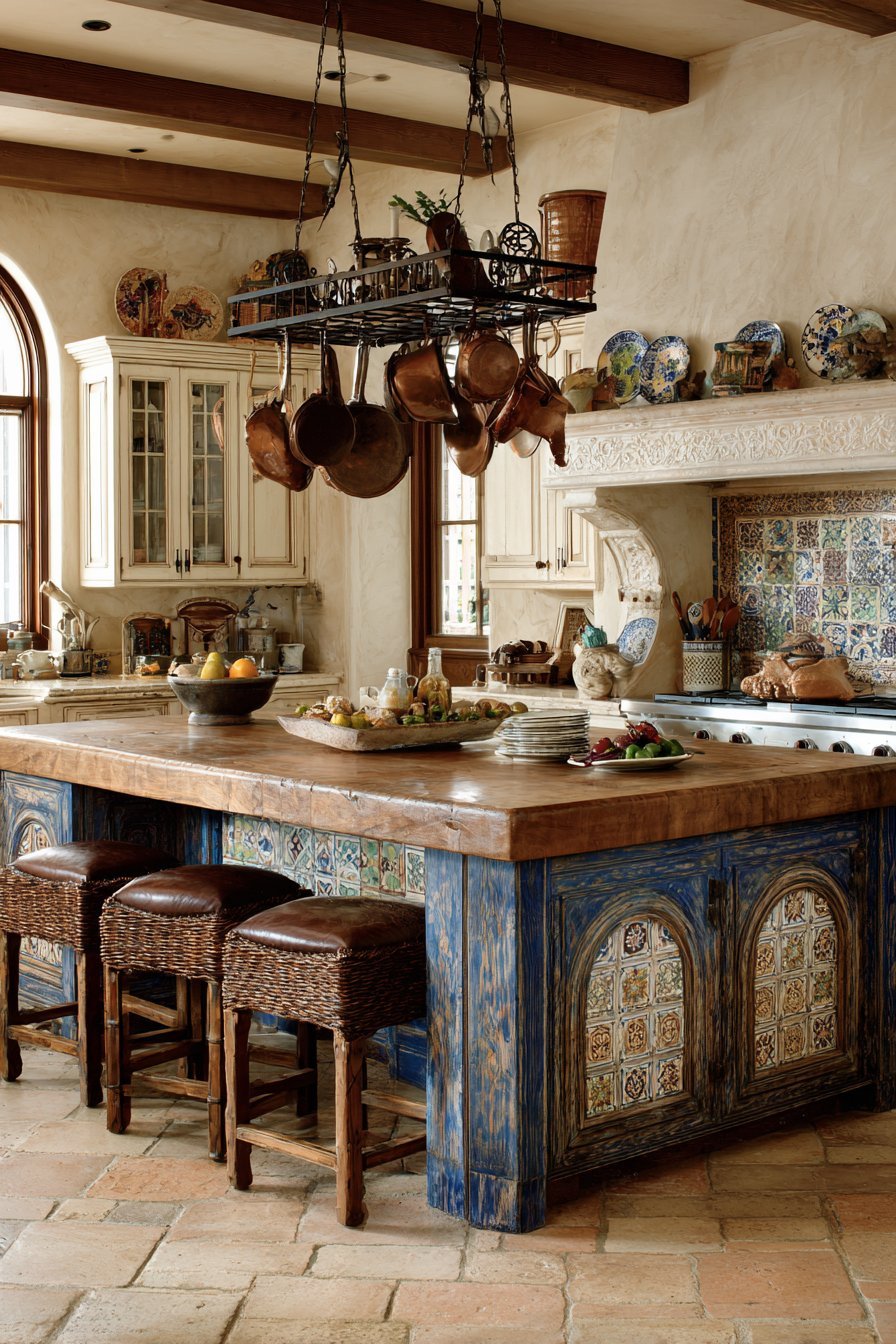
A substantial kitchen island crafted from reclaimed wood commands attention. The thick butcher block top shows natural grain patterns. Subtle wear from previous use adds authentic character. The substantial presence anchors the entire kitchen design.
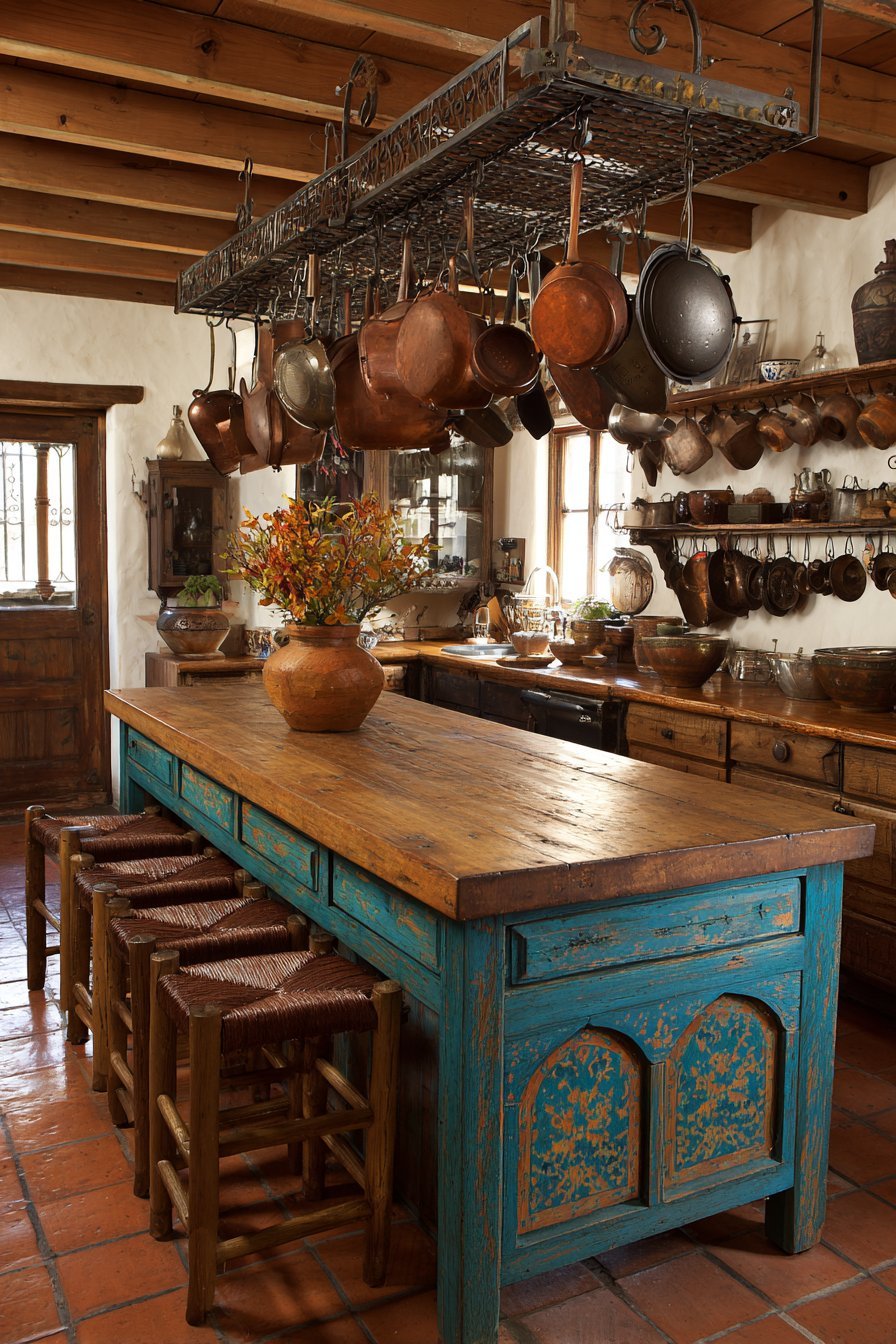
The island base features arched openings painted in traditional Mexican blue. These architectural details provide both storage and visual interest. The blue paint creates striking contrast against natural wood tones. Handwoven rush bar stools with leather seats invite gathering.
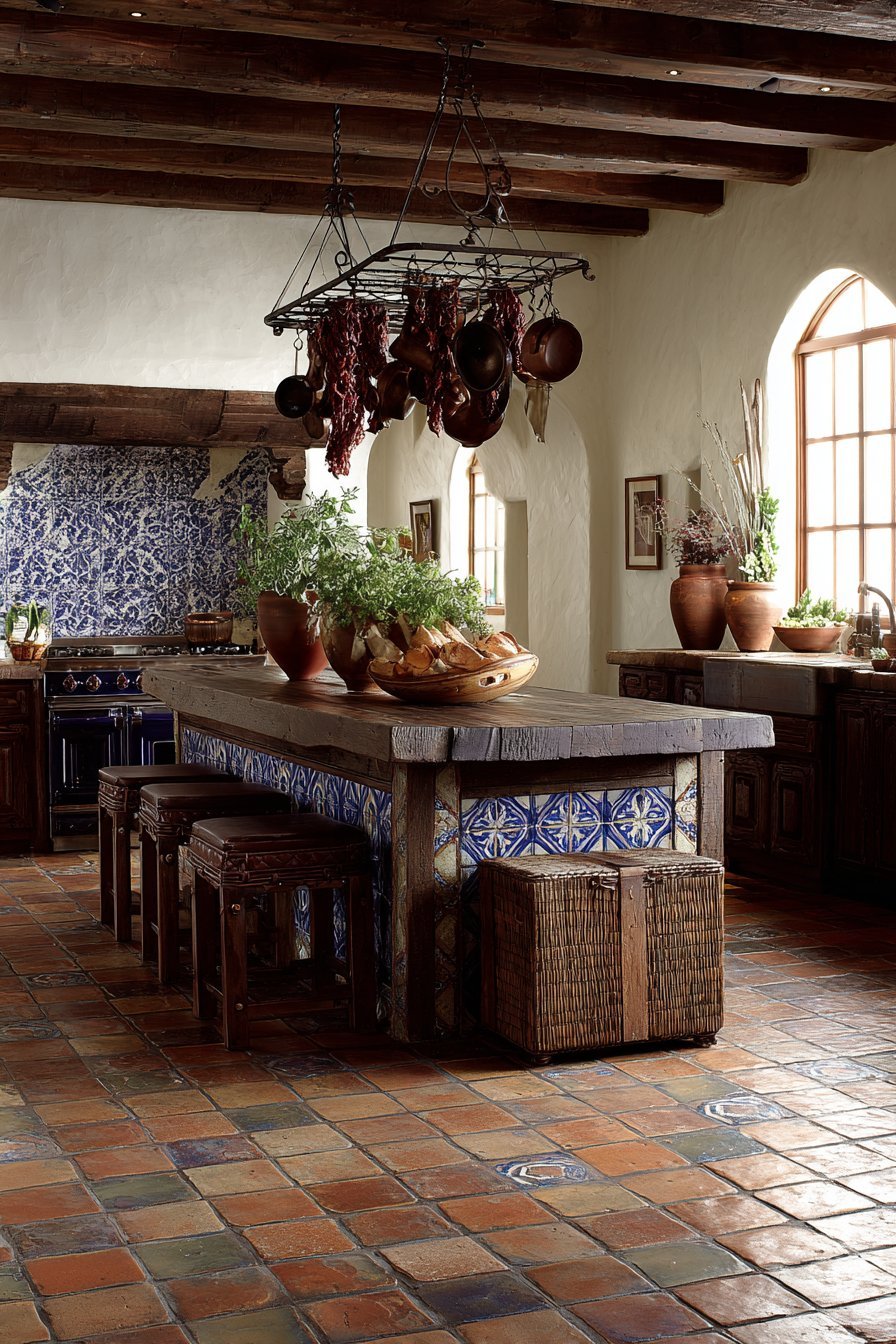
Above the island, a wrought iron pot rack suspends copper cookware. Dried chile ristras add authentic Mexican detail. The hanging elements draw the eye upward. This creates vertical interest in the space.
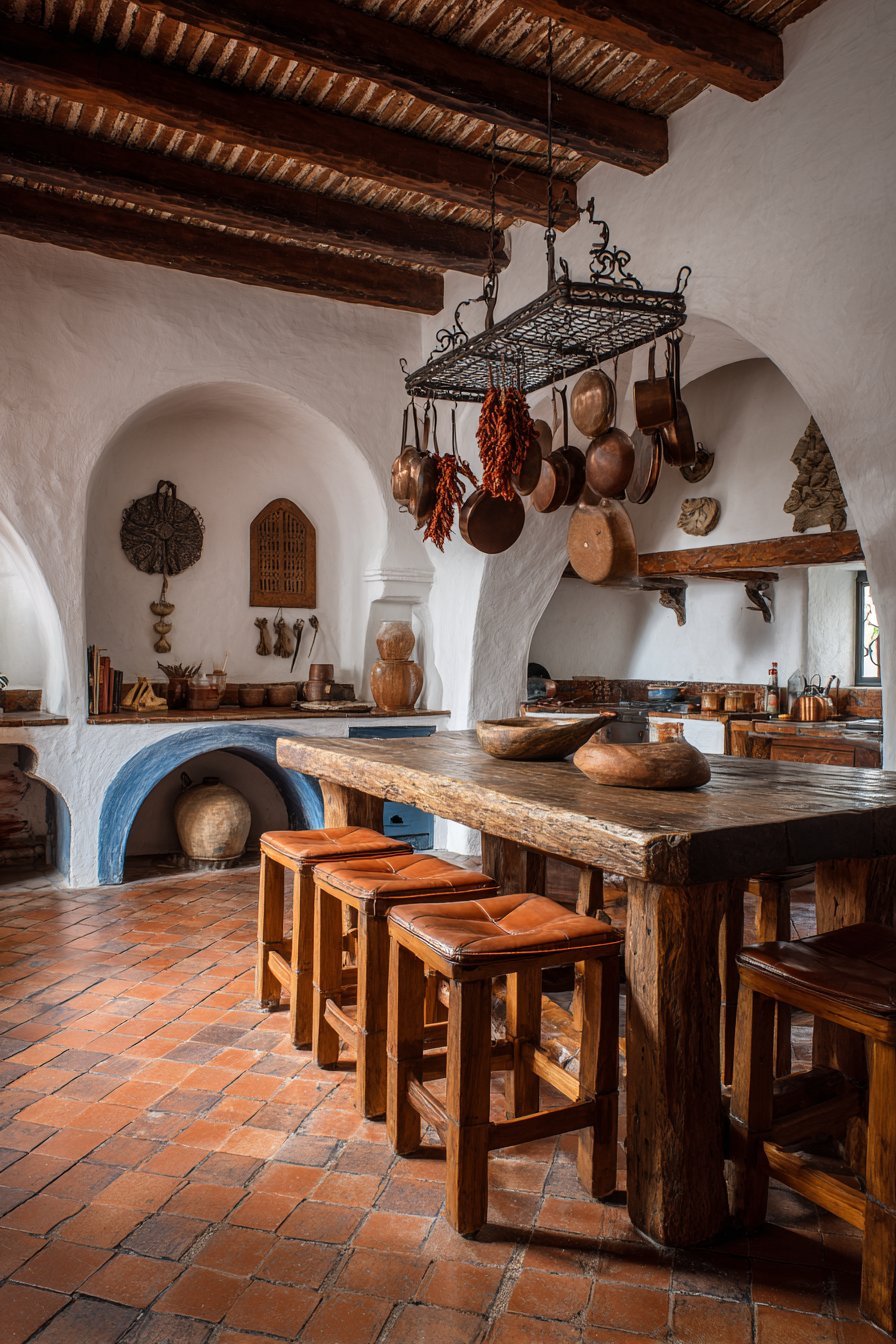
Terra cotta floor tiles extend throughout the kitchen. Whitewashed walls reflect natural light effectively. The combination of materials creates warmth without heaviness. Natural textures interact beautifully under soft diffused lighting.
Key Design Tips:
- Build islands from reclaimed wood for sustainable character
- Incorporate arched details to reference traditional Mexican architecture
- Paint island bases in traditional blue for authentic color
- Hang pot racks with copper cookware for practical beauty
- Add chile ristras for genuine Mexican kitchen atmosphere
5. Compact Kitchen with Accent Tile Wall
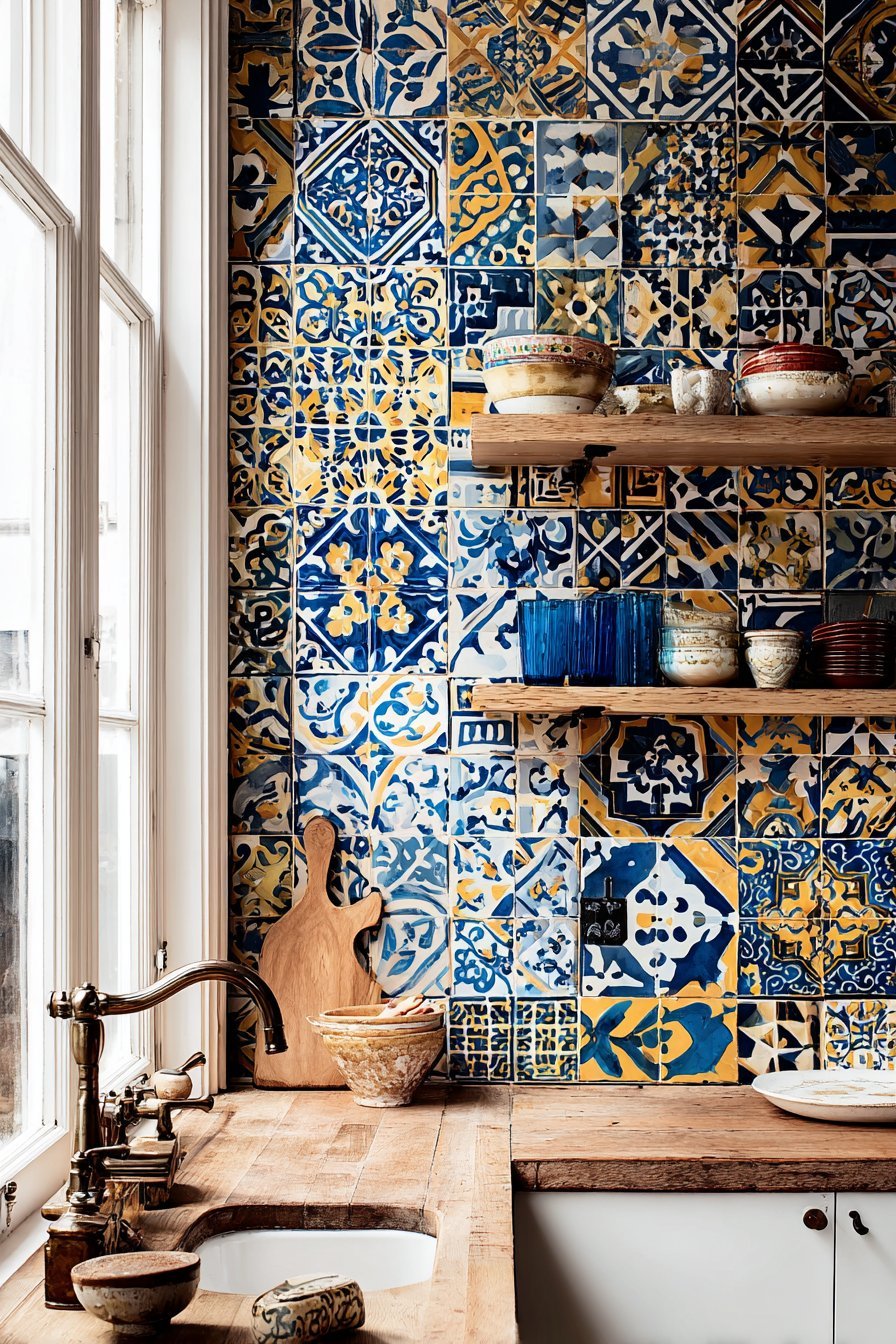
A floor-to-ceiling Talavera tile accent wall creates dramatic impact. The stunning pattern combines cobalt blue, emerald green, and golden yellow. Traditional designs cover the entire surface. The effect is breathtaking in its boldness.
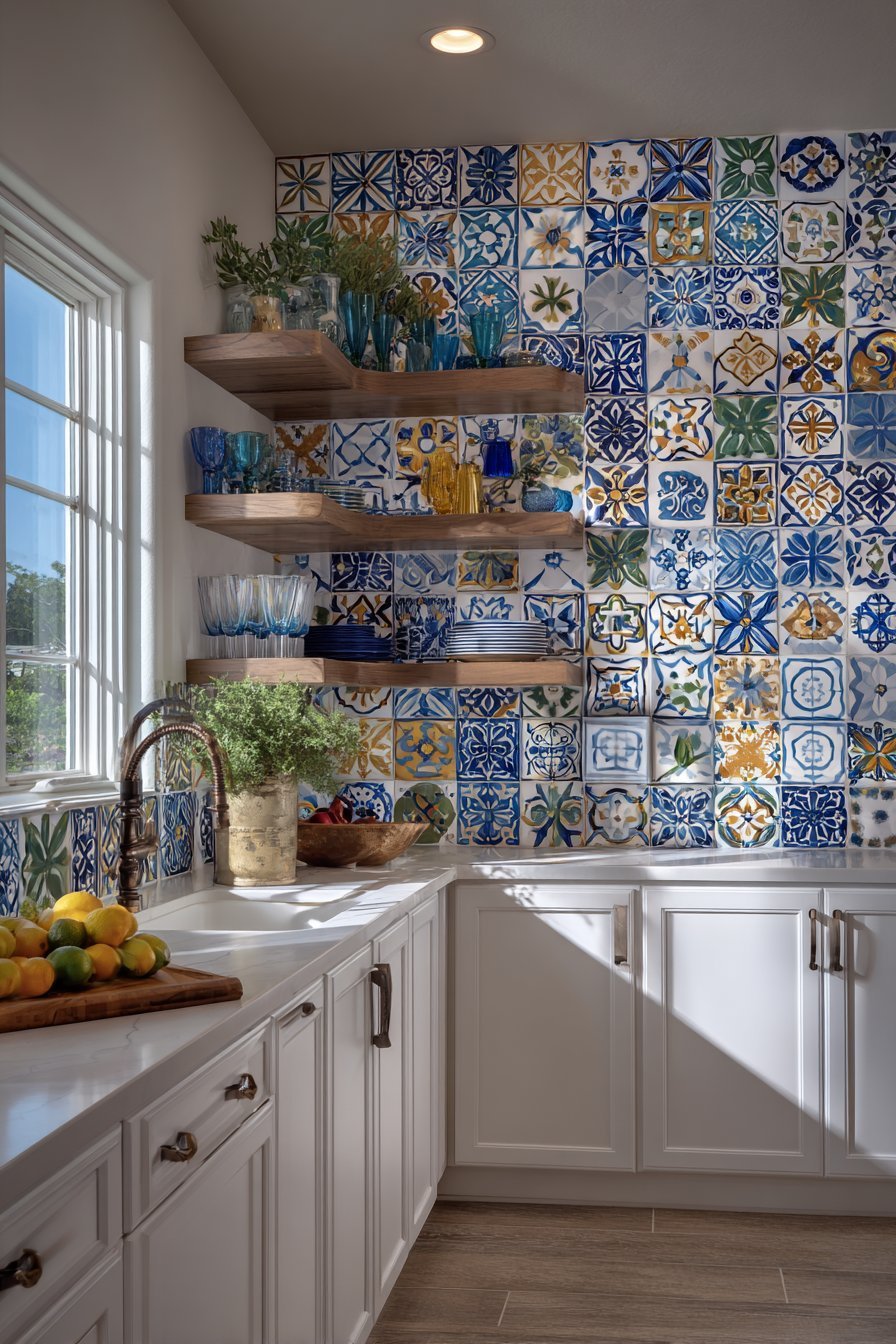
Simple white shaker cabinets provide clean contrast. This allows the decorative tiles to become the focal point. The modern functionality meets traditional artistry. The balance works exceptionally well in compact spaces.
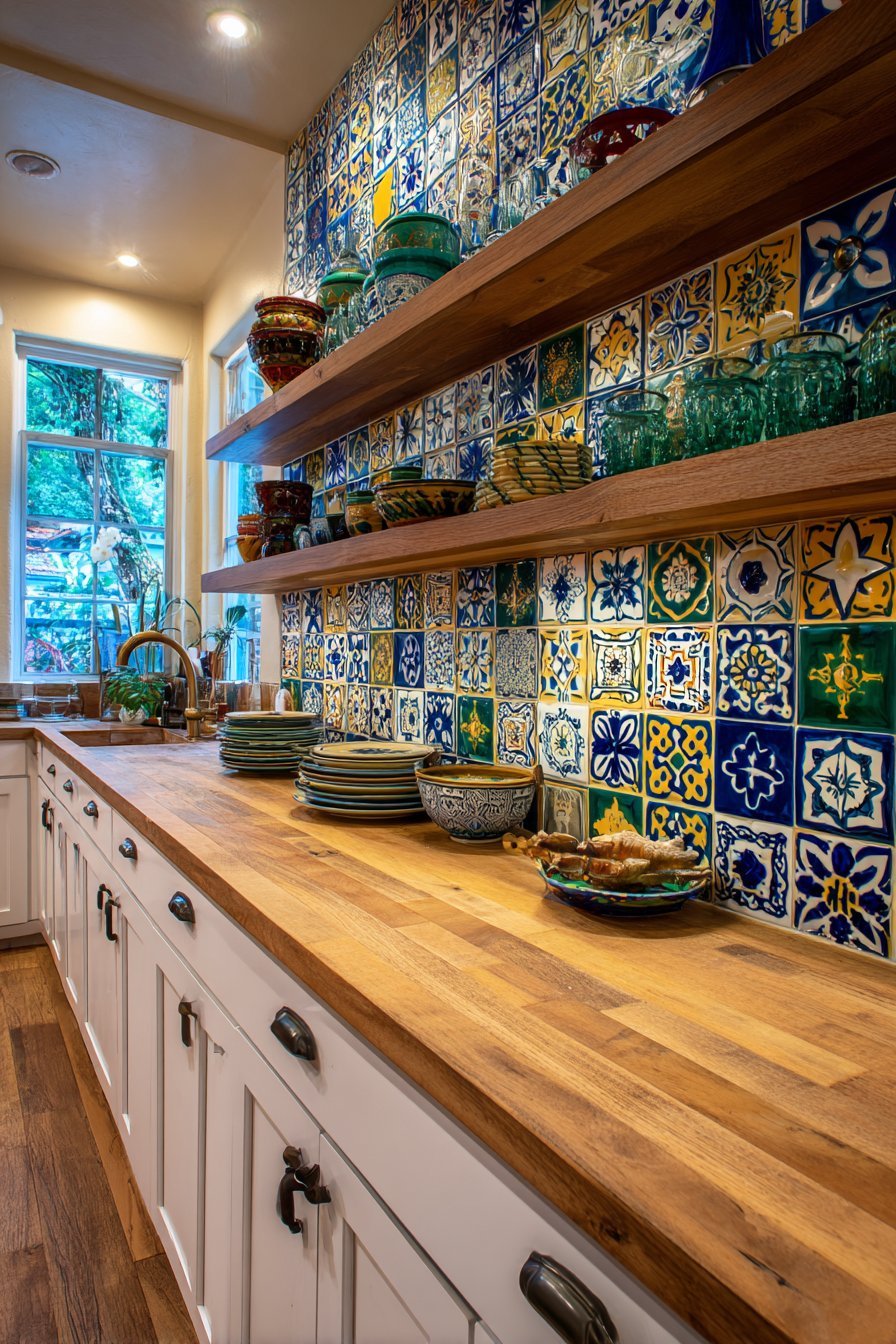
Open wooden shelves display Mexican glassware in jewel tones. Hand-painted serving dishes add colorful accents. Butcher block countertops introduce warm wood tones. A vintage-style bridge faucet in oil-rubbed bronze adds elegant practicality.
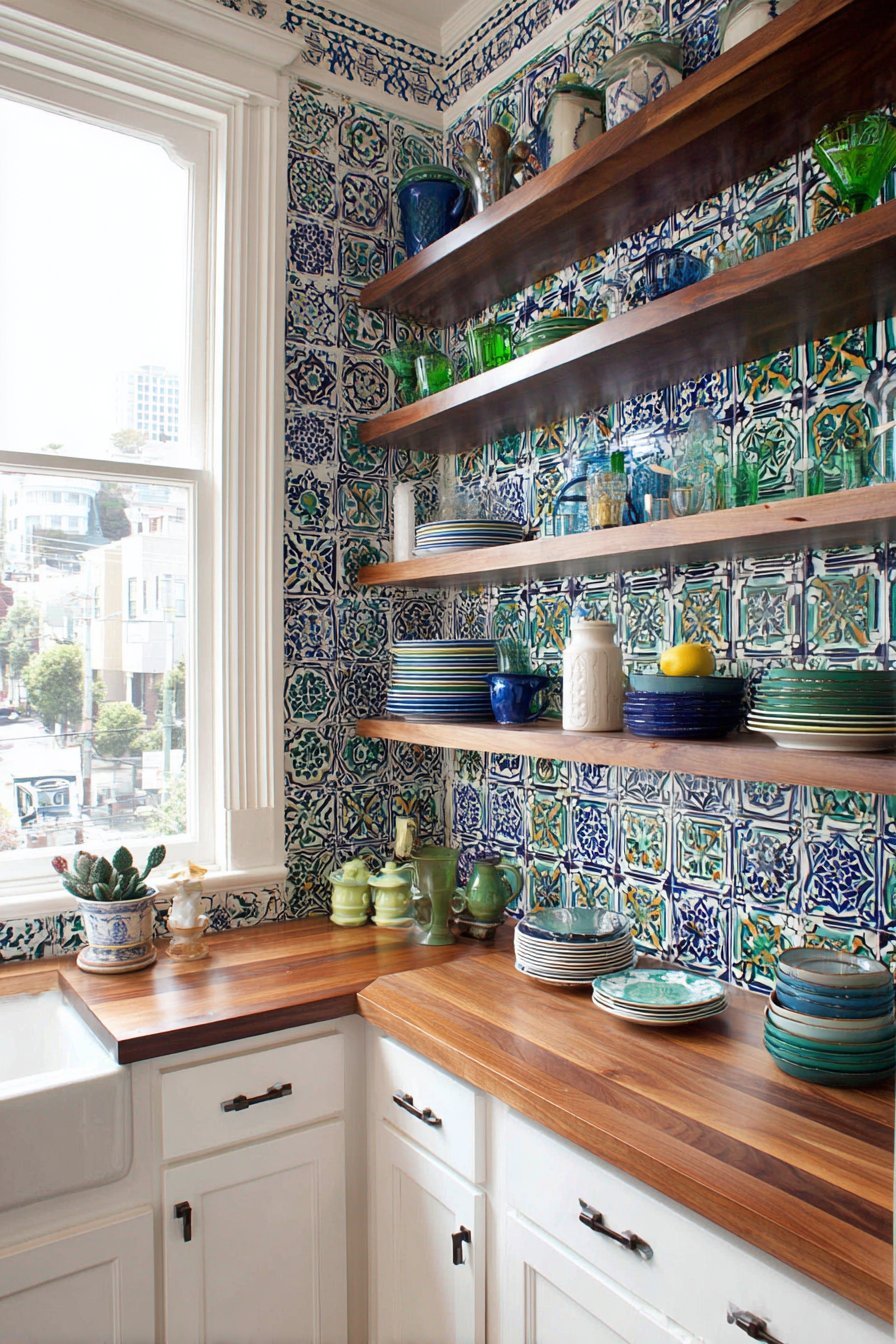
Natural light from a window highlights intricate tile patterns. The glazed surfaces reflect and refract light beautifully. This creates dynamic visual interest throughout the day. The compact space feels larger through thoughtful design choices.
Key Design Tips:
- Create accent walls with floor-to-ceiling tile for maximum impact
- Use simple white cabinets to balance bold tile patterns
- Display glassware in jewel tones for colorful accents
- Install butcher block counters for warm, natural surfaces
- Choose vintage-style faucets for period-appropriate details
6. Rustic Beam and Clay Tile Kitchen
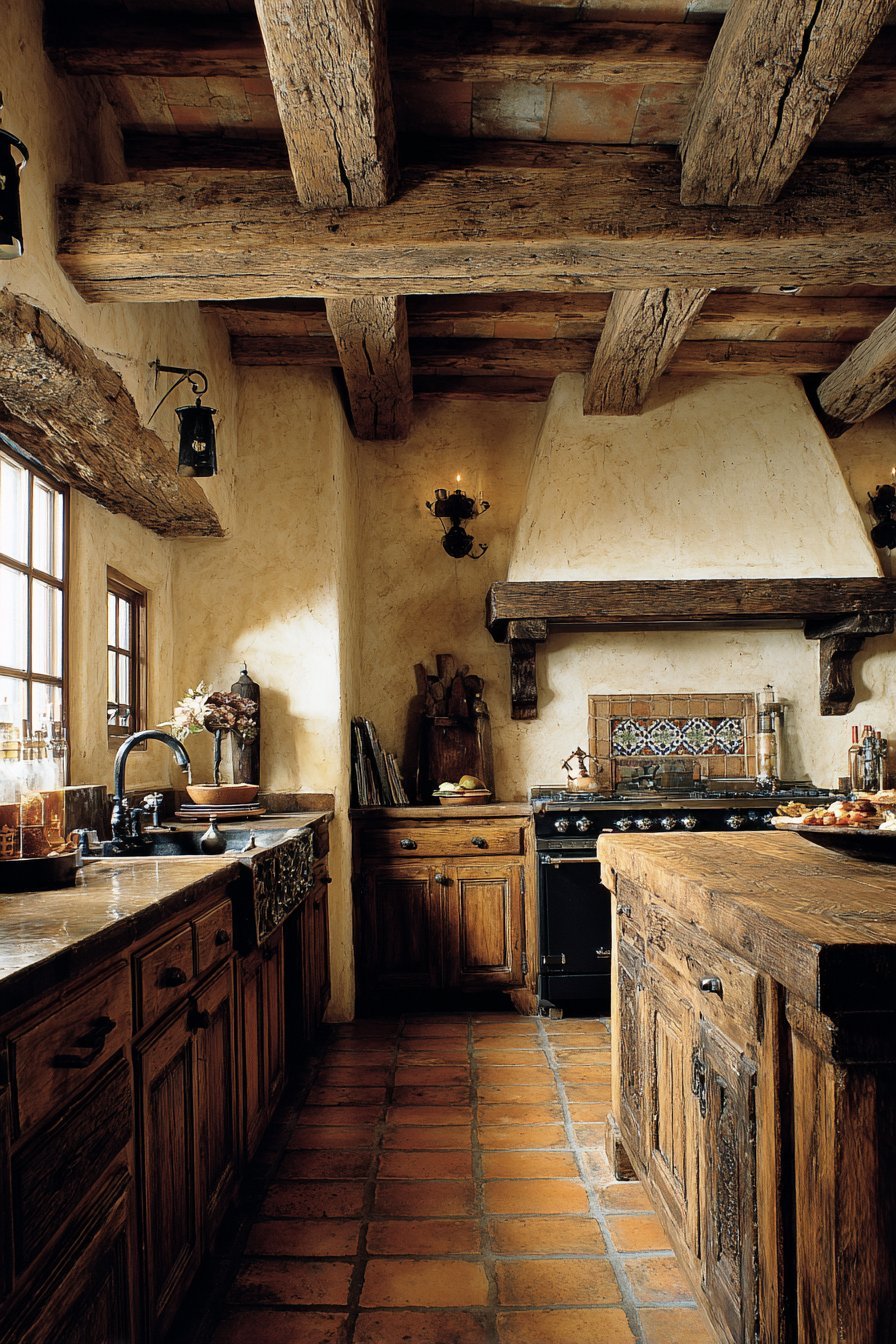
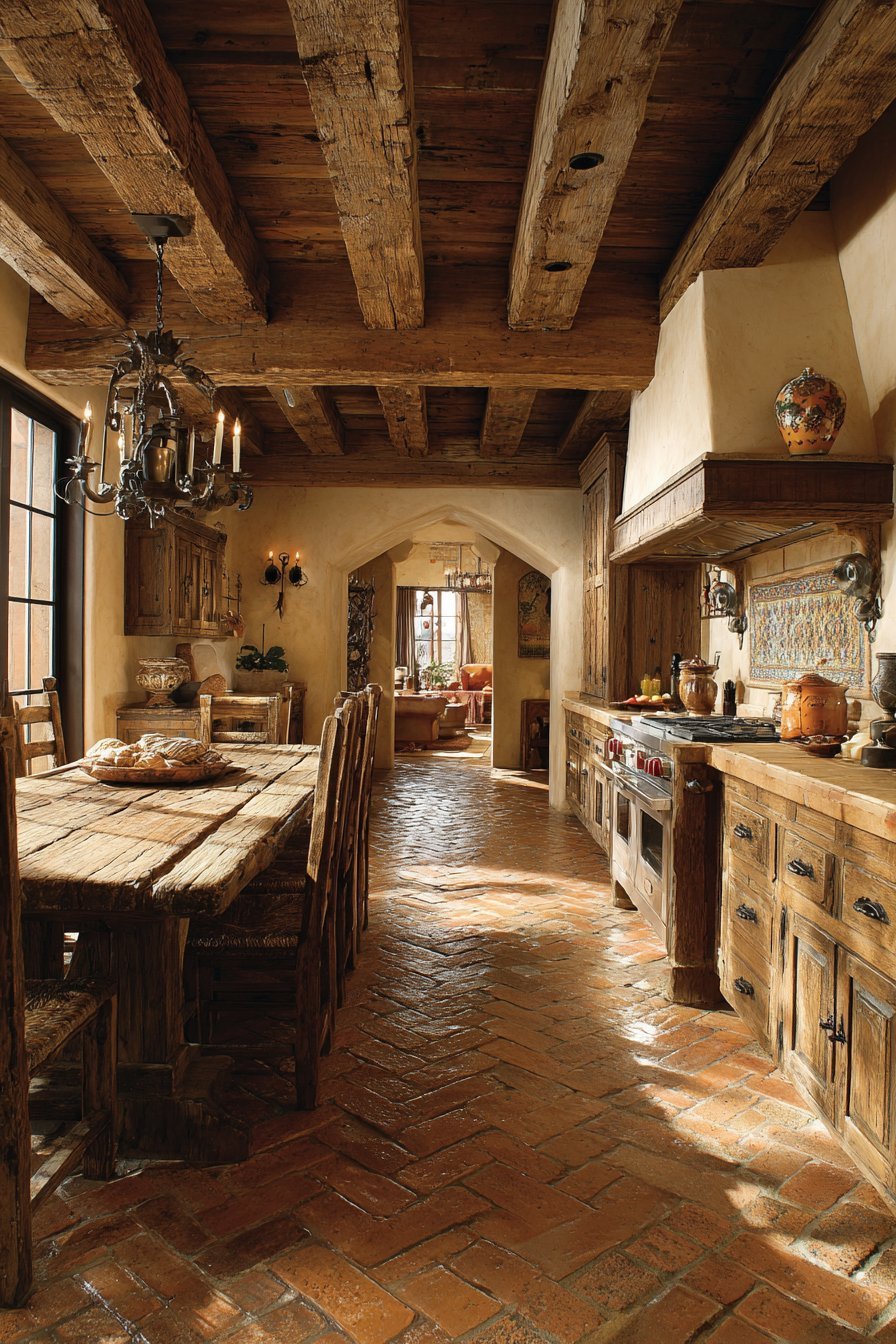
Substantial exposed wooden beams support the ceiling overhead. Natural knots and grain variations show authentic age. The timber appears weathered yet strong. These architectural elements define the space dramatically.
Clay tile flooring in warm terracotta extends throughout. Visible color variations between tiles add authenticity. No industrial uniformity exists here. Each tile contributes unique character.
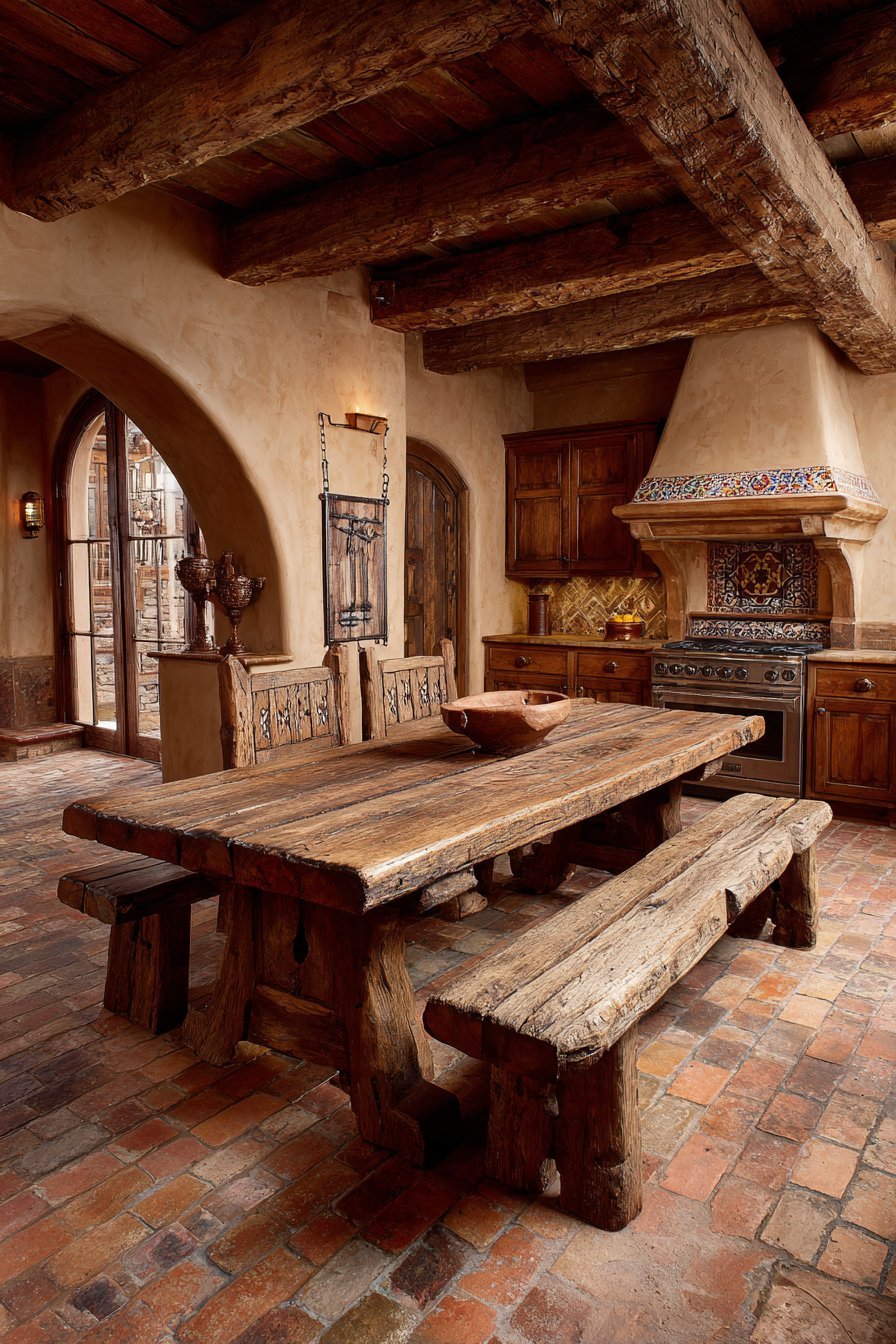
A large farmhouse table serves as the kitchen island. Thick planks of reclaimed pine show visible tool marks. The patina tells stories of previous lives. Wrought iron cabinet hardware adds authentic period details.
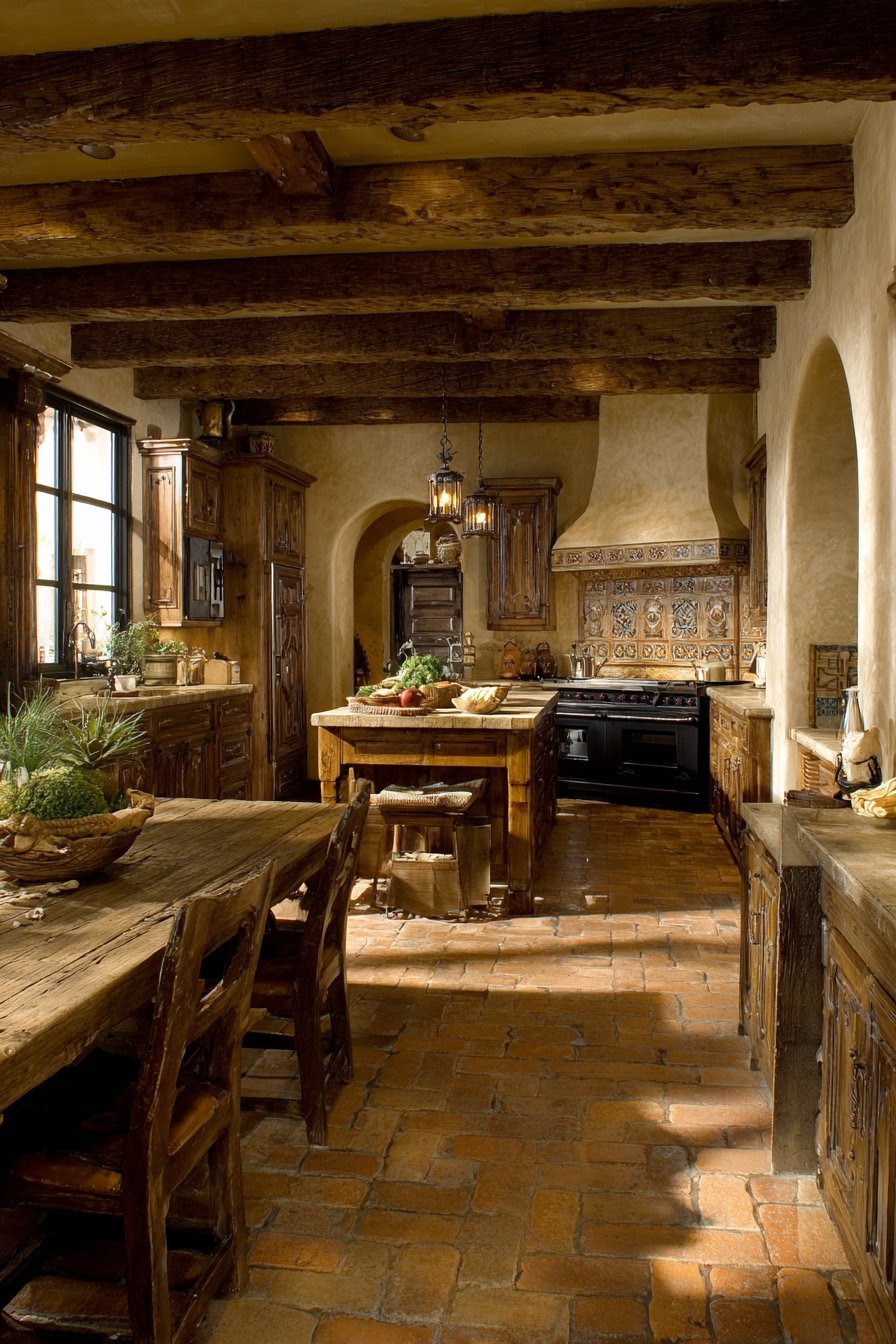
The cooking area features a plastered range hood with embedded Talavera tile accents. Morning light creates warm shadows across textured plaster walls. The interplay of natural materials creates inviting atmosphere. This kitchen celebrates honest, handcrafted beauty.
Key Design Tips:
- Install exposed beams for dramatic architectural interest
- Use farmhouse tables as islands for flexible workspace
- Select clay tiles with natural color variation for authenticity
- Choose wrought iron hardware for period-appropriate details
- Incorporate plaster range hoods for traditional hacienda style
7. Hand-Hammered Copper Sink Area
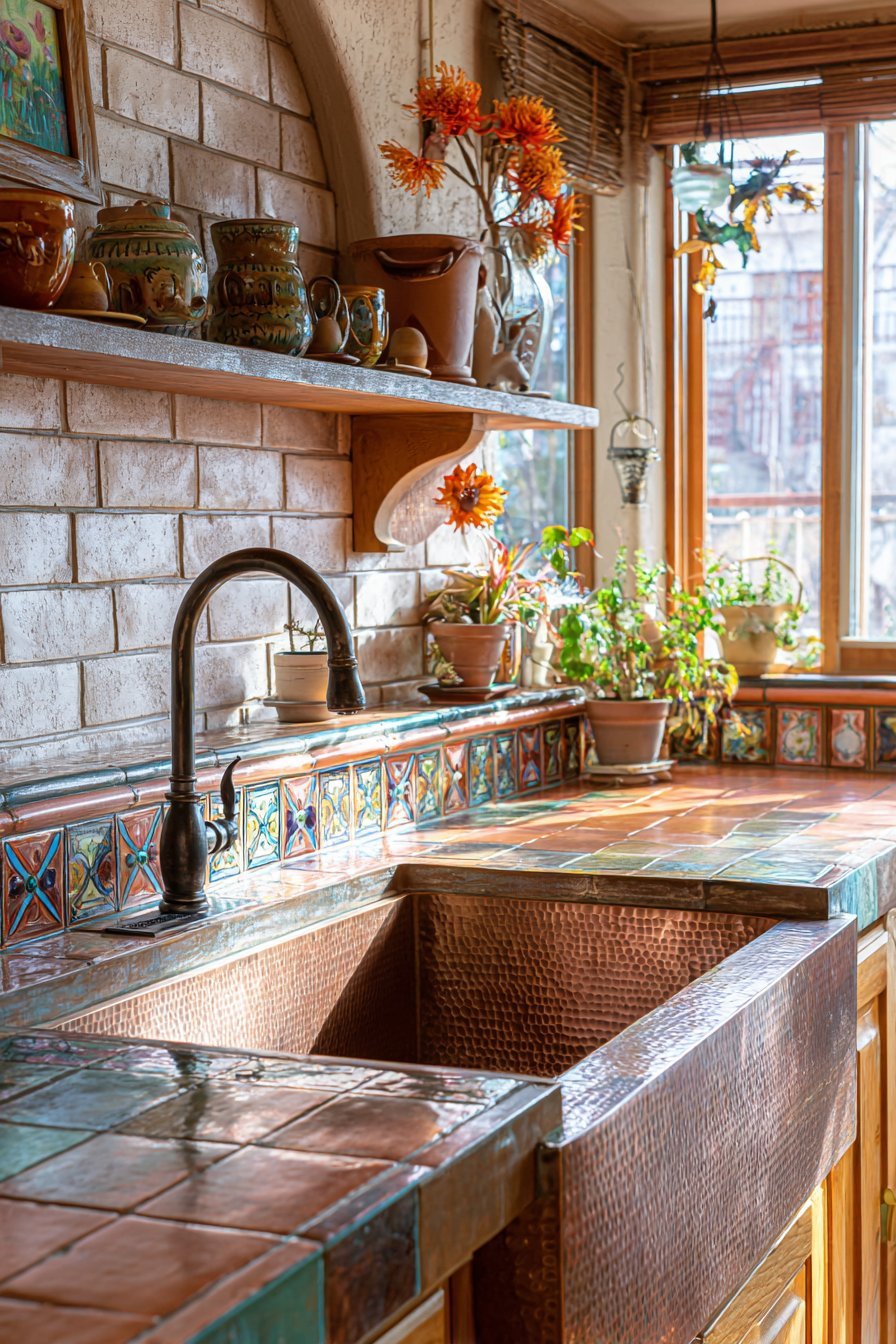
A hand-hammered copper farmhouse sink displays beautiful patina variations. The aged finish shows authentic character development. Natural oxidation creates unique surface patterns. The copper gleams warmly under natural light.
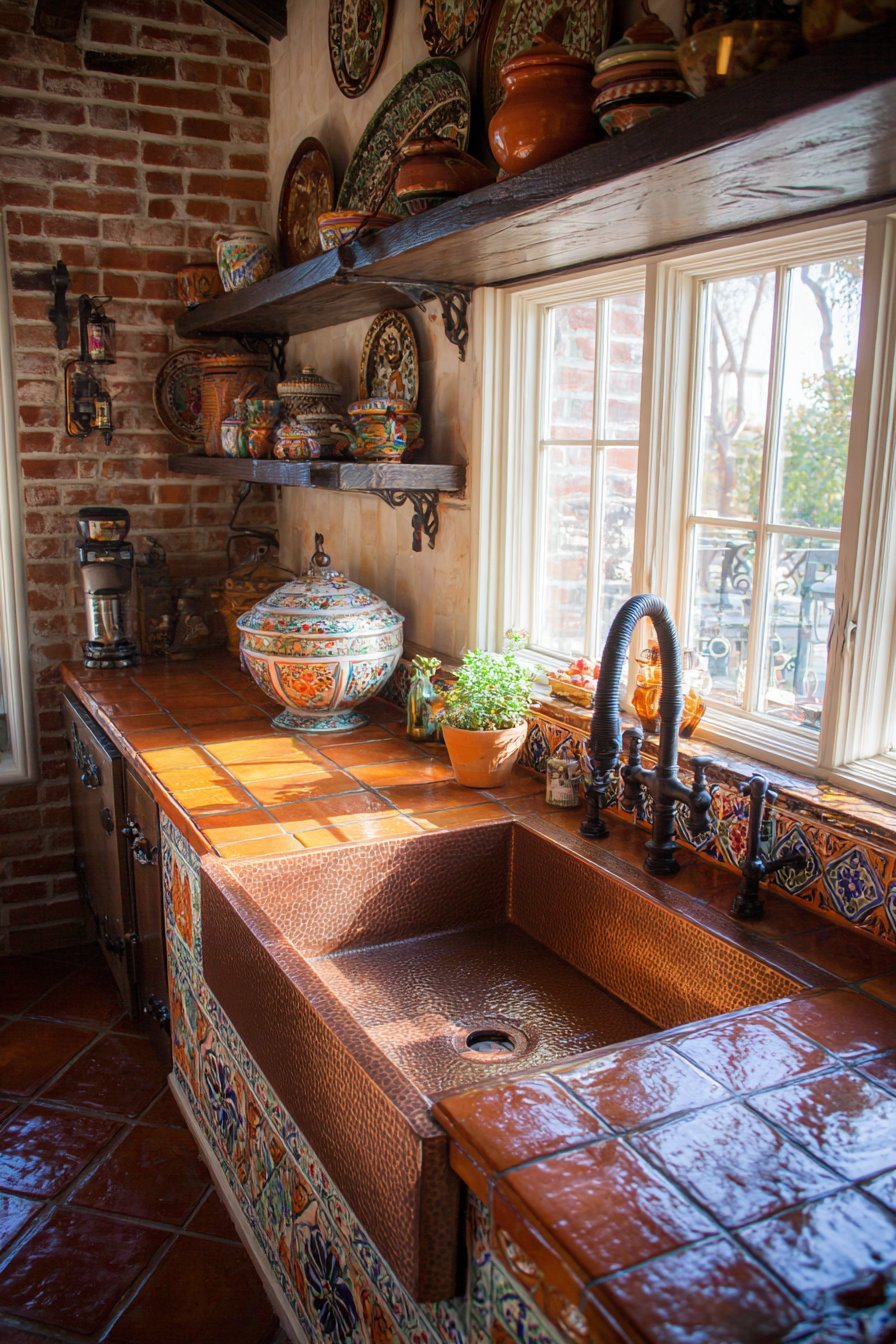
Sealed terracotta tile surrounds the sink as countertop material. Hand-painted Talavera accent tiles create a decorative border. The combination of materials feels cohesive and intentional. Traditional Mexican pottery sits on open shelving above.
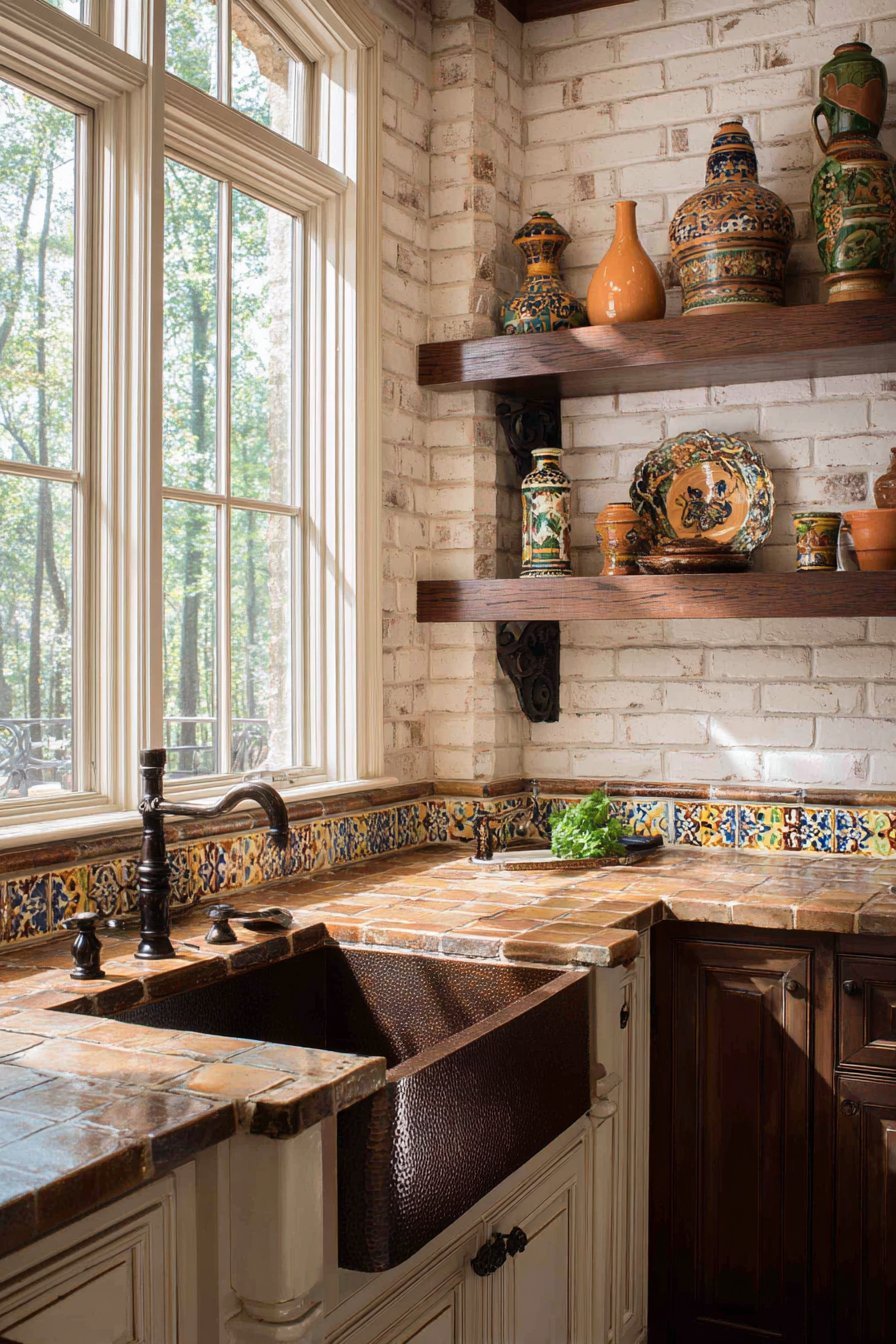
A tall wrought iron faucet in oil-rubbed bronze complements the copper perfectly. The finish coordination creates visual harmony. Whitewashed brick walls provide textured backdrop. The walls maintain brightness while adding dimensional interest.
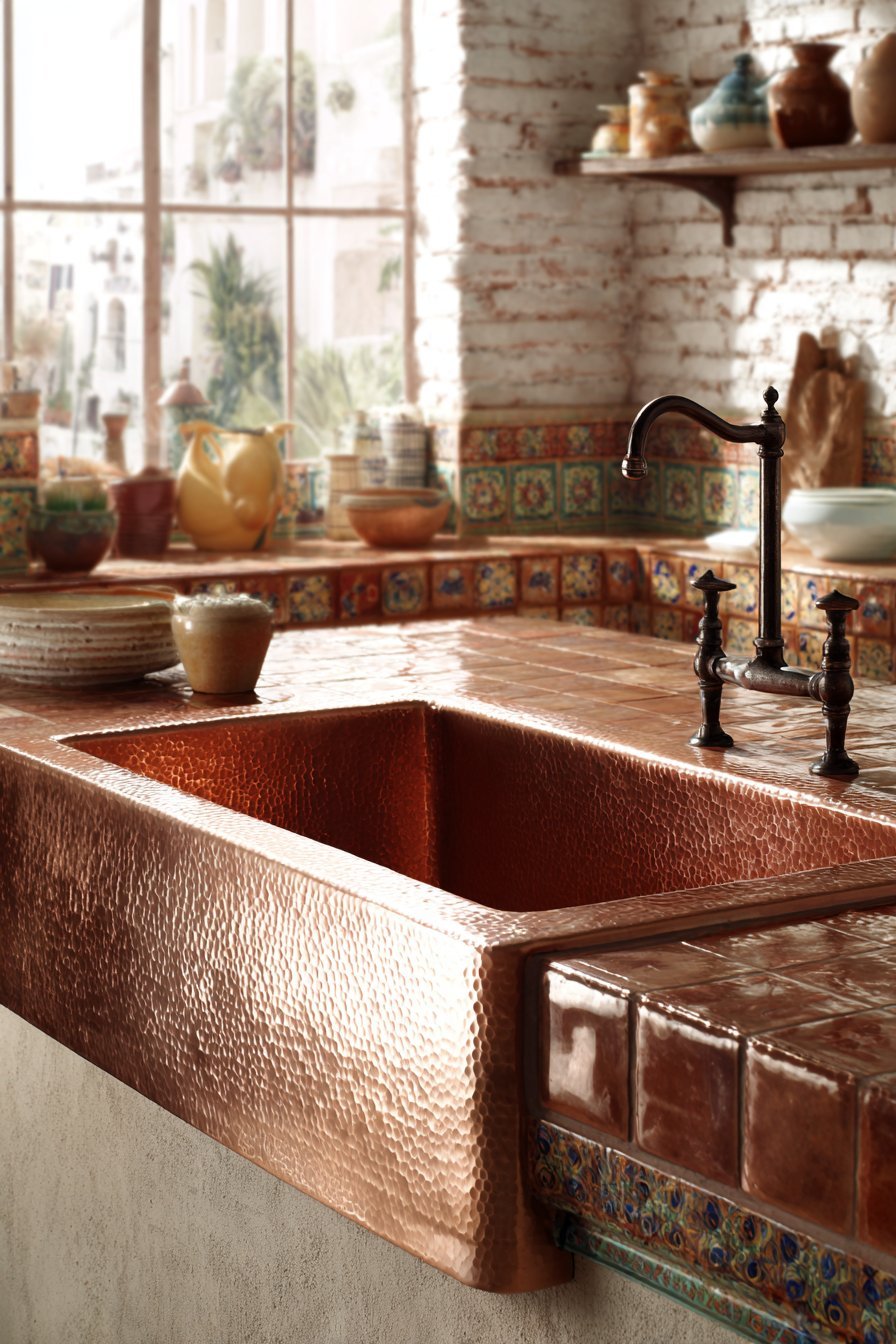
Natural window light illuminates the copper’s warm tones throughout the day. The hammered surface catches and reflects light uniquely. Glazed tiles shimmer alongside matte plaster. Professional attention to material interaction creates exceptional results.
Key Design Tips:
- Install copper farmhouse sinks for warm, living patina
- Surround sinks with terracotta tile for cohesive material palette
- Add Talavera tile borders for decorative detail
- Choose coordinating metal finishes for visual harmony
- Position sinks near windows for natural light enhancement
8. Colorful Folk Art Cabinet Kitchen
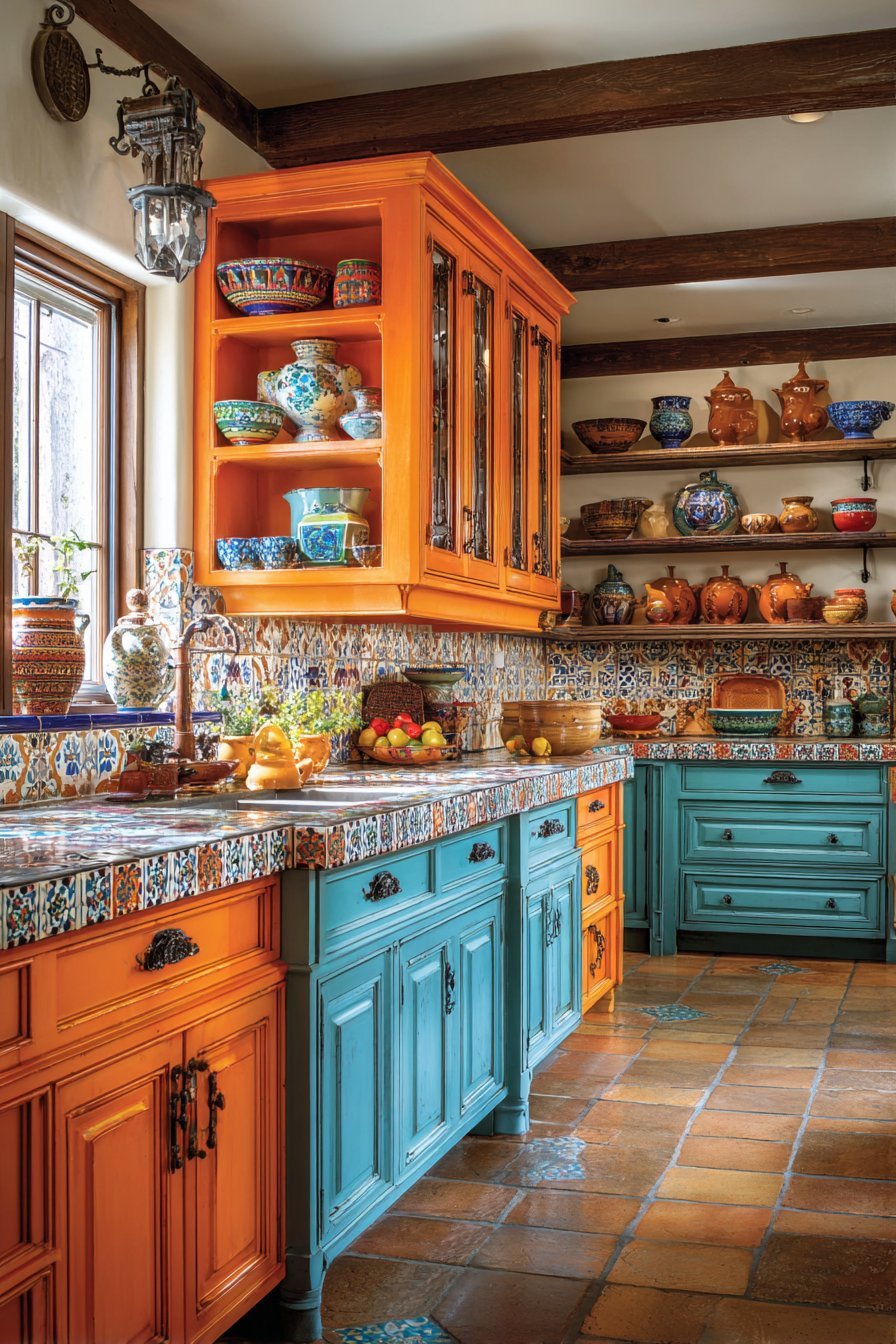
Traditional terracotta orange covers lower cabinets with cheerful boldness. Select upper cabinets feature turquoise blue paint. This creates authentic folk art aesthetic. The color combination celebrates Mexican artistic traditions.
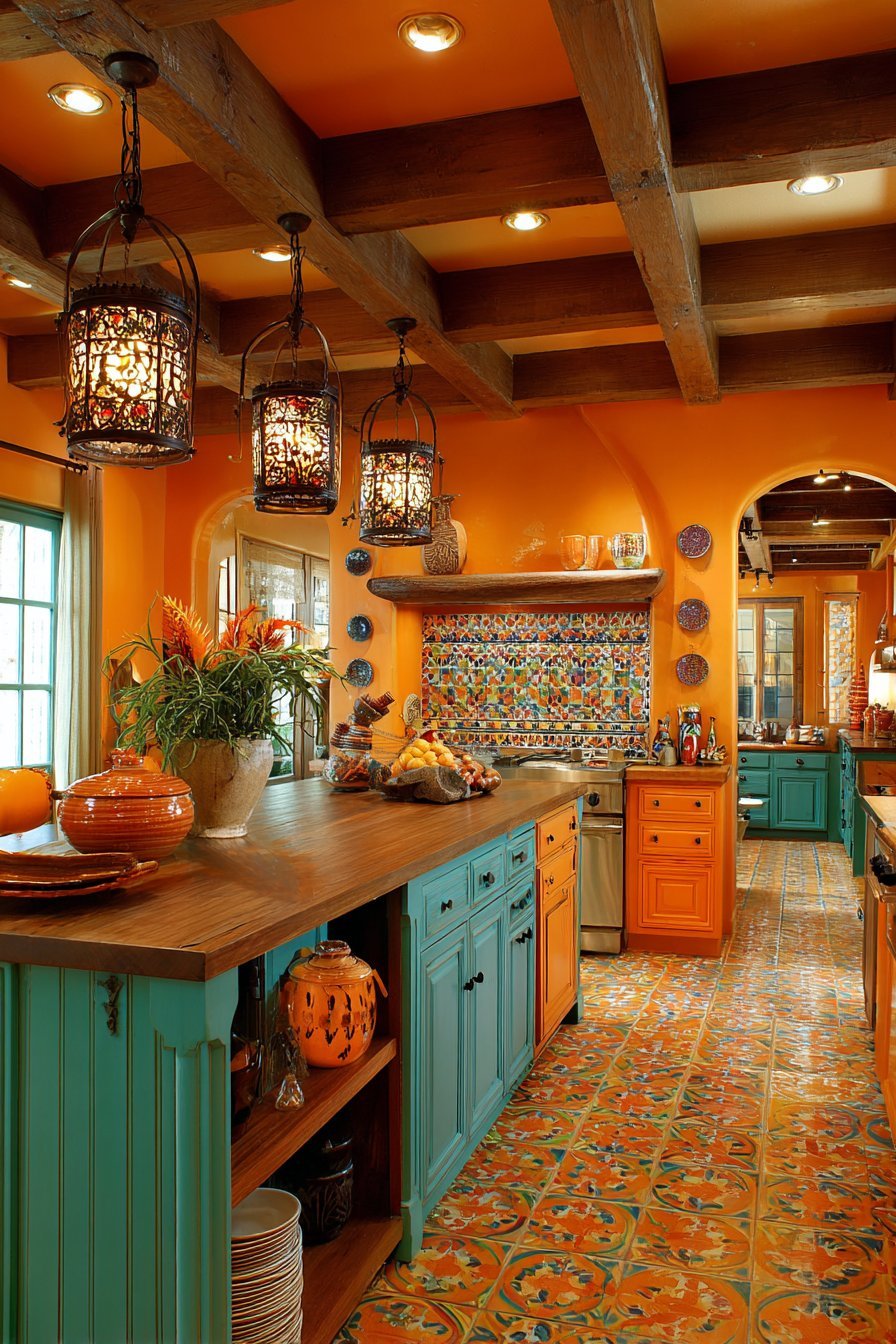
Talavera tile countertops display intricate hand-painted patterns. Complementary colors unite the design scheme. The backsplash combines solid colored tiles with decorative borders. Mexican motifs add cultural authenticity throughout.
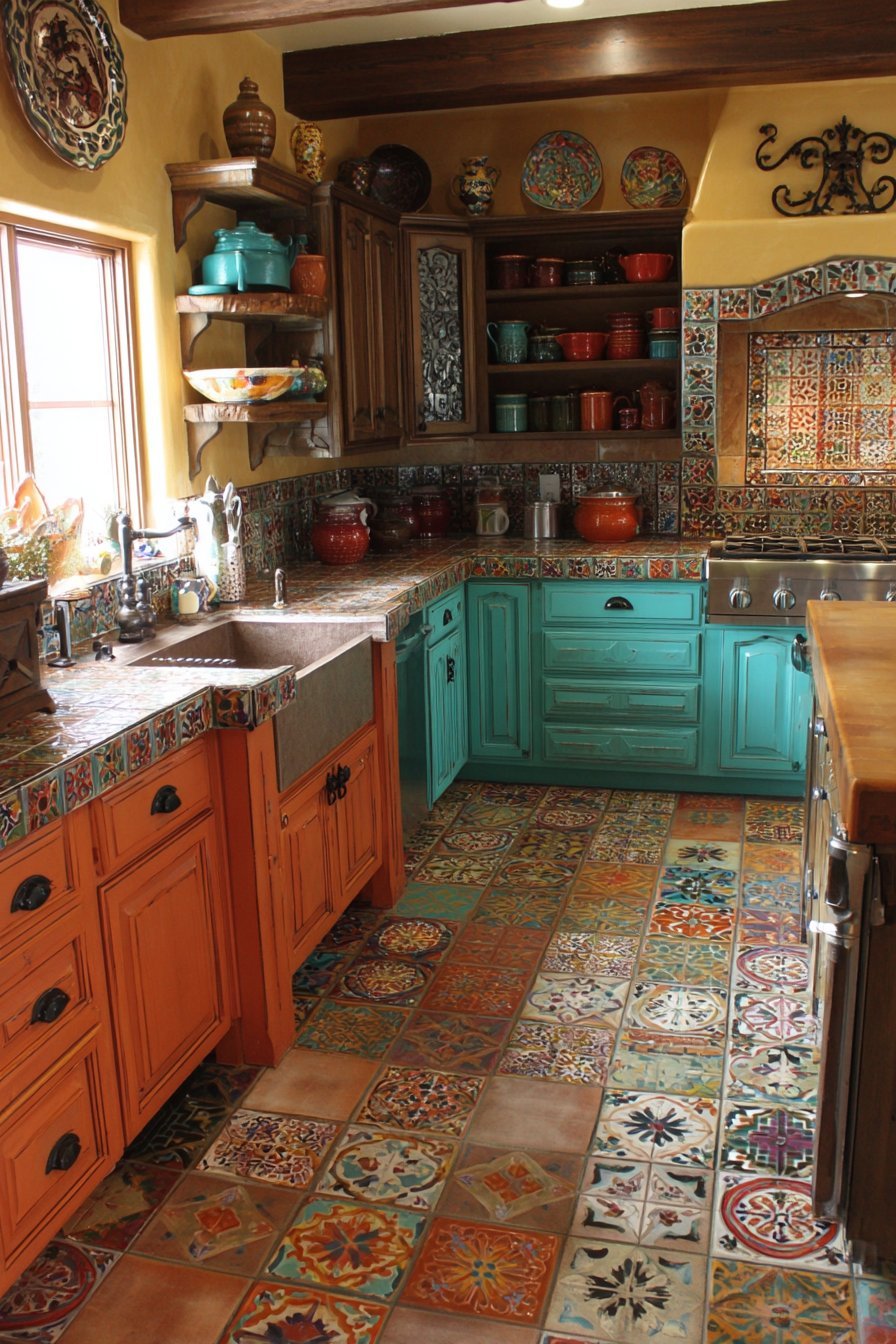
Open shelving made from dark stained wood displays colorful pottery. Woven textiles add soft texture and pattern. Saltillo floor tiles show natural variation. Wrought iron hardware and light fixtures maintain period authenticity.
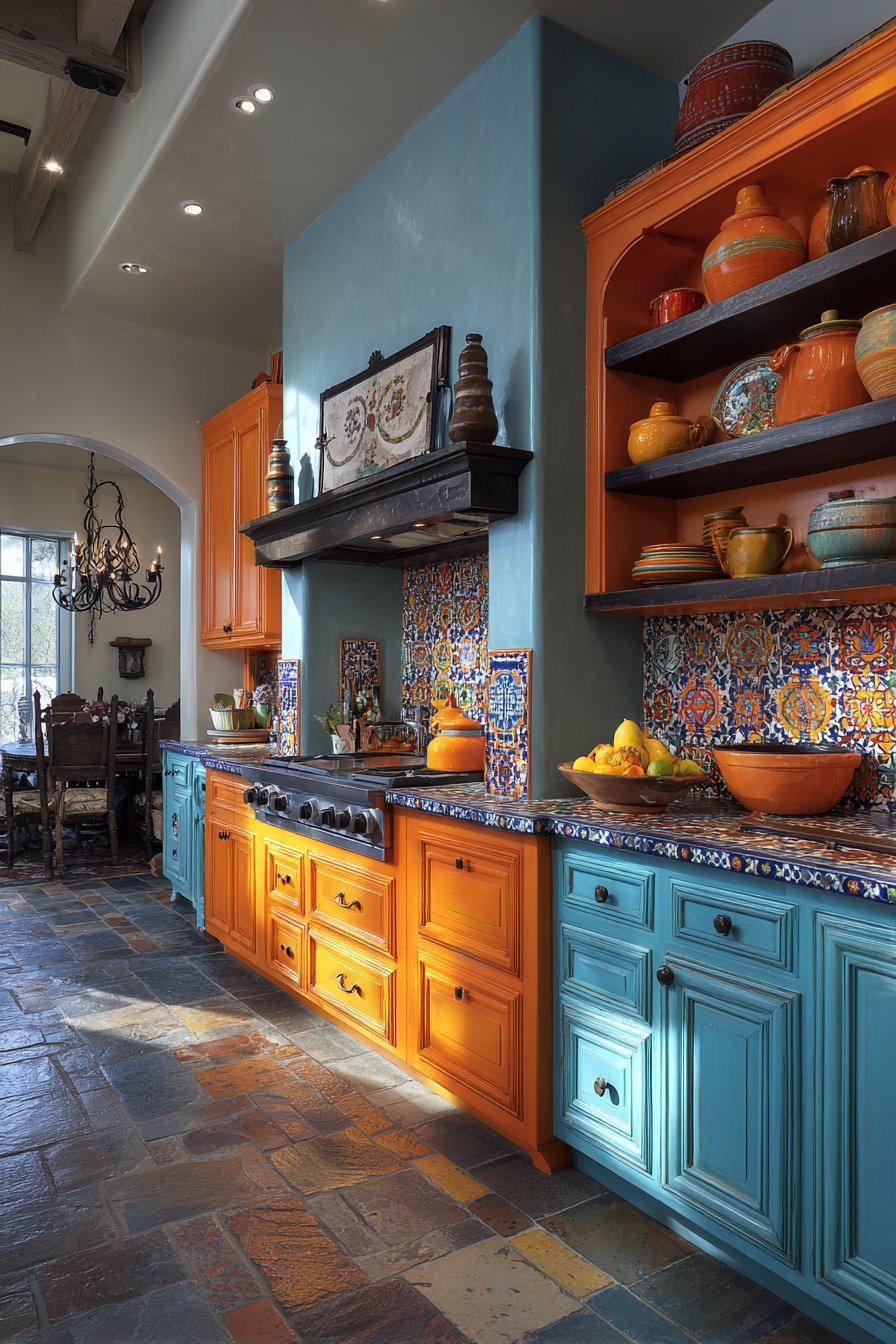
Balanced exposure shows how natural daylight enhances saturated colors. The vibrant hues remain realistic rather than artificial. Material quality shines through proper lighting. The result celebrates color without sacrificing sophistication.
Key Design Tips:
- Paint cabinets in traditional Mexican colors for authentic character
- Use Talavera tiles as countertop surfaces for unique beauty
- Display colorful pottery and textiles as decorative elements
- Install wrought iron fixtures for consistent period details
- Balance bright colors with natural materials for sophistication
9. Corner Breakfast Nook with Banco Bench
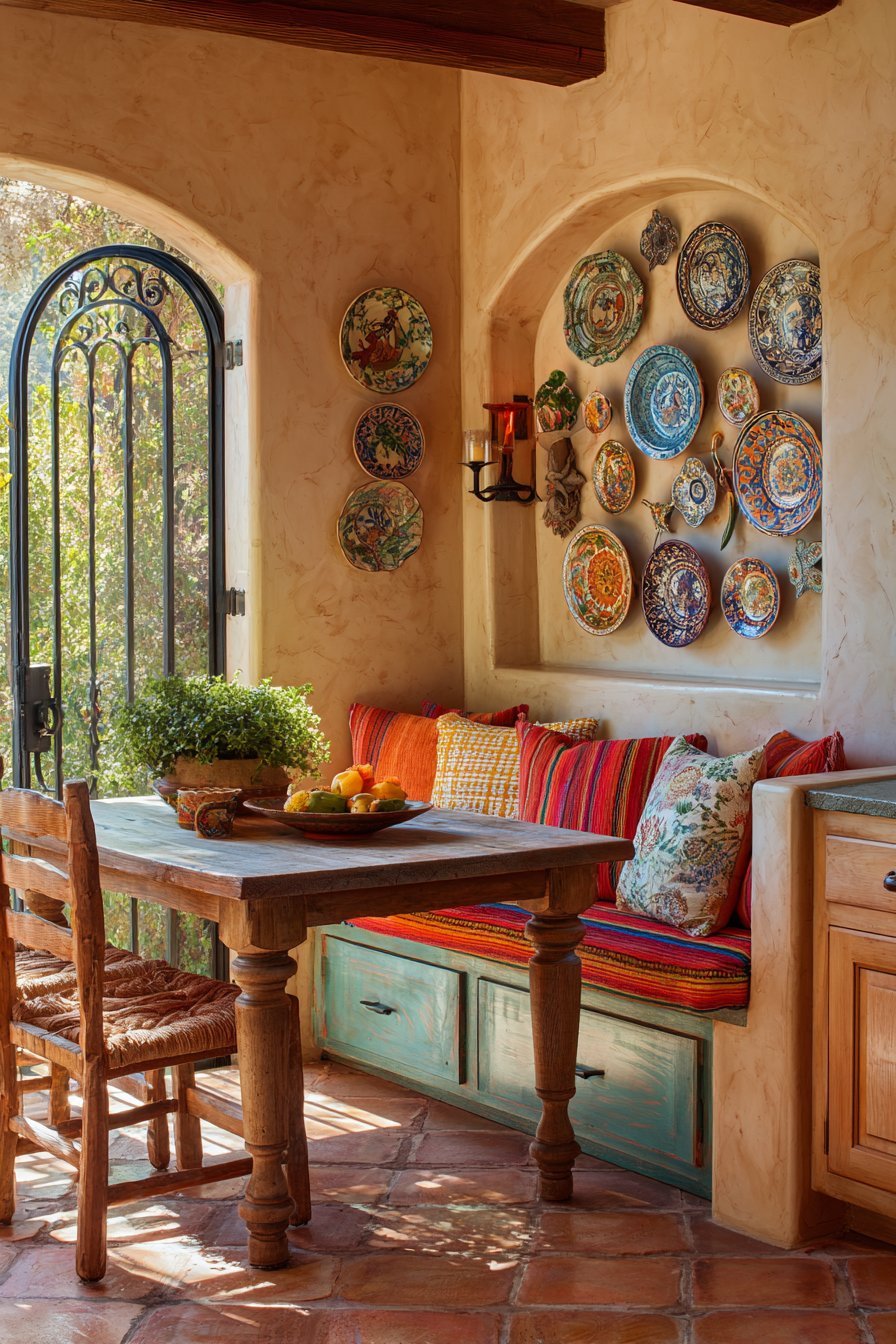
A built-in banco bench features colorful woven cushions. Traditional serape patterns include red, orange, yellow, and turquoise. The textile patterns add vibrant Mexican character. The bench base is plastered and painted warm ochre.
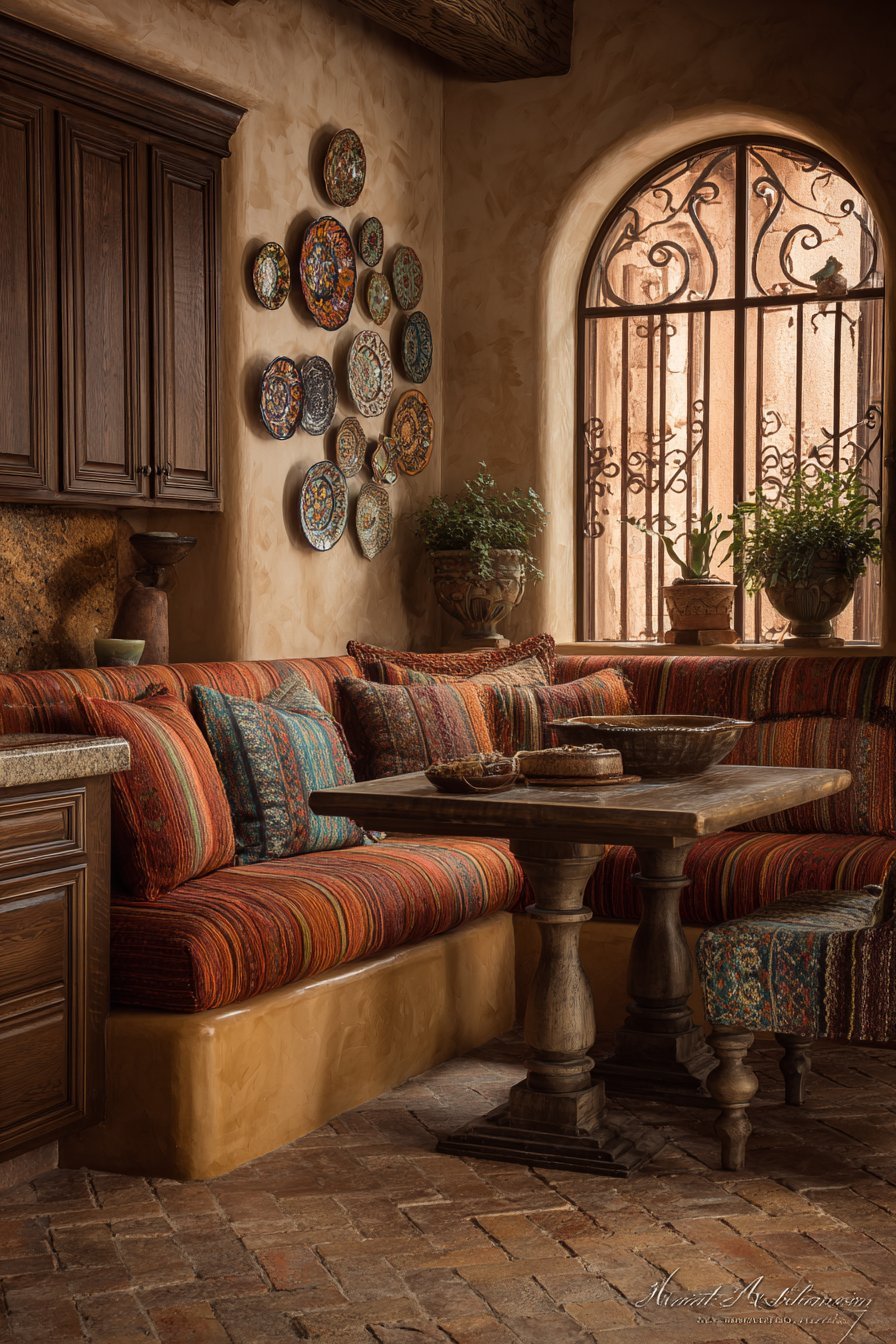
A rustic wooden table with turned legs sits before the bench. The natural wood grain adds organic beauty. An arched window with wrought iron detailing allows sunlight to flood inside. The iron grillwork creates beautiful shadow patterns.
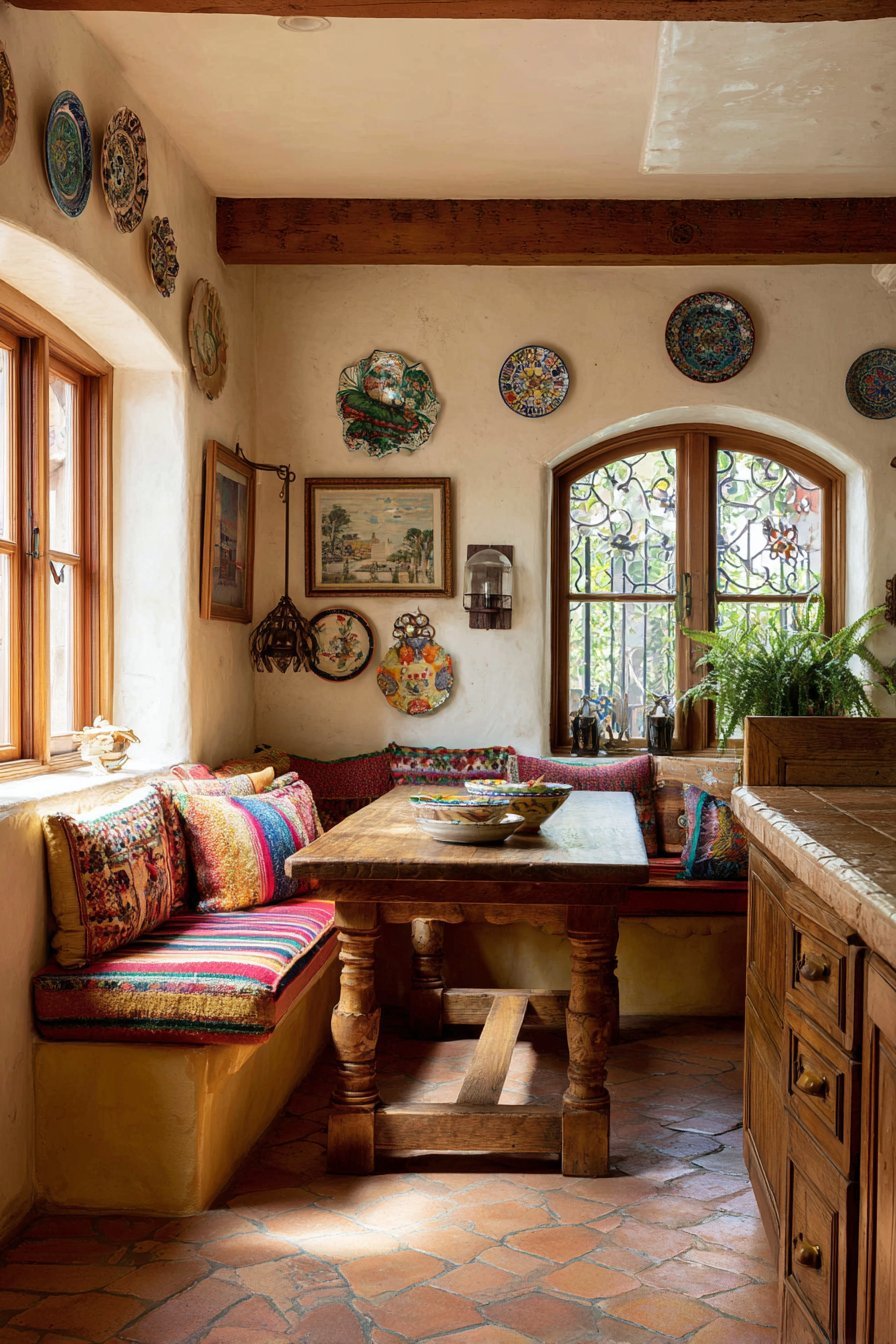
A collection of decorative Talavera plates adorns the wall behind. Various sizes create artistic display. Each plate features unique hand-painted designs. Terra cotta floor tiles show authentic wear patterns.
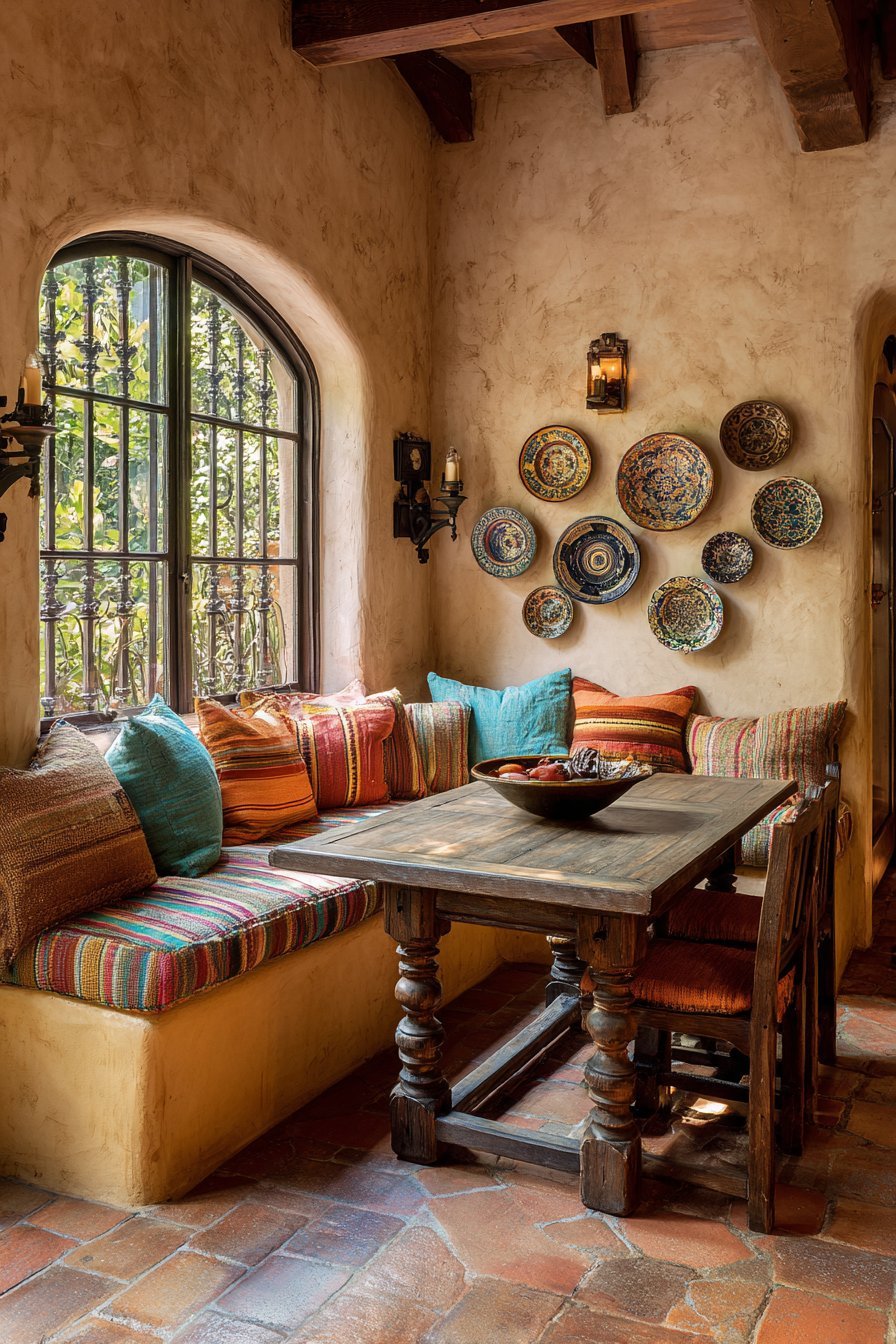
Soft natural lighting emphasizes textile textures beautifully. The woven cushion details become visible and tactile. Hand-painted ceramic details catch the light. This cozy corner invites lingering conversations.
Key Design Tips:
- Build banco benches for authentic Mexican seating solutions
- Use serape pattern textiles for vibrant traditional color
- Install arched windows with wrought iron for architectural interest
- Display Talavera plates as wall art collections
- Create breakfast nooks that encourage family gathering
10. Reclaimed Wood Pantry Display
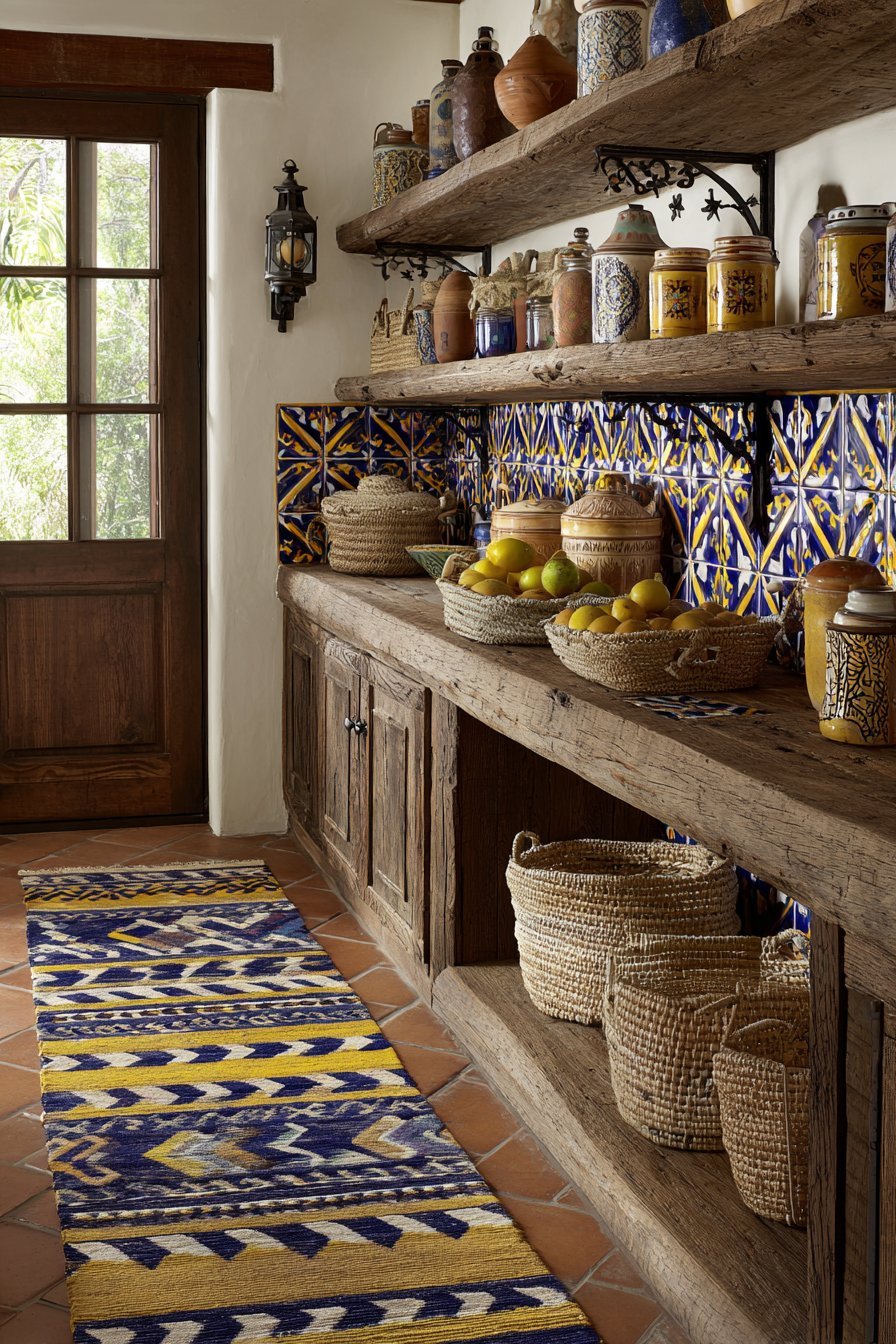
Open shelving crafted from thick reclaimed wood planks creates stunning storage. Natural edge details and rich patina add character. The shelves display traditional Mexican storage pieces beautifully. Hand-painted ceramic canisters organize dry goods.
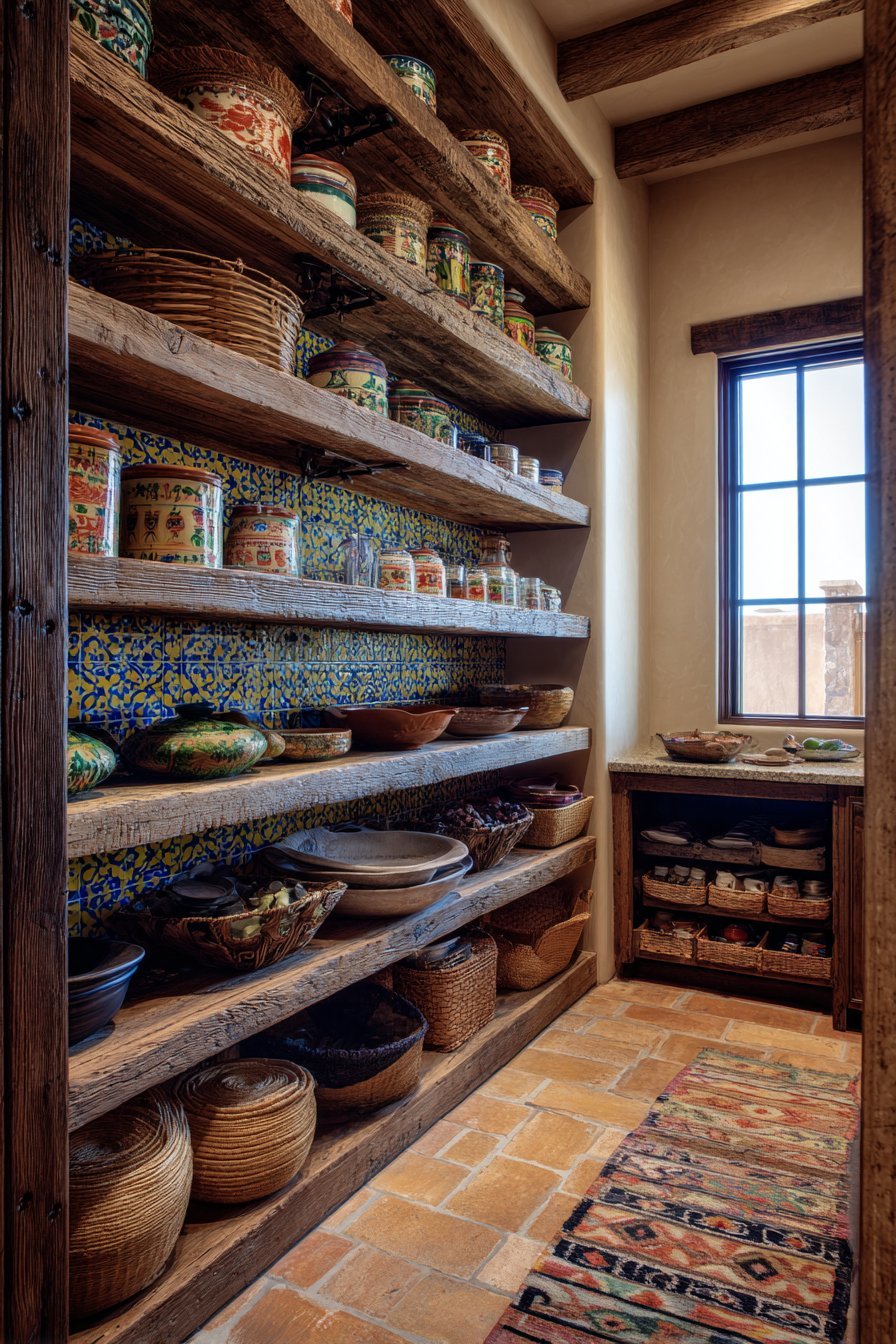
Woven baskets and terracotta containers add varied textures. The back wall features decorative Talavera tiles. Geometric patterns in cobalt blue and yellow create visual interest. Wrought iron shelf brackets add authentic structural detail.
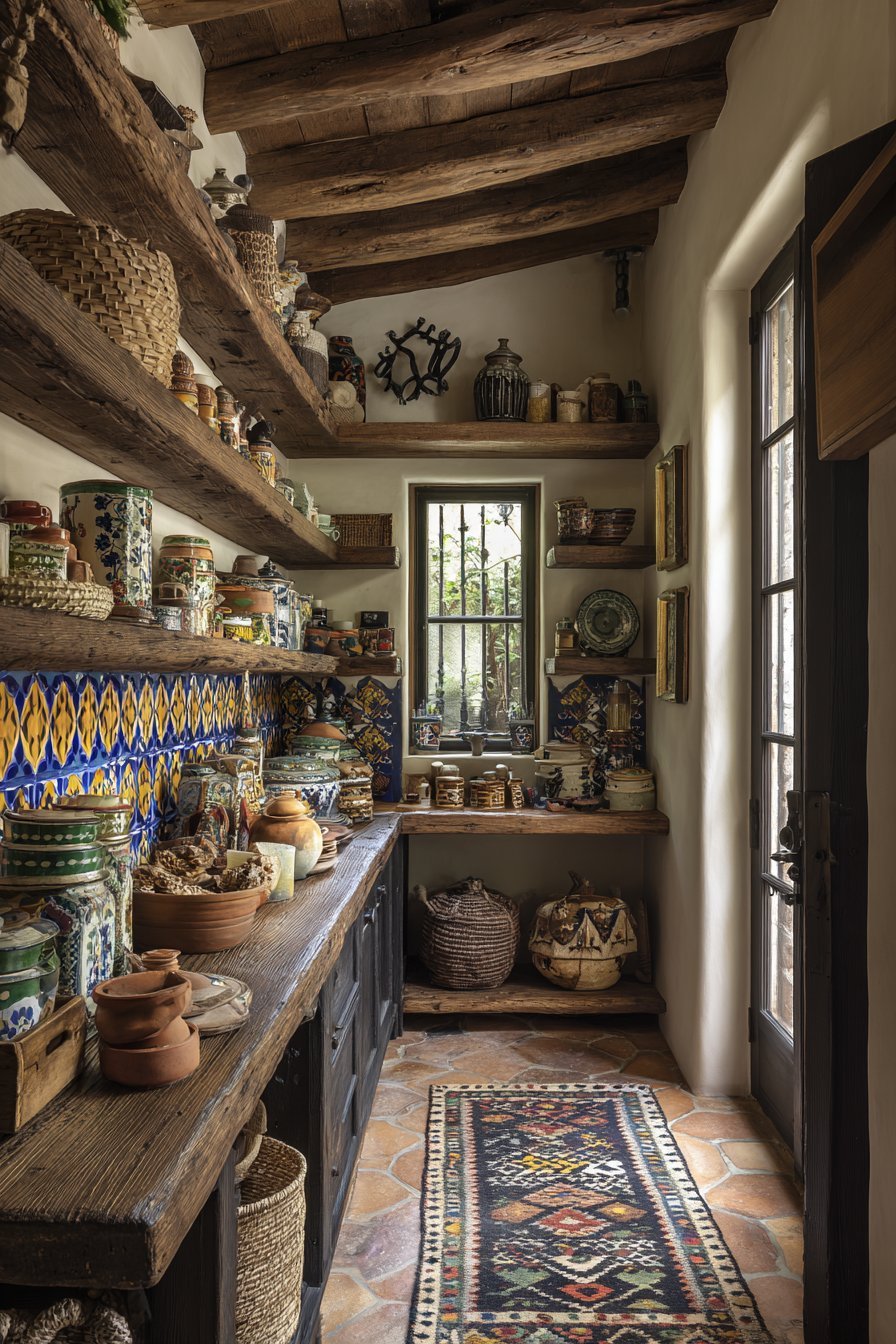
A vintage Mexican rug runner covers terra cotta tile floor. Traditional geometric patterns introduce additional color. Natural light from an adjacent window creates depth. The organized display remains decorative and functional.
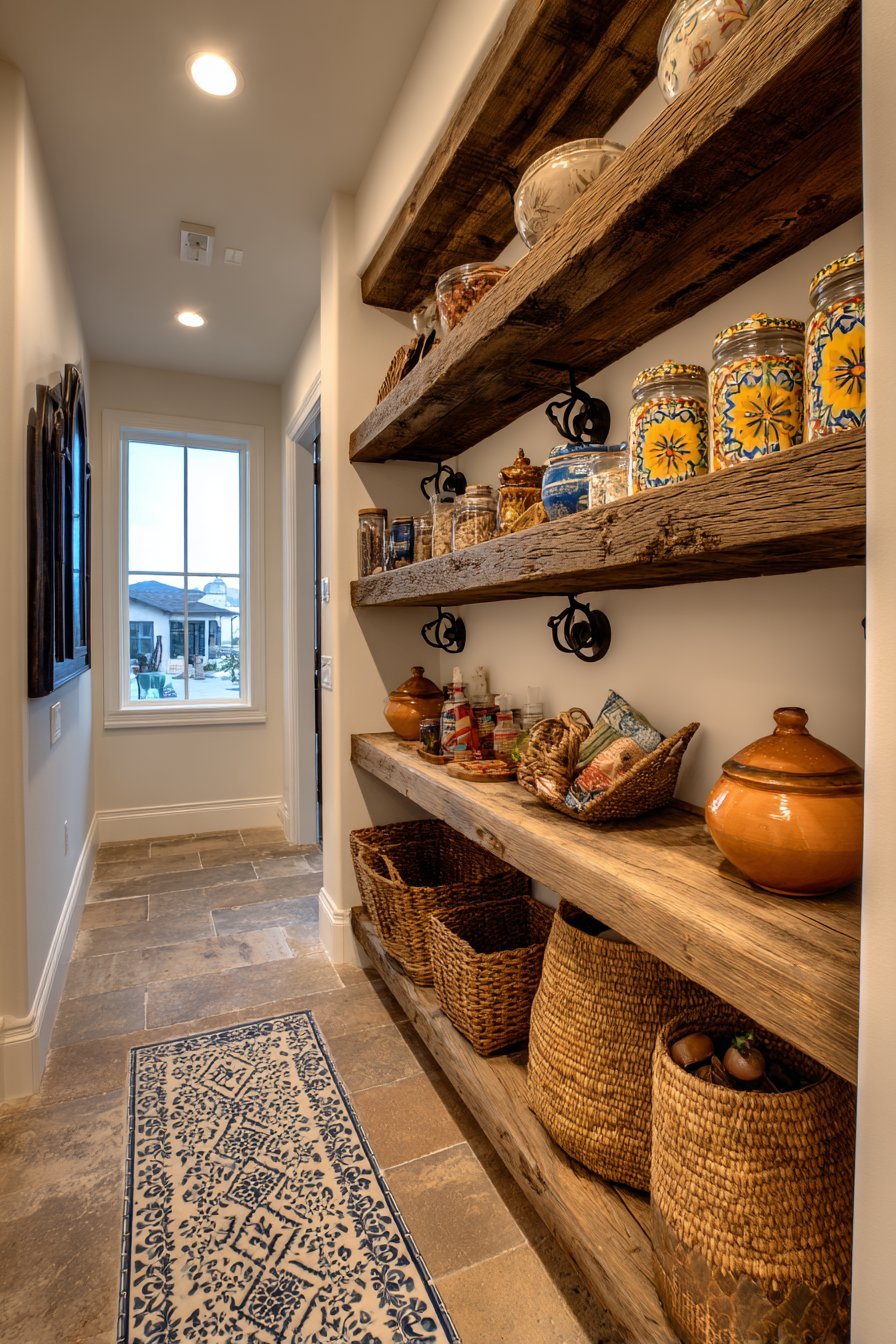
Attention to varied textures creates visual richness. Wood, ceramic, and woven materials interact harmoniously. The pantry becomes a showpiece rather than hidden storage. Beauty and organization coexist perfectly.
Key Design Tips:
- Use reclaimed wood with natural edges for rustic character
- Display storage items as decorative elements
- Add Talavera tile backing to open shelving for color
- Install wrought iron brackets for authentic support details
- Layer vintage rugs over tile floors for warmth
11. Arched Cooking Alcove with Patchwork Tiles
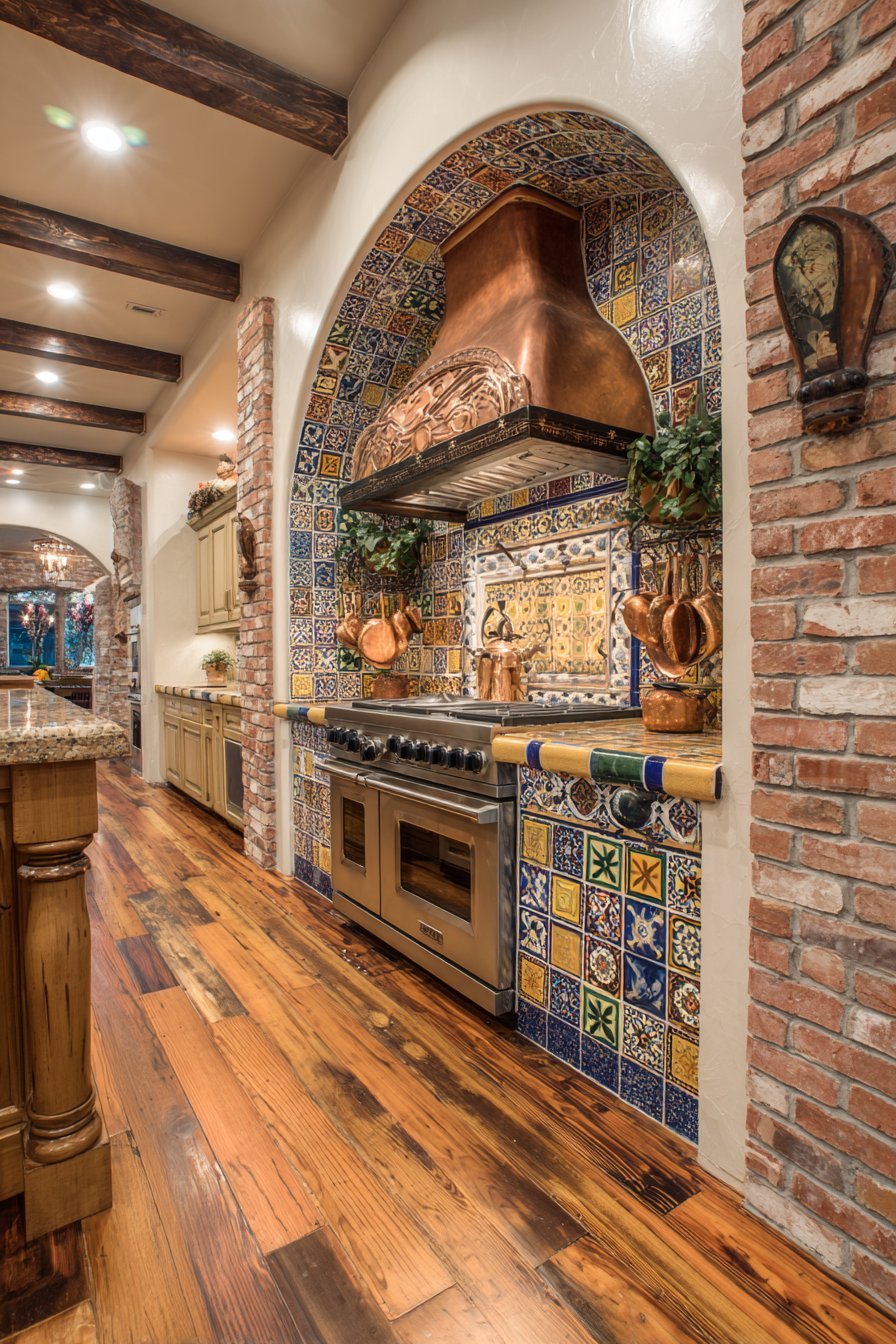
A stunning arched cooking alcove creates dramatic focal point. Hand-selected Talavera tiles create patchwork interior. Traditional patterns in blues, yellows, greens, and terracottas combine beautifully. Each tile contributes unique artisan character.
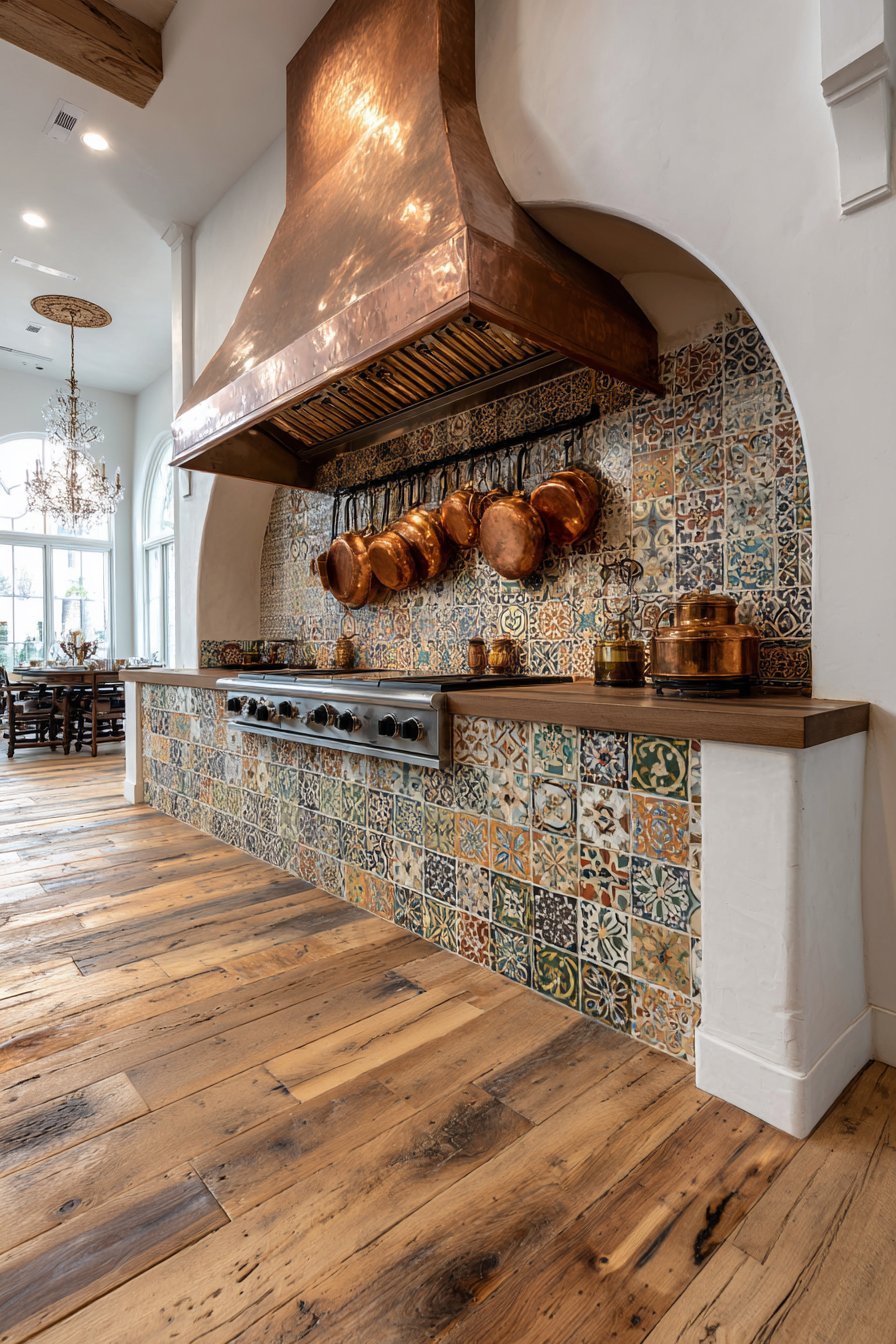
The arch is constructed from plastered masonry. Visible texture adds handcrafted quality. A commercial-style range sits within the alcove. Above, a copper range hood features hand-hammered details.
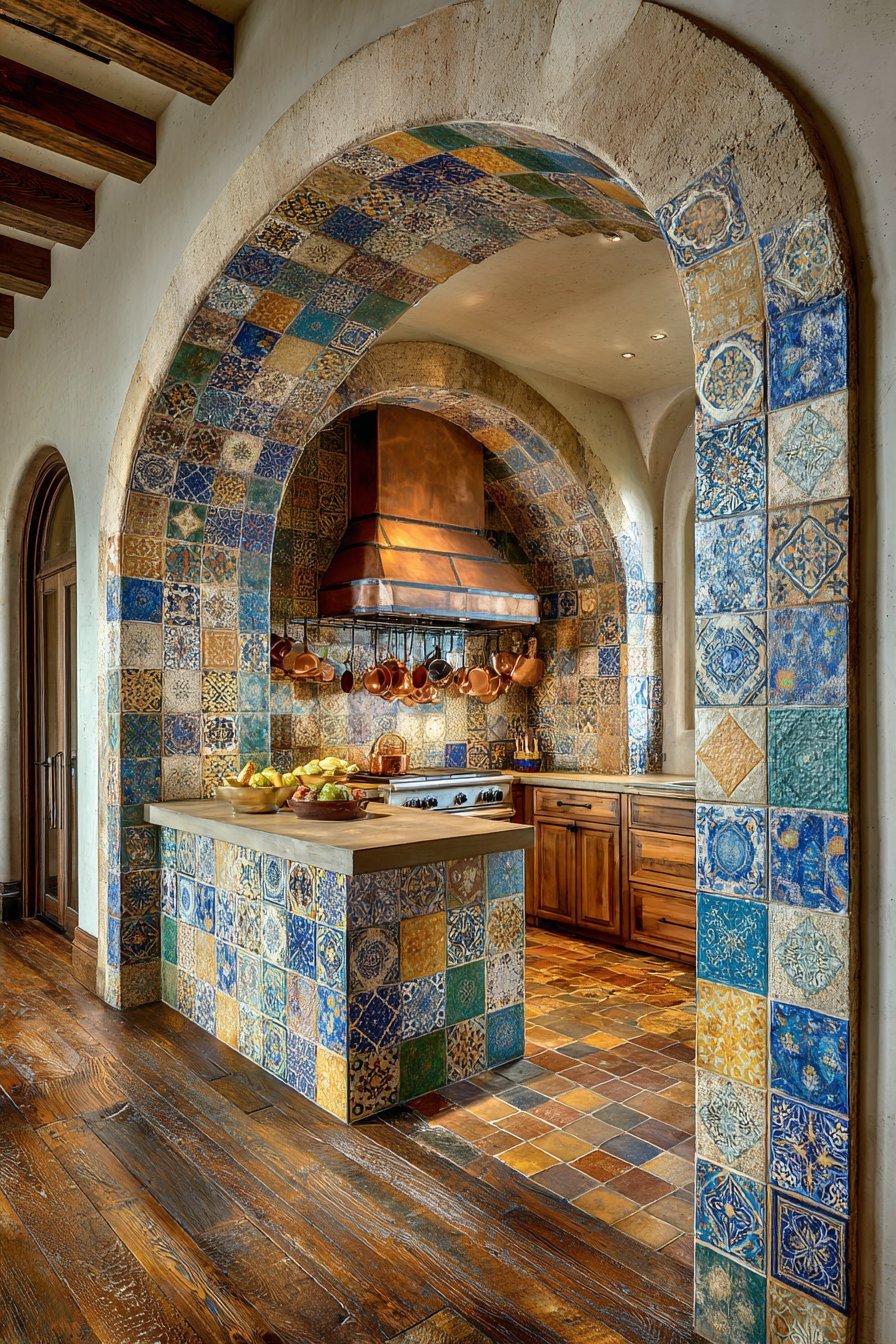
Wrought iron pot racks flank the cooking area. Copper pots hang within easy reach. Wide plank wooden floors show natural wear. Whitewashed walls surround the colorful focal point.
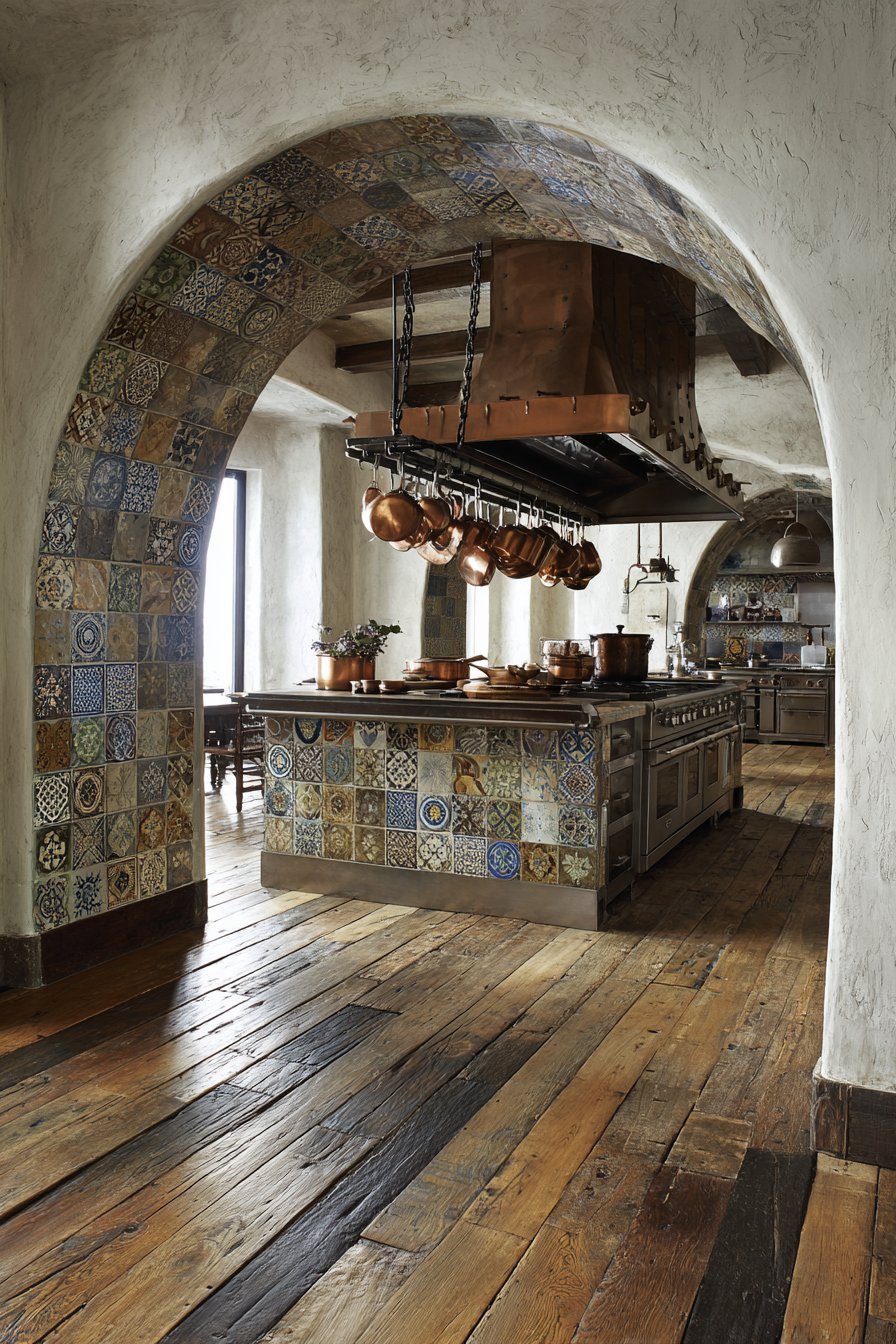
Natural side lighting emphasizes the dimensional arch structure. Glazed tiles reflect light in changing patterns. The architectural drama creates unforgettable kitchen centerpiece. This design element defines the entire space.
Key Design Tips:
- Build arched alcoves to frame cooking areas dramatically
- Create patchwork tile patterns for unique artisan character
- Install copper range hoods with hammered details
- Hang pot racks with copper cookware for accessibility
- Use side lighting to emphasize architectural dimension
12. Window Herb Garden Area
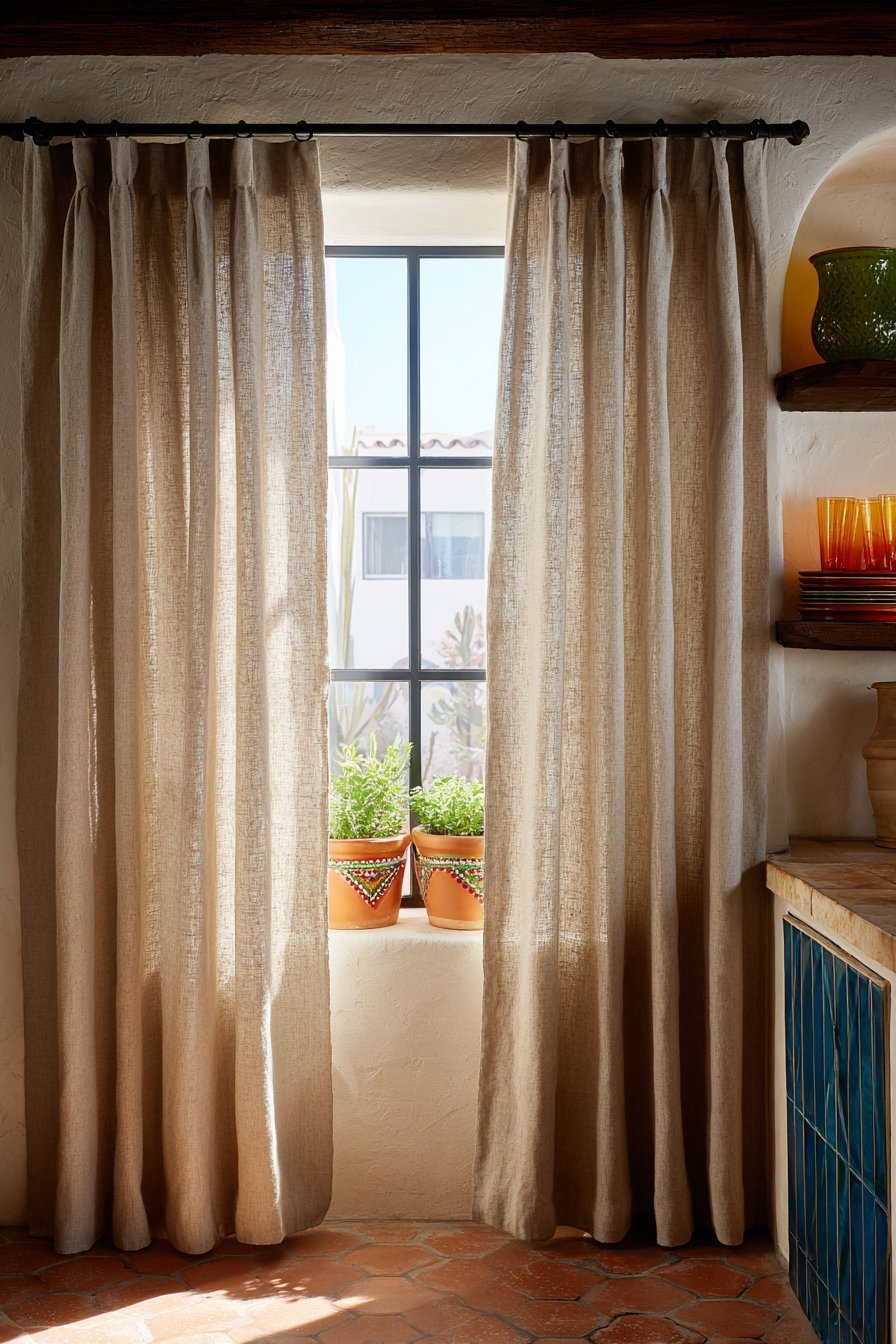
Simple café curtains in natural linen dress the window. Light filters through while maintaining privacy. The windowsill displays potted herbs in hand-painted terracotta pots. Traditional Mexican designs add decorative interest.
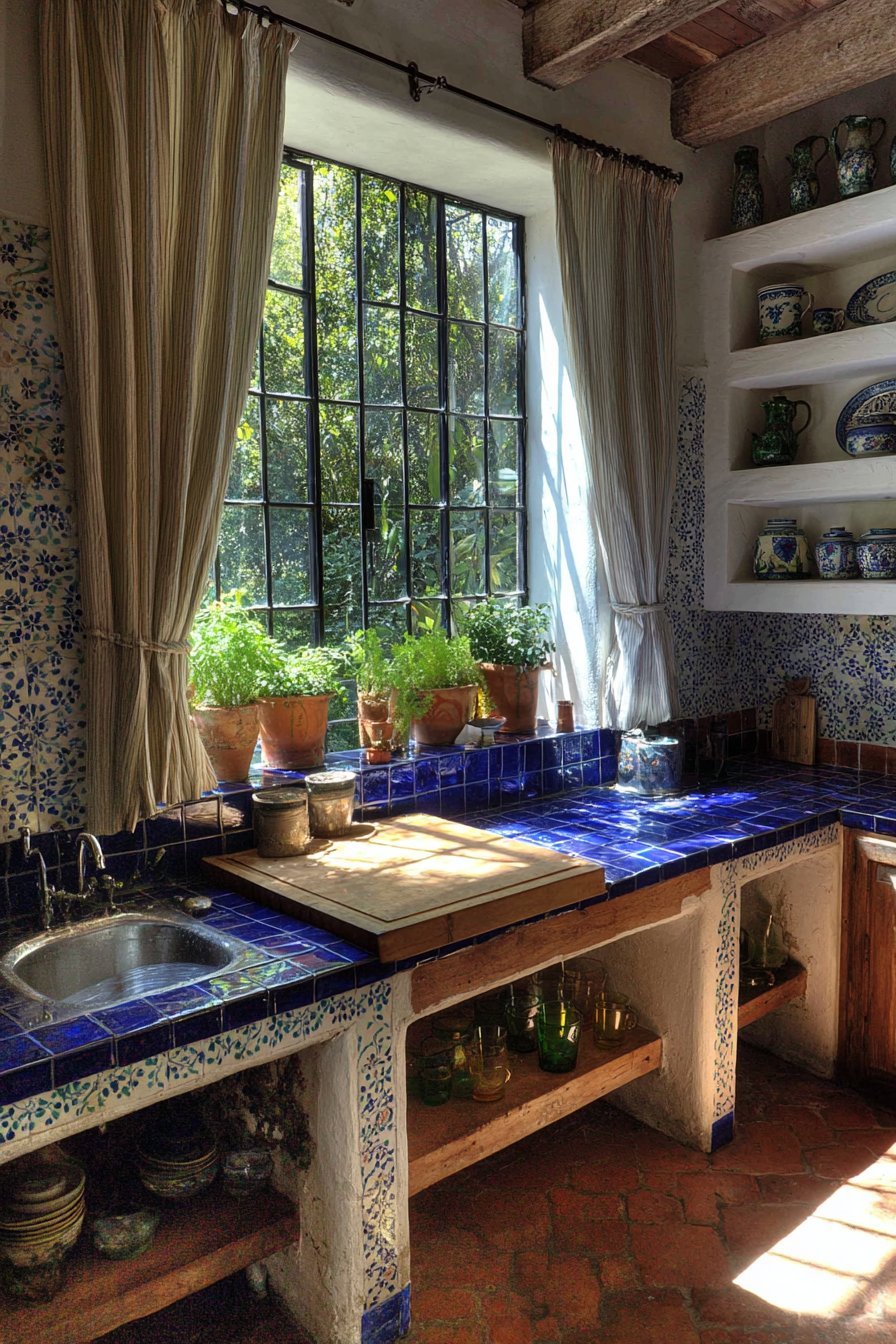
Below the window, a small preparation area features butcher block countertops. A backsplash of solid cobalt blue Talavera tiles creates bold color block. The saturated blue makes strong visual statement. Open shelving on either side holds Mexican glassware.
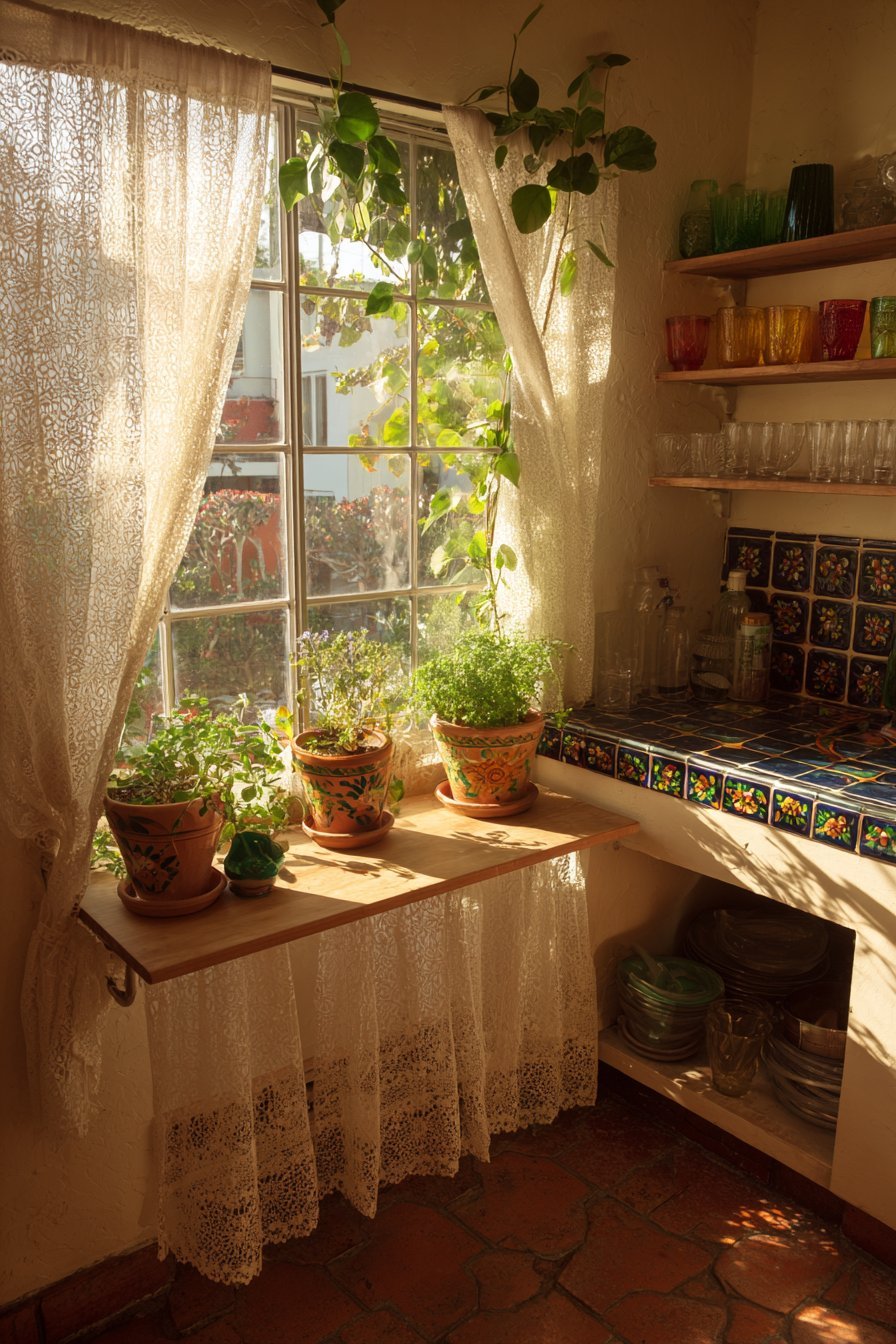
Amber and green toned glassware catches sunlight beautifully. Saltillo floor tiles show natural color variation. Golden hour sunlight illuminates this practical workspace. The simple authenticity of materials creates functional beauty.
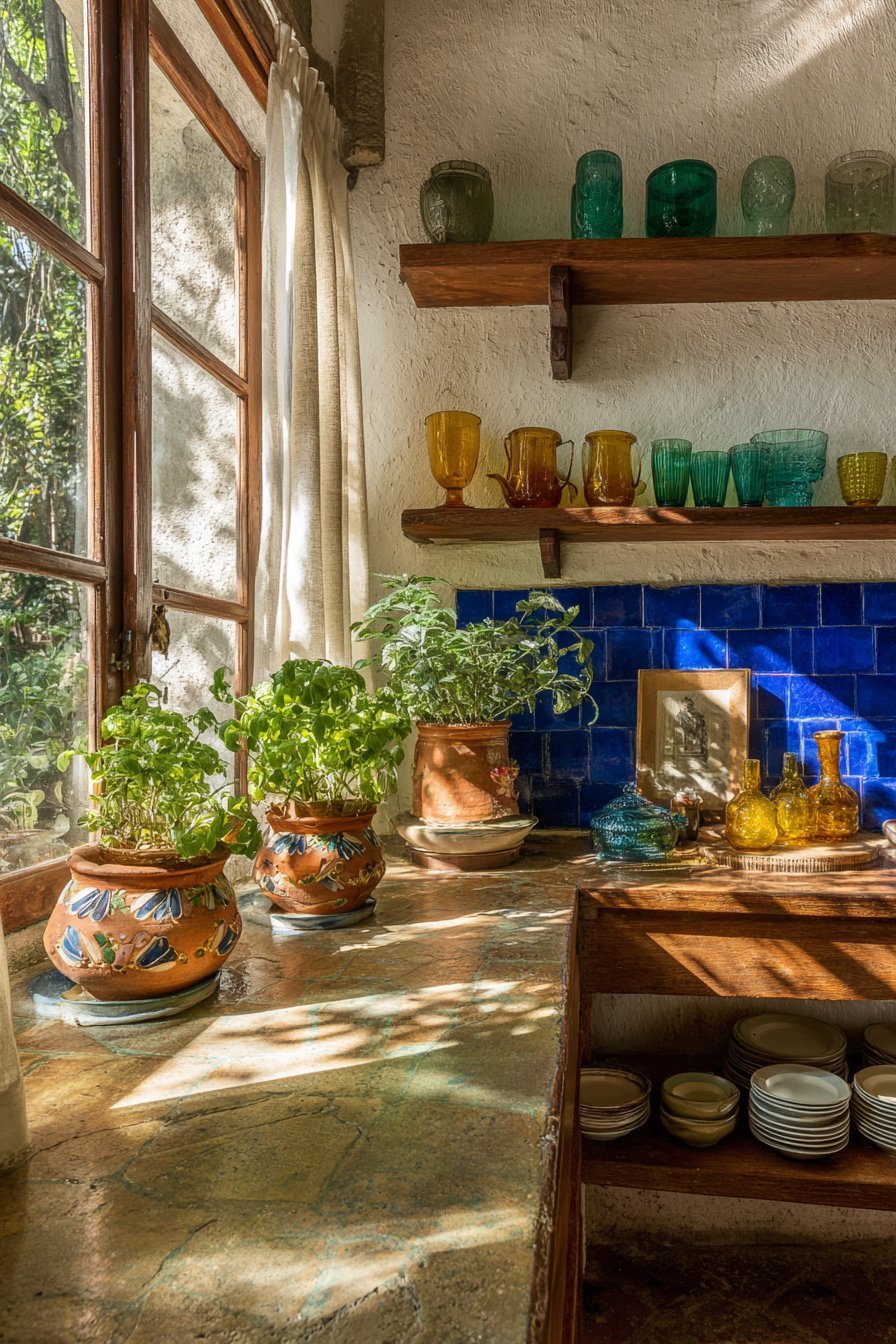
Fresh herbs add living greenery to the kitchen. The practical element enhances cooking functionality. Decorative pots unite form and function. This area celebrates everyday kitchen tasks.
Key Design Tips:
- Grow herbs on windowsills for fresh cooking ingredients
- Use hand-painted terracotta pots for Mexican decorative detail
- Create bold color blocks with solid Talavera tiles
- Display glassware where sunlight can illuminate it
- Choose café curtains for light control and privacy
13. Turquoise Distressed Cabinet Kitchen
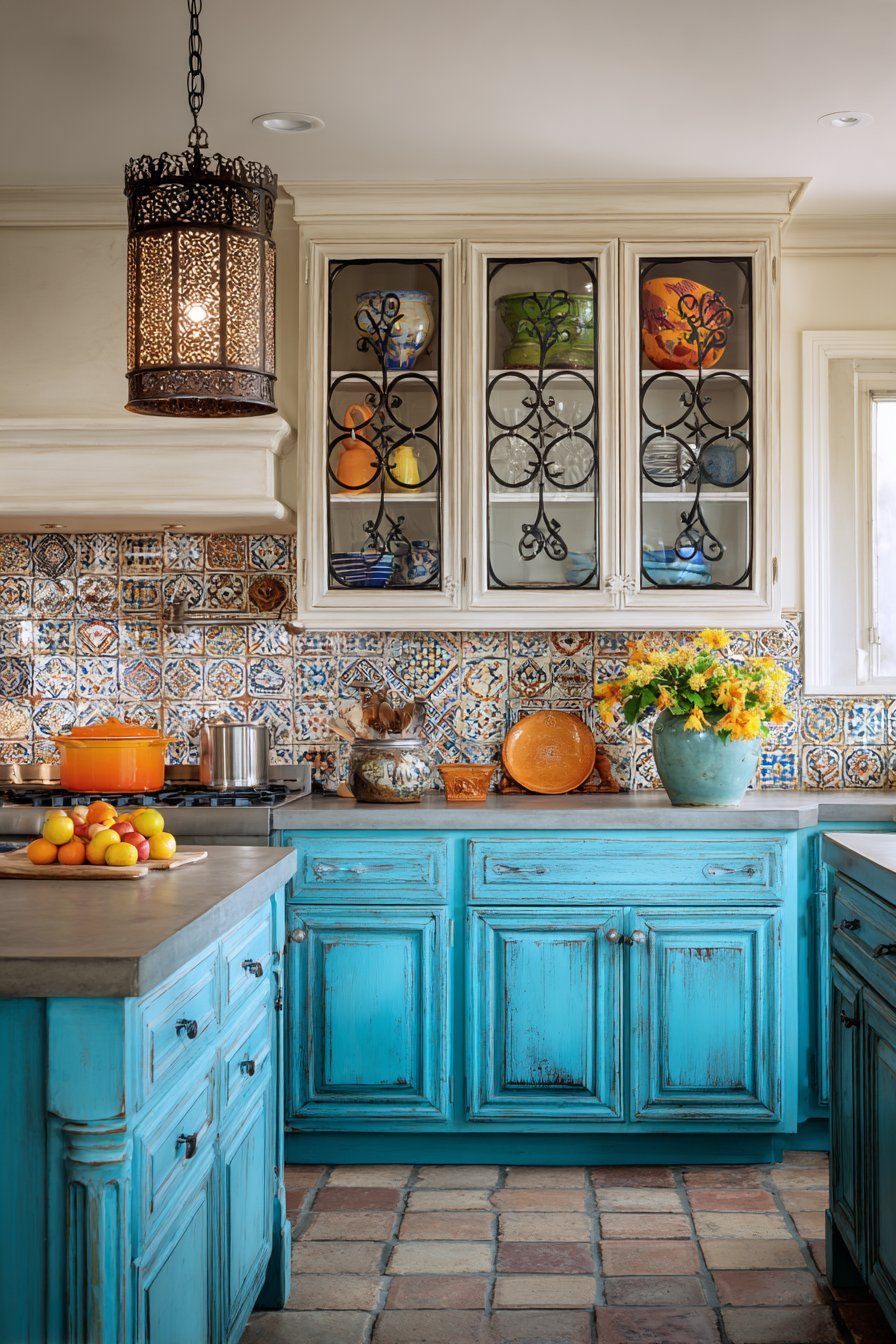
Vibrant turquoise painted lower cabinets show subtle distressing. Hints of wood beneath create authentic aged character. The finish appears naturally worn over time. Upper cabinets feature glass doors with wrought iron frames.
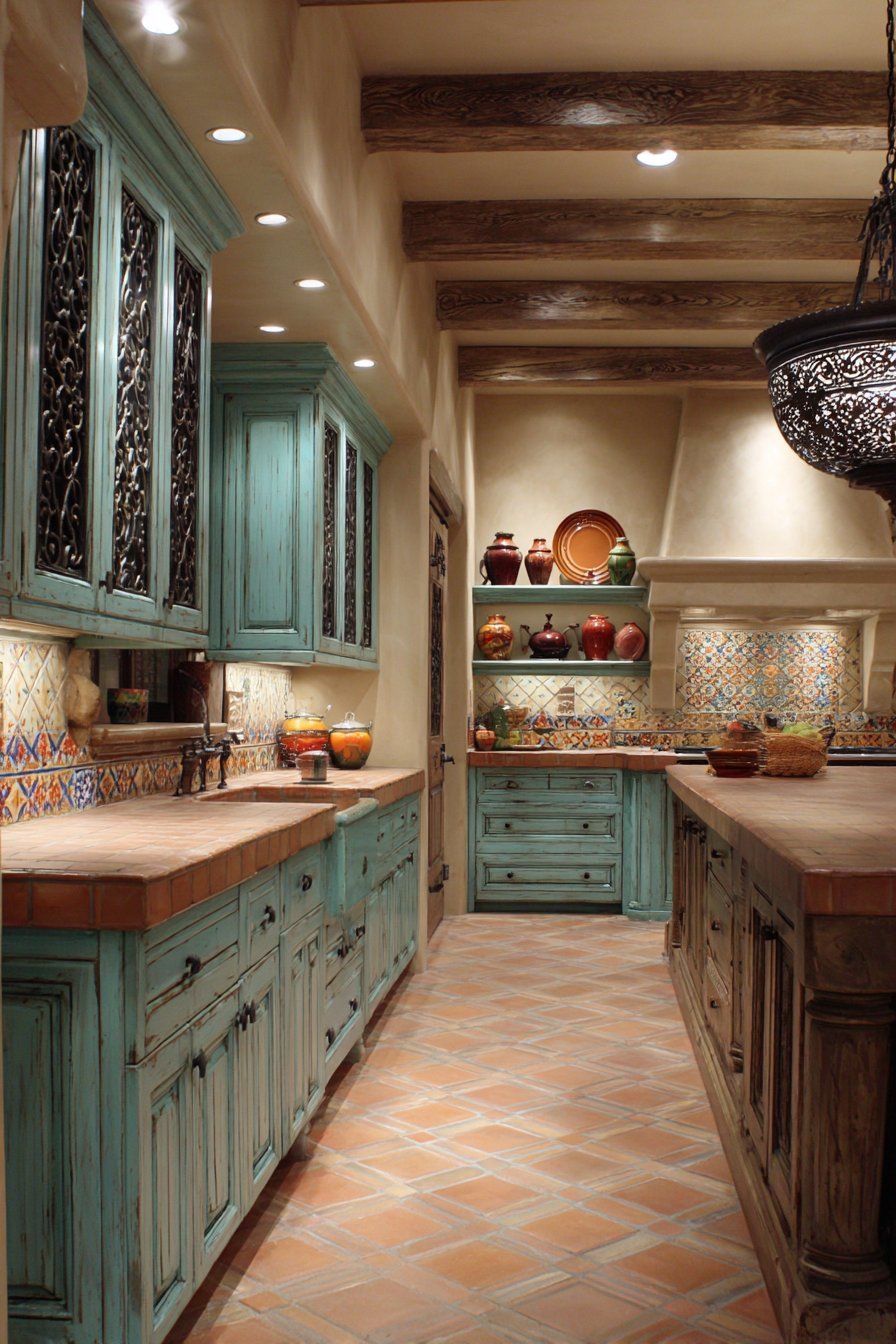
Colorful Mexican pottery displays behind the glass doors. The contents become decorative elements. Sealed concrete countertops are tinted warm terracotta tones. This unexpected material choice works beautifully.
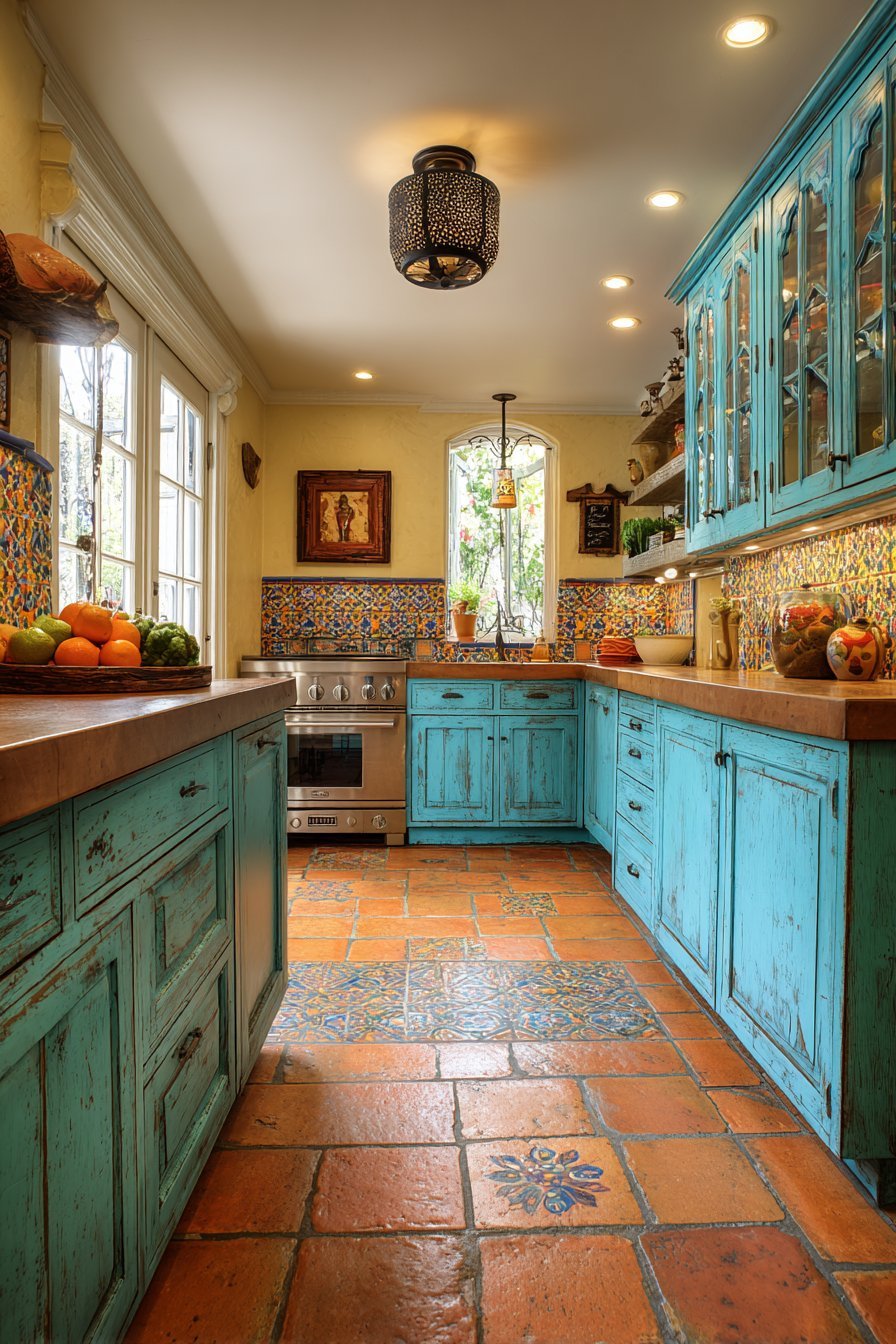
The backsplash features decorative Talavera tile borders. Solid neutral tiles fill the interior spaces. A vintage Mexican tin ceiling light fixture hangs above. Punched designs create interesting shadow patterns.
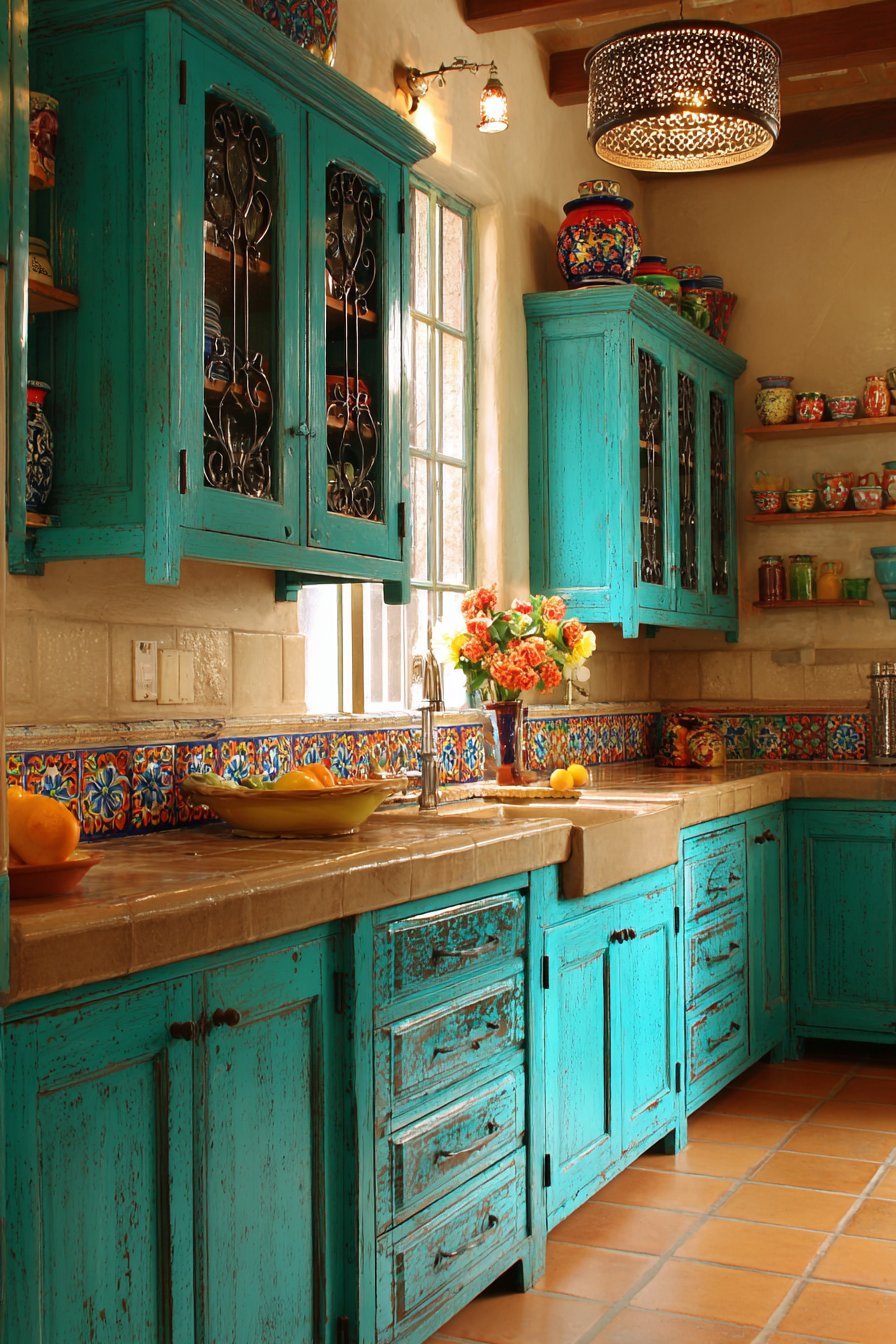
Clay tile flooring extends throughout the space. Natural diffused lighting prevents bright colors from appearing artificial. The hand-crafted quality of materials remains evident. Balanced exposure maintains realistic material representation.
Key Design Tips:
- Distress painted cabinets for authentic aged appearance
- Use glass door uppers to display colorful pottery
- Tint concrete countertops for unexpected material choices
- Frame backsplashes with decorative tile borders
- Install vintage tin light fixtures for period authenticity
14. Rustic Dining Area with Painted Chairs
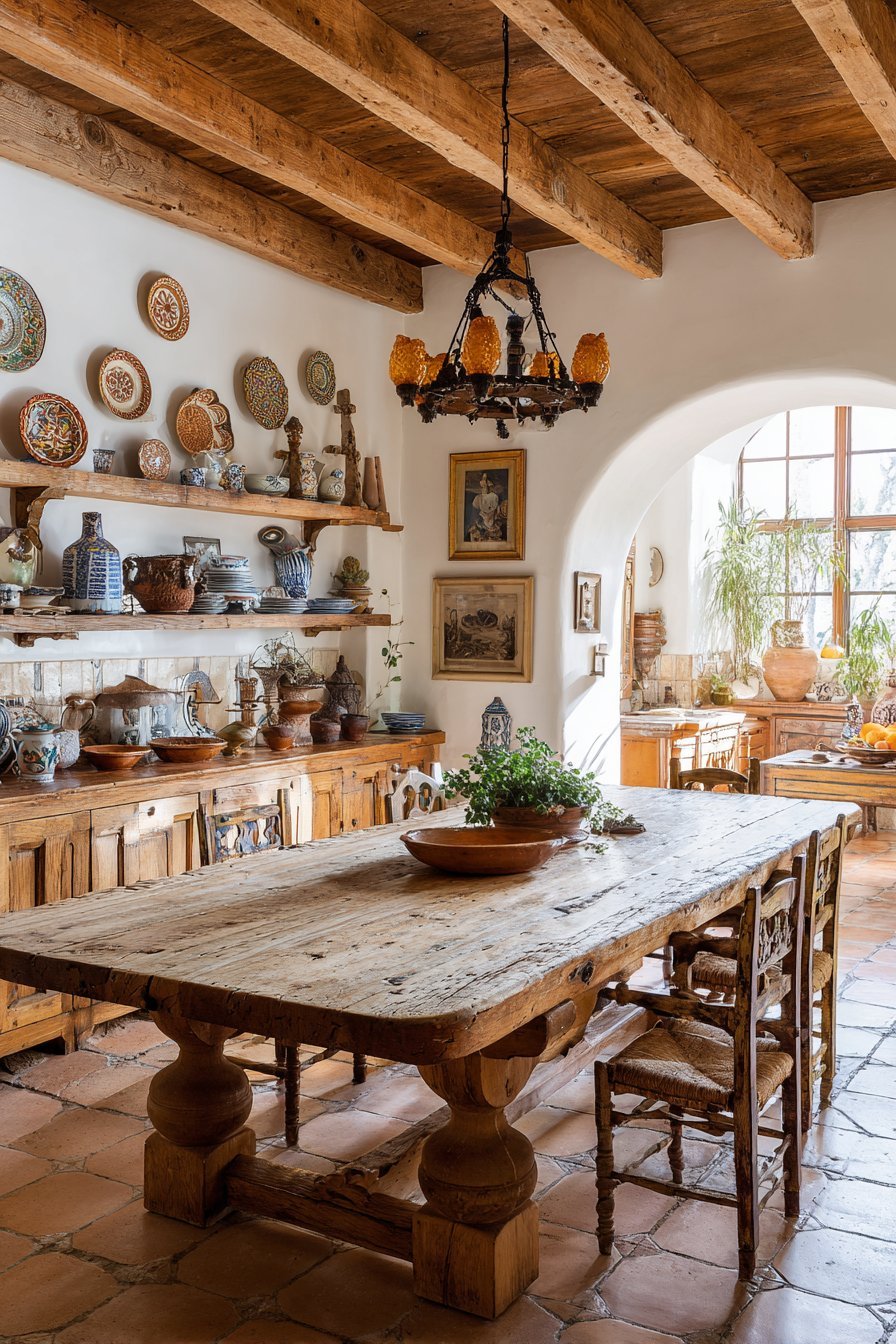
A large rustic wooden table features thick planks. Natural knots and grain patterns add organic beauty. Substantial turned legs support the generous surface. Hand-painted Mexican chairs in assorted colors surround the table.
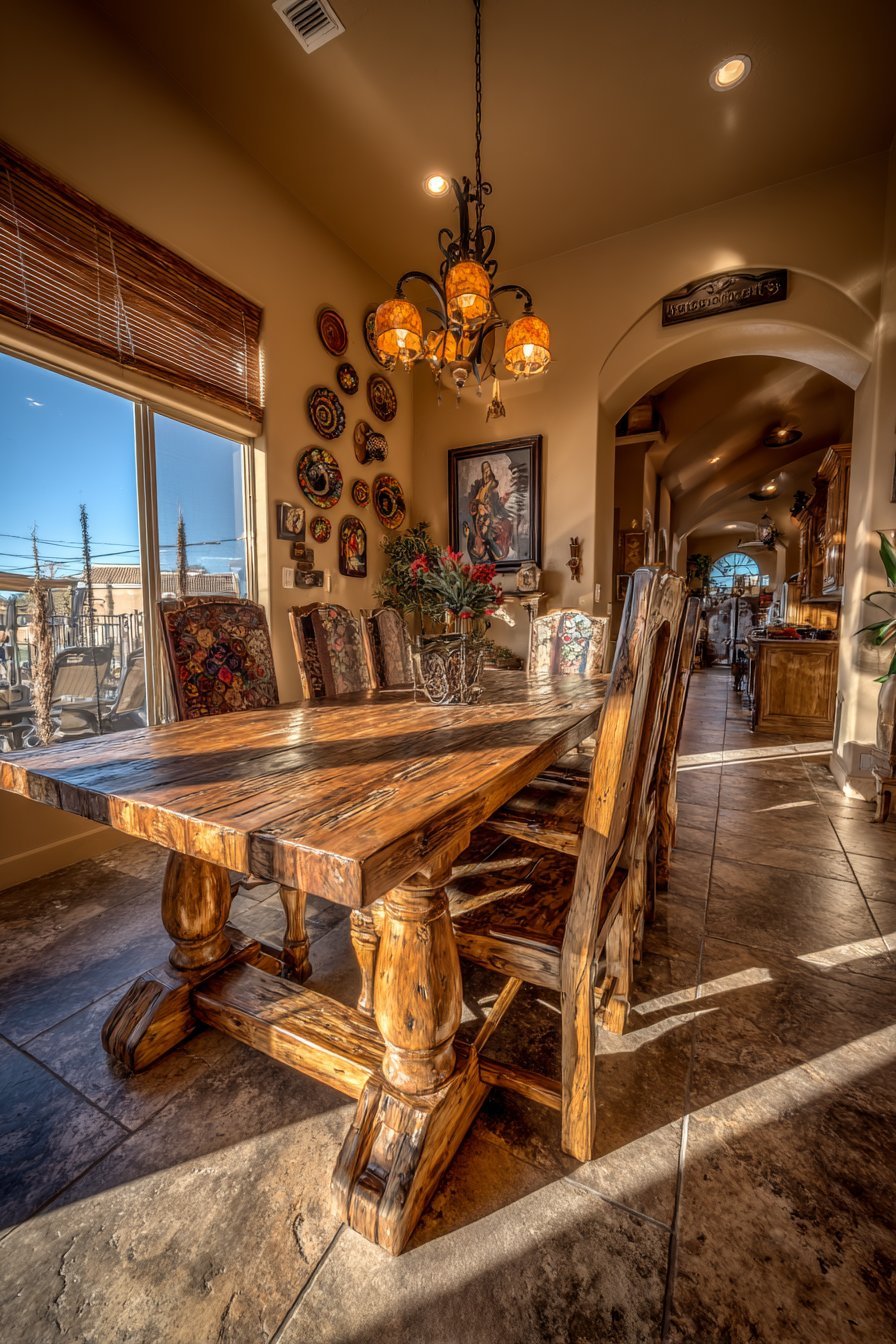
Each chair features different traditional motifs. No two chairs match exactly. This eclectic approach creates charming character. A wrought iron chandelier with amber glass shades hangs centered above.
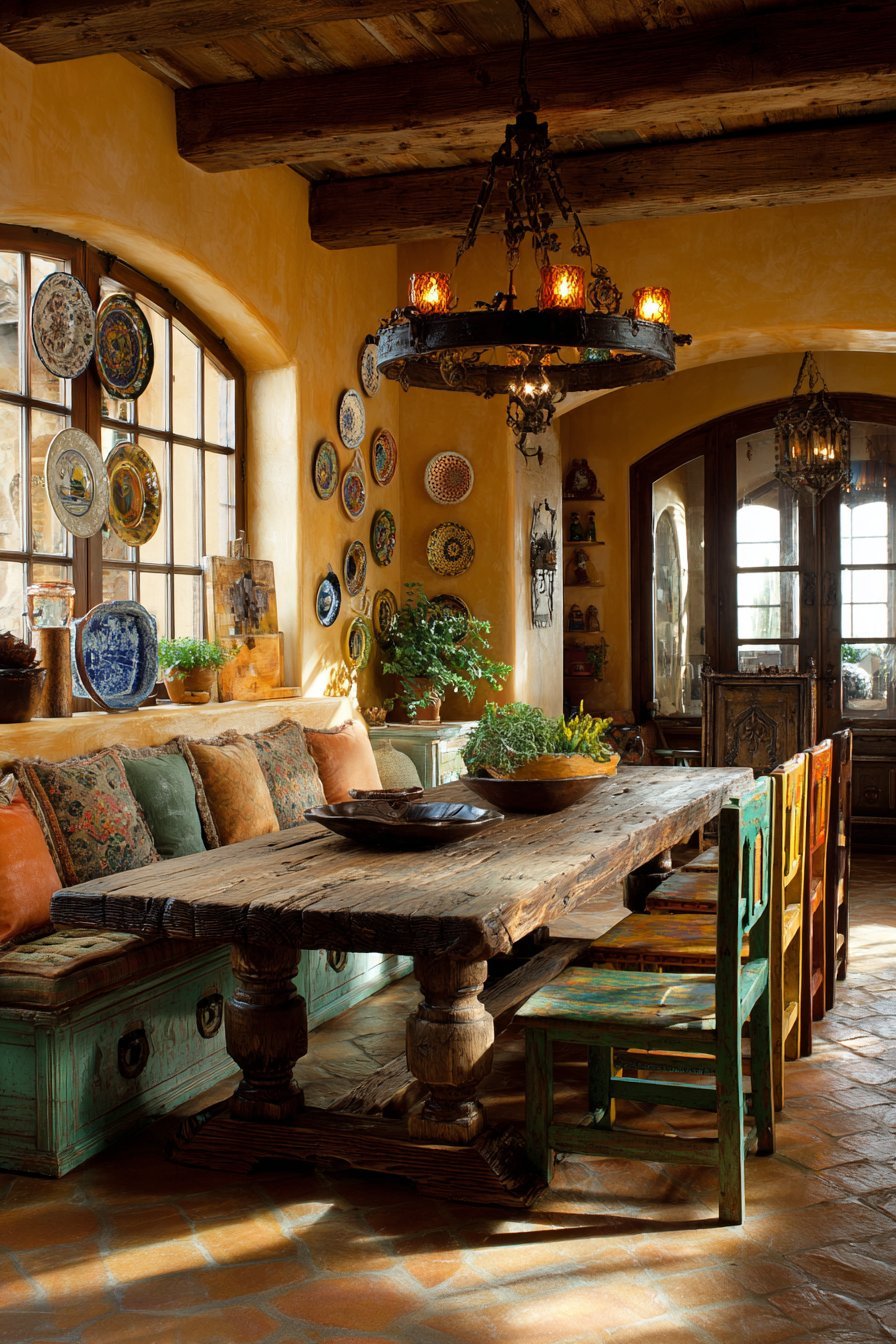
The wall displays vintage Mexican pottery plates. Warm earth tones and blues create cohesive collection. Saltillo tile flooring shows authentic variation. An arched doorway frames the inviting view.
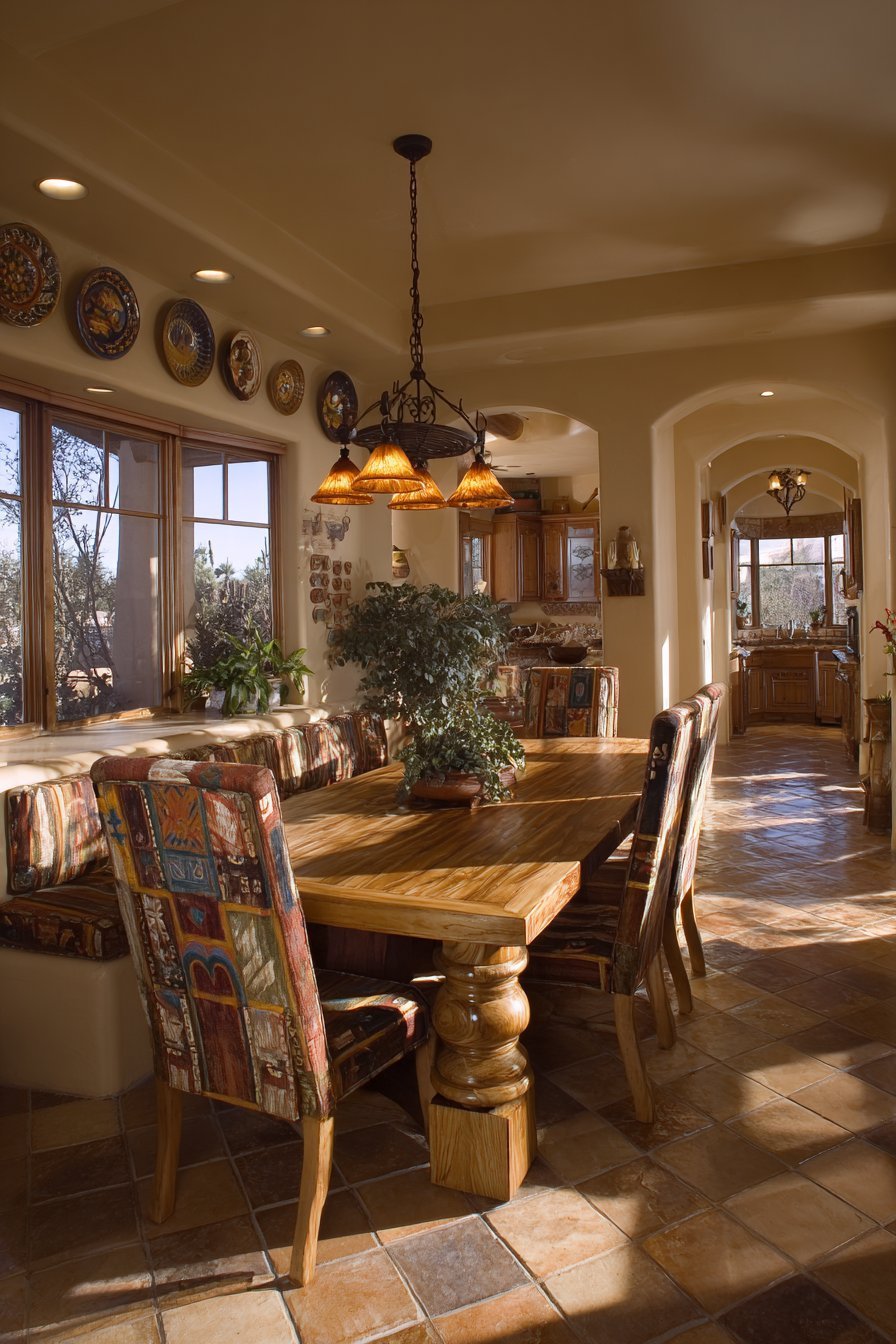
Natural window light creates warm ambiance throughout. Subtle shadows emphasize handcrafted furniture details. The gathering space encourages family meals and conversations. Traditional Mexican hospitality comes alive here.
Key Design Tips:
- Choose thick plank tables for substantial rustic presence
- Mix hand-painted chairs for eclectic Mexican character
- Display pottery plate collections on dining walls
- Install wrought iron chandeliers for ambient lighting
- Position dining areas near natural light sources
15. Traditional Viga Ceiling Detail
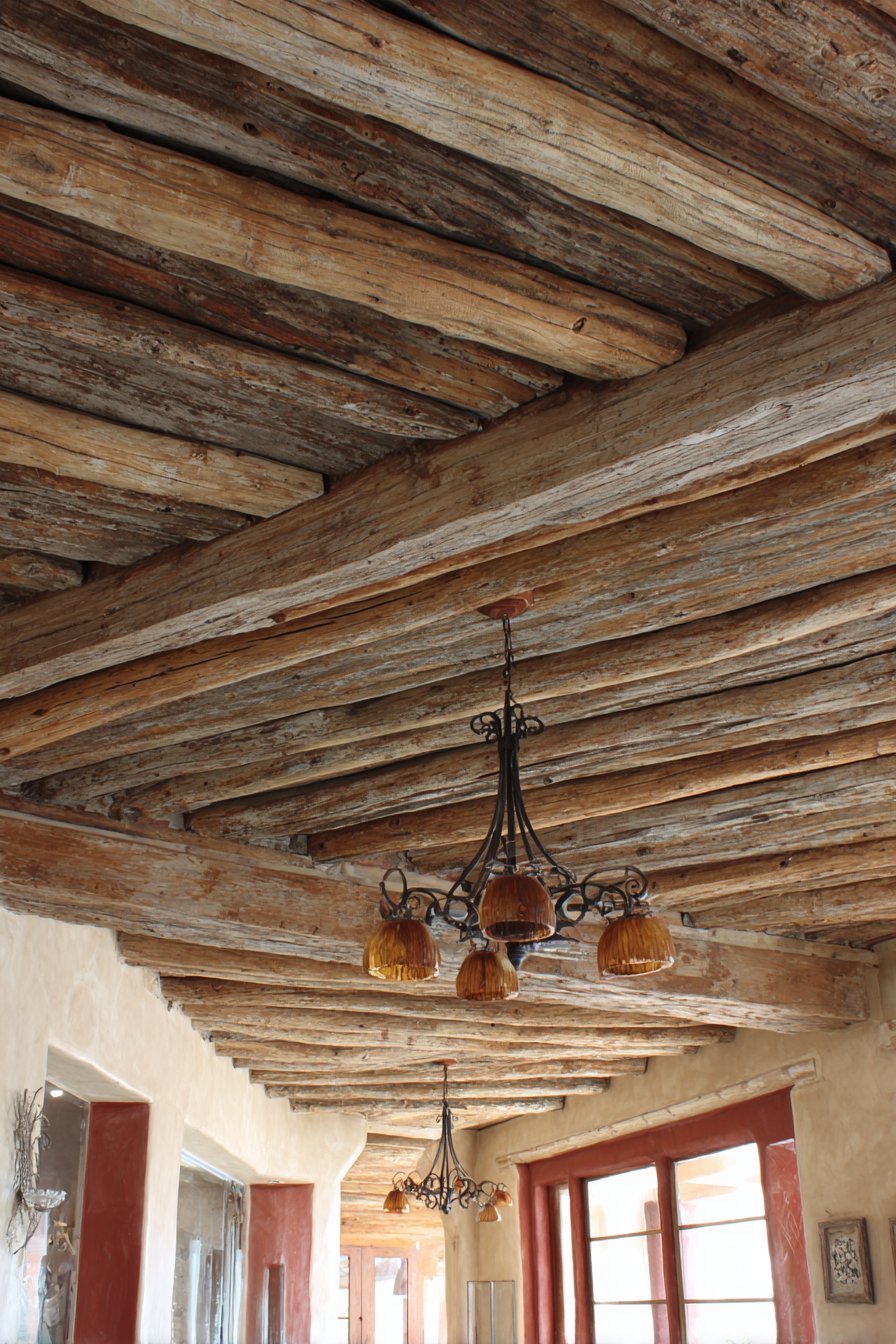
Exposed wooden vigas run parallel across the ceiling. These round beams show natural pine grain. Smaller latillas lay perpendicular between vigas. This creates traditional Southwestern ceiling architecture.
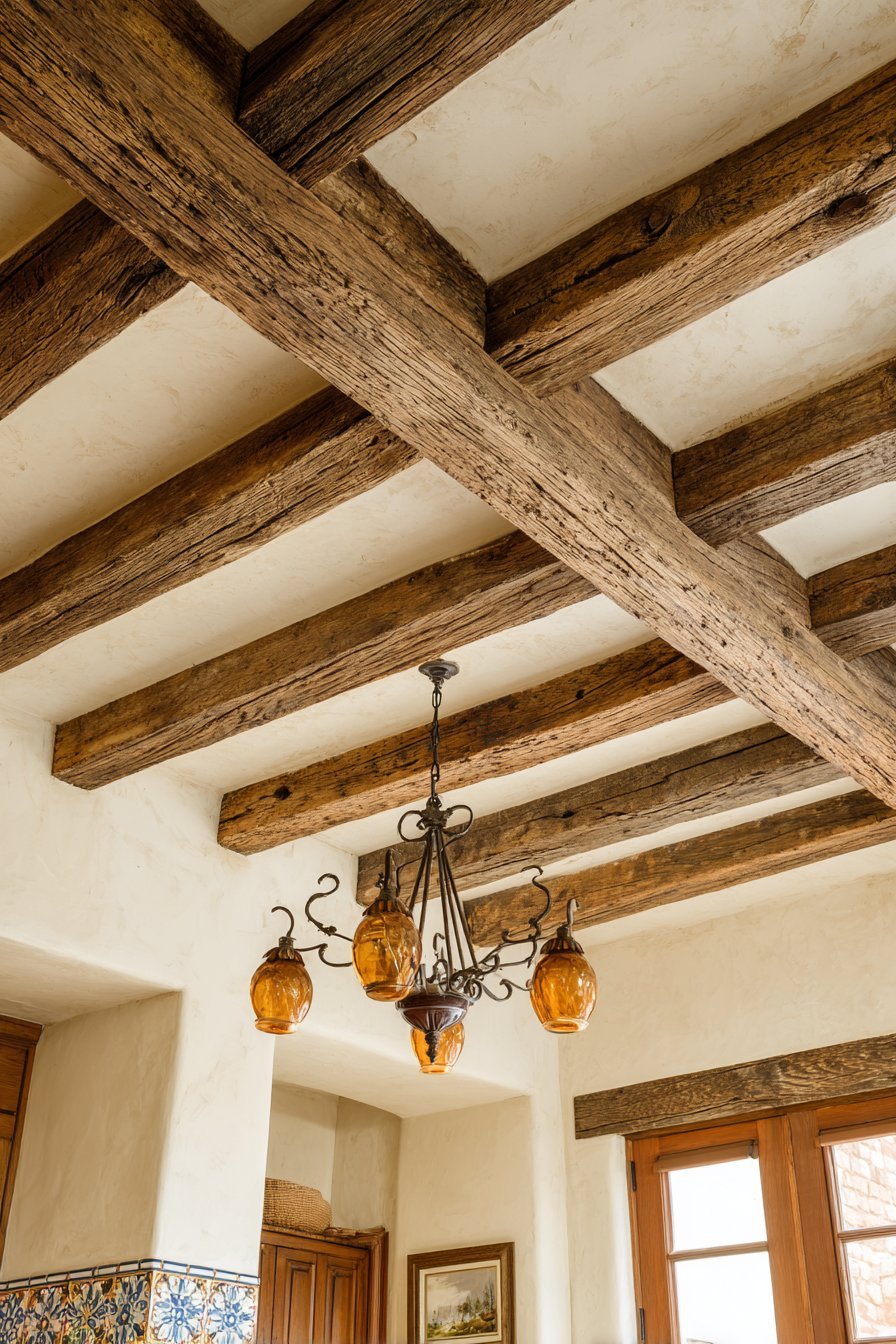
The beams show natural wood grain and age darkening. Whitewashed plaster fills spaces between latillas. A wrought iron chandelier hangs from a central beam. Hand-blown amber glass shades provide warm illumination.
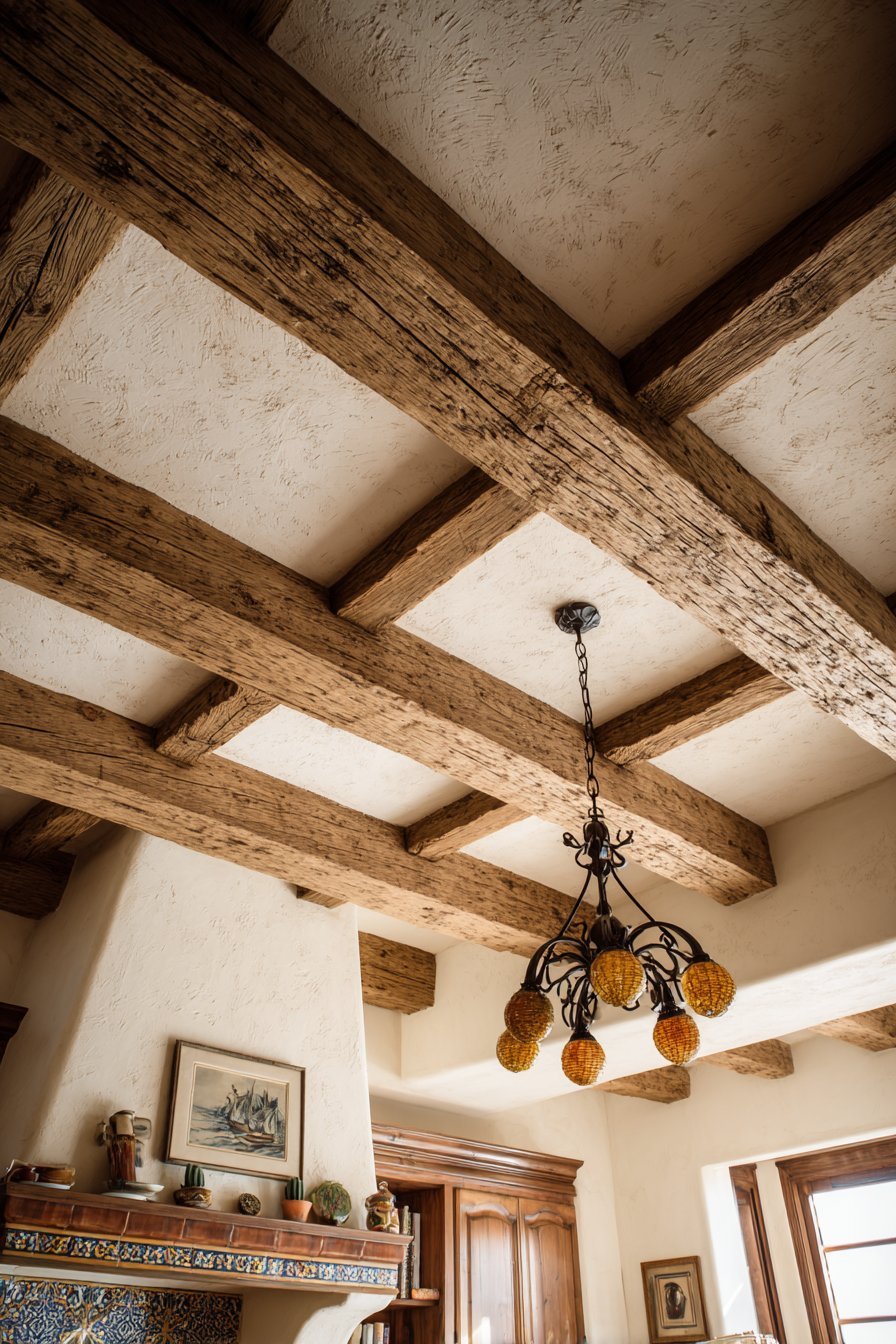
Below, terra cotta tile flooring and colorful Talavera backsplash complete the view. The ceiling detail creates authentic architectural interest. Natural daylight from windows highlights dimensional beam work. Authentic shadows fall across textured ceiling surface.
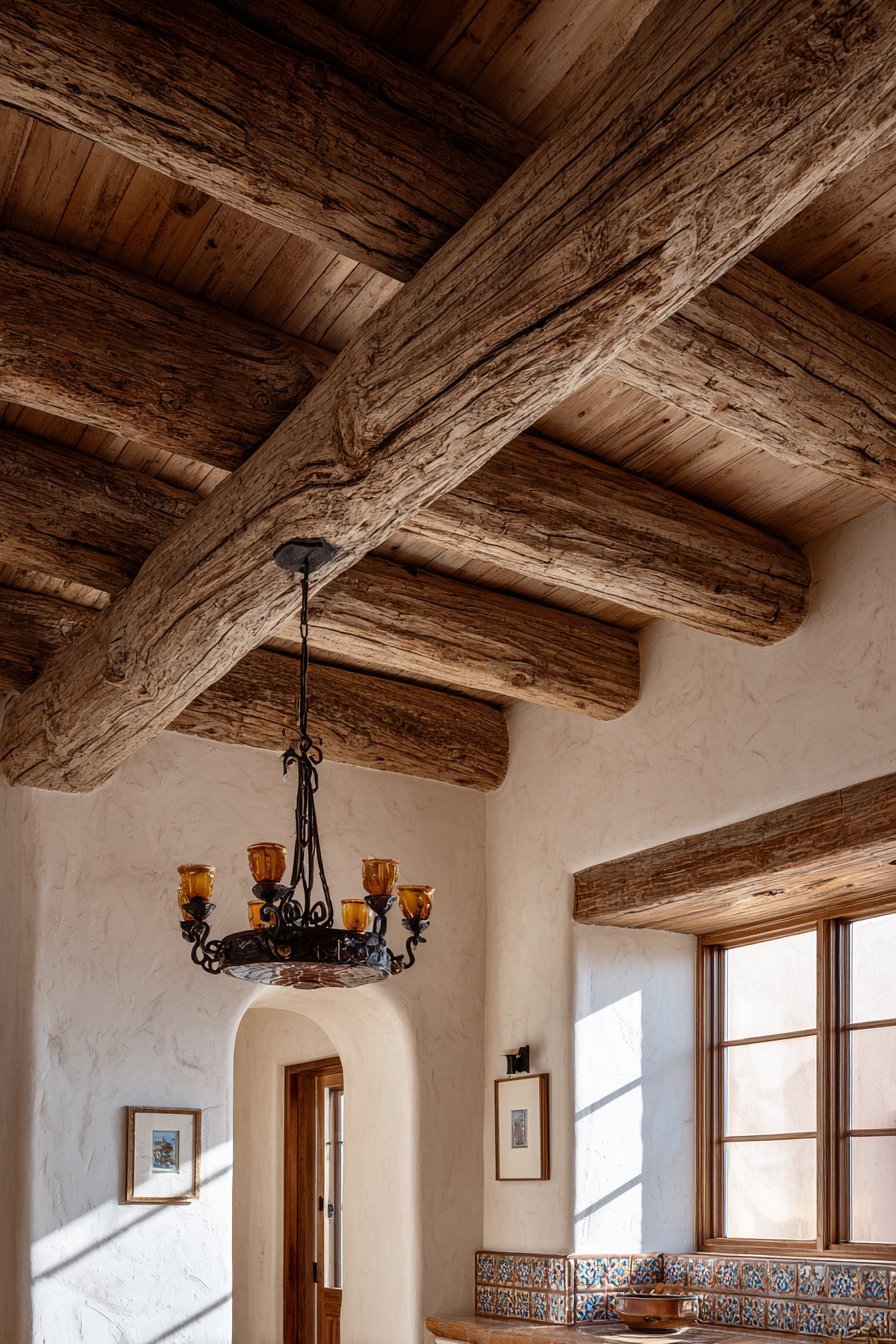
This essential structural element defines Mexican kitchen character. The traditional construction method has endured centuries. Modern kitchens benefit from this timeless architectural feature. The ceiling becomes focal point from below.
Key Design Tips:
- Install viga and latilla ceilings for authentic architecture
- Use natural wood beams with visible grain patterns
- Fill ceiling spaces with whitewashed plaster
- Hang chandeliers from central beams for proper installation
- Allow natural light to create shadows on ceiling details
16. Curved Plastered Bar Counter
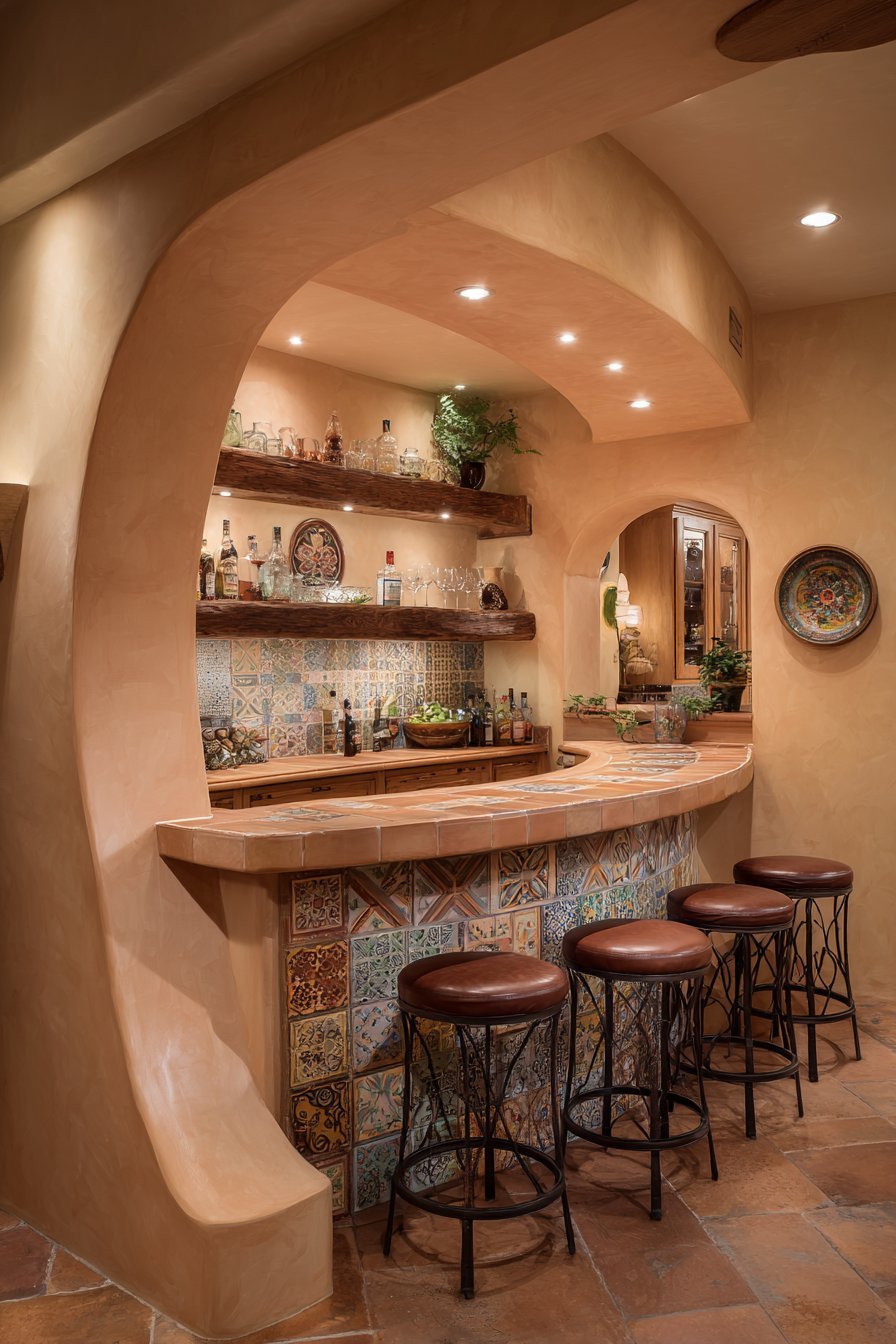
A curved plastered counter painted warm adobe orange creates inviting bar area. The smooth troweled finish shows subtle texture variations. Handcrafted quality remains visible in surface details. The bar front features mosaic of broken Talavera tiles.
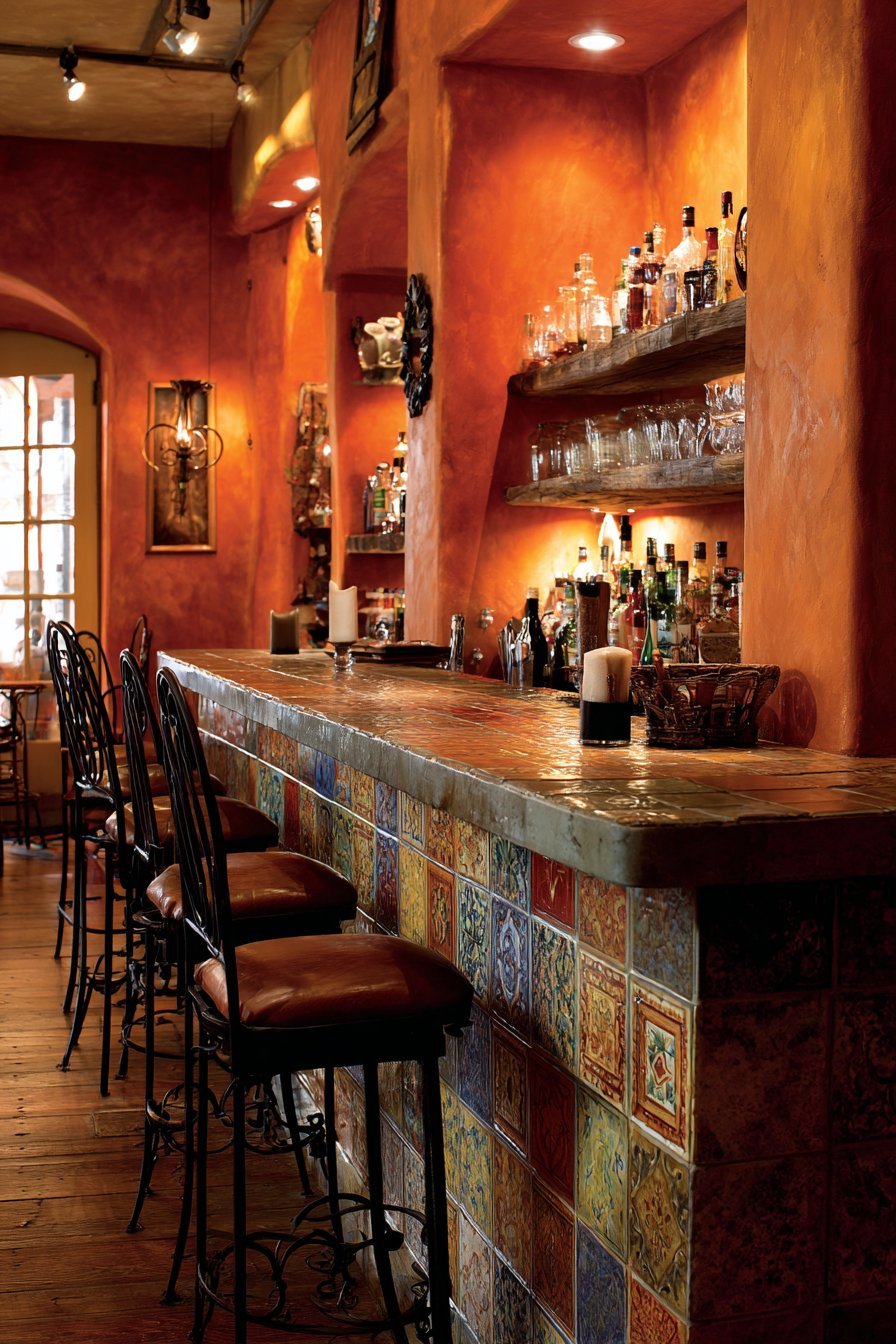
Traditional patterns create colorful patchwork. Bar seating consists of wrought iron stools. Leather seats show natural patina from use. Above, floating shelves display Mexican glassware and spirits.
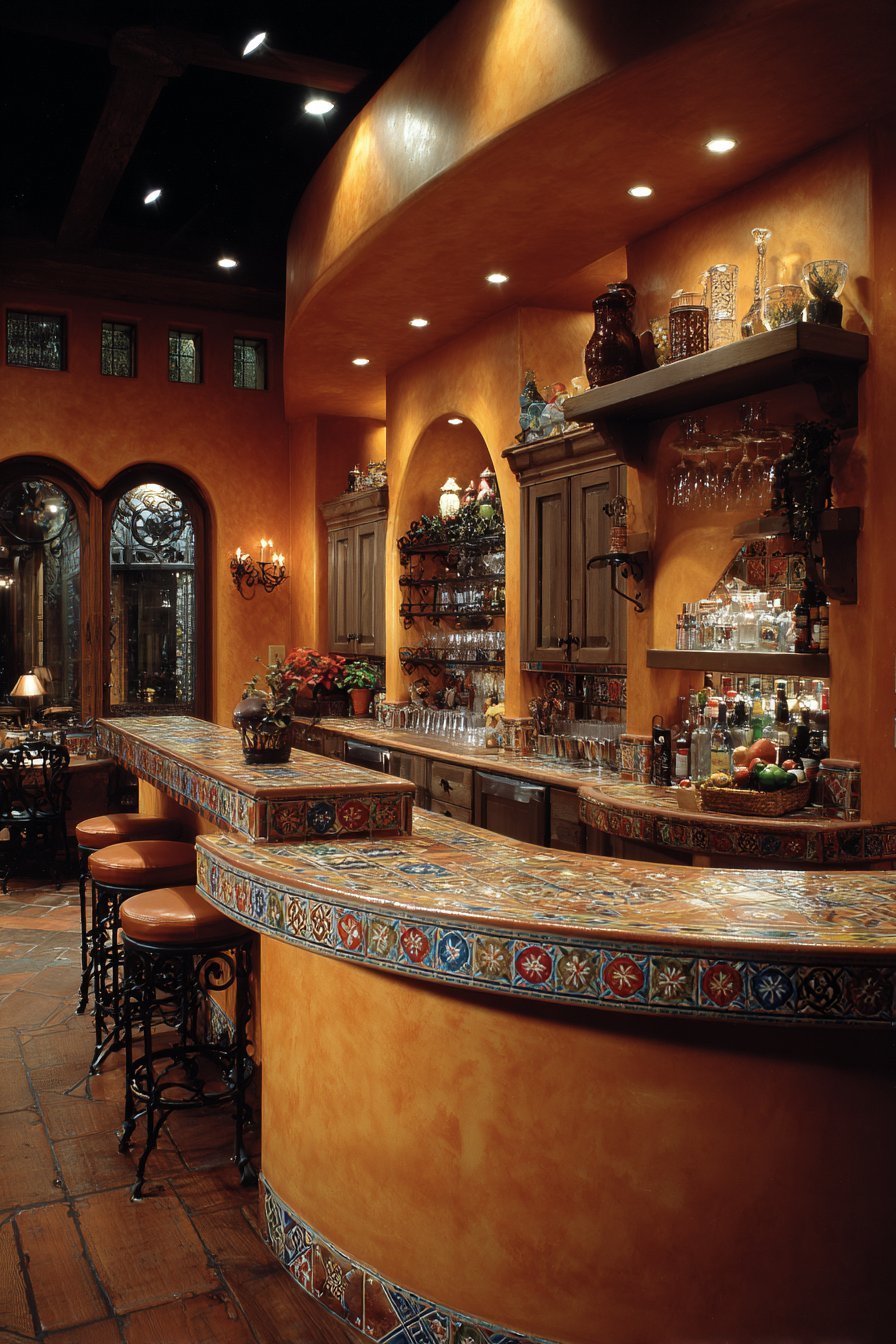
The backsplash behind the bar features full Talavera tiles. Coordinating patterns unite the design. Clay tile flooring extends beneath the bar area. Warm ambient lighting emphasizes handcrafted plaster work.
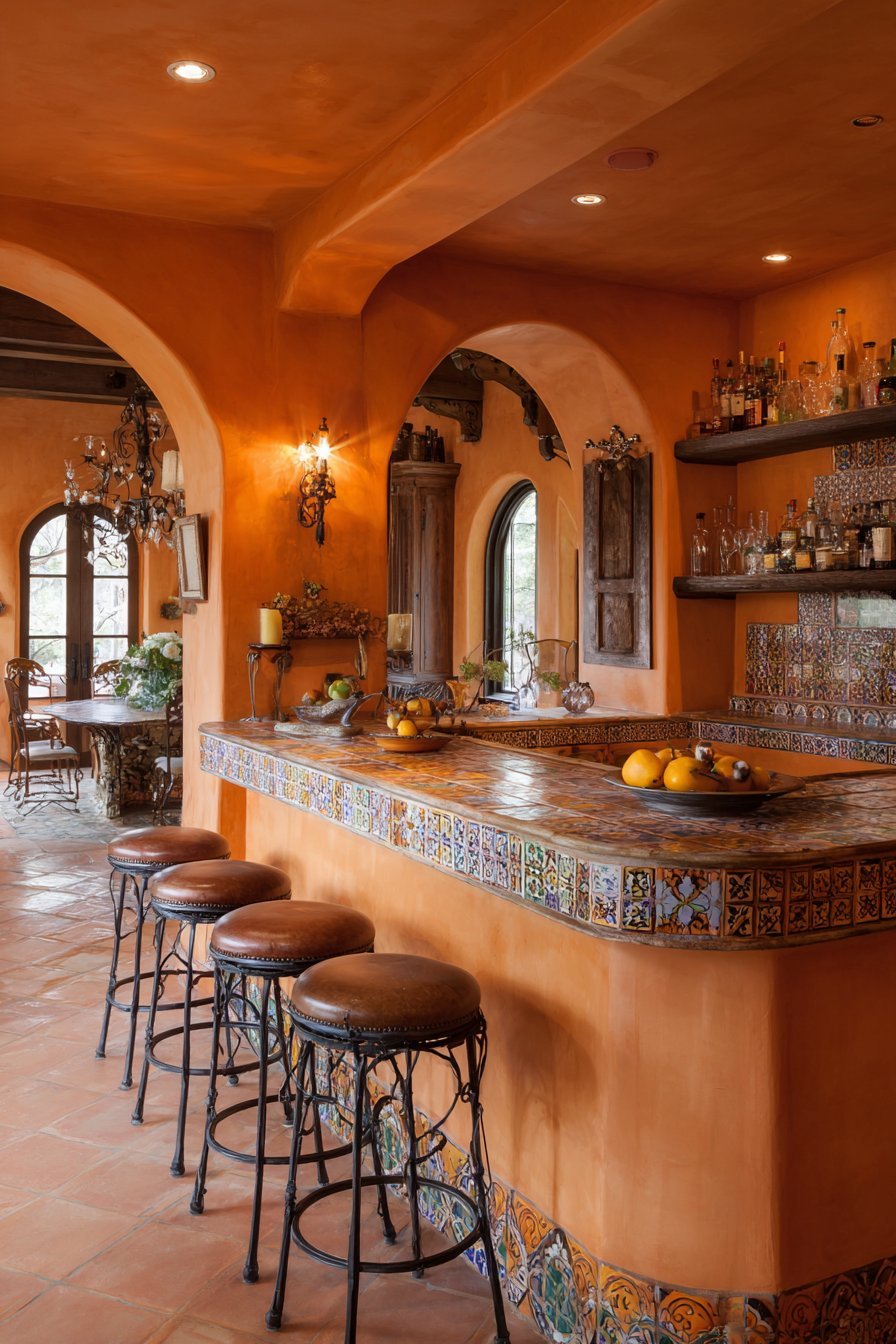
Reflective qualities of glazed tile mosaic catch light beautifully. The curved counter creates softer visual flow. This bar area becomes natural gathering spot. The design invites social interaction.
Key Design Tips:
- Plaster curved counters for handcrafted organic shapes
- Create mosaics from broken Talavera tiles for unique patterns
- Use wrought iron bar stools with leather seats
- Install floating shelves for glassware display
- Add warm ambient lighting to emphasize textures
17. Floor-to-Ceiling Rustic Storage Wall
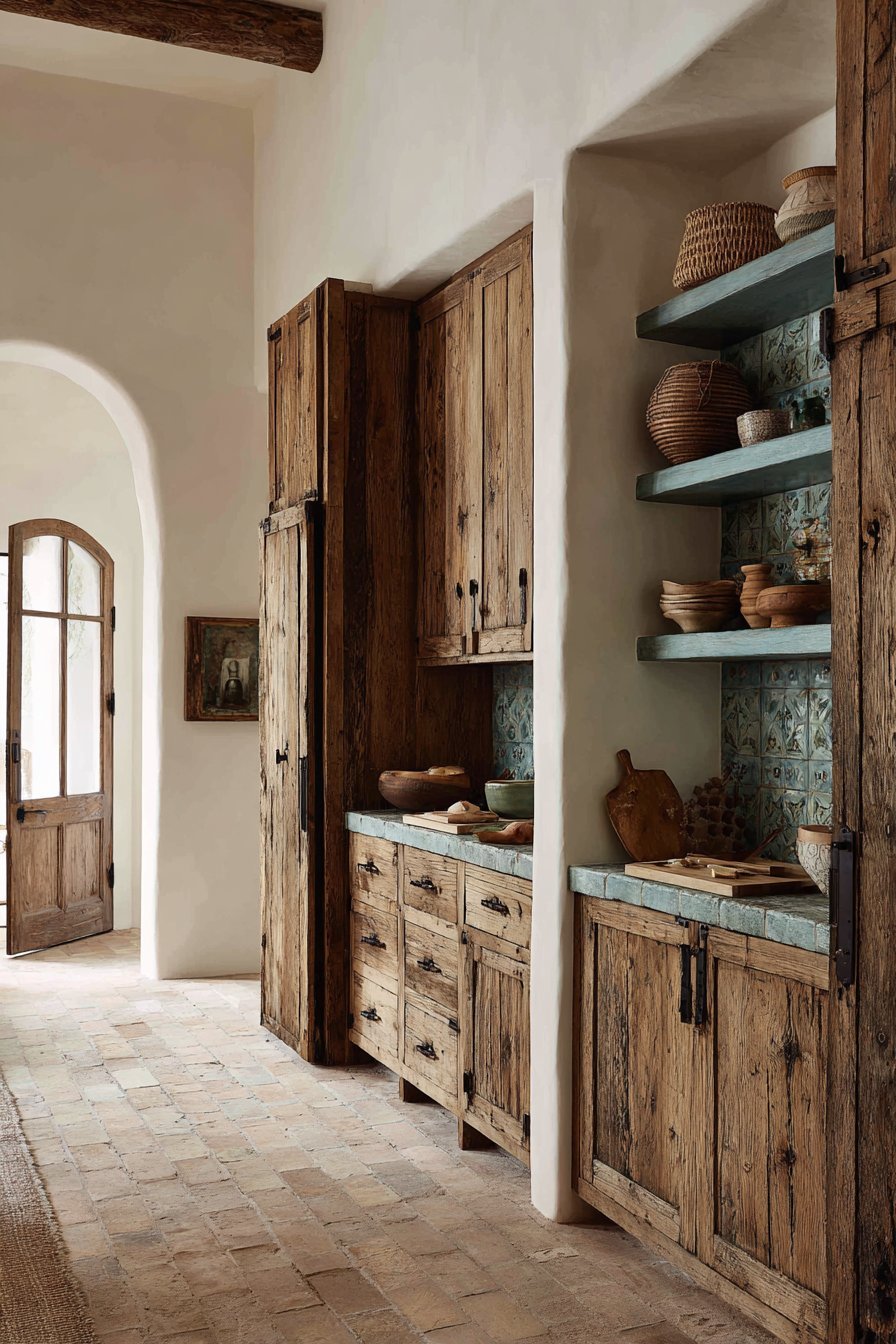
Floor-to-ceiling rustic wooden cabinets feature visible grain. Natural edge details add organic character. Wrought iron hardware includes strap hinges and ring pulls. Aged patina on metal adds authentic detail.
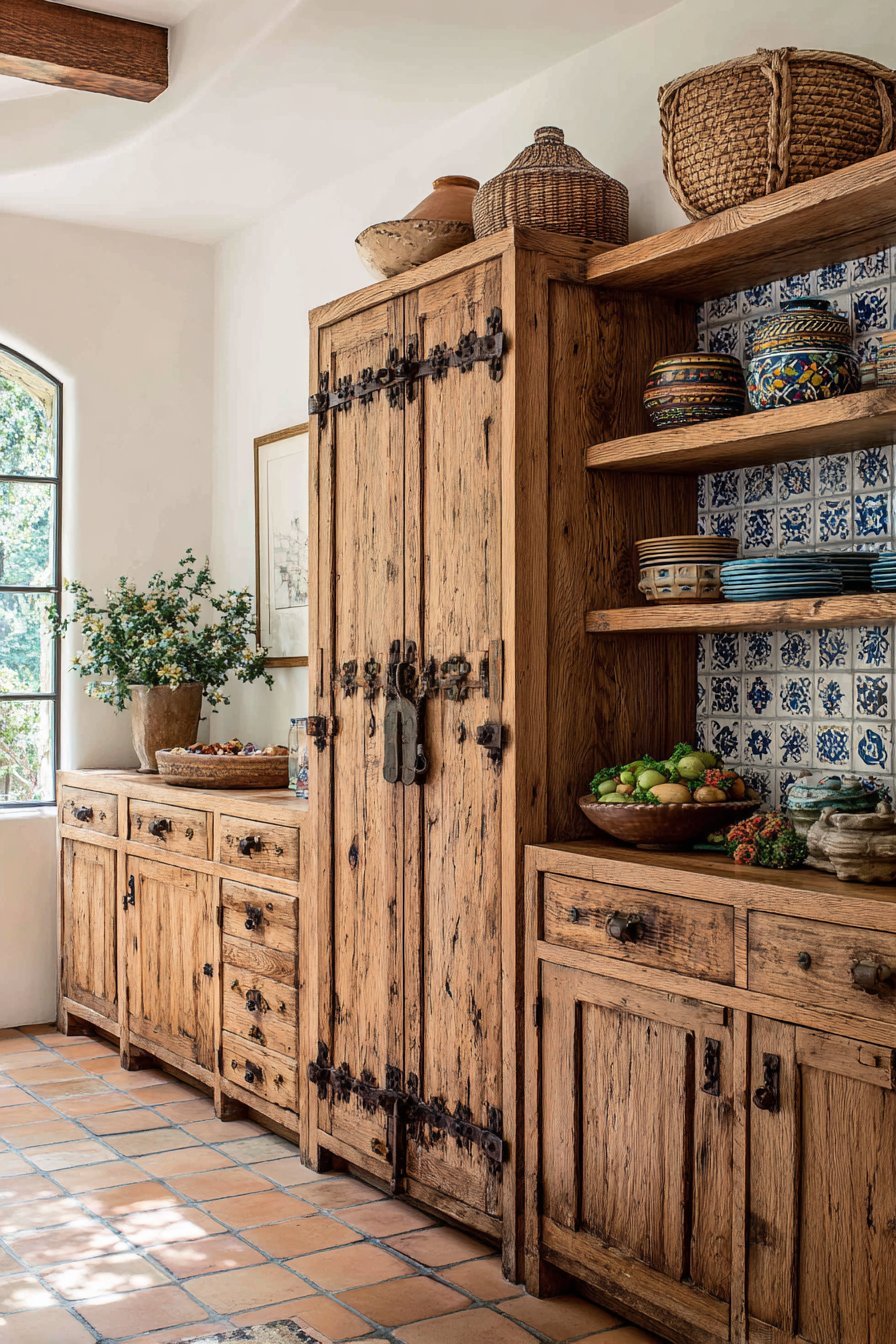
Some cabinet doors remain open revealing interior shelves. Traditional Mexican blue paint covers interior surfaces. Colorful pottery and woven baskets fill the shelves. A section of open shelving breaks up the cabinetry.
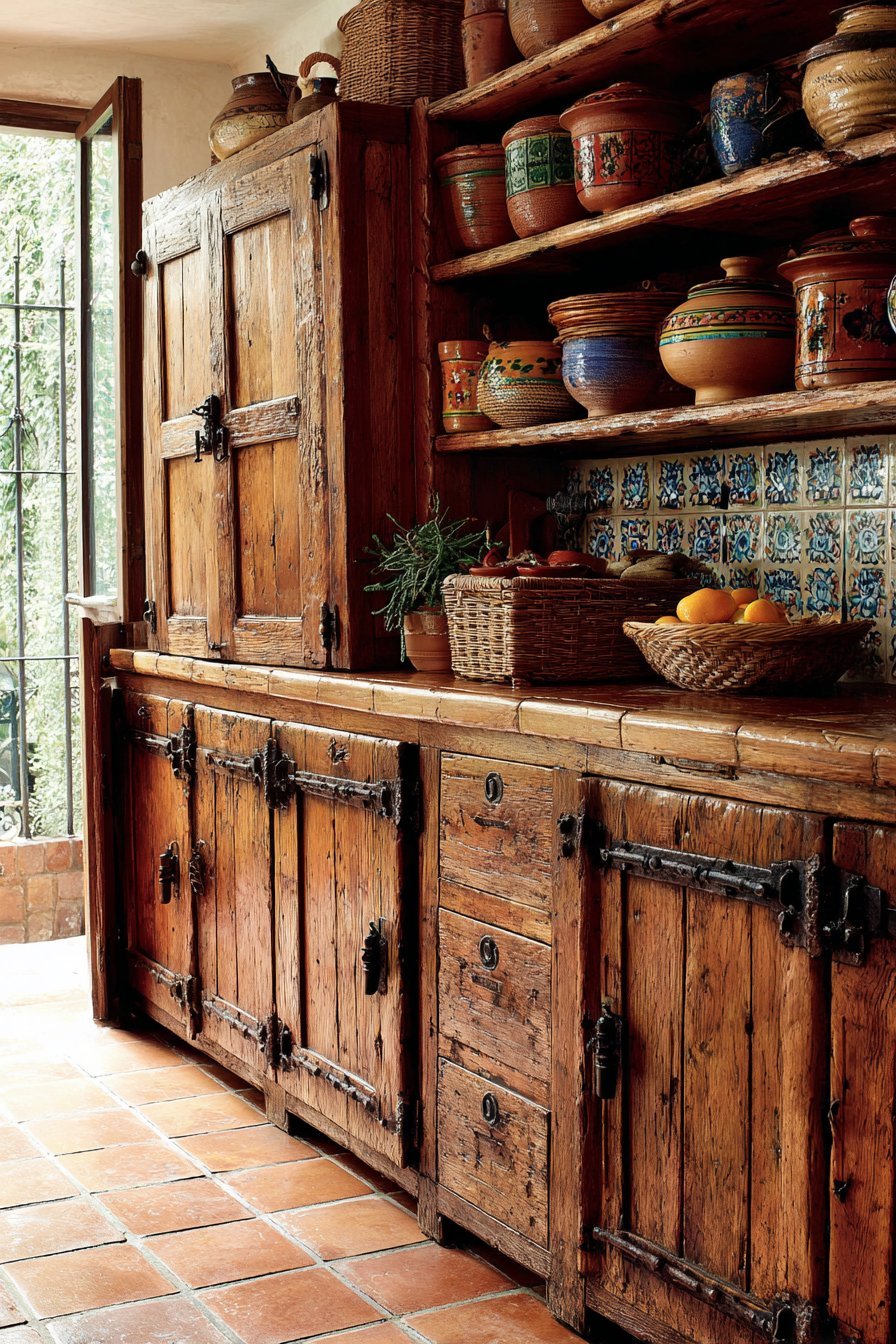
Talavera tiles decorate the back wall of open sections. Terra cotta floor tiles show natural tone variation. Natural light from adjacent window creates depth. The wood grain highlights become visible and beautiful.
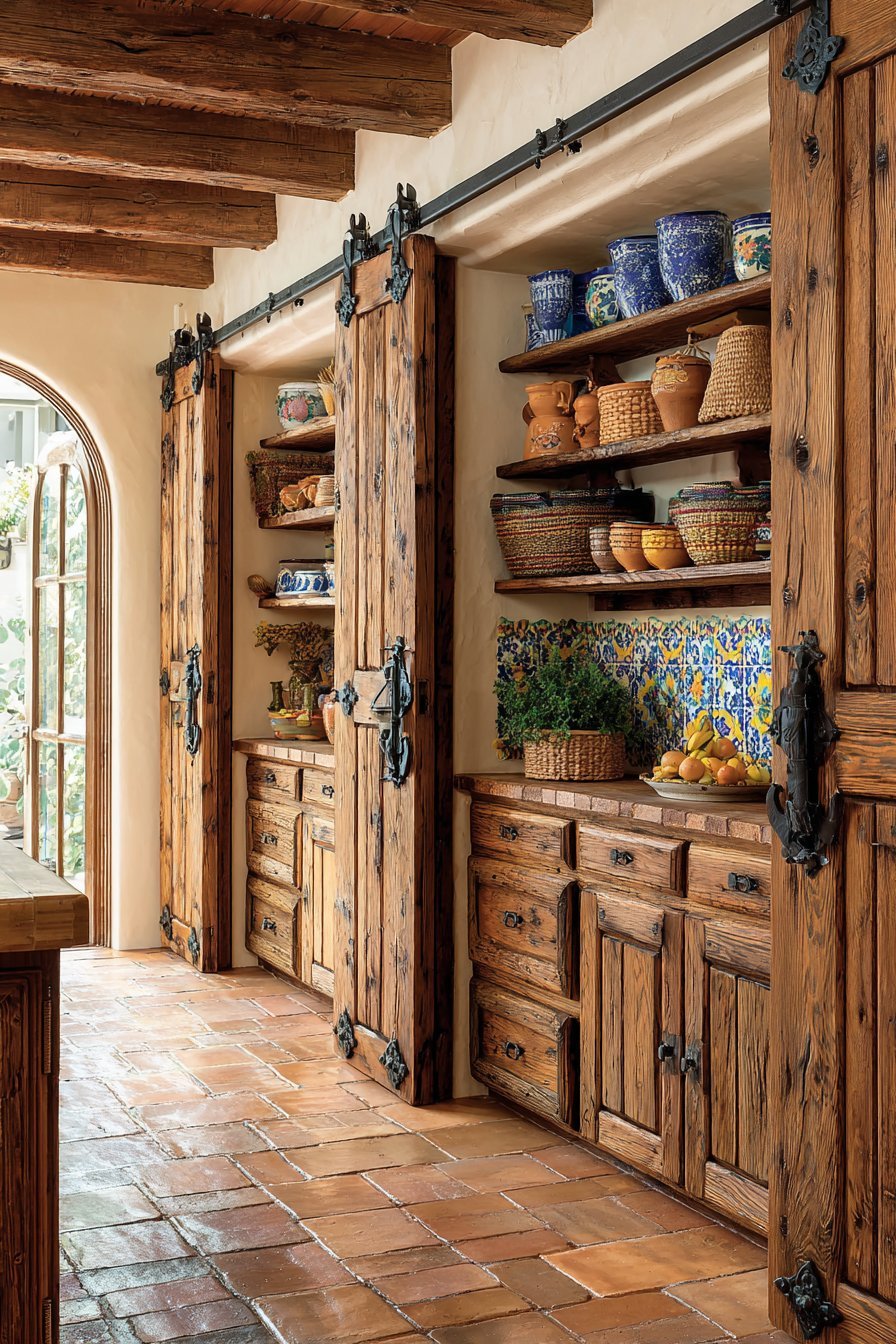
The various wood tones and iron elements create authentic rustic character. This storage wall combines beauty with extensive functionality. The design celebrates traditional Mexican craftsmanship. Practical storage becomes architectural feature.
Key Design Tips:
- Build floor-to-ceiling storage for maximum capacity
- Use natural edge wood for organic rustic character
- Install wrought iron hardware with authentic patina
- Paint cabinet interiors in traditional Mexican blue
- Mix closed and open storage for visual variety
18. Decorative Spice Storage Display
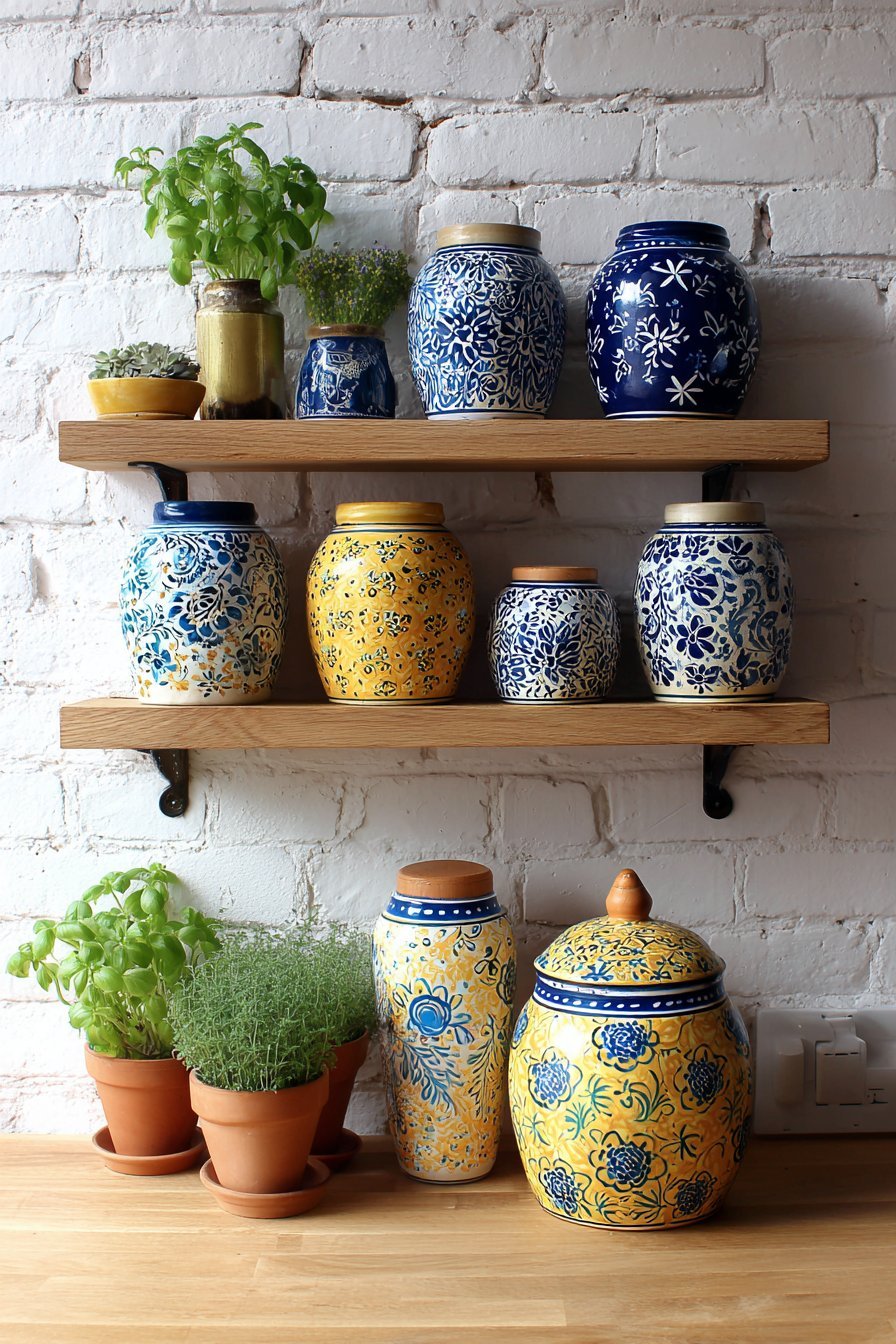
Decorative hand-painted ceramic apothecary jars organize spices beautifully. Traditional Talavera patterns cover each jar. Different cobalt blue and yellow floral motifs create variety. Hand-lettered labels identify contents clearly.
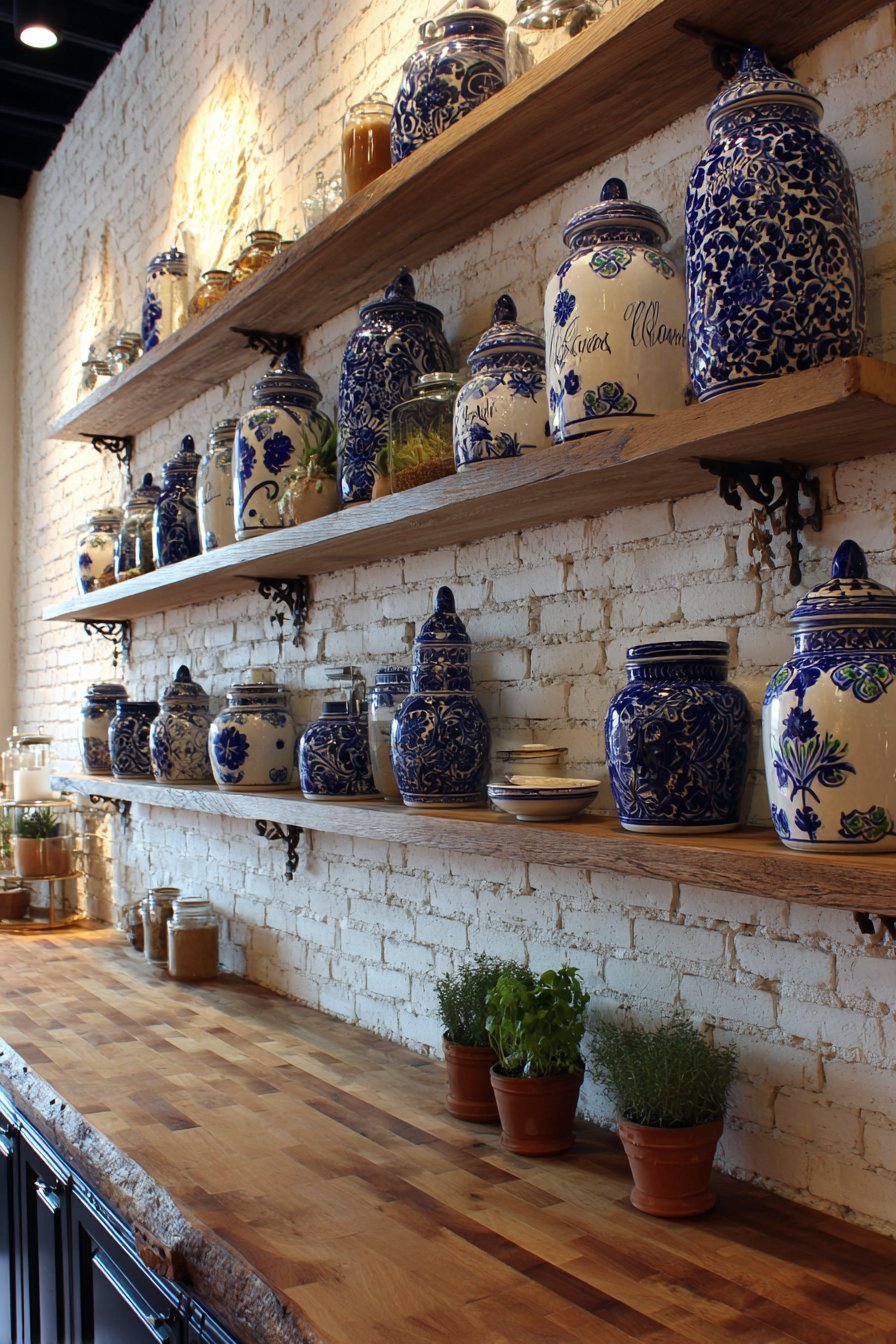
Floating wooden shelves support the jar collection. Wrought iron shelf brackets provide sturdy support. Thick wooden planks show natural edge and grain detail. The whitewashed brick wall creates textured backdrop.
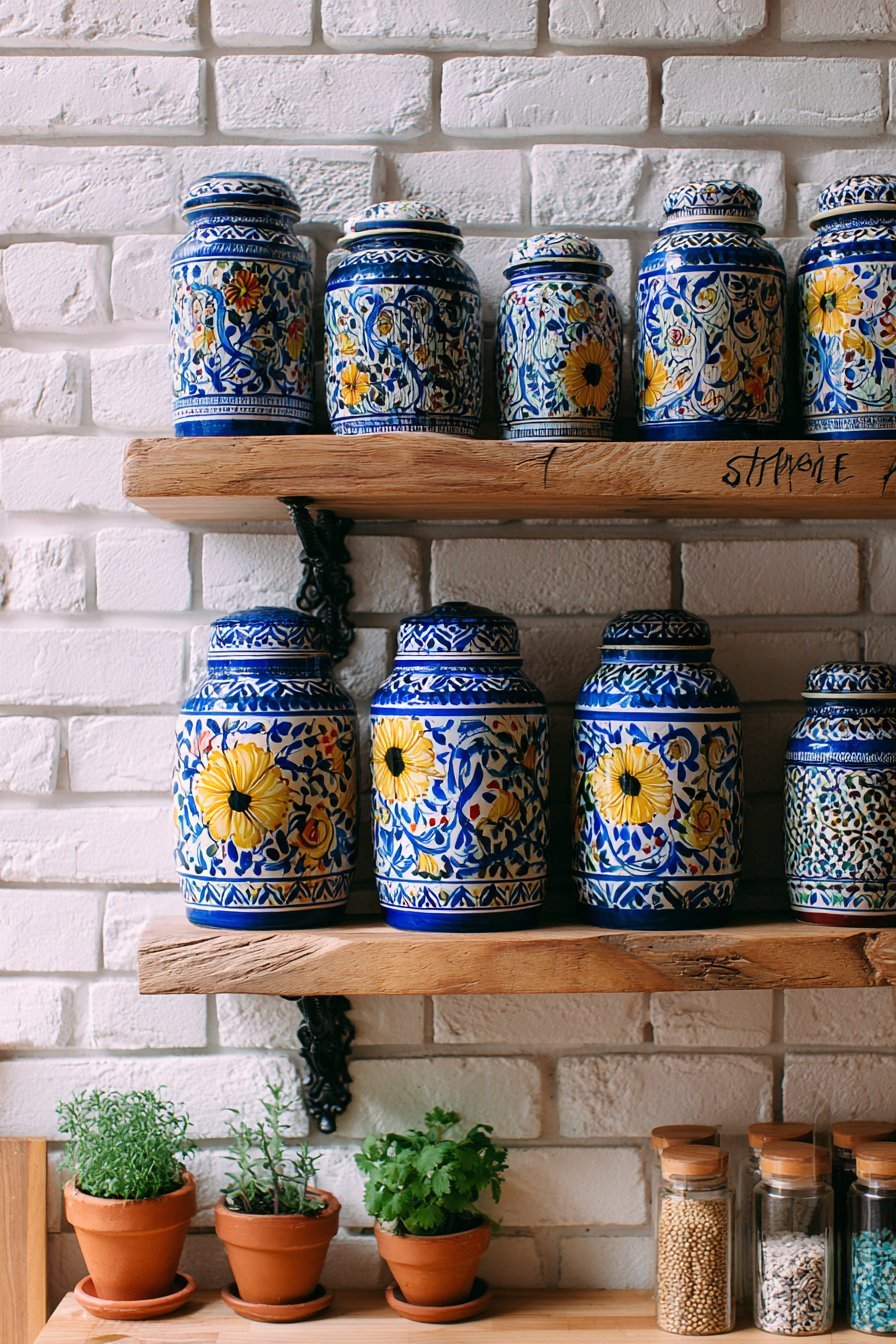
Below the shelves, butcher block countertop provides workspace. Simple subway tile backsplash maintains clean aesthetic. Small potted herbs in terracotta pots add fresh greenery. Natural side lighting creates dimension beautifully.
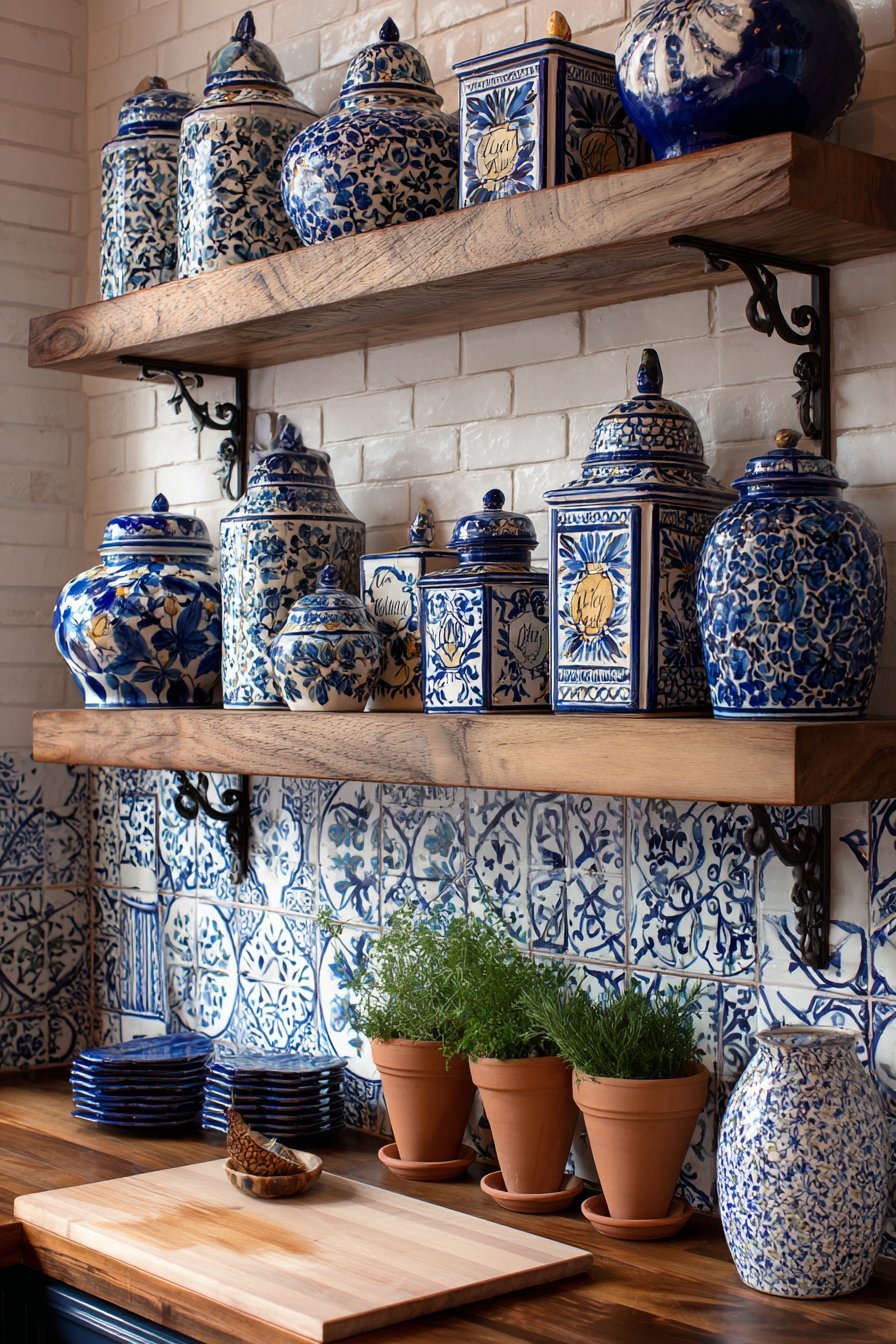
The glossy glazed finish of ceramic jars catches light. Hand-painted details become visible and appreciable. This organized display combines beauty with functionality. Everyday cooking tasks become more enjoyable.
Key Design Tips:
- Use decorative apothecary jars for visible spice storage
- Install floating shelves with wrought iron brackets
- Hand-letter labels for authentic personalized touch
- Add fresh herbs near cooking areas for convenience
- Position storage where natural light highlights details
19. Adobe Kiva Fireplace Corner
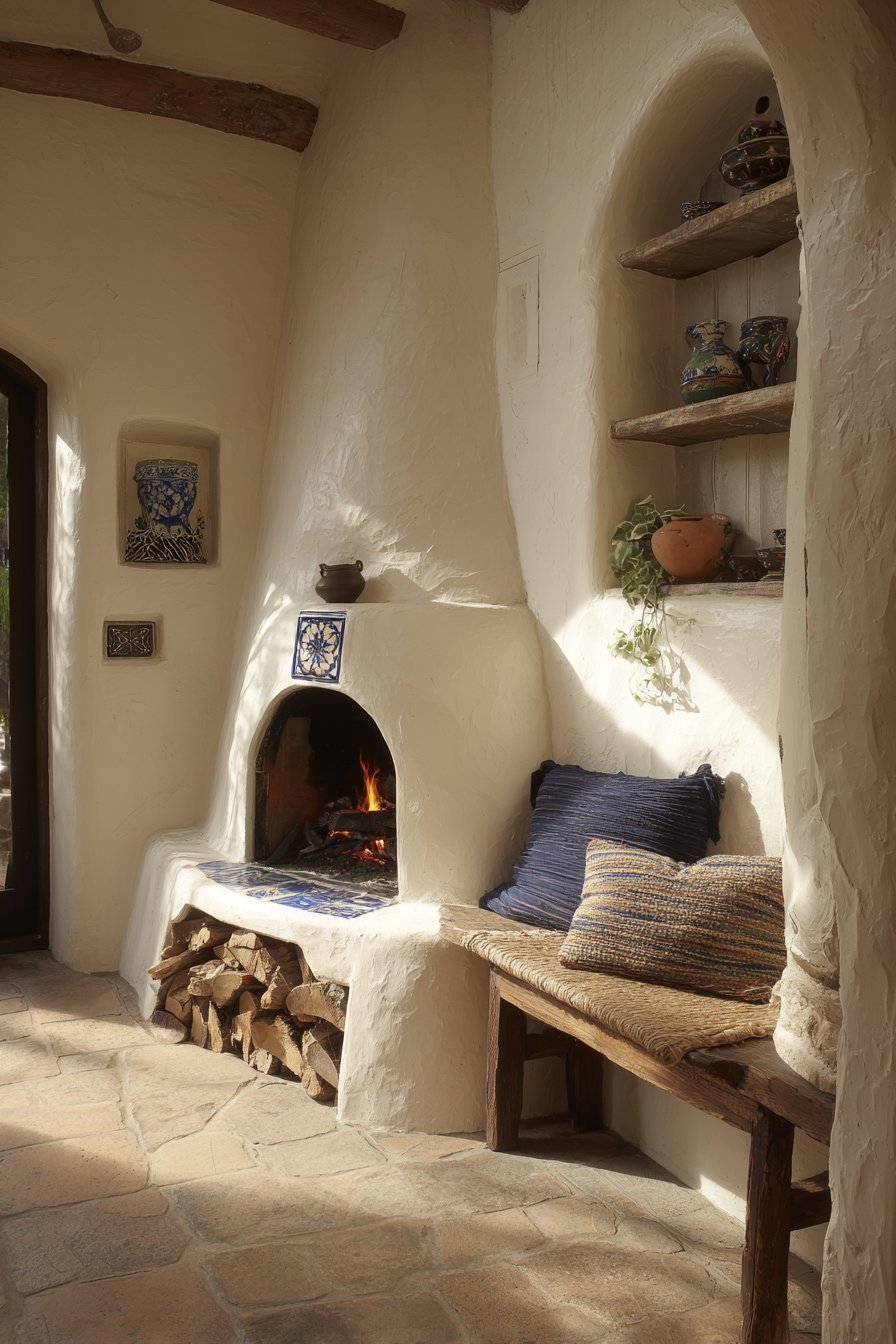
A traditional adobe-style rounded kiva fireplace fills the corner. Smooth terracotta-tinted plaster creates organic curves. The small arched opening invites cozy fires. Decorative Talavera tiles frame the opening.
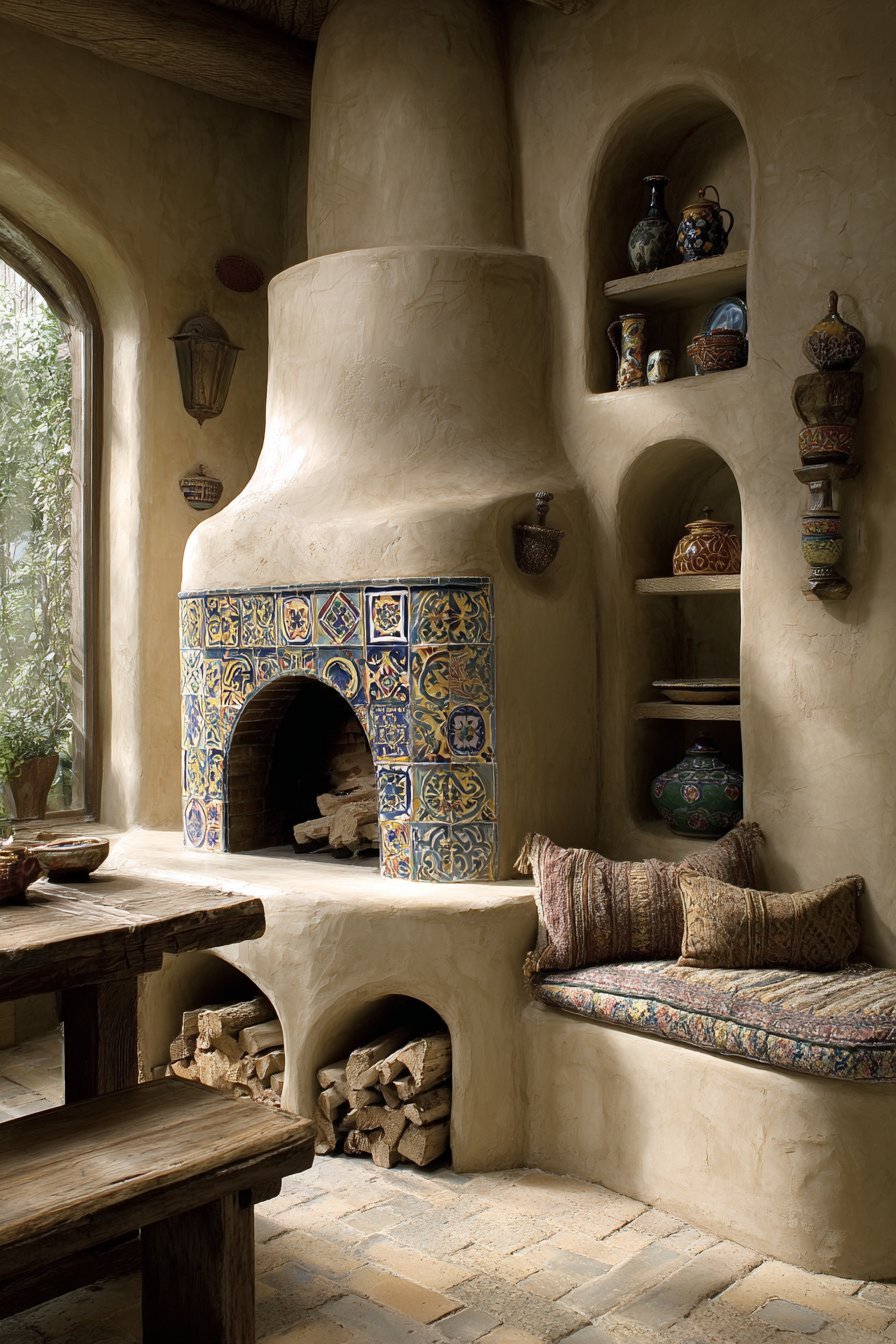
Cobalt blue and yellow traditional patterns add detail. The hearth holds weathered firewood ready for use. Adjacent wall features nicho shelving. These small arched recessed shelves display colorful pottery.
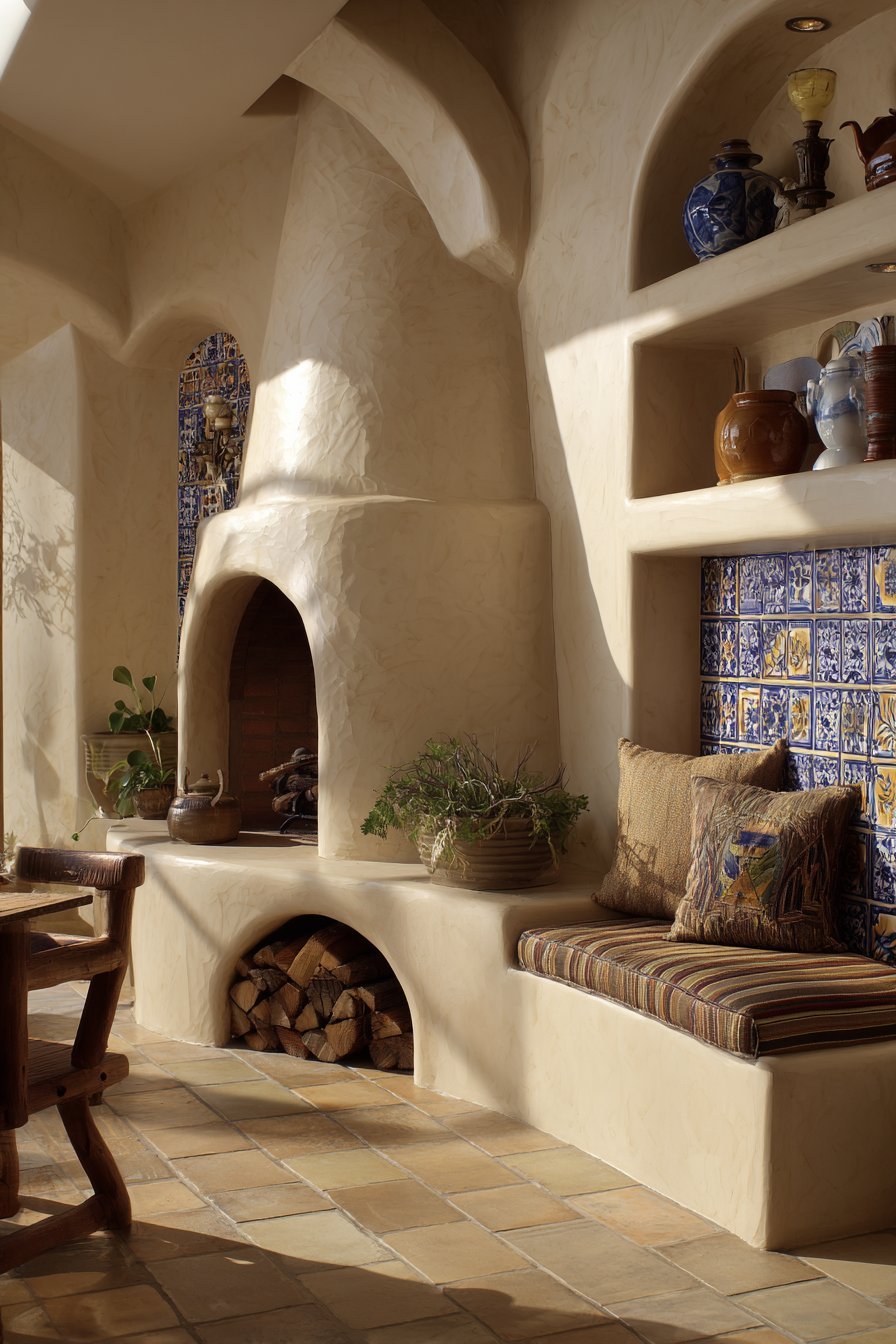
Saltillo tile flooring shows natural wear patterns. A rustic wooden banco bench sits nearby. Woven cushions invite comfortable seating. Natural window light creates warm highlights.
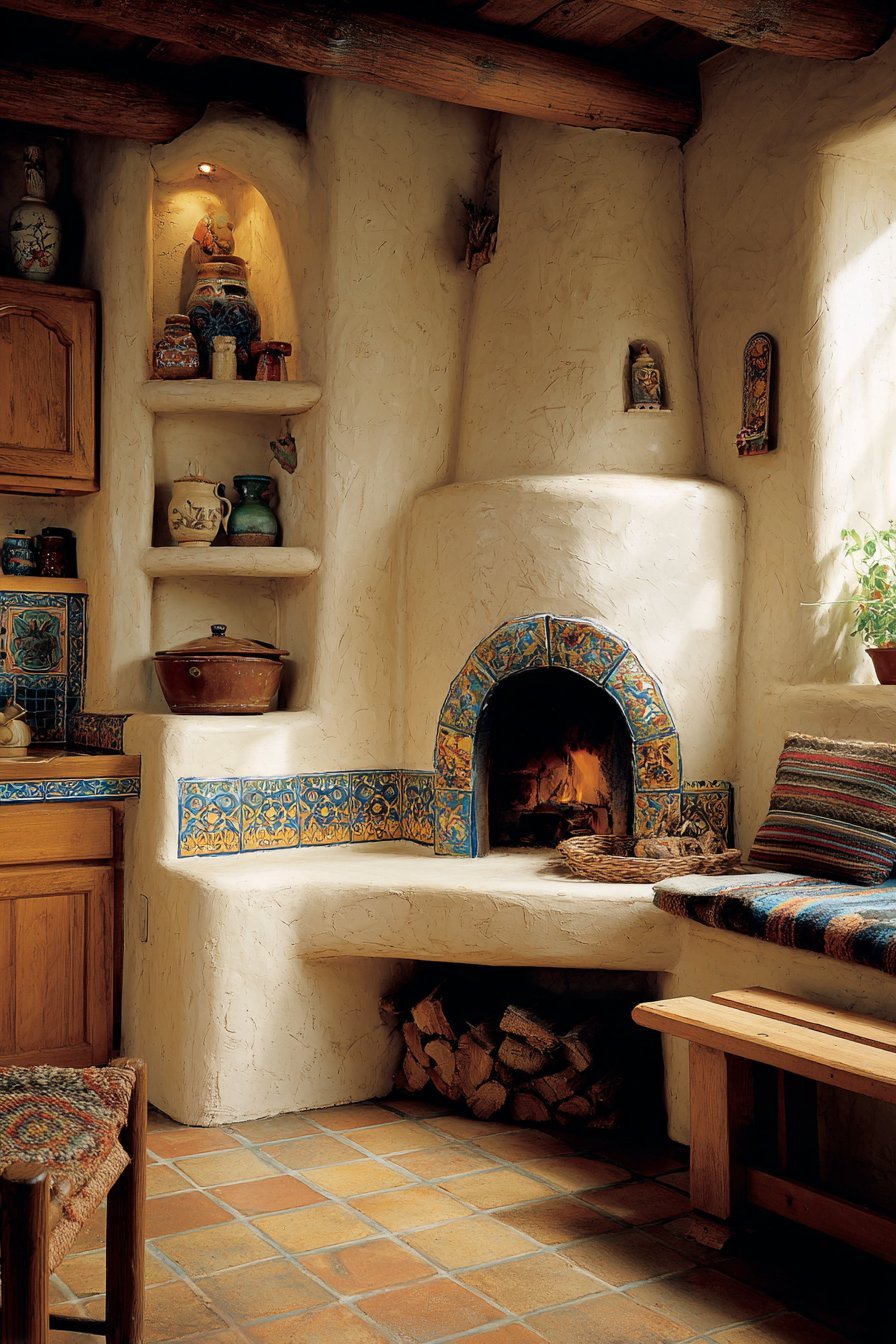
The curved plastered surfaces show dimensional beauty. Recessed shelving creates shadow and depth. This cozy corner adds unique Mexican character. The fireplace becomes gathering spot for family.
Key Design Tips:
- Build kiva fireplaces for authentic Mexican architectural elements
- Plaster rounded shapes for organic handcrafted appearance
- Frame fireplace openings with decorative Talavera tiles
- Add nicho shelving for displaying pottery collections
- Include banco benches near fireplaces for seating
20. Arched Window Wall with Iron Grilles
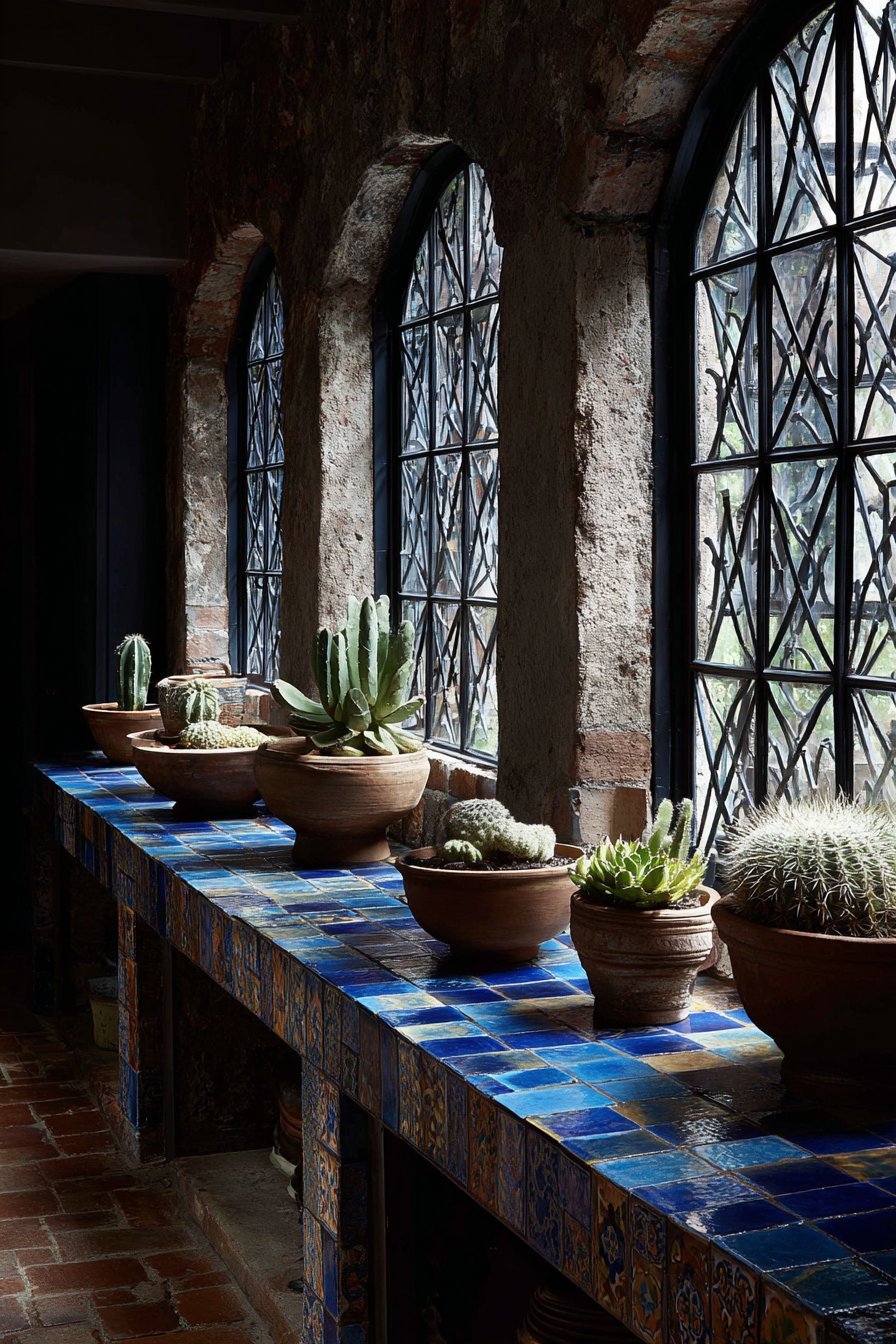
Three arched windows feature deep reveals. Thick plastered walls show substantial construction. Simple wrought iron grilles feature traditional geometric patterns. Window sills are tiled with mixed pattern Talavera.
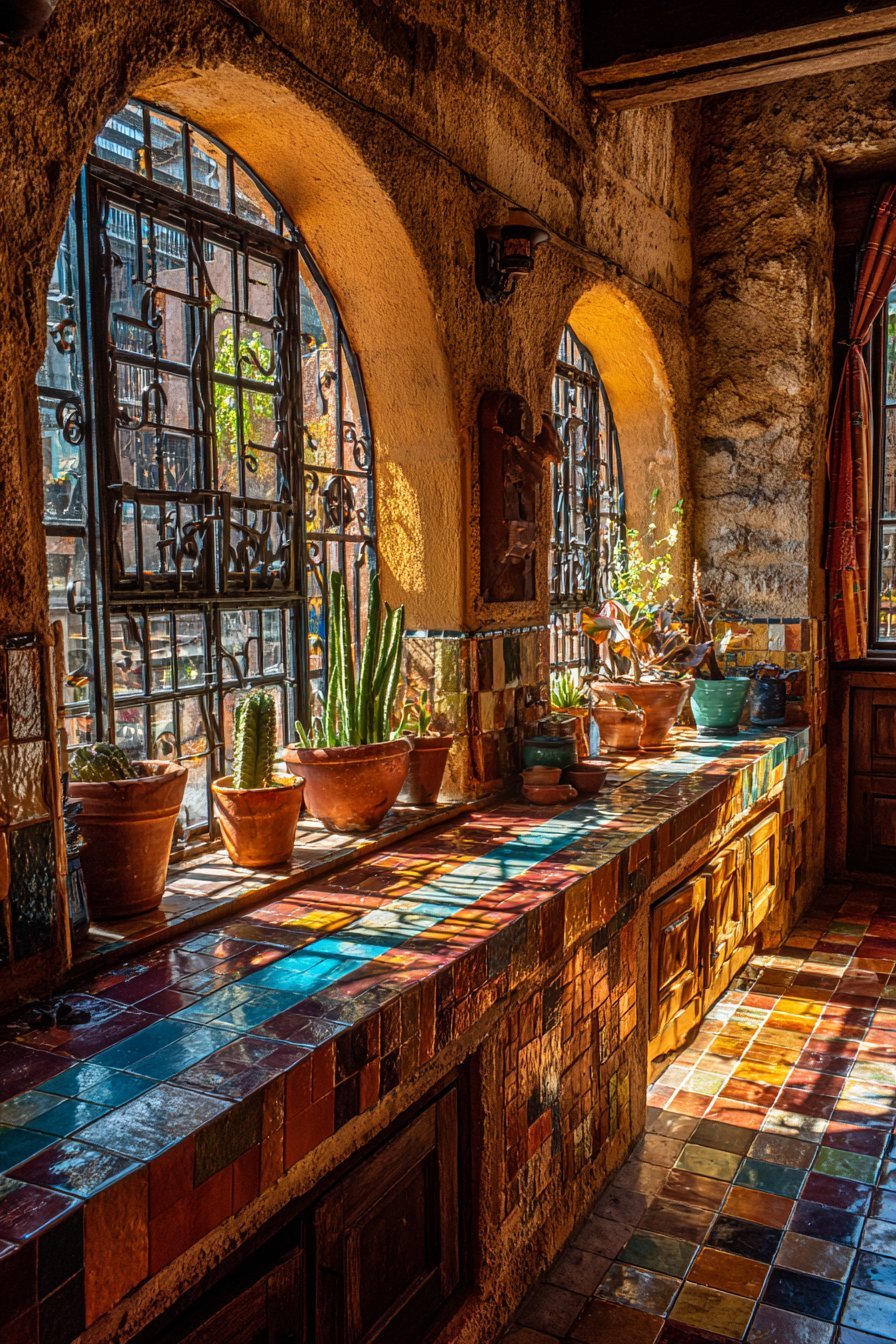
Colorful ledges display potted cacti and succulents. Natural linen curtains hang simply on iron rods. Below the windows runs continuous counter. Sealed terracotta tile creates functional surface.
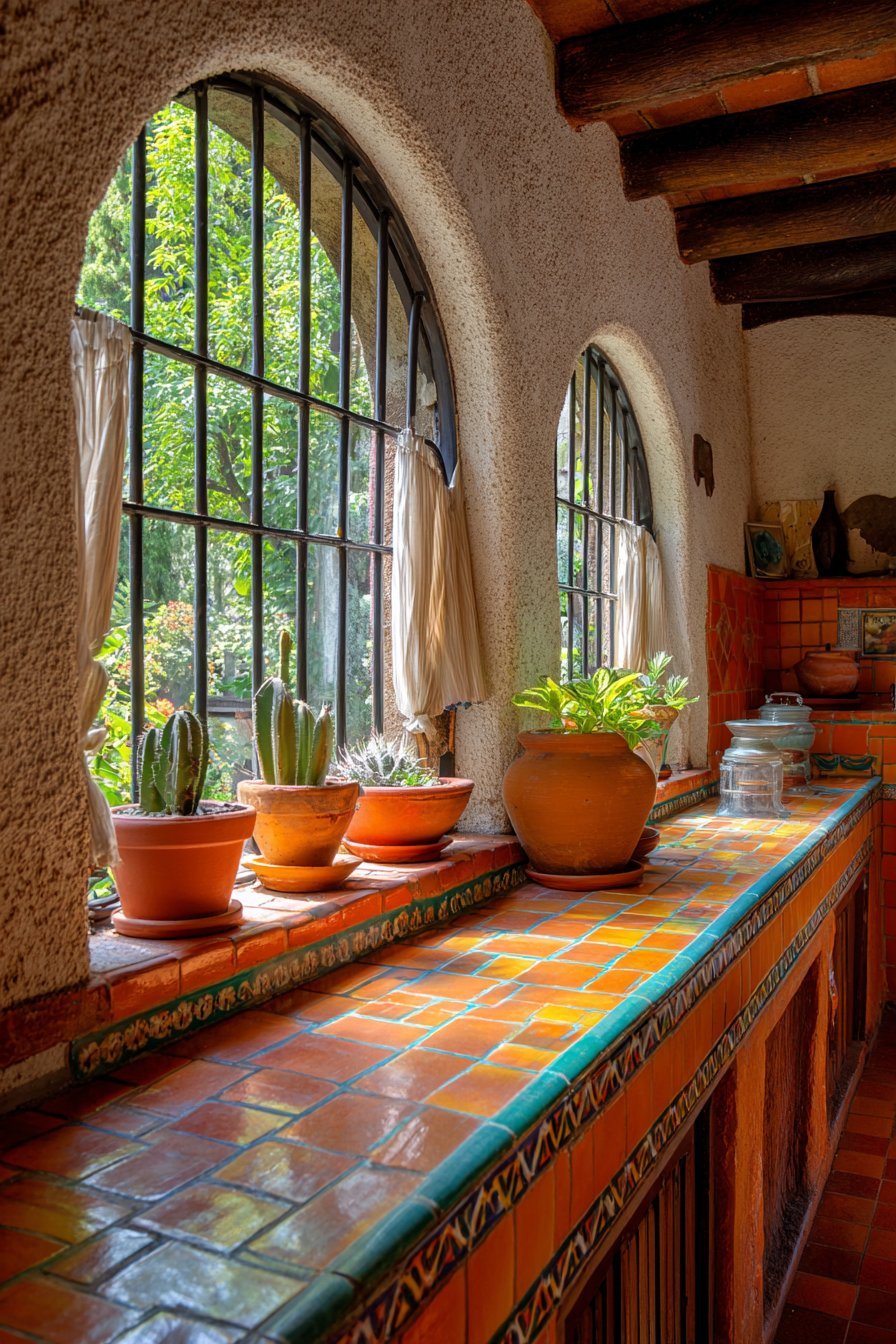
A backsplash of solid cobalt blue Talavera tiles creates bold color statement. The saturated blue contrasts beautifully with whitewashed walls. Hand-painted terracotta pots hold desert plants. Saltillo floor tiles extend throughout the space.
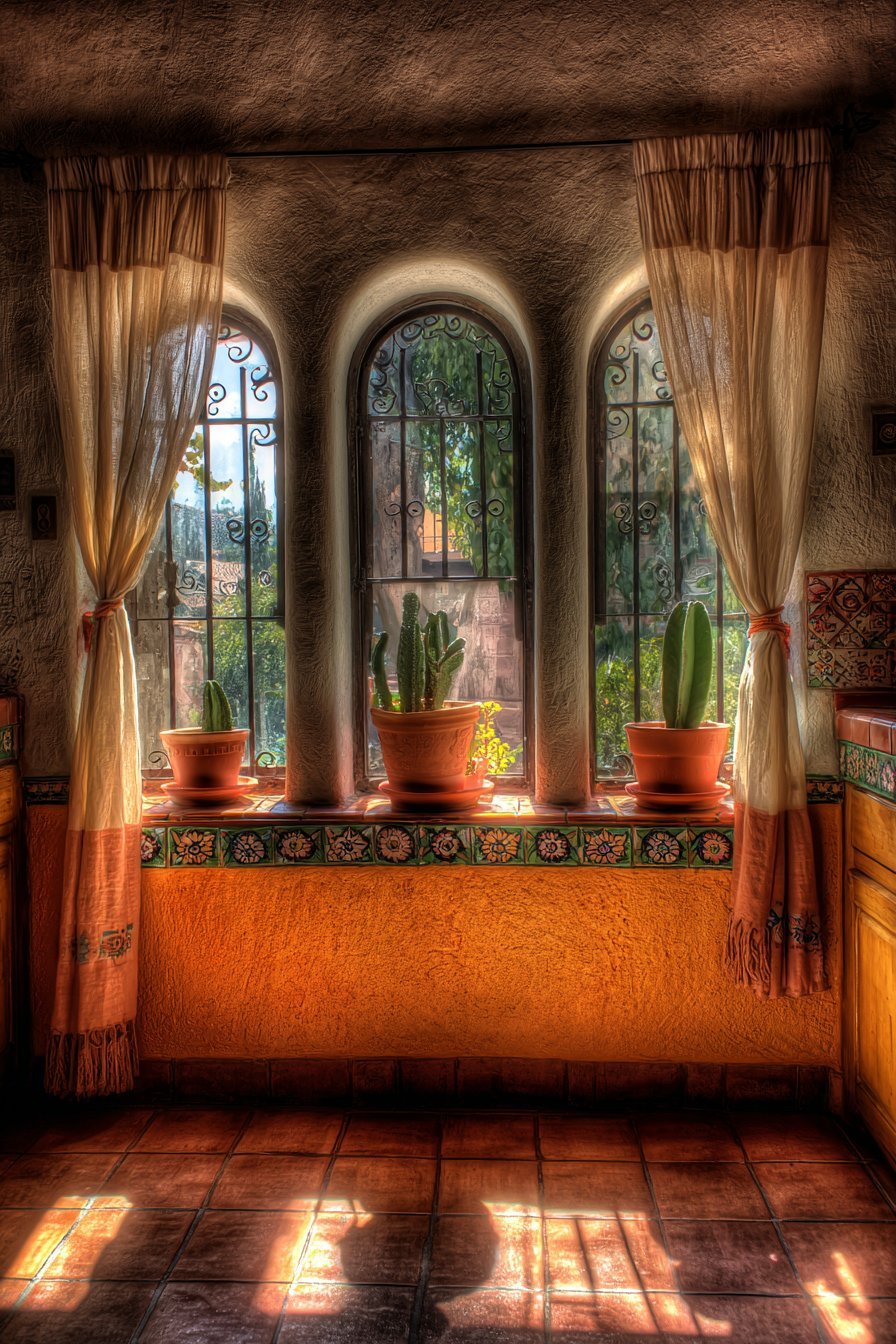
Streaming natural daylight illuminates this window wall magnificently. Light plays through iron grillwork creating patterns. Saturated tile colors glow in sunlight. Textured plaster surfaces show dimensional quality.
Key Design Tips:
- Install arched windows for traditional hacienda architecture
- Add wrought iron grilles for security and decorative detail
- Tile windowsills with colorful Talavera patterns
- Create continuous counters below windows for workspace
- Plant succulents in hand-painted pots for low-maintenance greenery
Why These Mexican Kitchen Designs Are the Best
These Mexican kitchen designs represent the finest approaches to creating authentic hacienda-style cooking spaces. Each concept demonstrates thoughtful integration of traditional materials and artisan craftsmanship. The designs balance vibrant cultural expression with modern functionality requirements.
The incorporation of hand-painted Talavera tiles adds irreplaceable artisan value. These ceramics bring centuries of Mexican artistic tradition into contemporary homes. The color combinations draw from natural pigments and traditional patterns. Cobalt blues, sunflower yellows, and terracotta oranges create warmth without overwhelming spaces.
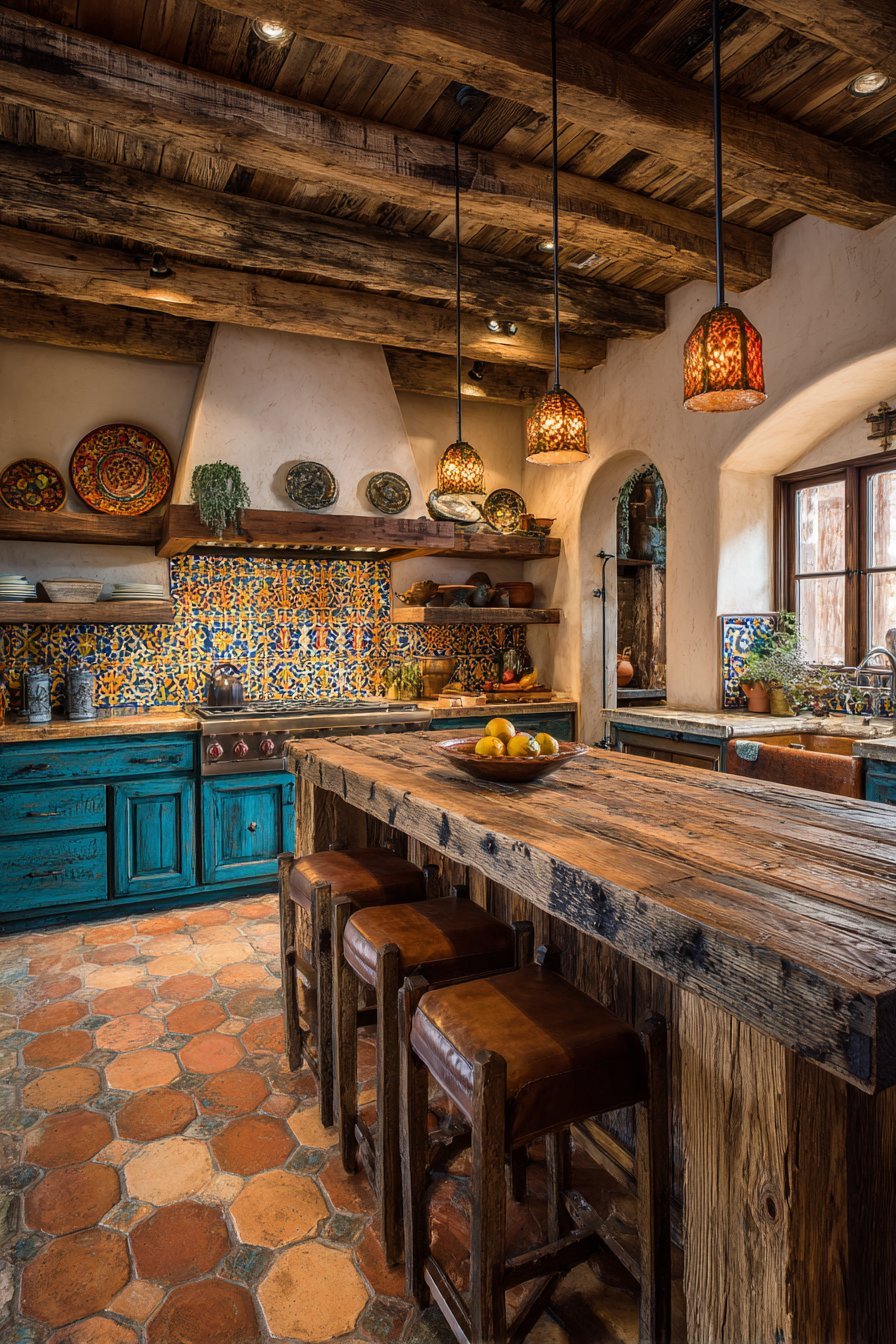
Natural materials like reclaimed wood, hammered copper, and wrought iron provide sustainable beauty. These elements develop character through use and age gracefully over time. The combination of rustic textures with colorful ceramics creates visual richness. Exposed ceiling beams, plastered walls, and terra cotta floors establish authentic architectural foundation.
The versatility of Mexican kitchen design accommodates various space sizes and budgets. Compact kitchens benefit from strategic accent walls and colorful tile borders. Larger spaces embrace dramatic arched alcoves and substantial reclaimed wood islands. Each approach maintains cultural authenticity while addressing practical cooking needs.
Color theory plays crucial role in successful Mexican kitchen design. Traditional palettes combine warm earth tones with saturated jewel colors. The balance prevents overwhelming visual chaos while celebrating Mexican love of color. Whitewashed walls and neutral plastered surfaces provide necessary breathing room.
Durability and functionality remain priorities alongside aesthetic appeal. Terra cotta and Saltillo tiles withstand heavy kitchen traffic. Sealed concrete countertops provide practical work surfaces. Copper sinks develop living patina while resisting bacteria naturally. These material choices ensure kitchens remain beautiful through daily use.
Spatial considerations inform smart design choices. Open shelving displays pottery while maintaining accessibility. Built-in banco benches maximize seating in breakfast nooks. Arched niches add storage without requiring additional floor space. Traditional Mexican architecture solutions address contemporary needs elegantly.
Conclusion
These Mexican kitchen design concepts demonstrate how traditional hacienda style translates beautifully into modern homes. The key elements include hand-painted Talavera tiles, reclaimed natural wood, wrought iron details, and warm color palettes. Each material choice contributes authentic cultural character while serving practical purposes.
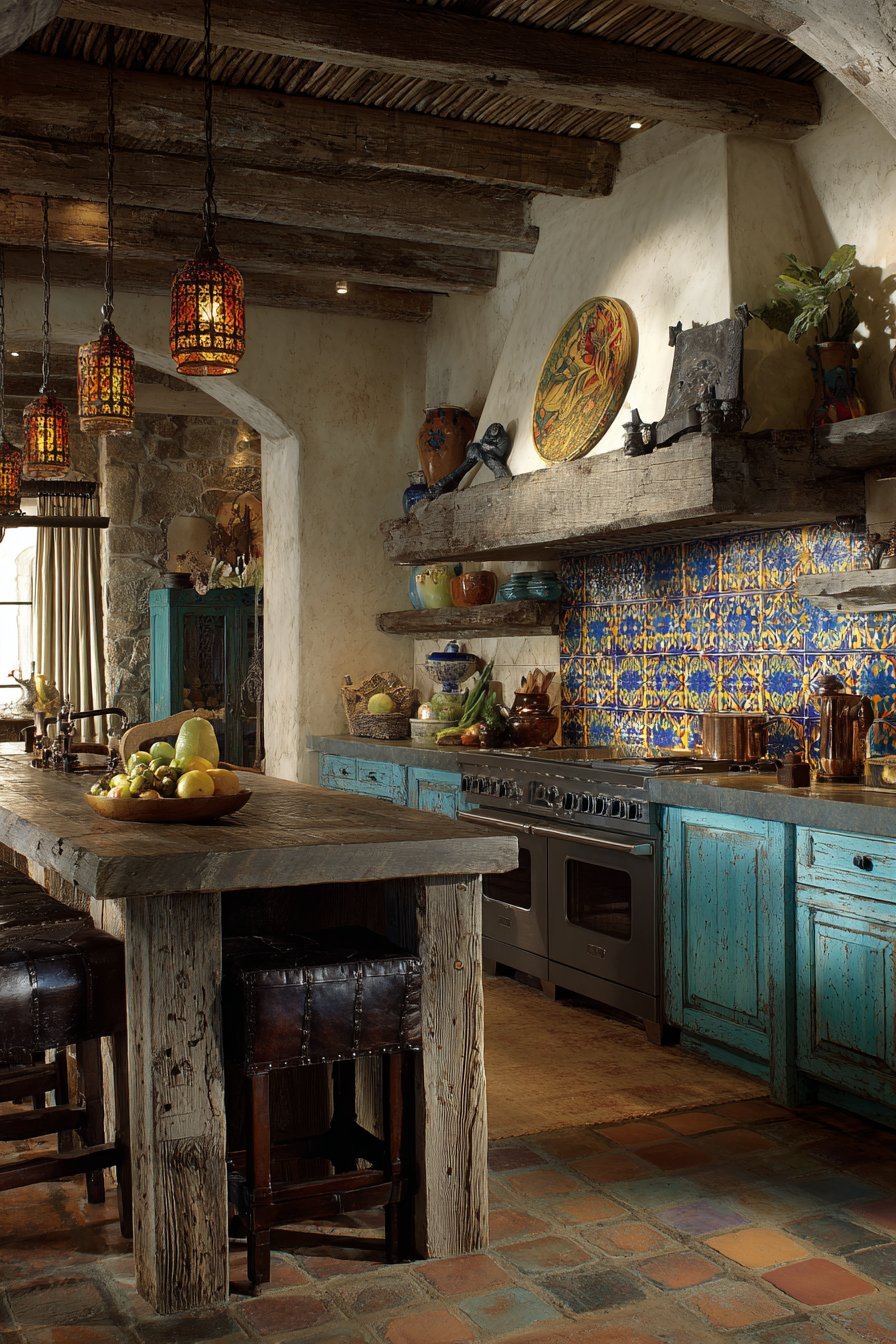
Successful Mexican kitchen design balances bold artistic expression with livable functionality. The handcrafted quality of materials creates spaces that feel warm and inviting. Natural textures, vibrant colors, and traditional architecture combine into cohesive designs. These kitchens become gathering spaces that celebrate Mexican heritage and hospitality.
Start your Mexican kitchen transformation by selecting one focal element. Consider a Talavera tile backsplash, copper farmhouse sink, or exposed wooden beams. Build your design around this anchor piece. Add complementary elements gradually to create your own authentic Mexican kitchen. The warmth and character of hacienda style awaits your creative interpretation.
