
Small bedrooms present unique challenges that require creative solutions and thoughtful planning. The key to success lies in strategic design choices that prioritize both functionality and aesthetic appeal. Many people mistakenly believe that limited square footage means sacrificing style, but this couldn’t be further from the truth.
Maximizing space in a tiny bedroom demands a careful balance between practical storage solutions and beautiful design elements. Whether you’re living in a studio apartment, downsizing to a smaller home, or simply dealing with a compact bedroom, the right approach can transform your space into a comfortable sanctuary. This article explores ten proven strategies that help you create a stylish, functional bedroom regardless of size constraints.
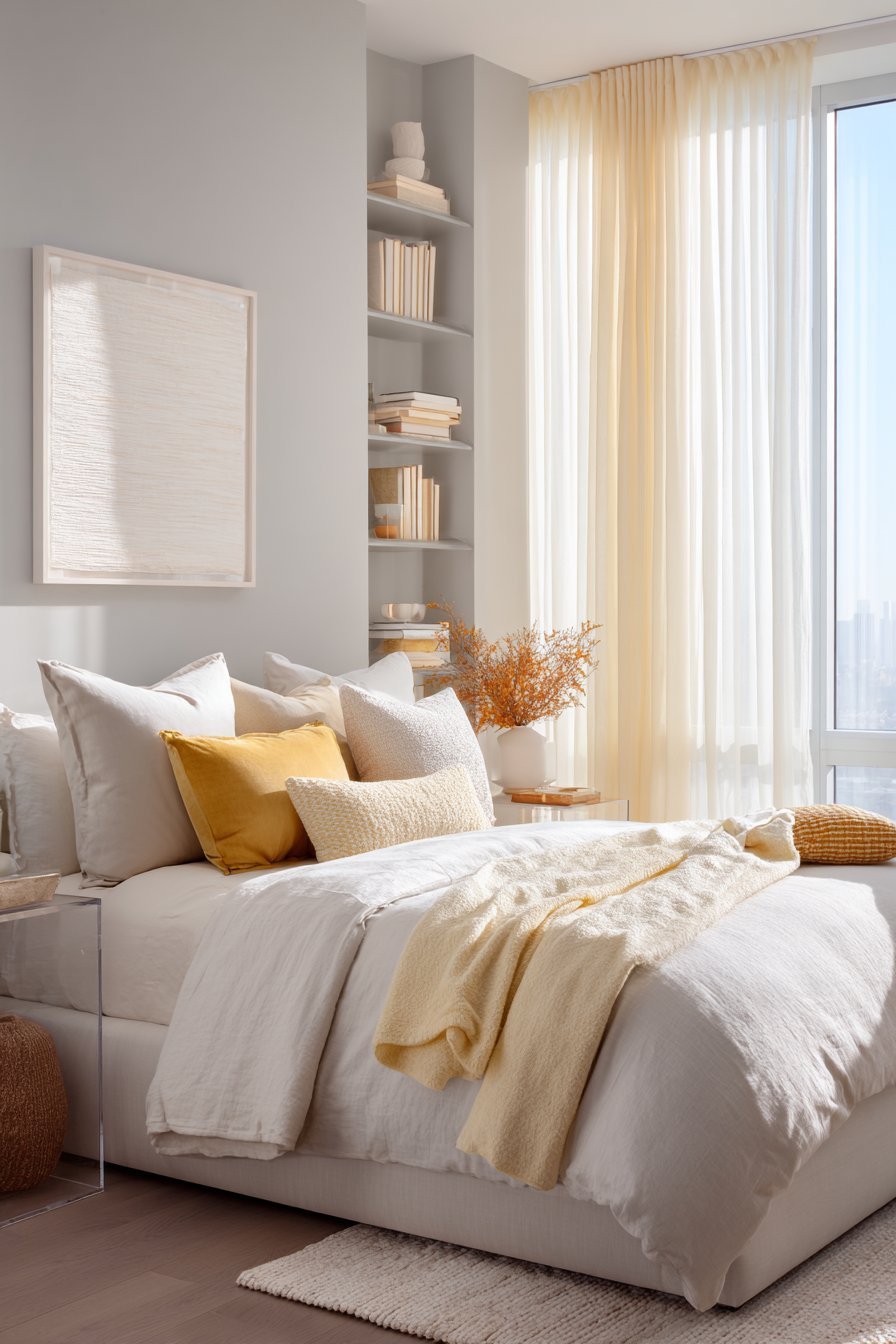
The following sections cover everything from furniture selection to color psychology, providing actionable insights that cater to various budgets and design preferences. Each strategy focuses on maximizing every square inch while maintaining the personal style that makes your bedroom feel like home.
1. Embrace Vertical Storage Solutions
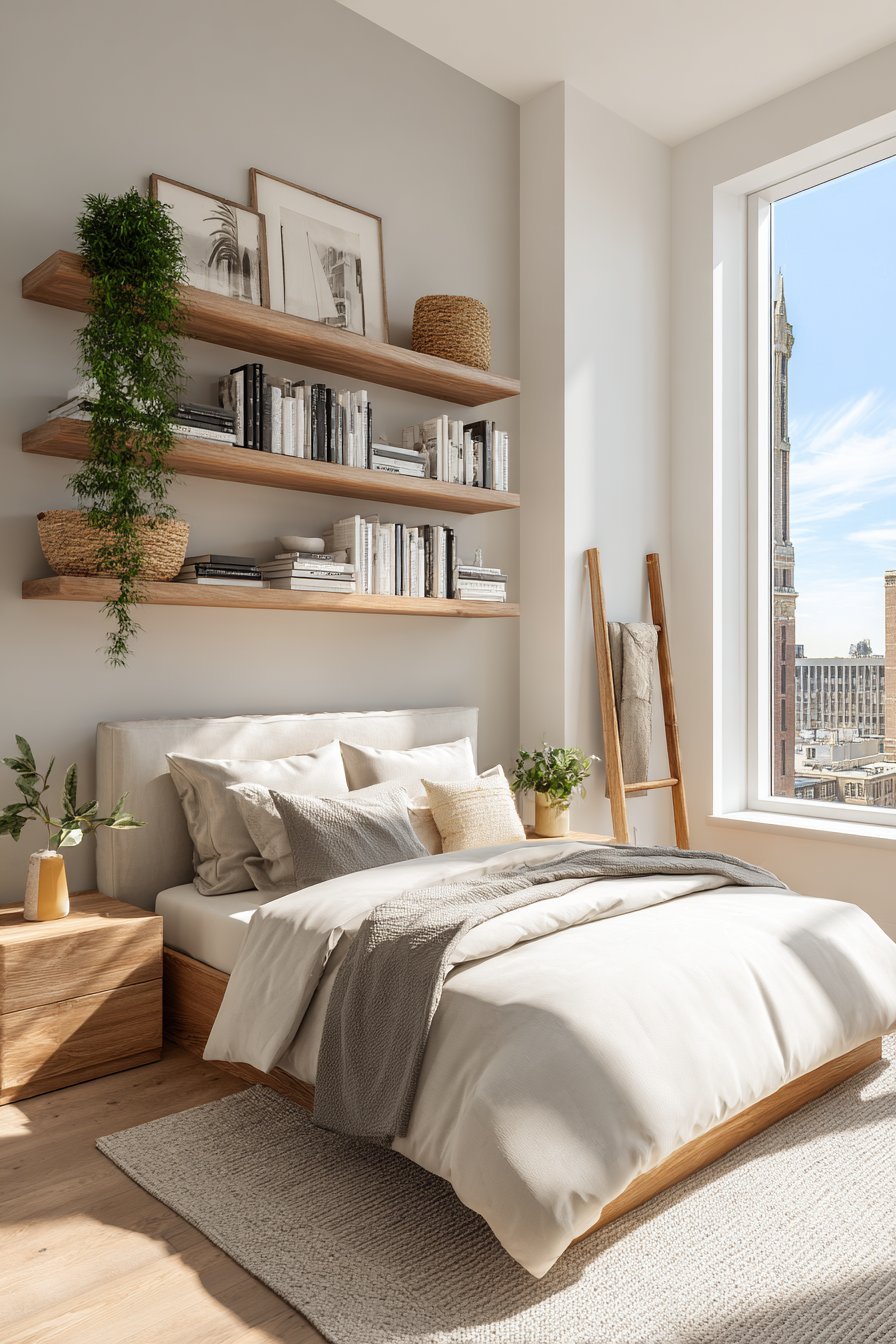
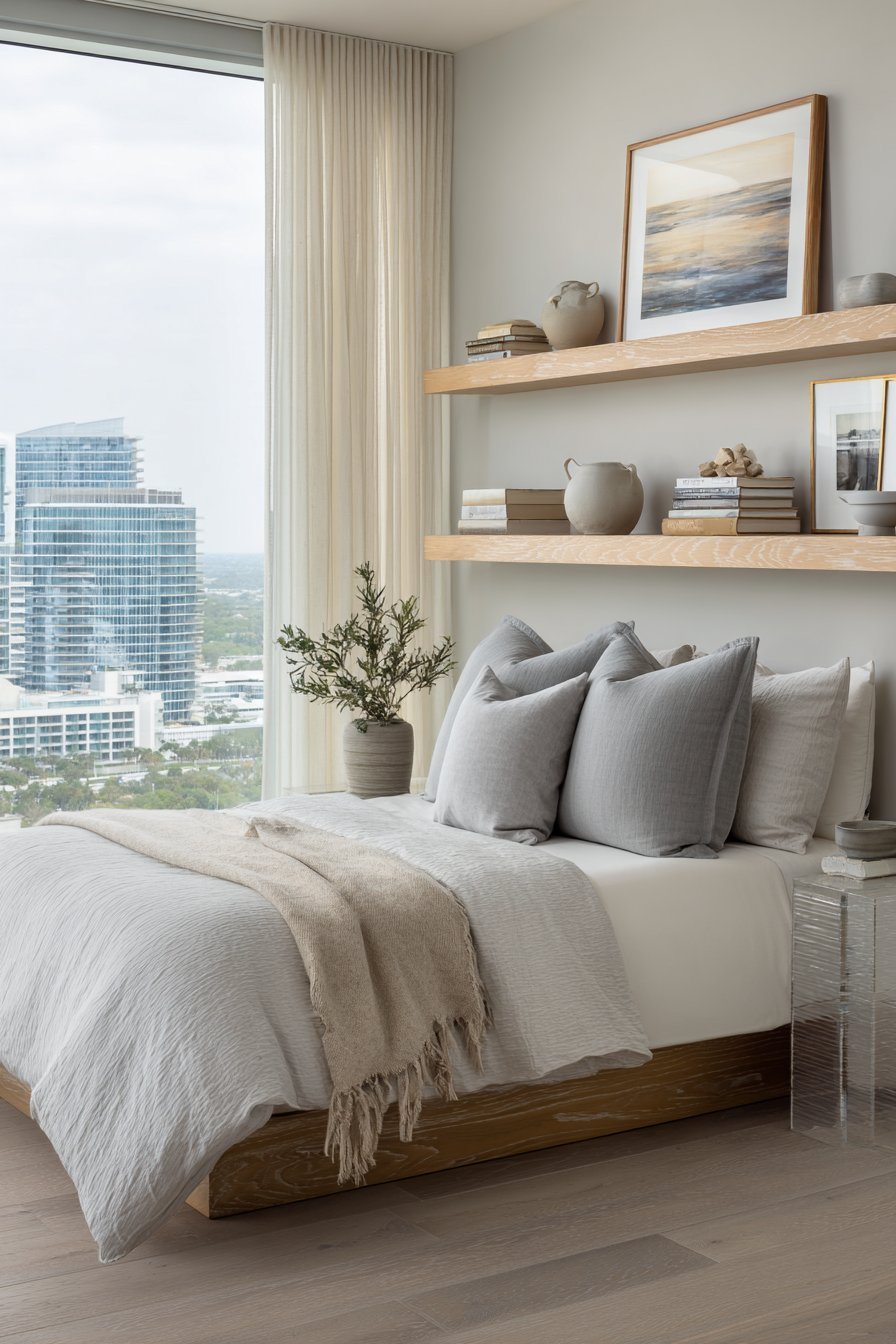
Utilizing vertical wall space represents one of the most effective ways to maximize storage without consuming valuable floor area. Most people overlook the potential of their walls, focusing instead on traditional furniture that takes up precious square footage. Wall-mounted shelves, floating cabinets, and tall bookcases draw the eye upward while providing essential storage capacity.
Installing shelving units that extend toward the ceiling creates dramatic visual height and practical storage opportunities. This approach works particularly well above doorways, windows, and beds where floor space is already limited. Consider using decorative baskets or uniform storage boxes on higher shelves to maintain a cohesive, organized appearance.
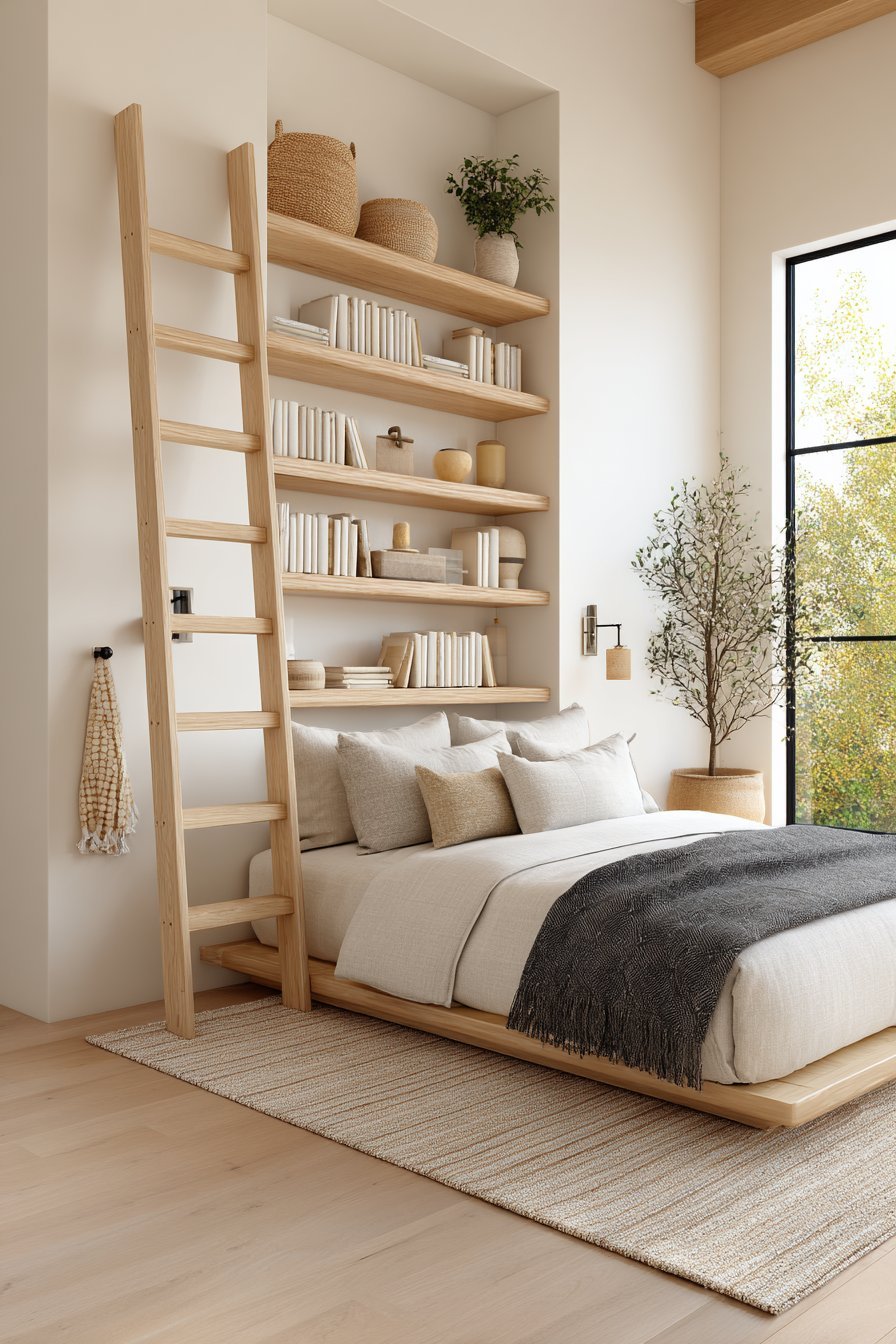
The beauty of vertical storage lies in its dual functionality—it solves storage problems while adding architectural interest to your space. Floating shelves in varying lengths can create an artistic display while housing books, plants, and personal treasures. This strategy keeps surfaces clear and makes the room feel more spacious and less cluttered.
- Install floor-to-ceiling shelving units to maximize every inch of wall space
- Use wall-mounted nightstands instead of traditional bedside tables
- Hang hooks and pegboards for accessories, bags, and daily essentials
- Consider ladder shelves that lean against walls without requiring installation
- Mount floating shelves above the bed for books and decorative items
- Utilize corner spaces with triangular or wraparound shelving units
2. Choose Multi-Functional Furniture Pieces
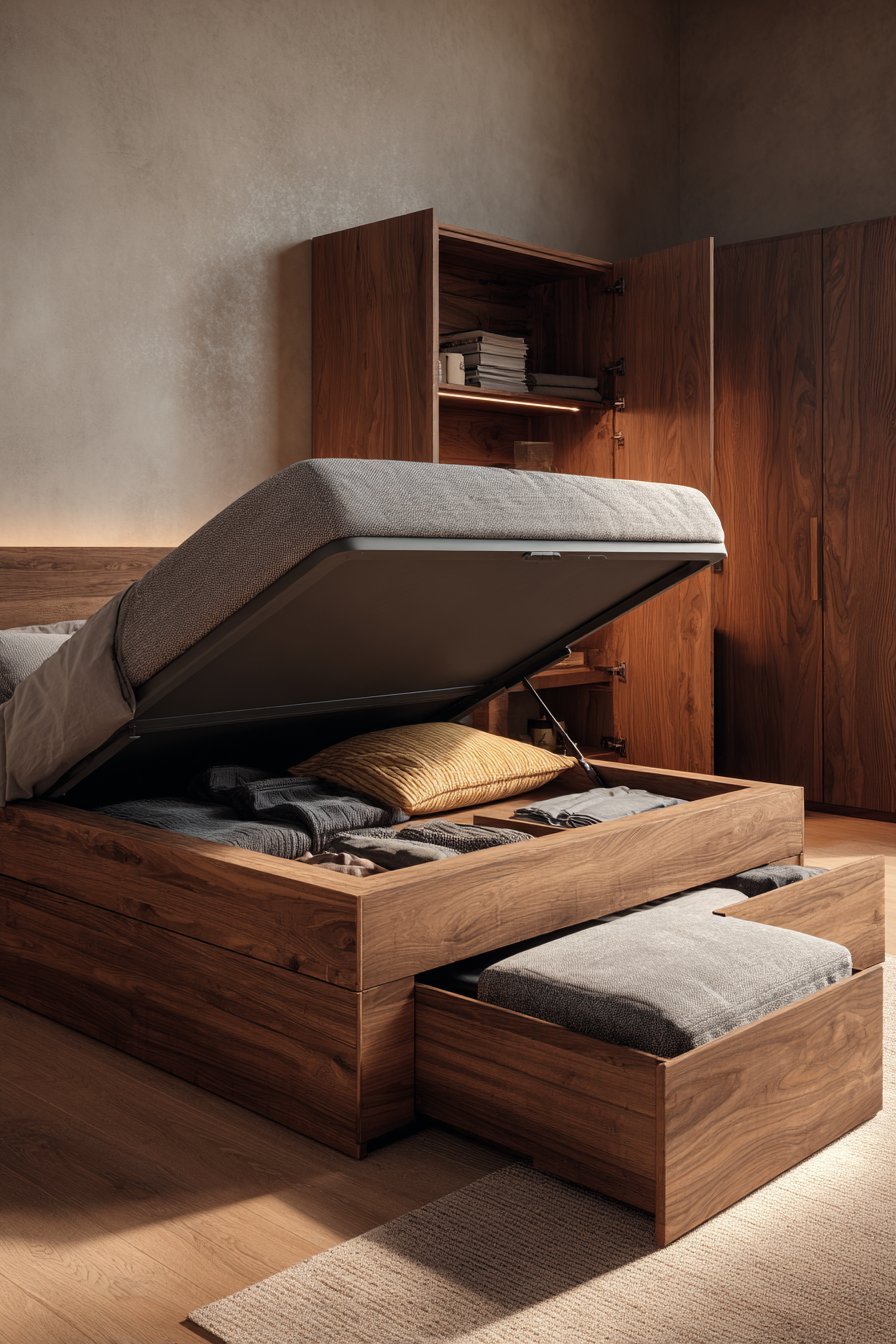
Multi-functional furniture serves as the cornerstone of efficient small bedroom design. Every piece should earn its place by serving multiple purposes or providing hidden storage. Beds with built-in drawers, ottomans that open for storage, and desks that fold away exemplify this principle perfectly.
Platform beds with integrated storage eliminate the need for separate dressers or storage units. These designs typically feature deep drawers on either side or hydraulic lift mechanisms that reveal substantial storage beneath the mattress. This single furniture choice can replace multiple pieces while maintaining clean lines and modern aesthetics.
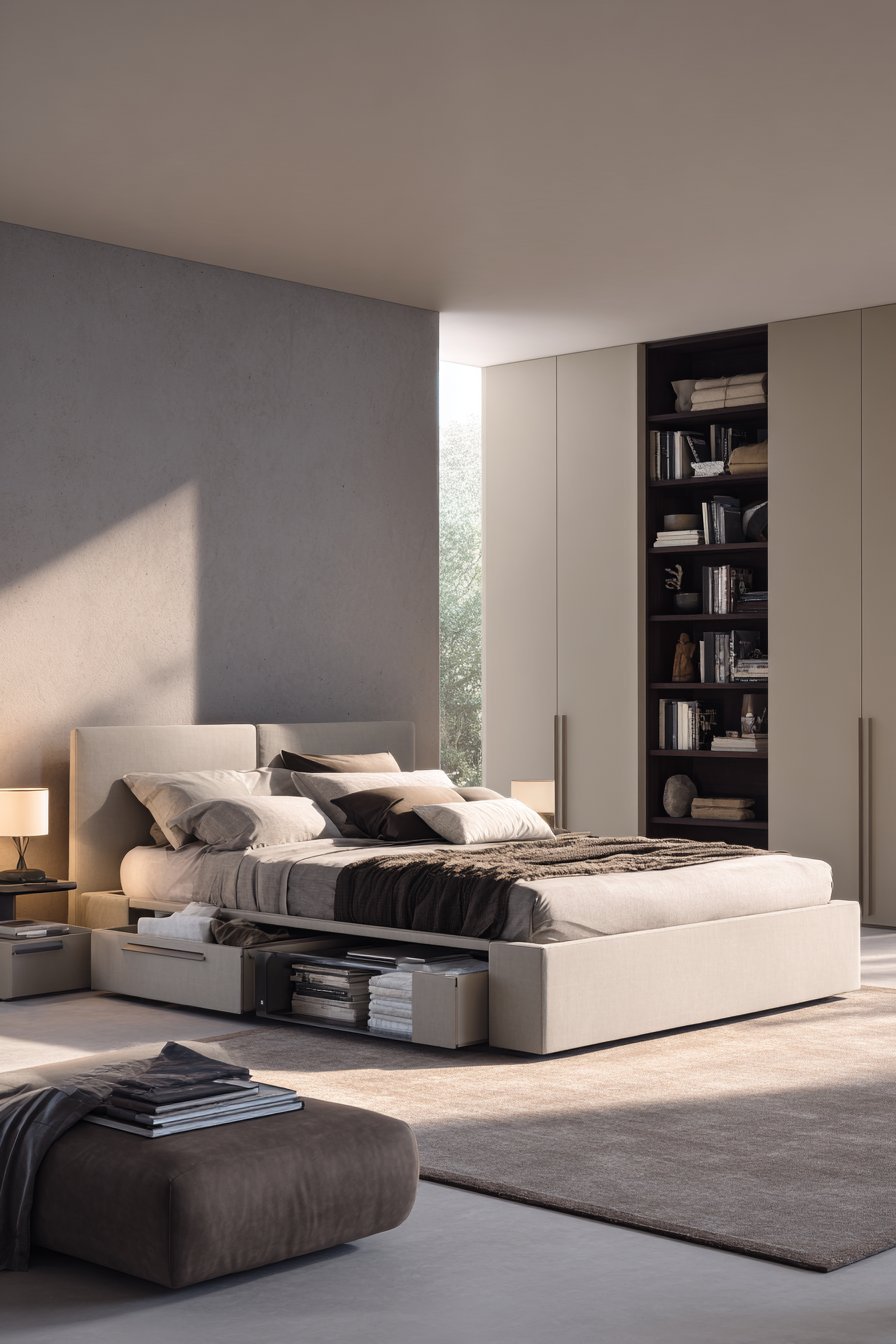
Murphy beds represent the ultimate space-saving solution for extremely tiny bedrooms. When folded up, they free entire floor areas for other activities during the day. Modern Murphy bed designs incorporate shelving, desks, or even sofas, transforming bedrooms into versatile living spaces without compromising nighttime comfort.
- Invest in a storage bed frame with drawers or hydraulic lift storage
- Select ottomans and benches with hidden compartments for linens or clothes
- Choose nightstands with multiple drawers or shelves instead of open designs
- Consider fold-down desks that mount to walls when not in use
- Use storage headboards with built-in shelving and charging stations
- Opt for nesting tables that tuck away when extra surface space isn’t needed
3. Implement Smart Closet Organization Systems
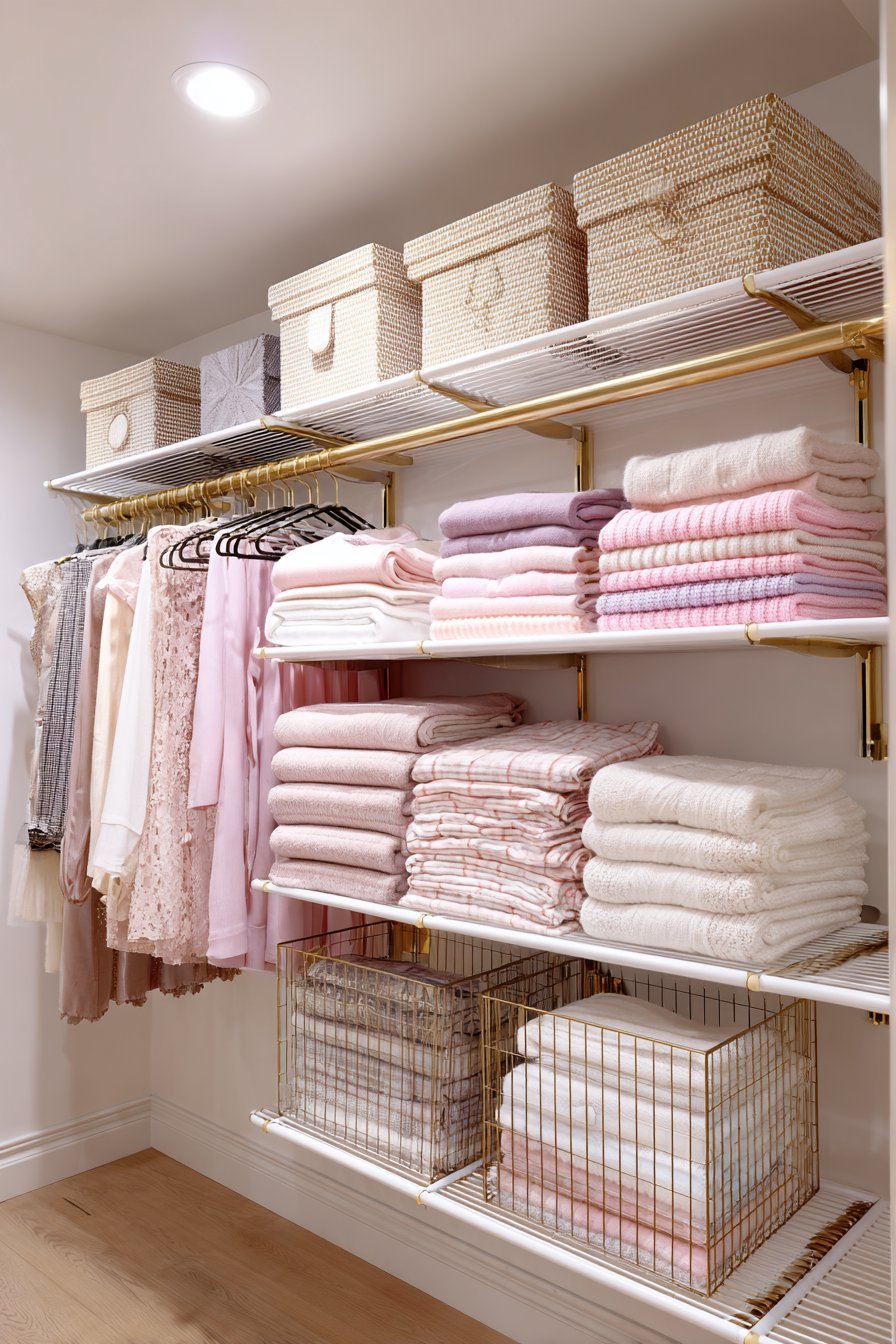
An efficiently organized closet can dramatically reduce bedroom clutter and create the illusion of more space. Many tiny bedrooms suffer from inadequate closet systems that waste vertical space and lack proper compartmentalization. Upgrading your closet organization transforms it from a cramped storage area into a highly functional wardrobe system.
Custom closet systems maximize every cubic inch through strategic shelving configurations, double hanging rods, and specialized compartments. Even budget-friendly solutions like tension rods and stackable storage bins can revolutionize closet capacity. The goal is creating designated spaces for different clothing categories while maintaining easy access.
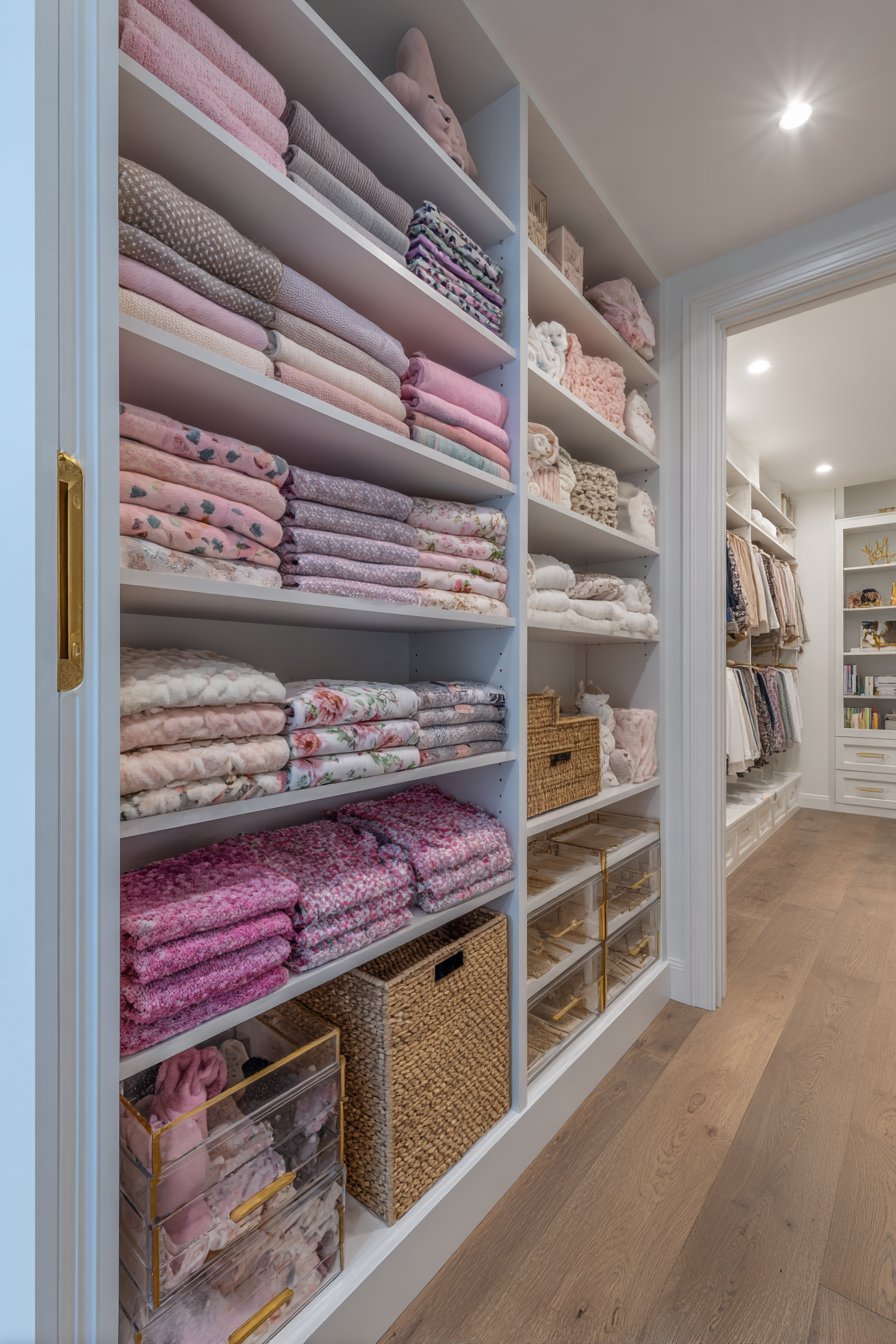
Closet doors themselves offer additional storage potential through over-the-door organizers, hooks, and pocket systems. These accessories accommodate shoes, accessories, and small items without consuming internal closet space. Clear storage containers and uniform hangers create visual cohesion while making items easier to locate and access.
- Install double hanging rods to maximize vertical hanging space
- Use slim velvet hangers to fit more clothes in the same space
- Add shelf dividers to keep folded items neat and prevent toppling
- Incorporate pull-out baskets or bins for accessories and undergarments
- Mount hooks inside closet doors for bags, scarves, and jewelry
- Utilize vacuum storage bags for seasonal clothing and bulky bedding
4. Select Light Colors and Reflective Surfaces
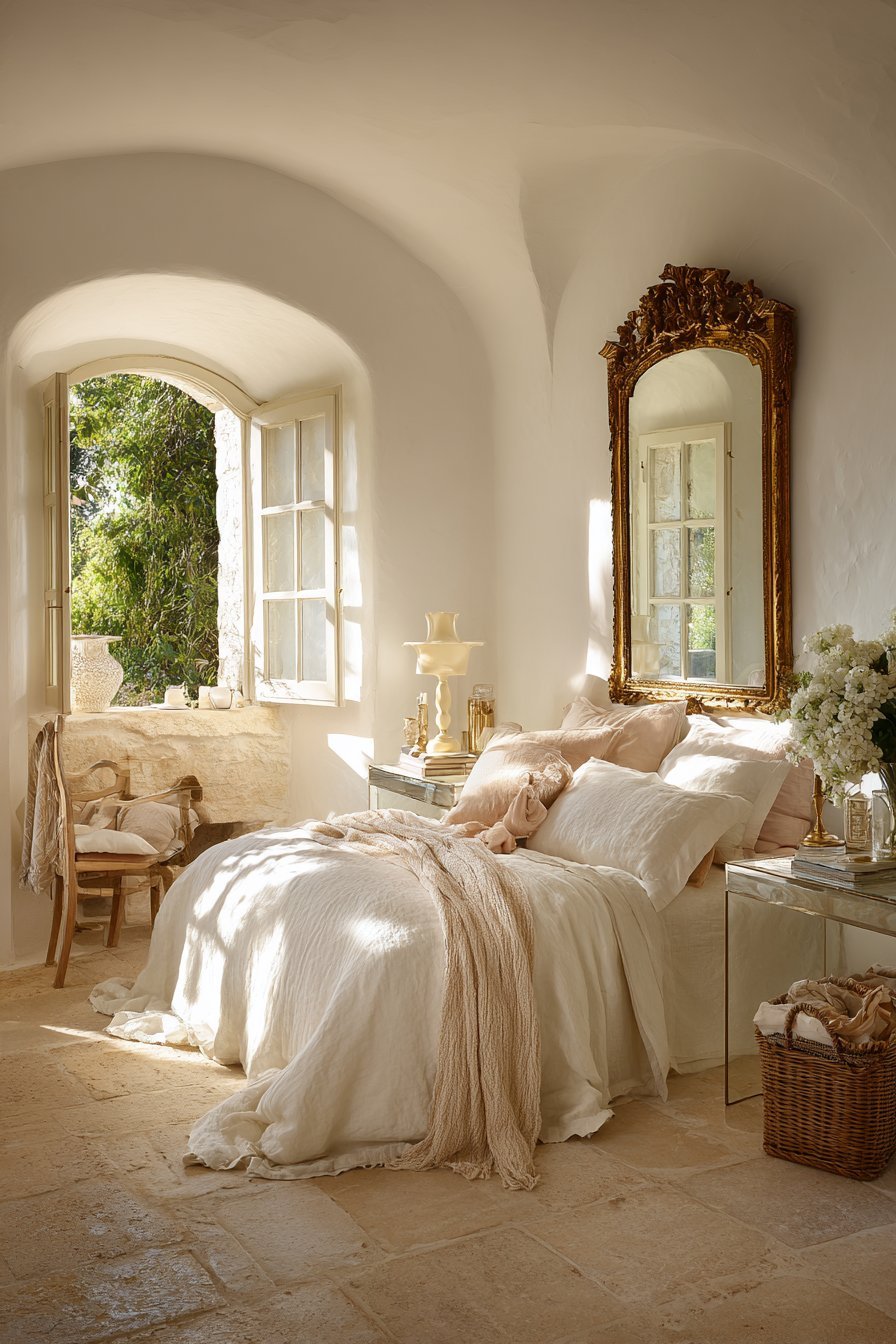
Light color palettes create an immediate sense of openness and airiness in compact bedrooms. White, cream, soft gray, and pale pastels reflect natural light more effectively than dark colors, making spaces feel larger and more inviting. This doesn’t mean your bedroom must be completely white—strategic color placement achieves balance.
Incorporating reflective surfaces amplifies natural light and creates depth perception. Mirrors are the obvious choice, but glass tabletops, metallic accents, and glossy finishes contribute similar effects. A large mirror positioned opposite a window can virtually double perceived space while adding decorative impact.
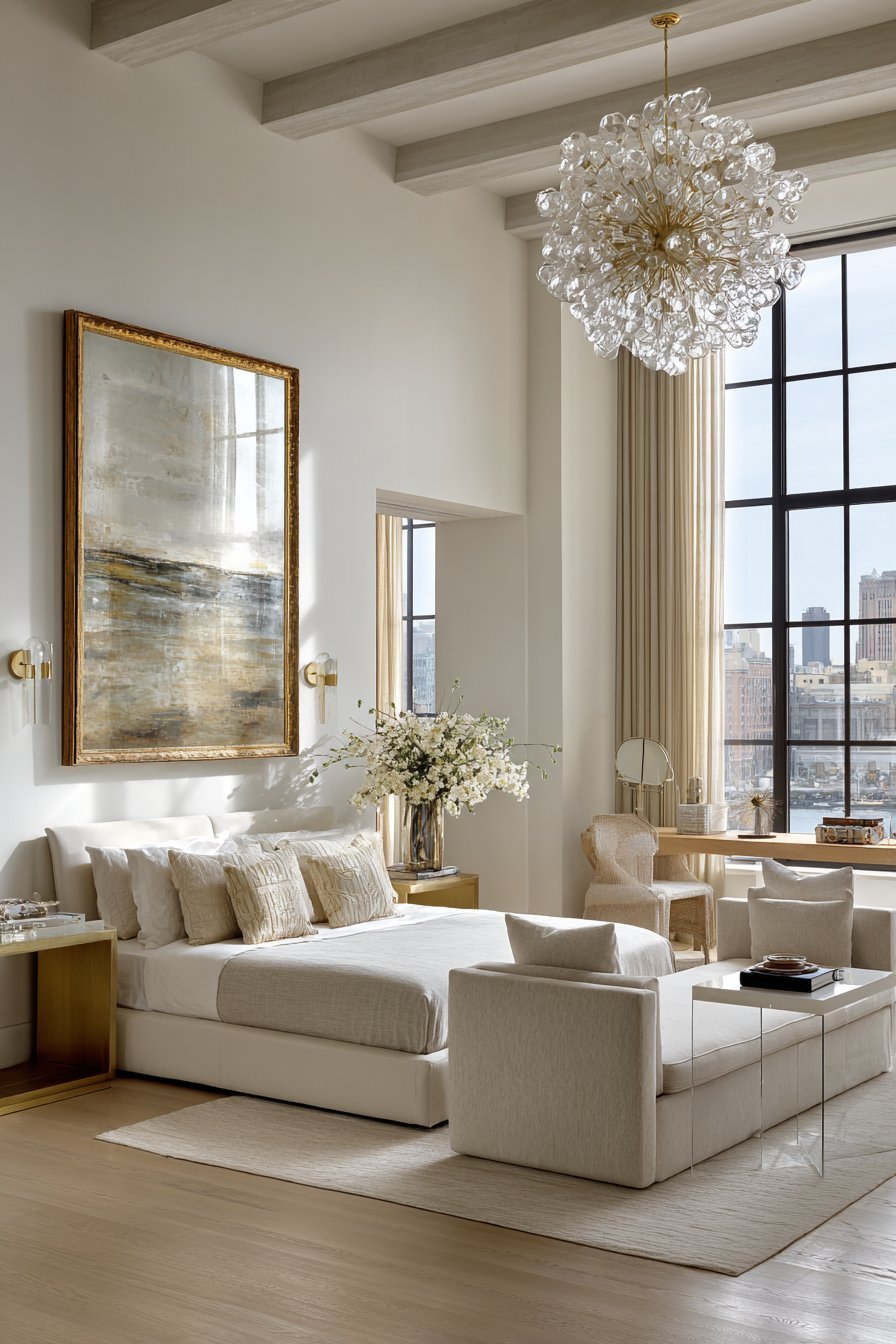
The key to successful light color schemes lies in layering different tones and textures to prevent monotony. Combine warm whites with cool grays, add textured fabrics, and introduce subtle patterns through bedding or curtains. This approach maintains visual interest while preserving the space-enhancing benefits of a light palette.
- Paint walls in light neutral tones like soft white, cream, or pale gray
- Choose white or light-colored bedding to create an airy atmosphere
- Position a large mirror opposite the window to reflect natural light
- Select furniture with light wood finishes or painted white surfaces
- Use glossy or semi-gloss paint finishes to enhance light reflection
- Incorporate metallic accents in silver, gold, or brass for subtle shimmer
5. Minimize Visual Clutter Through Hidden Storage
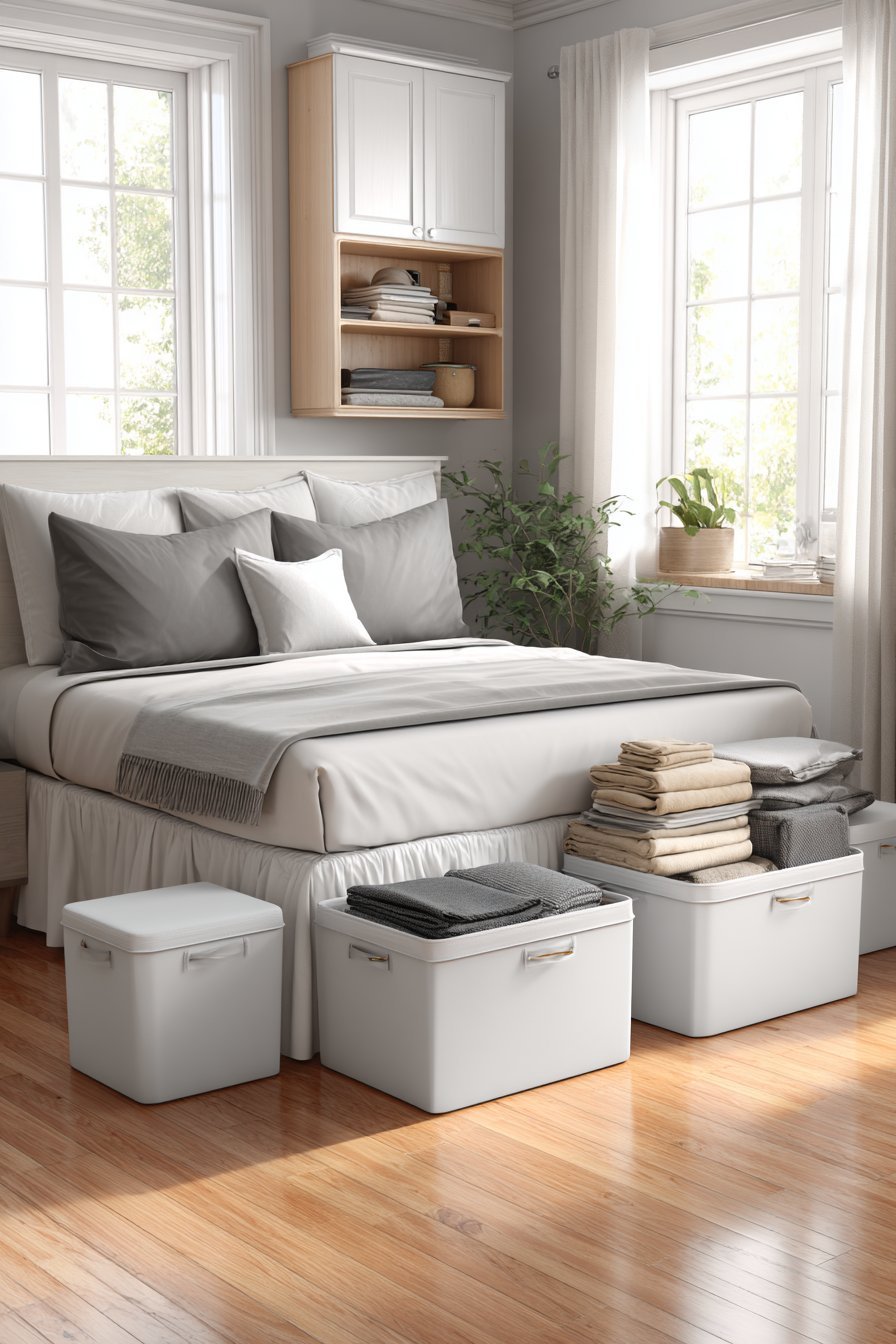
Hidden storage solutions maintain clean surfaces while providing essential organization. Visible clutter makes small spaces feel chaotic and cramped, regardless of actual square footage. The secret to serene tiny bedrooms lies in creative concealment strategies that keep necessities accessible yet invisible.
Under-bed storage represents prime real estate often left unused. Storage containers on wheels, vacuum bags, or custom drawers slide easily beneath beds, housing off-season clothing, extra linens, or shoes. This space utilization doesn’t require furniture purchases—just smart container selection and organization.
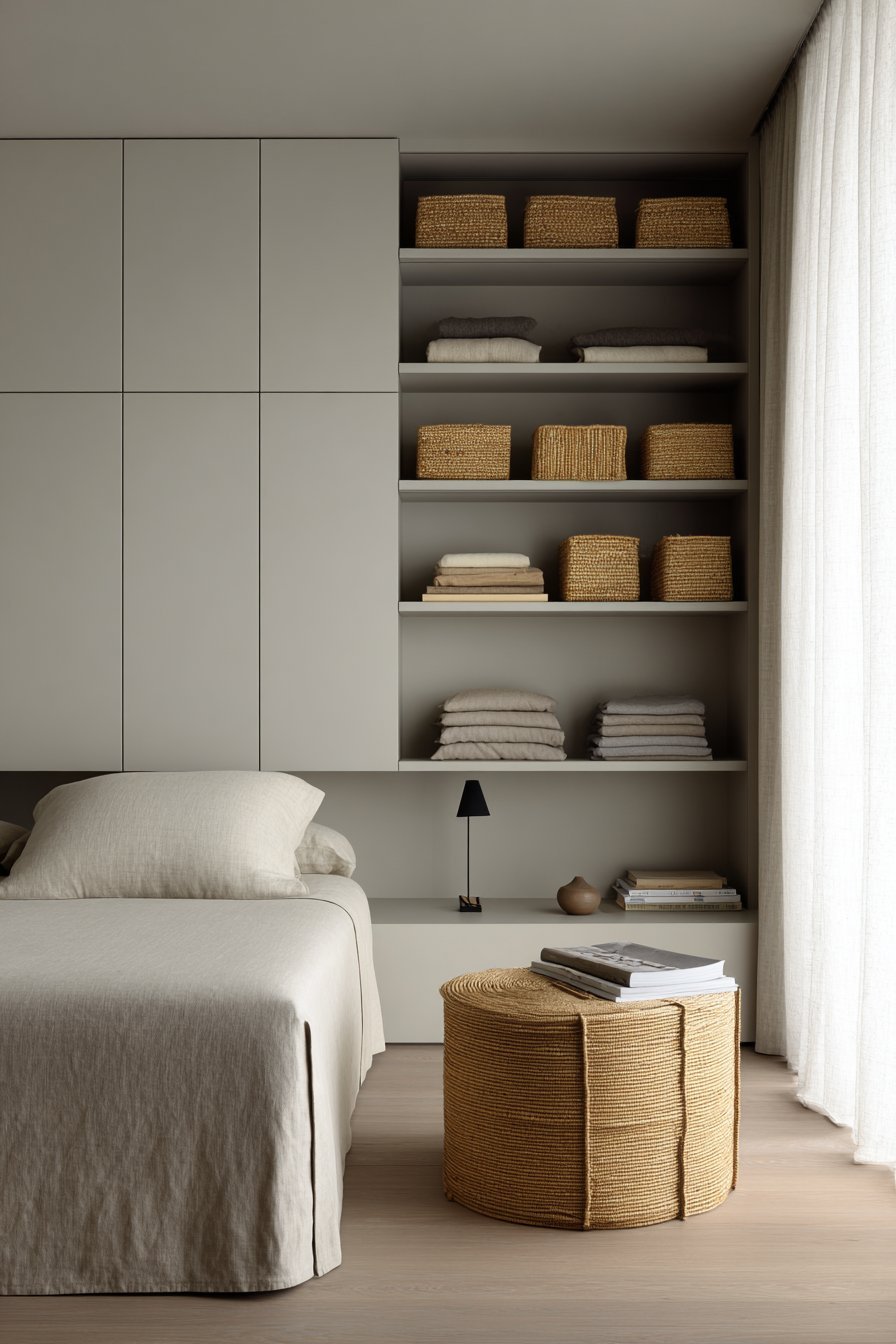
Built-in storage behind walls or within existing furniture creates seamless organization systems. Recessed medicine cabinets, wall niches with doors, and hollowed headboards provide storage without protruding into the room. These architectural solutions require more investment but deliver permanent, sophisticated storage that enhances room aesthetics.
- Use decorative boxes and baskets that complement your decor style
- Install a bed skirt to conceal under-bed storage containers
- Choose furniture with concealed compartments like storage ottomans
- Mount wall-mounted cabinets with doors instead of open shelving
- Use drawer organizers to maximize internal drawer space efficiency
- Consider furniture with lift-top mechanisms for hidden storage access
6. Optimize Lighting for Space Enhancement
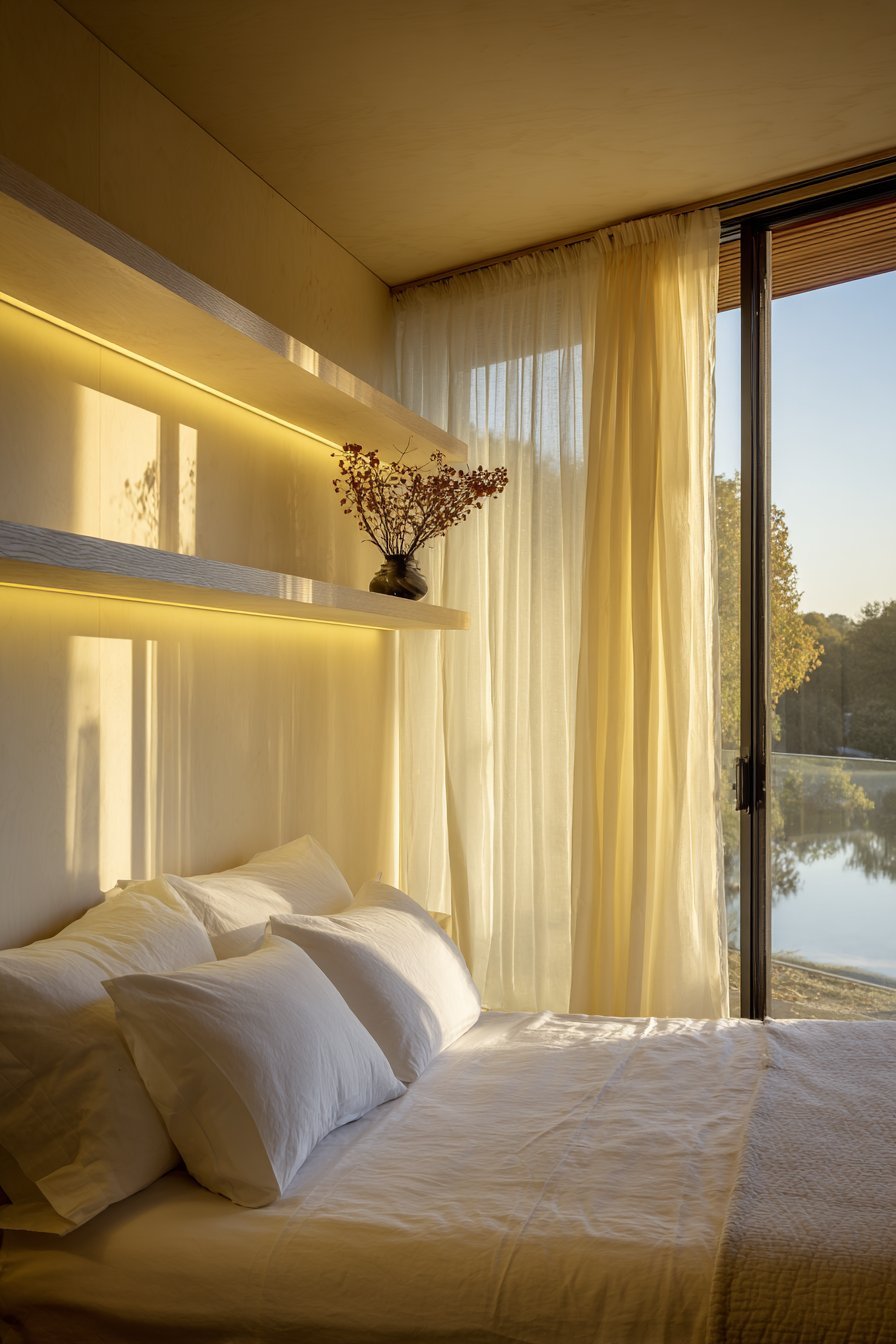
Strategic lighting design dramatically impacts perceived room size and functionality. Small bedrooms require layered lighting that serves different purposes while avoiding overwhelming fixtures. The right lighting scheme makes spaces feel more open, comfortable, and versatile throughout the day.
Natural light should be maximized through window treatments that provide privacy without blocking sunshine. Sheer curtains, top-down bottom-up shades, or light-filtering blinds allow daylight penetration while maintaining privacy. Keeping windows unobstructed helps rooms feel connected to the outdoors and less confined.
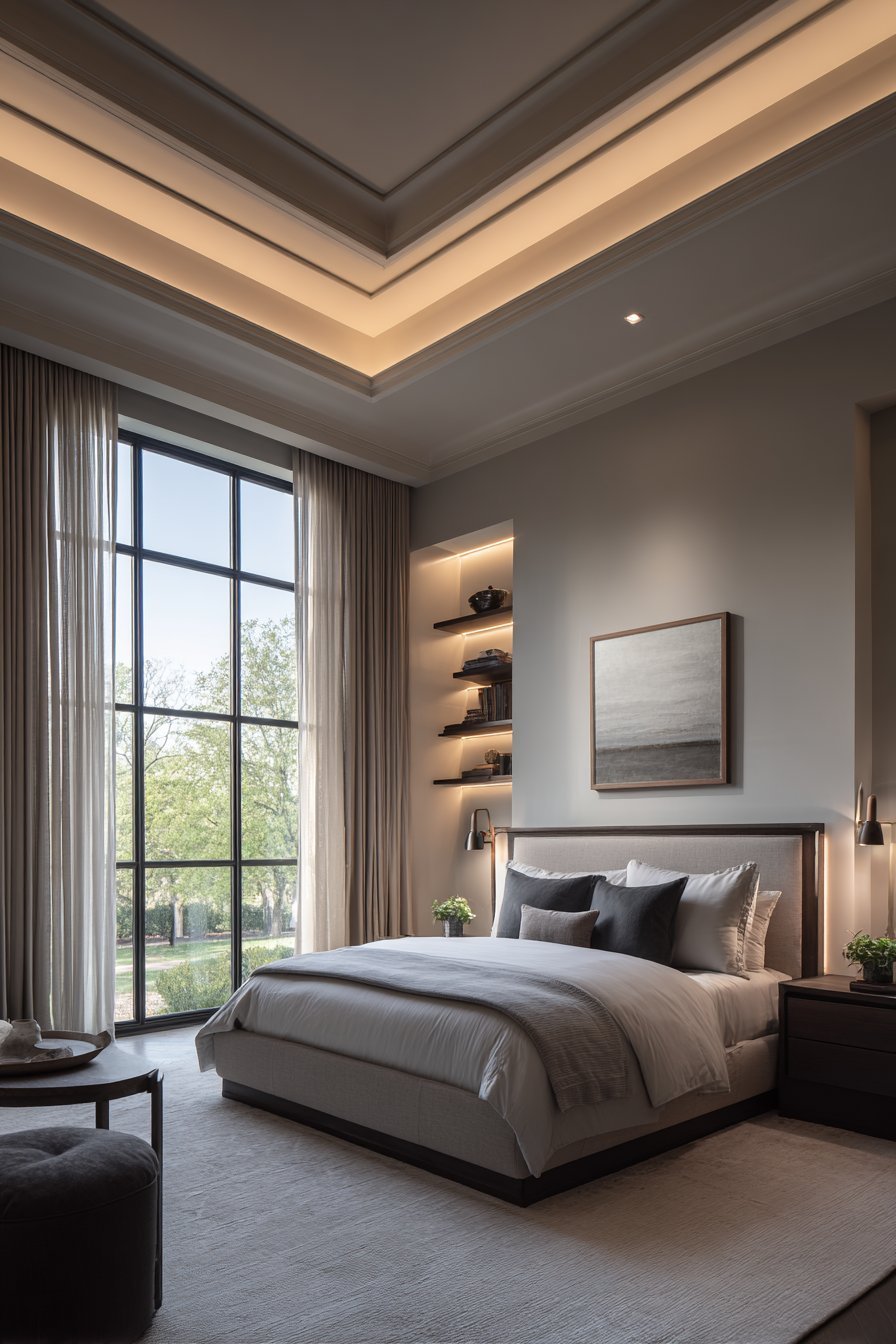
Artificial lighting should include ambient, task, and accent layers scaled appropriately for small spaces. Wall sconces eliminate bedside table clutter, pendant lights save floor space, and LED strips add modern ambiance. Dimmer switches provide flexibility, allowing you to adjust lighting intensity based on activities and moods.
- Replace table lamps with wall-mounted sconces to free surface space
- Install recessed ceiling lights to avoid bulky overhead fixtures
- Use LED strip lighting under shelves for ambient illumination
- Choose light fixtures with reflective finishes to enhance brightness
- Maximize natural light with sheer or light-filtering window treatments
- Add dimmer switches for adjustable lighting that suits different activities
7. Create the Illusion of Height
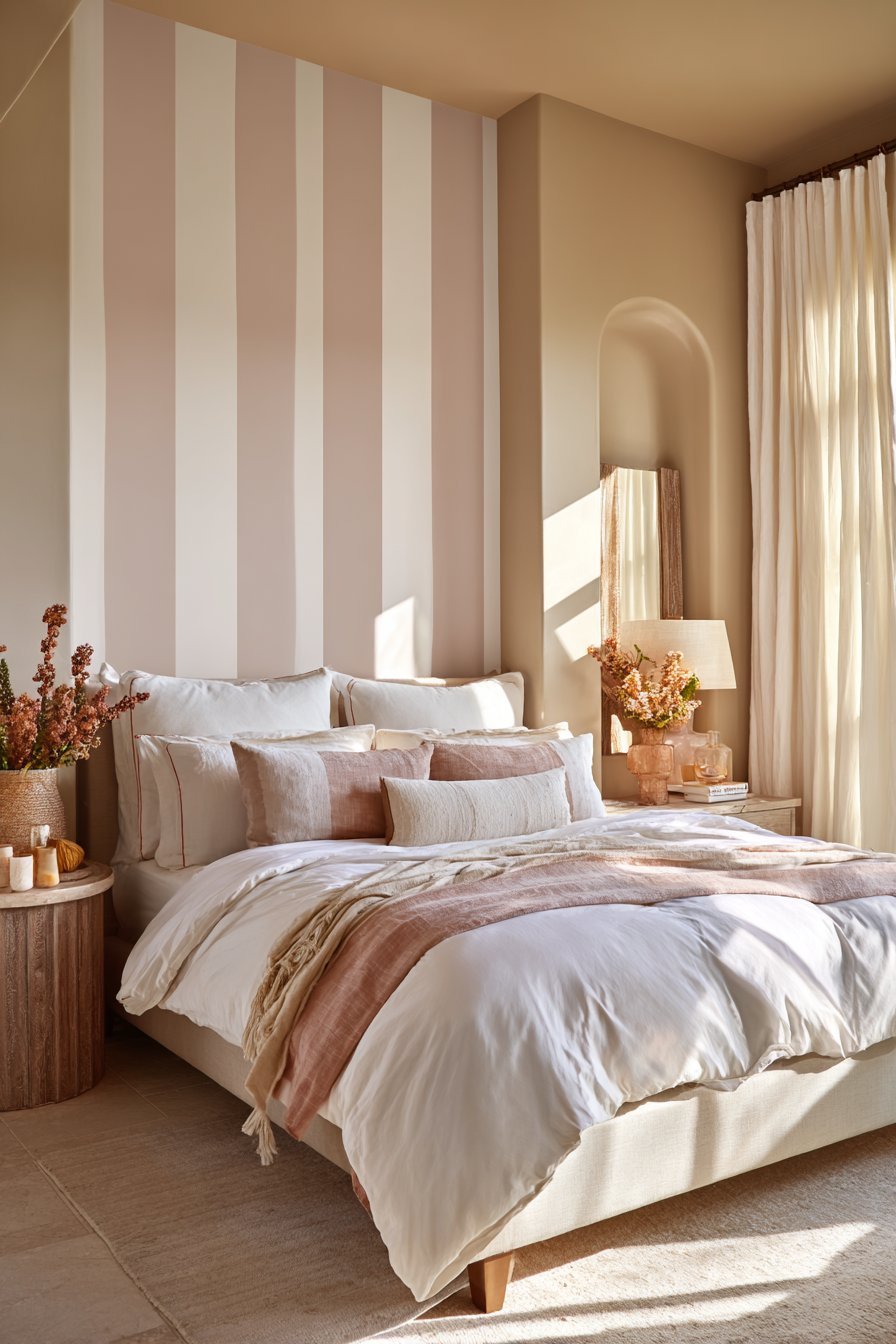
Visual tricks that draw the eye upward make ceilings feel higher and rooms more spacious. Low ceilings compound the challenges of small bedrooms, creating a cramped atmosphere. However, design strategies can counteract this limitation through color placement, pattern selection, and furniture choices.
Vertical stripes, whether painted, wallpapered, or achieved through tall furniture, create upward momentum that elongates walls. Floor-to-ceiling curtains hung close to the ceiling line rather than just above windows produce similar effects. These techniques manipulate perception, making standard eight-foot ceilings feel noticeably taller.
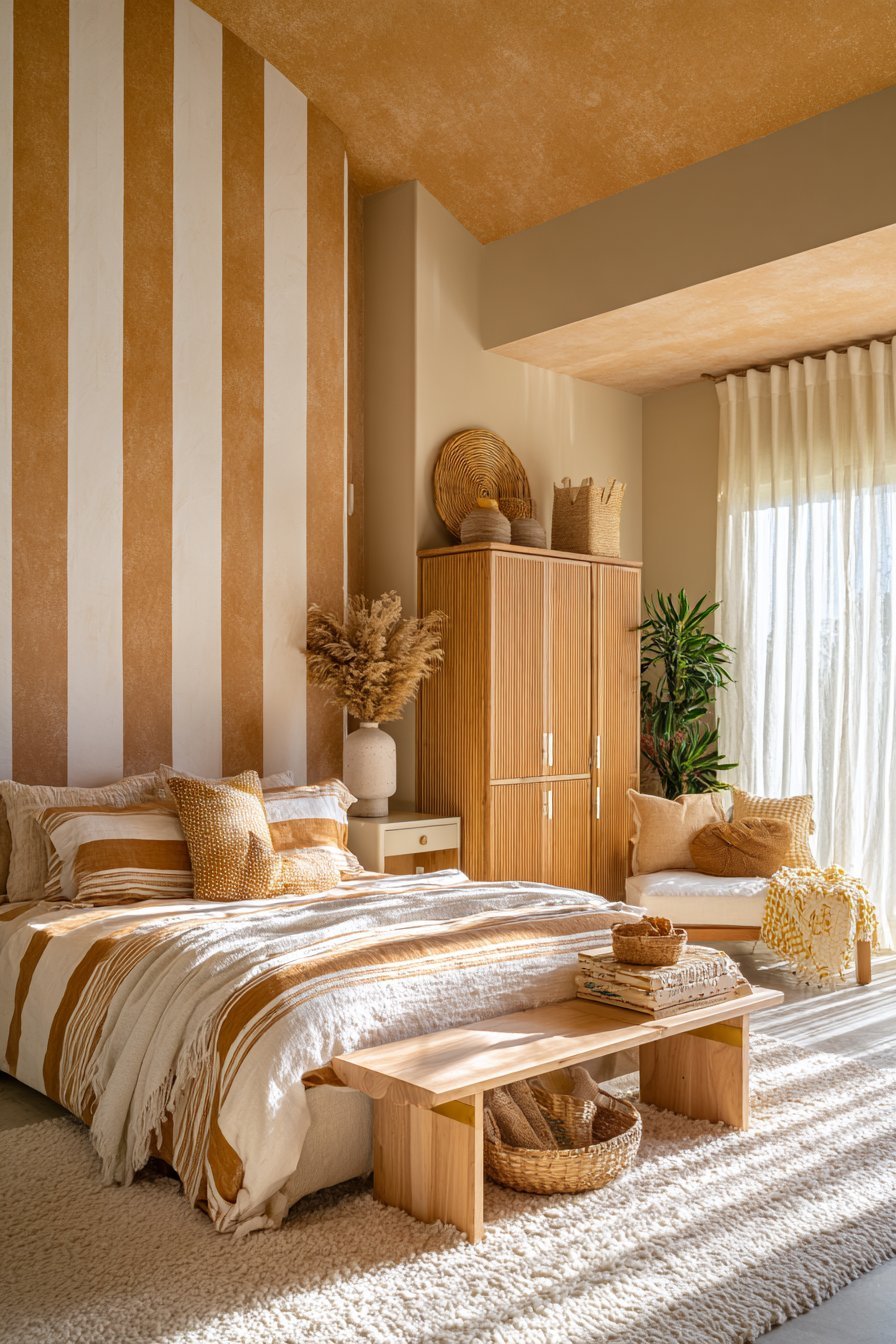
Selecting furniture with exposed legs allows visible floor space beneath pieces, which contributes to an airy feeling. Heavy, ground-touching furniture visually weighs down small rooms. Platform beds on visible legs, elevated nightstands, and suspended furniture maintain the flow of visual space from wall to wall.
- Hang curtains from ceiling height rather than just above windows
- Paint vertical stripes on an accent wall to elongate the space
- Choose tall, narrow furniture pieces instead of wide, low options
- Use vertical artwork and mirrors to guide the eye upward
- Select beds and furniture with visible legs rather than solid bases
- Paint the ceiling a lighter shade than walls to enhance height perception
8. Establish Clear Zones for Different Activities
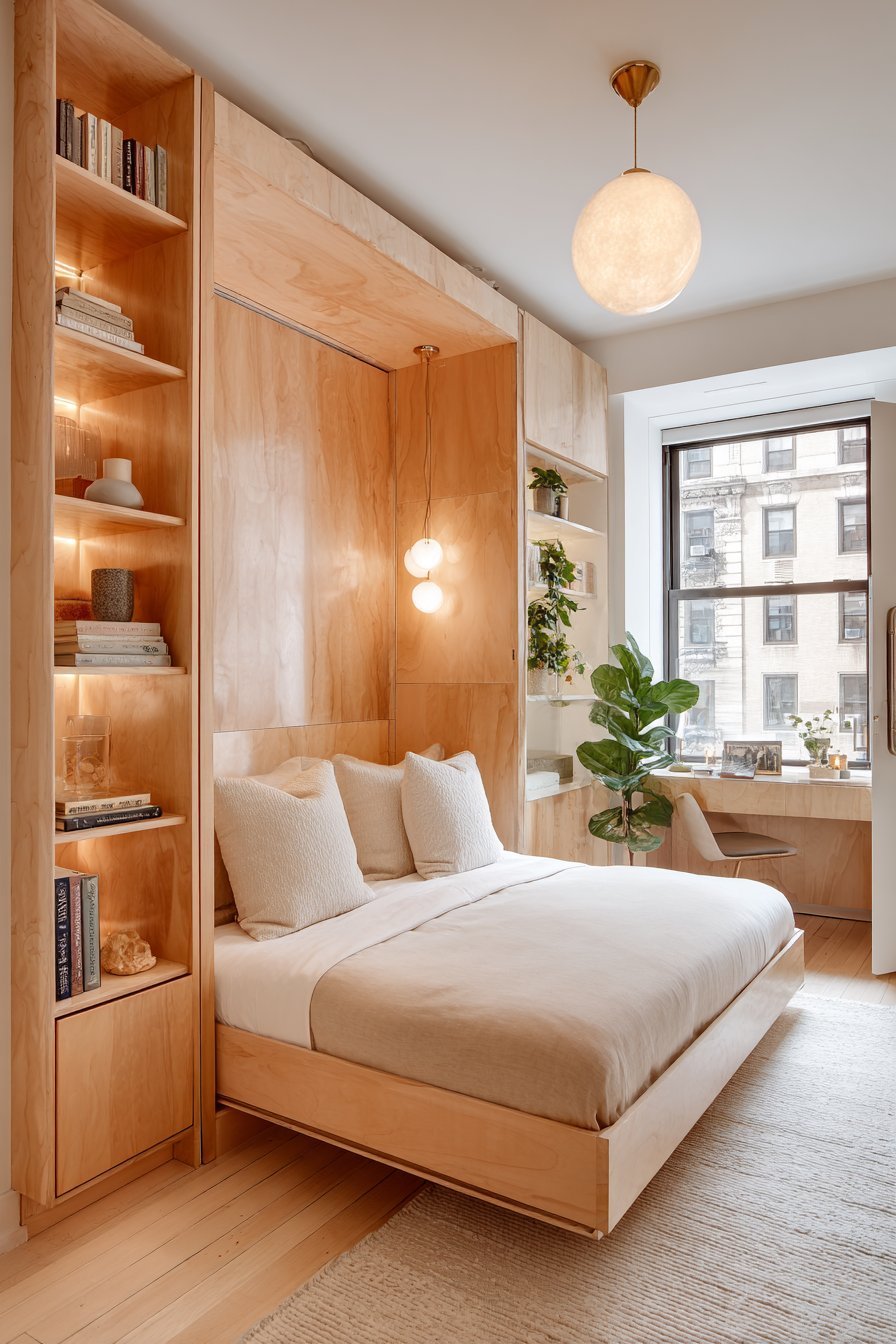
Functional zoning creates order in small bedrooms that serve multiple purposes. When sleeping, working, and storage areas blend together, rooms feel cluttered and disorganized. Defining distinct zones through furniture placement, rugs, or lighting helps each area function optimally.
Small rugs or different flooring materials can visually separate sleeping areas from workspaces or reading nooks. This psychological division makes multi-purpose rooms feel more organized even when square footage doesn’t change. Strategic furniture placement reinforces these boundaries without requiring physical barriers.
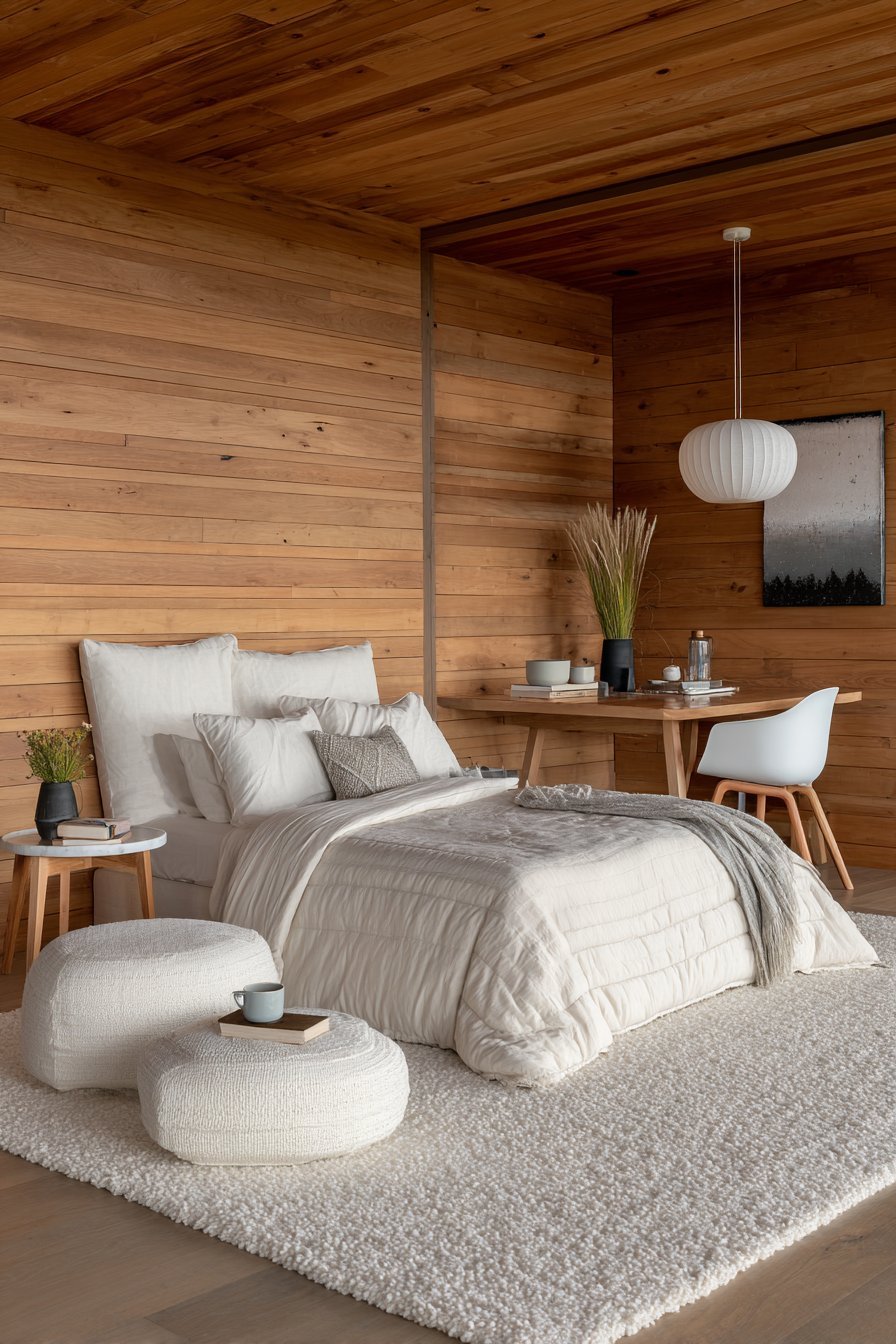
Foldable or movable elements allow zone flexibility throughout the day. A desk that folds down for evening work sessions then closes to reveal a clean wall exemplifies this concept. Curtains or screens can temporarily separate spaces when privacy or visual division becomes necessary.
- Position your bed to create a distinct sleeping zone separate from other areas
- Use a small rug to define a reading nook or workspace visually
- Install curtain tracks to create temporary privacy screens when needed
- Arrange furniture to create natural pathways between different zones
- Dedicate specific storage areas for work items versus sleep items
- Use lighting changes to distinguish between relaxation and activity zones
9. Downsize and Edit Your Belongings Regularly
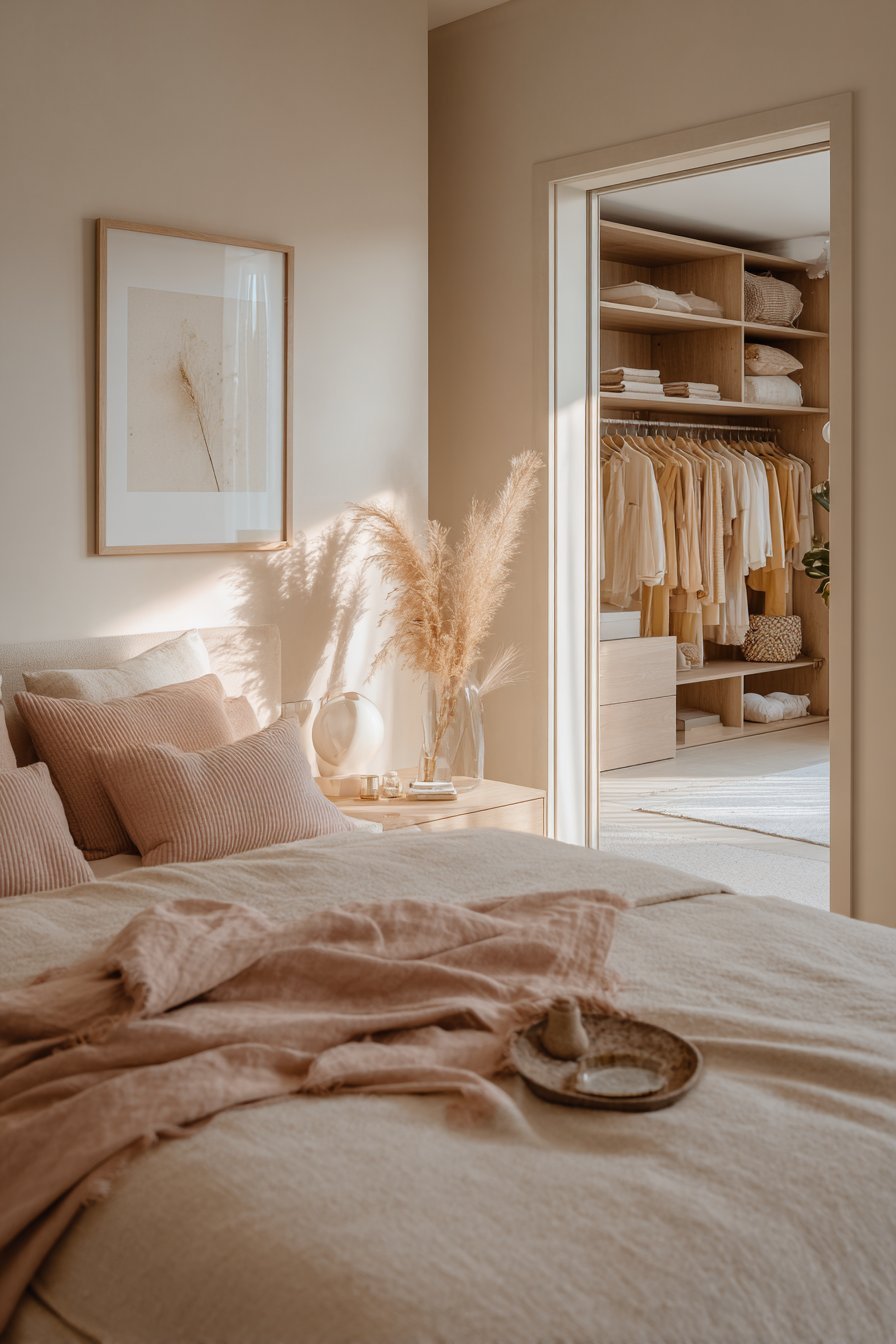
Ruthless editing of possessions represents the most impactful space-maximization strategy. Accumulating items over time inevitably overwhelms small bedrooms regardless of organizational systems. Regular decluttering prevents this buildup and maintains the spacious feeling achieved through design choices.
The one-in-one-out rule helps maintain equilibrium—when something new enters, something old must leave. This discipline prevents gradual accumulation that slowly reclaims hard-won space. Being selective about what deserves bedroom real estate ensures only meaningful or functional items remain.
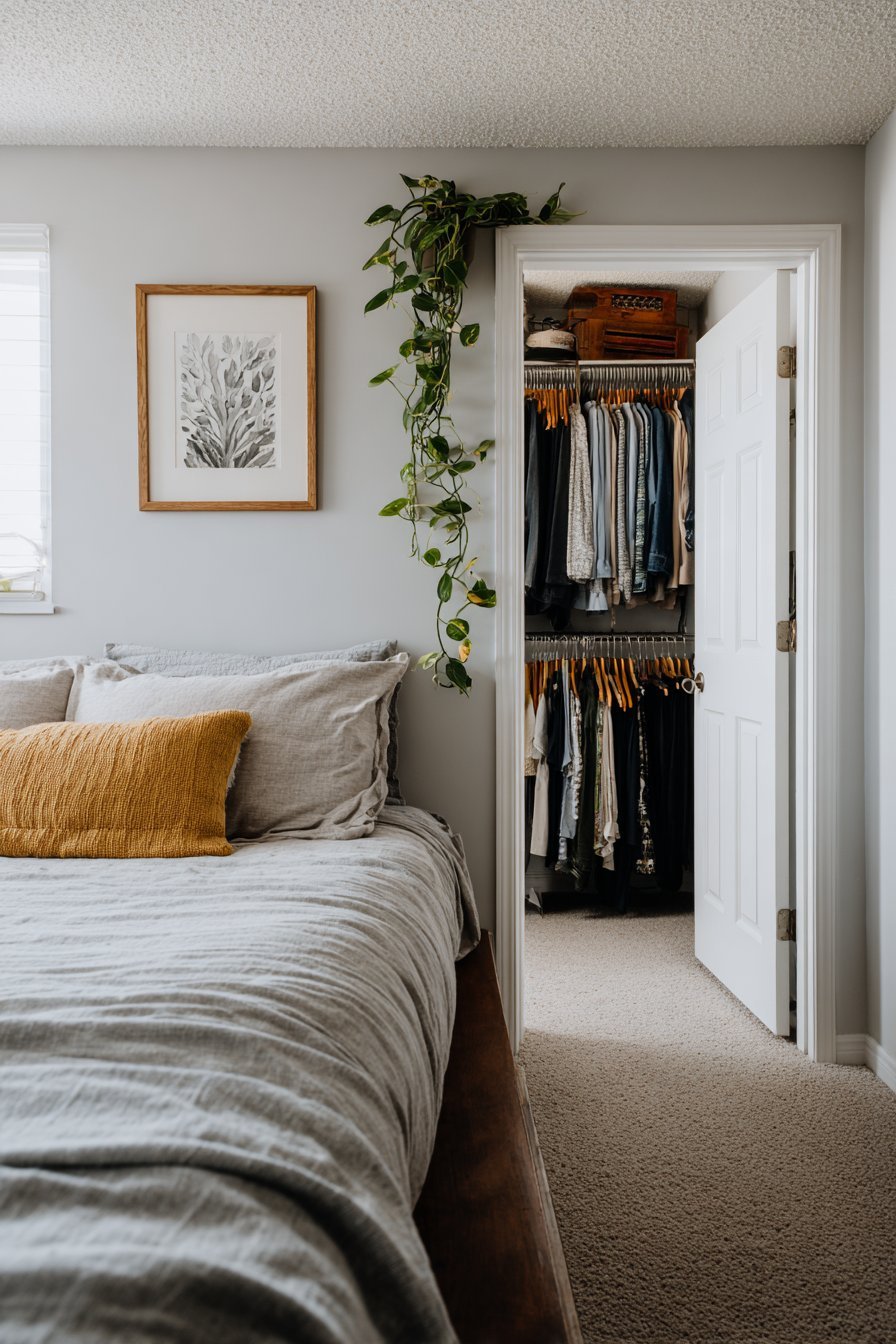
Seasonal clothing rotations keep closets manageable by storing off-season items elsewhere. Winter coats don’t belong in tiny bedroom closets during summer, and vice versa. Under-bed containers, storage units, or designated hall closets can house these items until needed again.
- Conduct quarterly decluttering sessions to remove unused items
- Apply the six-month rule: donate items not used in half a year
- Digitize paper documents, photos, and memorabilia when possible
- Rotate seasonal clothing in and out of bedroom storage
- Limit decorative items to favorites that bring genuine joy
- Store sentimental items in labeled containers elsewhere in your home
10. Use Transparent and Minimal Furniture
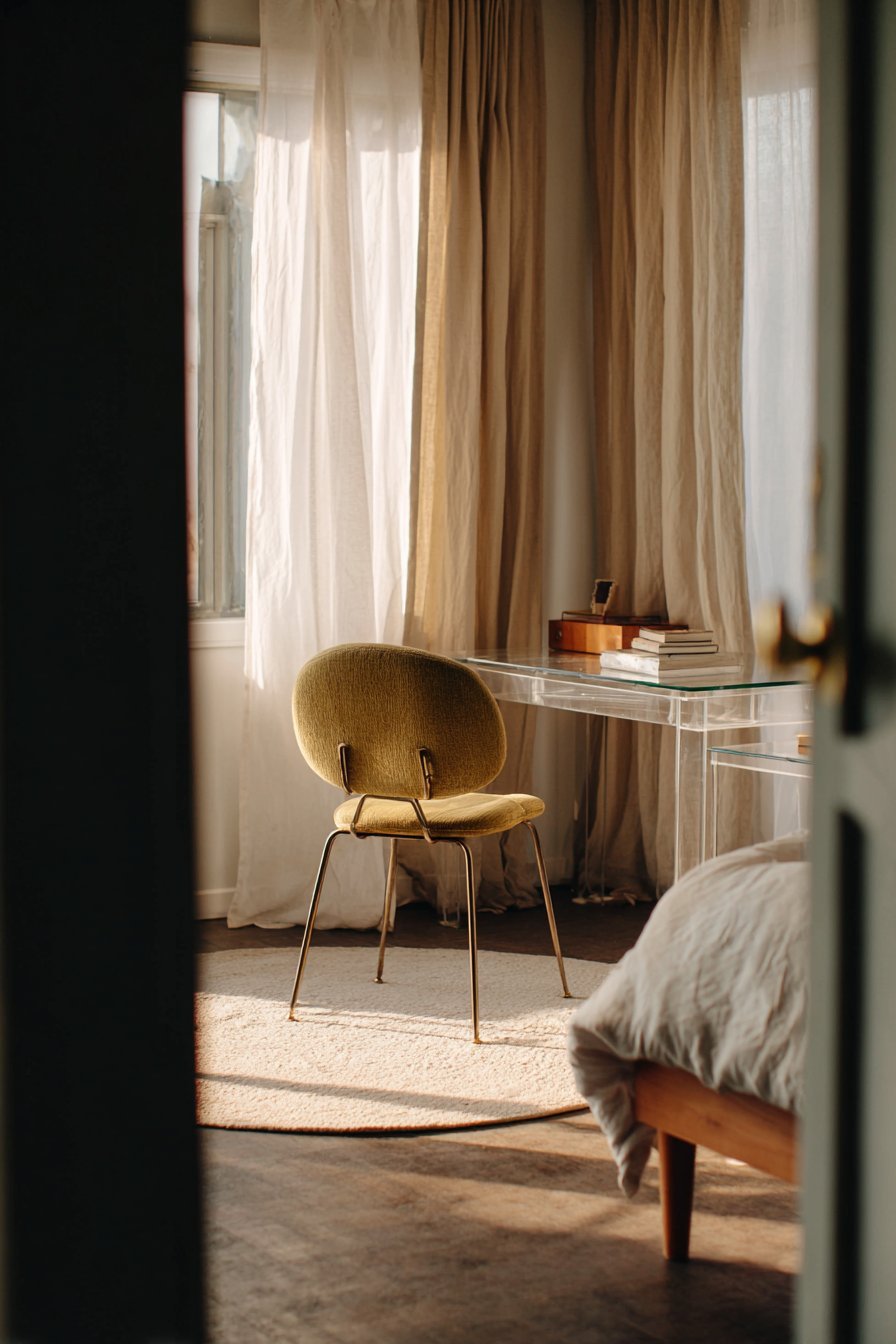
Transparent furniture creates visual lightness that seems impossible with traditional solid pieces. Acrylic chairs, glass tabletops, and lucite accessories allow light to pass through, reducing visual weight. These pieces provide functionality without adding bulky presence that makes small rooms feel cramped.
Minimalist design principles emphasize essential pieces with clean lines and purposeful presence. Ornate furniture with excessive details overwhelms tiny bedrooms, while simple Scandinavian or modern designs maintain sophistication without visual clutter. Choosing quality over quantity applies especially to bedroom furniture.
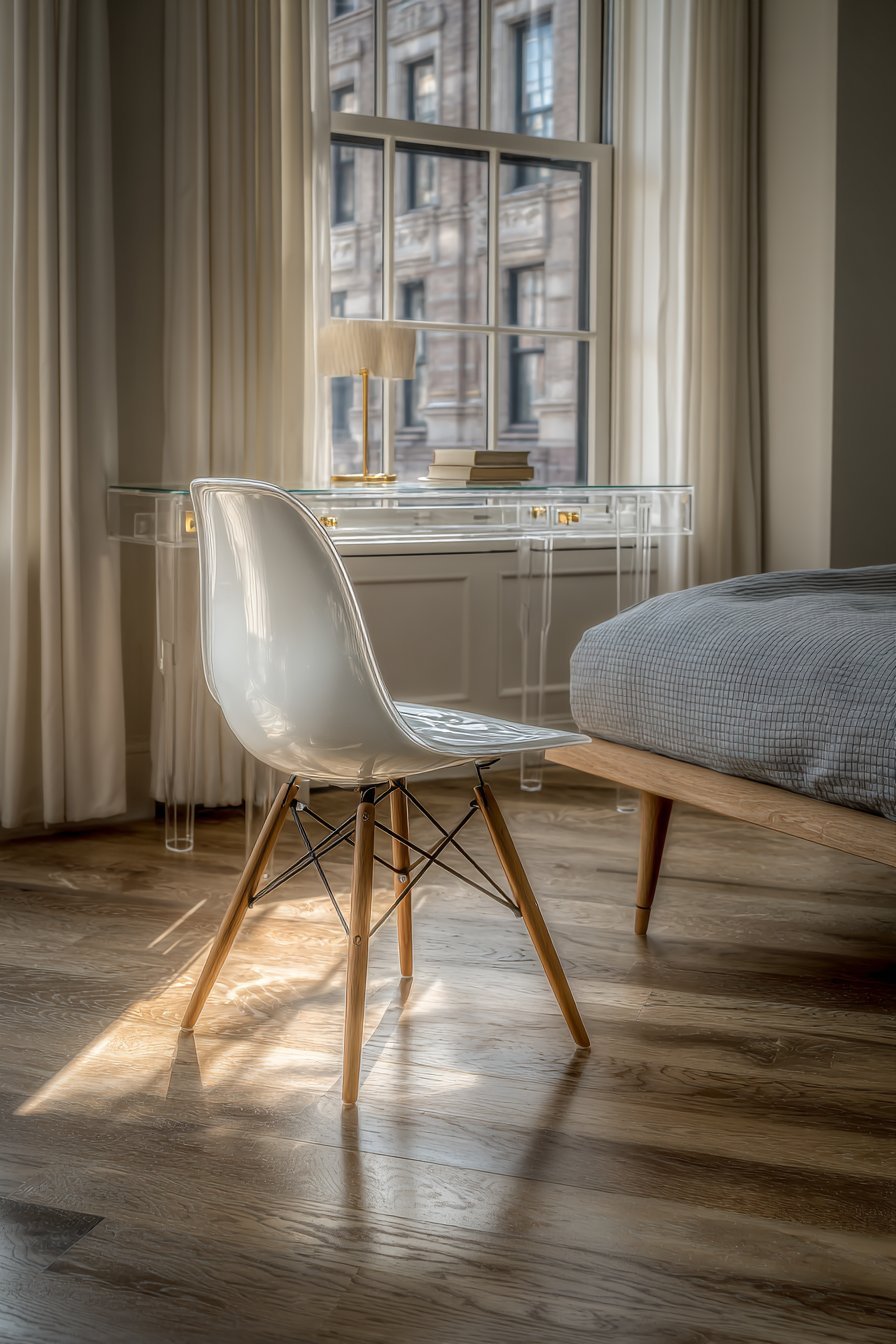
Furniture scale matters tremendously in compact spaces. Appropriately sized pieces designed for small spaces function better than cramming full-size furniture into inadequate square footage. Brands now offer scaled-down versions of popular furniture specifically designed for apartments and tiny homes.
- Replace solid nightstands with clear acrylic or glass alternatives
- Choose chairs with open backs rather than solid upholstered designs
- Select beds with simple frames instead of bulky upholstered headboards
- Use glass or acrylic desk surfaces that feel invisible yet functional
- Opt for minimal hardware on furniture for cleaner lines
- Consider furniture specifically designed and scaled for small spaces
Conclusion
Maximizing space in a tiny bedroom without sacrificing style requires intentional design choices that balance aesthetics with functionality. The ten strategies outlined in this article prove that square footage limitations don’t dictate design quality or personal expression. Through vertical storage, multi-functional furniture, smart organization, and thoughtful color selection, even the smallest bedrooms can become comfortable, stylish sanctuaries.
Remember that successful small bedroom design is an ongoing process rather than a one-time project. Regular evaluation of what works, what doesn’t, and what can be improved keeps your space functional and beautiful. Experiment with these ideas, adapt them to your personal style, and don’t be afraid to try unconventional solutions. Your tiny bedroom has tremendous potential—it just needs the right approach to unlock it. With creativity, planning, and these proven strategies, you can create a bedroom that feels spacious, organized, and uniquely yours.
