
Creating a light green nursery offers the perfect foundation for your baby’s peaceful sanctuary. This gentle color promotes calmness and growth. The soft hues create an environment conducive to rest and development. Light green represents nature, renewal, and tranquility in color psychology.
Nursery design goes beyond aesthetics to support infant well-being and parental functionality. The right color palette influences mood and sleep patterns. Light green provides visual interest without overstimulation. This makes it ideal for developing infant vision. The versatility of green tones allows seamless integration with various design styles.
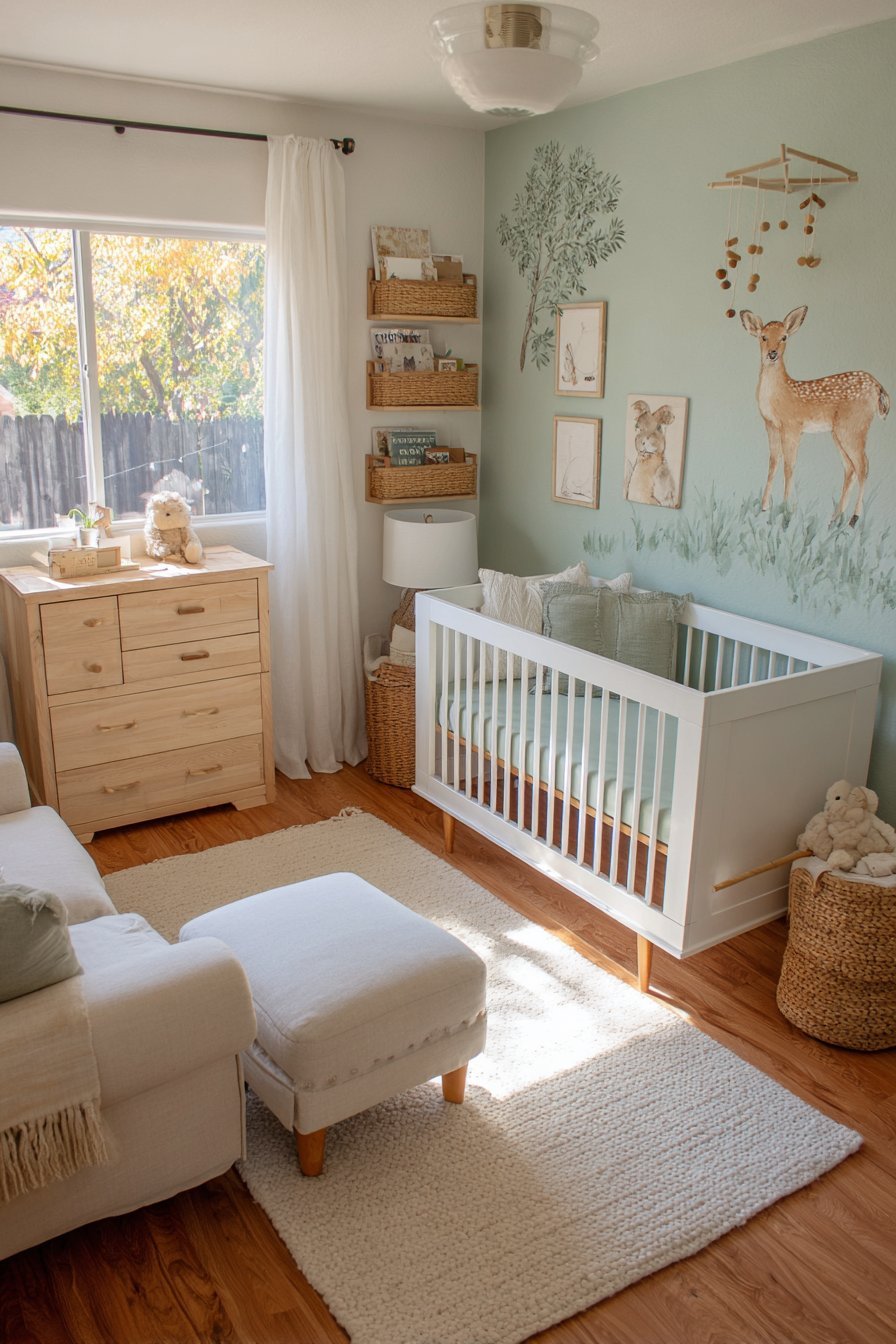
This article explores twenty distinctive light green nursery concepts. Each design demonstrates unique approaches to creating safe, beautiful, and functional spaces. From classic cribs to innovative storage solutions, these ideas cater to different preferences and practical needs. Whether you prefer minimalist Scandinavian style or cozy traditional warmth, you’ll find inspiration here.
1. Classic Sage Green Sanctuary
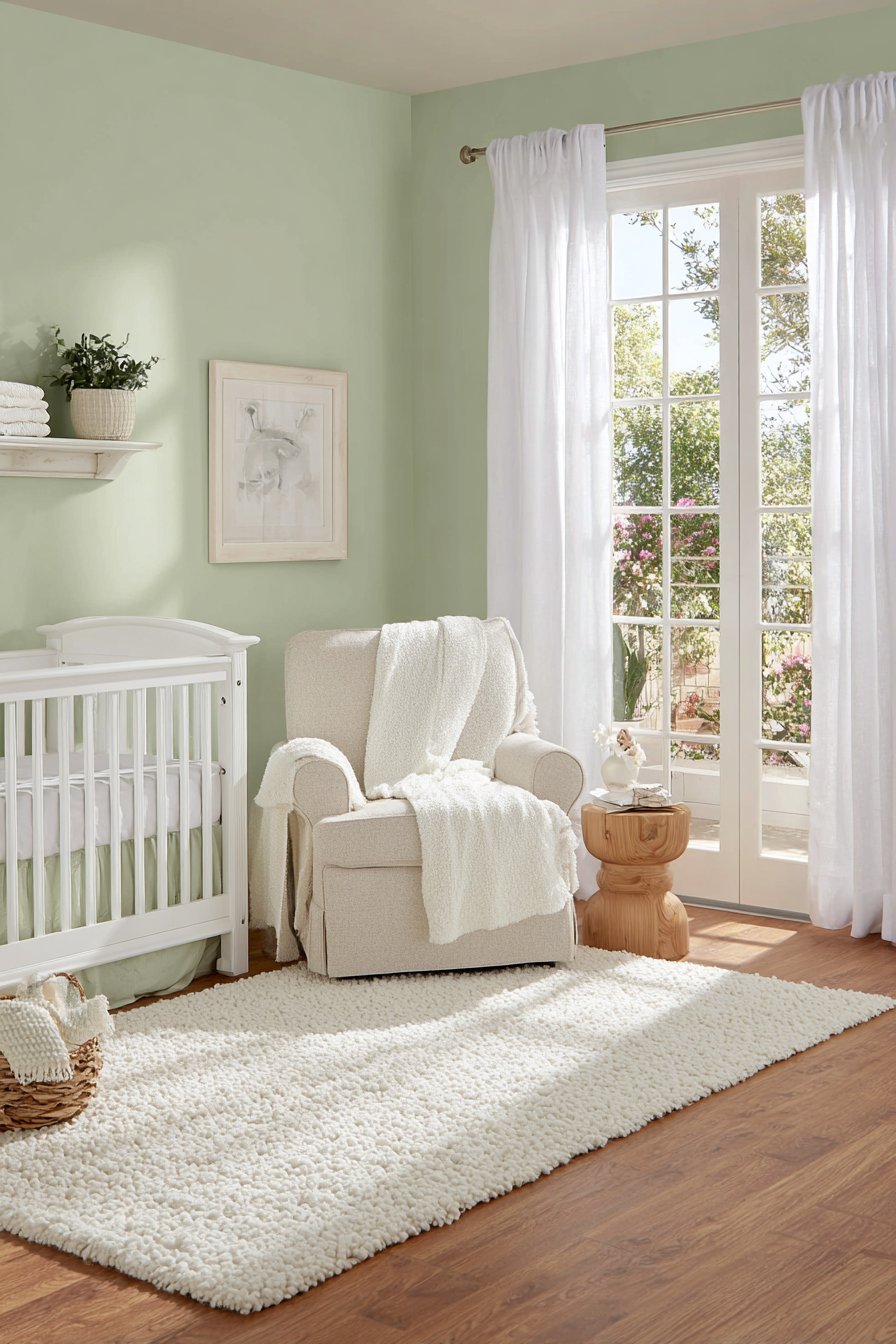
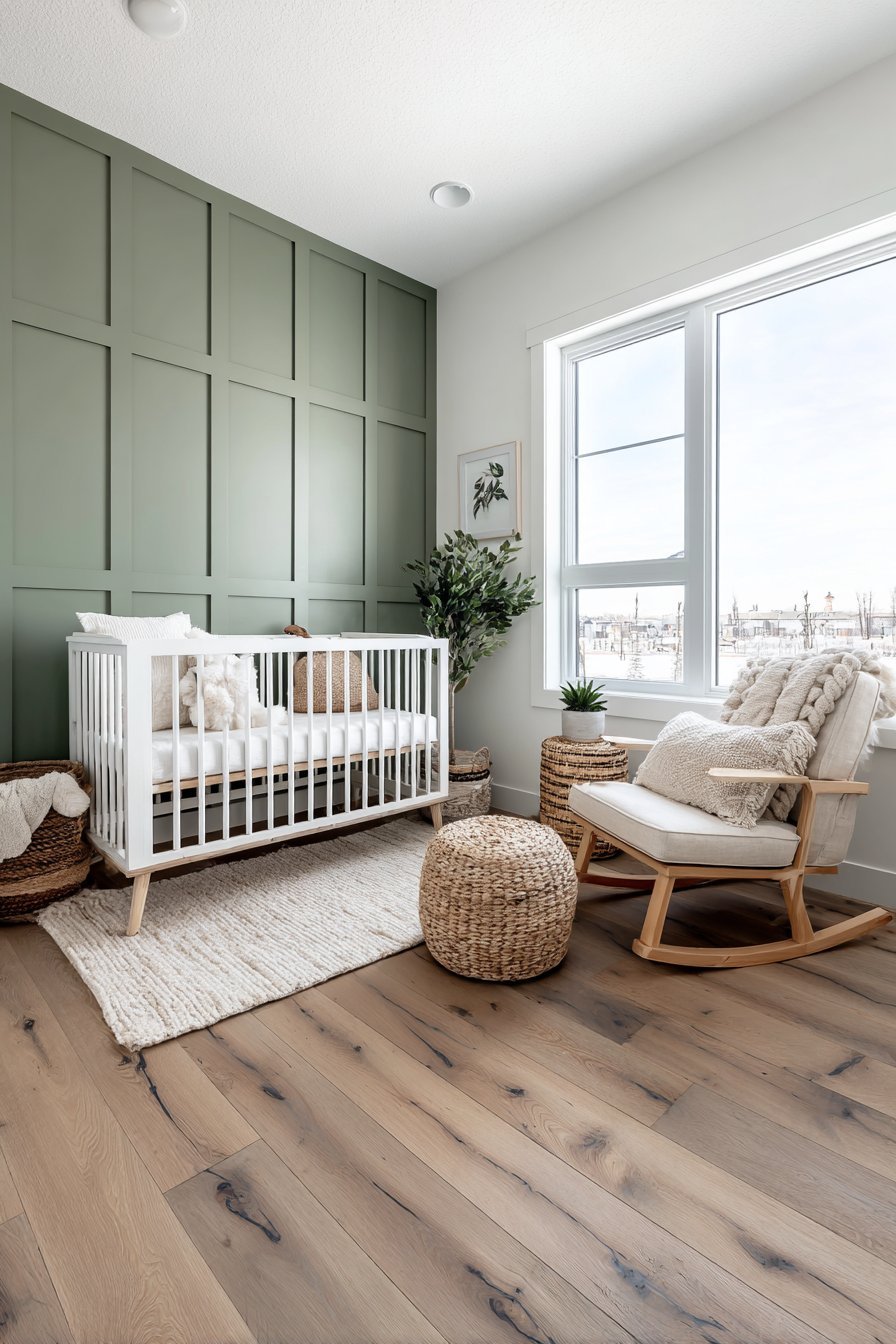
A white wooden crib with safety-certified slats anchors this serene nursery against soft sage green walls. The clean lines create visual simplicity. A cream linen glider sits in the corner providing comfortable feeding sessions. Natural wood side table holds essentials within arm’s reach.
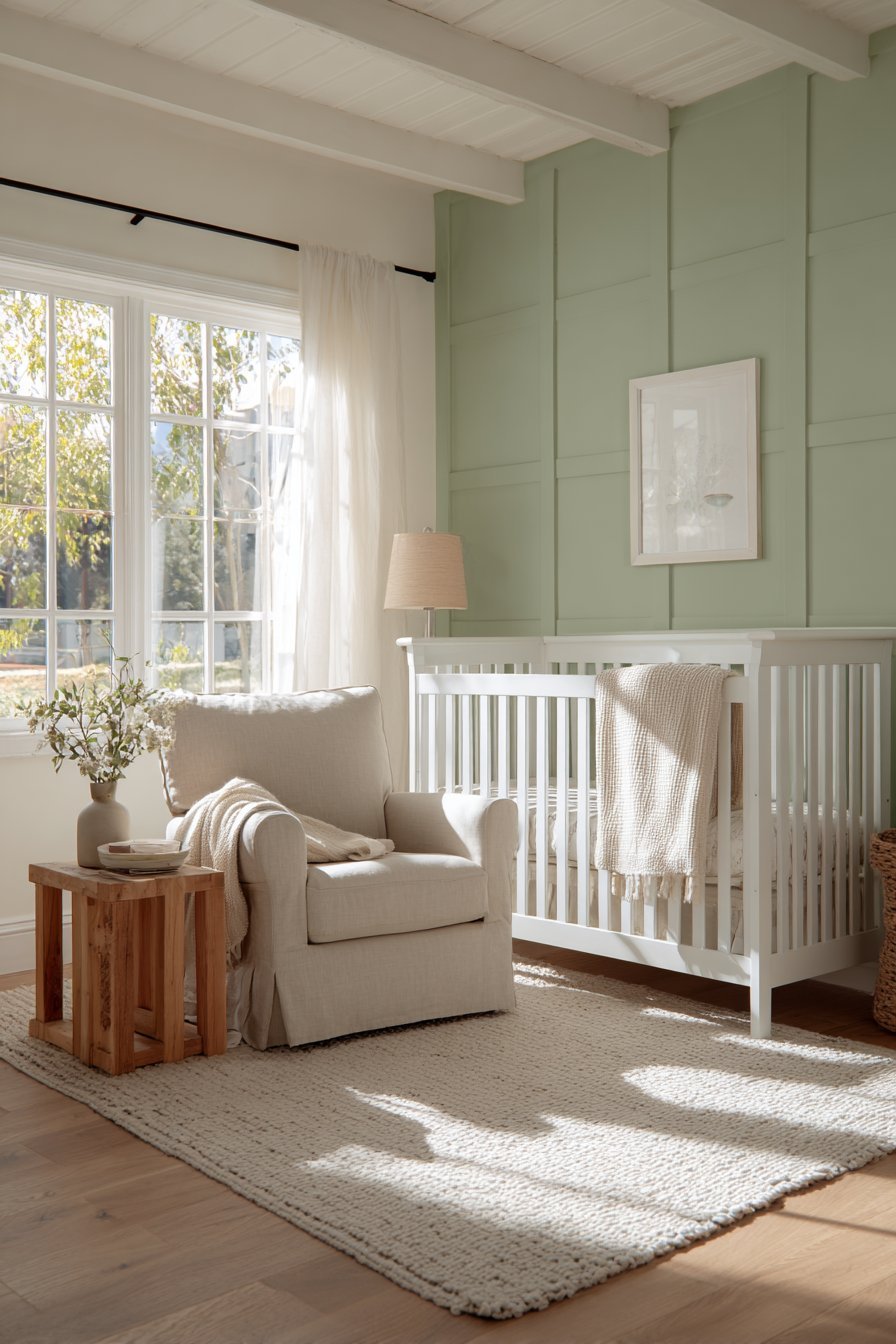
Warm oak hardwood flooring extends throughout the space. A plush ivory area rug adds softness underfoot. The texture provides comfort during floor play sessions. Sheer white curtains filter morning sunlight beautifully. The gentle illumination creates peaceful shadows across walls.
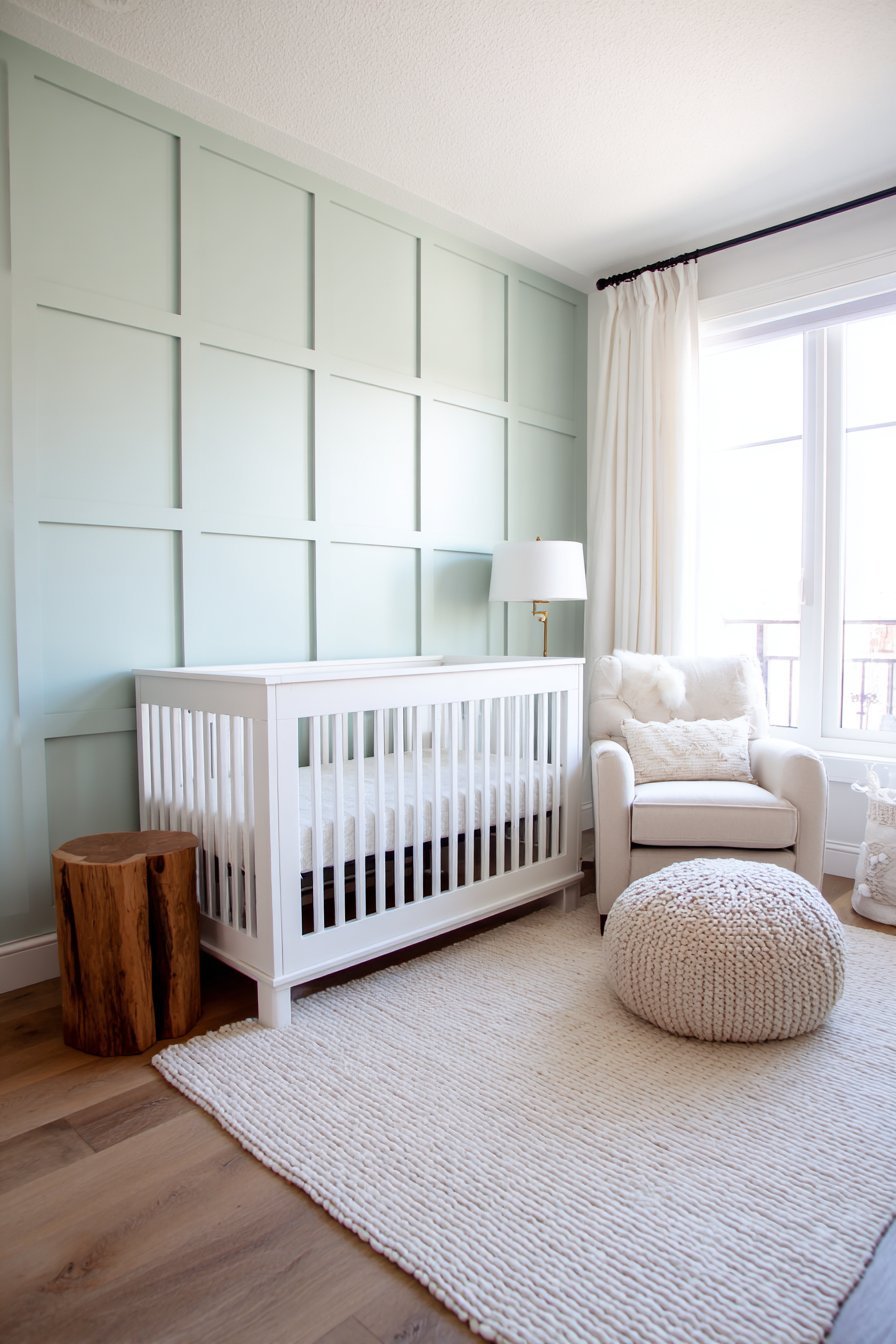
The monochromatic palette promotes visual calm essential for infant environments. White furniture contrasts elegantly against sage walls. Natural materials dominate the design choices. Wood, linen, and cotton create harmonious texture layers. This combination supports healthy indoor air quality.
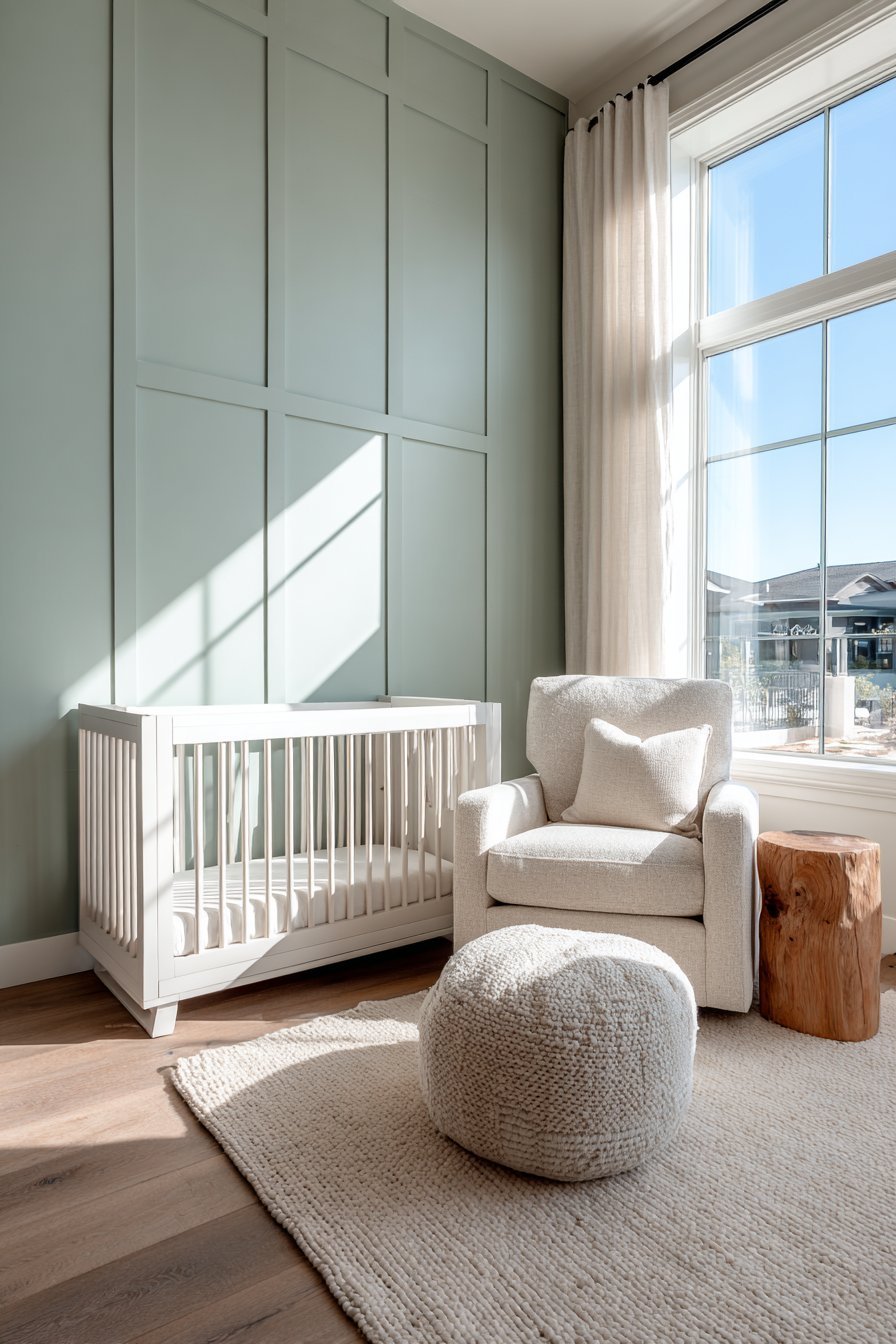
Safety features integrate seamlessly into the aesthetic design. The crib meets current safety standards with appropriate slat spacing. The glider’s sturdy construction supports long nursing sessions. Rounded furniture edges eliminate sharp corners. Every element balances beauty with infant protection.
Key Design Tips:
- Choose safety-certified cribs with slats spaced no more than 2.375 inches apart
- Position gliders near windows for natural light during daytime feedings
- Select low-VOC paints in eggshell finish for easy wall maintenance
- Use plush area rugs to soften hardwood and reduce noise
- Install cordless window treatments to eliminate strangulation hazards
2. Practical Mint Green Storage Solution
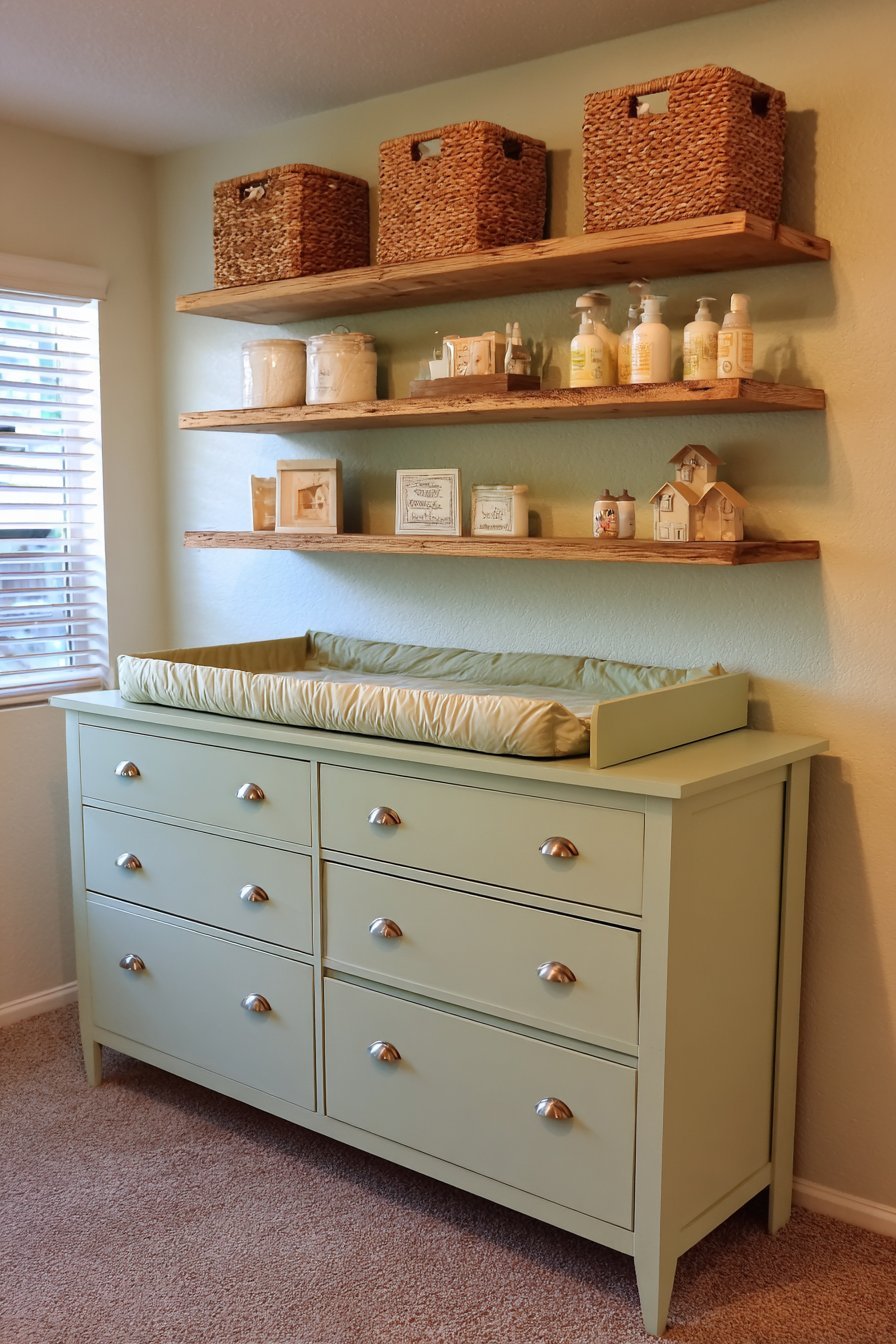
A white six-drawer dresser serves dual purposes as changing station and storage. The cushioned changing pad features sage green fabric. Open shelving above displays woven baskets for organized diaper storage. The walls showcase soft mint green with eggshell finish.
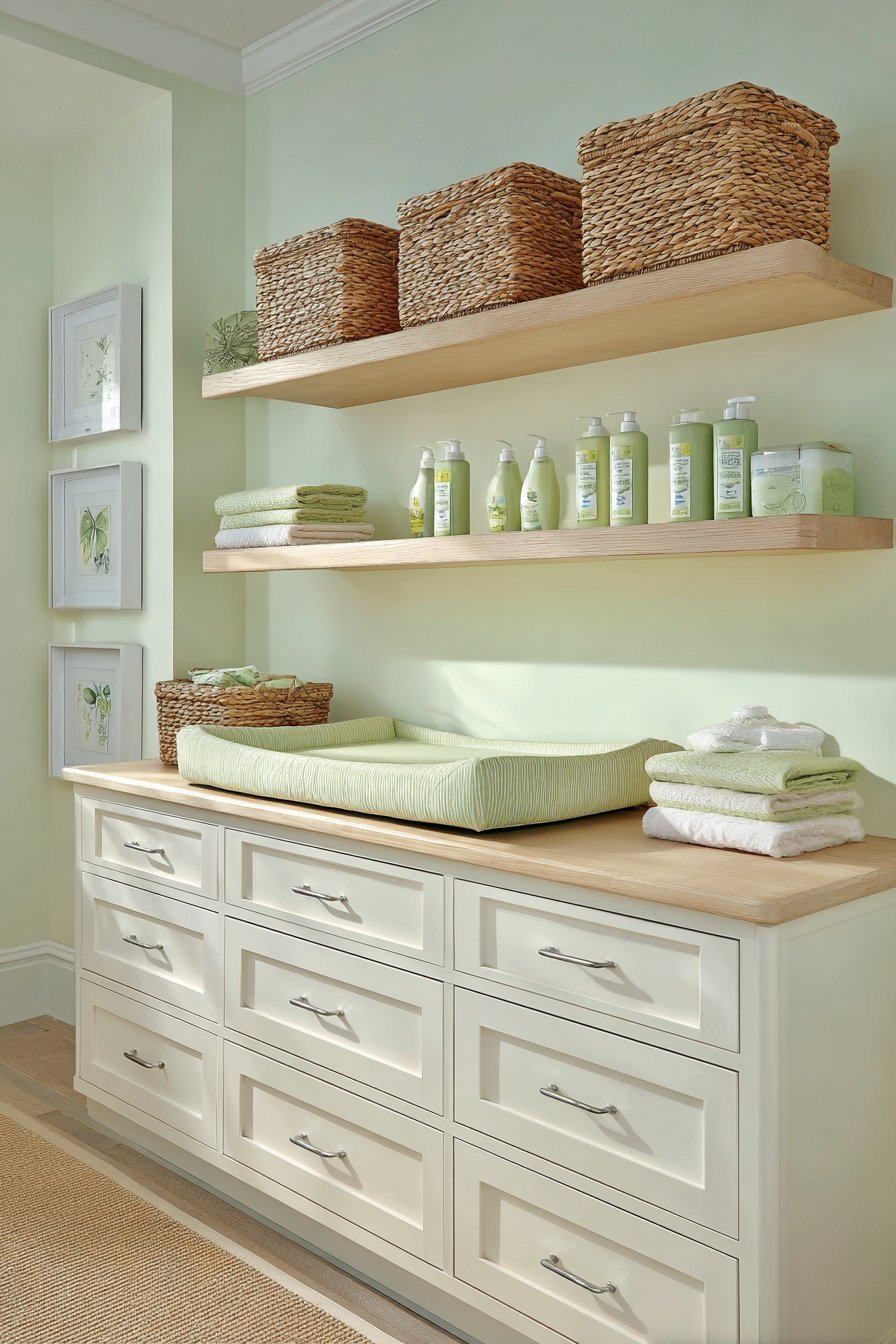
Floating wooden shelves hold essential baby care products and minimal decorative items. The arrangement keeps necessities accessible during diaper changes. Natural materials in storage baskets add warmth. The woven textures contrast beautifully against painted surfaces.
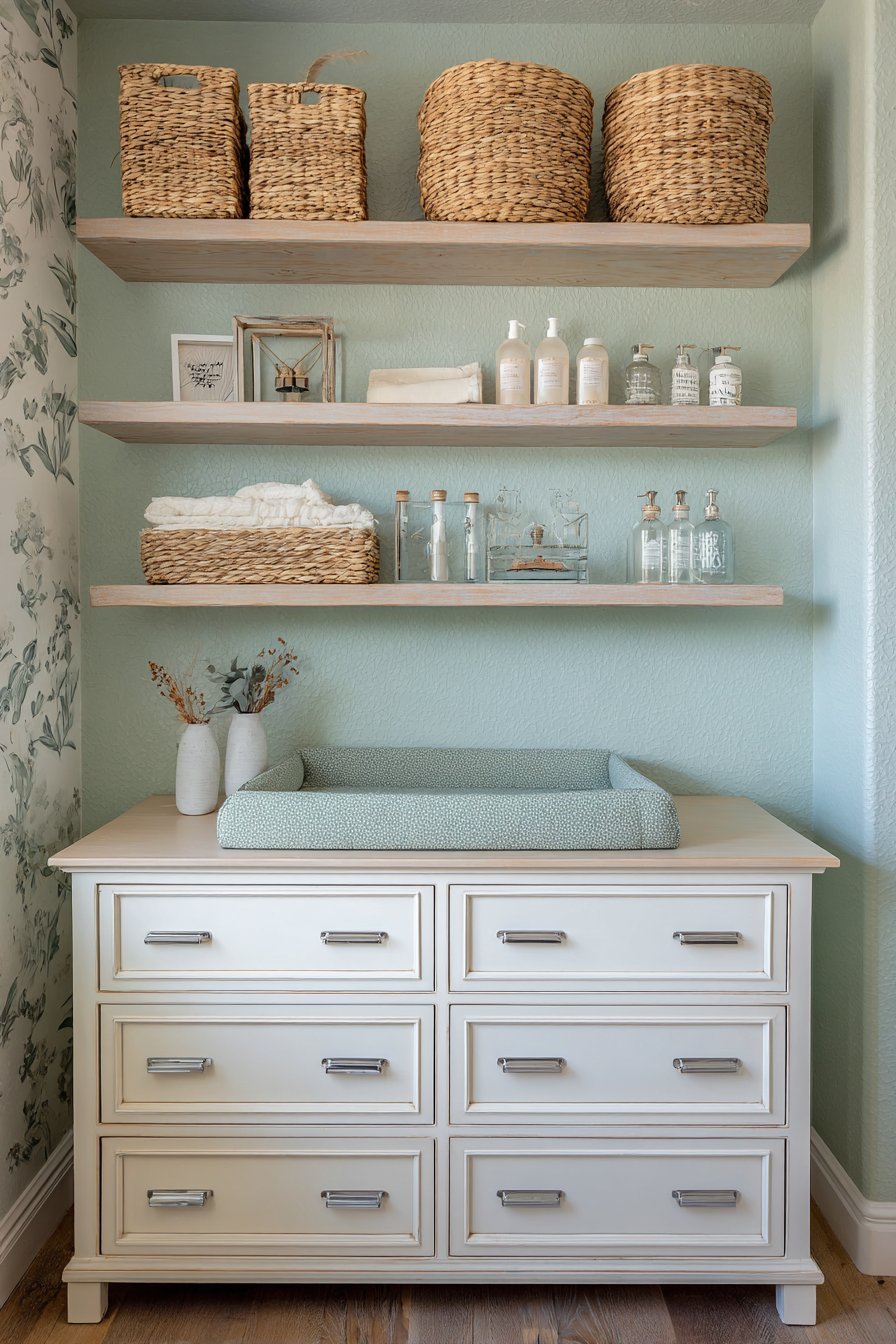
Organization becomes effortless with this thoughtful layout. Each basket serves specific storage purposes. Diapers, wipes, and clothing remain separated yet accessible. The dresser drawers provide ample space for growing wardrobes. This system adapts as baby’s needs evolve.
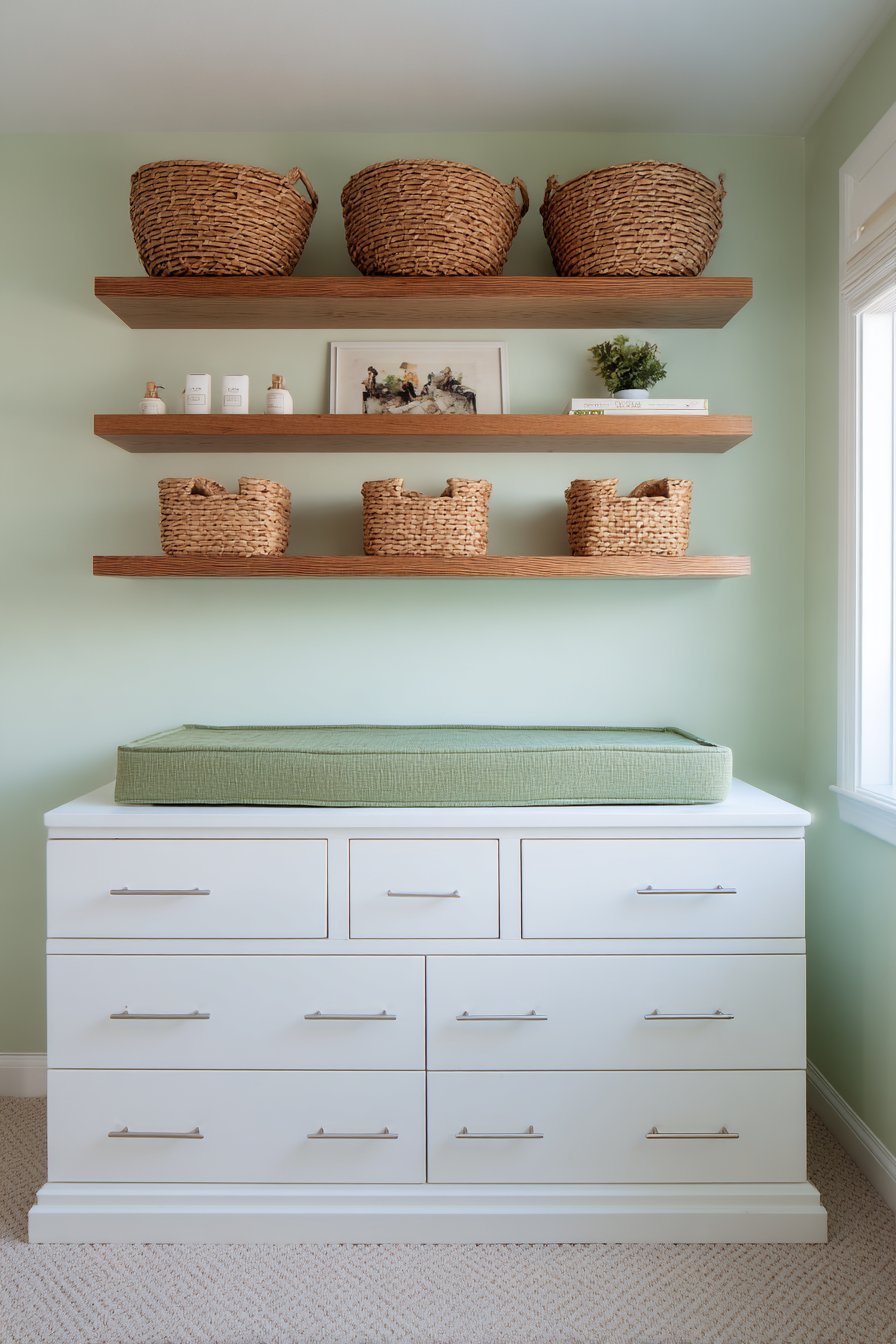
The color scheme maintains consistency with broader nursery design. Mint green walls create refreshing backdrop. White furniture keeps the space feeling open and clean. Natural basket tones bridge the color palette. The result feels cohesive and intentional.
Key Design Tips:
- Select dressers with six or more drawers for adequate baby clothing storage
- Mount changing pads securely to prevent shifting during use
- Use open shelving to keep frequently needed items visible and accessible
- Choose woven baskets that fit shelf dimensions perfectly for neat appearance
- Install floating shelves at comfortable adult height to prevent back strain
3. Cozy Pistachio Reading Nook
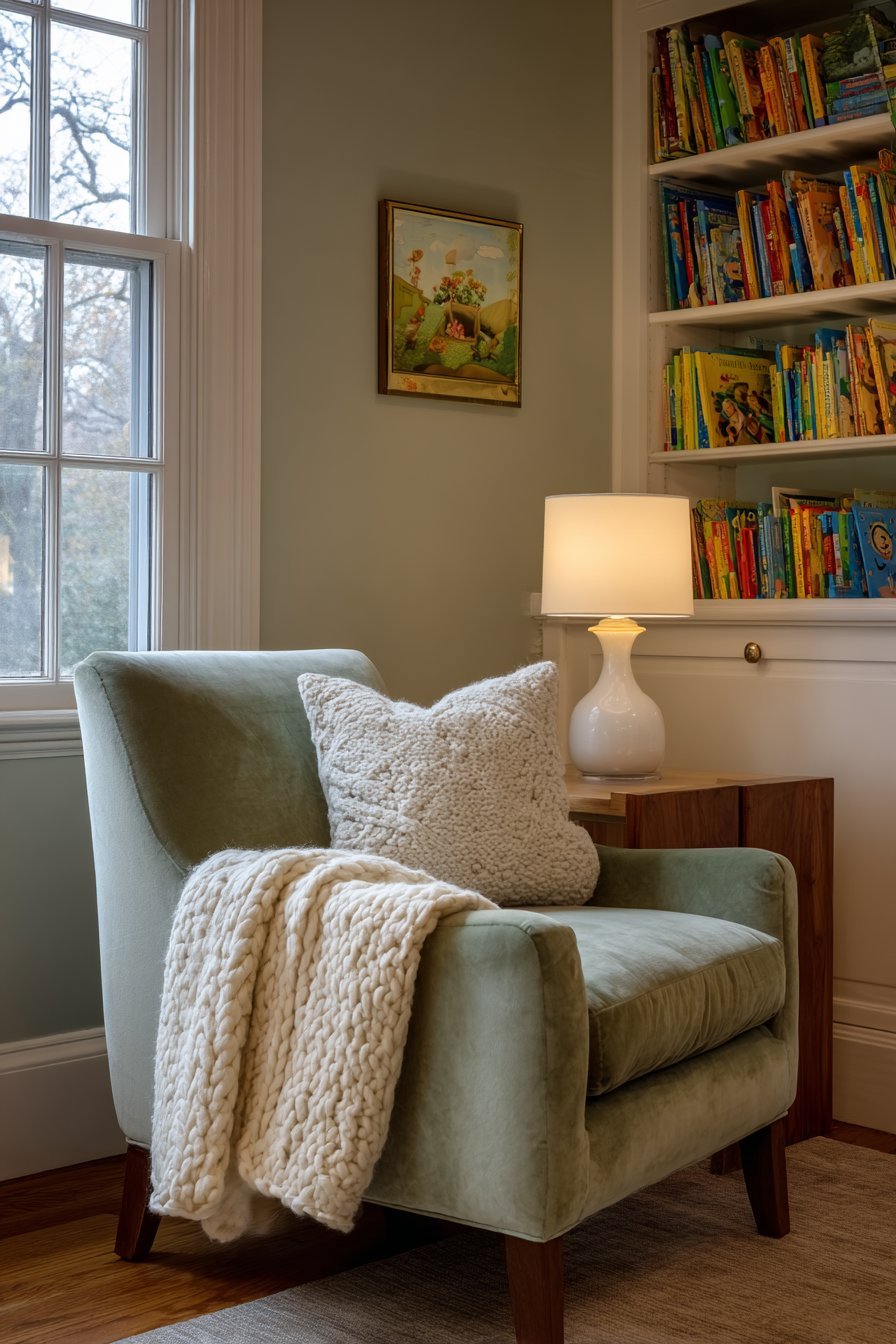
A low-profile upholstered chair in pale green velvet creates an intimate reading corner. White built-in bookshelves hold colorful children’s books. A small maple side table supports a ceramic lamp with warm bulb. The gentle pistachio walls embrace this cozy space.
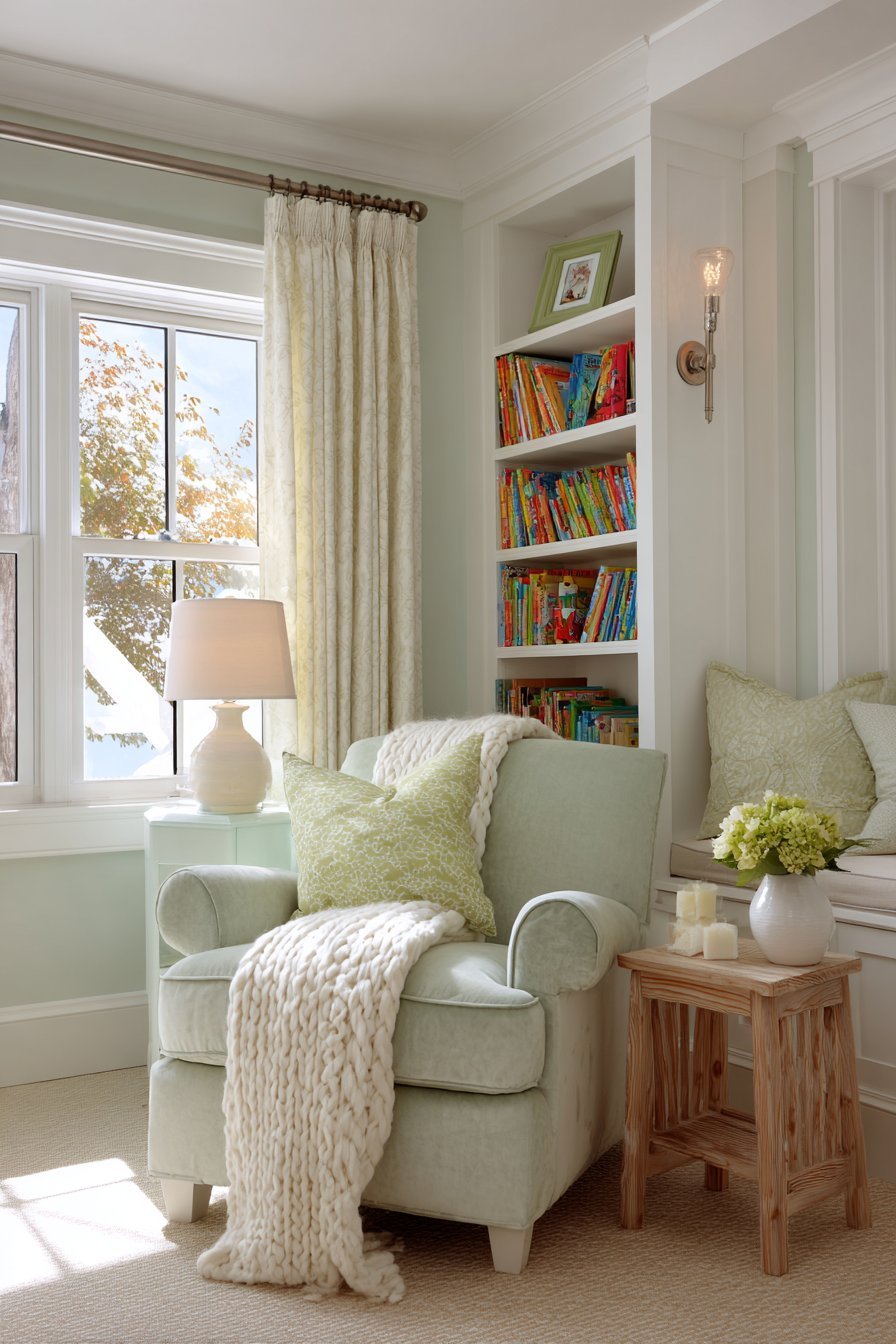
Natural daylight streams from a nearby window. The positioning maximizes reading light during daytime hours. A cream cable knit throw drapes over the chair arm. The texture adds tactile interest and warmth.
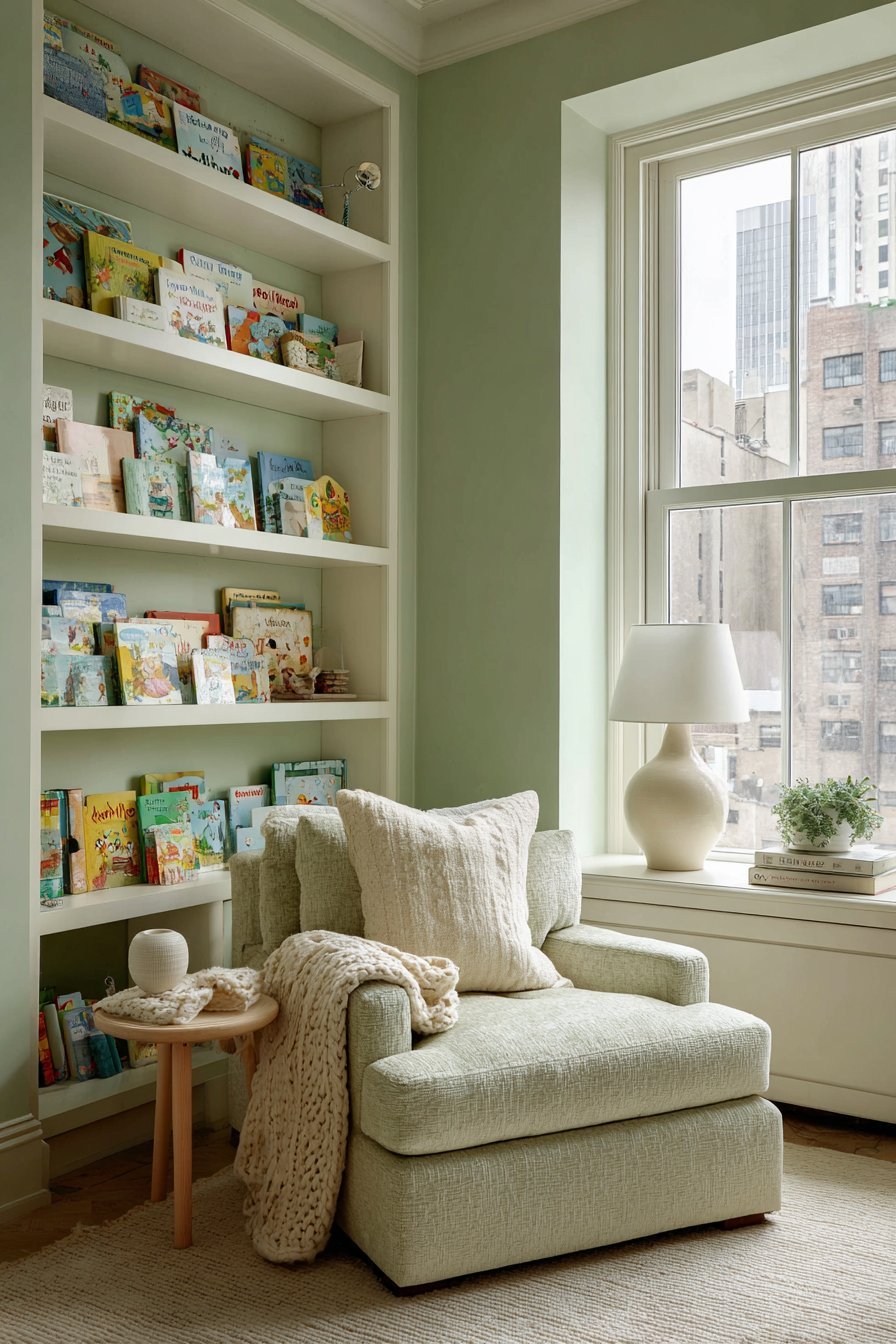
This dedicated reading area establishes early literacy habits. The accessible bookshelf encourages exploration. Books displayed with covers forward attract young attention. The comfortable seating supports extended story time sessions. Parents and babies bond over shared reading experiences.
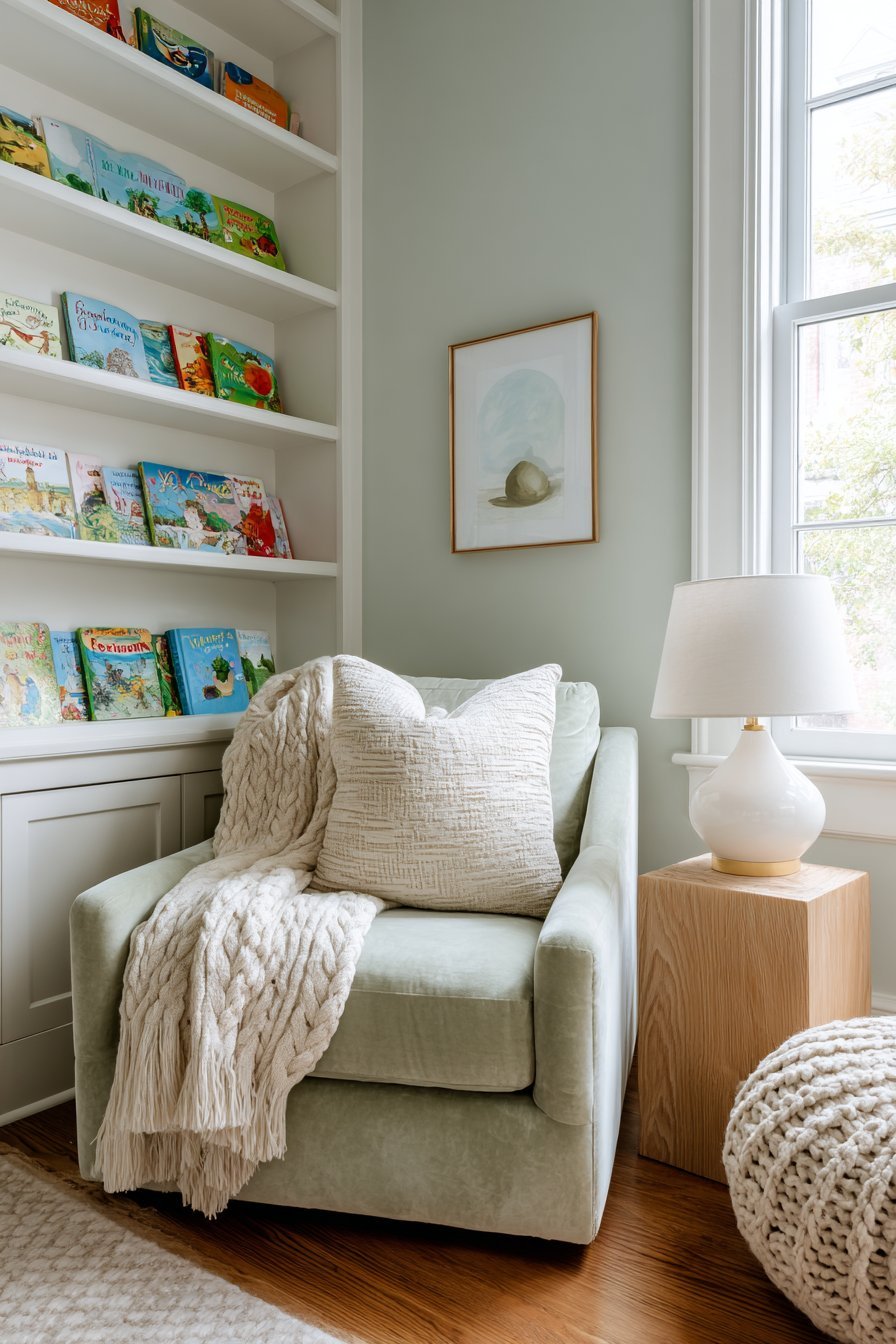
The velvet upholstery provides luxurious softness. The pale green tone coordinates with wall colors. The low profile makes rising with baby easier. The side table keeps necessities within reach. Books, water, and lighting all stay accessible.
Key Design Tips:
- Position reading chairs near natural light sources for daytime sessions
- Select low-profile seating that makes standing with baby comfortable
- Display books with covers forward at baby height to encourage interest
- Use warm-toned bulbs in reading lamps for comfortable evening light
- Add soft throws for extra comfort during extended reading sessions
4. Modern Celadon Mobile Feature
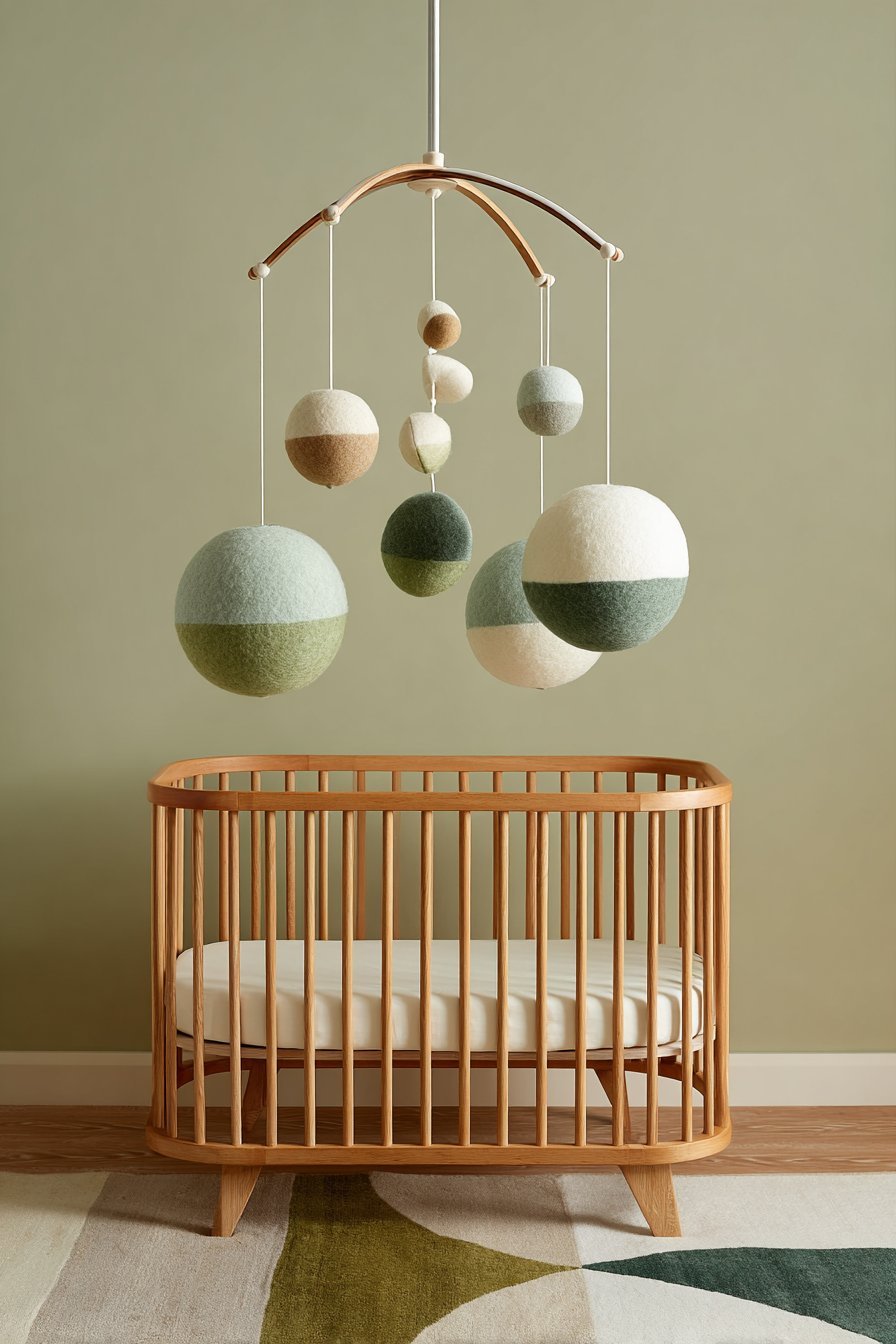
A modern mobile with natural wooden elements hangs above the white oak convertible crib. Soft felt shapes in sage, mint, and cream create visual interest. The walls feature barely-there green with subtle warmth. A geometric area rug in muted greens anchors the space.
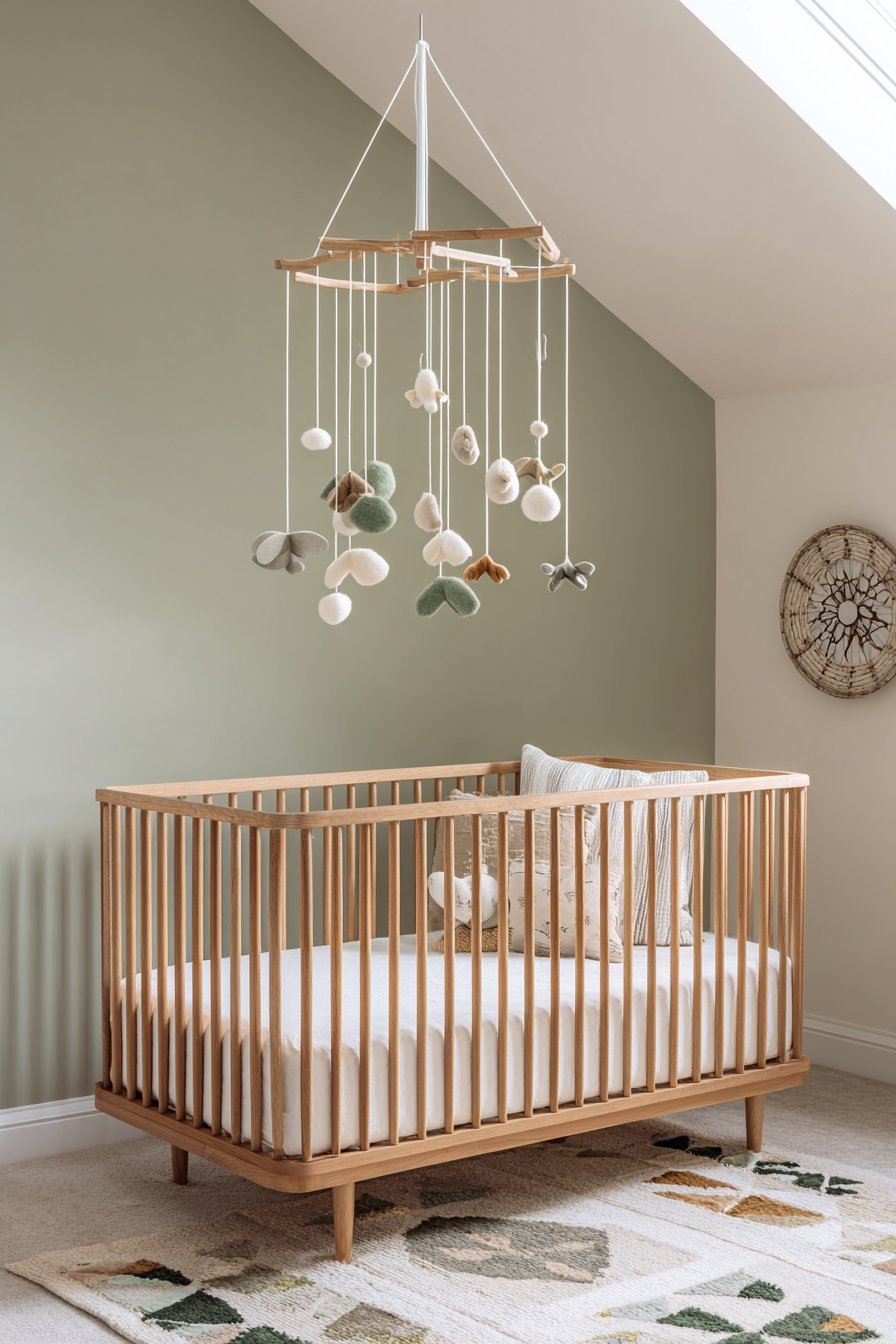
The mobile serves as functional focal point. Its gentle movement captures infant attention. Natural materials provide safe visual stimulation. The coordinating colors maintain palette cohesion. The design supports early visual development appropriately.
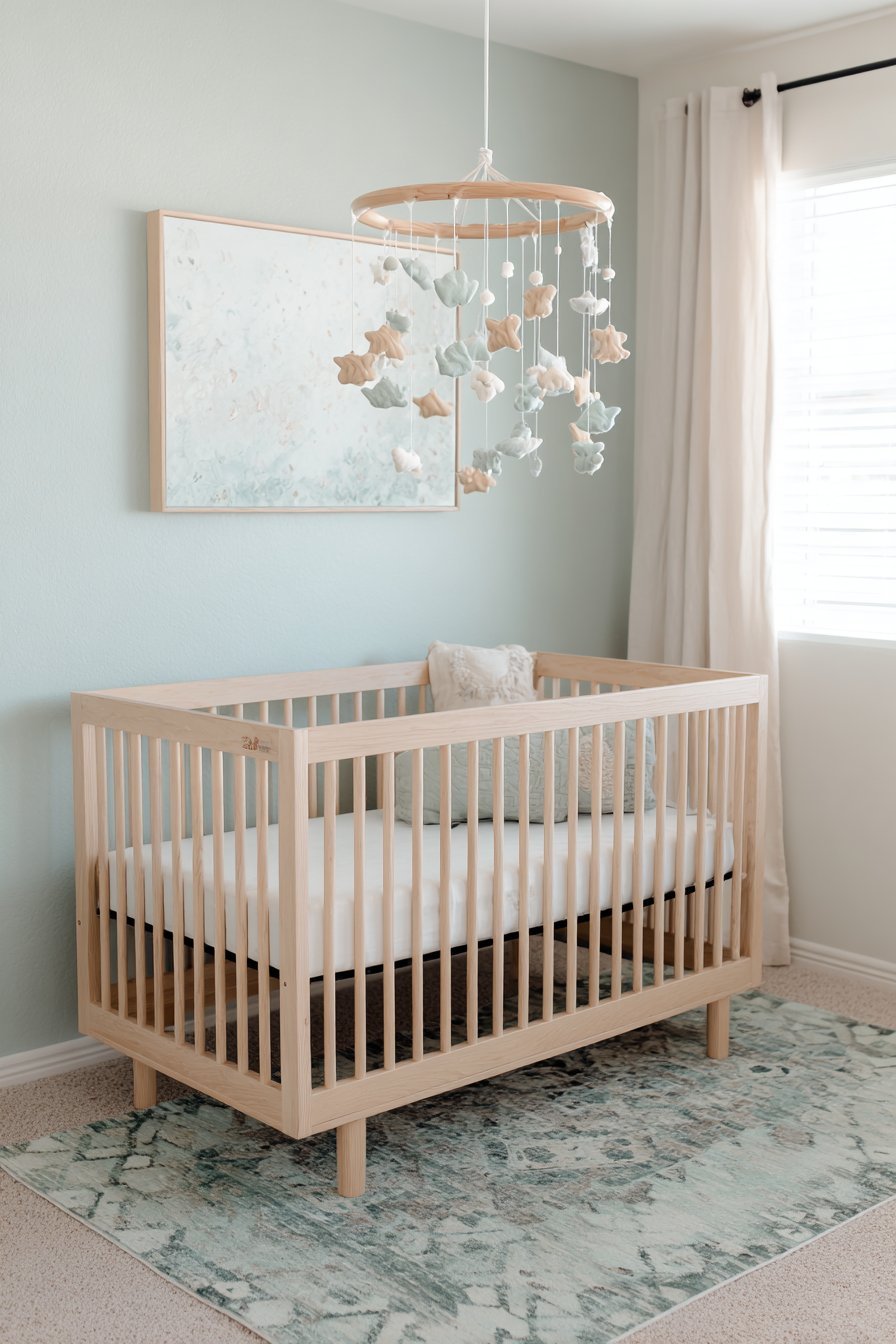
The convertible crib offers long-term value. Adjustable mattress heights accommodate growth stages. The white oak finish brings natural warmth. Clean lines create contemporary aesthetic. This piece transitions from nursery to toddler room.
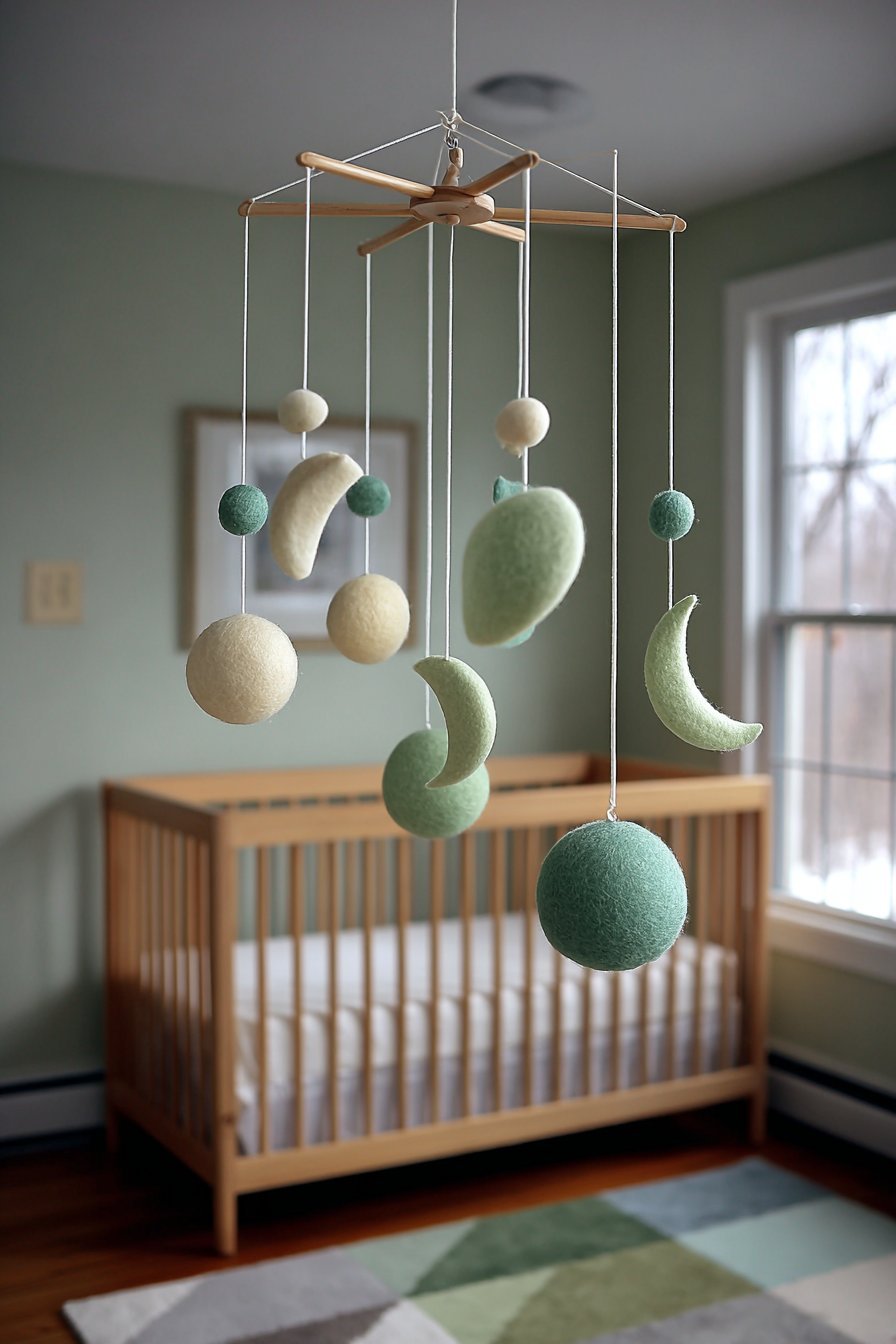
The geometric rug adds pattern without overwhelming. Muted tones keep the space calm. The design grounds furniture arrangement. The soft pile provides comfortable flooring. This foundation piece unifies the room design.
Key Design Tips:
- Hang mobiles at appropriate height where baby can see but not reach
- Choose convertible cribs that adjust from newborn to toddler configurations
- Select mobiles with natural materials rather than plastic components
- Position cribs away from windows and heating elements for safety
- Use geometric rugs to add visual interest while maintaining calm atmosphere
5. Artistic Celery Green Mural
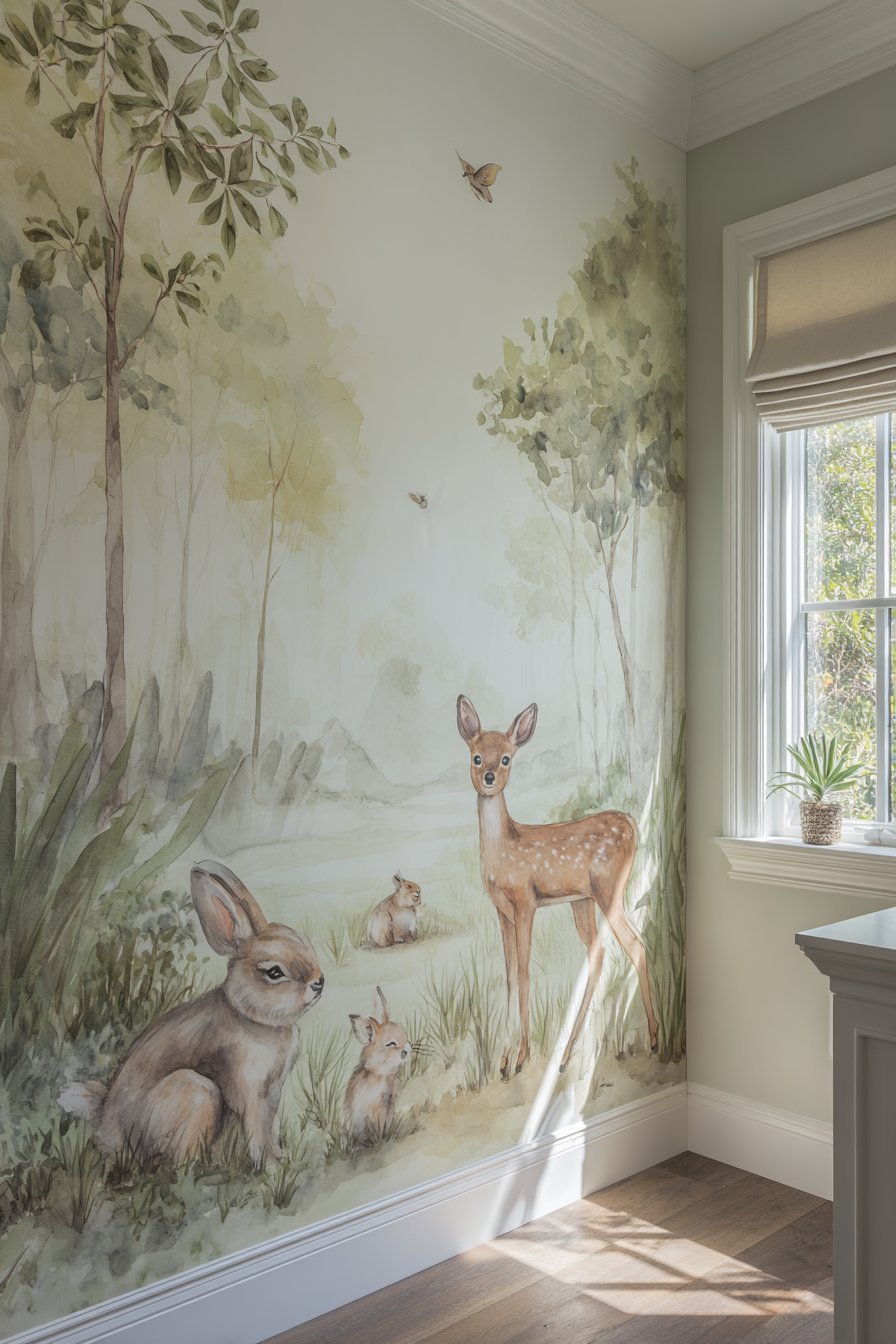
Hand-painted woodland animal murals in watercolor style grace pale celery green walls. A gentle deer, rabbit, and fox appear in soft earthy tones. Simple white picture ledges below display succulents and nature prints. The minimal detail suits infant visual development.
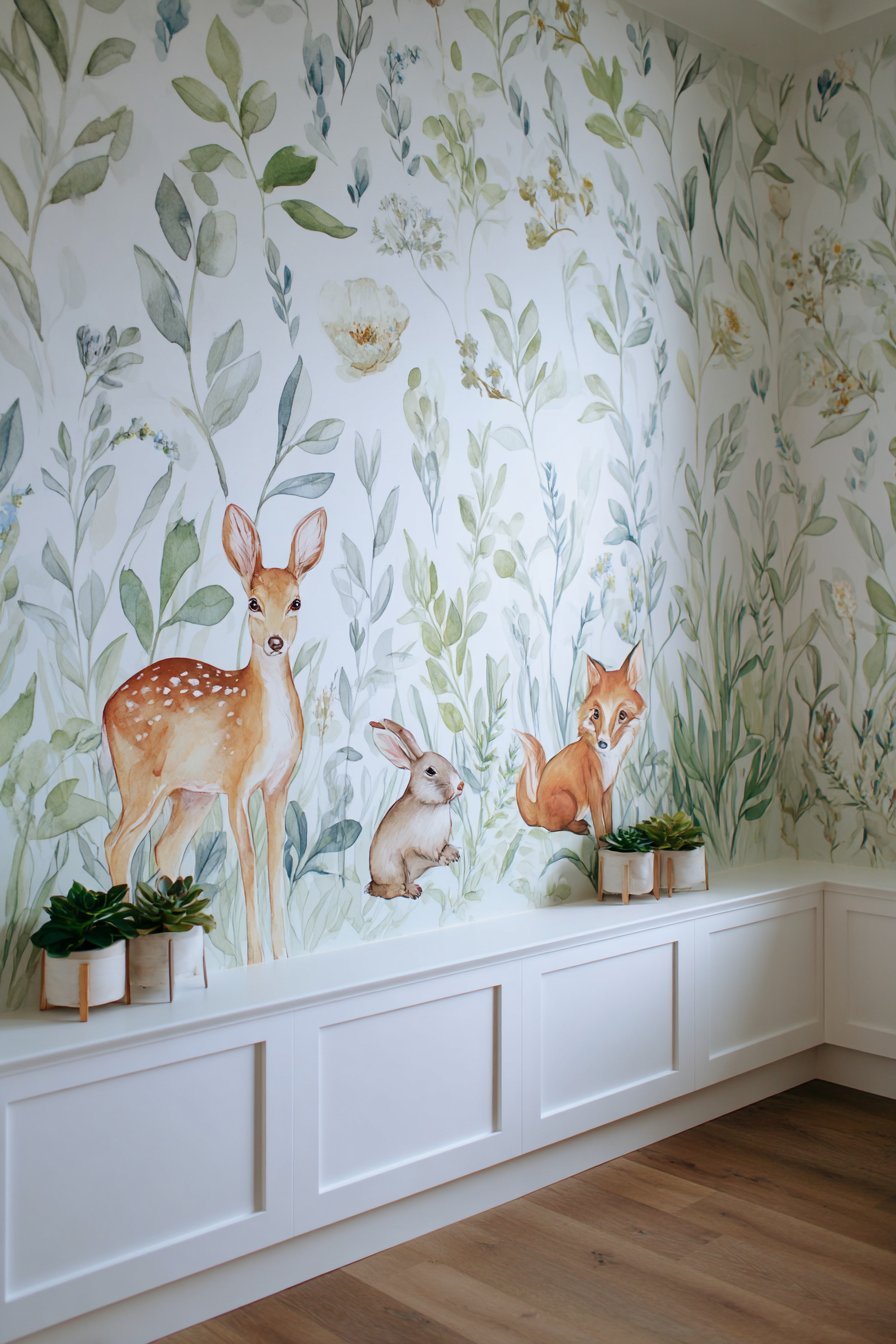
Natural wood flooring extends throughout the space. The warm tones complement wall colors. The mural creates focal point without overstimulation. The artistic treatment adds personality. Each animal face shows gentle expressions.
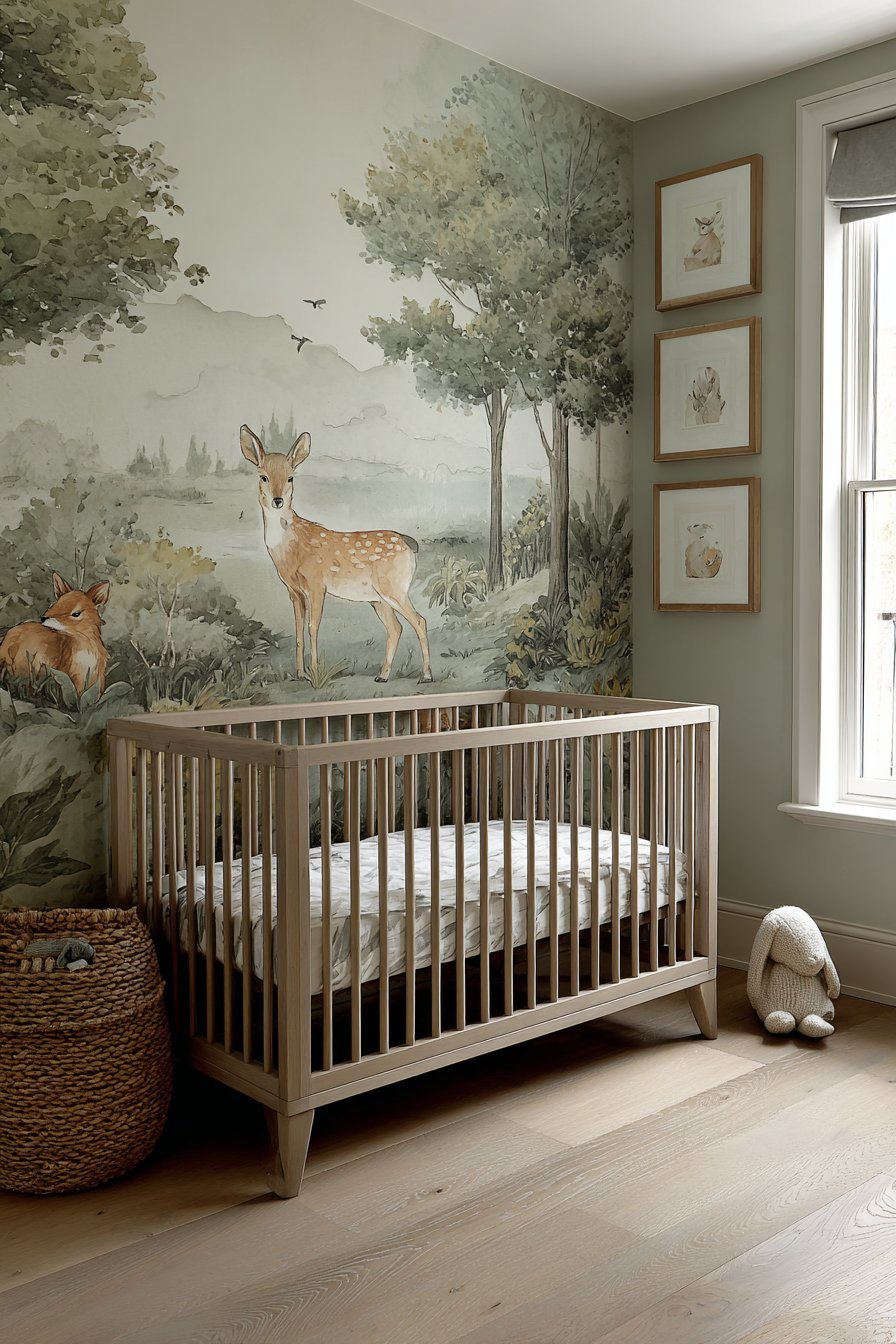
The watercolor technique provides soft edges. Colors blend naturally without harsh lines. This approach creates dreamy atmosphere. The mural engages without overwhelming developing vision. The nature theme connects baby to natural world.
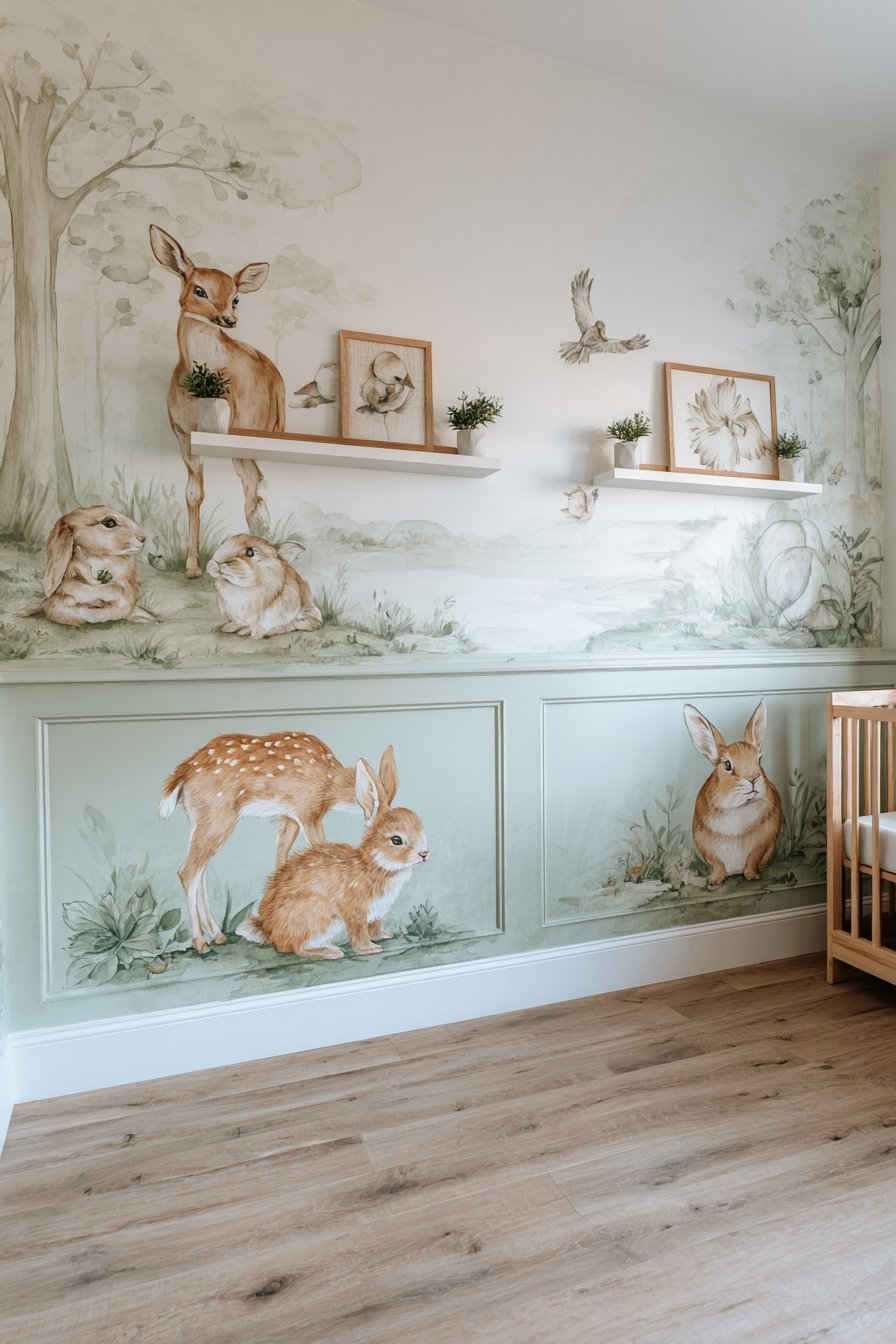
Picture ledges offer flexible display options. Framed prints rotate as baby grows. Small plants add living elements. The white ledges pop against green walls. This arrangement allows easy updates.
Key Design Tips:
- Commission murals with soft edges and minimal detail for infant rooms
- Choose nature themes that grow with children into toddler years
- Use picture ledges instead of frames with glass for safety
- Select non-toxic paints for all wall treatments and murals
- Position murals at baby’s eye level when lying in crib
6. Layered Sage Window Treatment
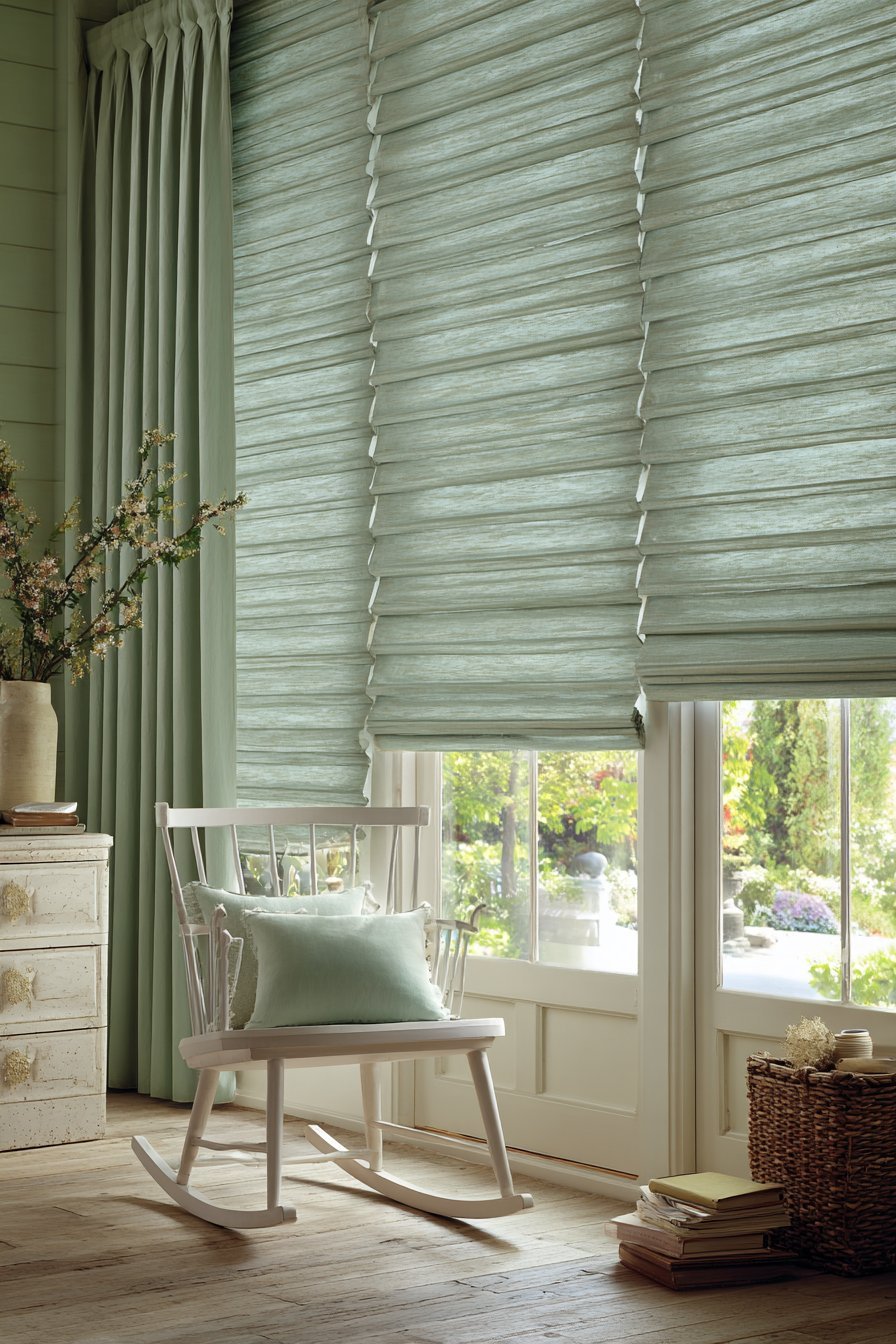
Blackout roller shades in soft sage green fabric layer behind white wooden blinds. The combination provides flexible light control. A white rocking chair with light green cushions sits positioned to catch natural light. Warm-toned pale green walls complete the setting.
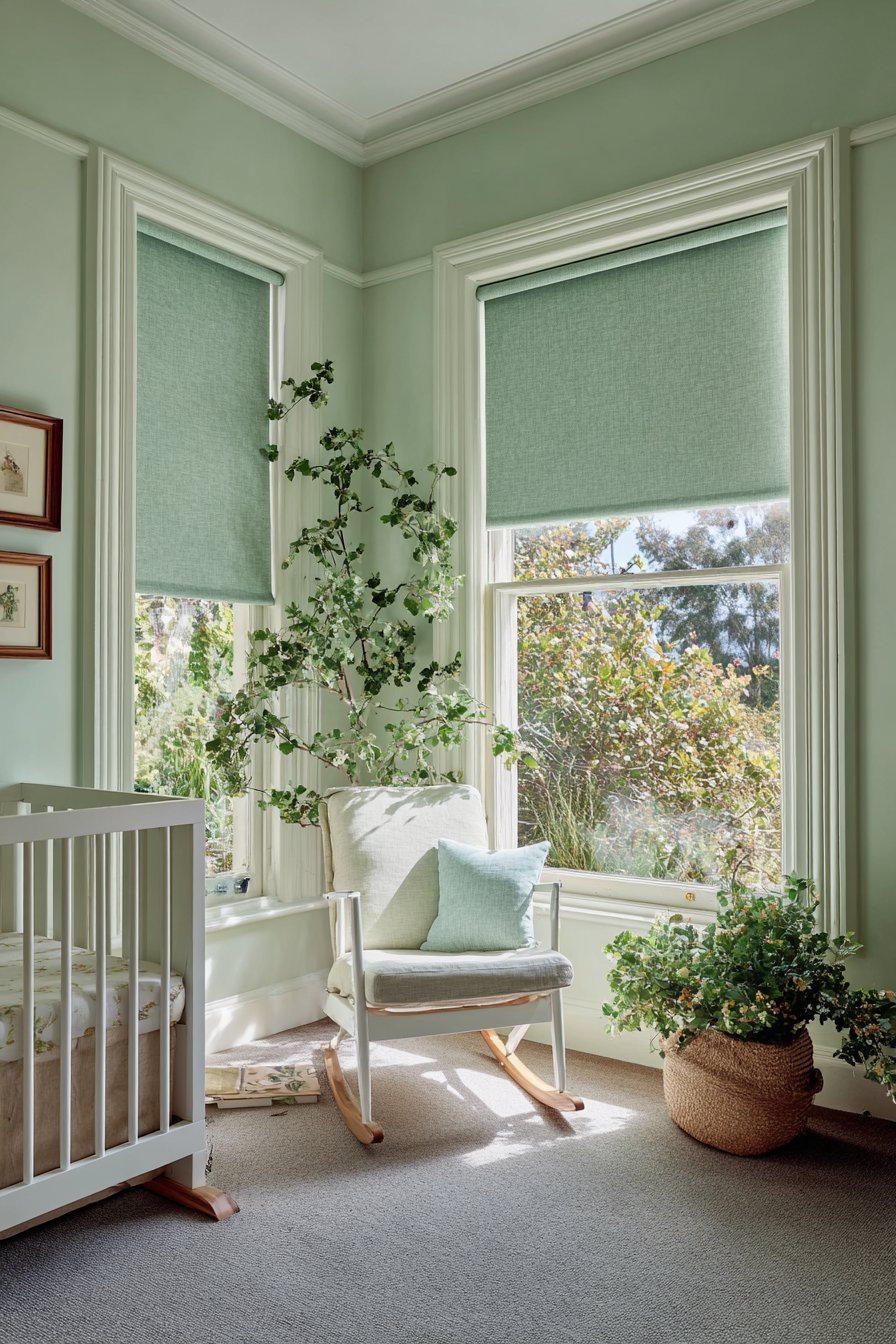
The window treatment system serves multiple purposes. Blackout shades ensure quality nap times. White blinds filter daytime light beautifully. The layered approach offers complete control. Parents adjust lighting based on needs.
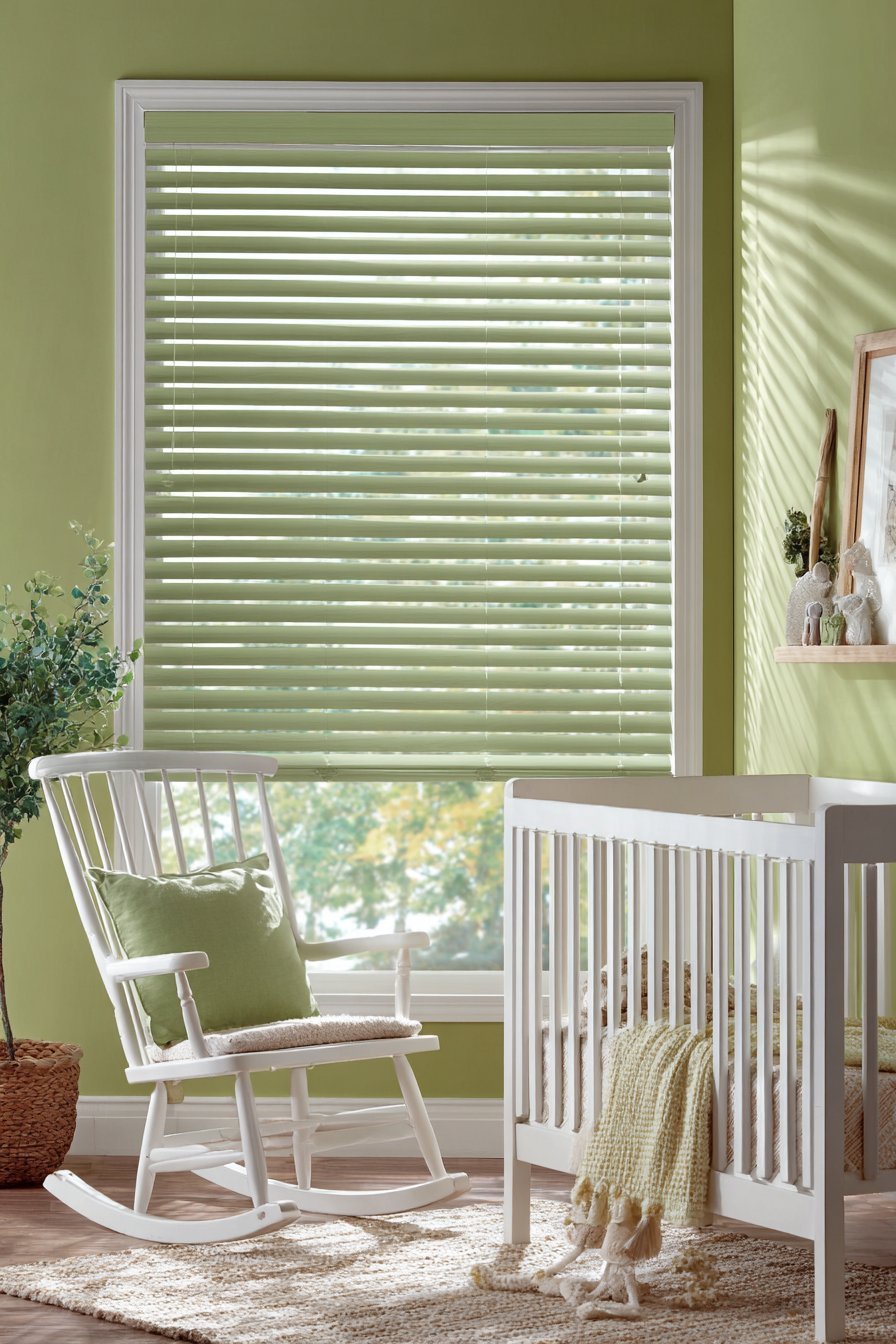
The rocking chair placement maximizes natural illumination. Daytime feeding sessions benefit from window light. The white frame maintains clean aesthetic. Light green cushions tie into color scheme. The comfortable design supports extended sitting.
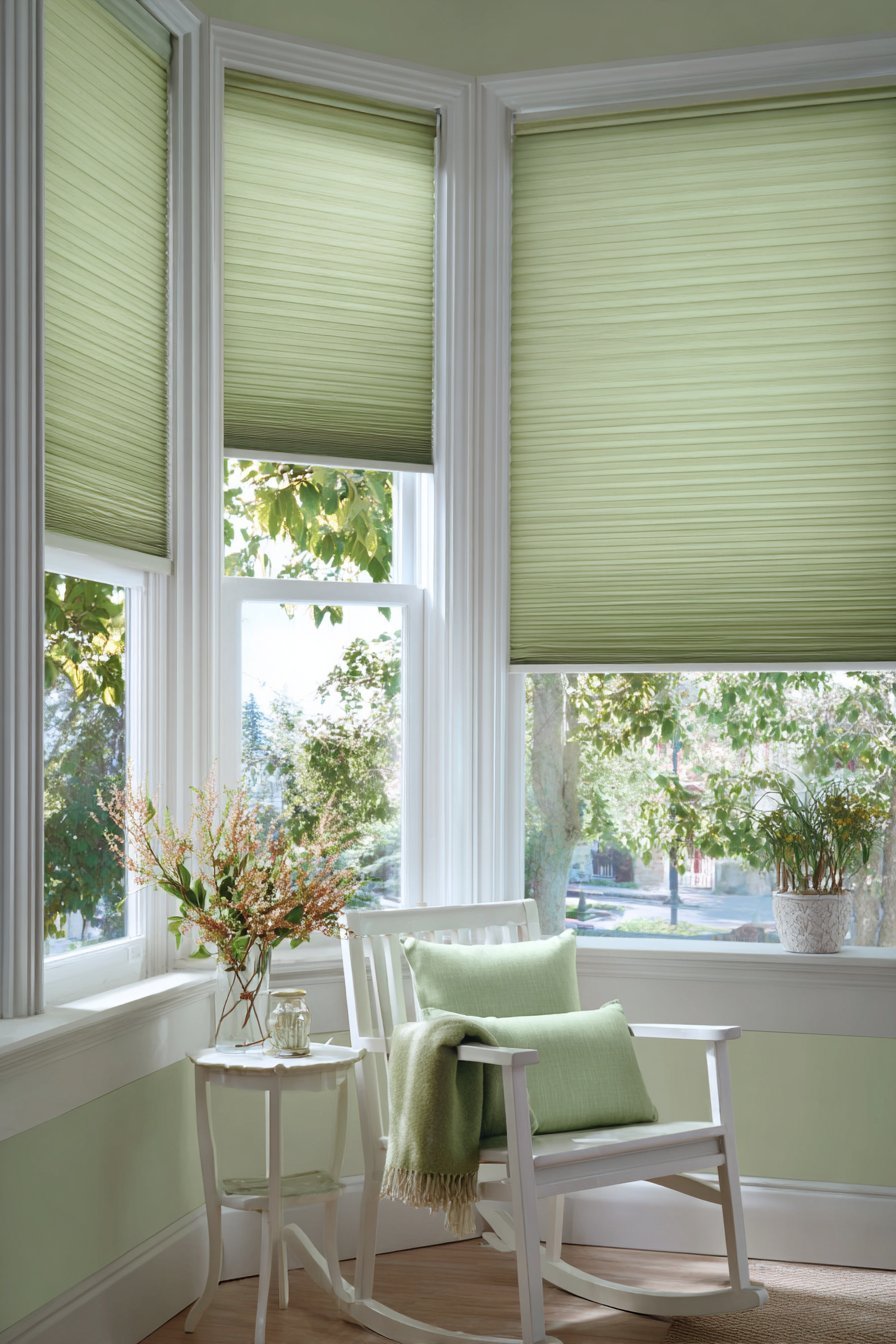
The view of outdoor greenery enhances biophilic design principles. Natural elements visible through windows promote calm. The sage shades complement exterior views. The coordination between inside and outside feels intentional. This connection to nature benefits both parent and child.
Key Design Tips:
- Install blackout shades for consistent nap schedules regardless of time
- Layer window treatments for flexible light control throughout the day
- Position seating near windows to utilize natural light during feedings
- Choose cordless blinds and shades to eliminate safety hazards
- Select window treatment colors that complement both walls and outdoor views
7. Organized White Closet System
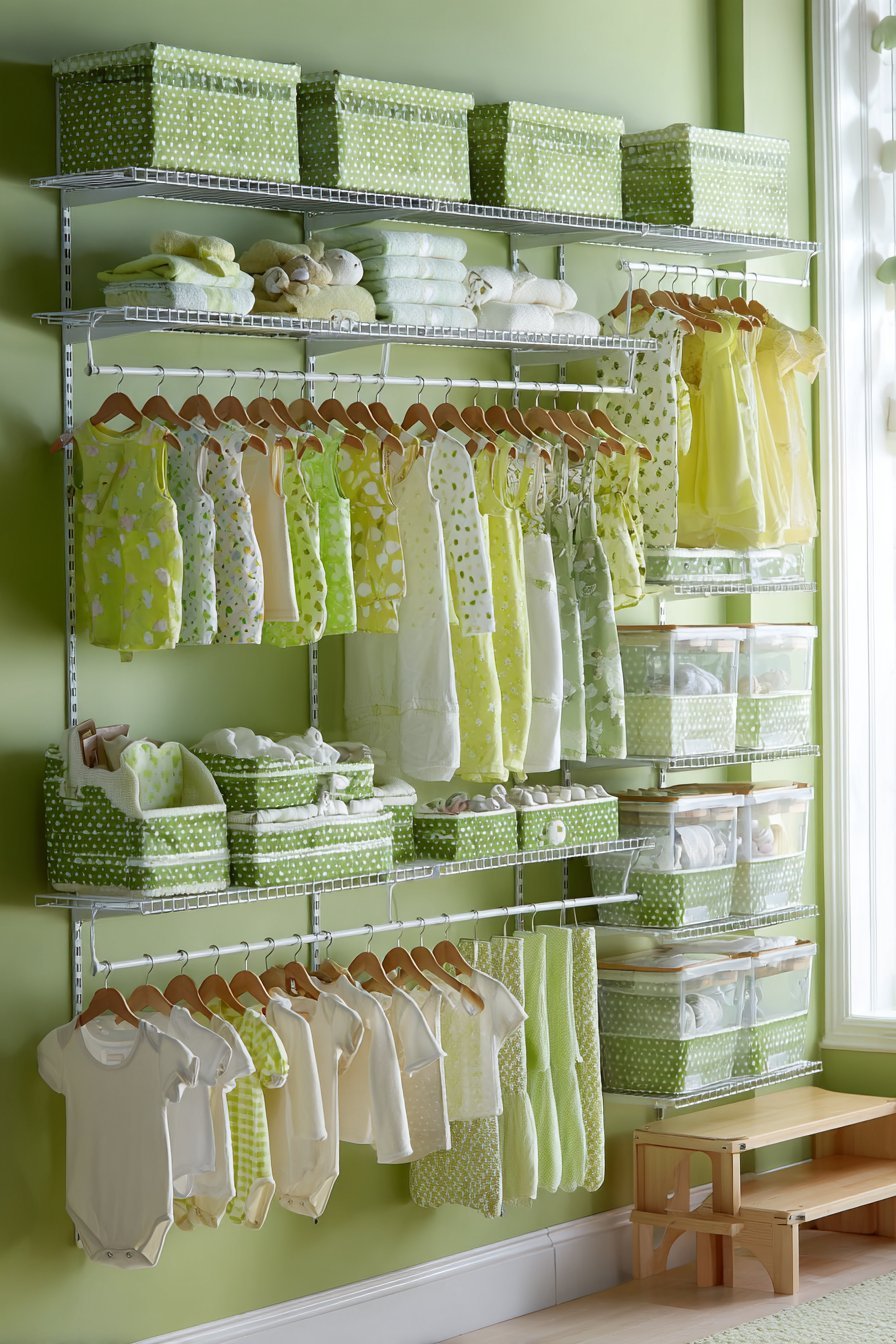
White wire shelving creates efficient closet organization. Fabric bins in coordinating green patterns sort baby clothes by size. Hanging rods at appropriate heights hold tiny garments on wooden hangers. Clear plastic drawer units store accessories and smaller items.
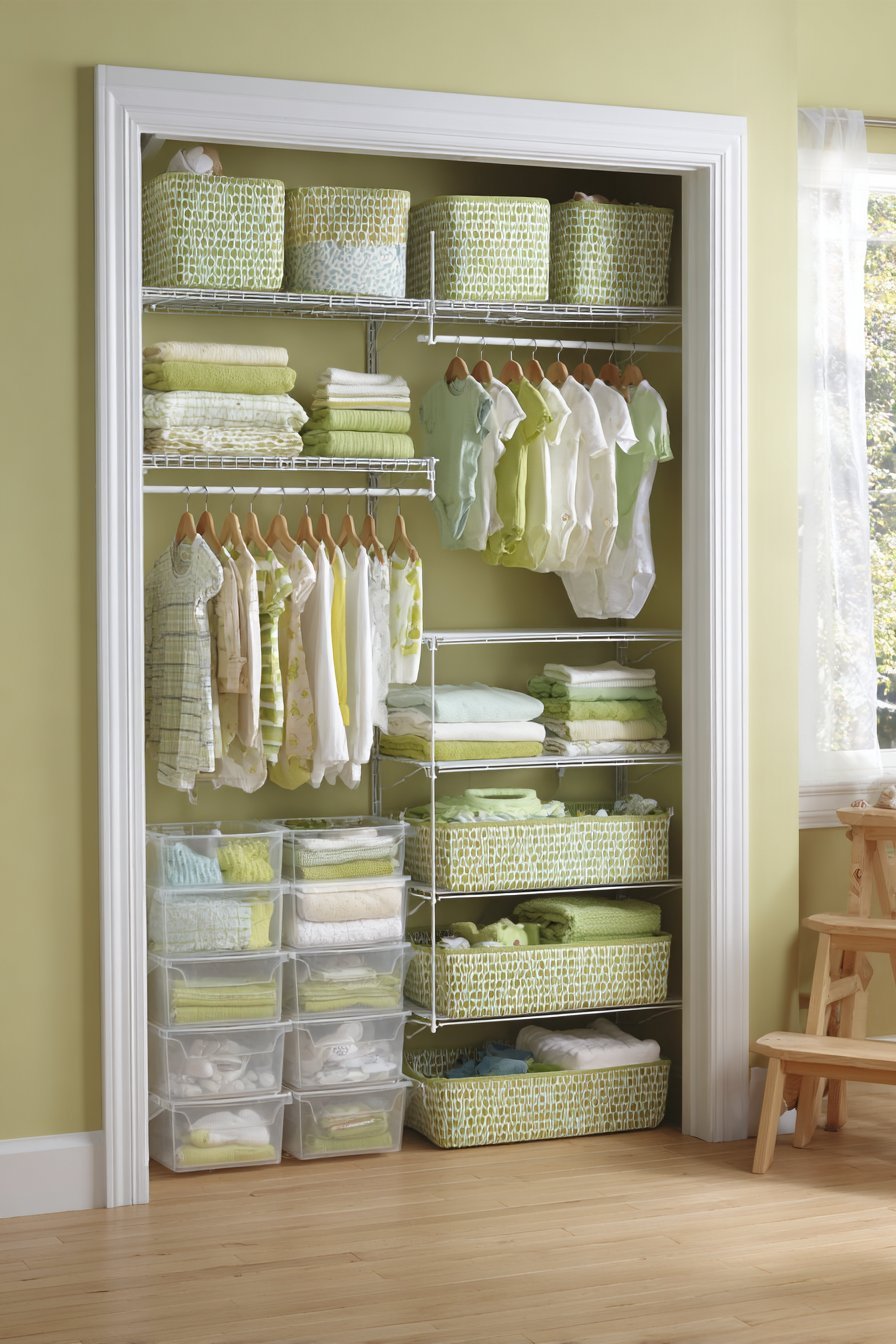
The closet interior matches the nursery’s soft green walls. A small wooden step stool provides access to higher shelves. The system adapts as clothing sizes increase. The organization prevents morning stress. Everything has designated placement.
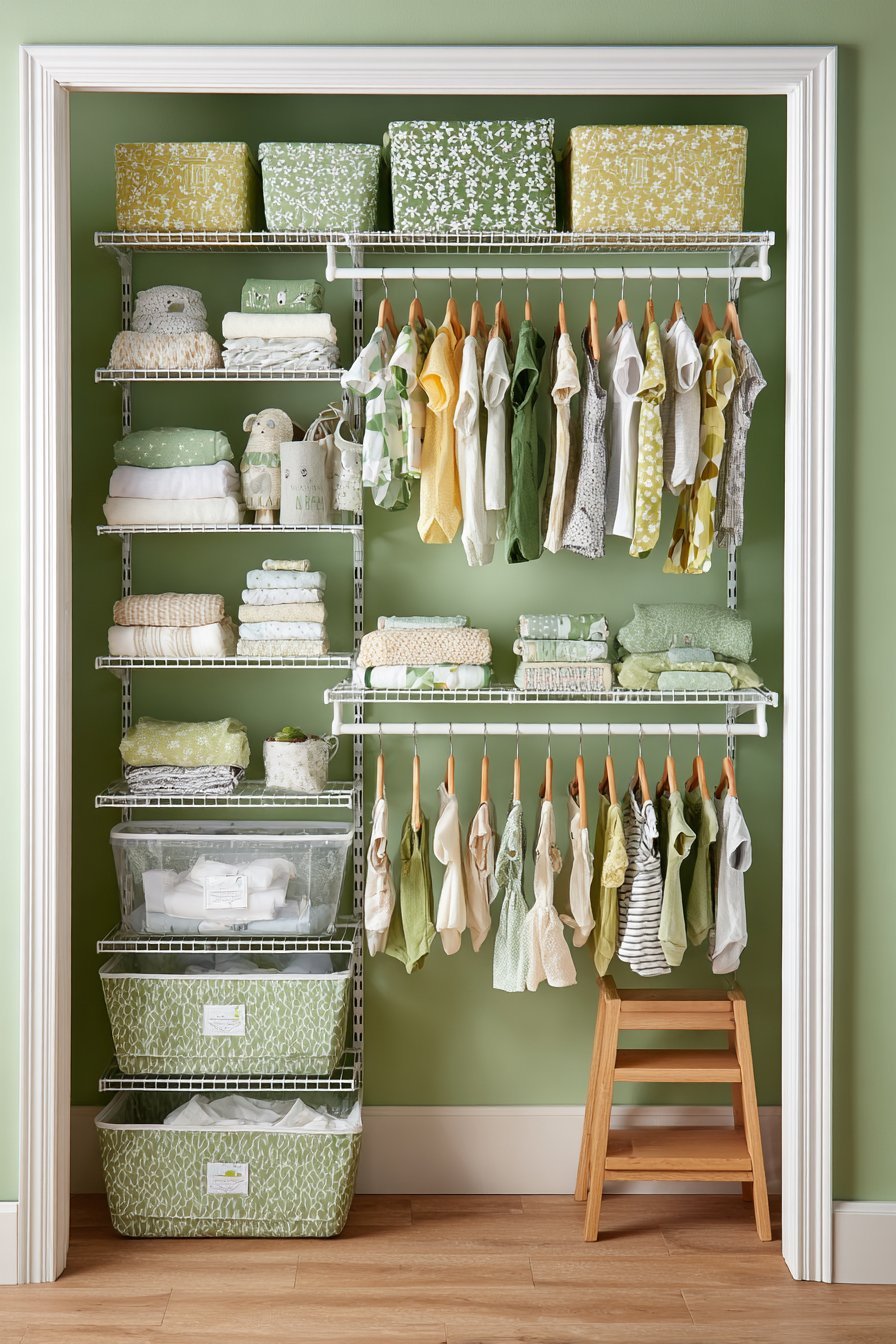
Fabric bins add color while maintaining function. The green patterns coordinate with nursery palette. The bins slide easily for access. Labels identify contents quickly. This system saves time during busy mornings.
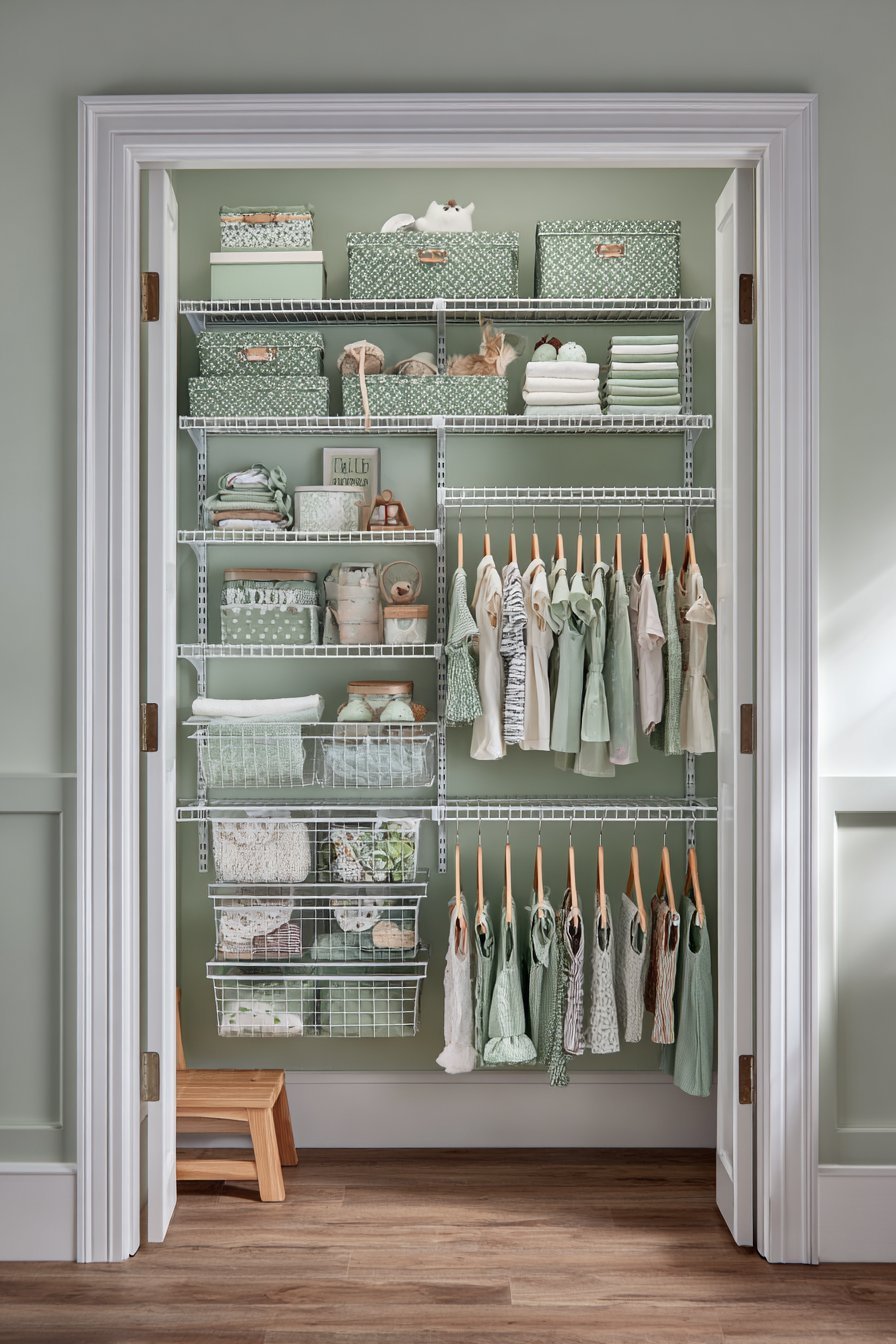
The wire shelving allows air circulation. Clothes stay fresh between wears. The white finish reflects light in small spaces. The adjustable shelves accommodate changing needs. This flexibility serves growing children well.
Key Design Tips:
- Organize baby clothes by size in separate bins for easy access
- Install hanging rods at heights that prevent floor-touching garments
- Use clear storage for small items like socks and accessories
- Paint closet interiors the same color as main nursery walls
- Implement labeling systems to maintain organization long-term
8. Functional Misty Green Changing Station
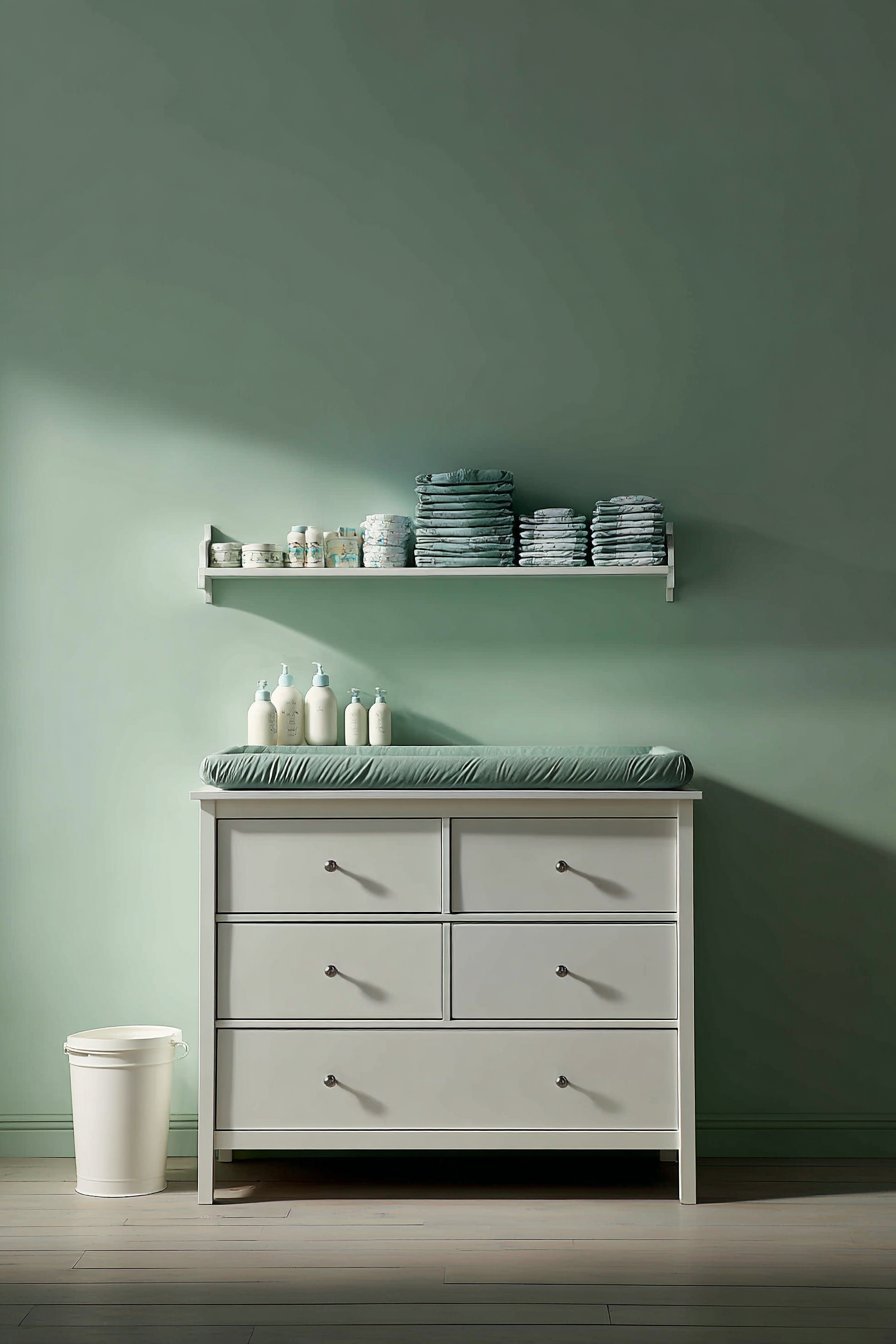
A white wooden dresser converts into changing station with contoured pad. The washable sage green fabric cover ensures easy maintenance. Essential changing supplies organize in white ceramic containers on top. Wall-mounted shelf above holds cloth diapers in neat stacks.
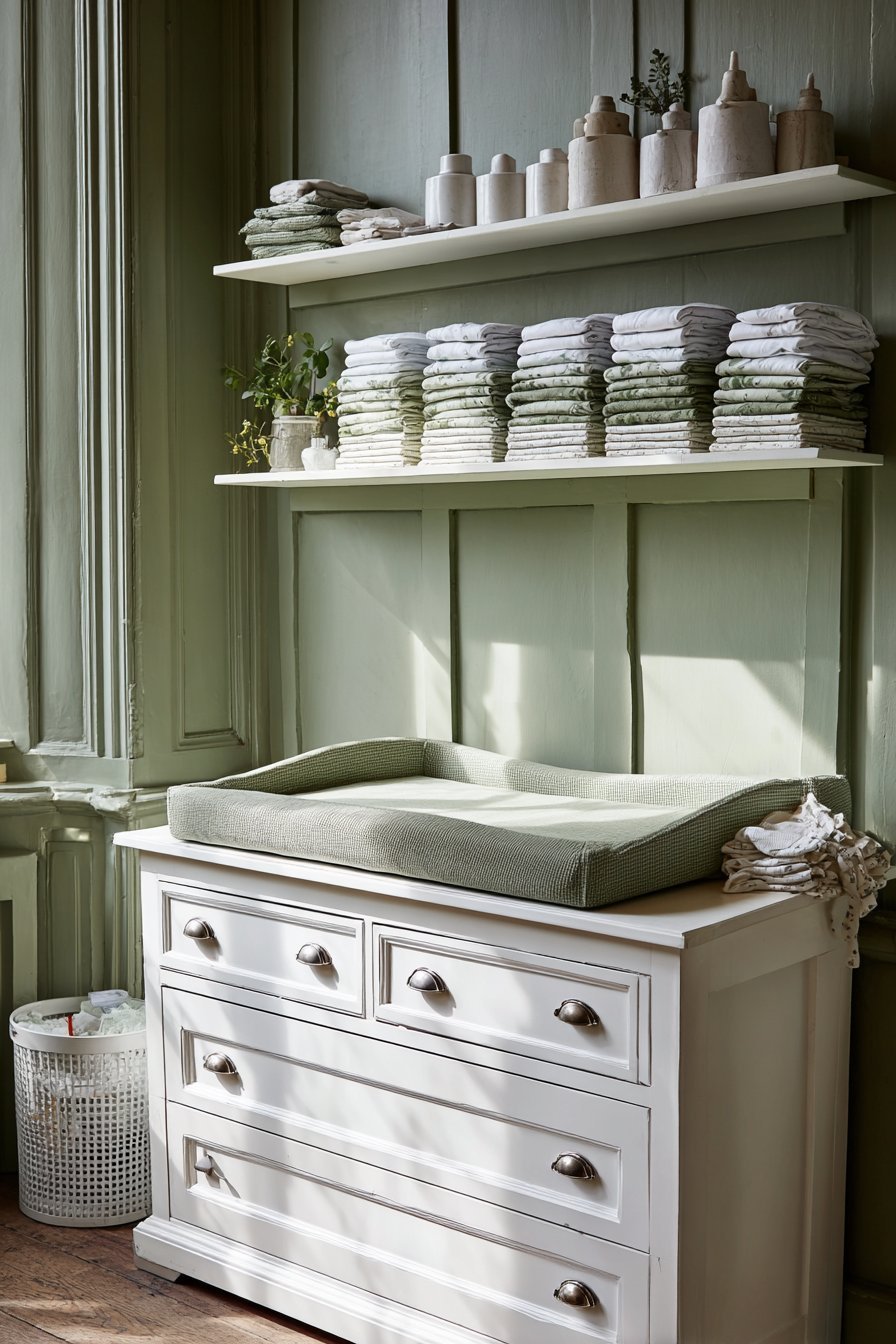
The misty green walls create peaceful backdrop. Low-VOC paint protects indoor air quality. A small white metal waste bin sits discretely beside the dresser. The streamlined design maintains clean appearance. Every element serves specific purpose.
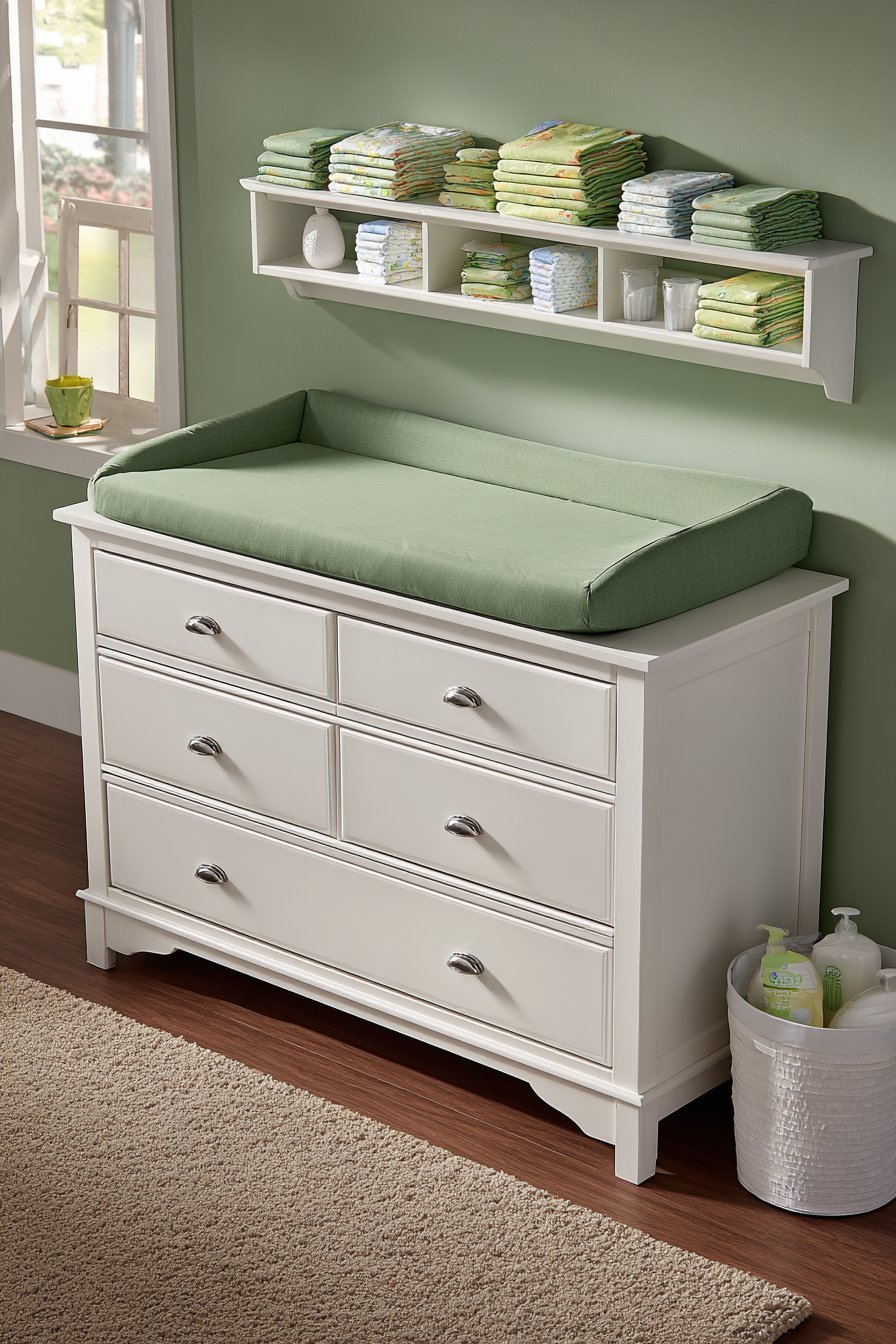
The changing pad contours provide safety during diaper changes. The raised edges prevent rolling. The washable cover handles inevitable messes. The sage green coordinates with overall design. Function and beauty combine seamlessly.
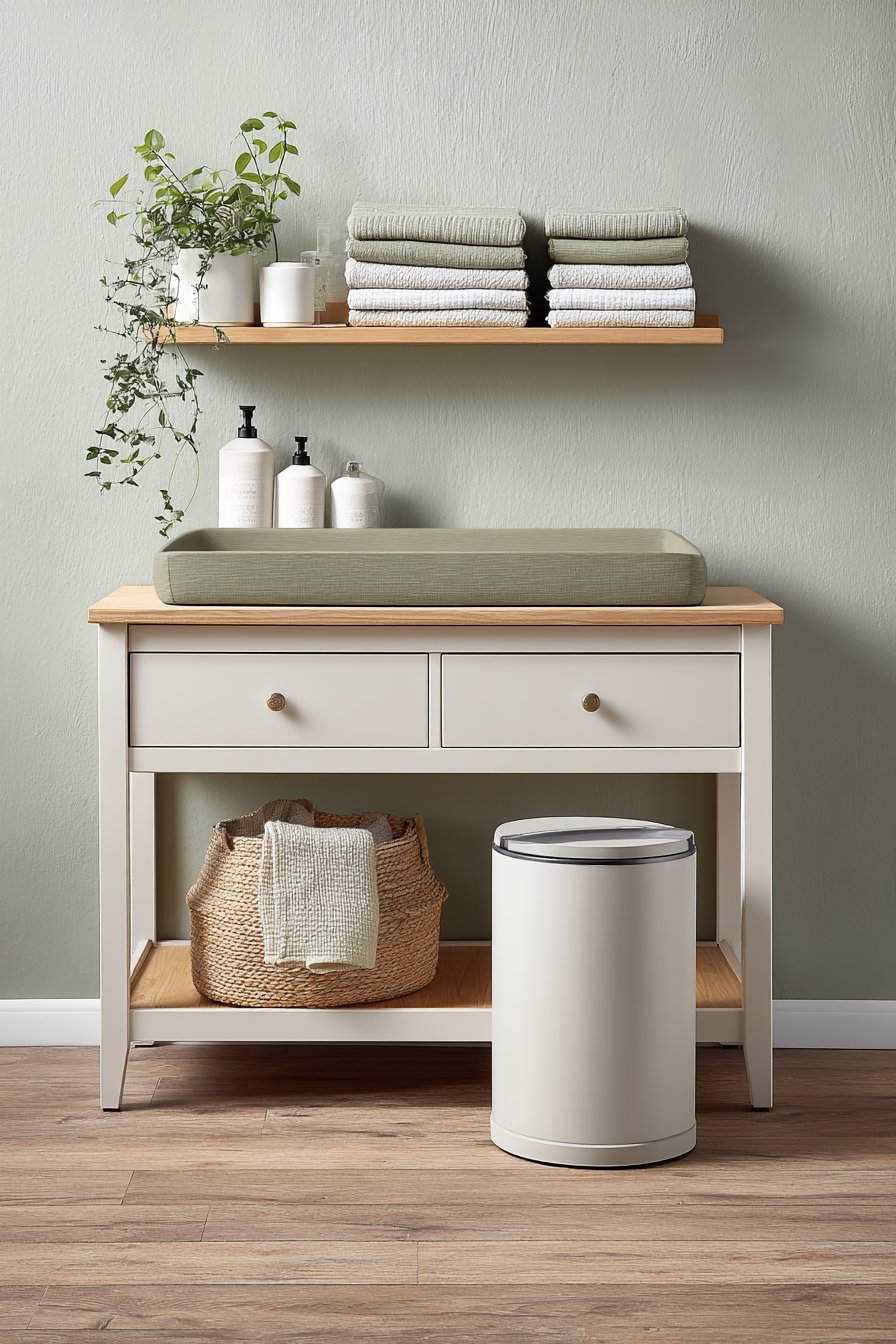
The ceramic containers add refined touch. They keep supplies organized and accessible. Cotton balls, wipes, and creams stay within reach. The white finish matches furniture. The practical storage looks intentionally decorative.
Key Design Tips:
- Choose changing pads with contoured edges for added safety
- Select washable changing pad covers in colors that hide minor stains
- Mount wall shelves at a comfortable reaching height during standing
- Use attractive containers for supplies visible on dresser tops
- Position waste bins within easy reach but out of toddler access
9. Safe Cream Play Area
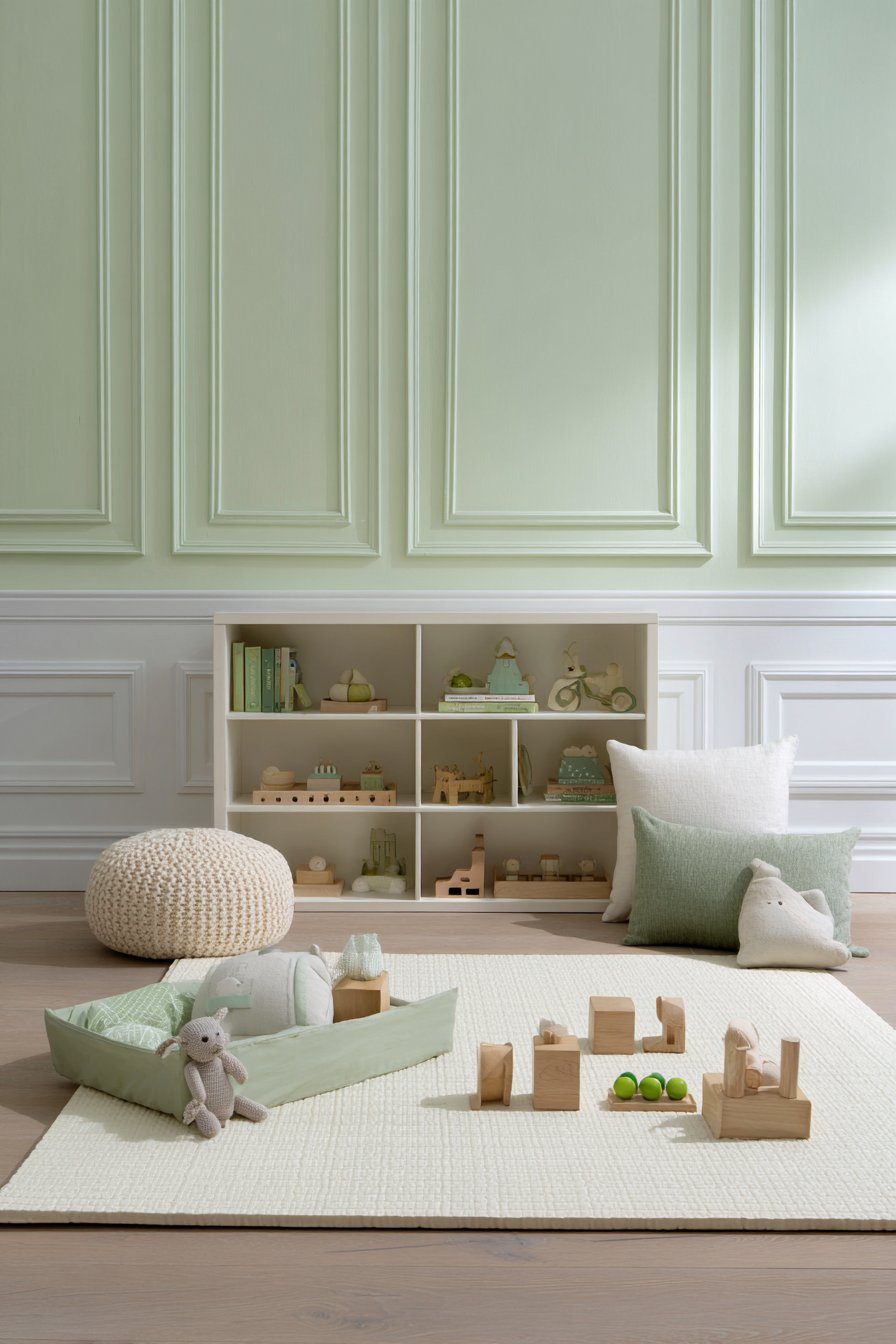
A thick foam play mat in cream with subtle green accents provides safe cushioning. Age-appropriate wooden toys in natural finishes scatter within easy reach. White baseboards contrast against mint green walls. A low white bookshelf displays board books and soft toys.
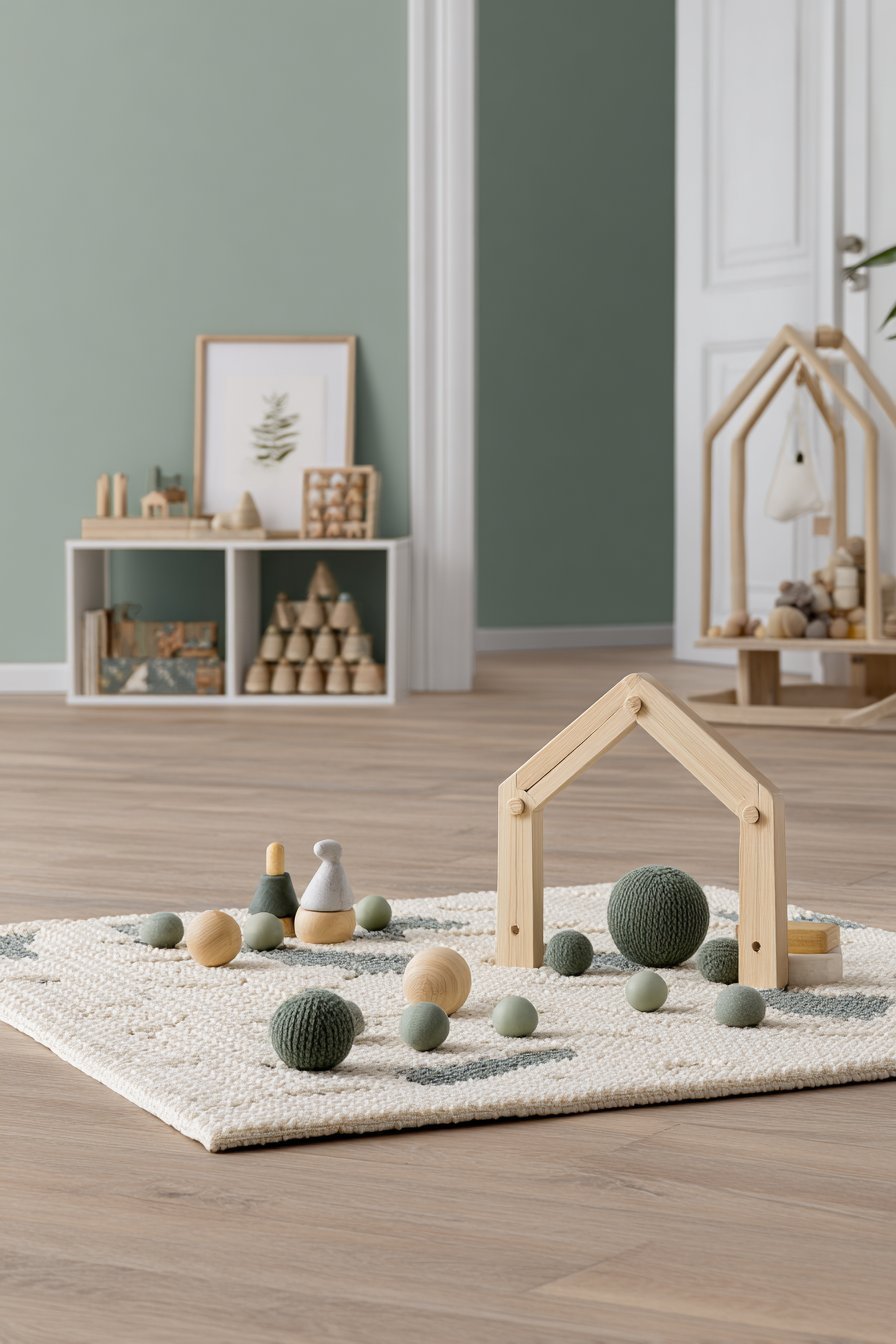
The play area design prioritizes safety and development. The foam mat cushions during tummy time. The generous thickness protects from hard floors. The cream color maintains clean appearance. The green accents tie into overall palette.
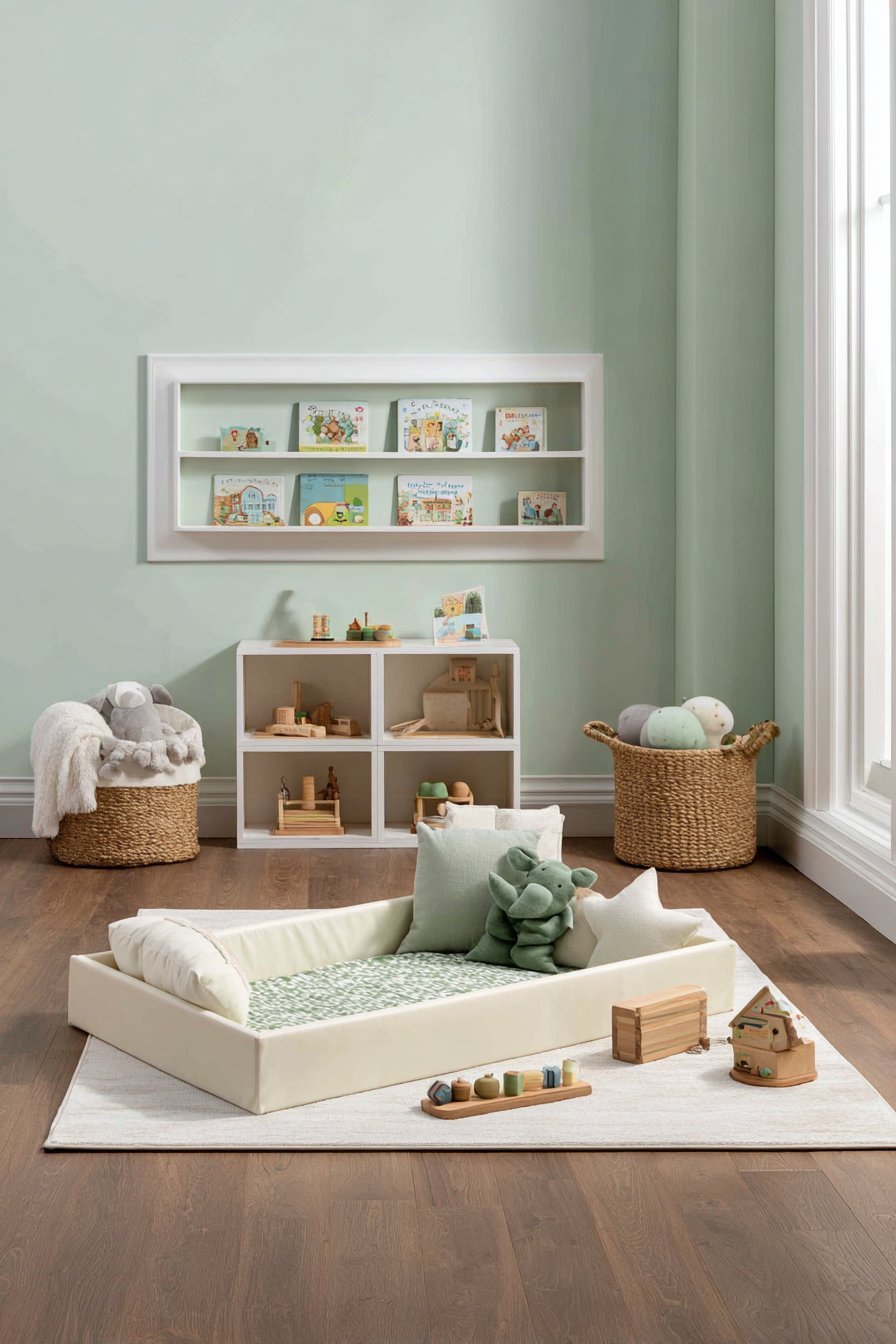
Wooden toys offer sensory experiences. Natural finishes are safe for mouthing. The simple designs encourage imagination. The toys arrange at baby height. Independent exploration becomes possible.
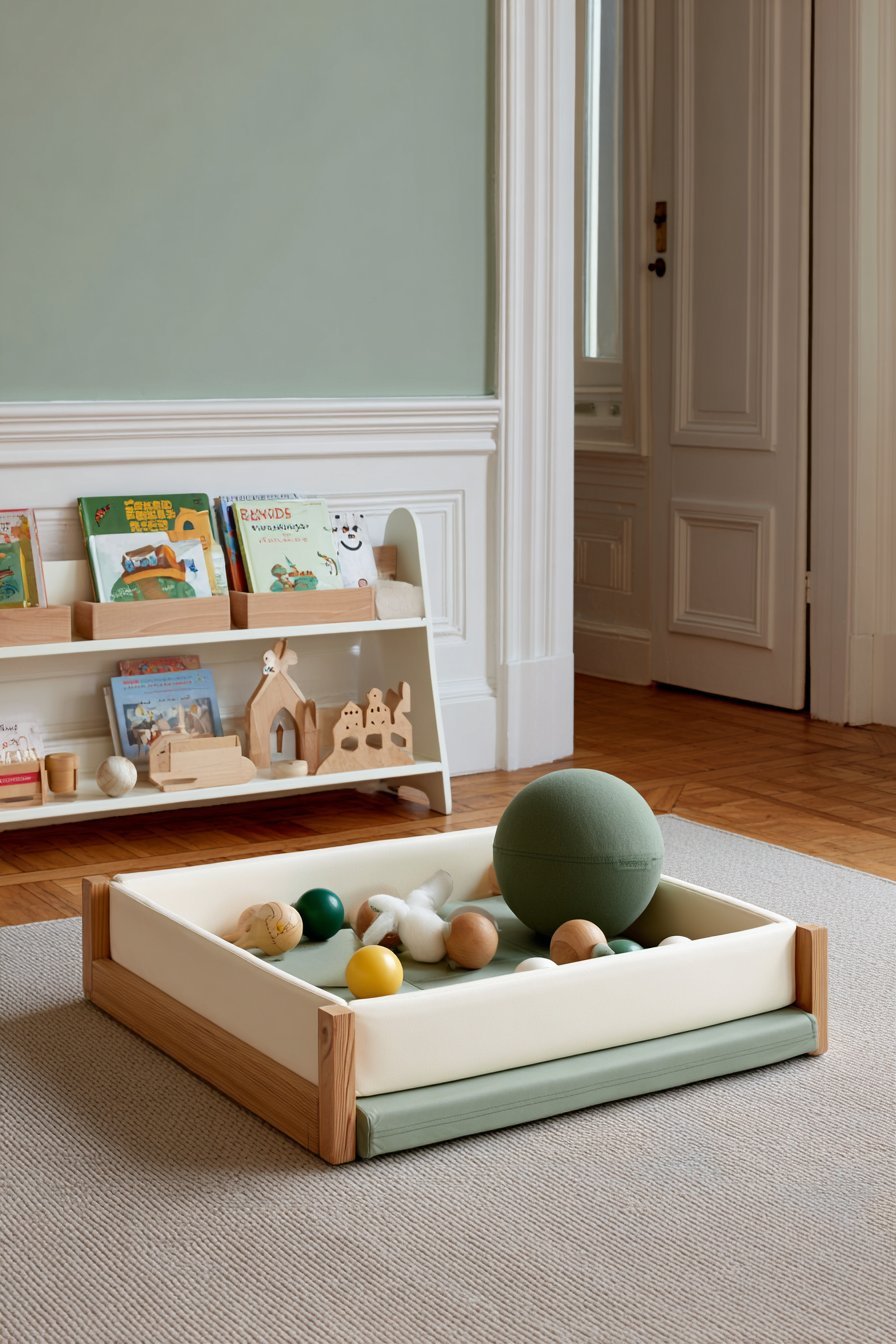
The low bookshelf promotes early literacy. Board books withstand rough handling. Soft toys provide comfort and companionship. Everything remains accessible to crawling babies. The white finish keeps the corner bright.
Key Design Tips:
- Choose foam play mats at least one inch thick for adequate cushioning
- Select wooden toys with non-toxic natural finishes for safety
- Position play areas away from furniture with sharp edges
- Keep toy collections minimal to prevent overstimulation
- Store board books at floor level to encourage independent access
10. Serene Seafoam Sleep Space
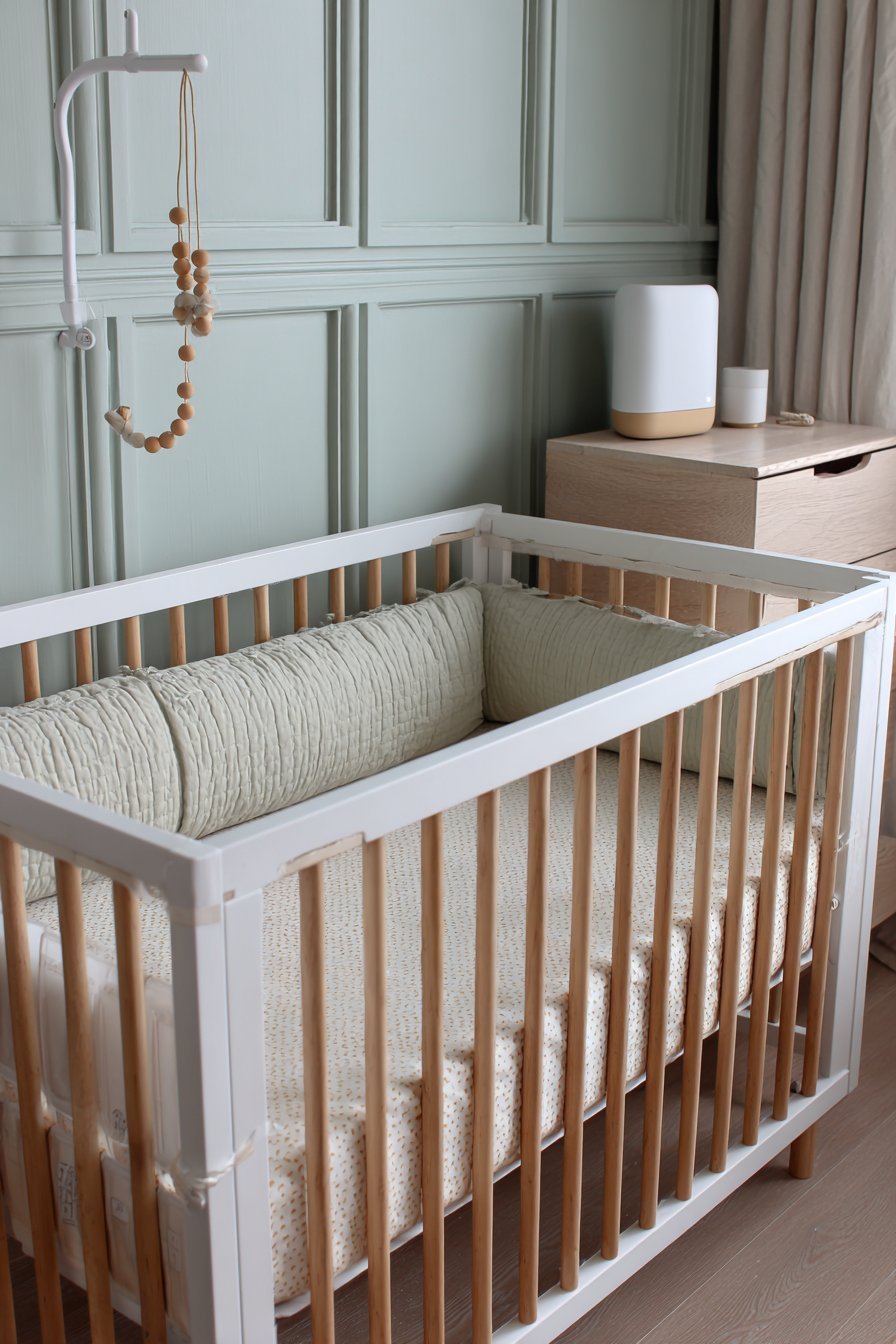
A white wooden crib features organic cotton fitted sheet in light sage green. A breathable mesh crib bumper provides safety without suffocation risk. A simple mobile with natural wooden beads hangs at appropriate height. The gentle seafoam green walls create matte finish backdrop.
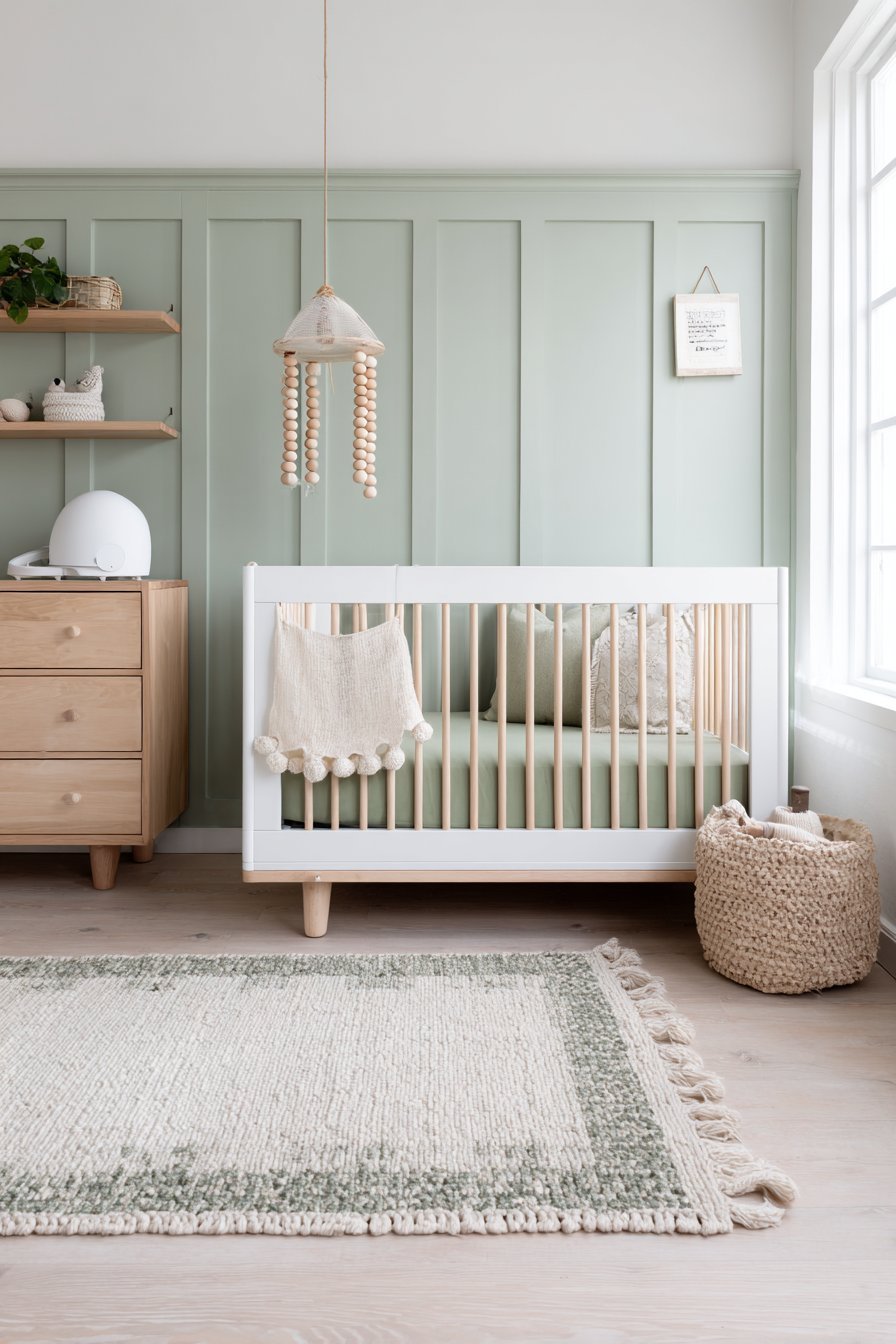
The crib mattress sits at highest safe setting for newborn use. The positioning allows easy baby placement. Parents avoid excessive bending. The adjustment capability serves changing needs. Safety remains constant priority.
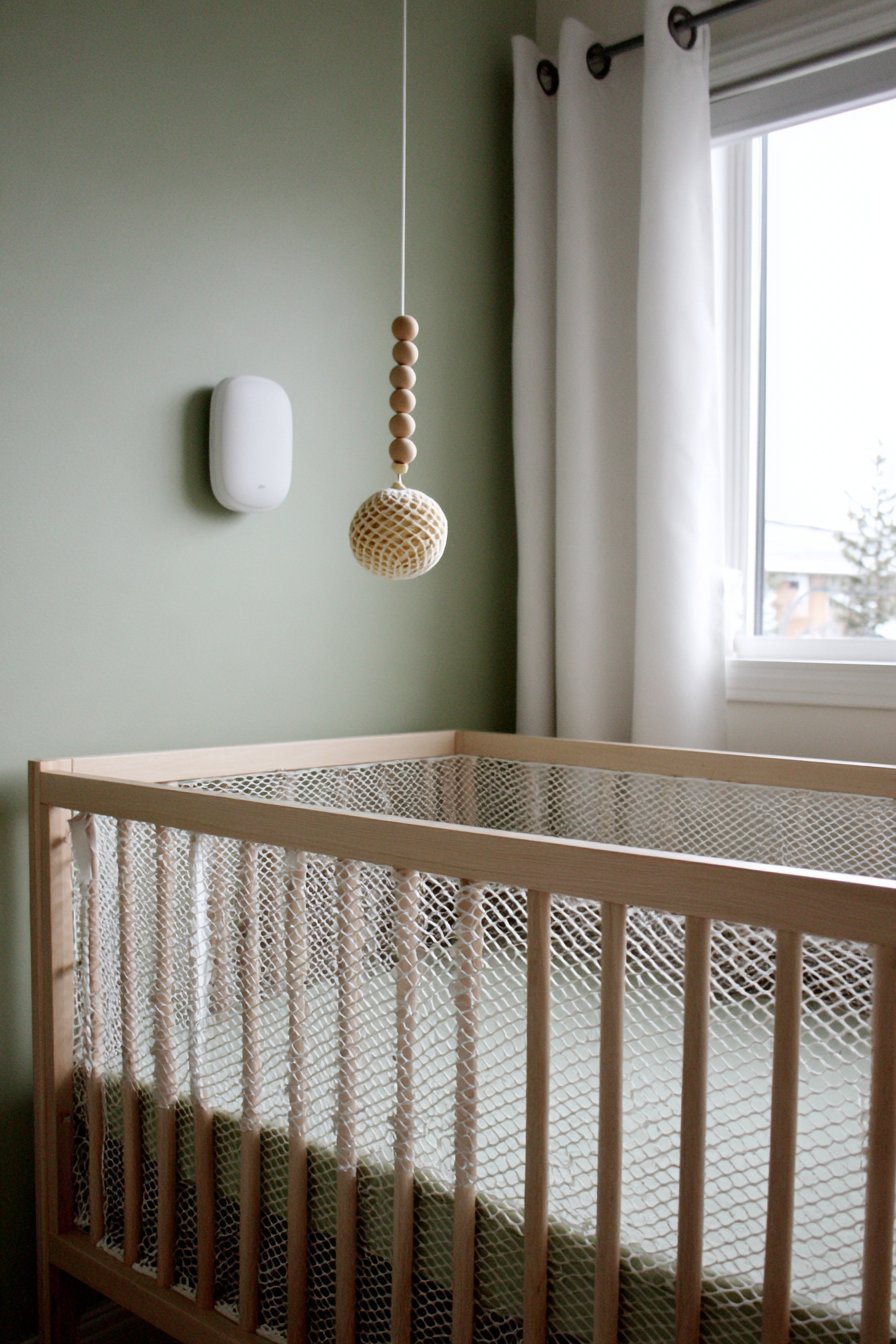
The organic cotton sheet feels soft against delicate skin. The material breathes naturally. The light sage green maintains calm aesthetic. The fitted design stays secure during sleep. Quality materials support healthy rest.
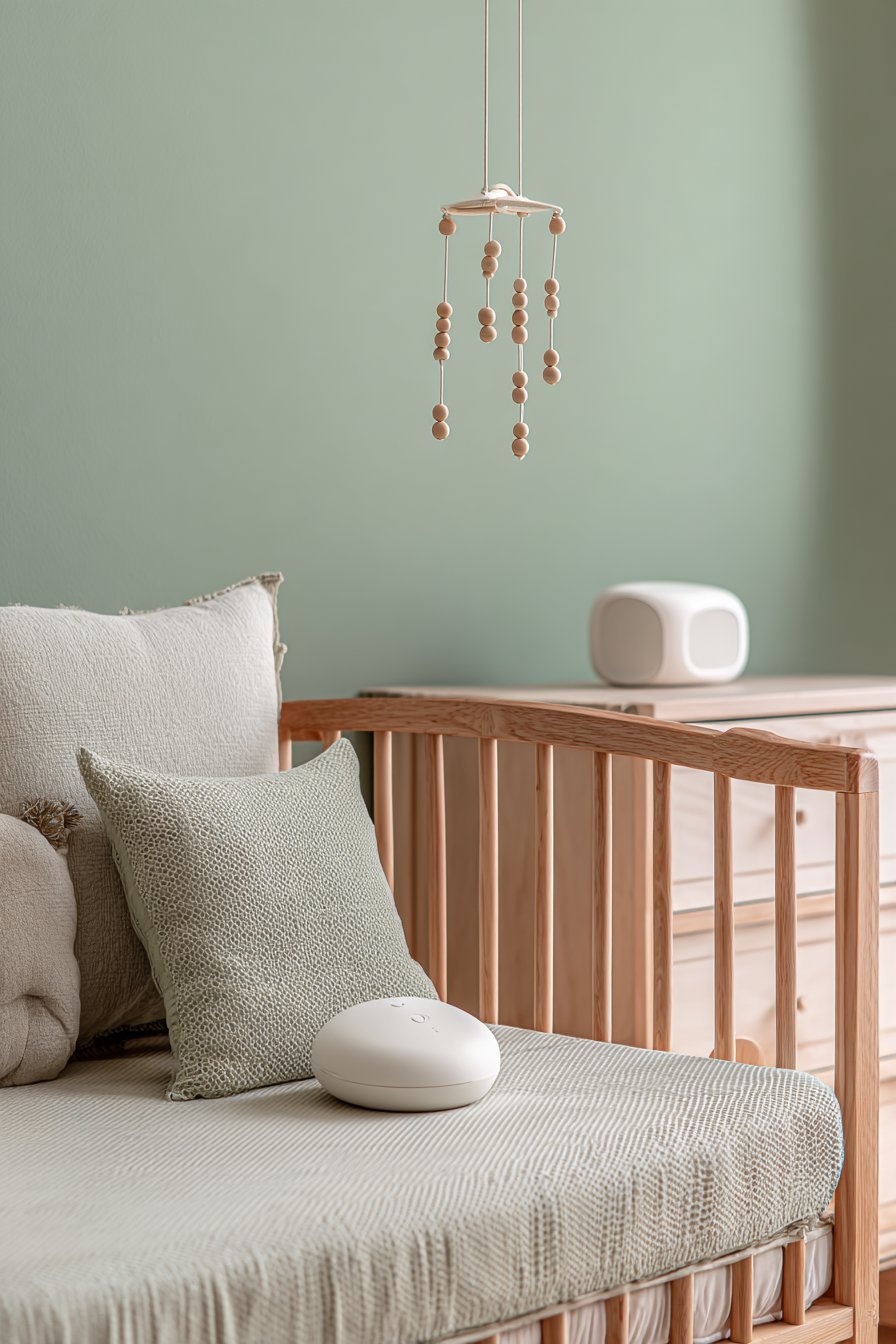
The white noise machine sits on nearby dresser. The consistent sound promotes better sleep. The compact design fits easily. The volume adjusts to safe levels. This tool helps establish sleep routines.
Key Design Tips:
- Use only fitted sheets that fit mattress dimensions precisely
- Keep cribs completely clear except for fitted sheet during sleep times
- Position mattress at highest setting for newborns, lowering as baby grows
- Select organic cotton bedding to minimize chemical exposure
- Place white noise machines at safe distances from crib
11. Comfortable Pale Green Nursing Station
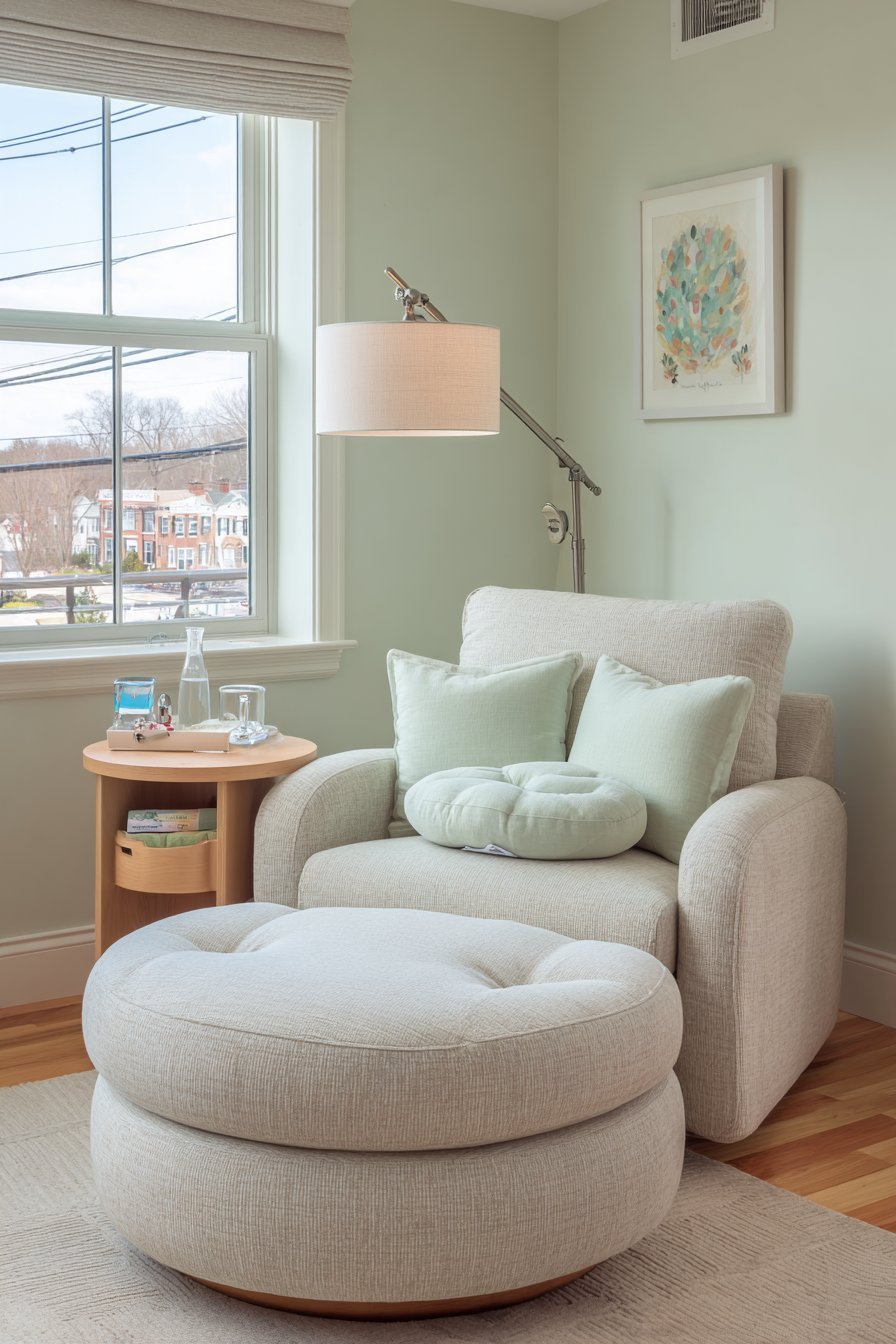
A comfortable glider with ottoman in cream performance fabric anchors the nursing corner. Light green accent pillows provide lumbar support. A C-shaped nursing pillow in sage green cotton rests ready. Small white oak side table holds essentials within arm’s reach.
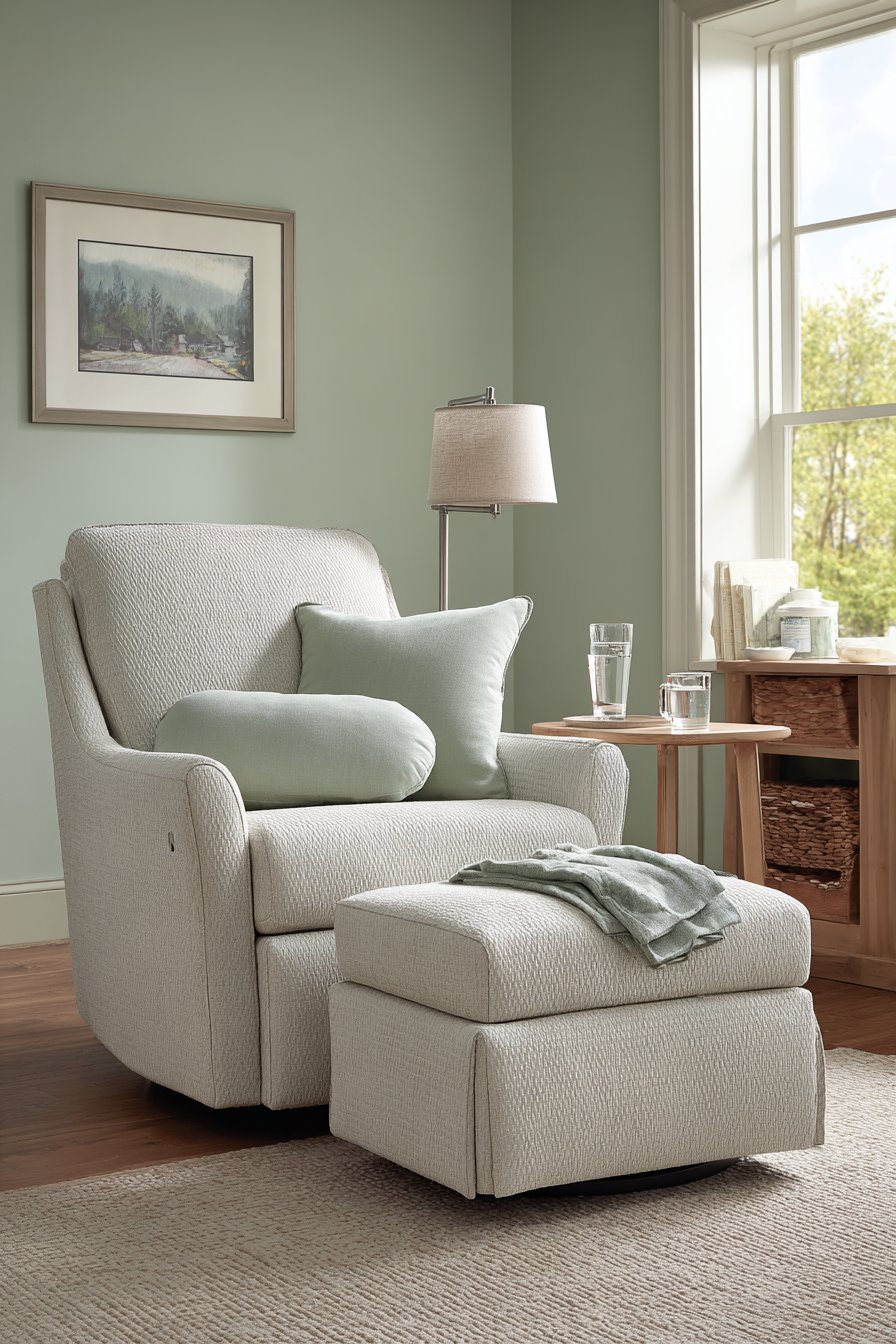
The warm pale green walls create restful environment. Natural light from nearby window provides daytime visibility. The ergonomic setup supports extended feeding sessions. Comfort becomes priority during frequent nursings. Every element positions thoughtfully.
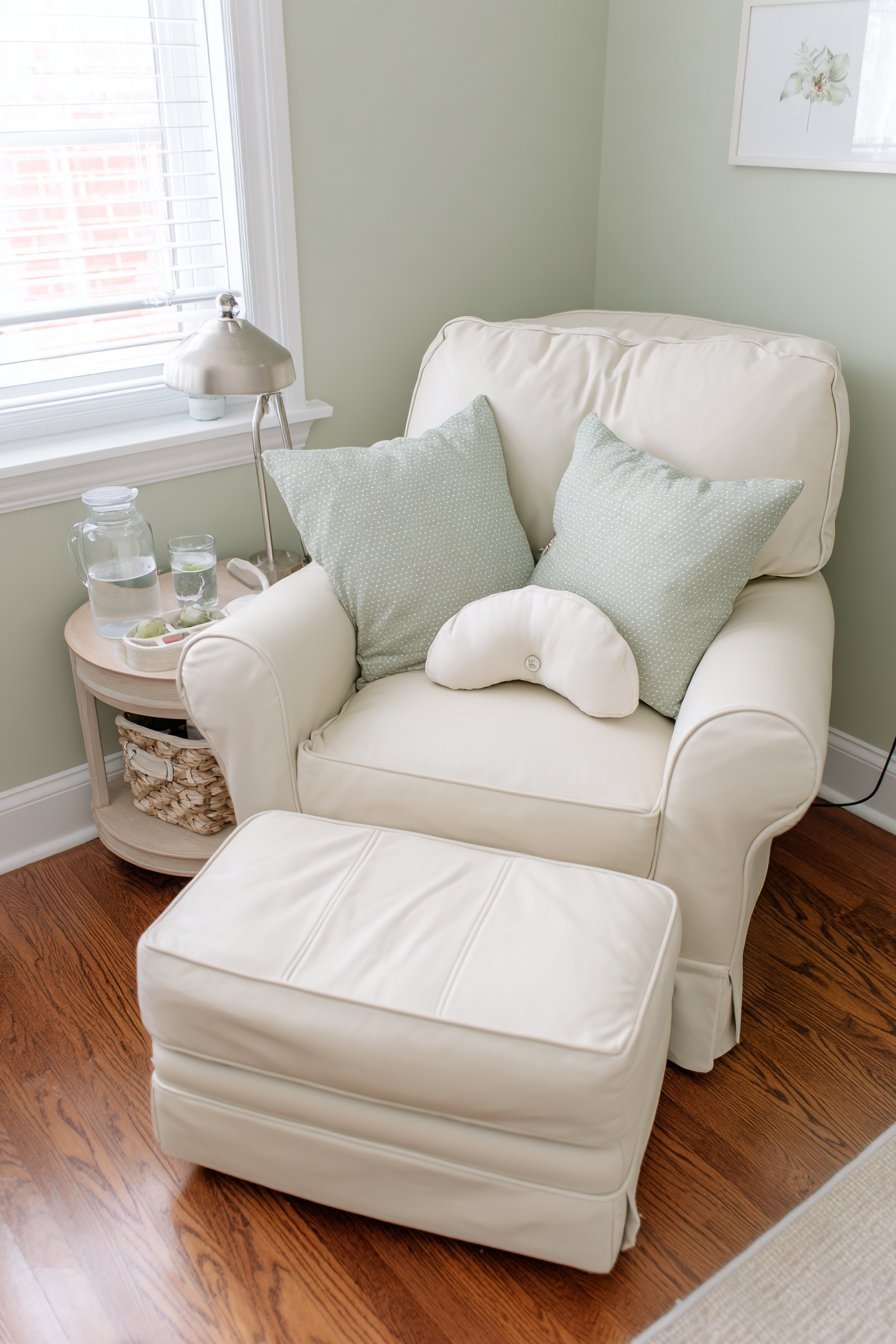
The performance fabric resists stains and spills. The cream color maintains clean appearance. The glider motion soothes both parent and baby. The matching ottoman supports proper posture. These pieces invest in feeding success.
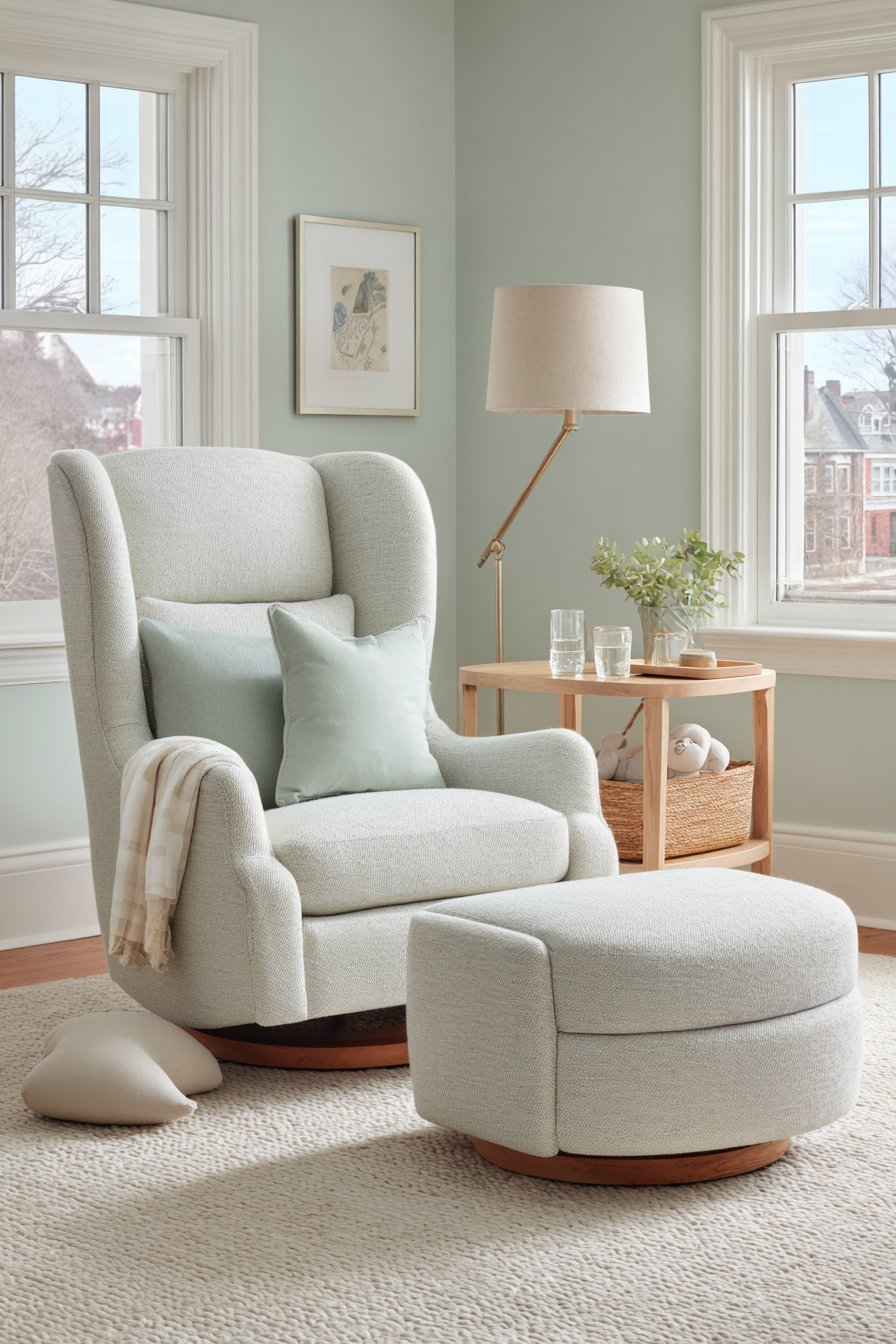
The side table keeps necessities accessible. Water, reading material, and baby care items stay close. The white oak finish adds natural warmth. The compact size fits space efficiently. Nothing requires stretching during nursing.
Key Design Tips:
- Choose gliders with firm back support for proper nursing posture
- Position nursing stations near windows for natural daytime light
- Keep water and snacks within arm’s reach during feeding sessions
- Use performance fabrics that resist stains and clean easily
- Add lumbar pillows to support lower back during extended sitting
12. Personal Jade Growth Corner
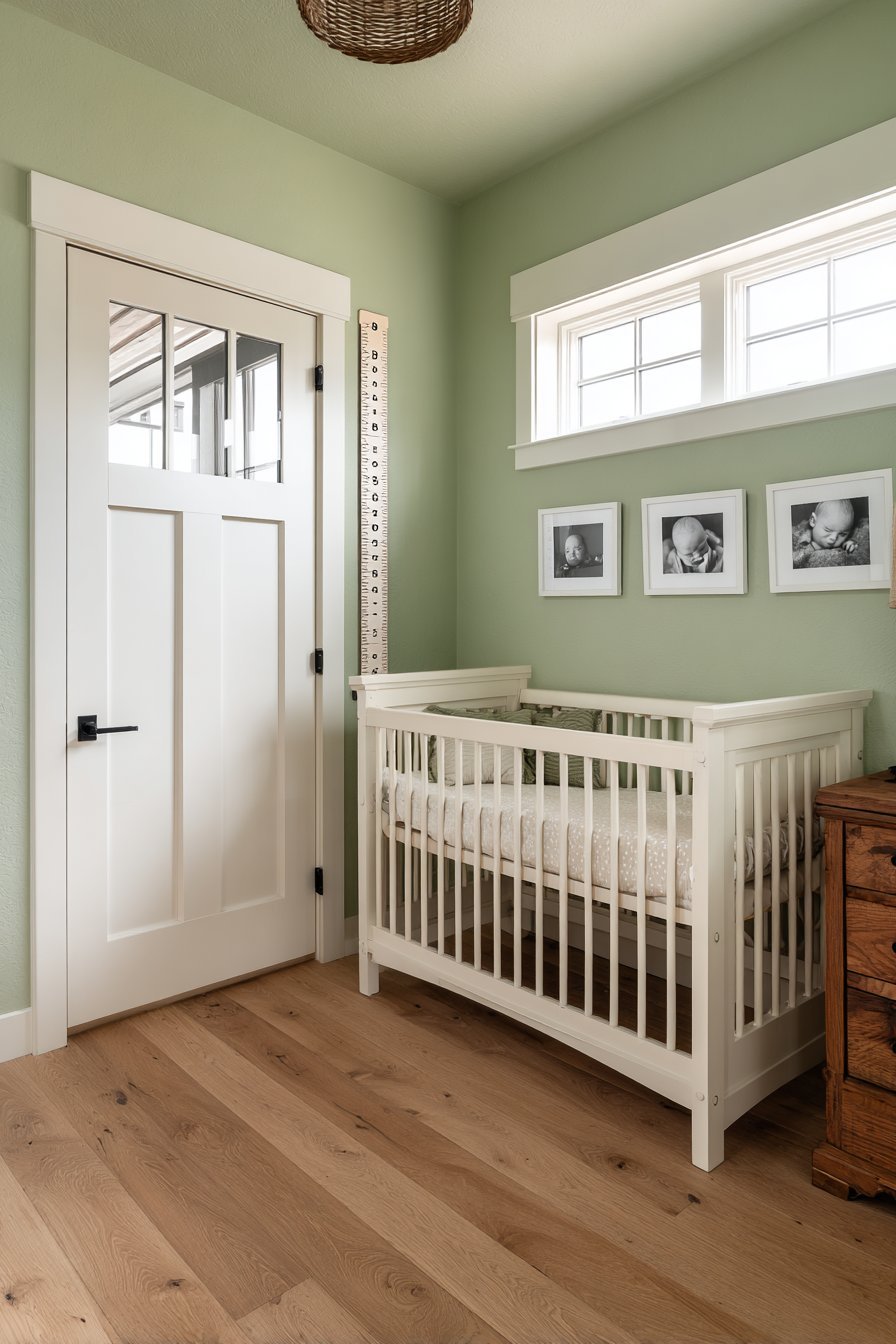
A white wooden growth chart mounts beside the doorframe. Simple measurement markings in natural wood tones stand against soft mint green walls. A small gallery wall nearby displays black and white newborn photos. Light oak flooring reflects gentle natural light.
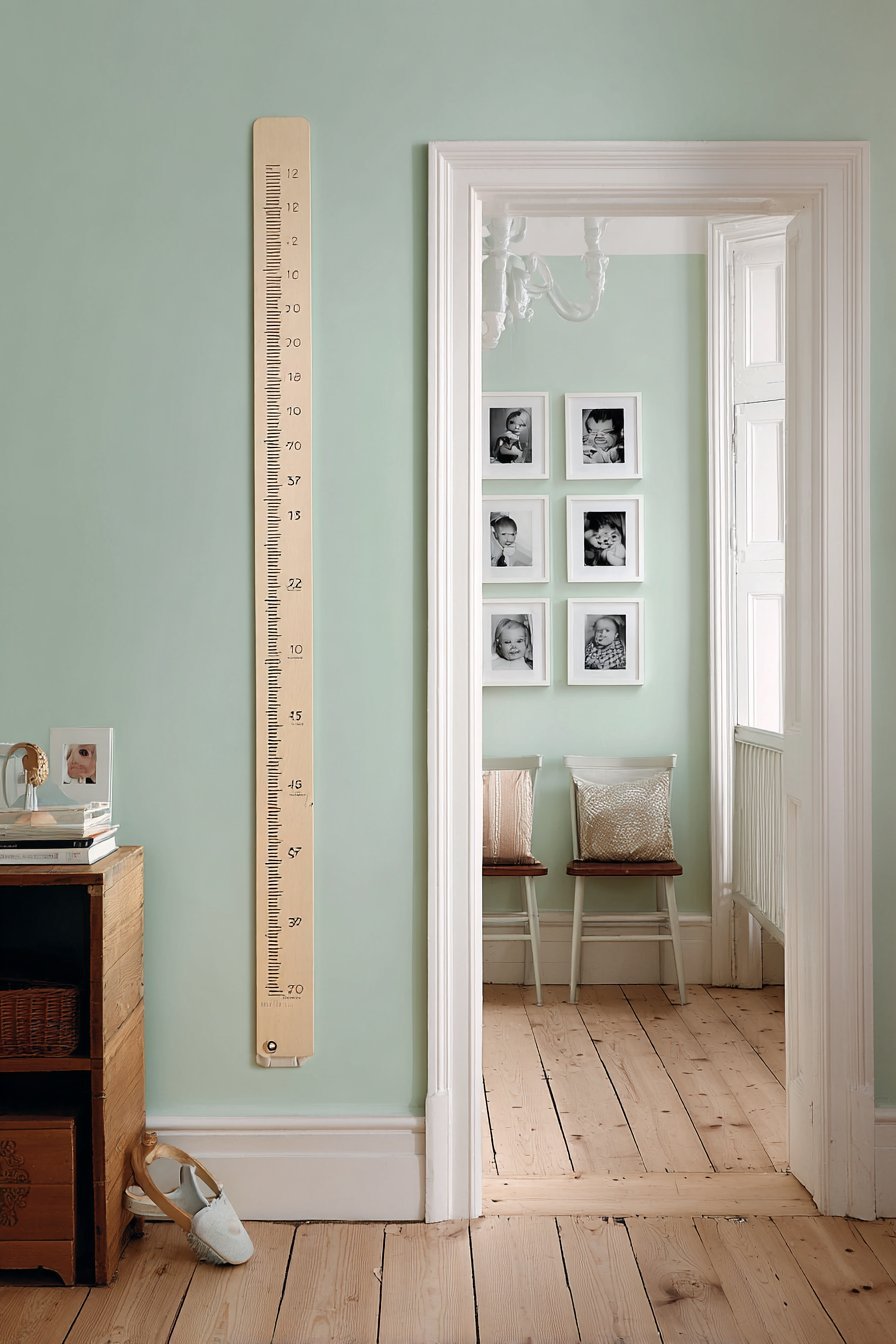
The growth chart tracks development milestones. The wall-mounted design saves floor space. The natural wood complements overall aesthetic. The simple markings read easily. This feature creates lasting memories.
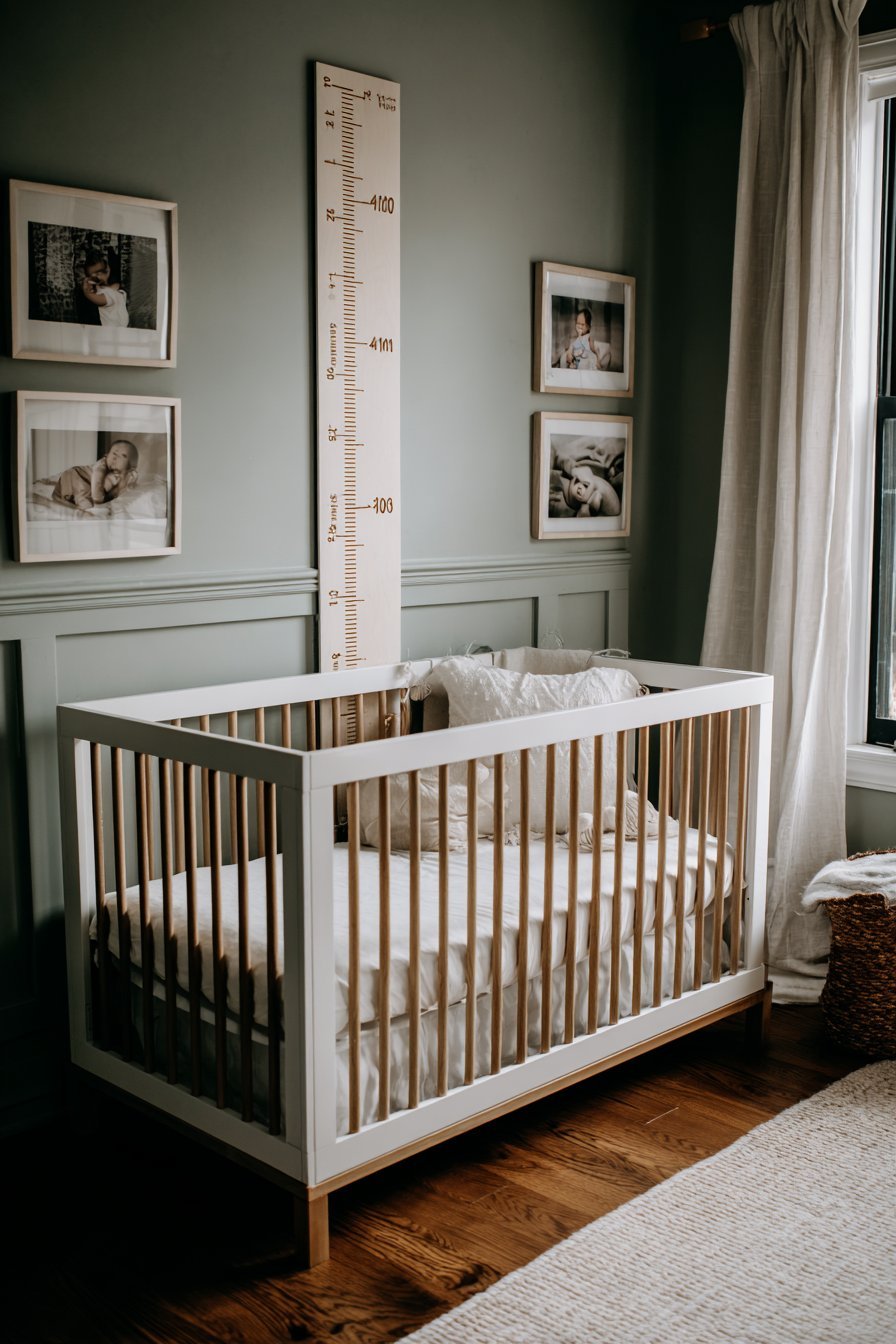
The gallery wall adds personal touches. Black and white photos create classic look. White frames maintain clean consistency. The arrangement celebrates baby’s arrival. These photos become cherished keepsakes.
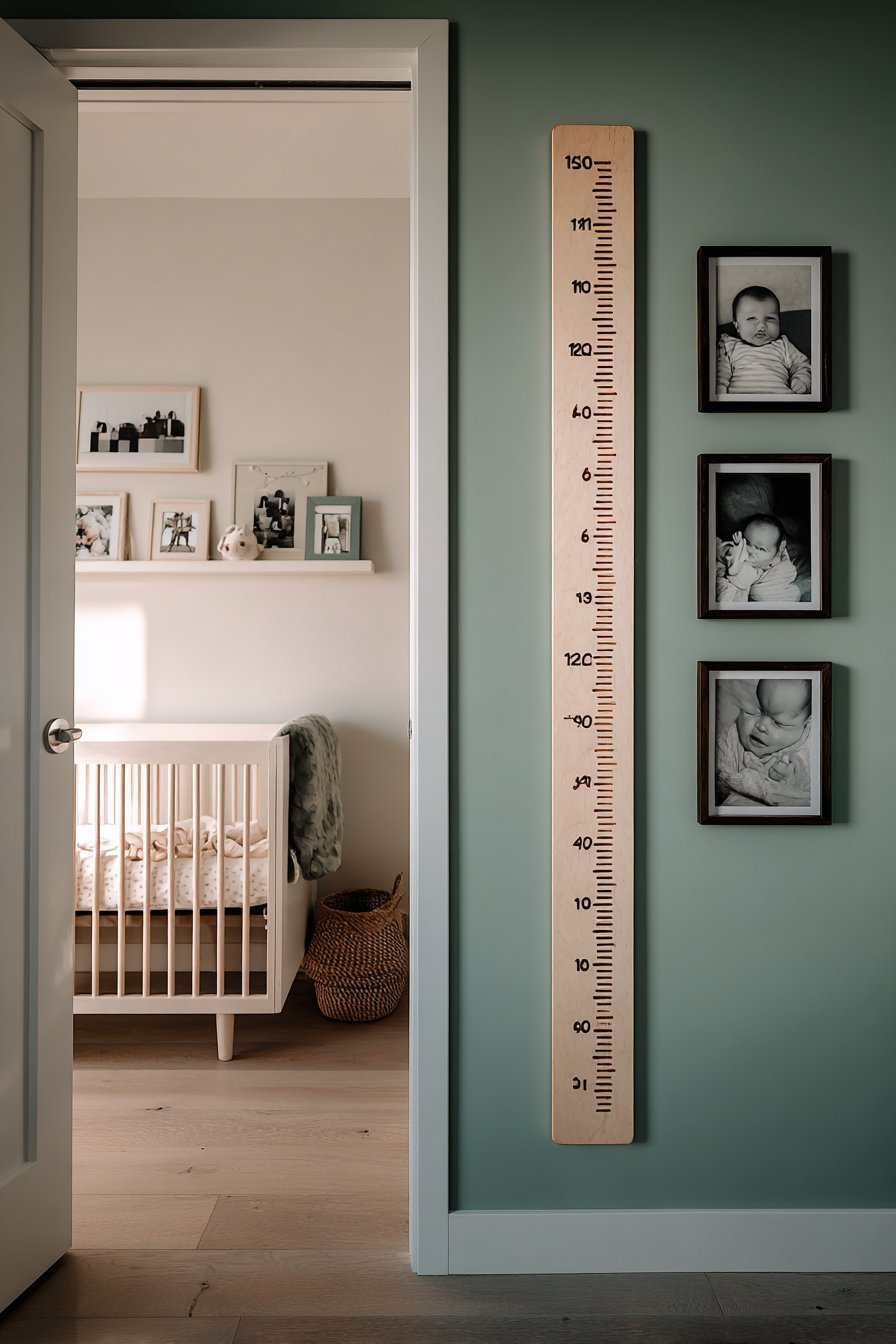
The doorframe positioning makes checking height convenient. The measurements mark special moments. The integration into room design feels natural. The jade green background provides perfect backdrop. Form and function unite beautifully.
Key Design Tips:
- Mount growth charts beside doorframes where children naturally stand
- Use permanent markers or pencil for accurate height recordings
- Create gallery walls with matching frame styles for cohesive appearance
- Position personal photos at adult eye level for comfortable viewing
- Choose black and white photography for timeless nursery aesthetic
13. Adaptable Subtle Jade Corner
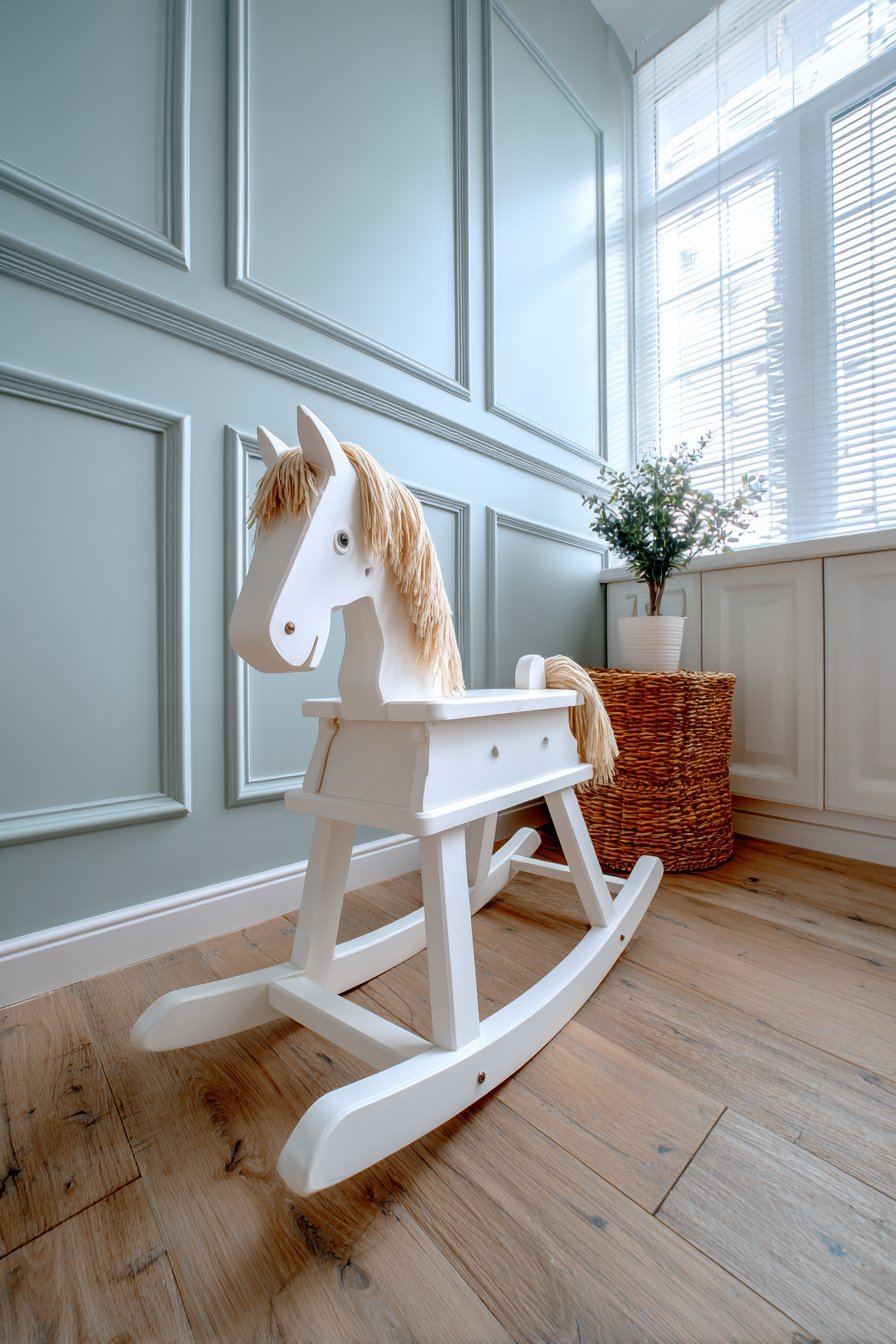
A white wooden rocking horse with natural mane positions near windows. The corner serves current decorative purposes. A small white ceramic potted plant adds life. A woven basket stores future toy collection. Subtle jade green walls provide warm undertones.
White wainscoting adds architectural interest to lower walls. The traditional detail elevates the design. The corner considers future developmental stages. The rocking horse awaits toddler years. Thoughtful planning prevents future renovations.
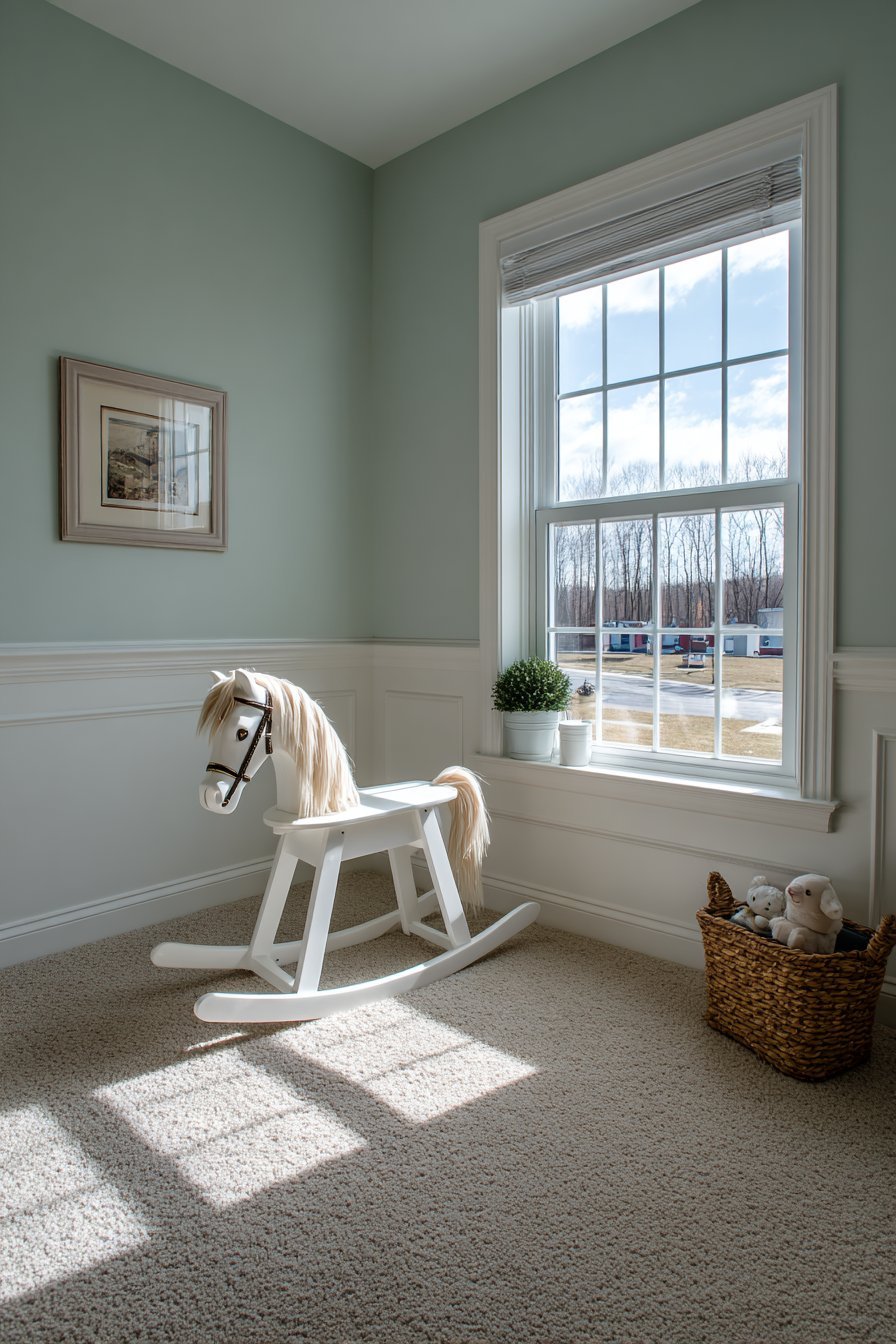
The window positioning provides natural light for future play. The corner remains functional during infancy. The plant adds living element. The basket offers practical storage. The design grows with the child.
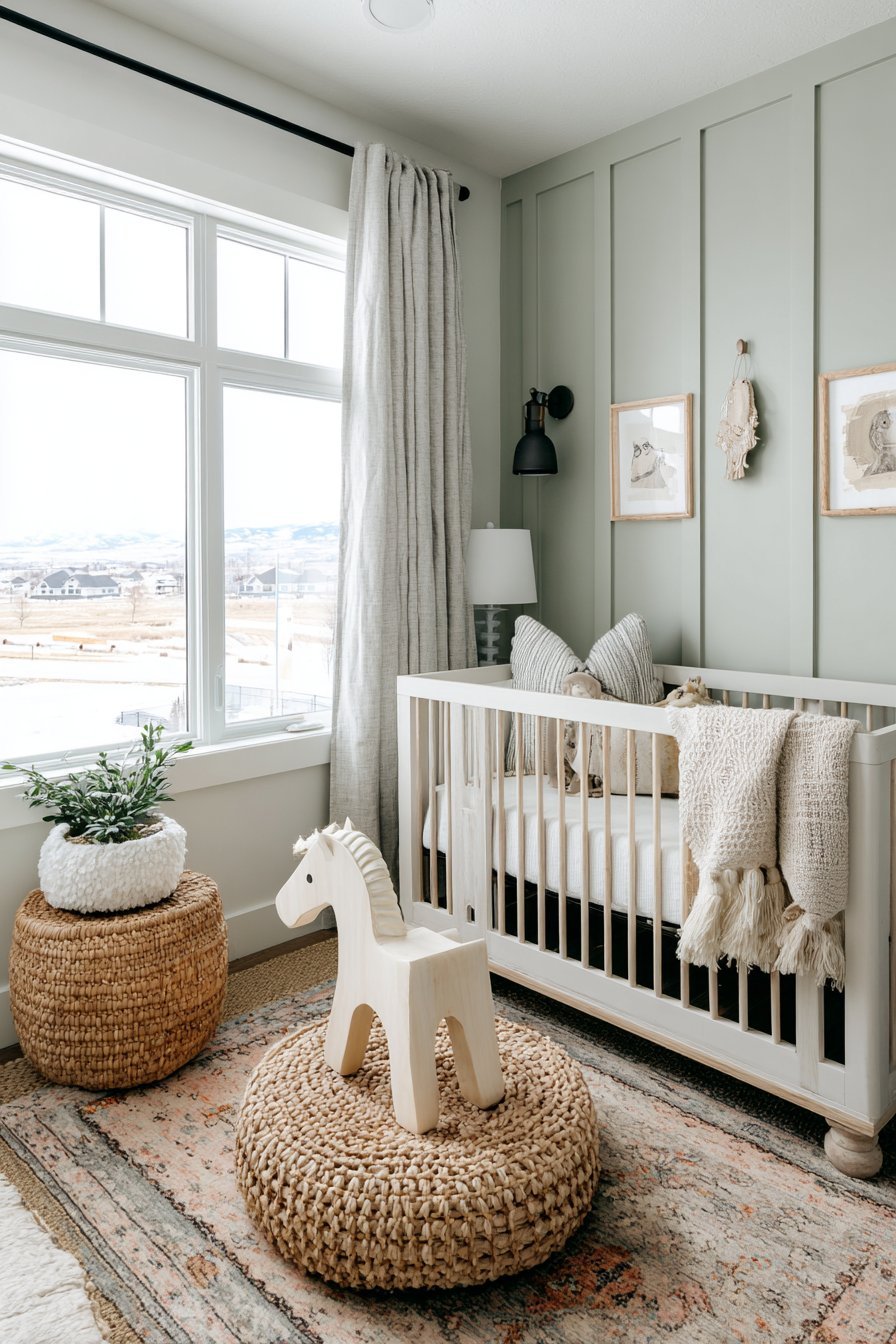
The jade walls create sophisticated backdrop. The warm undertones prevent coldness. The color supports various development stages. The wainscoting protects walls from future wear. This investment in quality details pays long-term dividends.
Key Design Tips:
- Design nursery spaces that transition easily into toddler rooms
- Add architectural details like wainscoting for lasting visual interest
- Position future play equipment near natural light sources
- Use decorative storage that serves multiple purposes over time
- Choose paint colors that work for both infant and toddler stages
14. Practical Cool Green Circulation Space
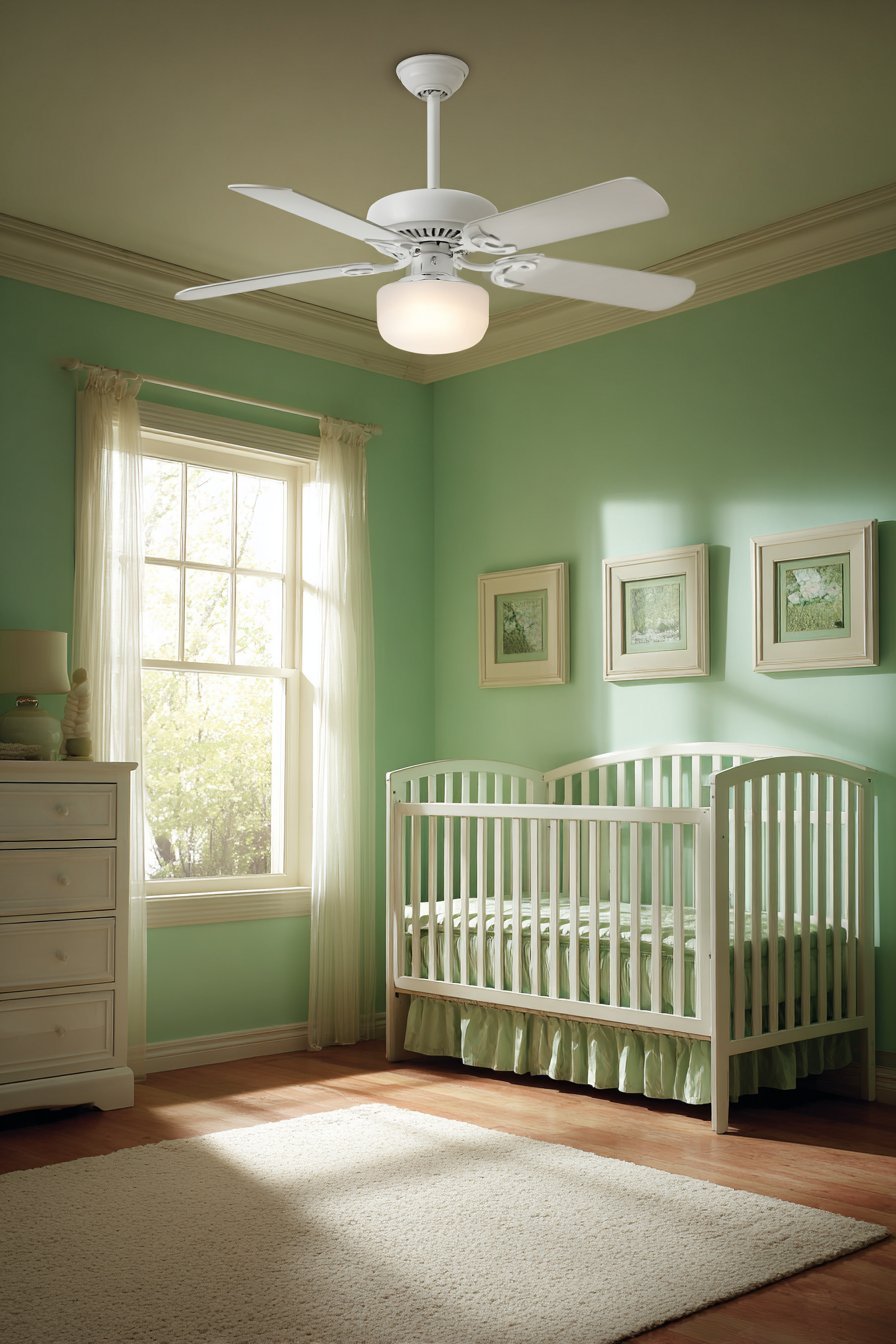
A white ceiling fan with reversible blades provides gentle air circulation. Integrated LED lighting offers illumination control. The white crib with light green bedding centers beneath. Cool-toned pale green walls create refreshing atmosphere.
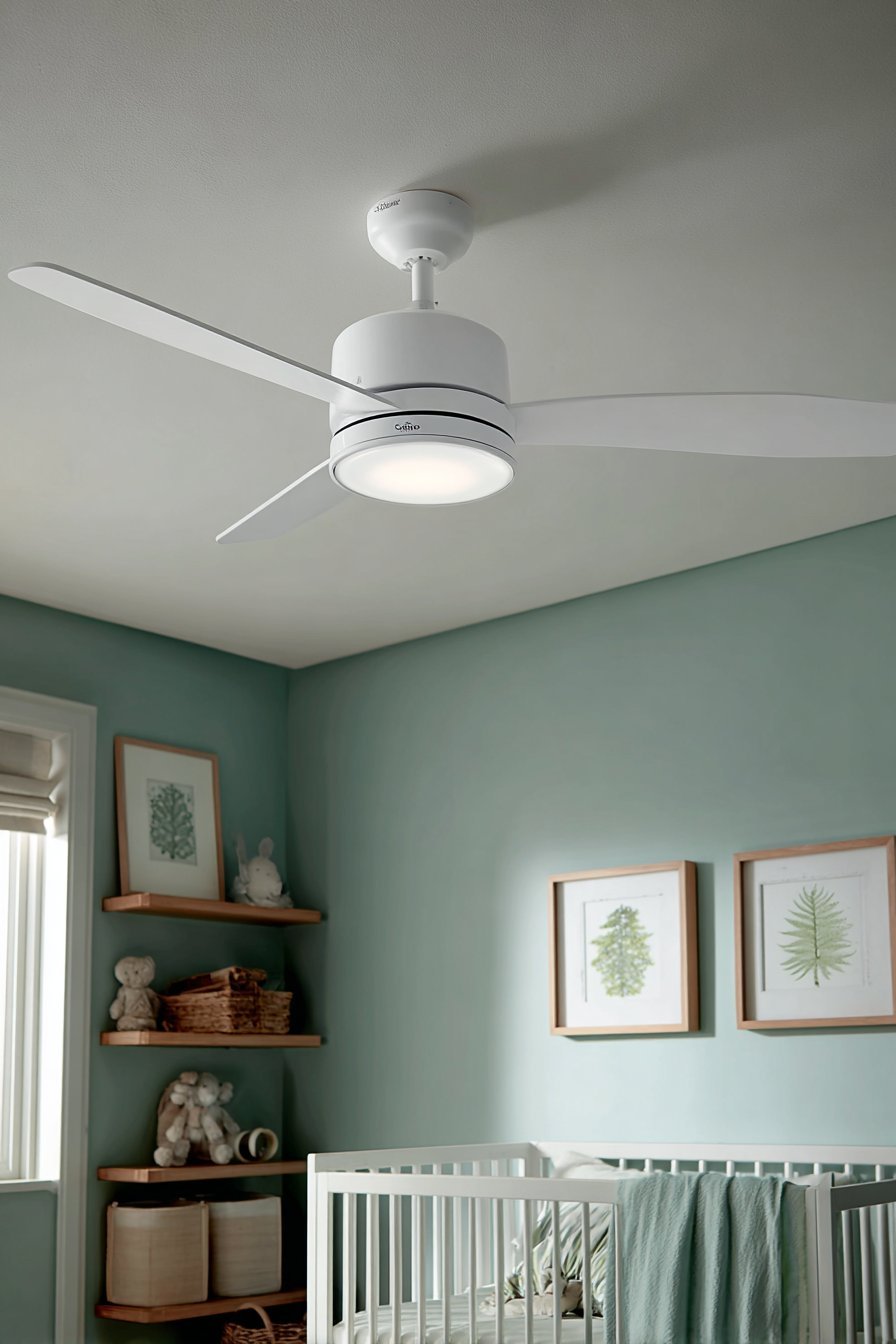
Natural wood picture frames hang at adult eye level. Simple nature photography fills the frames. The images connect to outdoor world. The arrangement avoids overcrowding walls. The clean presentation maintains calm environment.
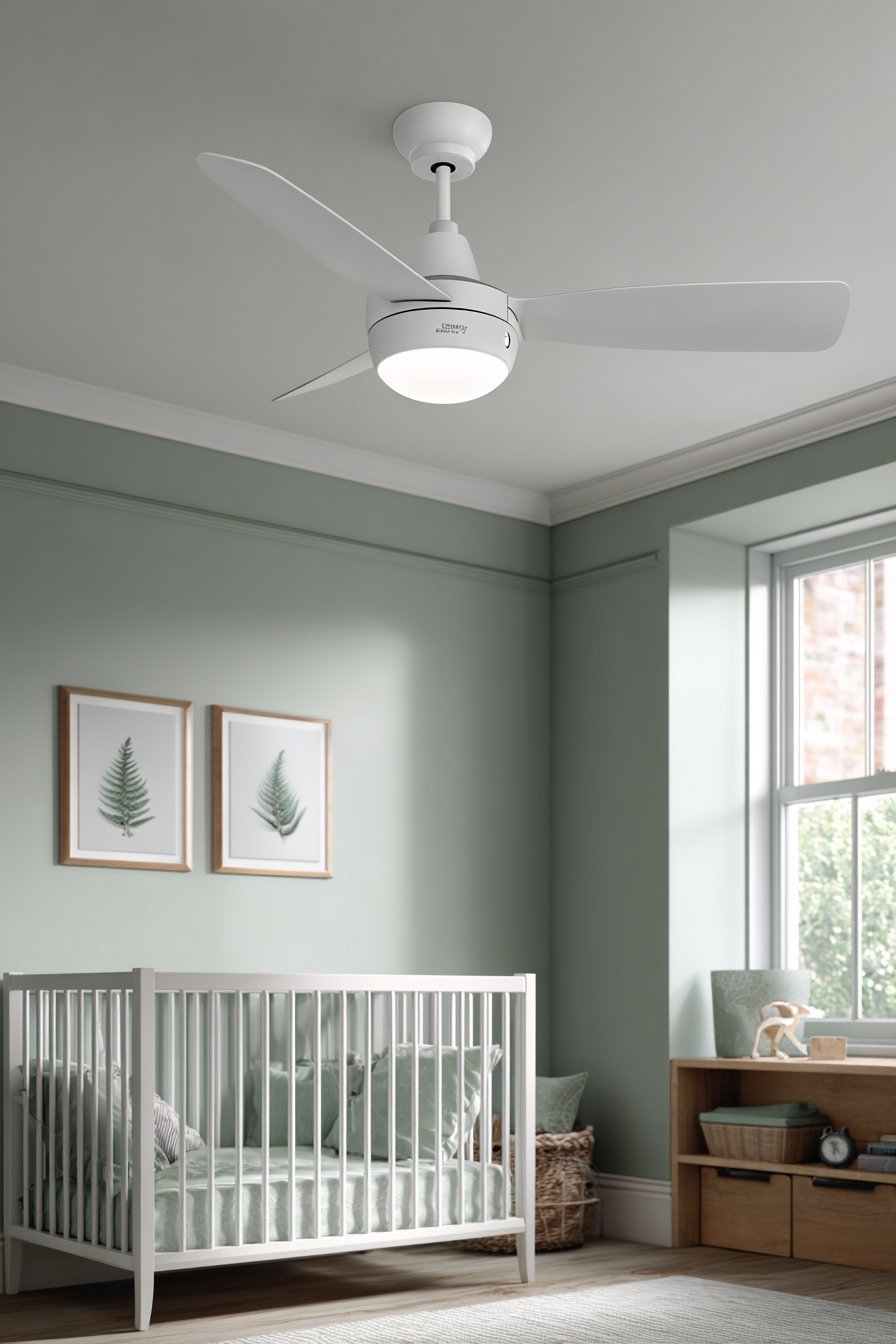
The ceiling fan serves important safety functions. Gentle air movement supports safe sleep environments. The reversible blades adjust for seasonal needs. Summer cooling and winter warming both achieve easily. The LED lighting reduces energy consumption.
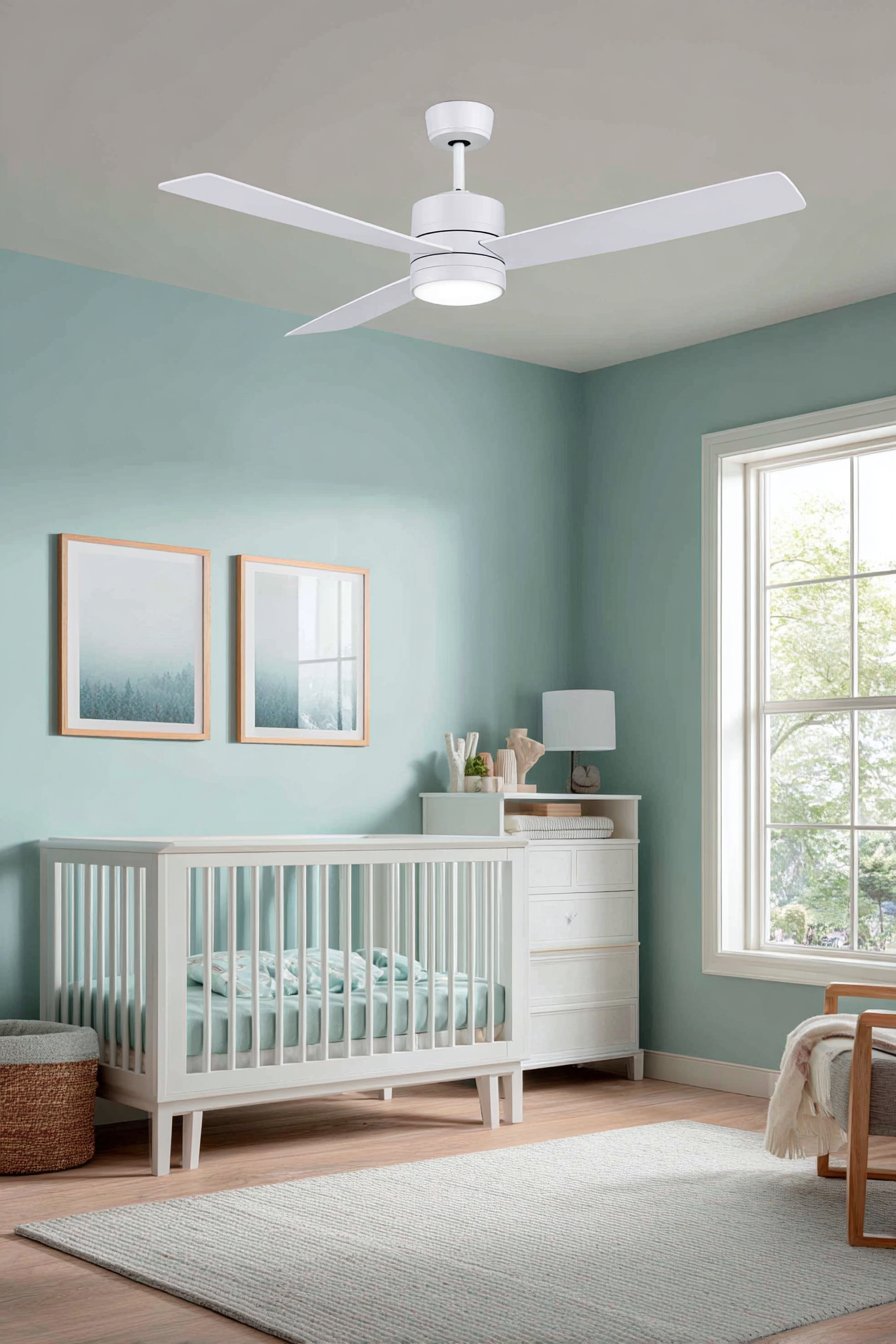
The cool green walls balance the space temperature visually. The tone refreshes without coldness. The pale intensity maintains serenity. The color supports quality rest. This choice demonstrates color psychology understanding.
Key Design Tips:
- Install ceiling fans to improve air circulation in nursery spaces
- Choose fans with reversible blades for year-round functionality
- Keep fan speeds on low settings to prevent excessive air movement
- Mount picture frames at adult eye level rather than baby’s view
- Use LED lighting to reduce heat generation and energy costs
15. Health-Conscious Dusty Sage Setup
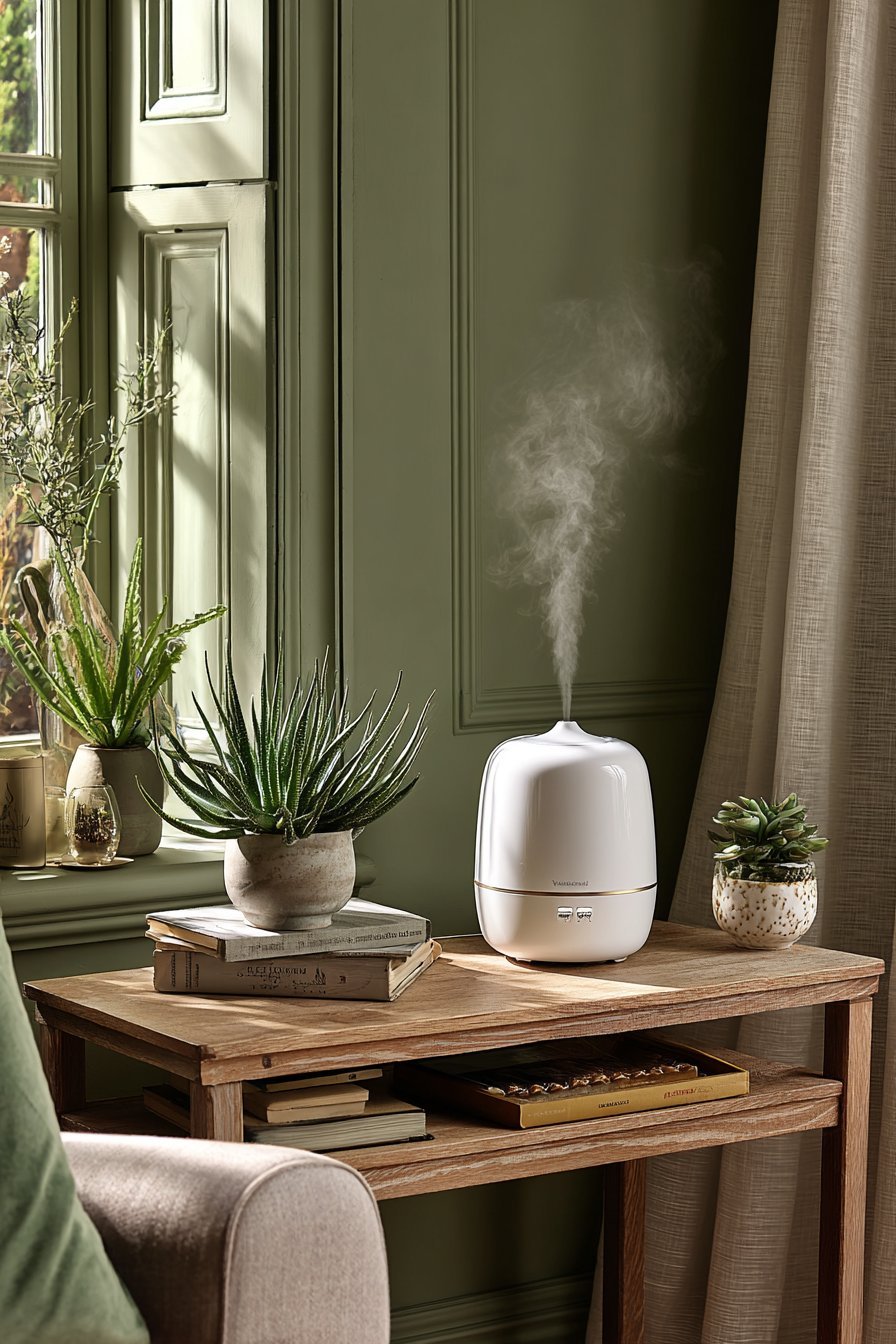
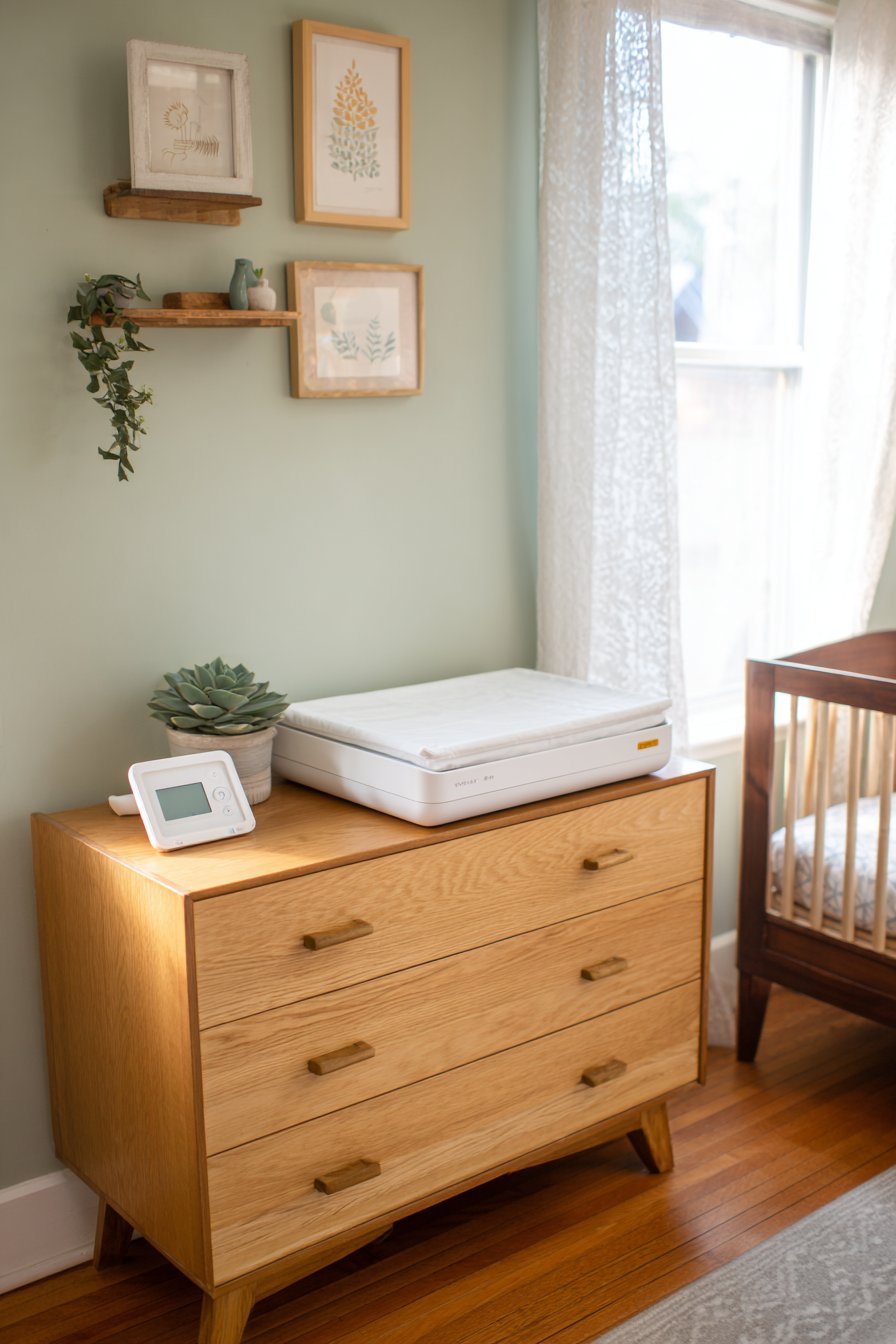
A white humidifier sits on small console table maintaining optimal air moisture. The table also holds digital baby monitor and small succulent. Dusty sage green walls create peaceful backdrop. Sheer white curtain diffuses afternoon sunlight beautifully.
The humidifier supports infant respiratory health. Proper moisture levels prevent dry skin and congestion. The quiet operation avoids sleep disruption. The white design maintains aesthetic consistency. This equipment integrates thoughtfully into design.
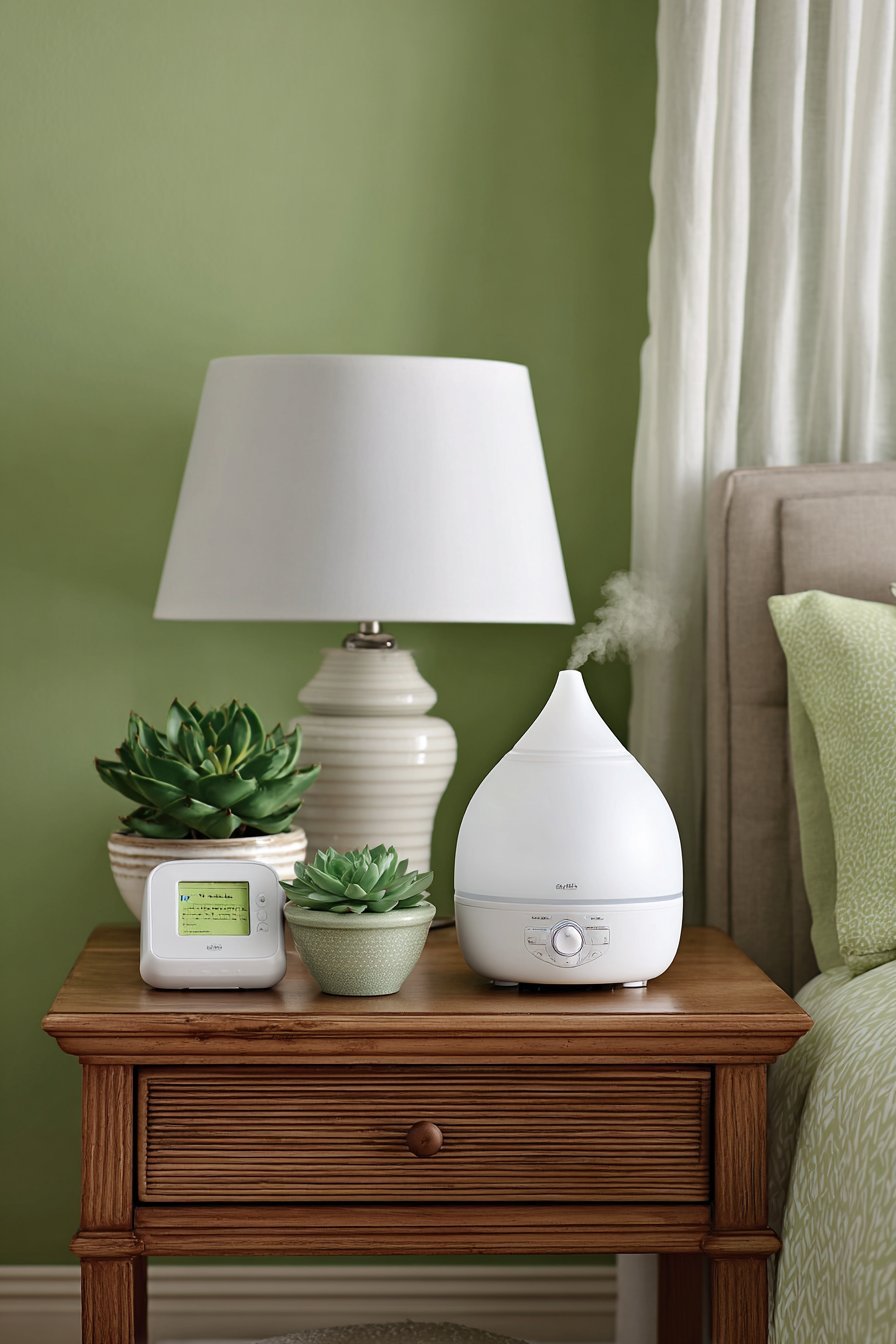
The baby monitor provides peace of mind. The digital display shows clear images. The two-way communication allows soothing from anywhere. The compact design fits easily. Modern technology supports parenting confidence.
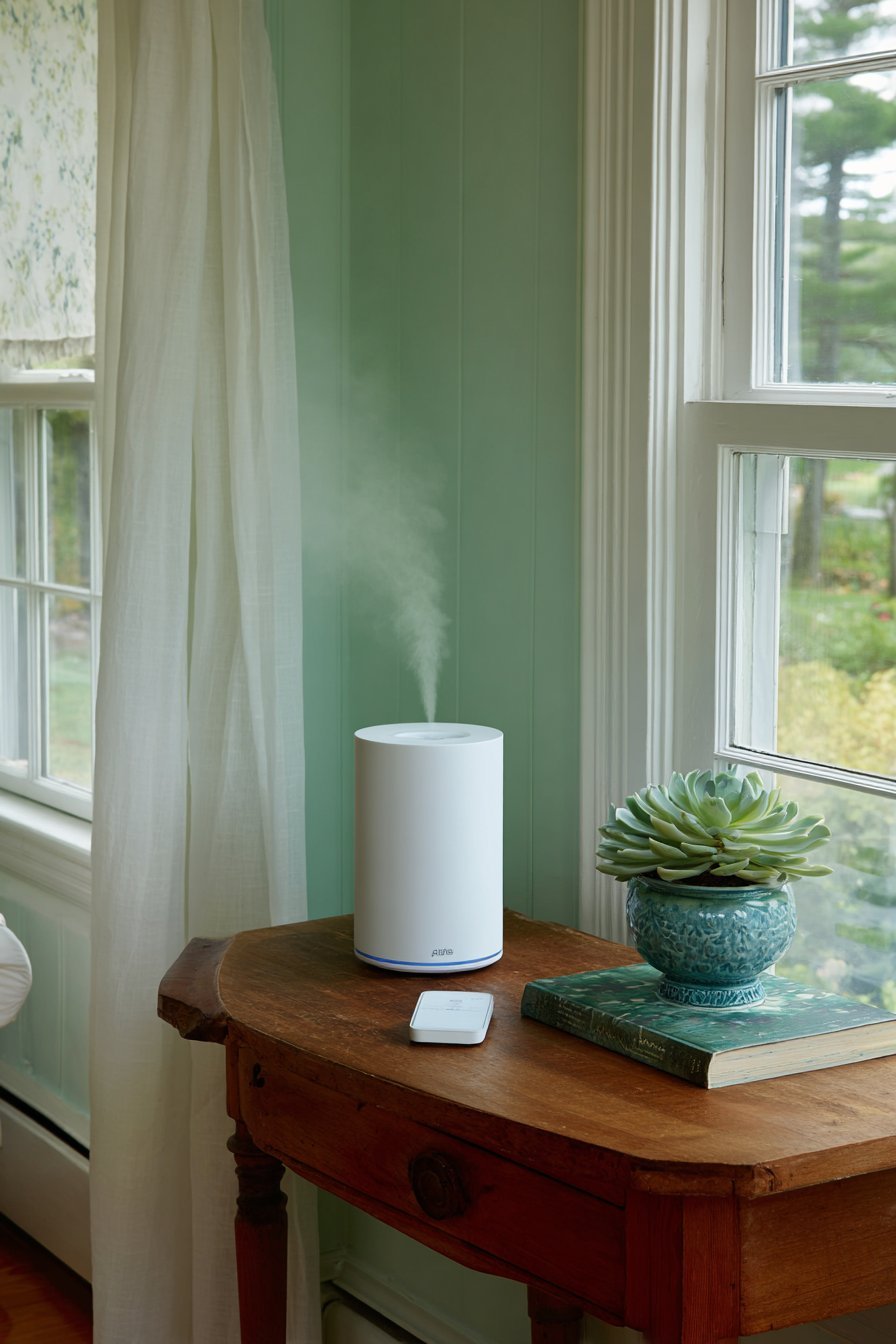
The console table serves multiple purposes. The small footprint fits tight spaces. The succulent adds living element. The arrangement feels intentional rather than cluttered. Essential equipment becomes part of decoration.
Key Design Tips:
- Maintain nursery humidity between 30-50 percent for infant comfort
- Position humidifiers away from cribs to prevent excessive moisture exposure
- Choose quiet humidifiers that won’t disrupt baby sleep cycles
- Integrate necessary equipment into overall design aesthetic
- Clean humidifiers regularly to prevent mold and bacteria growth
16. Personalized Pistachio Gallery Wall
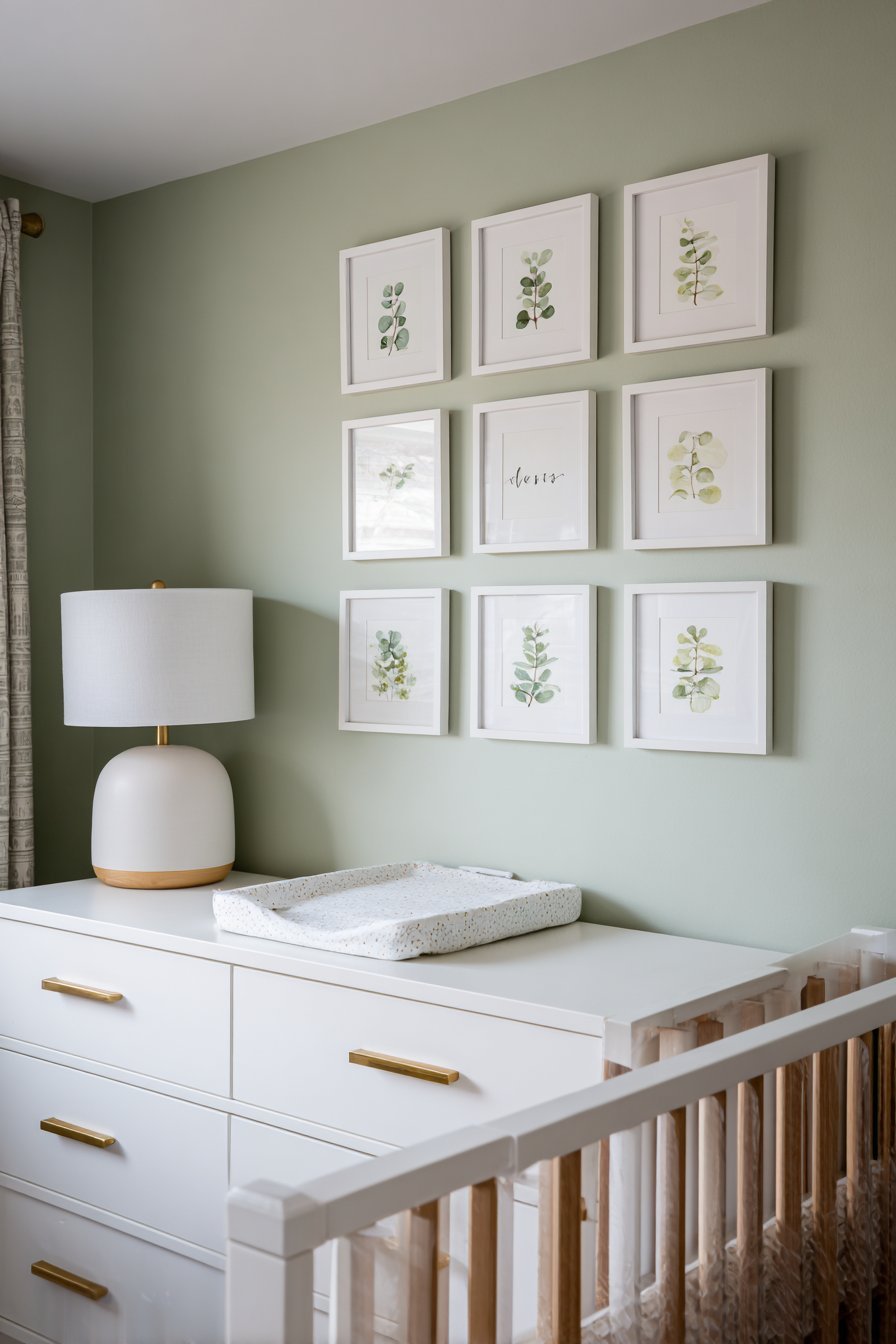
White frames of varying sizes display botanical prints and alphabet letters. A name sign in natural wood adds personal touch. The arrangement hangs with proper spacing above white dresser. Gentle pistachio green walls provide subtle depth.
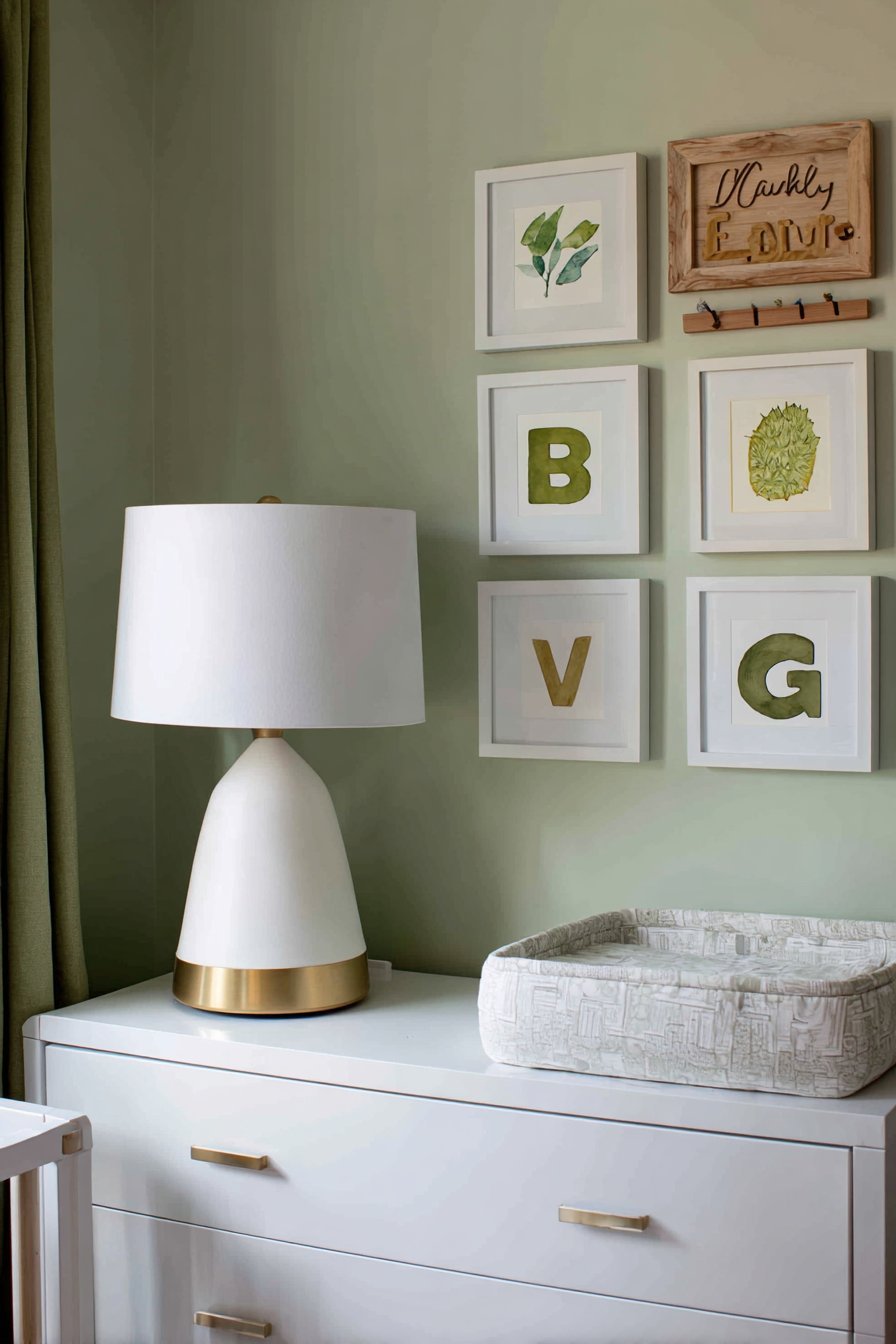
A white ceramic lamp with brass base provides soft task lighting. The mixed metals add sophistication. The arrangement creates focal point. The personalized elements celebrate baby’s identity. The design balances decoration with meaning.
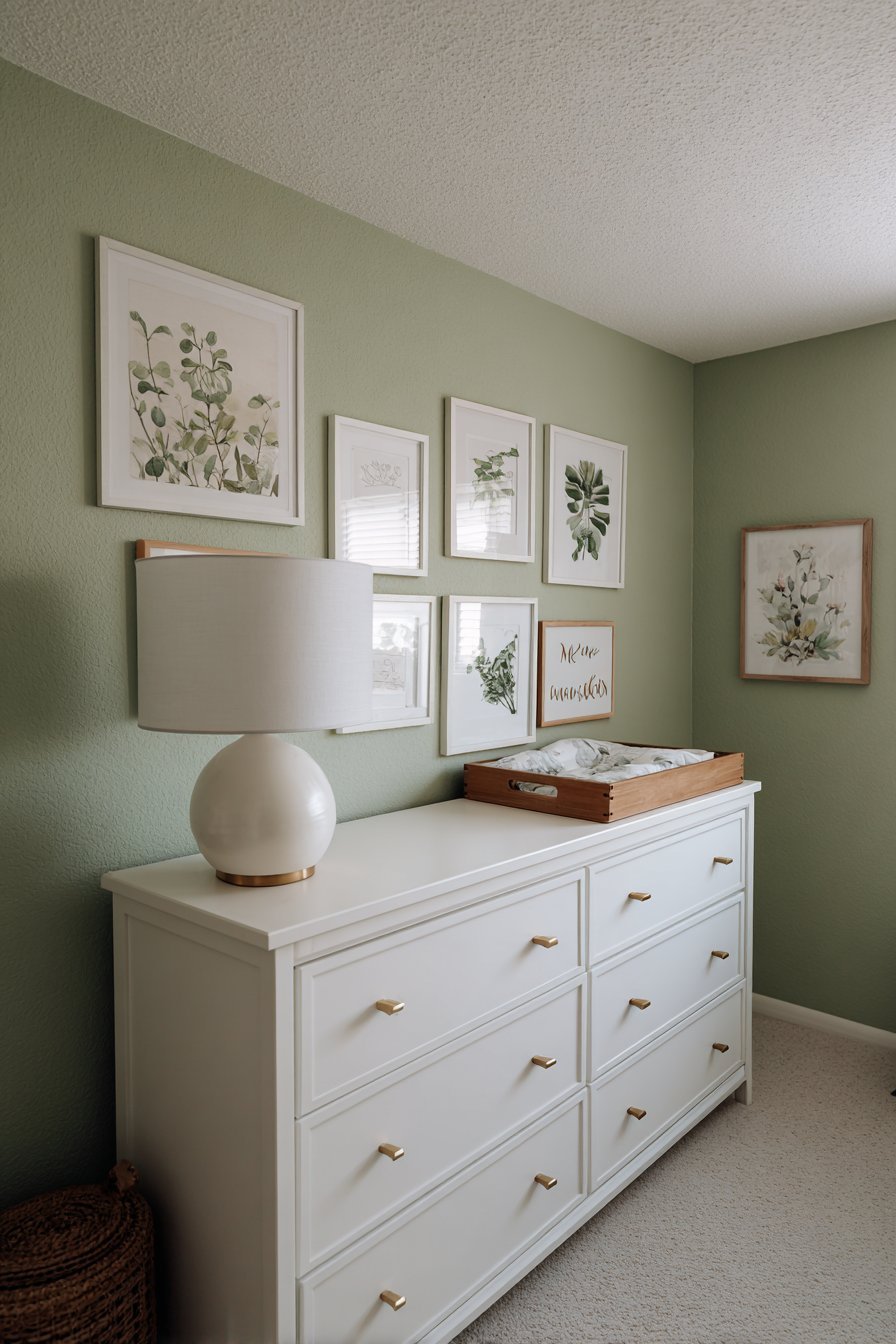
The botanical prints introduce nature themes. The simple illustrations avoid overstimulation. The alphabet letters support early learning. The name sign becomes keepsake piece. Each element serves developmental purpose.
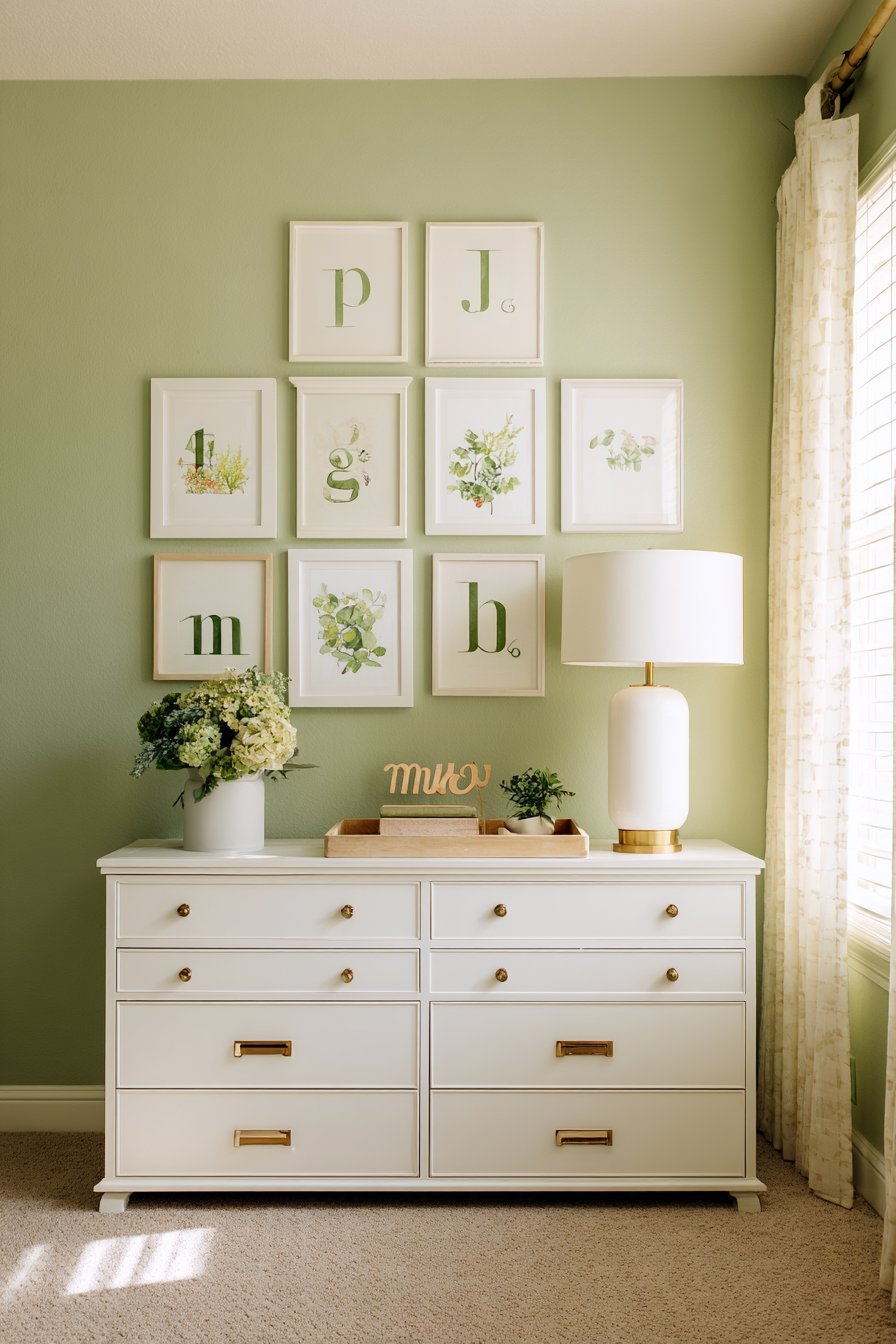
The frame arrangement follows classic gallery wall principles. The varied sizes create visual interest. The consistent white frames maintain cohesion. The spacing allows each piece to breathe. The composition feels professionally curated.
Key Design Tips:
- Plan gallery wall layouts on floor before hanging frames
- Use consistent frame colors even when varying sizes
- Include personalized elements like name signs for meaningful touches
- Position gallery walls at adult eye level for comfortable viewing
- Add task lighting above dresser areas for functional illumination
17. Multifunctional Celadon Storage Chest
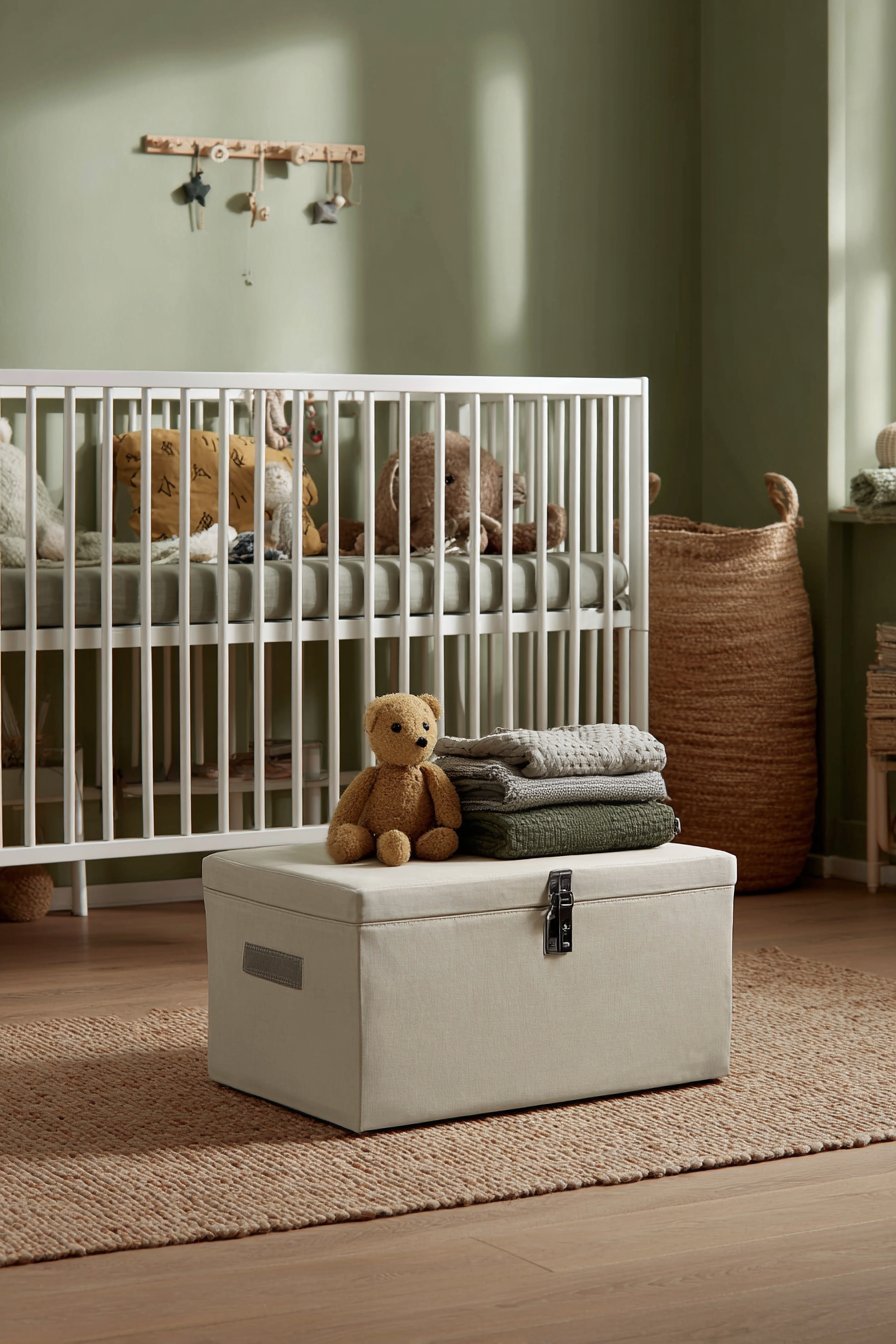
A white wooden toy chest with safety hinge sits at crib’s foot. The chest currently holds extra blankets and baby essentials. A cushioned top in light green linen fabric provides seating. Soft celadon green walls surround the space. Natural oak flooring shows subtle grain patterns.
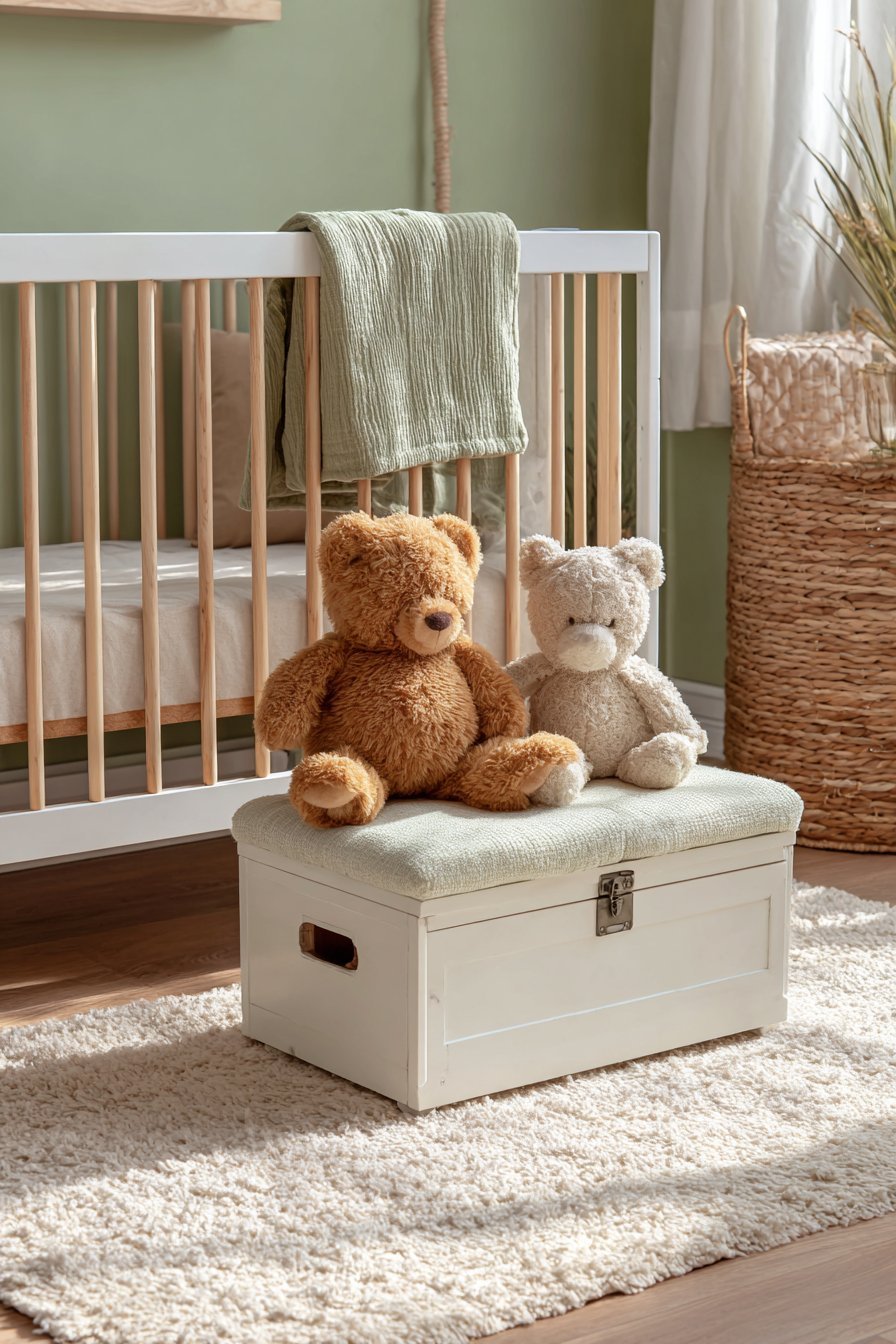
The safety hinge prevents finger injuries. The slow-close mechanism protects little hands. The design considers future toddler use. The current storage serves infant needs. The adaptability extends furniture lifespan.
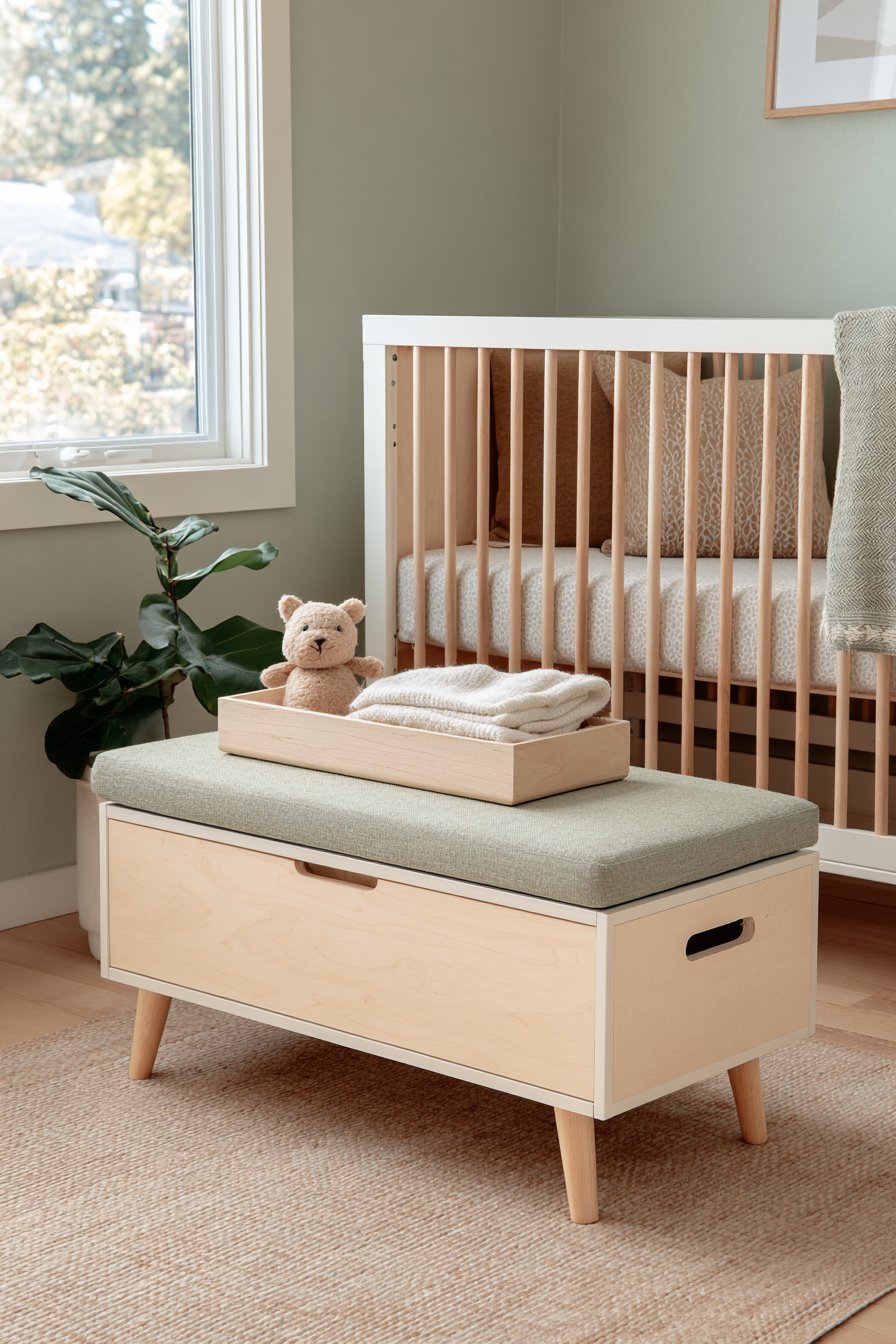
The cushioned top adds functional seating. The light green linen coordinates with palette. The comfortable surface serves multiple purposes. Parents sit while playing with baby. The multifunctional design maximizes value.
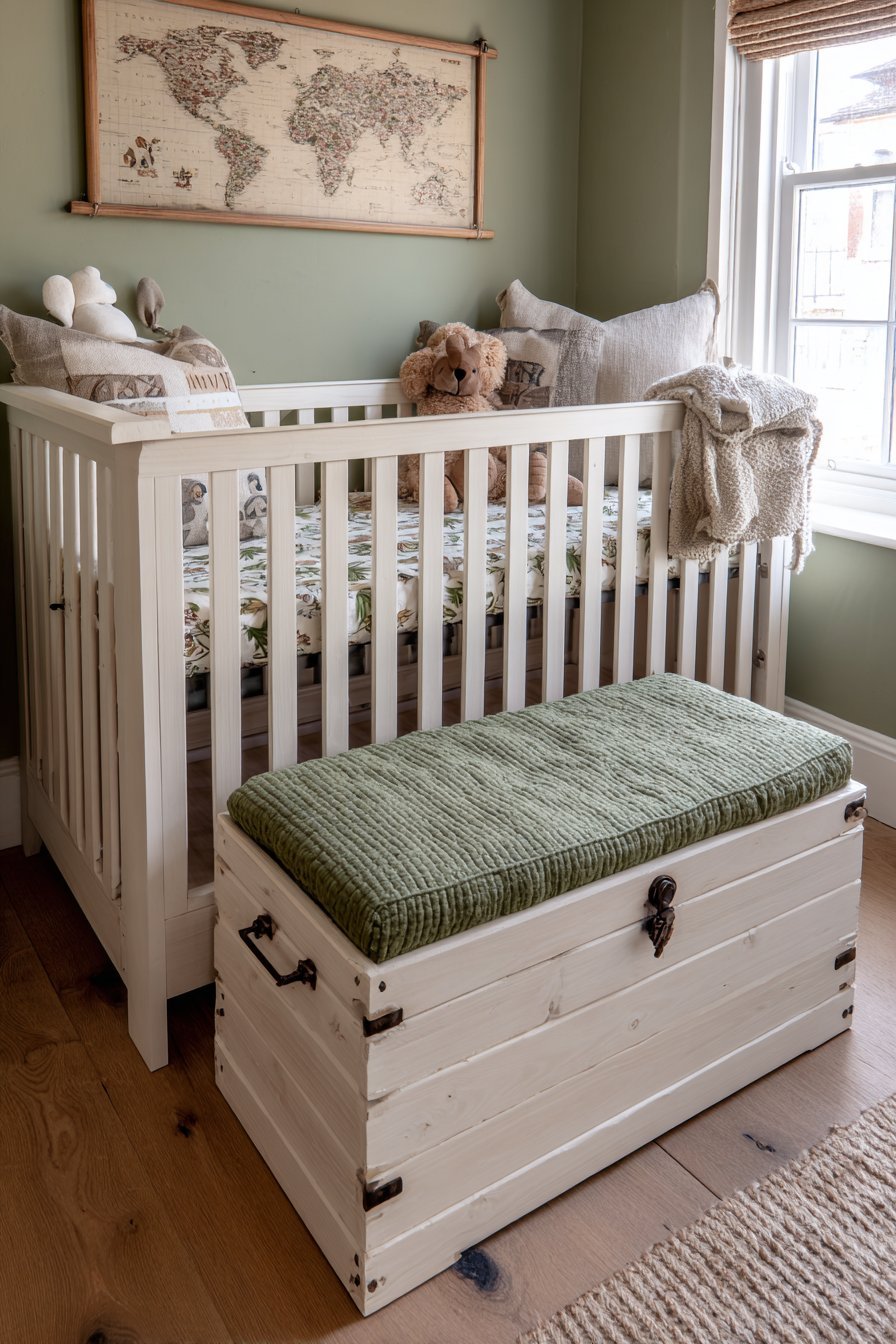
The oak flooring provides natural foundation. The grain patterns add organic texture. The warm tones balance cool wall colors. The durable surface withstands years of use. Quality materials create lasting beauty.
Key Design Tips:
- Choose toy chests with safety hinges that prevent lid slamming
- Add cushioned tops to storage pieces for additional seating options
- Select furniture that serves multiple purposes throughout childhood
- Position storage chests where they won’t obstruct room traffic flow
- Use neutral furniture colors that coordinate with changing decor
18. Safety-Focused Gray-Green Seating
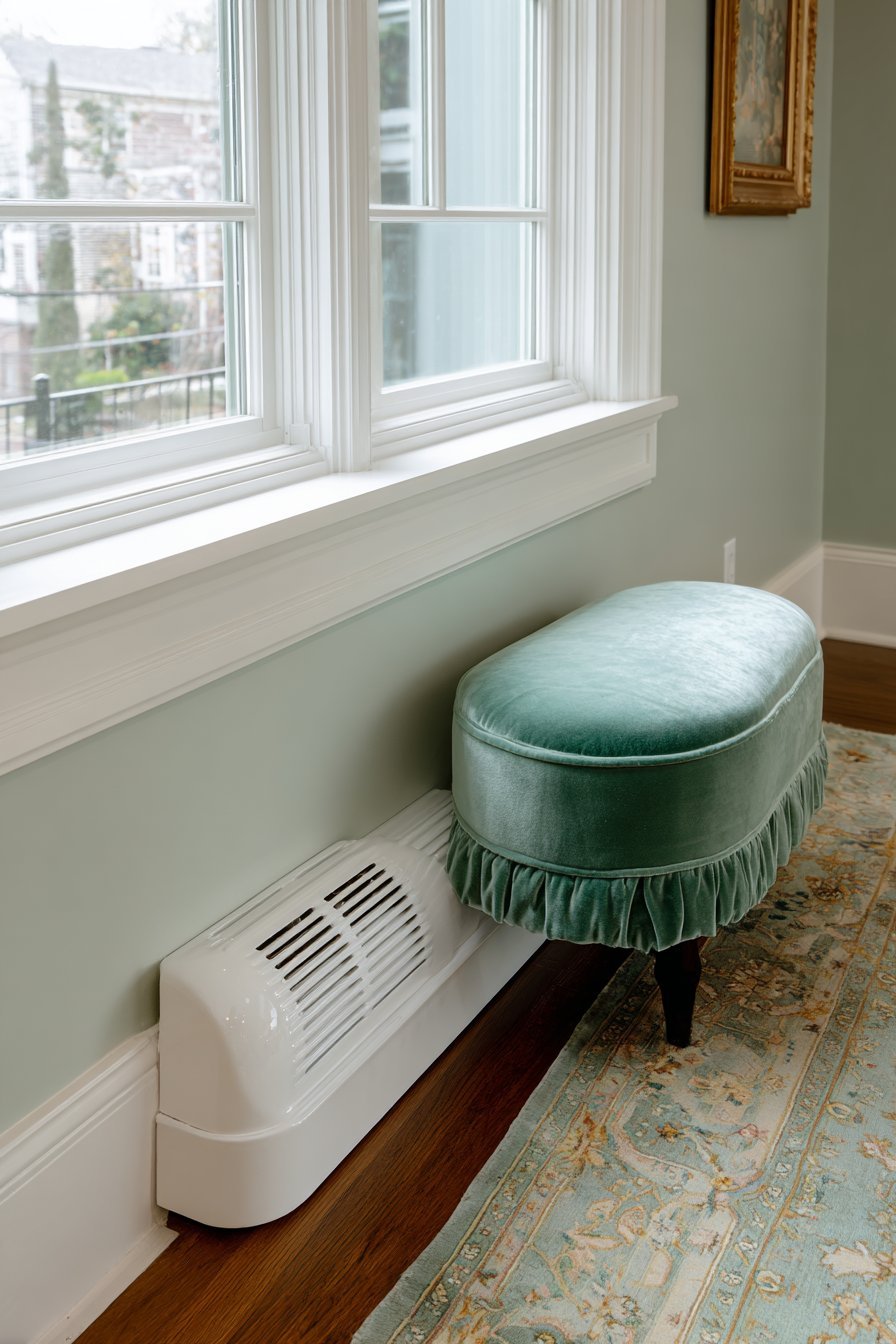
White baseboard heating cover with safety grills ensures baby protection. A small upholstered bench in sage green velvet sits in front. Pale green walls show slight gray undertones. A wool area rug in cream with subtle green pattern provides warmth.
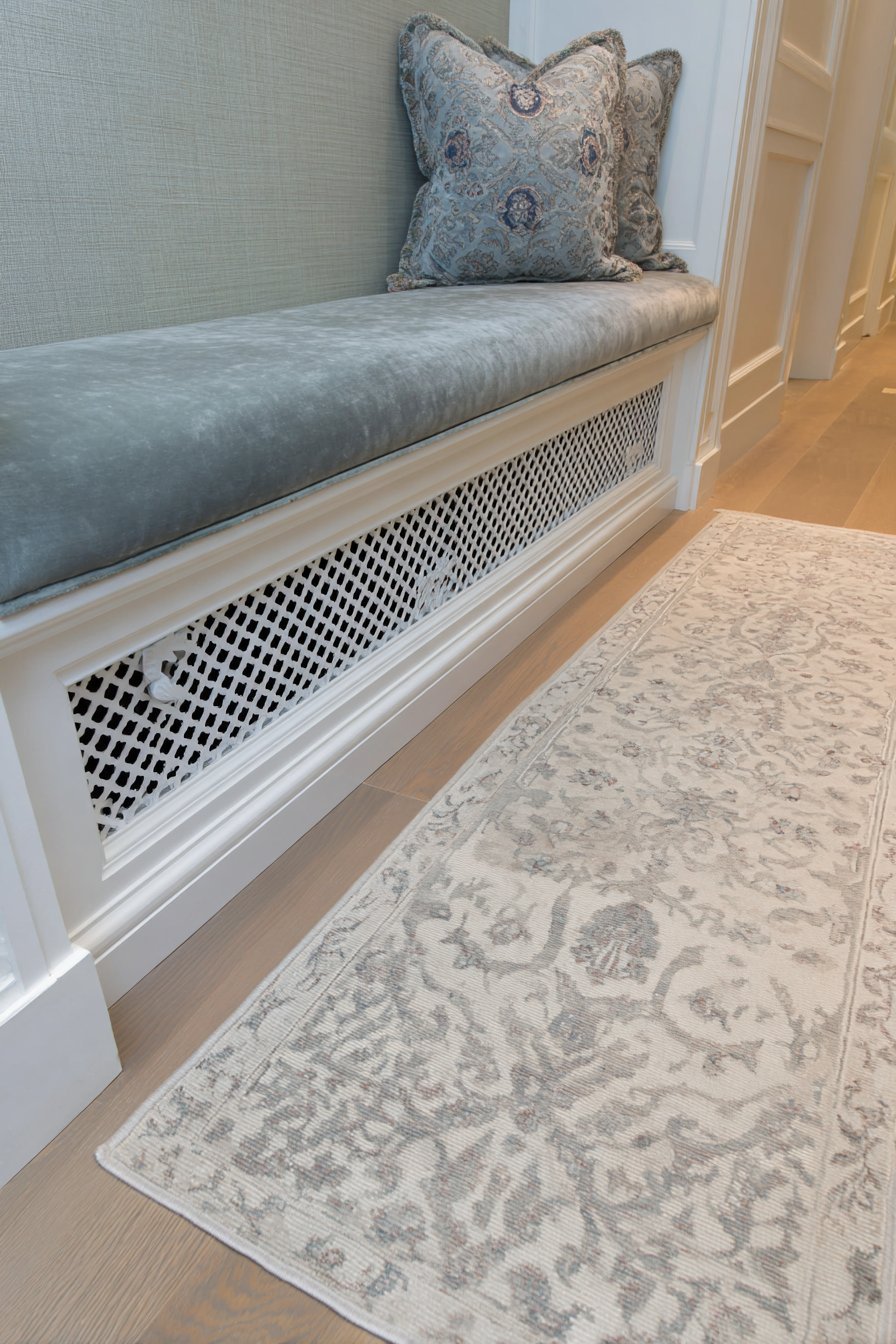
The baseboard cover prevents burns and injuries. The safety grills allow heat distribution. The white paint matches trim. The practical solution integrates seamlessly. Safety features become invisible elements.
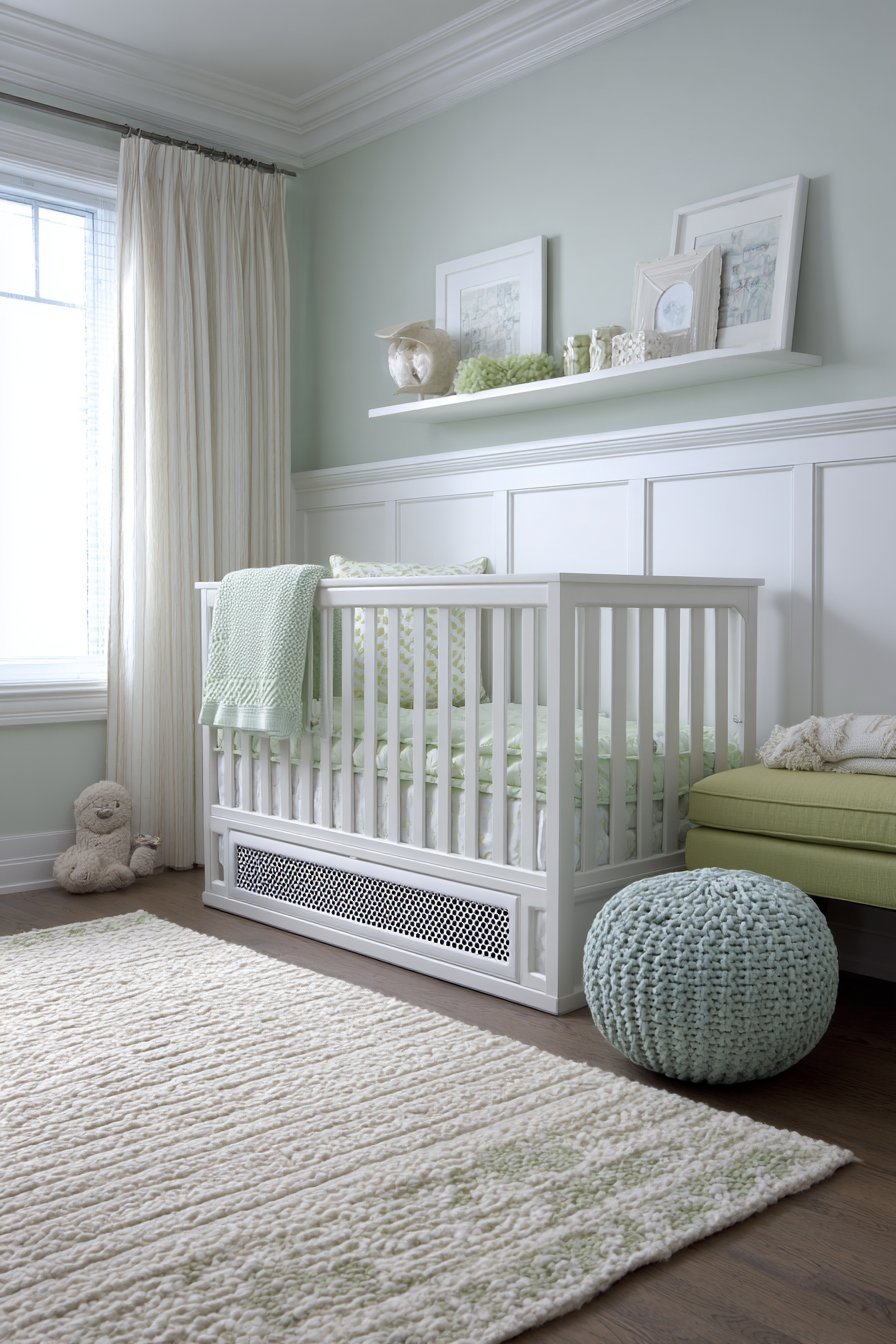
The velvet bench adds luxurious texture. The sage green deepens color palette. The comfortable seating serves parents well. The bench provides spot for putting on shoes. The multifunctional piece earns its place.
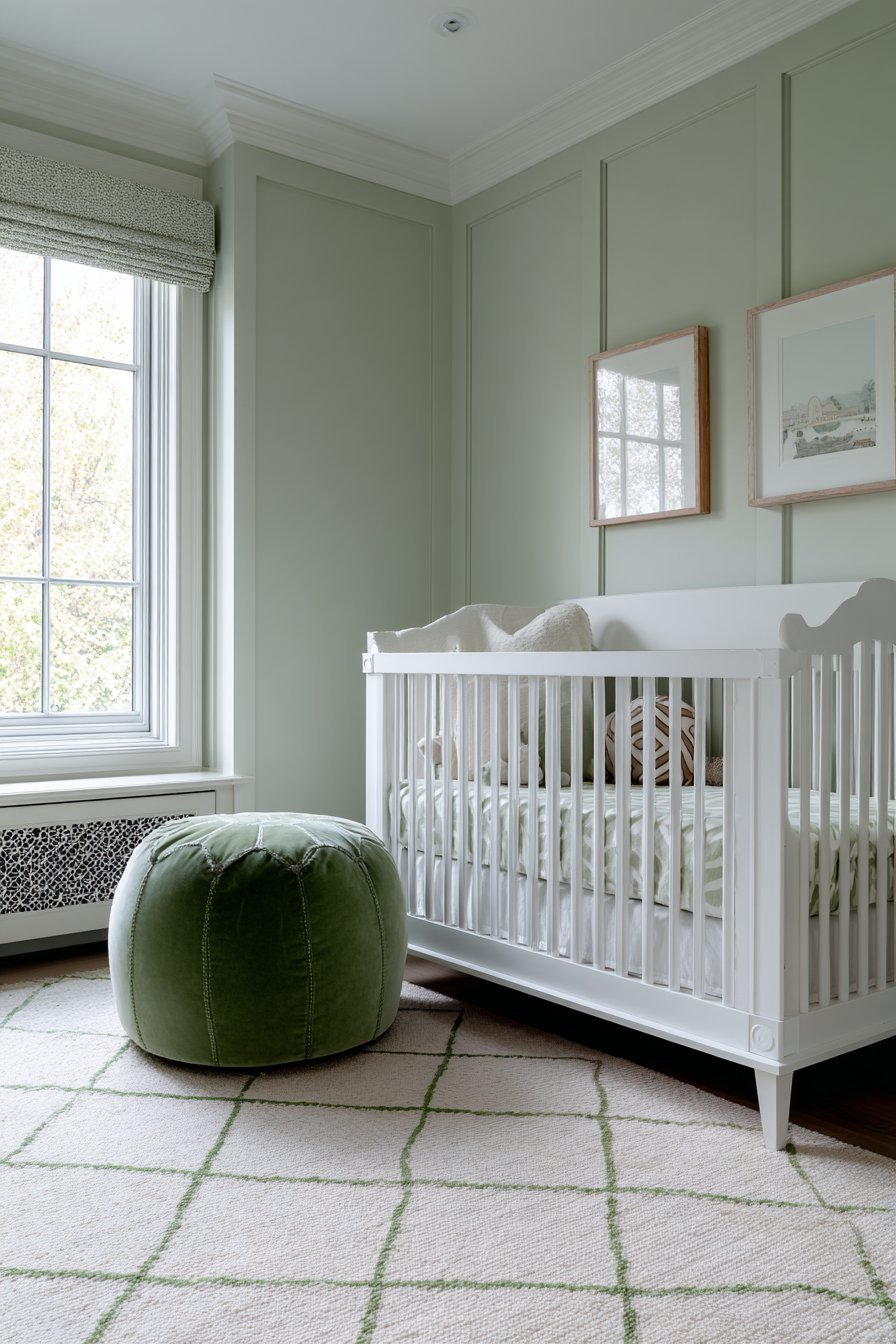
The wool rug adds natural insulation. The cream base brightens the floor. The green pattern ties into overall scheme. The texture provides comfort underfoot. The natural fibers support healthy air quality.
Key Design Tips:
- Cover all heating elements with safety grills to prevent burns
- Choose furniture that doubles as practical seating for daily tasks
- Use wool rugs for natural warmth and sound absorption
- Coordinate rug patterns with overall color scheme subtly
- Position furniture over heating covers during cold months for added warmth
19. Welcoming Mint Entrance
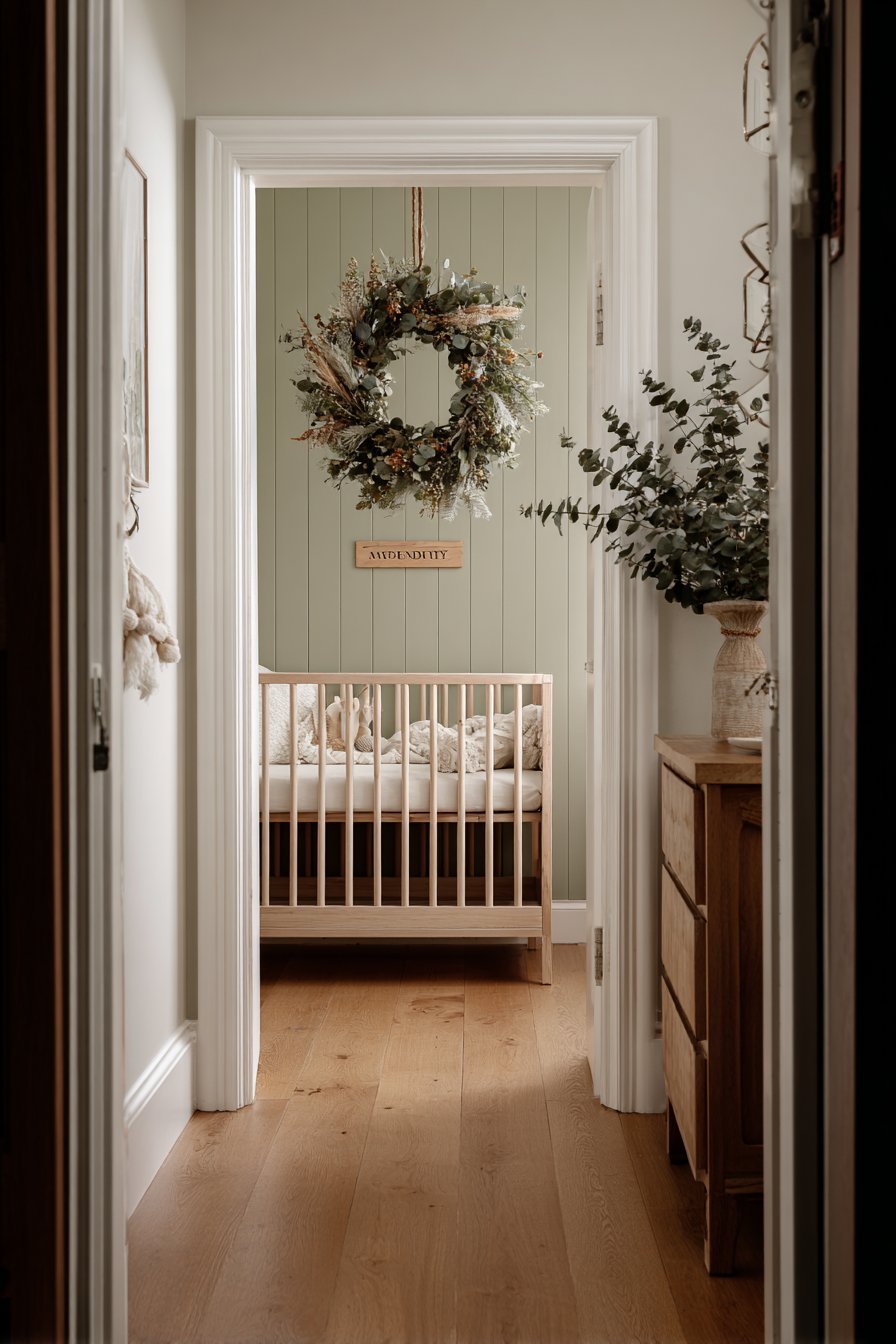
A white wooden door features eucalyptus and dried flower wreath. The muted green tones welcome visitors. A small natural wood name plaque hangs at center. White door frame contrasts against mint green walls. Light hardwood flooring extends from hallway into nursery.
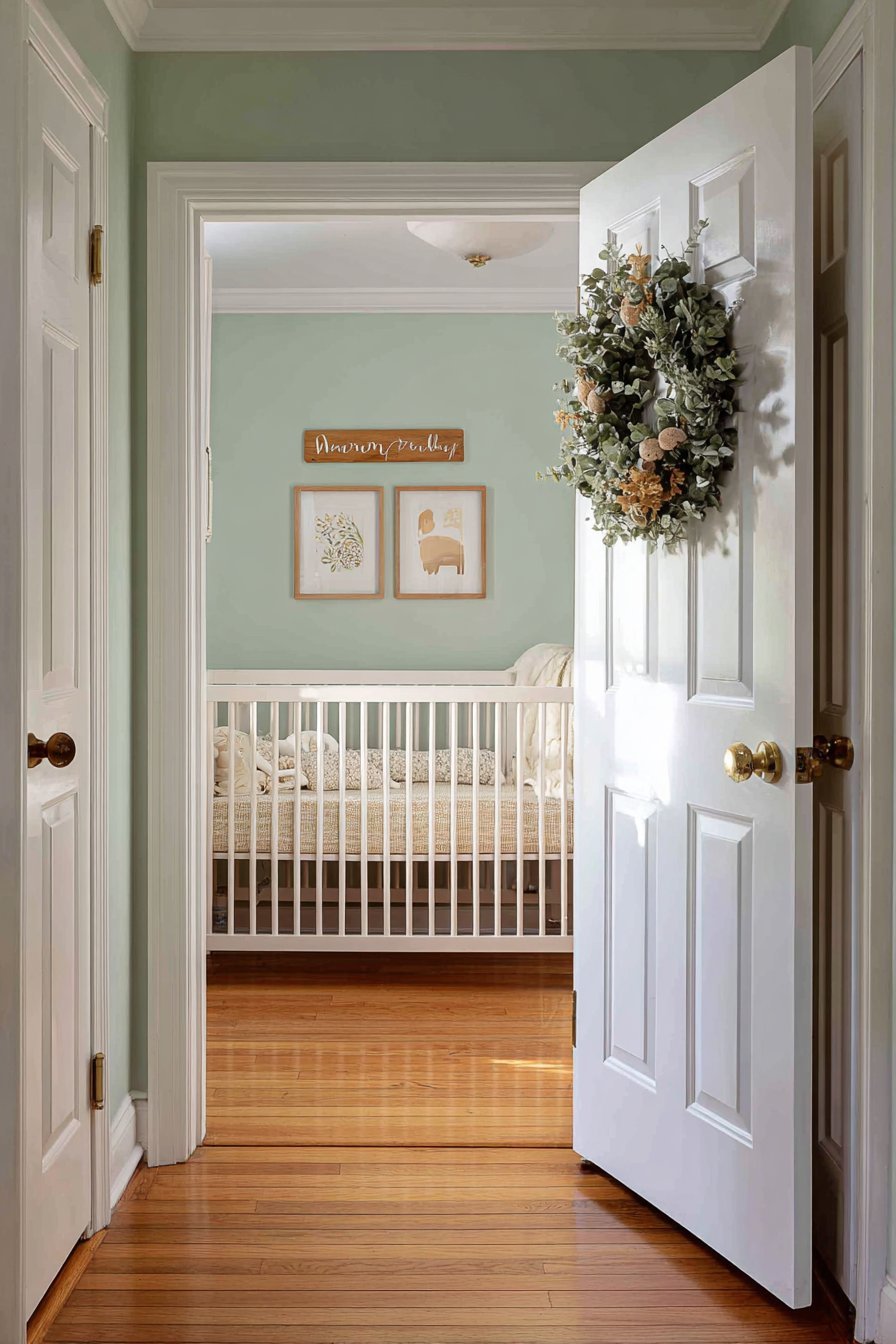
The wreath creates inviting entrance. The natural materials stay consistent with nursery theme. The simple design avoids overwhelming. The eucalyptus scent provides gentle aromatherapy. The dried flowers maintain appearance long-term.
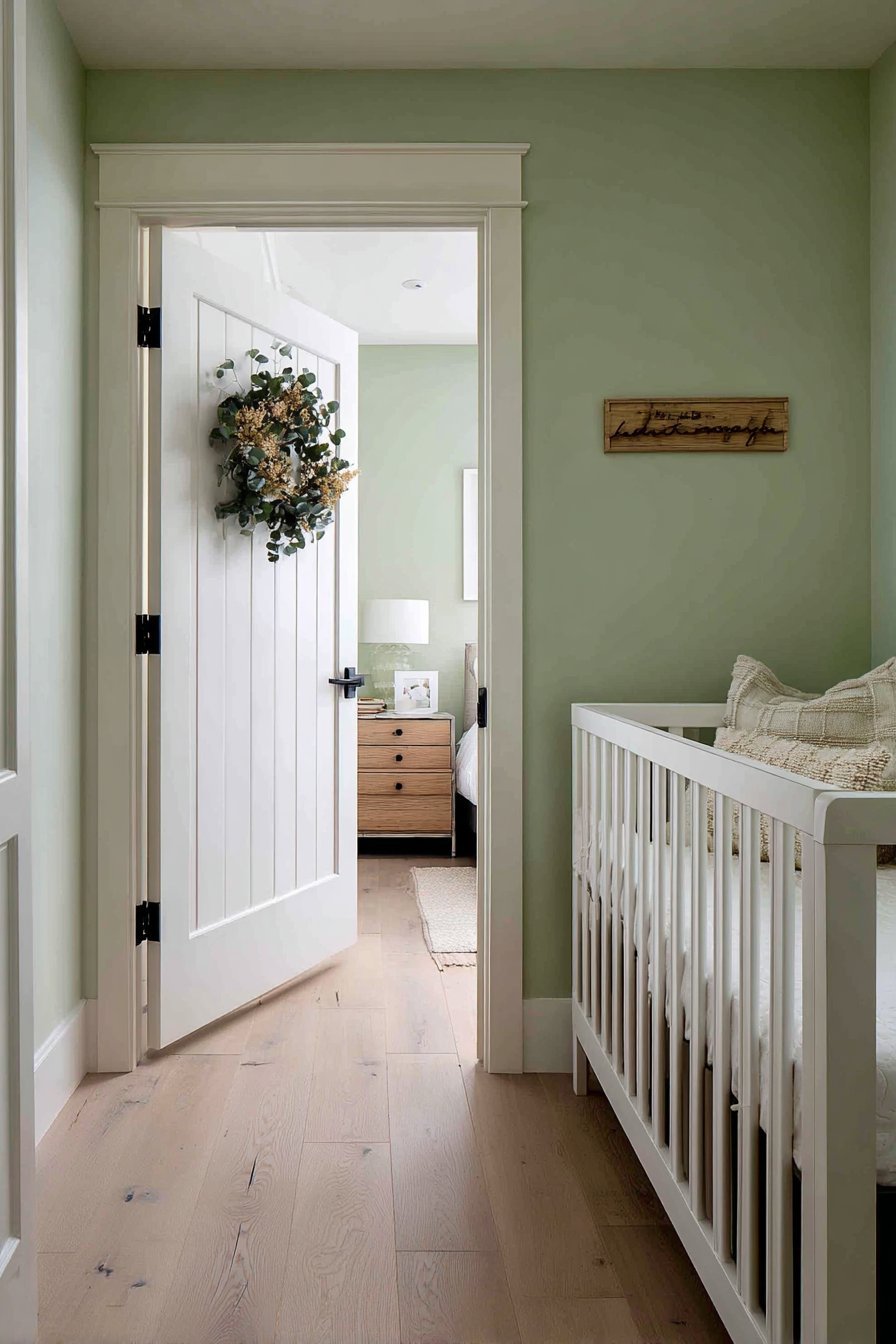
The name plaque personalizes the space. The natural wood adds warmth. The placement draws the eye. The simple design reads clearly. This detail announces baby’s special place.
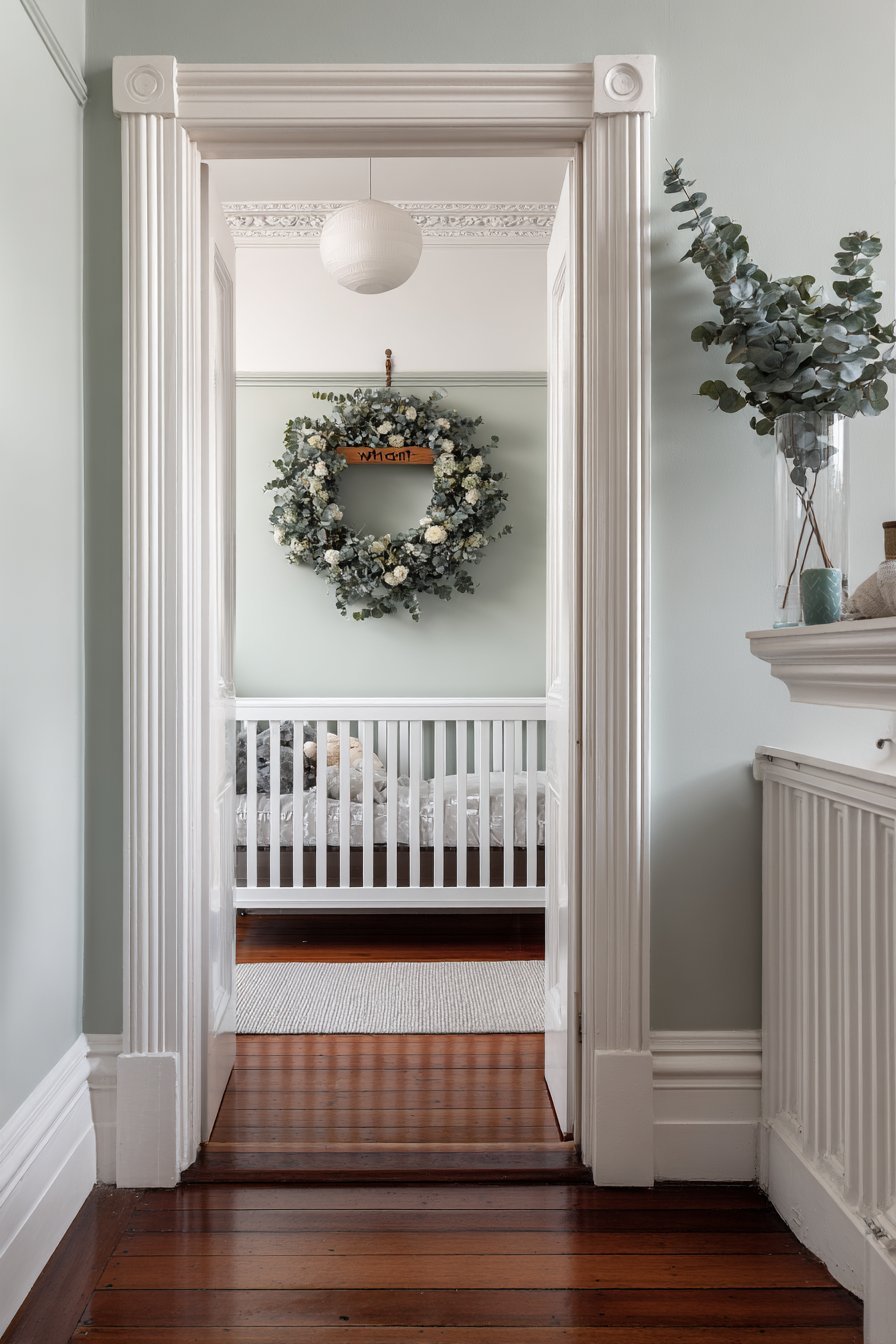
The hallway view provides glimpse into serene space. The mint walls continue visual flow. The consistent flooring connects spaces. The white trim creates clean lines. The entrance sets peaceful expectations.
Key Design Tips:
- Hang nursery wreaths with natural materials that complement interior design
- Position name plaques at center door height for balanced appearance
- Extend nursery paint colors slightly into hallways for flow
- Use consistent flooring between hallways and nurseries when possible
- Create welcoming entrances that signal the special nature of nursery spaces
20. Sleep-Optimized Barely-There Green Retreat
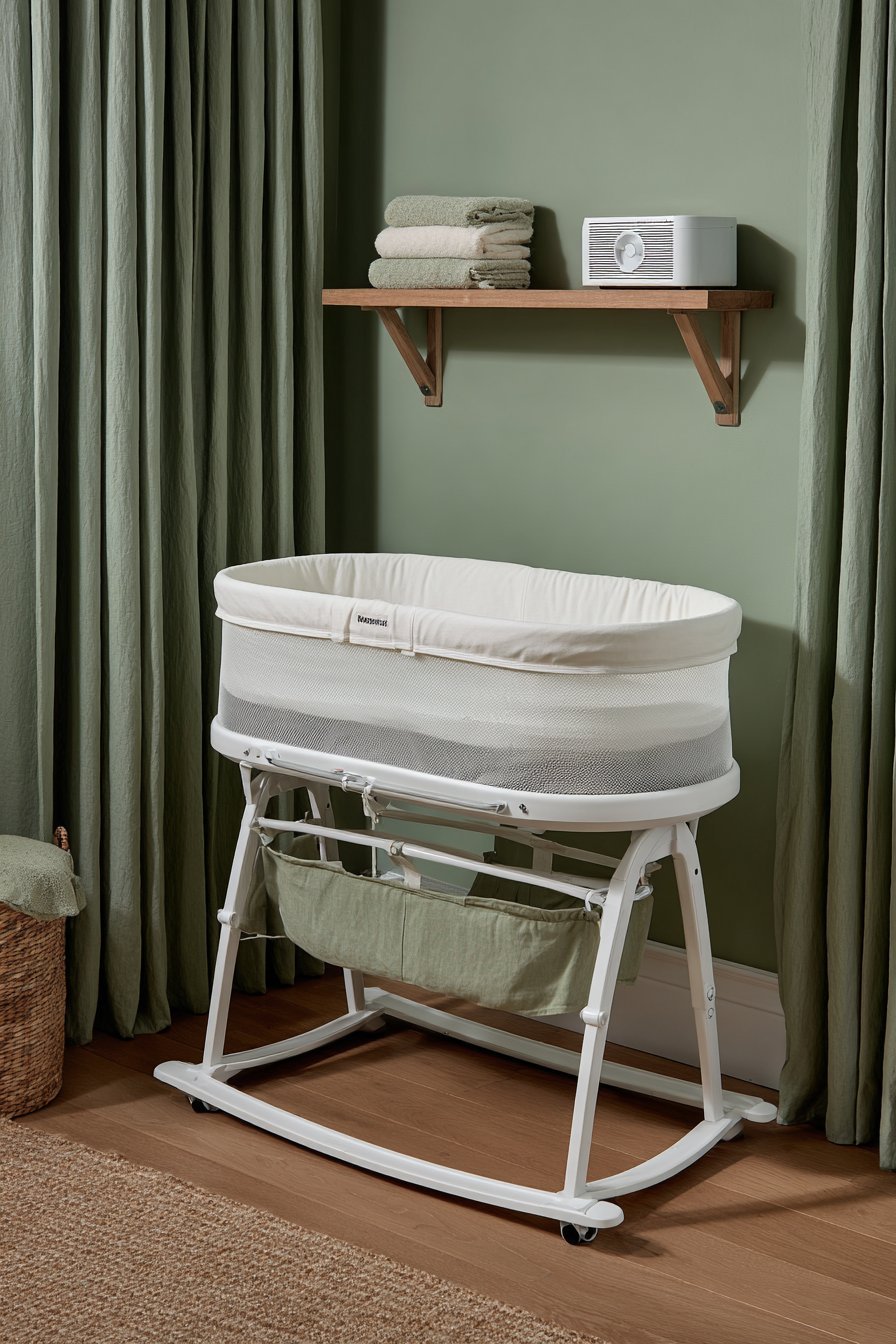
A white sound machine on floating shelf provides white noise for better sleep. Hidden brackets mount the shelf safely. Below, white rocking bassinet with sage green liner serves bedside sleeping. Barely-there green walls create cocoon-like atmosphere. Blackout curtains in light green linen draw for naptimes.
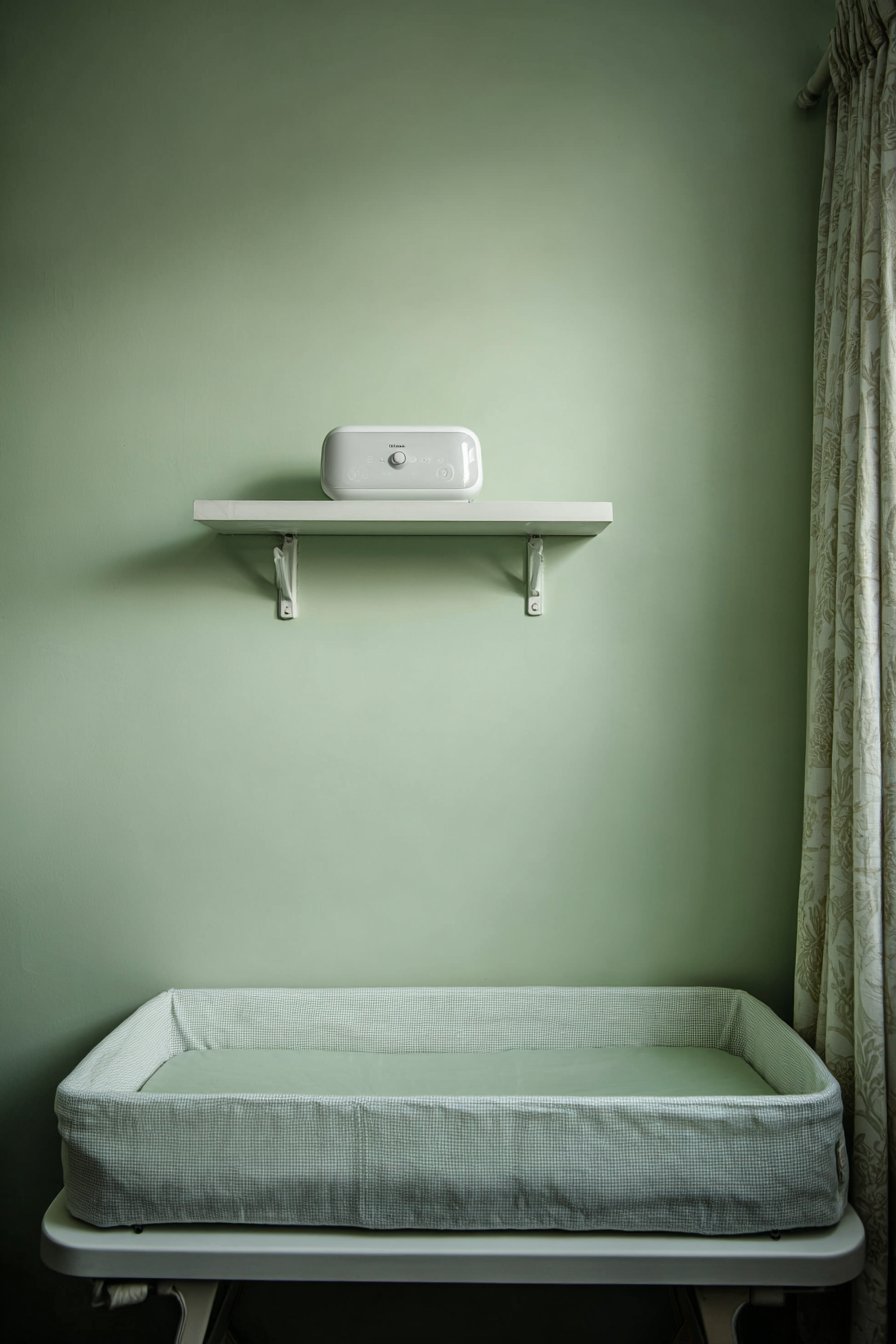
The sound machine offers multiple noise options. The consistent background sound masks household noises. The volume adjusts to safe levels. The white design maintains aesthetic. This tool supports healthy sleep habits.
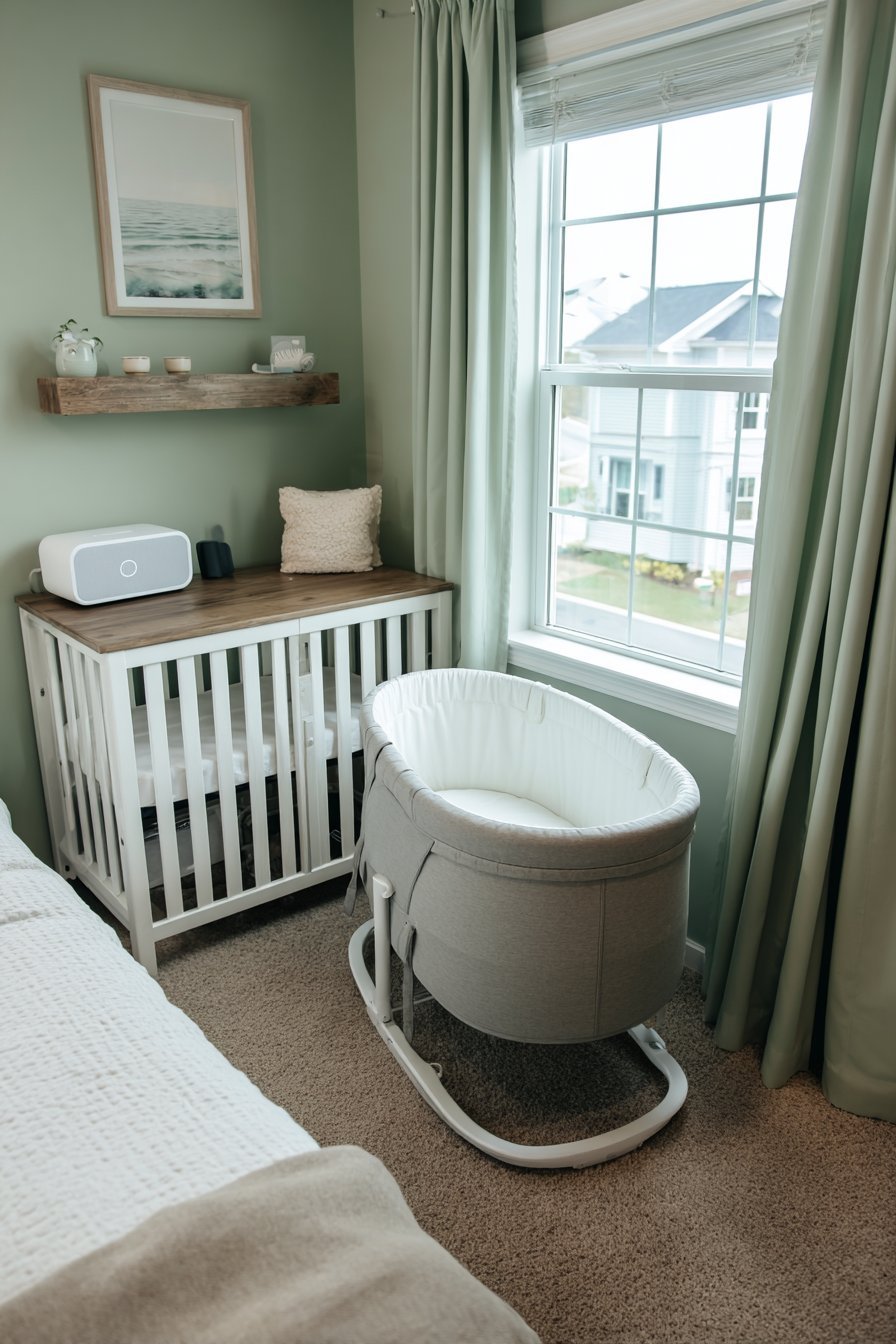
The rocking bassinet provides convenient bedside access. The gentle motion soothes fussy babies. The sage green liner coordinates perfectly. The white frame keeps appearance clean. The compact size fits bedroom layouts.
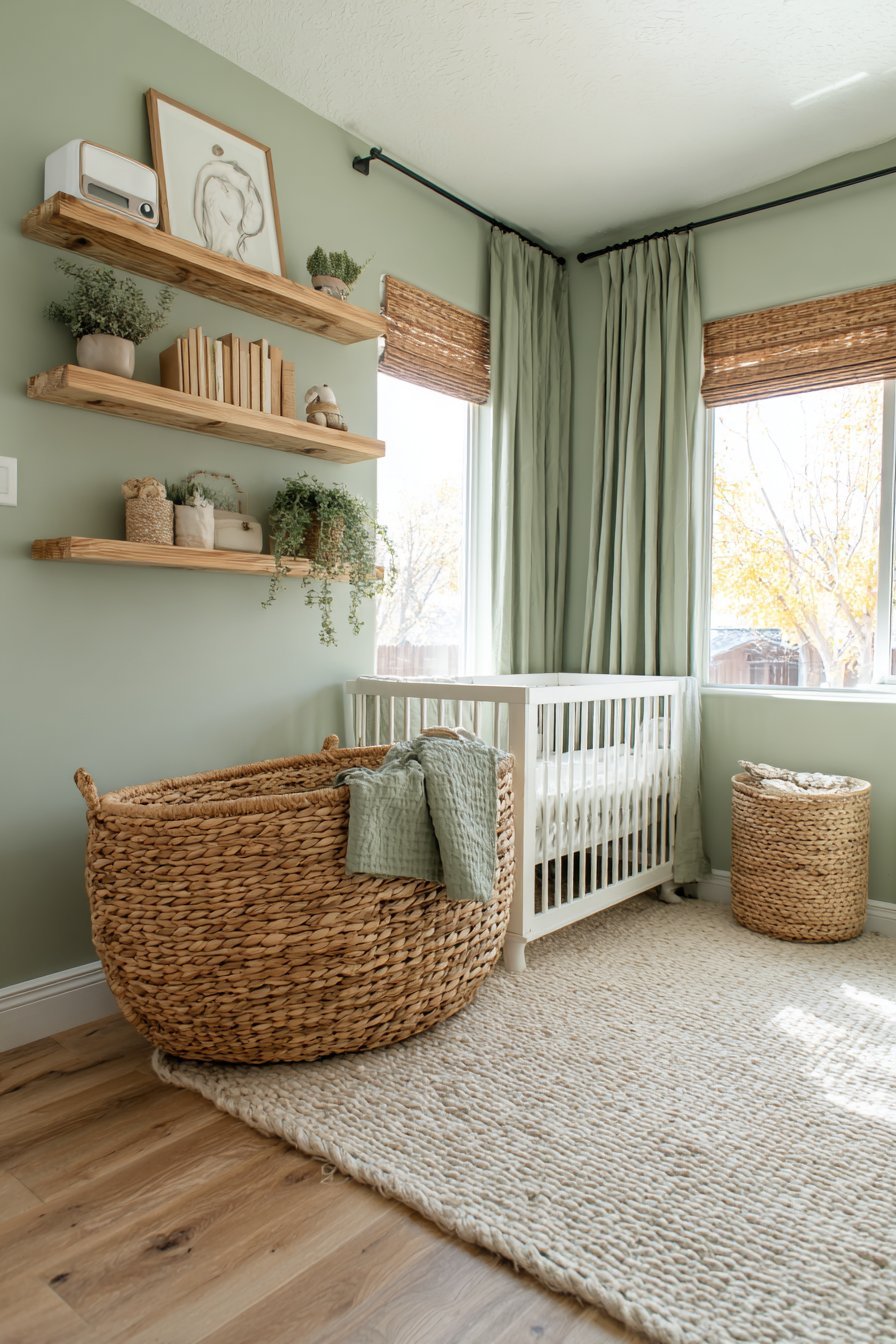
The blackout curtains ensure darkness for quality naps. The light green linen maintains color scheme. The total darkness supports circadian rhythm development. The easy operation allows quick adjustments. The sleep environment receives careful optimization.
Key Design Tips:
- Use white noise machines to create consistent sleep environments
- Mount sound machines at safe heights away from direct crib access
- Choose bedside bassinets that fit safely beside adult beds
- Install blackout curtains for consistent sleep schedules regardless of daylight
- Maintain room temperatures between 68-72 degrees Fahrenheit for optimal sleep
Why These Light Green Nursery Designs Are the Best
These light green nursery designs excel because they balance aesthetic beauty with practical functionality. The color choice itself provides scientifically-supported benefits for infant development and parent well-being. Green tones promote calm without the coldness of blues or potential overstimulation of warmer colors. The versatility of light green allows seamless integration with various design styles from traditional to contemporary.
Material selection throughout these concepts prioritizes safety and sustainability. Natural wood, organic cotton, and low-VOC paints create healthy environments for developing respiratory systems. The emphasis on quality over quantity ensures pieces grow with children. Convertible furniture and adaptable storage systems provide long-term value that cheap alternatives cannot match.
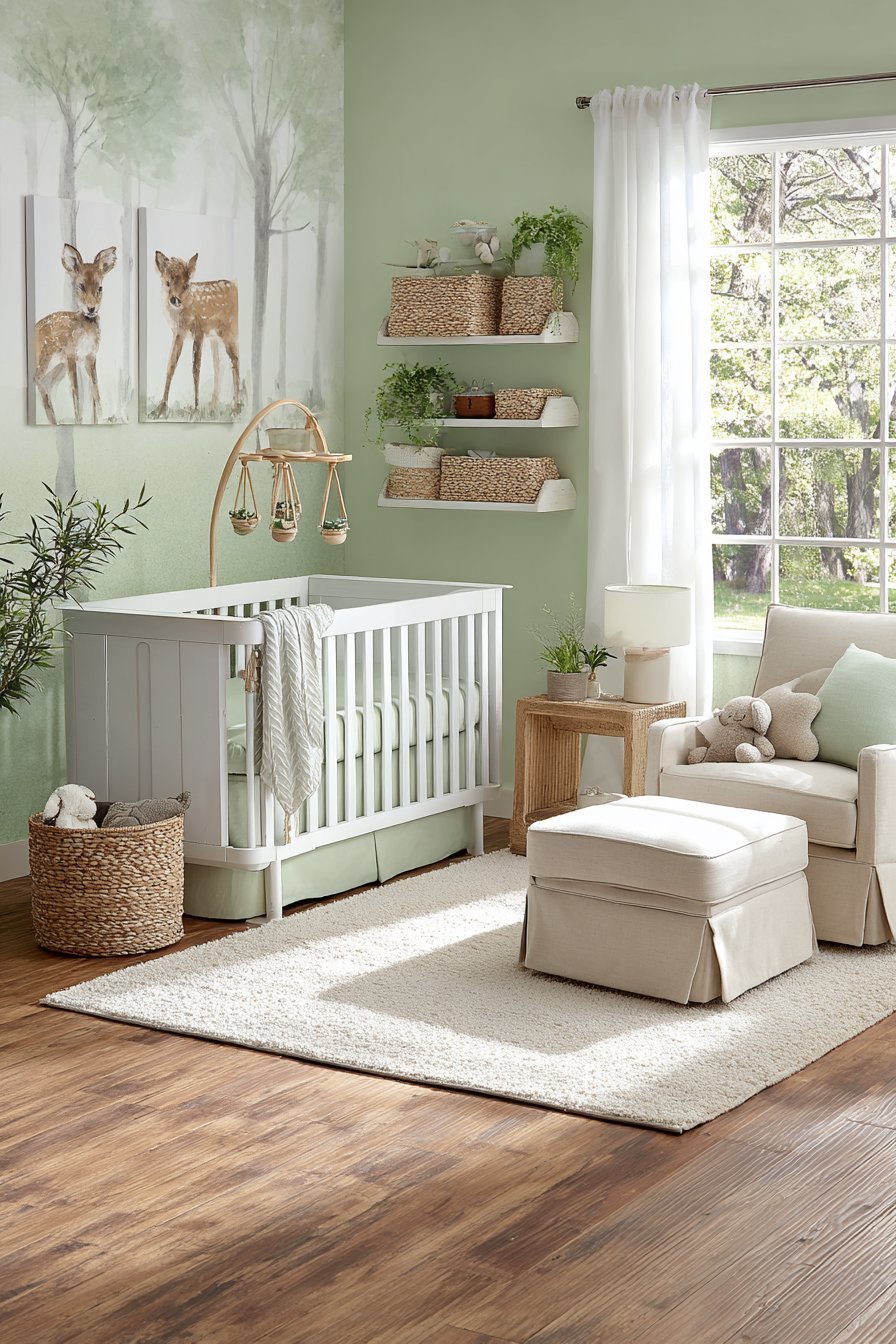
The designs address real-world parenting needs systematically. Thoughtful furniture placement considers feeding positions, diaper changes, and floor play. Adequate storage prevents clutter that creates visual stress. Lighting solutions balance natural illumination with blackout capabilities for consistent sleep schedules. Every element serves both aesthetic and functional purposes.
Color theory principles demonstrate why these specific green tones succeed. The slight warmth in sage and pistachio prevents sterile feelings while maintaining serenity. The pale intensity ensures visual calm necessary for overstimulated infants. The neutral foundation allows accent color flexibility as preferences evolve. These sophisticated color choices transcend trend-driven design.
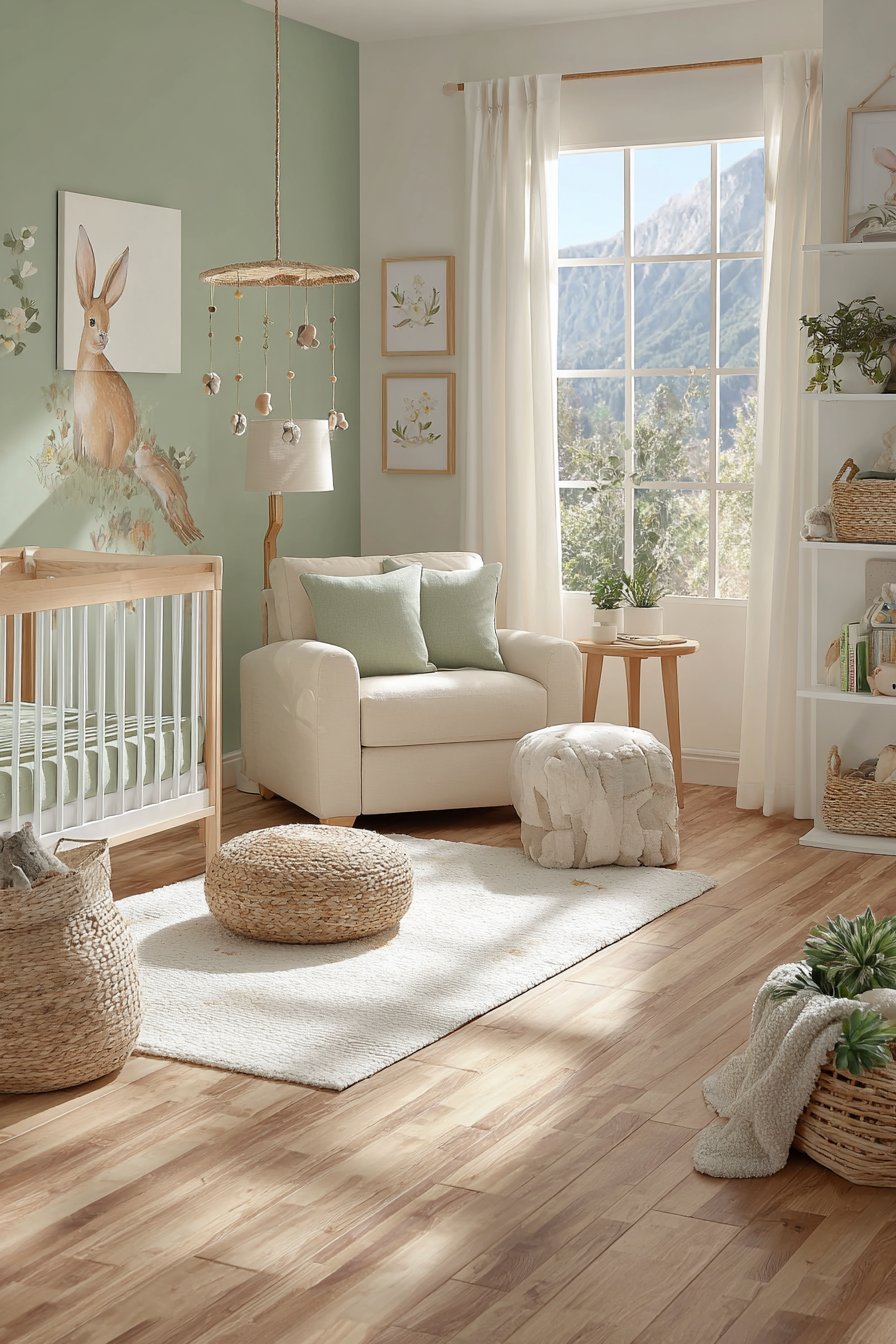
Spatial considerations adapt to various room sizes and layouts. Corner reading nooks maximize unused spaces. Vertical storage solutions serve small footprints. Open floor plans benefit from defined zones created through rug placement. These concepts prove that thoughtful design overcomes spatial limitations effectively.
Conclusion
These twenty light green nursery designs demonstrate that beautiful spaces support both infant development and parental well-being. The key takeaways include choosing safe materials, prioritizing functional furniture placement, and selecting colors that promote calm. Quality pieces combined with thoughtful organization create rooms that serve families throughout early childhood.
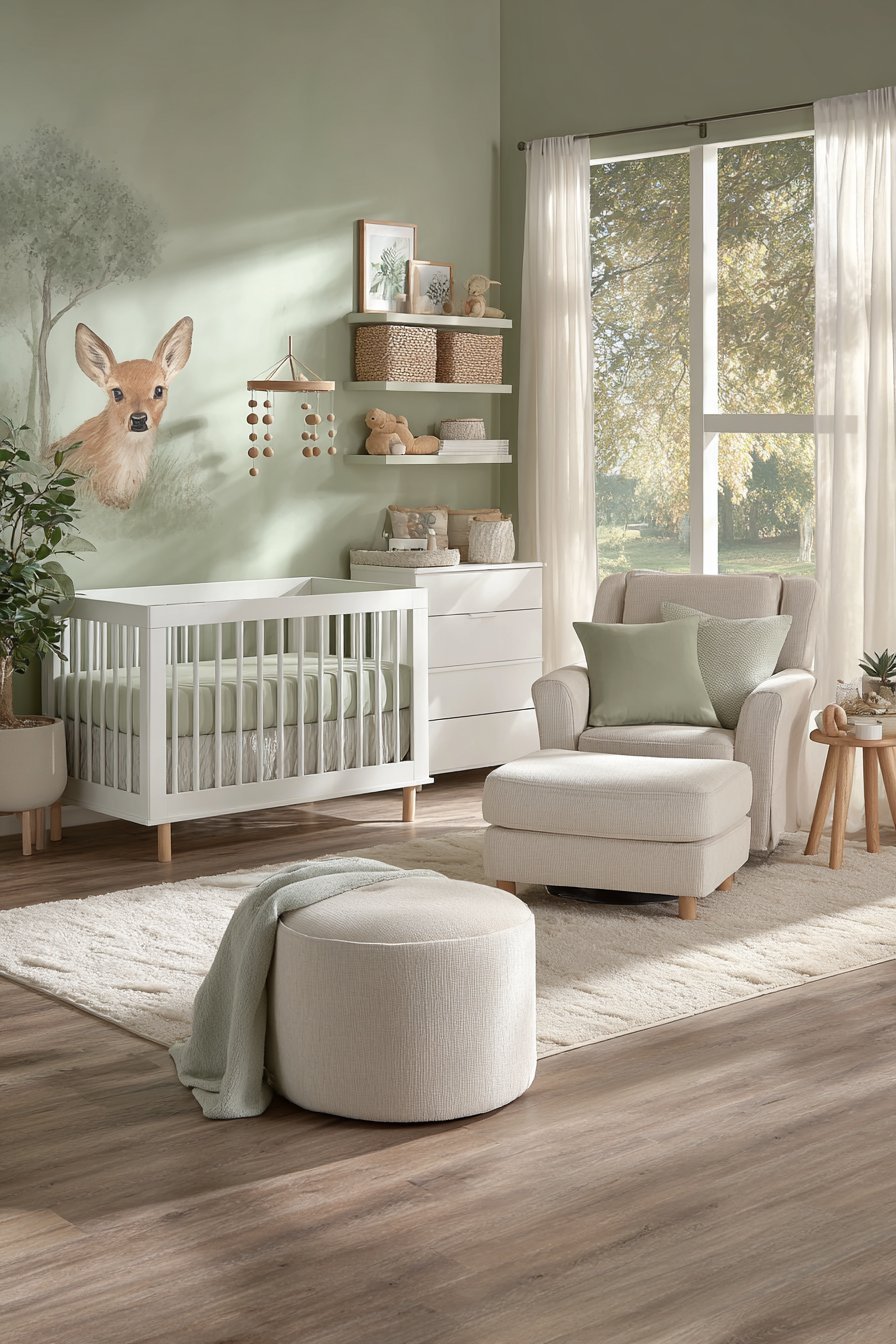
Successful nursery design requires balancing multiple considerations simultaneously. Safety features must integrate invisibly into aesthetic choices. Storage solutions should grow alongside children. Lighting must adapt to various activities and times of day. These designs show how careful planning achieves all objectives beautifully.
Start your nursery journey by selecting your preferred green tone. Add one quality foundational piece like a convertible crib. Build gradually with storage solutions and comfortable seating. Your dream light green nursery awaits creation through thoughtful planning and attention to both beauty and function.
