
Creating a Japanese backyard transforms your outdoor space into a serene sanctuary. These designs blend ancient philosophical principles with practical functionality. The result is a peaceful retreat that soothes the soul and delights the senses.
Japanese garden design has captivated homeowners worldwide for centuries. The aesthetic emphasizes harmony between natural and human-made elements. Clean lines, carefully selected materials, and thoughtful plant placement create spaces that inspire meditation and reflection. Whether you have a sprawling yard or a compact urban courtyard, Japanese design principles adapt beautifully to any setting.
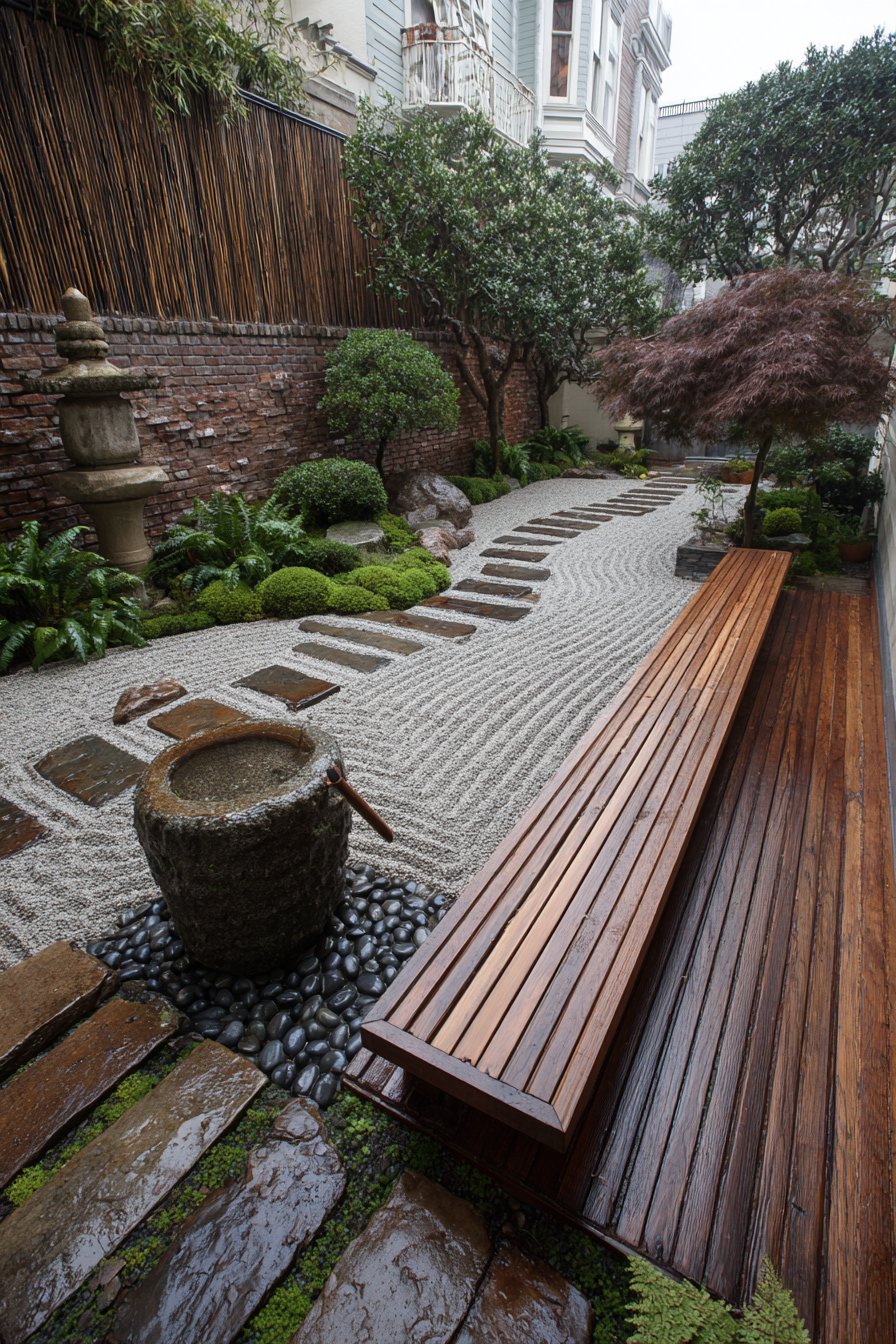
This article explores twenty distinct approaches to Japanese backyard design. From traditional zen gardens to contemporary interpretations, each concept demonstrates authentic aesthetic principles. You’ll discover how to incorporate water features, stone arrangements, and carefully pruned plants. These ideas range from minimalist dry landscapes to lush moss gardens, offering inspiration for every style preference and spatial constraint.
1. Meditative Zen Garden with Raked Gravel
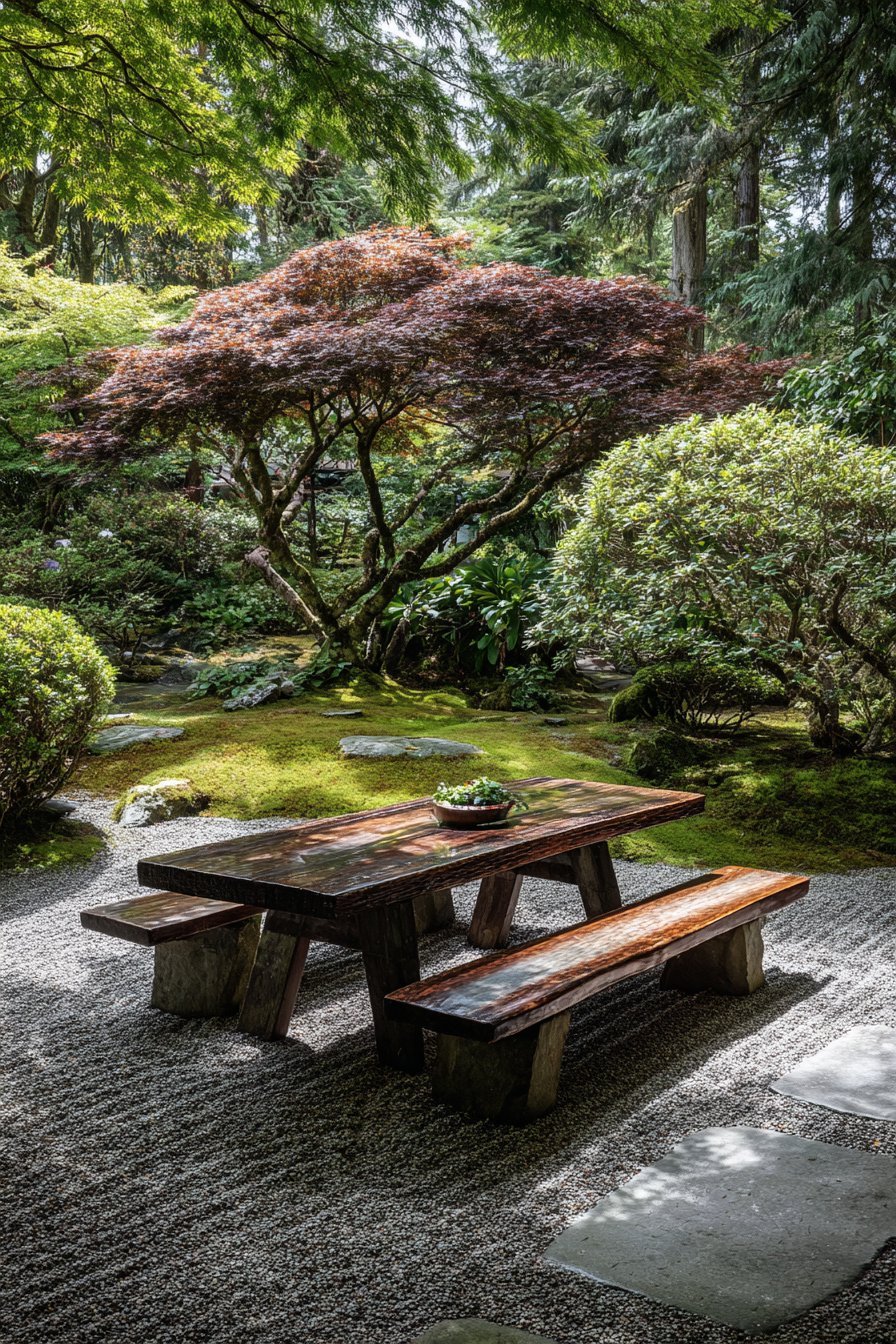
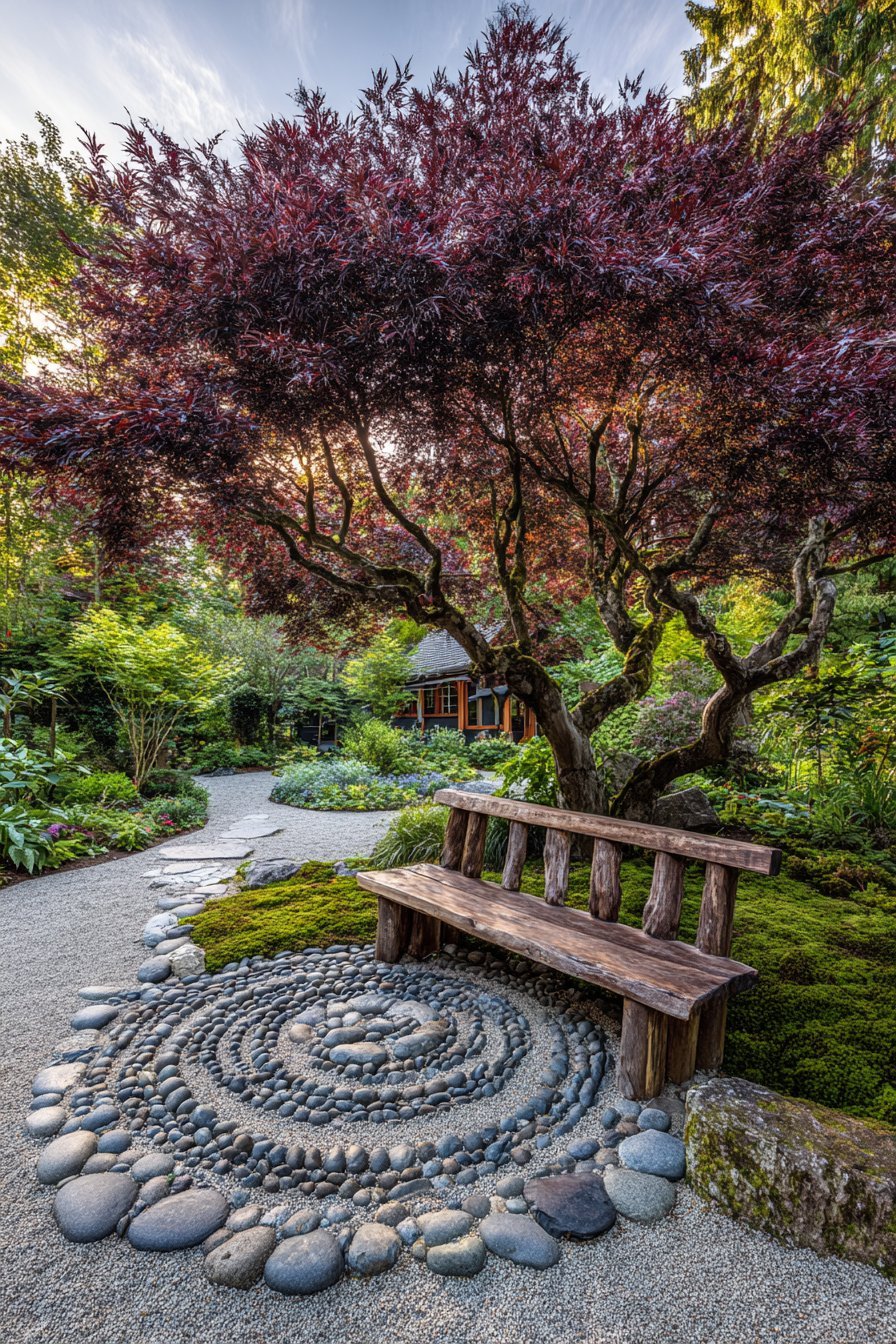
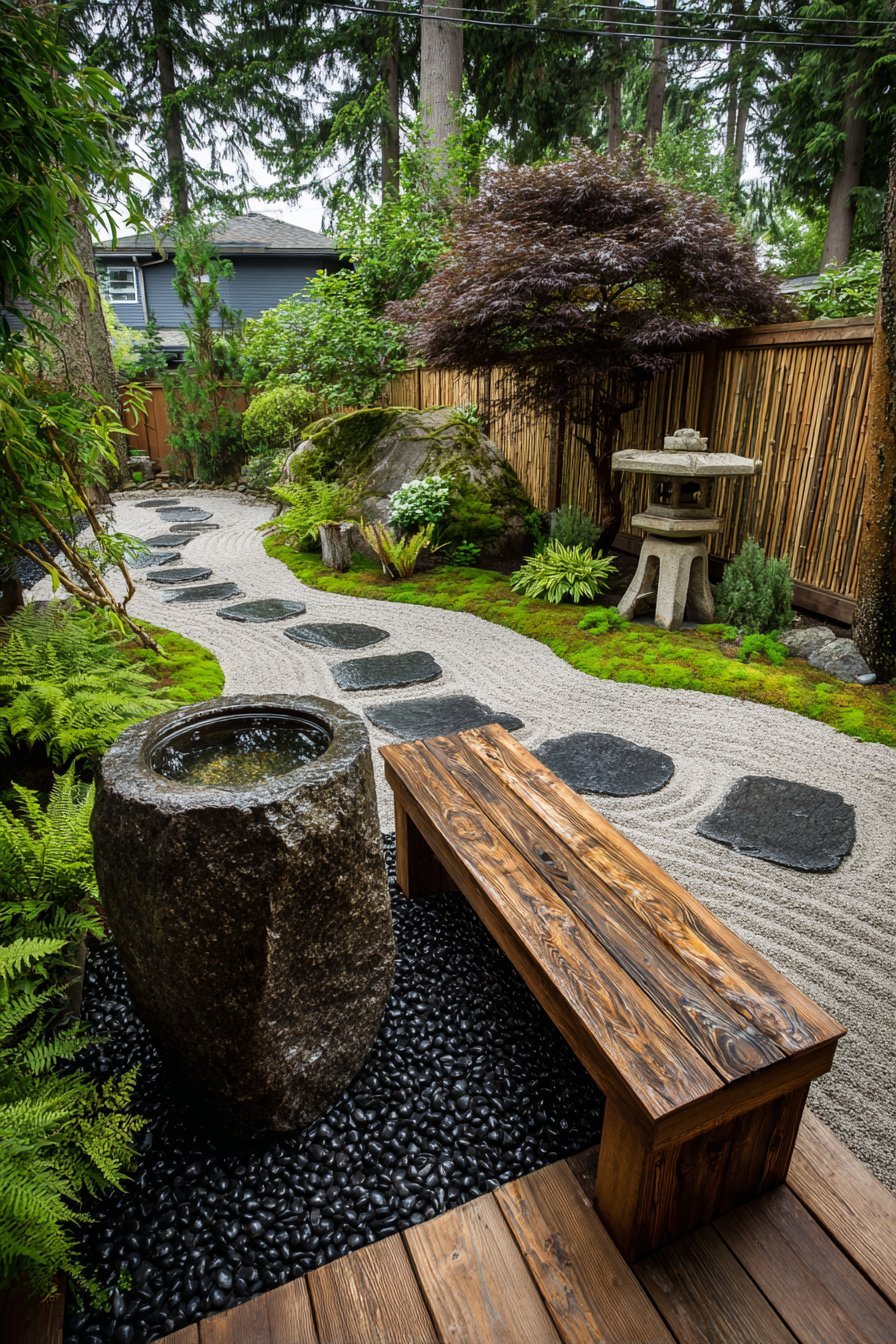
A zen garden centers on simplicity and contemplation. Carefully raked gravel creates wave patterns that represent flowing water. Smooth river stones arranged in circular formations invite meditation. The design embraces wabi-sabi aesthetics, celebrating natural aging and imperfection.
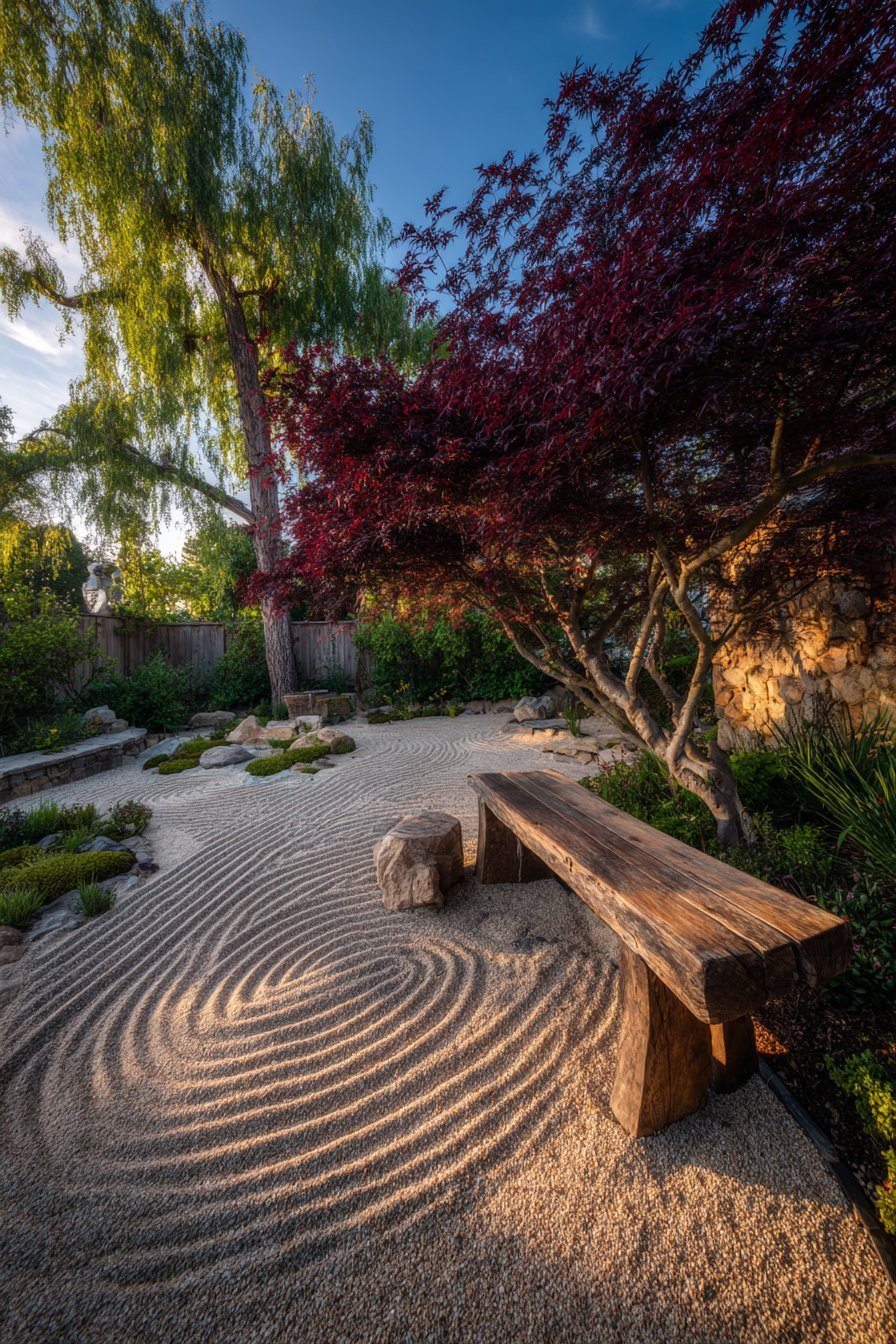
A low wooden bench crafted from weathered cedar provides a comfortable viewing spot. The bench sits beneath a Japanese maple tree with deep burgundy foliage. Natural moss grows between stepping stones, creating organic pathways through the space. The textures contrast beautifully—smooth stones against coarse gravel, soft moss against weathered wood.
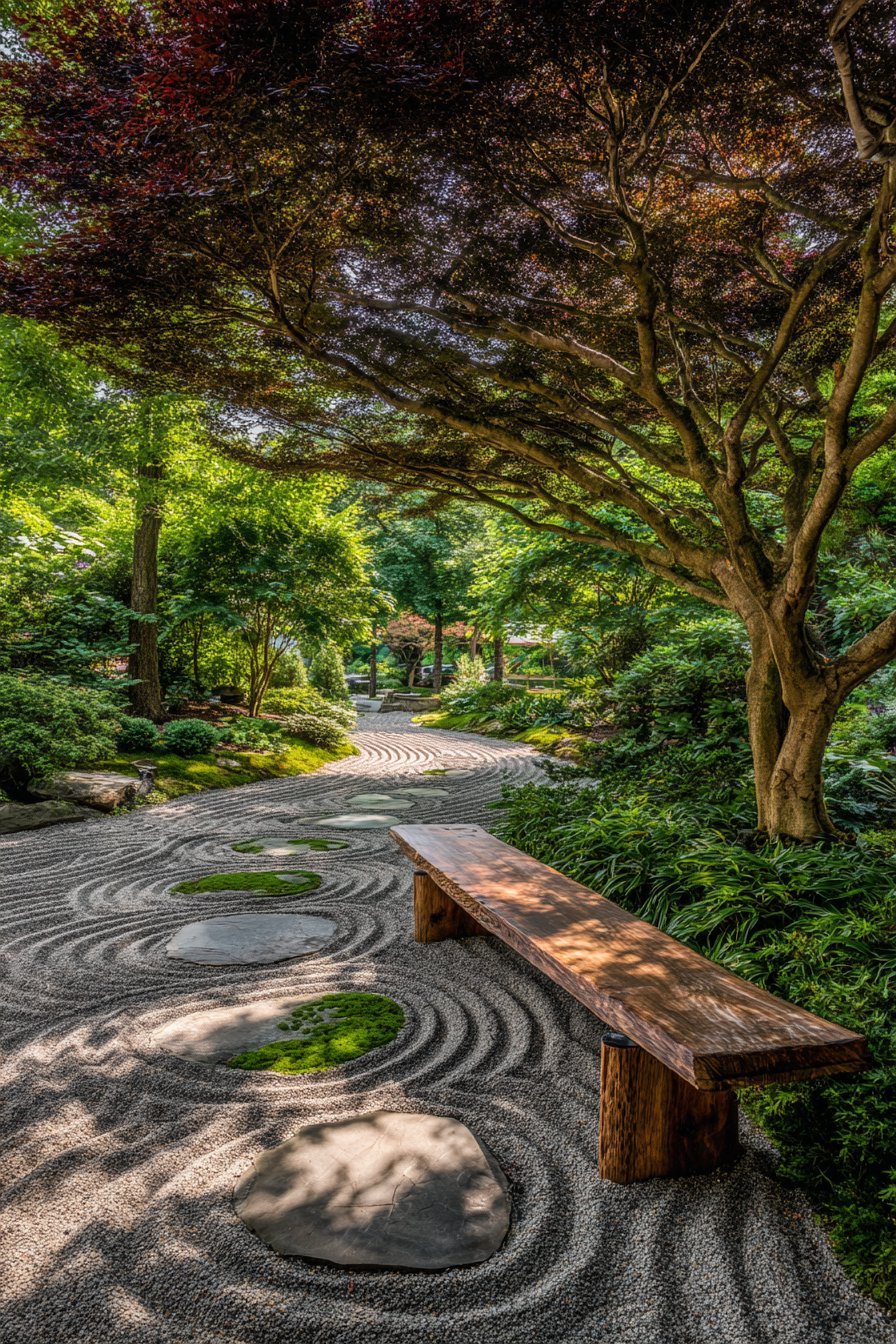
Morning light filters through the maple canopy naturally. Dappled shadows dance across the raked patterns throughout the day. The interplay between light and shadow adds depth to this minimalist composition. This design requires minimal maintenance once established, making it practical for busy homeowners.
The zen garden philosophy extends beyond visual appeal. The act of raking gravel becomes a meditative practice itself. This space encourages mindfulness and provides respite from daily stresses. The simplicity allows the mind to rest and find clarity.
Key Design Tips:
- Select smooth river stones in varying sizes for visual interest
- Rake gravel in consistent patterns following traditional wave or straight line designs
- Position seating at the optimal viewing angle for contemplation
- Choose Japanese maple varieties that thrive in your climate zone
- Allow natural moss to establish rather than forcing its growth
- Use weathered cedar for authentic aging appearance
- Maintain clear boundaries between gravel and planted areas
2. Traditional Stone Basin Water Feature
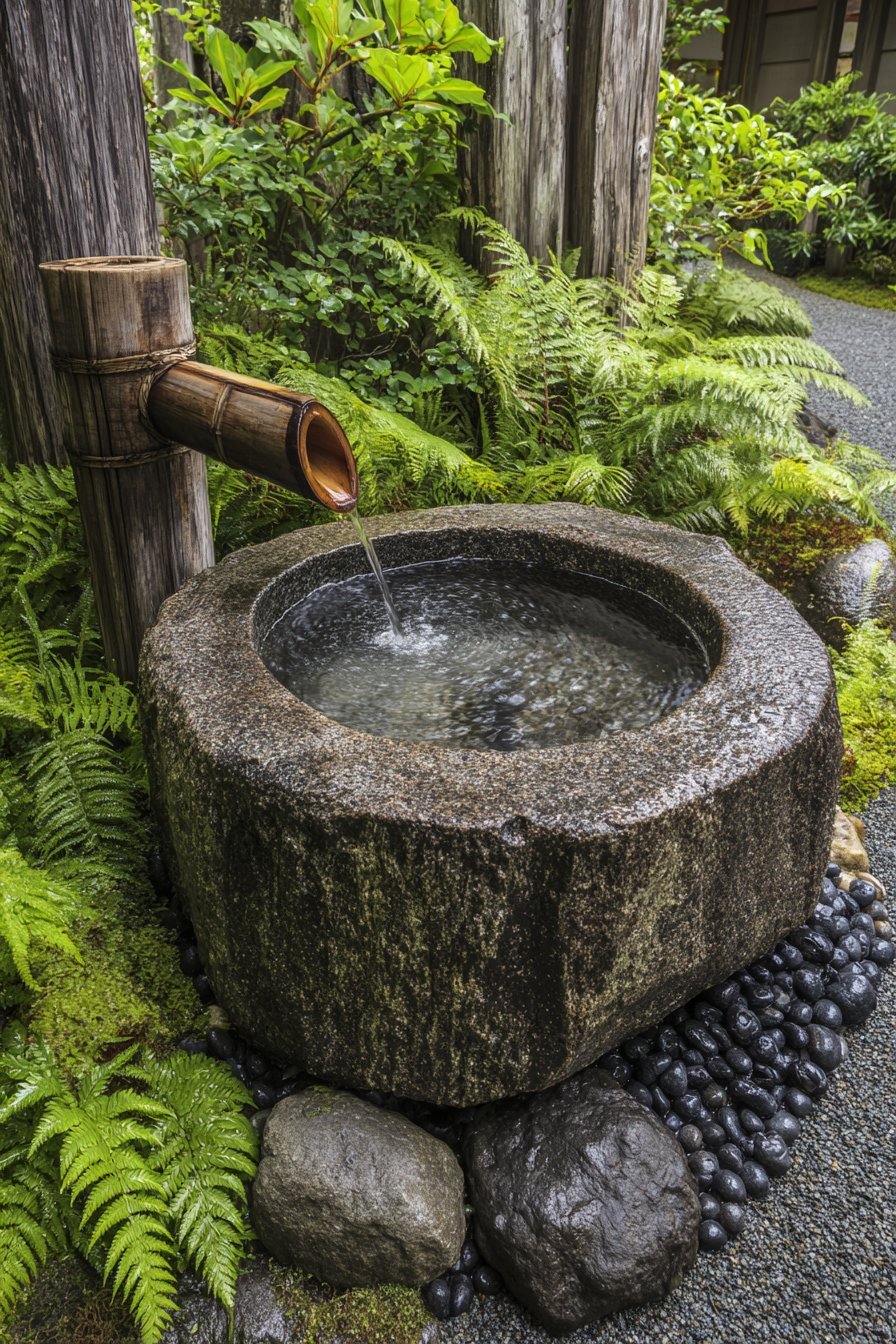
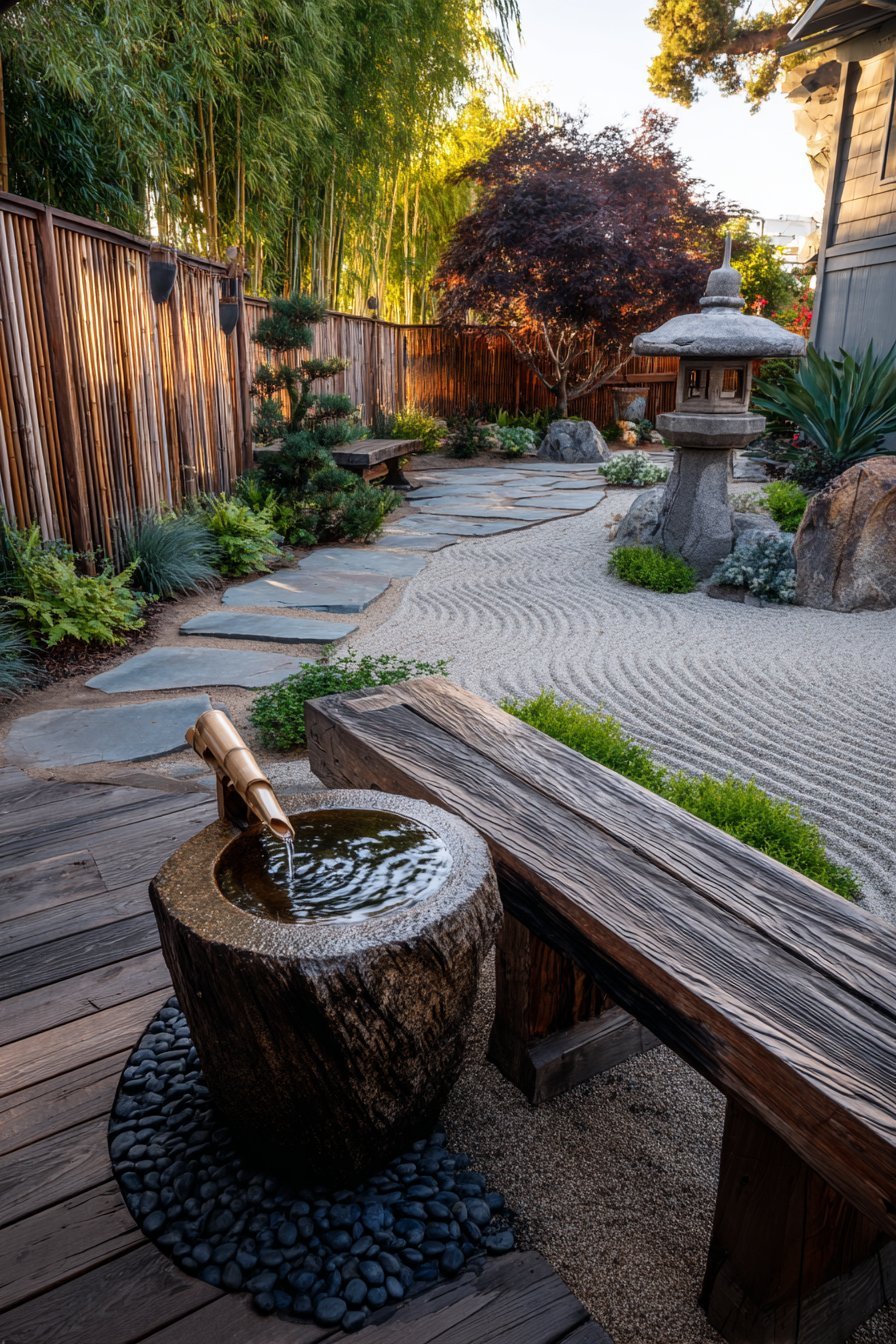
A tsukubai stone basin creates an authentic focal point. This traditional water feature sits low to the ground, encouraging humble posture. A bamboo fountain delivers a gentle stream of water into the basin. The sound creates peaceful ambiance throughout the backyard space.
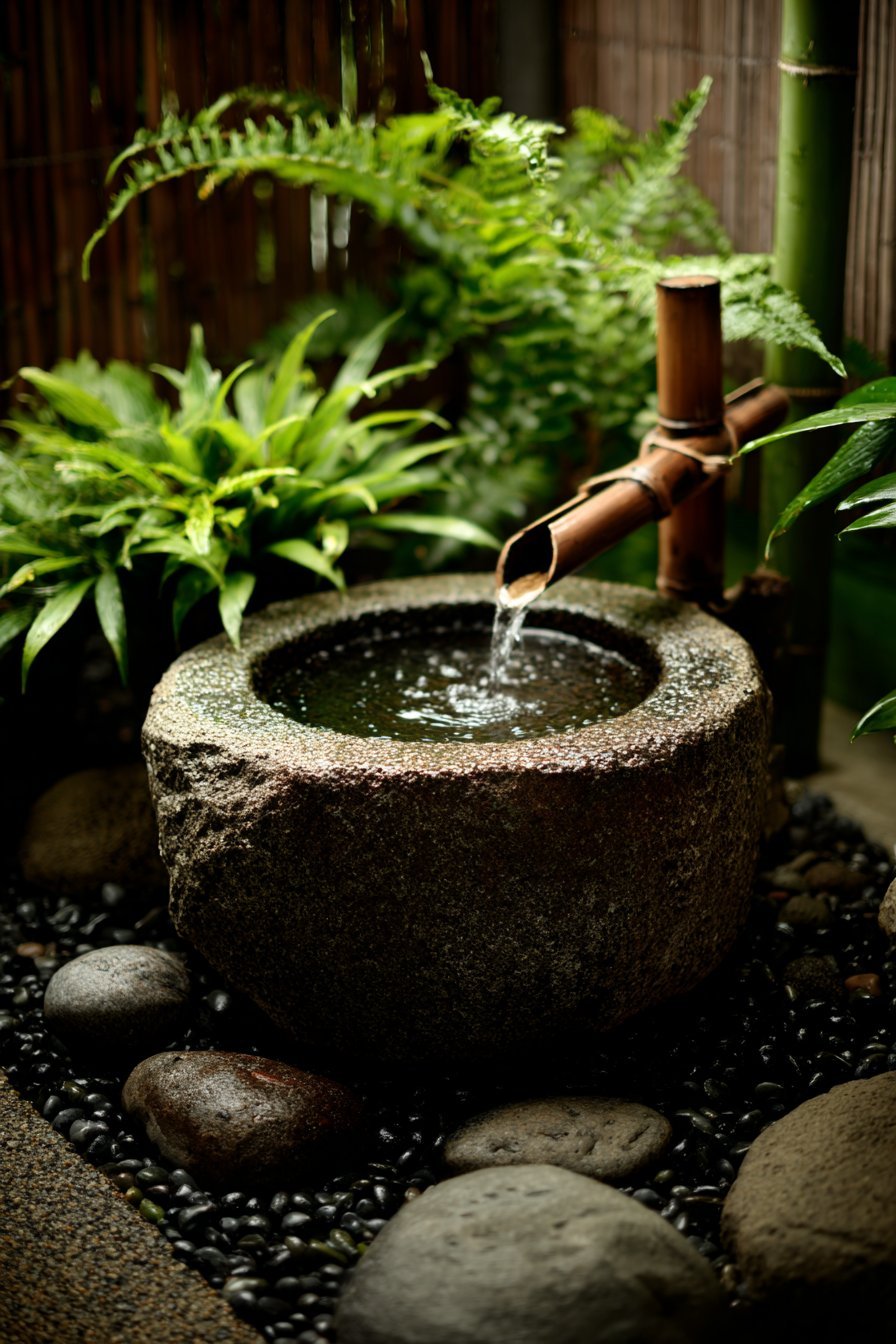
The basin rests on a bed of smooth black pebbles. Weathered stones and lush green ferns surround the feature naturally. A simple bamboo ladle rests across the basin edge, referencing traditional tea ceremony practices. The composition demonstrates asymmetrical balance, a core principle of Japanese design.
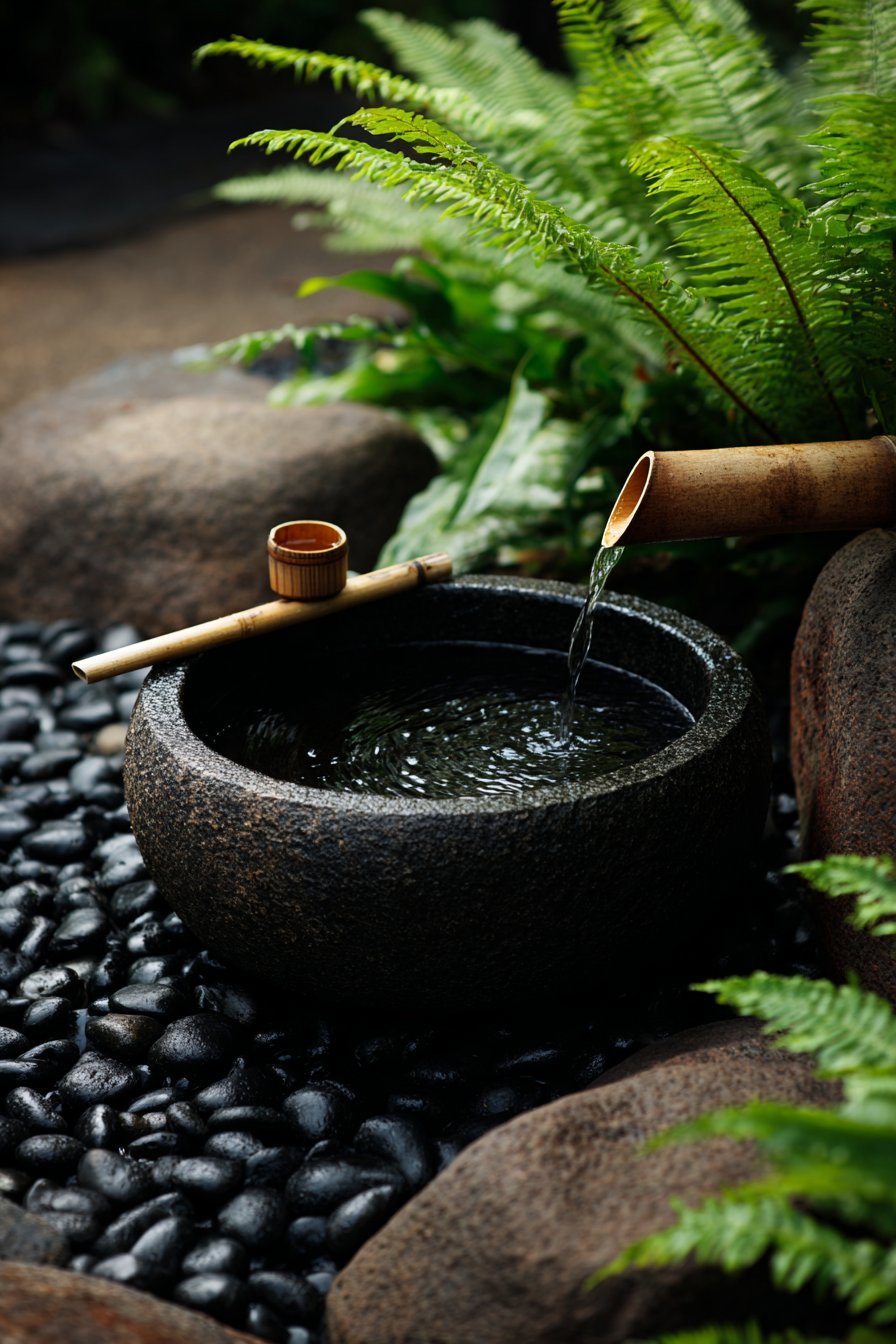
Water reflects light and creates movement in the garden. The gentle trickling sound masks urban noise effectively. Moisture from the feature supports the growth of ferns and moss nearby. This microclimate adds another layer of natural beauty.
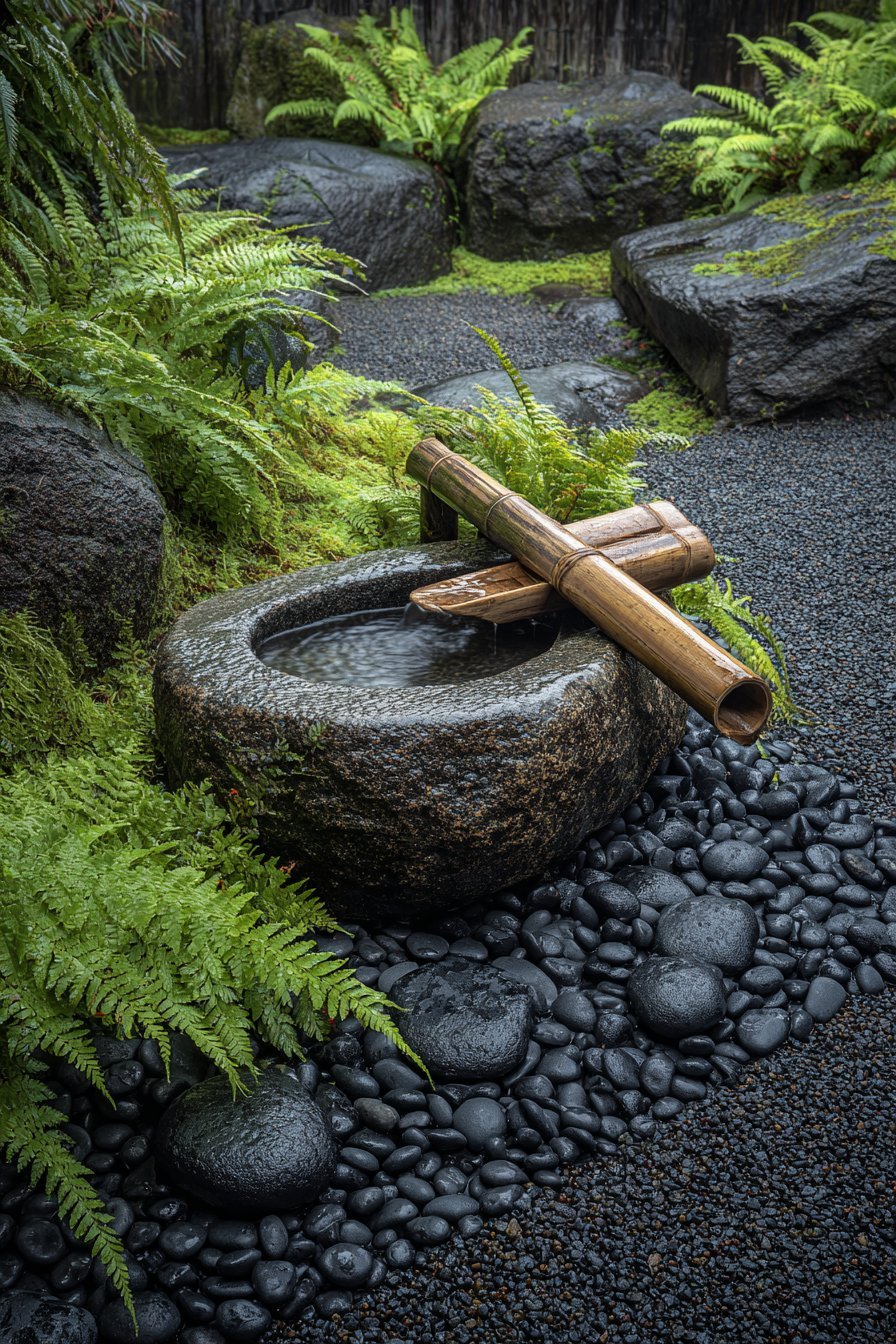
The scale of this feature suits intimate spaces perfectly. It doesn’t overwhelm small yards yet commands attention through simplicity. The honest materials—stone, bamboo, and water—create timeless appeal that never feels dated.
Key Design Tips:
- Position the basin where water sounds can be appreciated from main viewing areas
- Use black pebbles to create striking contrast with lighter stone
- Select granite or other durable stone for the basin itself
- Include a recirculating pump for water conservation
- Plant shade-loving ferns around the feature for lushness
- Maintain water clarity through regular cleaning and filtration
- Allow natural weathering and patina to develop on stone surfaces
3. Rustic Wooden Arbor with Wisteria
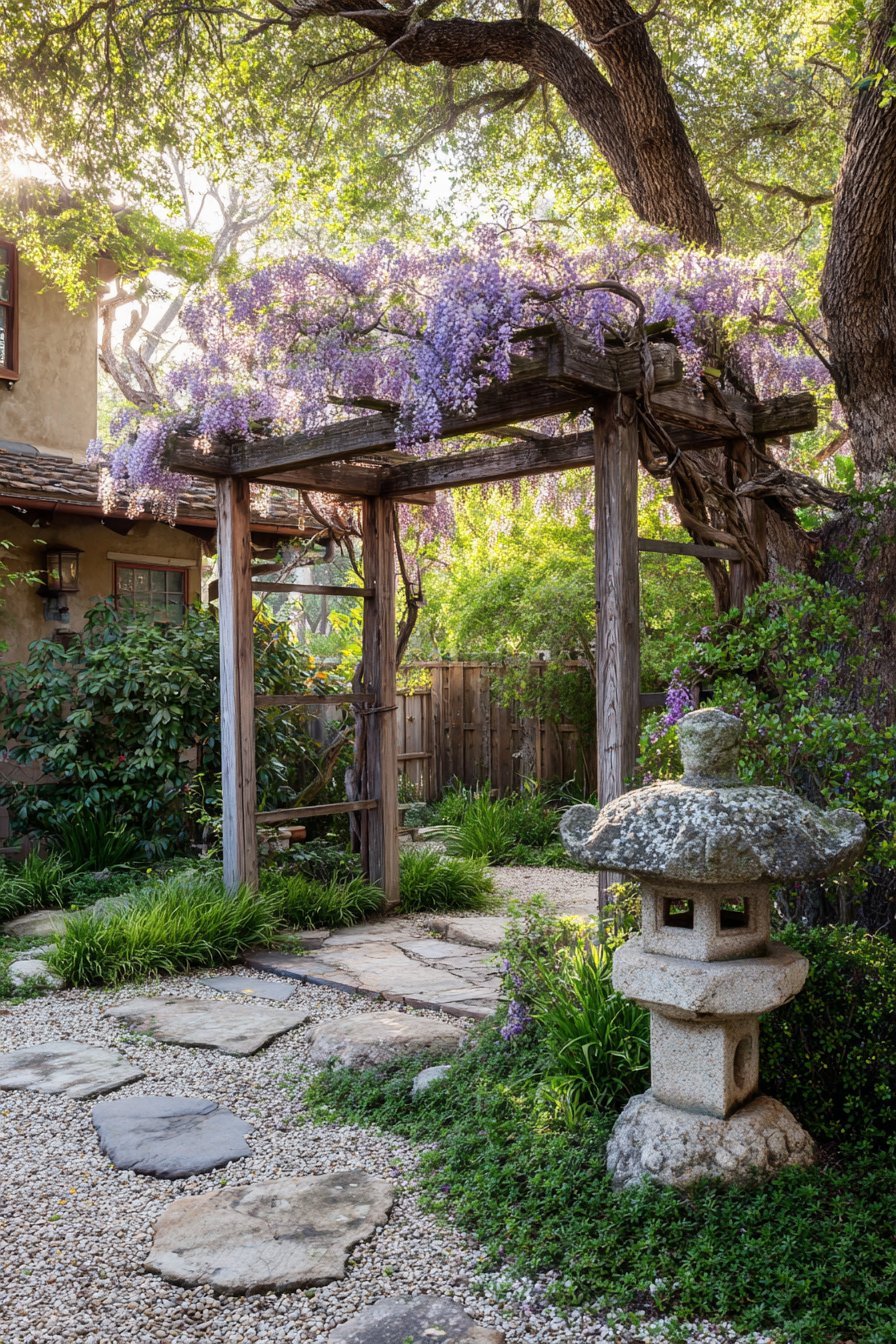
A wooden arbor structure adds vertical interest to flat spaces. Naturally aged cedar posts support the framework with honest construction. Wisteria vines climb the structure, producing cascades of purple blooms in season. The arbor creates a defined garden room within the larger landscape.
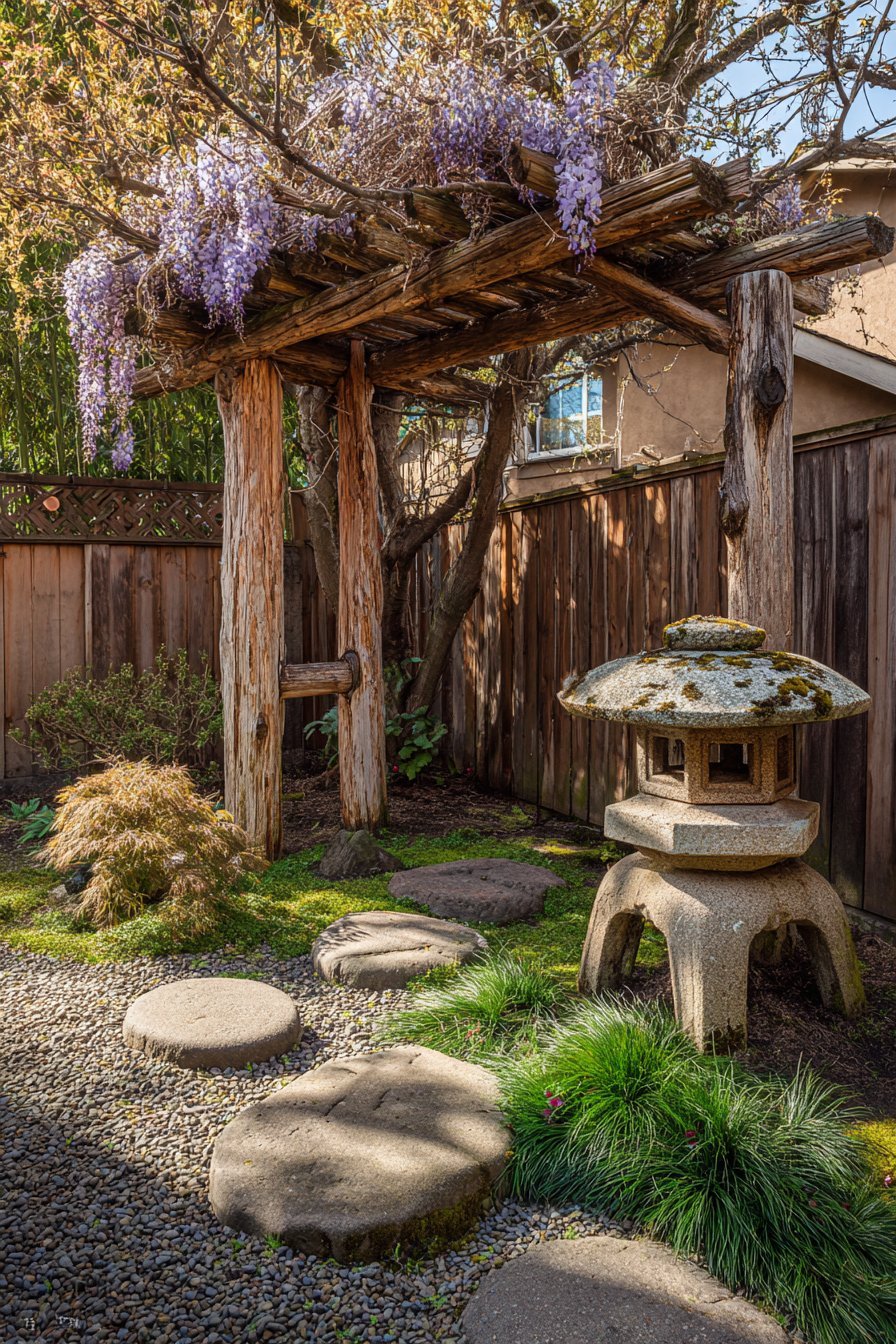
Flat stepping stones set in gravel form a meandering path beneath the arbor. The path invites exploration and creates intentional movement through the space. A traditional stone lantern stands beside the path, its granite surface showing natural weathering. Low-growing mondo grass and compact azaleas provide year-round greenery.
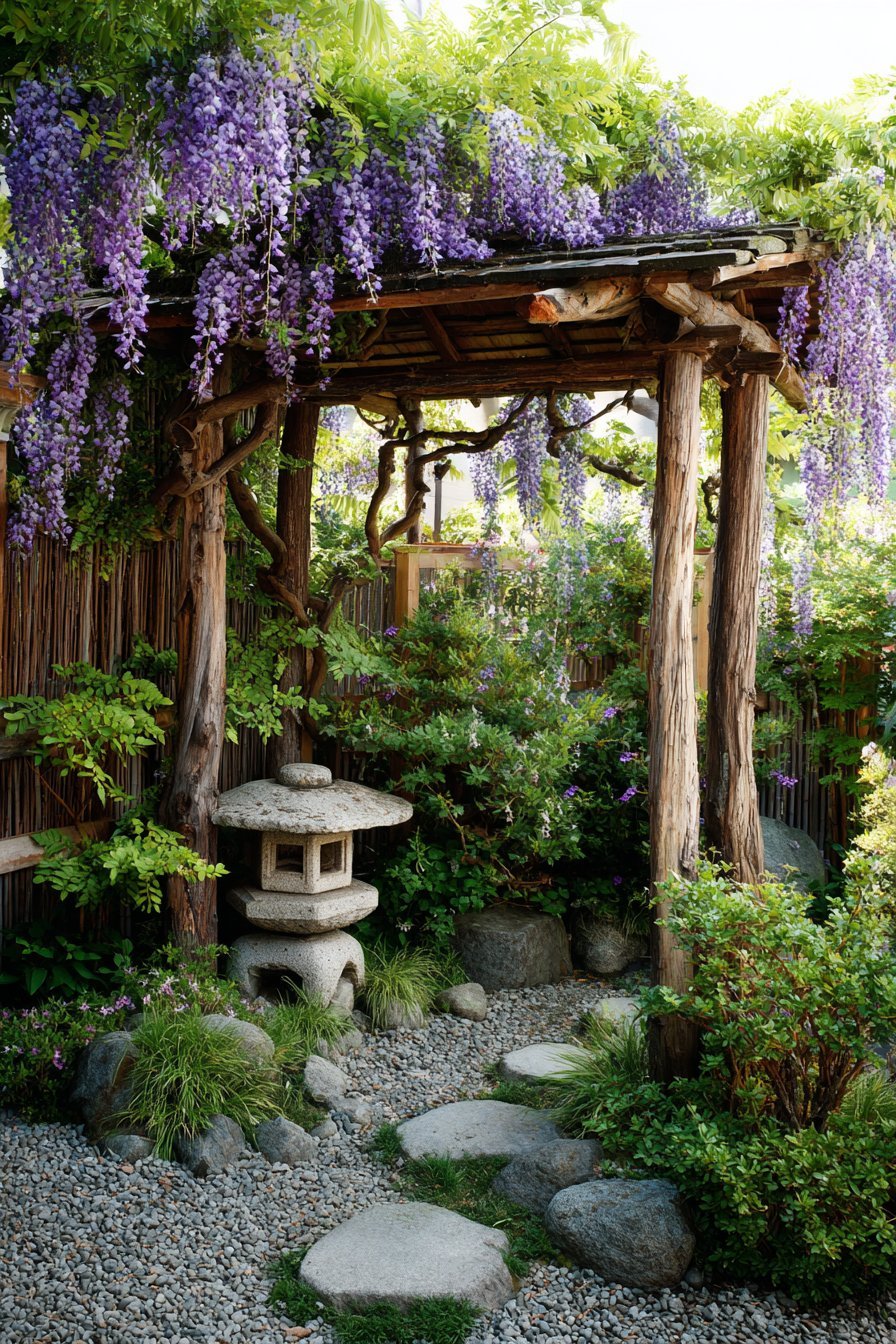
Afternoon light casts gentle shadows through the arbor structure. The dappled shade beneath makes this area comfortable even during warmer months. The combination of vertical and horizontal elements creates visual rhythm. This design demonstrates how structures enhance rather than dominate natural beauty.
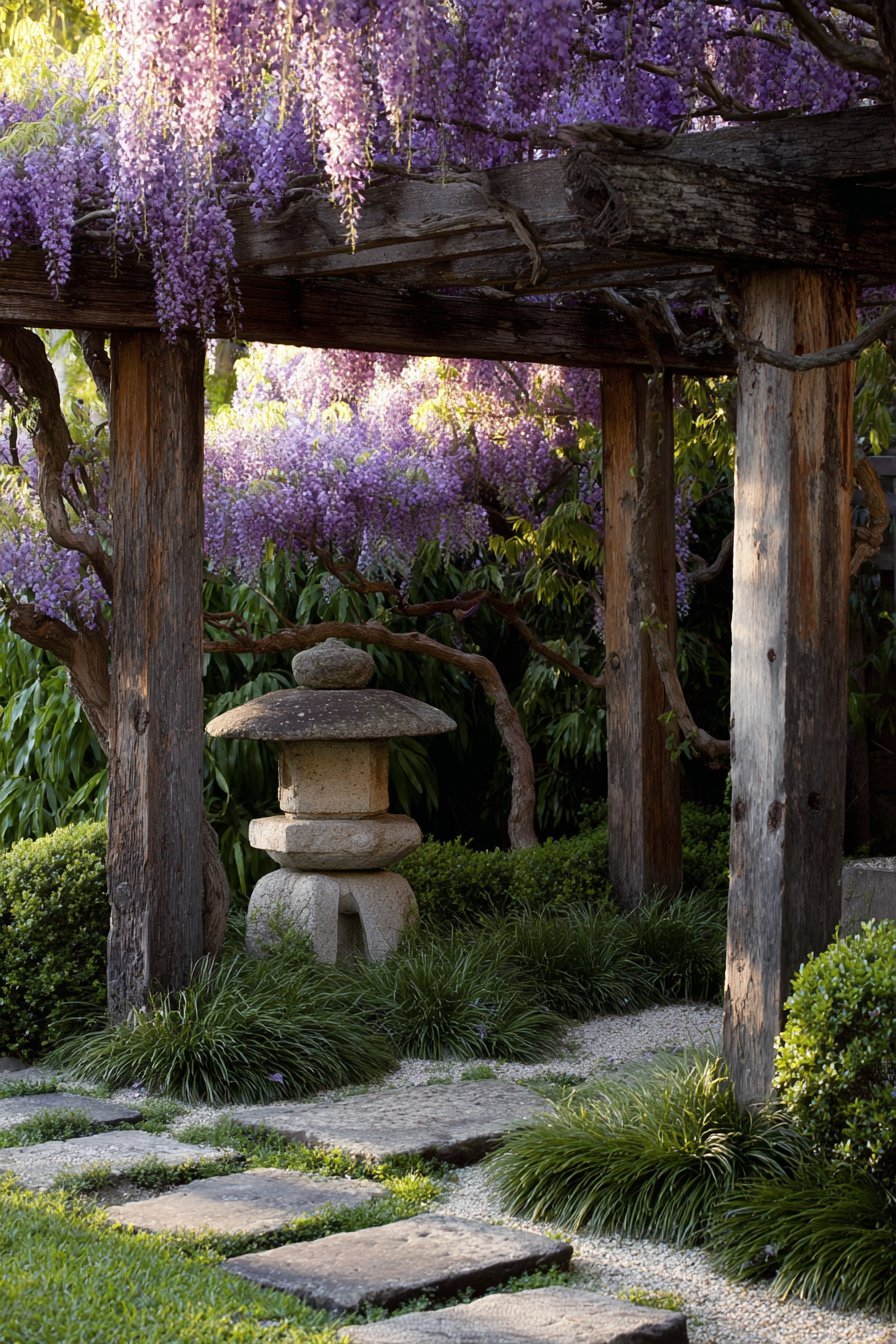
Seasonal changes make this design particularly dynamic. Spring brings wisteria blooms in magnificent displays. Summer offers cool shade and lush greenery. Fall provides interesting seed pods and changing foliage. Winter reveals the arbor’s elegant bone structure.
Key Design Tips:
- Choose cedar for natural weather resistance and beautiful aging
- Train wisteria carefully to prevent structural damage from aggressive growth
- Space stepping stones at comfortable walking intervals
- Position the stone lantern where it can be viewed from multiple angles
- Prune wisteria after blooming to maintain manageable size
- Allow lichen and patina to develop on the stone lantern naturally
- Use the arbor to frame views of other garden elements
4. Compact Urban Japanese Garden
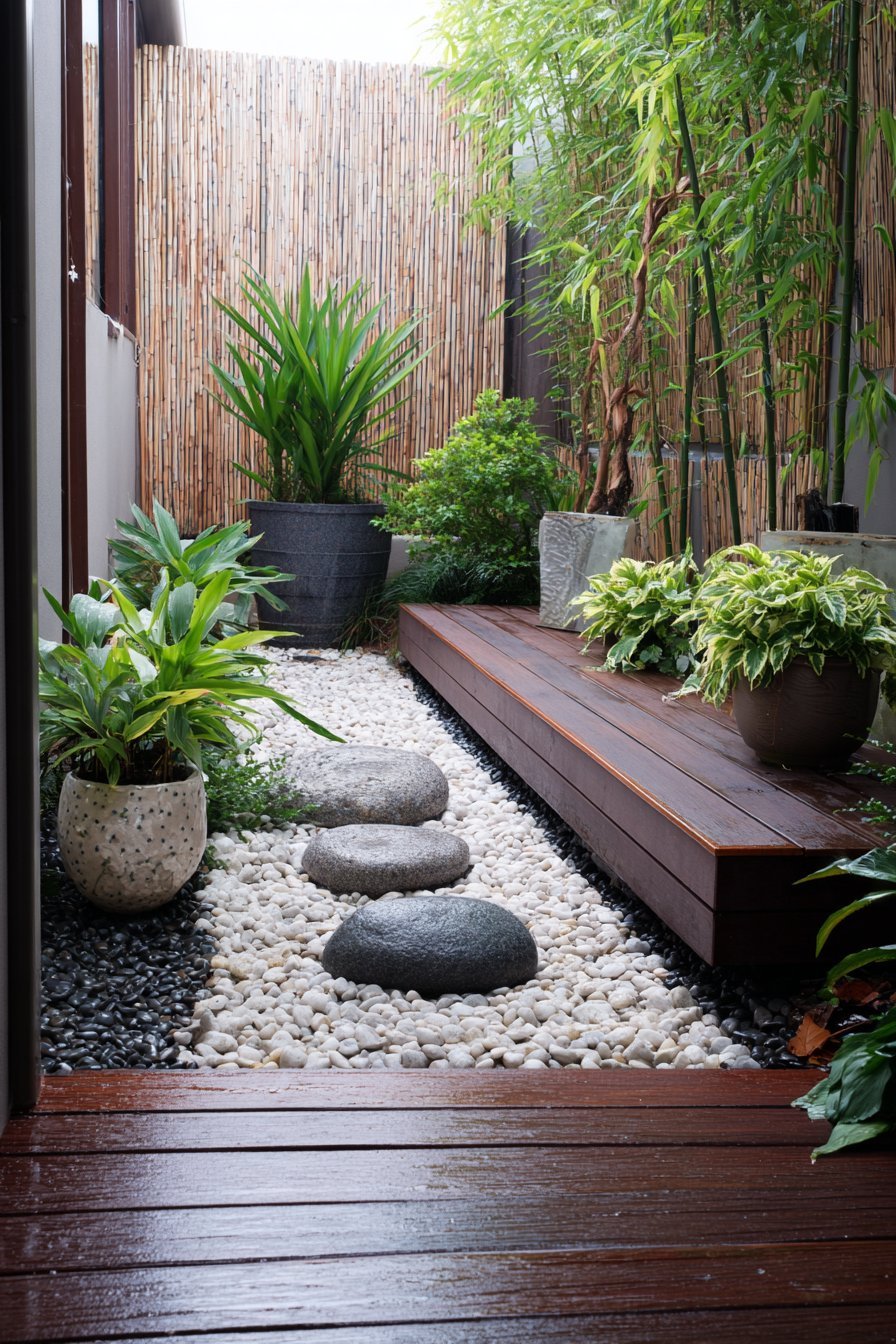
Small urban spaces benefit immensely from Japanese design principles. This design uses vertical elements to maximize limited square footage. A simple bamboo fence creates a neutral backdrop while providing privacy. The layered approach makes the space feel larger than its actual dimensions.
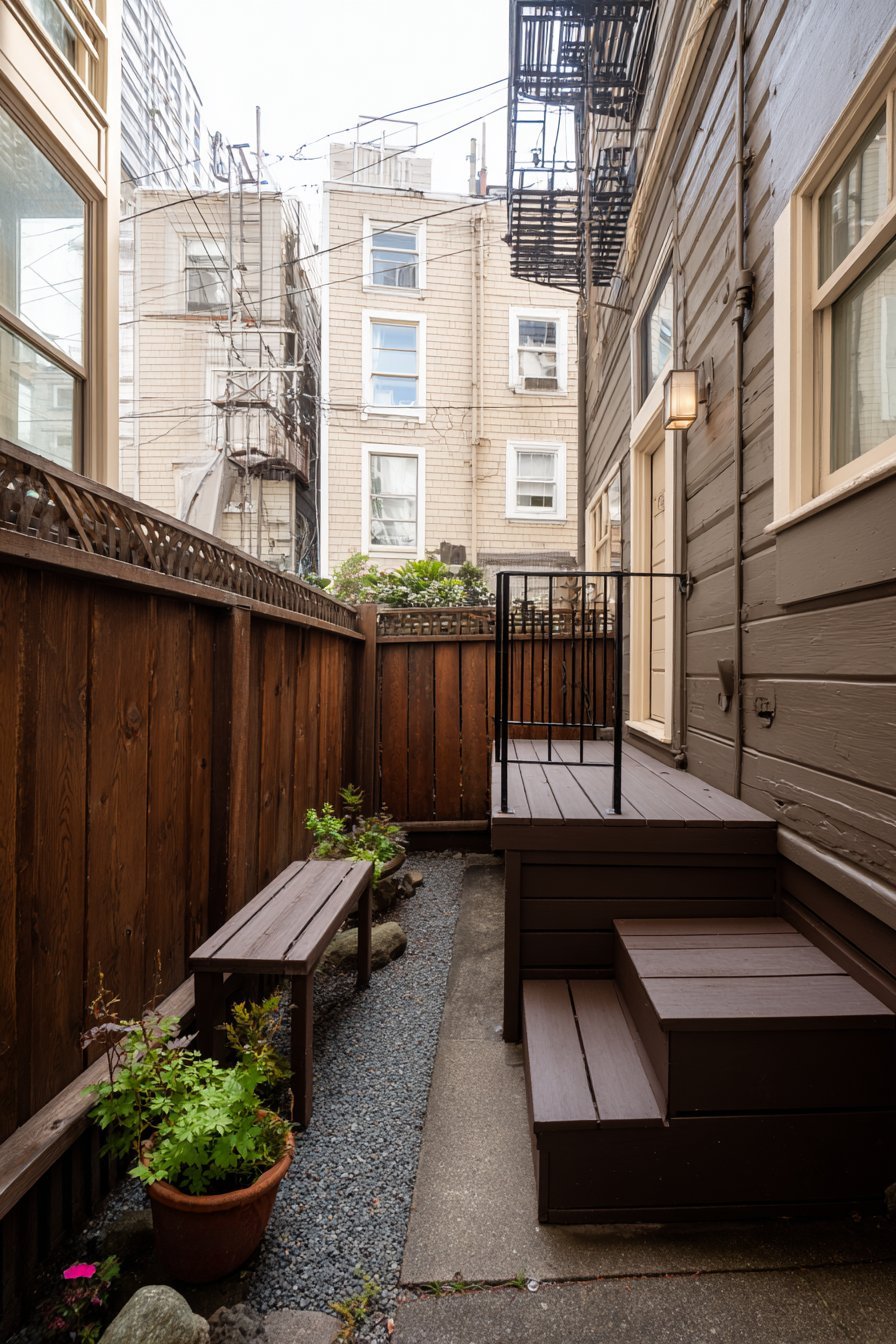
A small raised platform deck constructed from dark composite materials provides functional outdoor living space. The deck sits adjacent to a narrow gravel section with three carefully selected stones. These stones represent mountains in traditional symbolism. Dwarf Japanese pine and compact hostas add greenery without overwhelming the intimate scale.
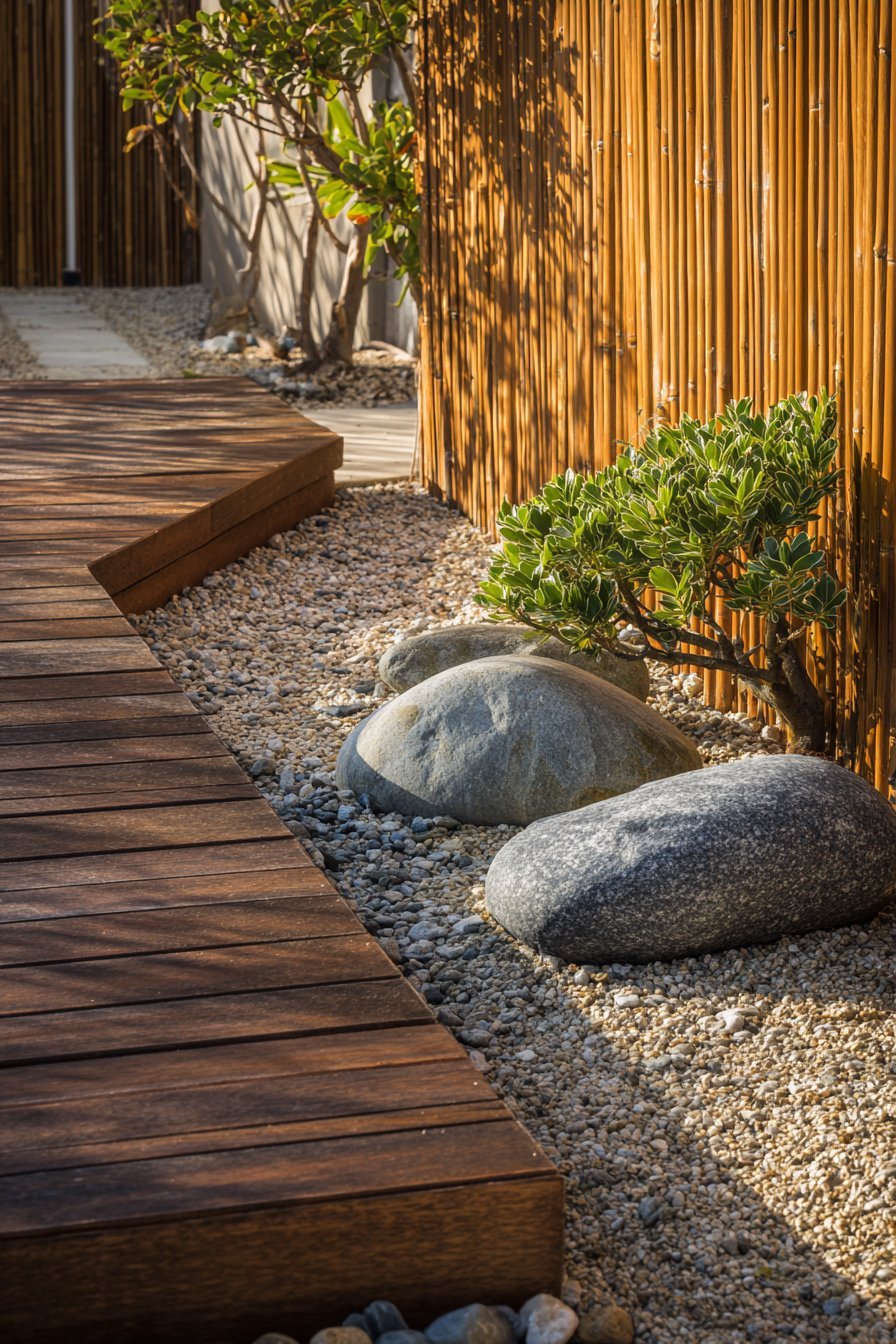
Vertical bamboo screening adds height without consuming precious floor space. The fence filters views while maintaining airflow and connection to surroundings. Strategic plant placement creates depth perception through varying heights and textures. This proves that authentic Japanese design adapts beautifully to urban constraints.
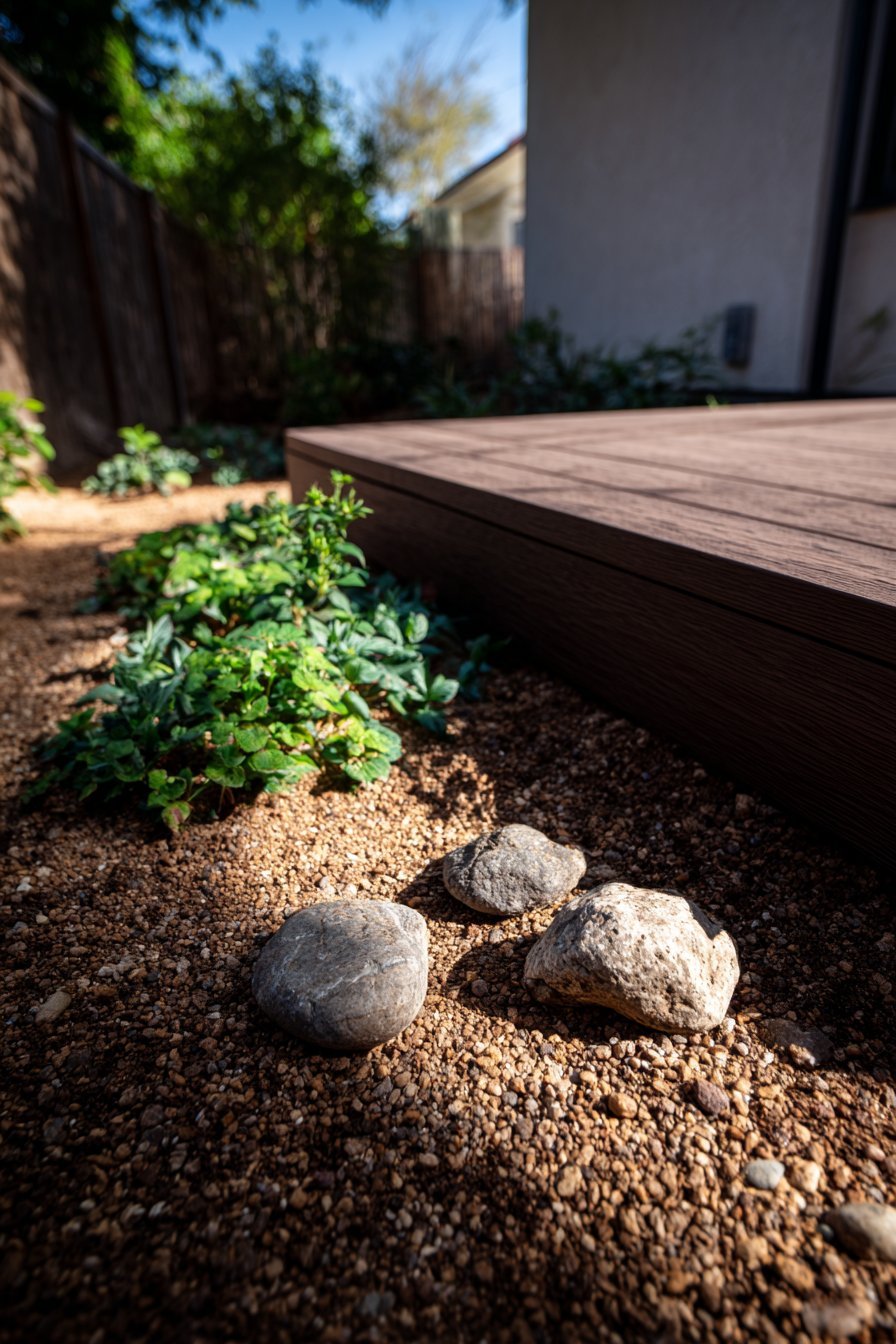
Morning light highlights texture variations between smooth decking and coarse gravel. The compact plants remain manageable with minimal pruning requirements. This design demonstrates that square footage doesn’t limit the creation of peaceful sanctuaries.
Key Design Tips:
- Use composite decking for durability and low maintenance in tight spaces
- Select dwarf plant varieties that stay proportional to the space
- Create the illusion of depth through careful stone placement
- Install bamboo fencing for instant privacy without building permits
- Incorporate multiple textures to add visual interest
- Choose three stones in the traditional arrangement of different sizes
- Keep the color palette limited for cohesive simplicity
5. Wooden Platform Overlooking Koi Pond
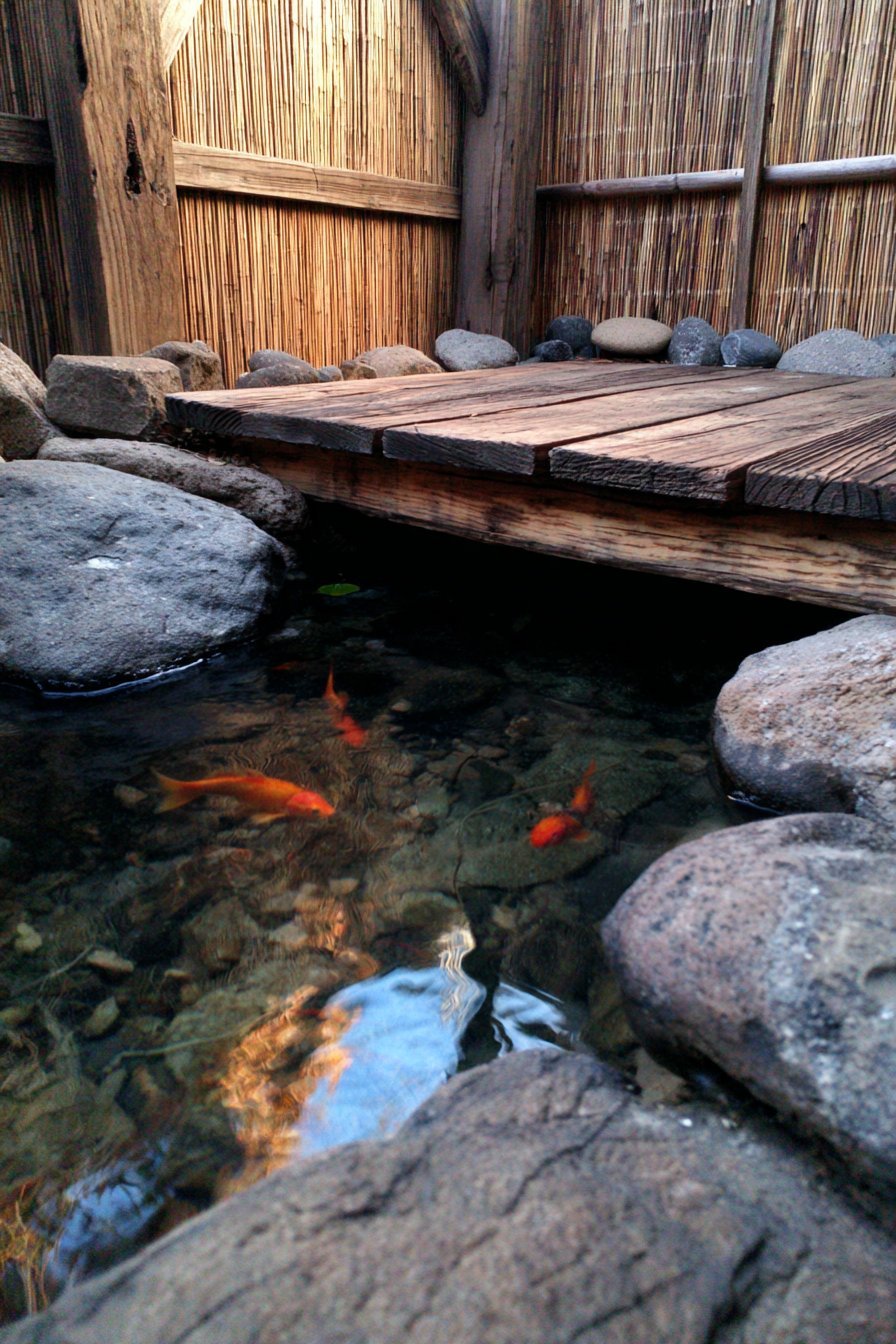
A meditation deck provides the perfect viewing platform for a koi pond. Reclaimed cedar construction showcases visible grain patterns and natural color variations. The platform extends over the water’s edge, creating intimate connection with aquatic life. Large irregular stones form the pond edge organically.
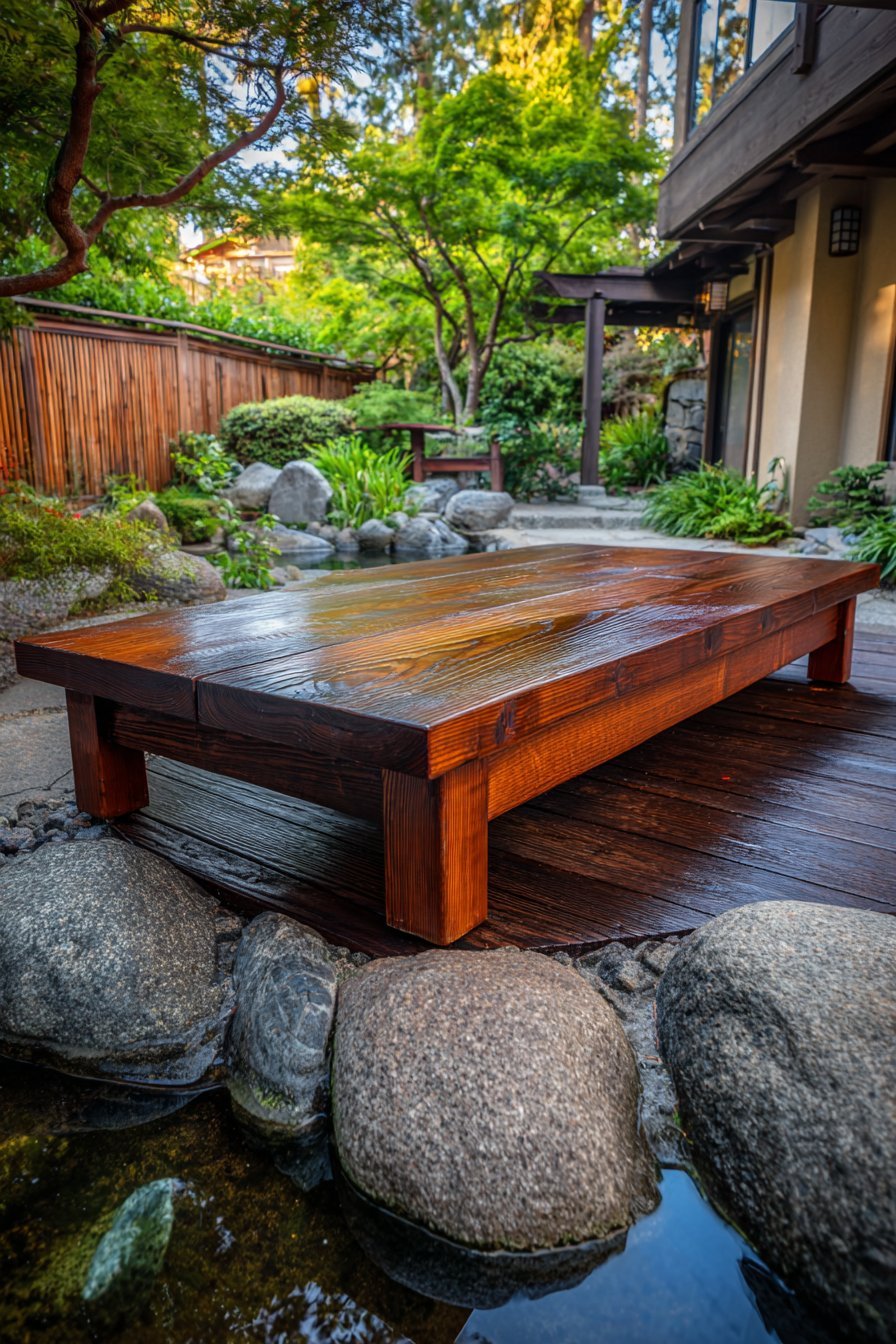
Clear water reveals koi fish swimming beneath the surface gracefully. Water plants grow naturally in gaps between the edge stones. A minimalist bamboo screen provides privacy without blocking light or views. The design celebrates the relationship between observation and nature.
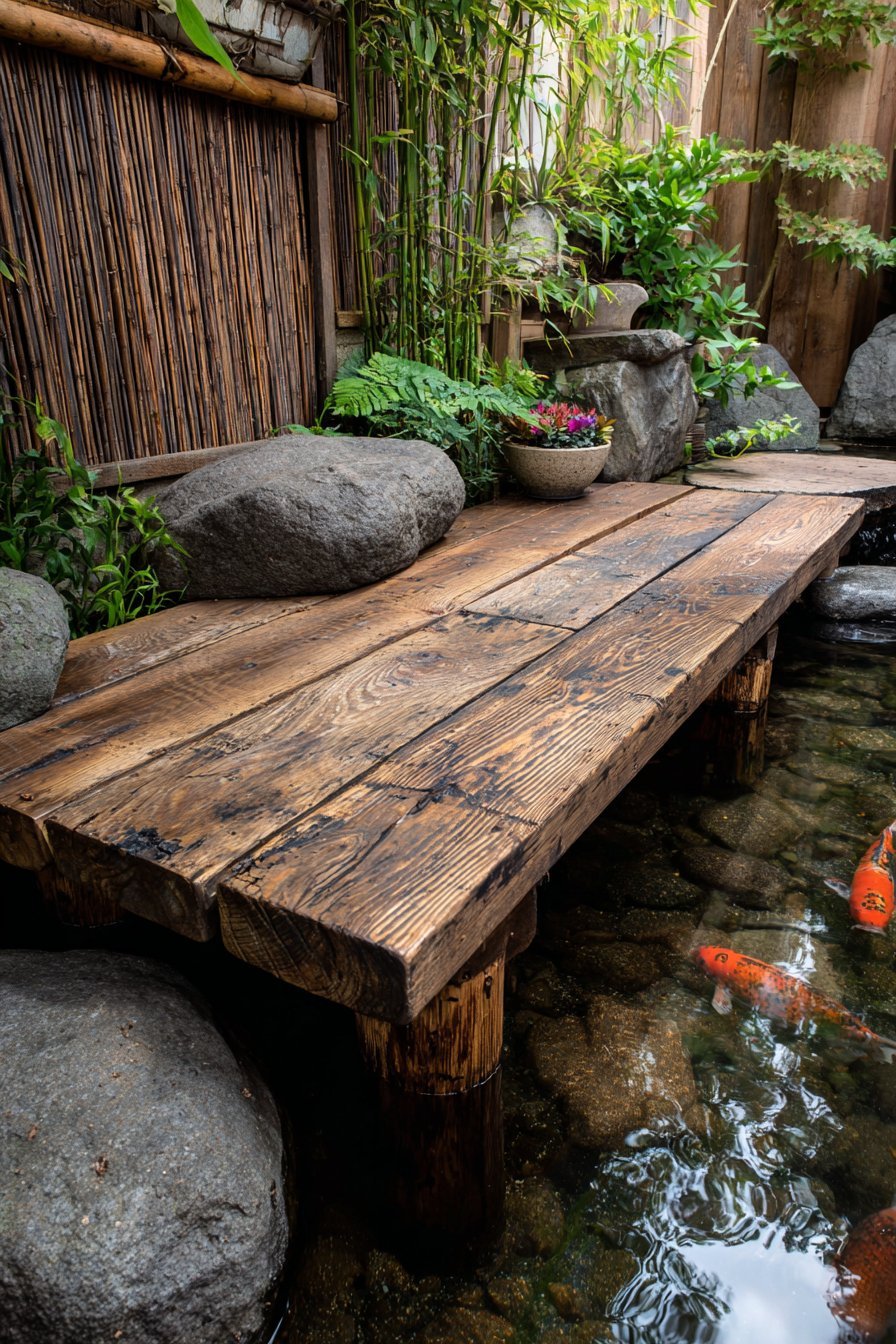
Golden hour light transforms this space into something magical. Warm tones reflect on the water surface beautifully. The weathered wood grain glows with rich amber hues. This timing emphasizes the connection between natural and human-made structures.
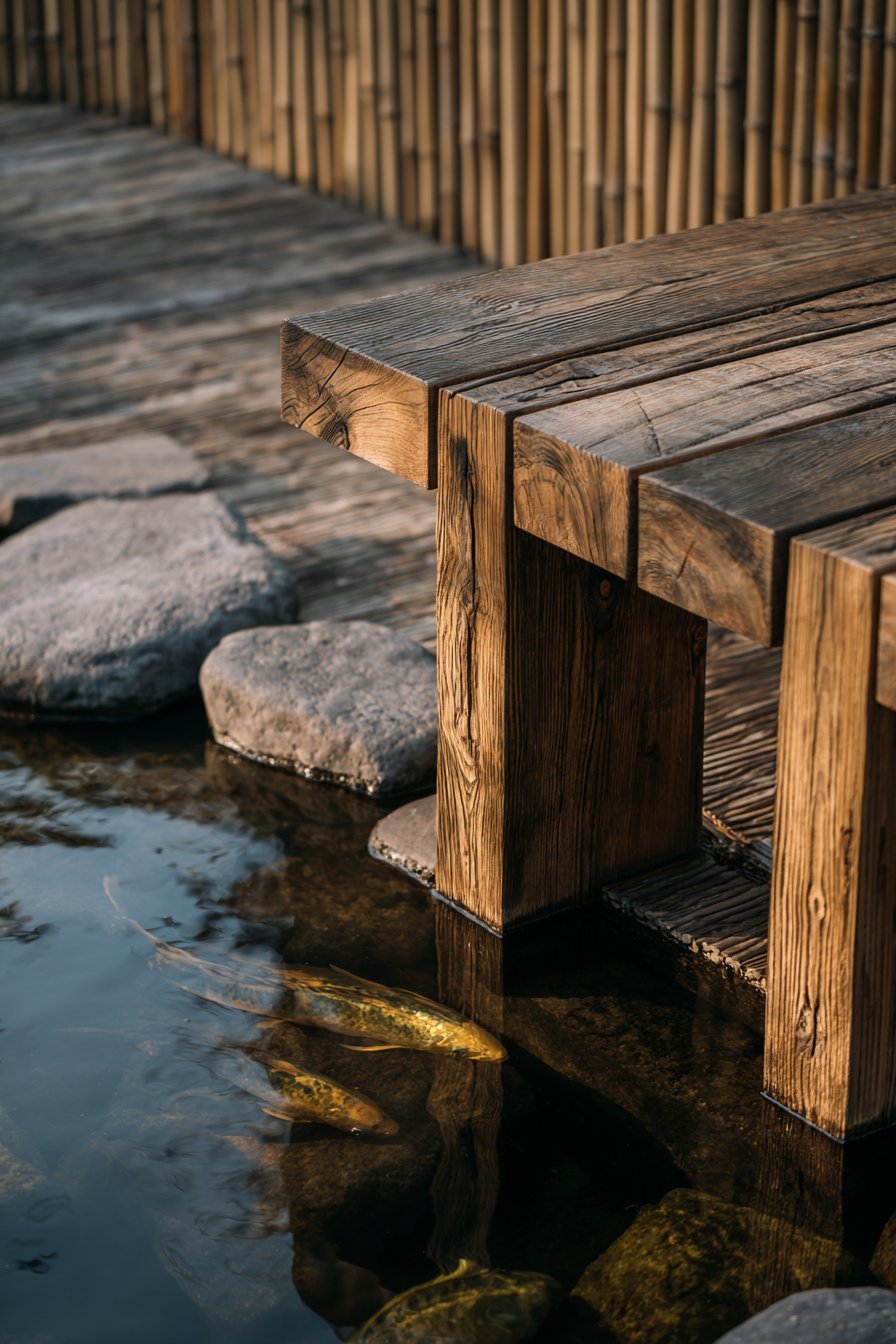
The sound of moving water adds another sensory dimension. Fish movement creates ripples that catch and reflect light. The platform height allows comfortable viewing while seated or standing. This design proves that simple elements combine to create profound experiences.
Key Design Tips:
- Use reclaimed cedar for character and environmental sustainability
- Position the deck to maximize viewing angles of the entire pond
- Include seating options built into the deck structure
- Select koi varieties with complementary color patterns
- Plant native aquatic species for natural pond ecology
- Install a quality filtration system to maintain water clarity
- Allow foundation stones to partially submerge for natural appearance
6. Traditional Entry Gate Structure
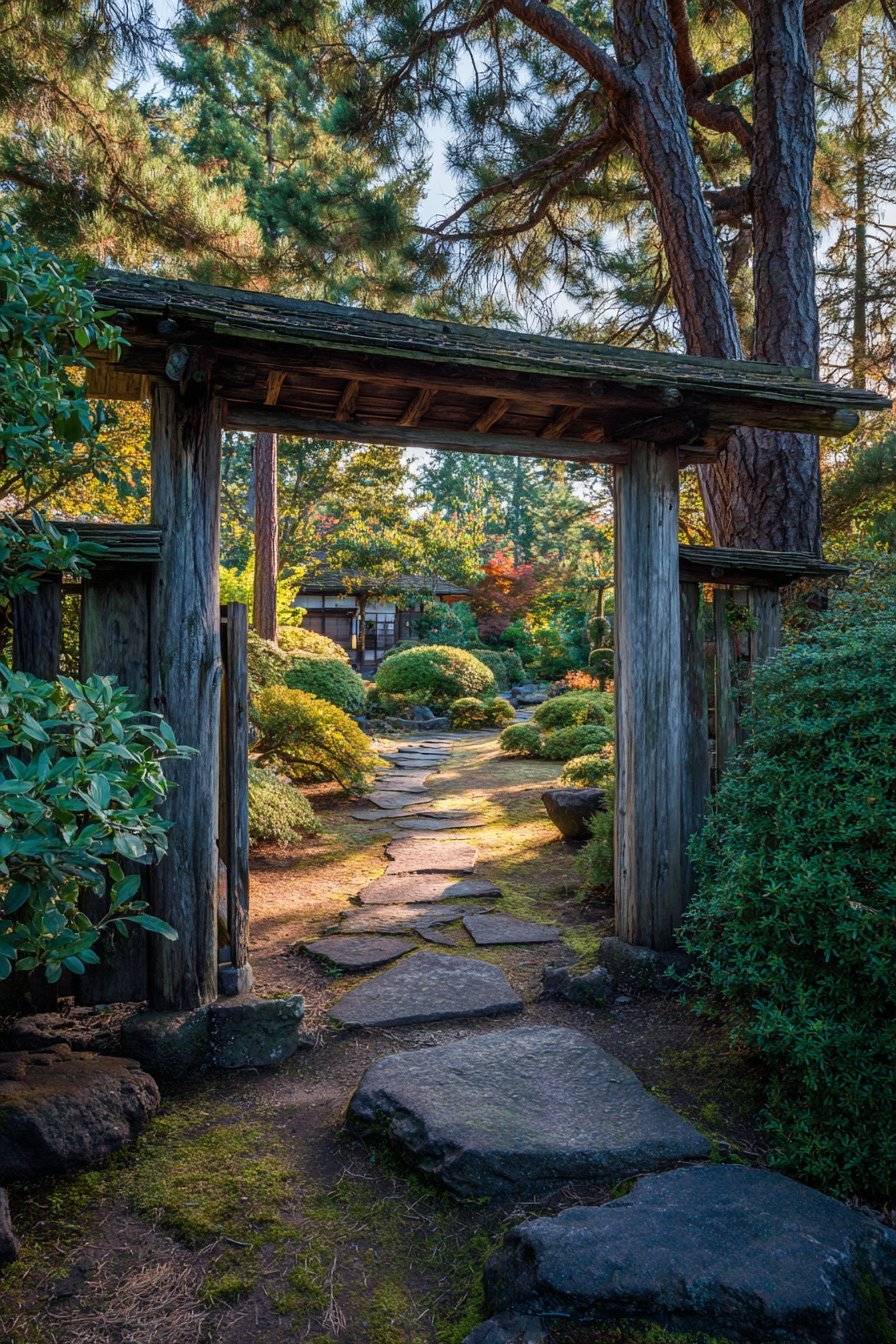
A torii-style wooden gate defines the threshold into the garden. Two vertical cedar posts support two horizontal crossbeams in classic proportions. The construction allows wood grain to remain prominently visible. This gate frames views into the garden beyond, creating anticipation and invitation.
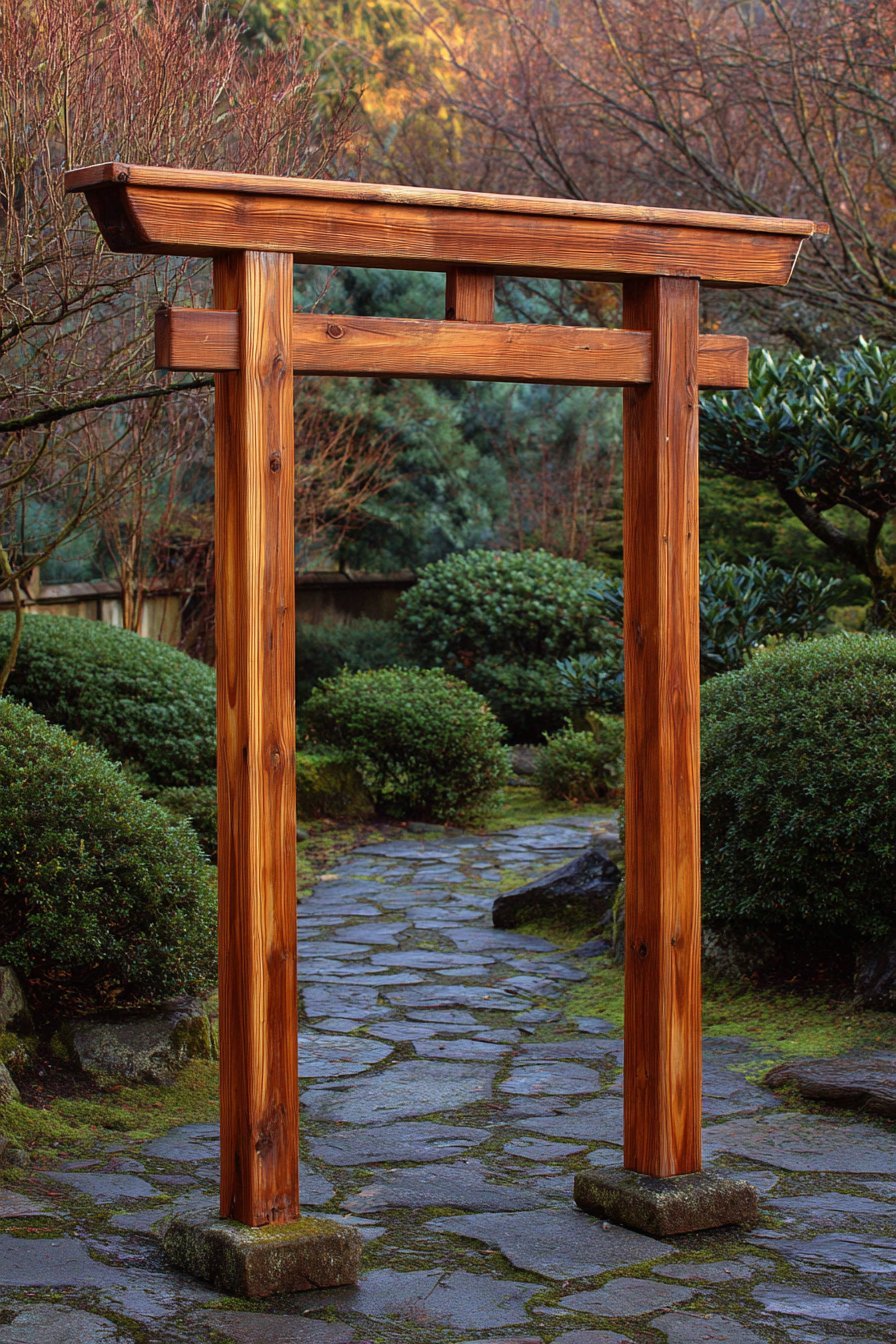
The gate posts rest on flat foundation stones partially covered with moss. Natural aging shows through slight weathering on the wood surfaces. A stone path leads from the gate between carefully pruned shrubs. The gate creates a psychological boundary between everyday space and sanctuary.
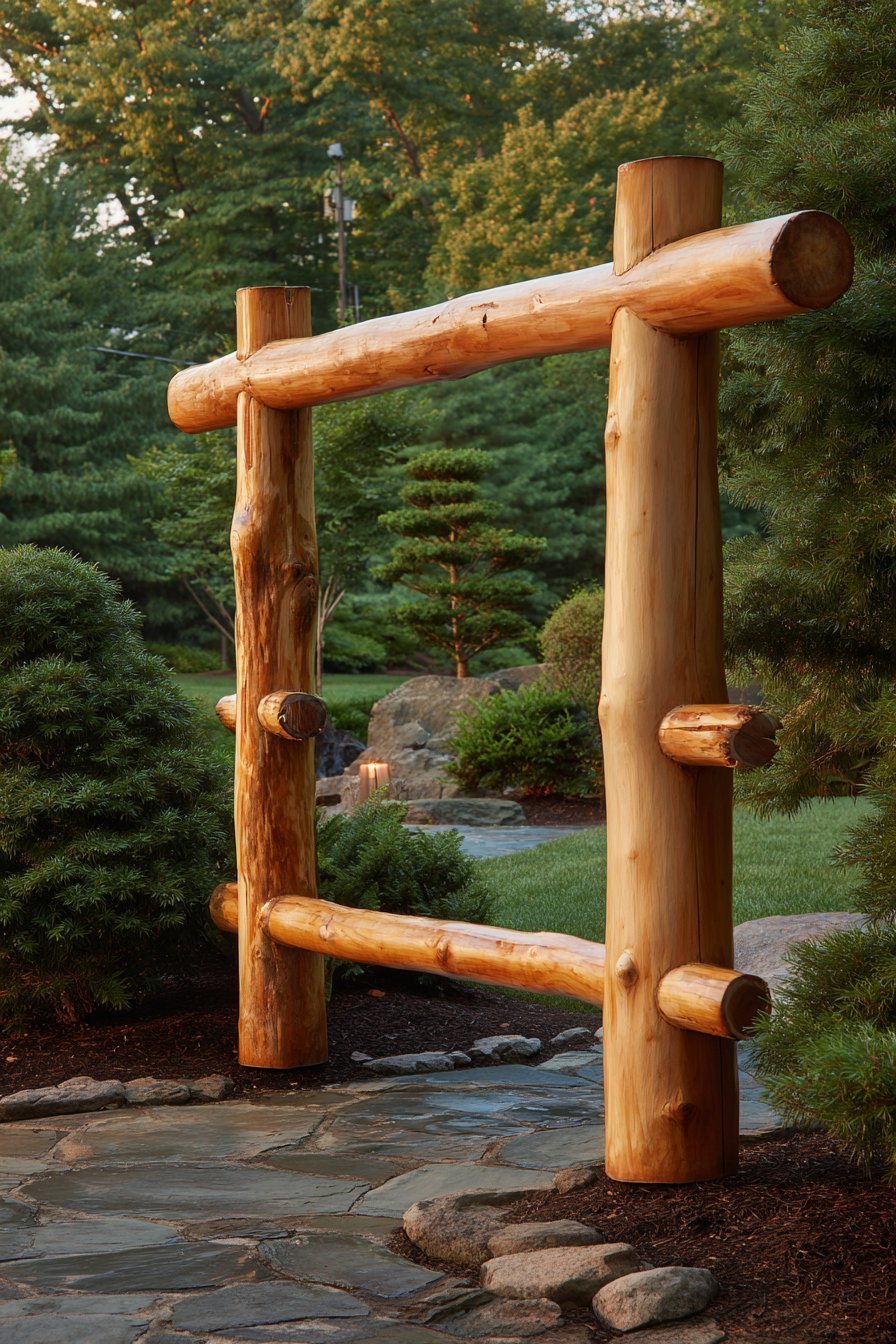
The concept of borrowed scenery applies beautifully here. The gate frames specific views like a living picture frame. This intentional framing directs attention and creates depth perception. Visitors naturally pause at this threshold before entering.
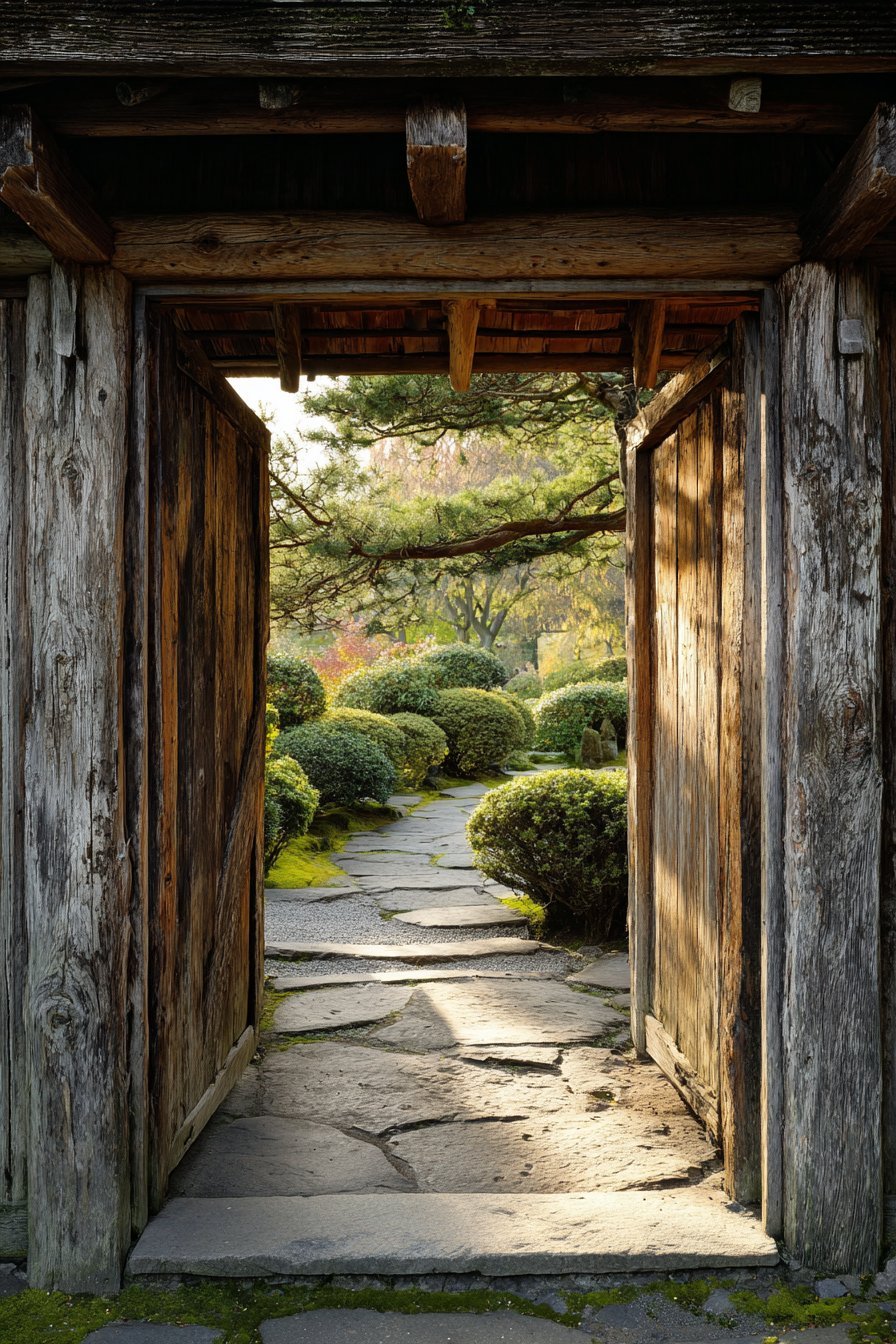
Soft natural lighting enhances the wood texture and the inviting view beyond. The gate’s proportions feel human-scaled rather than imposing. This design element adds ceremony to the simple act of entering a garden.
Key Design Tips:
- Apply light preservative finishes that enhance rather than hide wood grain
- Size the gate proportionally to surrounding landscape elements
- Position foundation stones level and stable before mounting posts
- Frame intentional views through the gate opening
- Allow moss to establish naturally on foundation stones
- Use traditional joinery techniques for authentic appearance
- Paint or stain minimally to let natural wood character shine
7. Privacy Screens with Translucent Panels
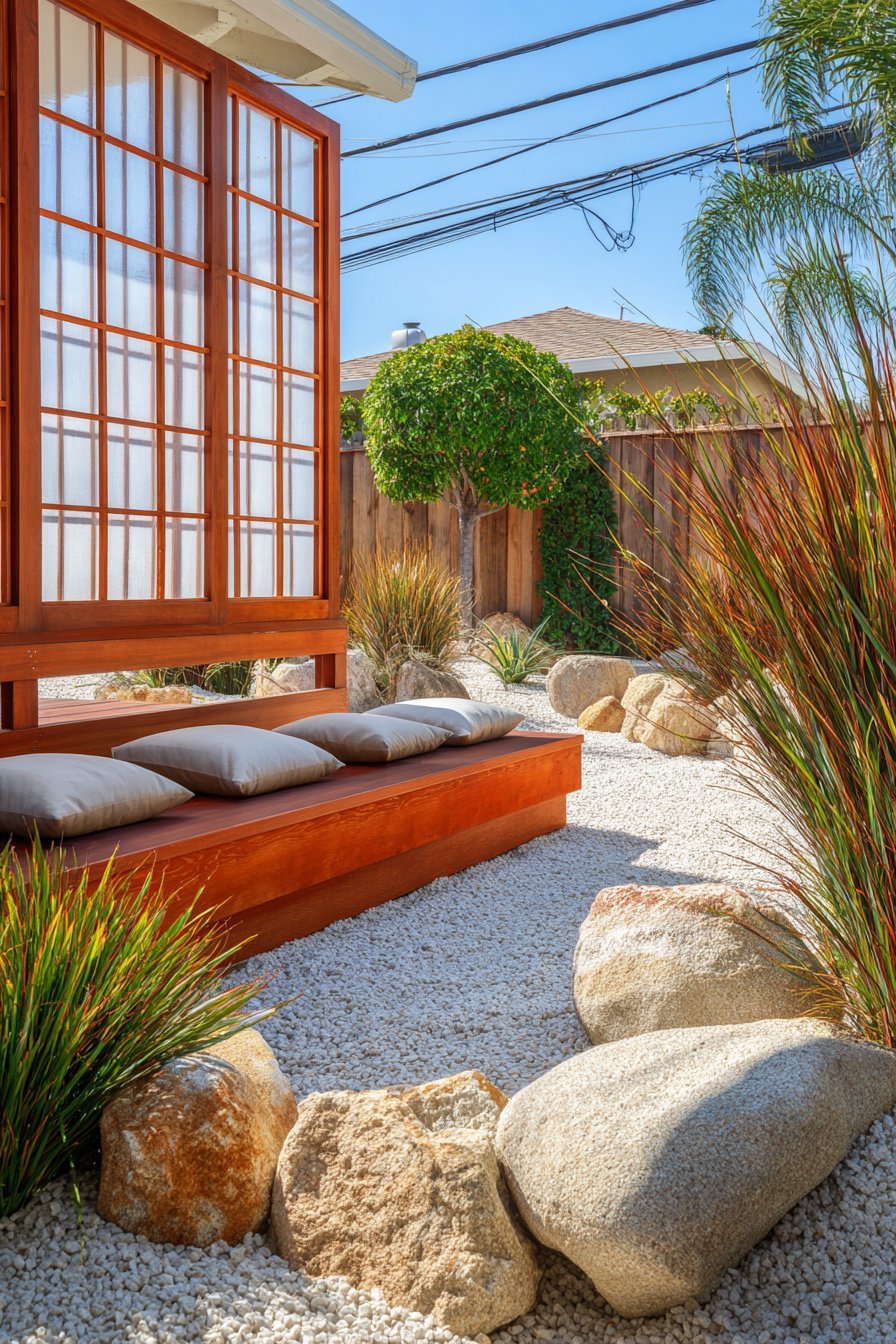
Shoji-inspired outdoor screens provide privacy while maintaining light flow. Wooden frames hold translucent fiberglass panels that glow softly when backlit. These screens partition a small seating area without creating complete enclosure. The design balances privacy needs with openness to natural elements.
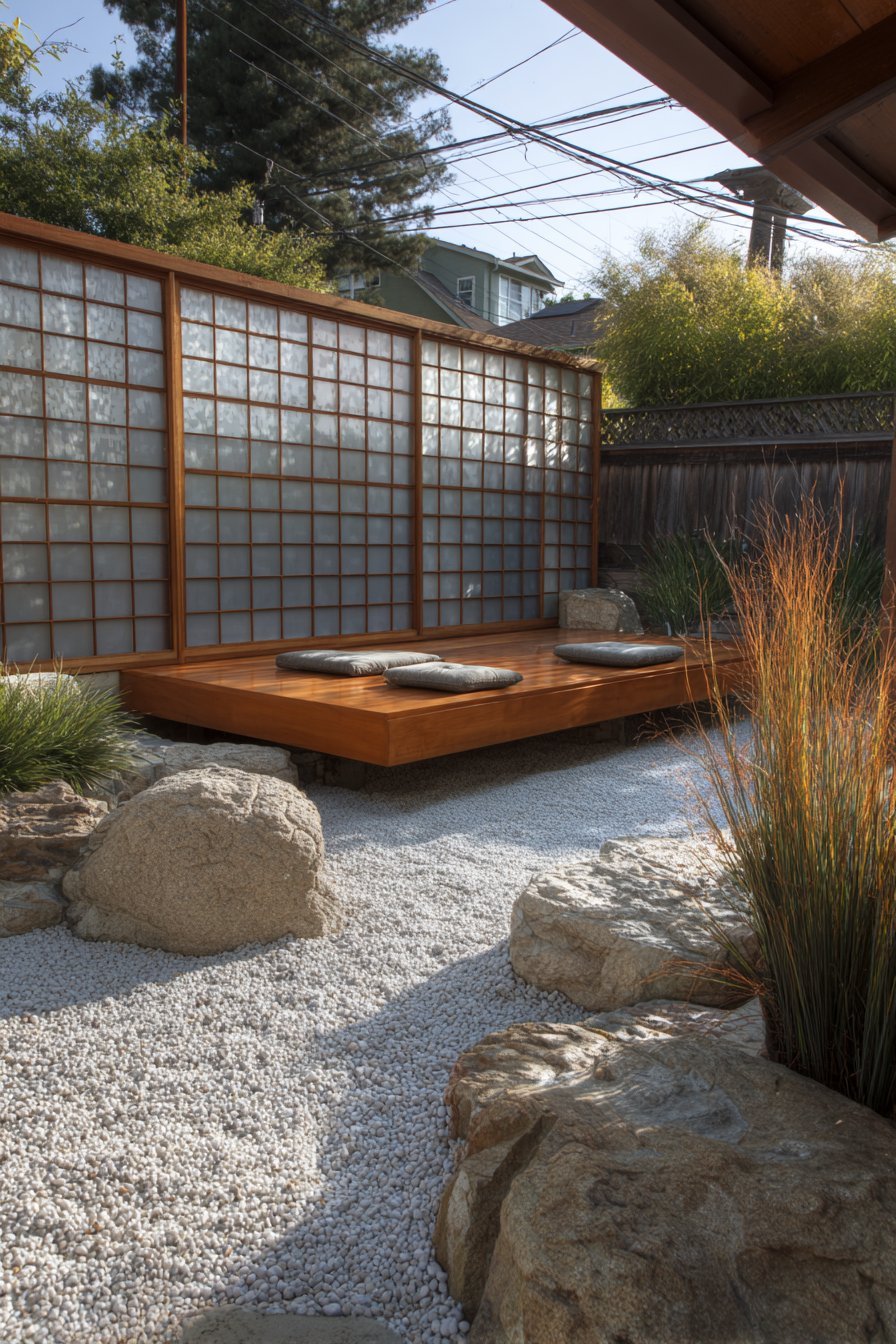
Behind the screens, a low wooden platform holds simple square cushions for floor seating. Carefully raked white gravel surrounds the intimate space. A few select rocks anchor the composition visually. Minimal plantings include ornamental grass and compact evergreens that respect the clean aesthetic.
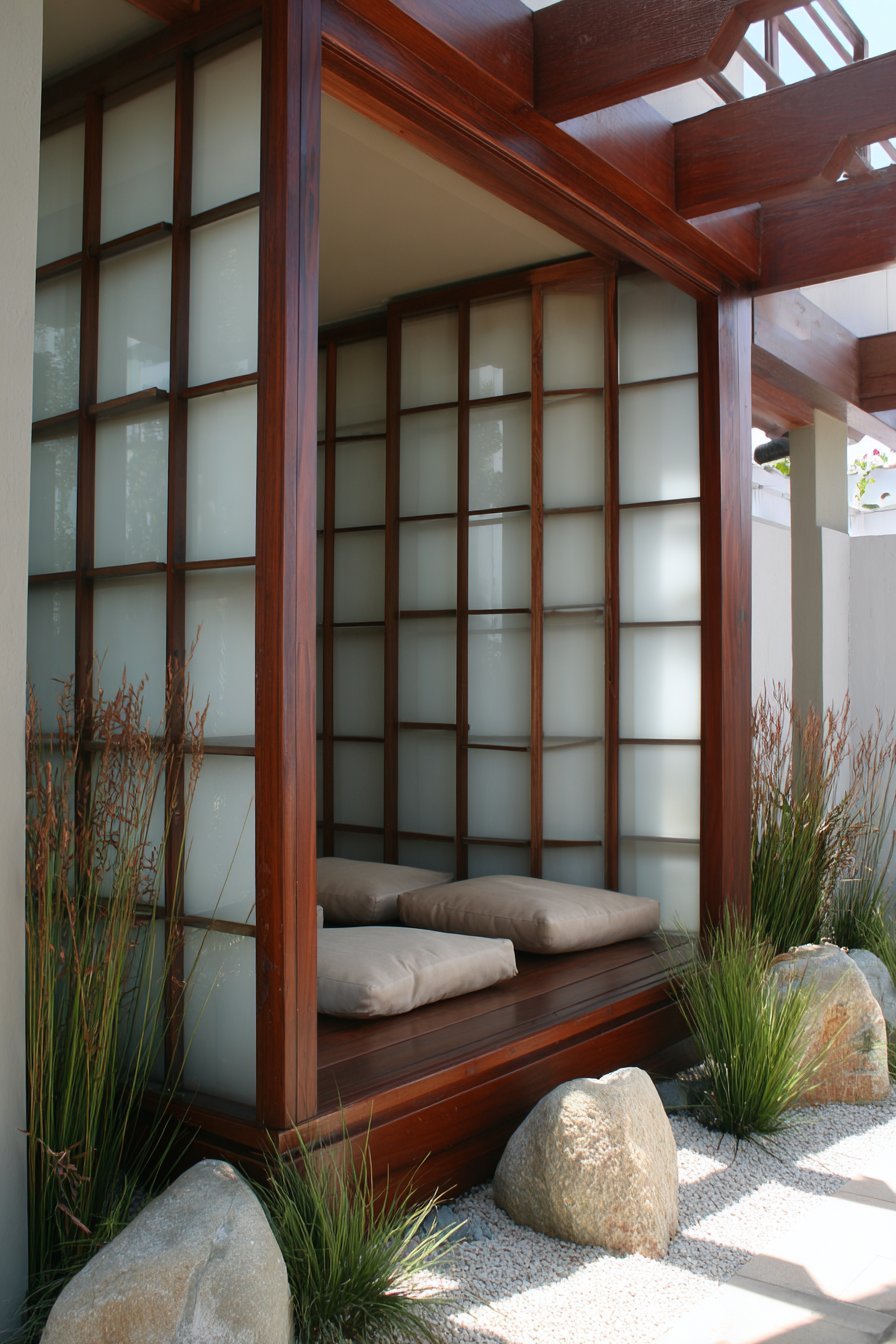
Diffused natural light passes through the translucent panels beautifully. The panels create a gentle glow during daylight hours without harsh shadows. This approach maintains connection to the outdoors while defining personal space. The screens filter views rather than blocking them completely.
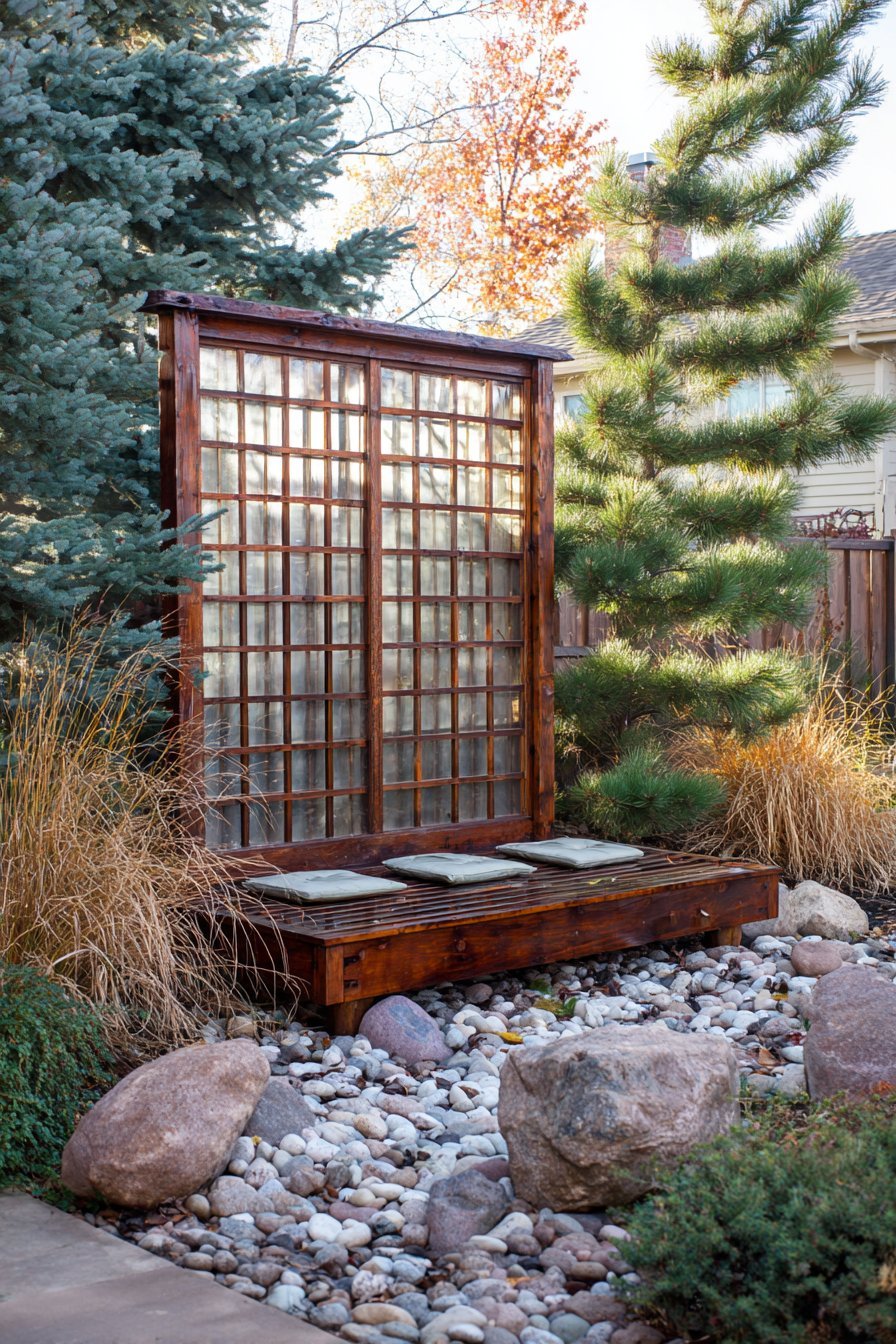
The clean lines characteristic of Japanese design remain paramount here. Every element serves a clear purpose without excess decoration. The material palette stays intentionally limited. This restraint creates sophisticated simplicity.
Key Design Tips:
- Select fiberglass panels rated for outdoor use and UV resistance
- Build frames from rot-resistant wood like cedar or composite materials
- Position screens to block specific sight lines while preserving desirable views
- Include removable sections for flexibility in different seasons
- Choose neutral panel colors that complement natural surroundings
- Create floor seating areas for authentic Japanese experience
- Rake gravel patterns regularly to maintain crisp appearance
8. Classical Dry Landscape Garden
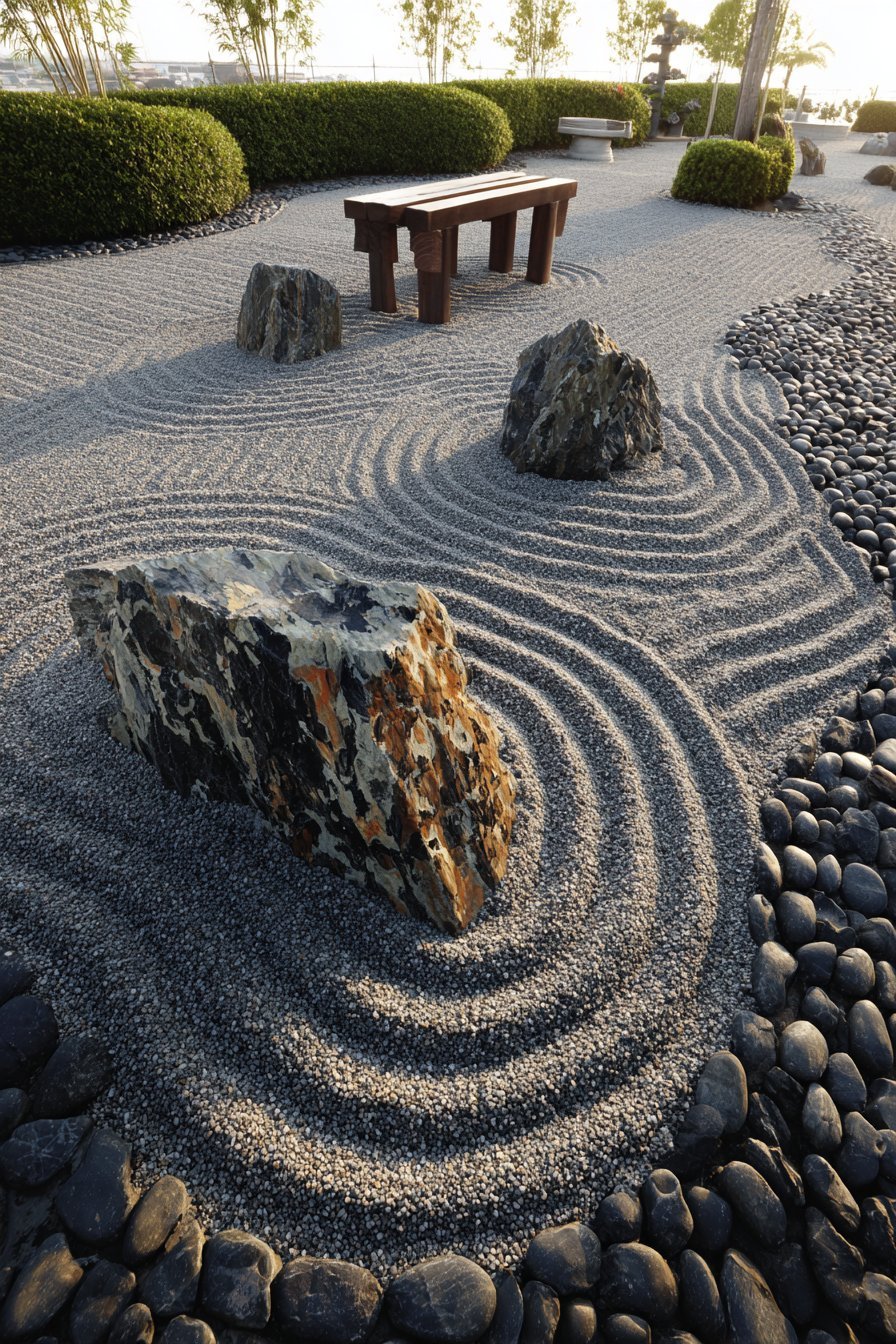
A karesansui or dry landscape garden represents water and mountains abstractly. Carefully raked grey gravel flows in precise wave patterns. Three substantial weathered stones suggest a mountain range rising from the sea. Natural lichen growth adds character to the stone surfaces.
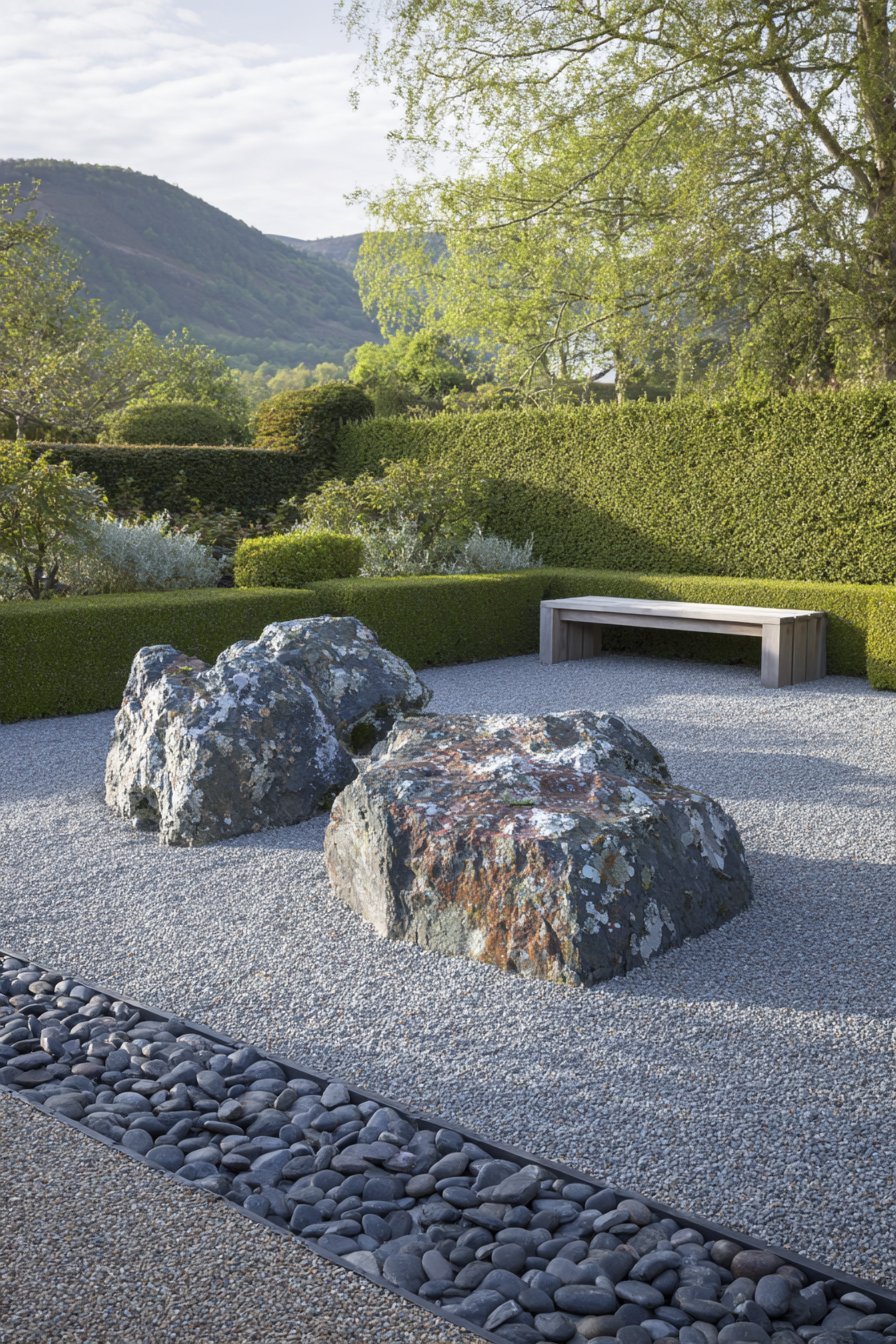
Dark river rocks define the gravel area’s boundary clearly. Precisely trimmed boxwood hedges provide contrasting green backdrop. A simple wooden viewing bench sits at the optimal angle for contemplation. This composition invites meditation on natural forms and philosophical concepts.
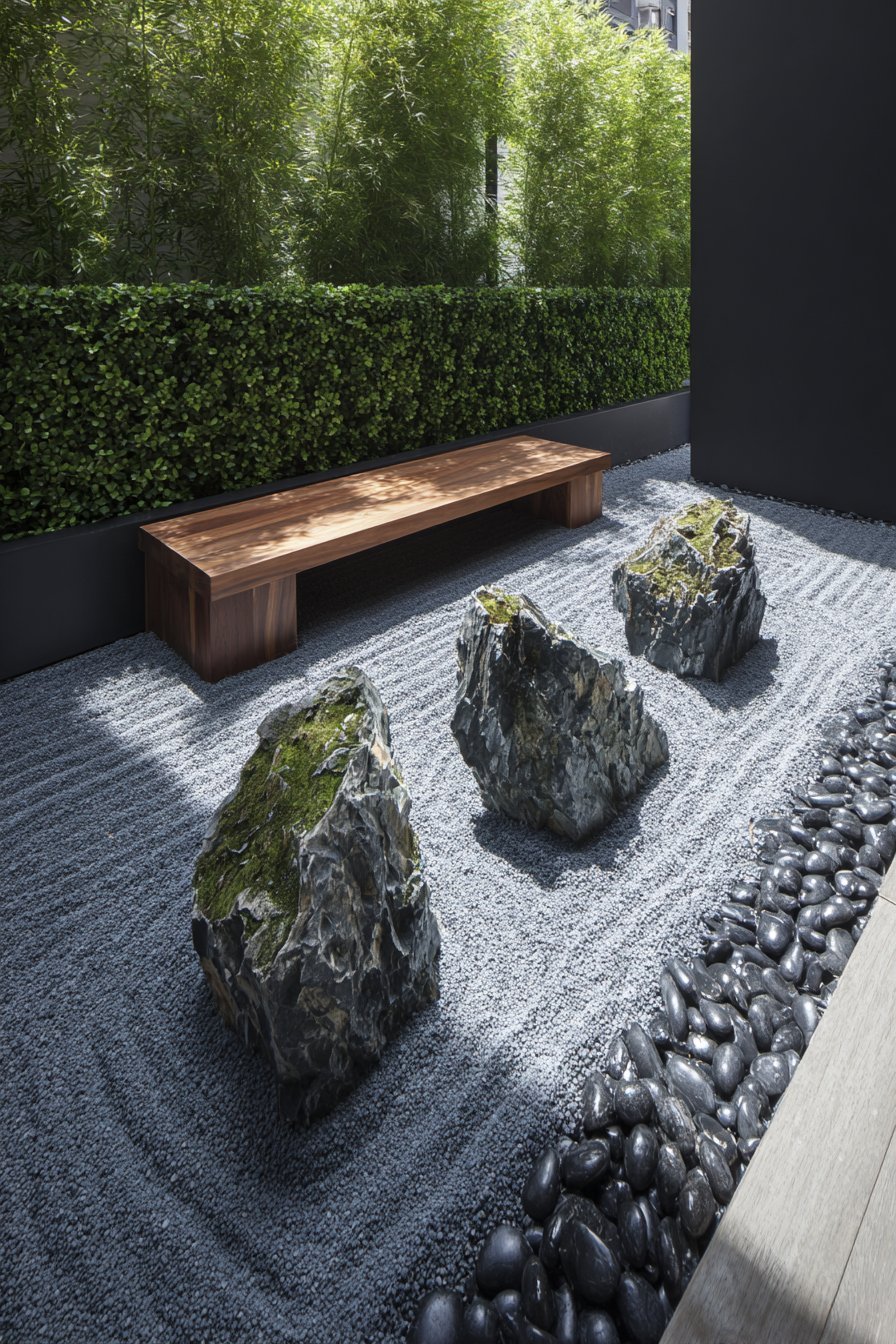
The shadows cast by stones change throughout the day. Morning light creates long dramatic shadows across raked patterns. Midday sun reveals the stones’ true colors and textures. Evening light adds warmth and depth to the monochromatic palette.
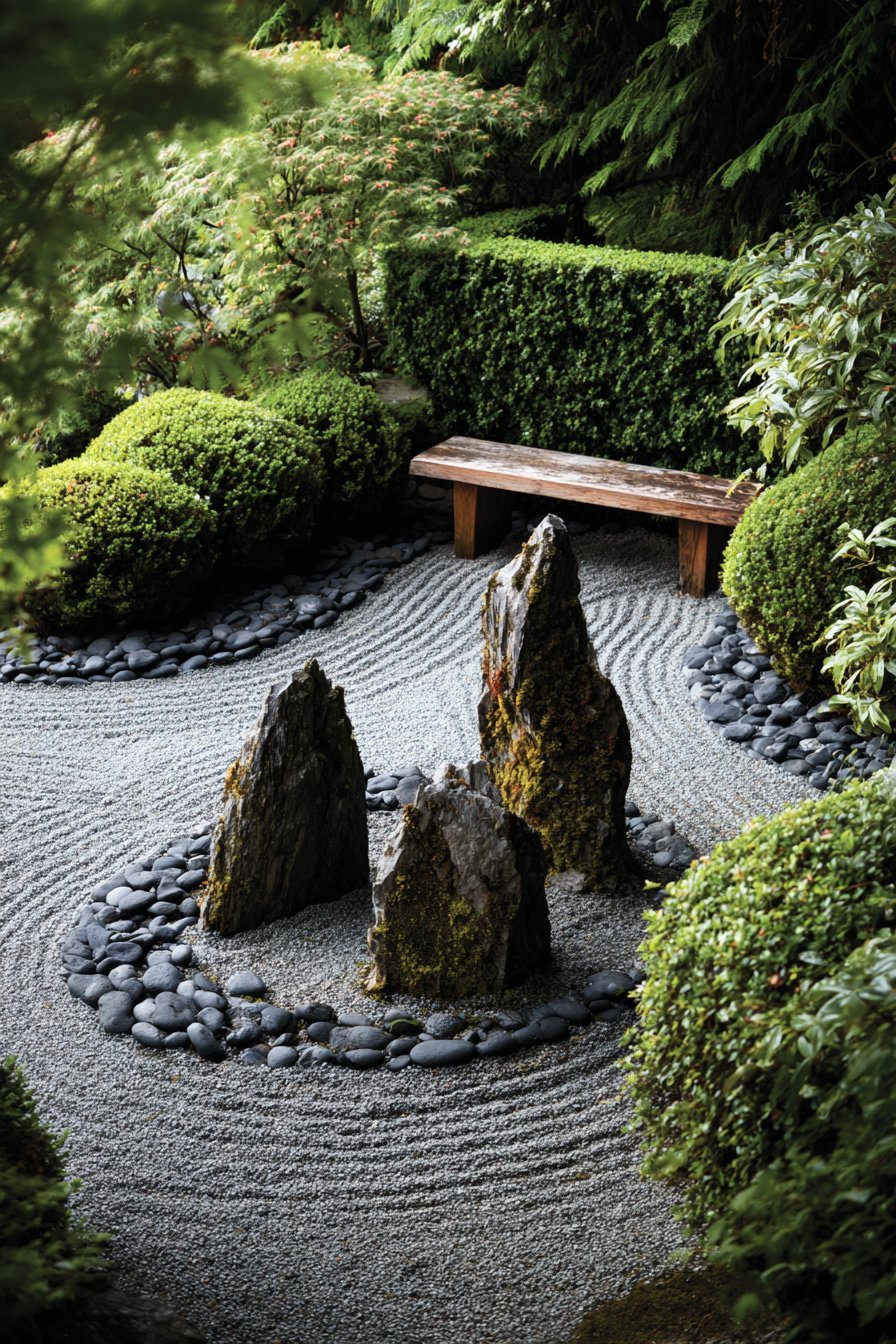
This garden style requires understanding of symbolic representation. Gravel represents water flowing around island mountains. The abstract nature encourages viewers to complete the picture mentally. This engagement makes the experience deeply personal.
Key Design Tips:
- Select stones with varied heights to create dynamic mountain silhouette
- Rake gravel patterns consistently following traditional wave designs
- Position the viewing bench at the precise angle intended by the design
- Choose stones that show natural weathering rather than fresh cuts
- Maintain crisp edges between gravel and planted borders
- Allow lichen to develop naturally on stone surfaces over time
- Keep the surrounding hedge trimmed precisely for contrast
9. Tea Garden Approach Path
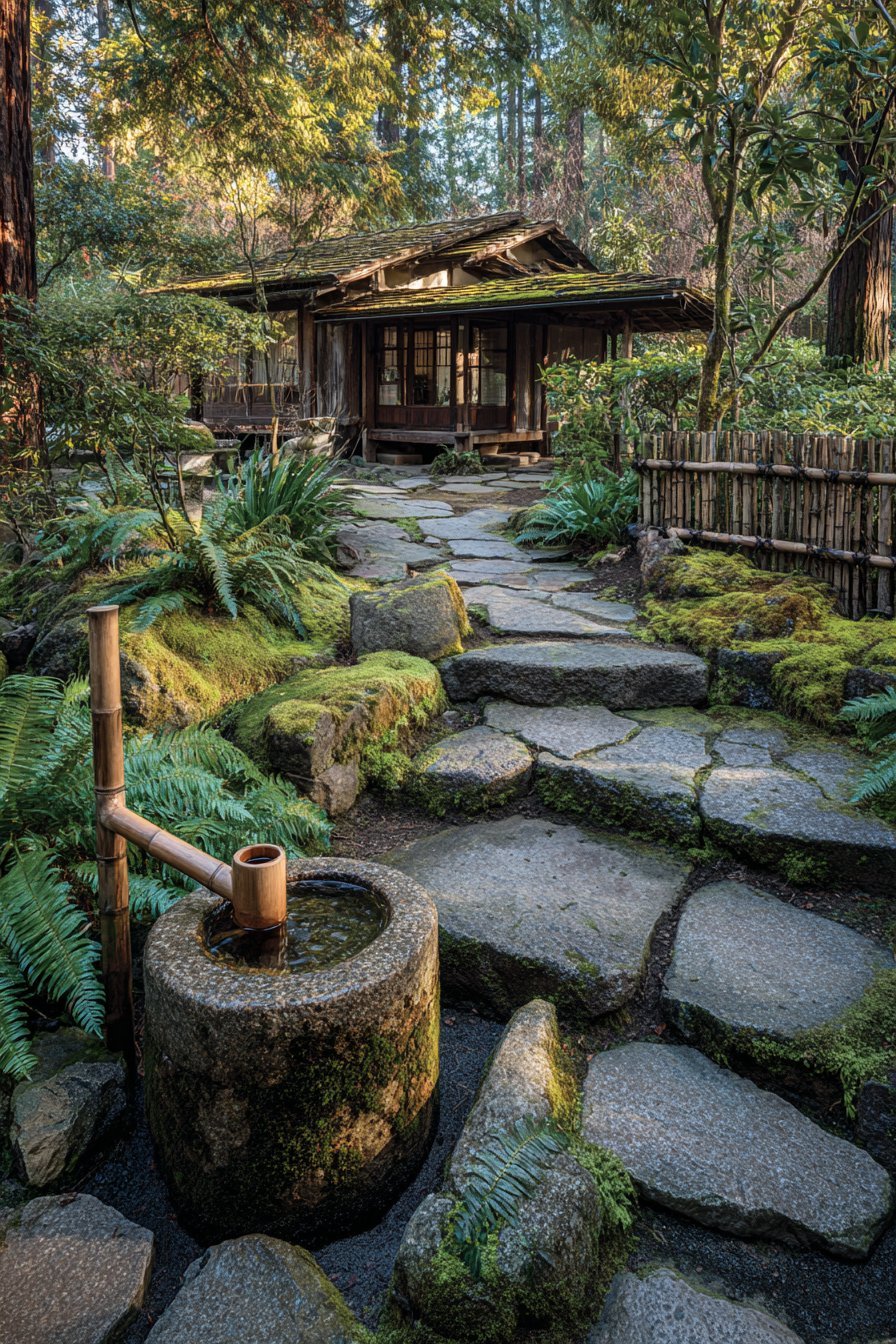
A roji or tea garden path creates a transitional journey. Irregular stepping stones set in moss and groundcover meander toward a tea house. The path design intentionally slows visitors and encourages mindfulness. A stone water basin with bamboo dipper sits along the way for purification ritual.
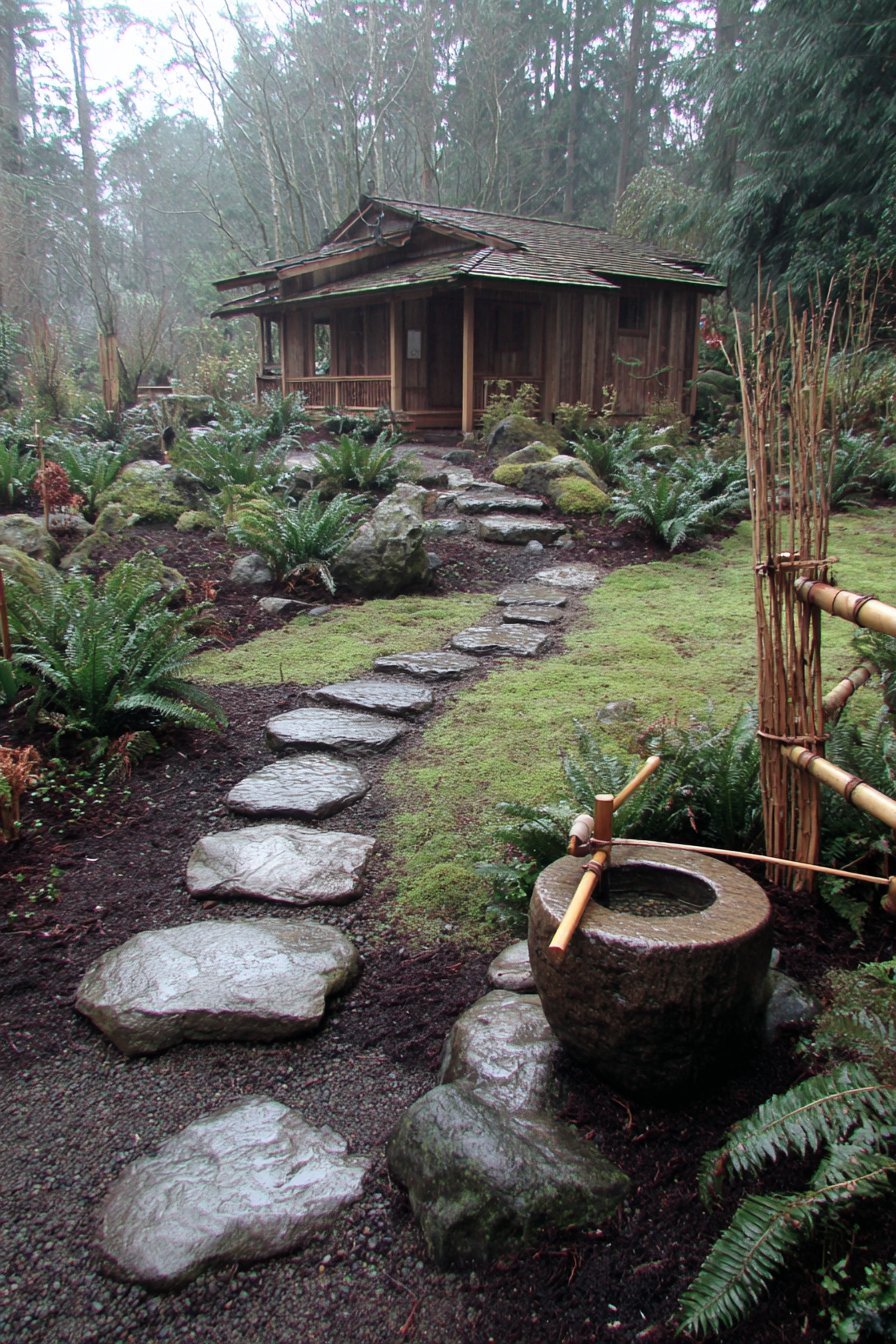
Carefully chosen rocks and ferns line the path naturally. A simple bamboo fence creates gentle enclosure without heaviness. The design demonstrates the roji concept of leaving ordinary concerns behind. Each step brings deeper immersion into tranquility.
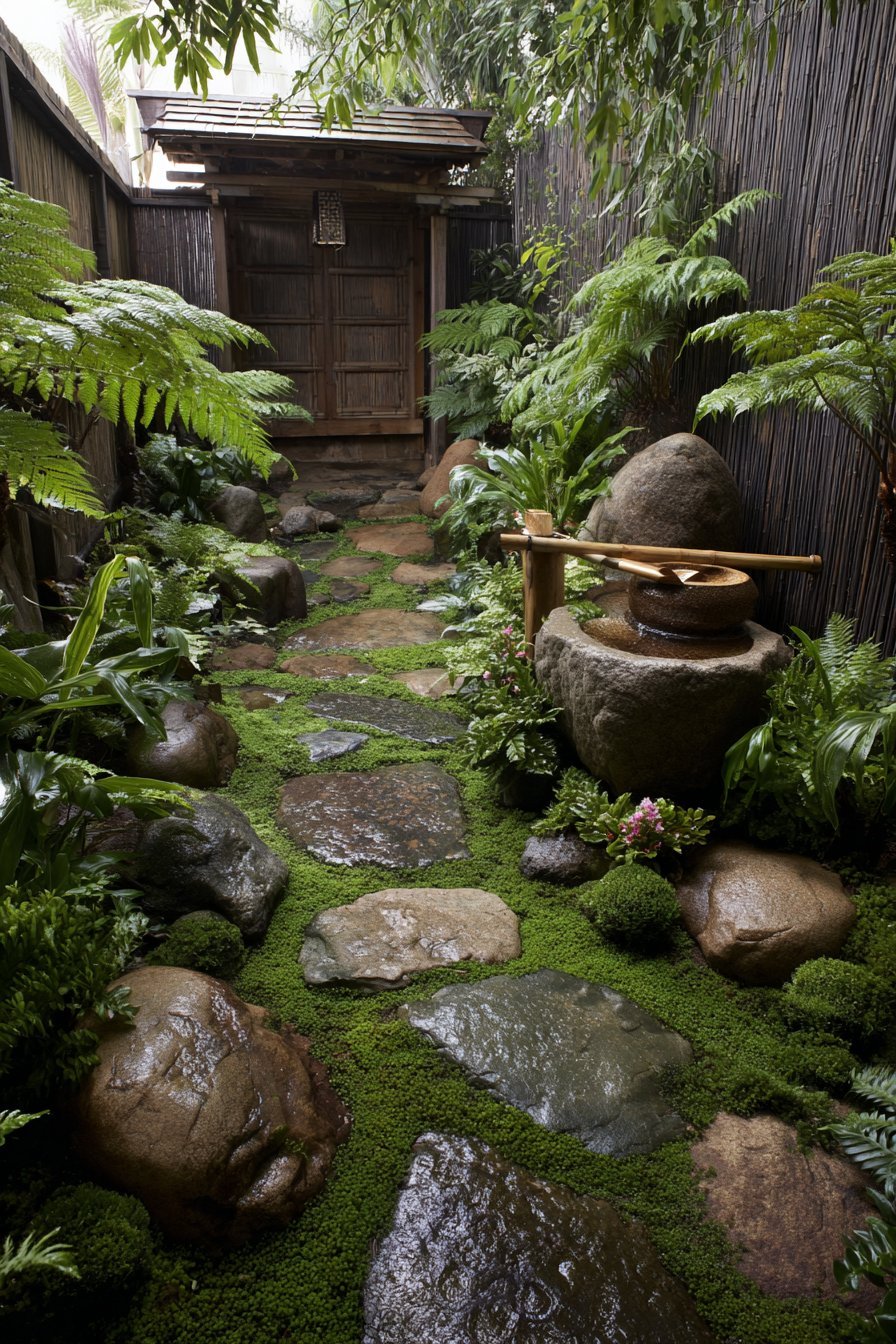
Early morning light reveals dewdrops on moss and fern fronds. This moisture emphasizes the textural richness of living plants. The path feels slightly mysterious, concealing what lies ahead. This intentional ambiguity heightens anticipation.
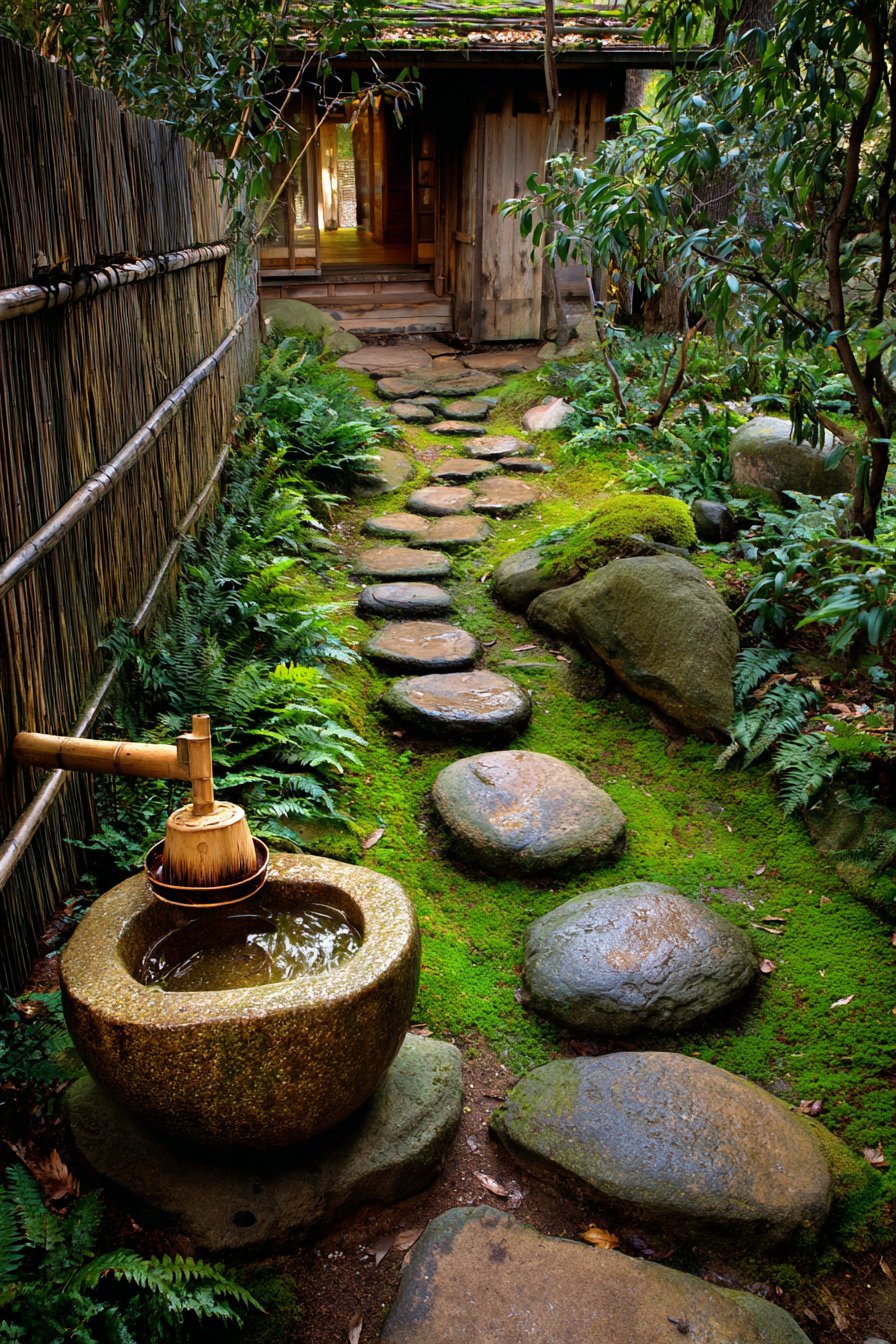
The humble aesthetic proves central to tea garden philosophy. Materials show honest aging and imperfection. Nothing appears contrived or artificial. This authenticity creates profound peace.
Key Design Tips:
- Space stepping stones irregularly to encourage mindful walking pace
- Plant moss species native to your region for successful establishment
- Position the water basin within easy reach of the path
- Select fern varieties suited to available shade and moisture
- Construct bamboo fencing using traditional lashing techniques
- Allow the path to curve naturally rather than forcing straight lines
- Maintain moss through regular misting in dry periods
10. Miniature Hill and Pond Landscape
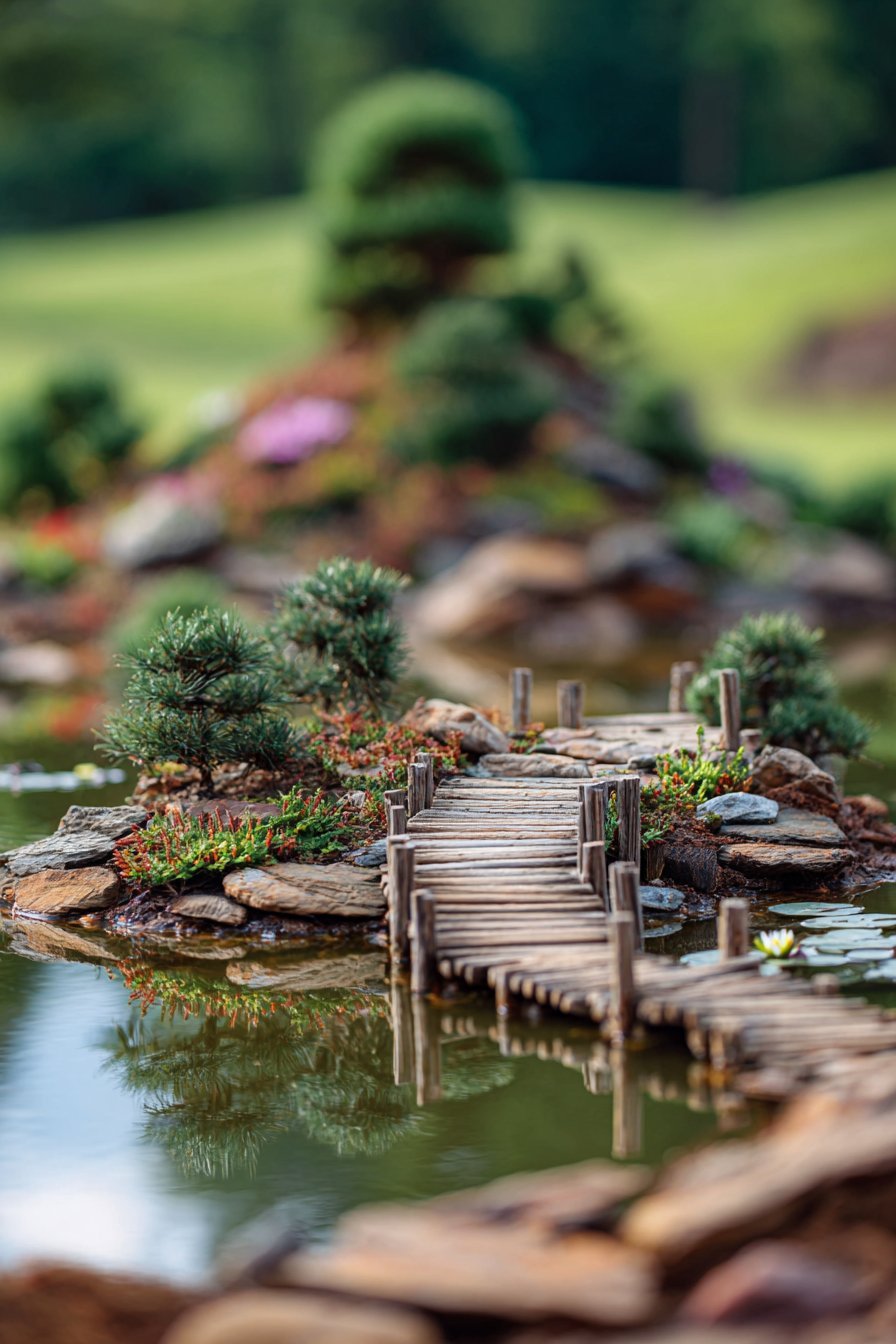
Forced perspective creates the illusion of larger landscapes in compact spaces. An artificial mound uses rocks and soil to create elevation changes. Azaleas, dwarf pines, and Japanese maples planted at various heights enhance the effect. The careful scaling tricks the eye into perceiving greater depth.
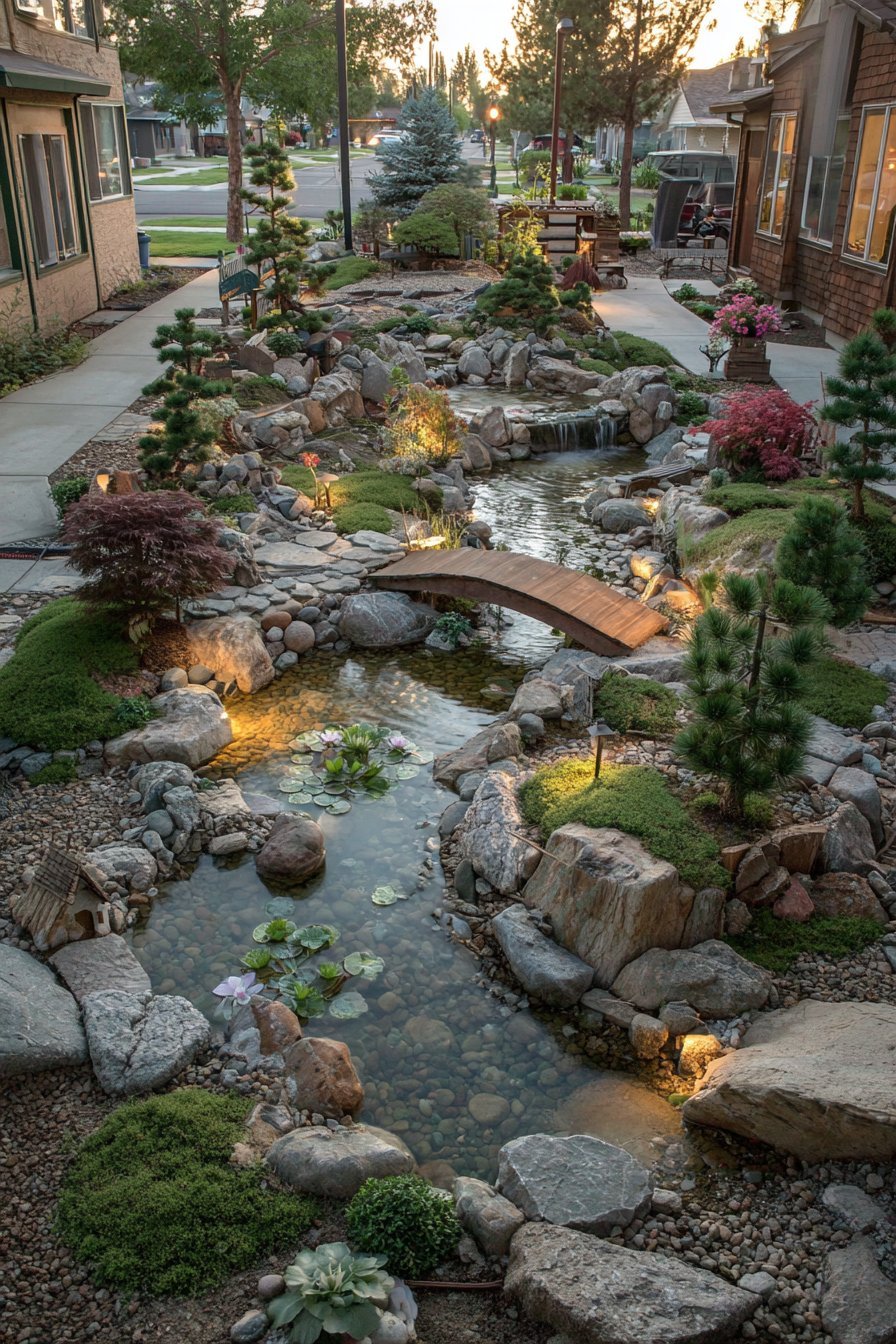
A pond at the mound’s base contains water lilies and aquatic plants. Flat stones edge the pond and serve as stepping stones across one section. A simple wooden bridge made from planks crosses the narrowest point. This bridge adds human scale reference that enhances the miniature effect.
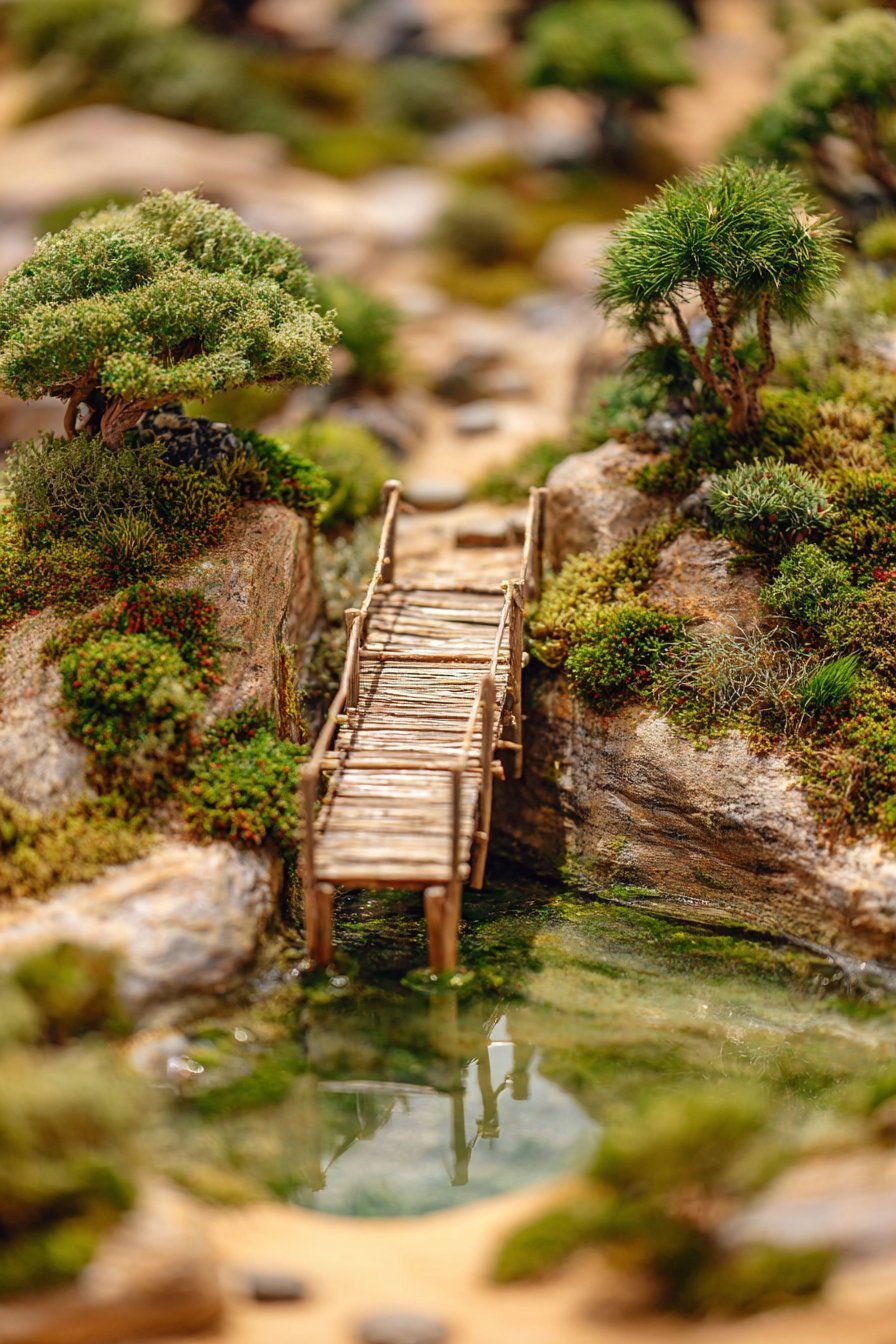
Afternoon light creates reflections in the water surface. These reflections double the perceived size of plantings and stones. The reflections add magical quality to the intimate space. This design proves that small yards can contain complete landscape experiences.
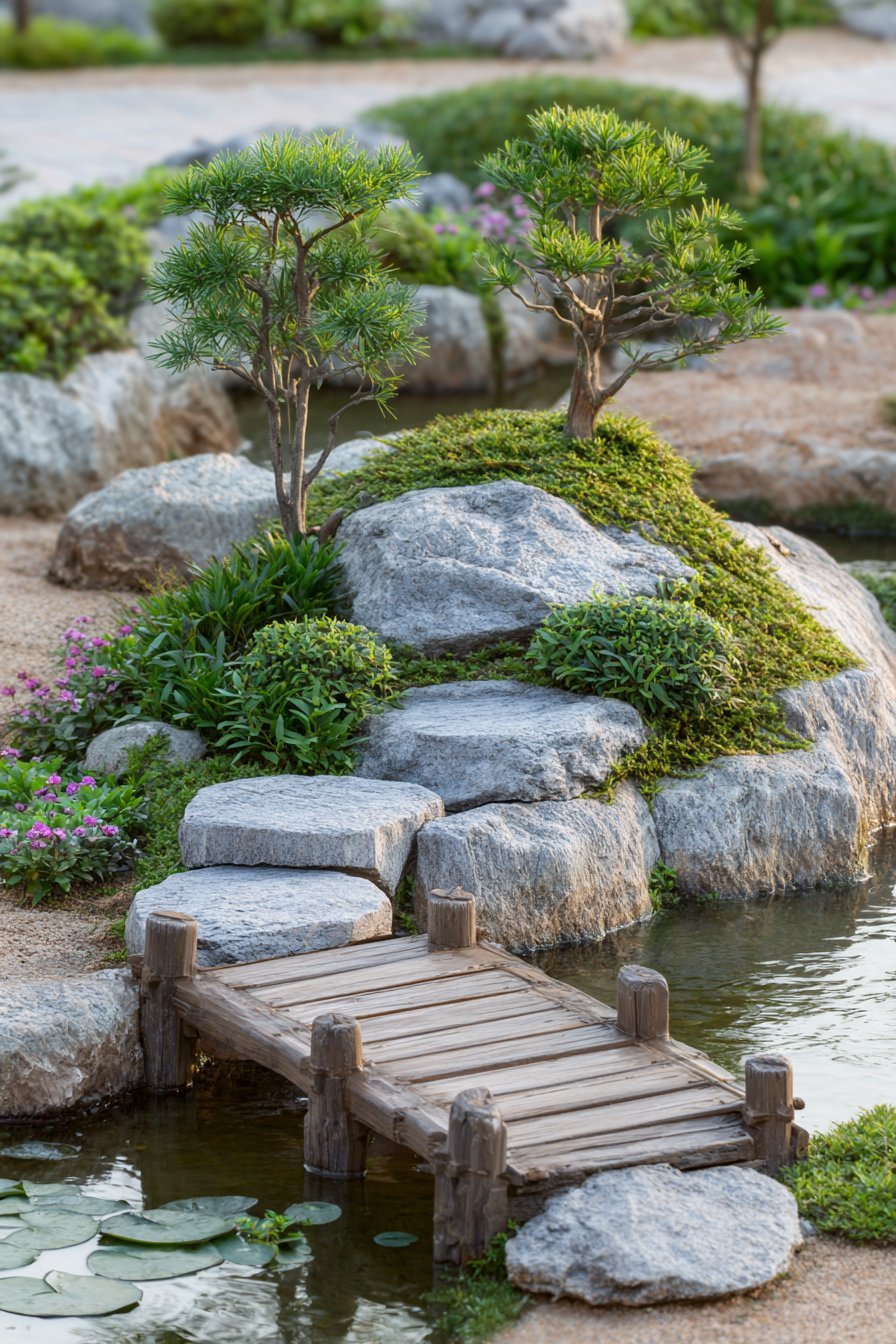
The composition requires careful plant selection and maintenance. Keeping plants proportional maintains the forced perspective effect. Regular pruning prevents overgrowth that would break the illusion. The effort rewards with a continuously evolving miniature world.
Key Design Tips:
- Select dwarf and miniature plant varieties for proper scale
- Create the mound with proper drainage to prevent waterlogging
- Position larger plants higher on the mound to enhance perspective
- Include water lilies for color and natural pond balance
- Build the bridge from weather-resistant wood or composite materials
- Maintain plant sizes through careful pruning several times yearly
- Use flat stepping stones that sit just at or slightly above water level
11. Moss Garden Corner Sanctuary
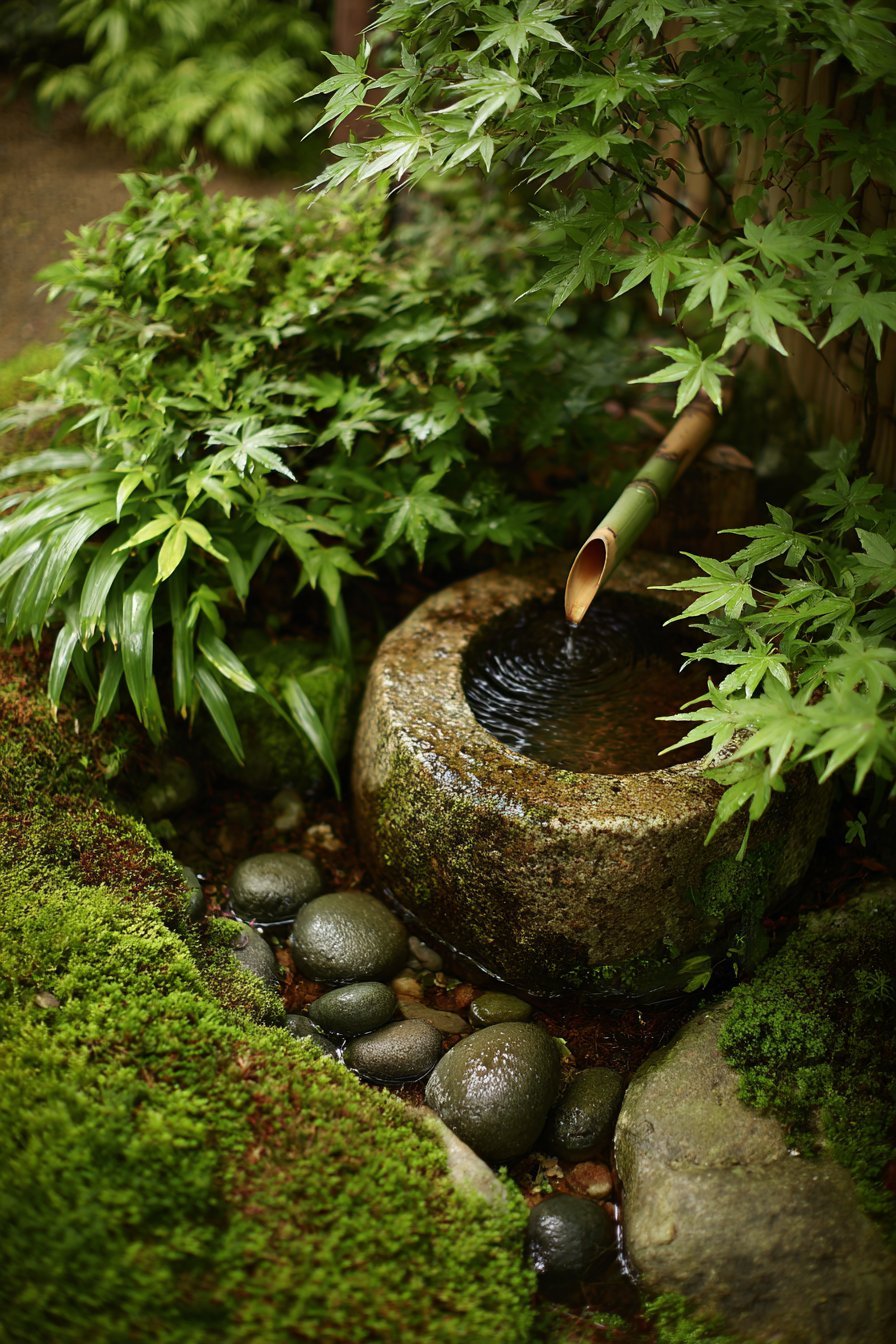
Moss gardening celebrates shade and moisture-loving plants. Multiple moss varieties create a lush green carpet beneath a Japanese maple tree. The delicate maple leaves filter sunlight beautifully. Smooth stones emerge from the moss in natural arrangements that suggest timeless placement.
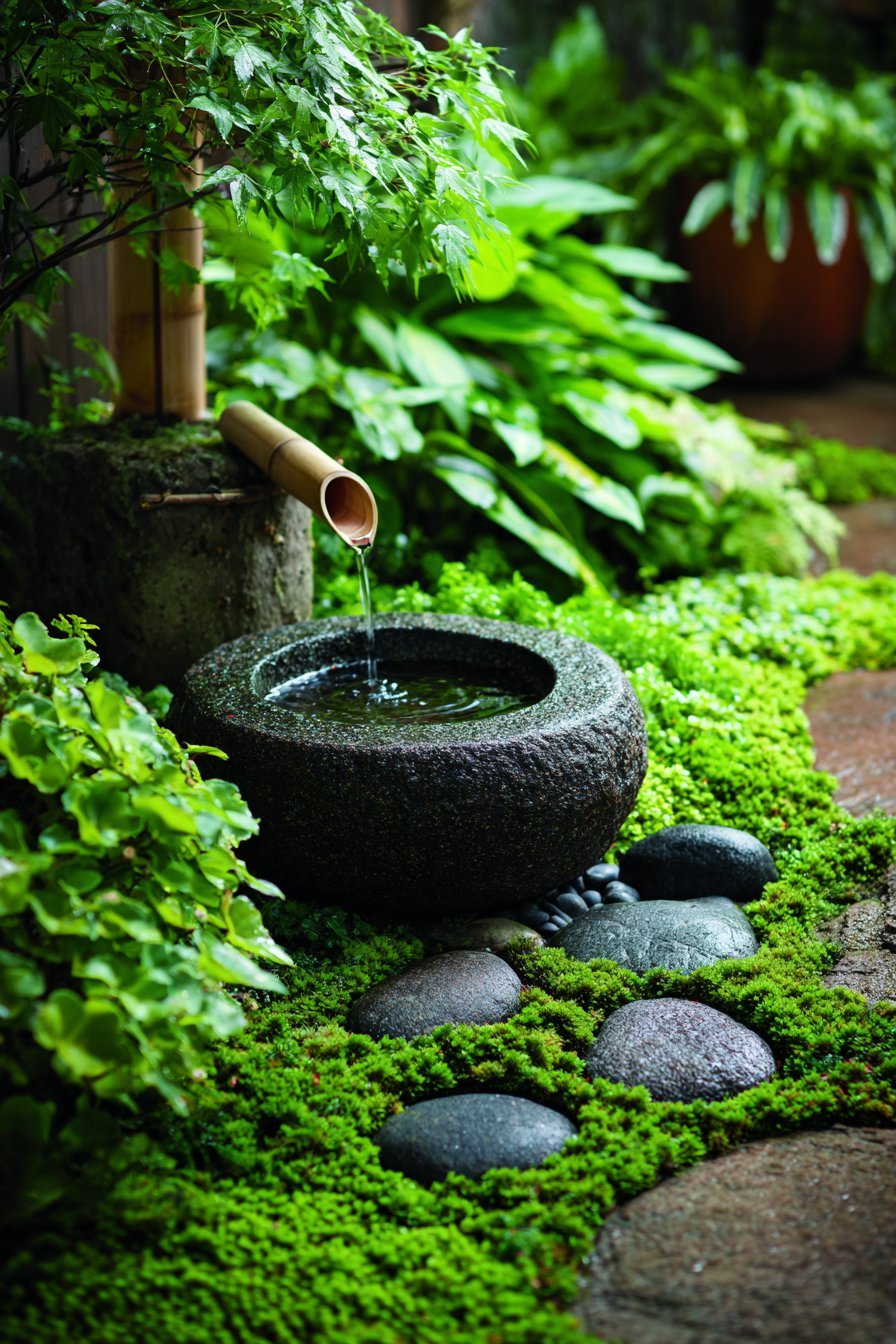
A simple stone basin collects water dripping from a bamboo spout. The consistent moisture supports the moss ecosystem perfectly. This corner demonstrates Japanese appreciation for humidity-loving plants and shade gardens. The varied textures of different moss species create surprising complexity within green monochrome.
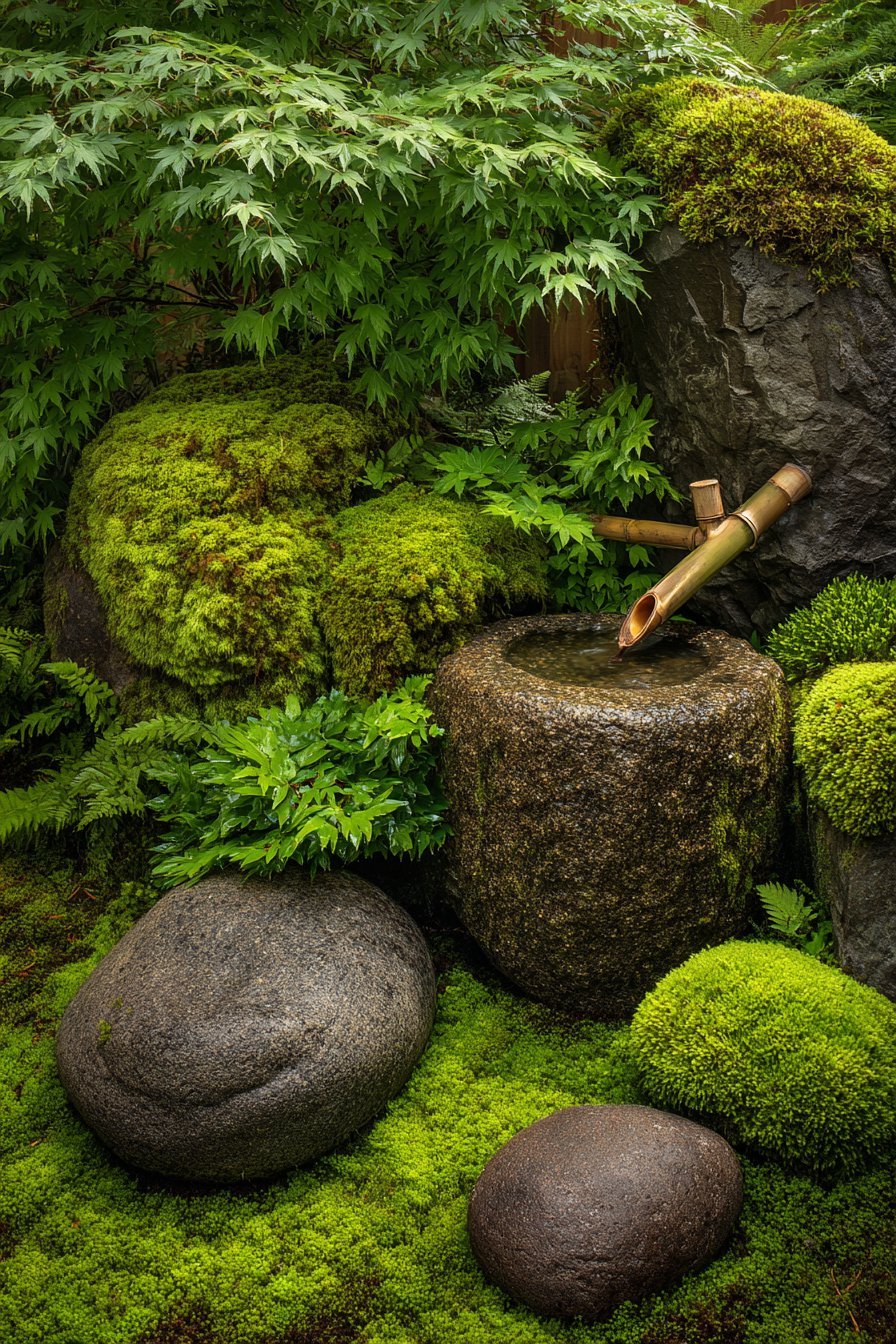
Soft diffused light suits moss gardens ideally. Direct sun would stress these shade-adapted plants. The maple canopy provides perfect filtered illumination. Lower camera angles reveal the intimate scale and moss richness.
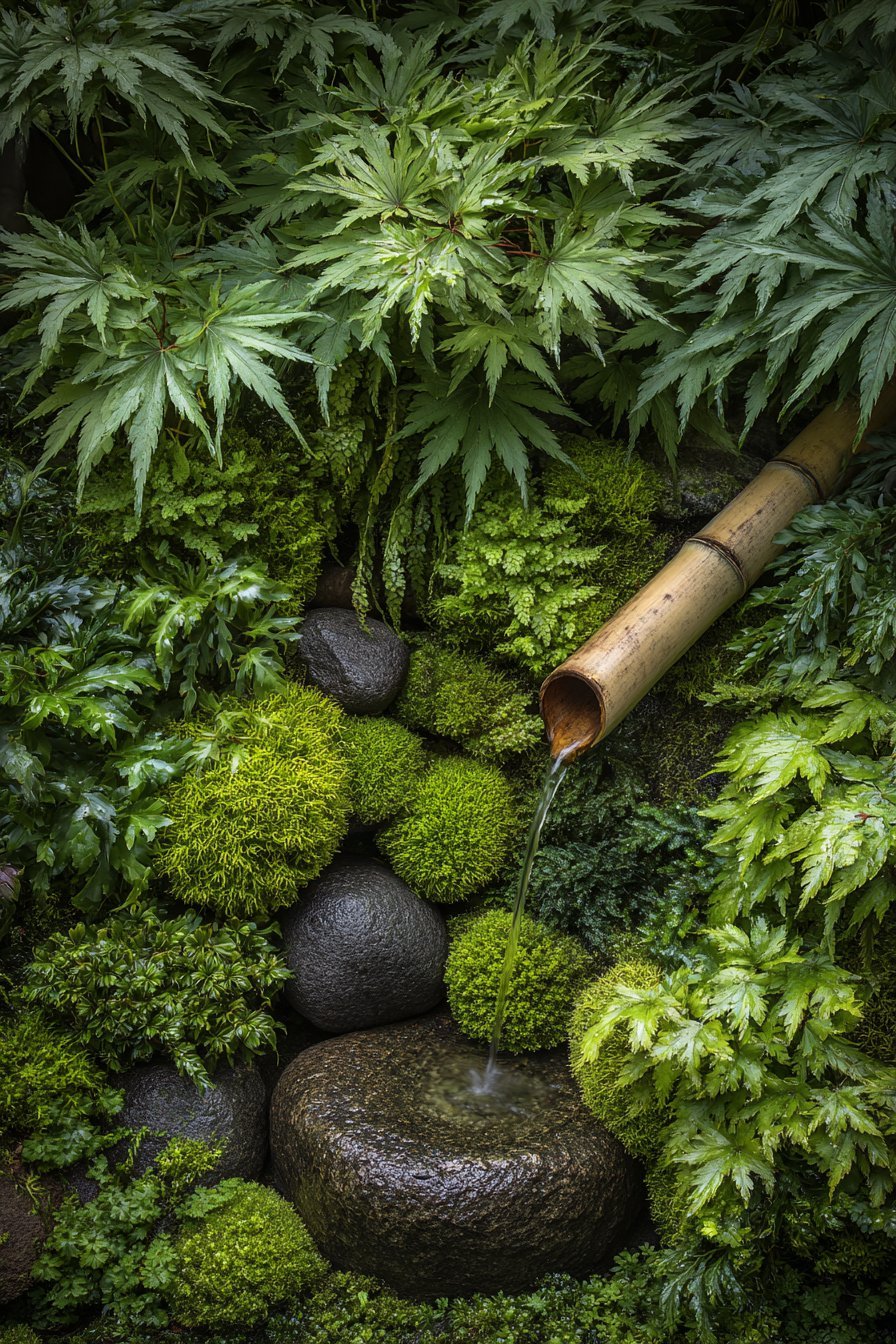
Moisture on stone surfaces adds another textural element. Dappled shade patterns move across the moss throughout the day. This corner feels like a secret discovered rather than designed. The intimacy invites close observation and appreciation.
Key Design Tips:
- Research moss species native to your region for best success
- Prepare soil with proper pH levels for moss establishment
- Mist regularly during dry periods to maintain moisture
- Remove leaves and debris carefully to avoid moss damage
- Position stones partially buried for natural appearance
- Select Japanese maple varieties with delicate leaf structure
- Install the bamboo spout to provide consistent gentle water flow
12. Minimalist White Gravel Zen Garden
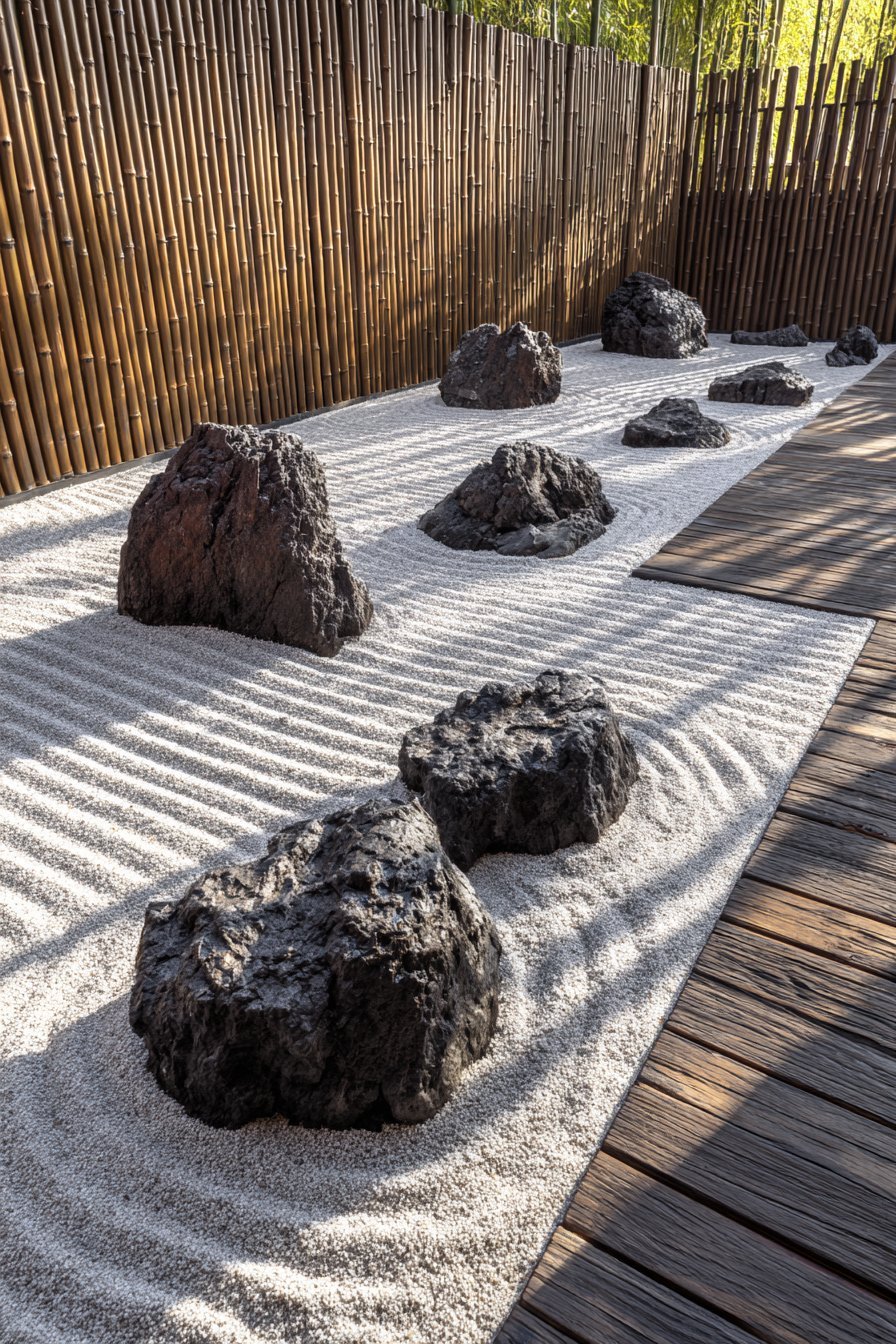
Pure minimalism defines this karesansui rock garden. White crushed granite raked in straight lines represents flowing water. Five dark volcanic rocks positioned asymmetrically suggest islands in an ocean. The stark contrast between white gravel and black stones creates bold visual impact.
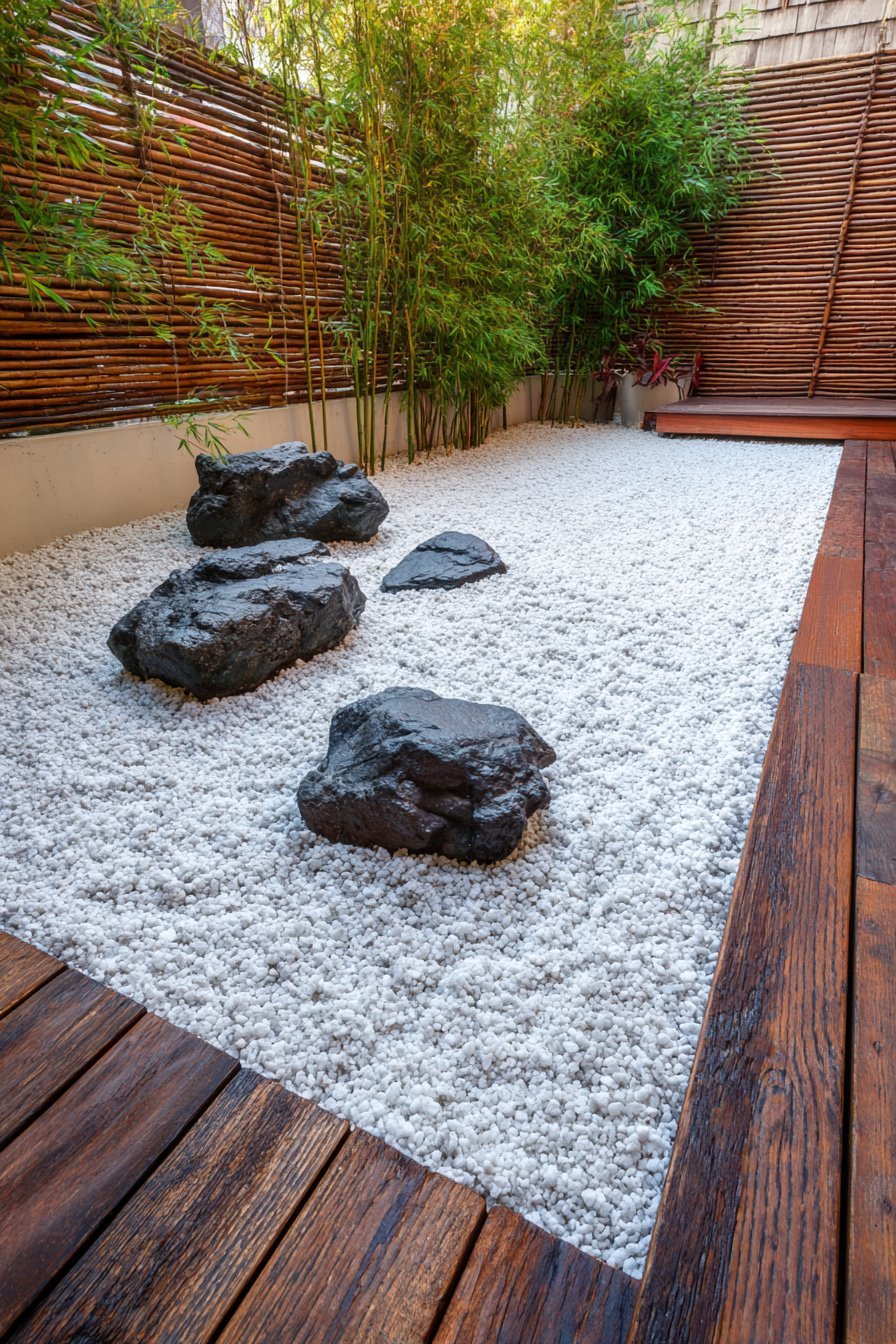
A simple wooden deck platform provides comfortable viewing area. Natural weathered cedar planks show honest aging. Behind the rock garden, a tall bamboo fence creates neutral backdrop. This backdrop eliminates visual distractions from the pure composition.
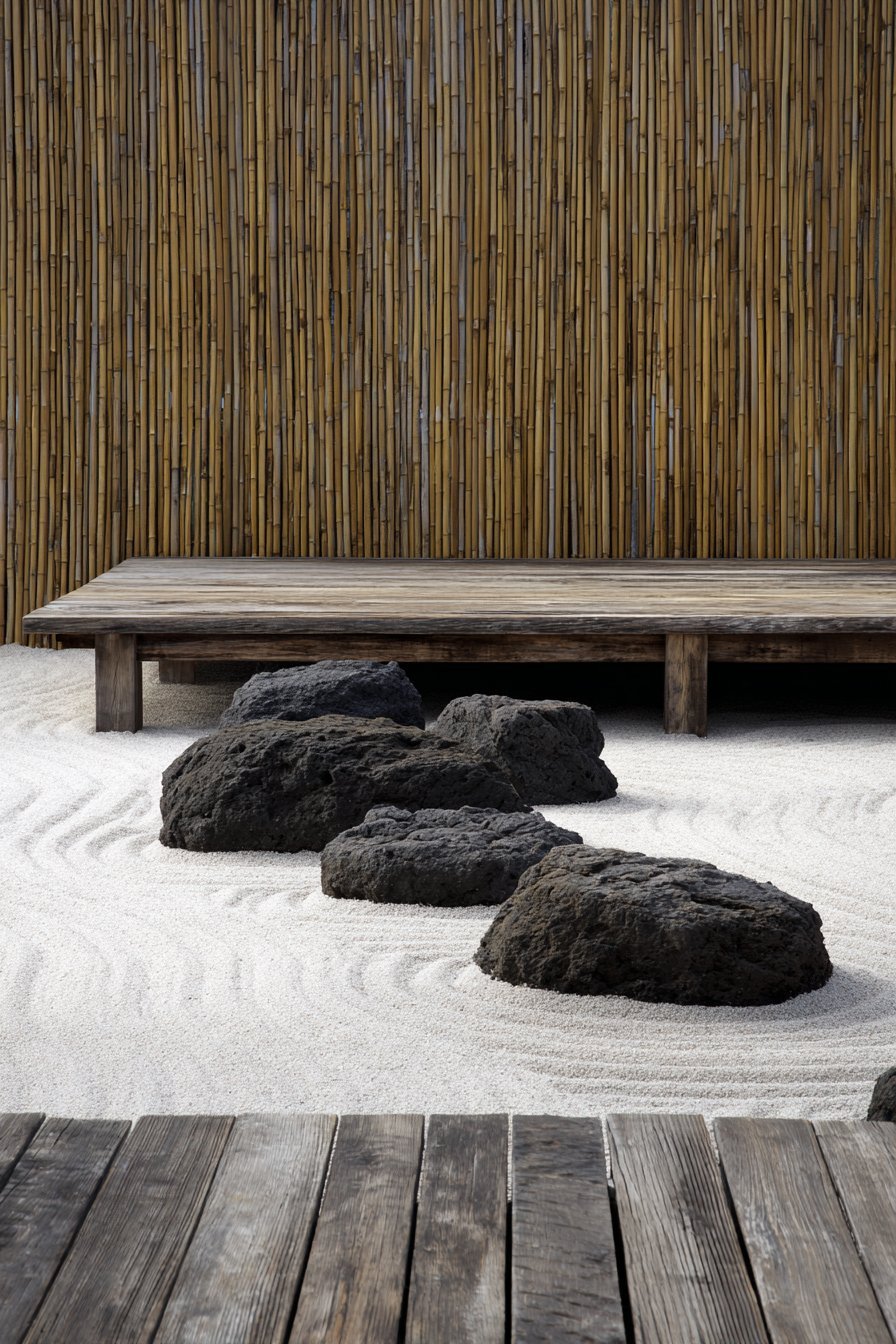
Even daylight without harsh shadows suits this design perfectly. Strong shadows would compete with the carefully arranged elements. The geometric precision of raked lines requires maintenance but rewards with stunning clarity. This garden represents minimalism at its most powerful.
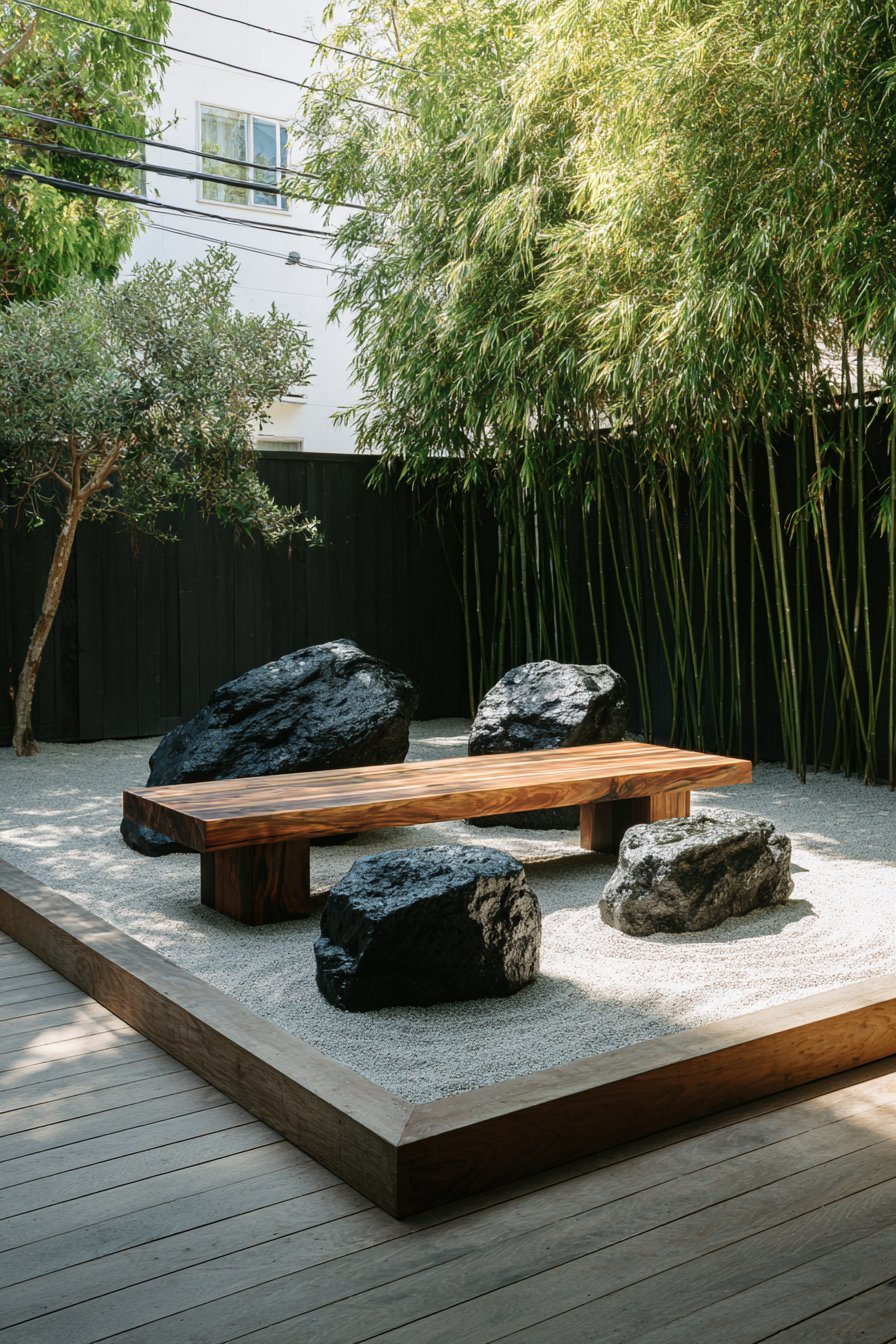
The composition invites extended contemplation. The abstract nature allows personal interpretation and meaning. Viewers project their own thoughts onto the simple elements. This engagement creates deeply individual experiences.
Key Design Tips:
- Use white or light-colored crushed stone for maximum contrast
- Select volcanic rocks or other very dark stones for dramatic effect
- Rake lines perfectly straight using guides or templates
- Build the viewing deck at the intended sight line height
- Install the bamboo fence tall enough to eliminate background distractions
- Position rocks following traditional asymmetrical placement principles
- Maintain the gravel’s whiteness through periodic raking and cleaning
13. Contemporary Stone and Concrete Fusion
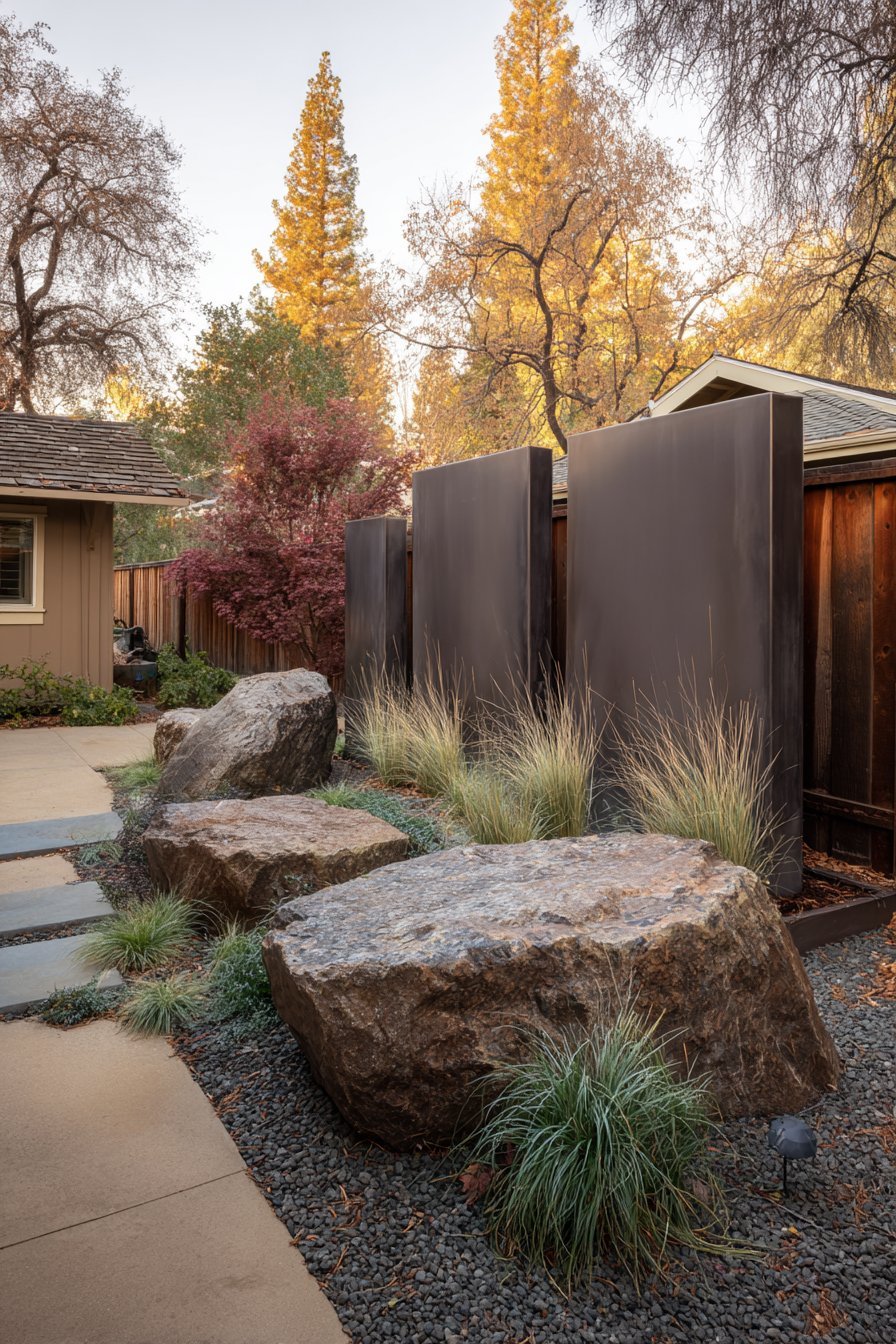
Modern materials merge with traditional elements in contemporary Japanese design. Large weathered stones embed partially into the ground at a concrete retaining wall’s base. Board-formed concrete shows textural interest that complements natural stone. Carefully selected grasses and small shrubs grow between stones naturally.
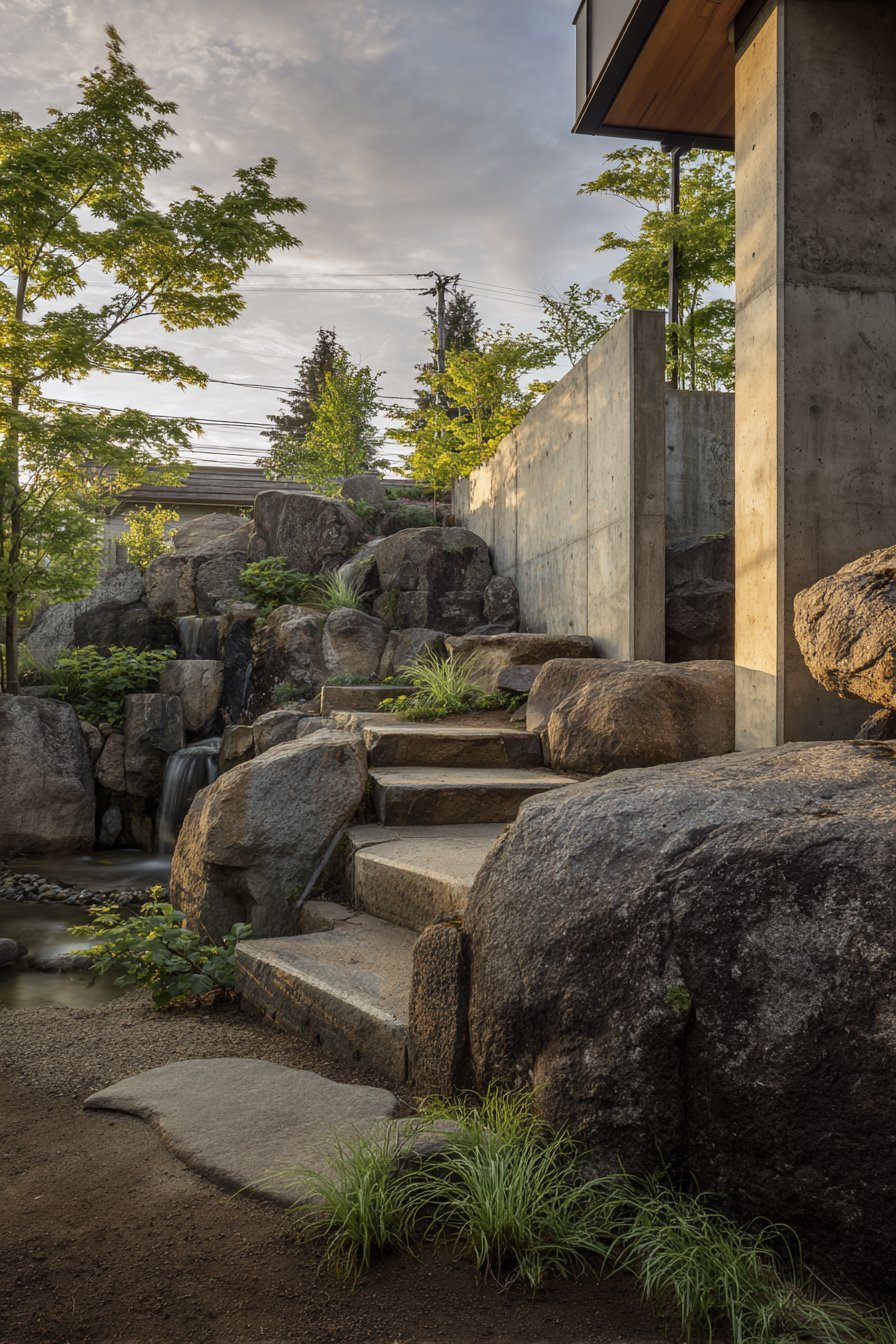
The concrete demonstrates contemporary construction while respecting traditional aesthetics. The board texture adds visual interest to otherwise plain surfaces. Stepping stones lead through the planted area connecting spaces. This design proves traditional principles evolve successfully into modern contexts.
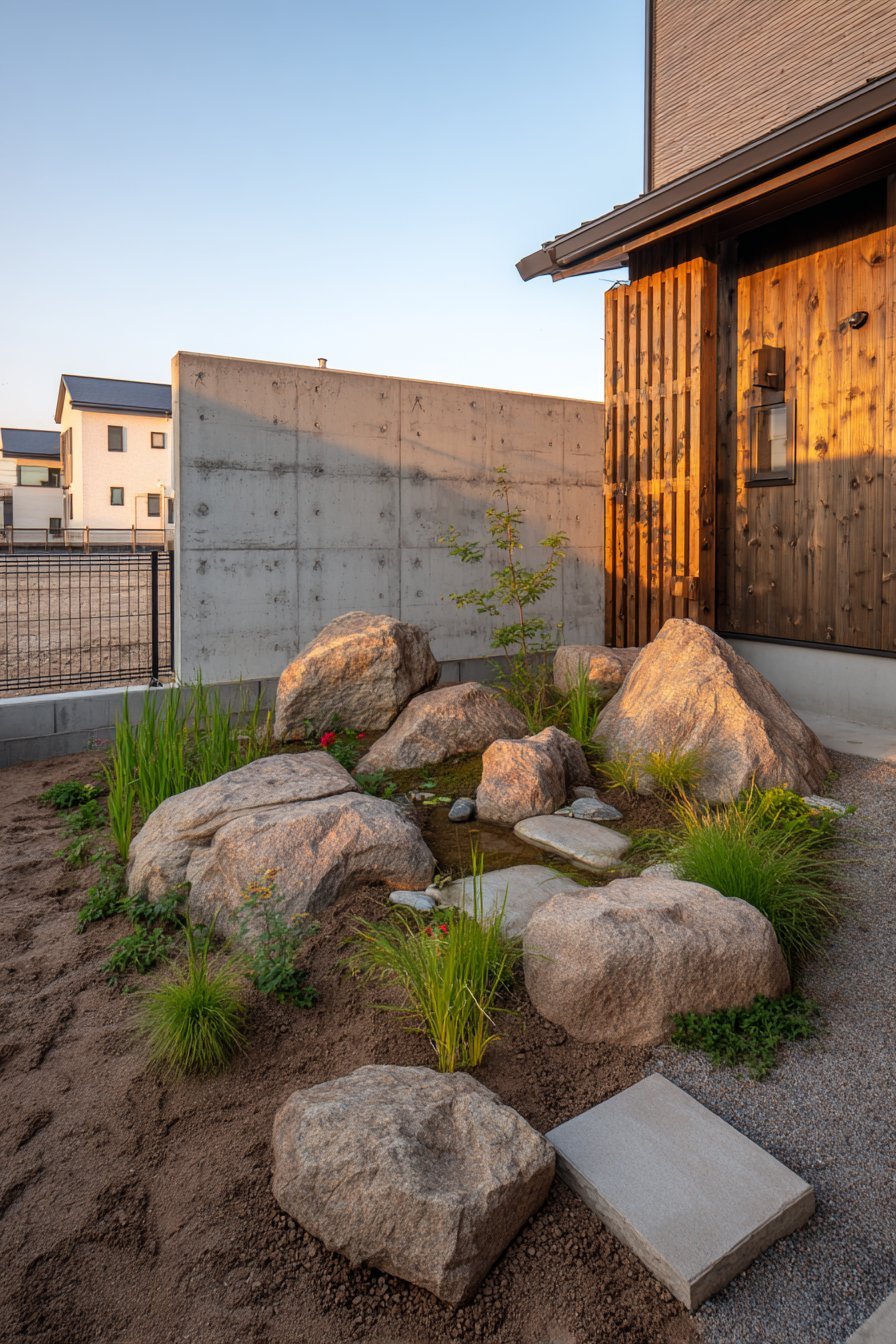
Golden hour lighting emphasizes textures in both stone and concrete. The warm light softens the concrete’s industrial character. Natural stone appears more golden and inviting. This timing demonstrates how traditional and modern materials harmonize.
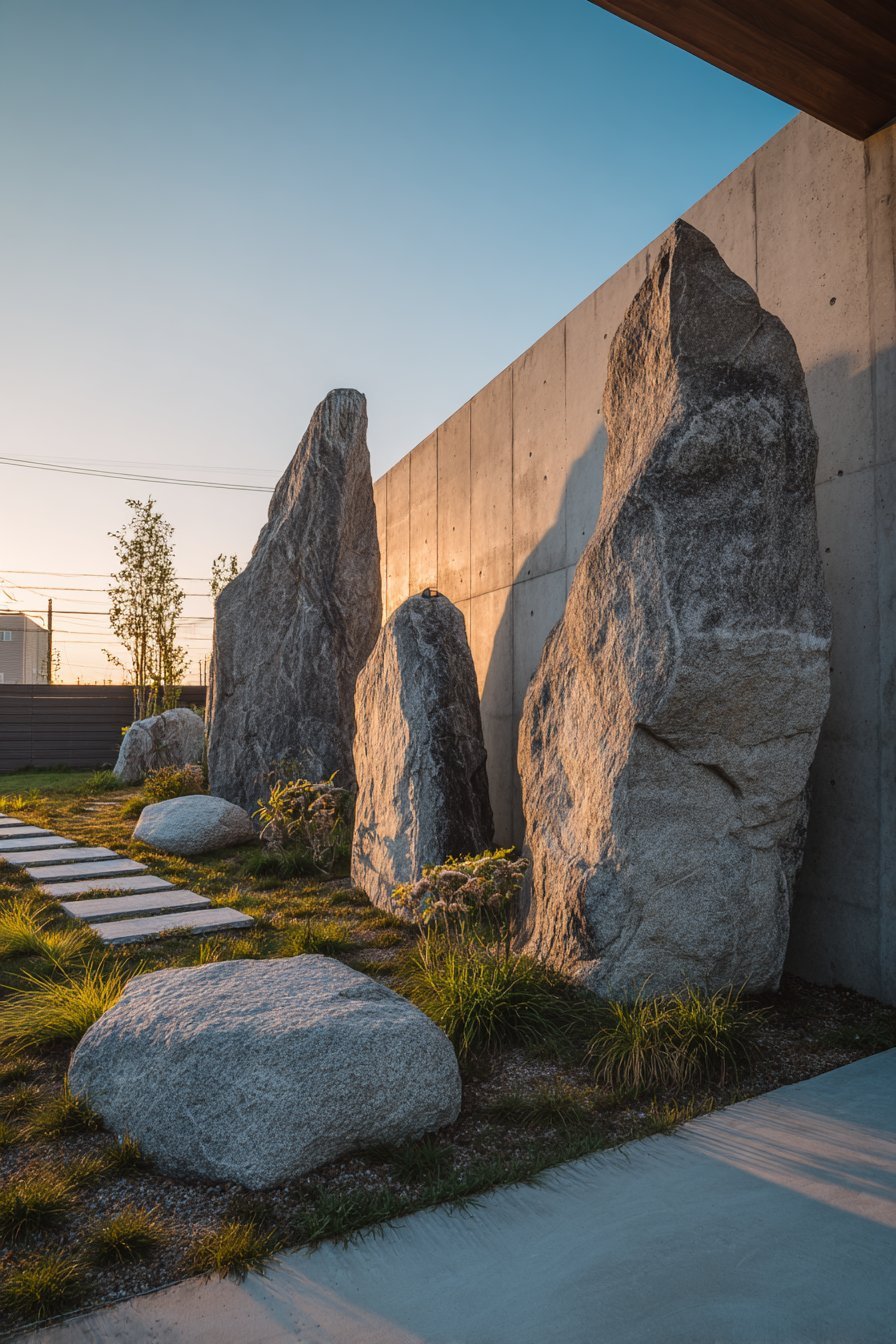
The integration feels seamless rather than forced. Contemporary needs for retaining walls meet aesthetic requirements gracefully. The planting softens hard edges naturally. This approach offers solutions for sloped properties requiring structural support.
Key Design Tips:
- Use board-formed concrete for added texture and visual interest
- Select native grasses suited to your climate and drainage conditions
- Partially bury large stones for natural embedded appearance
- Create proper drainage behind retaining walls to prevent failure
- Allow concrete to weather naturally rather than sealing excessively
- Space stepping stones at comfortable walking intervals
- Choose plants that tolerate the microclimate created by concrete and stone
14. Integrated Deck and Garden Courtyard
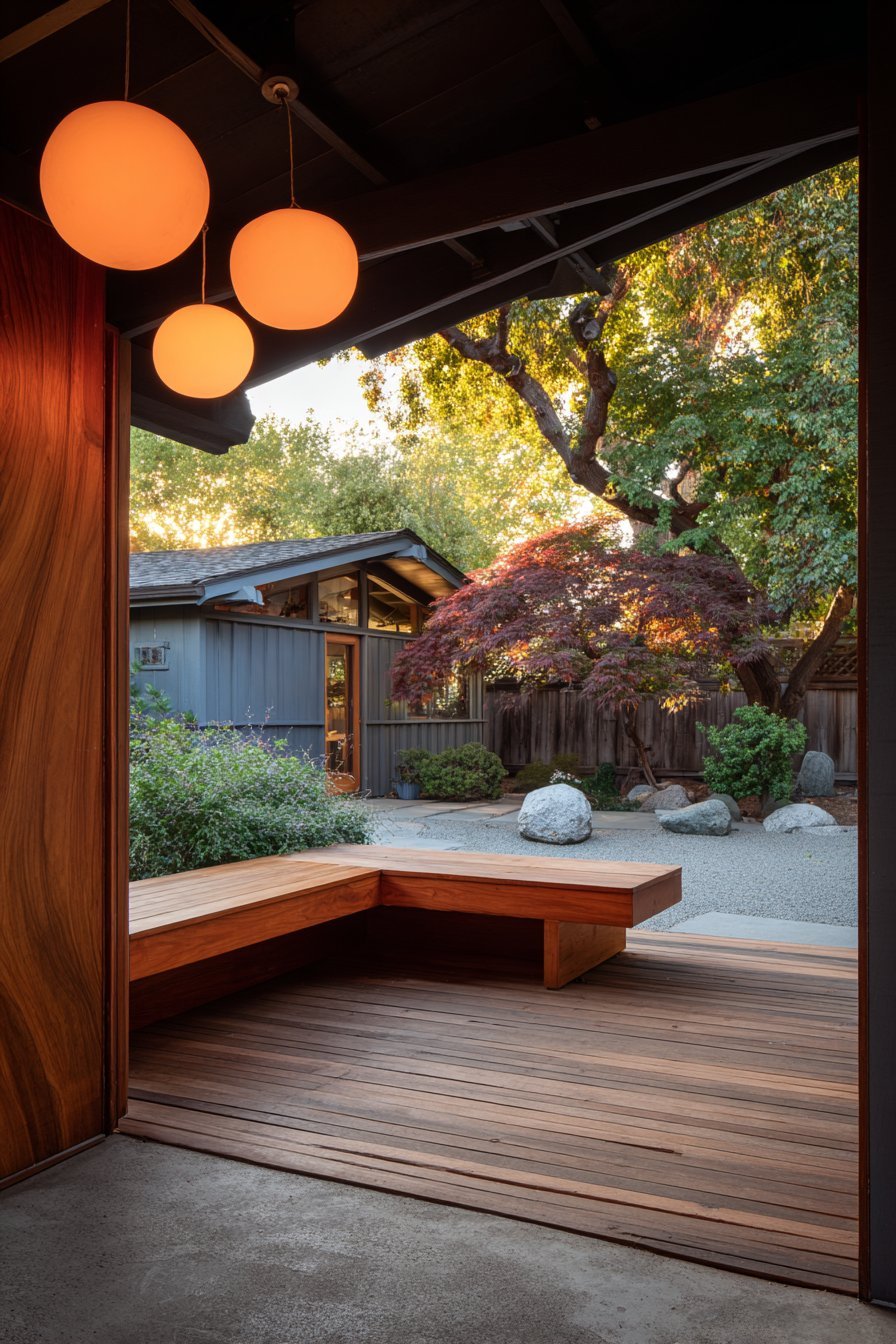
A wooden platform deck creates transition space between indoors and garden. Built-in bench seating along two sides provides comfortable gathering space. Sustainably harvested cedar receives natural oil finish that enhances grain. The deck overlooks a courtyard garden with raked gravel and strategic stone placement.
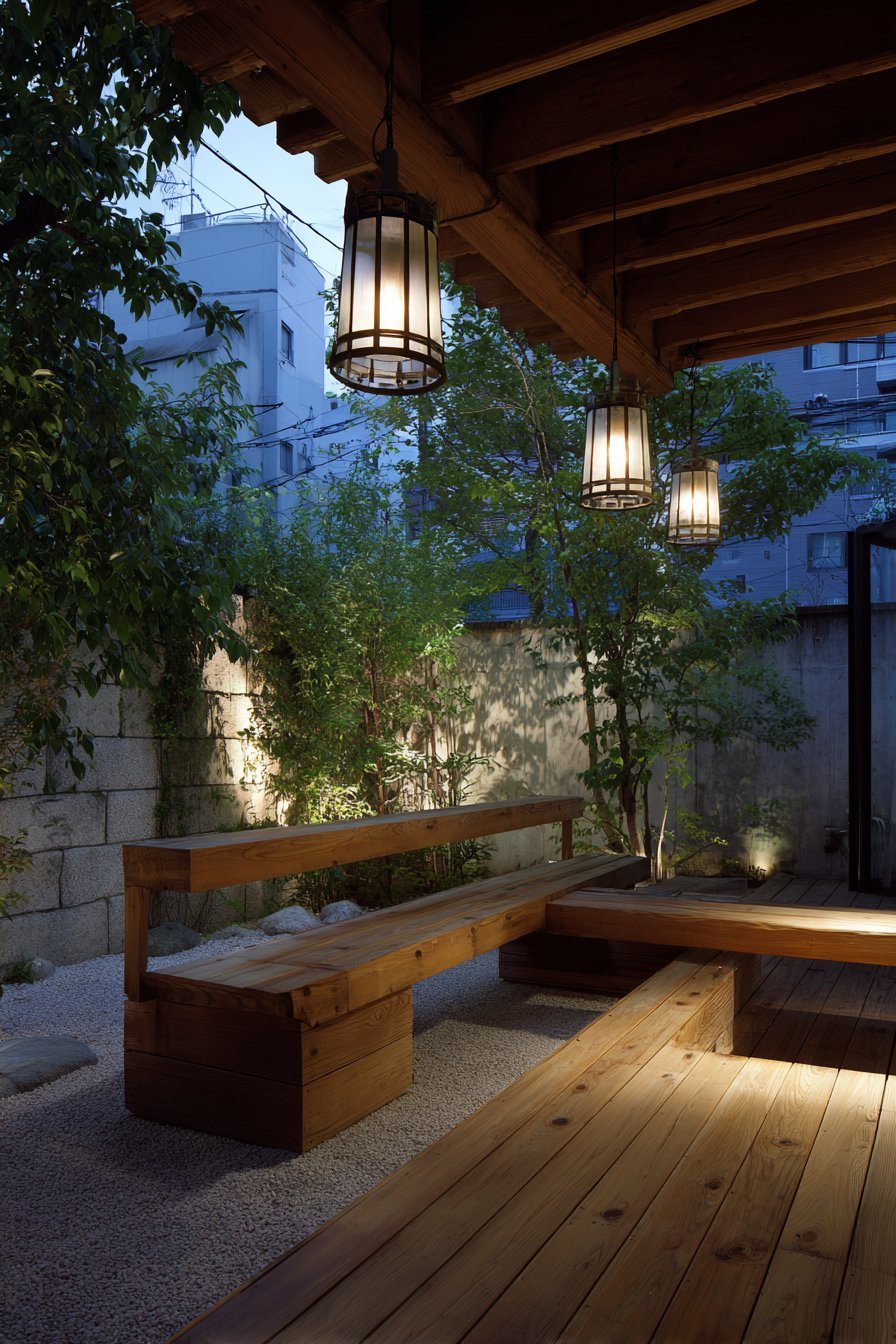
A single ornamental cherry tree provides seasonal interest and light shade. Paper lanterns hang from the deck’s roof overhang for evening illumination. The design frames and enhances views of naturalistic garden elements. This integration proves decks can complement rather than compete with gardens.
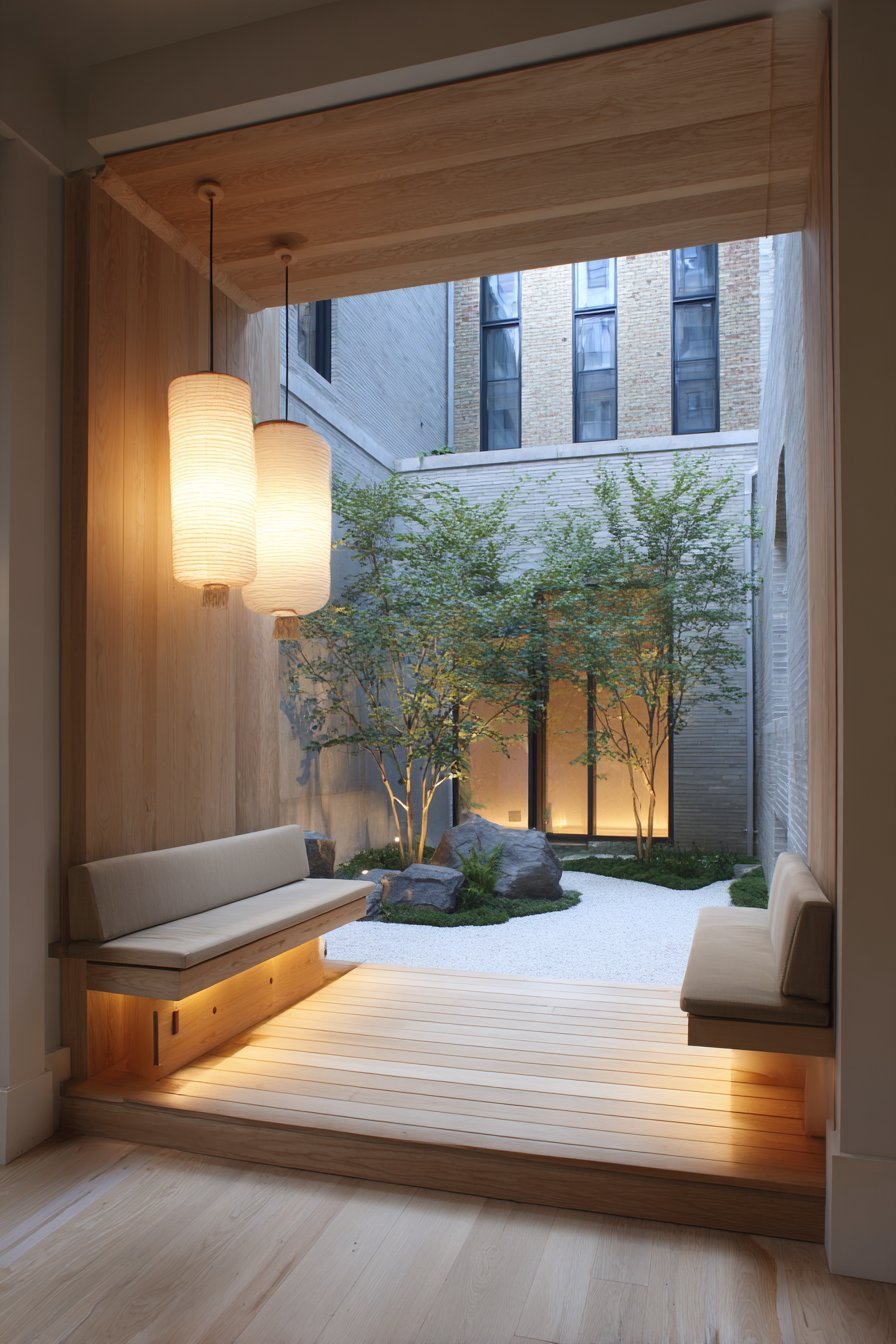
Dusk transforms this space as lanterns begin glowing softly. The transition between day and night feels gentle and natural. The simple geometric deck structure provides order while the garden offers organic beauty. This balance exemplifies Japanese design philosophy.
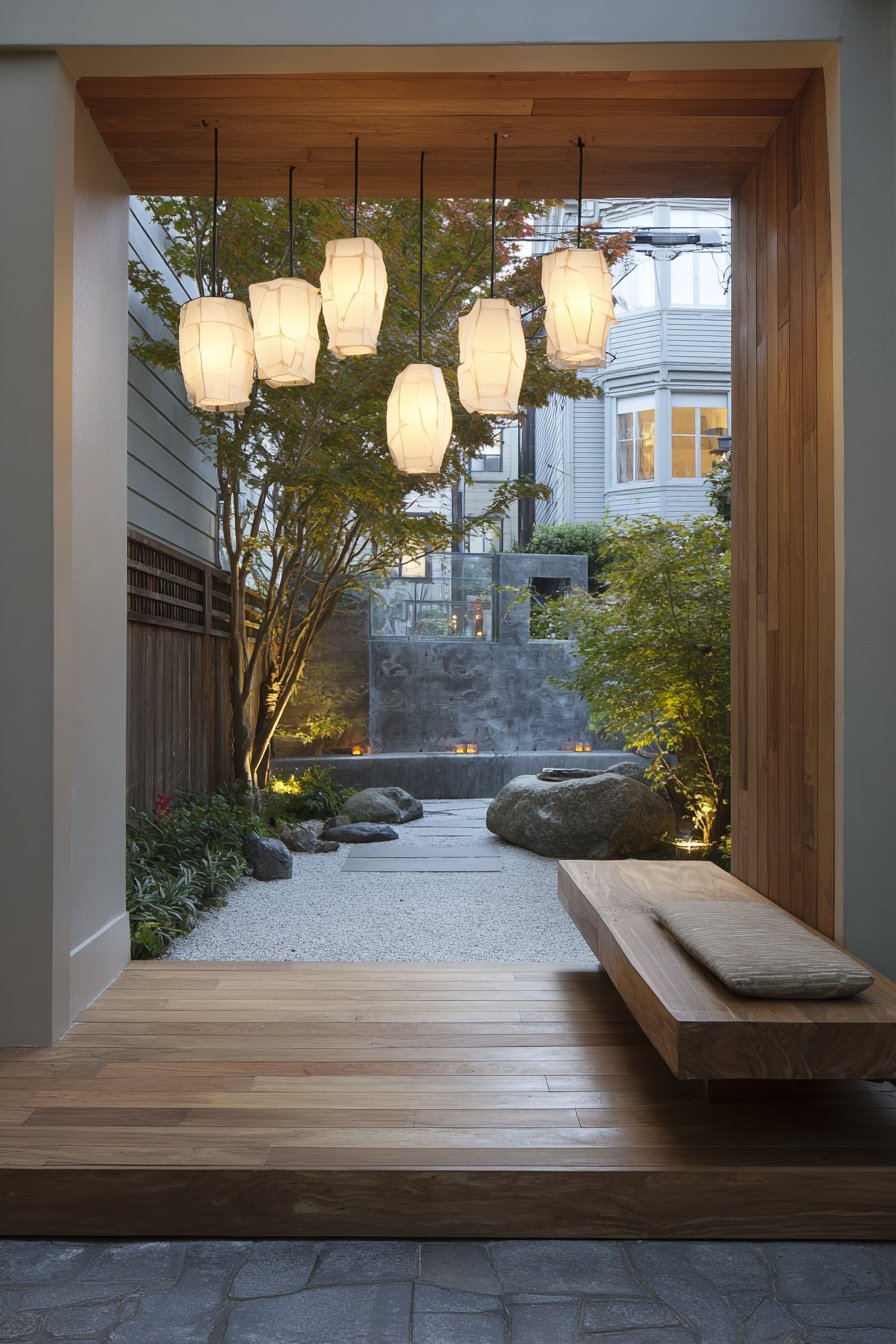
The built-in seating eliminates furniture needs and creates clean lines. The deck height elevates viewers for optimal garden appreciation. The roof overhang protects from rain while maintaining openness. Every element serves multiple purposes efficiently.
Key Design Tips:
- Apply natural oil finishes that protect wood while allowing it to age gracefully
- Position built-in seating to face the most appealing garden views
- Hang paper lanterns at varying heights for visual interest
- Select cherry tree varieties suited to your hardiness zone
- Build the deck high enough for comfortable garden viewing when seated
- Include roof overhang extending far enough for meaningful weather protection
- Use LED candles in paper lanterns for safety and convenience
15. Naturalistic Dry Stream Bed
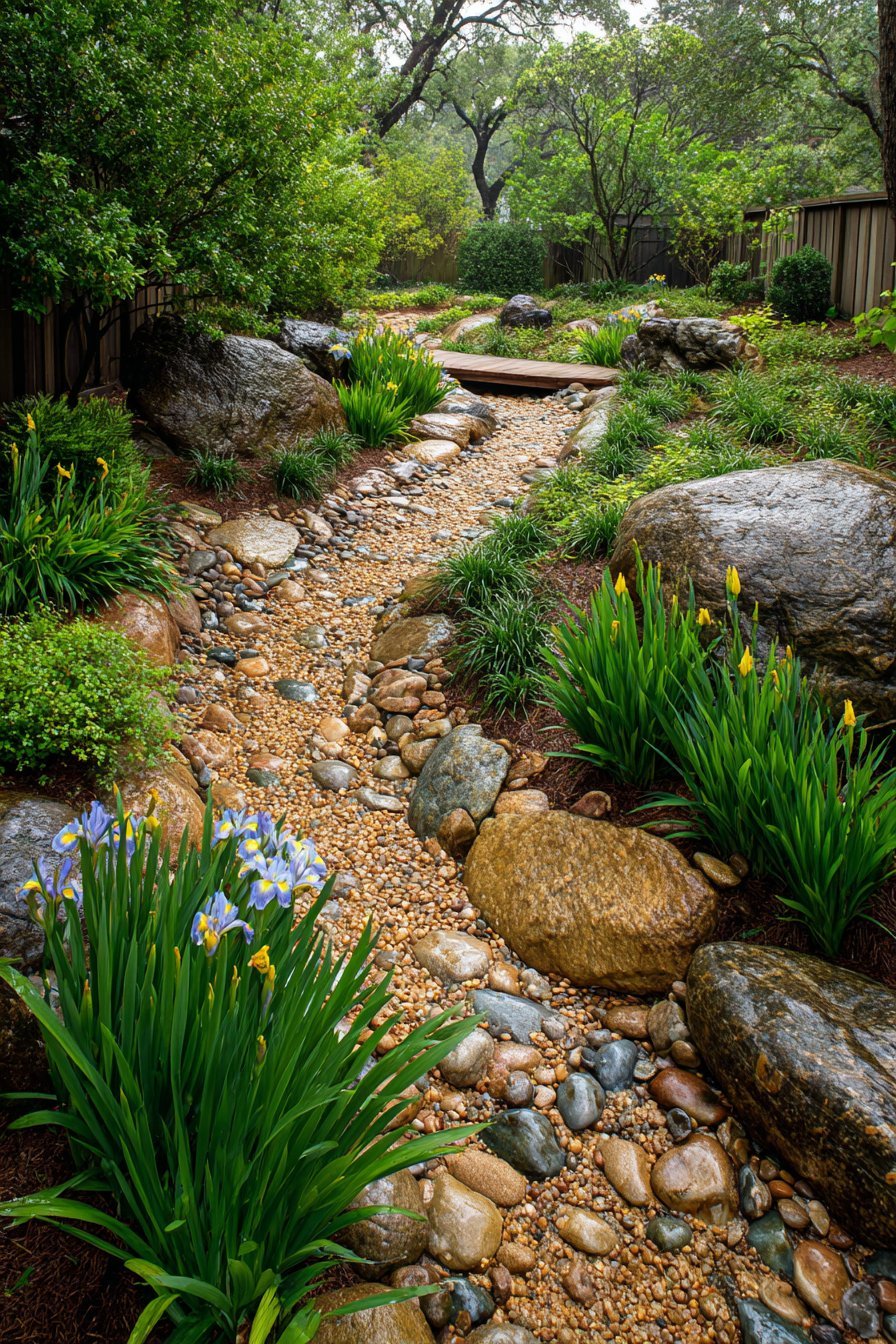
A dry stream bed suggests water flow even without actual water. River rocks of varying sizes arrange to mimic natural water erosion patterns. The stream winds through the garden passing under a simple wooden footbridge. Along the banks, Japanese iris and ornamental grasses create naturalistic plantings.
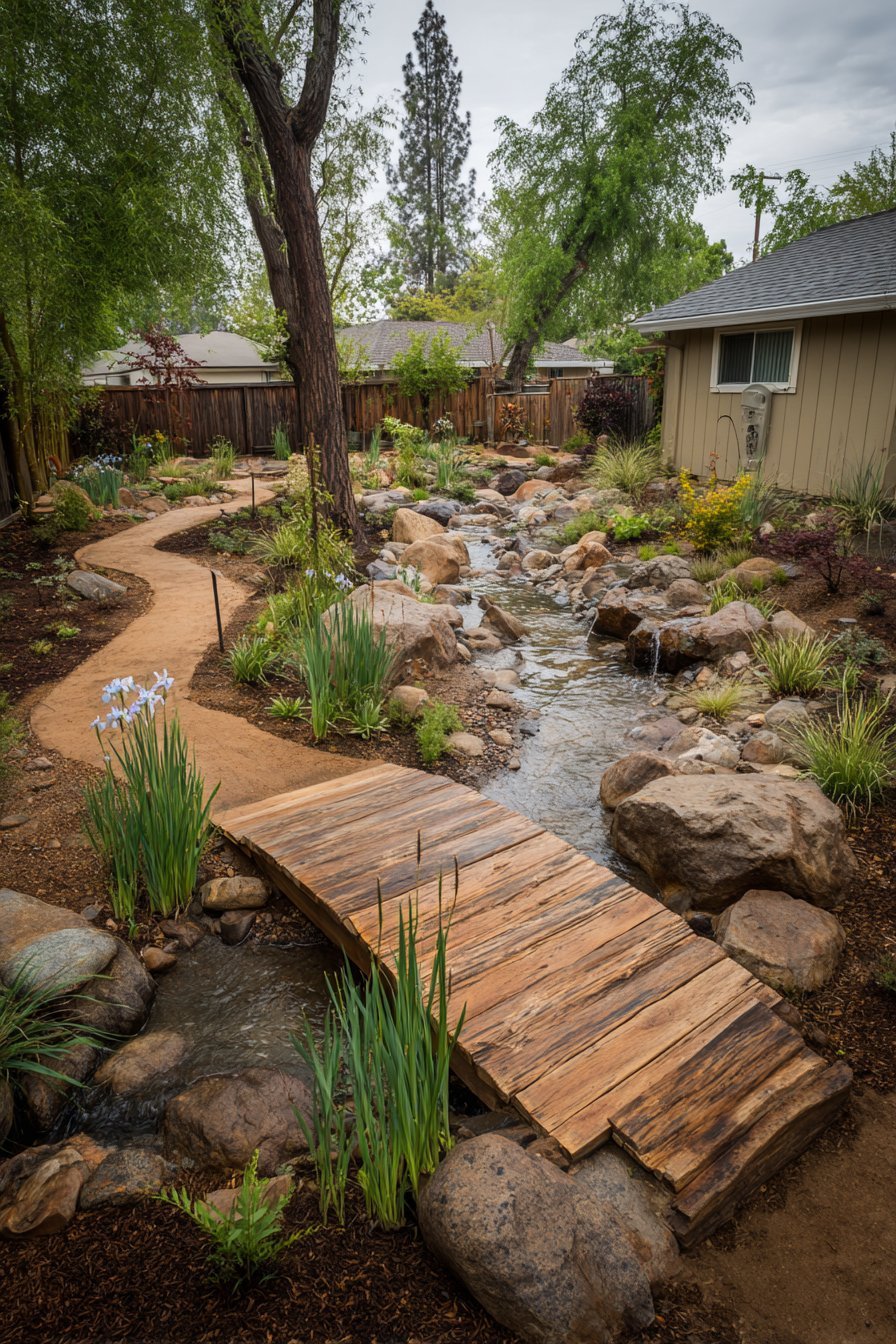
Larger boulders anchor curves in the stream design logically. The arrangement follows how water would naturally carve through landscape. Flat planks form a sturdy footbridge without unnecessary decoration. This design translates mountain stream experiences into residential settings successfully.
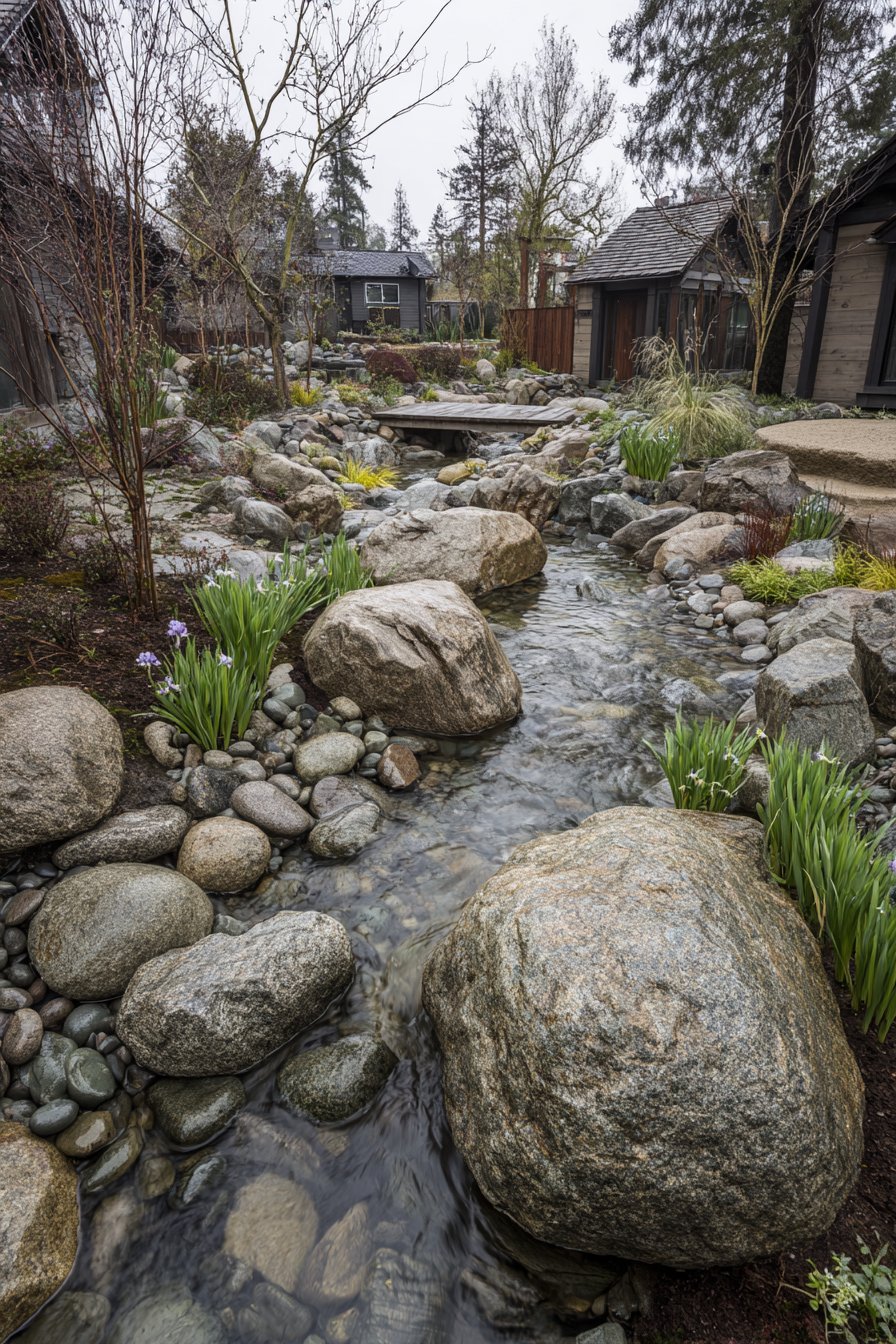
Light rain transforms this feature dramatically. Wet rocks glisten and reveal their true colors and patterns. The stream bed appears to come alive with moisture. Overcast conditions provide even lighting that showcases stone arrangements beautifully.
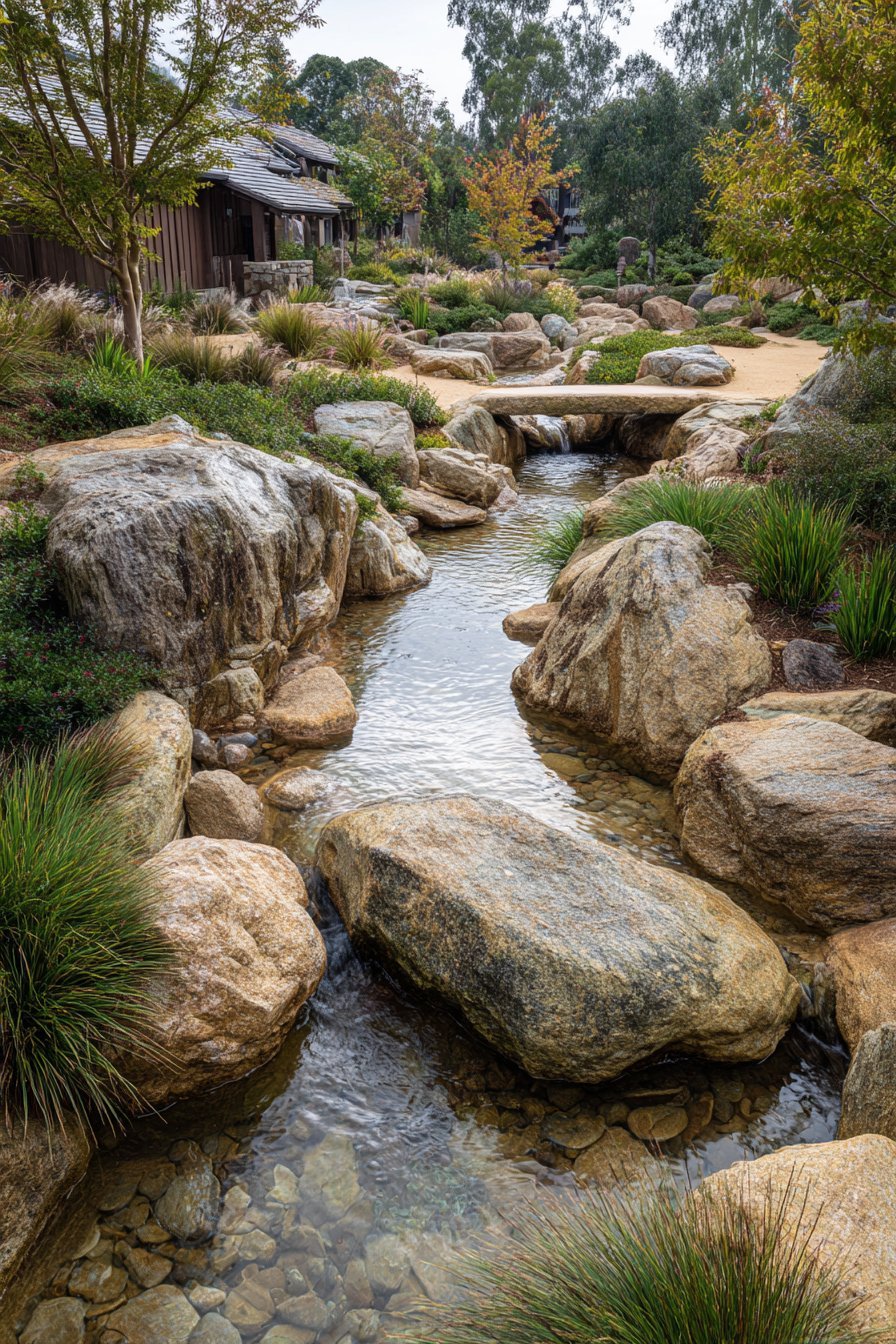
The design requires no water circulation system yet provides water feature ambiance. Maintenance stays minimal after initial construction. Seasonal rains occasionally flow through following the intended path. This practical approach suits areas with water restrictions or maintenance concerns.
Key Design Tips:
- Study natural stream beds to understand authentic water flow patterns
- Use river rocks rather than crushed stone for natural appearance
- Size the footbridge proportionally to the stream bed width
- Plant moisture-loving species along banks for realistic appearance
- Position larger boulders at curves where water would naturally erode
- Grade the stream bed with slight slope for realism
- Consider allowing actual storm water to flow through during heavy rains
16. Traditional Stone Lantern as Focal Point
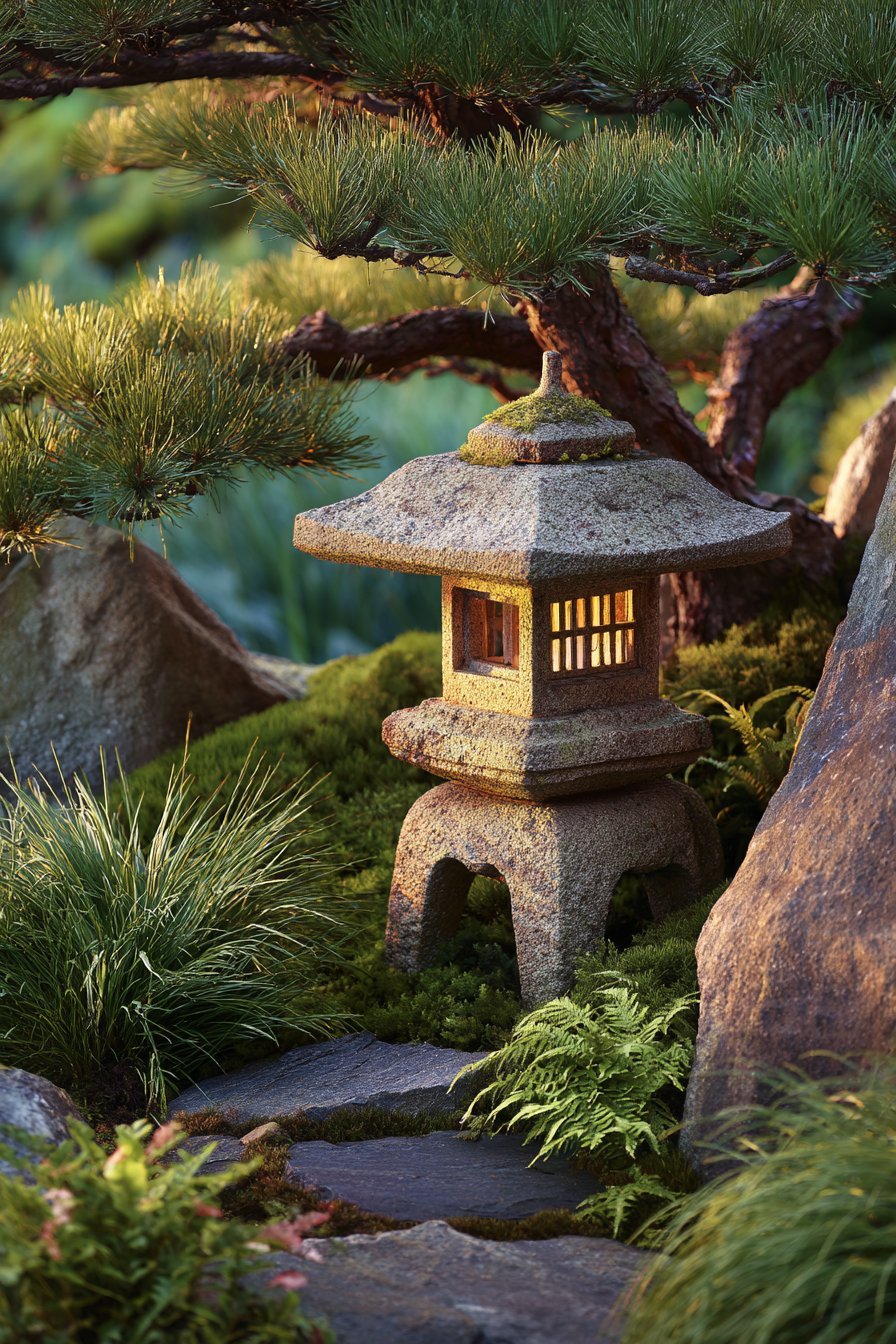
A yukimi-gata stone lantern serves as sculptural garden centerpiece. The broad roof cap and granite construction show authentic traditional craftsmanship. Natural weathering and patina develop over time adding character. The lantern sits on foundation stones surrounded by mondo grass and small ferns.
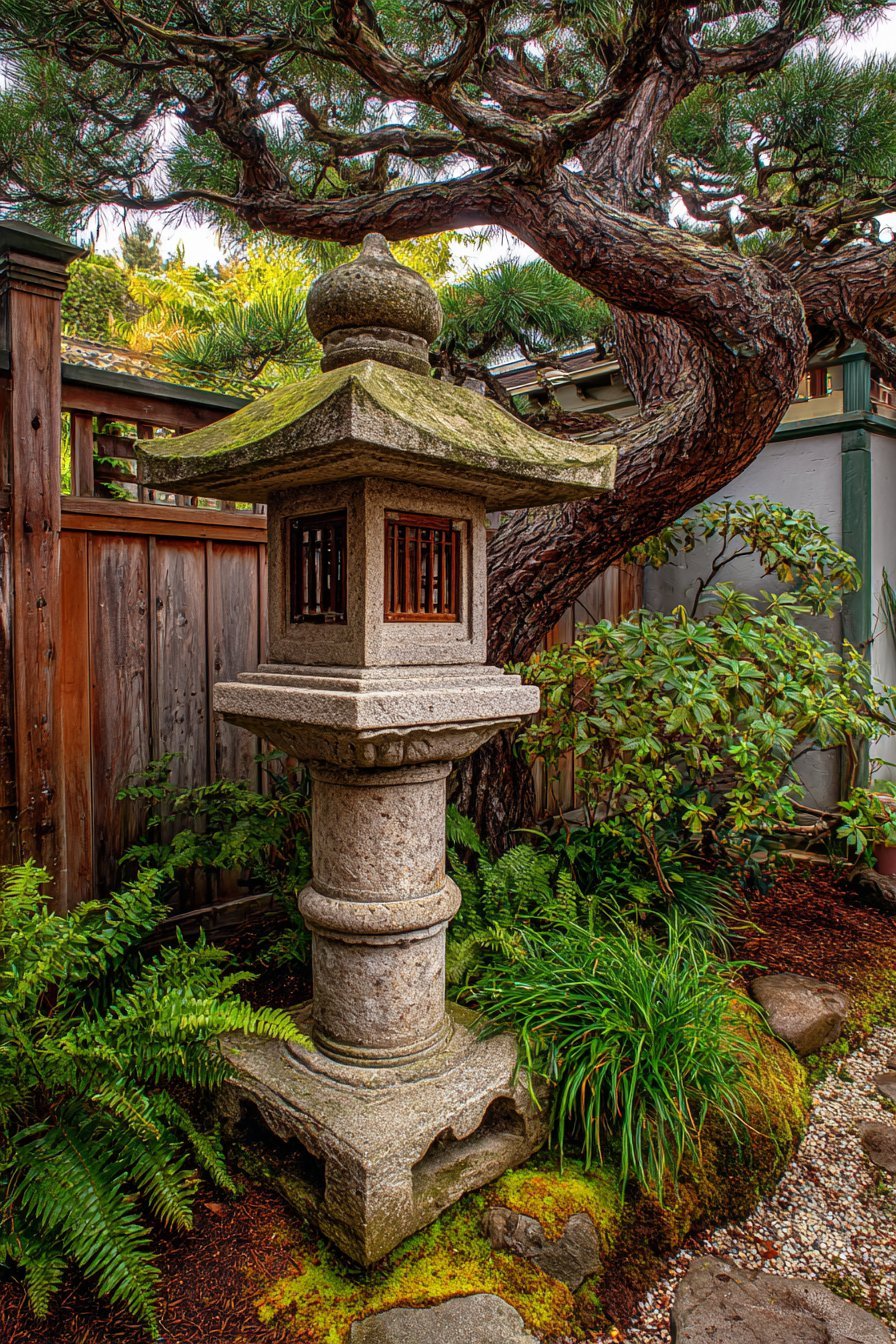
A carefully pruned pine tree provides backdrop with sculptural branch structure. The pine’s form complements the lantern’s architectural presence. Ground coverage combines moss and dark mulch around the feature. This composition demonstrates how single elements can anchor entire garden designs.
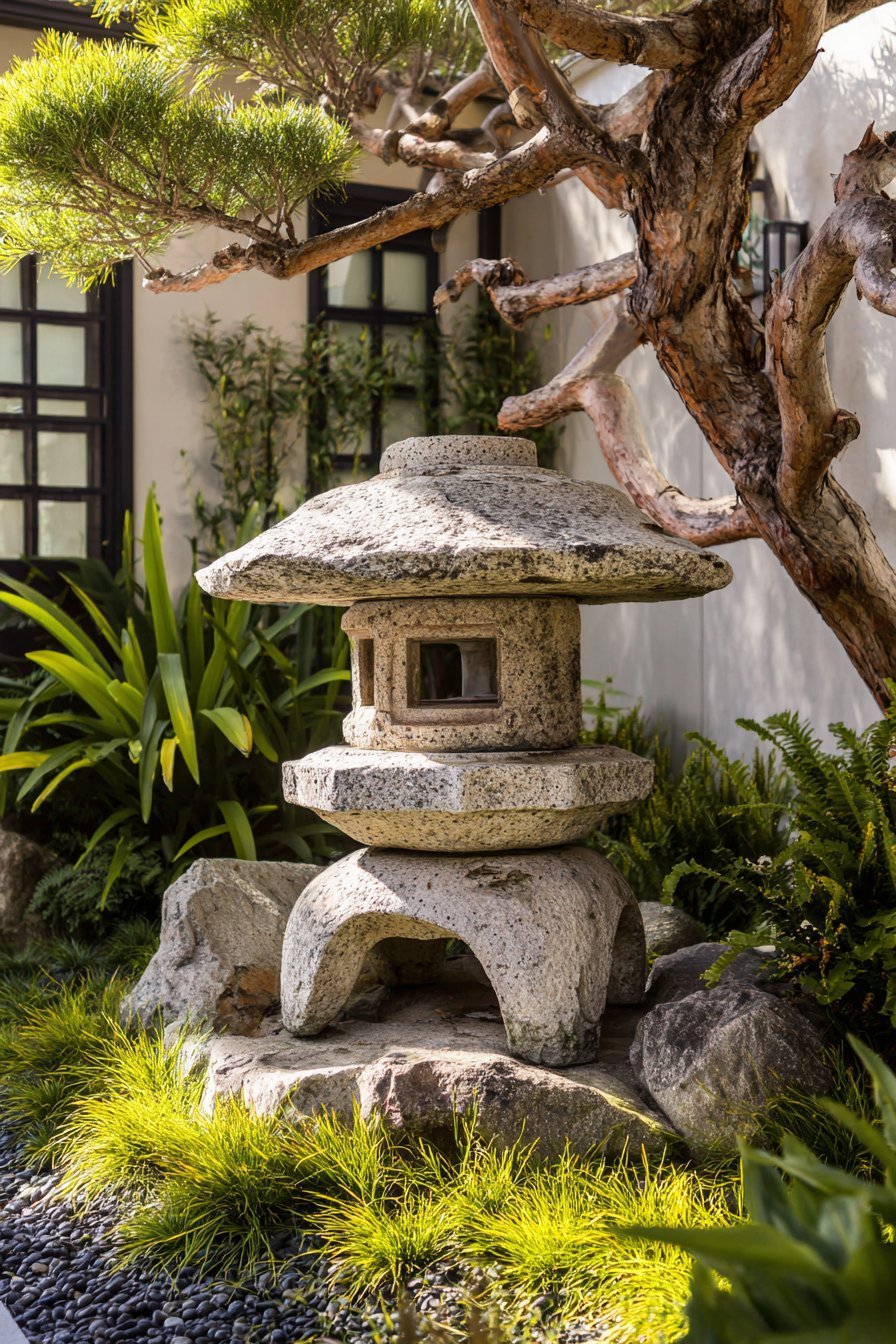
Soft natural side-lighting emphasizes the stone’s texture beautifully. Shadows cast by the lantern’s architectural details add depth and dimension. The play of light throughout the day keeps the feature visually dynamic. Evening lighting from within transforms the lantern into a glowing beacon.
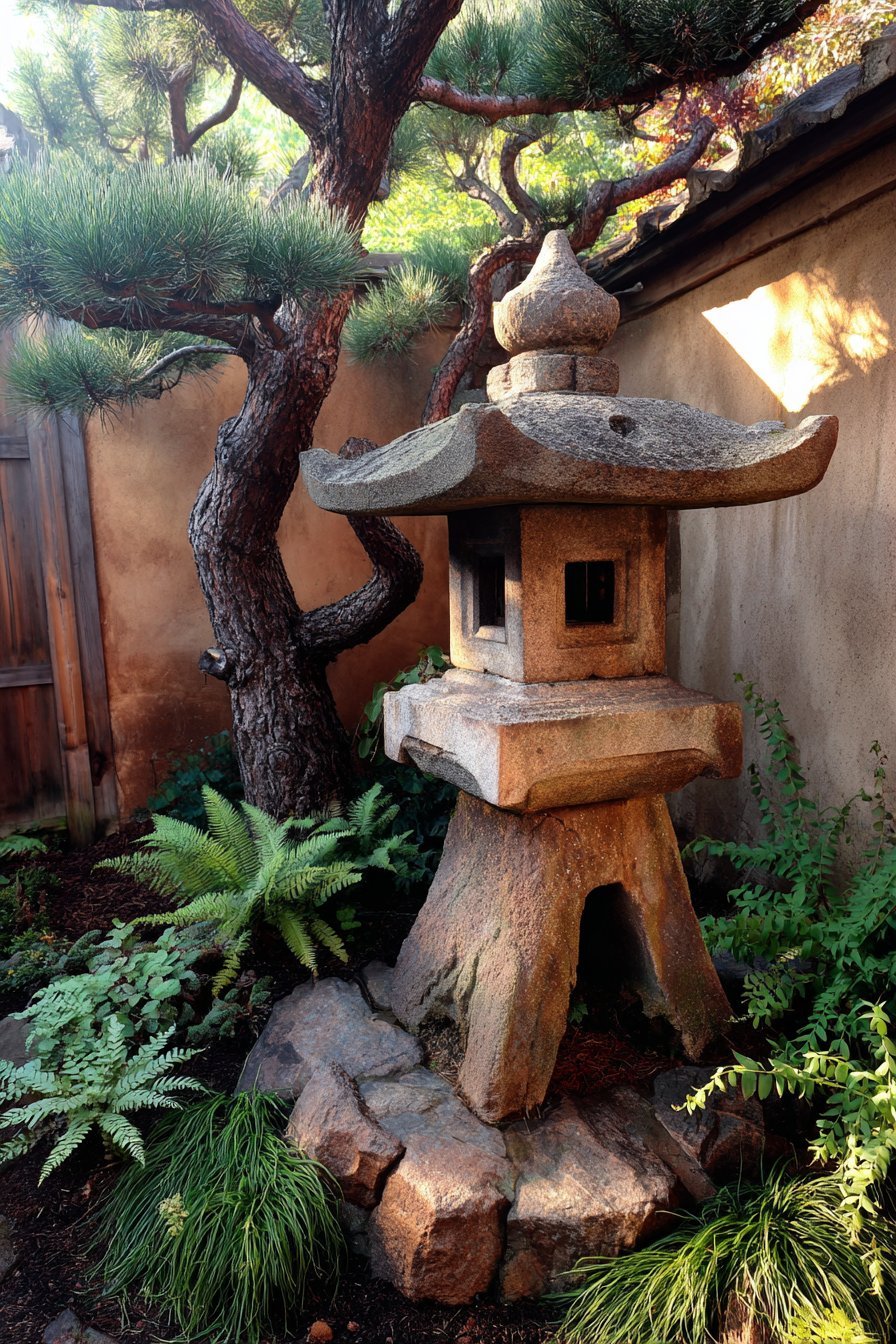
The lantern functions as both practical lighting and sculptural art. Traditional designs include specific symbolic meanings and purposes. Modern interpretations respect these traditions while adapting to contemporary needs. This balance honors history while remaining relevant.
Key Design Tips:
- Select granite or other durable stone for longevity
- Position the lantern where it can be viewed from multiple vantage points
- Allow natural weathering rather than cleaning too aggressively
- Plant ferns and moss that thrive in the lantern’s microclimate
- Prune the pine tree to reveal its natural branch structure
- Include subtle lighting inside the lantern for evening ambiance
- Set foundation stones level and stable before placing the lantern
17. Traditional Bamboo Privacy Fence
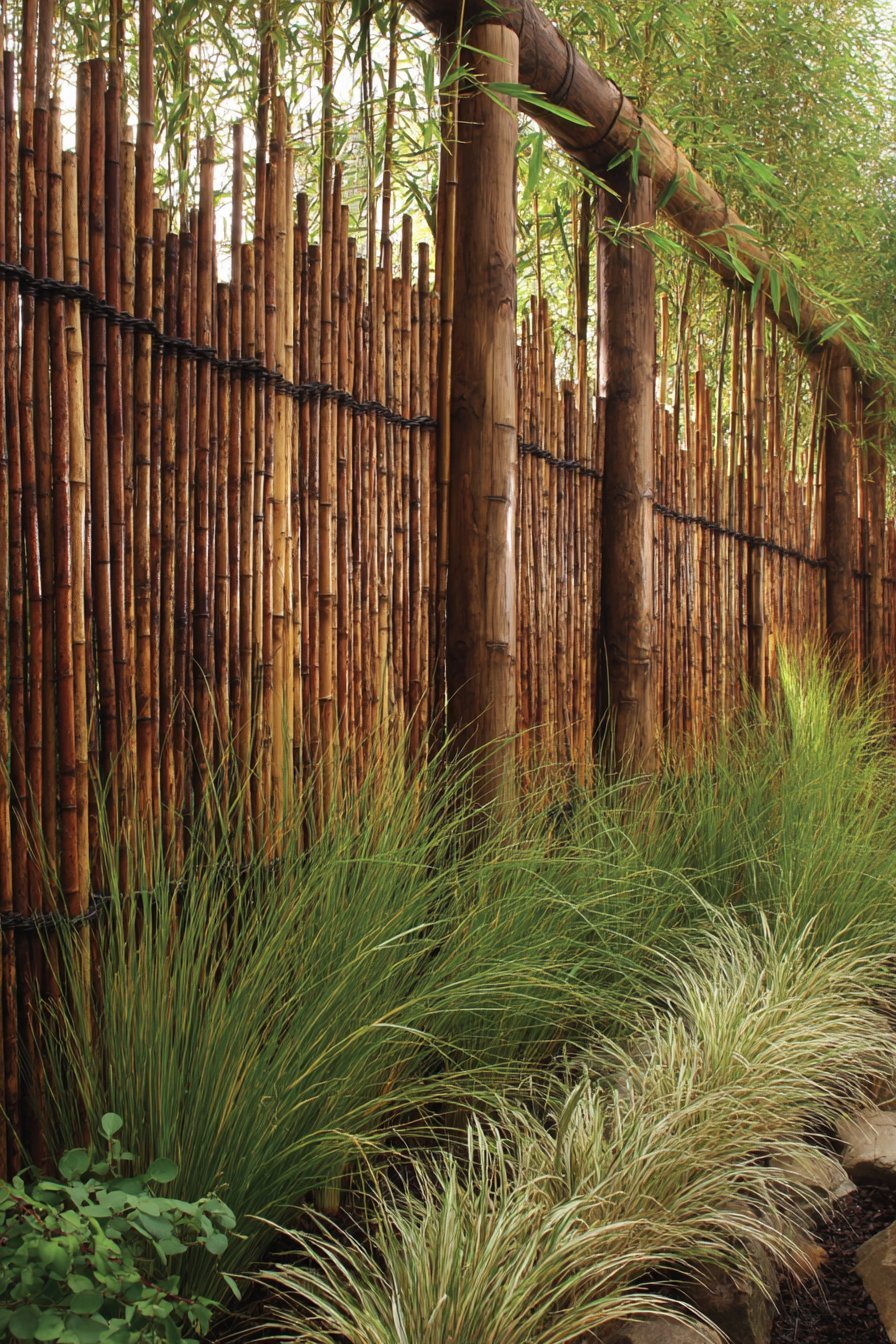
Vertical bamboo poles lashed with black cord create authentic living fences. The traditional construction technique filters views while maintaining airflow. The fence stands approximately six feet tall for effective privacy screening. Natural bamboo shows slight color variations and honest aging.
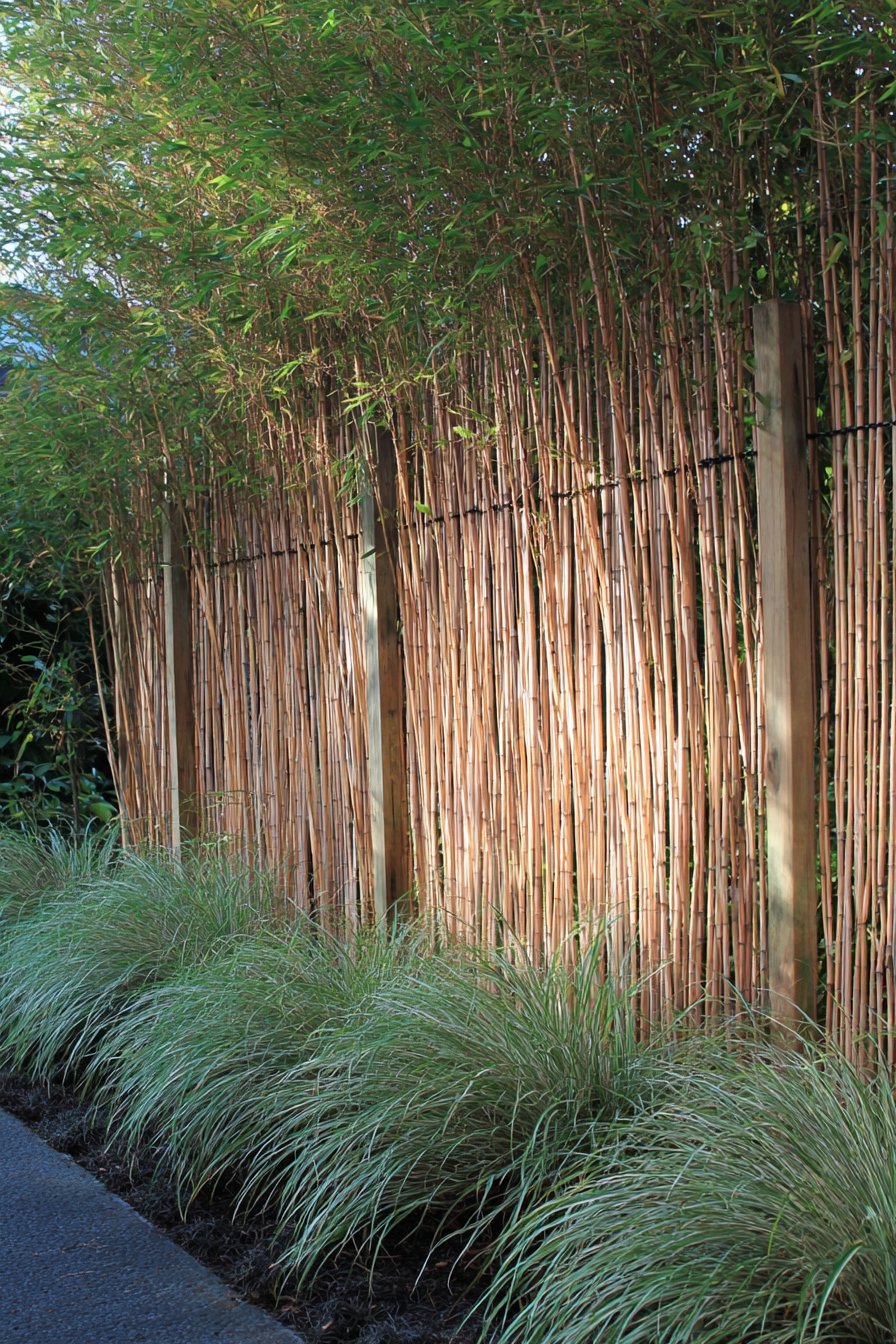
A narrow planting bed in front contains tall ornamental grasses and spreading groundcover. The layered planting softens the fence line naturally. The bamboo’s vertical lines contrast beautifully with horizontal grass movement. This traditional element proves highly effective as permeable boundary.
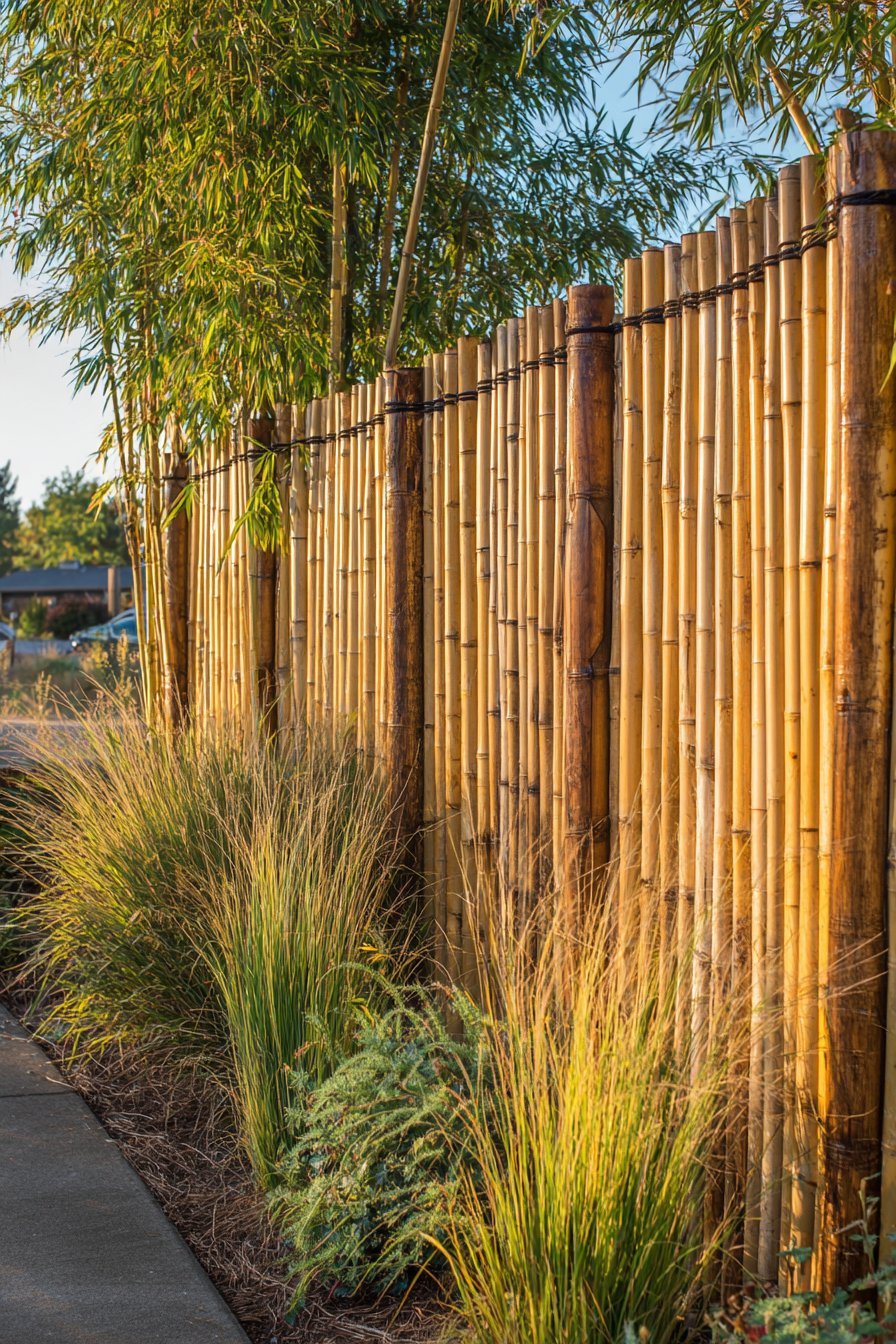
Afternoon backlighting shows how light filters through bamboo poles beautifully. The fence creates privacy without the heaviness of solid walls. Air circulation remains excellent preventing stagnant microclimates. This functionality combines with aesthetic appeal perfectly.
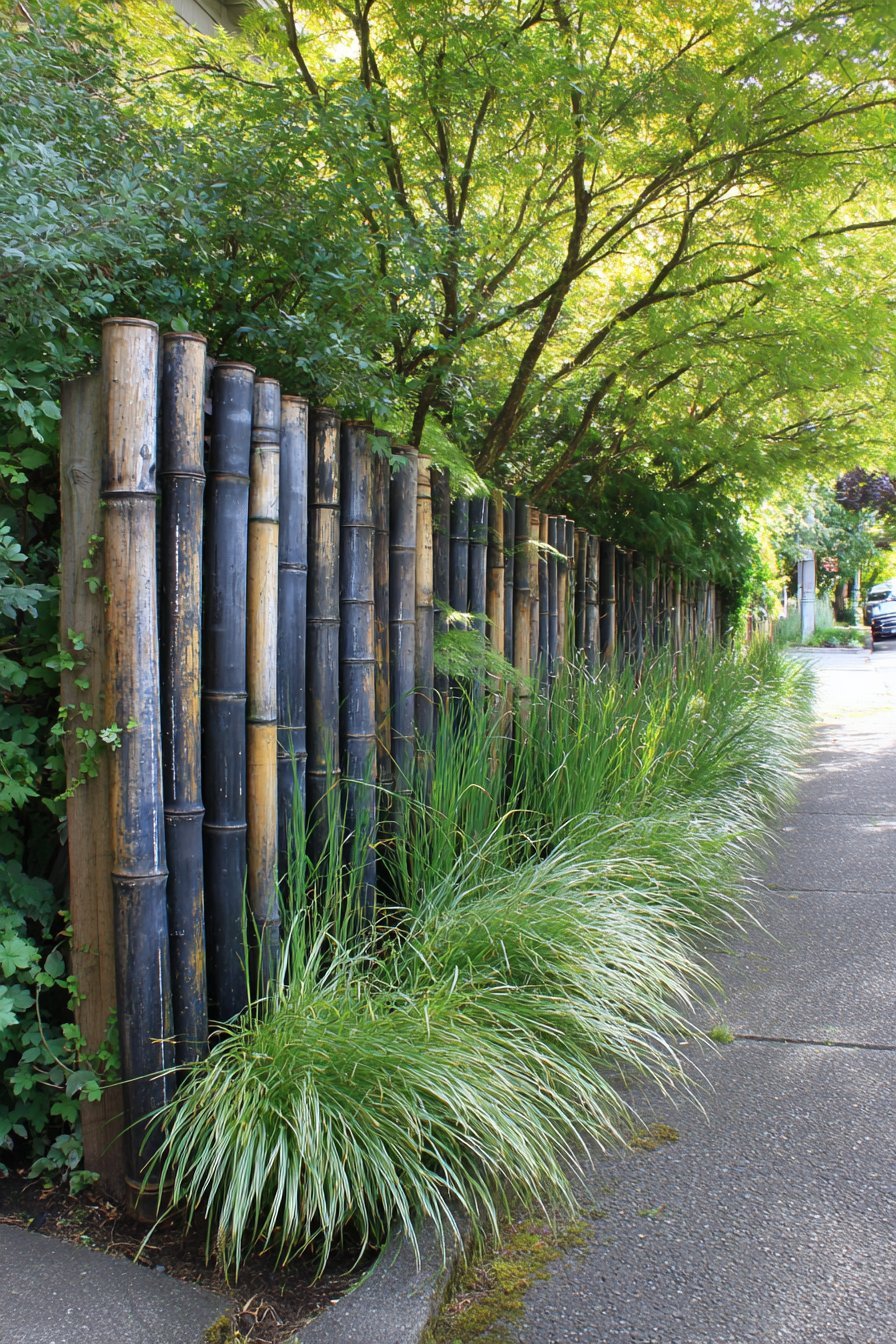
The bamboo fence ages gracefully developing silver patina over time. The black cord lashing creates visual rhythm through repetition. Maintenance remains minimal requiring only occasional tightening and bamboo replacement. This practical solution suits many property boundary situations.
Key Design Tips:
- Source bamboo poles of consistent diameter for uniform appearance
- Use black synthetic cord for durability over natural materials
- Mount poles to treated wooden posts set in concrete
- Space poles to balance privacy with light filtration
- Plant ornamental grasses that grow tall but not invasive
- Allow bamboo to weather naturally to silver-gray patina
- Inspect lashing periodically and retighten as needed
18. Hillside Waterfall with Grotto Atmosphere
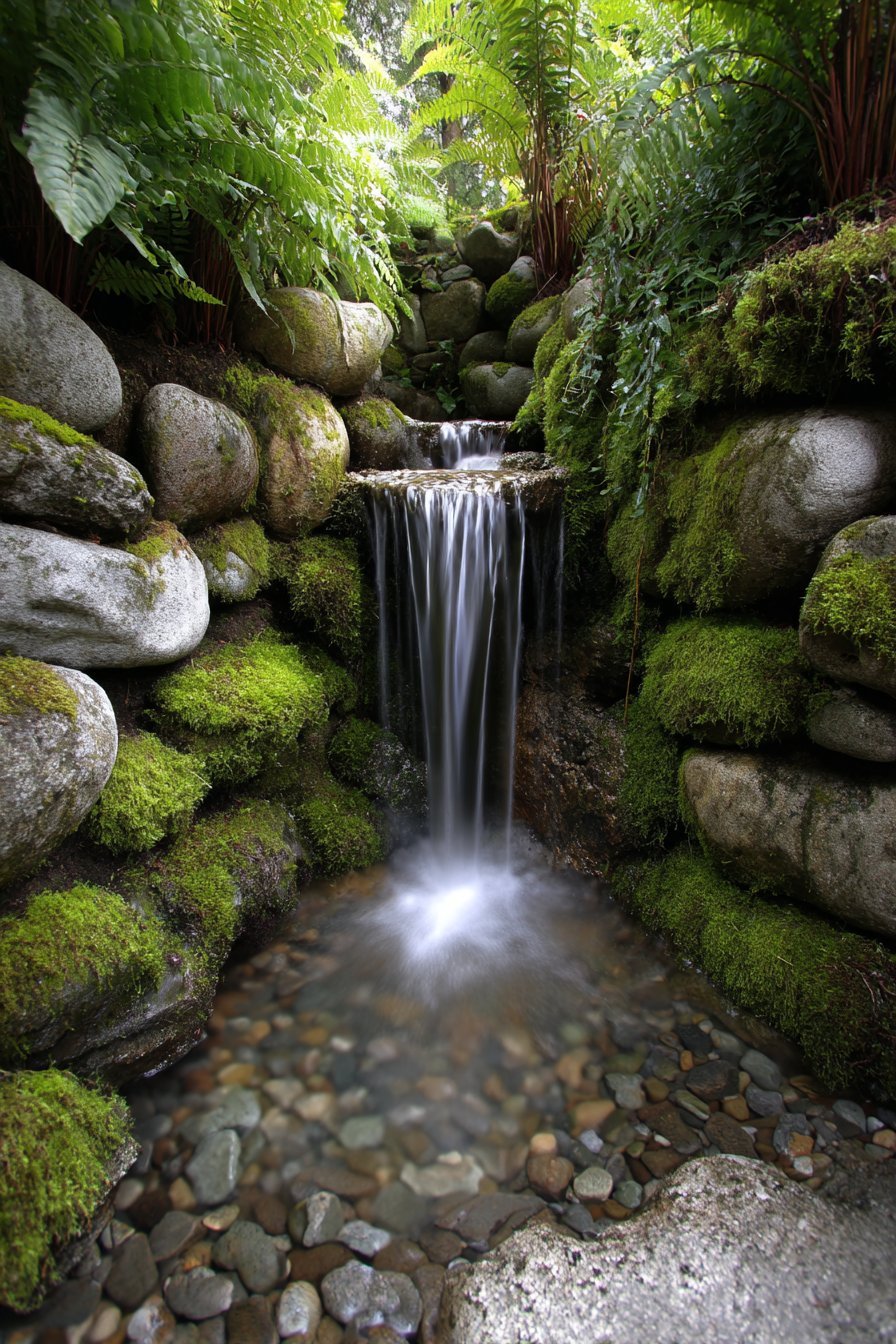
A recirculating waterfall built into a small hillside uses natural stacked stones. Multiple tiers create cascading water movement and soothing sounds. Water flows over moss-covered rocks into a catch basin lined with smooth pebbles. Ferns and hostas planted around create grotto-like atmosphere.
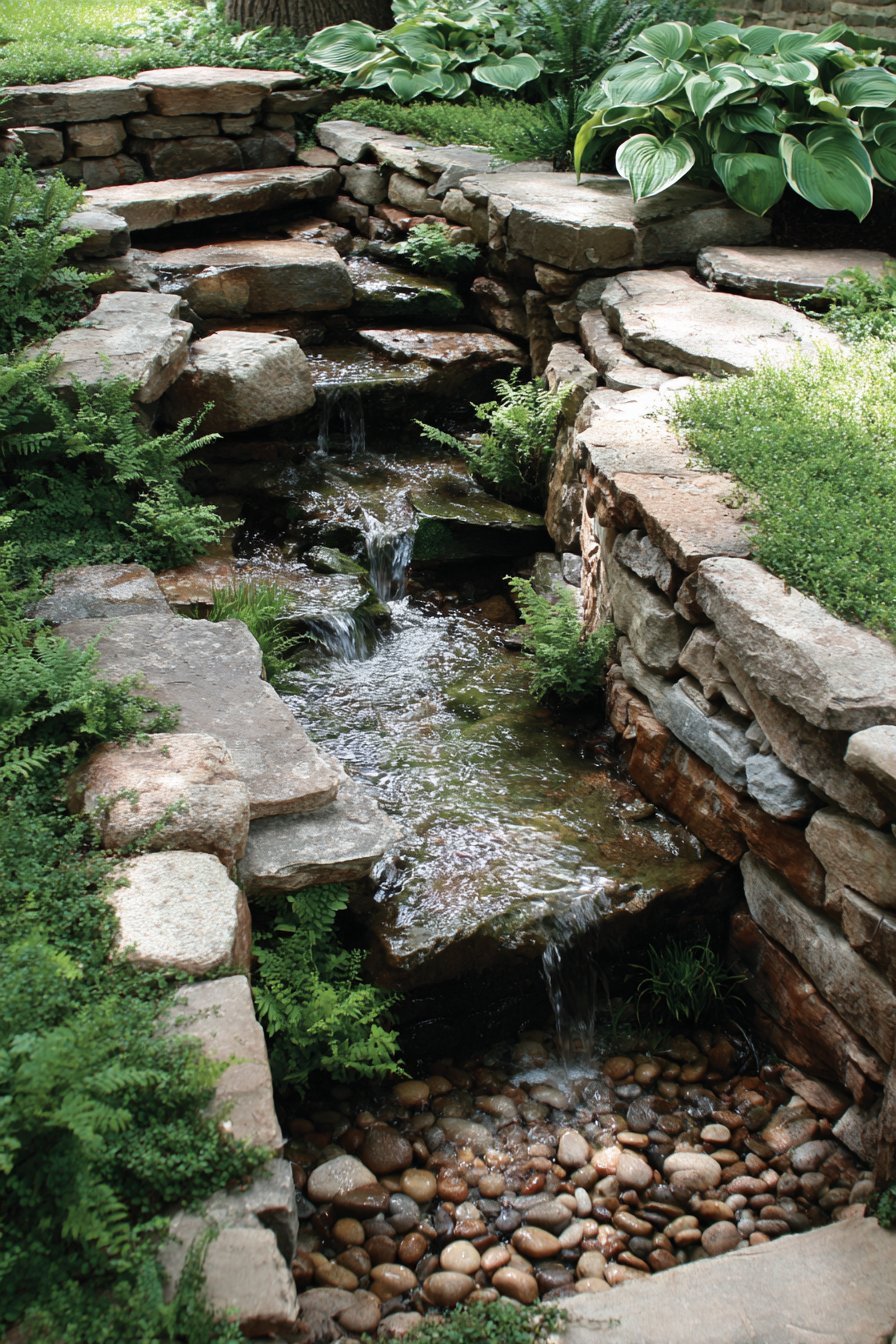
A simple stone path leads to a viewing area positioned for optimal enjoyment. The waterfall incorporates water movement and sound as core design elements. The moisture supports lush growth of shade-loving plants. This design demonstrates Japanese principle of engaging multiple senses simultaneously.
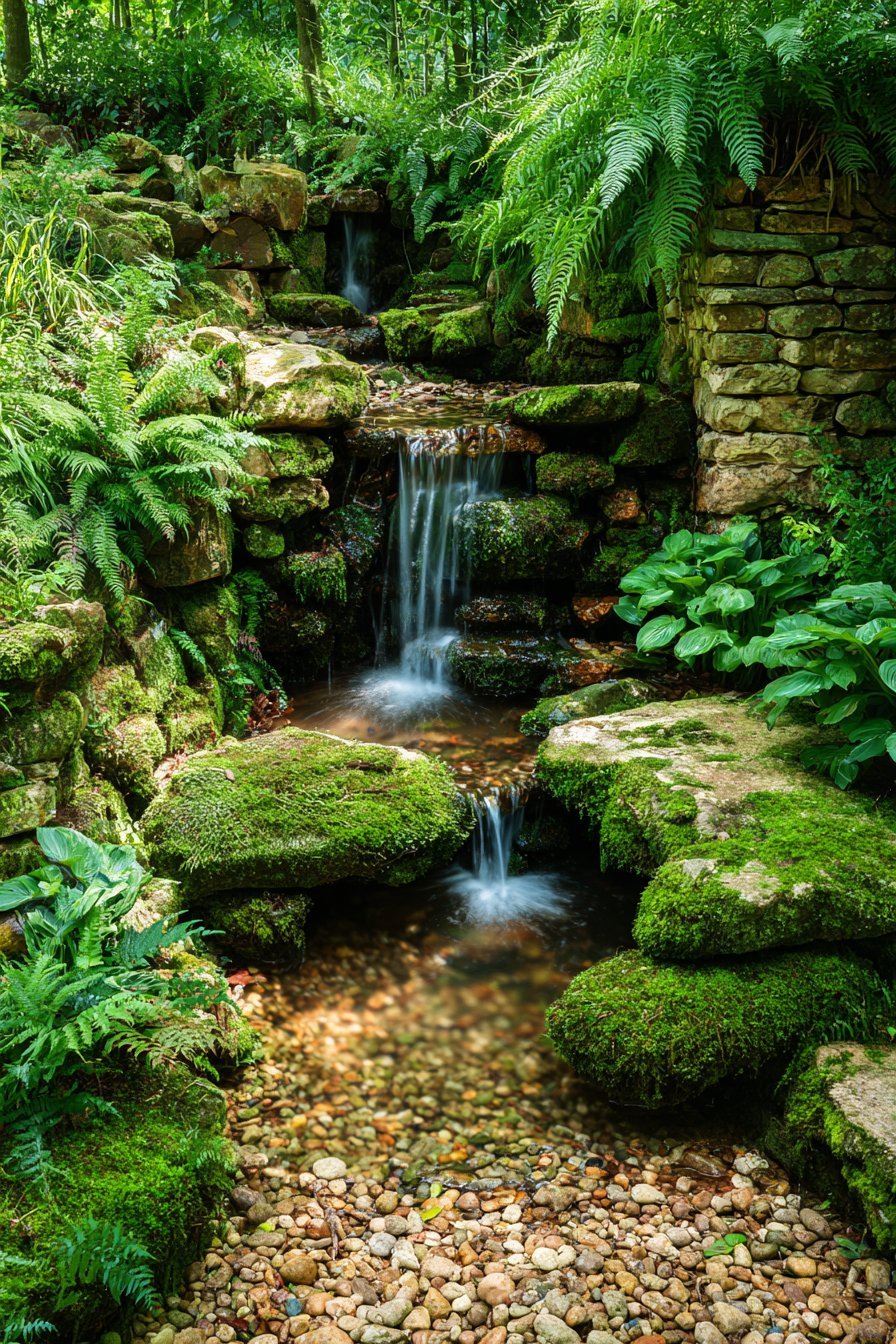
Morning light highlights moisture on mossy surfaces and fern textures. Slower shutter speeds capture silky water movement for photographic appeal. The grotto atmosphere feels cool and refreshing even on warm days. Water sounds mask urban noise creating peaceful sanctuary.
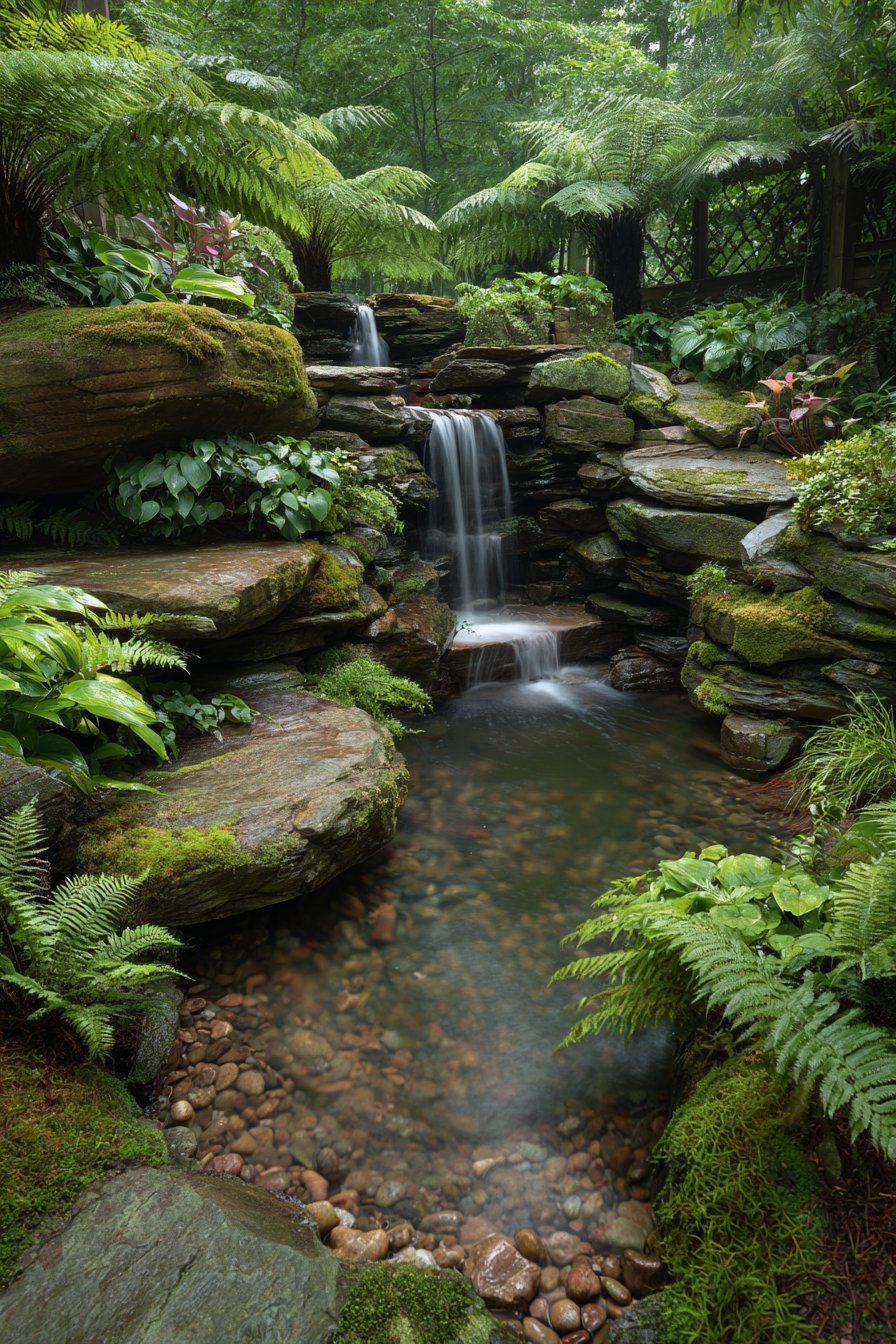
The recirculating system conserves water while providing constant movement. Proper pump selection ensures reliable operation and appropriate flow rate. The catch basin filters debris protecting the pump. This practical approach makes water features accessible and sustainable.
Key Design Tips:
- Size the pump appropriately for the desired water flow and height
- Stack stones securely to prevent shifting or collapse
- Allow moss to establish naturally on stones over time
- Plant ferns suited to the moisture level and shade provided
- Create the catch basin with adequate capacity for water volume
- Include a filtration system to maintain water clarity
- Position viewing areas where waterfall sounds are most prominent
19. Classical Three-Stone Composition
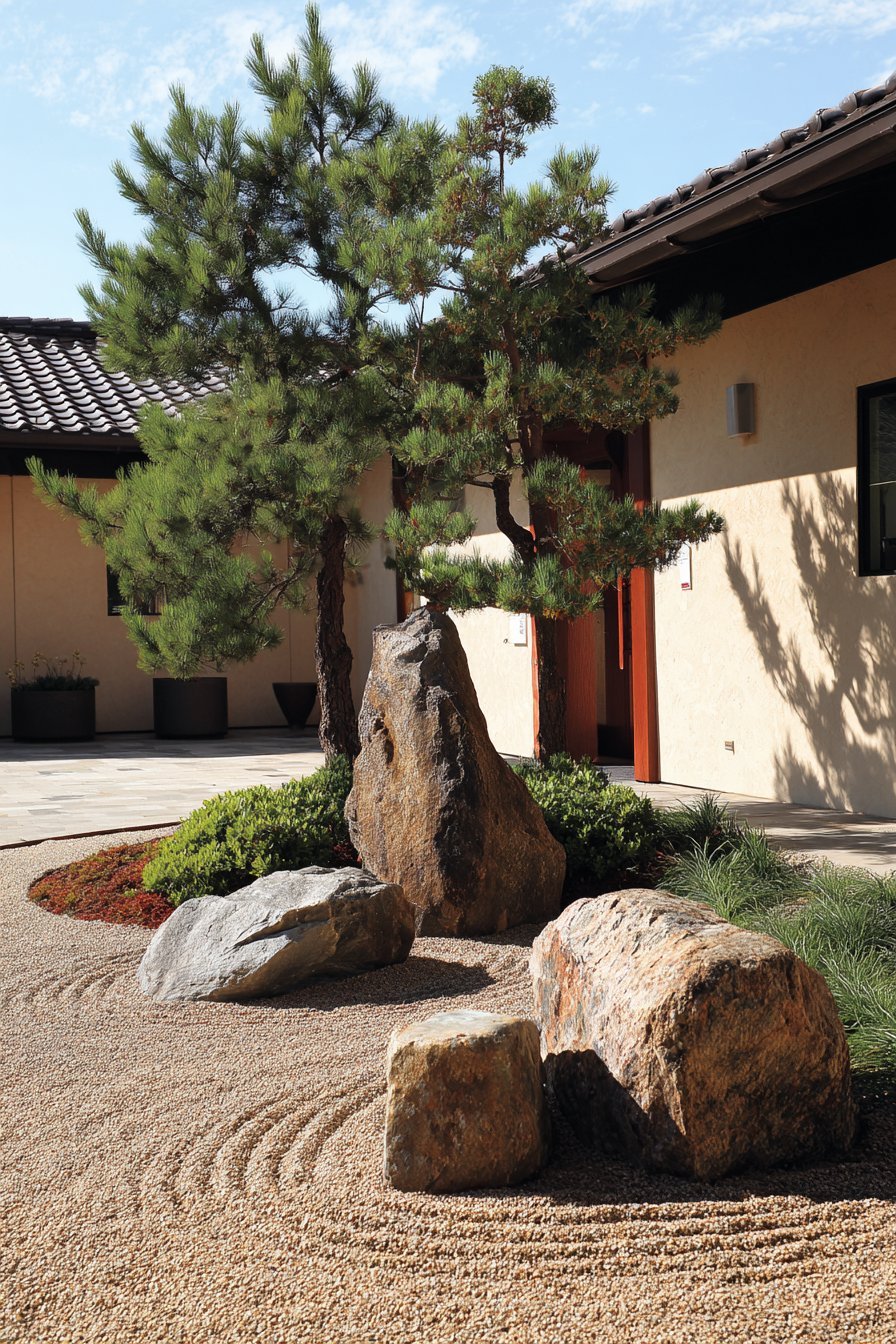
Three rocks positioned following traditional sanzon-seki principles create powerful simplicity. A tall vertical primary stone flanks two smaller supporting stones. Careful placement makes stones appear naturally occurring rather than arranged. Raked gravel with circular patterns surrounds the composition.
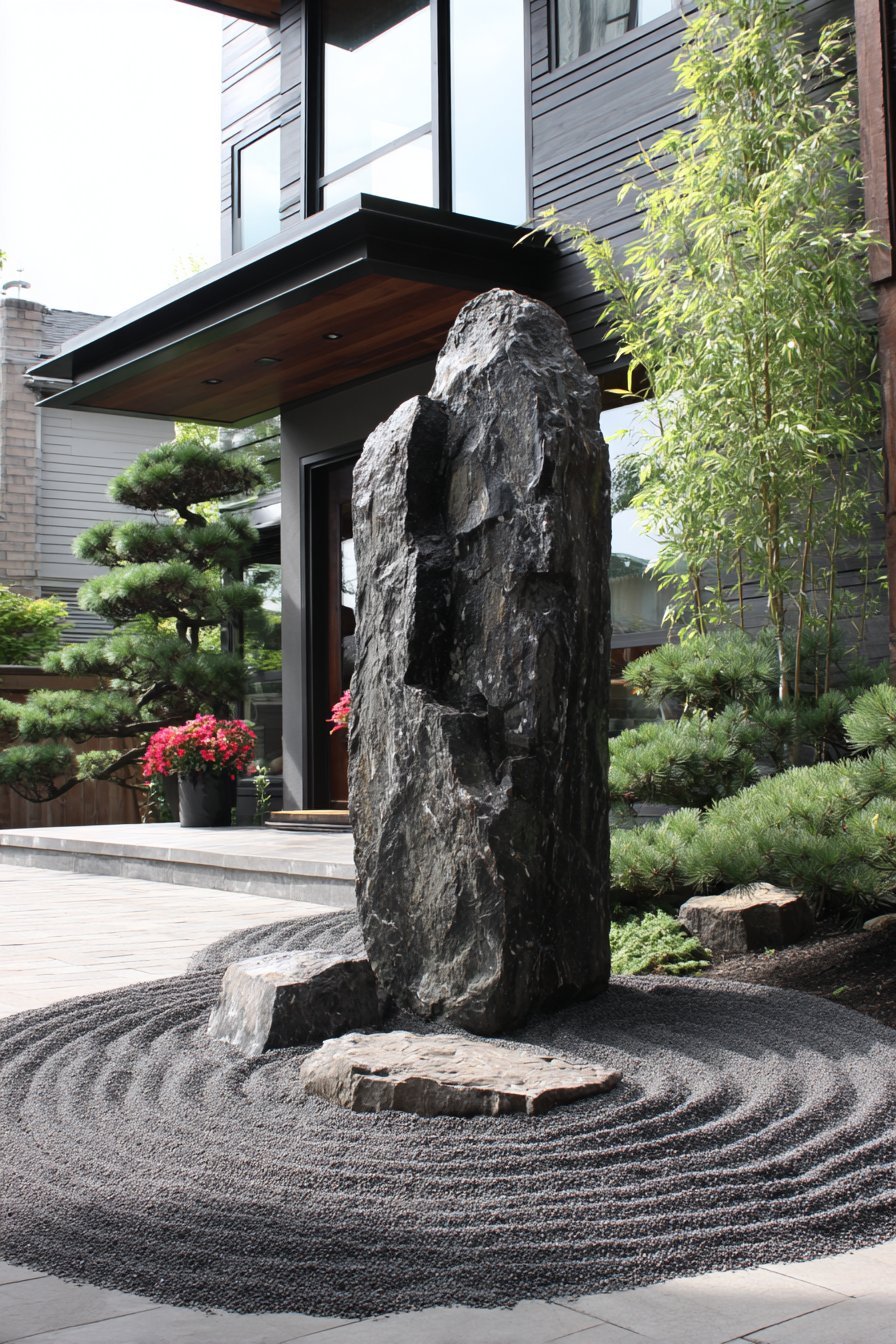
Minimal plantings include a single sculptural pine and low juniper groundcover. The restraint allows the stone arrangement to command full attention. The composition demonstrates classical Japanese rock placement philosophy. Stones represent natural elements and philosophical concepts simultaneously.
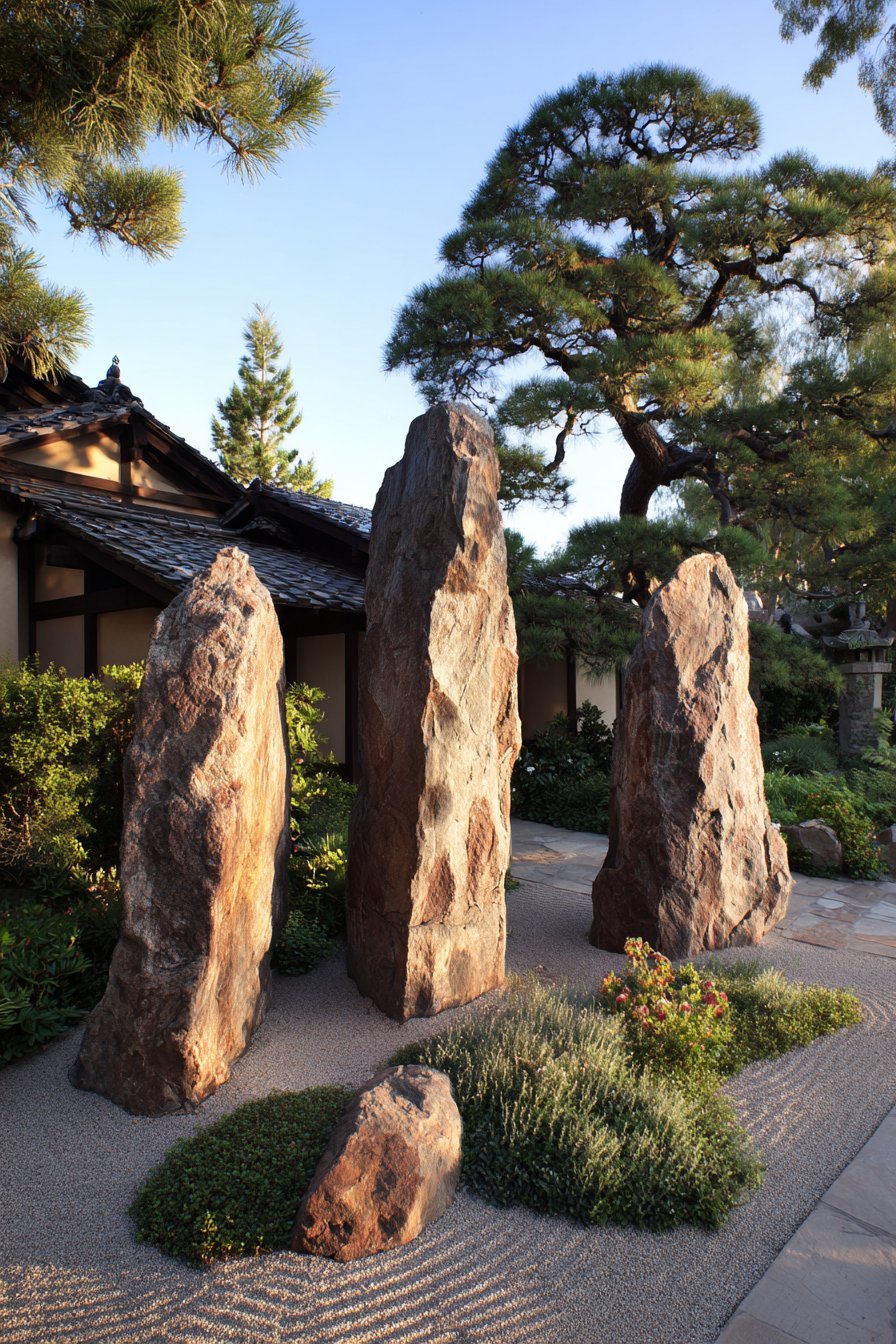
Wide-angle photography from the intended viewing angle captures the complete arrangement. Even daylight emphasizes the powerful simplicity without competing shadows. The careful balance feels both intentional and inevitable. This design represents minimalism at its most philosophically grounded.
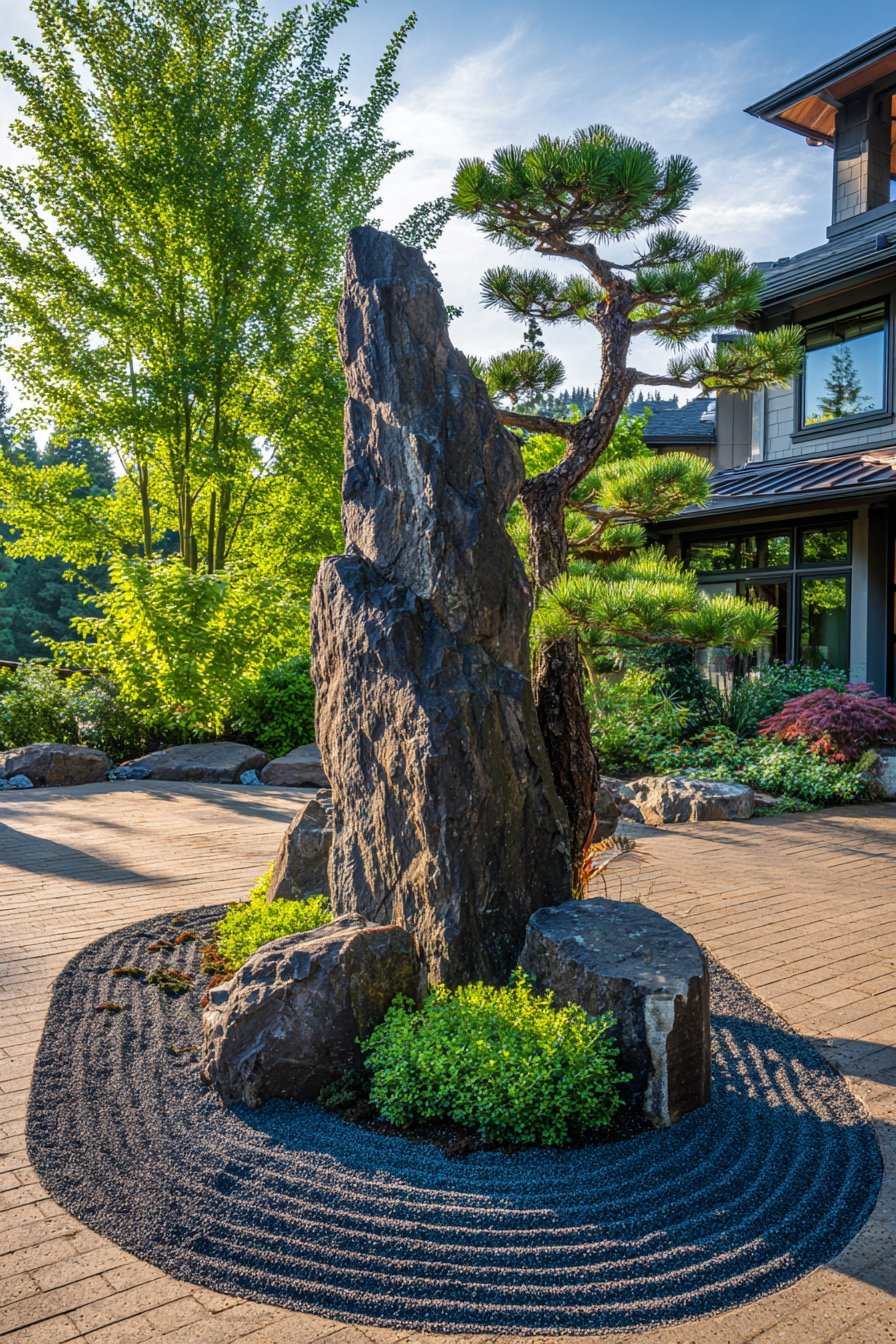
The stone arrangement invites contemplation of balance and relationship. The positioning follows specific traditional guidelines refined over centuries. Understanding these principles deepens appreciation of the composition. The arrangement transcends decoration becoming meditation object.
Key Design Tips:
- Study traditional sanzon-seki principles before stone placement
- Select stones with interesting shapes and surfaces
- Bury stones partially for natural embedded appearance
- Rake gravel in circular patterns around the stone grouping
- Limit plantings to maintain focus on stone composition
- View the arrangement from multiple angles during placement
- Allow space around stones so they can breathe visually
20. Sustainable Rain Garden with Japanese Aesthetic
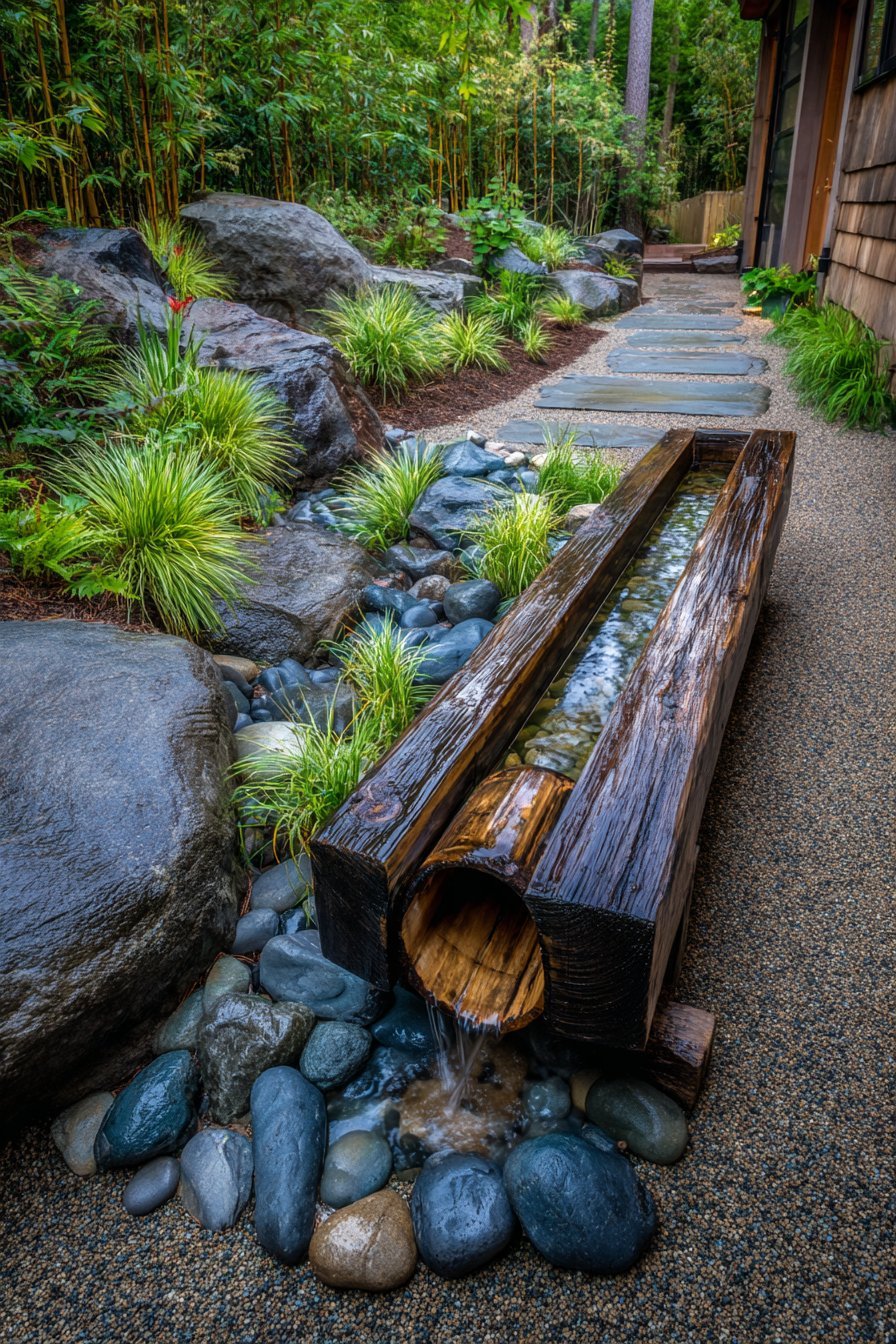
Traditional Japanese principles inform contemporary sustainable practices. A rain garden designed with native plants arranges naturalistically. A bamboo rain chain channels roof water into a gravel bed. The system manages storm water while maintaining authentic aesthetic values.
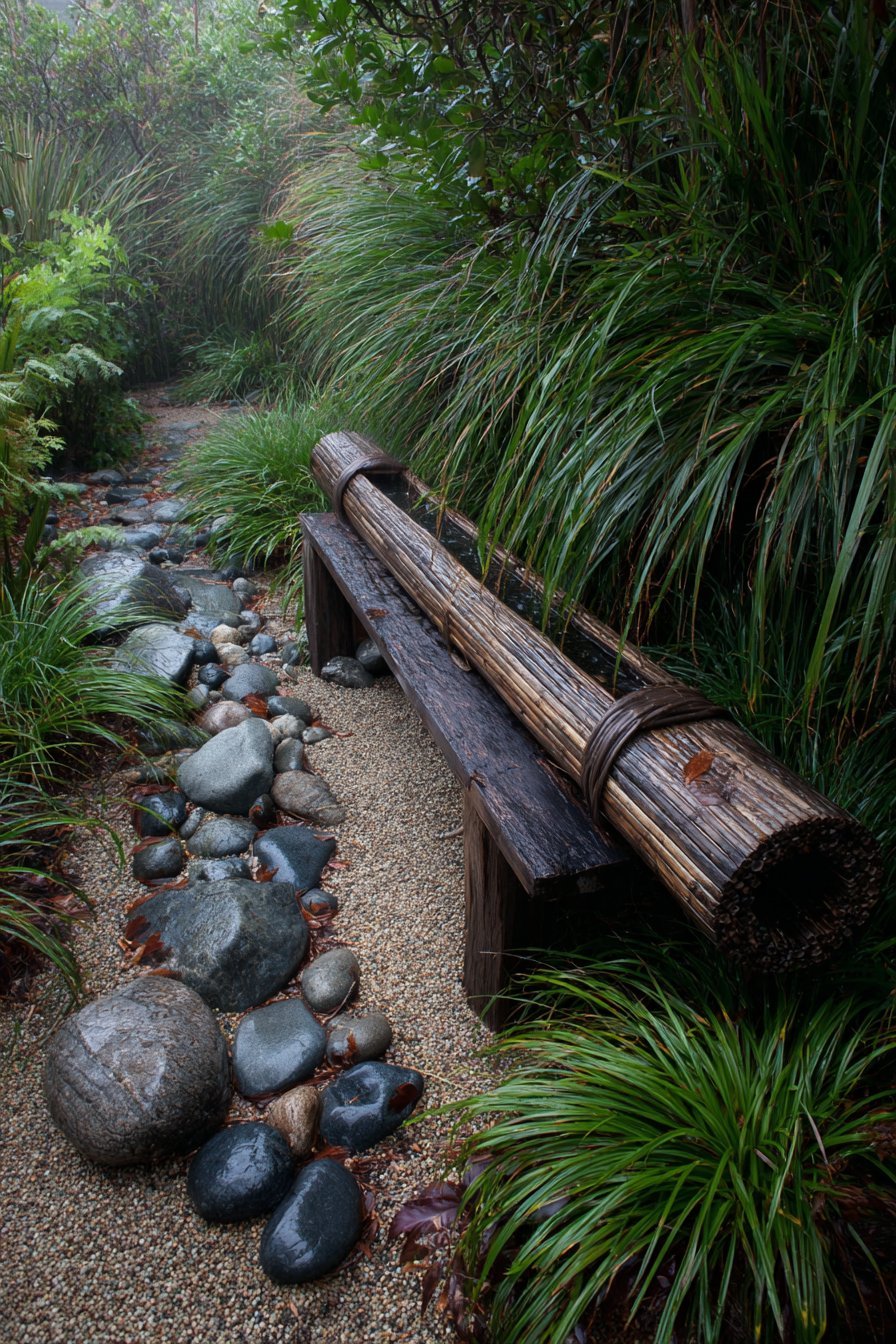
Ornamental grasses and moisture-loving perennials planted in the drainage area. Smooth river stones line the drainage path guiding water flow. A weathered wooden bench provides a viewing spot for rain events. This design proves environmental consciousness integrates seamlessly with traditional beauty.
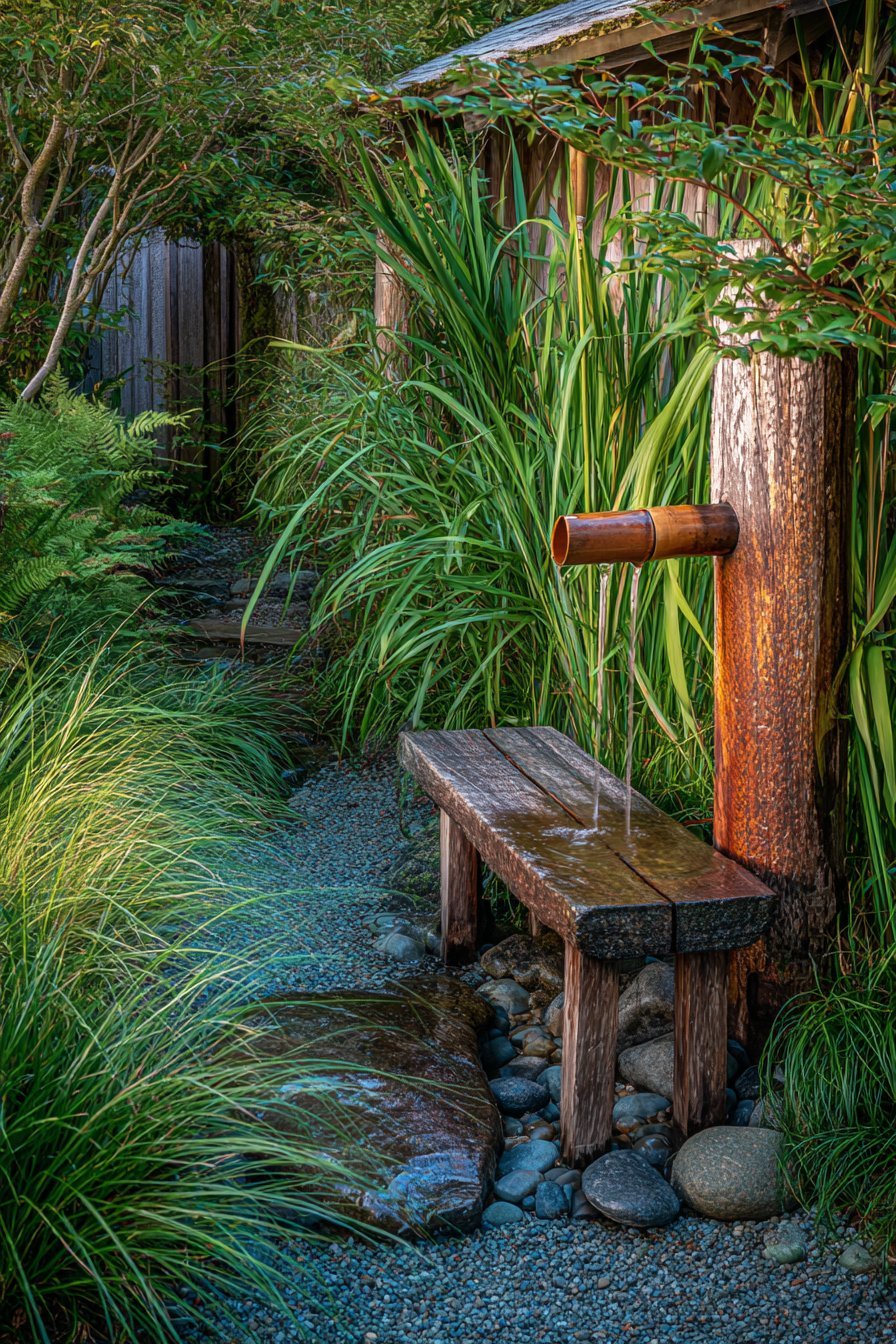
Light rain demonstrates the functional beauty during actual use. Water flowing down the bamboo chain creates mesmerizing visual and auditory experience. The plants selected specifically for rain garden conditions thrive with periodic flooding. Sustainable practices and aesthetic excellence reinforce each other.
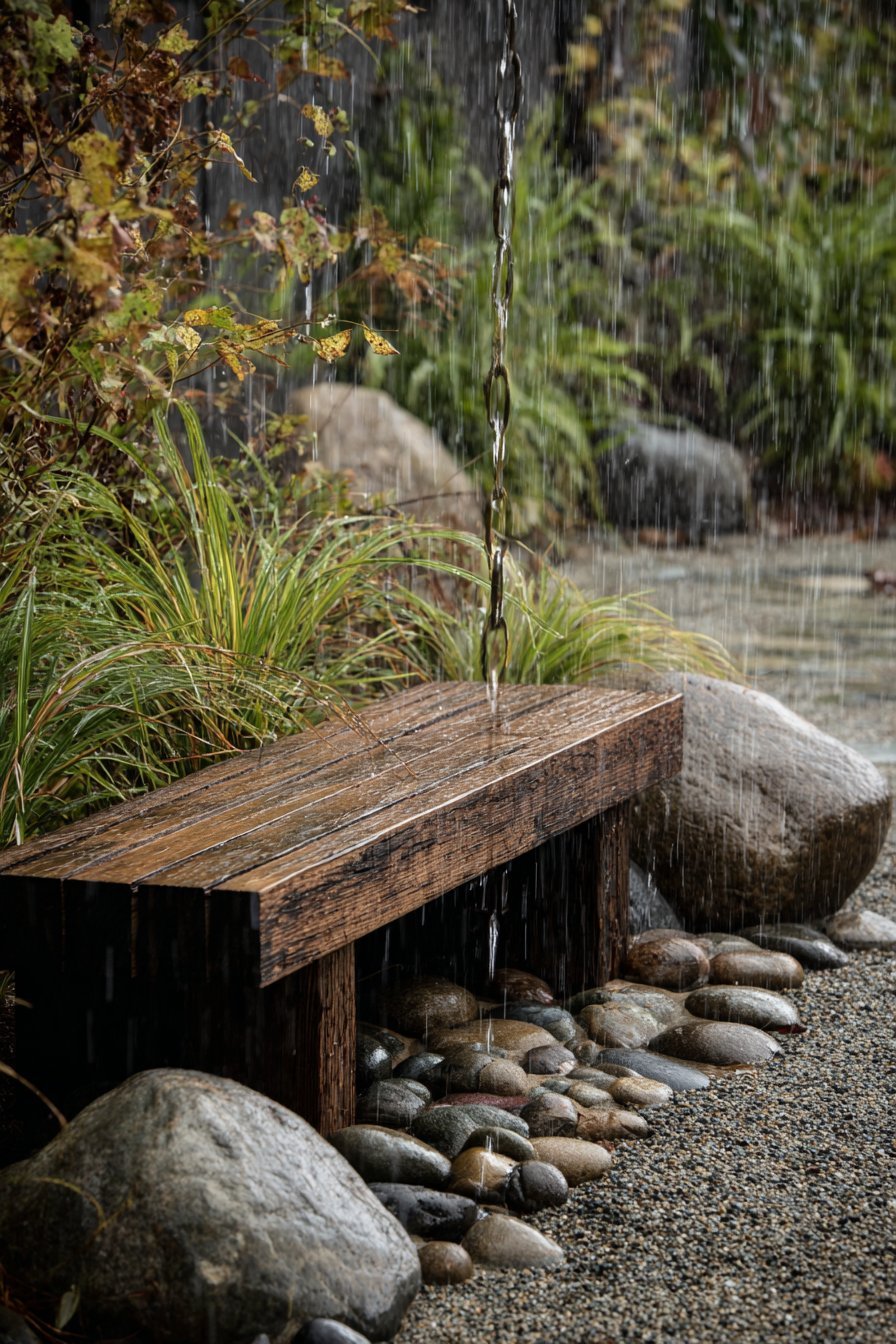
The rain chain replaces conventional downspouts with sculptural functionality. The gravel bed filters and infiltrates water naturally into soil. Native plants require less maintenance once established. This contemporary approach honors Japanese design while addressing modern environmental concerns.
Key Design Tips:
- Select native plants suited to periodic flooding and dry periods
- Install rain chains securely to roof edges with proper drainage below
- Create gravel bed with appropriate depth for water infiltration
- Position the rain garden to receive actual roof runoff
- Choose river stones that complement surrounding landscape
- Include a viewing bench positioned for rain observation
- Grade the area properly to contain and infiltrate water effectively
Why These Japanese Backyard Designs Are the Best
These Japanese backyard designs represent refined approaches perfected over centuries. Each concept demonstrates thoughtful integration of natural materials, spatial principles, and philosophical depth. The designs succeed because they address both aesthetic and functional needs while encouraging mindfulness and connection to nature.
The versatility of Japanese design principles allows adaptation to various scales and climates. Traditional zen gardens with raked gravel work beautifully in arid regions with water restrictions. Moss gardens and water features suit humid climates naturally. Contemporary interpretations merge traditional elements with modern materials like composite decking and concrete, proving these principles remain relevant for current homeowners.
Material selection plays crucial roles in successful Japanese garden design. Natural stone, bamboo, and wood age gracefully developing patina and character over time. This embrace of natural aging reflects wabi-sabi philosophy celebrating imperfection and impermanence. Quality materials require less replacement and develop deeper beauty through weathering, making them sustainable long-term investments.
Spatial considerations make Japanese design particularly effective for small urban yards. Vertical elements like bamboo fencing and arbors create privacy without consuming floor space. Forced perspective techniques with carefully scaled plants create depth illusion. Minimalist approaches with strategic stone placement and raked gravel maximize impact while minimizing maintenance requirements. These space-efficient strategies prove essential for modern homeowners with limited square footage.
The designs balance functionality with contemplative purpose. Water features provide soothing sounds while supporting microeclimates for moss and ferns. Decks offer outdoor living space while framing garden views. Stone paths guide movement while encouraging mindful walking pace. This dual-purpose approach makes every element earn its place in the composition.
Conclusion
These Japanese backyard designs demonstrate that authentic beauty emerges from simplicity and intention. The key takeaways include respecting natural materials, embracing asymmetrical balance, and creating spaces that engage multiple senses. Quality stones, weathered wood, and carefully selected plants combine to create sanctuaries that reward regular interaction.
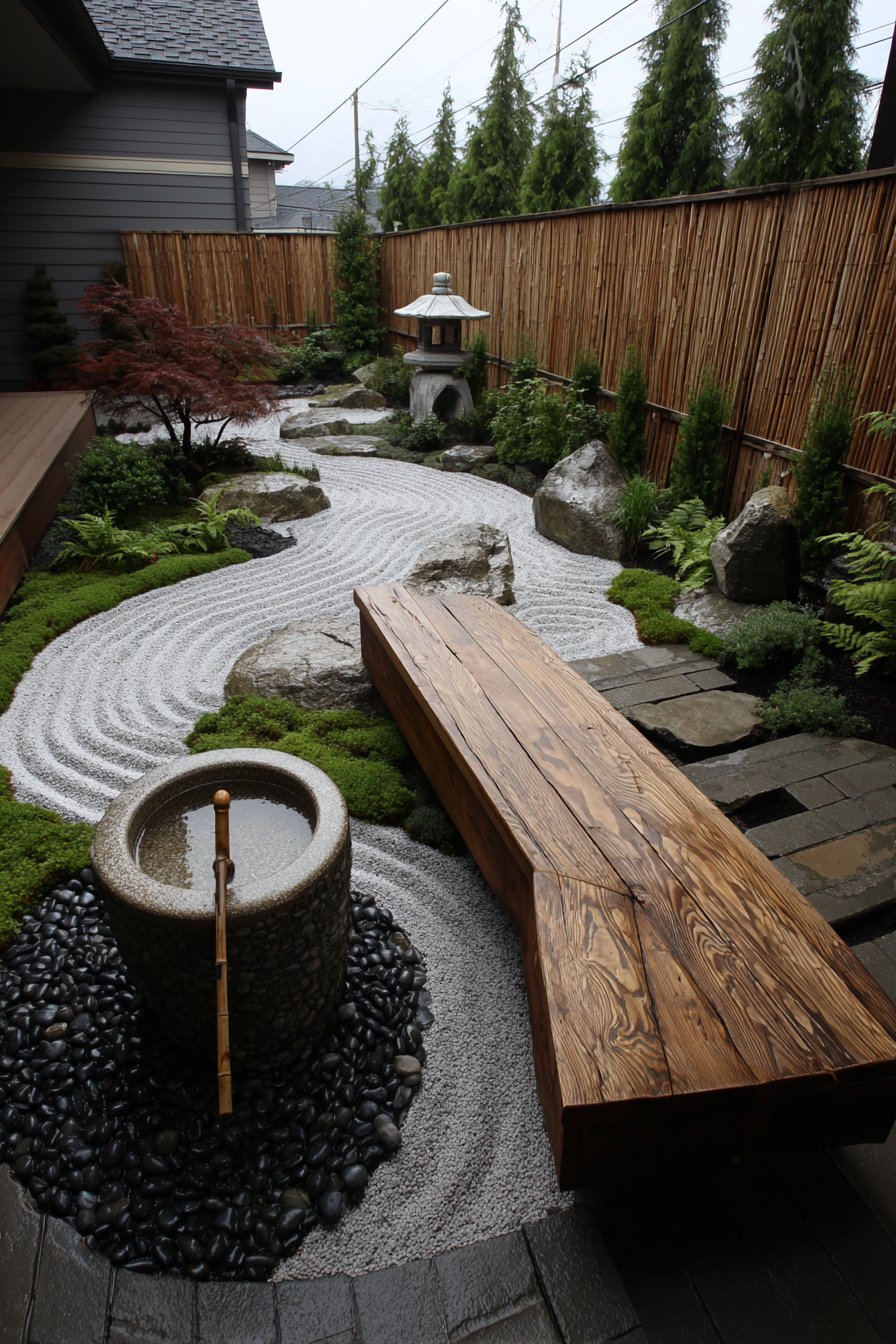
Successful Japanese garden design requires patience and attention to spatial relationships. Start with a single element like a stone basin or carefully placed rocks. Observe how light changes throughout the day before committing to major constructions. Your backyard can become a peaceful retreat through thoughtful application of these time-tested principles.
