
Creating a hippie backyard transforms outdoor spaces into vibrant bohemian sanctuaries. This design approach celebrates freedom, creativity, and connection with nature. The aesthetic combines colorful textiles, repurposed materials, and lush organic plantings. Each element reflects a carefree spirit and sustainable living philosophy.
Hippie backyard design has experienced renewed popularity in recent years. Modern homeowners seek spaces that express individuality and environmental consciousness. These outdoor areas become extensions of personal values and creative expression. The combination of vintage finds, handmade elements, and natural materials creates memorable gathering spaces. From meditation zones to communal fire pits, these designs offer endless possibilities for outdoor living.
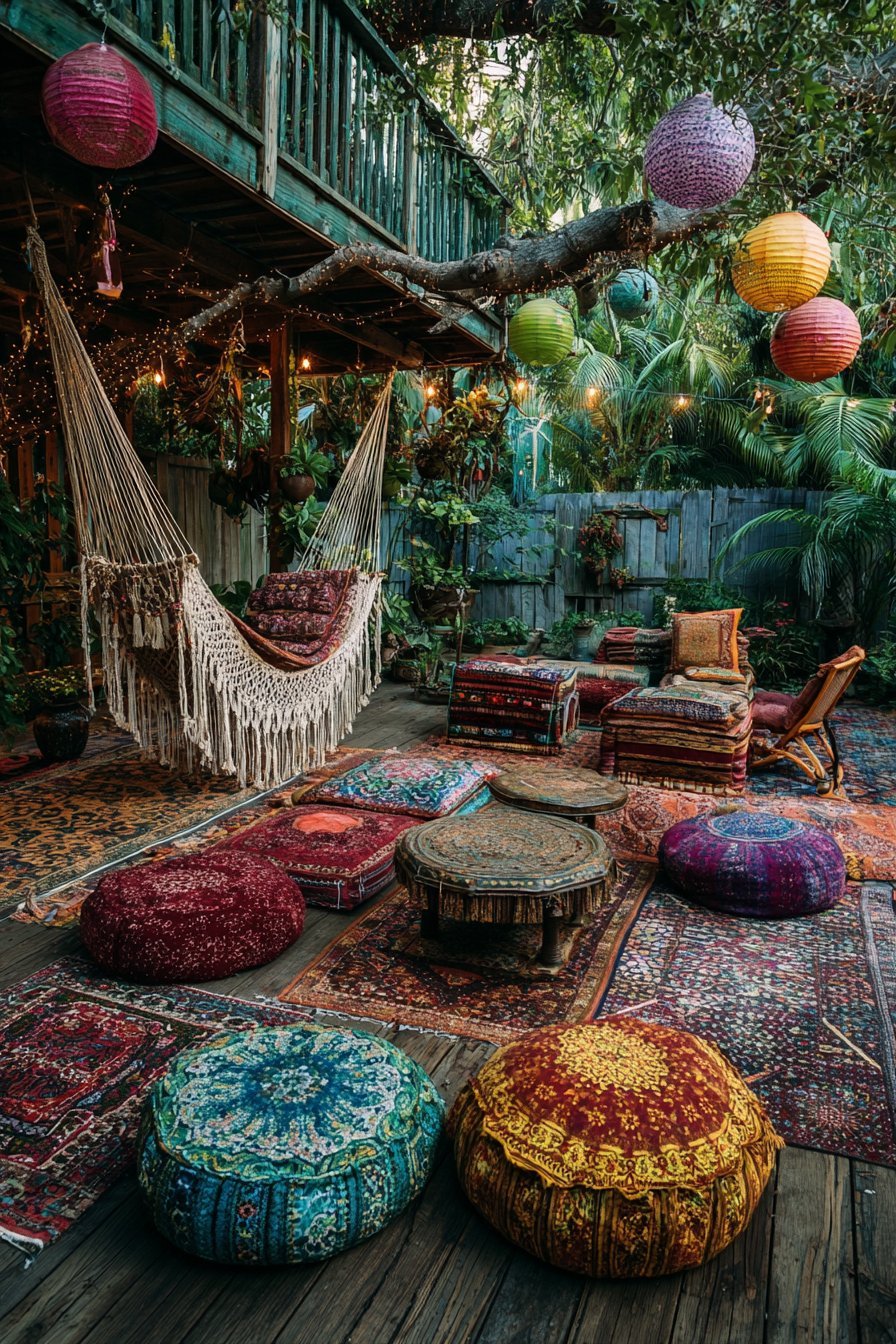
The beauty of hippie backyard design lies in its accessibility and flexibility. Budget-conscious homeowners can achieve stunning results through creative repurposing. Expensive landscaping becomes unnecessary when personality and ingenuity take center stage. These spaces evolve organically over time, reflecting the changing seasons and growing plant life. The result is an authentic outdoor environment that feels both intentional and effortlessly free-spirited.
1. Colorful Macramé Hammock Paradise
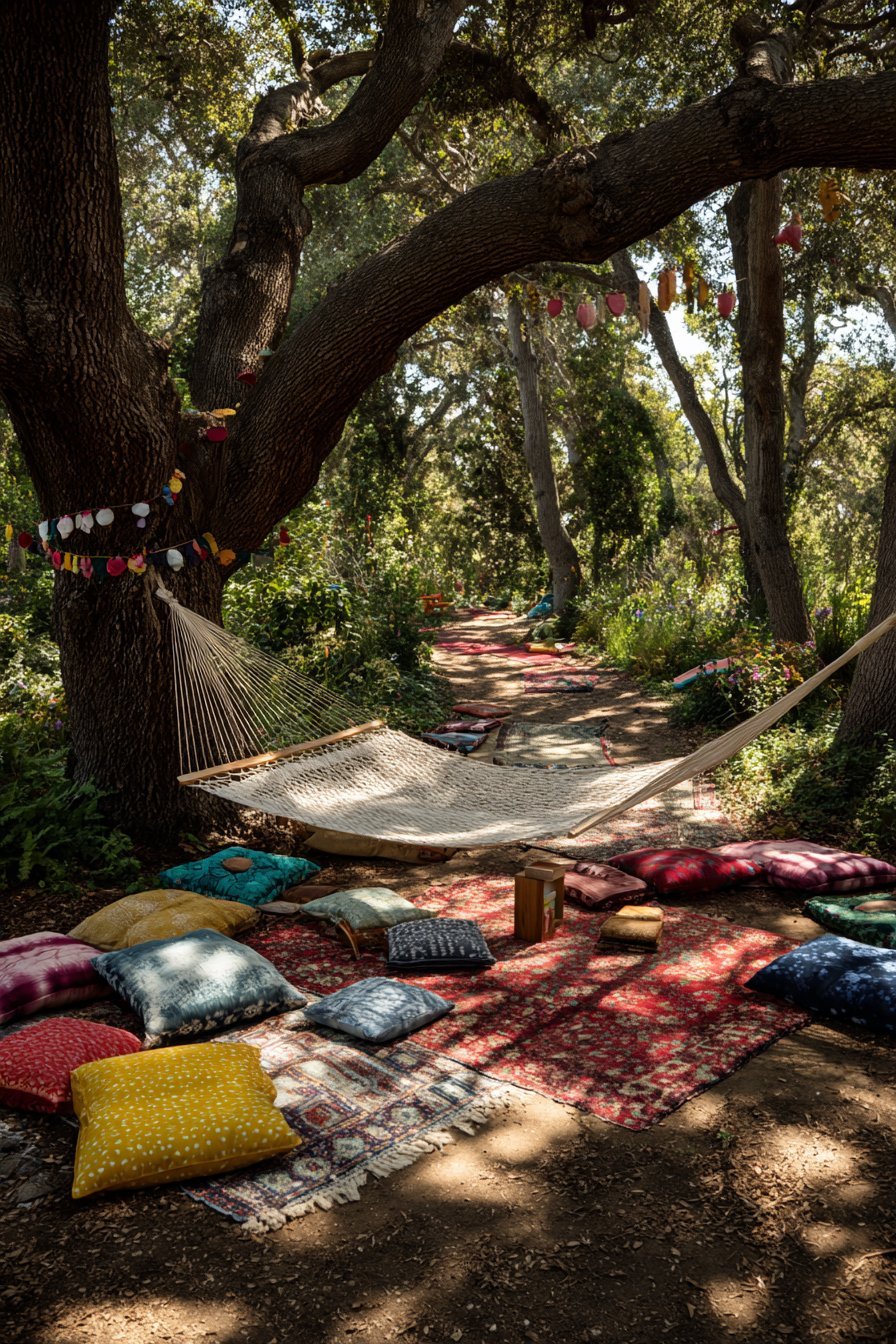
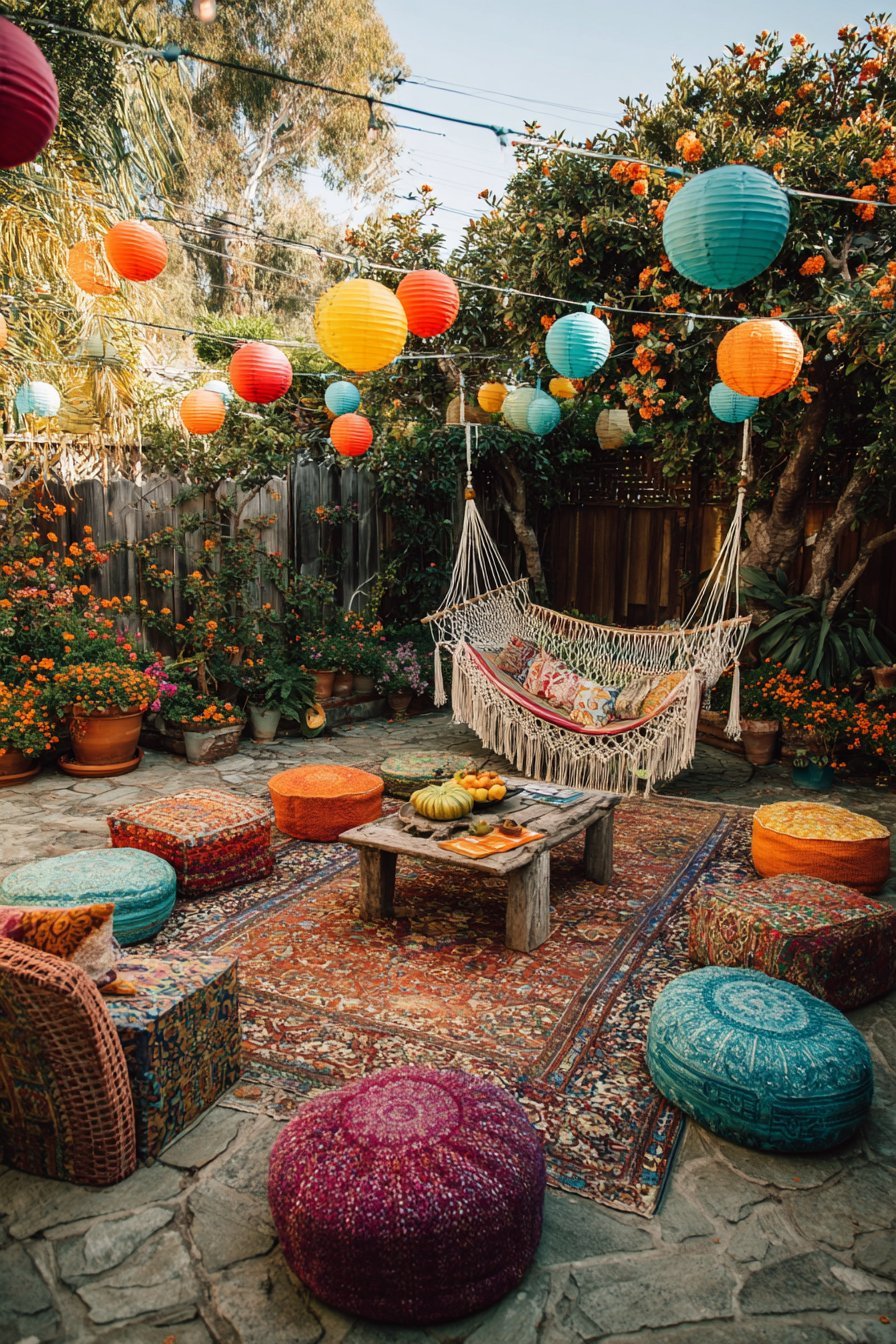
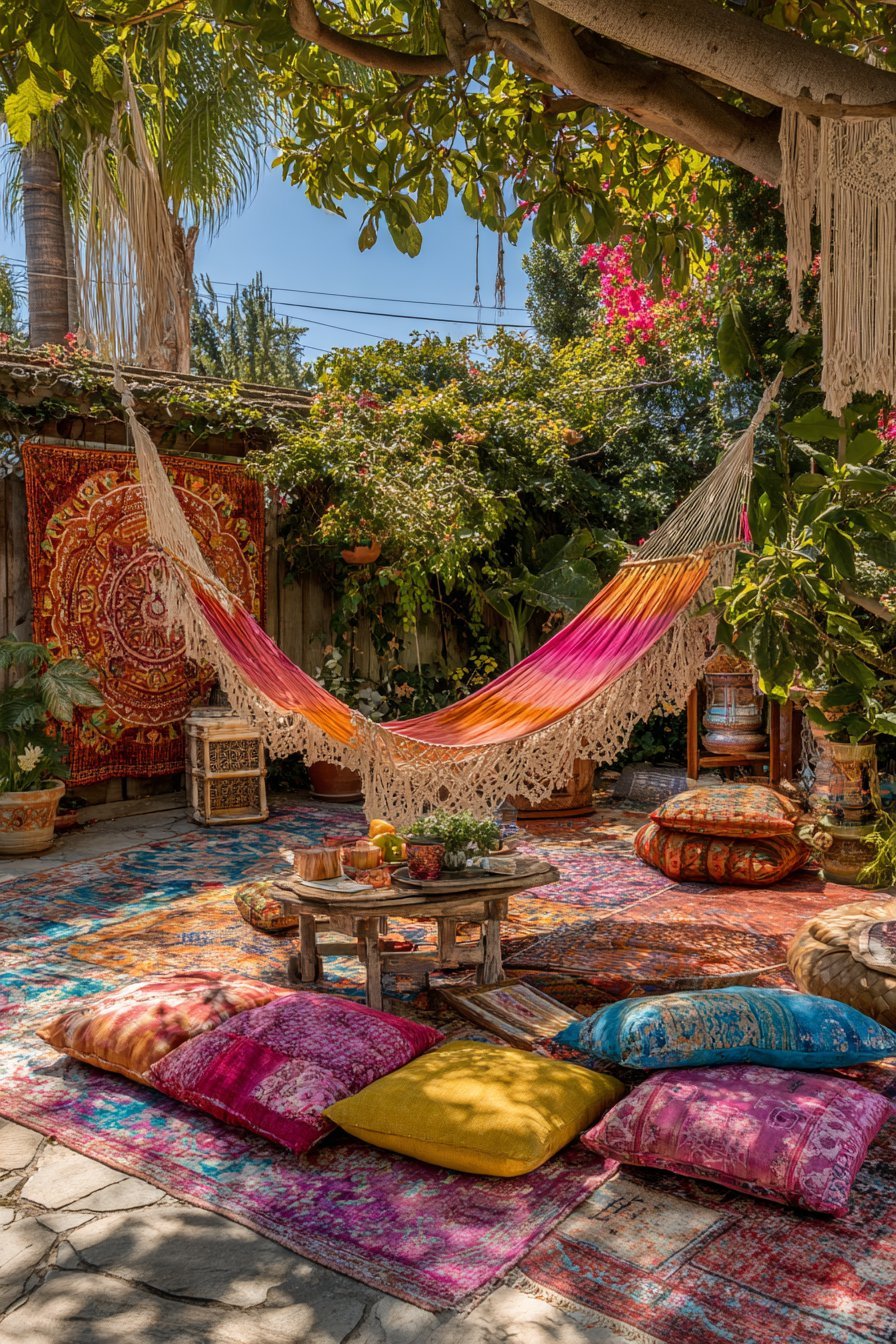
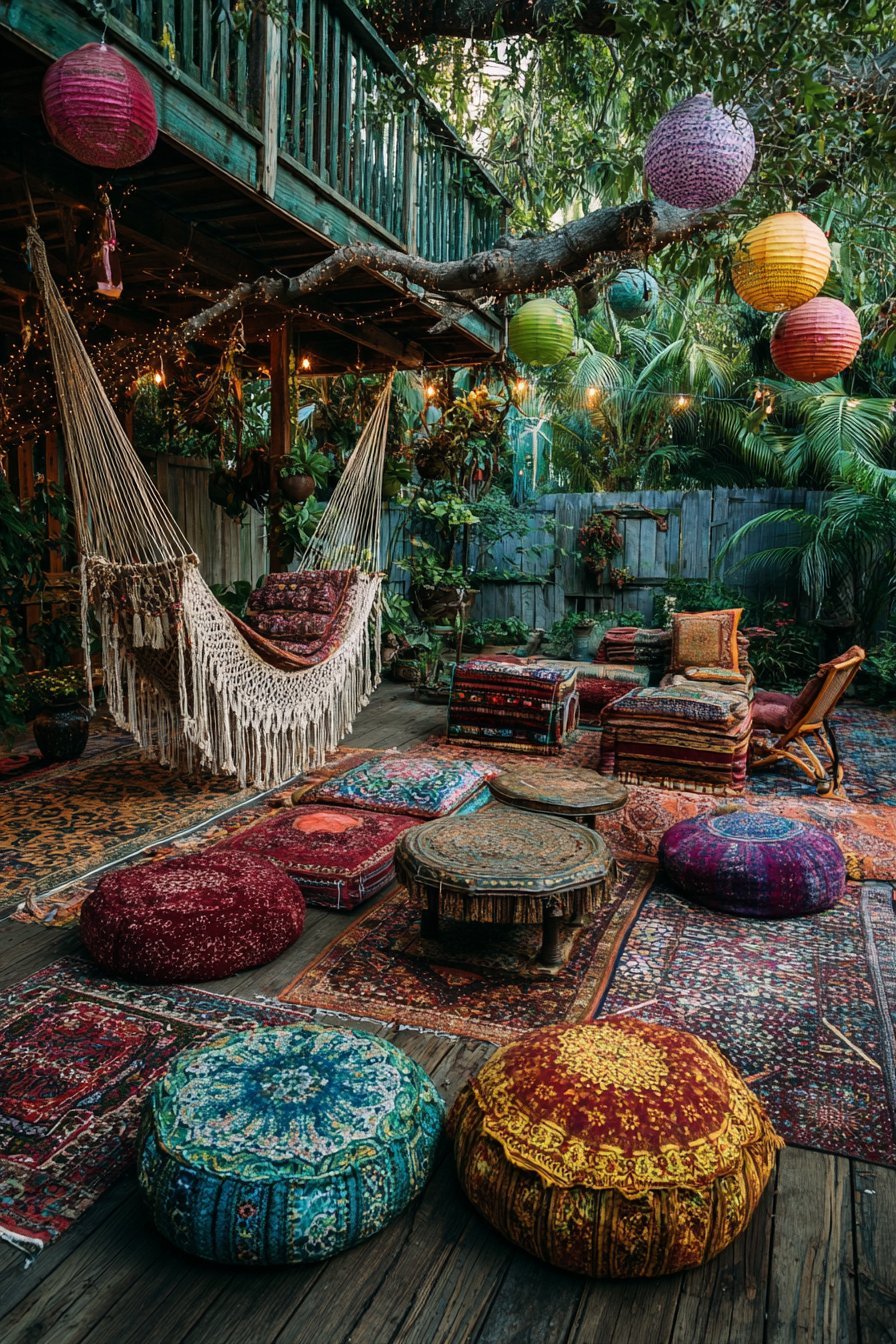
Picture a backyard where vintage macramé hammocks sway gently between mature trees. The hammocks feature intricate knotwork in natural cotton fibers. Wild-growing flowers and native plants create a lush surrounding environment. Reclaimed Oriental rugs in jewel tones cover the ground beneath. The patchwork of faded patterns adds layers of visual interest.

Scattered floor cushions in tie-dye and batik fabrics create impromptu seating areas. The textiles showcase deep purples, burnt oranges, and rich teals. Natural afternoon light filters through the tree canopy above. Dappled shadows dance across the eclectic collection of rugs and cushions. This creates an ever-changing play of light and color.
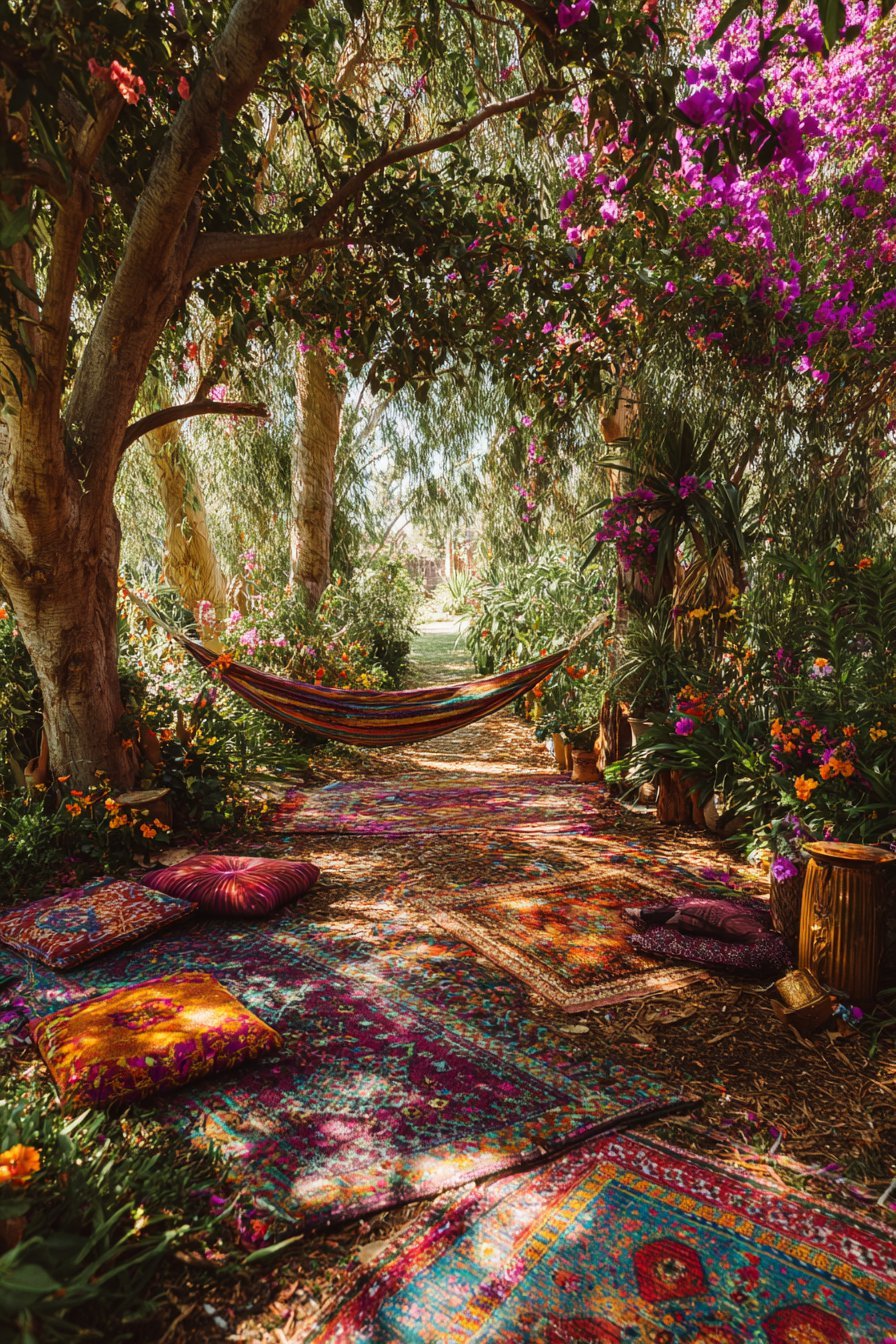
The layout encourages relaxation and informal gatherings. Friends can lounge in hammocks while others recline on cushions. The arrangement feels intentionally casual yet thoughtfully composed. Multiple conversation areas emerge naturally throughout the space. Each spot offers a unique perspective of the surrounding garden.
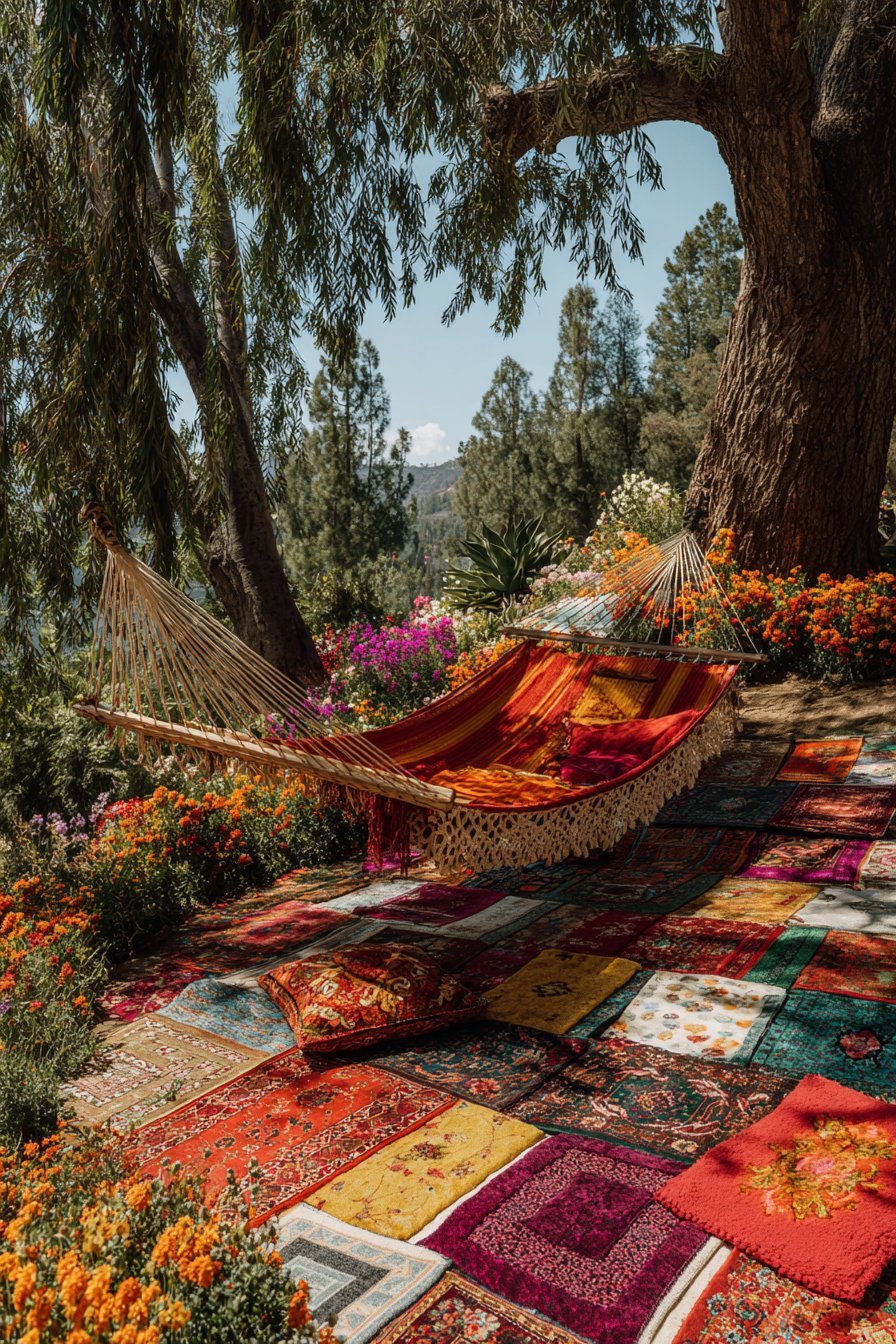
The plant selection emphasizes native species and wildflowers. This choice supports local ecosystems while reducing maintenance requirements. The natural growth pattern creates a slightly wild, untamed appearance. Butterflies and beneficial insects visit frequently. The entire space hums with life and natural energy.
Key Design Tips:
- Select sturdy trees spaced 10-15 feet apart for hammock installation
- Layer multiple outdoor rugs in complementary colors for depth and comfort
- Choose weather-resistant cushion fabrics or plan to store them during rain
- Plant native wildflowers in natural clusters rather than formal rows
- Allow plants to grow somewhat freely for an authentic wild garden feel
- Use macramé in natural cotton or jute for durability and aesthetic appeal
2. Spiritual Meditation Zone
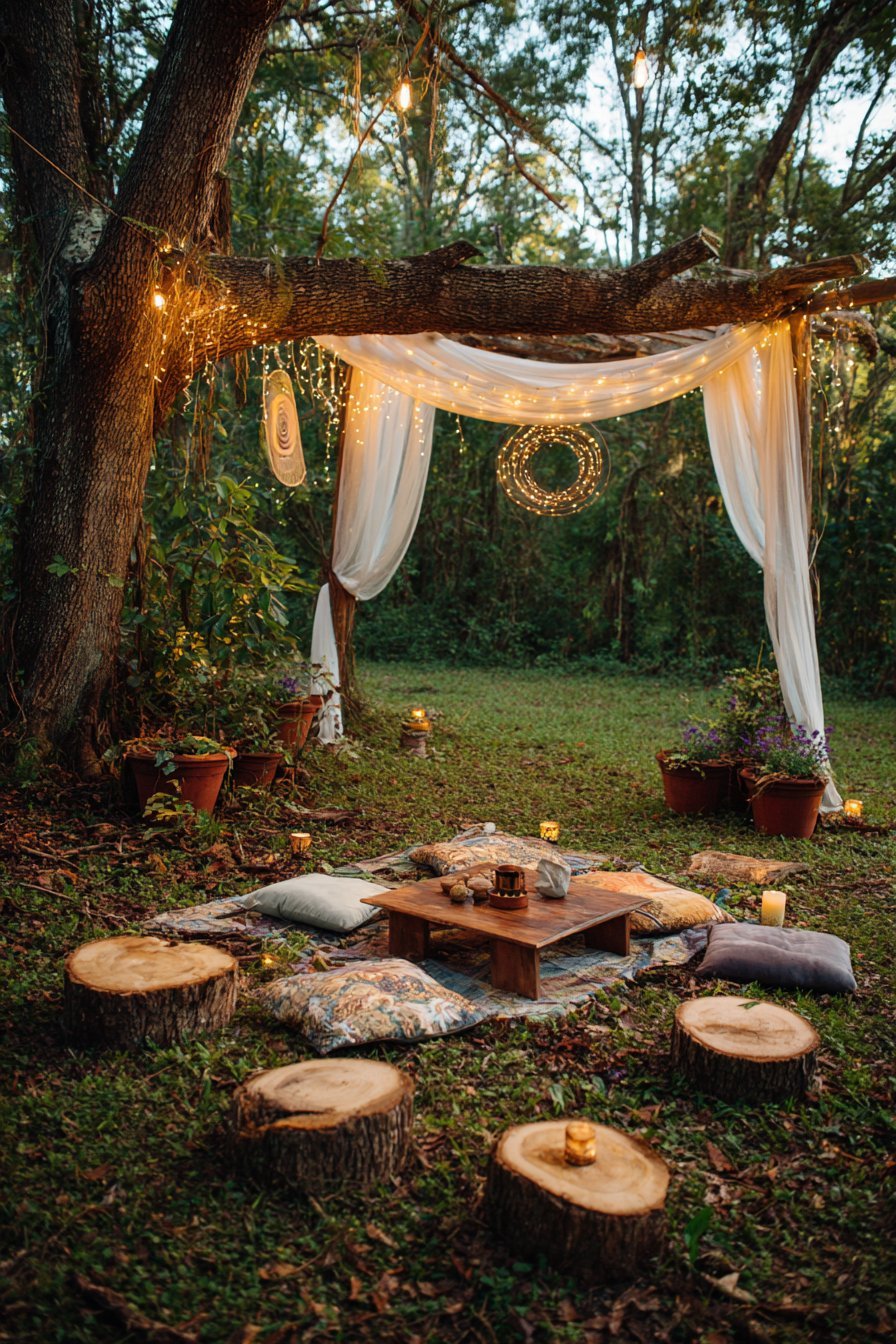
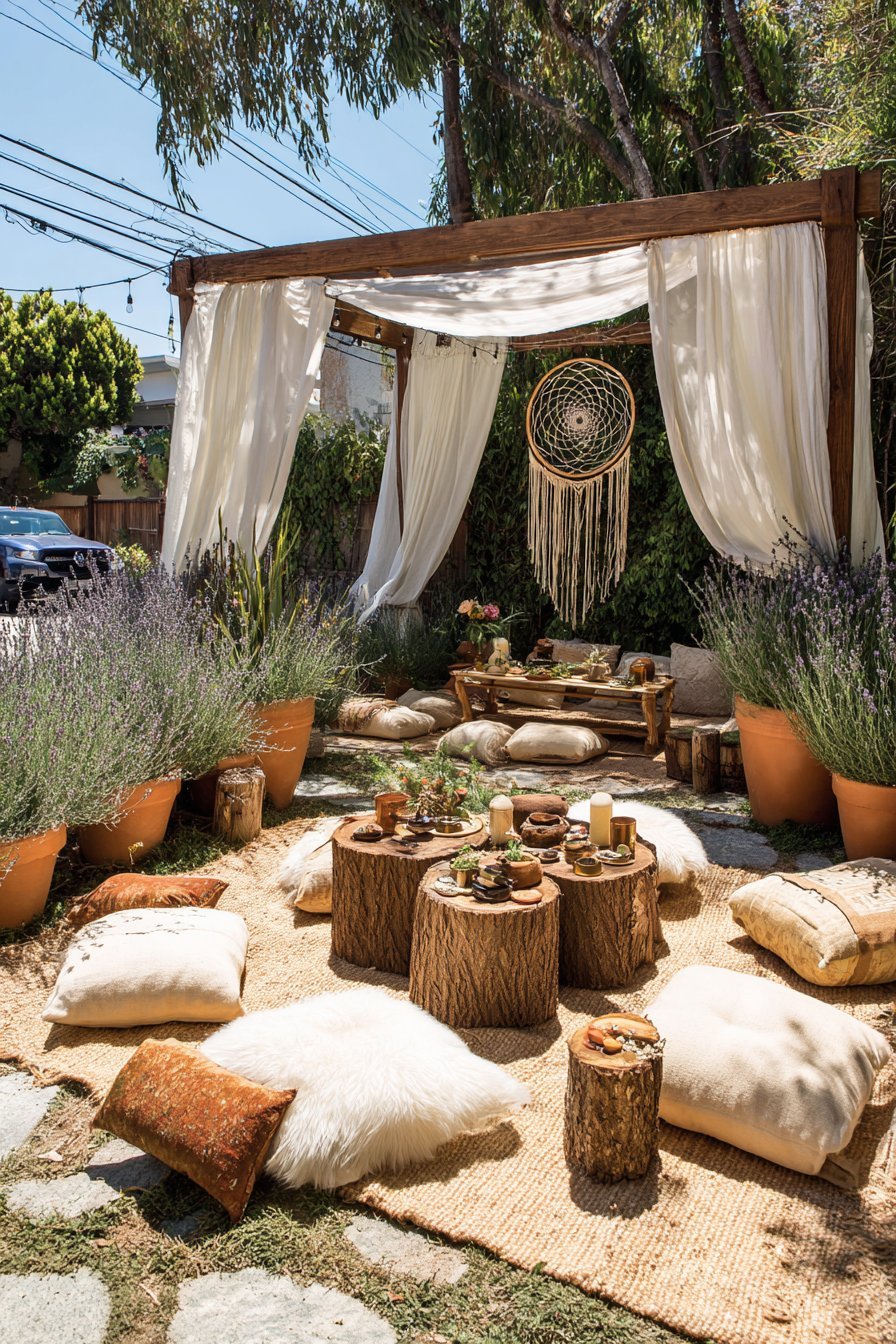
A dedicated meditation area transforms a backyard corner into a peaceful sanctuary. A handwoven circular dreamcatcher installation hangs from a pergola structure. Flowing white cotton fabric drapes the pergola sides. Fairy lights weave through the fabric, ready for evening gatherings. The filtered light creates a soft, ethereal quality.
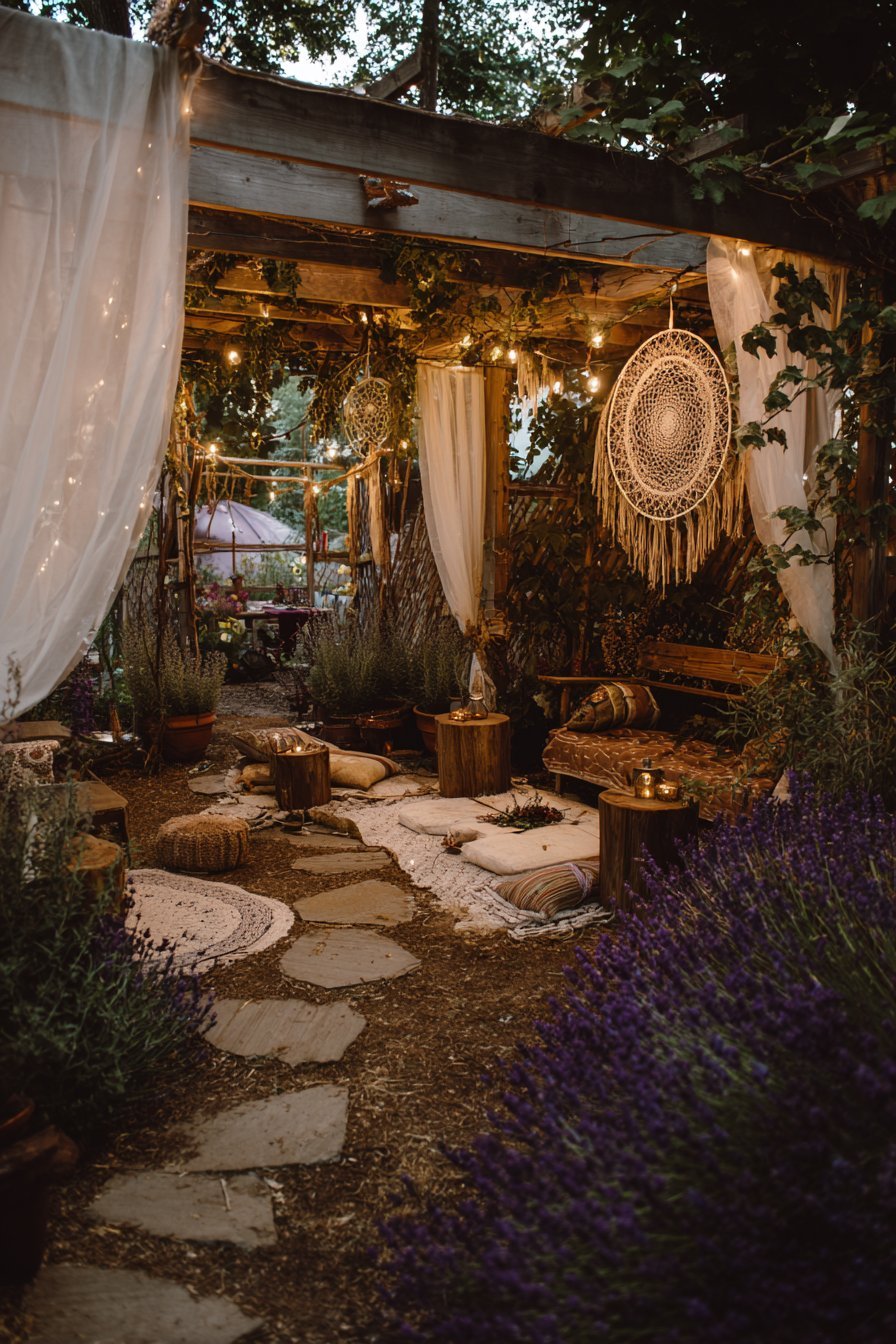
Mismatched vintage floor pillows define the meditation space. Each pillow tells its own story through unique patterns and colors. A low wooden meditation bench provides alternative seating. Burning incense holders rest on carefully placed tree stumps. The aromatic smoke rises gently into the air.
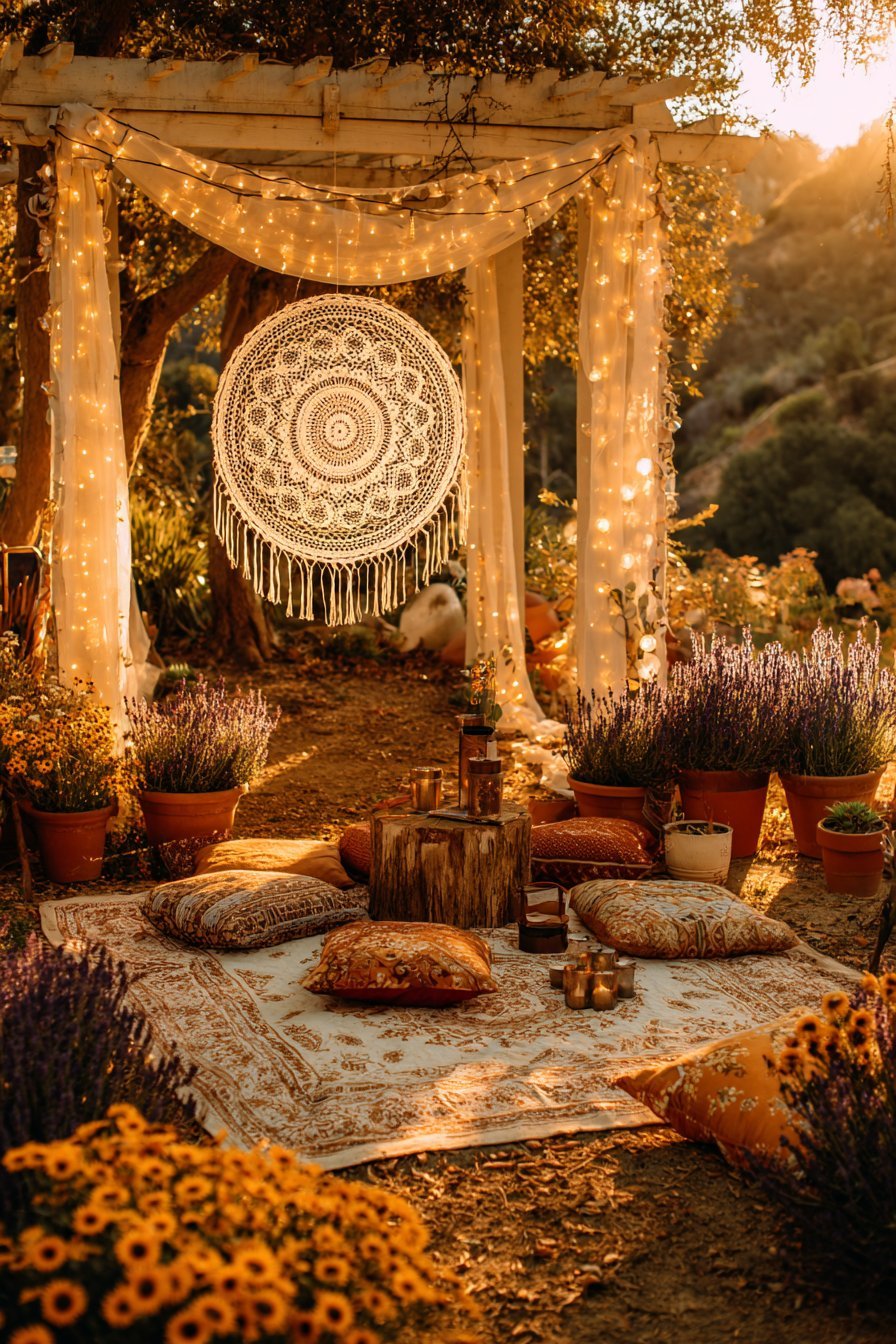
The surrounding plant selection emphasizes sensory engagement. Lavender bushes release calming fragrance when brushed. Sage plants offer both visual interest and practical harvesting opportunities. Wildflowers in terracotta pots add natural beauty without formal structure. The plant arrangement feels intentional yet organic.
Golden hour lighting transforms this space into something magical. The low sun creates long shadows and warm tones. The white fabric glows with soft amber light. The dreamcatcher casts intricate shadow patterns across the ground. This timing encourages regular meditation practice aligned with natural rhythms.
Key Design Tips:
- Position the meditation zone in a naturally quiet area away from street noise
- Choose permeable fabric like cotton for draping to allow air circulation
- Plant aromatic herbs within arm’s reach for sensory meditation practices
- Install dimmer switches or use battery-operated lights for an adjustable ambiance
- Create a storage solution for cushions to protect them from weather
- Consider adding a small water feature for soothing background sounds
3. Rainbow Fire Pit Gathering Space
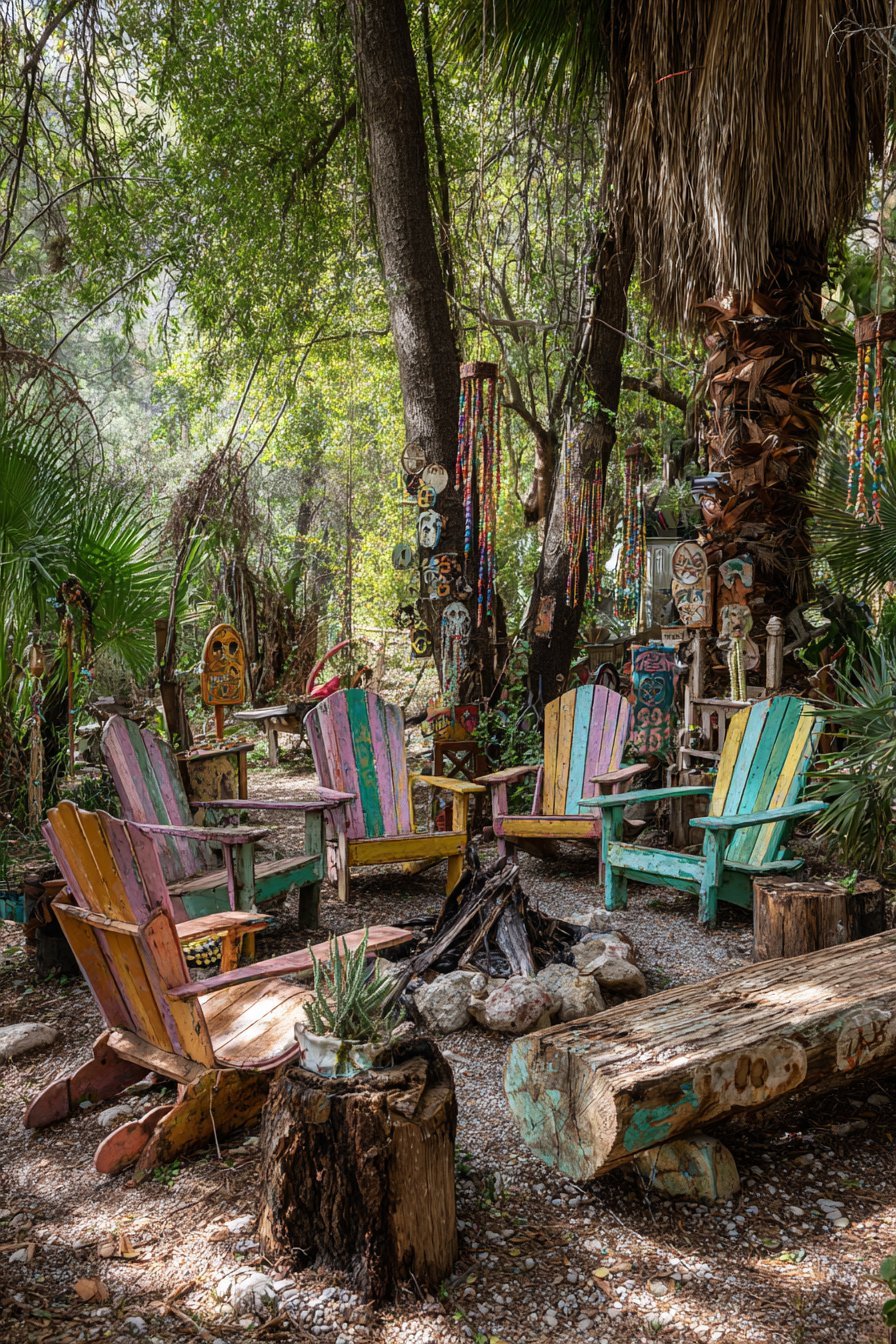
An eclectic fire pit area serves as the social heart of the backyard. Weathered Adirondack chairs painted in faded rainbow colors surround the central fire pit. Vintage metal lawn chairs with chipped paint add character. Handmade log benches provide additional rustic seating. Each piece contributes to the lived-in, communal atmosphere.

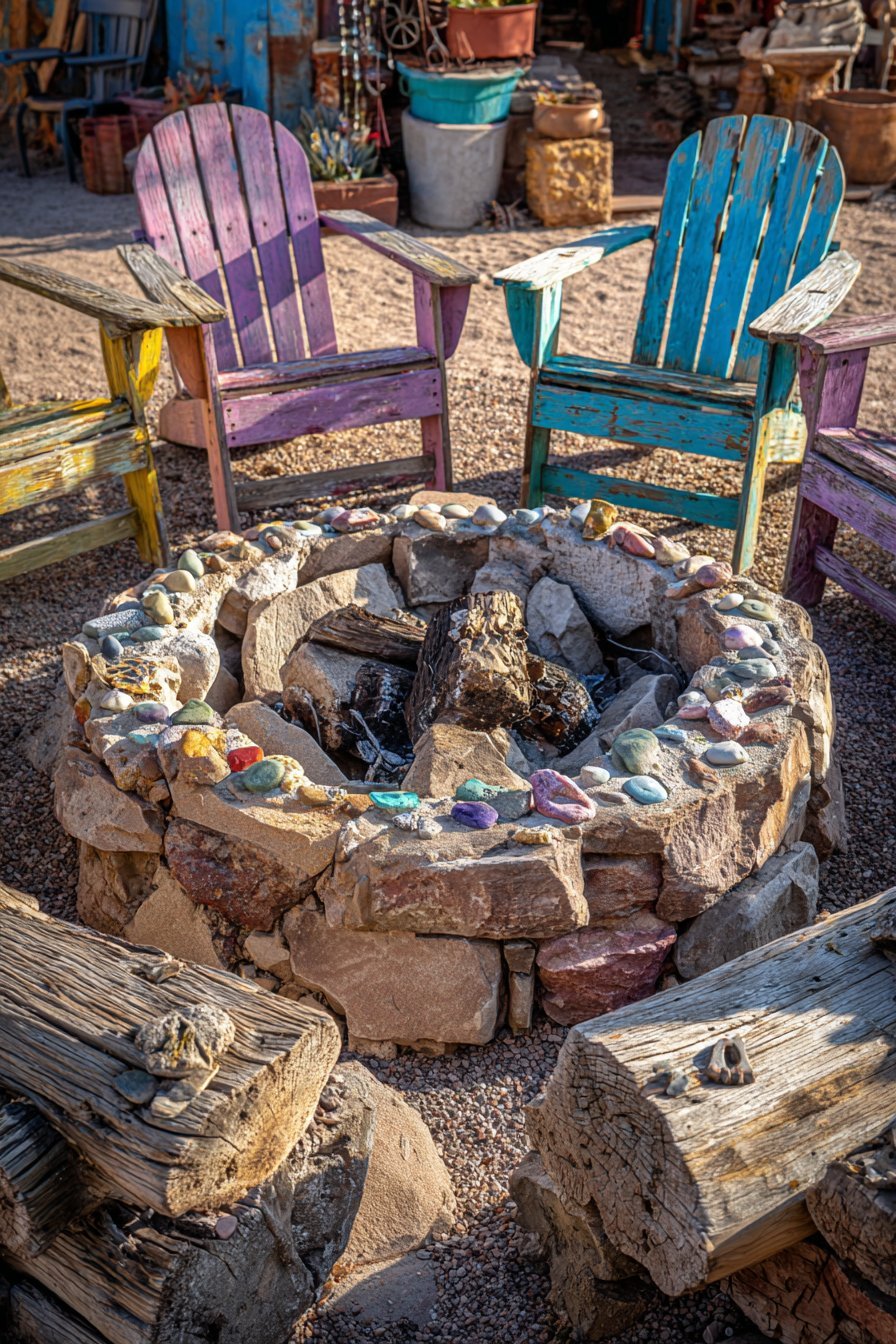
The fire pit construction uses natural stone arranged in a circular pattern. Decorative painted rocks line the perimeter in various designs. Peace signs, flowers, and abstract patterns decorate the stones. The personal touches reflect creativity and artistic expression. Children and guests often add their own painted rocks over time.
Potted succulents in vintage containers dot the surrounding area. These low-maintenance plants thrive with minimal attention. Peace sign garden stakes pierce the soil between plants. Hanging beaded wind chimes catch the breeze, creating gentle sounds. The collected elements build layers of bohemian character.
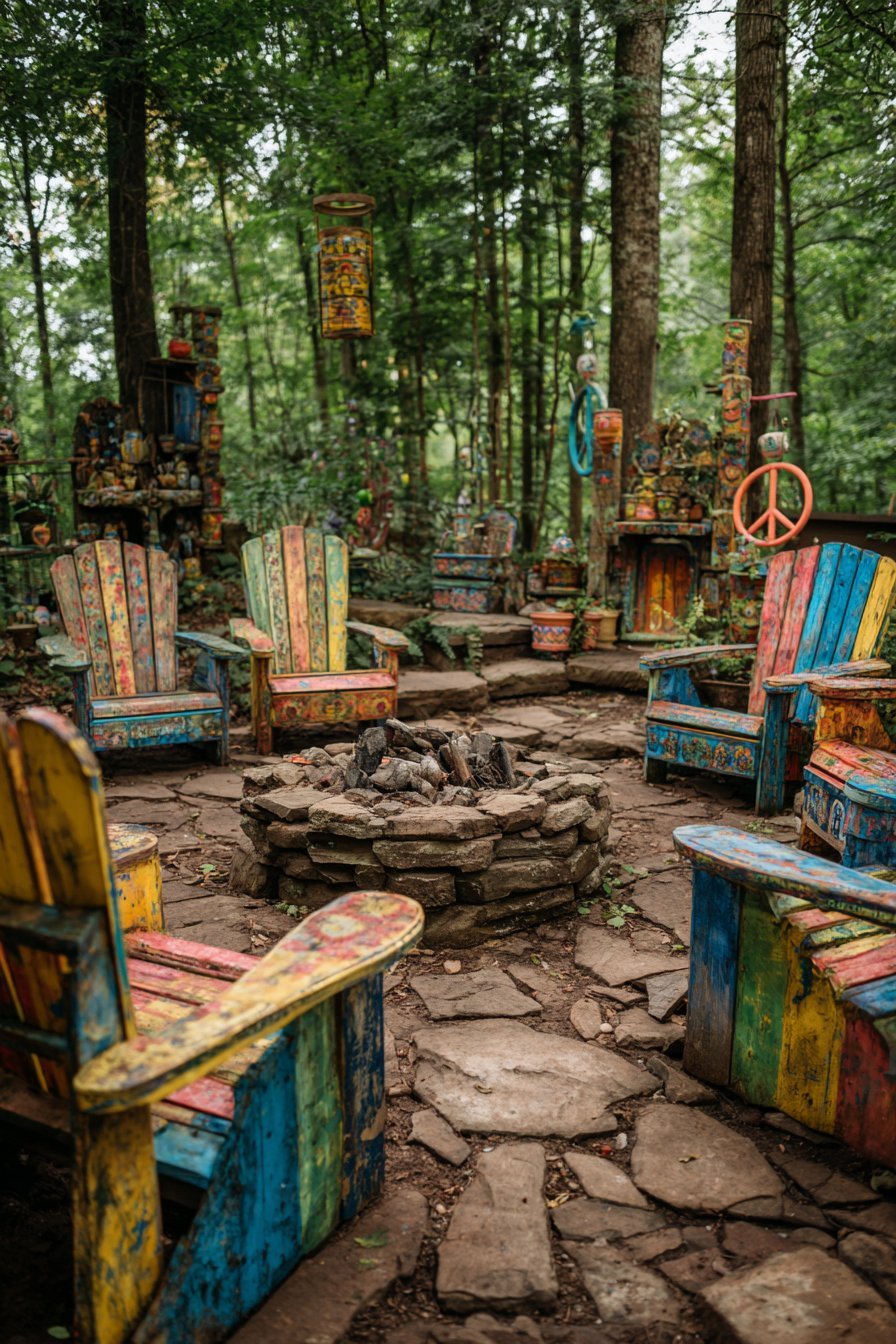
Natural daylight emphasizes the color variations throughout the space. Each chair displays different stages of weathering and paint wear. The authentic patina cannot be replicated through artificial distressing. The space tells a story of years of gatherings and shared moments. Evening fires create dancing shadows that enhance the magical atmosphere.
Key Design Tips:
- Source mismatched seating from yard sales and thrift stores for authenticity
- Use outdoor paint designed for wood and metal surfaces
- Allow paint to weather naturally rather than forcing artificial distressing
- Create a gravel base around the fire pit for safety and drainage
- Position seating in a circular arrangement to encourage conversation
- Add a firewood storage solution that doubles as additional rustic decor
4. Organic Garden Sanctuary
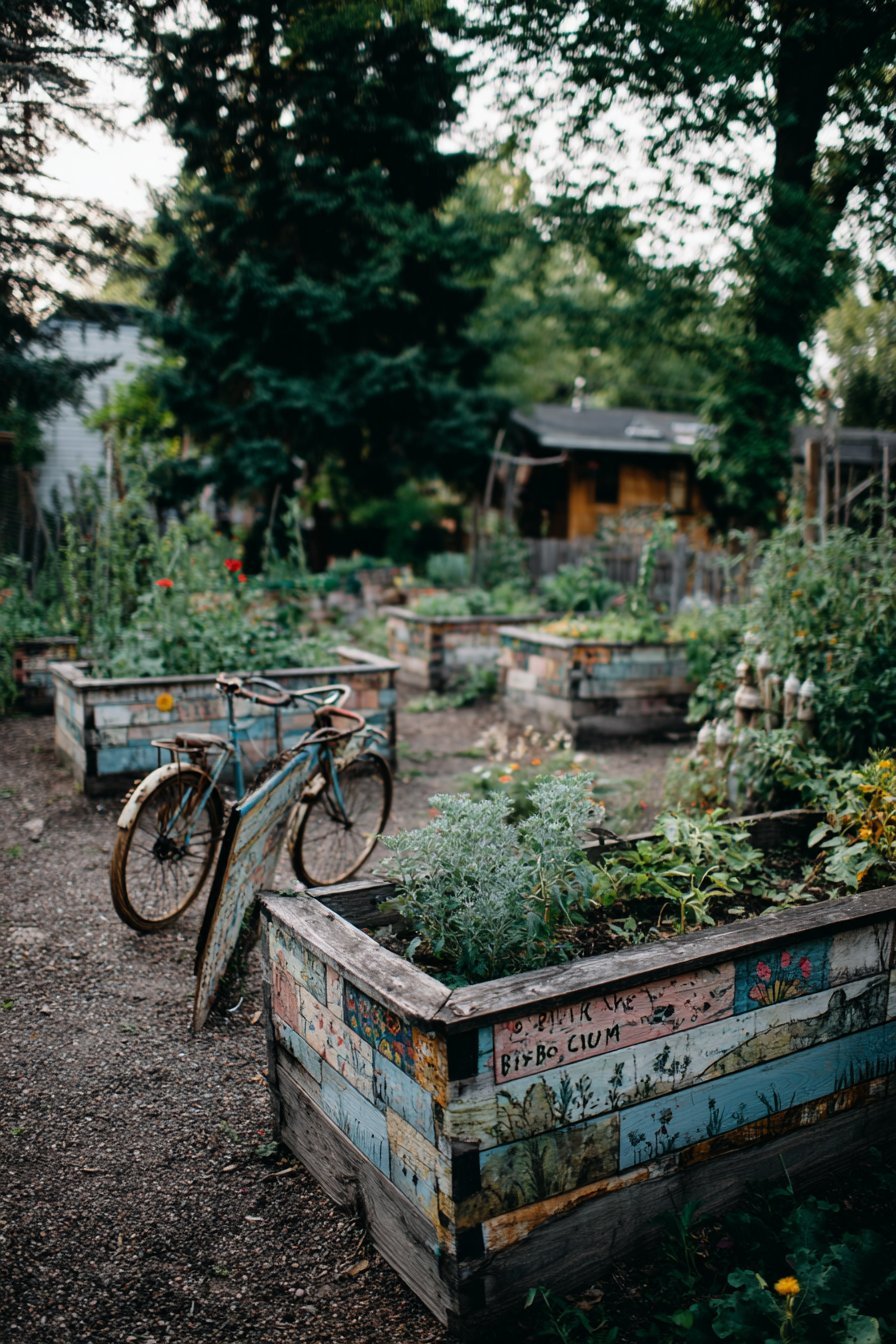
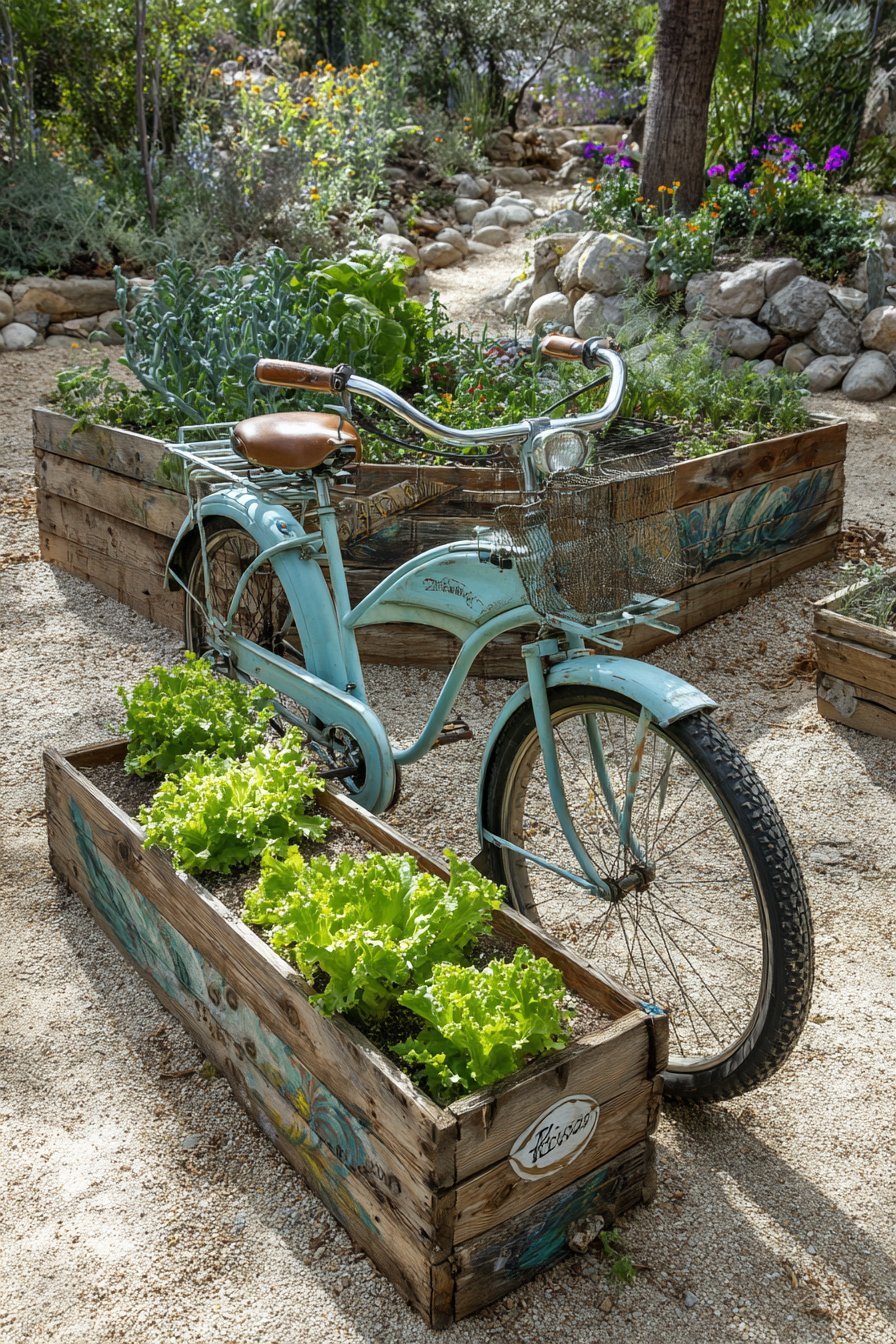
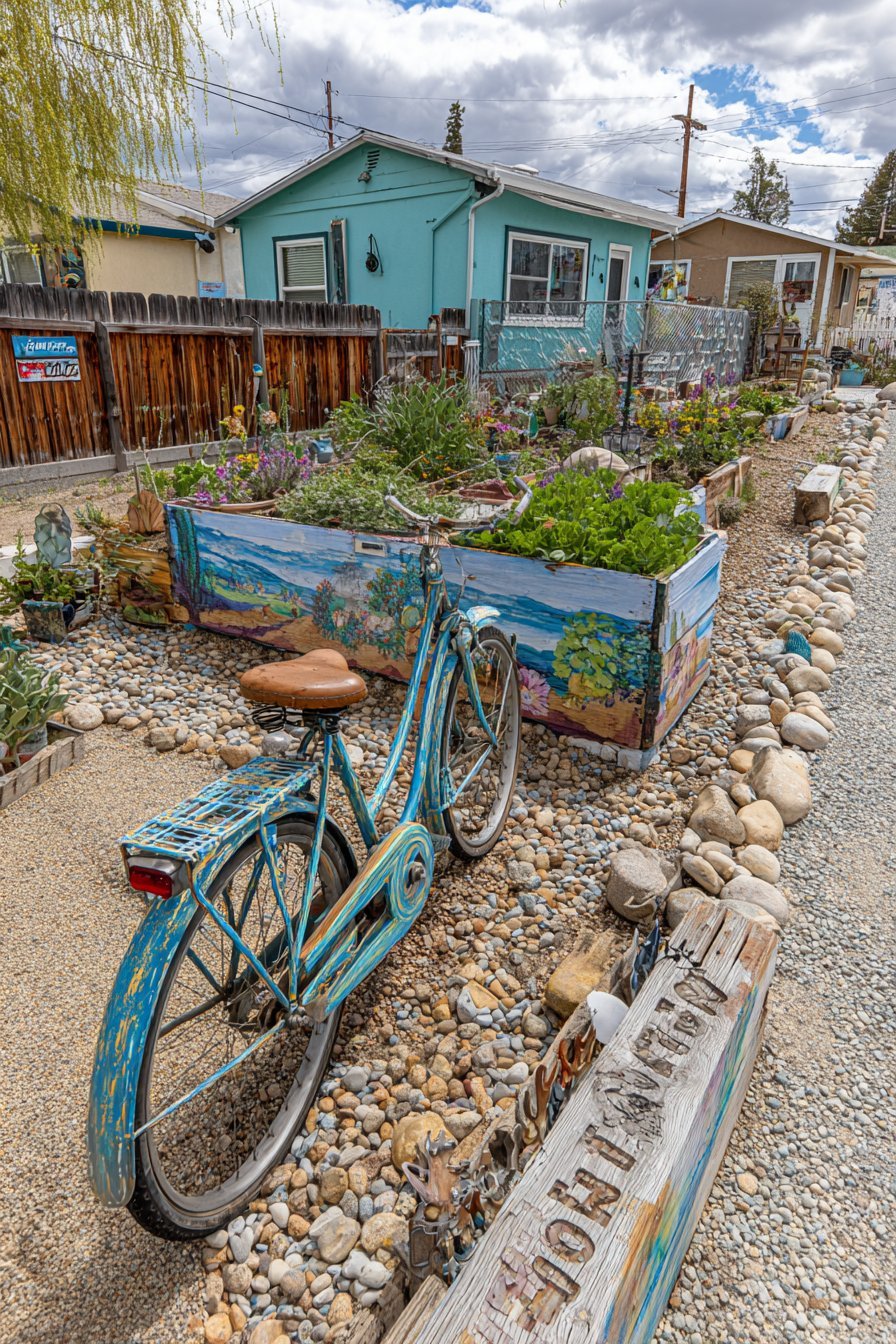
Raised garden beds constructed from reclaimed wood demonstrate sustainable gardening practices. Nature-inspired murals cover the wooden sides. The beds overflow with organic vegetables, herbs, and companion flowers. The slightly wild arrangement mimics natural growth patterns. Productivity meets aesthetic beauty in balanced harmony.
Hand-painted garden signs on driftwood identify plant varieties. The rustic markers add functional art throughout the garden. Recycled glass bottle borders create colorful edging. The bottles catch and reflect sunlight in jewel tones. Scattered garden gnomes provide whimsical focal points among the plants.
A vintage painted bicycle stands as the garden’s centerpiece. The bike has been repurposed as a multi-level planter. Baskets attached to the handlebars overflow with trailing flowers. The creative reuse exemplifies hippie design philosophy. This functional sculpture becomes a conversation starter for visitors.
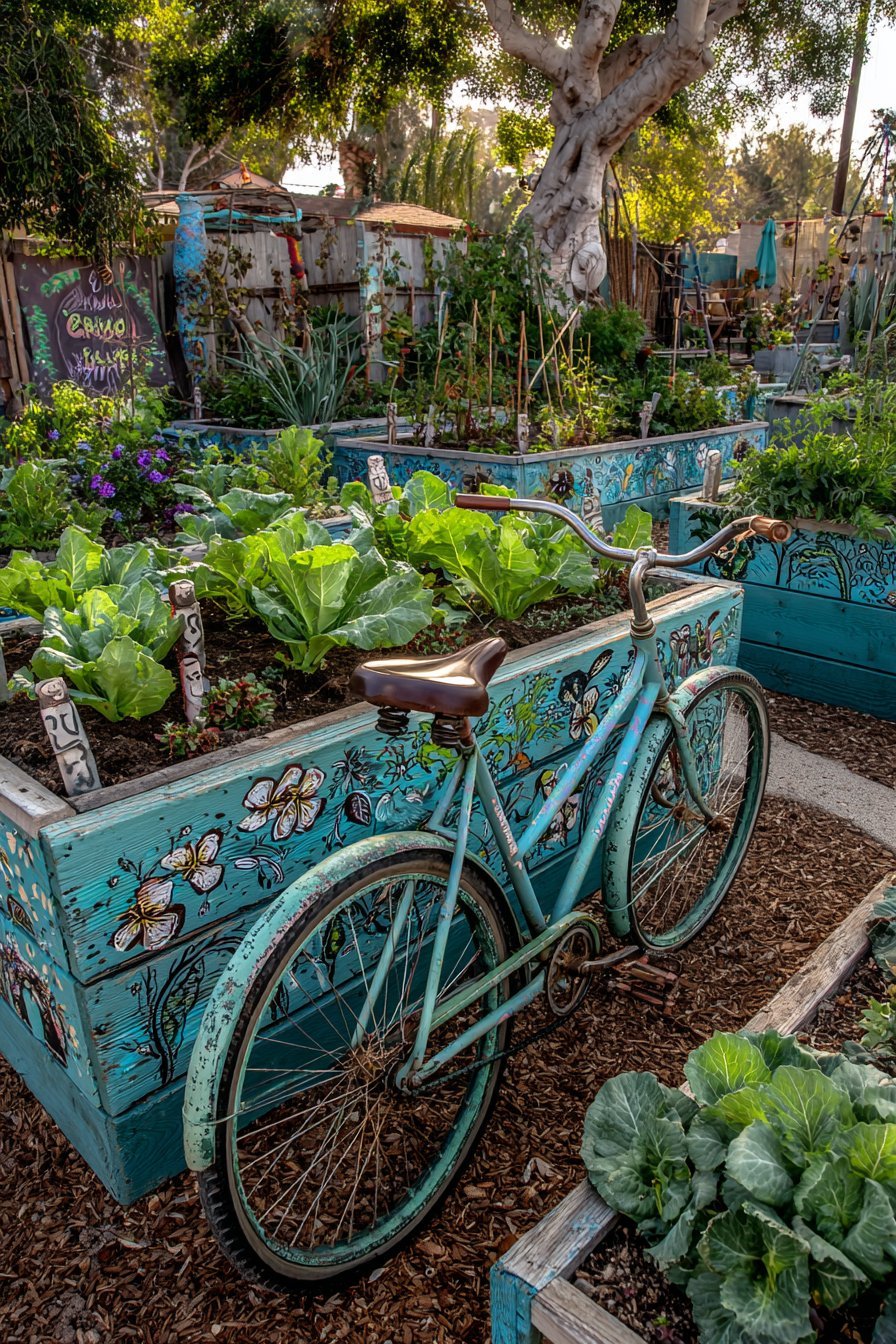
Soft morning light illuminates the productive space beautifully. The low angle highlights the vertical layers of growth. Dewdrops on leaves create temporary sparkle. The garden demonstrates eco-conscious living principles. Every element serves both practical purpose and visual interest.
Key Design Tips:
- Build raised beds using untreated reclaimed wood to avoid chemical leaching
- Practice companion planting to naturally deter pests and support growth
- Create art using exterior acrylic paints sealed with weatherproof coating
- Install glass bottle borders by burying bottoms to stabilize positioning
- Choose heirloom vegetable varieties for best organic growing success
- Add a compost system nearby to close the sustainability loop
5. Vintage Rattan Lounge Retreat
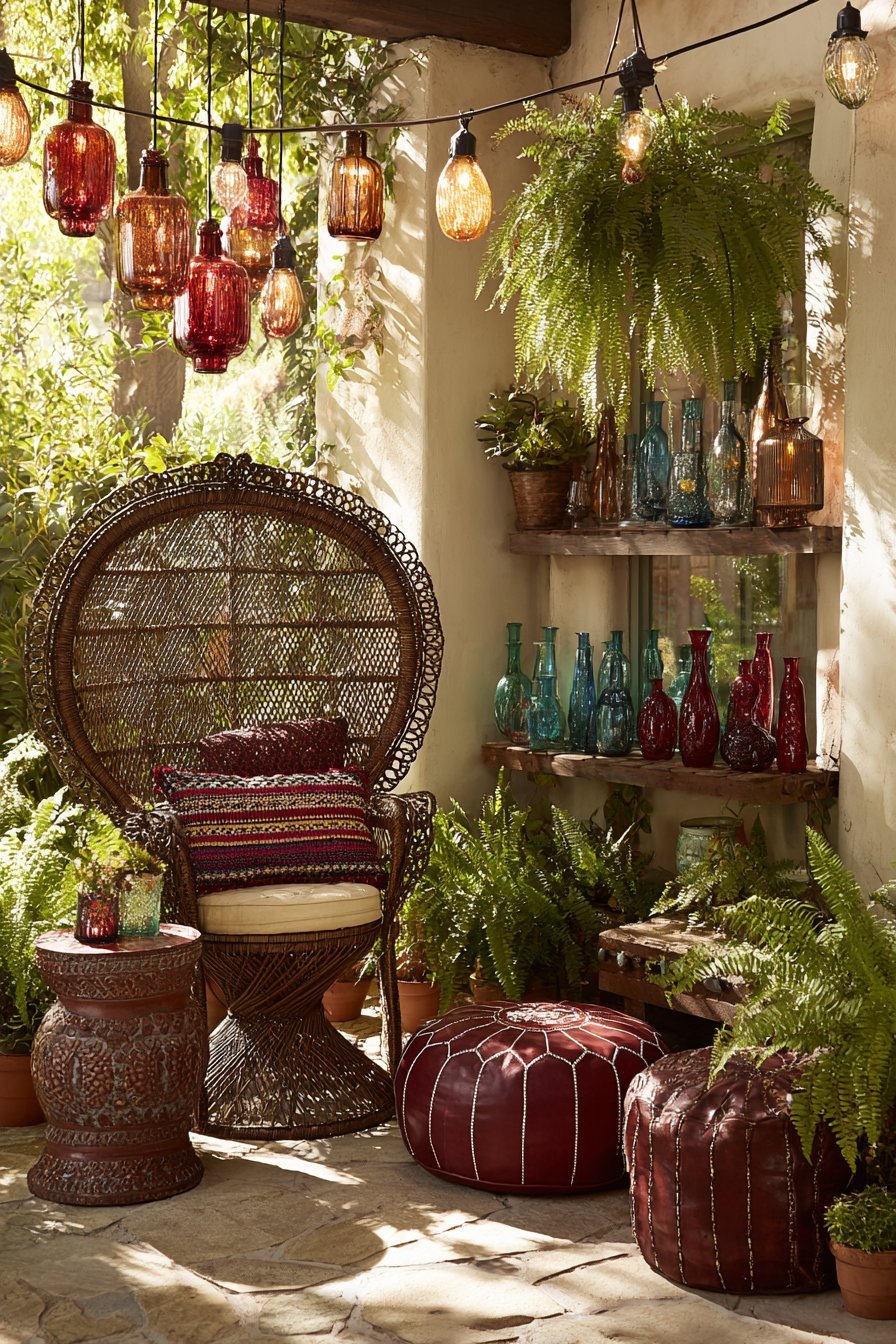
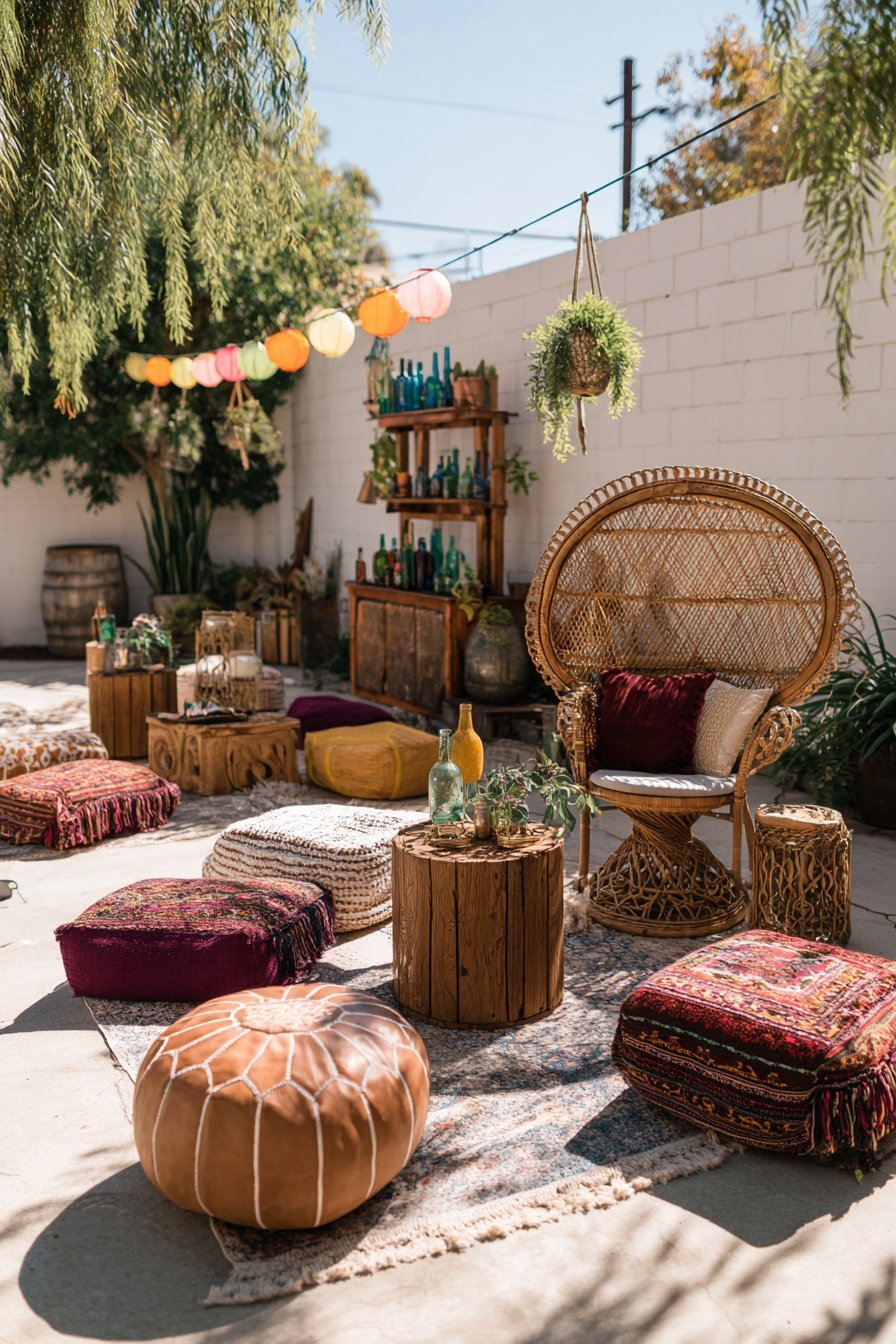
A vintage rattan peacock chair commands attention as the lounge area centerpiece. The dramatic fan-shaped back creates an unmistakable bohemian statement. Low Moroccan-style poufs in rich textiles surround the chair. A reclaimed wooden cable spool serves as a unique coffee table. The arrangement invites intimate conversation and relaxation.
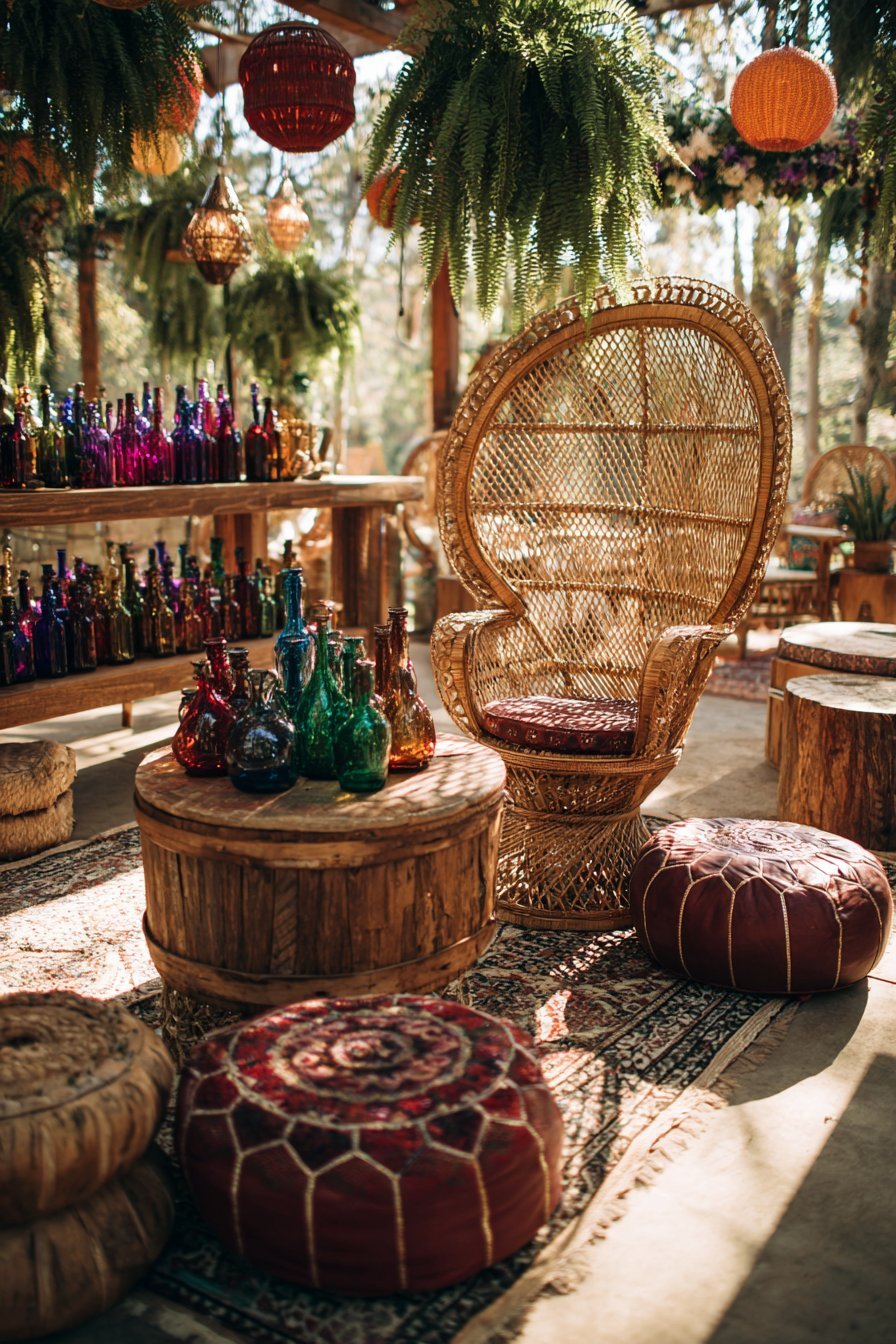
String lights and paper lanterns in warm colors hang overhead. The lighting creates a canopy of soft illumination for evening gatherings. Amber, red, and orange tones dominate the lantern selection. The warm palette enhances the cozy, welcoming atmosphere. Vintage glass bottles in jewel tones display on wooden shelves.
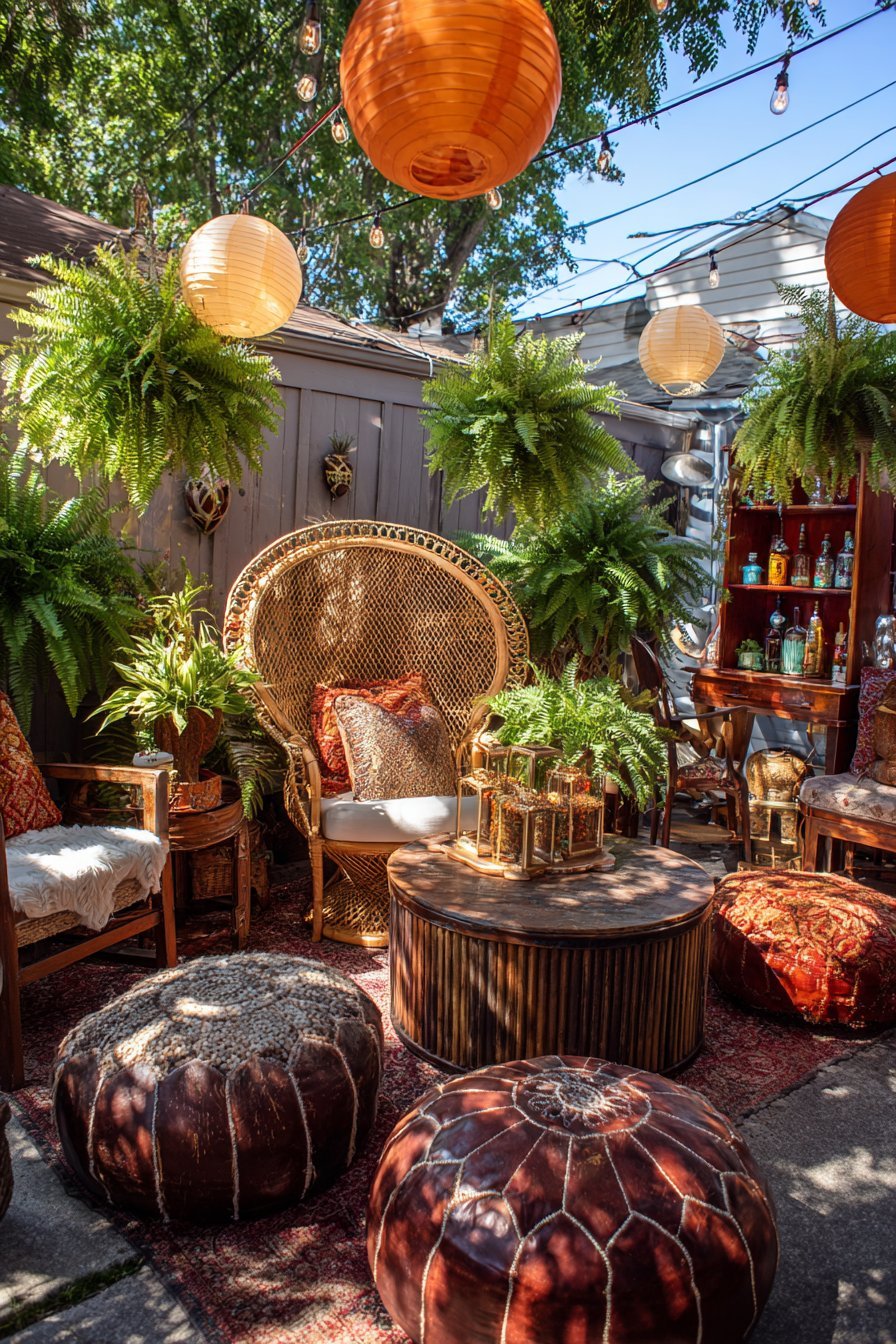
Potted ferns bring lush greenery to the space. Hanging plants in macramé holders add vertical interest. The holders showcase various knotting patterns and techniques. Spider plants and pothos trail gracefully from their suspended homes. The abundant plant life connects the lounge to surrounding nature.
Natural afternoon light creates warm, inviting shadows throughout the space. The textures of rattan, textile, and wood become more pronounced. The space feels like an outdoor living room extension. Comfort and style merge seamlessly in this curated environment. Every element contributes to the overall bohemian aesthetic.
Key Design Tips:
- Search estate sales and vintage shops for authentic peacock chairs
- Treat rattan furniture with protective sealant for outdoor durability
- Choose poufs with removable, washable covers for easy maintenance
- Create visual interest through varied heights using plant stands and tables
- Install weatherproof string lights rated for continuous outdoor exposure
- Layer textures through different textile weaves and natural materials
6. Mandala Mural Garden Wall
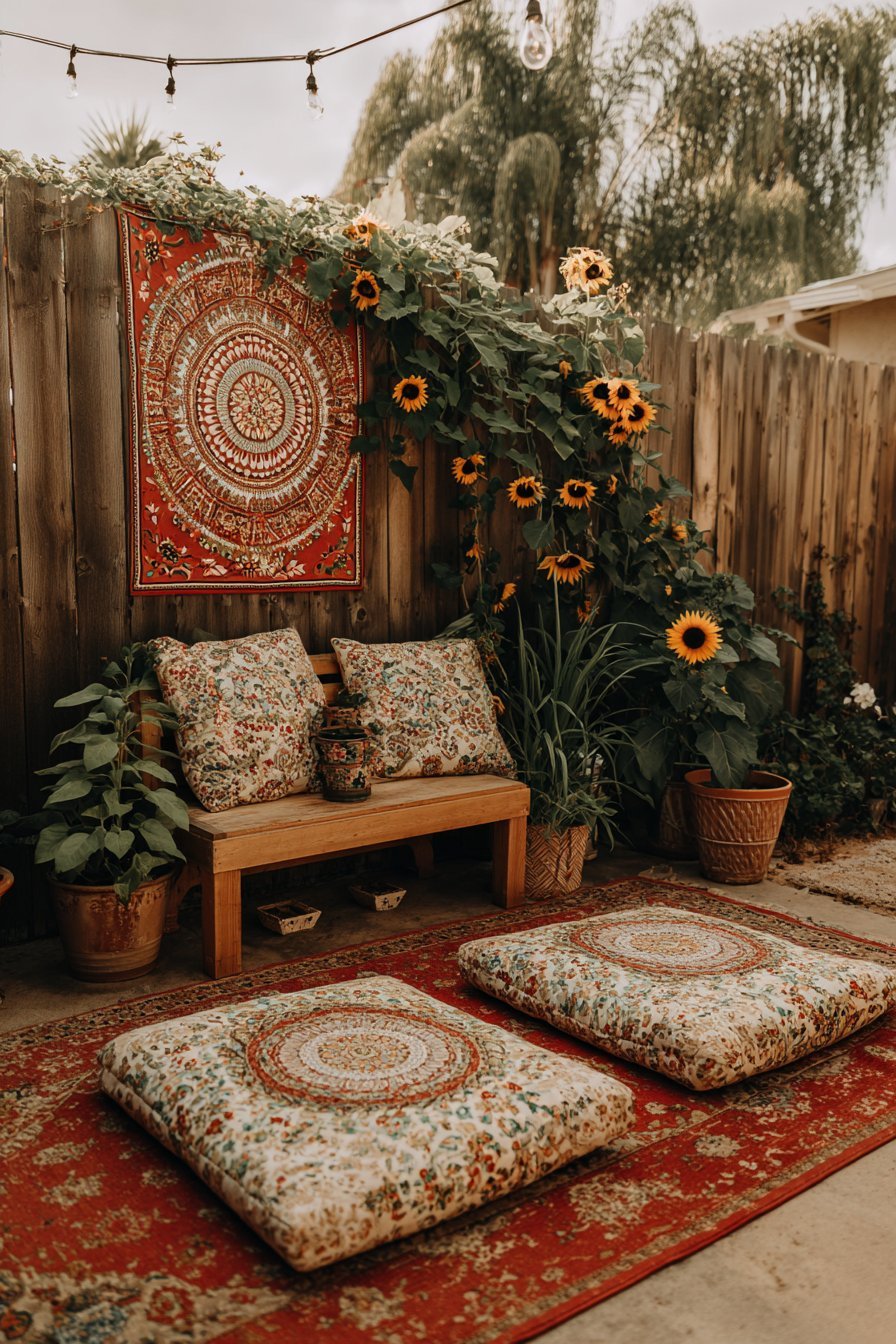
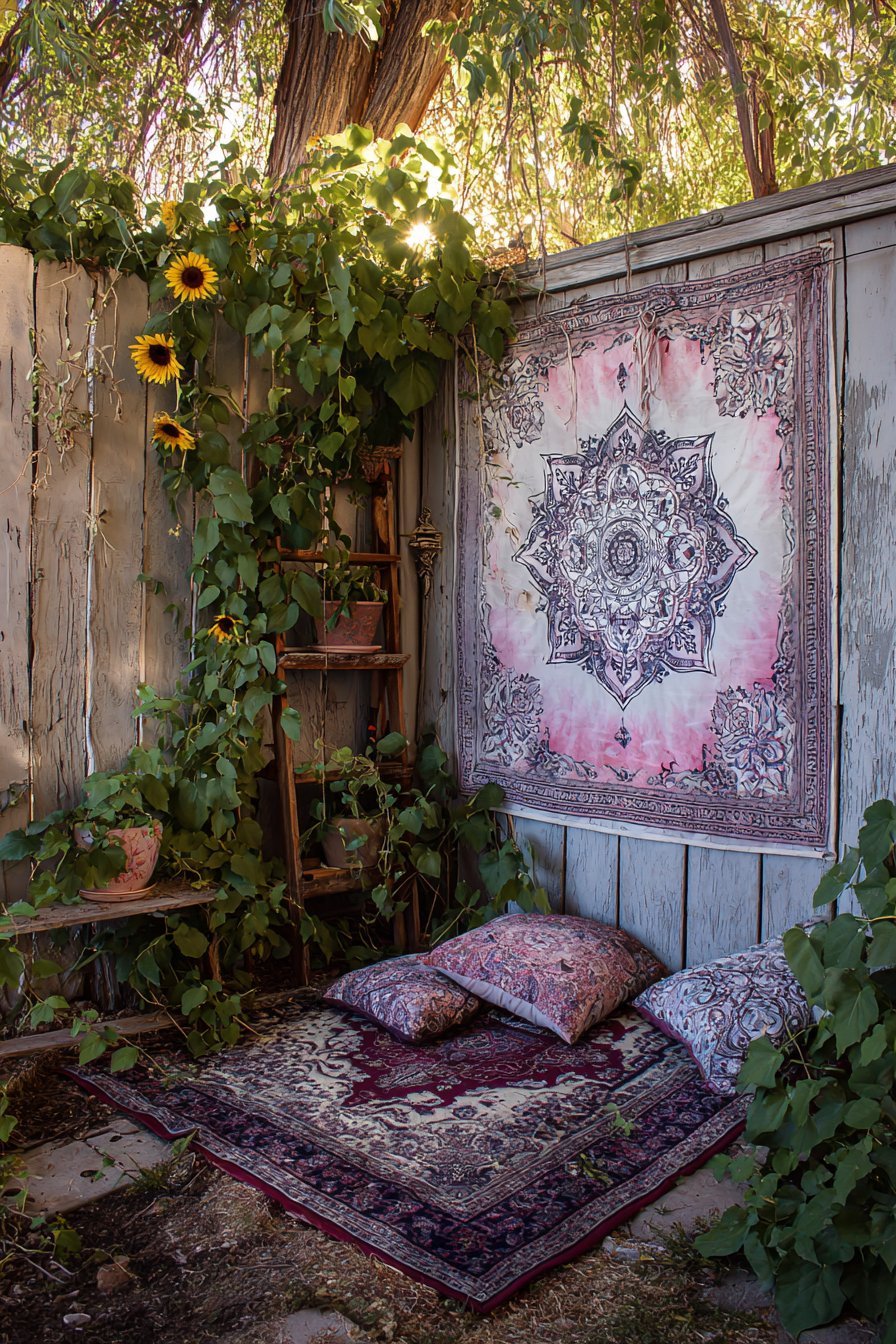
A hand-painted mandala mural transforms a weathered wooden fence into art. The intricate geometric pattern creates a stunning focal point. Climbing vines frame the mural naturally as they grow. Oversized sunflowers reach skyward beside the decorated fence. The combination of art and nature feels perfectly balanced.
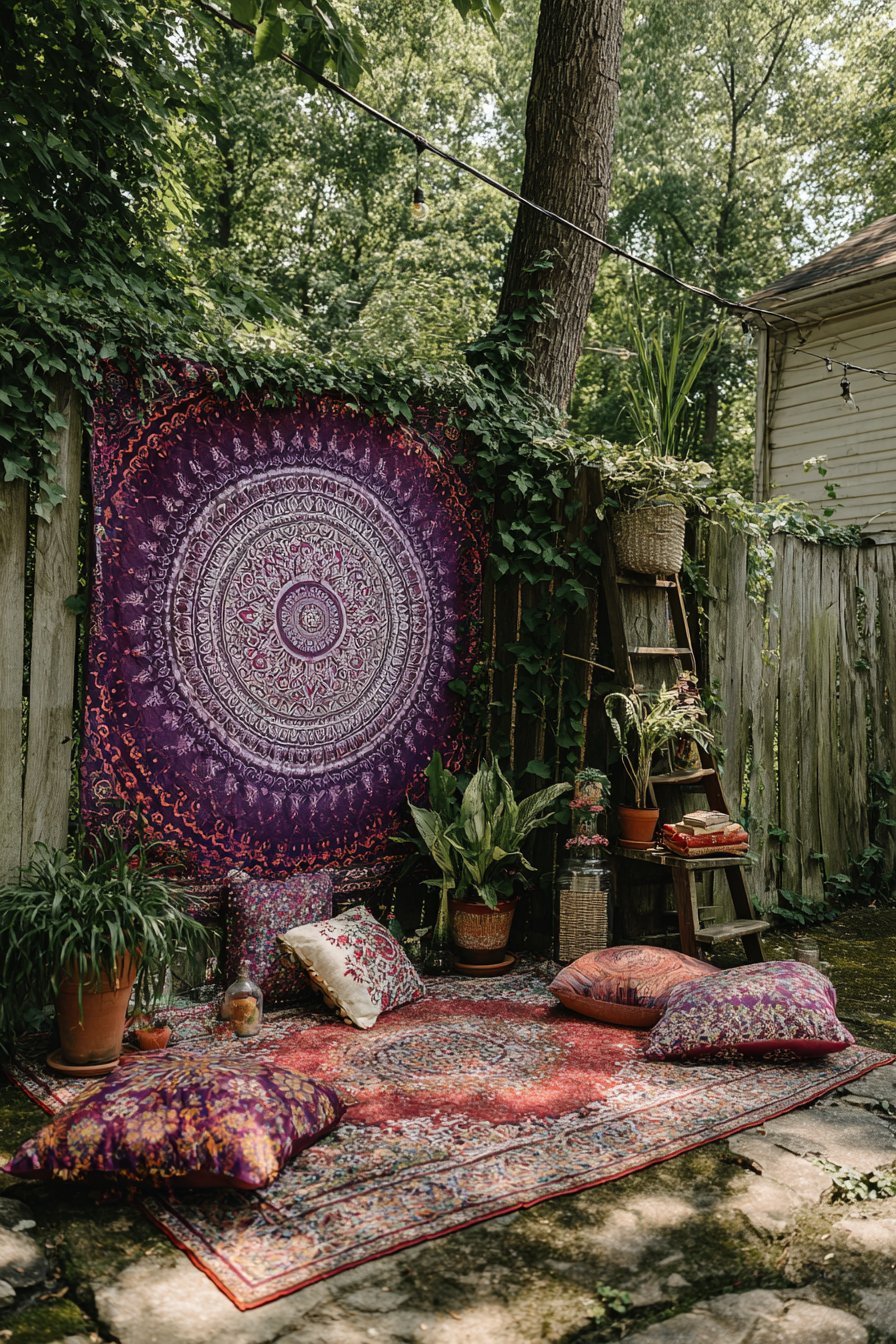
The ground area features a vintage Persian rug remnant. The faded pattern and worn texture add authentic character. Floor cushions in paisley and floral prints define the seating space. The textile choices complement the fence mural colors. Layers of pattern create visual richness without overwhelming the senses.
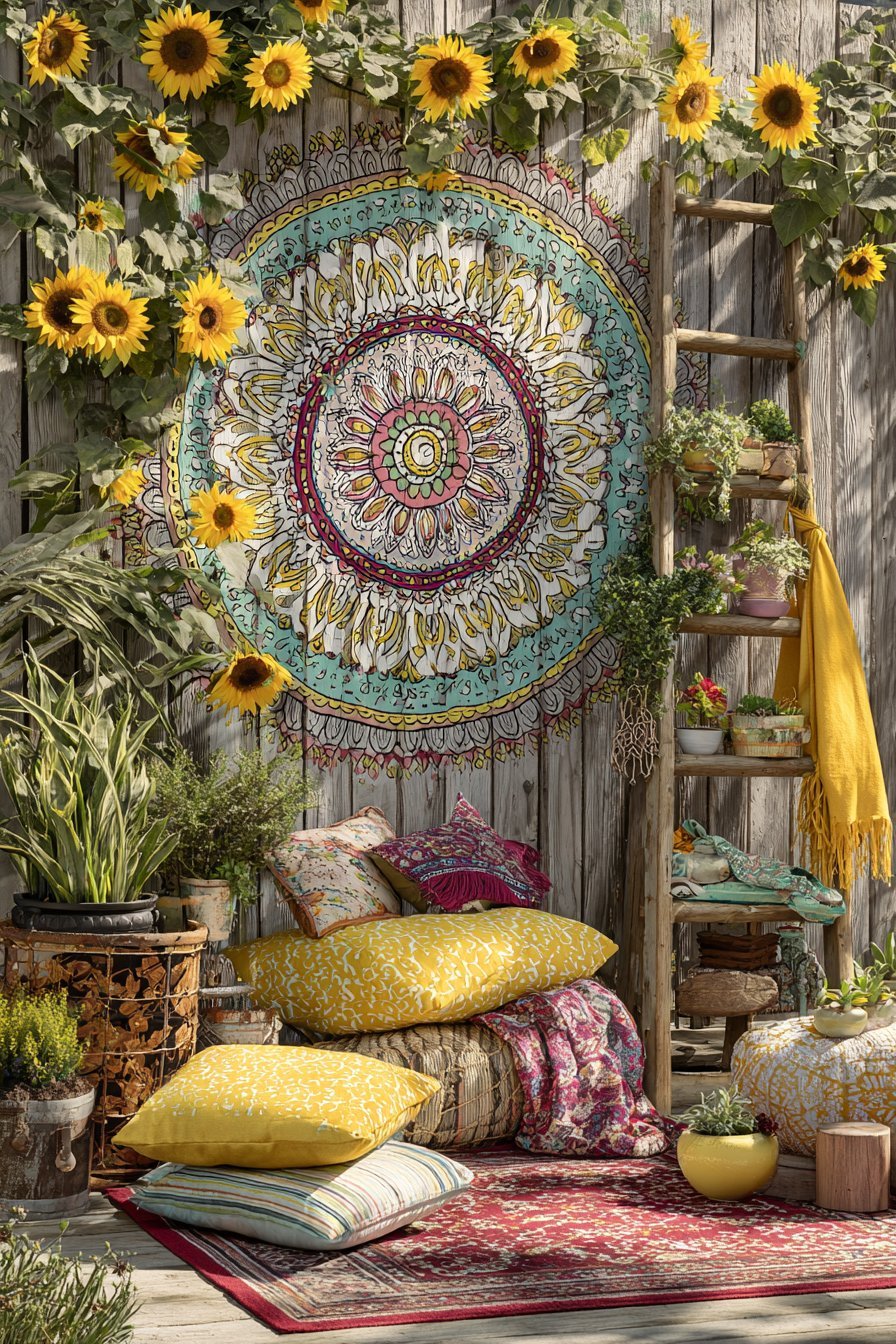
A repurposed ladder serves as a creative plant stand nearby. Each rung holds a different trailing plant species. Pothos vines cascade down the ladder sides. Spider plants send out baby plantlets. The vertical garden maximizes limited space while adding dimension.
Soft diffused daylight highlights the artistic elements. The mural’s colors appear vibrant without harsh glare. The integration of art and nature demonstrates hippie design philosophy. Living elements grow around and through the designed features. The space evolves constantly as plants mature and spread.
Key Design Tips:
- Sketch mandala designs on paper before painting on fence
- Use exterior acrylic paints in weather-resistant formulas
- Apply clear sealer coat to protect artwork from elements
- Choose climbing vines that complement rather than obscure the mural
- Position seating to face the mural for optimal viewing
- Allow natural weathering to add character over time
7. Reclaimed Wood Communal Dining
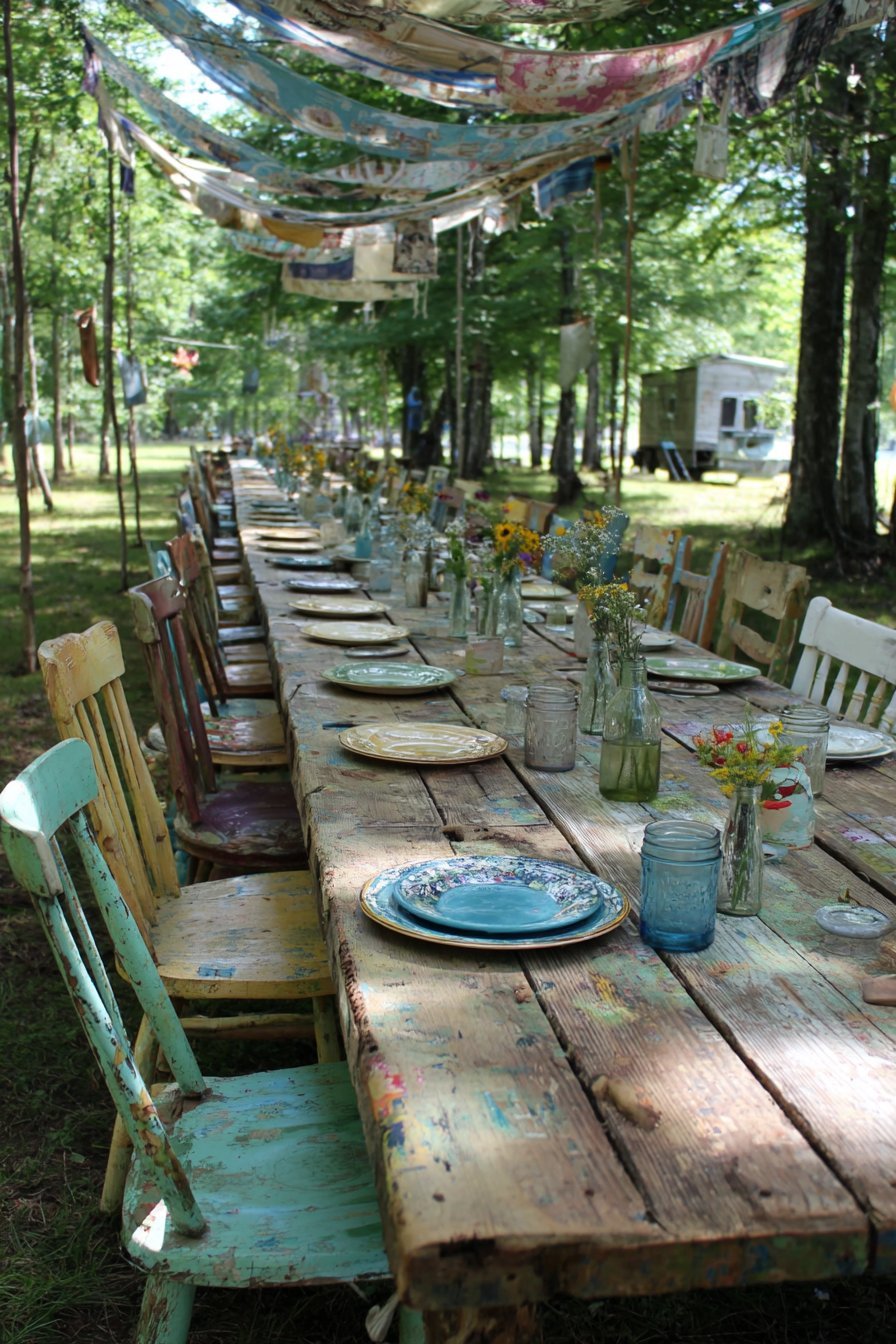
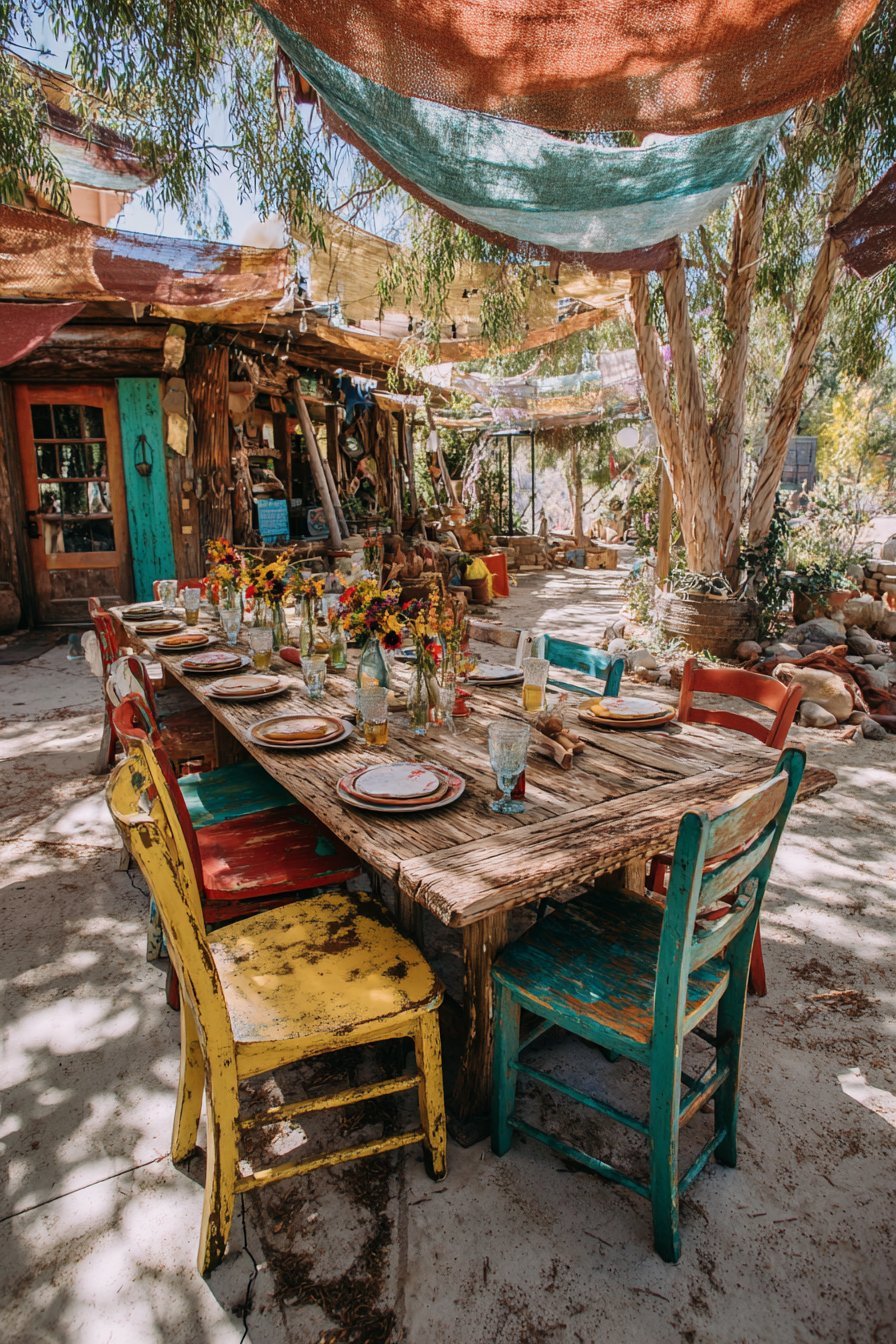
A long farmhouse table made from reclaimed barn wood anchors the dining area. The weathered surface shows authentic age and character. Mismatched vintage chairs in various states of chippy paint surround the table. Blues, greens, and creams create a cohesive yet eclectic palette. The imperfect furniture selection celebrates uniqueness and history.
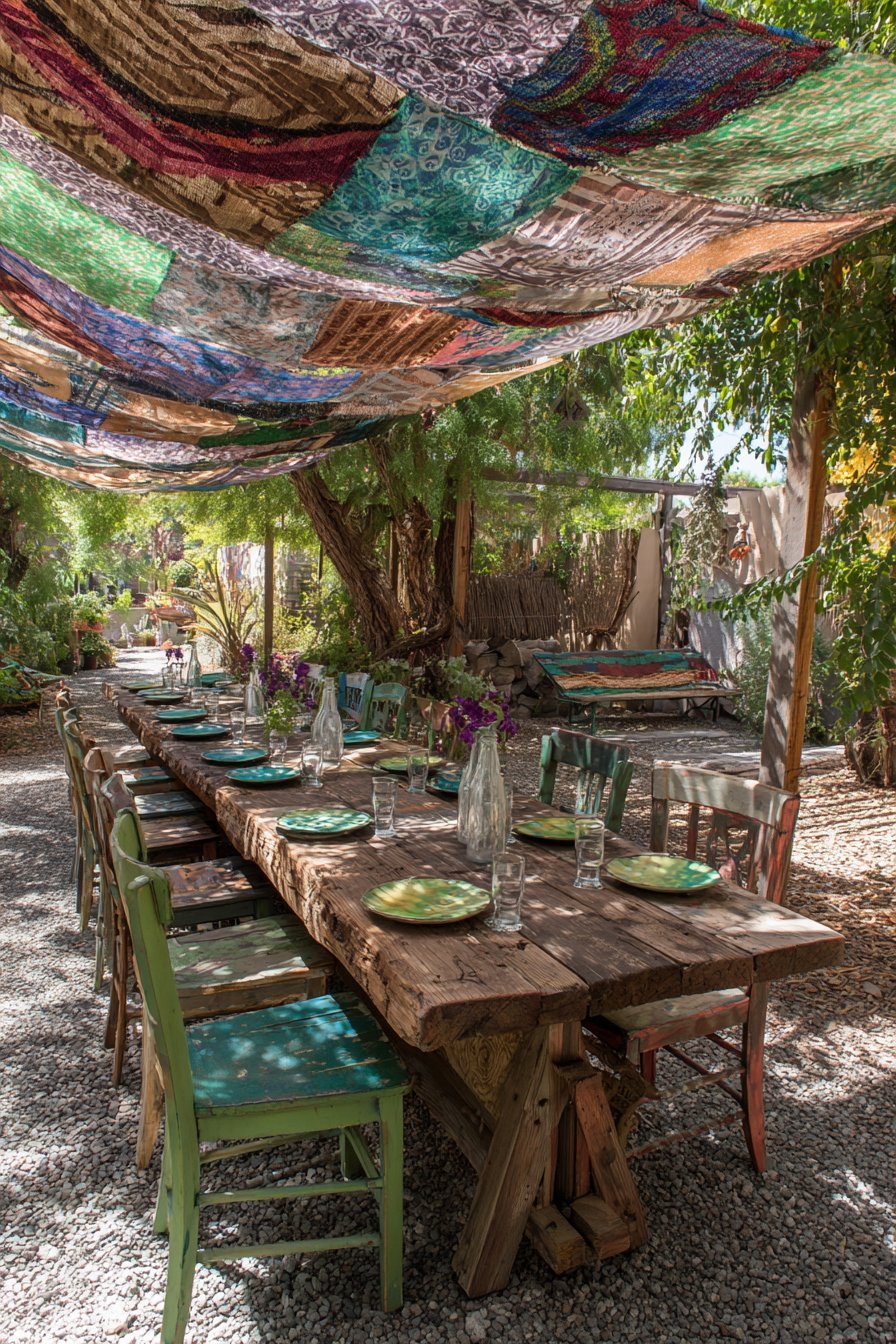
The table setting incorporates hand-thrown ceramic plates. Mason jar drinking glasses add rustic charm. Wildflower centerpieces arranged in vintage bottles bring nature to the table. The collected pieces create a curated yet relaxed tablescape. Every element tells a story of found treasures and intentional choices.
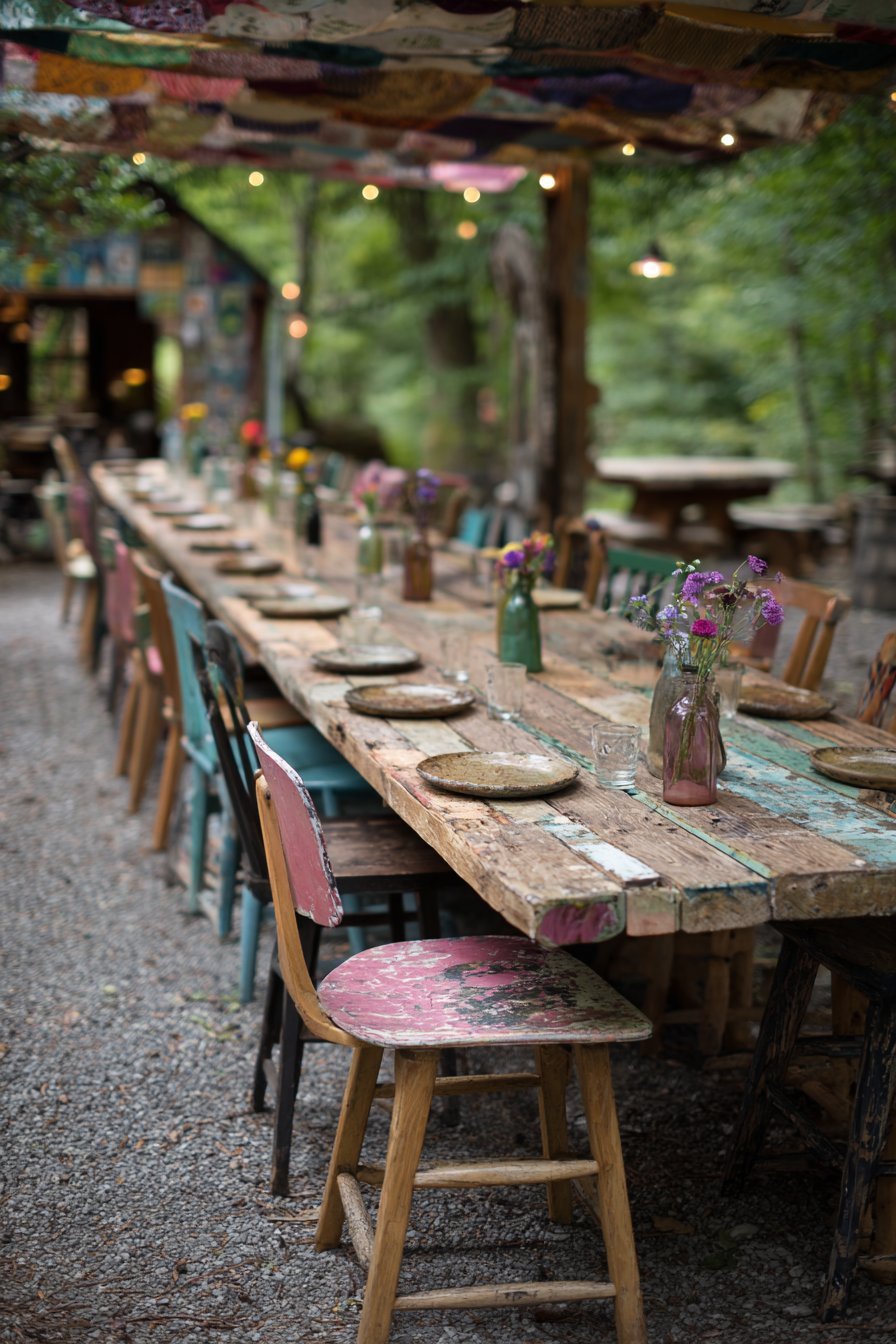
Overhead, a fabric canopy provides dappled shade. Scraps of various patterns and colors piece together the covering. The patchwork design filters sunlight beautifully. Different fabric weights create varying levels of shade. The canopy adds visual interest while serving practical purpose.
Natural light photography captures the communal dining aesthetic. The table becomes the obvious gathering place for meals. The sustainable approach to furniture sourcing aligns with hippie values. Shared meals in this space feel special and meaningful. The design encourages lingering conversations and connection.
Key Design Tips:
- Source reclaimed barn wood from salvage yards or demolition sales
- Sand rough edges while preserving natural weathering and patina
- Mix chair styles while maintaining similar seat heights for comfort
- Create shade canopy using grommets and weather-resistant cord
- Seal wooden table with food-safe finish for outdoor dining
- Add outdoor cushions in coordinating colors for extended seating comfort
8. Vintage Airstream Garden Retreat
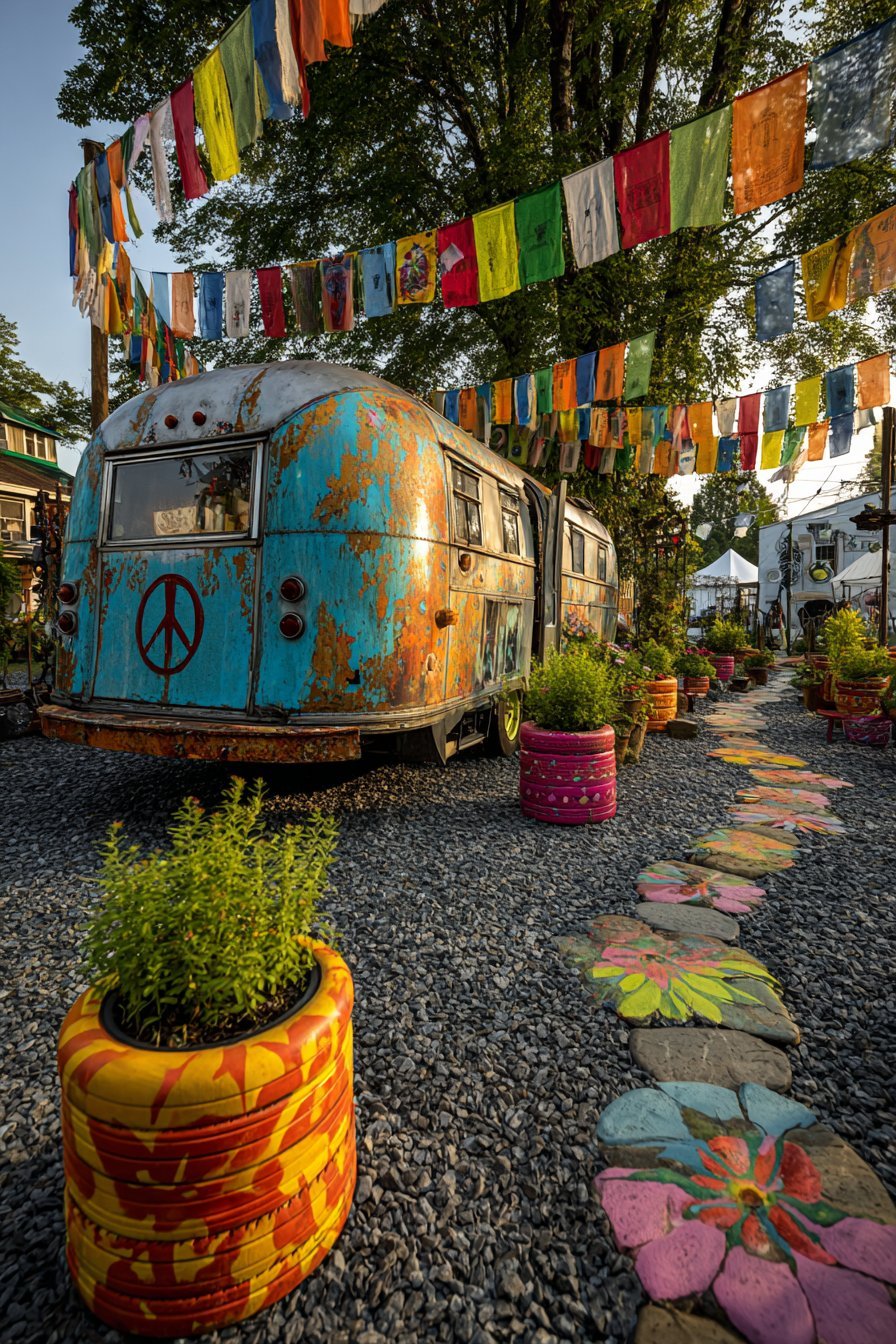
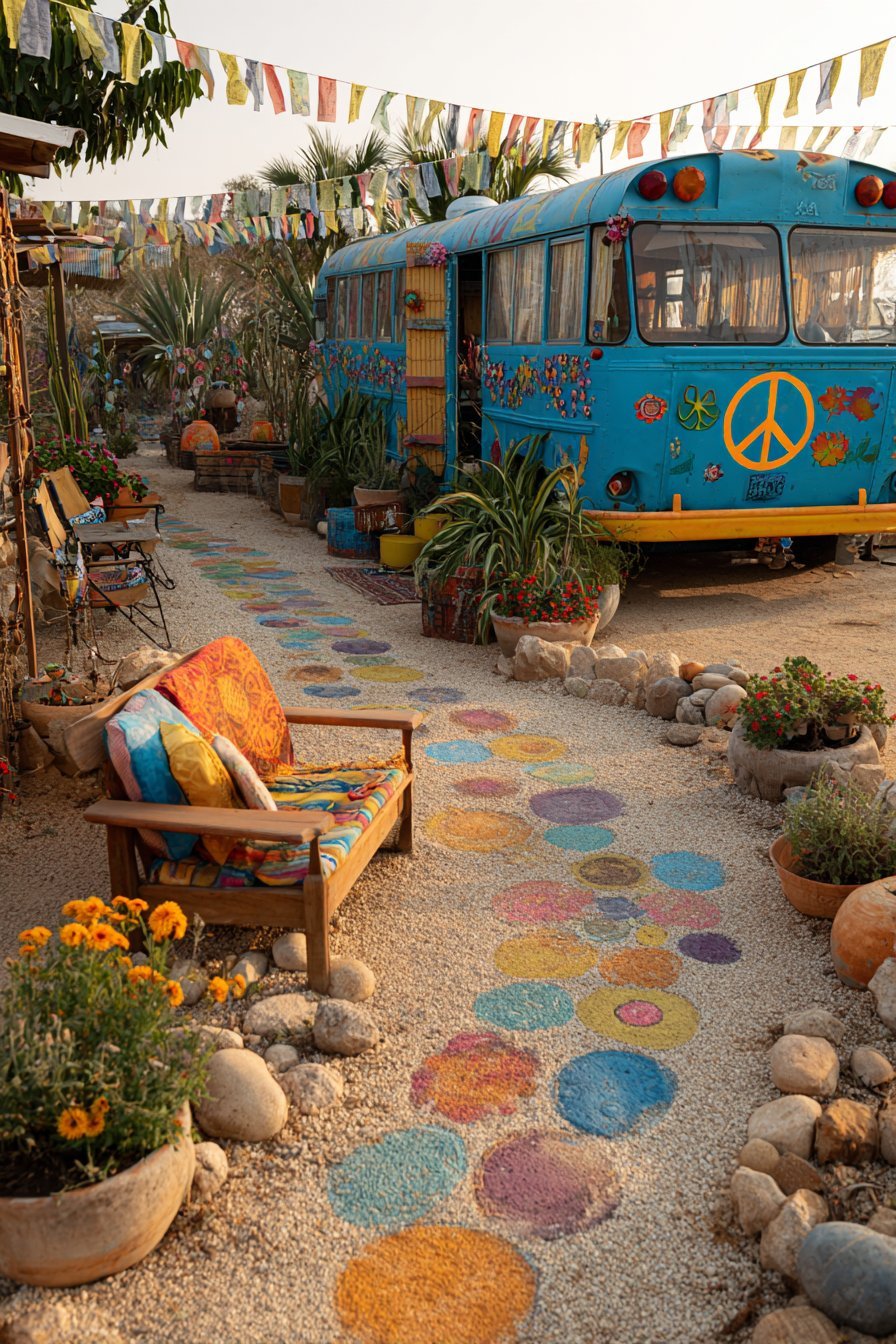
A vintage Airstream trailer or painted school bus creates an unexpected garden retreat. Peace signs and flower decals cover the exterior surface. Hanging beaded curtains replace traditional doors. The mobile structure becomes a functional and artistic focal point. The creative repurposing embodies ultimate hippie design spirit.
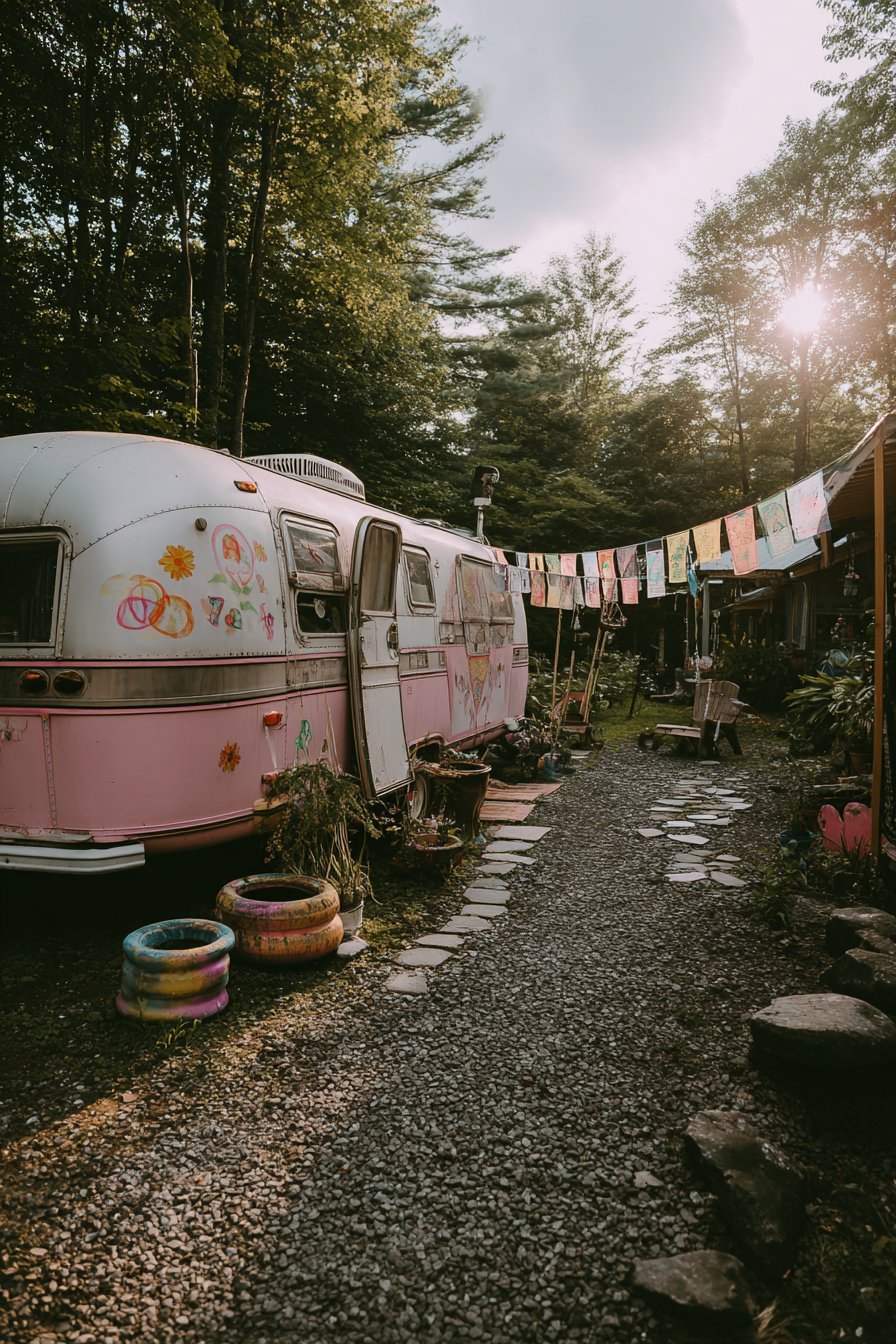
Gravel pathways lined with painted rocks lead to the retreat. Each rock features unique designs and messages. Potted herbs cluster near the entrance. Repurposed tire planters showcase psychedelic paint patterns. The colorful containers hold various flowering plants and succulents.
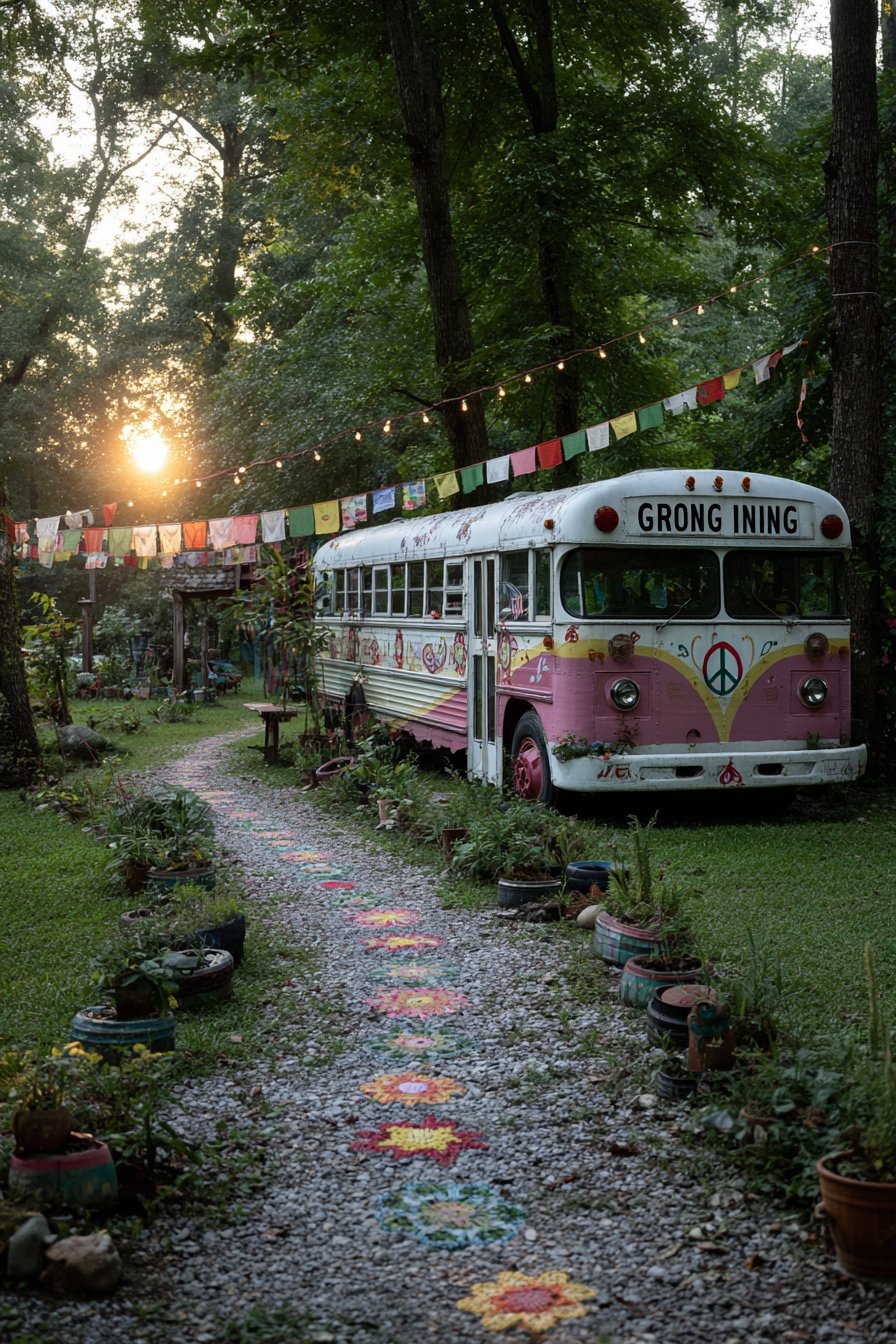
Prayer flags flutter overhead between wooden posts. The colorful rectangles add movement and spiritual significance. The flags catch wind and create gentle rustling sounds. Traditional Tibetan designs blend with peace symbols. The combination reflects eclectic spiritual influences.
Golden hour lighting creates nostalgic, free-spirited atmosphere. The metal exterior glows with warm reflected light. Long shadows stretch across the gravel pathways. The entire scene evokes 1960s counterculture aesthetic. This retreat offers private space within the larger backyard environment.
Key Design Tips:
- Ensure vintage vehicles are properly stabilized and sealed against weather
- Create functional interior space with solar lighting and ventilation
- Use outdoor-rated paints and decals for exterior decoration
- Install proper drainage around the structure to prevent flooding
- Add electricity through outdoor-rated extension cords or solar panels
- Furnish interior with lightweight, weather-resistant pieces for flexibility
9. Outdoor Yoga and Wellness Space
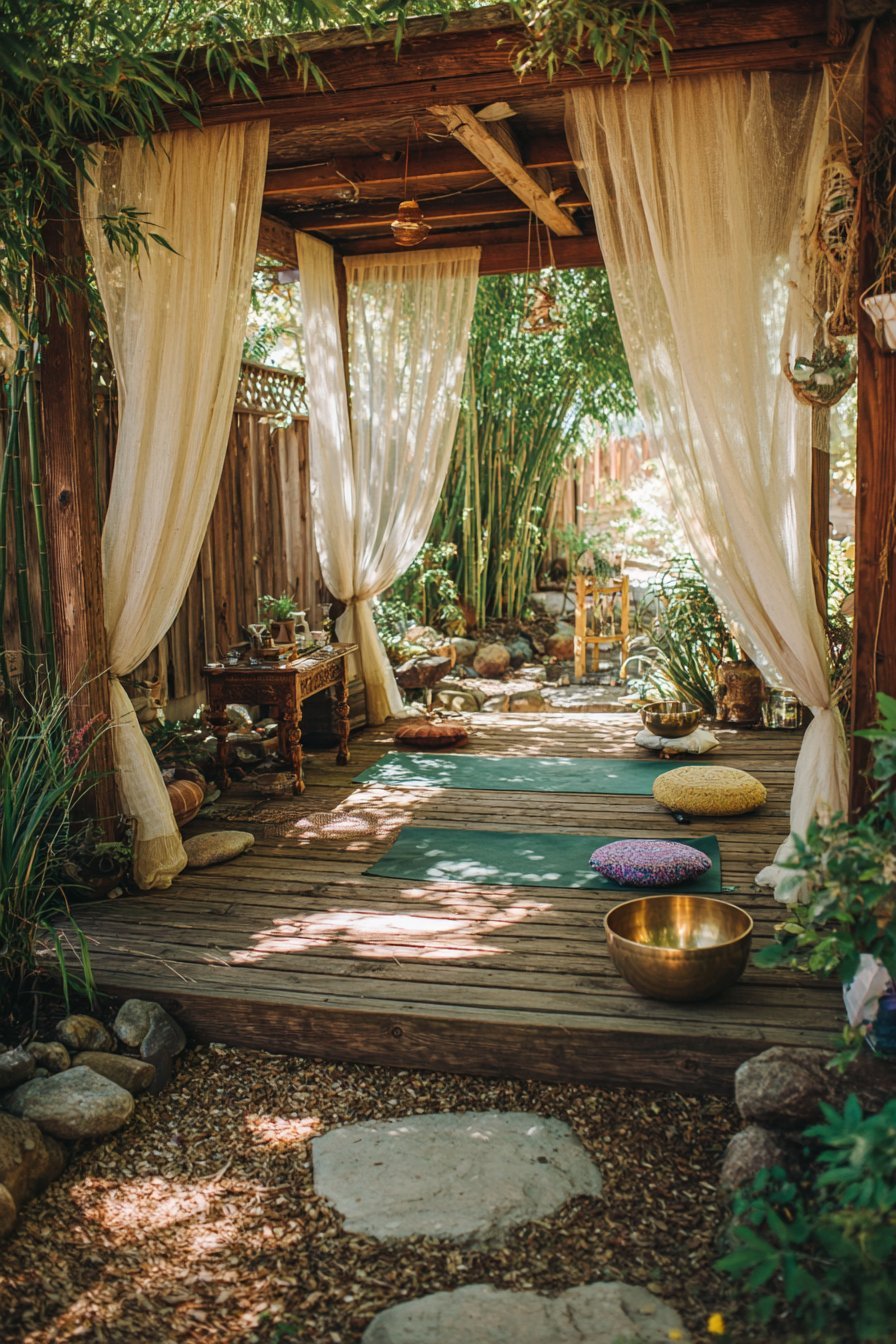
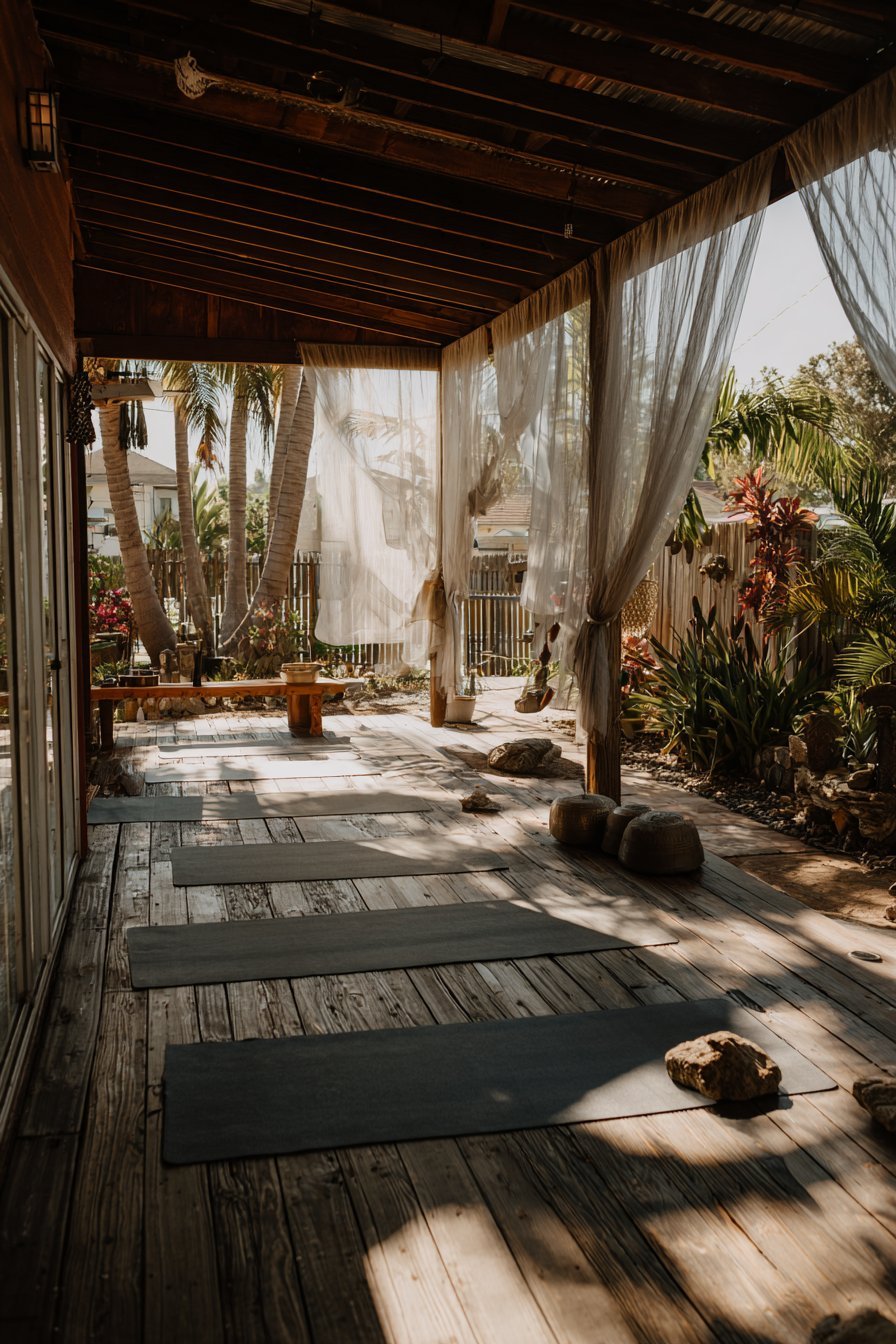
A weathered wooden deck hosts dedicated yoga and wellness activities. Multiple yoga mats rest ready for practice. Meditation cushions in various sizes accommodate different positions. Tibetan singing bowls create healing sounds when struck. The designated wellness area encourages regular spiritual practice.
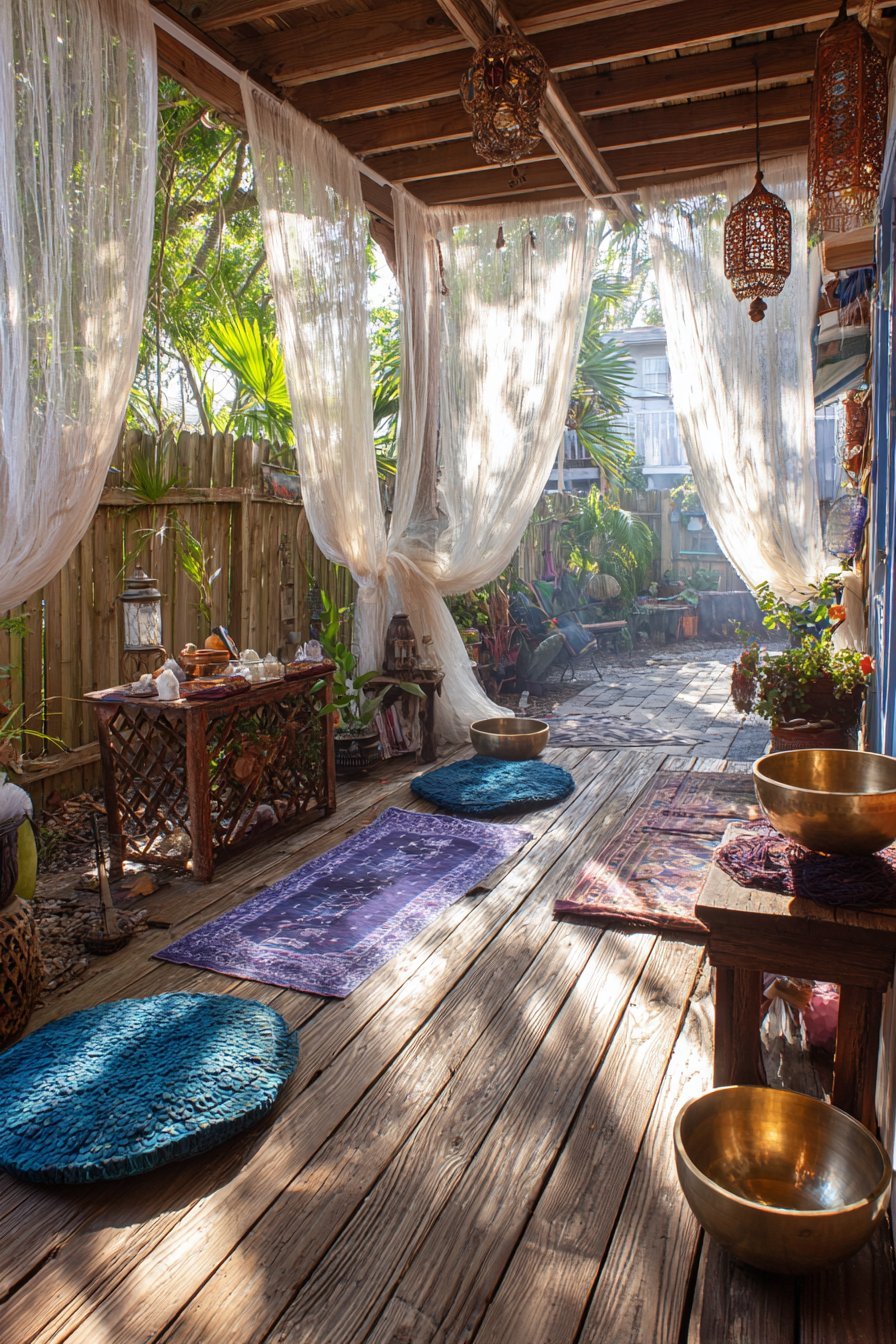
Flowing sheer curtains in natural fiber define the space boundaries. The curtains attach to posts creating semi-enclosed sanctuary. Wind moves the fabric gently, adding peaceful motion. The translucent material maintains connection with surrounding nature. Privacy increases without complete isolation from the garden.
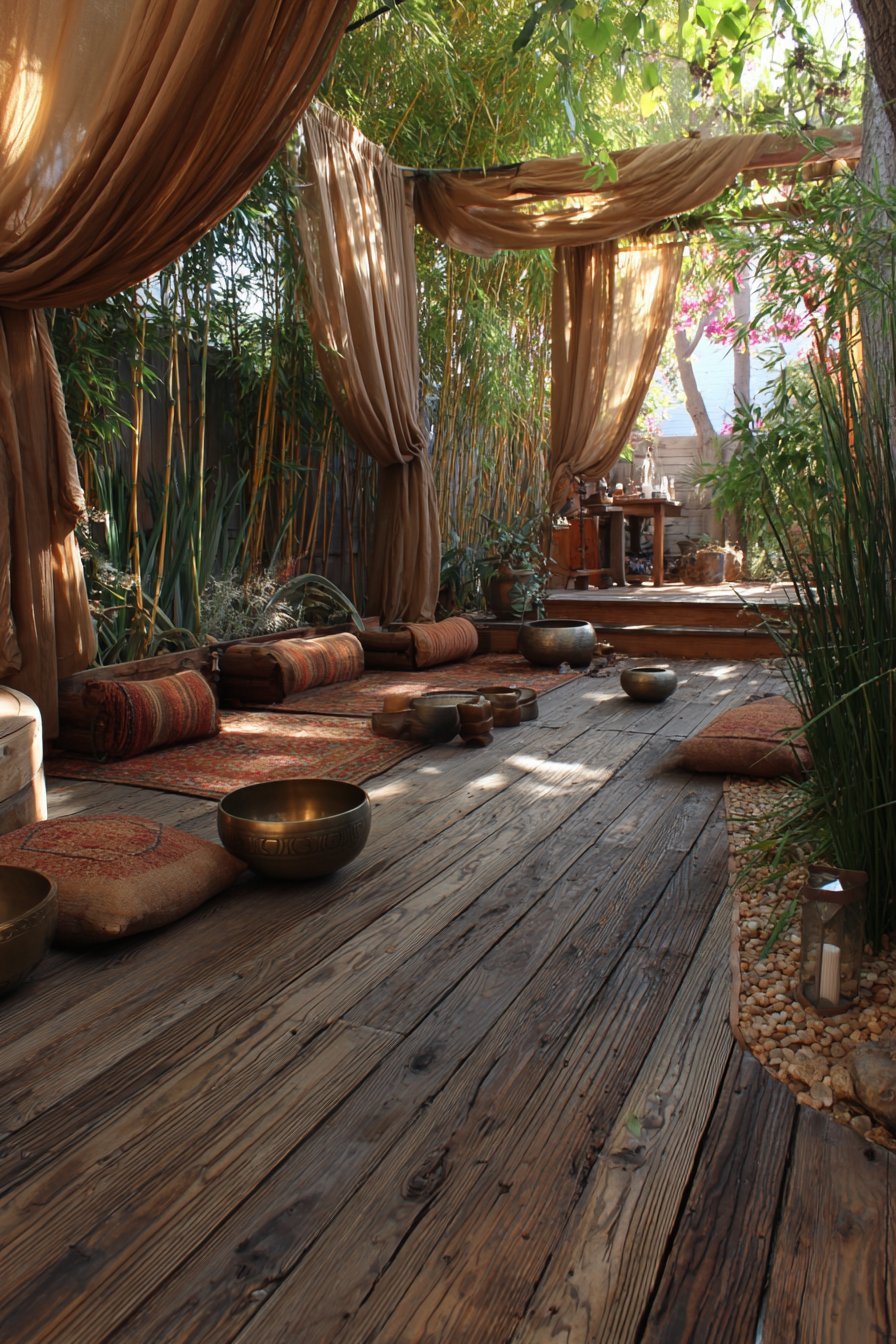
Bamboo and ornamental grasses surround the deck perimeter. Flowering vines climb the support posts. The plant selection emphasizes natural movement and sound. Leaves rustle in breezes creating white noise. The living walls enhance the meditative quality.
Incense smoke rises near crystal displays and natural objects. Found items like driftwood and stones create altars. The personal spiritual elements make the space deeply meaningful. Soft morning light filters through curtains. The entire environment supports mindfulness and body awareness.
Key Design Tips:
- Choose composite or treated decking that withstands bare feet and weather
- Position the space facing east to catch morning light for sunrise practice
- Install curtain posts deep enough to withstand wind without toppling
- Select quick-drying cushions and mats designed for outdoor use
- Create storage bench nearby for equipment protection when not in use
- Add outdoor speakers for guided meditation or ambient nature sounds
10. Mosaic Earthen Cob Bench
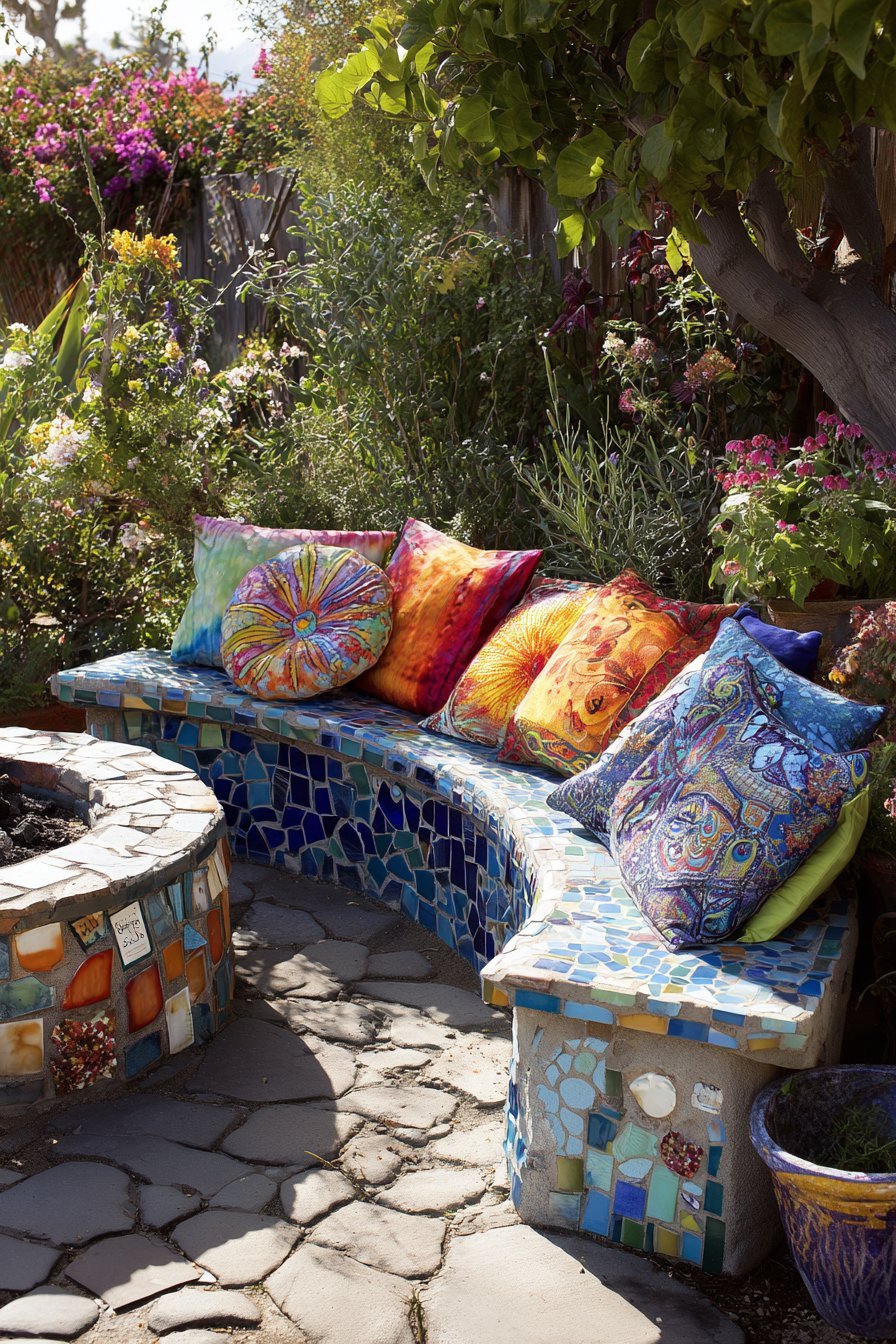
A hand-built earthen cob bench showcases artistic craftsmanship. Colorful mosaic tilework covers the curved surface. Broken pottery and glass pieces create intricate patterns. The bench curves around a small central fire pit. The sculptural seating demonstrates traditional building techniques with modern bohemian flair.
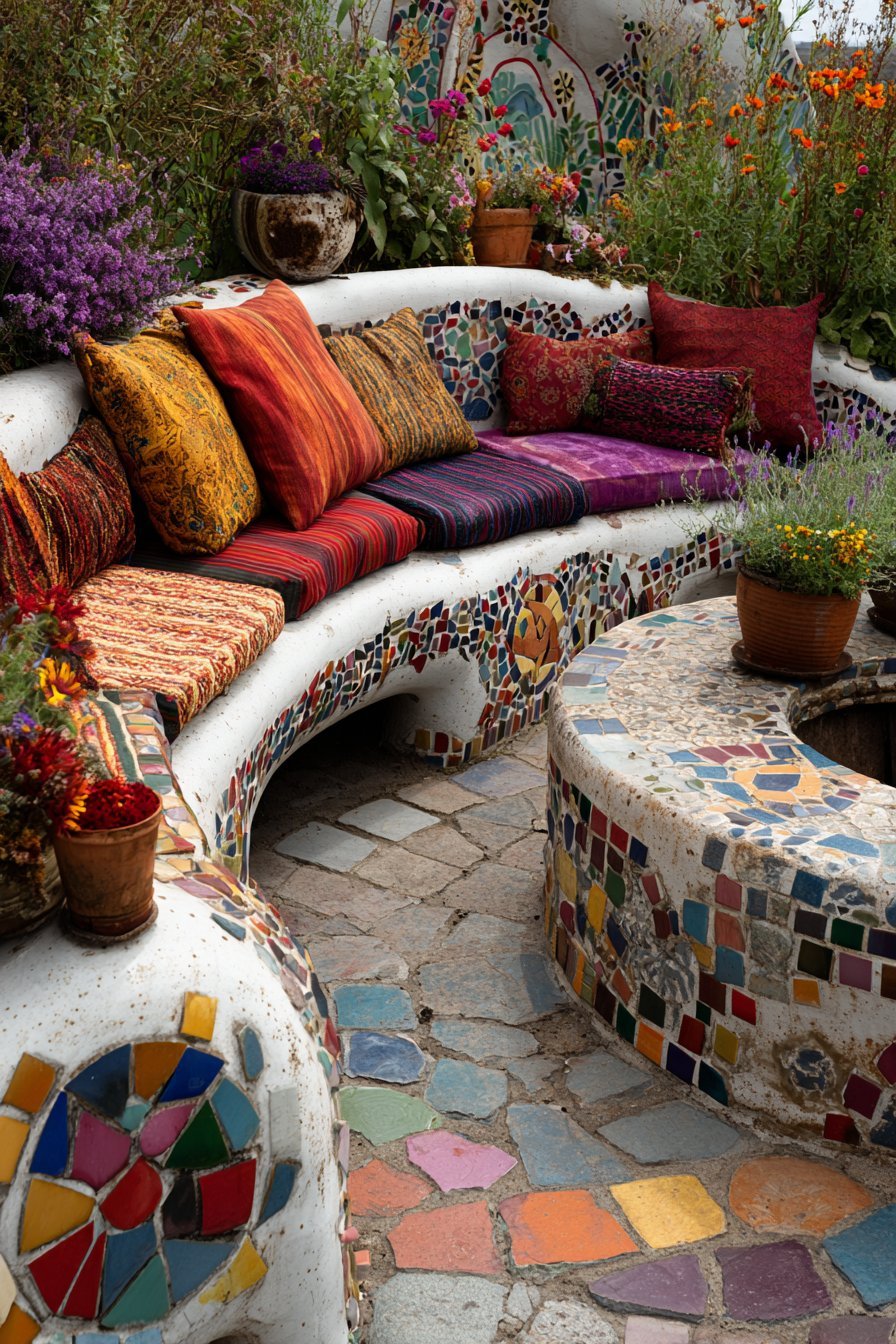
Bright cushions and throws top the mosaic surface. Tie-dye, batik, and ethnic prints provide comfortable seating. The textile layers add softness to the firm bench structure. Each fabric piece contributes to the vibrant color palette. Visitors can adjust cushions for personalized comfort.
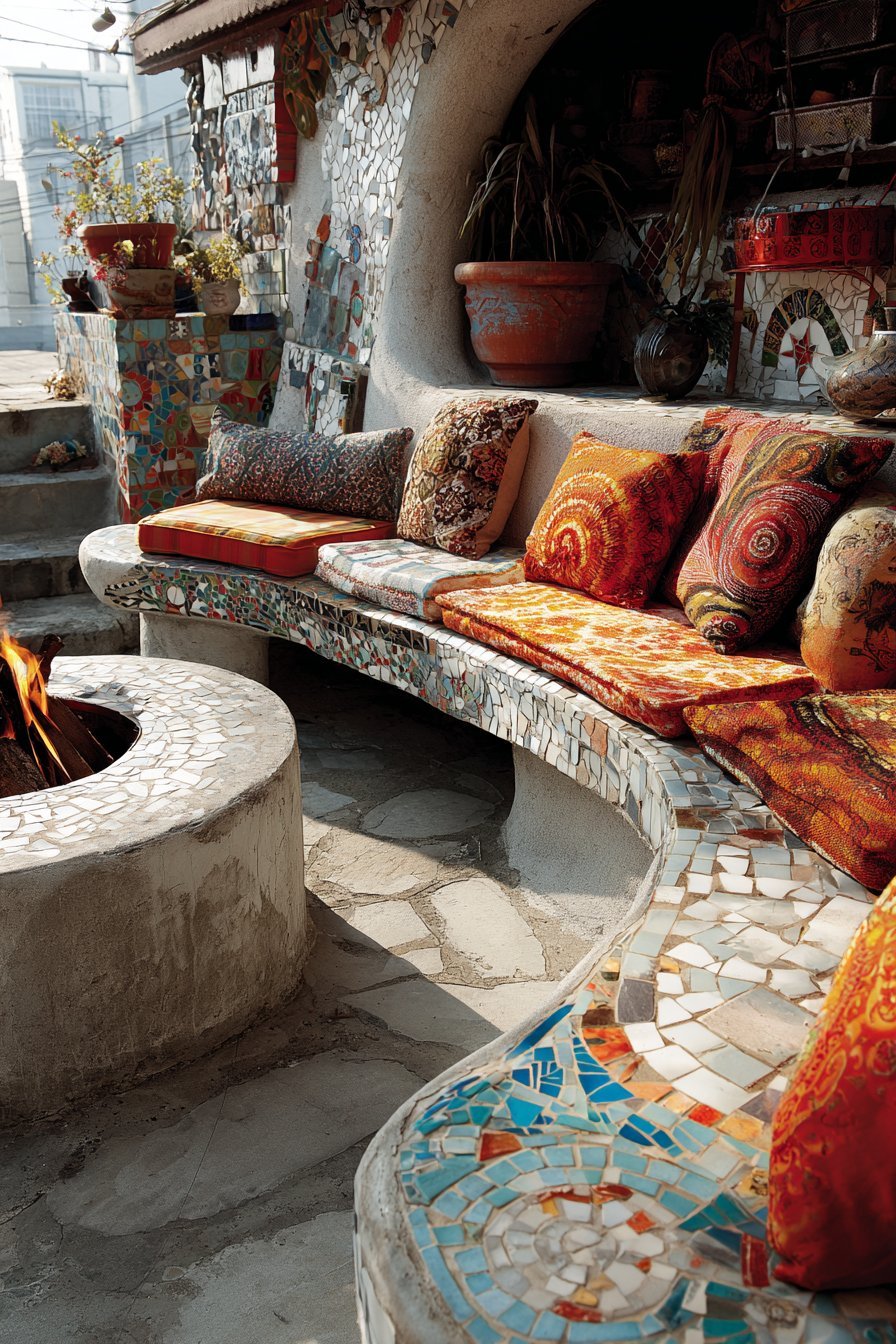
Nearby planters made from repurposed containers overflow with abundance. Herbs and flowers spill over container edges. Coffee cans, buckets, and ceramic vessels become unique planters. The creative reuse demonstrates resourcefulness. The varied container heights create visual interest.
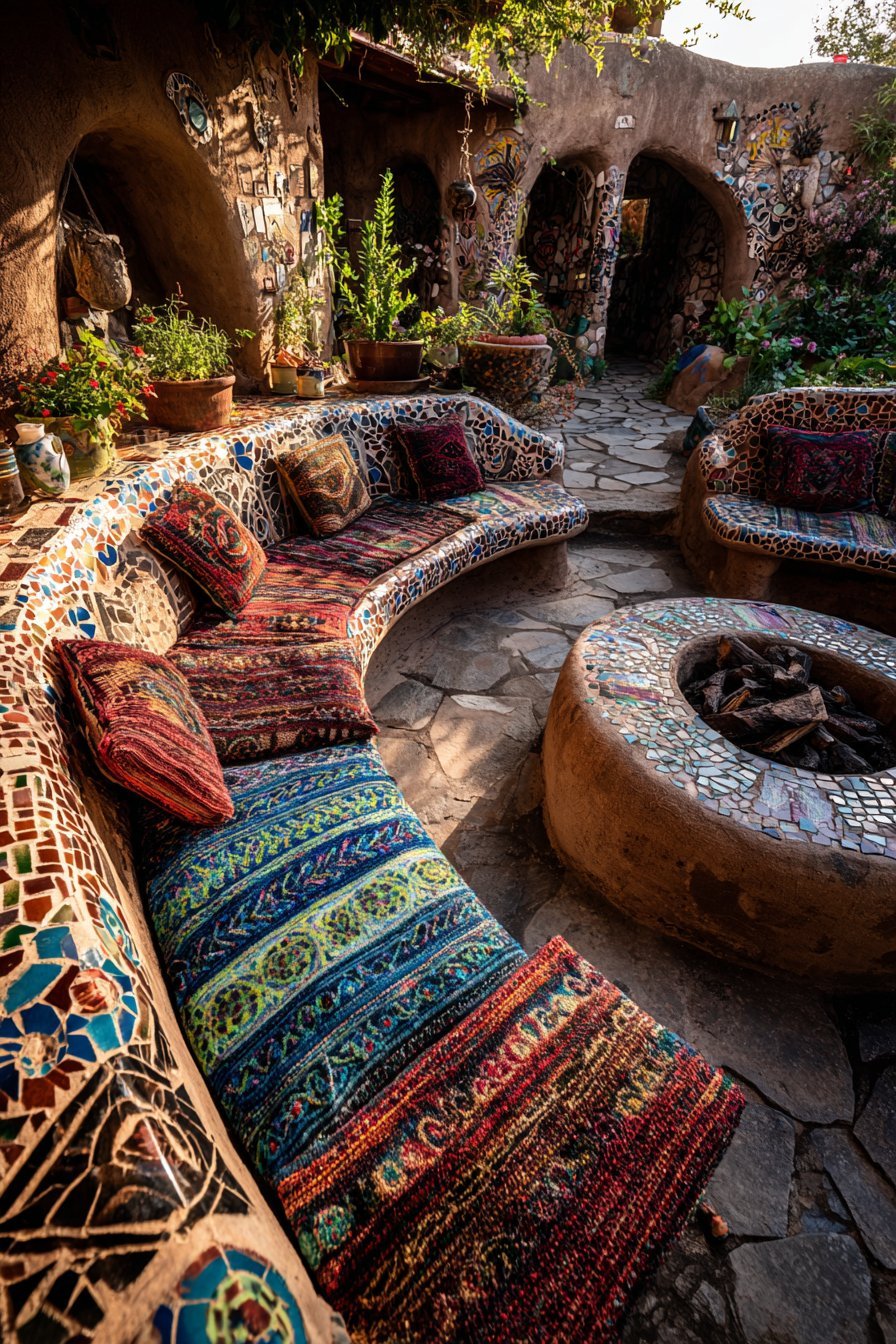
Natural daylight captures the artistic craftsmanship details. The mosaic pieces glitter and shine in sunlight. Shadow patterns emphasize the bench’s curved form. The handmade quality stands in contrast to mass-produced outdoor furniture. Every imperfection adds character and uniqueness.
Key Design Tips:
- Research proper cob building techniques for structural stability and weather resistance
- Use tile adhesive designed for outdoor applications when creating mosaics
- Seal completed mosaic work with grout and weatherproof sealant
- Build bench height between 16-18 inches for comfortable seating
- Incorporate fire-resistant materials near the fire pit area
- Add drainage channels beneath bench to prevent water pooling and erosion
11. Canvas Teepee Nomadic Haven
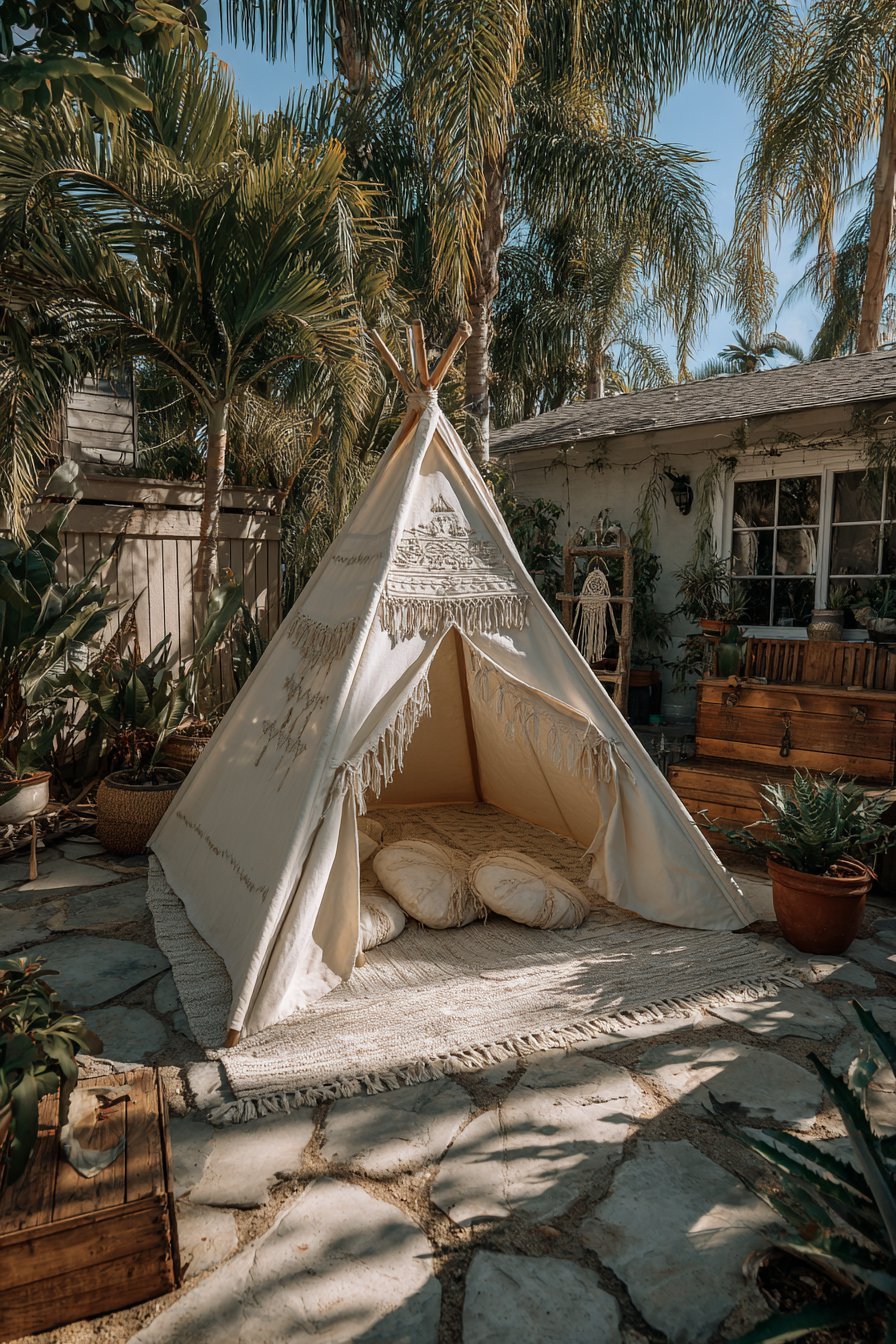
A vintage teepee or canvas bell tent serves as dramatic focal point. Fringe and tassels decorate the exterior edges. Hand-painted designs cover portions of the canvas. The temporary structure suggests a nomadic lifestyle and adventure. The tent provides shade, shelter, and private retreat space.
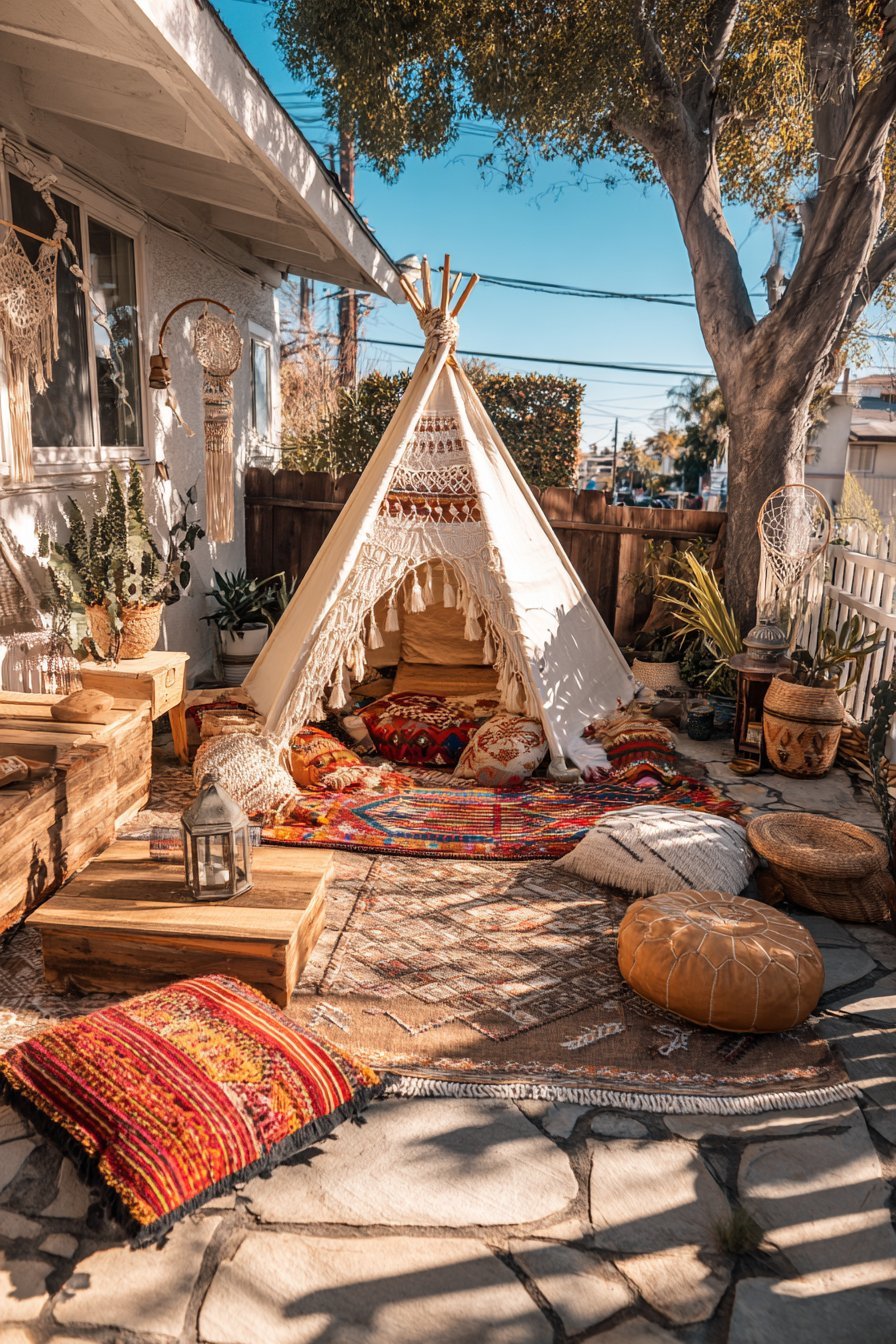
Natural stone pathways lead visitors to the tent entrance. Scattered floor cushions on outdoor rugs create comfortable lounging. Dreamcatchers hang from nearby tree branches at varying heights. The suspended decorations catch breeze and create gentle movement. Each dreamcatcher features unique web patterns and feather selections.
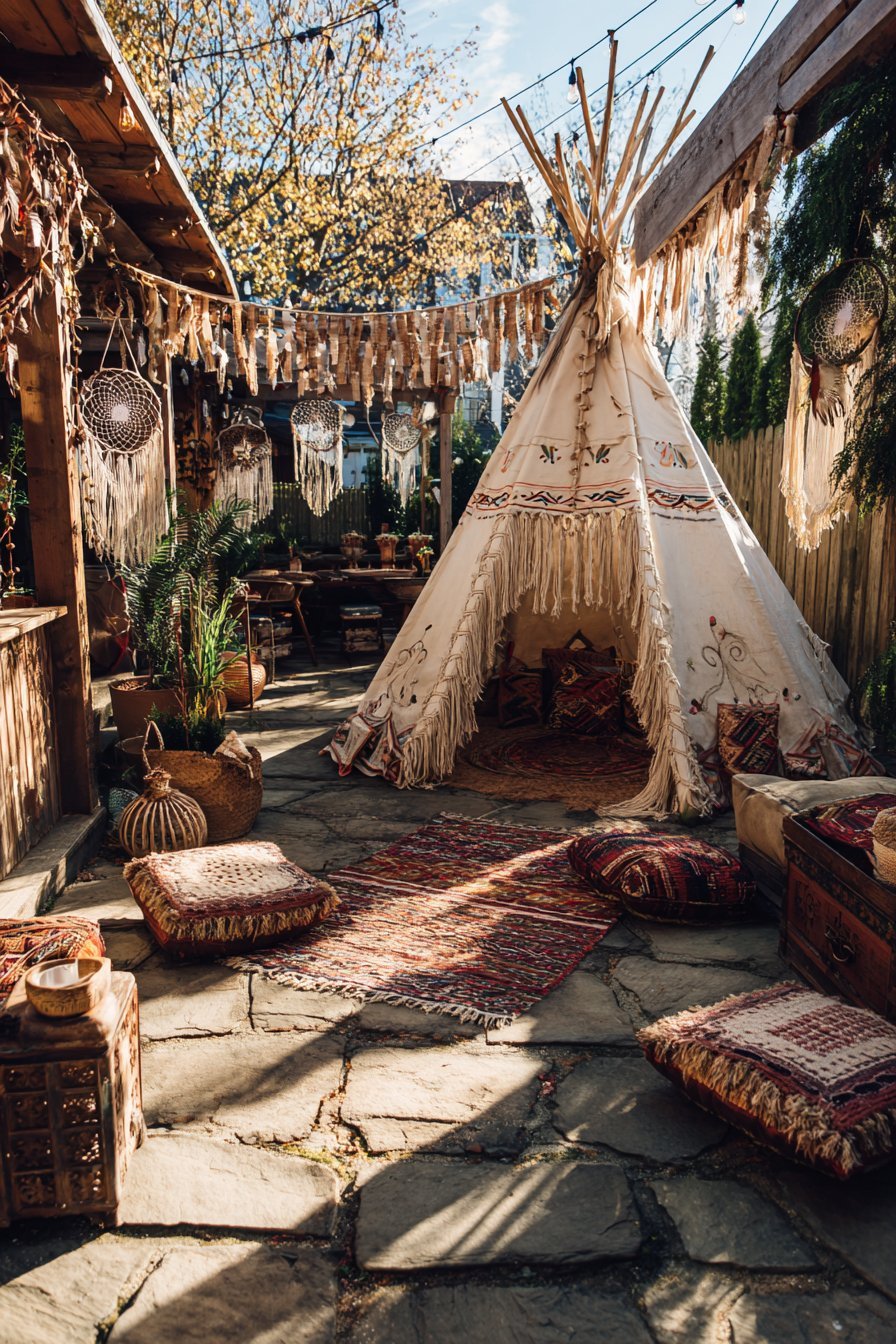
Potted plants surround the teepee base. Vintage lanterns provide evening lighting without electricity. Wooden crates repurposed as side tables offer functional surfaces. The collected elements create cozy outdoor room. The arrangement encourages rest and contemplation.
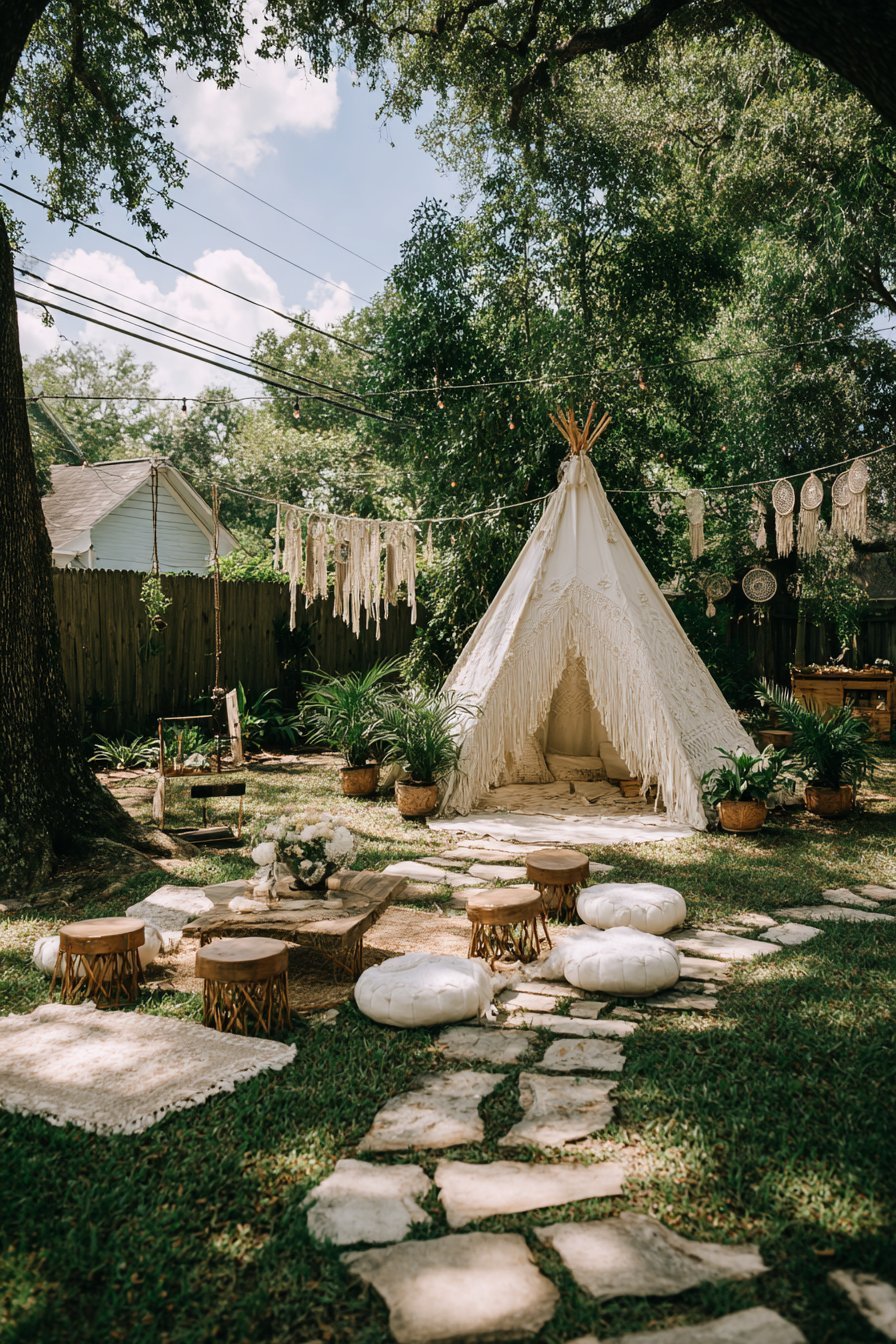
Afternoon light creates interesting shadows across the canvas. The tent material glows when backlit by sun. Textile details become more pronounced in angled lighting. The nomadic aesthetic transports visitors mentally. The space feels separated from everyday concerns.
Key Design Tips:
- Choose canvas treated for water resistance and mildew prevention
- Anchor tent firmly with proper stakes and guy lines for stability
- Position teepee to avoid low spots where water collects during rain
- Create raised platform or thick rug layer to insulate from ground moisture
- Decorate with elements that can be easily removed during harsh weather
- Add mosquito netting at entrance for comfortable summer evenings
12. Bathtub Pond Water Feature
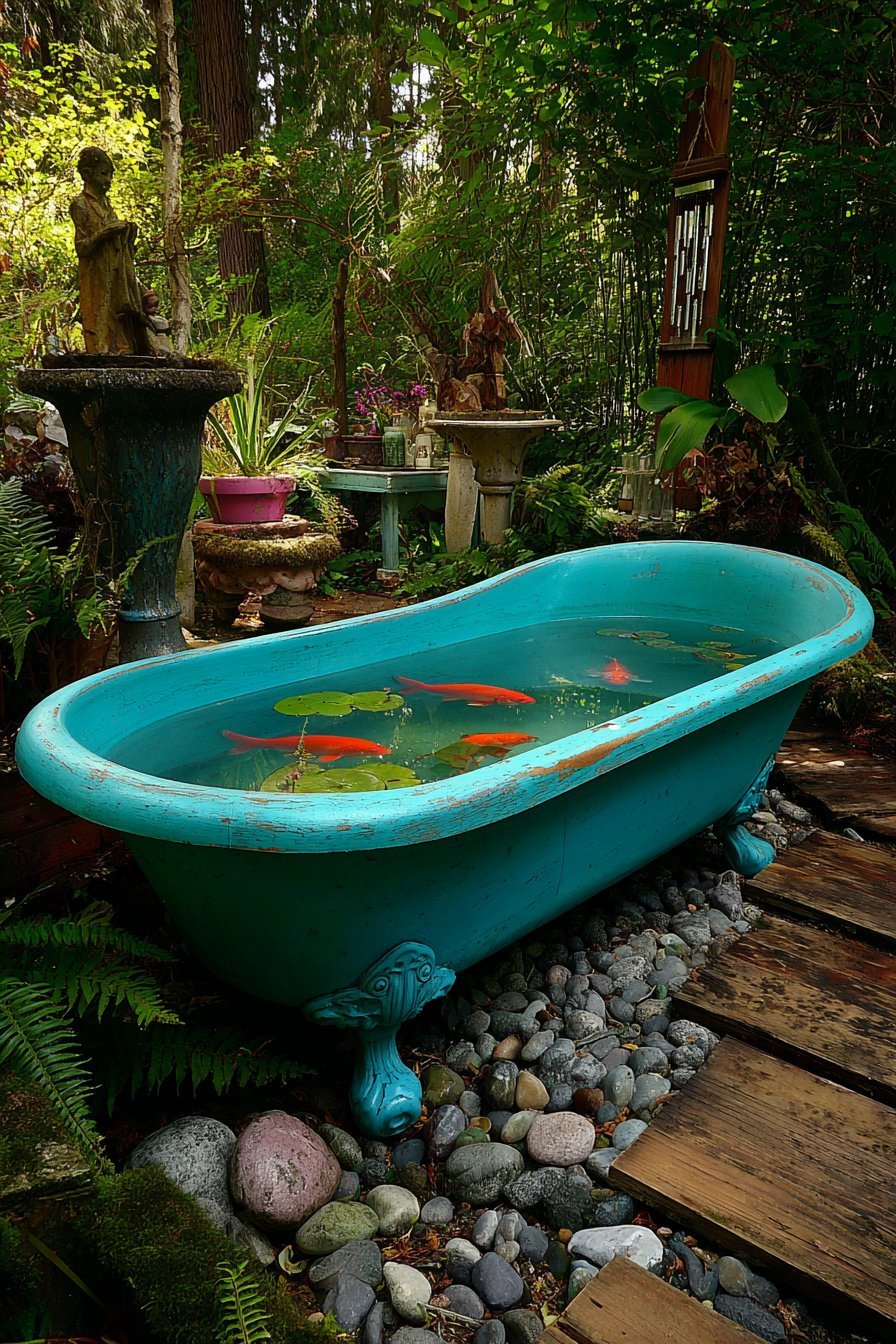
A repurposed claw-foot bathtub painted in bright colors creates unique water feature. The vintage tub converts into small pond ecosystem. Water lilies float on the surface. Goldfish add movement and life. The creative upcycling demonstrates hippie ingenuity and environmental consciousness.
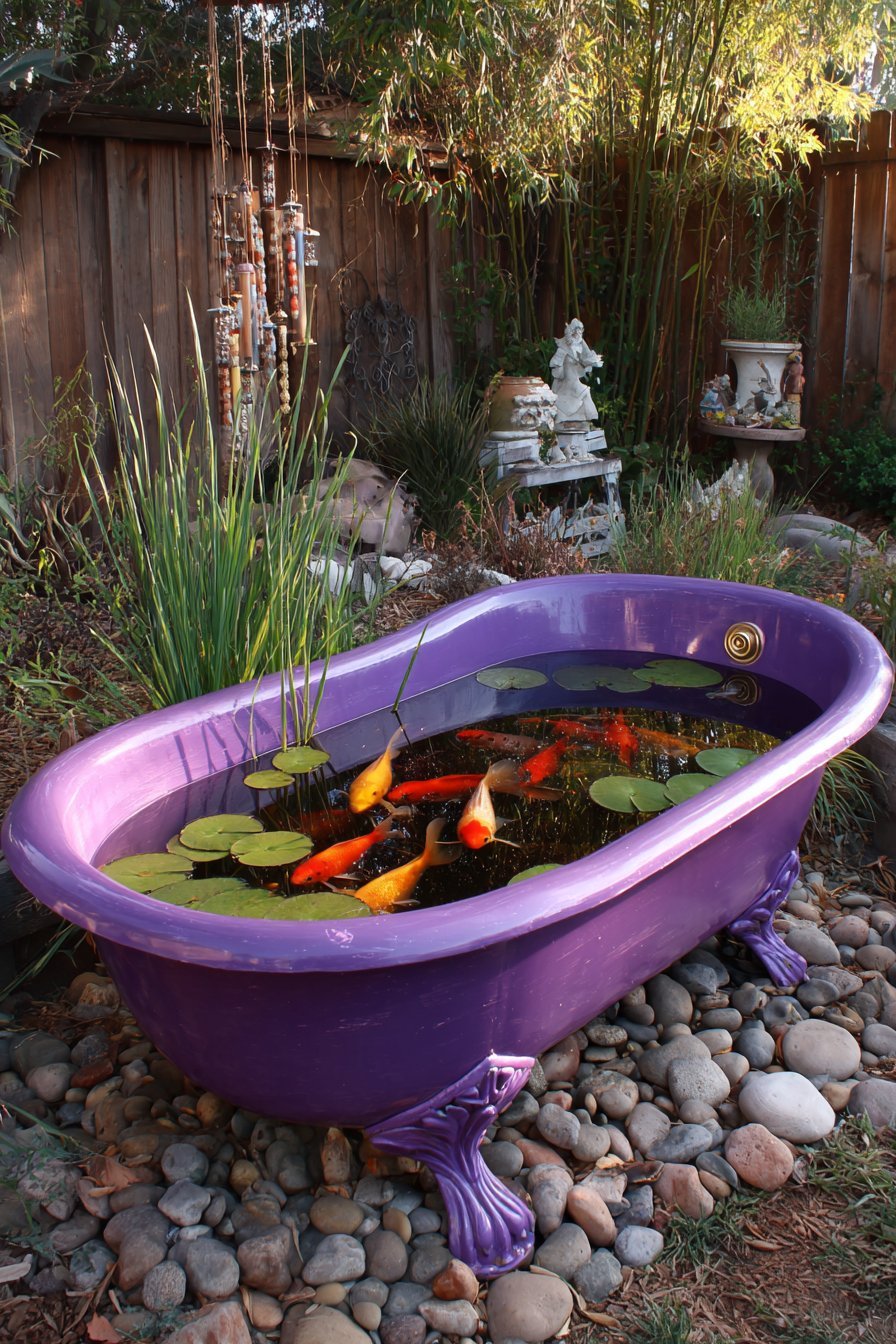
Smooth river rocks surround the tub perimeter. Wild grasses and native plants grow naturally around the feature. Vintage garden statuary adds whimsical touches. Gnomes, ceramic animals, and abstract sculptures dot the landscape. Hand-painted stepping stones create pathways to the pond.
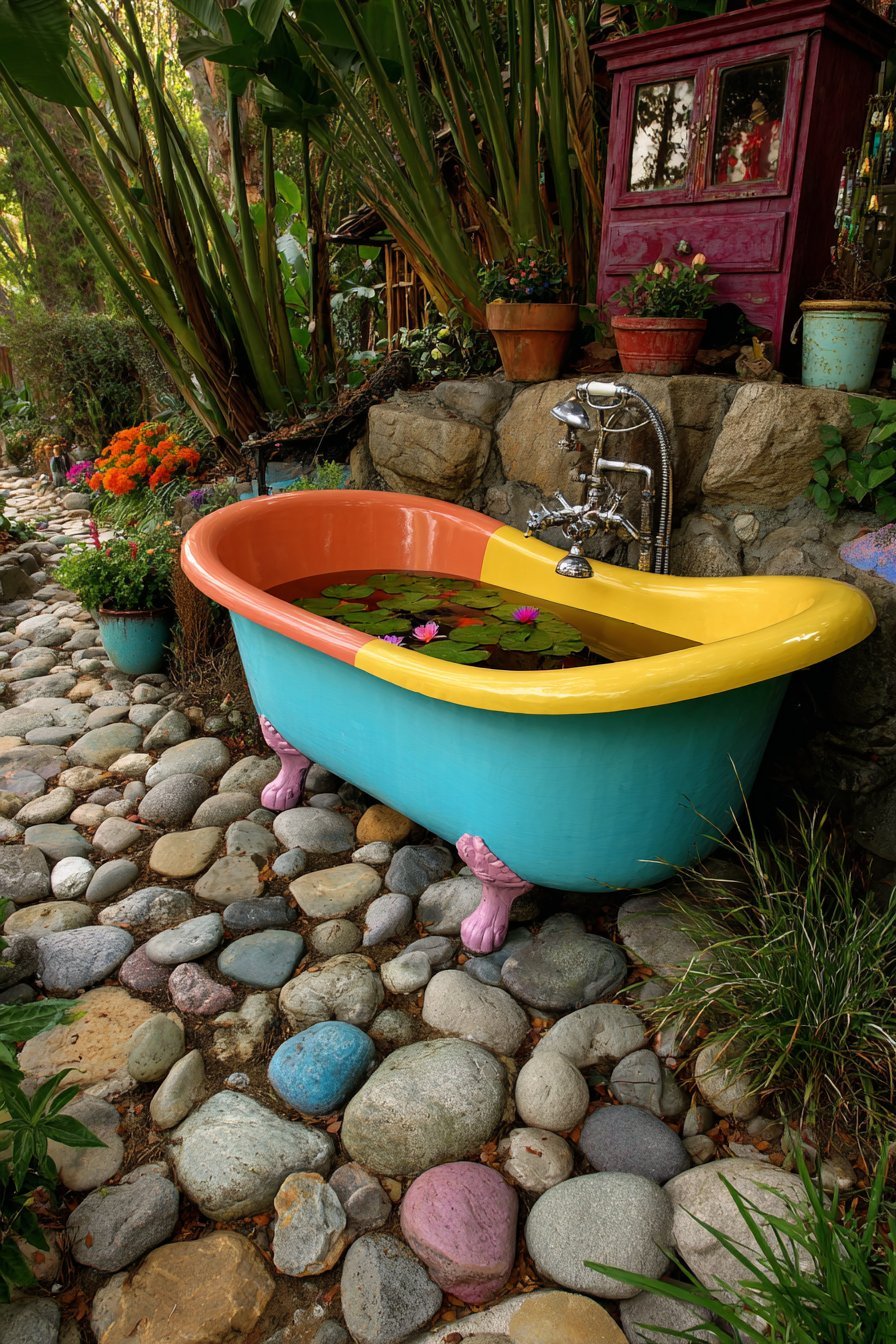
Wind chimes made from driftwood and sea glass hang nearby. The natural materials create gentle musical sounds. The chimes catch light and cast colorful reflections. The sensory elements combine visual and auditory interest. The entire corner becomes meditation focal point.
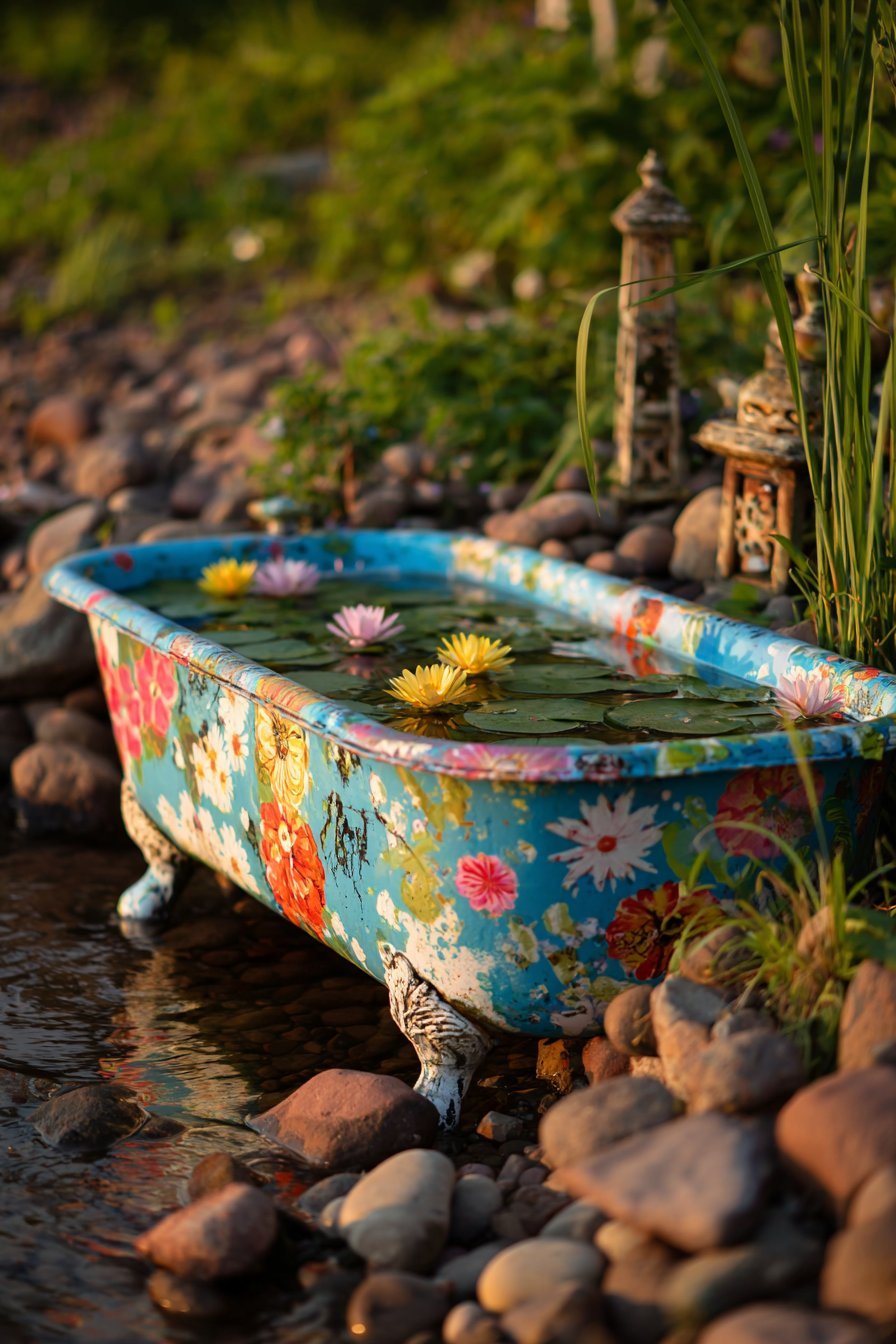
Natural lighting emphasizes the creative upcycling approach. The bright paint colors pop against green surroundings. Water reflects sky and nearby plants. The unconventional pond design sparks conversation. Garden art and functionality merge completely.
Key Design Tips:
- Drill drainage holes and seal with aquarium-safe sealant before filling
- Use exterior enamel paint designed for metal surfaces
- Install small fountain pump to circulate water and prevent stagnation
- Add aquatic plants to naturally filter water and provide fish habitat
- Position in partial shade to prevent excessive algae growth
- Create overflow system for heavy rain events to prevent flooding
13. Pallet and Tapestry Canopy Lounge
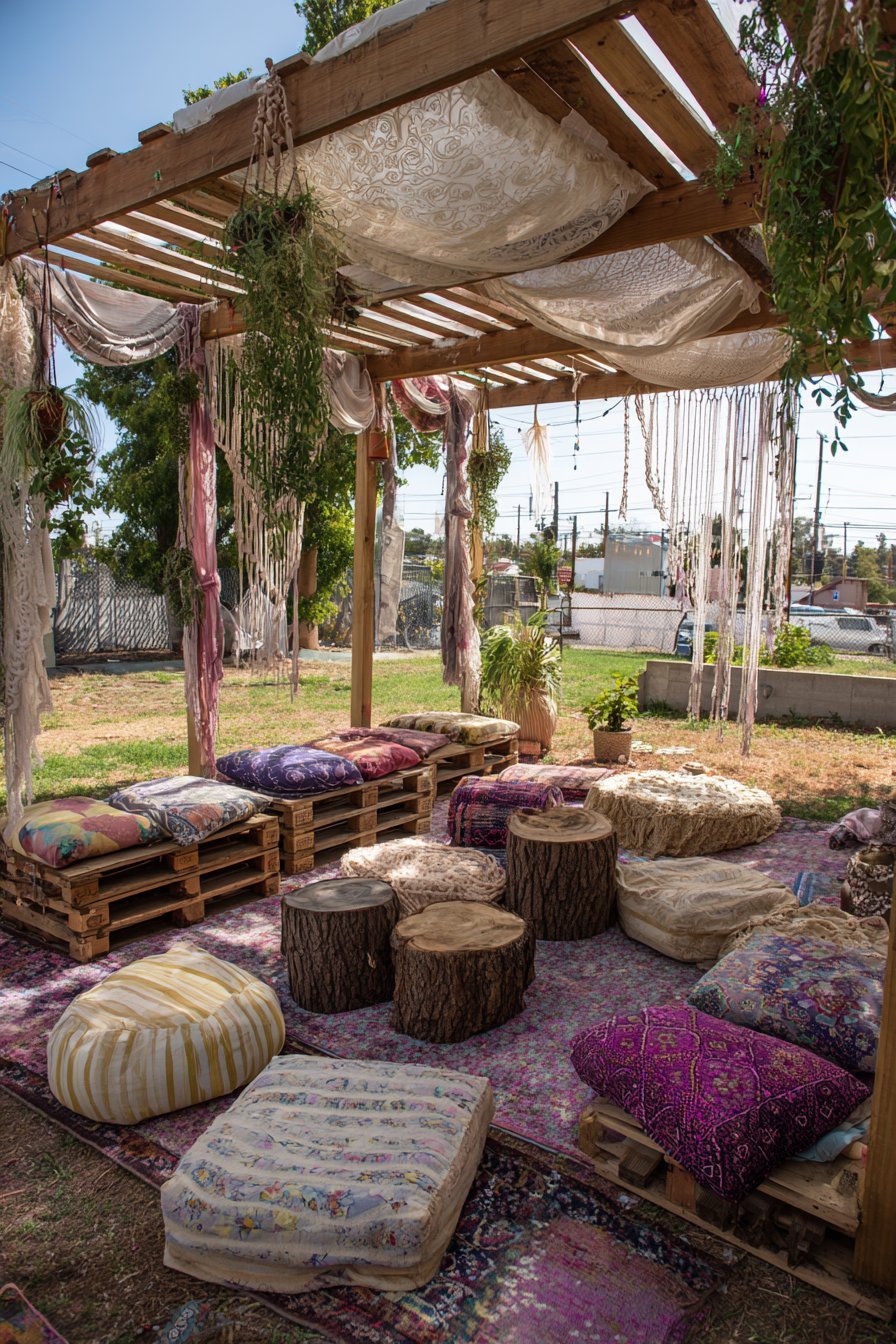
Repurposed wooden pallets form structural shade canopy. Vintage tapestries drape between pallet frames. Batik fabrics and strings of beads create bohemian curtains. The layered textiles filter sunlight beautifully. The handmade structure demonstrates creative building without expensive materials.
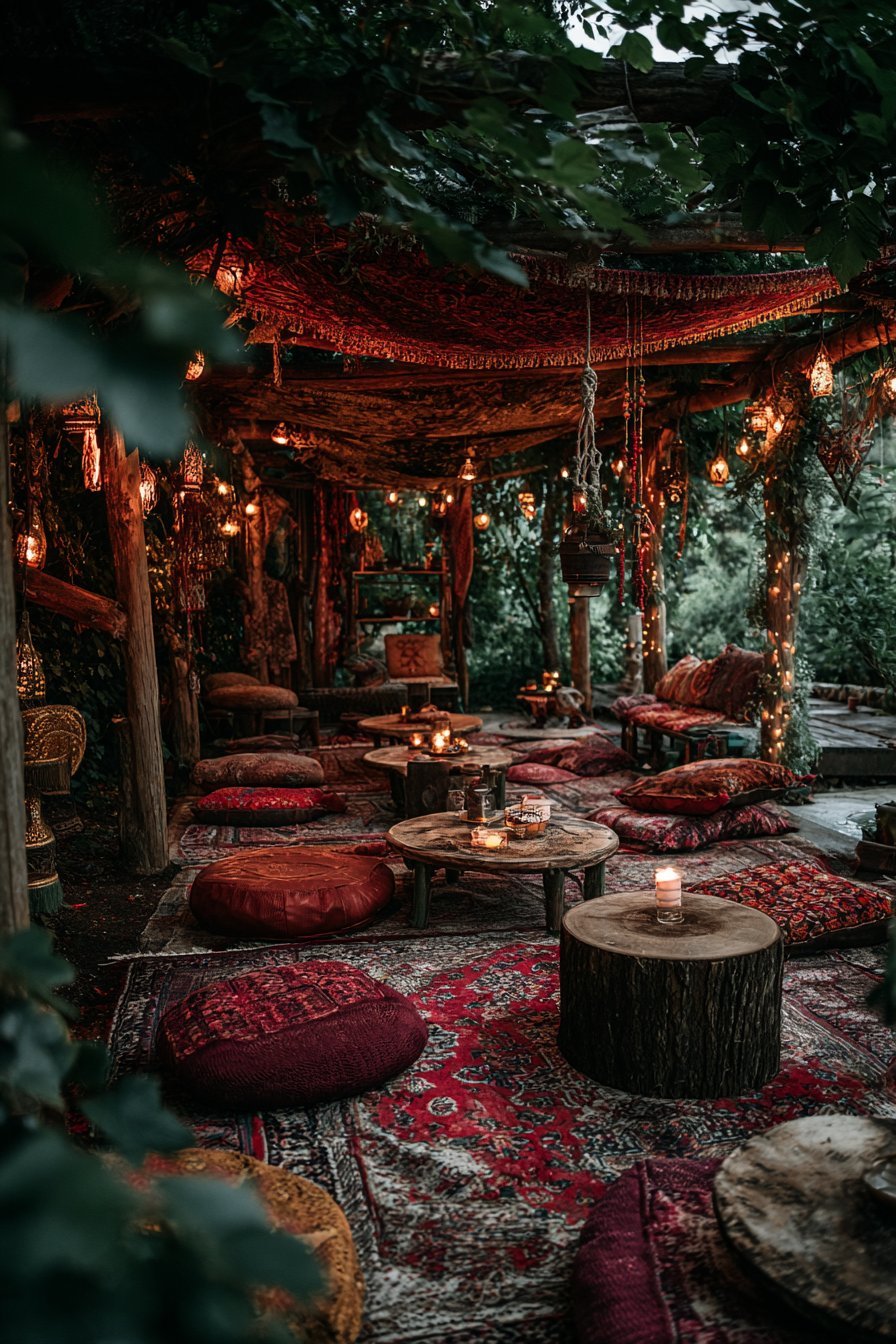
Floor cushions, poufs, and low tables fill the covered space. Tree stumps serve as natural side tables. The seating arrangement encourages intimate gatherings. The ground level perspective feels grounding and relaxed. Multiple people can recline comfortably in the shaded area.
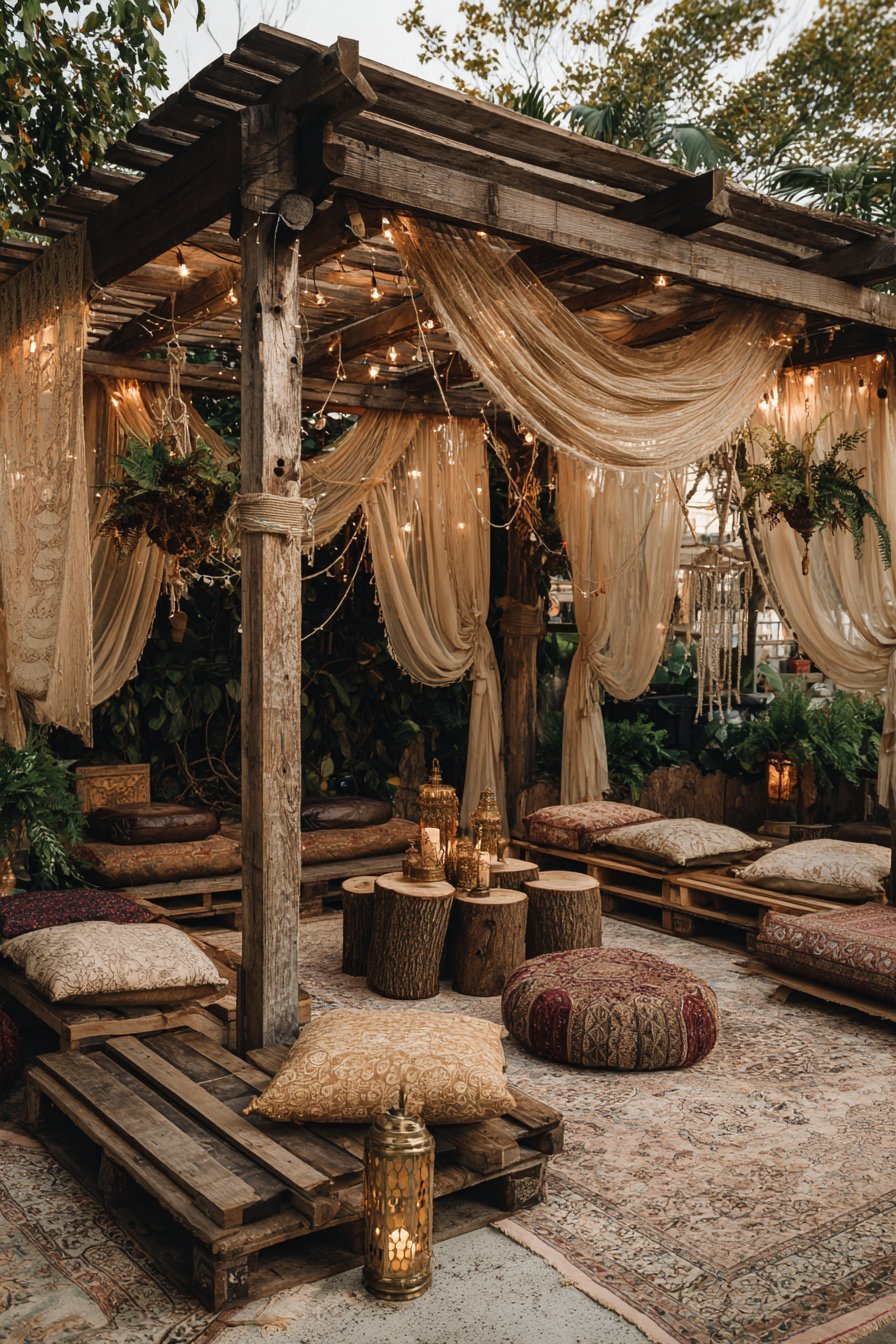
Hanging plants in macramé holders add living elements overhead. Trailing vines create green ceiling. Fairy light strands weave through the hanging plants. The vertical layers add dimension and interest. The space feels cozy without feeling cramped.
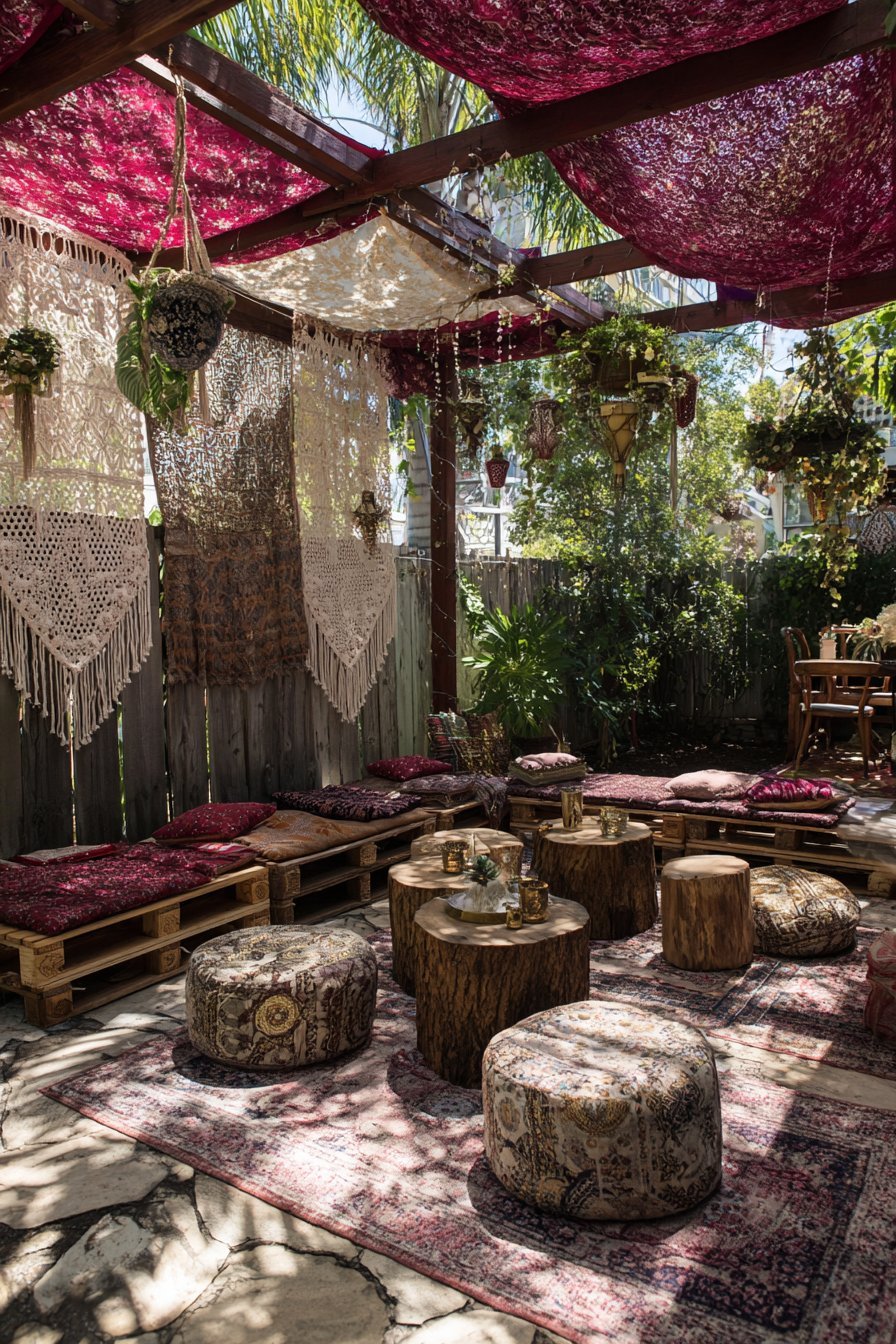
Layered outdoor rugs in faded patterns cover the ground. The textile stack creates soft surface. Each rug contributes different color and texture. Soft diffused light filters through fabric canopy. The magical atmosphere encourages lengthy conversations and daydreaming.
Key Design Tips:
- Sand pallet wood thoroughly and seal with weatherproof finish
- Secure pallet structure firmly to prevent collapse in wind
- Choose heavyweight fabrics that won’t tear easily in breeze
- Create removable fabric panels for easy cleaning and seasonal changes
- Position canopy in naturally protected area away from strongest winds
- Add waterproof tarp layer above decorative fabrics for rain protection
14. Rainbow Vertical Garden Wall
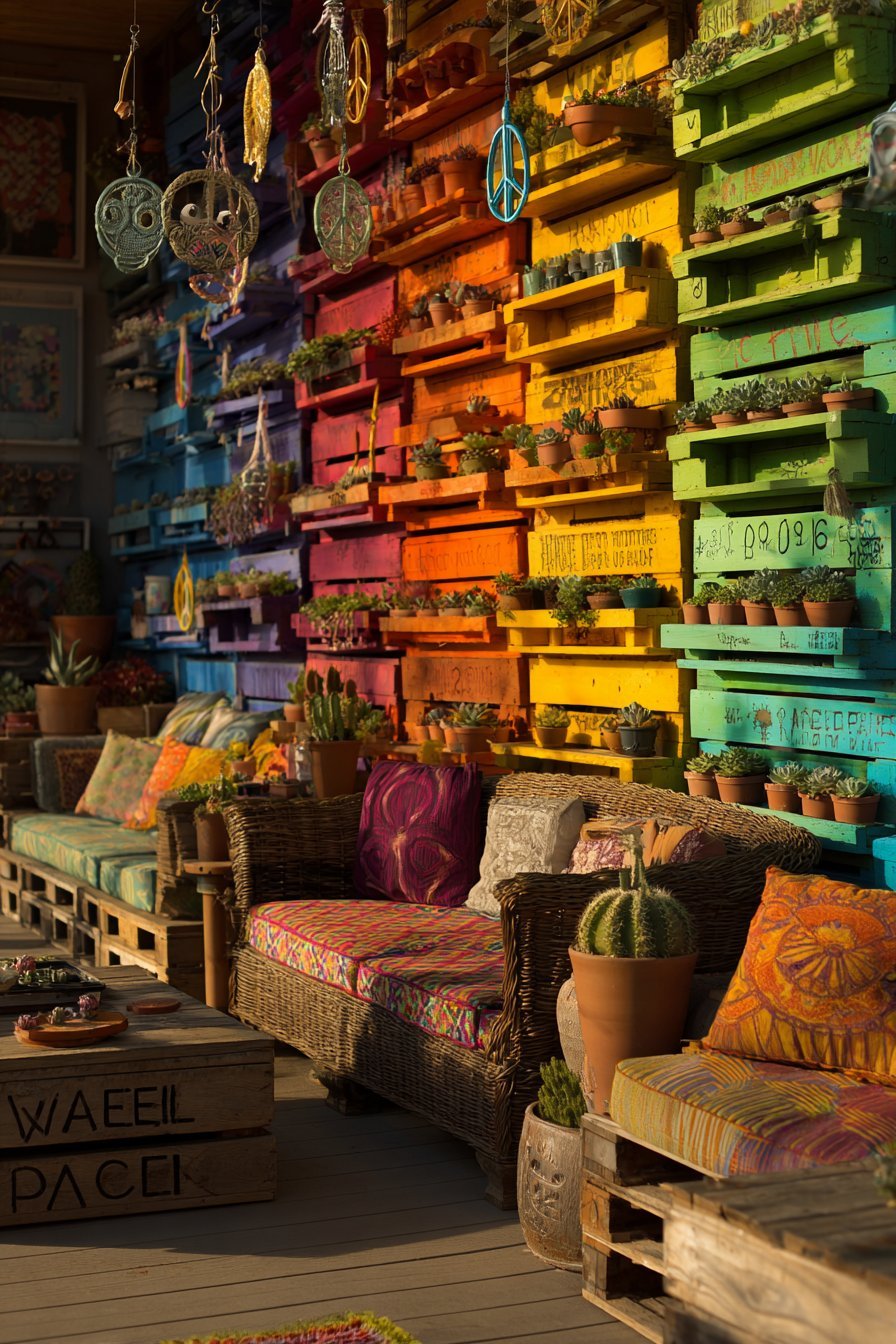
A vertical garden wall made from repurposed pallets features rainbow gradient paint. The color progression moves from red through violet. Succulents, herbs, and trailing plants fill the pallet pockets. The space-saving design maximizes limited yard area. The creative approach combines function and dramatic visual impact.
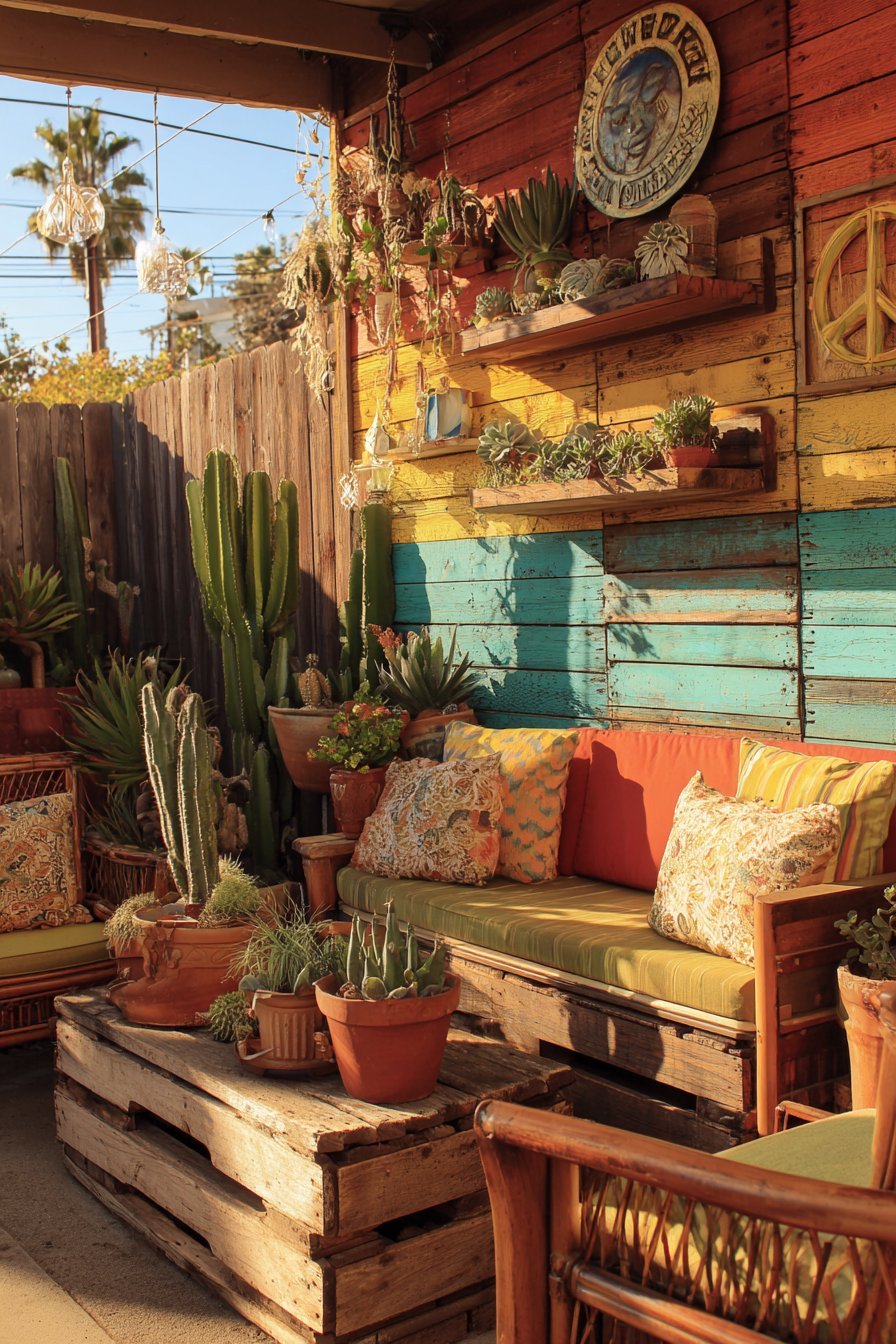
The living wall serves as backdrop for outdoor seating. Vintage wicker furniture with colorful cushions faces the garden. Potted cacti and air plants cluster on nearby surfaces. The desert plants require minimal maintenance. The collection demonstrates various succulent shapes and textures.
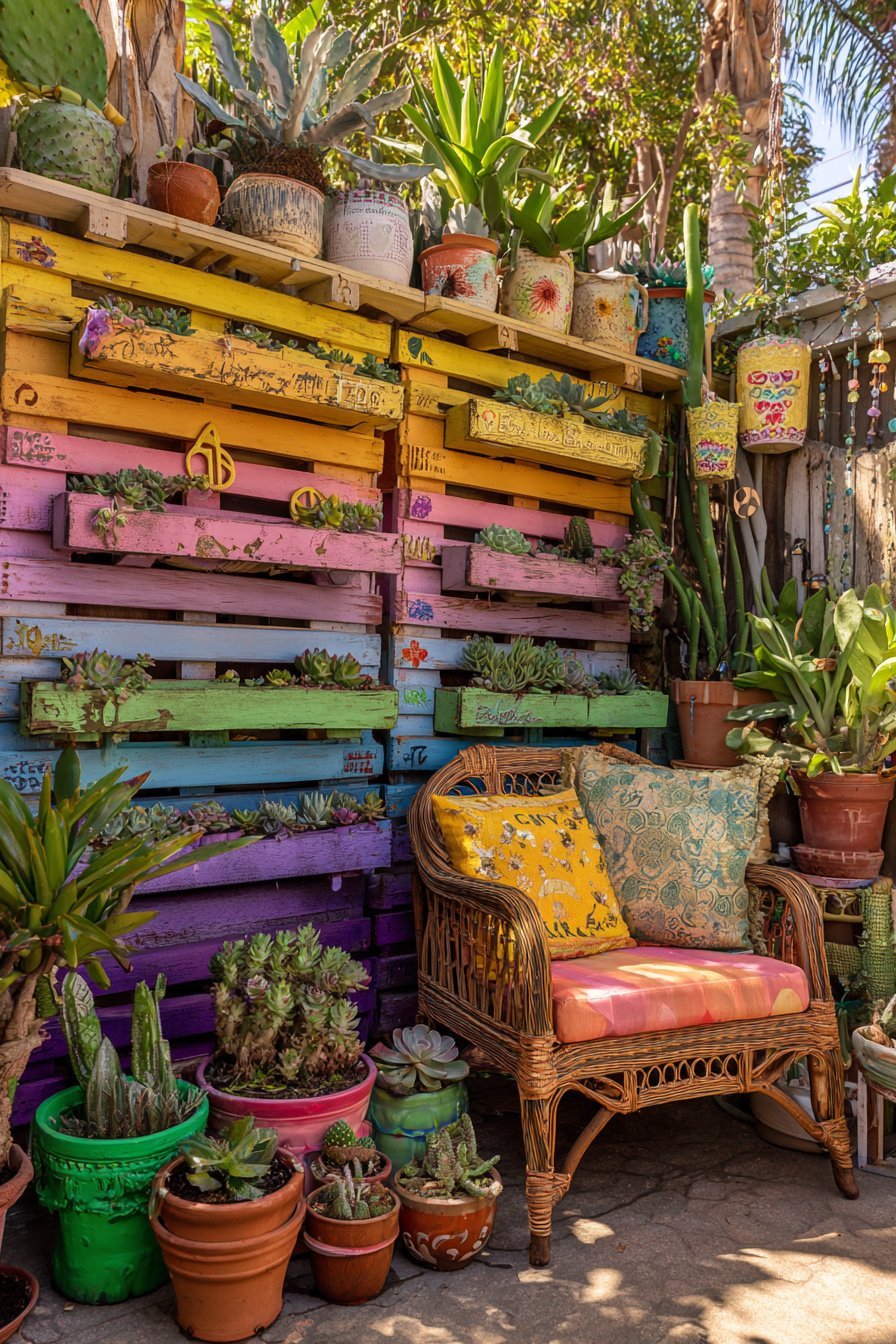
Decorative elements include painted peace signs and sun faces. Hanging crystal prisms catch light and create rainbow reflections. The light play adds magical element throughout the day. Each crystal creates unique sparkle patterns. The entire wall becomes dynamic art installation.
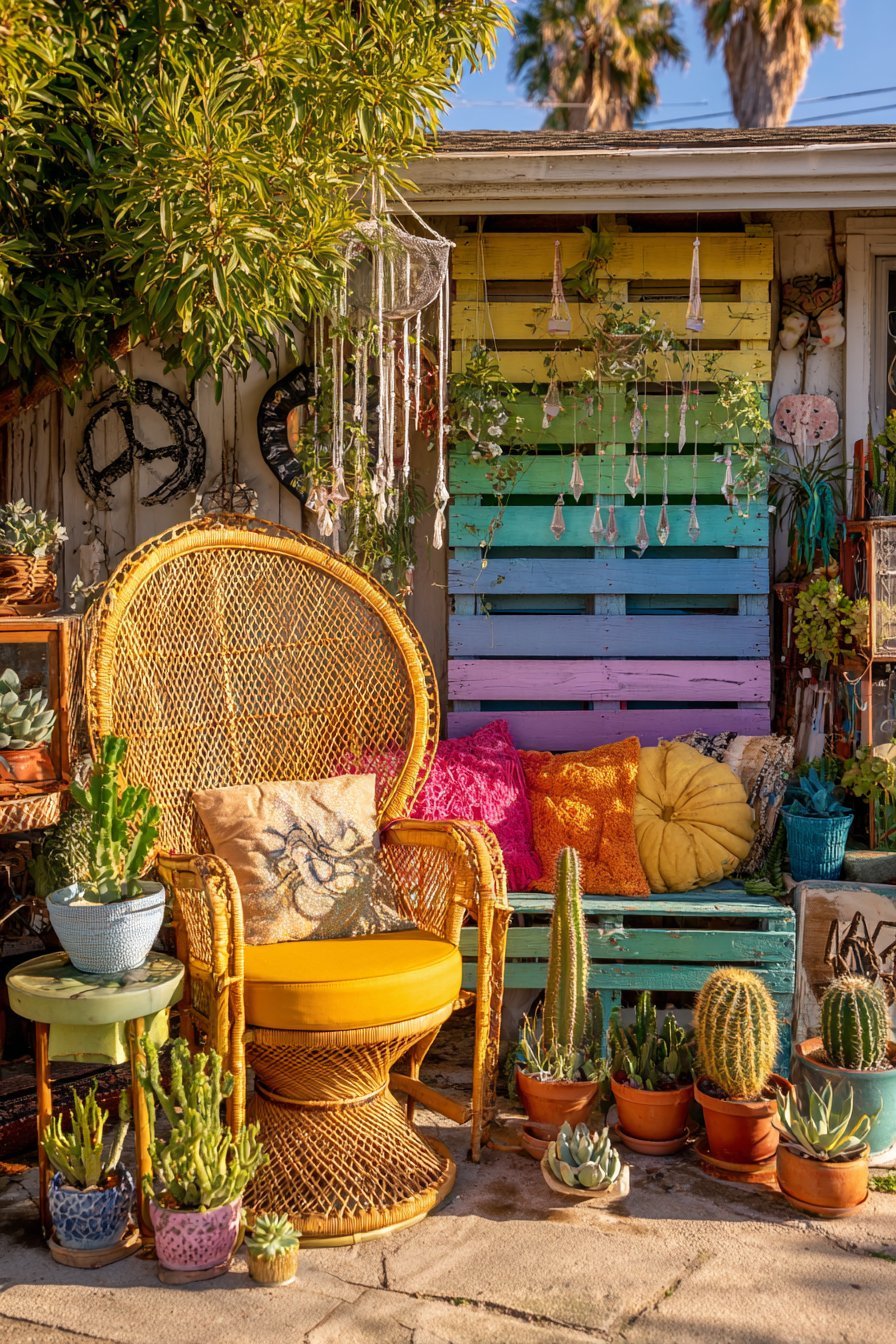
Natural afternoon lighting showcases the vertical garden design. The gradient colors glow in full sun. Plant shadows create additional dimension. The innovative space solution inspires other vertical projects. Small yards can achieve impressive impact through creative thinking.
Key Design Tips:
- Line pallet pockets with landscape fabric to contain soil properly
- Use exterior latex paint in fade-resistant formulas for lasting color
- Select drought-tolerant plants suited to vertical growing conditions
- Install drip irrigation system for consistent watering without runoff
- Secure wall firmly to fence or building using proper anchors
- Choose shallow-rooted plants appropriate for limited soil depth
15. Festival Performance Stage Area
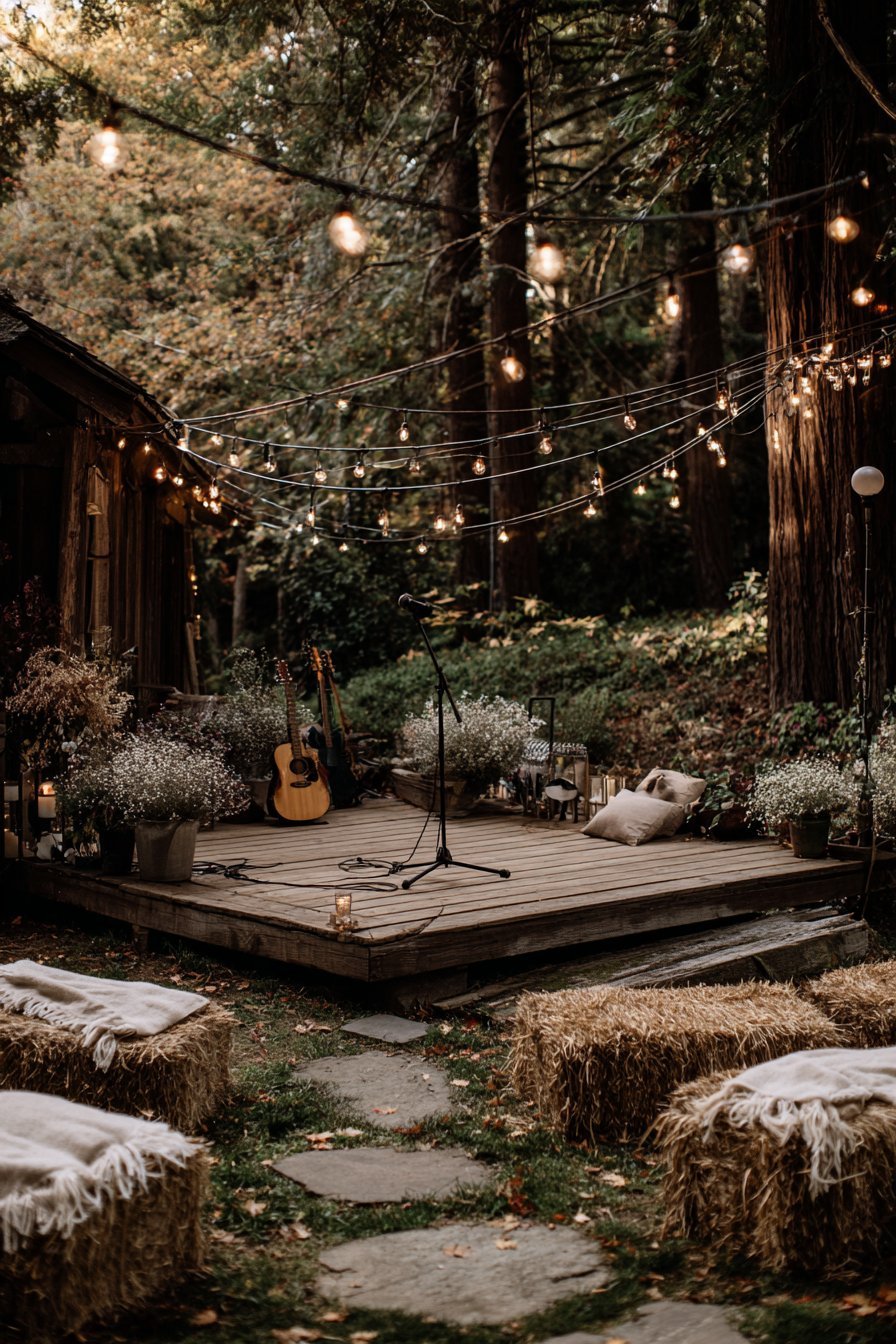
A simple wooden platform creates impromptu performance stage. Vintage microphone stand suggests musical gatherings. String lights form canopy overhead in crisscross patterns. The lighting creates magical atmosphere for evening performances. The dedicated space encourages creative expression and community gathering.
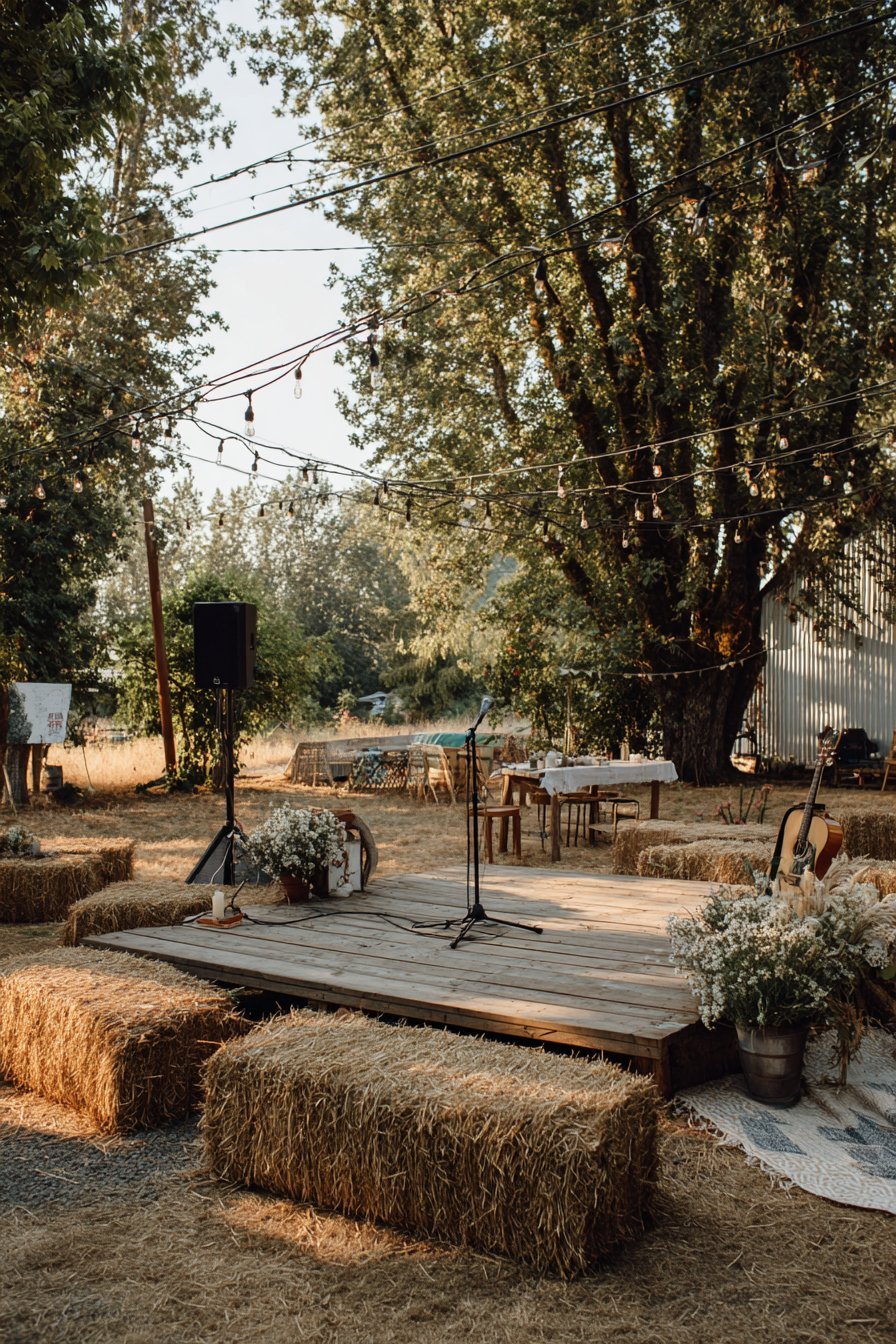
Hay bales covered with vintage blankets provide seating tiers. Mismatched floor lamps create ambient lighting without harsh glare. Potted plants in painted containers soften the stage edges. Hand-painted signs announce events and welcome guests. Festival-style flags in bright colors flutter on poles.
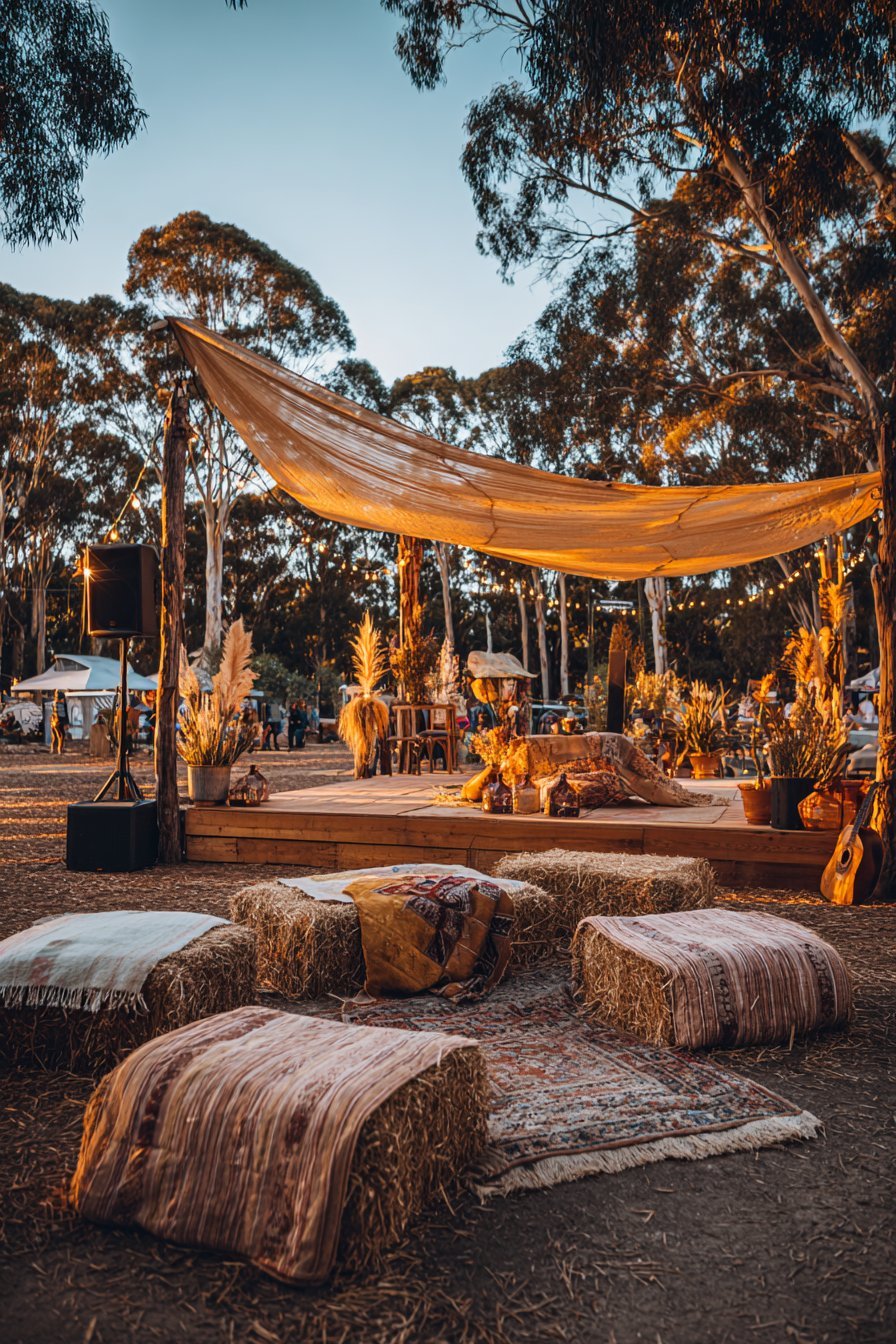
The communal atmosphere encourages participation and sharing. Musicians, poets, and storytellers have dedicated space. Audiences sit close to performers creating intimate connection. The casual setup removes performance pressure. Everyone feels welcome to share their talents.
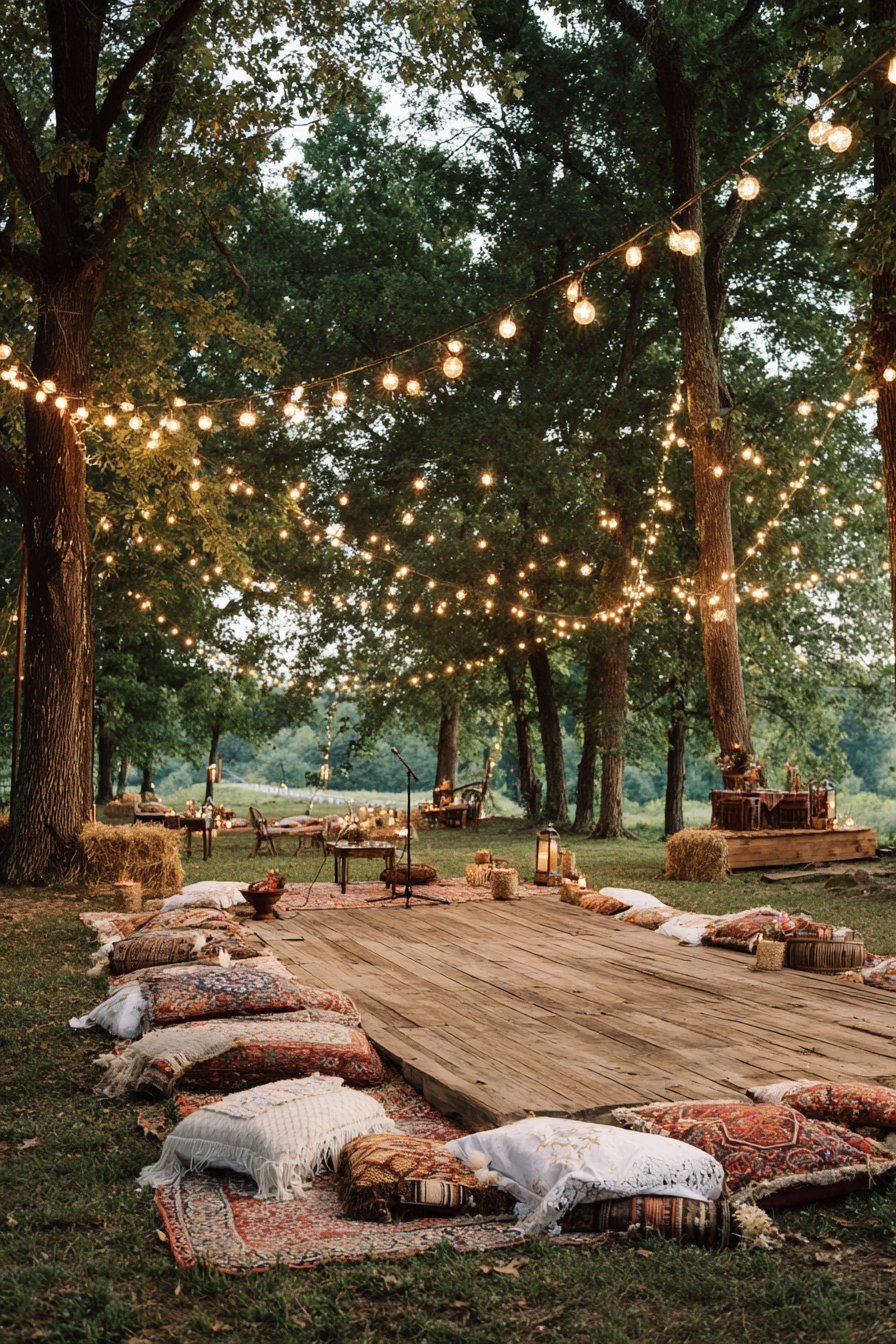
Golden hour light creates warm, inclusive setting. The low sun illuminates performers beautifully. Audiences gather naturally as evening approaches. The space facilitates community building through shared creativity. The festival atmosphere celebrates individual expression within a supportive environment.
Key Design Tips:
- Build platform 6-8 inches high for visibility without seeming formal
- Wire string lights to timer for automatic evening illumination
- Create simple sound system using battery-powered speakers
- Position stage with performer backs to setting sun to avoid glare
- Add fire pit nearby for post-performance gathering continuation
- Store hay bales under cover between events to maintain quality
16. Hanging Chair Reading Sanctuary
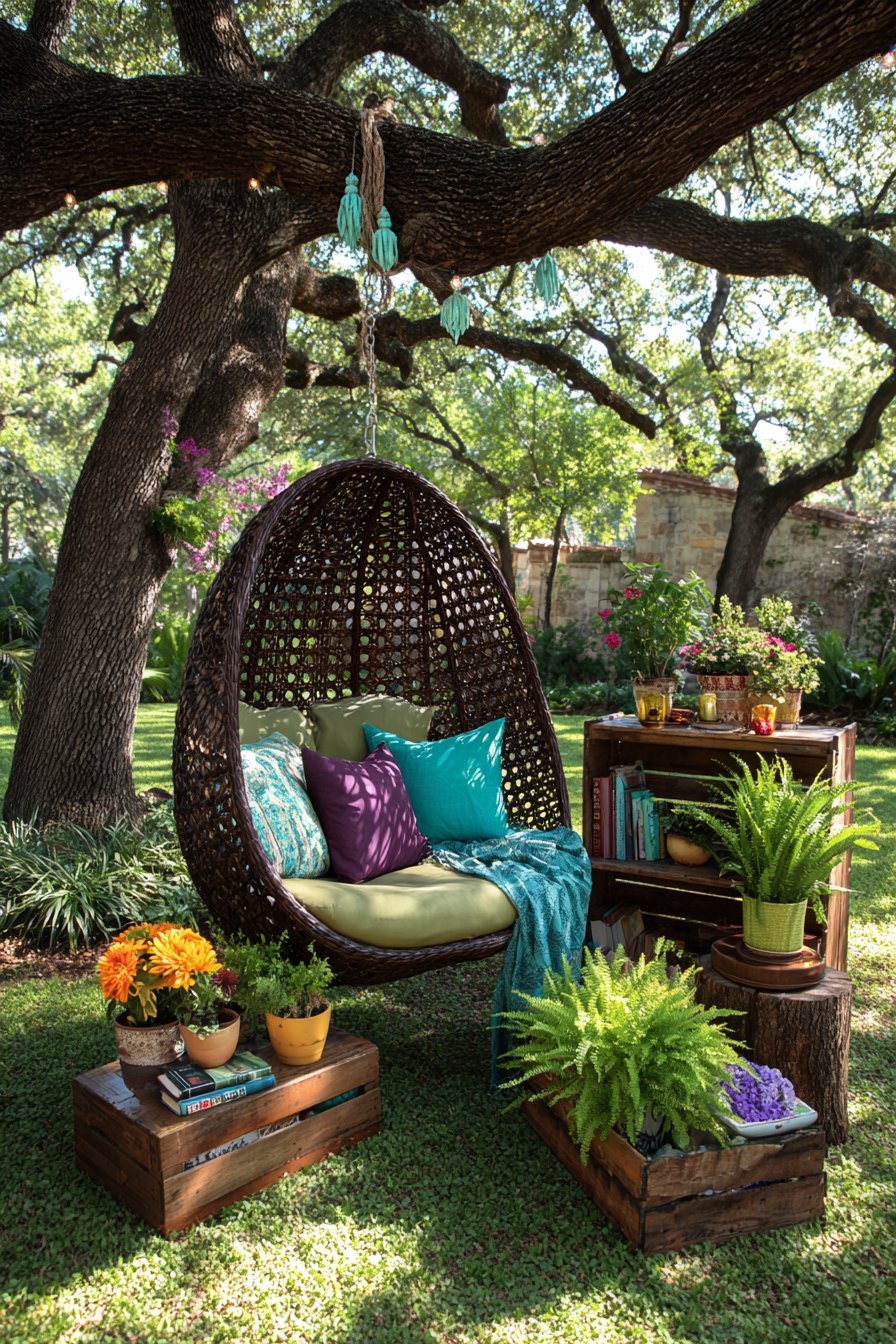
A hanging egg chair or bubble chair suspends from sturdy tree branch. Colorful pillows and vintage afghan throws fill the suspended seat. The chair sways gently in the breeze. The cozy cocoon provides private reading retreat. The elevated perspective offers new view of surrounding garden.
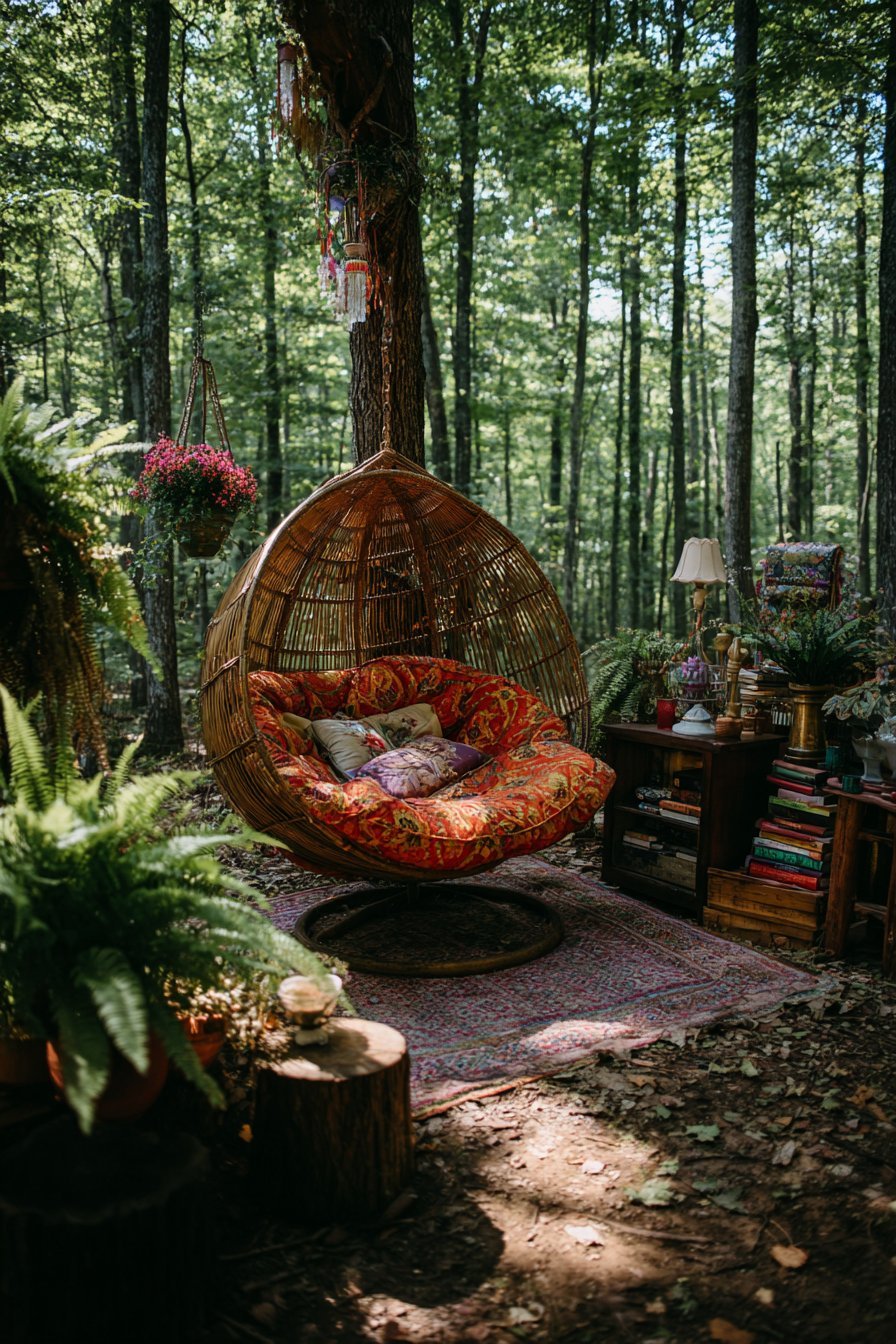
A small bookshelf made from stacked wooden crates sits nearby. The rustic storage keeps favorite books accessible. Potted ferns and flowering plants surround the reading nook. A vintage floor lamp provides evening reading light. The personal touches make the space feel intimate.
Wind chimes, hanging crystals, and beaded strands add sensory elements. The decorations catch light and create gentle sounds. A tree stump side table holds beverages and reading glasses. The practical elements support extended relaxation time. The nook becomes favorite retreat for quiet moments.
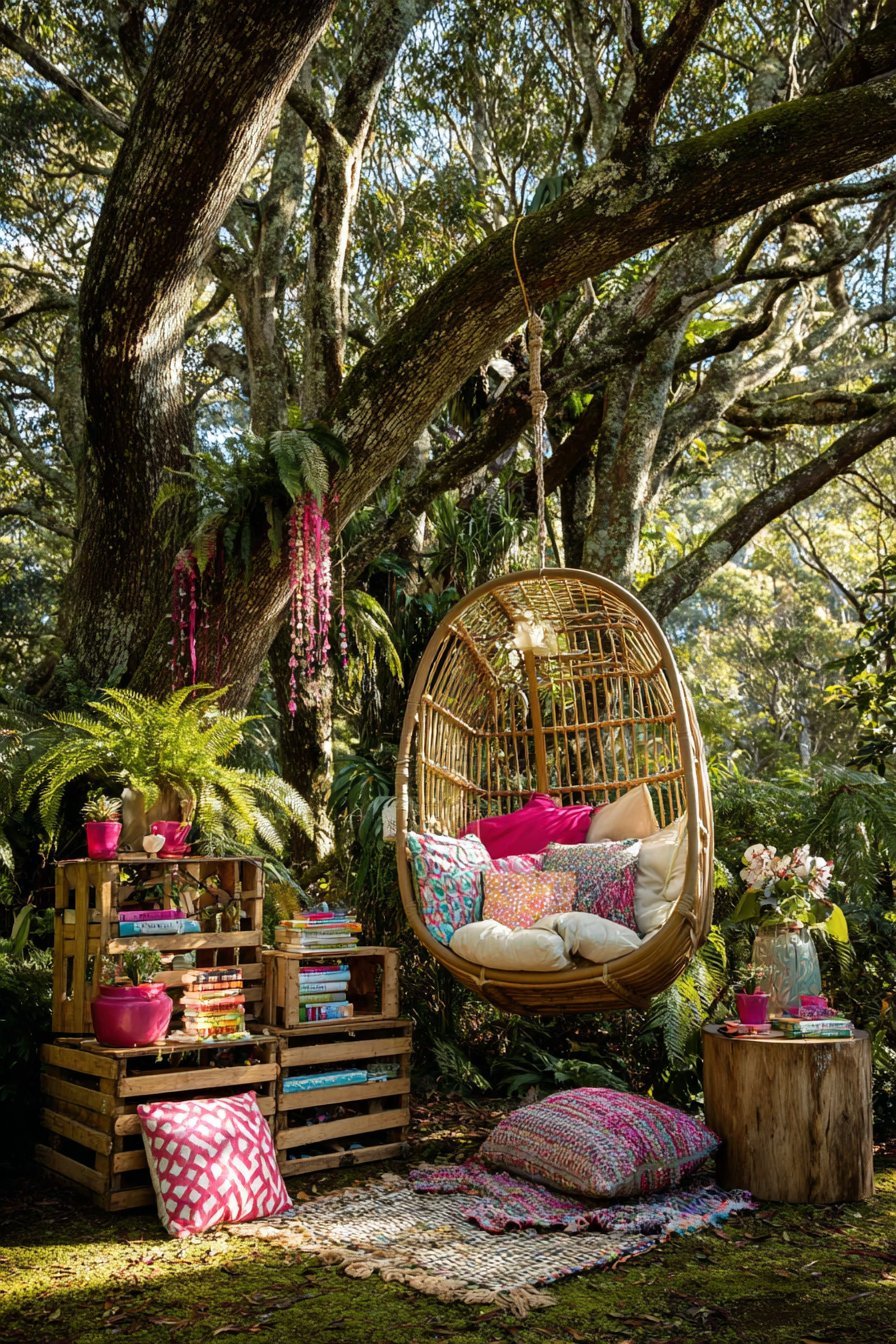
Dappled natural light filters through tree canopy above. The moving shadows create peaceful atmosphere. Birds and insects provide natural soundtrack. The reading space connects occupant with surrounding nature. The combination of comfort and environment encourages regular use.
Key Design Tips:
- Verify tree branch can support 300+ pounds before installation
- Use proper hanging hardware rated for outdoor dynamic loads
- Choose chair with weather-resistant cushions or bring cushions inside
- Position chair in partial shade to prevent overheating in summer
- Add small roof or umbrella above chair for light rain protection
- Create stone or mulch base beneath chair to prevent dead grass
17. Stained Glass Garden Art Installation
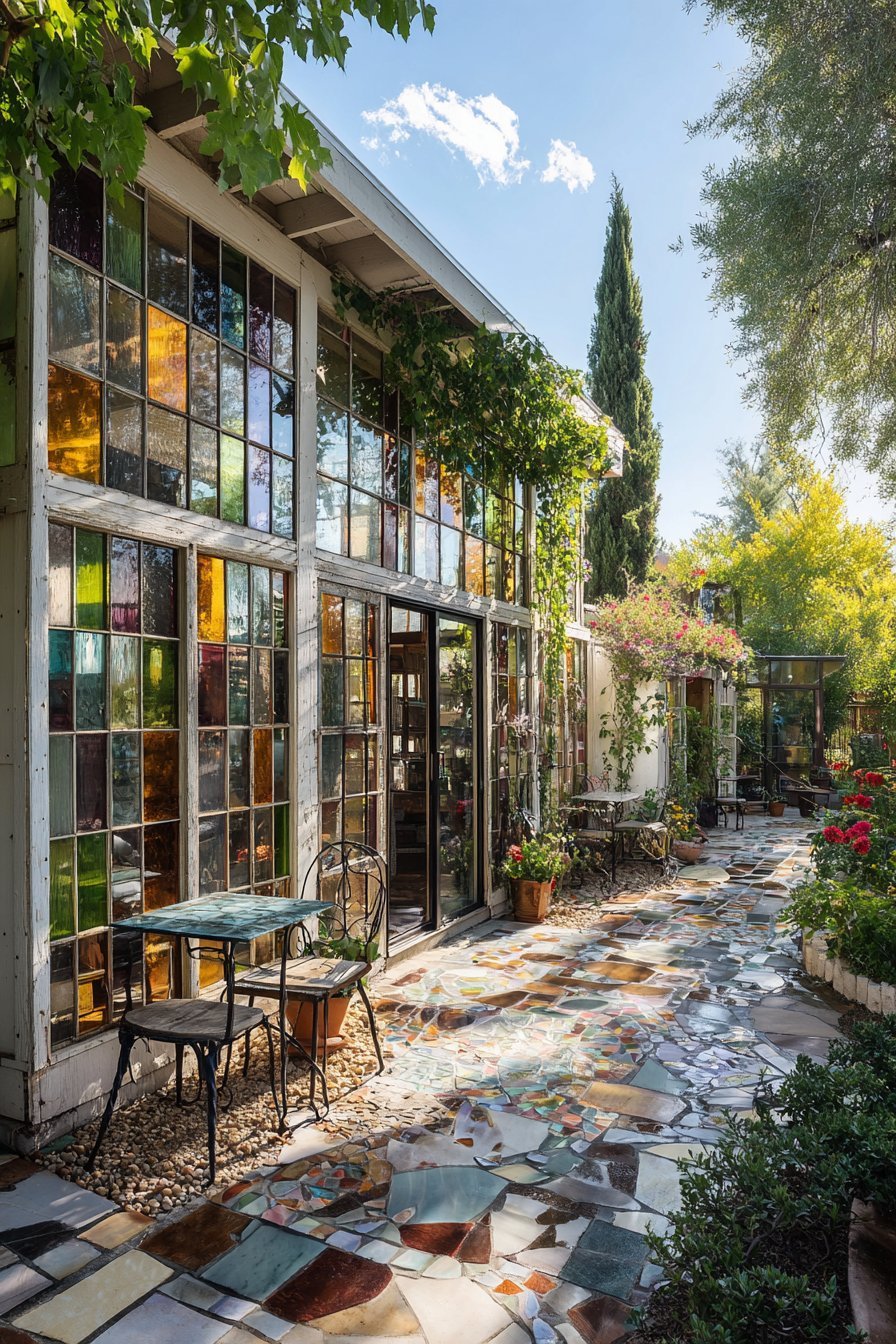
Repurposed vintage windows and doors arrange as garden art. The frames paint in cheerful colors. Stained glass pieces embed in the structures. The installation serves as both art and privacy screening. Sunlight transforms the space through colored glass.
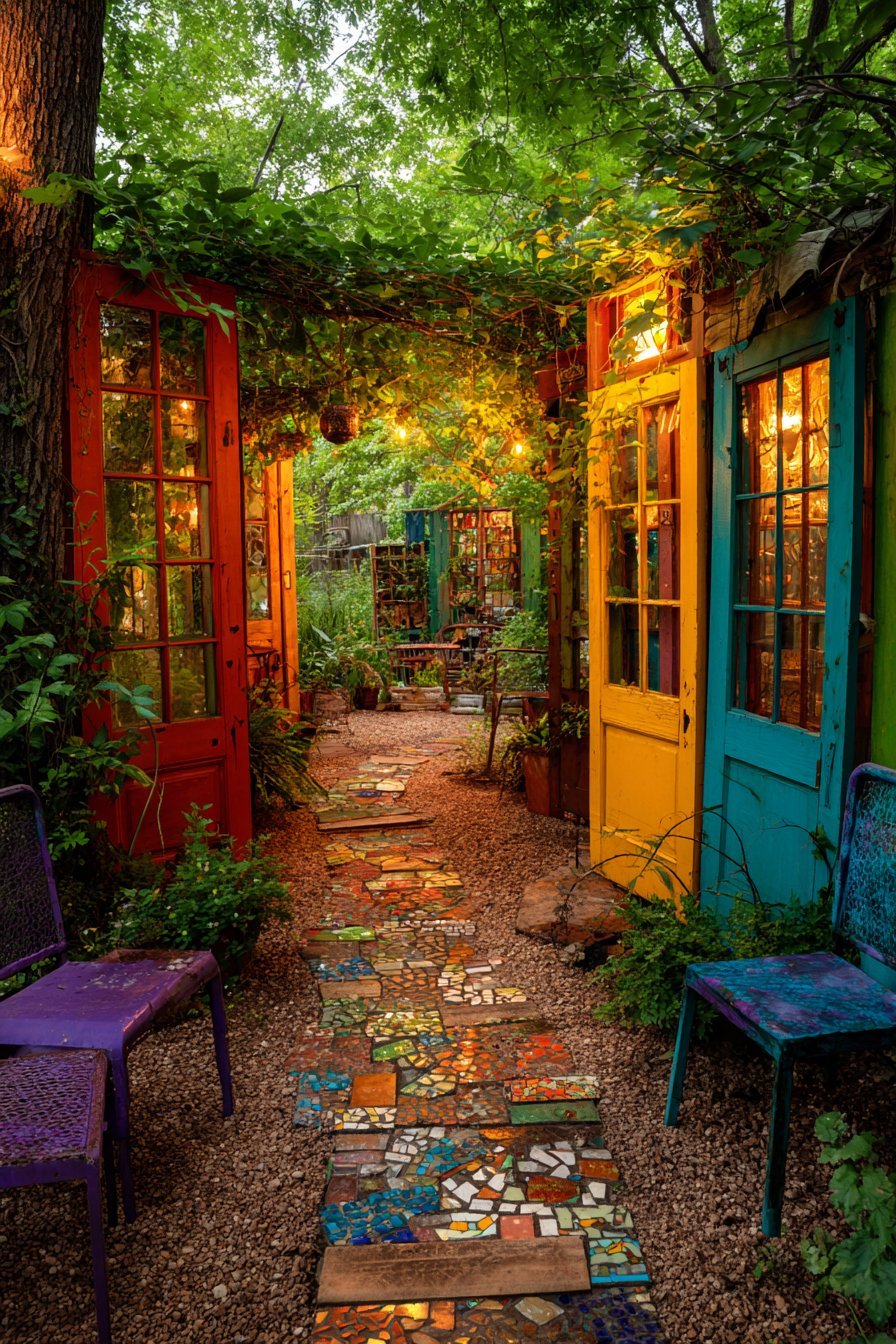
Climbing vines weave through the window frames naturally. Hanging planters attach to the door structures. Mosaic pathways made from broken pottery lead to the installation. The cohesive use of found materials demonstrates artistic vision. Each piece contributes to overall bohemian aesthetic.
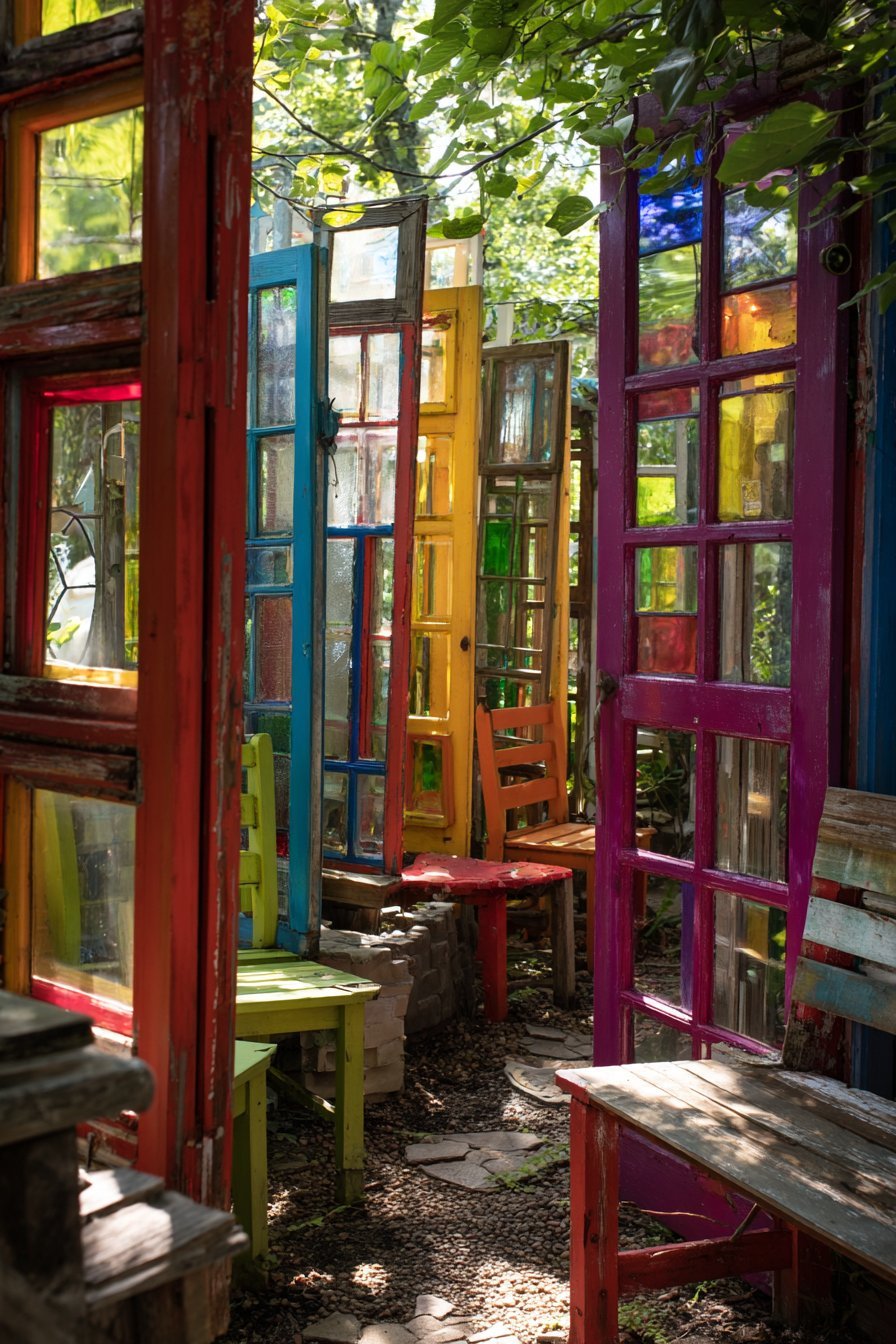
Painted metal chairs and reclaimed wood benches provide seating. The furniture faces the glass art for optimal viewing. Morning light shines through creating colorful reflections. The dynamic light show changes throughout the day. The installation becomes living sundial marking time naturally.
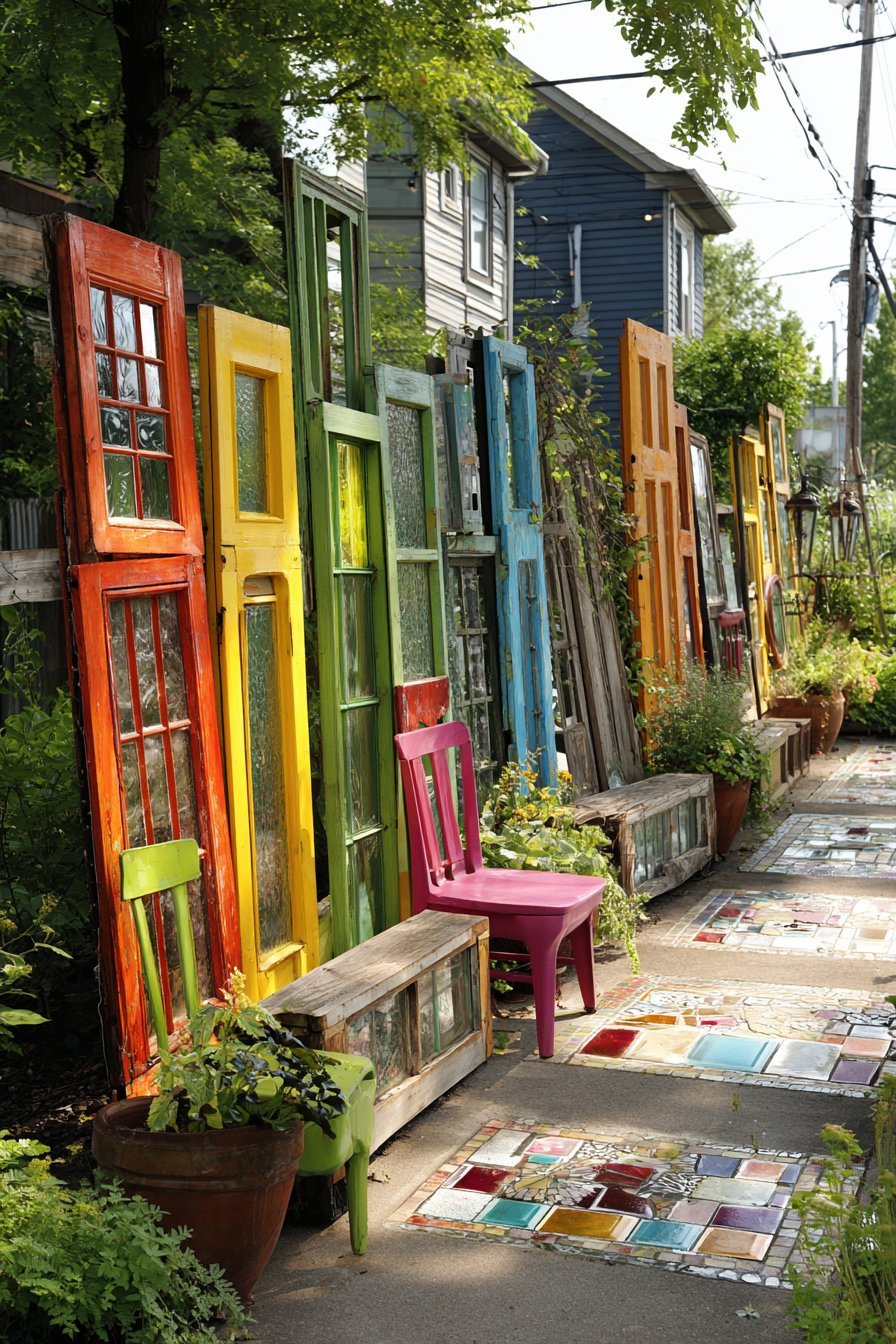
Wide-angle perspective emphasizes artistic reuse. The collected windows tell stories of previous homes. The preservation of architectural elements shows respect for history. The creative second life prevents landfill waste. Beauty and environmental consciousness merge completely.
Key Design Tips:
- Clean and repair vintage windows before installation in garden
- Seal wood frames with exterior-grade finish to prevent rot
- Create proper footer or foundation for freestanding installations
- Position to catch morning or late afternoon sun for best light effects
- Add stained glass pieces using outdoor-rated adhesives and caulk
- Secure structures firmly to withstand wind without toppling
18. Natural Swimming Pond Oasis
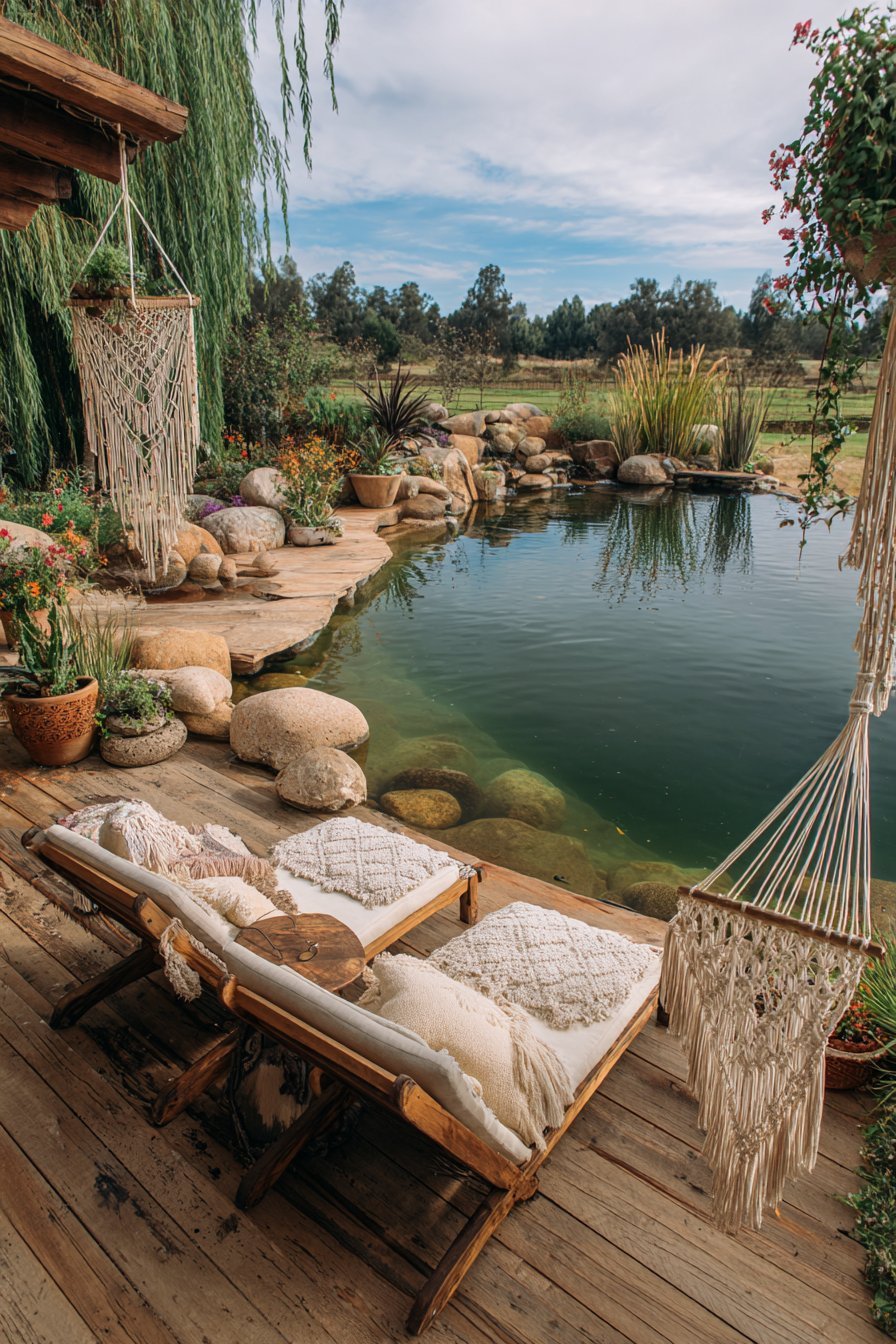
A natural swimming pond with beach entry creates eco-friendly water feature. Large boulders, native grasses, and wildflowers surround the organic shape. The pond integrates seamlessly with landscape. The chemical-free water supports aquatic ecosystem. Plants naturally filter and maintain water quality.

A weathered wooden deck provides lounging area. Vintage lounge chairs invite sunbathing and relaxation. Hanging hammock chairs attach to deck posts. Potted tropical plants add lush greenery. Driftwood sculptures and painted rocks decorate the water’s edge.
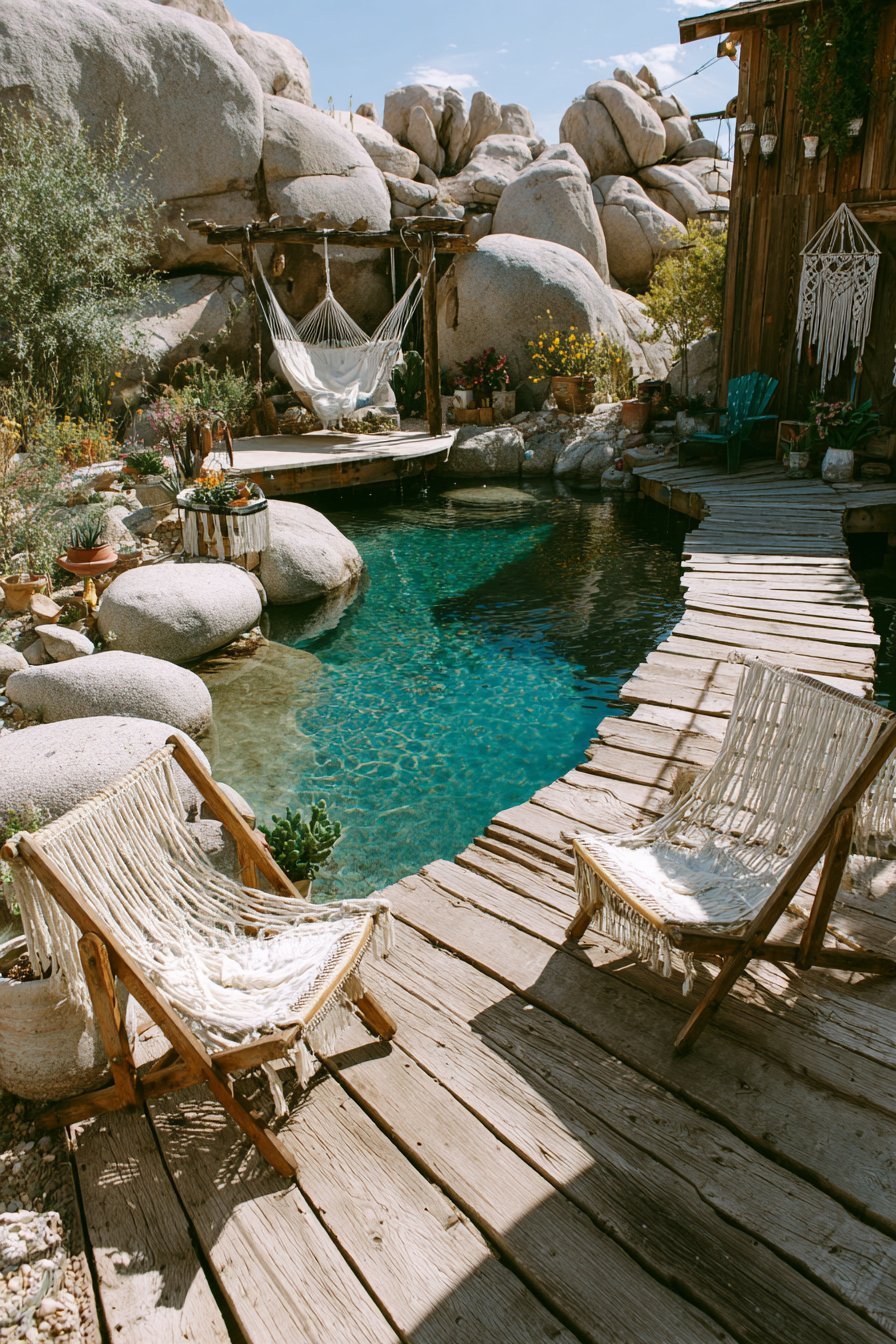
The natural swimming area eliminates chlorine and chemicals. Beneficial bacteria and aquatic plants maintain balance. The pond supports frogs, dragonflies, and other wildlife. Swimming becomes nature immersion experience. The eco-friendly approach aligns with hippie values.
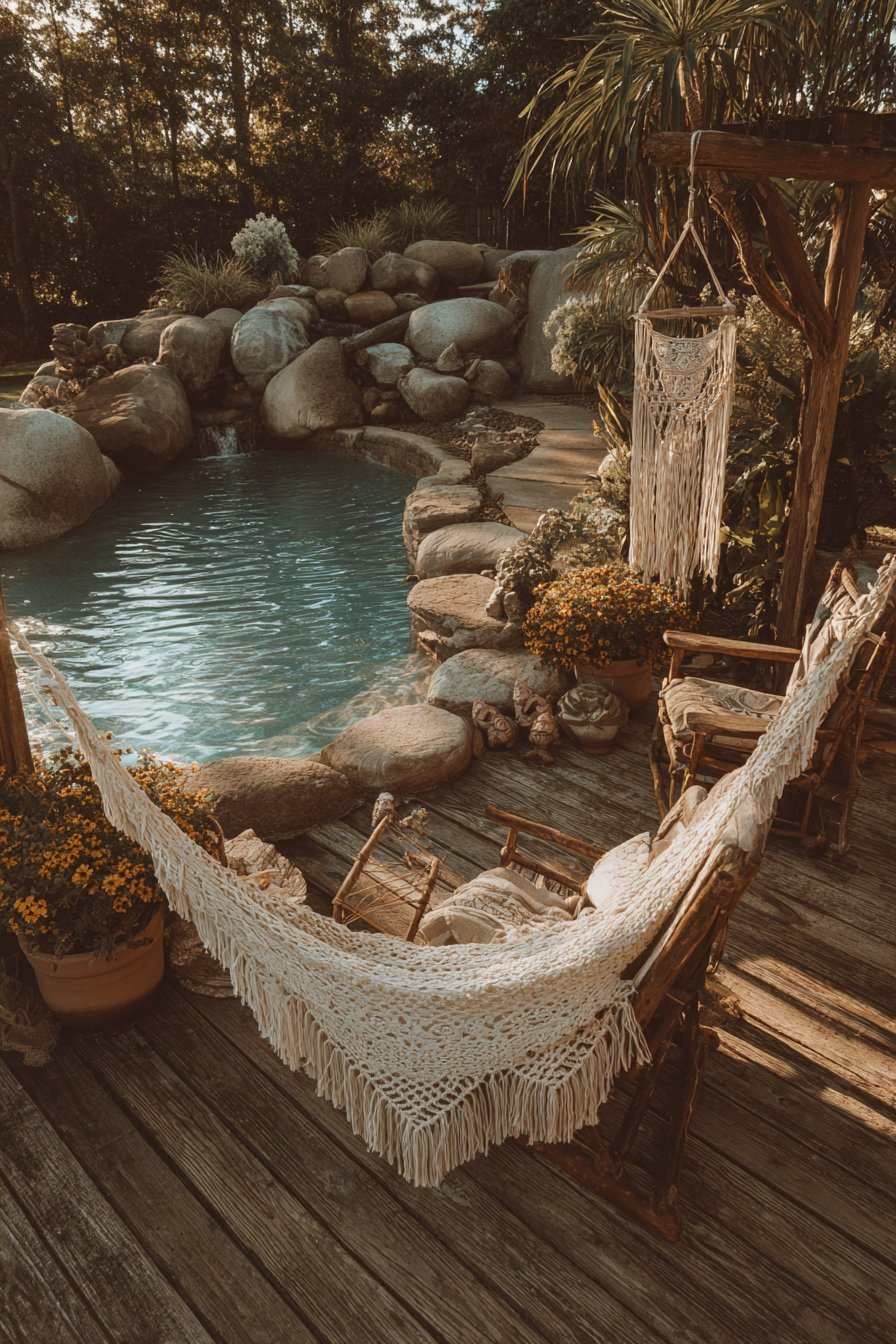
Natural daylight captures the organic water feature. The irregular pond shape mimics natural lakes. Reflections of sky and plants create peaceful scene. The nature-integrated design feels harmonious. The space encourages connection with water and earth.
Key Design Tips:
- Consult professional for proper pond construction and filtration zones
- Create separate swimming and regeneration zones for water clarity
- Choose native aquatic plants suited to your climate and water conditions
- Install proper liner and edging to prevent water loss
- Add aeration system to maintain oxygen levels and water circulation
- Plan for regular maintenance to keep balance and prevent algae blooms
19. Outdoor Art Studio Workshop
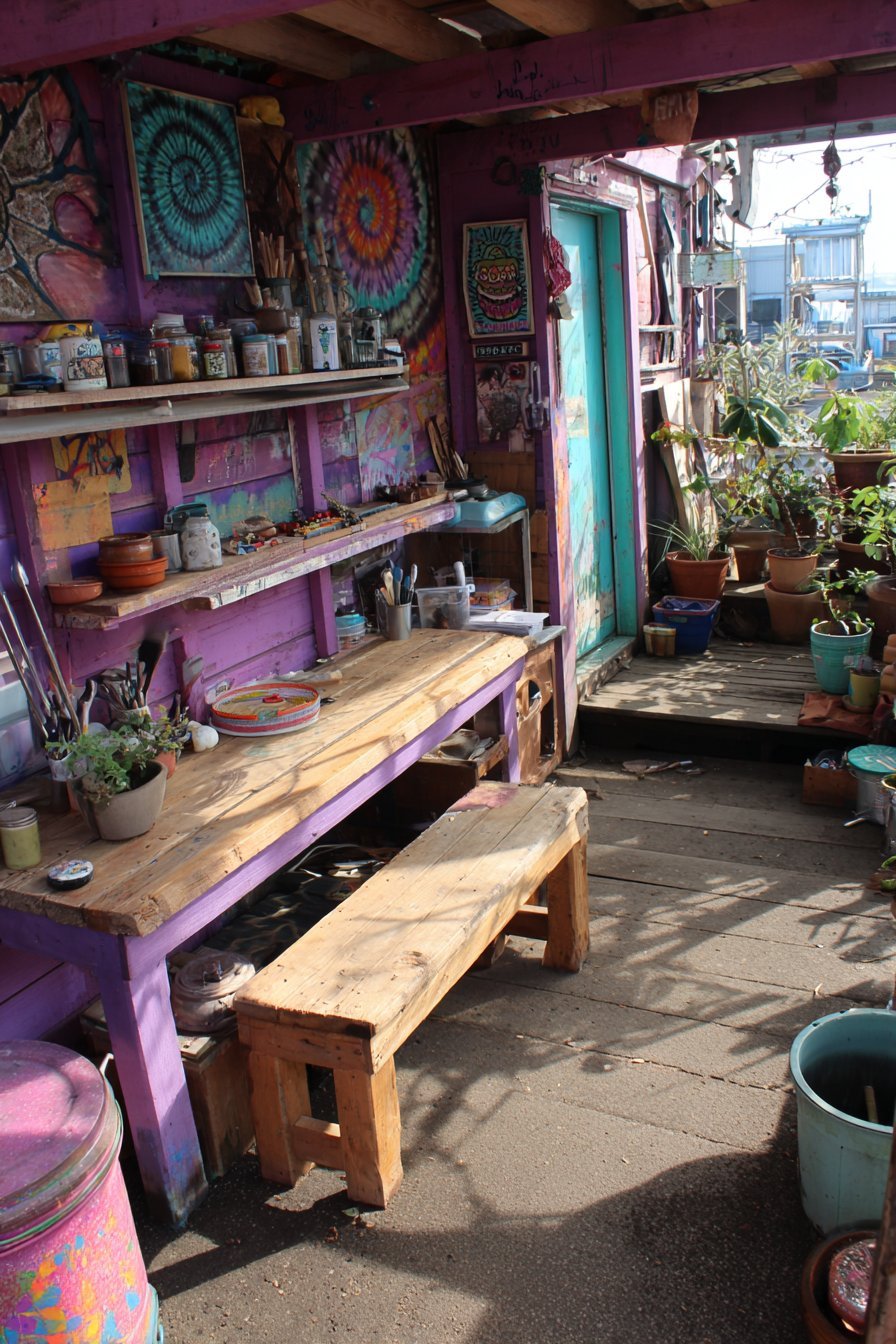
A converted garden shed painted vibrant colors houses art studio. Mural covers the exterior walls. The bright building announces creative purpose. Surrounding outdoor work area extends the studio space. The setup encourages artistic production in fresh air.

A work table made from reclaimed wood serves outdoor projects. Shelving units display found objects and craft supplies. Clotheslines string between posts showcase tie-dye projects. Finished artwork hangs from lines to dry. The visible creative process inspires visitors.
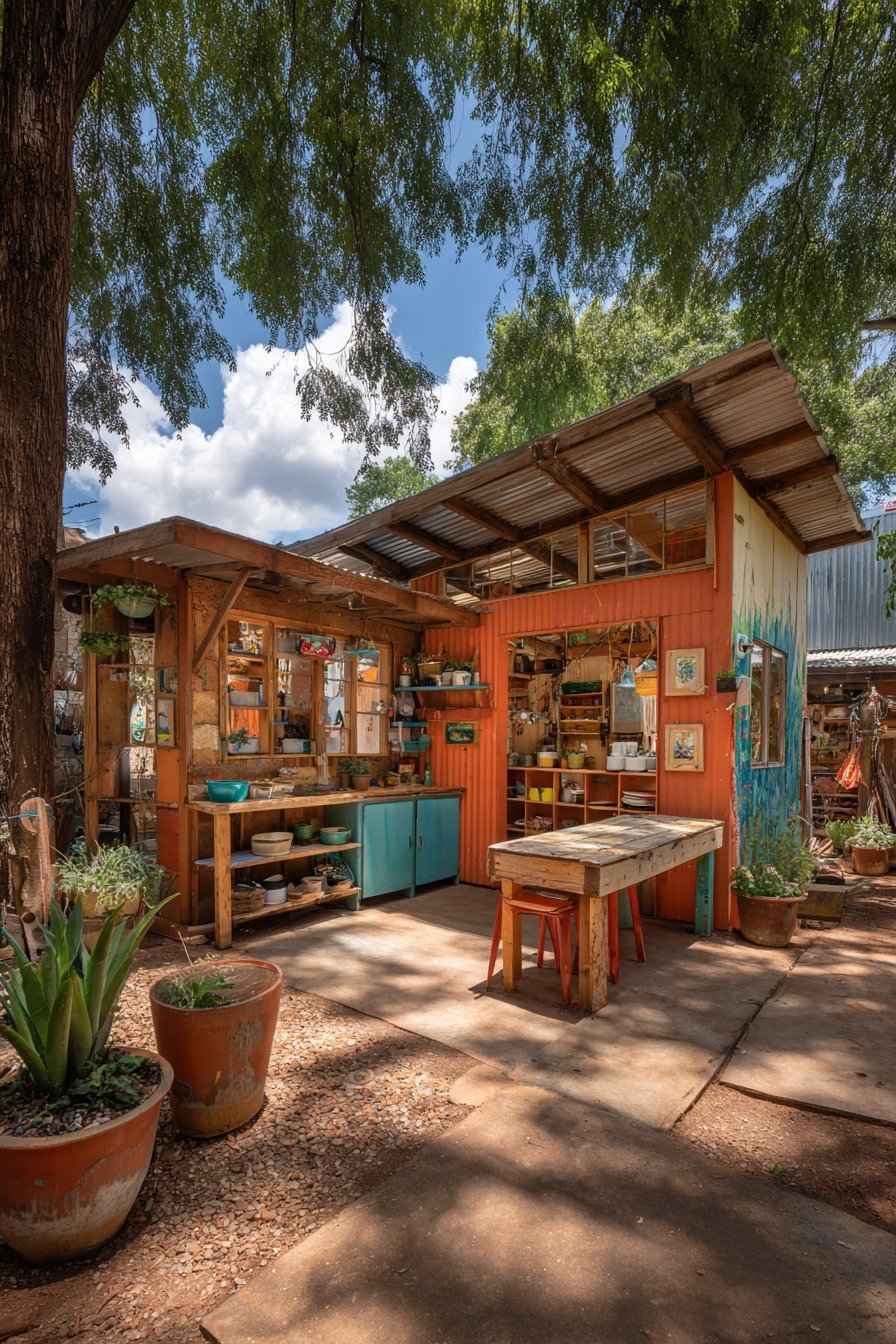
Potted plants and recycled container gardens soften the work area. Art supplies scatter across surfaces in organized chaos. The productive atmosphere encourages making and experimentation. Multiple projects progress simultaneously. The space reflects active creative life.
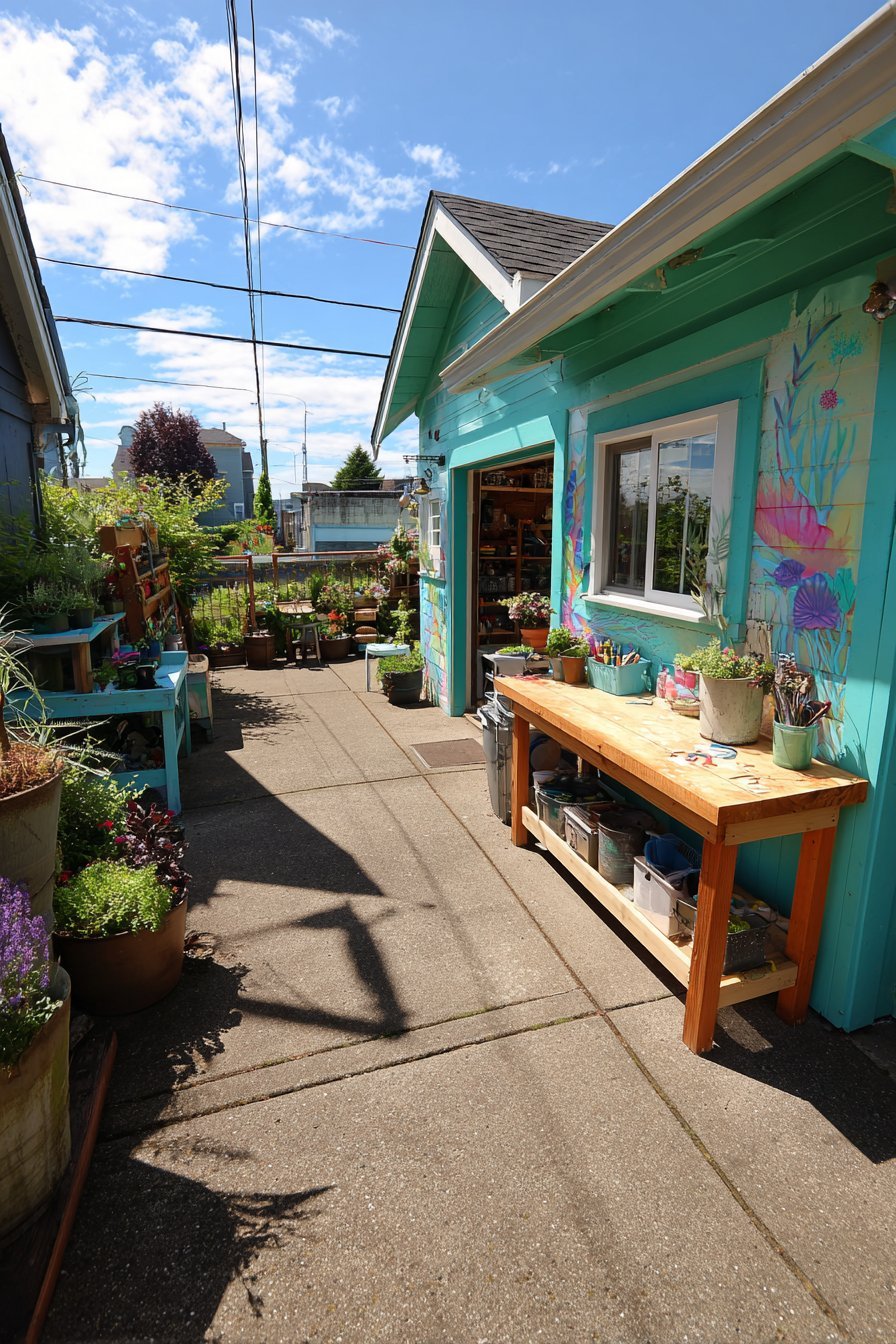
Afternoon light illuminates the working space perfectly. The artist can see colors accurately. The outdoor setting provides inspiration and fresh air. The dedicated space legitimizes creative pursuits. The visible studio encourages regular art practice.
Key Design Tips:
- Insulate shed for year-round use in moderate climates
- Install proper task lighting for detailed work and cloudy days
- Create organized storage systems for supplies and tools
- Use weatherproof storage containers for materials left outside
- Add outdoor sink or water station for cleanup convenience
- Position work table to take advantage of north-facing light when possible
20. Medicine Wheel Sacred Garden
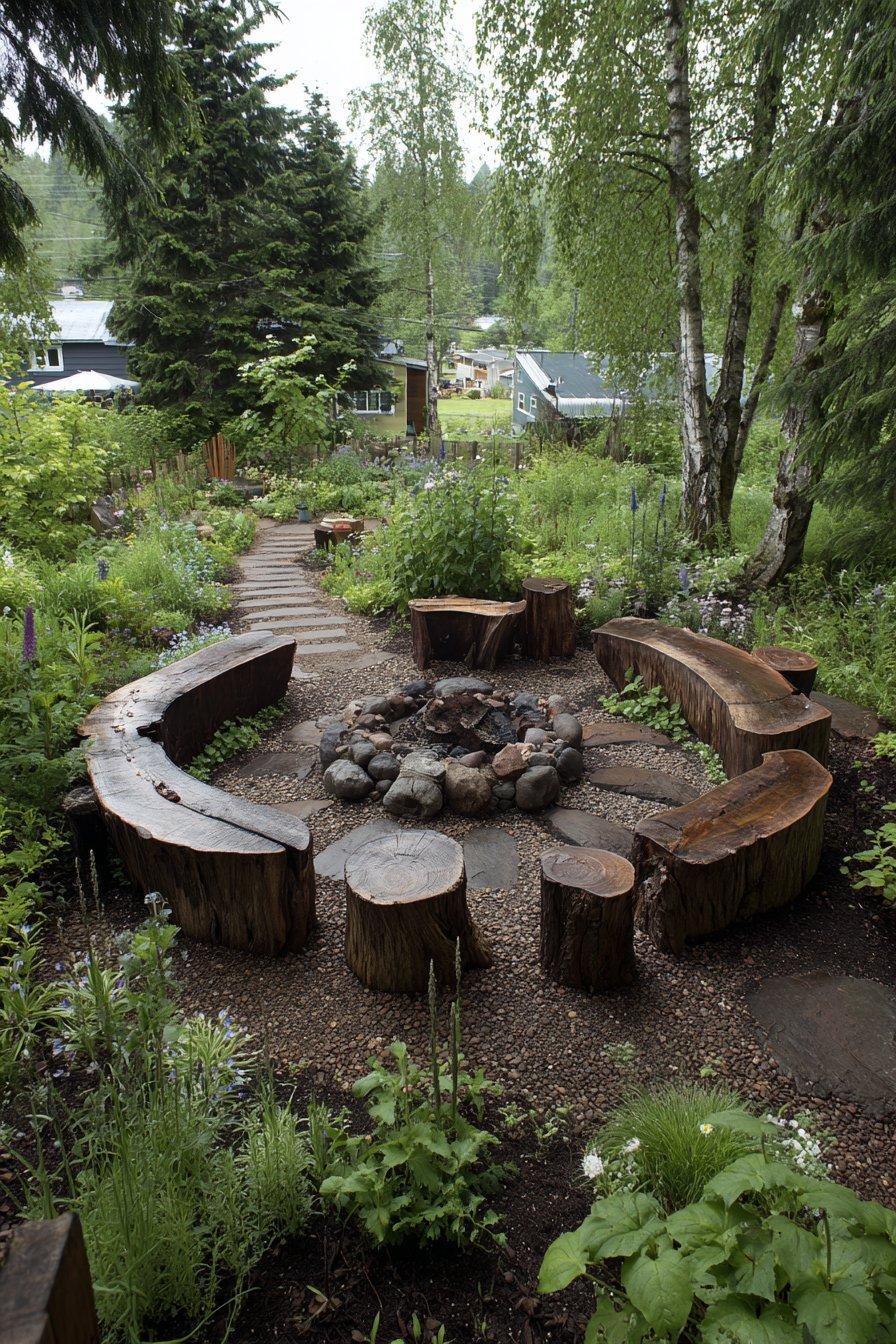
A circular gathering space designed in medicine wheel pattern creates spiritual garden. Landscape timbers or logs arrange in sacred geometry. Four sections represent cardinal directions. Each quadrant plants with corresponding herbs, vegetables, and flowers. The intentional design honors indigenous wisdom.
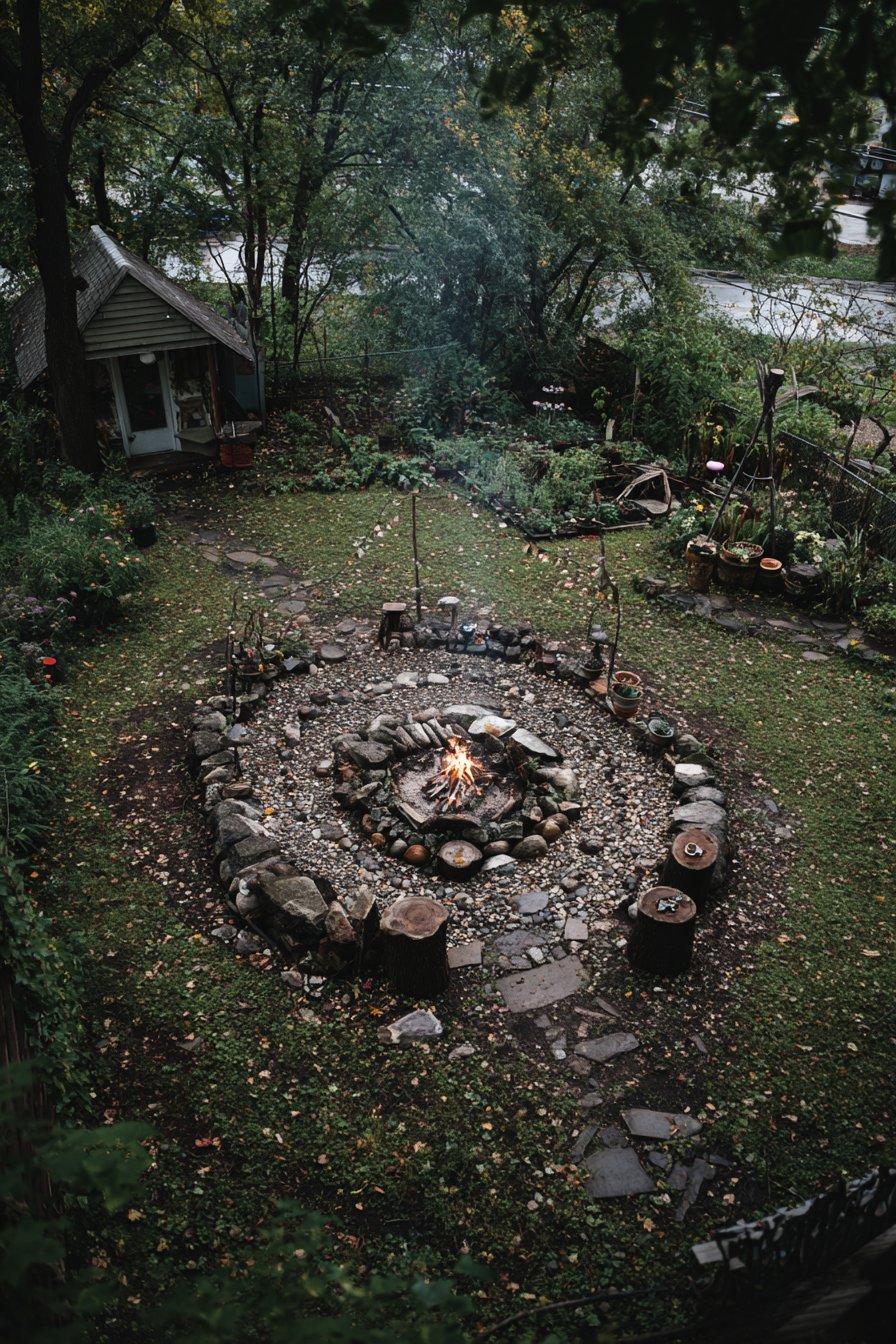
A simple fire pit occupies the center circle. Tree stump seating surrounds the fire. Prayer flags flutter around the perimeter. Wind sculptures and natural found-object art decorate the space. The design incorporates permaculture principles. Companion planting and natural mulch support healthy growth.
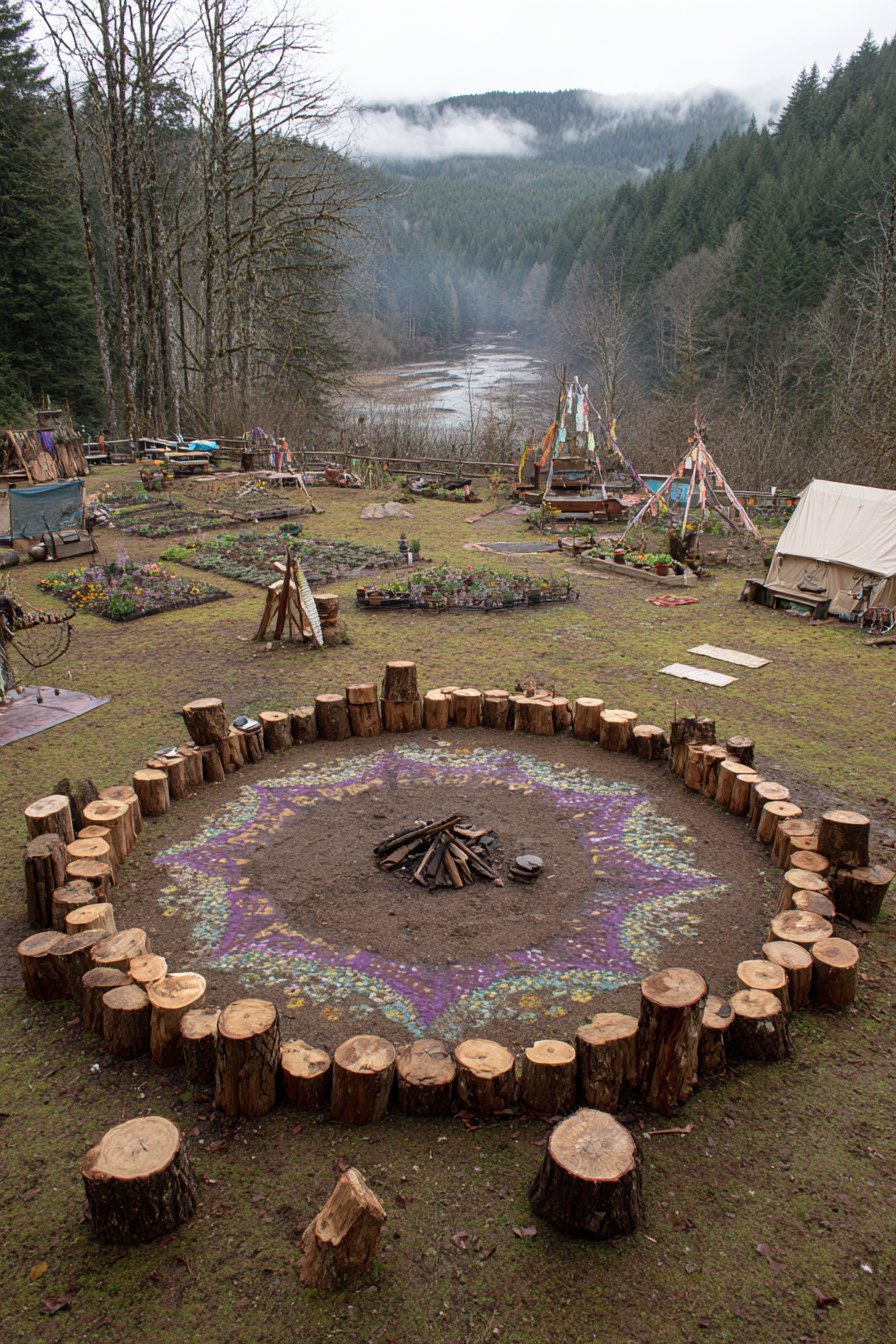
The layout teaches about interconnectedness and cycles. Each direction holds symbolic meaning. The garden produces food while nurturing spirit. The combination of practical and sacred creates meaningful space. The earth-centered approach reflects core hippie values.
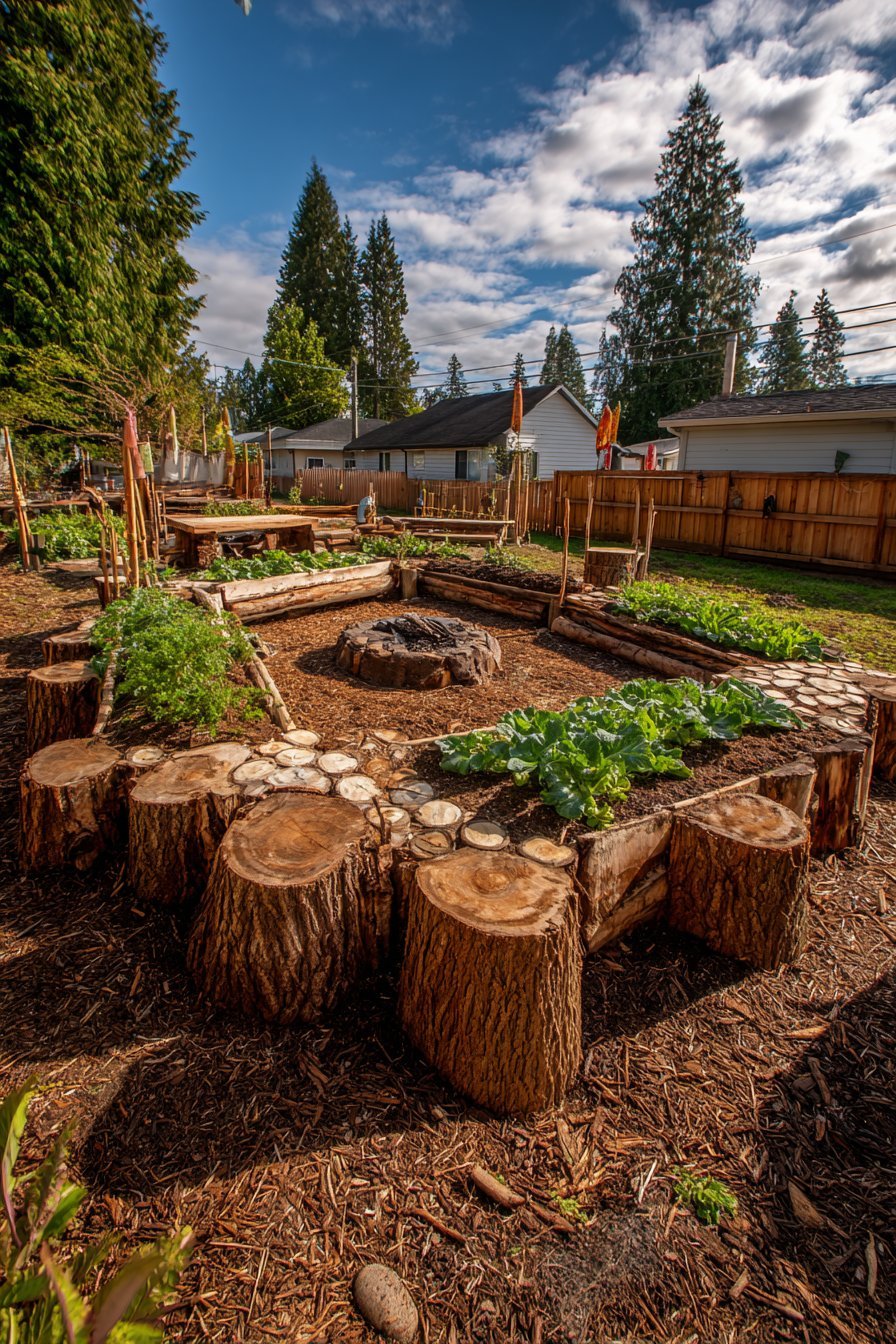
Natural lighting emphasizes intentional spiritual design. The symbolic layout becomes apparent from above. The harmonious integration of function and sacred purpose inspires contemplation. The garden demonstrates living philosophy. Connection to nature and mindful cultivation merge completely.
Key Design Tips:
- Research medicine wheel symbolism to honor indigenous traditions respectfully
- Choose plants with medicinal, culinary, or spiritual significance for each direction
- Create paths between sections for easy access and maintenance
- Use organic gardening methods to maintain sacred space purity
- Add seating for meditation and observation of natural cycles
- Document seasonal changes to deepen understanding of natural rhythms
Why These Hippie Backyard Designs Are the Best
These hippie backyard designs represent authentic approaches to creating meaningful outdoor spaces. Each concept demonstrates core bohemian values through thoughtful material choices and sustainable practices. The designs showcase remarkable versatility that accommodates different yard sizes, budgets, and personal preferences.
The emphasis on repurposed and reclaimed materials reduces environmental impact while adding unique character. Vintage finds and salvaged items bring history that new purchases cannot replicate. This approach makes hippie design accessible to budget-conscious homeowners. The creative reuse demonstrates that beautiful spaces emerge from imagination rather than expensive purchases.
Natural materials like wood, stone, and natural fiber textiles create harmony with surrounding landscapes. These elements weather gracefully, developing patina that enhances authenticity over time. The organic color palette derived from plants, earth tones, and sun-faded textiles creates cohesive visual flow. Layered textures from various materials add depth without relying on costly finishes.
The integration of functional elements with artistic expression makes these designs practically sustainable. Organic gardens provide food while creating beauty. Water features support ecosystems while offering visual focal points. Gathering spaces strengthen community connections through shared experiences. Each element serves multiple purposes, maximizing value and meaning.
These designs adapt beautifully to evolving needs and changing seasons. Plants grow and mature, altering the space naturally over time. Personal collections expand as new treasures find homes. The flexible layouts accommodate different activities from meditation to celebration. The organic development mirrors natural growth patterns rather than forcing static perfection.
Color theory applications in hippie design balance vibrant statements with neutral foundations. Jewel tones pop against weathered wood and faded textiles. The layered approach allows bold color without overwhelming senses. Natural lighting changes throughout the day, revealing different aspects of the design. The dynamic quality keeps spaces interesting through all hours.
Conclusion
These hippie backyard designs demonstrate that meaningful outdoor spaces emerge from creativity and authentic expression. The key takeaways include embracing repurposed materials, honoring natural growth patterns, and creating spaces that serve both function and spirit. Quality vintage pieces combined with personal artistic touches create yards that feel both beautiful and deeply personal.
Successful hippie design balances aesthetic appeal with sustainable practices and community values. Start your transformation by incorporating one reclaimed element or planting an organic garden bed. Layer textures and colors gradually as your vision develops. Your dream hippie backyard awaits creation through thoughtful planning and fearless creative expression.
