
The bedroom serves as a personal sanctuary where design choices profoundly impact rest and rejuvenation. Among countless color pairings available to homeowners, the combination of green and terracotta has emerged as a timeless choice that transcends passing trends. This pairing draws inspiration from nature’s most harmonious landscapes, where earthy clay tones meet lush vegetation.
Interior designers increasingly recommend this sophisticated color duo for bedrooms seeking warmth without overwhelming the senses. The psychological effects of these colors create an environment that promotes relaxation while maintaining visual interest. Green brings calming energy reminiscent of forests and meadows, while terracotta grounds the space with its ancient earthiness. Together, they form a balanced palette that works across various design styles, from bohemian to contemporary minimalist approaches.
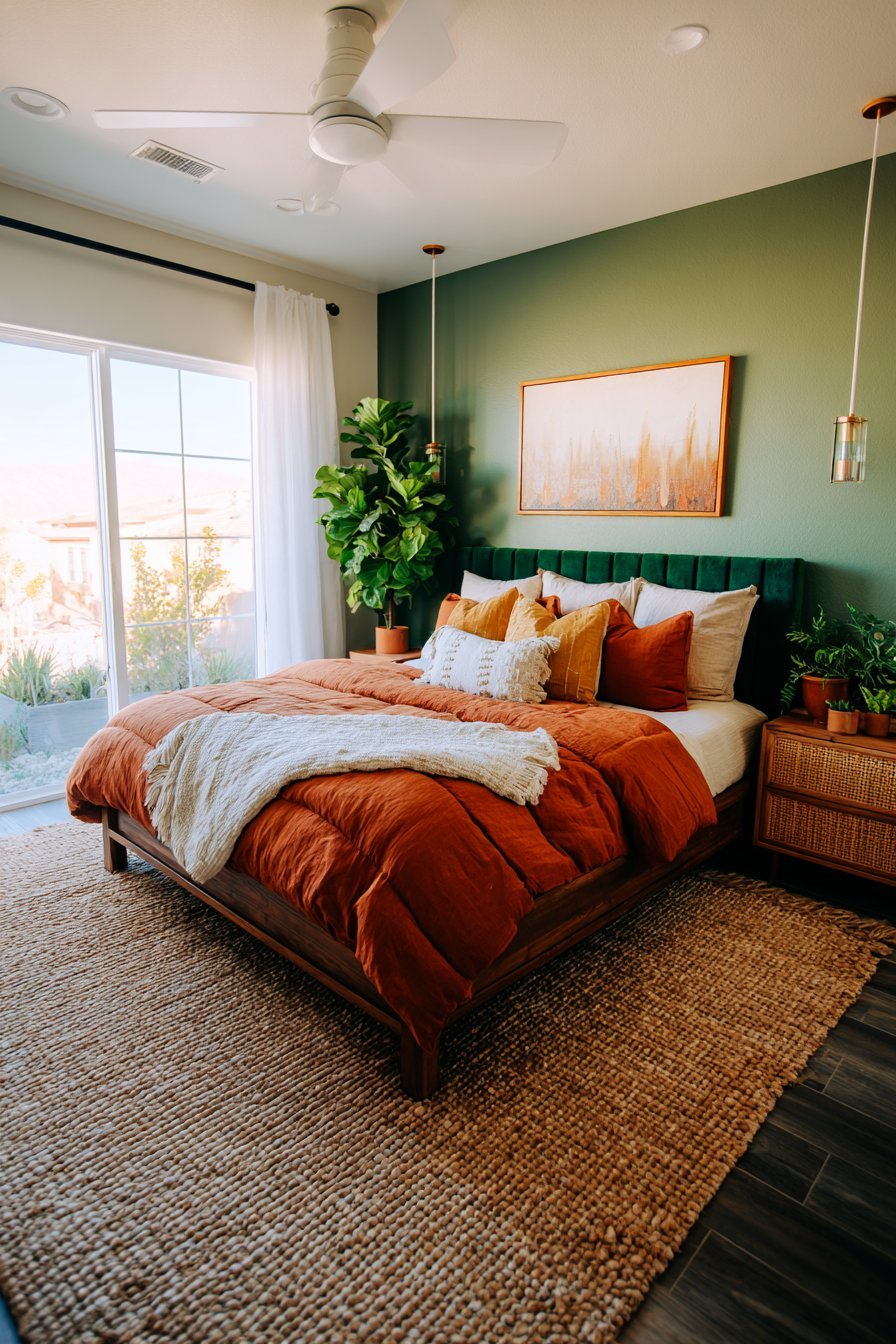
This article explores ten compelling reasons why green and terracotta bedroom combinations continue to captivate homeowners and designers alike. Understanding these principles will help you create a bedroom that feels both nurturing and stylish, regardless of your space constraints or budget limitations.
1. Natural Color Harmony Rooted in Biophilic Design
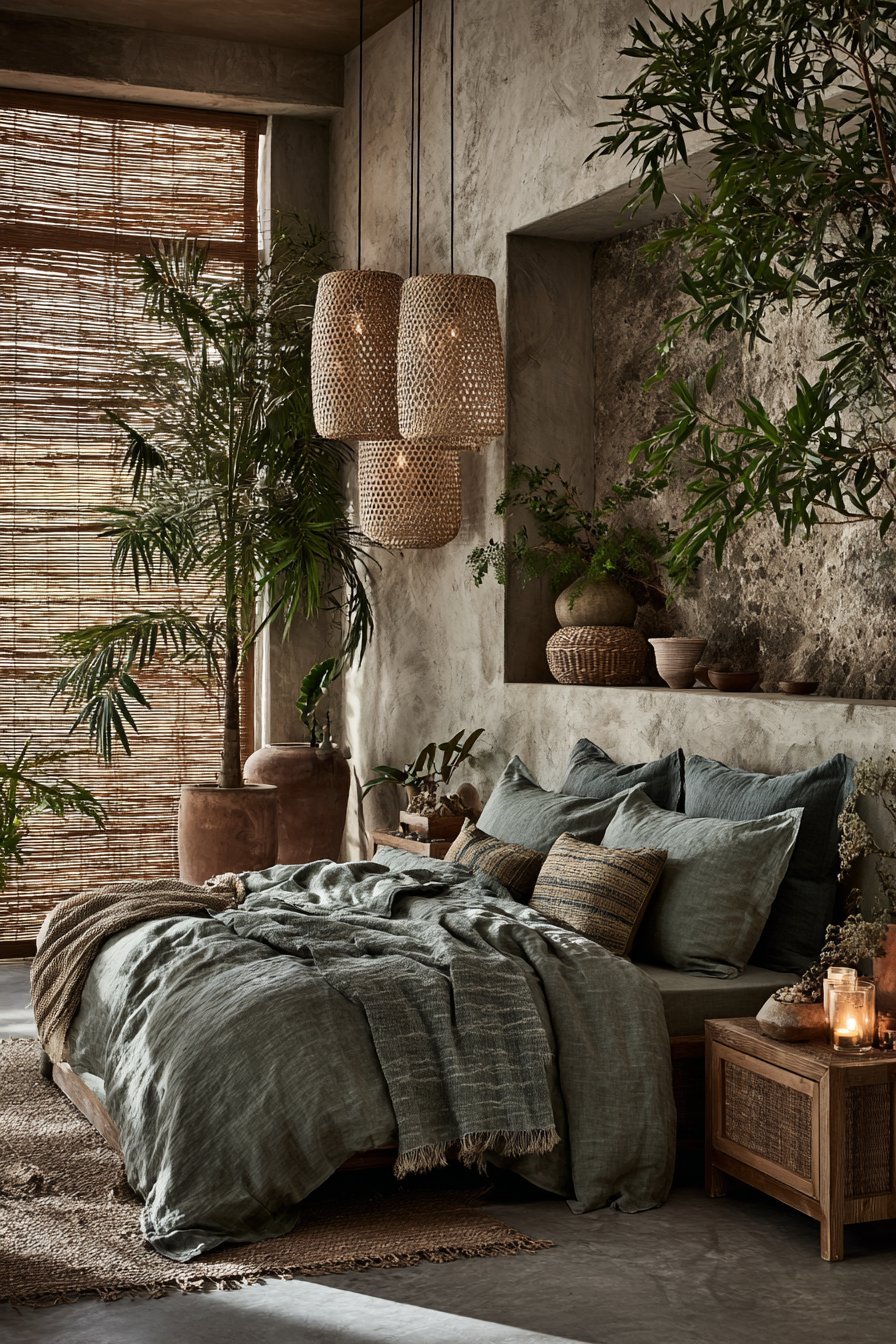
The pairing of green and terracotta mirrors combinations found throughout the natural world. Think of clay earth beneath forest canopies or desert succulents growing in reddish soil. This innate connection to nature triggers positive psychological responses that manufactured color schemes cannot replicate.
Biophilic design principles emphasize incorporating natural elements into interior spaces to improve well-being. Research consistently shows that nature-inspired color palettes reduce stress hormones and improve sleep quality. When you surround yourself with colors that echo outdoor environments, your nervous system recognizes them as safe and calming.
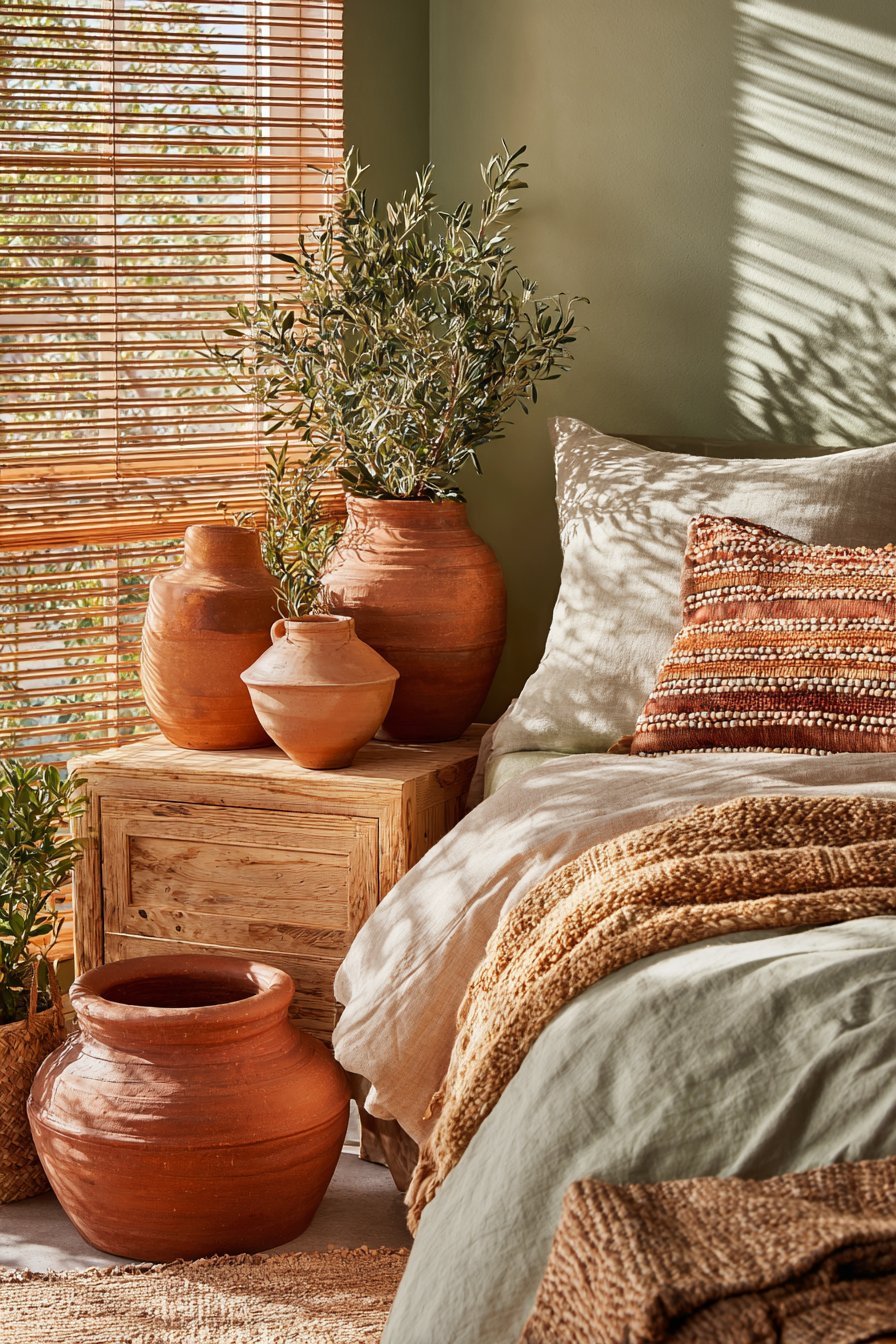
The specific wavelengths of green and terracotta work together without creating visual tension. Green’s cooler undertones balance terracotta’s warmth, preventing the space from feeling either too sterile or overly heated. This temperature balance creates year-round comfort that doesn’t require seasonal redecorating.
- Choose sage green with lighter terracotta for maximum calming effects
- Pair forest green with deeper burnt terracotta for dramatic sophistication
- Use olive green tones alongside peachy terracotta for vintage appeal
- Consider mint green accents with traditional terracotta for modern freshness
- Combine emerald green with rusty terracotta for bold bohemian energy
- Balance hunter green with soft terracotta clay for masculine elegance
2. Versatility Across Multiple Design Styles
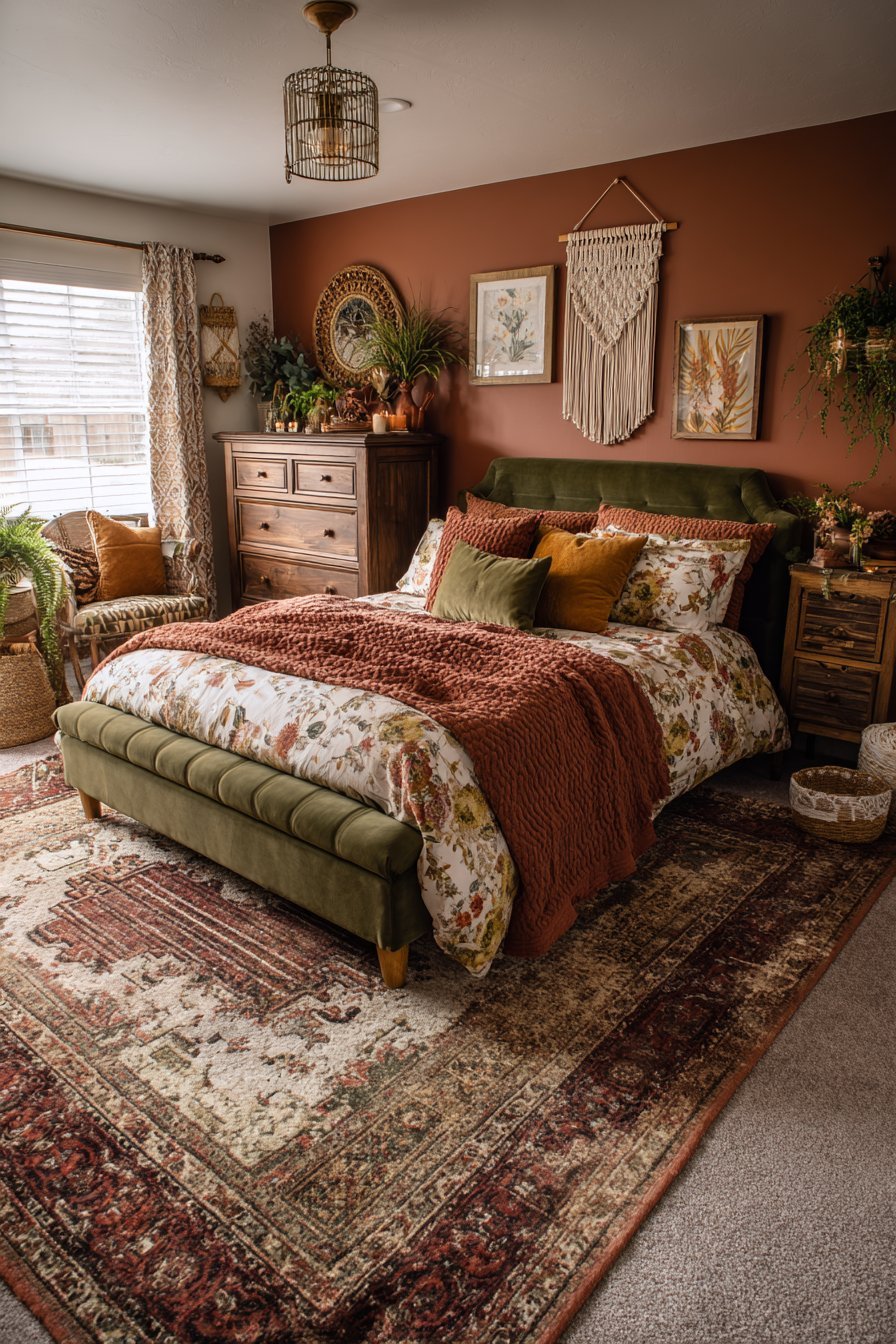
Green and terracotta transcend specific design movements, adapting seamlessly to various aesthetic preferences. Whether your bedroom leans toward Mediterranean rustic or Scandinavian modern, this color combination provides a flexible foundation. The key lies in adjusting proportions and shade selections to match your desired atmosphere.
In bohemian spaces, these colors create the earthy backdrop that defines the style. Layer different green tones from sage to forest alongside terracotta textiles and ceramics. Mid-century modern bedrooms benefit from cleaner applications—think olive green upholstery paired with terracotta accent walls. Even traditional spaces embrace this pairing through darker hunter greens and refined terracotta accessories.
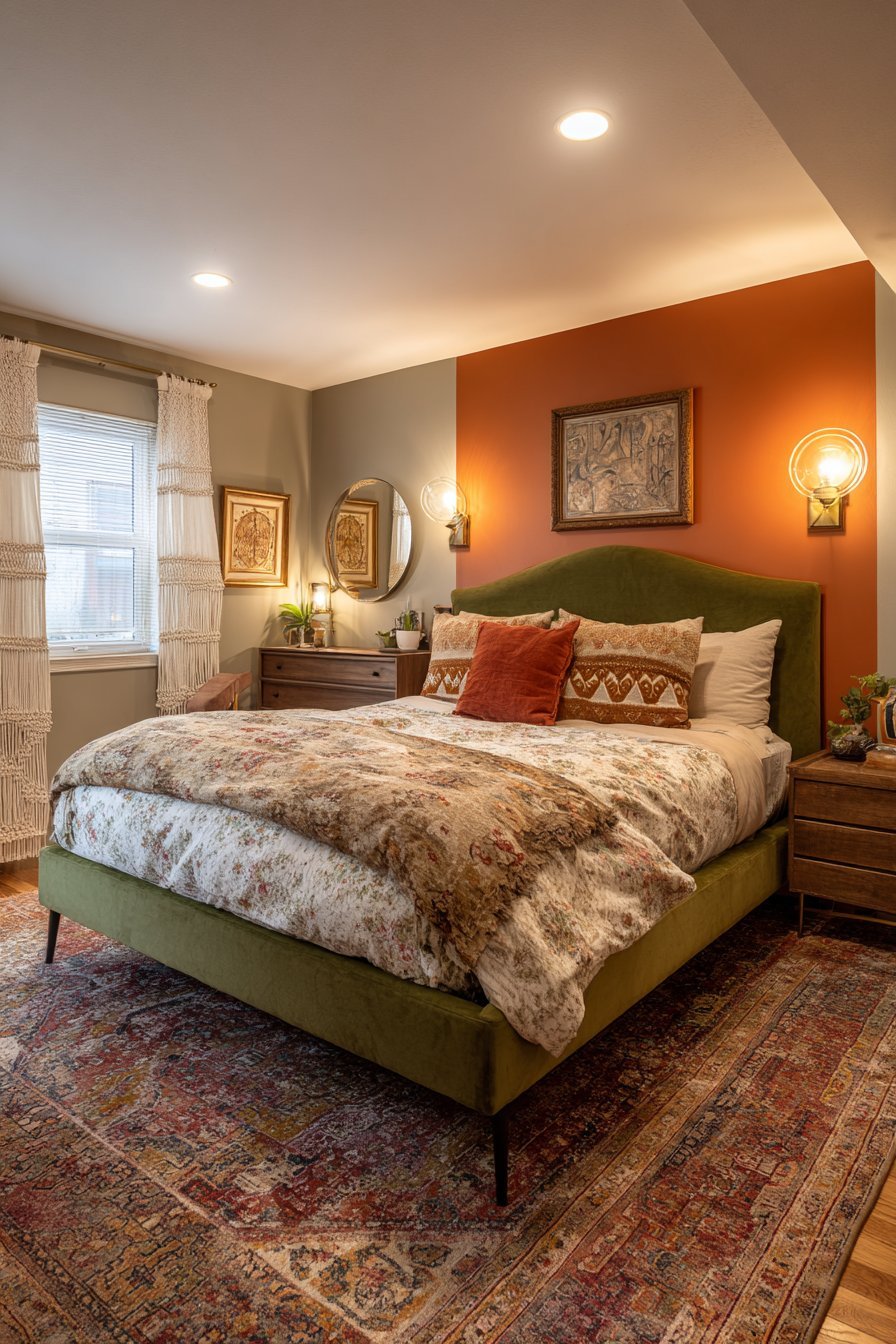
The adaptability extends to both minimal and maximalist approaches. Minimalists might use one dominant color with subtle accents of the other, while maximalists can layer patterns and textures incorporating both hues. This flexibility means your investment in this color scheme won’t limit future design evolution.
- Apply the 60-30-10 rule: 60% neutral, 30% green, 10% terracotta
- Reverse proportions for bolder statements: 60% terracotta, 30% green, 10% neutral
- Use patterns mixing both colors for cohesive textile choices
- Incorporate both colors in artwork for unified visual flow
- Select furniture in one color and textiles in the other
- Add metallic accents in brass or copper to enhance warmth
3. Psychological Benefits for Better Sleep Quality
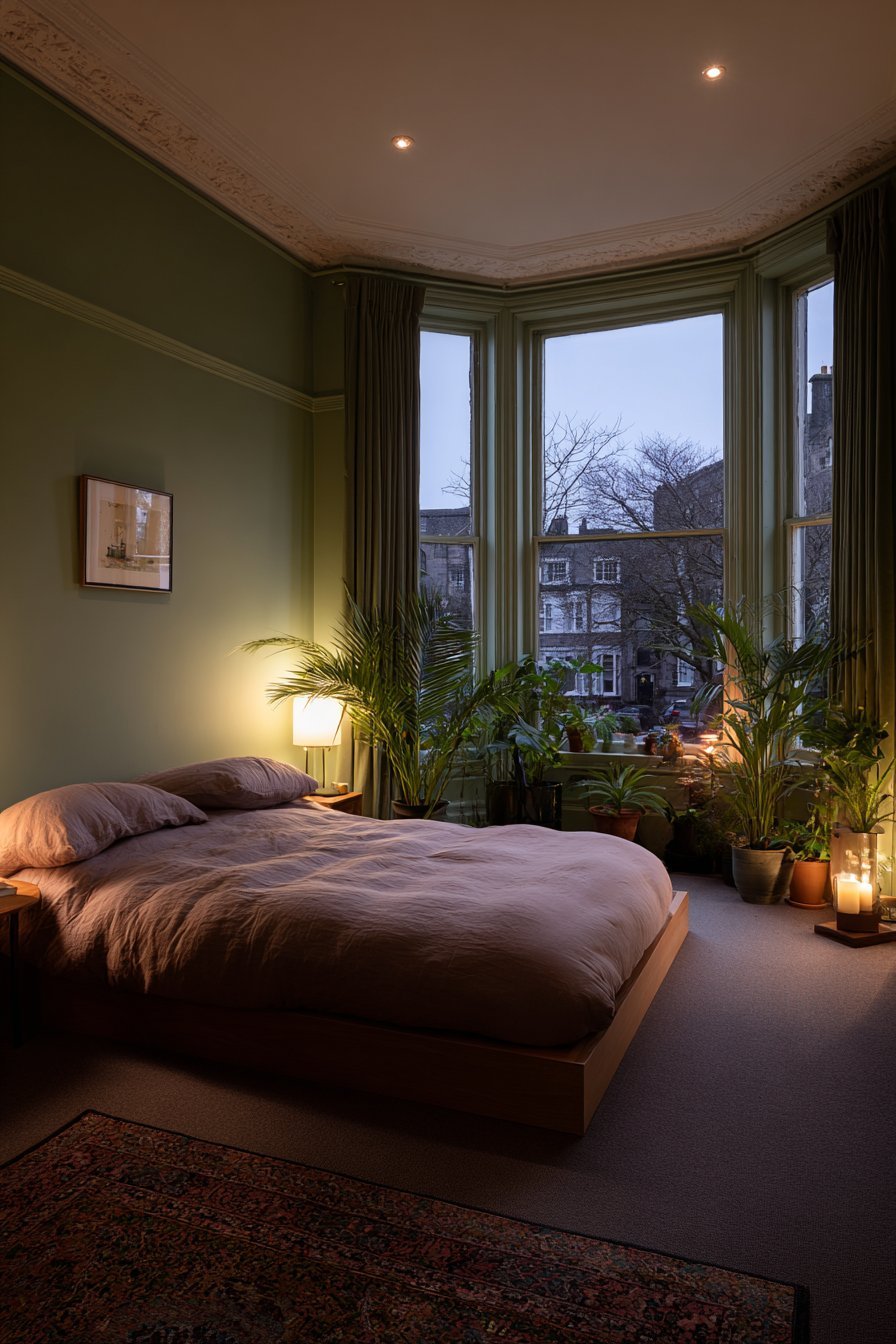
Color psychology demonstrates that our surroundings significantly affect sleep patterns and mood. Green has long been associated with renewal, growth, and tranquility. Studies show that exposure to green tones can lower heart rate and blood pressure, preparing the body for restful sleep.
Terracotta contributes its own psychological advantages by evoking feelings of security and groundedness. Unlike bright reds that stimulate energy, terracotta’s muted earthiness creates a cocooning effect. When combined with green’s restorative properties, bedrooms become true recovery spaces that support circadian rhythm regulation.
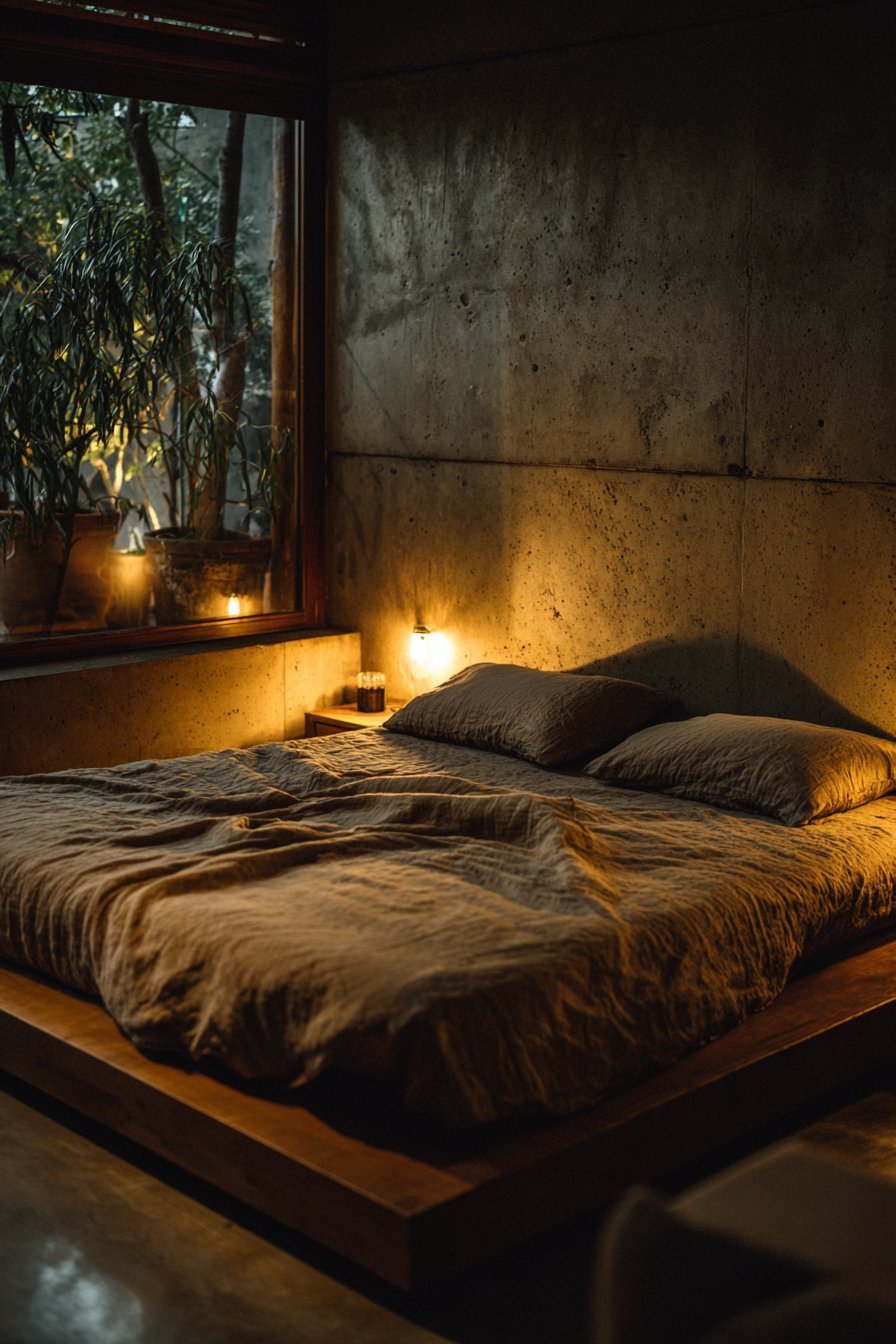
This combination particularly benefits individuals dealing with anxiety or stress-related sleep disruptions. The natural reference points these colors provide help quiet racing thoughts. Your bedroom becomes a retreat where the color palette itself works therapeutically, reducing the time needed to transition from wakefulness to sleep.
- Paint the largest wall in soft sage to maximize calming effects
- Use terracotta bedding for grounding physical contact with the color
- Avoid bright lime greens that can feel too energizing
- Choose matte finishes over glossy to reduce visual stimulation
- Incorporate both colors in blackout curtains for darkness and color therapy
- Add plants to reinforce the green elements naturally
4. Perfect Color Temperature Balance
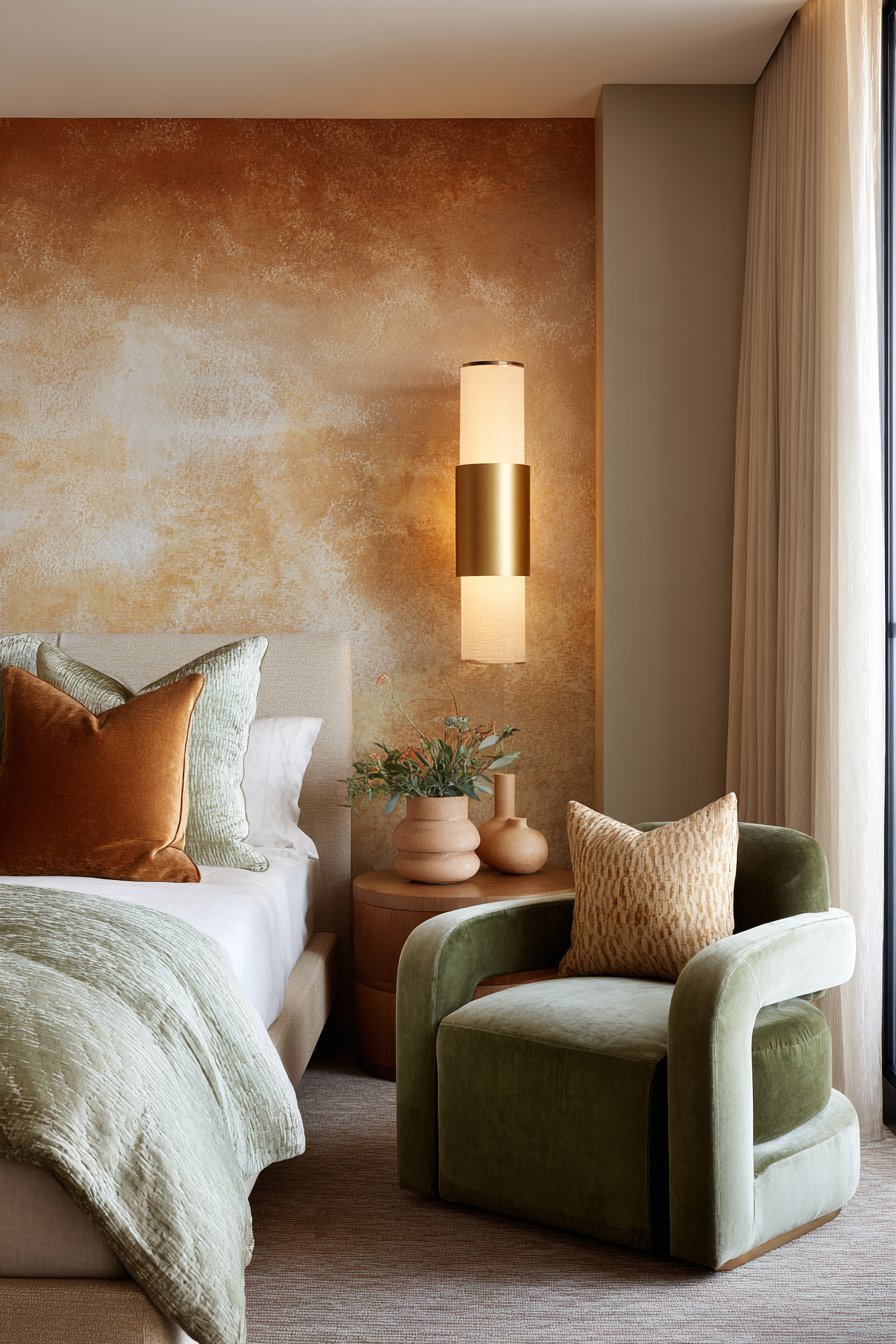
Every color exists on a spectrum from warm to cool, affecting how a room feels throughout different times of day. Green naturally leans cool, while terracotta radiates warmth. This opposing temperature relationship creates equilibrium that prevents bedrooms from feeling uncomfortably skewed in either direction.
In north-facing bedrooms that receive limited natural light, terracotta walls can compensate for the cool dimness that often makes these spaces feel unwelcoming. Conversely, south-facing rooms flooded with warm afternoon light benefit from green’s cooling influence. The interplay between these colors creates consistent comfort regardless of external lighting conditions.
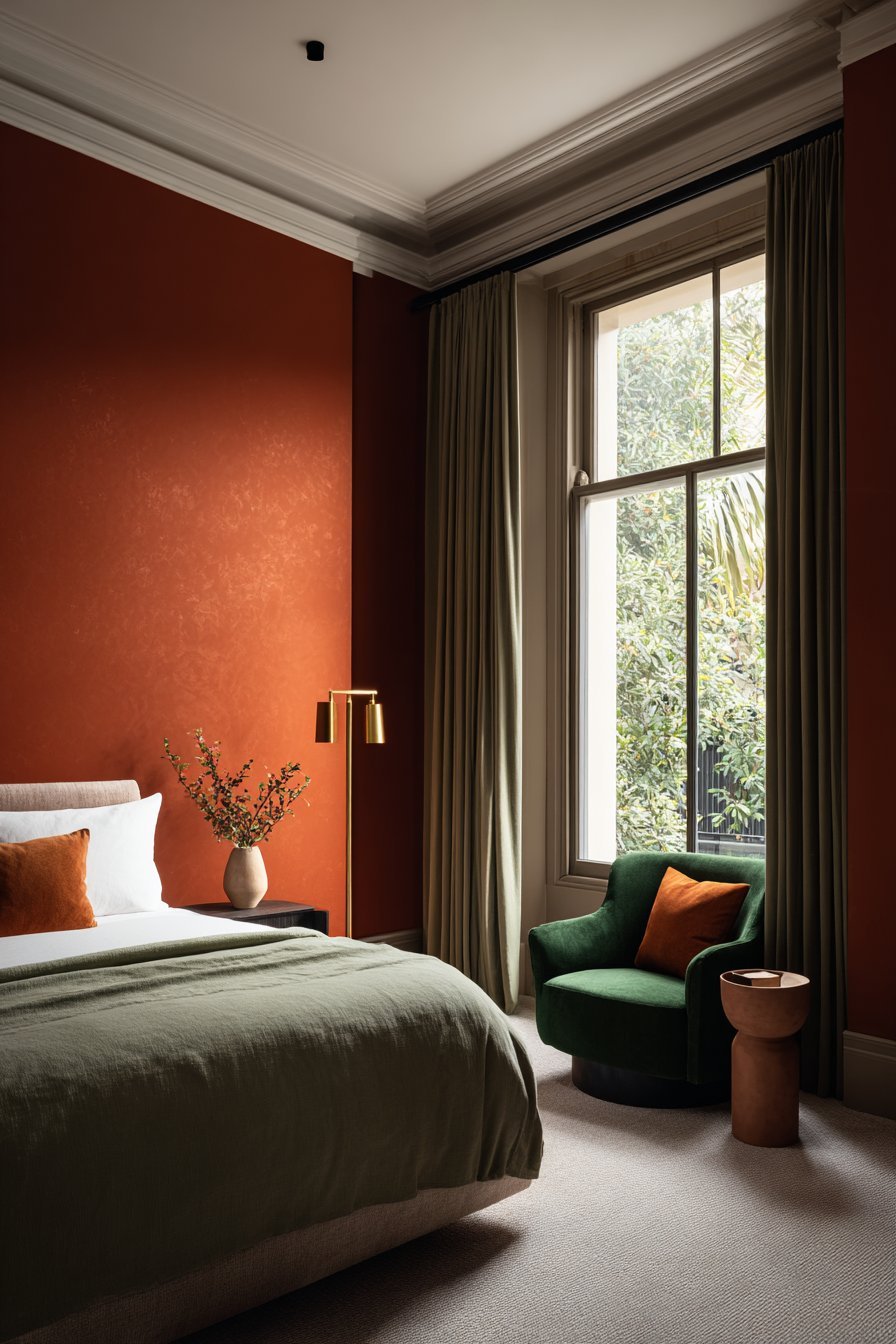
The temperature balance also affects seasonal perception. During winter months, terracotta elements provide psychological warmth without requiring actual temperature increases. Summer months allow green components to create cooling visual relief. This year-round adaptability makes the combination economically practical since you won’t need to completely redecorate seasonally.
- Use more terracotta in rooms needing warmth and coziness
- Emphasize green in spaces prone to overheating or harsh sunlight
- Layer both colors through reversible bedding for seasonal flexibility
- Choose warm green tones (olive, sage) over cool greens (mint, teal)
- Balance wall color with opposite-temperature flooring choices
- Adjust lighting color temperature (2700K-3000K) to enhance the pairing
5. Easy Integration with Existing Neutral Foundations
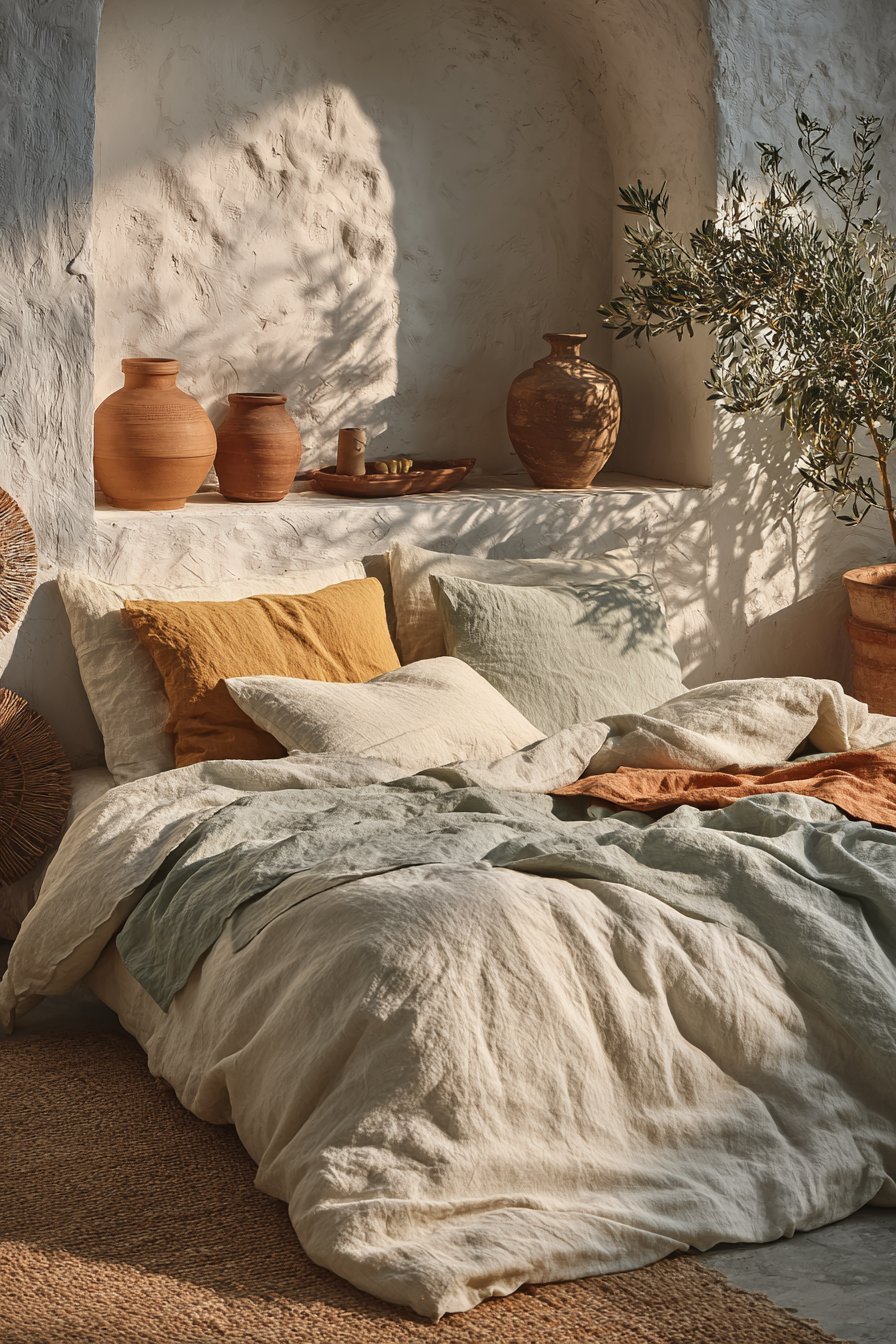
Most bedrooms start with neutral walls, flooring, or furniture that homeowners hesitate to replace. Green and terracotta excel at enhancing neutrals rather than competing with them. Beige, cream, white, and gray all serve as perfect canvases for introducing these colors through accessories and textiles.
The earthy nature of both colors means they register as neutrals themselves in many applications. A terracotta linen duvet or sage velvet headboard doesn’t demand the same commitment as bright jewel tones. If you tire of the combination, these pieces transition easily into other color schemes without appearing dated or mismatched.
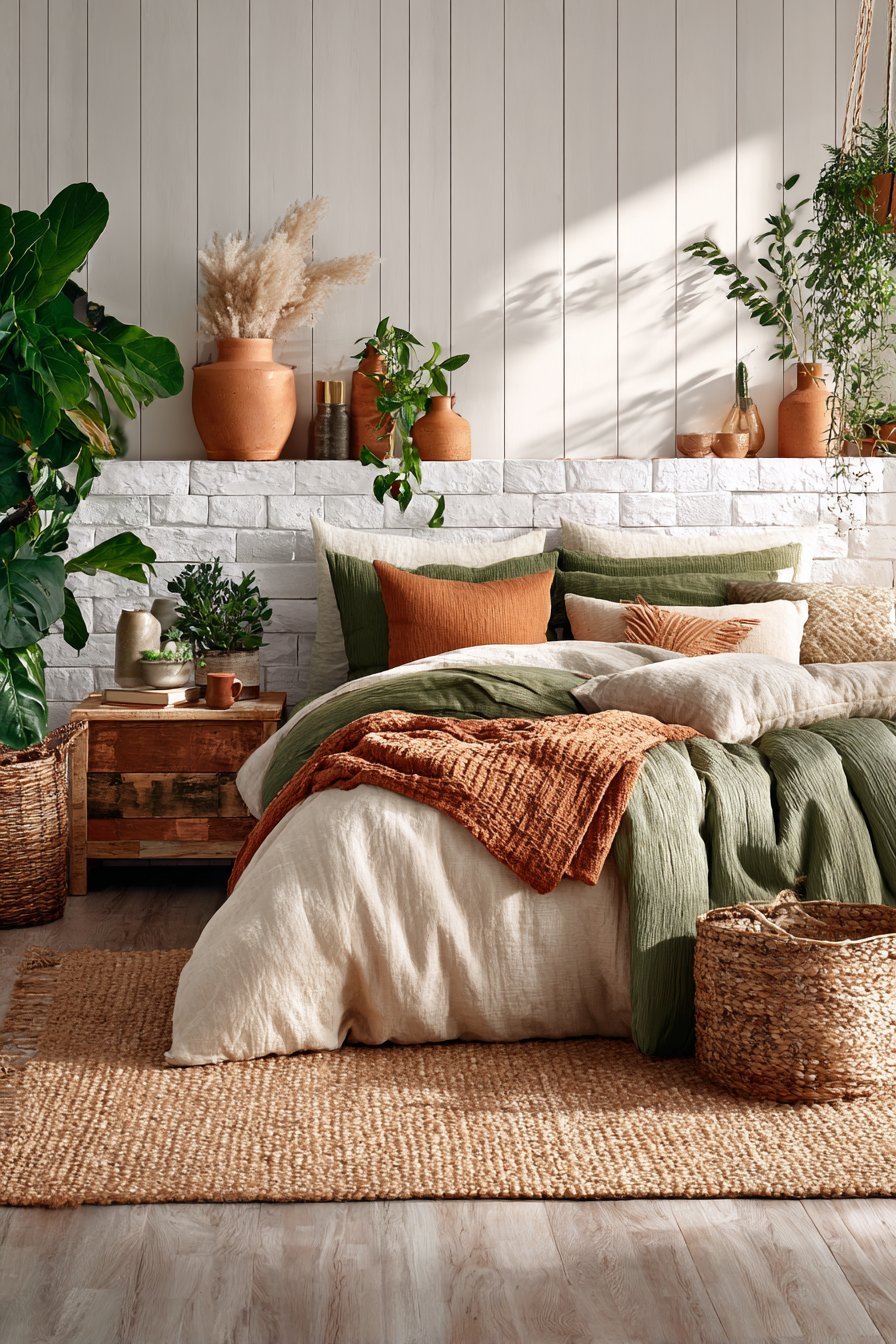
This compatibility with neutrals also simplifies the design process for beginners. You don’t need to repaint entire rooms or replace major furniture pieces. Strategic additions—throw pillows, artwork, curtains, rugs—allow you to test the combination before making larger investments. The gradual introduction reduces financial risk while helping you discover your ideal balance.
- Start with small accessories like pillows and throws
- Progress to larger textile investments like curtains or area rugs
- Consider one statement furniture piece in either color
- Keep walls neutral if you prefer flexibility for future changes
- Use both colors in patterned textiles for cohesive introduction
- Mix in natural wood tones that complement both colors
6. Vast Range of Shade Options for Personalization
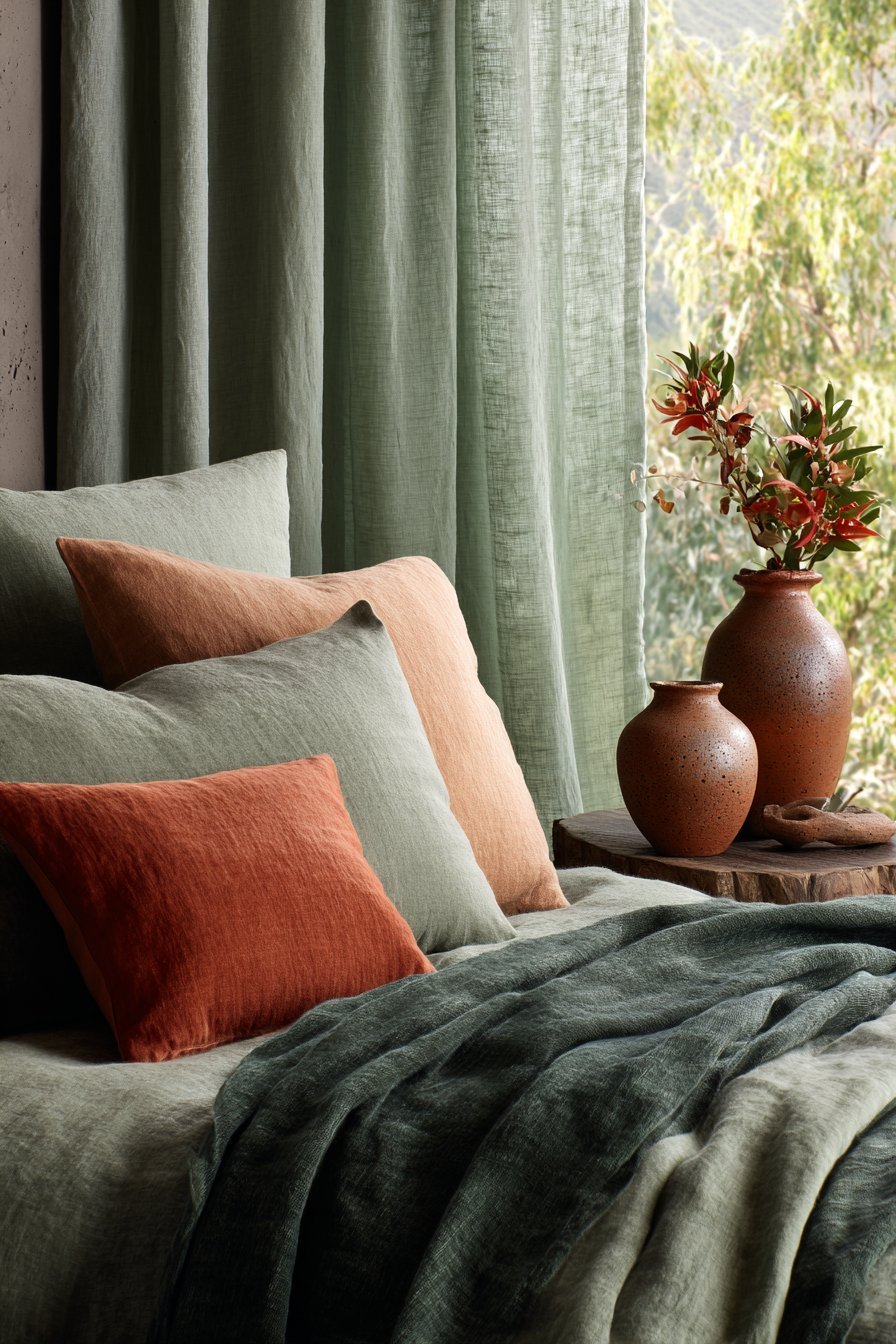
Neither “green” nor “terracotta” represents a single shade. The spectrum of possibilities within each color family allows unprecedented personalization. Green ranges from pale mint to deep forest, while terracotta spans from peachy coral to deep rust. This variety ensures you’ll find combinations that resonate with your specific preferences.
Lighter interpretations create airy, refreshing spaces perfect for small bedrooms or those seeking Scandinavian simplicity. Pale sage walls paired with soft terracotta accents maintain openness while adding character. Darker versions—forest green with burnt terracotta—deliver drama and sophistication suited to larger bedrooms or those desiring bold statements.
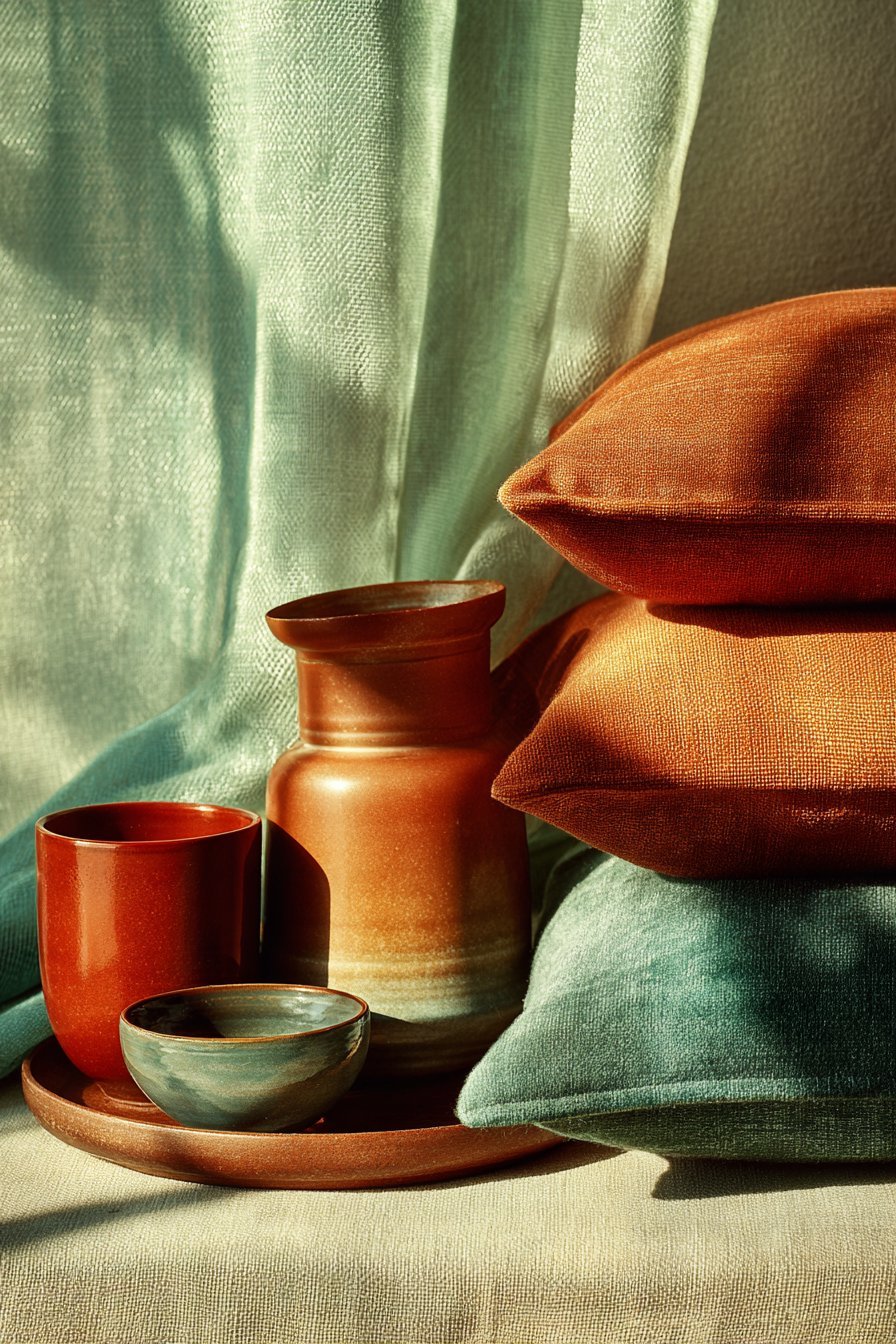
The ability to adjust shade intensity also addresses practical concerns like room size and natural light. Darker colors absorb light and can make small spaces feel cramped, while lighter versions reflect light and expand visual boundaries. By selecting appropriate shades from each color family, you optimize both aesthetic appeal and spatial perception.
- Sample multiple shades on your walls before committing to paint
- Consider how natural and artificial light affects color appearance
- Use darker shades on accent walls to create focal points
- Apply lighter versions across all walls for cohesive serenity
- Mix multiple green shades for depth and visual interest
- Layer various terracotta tones through textiles and accessories
7. Budget-Friendly Implementation Options
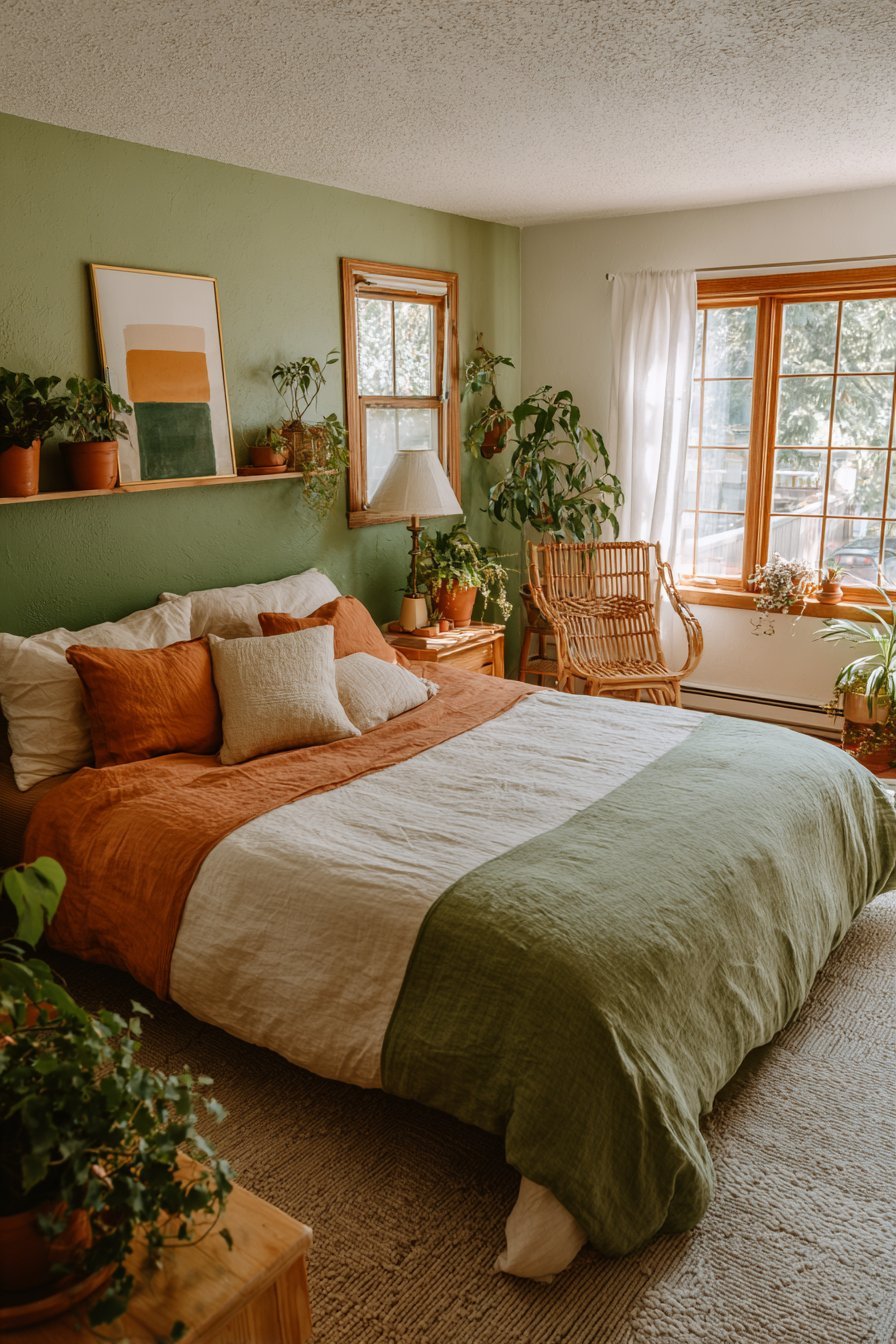
Creating a beautiful bedroom doesn’t require unlimited resources. Green and terracotta combinations work effectively at every price point because they rely on color impact rather than expensive materials. Even budget-conscious homeowners can achieve sophisticated results through strategic choices and phased implementation.
Paint represents the most cost-effective transformation available. A gallon of quality paint costs between $30-60 and can completely change a room’s atmosphere. Choose one color for walls and incorporate the other through less expensive accessories. Thrift stores and discount retailers frequently stock terracotta ceramics and green textiles at fraction-of-retail prices.
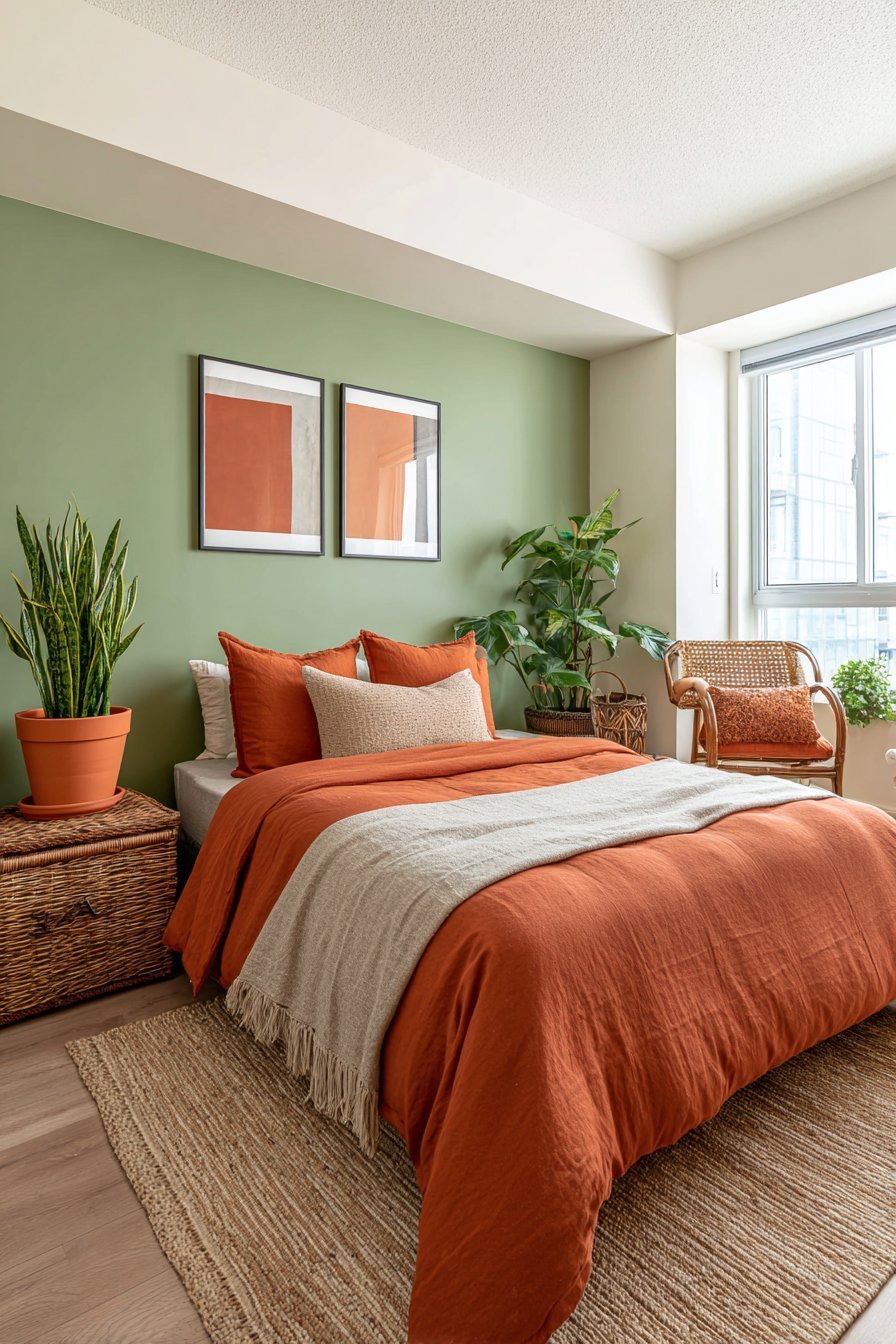
DIY projects further reduce costs while adding personal touches. Consider painting existing furniture pieces in either color rather than purchasing new items. Create your own artwork incorporating both hues. Plant propagation provides free greenery that reinforces the color scheme. These approaches allow you to achieve designer looks without designer budgets.
- Prioritize paint over expensive furniture purchases initially
- Shop secondhand for ceramic pots, vases, and decorative objects
- Use solid-color budget bedding rather than expensive patterned sets
- Create DIY artwork with inexpensive canvases and acrylic paint
- Propagate houseplants from cuttings for free green elements
- Repurpose items you already own through strategic repainting
8. Excellent Foundation for Layering Patterns and Textures
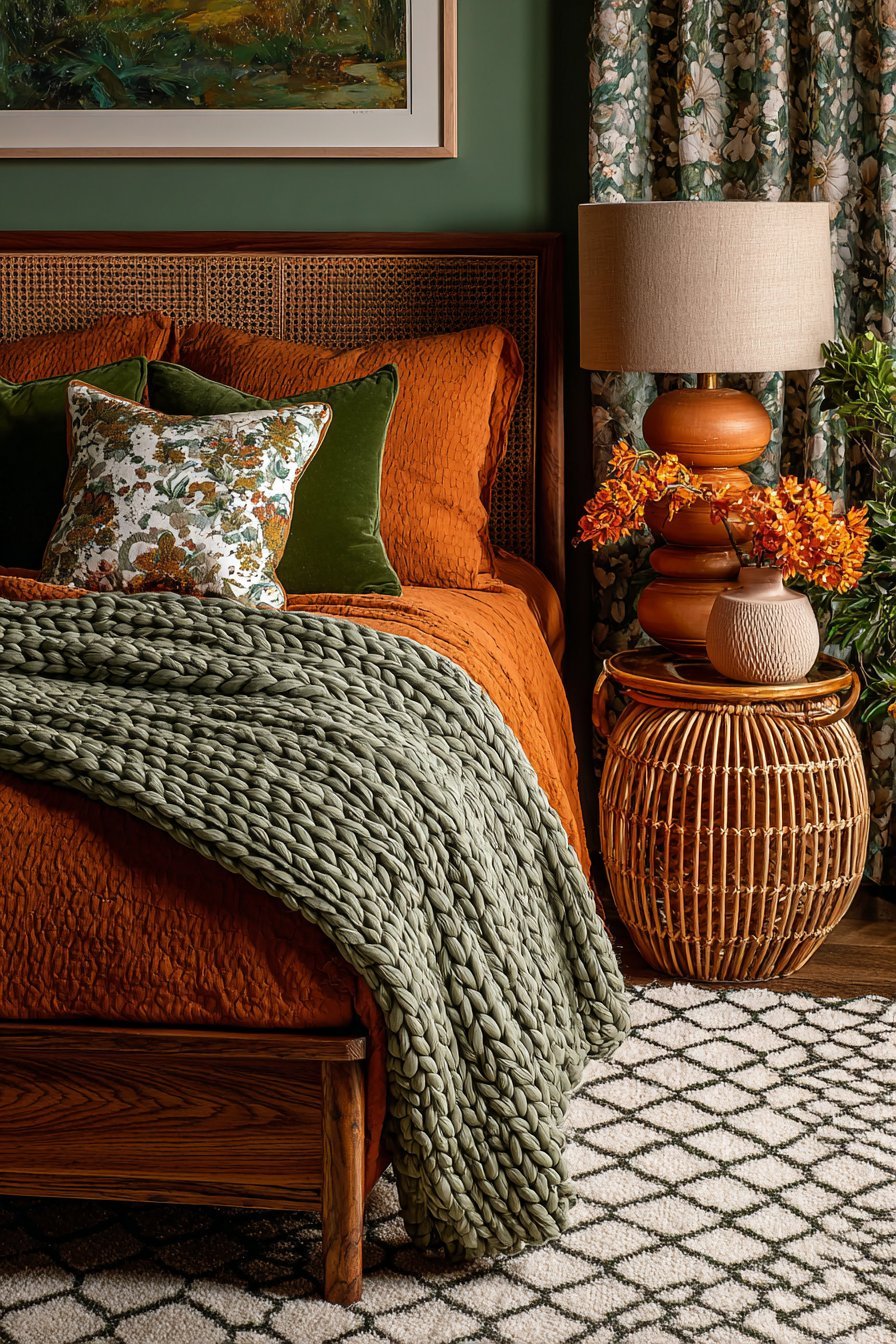
Successful bedroom design extends beyond flat color application into the realm of tactile and visual texture. Green and terracotta provide an ideal foundation for pattern mixing because their natural affinity prevents clashing. You can confidently combine florals, geometrics, stripes, and organic patterns when they share this color palette.
Texture layering adds dimensional interest that solid colors alone cannot achieve. Consider terracotta linen bedding topped with a chunky sage knit throw. Add velvet pillows in forest green alongside woven rattan accessories in natural terracotta tones. These textural variations create sophistication that elevates the entire space beyond simple color coordination.
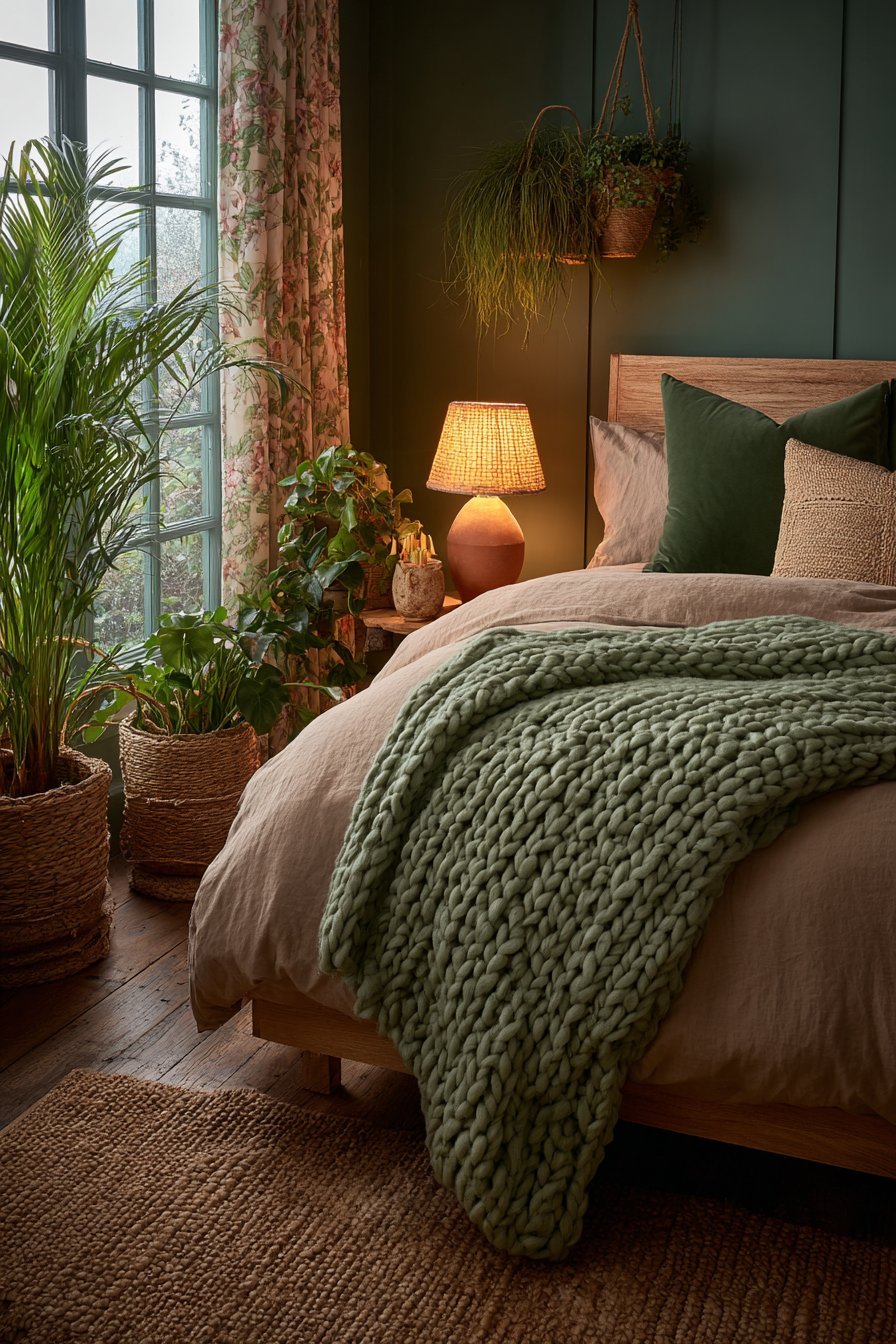
The earthy nature of both colors means they complement natural materials beautifully. Wood, stone, clay, and fiber elements all enhance rather than compete with your color scheme. This harmony simplifies accessory selection while ensuring your bedroom maintains a cohesive, intentional appearance rather than looking accidentally assembled.
- Mix at least three different textures within your color scheme
- Combine matte and subtle sheen finishes for depth
- Layer patterns of different scales (small, medium, large)
- Use solid colors to balance busier patterned elements
- Incorporate natural materials like wood, rattan, and stone
- Add metallic accents for a touch of glamour
9. Low Maintenance and Timeless Appeal
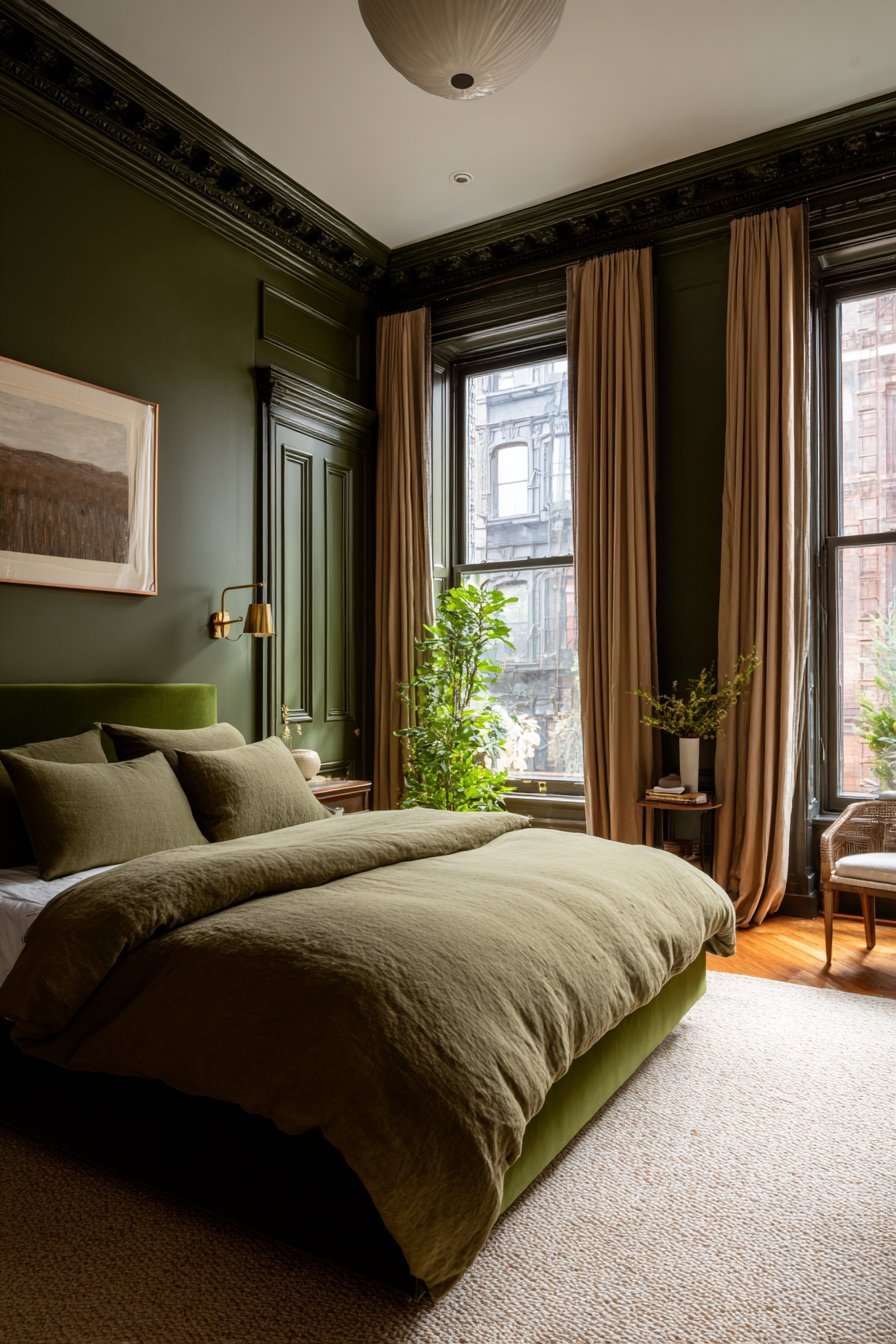
Unlike trendy color combinations that quickly date a space, green and terracotta have demonstrated lasting relevance across decades. These colors appeared in ancient homes and continue appearing in contemporary design magazines. This timelessness protects your investment by ensuring your bedroom won’t look obviously dated within a few years.
The colors also hide everyday wear better than lighter or brighter alternatives. Terracotta naturally camouflages dust and minor marks, while deeper greens don’t show soiling as readily as whites or pastels. This practical advantage reduces cleaning frequency and extends the life of textiles and painted surfaces.
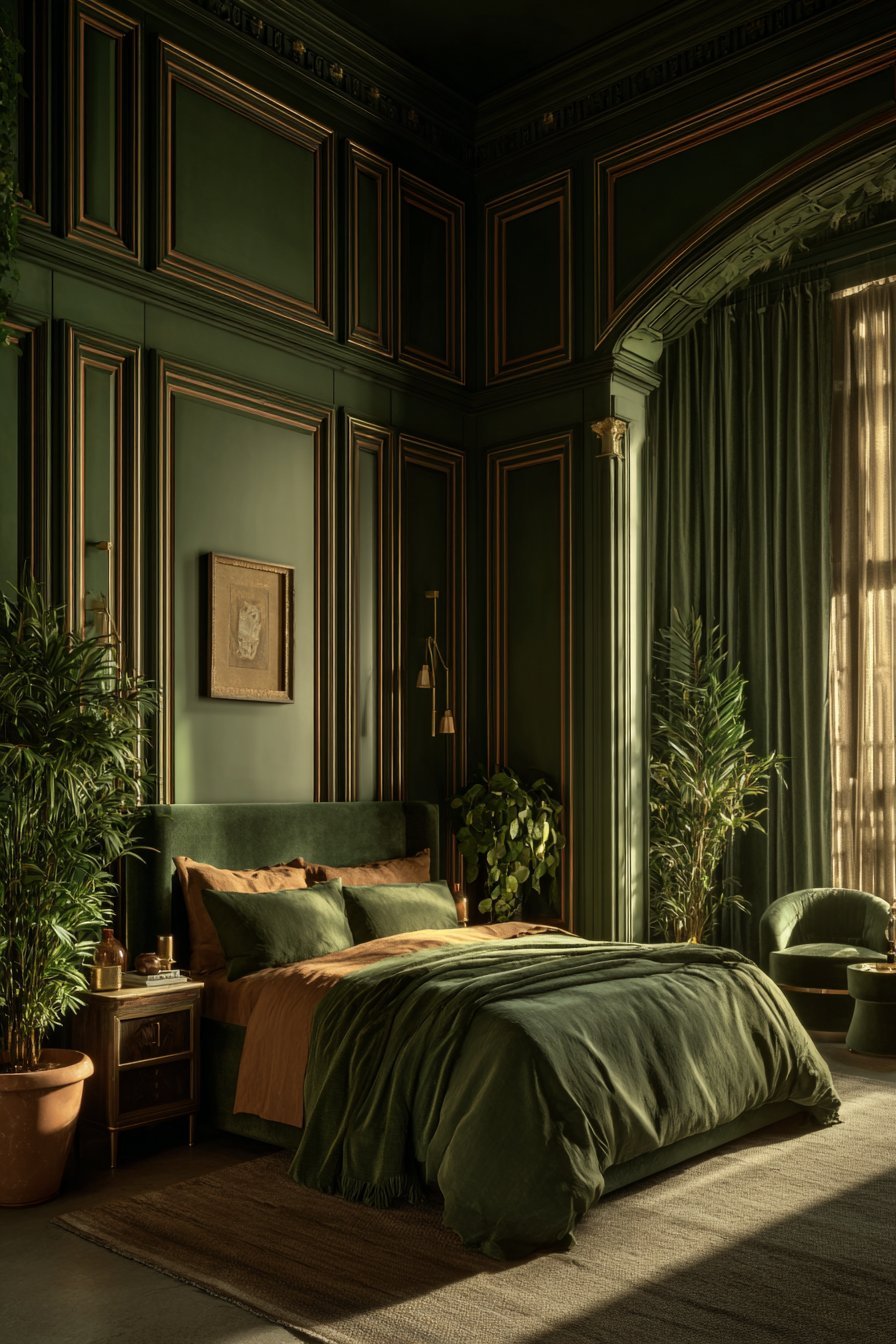
Maintenance simplicity extends to decorating decisions over time. When you inevitably want to refresh your space, you can simply swap accent pieces rather than undertaking complete overhauls. Change throw pillows, rotate artwork, or add new plants without abandoning your foundational color scheme. This flexibility reduces both cost and effort associated with keeping your bedroom current.
- Choose washable fabrics for items requiring regular cleaning
- Select darker shades for high-contact surfaces like headboards
- Invest in quality paint for walls to avoid frequent touch-ups
- Rotate accessories seasonally to keep the space feeling fresh
- Use slipcovers on furniture pieces for easy updating
- Incorporate removable wallpaper in patterns featuring both colors
10. Enhanced Connection to Nature and Wellness
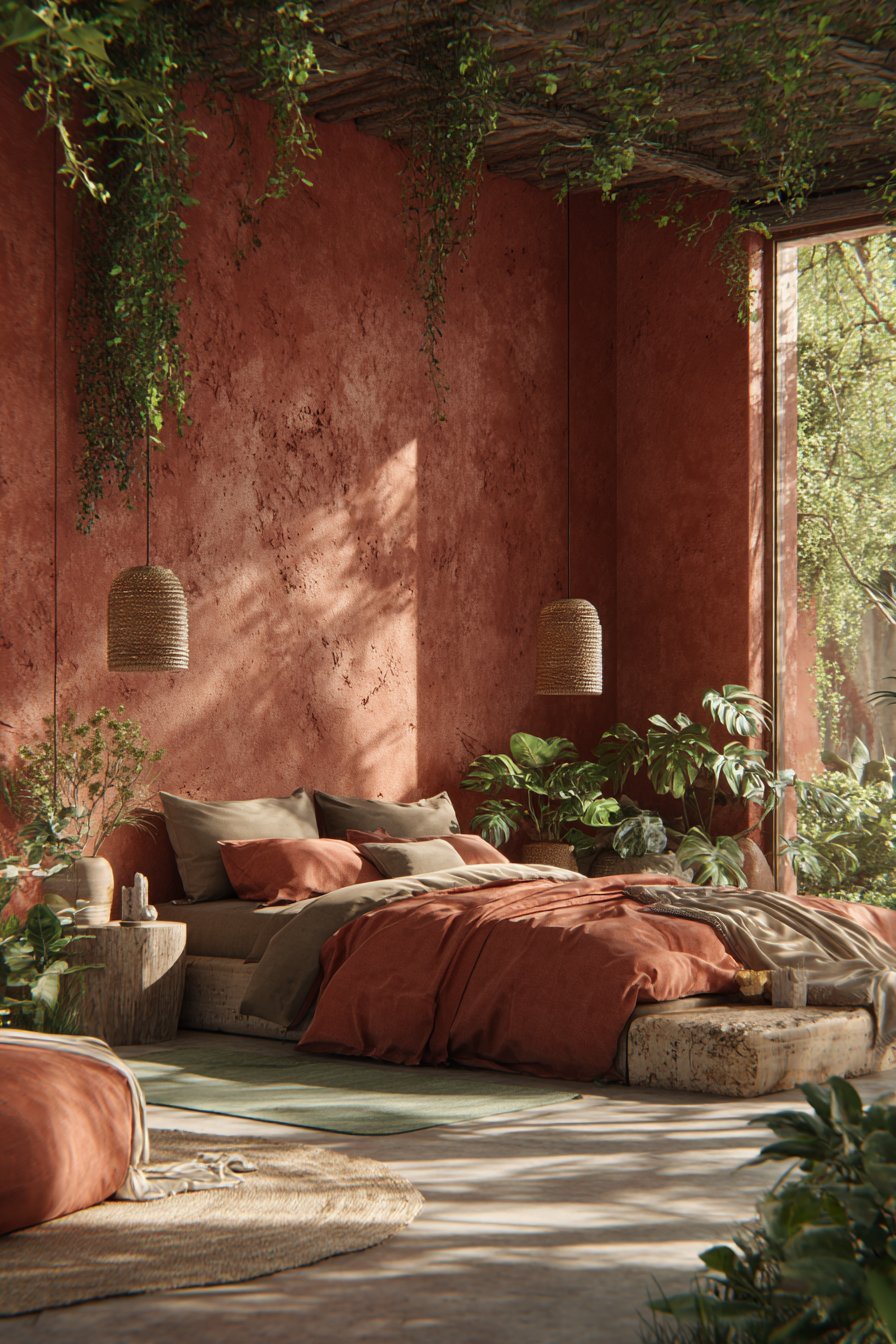
Modern life increasingly disconnects us from natural environments, creating psychological stress that manifests in various health issues. Bringing nature-inspired colors into your bedroom combats this disconnect by creating daily contact with earth elements. Green represents vegetation and growth, while terracotta embodies the soil that sustains it.
This nature connection supports holistic wellness beyond just aesthetics. Rooms incorporating these colors often inspire residents to add living plants, further enhancing air quality and biophilic benefits. The calming atmosphere encourages mindful practices like meditation or gentle morning routines. Your bedroom transforms from merely a sleeping space into a wellness sanctuary.
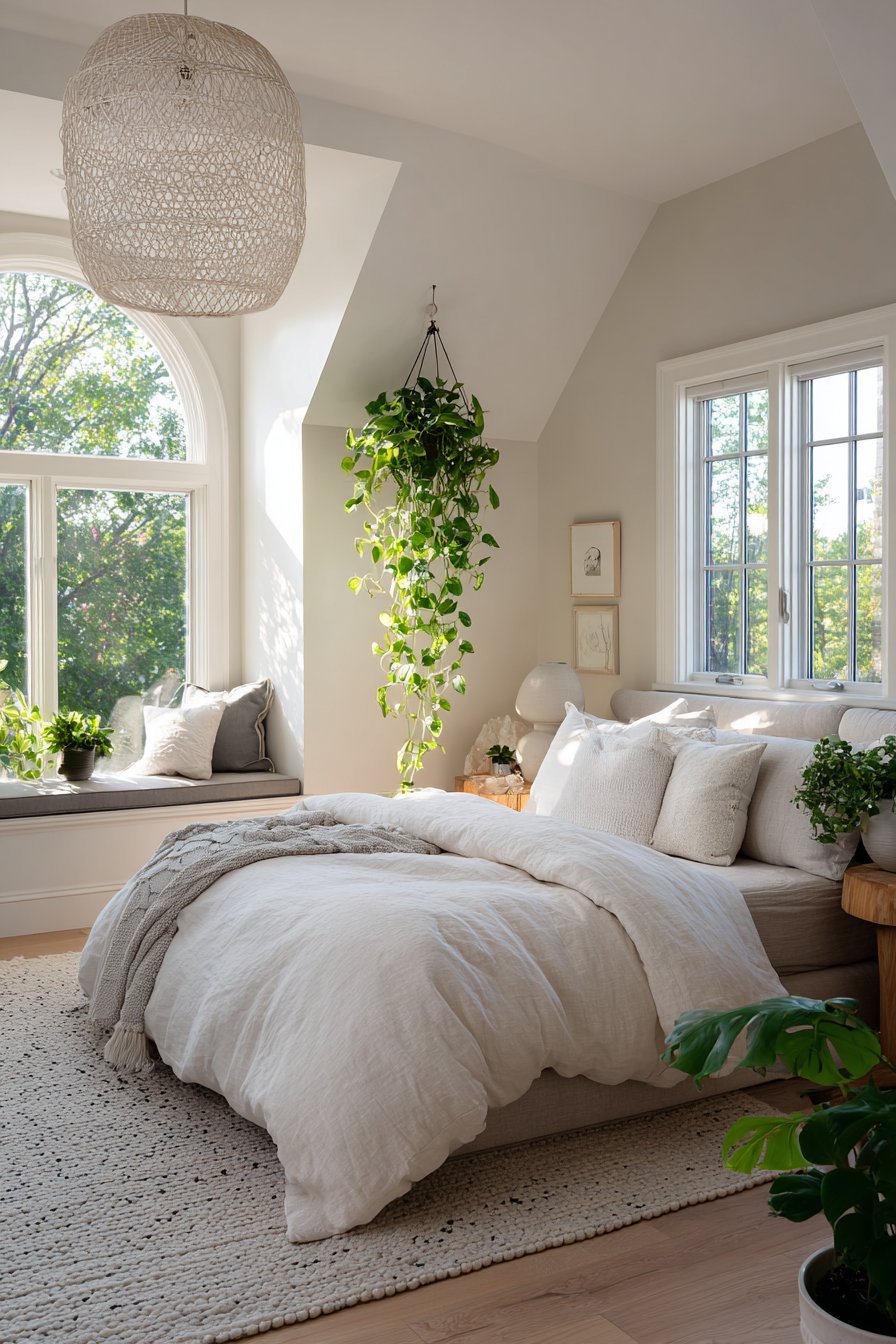
The grounding effect of terracotta combined with green’s restorative properties creates an environment that supports both mental and physical health. Many holistic practitioners recommend these colors specifically for bedrooms because they facilitate the deep rest necessary for healing and rejuvenation. Your color choices become an active component of your self-care routine.
- Add multiple living plants to reinforce the natural connection
- Choose organic bedding materials like cotton, linen, or bamboo
- Incorporate natural scents through essential oils or candles
- Display natural objects like stones, shells, or driftwood
- Use full-spectrum lighting to mimic natural daylight
- Create a dedicated space for meditation or yoga within the room
Conclusion
The enduring appeal of green and terracotta bedroom combinations stems from their ability to satisfy both aesthetic and psychological needs. This pairing delivers visual sophistication while creating the calming atmosphere essential for quality rest. Whether you prefer subtle applications or bold statements, these colors adapt to your personal style and space requirements.
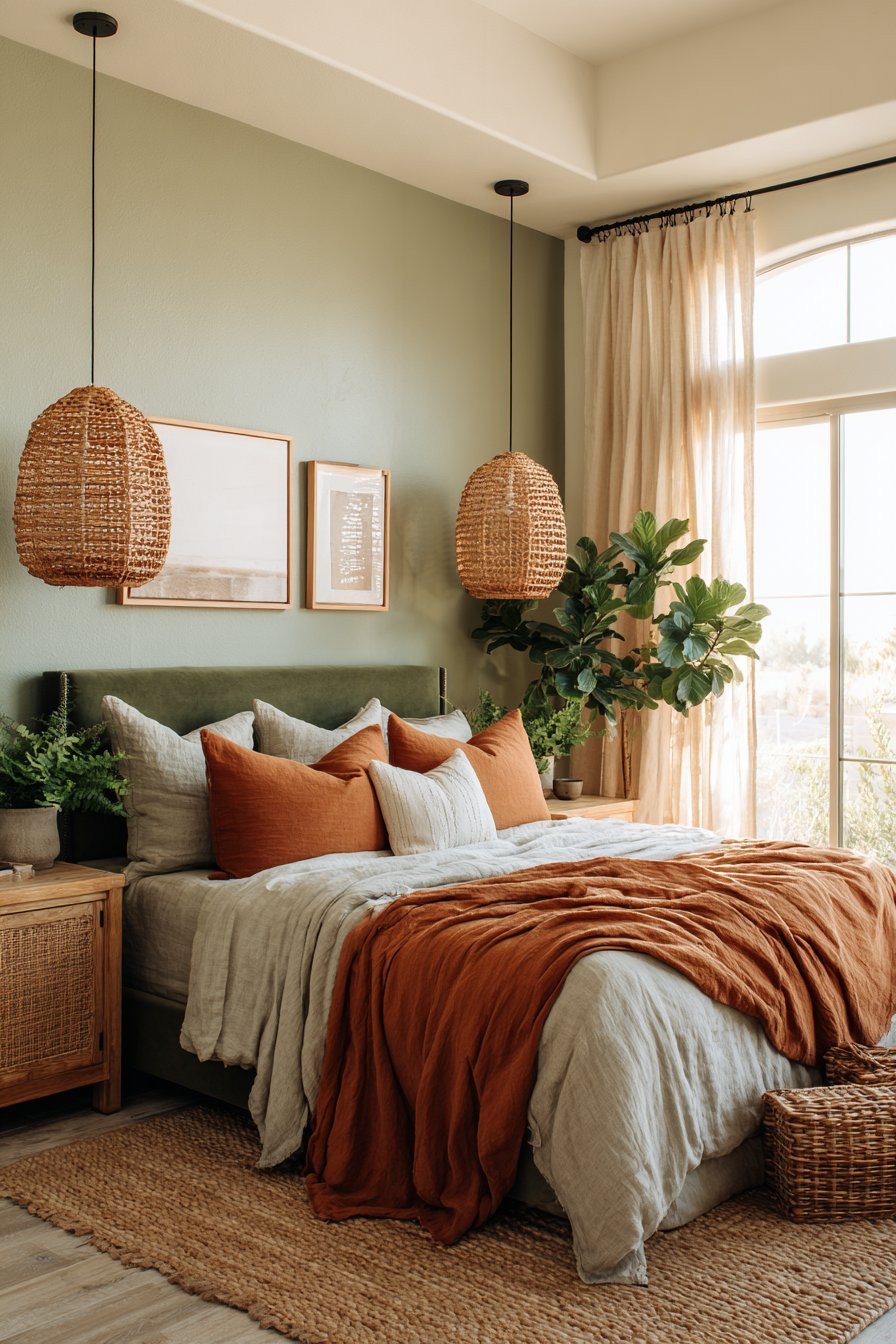
Implementing this combination requires no special expertise or unlimited budgets. Start with small changes, experiment with different shades, and gradually build toward your ideal bedroom sanctuary. The versatility and timelessness of green and terracotta ensure your investment will serve you well for years to come, creating a space where you consistently feel refreshed, grounded, and at peace.
