
Small kitchens present unique design challenges, but with strategic planning and thoughtful choices, even the most compact cooking space can feel remarkably spacious. The key lies in understanding how visual perception and spatial flow work together to create an illusion of openness. When properly designed, a small kitchen doesn’t just function efficiently—it becomes an inviting space where cooking feels less constrained and more enjoyable.
The principles of creating an open and airy atmosphere go beyond simple aesthetics. They involve careful consideration of light, color, storage solutions, and material choices that work harmoniously to expand visual boundaries. Modern design techniques have proven that square footage matters less than how intelligently you use the space available. Whether you’re renovating an existing kitchen or designing a new one from scratch, these strategies will help you maximize every inch while maintaining a sense of openness that makes the heart of your home feel welcoming and functional.
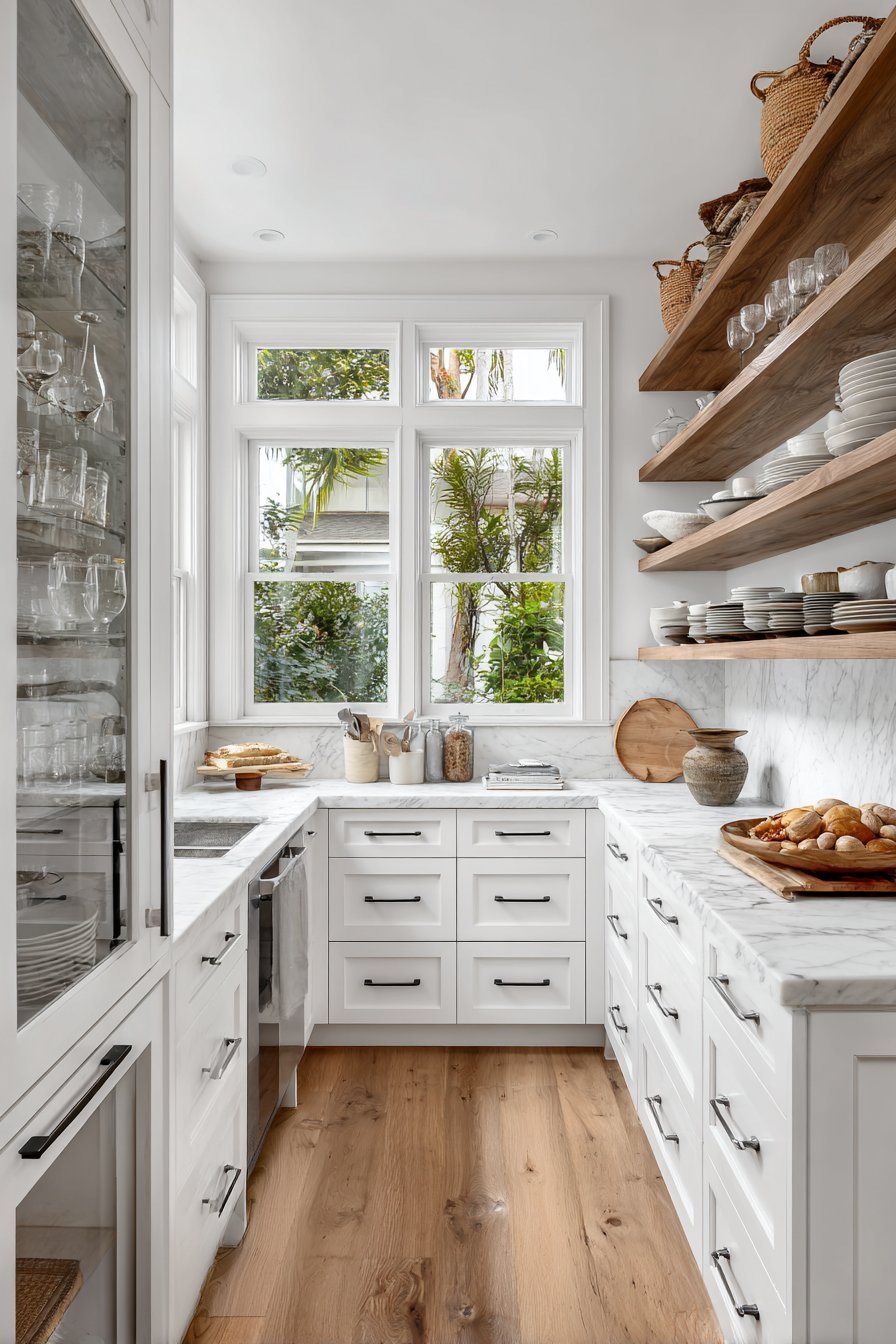
1. Embrace Light Colors and Reflective Surfaces
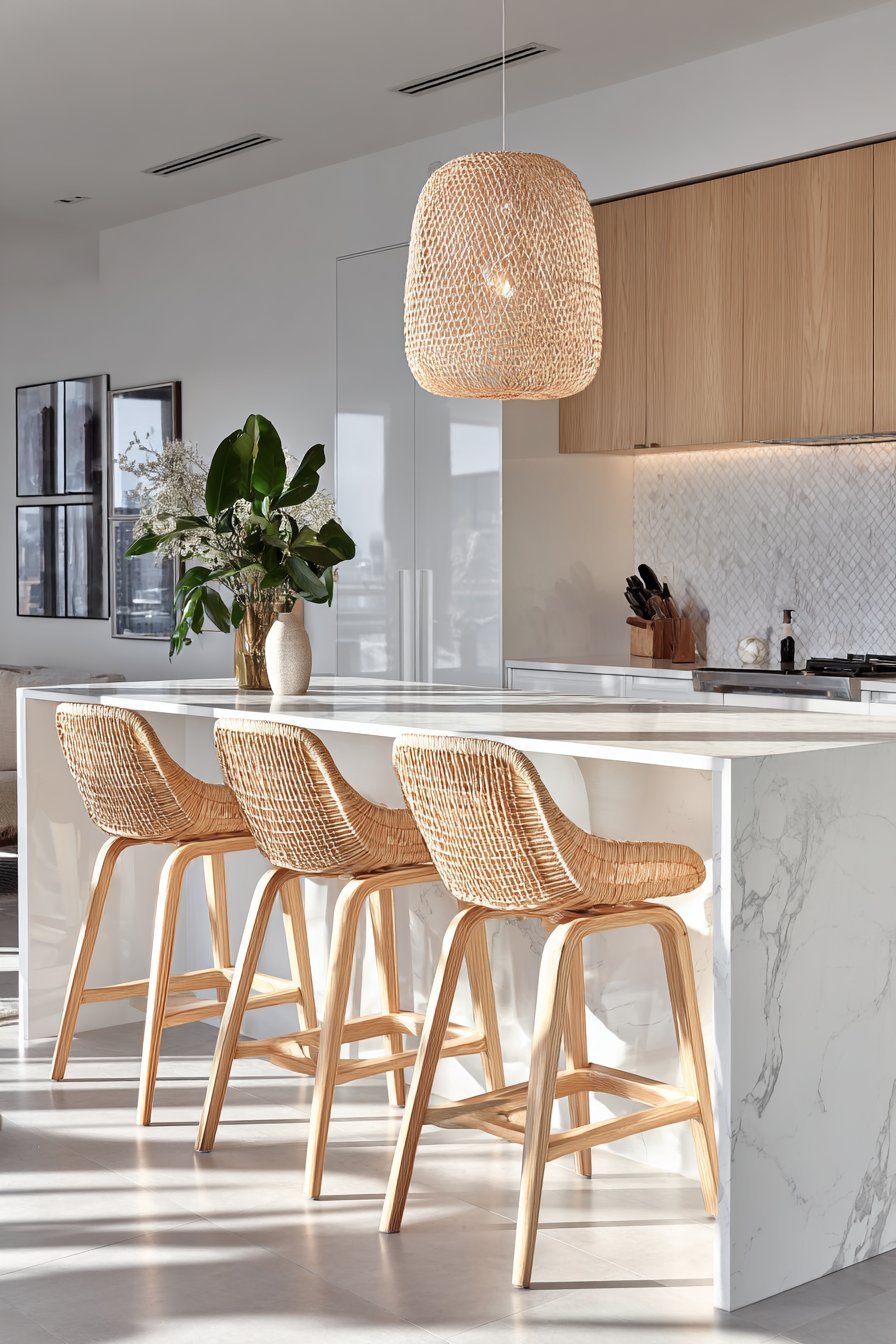
Light colors are your most powerful tool for making a small kitchen feel larger and more open. White and pale neutrals reflect natural light throughout the space, creating brightness that pushes visual boundaries outward. Unlike darker hues that absorb light and create shadows, lighter tones bounce illumination around the room, making walls appear to recede and ceilings seem higher.
The strategic use of reflective surfaces amplifies this effect exponentially. Glossy cabinet finishes, polished countertops, and glass tile backsplashes act as mirrors, multiplying available light sources. These surfaces create depth through reflection, making the kitchen feel less enclosed. Even stainless steel appliances contribute to this reflective quality, though they should be balanced carefully to avoid an overly industrial appearance.
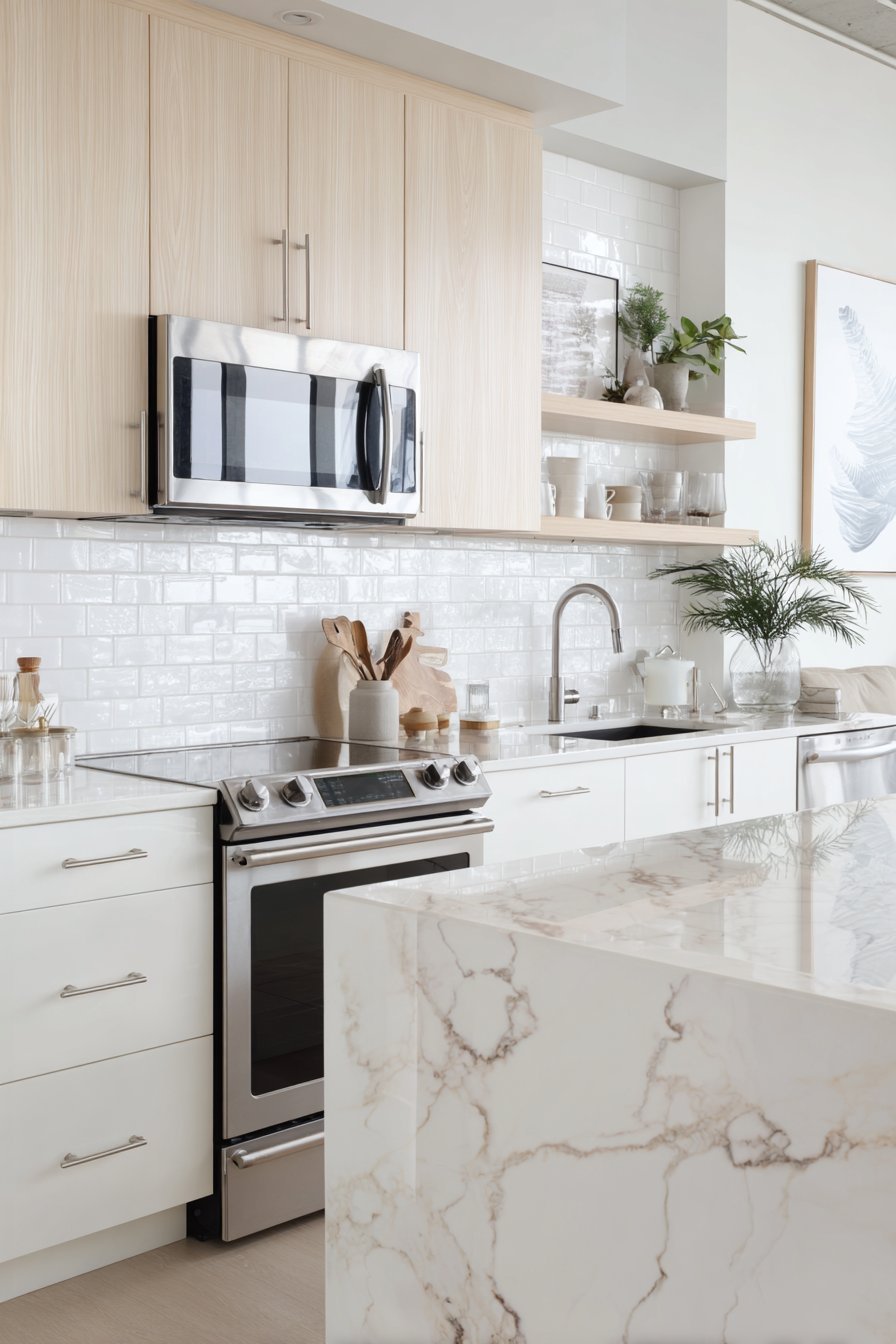
Consider the psychological impact of color as well. Soft whites, warm creams, and pale grays create a calming, expansive atmosphere that reduces visual clutter. These colors provide a neutral backdrop that allows architectural features and design elements to shine without overwhelming the senses. The result is a kitchen that feels clean, organized, and significantly more spacious than its actual dimensions.
- Choose white or off-white cabinetry to maximize light reflection
- Install glossy subway tiles or glass backsplashes for added brightness
- Select light-colored countertops in quartz or marble with subtle veining
- Use satin or semi-gloss paint finishes on walls for gentle light bounce
- Consider light wood tones like maple or birch instead of dark walnut
- Keep upper cabinets in lighter shades than lower ones to prevent top-heaviness
2. Maximize Natural Light with Strategic Window Treatments
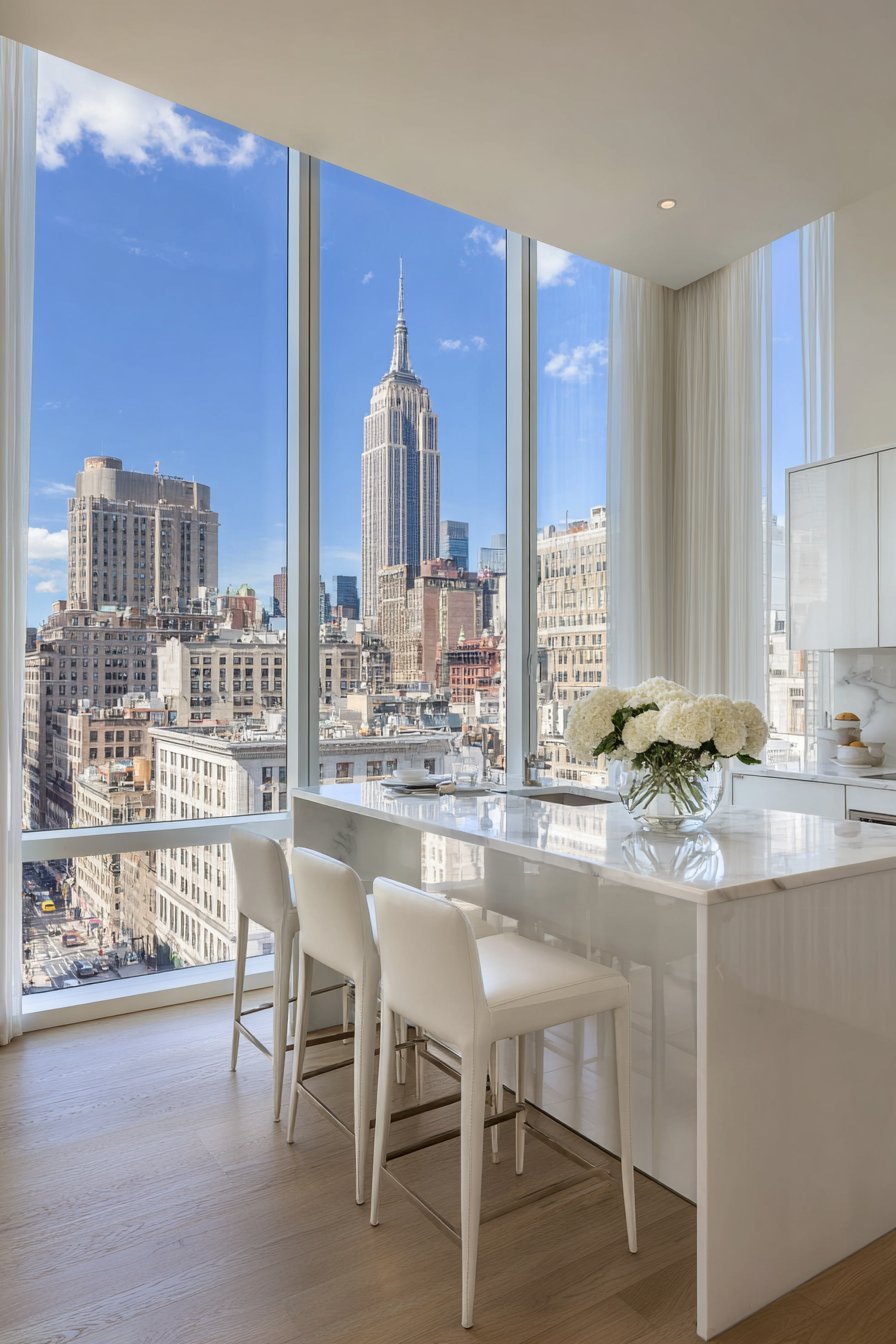
Natural light is invaluable in small kitchens, and your window treatment choices dramatically impact how open the space feels. Heavy drapes and dark blinds block precious sunlight and create visual barriers that make kitchens feel cramped. Instead, opt for minimal window coverings that preserve privacy while allowing maximum light penetration throughout the day.
Sheer curtains or light-filtering roller shades provide the perfect balance between privacy and illumination. These treatments soften harsh sunlight without significantly reducing brightness, creating a gentle, diffused glow that enhances the airy atmosphere. If privacy isn’t a concern, leaving windows completely bare creates the most dramatic sense of openness and connects your kitchen to outdoor views.
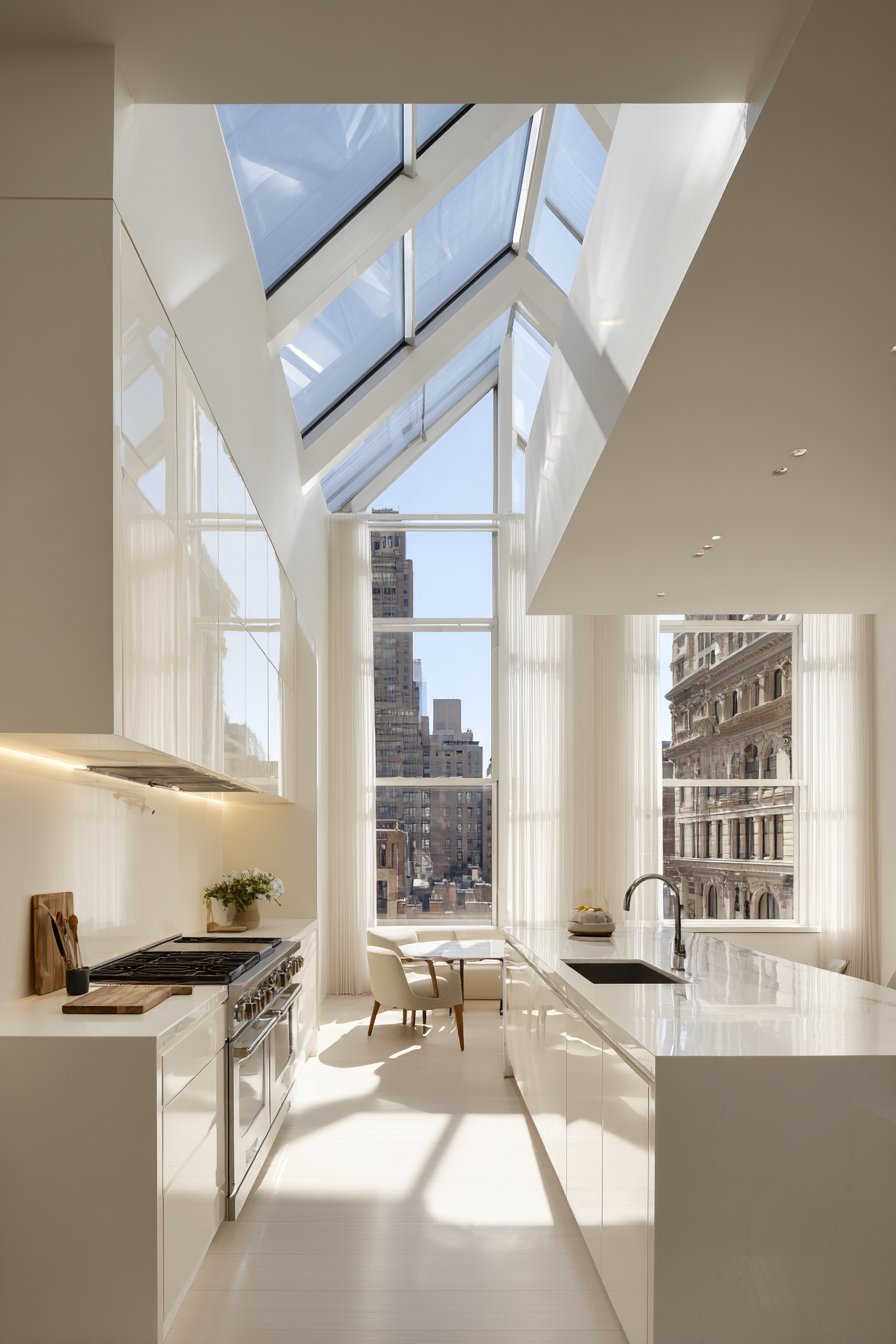
Consider the placement and size of windows during renovation planning. Larger windows or skylights can transform a dark, confined kitchen into a bright, welcoming space. Even adding a single window or enlarging an existing one can make a substantial difference in how open and connected to the outdoors your kitchen feels.
- Install sheer white or cream curtains that filter light without blocking it
- Use top-down, bottom-up shades for privacy while maintaining upper light flow
- Consider frosted window film for privacy without sacrificing brightness
- Remove heavy valances or cornices that visually lower the ceiling
- Keep window sills clear of clutter to maximize light penetration
- Add a skylight or sun tunnel if structural changes are possible
3. Optimize Vertical Storage to Clear Counter Space
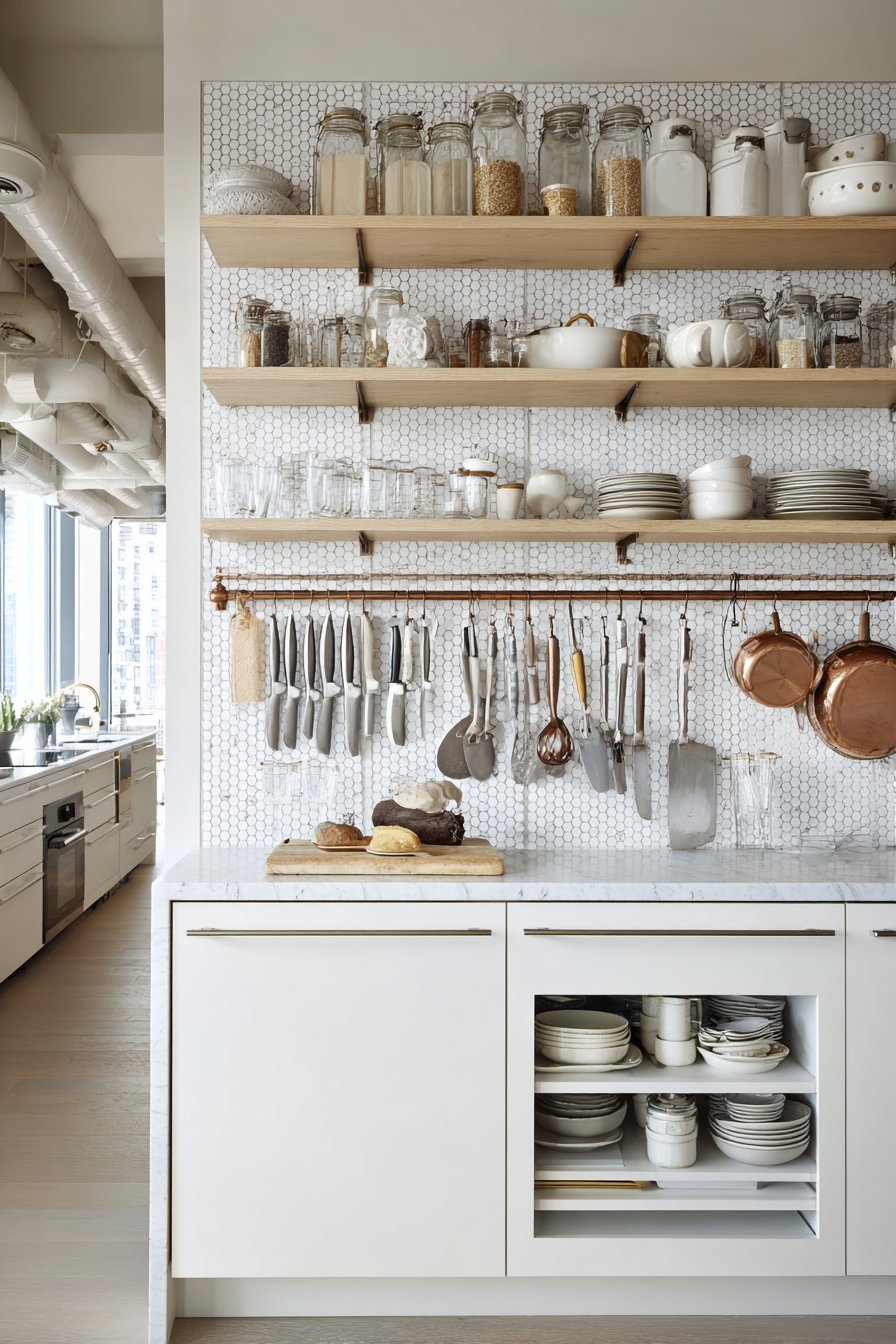
Vertical storage solutions are essential for maintaining the open feel of a small kitchen. When countertops are cluttered with appliances, utensils, and ingredients, even spacious kitchens feel cramped. By moving storage upward, you preserve valuable horizontal surfaces that create visual breathing room and make the kitchen feel more functional and organized.
Floor-to-ceiling cabinetry maximizes storage capacity while drawing the eye upward, creating the illusion of height. This vertical emphasis makes ceilings appear taller and the overall space feel more expansive. Open shelving on upper walls provides accessible storage for frequently used items while maintaining an airy quality that closed cabinets cannot achieve.
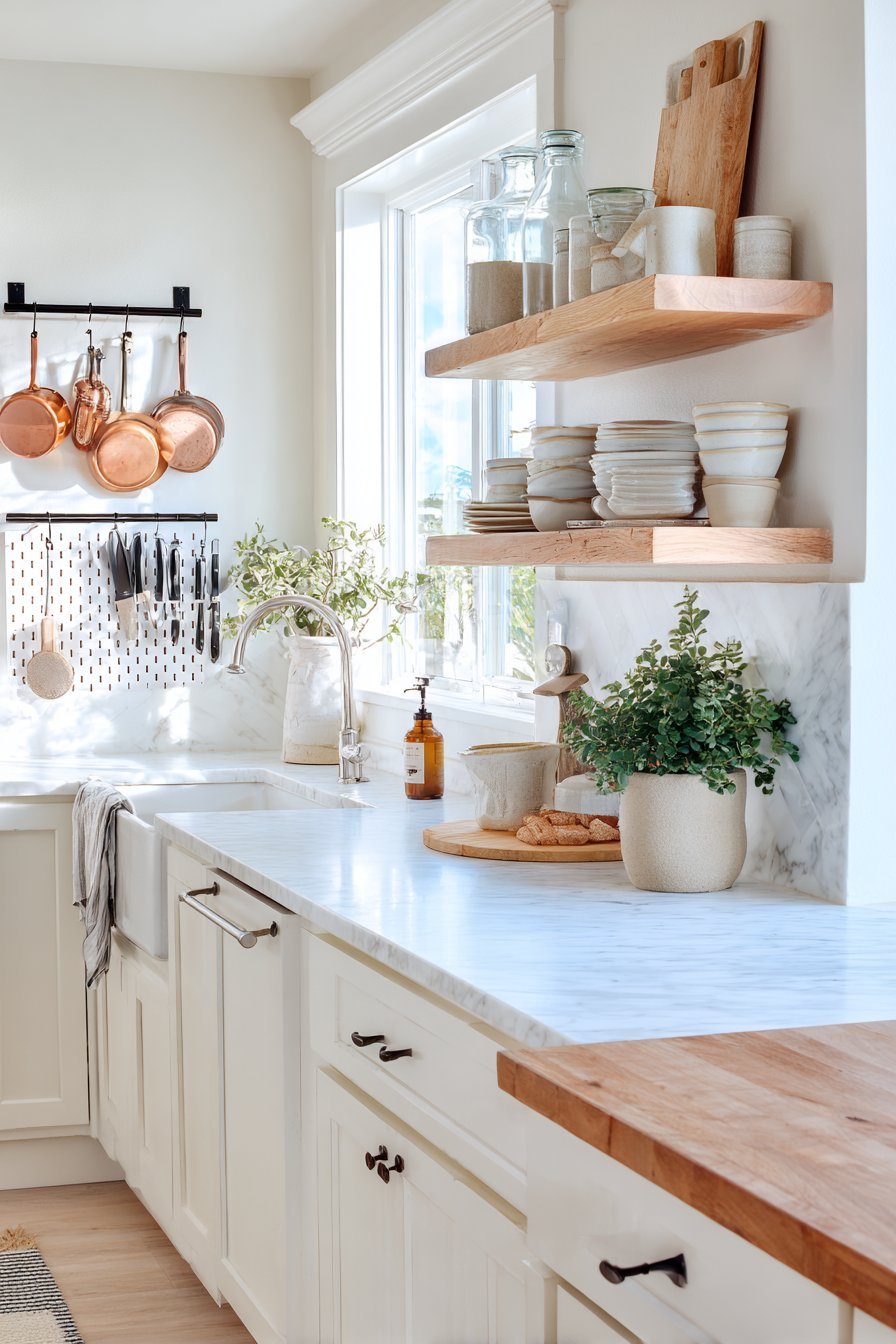
Wall-mounted racks, magnetic knife strips, and hanging pot organizers keep essential tools within reach without consuming counter space. These functional design elements serve double duty as both storage and visual interest, adding personality while maintaining the clean, uncluttered aesthetic crucial for small spaces.
- Install cabinets that extend to the ceiling for maximum storage
- Use open shelving strategically to display attractive dishware
- Mount magnetic strips for knives and metal utensils
- Hang pot racks or pegboards for cookware organization
- Add hooks inside cabinet doors for measuring cups and small tools
- Store small appliances in cabinets and only display daily-use items
4. Choose Streamlined, Space-Saving Appliances
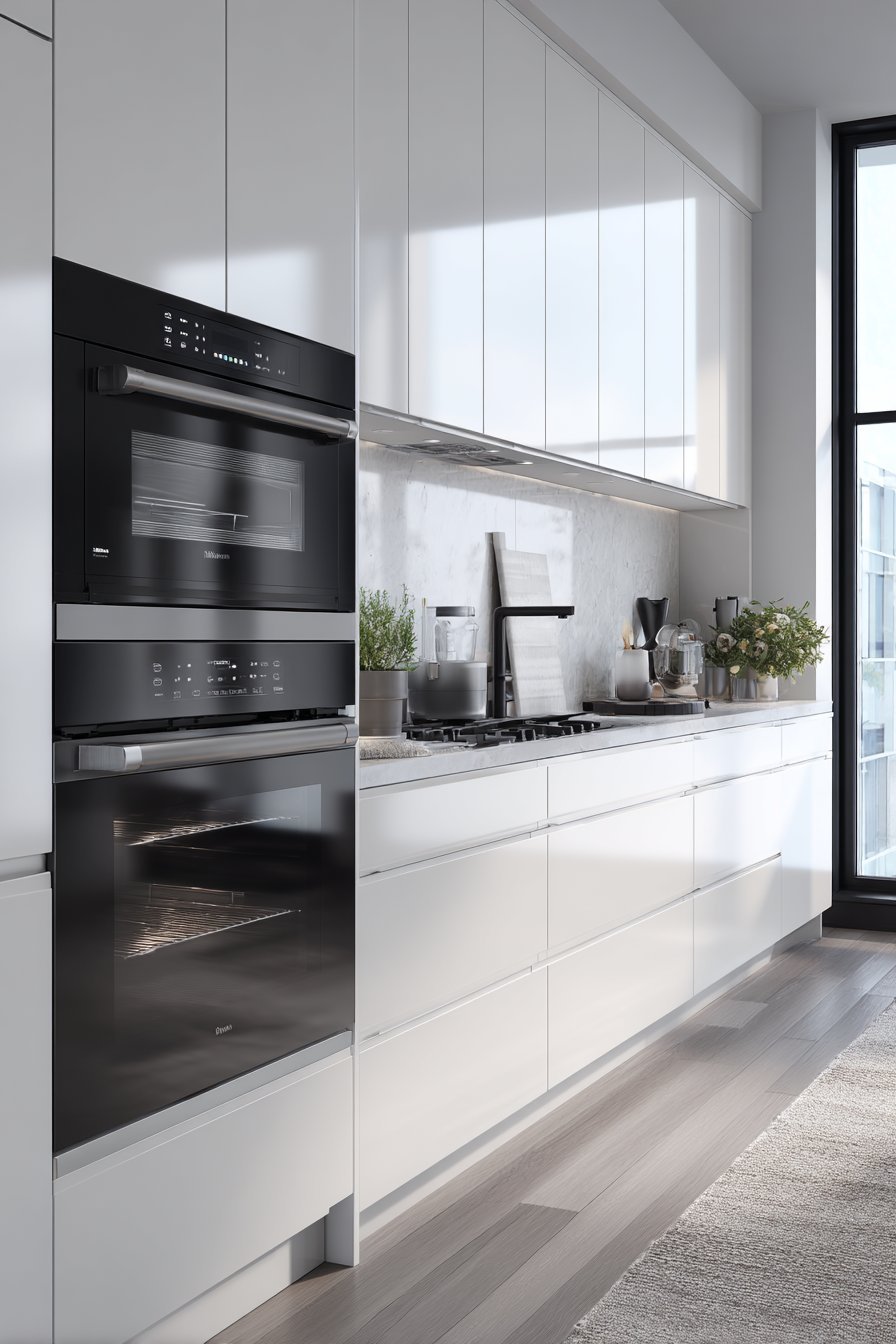
Modern compact appliances are designed specifically for small kitchens without sacrificing functionality. Standard-sized refrigerators, ranges, and dishwashers can overwhelm a small space, but thoughtfully selected alternatives maintain full capability in smaller footprints. Counter-depth refrigerators, for instance, align flush with cabinetry, eliminating visual bulk that makes kitchens feel crowded.
Integrated appliances that match cabinetry create seamless visual flow that’s essential for maintaining an open feeling. When appliances blend into the overall design rather than standing out as separate elements, the kitchen reads as a unified, spacious whole. Panel-ready dishwashers, concealed range hoods, and built-in microwaves all contribute to this streamlined aesthetic.
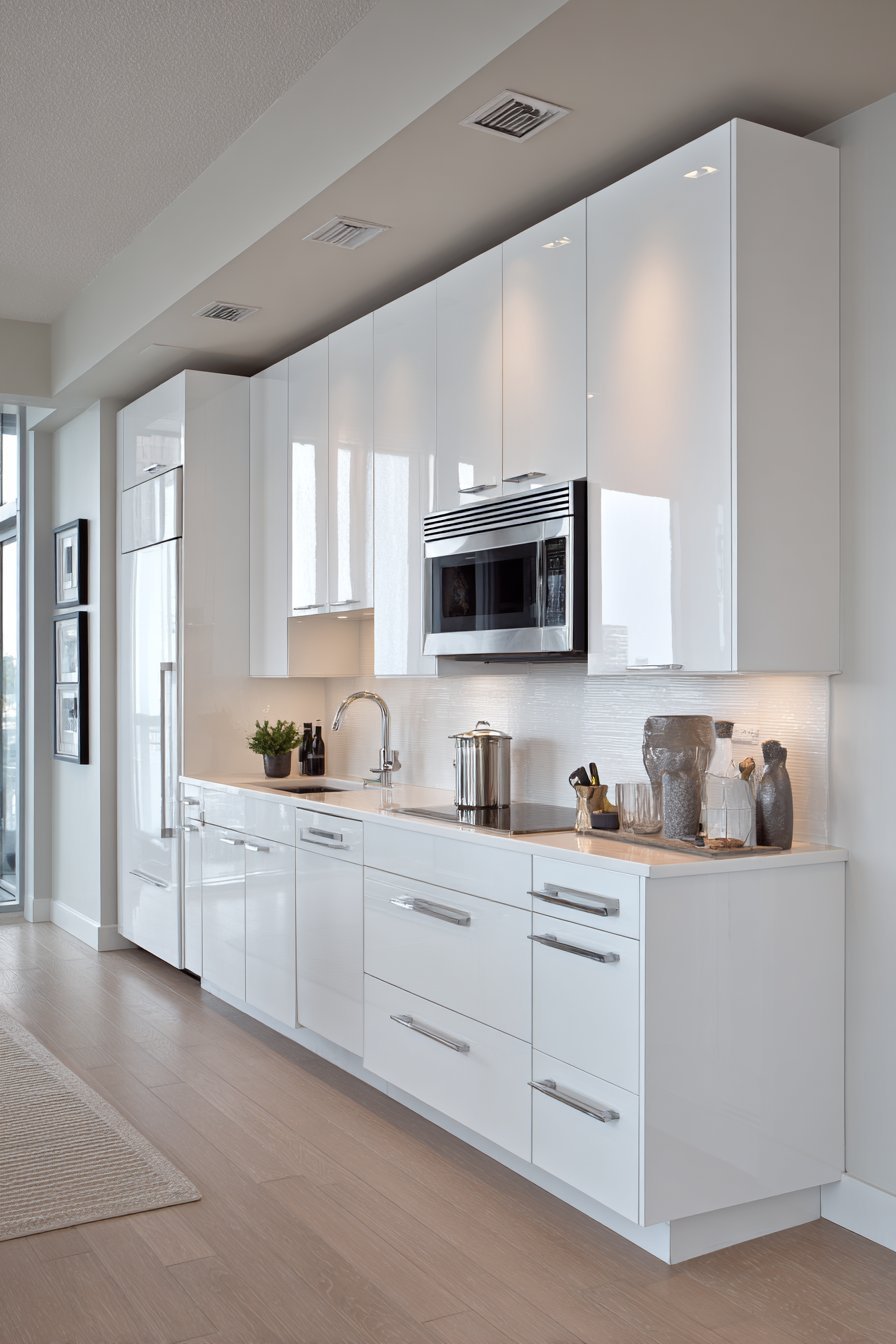
Consider multi-functional appliances that consolidate capabilities into single units. Combination microwave-convection ovens, sink-mounted instant hot water dispensers, and all-in-one washer-dryer units free up valuable space while providing modern conveniences. These efficient solutions are particularly valuable in kitchens where every square inch counts.
- Select a 24-inch or counter-depth refrigerator instead of standard 36-inch models
- Install a slim 20-inch range if cooking for one or two people
- Choose an 18-inch dishwasher for adequate capacity in less space
- Use a microwave drawer under the counter instead of countertop models
- Consider a single-bowl sink to maximize counter space
- Install a compact range hood or downdraft ventilation system
5. Implement Open Shelving Strategically
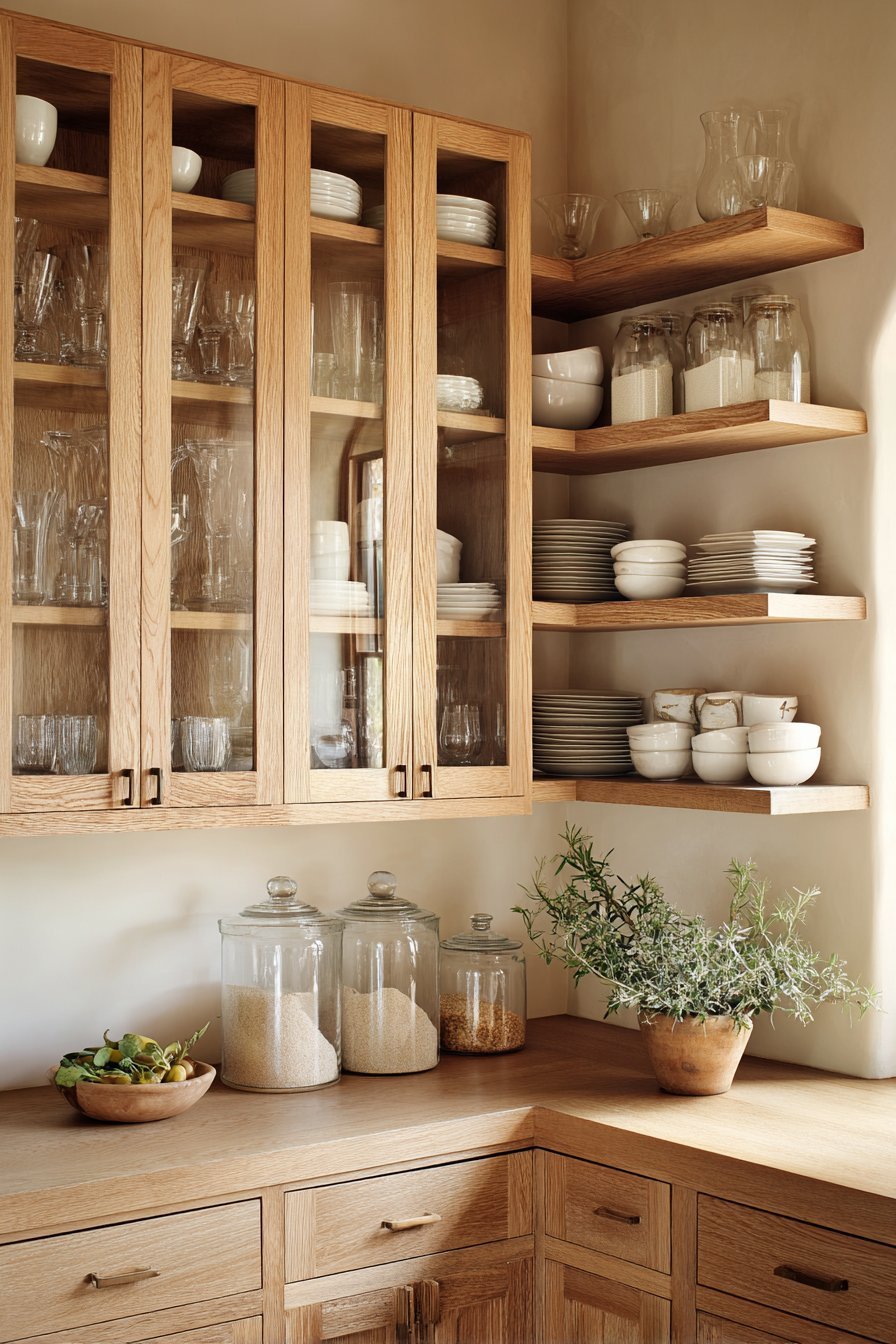
Open shelving creates visual lightness that closed cabinetry cannot match, making it invaluable in small kitchens. Without solid cabinet doors blocking sightlines, the room feels less boxy and more connected to surrounding spaces. This design choice allows walls to breathe while providing functional storage that’s both accessible and attractive when properly organized.
The key to successful open shelving is thoughtful curation. Display only your most attractive dishes, glassware, and kitchen accessories, treating shelves like curated displays rather than storage overflow. Uniform dishware, coordinated containers, and intentional color palettes create visual harmony that enhances rather than clutters the space.
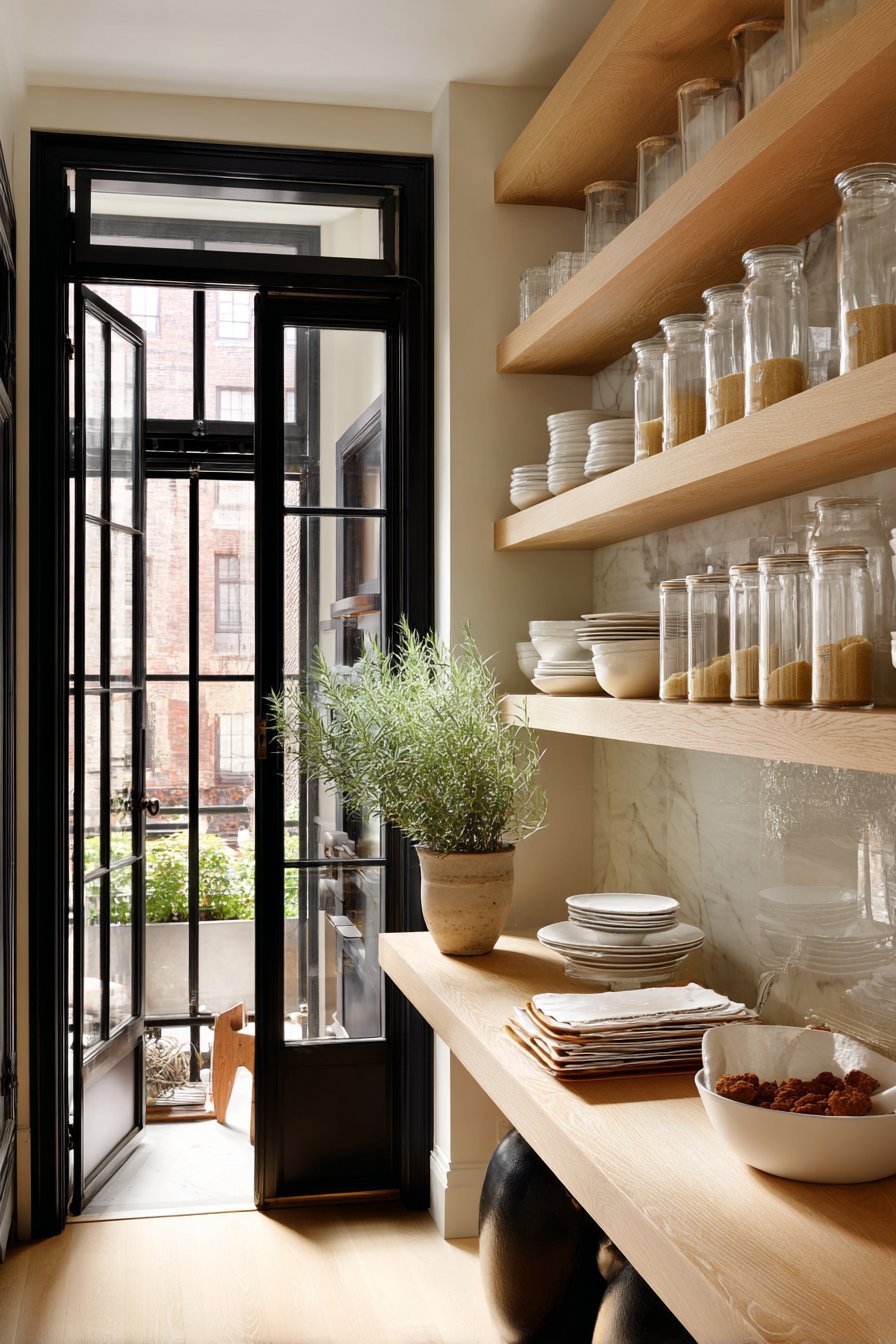
Balance is crucial—too much open shelving can feel chaotic, while too little misses the opportunity for openness. Most designers recommend replacing upper cabinets on one wall with open shelves while maintaining closed storage elsewhere. This provides the airy quality you desire while hiding less attractive necessities behind closed doors.
- Install floating shelves on one wall for everyday dishes and glassware
- Use matching containers and jars for dry goods to create visual consistency
- Limit open shelving to items you use regularly to avoid dust accumulation
- Choose shelves in materials that complement your overall design scheme
- Maintain negative space on shelves—avoid overcrowding
- Consider glass-front cabinets as a compromise between open and closed storage
6. Select a Simple, Unifying Color Palette
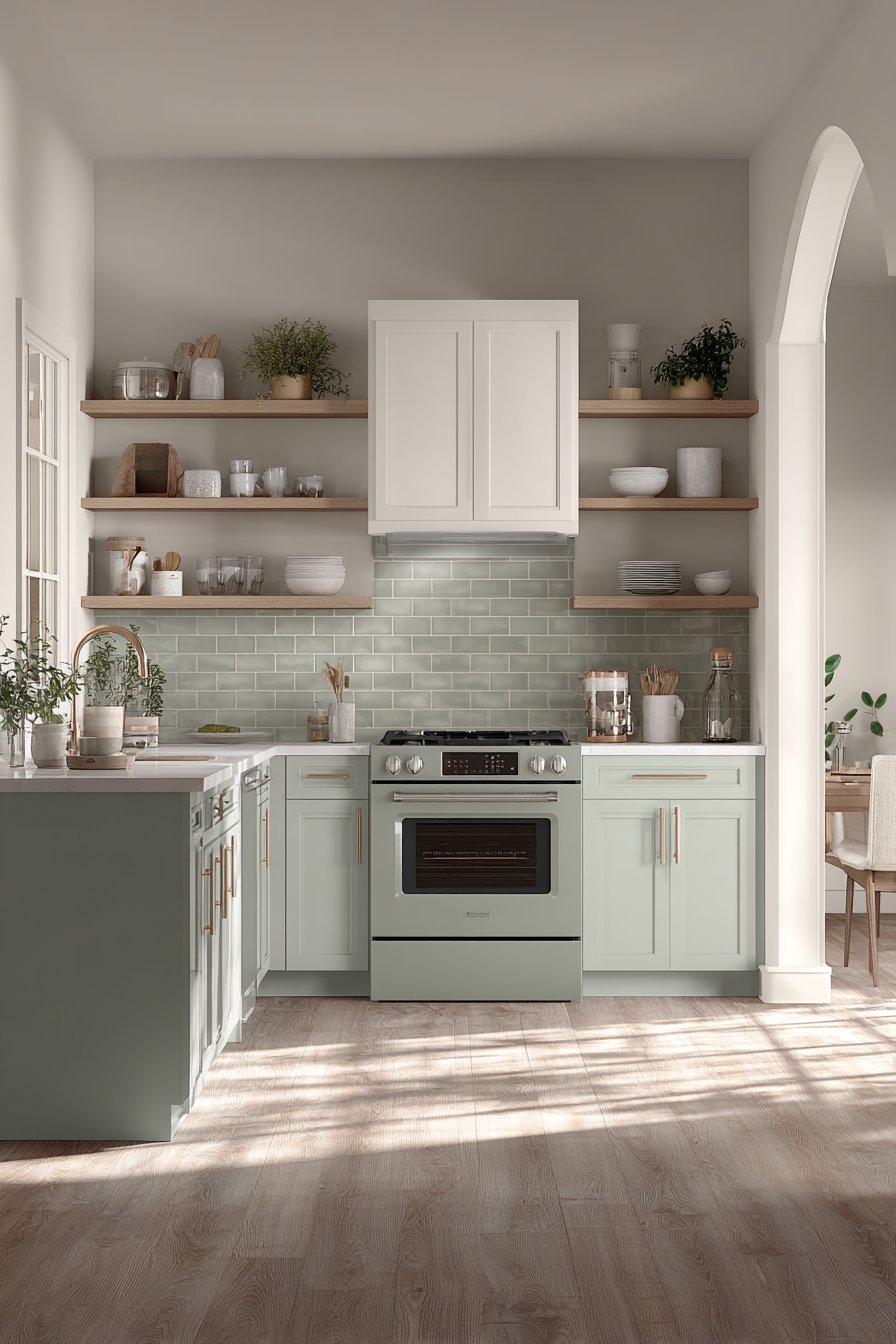
A cohesive color scheme prevents visual fragmentation that makes small spaces feel chaotic and cramped. When too many colors compete for attention, the eye constantly jumps from element to element, creating a sense of busyness that contradicts the open, airy feeling you’re trying to achieve. A restrained palette creates visual calm and makes the space read as larger and more unified.
The classic 60-30-10 rule works beautifully in small kitchens: 60% dominant color (usually a light neutral), 30% secondary color (complementary neutral or soft accent), and 10% accent color for interest. This proportion creates visual hierarchy without overwhelming the space, allowing your eye to move smoothly through the room rather than catching on jarring color contrasts.
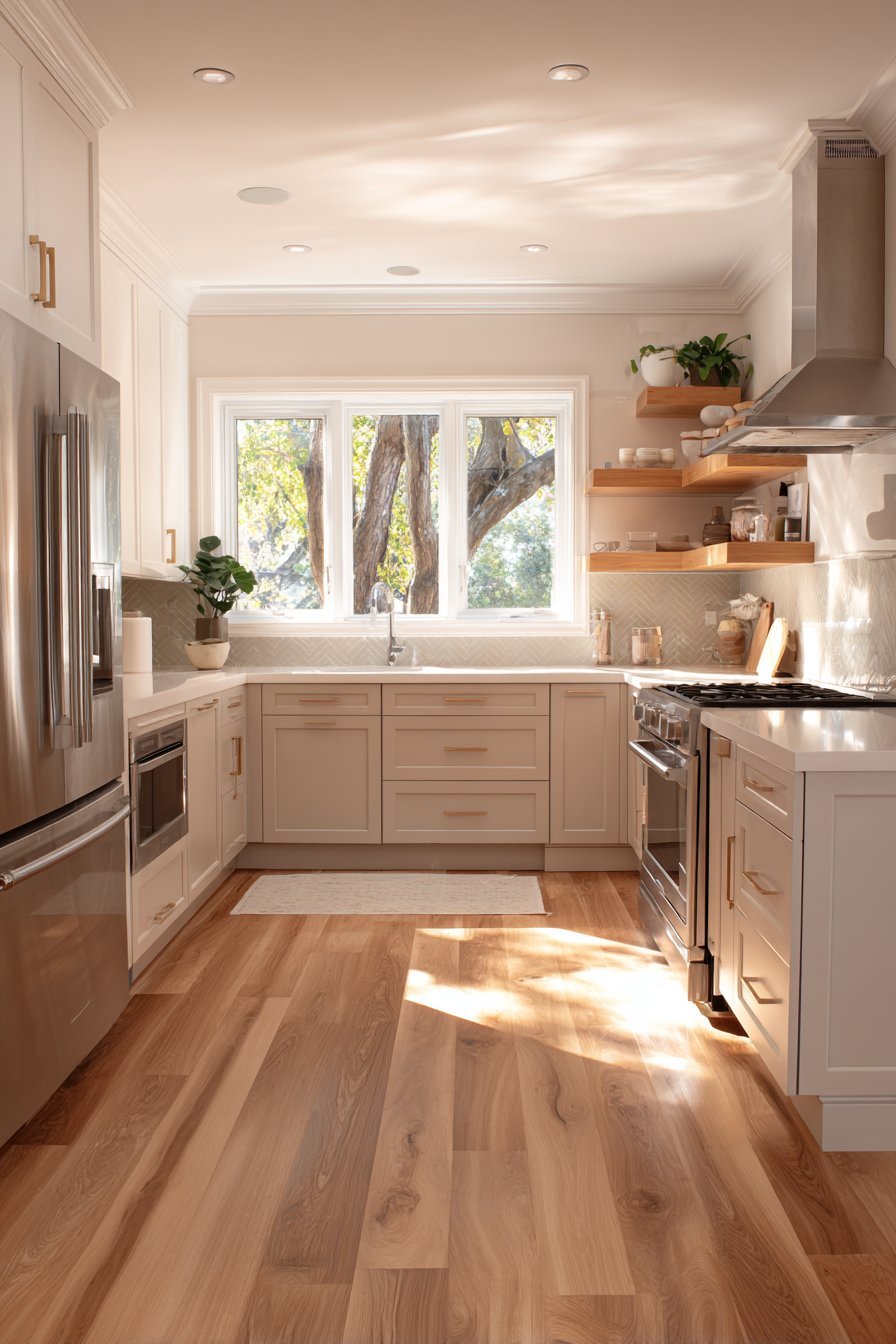
Monochromatic schemes taken from a single color family create the most expansive visual effect. Varying shades of white, cream, or gray with different textures and finishes provides depth and interest while maintaining the seamless flow essential for making small kitchens feel open. Natural materials like wood add warmth without introducing competing colors.
- Start with white or cream as your dominant color for maximum openness
- Add a secondary neutral like soft gray or warm beige for depth
- Use a single accent color sparingly in small doses
- Ensure countertops, backsplash, and cabinetry complement rather than contrast
- Choose hardware and fixtures in a single finish (brushed nickel or matte black)
- Incorporate natural wood tones as neutrals rather than color accents
7. Install Proper Layered Lighting
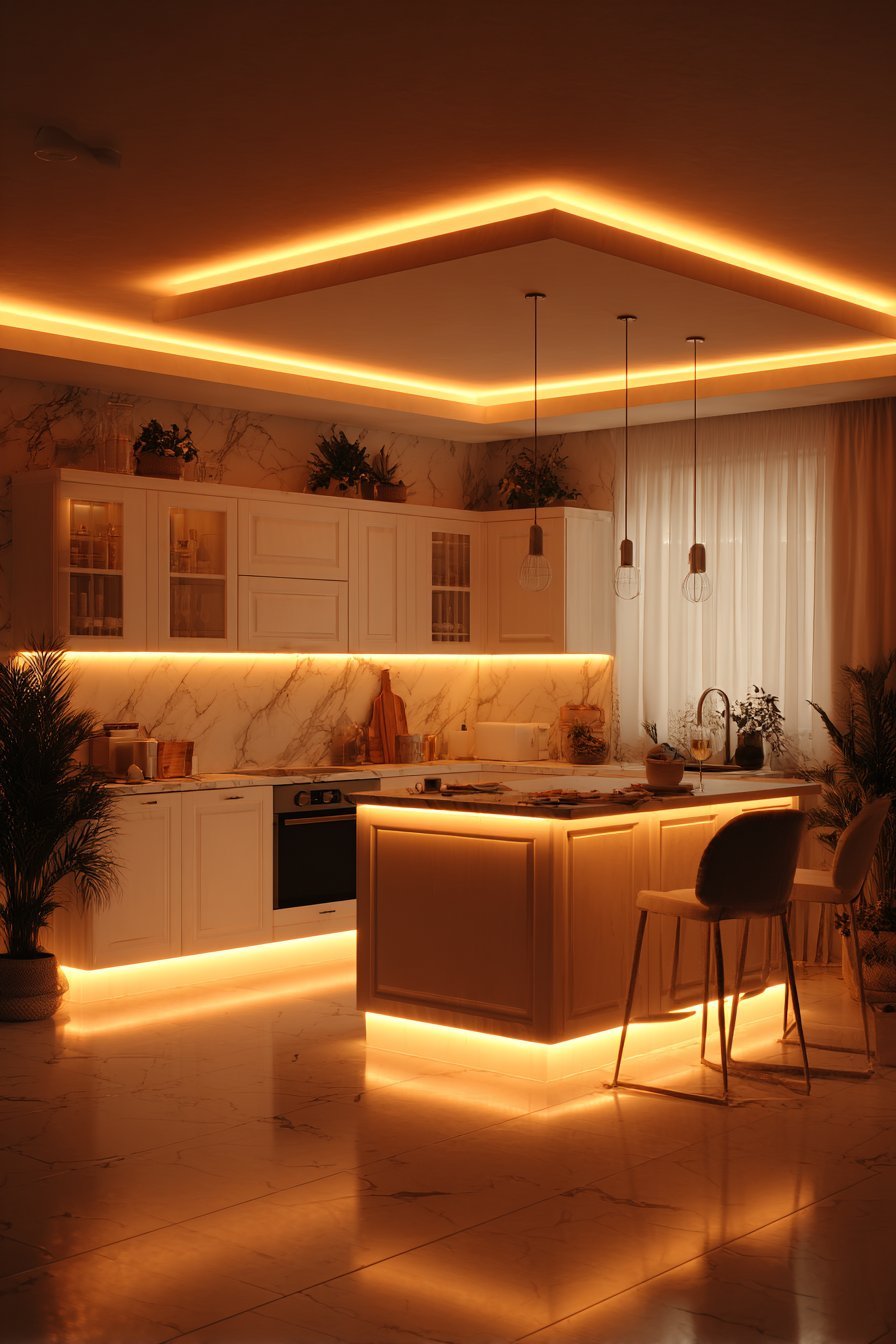
Lighting design dramatically impacts how spacious a kitchen feels, yet it’s often overlooked in small spaces. A single overhead fixture creates harsh shadows and dark corners that make the room feel smaller and more enclosed. Layered lighting that combines ambient, task, and accent sources eliminates shadows while creating depth and dimension that expands perceived space.
Under-cabinet lighting is particularly valuable in small kitchens, illuminating countertops while adding ambient glow that makes the room feel larger. These fixtures eliminate the shadow zone between upper cabinets and counters that makes kitchens feel cave-like. LED strip lights are energy-efficient options that provide consistent, flattering illumination without taking up any physical space.
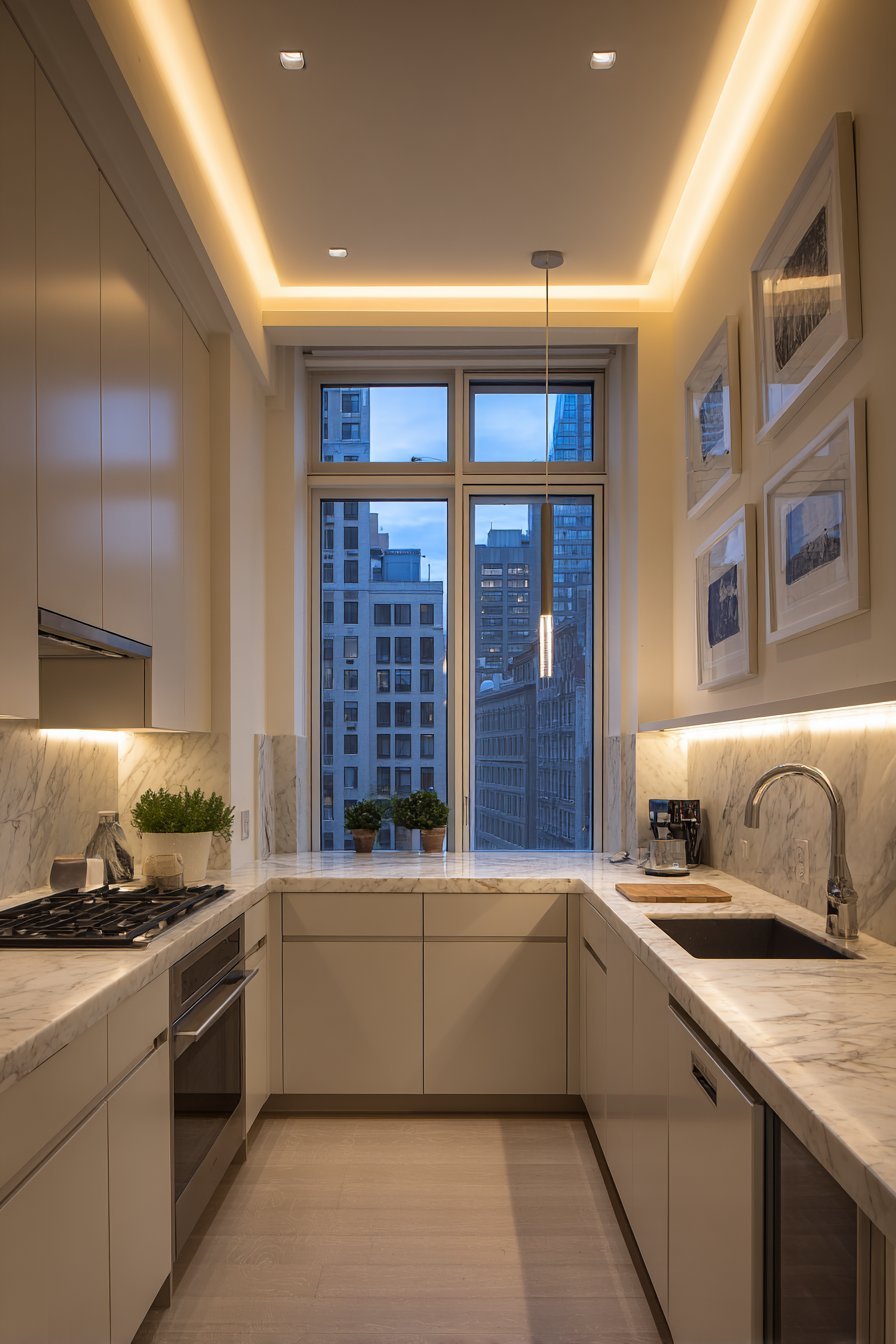
Recessed lighting creates a clean, uncluttered ceiling while providing ample ambient light. Unlike pendant fixtures that can make low ceilings feel even lower, recessed lights maintain visual openness. Add dimmer switches to adjust lighting levels for different times of day and activities, creating versatile atmosphere that enhances the sense of spaciousness.
- Install under-cabinet LED strips to eliminate counter shadows
- Use recessed lighting throughout for even ambient illumination
- Add pendant lights over the sink or eating area if ceiling height allows
- Choose light fixtures with white or clear glass shades to maximize brightness
- Install dimmer switches for adjustable lighting levels
- Consider motion-sensor lights inside cabinets for functional convenience
8. Maintain Visual Connection to Adjacent Spaces
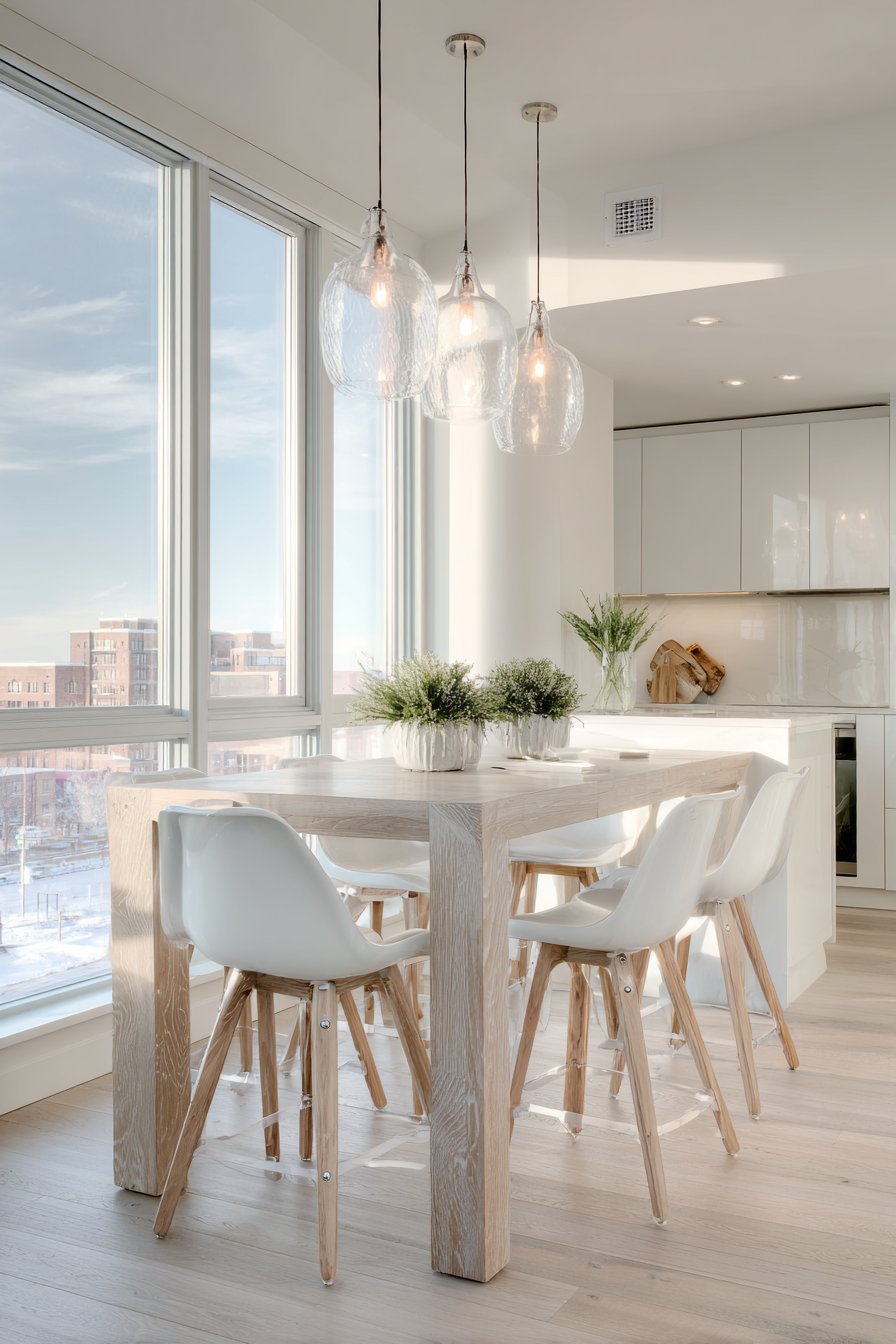
Open floor plans naturally make small kitchens feel larger by borrowing space from adjacent rooms. When possible, removing walls between the kitchen and dining or living areas creates continuous sightlines that dramatically expand perceived square footage. Even if full removal isn’t feasible, creating larger openings or pass-throughs significantly improves the sense of space.
Consistent flooring that flows from kitchen into adjacent rooms eliminates visual boundaries that fragment space. When flooring changes, the eye registers a separation and confinement that makes the kitchen feel more isolated and smaller. Continuous flooring creates seamless transition that makes the entire area read as a single, more spacious whole.
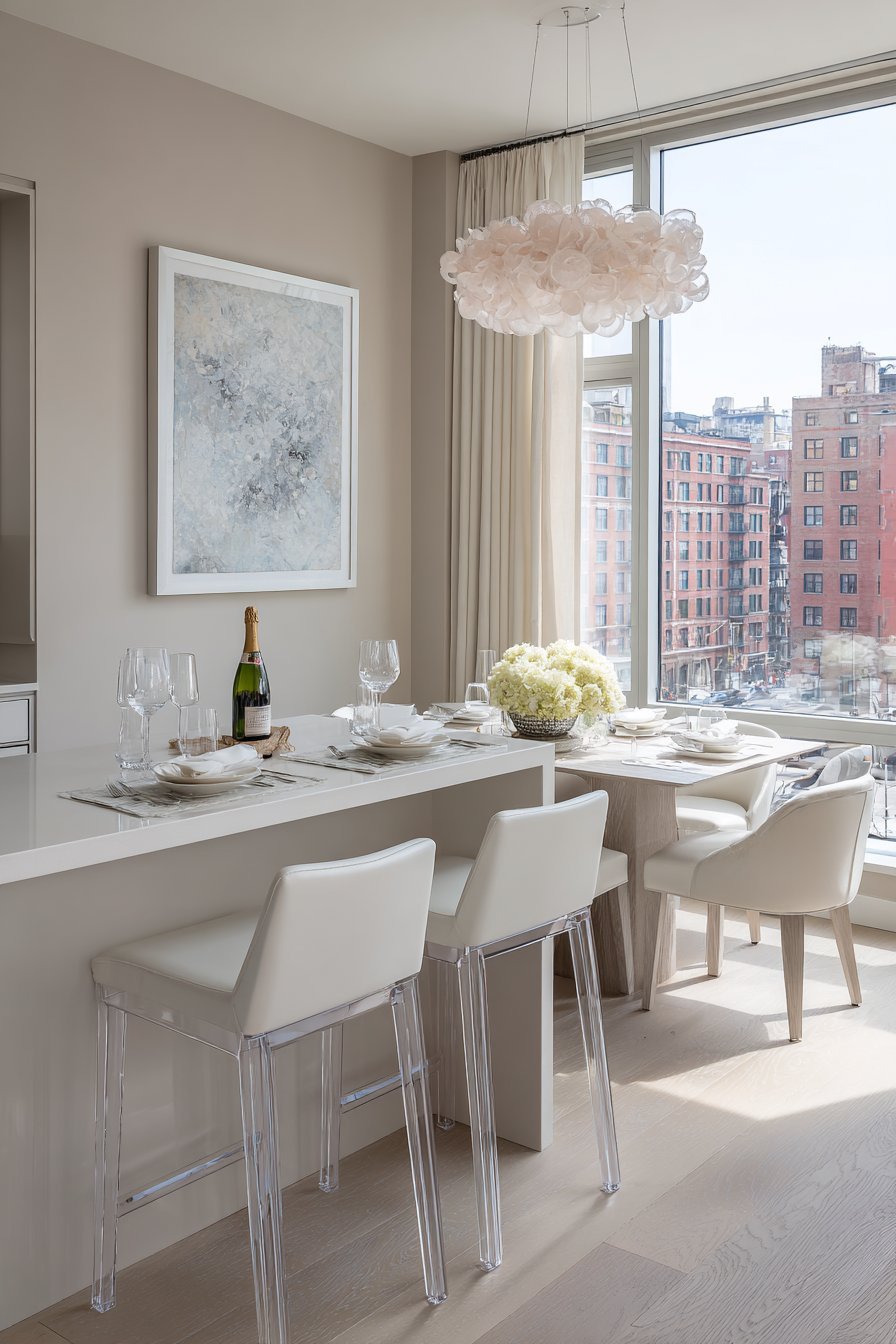
Design elements that carry through to adjacent spaces reinforce this connection. Matching or complementary color schemes, similar lighting fixtures, and cohesive style choices create visual unity that allows the kitchen to borrow perceived space from neighboring rooms. This psychological expansion is particularly effective in small homes where every room impacts the others.
- Remove upper cabinets between kitchen and dining areas for open sight lines
- Create a peninsula or half-wall instead of full walls for partial separation
- Use the same flooring throughout kitchen and adjacent spaces
- Coordinate paint colors so kitchen walls complement surrounding rooms
- Install similar light fixtures in kitchen and adjoining areas
- Consider pocket doors instead of swinging doors if separation is needed
9. Choose Minimalist Hardware and Fixtures
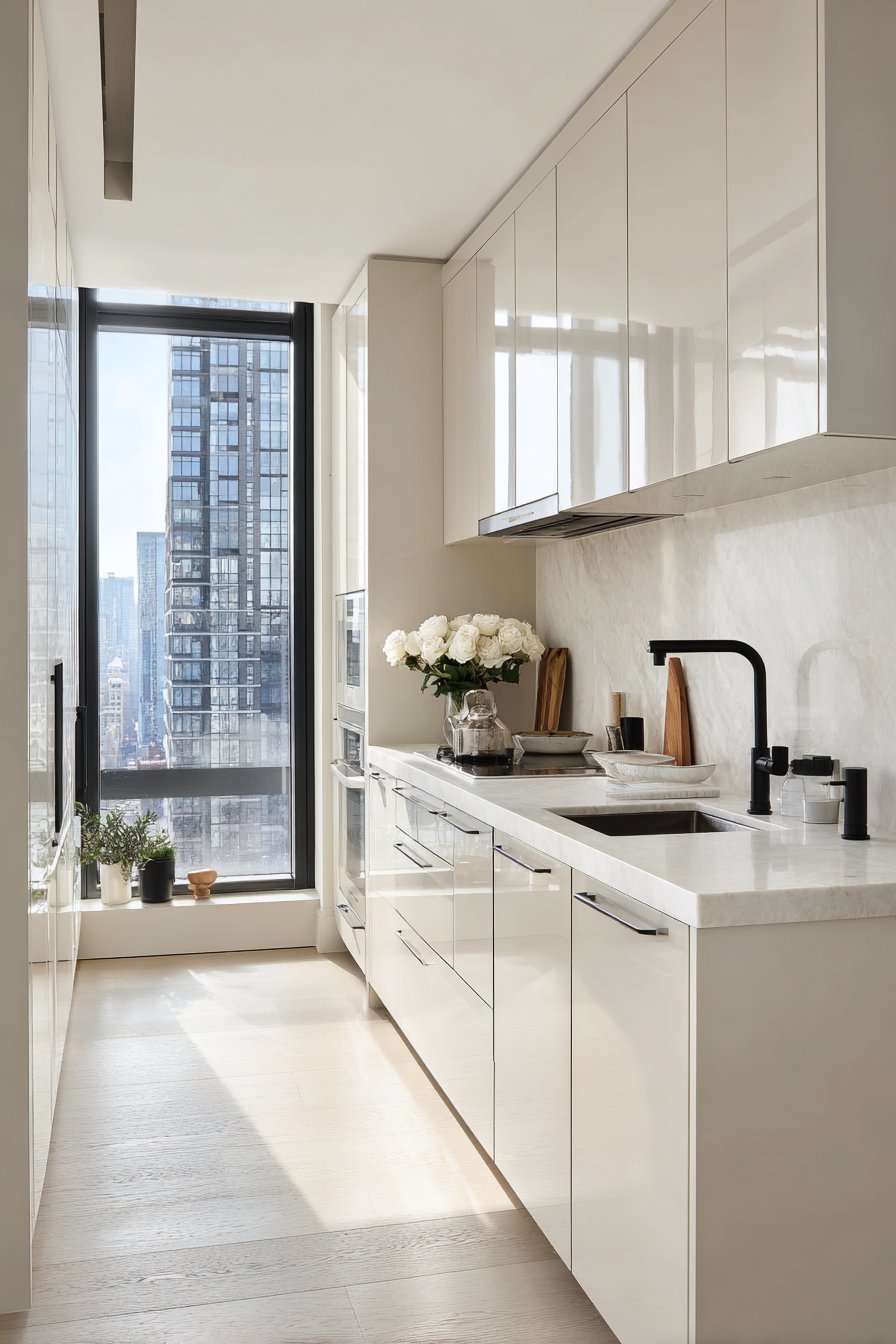
Hardware and fixtures may seem like minor details, but in small kitchens, they significantly impact the overall aesthetic. Bulky cabinet pulls, ornate faucets, and decorative handles create visual clutter that makes spaces feel busier and more confined. Sleek, minimalist hardware maintains the clean lines essential for an open, airy feeling.
Integrated handles or push-to-open cabinet mechanisms eliminate protruding hardware entirely, creating the smoothest possible surface. This approach works particularly well in modern or contemporary kitchens where clean lines are paramount. The resulting seamless appearance allows cabinetry to read as uninterrupted planes rather than a collection of individual components.
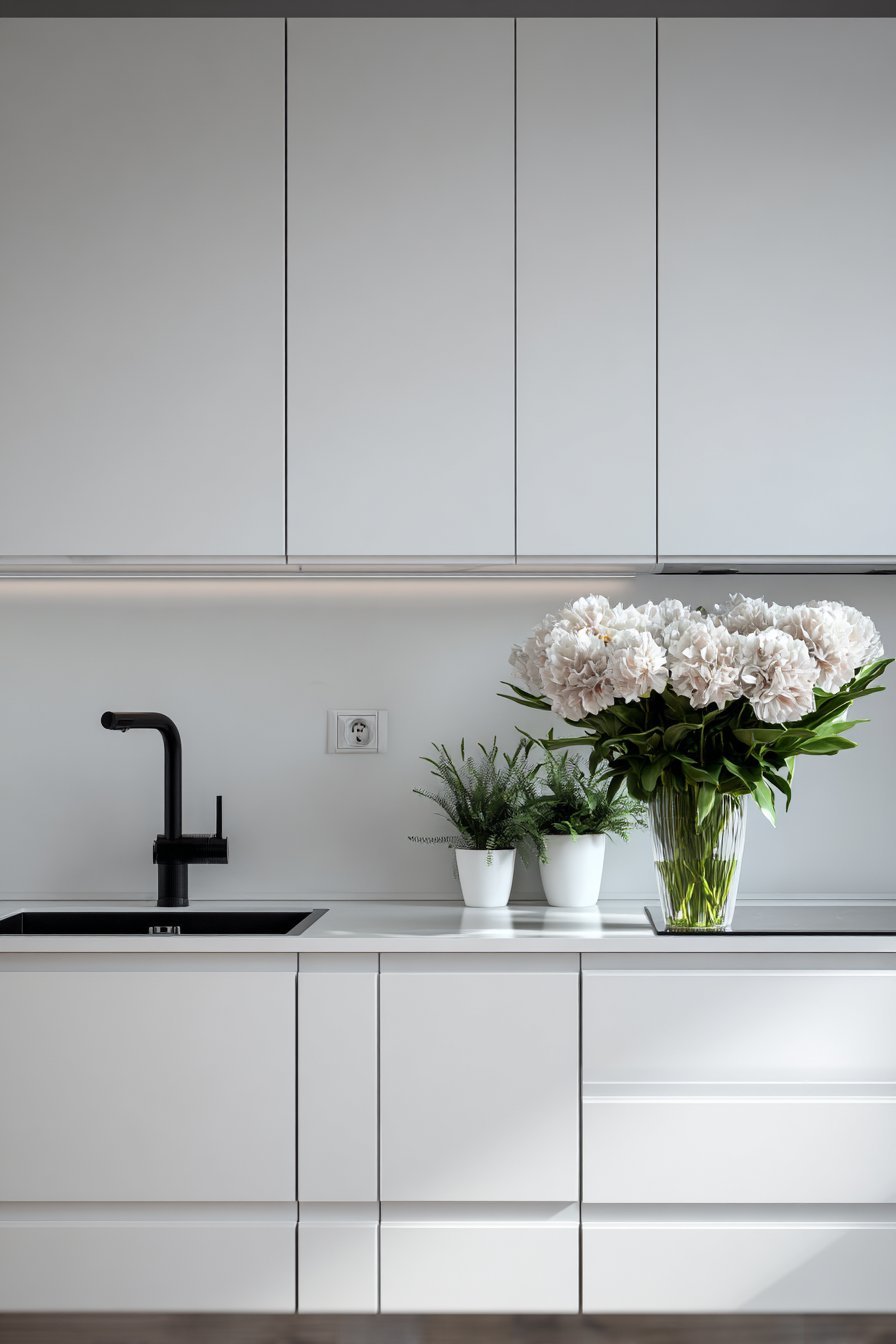
Fixtures in slim profiles and simple geometries maintain functionality without visual weight. A streamlined faucet with a low-profile spout occupies less visual space than traditional bridge faucets or elaborate designs. Similarly, thin-profile drawer pulls in matte finishes create subtle sophistication without drawing unnecessary attention or creating shadow lines that fragment the space.
- Choose simple bar pulls or edge pulls instead of knobs
- Consider touch-latch cabinets to eliminate hardware entirely
- Select a single-handle faucet in a slim contemporary design
- Use matte finishes (brushed nickel, matte black) to reduce visual noise
- Keep all hardware in the same finish for cohesive appearance
- Avoid decorative or oversized hardware that creates visual weight
10. Incorporate Glass and Transparent Materials
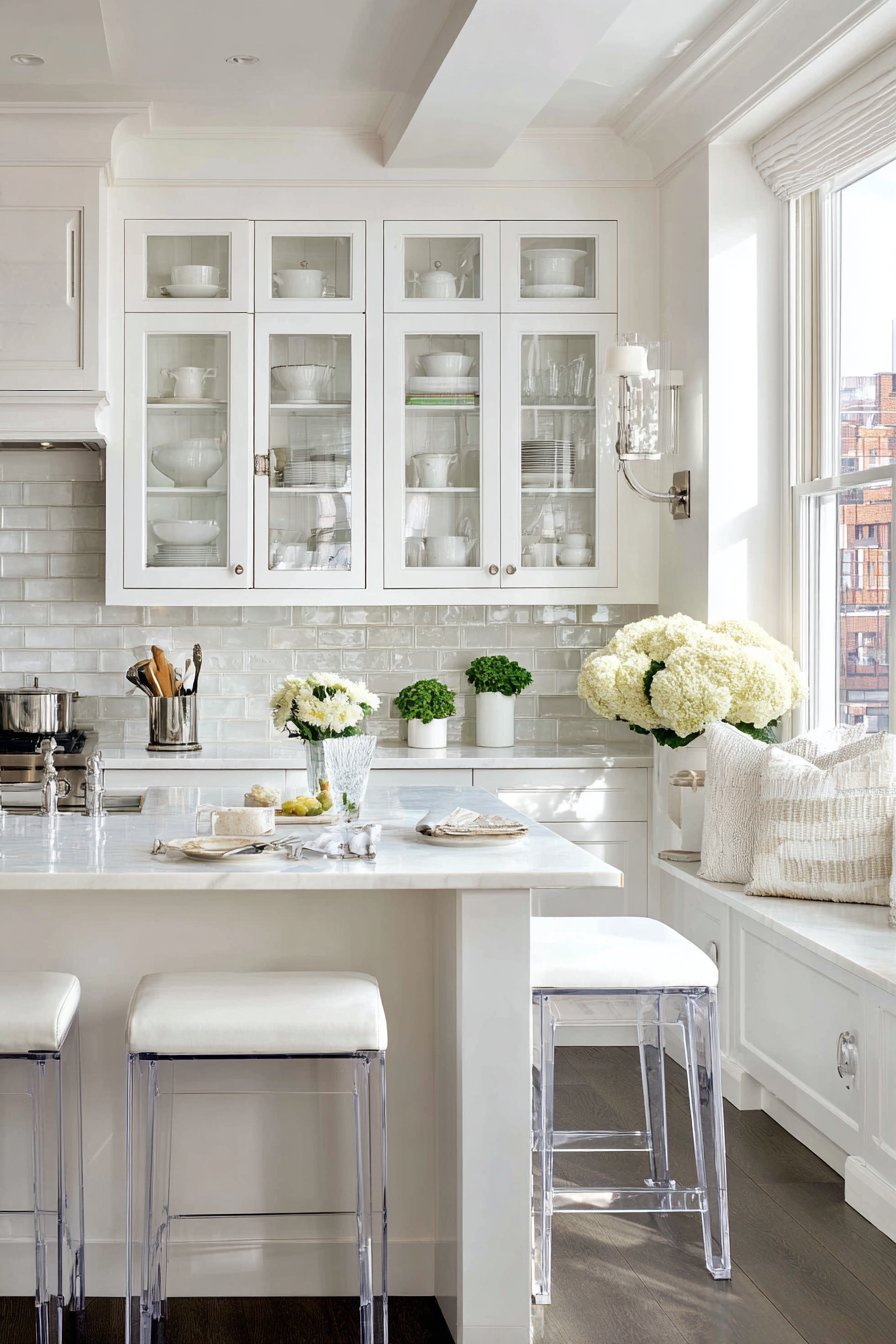
Glass and transparent materials are powerful tools for maintaining openness while providing necessary separation or storage. Glass-front cabinet doors allow you to see through to the wall behind, preventing the visual dead-end that solid doors create. This transparency makes the kitchen feel less enclosed while still providing dust protection for stored items.
Glass tile backsplashes add depth through their reflective and translucent qualities, creating dimension that solid materials cannot achieve. Light passes through glass tiles, creating a luminous quality that brightens the entire space. Choose light-colored or clear glass in subway or mosaic patterns for maximum effect without overwhelming small spaces.
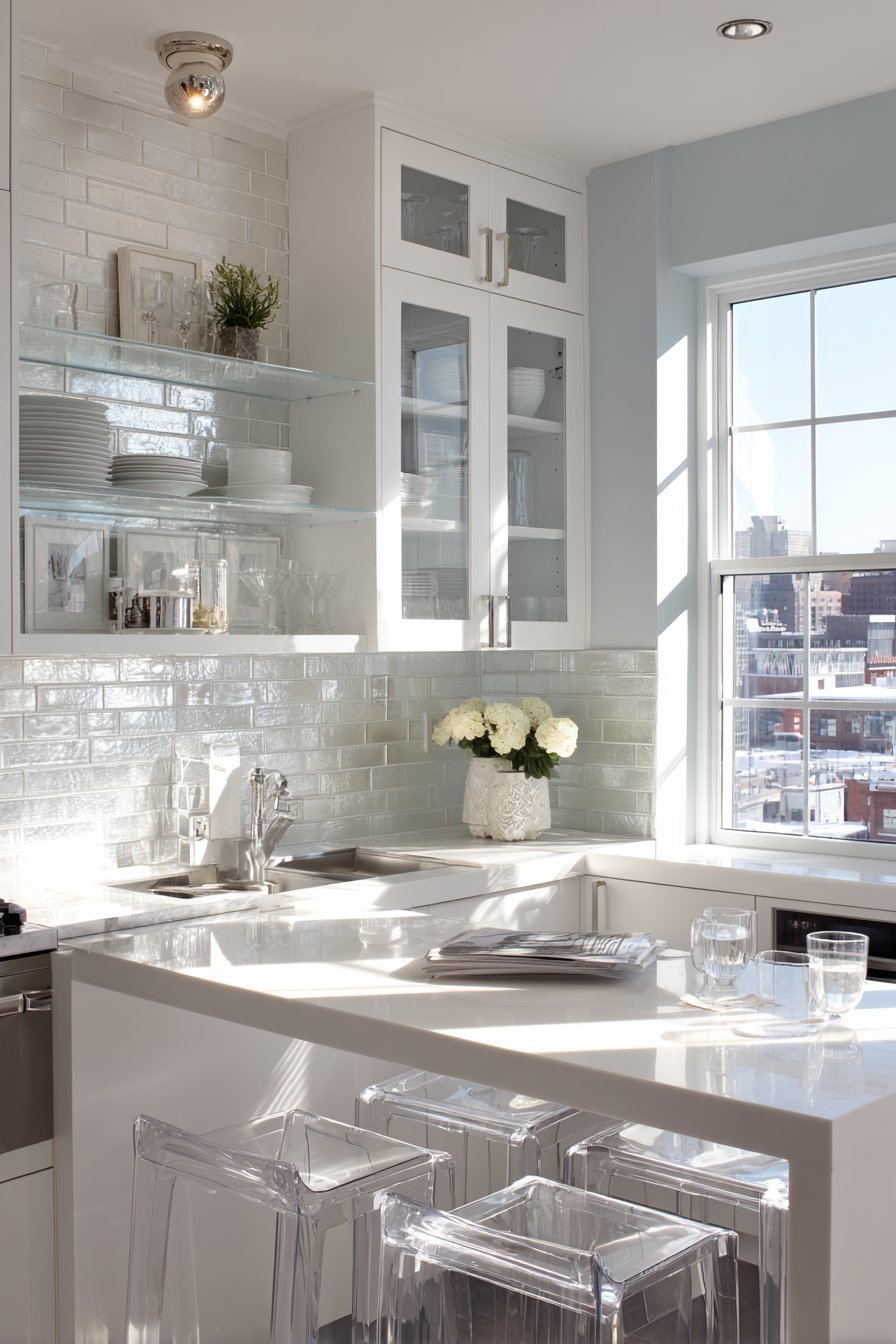
Transparent furniture elements like acrylic bar stools or glass dining tables maintain functionality without consuming visual space. These pieces seem to disappear, allowing the eye to travel through and beyond them rather than stopping at solid barriers. This principle is particularly valuable in eat-in kitchens where furniture can quickly make a small space feel crowded.
- Install glass-front doors on upper cabinets to create visual depth
- Use glass tile backsplashes in light colors or clear finishes
- Consider a glass or acrylic breakfast bar extension
- Choose transparent bar stools or dining chairs
- Install a glass shelf in a window for herbs without blocking light
- Use glass containers on open shelves for visual consistency
Conclusion
Designing a small kitchen that feels open and airy is entirely achievable through strategic design choices that maximize light, minimize visual clutter, and create seamless flow. By implementing these ten principles—from embracing light colors and optimizing vertical storage to incorporating transparent materials and maintaining connections to adjacent spaces—you can transform even the most compact kitchen into a welcoming, functional space that feels significantly larger than its square footage suggests.
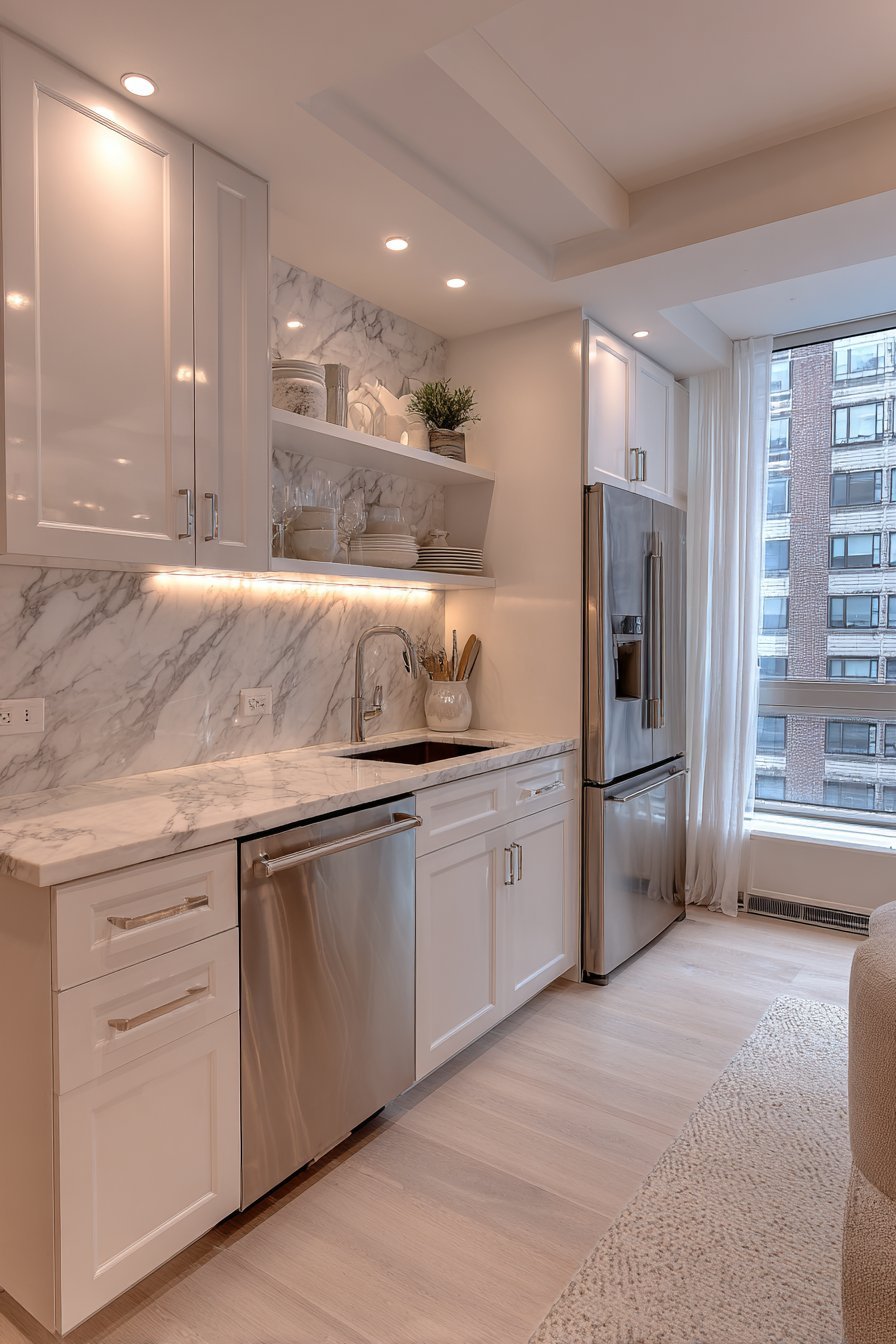
Remember that creating an open, airy kitchen is about perception as much as physical space. Every design decision should ask whether it adds visual weight or lightness, creates barriers or flow, absorbs or reflects light. With thoughtful planning and these proven strategies, your small kitchen can become a bright, efficient space where cooking is a pleasure rather than a challenge. Start with the changes that resonate most with your style and budget, and watch as your kitchen transforms into the open, inviting heart of your home.
