
Hallways are often the most overlooked spaces in a home. Yet they are the first impression guests receive. A well-decorated hallway sets the tone for the entire home. With the right design choices, even the narrowest corridor can feel welcoming, stylish, and open.
The challenge lies in balancing decoration with visual breathing room. Too many elements create chaos. Too few leave the space feeling cold and forgotten. The goal is to strike a perfect balance — one that feels curated, intentional, and spacious. Understanding spatial composition is key to achieving this balance effectively.
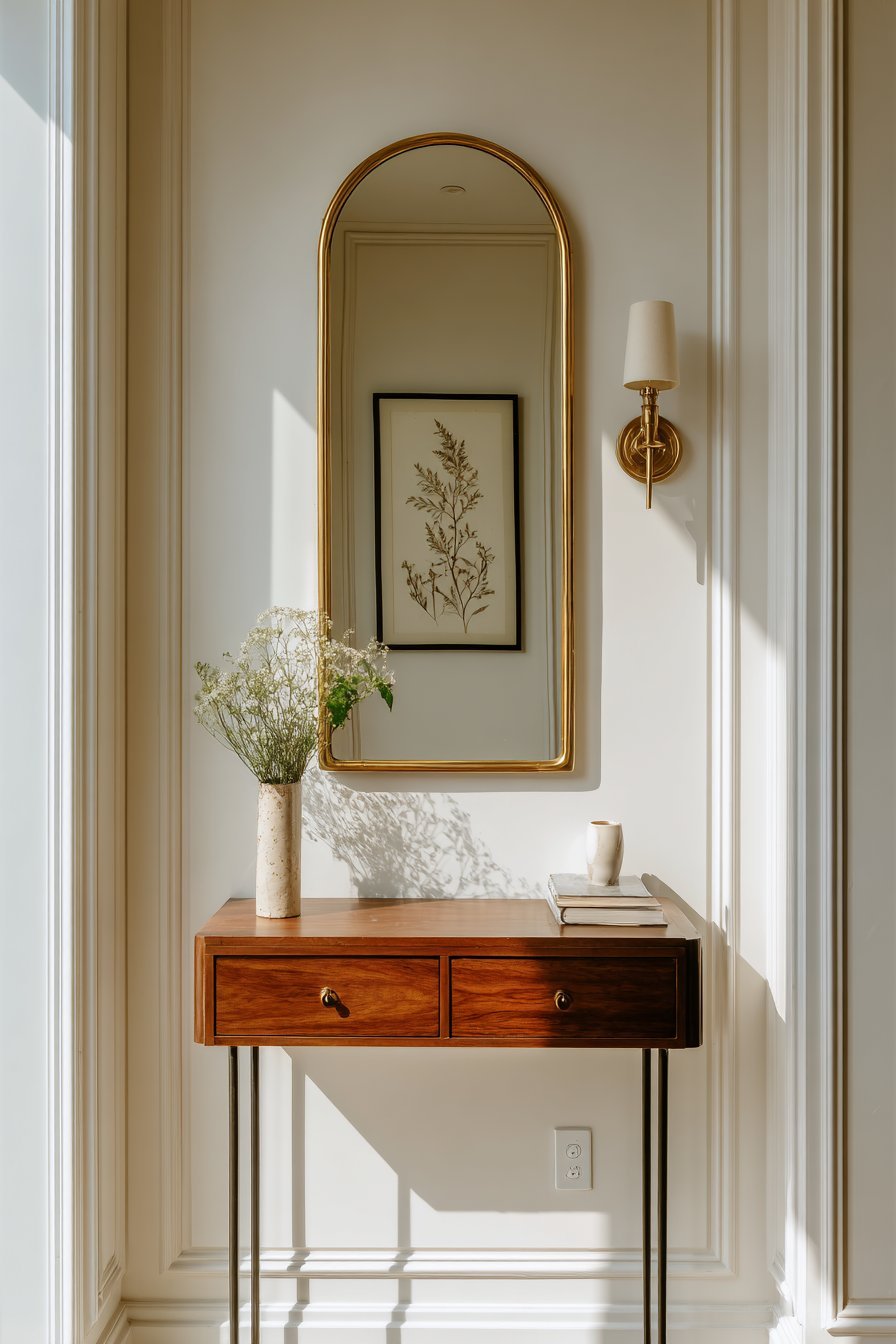
This article explores the most effective strategies for decorating hallway walls. Each tip has been carefully selected to maximize visual space while still adding personality and warmth. Whether your hallway is long and narrow or short and compact, these ideas will transform it into a beautiful transitional space.
1. Embrace Vertical Space With Tall, Slim Art
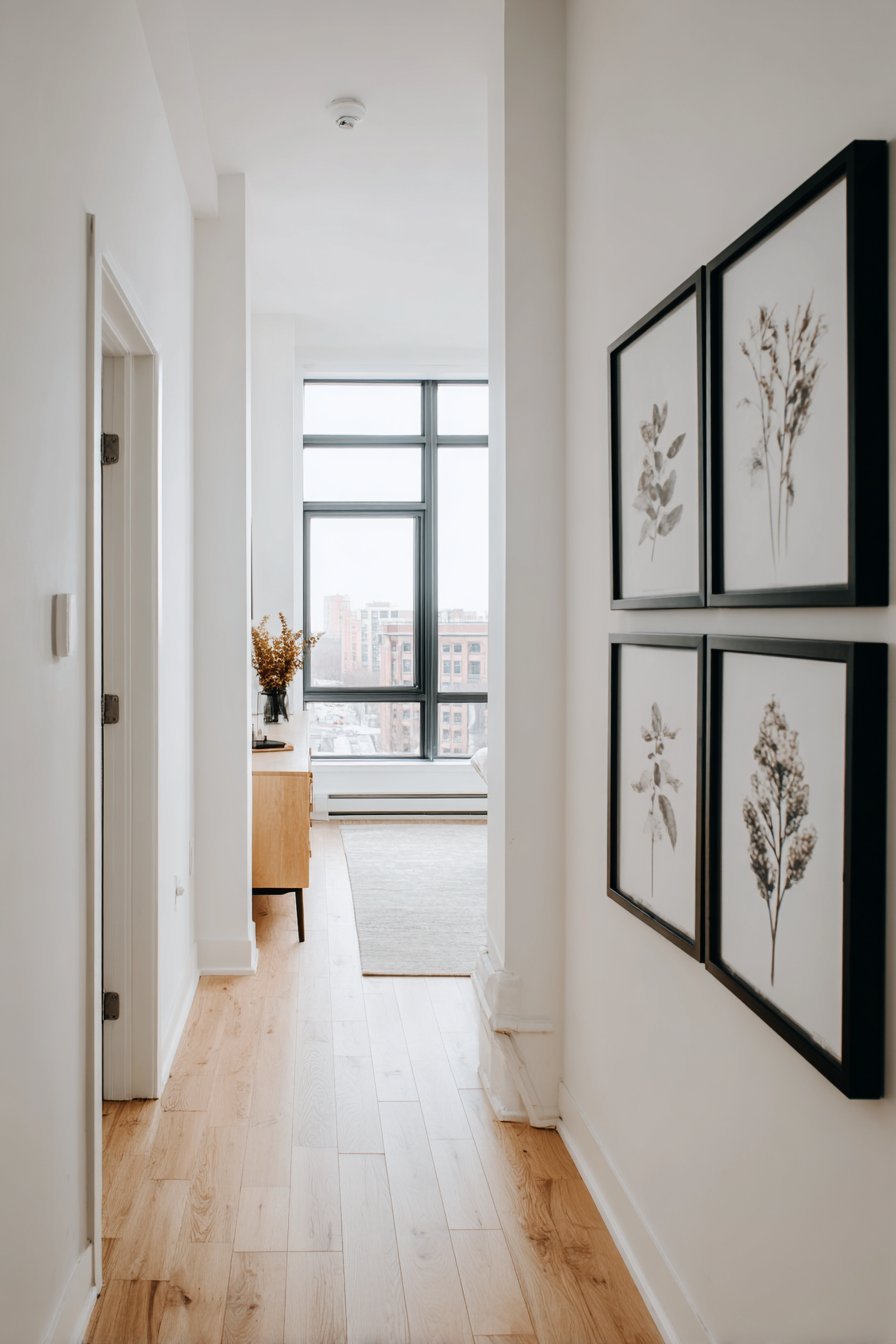
One of the most common mistakes in hallway decorating is hanging art that is too wide. Wide pieces visually compress a narrow space. Instead, tall and slim artwork draws the eye upward, creating an illusion of greater height and openness. This simple shift in orientation makes a dramatic difference.
Choose prints or paintings that are portrait-oriented rather than landscape. A single tall piece or a vertically stacked pair works beautifully. This approach respects the wall’s natural proportions. It also prevents the hallway from feeling like a cluttered gallery corridor.
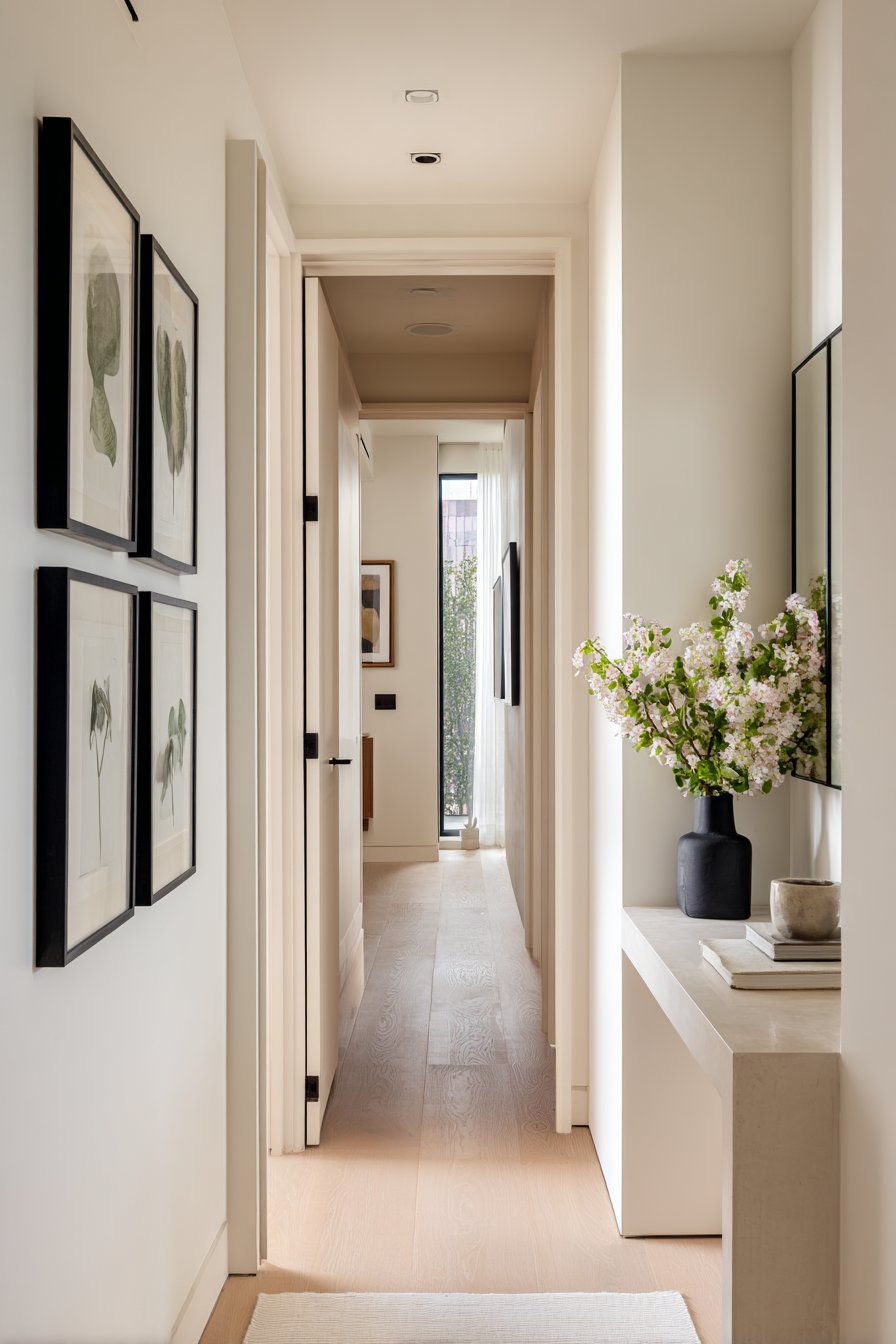
Consider framed botanical prints, abstract vertical compositions, or architectural illustrations. These styles complement most home aesthetics. They add visual interest without overwhelming the narrow walls. The key is choosing pieces that feel intentional rather than randomly placed.
- Choose artwork with a height-to-width ratio of at least 2:1
- Hang pieces at eye level — approximately 57 to 60 inches from the floor to the center
- Stick to one or two pieces rather than a full gallery wall in tight spaces
- Select slim, minimalist frames to reduce visual bulk
- Use light-colored matting to expand the perceived frame size
- Avoid dark, heavy frames that close in the space visually
2. Use Mirrors to Reflect Light and Expand Space
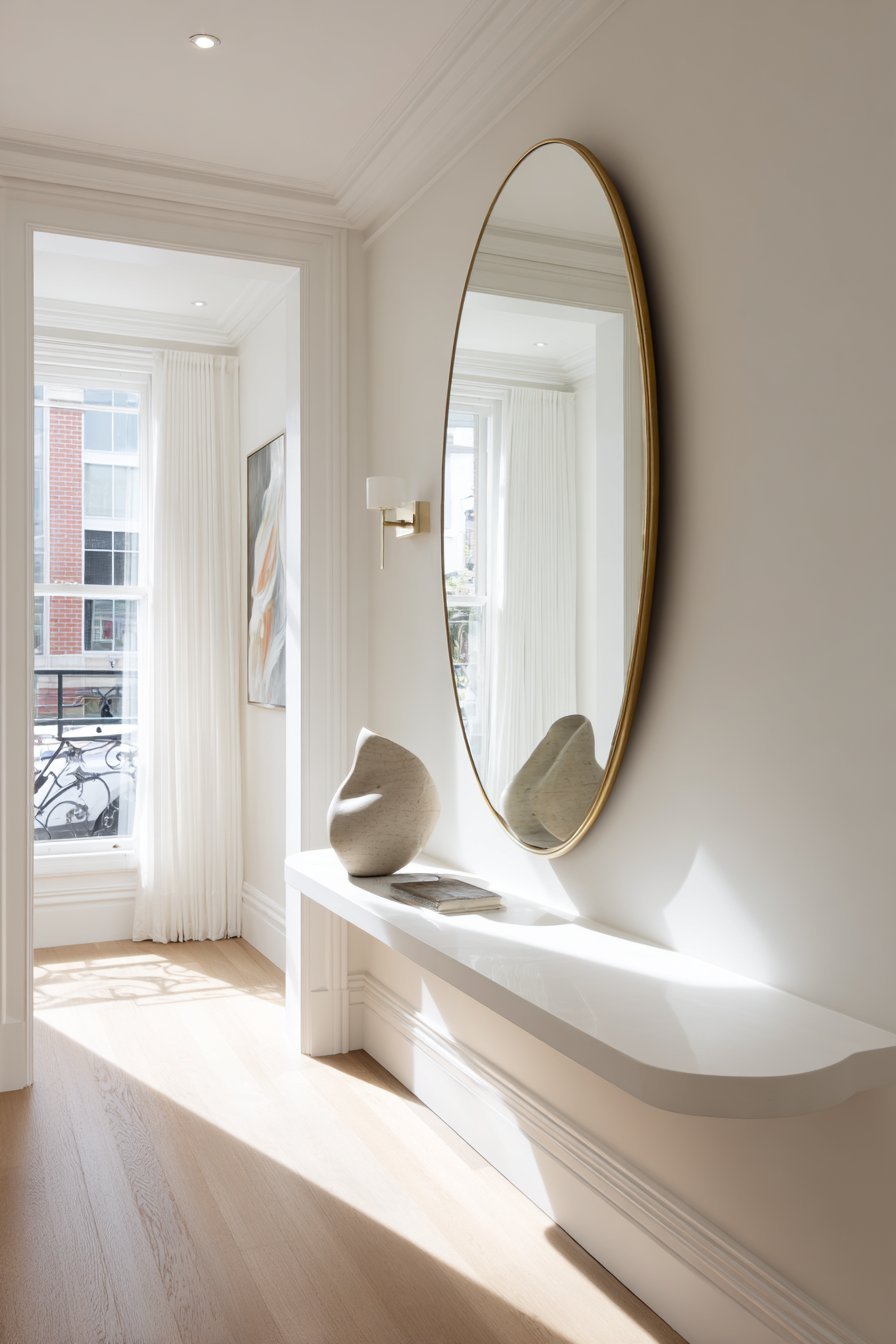
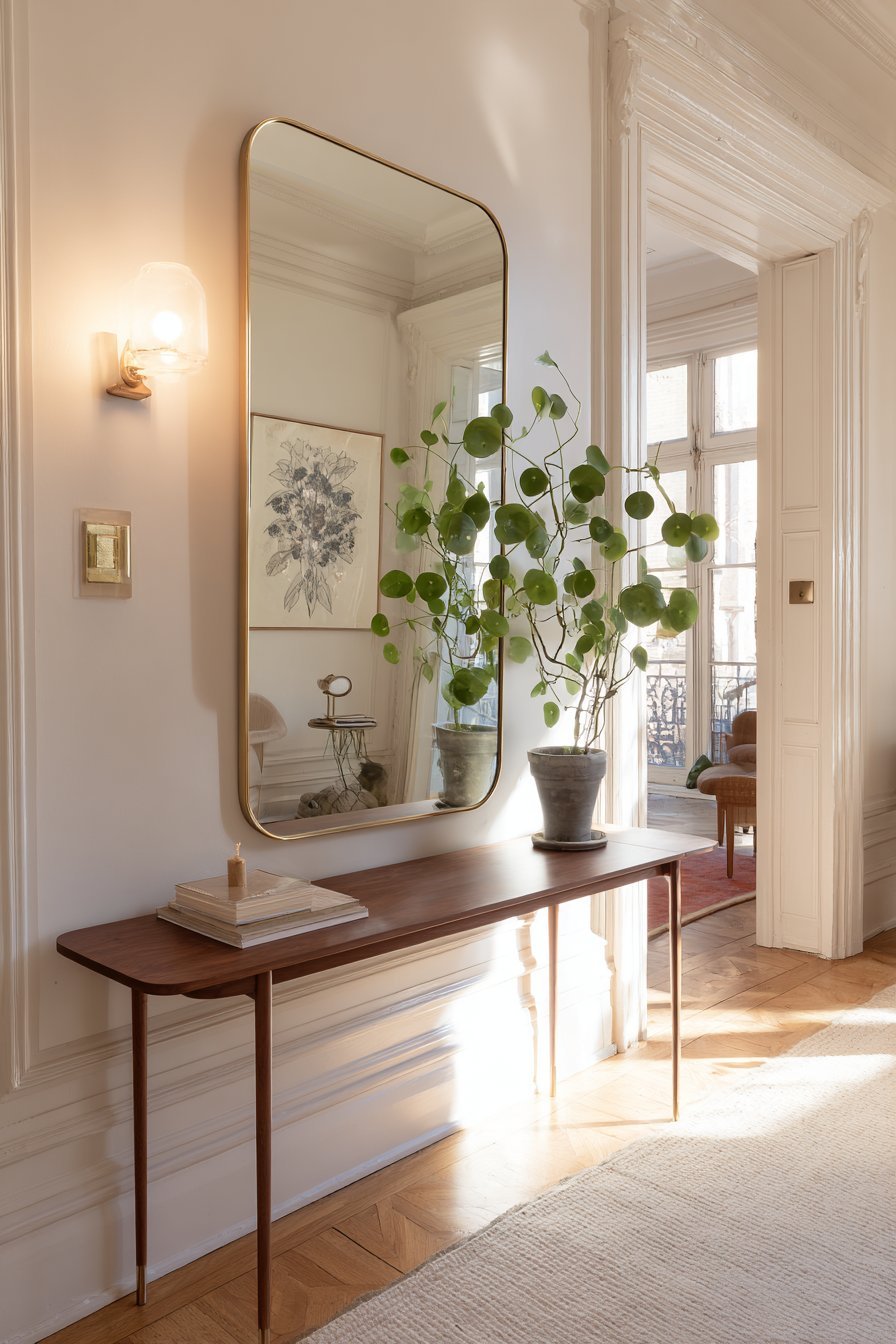
Mirrors are one of the most powerful tools in any interior designer’s toolkit. In hallways, they serve a dual functional purpose — they bounce natural light deeper into the space and create the illusion of a wider corridor. Even a single well-placed mirror can transform a dark, tight hallway into an airy passage.
Choose mirrors with slender, elegant frames to maintain a sense of lightness. Oversized round or oval mirrors work particularly well in hallways. They soften the hard lines of walls and ceilings. Arched mirrors are especially trendy and add an architectural quality without adding bulk.
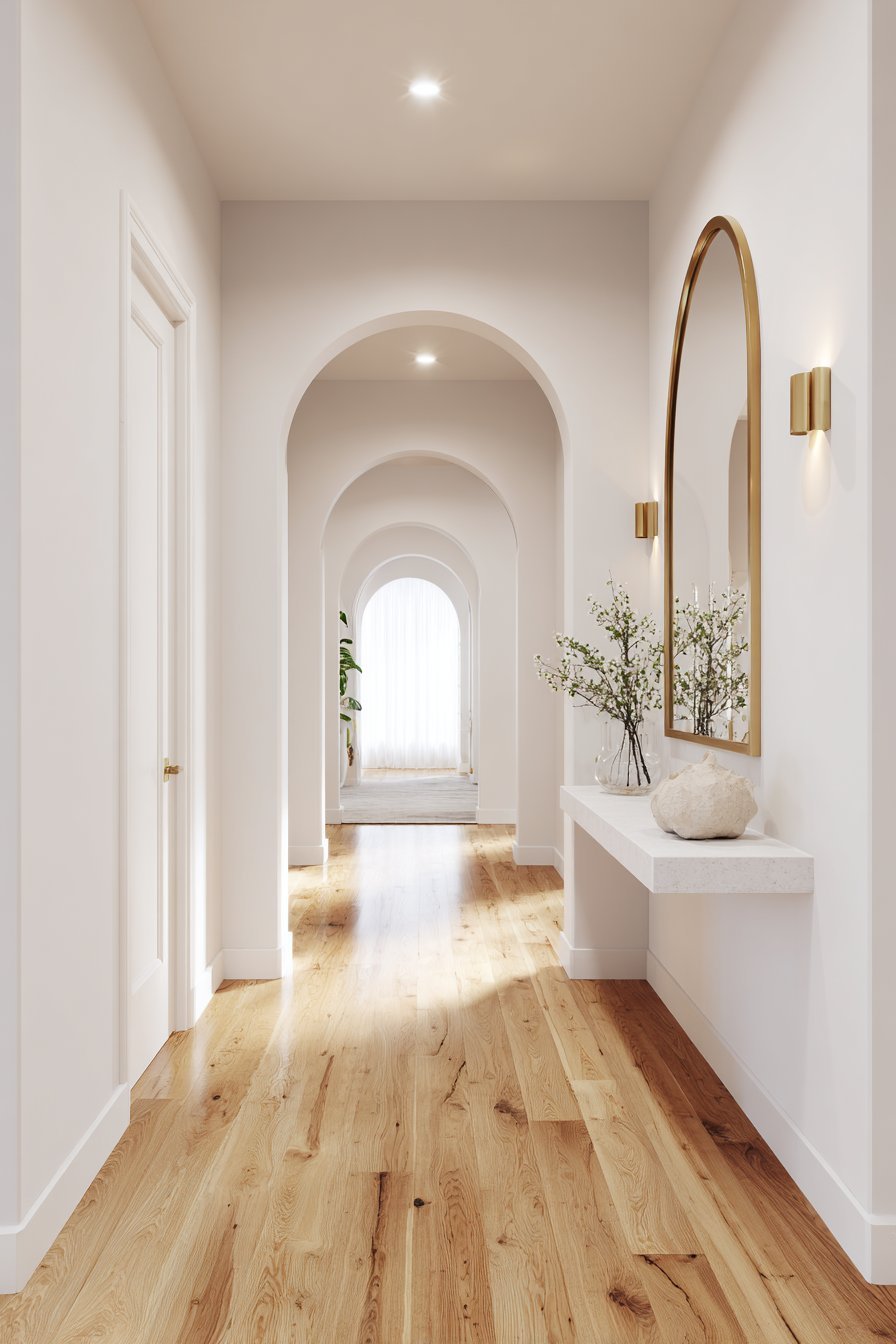
Position the mirror where it will capture natural light from a window or open doorway. This maximizes its reflective potential. Avoid placing mirrors directly opposite clutter or dark walls. What a mirror reflects becomes part of your decor, so be intentional about its placement.
- Select a mirror that spans at least one-third of the wall height
- Place mirrors opposite light sources — windows, skylights, or glass doors
- Use frameless or thin-frame mirrors for a contemporary minimalist look
- Pair a mirror with a slim console table below for a functional vignette
- Consider a leaner mirror for very narrow hallways to avoid wall anchoring
- Avoid clustering multiple mirrors — one statement piece is more powerful
3. Choose a Light, Cohesive Color Palette
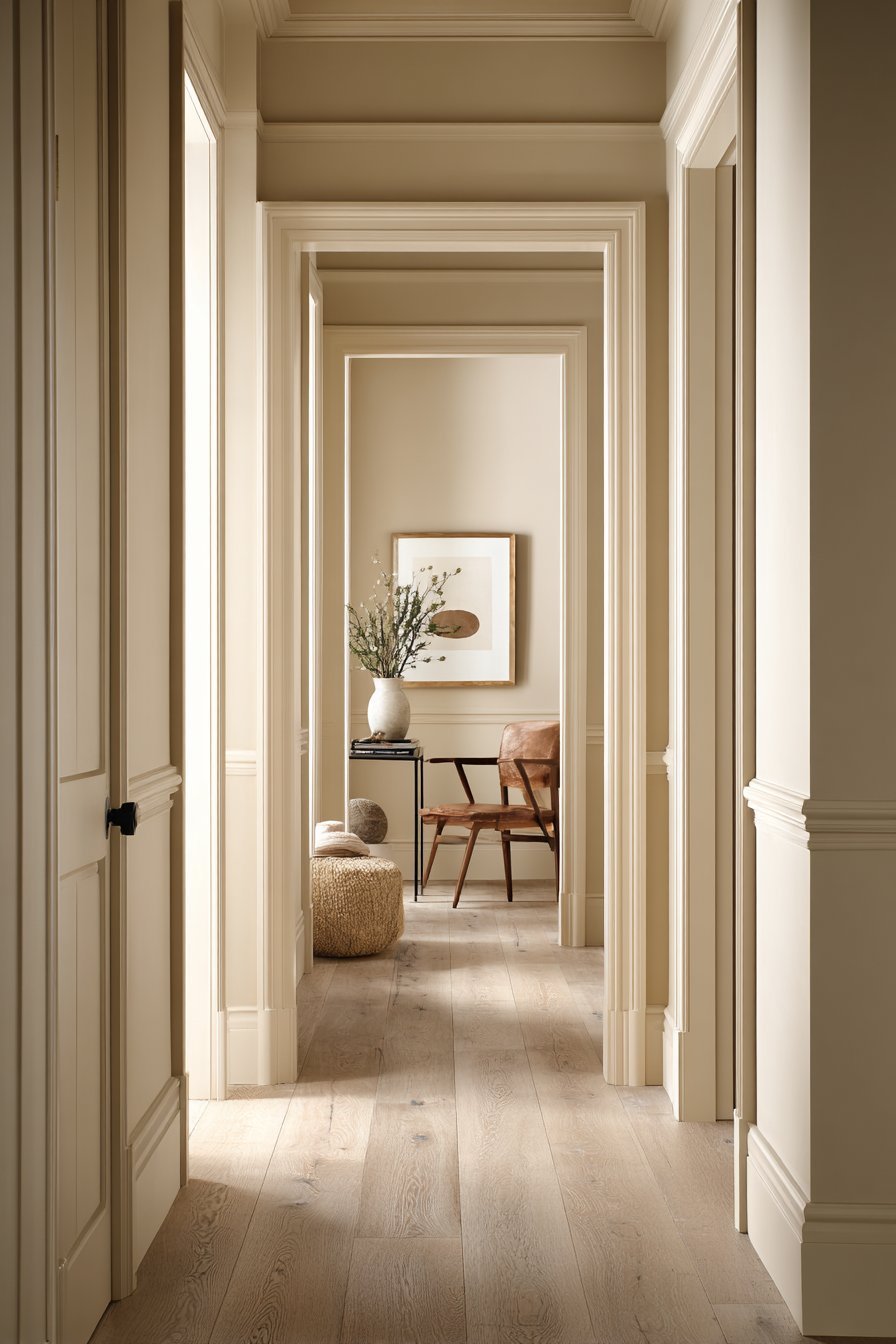
Color has an enormous impact on how spacious a hallway feels. Dark or saturated colors absorb light and visually shrink a space. Light, neutral tones do the opposite. Soft whites, warm creams, pale greiges, and muted pastels reflect light beautifully and make walls recede visually.
The concept of color continuity is especially important in hallways. Using the same wall color throughout the corridor creates a seamless flow. It eliminates visual interruptions that would otherwise chop the space into smaller sections. This unifying approach makes the hallway feel longer and more intentional.
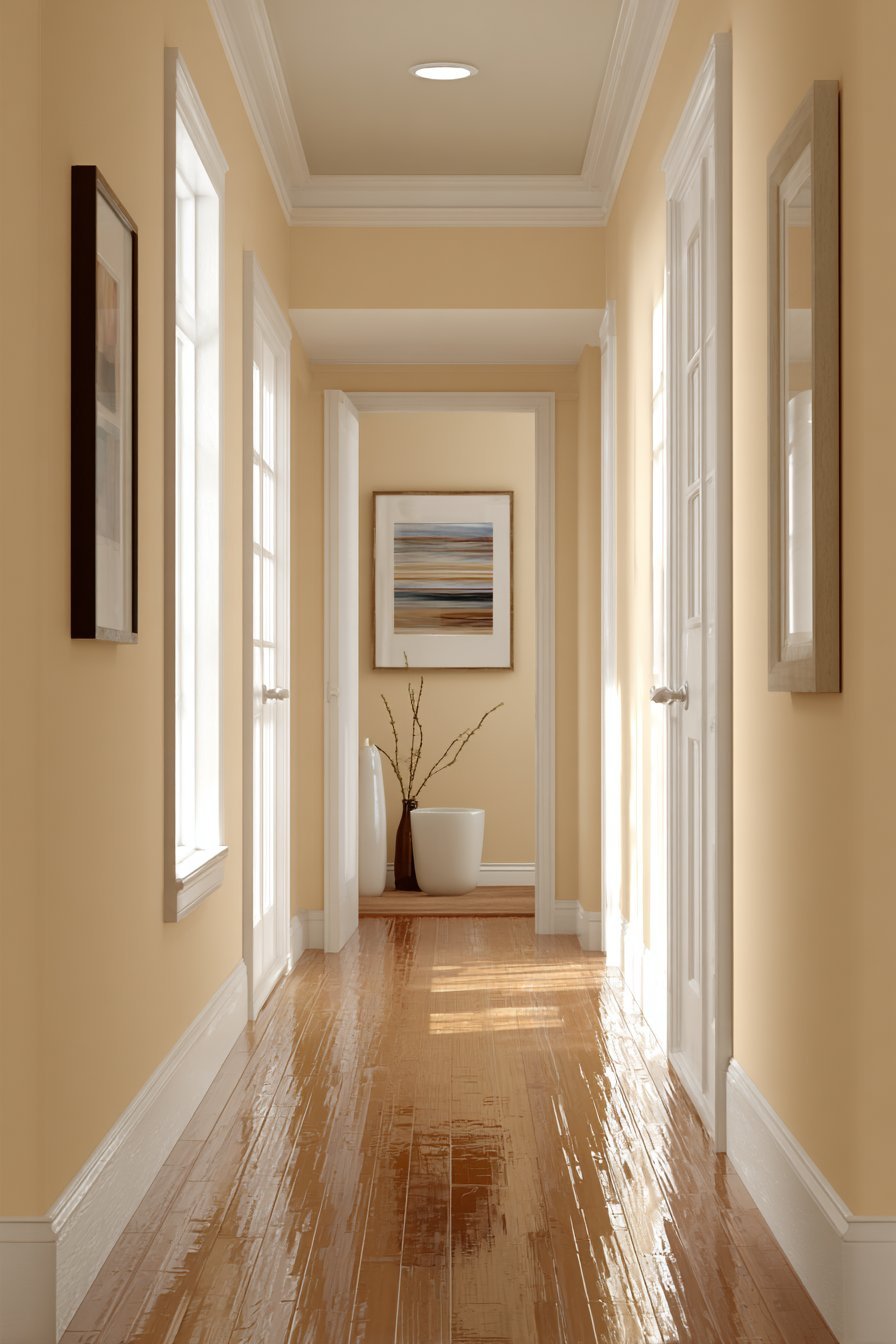
If you crave color, apply it thoughtfully. A soft sage green or dusty blue can add character without overwhelming. The trick is to keep the tone muted and the value light. Avoid high-contrast color blocking in narrow hallways, as it visually fragments the space.
- Paint walls in soft neutrals like warm white, linen, or pale taupe
- Match trim and molding to the wall color for a seamless, elongated effect
- Use eggshell or satin finishes to reflect light softly without glare
- Test paint samples in different lighting conditions before committing
- Avoid dark accent walls unless the hallway is unusually wide
- Consider a tonal color scheme using slightly varied shades of one color
4. Install Narrow Wall Shelves for Functional Decor
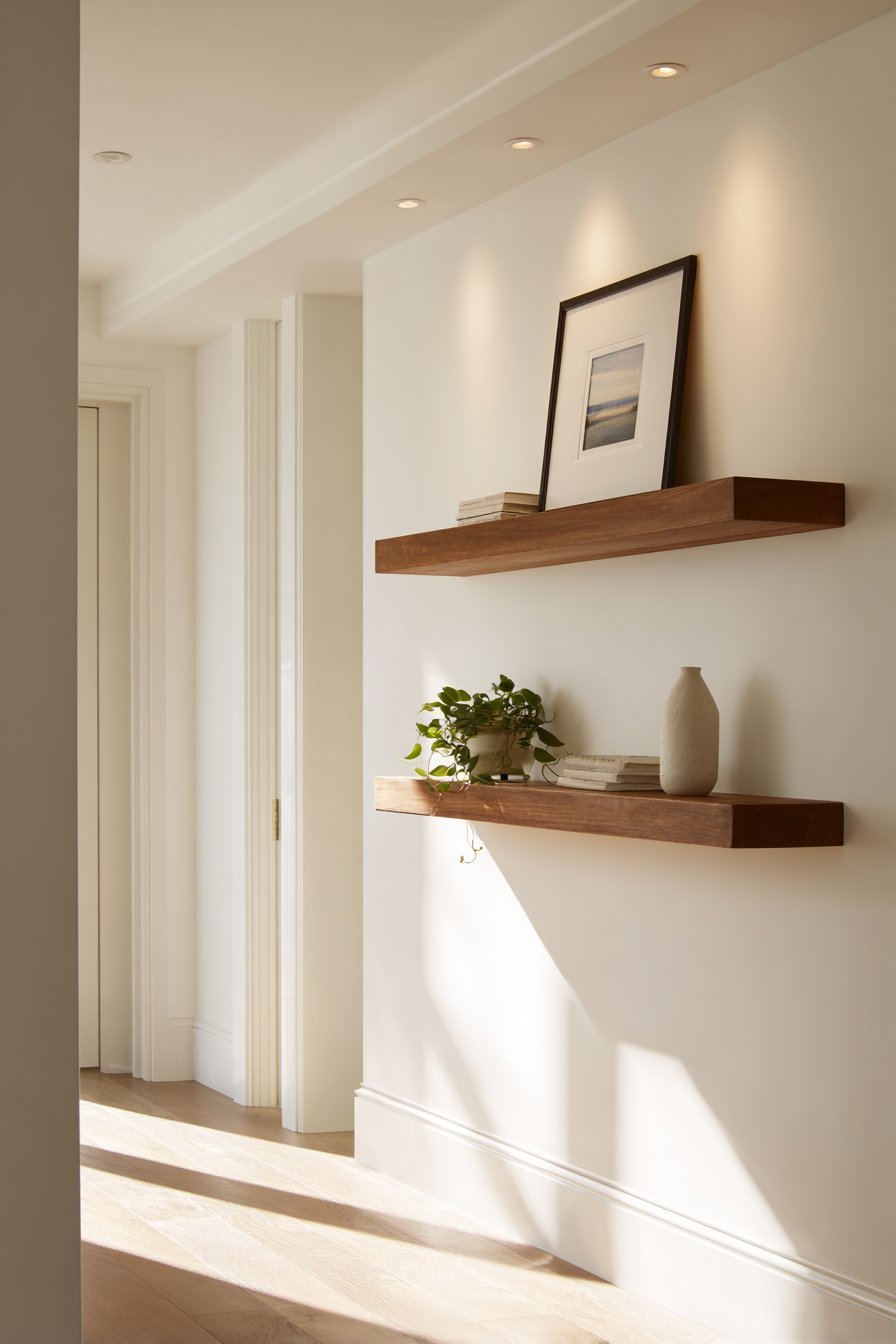
Wall-mounted shelves are a brilliant solution for hallways that need both storage and style. Floating shelves keep the floor clear, which is essential for maintaining an open feel. A clutter-free floor visually widens the corridor and makes movement through it feel effortless.
Choose shelves that are shallow in depth — ideally no more than 6 to 8 inches. This prevents them from protruding too far into the walking space. Slim floating shelves in wood, metal, or painted MDF all work well. The material should complement the overall home aesthetic.
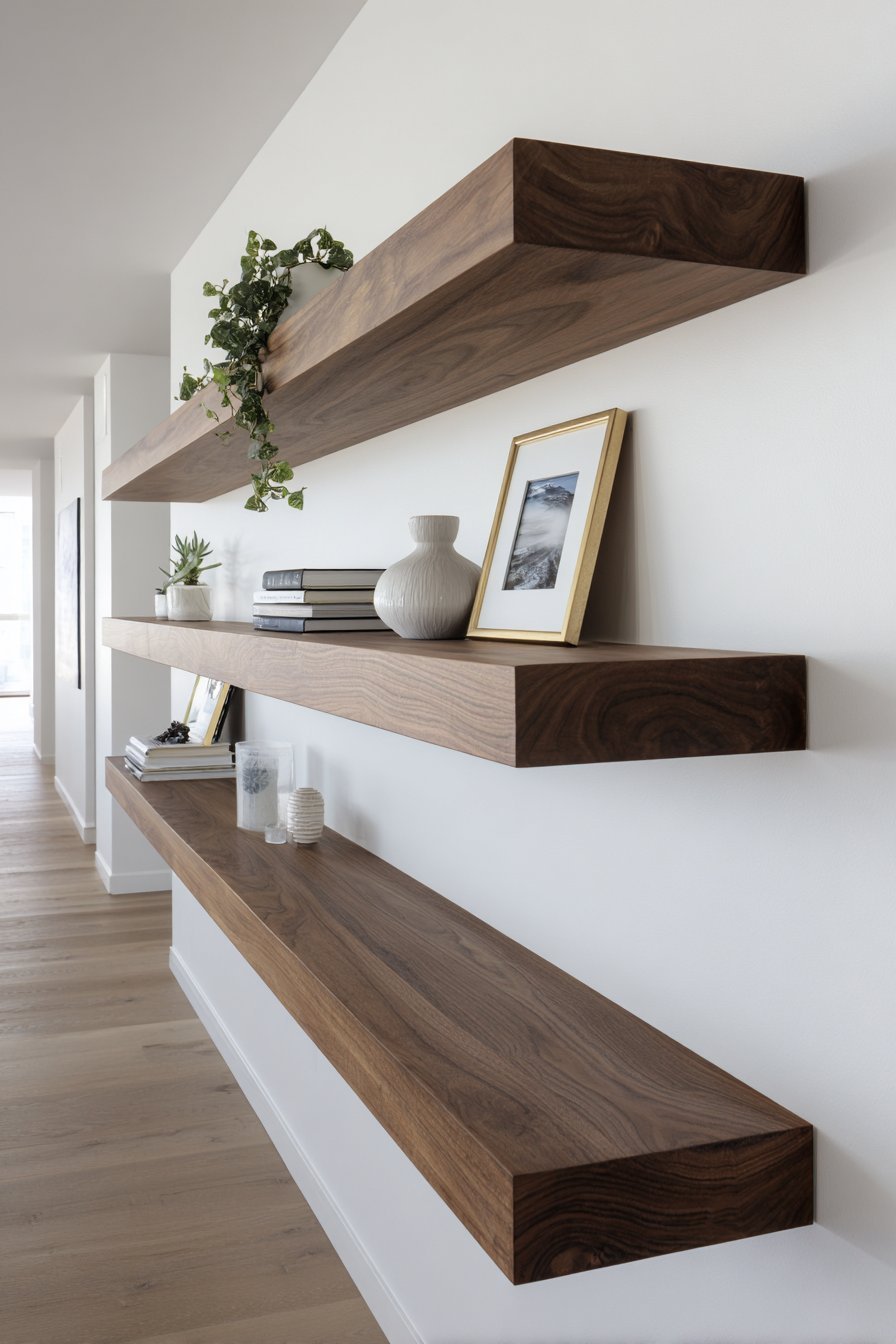
Style the shelves with restraint and intention. A few small plants, a framed photo, and a decorative object are all you need. Avoid overcrowding shelves with too many items. Empty space on a shelf is not wasted — it is a deliberate design choice that keeps the hallway feeling airy.
- Choose shelves no deeper than 6 to 8 inches to preserve walkway width
- Space shelves 12 to 16 inches apart vertically for visual balance
- Style with an odd number of items — three or five objects feel most natural
- Include at least one trailing plant or greenery for organic warmth
- Use matching shelf brackets or hidden mounts for a clean, streamlined look
- Rotate decorative objects seasonally to keep the display feeling fresh
5. Create a Gallery Wall With Careful Spacing
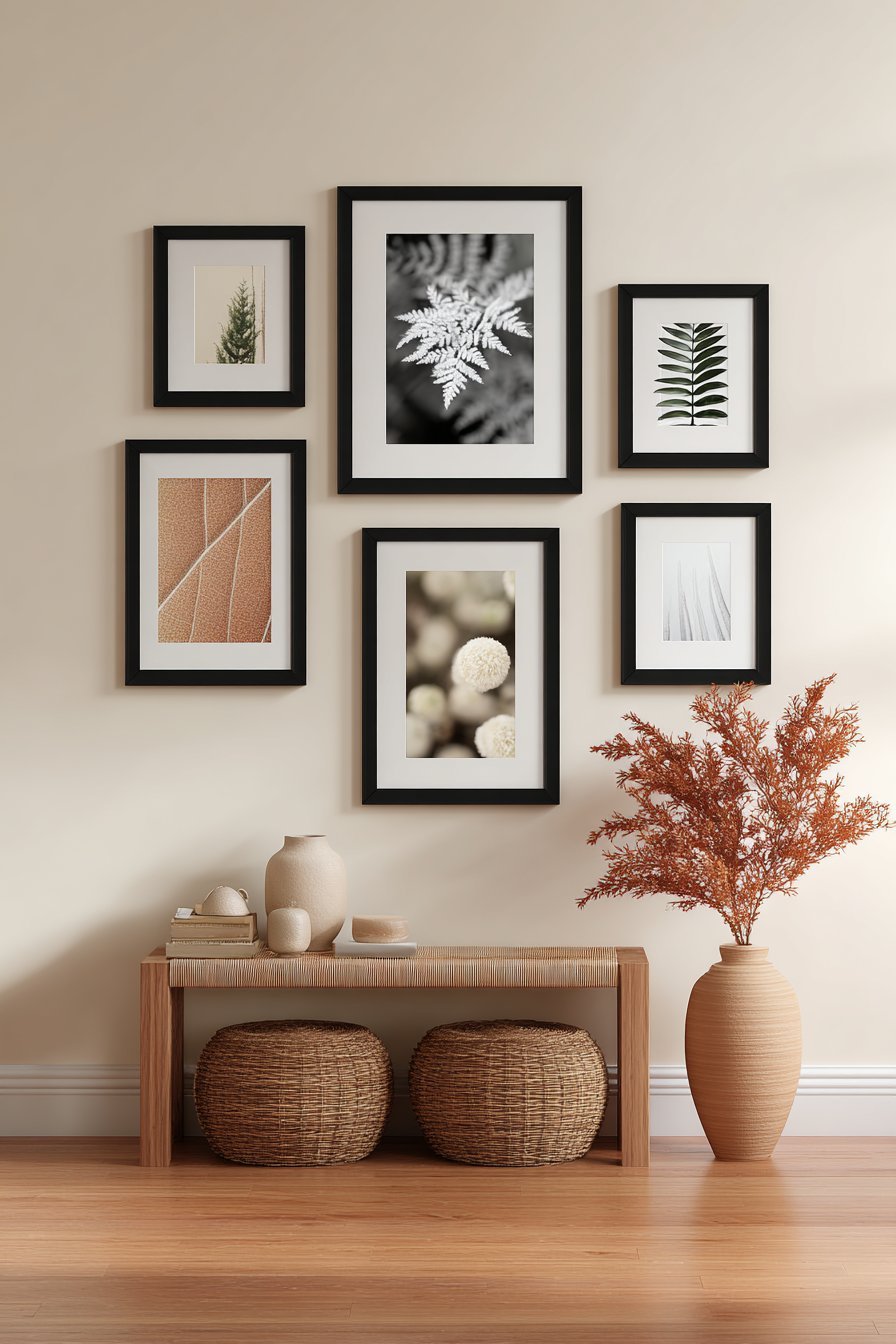
A gallery wall can work in a hallway — but only when executed with discipline. The most common mistake is hanging too many pieces too close together. This creates a visually chaotic wall that overwhelms the narrow space. The key is intentional spacing and a cohesive visual theme.
Start by selecting a unified color palette across all framed pieces. Matching frame finishes — all black, all gold, or all natural wood — creates harmony. Mixed frames require a more skilled curatorial eye. For most hallways, consistency is the safer and more elegant choice.
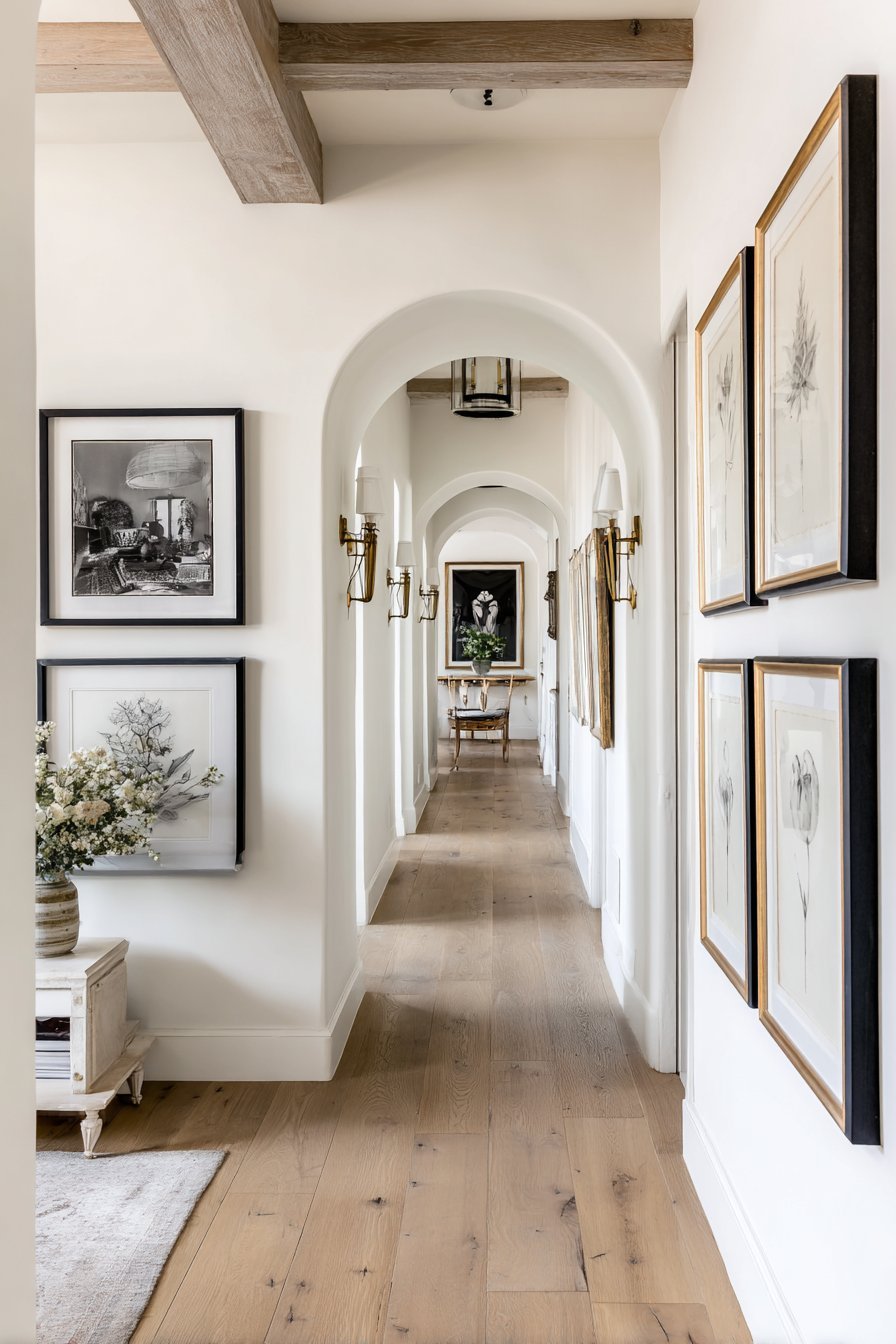
Limit the gallery to five to seven pieces maximum in a narrow hallway. Arrange them with at least 3 to 4 inches of space between frames. This breathing room prevents the wall from feeling crowded. It also allows each piece to be appreciated individually rather than blending into visual noise.
- Select a single frame finish — black, gold, white, or natural wood
- Use a consistent mat color across all frames for visual cohesion
- Space frames 3 to 4 inches apart minimum for breathing room
- Lay out the arrangement on the floor before hanging anything
- Use a level and measuring tape to ensure precise alignment
- Mix sizes thoughtfully — anchor with one large piece and surround with smaller ones
6. Add Texture Through Wall Paneling or Wallpaper
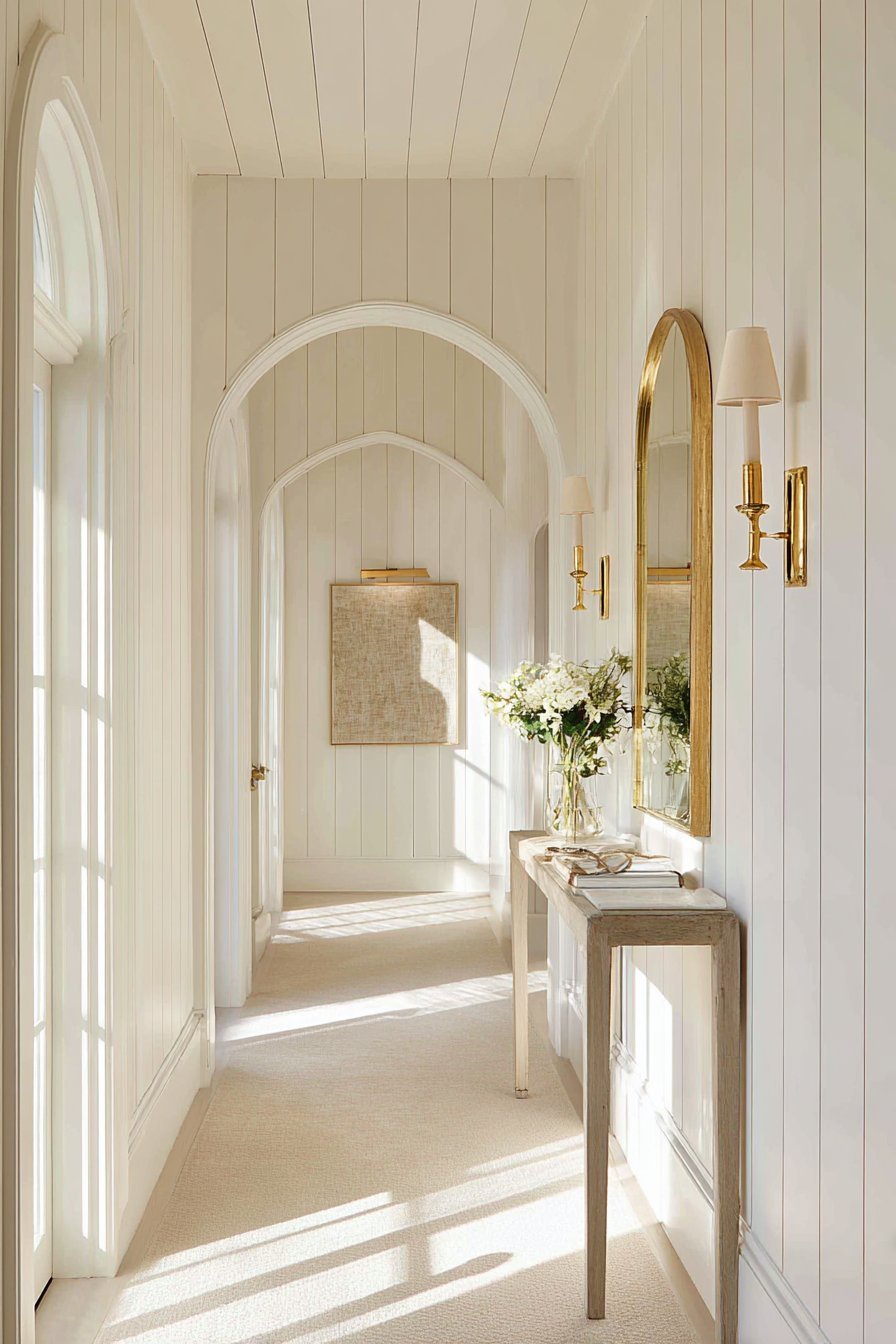
Texture adds depth and dimension to hallway walls without adding visual weight. Shiplap paneling, wainscoting, board-and-batten, or beadboard all introduce architectural interest. These treatments draw the eye along the length of the wall, which visually elongates the hallway.
Vertical paneling is especially effective in low-ceilinged hallways. It directs the eye upward and gives the illusion of greater height. Horizontal paneling, on the other hand, can make a space feel longer. Choose the orientation that best addresses your hallway’s specific proportions.
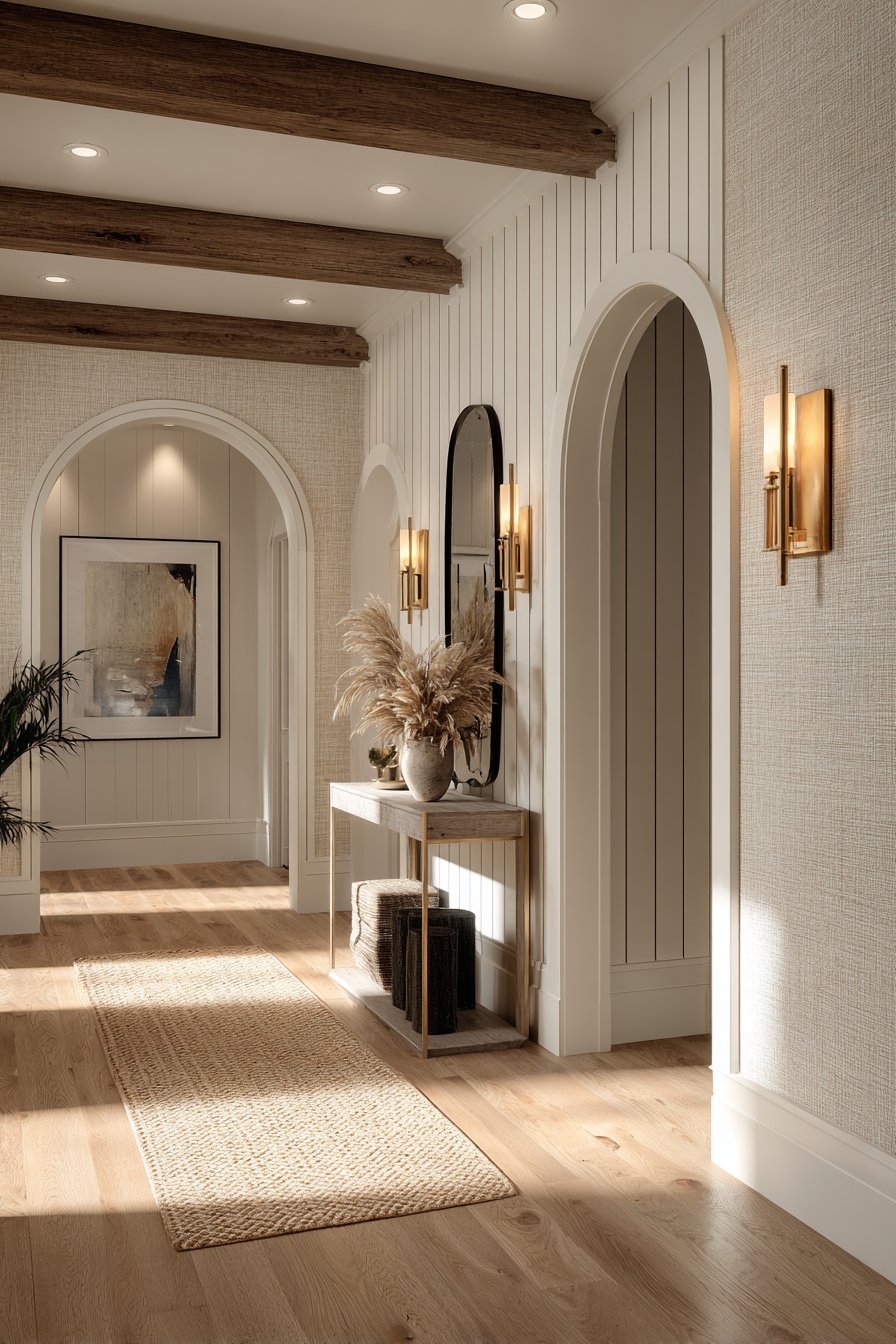
Wallpaper is another powerful option. A subtle geometric or stripe pattern adds personality without overwhelming. Vertical stripes in particular are a classic trick for making ceilings appear taller. Choose patterns with a light background and fine detailing for the most spacious effect.
- Use vertical shiplap or paneling in hallways with lower ceilings
- Apply wallpaper to a single feature wall rather than all surfaces
- Choose small-scale patterns over large, bold prints in tight spaces
- Keep paneling painted in the same wall color for a seamless look
- Use grasscloth or linen wallpaper for soft, organic texture
- Avoid busy, high-contrast patterns that visually fragment the space
7. Opt for Wall-Mounted Lighting Instead of Table Lamps
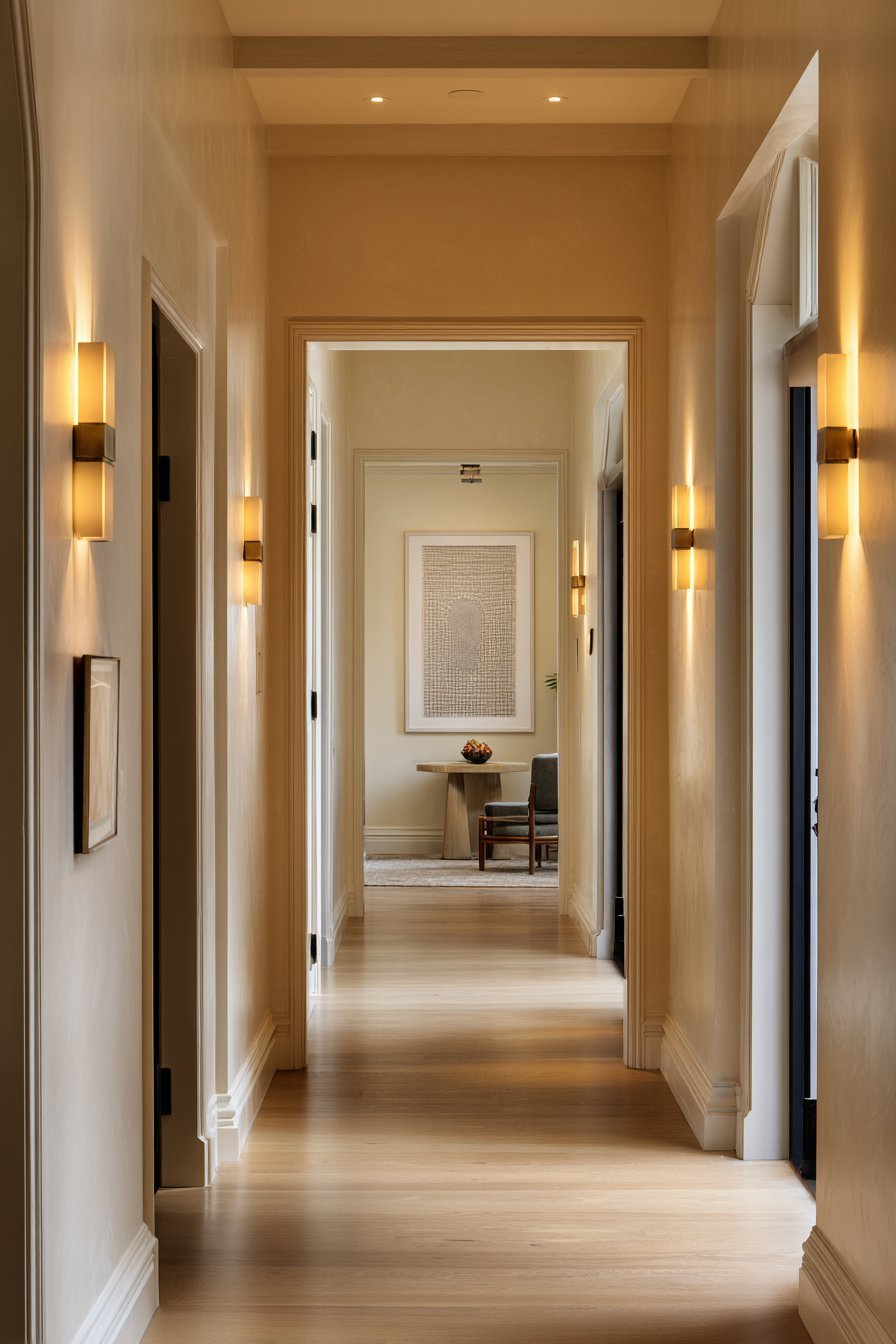
Lighting is one of the most overlooked elements in hallway design. Proper illumination can make a cramped hallway feel welcoming and spacious. Wall-mounted sconces are ideal because they free up floor and surface space while casting warm, ambient light along the corridor.
Choose sconces with slender, upward-facing designs to push light toward the ceiling. This creates vertical visual interest and makes the ceiling feel higher. Avoid sconces that project too far from the wall, as they reduce walkway clearance and create visual obstacles.
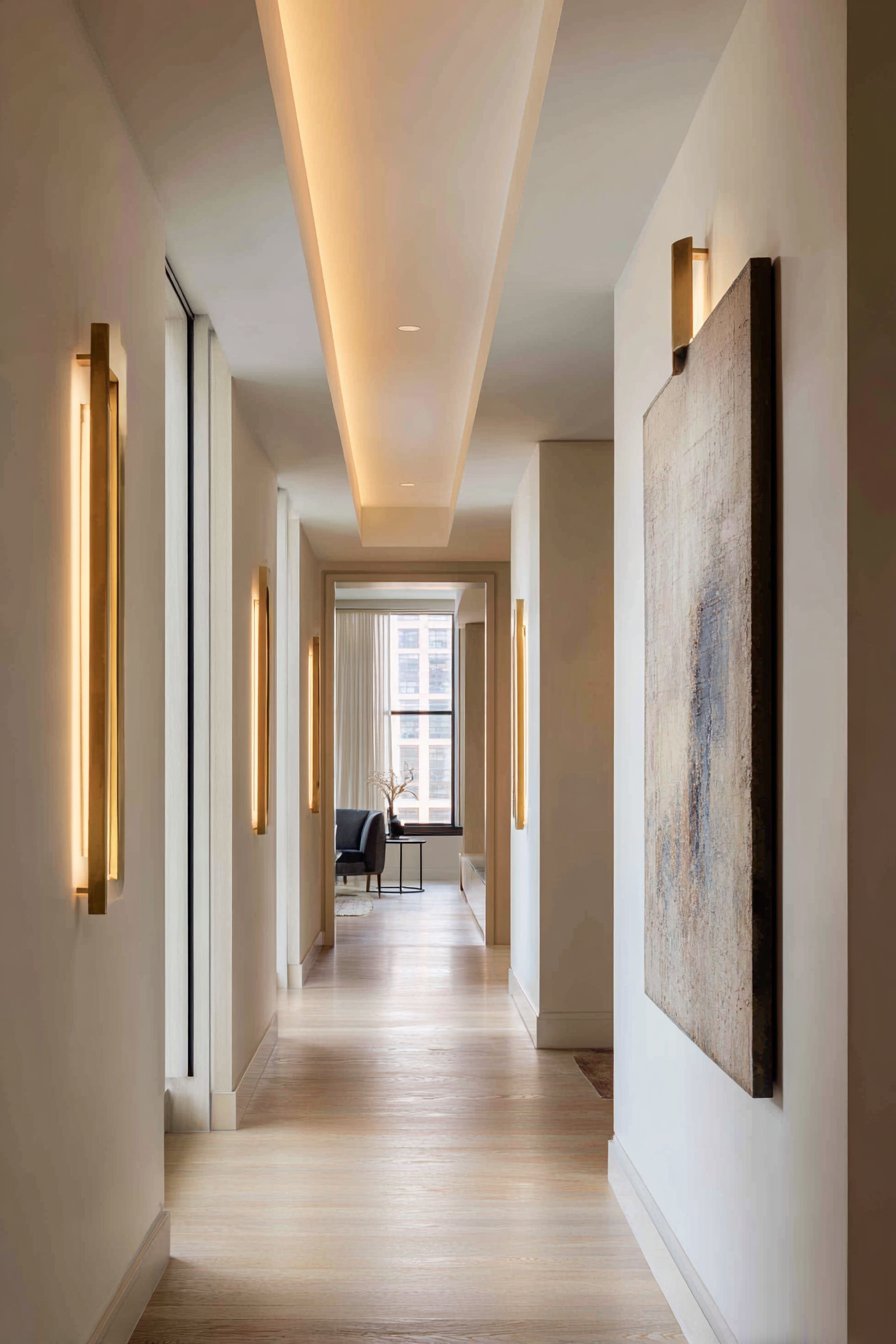
Layered lighting works best even in hallways. Combine overhead recessed lighting with wall sconces for a balanced, flattering glow. Dimmer switches add flexibility. They allow you to adjust the ambiance from bright and practical to warm and inviting in seconds.
- Install wall sconces at approximately 60 to 66 inches from the floor
- Choose fixtures that extend no more than 6 inches from the wall
- Add a dimmer switch for adjustable ambiance and energy efficiency
- Use warm white bulbs — around 2700K to 3000K — for a cozy feel
- Consider picture lights above artwork to highlight and illuminate simultaneously
- Avoid single overhead fixtures — they create unflattering, flat lighting
8. Keep Decor at Eye Level and Above
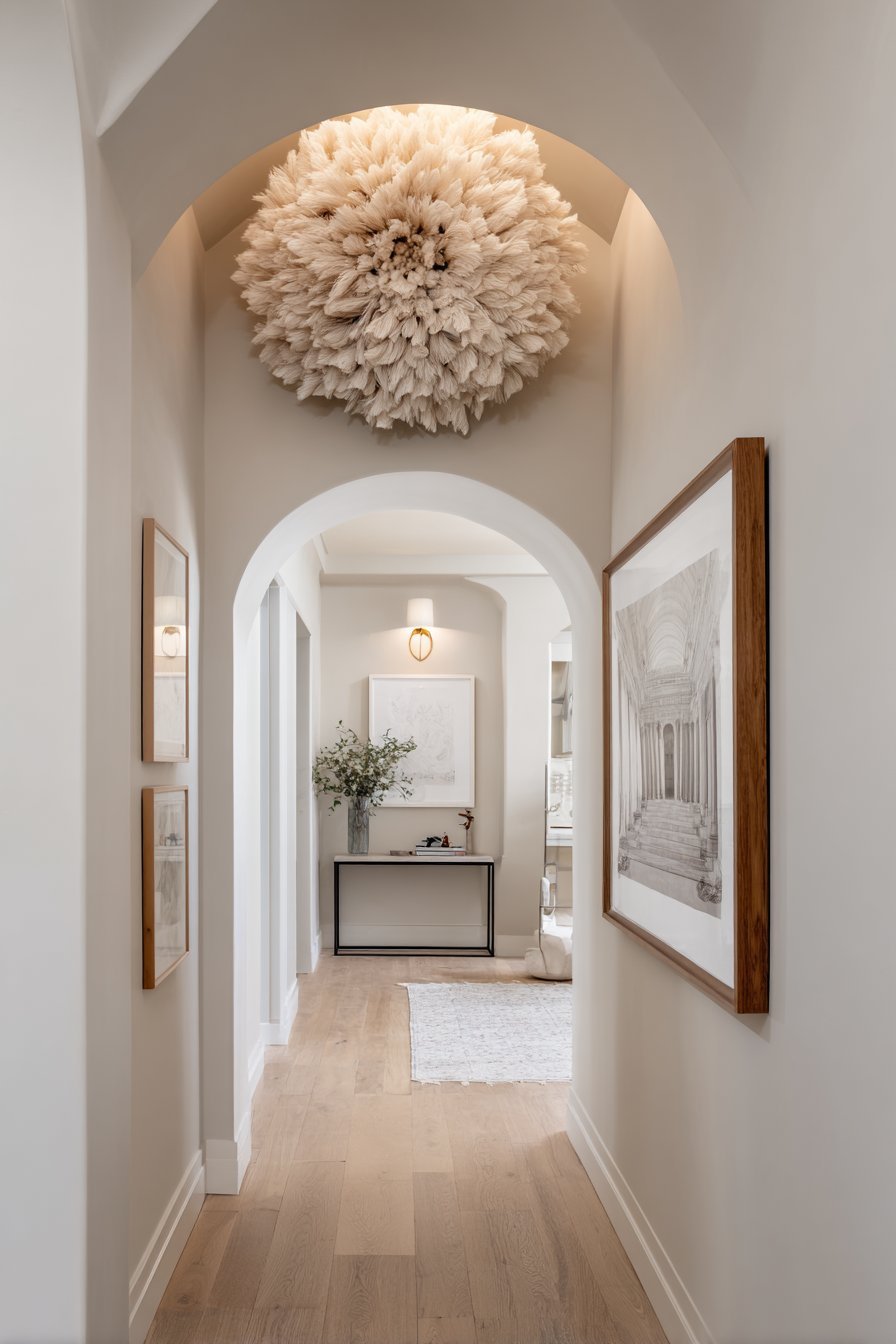
One of the most important principles in hallway design is vertical placement strategy. Hanging decor too low visually divides the wall and makes the ceiling feel closer. Keeping artwork and objects at eye level or above encourages the eye to travel upward, which creates a feeling of spaciousness.
Think of the wall as divided into three horizontal zones: lower (below 48 inches), middle (48 to 72 inches), and upper (above 72 inches). In narrow hallways, the sweet spot for most decor is the middle to upper zone. This leaves the lower wall clean and uncluttered, which preserves the sense of open floor space.
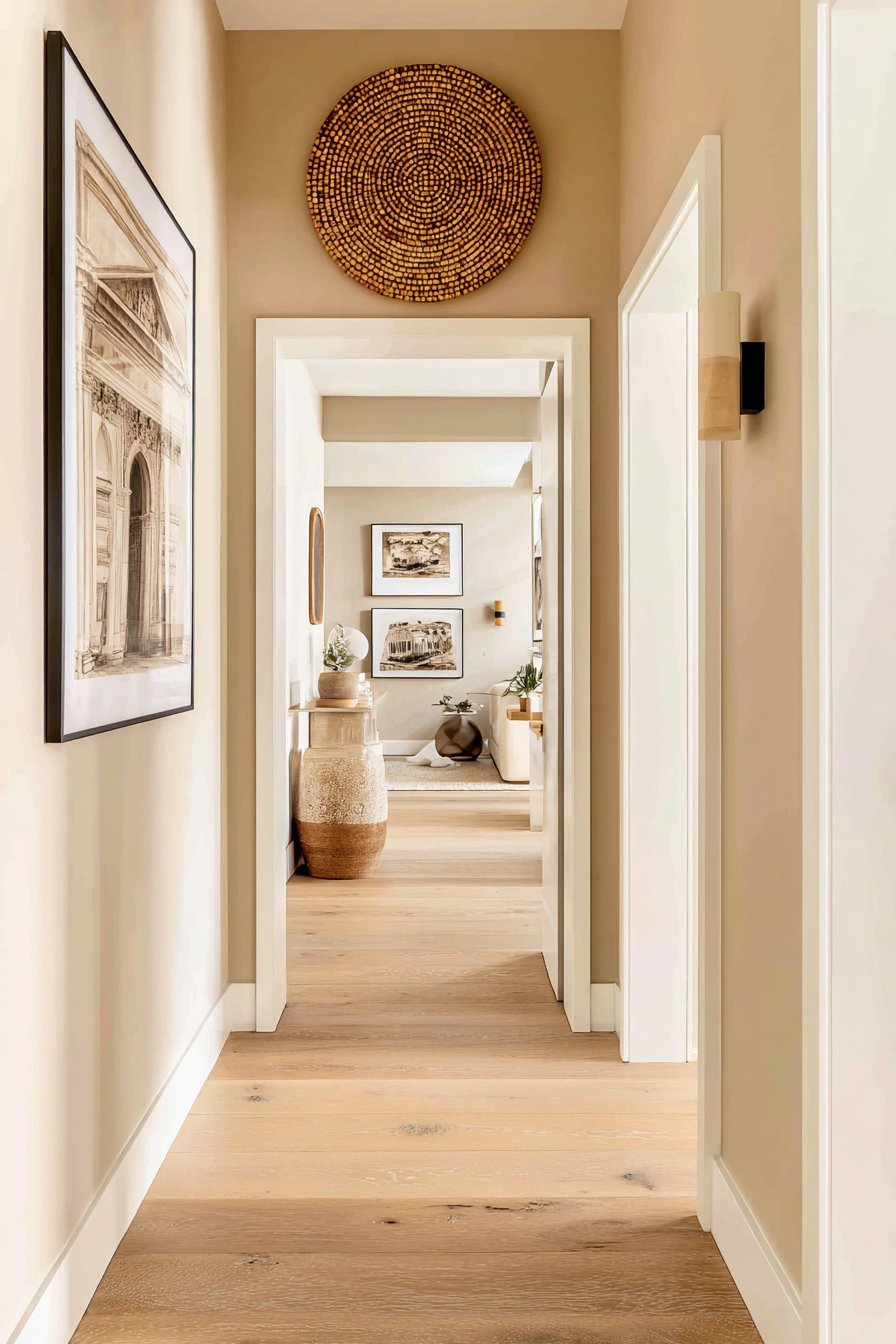
Floating wall decor in the upper zone — such as a sculptural wall hanging, a large clock, or architectural prints — draws attention upward. This is particularly effective when combined with upward-directed lighting. Together, they make the hallway feel taller and more dramatic without adding physical bulk.
- Hang the center of artwork at 57 to 60 inches from the floor
- Reserve the upper wall zone for statement pieces or architectural decor
- Avoid placing any decor below 36 inches in narrow hallways
- Use crown molding or picture rails to anchor upper-zone displays
- Group smaller pieces in the middle zone rather than scattering them low
- Keep the lower wall completely clear to maximize perceived floor space
9. Use a Consistent Design Theme Throughout
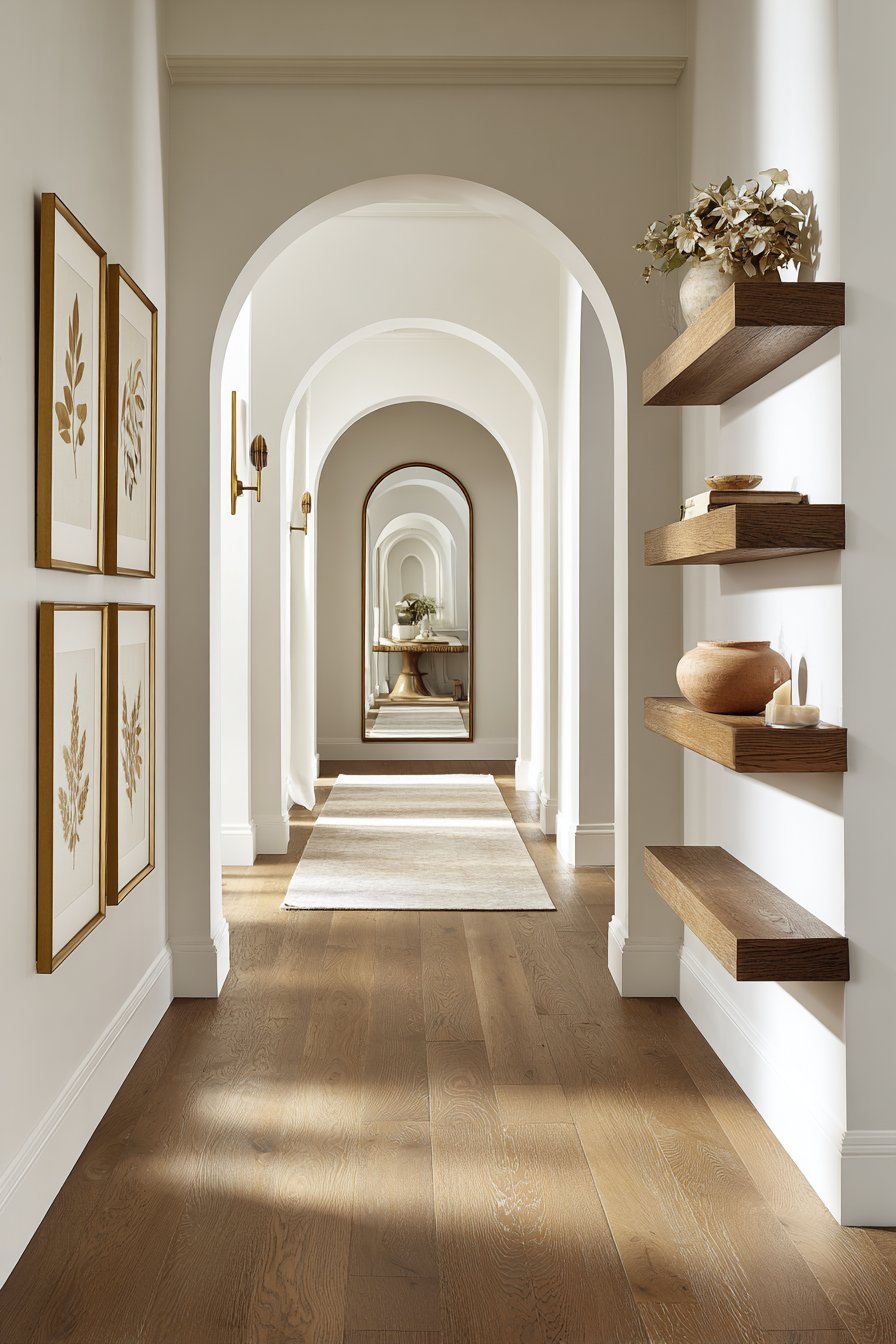
Hallways that feel chaotic are usually the result of inconsistent design language. Mixing too many styles, colors, and materials creates visual confusion. A cohesive theme ties everything together and creates a sense of intentionality that reads as sophisticated rather than cluttered.
Choose a single design style — Scandinavian minimalism, mid-century modern, coastal, or maximalist — and commit to it throughout the hallway. Every element should belong to that world. This doesn’t mean everything must match exactly. It means every piece should feel like it belongs in the same family.
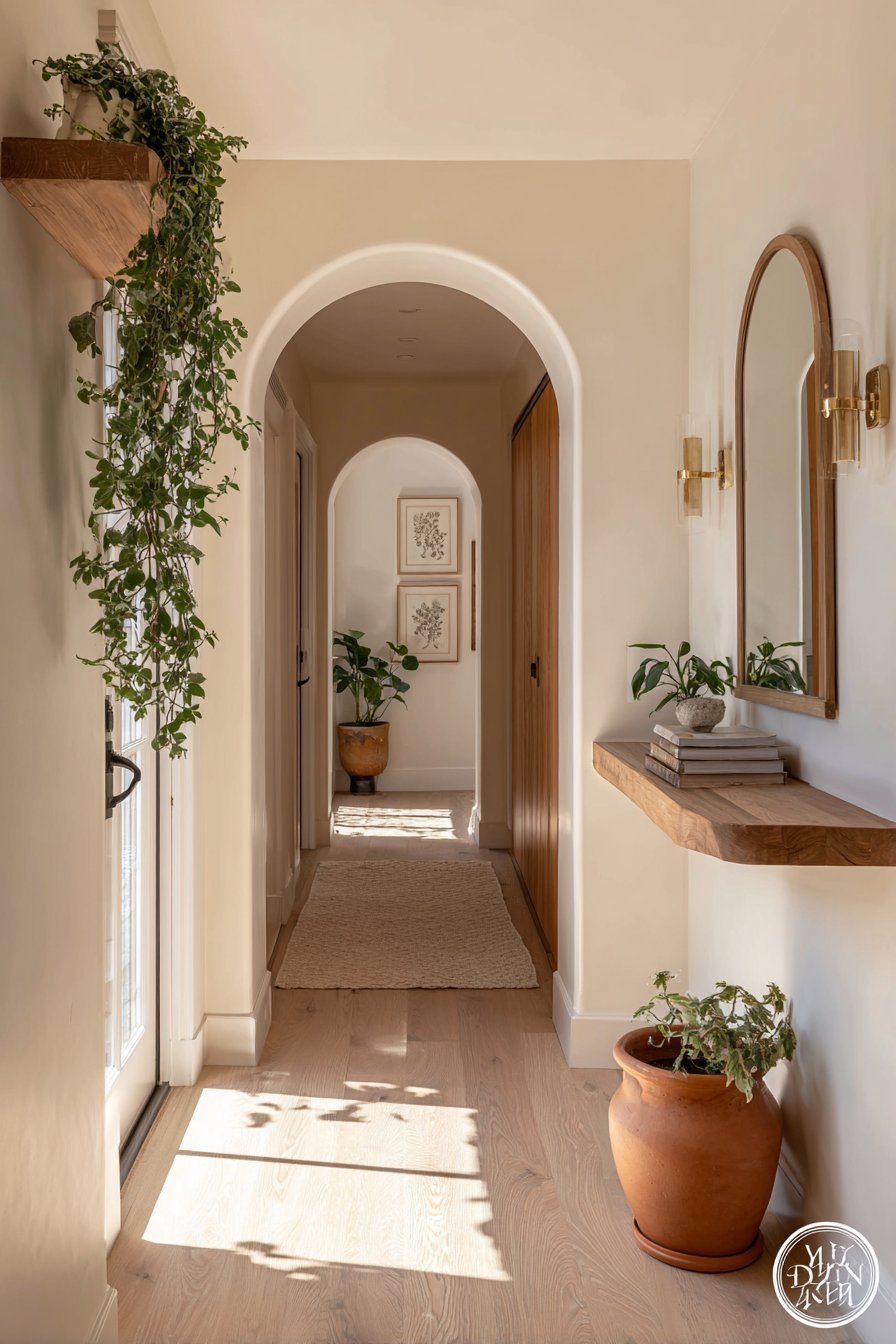
Material consistency is especially important. If you use brass hardware on a mirror, repeat that finish in your sconces. If you choose natural wood shelves, echo that material in a frame or a small tray. These deliberate repetitions create a visual rhythm that makes the space feel designed, not decorated.
- Select one design style and apply it consistently to all decor choices
- Repeat two to three materials throughout — wood, brass, linen, for example
- Maintain a consistent color palette in all decorative objects
- Avoid impulse decor purchases that don’t align with your chosen theme
- Use texture variation within your theme rather than introducing new styles
- Edit ruthlessly — if a piece doesn’t belong to your theme, remove it
10. Introduce Greenery With Wall-Mounted Planters
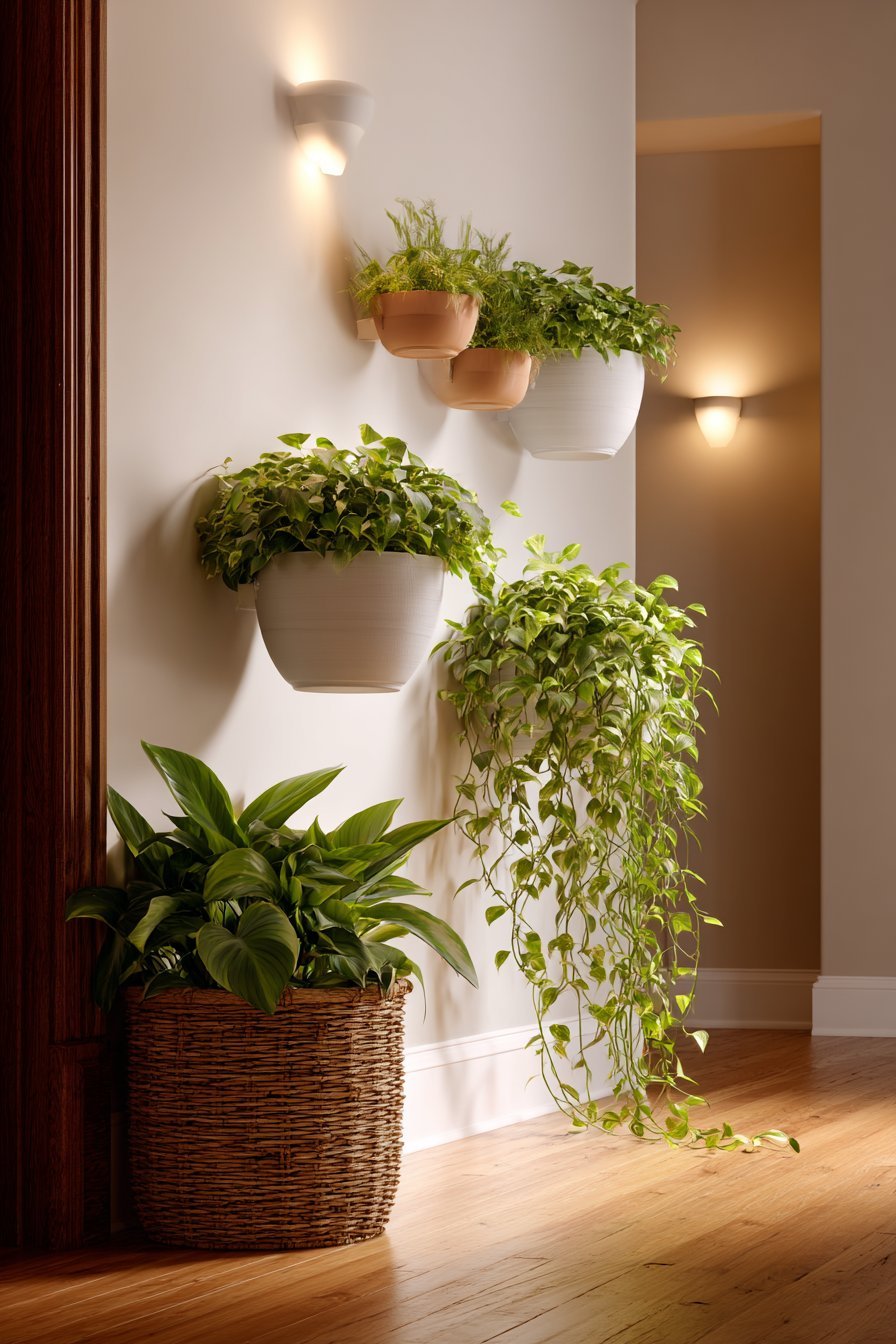
Plants bring life, color, and organic energy into any space. In hallways, the challenge is adding greenery without taking up precious floor or surface space. Wall-mounted planters solve this beautifully. They bring nature indoors while keeping the corridor clear and unobstructed.
Choose trailing plants like pothos, string of pearls, or philodendrons for wall planters. Their cascading growth adds movement and visual interest. They draw the eye along the wall and create a sense of dynamic, living decor. These plants are also typically low-maintenance, making them ideal for hallways that don’t always get direct sunlight.
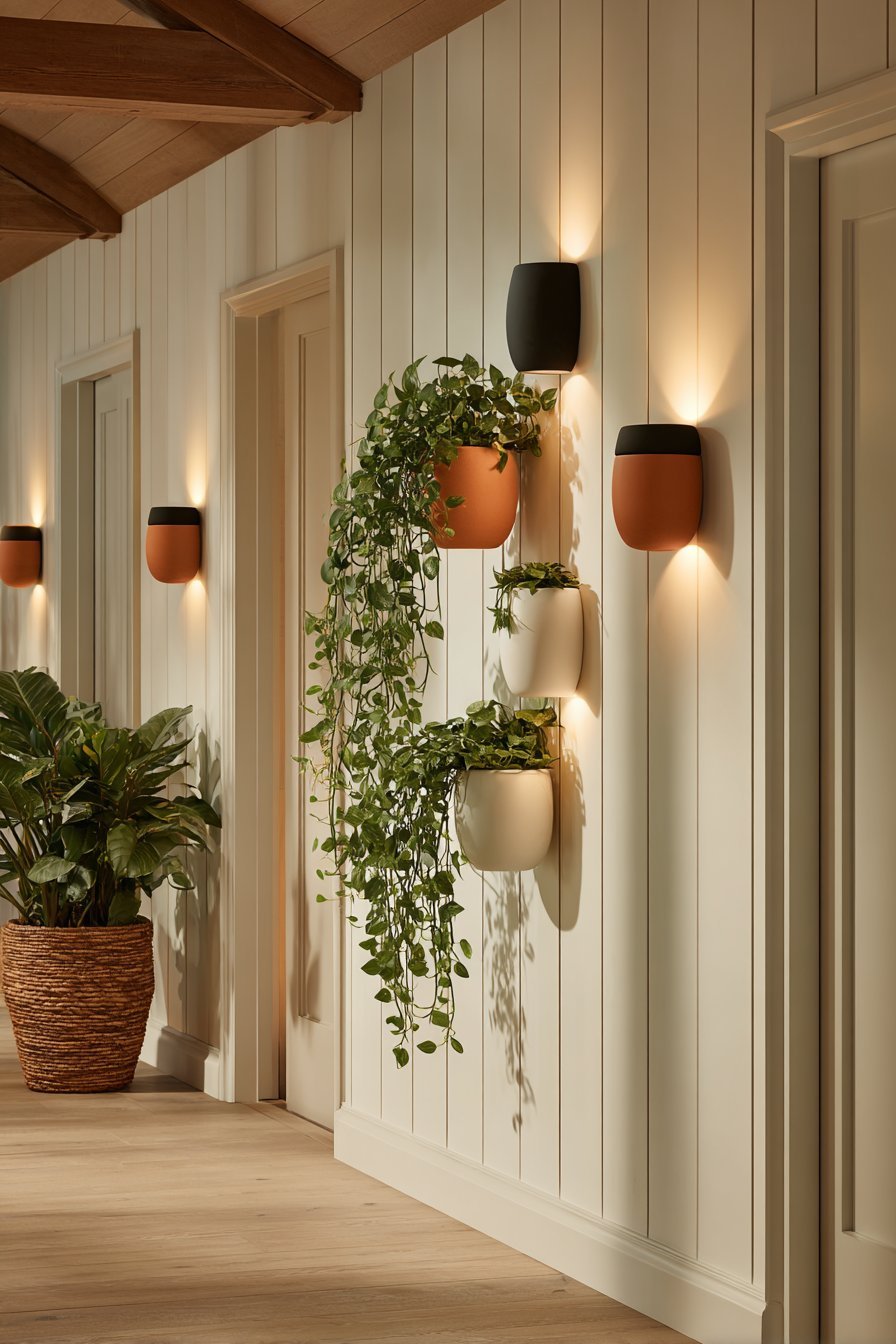
For hallways with limited natural light, faux botanicals have come a long way in quality and realism. High-end artificial trailing plants can add the same visual warmth without the care requirements. Pair them with natural materials like terracotta, woven rattan, or textured ceramic planters to maintain an authentic, organic feel.
- Mount planters at eye level or above to maintain clear walkway space
- Choose trailing or cascading varieties for the most visual impact
- Use matching planter finishes that coordinate with your existing decor metals
- Group two or three planters asymmetrically for a more natural arrangement
- Opt for self-watering planters in high-traffic areas for easier maintenance
- Combine plants of varying leaf sizes for textural contrast and visual richness
Conclusion
Decorating a hallway well is an exercise in thoughtful restraint. Every choice should serve both form and function. The most successful hallway designs feel open, cohesive, and personal — never cluttered or chaotic.
The strategies in this article — from vertical artwork and strategic mirrors to wall-mounted lighting and consistent design themes — all share a common thread: intentionality. When each element is chosen with purpose and placed with care, even the smallest hallway becomes a space worth noticing. Take these ideas and adapt them to your own home. The hallway you’ve always overlooked may just become your favorite design achievement.
