
Dark green and wood kitchens represent a timeless fusion of nature-inspired elegance and warm functionality. This design approach brings together rich, moody tones with organic textures. The combination creates sophisticated spaces that feel both modern and welcoming. These kitchens prove that bold color choices paired with natural materials can transform cooking spaces into stunning focal points.
The popularity of dark green cabinetry has surged in recent years. Homeowners seek alternatives to all-white kitchens without sacrificing style. Wood elements provide the perfect counterbalance to deep green hues. They soften the dramatic impact while adding warmth and character. From sleek contemporary designs to rustic farmhouse aesthetics, the versatility is remarkable.
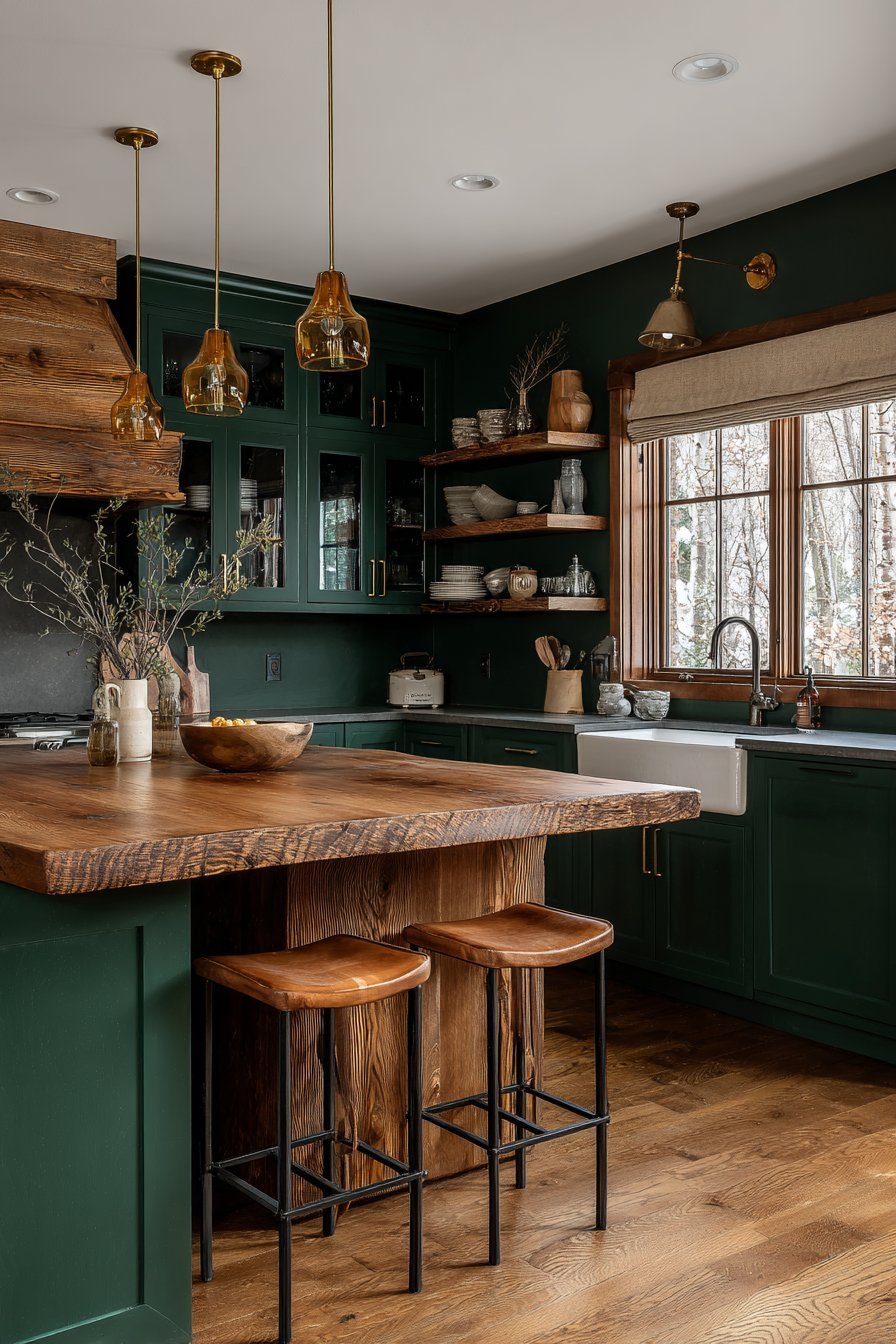
This article explores twenty distinct approaches to dark green and wood kitchen design. Each concept showcases unique combinations of materials, textures, and design philosophies. Whether you prefer forest green shaker cabinets or emerald modern minimalism, you’ll find inspiration. The designs span various styles, budgets, and spatial constraints to suit diverse needs.
1. Sophisticated Forest Green Shaker Kitchen
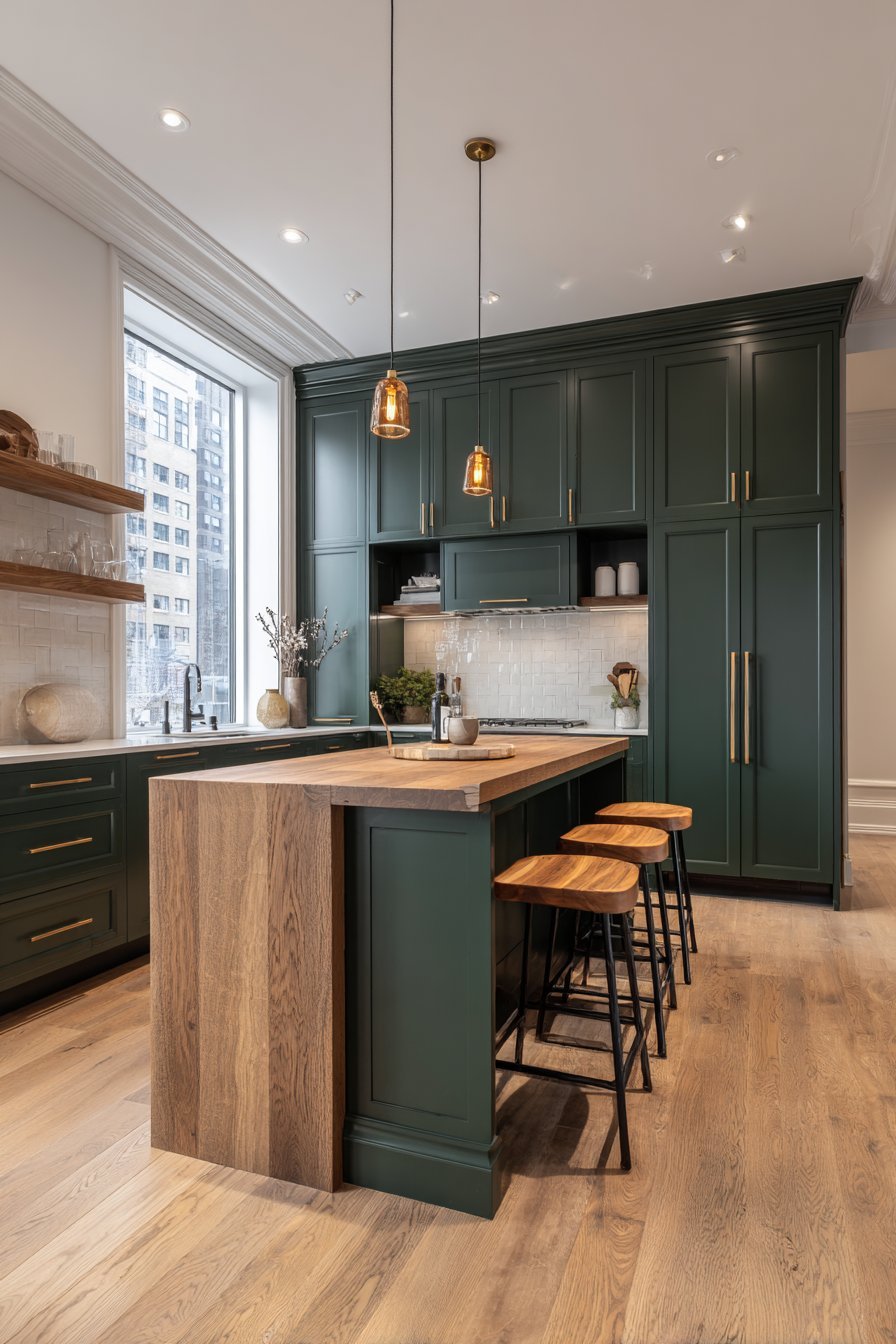
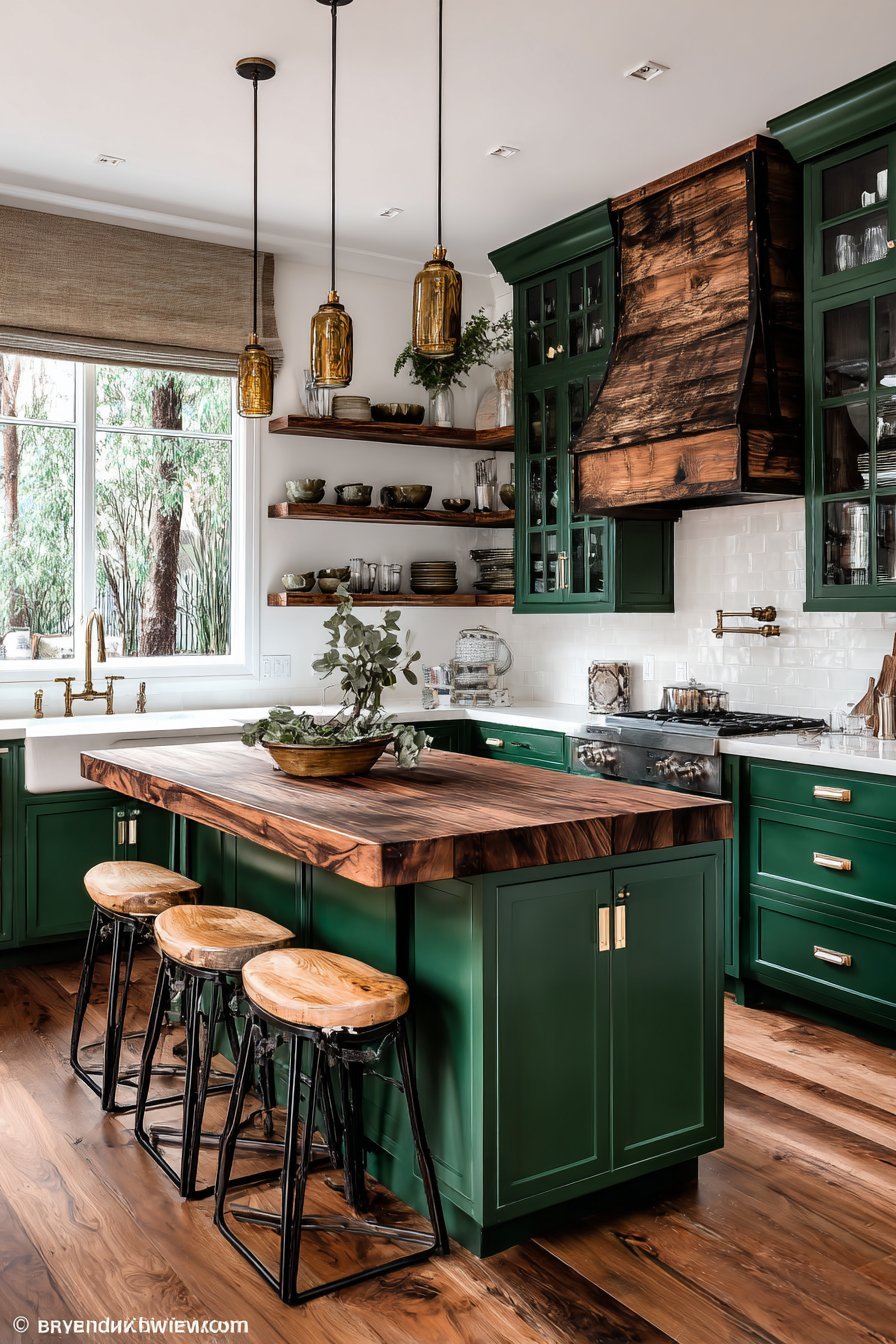
A sophisticated kitchen features custom shaker-style cabinetry in deep forest green. Brushed brass hardware adds refined metallic warmth throughout. Natural oak floating shelves display minimalist ceramics against white subway tiles. The visual contrast between dark cabinetry and light display items creates balance.
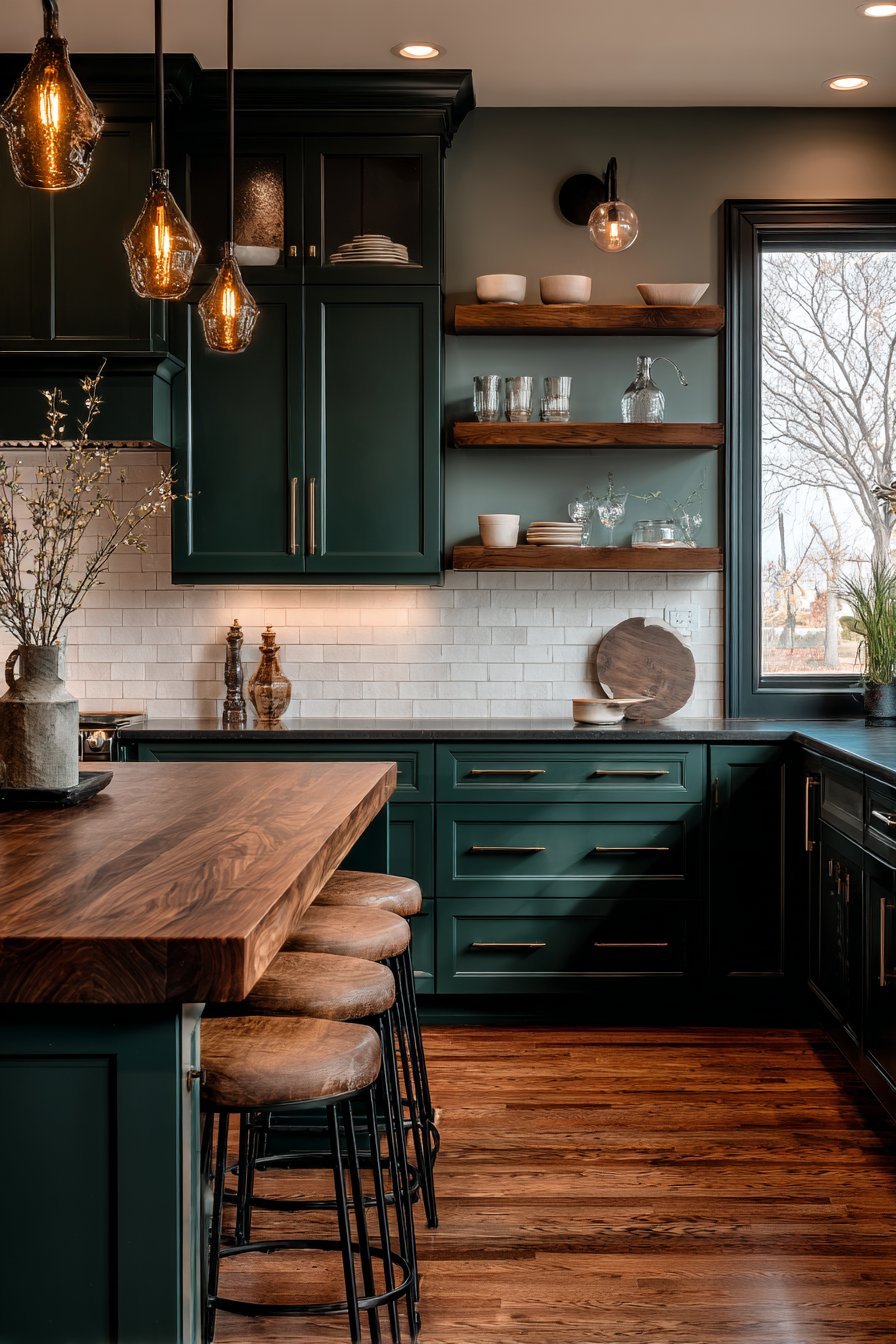
The butcher block island commands attention as the room’s centerpiece. Its waterfall edge showcases seamless craftsmanship and material quality. Natural wood bar stools with black metal frames surround the workspace. This combination of materials creates a layered, textural aesthetic. The seating invites casual conversation while maintaining visual lightness.
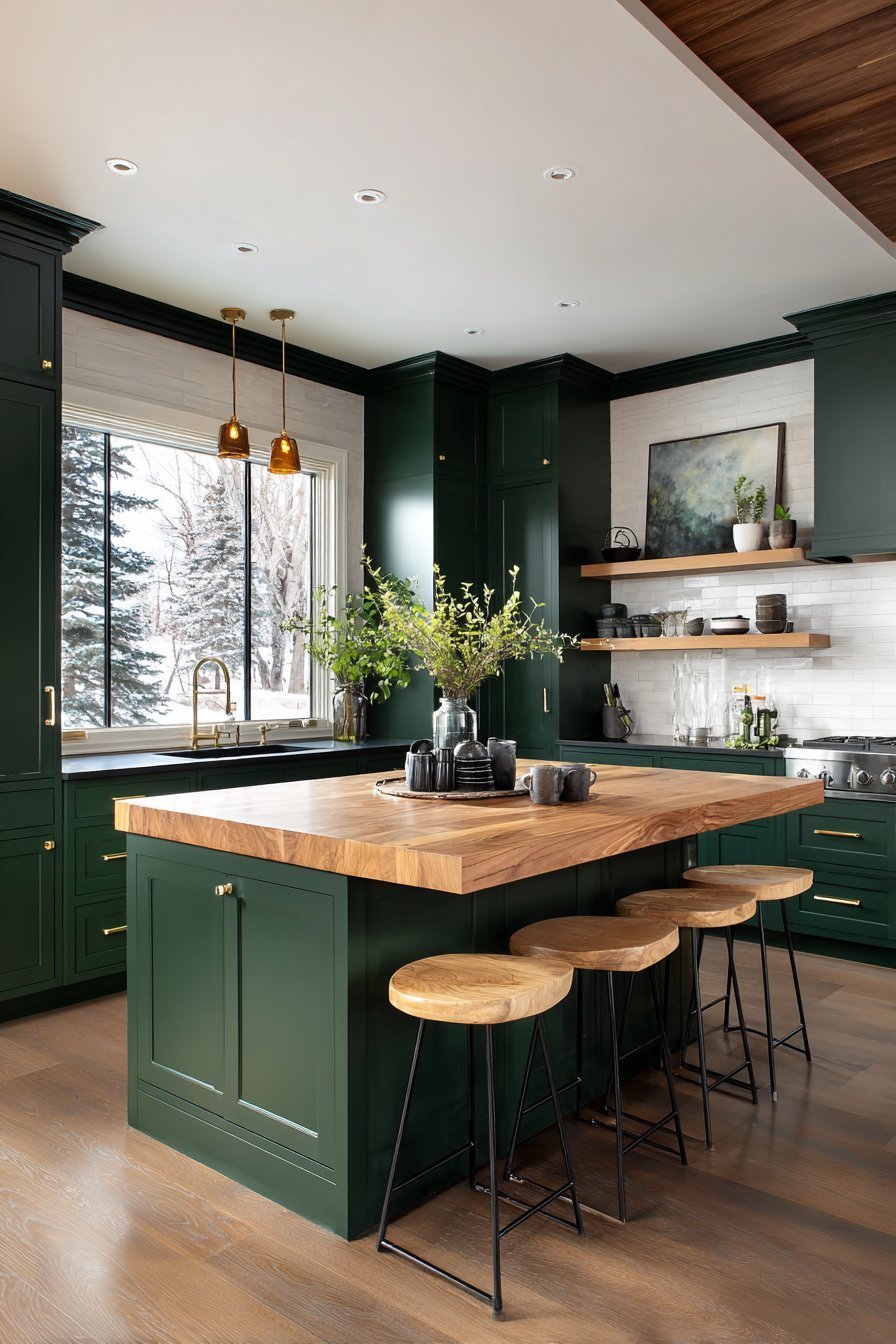
Lighting plays a crucial role in this design’s success. Recessed fixtures provide general illumination without visual clutter. Pendant lights with amber glass shades hang above the island. They cast warm pools of light perfect for food preparation. Natural daylight streams through windows, highlighting organic textures and professional craftsmanship.
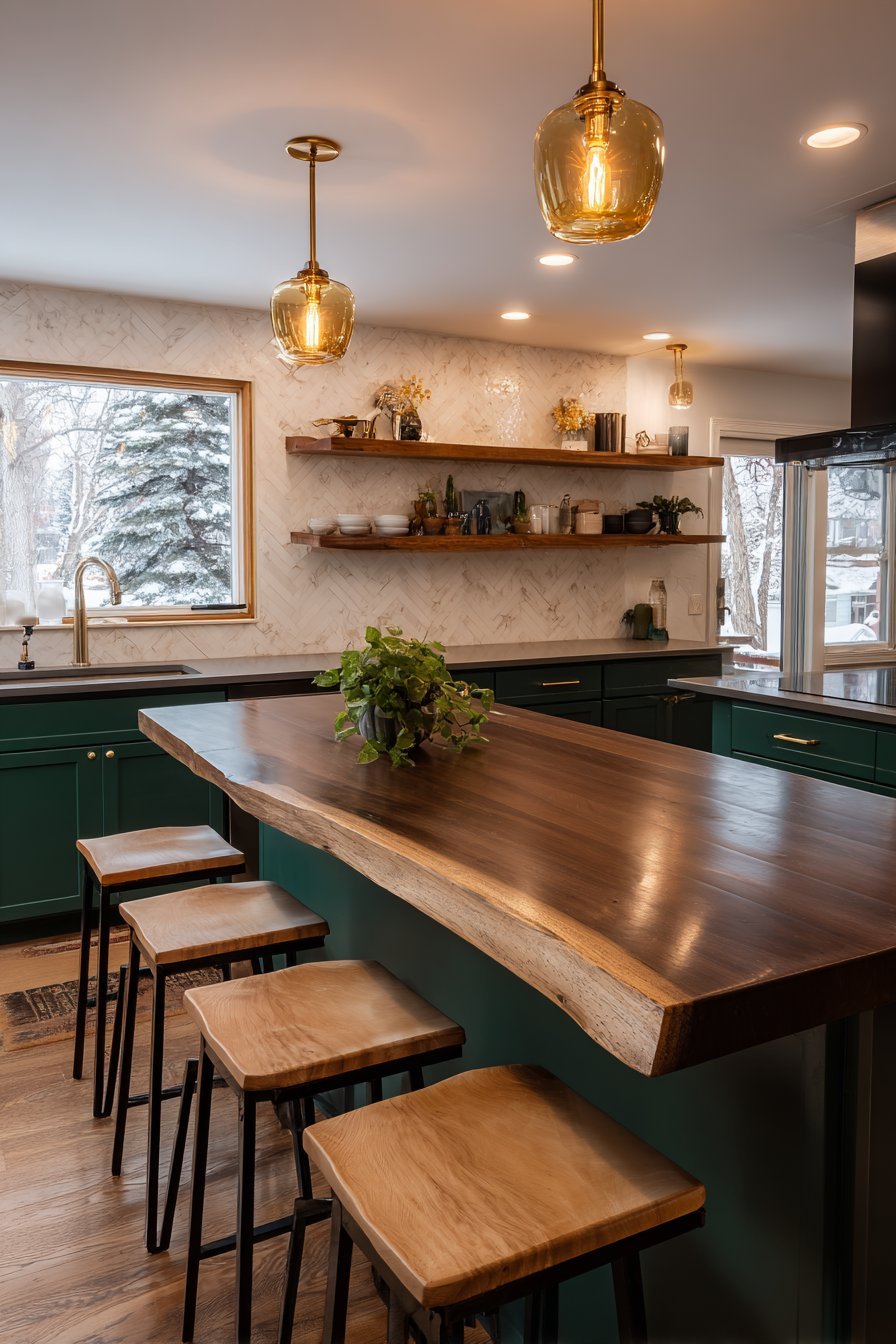
The rich contrast between dark green and warm wood defines this space. Wide-angle views capture how these elements work together harmoniously. Soft natural light emphasizes the quality of materials and finishes. This kitchen proves that bold color choices enhance rather than overwhelm.
Key Design Tips:
- Select shaker-style cabinets for timeless appeal that works across design styles
- Choose brushed brass hardware to add warmth without competing with wood tones
- Install floating shelves in natural wood to break up solid cabinetry runs
- Use butcher block for islands to create functional workspace with visual impact
- Incorporate amber glass pendant lights to enhance the warm color palette
2. Emerald Green with Light Walnut Accents
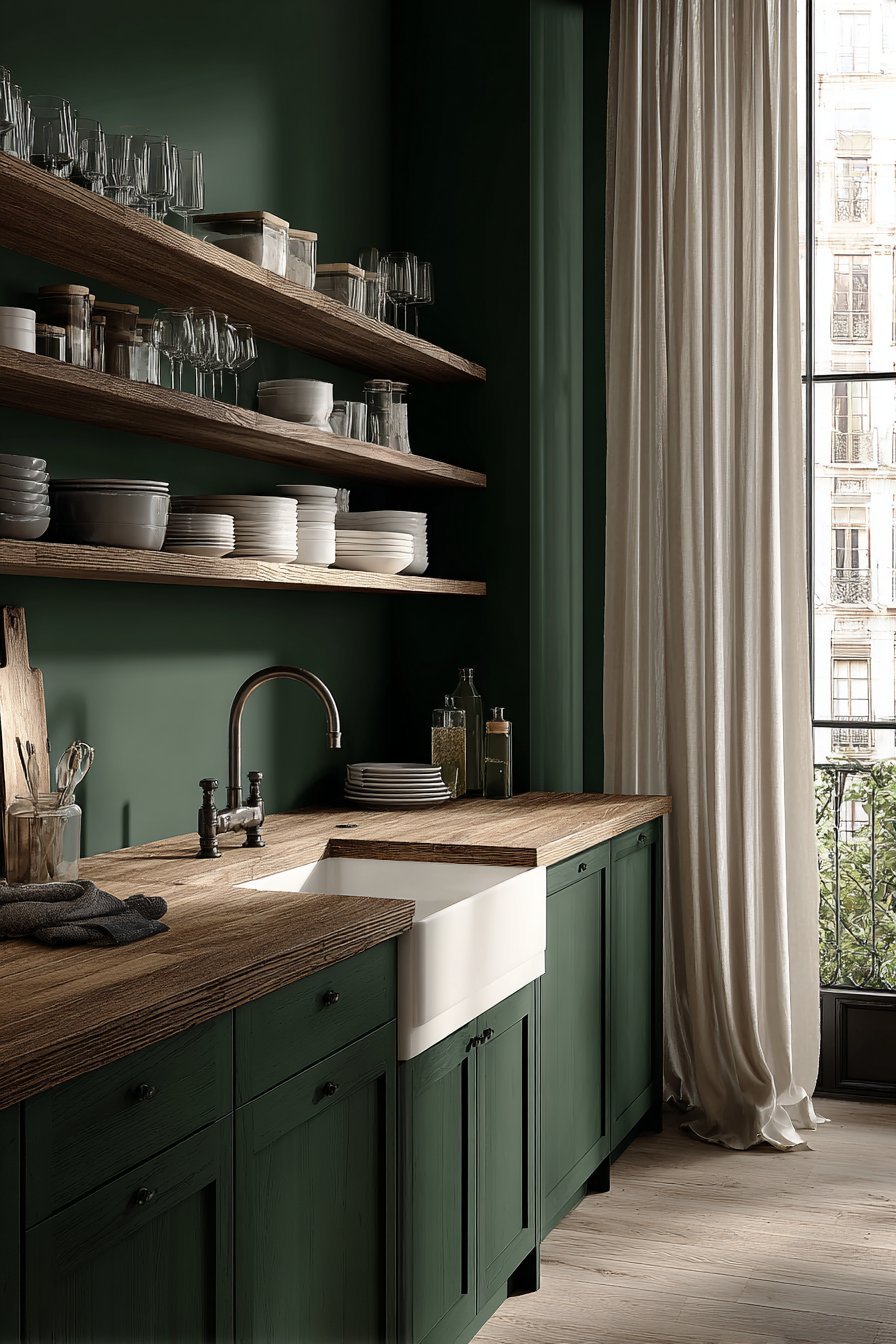
Floor-to-ceiling cabinetry in matte emerald green creates dramatic vertical impact. Light walnut wood countertops provide striking tonal contrast. The vertical grain pattern adds natural texture that draws the eye upward. This pairing demonstrates how light and dark elements balance beautifully.
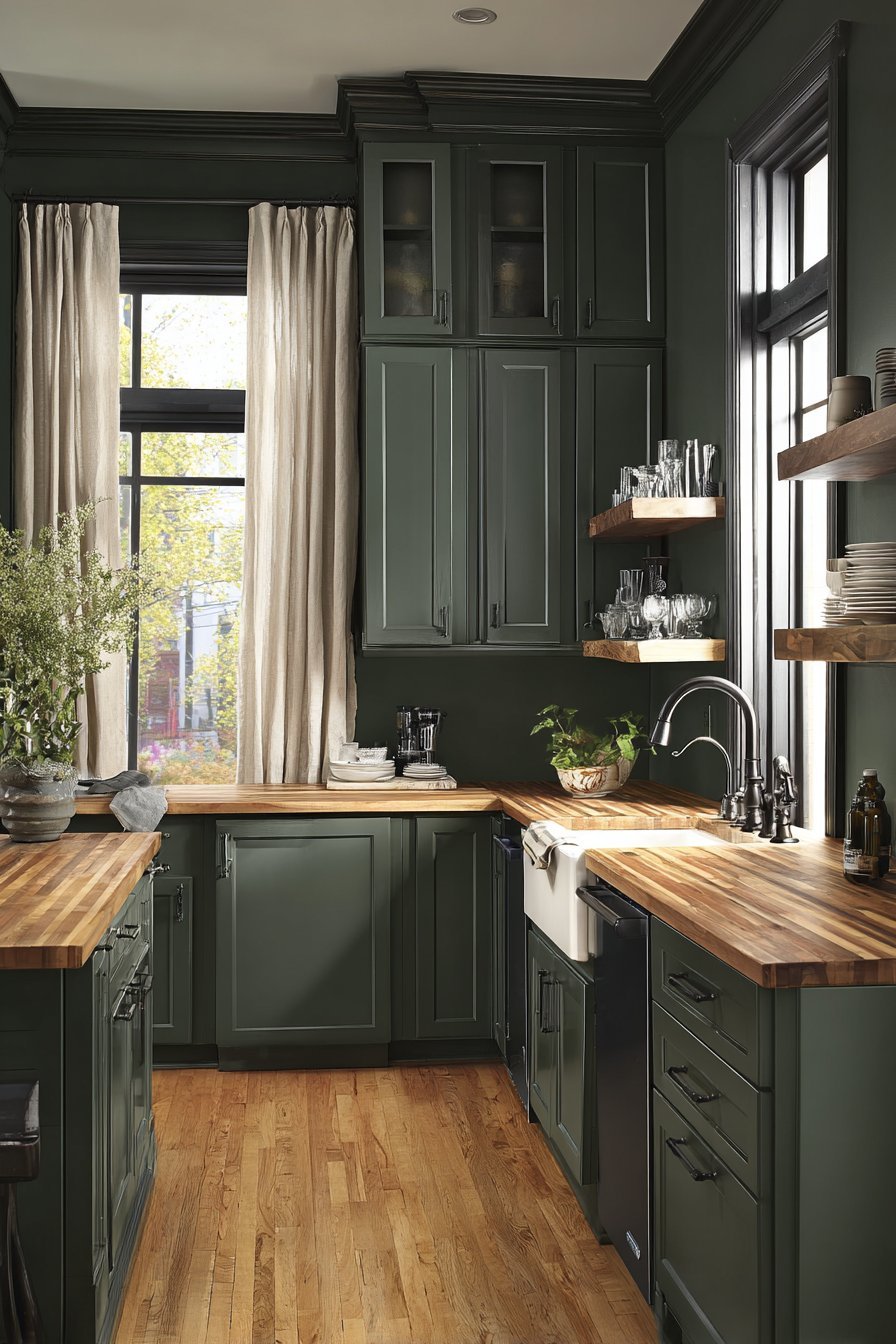
Open shelving in matching walnut displays everyday dishes accessibly. The wood’s honey tones warm the moody green palette significantly. A farmhouse sink with oil-rubbed bronze fixtures anchors the primary workspace. These traditional elements ground the bold contemporary color choice.
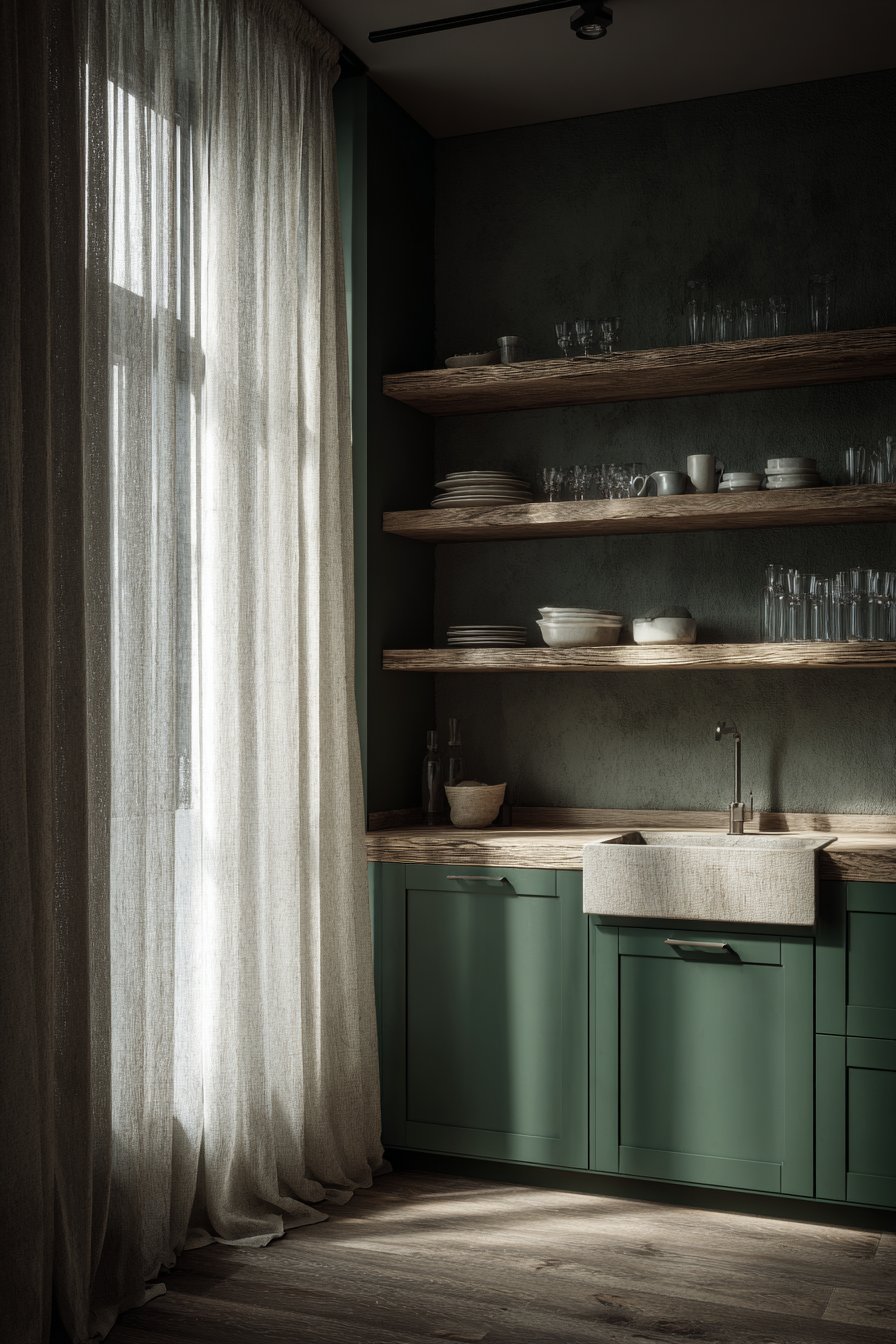
Morning light filters through sheer linen curtains creating soft highlights. The natural illumination emphasizes the wood’s grain and color variation. Professional photography captures how these materials interact throughout the day. Balanced exposure maintains detail in both dark and light elements.
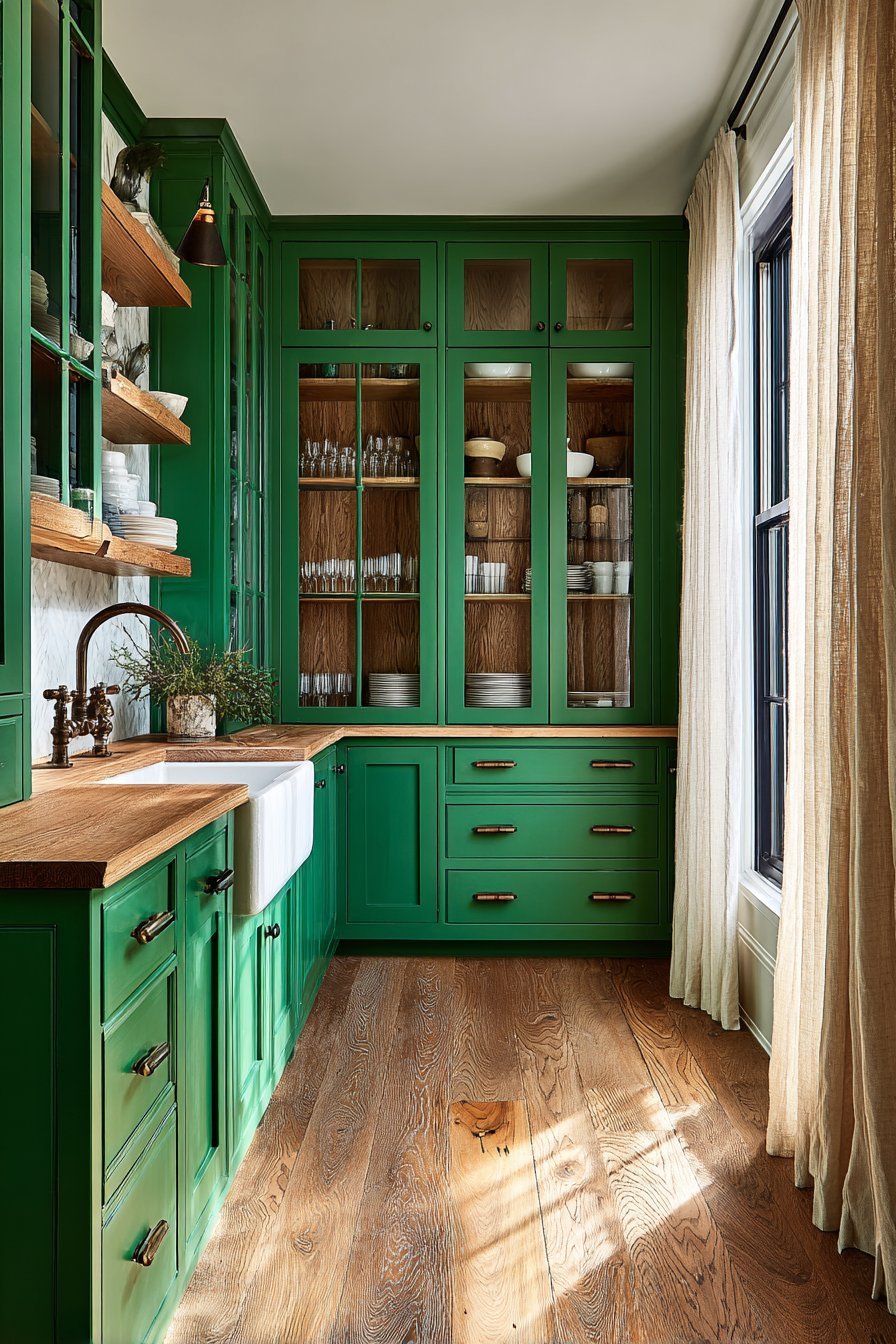
This kitchen proves that bold color doesn’t require bold everything. The emerald green makes a statement while wood provides grounding warmth. Material authenticity shines through in every carefully chosen element. Practical functionality meets aesthetic sophistication in this harmonious design.
Key Design Tips:
- Extend cabinetry to ceiling height for dramatic impact in kitchens with high ceilings
- Choose matte paint finishes on cabinets to reduce glare and fingerprints
- Select light wood species like walnut to provide maximum contrast with dark green
- Install open shelving to prevent the space from feeling too enclosed
- Use linen window treatments to soften light without blocking natural illumination
3. Compact Sage and Birch Design
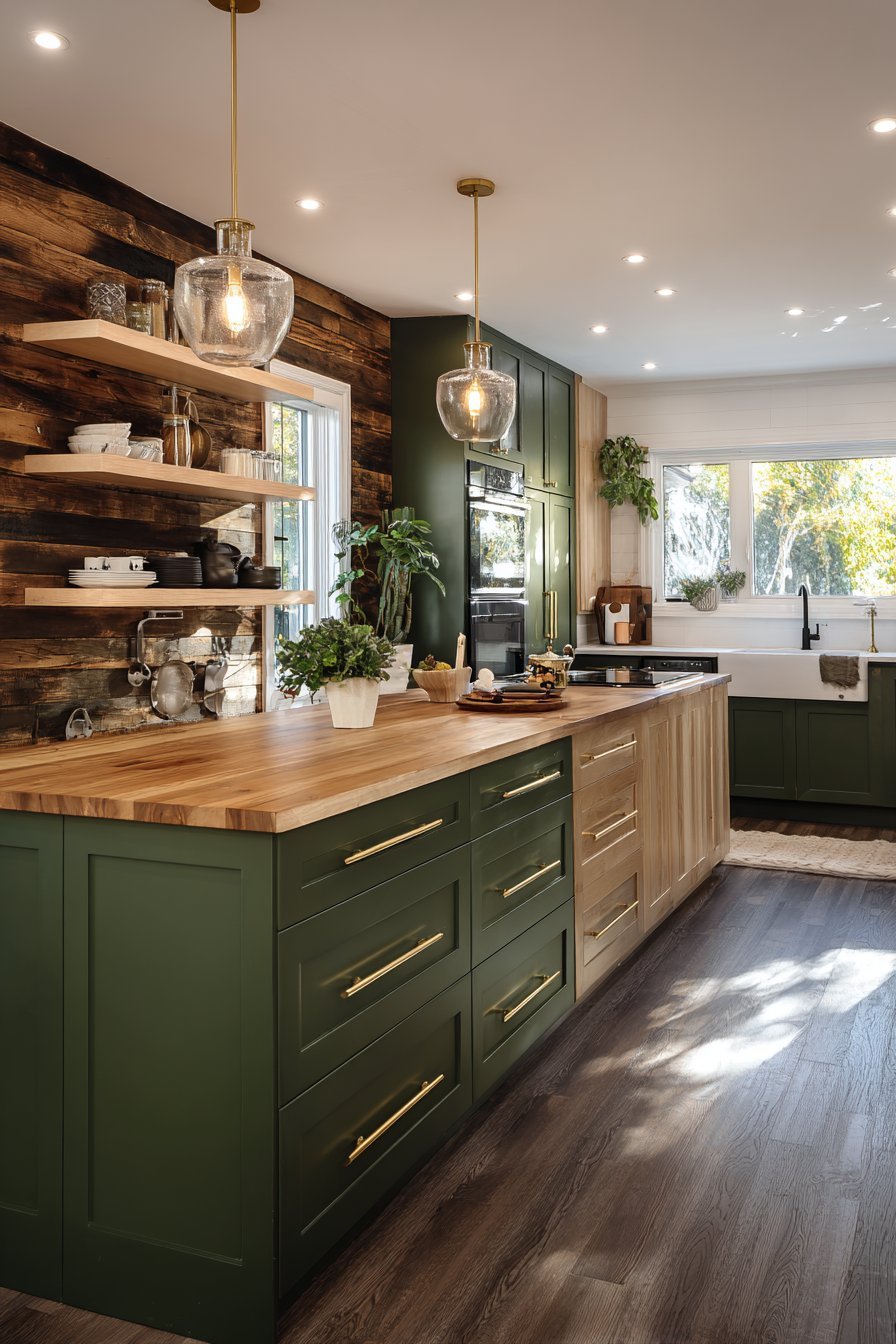
Deep sage green lower cabinets anchor this compact kitchen efficiently. Natural birch wood upper cabinetry creates visual lightness above. This two-tone approach prevents small spaces from feeling cramped or dark. The color division happens at the natural sight line.
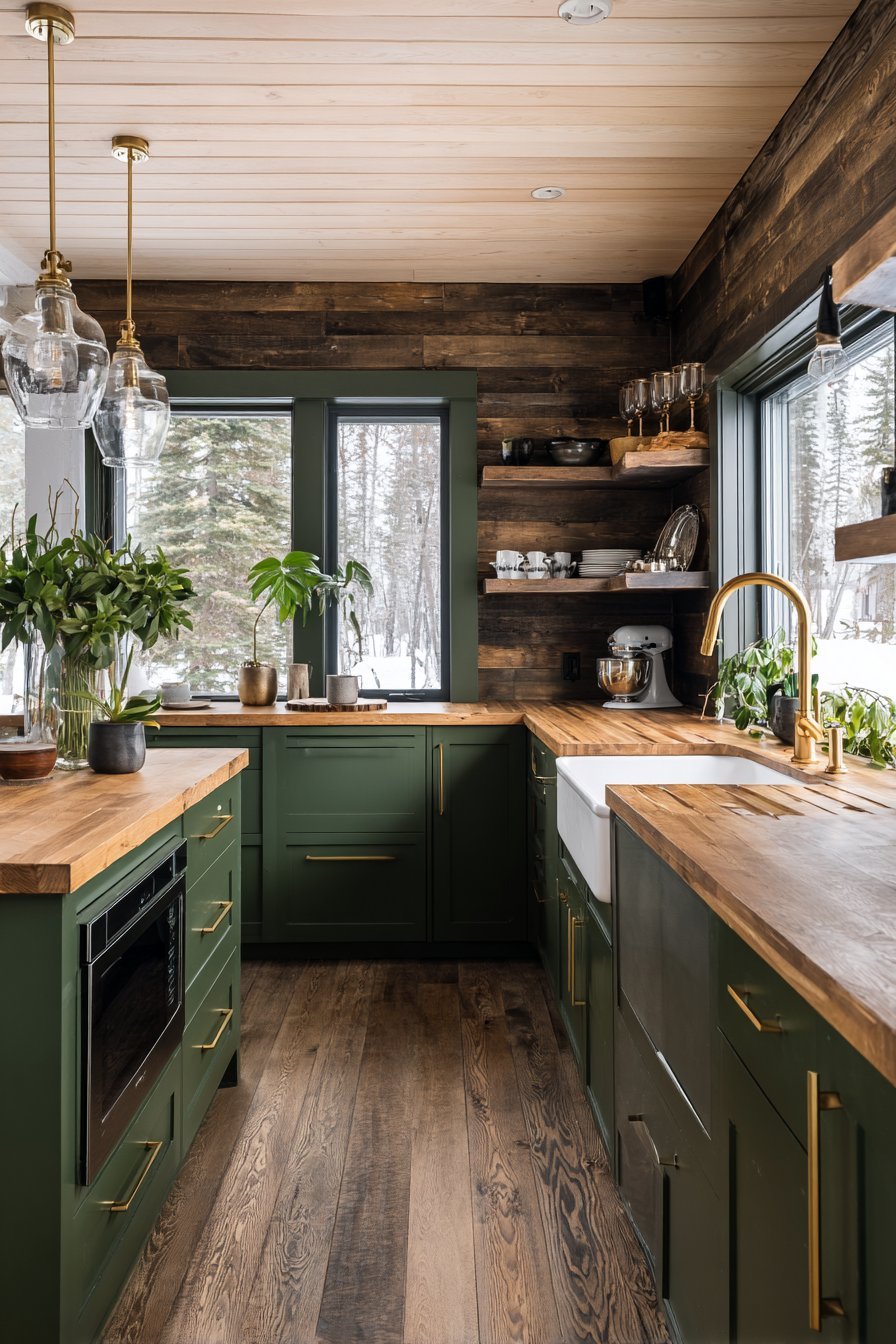
Butcher block countertops in warm honey tones provide ample workspace. They complement the green base while adding practical durability. A wood plank accent wall introduces architectural interest without consuming floor space. This vertical element draws attention upward, enhancing perceived height.
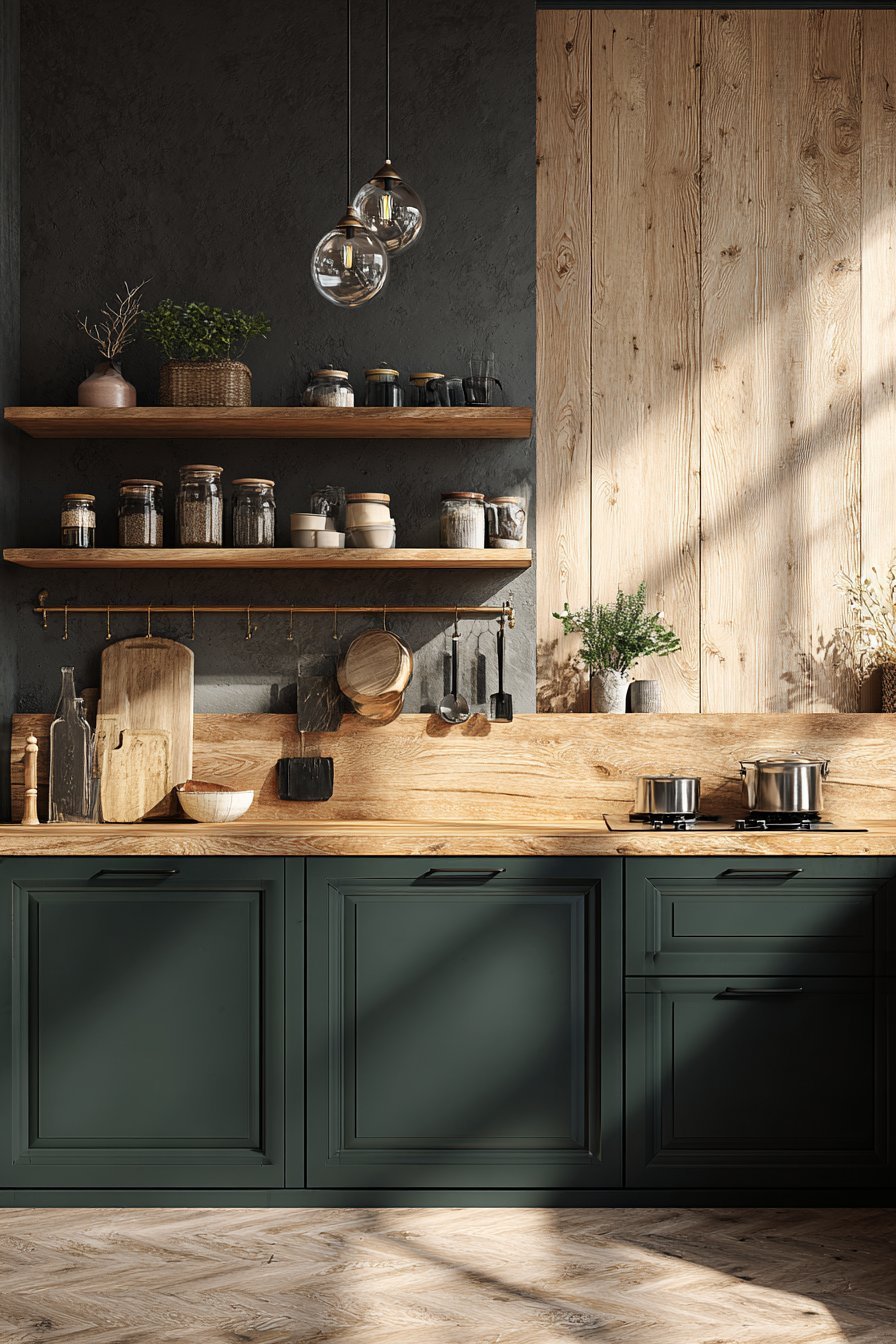
Brass pot racks and open shelving maximize storage in the limited footprint. Every inch serves a purpose without creating visual chaos. Pendant lights with clear glass shades hang above the compact island. They provide focused task lighting while maintaining spatial openness.
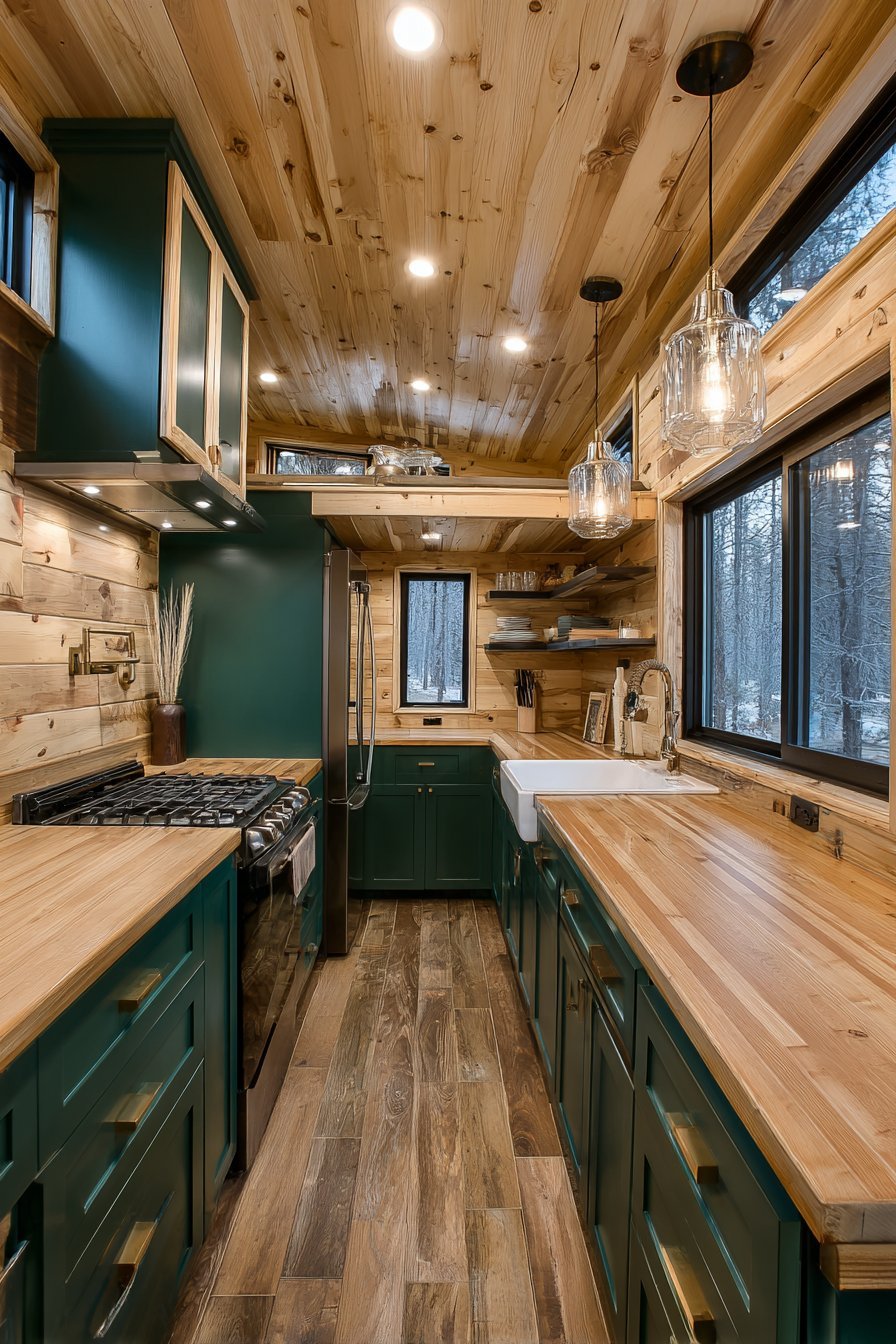
Interior photography captures how contrasting colors create balance. Dark green grounds the design while light wood opens it up. Natural daylight emphasizes wood grain texture and rich paint finish. This kitchen demonstrates that small spaces can handle bold design choices.
Key Design Tips:
- Use two-tone cabinetry to create visual interest in compact kitchens
- Choose lighter wood for upper cabinets to prevent top-heavy appearance
- Install butcher block counters for warmth and practical cutting surfaces
- Add vertical elements like plank walls to enhance perceived ceiling height
- Maximize storage with pot racks and open shelving instead of closed cabinets
4. Luxurious Hunter Green with Reclaimed Wood
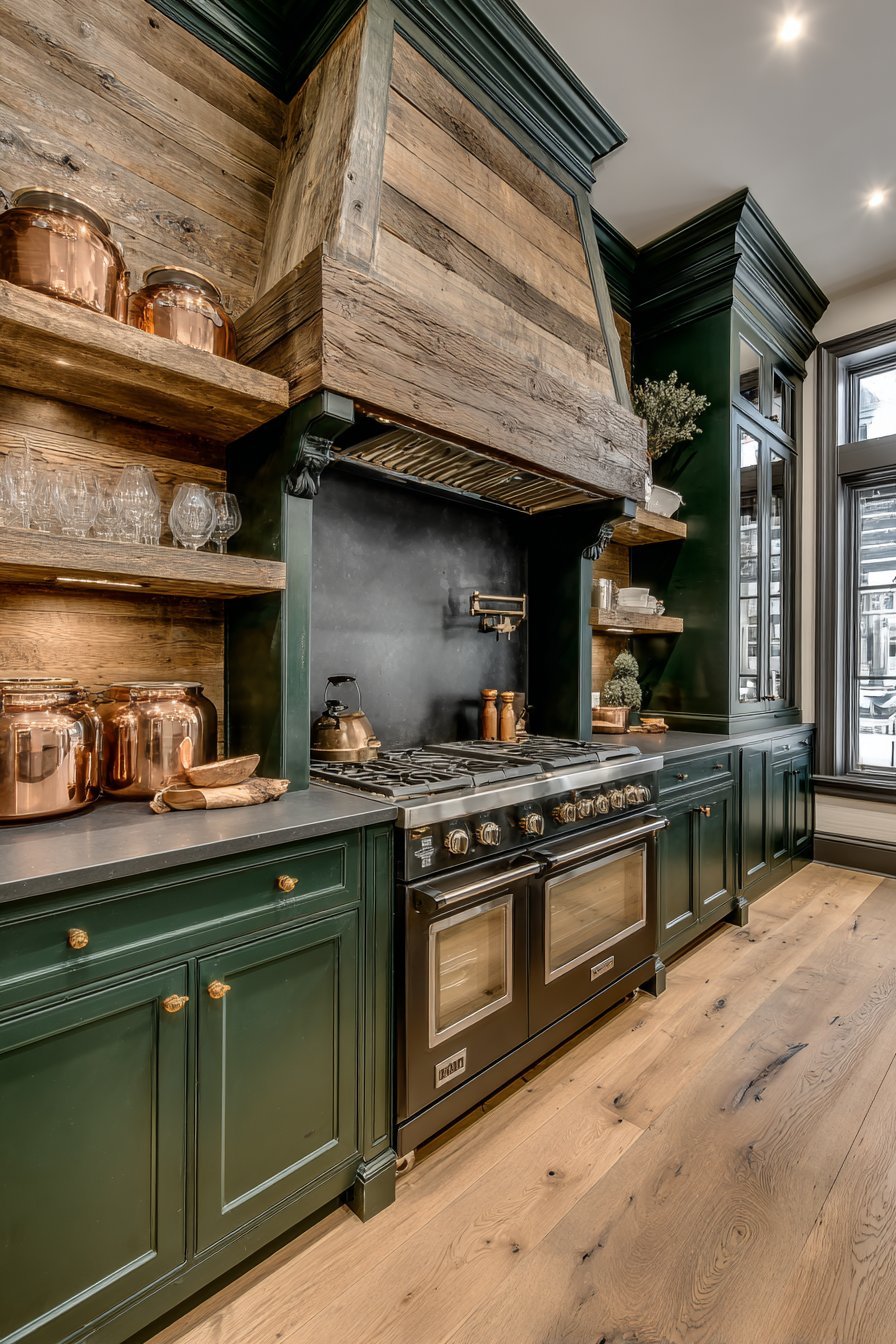
Full-height cabinets in deep hunter green feature integrated panel appliances. This seamless approach creates sophisticated, uninterrupted visual lines throughout. Thick reclaimed wood floating shelves contrast beautifully against dark cabinetry. They display copper cookware and vintage cutting boards as functional art.
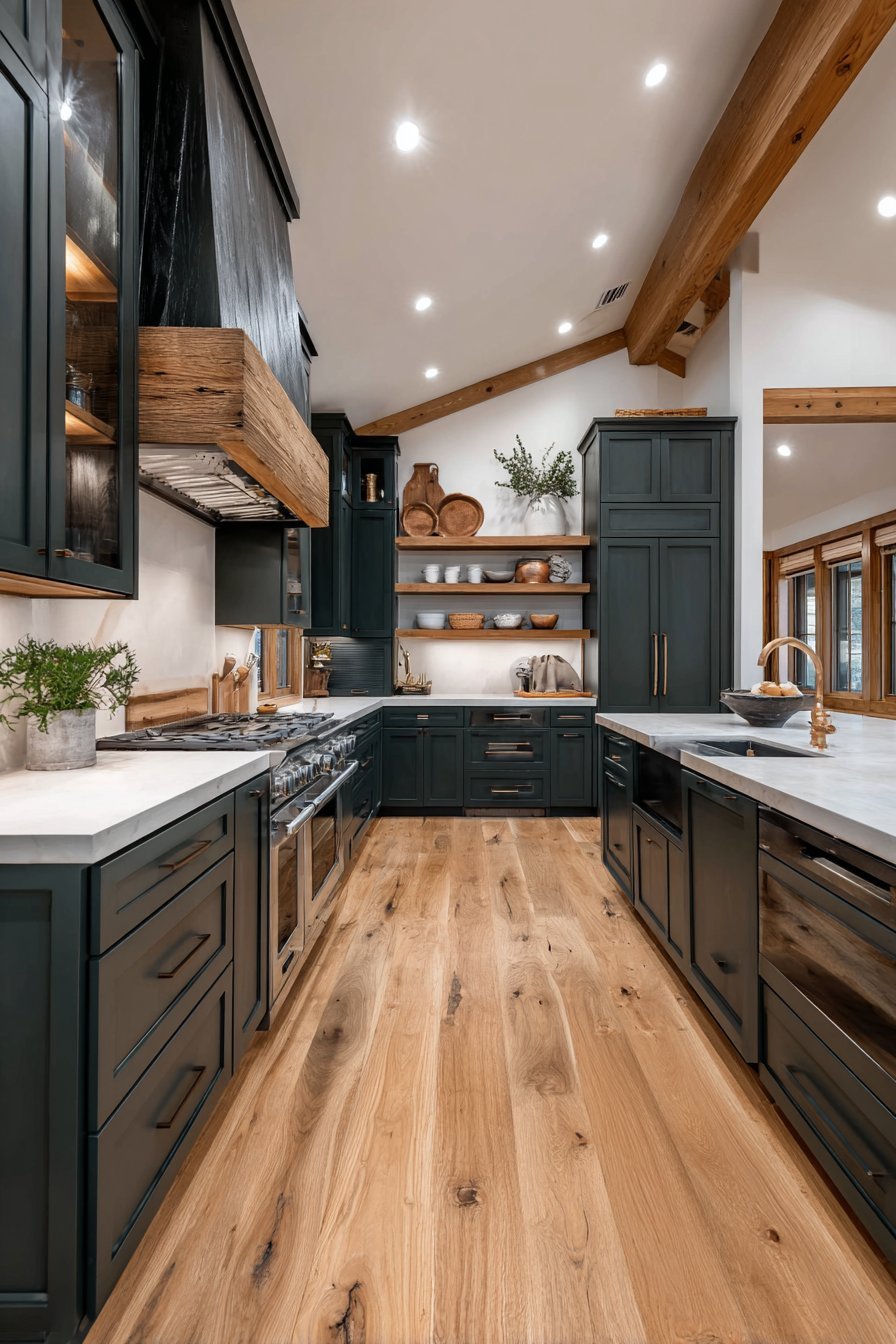
A massive wood beam serves as the range hood cover. This dramatic focal point showcases authentic material character and scale. The beam’s presence above the professional-grade stove creates visual weight. It anchors the cooking zone as the kitchen’s clear centerpiece.
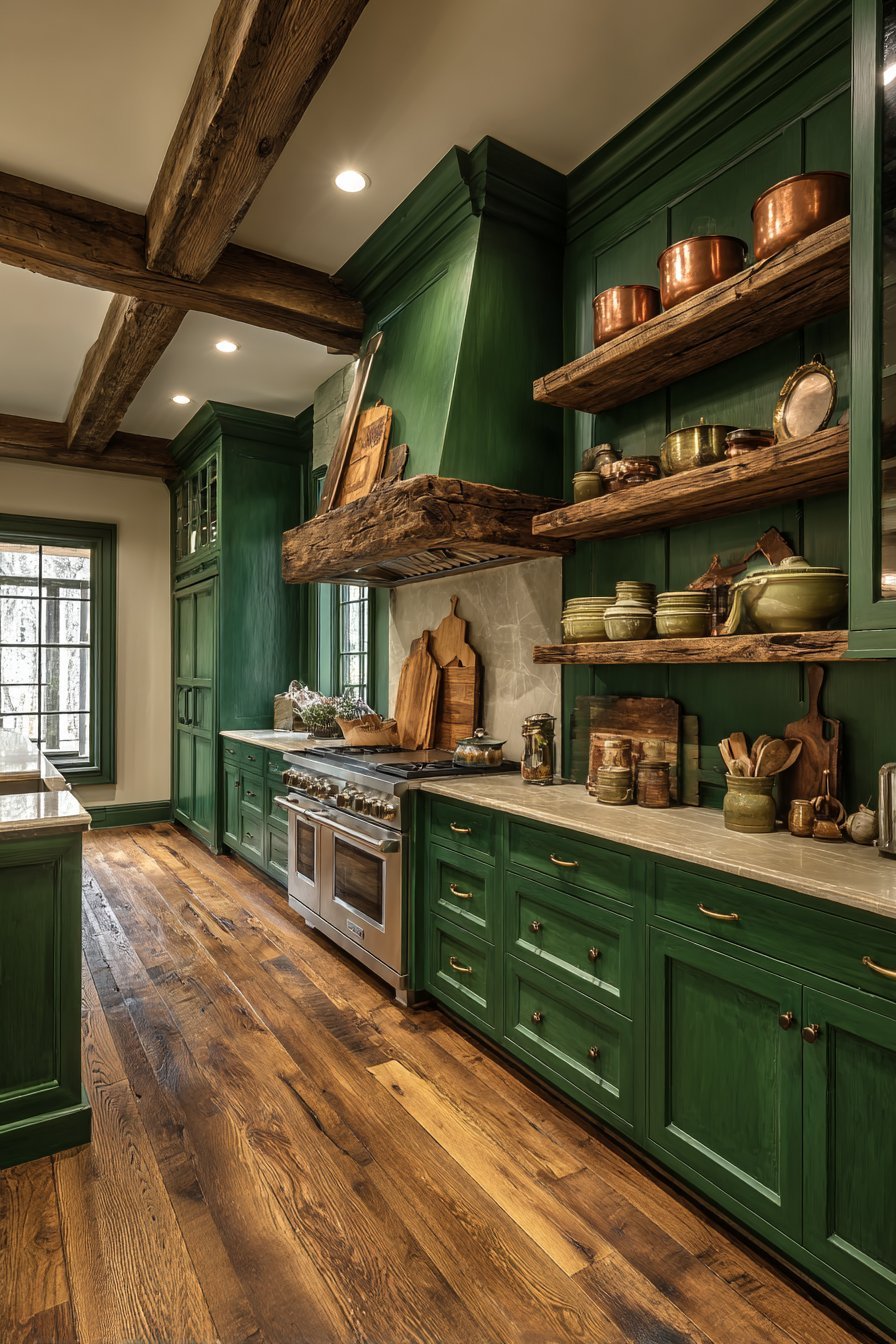
Wide-plank oak hardwood flooring in medium tone grounds the entire space. The floor’s warmth prevents the dark cabinets from feeling too heavy. Under-cabinet lighting highlights natural wood grain patterns beautifully. These lights create warm ambiance while providing practical task illumination.
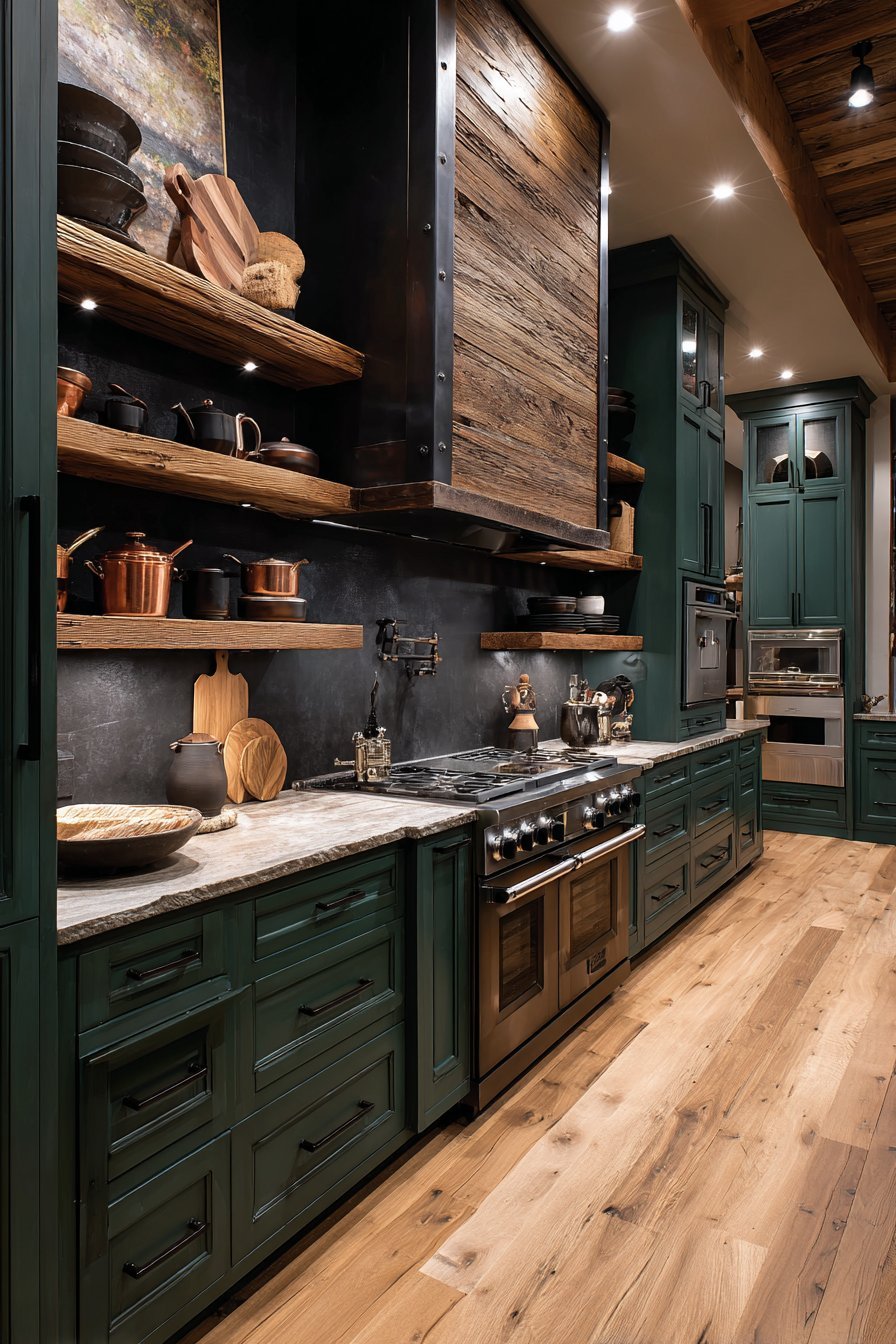
Architectural photography showcases the sophisticated material interplay throughout. Moody dark green cabinetry pairs perfectly with rustic wood elements. Carefully placed lighting reveals texture and creates atmospheric depth. This kitchen represents the pinnacle of dark green and wood sophistication.
Key Design Tips:
- Integrate appliances behind cabinet panels for seamless contemporary aesthetics
- Use thick reclaimed wood shelves to add character and functional display space
- Install a substantial wood beam as range hood cover for dramatic focal points
- Choose medium-tone hardwood flooring to balance dark upper cabinetry
- Add under-cabinet lighting to highlight materials and improve task lighting
5. Modern Farmhouse Two-Tone Island Kitchen
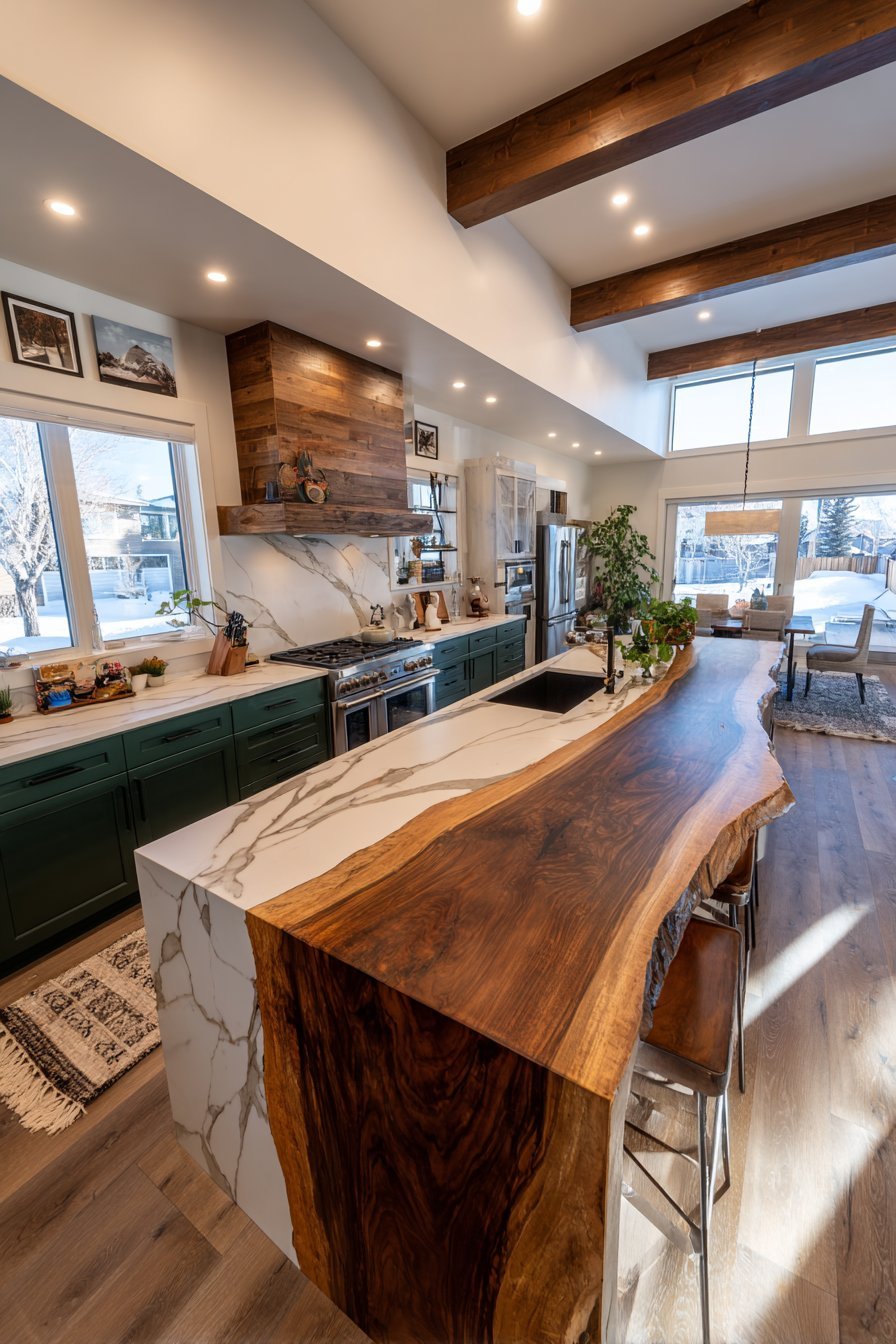
Two-tone cabinetry creates dynamic visual interest in this farmhouse kitchen. Dark green perimeter cabinets establish the primary color story. A natural wood island with live-edge detail provides stunning contrast. The organic edge showcases walnut’s beautiful grain patterns authentically.
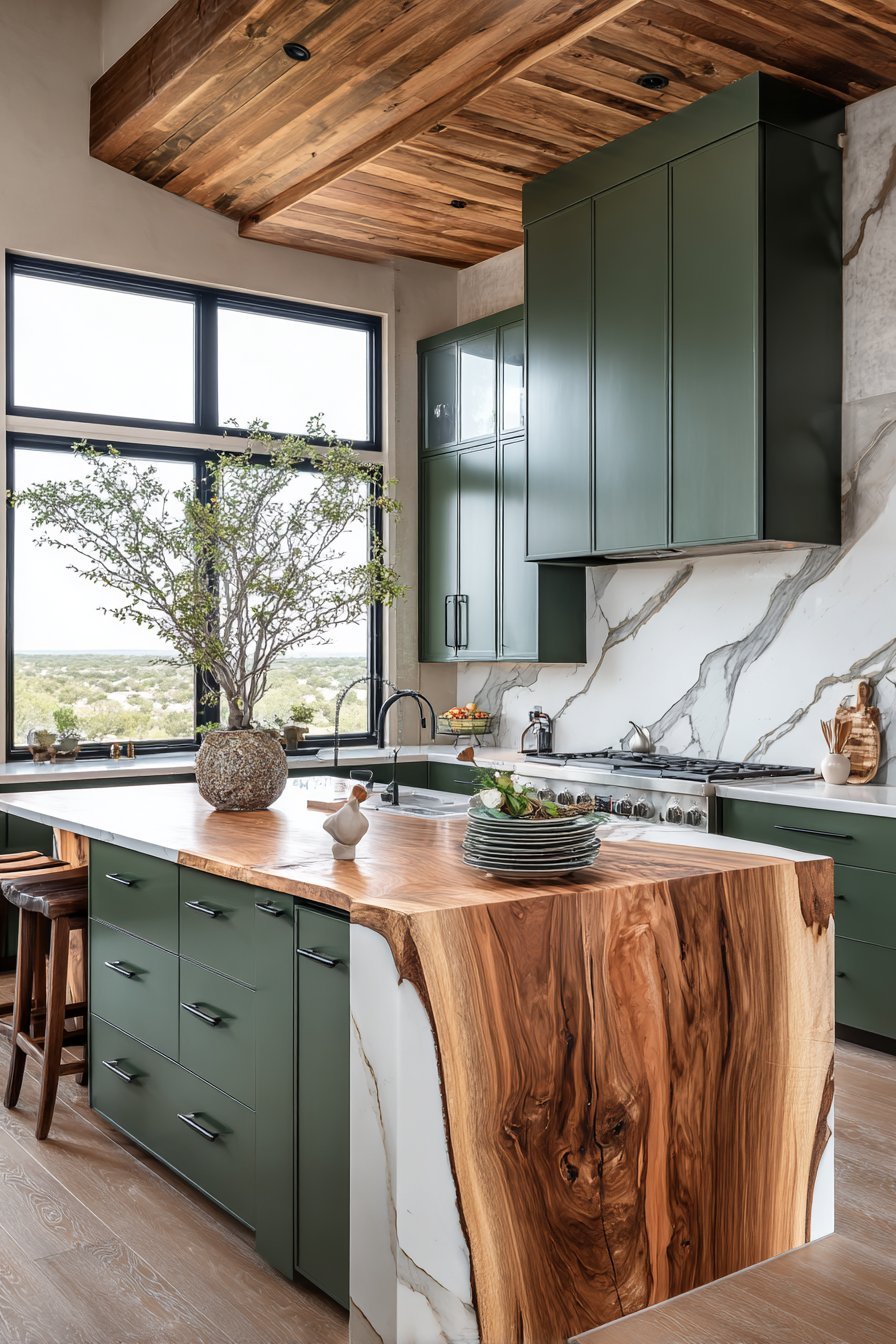
White marble countertops on perimeter cabinets brighten the overall aesthetic. They maintain connection to natural materials while adding elegance. Wooden beam ceiling accents reinforce the farmhouse character overhead. A wood plank backsplash adds rustic warmth at eye level.
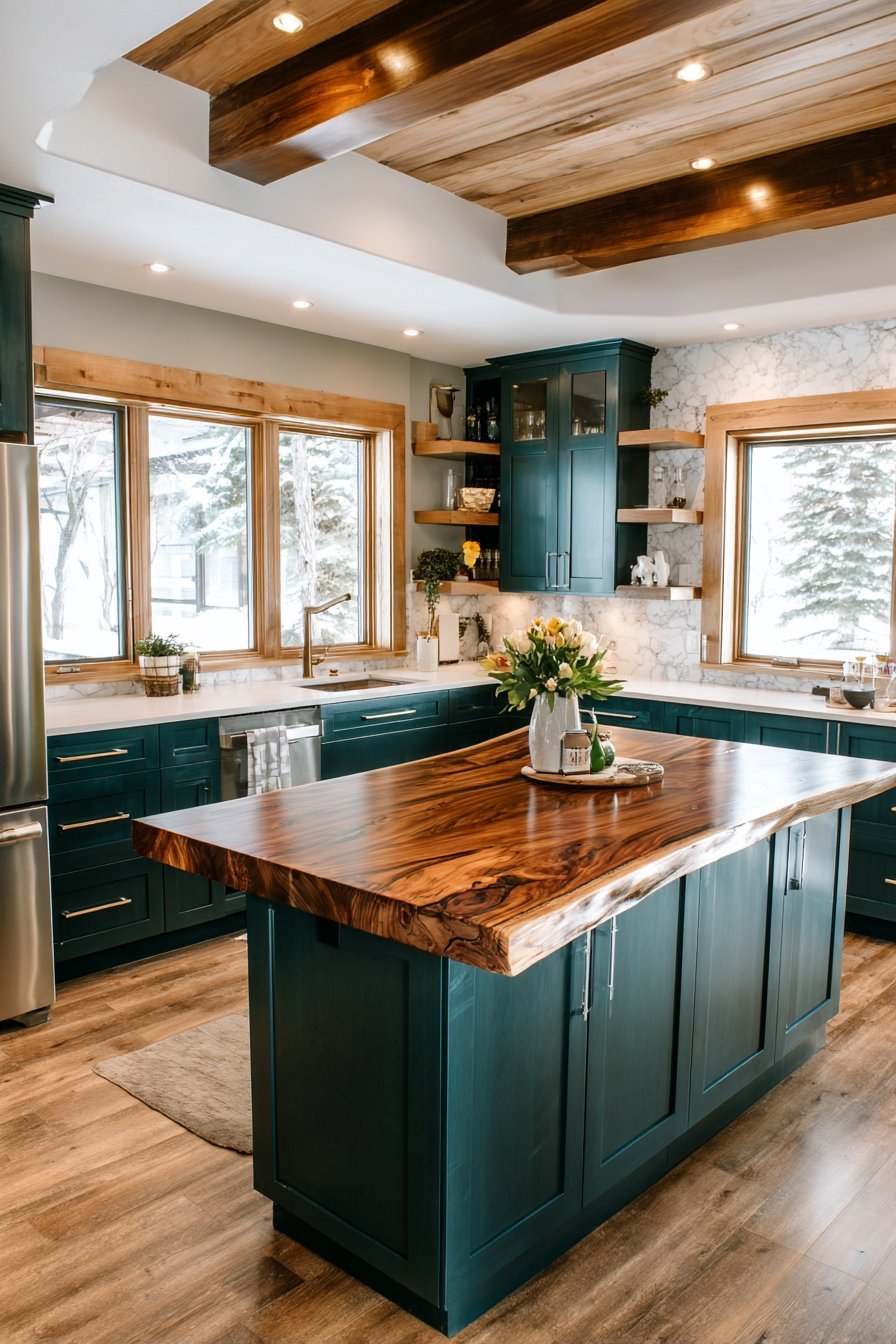
Large windows flood the space with natural light throughout the day. Dynamic shadows move across varied surfaces, creating ever-changing interest. The interplay between green cabinets, wood accents, and white marble feels balanced. Each material contributes without competing for attention.
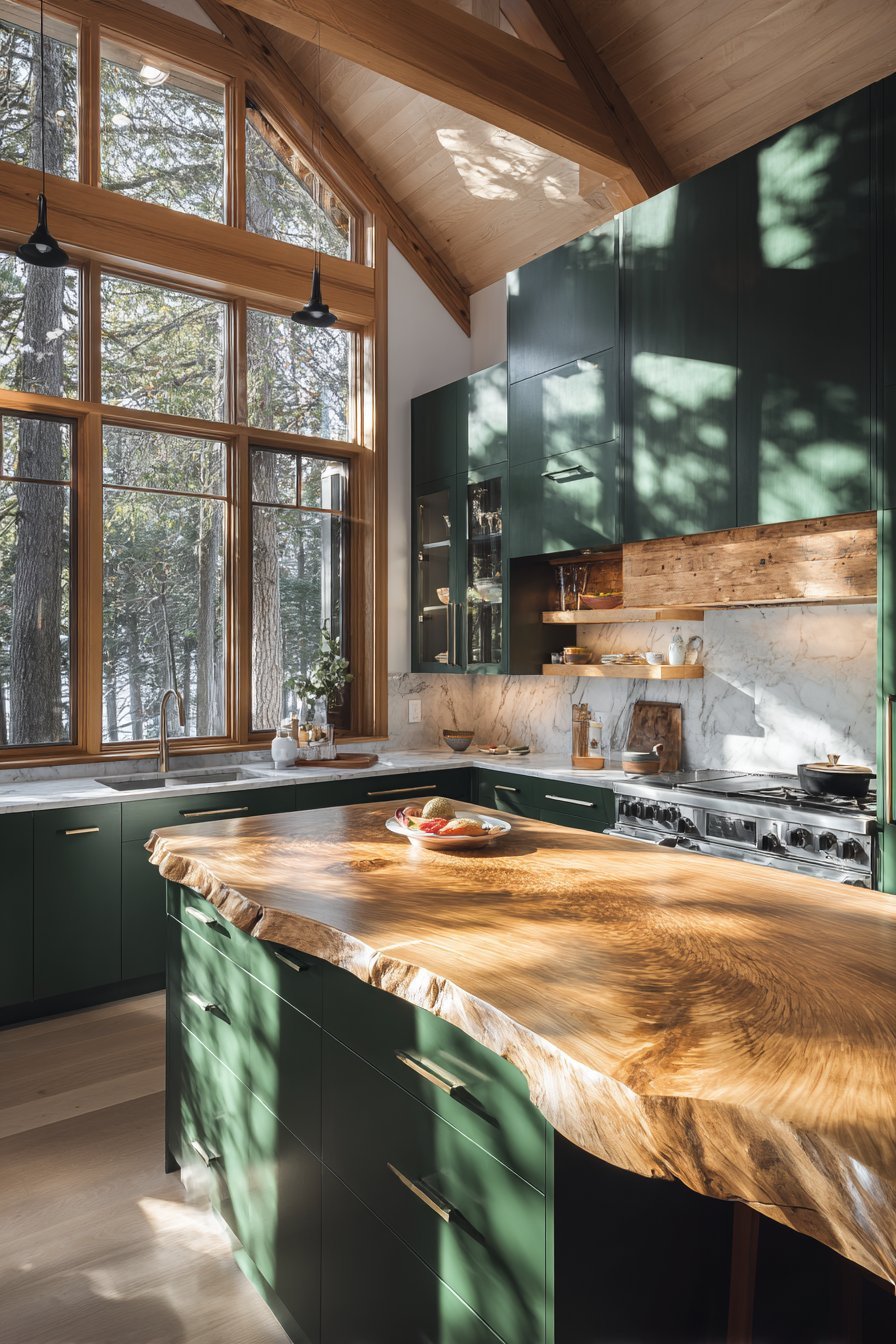
Professional photography captures this fresh farmhouse interpretation beautifully. The balance between traditional elements and contemporary color feels current. Authentic material textures create depth that paint alone cannot achieve. This kitchen demonstrates how classic farmhouse style evolves with bold choices.
Key Design Tips:
- Create two-tone cabinetry with dark perimeter and contrasting island for visual interest
- Choose live-edge wood for island countertops to celebrate natural material beauty
- Install white marble on perimeter counters to brighten and balance dark cabinets
- Add wood beam ceiling accents to reinforce farmhouse character overhead
- Use large windows to flood the space with natural light that showcases materials
6. Floor-to-Ceiling Pantry Storage Solution
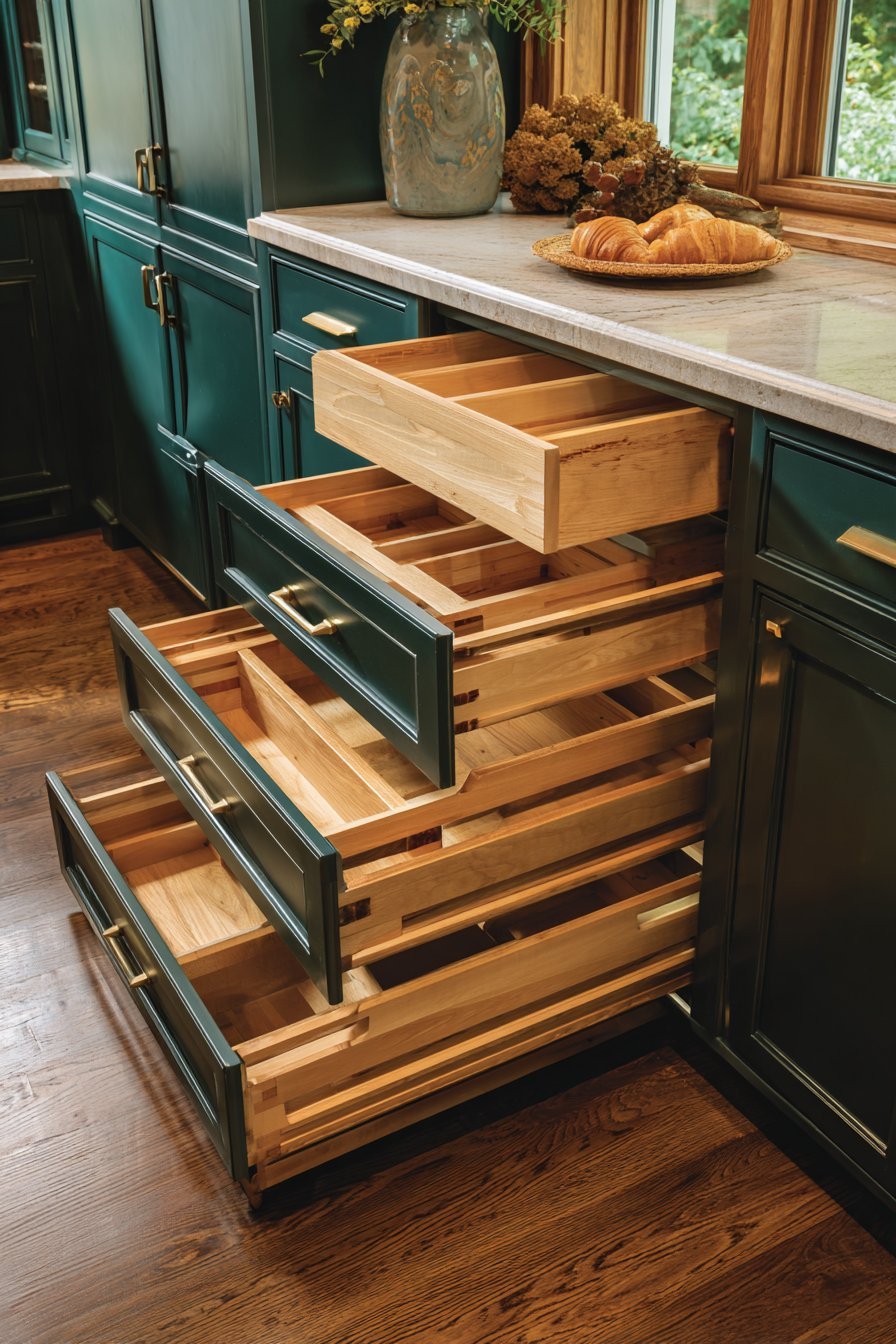
Floor-to-ceiling pantry cabinets in rich forest green maximize storage capacity. Natural oak interior shelving provides beautiful contrast when doors open. Pull-out drawers with dovetail joinery showcase traditional woodworking craftsmanship. These organizational systems make cookware and dry goods easily accessible.
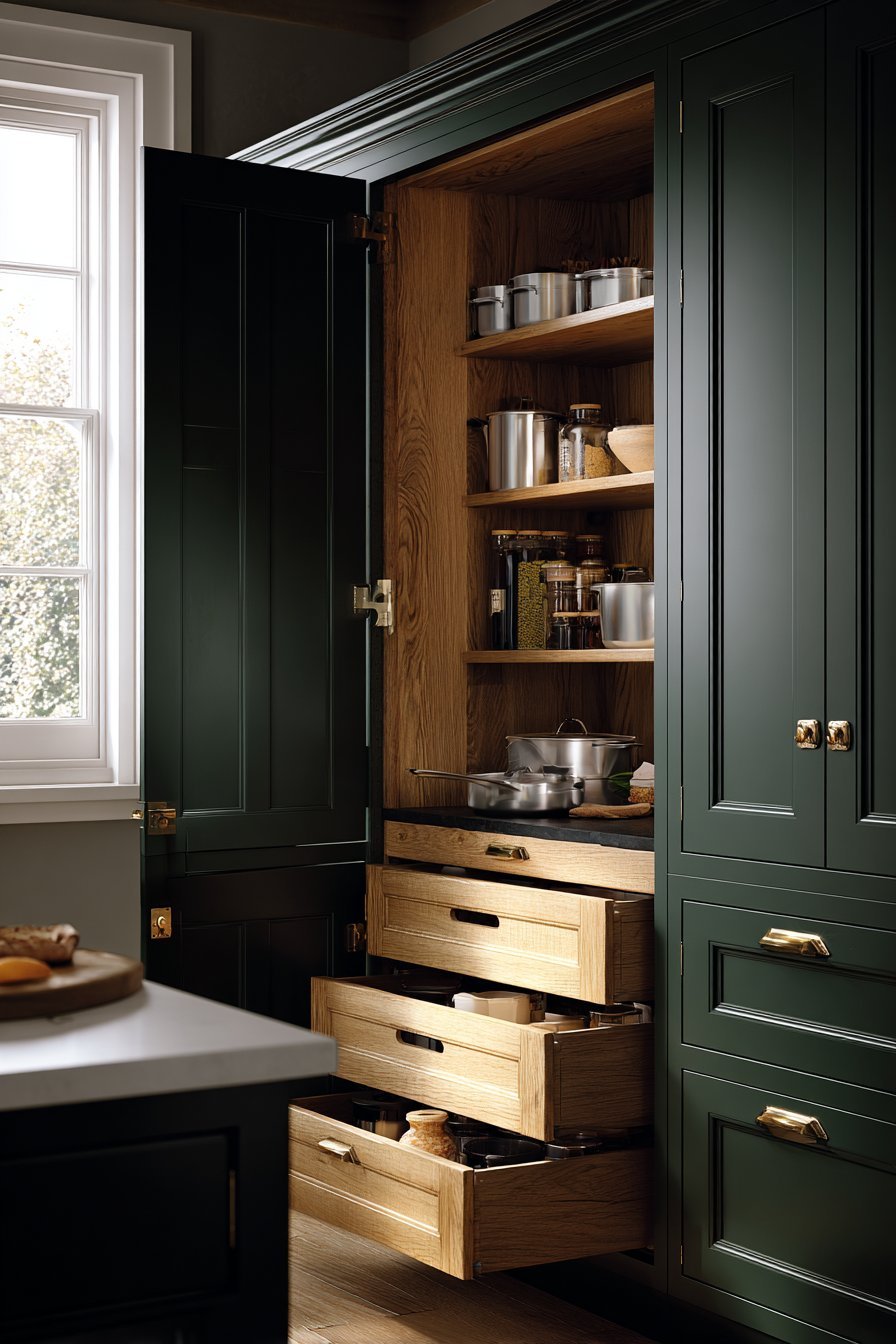
The visible wood interior creates delightful surprise when cabinets are revealed. This detail demonstrates attention to areas guests might never see. Brushed brass handles add refined metallic detail that catches light. They provide both functional grip and aesthetic continuity.
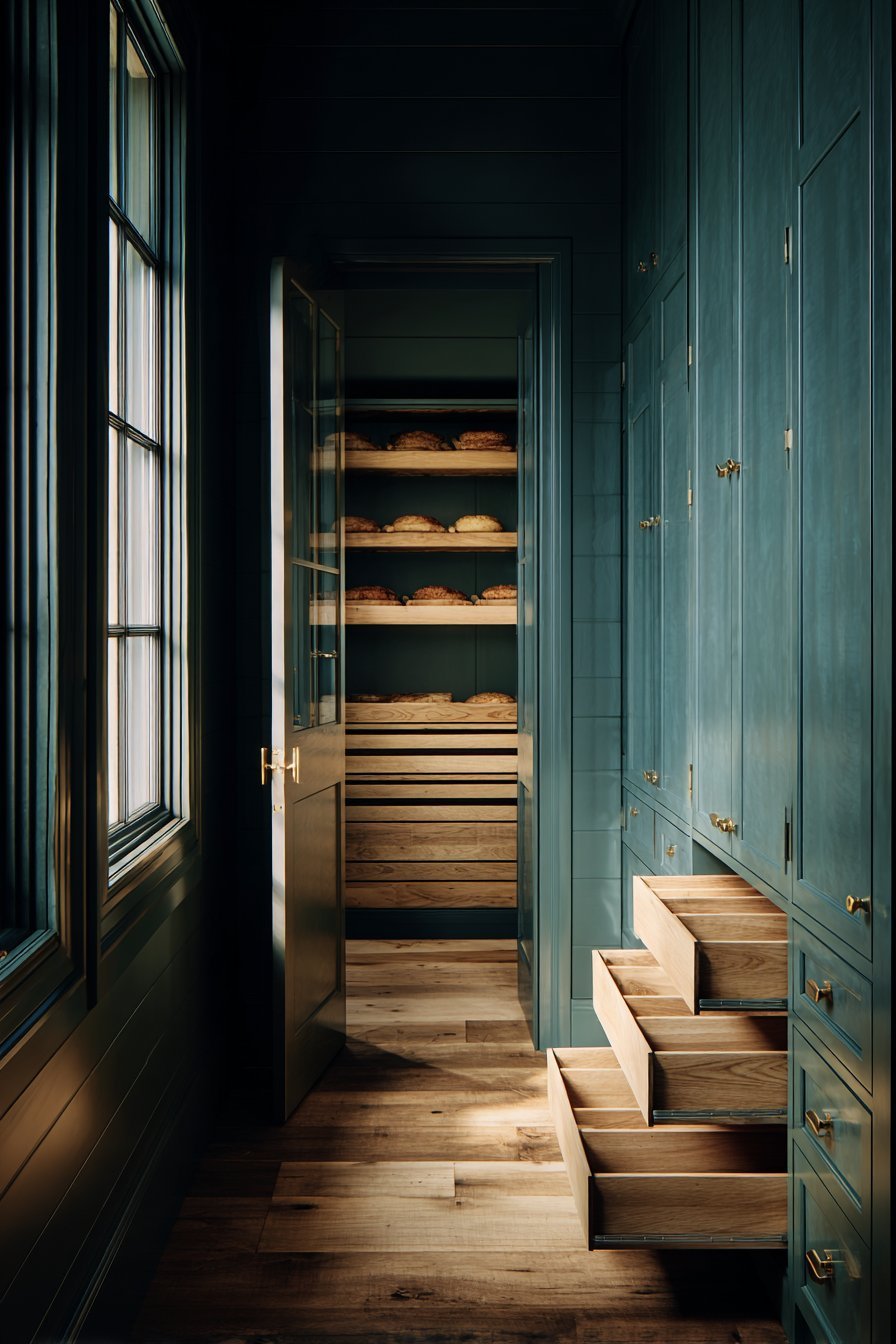
Soft natural lighting from a nearby window illuminates the craftsmanship. The light reveals wood grain patterns and quality construction details. Interior photography emphasizes the practical elegance of this storage solution. Dark green exteriors hide clutter while wood interiors add warmth.
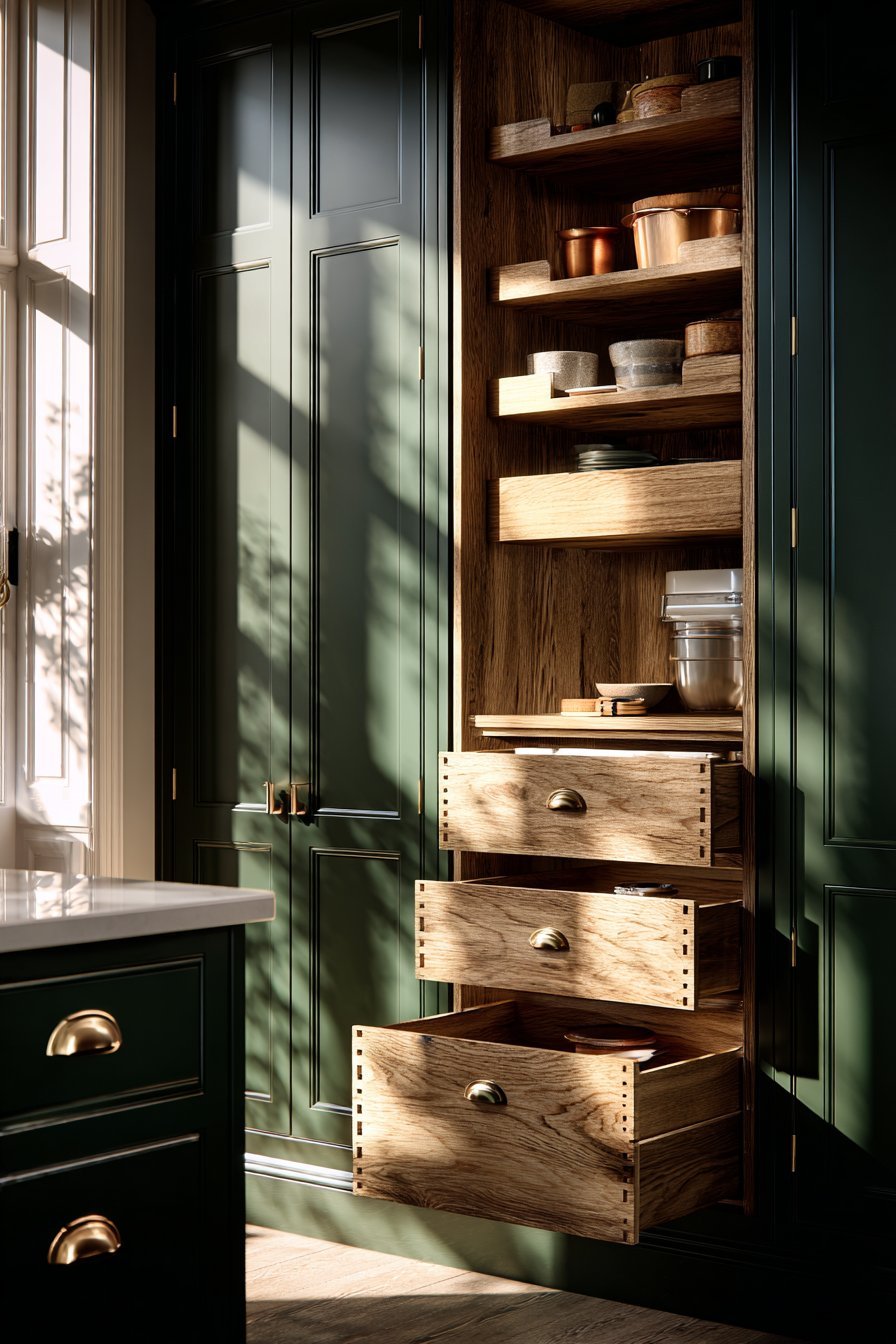
This design proves that kitchen storage can be beautiful and functional. The combination addresses both aesthetic desires and practical needs. Attention to interior details shows commitment to quality throughout. Every element serves purpose while contributing to the overall design story.
Key Design Tips:
- Extend pantry cabinets to ceiling height to maximize vertical storage space
- Use natural wood for interior shelving to add warmth and material contrast
- Install pull-out drawers with quality joinery for accessible organization
- Choose brushed brass hardware for refined metallic accents throughout
- Position pantries near windows when possible to benefit from natural light
7. Integrated Breakfast Nook with Green Accents
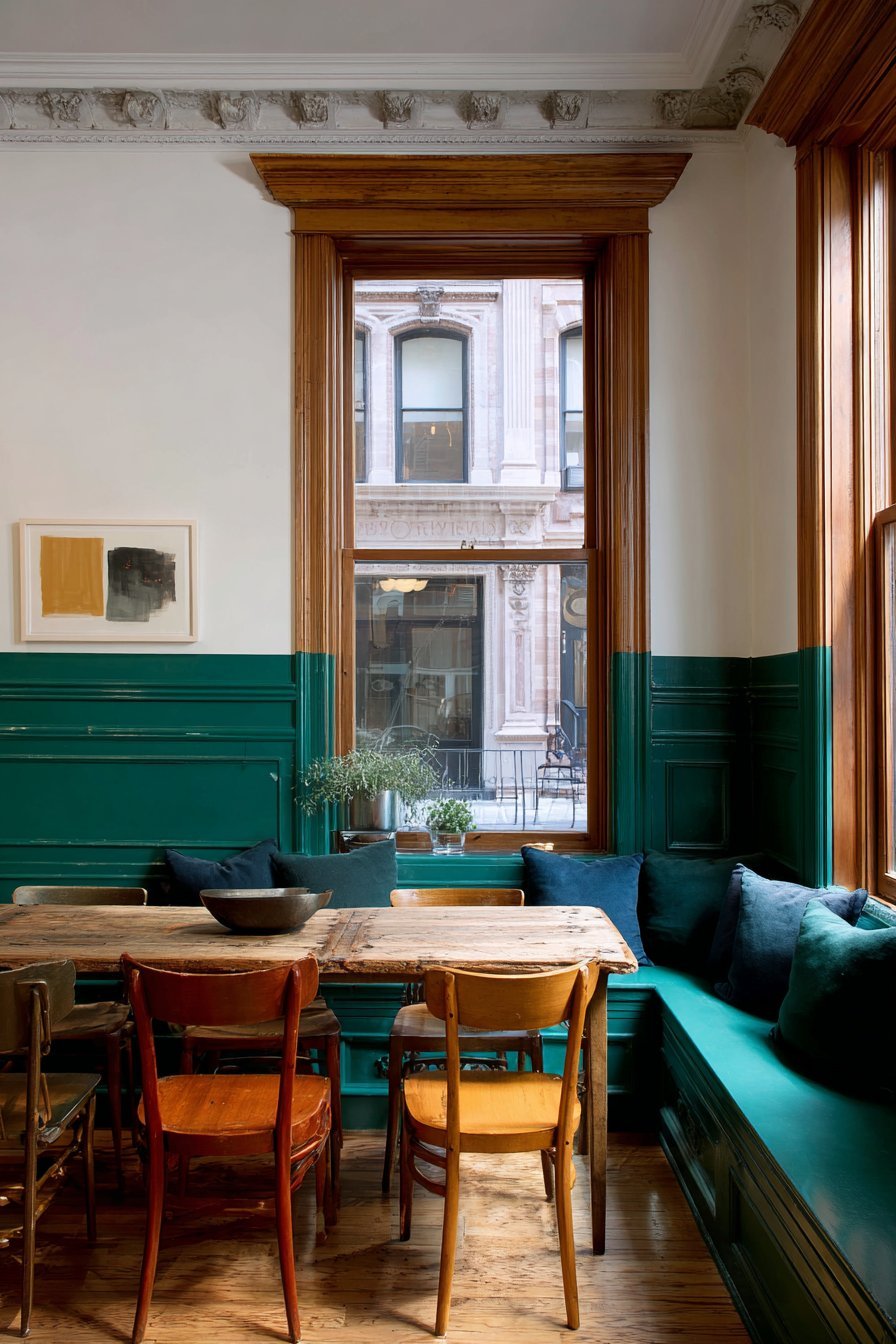
A built-in bench with dark green cushions creates cozy breakfast seating. The natural pine wood frame and backrest provide structural warmth. A reclaimed wood dining table with visible patina sits before the bench. Mismatched wooden chairs in various warm tones surround the table casually.
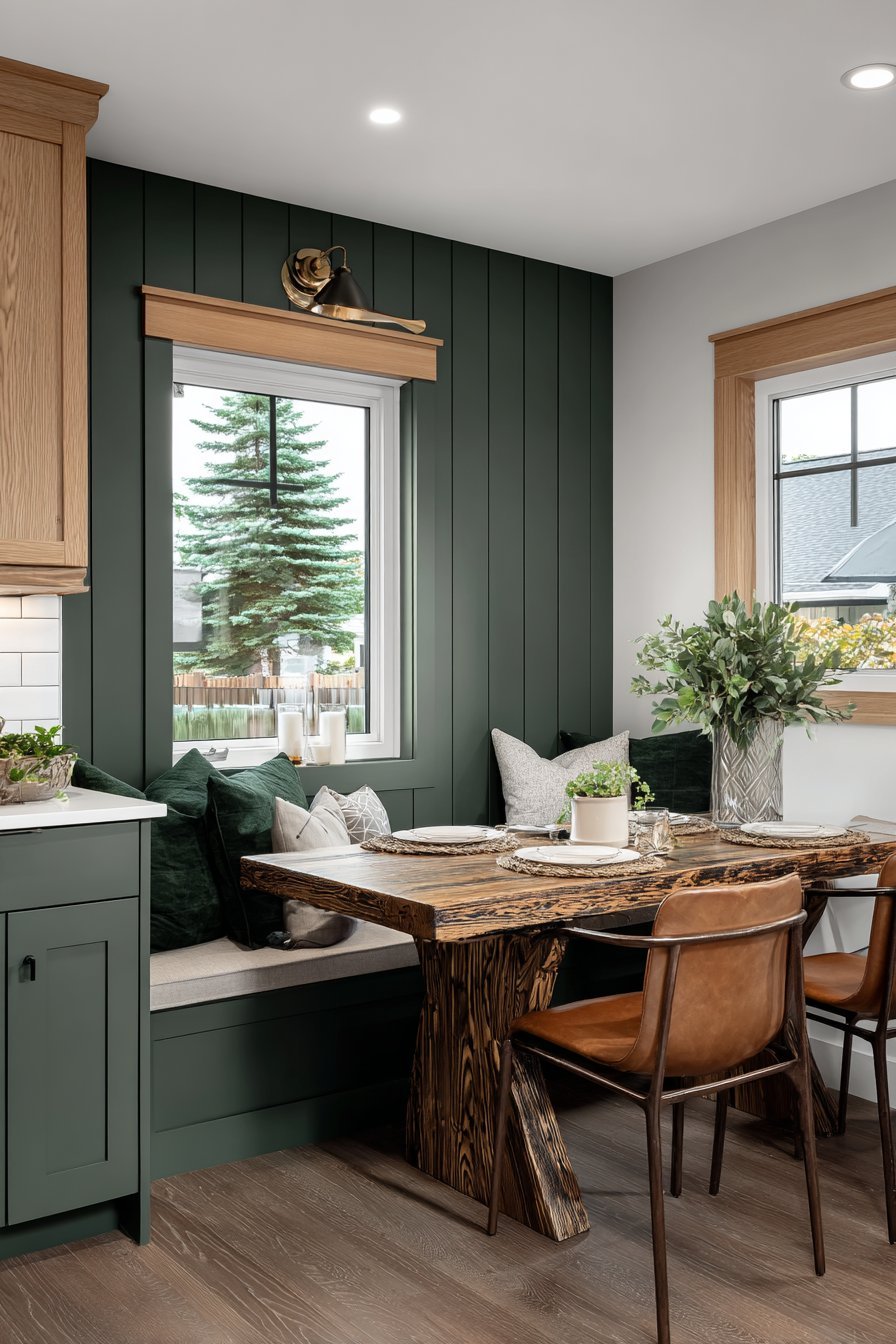
Dark green wainscoting on the lower wall portion complements the seating. White upper walls keep the nook bright and visually open. This division prevents the green from overwhelming the smaller space. A window with natural wood trim provides outdoor views and daylight.
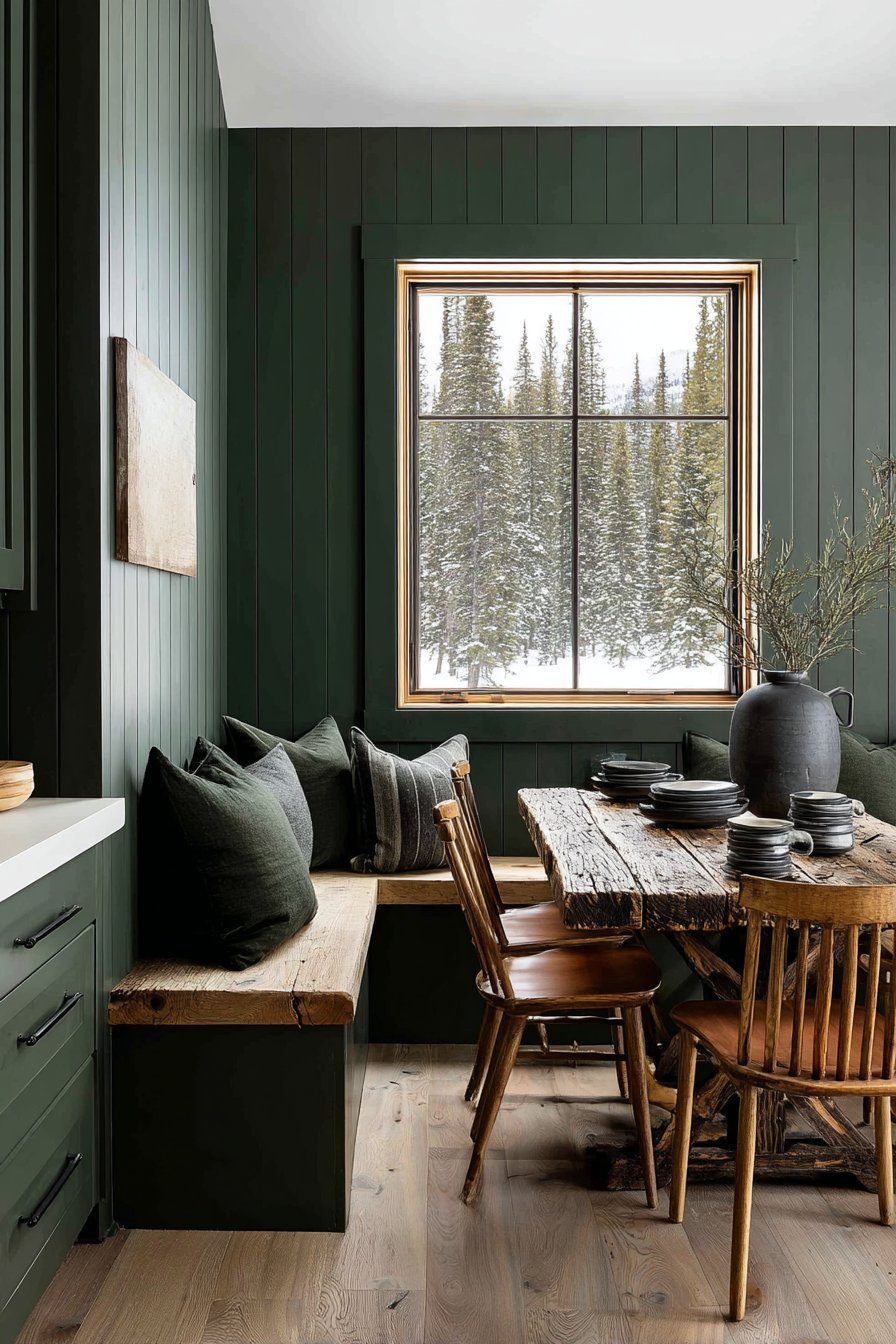
Professional photography captures how this nook integrates with the larger kitchen. The cozy area feels connected yet distinctly defined as a dining zone. Dark green textile and painted elements coordinate with wood tones beautifully. The inviting character makes this the kitchen’s most-used gathering spot.
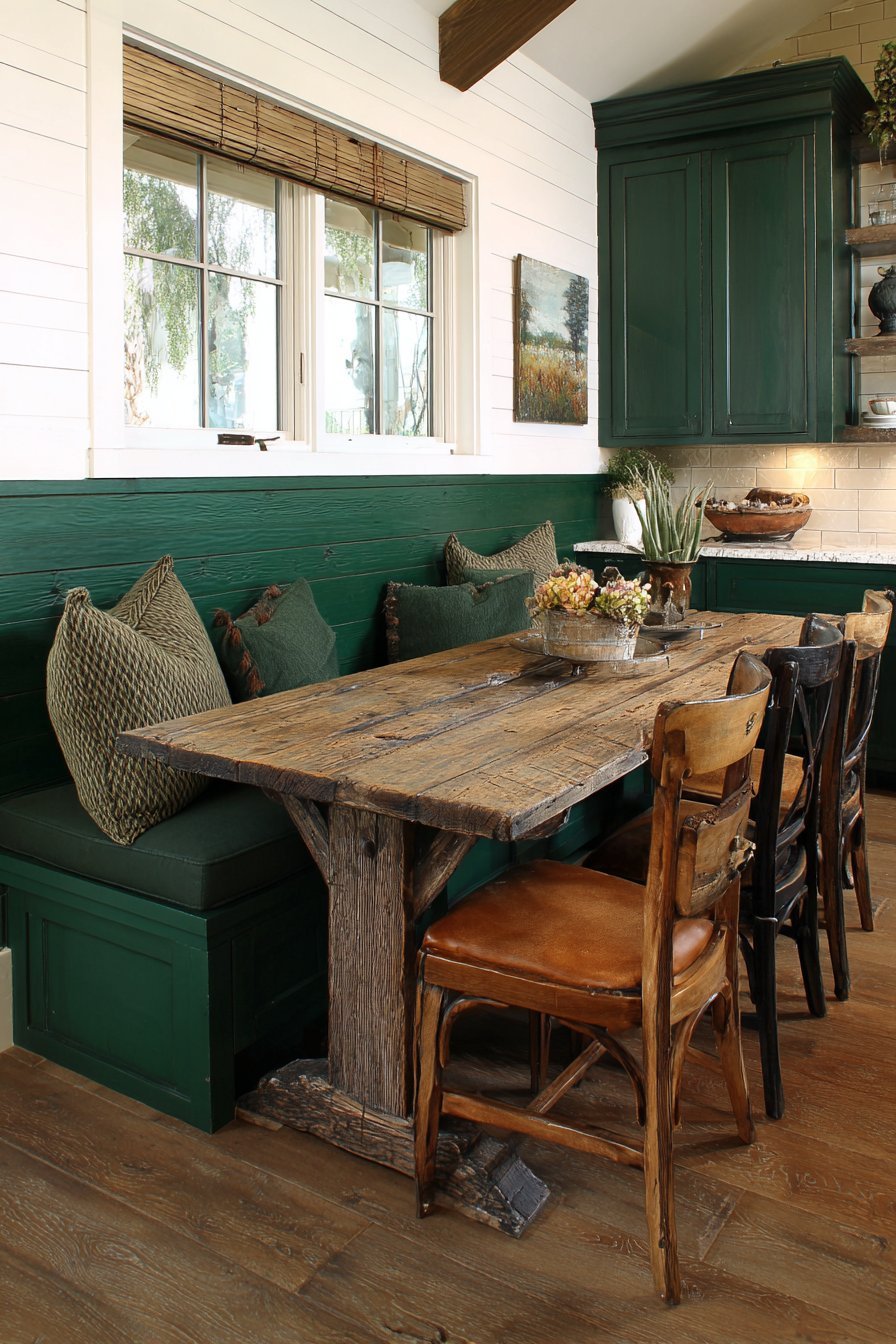
This breakfast area demonstrates how dark green works in smaller doses. The color appears in textiles and wall treatments rather than cabinetry. Wood elements dominate to maintain warmth and approachability. The result feels intentionally casual yet thoughtfully designed.
Key Design Tips:
- Build in seating with storage underneath to maximize space efficiency
- Use dark green in textiles and wainscoting for smaller doses of color
- Choose reclaimed wood tables to add character and conversation starters
- Mix and match wooden chairs for collected-over-time aesthetic appeal
- Install windows near breakfast nooks to create pleasant dining views
8. Sleek Contemporary Handleless Design
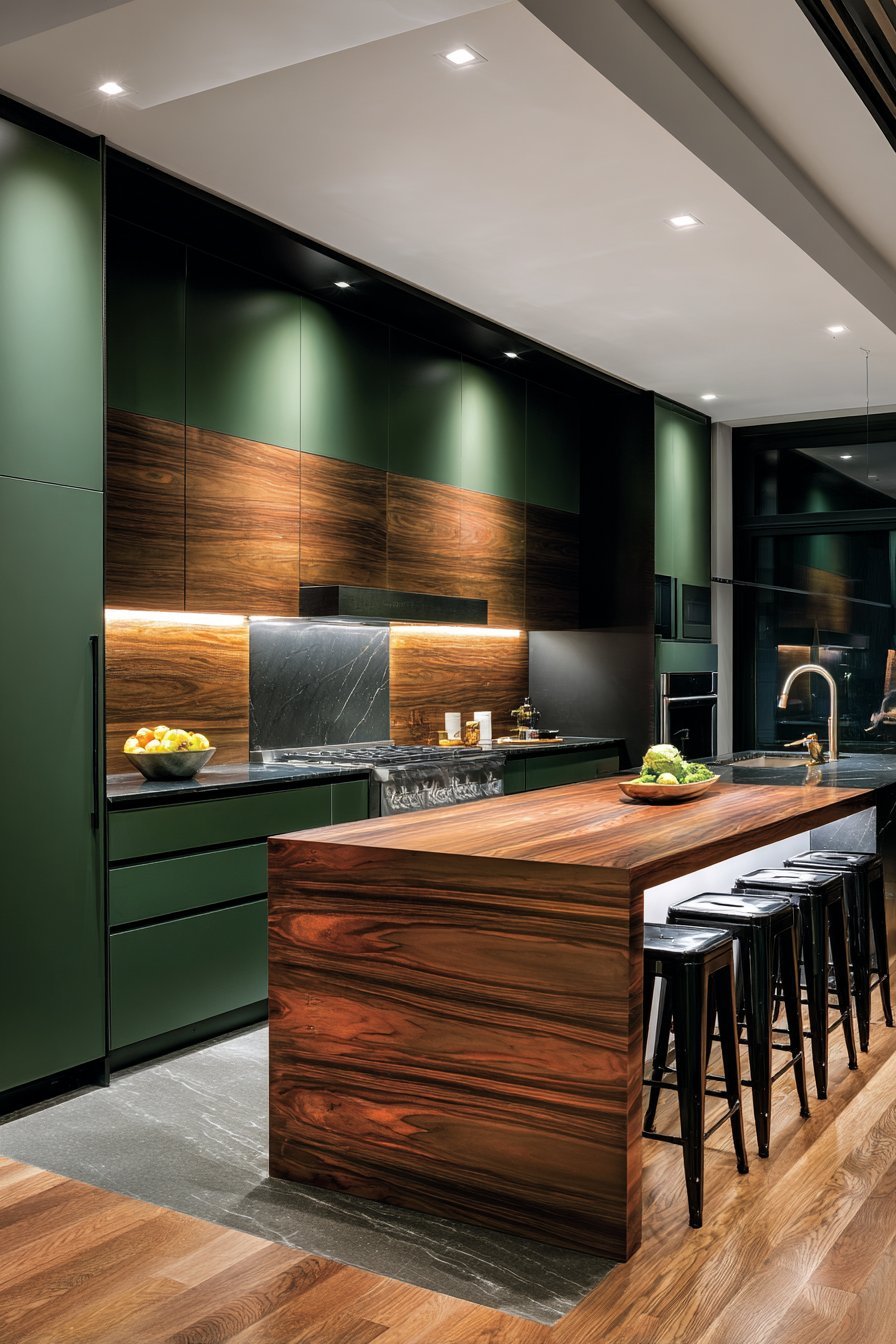
Handleless cabinet fronts in matte dark green create sleek contemporary lines. Horizontal grain wood veneer on select sections introduces textural variation. This minimal detailing maintains clean aesthetics while adding natural warmth. Integrated appliances disappear behind matching cabinet panels seamlessly.
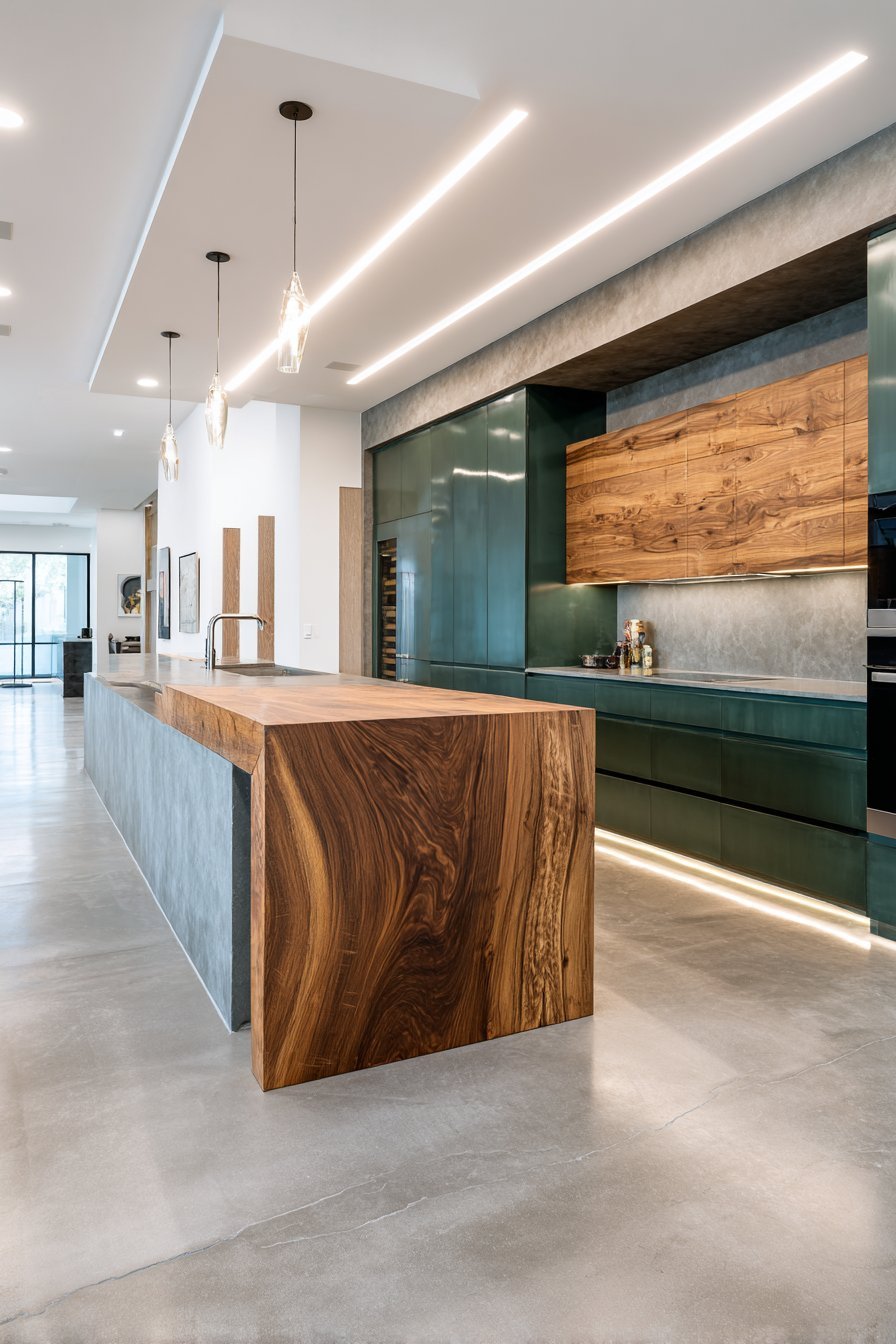
A waterfall edge island in book-matched walnut serves as the stunning centerpiece. The wood grain pattern creates a mirror effect on the island sides. This symmetry draws attention to the natural beauty of the material. Concrete-look porcelain flooring provides industrial contrast to organic wood.
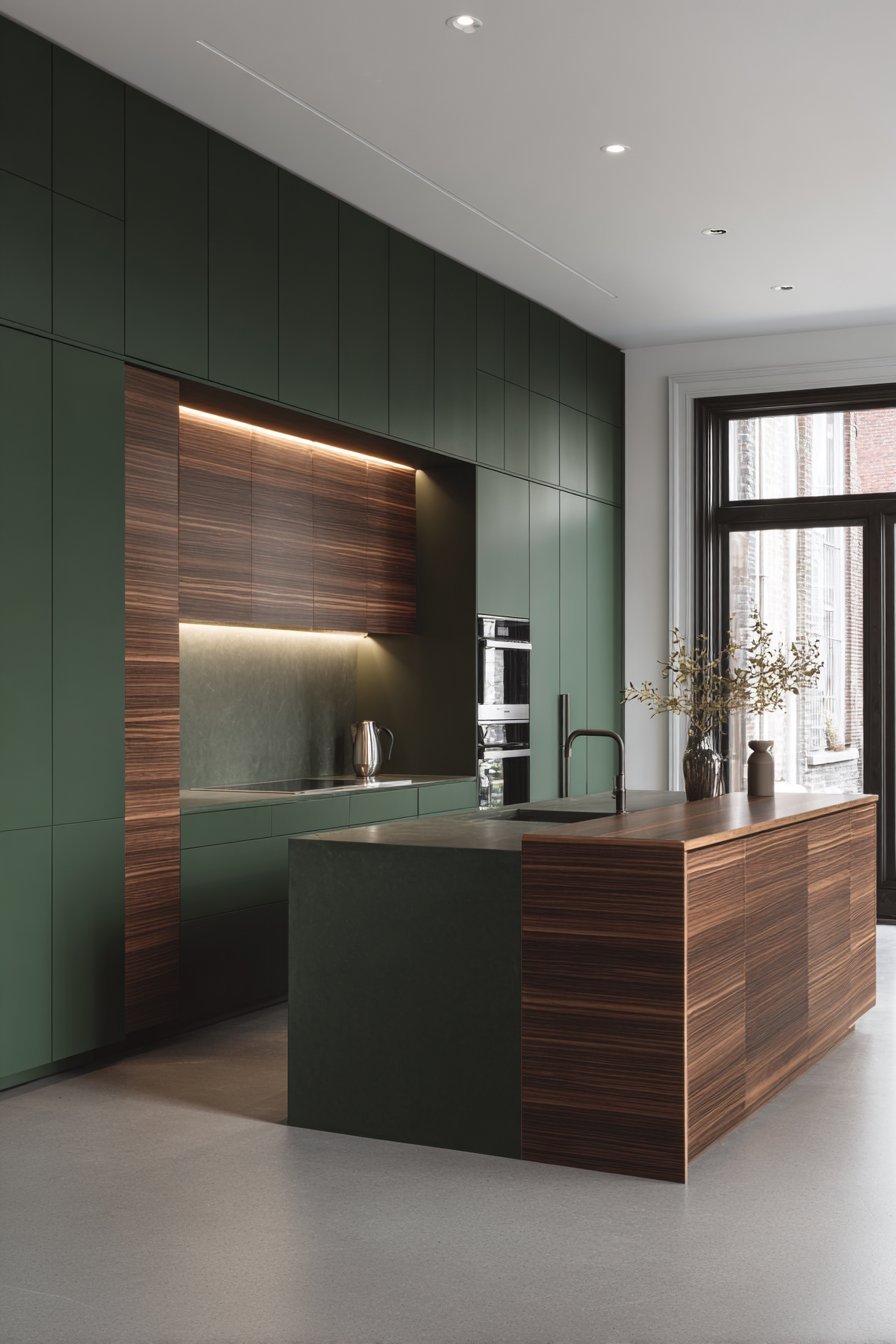
Linear LED lighting under cabinets creates dramatic shadow lines. These lights emphasize the horizontal planes and contemporary geometry. Wide-angle photography showcases the sophisticated minimalist material approach. Dark green lacquered surfaces contrast beautifully with premium wood veneer.
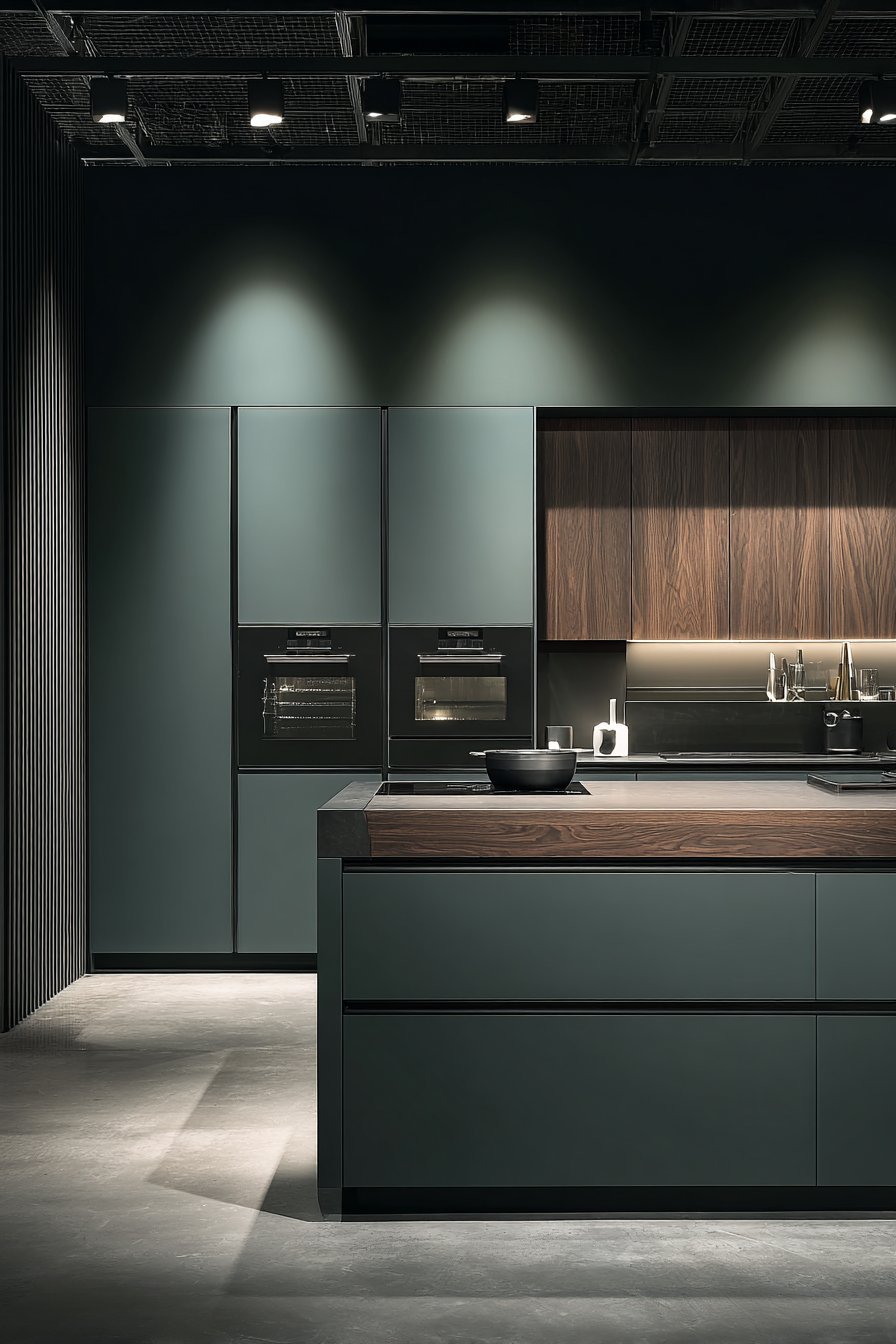
This kitchen represents the pinnacle of contemporary dark green and wood design. Every element contributes to the refined, uncluttered aesthetic. The interplay between smooth and textured surfaces adds depth. Studio-quality lighting emphasizes the contemporary elegance throughout.
Key Design Tips:
- Choose handleless cabinets with push-to-open mechanisms for sleek contemporary aesthetics
- Use horizontal grain wood veneer to add texture without visual weight
- Install waterfall edge islands in book-matched wood for dramatic centerpieces
- Select concrete-look flooring to provide industrial contrast to organic materials
- Add linear LED under-cabinet lighting to emphasize clean horizontal lines
9. Rustic Distressed Green with Aged Wood
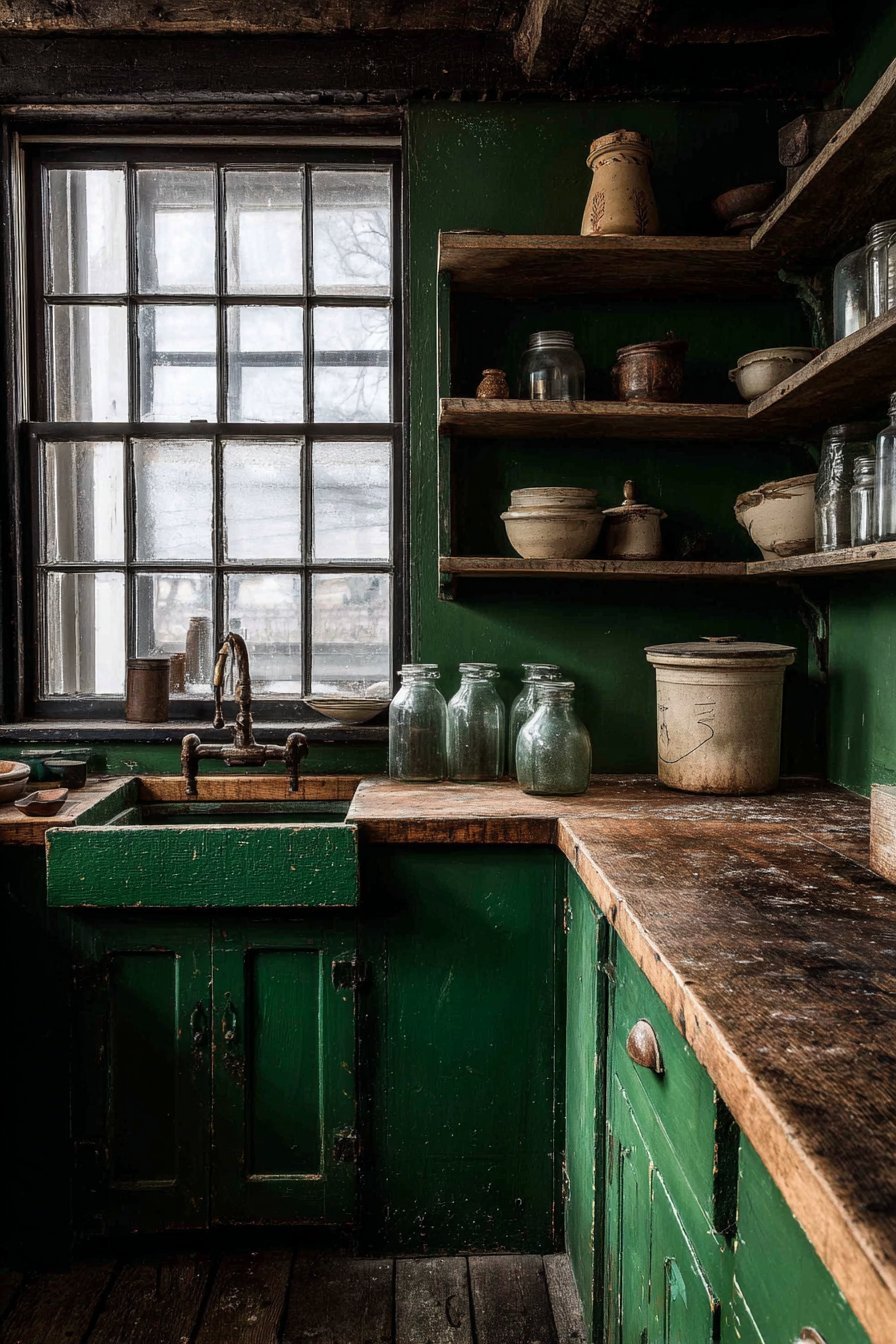
Distressed dark green painted cabinets show visible brush strokes authentically. Slight wear reveals underlying wood in high-use areas naturally. This patina tells the story of a well-loved, frequently used kitchen. The finish feels genuine rather than artificially aged.
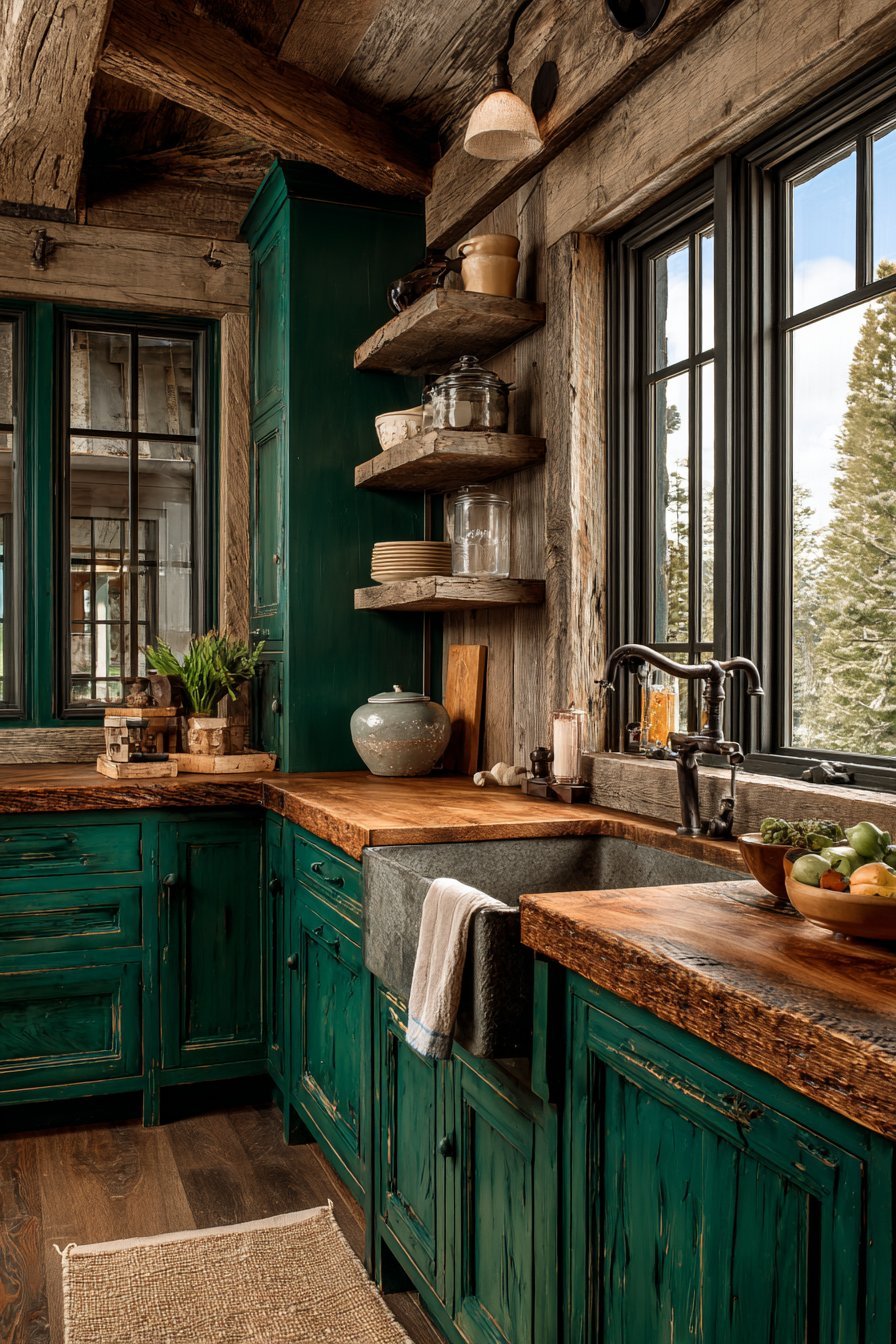
Thick butcher block countertops display deep patina and honest knife marks. These wear patterns demonstrate years of meal preparation and family activity. Reclaimed barn wood open shelving displays vintage stoneware and glass jars. A farmhouse apron-front sink with wall-mounted bridge faucet adds period authenticity.
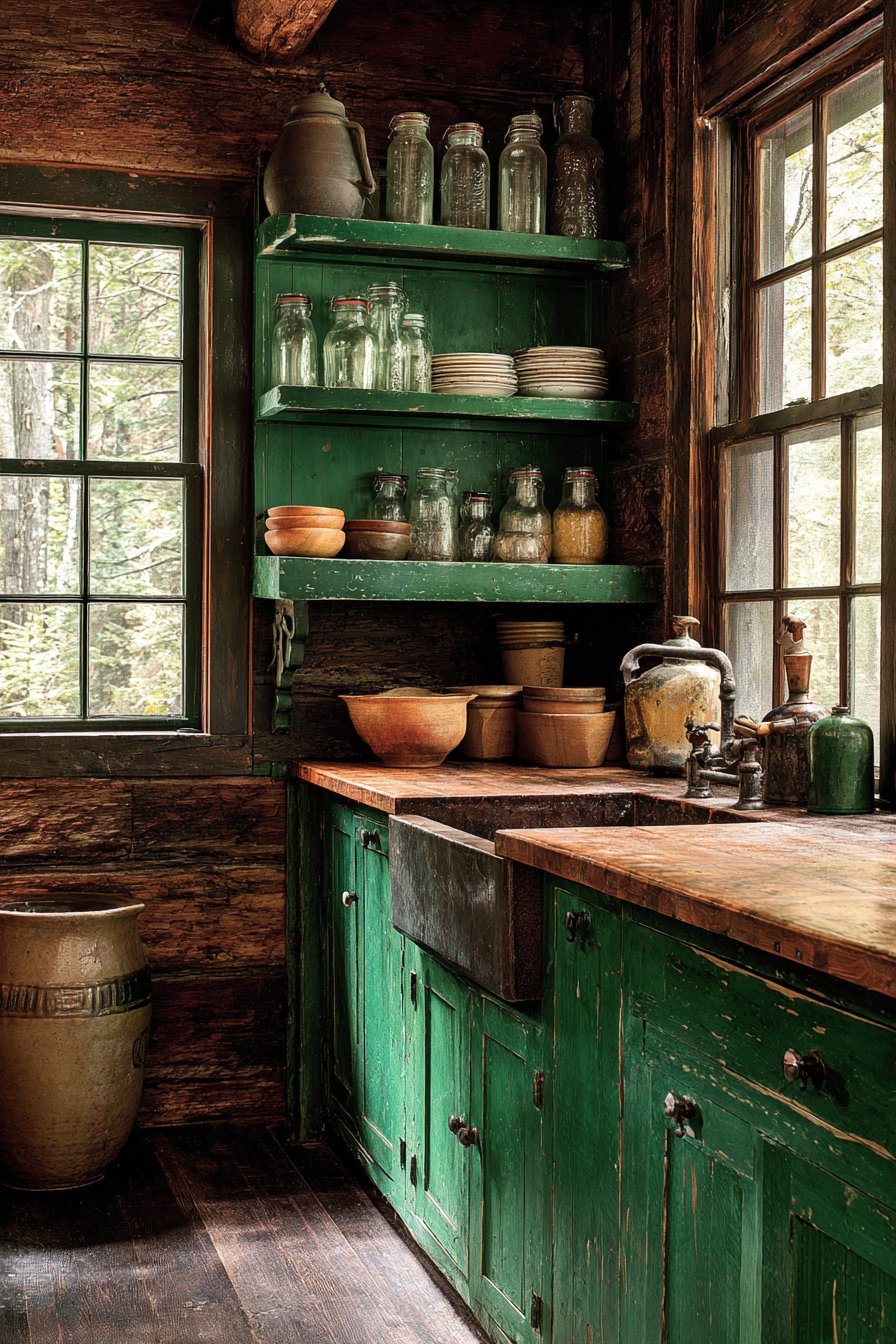
Natural afternoon light through multi-pane windows highlights textured surfaces. The light creates shadows that emphasize the dimensional quality of distressing. Interior photography captures authentic wear patterns and material history faithfully. This approach celebrates imperfection as beauty and character.
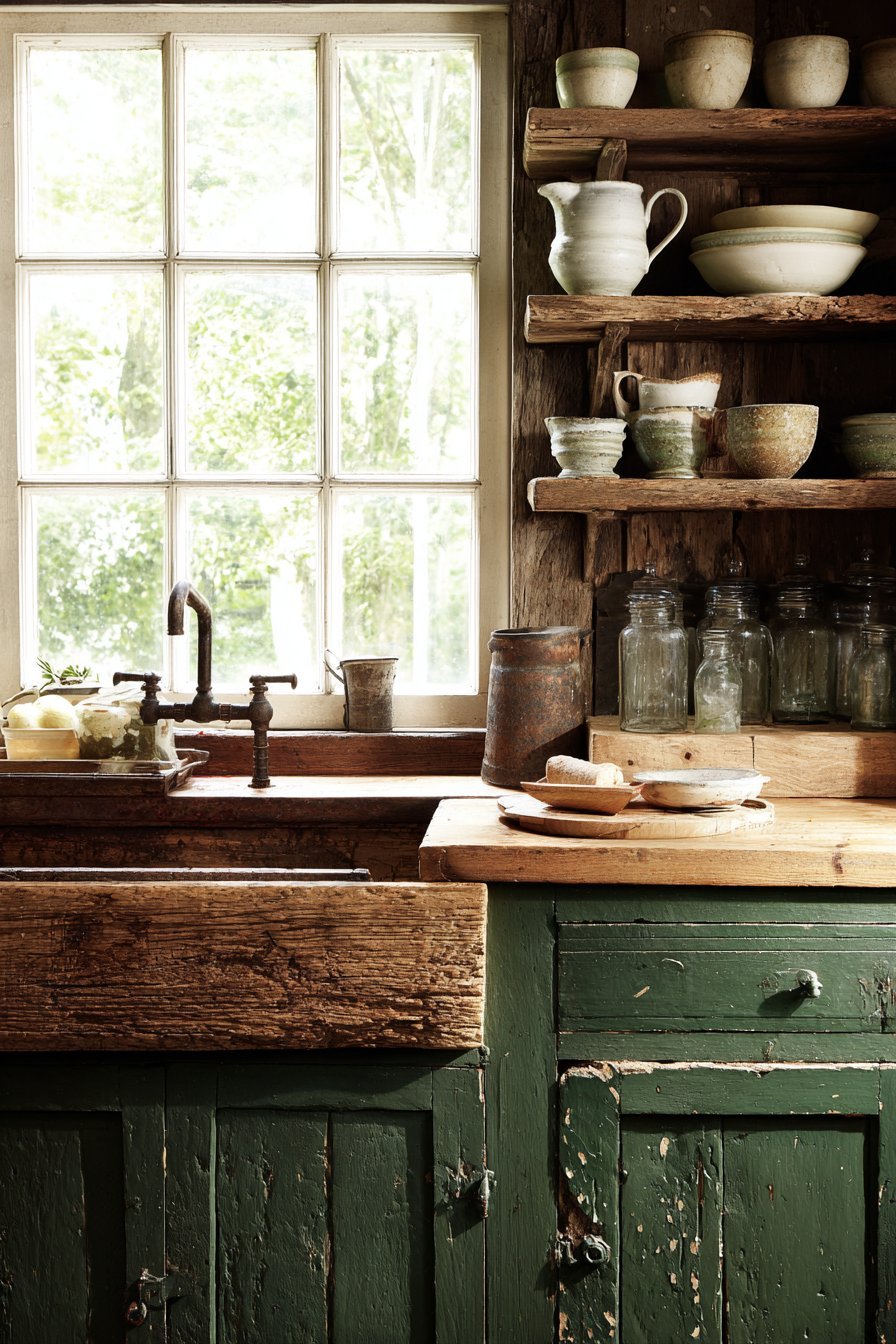
The genuine rustic character distinguishes this kitchen from manufactured alternatives. Dark green paint pairs beautifully with aged natural wood elements. Every surface tells a story of use and longevity. This kitchen will only grow more beautiful with continued use.
Key Design Tips:
- Apply paint with visible brush strokes for authentic hand-painted character
- Allow natural wear in high-use areas rather than preventing patina development
- Choose thick butcher block counters that improve with age and use
- Install reclaimed barn wood shelving to add genuine material history
- Select farmhouse sinks with bridge faucets for period-appropriate authenticity
10. Custom Island with Beadboard Detailing
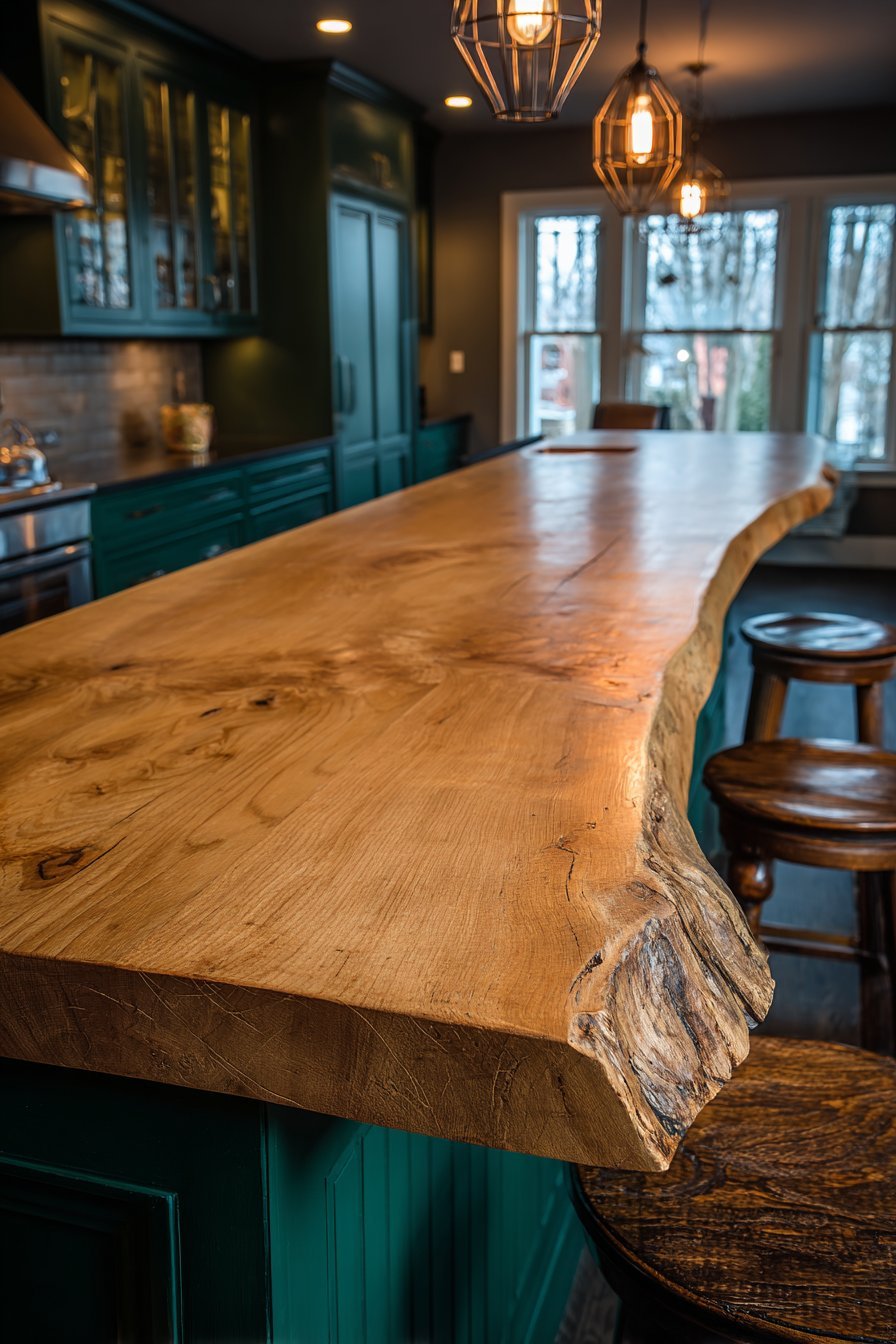
A custom island features dark green base cabinetry with beadboard panel detailing. This traditional millwork adds texture and visual interest to flat surfaces. A thick solid oak countertop with rounded edges crowns the island. The wood displays natural color variation and prominent grain patterns.
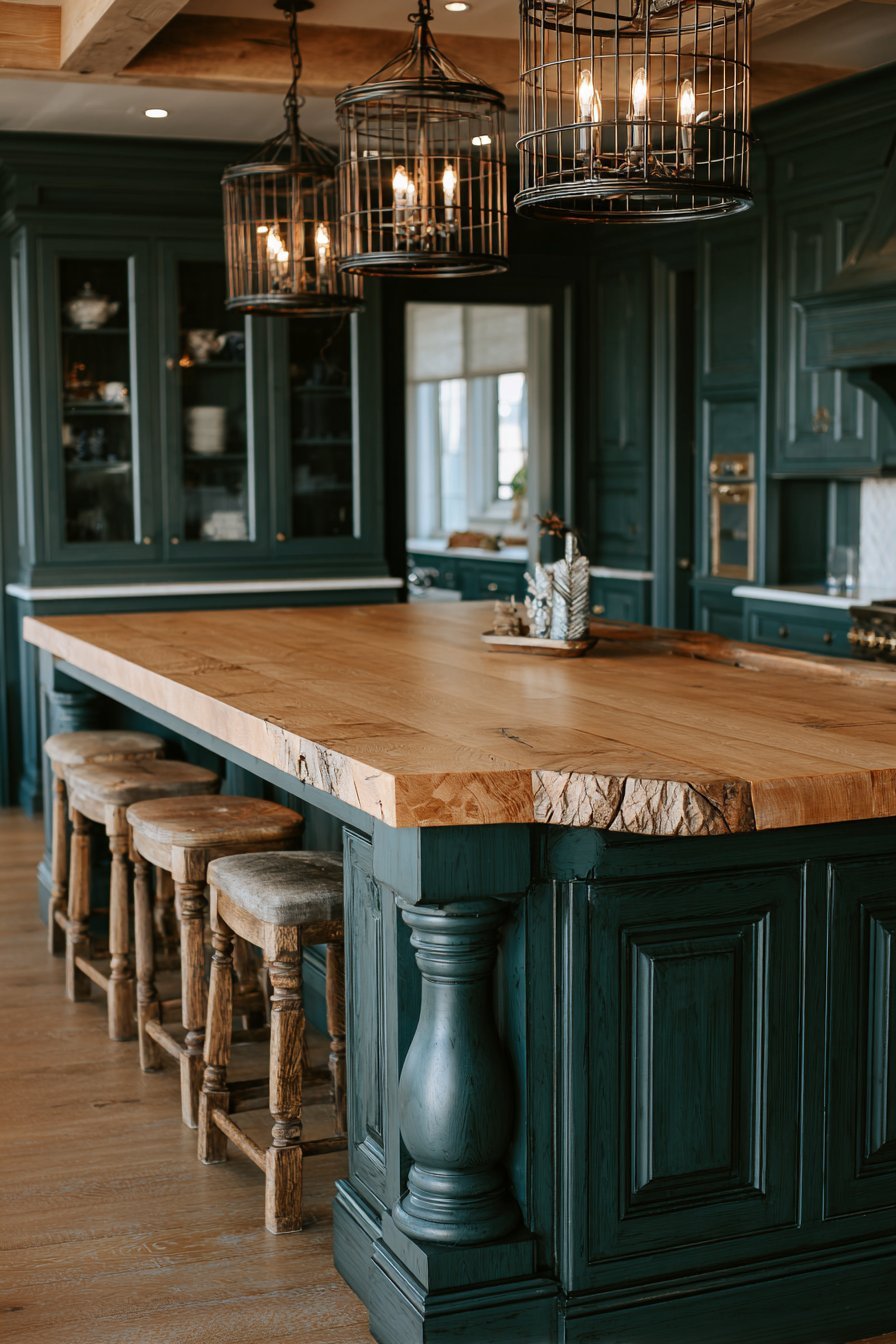
Three wooden bar stools with turned legs surround the island. Slightly worn seats suggest comfortable years of use and gathering. Vintage-style industrial pendant lights with metal cages hang above. These fixtures provide both task lighting and decorative character.
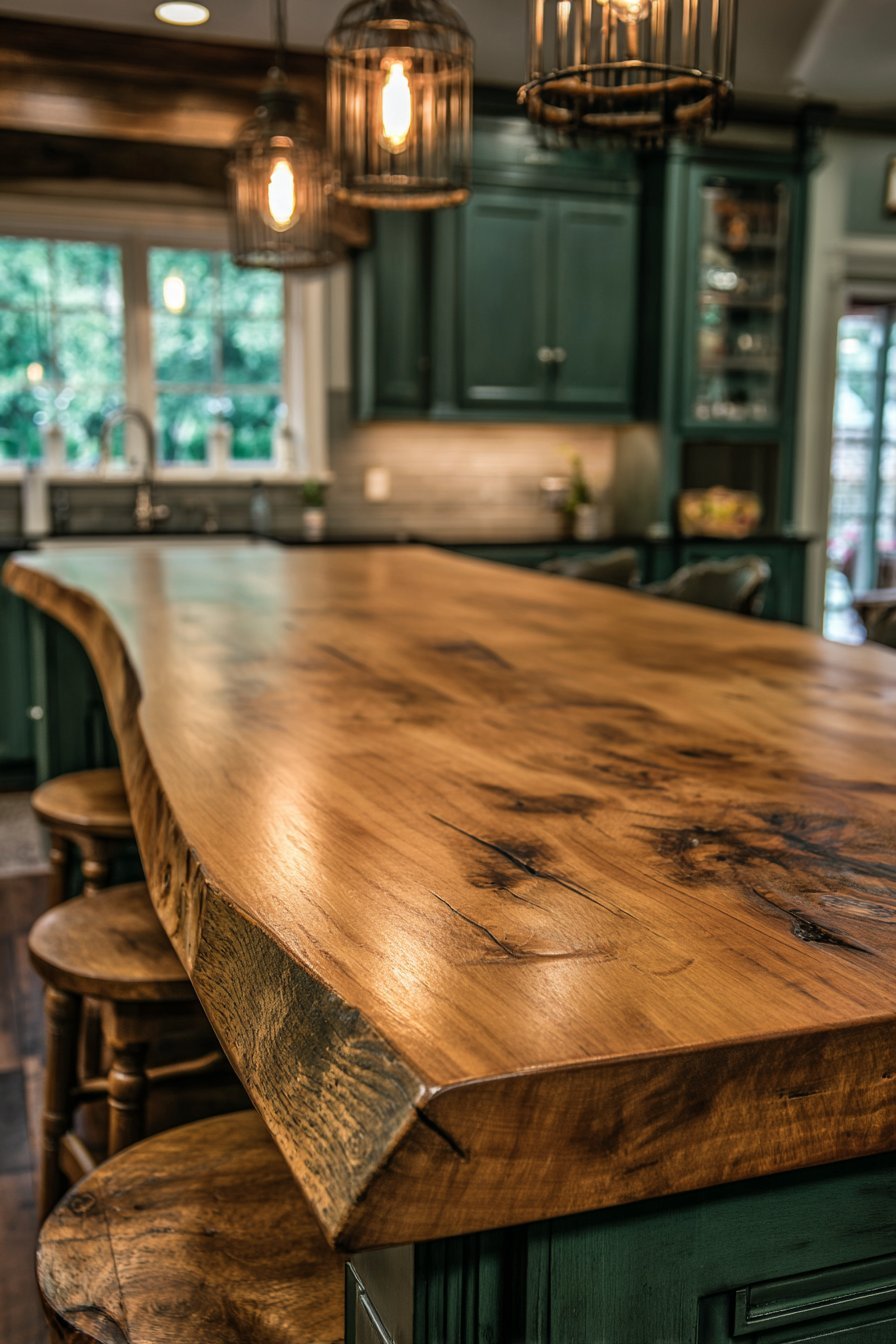
The surrounding kitchen features complementary dark green perimeter cabinets. Close-up photography emphasizes the craftsmanship details throughout. The relationship between painted green base and natural wood countertop shines. Natural lighting creates highlights on the wood surface that showcase texture.
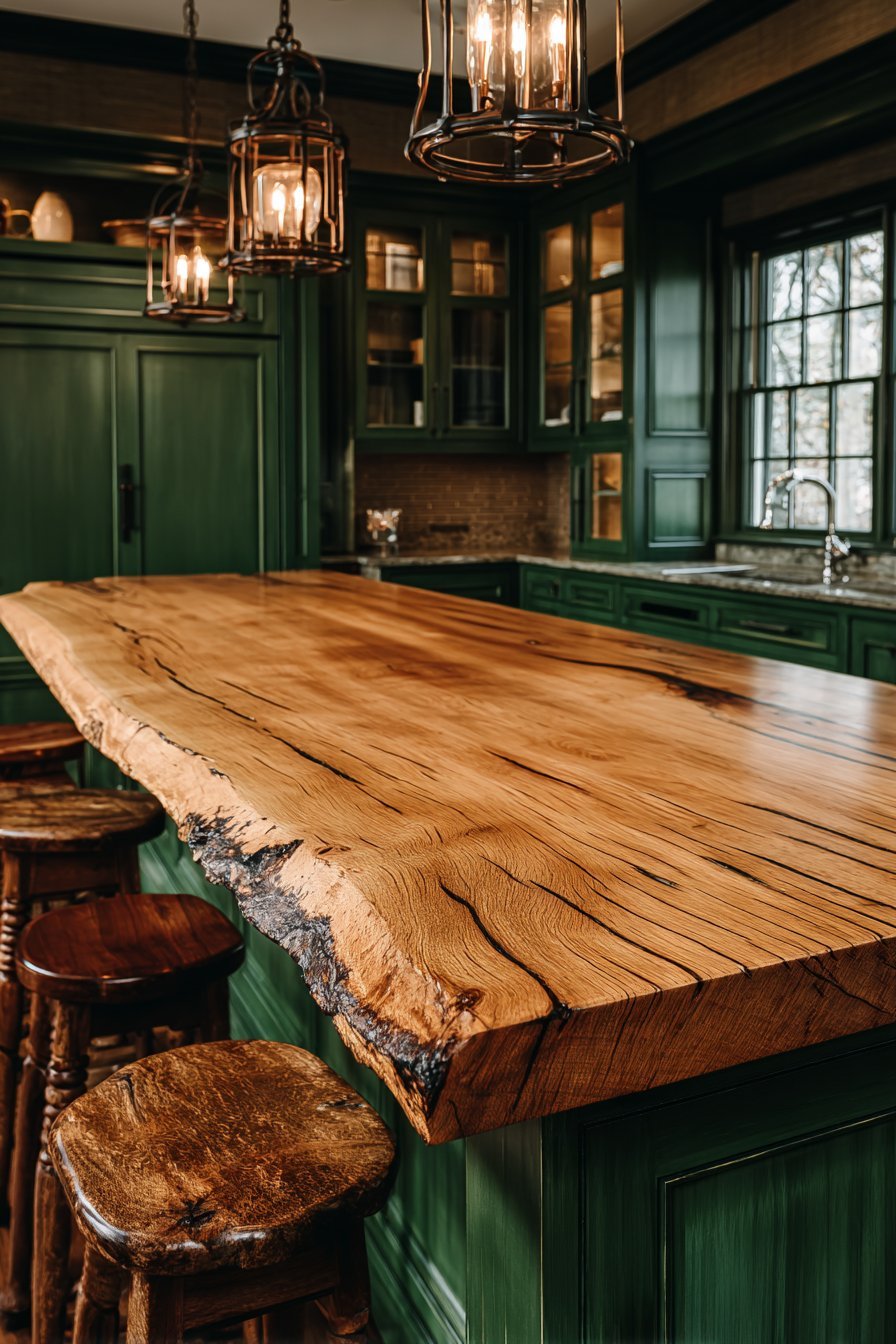
This island demonstrates how custom details elevate standard cabinetry. Beadboard panels add traditional character without overwhelming the design. The thick oak countertop provides both beauty and practical durability. Every element shows attention to quality and longevity.
Key Design Tips:
- Add beadboard panel detailing to cabinet doors for traditional texture
- Choose thick solid wood countertops with rounded edges for comfort and durability
- Select bar stools with turned legs to reinforce traditional design language
- Hang vintage-style pendant lights to add character and focused task lighting
- Allow natural wear on wooden stools to enhance authentic collected aesthetic
11. Subway Tile Backsplash with Wood Shelving
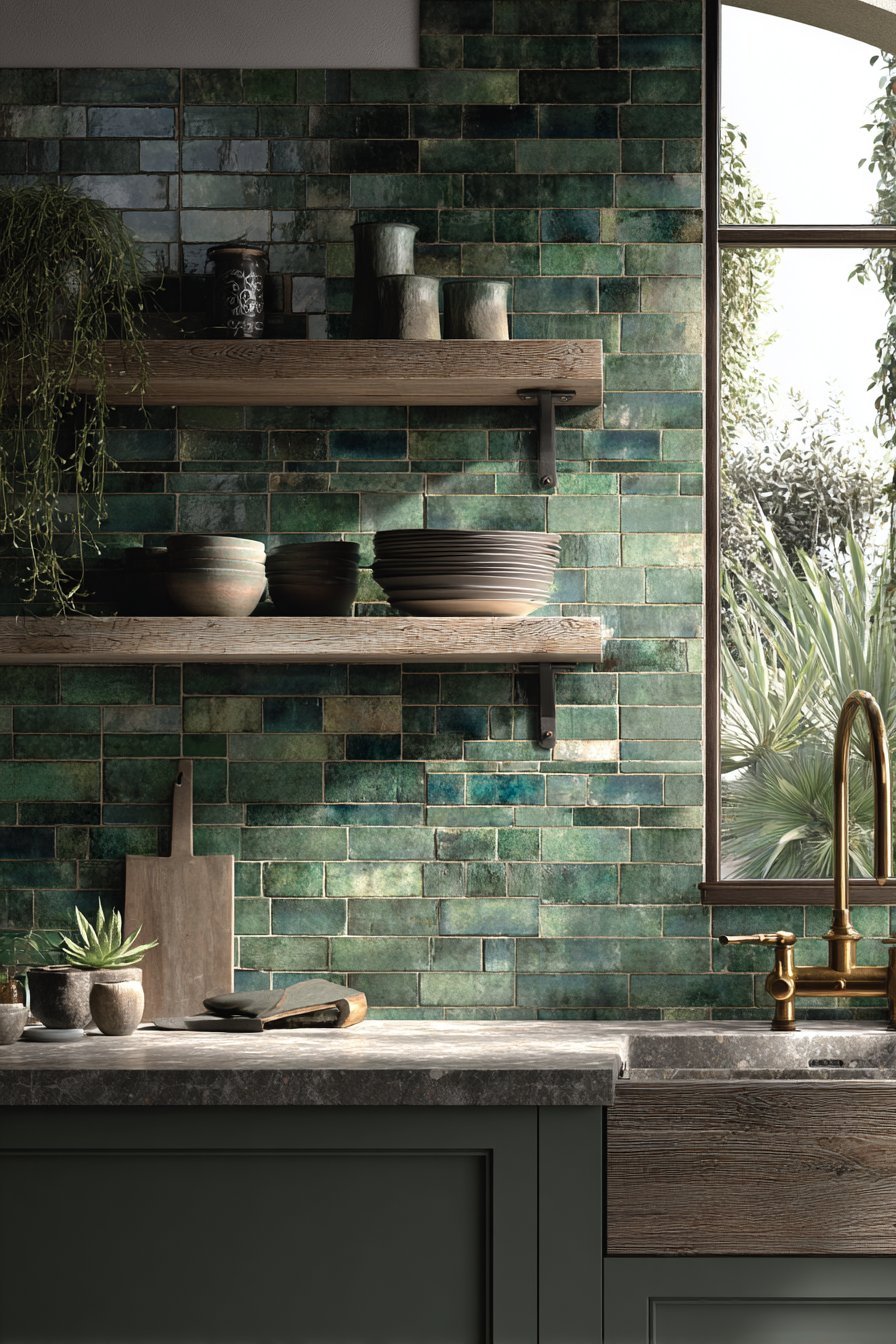
Dark green subway tiles with subtle glaze variation create depth and interest. Natural wood floating shelves in light ash display everyday dishes accessibly. Small plants add living greenery that complements the tile color. Black metal brackets mount shelves discretely without visual competition.
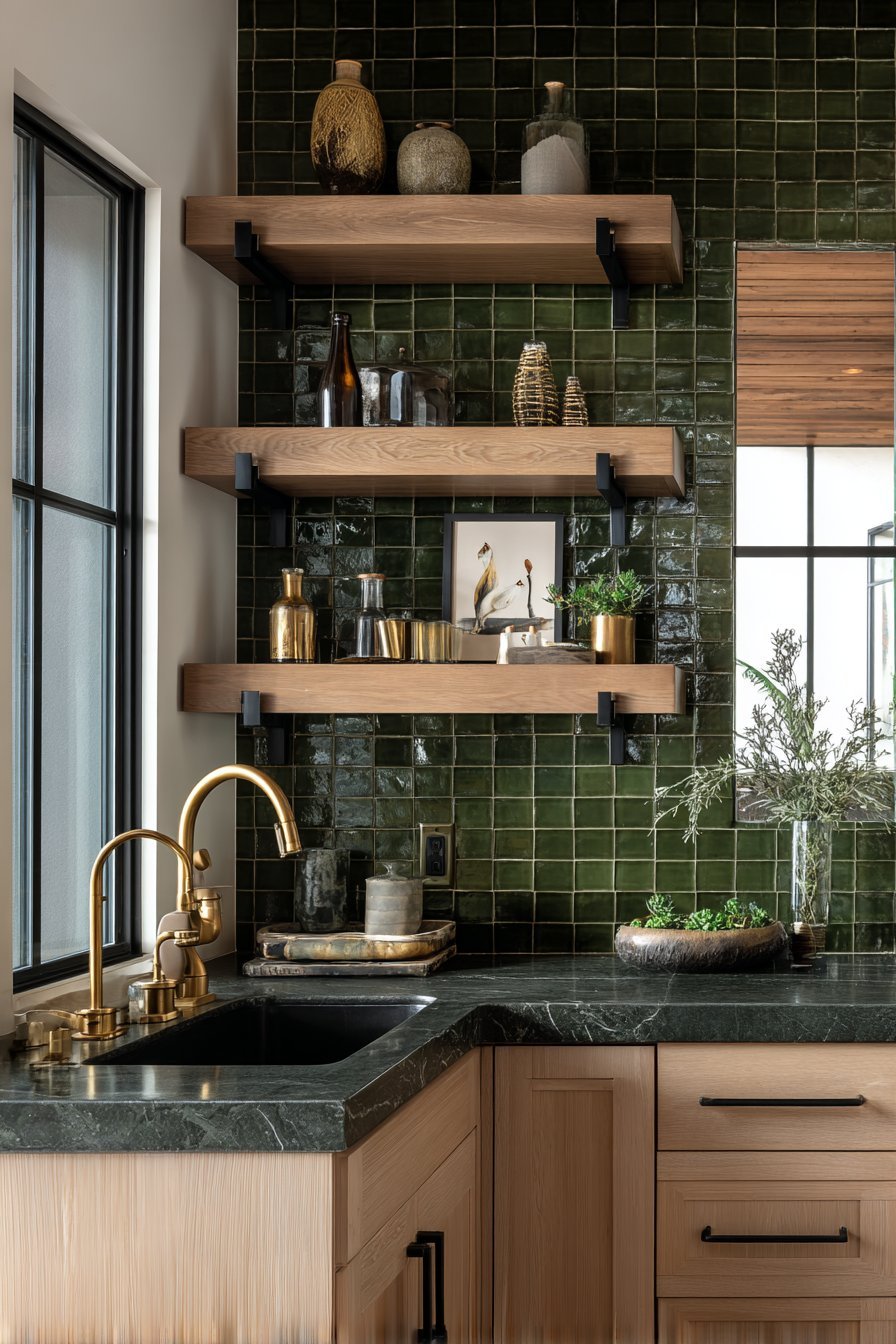
Honed granite countertops complement the organic material palette beautifully. A wood-framed window above the sink provides natural light and garden views. The connection between indoor and outdoor green feels intentional. Brass faucet and cabinet hardware add warm metallic accents throughout.
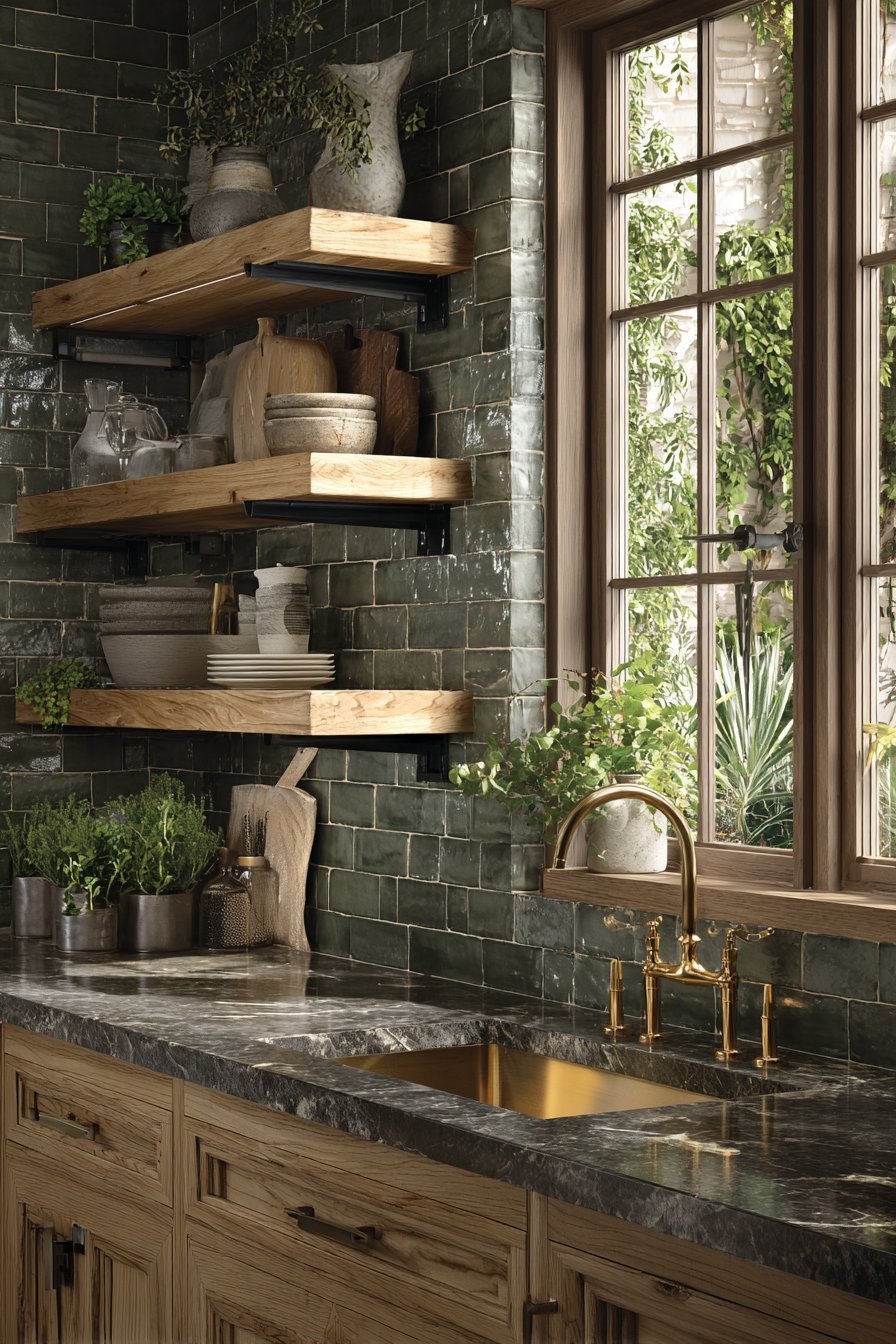
Detail-focused photography captures the layered textures present here. Glazed tile, natural wood grain, and stone countertop create rich depth. Dark green and wood elements combine perfectly in this functional prep area. Professional lighting emphasizes material authenticity and color depth accurately.
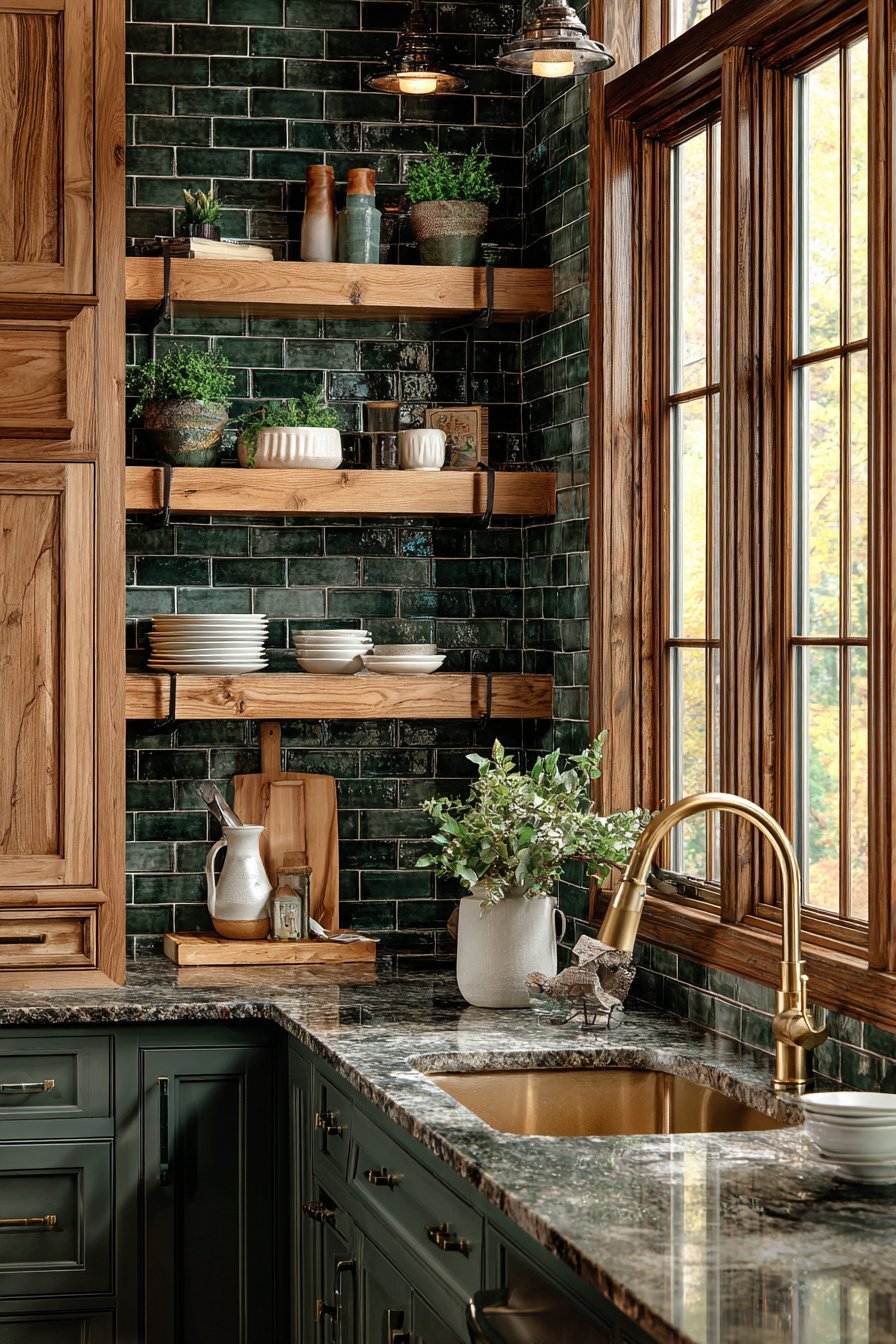
This backsplash area demonstrates how focal zones deserve special attention. The combination of materials creates interest without overwhelming the space. Green tiles ground the design while wood shelves add warmth. Every element serves both aesthetic and practical purposes.
Key Design Tips:
- Choose subway tiles with glaze variation to add subtle depth and interest
- Install floating wood shelves to display everyday items as decorative elements
- Use honed stone countertops for sophisticated finish that hides wear better
- Frame windows in natural wood to create visual continuity with other elements
- Add small potted plants on shelves to introduce living greenery
12. Scandinavian Teal and Blonde Birch
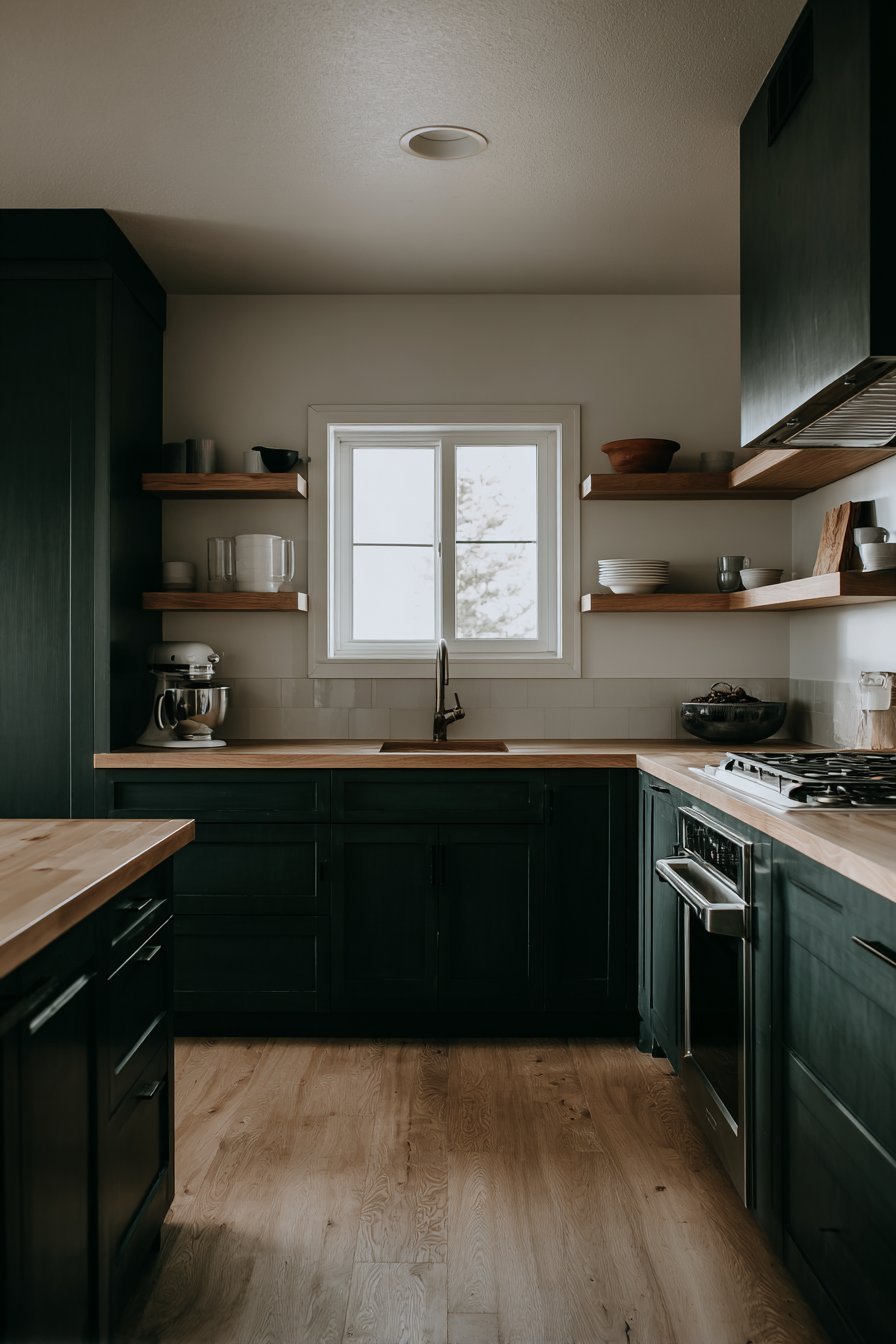
Clean-lined cabinets in deep teal-green establish the Nordic color palette. Blonde birch wood countertops and shelving provide striking light contrast. The pale wood maintains the Scandinavian aesthetic while balancing dark cabinets. Minimalist brass hardware provides subtle metallic detail without fuss.
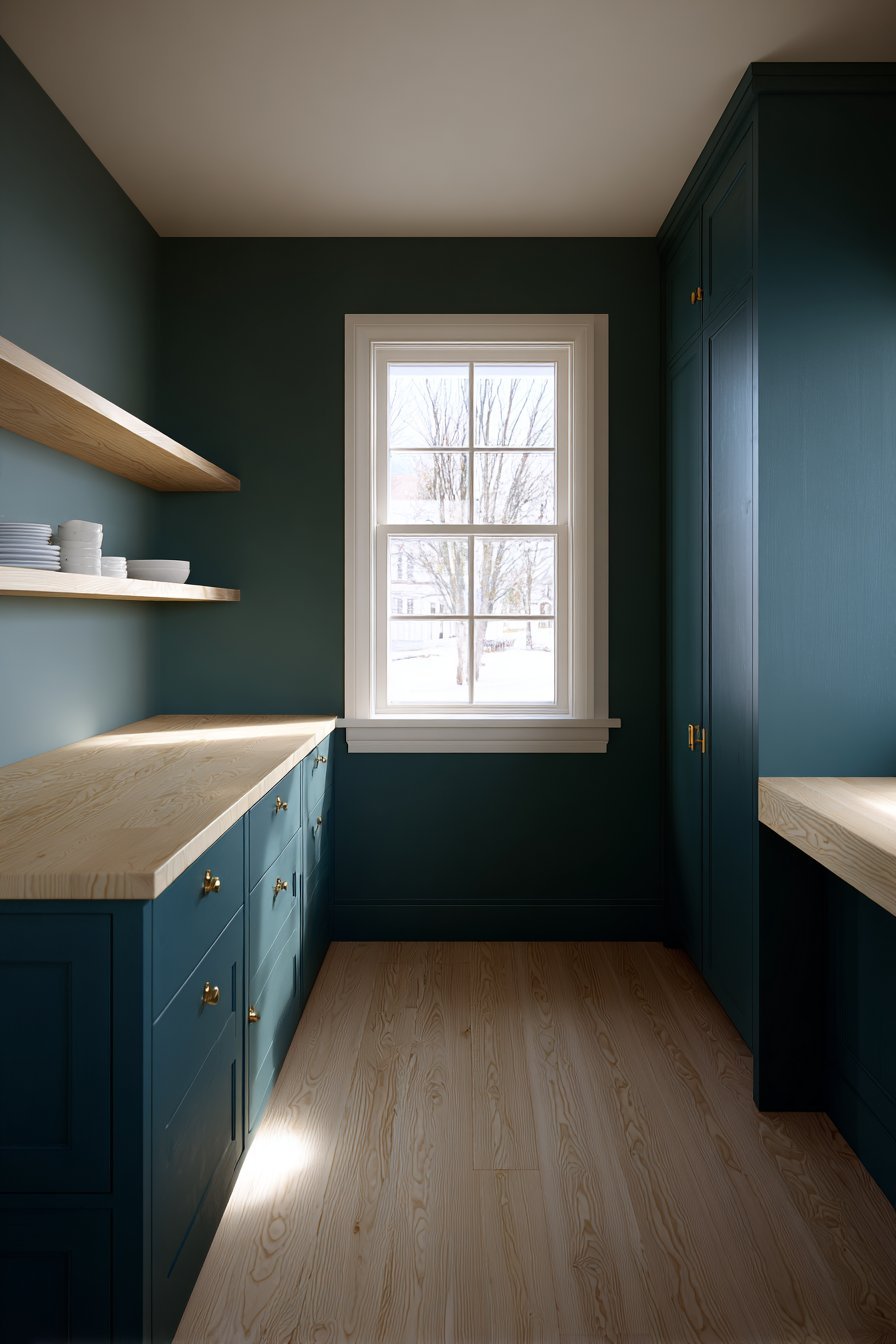
White oak hardwood flooring in natural finish runs throughout the space. This pale flooring reinforces the light, airy Scandinavian feeling. A small kitchen window with simple white trim allows northern light entry. The soft, diffused illumination is characteristic of Nordic design principles.
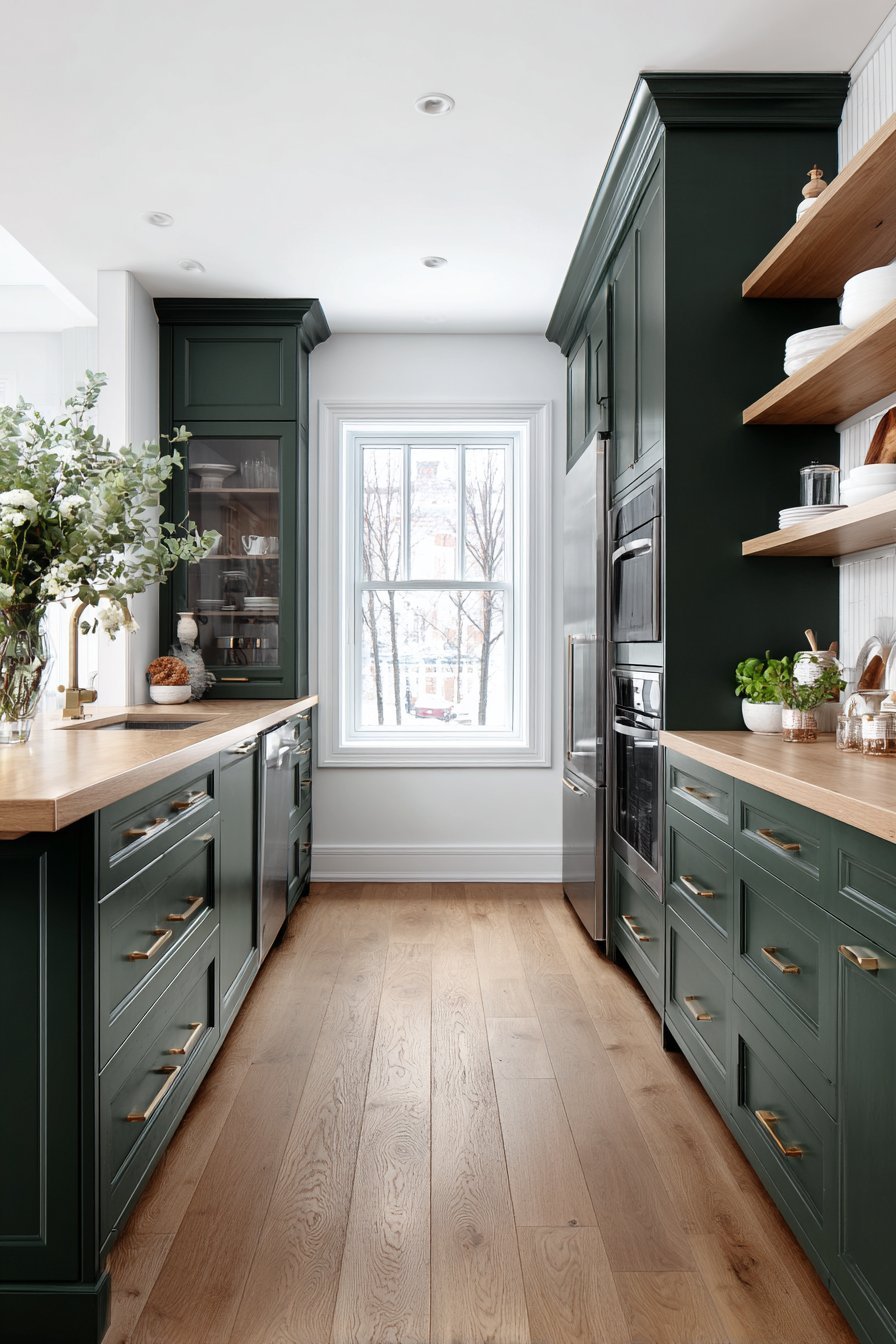
Professional photography captures the balanced Scandinavian approach beautifully. Clean lines and quality materials take precedence over decoration. The interplay between dark painted surfaces and pale Nordic wood feels intentional. Even, diffused natural lighting enhances the serene, uncluttered aesthetic.
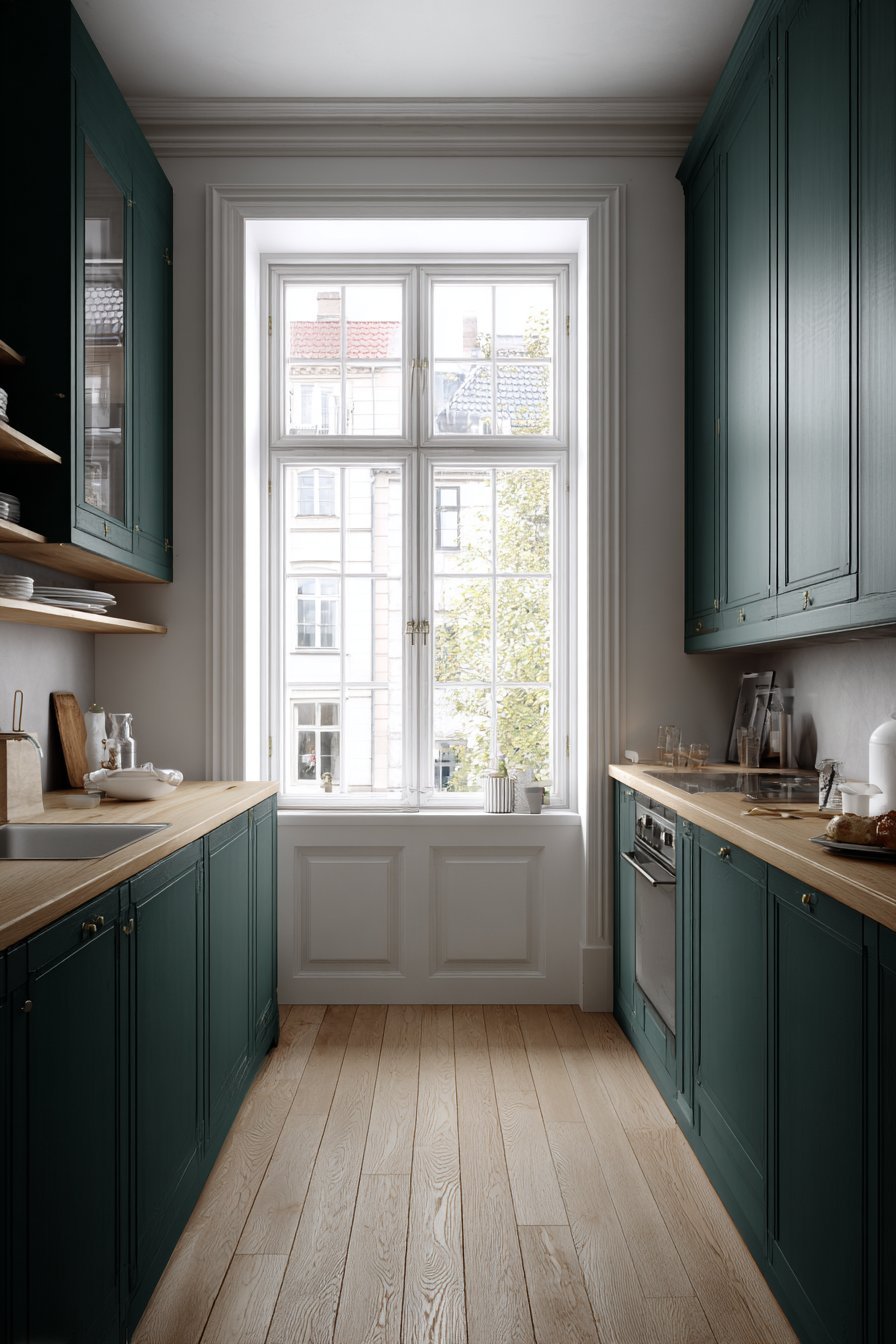
This kitchen demonstrates how Scandinavian principles adapt to bold color. The teal-green adds personality while maintaining Nordic restraint. Light wood and white elements prevent the space from feeling heavy. The result is both distinctive and timelessly elegant.
Key Design Tips:
- Choose teal-green paint for Scandinavian kitchens wanting personality without sacrificing simplicity
- Select blonde wood species like birch for maximum contrast with dark cabinets
- Install minimalist hardware in brass for subtle warmth without visual clutter
- Use white oak flooring in natural finish to maintain light Scandinavian aesthetic
- Maximize natural light with simple window treatments and reflective surfaces
13. Dramatic Exposed Beam Ceiling Treatment
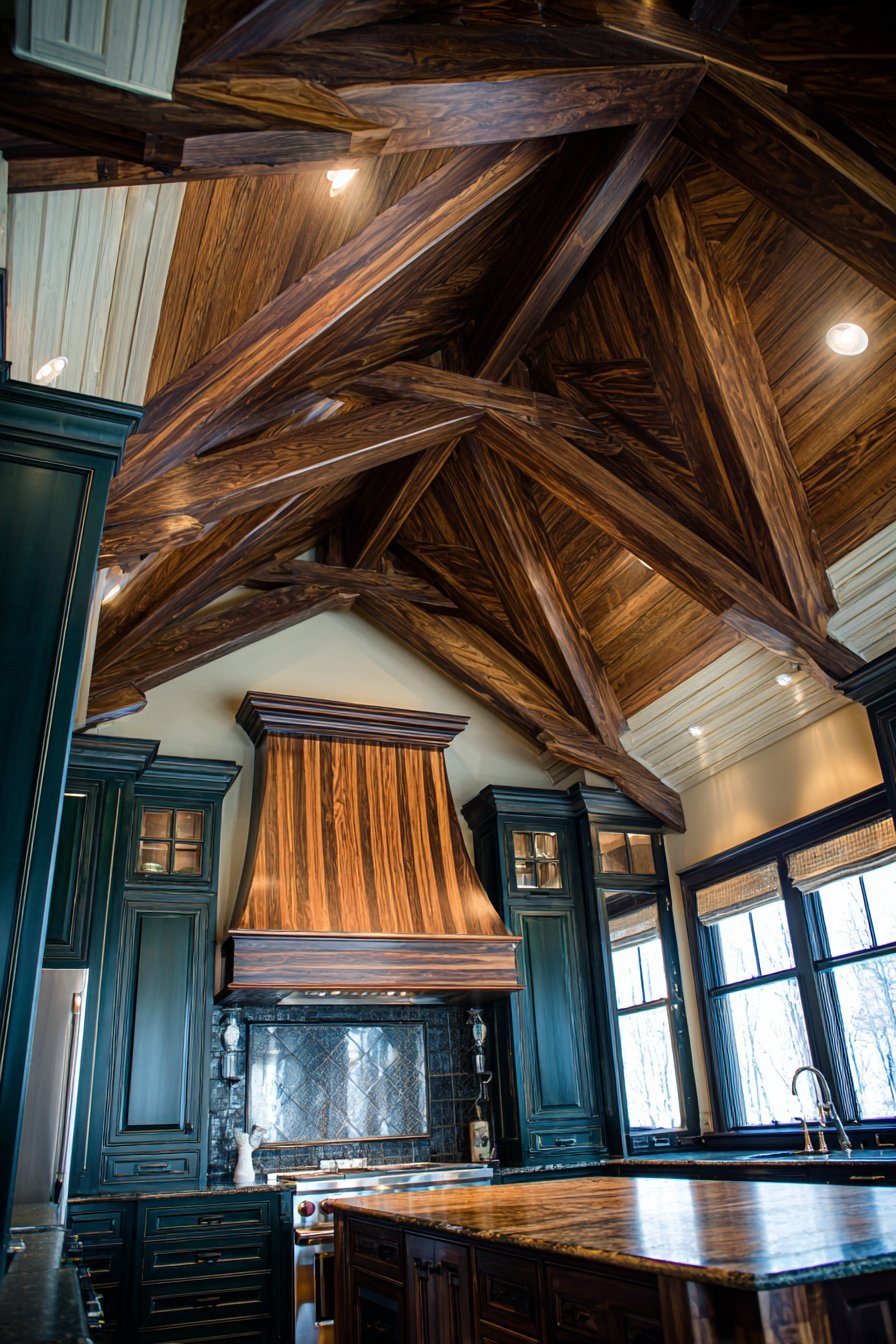
Exposed wooden beams in dark walnut stain create dramatic ceiling interest. White planked ceiling boards provide bright contrast against dark wood. Below, dark green cabinetry extends to both upper and lower sections. A large wood range hood cover in matching walnut creates vertical drama.
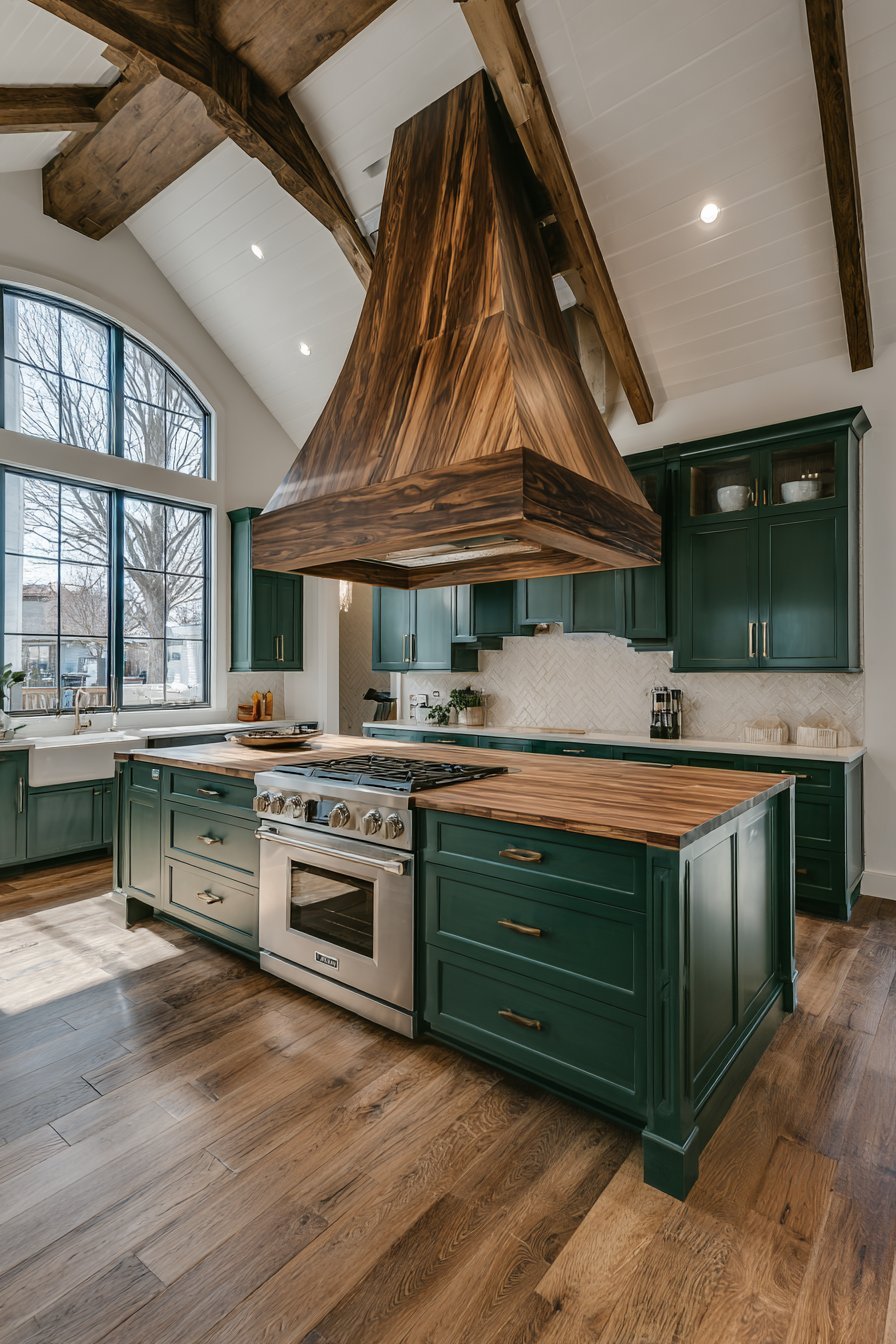
The hood showcases book-matched wood panels with symmetrical grain patterns. This attention to detail elevates the hood from functional to sculptural. Butcher block countertops tie the various wood tones together harmoniously. The cohesive material story runs from floor to ceiling.
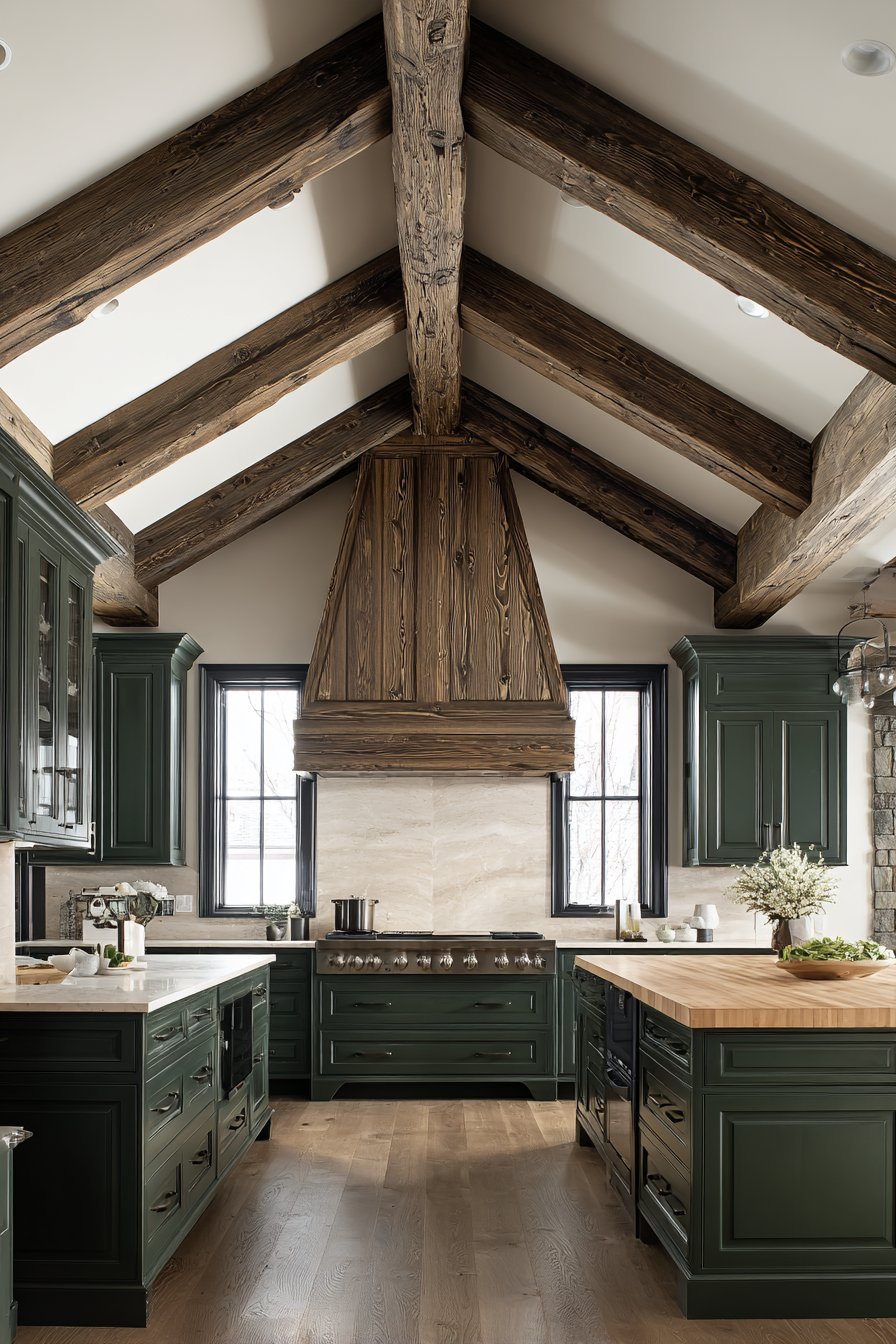
Upward-looking architectural photography captures the impressive ceiling detail. Dark green cabinetry and dark wood beams create a cocooning effect. Natural daylight from windows creates shadows emphasizing dimensional quality. The wooden architectural elements add character that drywall cannot match.
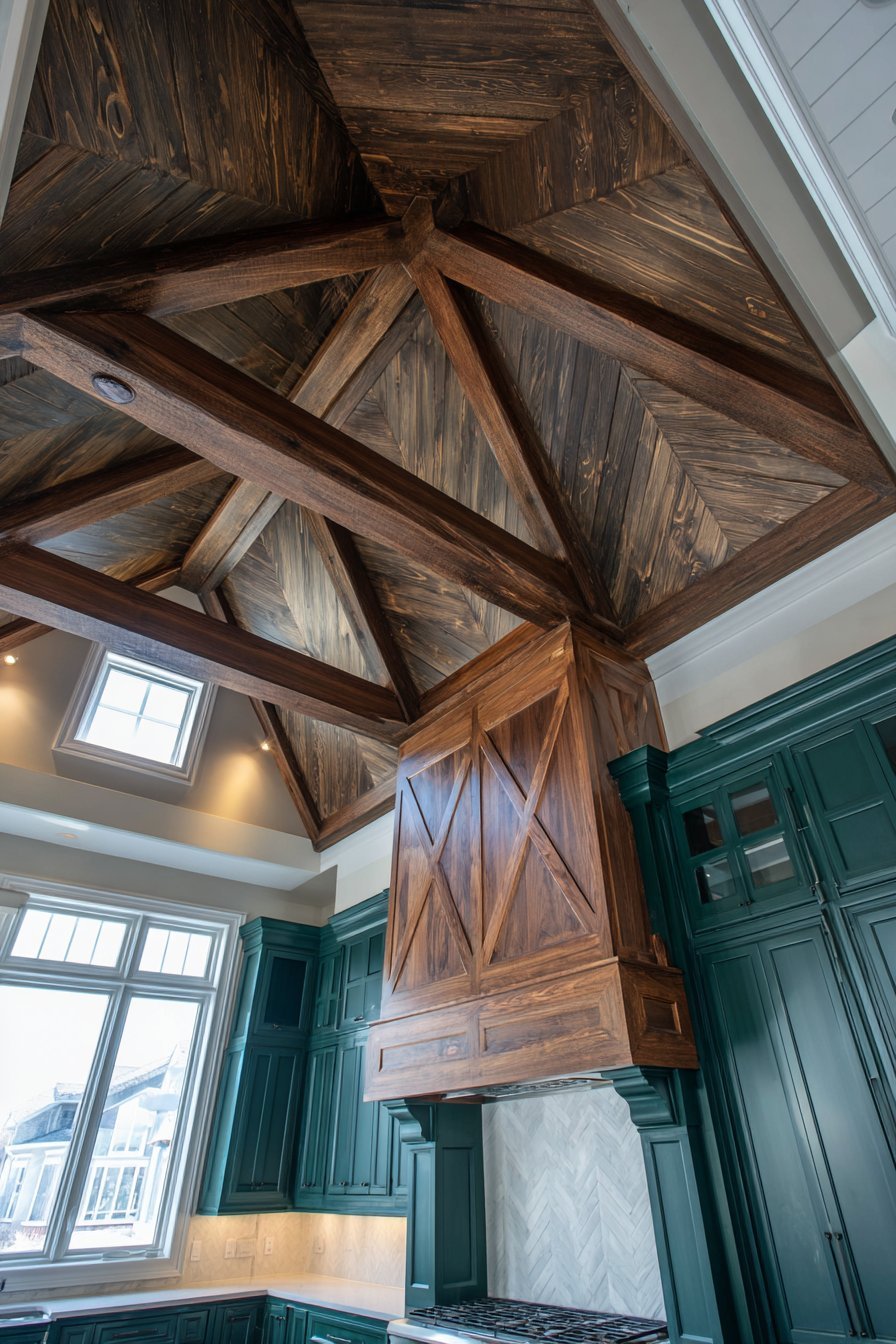
This kitchen proves that ceilings deserve design attention too. The exposed beams add architectural interest and perceived height. Dark green and dark wood create intimacy without feeling oppressive. The white ceiling prevents the darkness from overwhelming the space.
Key Design Tips:
- Expose ceiling beams in dark stain to add architectural character overhead
- Use white ceiling boards between beams to prevent overwhelming darkness
- Match range hood wood to ceiling beams for material continuity
- Choose book-matched wood panels for symmetrical visual impact on focal elements
- Install butcher block counters to tie together various wood tones in the space
14. Transitional Two-Tone Cherry and Green
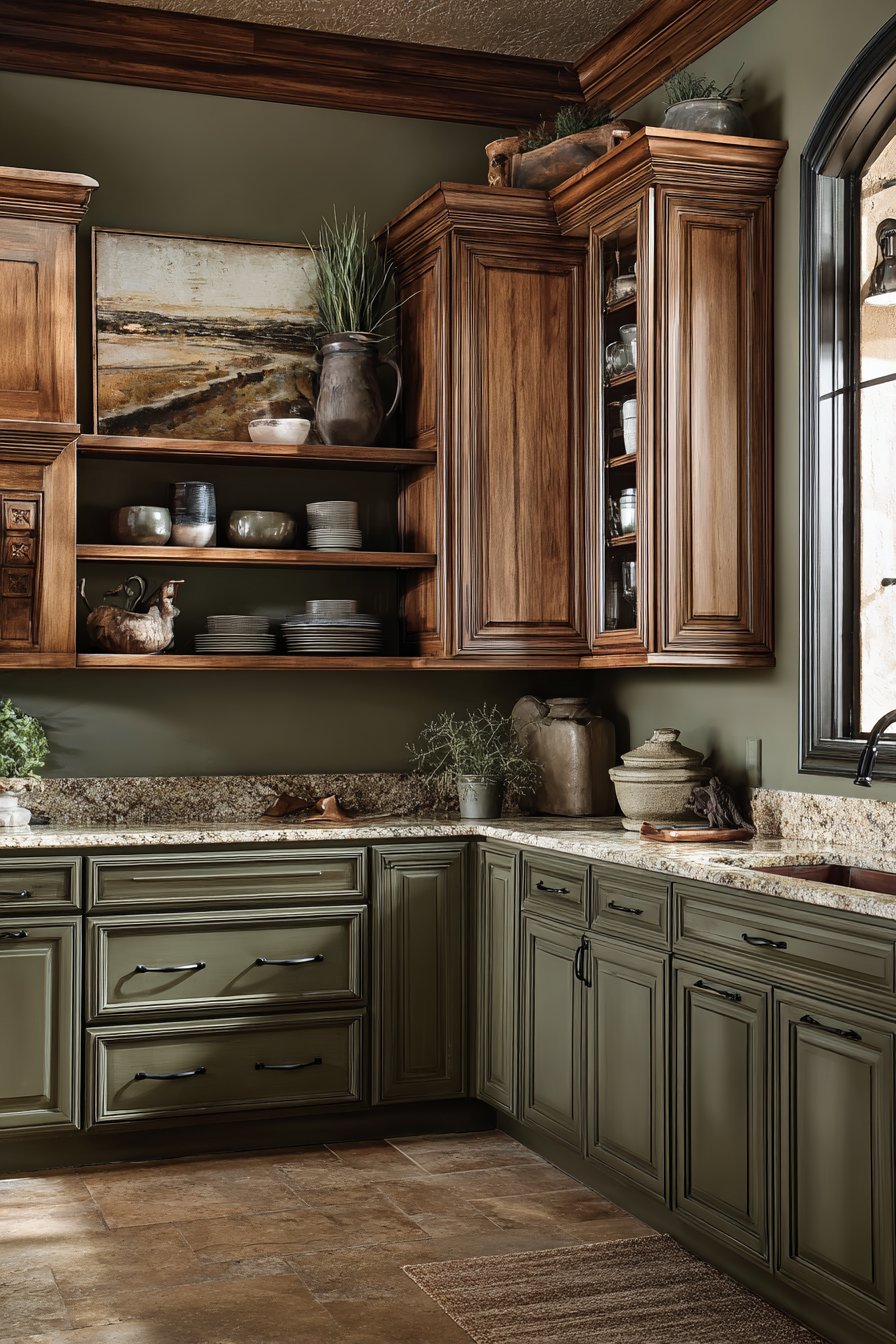
Painted dark green lower cabinets feature traditional raised panel doors. Natural cherry wood upper cabinets with glass-front doors create lightness above. This two-tone approach prevents the space from feeling too dark or heavy. The division happens at the natural countertop line.
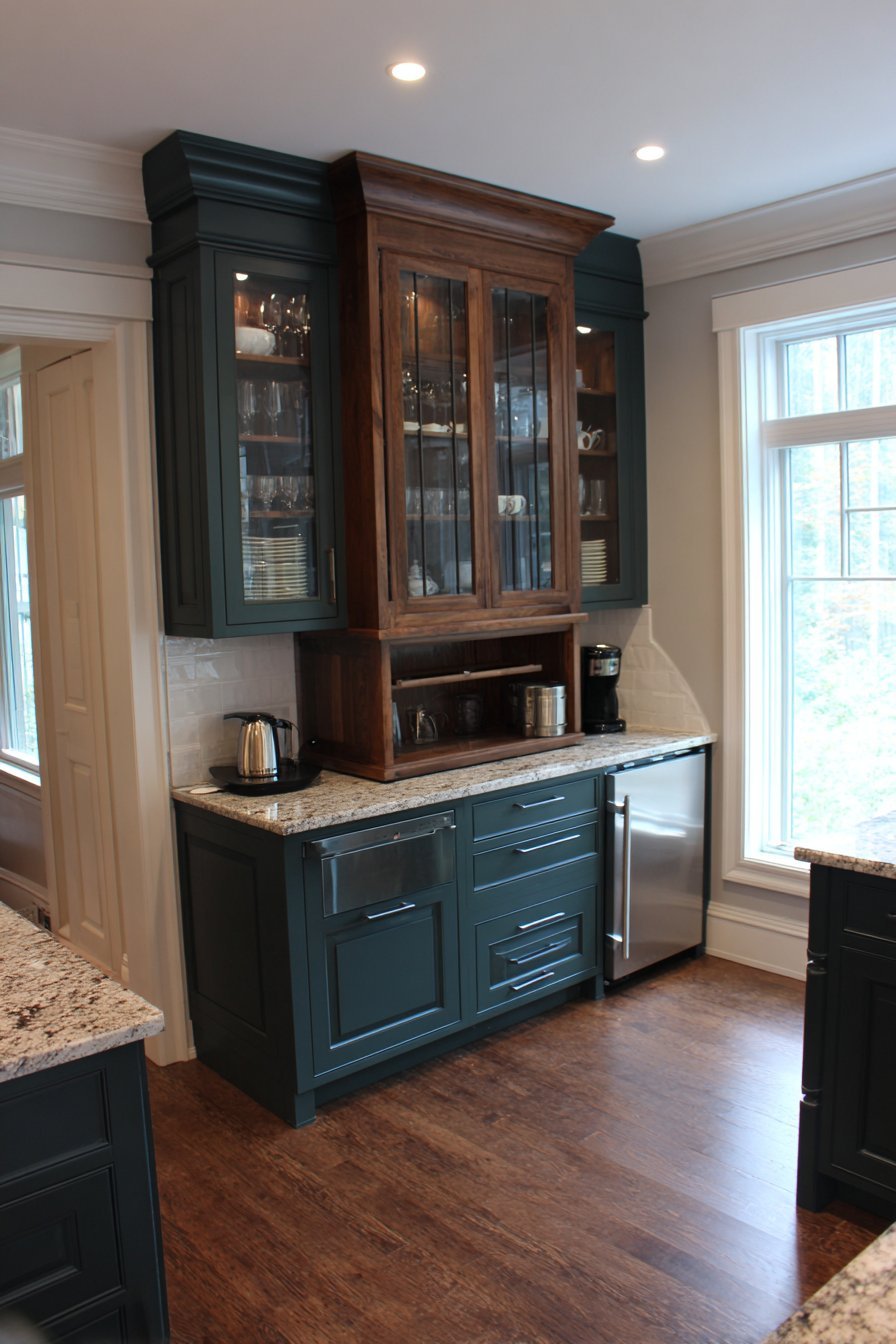
Glass-front upper doors reveal organized dishware as part of the design. The display becomes decoration while maintaining practical accessibility. Granite countertops in complementary earth tones bridge the color palette. A wood corbel detail supports a small section of open shelving.
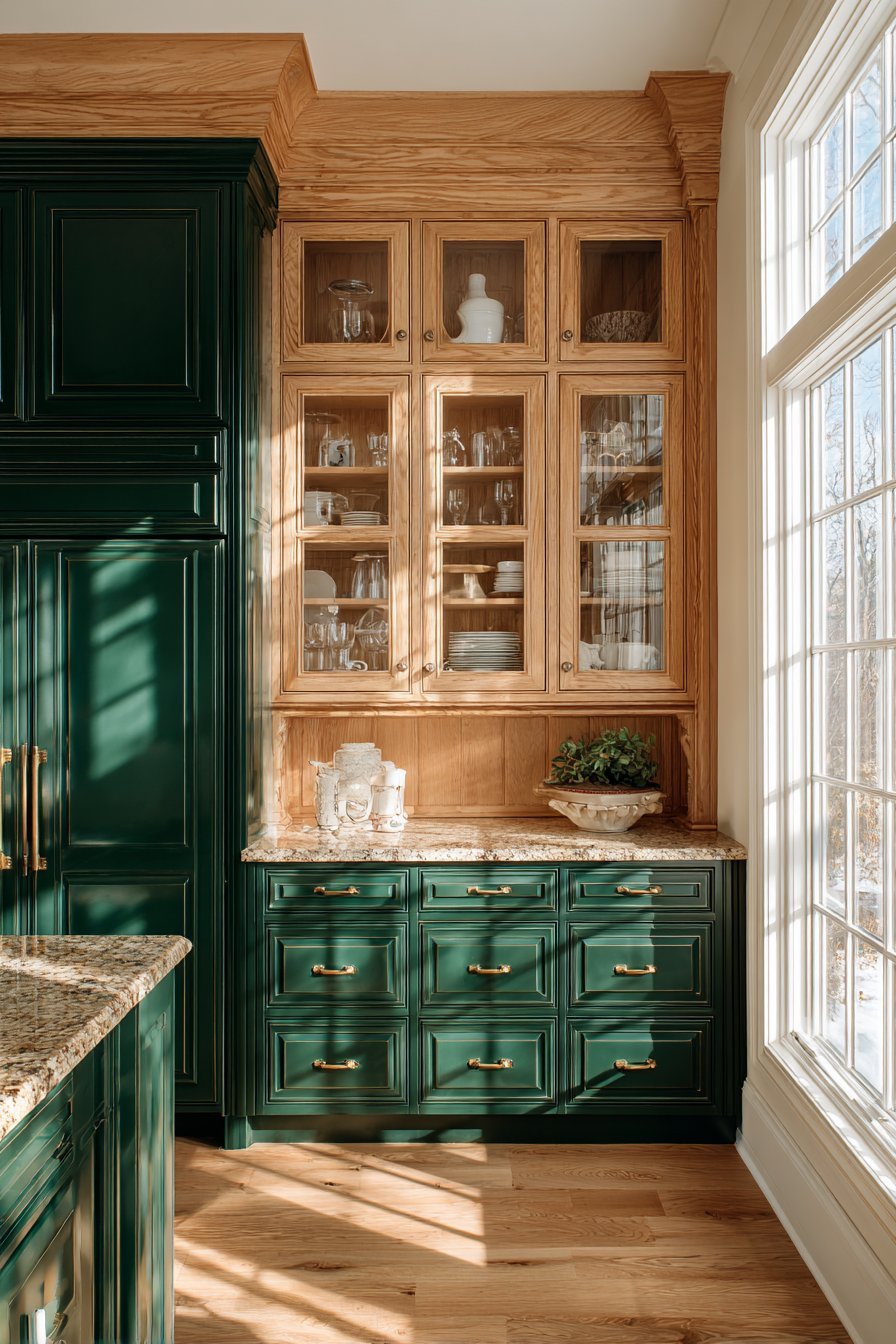
Natural wood molding frames the ceiling perimeter adding refined detail. Interior photography captures the classic transitional style beautifully. Craftsmanship details shine in both painted and natural wood cabinetry. Soft window light highlights warm cherry wood grain and rich green depth.
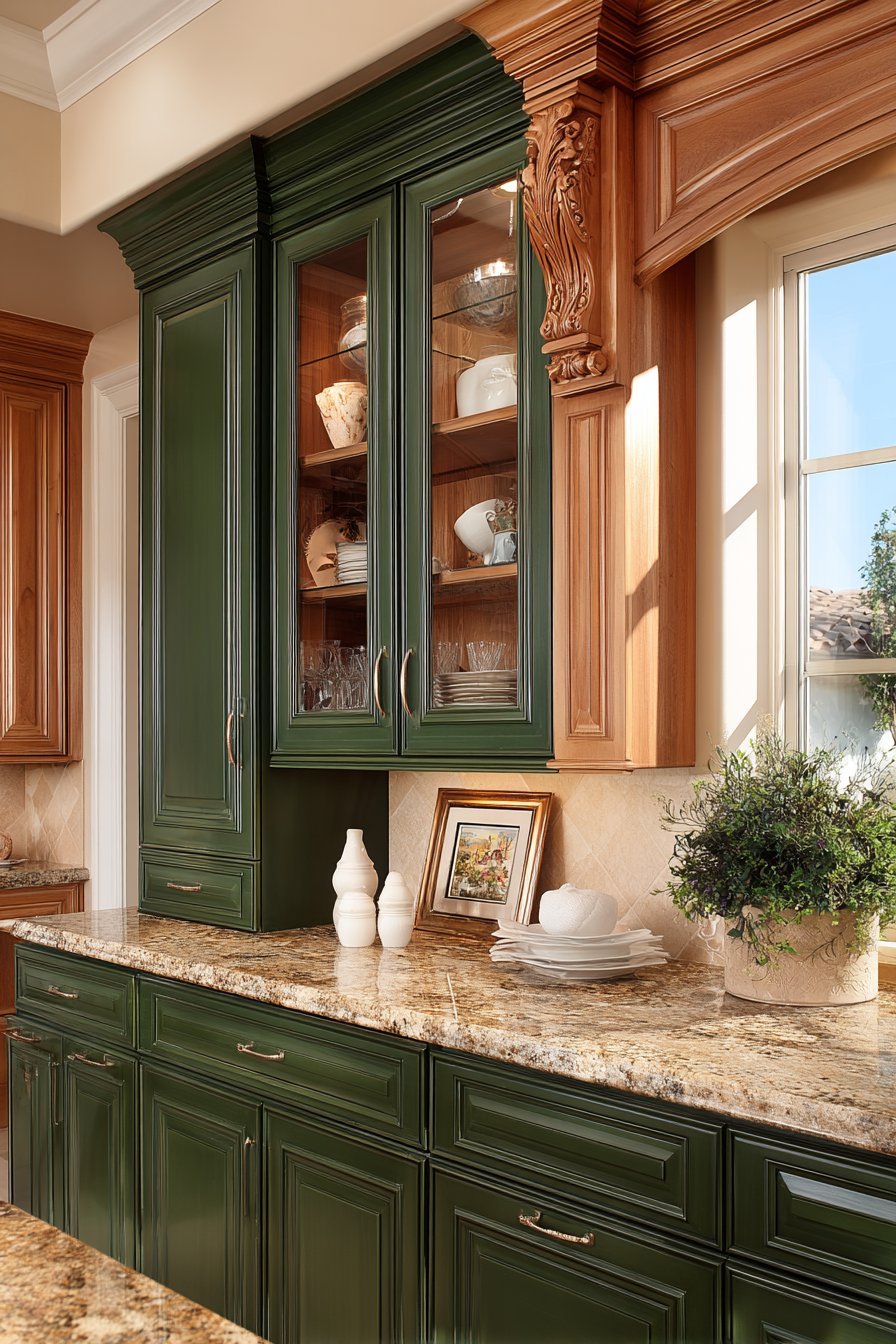
This kitchen demonstrates how transitional style bridges traditional and contemporary. Cherry wood adds warmth while green provides modern boldness. The combination feels both timeless and current. Quality materials and craftsmanship ensure longevity beyond trend cycles.
Key Design Tips:
- Use two-tone cabinetry with dark lowers and light uppers for balanced transitional style
- Choose raised panel doors on lower cabinets for traditional detail
- Install glass-front upper cabinets to display dishware and create visual lightness
- Select granite counters in earth tones to bridge wood and paint colors
- Add wood corbels and crown molding for refined traditional detailing
15. Corner Organization with Wood Interiors
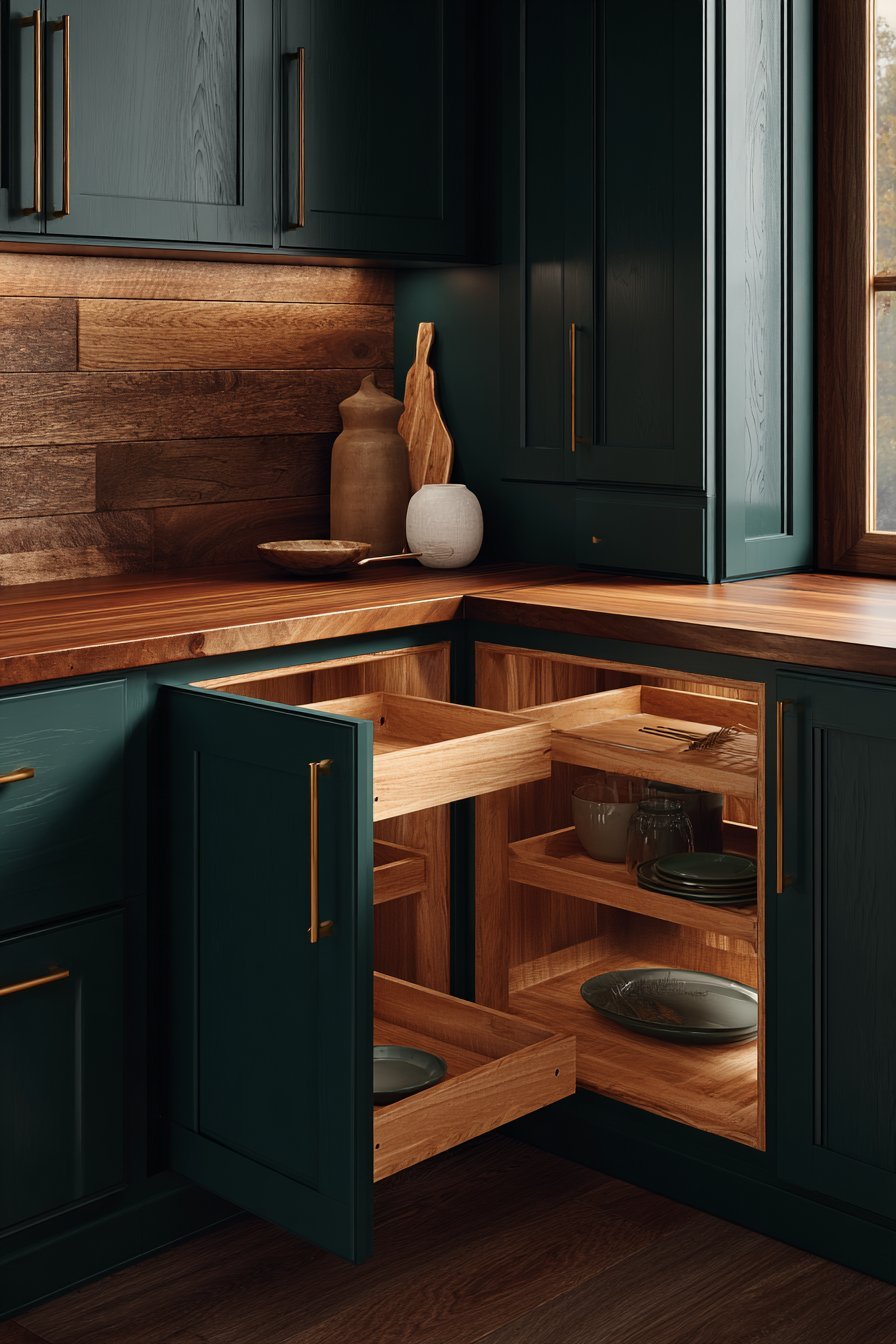
A custom lazy susan cabinet in dark green features natural wood interior organization. Pull-out shelves showcase beautiful wood grain and smooth rotation mechanisms. This functional beauty makes corner storage actually usable and attractive. Adjacent walls feature dark green shaker cabinets with walnut wood countertops.
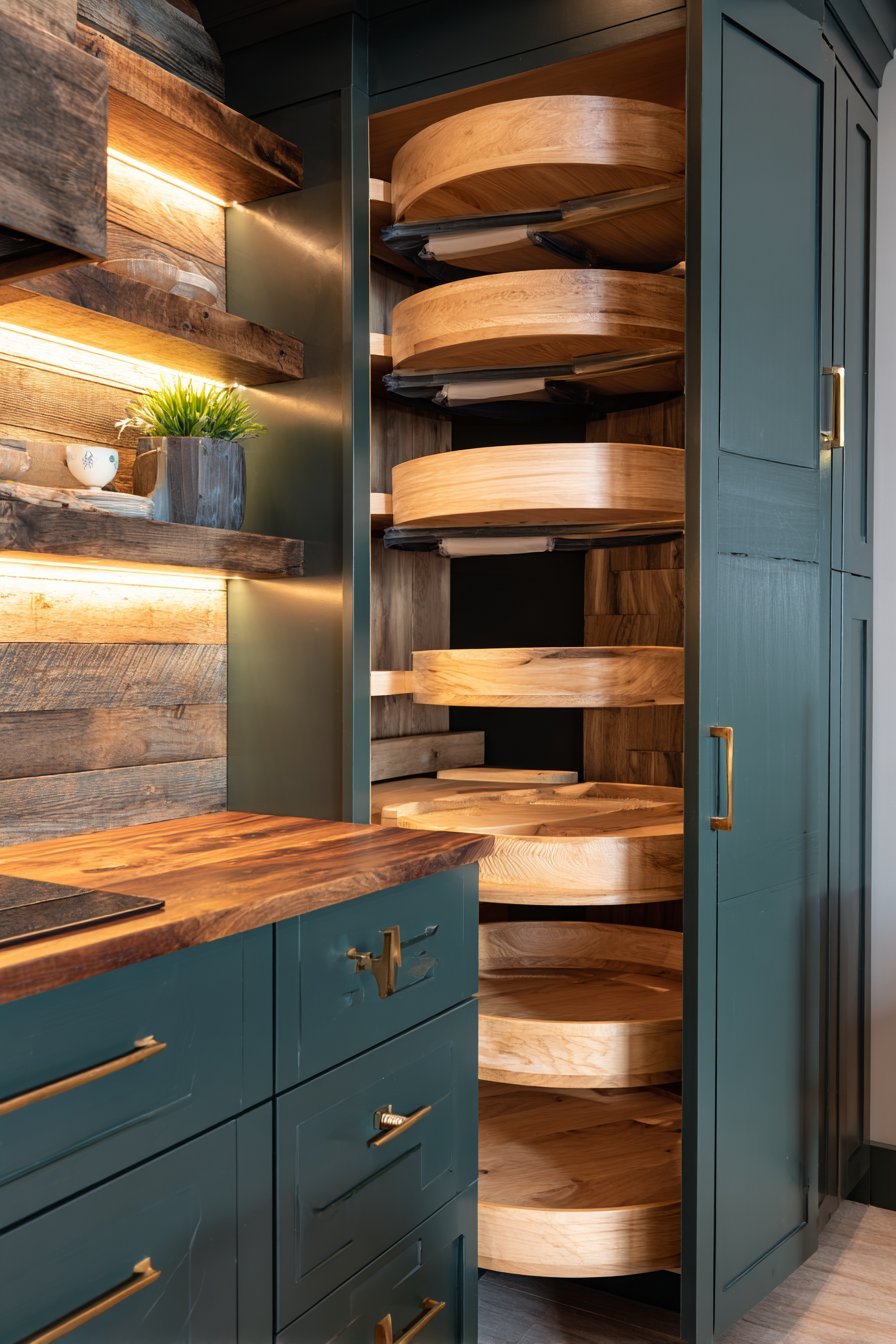
The countertop displays natural edge detail along one side. A small section of wood plank wall adds textural interest nearby. Brushed brass cup pulls catch and reflect available light beautifully. Close-up photography emphasizes functional beauty and quality cabinet organization.
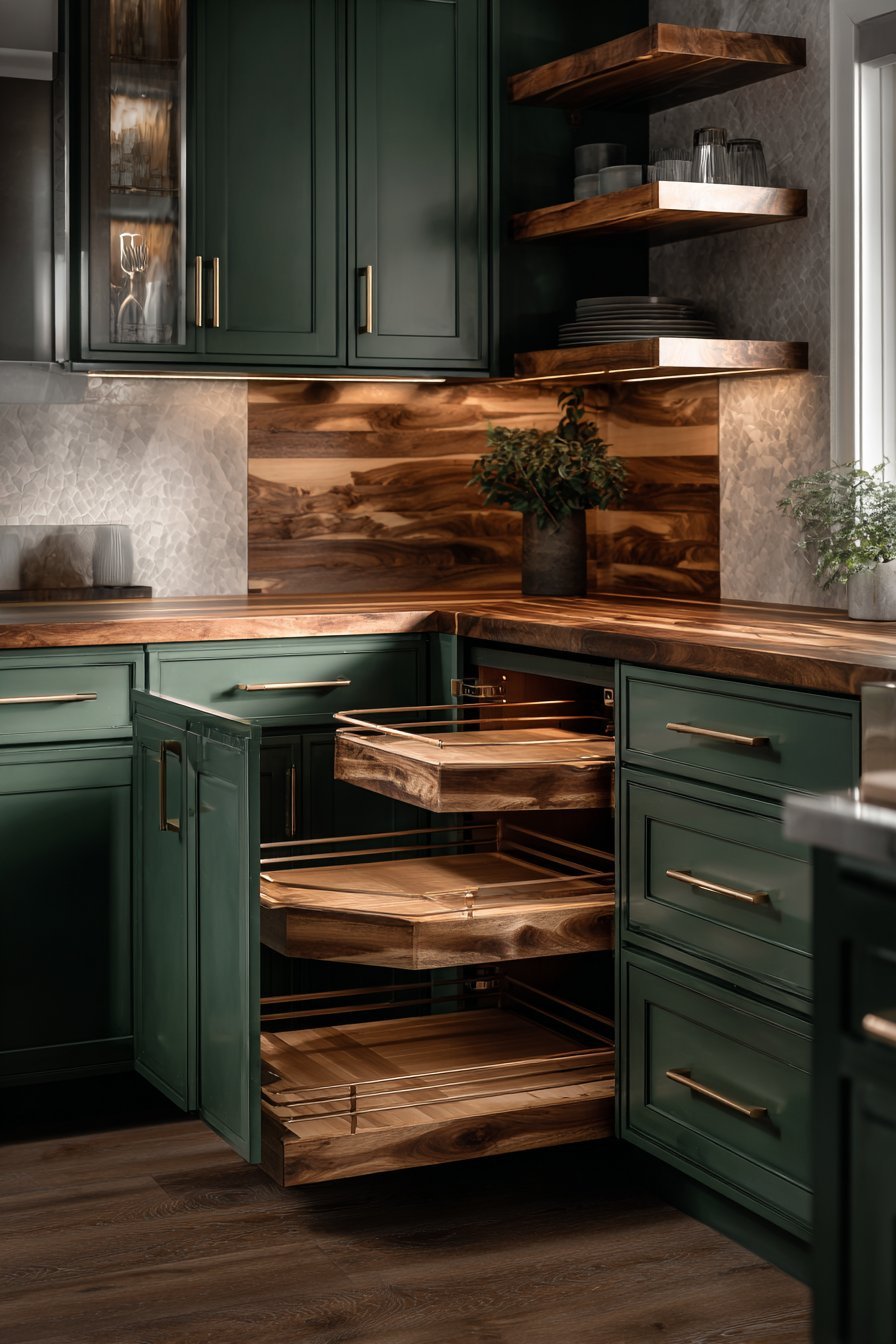
The contrast between painted exterior and natural wood interior delights users. This attention to hidden details demonstrates commitment to quality throughout. Dark green and wood elements integrate seamlessly in practical storage solutions. Lighting reveals wood grain detail and paint finish quality accurately.
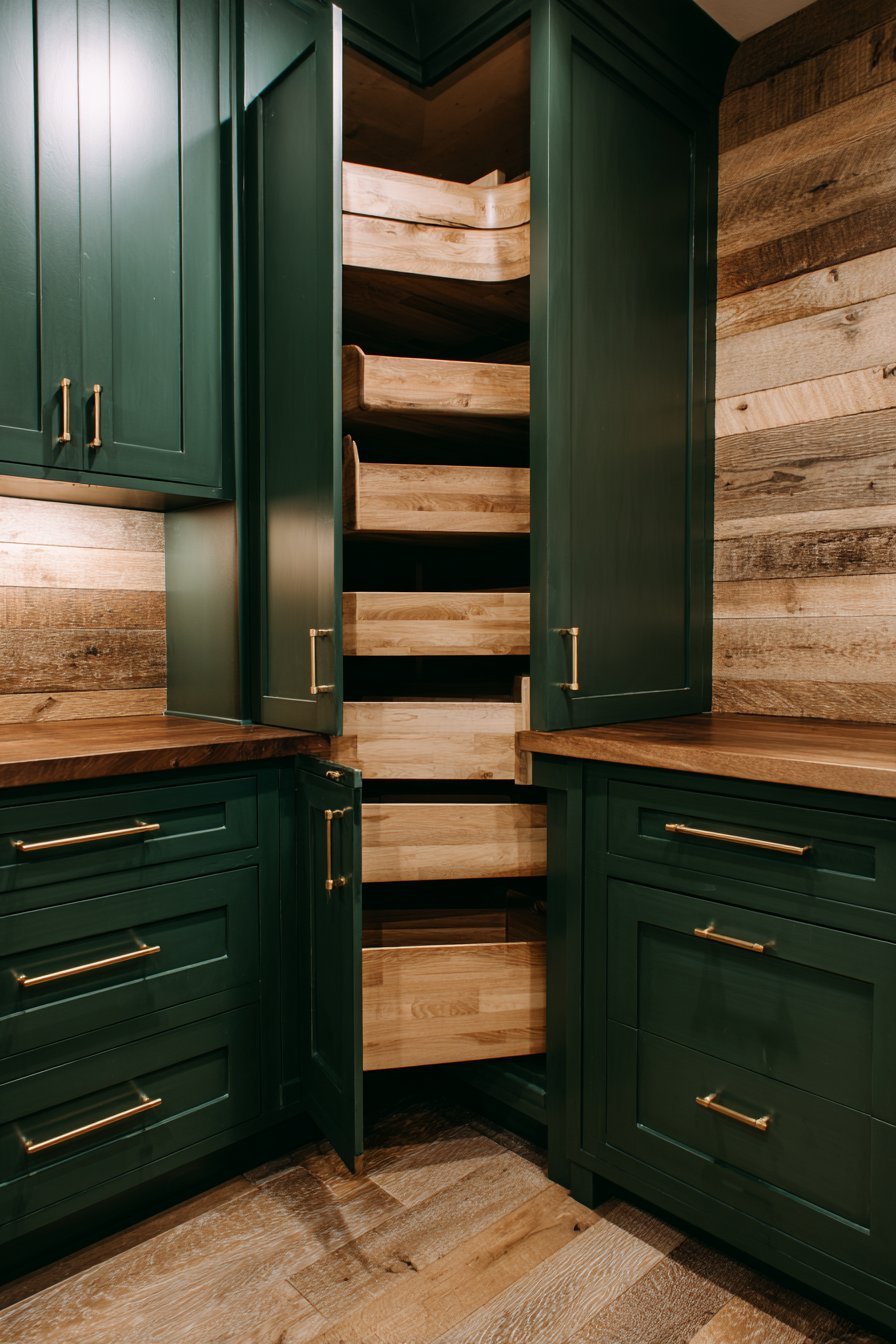
This corner detail proves that every kitchen inch deserves thoughtful design. Functional storage solutions can be beautiful when well-executed. The combination of dark green paint and natural wood interior creates surprise. Quality hardware ensures smooth operation for years of daily use.
Key Design Tips:
- Install lazy susan cabinets in corners to maximize typically wasted space
- Use natural wood for interior shelving to add warmth and quality feel
- Choose pull-out mechanisms with quality hardware for smooth daily operation
- Add natural edge details to countertops for organic visual interest
- Select brass cup pulls for traditional hardware that catches light beautifully
16. Industrial Metal and Reclaimed Wood Fusion
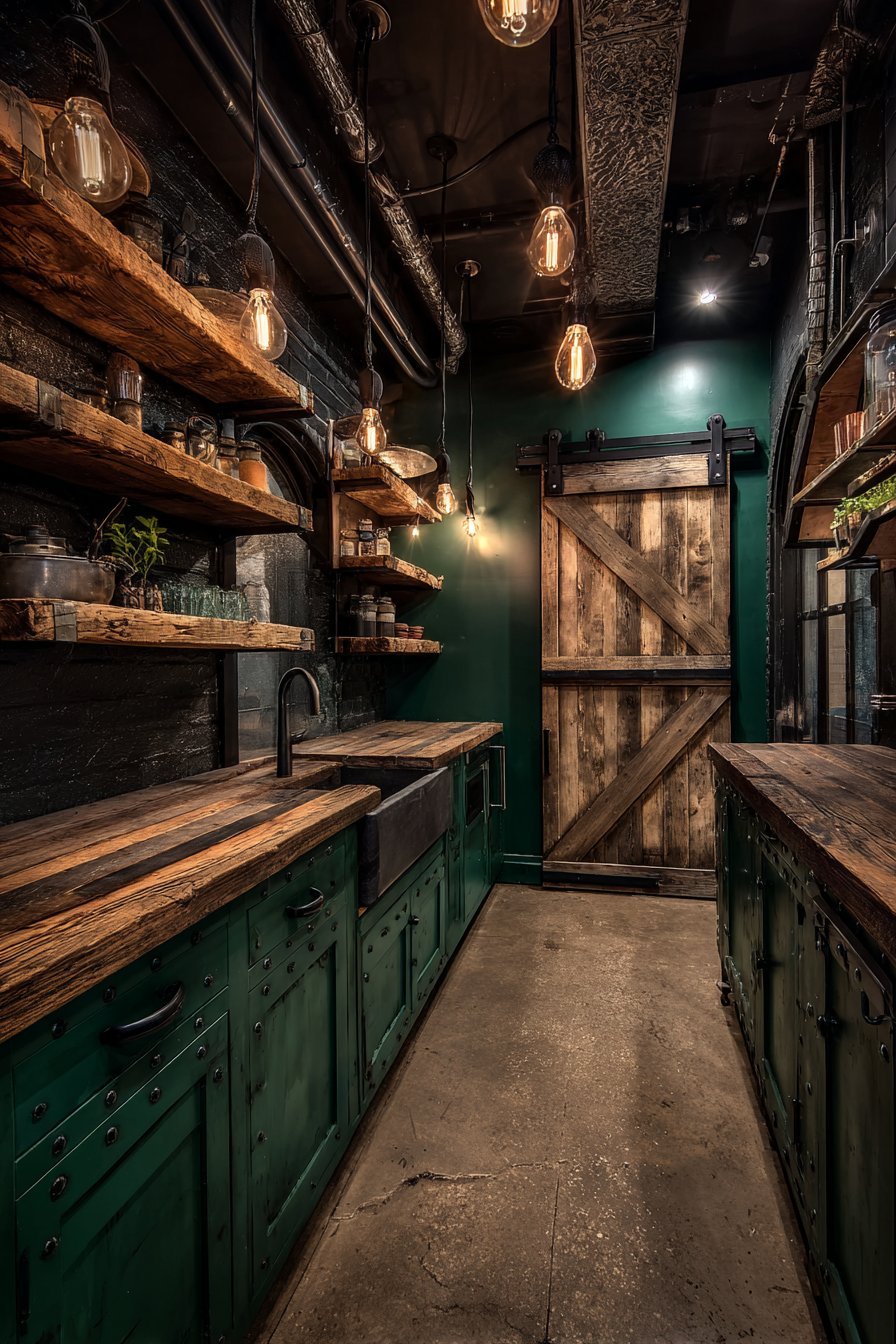
Dark green metal cabinets with rivet details bring industrial character. Reclaimed wood countertops show saw marks and natural imperfections proudly. These authentic material choices celebrate manufacturing heritage and material history. Open shelving uses thick reclaimed wood planks on black iron pipe brackets.
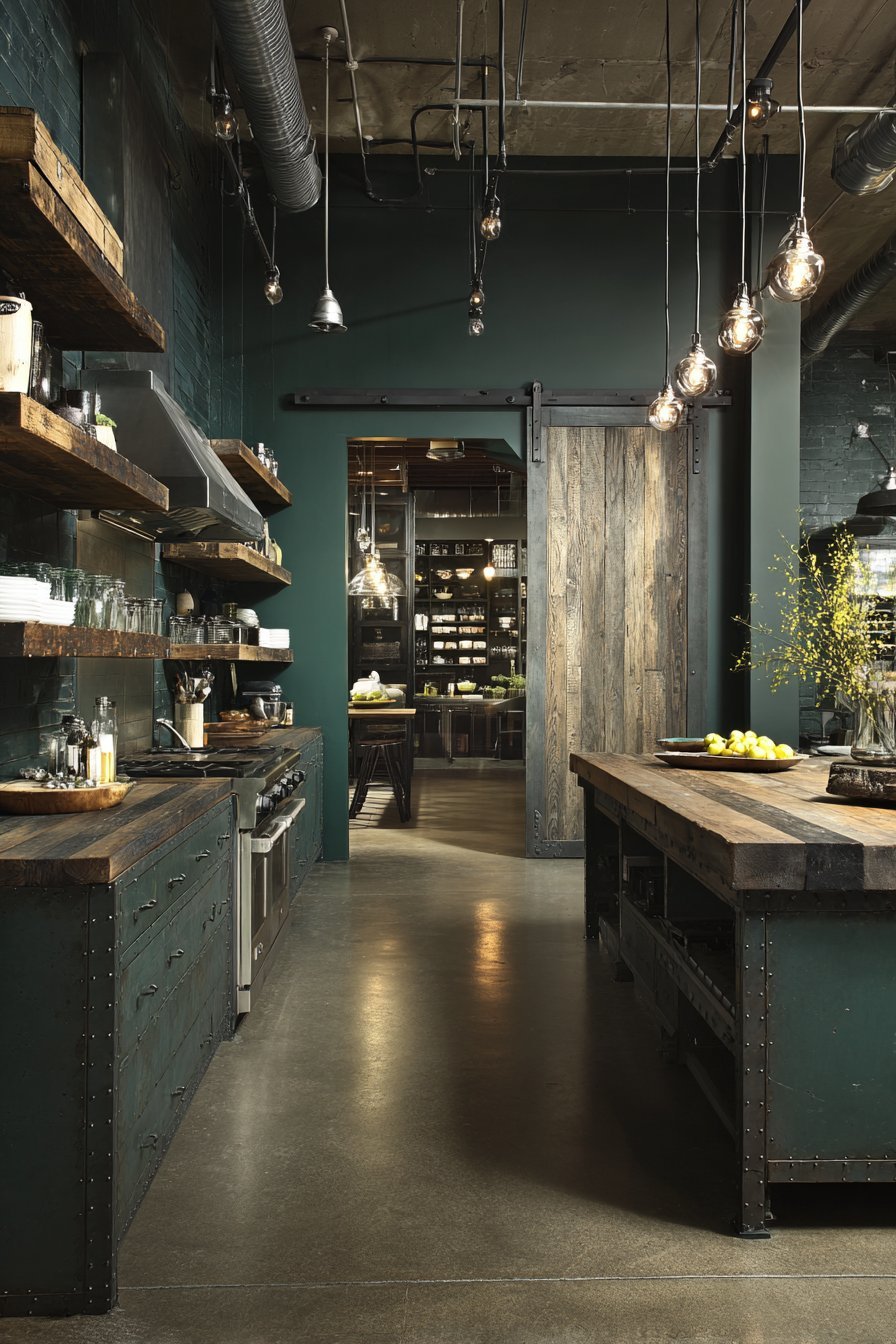
A sliding barn door in natural wood leads to the pantry. Visible grain and metal hardware reinforce the industrial aesthetic throughout. Concrete floors and exposed ductwork add raw architectural honesty. Edison bulb pendant lights provide ambient industrial glow.
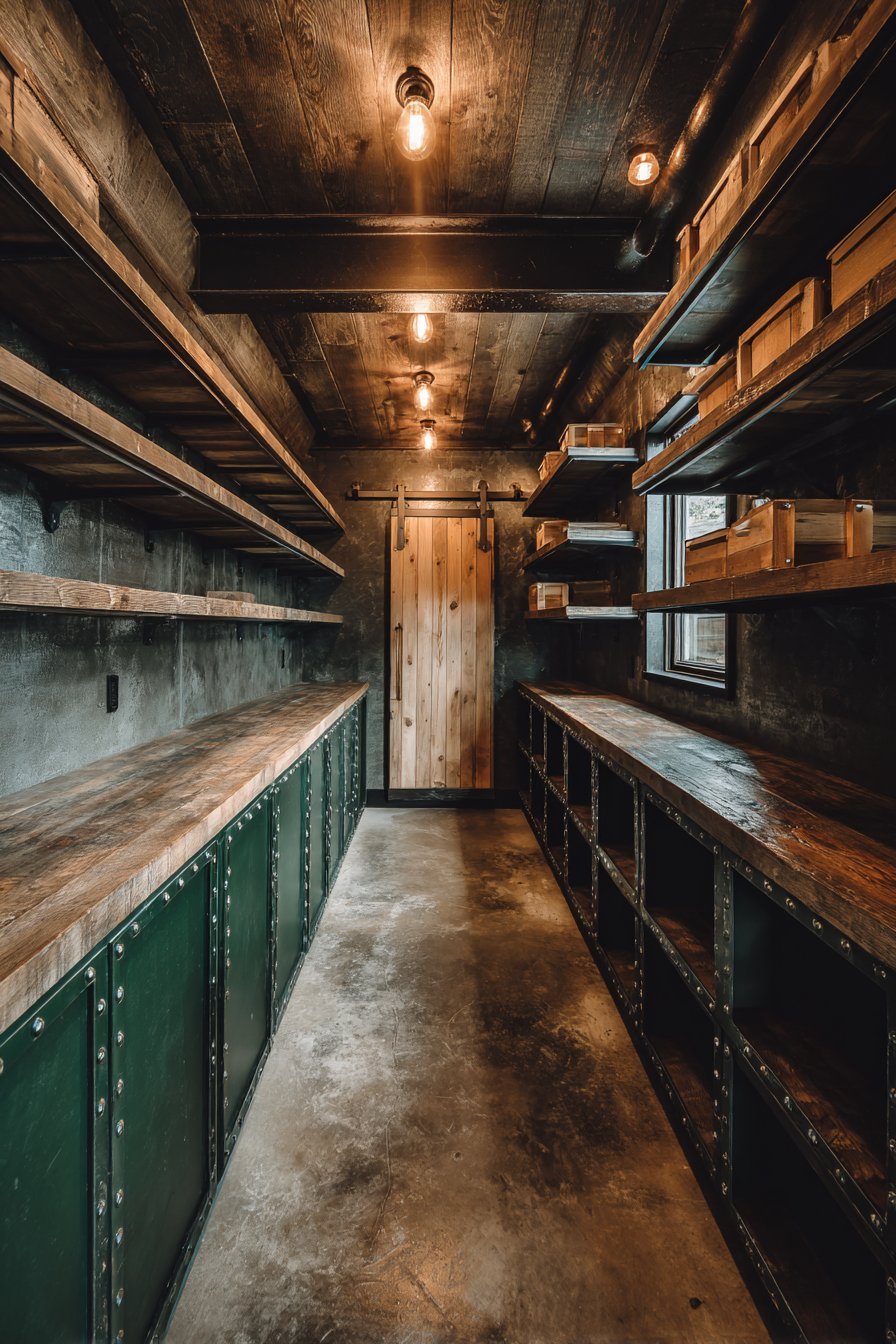
Wide-angle photography captures the successful industrial material fusion. Dark green metal elements pair surprisingly well with salvaged wood components. Authentic material textures create character that new materials cannot replicate. Balanced lighting emphasizes raw material beauty and edgy character.
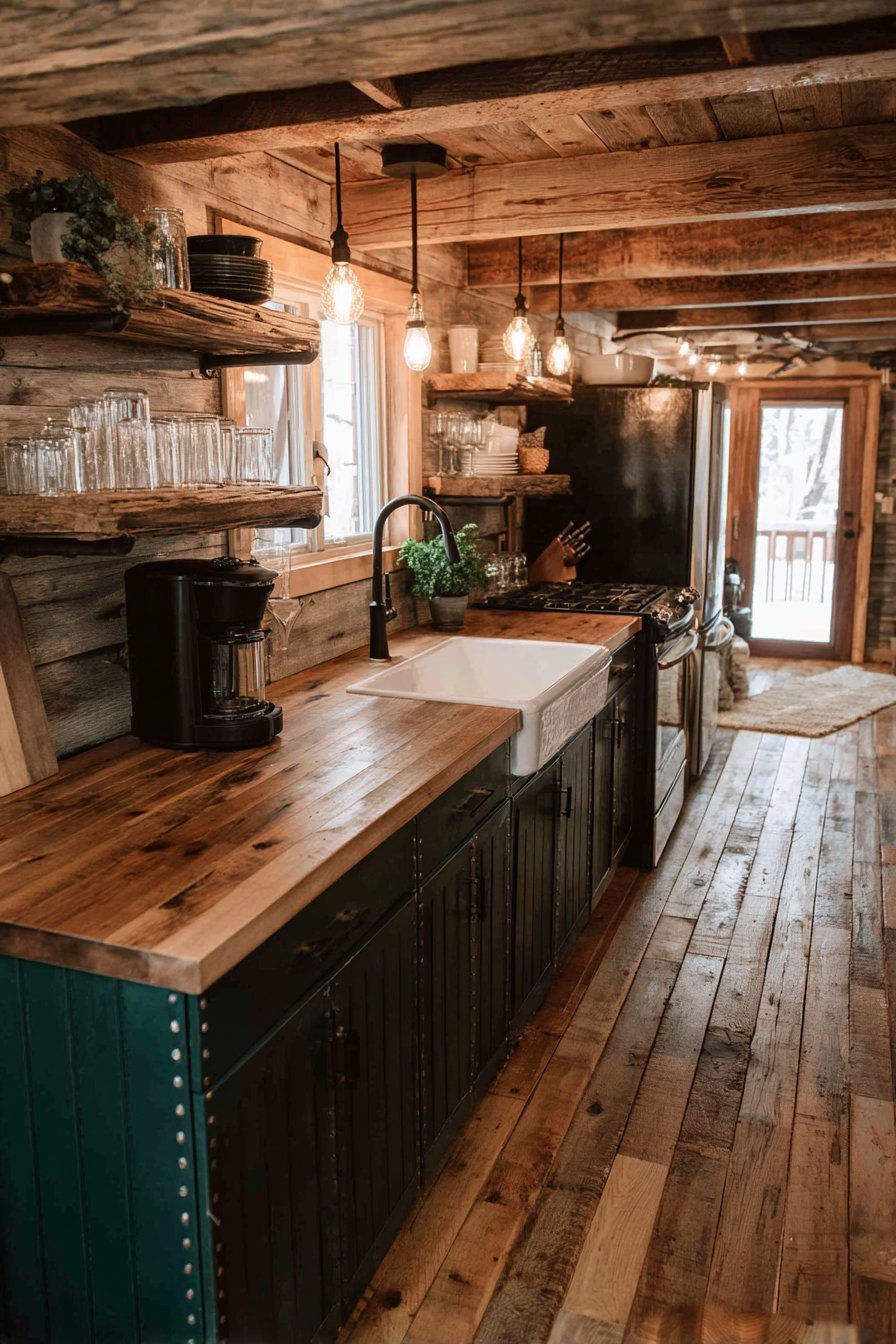
This kitchen demonstrates that industrial style adapts beautifully to residential settings. The dark green metal provides unexpected color in industrial palettes. Reclaimed wood softens the harder metal and concrete elements. The result feels both tough and inviting simultaneously.
Key Design Tips:
- Choose metal cabinets with rivet details for authentic industrial character
- Select reclaimed wood counters with visible saw marks and imperfections
- Install thick wood shelving on iron pipe brackets for industrial open storage
- Add sliding barn doors with metal hardware for functional space division
- Use Edison bulb pendant lights to provide warm ambient industrial lighting
17. Live-Edge Peninsula with Walnut Countertop
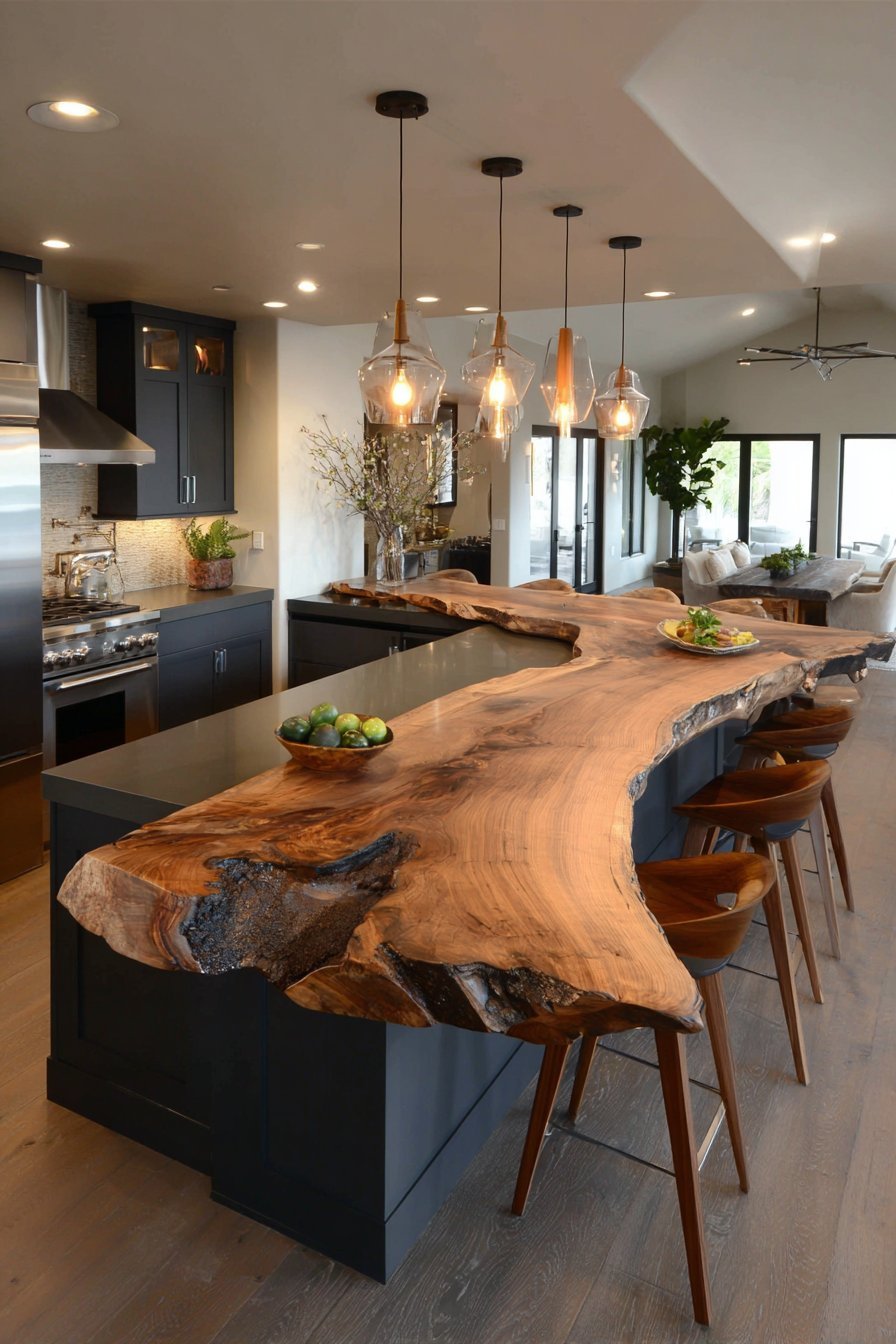
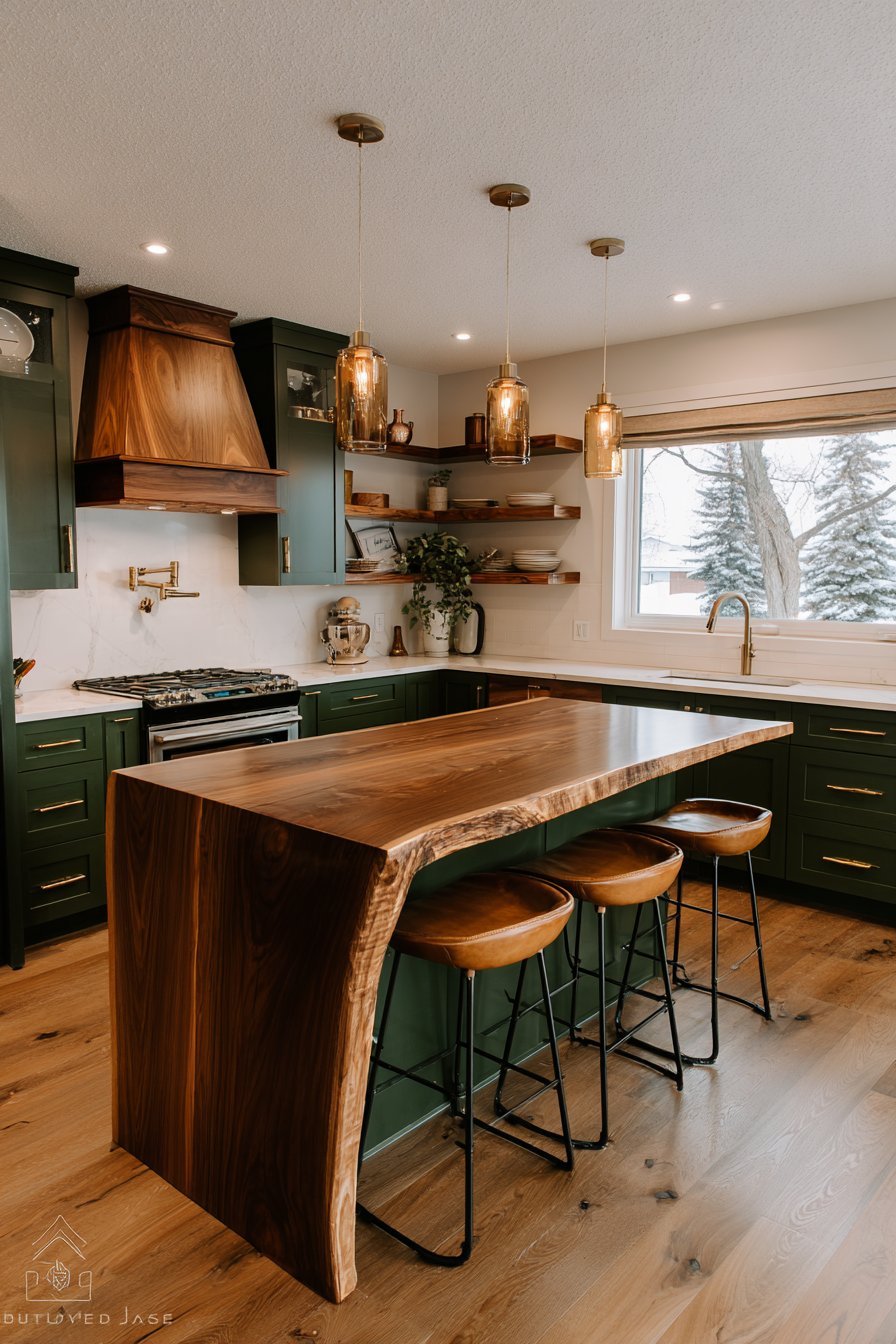
A dark green base extends into an L-shaped peninsula configuration. Live-edge walnut wood countertop creates dramatic organic visual interest. The natural edge curves beautifully, creating additional seating space naturally. Three modern wooden bar stools with tapered legs provide comfortable seating.
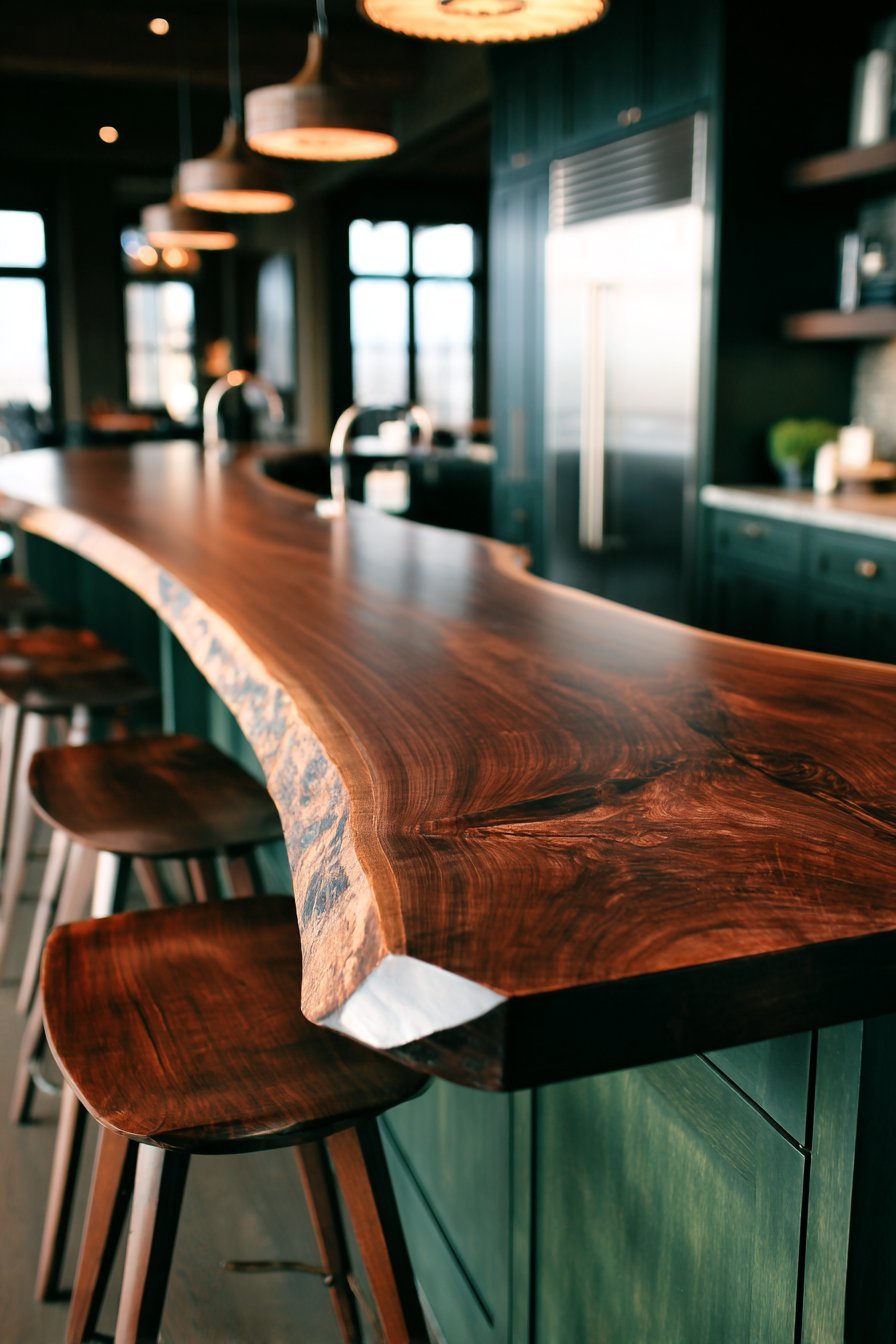
Pendant lights with wood and metal construction hang above the peninsula. These fixtures combine materials present throughout the broader kitchen. The peninsula provides spatial division between kitchen and dining areas. Visual connection maintains openness while defining functional zones.
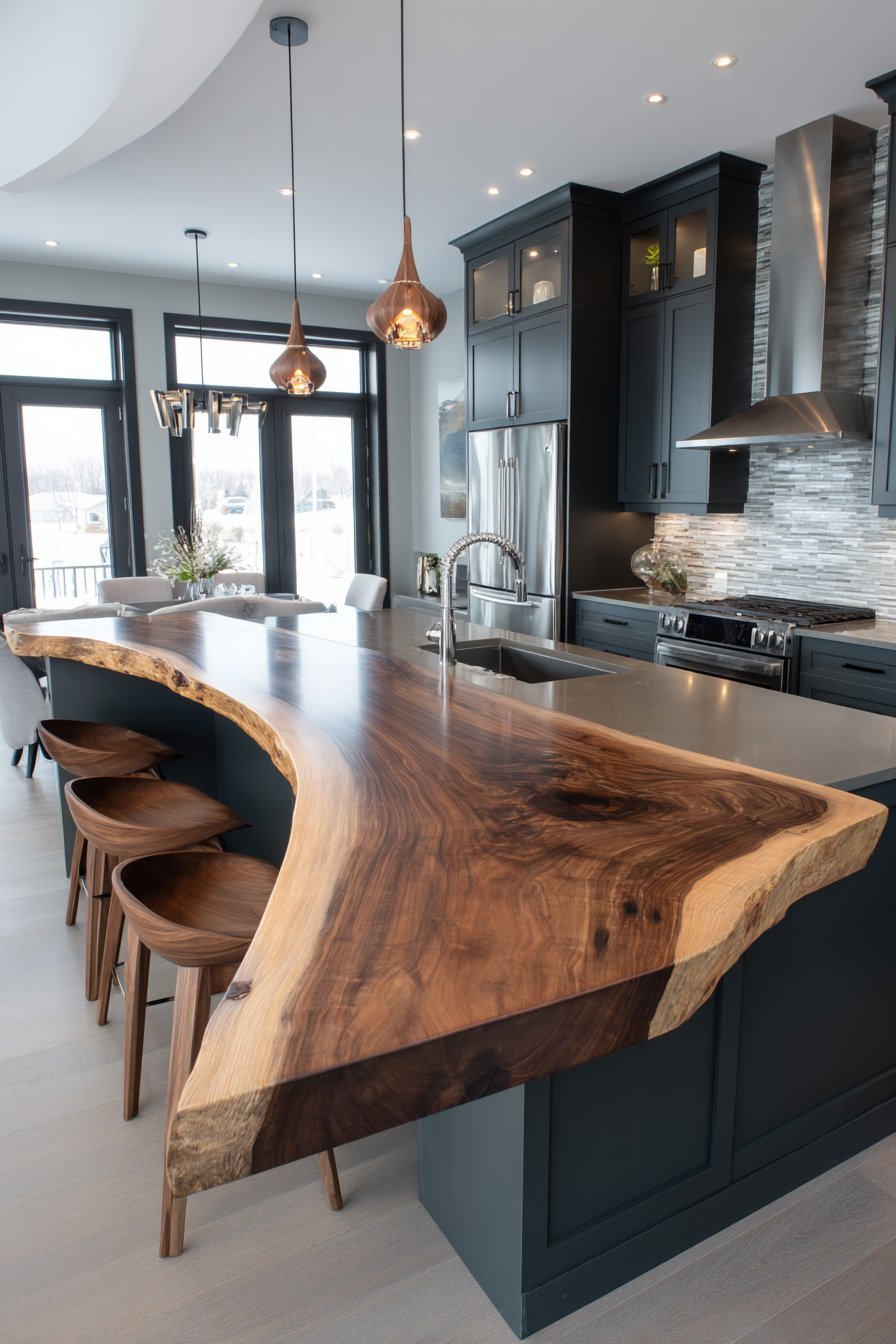
Photography captures the peninsula from angles showcasing the dramatic live-edge. The relationship between dark green painted base and organic wood top shines. Natural lighting highlights the unique wood grain pattern and natural edge. Each piece of live-edge wood is completely unique and unrepeatable.
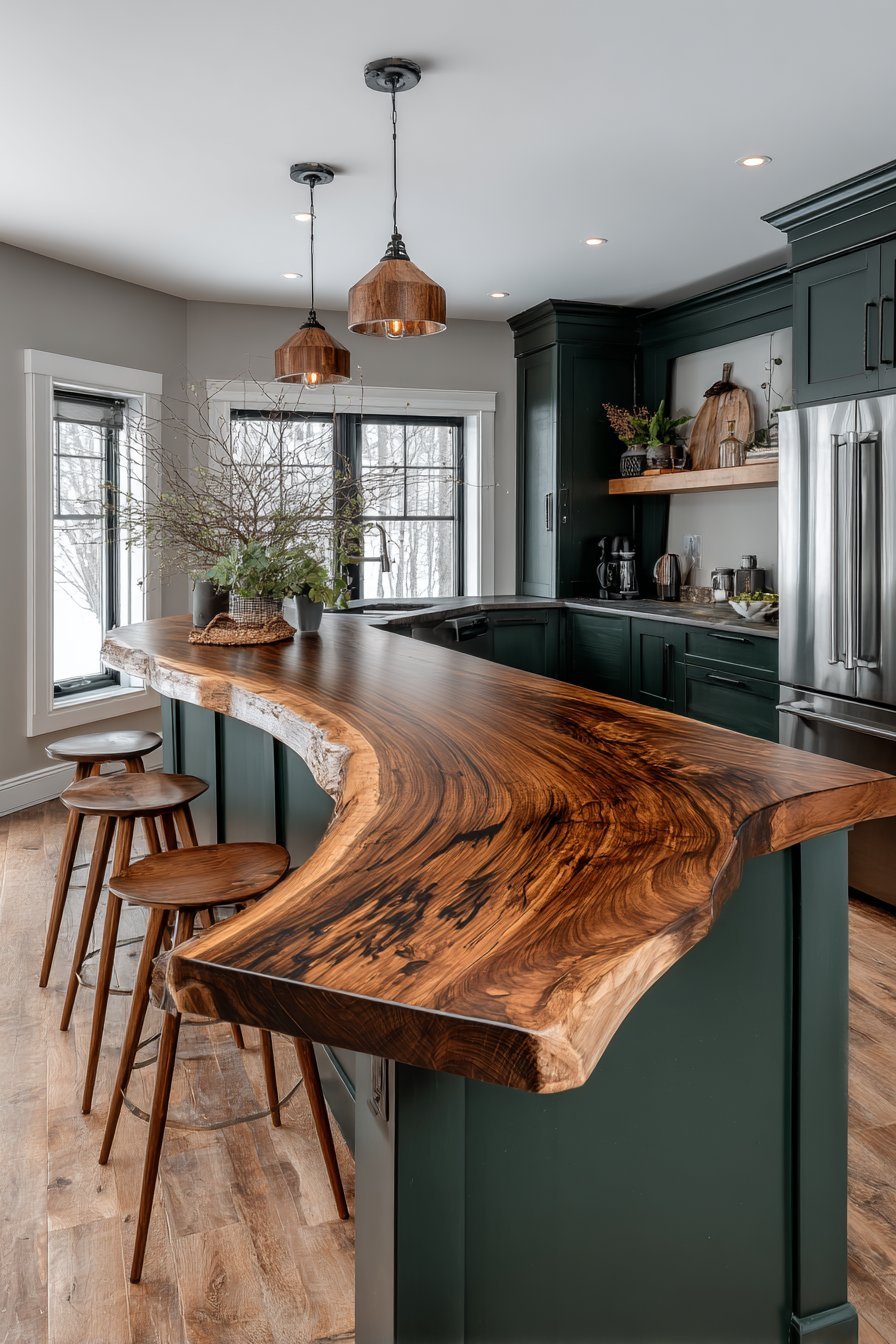
This peninsula demonstrates how organic elements add personality to kitchens. The live-edge detail becomes a conversation starter at every gathering. Dark green base grounds the lighter wood countertop visually. The combination of materials creates both beauty and practical function.
Key Design Tips:
- Use live-edge wood for peninsula countertops to create dramatic focal points
- Extend base cabinetry into L-shapes to define kitchen and dining zones
- Select modern bar stools with tapered legs for clean contemporary seating
- Hang pendant lights combining wood and metal to tie materials together
- Allow the natural wood edge to determine seating placement organically
18. Vintage Hoosier-Style Cabinet Design
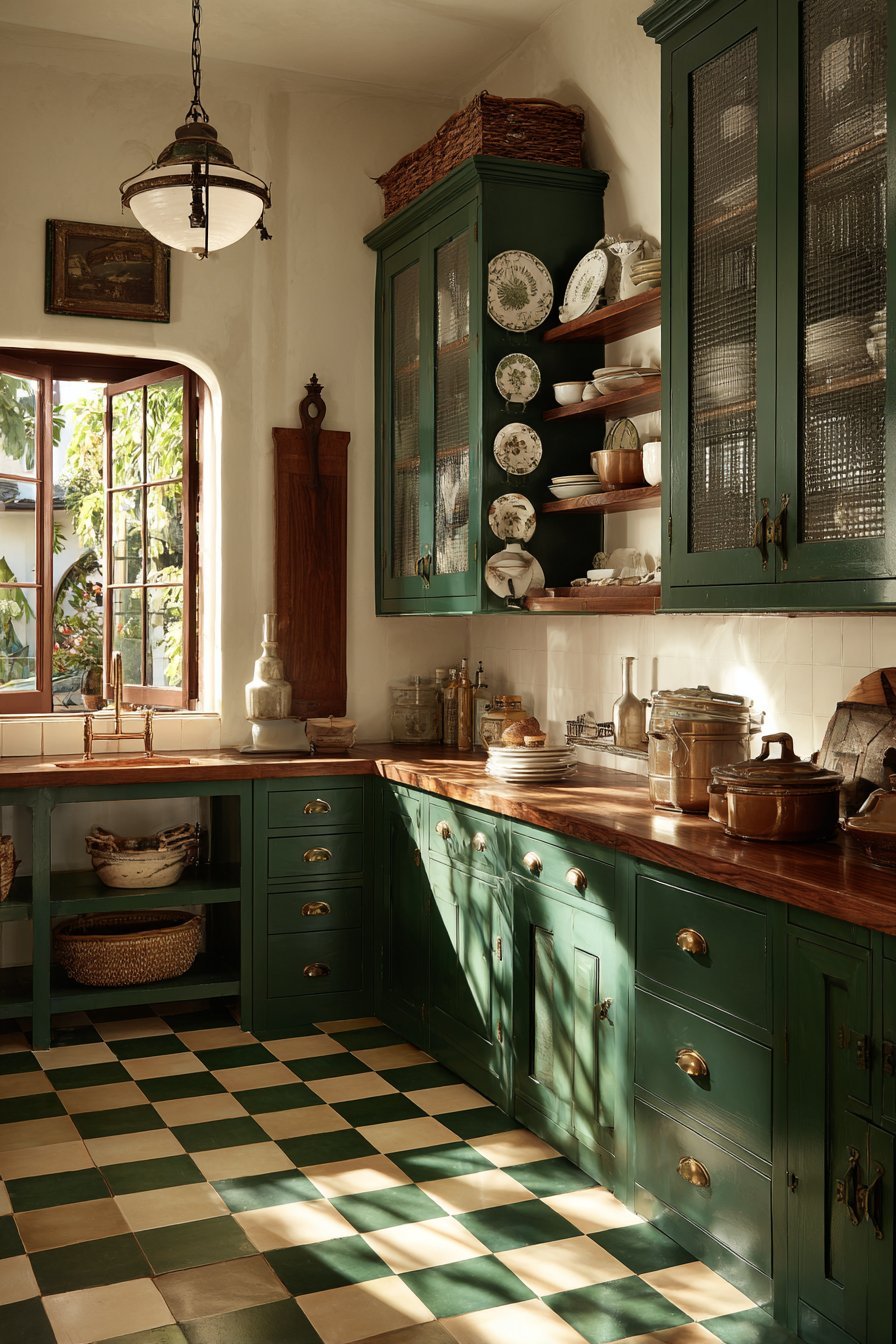
Dark green painted Hoosier-style cabinets feature original-style hardware authentically. Wood countertop work surfaces provide practical preparation areas. Upper cabinets have frosted glass doors with wooden mullions. Vintage dishware visible through glass becomes part of the decoration.
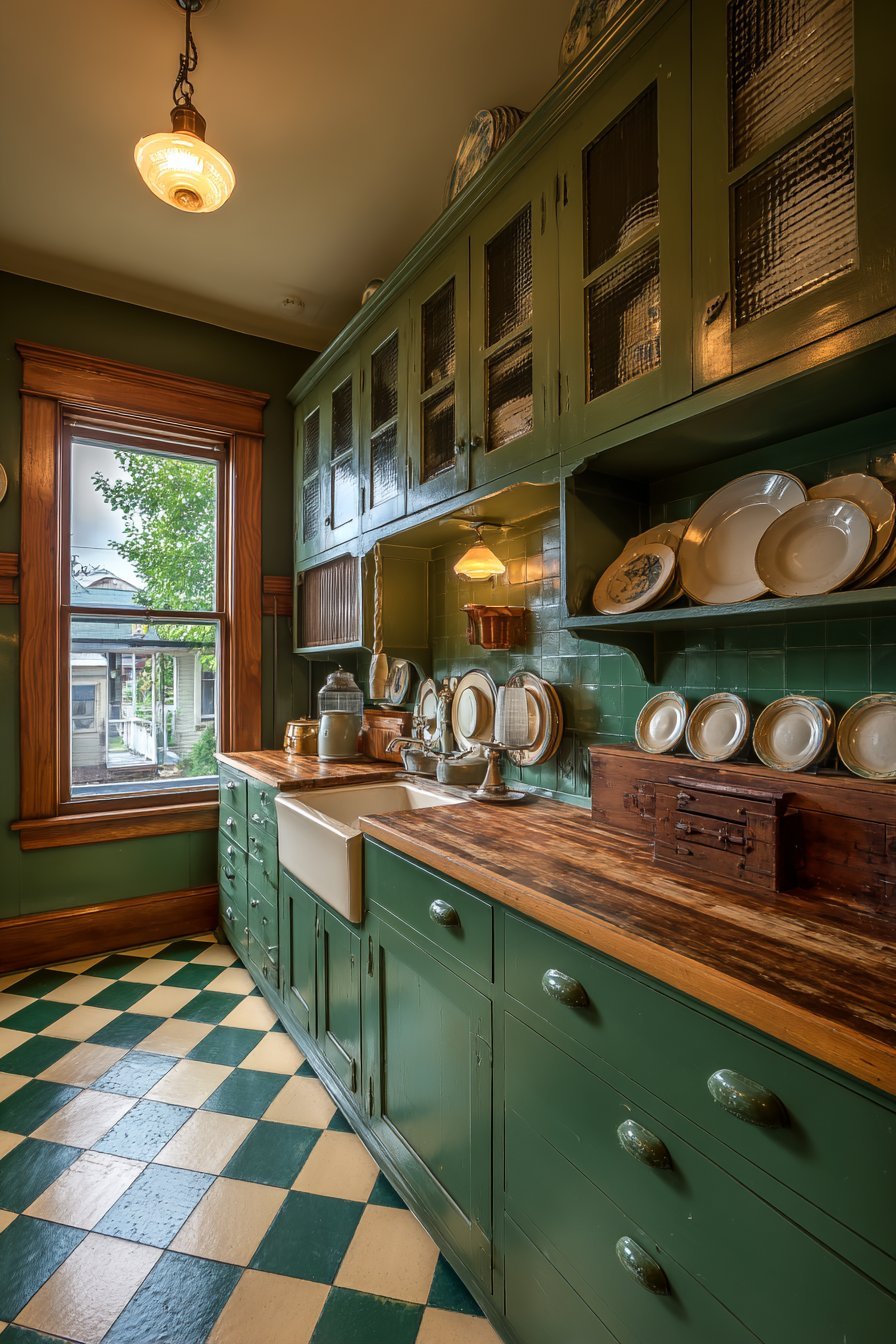
A wooden plate rack attached to the wall displays ironstone plates. Checkerboard floor tiles in cream and dark green anchor the vintage aesthetic. Period-appropriate light fixtures with glass shades provide illumination. Natural light through wooden sash windows creates authentic vintage atmosphere.
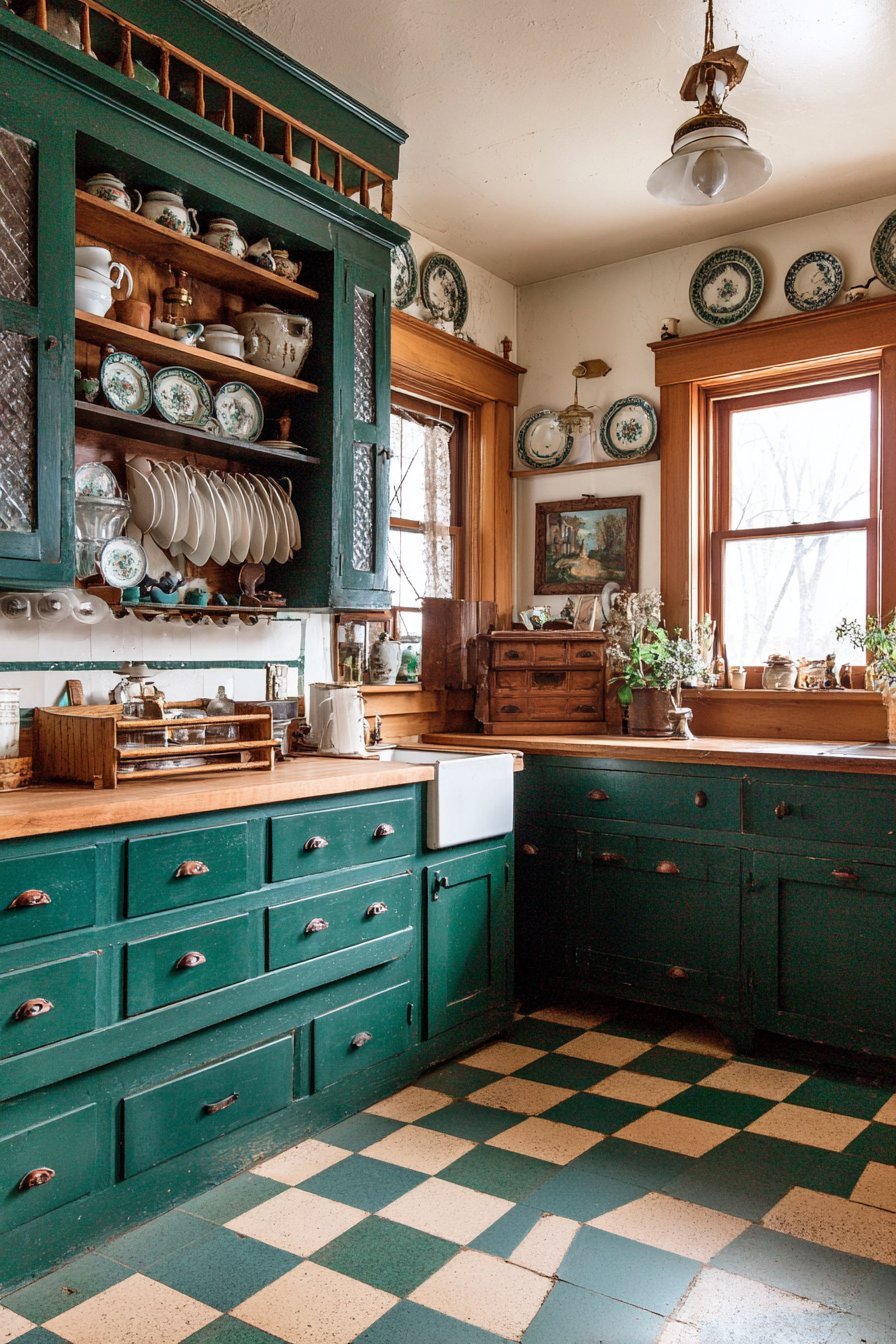
Interior photography captures the nostalgic charm with period accuracy. Dark green painted cabinets and natural wood surfaces evoke early 1900s design. Soft natural lighting enhances the vintage character throughout. Every detail contributes to the authentic historical feeling.
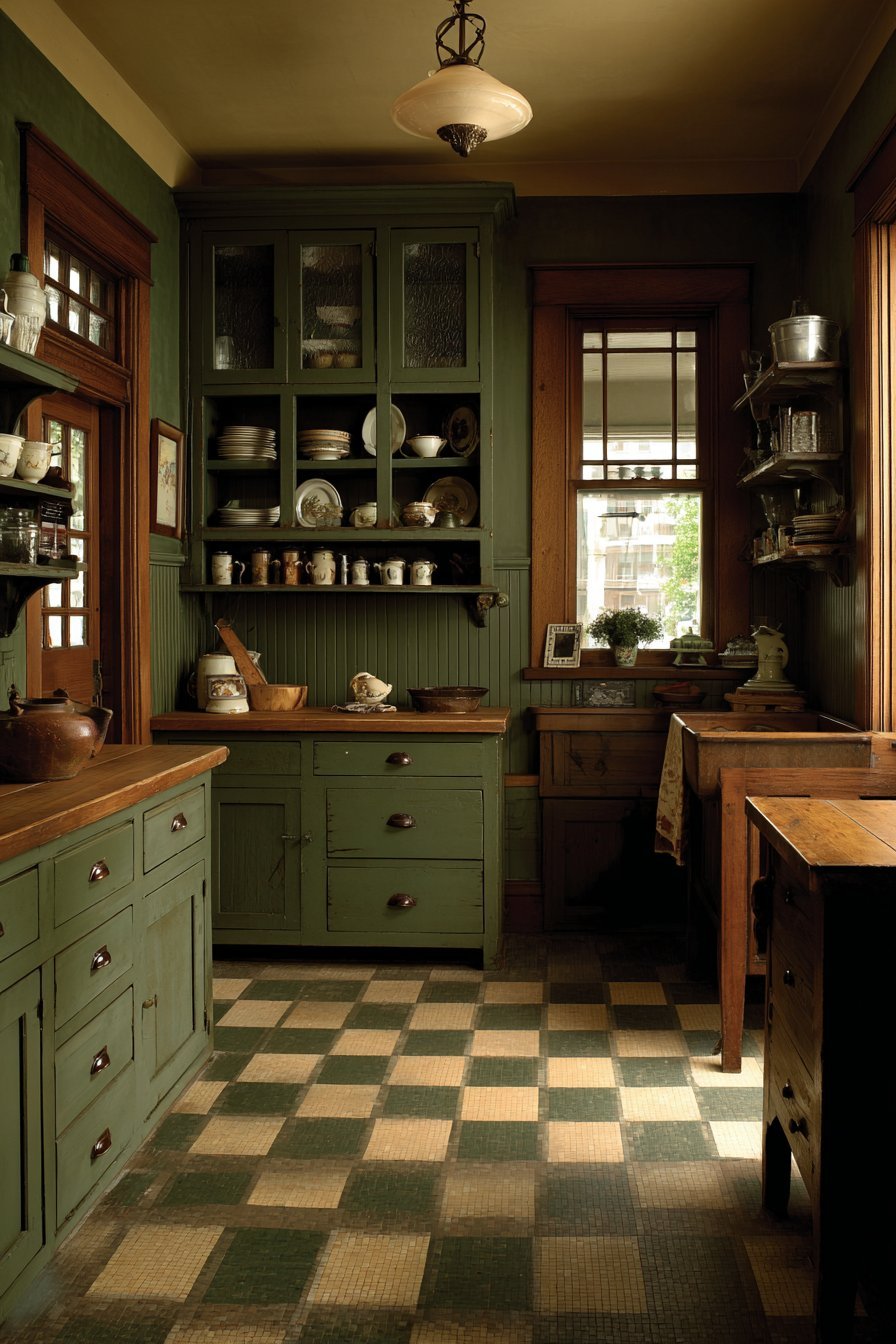
This kitchen demonstrates that vintage styles remain relevant and beautiful. The Hoosier-style cabinets provide both nostalgia and practical function. Dark green paint was popular in the period being referenced. Wood work surfaces have always been kitchen staples for good reason.
Key Design Tips:
- Choose Hoosier-style cabinets for authentic early 20th century kitchen character
- Install frosted glass upper cabinet doors to display vintage dishware
- Add wooden plate racks to walls for decorative functional display
- Use checkerboard floor tiles to reinforce vintage period aesthetics
- Select period-appropriate light fixtures with glass shades for authentic illumination
19. Window-Focused Workspace with Roman Shades
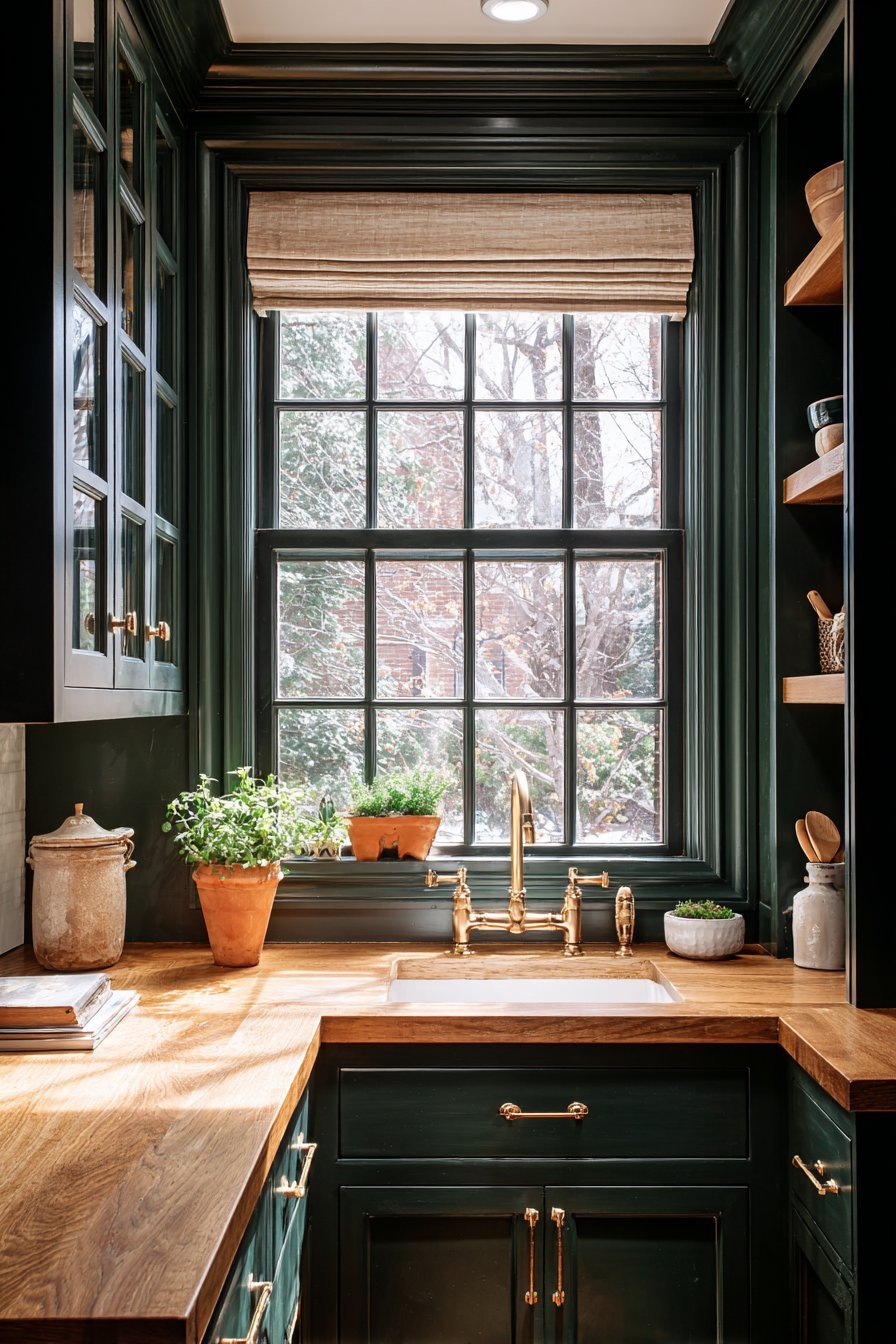
A large window features dark green painted casing and trim. Natural wood Roman shades in light linen fabric diffuse incoming sunlight. The window sill in natural wood displays small potted herbs. Terracotta pots add earthy warmth and living greenery to the workspace.
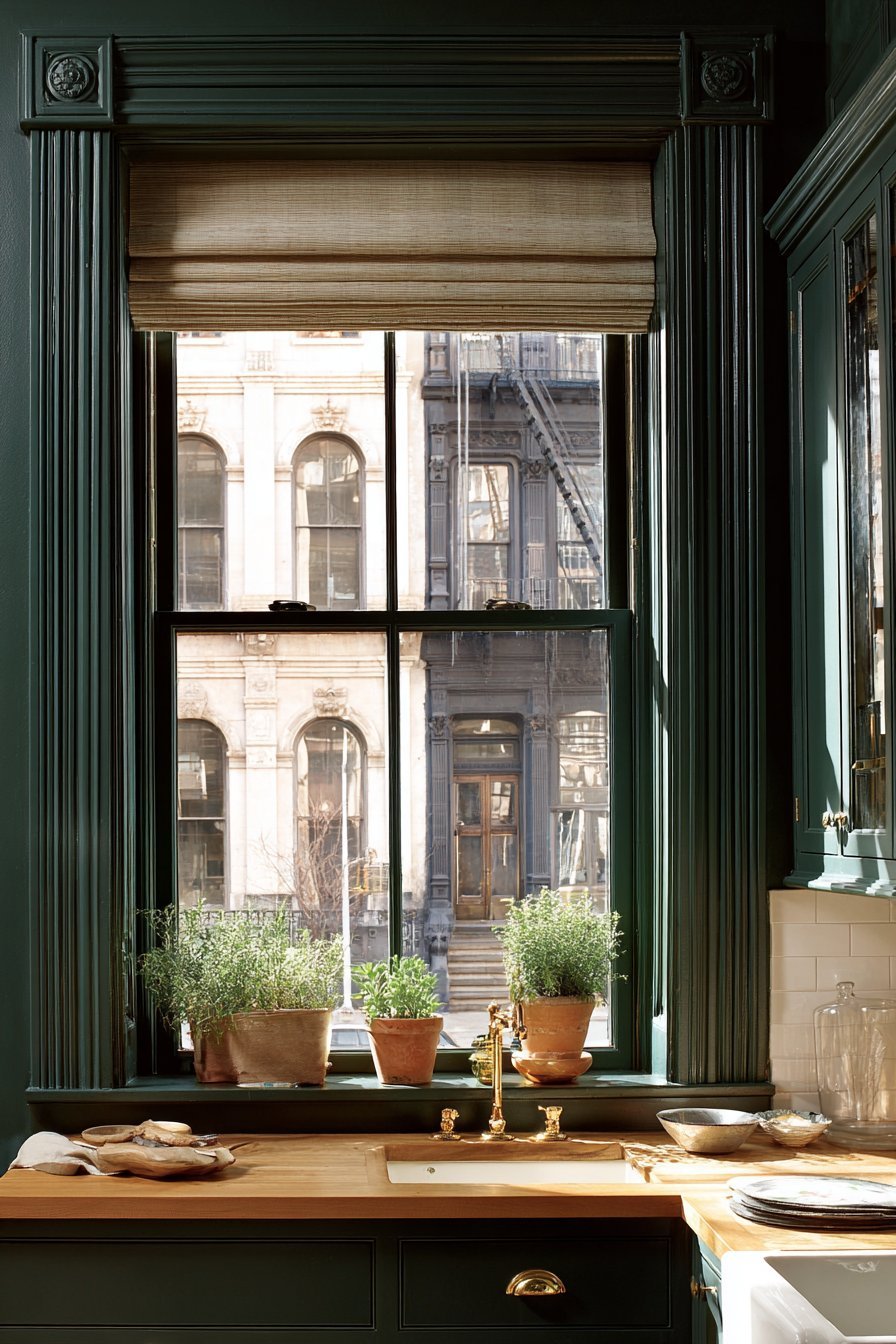
Dark green lower cabinets flank the window on both sides. Wood countertops extend to create small workspace directly at the window. This positioning takes advantage of natural light for food preparation. Brass hardware and faucet complement warm wood tones throughout.
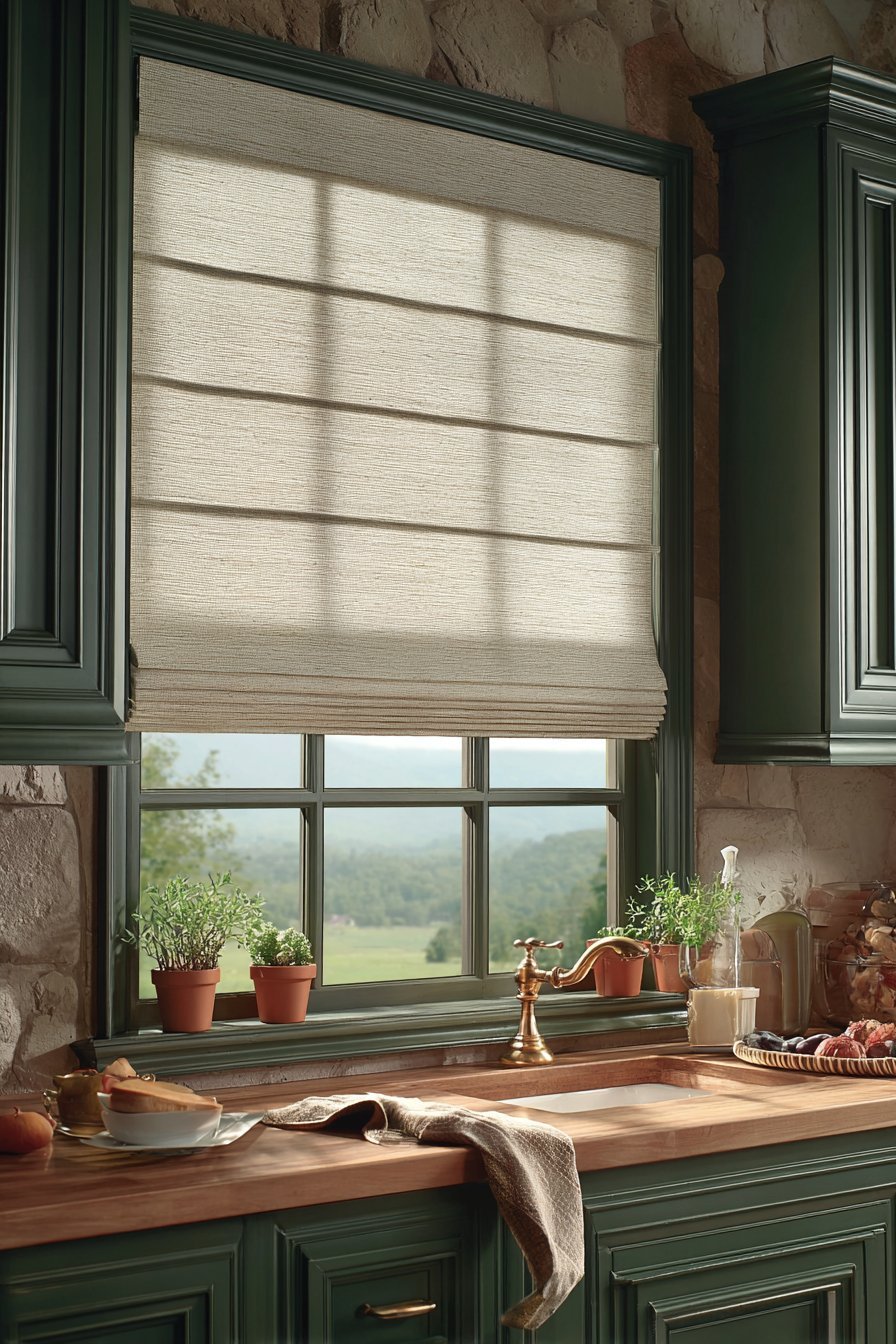
Detail-oriented photography focuses specifically on the window area. Dark green painted trim frames outdoor views beautifully. Natural wood shades and sill create warmth against the green. Soft filtered daylight creates gentle highlights on wood surfaces.
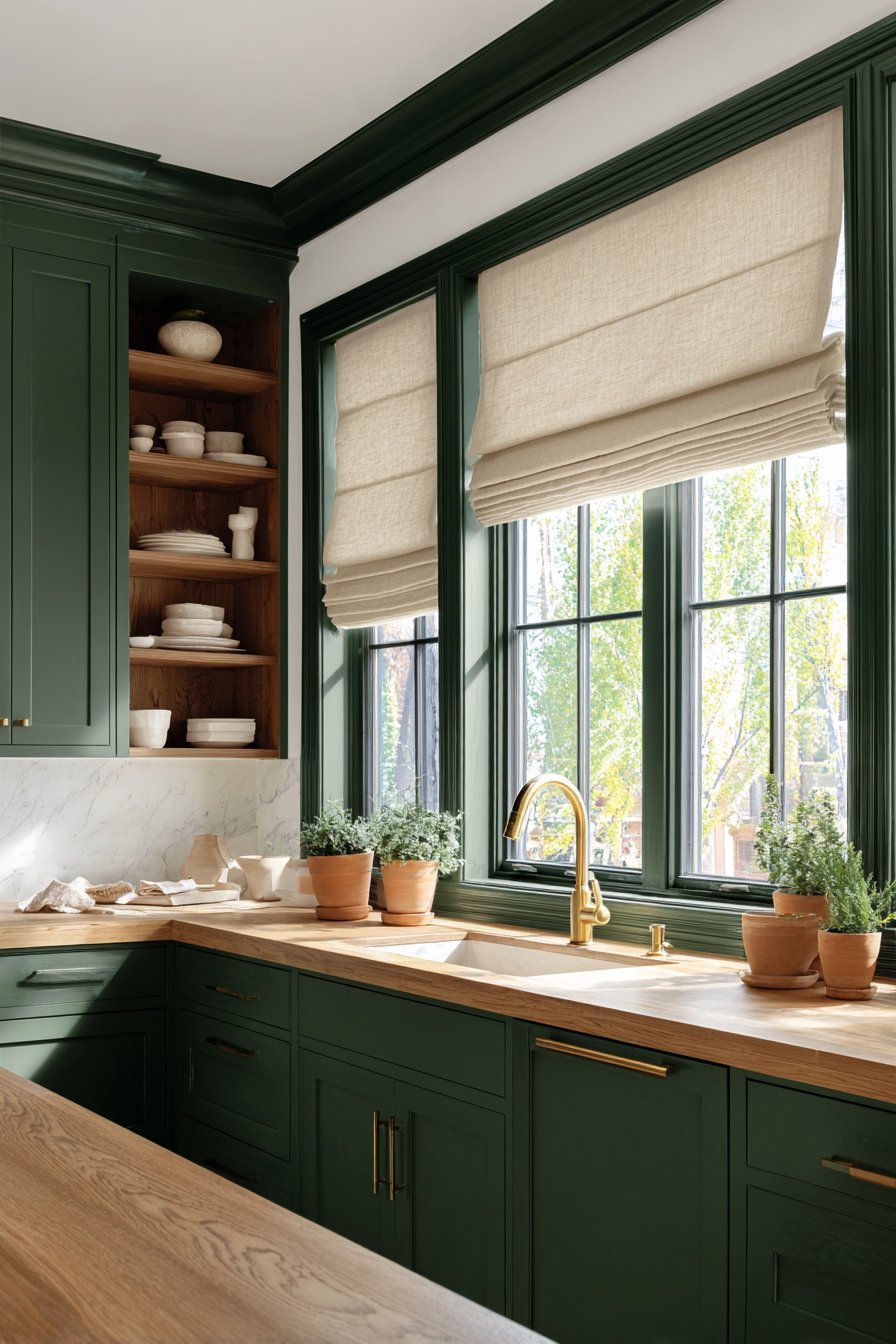
This window area demonstrates how focal zones deserve special design attention. The workspace positioning makes practical use of excellent natural light. Green trim creates visual continuity with surrounding cabinetry. The result is both beautiful and highly functional.
Key Design Tips:
- Paint window casing and trim to match cabinet color for visual continuity
- Install natural wood Roman shades to filter light while adding warmth
- Use wood window sills as display space for potted herbs
- Position countertop workspace at windows to utilize natural task lighting
- Choose brass faucets and hardware to complement warm wood tones
20. Professional Cooking Wall with Custom Wood Hood
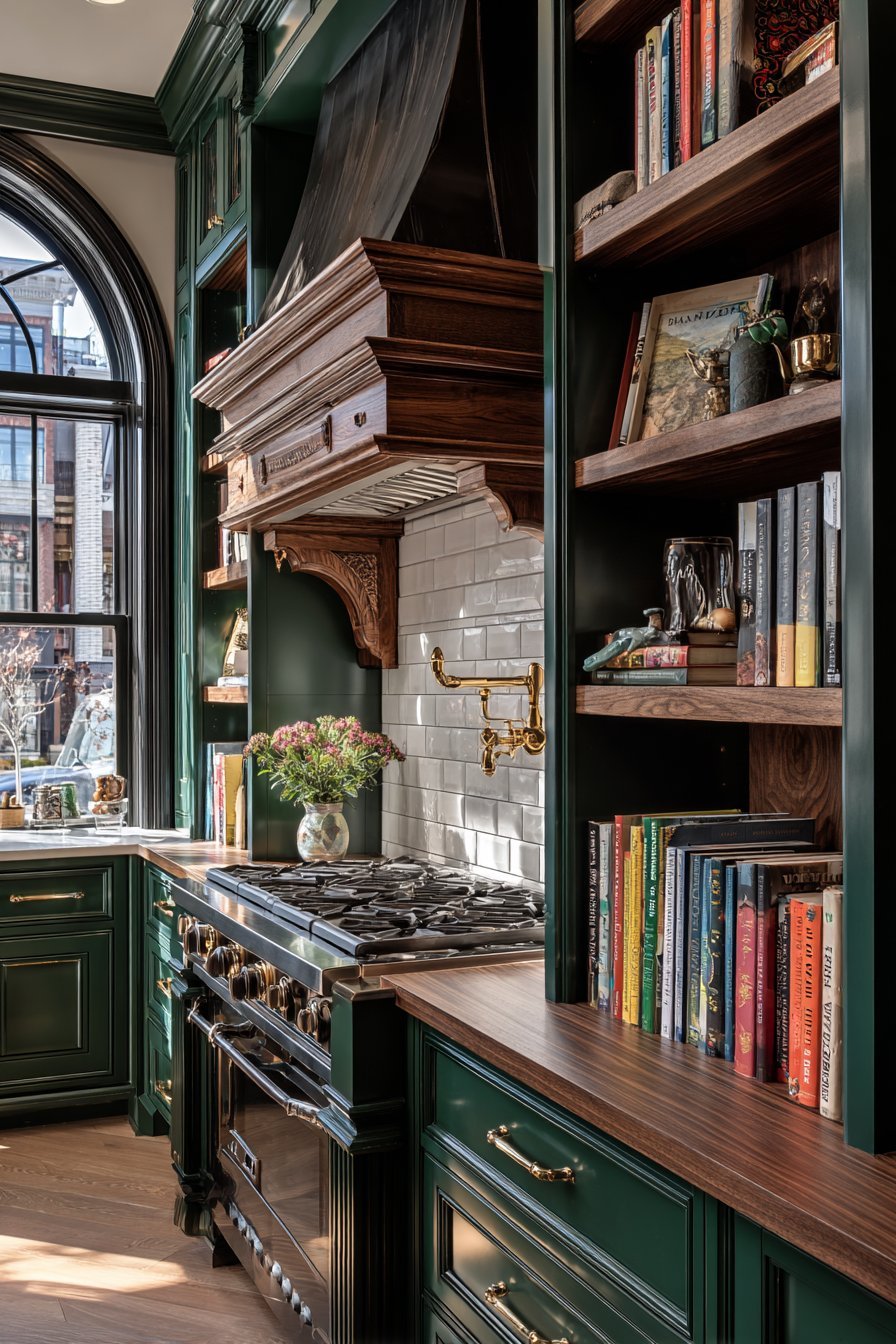
A professional range nestles between dark green cabinets symmetrically. The custom wood range hood features corbel supports and decorative trim. Crafted from natural oak with visible grain, the hood becomes sculpture. Clear coat finish protects the wood while showcasing natural beauty.
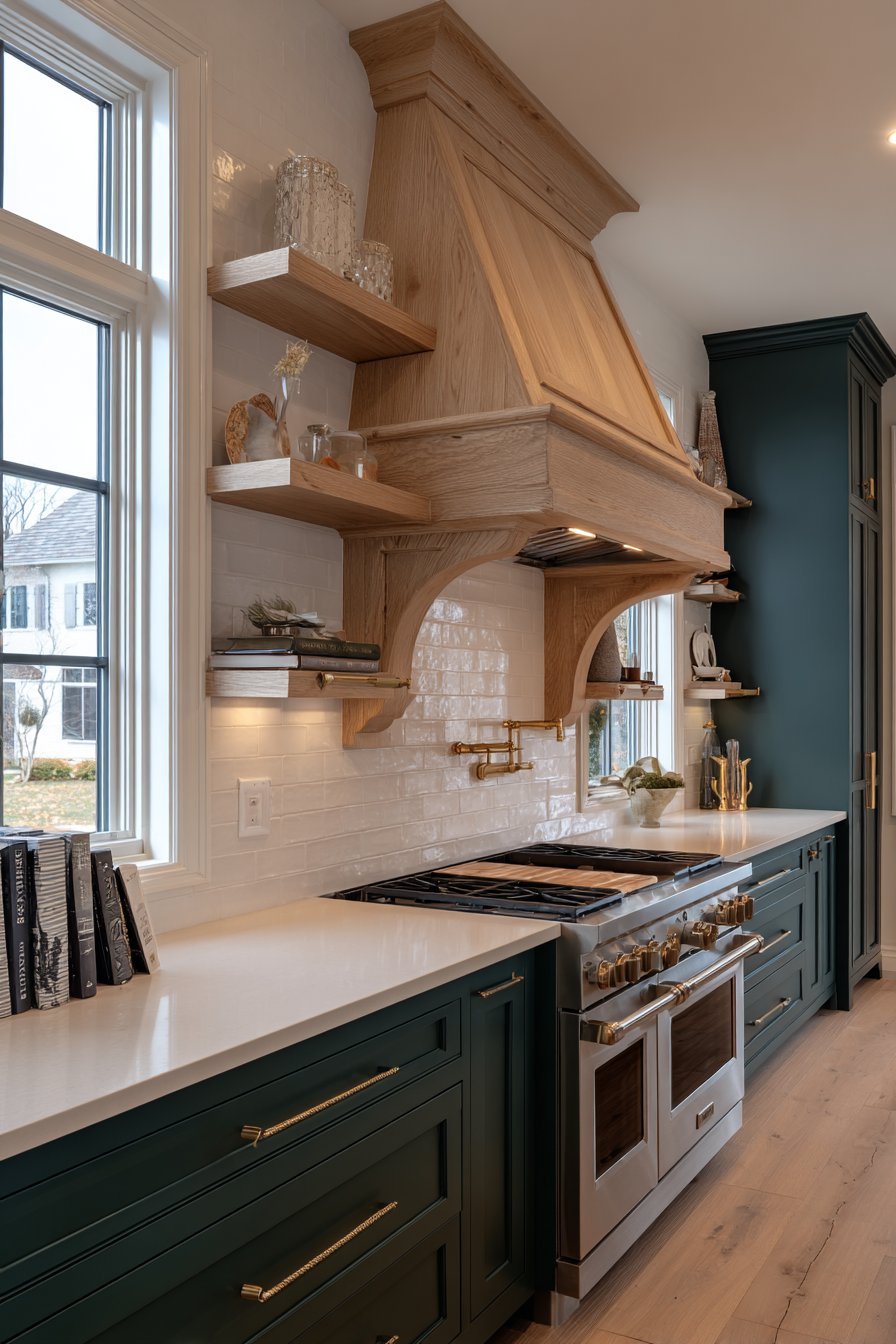
Open wood shelving on either side of the range displays cookbooks. Decorative items and frequently used cooking tools remain accessible. Wood countertops extend along the wall providing ample prep space. Subway tile backsplash in matte white allows wood and green to dominate.
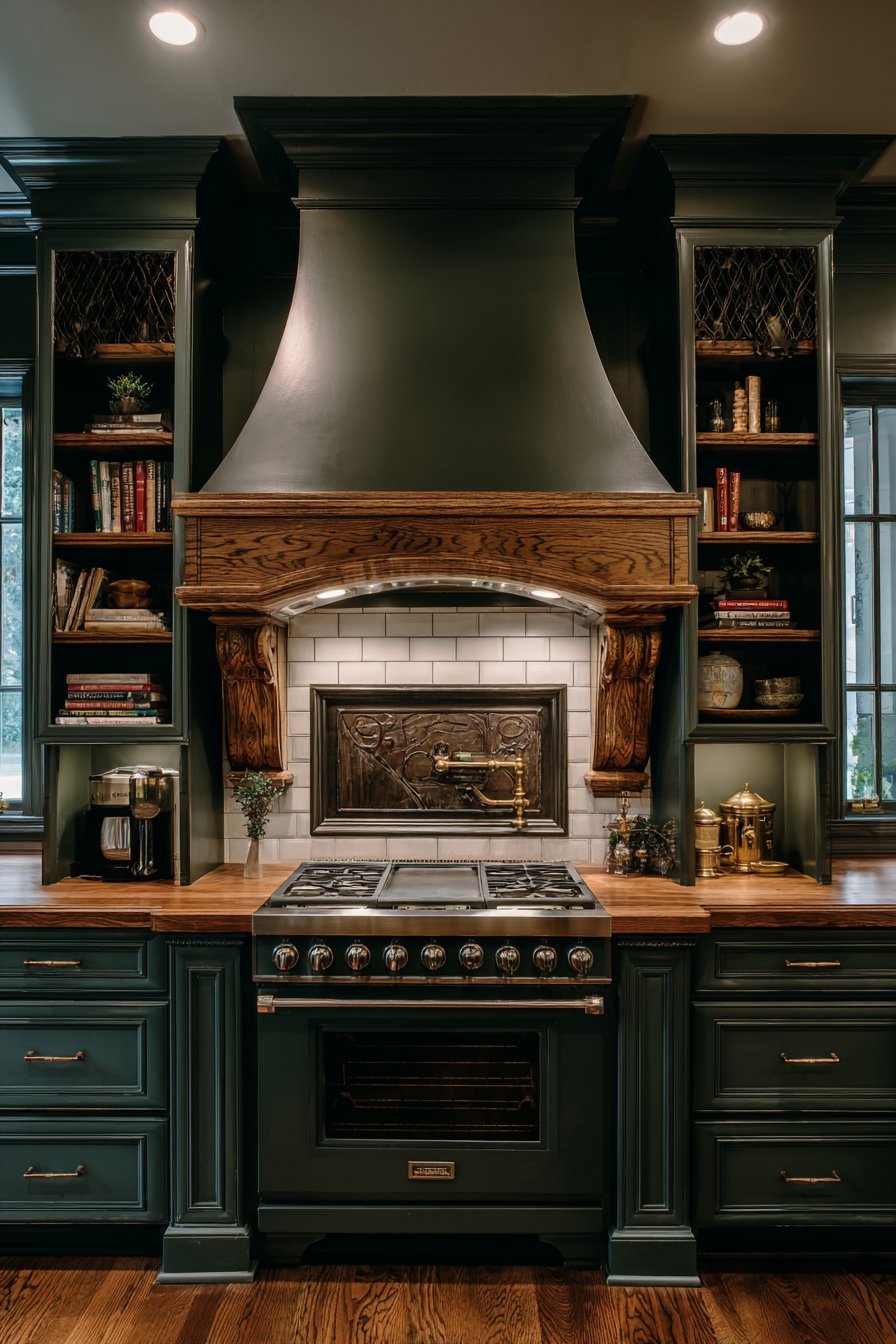
A pot filler faucet in brass extends over the range conveniently. Wide-angle photography captures the impressive cooking wall composition. The architectural wood hood detail creates the room’s clear focal point. Lighting creates depth and emphasizes custom wood hood craftsmanship.
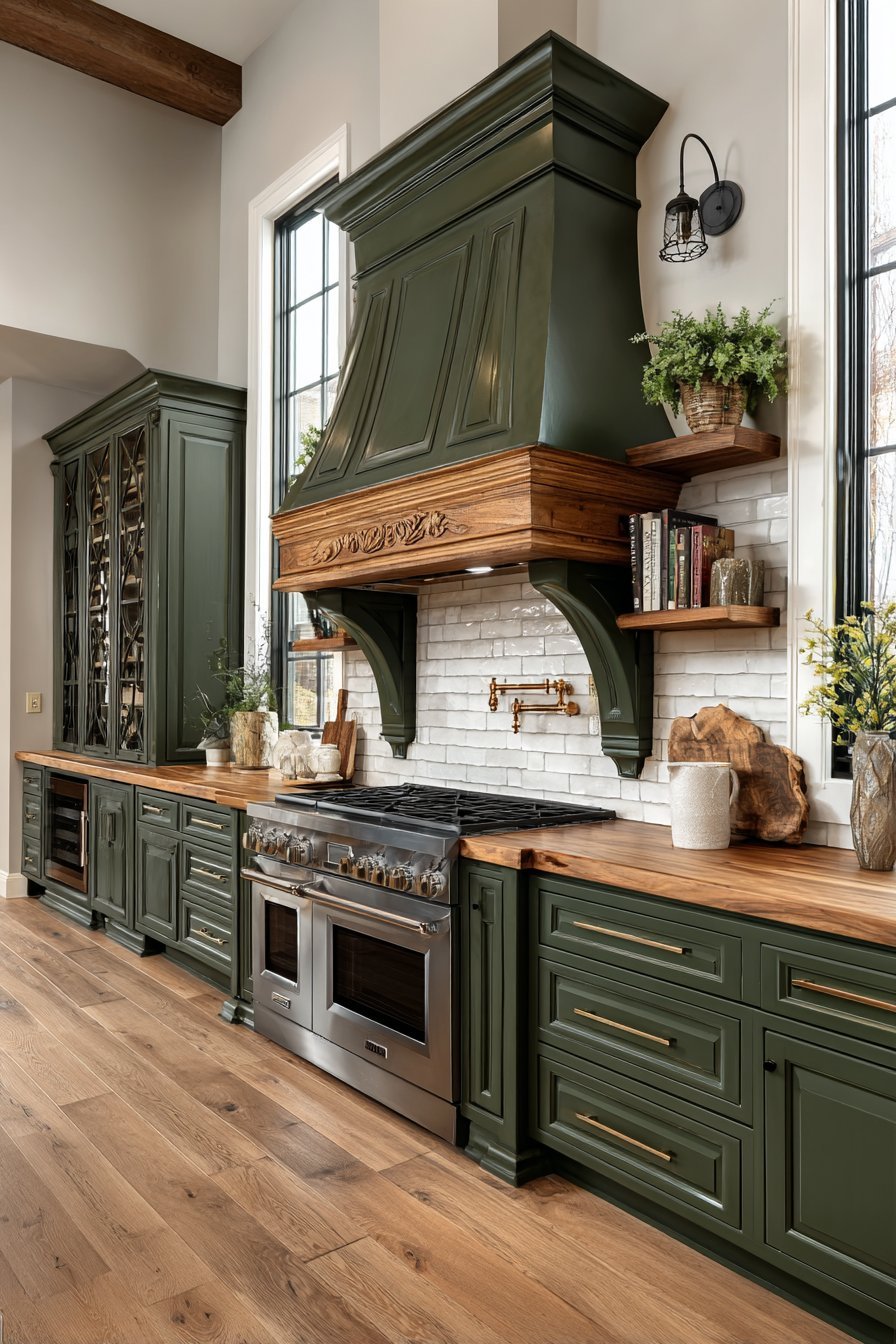
This cooking wall represents the kitchen’s functional and aesthetic heart. Dark green cabinetry frames the natural wood centerpiece beautifully. The hood’s presence elevates the entire kitchen design significantly. Every element contributes to both beauty and cooking functionality.
Key Design Tips:
- Install custom wood range hoods to create dramatic architectural focal points
- Add corbel supports and decorative trim for traditional craftsmanship details
- Choose clear coat finish on wood hoods to showcase natural grain
- Flank ranges with open wood shelving for cookbook and tool display
- Install pot filler faucets over ranges for professional cooking convenience
Why These Dark Green and Wood Kitchen Designs Excel
These dark green and wood kitchen designs represent sophisticated approaches to contemporary kitchen aesthetics. The combination addresses multiple design objectives simultaneously. Dark green provides bold personality while wood adds essential warmth and natural texture.
The color pairing works across diverse design styles from traditional to contemporary. Shaker-style cabinets in forest green suit farmhouse aesthetics beautifully. Handleless cabinets in emerald work perfectly for sleek modern spaces. This versatility allows personalization while maintaining core material appeal.
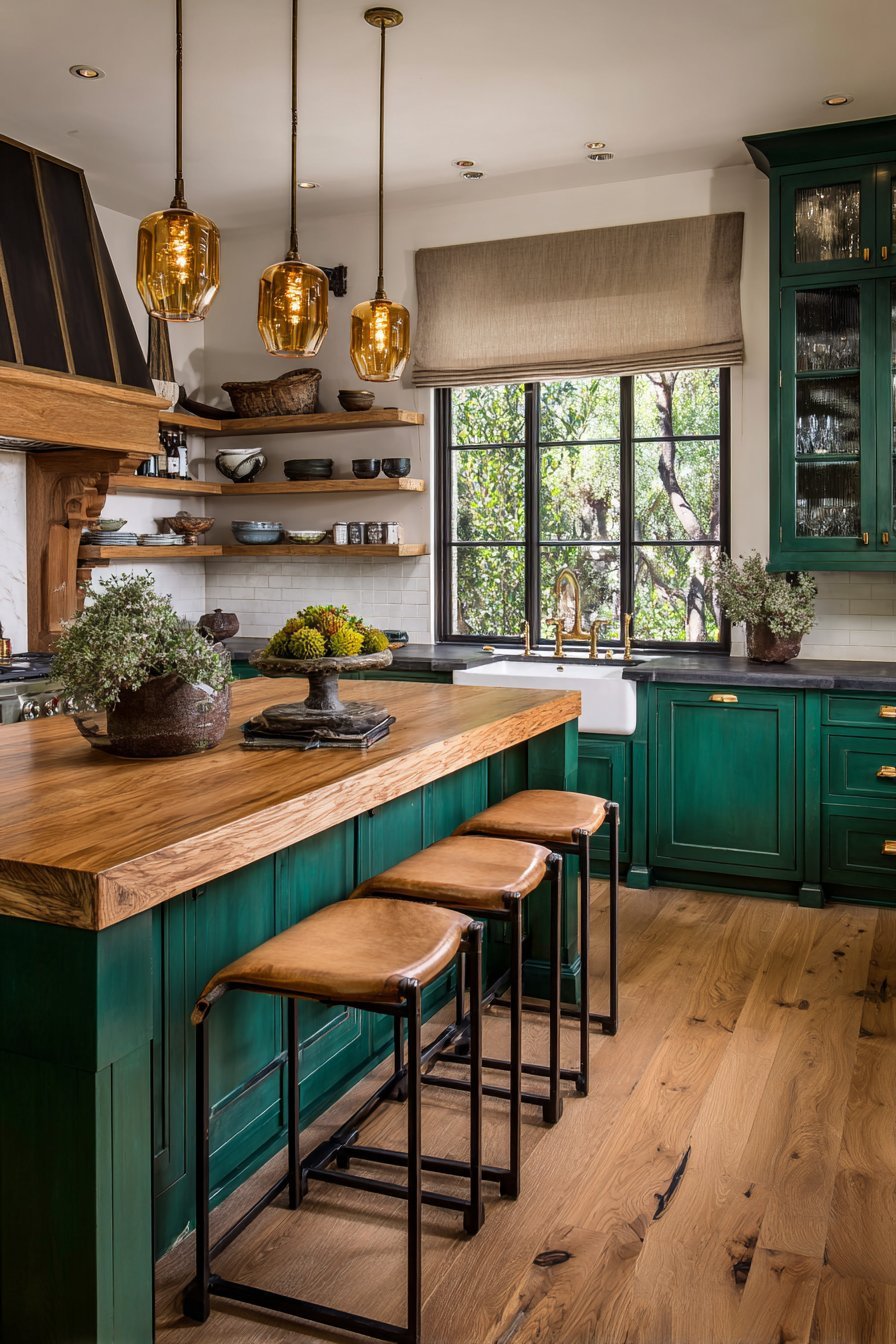
Wood species selection significantly impacts the overall aesthetic result. Light woods like birch and ash provide maximum contrast against dark green. Medium tones like walnut offer balanced warmth and visual weight. Dark woods create dramatic, moody atmospheres with rich depth.
The practical advantages extend beyond aesthetics into functional considerations. Dark green cabinets hide minor wear better than lighter colors. Wood countertops develop beautiful patina with use over time. Both materials offer durability that supports long-term kitchen functionality.
Sustainability considerations favor these material choices as well. Quality wood products and durable painted finishes reduce replacement cycles. Reclaimed wood options add character while supporting environmental responsibility. The timeless appeal prevents these kitchens from feeling dated quickly.
Color theory principles explain why this combination succeeds visually. Green and brown are analogous colors sharing yellow undertones. This natural relationship creates harmony that feels inherently balanced. The pairing evokes natural environments like forests, creating subconscious comfort.
These designs accommodate various spatial constraints and layouts successfully. Compact kitchens benefit from two-tone approaches preventing visual heaviness. Large kitchens can embrace floor-to-ceiling dark green cabinetry dramatically. Wood elements scale appropriately across different kitchen sizes and configurations.
Conclusion
Dark green and wood kitchen designs demonstrate remarkable versatility and enduring appeal. The combination creates sophisticated spaces that balance boldness with warmth. From rustic farmhouse to sleek contemporary, the material pairing adapts beautifully.
Key takeaways include the importance of balancing dark and light elements. Wood species selection dramatically impacts the final aesthetic. Quality materials and craftsmanship ensure these kitchens remain beautiful for decades.
Consider starting with smaller dark green applications if full cabinetry feels overwhelming. A green island or accent wall allows experimentation with less commitment. Wood elements can begin with countertops or shelving before expanding further.
Your dream dark green and wood kitchen awaits creation through thoughtful planning. These timeless materials will serve you beautifully for years to come.
