
The modern world moves at an overwhelming pace, leaving many of us craving spaces that offer genuine sanctuary. A dark earthy bedroom creates exactly this kind of refuge—a cocoon of calm that feels instinctively restorative. These spaces don’t just look beautiful; they work with our psychology and biology to promote deeper rest and emotional balance.
Dark earthy palettes draw from nature’s most grounding elements: rich soil, ancient forests, weathered stone, and twilight skies. When we surround ourselves with these deeply saturated tones, our nervous system recognizes the primal safety of cave-like enclosures. This isn’t about creating gloomy spaces but rather embracing the sophisticated comfort that warm, enveloping darkness provides. The result is a bedroom that doesn’t just help you sleep—it helps you truly unwind.
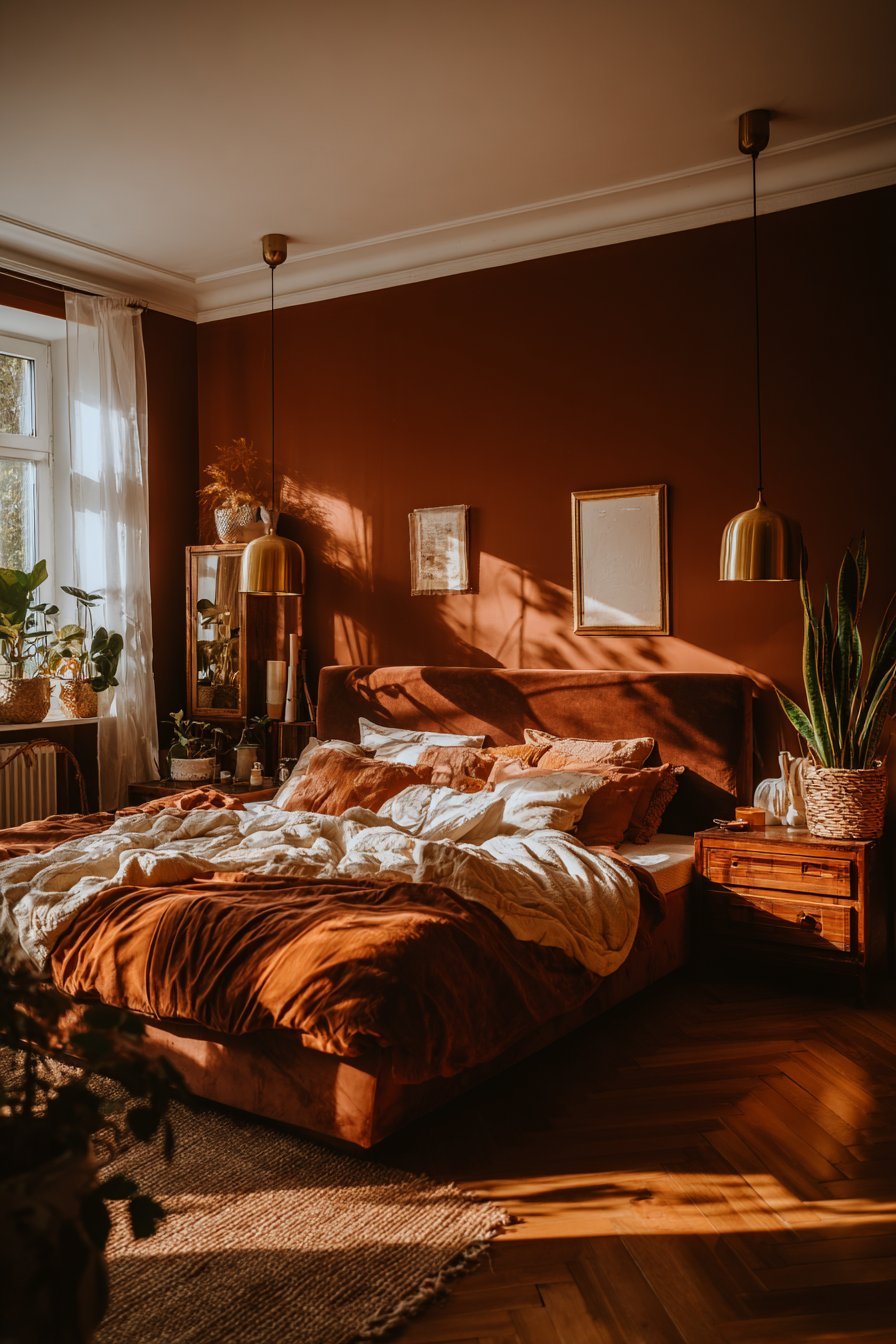
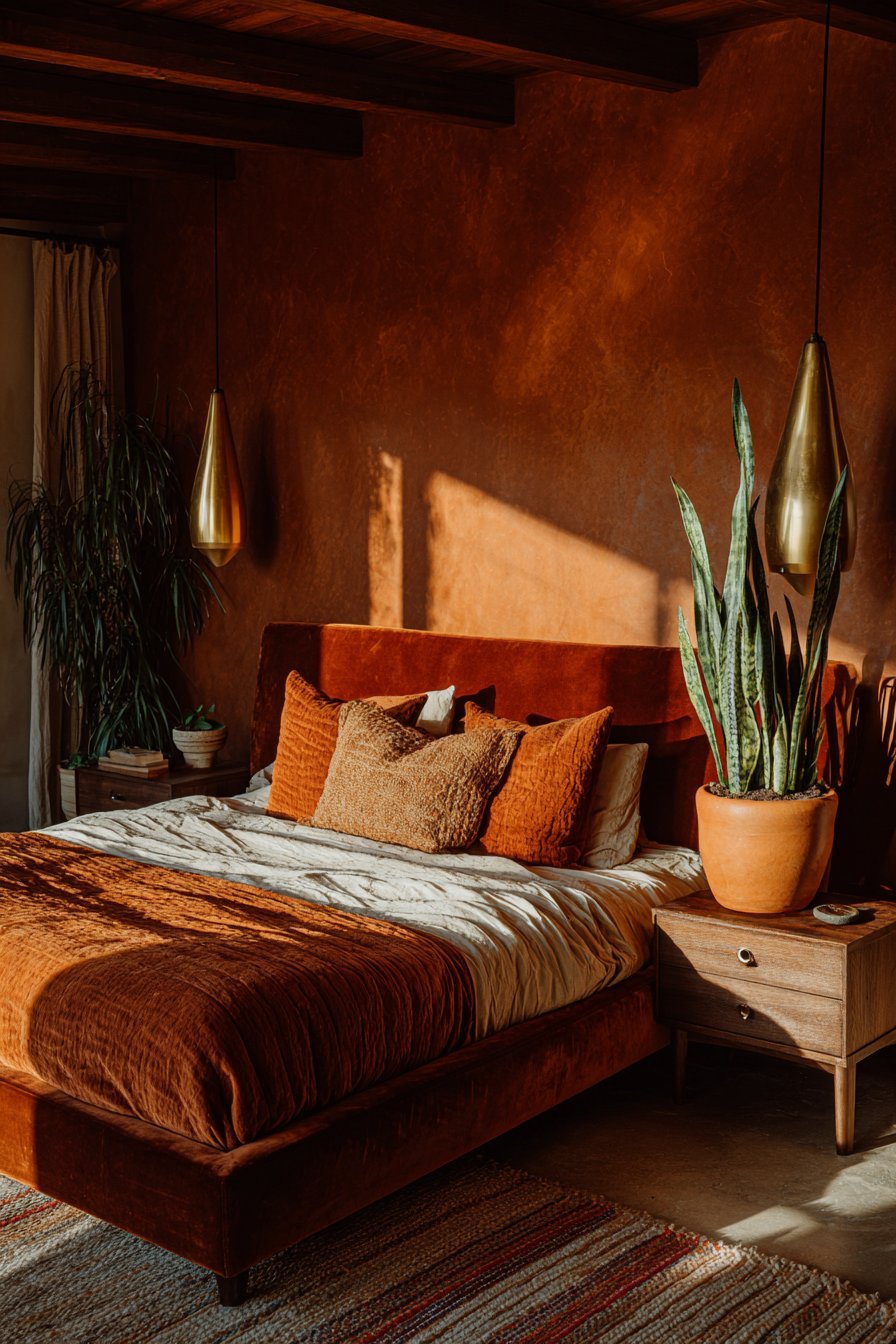
The beauty of this design approach lies in its versatility and timelessness. Whether you’re working with a spacious master suite or a compact urban bedroom, earthy color schemes adapt beautifully to different architectures and lifestyles. From terracotta and chocolate browns to deep forest greens and charcoal grays, these hues create rooms that feel both luxurious and unpretentious, sophisticated yet utterly comfortable.
1. The Psychology of Dark Colors in Sleep Spaces
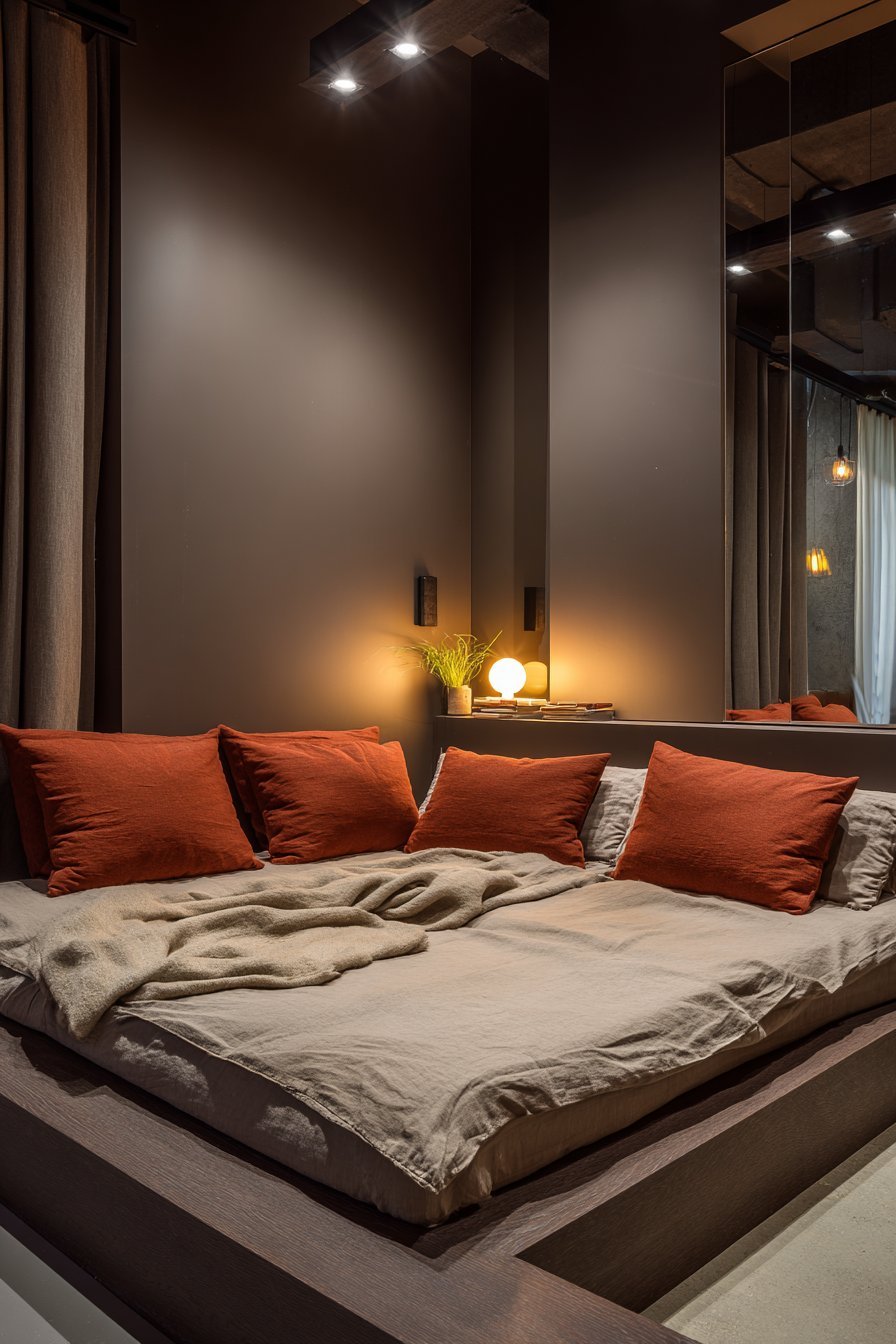
Dark colors fundamentally change how our brains perceive a room. Unlike bright whites that stimulate alertness, deep earthy tones signal to our circadian rhythm that it’s time to wind down. Studies show that darker environments support melatonin production more effectively than lighter ones. Your bedroom becomes a biological cue for rest rather than activity.
The psychological impact extends beyond sleep chemistry. Dark walls create a sense of enclosure that many people find deeply comforting—similar to the security we felt in childhood blanket forts. This cocooning effect reduces visual stimulation, allowing your mind to quiet more easily. The room essentially embraces you, creating boundaries that feel protective rather than confining.
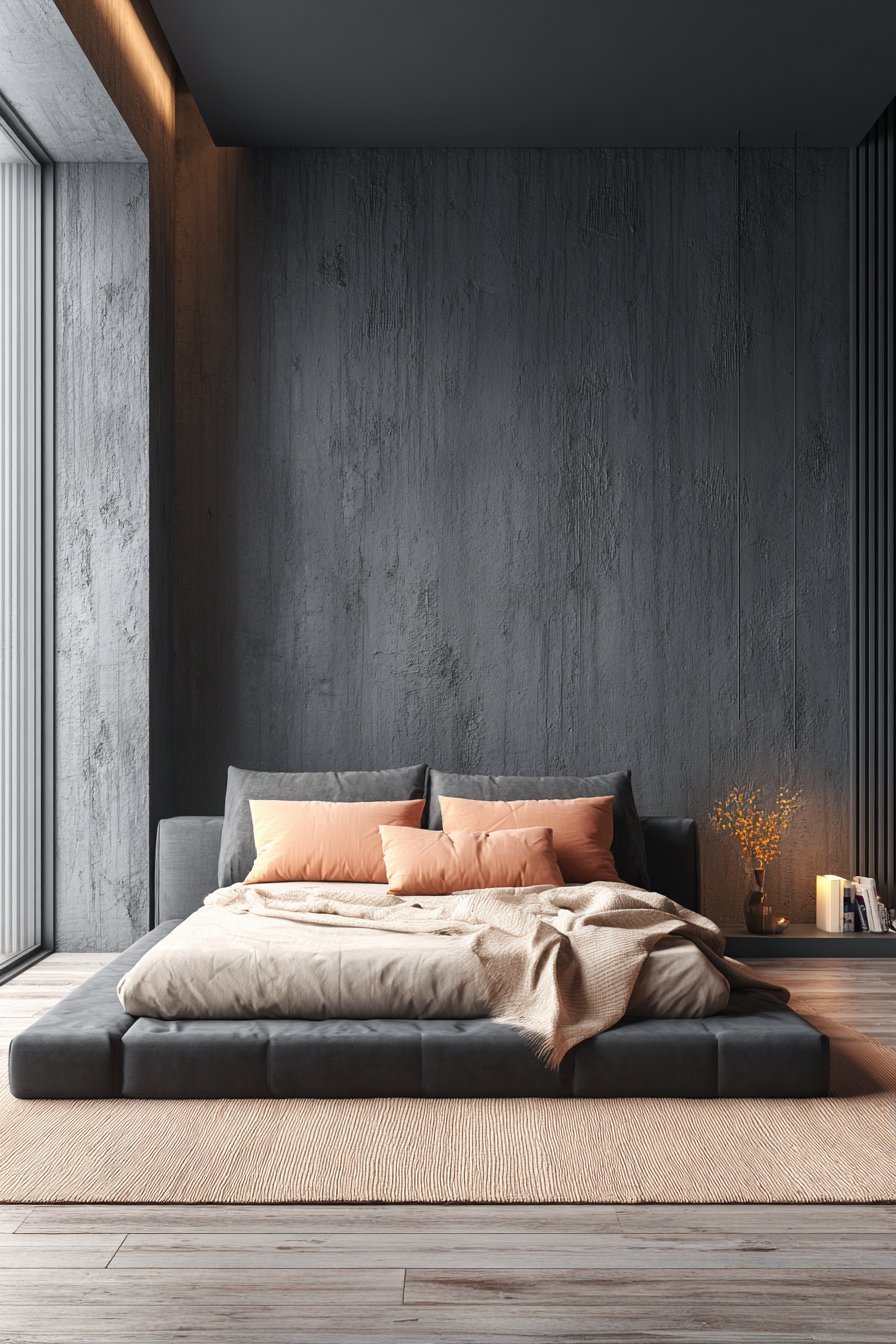
Earthy tones specifically add warmth that prevents dark spaces from feeling cold or institutional. A bedroom painted in charcoal with terracotta accents feels vastly different from stark black walls. The organic quality of earth-inspired colors connects us to nature’s rhythms, subtly reminding our bodies that darkness is natural, safe, and necessary for restoration.
- Choose colors with warm undertones like brown-based grays rather than blue-based ones
- Test paint samples in different lighting conditions throughout the day
- Consider matte finishes that absorb light rather than reflect it
- Layer multiple shades of the same color family for depth
- Balance very dark walls with lighter ceiling tones to prevent heaviness
- Remember that darkness should feel enveloping, not oppressive
2. Natural Materials Enhance the Grounding Effect
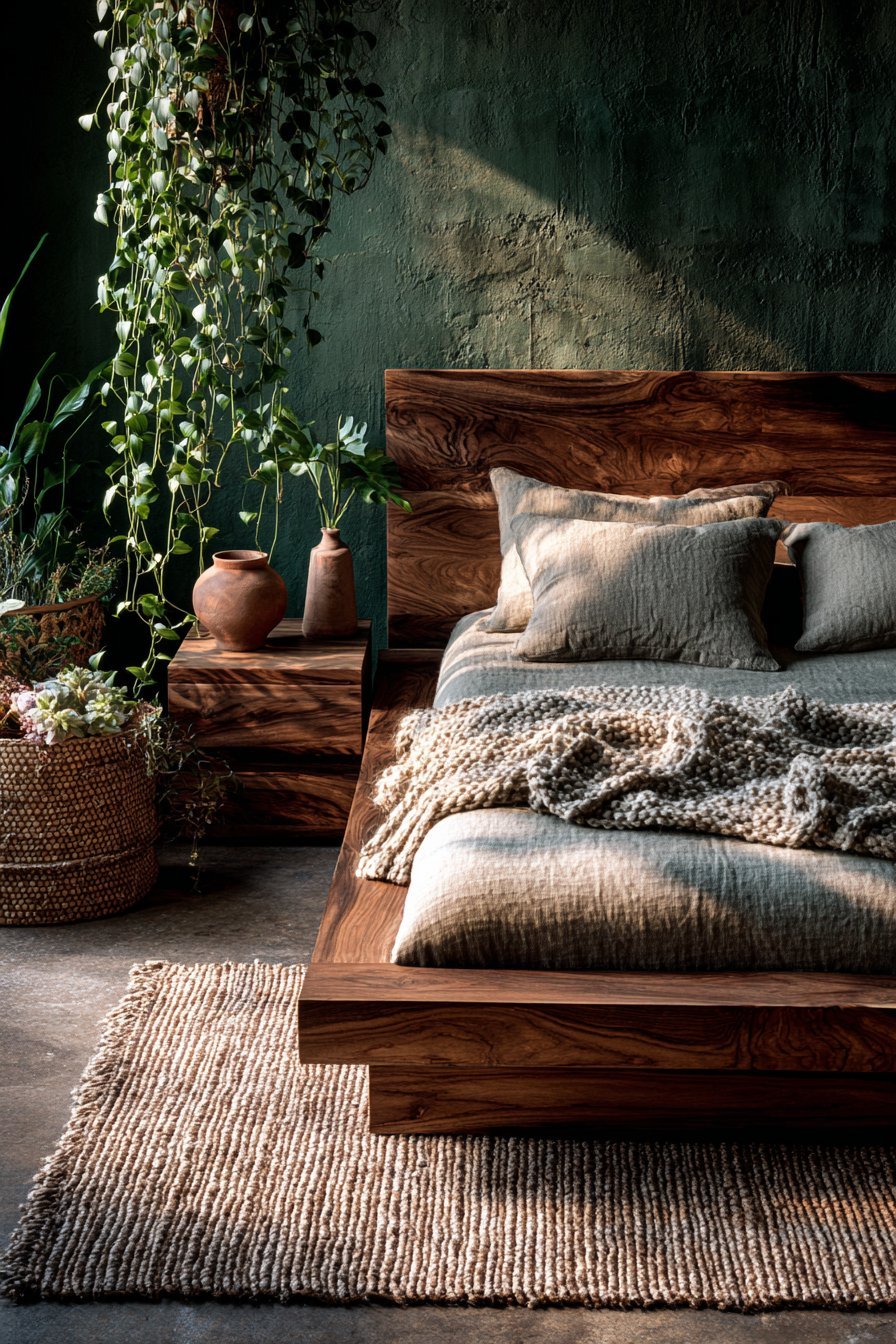
Materials matter just as much as color in creating truly grounding spaces. Natural wood furniture brings organic texture that synthetic materials simply cannot replicate. The visible grain patterns, slight color variations, and tactile warmth of real wood connect us to living things. Even in dark-stained finishes, wood maintains an authenticity that grounds the room in reality.
Stone, clay, and natural fiber elements amplify this connection to earth. A terracotta planter on the nightstand or linen bedding woven from flax plants adds layers of natural origin. These materials age beautifully, developing patina and character over time rather than simply deteriorating. This quality reinforces the room’s connection to natural cycles and authentic experiences.
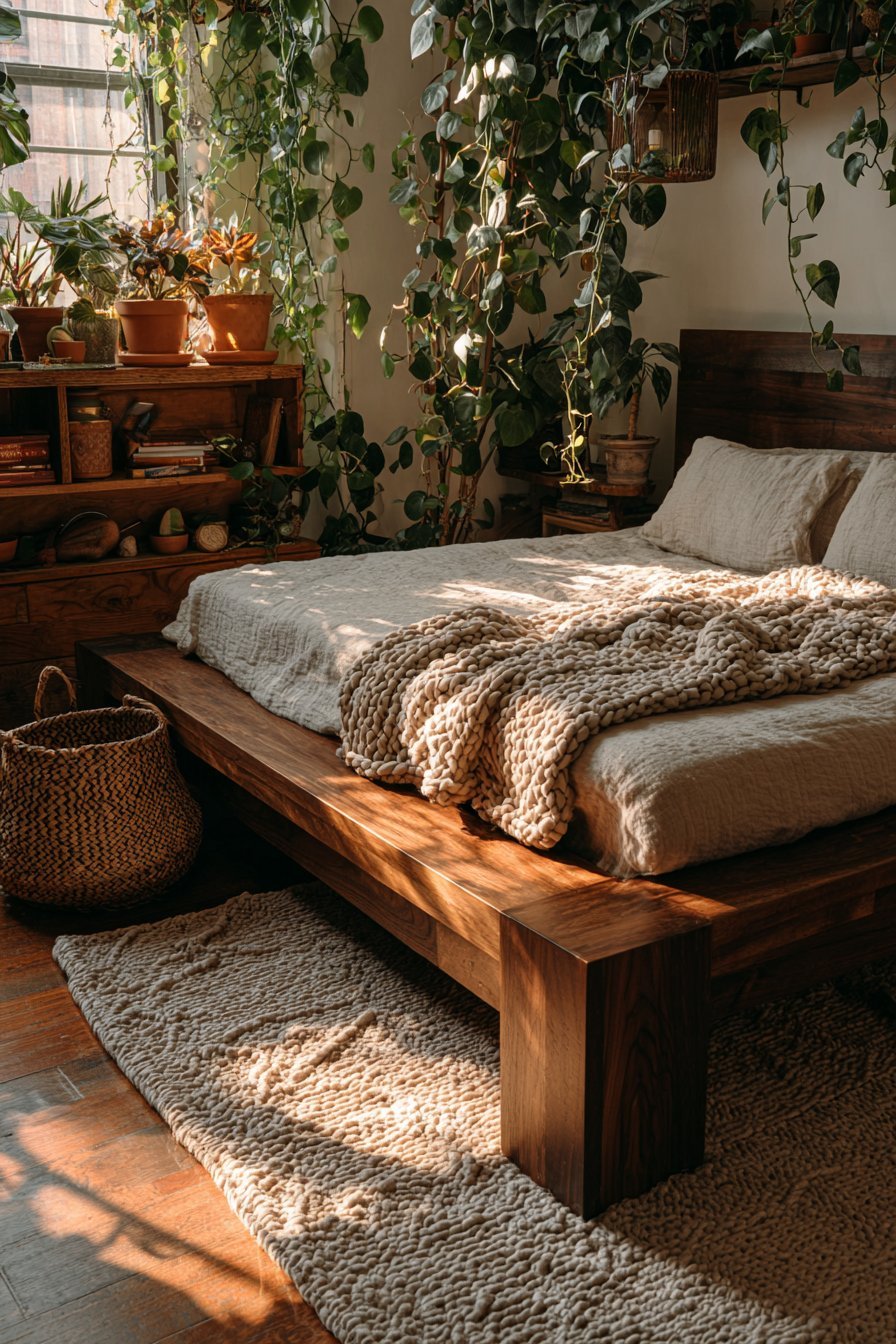
The textural variety of natural materials also creates subtle visual interest without relying on bold patterns. Rough stone against smooth wood, nubby wool beside cool clay—these tactile contrasts engage our senses in sophisticated ways. Your bedroom becomes a space you want to touch and interact with, deepening your sensory experience of the room.
- Invest in solid wood furniture pieces rather than veneers
- Incorporate stone elements through lamps, bookends, or decorative objects
- Choose natural fiber bedding in linen, cotton, or wool
- Add handwoven baskets for storage that doubles as texture
- Consider a jute or sisal area rug for underfoot grounding
- Display pottery or ceramics in earthy glazes
3. Lighting Design for Warmth Without Harshness
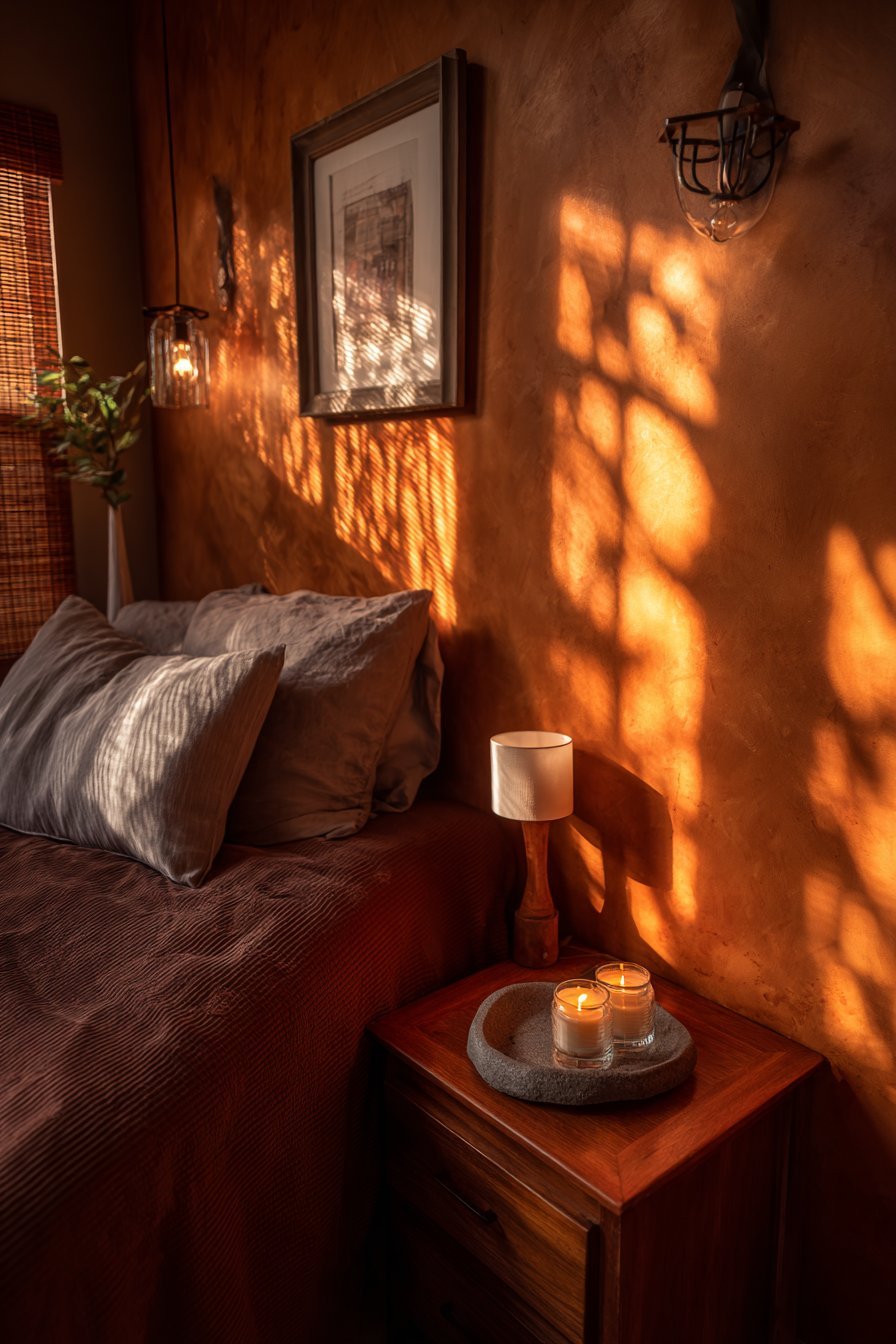
Lighting transforms how dark colors perform in a space. Warm-toned lighting (2700K-3000K) enhances earthy browns and terracottas, making them glow rather than disappear. Cool lighting, by contrast, can make dark rooms feel dingy or cave-like in unpleasant ways. The right light temperature is essential for rooms that feel cozy rather than dreary.
Layered lighting creates flexibility that single overhead fixtures cannot provide. Multiple light sources at different heights—table lamps, wall sconces, floor lamps—allow you to adjust ambiance throughout the evening. Dim everything low for bedtime or brighten task lighting for reading. This control helps your body transition gradually from activity to rest.
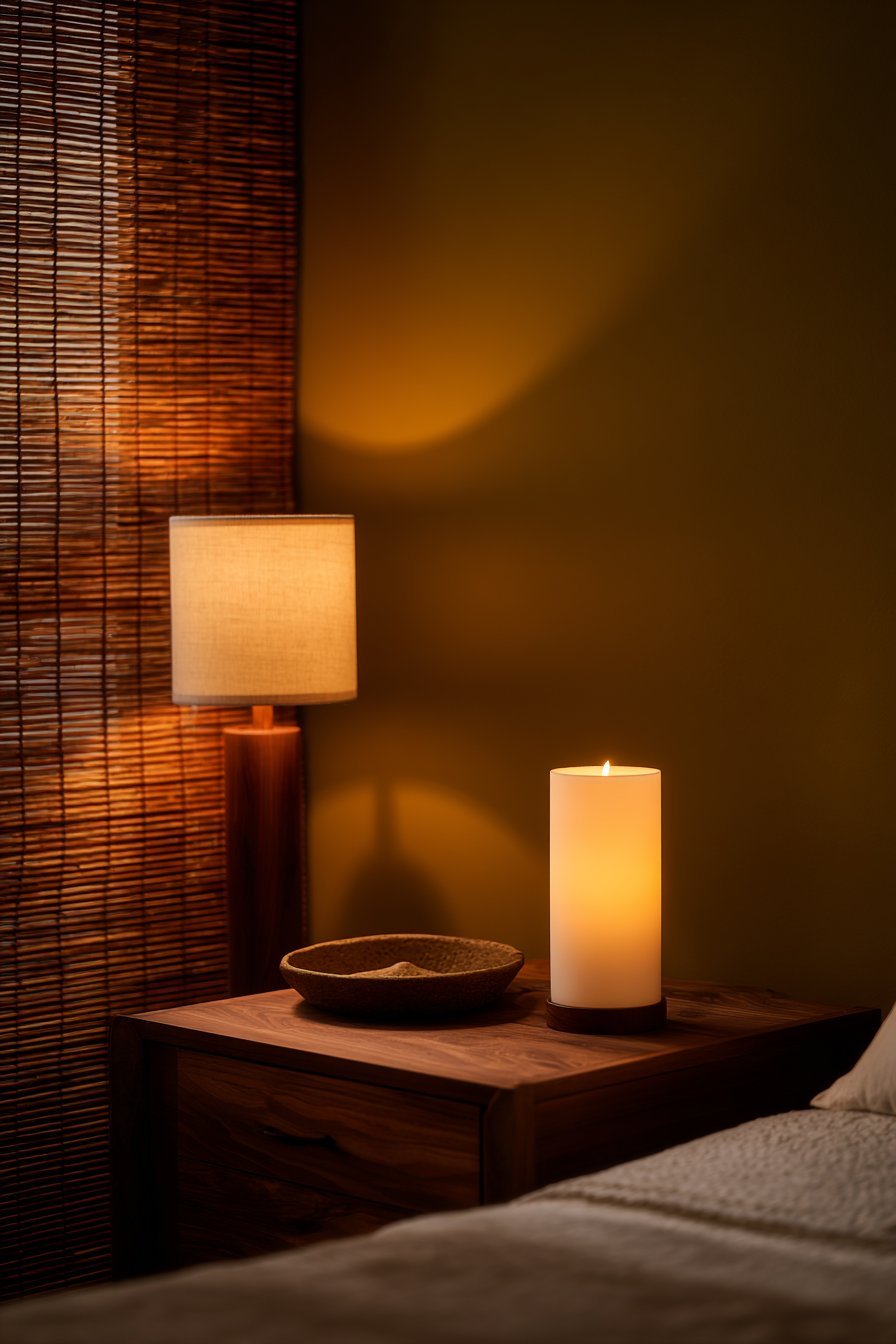
Consider how natural light interacts with your dark palette during daytime. Heavy blackout curtains might seem appropriate, but filtering natural light through linen or bamboo shades often creates more beautiful effects. Sunlight streaming through woven shades casts organic shadow patterns that animate dark walls, reminding us that darkness and light exist in dynamic relationship.
- Install dimmer switches on all bedroom lighting fixtures
- Use warm LED bulbs rated between 2700K-3000K color temperature
- Position lamps to create pools of light rather than even illumination
- Add candles for authentic warm light during evening hours
- Choose lampshades that diffuse light softly
- Incorporate uplighting to prevent dark rooms from feeling bottom-heavy
4. Texture Layering Prevents Visual Flatness
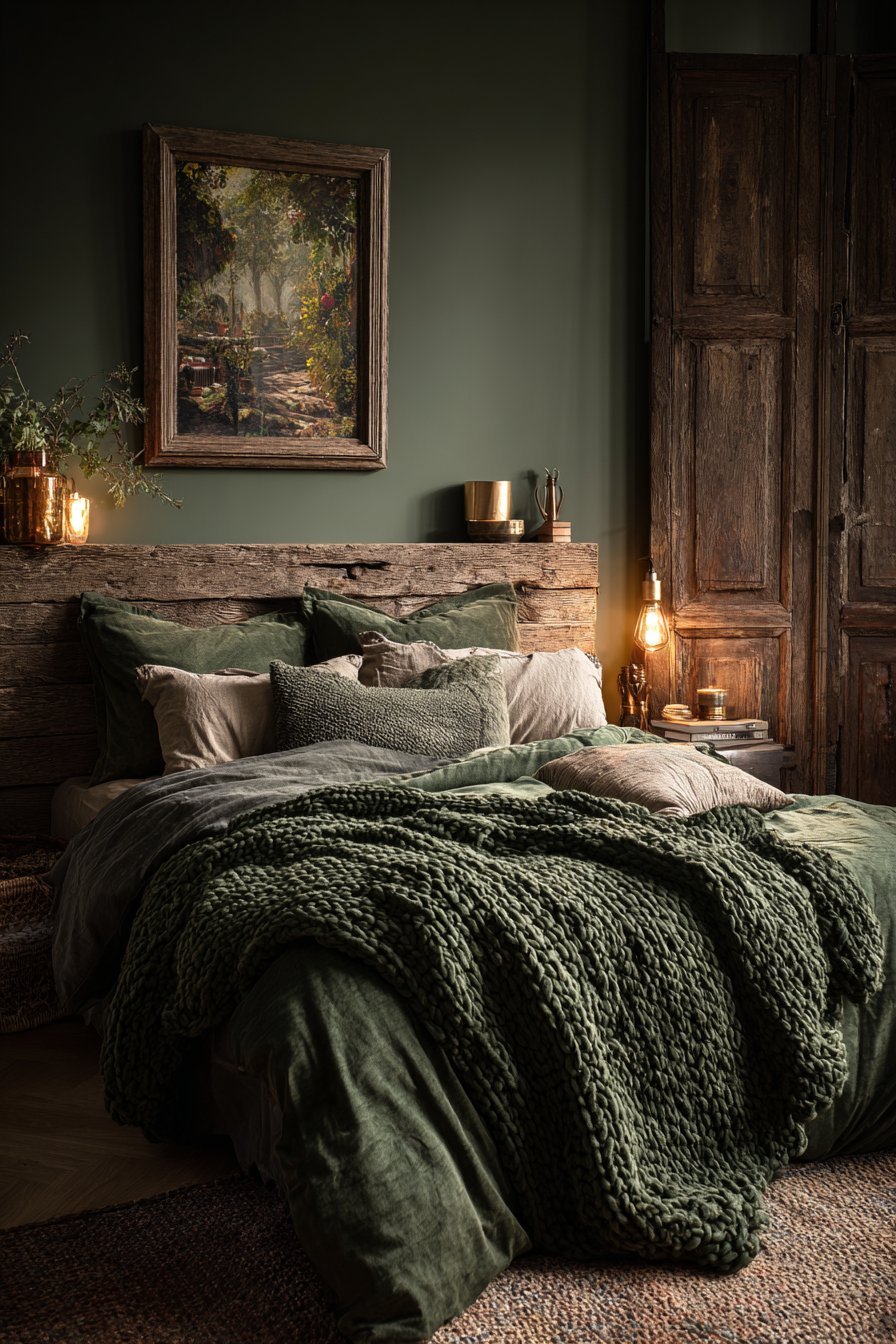
Dark monochromatic spaces risk appearing one-dimensional without careful texture work. Layering different textures creates depth that the eye can explore even when colors remain similar. A velvet duvet against linen pillowcases against a chunky knit throw—these variations catch light differently, creating subtle visual interest that keeps the space from feeling flat.
Textural variety also engages multiple senses, making the room more experientially rich. The tactile pleasure of different materials invites interaction and presence. Running your hand across smooth wood, rough stone, soft wool, and cool metal grounds you in physical sensation rather than mental chatter. Your bedroom becomes a space that demands engagement with the present moment.
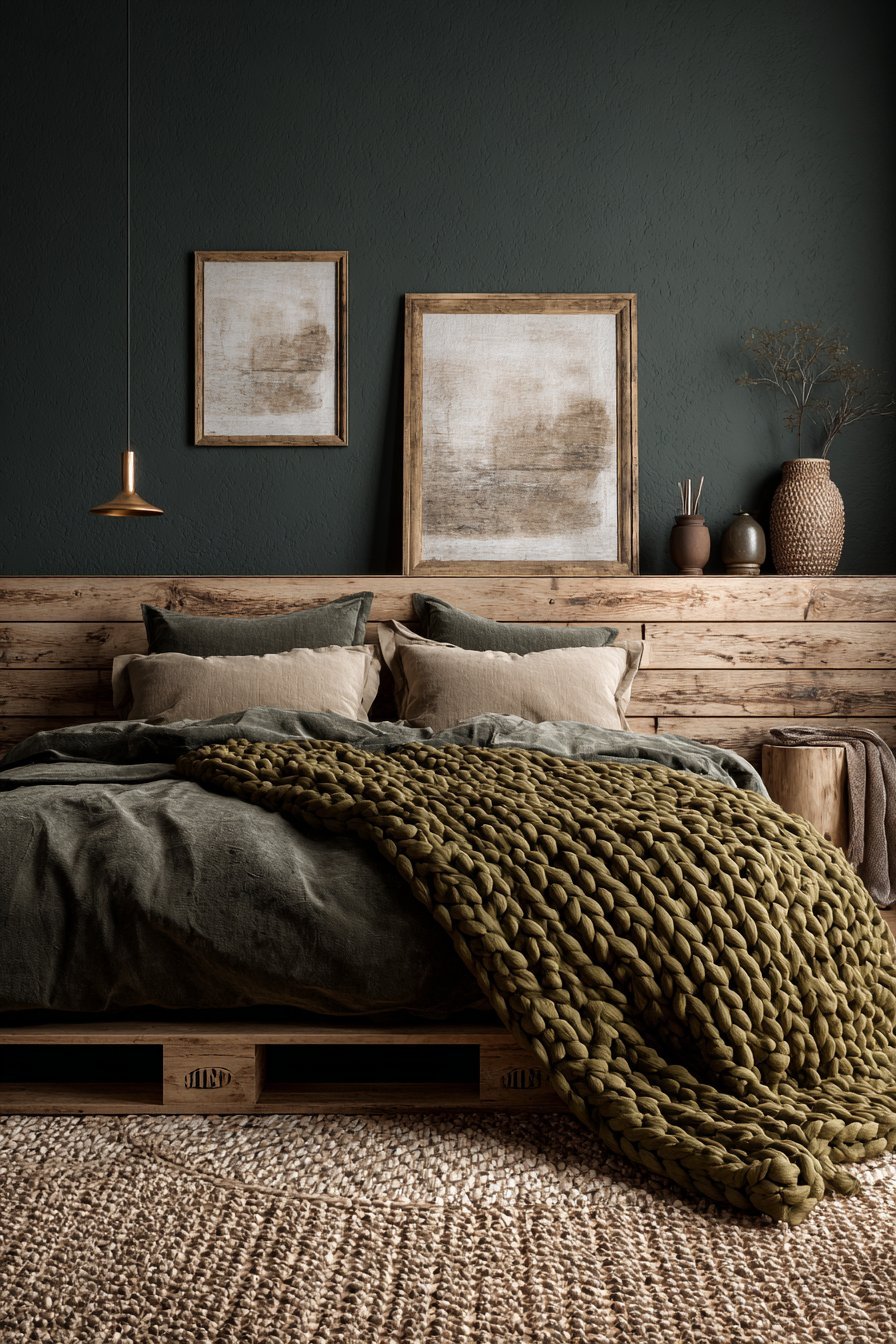
Consider both visual and physical texture when selecting elements. A matte paint finish creates different visual texture than glossy despite being the same color. Similarly, carved wood patterns, woven textiles, and hammered metal surfaces all contribute texture even in coordinating tones. The goal is richness without busyness—complexity that soothes rather than stimulates.
- Mix at least five different textures within your color palette
- Combine smooth and rough surfaces in balanced proportion
- Layer bedding with varied textile weights and weaves
- Add a textured wall treatment like limewash or plaster
- Include both matte and subtly reflective surfaces
- Choose artwork with physical texture or dimensional frames
5. The Role of Biophilic Design Elements
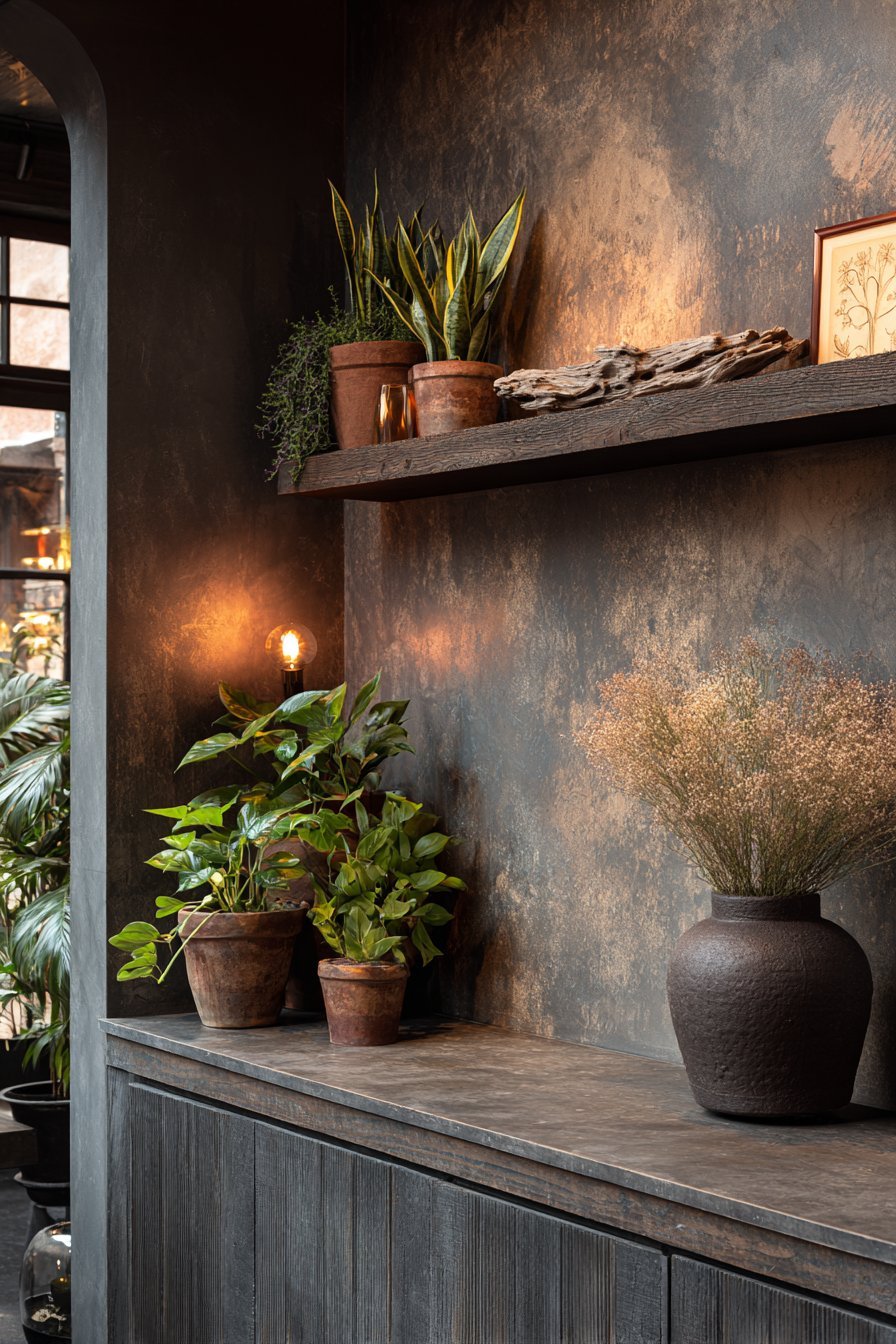
Biophilia—our innate connection to nature—plays powerfully in dark earthy bedrooms. Living plants thrive surprisingly well in darker spaces when chosen appropriately. Pothos, snake plants, and ZZ plants tolerate low light while purifying air and adding vital green contrast. Their presence literally brings life into the room, creating subtle movement and organic irregularity.
Natural patterns and forms reinforce this connection even without living elements. Organic shapes in furniture curves, botanical prints in muted tones, or stone with visible mineral patterns all reference the natural world. These elements work subconsciously, signaling safety and familiarity to our ancient brains that evolved in natural rather than constructed environments.
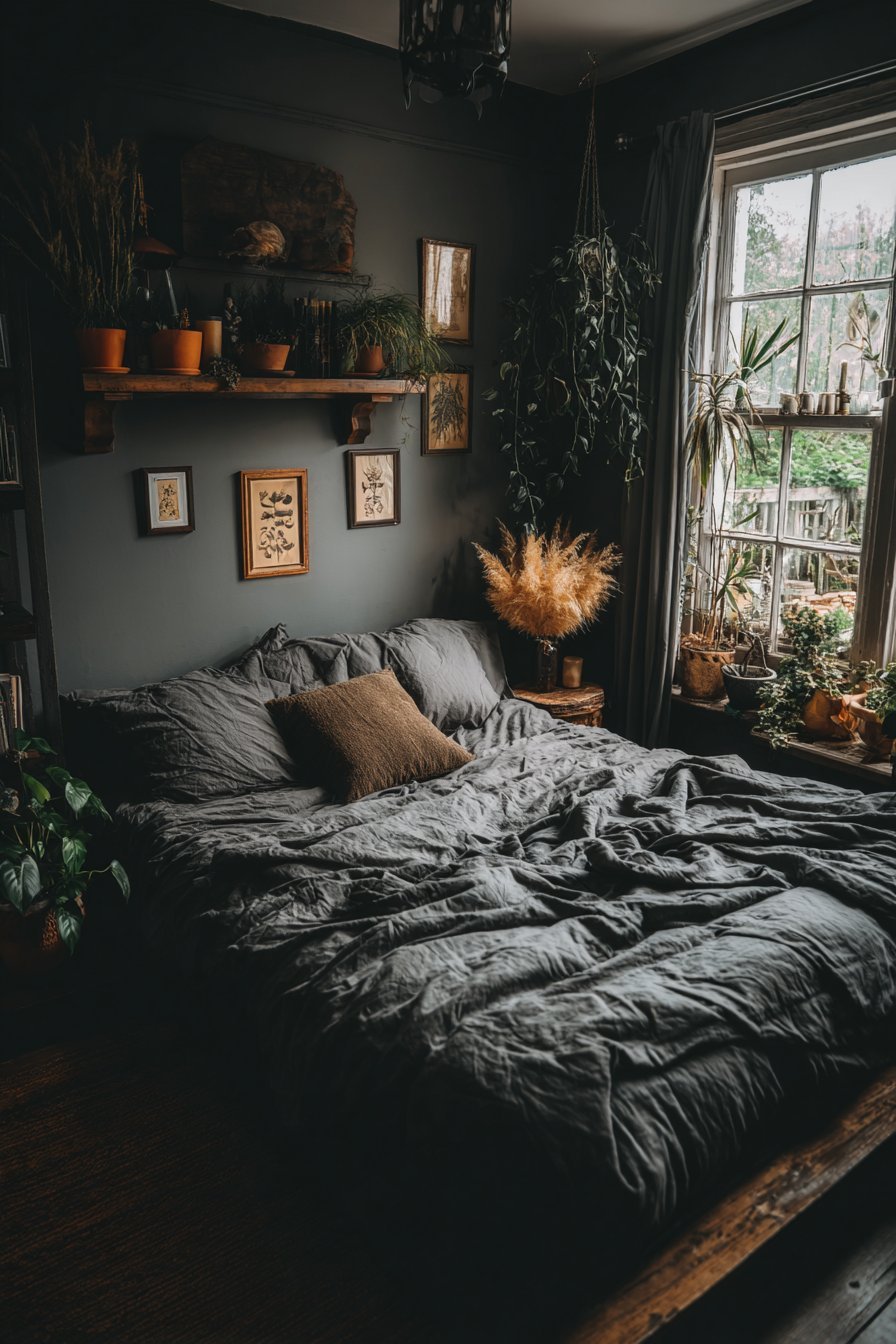
Water features, though less common in bedrooms, can dramatically enhance the grounding effect. A small tabletop fountain adds gentle sound that masks disruptive noise while creating meditative focus. The combination of earth-toned walls, plant life, and water addresses multiple sensory channels, creating an immersive environment that supports deep relaxation.
- Select low-light tolerant plants for darker bedroom spaces
- Group plants in odd numbers for natural arrangement
- Choose planters in terracotta, stone, or natural ceramic
- Display natural objects like driftwood, stones, or pinecones
- Hang botanical prints or nature photography in earthy tones
- Consider essential oil diffusion with grounding scents
6. Color Psychology of Specific Earth Tones
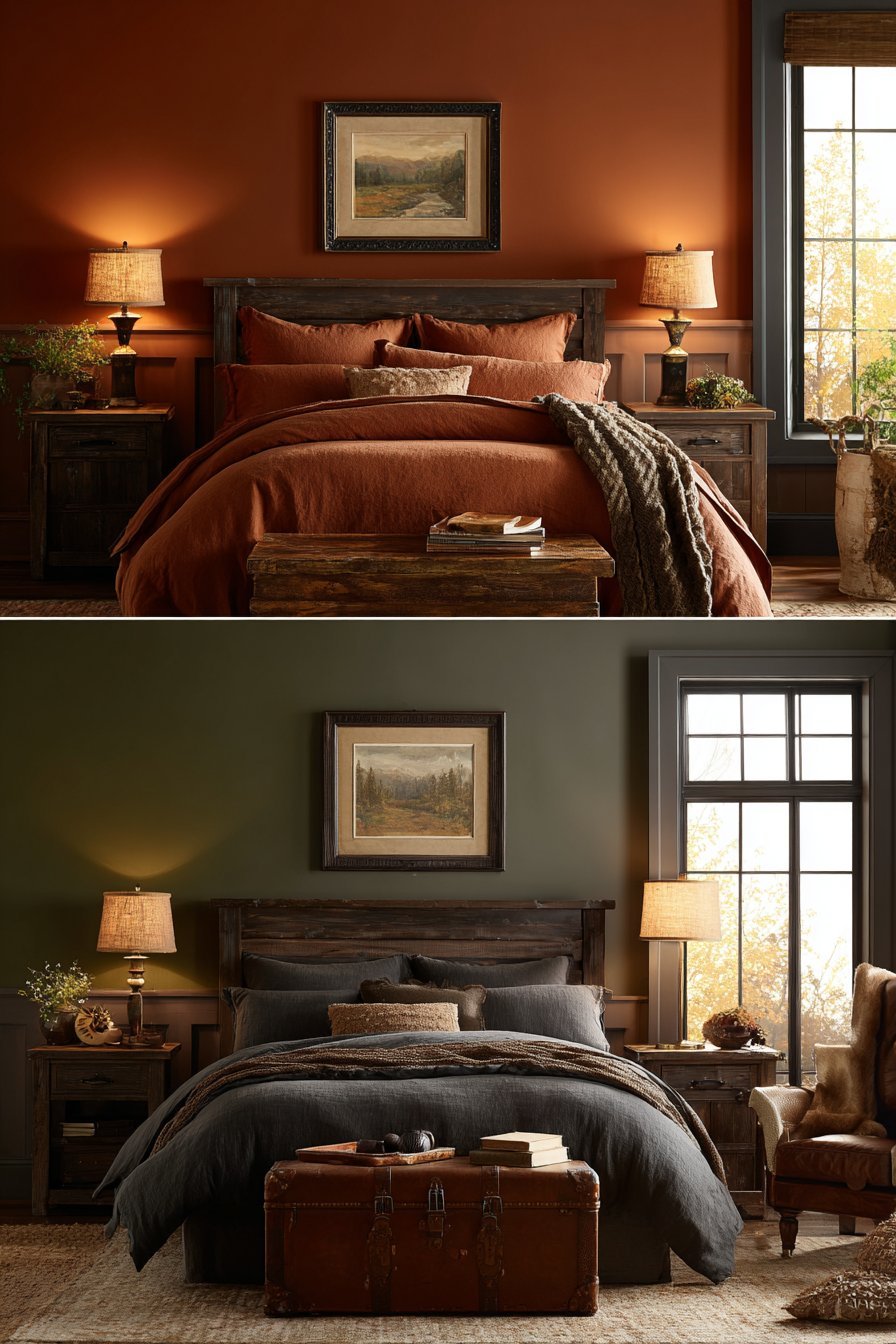
Different earthy colors offer distinct psychological effects worth understanding. Deep terracotta and rust tones evoke warmth and security, connecting us to clay earth and autumn landscapes. These colors feel inherently cozy and work especially well in bedrooms that receive limited natural light. They create instant warmth without requiring additional heating.
Forest greens and olive tones bring different qualities—renewal, calm, and gentle energy. These colors reference lush vegetation and mossy forests, spaces where life flourishes in shade. Green remains psychologically associated with growth and health, making it particularly restorative. Deep green bedrooms feel sheltered yet vital, dark yet alive.
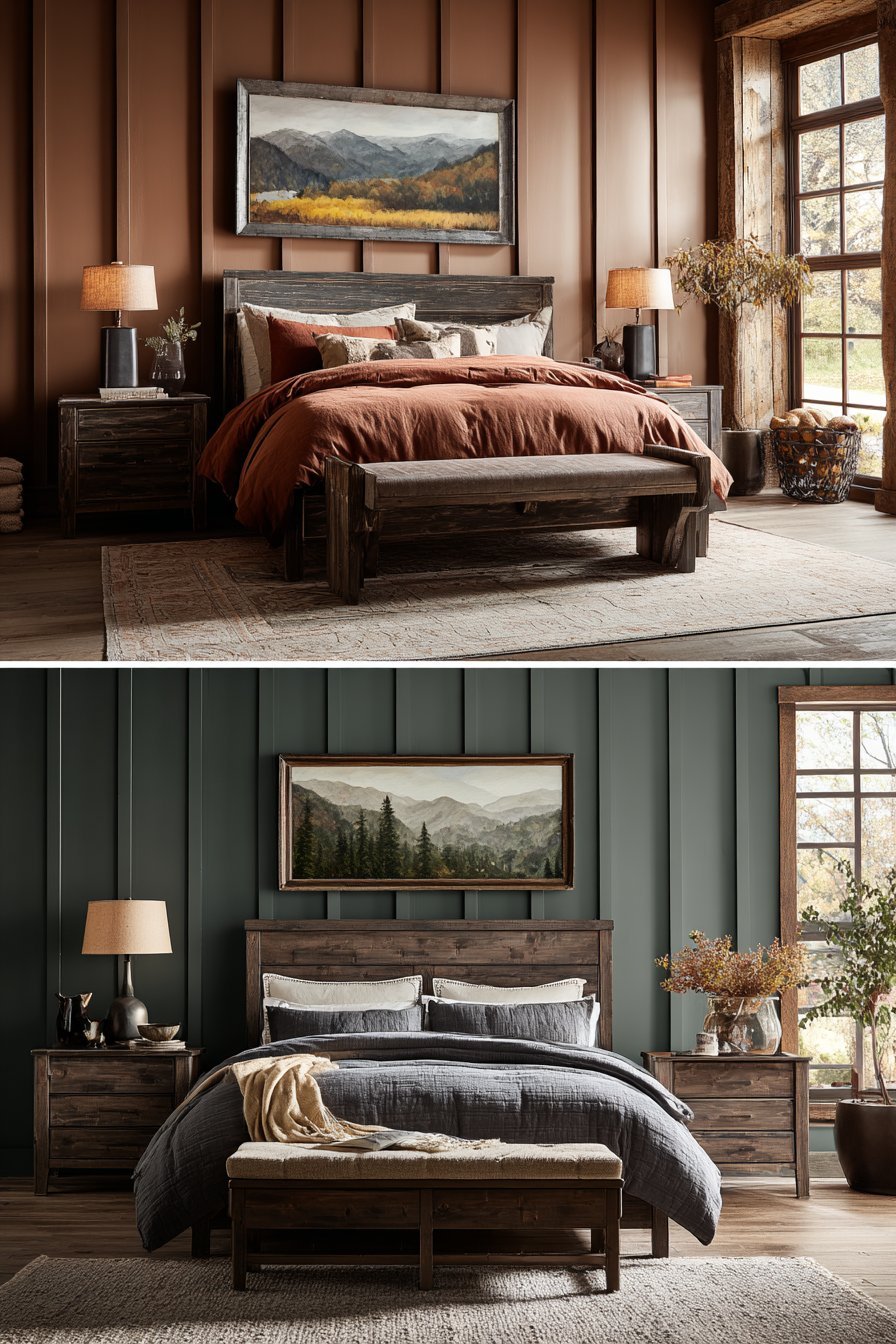
Chocolate browns and charcoal grays offer sophisticated neutrality with grounding weight. These darkest earth tones create maximum cocooning effect while remaining versatile for various design styles. Brown connects to tree bark and rich soil, while charcoal references volcanic stone and storm clouds. Both feel substantial and enduring, creating bedrooms that seem to exist outside temporary trends.
- Use terracotta for rooms needing maximum warmth
- Choose deep green for spaces with good natural light
- Select charcoal for modern or minimalist aesthetics
- Layer multiple earth tones rather than relying on one
- Test how colors appear under both natural and artificial light
- Consider seasonal psychology when selecting your dominant tone
7. Minimizing Visual Clutter in Dark Spaces
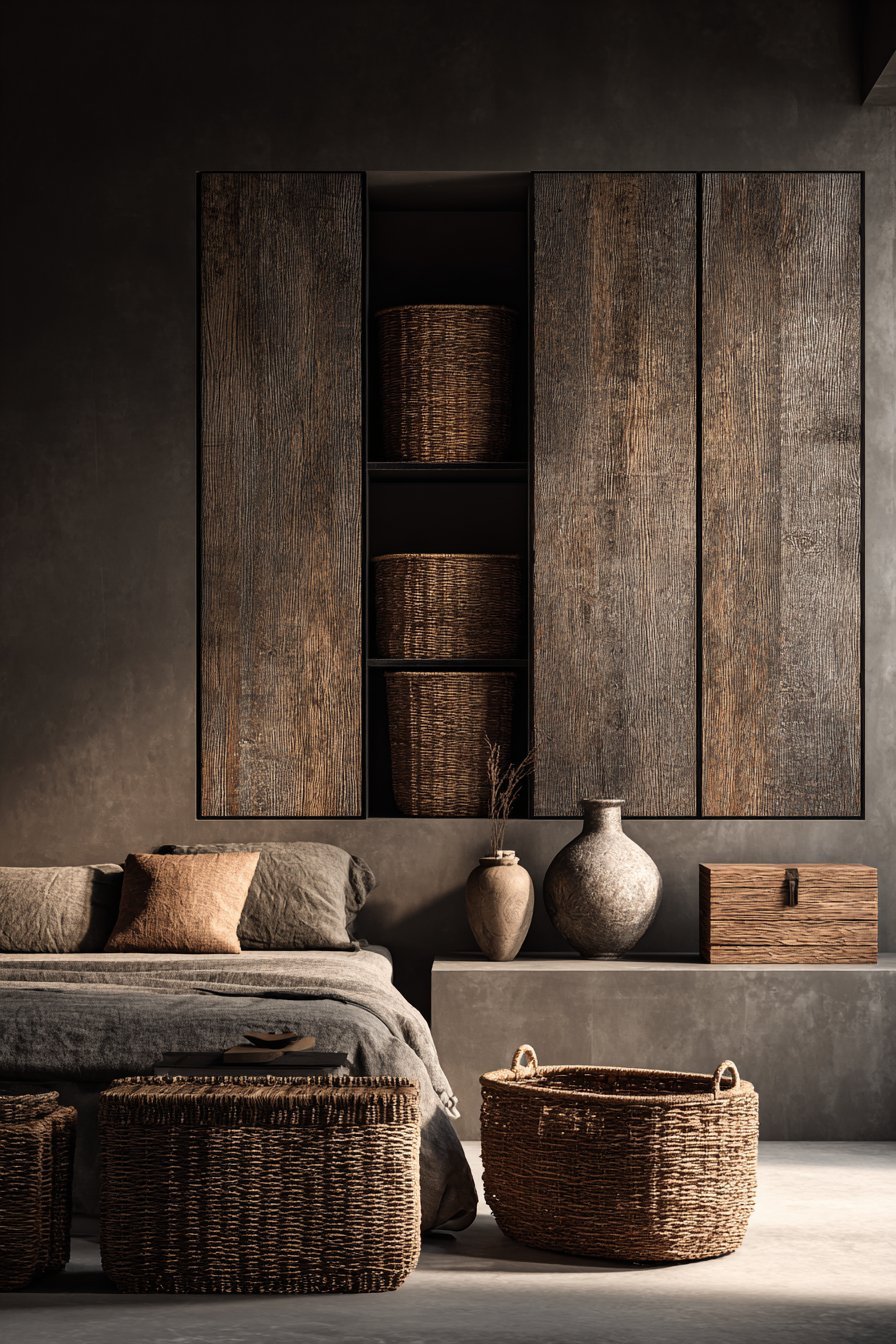
Dark rooms reveal clutter more obviously than light ones because items don’t blend into walls. This natural tendency toward visual organization becomes an asset when embraced intentionally. Dark earthy bedrooms almost demand that we clear unnecessary items, creating inherently calmer spaces. The color scheme itself encourages the discipline that supports restful environments.
Storage solutions in matching dark tones help maintain visual cohesion. Closed storage rather than open shelving prevents the eye from catching on multiple objects and colors. Woven baskets, wooden boxes, and fabric bins in coordinating earth tones hide necessities while contributing to the room’s textural richness. Everything has a place, and that place is visually integrated.
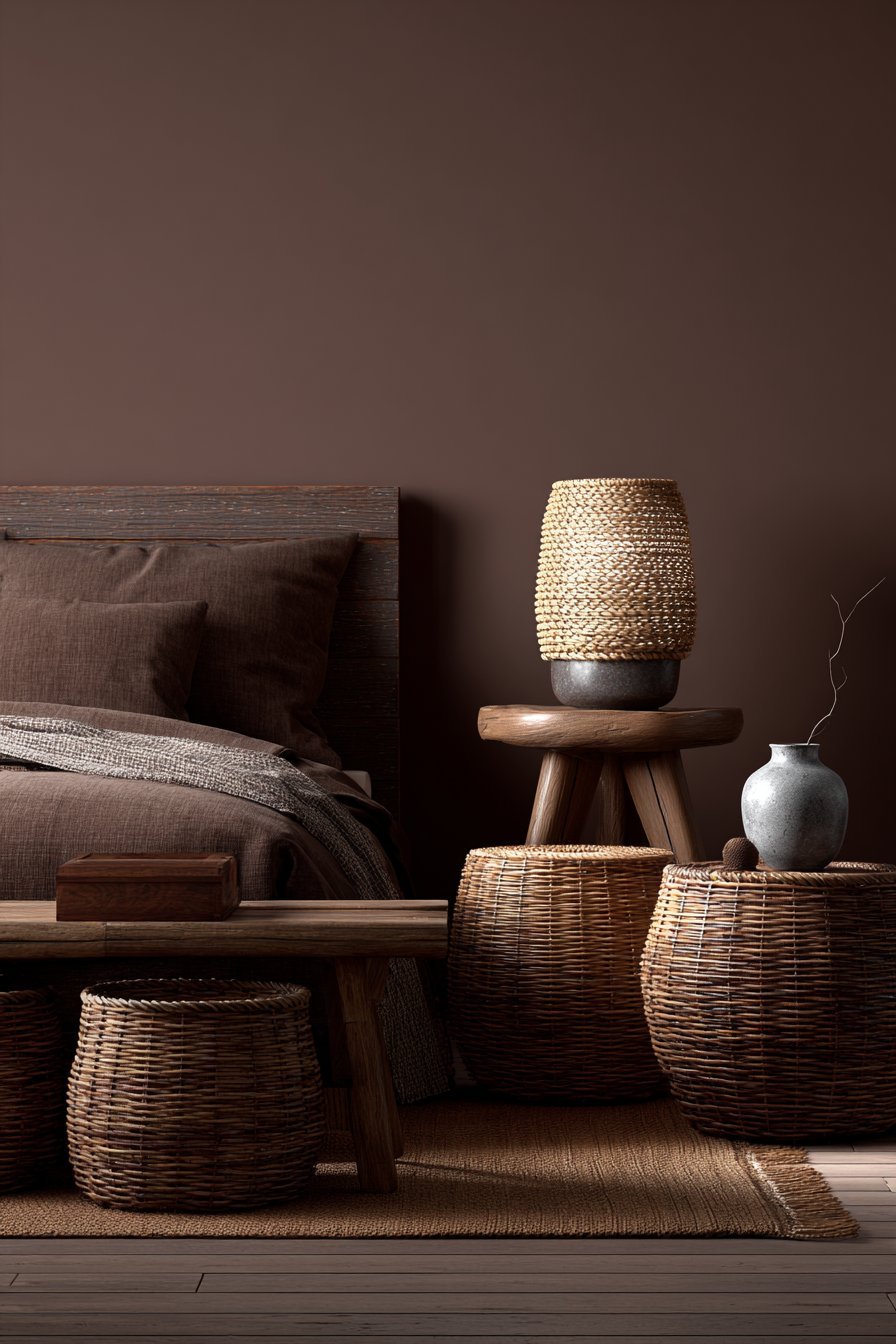
The rule of meaningful display works beautifully in darker rooms. Each item you choose to keep visible should serve a purpose or bring genuine joy. Curated simplicity allows the room’s foundational elements—color, texture, light—to create impact without competition. Three carefully chosen objects on a dresser create more peace than twenty items crowding the same surface.
- Implement closed storage for items used less than weekly
- Use matching storage containers in natural materials
- Limit visible décor to pieces you truly love
- Keep nightstands minimal with only essential items
- Store clothing completely out of sight in closets or dressers
- Clear surfaces before bed each evening to maintain calm
8. Balancing Darkness with Strategic Lightness
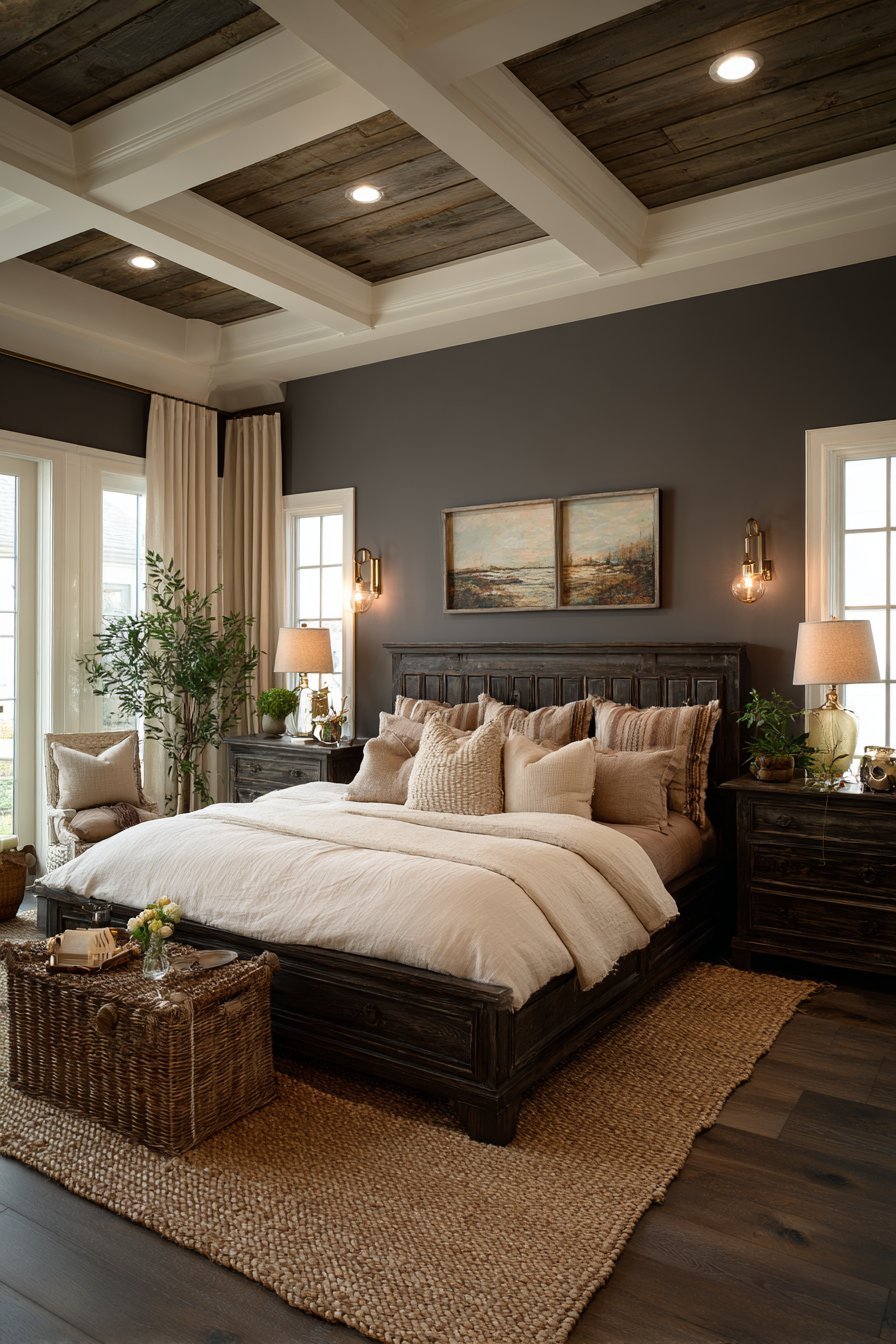
Entirely dark rooms can feel oppressive without careful balance. Strategic lighter elements prevent heaviness while maintaining the grounding effect. A cream-colored linen duvet on a dark bed frame creates essential contrast that allows the eye to rest. The darkness remains dominant, but lighter accents provide visual relief points.
Ceiling color deserves special attention in dark bedrooms. Painting the ceiling several shades lighter than walls creates vertical dimension that prevents the room from feeling like a cave. The lighter ceiling also reflects light downward more effectively, improving overall illumination. Consider warm white or the lightest version of your wall color.
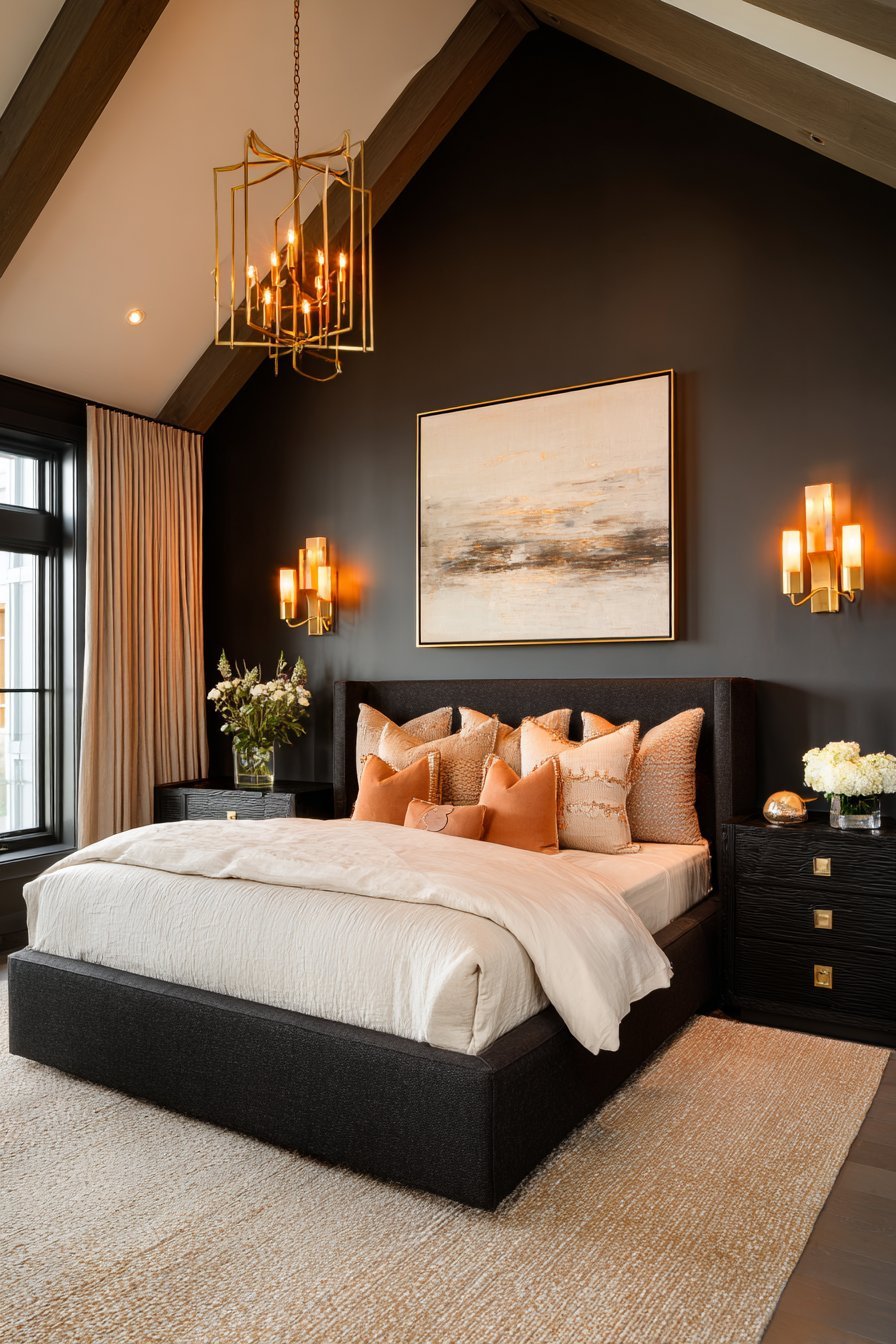
Metallic accents in warm tones add luminosity without introducing color conflict. Brass, bronze, or aged gold fixtures and hardware catch light beautifully against dark backgrounds. These metallic moments create sparkle that energizes the palette while maintaining the earthy, organic feeling. Choose brushed or antiqued finishes rather than high-polish chrome.
- Paint ceiling two to three shades lighter than walls
- Use light-colored bedding as your largest contrast element
- Limit bright white to avoid harsh visual jumps
- Incorporate warm metallics in lighting and hardware
- Add cream or beige accent pillows rather than pure white
- Consider a lighter area rug to anchor the room
9. Seasonal Adaptation of Dark Earthy Palettes
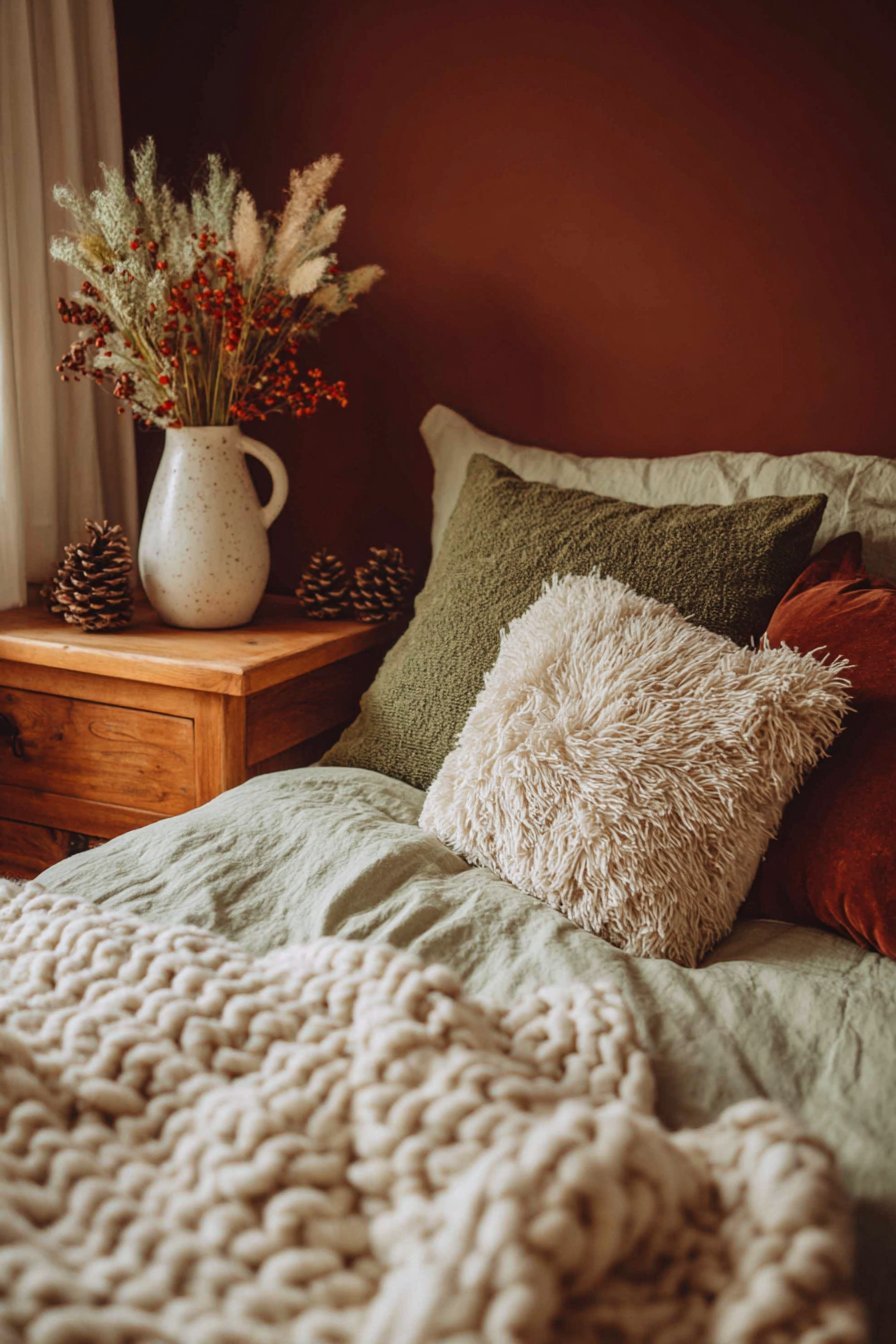
Dark earthy bedrooms adapt beautifully across seasons with minimal changes. In winter, layering heavier textures like velvet, wool, and faux fur amplifies the cozy factor. The dark palette that might feel too heavy in summer becomes perfectly warming when temperatures drop. Add a chunky knit throw and swap to flannel sheets for instant seasonal transformation.
Summer adaptation focuses on breathability and lighter textures within the same color family. Linen bedding in lighter earth tones, removing heavy layering pieces, and maximizing airflow prevents dark rooms from feeling stifling. The wall colors remain constant, but textural changes completely shift the room’s temperature perception. Open windows for cross-ventilation and use lighter cotton rather than heavy wool.

Seasonal décor in natural materials keeps the room fresh without disrupting the foundational palette. Spring branches in a dark vase, dried autumn leaves in fall, winter pine cones, summer grasses—these simple natural elements connect the room to changing seasons. The dark backdrop makes even subtle seasonal additions feel significant and intentional.
- Switch bedding weight and fiber content seasonally
- Store heavy throws during warmer months
- Rotate decorative pillows between heavy velvet and breathable linen
- Adjust lighting levels for longer or shorter days
- Bring in seasonal natural elements for organic variety
- Consider a summer-weight duvet in lighter earth tones
10. Budget-Friendly Ways to Achieve the Look
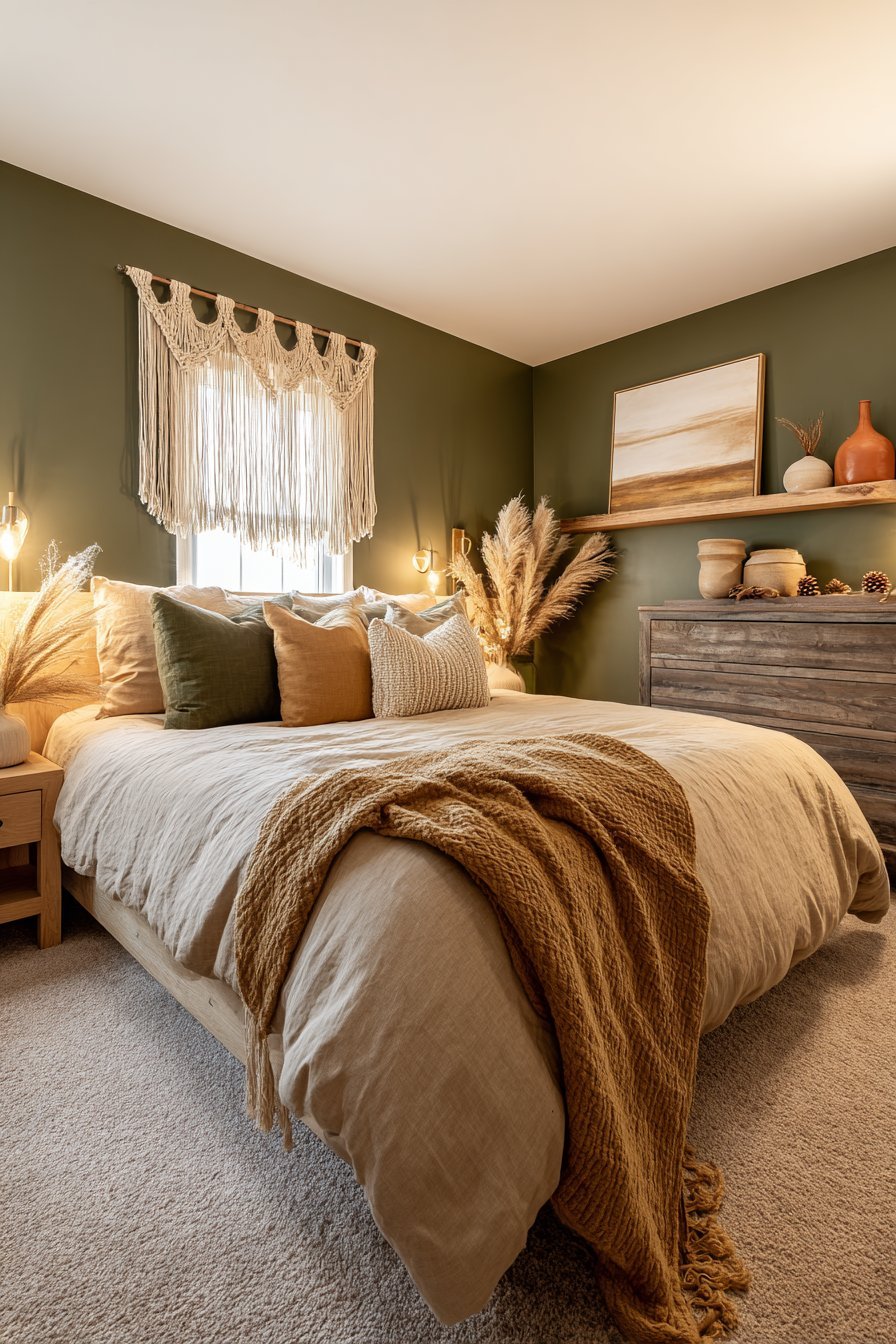
Creating a dark earthy bedroom doesn’t require luxury budgets. Paint remains the most cost-effective transformation, delivering dramatic impact for minimal investment. Quality paint in deep earth tones costs the same as lighter colors but creates exponentially more atmosphere. Focus your budget here for maximum return, choosing one or two feature walls if painting the entire room feels too bold.
Thrift stores and secondhand markets offer treasure troves of natural materials at fraction of retail prices. Solid wood furniture from previous decades often features better construction than modern budget pieces. A dated finish can be sanded and re-stained in darker tones, creating custom pieces for the cost of materials and weekend labor. Clay pots, woven baskets, and ceramic vessels appear regularly at thrift prices.
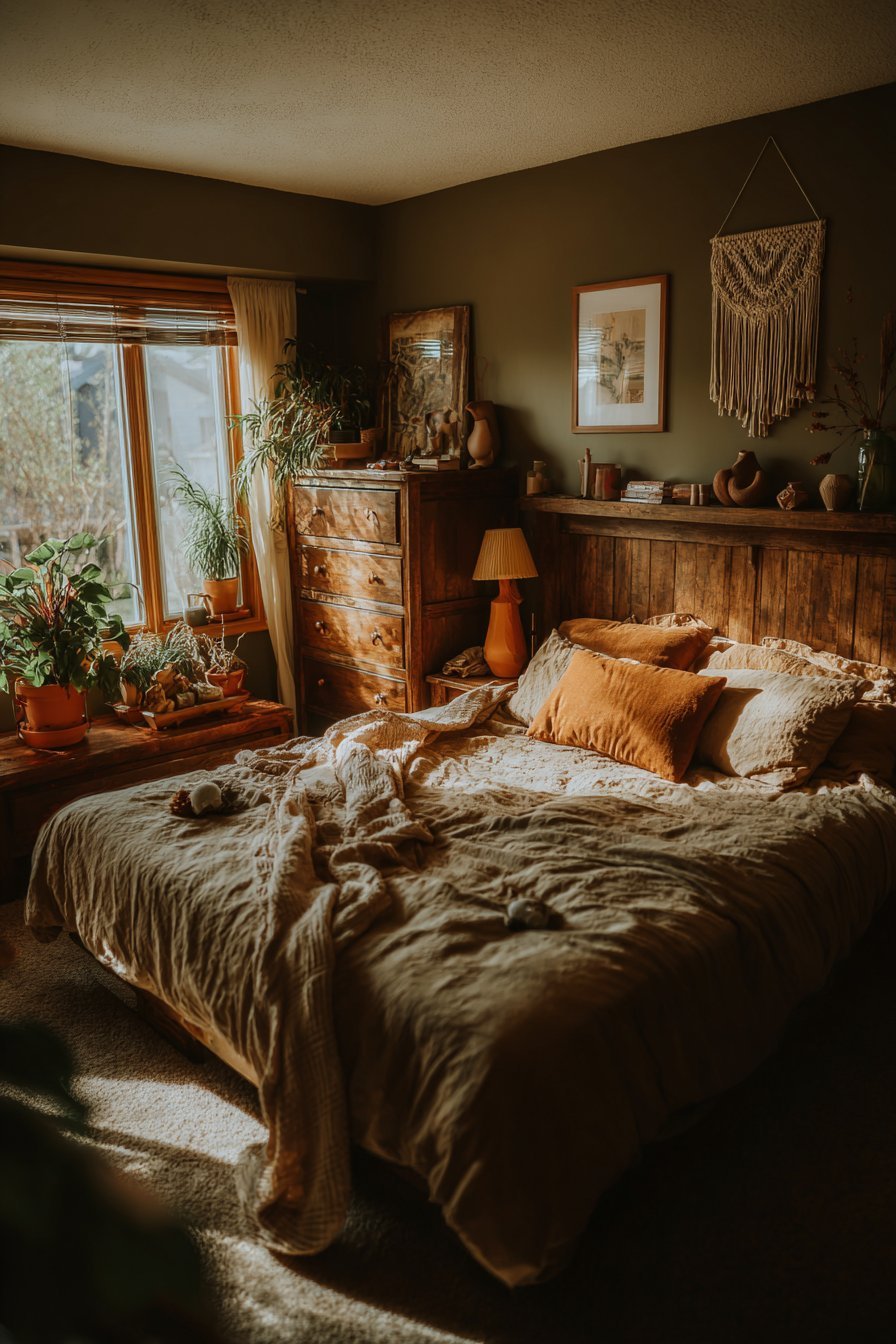
DIY projects extend budgets while adding personal character. Create your own macramé wall hanging in natural cotton, paint thrifted frames in coordinating earth tones, or make terracotta clay decorative objects. The handmade quality of these pieces enhances rather than detracts from the organic aesthetic. Imperfections become authentic rather than cheap-looking in earthy, natural spaces.
- Prioritize paint as your primary budget investment
- Shop secondhand for solid wood furniture to refinish
- Make your own textured throw pillows from budget fabrics
- Collect natural objects from outdoor spaces for free décor
- Use affordable rope, jute, or cotton for DIY projects
- Transform existing furniture with dark wood stain
Conclusion
Dark earthy bedrooms offer something increasingly rare in modern life: spaces designed primarily for restoration rather than productivity. By working with our biological responses to color, texture, and natural materials, these rooms create environments where genuine relaxation comes naturally. The grounding effect isn’t abstract—it’s a physical sensation of coming home to yourself, of tension releasing, of finally being able to rest completely.
The beauty of this design approach lies in its accessibility and adaptability. Whether you invest in complete renovation or simply paint your walls and add natural textures, the core benefits remain consistent. Start where you are with the resources available, and build gradually toward a space that truly supports your wellbeing. Your bedroom should be the most personally restorative space you inhabit—dark earthy design makes that goal achievable and deeply satisfying.
