Framed prints and canvas paintings are the default language of wall decoration — and there is nothing wrong with that. But default, by definition, is not creative. The walls of a home are among its largest and most visually prominent surfaces, and confining their decoration to the familiar vocabulary of rectangular frames and stretched canvases means leaving an extraordinary range of expressive, beautiful, and genuinely surprising possibilities entirely unexplored.
The most memorable interiors — the homes that linger in the imagination long after a visit, the spaces that appear in design publications and inspire thousands of social media saves — almost always contain at least one wall treatment or decorative element that moves beyond the expected. Something unexpected, dimensional, tactile, or experiential that makes a visitor stop, look closer, and feel the particular pleasure of encountering something genuinely creative in a domestic space.
This article explores eight of the most interesting, beautiful, and practically achievable creative wall decor ideas that go beyond the standard art hanging. Each one is capable of transforming a room’s atmosphere, expressing personal identity in a distinctive way, and creating the kind of visual surprise that makes a home genuinely unforgettable. The best part? Not one of them requires an expensive art budget or a professional interior designer to execute beautifully.
1. Woven Wall Tapestries and Textile Installations
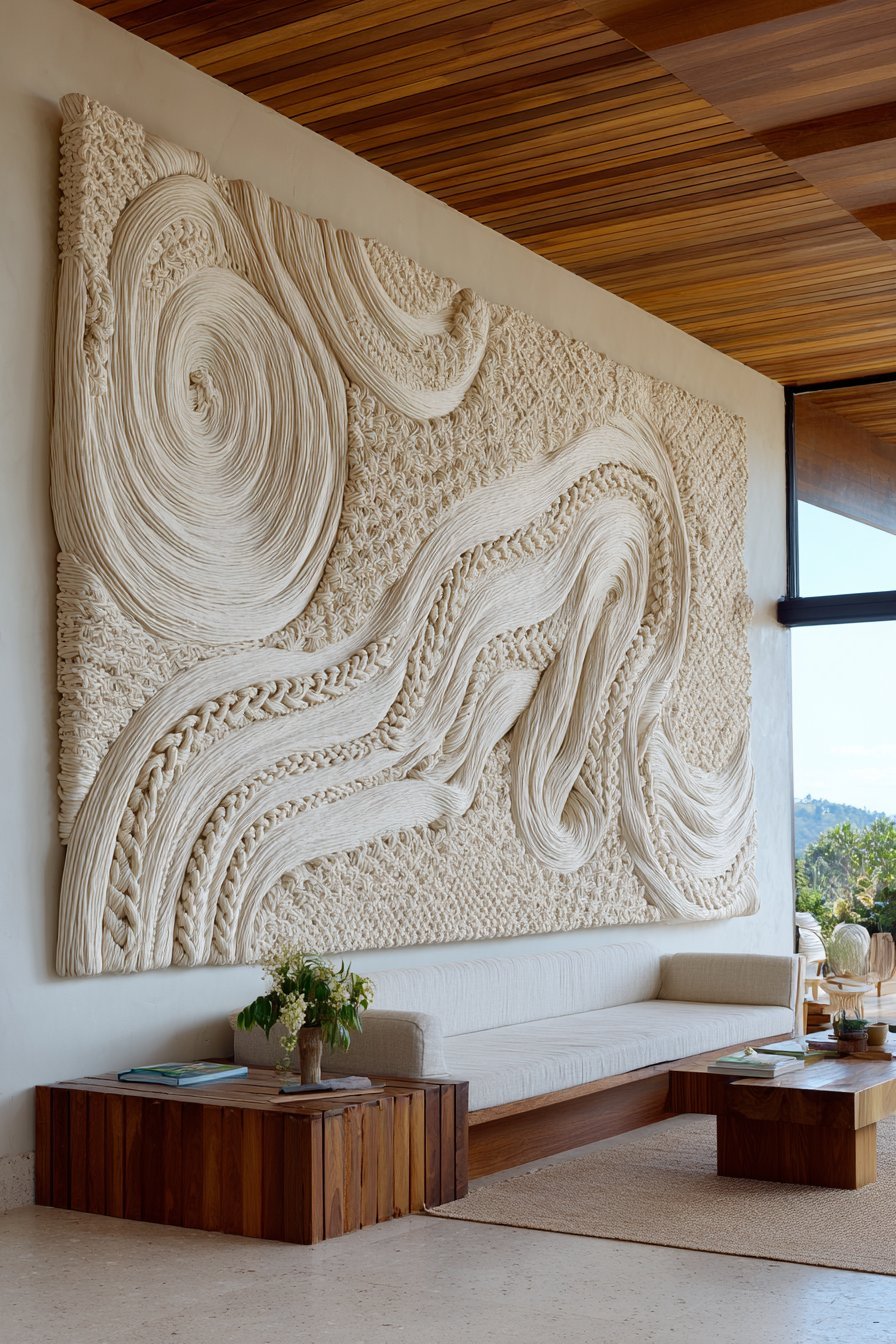
Textile wall installations represent one of the oldest and most culturally rich traditions in interior decoration — and one of the most dramatically underutilized in contemporary homes. Where a framed print presents imagery on a flat, uniform surface, a woven tapestry, macramé installation, or hand-loomed textile panel introduces three-dimensional depth, organic texture, and the unmistakable quality of human craft that mass-produced wall art simply cannot replicate.
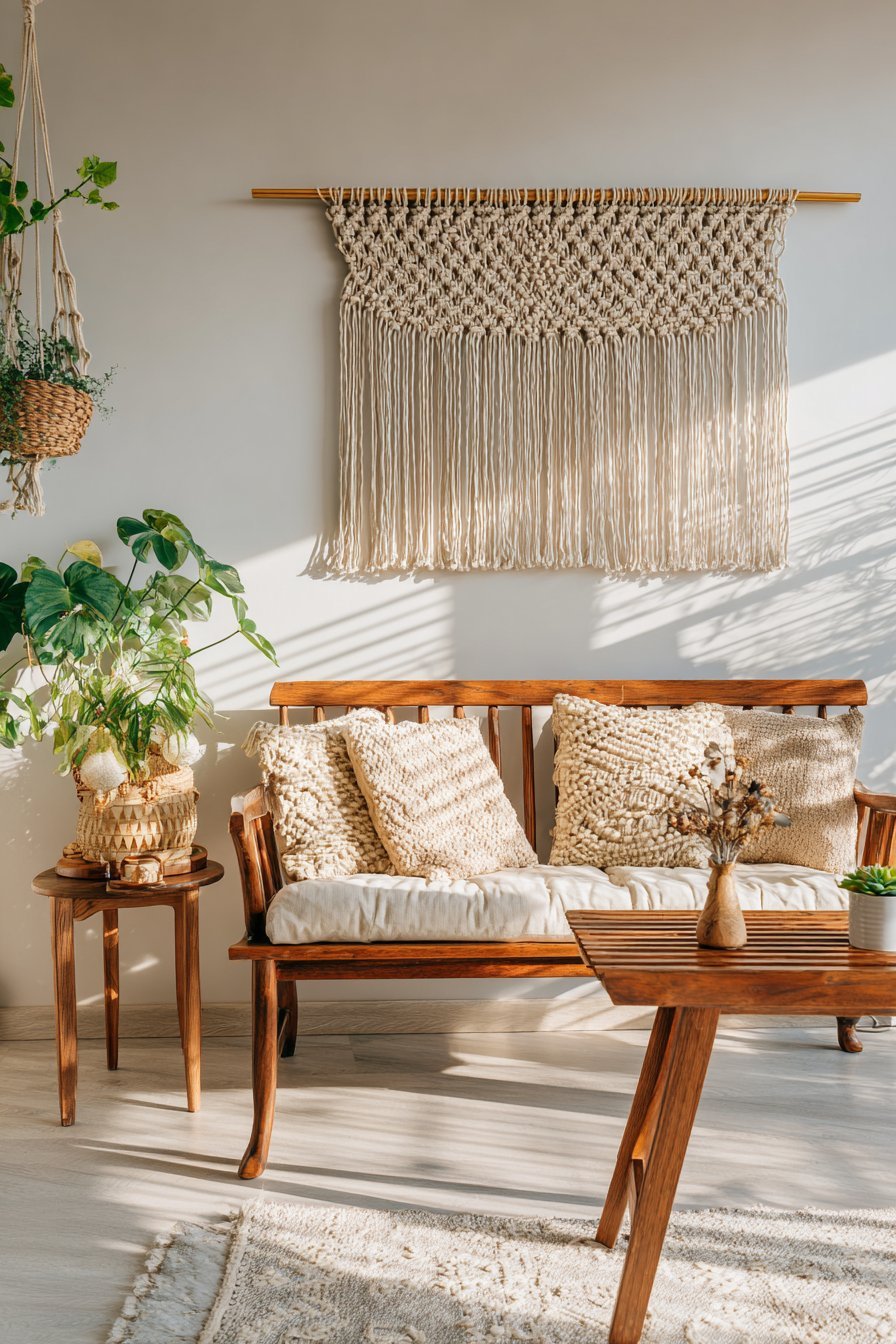
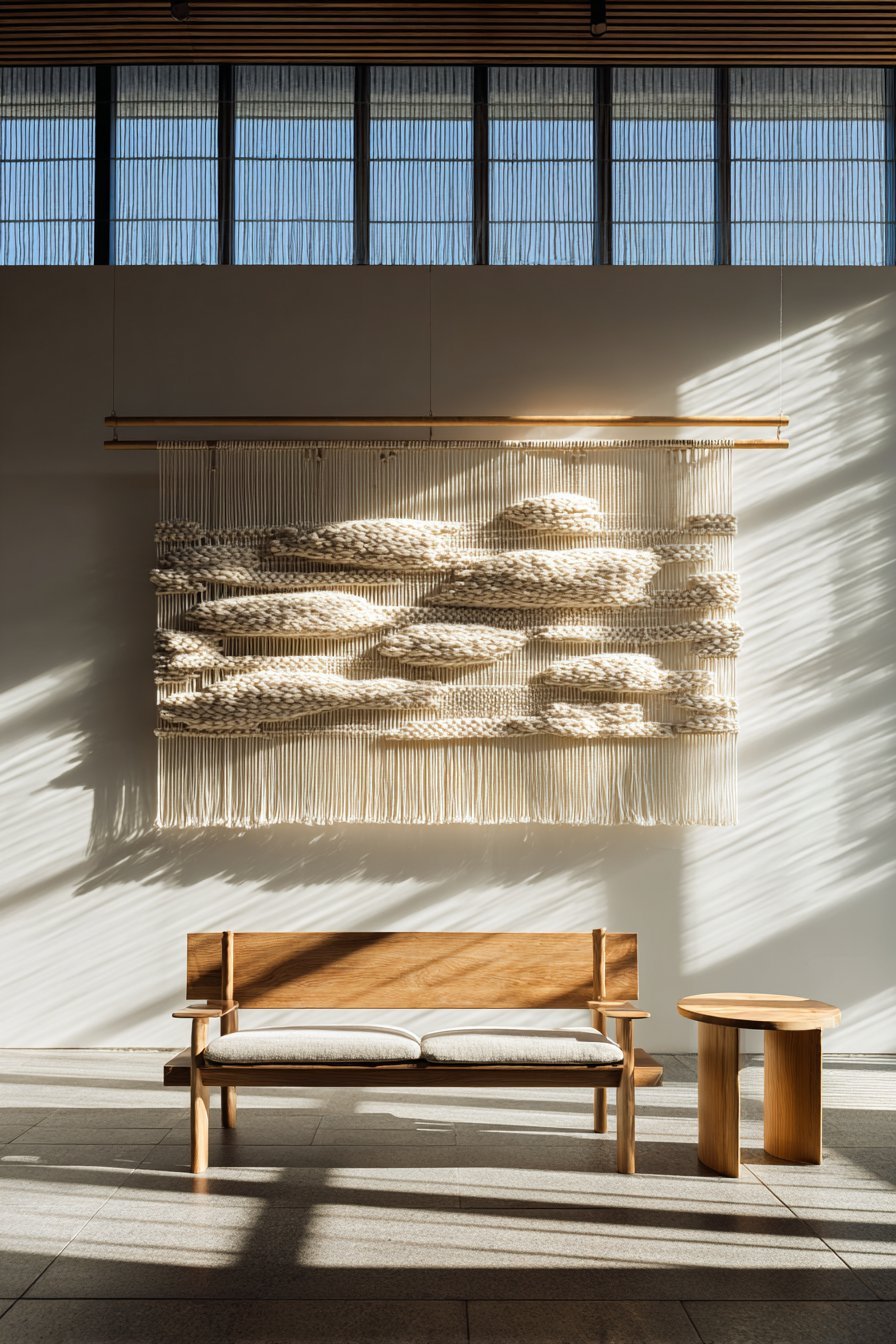
Large-scale woven tapestries from independent textile artists — whether contemporary abstract compositions, traditional geometric patterns, or nature-inspired figurative weaves — create wall moments of extraordinary richness and visual complexity. The interaction between woven structure and natural light gives textile wall pieces a living, shifting quality that changes throughout the day as the angle of illumination changes. A tapestry that appears in warm morning light as a soft, golden composition reveals entirely different textural depths under the cooler, directional light of a winter afternoon.
Macramé wall installations have experienced a significant and entirely deserved resurgence in contemporary interior design. Far removed from the modest knotted pieces of a generation ago, today’s large-format macramé panels by skilled makers can span an entire feature wall in compositions of extraordinary structural complexity and organic beauty. Natural cotton rope, dip-dyed fibers, and woven-in botanical elements create pieces that function simultaneously as sculpture, textile, and wall art — objects of considerable investment value that appreciate in character and beauty as they age.
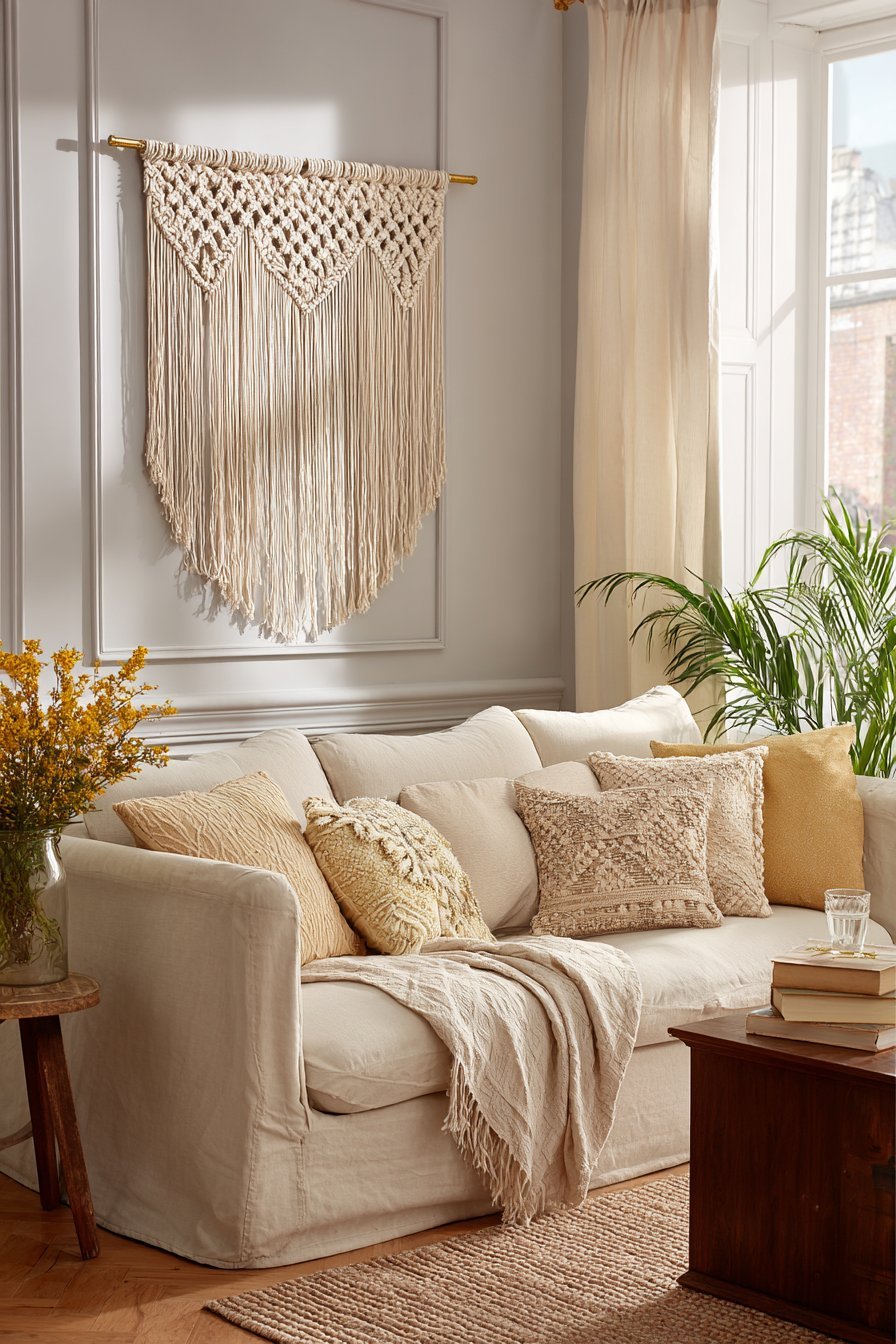
- Source large-scale woven tapestries from independent textile artists at craft fairs, Etsy, or local studios
- Choose macramé panels in natural cotton, jute, or dip-dyed fiber to complement your room’s color palette
- Hang textile pieces from a slim timber dowel or brass rod for a clean, professional installation
- Position textile wall art where raking natural light can reveal its textural depth throughout the day
- Layer a textile installation over a softly painted wall for a combined depth effect that maximizes visual richness
2. A Living Wall or Preserved Moss Installation
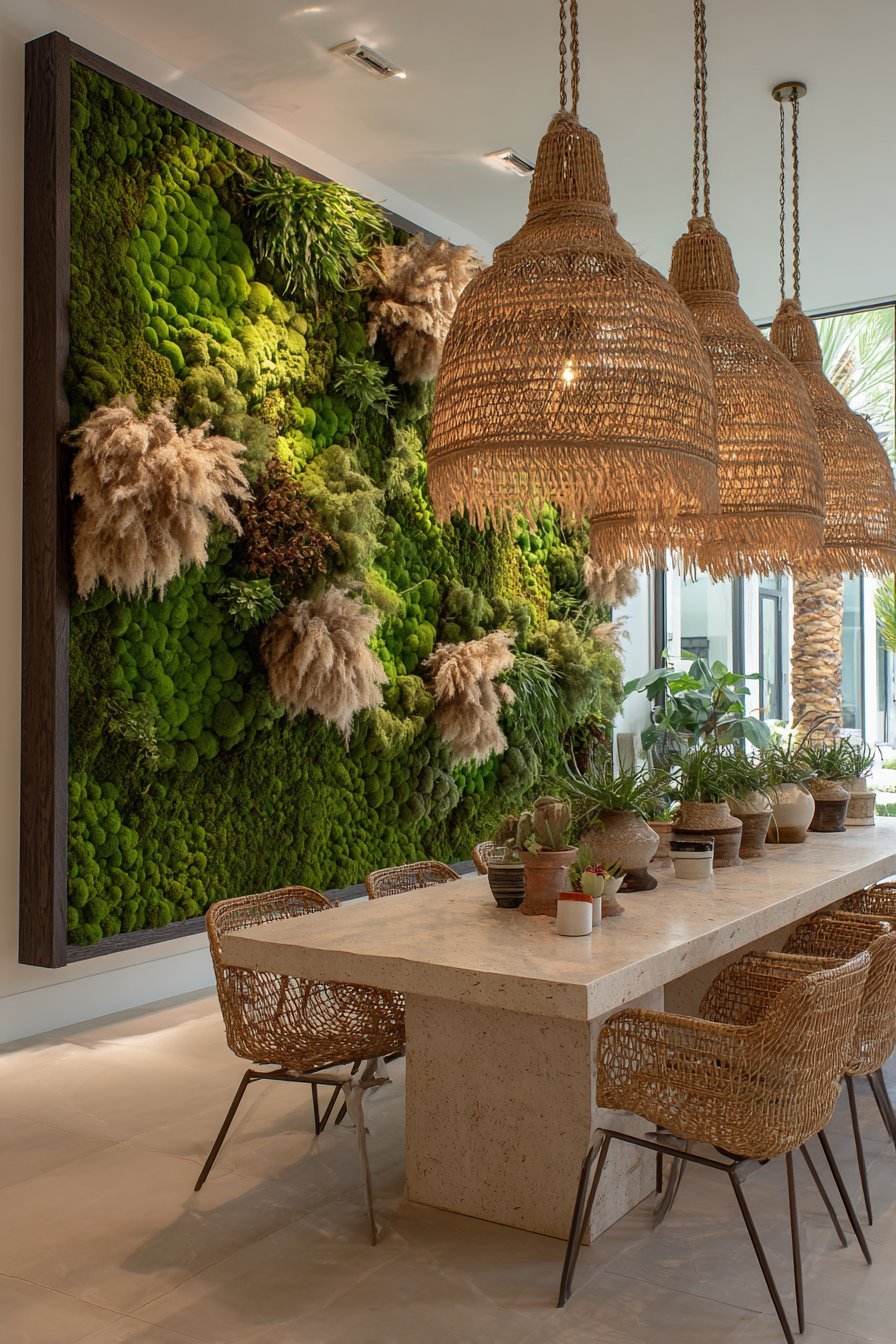
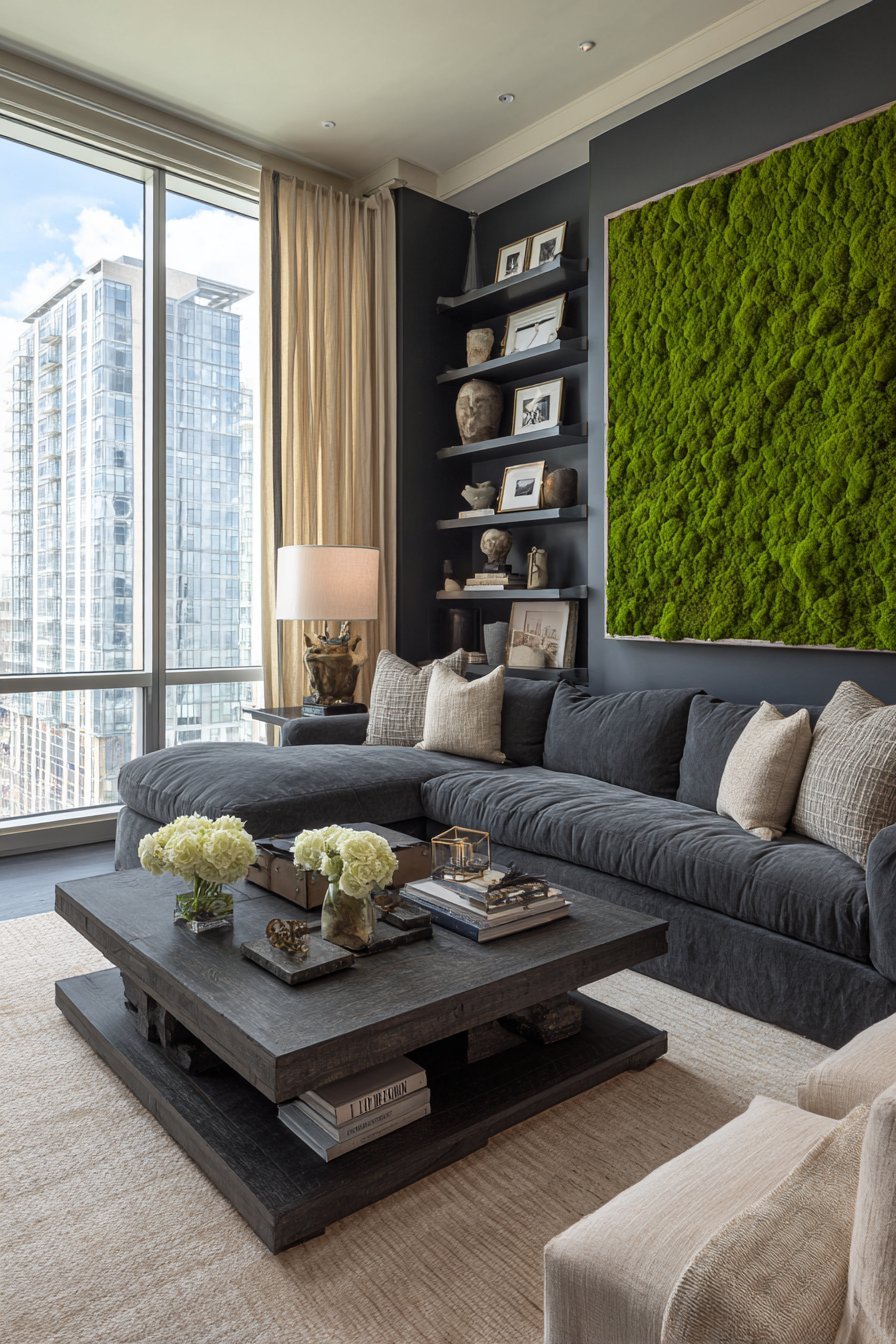
A living wall brings the most fundamentally different quality available to any wall surface in the home: genuine life. Whether it takes the form of a fully planted vertical garden, a framed preserved moss composition, a grid of air plant holders, or a modular succulent panel system, a living wall installation transforms an ordinary surface into something that breathes, grows, and changes with the seasons — a piece of the natural world integrated directly into the architecture of the home.
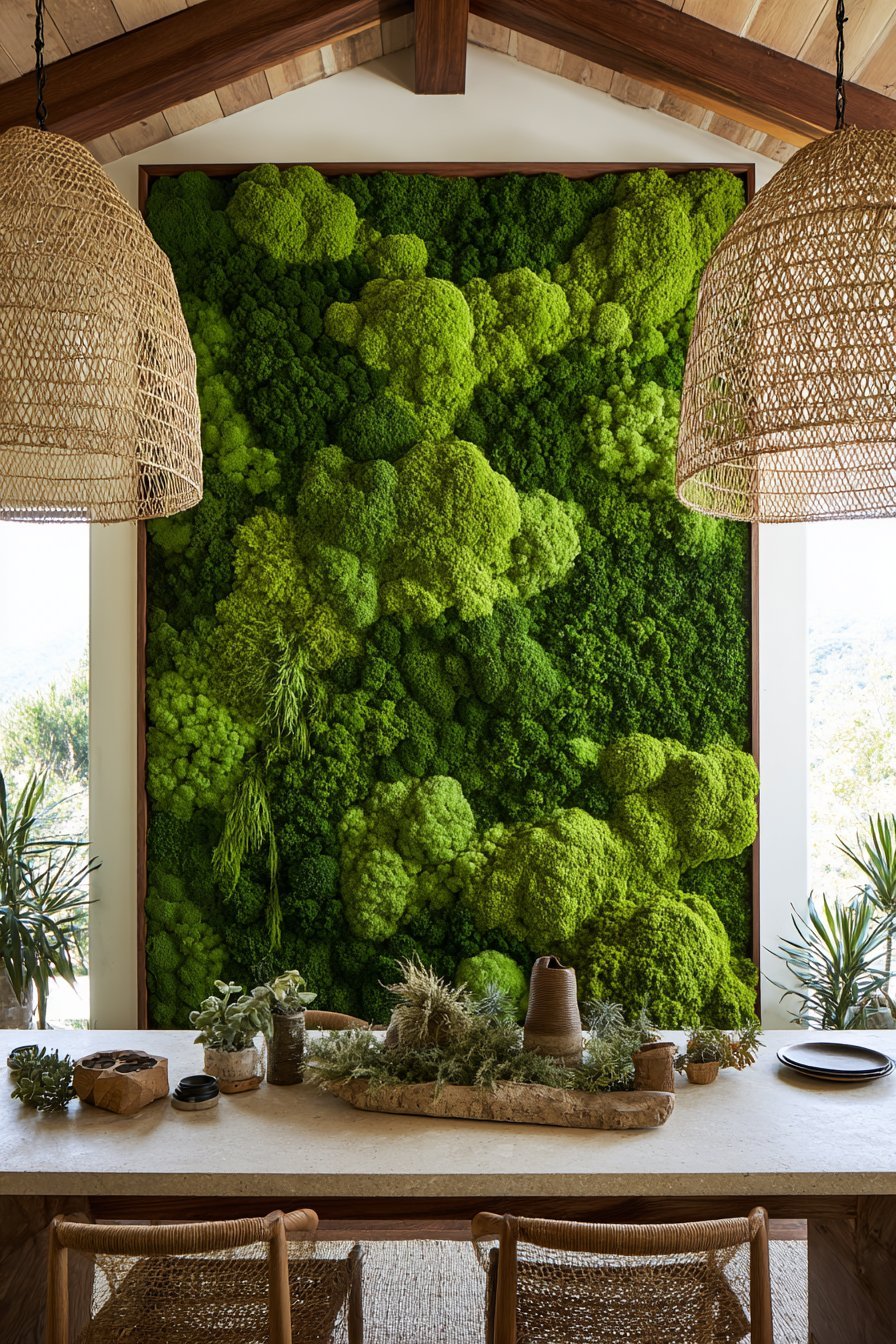
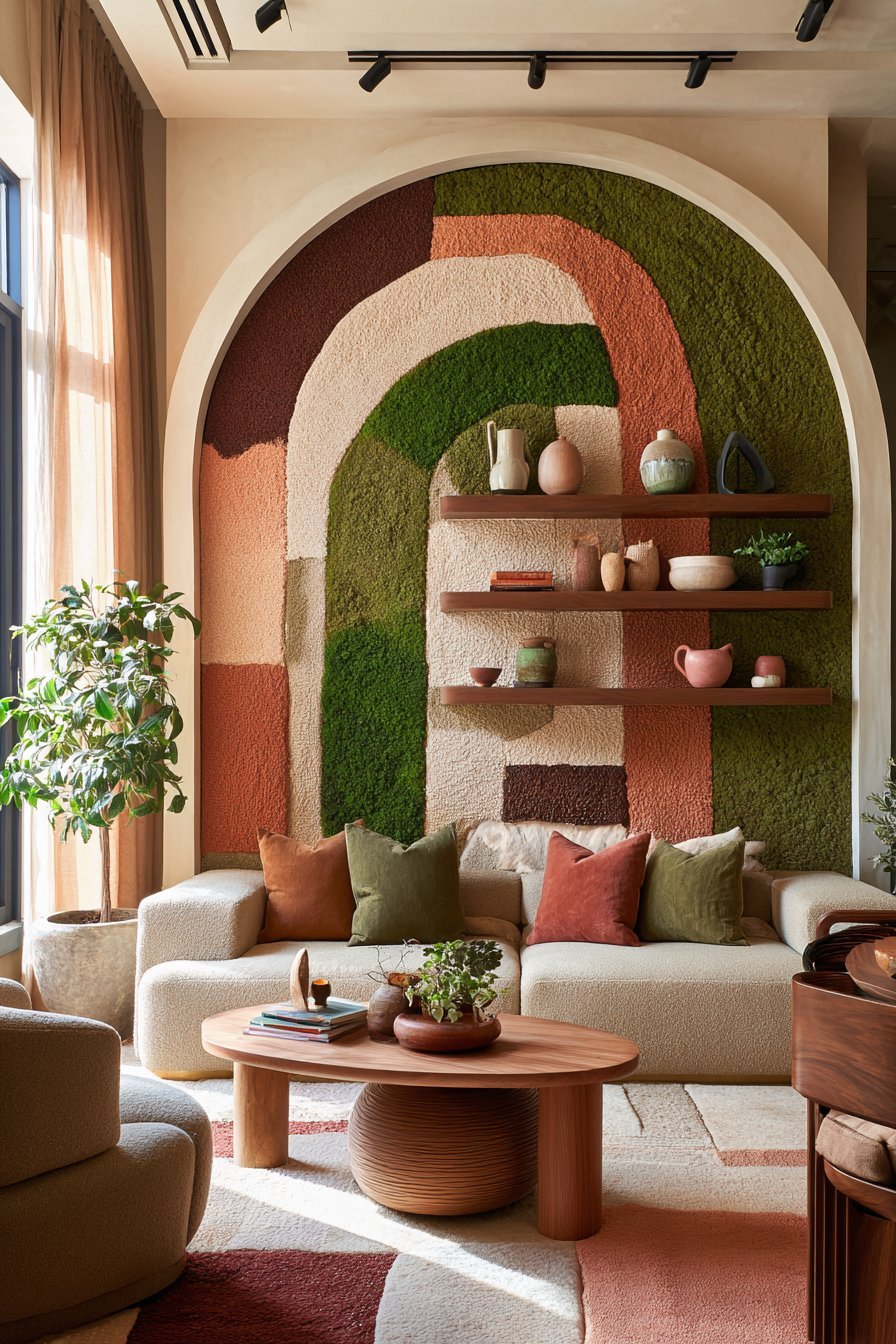
Preserved moss walls and panels are the most accessible and most visually striking entry point into living wall design for most homeowners. Preserved reindeer moss, flat moss, and bun moss — treated to maintain their color and soft texture indefinitely without water or sunlight — can be arranged in framed compositions of great beauty, combined with air plants and dried botanical elements, or applied directly to a wall surface in organic, free-form compositions. These installations require zero maintenance while delivering the immediate biophilic impact of a living green wall at a fraction of its complexity and ongoing care requirements.
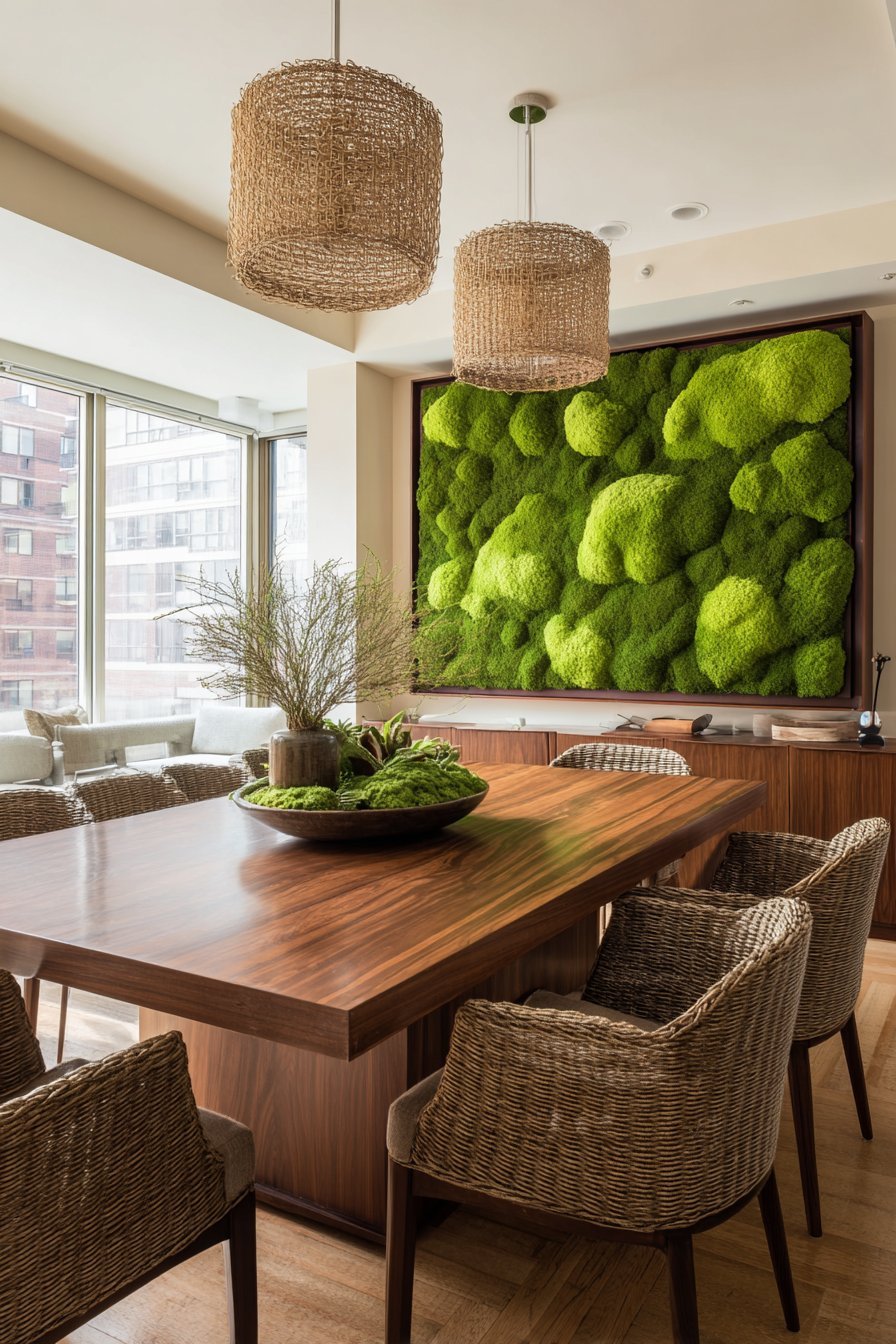
Modular living plant walls — using either purpose-built vertical planting systems or creatively repurposed pallets, pegboards, and shelving systems fitted with individual planters — create fully functional planted walls that can grow and evolve over time. Trailing pothos, ferns, philodendrons, and spider plants are all excellent choices for their tolerance of indoor conditions and their cascading, sculptural growth habits. A plant wall in a kitchen or dining room also delivers the practical benefit of fresh herbs — basil, thyme, mint, and chives planted in a kitchen wall installation provide both beauty and culinary utility in one installation.
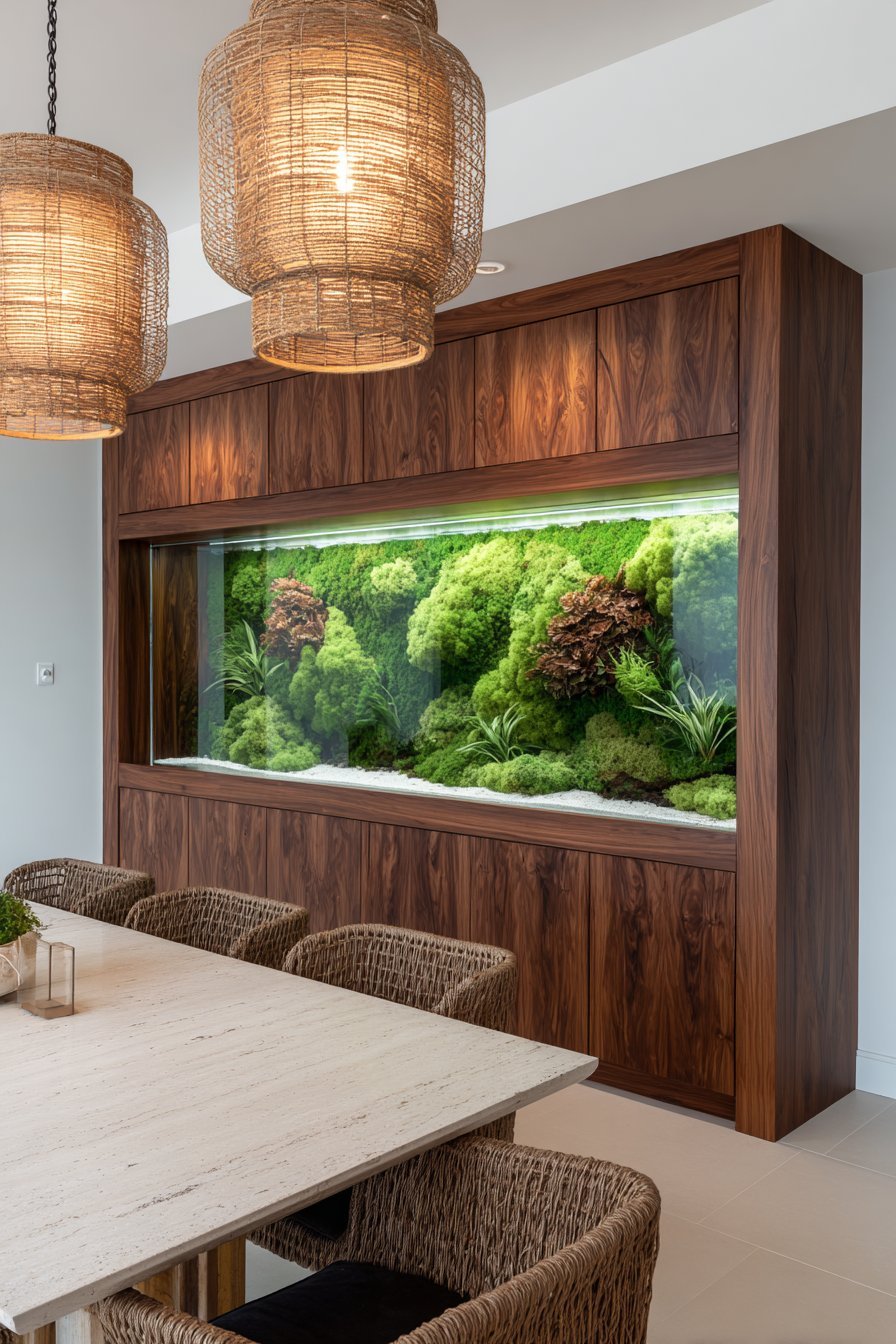
- Create a framed preserved moss composition using reindeer moss, flat moss, and air plants in a shadow-box frame
- Install a modular vertical planting system for a fully living wall of trailing and upright indoor species
- Choose plant varieties with trailing growth habits — pothos, philodendron, string of pearls — for the most dramatic living wall effect
- Position living plant walls near natural light sources — most indoor plants require minimum light levels to thrive
- Use a preserved moss installation in rooms with limited natural light where living plants are not viable
3. A Gallery of Vintage Plates or Ceramic Wall Art
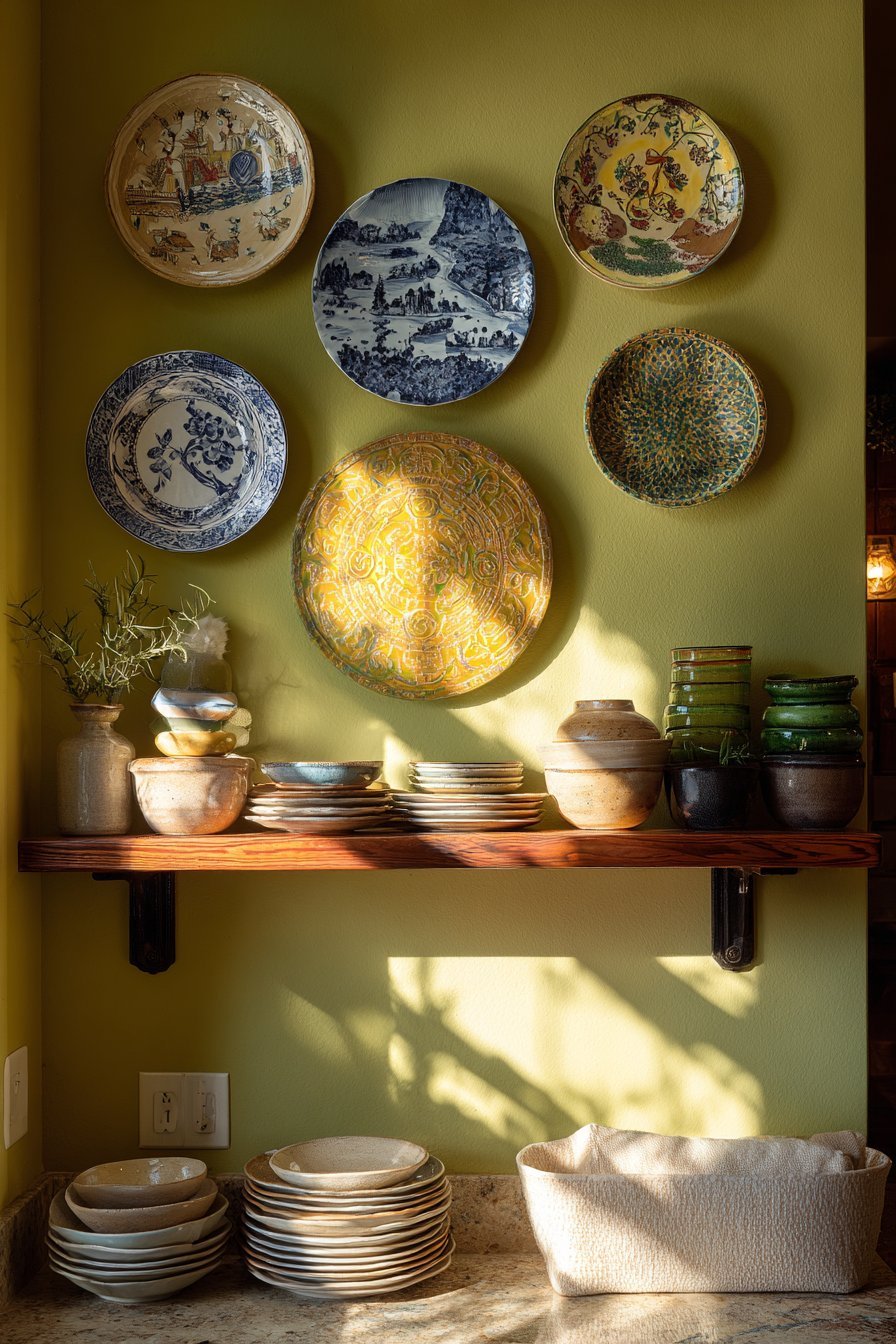
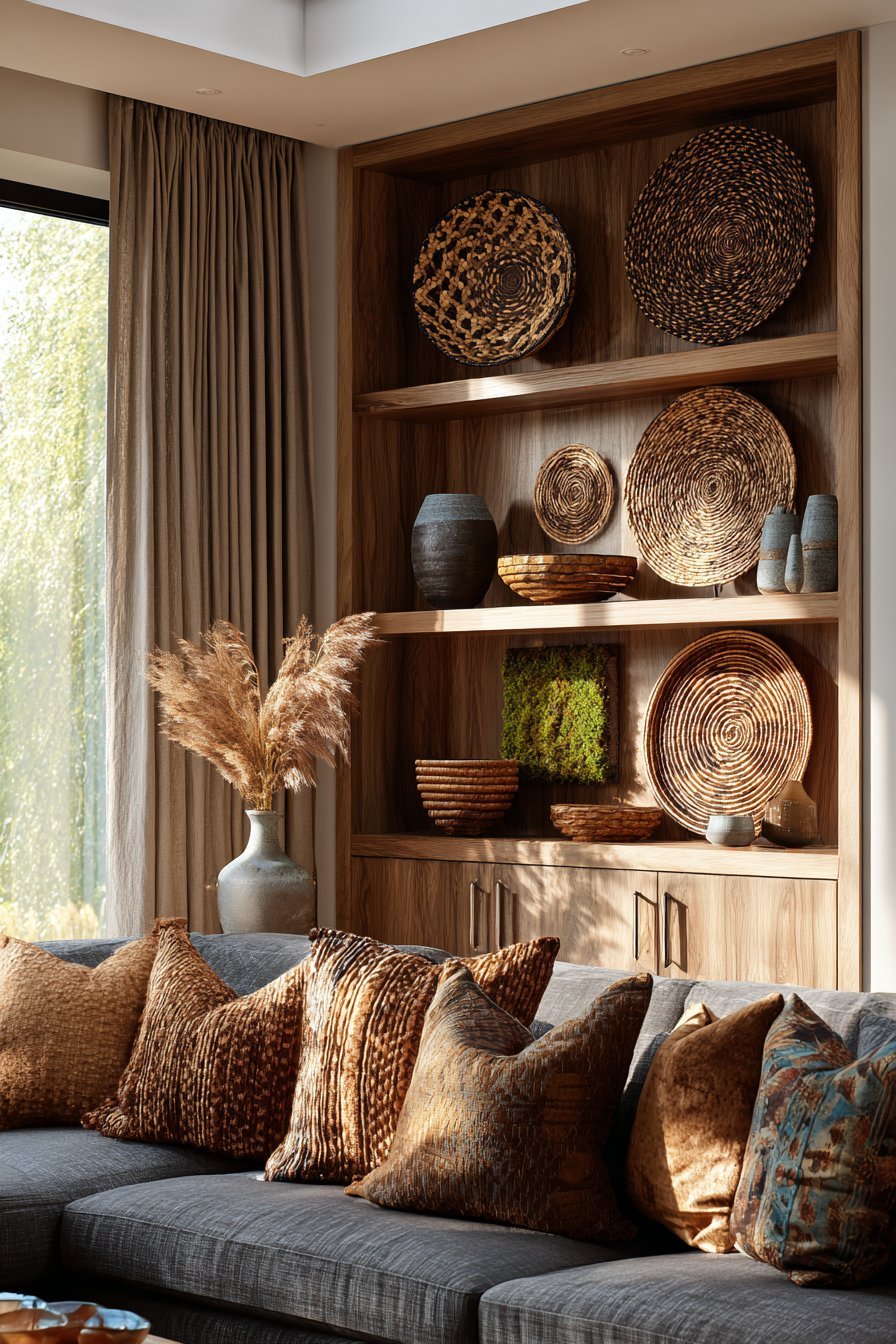
Ceramic wall displays have a long and distinguished history across many design traditions — from the Delftware plate walls of Dutch interiors to the hand-painted majolica collections of Mediterranean kitchens to the contemporary ceramic art installations of today’s most design-forward homes. Decorative plates, ceramic wall discs, hand-thrown pottery forms, and sculptural ceramic pieces mounted directly on the wall create a display of extraordinary material richness and cultural depth that framed prints simply cannot achieve.
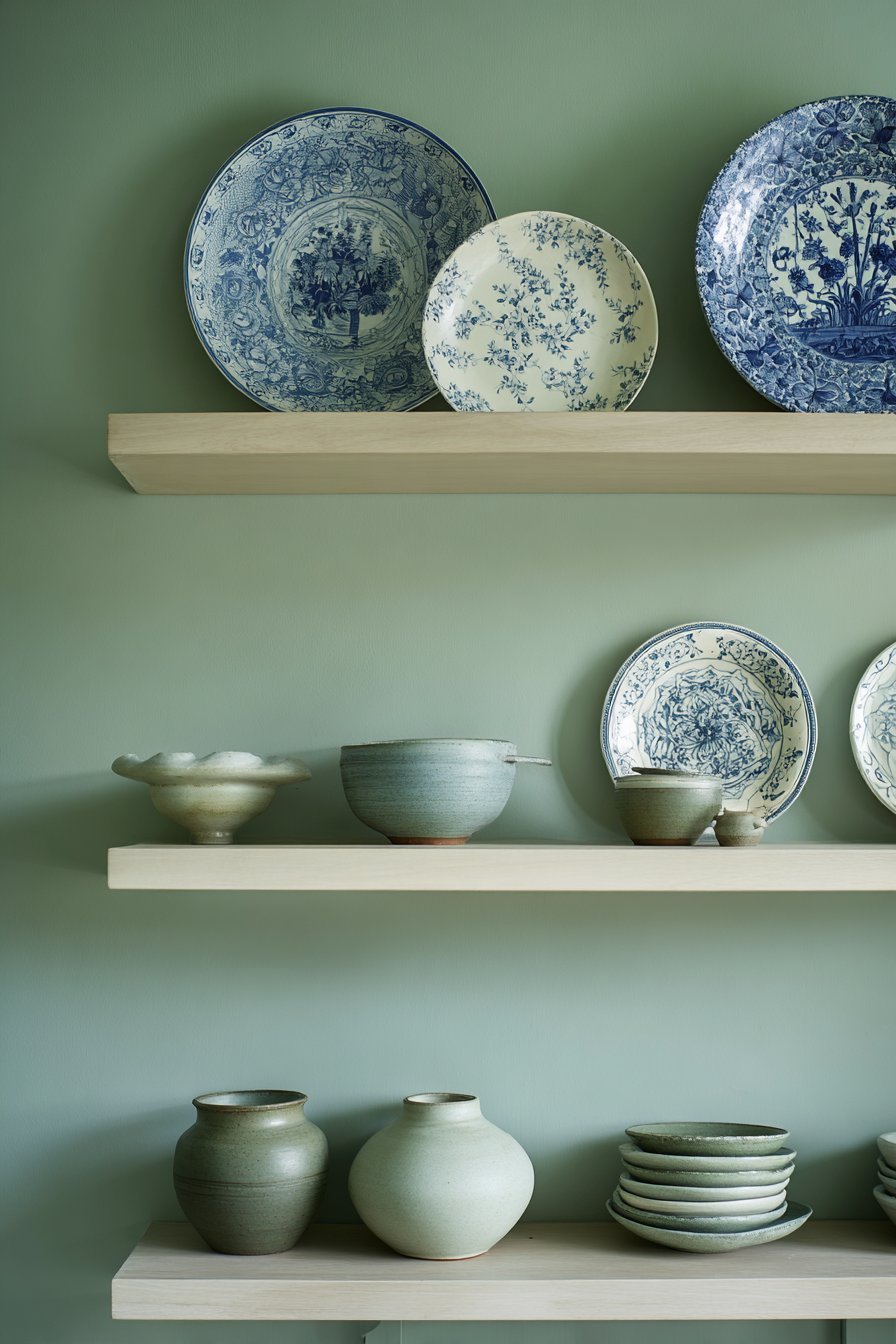
A curated collection of vintage and antique decorative plates arranged in an organic, asymmetric wall composition creates one of the most characterful and personally expressive forms of wall decoration available. The beauty of a plate wall lies in its accumulated quality of collection — each piece sourced from a different place, a different time, a different maker — that gives the display a sense of genuine history and personal journey. Antique markets, estate sales, charity shops, and specialist ceramic dealers are the best sources for building a collection with genuine variety of era, style, and origin.
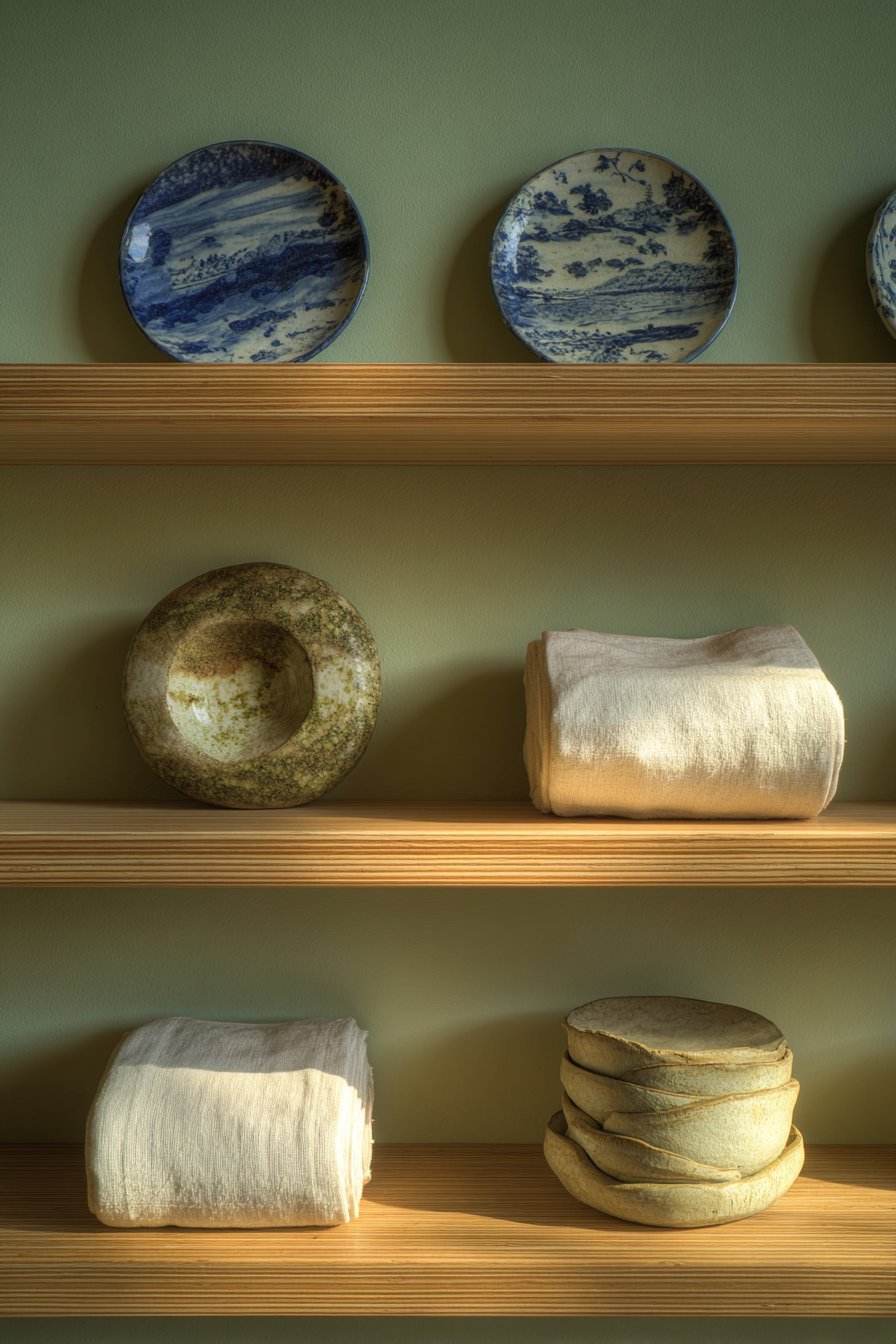
Contemporary ceramic wall art — abstract disc forms, sculptural relief panels, hand-built geometric assemblages, and slip-cast botanical relief tiles — represents the most design-forward end of ceramic wall decoration. These are objects that blur the line between fine art and craft, typically created by individual ceramic artists working in small studios, and available through artist studios, specialist galleries, and online platforms dedicated to handmade ceramics. A single large ceramic wall disc by a respected maker creates a statement of considerable visual authority and entirely singular beauty that no reproduction print can come close to matching.
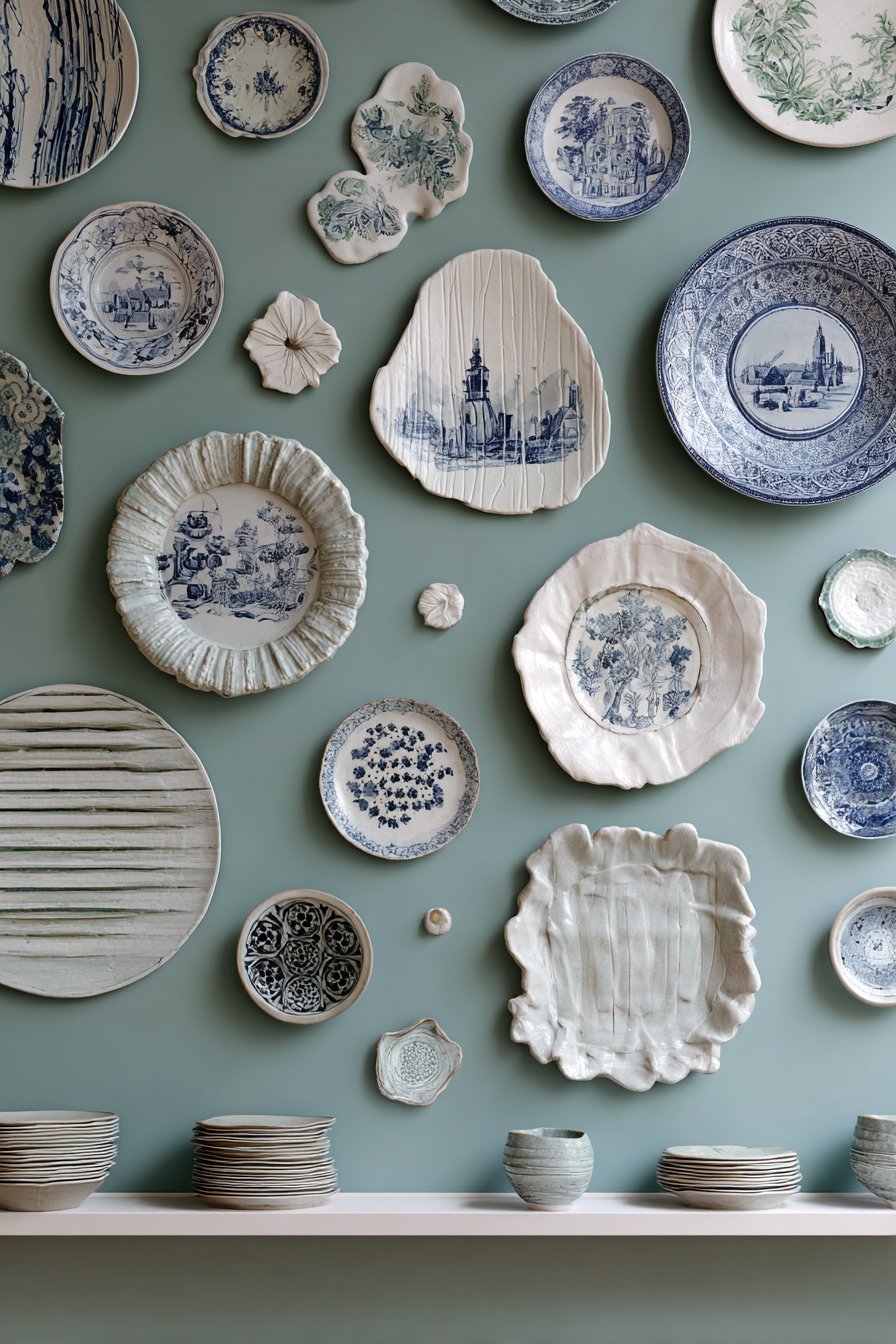
- Source vintage decorative plates from antique markets, estate sales, and charity shops for an eclectic collection
- Arrange plate walls in asymmetric, organic compositions that prioritize visual balance over rigid symmetry
- Mix periods, styles, and scales within a plate collection — variety is what gives this style its distinctive character
- Commission a single large ceramic disc or relief panel from a local ceramic artist for a completely unique wall statement
- Use plate hangers specifically designed for wall mounting — they are invisible from the front and completely secure
4. Architectural Salvage and Found Object Installations
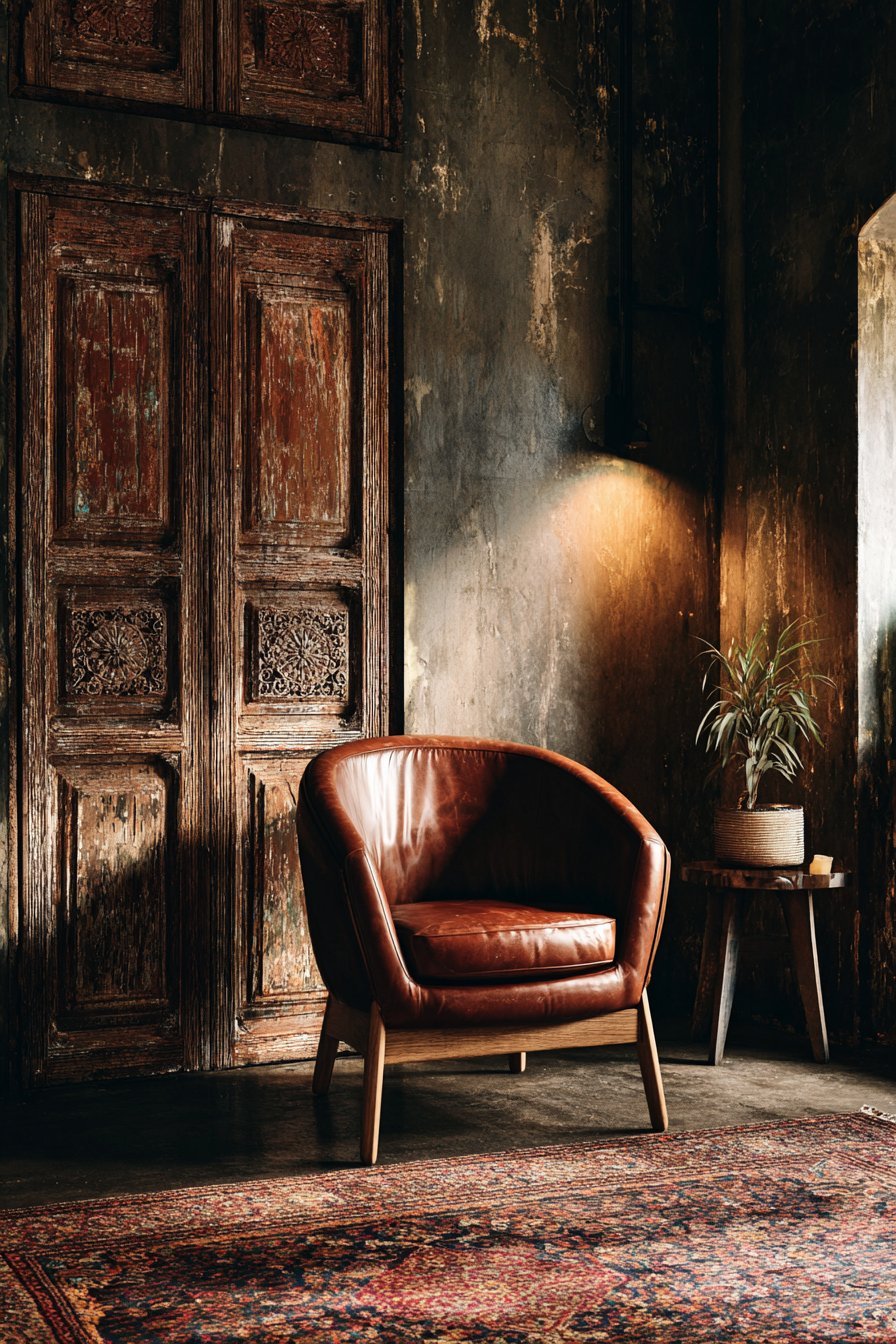
Salvage and found objects bring a quality to wall decoration that no manufactured product — however beautifully designed — can replicate: the quality of authentic history, accumulated use, and the irreversible beauty of genuine age. An arrangement of antique architectural fragments, weathered timber shutters, carved stone relief panels, vintage industrial components, or assemblages of naturally weathered materials creates wall decoration of unique visual richness and the compelling narrative depth of objects with genuine provenance.
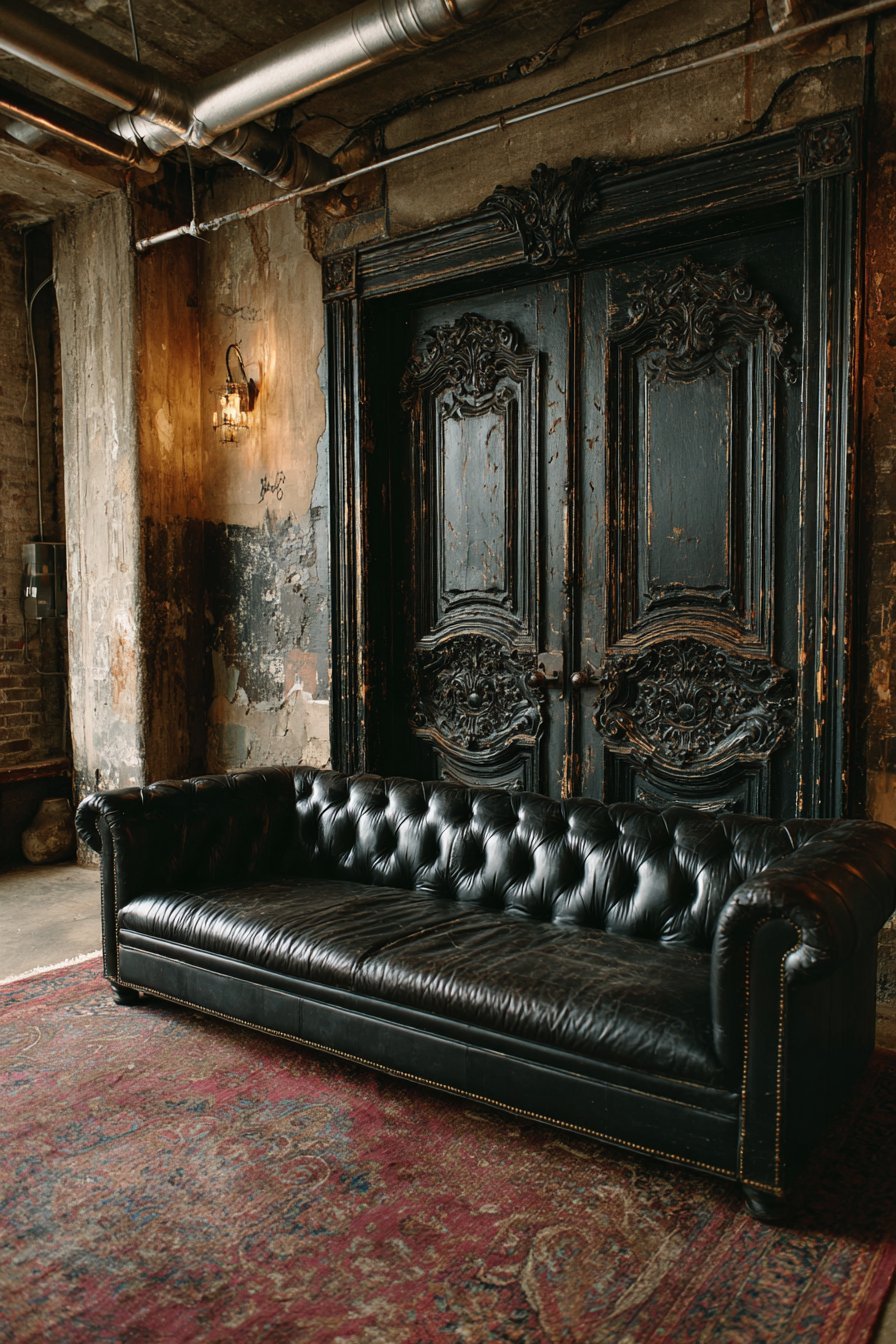
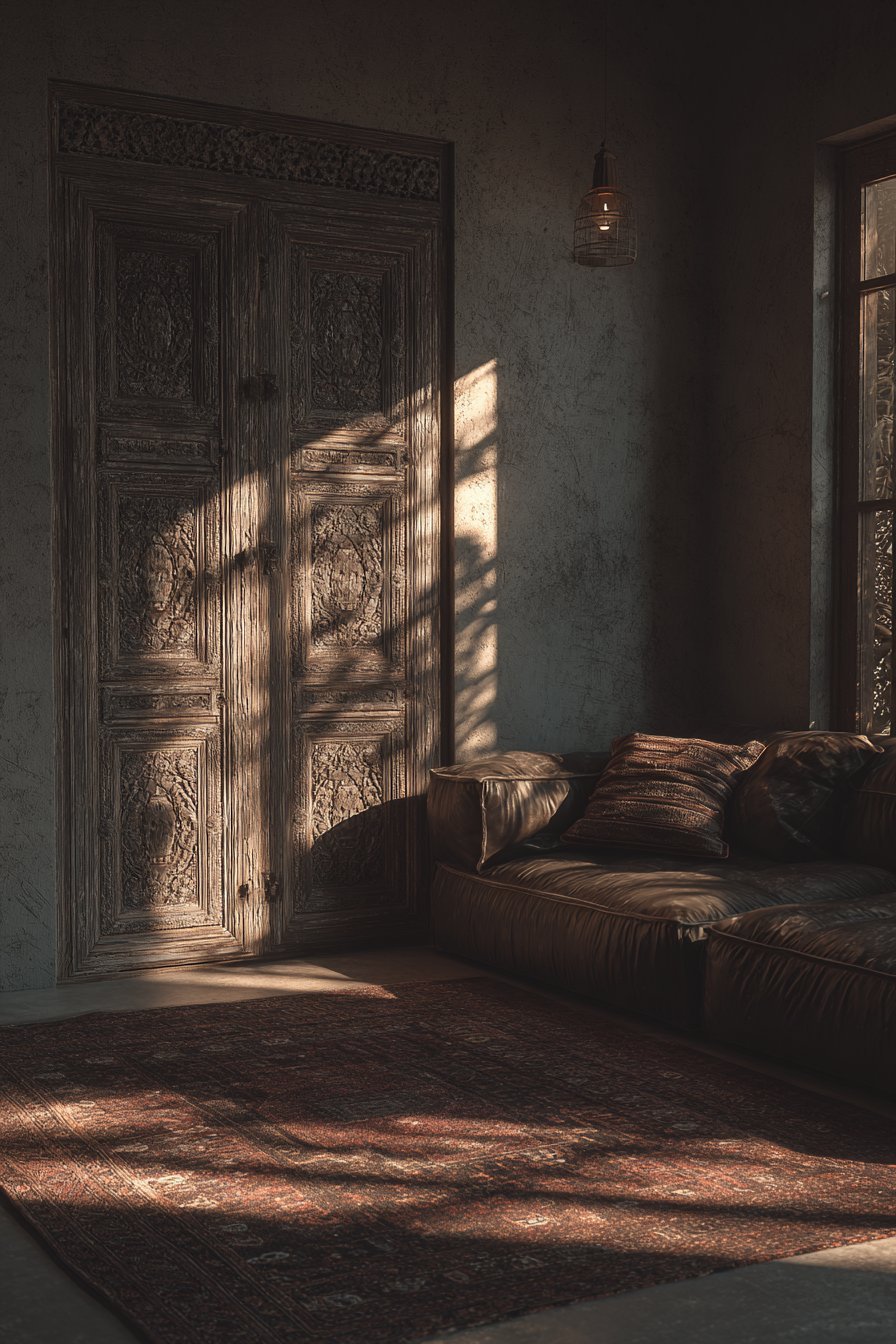
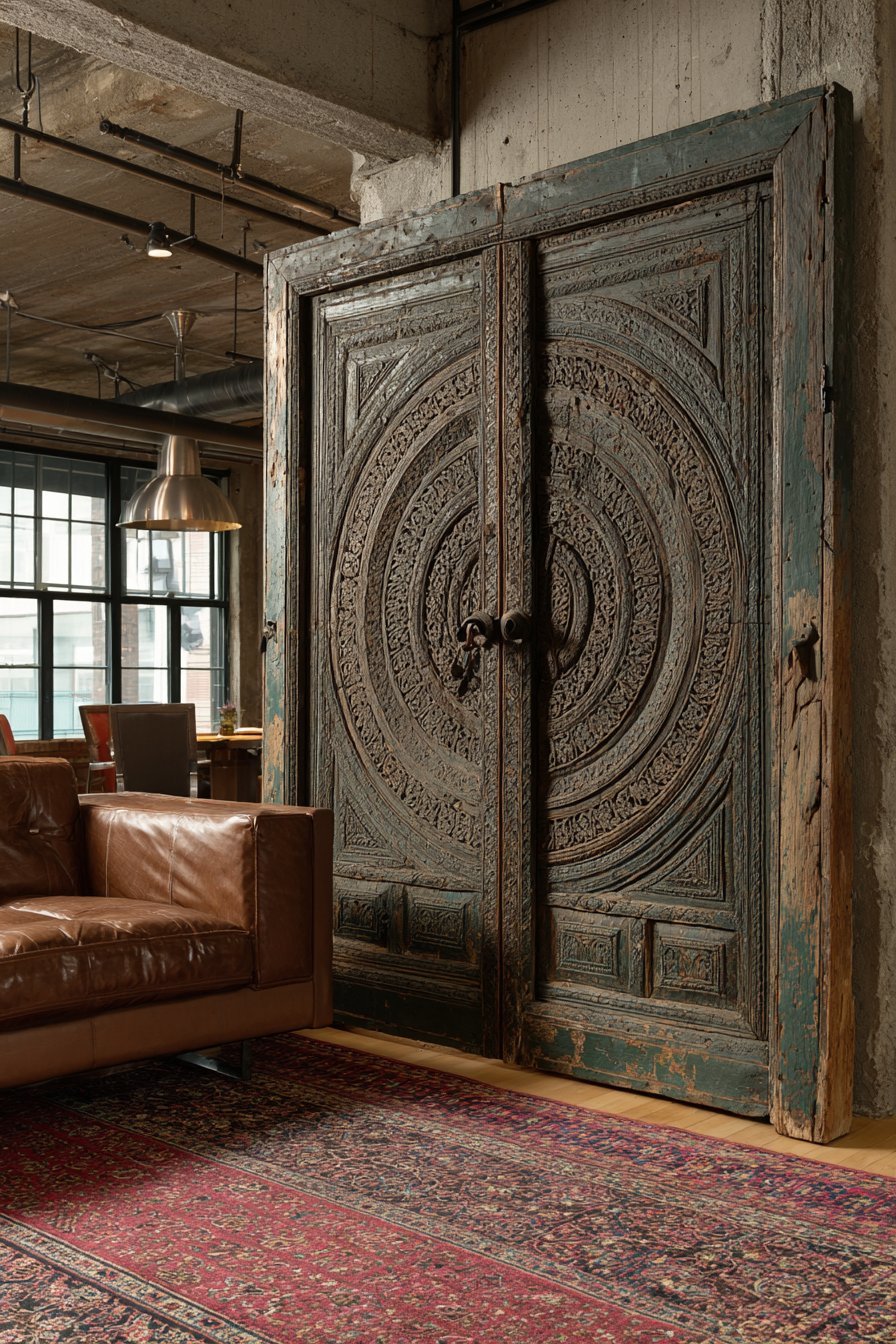
Architectural salvage — reclaimed timber beams, antique cast iron panels, carved wooden screens, weathered window frames, ornate plasterwork fragments, and vintage metal signage — creates wall installations of extraordinary textural and material interest. A single large antique wooden door panel mounted flat against a wall becomes an extraordinary piece of dimensional art — its carved details, worn paint layers, and aged timber surface creating a composition of depth and beauty that no contemporary reproduction can approach. Salvage yards, demolition sales, and specialist reclamation dealers are treasure troves for these kinds of remarkable wall installation materials.
Assemblage art — the practice of creating wall-hung compositions from found, recycled, and repurposed objects — is one of the most creatively unlimited forms of wall decoration available. A collection of vintage keys arranged in a flowing organic form, a composition of pressed botanical specimens mounted on weathered timber, an installation of driftwood pieces assembled into an abstract landscape, or an arrangement of vintage tools organized by size and type into a wall-spanning geometric composition can all become genuinely beautiful and completely personal pieces of wall art at minimal cost. The only materials required are imagination, patience, and a willingness to see beauty in ordinary things.
- Visit architectural salvage yards and reclamation dealers for genuinely unique wall installation materials
- Mount a single large antique door panel, wooden screen, or carved architectural fragment as a statement wall piece
- Create an assemblage art installation from a meaningful personal collection — keys, tools, natural objects, vintage finds
- Apply a consistent finish — a wash of white paint, a coat of matte varnish — to disparate objects to unify them visually
- Consider scale carefully when planning salvage installations — architectural fragments need sufficient wall space to read with authority
5. A Curated Shelf or Ledge Display as Wall Decor
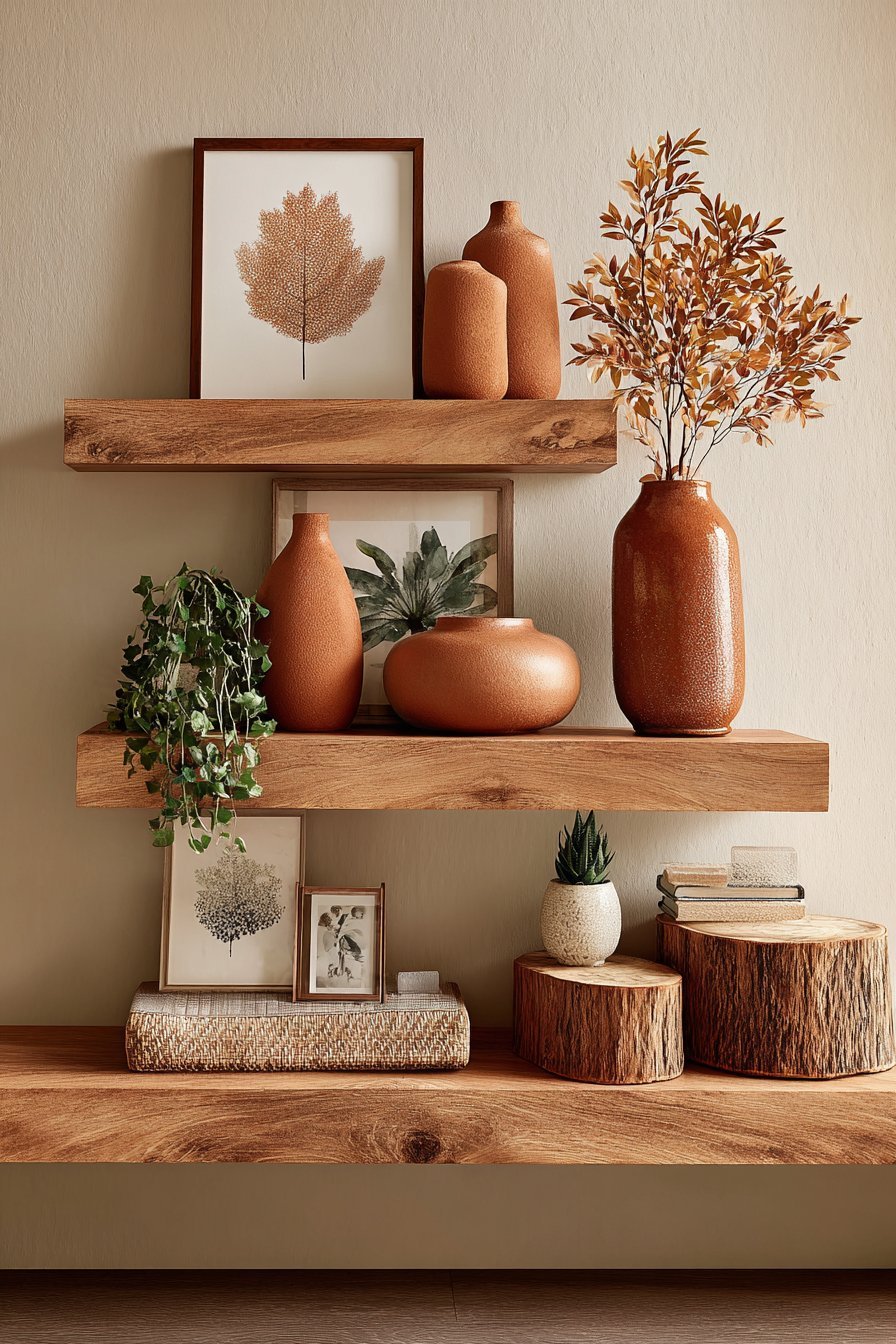
Picture ledges and floating shelves are among the most flexible, most practical, and most visually dynamic forms of wall decoration available — yet they are consistently underestimated as a design tool. Where a framed artwork is a fixed, static statement, a ledge display is a living, evolving composition that can be rearranged, refreshed, and reimagined as frequently as the desire for change demands. This quality of flexibility makes ledge and shelf displays particularly valuable in homes where design interests evolve regularly and where a fixed wall installation would quickly feel limiting.
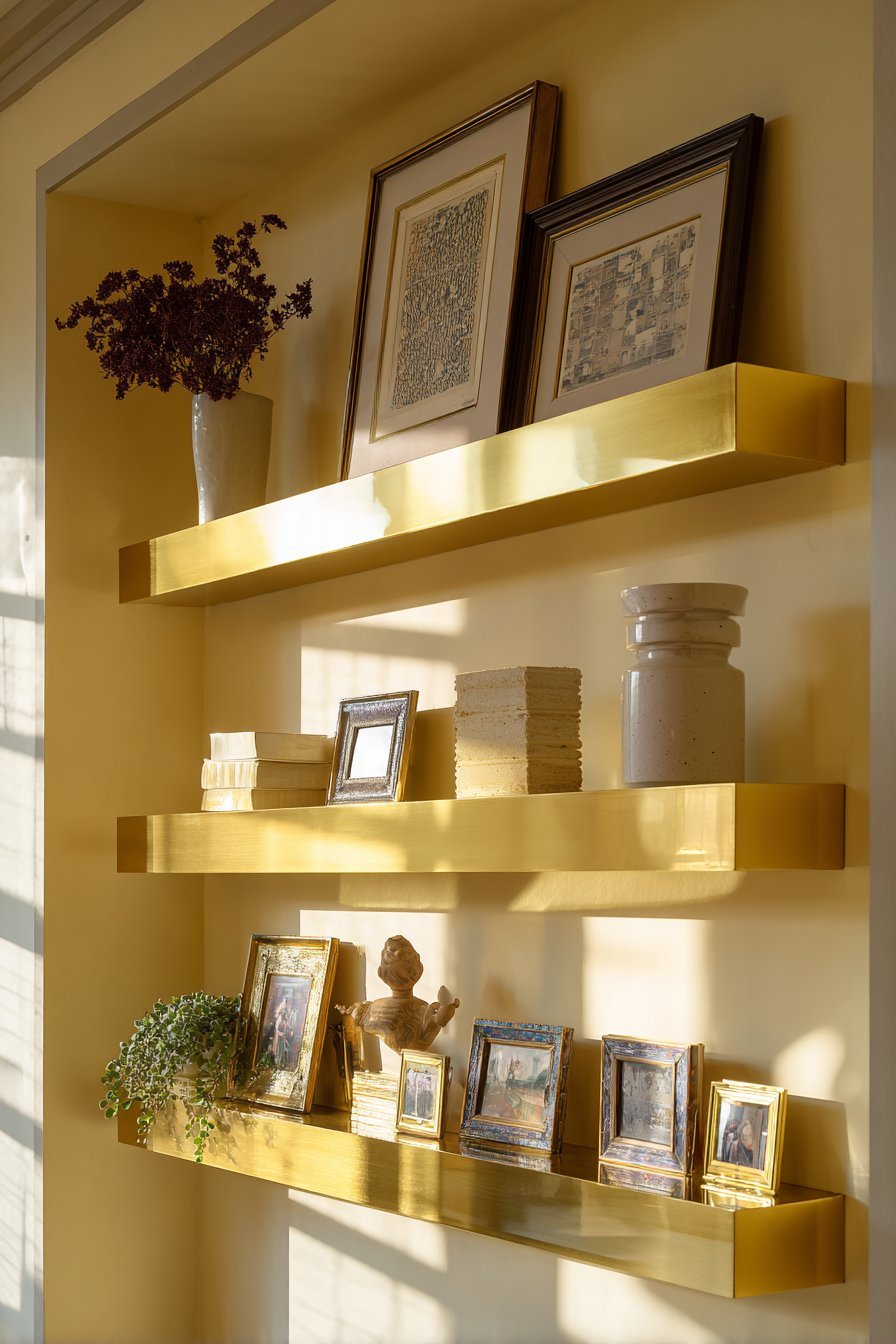
The art of a beautiful ledge display lies in the layering and composition of objects at varying heights, depths, and visual weights. Lean large prints and artworks at the back of the ledge to create a visual backdrop; place mid-height objects — ceramic vessels, sculptural bookends, small framed photographs — in the middle ground; and position the smallest, most delicate objects at the front edge of the shelf where they can be appreciated closely. This three-layer composition principle creates a sense of depth and visual complexity within a relatively shallow shelf depth that makes the arrangement feel genuinely gallery-like.
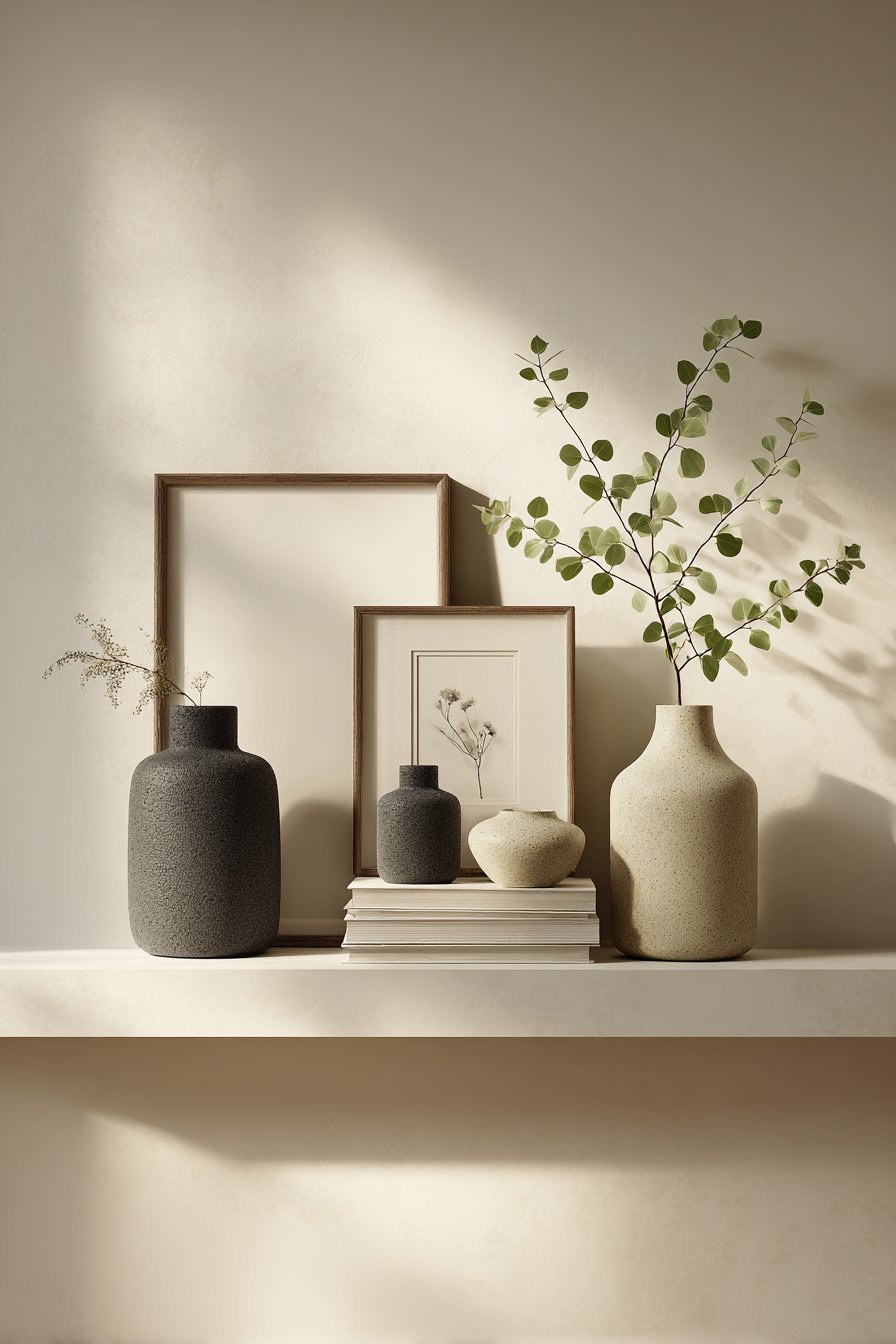
Mixing object types is what gives a ledge display its distinctive, curated quality. The most beautiful shelf arrangements combine artwork with objects — a leaning print beside a ceramic vessel, a small sculpture in front of a stacked book tower, a botanical specimen jar beside a framed family photograph. These combinations create the impression of a collection assembled by a person with genuine aesthetic range and curiosity — someone who collects beautiful things across categories, rather than purchasing matching sets from a single retailer. This quality of personal curation is one of the most appealing qualities any interior can possess.
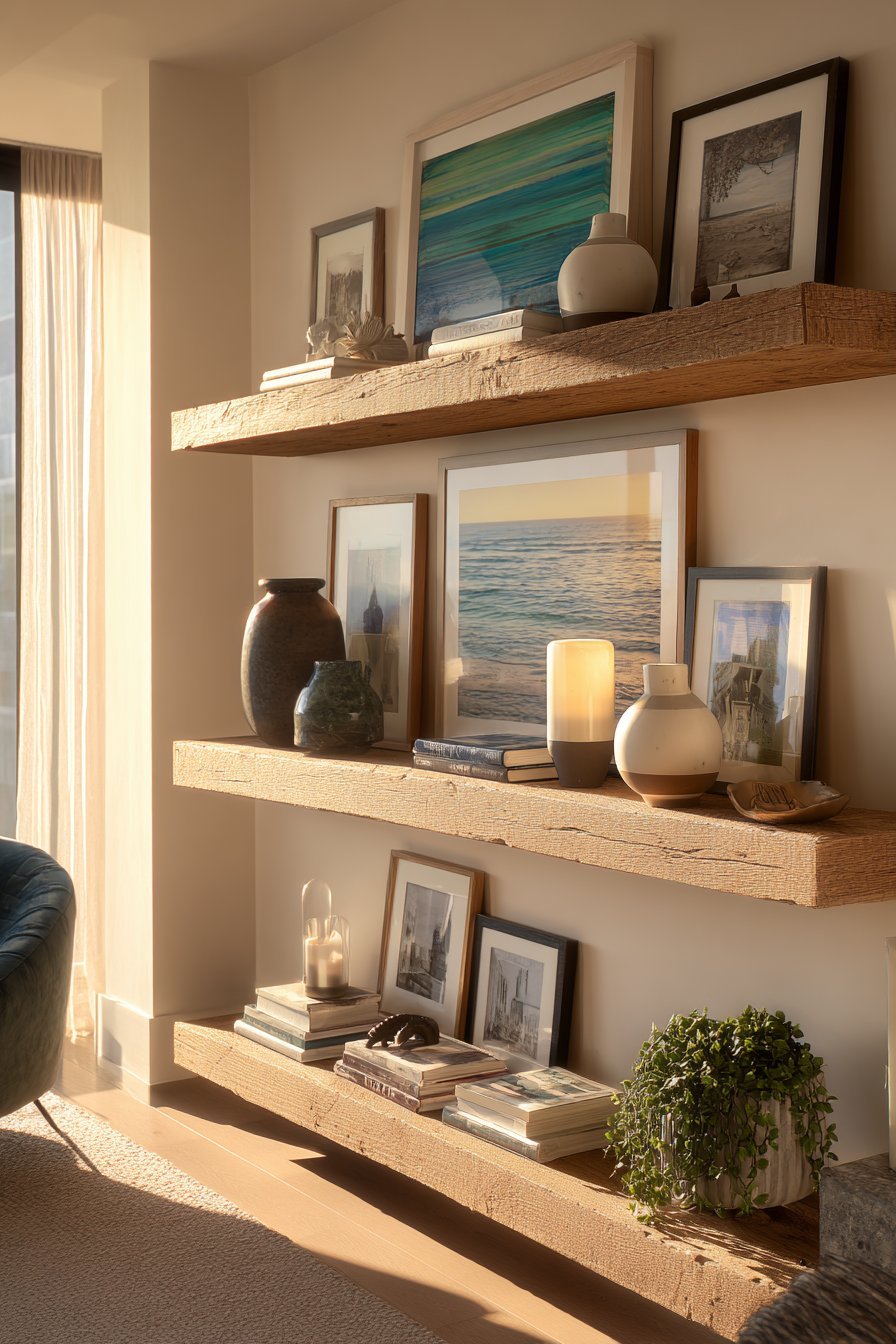
- Install picture ledges at multiple heights on the same wall for a layered, gallery-quality display
- Apply the three-layer composition rule — large leaning pieces at back, mid objects in center, small items at front edge
- Mix artwork with ceramics, books, plants, and sculptural objects for a genuinely curated aesthetic
- Refresh and rearrange the display seasonally — ledge displays are living compositions that benefit from regular attention
- Use ledge displays in hallways and narrow spaces where fixed wall art cannot be positioned without crowding
6. A Pegboard, Grid Panel, or Modular Wall System
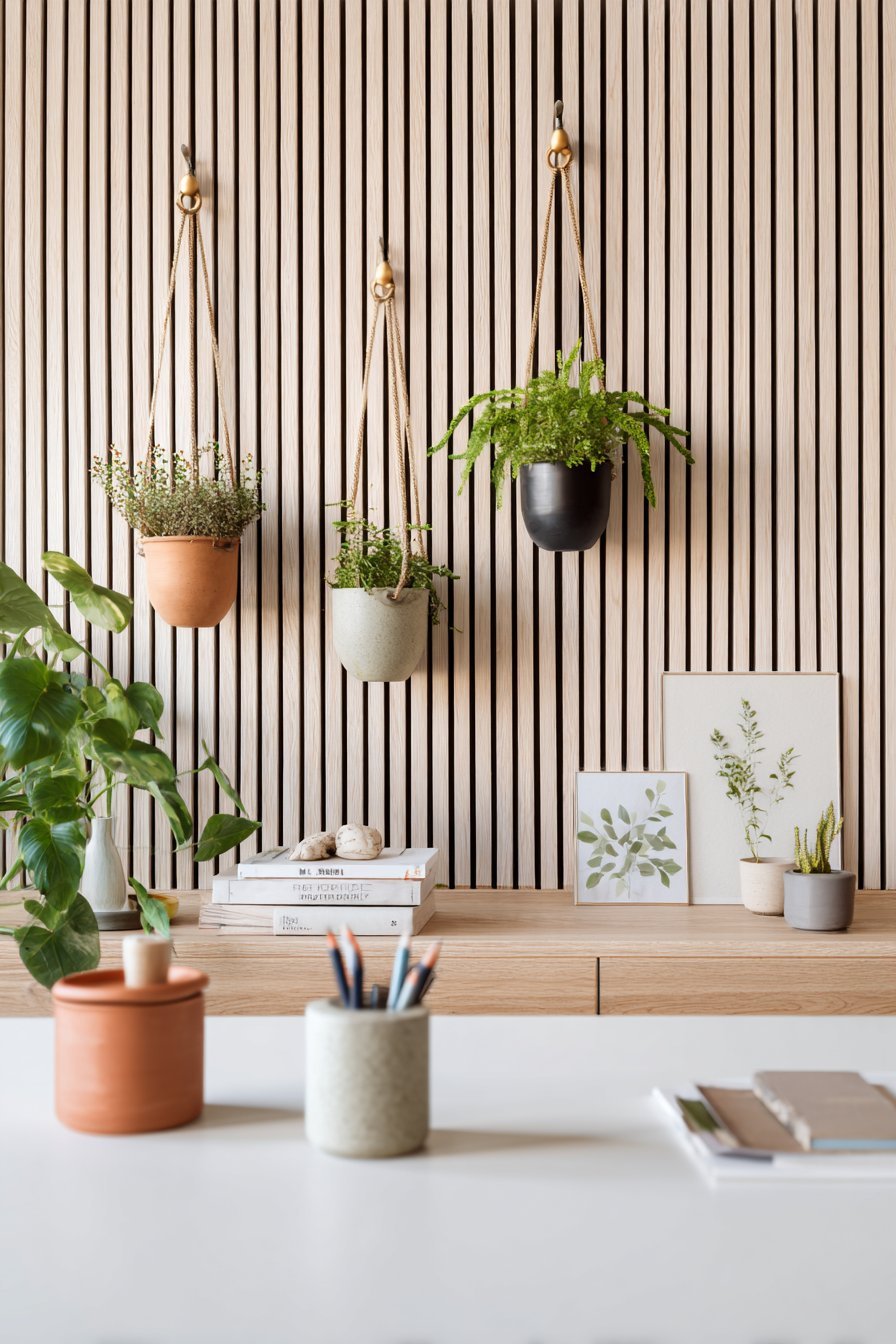
Modular wall systems — pegboards, wire grid panels, slatted timber systems, and magnetic wall installations — bring a functional creativity to wall decoration that purely decorative approaches cannot offer. These systems organize, display, and celebrate the tools, objects, books, plants, and accessories of daily life in a way that is simultaneously practical and visually compelling — creating walls that are actively useful rather than passively decorative.
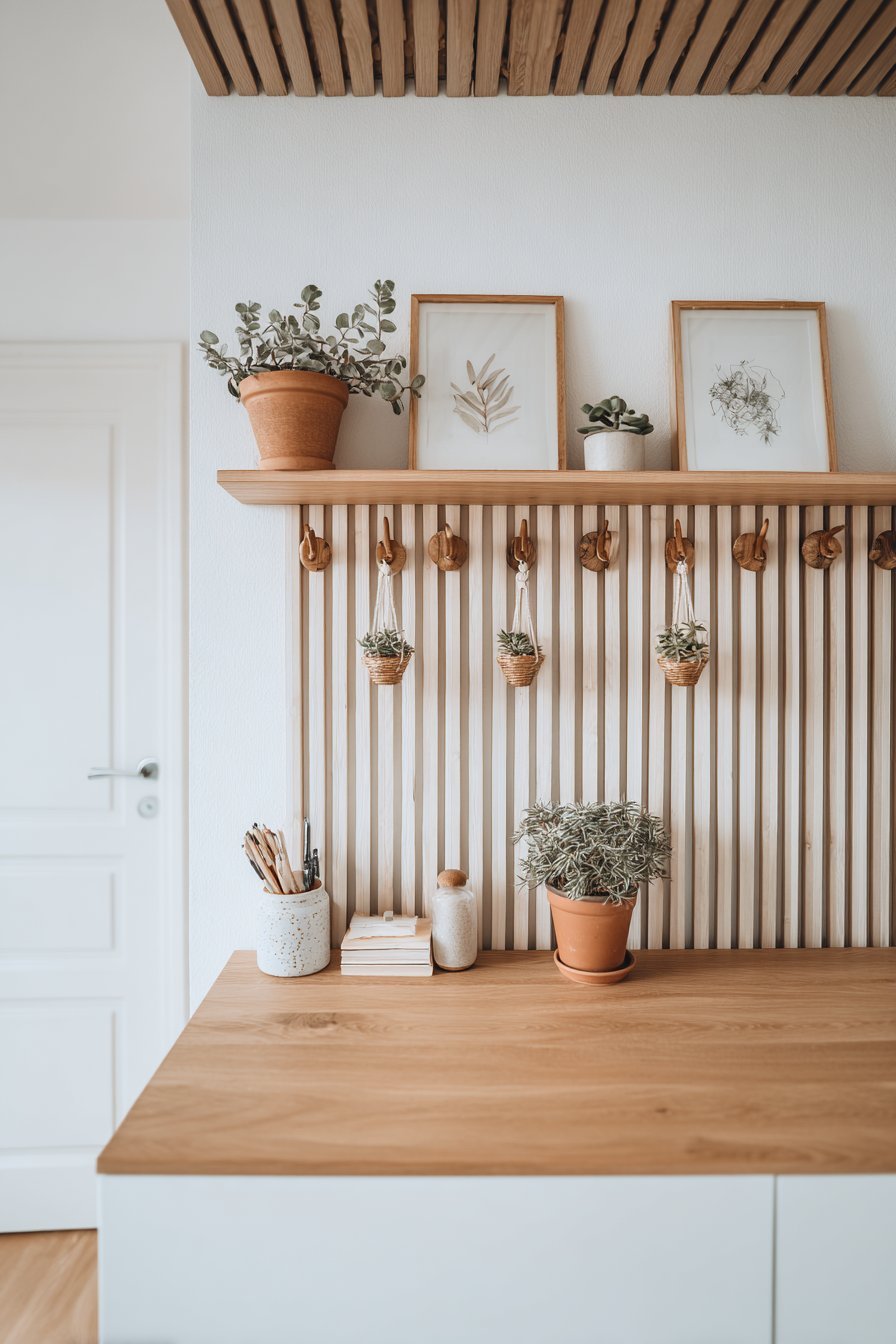
A well-styled pegboard or wire grid panel in a home office, kitchen, craft room, or bedroom wall creates one of the most genuinely personal forms of wall decoration possible — a curated display of the objects that are actually used and loved in daily life. Books, tools, plants in hanging pots, collections of interesting objects, pinned artwork, and functional accessories all find a place on a modular wall system, creating a display that is simultaneously a portrait of the person who lives with it and a practical organizational solution. The most beautiful pegboard installations are those where aesthetics and function are genuinely inseparable — where the organization is itself the art.
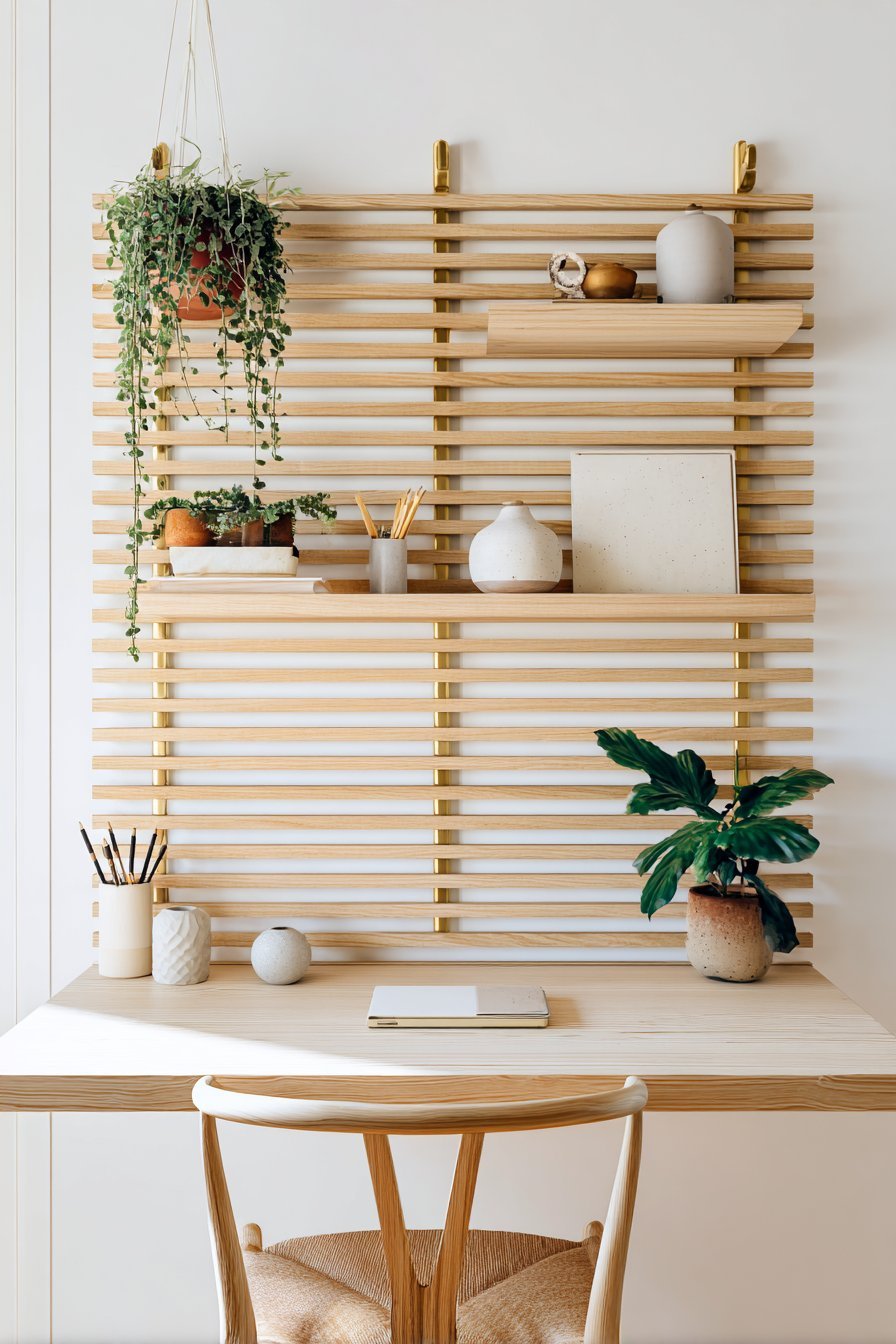
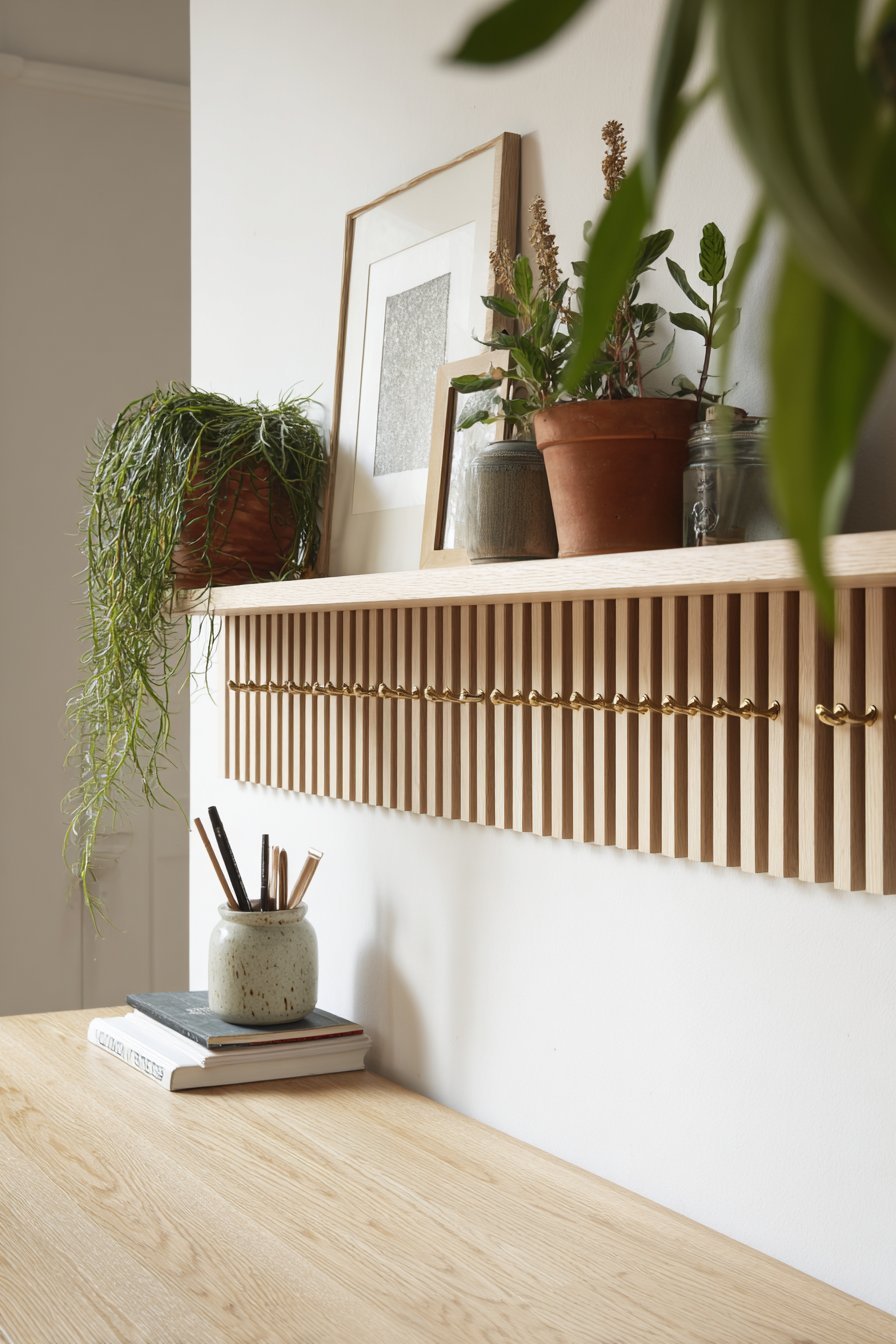
Slatted timber wall systems — where horizontal timber battens spaced at regular intervals provide rails for hanging, hooking, and mounting a variety of objects — bring a warmer, more natural quality to the modular wall concept than metal or painted pegboard systems. These Scandi-inspired wall storage solutions have become enormously popular precisely because they achieve the rare combination of genuine domestic usefulness with genuine interior design beauty — they look as good as they function, and they function as beautifully as they look. In a bedroom, a slatted timber wall system above a desk creates a personal display of books, plants, artwork, and tools that is both inspiring and uniquely self-expressive.
- Install a pegboard or wire grid panel in a home office or kitchen and style it as a functional wall art installation
- Choose a timber slatted wall system for a warmer, more organic alternative to metal grid panels
- Apply the same aesthetic curation principles to functional wall systems as to purely decorative displays
- Include living elements — hanging plants, air plants, herb pots — in functional wall system displays for organic warmth
- Repaint a pegboard in a rich accent color — deep green, warm terracotta, dusty blue — to make it a genuine design feature
7. Wallpaper Used as Framed Artwork
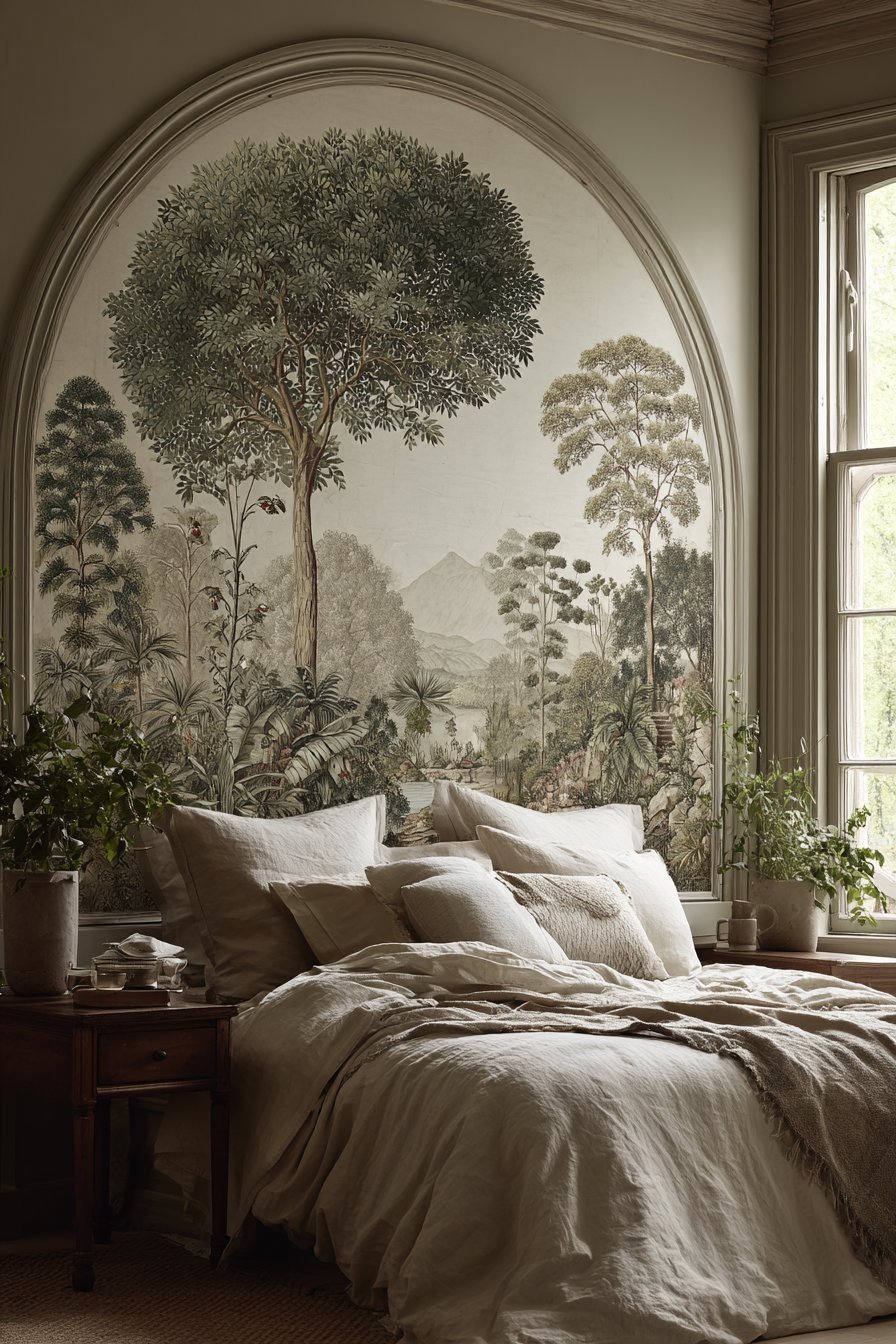
Using wallpaper as artwork is one of the most ingenious, most cost-effective, and most visually striking creative wall decor ideas available — and one of the best kept secrets in contemporary interior styling. A beautifully designed wallpaper panel, applied within an oversized frame or displayed as a flat, unframed sheet mounted flush to the wall, creates a large-scale, pattern-rich wall statement at a fraction of the cost of equivalent custom artwork. The extraordinary range of contemporary wallpaper design means that genuinely unique, gallery-quality imagery is available at very accessible price points.
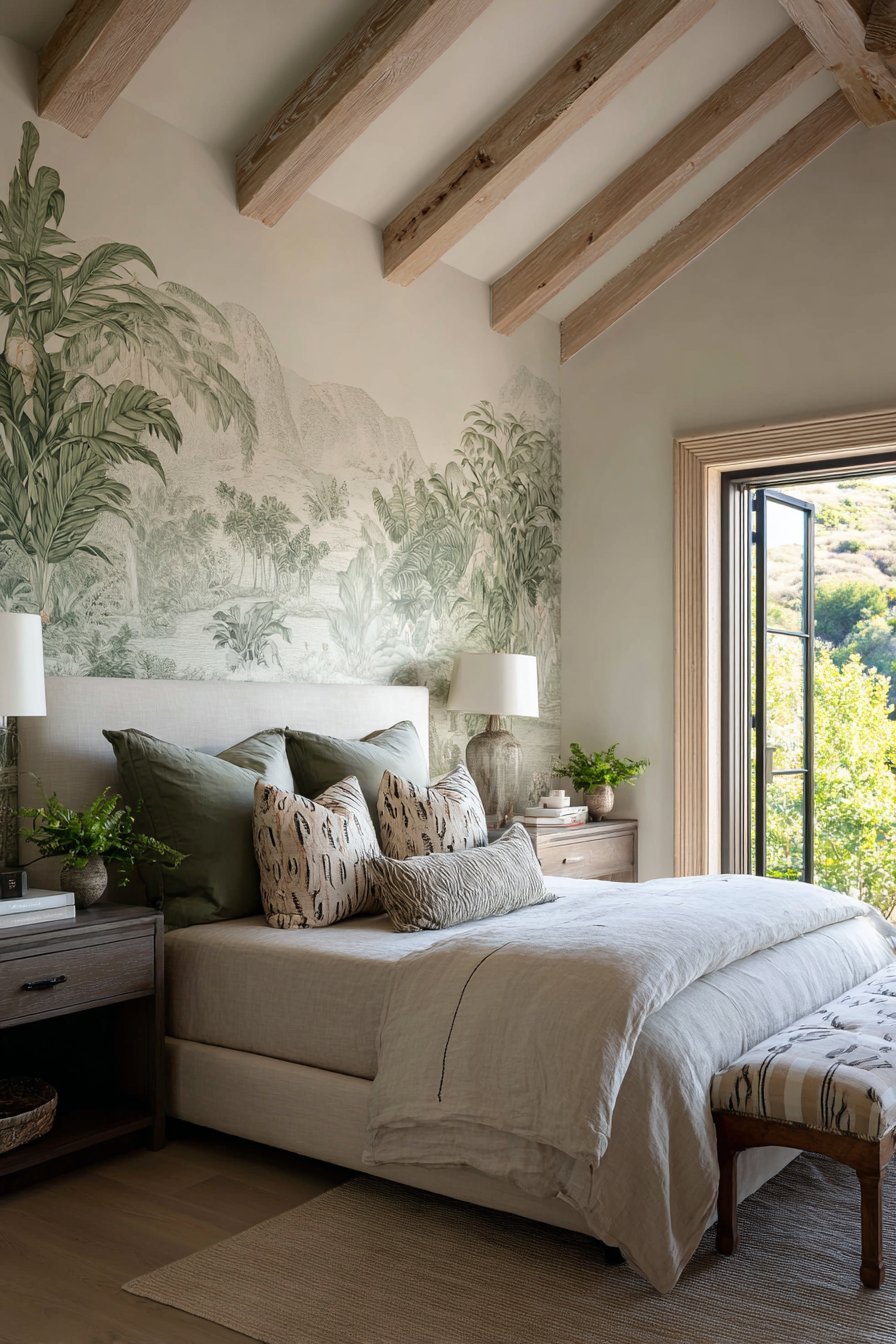
The mechanics of wallpaper as art are straightforward. Select a single repeat of a particularly beautiful wallpaper design — a botanical illustration panel, a scenic mural section, a hand-painted floral motif, or an abstract painted design — and mount it within an oversized frame, apply it to a prepared board, or apply it directly to the wall within a painted border that functions as a frame. The result is a piece of wall art that is completely unique to the selection and framing approach and that carries the visual richness and pattern complexity of professional surface design at an accessible price point.
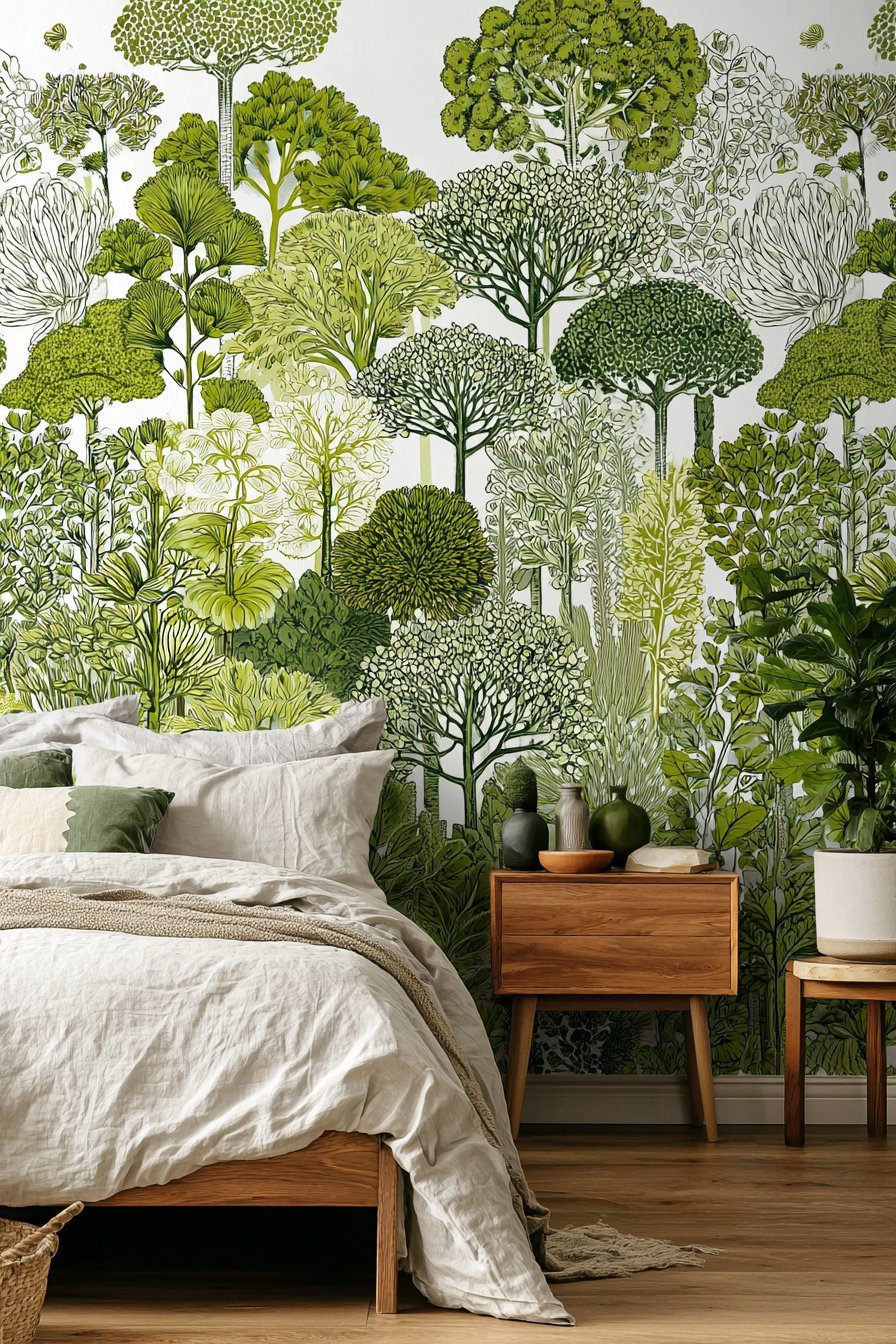
Wallpaper murals used selectively — applying just one panel of a multi-panel mural design rather than the full wall — creates a concentrated, framed scene that functions as a singular artwork rather than an all-encompassing wall treatment. A single panel of a hand-drawn botanical forest mural, framed in a simple timber border and hung as an individual piece, delivers the full visual impact of the mural artist’s work in a format that suits a single featured wall without overwhelming the room’s other design elements. This approach is particularly powerful in rooms where a full mural wallpaper installation would be too visually dominant.
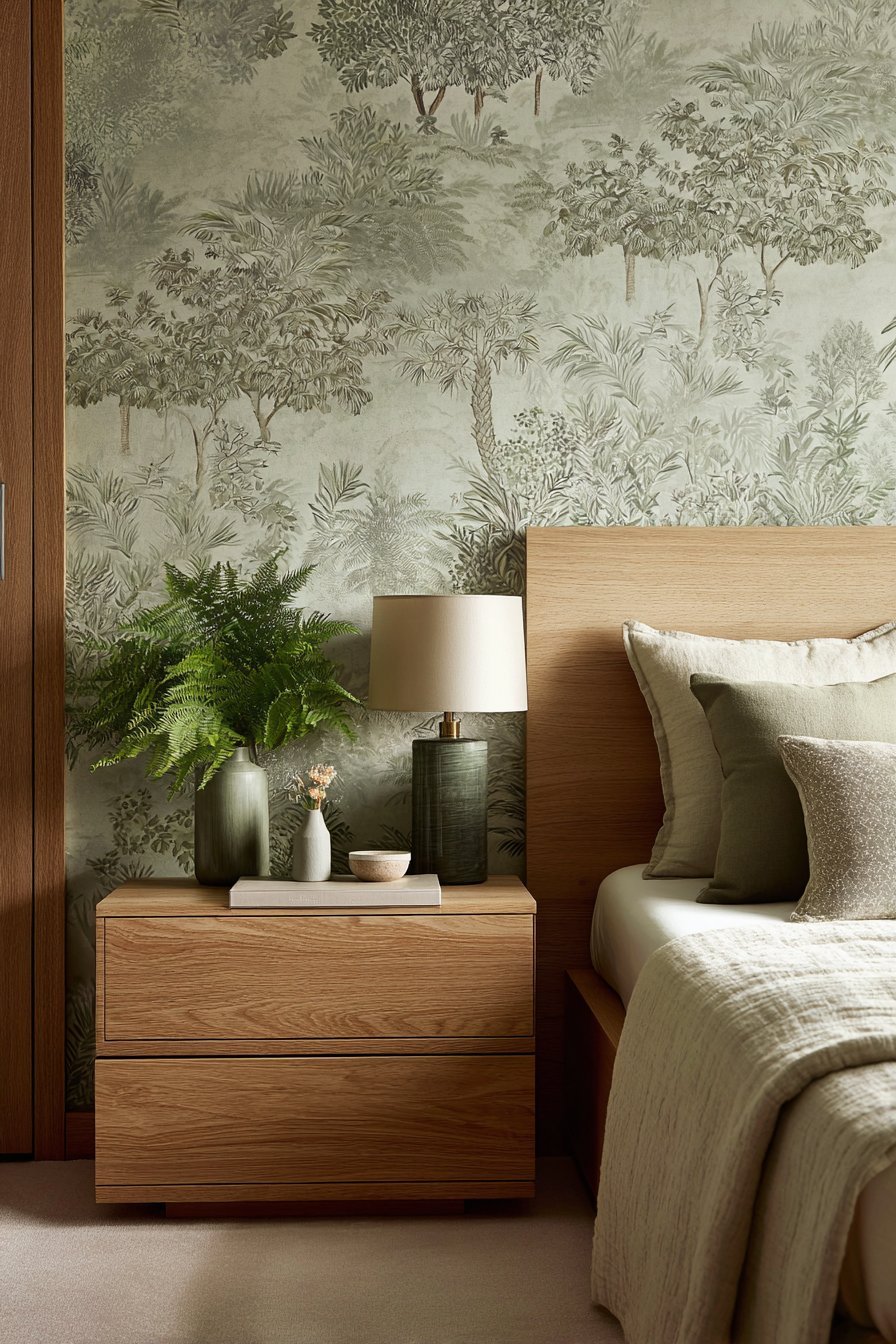
- Select a single beautiful wallpaper repeat and mount it within an oversized frame as bespoke wall art
- Apply a wallpaper panel within a painted border on the wall for a frameless, inset art effect
- Choose a single panel from a multi-panel mural wallpaper as a concentrated, framed scene
- Use designer wallpaper remnants — available at significant discounts from trade suppliers — as framed artwork pieces
- Combine multiple small wallpaper sections in different coordinating designs for a patchwork-style wall art installation
8. Shadow Boxes, Display Cases, and Three-Dimensional Collections

Shadow boxes and display cases transform personal collections — objects that might otherwise be stored in drawers or boxes — into curated, beautifully presented wall installations of genuine visual interest and deeply personal significance. The act of framing and displaying a collection elevates its objects from ordinary possessions to considered exhibits — a transformation that makes the viewer look more carefully, think more deeply, and feel the particular pleasure of encountering a window into someone else’s life and passions.
The most compelling shadow box displays are built around collections with genuine personal meaning — travel finds, natural specimens, vintage ephemera, childhood mementos, botanical collections, and meaningful objects gathered over years or decades of living with curiosity and attention. A shadow box containing seashells from significant beaches, arranged by size and color in a considered geometric pattern, is infinitely more interesting and more beautiful than any purchased decorative object could be. A display case of preserved butterfly specimens, or a collection of vintage botanical seed packets, or a grid of antique compass roses — these displays create an immediate sense of the specific, rich interior life of the person who assembled them.
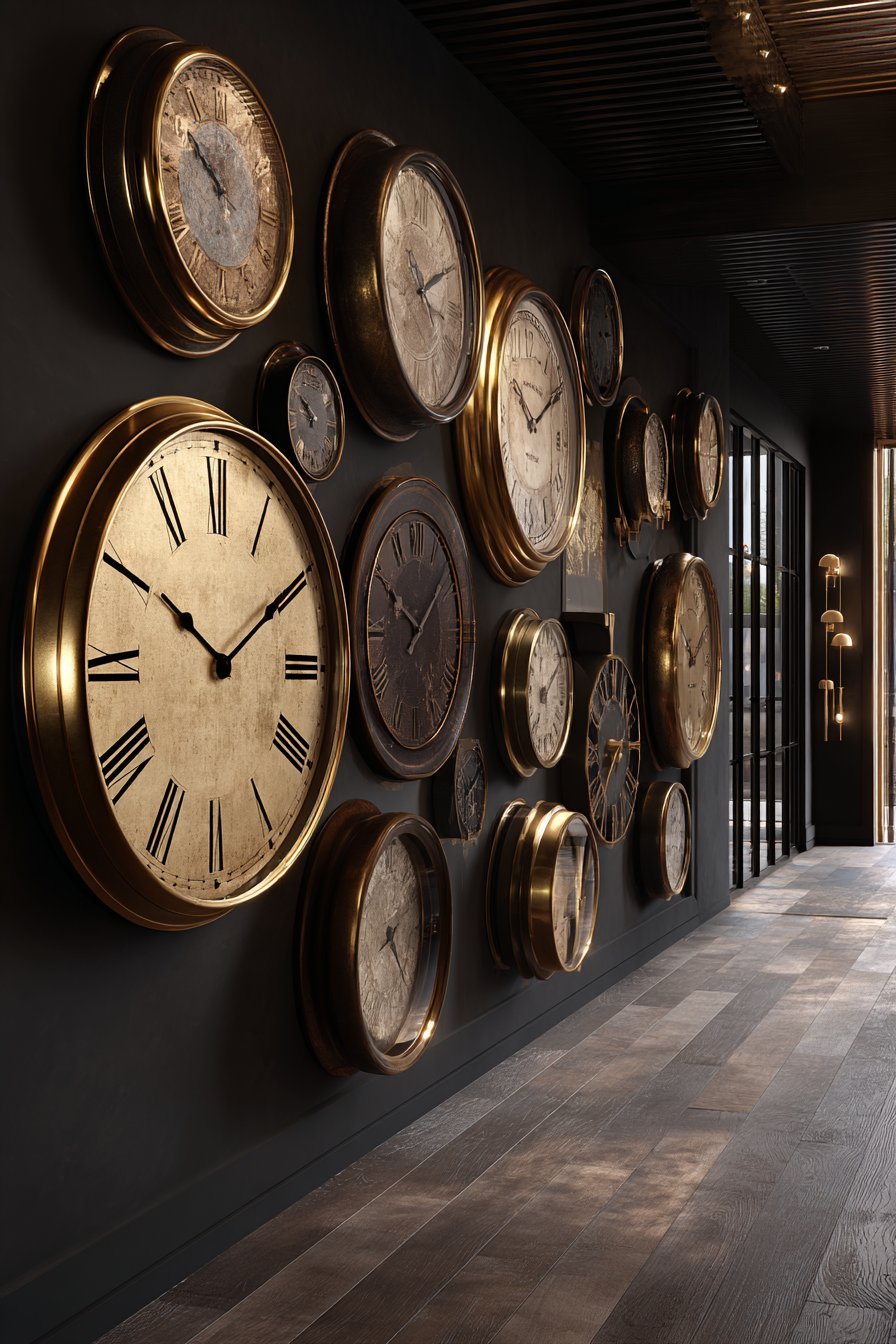
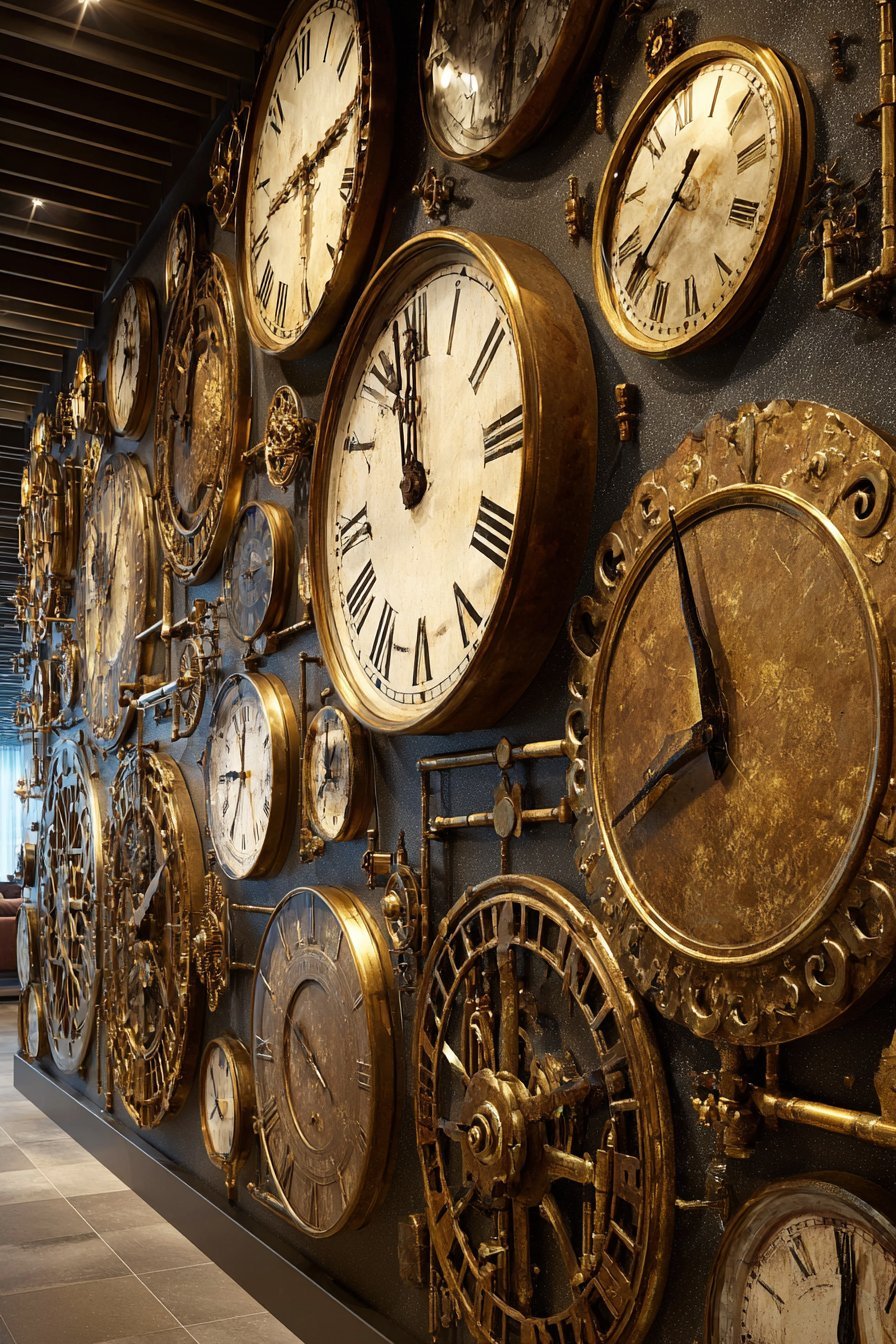
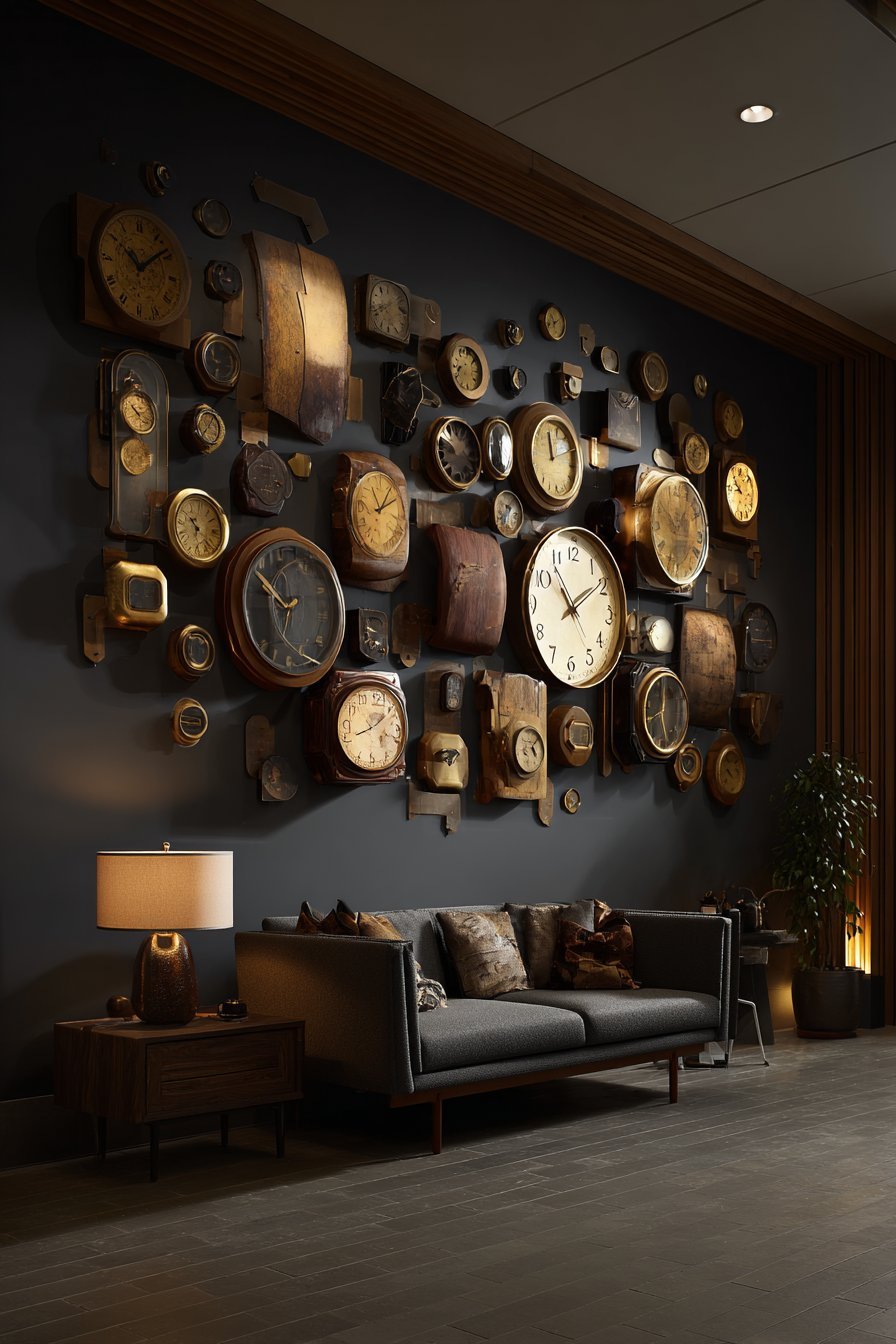
Three-dimensional object installations — where collections are mounted directly onto a painted or wallpapered wall surface without encasing them in a box or frame — create the most dramatic and spatially complex form of display decor available. A collection of vintage clocks arranged in a wall-spanning installation, a geometric assemblage of small ceramic objects mounted on individual brass pins, or a constellation of natural objects — pinecones, driftwood, coral — attached directly to the wall in a flowing organic composition, creates wall decoration of a scale, dimensionality, and personal expressiveness that no framed print can approach.
- Create shadow box displays from meaningful personal collections — travel finds, natural specimens, vintage objects
- Apply a consistent background treatment — painted board, fabric lining, aged paper — to all shadow boxes for visual cohesion
- Mount a three-dimensional collection directly on the wall for a sculptural, spatially complex installation
- Use consistent mounting hardware — matching brass pins, uniform clips — to unify diverse objects in a wall installation
- Light three-dimensional wall installations with directional spotlights that cast dramatic shadows and reveal dimensional depth
Conclusion
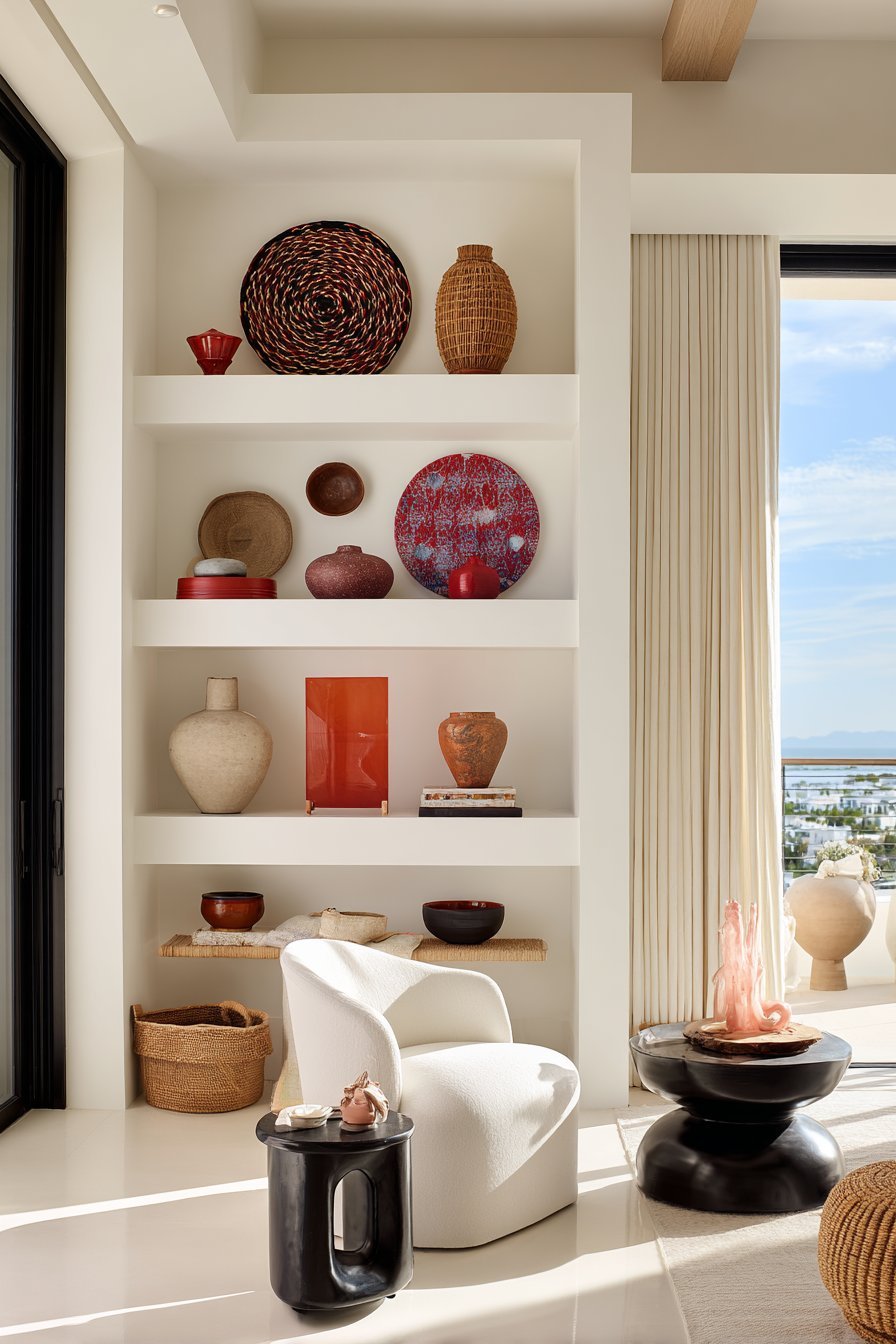
The walls of your home have far more creative potential than a standard art hanging can ever fully express. The eight ideas explored in this article — woven textiles, living walls, ceramic collections, salvage installations, ledge displays, modular systems, wallpaper art, and shadow box collections — each offer a distinctive approach to wall decoration that is more personal, more dimensional, more textural, and ultimately more memorable than the framed print default.
Choose the idea that speaks most authentically to your personality, your passions, and your aesthetic instincts — then commit to it with full creative conviction. The most extraordinary wall decoration in any home is always that which reveals something genuinely true and beautiful about the person who created it. Your walls deserve nothing less than a creative expression of exactly who you are.