
Creating a cozy minimalist bedroom represents the perfect balance between simplicity and warmth. This design approach celebrates clean lines and uncluttered spaces. Yet it never sacrifices comfort or inviting atmosphere. The philosophy centers on intentional choices that serve both function and beauty.
Minimalist design has evolved beyond stark white rooms and cold aesthetics. Modern interpretations embrace natural materials, layered textures, and warm neutral palettes. These elements transform sparse spaces into havens of tranquility. The cozy minimalist bedroom proves less truly can be more when thoughtfully executed.
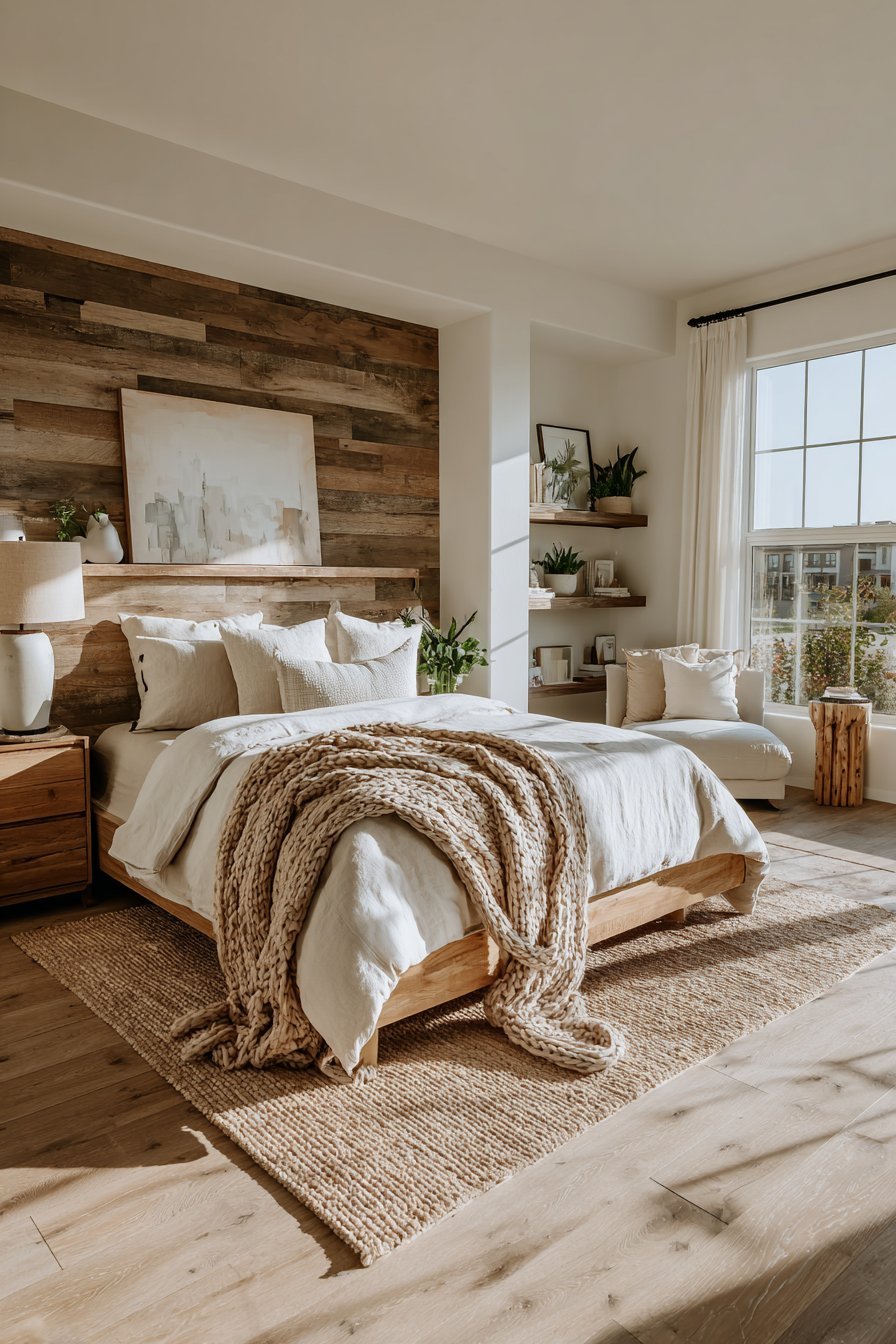
This article explores twenty distinct approaches to cozy minimalist bedroom design. Each concept demonstrates how strategic material selection creates warmth within restrained frameworks. From Japanese-inspired sanctuaries to Scandinavian hygge retreats, these designs show the versatility of minimalist principles. Whether working with compact spaces or generous rooms, these ideas offer inspiration for creating peaceful personal retreats.
1. Natural Linen Platform Bed Sanctuary
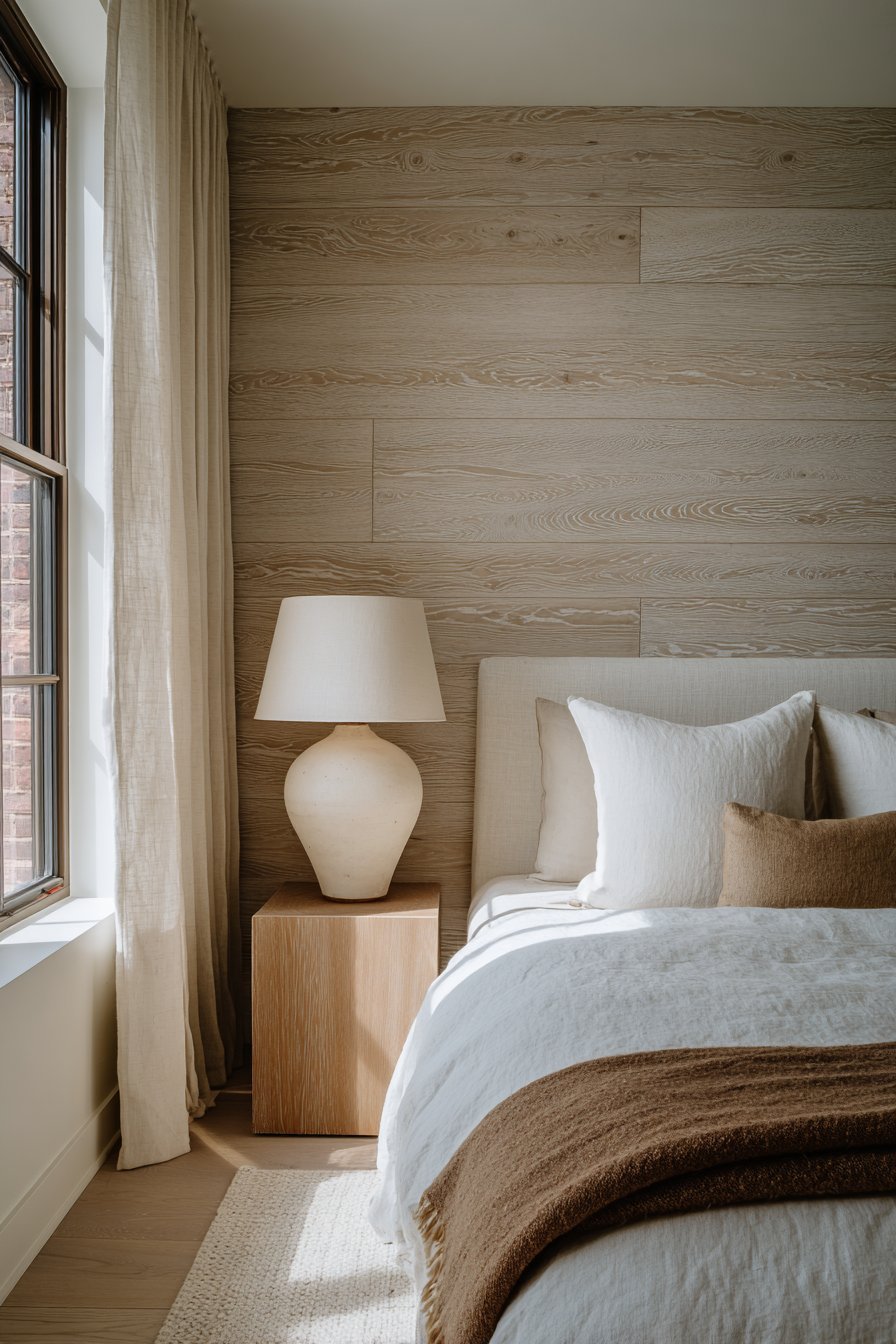
Picture a bedroom where a low-profile platform bed becomes the room’s serene focal point. Natural linen bedding in warm oatmeal tones drapes across the mattress. The fabric’s inherent texture adds visual interest without pattern or embellishment. A textured white oak accent wall behind the bed introduces organic warmth.
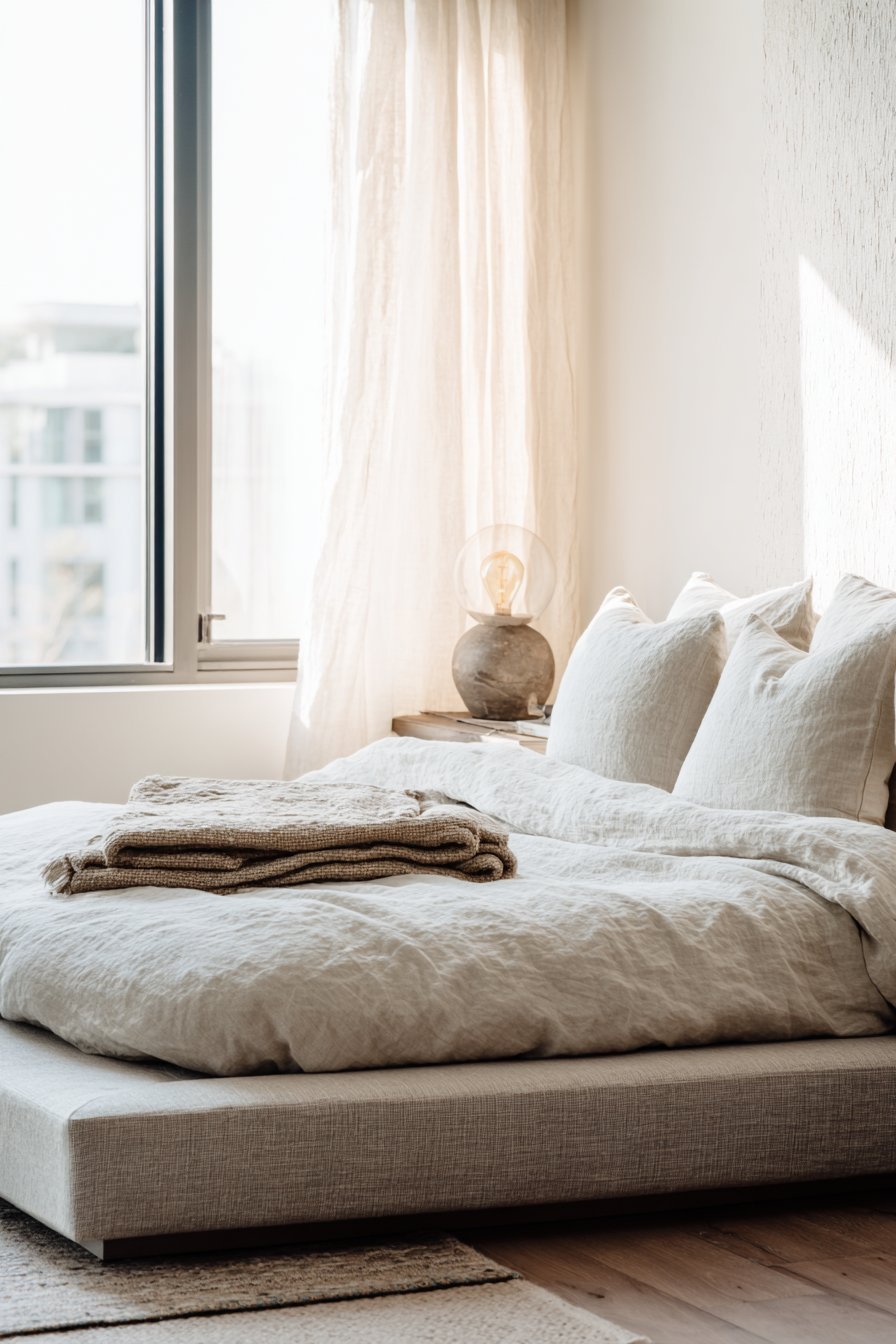
The bedding layers create subtle depth through tonal variation. Soft wool throw blanket in camel brown folds precisely at the foot. This single accent color grounds the neutral palette. The layering technique adds dimension while maintaining visual calm. Each textile choice prioritizes natural fibers that improve with age.
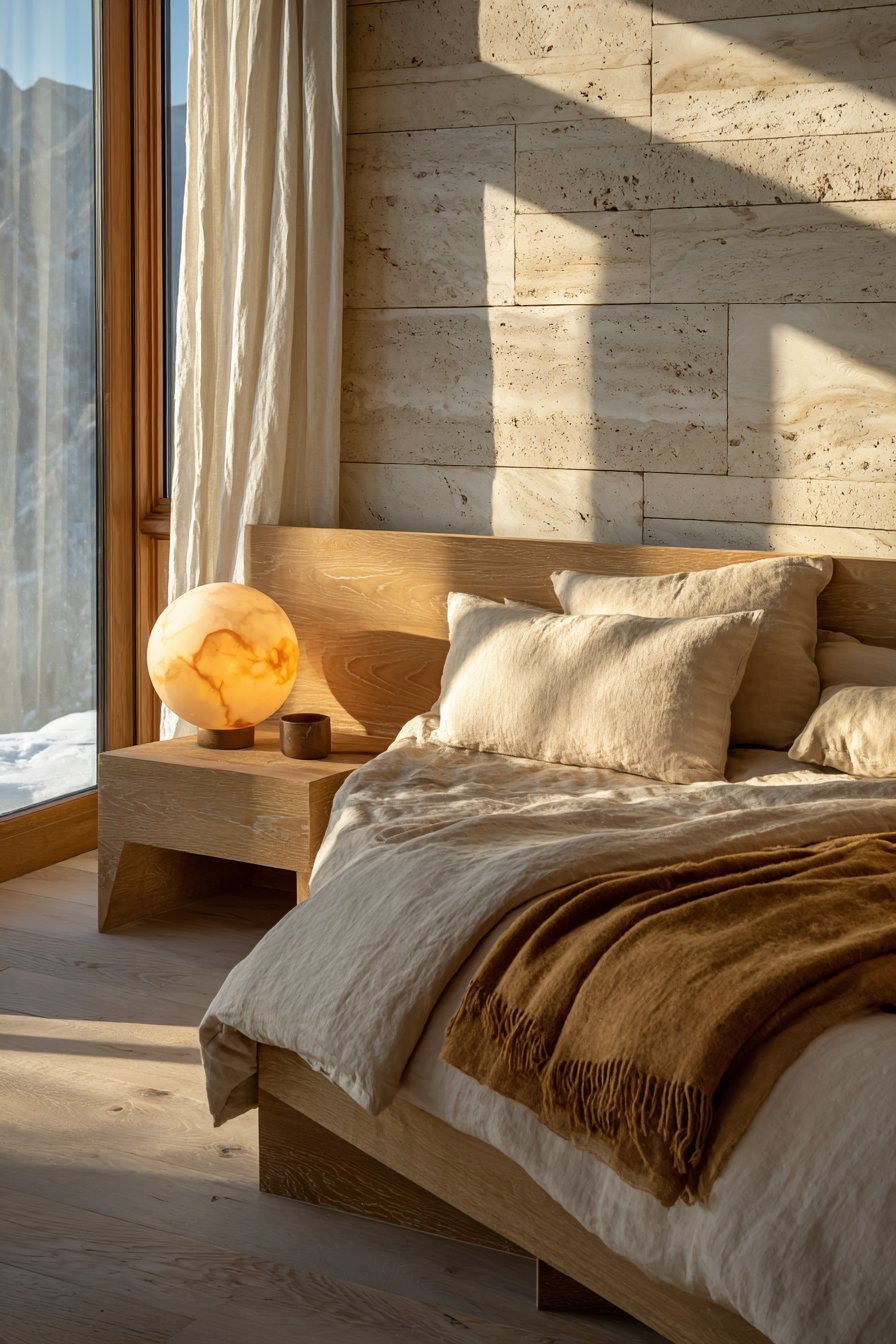
A sculptural ceramic table lamp sits on a simple floating nightstand. The warm Edison bulb casts gentle ambient light across the space. Large windows dressed in sheer linen curtains filter morning sunlight beautifully. The diffused natural light creates an ethereal quality throughout the day. Shadows shift gently across textured surfaces as hours pass.
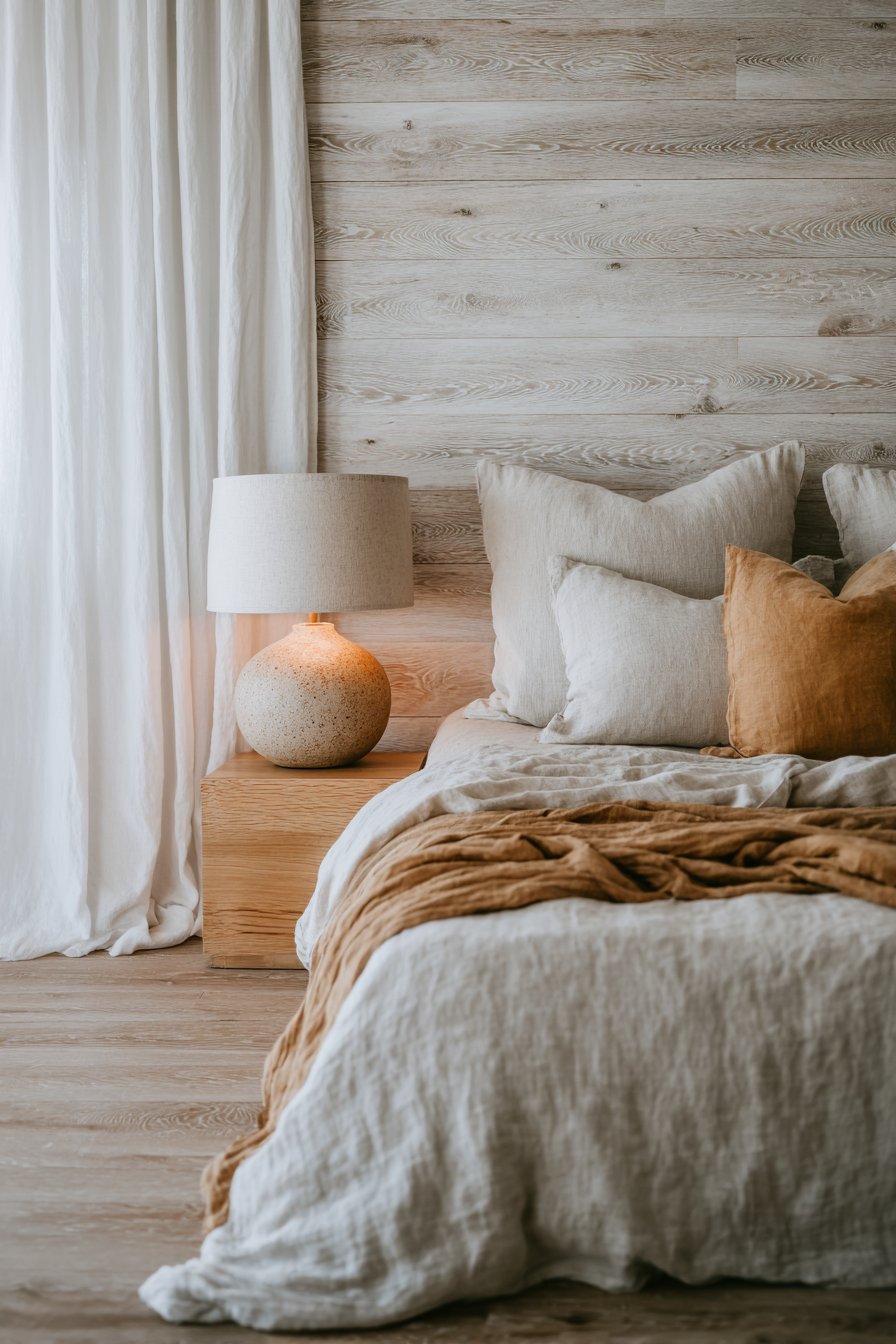
This design demonstrates how material quality elevates minimalist spaces. The white oak wall grain becomes subtle artwork in itself. Natural linen’s irregular weave catches light in ever-changing ways. These organic imperfections prevent the space from feeling sterile or cold.
Key Design Tips:
- Choose platform beds with minimal height for grounded, peaceful feeling
- Layer neutral bedding in varied textures rather than patterns
- Install floating nightstands to maintain visual lightness and floor space
- Select sculptural lighting that serves as functional art
- Use sheer curtains to maximize natural light while maintaining privacy
- Invest in quality natural fiber textiles that age gracefully
2. Seamless Built-In Wardrobe Storage
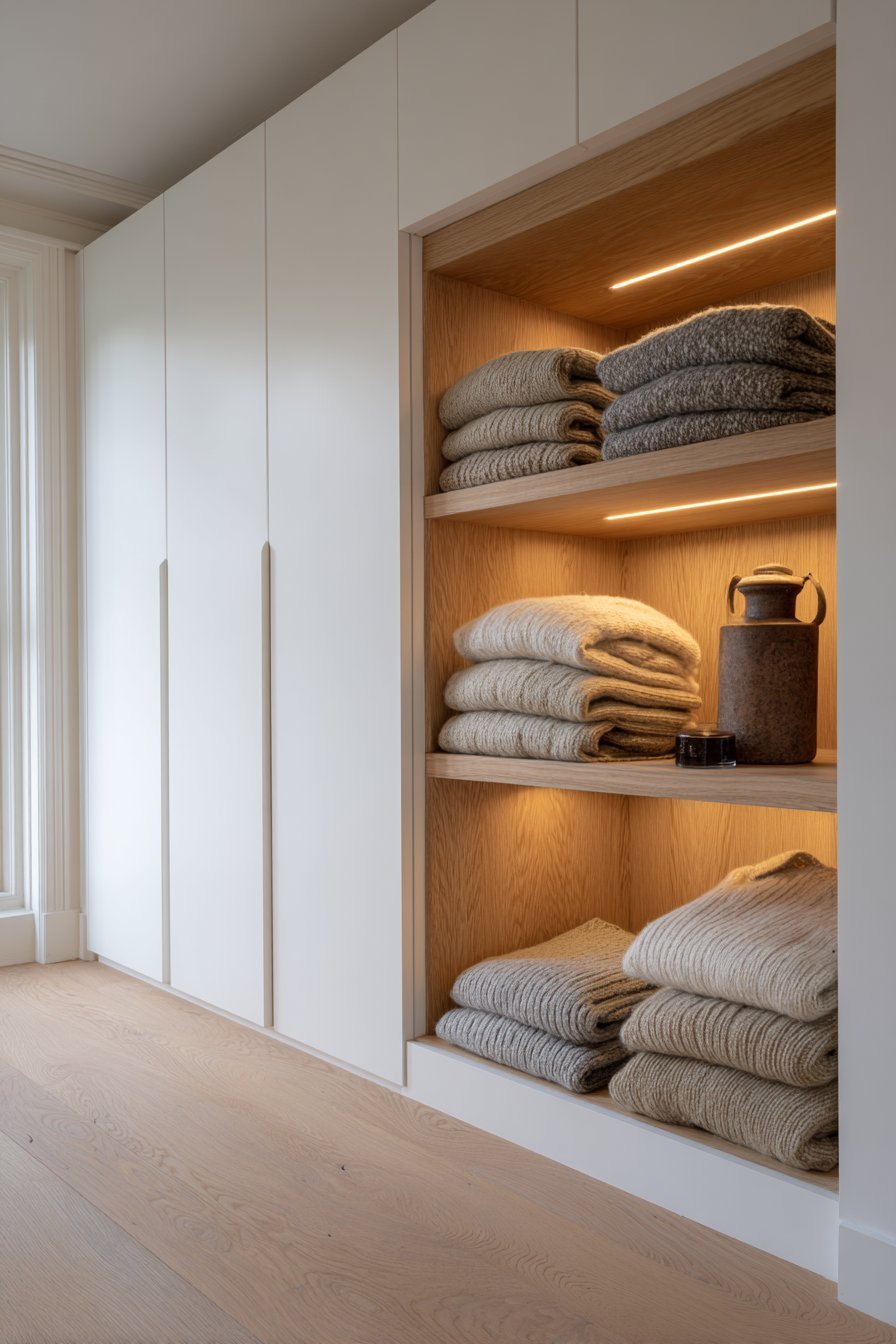
Imagine entering a bedroom where storage disappears into the architecture itself. Floor-to-ceiling built-in wardrobes feature handleless matte white cabinet doors. The surfaces blend seamlessly into surrounding walls. This integration creates unbroken visual flow throughout the space. The result feels spacious despite generous storage capacity.
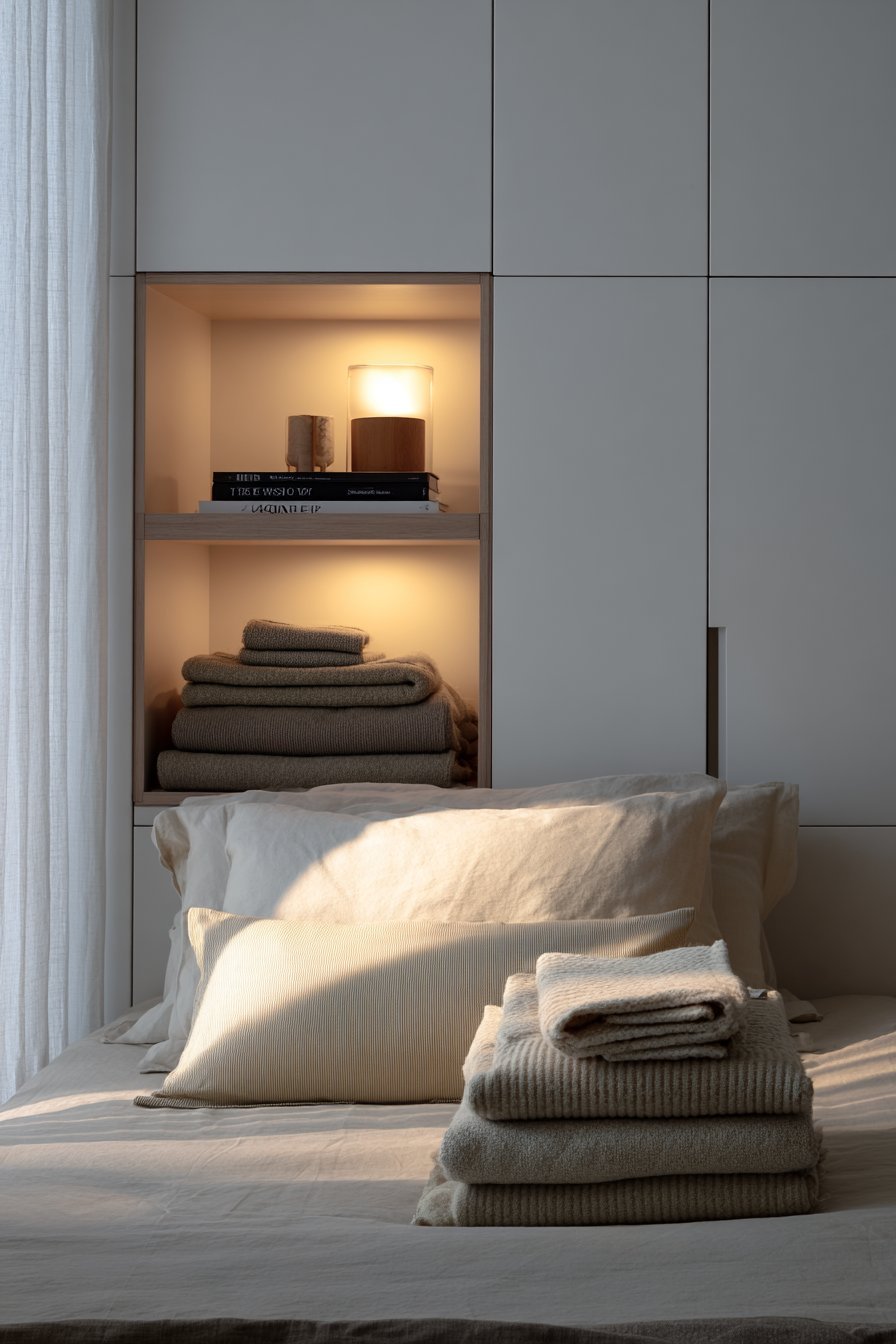
One section reveals open shelving through a partially open door. Neatly folded sweaters in neutral tones stack with precision. A few carefully selected decor objects punctuate the shelves. Natural oak interior fittings add warmth against the white exterior. This material contrast creates subtle visual interest within the storage system.
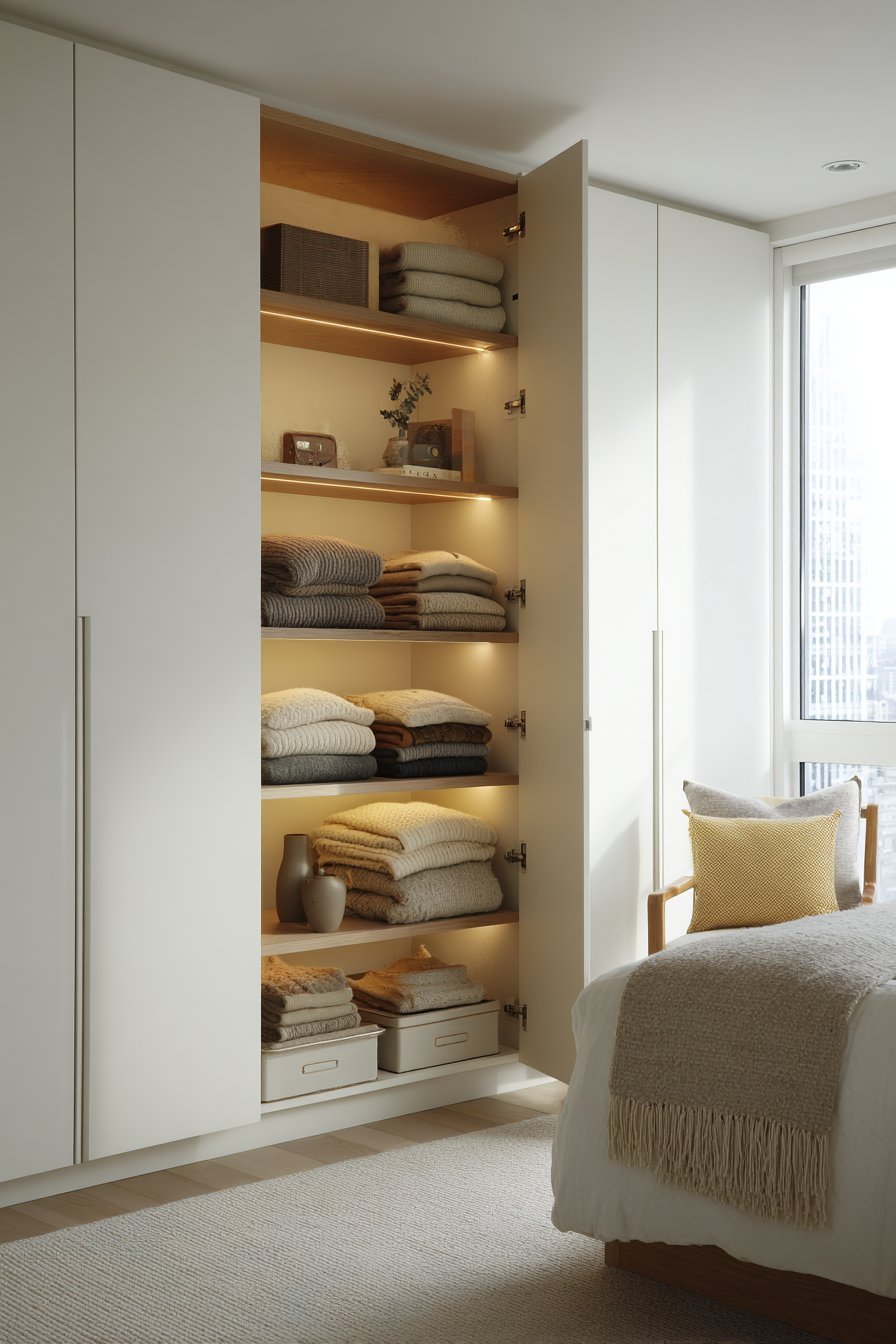
Recessed LED lighting illuminates the wardrobe interior beautifully. The soft glow highlights the oak fittings and organized contents. This lighting solution eliminates need for table lamps or floor fixtures. Adjacent windows provide natural illumination during daylight hours. The combination ensures functional visibility while maintaining aesthetic purity.
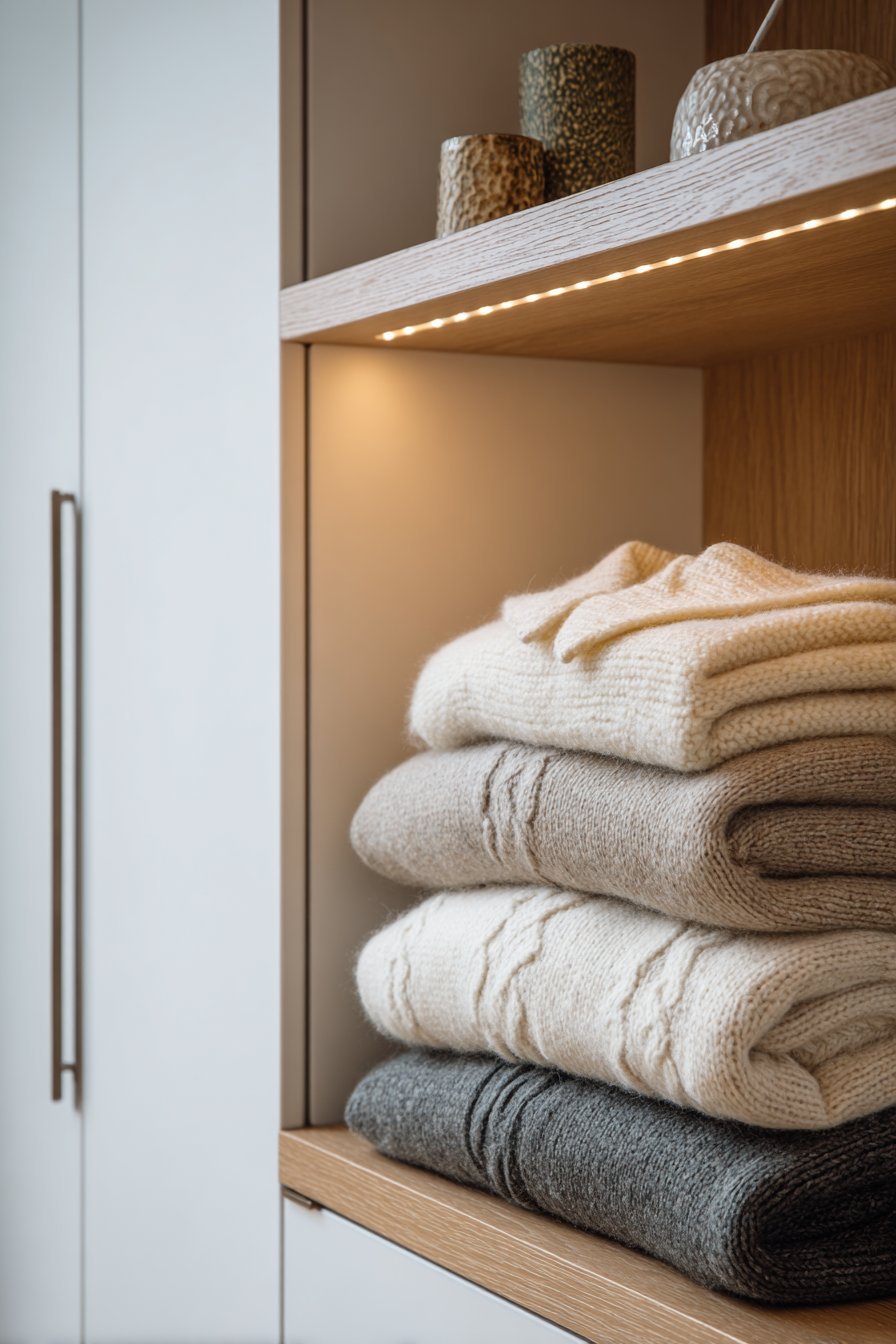
The handleless design represents the epitome of minimalist hardware choices. Touch-latch mechanisms allow doors to open without visible pulls. This detail maintains clean surface continuity across all cabinetry. The practical elegance demonstrates how function and beauty unite perfectly.
Key Design Tips:
- Design built-ins that extend floor to ceiling for maximum storage efficiency
- Choose handleless cabinets with push-latch mechanisms for clean lines
- Incorporate open shelving sections to break up solid doors
- Use warm wood interior finishes to add inviting contrast
- Install recessed LED lighting inside cabinets for functional illumination
- Organize contents by color within neutral tones for visual calm
3. Corner Reading Nook Retreat
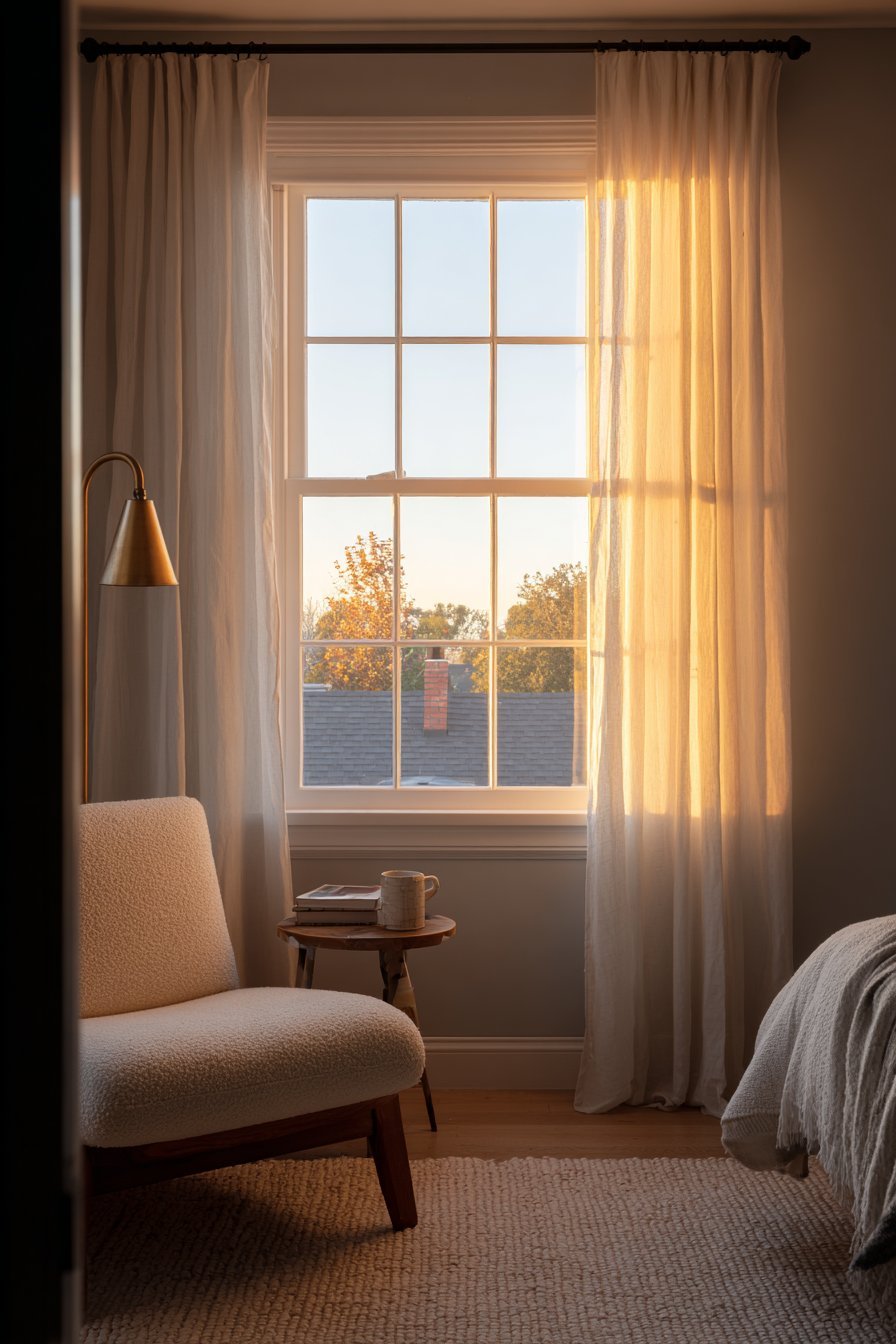
A sun-filled corner transforms into an intimate reading sanctuary. A low-slung lounge chair upholstered in boucle fabric occupies the space. The soft cream color reflects natural light beautifully. This seating choice prioritizes comfort without visual heaviness. The sculptural form adds architectural interest to the corner.
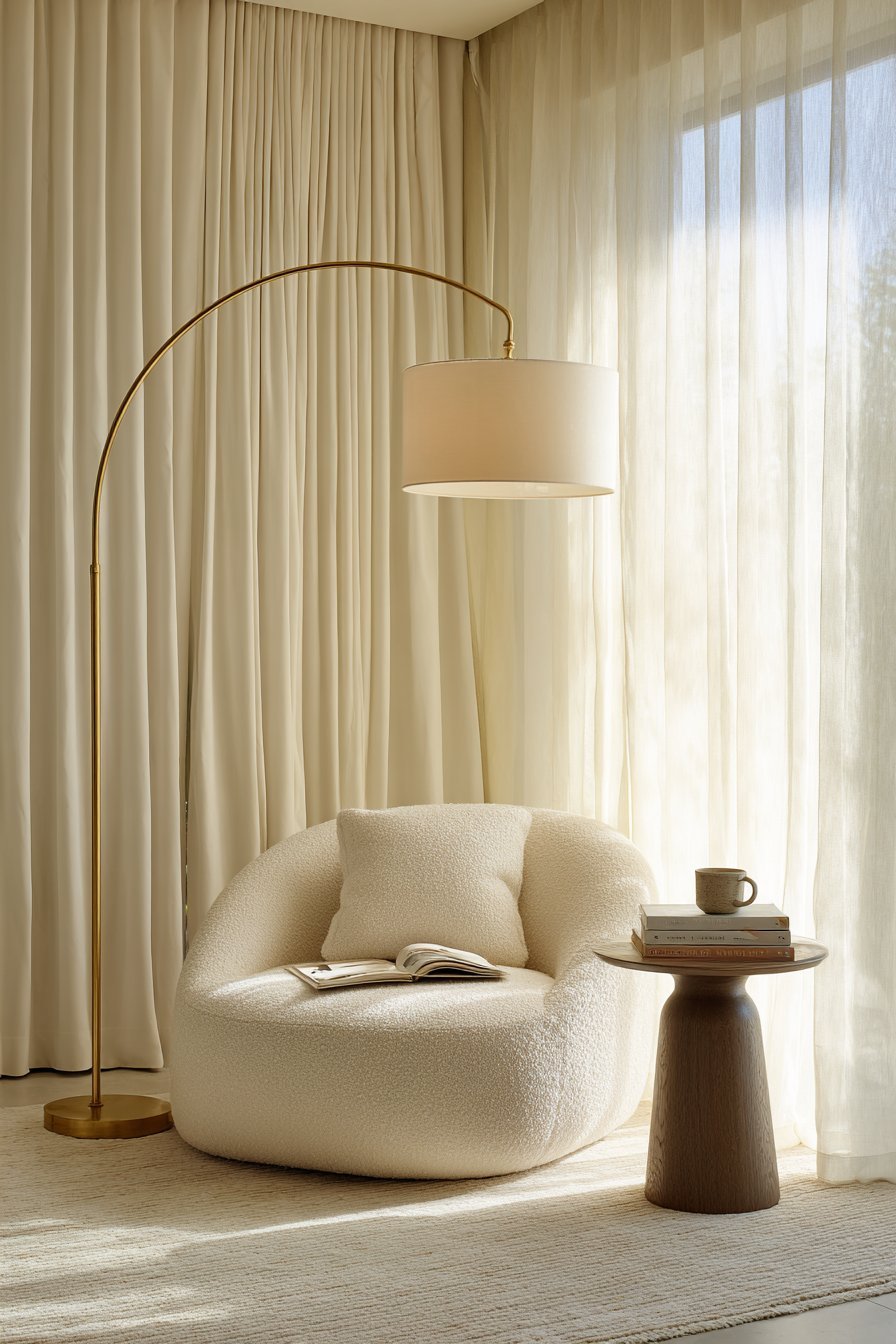
A simple arc floor lamp curves gracefully overhead. The brass finish introduces subtle metallic warmth. A linen shade diffuses task lighting for comfortable reading hours. Small round side table in natural walnut holds essentials within reach. The wood grain adds organic pattern to the composition.
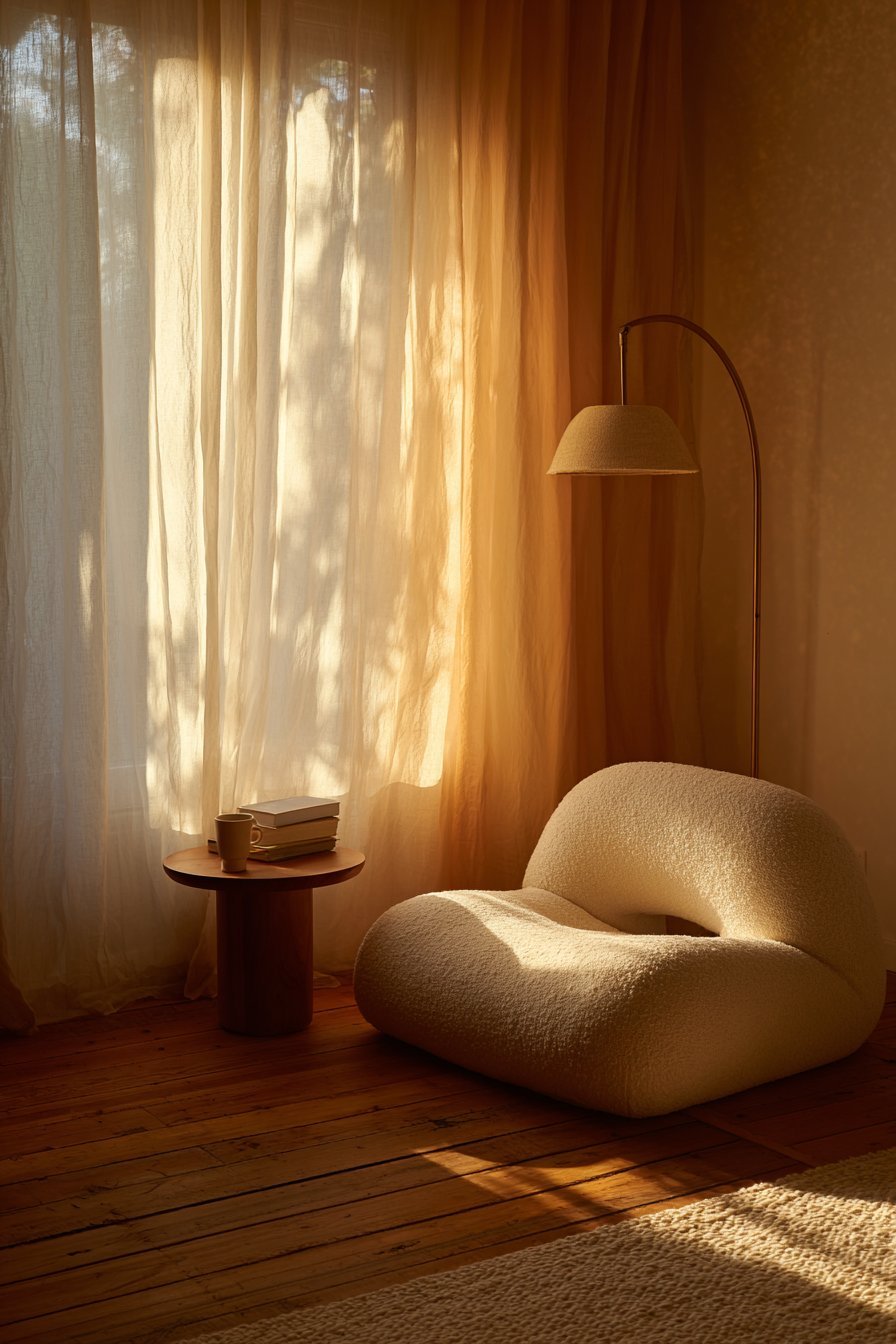
Textured wool area rug in natural white defines the intimate zone. The rug’s thick pile adds acoustic softness to the space. It also provides tactile pleasure underfoot during morning routines. Sheer curtains filter golden hour sunlight into warm ambient glow. This lighting creates the perfect atmosphere for unwinding with books.
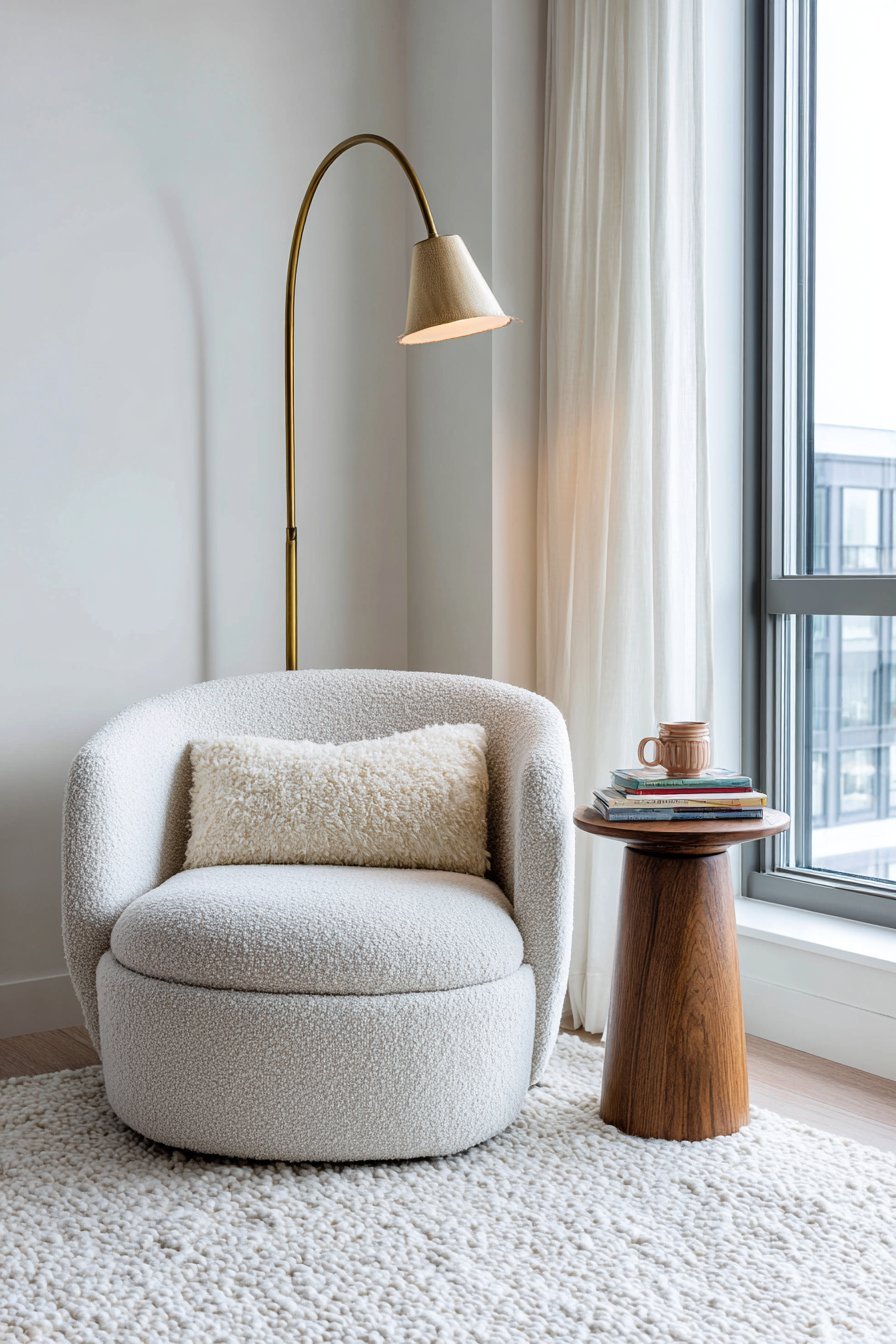
The corner placement demonstrates smart space utilization principles. Previously unused square footage becomes the room’s most inviting feature. The arrangement encourages slow mornings and peaceful evenings. Every element serves the specific purpose of comfortable reading and reflection.
Key Design Tips:
- Position reading nooks near windows to maximize natural light
- Choose lounge chairs with low profiles that feel cozy not imposing
- Select arc floor lamps that provide overhead task lighting without floor clutter
- Define the nook area with a small area rug for spatial definition
- Keep side tables small and functional for books and beverages
- Layer lighting with both task and ambient options for different times
4. Japanese-Inspired Tatami Simplicity
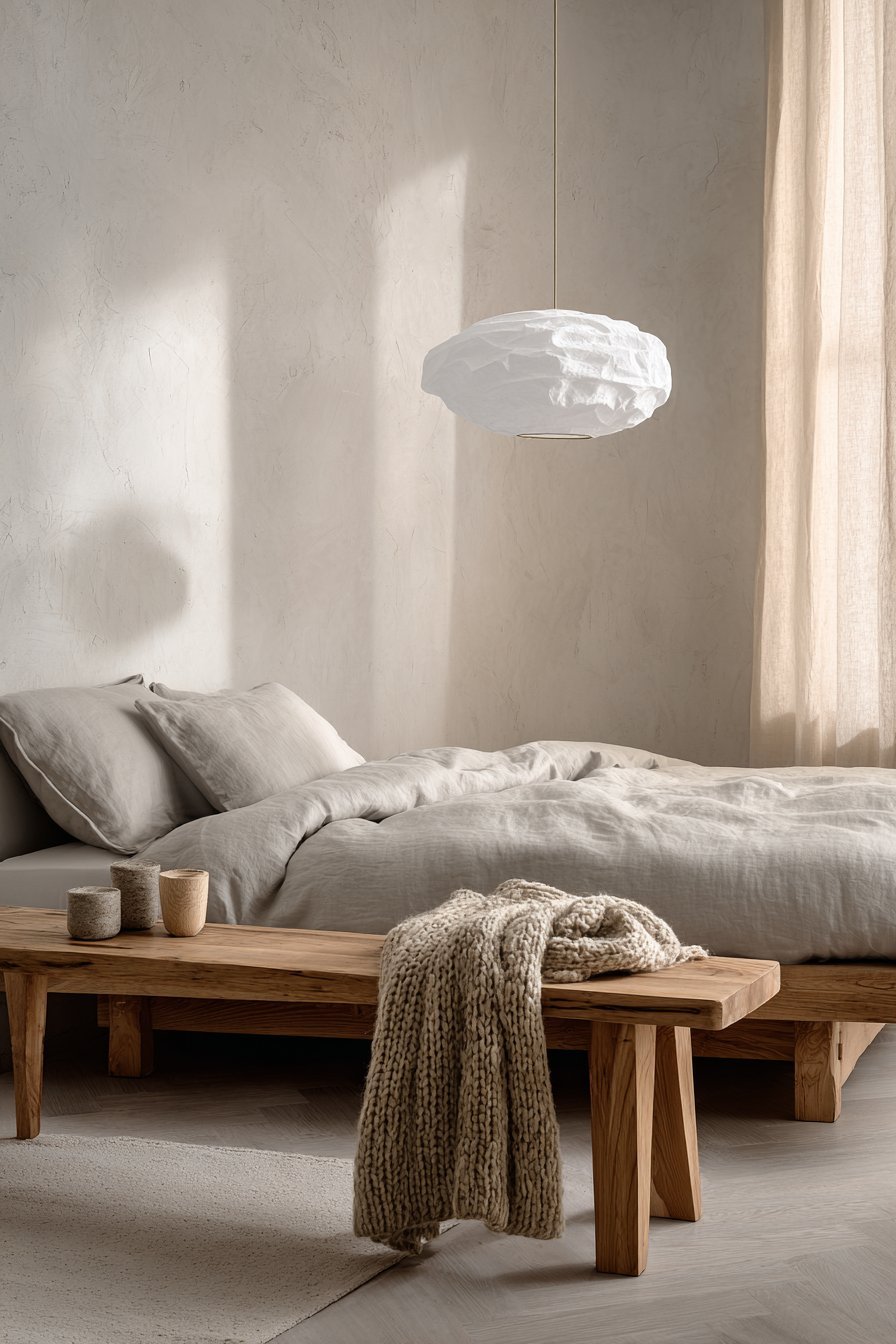
Enter a bedroom that channels centuries of Japanese design wisdom. A low tatami-style platform bed sits close to the ground. Organic cotton bedding in warm grey tones covers the sleeping surface. The minimal height creates grounded, peaceful energy throughout the space. This arrangement encourages rest and contemplation.
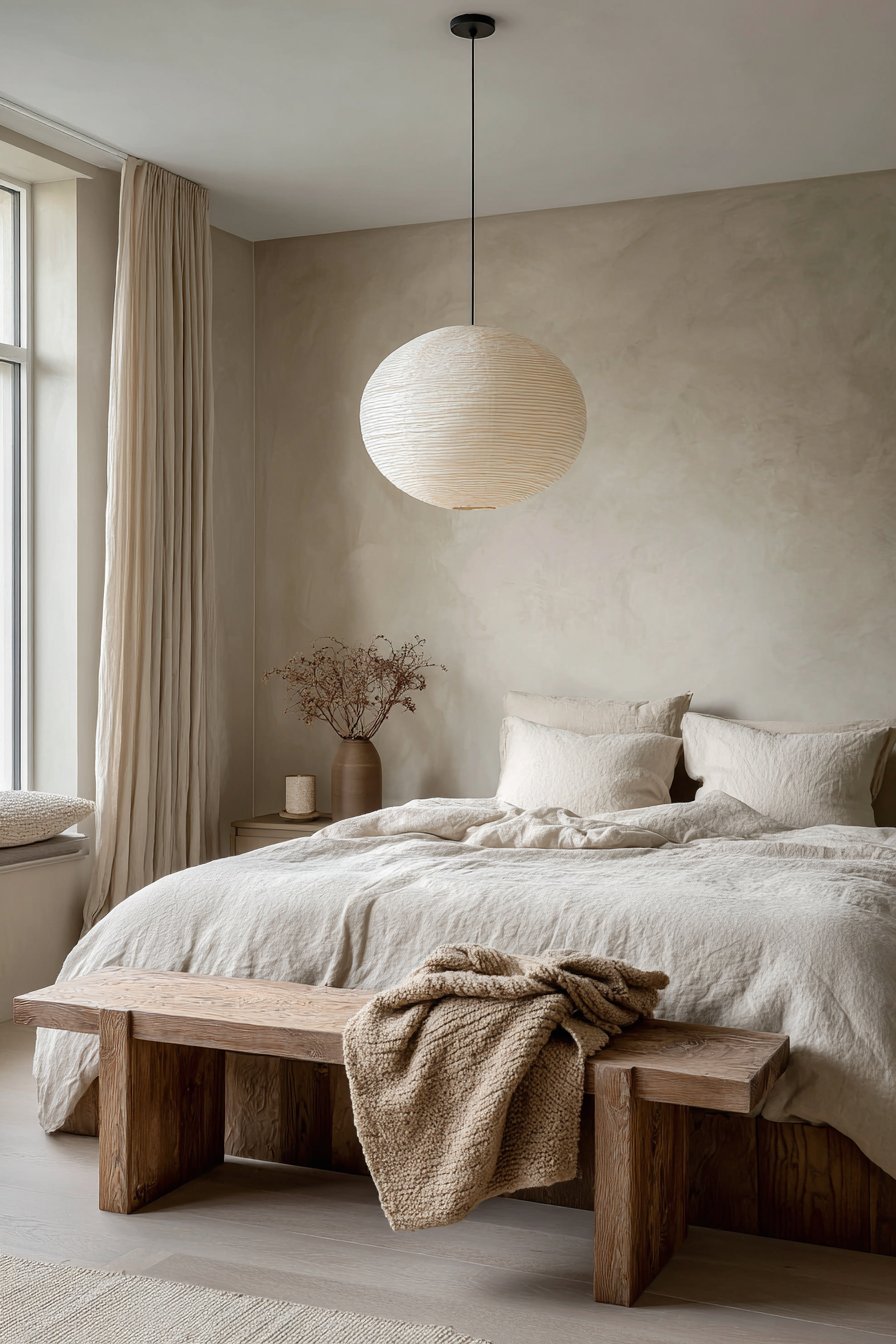
A simple pendant light with washi paper shade hangs centered above. The translucent paper diffuses light softly in all directions. One wall features natural clay plaster texture instead of paint. This traditional material adds subtle visual interest and acoustic properties. The earthen surface creates warmth through organic imperfection.
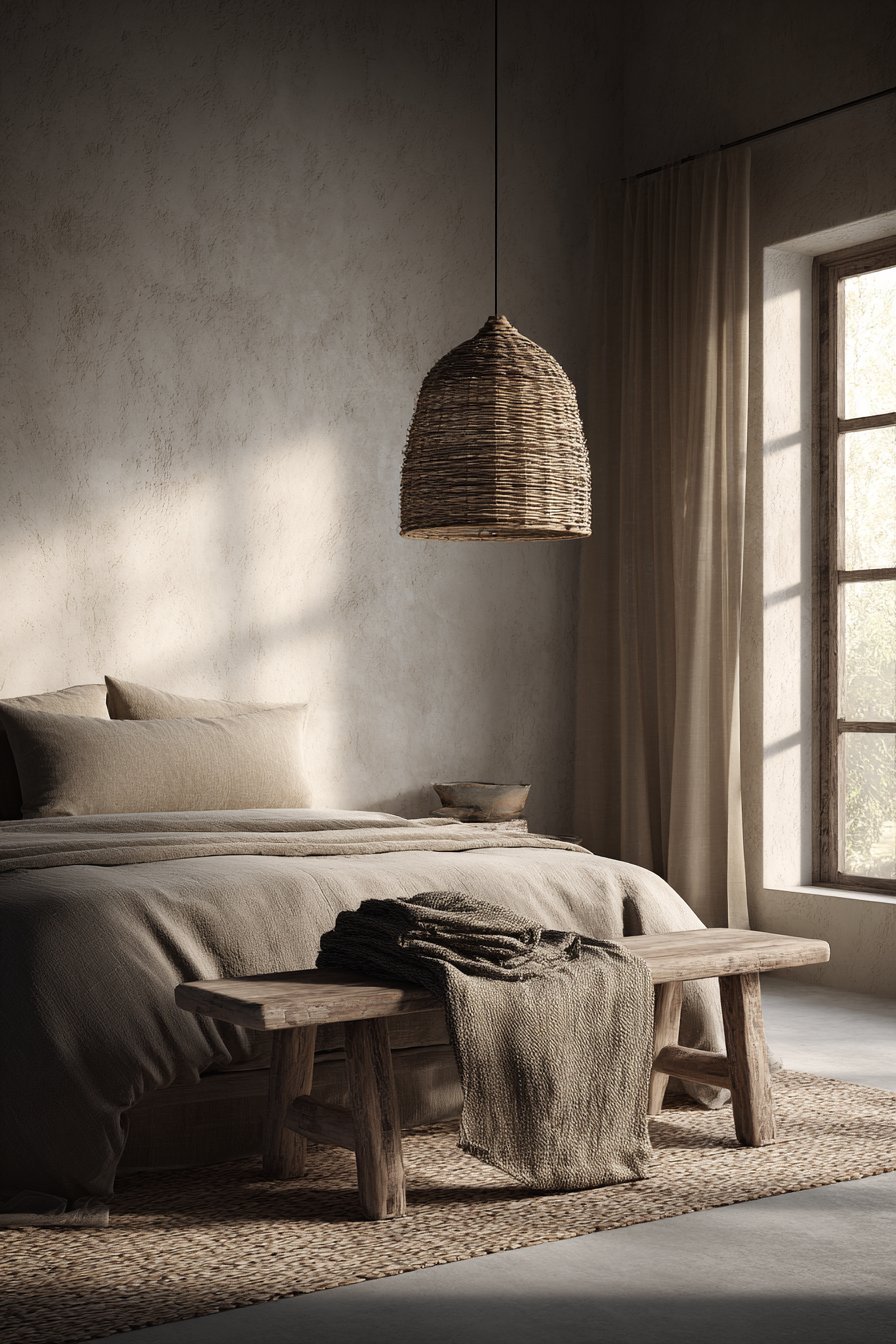
A minimal wooden bench rests at the foot of the bed. A folded wool blanket displays with intentional precision. The bench serves both practical and aesthetic functions. Rice paper window panels filter daylight into gentle illumination. These traditional screens create privacy while maintaining luminous quality.
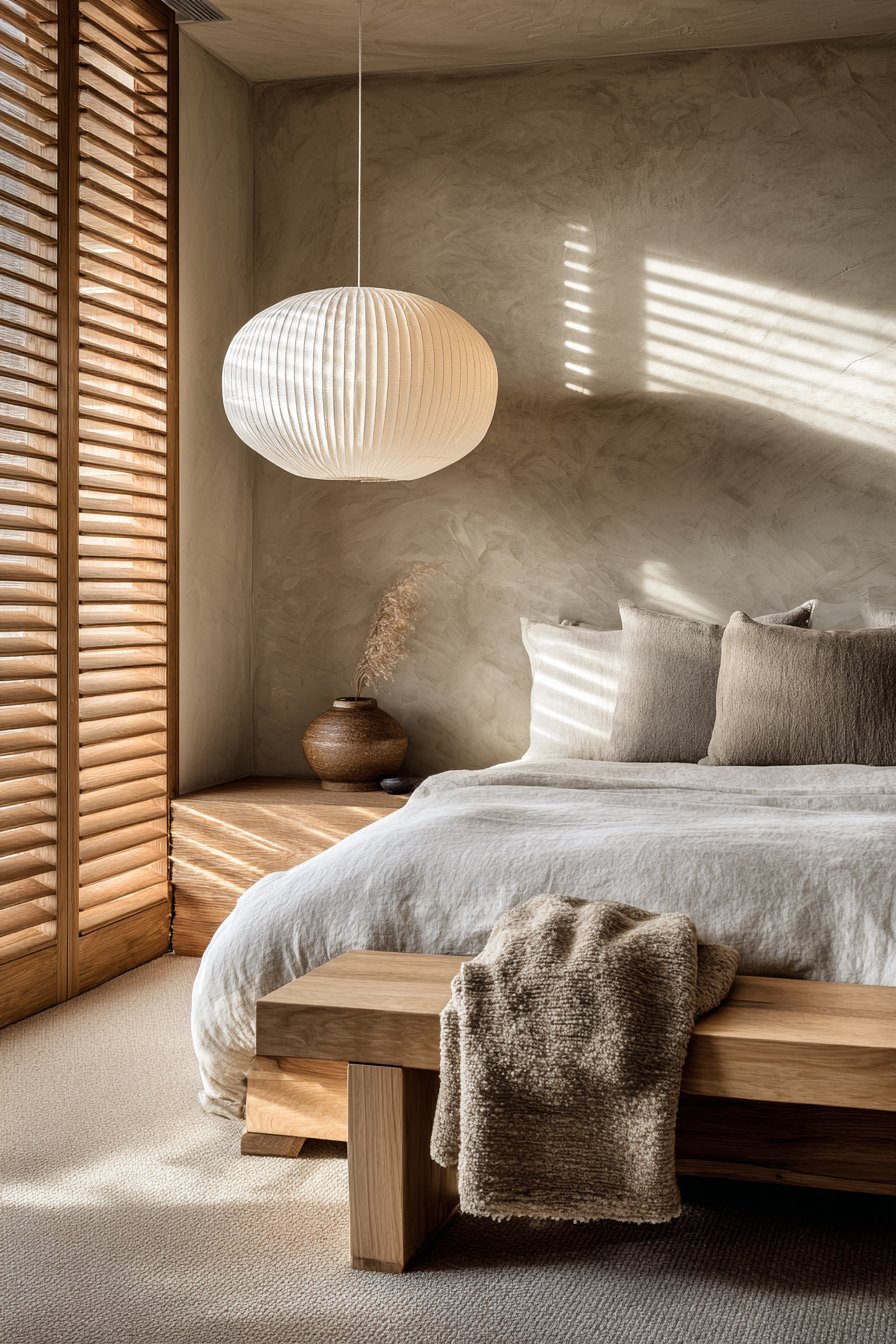
The design honors Japanese principles of ma, or negative space. Empty areas receive as much consideration as furnished zones. This philosophy creates rooms that feel larger than their actual dimensions. The restraint allows occupants to breathe and minds to settle.
Key Design Tips:
- Choose low platform beds to create grounded, zen-like atmosphere
- Incorporate one textured wall using natural materials like clay plaster
- Select washi paper light fixtures for soft, diffused illumination
- Use minimal furniture pieces with strong horizontal lines
- Install rice paper panels or shoji screens for authentic Japanese aesthetic
- Embrace negative space as an essential design element
5. Floating Bed with Ambient Under-Lighting
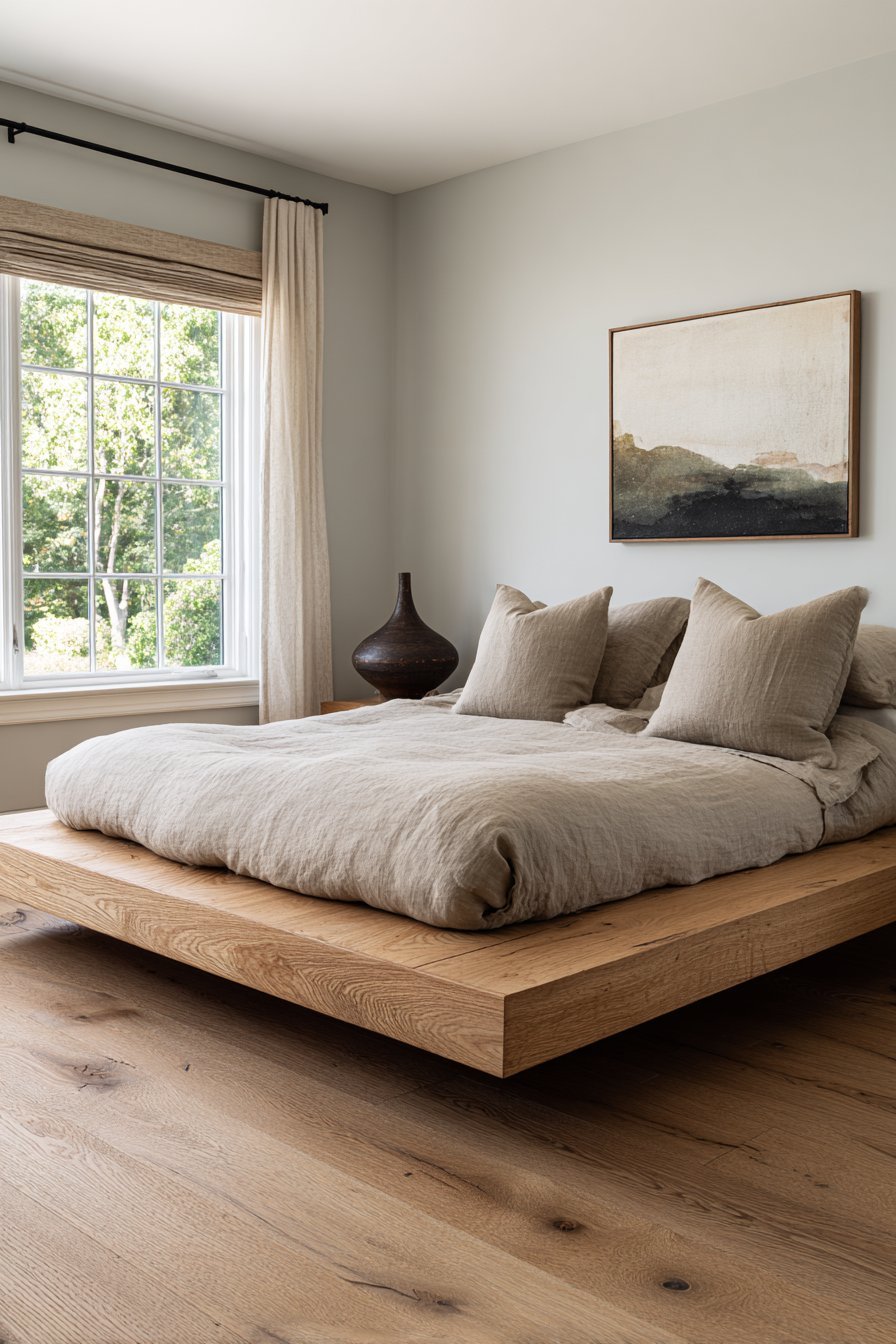
Picture a bedroom where the bed appears to levitate effortlessly. Integrated LED strips beneath the frame create subtle ambient glow. This lighting casts gentle illumination against light grey walls. The floating effect adds contemporary sophistication to minimalist principles. The visual lightness prevents the bed from dominating the space.
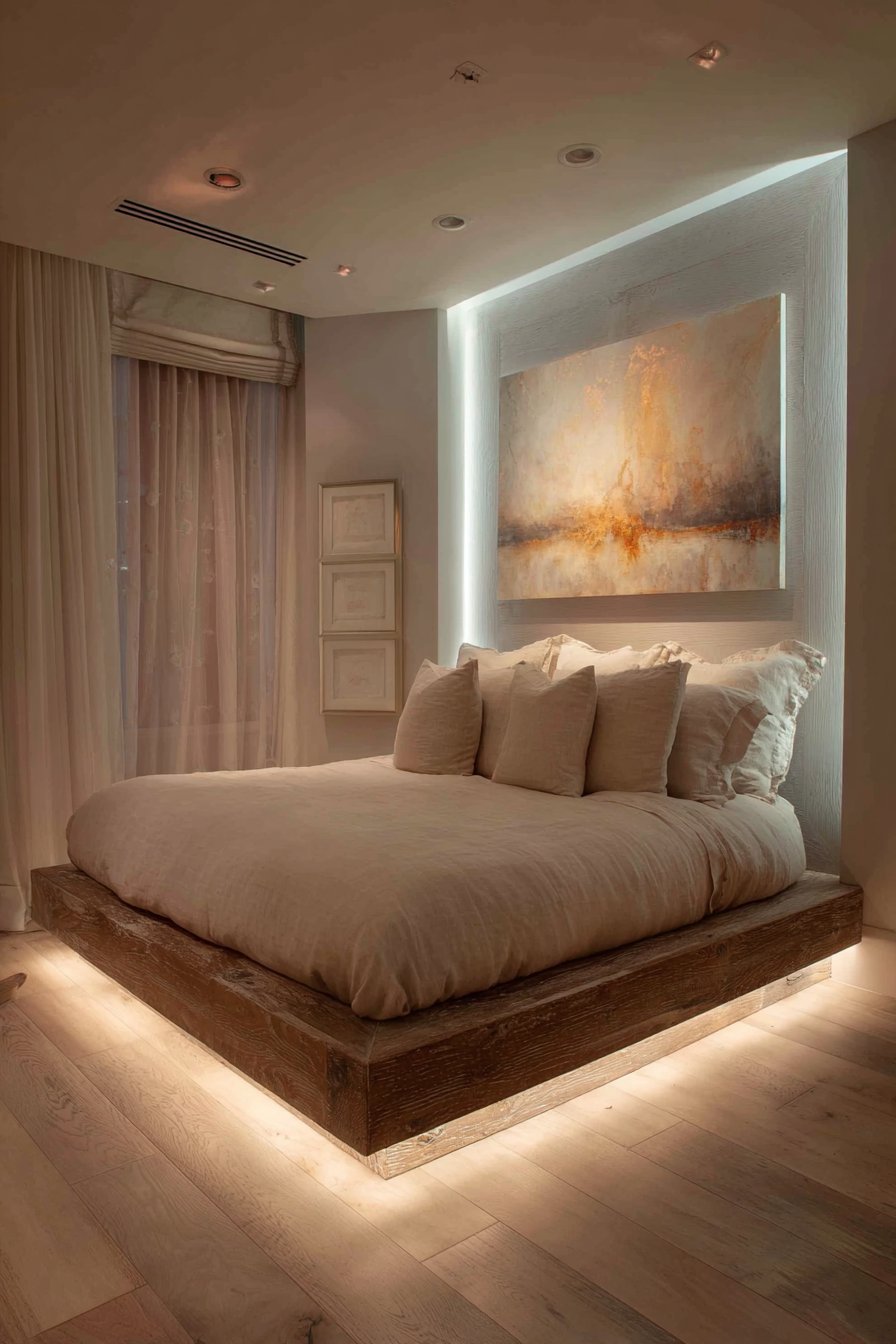
Luxurious Belgian linen sheets in warm sand tones dress the mattress. Oversized pillows provide comfort without excessive decoration. The quality of linens becomes the luxury statement. Single piece of abstract wall art hangs above the headboard. Earth tone composition complements the neutral palette without demanding attention.
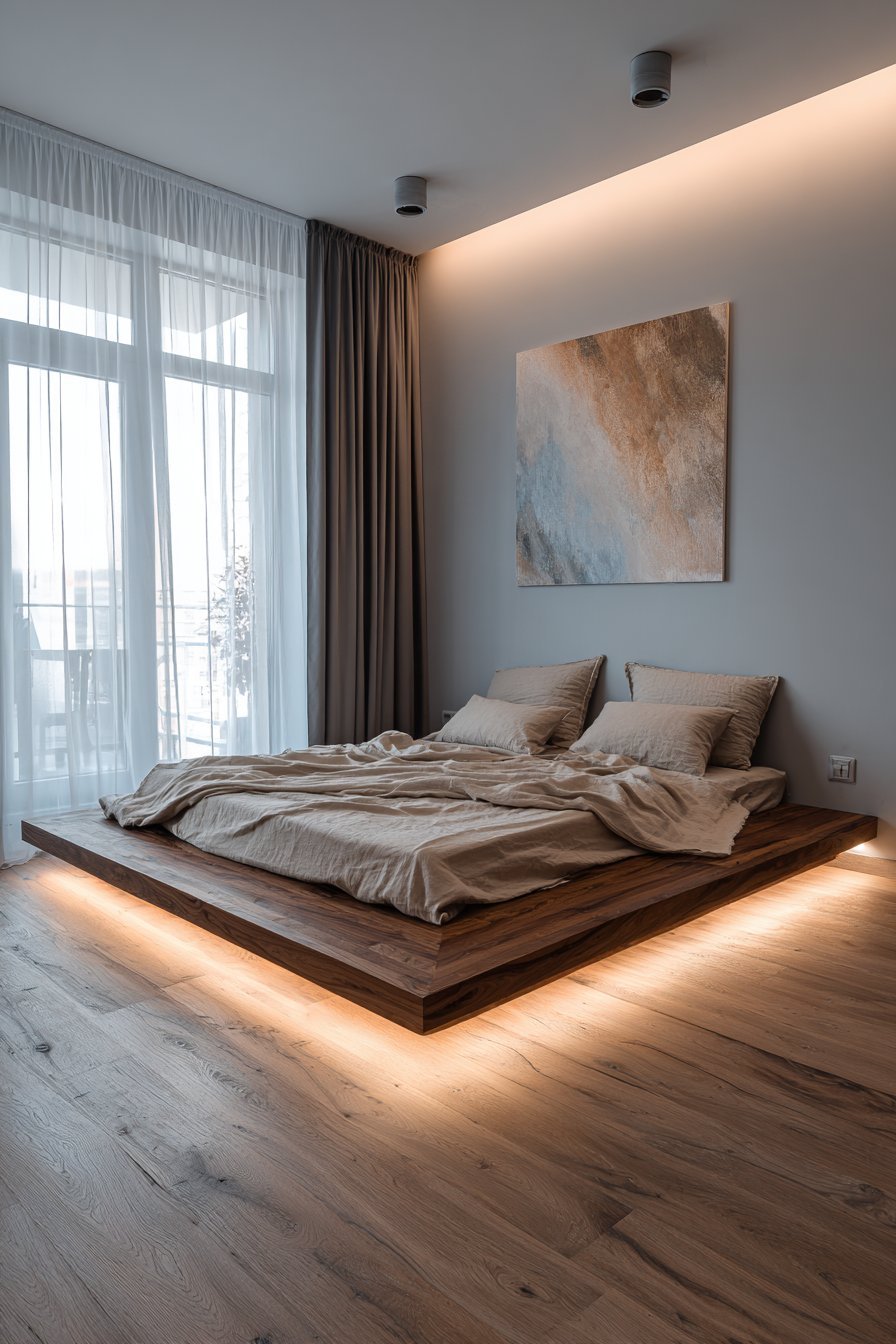
Wide plank white oak flooring adds natural warmth underfoot. The wood grain runs the room’s length, enhancing spatial perception. Blackout roller shades in natural fabric pair with sheer curtains. This combination allows complete light control throughout day and night. The layered window treatment maintains the clean aesthetic while providing flexibility.
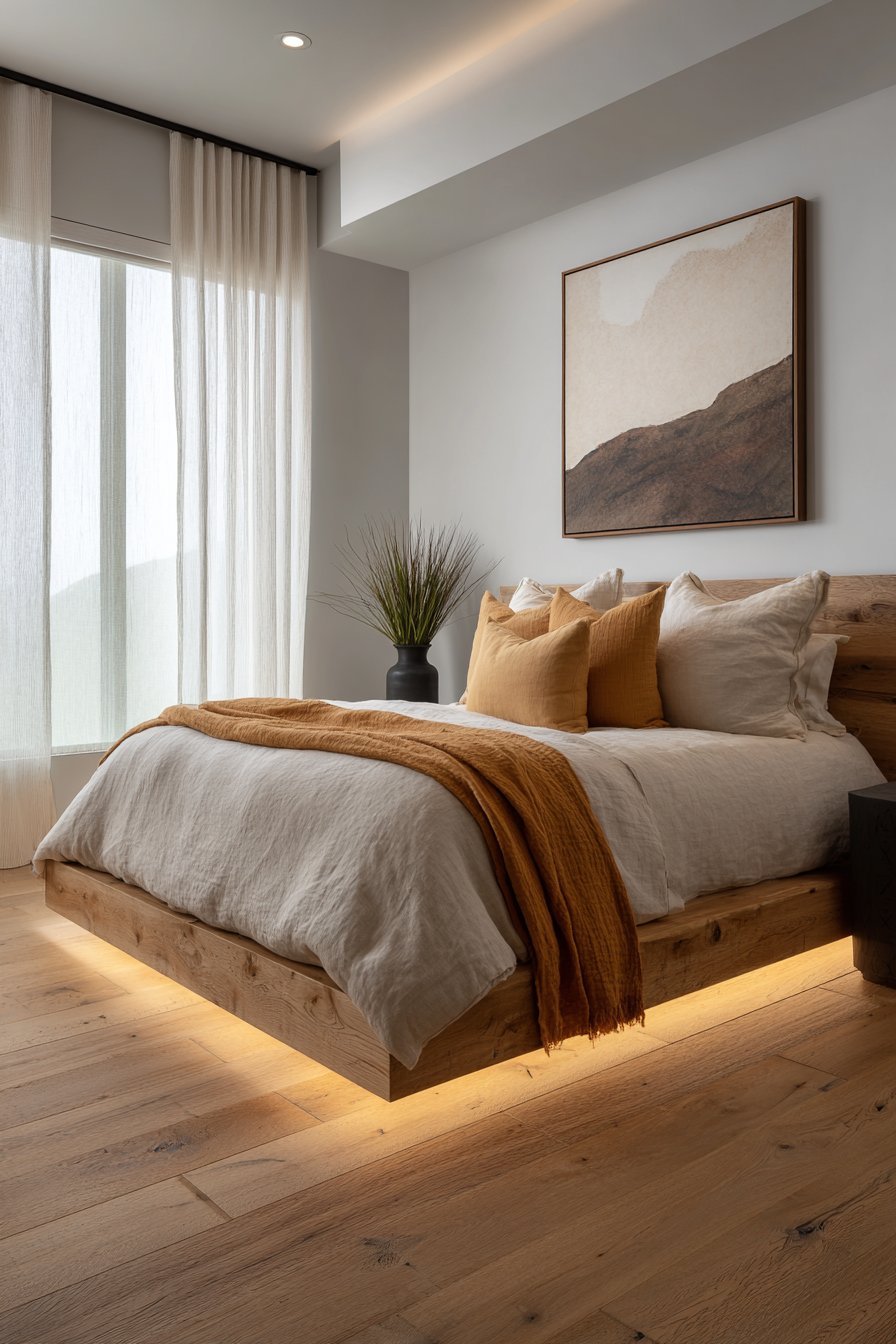
The under-bed lighting serves multiple purposes beyond visual appeal. It provides safe nighttime navigation without harsh overhead lights. The warm glow creates calming atmosphere for evening wind-down routines. This thoughtful detail demonstrates how technology enhances comfort when applied subtly.
Key Design Tips:
- Install LED strip lighting under bed frames for floating effect
- Choose warm white LED temperatures around 2700K for cozy ambiance
- Invest in high-quality Belgian linen for luxury minimalist bedding
- Select one meaningful art piece rather than multiple small items
- Combine blackout and sheer curtains for ultimate light flexibility
- Use wide plank flooring to make spaces feel larger and more open
6. Integrated Workspace Corner
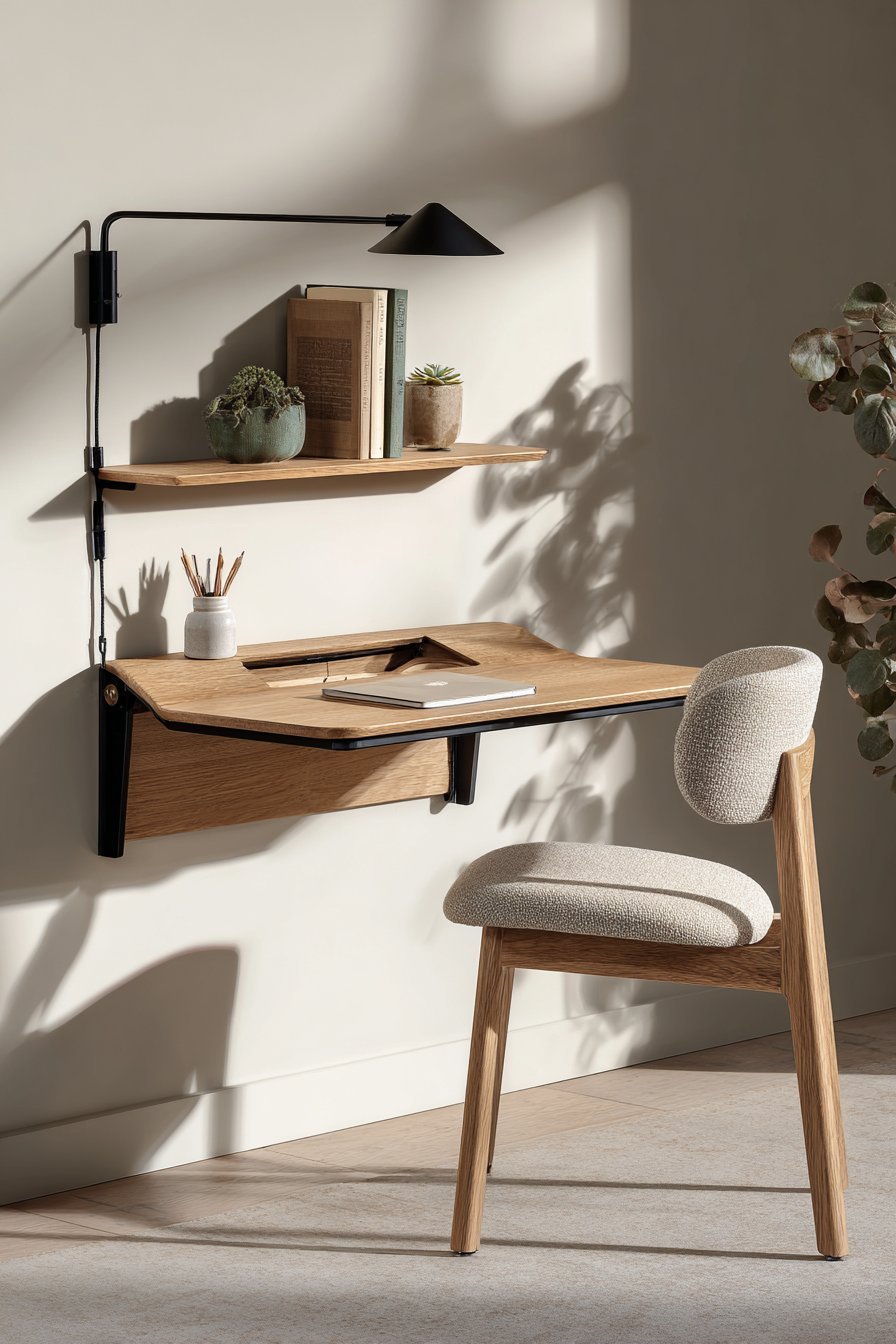
A bedroom corner transforms into a seamless home office. A wall-mounted floating desk in natural oak provides work surface. The minimal design includes integrated cable management system. This practical feature maintains the clean aesthetic throughout. Simple task chair with natural linen upholstery offers comfortable seating.
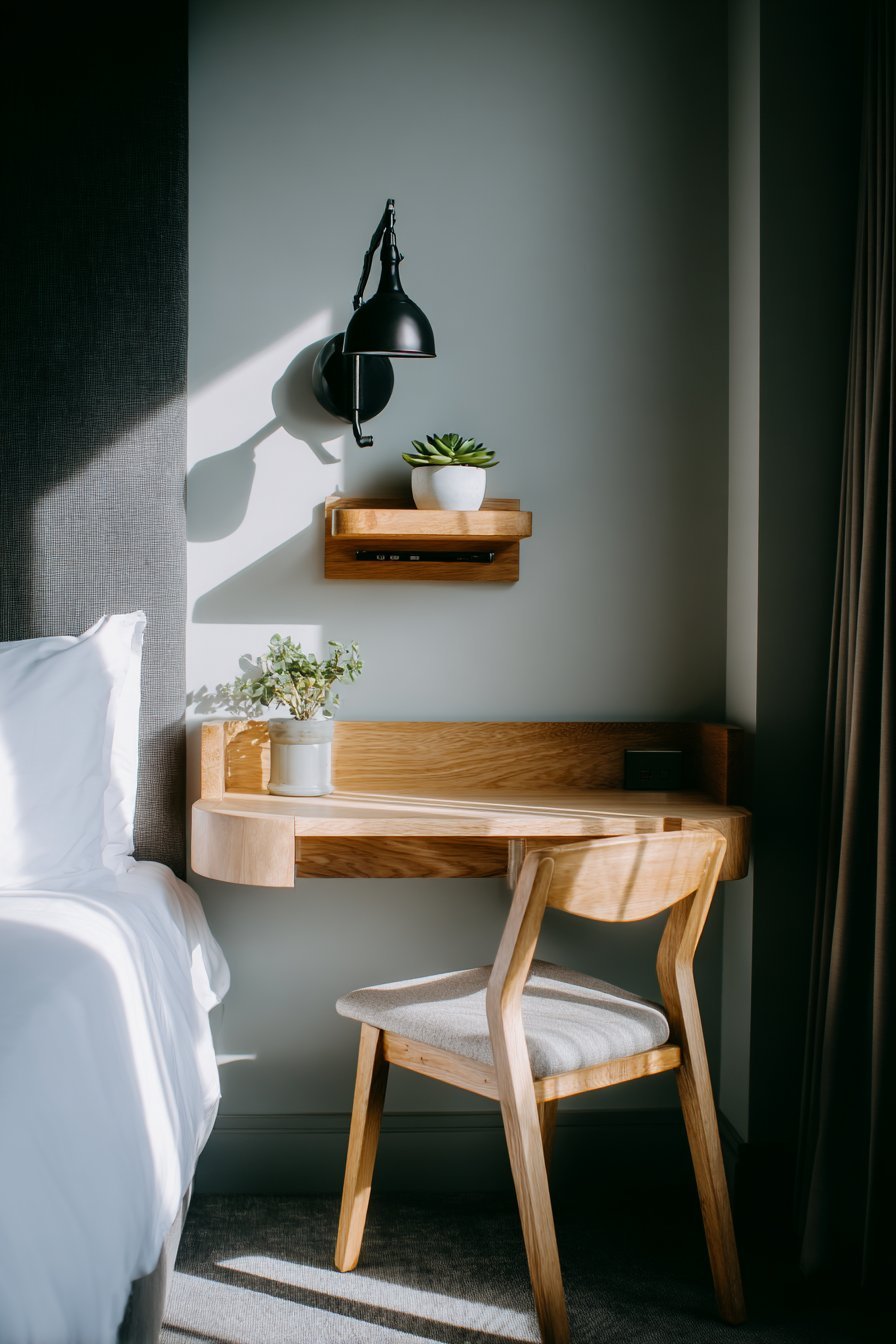
Minimal desk accessories include ceramic pen holder and small potted succulent. These few items serve function without creating visual clutter. Adjustable wall-mounted reading lamp in matte black provides focused task lighting. The arm adjusts to direct light precisely where needed. This flexibility prevents the need for multiple lighting sources.
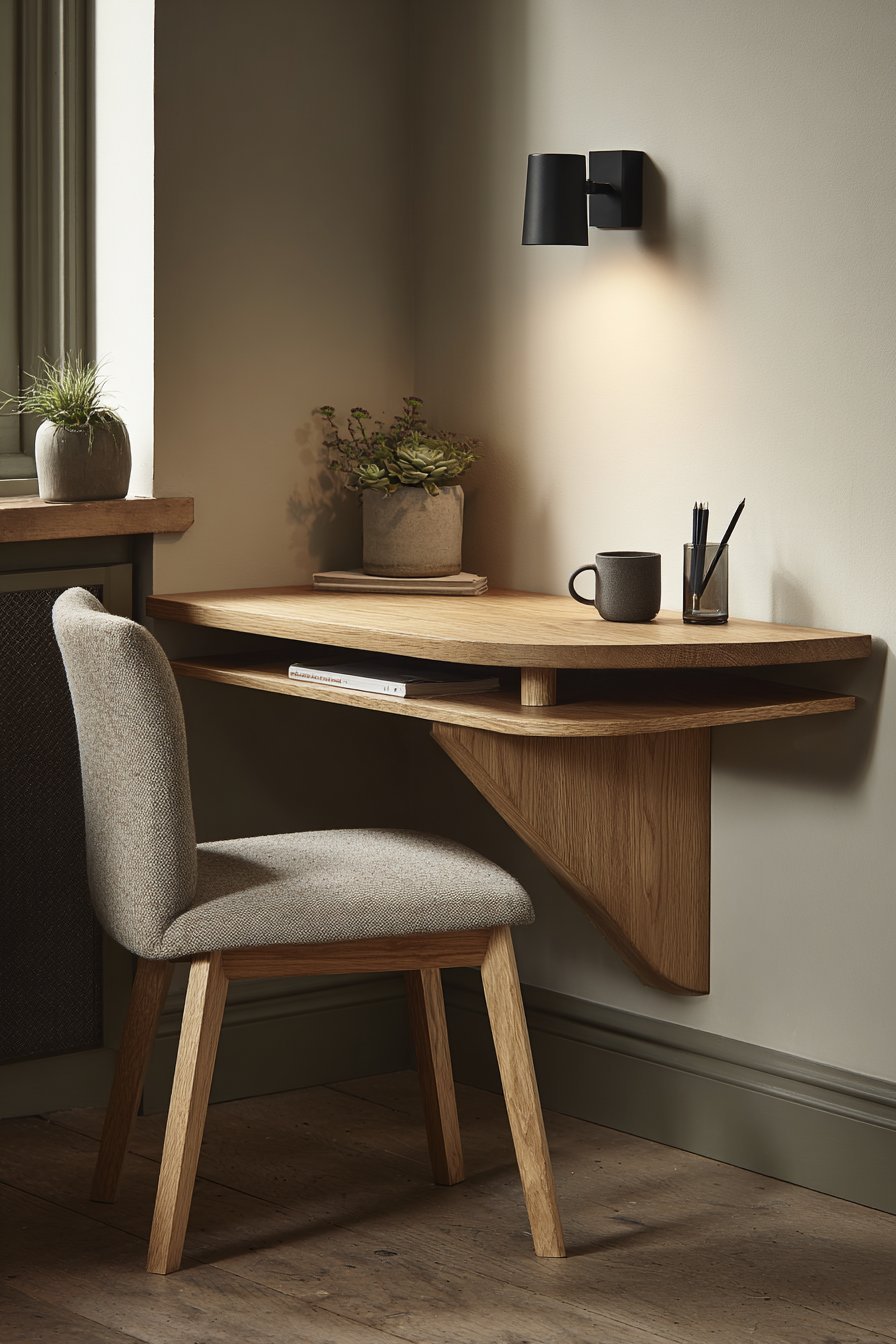
The workspace blends into the bedroom aesthetic rather than competing with it. Oak desk material matches the room’s other wood tones perfectly. The floating design maintains floor space visibility beneath the surface. This visual continuity prevents the corner from feeling cramped. The setup demonstrates how work and rest areas can coexist harmoniously.
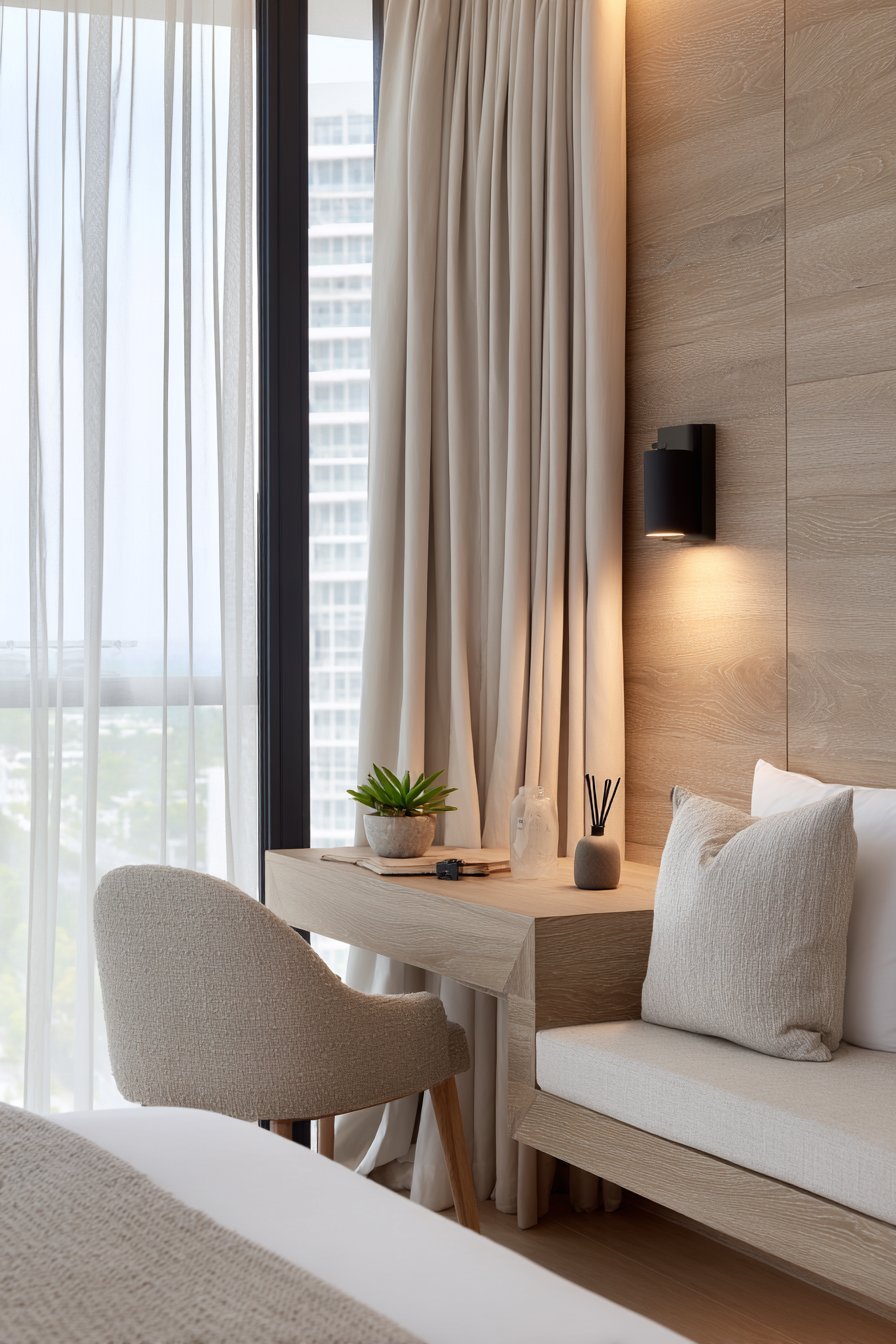
Morning light from nearby windows illuminates the workspace naturally. The positioning allows for productive hours without artificial lighting. The thoughtful integration shows how modern life’s realities fit within minimalist design frameworks.
Key Design Tips:
- Mount floating desks to walls for space-saving functionality
- Include built-in cable management to hide technology clutter
- Choose adjustable wall-mounted task lamps for flexible lighting
- Keep desk accessories minimal and purposeful
- Match workspace materials to bedroom furnishings for cohesion
- Position workspaces near windows for natural light benefits
7. Layered Neutral Textile Richness
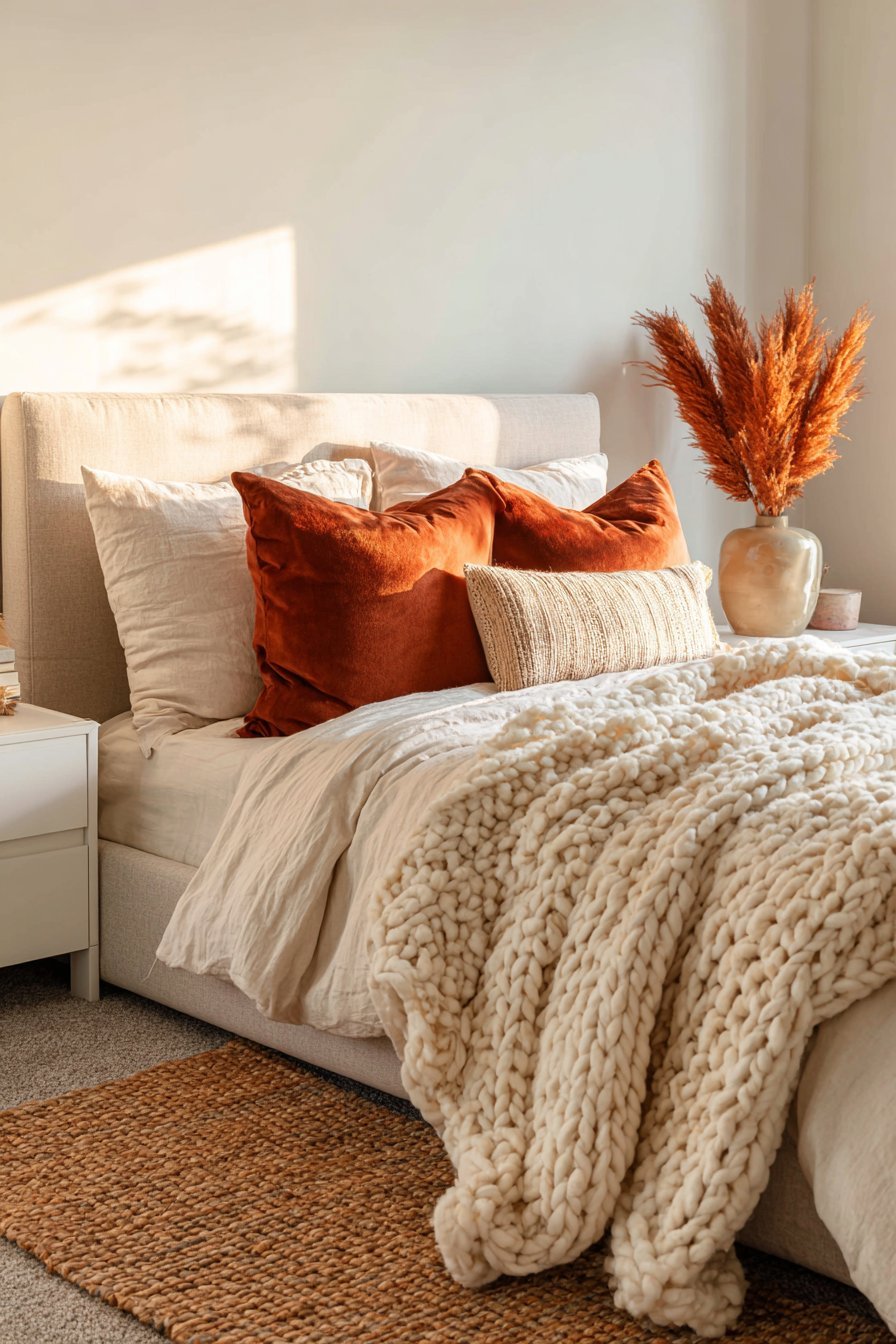
This bedroom celebrates texture through careful textile layering. Natural jute area rug lies beneath the bed as foundation. Linen bedding in ivory creates the next soft layer. Chunky knit throw blanket in camel drapes across the foot. Velvet accent pillows in terracotta provide final textural punctuation.
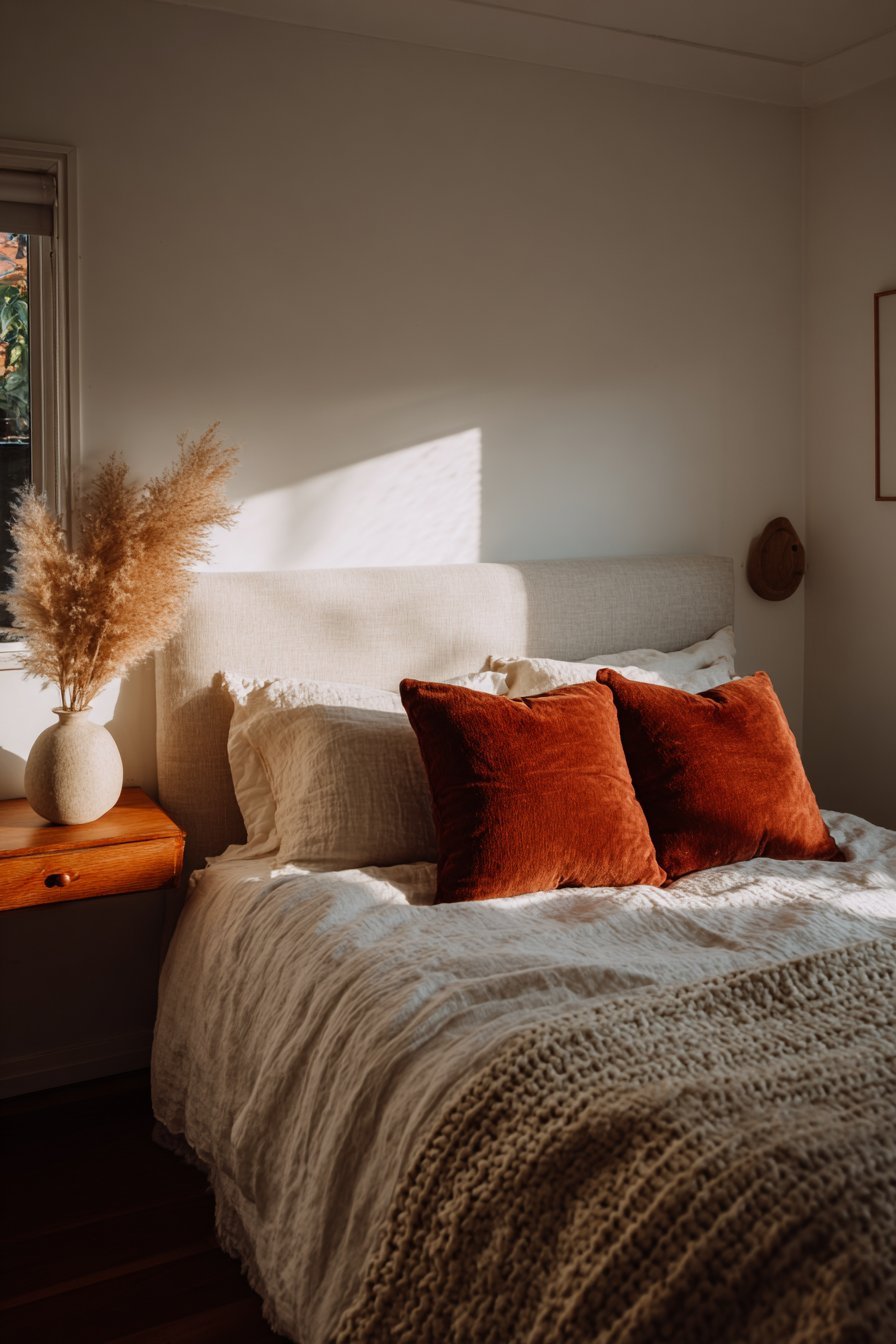
The bed features a simple upholstered headboard in natural linen. The neutral fabric provides comfort without visual competition. Walls painted in warm white create cocoon-like atmosphere. This shade reflects light while maintaining intimate warmth. Single ceramic vase holds dried pampas grass on floating nightstand.
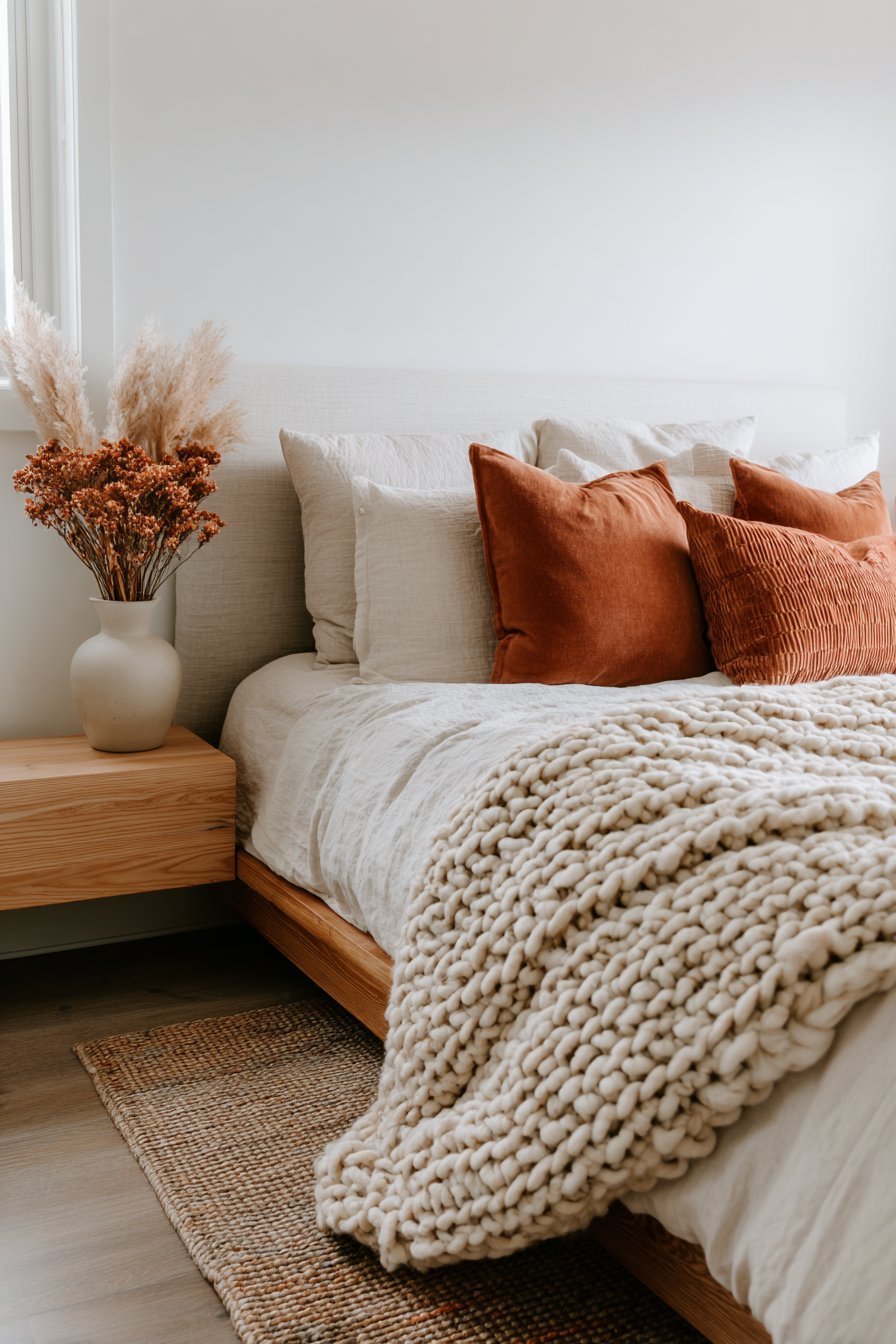
The organic dried element adds vertical interest and movement. Golden hour sunlight streams through windows at day’s end. The directional light emphasizes every textural variation in the space. Shadows play across the chunky knit valleys beautifully. The velvet pillows catch light differently than surrounding linen.
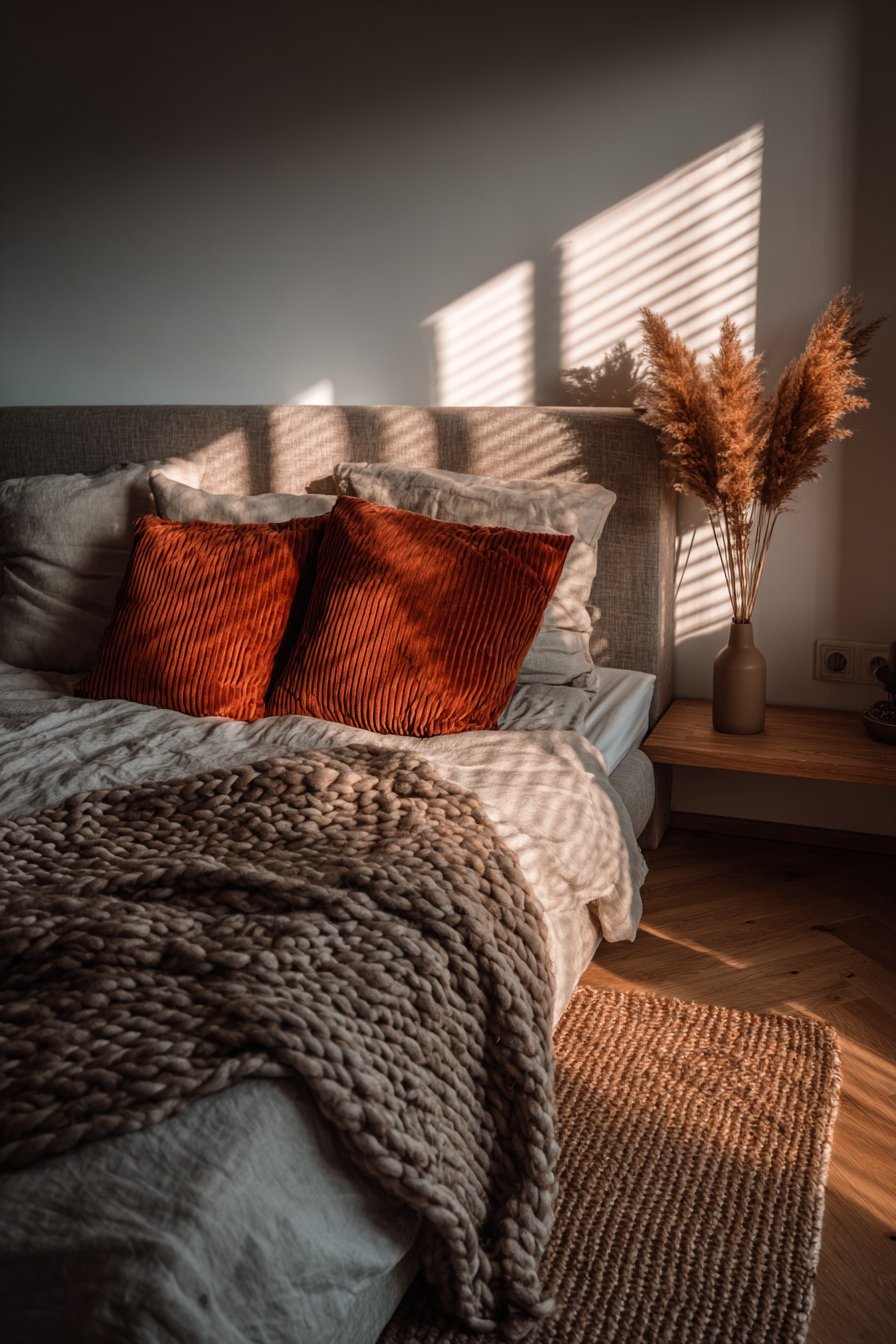
This design proves minimalism need not feel sparse or cold. The rich texture layering creates visual and tactile depth. Each material choice adds warmth while maintaining restrained color palette. The result feels luxurious through quality rather than quantity.
Key Design Tips:
- Layer multiple natural textures within neutral color palette
- Mix materials with different surface qualities like smooth linen and chunky knit
- Add natural jute or sisal rugs for organic foundation texture
- Include one or two accent colors in muted tones for depth
- Use dried botanicals instead of fresh flowers for lasting organic elements
- Paint walls in warm whites rather than stark whites for cocoon effect
8. Monochromatic Greige Sophistication
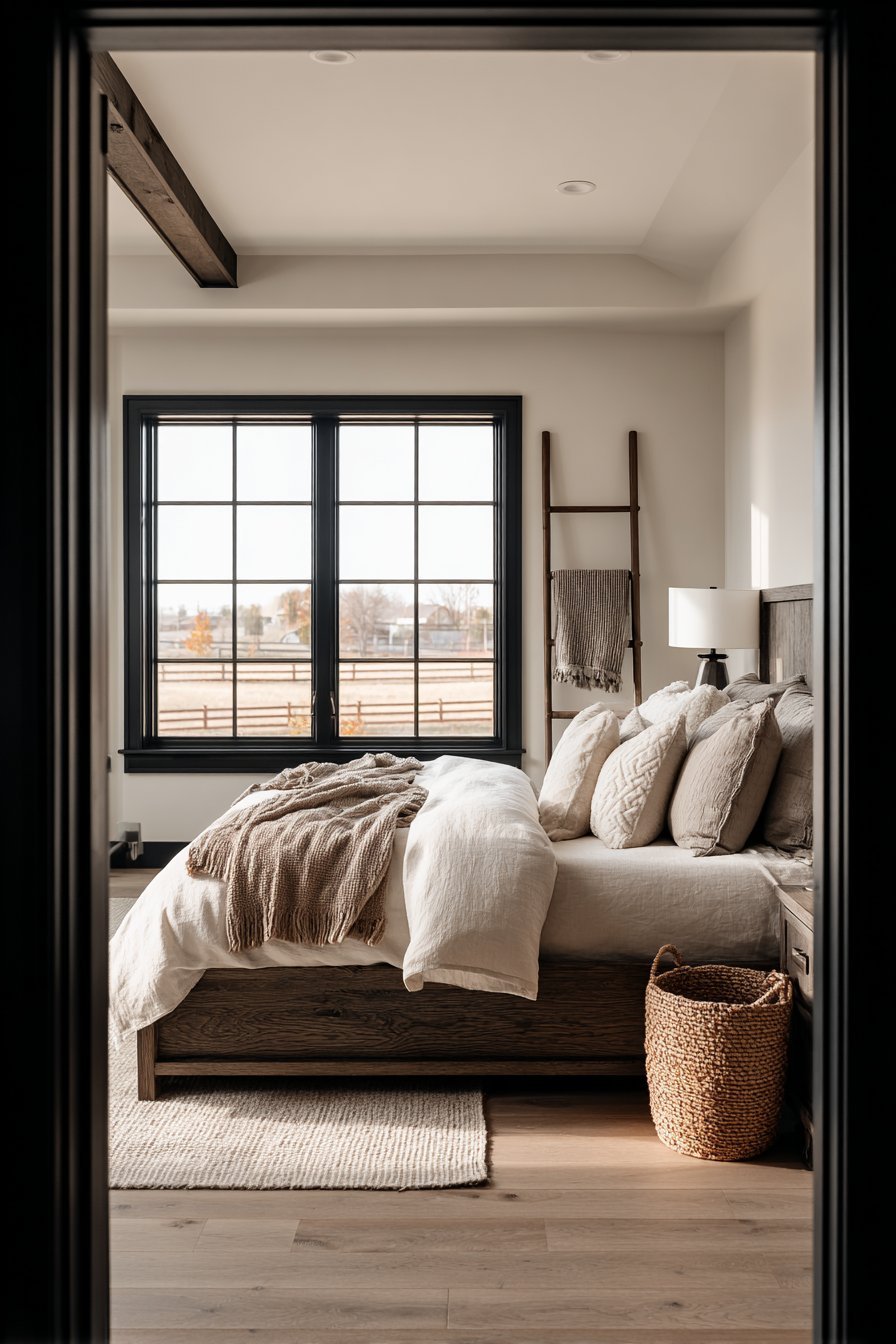
Imagine a bedroom designed entirely in sophisticated greige tones. Walls in warm greige create the enveloping backdrop. Bed frame in weathered oak introduces natural wood variation. Bedding in multiple shades of taupe and cream creates subtle depth. The tonal approach feels cohesive yet layered with visual interest.
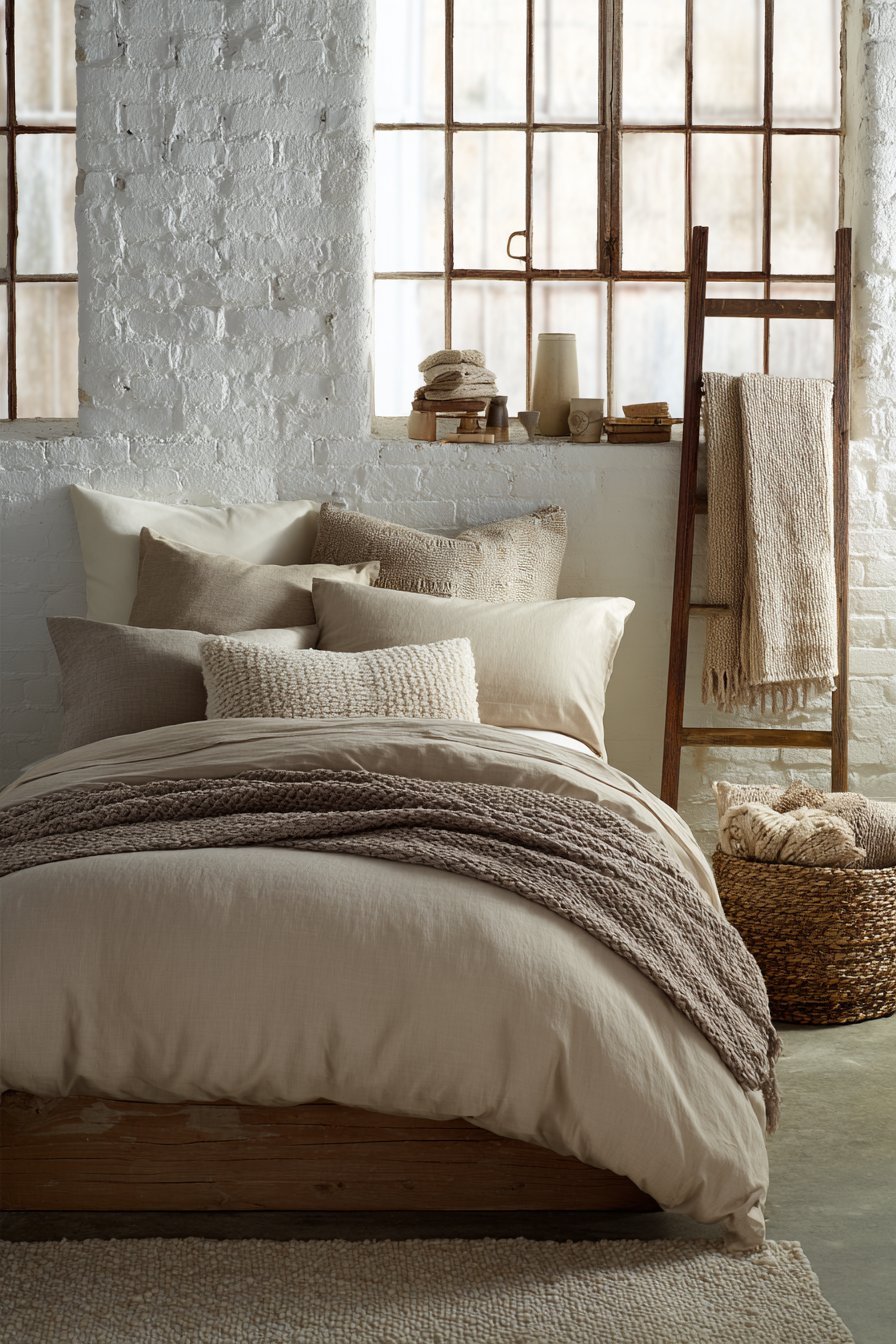
Simple wooden ladder leans against the wall as decorative element. Throw blankets drape over rungs in descending neutral shades. This vertical display adds height without permanent installation. Woven basket at bedside provides hidden storage for essentials. The natural fiber texture complements the room’s organic aesthetic.
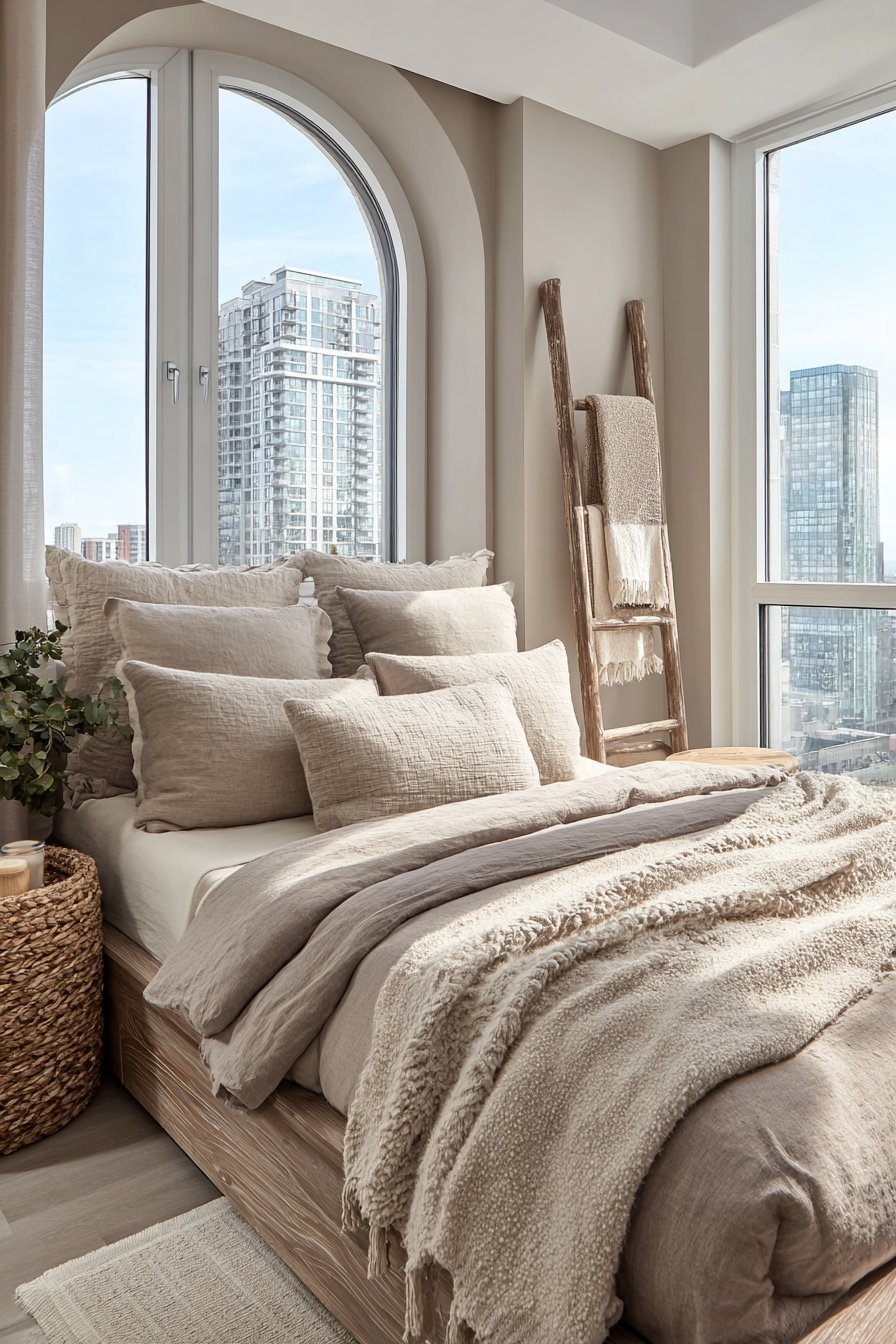
Large casement windows with minimal trim flood space with natural light. The abundant illumination prevents the neutral palette from feeling dim. Soft shadows add dimension throughout the day’s progression. Evening light creates warm glow across the tonal variations. The monochromatic scheme reveals its sophistication through subtle shade differences.
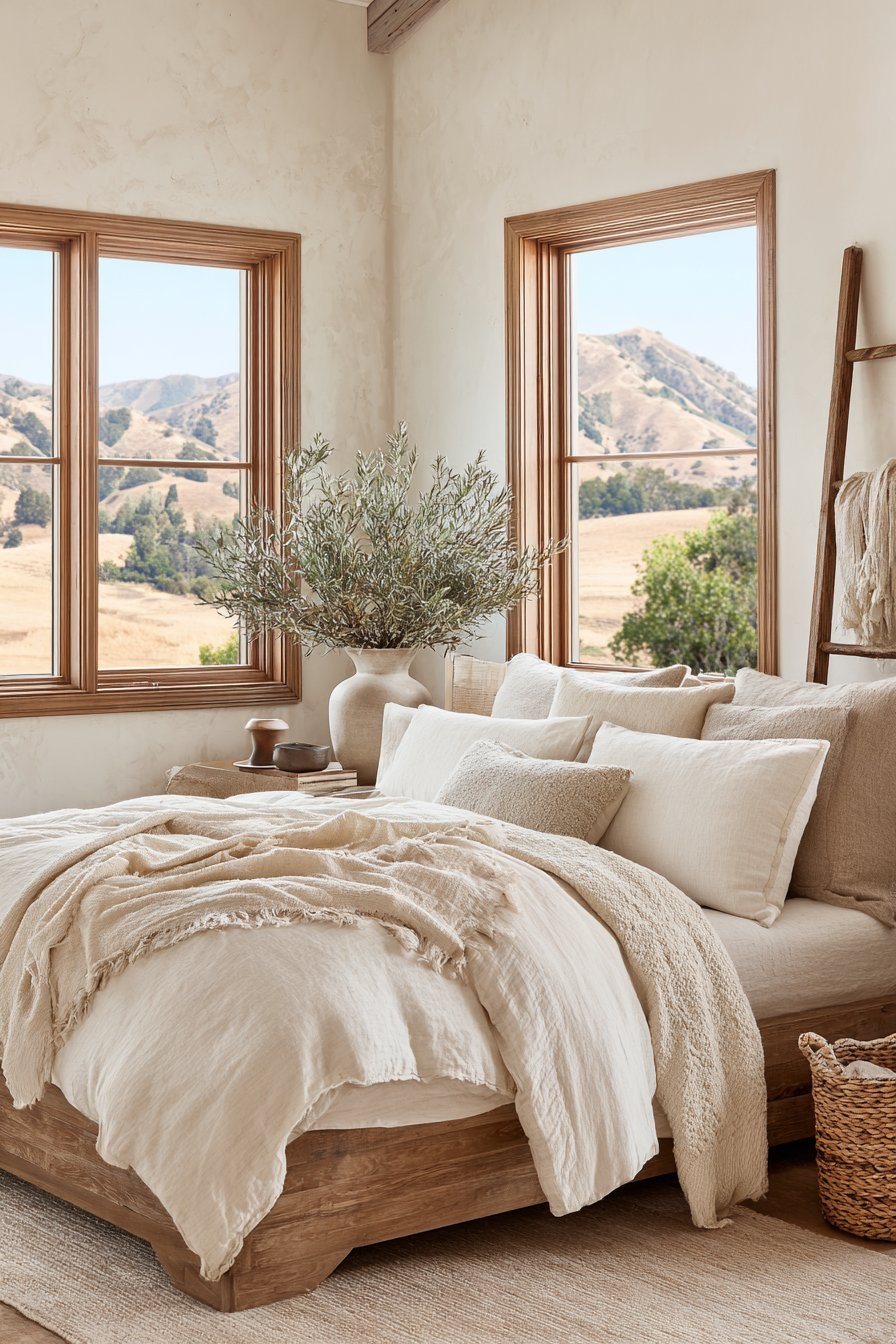
This design demonstrates the power of tonal variation within minimalist frameworks. Rather than introducing contrasting colors, depth comes from shade gradation. The weathered oak adds just enough distinction without breaking the palette. The result feels calm, sophisticated, and intentionally curated.
Key Design Tips:
- Work within one color family using multiple shades for depth
- Choose furniture in weathered or natural wood finishes for variation
- Use decorative ladders as space-saving blanket storage and display
- Include woven baskets for hidden storage that maintains aesthetic
- Maximize natural light with large windows and minimal treatments
- Let shadows and light create natural visual interest throughout the day
9. Layered Lighting Design
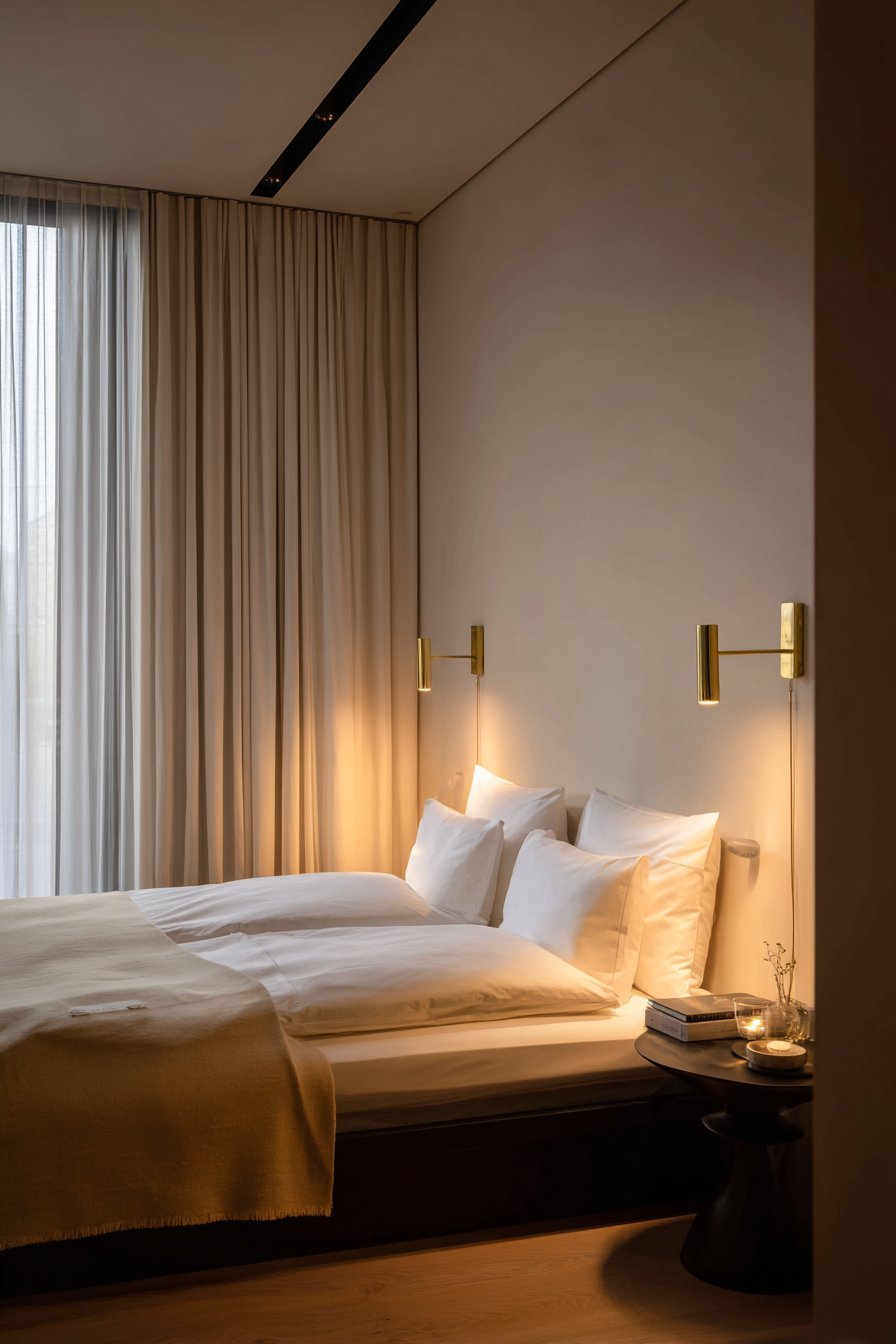
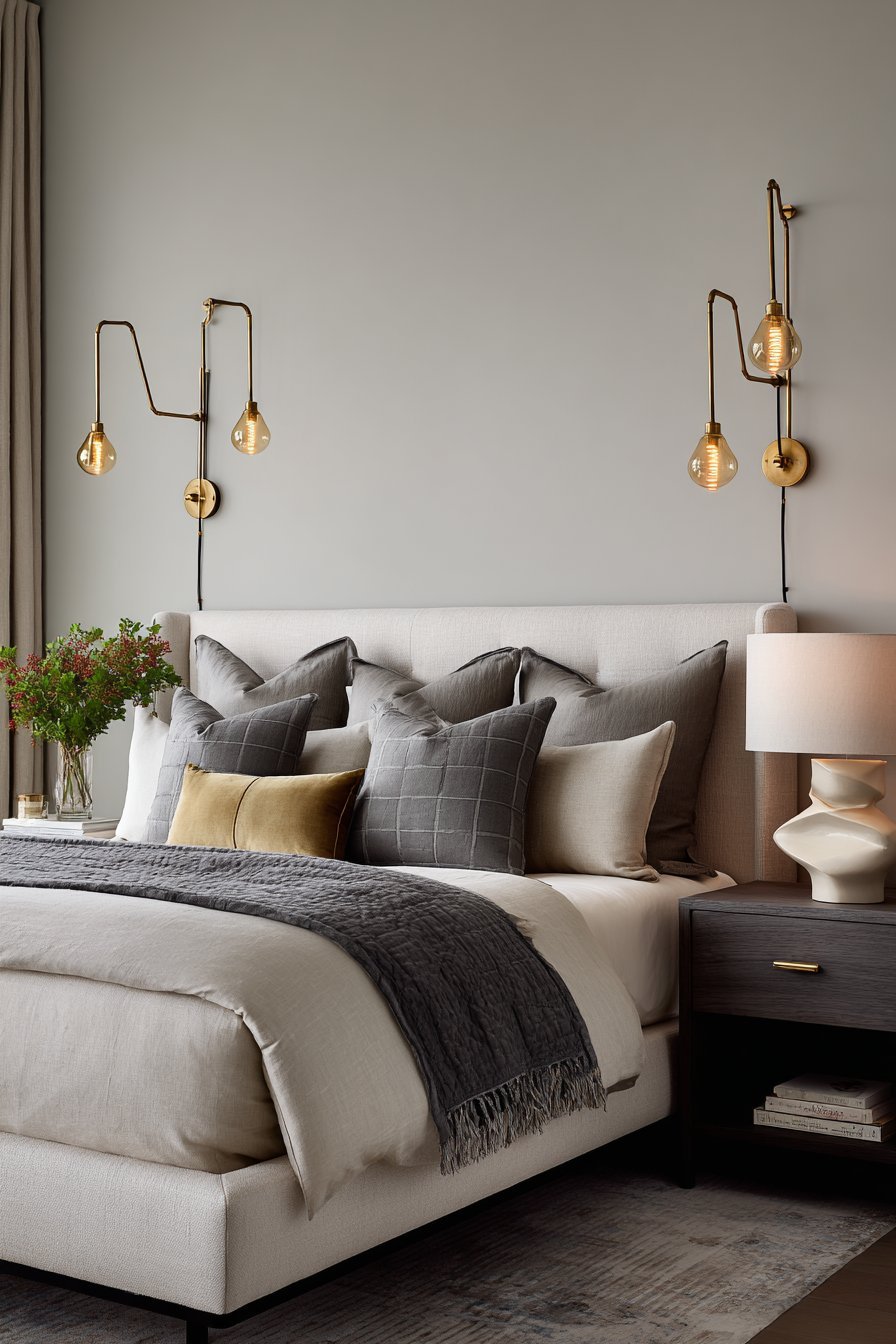
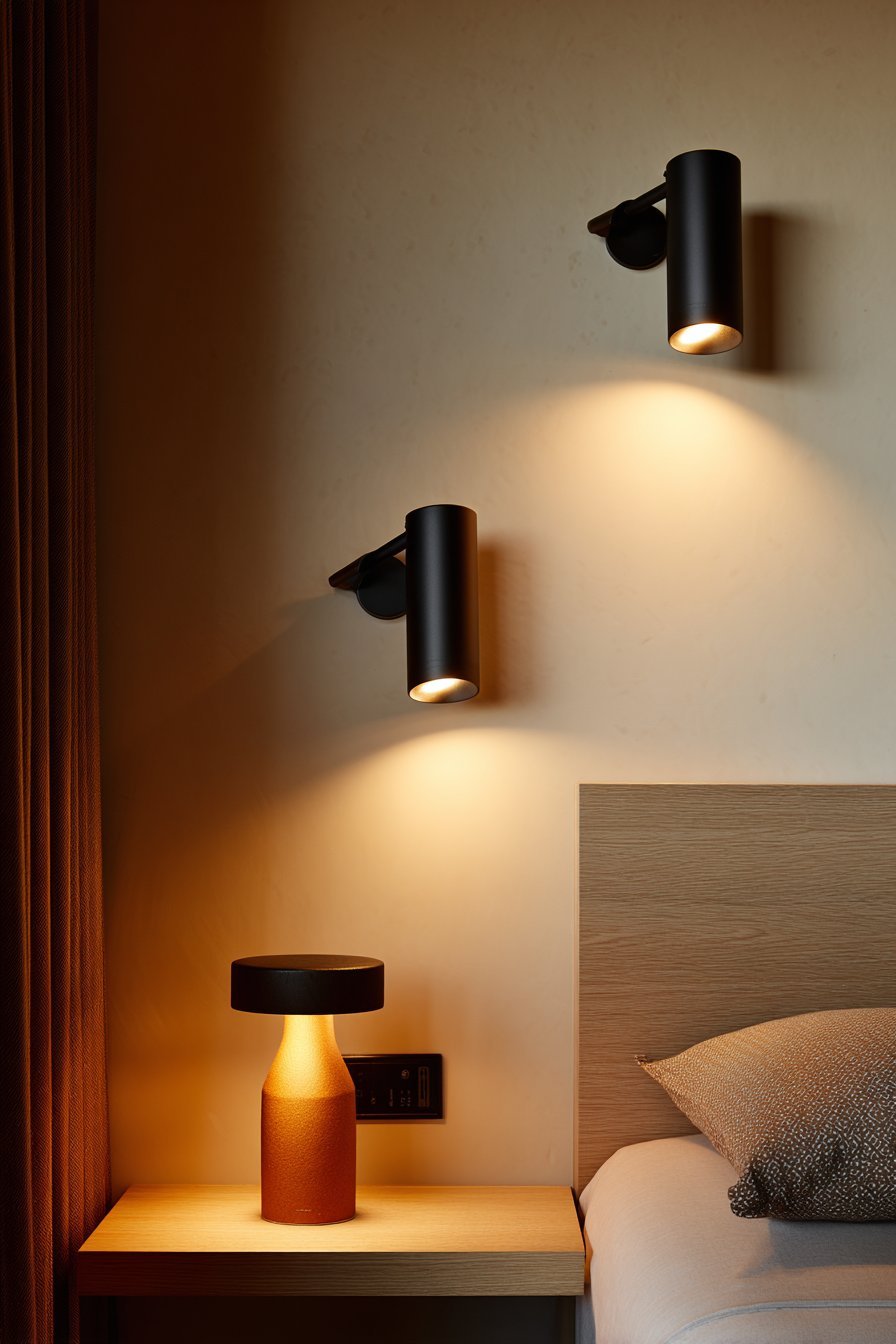
Evening descends on a bedroom designed with lighting as primary focus. Recessed ceiling fixtures with dimmer control provide ambient base layer. Adjustable wall-mounted reading lights with brass finish flank the bed. These fixtures direct light precisely where needed for bedtime reading. Sculptural table lamp on nightstand adds decorative illumination layer.
All fixtures emit warm 2700K light temperature. This consistent warmth creates cohesive evening atmosphere throughout the space. The multiple light sources offer flexibility for different activities. Morning routines require different illumination than evening wind-down periods. The layered approach accommodates these varying needs perfectly.
The brass finish on reading lights introduces subtle metallic warmth. This detail elevates the fixtures beyond pure function into design elements. The sculptural table lamp serves as daytime decor and nighttime illumination. Its form creates visual interest even when switched off. The thoughtful fixture selection demonstrates how lighting choices impact both function and aesthetics.
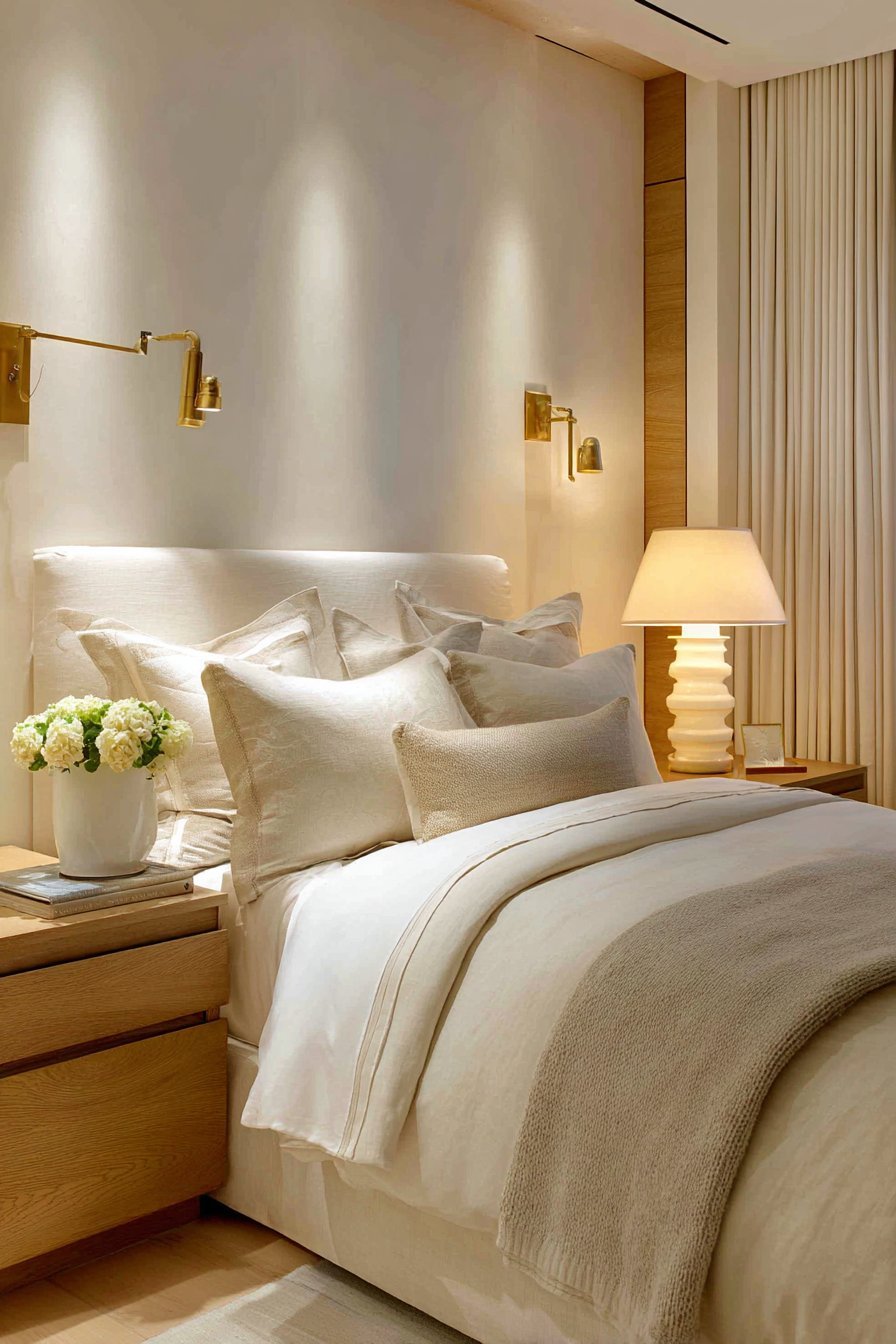
Dimmer controls allow fine-tuning of brightness levels throughout evening. This flexibility supports natural circadian rhythm patterns. Bright light energizes morning preparation routines. Dimmed lighting signals the body to prepare for rest. The technical consideration shows how design supports wellbeing.
Key Design Tips:
- Install multiple light sources at different heights for layered effect
- Choose warm color temperature bulbs around 2700K for cozy ambiance
- Add dimmer switches to all lighting circuits for flexibility
- Include adjustable reading lights mounted to walls to save nightstand space
- Select sculptural table lamps that function as decor when unlit
- Consider circadian lighting that supports natural sleep-wake cycles
10. Biophilic Green Integration
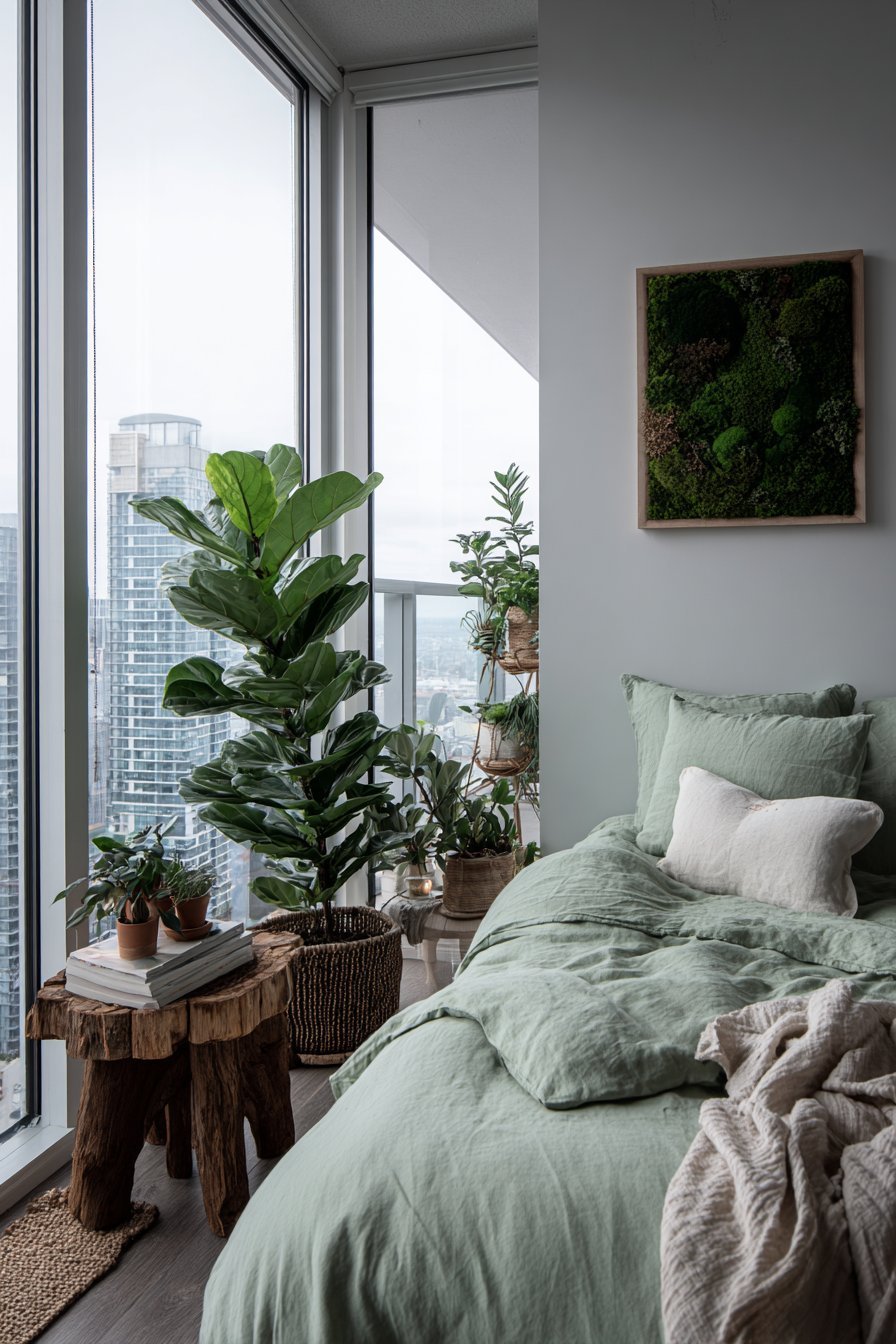
Nature becomes integral design element in this serene bedroom. Large fiddle leaf fig in natural woven basket anchors one corner. Small potted plants rest on floating shelves at varying heights. Preserved moss art panel serves as subtle living wall accent. These botanical elements bring outdoor vitality inside.
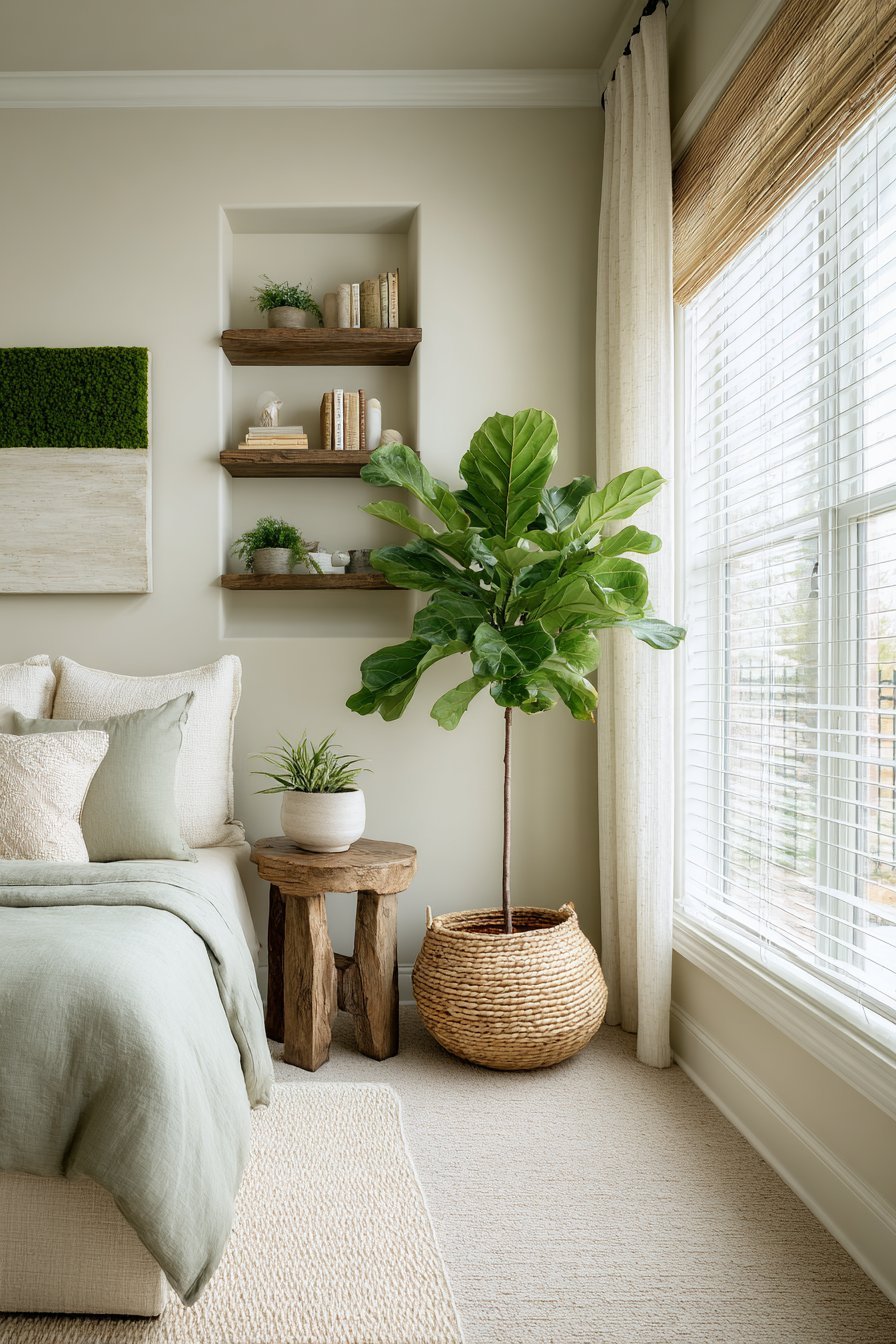
Natural materials throughout echo the organic theme. Bamboo window blinds filter light while adding texture. Organic cotton bedding in sage green reinforces the botanical palette. Reclaimed wood side table shows character through weathered patina. Each material choice celebrates imperfection and natural aging.
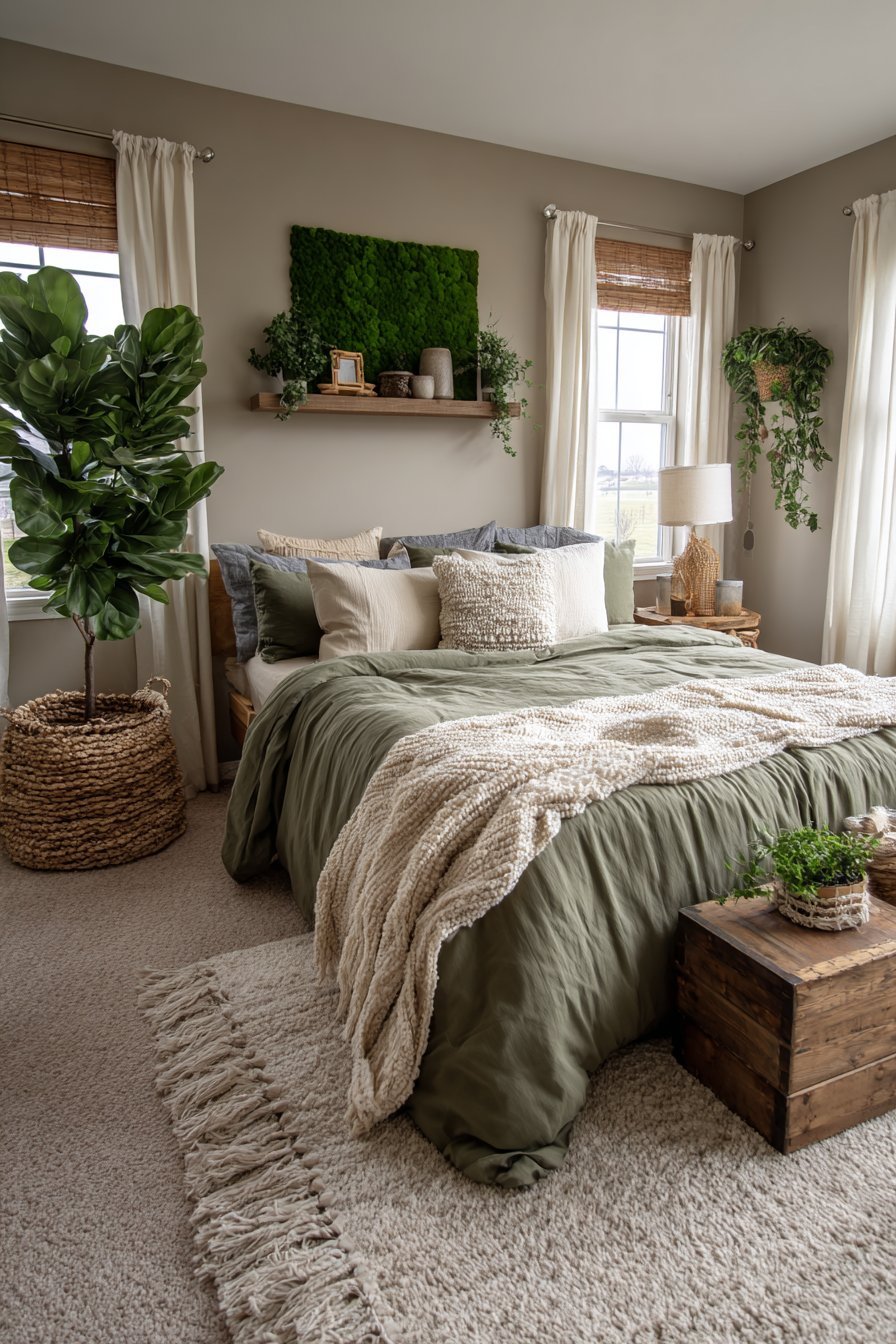
Large windows provide visual connection to outdoor greenery beyond. The indoor plants seem to continue the landscape inside. This seamless transition creates harmony between interior and exterior. Soft diffused natural light emphasizes the organic warmth throughout. The green tones and natural materials work together harmoniously.
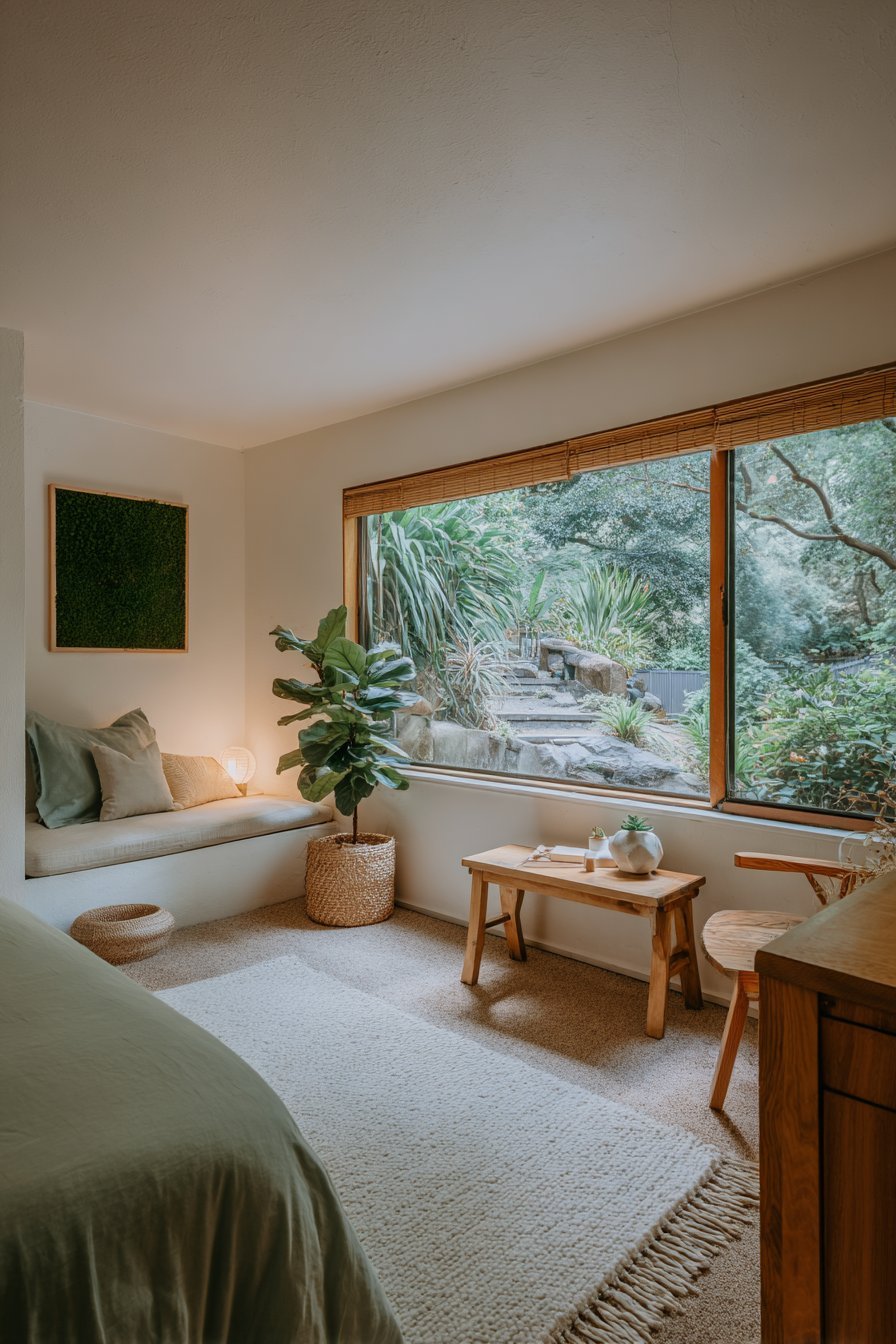
This biophilic approach demonstrates how minimalism embraces nature. Rather than decorative objects, living plants become the room’s artwork. The design supports both aesthetic beauty and improved air quality. The natural elements create measurable wellness benefits alongside visual appeal.
Key Design Tips:
- Include large statement plants like fiddle leaf figs for impact
- Group smaller plants at varying heights on floating shelves
- Choose organic cotton bedding in natural green tones
- Use bamboo blinds for sustainable, textured window treatments
- Select reclaimed wood furniture with visible character and patina
- Position bed near windows to maximize connection with outdoor views
11. Small Space Optimization
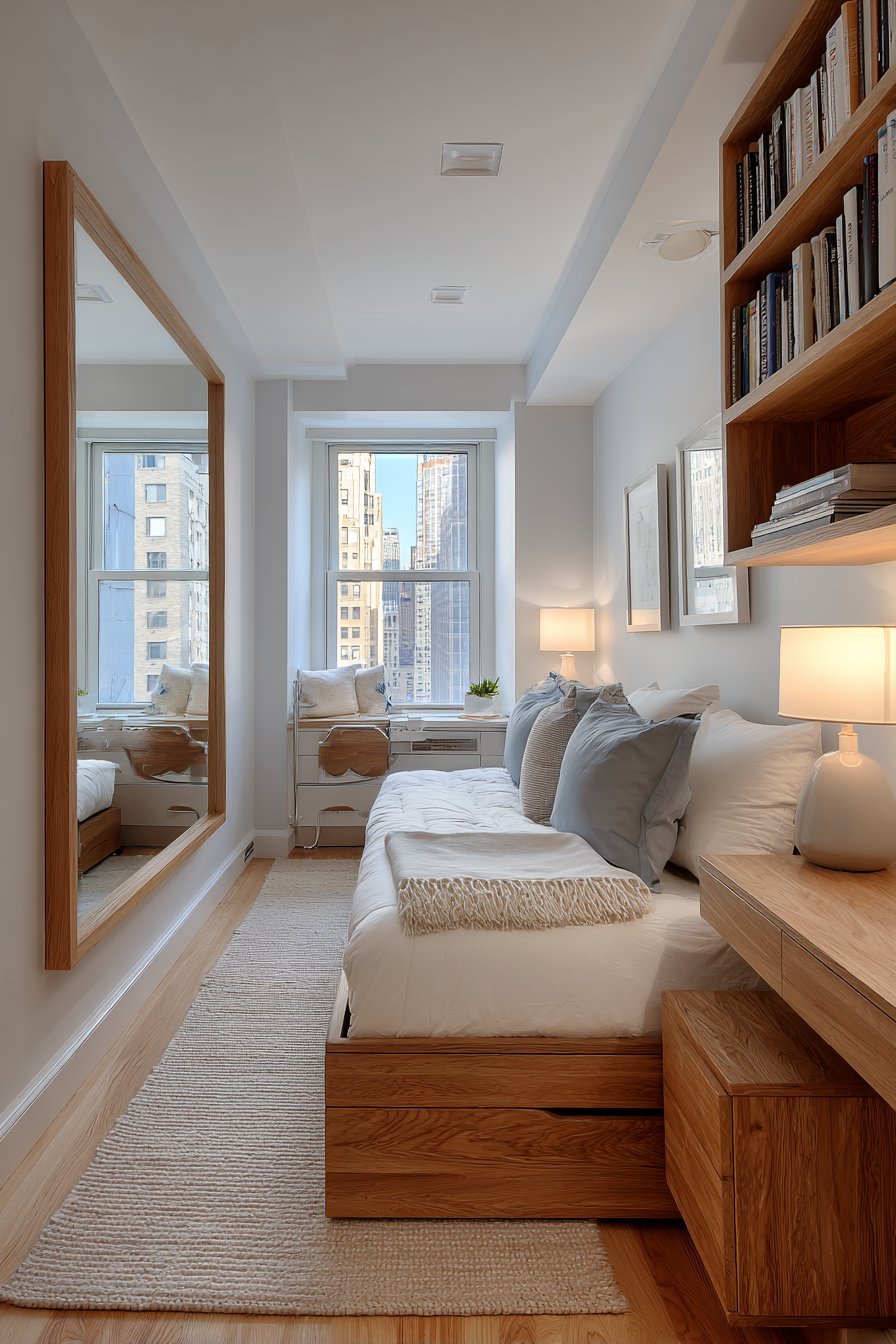
A compact bedroom demonstrates that size need not limit design quality. Storage bed frame features built-in drawers underneath the mattress. This integration eliminates need for separate dresser furniture. Floating nightstands with single drawer provide surface and storage. Wall-mounted storage for books maximizes vertical space efficiently.
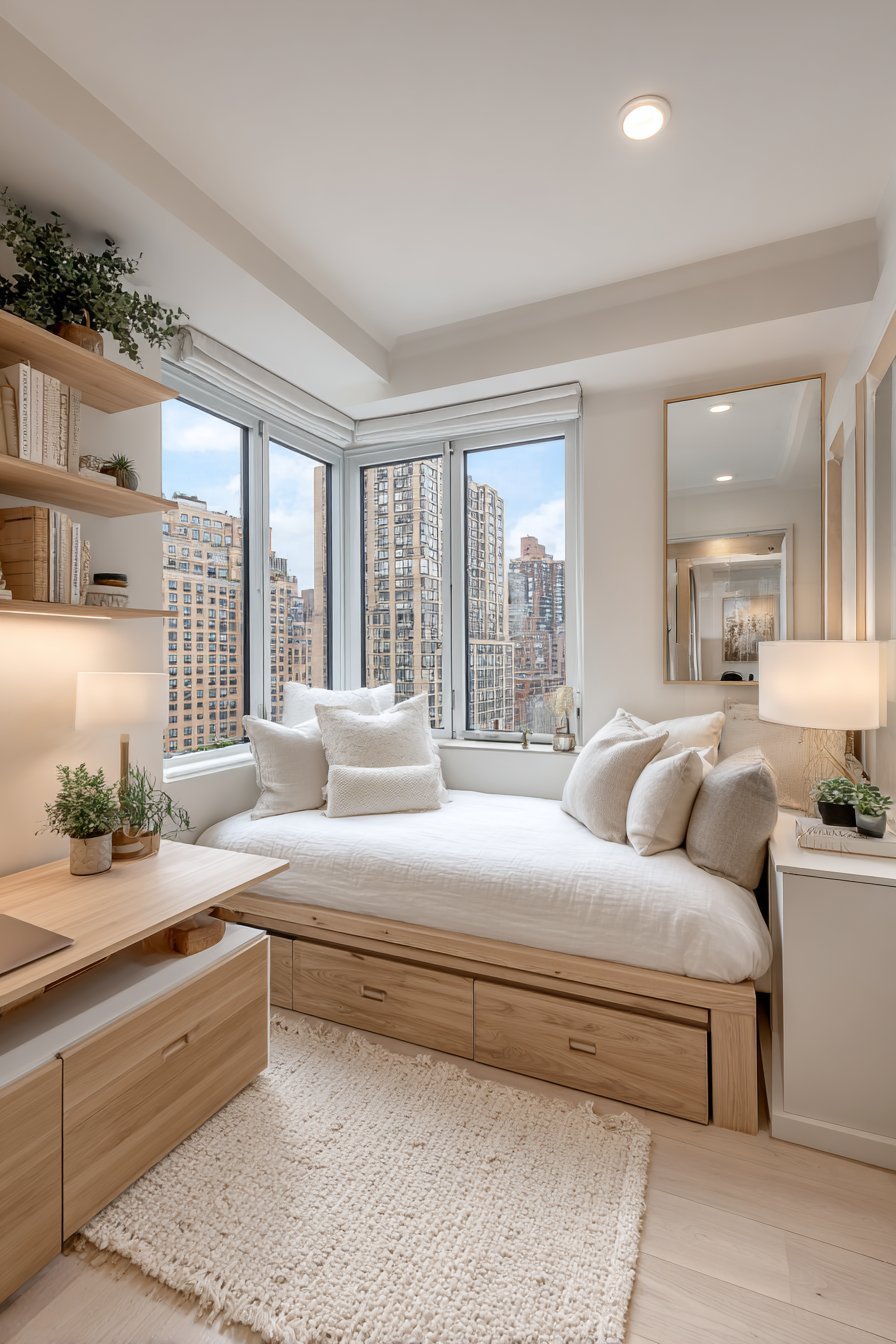
Murphy-style fold-down desk hides within wall unit during non-work hours. This clever solution provides workspace without permanent floor space sacrifice. Light color palette throughout includes white walls and natural oak furniture. The pale tones make the compact room feel significantly more spacious. Large mirror strategically placed reflects natural light and expands perceived dimensions.
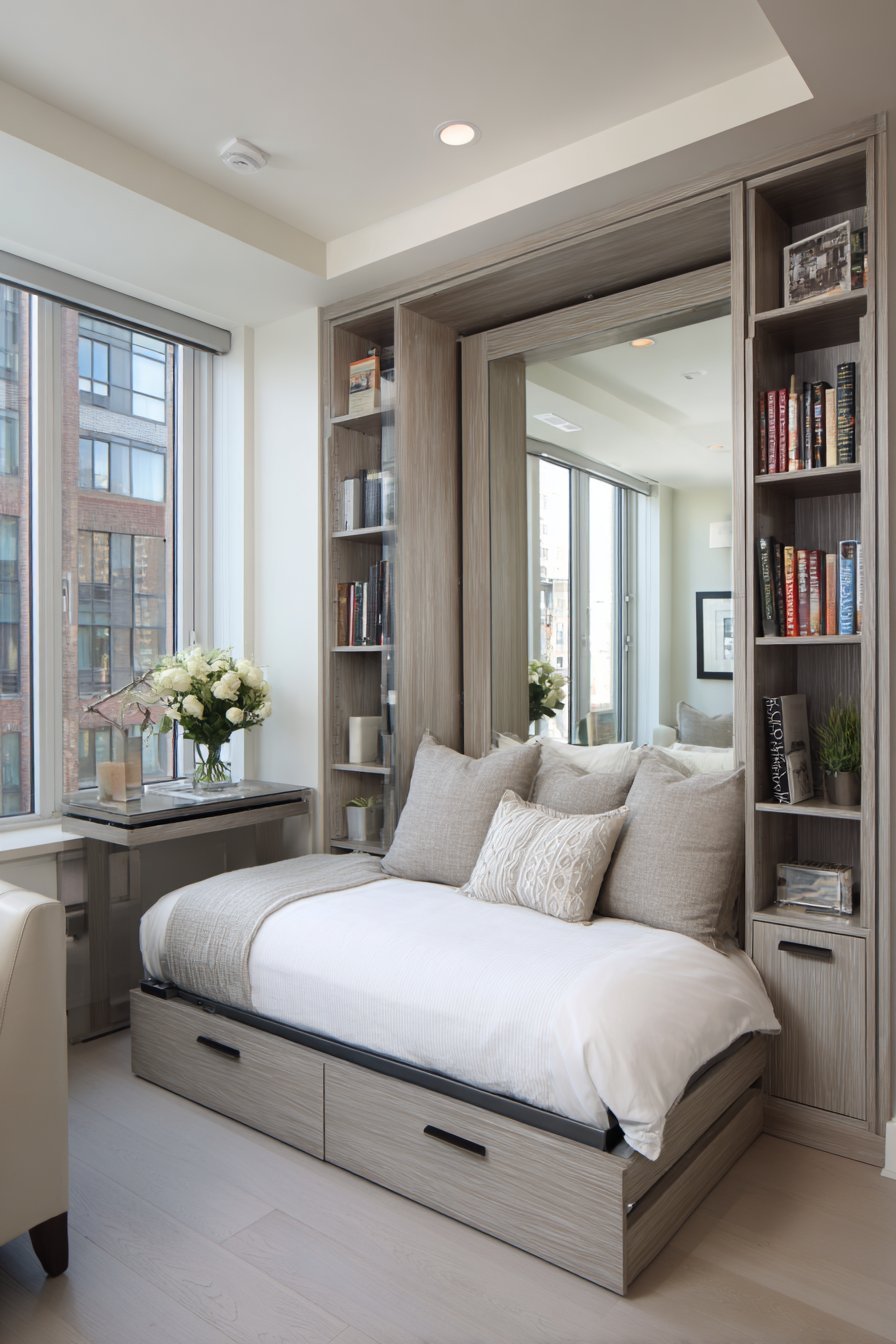
The efficient layout maintains clear pathways despite generous storage capacity. Every furniture piece serves multiple functions without visual heaviness. The floating elements create floor space visibility that tricks the eye. Upper wall areas remain uncluttered to maintain vertical openness. The strategic design proves small spaces can feel peaceful rather than cramped.
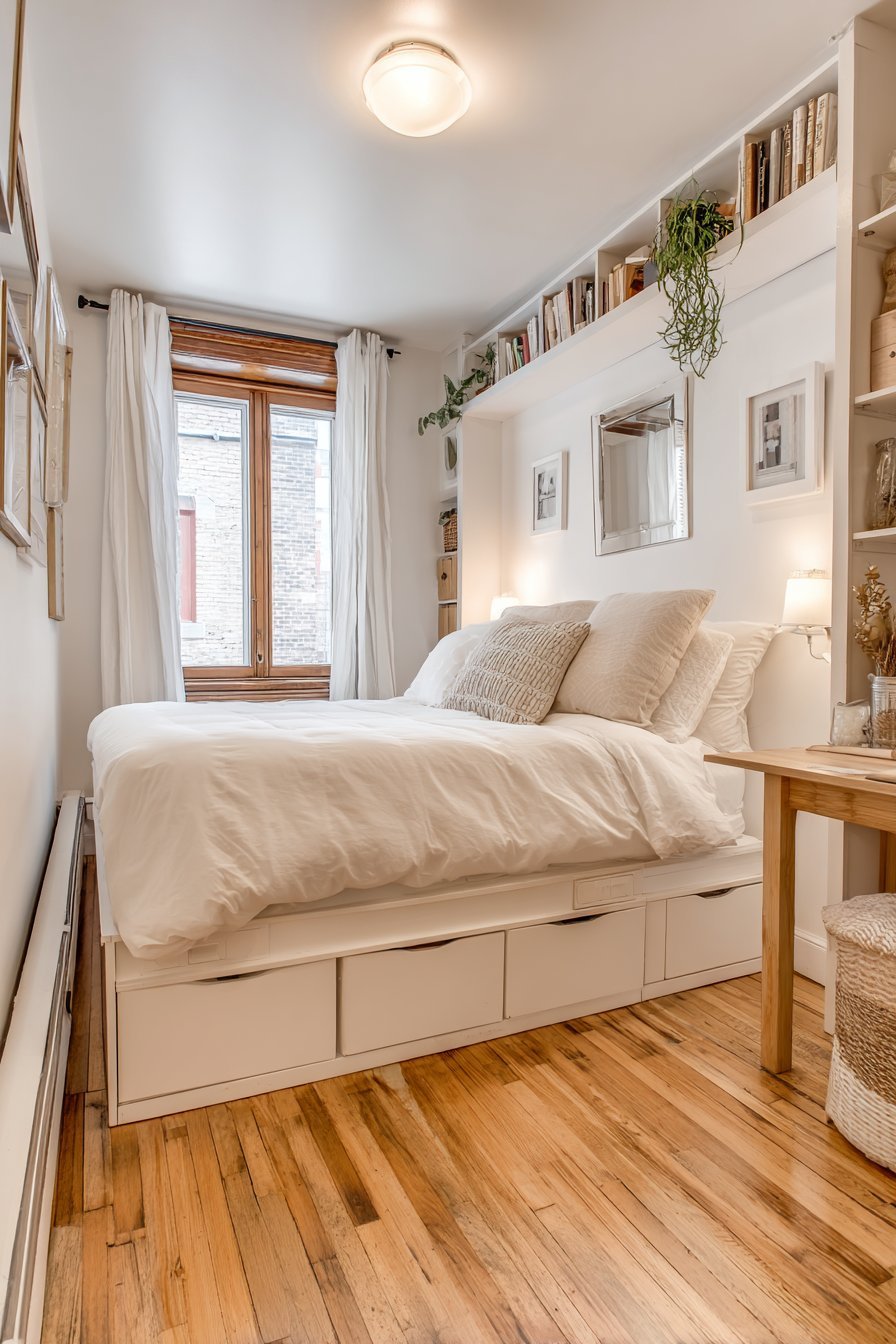
Wide-angle perspective reveals how clever storage solutions maintain minimalist aesthetic. The built-in drawers disappear beneath the bed completely. The fold-down desk vanishes into the wall when closed. This invisible storage approach exemplifies minimalist problem-solving at its finest.
Key Design Tips:
- Choose storage beds with built-in drawers to eliminate extra furniture
- Install floating nightstands and shelves to maximize floor space visibility
- Use Murphy-style fold-down desks for workspace without footprint
- Paint walls in light colors to make small spaces feel larger
- Place large mirrors strategically to reflect light and expand perception
- Keep upper walls clear to maintain sense of vertical openness
12. Statement Upholstered Headboard
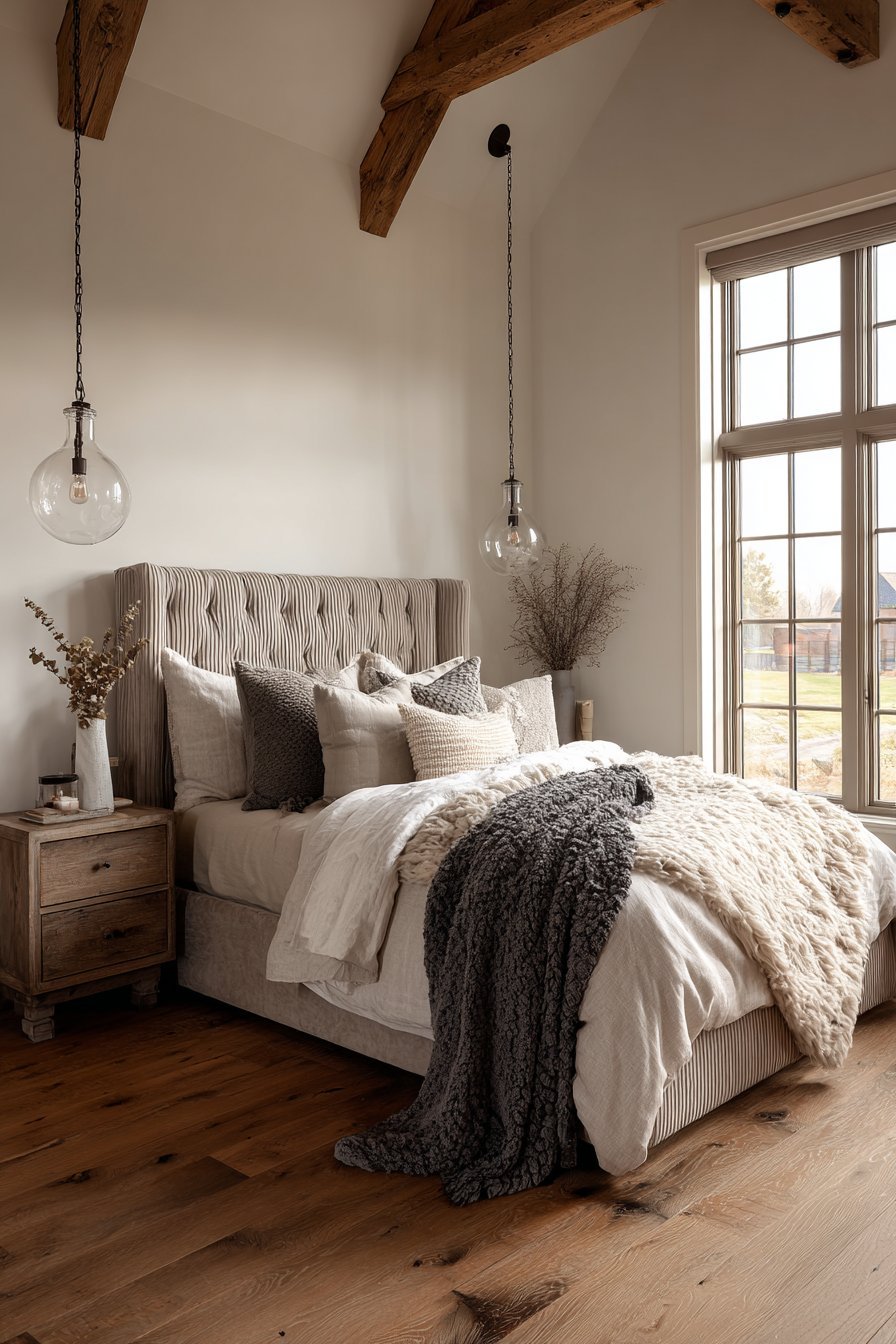
The bedroom centers on a luxurious channel-tufted headboard in natural linen. The textile wall extends wall-to-wall creating dramatic focal point. Despite its size, the headboard maintains simplicity through restraint. The neutral linen preserves minimalist principles while adding substantial texture. Integrated nightstands built into the headboard design eliminate separate furniture.
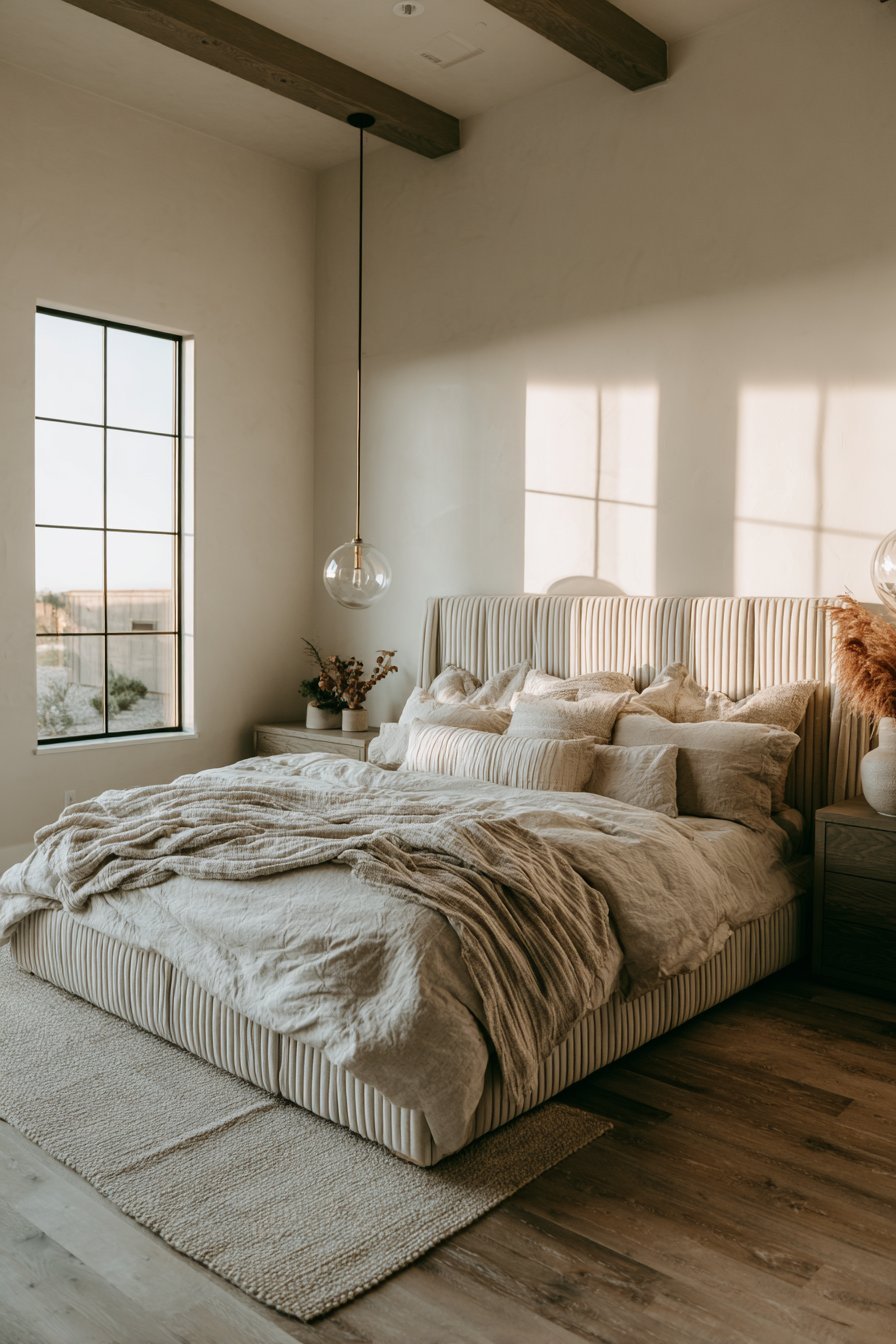
Bed dressing includes layers of neutral bedding with varied textures. The textile diversity creates richness within the monochromatic scheme. Walls in warm white contrast beautifully with the textured headboard. Pendant lights with glass globes hang on either side symmetrically. The transparent fixtures maintain visual lightness despite functional necessity.
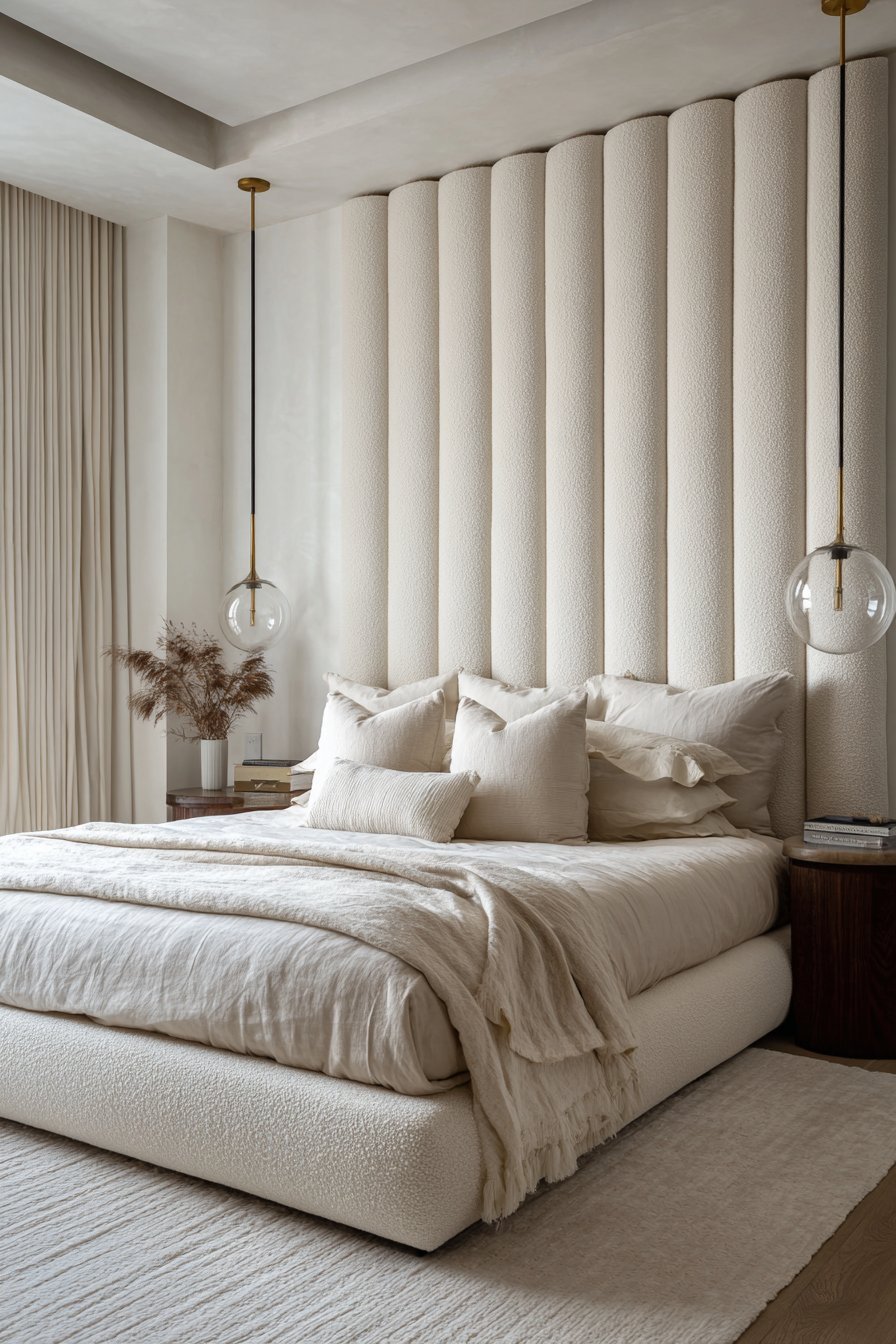
Morning light reveals the subtle shadow play across tufted channels. The dimensional surface catches and reflects light throughout the day. This textile architecture becomes the room’s defining feature. The investment in quality upholstery elevates the entire space significantly. The headboard demonstrates how one statement element can anchor minimalist design.
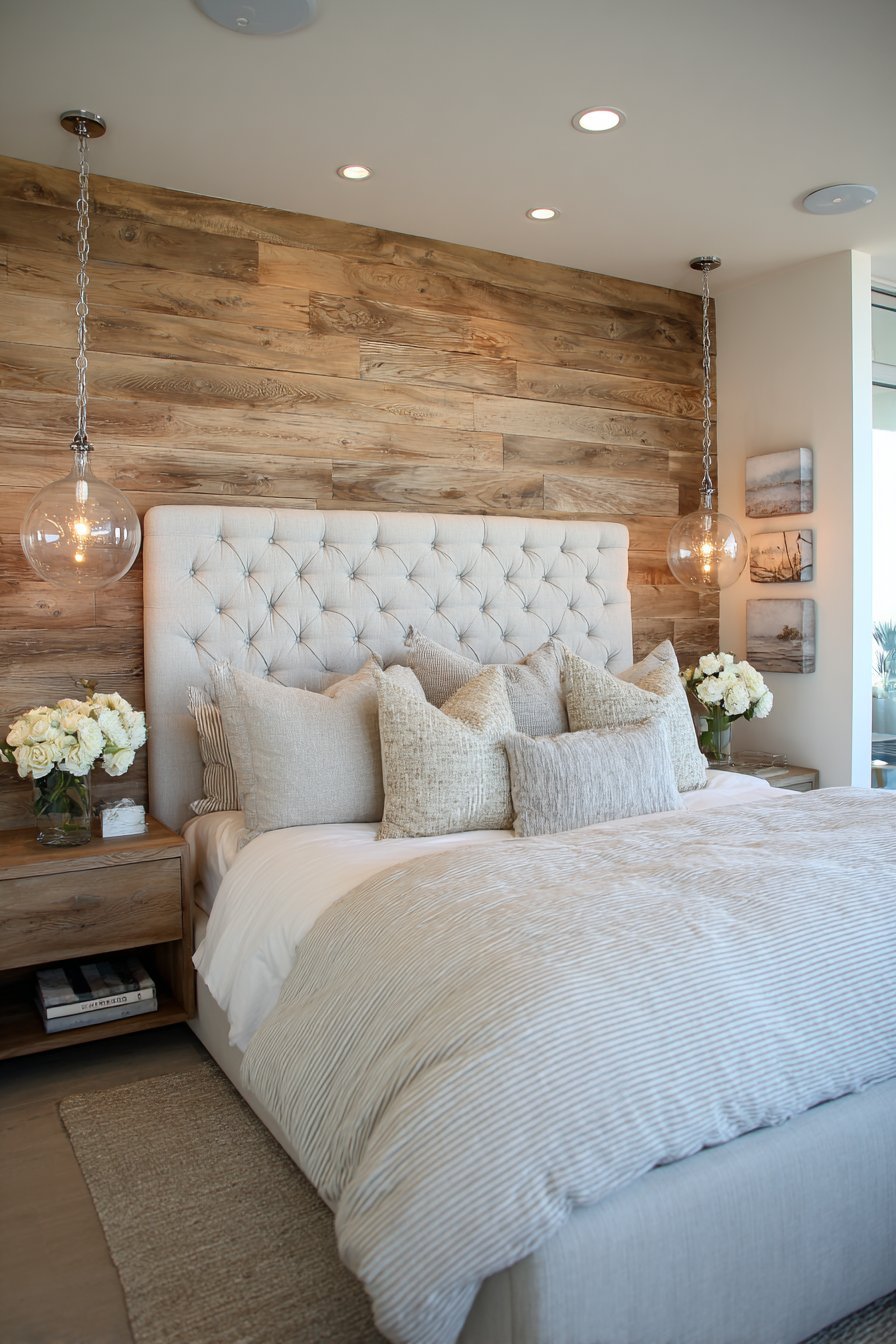
The built-in nightstand integration streamlines the bedside area. This architectural approach reduces visual clutter from separate furniture pieces. The cohesive design feels intentional rather than assembled from disparate items.
Key Design Tips:
- Invest in one statement upholstered headboard as focal point
- Choose wall-to-wall dimensions for maximum visual impact
- Select natural linen for texture that remains timeless
- Integrate nightstand surfaces into headboard design when possible
- Hang pendant lights beside bed instead of table lamps for space saving
- Keep remaining decor minimal to let headboard shine as feature
13. Scandinavian Hygge Warmth
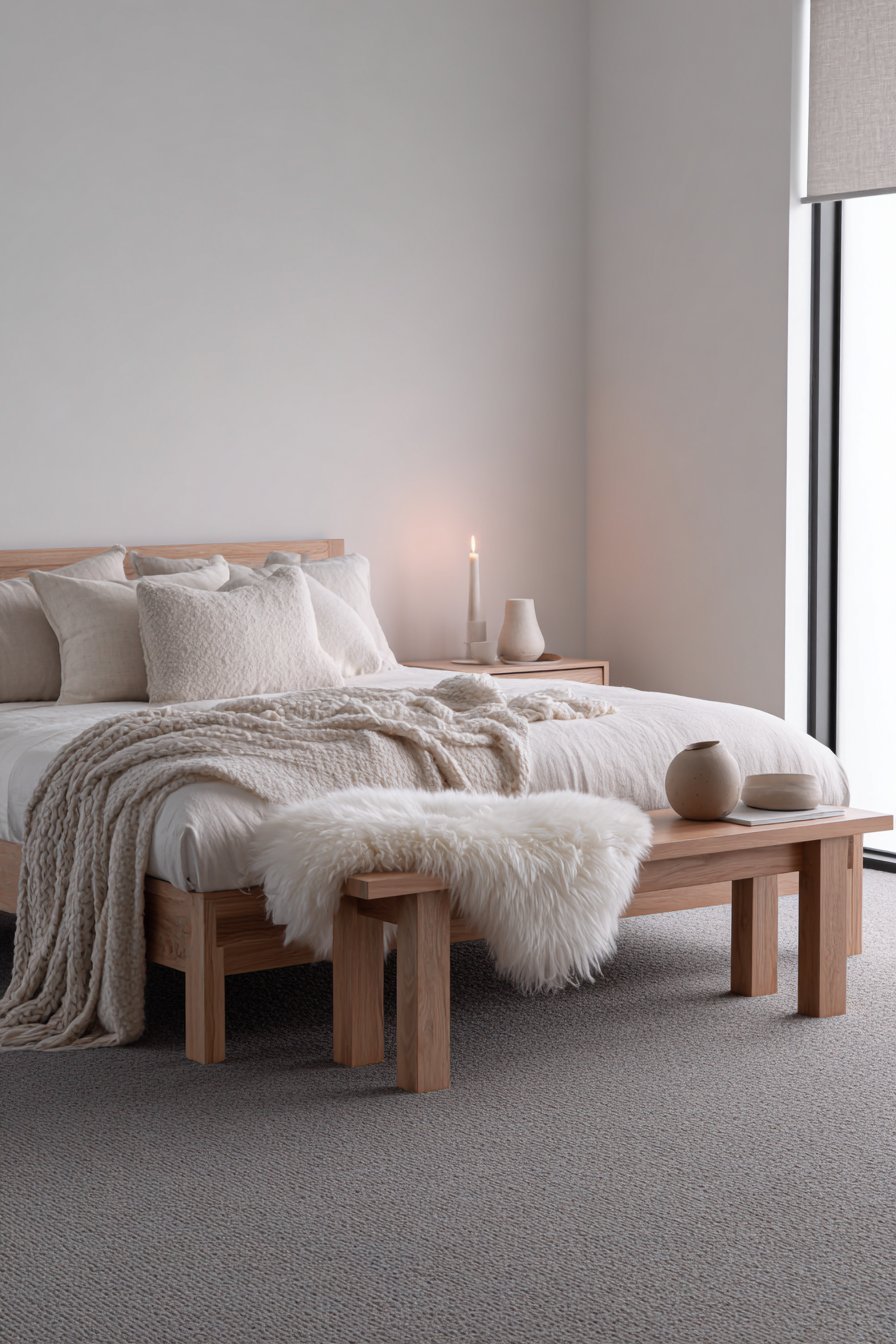
Nordic design principles create the ultimate cozy minimalist bedroom. Light ash wood bed frame provides foundation in pale tones. Sheepskin rug drapes over bench at foot of bed. Hygge-inspired textiles in cream and grey layer across the surface. The Scandinavian influence prioritizes comfort within clean frameworks.
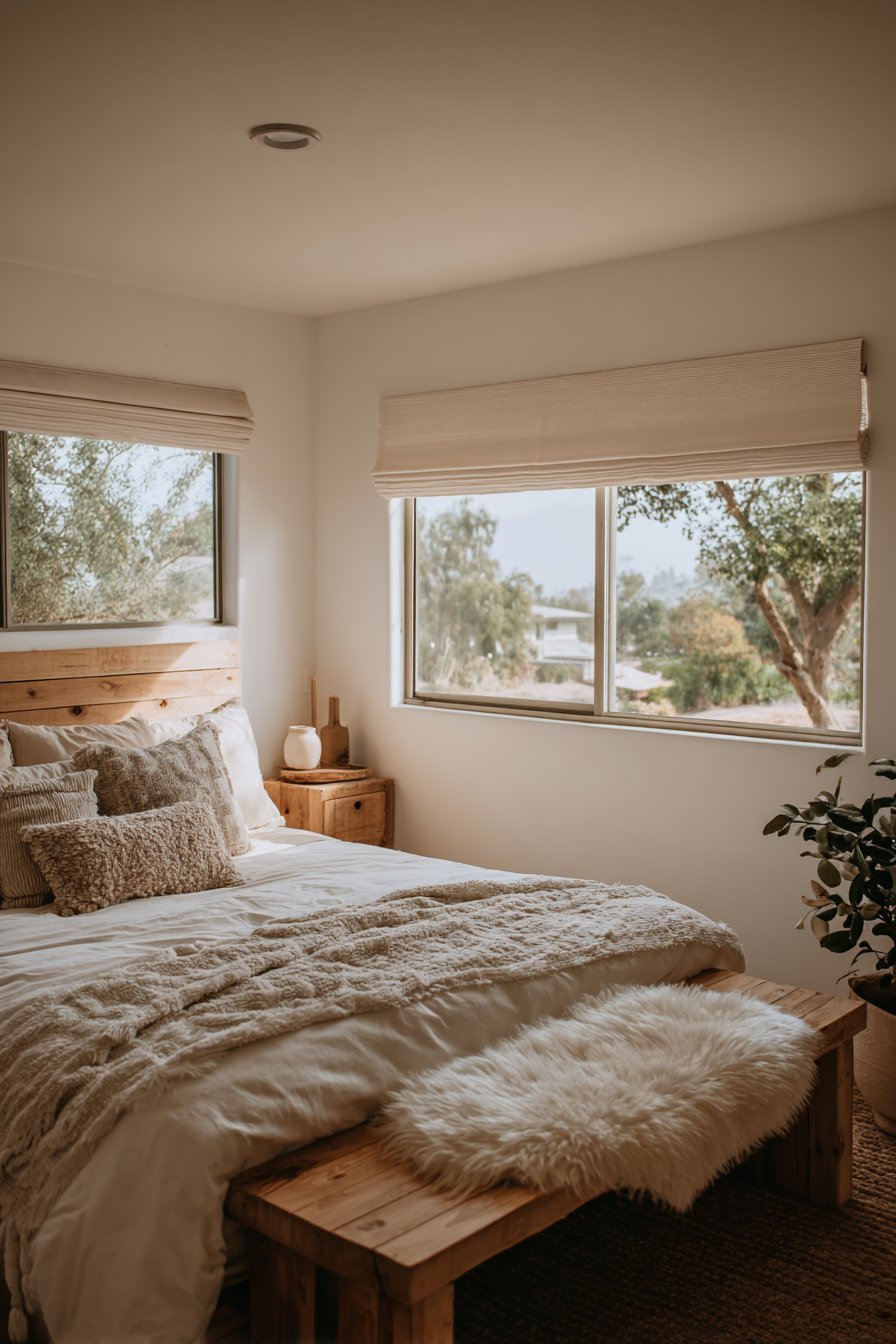
Simple ceramic accessories punctuate the minimal nightstand surface. Single candle provides ambient lighting and hygge atmosphere. Walls in soft white create bright backdrop that reflects precious daylight. Large window with simple roller shade in natural fabric maximizes illumination. The Nordic aesthetic celebrates light as essential design element.
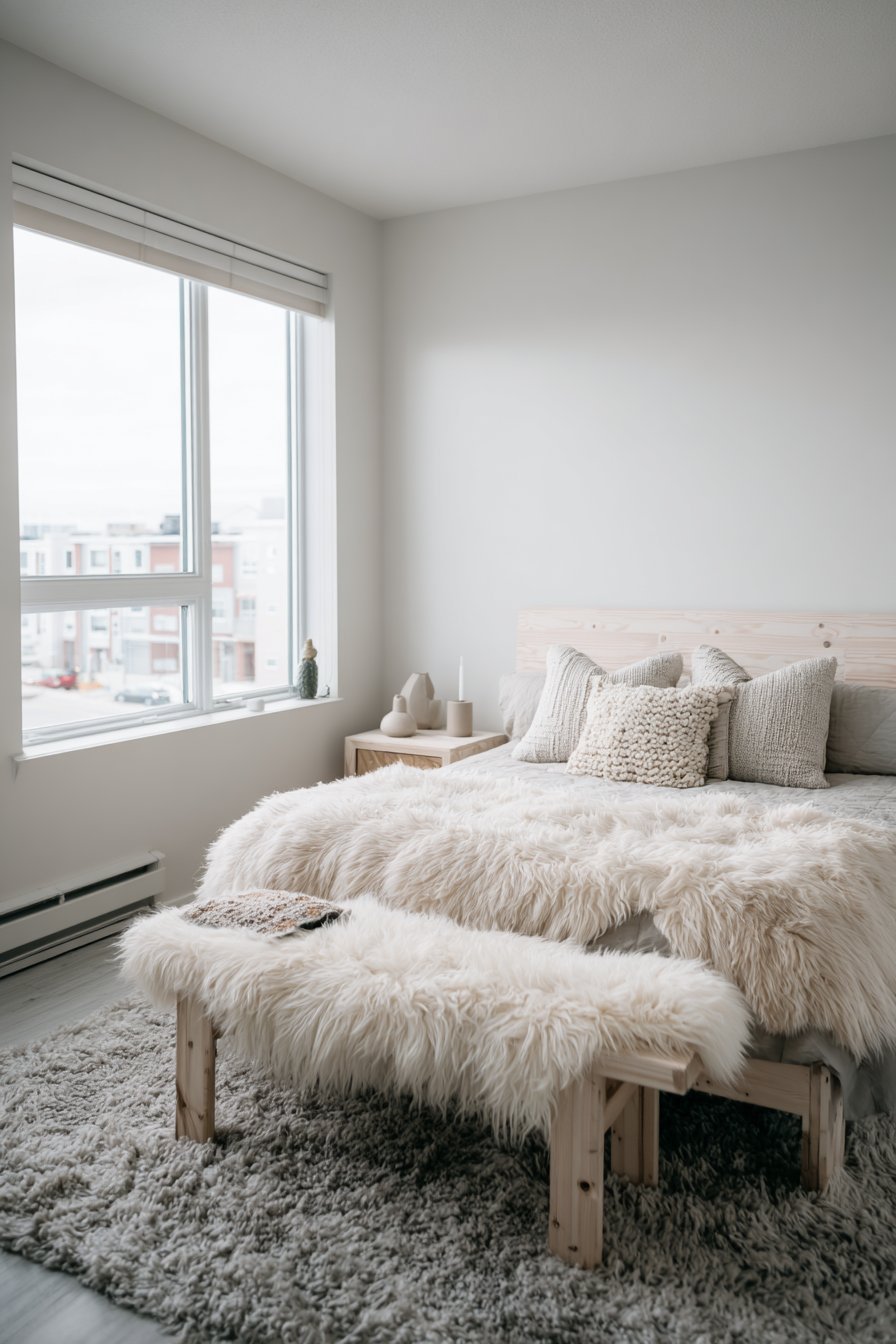
The light wood tones create airy feeling even during darker months. This practical beauty addresses climate realities through design. The sheepskin adds luxury texture without pattern complexity. Grey and cream textiles provide subtle variation within neutral scheme. Every element serves both aesthetic and functional warming purposes.
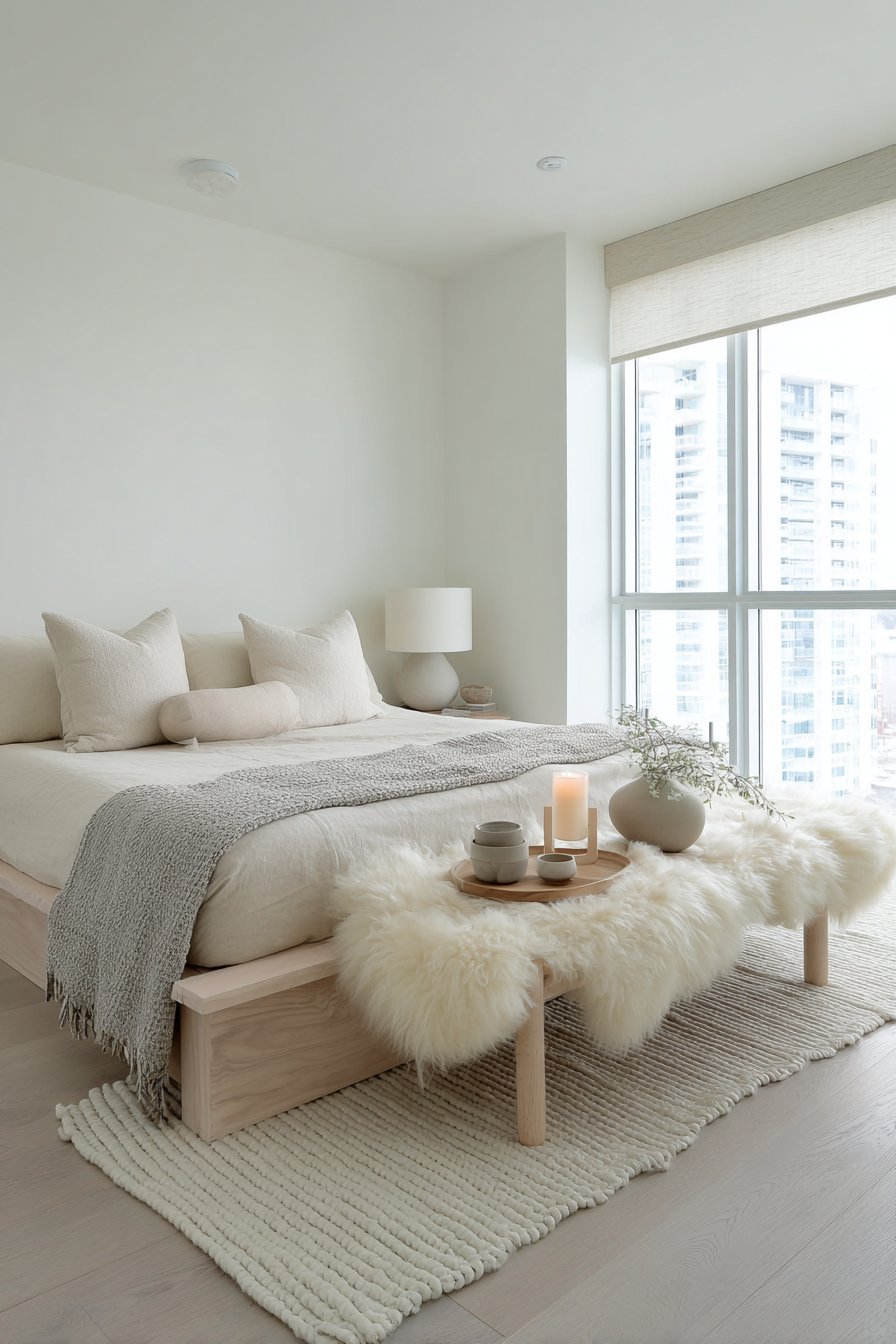
The hygge philosophy emphasizes creating sanctuary from outside world. Candles, soft textiles, and pale woods combine to achieve this goal. The design demonstrates how cultural design traditions inform minimalist approaches. The result feels distinctly Scandinavian yet universally appealing.
Key Design Tips:
- Choose light ash or birch wood furniture for Scandinavian aesthetic
- Drape sheepskin rugs over benches and chairs for texture and warmth
- Layer grey and cream textiles for subtle Nordic color palette
- Include candles for essential hygge ambient atmosphere
- Paint walls in soft white to maximize natural light reflection
- Keep window treatments simple to allow maximum daylight entry
14. Horizontal Wood Slat Accent Wall
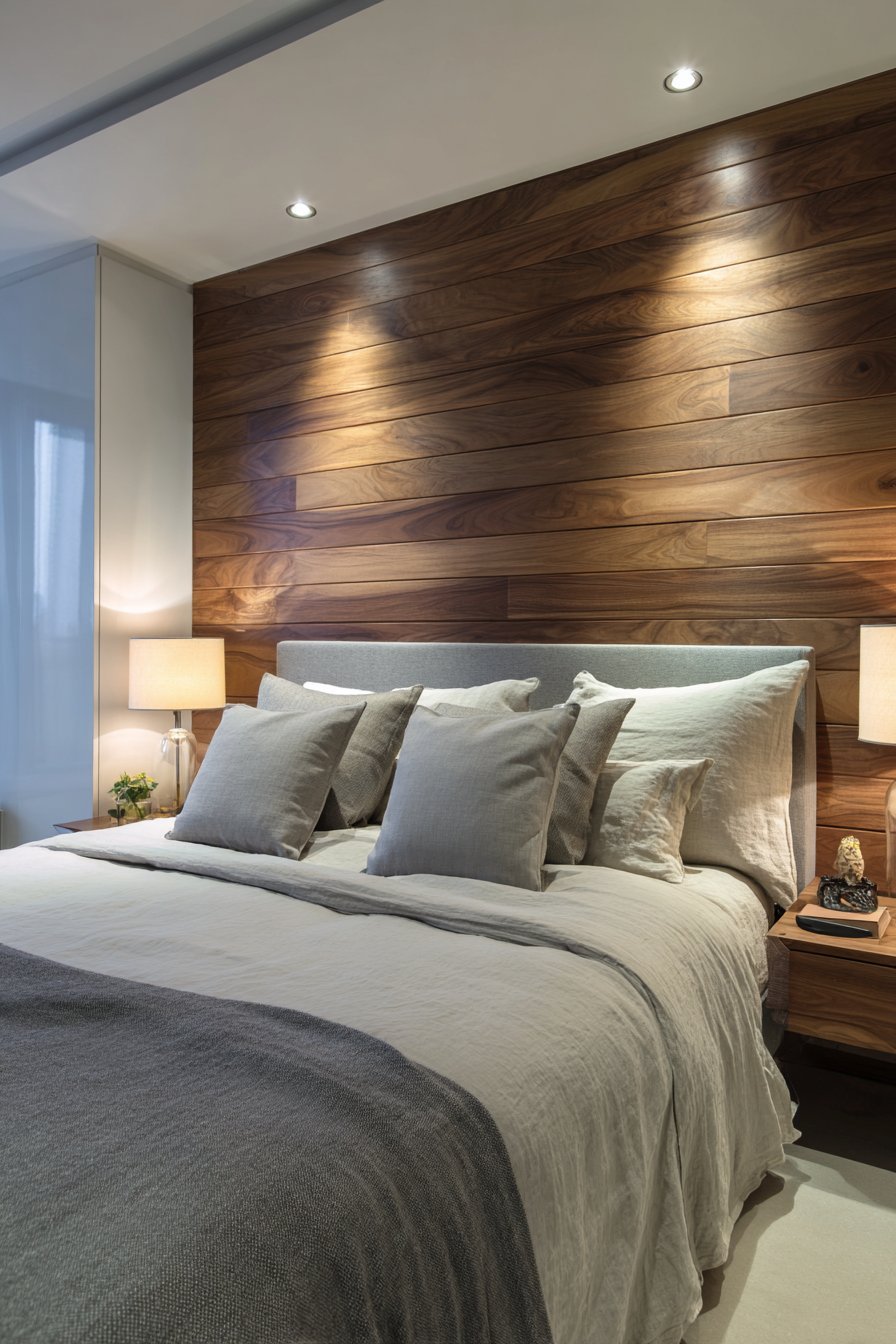
One wall transforms through horizontal wood slat paneling installation. Natural walnut slats create subtle texture and visual warmth. The bed positions against this feature wall as natural focal point. Organic linen bedding in neutral tones complements the wood grain. Simple floating nightstands in matching walnut provide cohesive material flow.
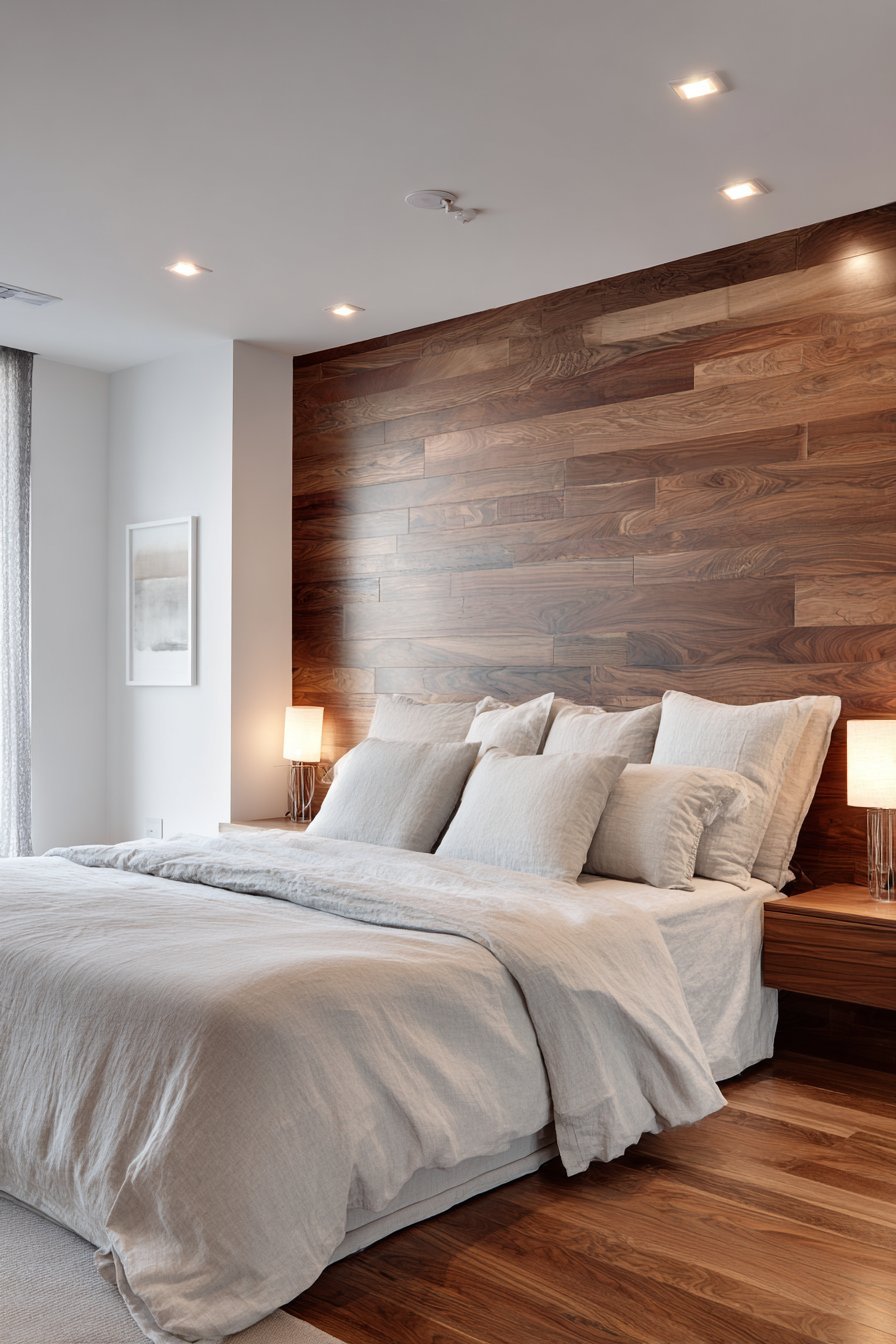
Remaining walls in warm white maintain overall room openness. This contrast highlights the accent wall without overwhelming the space. Soft ambient lighting from recessed fixtures creates evening warmth. Table lamps add layered illumination for bedtime reading. The wood slats catch light beautifully creating dimensional shadow play.
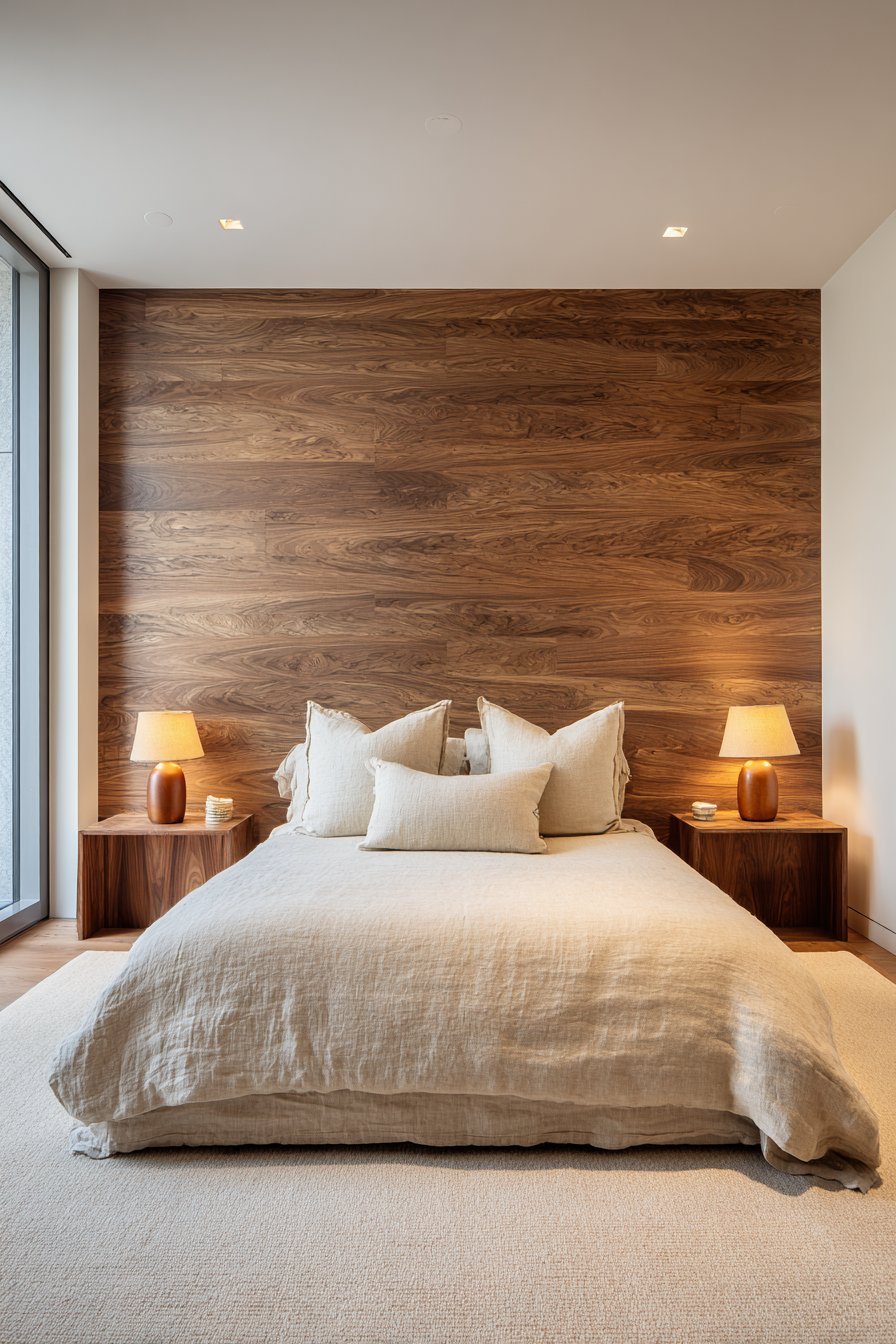
The horizontal orientation emphasizes room width visually. This design trick makes the space feel more expansive. The slat spacing creates rhythm without busyness. Natural walnut grain adds organic pattern through material itself. The texture contrast demonstrates sophisticated minimalist restraint.
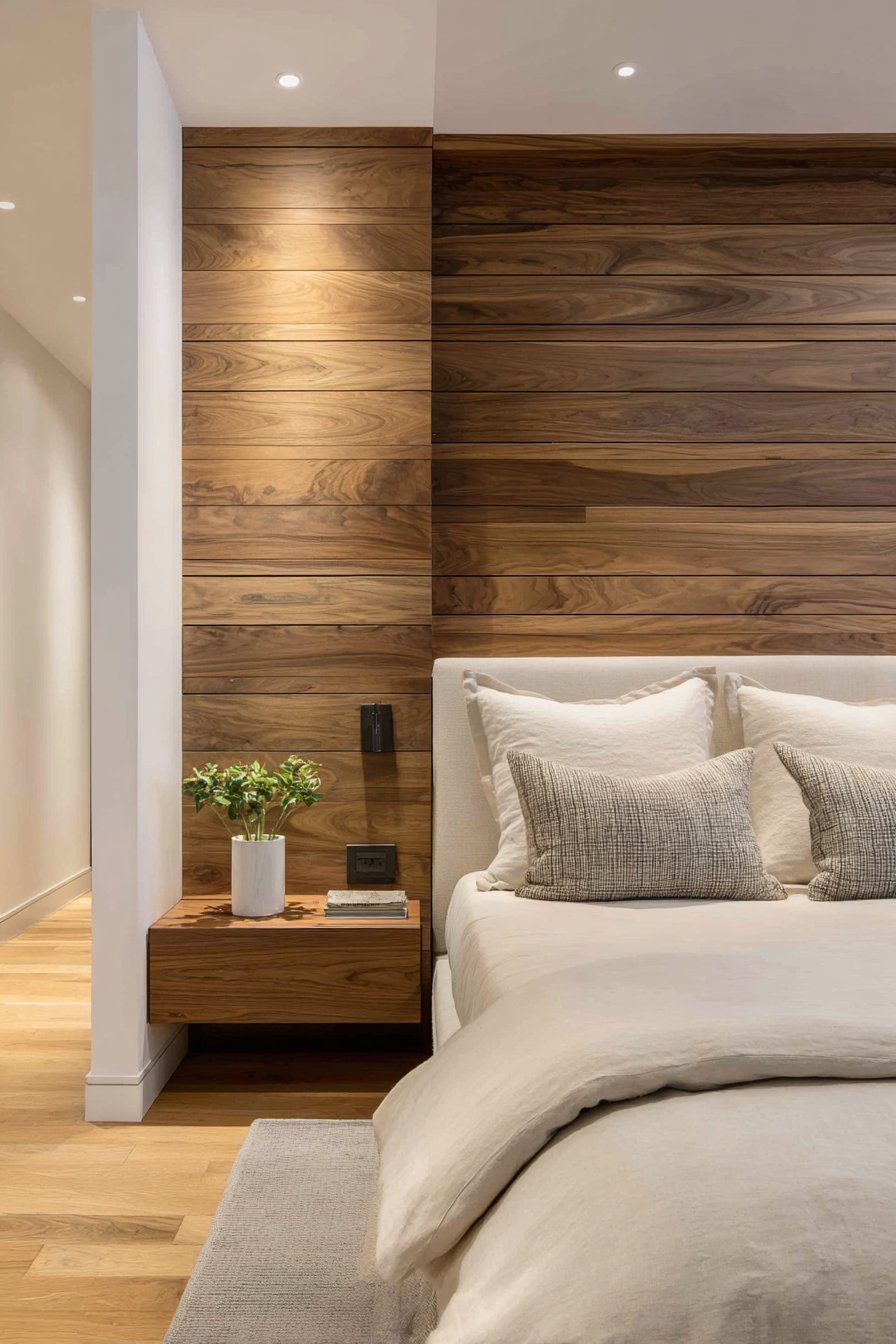
Professional lighting captures how the wood accent adds depth dramatically. The feature wall provides visual interest within strict minimalist parameters. The material choice celebrates natural beauty rather than applied decoration. This approach exemplifies how quality materials become the design statement.
Key Design Tips:
- Install horizontal wood slats on one accent wall only
- Choose natural walnut or similar rich wood for warmth
- Position bed against accent wall to maximize focal impact
- Match floating nightstand material to accent wall for cohesion
- Paint remaining walls in warm white for contrast and brightness
- Add recessed lighting to emphasize wood texture and shadow play
15. Smart Storage Organization
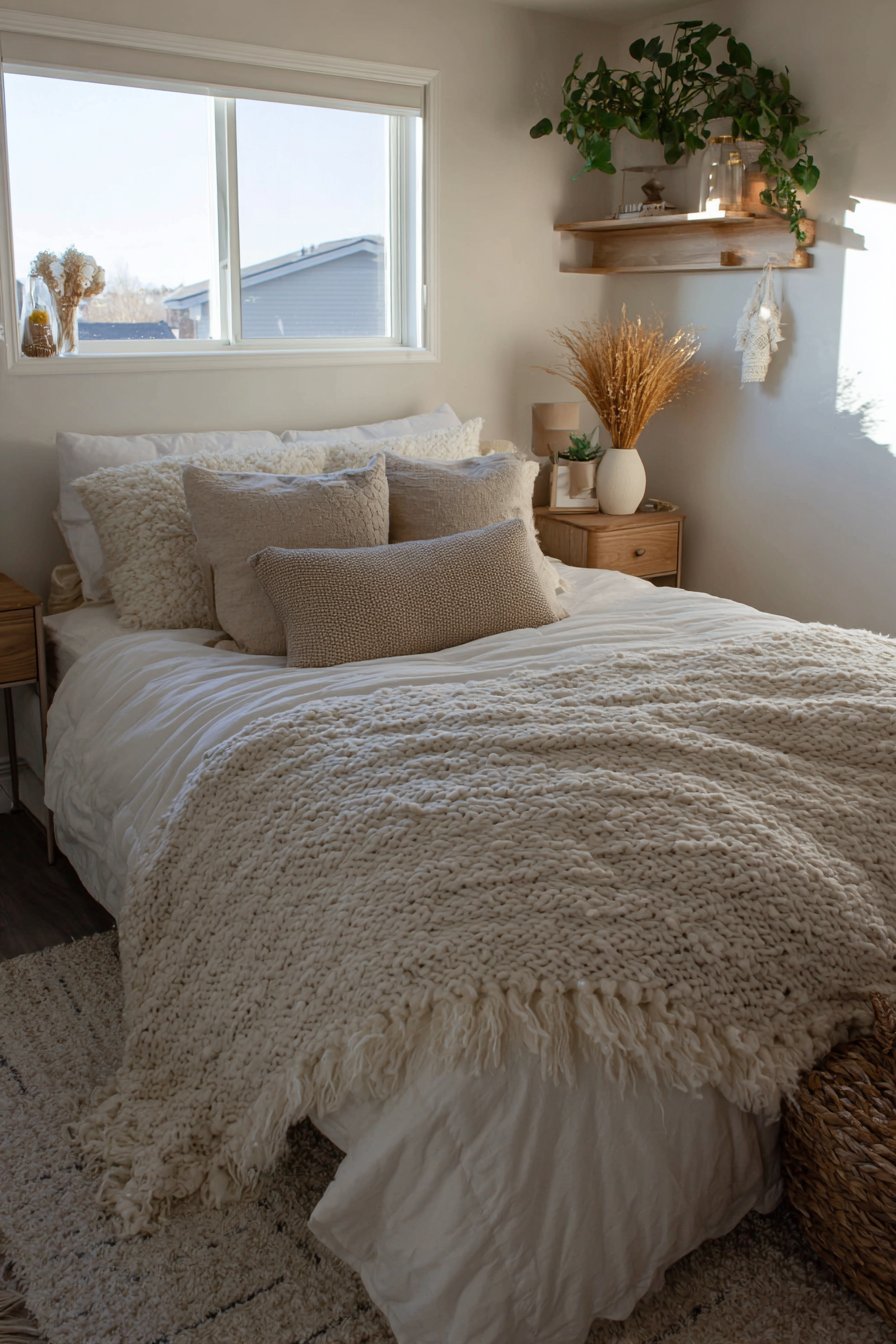
Organization becomes invisible in this thoughtfully planned bedroom. Under-bed storage boxes in natural canvas slide beneath the frame. Bedside caddy organizer keeps essentials accessible yet hidden. Floating shelves display minimal styling with intentional curation. Slim dresser with clean lines in white oak provides additional storage.
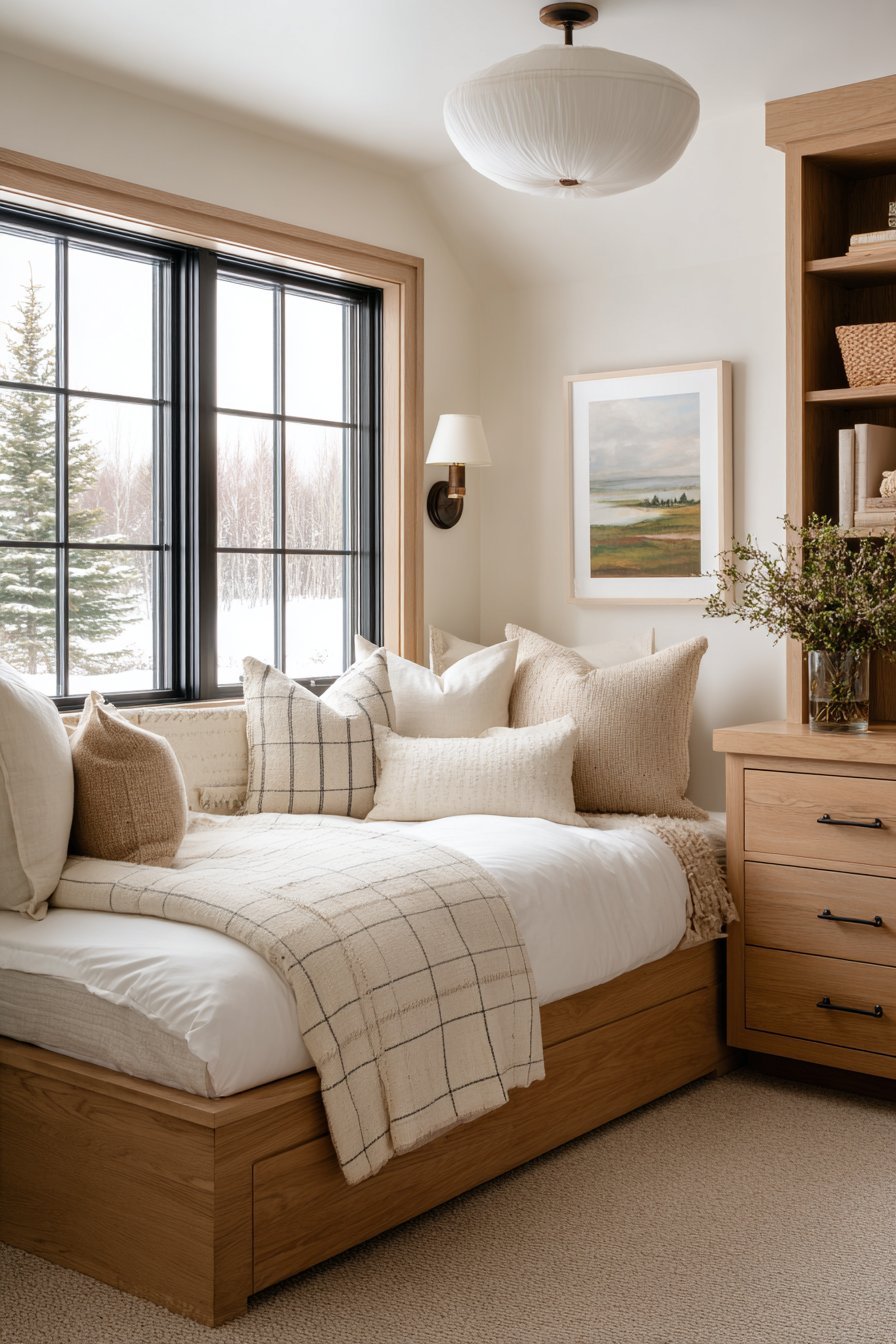
Everything has designated place while maintaining visual calm throughout. Neutral color palette extends to all organizational elements seamlessly. Natural light from large window illuminates the organized space beautifully. The absence of visible clutter creates immediate sense of peace. The practical storage solutions demonstrate that minimalism requires thoughtful systems.
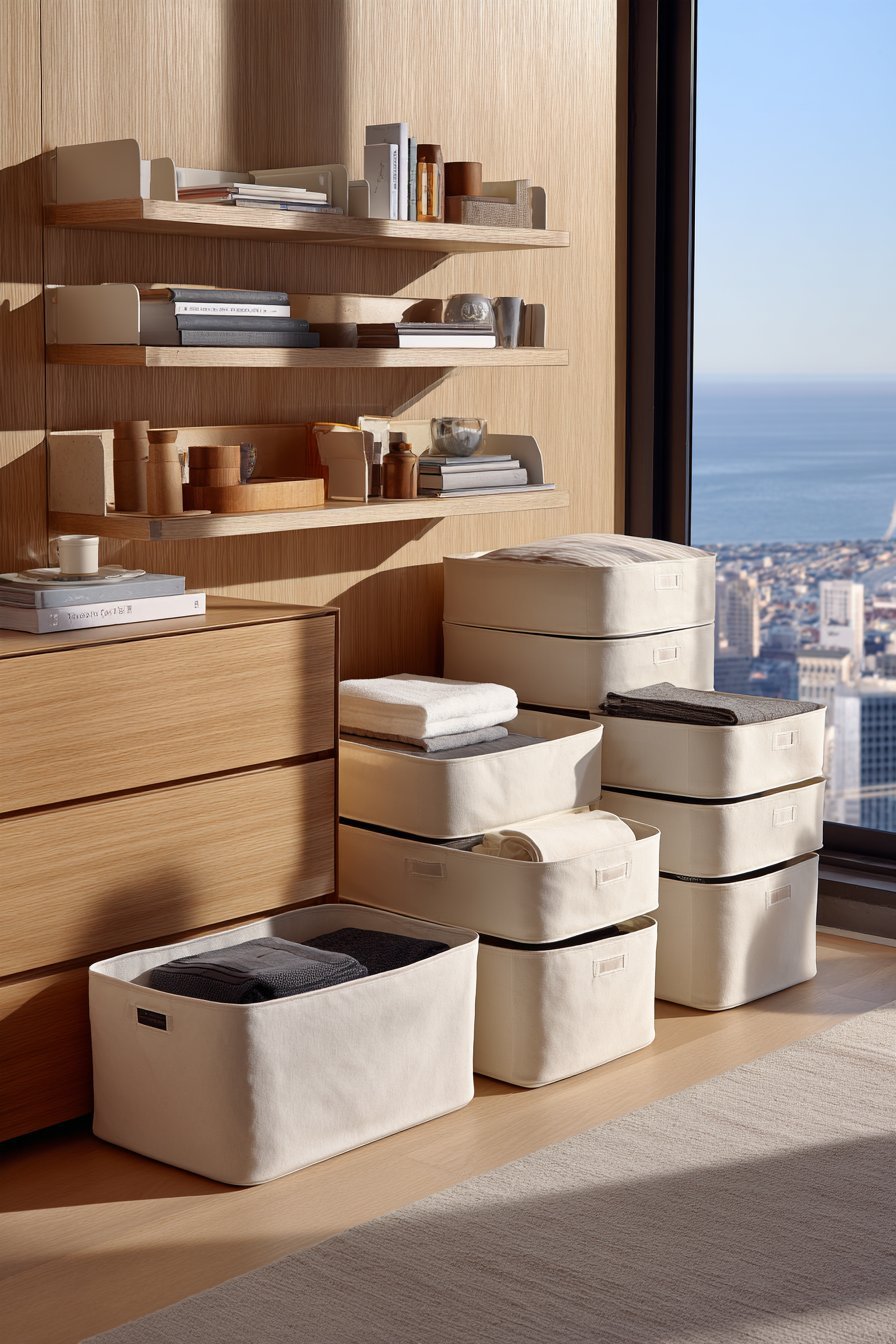
The canvas storage boxes blend into the neutral aesthetic completely. The bedside caddy hangs unobtrusively between mattress and frame. Floating shelves hold only carefully selected meaningful objects. The slim dresser provides capacity without visual bulk. Each storage solution was chosen for both function and aesthetic contribution.
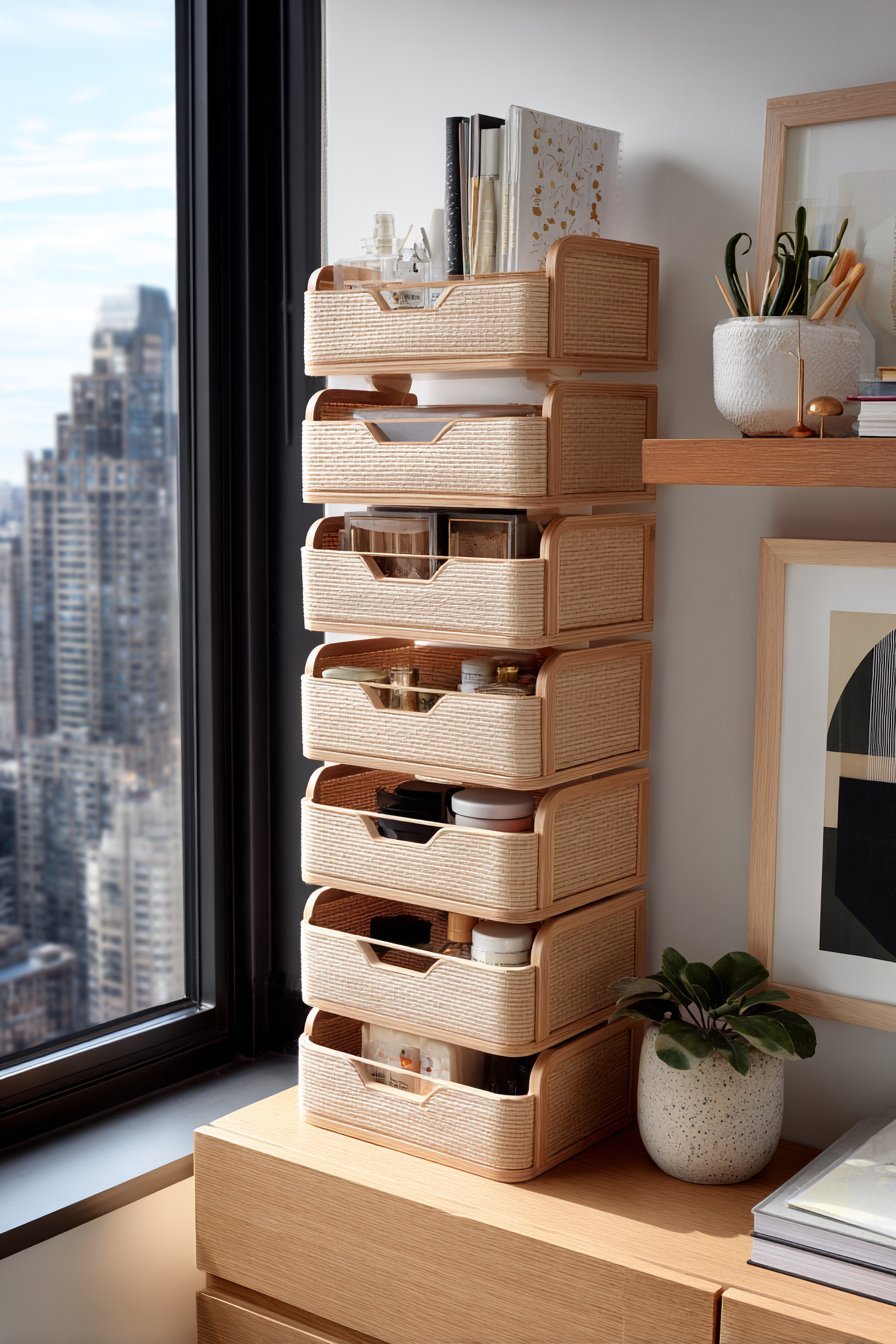
Wide-angle perspective shows how practical storage integrates seamlessly. The organization supports minimalist living rather than fighting against it. The systems make maintaining the aesthetic achievable long-term. This realistic approach acknowledges that minimalism requires proper infrastructure.
Key Design Tips:
- Use under-bed storage boxes in natural fabrics that blend aesthetically
- Install bedside caddies for phone and essentials without surface clutter
- Keep floating shelf displays minimal with few meaningful objects
- Choose slim profile dressers that provide storage without bulk
- Ensure every item has designated storage location
- Select organizational products in neutral tones matching room palette
16. Earthy Terracotta Warmth
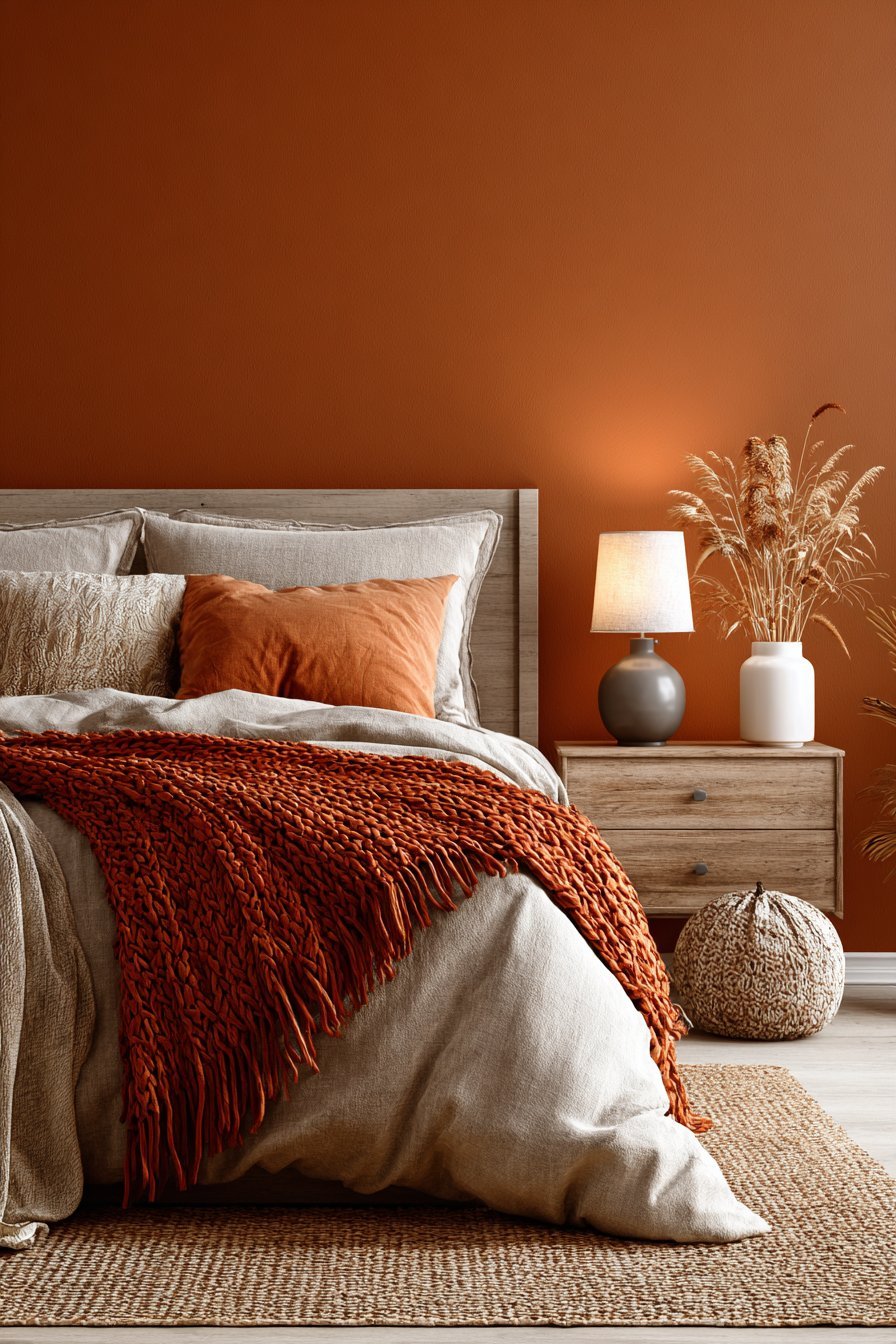
Warm earth tones transform this minimalist bedroom into cozy haven. Terracotta accent wall behind the bed creates bold focal point. Natural linen bedding in warm sand tones complements the rich backdrop. Rust-colored wool throw blanket adds textural accent across the foot. The earthy palette creates immediate warmth and groundedness.
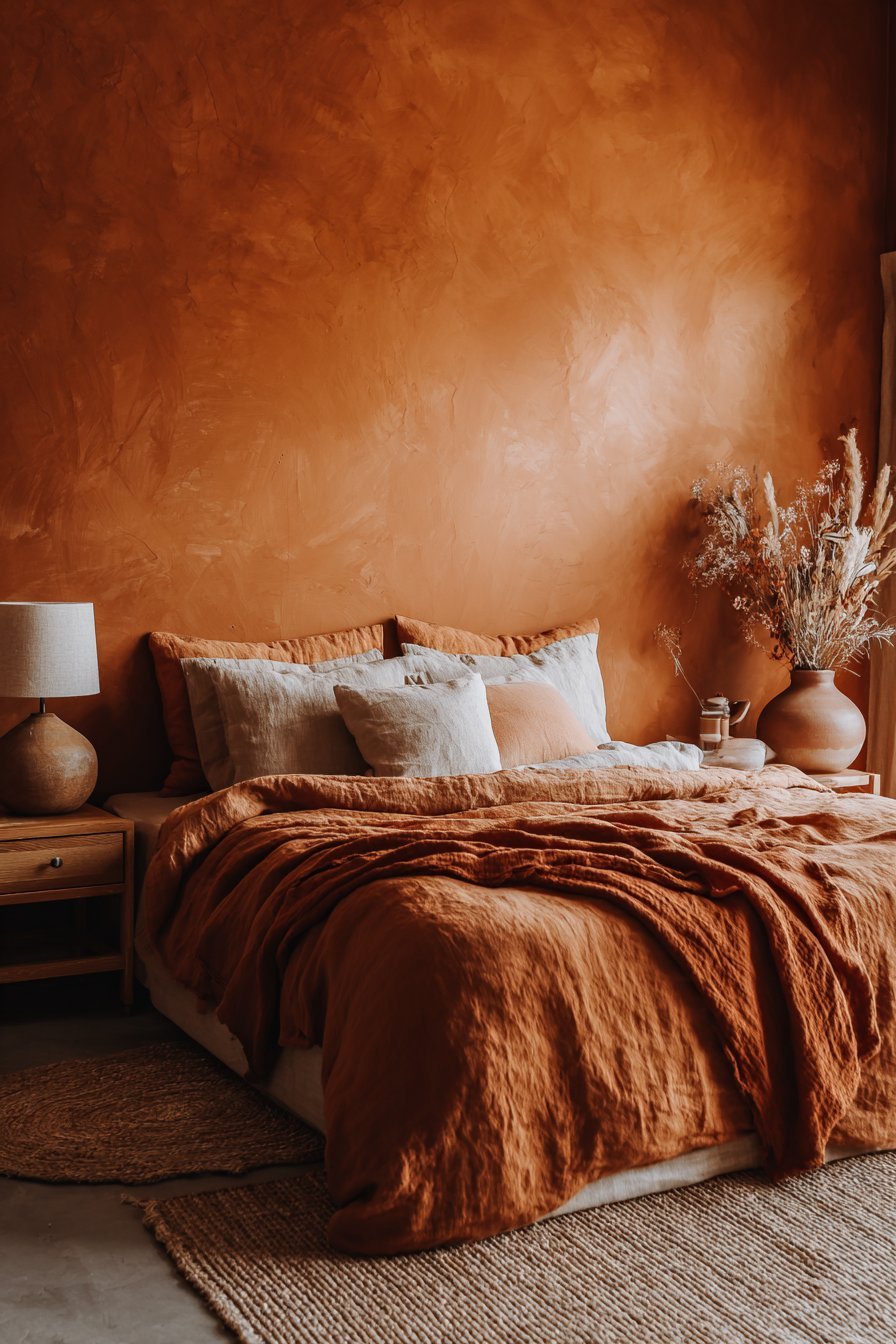
Ceramic table lamps in matte clay finish provide ambient lighting. The sculptural forms echo the terracotta wall color beautifully. Natural fiber area rug in jute grounds the space literally and visually. Dried botanical arrangement in ceramic vase adds organic element. Each material celebrates earth’s natural color spectrum.
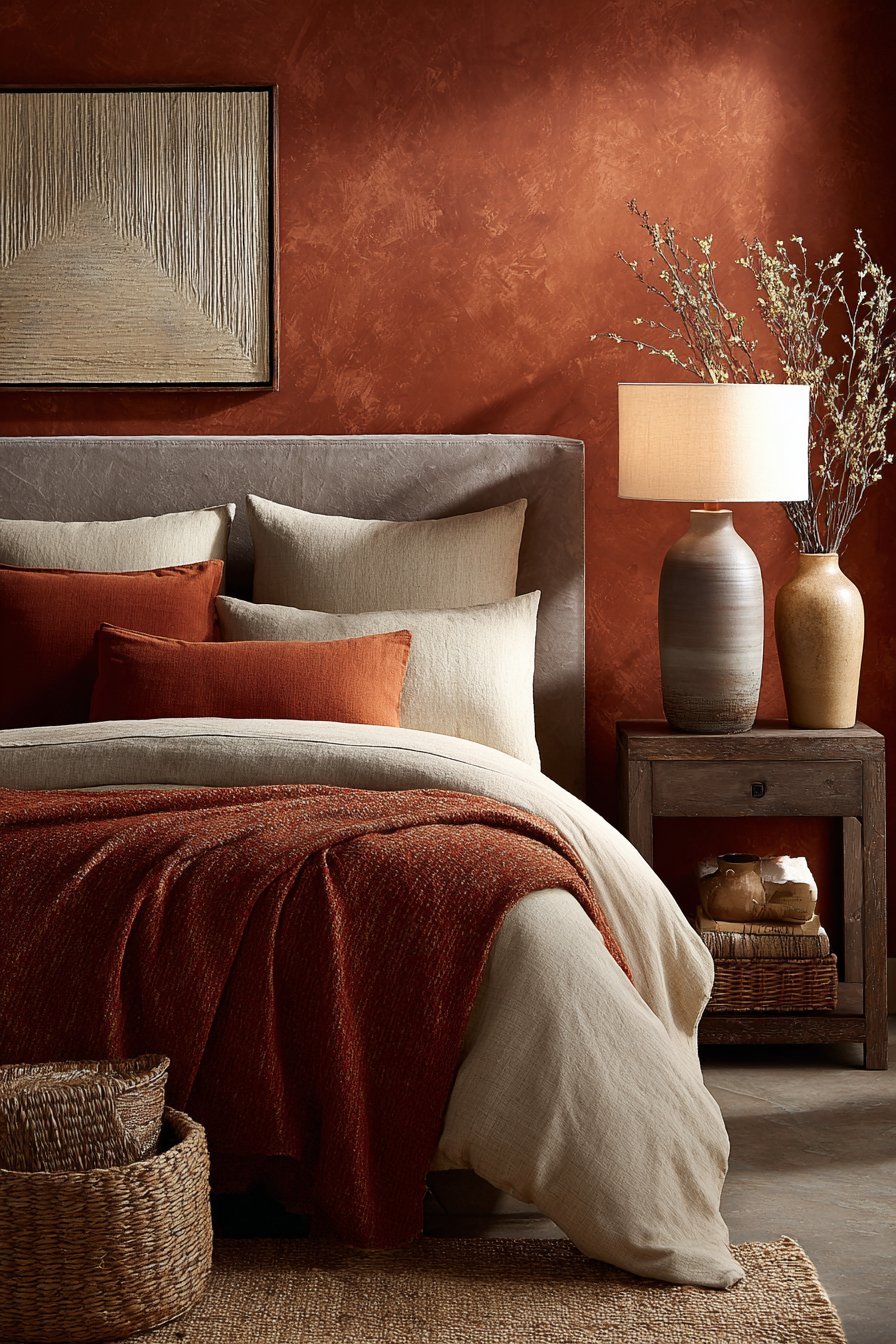
Golden hour sunlight emphasizes the warm earth tones dramatically. The directional light creates rich color saturation throughout the space. Shadows deepen the terracotta wall into complex dimensional surface. The warm palette supports circadian rhythm naturally through color psychology. The design proves minimalism embraces color when thoughtfully applied.
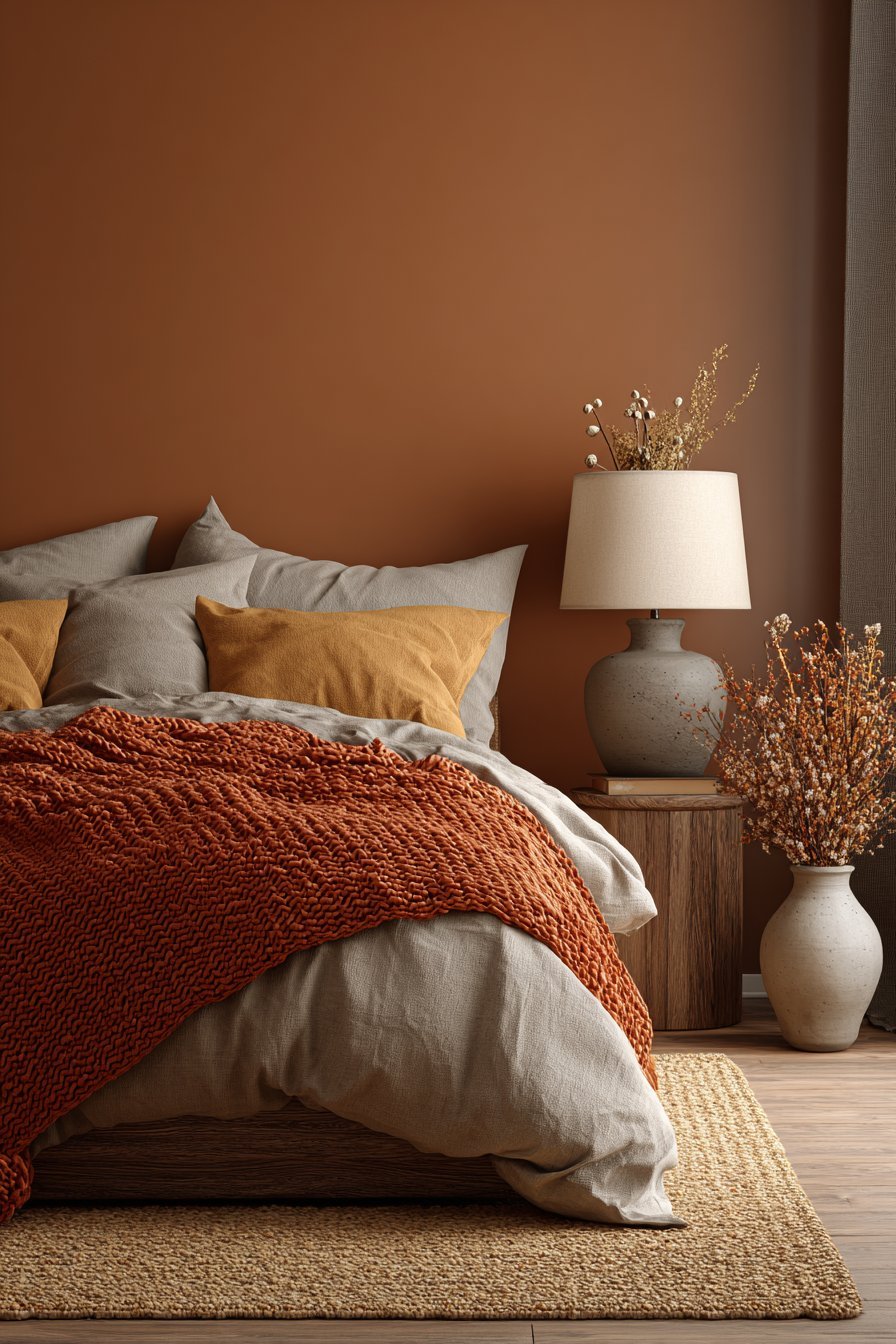
This earthy approach brings outdoor warmth inside effectively. The terracotta recalls clay architecture from warm climates. The rust and sand tones create desert-inspired serenity. The natural materials ensure the bold color remains grounded rather than overwhelming.
Key Design Tips:
- Paint one accent wall in terracotta for warm focal point
- Choose bedding in sand or warm beige tones to complement
- Add rust or burnt orange textiles as accent color layer
- Select ceramic lighting and accessories in matte clay finishes
- Include natural jute or sisal rugs for organic texture
- Maximize golden hour light to emphasize warm color palette
17. Romantic Linen Canopy
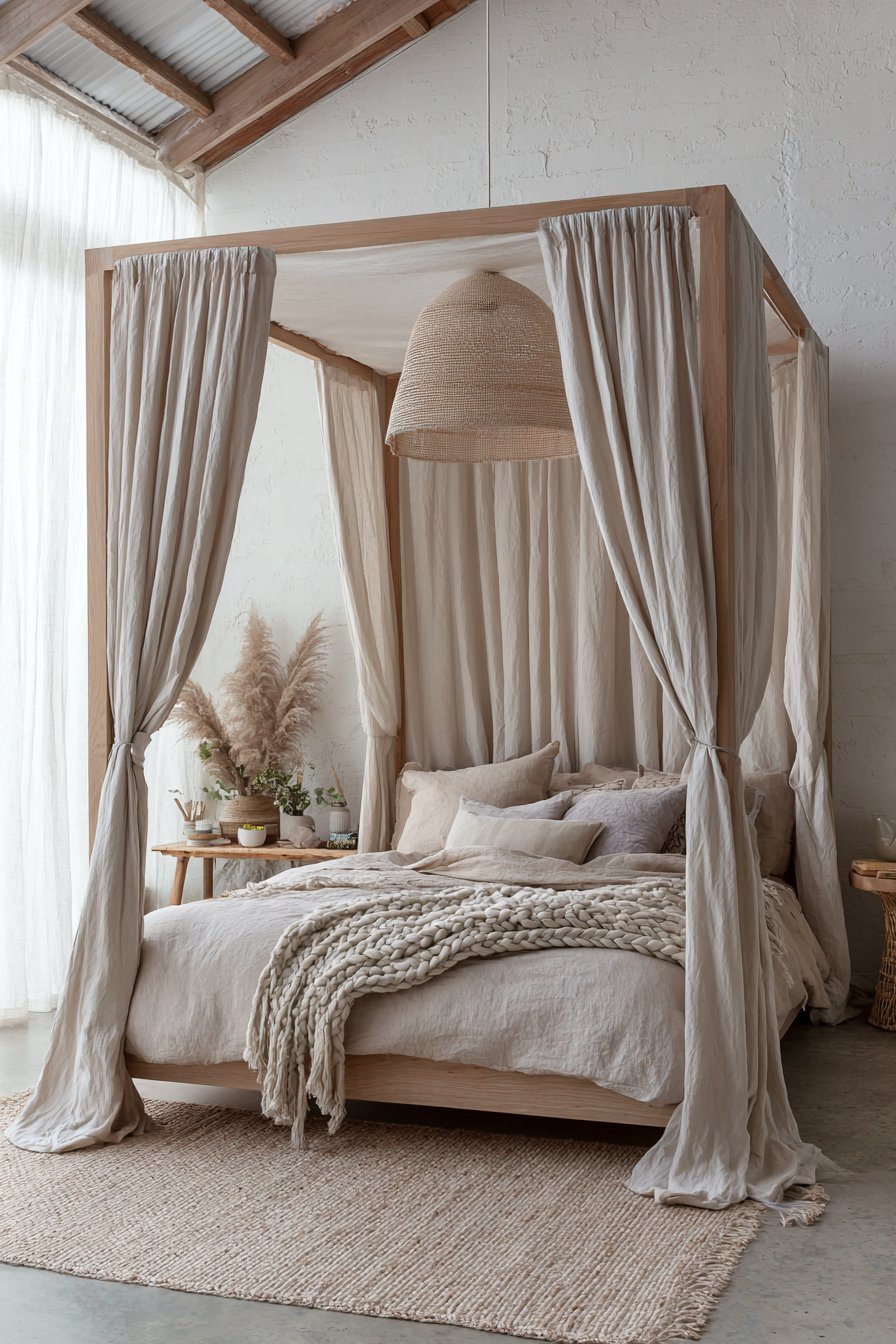
A four-poster bed frame creates romantic focal point with minimal design. Simple natural linen curtains can be drawn for cocoon-like privacy. The minimal four-poster structure in light oak maintains clean lines. Despite the traditional canopy concept, the execution feels contemporary. Bed dressing includes layers of neutral bedding with chunky knit throw.
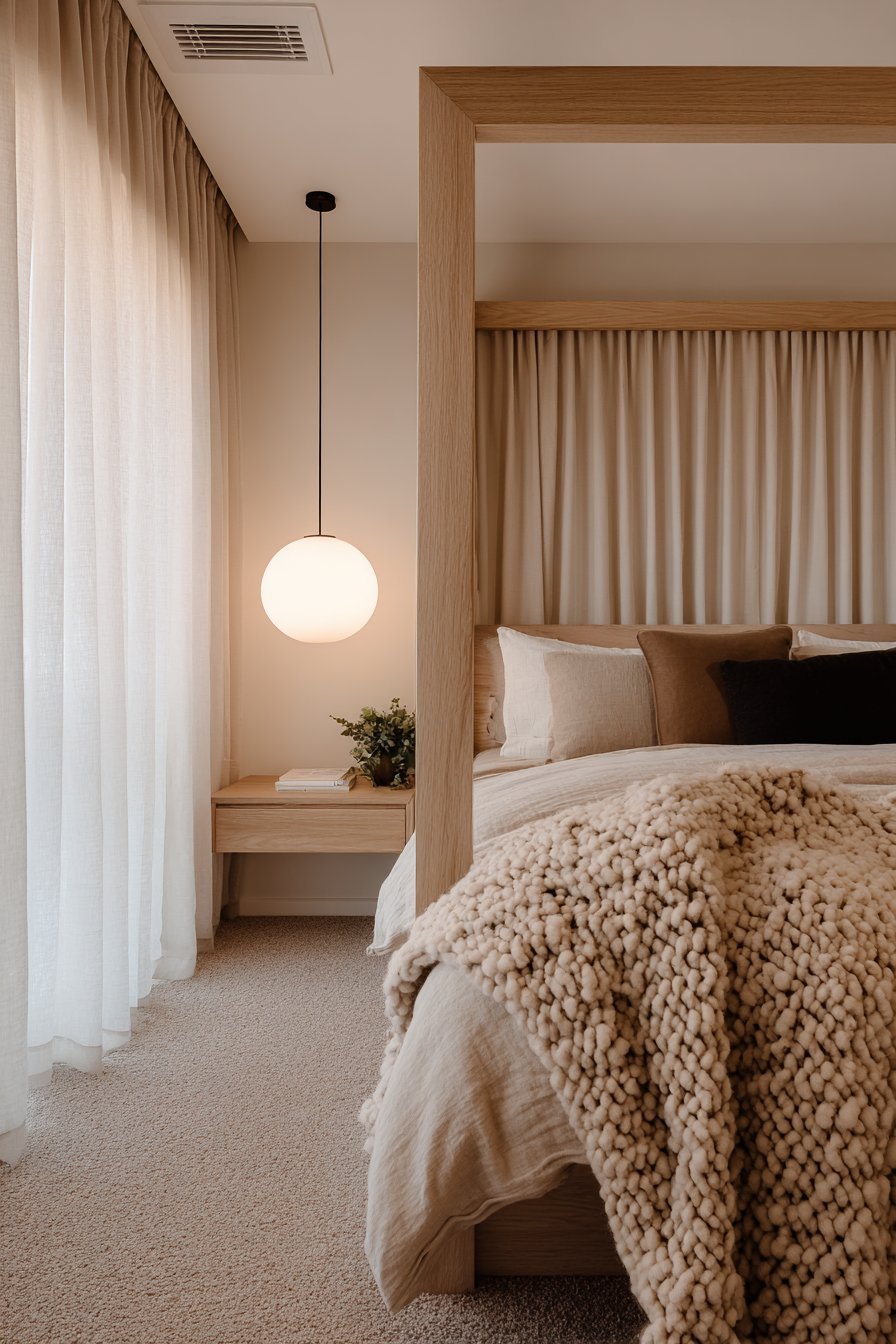
Simple pendant light hangs within canopy providing intimate illumination. Soft area rug in natural wool grounds the elevated bed frame. The linen curtains filter light beautifully when partially drawn. The fabric softness contrasts with the structural oak frame perfectly. This balance creates both strength and softness within single design element.
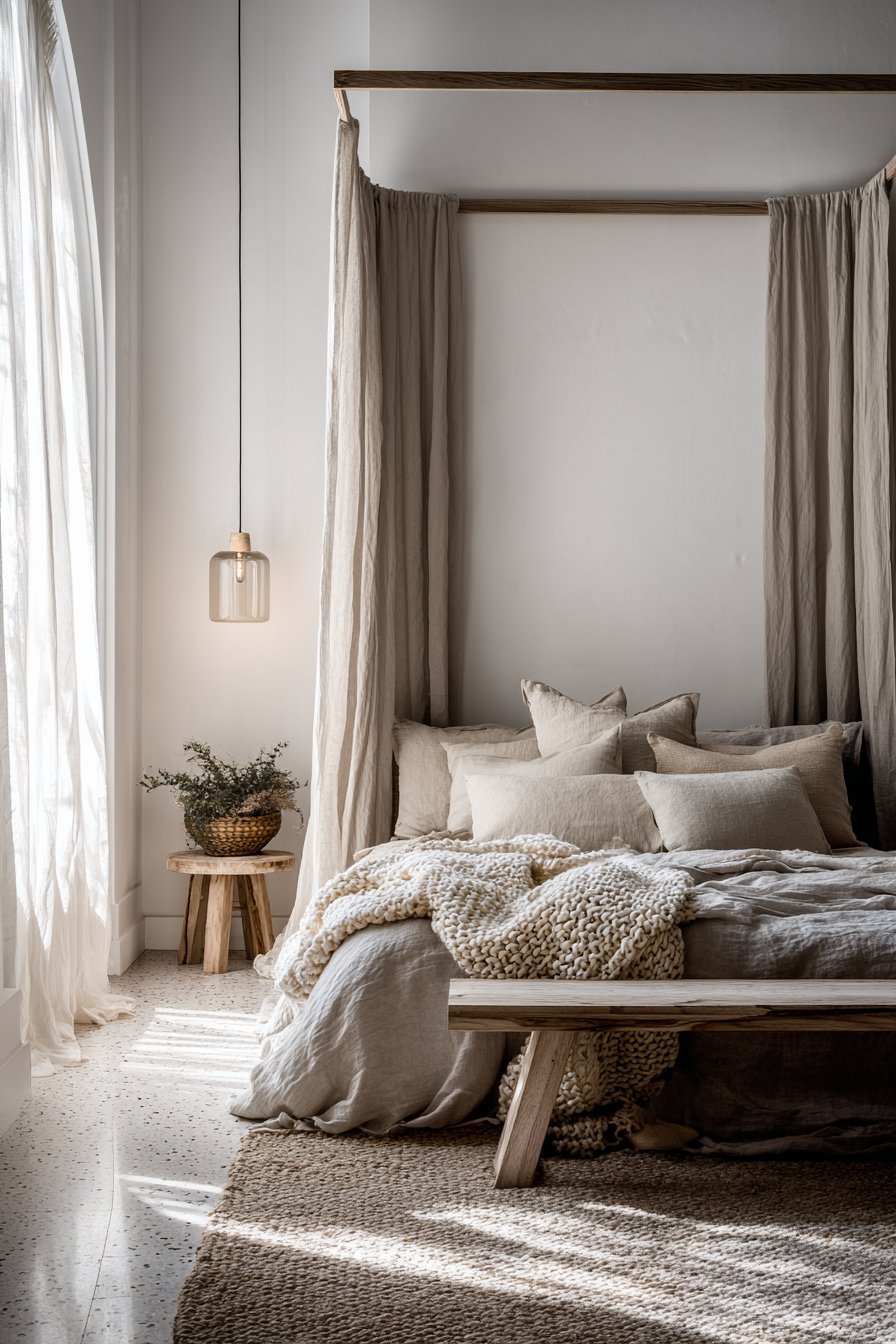
The canopy creates defined sleeping zone within larger bedroom space. The curtains can be drawn for complete cocoon effect or left open. This flexibility allows the space to transform based on mood. The romantic quality emerges through material softness rather than decoration. The design demonstrates how minimalism can feel intimate and dreamy.
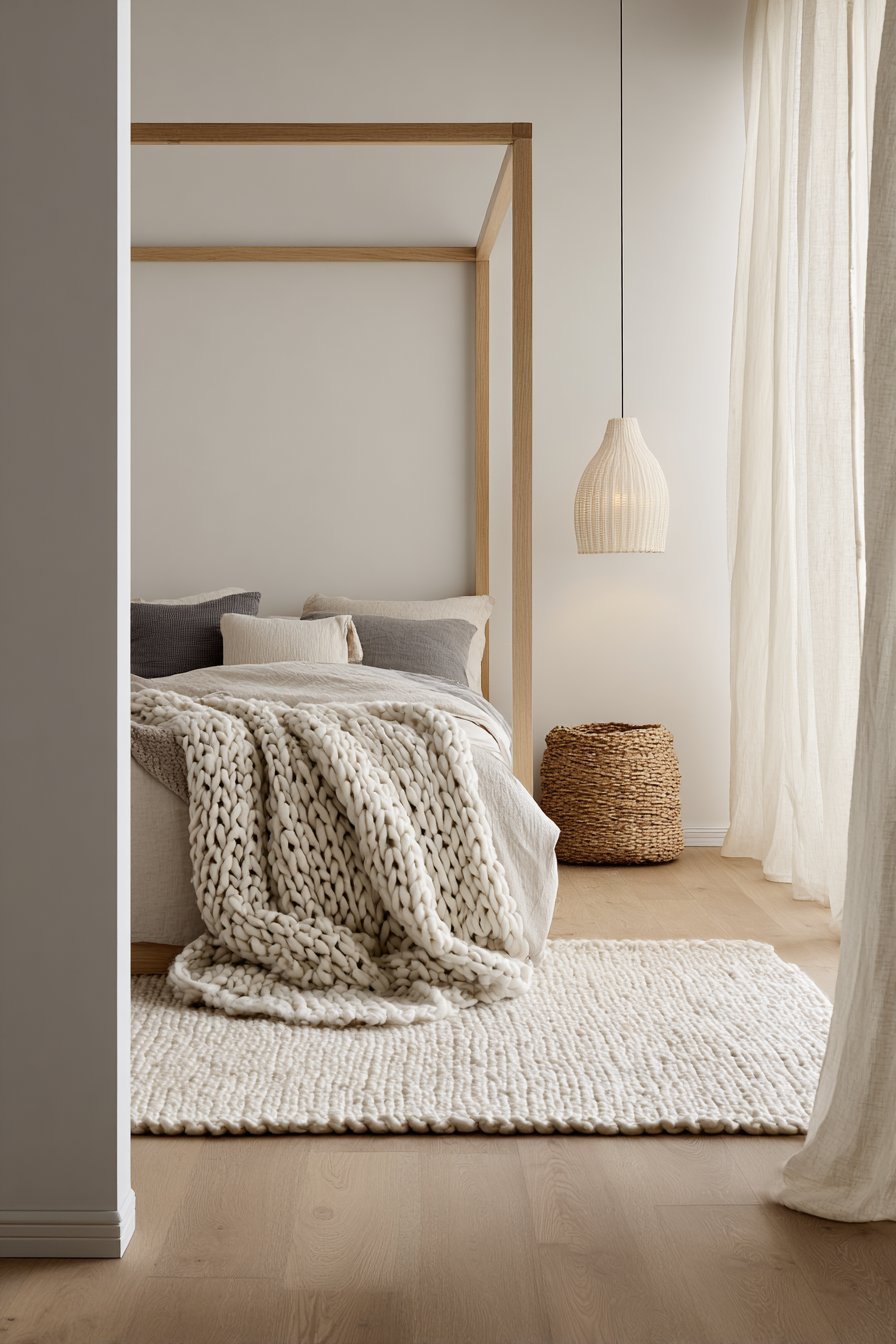
Natural lighting filters through the linen curtains creating ethereal quality. The soft fabric diffusion removes harsh edges from sunlight. Evening illumination from within feels magical and secluded. The canopy concept adapted to minimalist principles proves timeless design endures.
Key Design Tips:
- Choose four-poster frames with simple, clean-lined construction
- Hang natural linen curtains for soft, romantic canopy effect
- Install pendant light within canopy for intimate evening illumination
- Keep bed frame in light wood tones to maintain airiness
- Layer neutral bedding with varied textures for richness
- Position area rug to ground and define the bed zone
18. Window Seat Reading Alcove
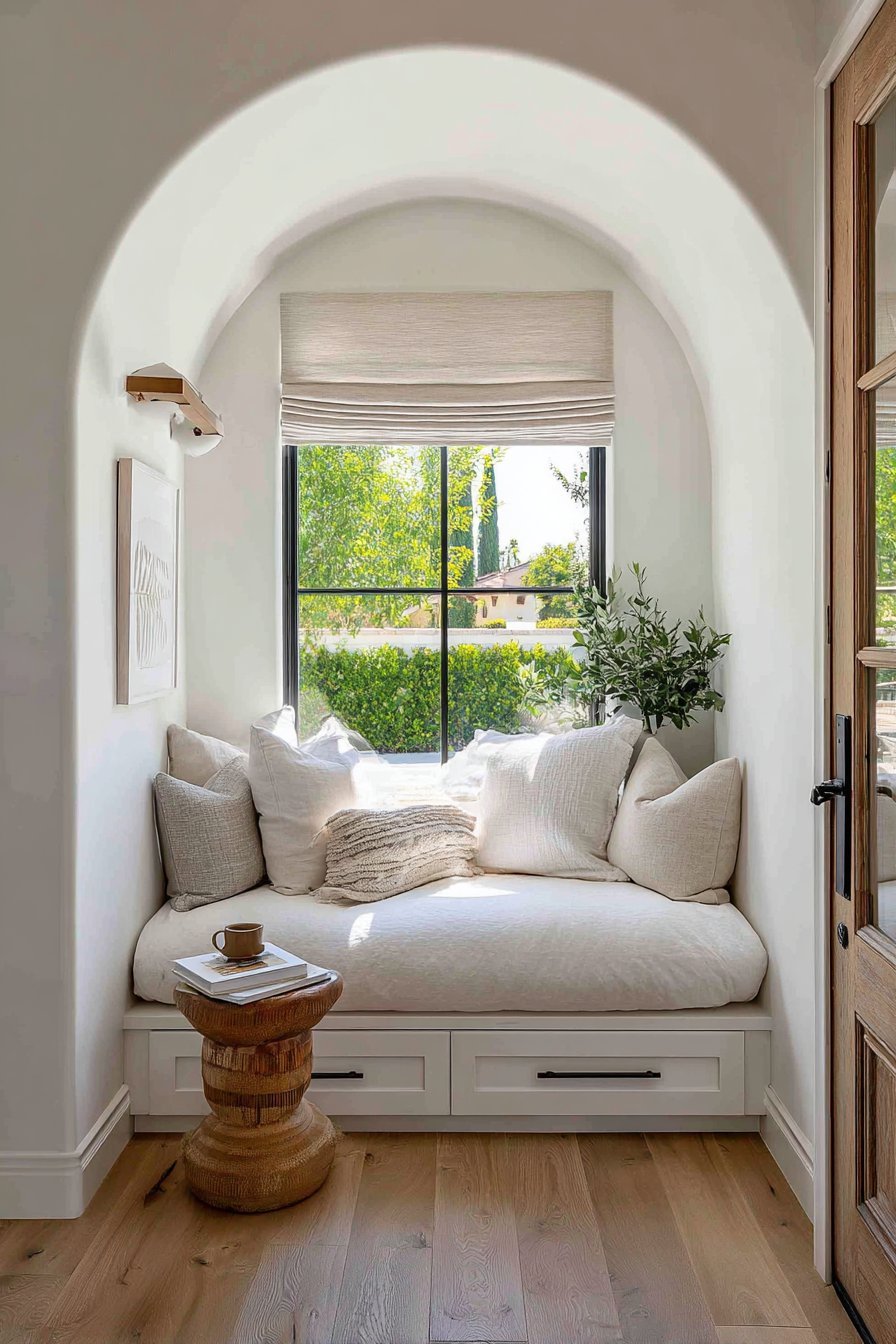
A window seat transforms unused space into favorite room feature. Built-in storage underneath provides hidden capacity for linens or books. Thick linen pad cushions the seat with accent pillows layered. The alcove features simple Roman shades for light control options. Small side table holds reading materials and morning tea cup.
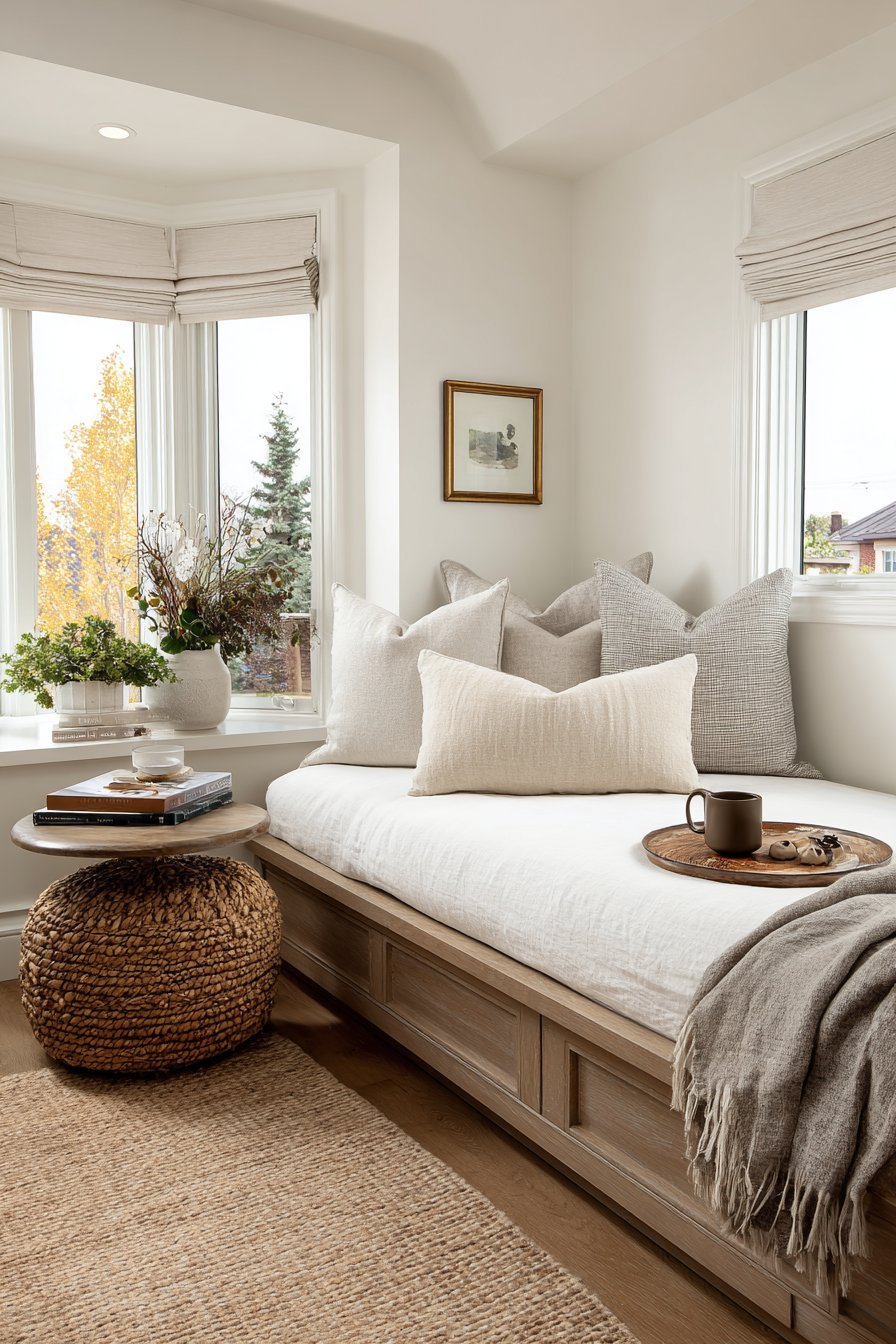
Natural wood floors and white walls maintain minimalist aesthetic throughout. The window seat becomes earned luxury within restrained framework. Soft natural backlighting creates peaceful reading atmosphere throughout the day. The intimate nook encourages slow mornings with books and coffee. The design adds warmth and function simultaneously to the bedroom.
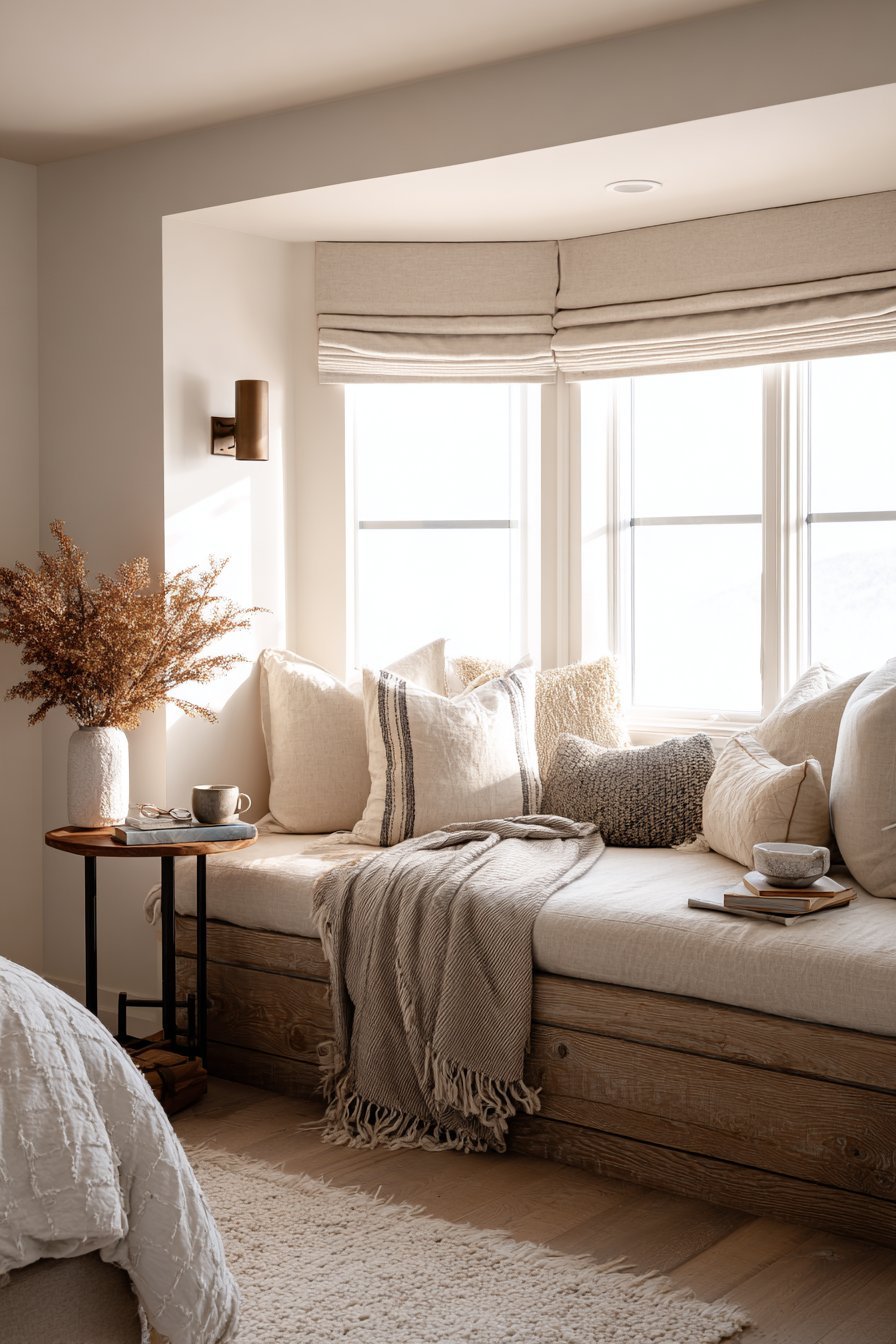
The built-in approach creates custom appearance without custom cost. The storage integration maximizes every cubic inch of space. The cushioning transforms hard surface into comfortable extended seating. The Roman shades provide privacy options while maintaining clean lines. The small side table serves function without visual interference.
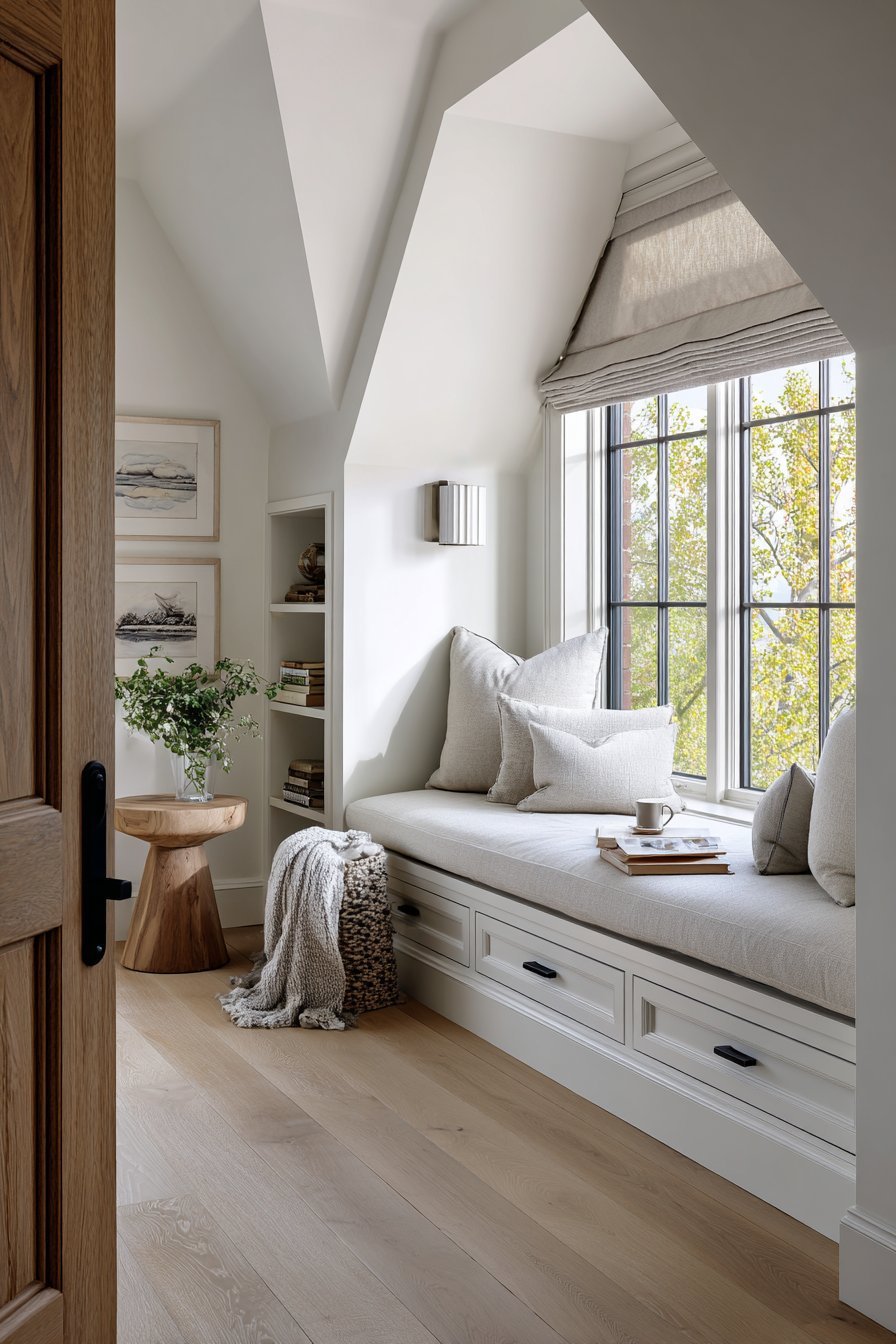
Wide-angle photography captures how the window nook enhances the room. The alcove creates architectural interest in otherwise plain window space. The invitation to pause and read adds lifestyle quality beyond sleeping. This multifunctional approach exemplifies smart minimalist design thinking.
Key Design Tips:
- Build window seats with storage underneath for maximum efficiency
- Cushion seats with thick linen pads for comfortable extended sitting
- Install Roman shades for clean light control in alcove spaces
- Keep side tables small and simple for books and beverages
- Position reading nooks to capture natural light throughout day
- Add accent pillows in neutral tones for comfort and style
19. Material Mixing Mastery
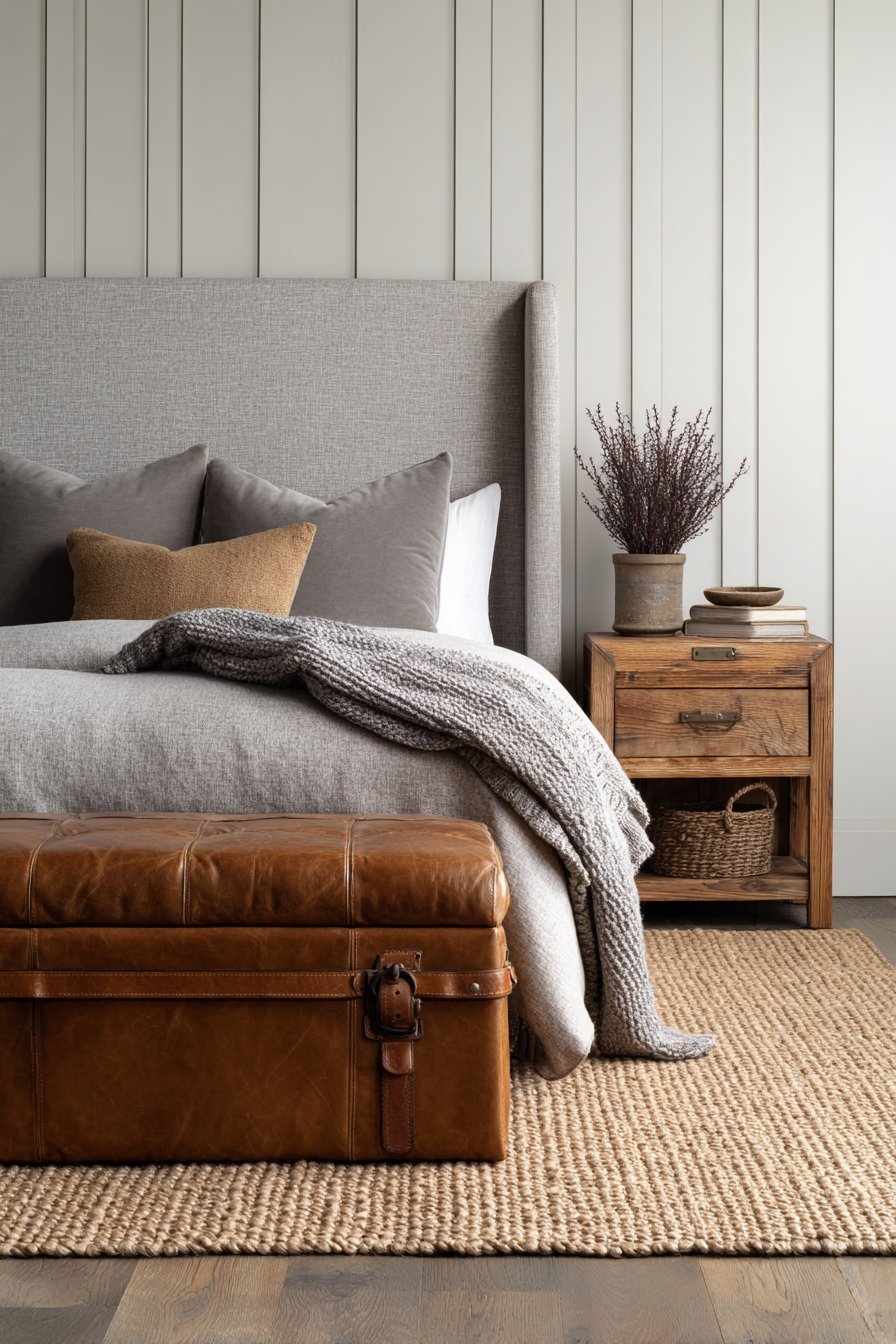
This bedroom celebrates diverse materials within neutral color framework. Leather bench at foot of bed introduces rich texture. Linen upholstered headboard provides soft backdrop for pillows. Velvet accent pillows in mushroom grey add luxurious touch. Wool throw blanket contributes cozy warmth and texture.
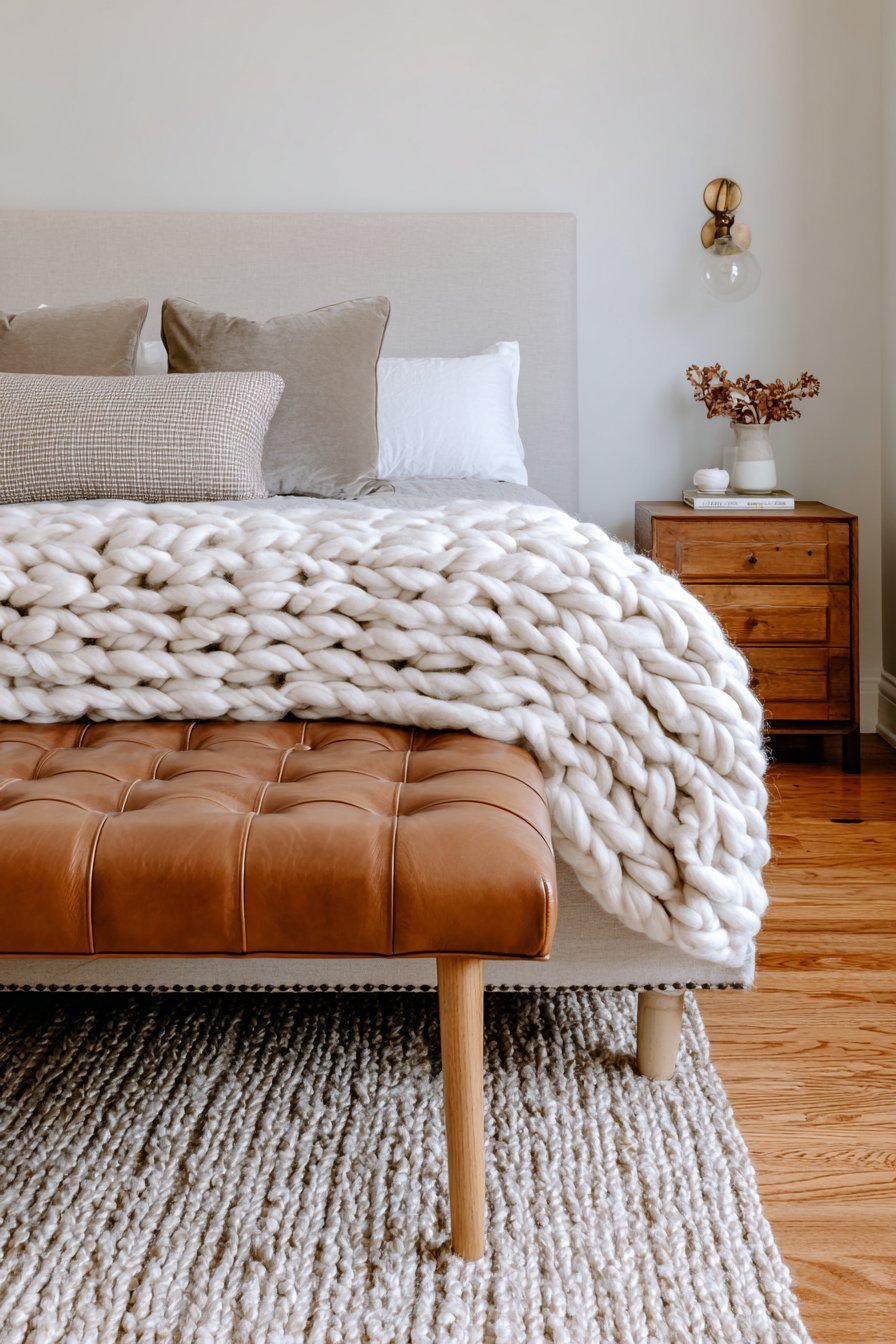
Natural jute rug layers over wood flooring adding organic foundation. Each material adds tactile richness while maintaining neutral palette. Brass hardware on simple nightstand adds subtle metallic warmth. The material diversity creates visual and tactile interest throughout. The restraint in color allows material textures to shine prominently.
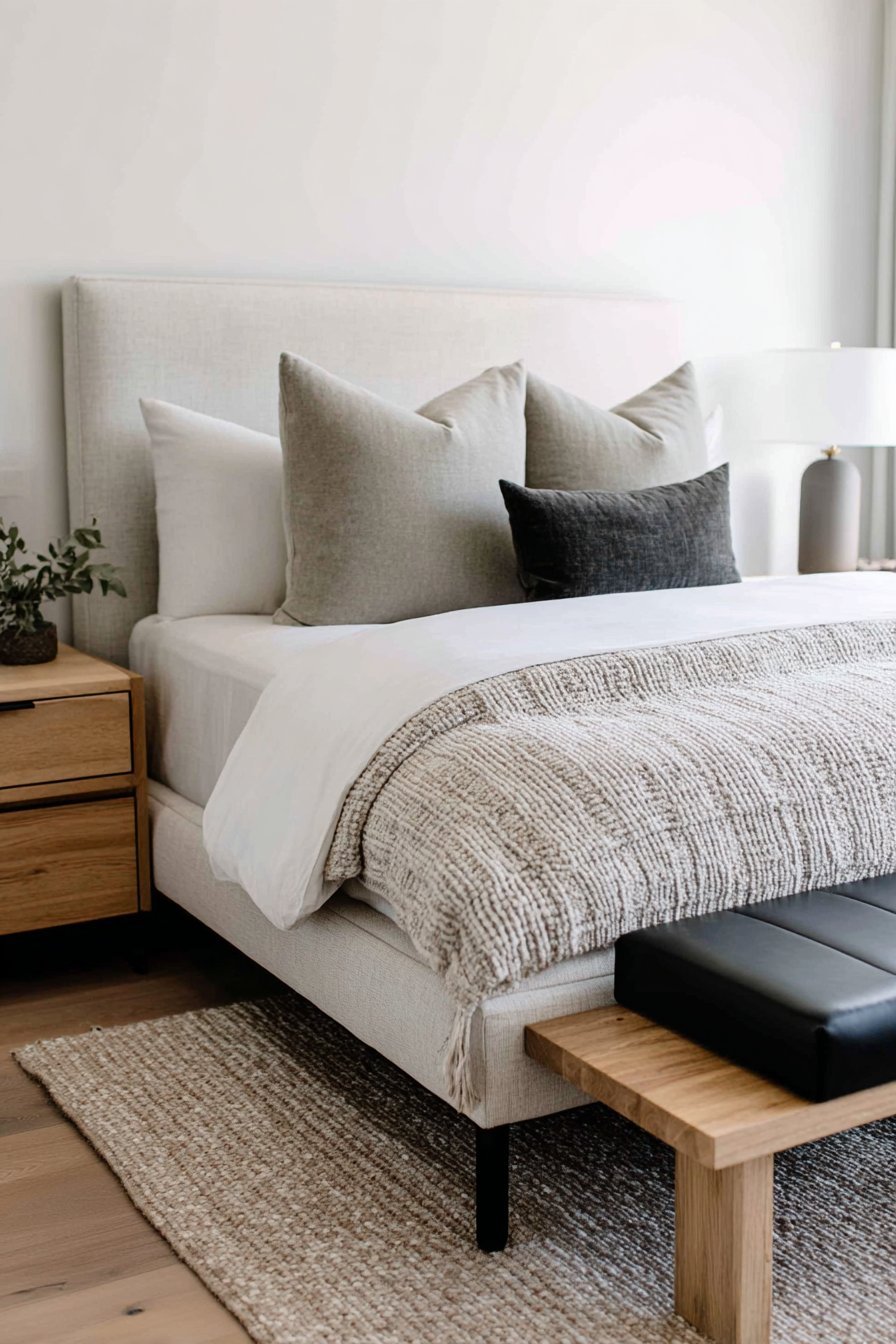
The leather bench adds lived-in character through natural patina development. The linen headboard provides soft contrast to the leather’s structure. Velvet pillows catch light differently than surrounding smooth linen. The wool throw adds dimensional texture across the bed foot. The jute rug provides rough organic texture against refined wood flooring.
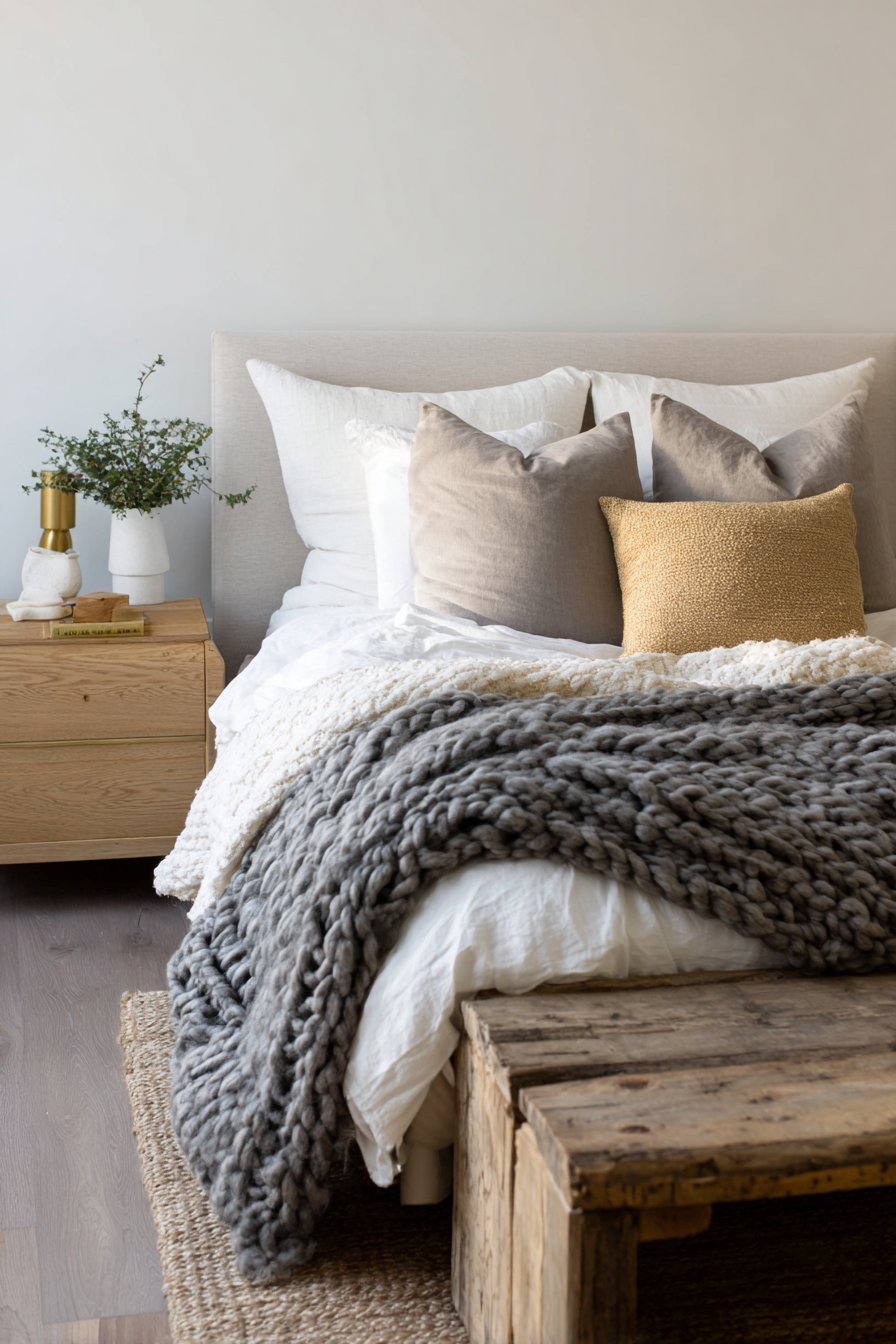
Soft natural lighting highlights the varied textures and materials beautifully. Each surface responds to light uniquely creating complex visual landscape. The material mixing demonstrates sophisticated minimalist design depth. The approach proves less can be more when materials are thoughtfully diverse.
Key Design Tips:
- Mix leather, linen, velvet, and wool within neutral palette
- Layer natural jute rugs over hardwood for textural contrast
- Add brass hardware as subtle metallic accent throughout
- Choose materials with different surface qualities and light reflection
- Ensure all materials share similar color tones for cohesion
- Prioritize natural materials that age beautifully over time
20. Optimal Sleep Sanctuary Design
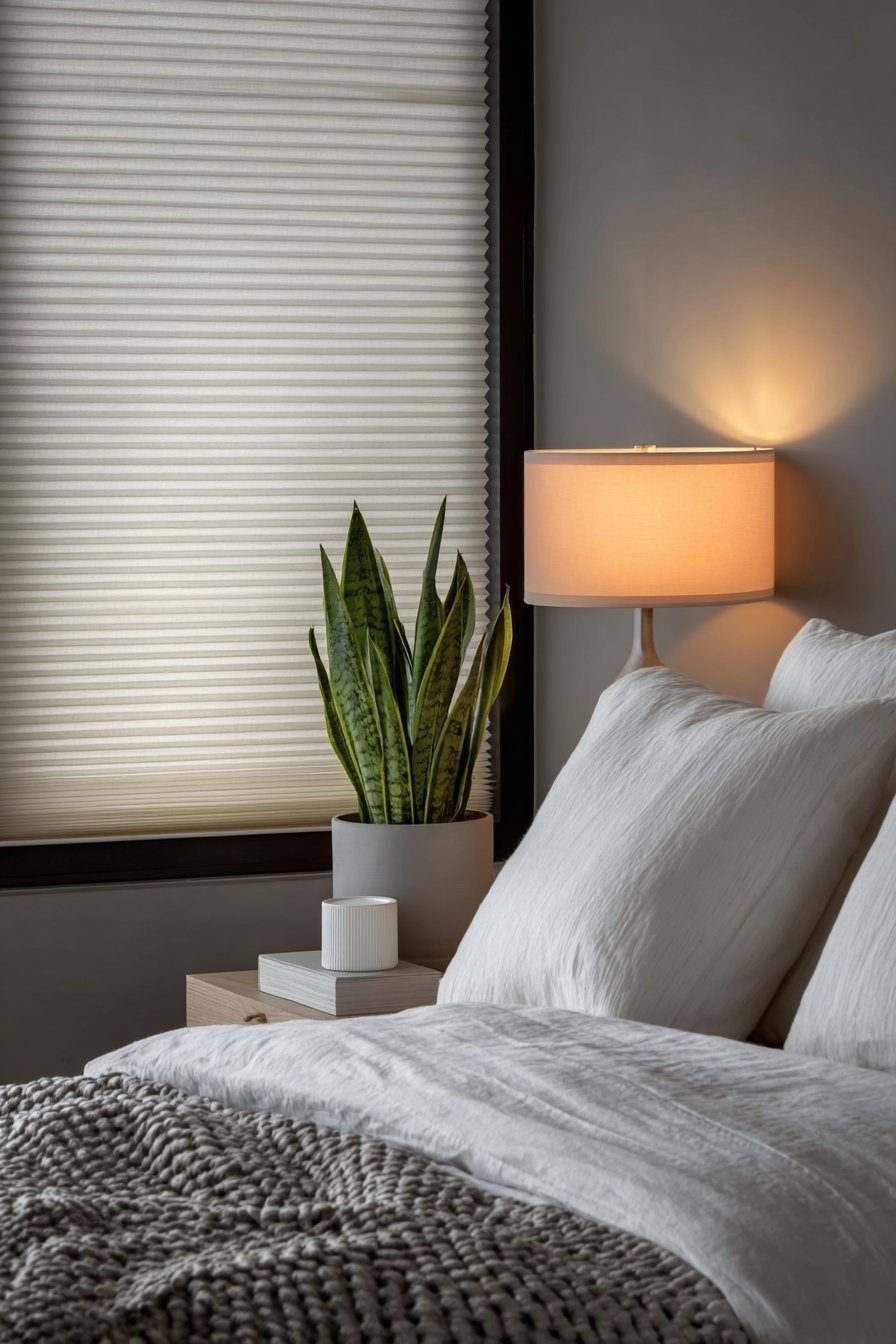
This bedroom prioritizes sleep quality through intentional design choices. Blackout cellular shades in natural fabric provide complete light control. Temperature-regulating organic cotton bedding in crisp white supports comfort. Adjustable LED reading lights with warm color temperature prevent blue light exposure. White noise machine discreetly places on nightstand supporting sound masking.
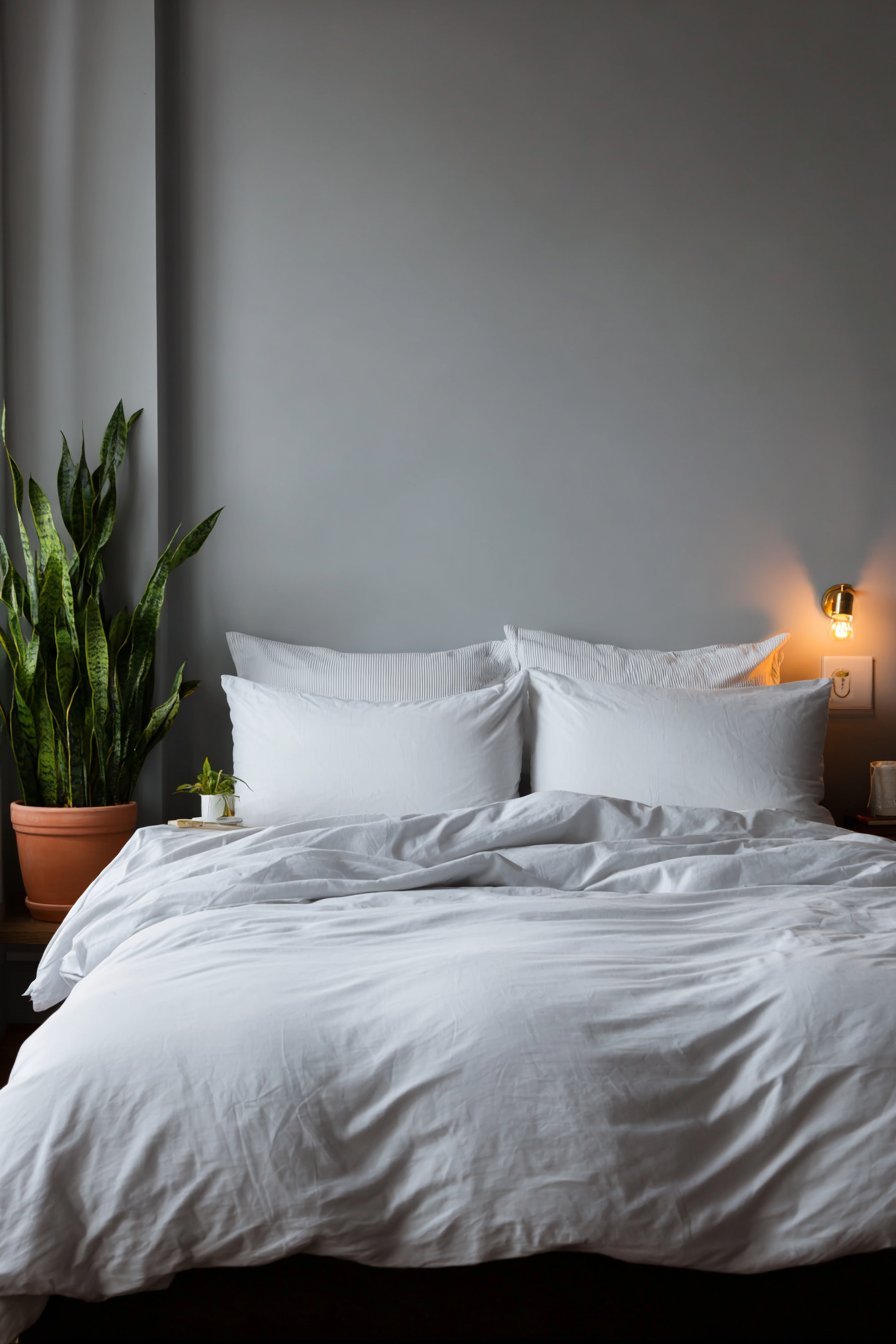
Air-purifying snake plant occupies corner improving air quality naturally. Cool grey walls promote calm through color psychology principles. Minimal visual distractions with closed storage solutions reduce mental stimulation. The room functions as designed specifically for optimal rest. Every element supports the primary function of quality sleep.
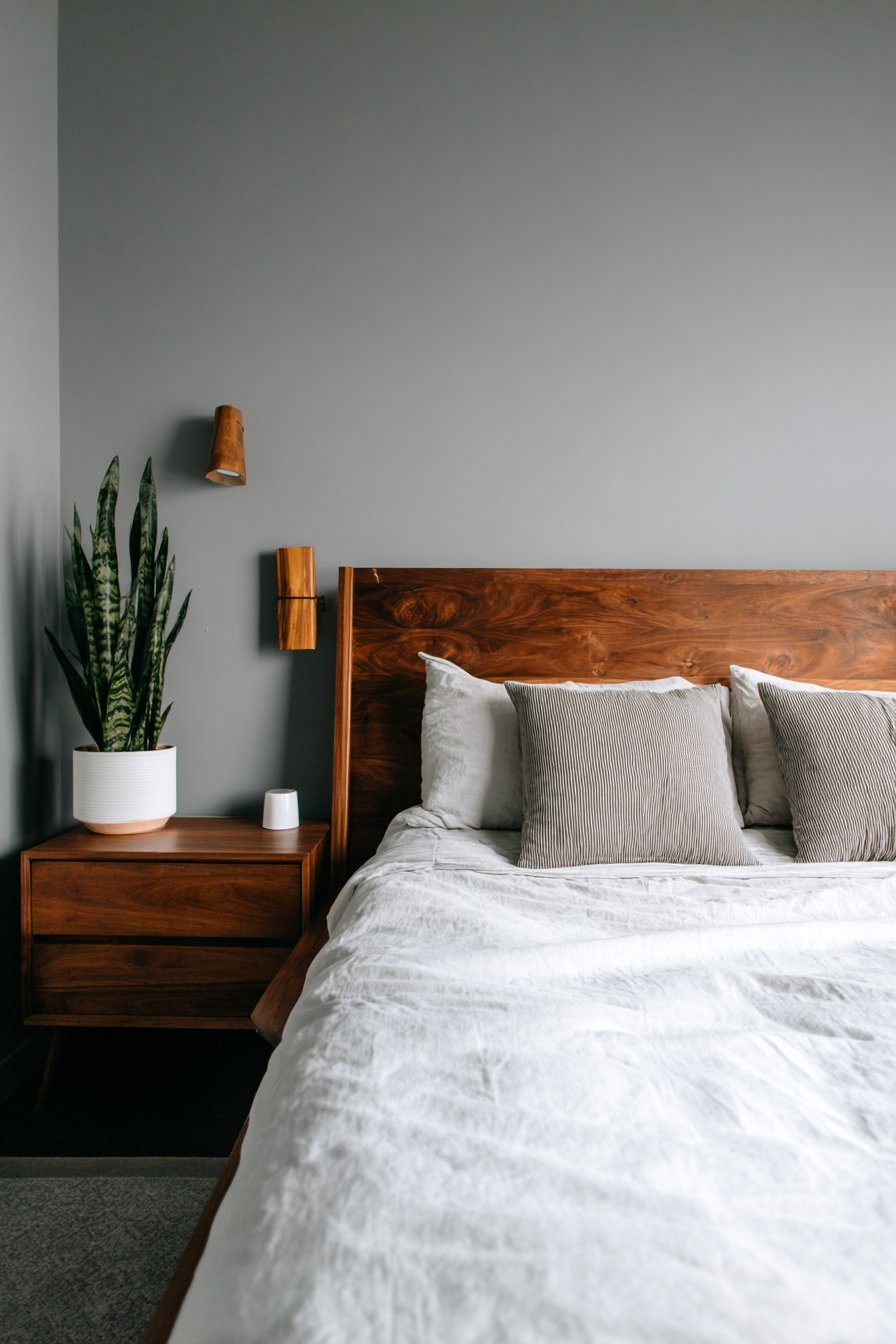
The blackout shades eliminate urban light pollution completely when deployed. The cellular construction provides insulation supporting temperature regulation. Organic cotton bedding breathes naturally preventing overheating during night. The warm LED lights don’t disrupt circadian rhythm before sleep. The white noise masks disruptive environmental sounds effectively.
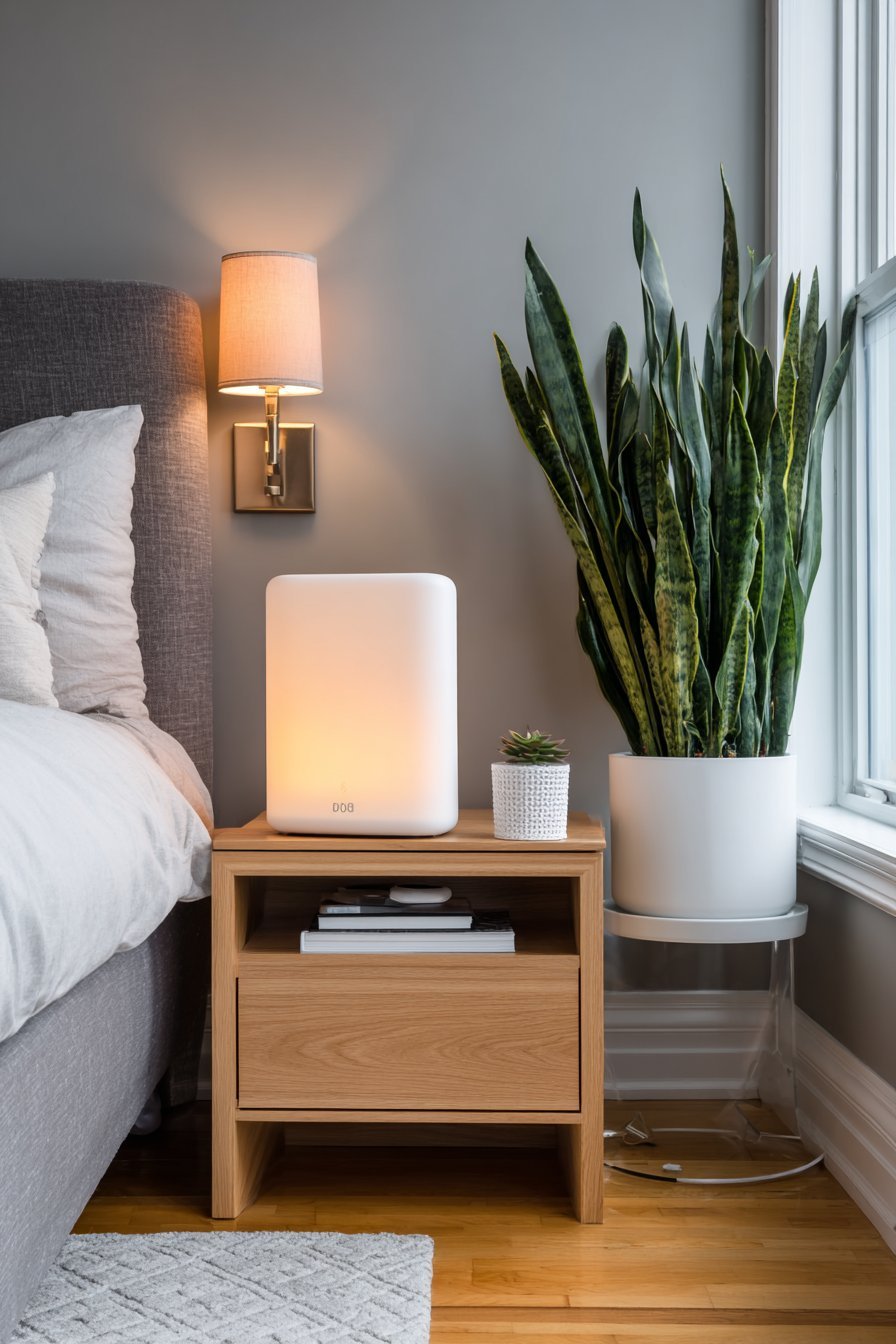
The intentional sleep-focused design demonstrates minimalism’s functional roots. Rather than aesthetic alone, the space serves specific wellness purpose. The cool grey walls create psychological calm supporting relaxation. The closed storage prevents visual clutter from interfering with rest. This purposeful approach shows minimalism at its most practical.
Key Design Tips:
- Install blackout cellular shades for complete darkness and insulation
- Choose organic cotton bedding for temperature regulation and breathability
- Use warm LED bulbs around 2700K to protect evening circadian rhythm
- Include white noise machine for sound masking and sleep improvement
- Add air-purifying plants like snake plants for better air quality
- Paint walls in cool grey or blue tones that promote calm
Why These Cozy Minimalist Bedroom Designs Work Best
These cozy minimalist bedroom designs represent the finest approaches to creating serene personal sanctuaries. Each concept demonstrates thoughtful consideration of natural materials, layered textures, and warm neutral palettes. The designs showcase versatility that suits different spatial constraints and personal preferences while maintaining core minimalist principles.
The incorporation of natural materials like linen, wool, oak, and jute adds sustainability alongside aesthetic appeal. These materials bring organic warmth that synthetic alternatives cannot replicate. They age gracefully, developing character rather than showing wear. The tactile diversity prevents minimalist spaces from feeling cold or sterile.
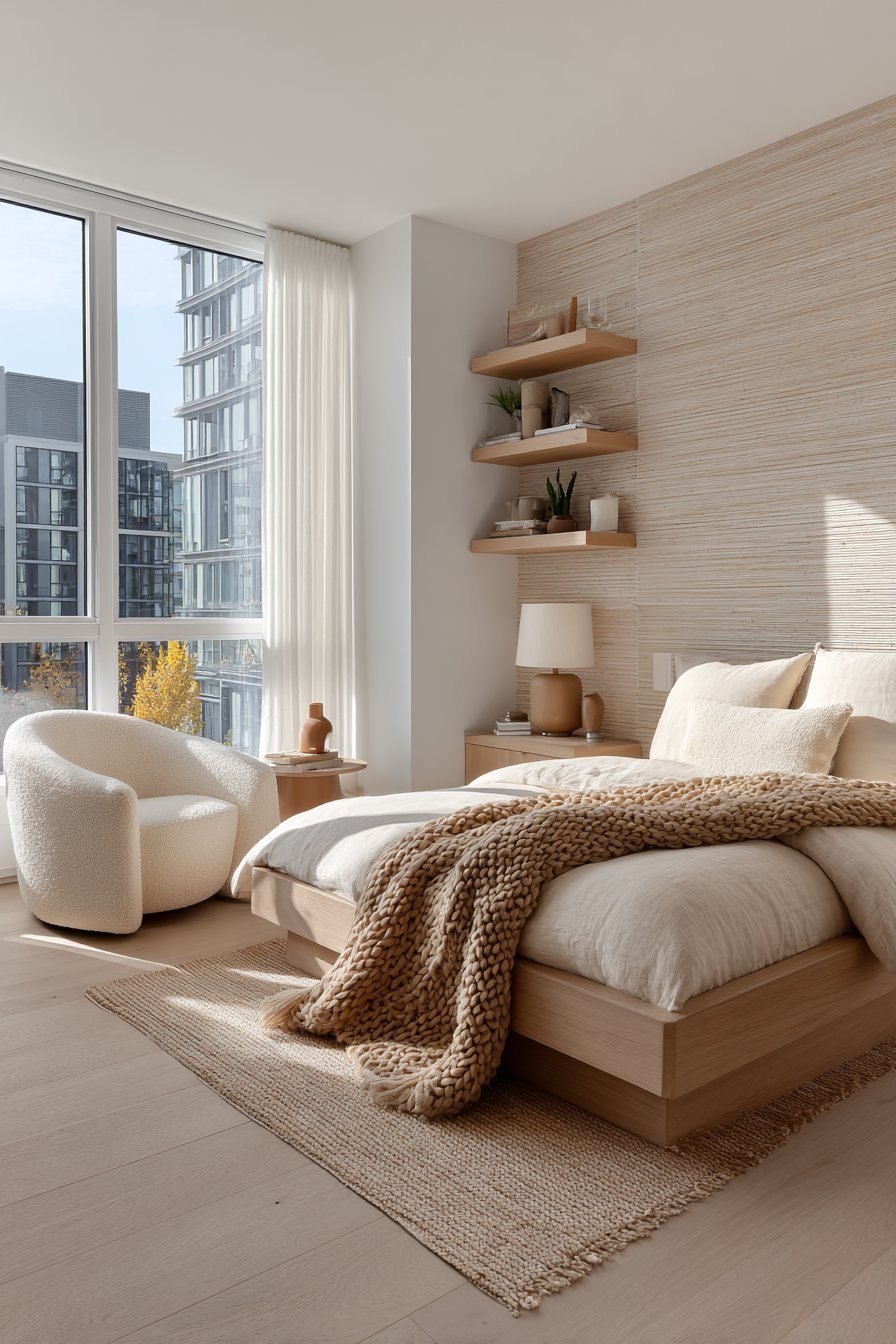
Color theory plays crucial role in these successful designs. Warm whites, beiges, taupes, and earth tones create enveloping atmosphere. The neutral palette allows material textures to become the visual interest. Subtle tonal variation adds depth without requiring pattern introduction. This approach creates calm environments that support rest and rejuvenation.
Lighting design emerges as critical element across all concepts. Layered lighting combining natural, ambient, and task illumination provides flexibility. Warm color temperatures around 2700K create cozy atmosphere. Strategic placement ensures functionality without visual clutter. Dimmer controls allow adjustment supporting natural circadian rhythms.
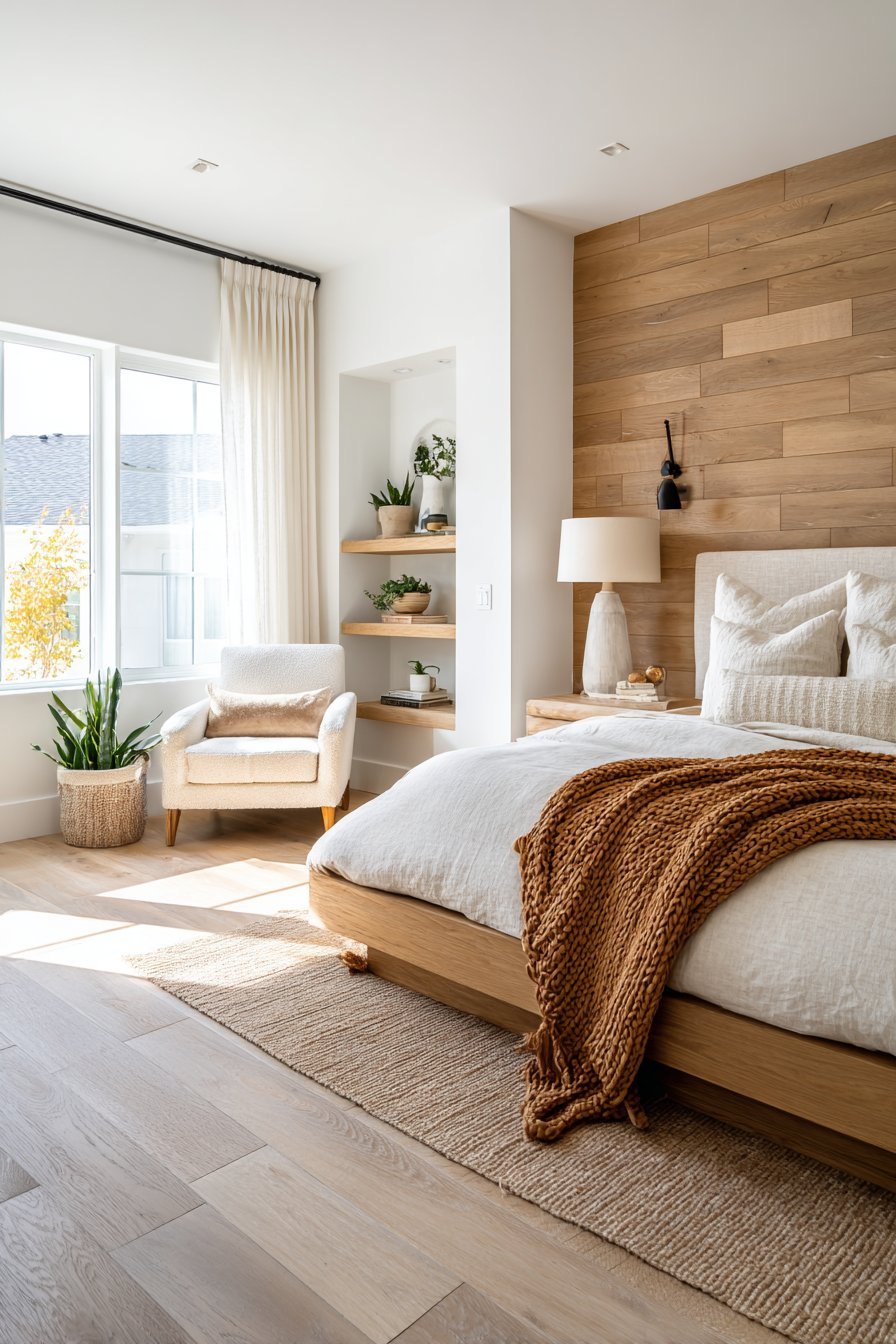
Spatial planning demonstrates how minimalism works across different room sizes. Small spaces benefit from vertical storage and floating furniture. Larger rooms use strategic furniture placement to create intimate zones. The designs prove minimalism isn’t about room size but intentional choices. Every element serves clear purpose within the composition.
Storage solutions integrate seamlessly maintaining clean aesthetic. Built-in wardrobes, floating nightstands, and under-bed drawers hide necessities effectively. The invisible storage allows minimalist appearance while supporting practical living. This realistic approach makes the aesthetic achievable long-term.
Conclusion
These cozy minimalist bedroom designs demonstrate that warmth and simplicity coexist beautifully. The key takeaways include prioritizing natural materials over synthetic alternatives. Quality textiles in neutral tones create richness through texture rather than pattern. Layered lighting provides flexibility while supporting wellbeing.
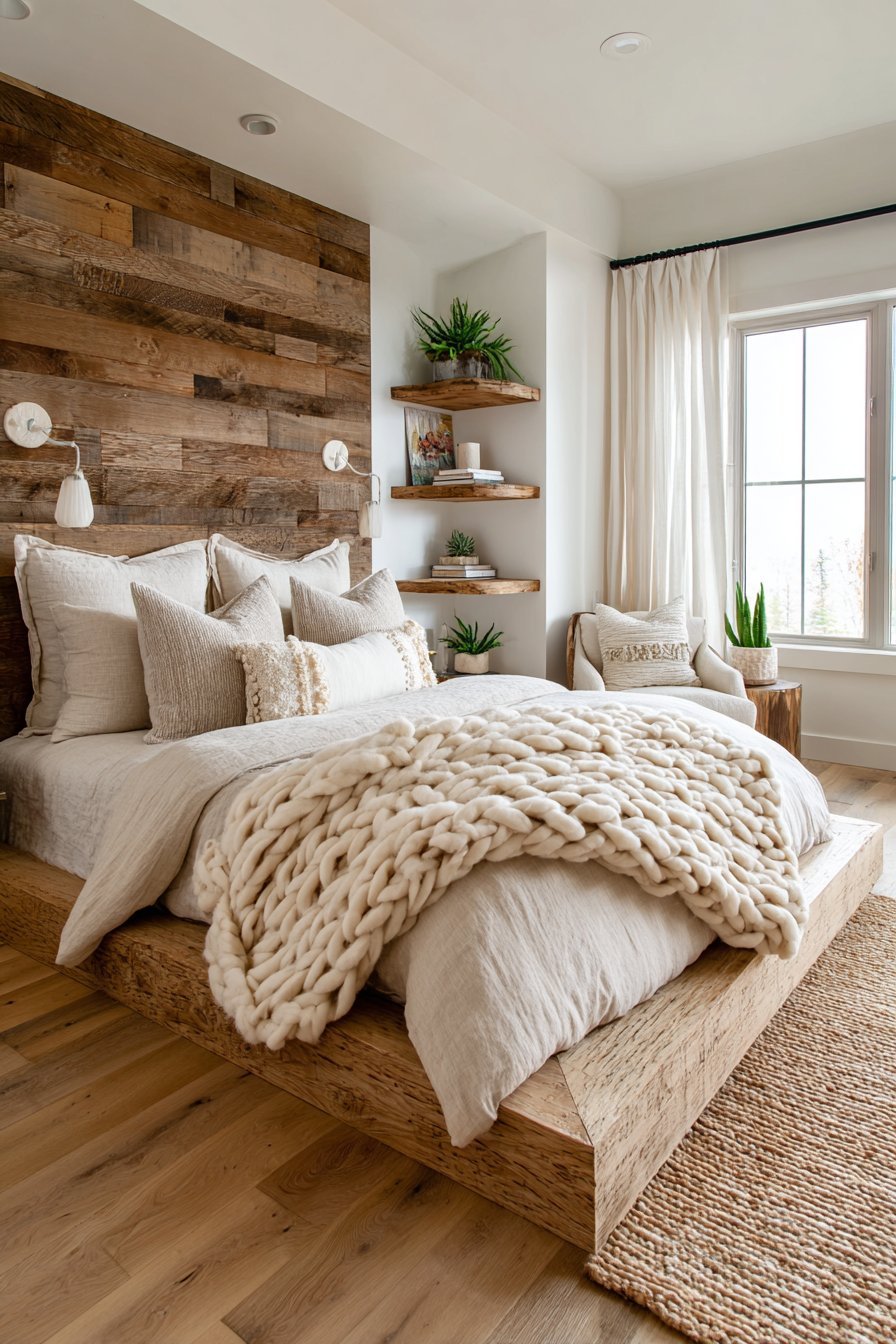
Successful cozy minimalist design balances aesthetic restraint with functional comfort. The approach requires thoughtful curation where every element serves clear purpose. Storage solutions must support the aesthetic rather than compromise it. Material quality becomes the luxury statement within simplified frameworks.
Start creating your cozy minimalist bedroom by selecting one natural material focal point. Perhaps a linen upholstered headboard or reclaimed wood accent wall. Build the palette from warm neutrals that create calm. Layer textures through varied natural fibers. Your serene personal sanctuary awaits creation through intentional choices and mindful restraint.
