
Creating a cottagecore backyard transforms outdoor spaces into romantic retreats. This design philosophy celebrates natural beauty and rustic charm. The aesthetic draws inspiration from traditional English cottage gardens and pastoral living.
Cottagecore backyards have captured hearts with their timeless appeal. They offer an escape from modern life’s fast pace. These gardens blend beauty with functionality. Weathered materials mix with abundant plantings. The result creates outdoor sanctuaries perfect for quiet contemplation and joyful gatherings.

This article explores twenty distinctive cottagecore backyard concepts. Each design showcases authentic materials and traditional techniques. From winding flagstone paths to productive vegetable gardens, these ideas celebrate the romantic cottage aesthetic. The concepts range from intimate seating nooks to generous wildflower meadows. Every design honors the cottagecore principle of working harmoniously with nature.
1. Winding Flagstone Garden Path
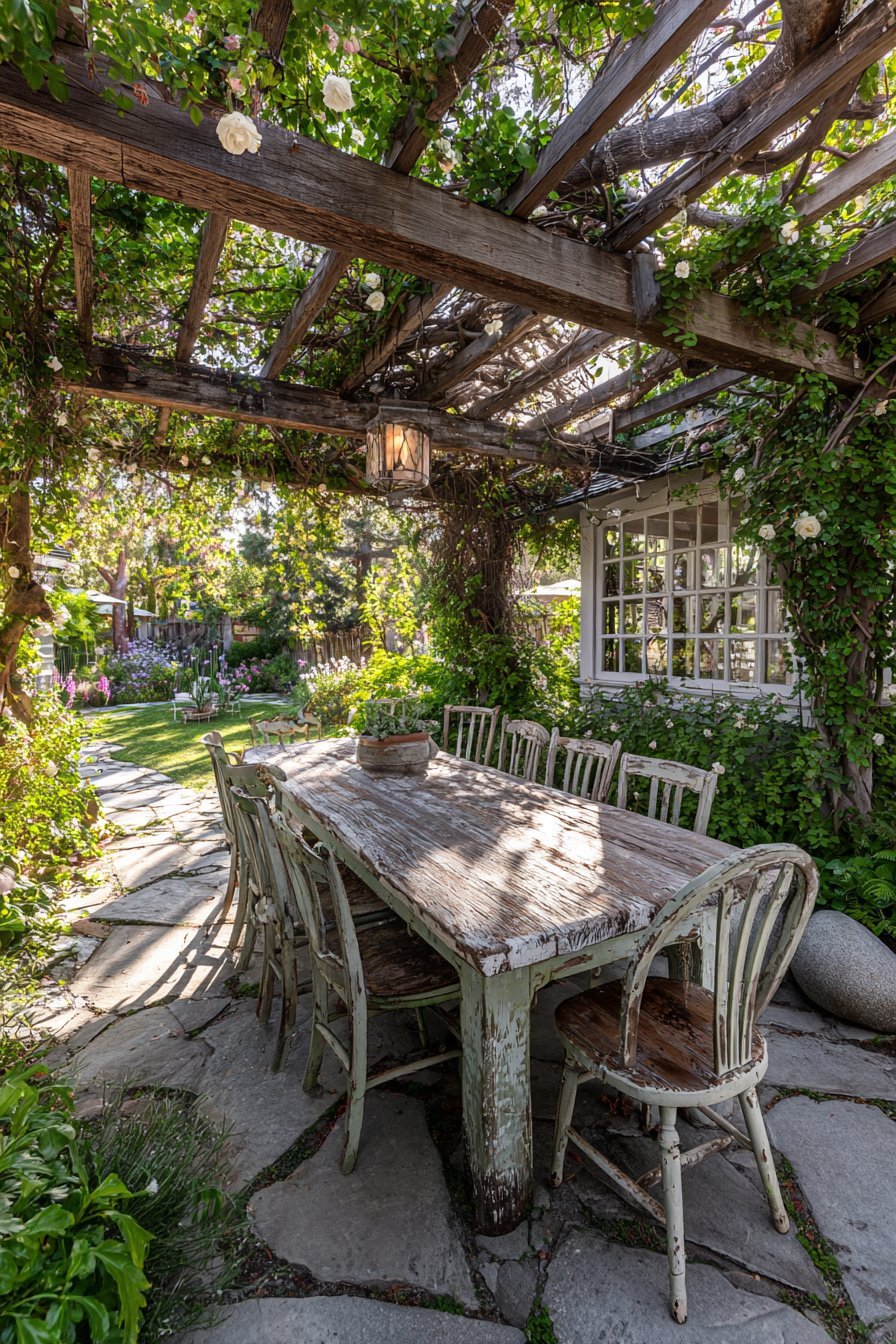
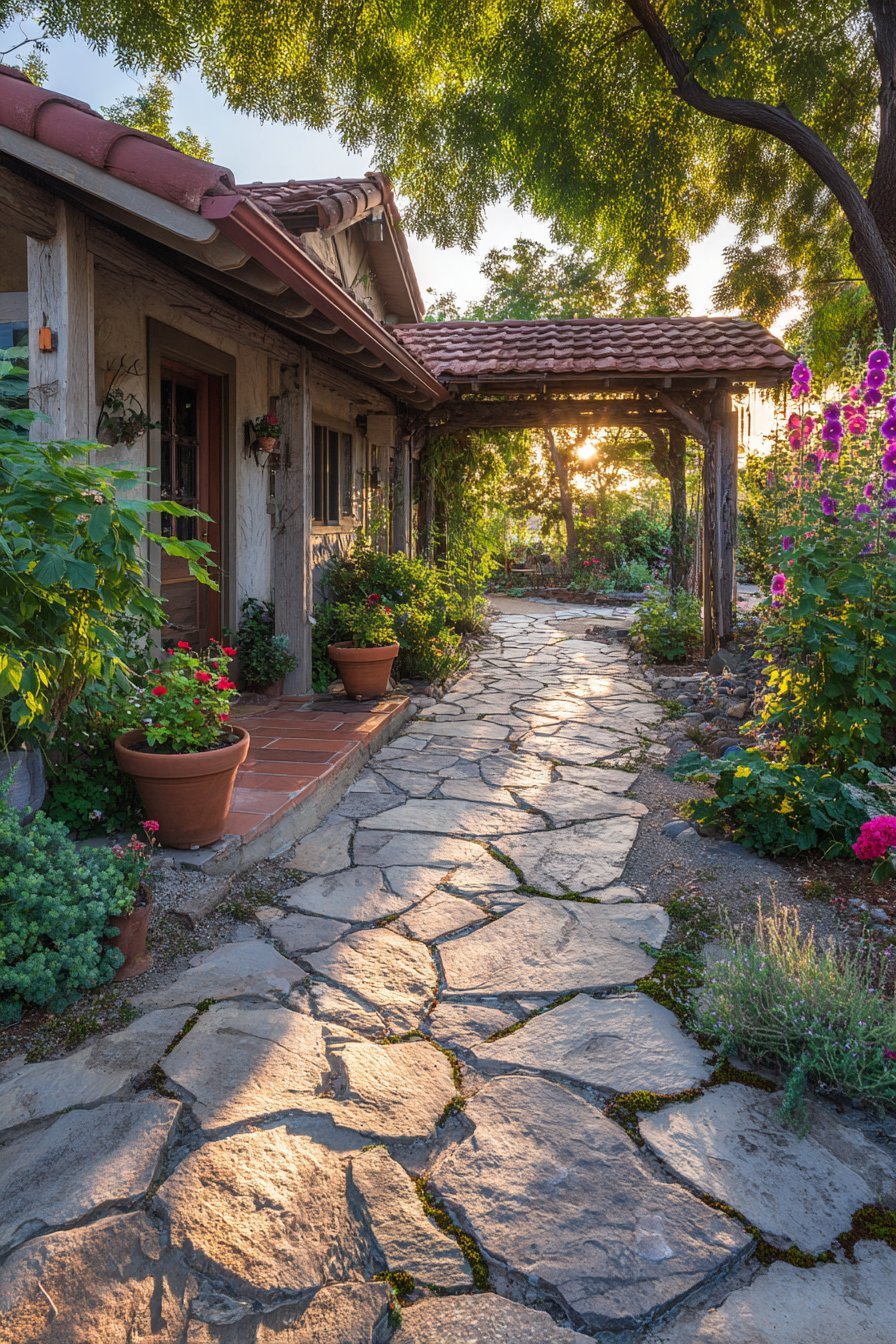
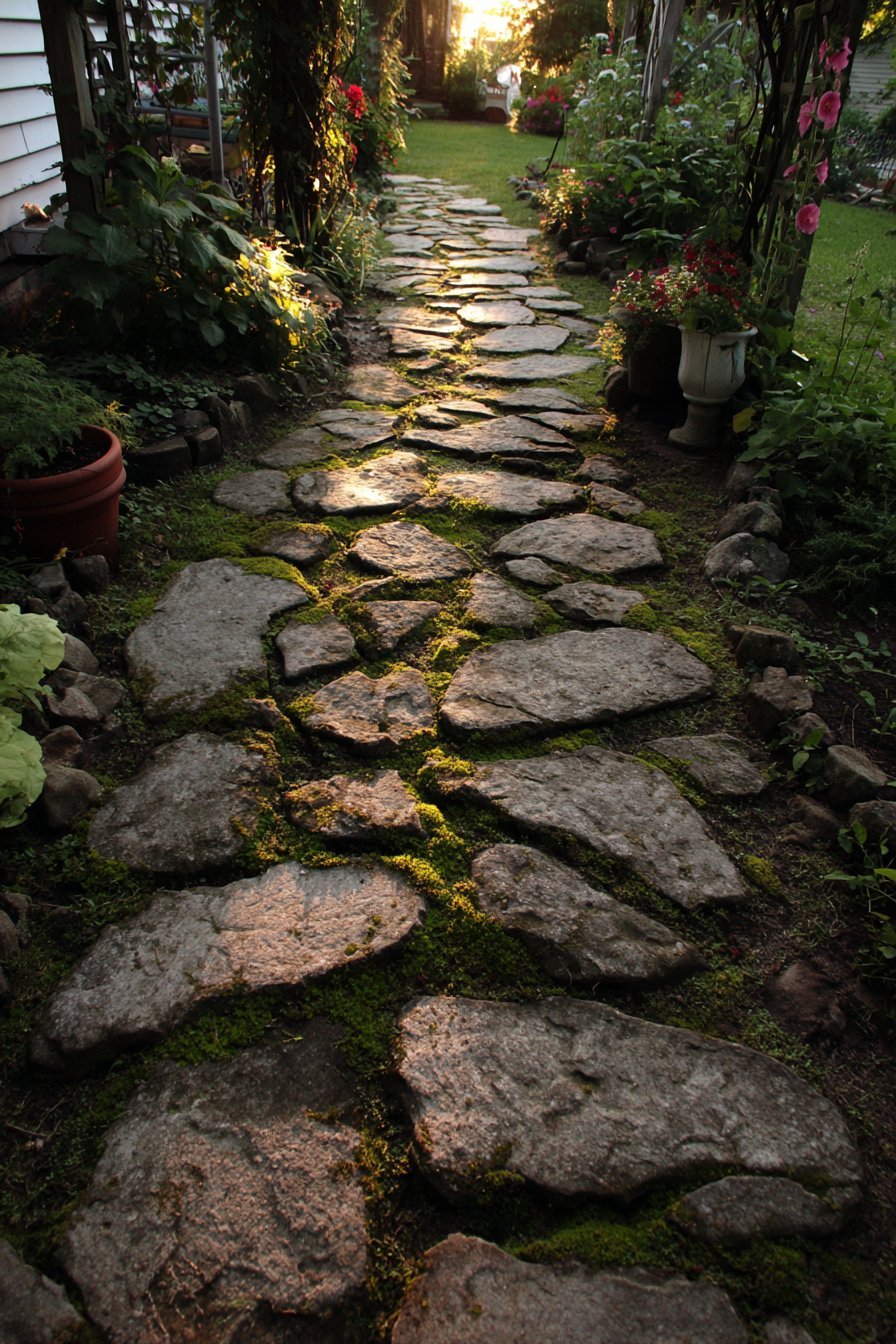
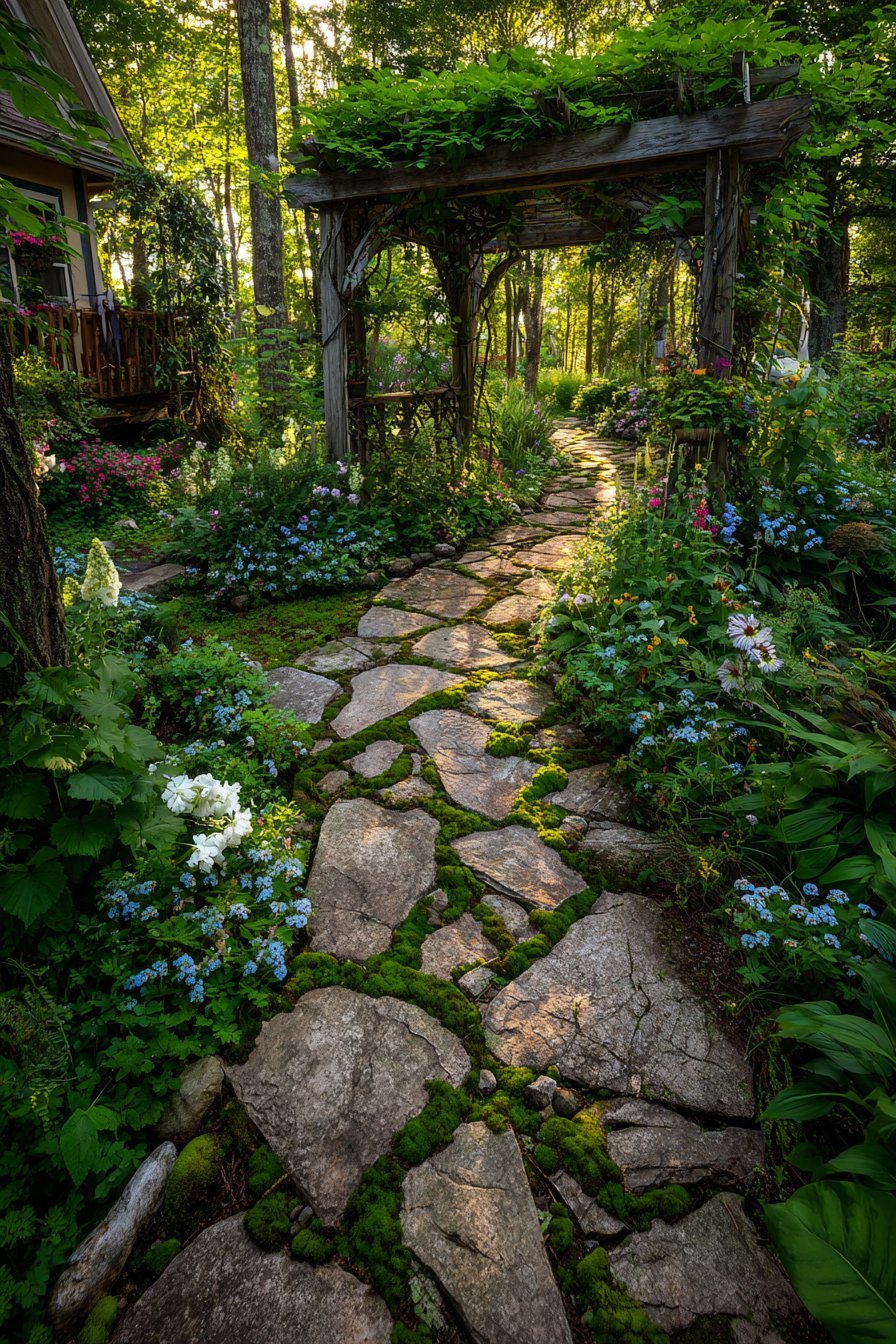
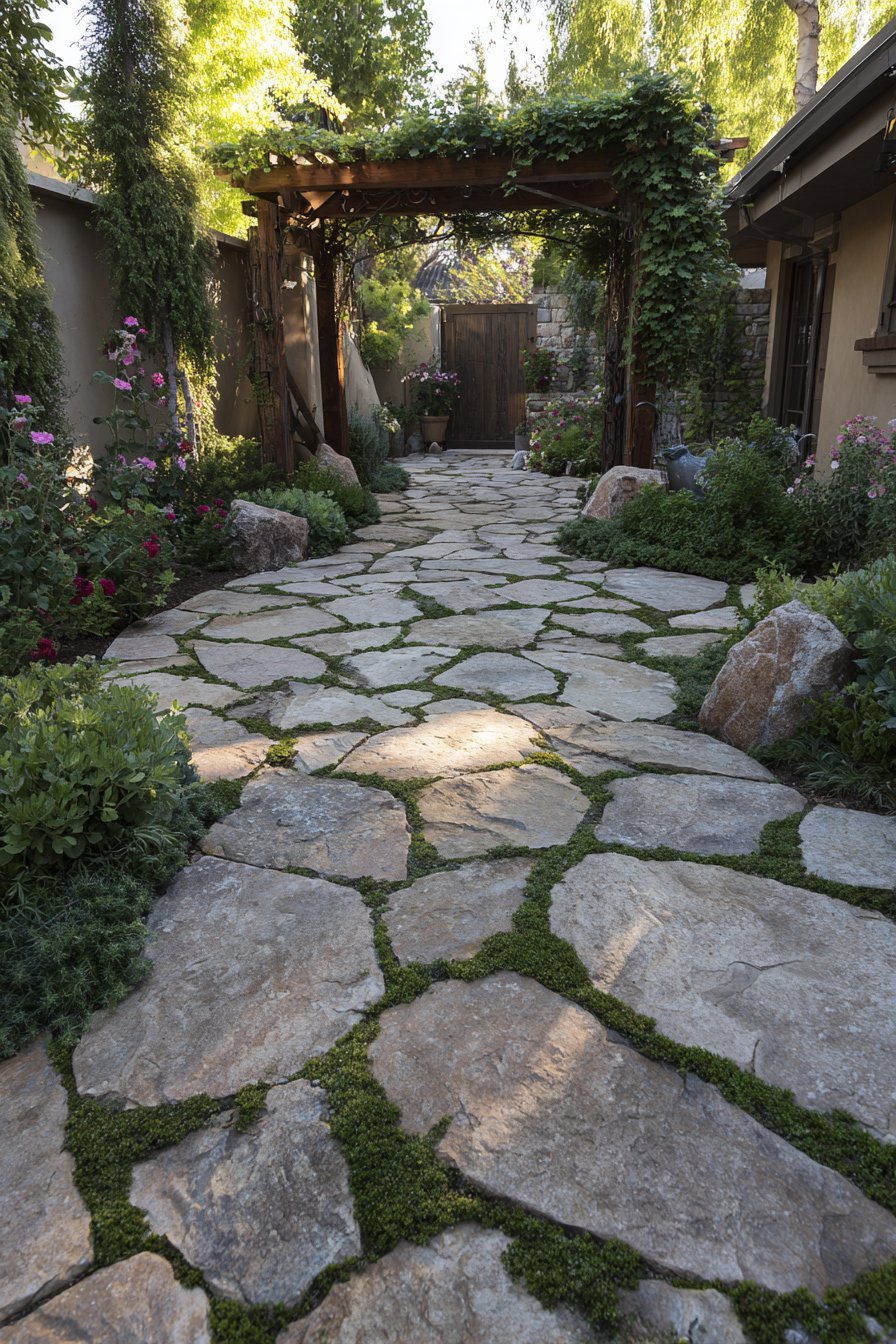
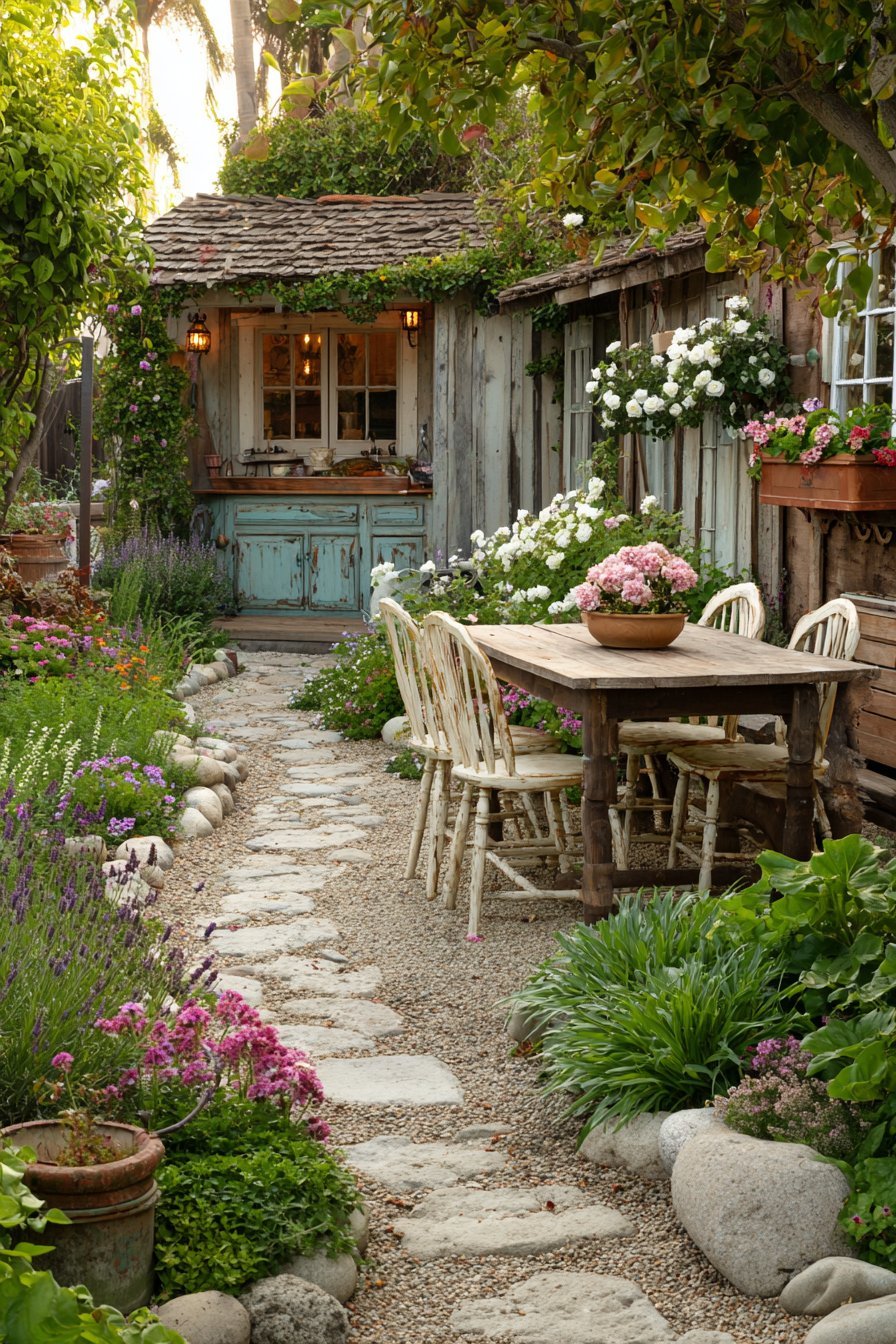
A curved flagstone pathway creates the backbone of this enchanting design. The natural stone winds through an English garden filled with lavender and roses. Climbing jasmine adds vertical interest and sweet fragrance. The organic layout invites exploration and discovery.
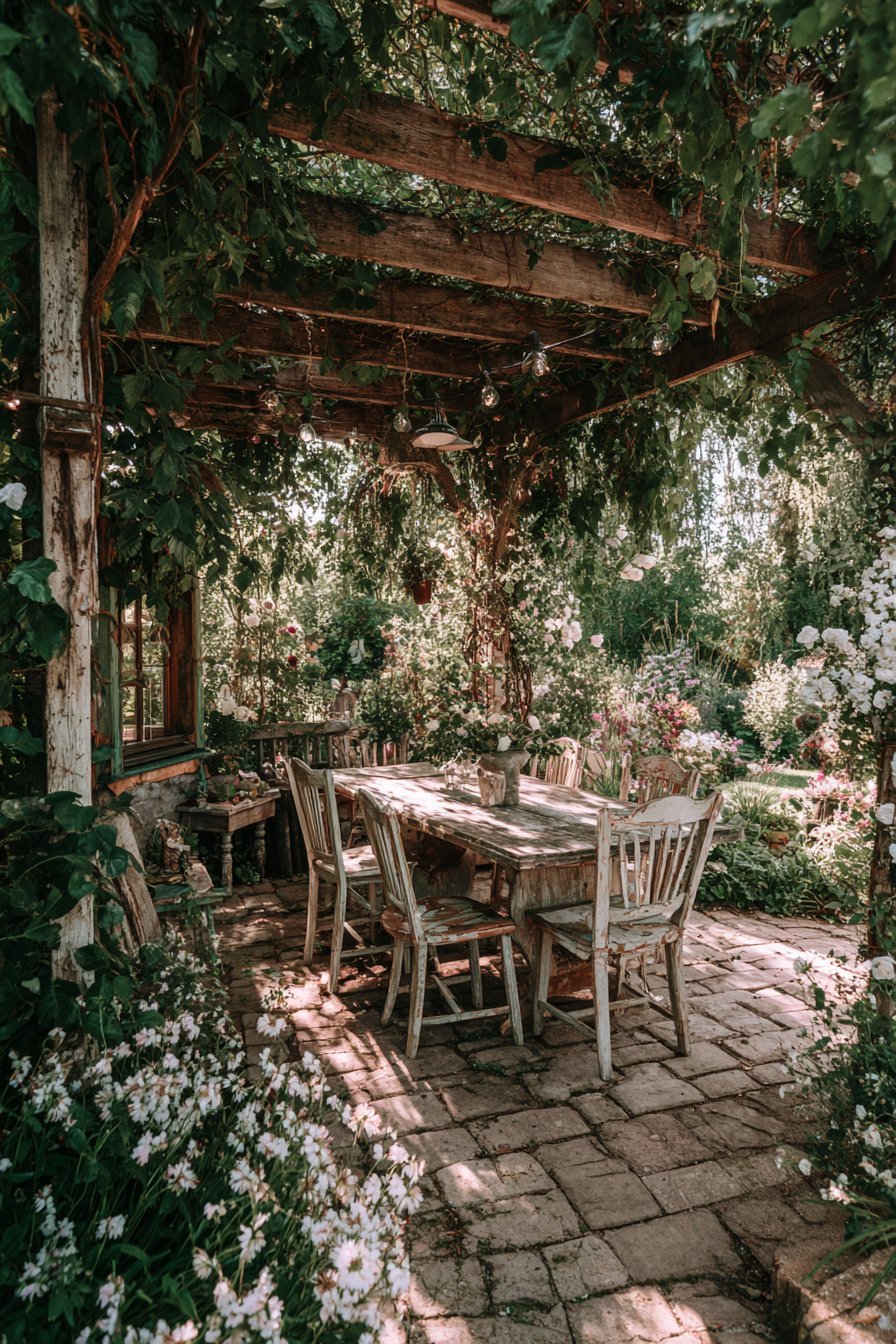
The pathway demonstrates thoughtful material selection. Flagstones provide durability while maintaining authentic cottage character. Their irregular shapes create visual interest. Gaps between stones allow low-growing plants to soften edges naturally. This technique adds to the romantic, established appearance.
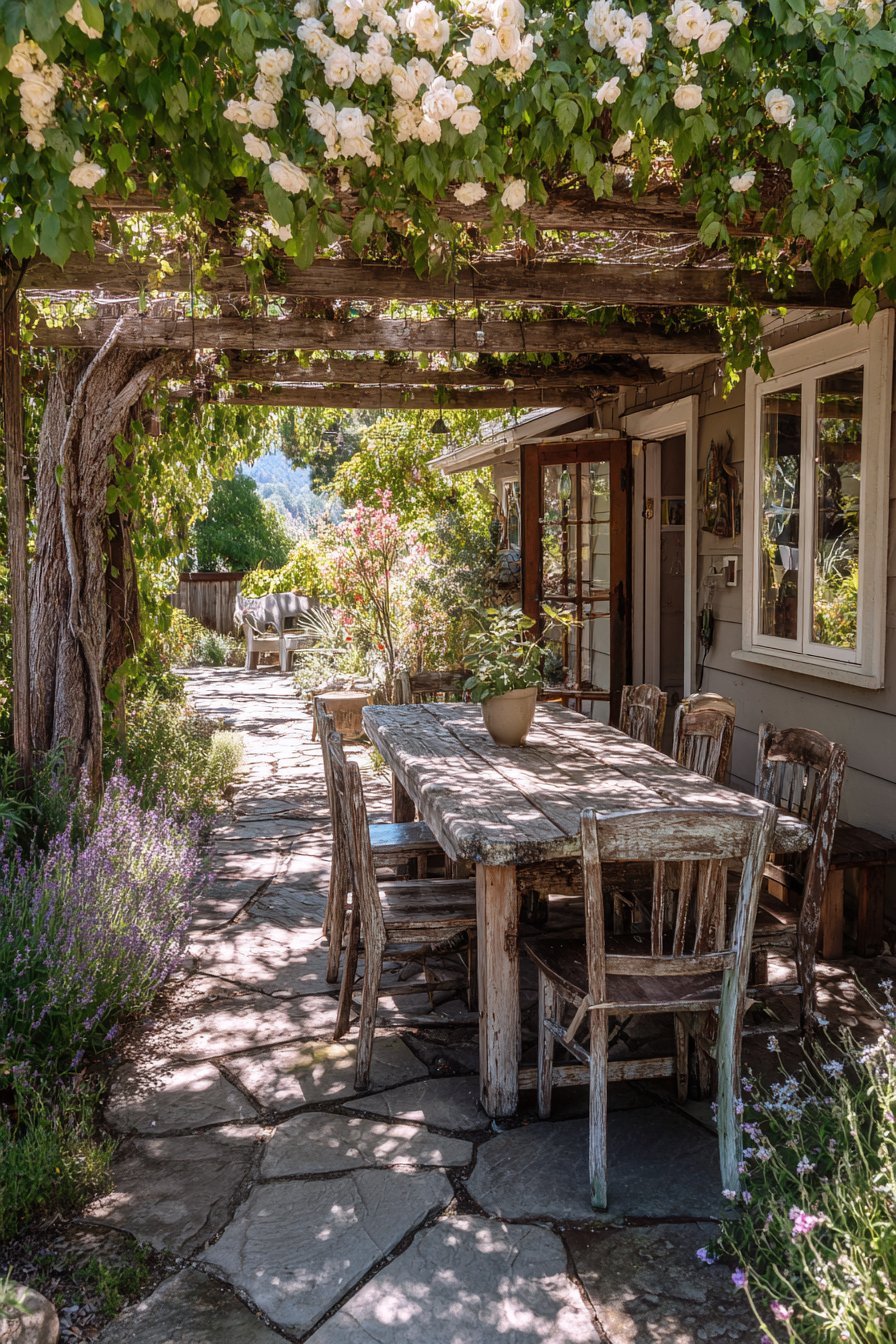
A weathered wooden arbor frames the entrance beautifully. Clematis vines drape over the structure in cascading abundance. The arbor creates a sense of transition and arrival. Beyond lies a small patio area perfect for morning coffee. Vintage terracotta pots in various sizes dot the space. Mixed herbs and cottage flowers fill these containers with life and color.
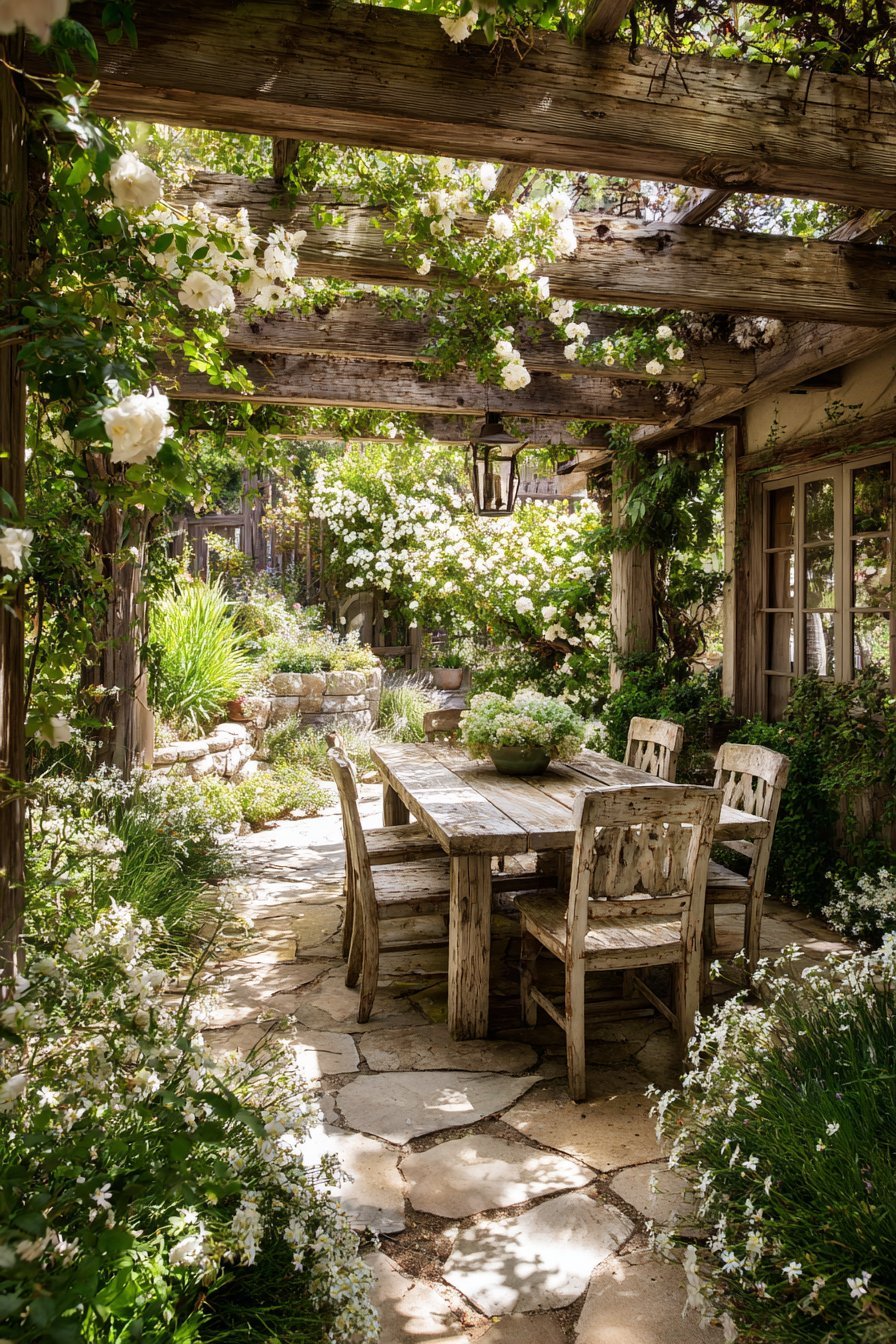
Natural afternoon lighting enhances every element. Sunlight filters through established trees overhead. Dappled shadows dance across the stone path. This interplay of light and shadow adds depth and dimension. The layered planting scheme creates a romantic, lived-in atmosphere.
Key Design Tips:
- Choose irregular flagstones for authentic cottage character and natural beauty
- Plant low-growing thyme or chamomile between stones for softness
- Position an arbor at key transition points to frame views
- Layer plantings from tall to short for dimensional interest
- Use vintage terracotta pots in mixed sizes for authentic charm
- Select fragrant plants like lavender and jasmine for sensory appeal
2. Vintage Garden Bench Retreat
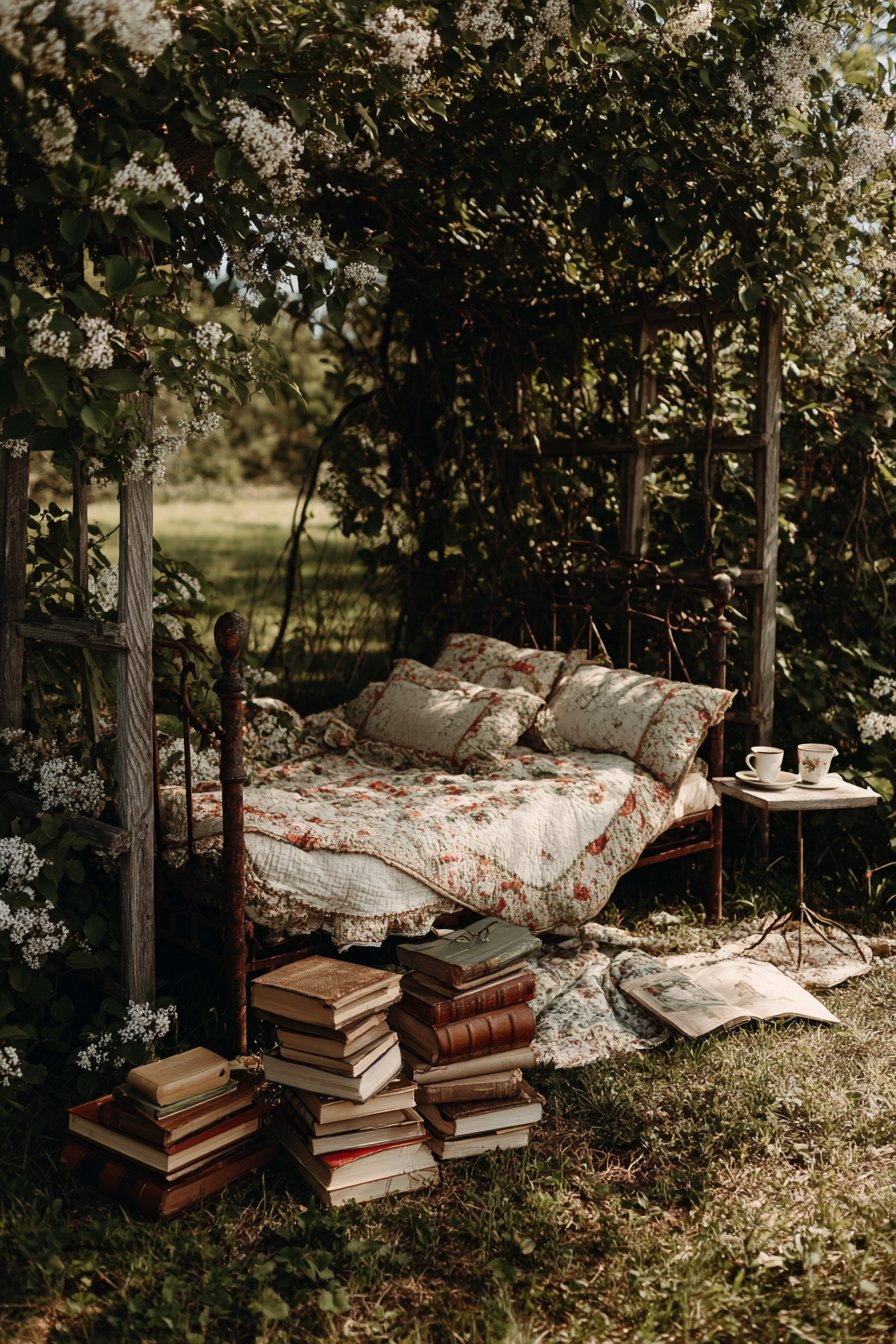
This intimate seating area showcases cottage romance at its finest. A distressed white painted wooden bench rests against climbing roses. The fence behind disappears under abundant blooms. Mismatched vintage cushions add comfort and personality. Faded florals mix with classic stripes creating visual warmth.
The furniture selection tells a story of collected treasures. The weathered bench shows authentic aging with peeling paint. This patina cannot be rushed or artificially replicated. Each imperfection adds character and history. The piece becomes a focal point through its genuine vintage appeal.
A small round metal bistro table completes the arrangement. Fresh-cut garden flowers fill a ceramic pitcher atop. This simple vignette captures the cottage entertaining spirit. The scale remains intimate and personal. Morning light illuminates textures beautifully. Paint layers and aged wood grain become artistic elements themselves.
Climbing roses provide the perfect backdrop for relaxation. Their fragrance enhances the sensory experience significantly. The roses also offer natural shade and privacy. This creates a secluded spot for reading or conversation. The combination of furniture and plants achieves cottage perfection.
Key Design Tips:
- Select furniture with authentic wear rather than artificially distressed pieces
- Mix cushion patterns for collected-over-time appearance
- Position seating to face established plantings or views
- Choose climbing roses for vertical interest and fragrance
- Add small side tables for functional charm
- Embrace peeling paint and weathered finishes as design features
3. Productive Raised Bed Garden
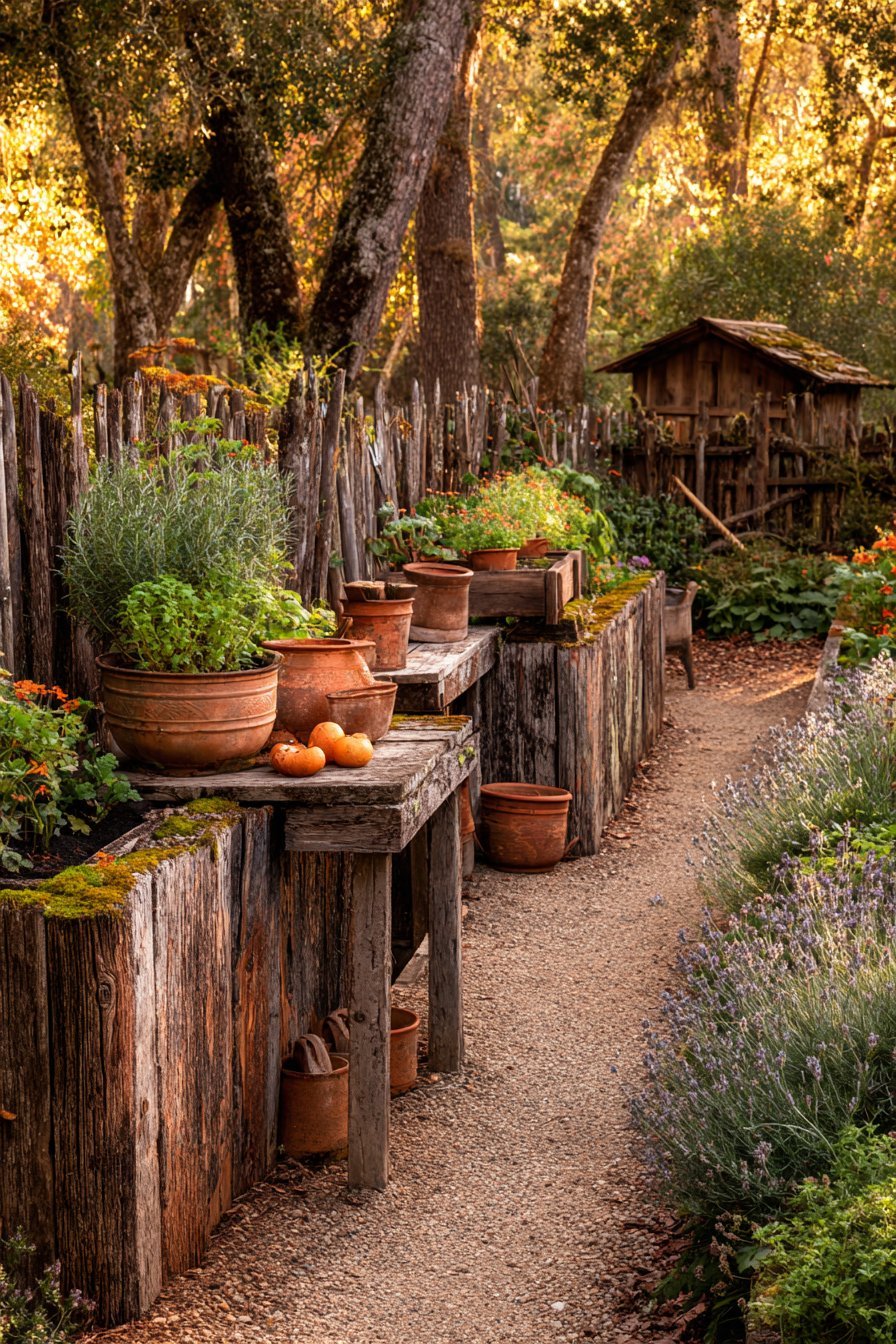
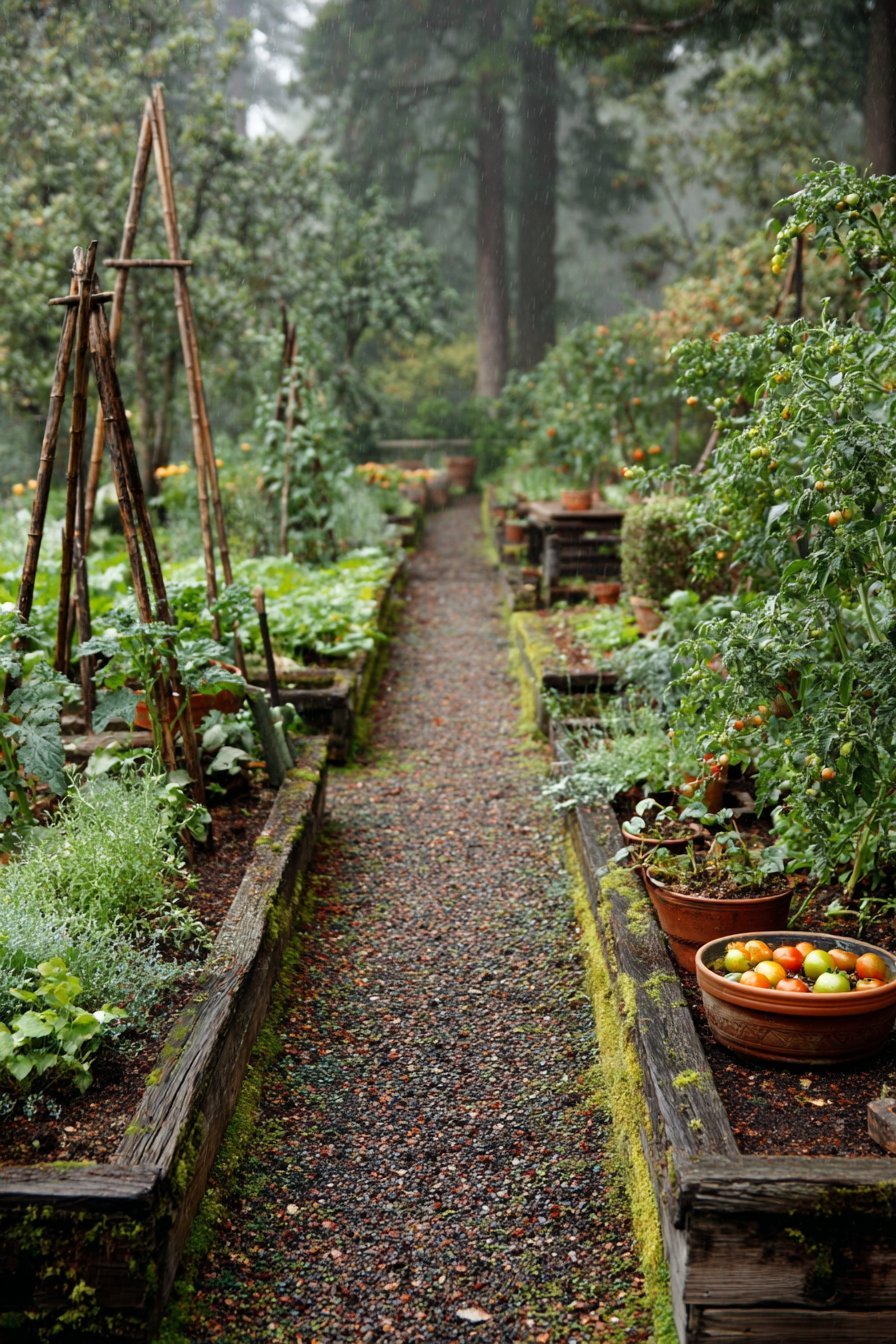
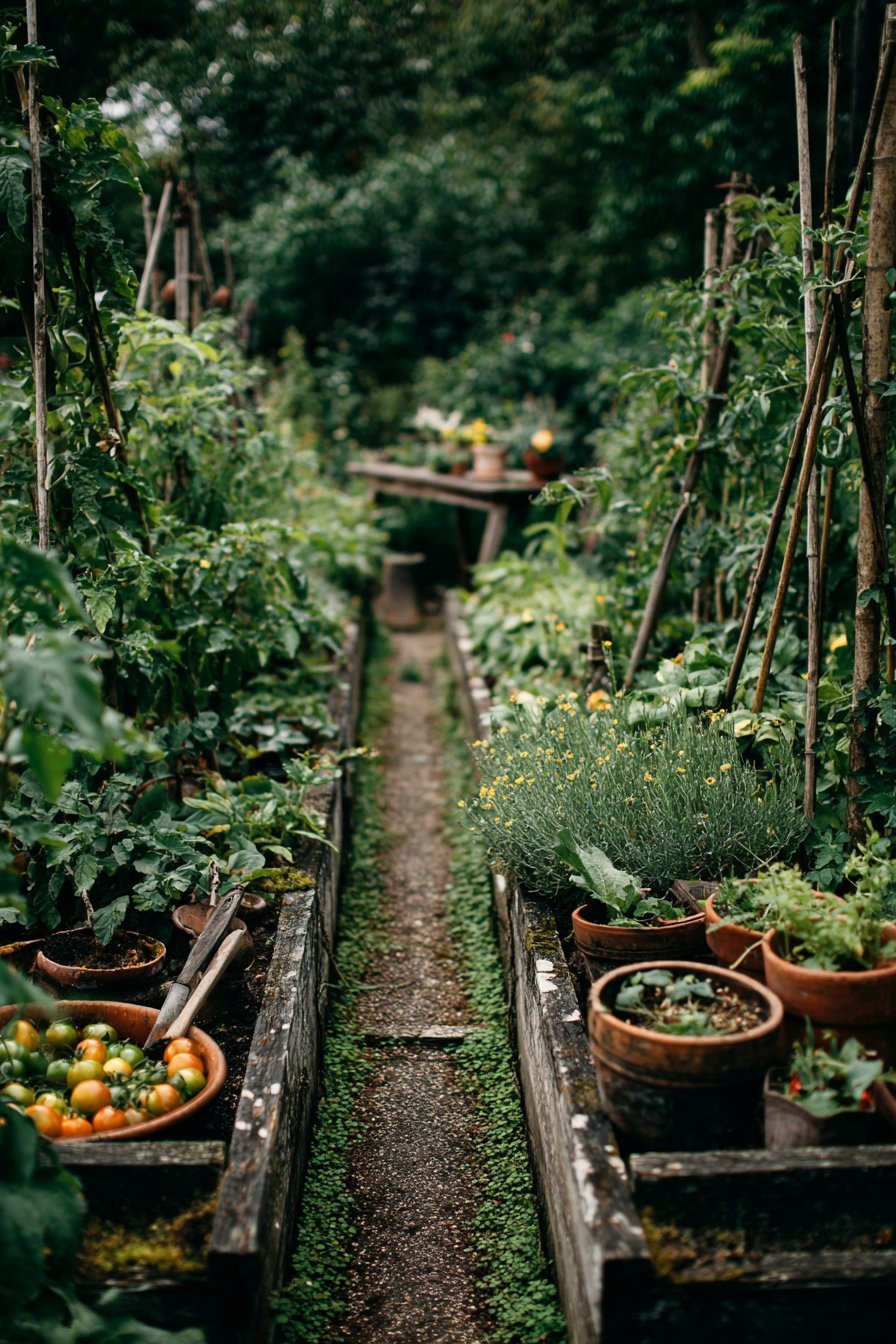
This vegetable garden celebrates cottage practicality and beauty together. Raised beds constructed from reclaimed barn wood create organized growing spaces. The weathered wood brings instant character and history. Neat rows of heirloom tomatoes stand on handmade stakes. Lettuce, herbs, and climbing beans complete the productive arrangement.
The layout demonstrates traditional cottage garden principles beautifully. Functionality meets aesthetic appeal in every detail. Gravel paths separate the raised beds efficiently. These pathways remain clean and weed-free throughout growing seasons. Low-growing thyme and chamomile border the gravel. Their fragrance releases with every footstep.
Rustic trellis structures support climbing plants vertically. These handmade supports add architectural interest. They maximize space while maintaining cottage authenticity. A small potting bench holds essential tools nearby. A vintage watering can rests ready for daily tasks.
Golden hour lighting transforms this productive space. Warm directional light emphasizes texture and dimension. The organized yet informal layout epitomizes cottage gardening. Beauty and function coexist in perfect harmony. This design proves vegetable gardens can be stunning features.
Key Design Tips:
- Build raised beds from reclaimed wood for instant character
- Plant heirloom varieties for authentic cottage garden appeal
- Create gravel paths for clean, low-maintenance access
- Add fragrant ground covers along path edges
- Make handmade trellises from natural materials like bamboo
- Include a small potting bench for functional workspace
4. Rustic Farm Table Dining
This outdoor dining area captures cottage entertaining perfectly. A rustic wooden farm table anchors the space beautifully. Mismatched vintage chairs surround it with character. The worn brick patio provides a weathered foundation. String lights with Edison bulbs hang overhead creating magic.
The dining setup tells stories of gathered friends and family. Simple white ironstone dishes set the table elegantly. Linen napkins add soft texture and natural beauty. Garden-gathered wildflowers fill a vintage mason jar centerpiece. These unpretentious elements combine into something special.
Established trees provide natural framework for string lighting. The lights suspend between branches creating a canopy effect. Evening brings transformation as bulbs begin glowing. Natural twilight combines with warm artificial light beautifully. This layered lighting creates an inviting atmosphere.
Climbing roses and wisteria frame the dining space romantically. An old stone wall provides backdrop and shelter. These vertical elements add enclosure without claustrophobia. The result feels intimate yet open. This balance defines successful cottage outdoor rooms.
Key Design Tips:
- Choose a sturdy farm table that accommodates various group sizes
- Mix chair styles for collected vintage character
- String Edison bulb lights between existing trees or structures
- Keep table settings simple with white dishes and linen
- Gather flowers from the garden for fresh centerpieces
- Position dining areas near climbing plants for natural walls
5. Charming Garden Shed Sanctuary
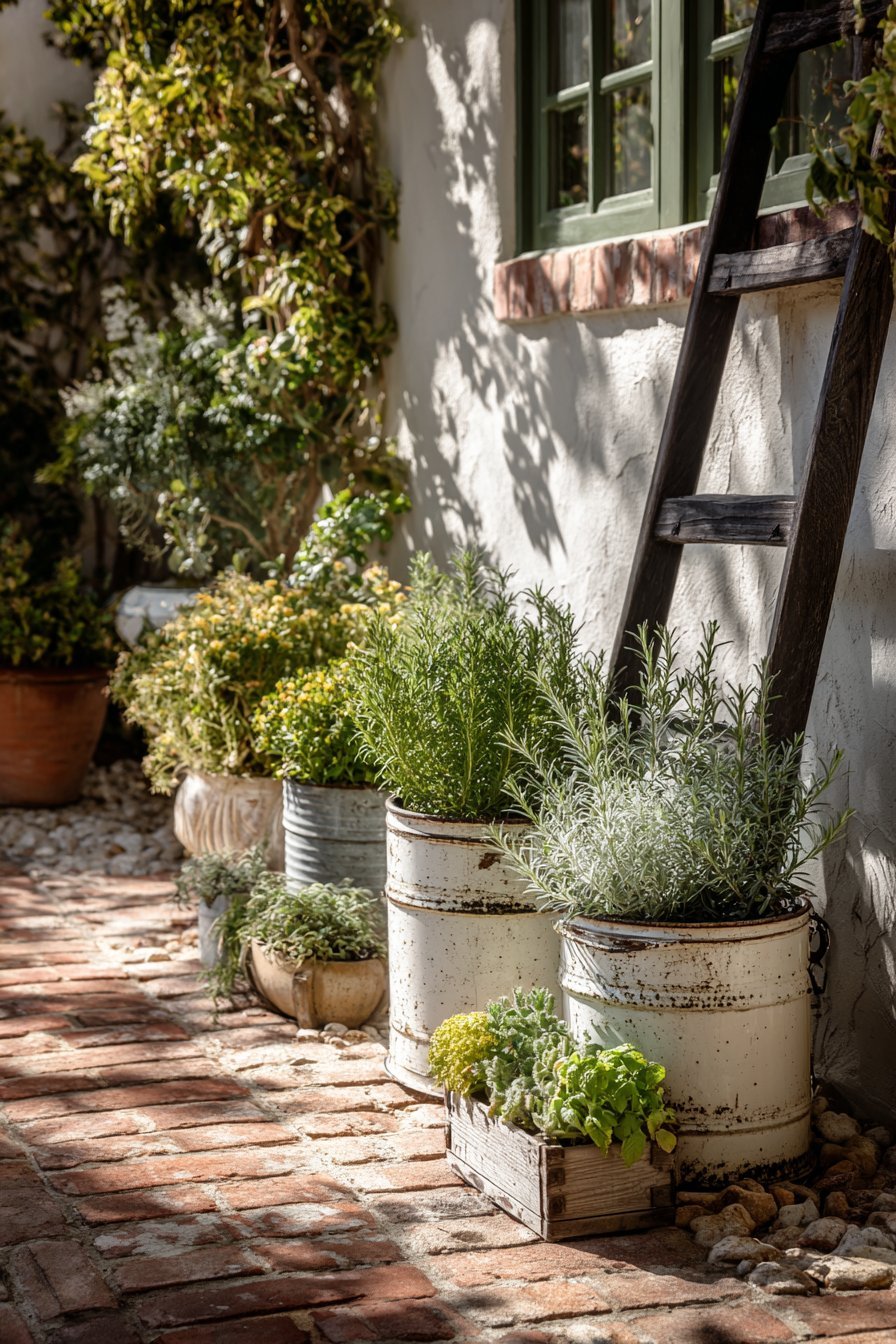
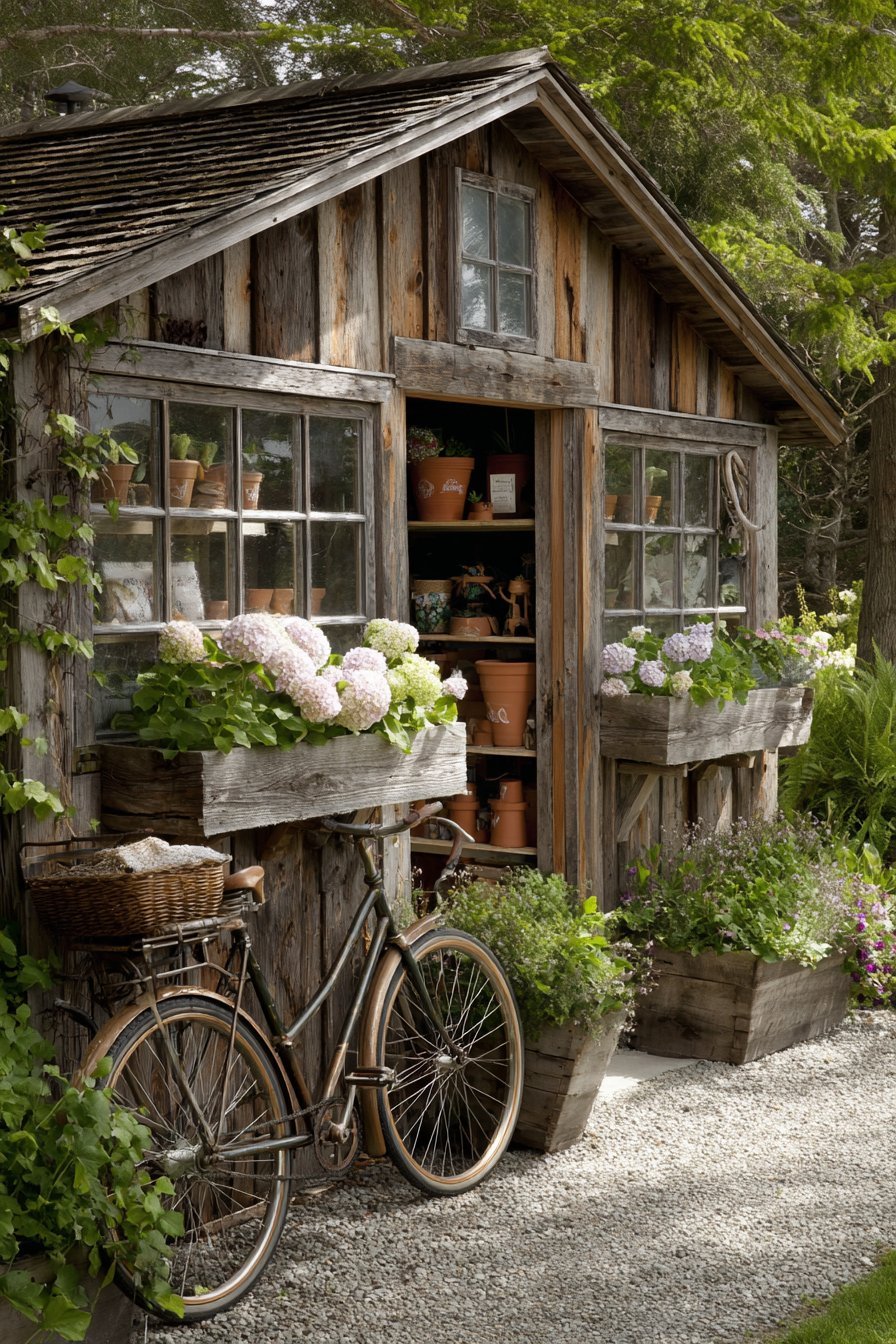
A cottage garden shed painted soft sage green becomes a focal point. White trim and a weathered red door add classic detail. Window boxes overflow with trailing geraniums and ivy. This structure provides storage while enhancing garden beauty. Vintage garden tools hang decoratively on exterior walls.
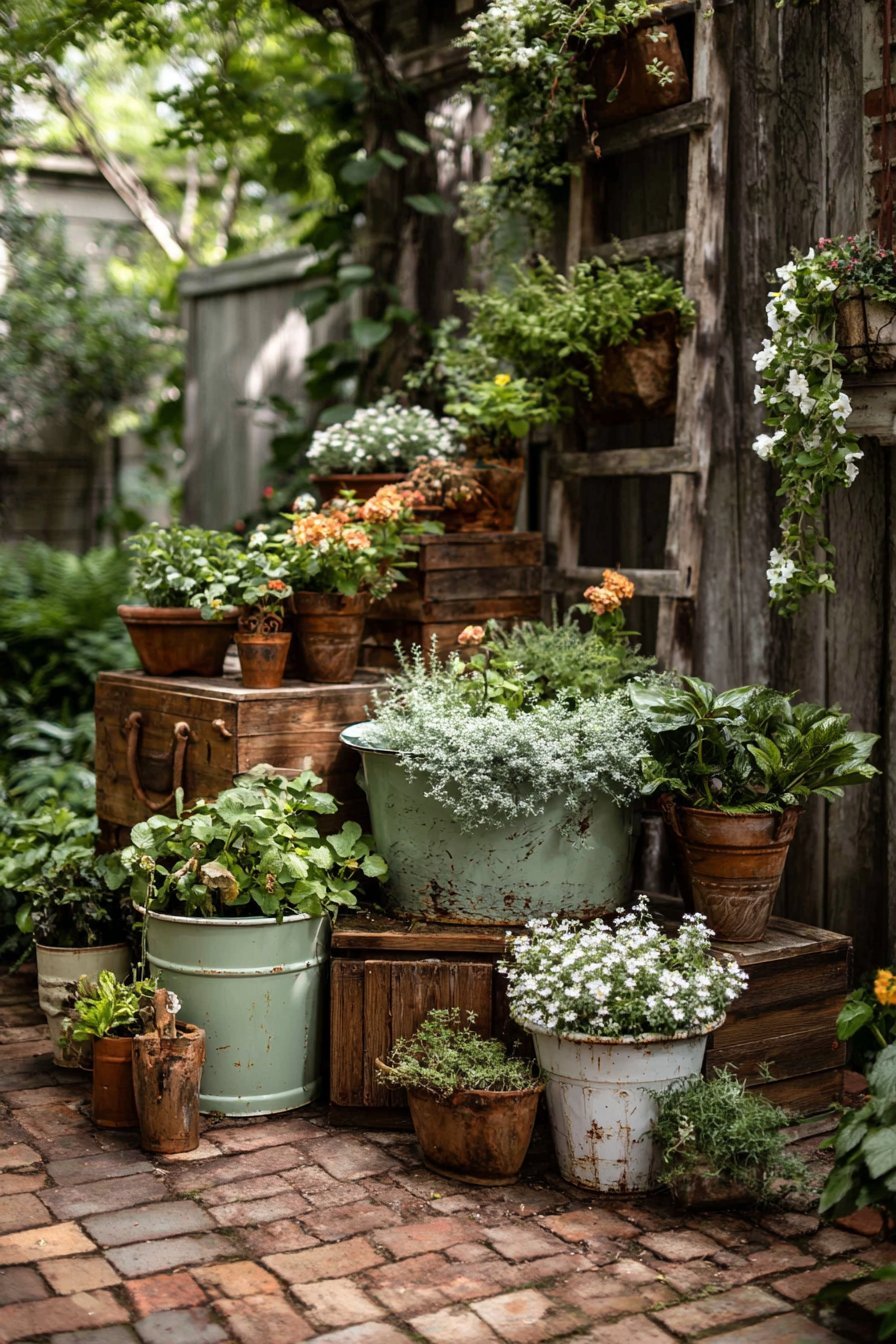
The shed demonstrates how functional buildings add charm. Clay pots stack beside the entrance in ready abundance. A climbing hydrangea covers one side naturally. The living wall softens hard architectural lines beautifully. This integration of structure and plants defines cottage design.
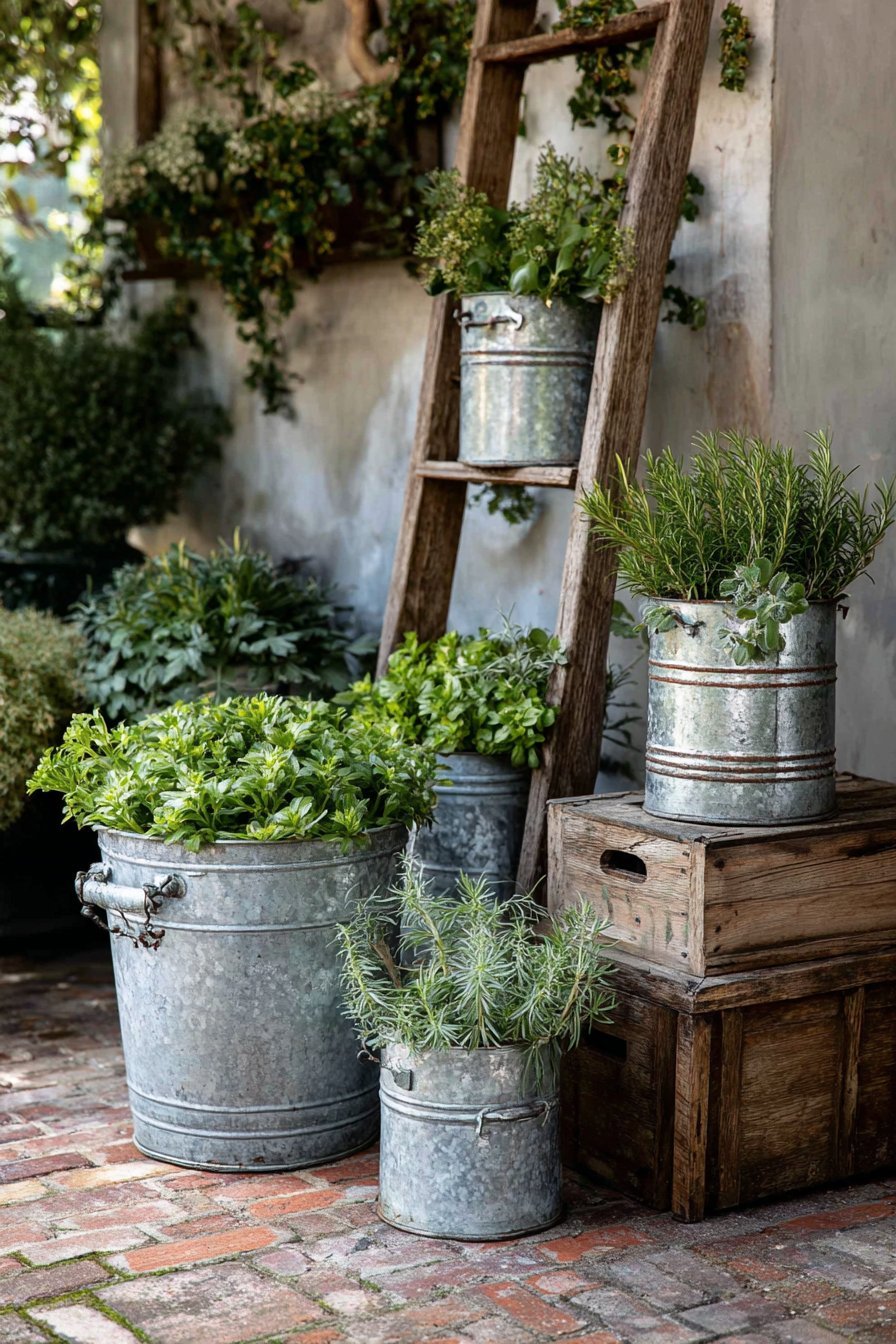
Strategic placement maximizes the shed’s visual impact. It sits on gravel surrounded by perennial borders. Hollyhocks, delphiniums, and foxgloves provide colorful context. These tall flowers create natural proportion with the building. The shed becomes part of the garden rather than separate.
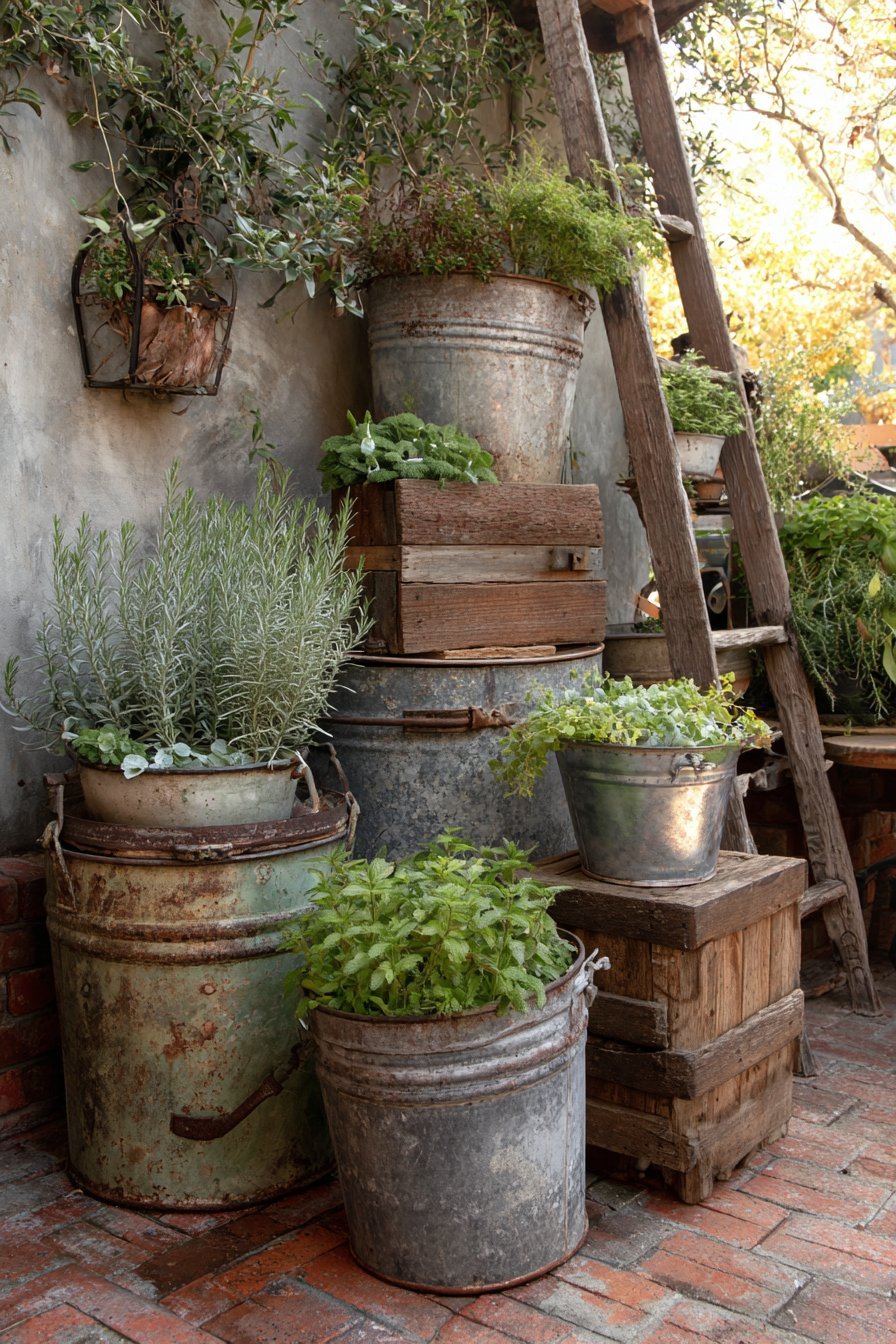
Natural overcast lighting reveals true colors and textures. Even illumination showcases the charming cottage details. Weathered wood grain shows through painted surfaces authentically. This patina develops naturally over time. The result feels genuinely aged rather than artificially created.
Key Design Tips:
- Paint sheds in soft heritage colors like sage, cream, or dove gray
- Add window boxes for continuous flower display
- Hang vintage tools as decorative elements
- Allow climbing plants to cover portions of the structure
- Surround with tall perennials for integrated appearance
- Choose weathered materials that age beautifully
6. Tranquil Stone Trough Fountain
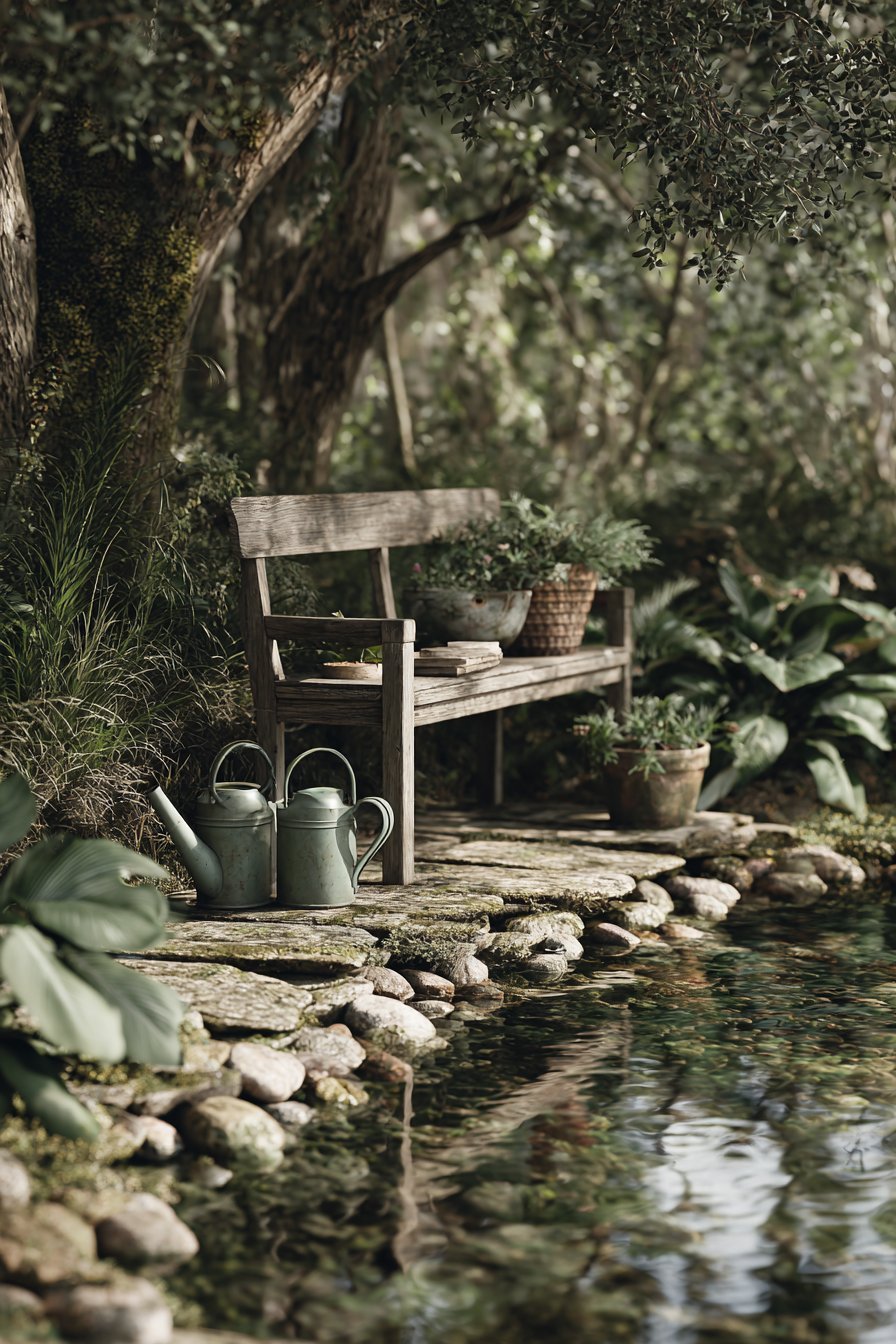
This peaceful water feature centers on a reclaimed stone trough. Water trickles gently from an old brass spigot. The weathered stone basin shows years of character. Ferns, hostas, and moss-covered rocks surround the fountain. Small pebbles fill the base creating natural transitions.
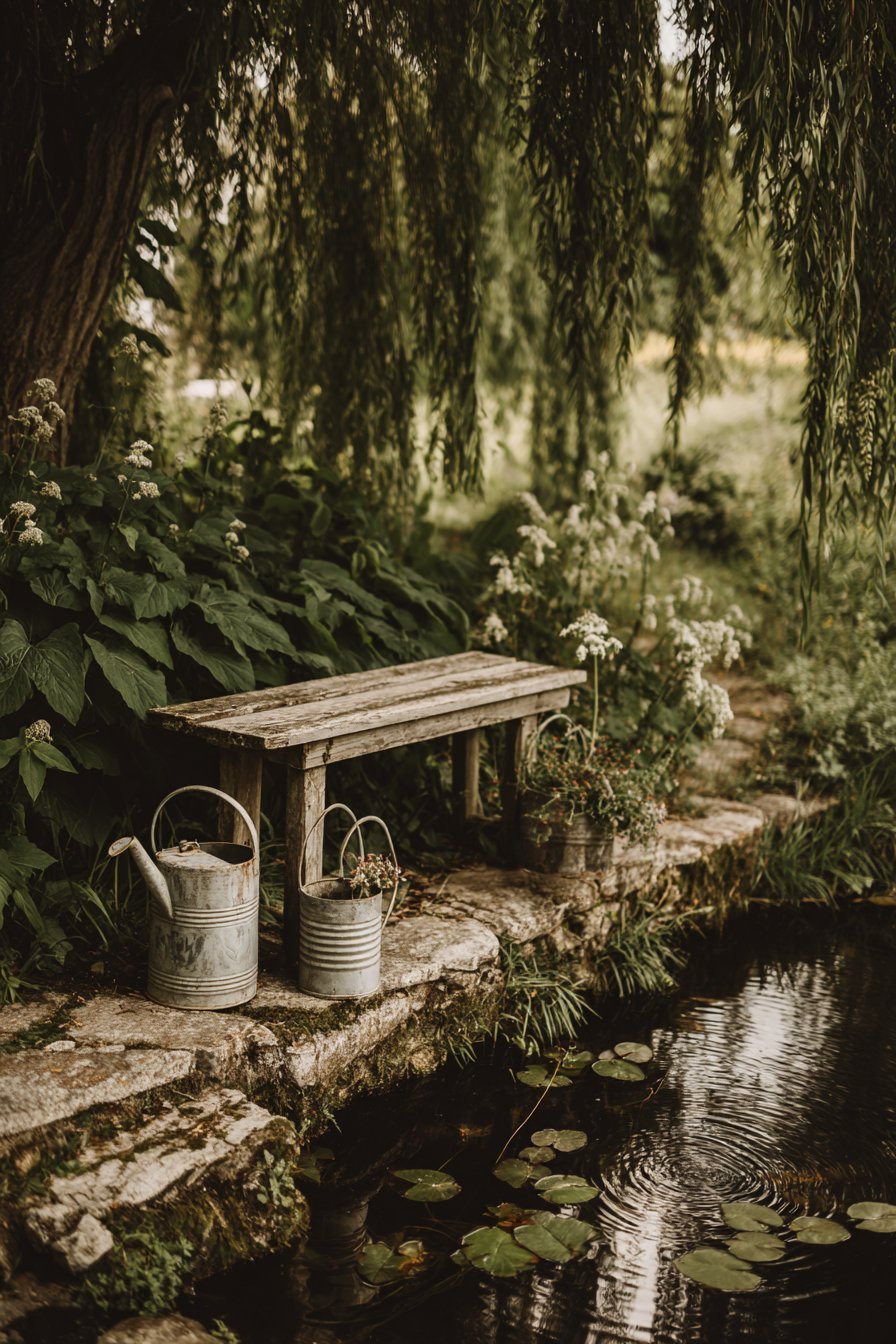
The fountain demonstrates cottage gardens’ love of salvaged materials. The stone trough likely served another purpose originally. Repurposing adds history and sustainability to design. The brass spigot provides authentic vintage detail. These elements combine into something greater than their parts.
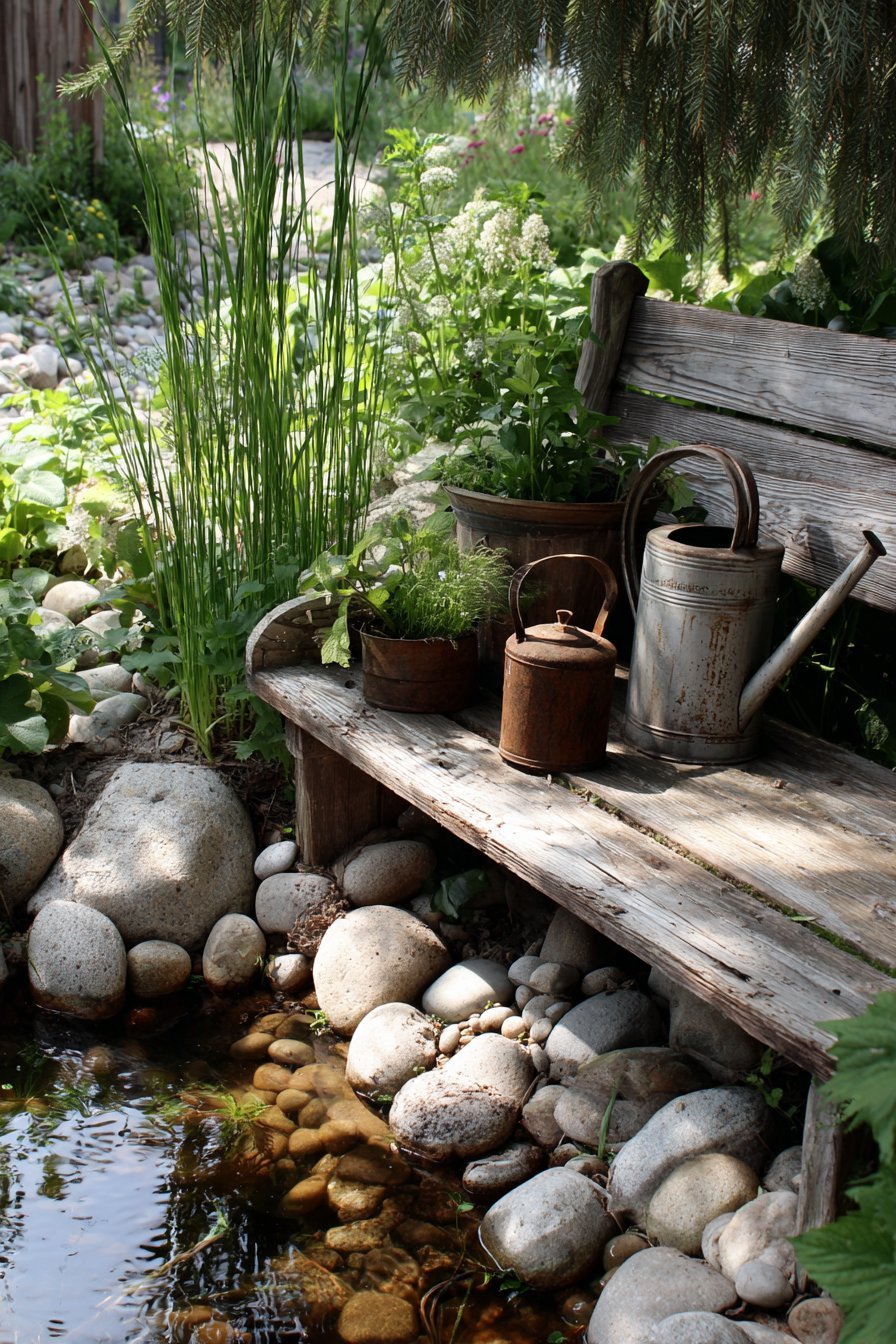
Shade-loving plants thrive in this cool, moist microclimate. The plantings create naturalistic settings around the water. Moss grows organically on rocks and edges. This growth happens naturally when conditions support it. The effect cannot be rushed or forced successfully.
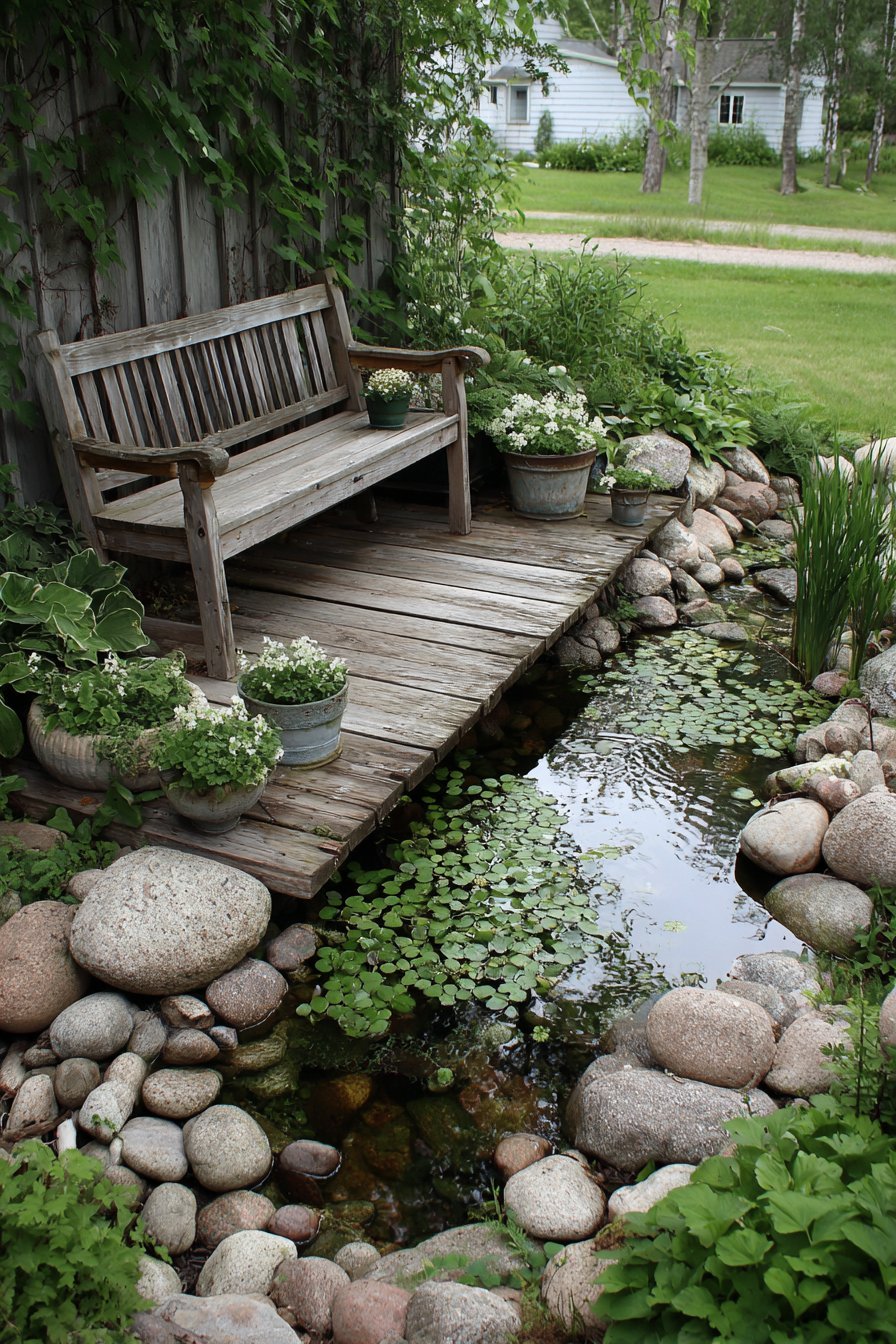
A worn stone path leads to a simple wooden bench. The positioning allows enjoyment of running water sounds. Soft morning light filters through the tree canopy overhead. It highlights water movement and lush green textures. This creates a peaceful cottage garden sanctuary.
Key Design Tips:
- Source reclaimed stone troughs from salvage yards or antique dealers
- Keep water movement gentle for peaceful sound quality
- Plant shade-lovers like ferns and hostas around water features
- Allow moss to develop naturally on stones and edges
- Position seating to maximize enjoyment of water sounds
- Create naturalistic settings rather than formal arrangements
7. Abundant Fence Line Planting
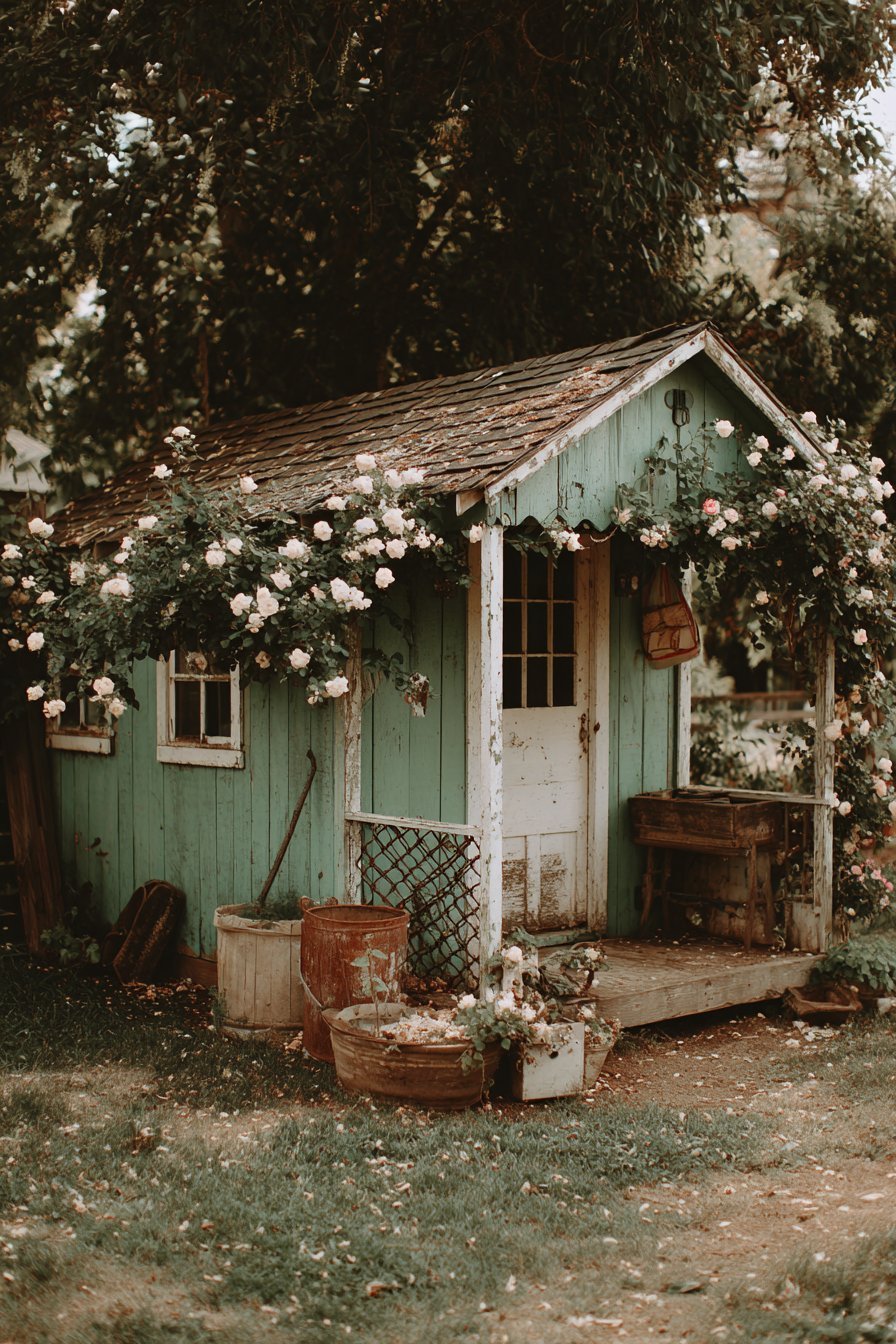
Traditional white picket fencing provides structure for this design. The fence partially disappears under generous plantings. Climbing roses, clematis, and honeysuckle weave through pickets. This vertical layering creates privacy and beauty simultaneously. Tall delphiniums and foxgloves stand in front proudly.
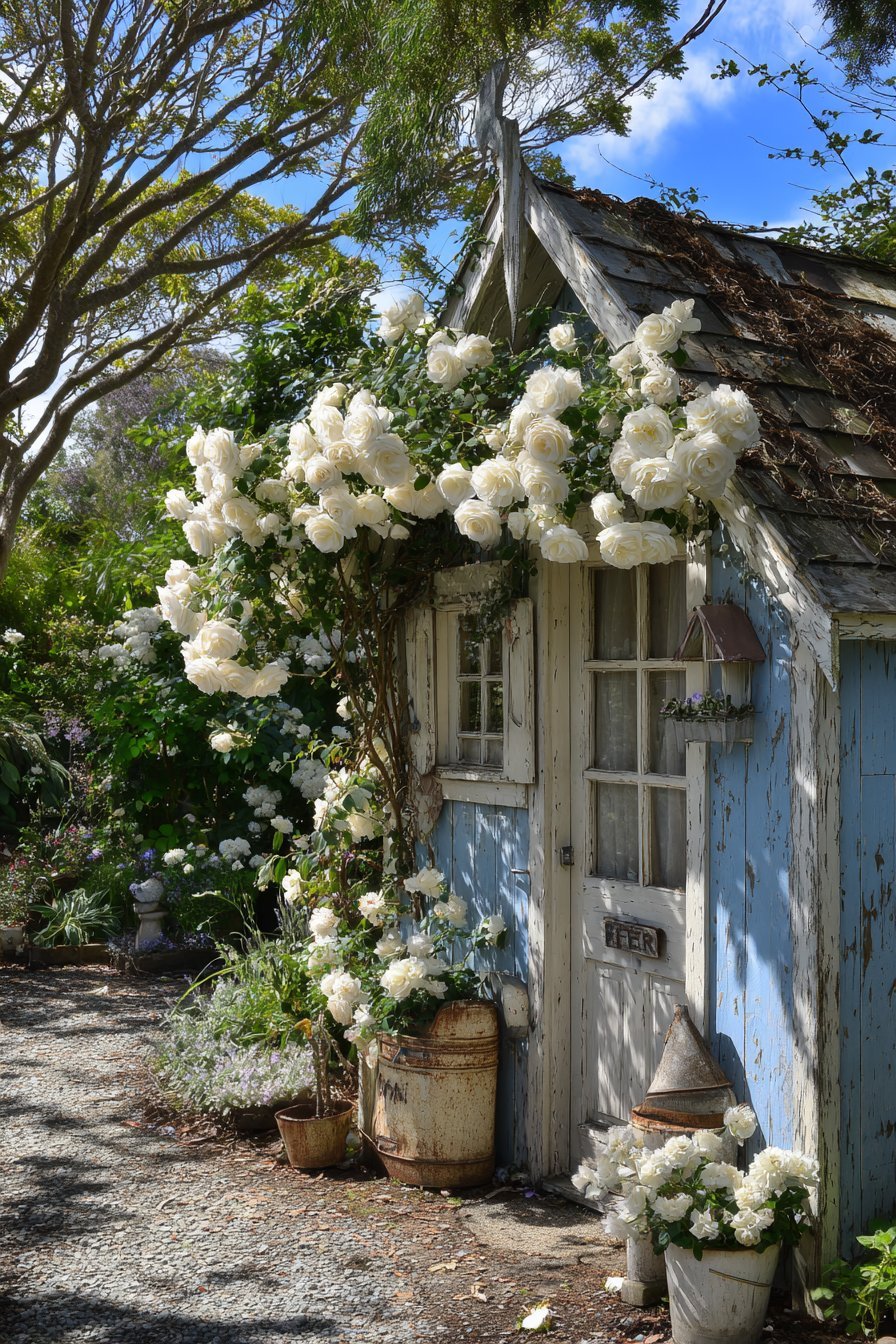
The planting scheme demonstrates classic cottage garden technique. Multiple plant types occupy the same space harmoniously. Different bloom times ensure continuous color and interest. Lower-growing catmint and lady’s mantle spill onto grass edges. This creates soft transitions without harsh lines.
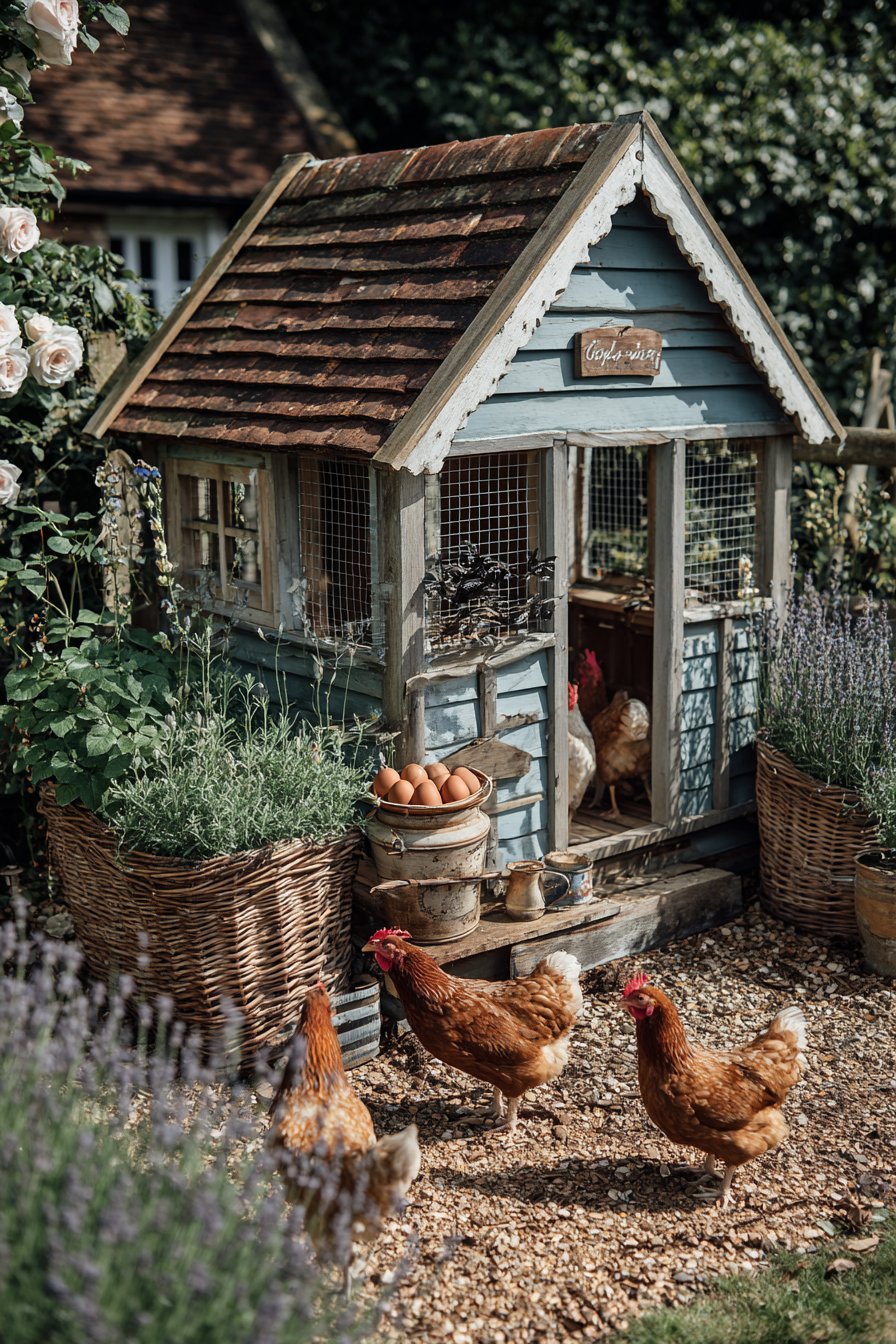
An old wooden gate shows authentic wear and character. Wrought iron hinges display craftsmanship from another era. The gate becomes an architectural feature worth highlighting. Plantings frame it rather than obscure it completely. This balance maintains functionality while adding beauty.
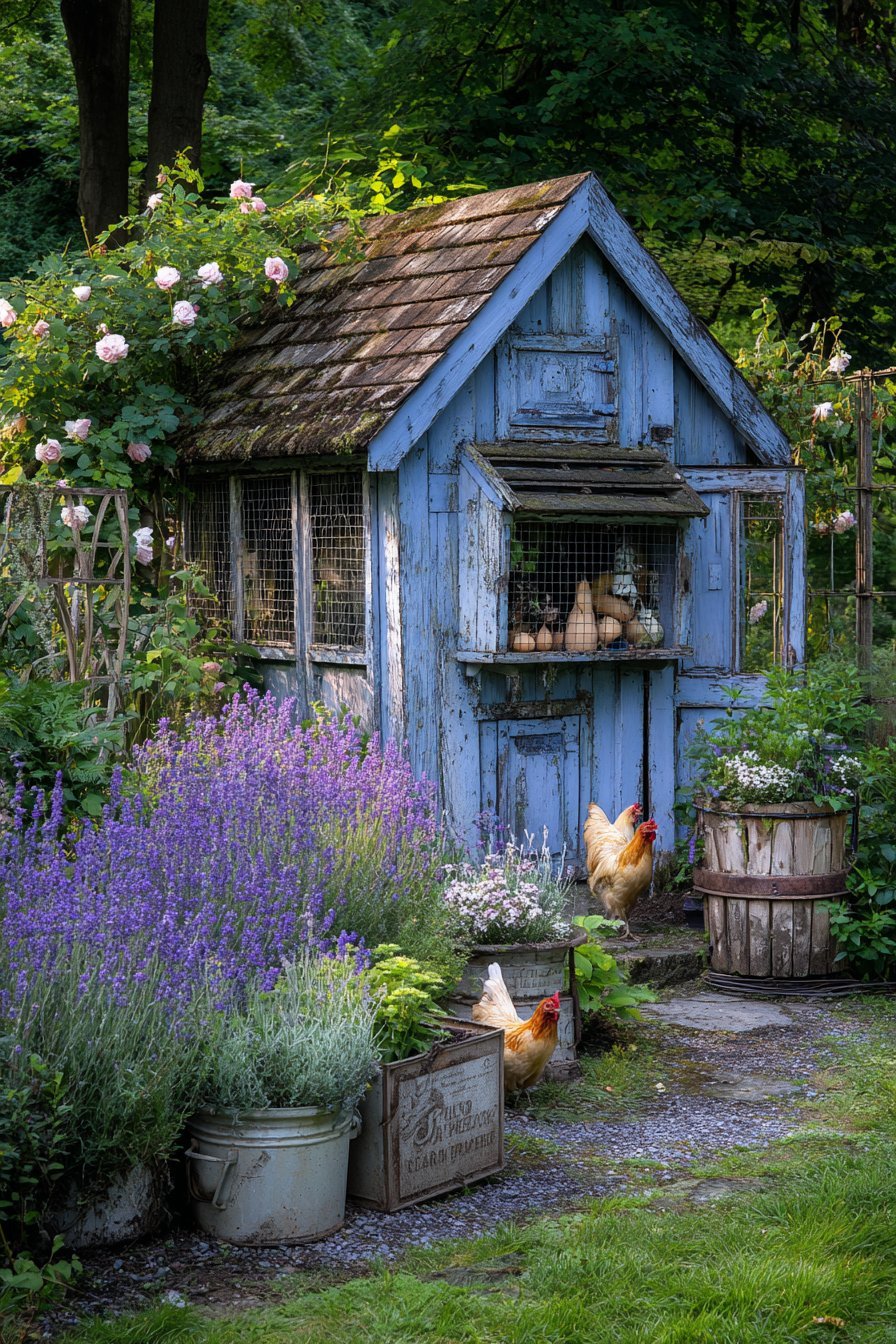
Afternoon sunlight backlights the flowers creating magic. Translucent petals glow with inner light. The romantic effect epitomizes cottage garden dreams. Generous, informal planting style defines this aesthetic. The abundance feels natural rather than forced or contrived.
Key Design Tips:
- Plant climbing vines to soften and beautify fence lines
- Layer tall, medium, and low plants for dimensional interest
- Choose plants with different bloom times for continuous color
- Allow plants to spill naturally onto lawn edges
- Preserve architectural features like gates as focal points
- Embrace generous planting density for authentic cottage abundance
8. Intimate Fire Pit Gathering
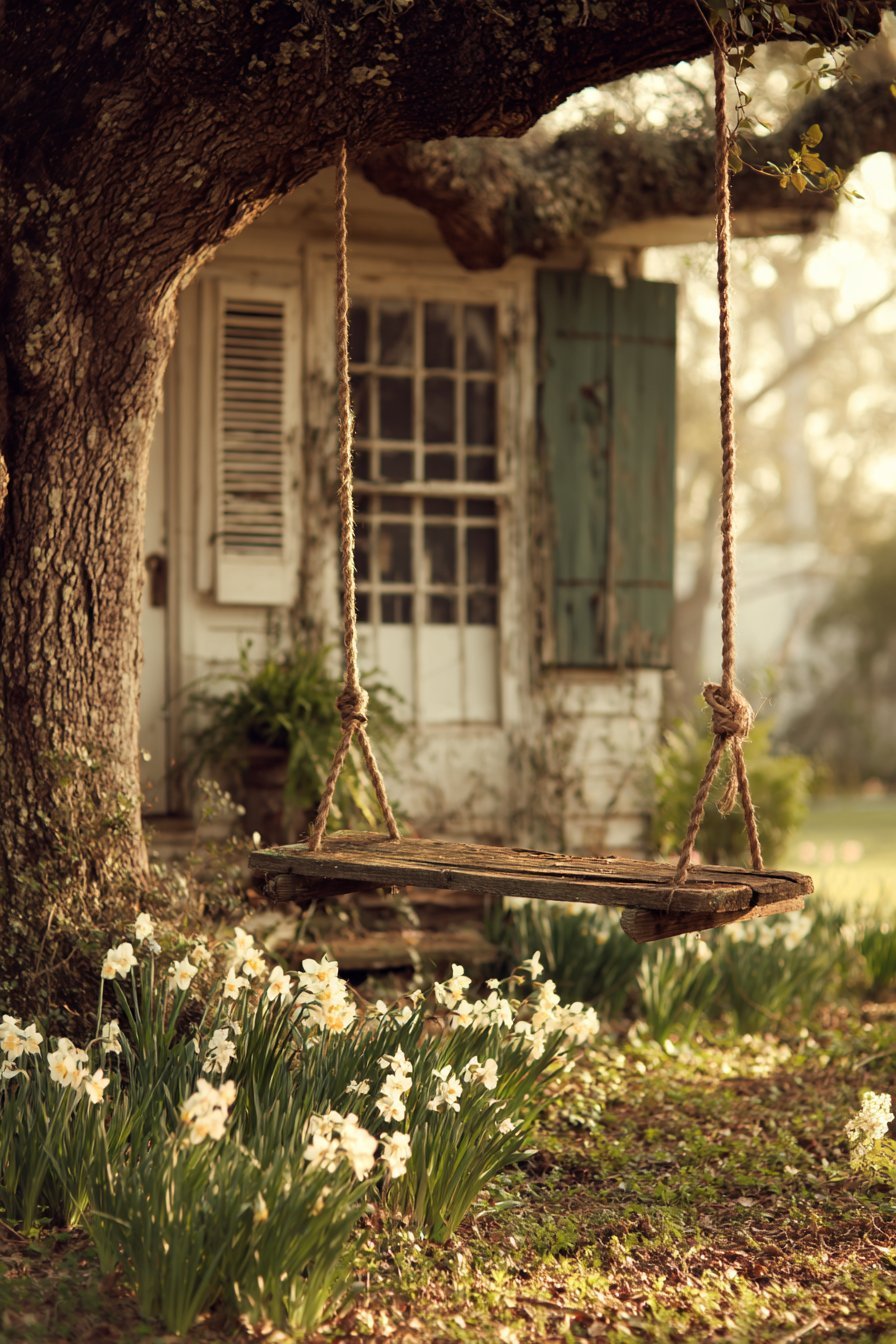
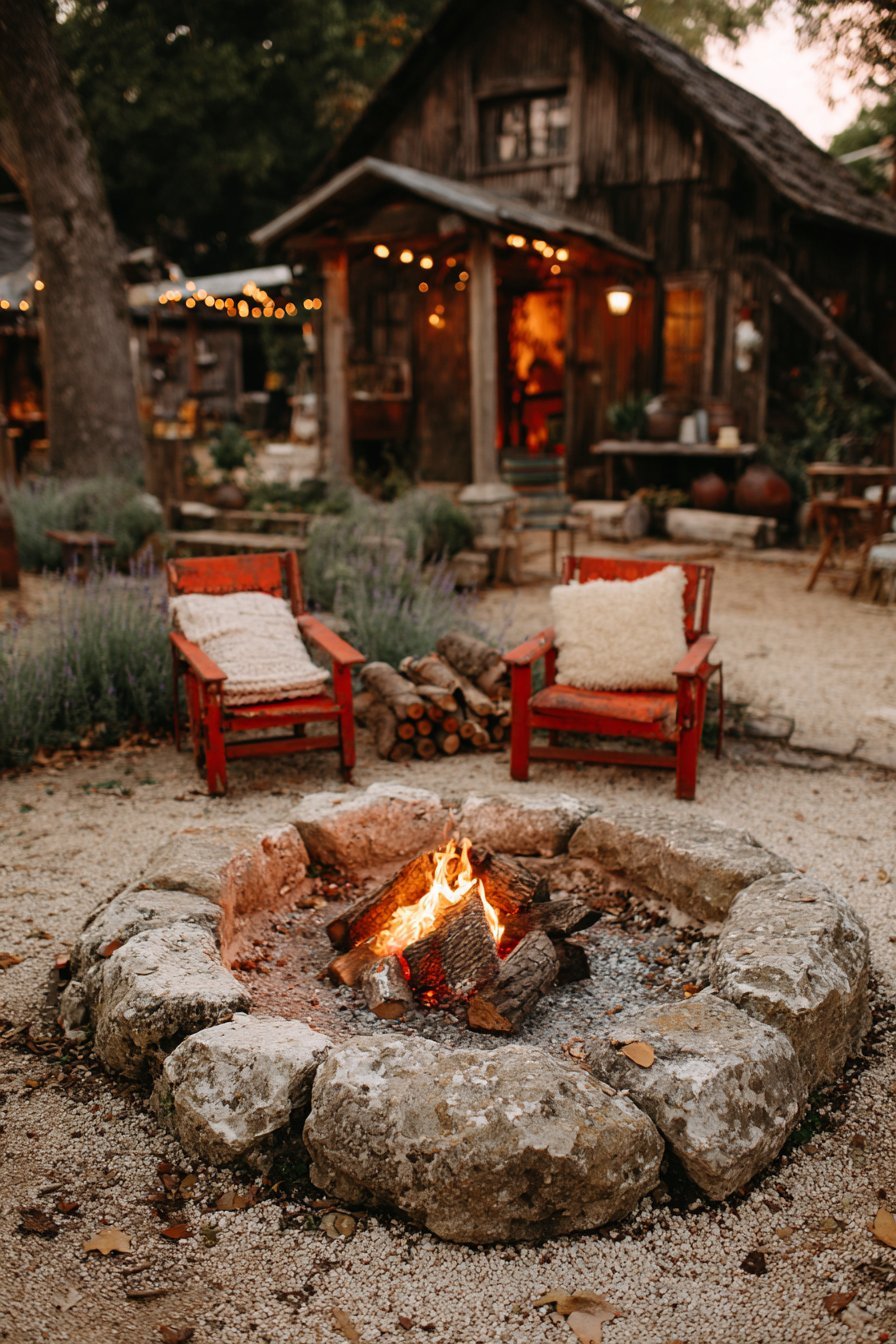
A circular stone fire ring anchors this casual seating area. Mismatched vintage metal outdoor chairs surround it informally. A weathered Adirondack chair adds additional seating character. The arrangement encourages conversation and connection. Fragrant herbs planted nearby enhance evening gatherings.
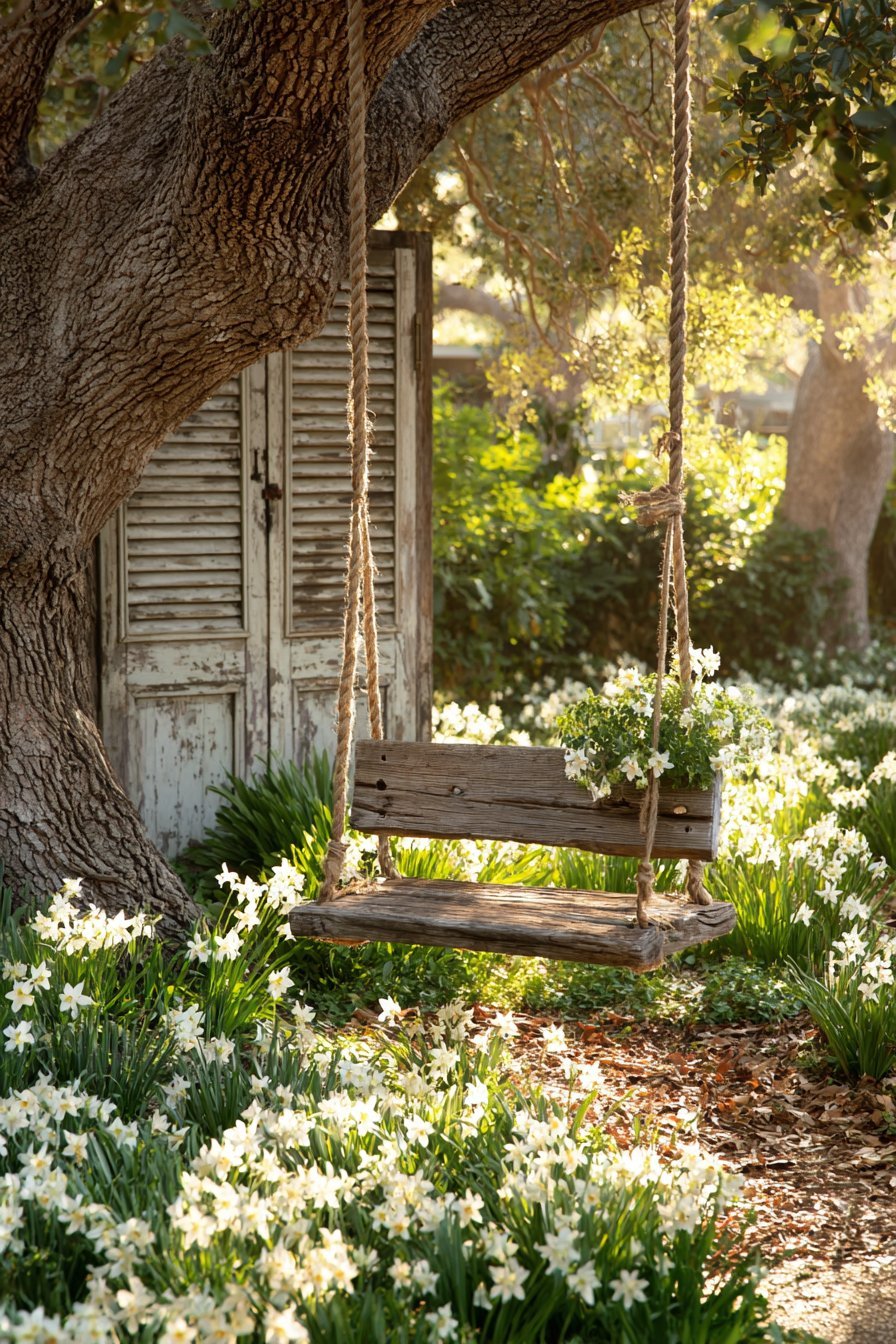
The material choices reflect cottage authenticity and comfort. Various chair styles collected over time create eclectic appeal. None match perfectly but all coordinate naturally. This approach feels more welcoming than formal matching sets. The mismatched quality adds personality and warmth.
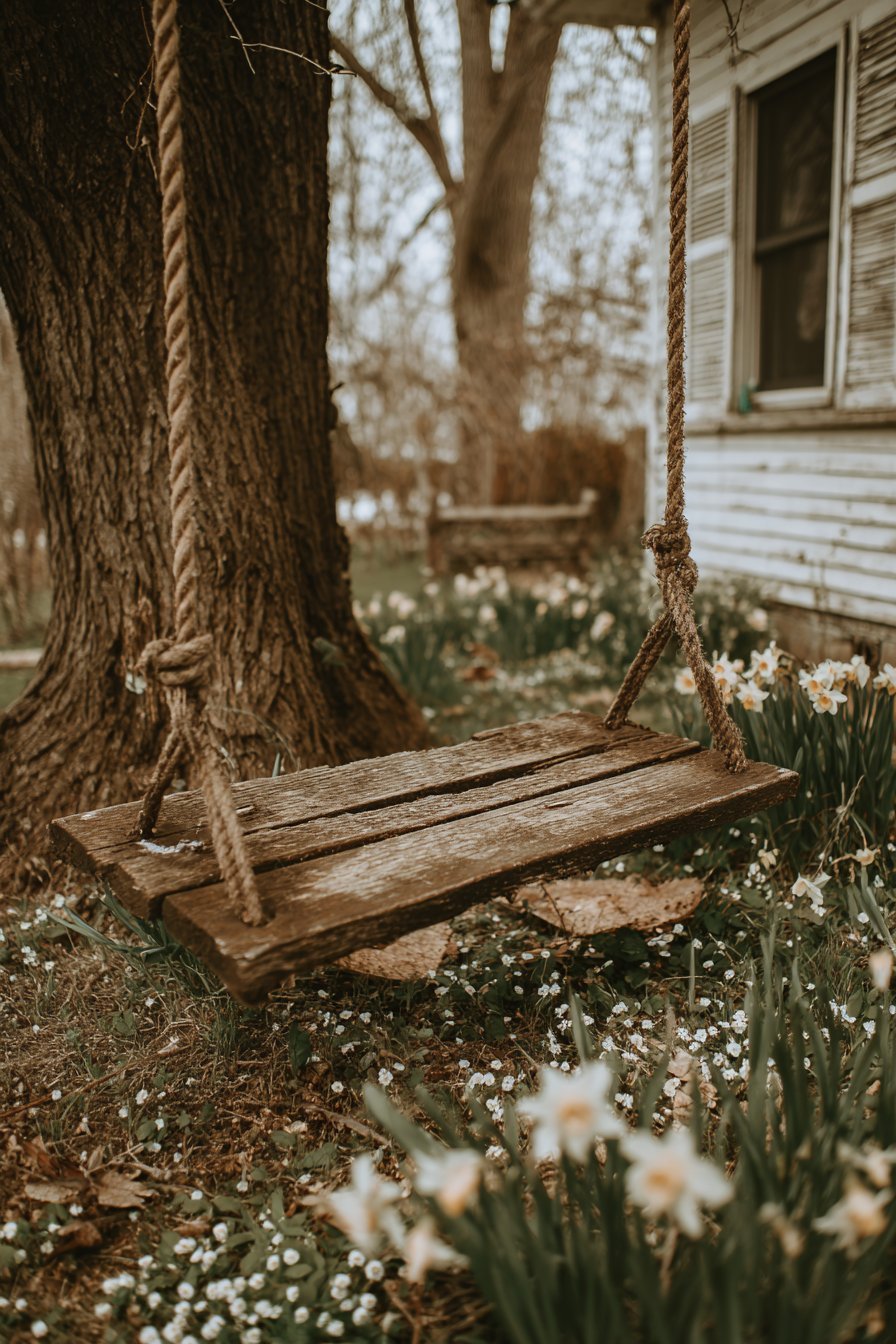
Lavender and rosemary positioned nearby serve multiple purposes. Their fragrance enhances the sensory experience significantly. The herbs can flavor cooking done over the fire. Natural insect-repelling properties add practical benefits. These plants thrive in the dry, sunny conditions.
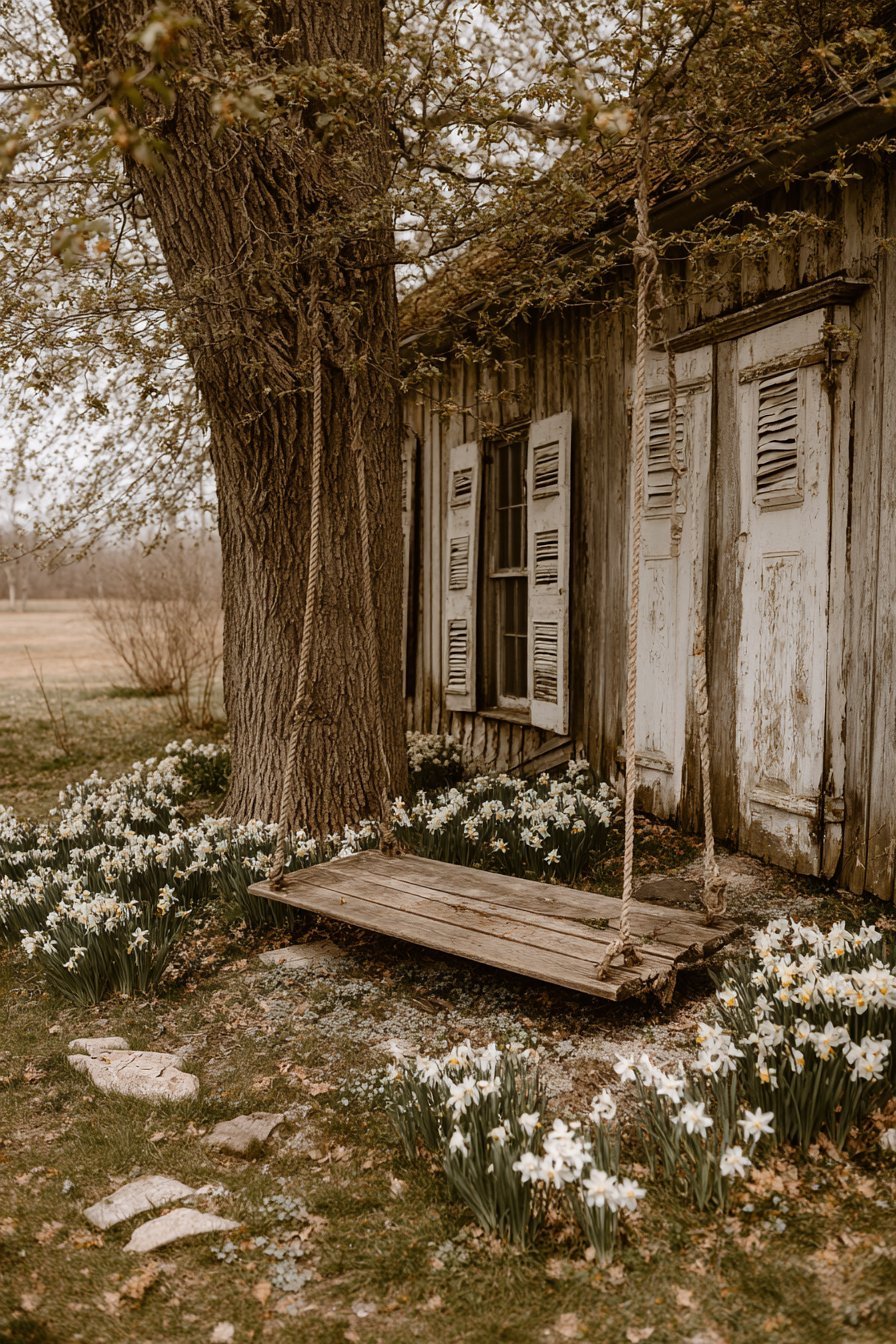
The seating area rests on compacted gravel with character. Low-growing thyme fills gaps between stones naturally. This creates a living carpet that releases fragrance when stepped upon. Evening light suggests transition to nighttime enjoyment. The welcoming space invites hours of conversation.
Key Design Tips:
- Create fire pits with simple stone rings for rustic appeal
- Mix various vintage chair styles for collected character
- Plant fragrant herbs near seating for sensory benefits
- Use compacted gravel as low-maintenance ground cover
- Allow thyme to grow between gravel for living carpets
- Position seating to encourage face-to-face conversation
9. Traditional Clothesline Display
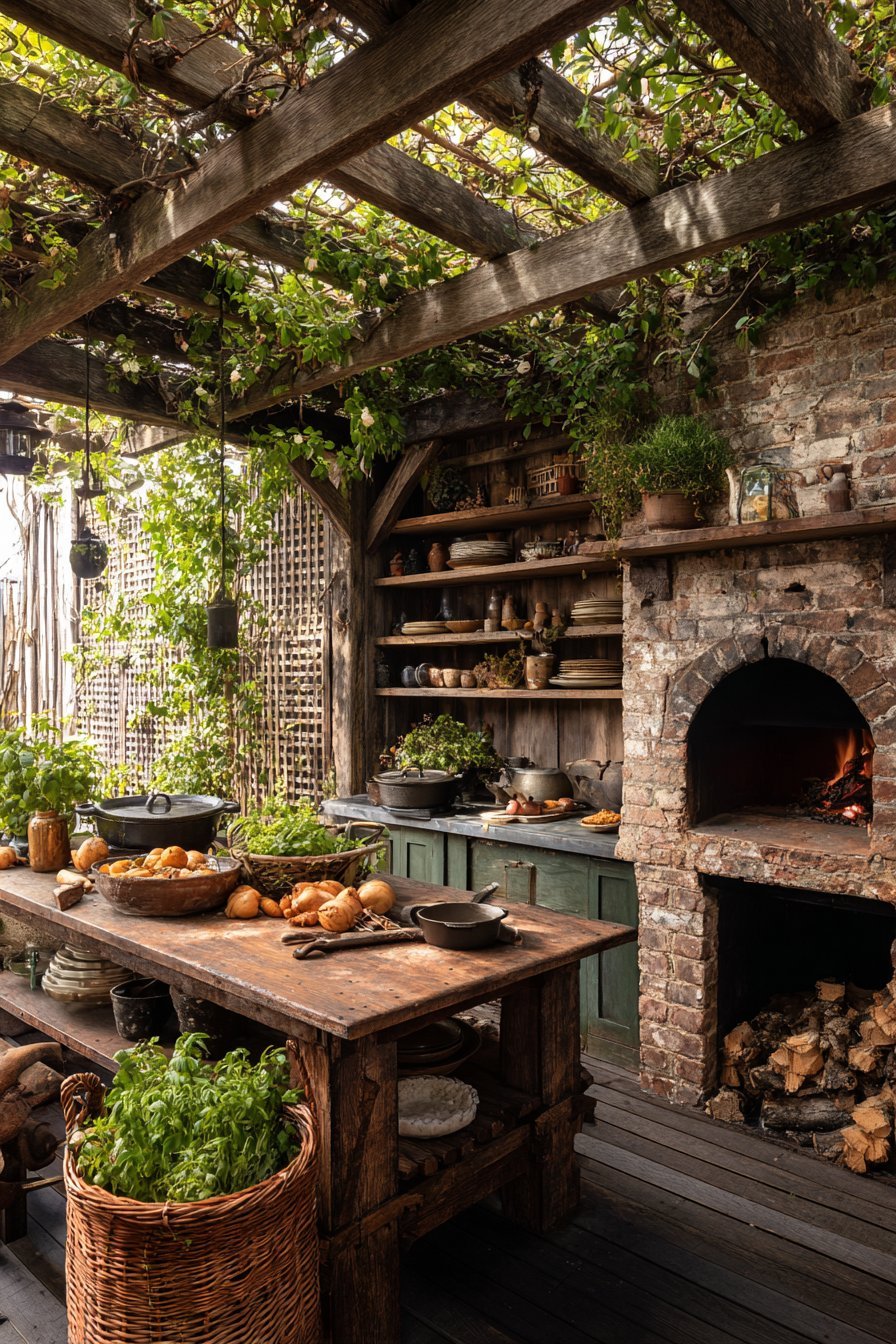
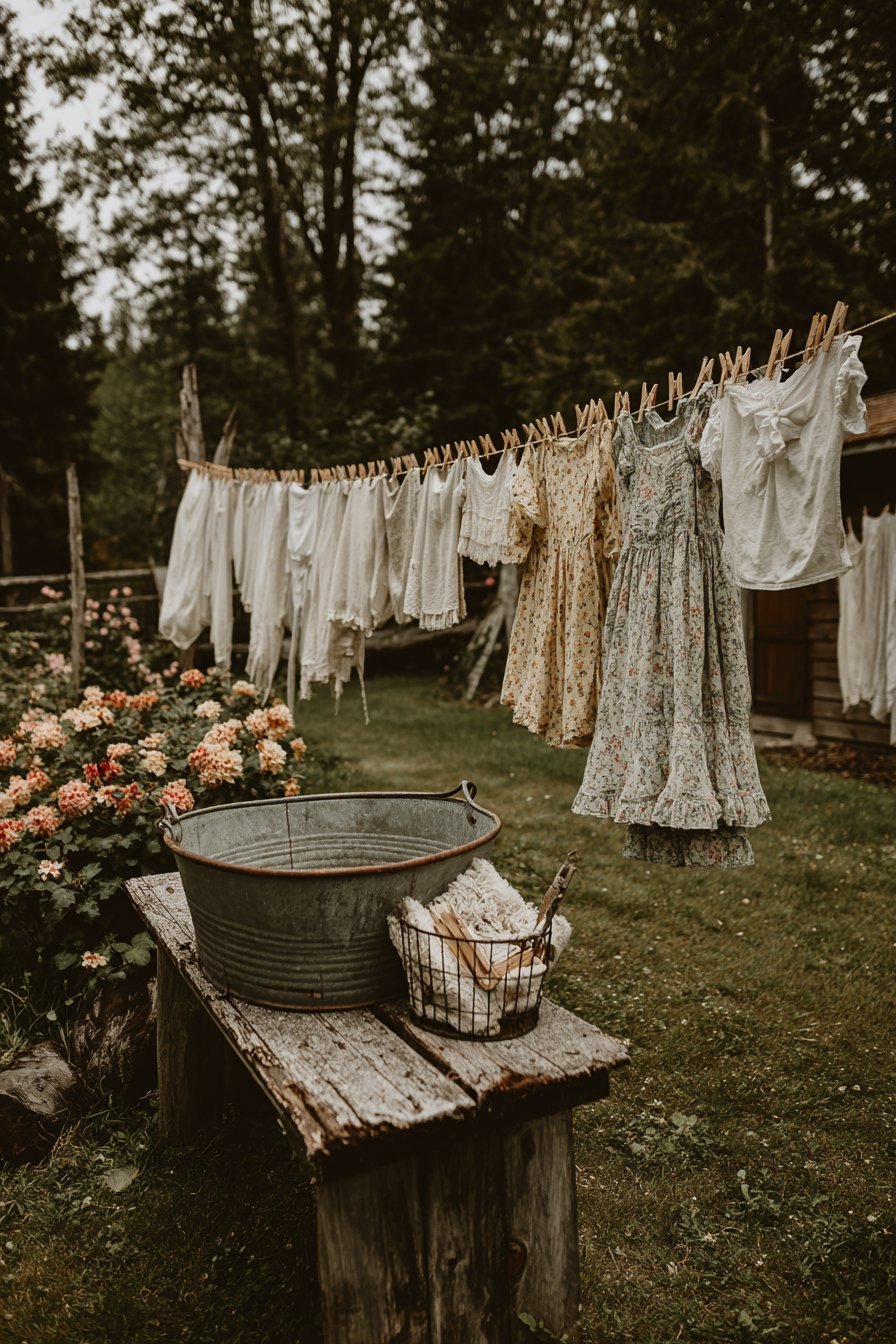
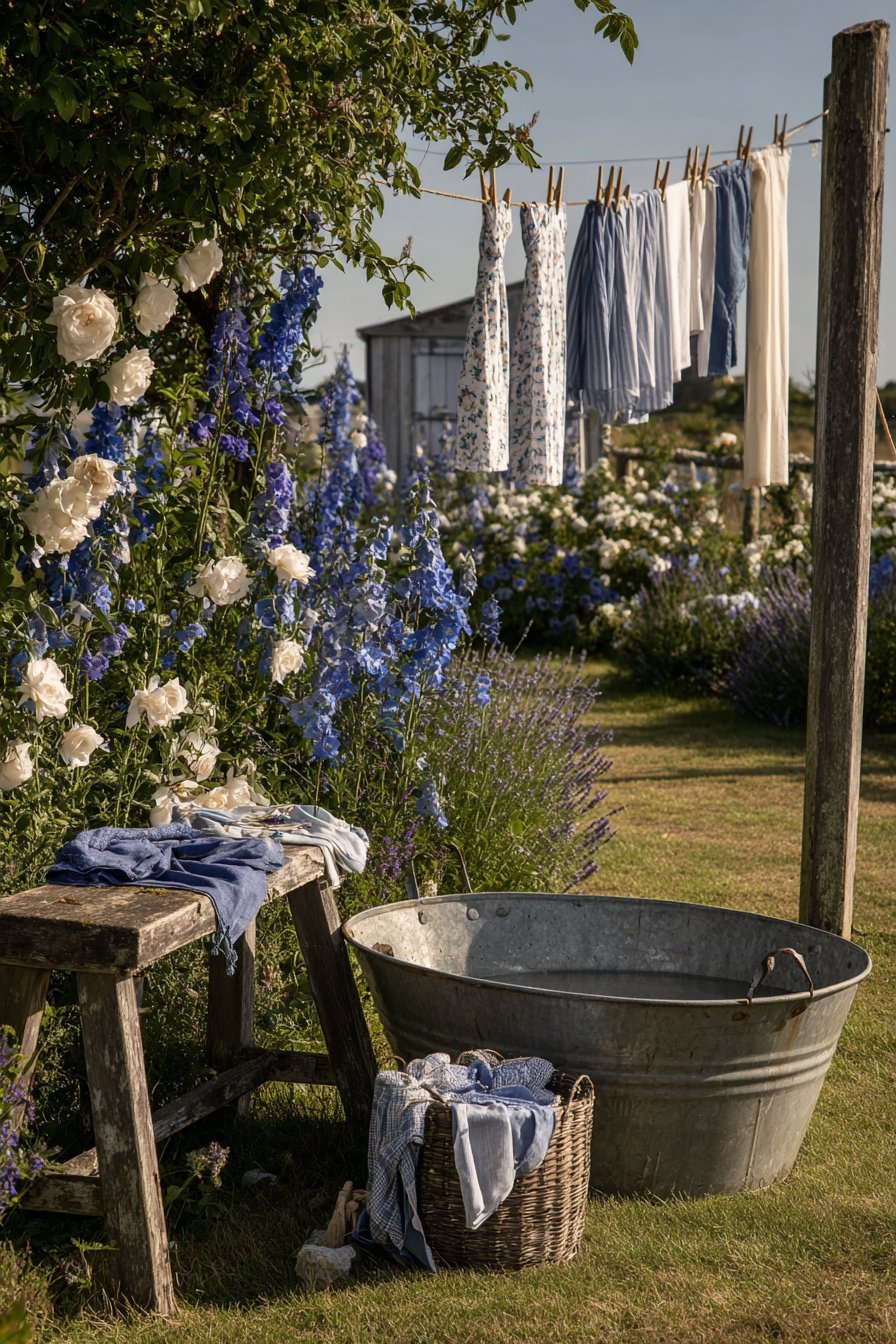
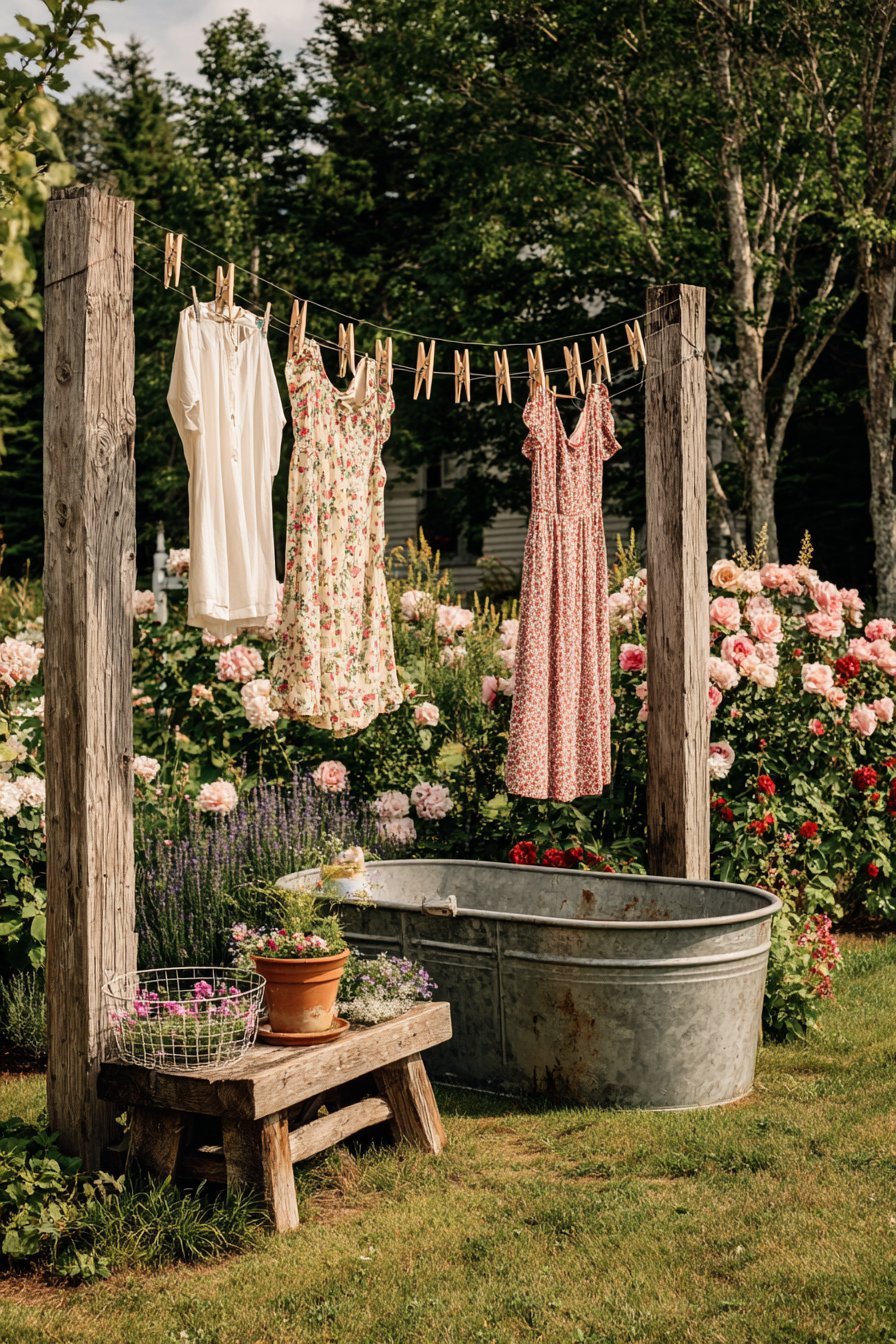
A vintage clothesline strung between weathered wooden posts celebrates simplicity. Fresh linens and cotton dish towels move gently in breezes. This practical element adds authentic cottage garden character. Established lavender plants grow at each post’s base. A woven wicker basket sits nearby on grass.
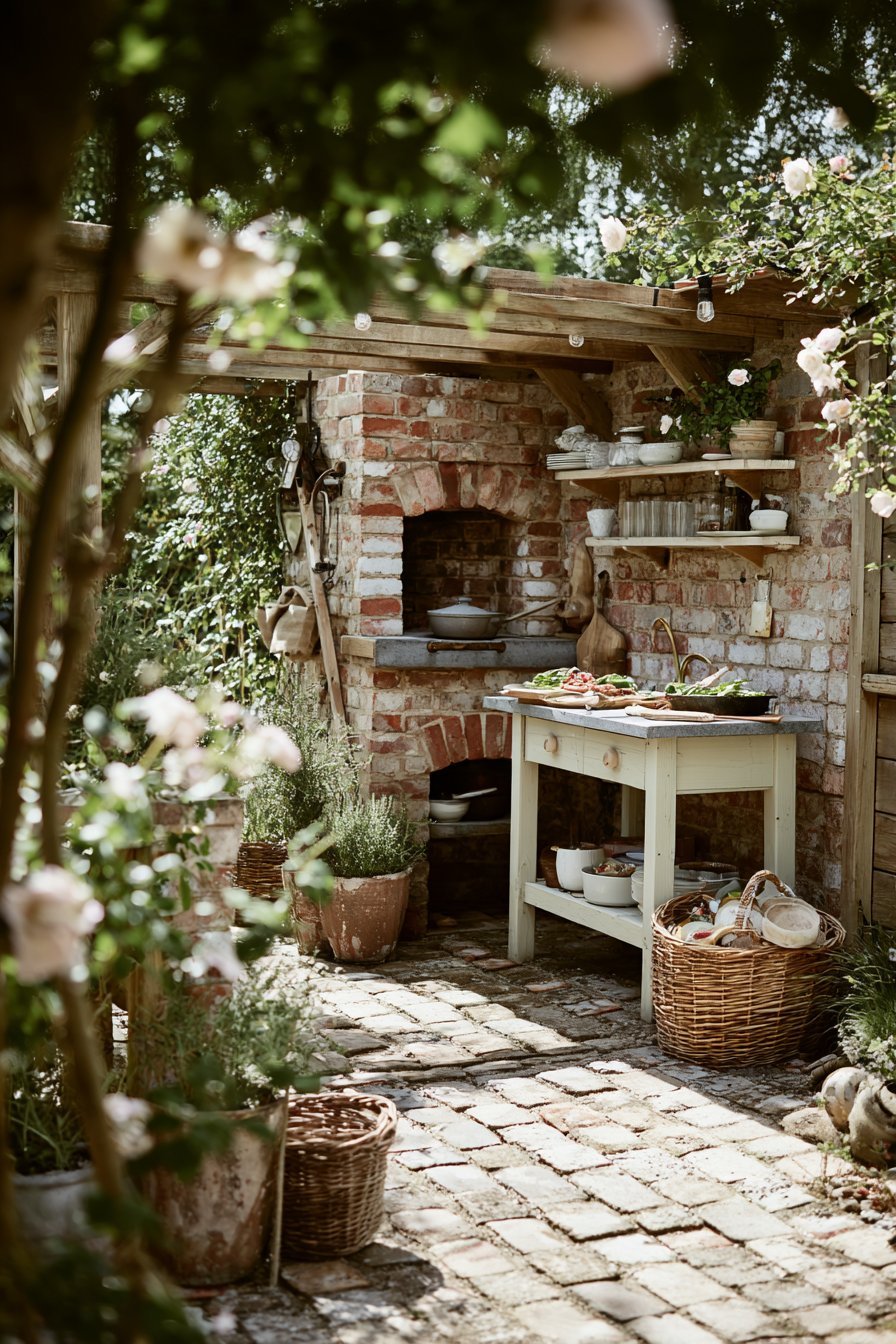
The scene captures traditional cottage practices beautifully. Line-drying remains both sustainable and nostalgic. Fresh linens gain wonderful outdoor scent naturally. The visual of whites fluttering adds movement and life. This simple practice connects to generations of cottage dwellers.
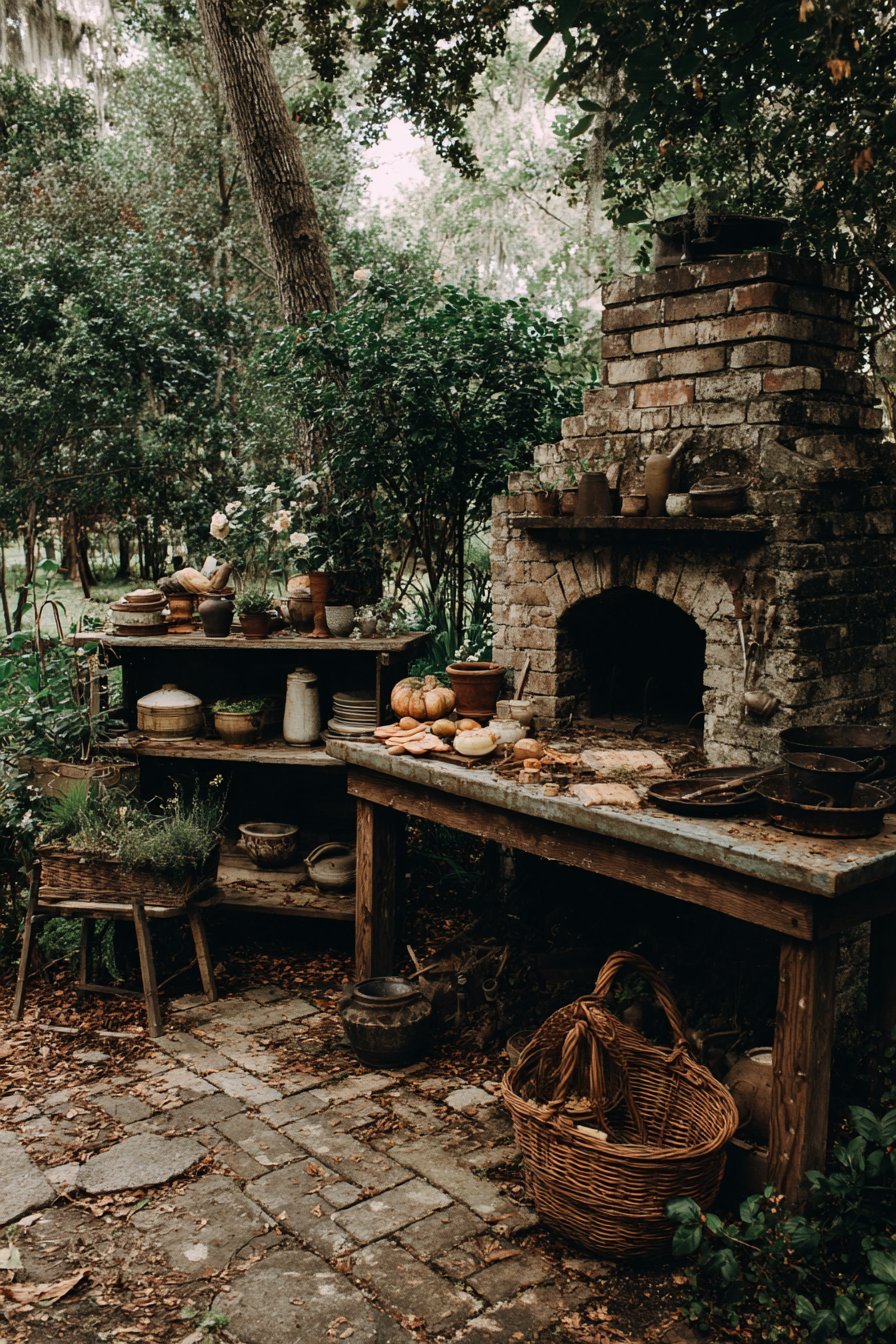
The backdrop features a traditional mixed border garden. Perennials and self-seeding annuals create abundant layers. Colors and textures change throughout growing seasons. The productive clothesline fits naturally within ornamental plantings. Function and beauty integrate seamlessly in cottage gardens.
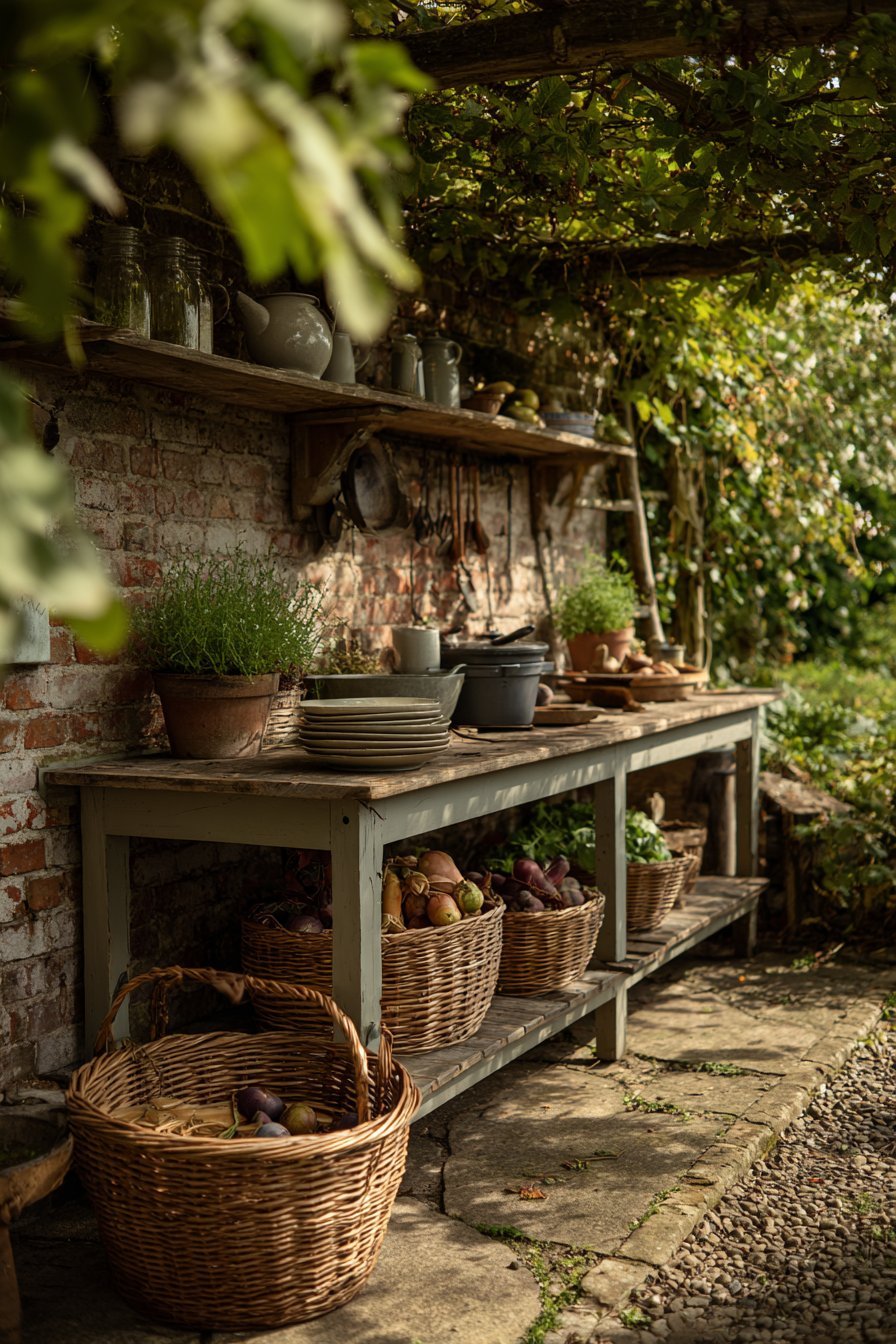
Bright midday natural light illuminates the fresh whites. The documentation style captures authentic cottage living moments. These practical elements deserve celebration and preservation. Modern conveniences cannot replace certain traditional pleasures. Line-dried linens represent quality lifestyle choices worth maintaining.
Key Design Tips:
- Install sturdy wooden posts that weather naturally over time
- Plant lavender at post bases for fragrance and beauty
- Use vintage-style wicker baskets for authentic appeal
- Position clotheslines where they complement garden views
- Choose natural fiber linens that benefit from outdoor drying
- Embrace practical elements as decorative garden features
10. Working Greenhouse Sanctuary

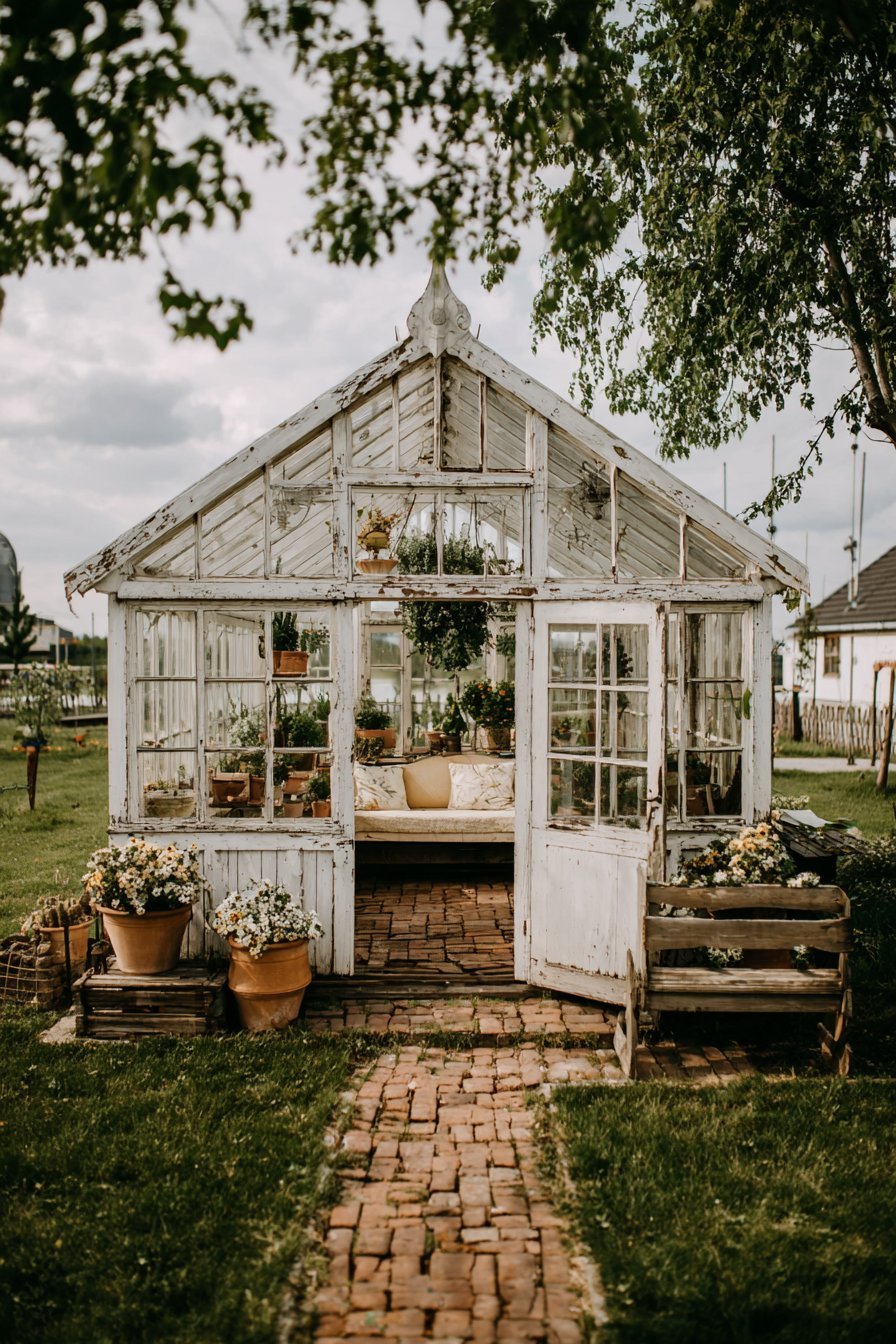
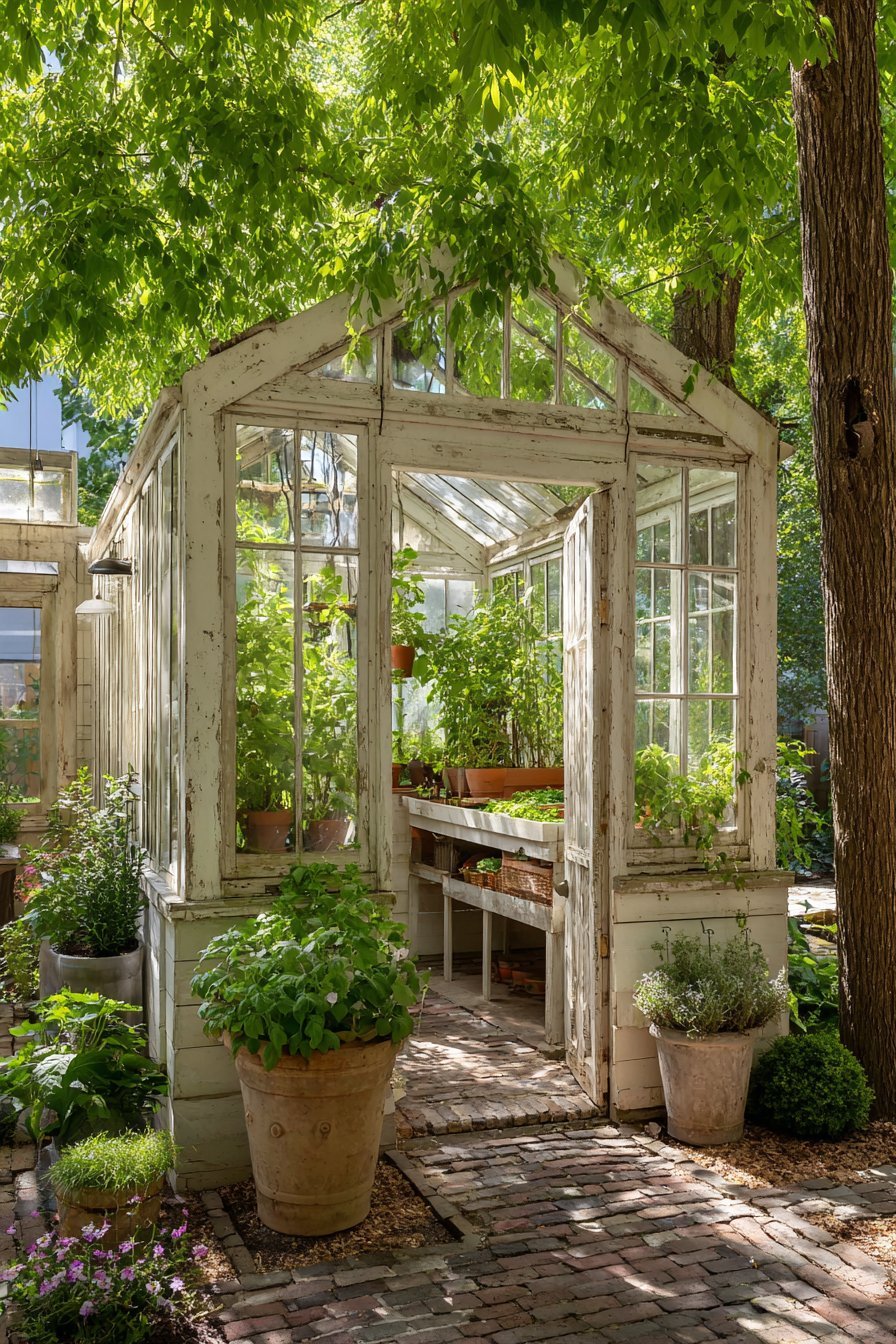
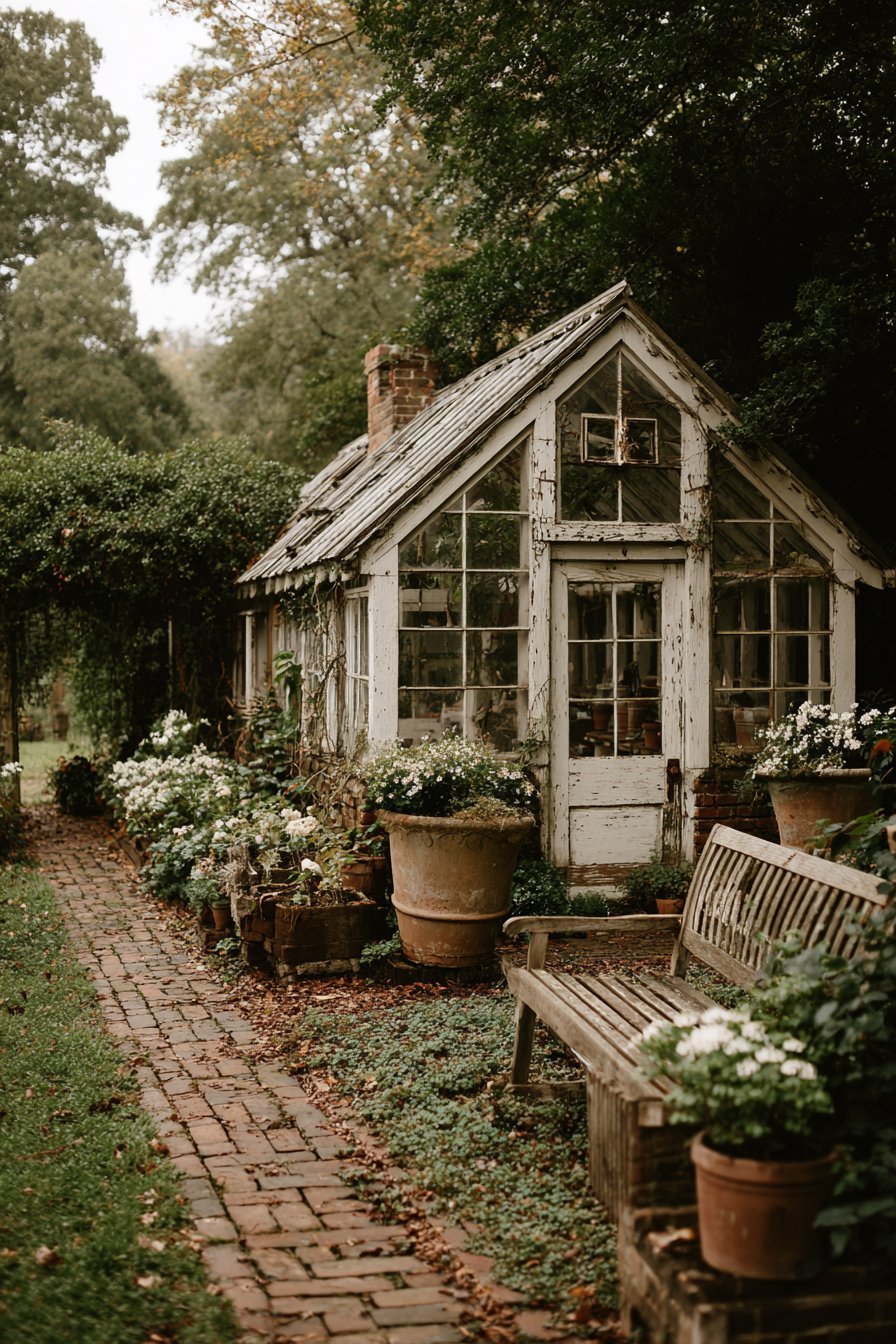
A vintage greenhouse structure features glass panes in weathered white frames. Inside, terracotta pots of seedlings sit on wooden shelving. Hand tools and coiled garden twine complete the working space. Climbing roses grow up one exterior side romantically. A gravel path leads to the greenhouse door.
The structure serves both practical and aesthetic purposes beautifully. Temperature-controlled space allows season extension for plants. The visible interior adds interest even when viewed from outside. Glass allows observation of gardening activities within. This transparency adds to cottage garden charm.
Neat rows of lettuces and herbs border the gravel path. These productive plantings demonstrate cottage garden principles perfectly. Ornamental and edible plants grow side by side naturally. The integration creates efficient use of garden space. Nothing goes to waste in thoughtful cottage gardens.
Overcast natural lighting provides even illumination throughout. The working greenhouse represents serious gardening commitment. Period details maintain authentic cottage aesthetic throughout. Glass panes, wooden frames, and vintage accessories combine perfectly. This functional structure enhances rather than detracts from beauty.
Key Design Tips:
- Choose vintage-style greenhouses with wooden frames and glass panes
- Display terracotta pots and vintage tools as decorative elements
- Plant climbing roses on greenhouse exteriors for softening
- Border pathways with productive herbs and lettuces
- Maintain visible interiors to add interest from outside
- Position greenhouses where they receive optimal sunlight exposure
11. Layered Perennial Border Paradise
This border garden showcases traditional cottage planting techniques masterfully. Tall delphiniums and hollyhocks anchor the back layer. Mid-height roses and peonies occupy the middle zone. Low catmint and hardy geraniums edge the front. An old stone wall forms the backdrop beautifully.
The layered approach creates depth and dimensional interest. Each plant layer receives appropriate light and space. Taller plants don’t shade shorter ones inappropriately. The arrangement allows appreciation of every plant individually. Yet the composition reads as unified whole.
Climbing jasmine and clematis soften the stone wall naturally. These vines add vertical interest beyond the tallest perennials. Self-seeding foxgloves and forget-me-nots fill gaps organically. This natural infilling technique defines cottage garden informality. The effect appears effortless though careful planning exists underneath.
Golden hour lighting creates warm tones across the border. Long shadows add drama and depth to plantings. Professional perspective shows the full border depth successfully. The generous, informal arrangement epitomizes cottage border gardening. Traditional technique meets artistic composition in every detail.
Key Design Tips:
- Layer plants by height from back to front for visibility
- Include tall structural plants like delphiniums for vertical drama
- Allow self-seeding plants to fill gaps naturally over time
- Soften walls and fences with climbing vines
- Plant in generous drifts rather than single specimens
- Choose plants with overlapping bloom times for continuous color
12. Homestead Chicken Coop Integration
A chicken coop painted weathered barn red with white trim adds functionality. The structure fits naturally within the cottage garden setting. Simple wire fencing contains free-ranging hens safely. Established herb gardens of oregano, thyme, and sage surround the area. Vintage metal feeders display authentic patina beautifully.

The coop demonstrates cottage gardens’ embrace of homesteading elements. Chickens provide eggs, pest control, and garden fertilizer. Their presence adds life and movement to outdoor spaces. Window boxes with cheerful geraniums maintain decorative standards. A small covered porch area offers hens shelter.
The integration of productive and ornamental elements succeeds perfectly. Herbs benefit from chicken fertilizer while providing fresh flavors. The birds enjoy pecking around established plantings naturally. This symbiotic relationship defines cottage garden efficiency. Everything serves multiple purposes when thoughtfully arranged.
Natural afternoon light illuminates this practical garden element. Documentary approach captures real cottage garden working features. The combination of functionality and beauty remains inspirational. Modern cottagecore embraces traditional homesteading practices authentically. This design shows how agricultural elements enhance garden beauty.
Key Design Tips:
- Paint coops in traditional barn colors for authentic appeal
- Add window boxes to maintain decorative garden standards
- Surround coops with useful herbs rather than purely ornamental plants
- Choose vintage-style metal feeders for period-appropriate details
- Design covered porch areas for hen comfort and protection
- Integrate functional structures naturally within ornamental plantings
13. Dedicated Cutting Garden Space

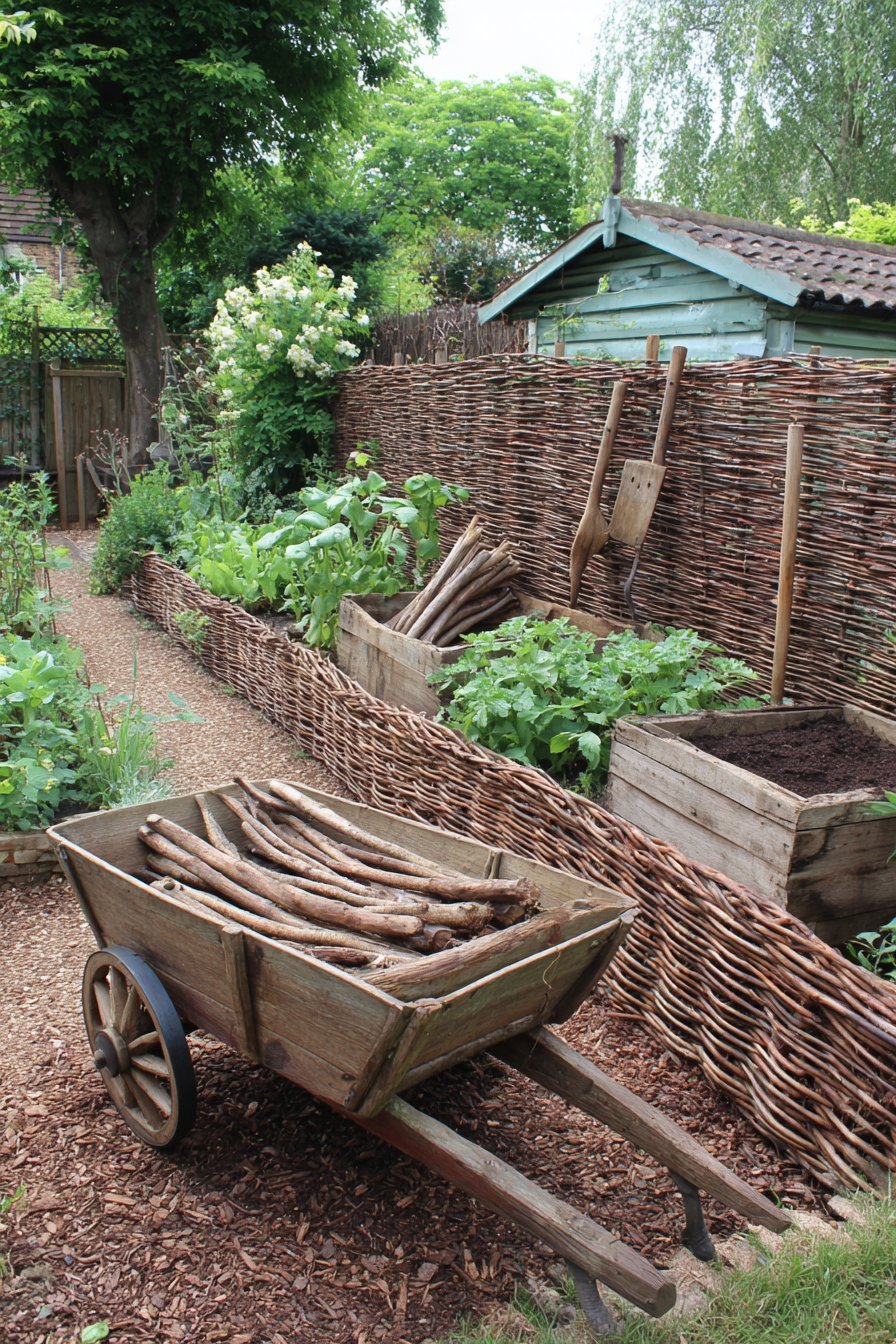
An organized cutting garden features rows of dahlias and zinnias. Cosmos and sweet peas grow on bamboo supports vertically. Gravel paths separate planting areas for easy access. An old wooden wheelbarrow holds freshly cut flowers beautifully. Simple wooden stakes mark different plant varieties clearly.
The cutting garden represents cottage tradition of growing arrangement flowers. Productive beauty serves indoor decoration needs continuously. The organized layout differs from mixed border informality intentionally. This dedicated space allows harvest without depleting ornamental displays. Both approaches coexist happily in cottage gardens.
A rustic potting bench holds glass bottles and vintage shears. These tools remain ready for daily flower harvesting activities. The work area adds functional beauty to garden design. Everything needed stays organized and accessible. Efficiency matters in productive garden spaces.
Morning natural light captures dew still visible on petals. The documentation emphasizes both beauty and functionality equally. Cottage gardens traditionally grew flowers for cutting freely. This practice continues among modern cottagecore enthusiasts passionately. The dedicated space makes regular harvesting practical and sustainable.
Key Design Tips:
- Create dedicated cutting gardens separate from ornamental borders
- Grow flowers in organized rows for easy access and harvest
- Use bamboo stakes for supporting tall or climbing varieties
- Install gravel paths to keep feet dry during morning harvests
- Position potting benches nearby for convenient flower processing
- Label plant varieties with simple wooden stakes for organization
14. Spiral Herb Garden Feature
A three-dimensional herb spiral constructed from weathered stones rises artistically. Various culinary and medicinal herbs occupy different microclimates naturally. Rosemary, thyme, sage, oregano, and mint thrive in designated zones. Small stone pathways allow access for regular harvesting. Self-seeding calendula and chamomile soften spiral edges charmingly.
The spiral design demonstrates permaculture principles beautifully. Different heights create varied growing conditions within small footprints. Mediterranean herbs prefer the sunny, well-drained top sections. Moisture-loving herbs thrive at the cooler, damper base. This efficient design maximizes productivity and interest simultaneously.
The structure becomes sculptural garden feature beyond functionality. Stacked stones create visual interest from all viewing angles. The ascending circles draw eyes upward naturally. Plants spilling over edges soften hard stone materials. The combination achieves perfect cottage garden balance.
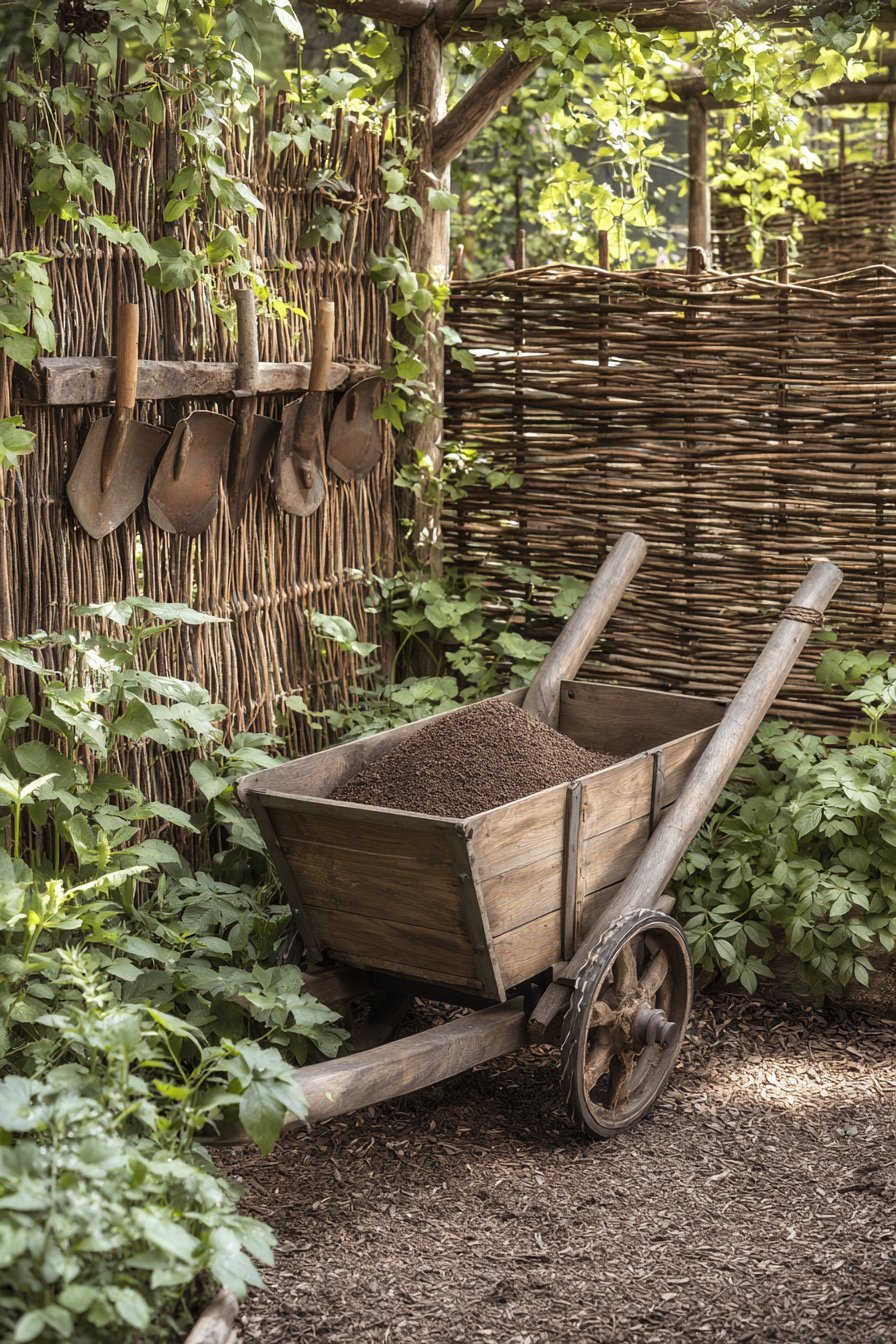
Natural overcast lighting provides even illumination throughout. Overhead photography angle shows the spiral design clearly. Diverse herb plantings create textural and color variety. This feature represents cottage gardens’ blend of beauty and utility. Ancient growing techniques remain relevant in modern settings.
Key Design Tips:
- Build herb spirals from local weathered stones for authenticity
- Plant Mediterranean herbs at top for excellent drainage
- Position moisture-loving herbs at base where water collects
- Allow self-seeding flowers to soften edges naturally
- Create small pathways for easy access during harvest
- Choose diverse herbs for textural and color variety
15. Romantic Wisteria Pergola
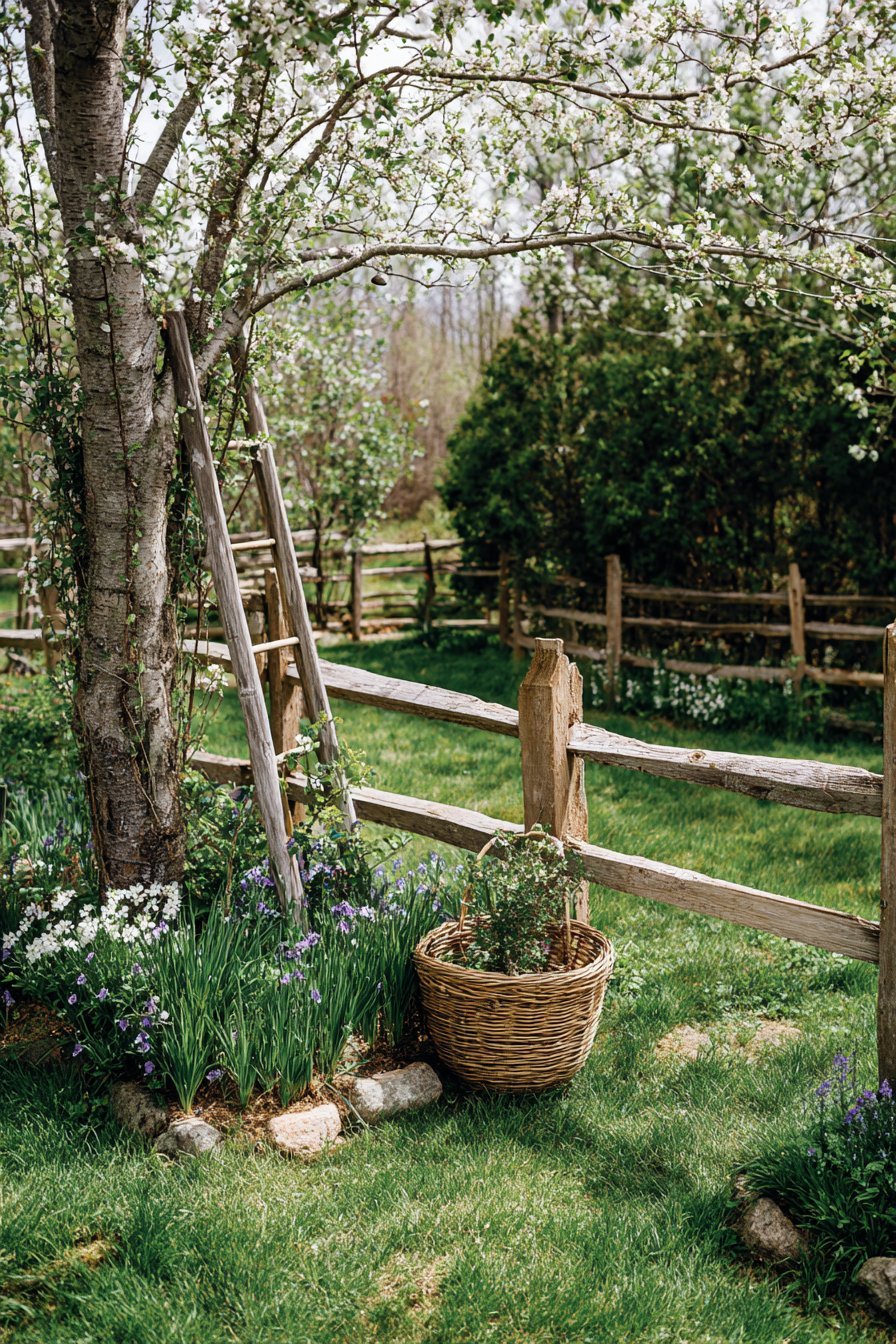
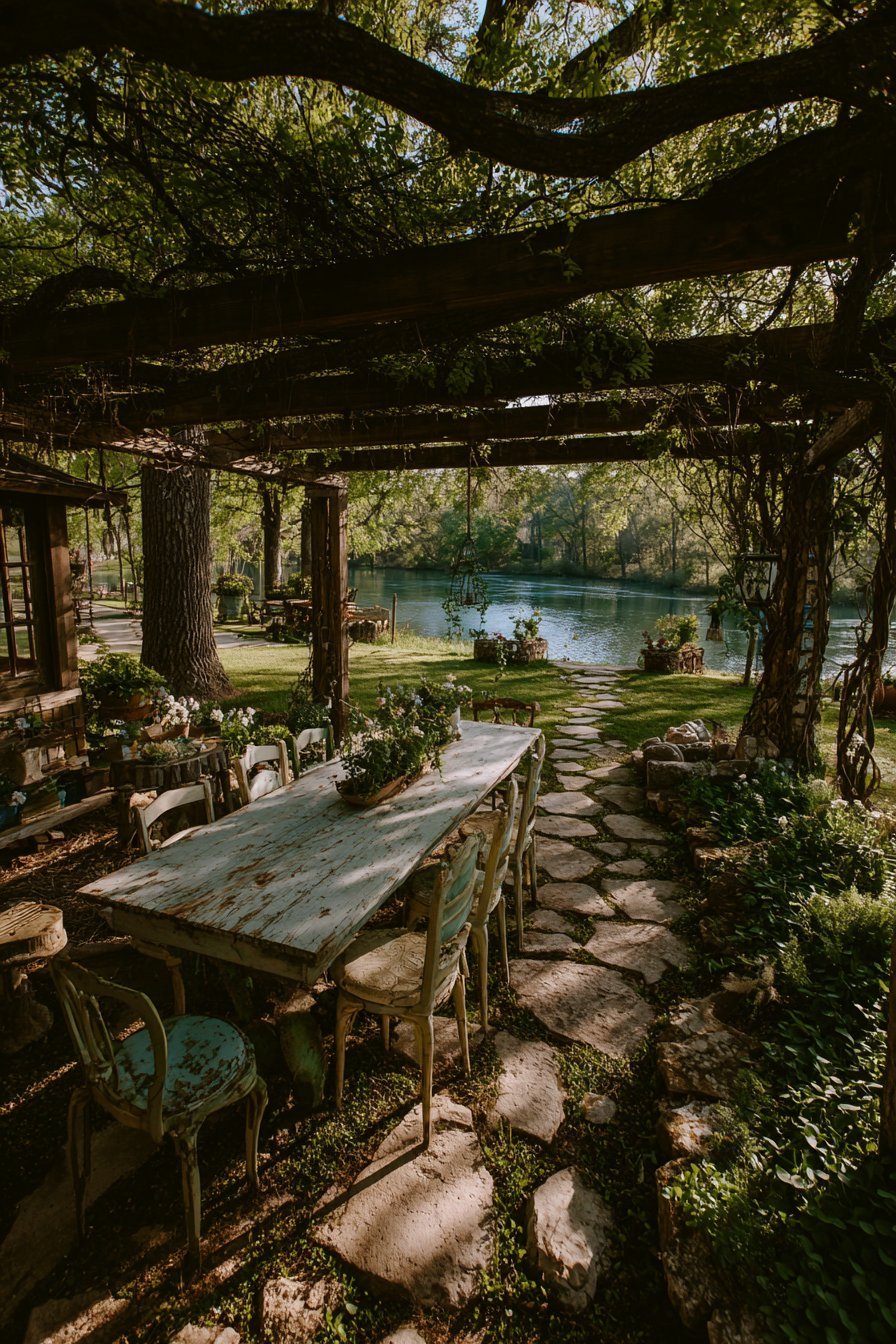
A weathered wooden pergola structure provides framework for mature wisteria. Heavy vines drape the posts and beams in full bloom. Underneath, a simple gravel floor hosts vintage metal bistro furniture. Dappled sunlight filters through the vine canopy creating patterns. Established box hedges or lavender borders define the space.
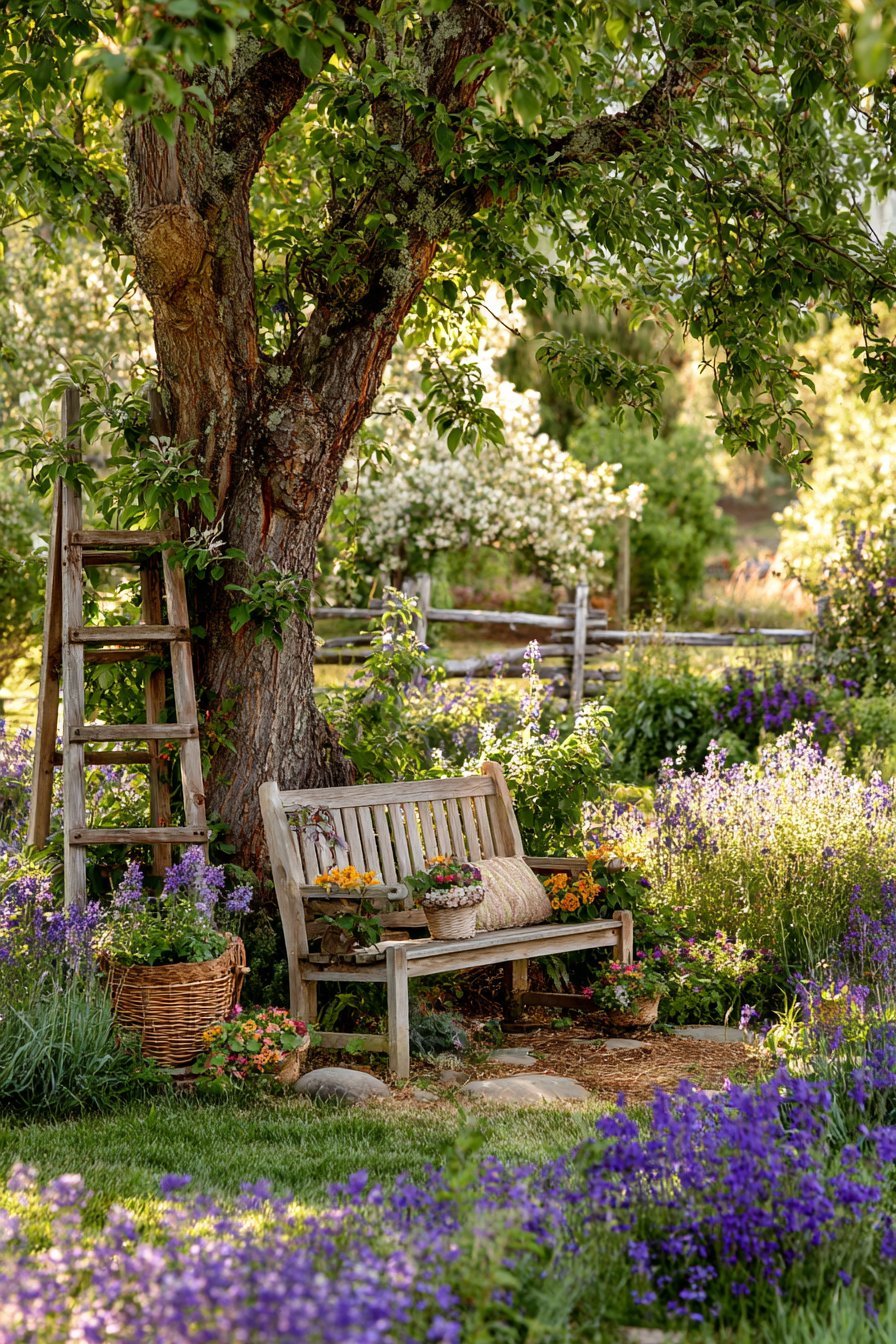
The structure demonstrates successful long-term cottage garden planning. Wisteria requires years to achieve this established appearance. The silvered wood shows authentic aging with dignity. Heavy vine growth indicates excellent care and ideal conditions. Patience rewards with stunning late spring displays.

The pergola creates defined outdoor room within larger garden. The vine canopy provides natural shade and shelter. Temperature drops noticeably underneath during hot afternoons. The space becomes perfect for reading or conversation. Structural plantings like box hedges add formality balancing wisteria wildness.

Late spring photography captures peak wisteria bloom perfectly. Natural lighting emphasizes the romantic cottage garden structure. Purple or white cascading blooms create unforgettable displays. The scent alone justifies years of patience required. This feature represents cottage gardening’s most rewarding accomplishments.
Key Design Tips:
- Build sturdy pergolas capable of supporting heavy mature vines
- Plant wisteria with understanding of long-term growth commitment
- Allow wooden structures to weather naturally to silvered gray
- Position seating underneath to enjoy shade and fragrance
- Add structural plantings like box hedges for definition
- Photograph during peak bloom for maximum visual impact
16. Peaceful Shade Garden Haven

A shade garden under established trees features hostas and ferns. Bleeding hearts and astilbes grow in naturalistic drifts beautifully. A meandering bark mulch path winds through plantings invitingly. A weathered wooden bench positions for quiet contemplation. Moss grows on exposed tree roots and decorative stones.
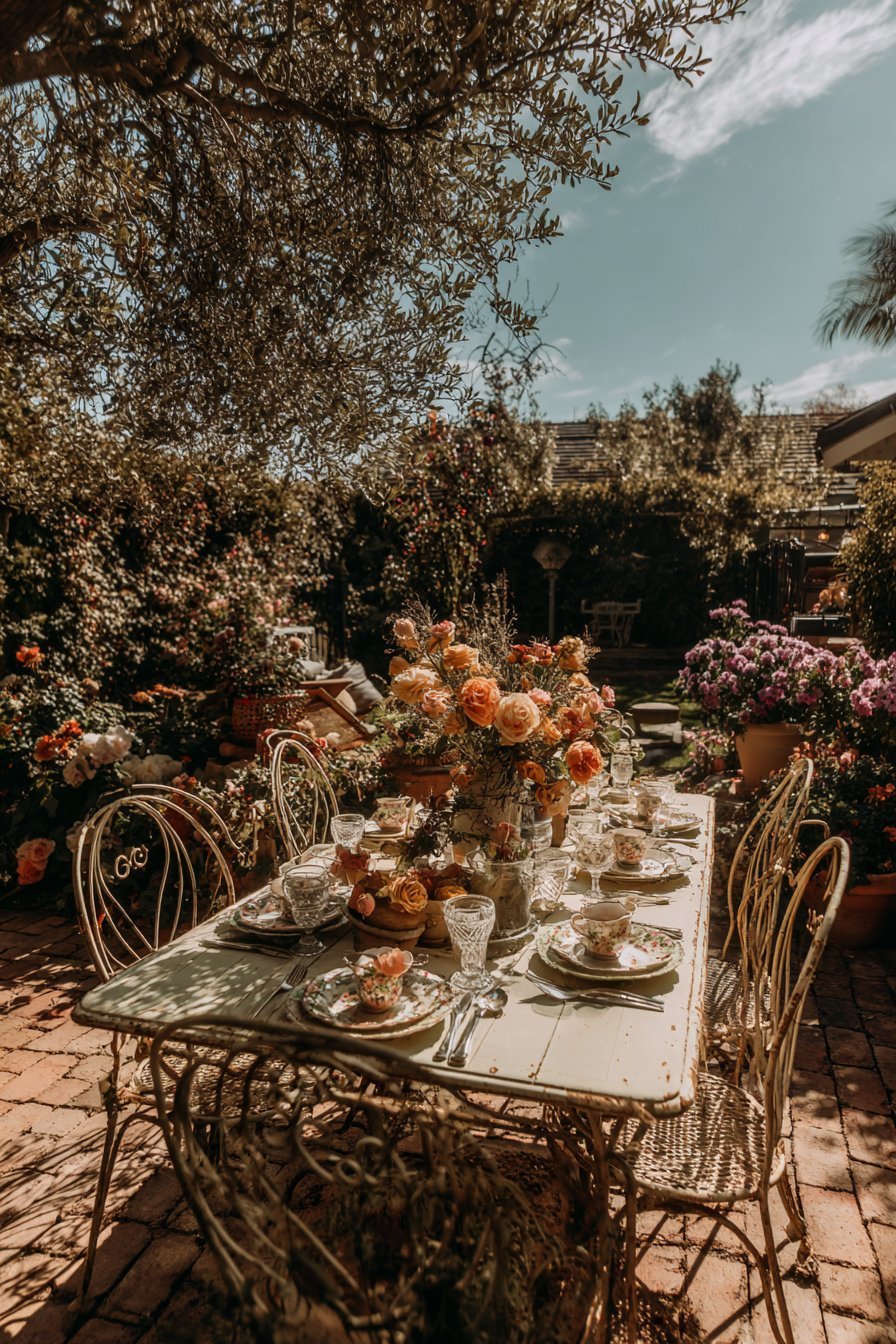
The shade garden demonstrates successful cottage gardening in challenging conditions. Not all areas receive full sun required by roses. Shade-loving plants create equally beautiful alternative gardens. The naturalistic drifts mimic woodland floor plantings. This approach works with existing conditions rather than against them.
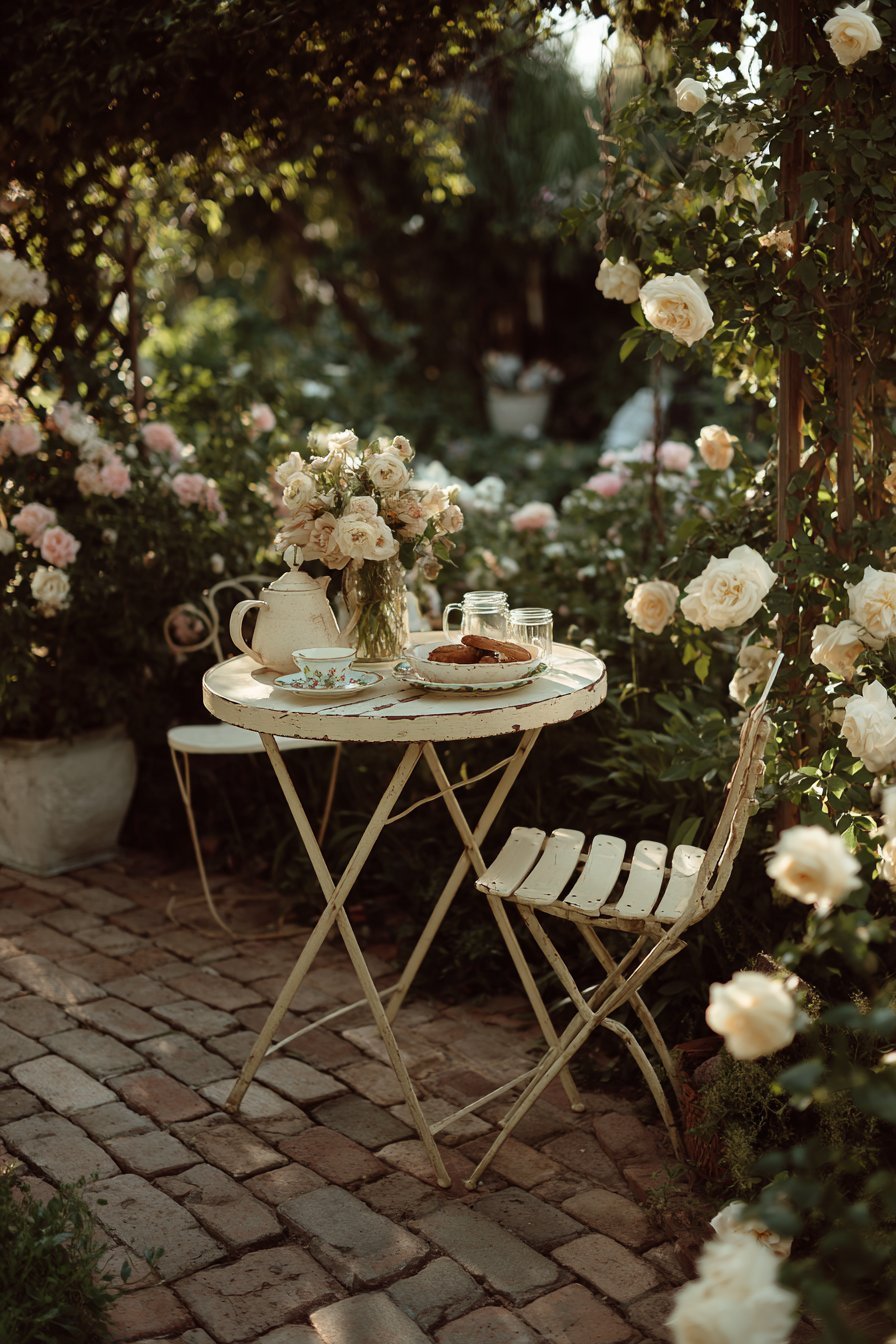
Texture becomes especially important in shade garden design. Various leaf shapes and sizes create visual interest without flowers. Ferns provide delicate fronds contrasting with bold hosta leaves. When blooms appear they stand out dramatically against greenery. The subtle palette feels peaceful and restorative.
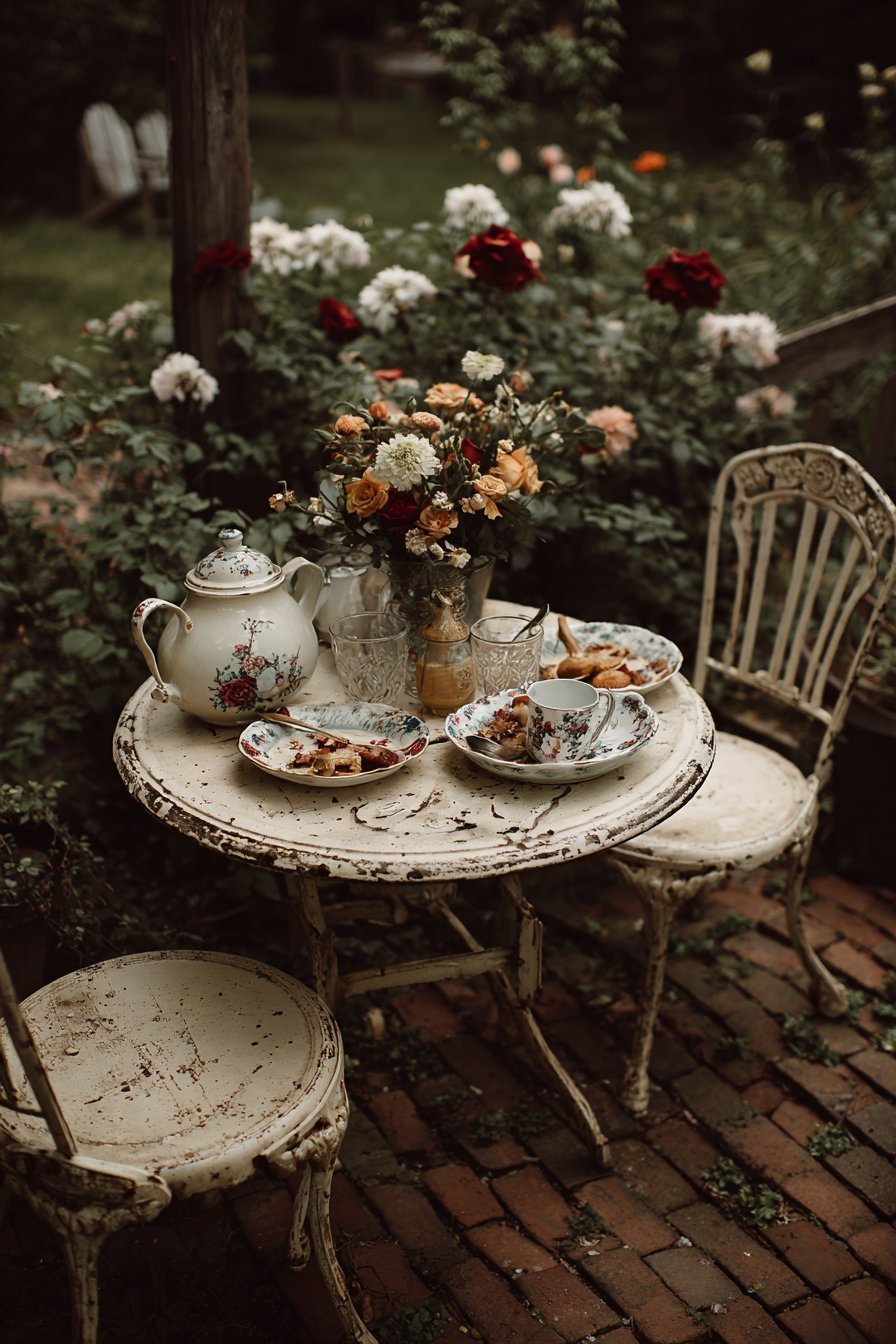
Soft, diffused natural lighting characterizes woodland settings perfectly. The atmosphere encourages slowing down and observing closely. Moss growth indicates healthy, established garden conditions. The peaceful area provides retreat from brighter garden spaces. Every cottage garden benefits from quiet contemplation areas.
Key Design Tips:
- Embrace shade conditions by choosing appropriate plant varieties
- Plant in naturalistic drifts rather than formal arrangements
- Emphasize varied leaf textures for visual interest
- Allow moss to grow naturally on roots and stones
- Create winding paths that encourage slow exploration
- Position seating for peaceful contemplation and observation
17. Traditional Garden Gateway

An antique wooden gate with decorative iron hardware creates entrance drama. Stone pillars flank the gateway partially covered in climbing roses. Generous mixed borders overflow on both sides with cottage favorites. Delphiniums, phlox, and lady’s mantle create abundant displays. The gate shows authentic wear with visible wood grain.
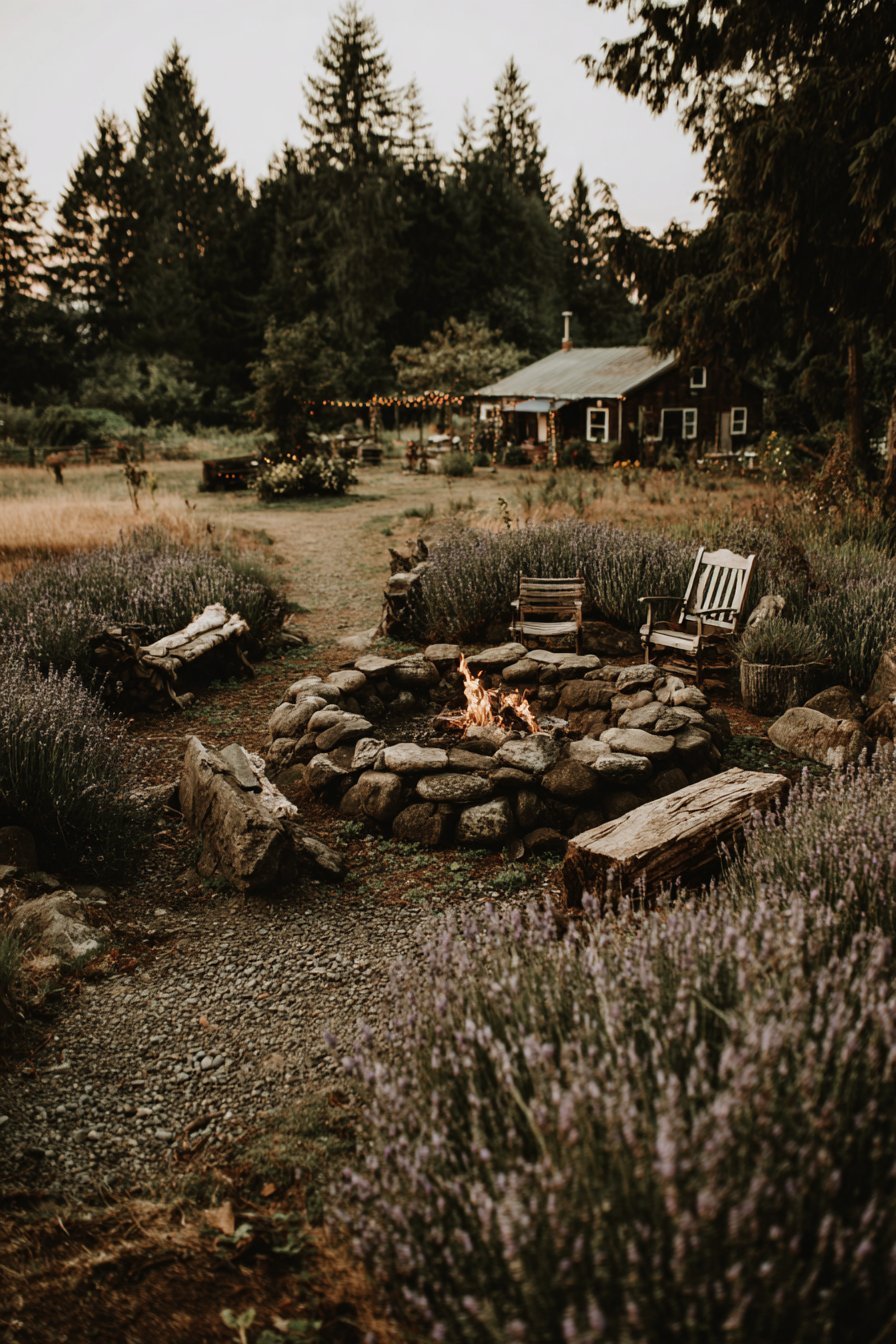
The gateway represents transition between garden spaces or properties. Traditional cottage gardens used gates for both function and beauty. Decorative iron hinges and latches add craftsmanship details. These elements become focal points deserving attention and appreciation. Quality hardware lasts generations with proper maintenance.
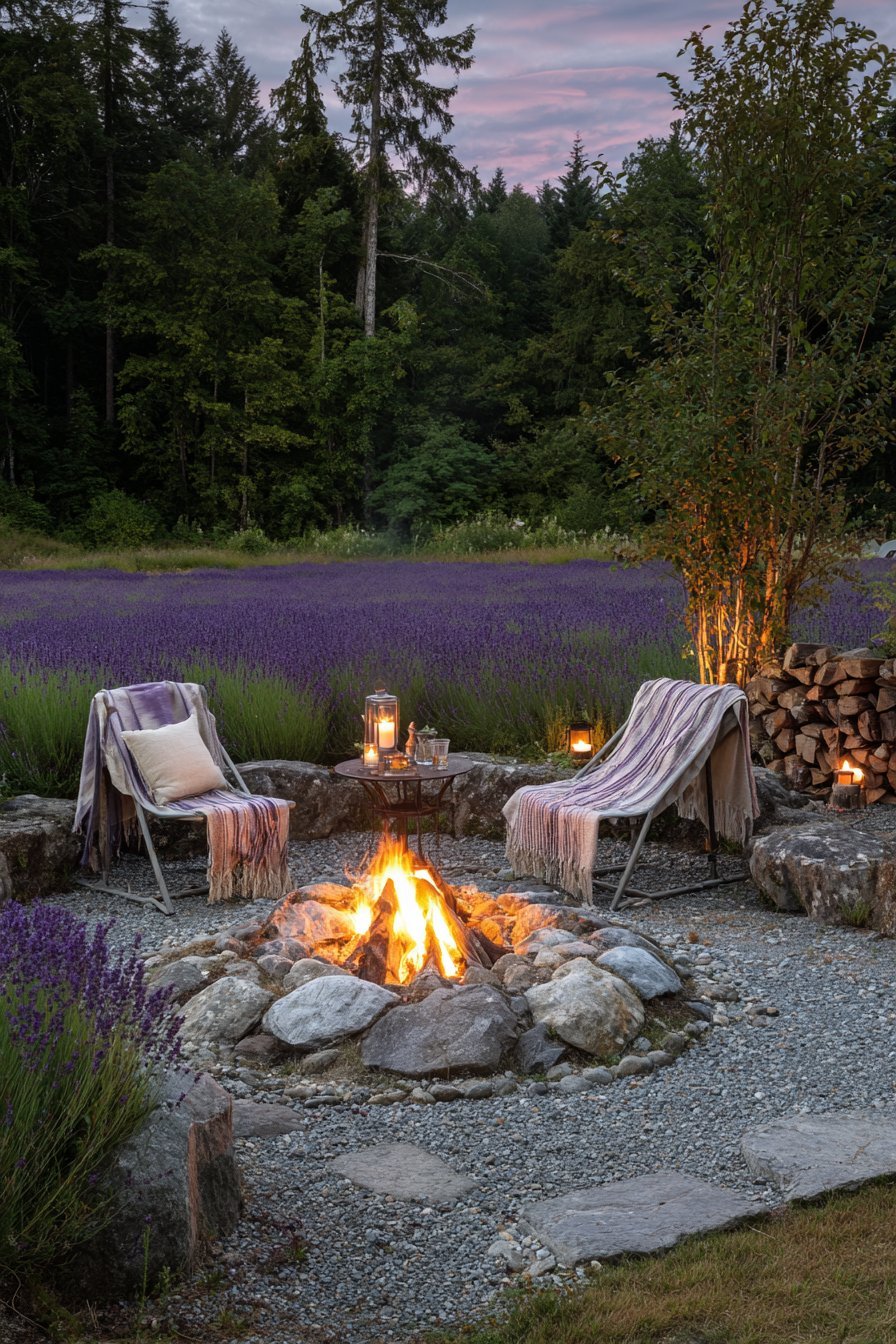
Climbing roses and ivy soften stone pillars naturally over time. The living architecture combines hard and soft materials beautifully. Generous plantings on both sides frame the entrance perfectly. The composition draws eyes and feet toward the gateway. This creates effective focal point within larger garden.
Natural afternoon light creates shadows enhancing entrance depth. The architectural feature demonstrates cottage garden attention to detail. Plantings soften without obscuring the beautiful gate itself. Traditional materials like wood and stone age gracefully. These elements gain character rather than deteriorating over time.
Key Design Tips:
- Choose gates with decorative iron hardware for authentic detail
- Allow wood to show natural wear and aging gracefully
- Plant climbing roses on pillars and adjacent structures
- Frame gateways with generous mixed borders both sides
- Ensure gates remain functional while serving as focal points
- Position where they create transition between garden areas
18. Natural Wildflower Meadow

A cottage backyard wildflower meadow features naturalized drifts beautifully. Poppies, cornflowers, ox-eye daisies, and native wildflowers create romance. A simple mown grass path winds through leading to seating. Established hedgerows or stone walls form natural boundaries. The meadow demonstrates working with nature rather than against it.
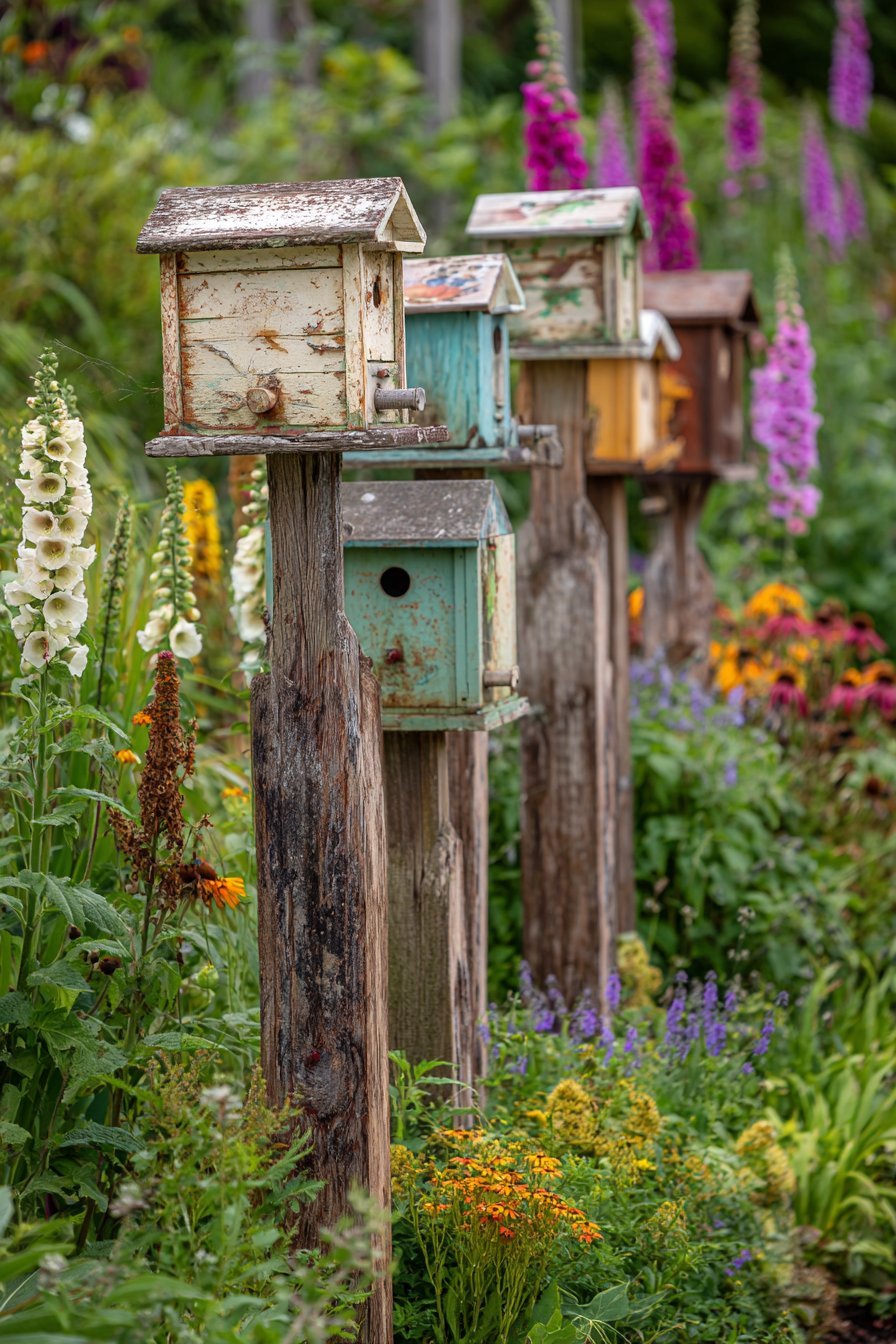
The meadow approach reduces maintenance while increasing beauty. Traditional lawn requires constant mowing and significant water. Wildflower meadows need cutting only once or twice annually. Native plants support local pollinators and wildlife naturally. This sustainable approach aligns with cottage garden values.
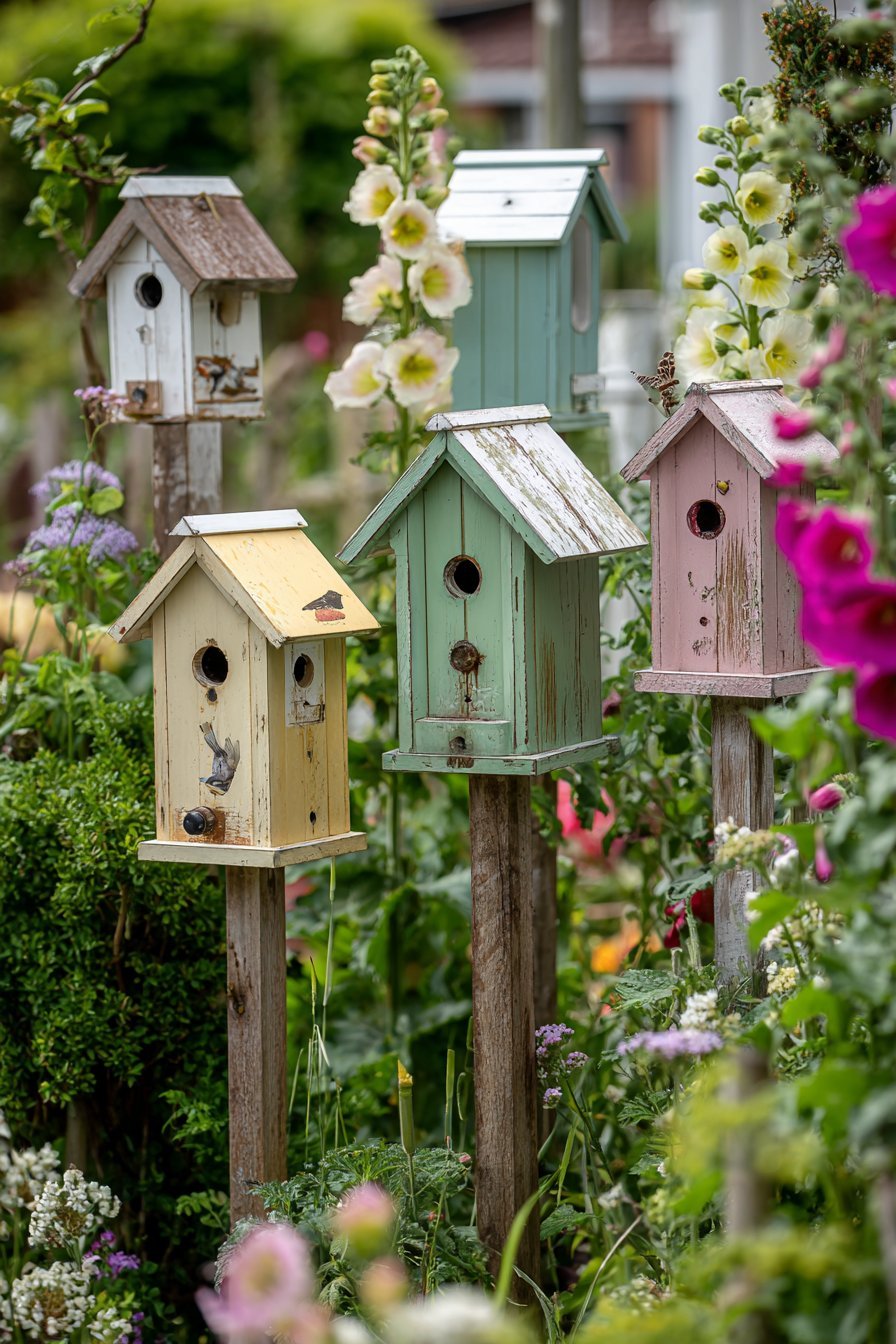
The generous scale creates dramatic seasonal displays. Different wildflowers bloom throughout growing seasons continuously. Colors and textures change weekly during peak bloom times. The effect appears wild though some planning ensures success. Soil preparation and species selection matter significantly.
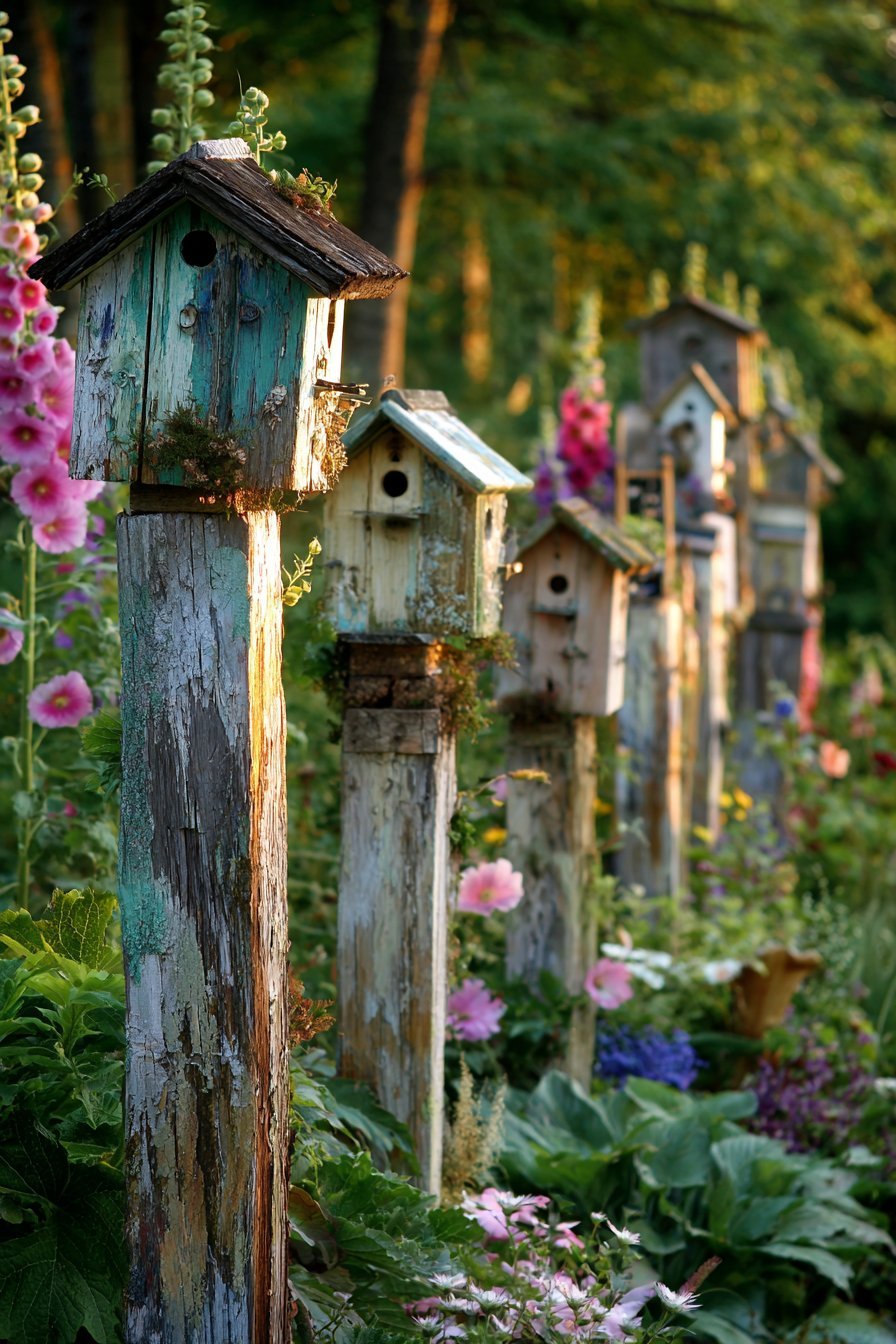
Late afternoon golden hour lighting transforms the meadow magically. Warm backlighting creates dreamy effects with translucent petals. Wide-angle perspective shows the generous scale successfully. Natural beauty of cottage wildflower gardens inspires deeply. This low-maintenance approach suits modern lifestyles perfectly.
Key Design Tips:
- Prepare soil properly before establishing wildflower meadows
- Choose native wildflower species for best wildlife support
- Create mown paths for access and definition
- Cut meadows once or twice annually rather than weekly
- Allow meadows to self-seed for natural regeneration
- Position where generous scale can be fully appreciated
19. Functional Potting Station Setup

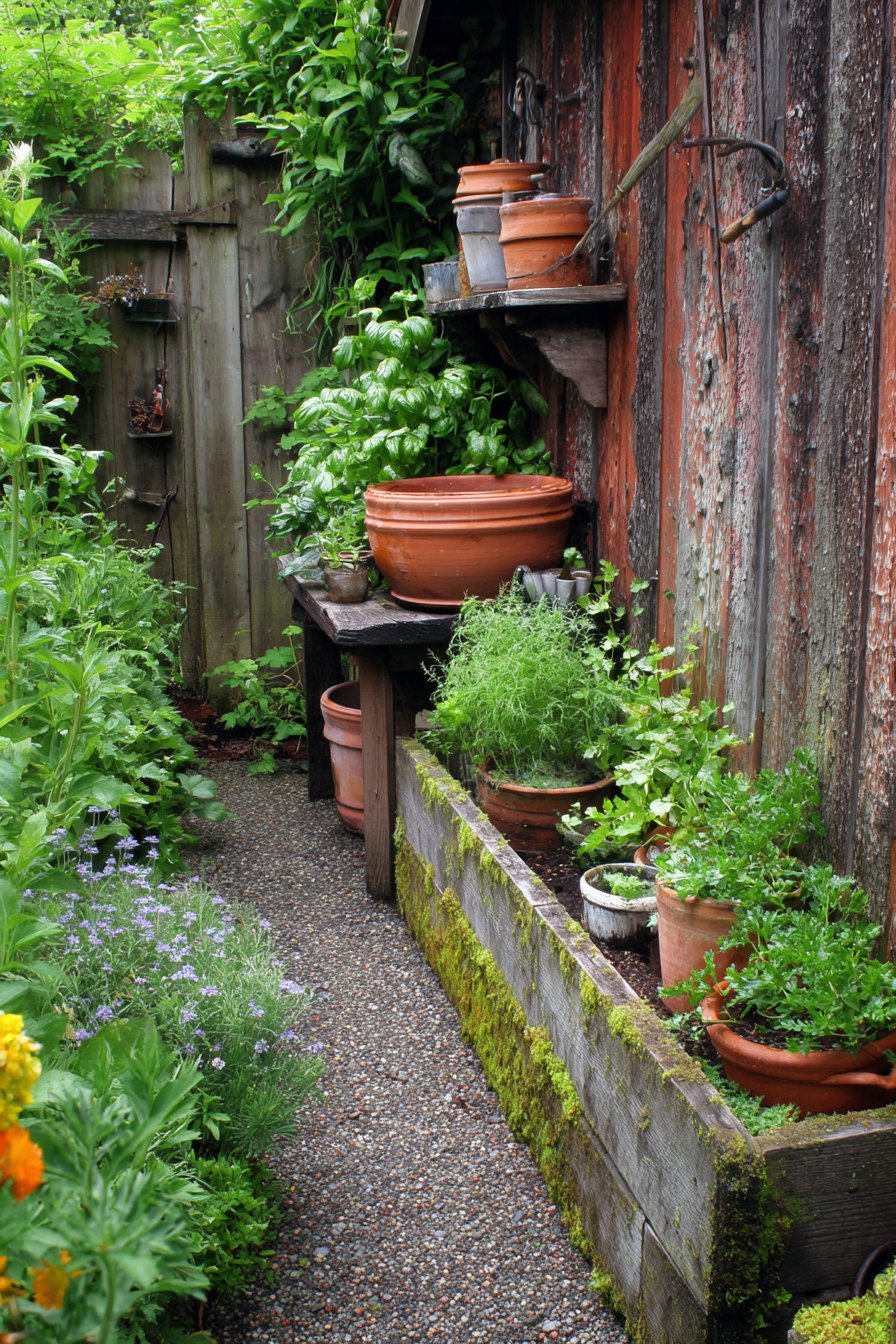
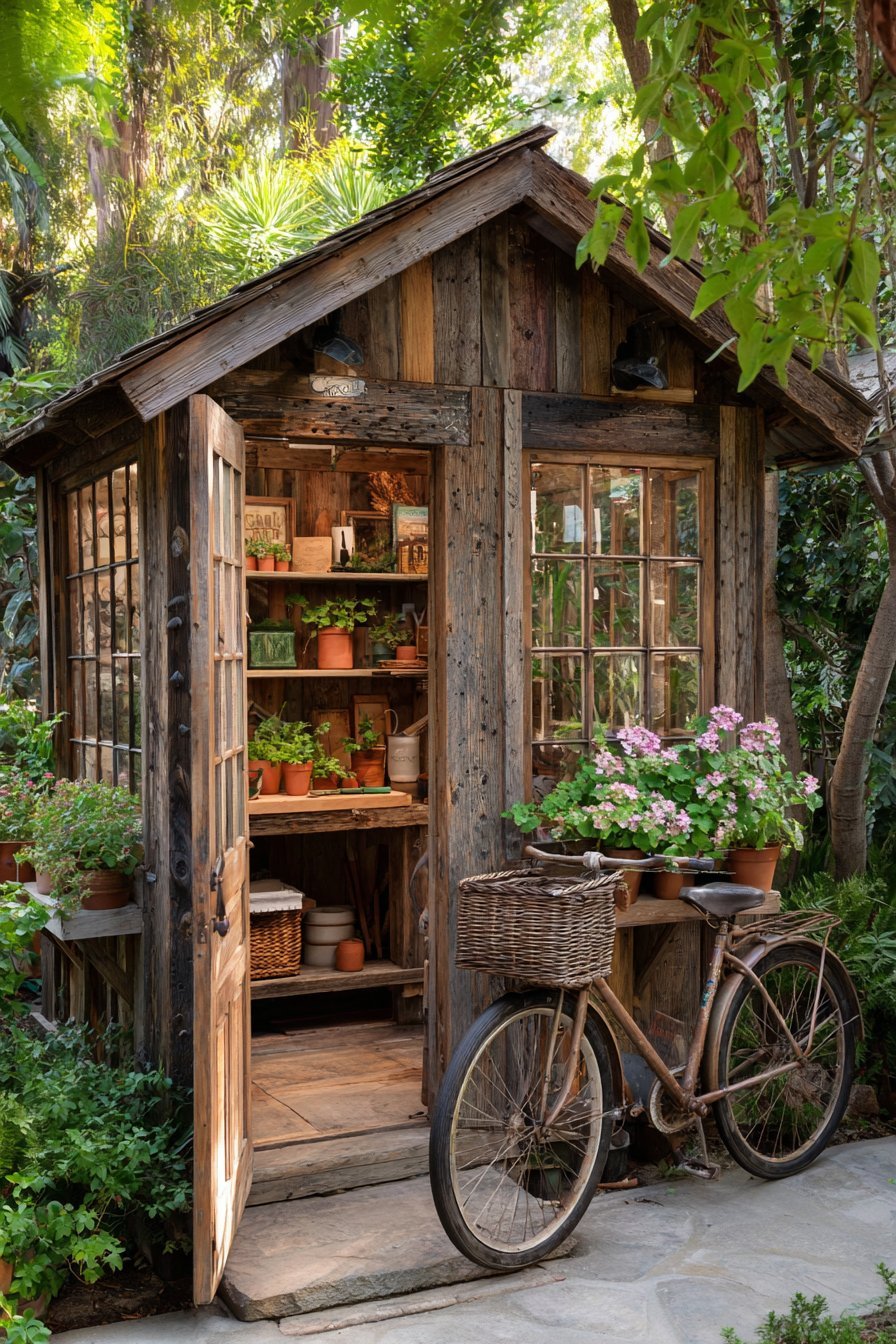
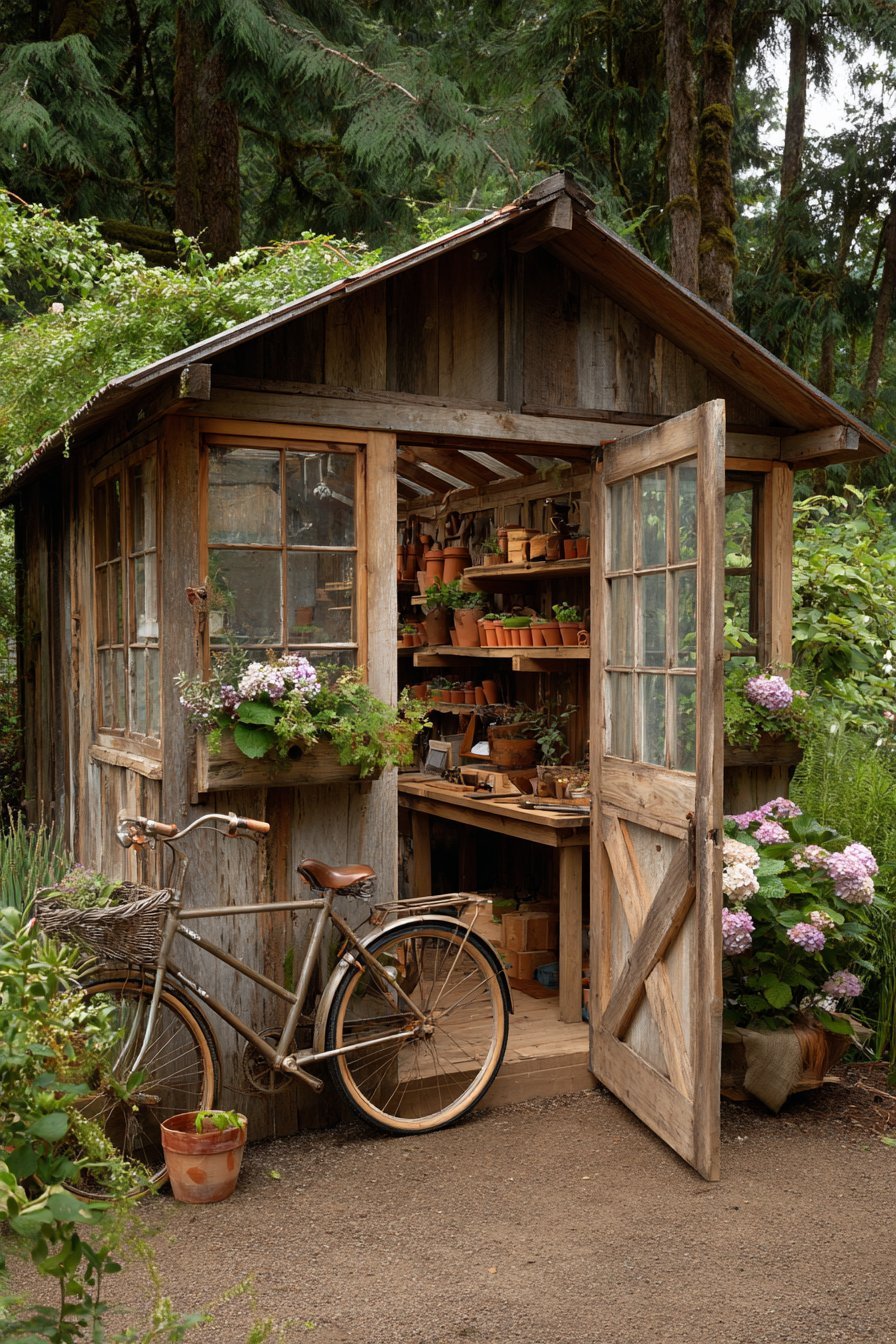
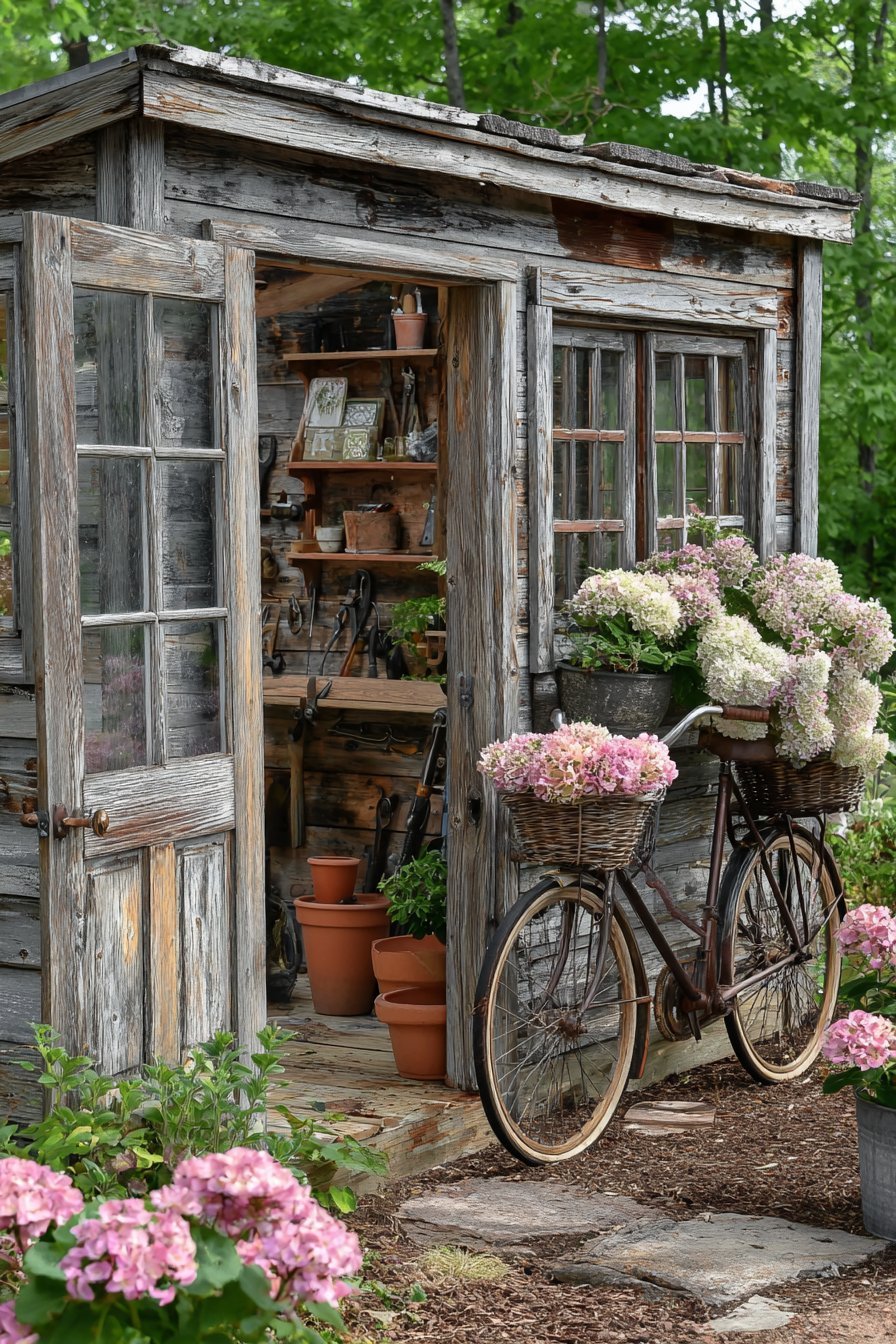
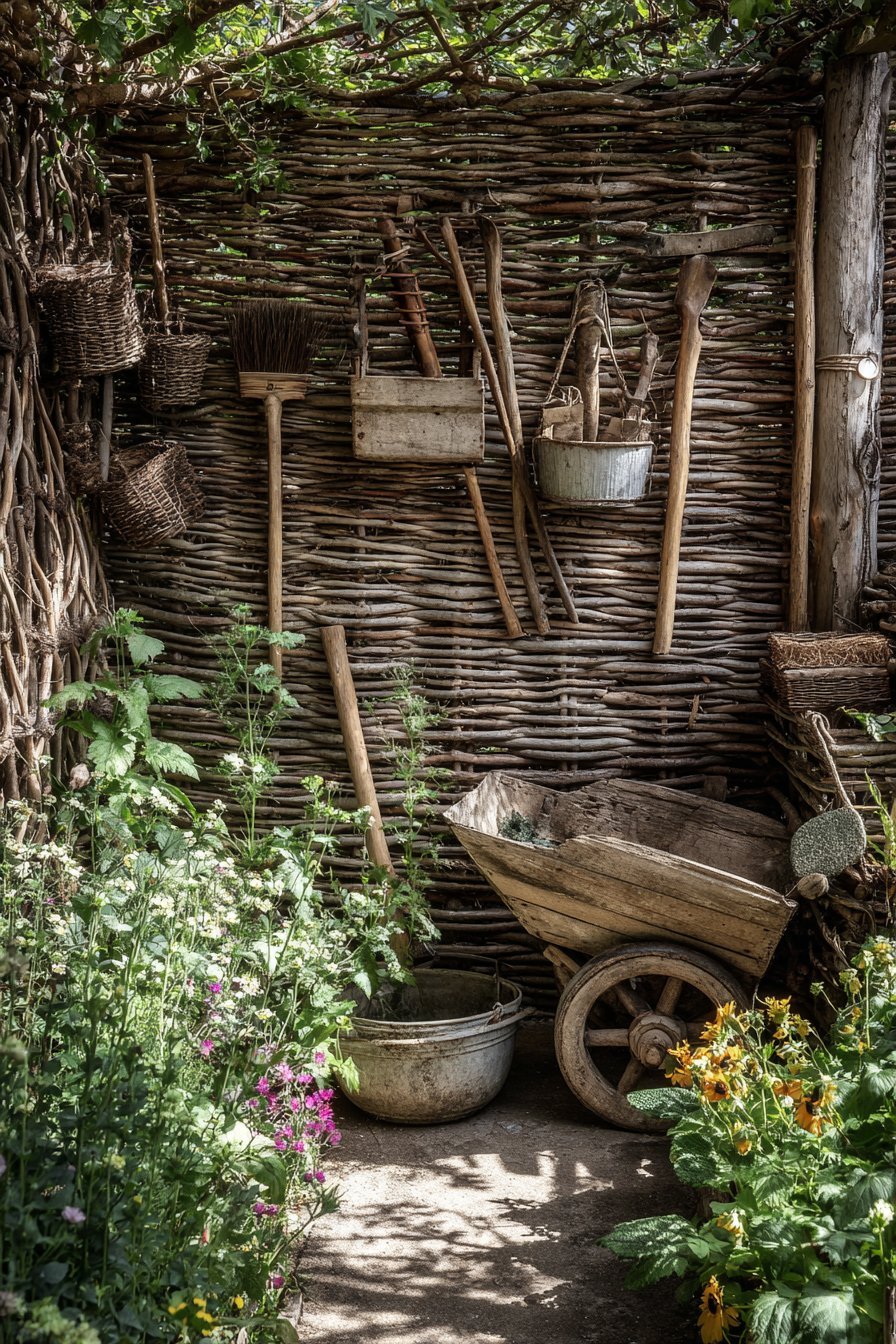
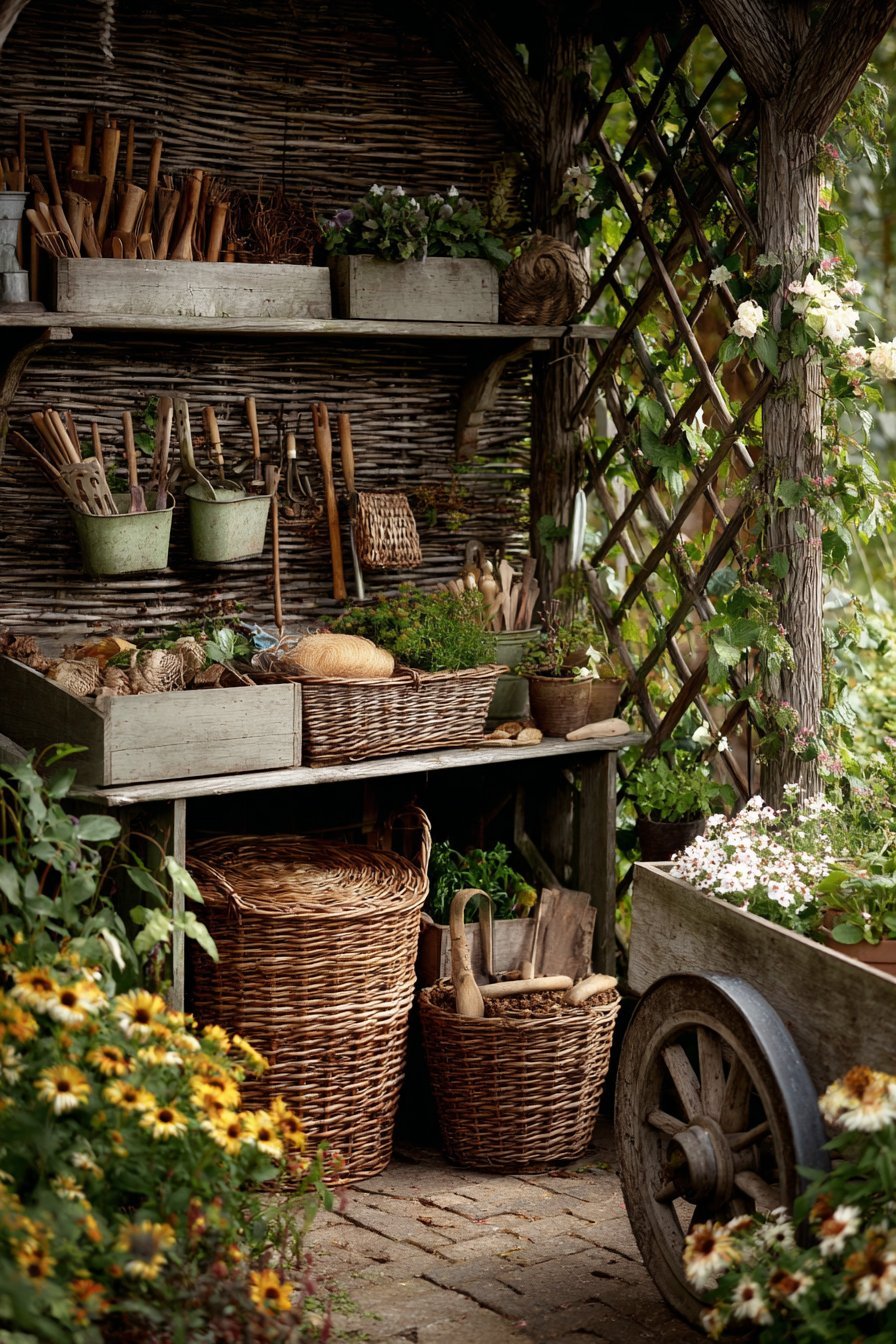
A weathered wooden workbench provides dedicated potting space. Shelves above hold vintage terracotta pots in various sizes. Glass bottles and garden twine stay organized and accessible. Hand tools hang from hooks on vertical boards. Salvaged containers sit ready for planting projects.
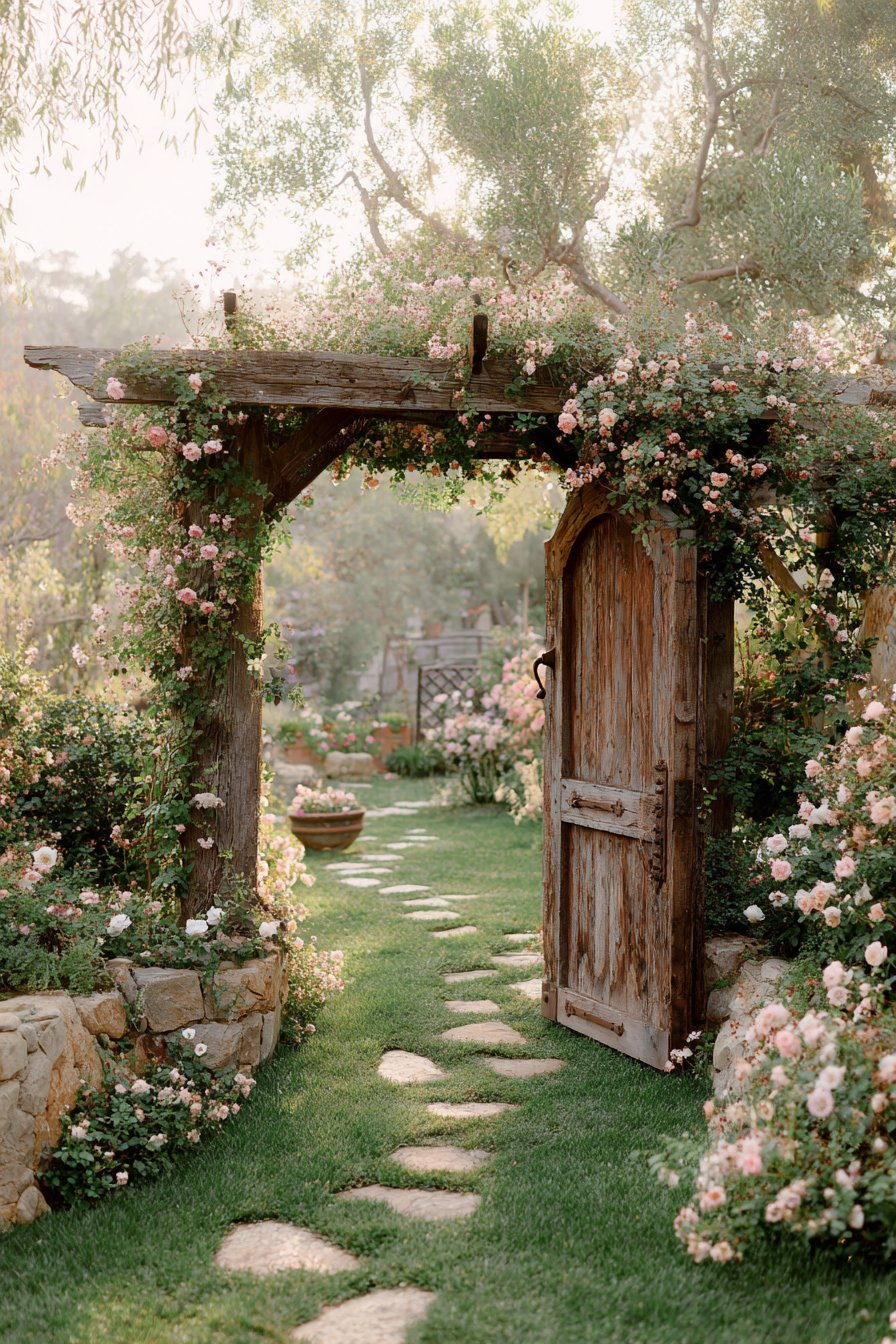
The potting station represents cottage gardens’ practical working areas. Dedicated space for garden tasks improves efficiency significantly. Everything needed remains organized rather than scattered about. The vertical storage maximizes limited space effectively. Function drives the design with beauty following naturally.
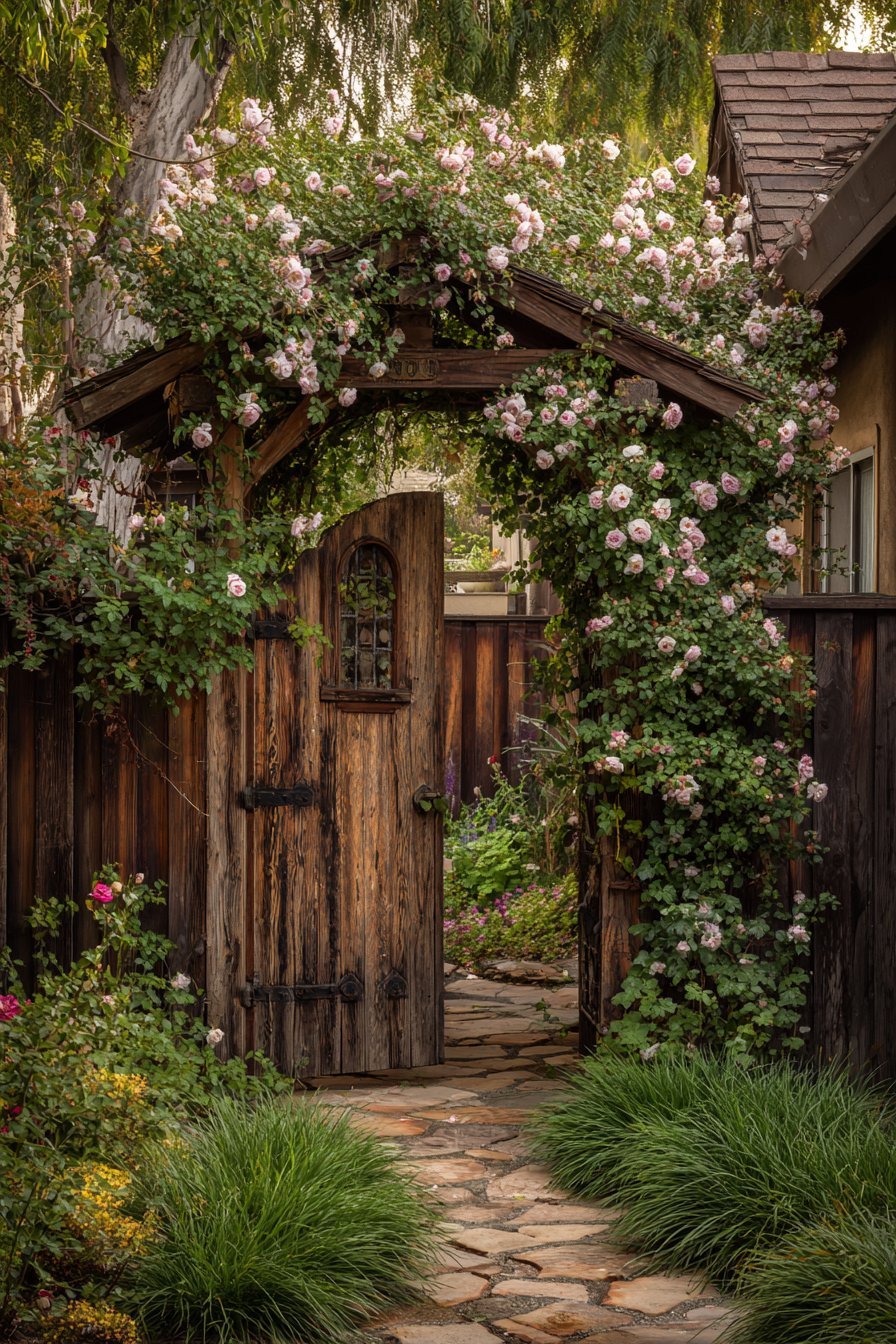
Climbing vines or roses frame the potting area beautifully. The work space integrates into garden rather than standing separate. Bags of compost and potting soil store conveniently underneath. The setup handles regular gardening tasks throughout seasons. A proper workbench makes enjoyable what might otherwise frustrate.
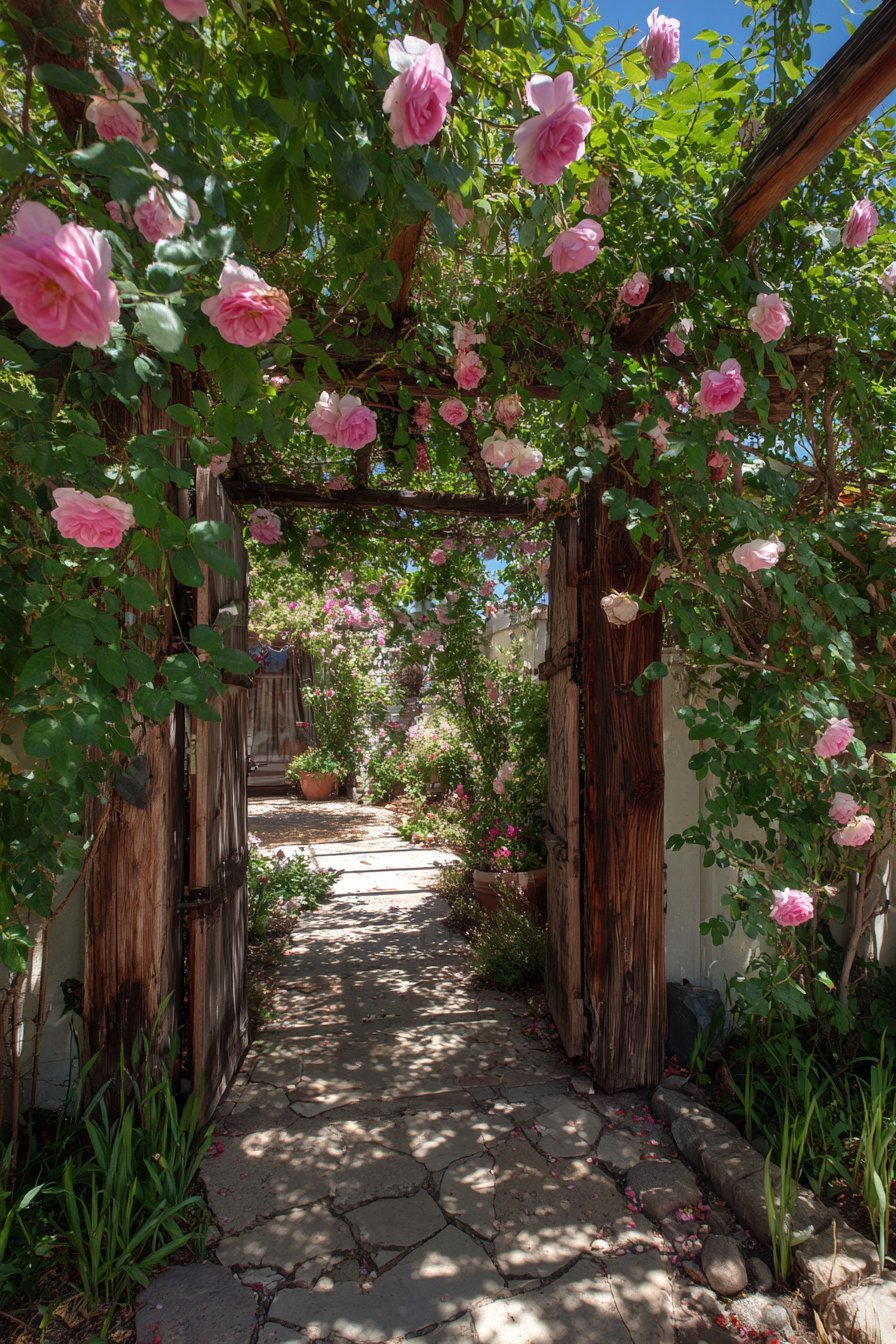
Natural north-facing light provides even illumination without harsh shadows. Detail-oriented perspective captures authentic well-used cottage garden workspace. Vintage tools and materials add character beyond mere functionality. The accumulated collection tells stories of gardening seasons past. This space represents the heart of active cottage gardening.
Key Design Tips:
- Build sturdy workbenches at comfortable working height
- Add vertical storage for tools and supplies organization
- Collect vintage terracotta pots in various sizes over time
- Position potting stations with good natural lighting
- Store soil and compost conveniently underneath work surface
- Allow climbing plants to frame and integrate work areas
20. Quiet Garden Reading Nook

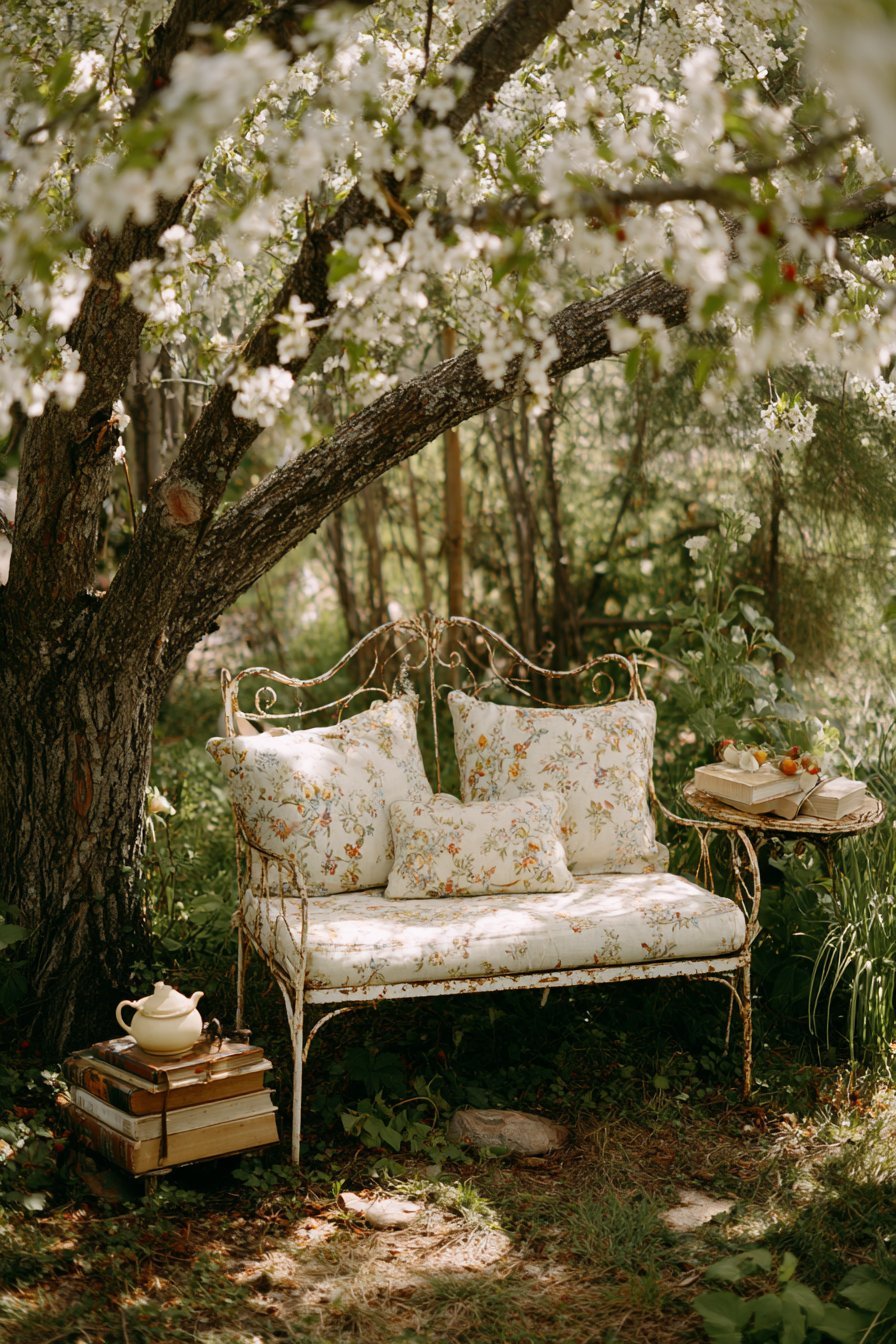
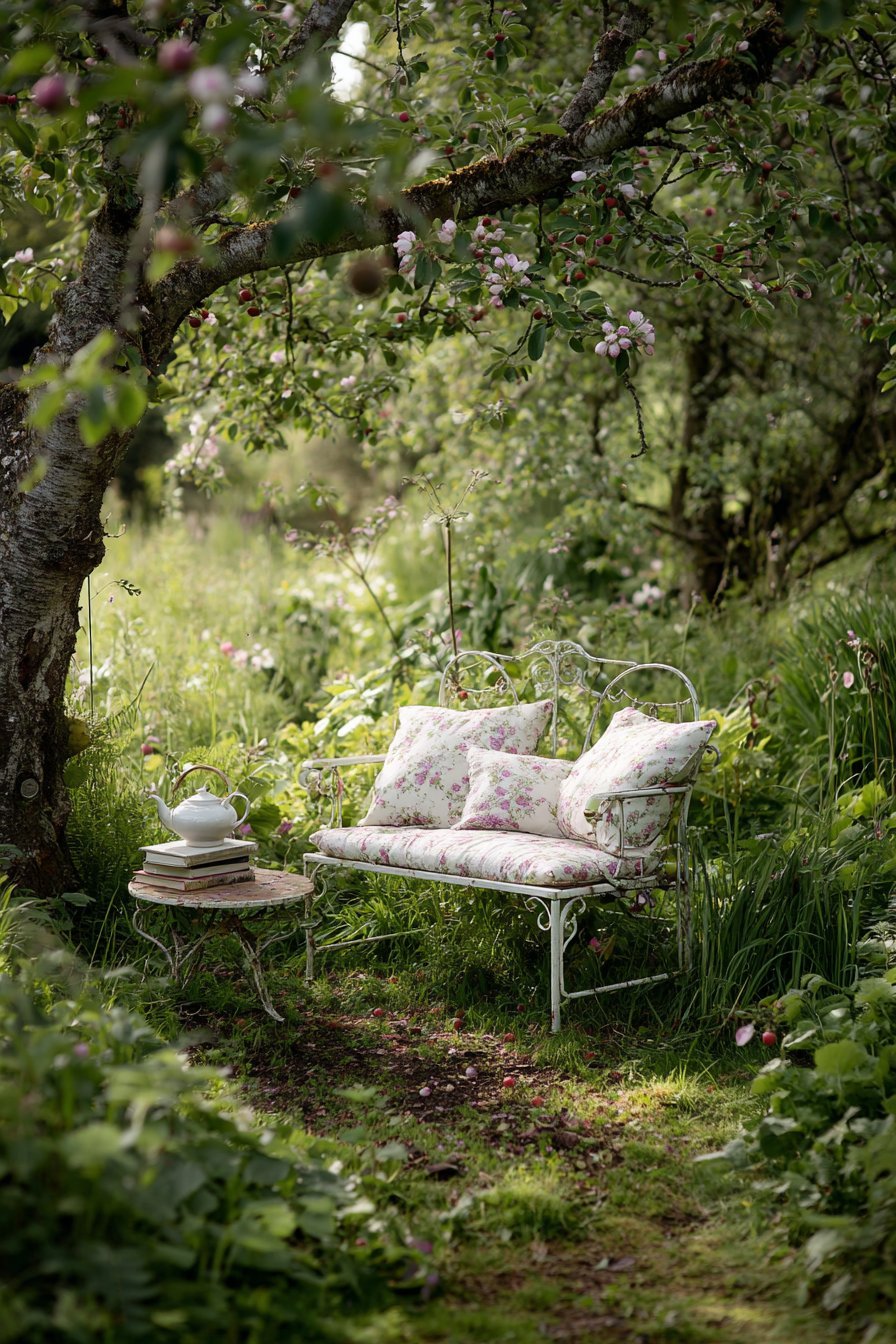
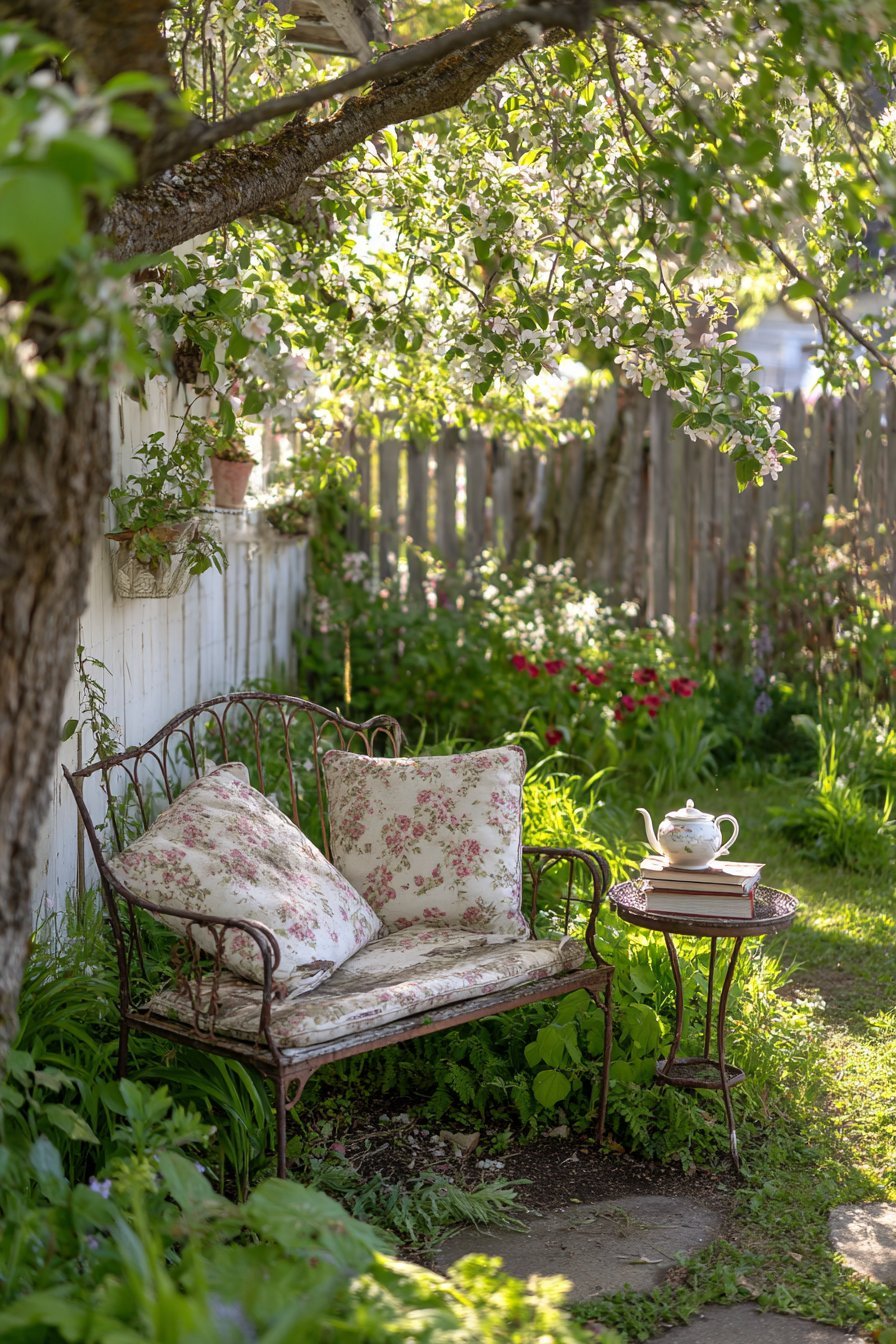
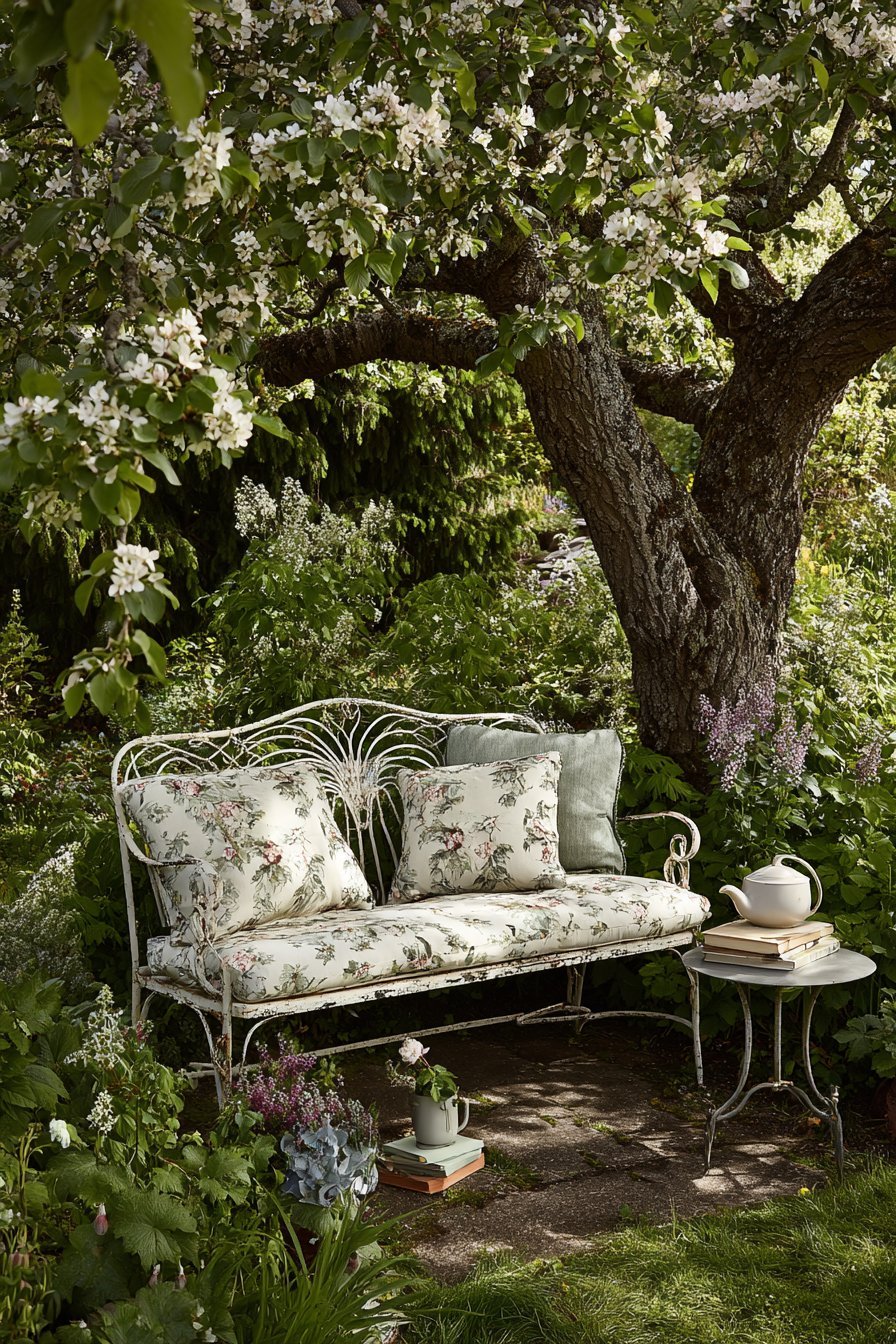
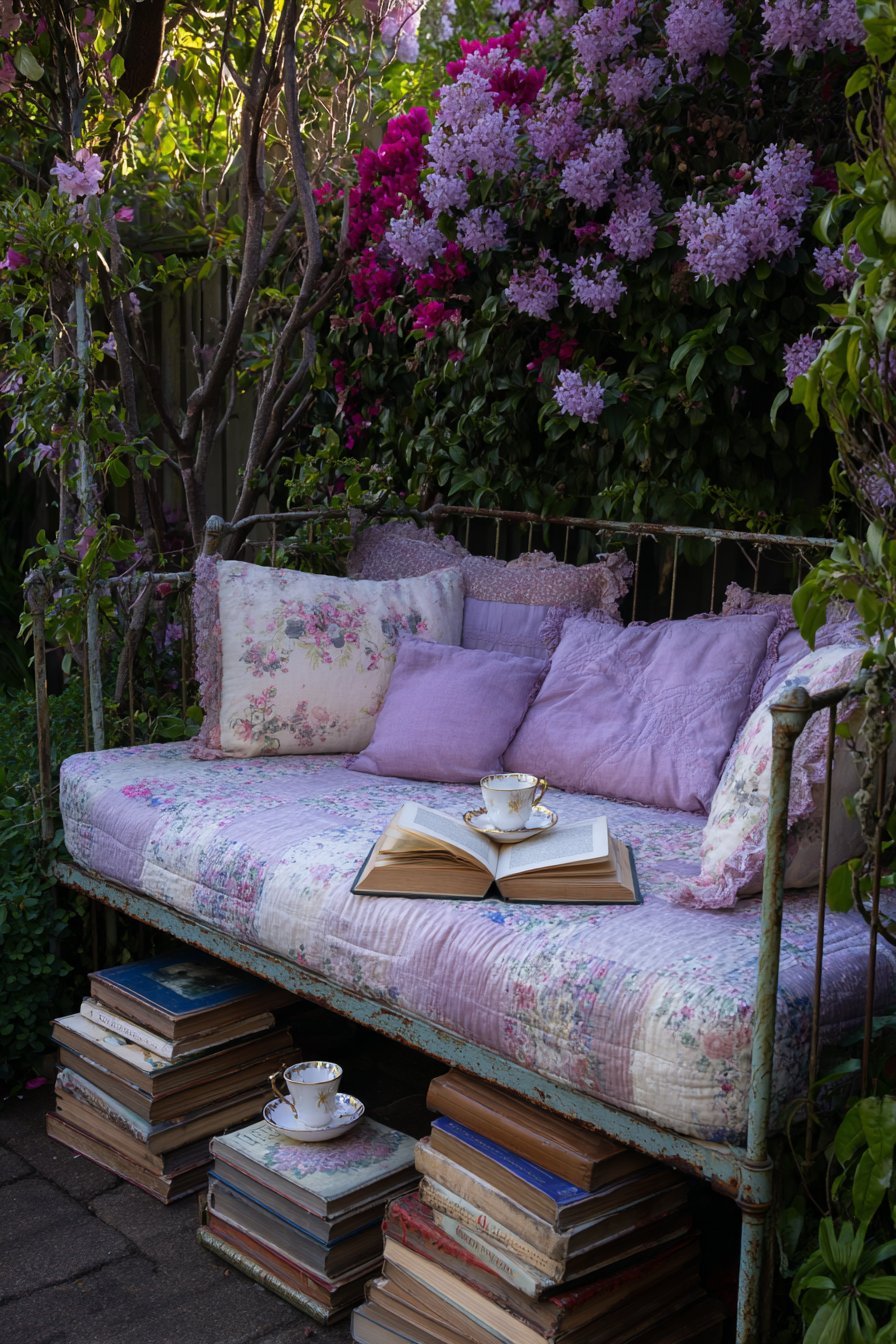
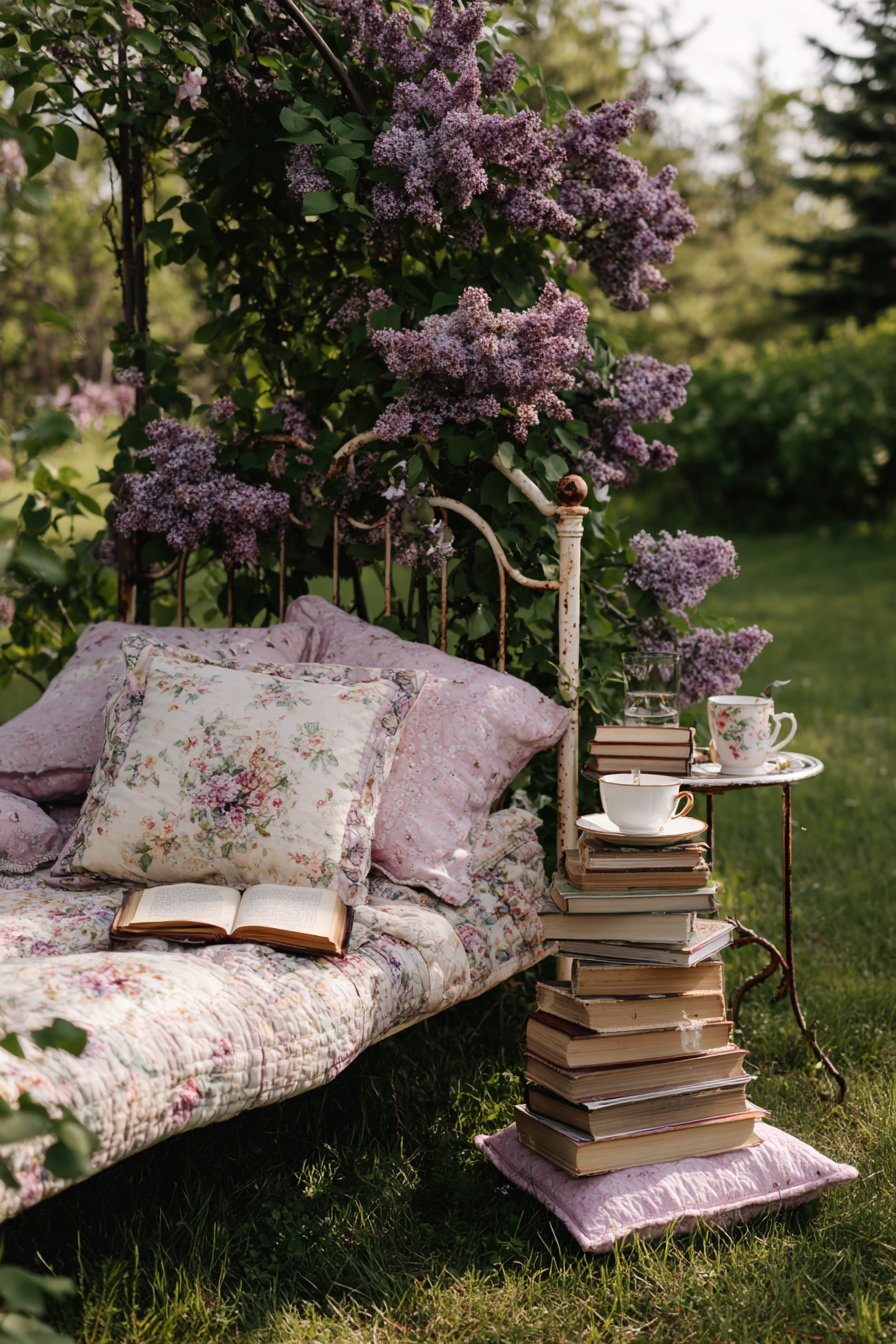
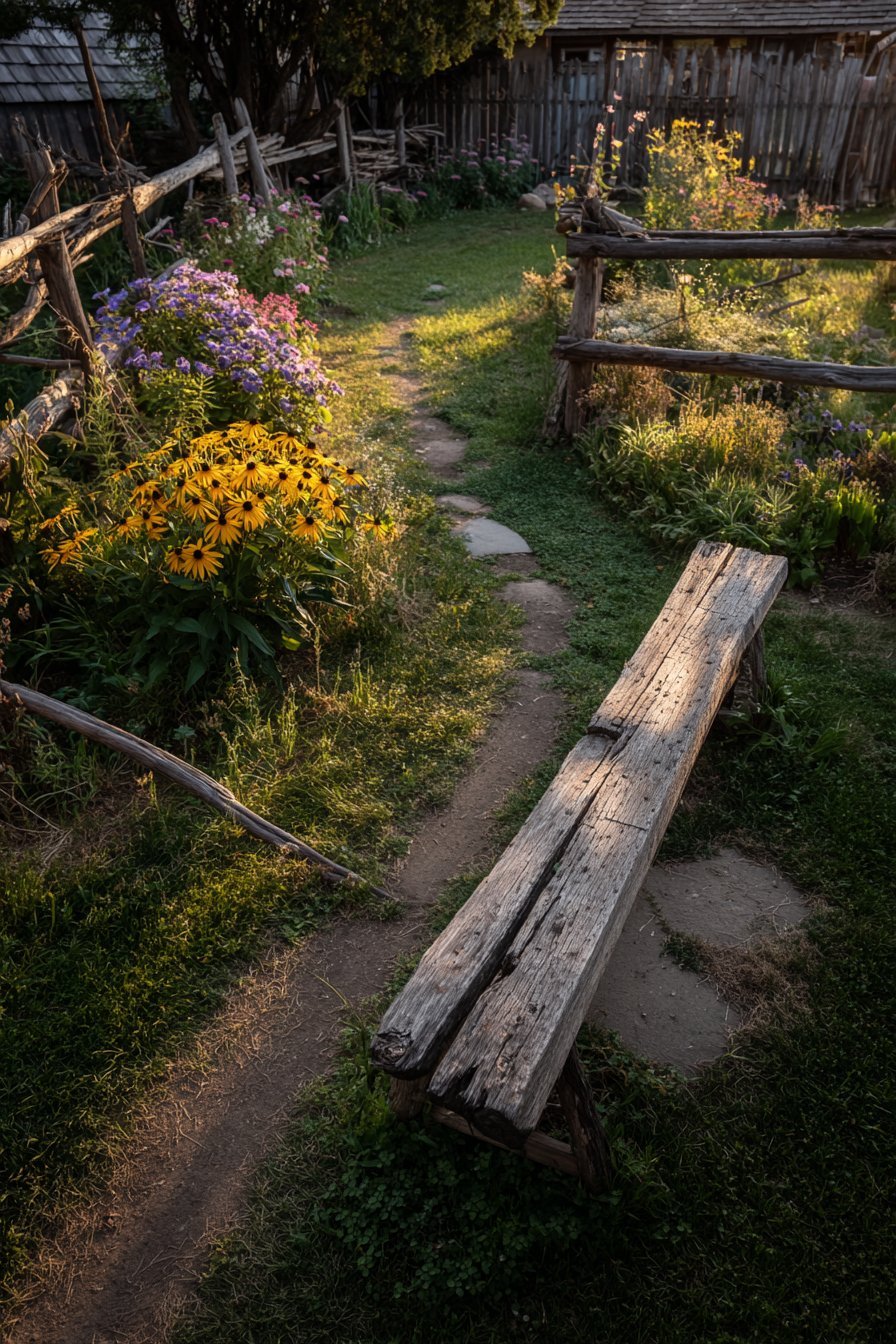
A vintage wooden bench with faded cushions rests under fruit trees. A small weathered side table holds gardening books and beverages. The area surrounds with fragrant plants including roses and lavender. Low-growing chamomile creates a living carpet nearby. Dappled natural light filters through the tree canopy peacefully.
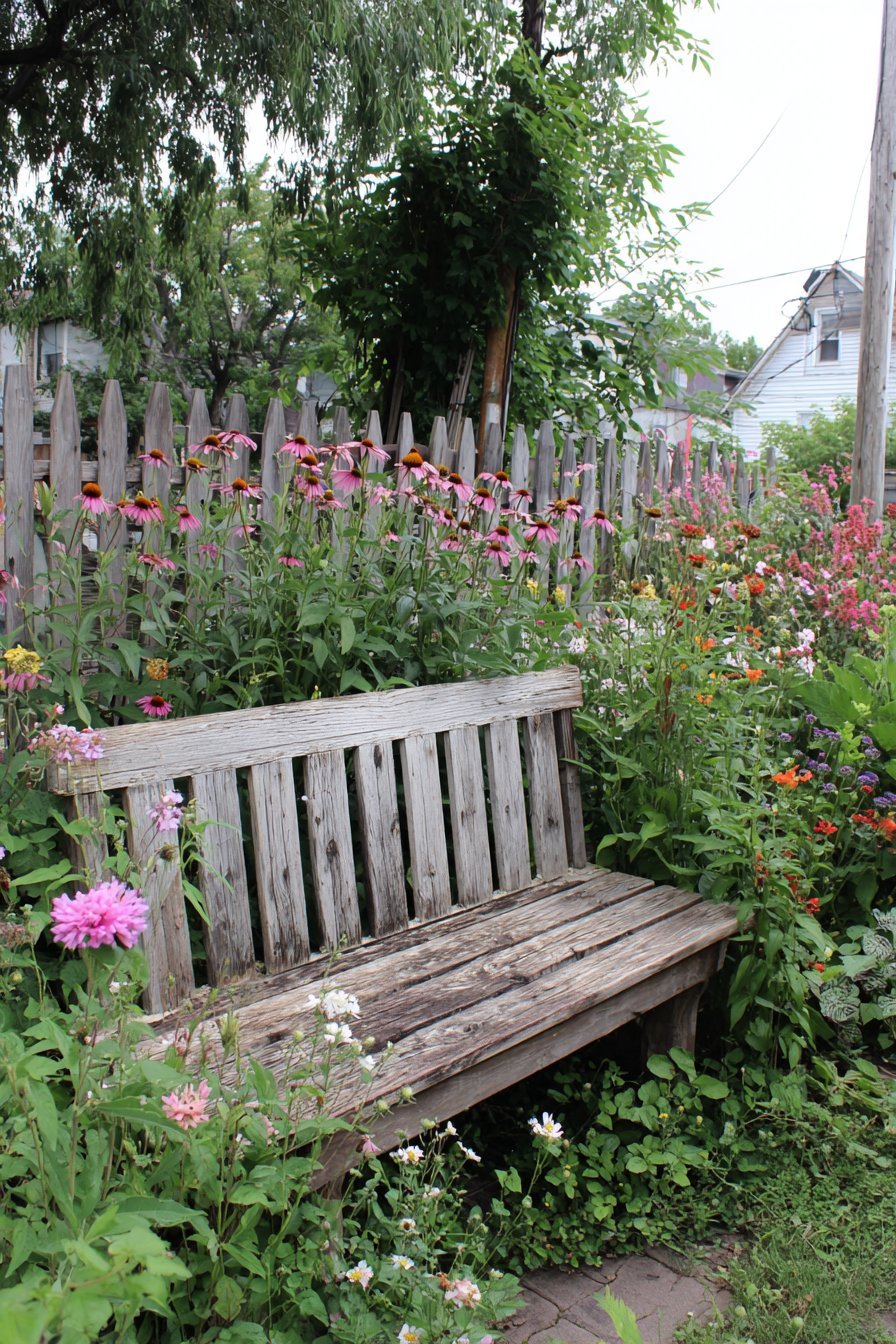
The reading nook represents cottage gardens’ contemplative side beautifully. Not every garden space requires productivity or grand display. Some areas exist simply for enjoying the garden’s beauty. The intimate scale feels personal rather than designed for entertaining. This private retreat serves the gardener’s own needs.
Fragrance plays crucial role in this sensory garden room. Roses, lavender, and jasmine create natural aromatherapy. Chamomile releases scent when stepped upon or brushed against. These plants enhance relaxation and peaceful feelings naturally. The combination creates perfect environment for reading and reflection.
Soft focus background emphasizes the intimate personal cottage retreat. The space invites hours spent with books and quiet thoughts. Fruit trees provide shade while promising future harvests. This combination of beauty and productivity defines cottage gardens. Every element serves both practical and aesthetic purposes successfully.
Key Design Tips:
- Position seating under established trees for natural shade
- Choose comfortable furniture with weather-appropriate cushions
- Surround reading nooks with fragrant plants for aromatherapy
- Add small side tables for books and beverages
- Plant low-growing chamomile to release scent when stepped upon
- Create intimate scale appropriate for solitary enjoyment
Why These Cottagecore Backyard Designs Are the Best
These cottagecore backyard designs represent the finest approaches to creating romantic outdoor spaces. Each concept demonstrates thoughtful consideration of natural materials, traditional techniques, and timeless beauty. The designs showcase remarkable versatility that suits different property sizes and regional climates.
The incorporation of reclaimed and weathered materials adds sustainability to beautiful design choices. Salvaged stone troughs, barn wood, and vintage furniture bring history and character. These materials develop authentic patina that new products cannot replicate. The cottagecore aesthetic celebrates this genuine aging process as essential beauty.
Functionality remains paramount throughout these designs despite romantic appearances. Productive vegetable gardens, cutting flower beds, and herb spirals provide practical harvests. Chicken coops and greenhouses extend growing seasons and food production. The cottagecore philosophy embraces self-sufficiency alongside aesthetic pleasure. Every beautiful element serves useful purposes when thoughtfully designed.
The layered planting approach creates year-round interest and continuous blooms. Traditional cottage technique positions tall plants behind medium and low varieties. This maximizes visibility while creating dimensional depth. Self-seeding plants fill gaps naturally over time. The generous, informal style appears effortless though planning ensures success.
Color theory applications throughout these designs create harmonious palettes naturally. Soft heritage colors on structures complement rather than compete with plantings. White, sage green, and weathered barn red allow flowers to star. The restraint in paint colors lets natural materials and abundant plantings provide visual interest.
These concepts address various spatial considerations from intimate corners to generous meadows. Small properties benefit from vertical growing and compact raised beds. Larger spaces accommodate wildflower meadows and substantial structures like pergolas. The designs scale appropriately while maintaining authentic cottagecore character throughout.
Sustainability and longevity guide material choices and planting decisions consistently. Natural materials like stone, wood, and metal age gracefully requiring minimal replacement. Native and well-adapted plant selections thrive with reduced water and maintenance. This practical approach aligns with historical cottage garden practices. Modern cottagecore embraces environmental stewardship alongside traditional aesthetics naturally.
Conclusion
These cottagecore backyard designs demonstrate that romance and functionality coexist beautifully. The key takeaways include the importance of natural materials, abundant layered plantings, and productive elements. Weathered furniture, salvaged structures, and vintage accessories add authentic character. Quality pieces combined with established plants create spaces feeling both timeless and welcoming.

Successful cottagecore design balances aesthetic appeal with practical garden work. Start small by adding one raised bed or vintage bench. Allow climbing roses to soften existing fences and structures. Plant fragrant herbs and traditional cottage flowers in generous drifts. Each element builds toward your complete cottagecore backyard vision.
Your dream cottage garden awaits creation through thoughtful planning and patient cultivation. Remember that authentic patina develops naturally over seasons and years. Embrace the process of collecting vintage pieces and establishing perennials. The journey toward cottagecore beauty rewards with peaceful outdoor sanctuary. Transform your backyard into the romantic retreat you’ve always imagined.
