
The world of interior design is constantly evolving, yet some styles feel timeless the moment they arrive. The coastal grandmother aesthetic is one such movement — a design philosophy that blends relaxed coastal living with the warm, collected charm of a well-lived life. It evokes sun-bleached linens, the smell of salt air, and a home that feels genuinely loved rather than perfectly staged. This style has captured the hearts of designers and homeowners alike, and for good reason.
At its core, the coastal grandmother aesthetic is about effortless sophistication. It isn’t loud or trendy. It layers texture, natural materials, and quiet color palettes to create spaces that feel both elevated and deeply comfortable. Think Nancy Meyers film sets — kitchens full of light, bookshelves lined with novels, and living rooms that invite you to stay all afternoon. This aesthetic is rooted in authenticity and ease.
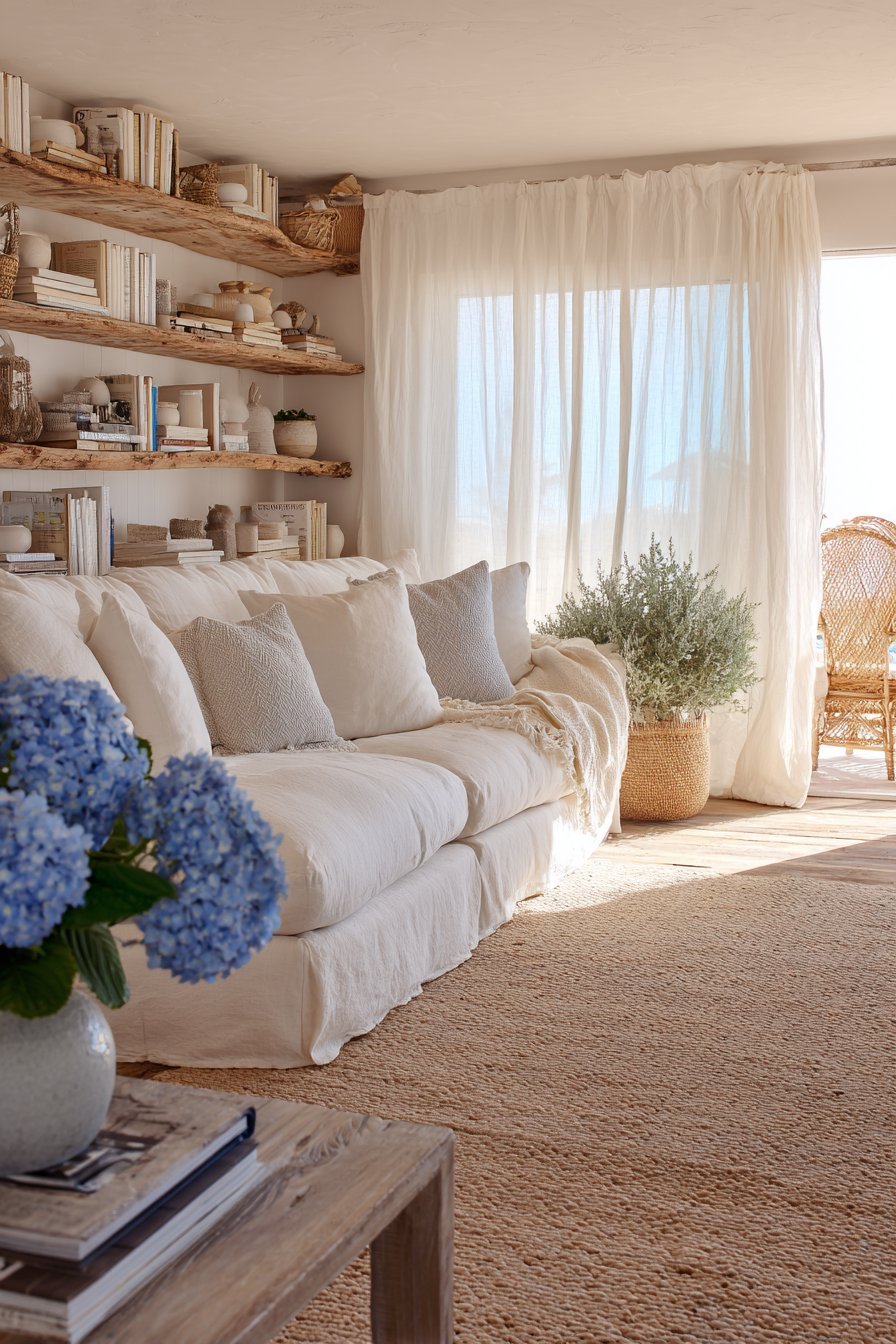
This complete breakdown covers everything you need to know about this beloved design style. From color palettes and furniture choices to textiles, lighting, and accessorizing, each section will help you understand and implement this aesthetic in your own home. Whether you’re starting from scratch or layering in new elements, this guide is your definitive resource.
1. Understanding the Origins of the Coastal Grandmother Aesthetic
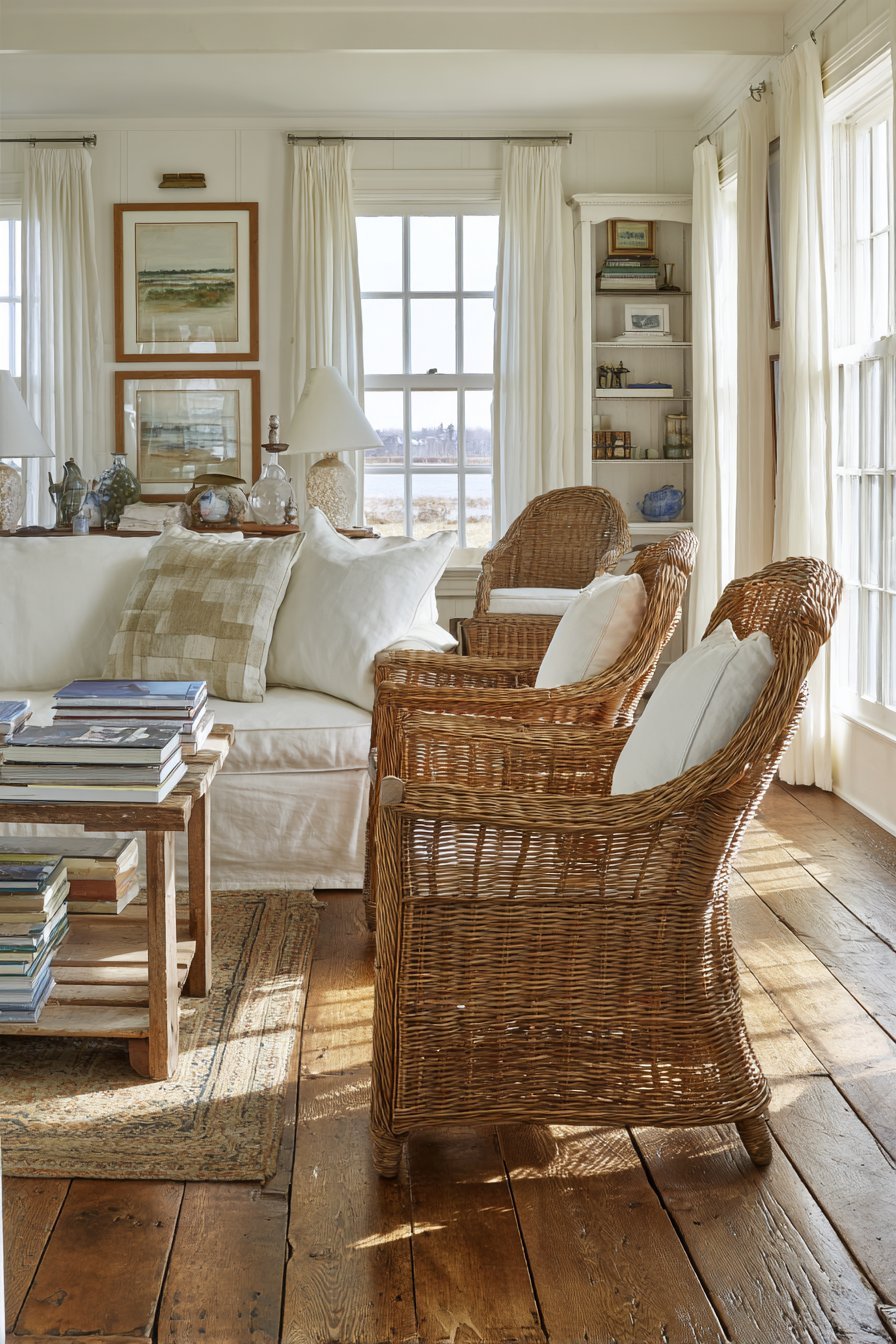
The term “coastal grandmother” was popularized on social media around 2022, but the style itself has been quietly thriving for decades. It draws heavily from classic New England coastal living — think Nantucket, Martha’s Vineyard, and the Hamptons. It’s the aesthetic of a woman who has curated her home over many decades, collecting meaningful pieces rather than following fleeting trends.
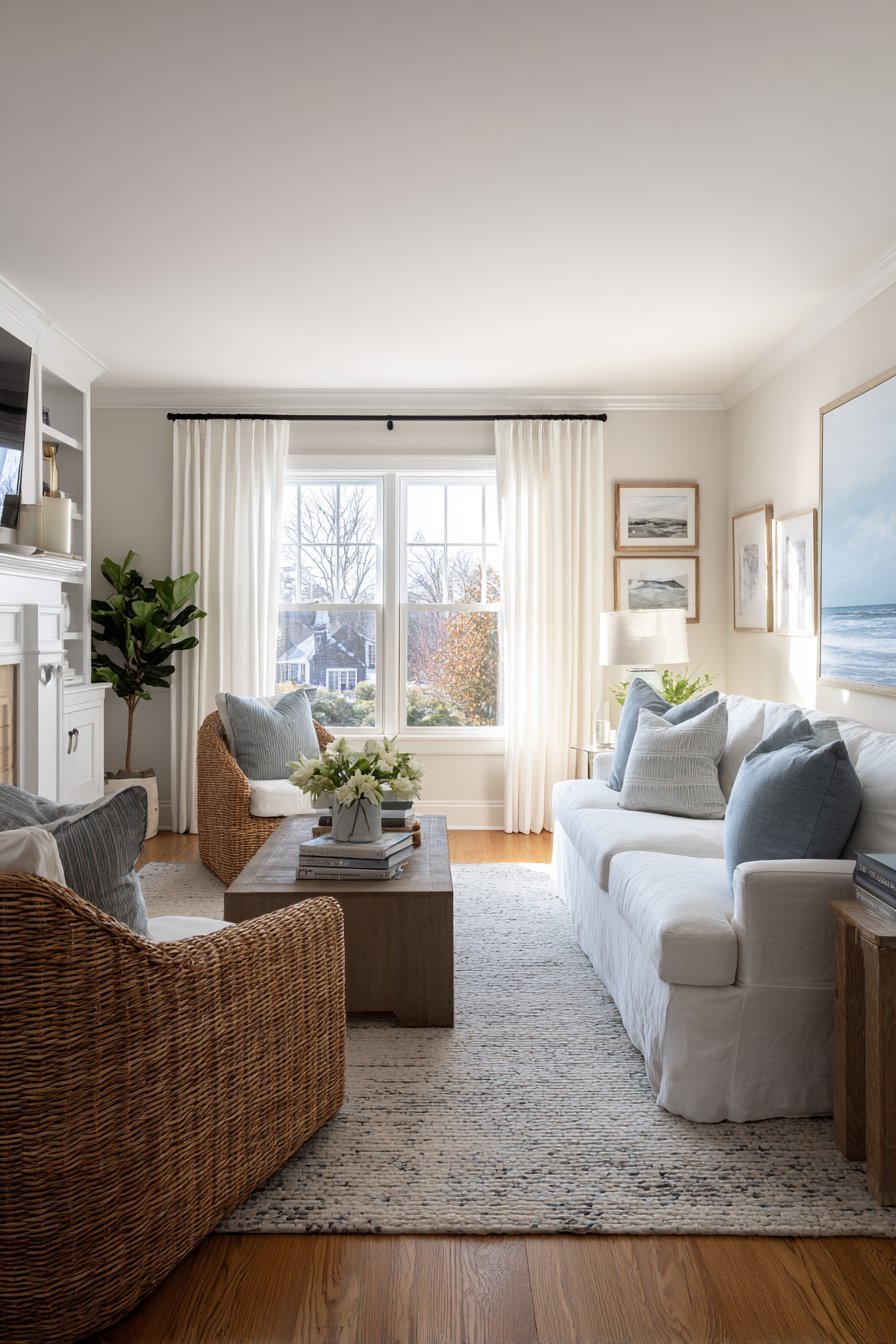
The aesthetic also pulls from mid-century relaxed elegance and old-money sensibilities. There’s a sense of inherited quality here — pieces that look like they’ve been passed down, not purchased last week. Rattan chairs, worn linen sofas, and faded Turkish rugs all contribute to this layered, lived-in feeling. The style celebrates age, patina, and the beauty of imperfection.
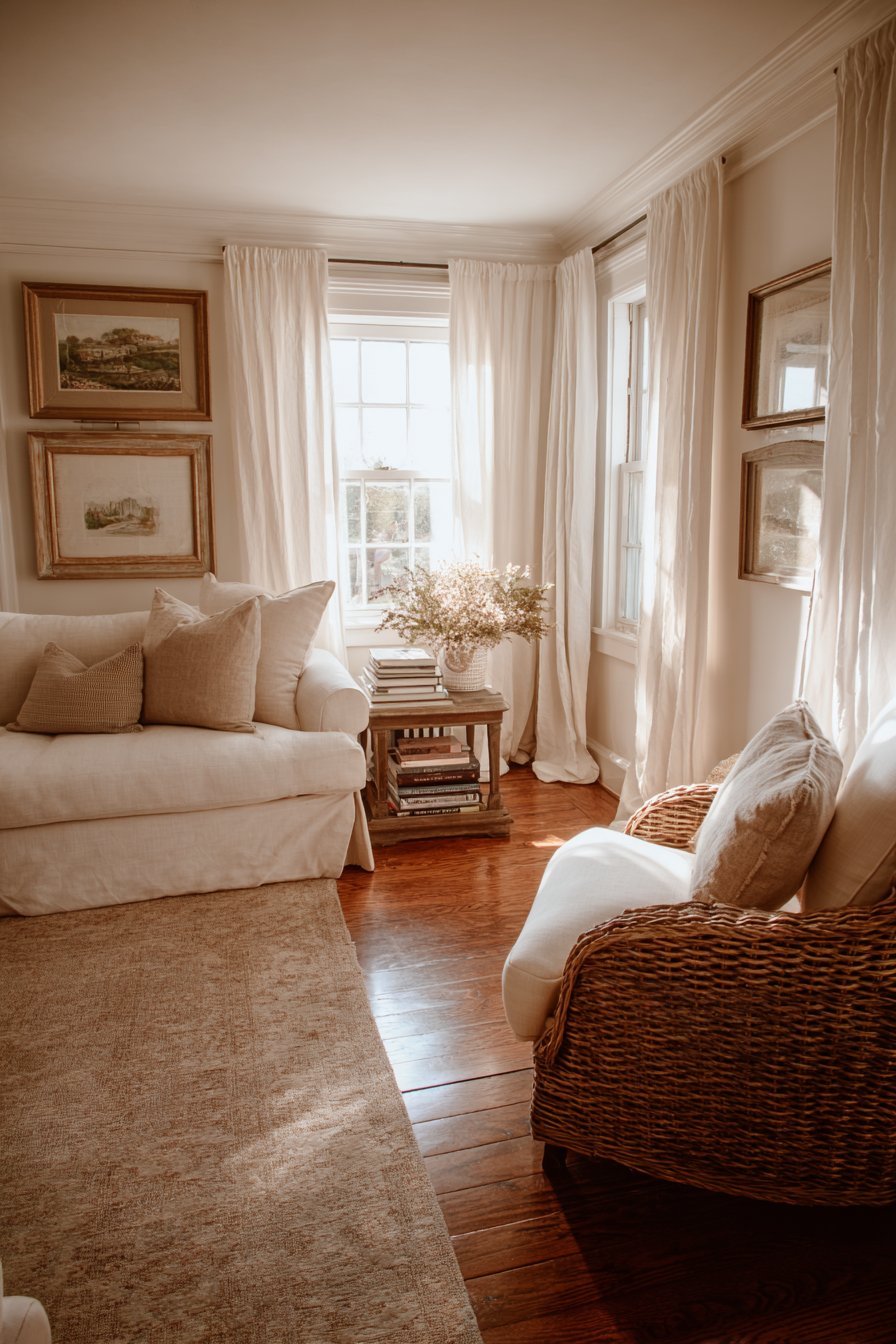
Understanding these origins helps you approach the aesthetic with the right intention. It’s not about recreating a magazine spread. It’s about channeling a mindset — slow mornings, garden walks, cooking with fresh herbs, and a home that tells a story. Once you understand this, every design decision becomes more intuitive.
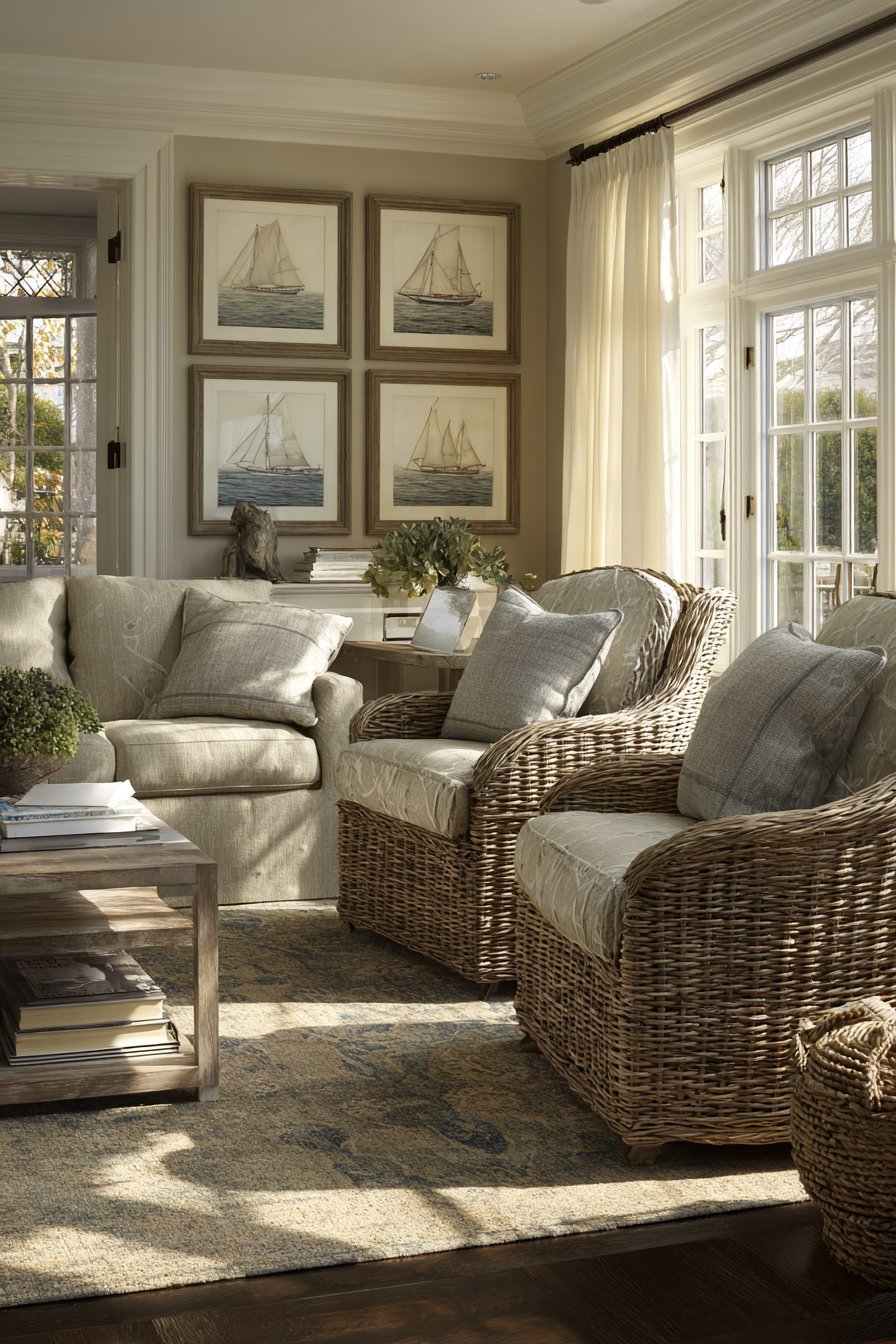
- Research classic New England interiors for visual inspiration
- Look at Nancy Meyers films for mood and atmosphere references
- Embrace pieces that show natural wear and character
- Prioritize quality and longevity over trendy newness
- Build your collection gradually, not all at once
- Focus on how the space feels, not just how it looks
2. The Coastal Grandmother Color Palette
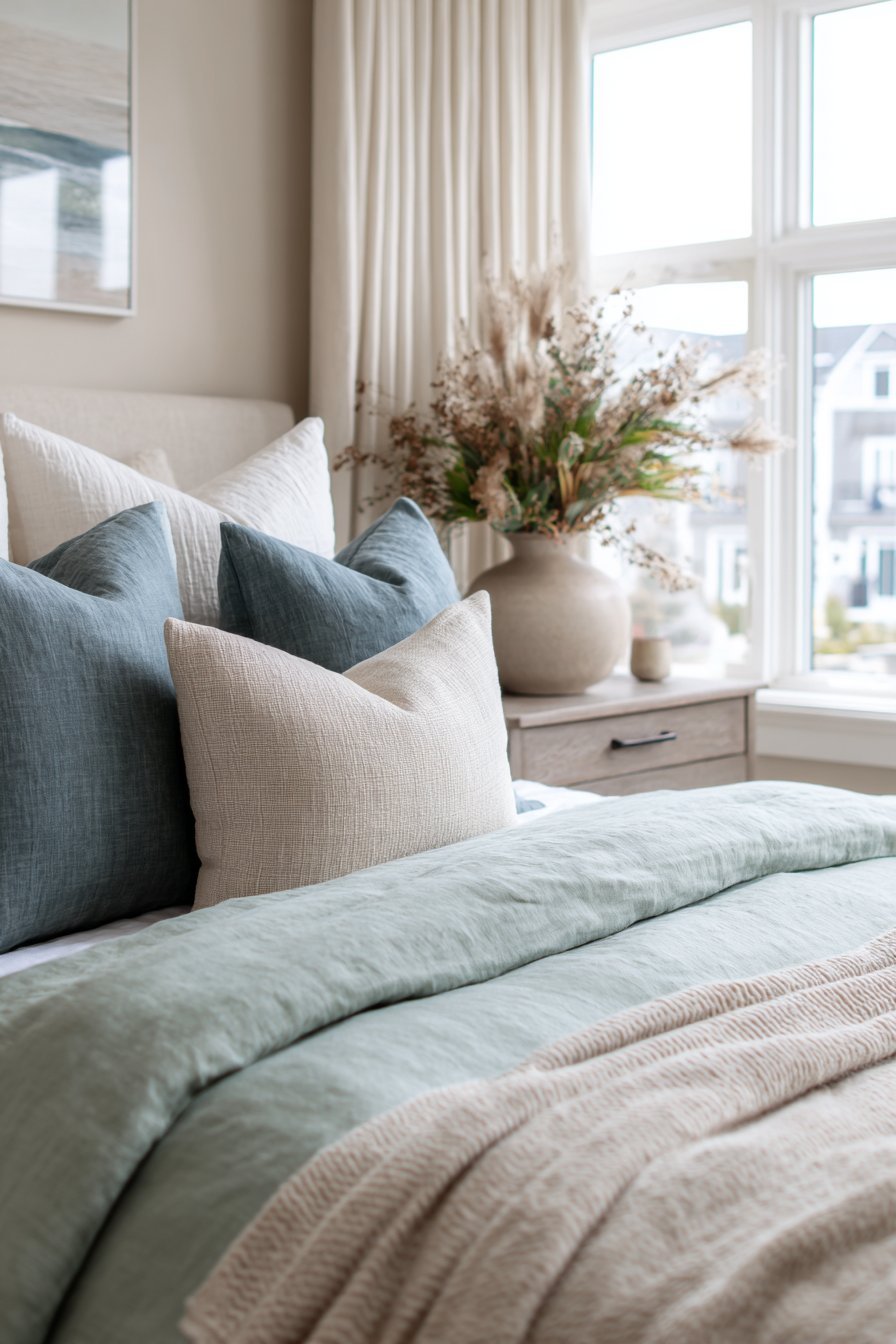
Color is the foundation of this aesthetic. The coastal grandmother palette is soft, airy, and grounded in nature. Whites, creams, soft blues, sage greens, warm taupes, and sandy neutrals are the dominant shades. These colors evoke the natural world — sea glass, driftwood, sea oats, and fog over the water.
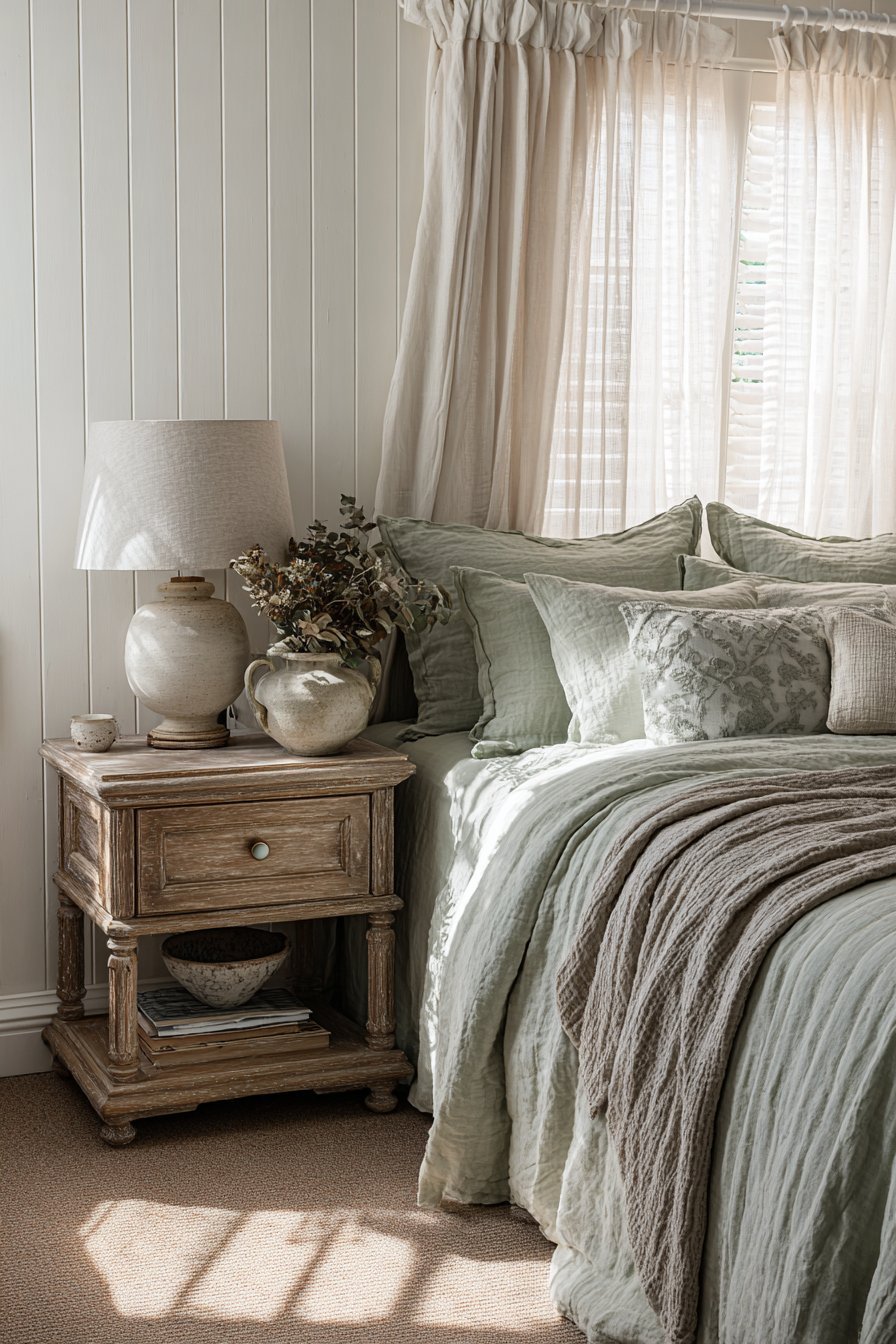
White is the most versatile anchor in this palette. But not a stark, clinical white — think warm white, linen white, or antique white. These softer tones create warmth rather than sterility. Layer them with soft blue-greens and muted sage for depth. Add pops of navy or faded coral as accents to keep things visually interesting without being loud.
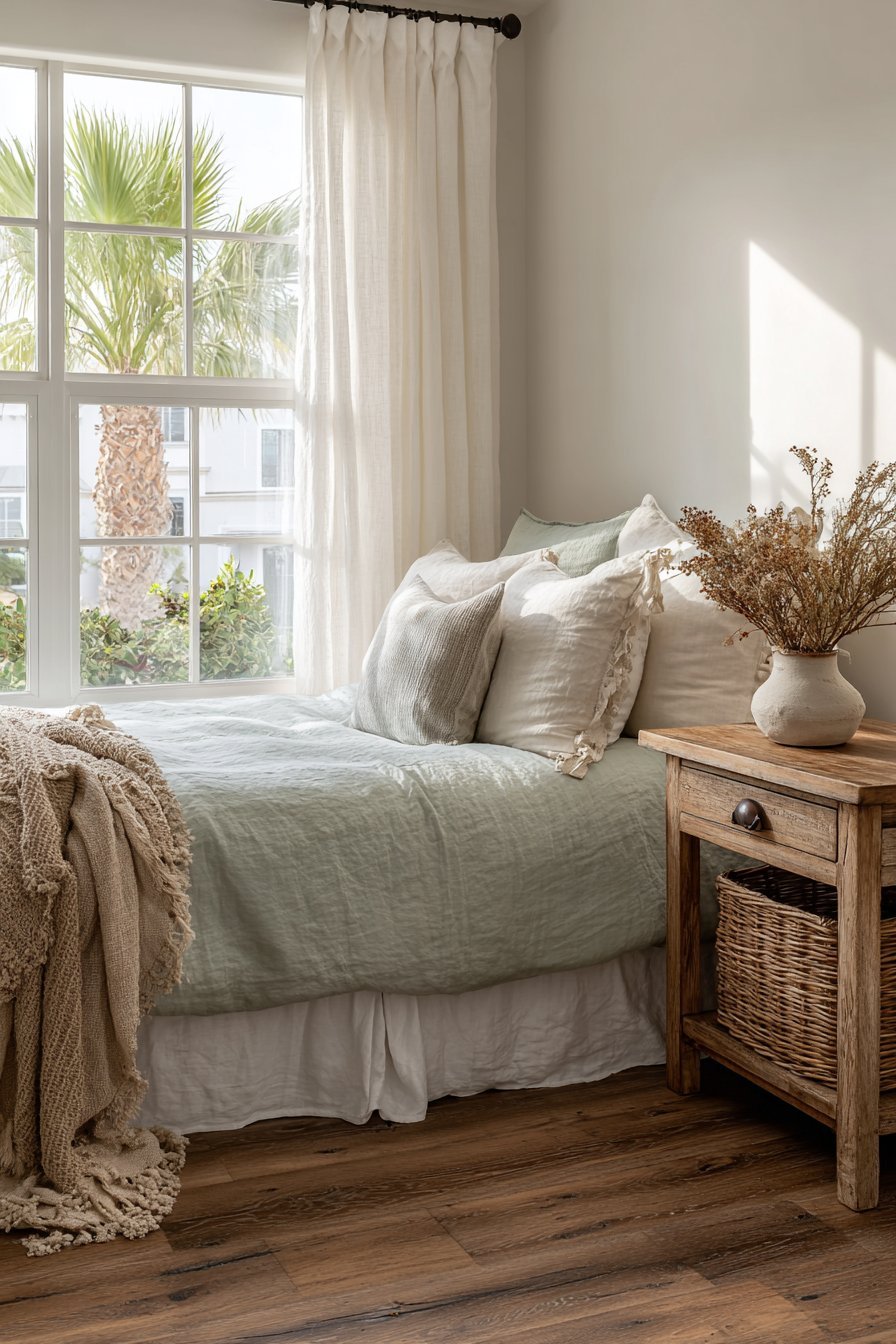
Avoid overly saturated or trendy colors. The coastal grandmother palette is intentionally muted and sun-faded. Imagine fabrics left out in the summer sun for a season — that gentle, weathered quality is exactly the goal. This restraint in color is what gives the aesthetic its sophisticated, timeless quality.
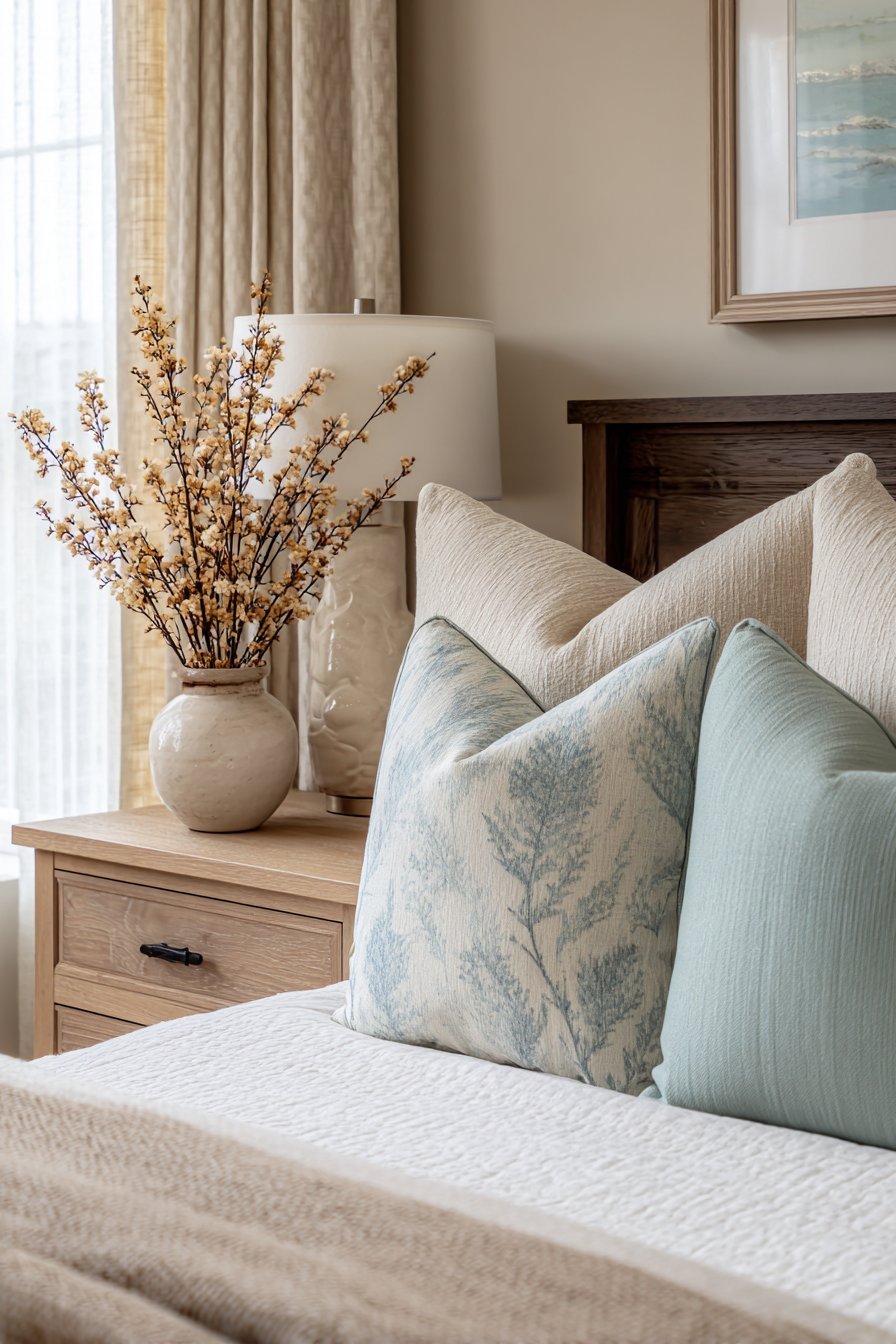
- Use warm whites and cream tones as your base
- Introduce soft blues, sage, and sea glass greens
- Layer sandy taupes and warm beiges for grounding
- Add faded navy or dusty coral as subtle accents
- Avoid neon, highly saturated, or very dark tones
- Test paint swatches in natural light before committing
3. Furniture Selection and Layout
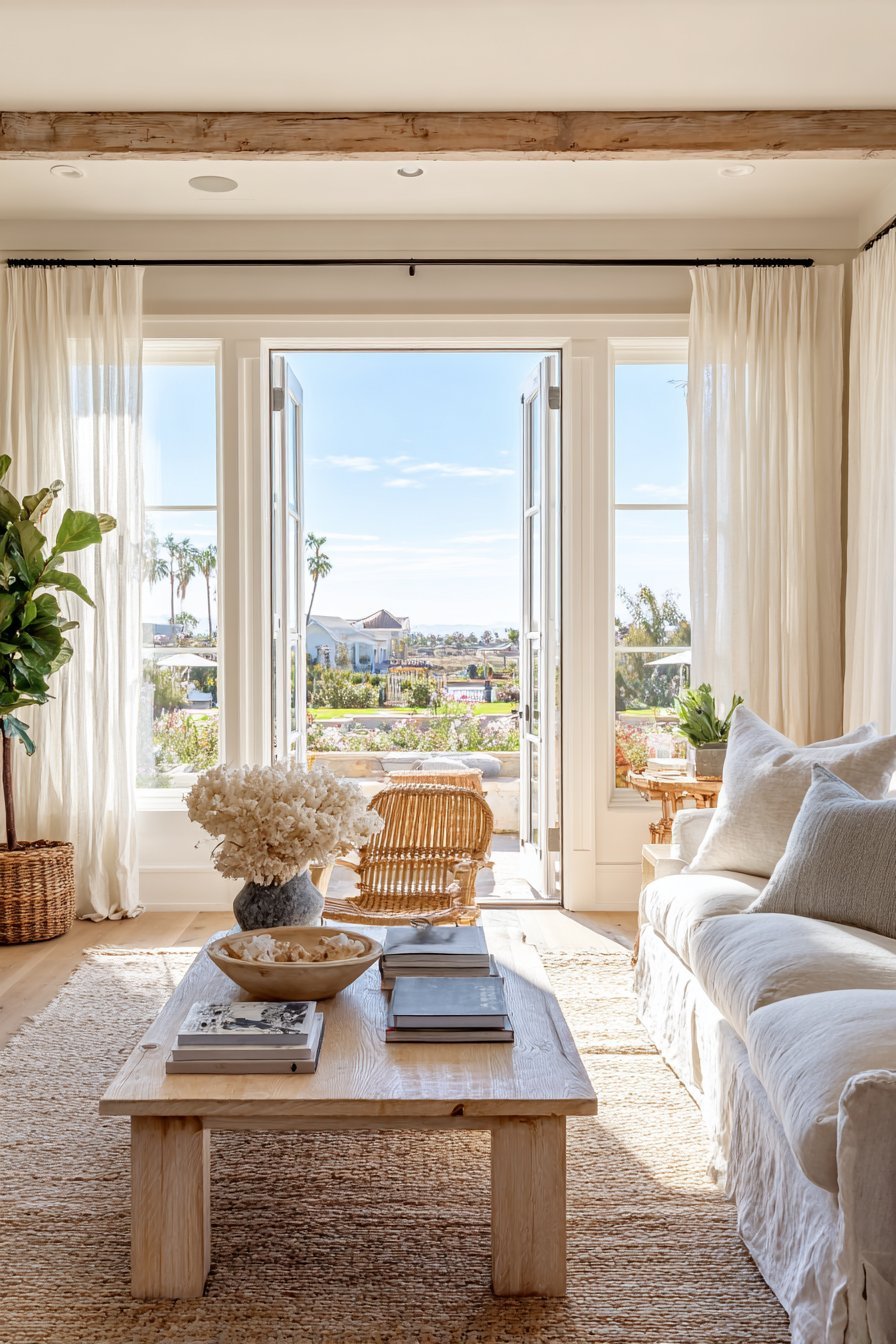
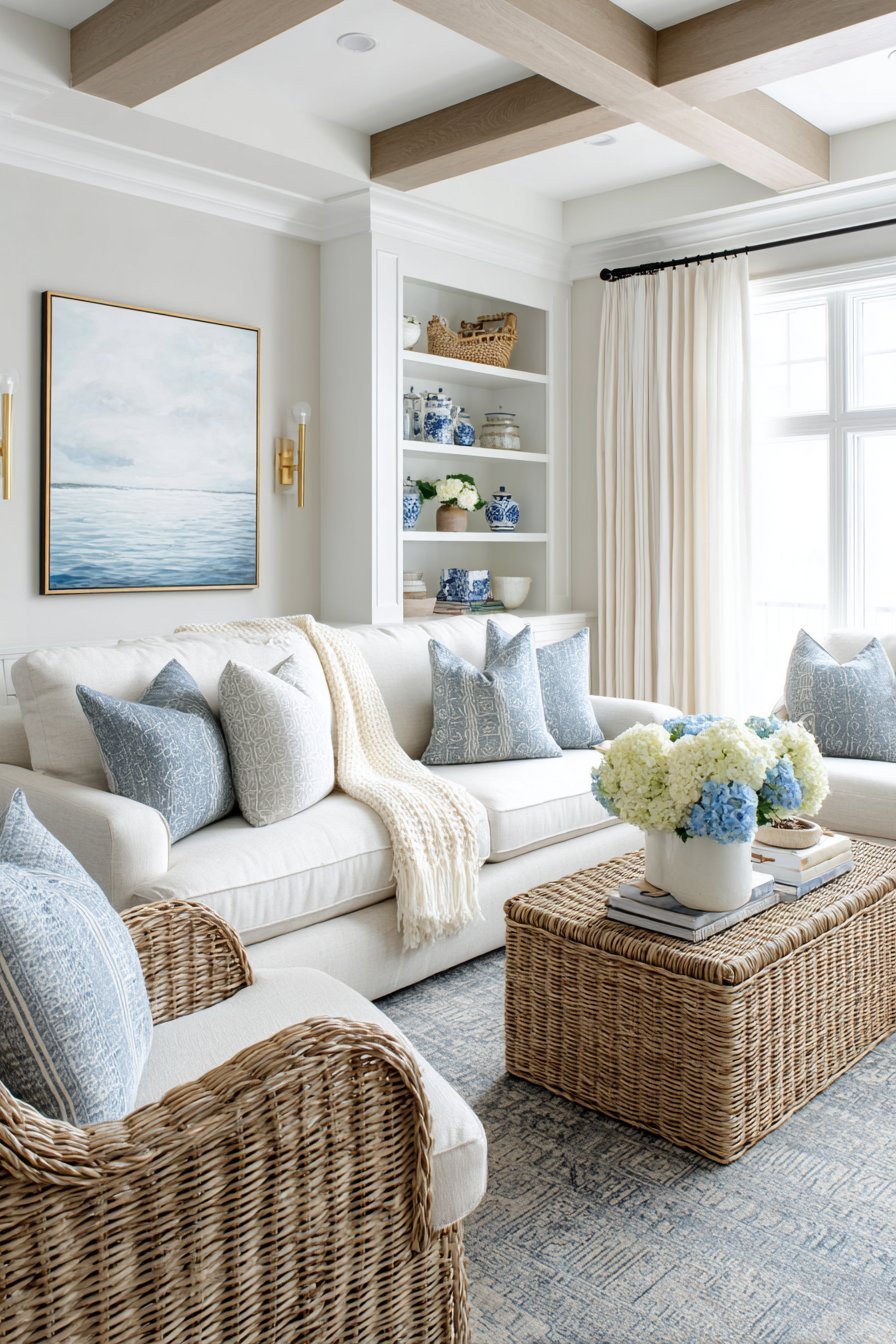
Furniture in the coastal grandmother aesthetic is comfortable, classic, and considered. Pieces should look like they belong — not like they were bought as a matching set. Sofas are deep and cushioned, upholstered in linen or slipcover cotton in neutral tones. Chairs are often cane, rattan, or wicker with soft cushions in woven or printed fabrics.
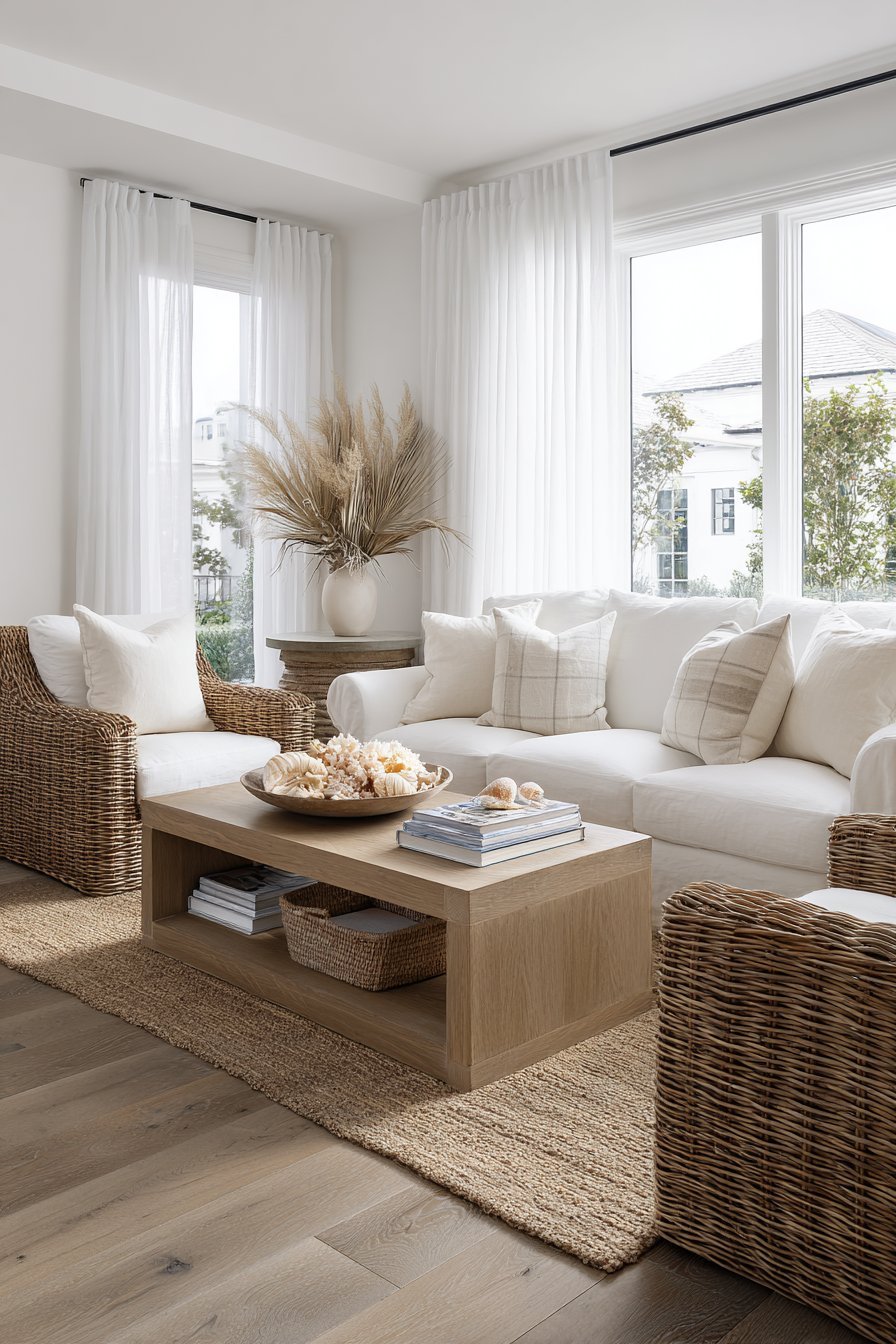
Wood tones lean light and natural — bleached oak, whitewashed pine, and driftwood finishes are ideal. Avoid very dark or highly polished woods, which feel too formal for this style. Instead, choose furniture with visible grain and an organic quality. Antique and vintage pieces blend especially well, adding that sense of history and collection that defines the aesthetic.
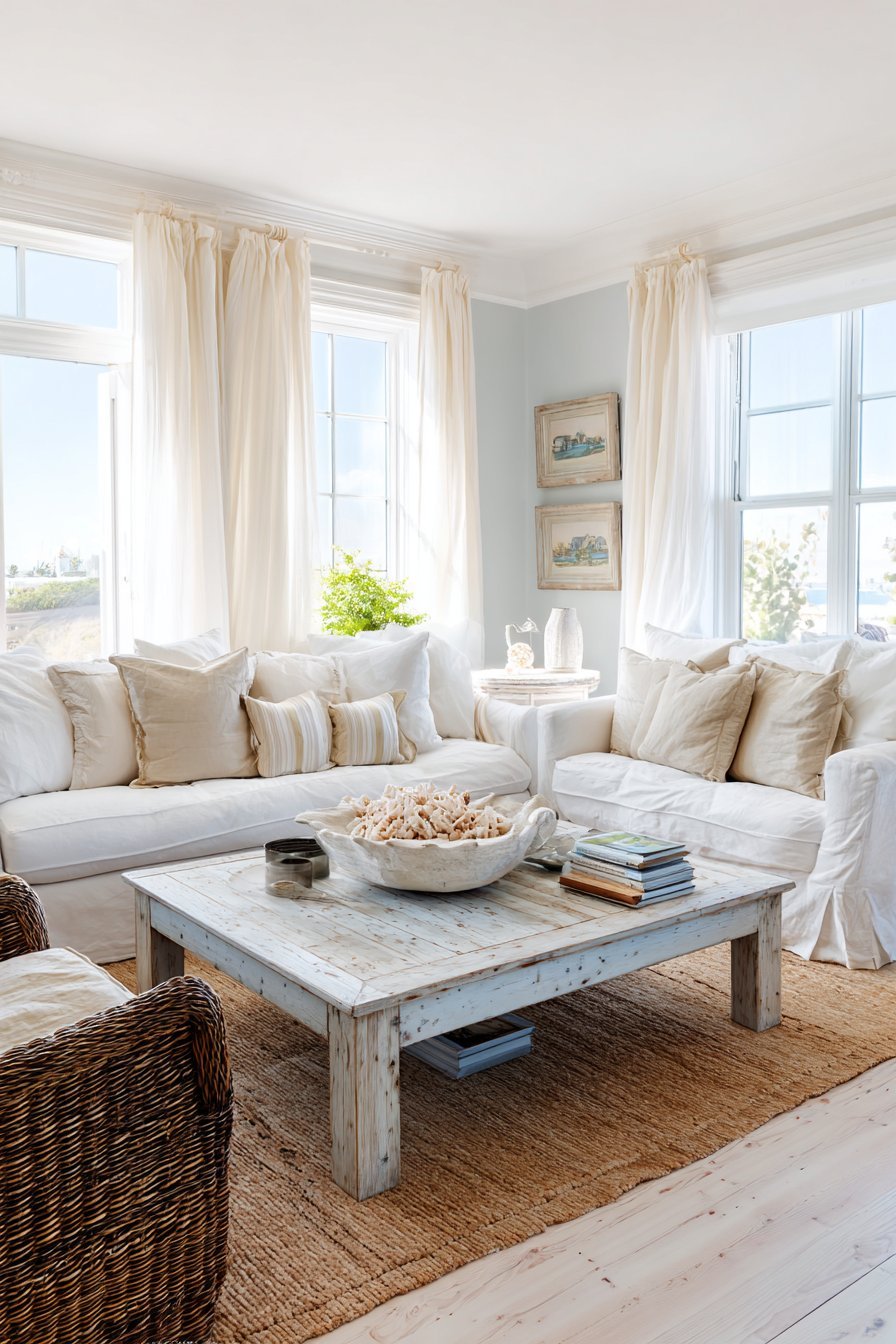
Layout should feel open and unhurried. Arrange seating in conversational groupings that encourage gathering. Leave breathing room between pieces — this isn’t a maximalist style. The goal is a space that feels spacious and light-filled, where each piece has room to breathe and be appreciated.
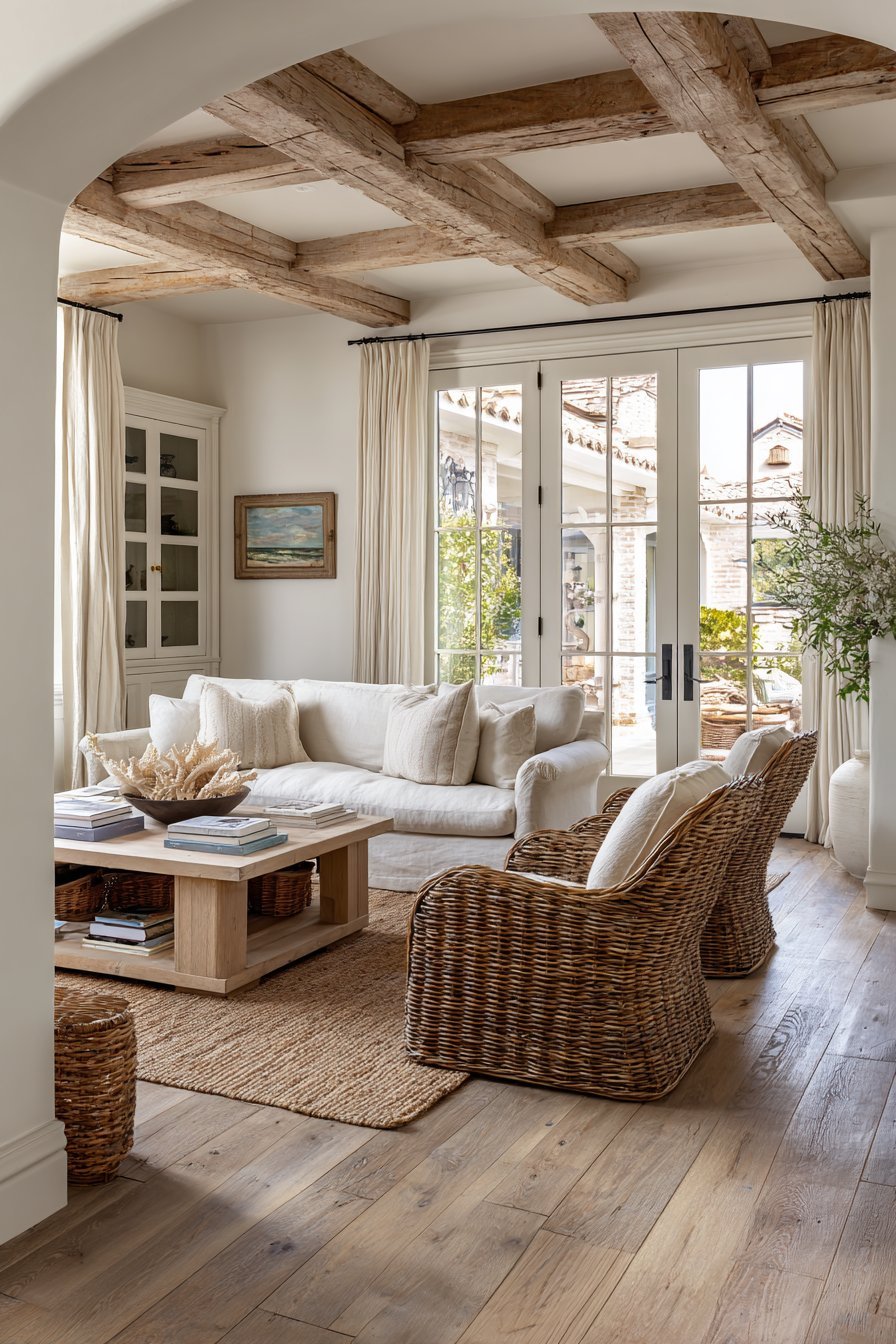
- Choose linen or slipcover-upholstered sofas in neutral tones
- Incorporate rattan, cane, or wicker accent chairs
- Select light wood tones — bleached oak, whitewashed pine
- Mix in antique or vintage pieces for layered character
- Arrange furniture in open, conversational groupings
- Avoid overly matched or overly formal furniture sets
4. Textiles and Layering
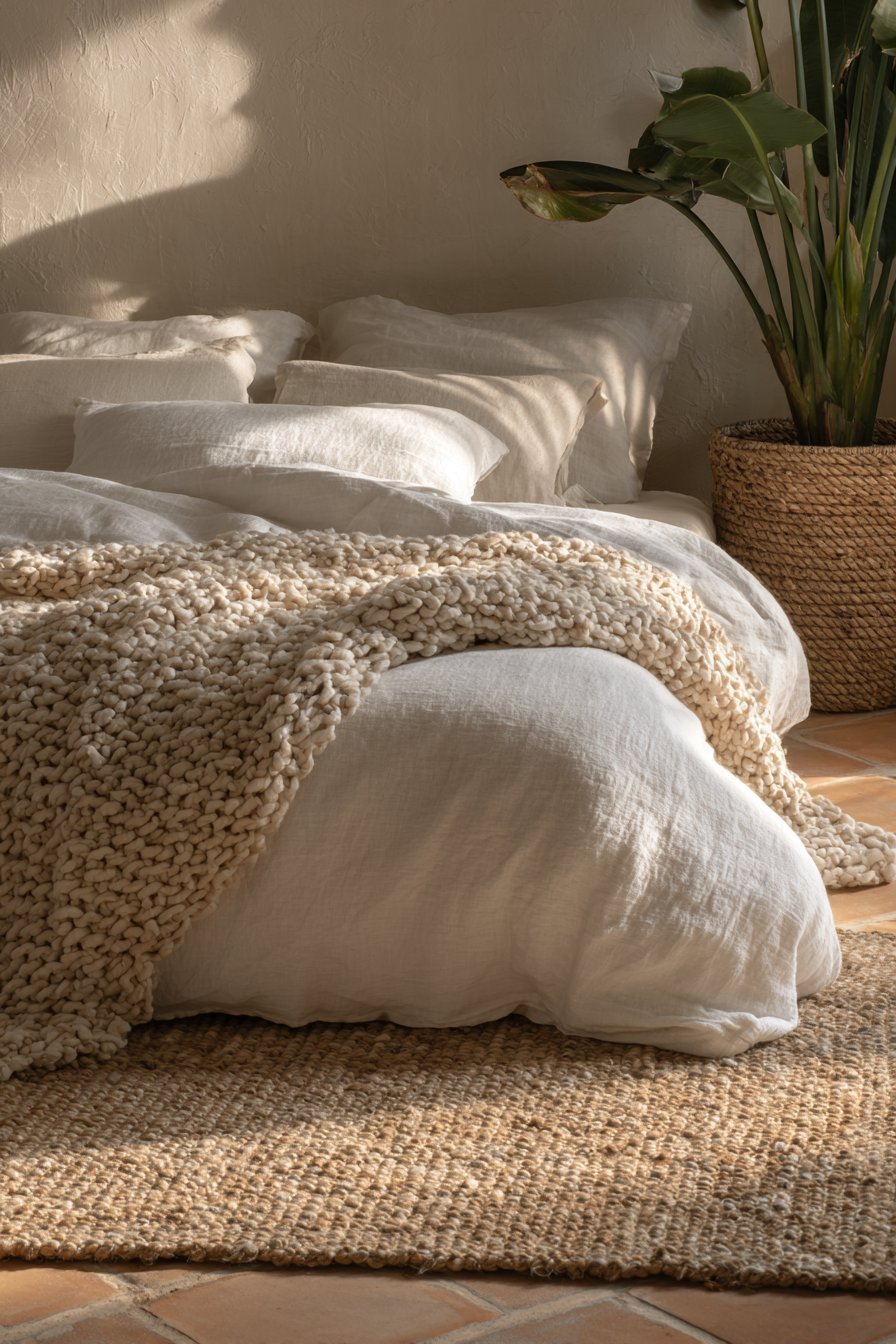
Textiles are where the coastal grandmother aesthetic truly comes alive. This is a deeply tactile style — soft, layered, and rich with natural materials. Linen is the hero fabric here. Used for curtains, throw pillows, upholstery, and table linens, linen’s natural texture and gentle drape are perfectly suited to this aesthetic.
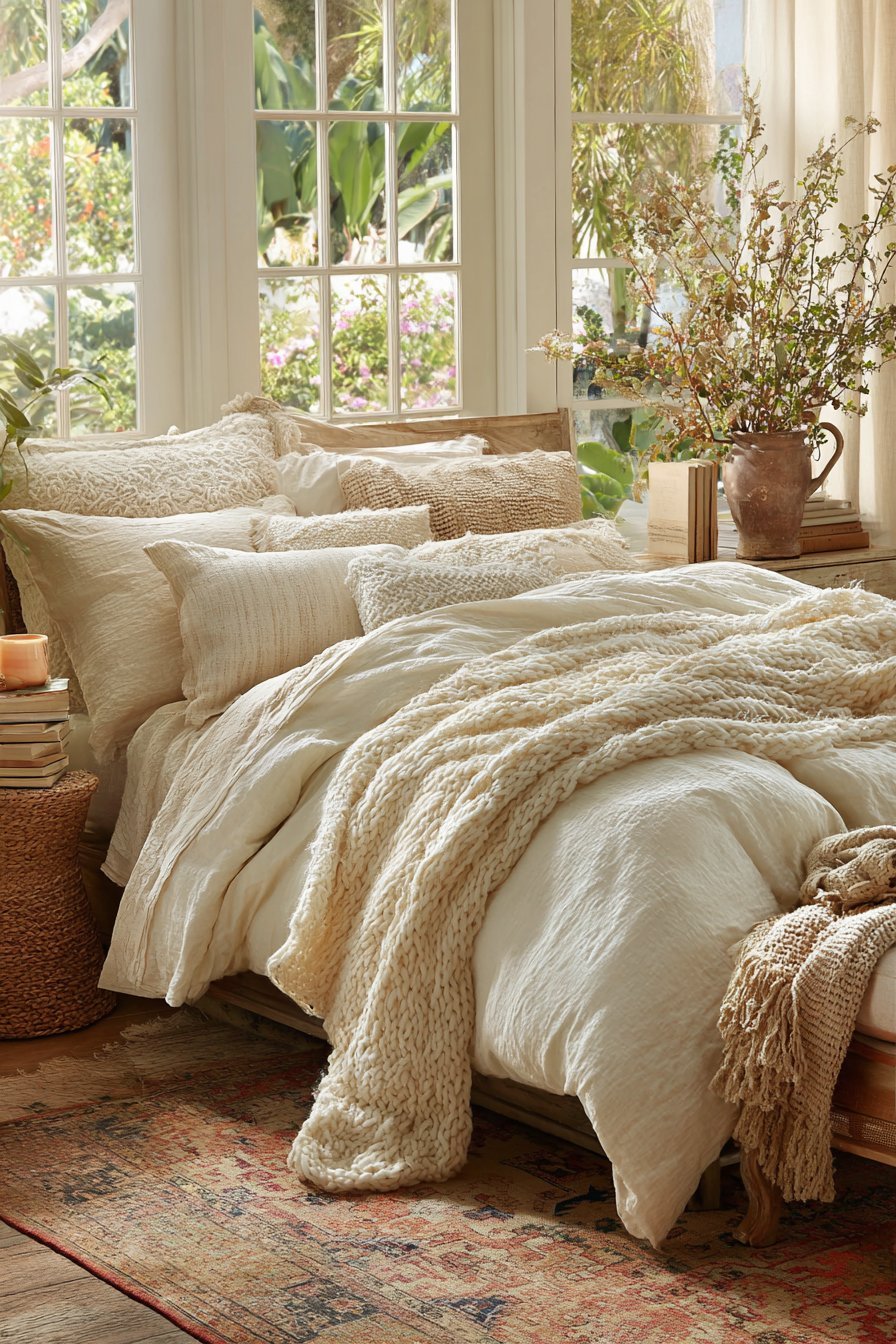
Layer throws and blankets generously. A chunky knit throw draped over the arm of a sofa, a light cotton quilt folded at the foot of a bed — these details signal comfort and intentionality. Mix textures freely: waffle-weave cottons, gauzy muslins, nubby bouclé, and smooth-washed percale all work beautifully together when kept in the same tonal family.
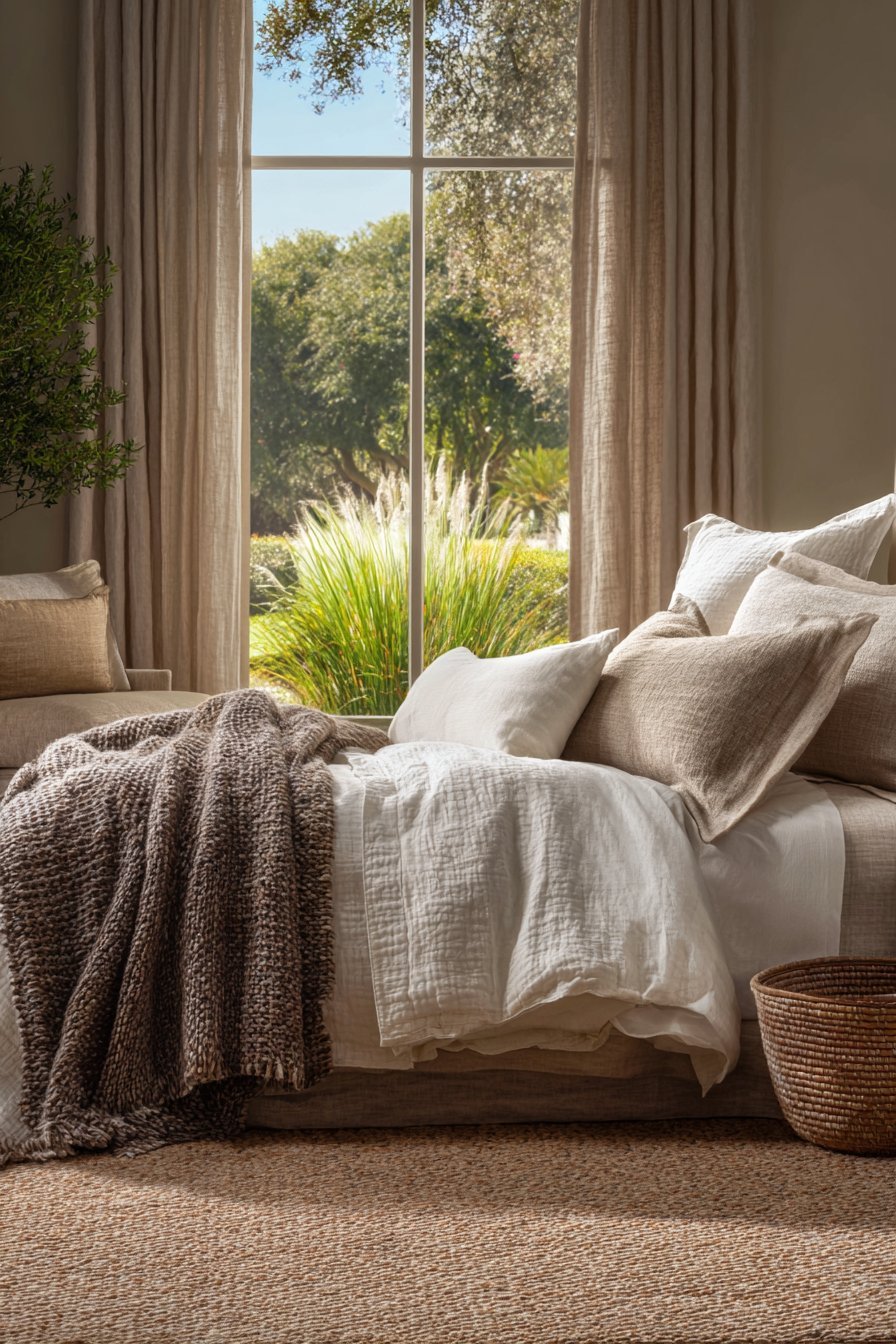
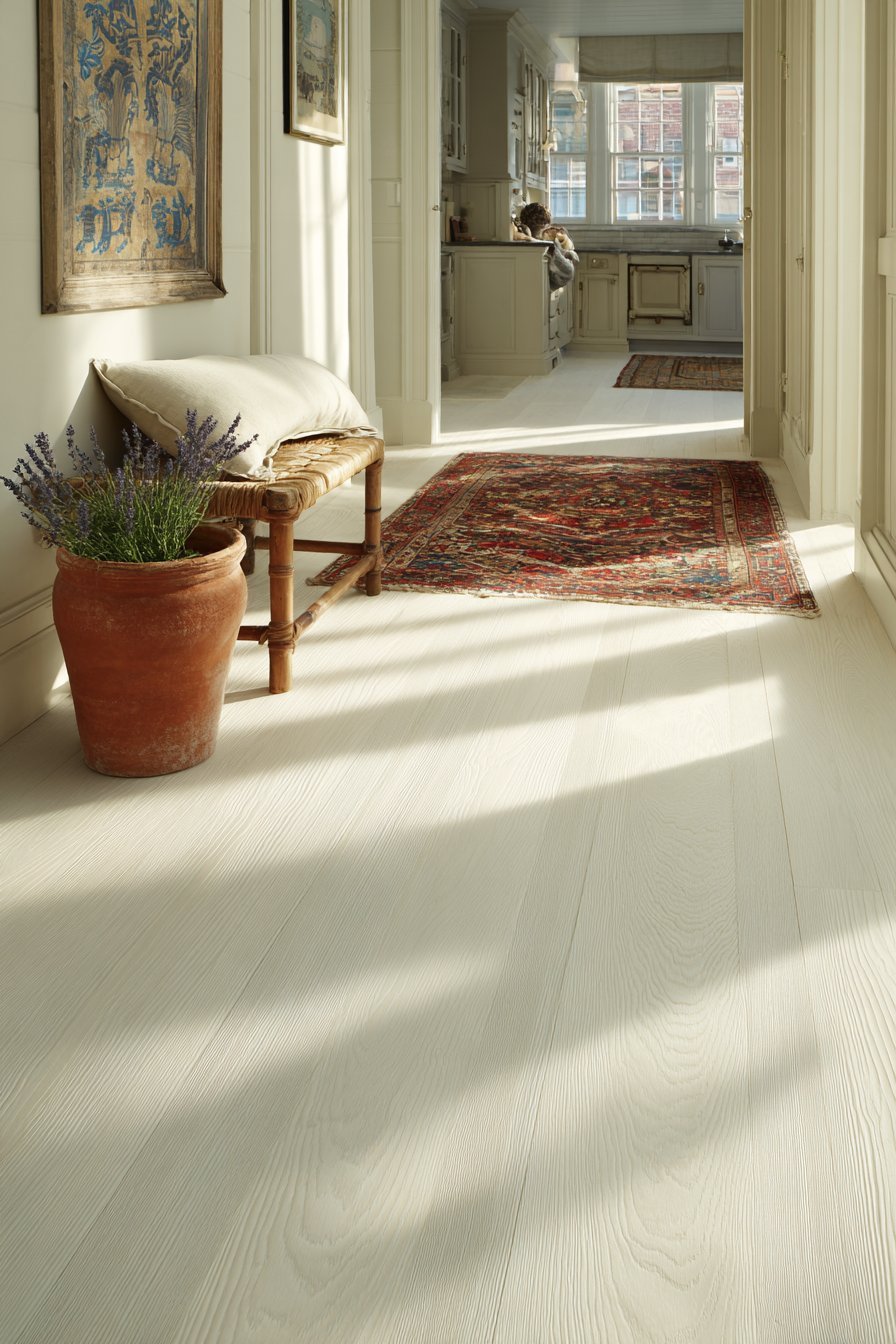
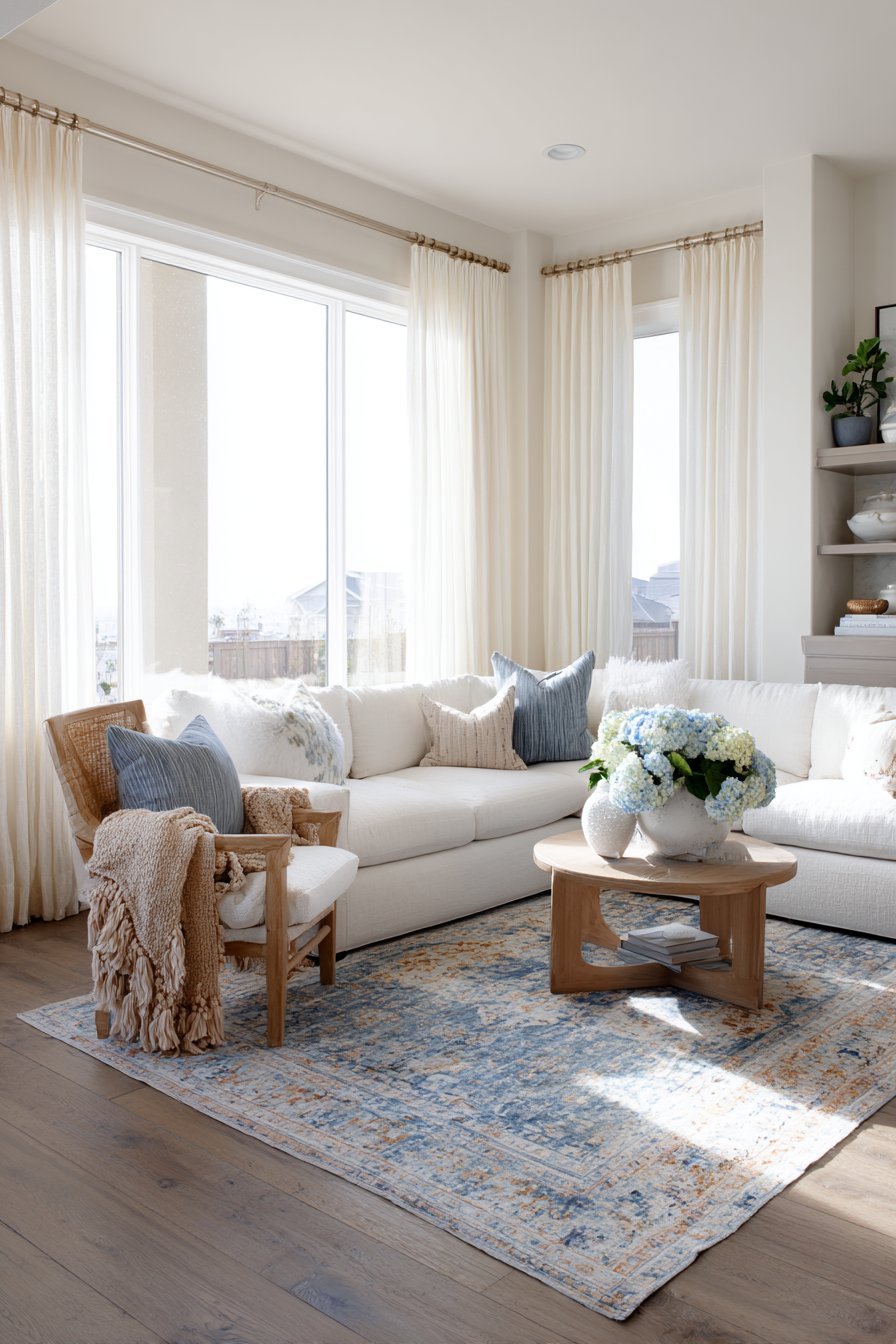
Rugs are another critical layer. Turkish kilim rugs, faded Persian rugs, jute, and sisal all feel at home in this aesthetic. They add warmth underfoot and break up hard flooring beautifully. Look for pieces with some age or fading to them — or choose new rugs with a washed, vintage-inspired finish. The layering of rugs over jute or sisal is especially popular and adds depth to any room.
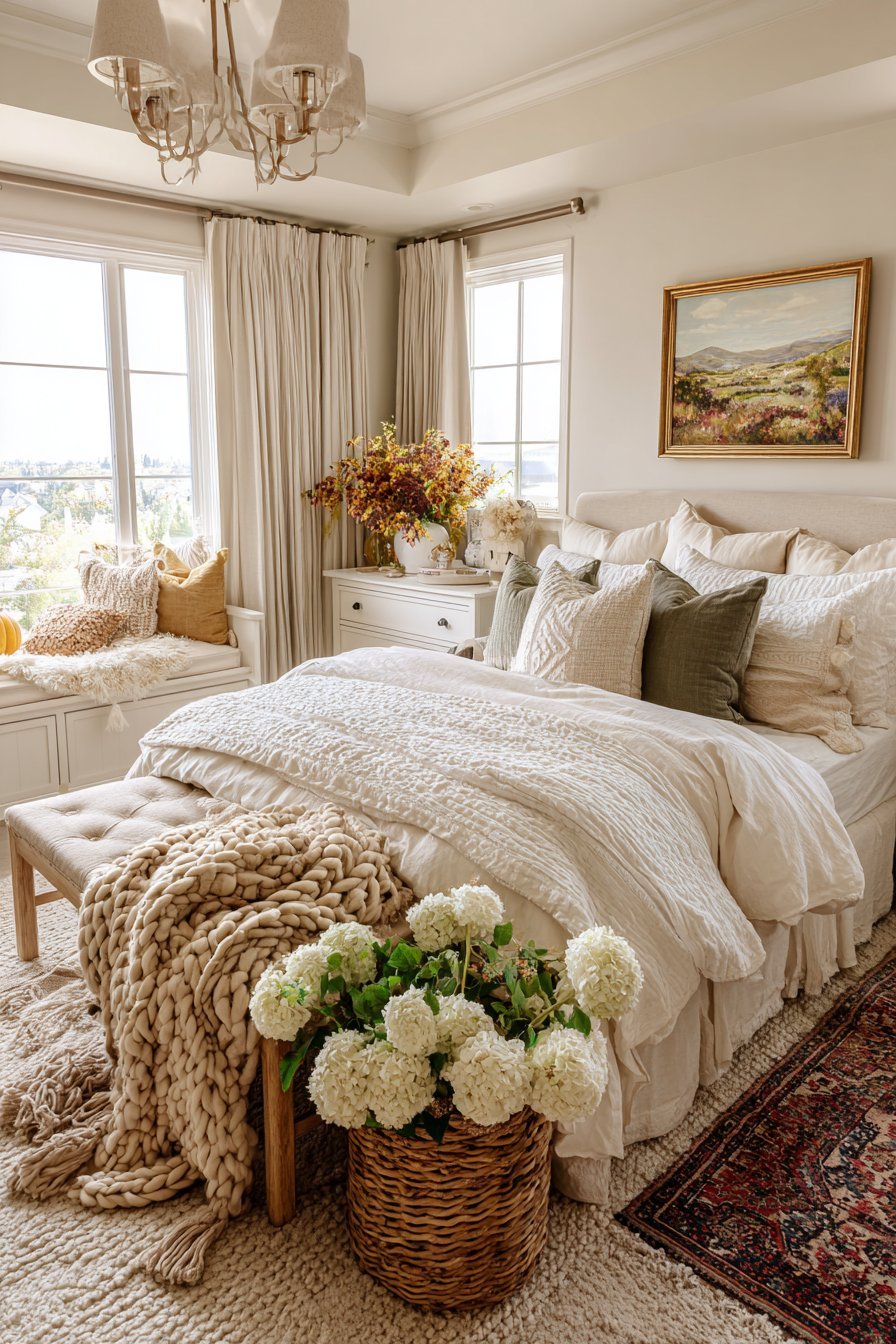
- Use linen as your primary fabric for curtains and upholstery
- Layer throws and blankets in natural fibers throughout your home
- Choose rugs with a faded, vintage, or hand-woven quality
- Mix textures within a consistent neutral color palette
- Add Turkish or Persian-style rugs for pattern and warmth
- Layer a smaller rug over a larger jute or sisal base
5. Window Treatments and Natural Light
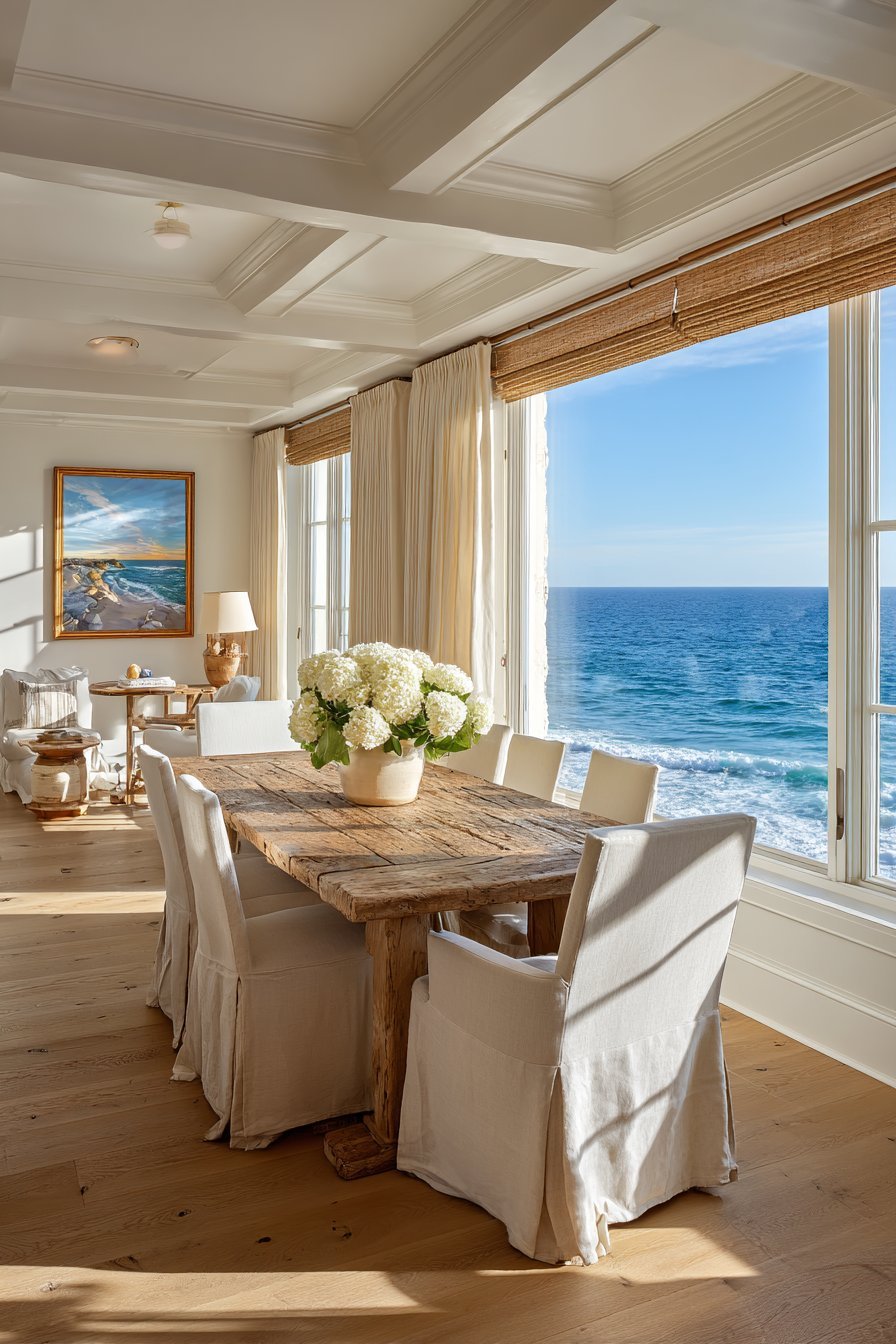
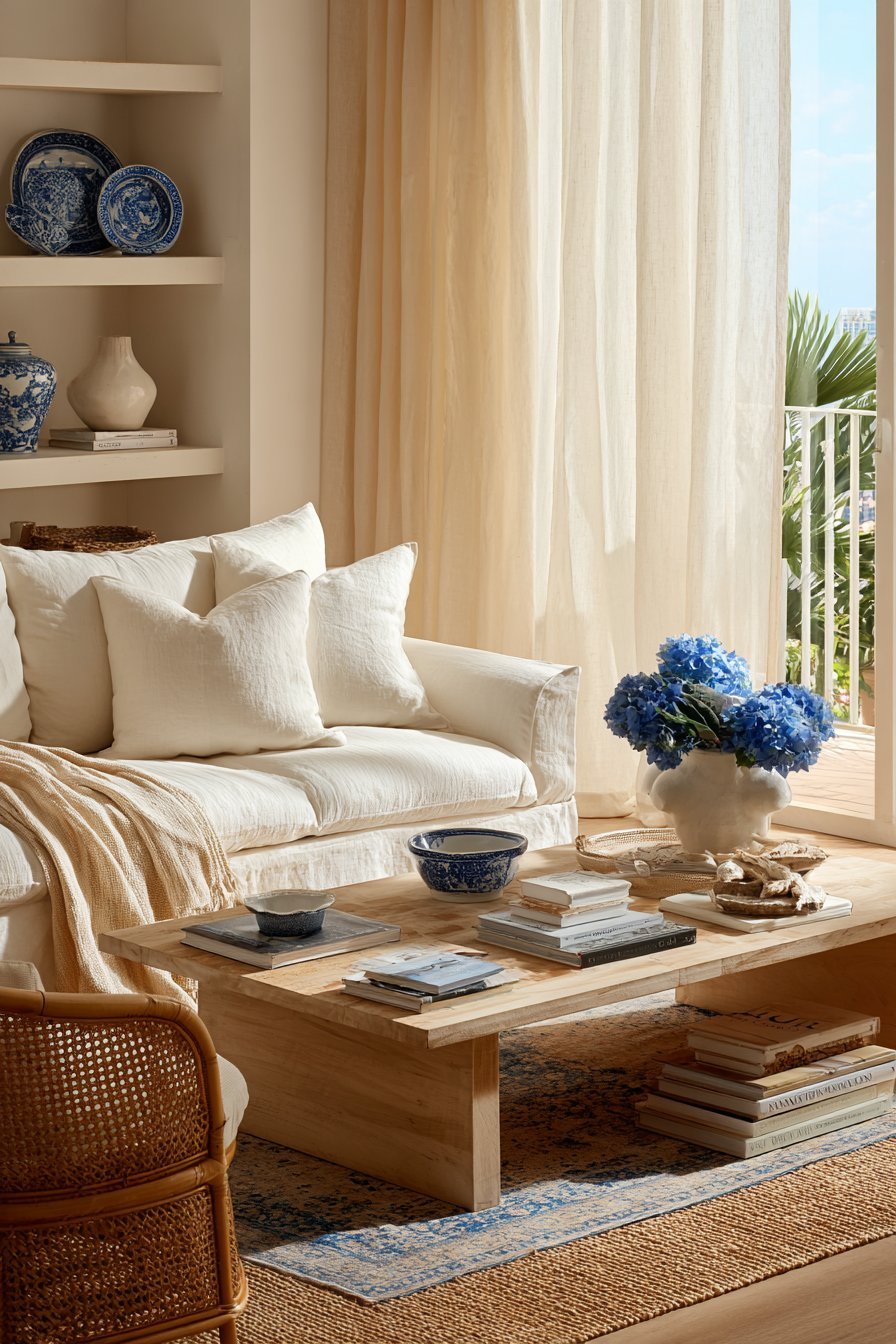
Natural light is sacred in the coastal grandmother home. The goal is to maximize it at every opportunity. Window treatments should be light, flowing, and unobtrusive. Linen or cotton curtains in white, cream, or soft natural tones are ideal. They diffuse light gently rather than blocking it, creating that beautiful, warm glow that defines the aesthetic.
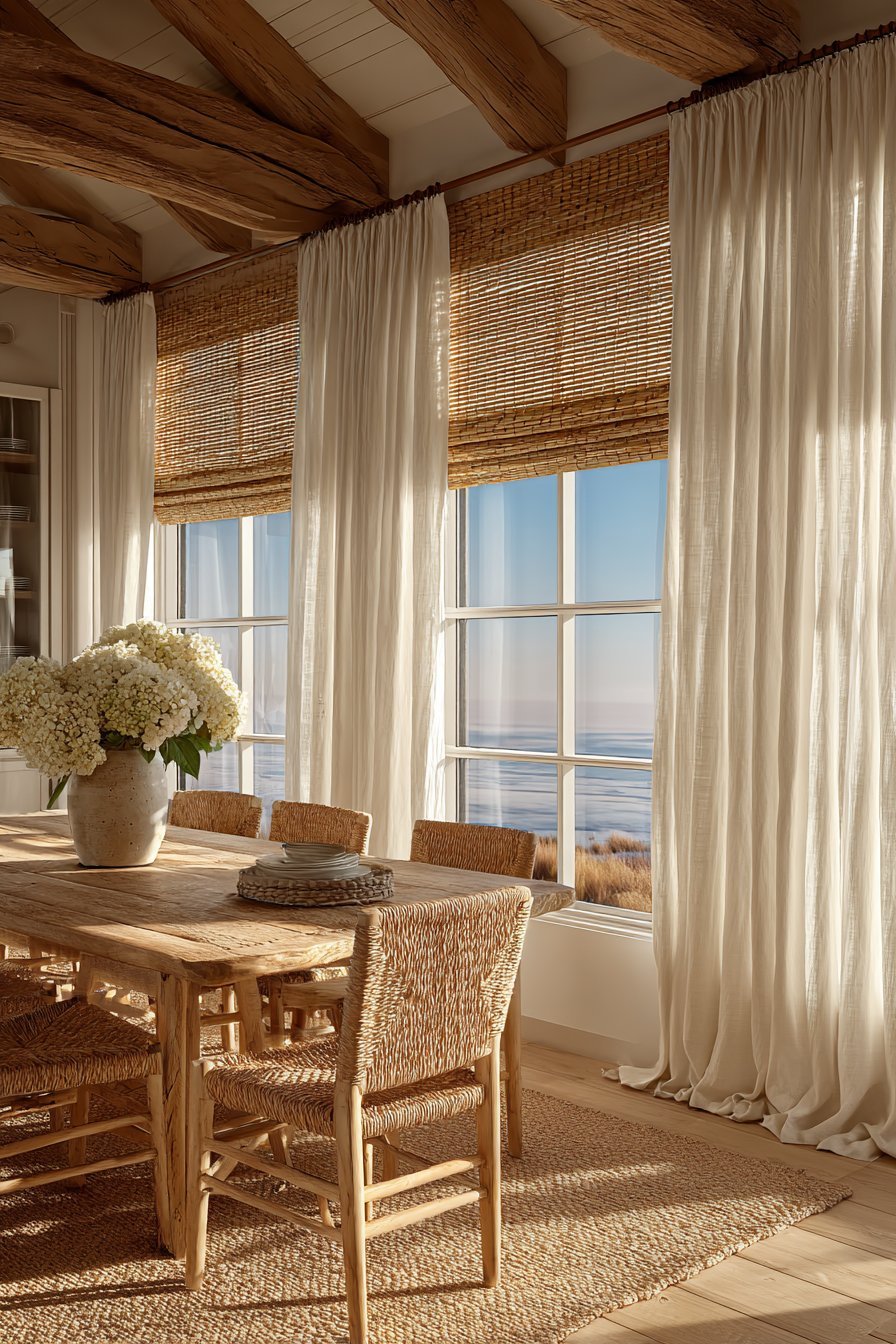
Avoid heavy drapes, blackout curtains in main living spaces, or anything that blocks the connection to the outdoors. The visual flow between inside and outside is essential. Use curtains that puddle slightly on the floor for an effortless, romantic quality. Hang rods close to the ceiling to maximize the sense of height and openness.
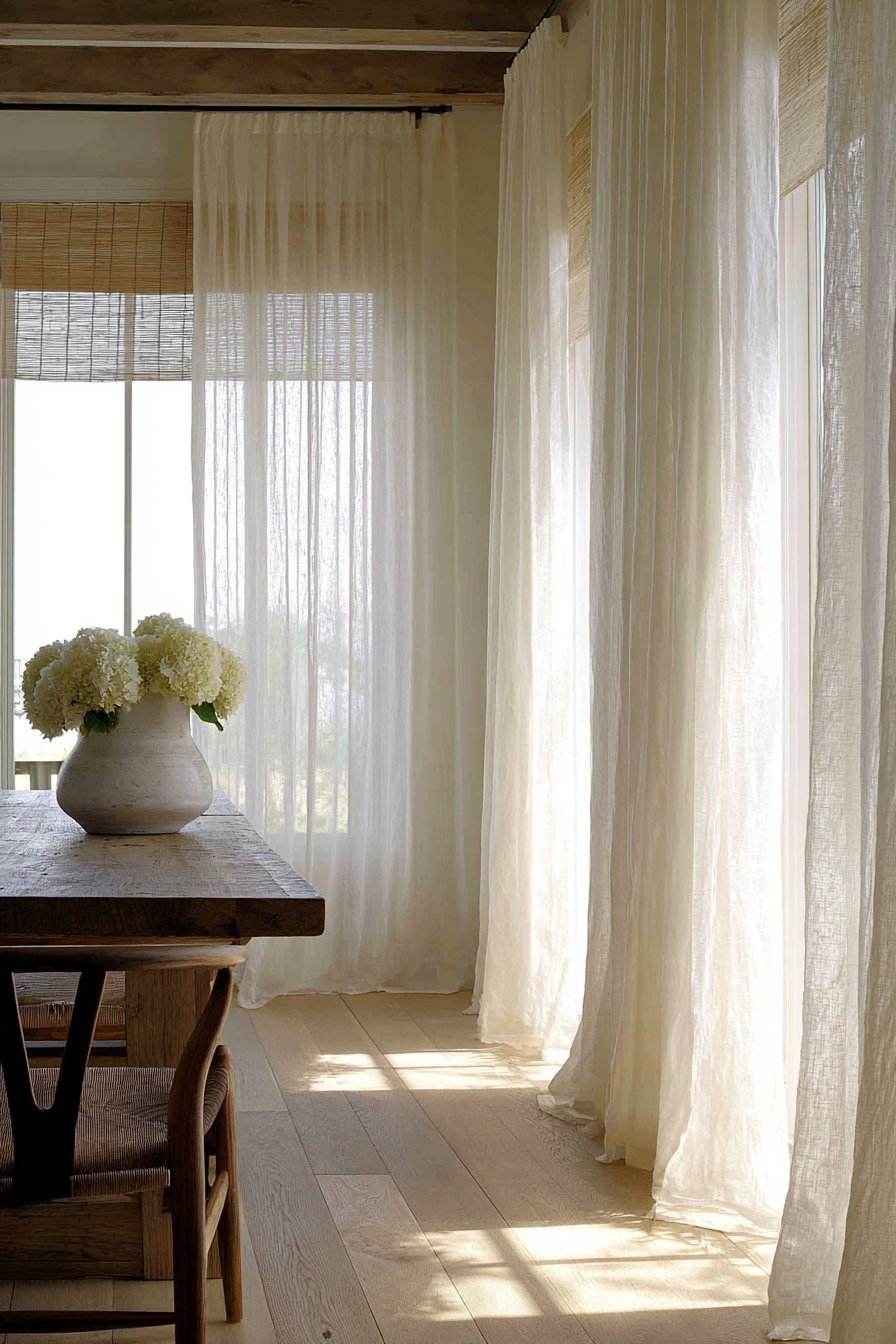
Roman shades in woven natural materials like bamboo or seagrass work beautifully as an alternative or complement to curtains. They bring in organic texture and have a coastal sensibility that suits the aesthetic perfectly. Layer them with sheer linen panels for the most versatile and layered look.
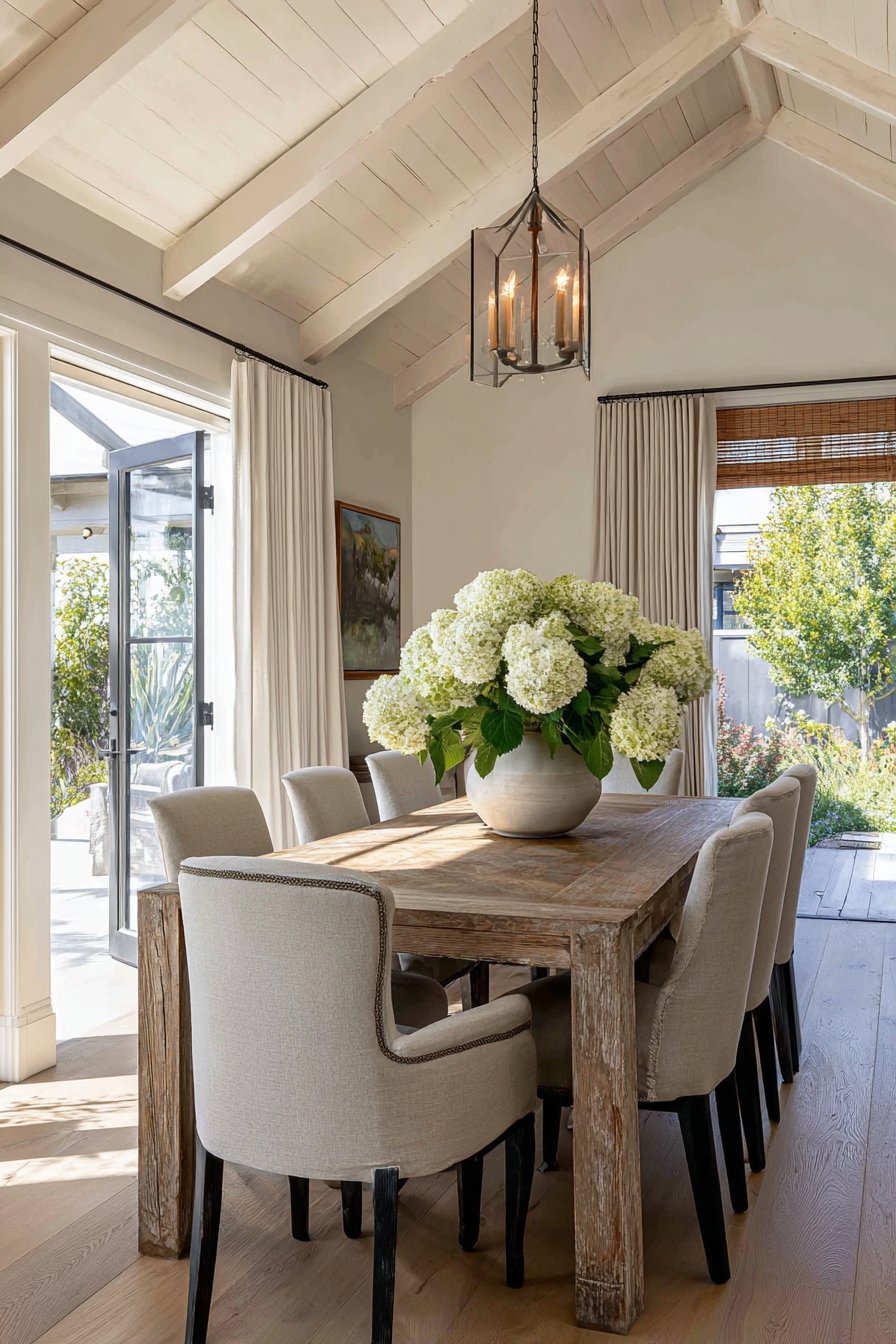
- Use sheer or semi-sheer linen curtains in neutral tones
- Hang rods near the ceiling to maximize perceived height
- Let curtains puddle slightly on the floor for soft elegance
- Incorporate woven bamboo or seagrass Roman shades
- Never block natural light with heavy, opaque treatments
- Clean windows regularly — light quality is everything
6. Flooring and Natural Materials
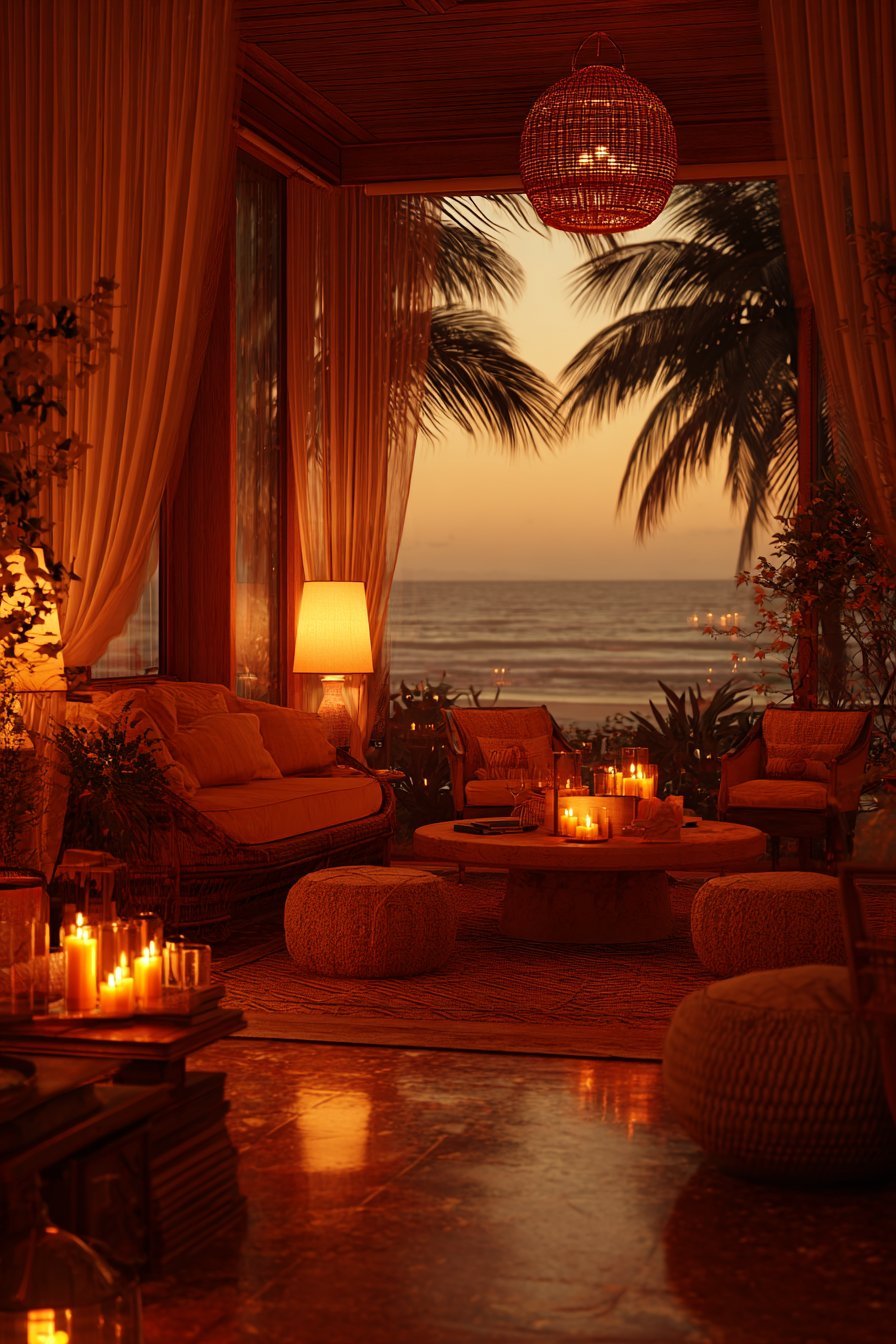
The floors in a coastal grandmother home are natural, warm, and understated. Wide-plank hardwood in light to medium tones is the gold standard. Oak, pine, and walnut in whitewashed or matte finishes feel most appropriate. The goal is a floor that feels organic and warm underfoot rather than sleek and polished.
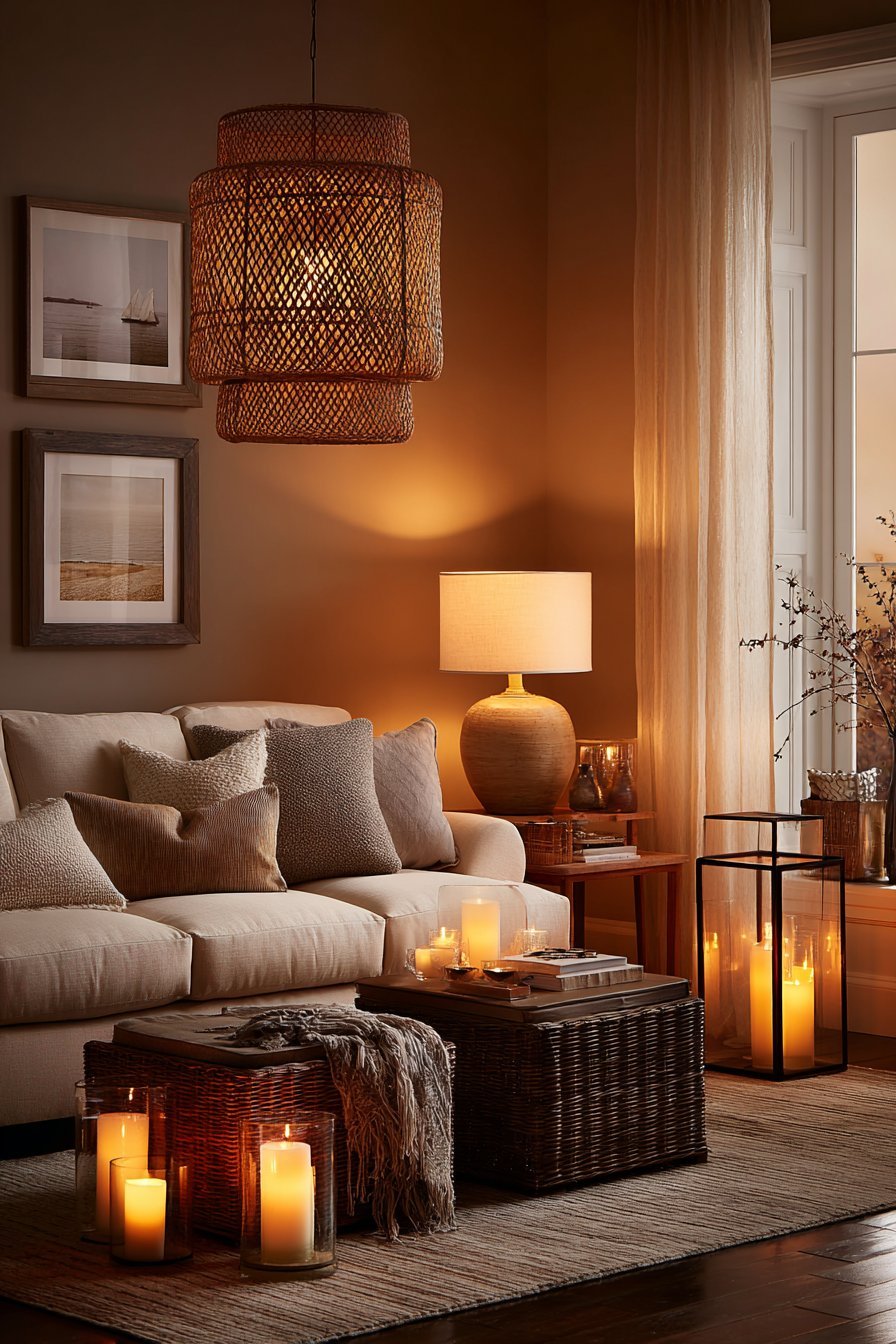
Stone tile works beautifully in kitchens and bathrooms. Large-format limestone, travertine, or honed marble tiles carry that sense of quiet luxury. Avoid glossy or overly polished stone — a honed or tumbled finish has more character and feels more in keeping with the relaxed nature of this style. These natural stone choices also age beautifully, gaining character over time.
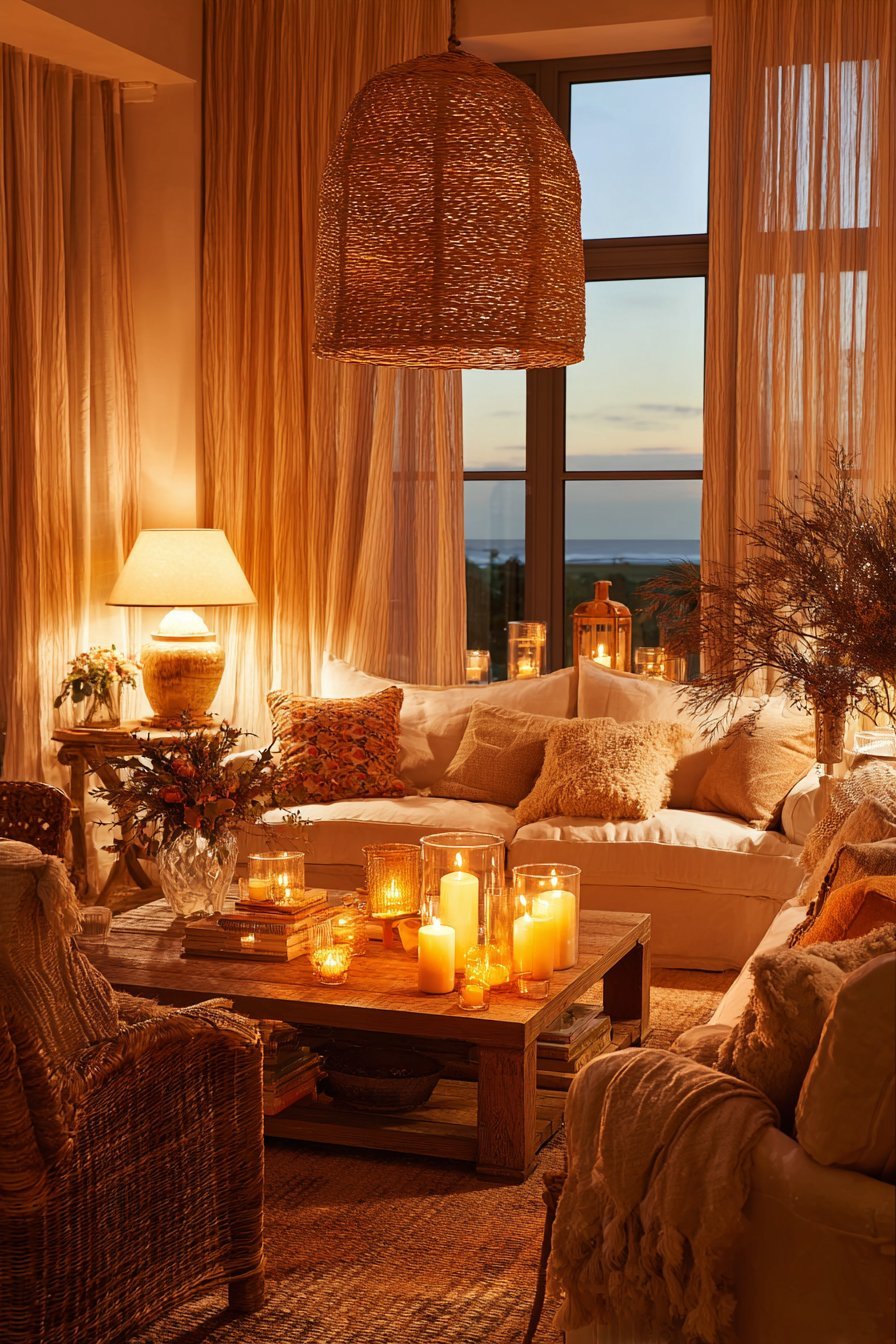
In rooms where hard flooring isn’t possible or desired, cork and sisal are excellent alternatives. They bring in warmth and texture while staying true to the natural material ethos. Whatever flooring you choose, keep it light enough to reflect natural light and contribute to the airy, open quality of the space.
- Choose wide-plank hardwood in light to medium tones
- Opt for whitewashed or matte finishes over high-gloss
- Use honed limestone, travertine, or marble in wet areas
- Consider cork or sisal as warm, natural alternatives
- Layer area rugs over hard flooring for additional warmth
- Keep floors light enough to reflect and maximize natural light
7. The Kitchen: Heart of the Coastal Grandmother Home
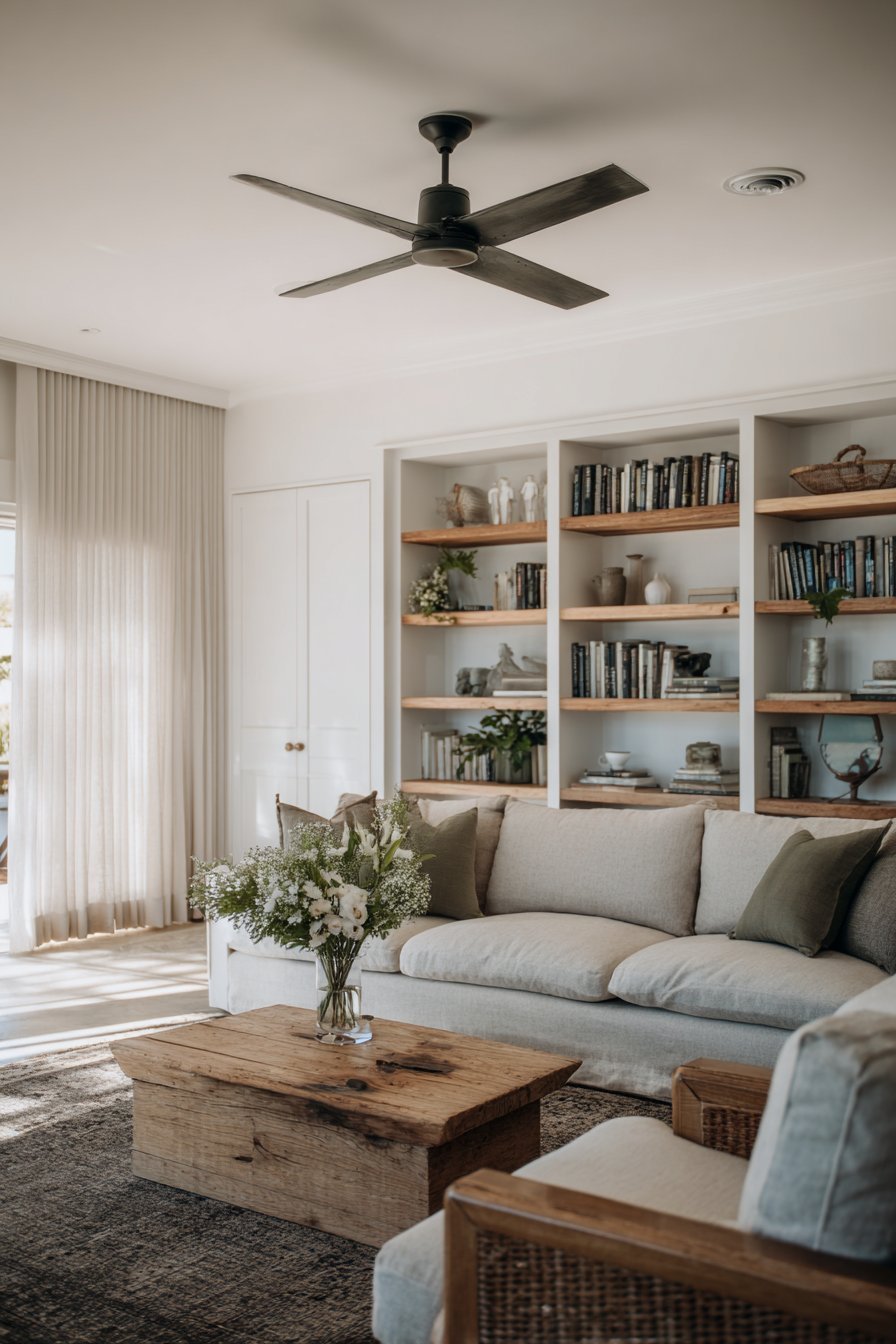
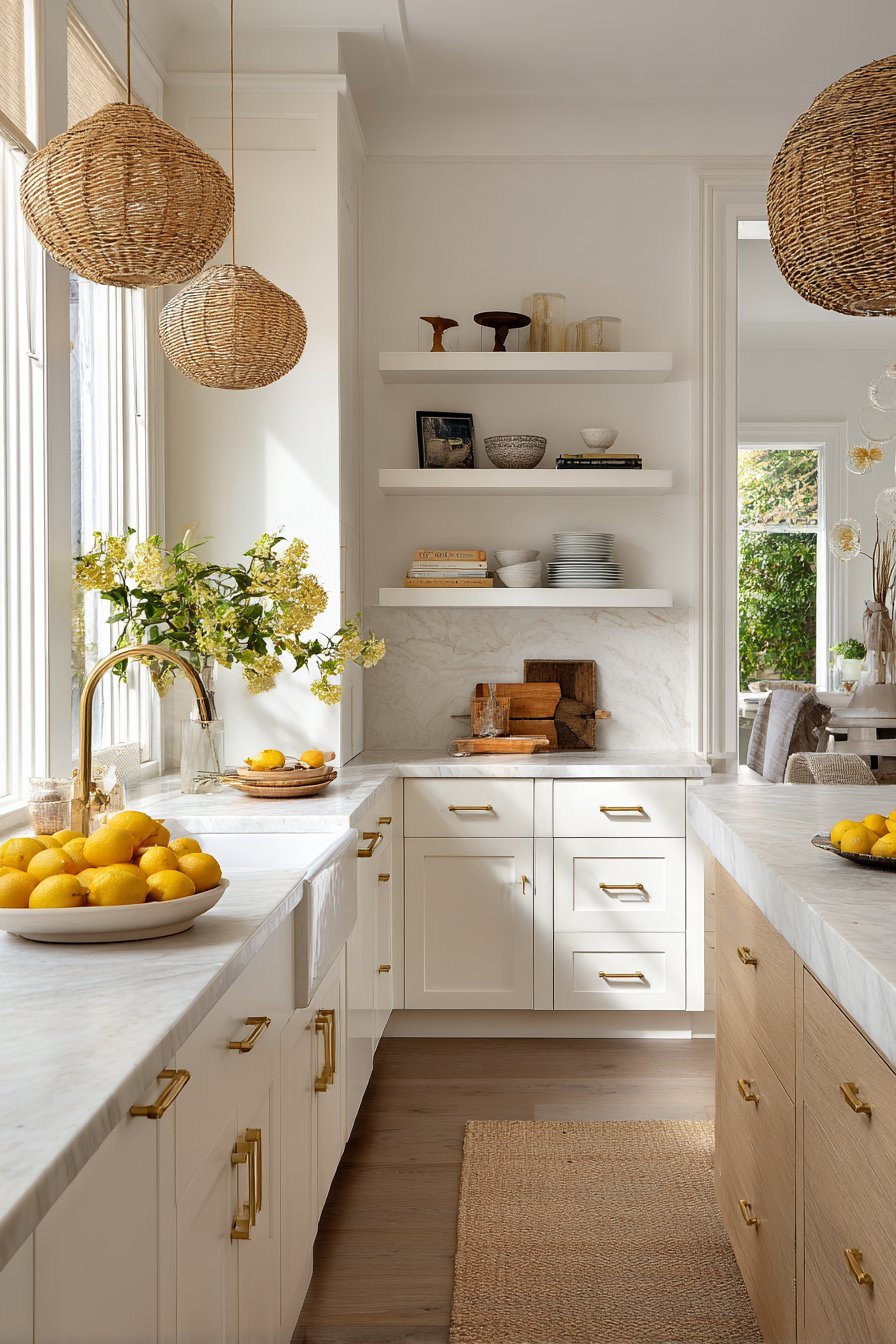
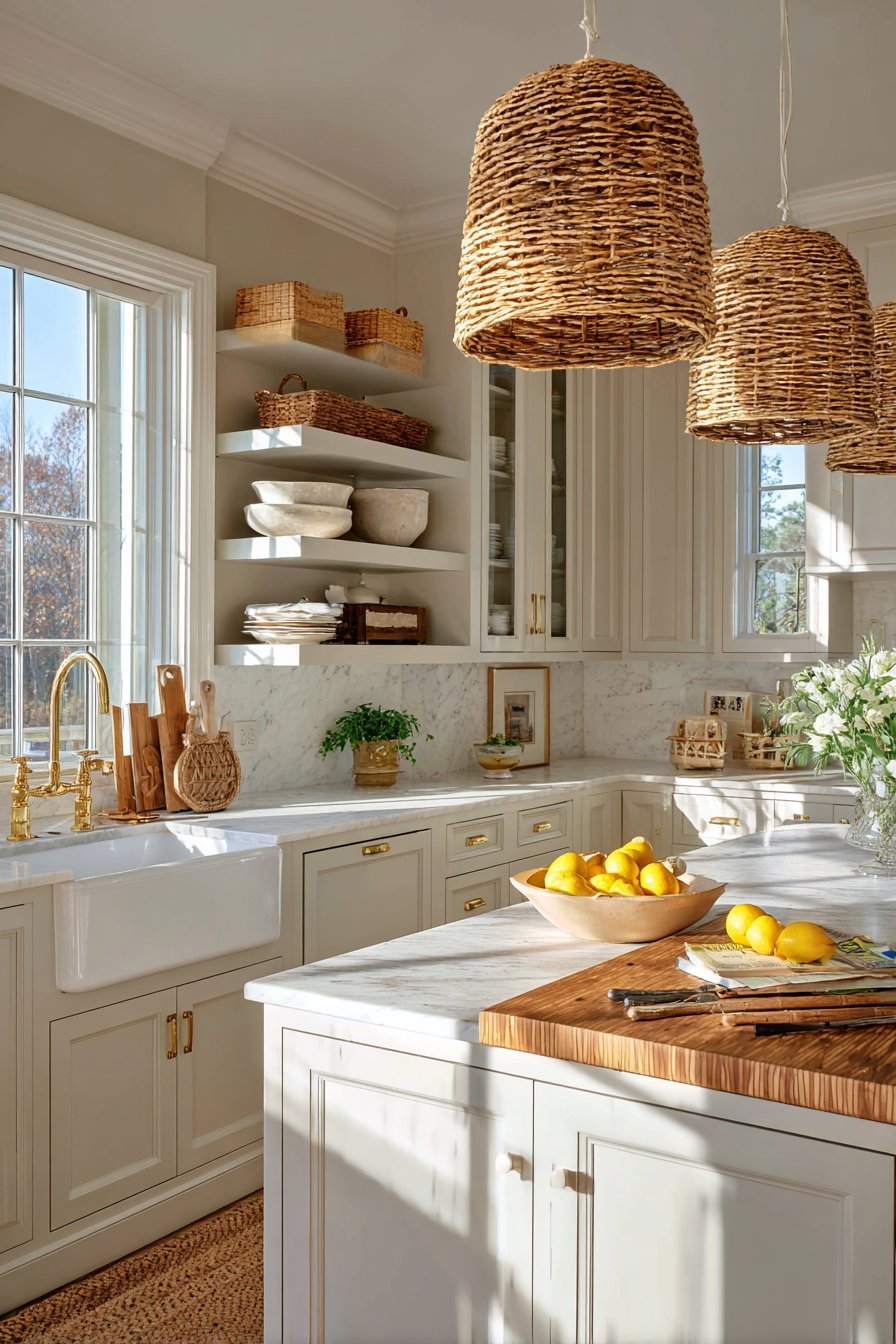
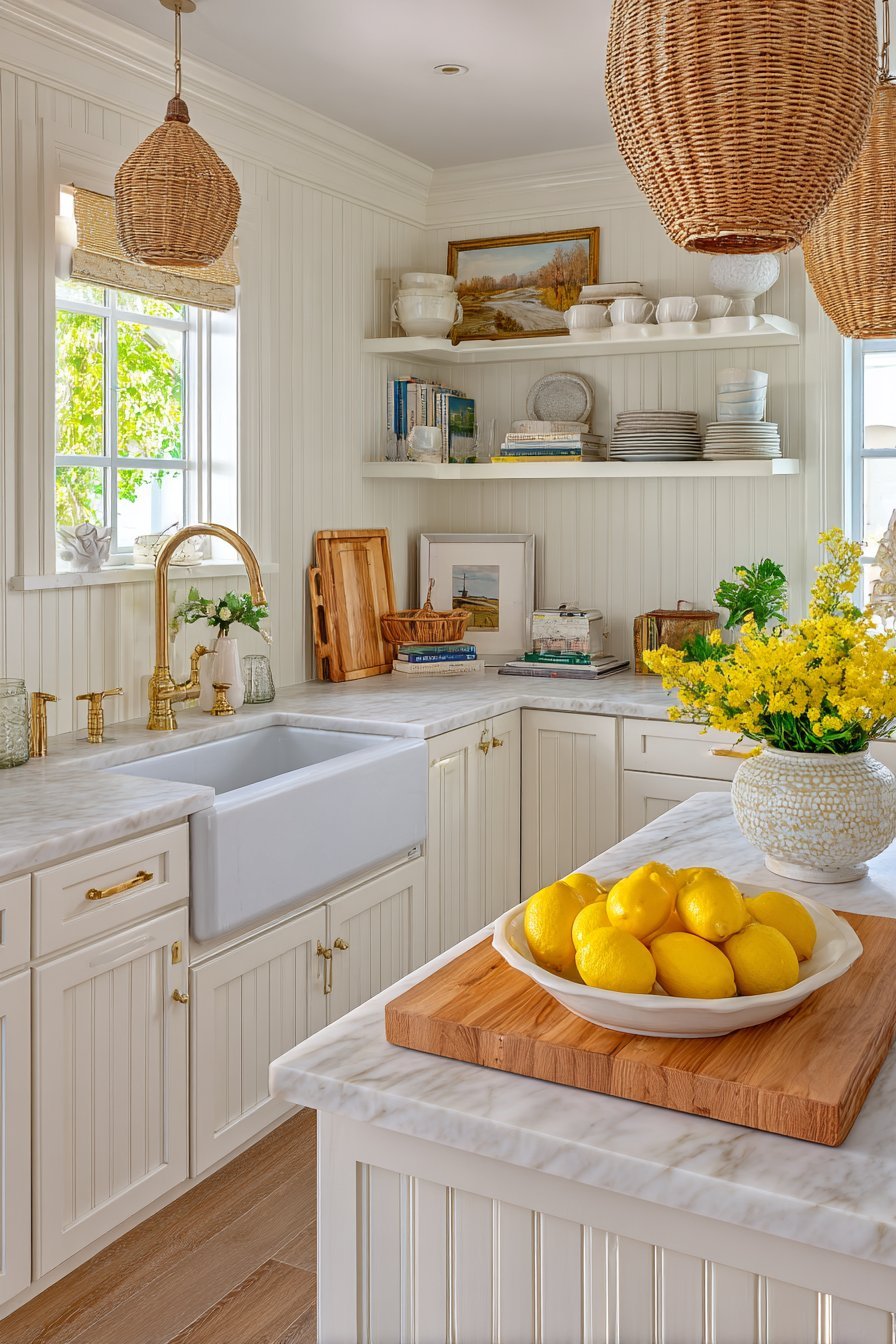
Nowhere does the coastal grandmother aesthetic shine more brightly than in the kitchen. This is a space meant for real cooking, gathering, and warmth. Think white or cream Shaker cabinets with unlacquered brass or aged nickel hardware. Open shelving displaying ceramic dishes, vintage glassware, and stacked linen napkins. A farmhouse sink. A well-worn butcher block island.
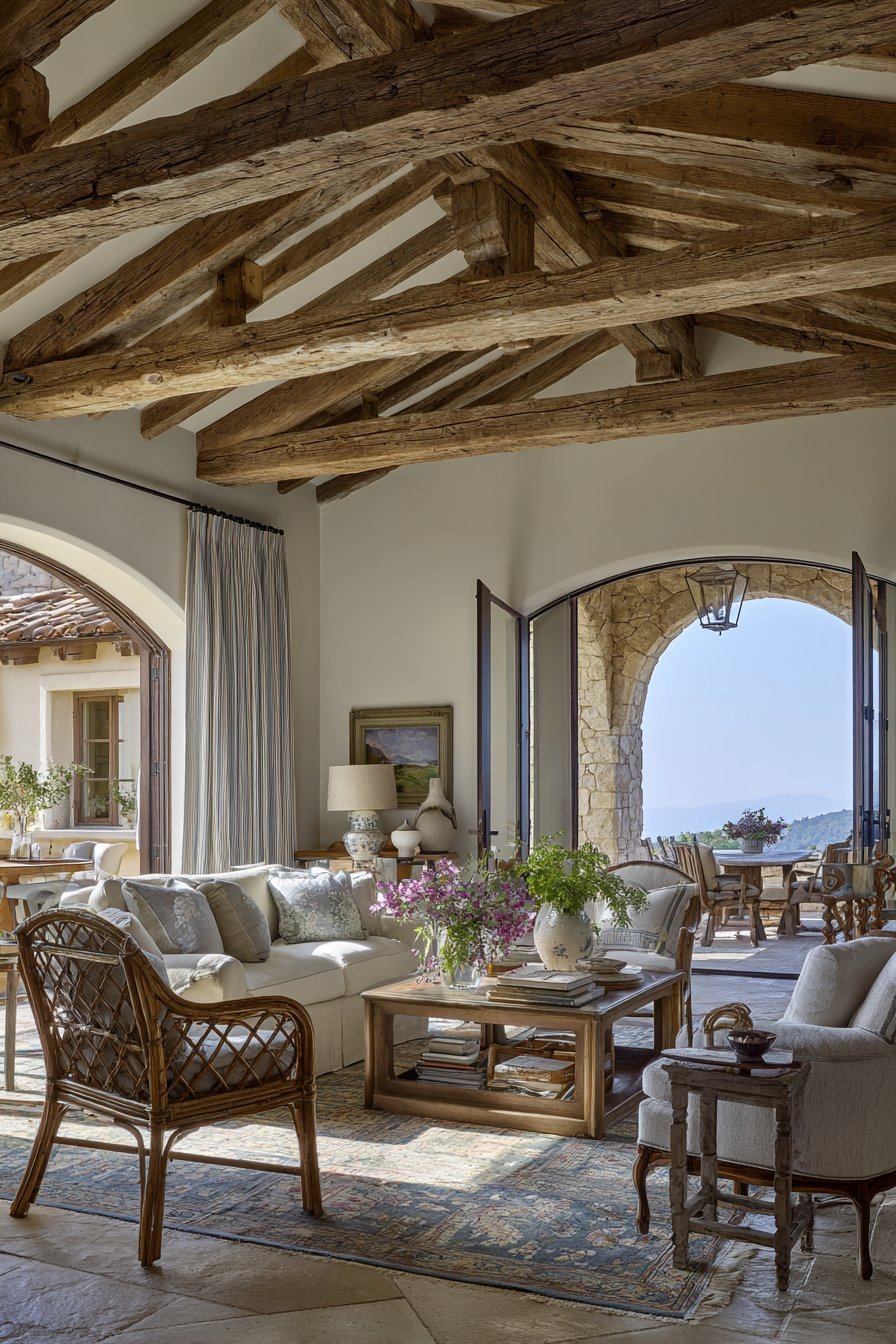
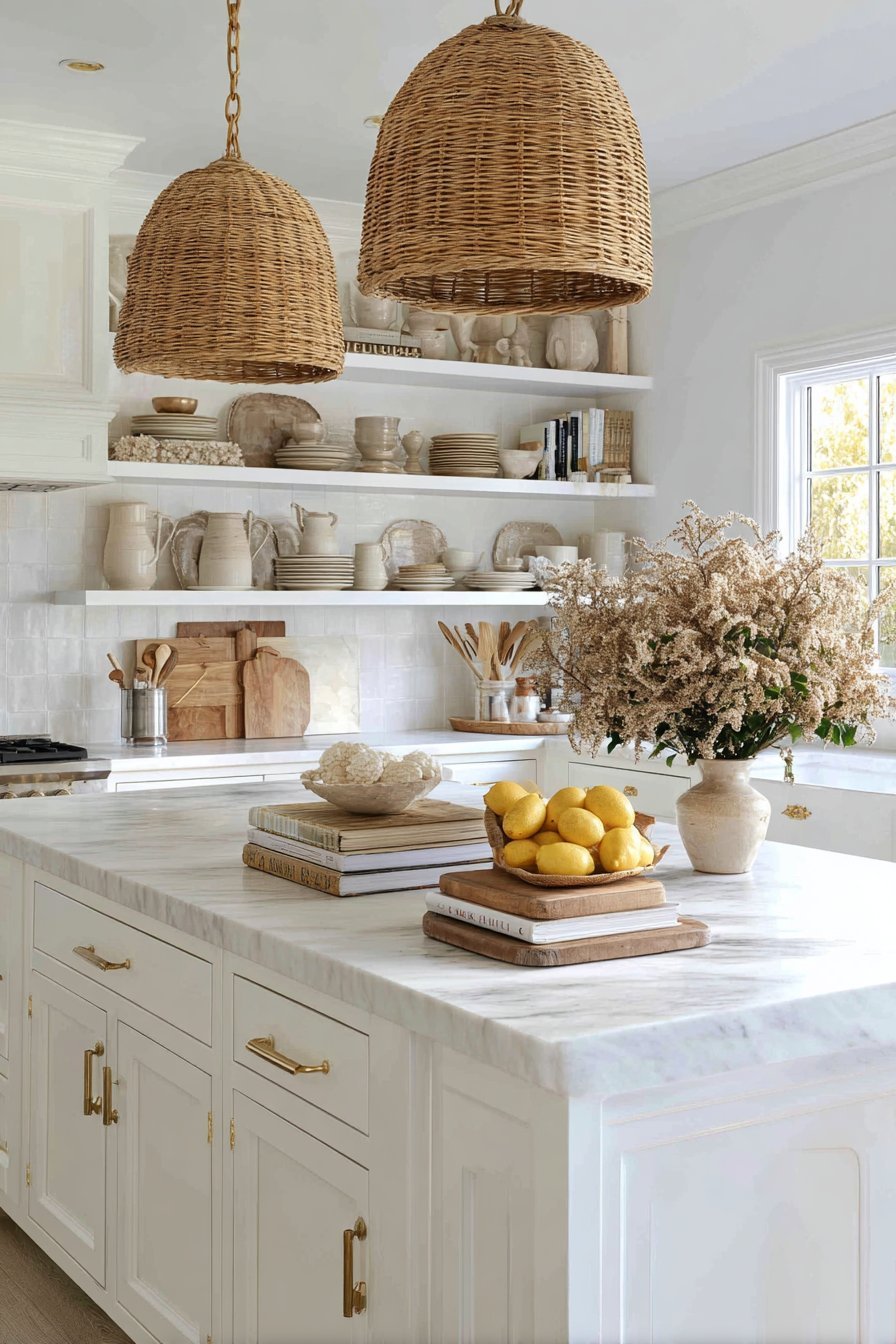
The layered countertop is a signature detail. Marble or honed stone countertops serve as the base. On top of them: a wooden cutting board, a crock of wooden utensils, a bowl of lemons or fresh herbs, a stack of cookbooks. These aren’t just decorative — they signal genuine use and a love of cooking. The kitchen should look ready for something to be made in it at any moment.
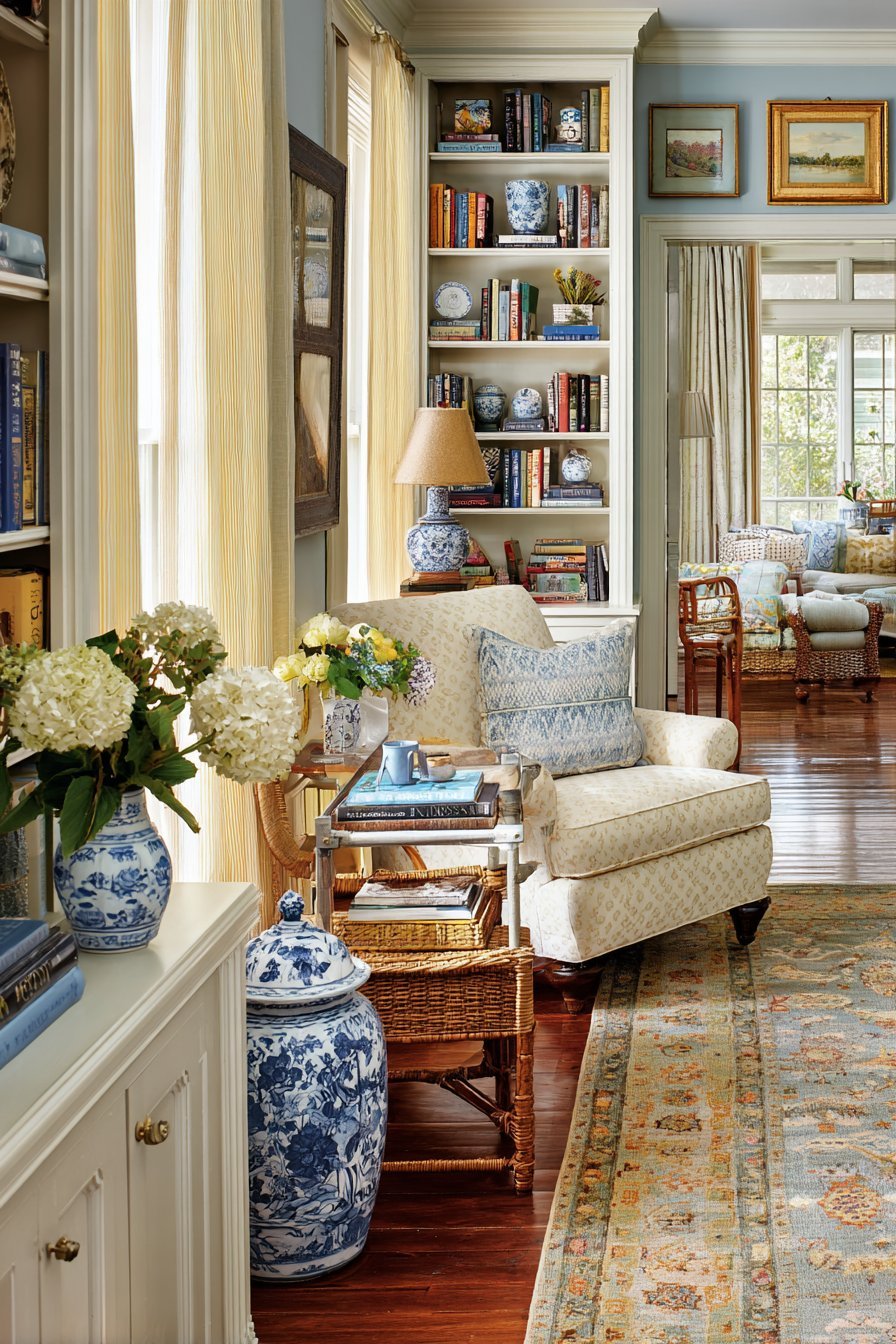
Appliances should recede rather than dominate. Where possible, choose paneled or integrated appliances that blend with the cabinetry. If stainless is unavoidable, a matte or brushed finish is softer. Add warmth with a vintage-style range in cream or soft blue, antique-inspired faucets, and woven pendant lighting over the island. Every element should feel considered but unstudied.
- Choose white or cream Shaker-style cabinetry
- Install unlacquered brass or aged nickel hardware
- Display curated ceramics and glassware on open shelves
- Incorporate a farmhouse sink and butcher block elements
- Style countertops with real, functional objects
- Add woven or rattan pendant lighting over the island
8. Bedroom Design in the Coastal Grandmother Style
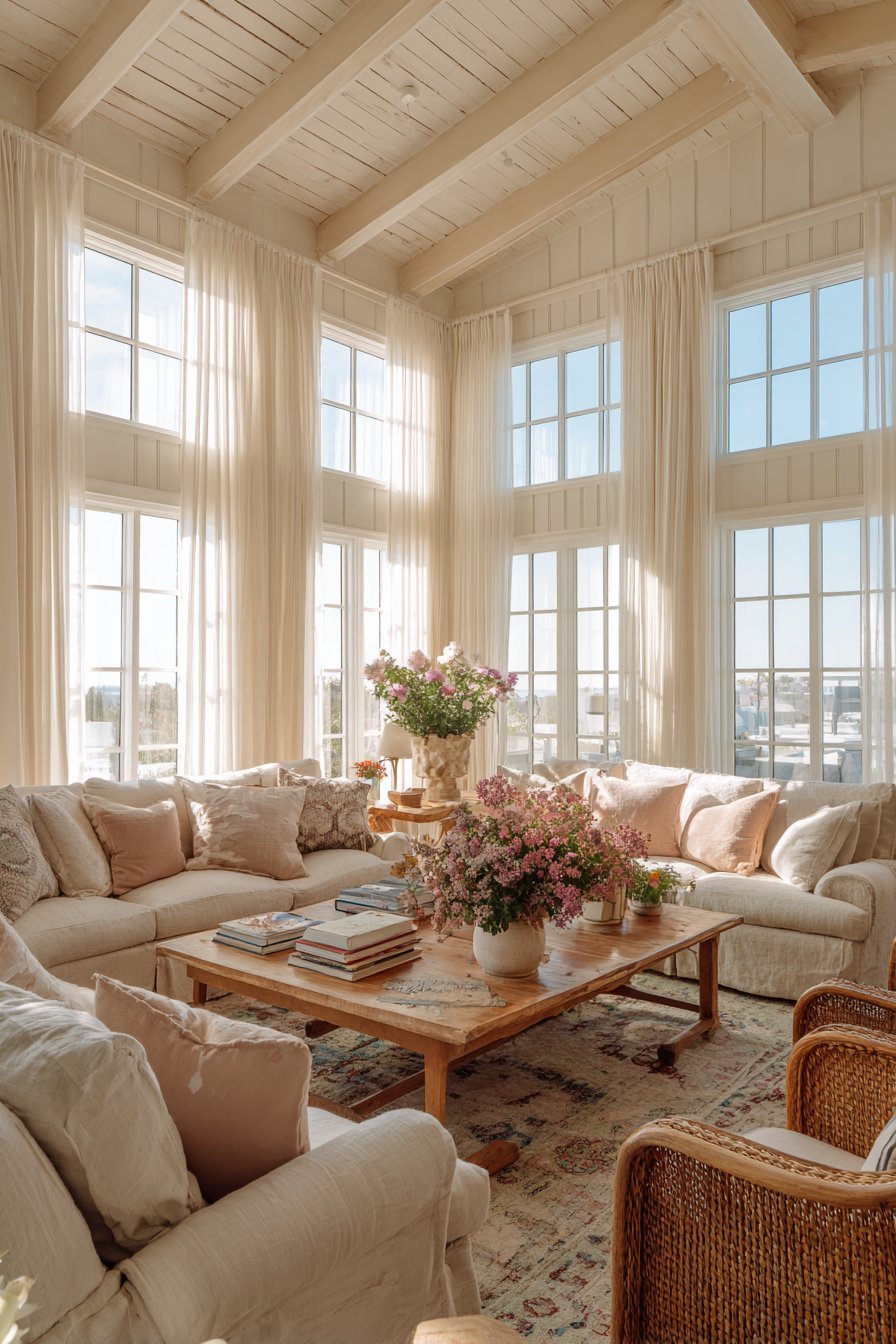
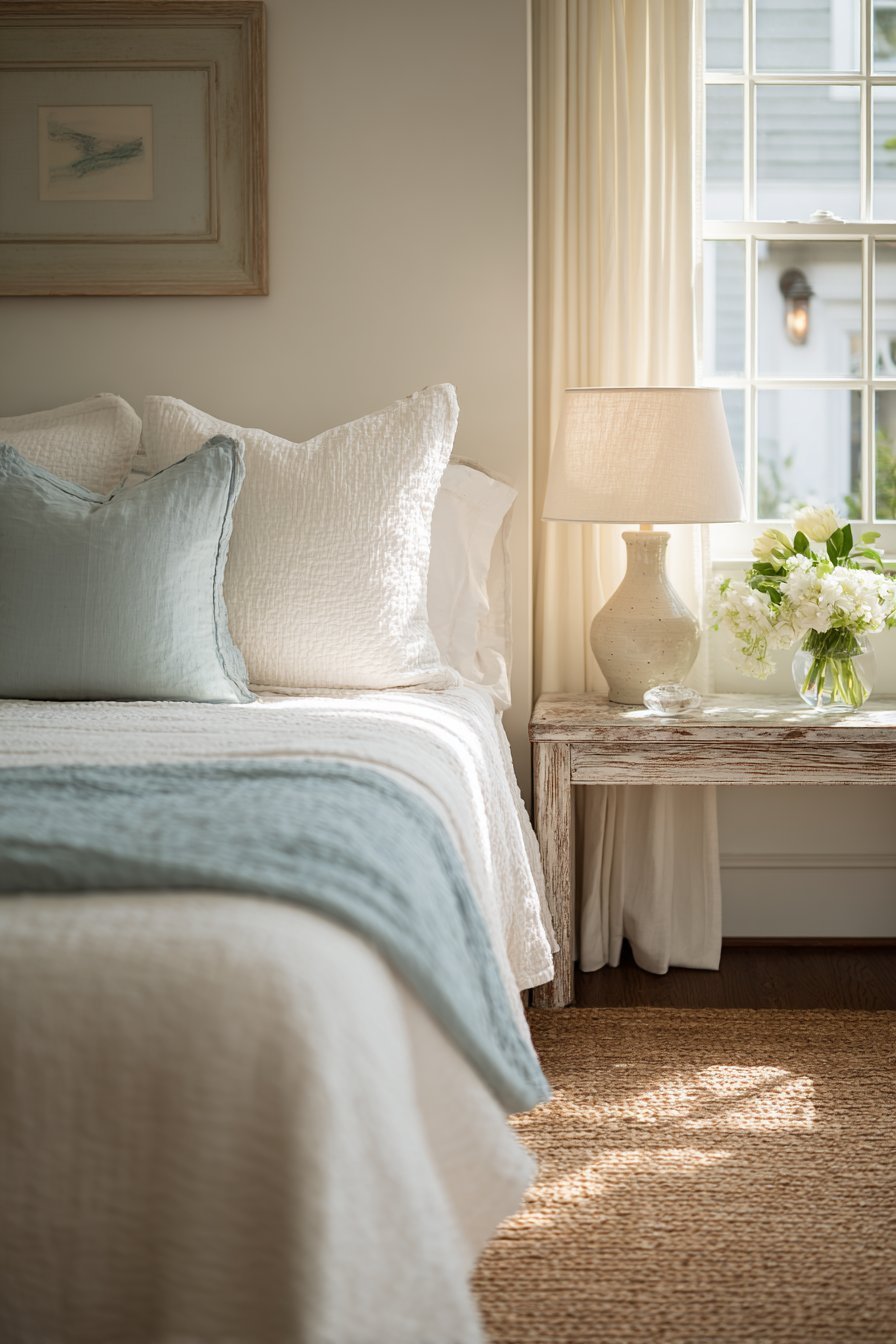
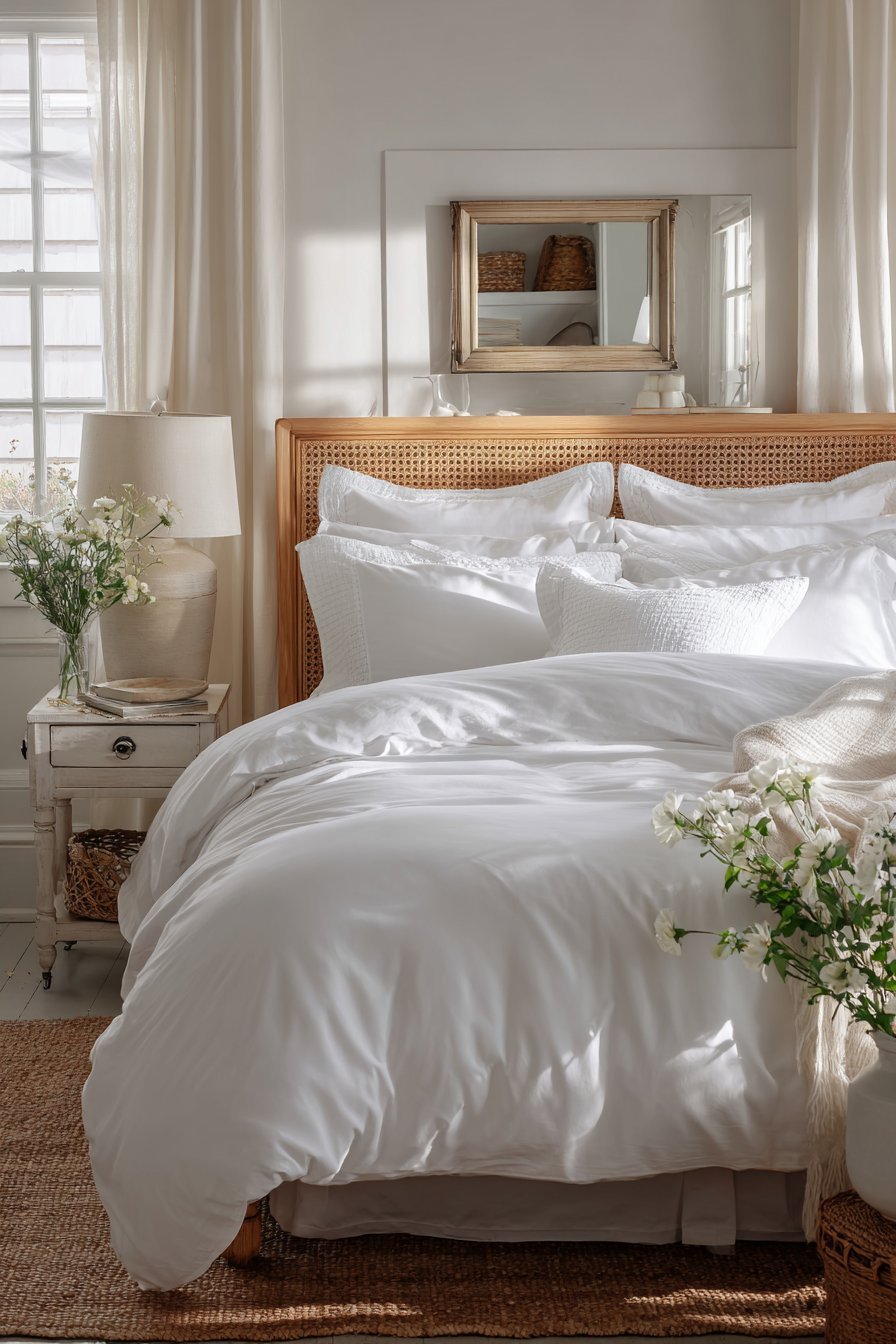
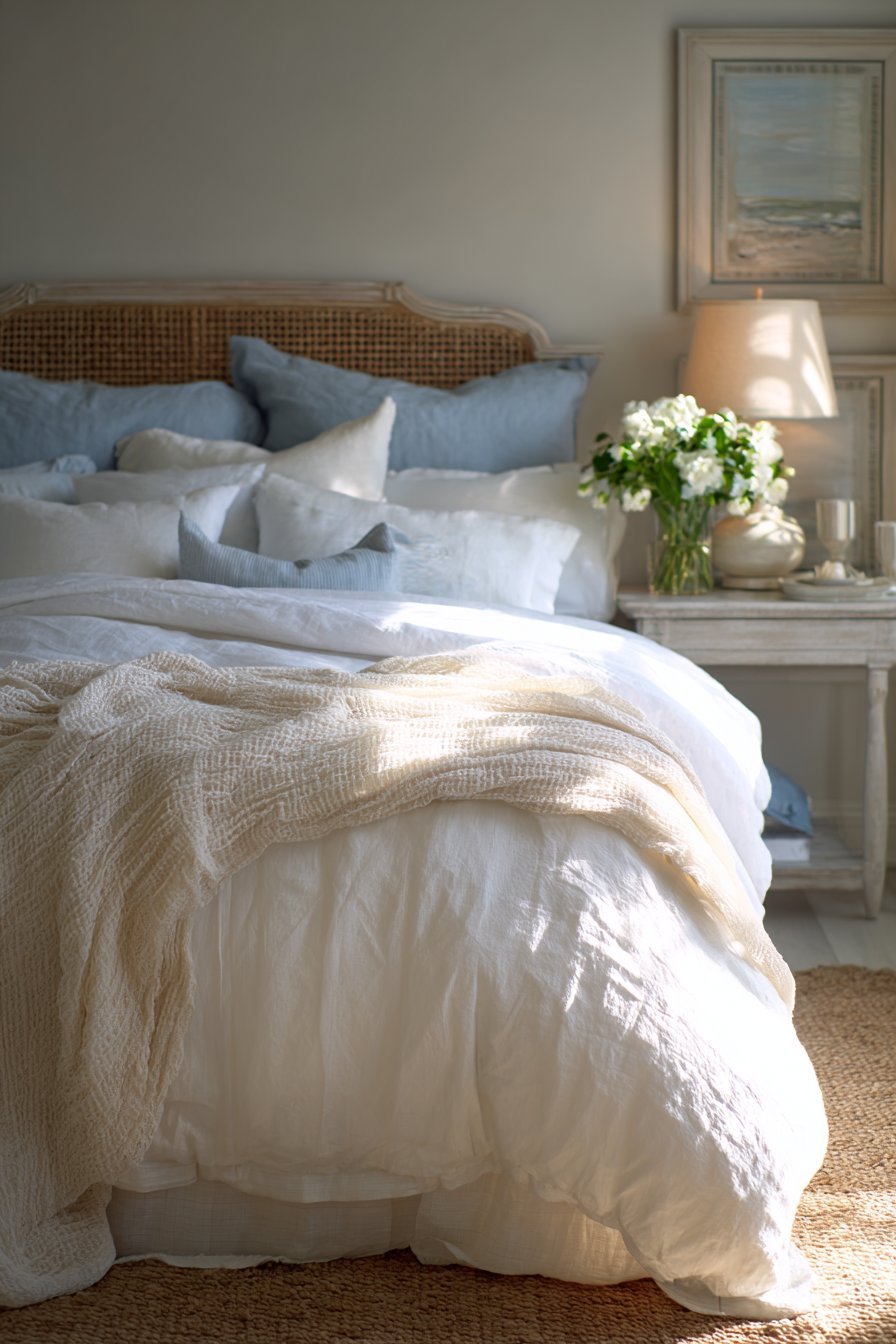
The coastal grandmother bedroom is a sanctuary of calm. The bed is the centerpiece, dressed in layers of crisp white or soft natural linen bedding. A Belgian linen duvet, a matelassé coverlet, and several Euro shams create that effortlessly layered, hotel-quality look. Add a quilt or cotton throw at the foot for warmth and texture.
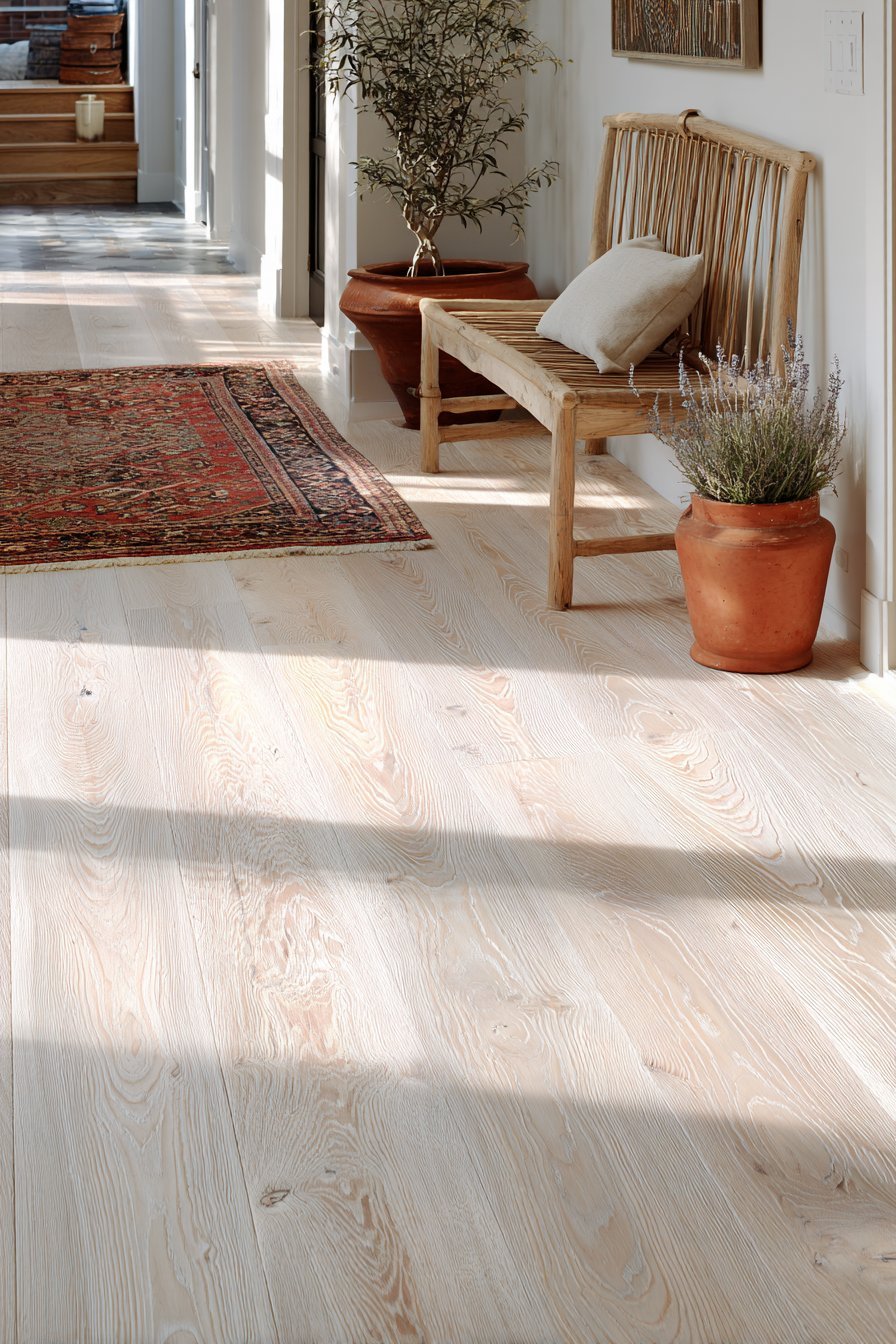
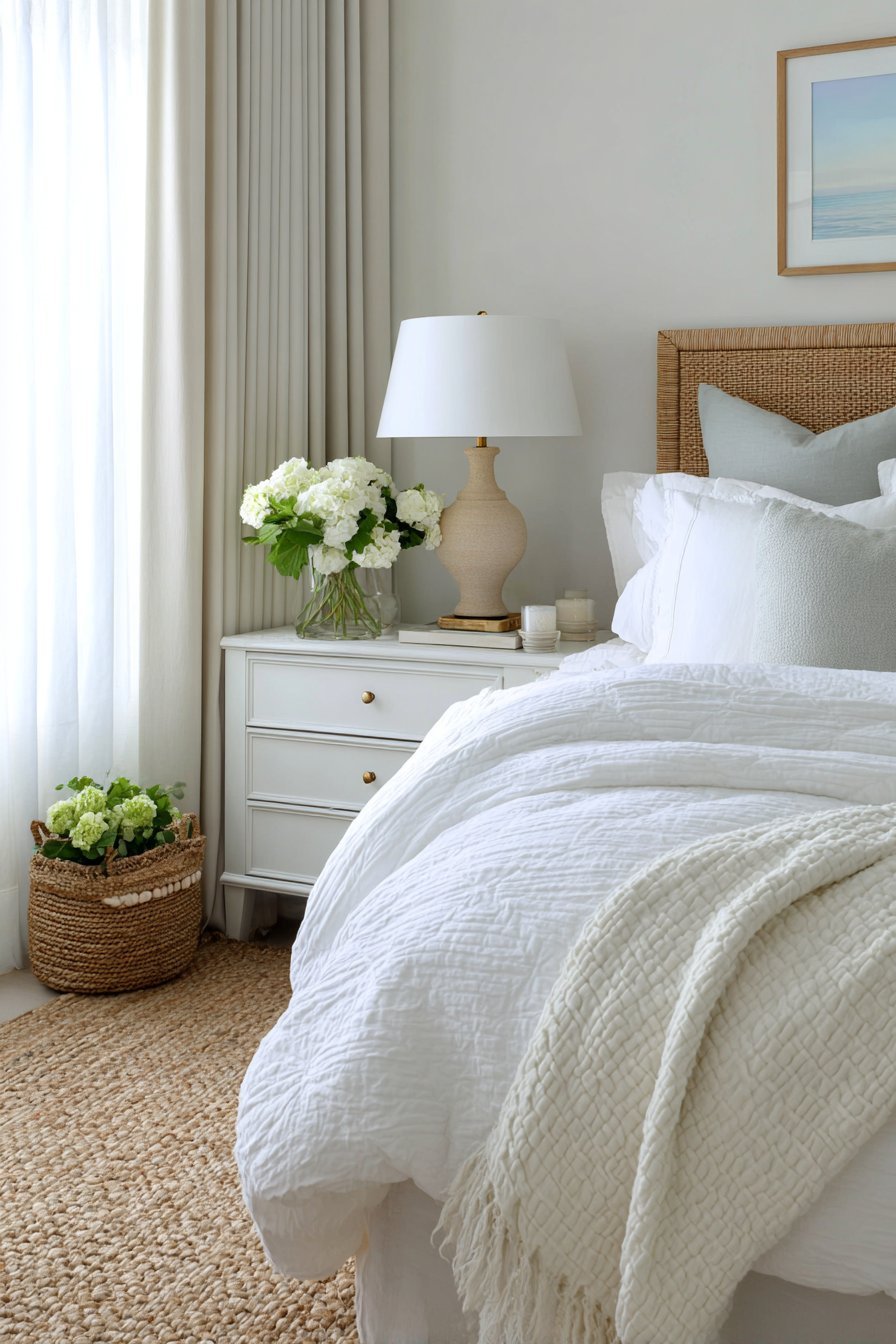
Nightstands should feel collected, not coordinated. One might be a vintage rattan piece, another a simple painted wood table — the mix is intentional and gives the room personality. A ceramic lamp with a linen shade, a stack of books, a small vase of simple flowers — these bedside details are quintessential to the aesthetic. Nothing feels placed for show.
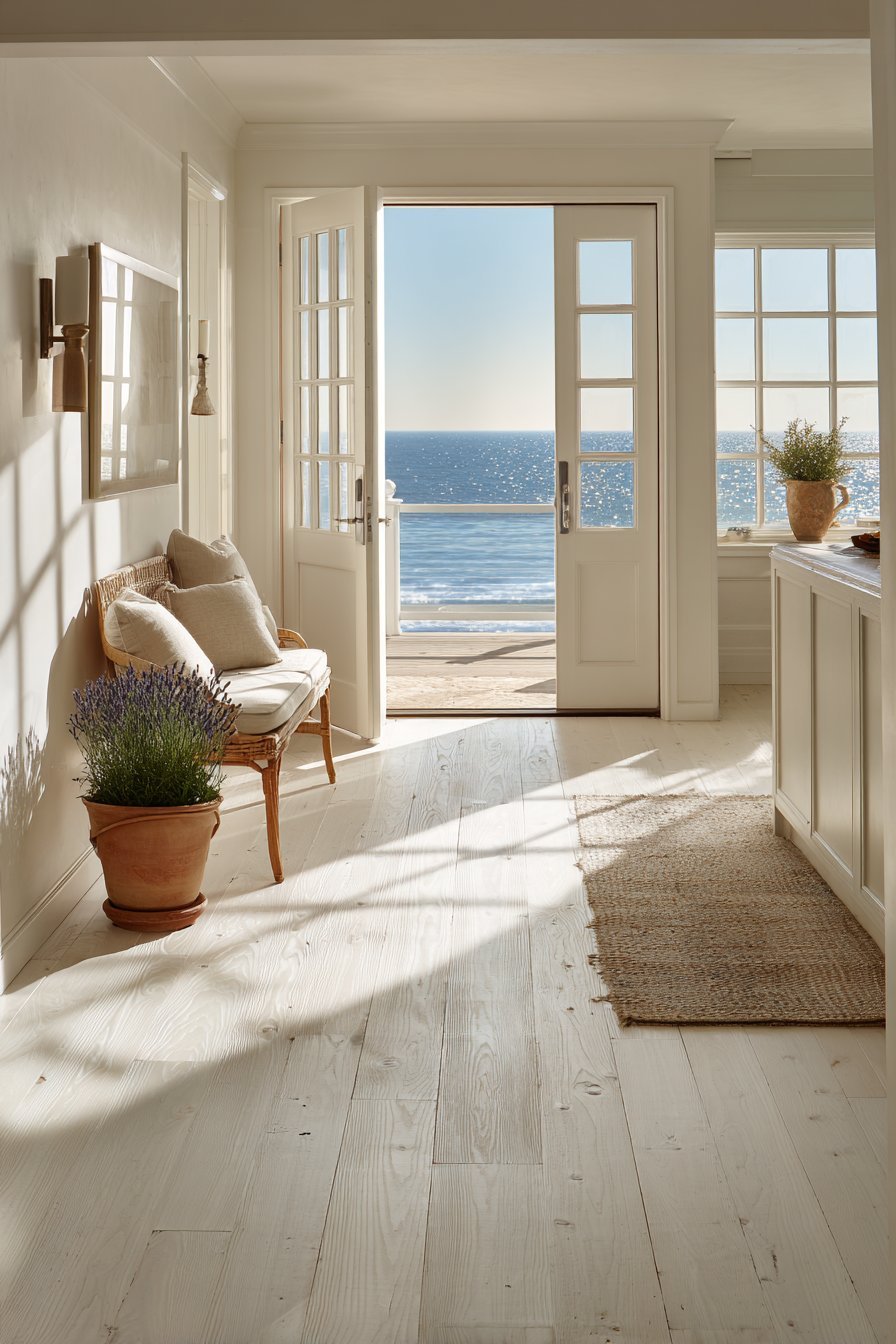
Keep the bedroom palette very soft. Whites, creams, the palest blues, and warm naturals keep the space serene. Add texture rather than color for visual interest. A jute rug underfoot, a rattan headboard, woven cushions — texture is the primary design tool in this room. The result is a bedroom that feels deeply restful and endlessly inviting.
- Layer the bed with linen duvet, matelassé, and cotton throws
- Mix mismatched nightstands for a collected, personal feel
- Choose ceramic or glass lamps with natural linen shades
- Keep the color palette in soft whites, creams, and pale blues
- Add texture through jute rugs, rattan, and woven cushions
- Include a simple vase of fresh or dried florals as a finishing touch
9. Decorative Accessories and Collections
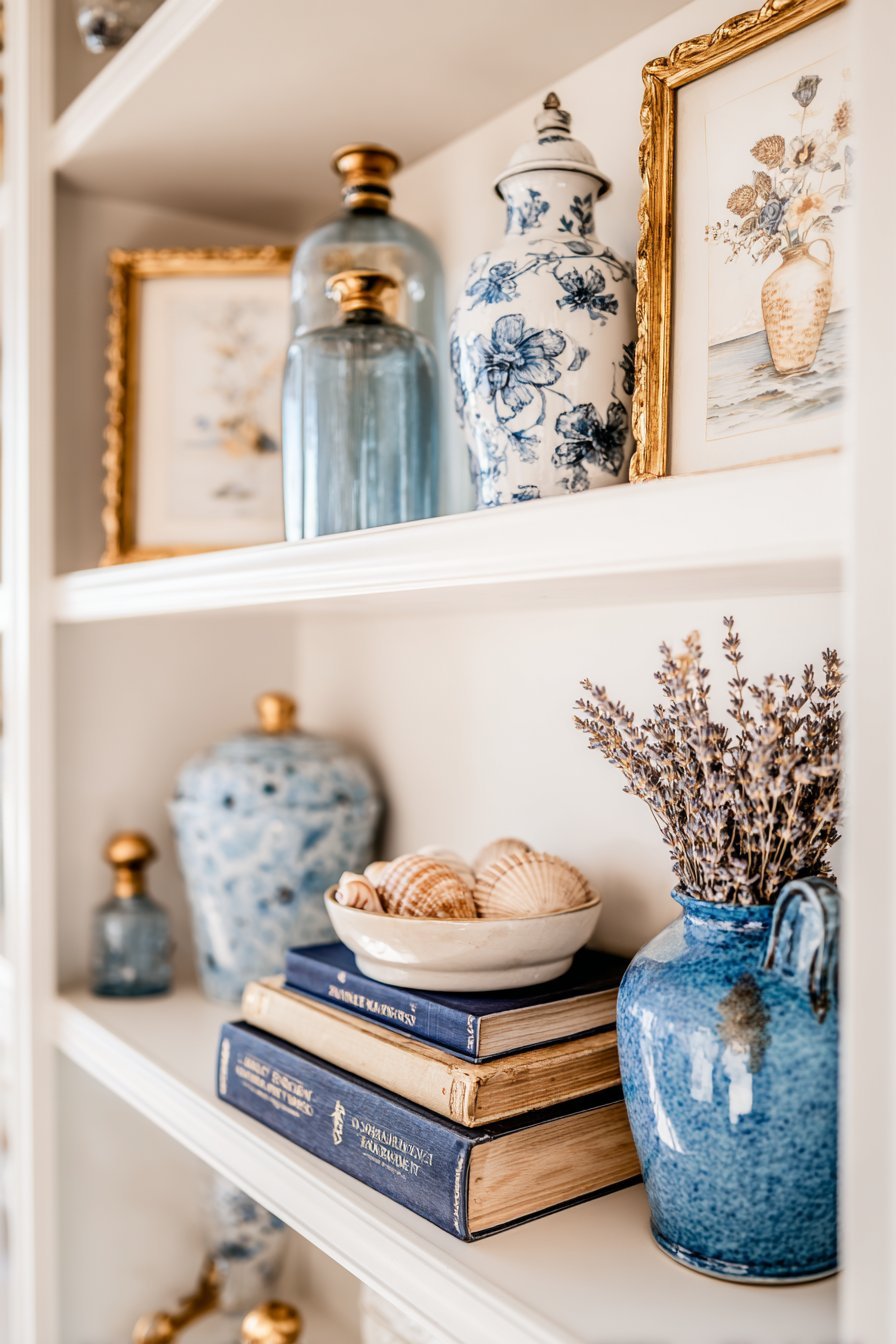
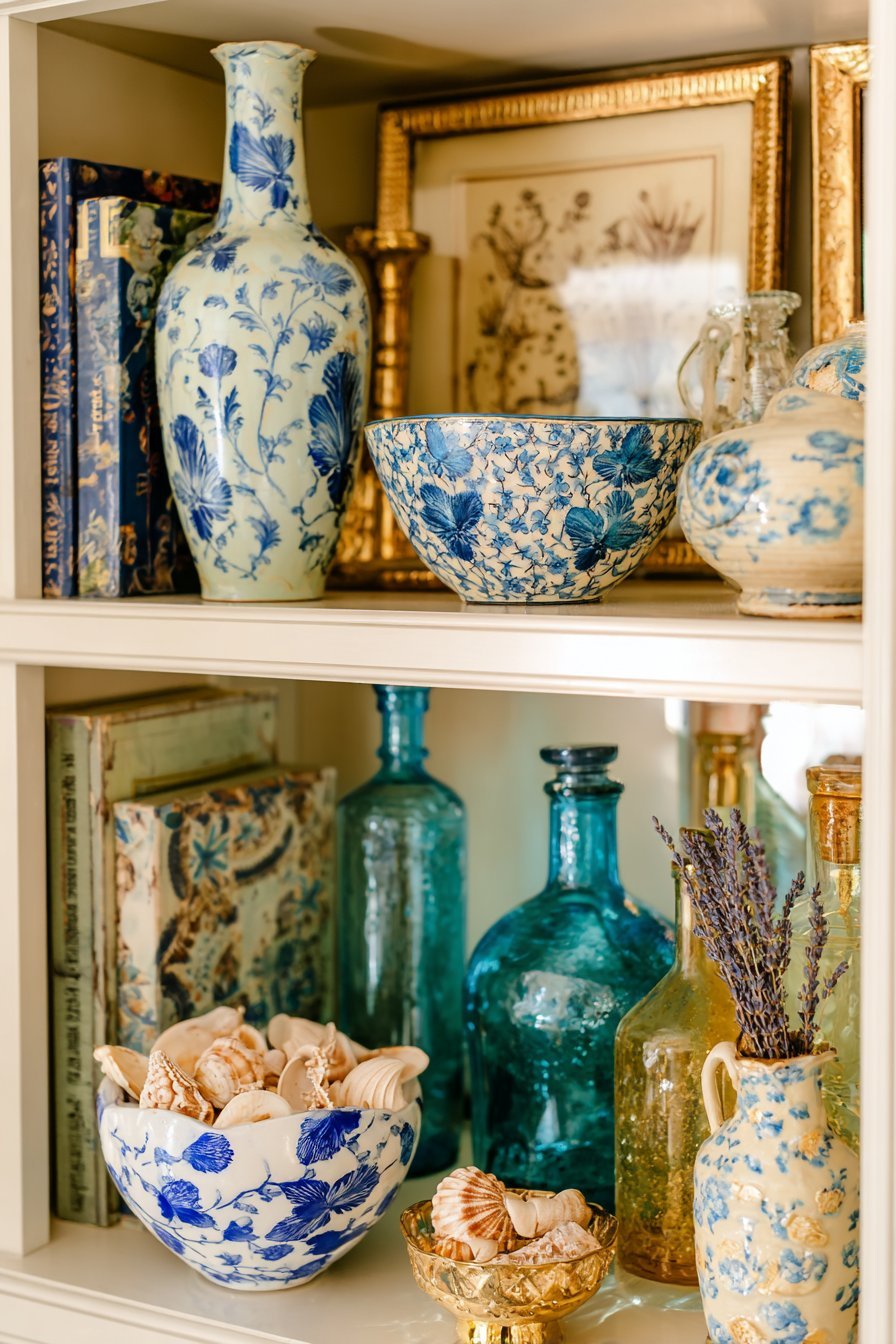
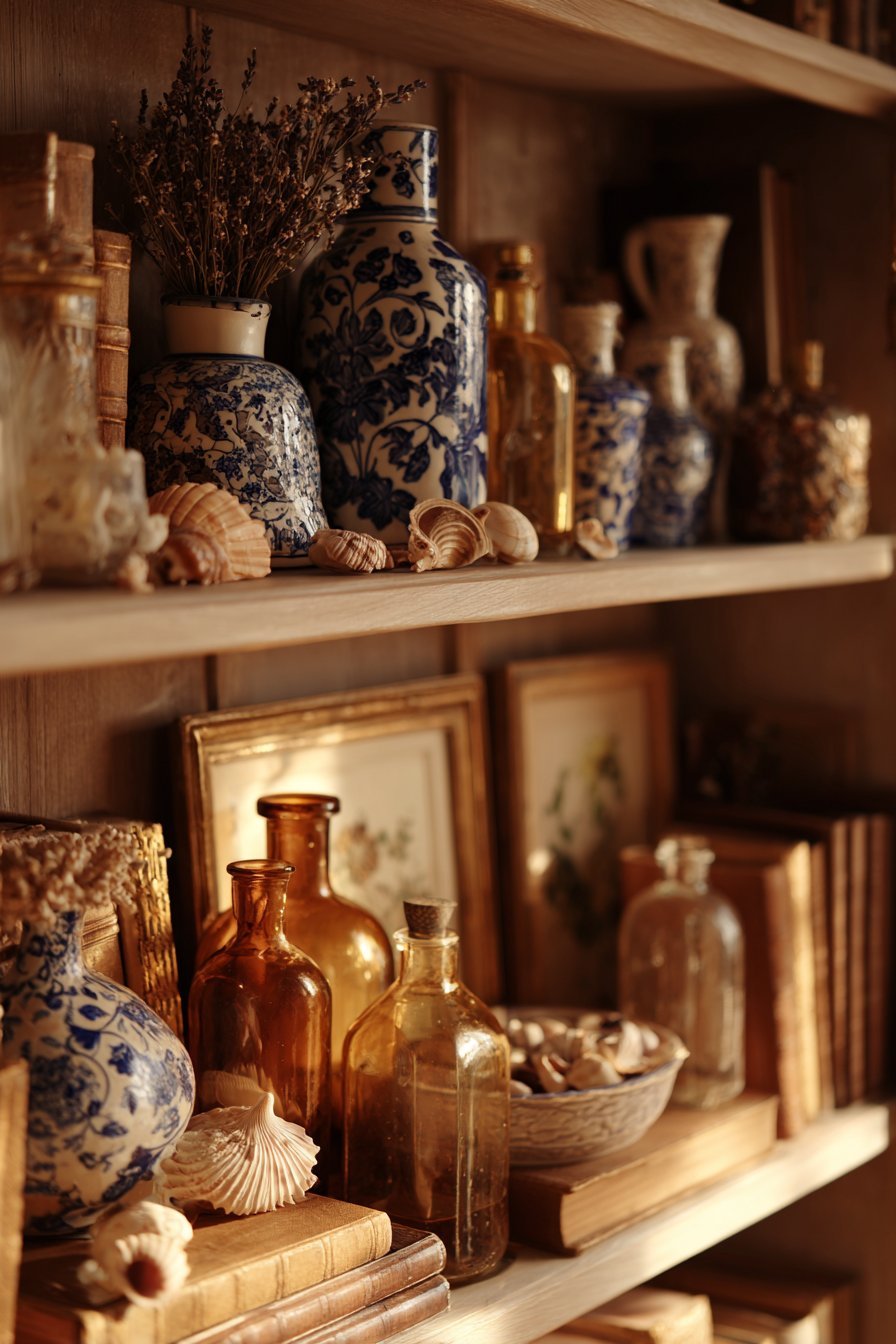
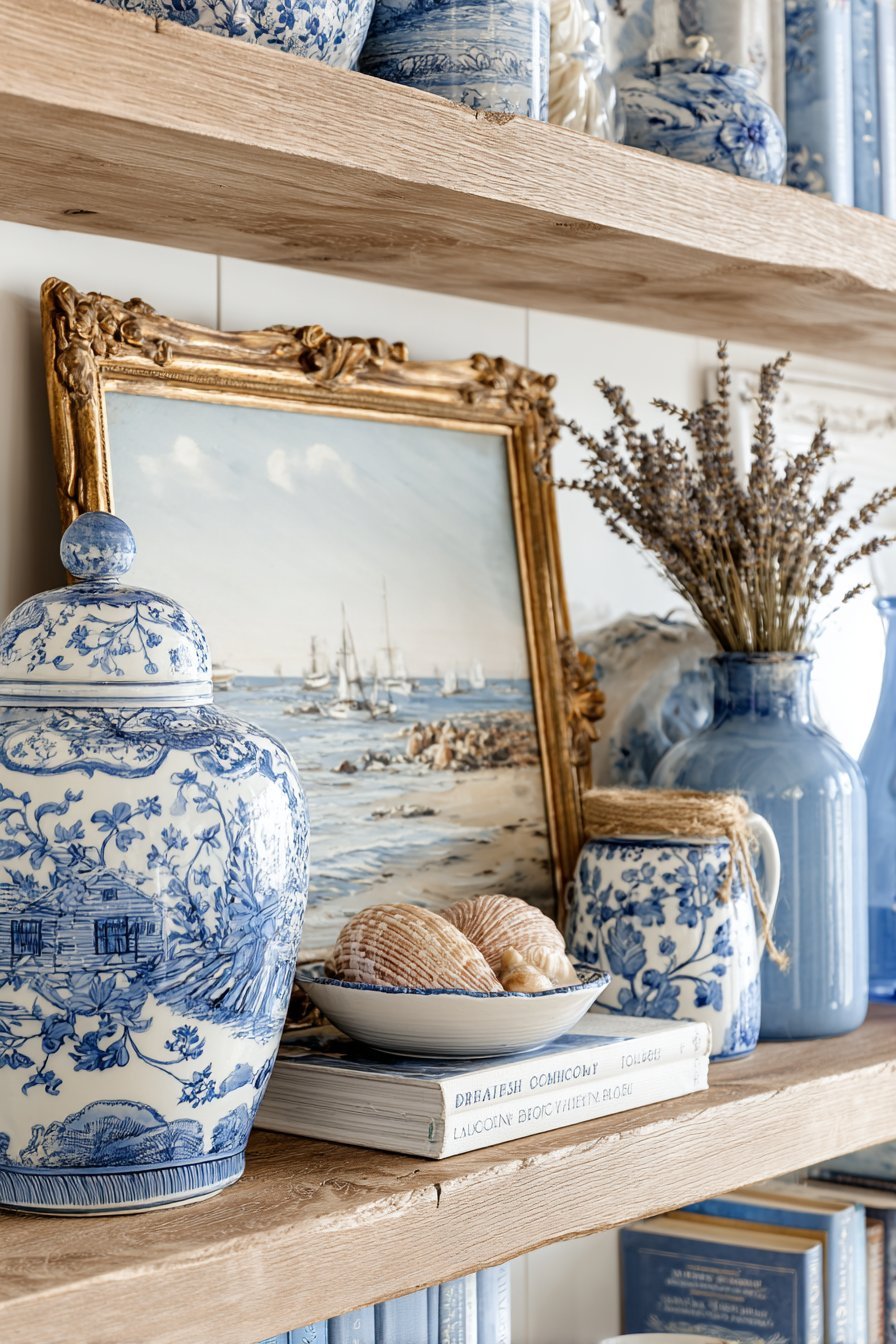
The coastal grandmother home is rich with meaningful objects. But unlike maximalism, every object here feels curated and intentional. Collections are a signature element — a shelf of blue-and-white ceramics, a grouping of vintage glass bottles, a collection of shells arranged in a shallow bowl. These are objects that tell stories and reflect a life well-traveled and well-lived.
Botanical and coastal motifs appear frequently in this aesthetic. Framed botanical prints, vintage maps of coastlines, oil paintings of seascapes, and watercolor florals all feel at home on the walls. Art should feel inherited or discovered rather than purchased as decor. A mix of frames — gilt, simple wood, painted white — adds to the layered, collected quality that defines this style.
Books are an essential accessory. Stacked and displayed books signal curiosity and a love of learning. Style them on coffee tables, in bookshelves, and on kitchen counters. Use them as risers for objects or as standalone decorative elements. Plants and fresh or dried flowers are equally important — they bring life, softness, and natural beauty into every room.
- Curate small collections of meaningful objects rather than clutter
- Display blue-and-white ceramics, vintage glass, or natural shells
- Hang botanical prints, seascapes, and watercolor art
- Stack and display books throughout your home as accessories
- Incorporate fresh flowers, herbs, or simple dried botanicals
- Mix frame styles for a naturally collected, unhurried look
10. Outdoor and Porch Spaces
The outdoor living space is an extension of the coastal grandmother home. A porch or patio is essential — it bridges the interior world with the natural landscape. Furnish it with weathered teak or rattan furniture, simple striped outdoor cushions in navy and white or natural tones, and a potted collection of herbs, hydrangeas, or climbing roses.
String lights or lantern-style outdoor lighting create warmth and ambiance after dark. A well-worn outdoor rug in natural fibers ties the space together. Add a side table for books and a glass of iced tea, and the portrait is complete. The outdoor space should feel like a natural continuation of the indoor aesthetic — relaxed, natural, and beautifully effortless.
Container gardening is especially well-suited to this aesthetic. Terracotta pots overflowing with lavender, rosemary, and geraniums bring color and scent. Wooden planters filled with simple white hydrangeas have a timeless quality. The garden, like the interior, should feel tended but not over-controlled — abundant, seasonal, and joyful.
- Furnish outdoor spaces with weathered teak or rattan
- Choose outdoor cushions in simple stripes or natural tones
- Add string lights or lanterns for warm evening ambiance
- Use terracotta pots and wooden planters for container gardens
- Plant hydrangeas, lavender, and climbing roses for color
- Extend the indoor color palette and material choices outdoors
11. Lighting Philosophy and Fixtures
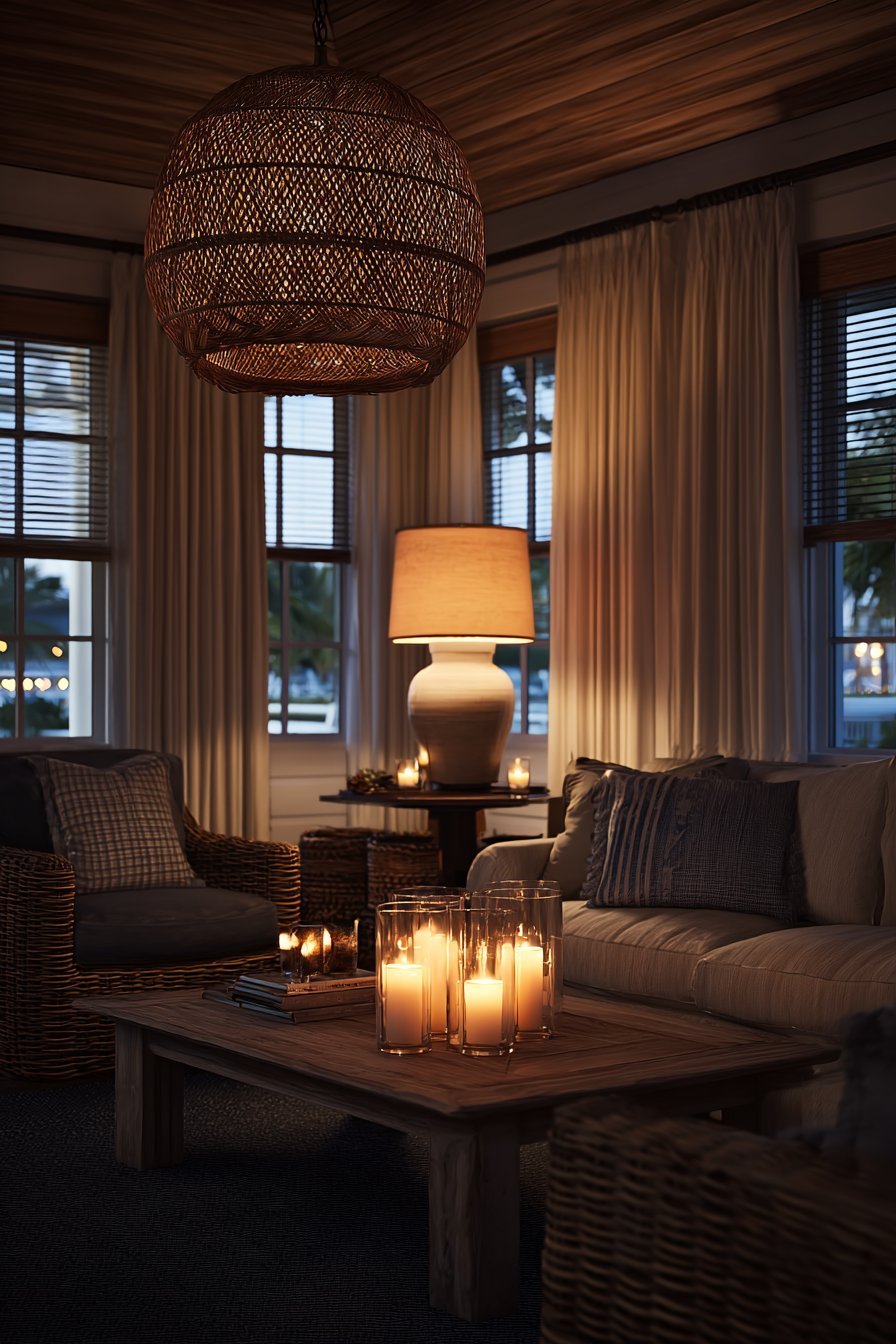
Lighting transforms a space in the coastal grandmother aesthetic more than almost any other element. The goal is warm, layered, and natural-feeling light. Overhead lighting should be soft and diffused — never harsh or clinical. Woven rattan pendants, ceramic flush mounts, and simple linen drum shades are all excellent choices for overhead fixtures.
Layer multiple light sources at different heights throughout each room. Table lamps, floor lamps, sconces, and candlelight work together to create that warm, golden-hour quality that defines this aesthetic. Avoid relying solely on overhead lighting — it flattens a room and removes all sense of intimacy. The layered approach to lighting is what creates that coveted, cozy glow.
Warm-toned bulbs are non-negotiable. Choose LED bulbs in the 2700K range for the warmest possible light. Avoid cool or daylight bulbs, which make spaces feel clinical and cold. In dining areas, install a dimmer switch to control the mood effortlessly. In living spaces, prioritize table and floor lamps for their ability to create intimate pools of warm light.
- Install woven rattan or ceramic pendant fixtures
- Layer table lamps, floor lamps, and sconces throughout
- Use warm LED bulbs in the 2700K color temperature range
- Install dimmer switches in dining and living areas
- Add candles for the warmest, most atmospheric evening light
- Avoid relying solely on overhead lighting in any room
12. Bringing It All Together: The Coastal Grandmother Mindset
Ultimately, the coastal grandmother aesthetic is not a checklist of products — it’s a mindset. It’s about slowing down, choosing quality over quantity, and creating a home that reflects who you are rather than what is currently trending. It values authenticity, comfort, and beauty in equal measure, and it resists the pressure of fast-trend interior design.
The best coastal grandmother homes are built over time. They include the vintage find from a weekend flea market, the ceramic mug made by a local artist, the framed photo from a trip thirty years ago. These personal elements are what elevate the aesthetic from style to soul. You cannot buy the whole look at once — it must be discovered and accumulated with intention.
Approach your home with patience and curiosity. Shop secondhand before buying new. Choose natural materials whenever possible. Invest in quality linen, honest wood, and real ceramics. Let your home evolve as you do. The coastal grandmother aesthetic is ultimately about creating a sanctuary that nourishes you — and that is always worth the effort.
- Build your home’s aesthetic gradually rather than all at once
- Shop vintage markets, estate sales, and antique stores regularly
- Choose natural materials — linen, wood, rattan, ceramic, stone
- Incorporate personal objects and meaningful collections
- Prioritize comfort and authenticity over perfection
- Let your home tell your story, not a trend’s story
Conclusion
The coastal grandmother aesthetic is one of the most compelling and enduring design movements of recent memory precisely because it taps into something deeper than style. It speaks to a desire for calm, authenticity, and beauty that doesn’t shout. From soft linen curtains to collected ceramics and weathered wood, every element works together to create a home that feels like a deep exhale.
Whether you’re fully committing to the look or simply drawing inspiration from its principles, the invitation is the same: slow down, choose thoughtfully, and create a space that genuinely reflects how you want to live. A home built on these values will never feel dated — because it was never chasing a trend to begin with. Start with one room, one shelf, or one beautiful piece of linen, and let the rest unfold naturally.
