
Interior design has always reflected the culture of its time. Today, a bold new trend is challenging everything we thought we knew about tidy, minimal living spaces. Cluttercore is making waves across social media, design blogs, and real homes — and it’s sparking a fascinating conversation about what “beautiful” really means.
For decades, minimalism ruled the design world. Clean lines, empty surfaces, and the mantra “less is more” dominated interiors. But a growing number of homeowners are pushing back. They’re filling their shelves, layering their walls, and celebrating collections with unapologetic confidence. Cluttercore is their aesthetic — and it’s far more intentional than the name suggests.
This article explores what cluttercore actually is, where it came from, how it differs from plain messiness, and whether it could be the right style for your home. Whether you’re a devoted minimalist curious about the trend or someone who’s always felt guilty about their collections, this guide is for you.
1. Defining Cluttercore: What It Actually Means
Cluttercore is an interior design aesthetic centered on intentional abundance. It embraces collections, meaningful objects, layered textures, and a full, curated look that tells the story of the person who lives there. The “core” suffix places it firmly within the internet’s growing family of named aesthetics, like cottagecore or darkacademia.
The key word here is intentional. Cluttercore is not about ignoring mess or living in chaos. It’s about purposeful curation — displaying things you love in ways that feel personal, warm, and expressive. Every item on a cluttercore shelf has been chosen. Every stack of books, every vintage trinket, every framed print has a reason for being there.
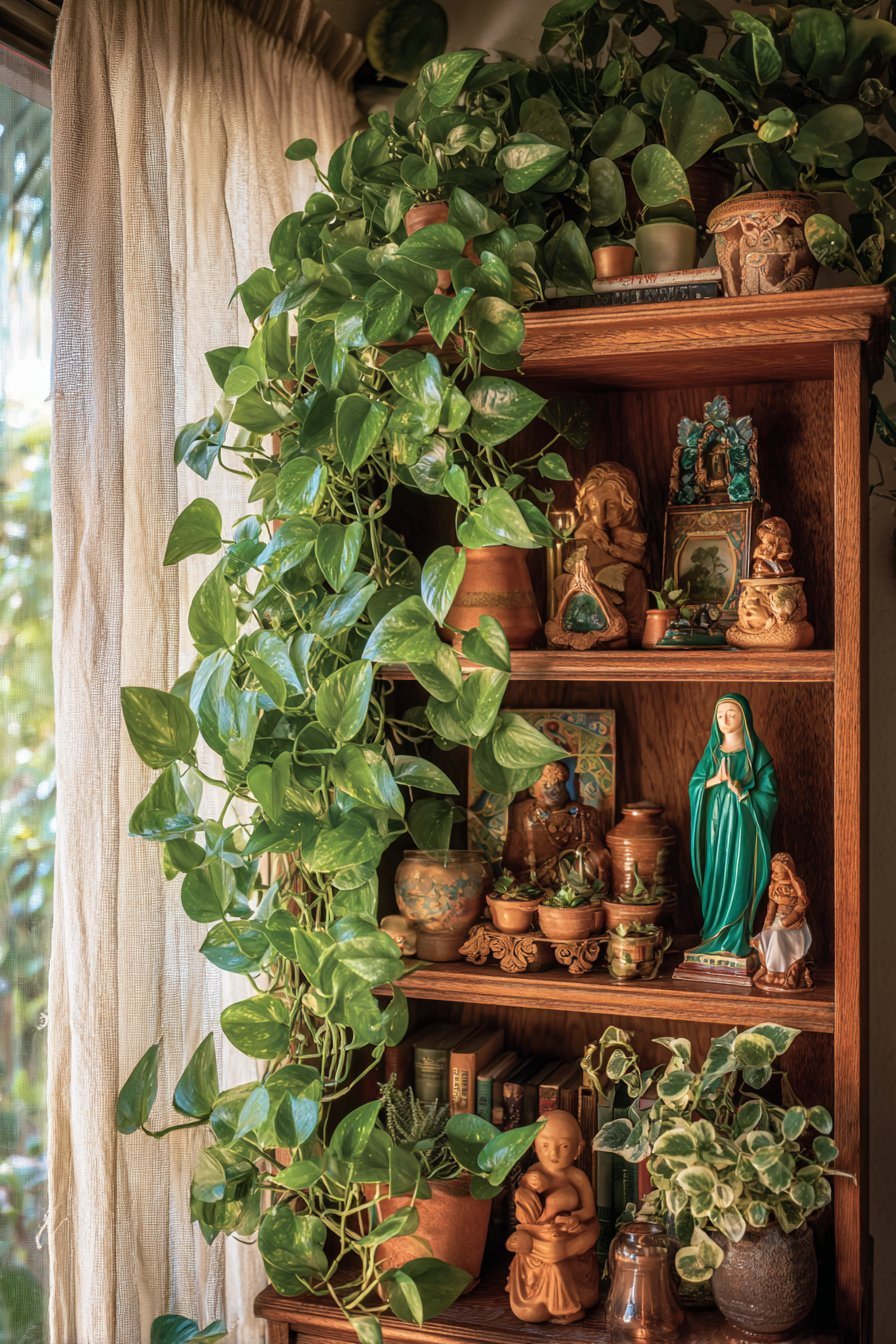
Think of it as the opposite of a staged showroom. A cluttercore home feels lived-in and loved. It communicates personality loudly and proudly, rejecting the sanitized perfection of magazine-ready interiors in favor of something far more human.
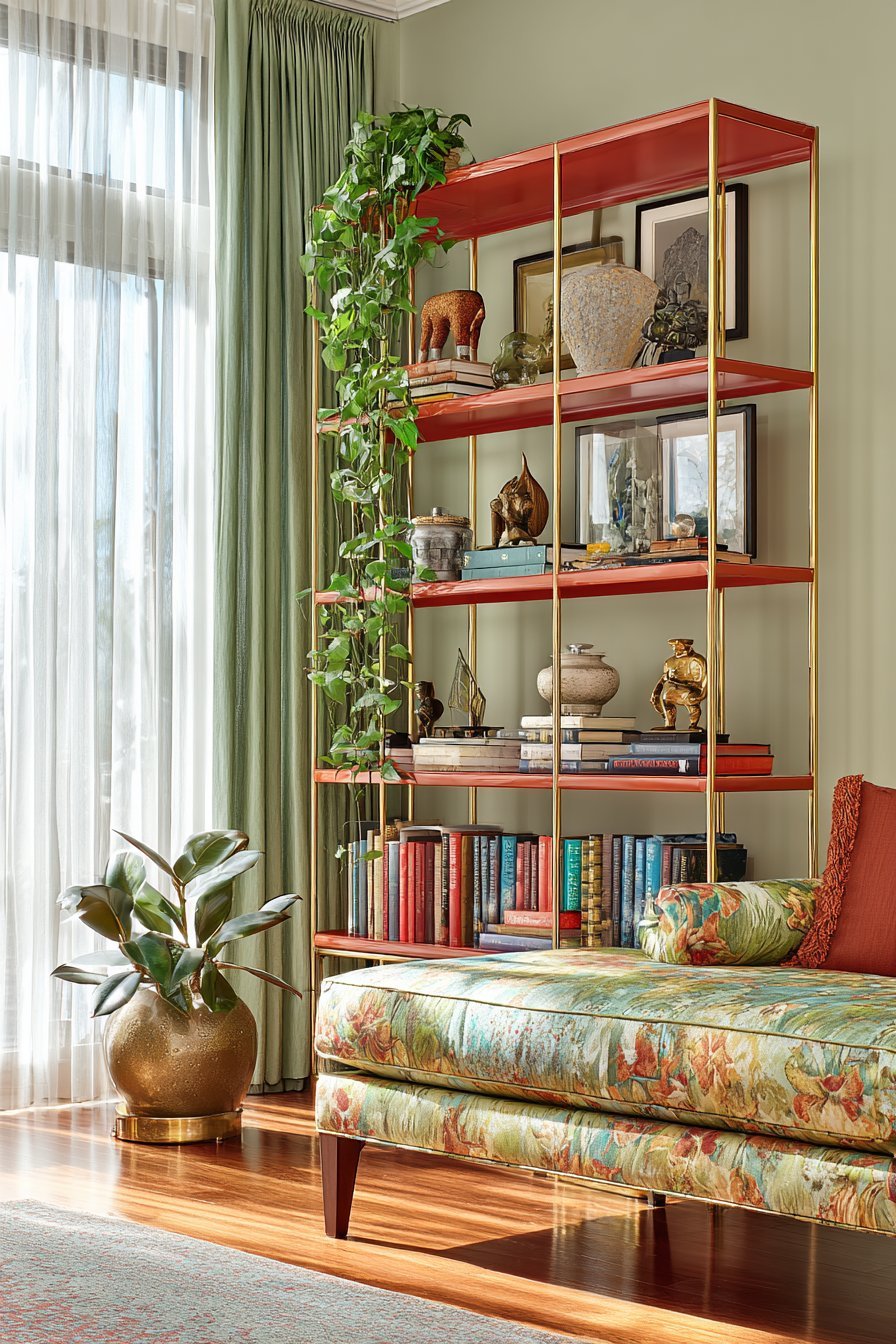
- Display collections openly rather than hiding them in storage
- Choose items with personal meaning over purely decorative pieces
- Layer objects at varying heights to create visual rhythm
- Embrace mismatched styles when they share a unifying color or theme
- Let your space tell your story through objects
- Prioritize authenticity over aesthetic perfection
2. The Origins of Cluttercore
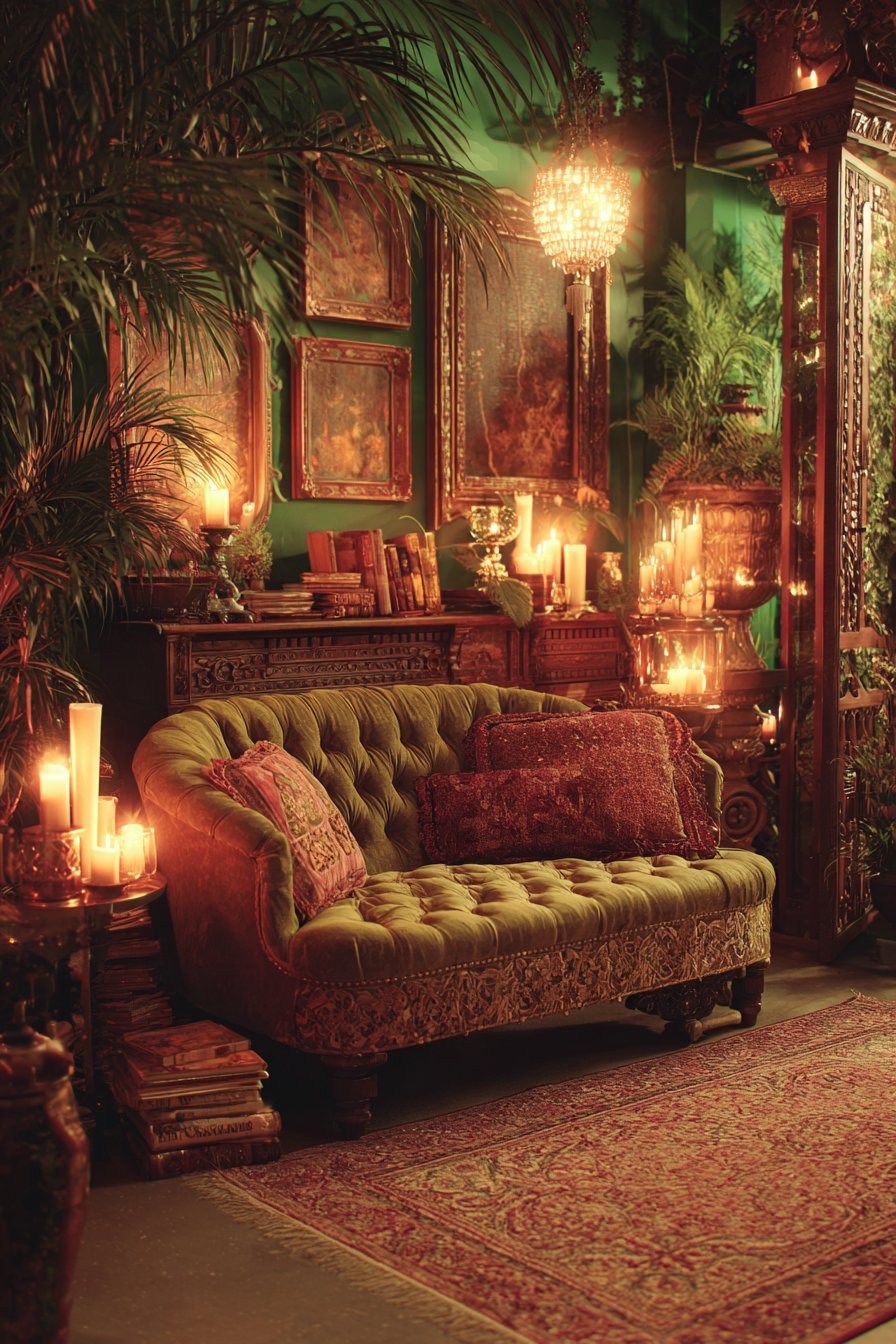
Cluttercore gained momentum on TikTok and Instagram around 2020 and 2021, largely as a reaction to years of minimalist dominance in interior design content. Creators began celebrating their crowded bookshelves, eclectic gallery walls, and overflowing plant collections — and audiences responded with enthusiasm.
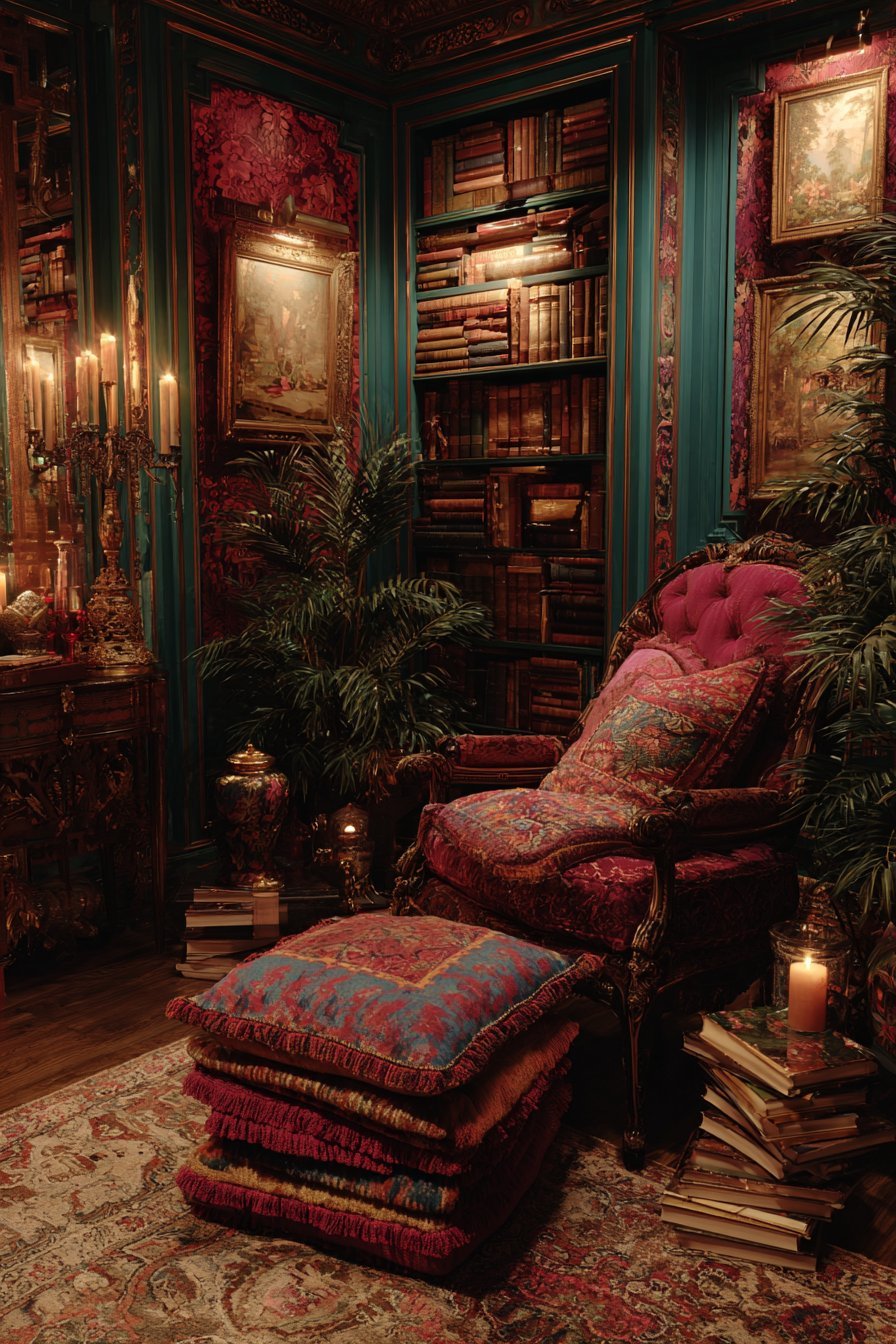
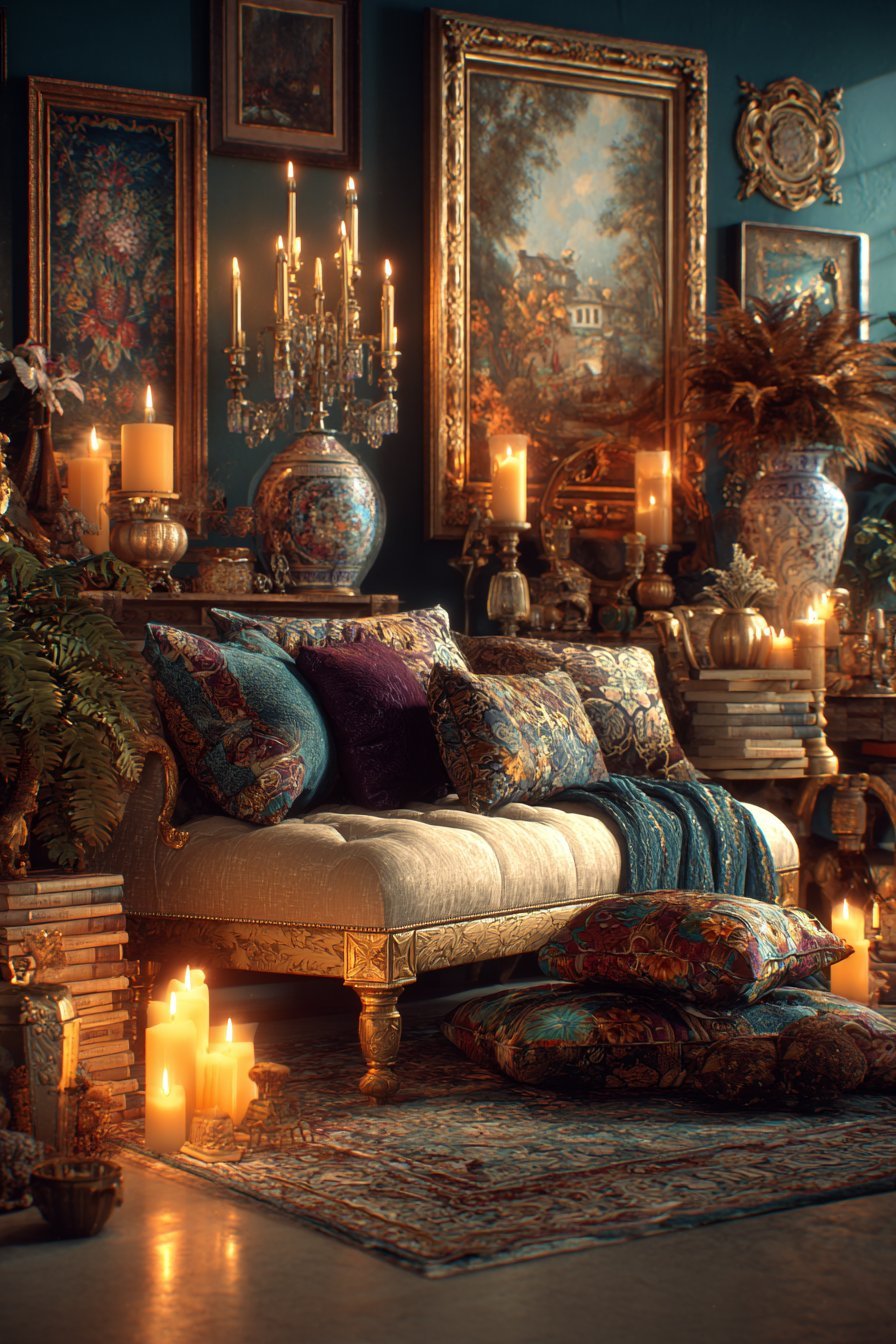
But the roots of this aesthetic go much deeper. Cluttercore draws inspiration from Victorian maximalism, the richly decorated parlors of the 19th century filled with art, plants, taxidermy, ceramics, and layered fabrics. It also echoes the cozy, collected interiors of grandmothers’ homes — a look now affectionately called “grandmillennial style” in design circles.
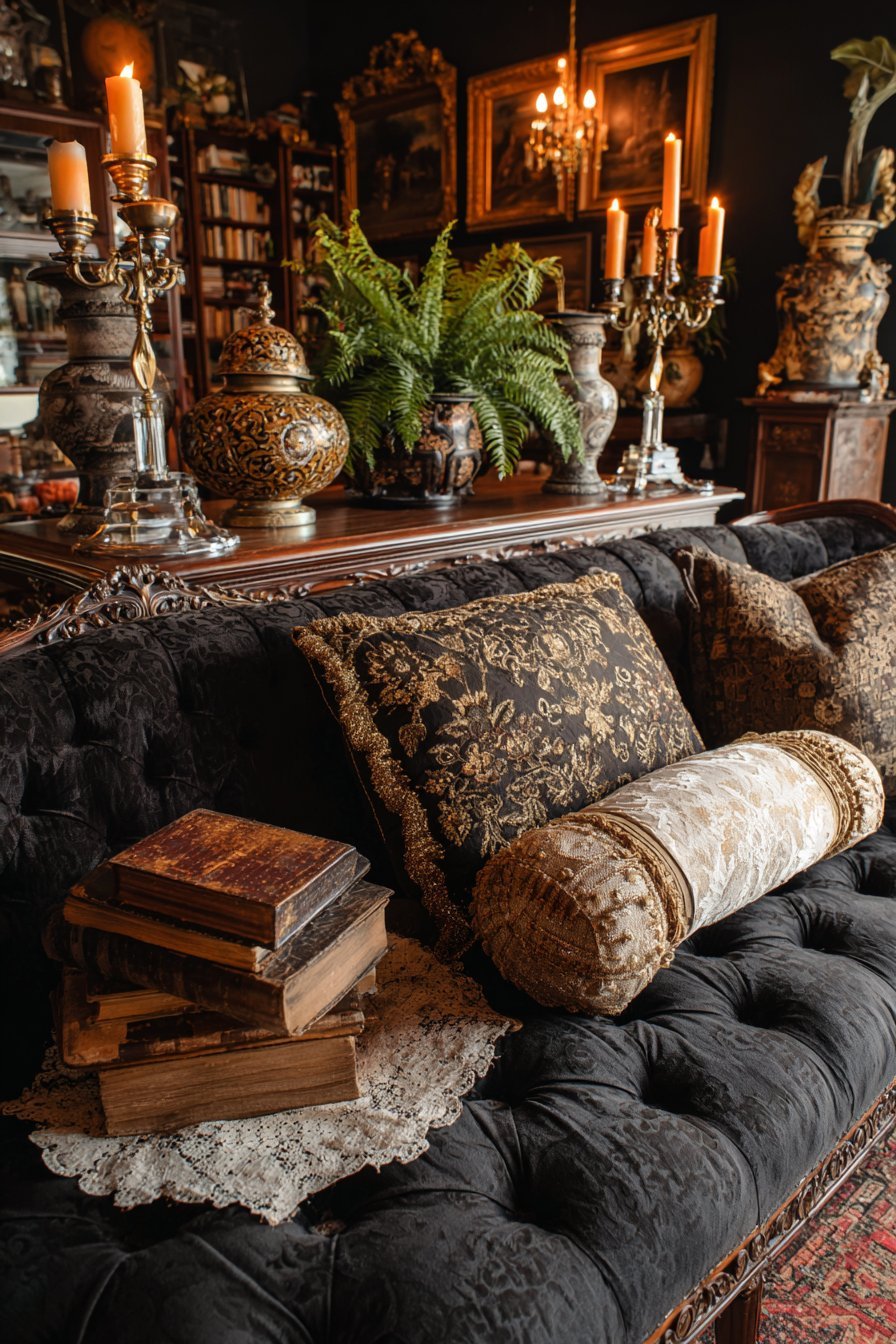
There’s also a psychological element to its rise. After years of being told to declutter, digitize, and simplify, many people found they missed their things. Objects carry memories, identity, and comfort. Cluttercore gave people permission to keep what they love without shame.
- Look to Victorian parlors for layered, maximalist inspiration
- Reference grandmillennial interiors for cozy, collected warmth
- Use social media platforms to discover cluttercore communities
- Understand that the trend is a cultural response to minimalism
- Recognize your own aesthetic preferences before adopting any trend
- Research the history of maximalist design for deeper context
3. Cluttercore vs. Actual Clutter: Know the Difference
This is the most important distinction to understand. Cluttercore is not messiness. The two can look superficially similar to an untrained eye, but they operate on completely different principles. One is curated; the other is simply unmanaged.
In a cluttercore space, every object has been consciously placed. There is still a logic to the arrangement — even if that logic is expressive rather than minimalist. Collections are grouped thoughtfully. Surfaces are full but not chaotic. There’s a sense that someone made deliberate choices about what belongs and what doesn’t.
Real clutter, by contrast, accumulates without intention. It creates visual noise that leads to stress and anxiety, according to environmental psychology research. Cluttercore avoids this by maintaining editorial control. You are the curator of your space. You decide what earns a spot on display, and everything else is stored or removed.
- Ask yourself: “Did I choose this, or did it just end up here?”
- Regularly edit your displays to remove items that no longer resonate
- Group similar objects to create cohesive vignettes rather than random piles
- Keep functional areas like desks and kitchen counters relatively clear
- Distinguish between sentimental clutter and beautiful, intentional display
- Donate or store items that don’t contribute to your aesthetic vision
4. The Core Elements of a Cluttercore Aesthetic
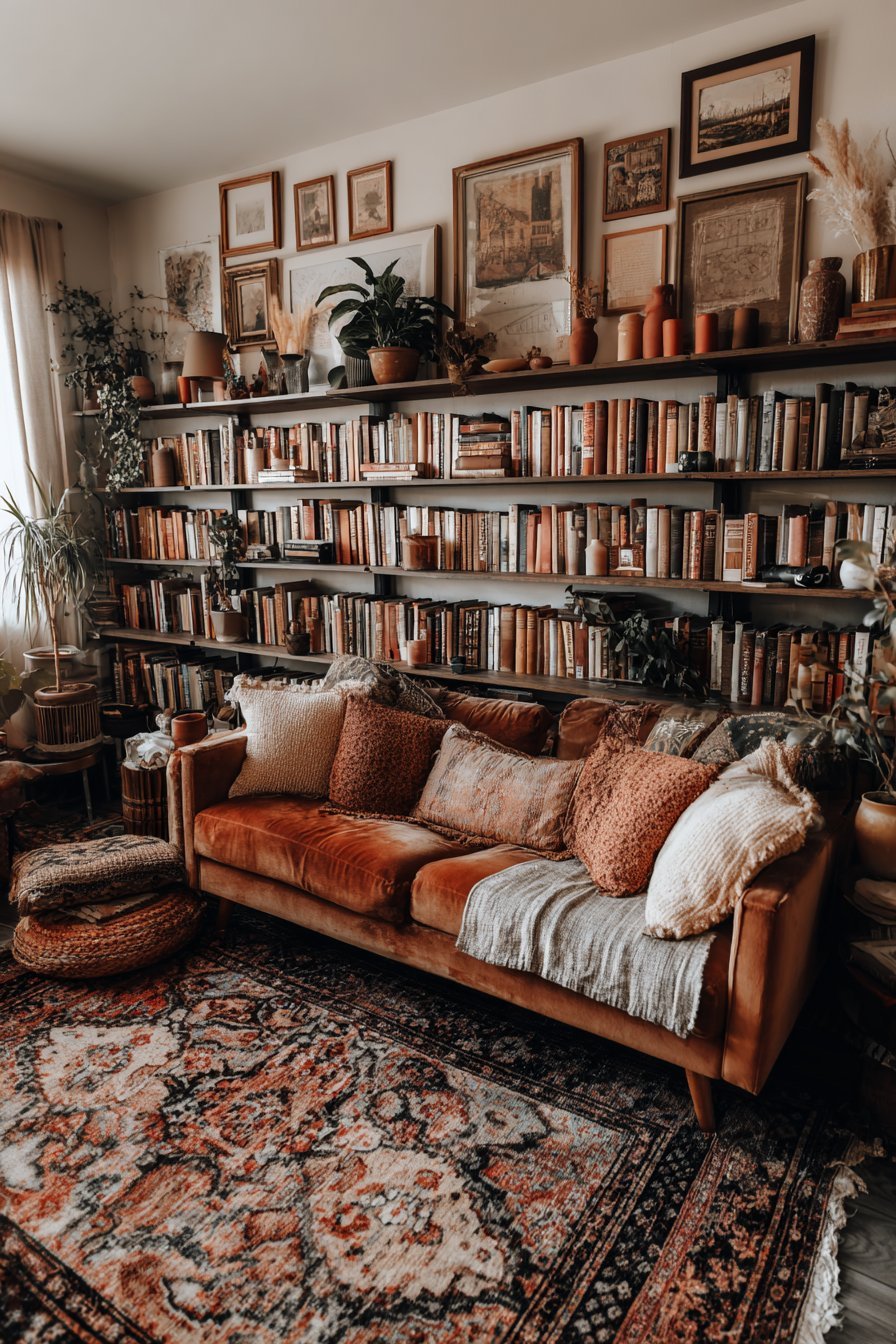
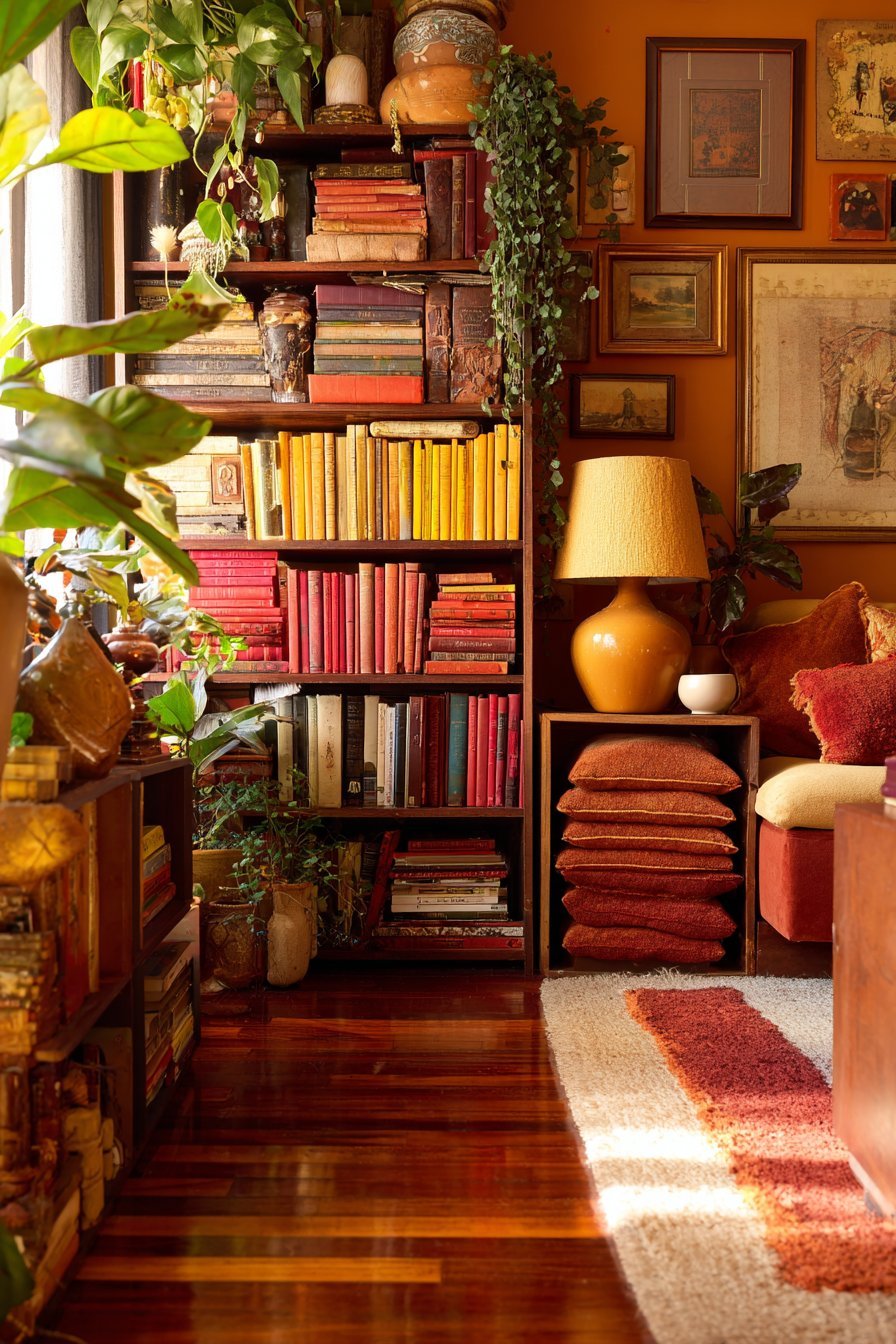
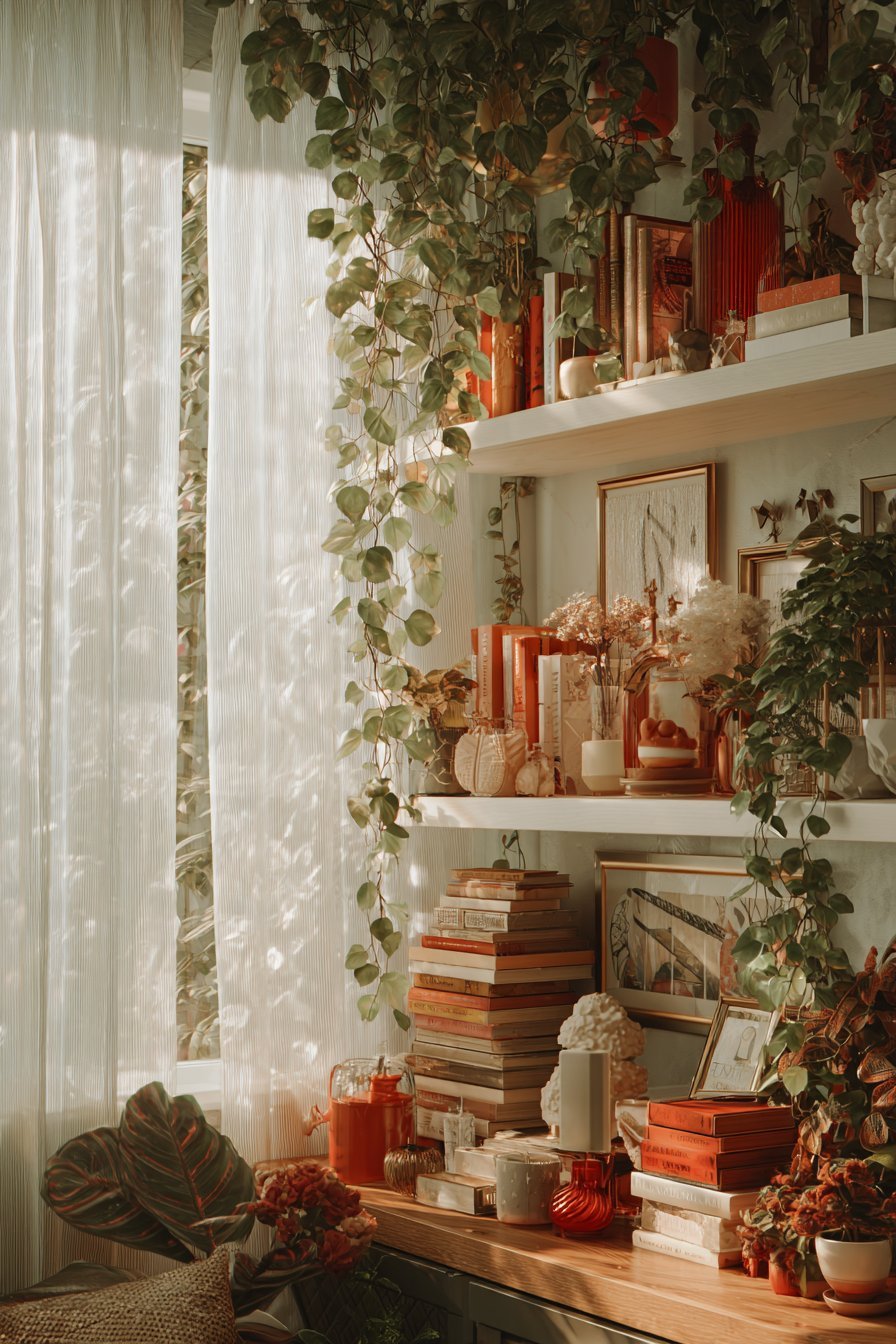
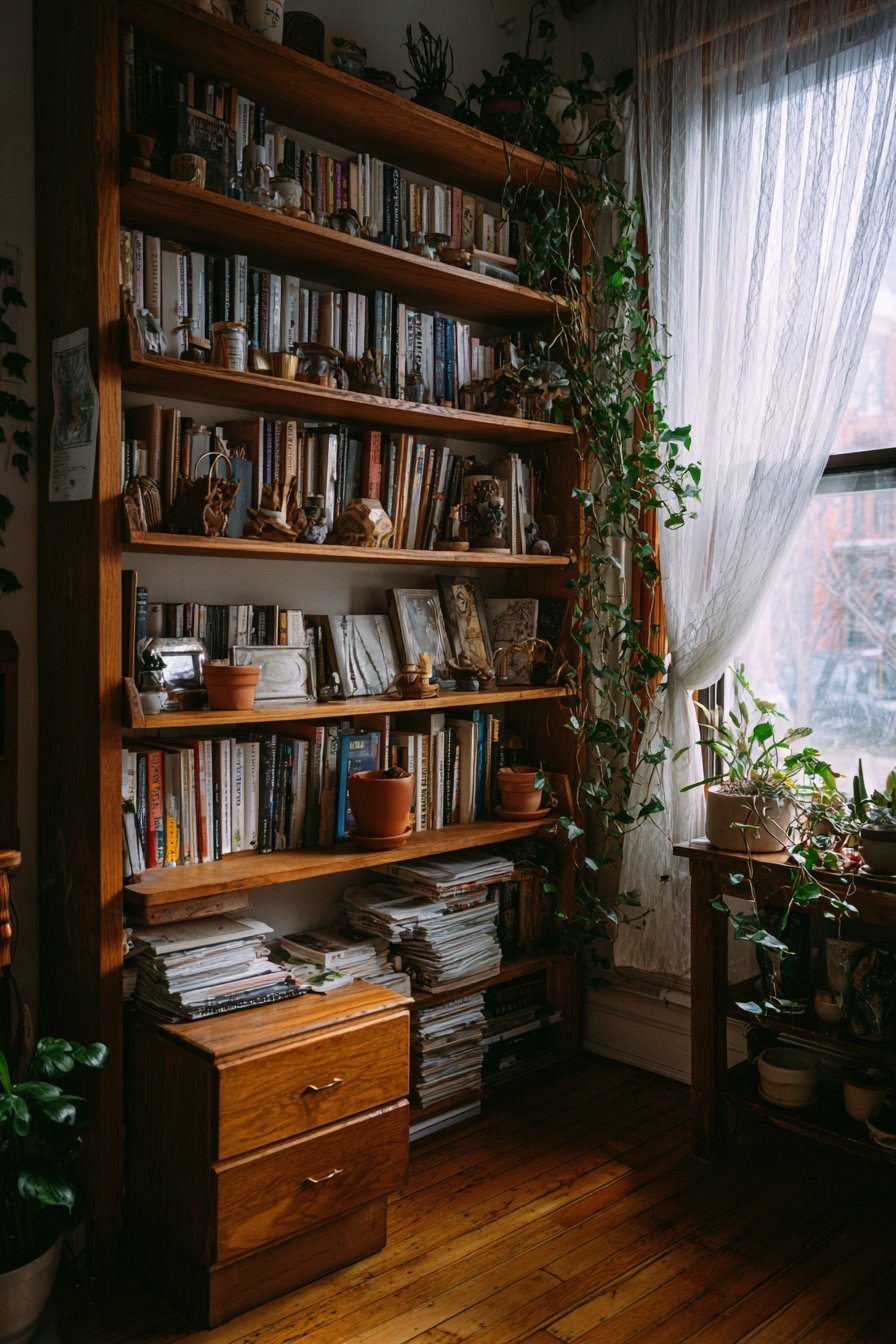
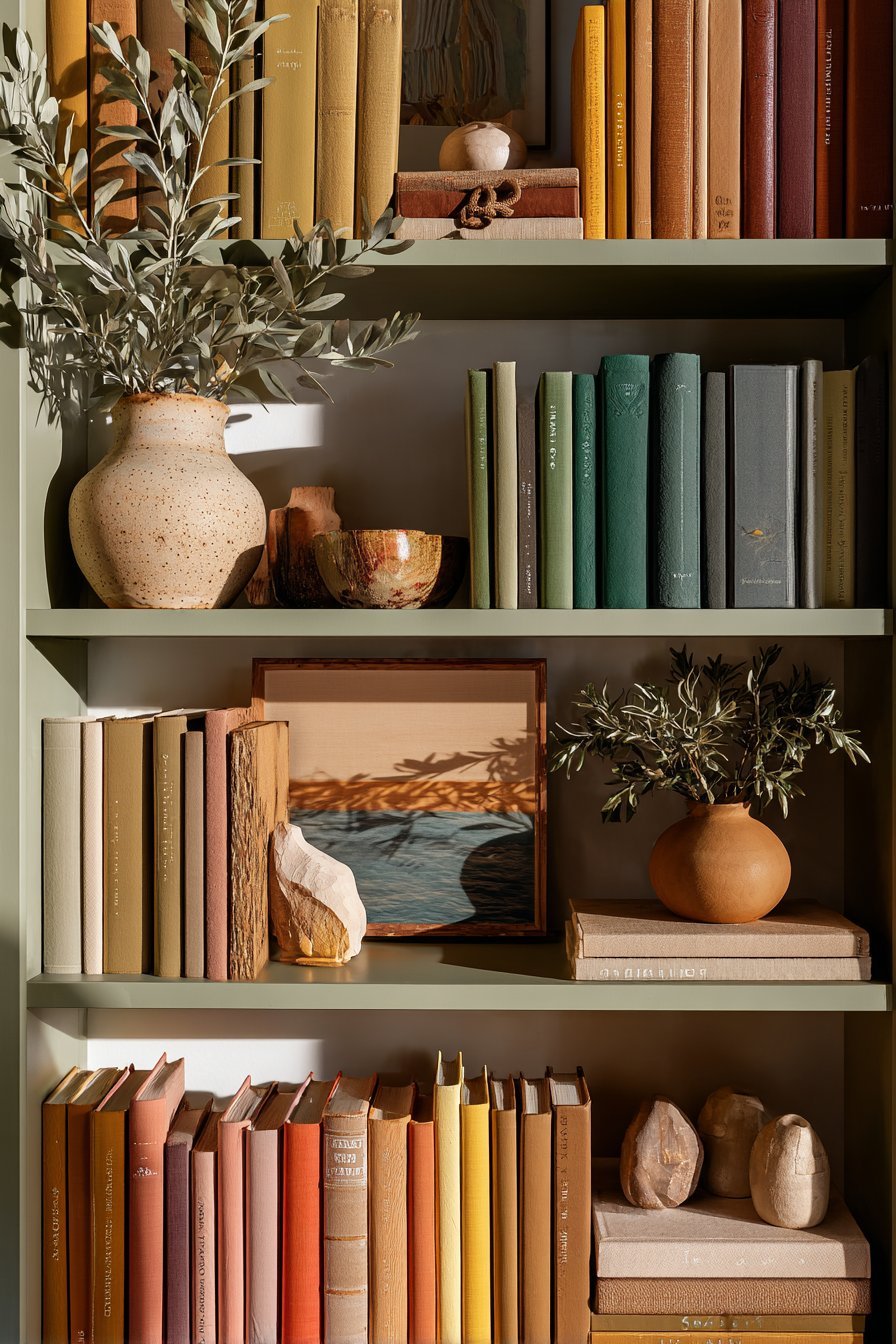
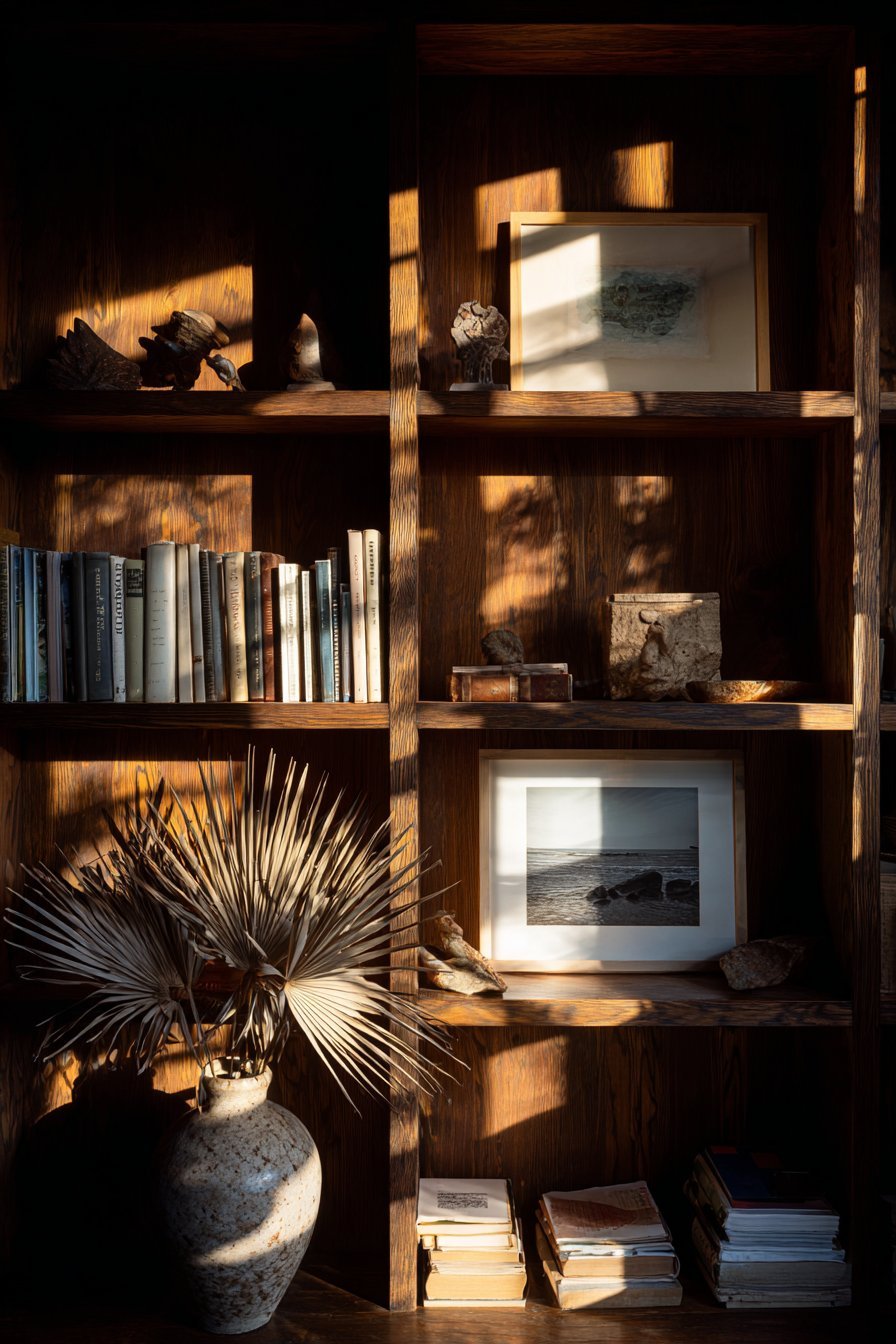
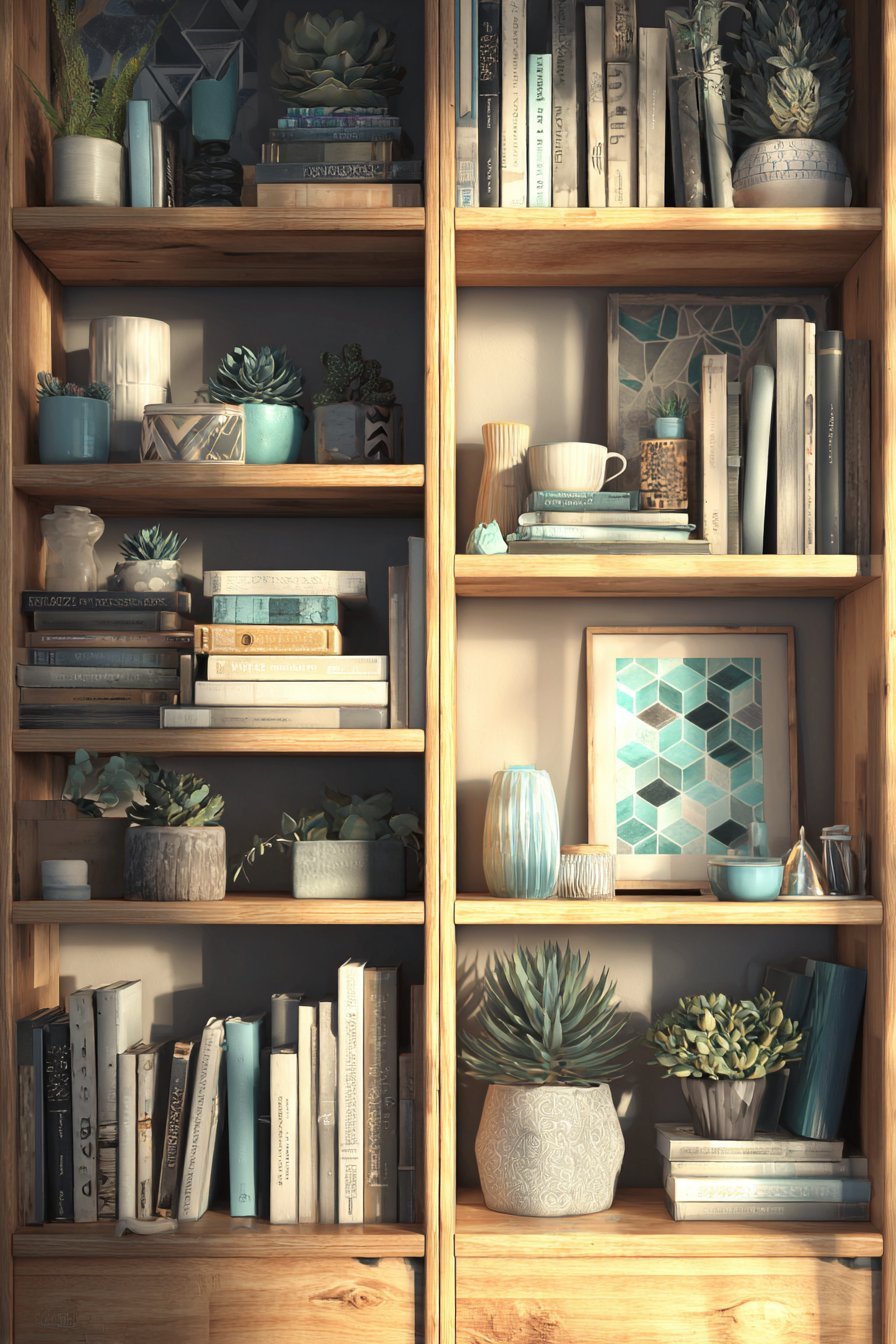
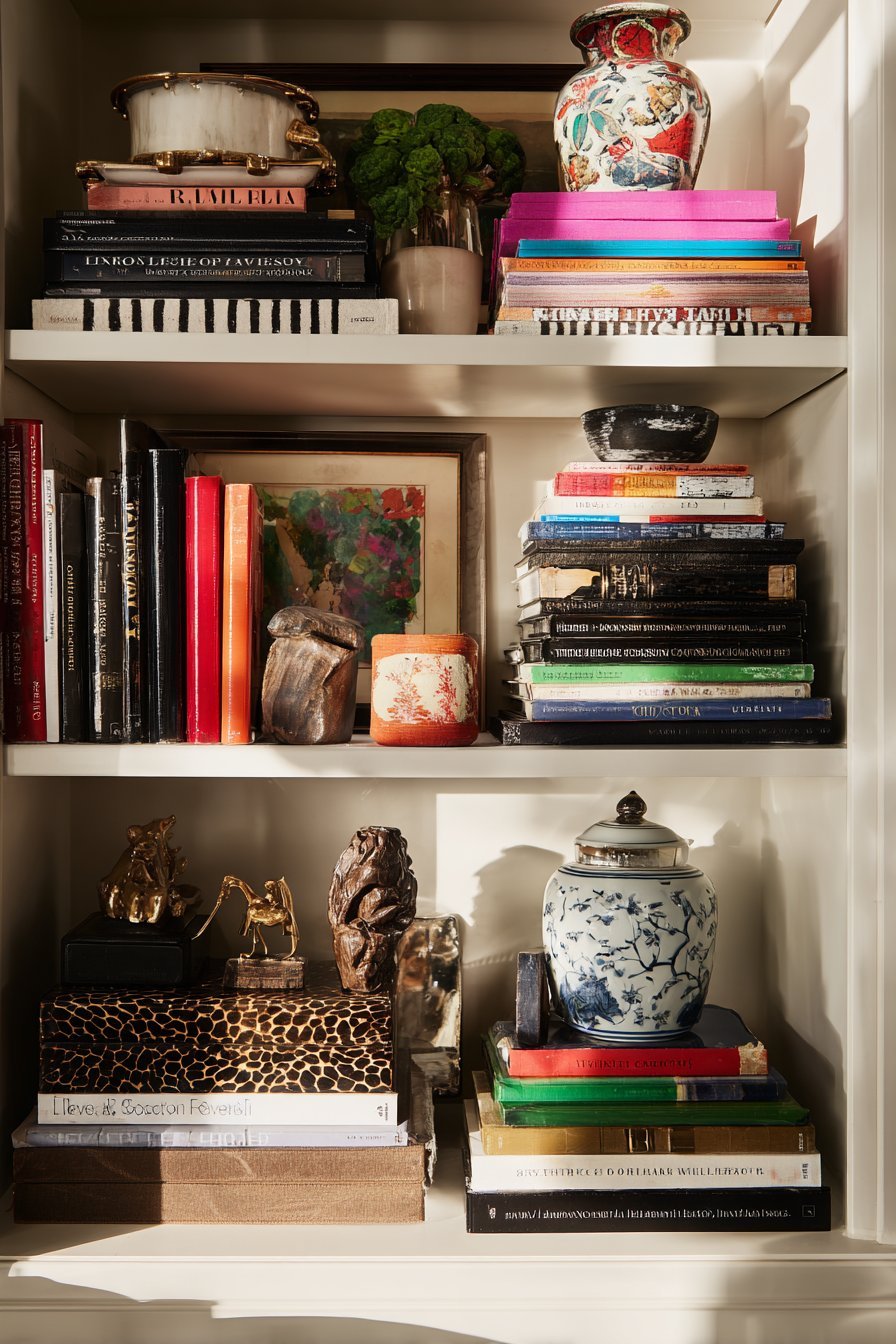
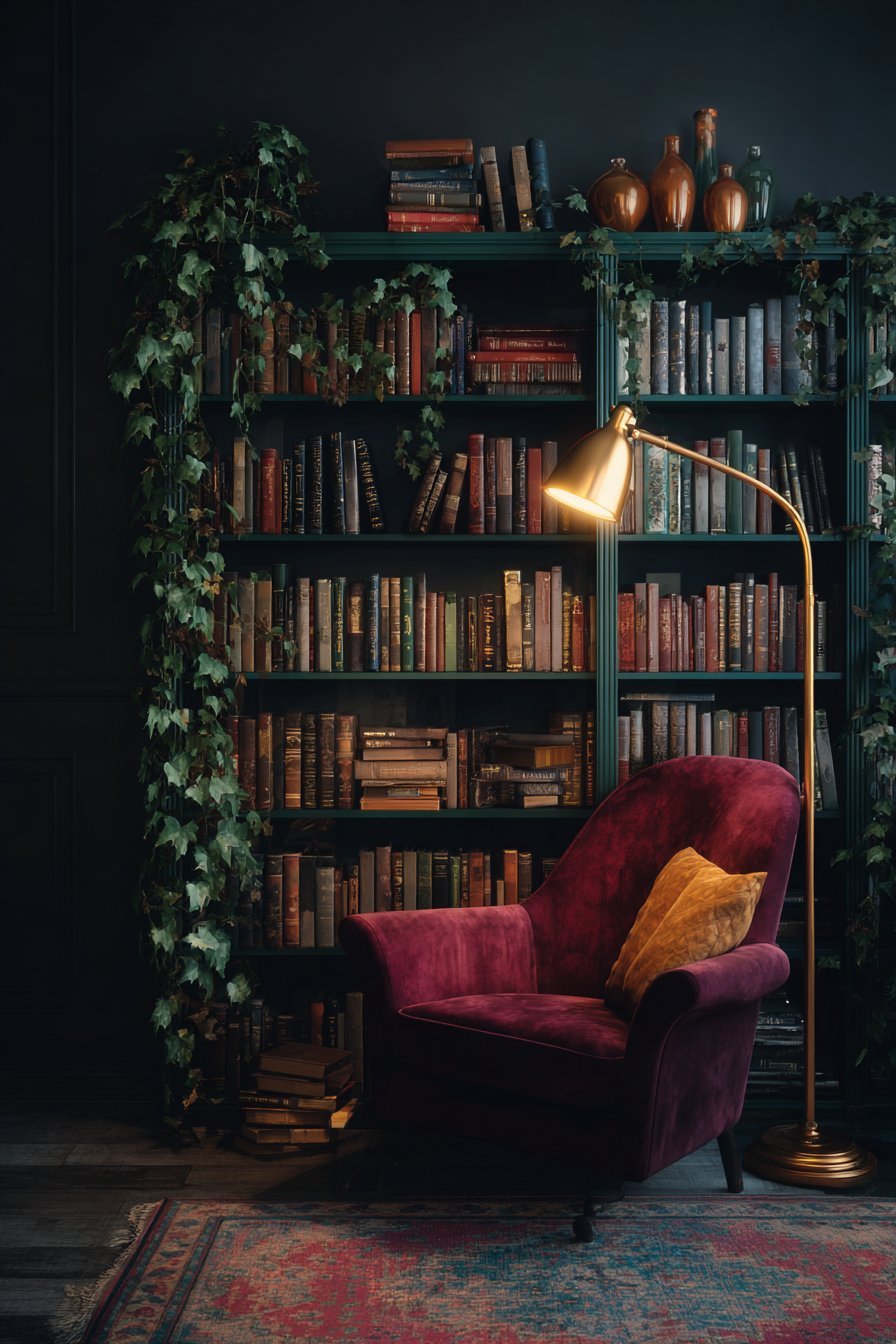
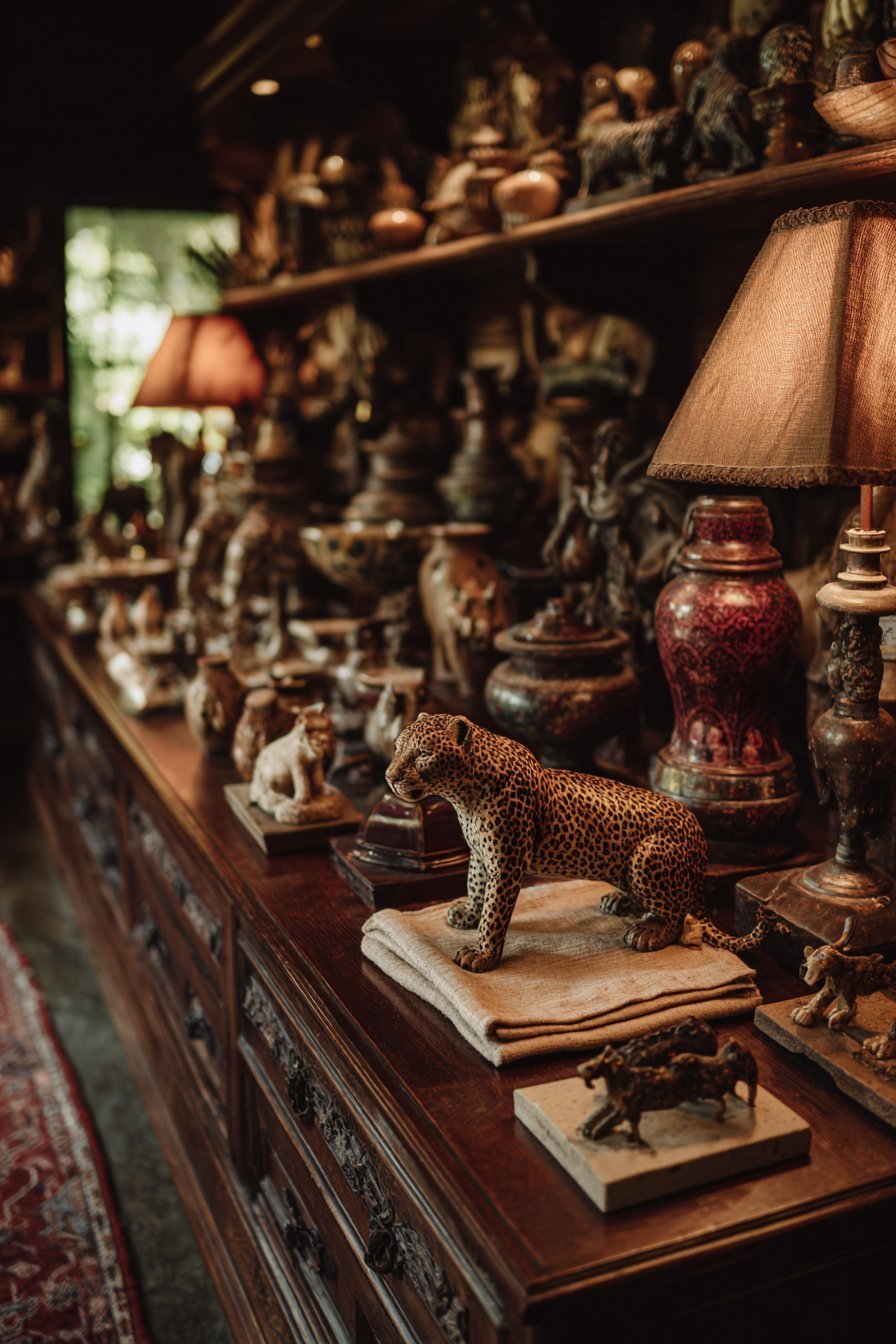
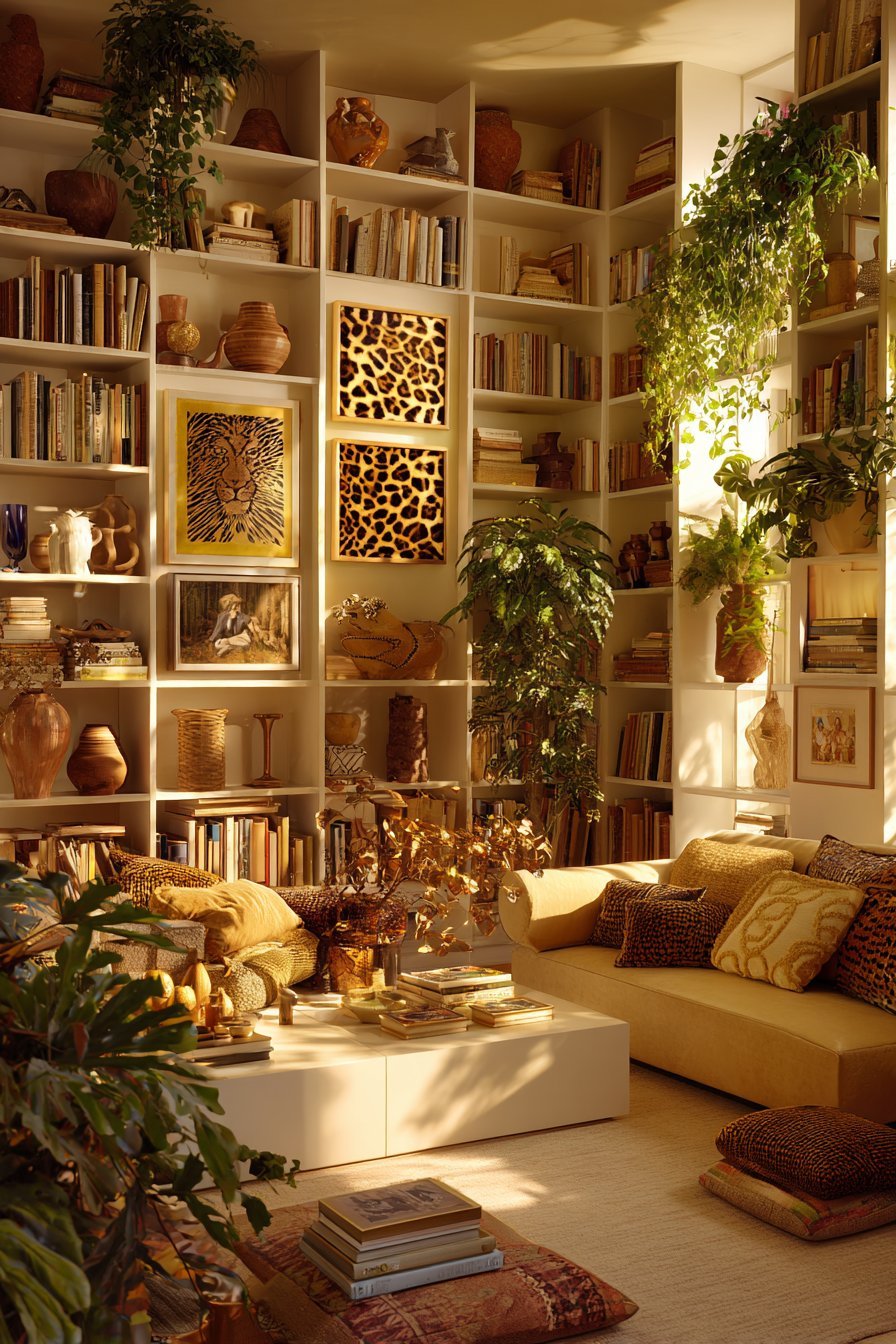
Several design elements appear consistently across cluttercore interiors. Layered bookshelves are perhaps the most iconic — filled not just with books but with small sculptures, plants, photos, and objects. The books themselves are often arranged by color or stacked horizontally for visual variety.
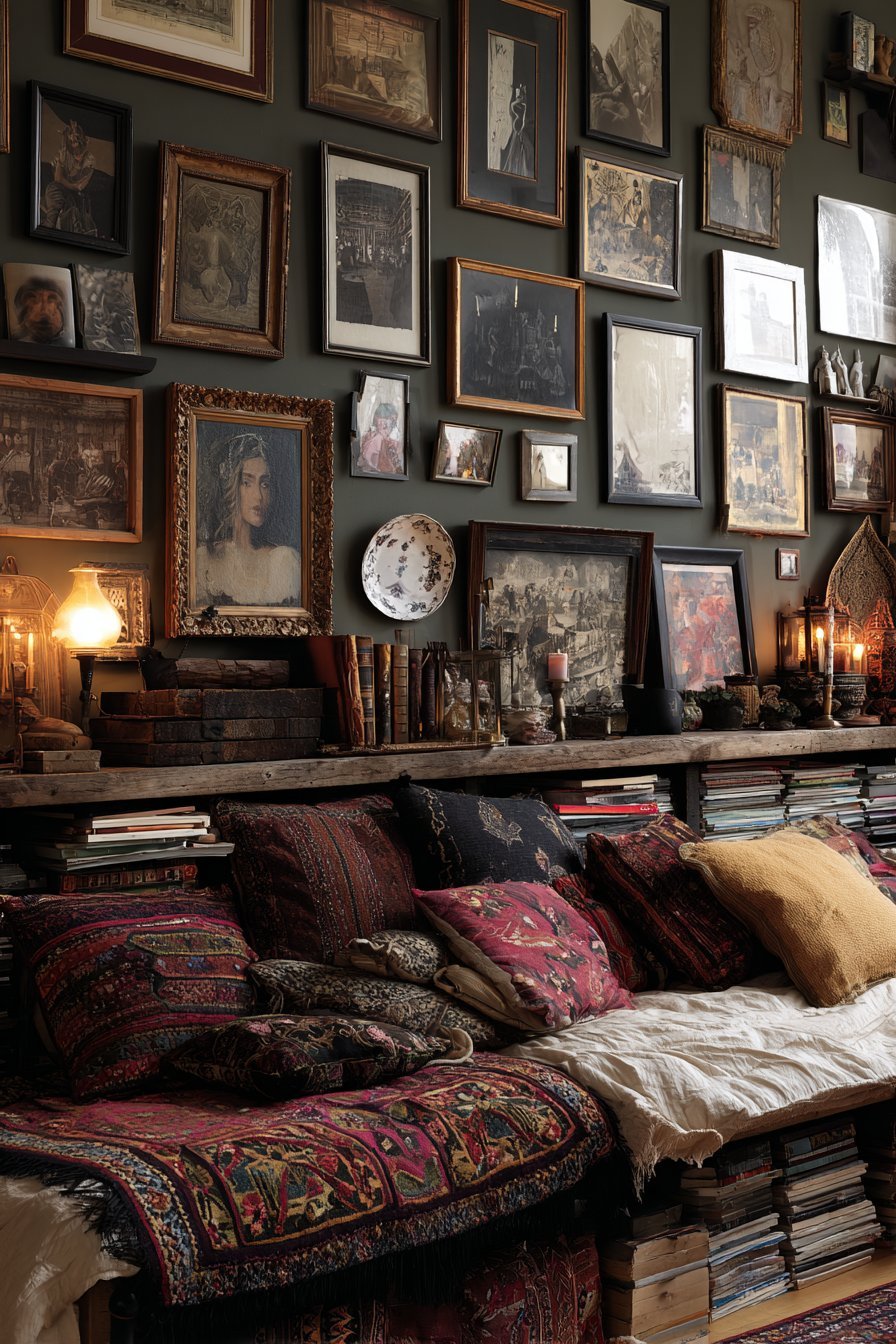
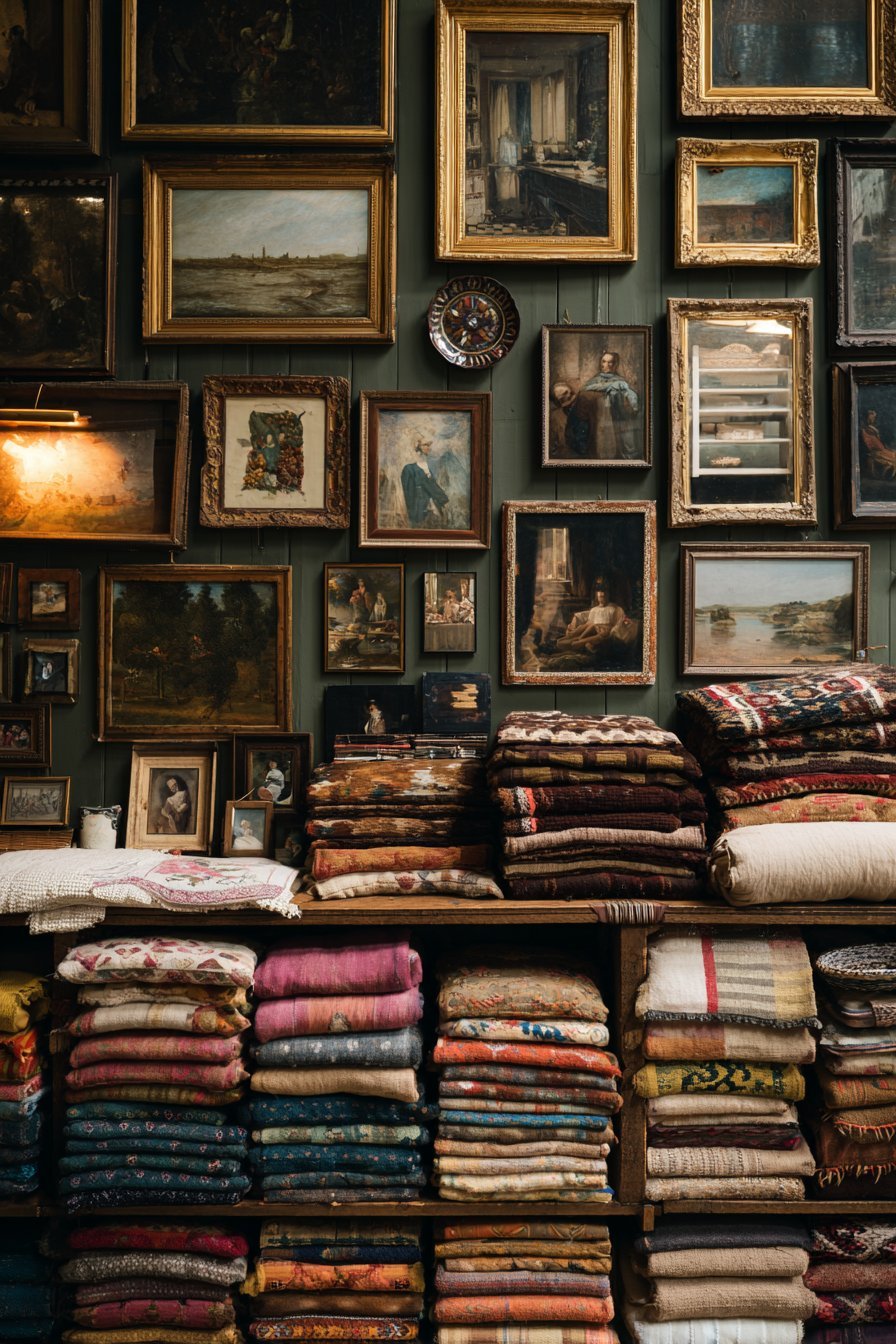
Gallery walls are another cluttercore staple. Unlike the carefully spaced, matchy-matchy gallery walls of minimalist design, cluttercore gallery walls are dense, eclectic, and personal. Frames of different sizes, shapes, and finishes are hung close together. Prints, paintings, photos, mirrors, and even three-dimensional objects can all coexist.
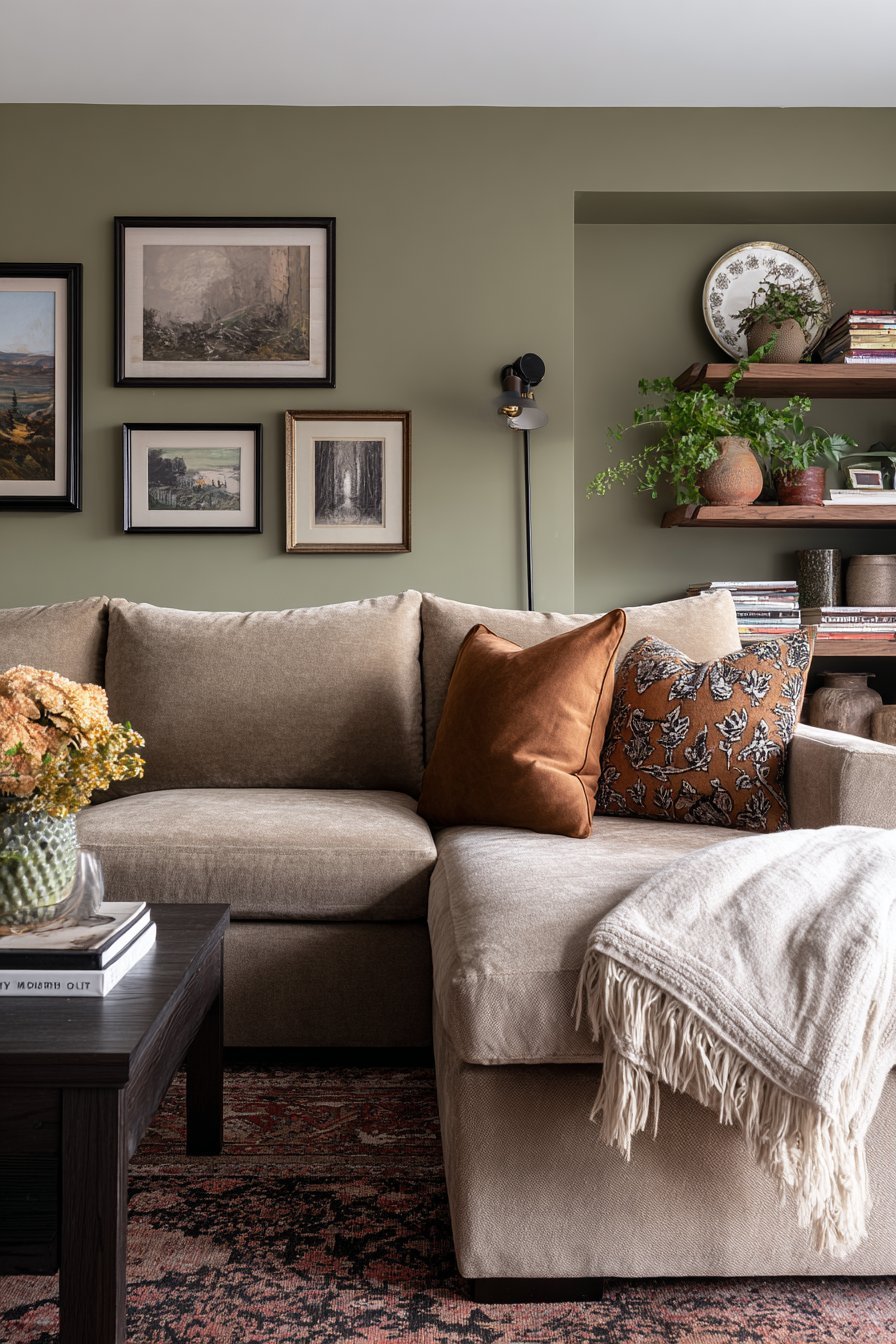
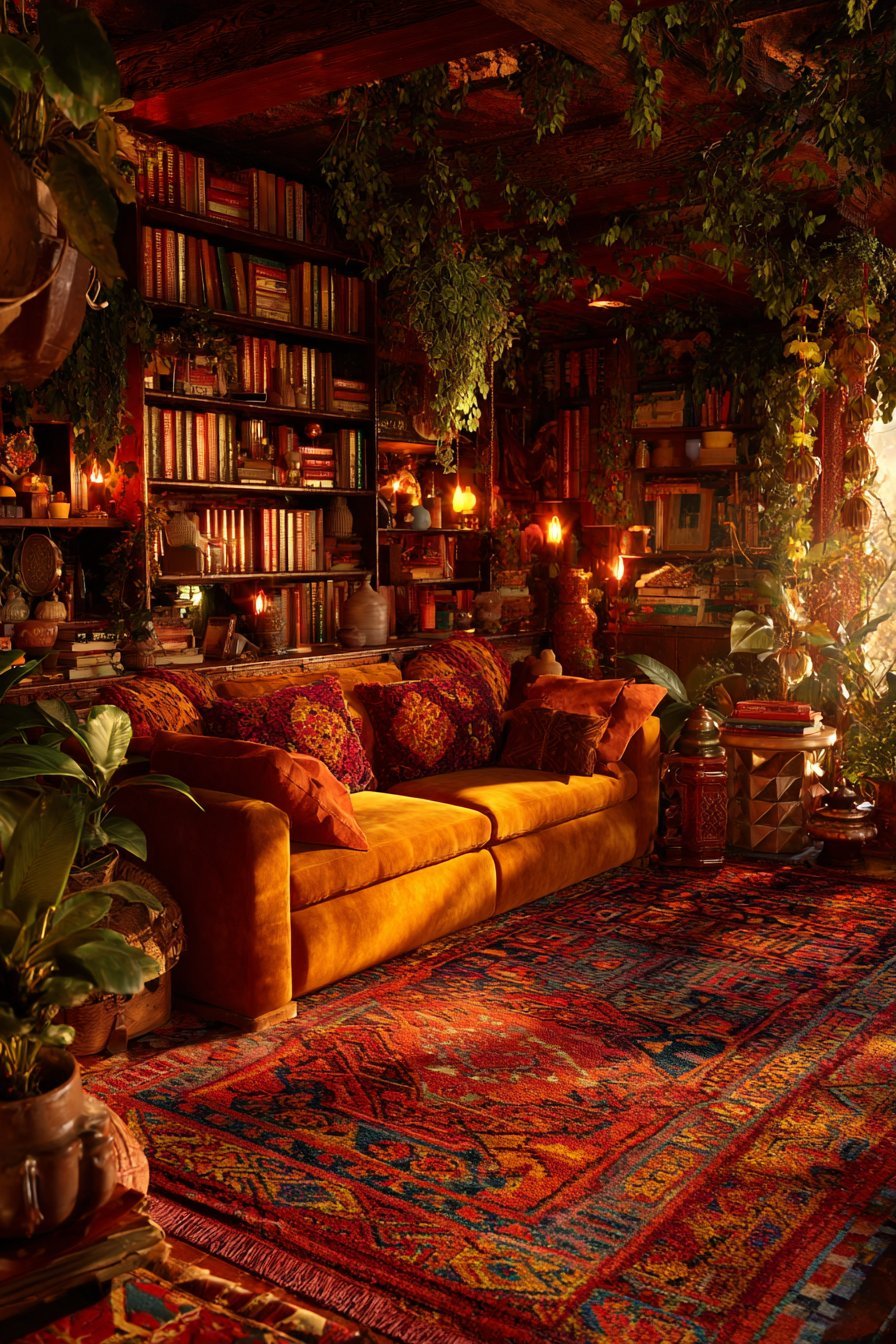
Textiles play a huge role as well. Cluttercore spaces embrace layered rugs, stacked throw pillows, draped blankets, and curtains with pattern and weight. These layers add tactile richness and visual warmth that amplify the collected, abundant feeling central to the aesthetic.
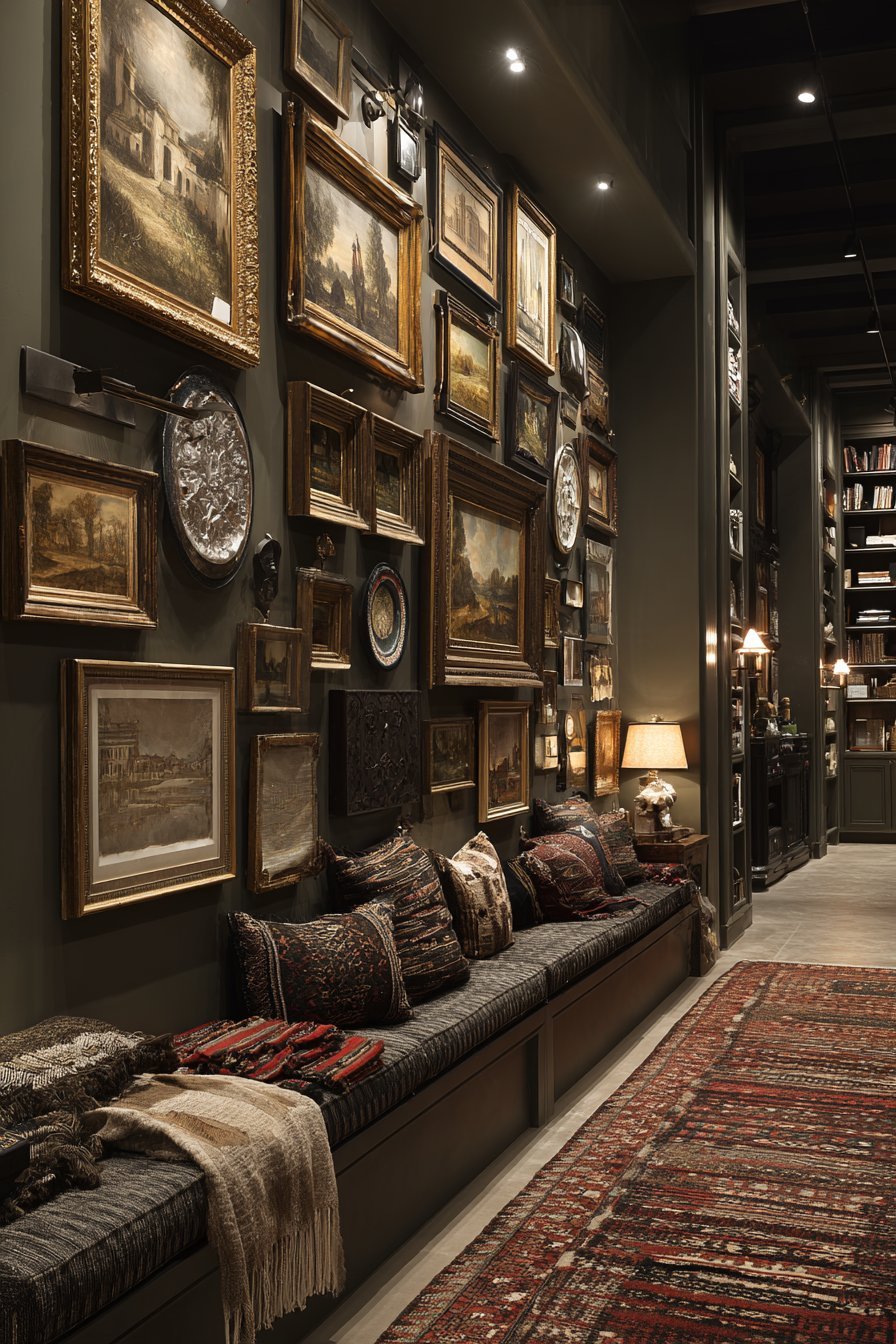
- Build layered bookshelves that combine books with decorative objects
- Create dense, personal gallery walls using mixed frame styles
- Layer multiple rugs to add depth and texture to floors
- Use patterned textiles like quilts, tapestries, and embroidered cushions
- Incorporate plants at multiple heights throughout the space
- Display collections in open cabinets or glass cases for visual impact
5. Color Palettes in Cluttercore Spaces
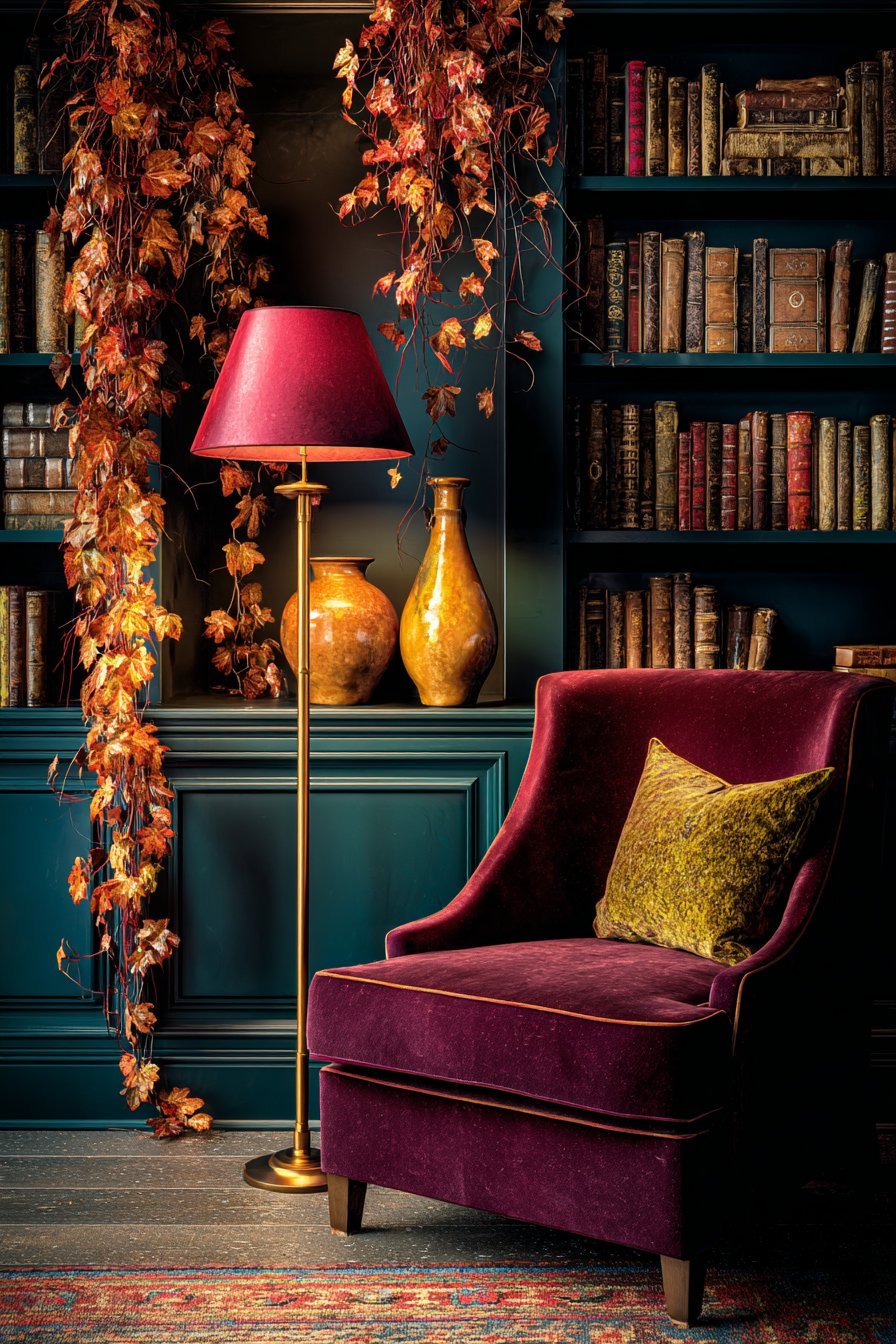
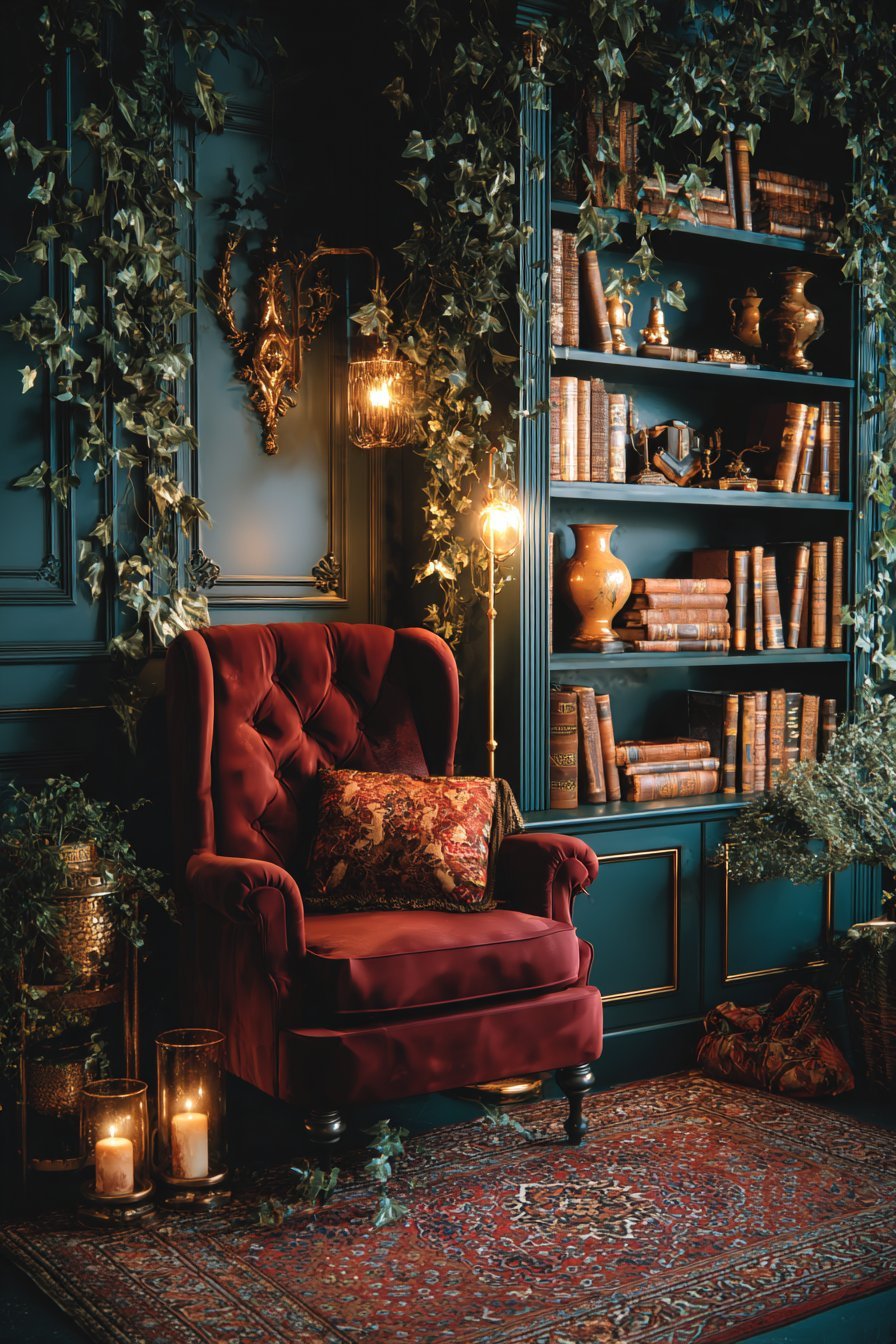
Cluttercore doesn’t follow a single prescribed color palette, which makes it wonderfully flexible. However, most cluttercore interiors lean toward warm, rich, or earthy tones. Deep greens, burnt oranges, warm burgundies, and golden yellows appear frequently — colors that feel cozy and enveloping.
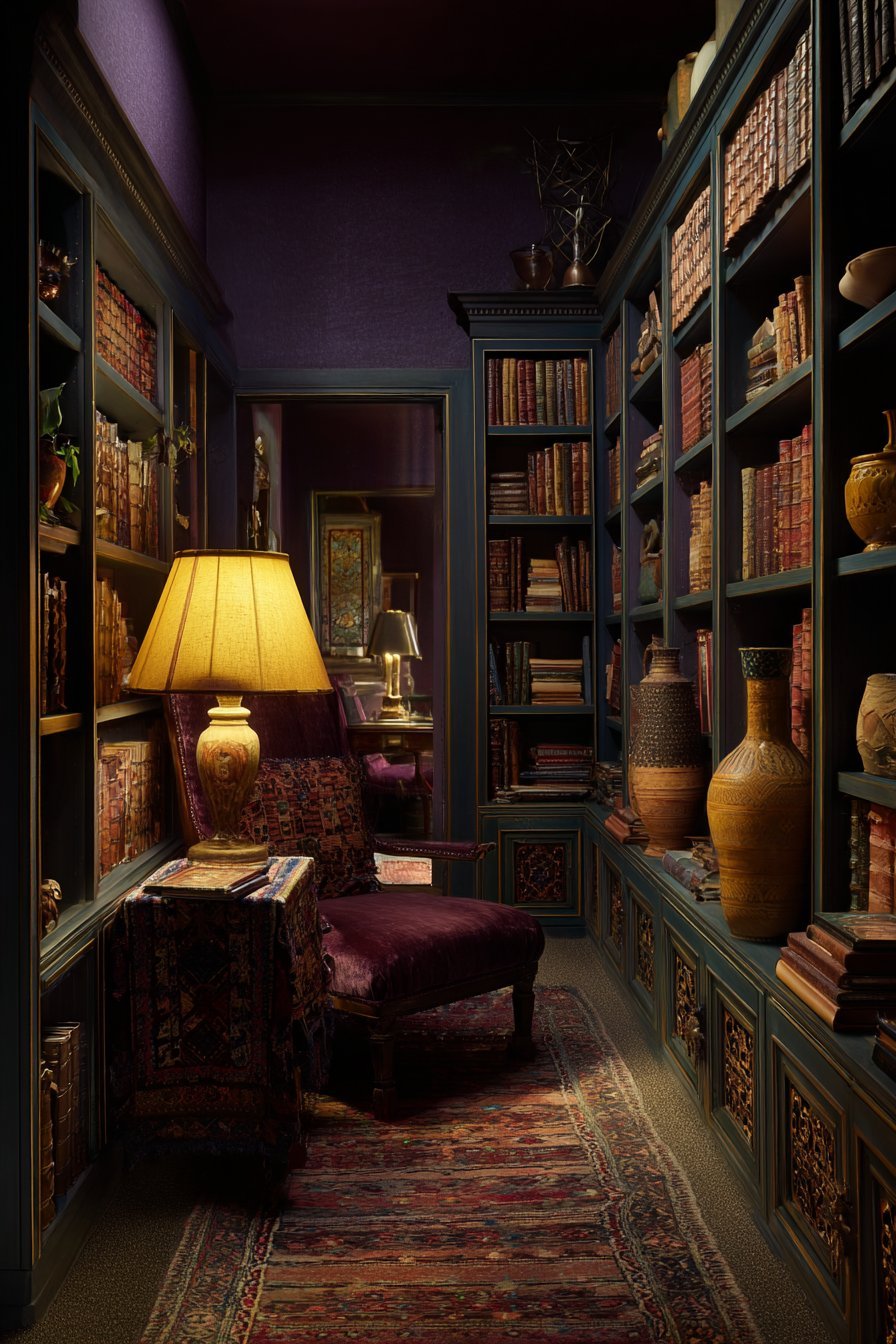
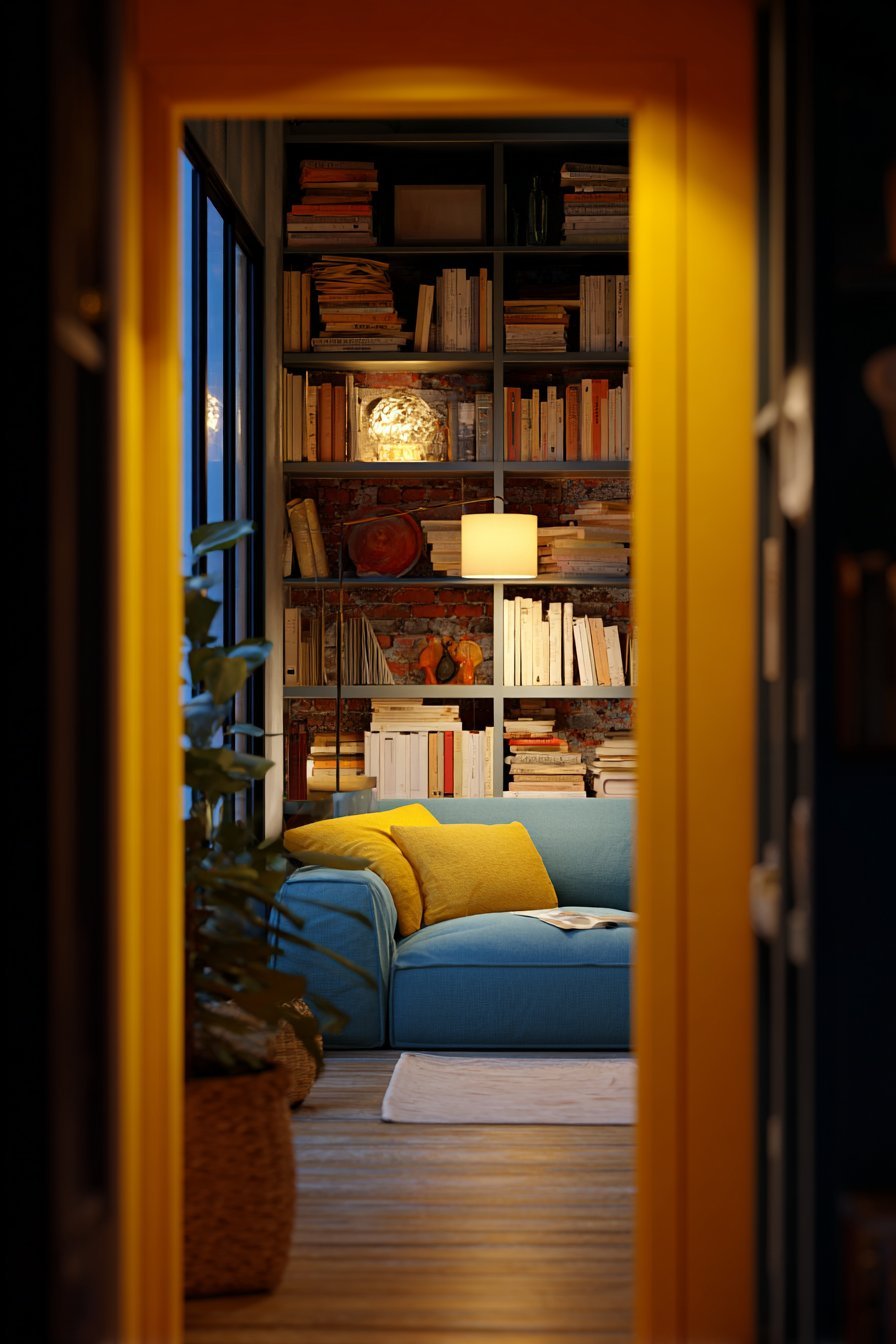
Some practitioners of the aesthetic prefer a moody, dark palette — think dark navy walls, forest green shelving, and black accents punctuated by warm lamp light. This creates a dramatic, library-like atmosphere that suits collections of books, art, and vintage objects beautifully.
Others opt for a lighter, more whimsical approach — white or cream walls covered in colorful prints, pastel ceramics, and brightly colored books arranged in rainbow order. The unifying principle is warmth and personality, regardless of which direction you choose.
- Choose wall colors that complement your collections rather than compete with them
- Use deep, rich tones to create a cozy, enveloping atmosphere
- Consider painting one wall or shelving unit a bold accent color
- Let collections with natural color variation (books, ceramics) guide your palette
- Use warm-toned lighting to enhance earthy, rich hues
- Don’t feel confined — let your personal color preferences lead the way
6. How Cluttercore Relates to Other Maximalist Styles
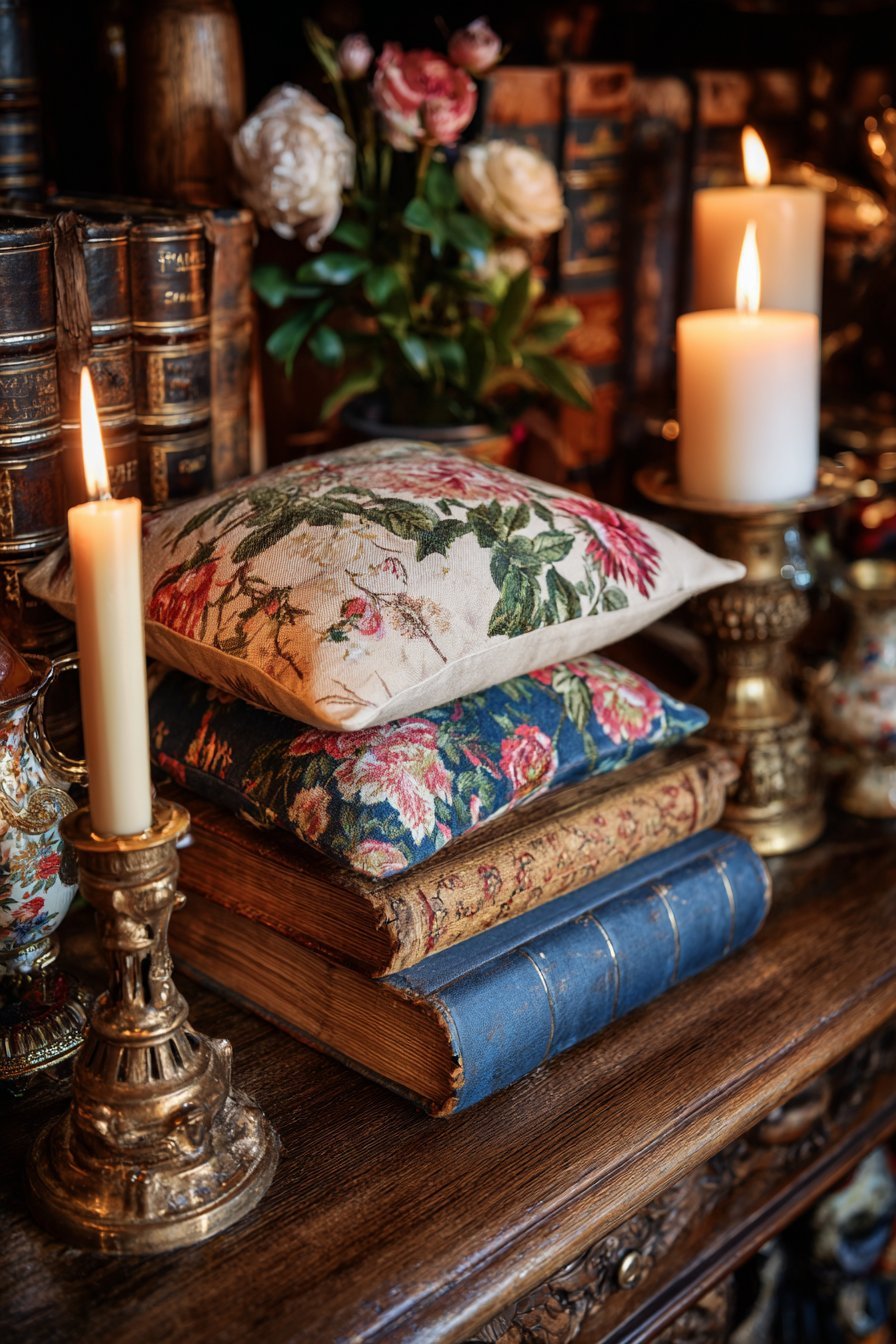
Cluttercore exists within a broader family of maximalist interior aesthetics, and understanding its relatives helps clarify what makes it unique. Maximalism generally refers to any design approach that embraces abundance, decoration, and visual richness over restraint.
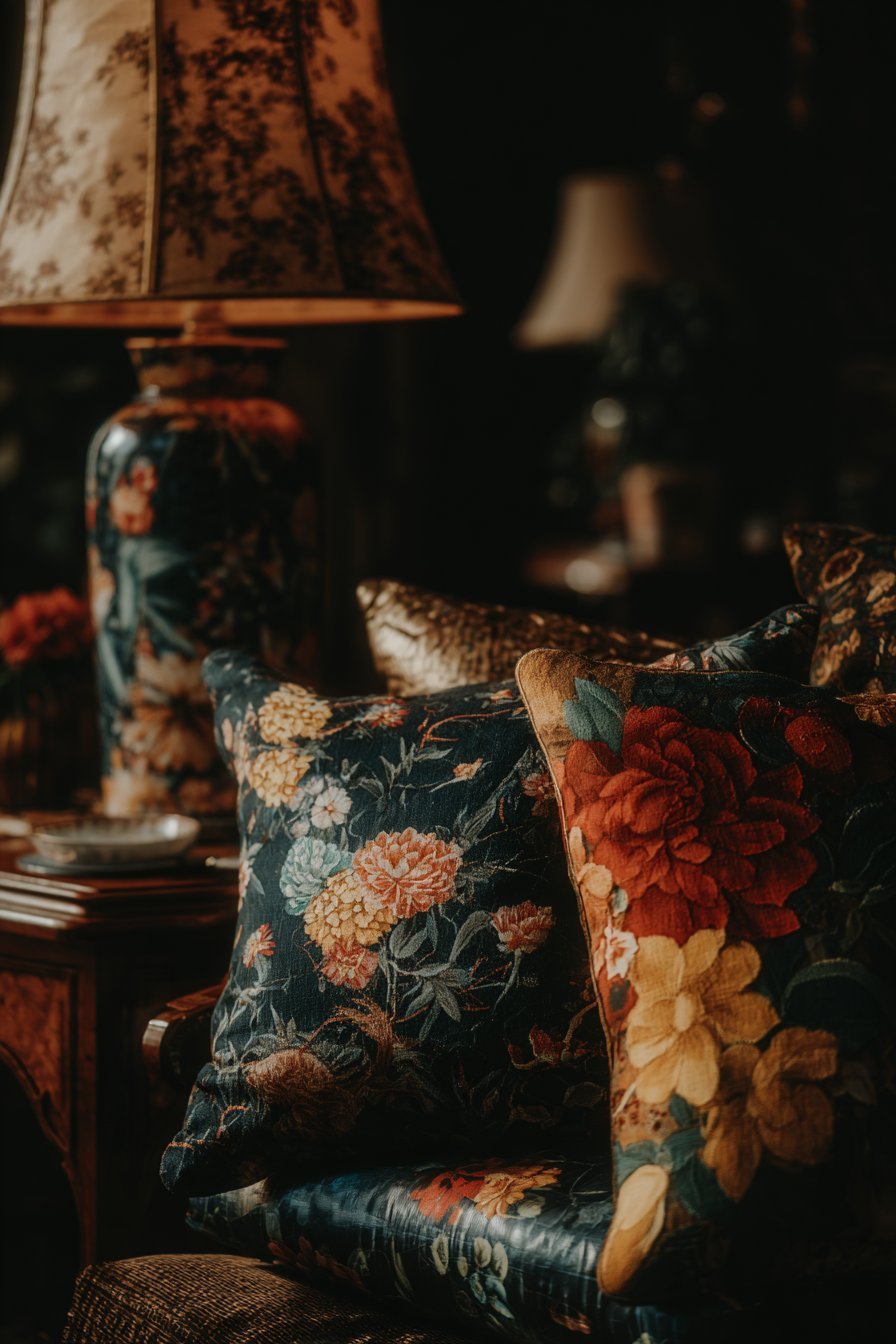
Cottagecore shares cluttercore’s love of collected, handmade, and nature-inspired objects — but it has a more rural, pastoral aesthetic with florals, linen, and woodland motifs. Dark academia overlaps significantly with cluttercore through its love of books and layered objects, but maintains a more scholarly, moody atmosphere with specific literary and gothic references.
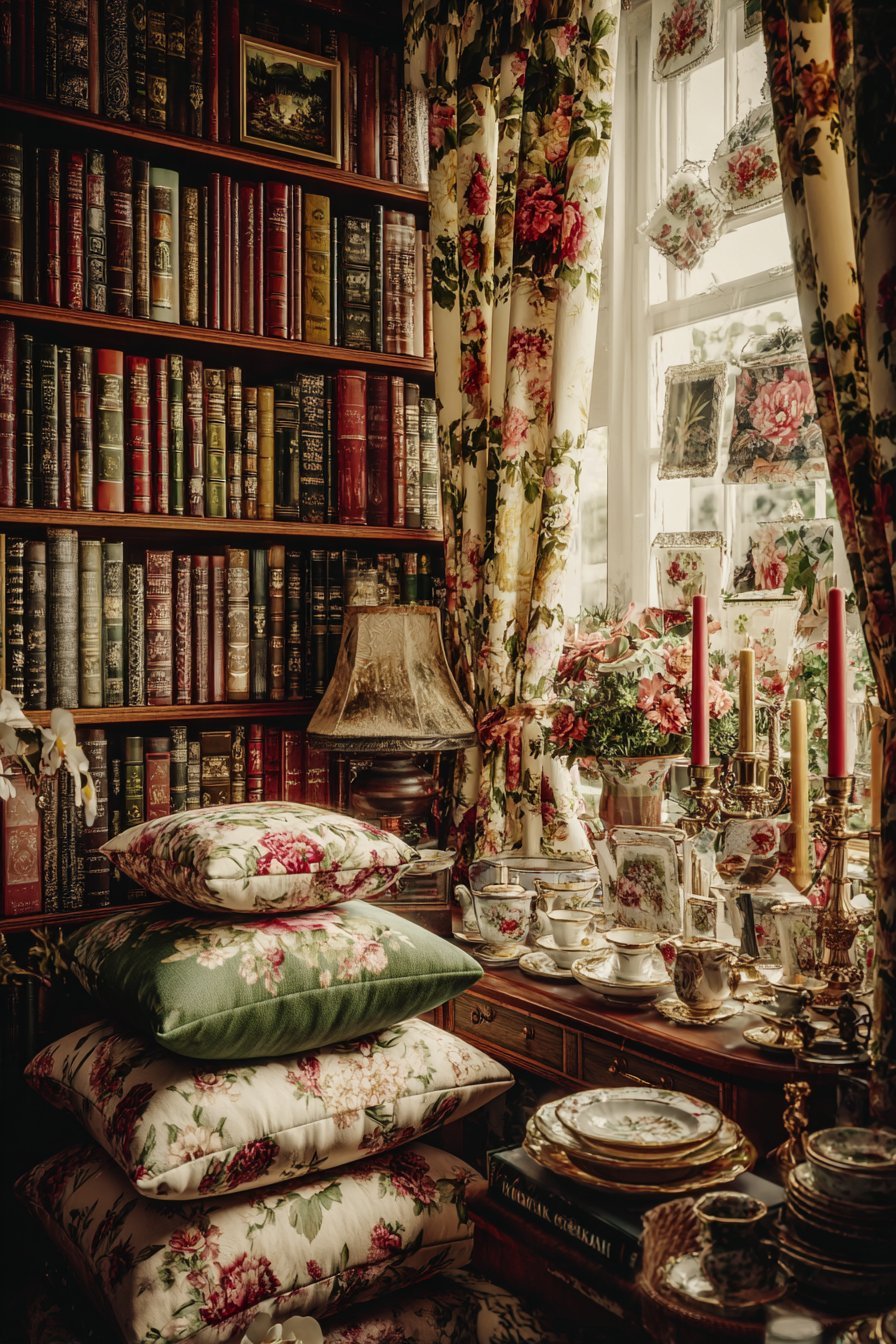
Grandmillennial style is perhaps the closest cousin — it celebrates traditional patterns, inherited objects, and the cozy fullness of a home that has been lovingly accumulated over time. Cluttercore encompasses all of these but is less genre-specific, allowing for a more personal, freeform approach to collecting and displaying.
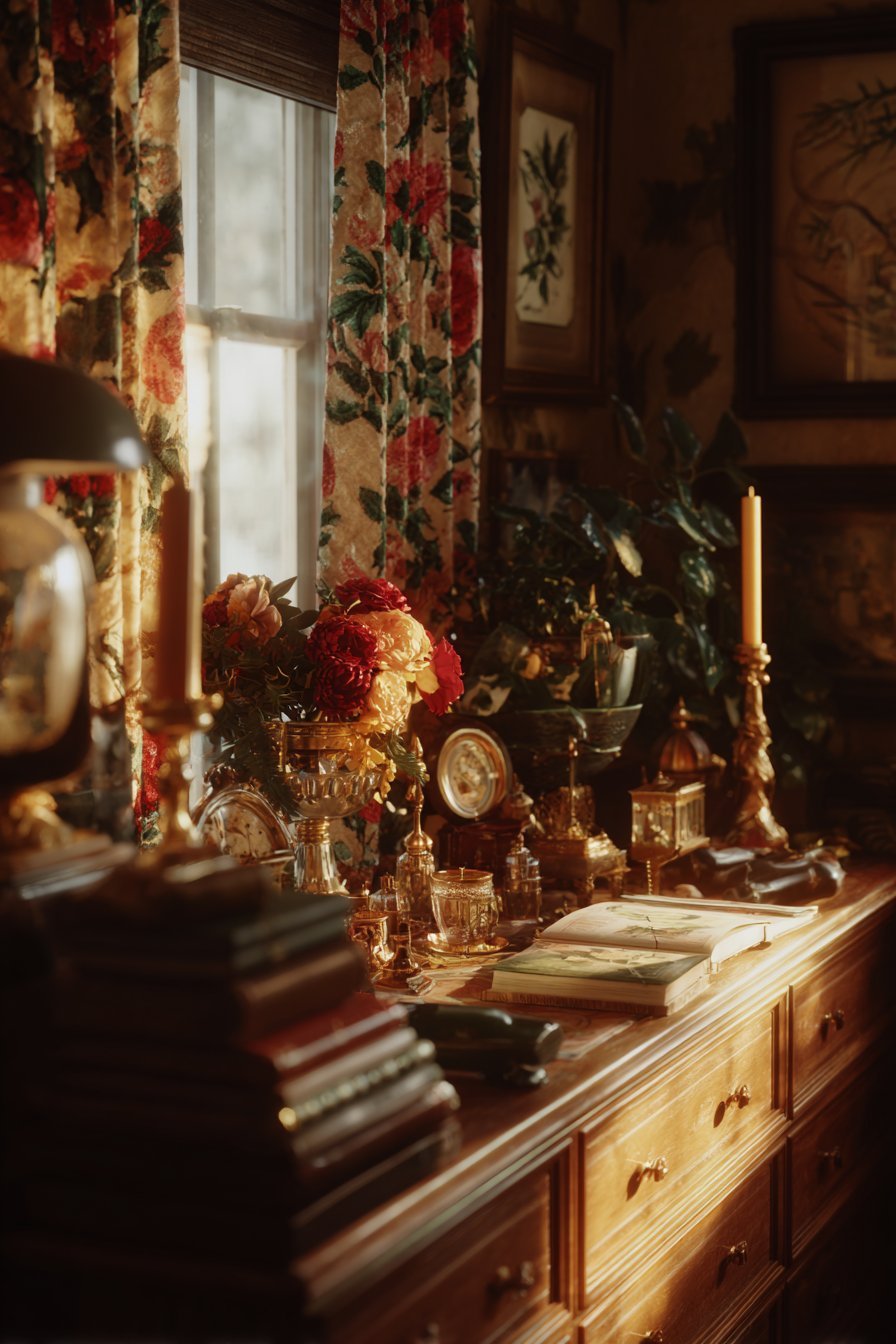
- Explore cottagecore and grandmillennial styles for related inspiration
- Understand that cluttercore is the most flexible maximalist aesthetic
- Borrow elements from dark academia for a moody, bookish atmosphere
- Mix aesthetics freely — cluttercore welcomes stylistic hybrids
- Follow maximalist design accounts for ongoing inspiration
- Define your personal version of the aesthetic rather than copying others exactly
7. Practical Tips for Starting Your Cluttercore Journey
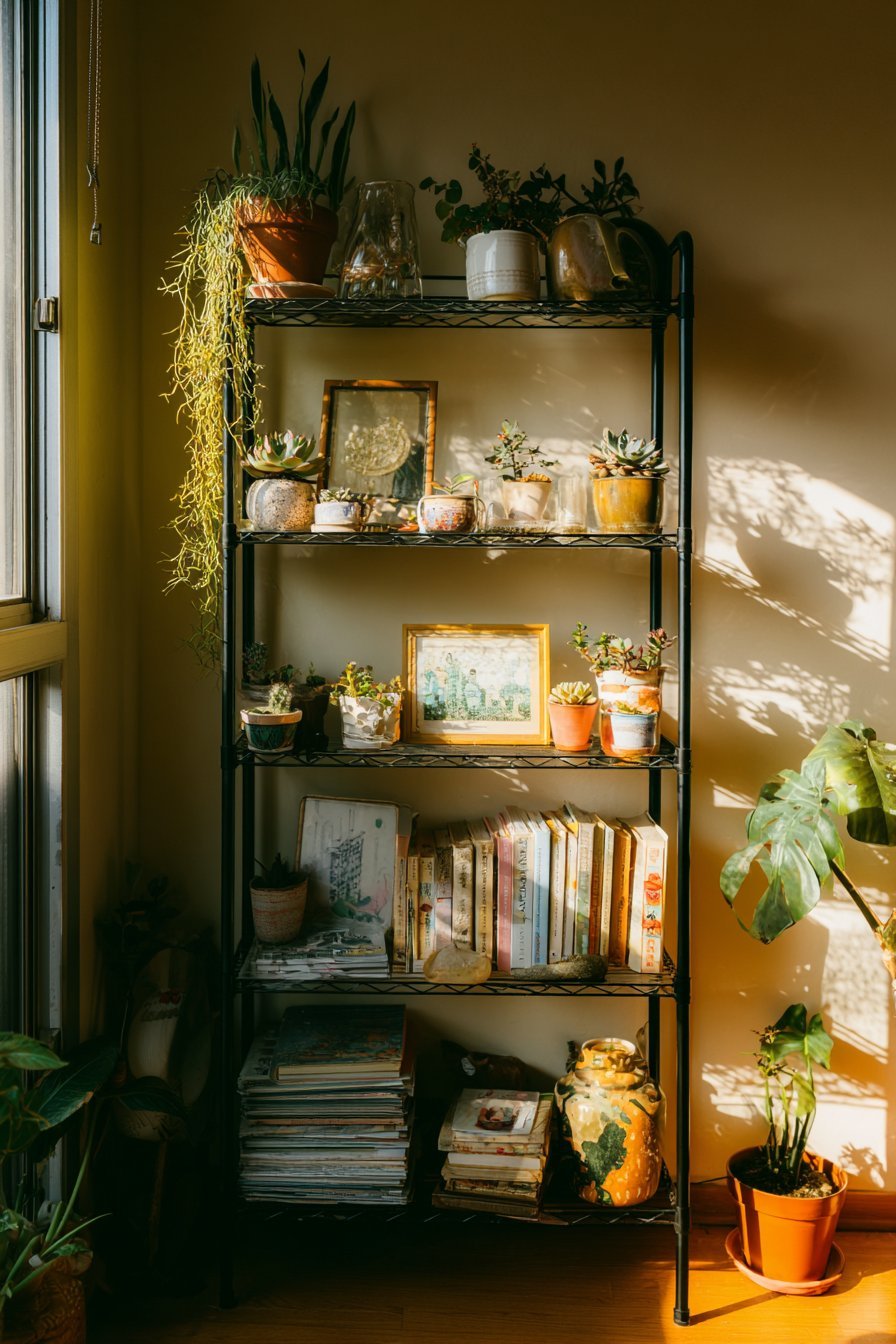
The best place to begin is with what you already own. Most people have collections, meaningful objects, or things they love that are currently hidden in closets, boxes, or drawers. Cluttercore invites you to bring those things out and display them proudly.
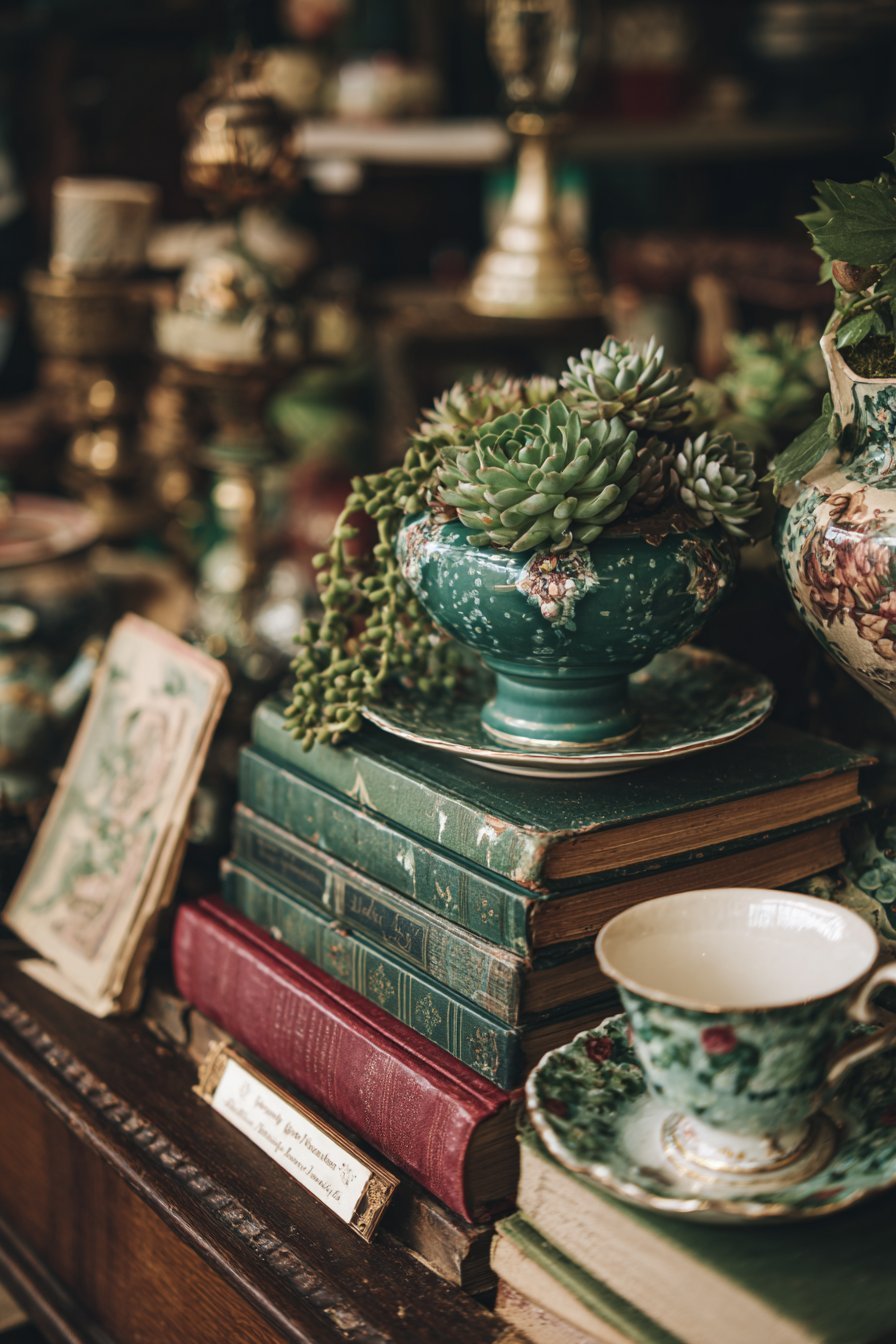
Start with one room or even one surface. A single bookshelf or a small gallery wall section is a manageable entry point. Arrange your objects thoughtfully, play with groupings and heights, and see how it feels. You can always add more or edit what’s there as your confidence grows.
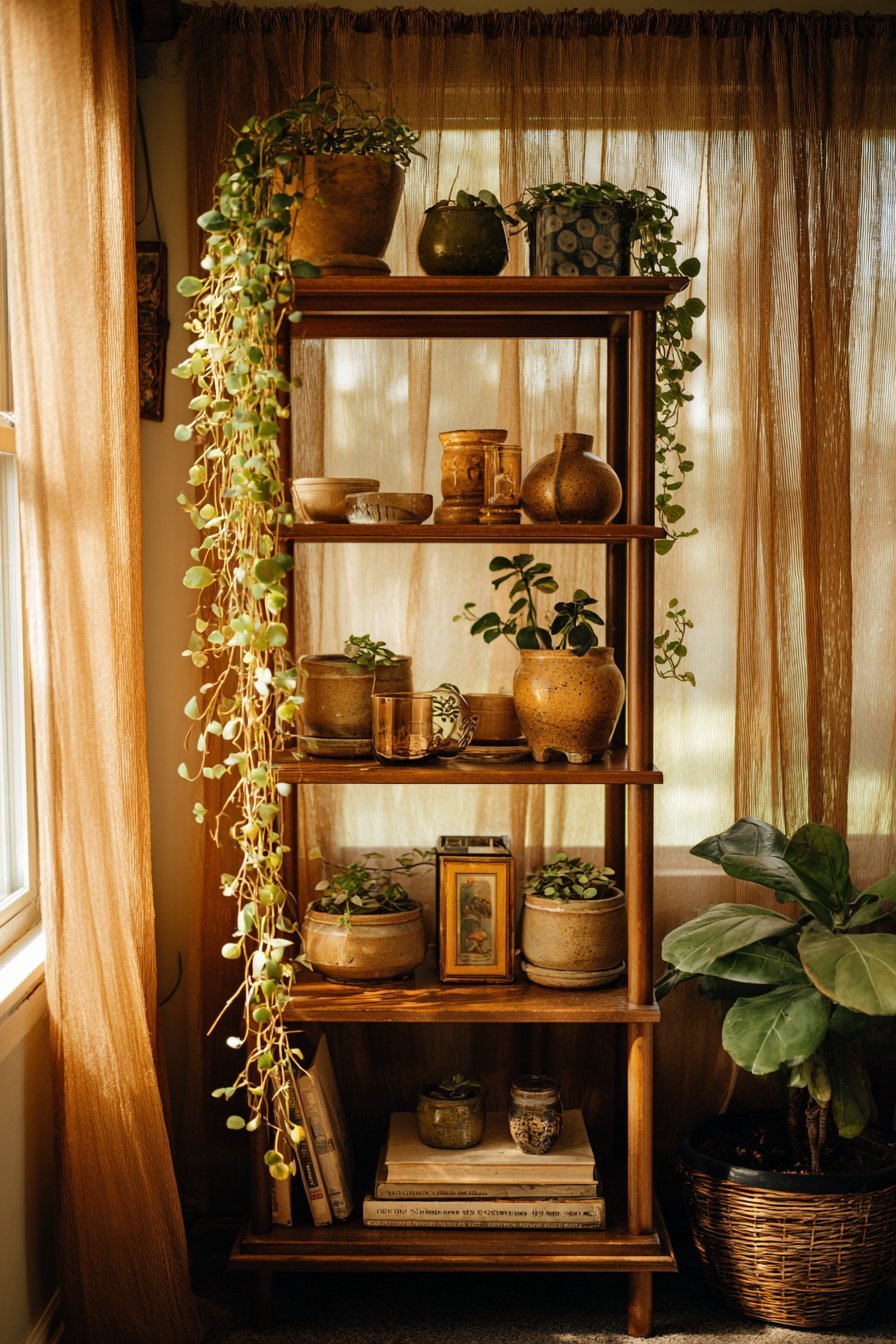
Thrift stores, estate sales, flea markets, and antique shops are natural allies for the cluttercore enthusiast. They offer affordable, one-of-a-kind pieces with history and character — exactly the kind of objects that anchor this aesthetic. Shopping secondhand also aligns with a sustainable approach to decorating.
- Start by displaying hidden collections you already own
- Begin with one shelf or wall rather than redoing an entire room
- Shop thrift stores and flea markets for affordable, characterful pieces
- Group objects in odd numbers — threes and fives are visually satisfying
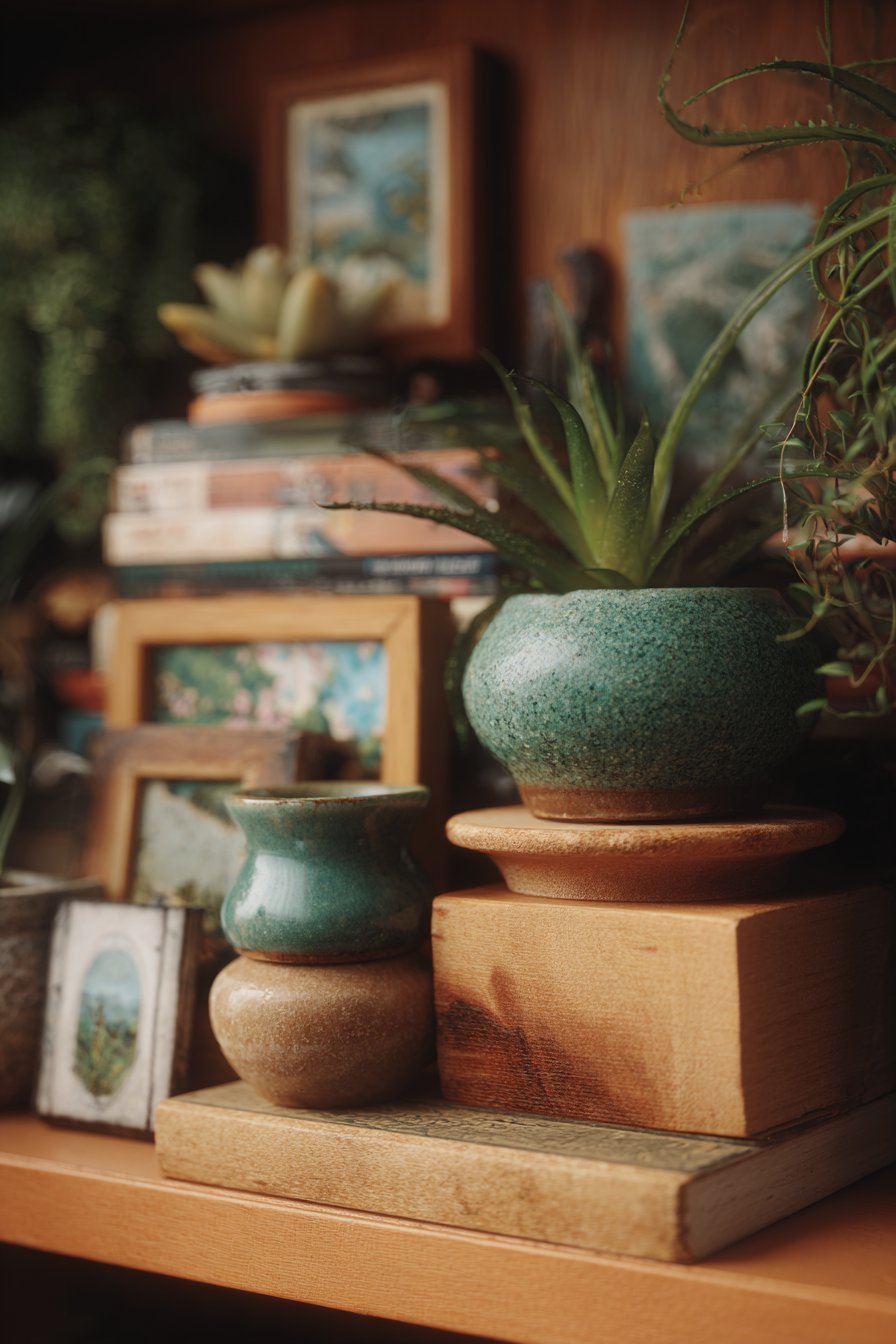
- Use risers, stacks of books, or small stands to vary object height
- Take photos of your arrangements to evaluate them with fresh eyes
8. Common Mistakes to Avoid in Cluttercore Design
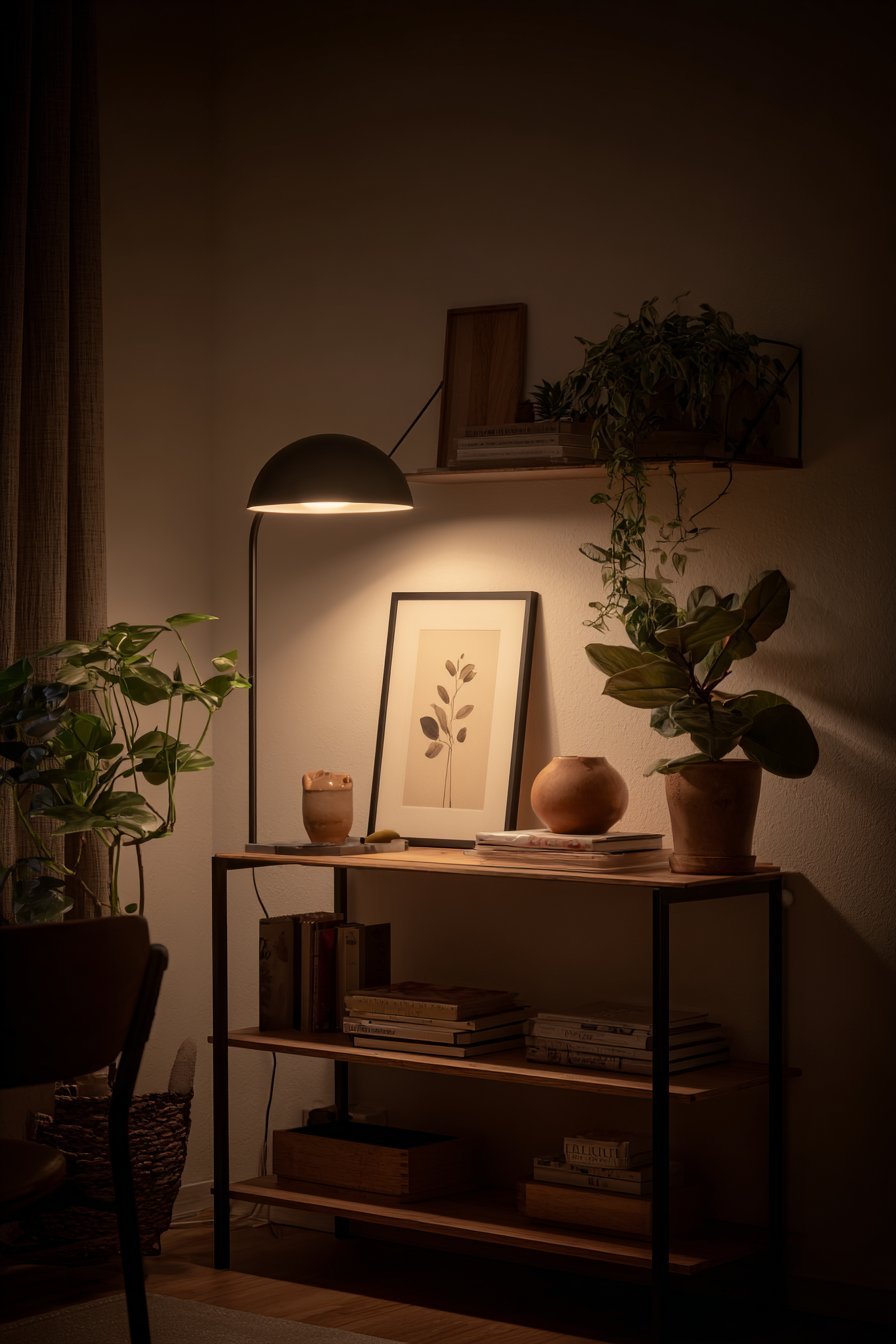
The most common mistake is confusing quantity with quality. More objects don’t automatically create a better cluttercore space. The goal is curation, not accumulation. Every addition should feel like it belongs — either because it’s beautiful, meaningful, or both.
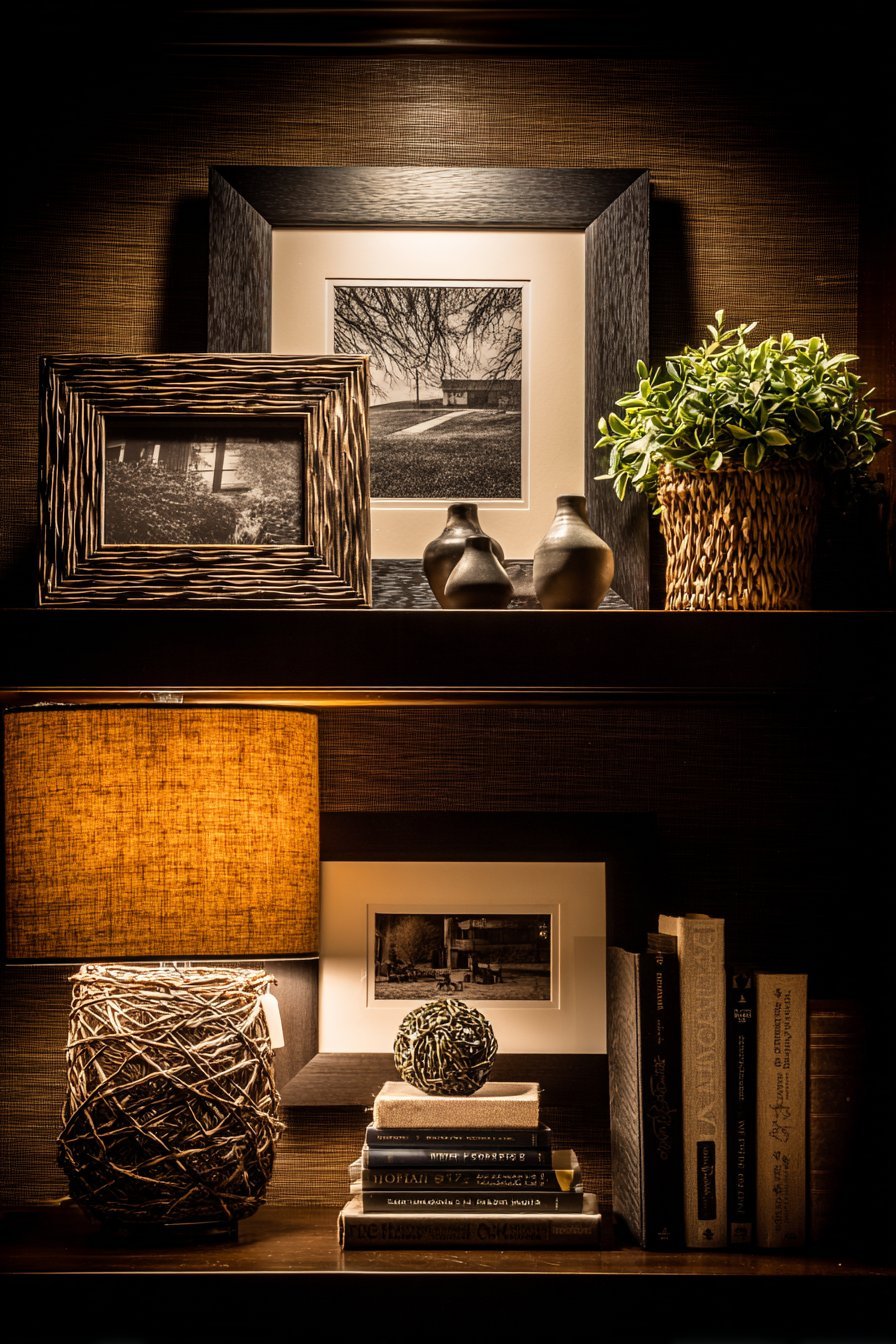
Ignoring negative space entirely is another pitfall. Even the most maximalist interiors benefit from occasional visual breathing room. A completely packed surface with no variation in density can tip from curated abundance into overwhelming chaos. Strategic negative space makes your displayed objects stand out more effectively.
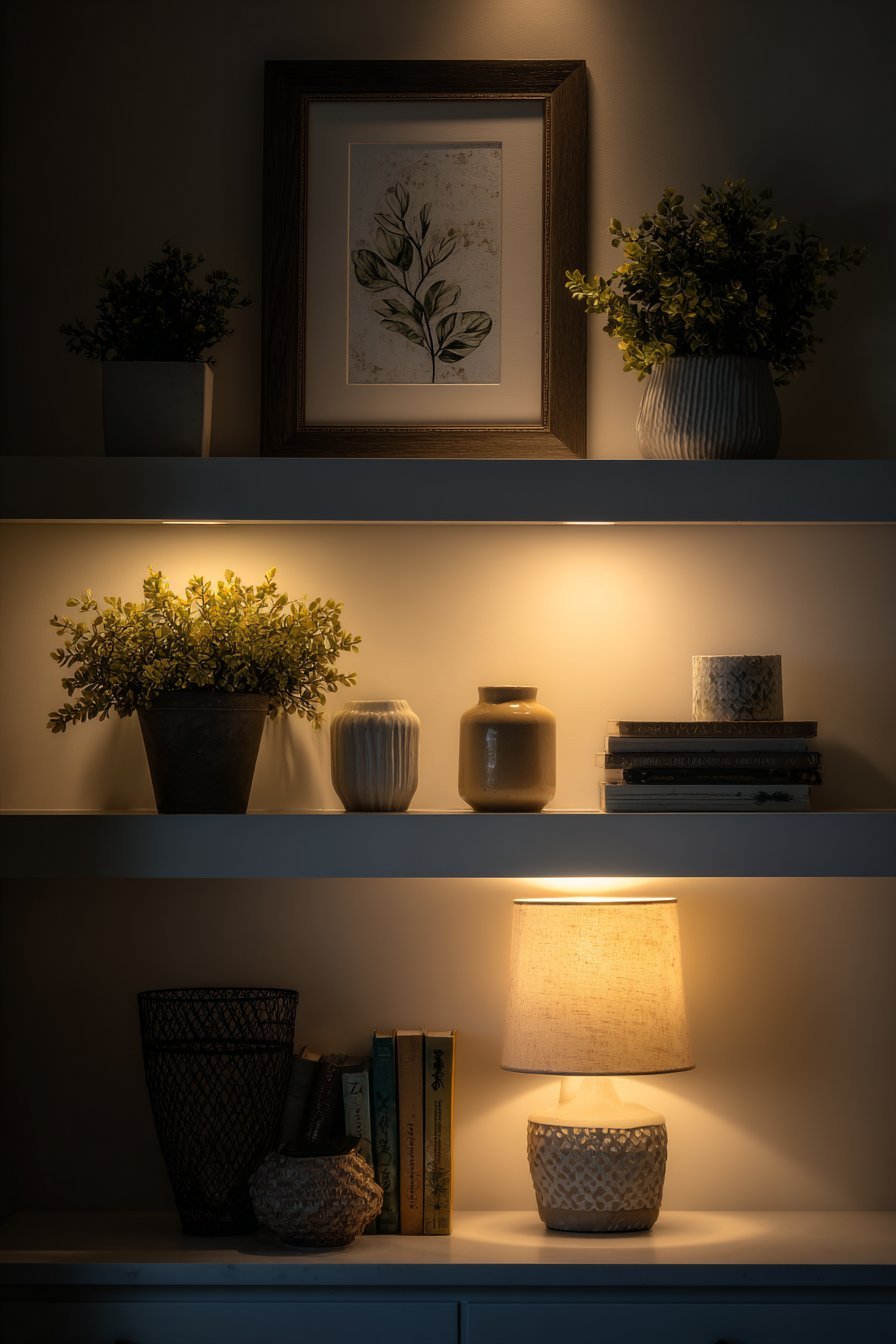
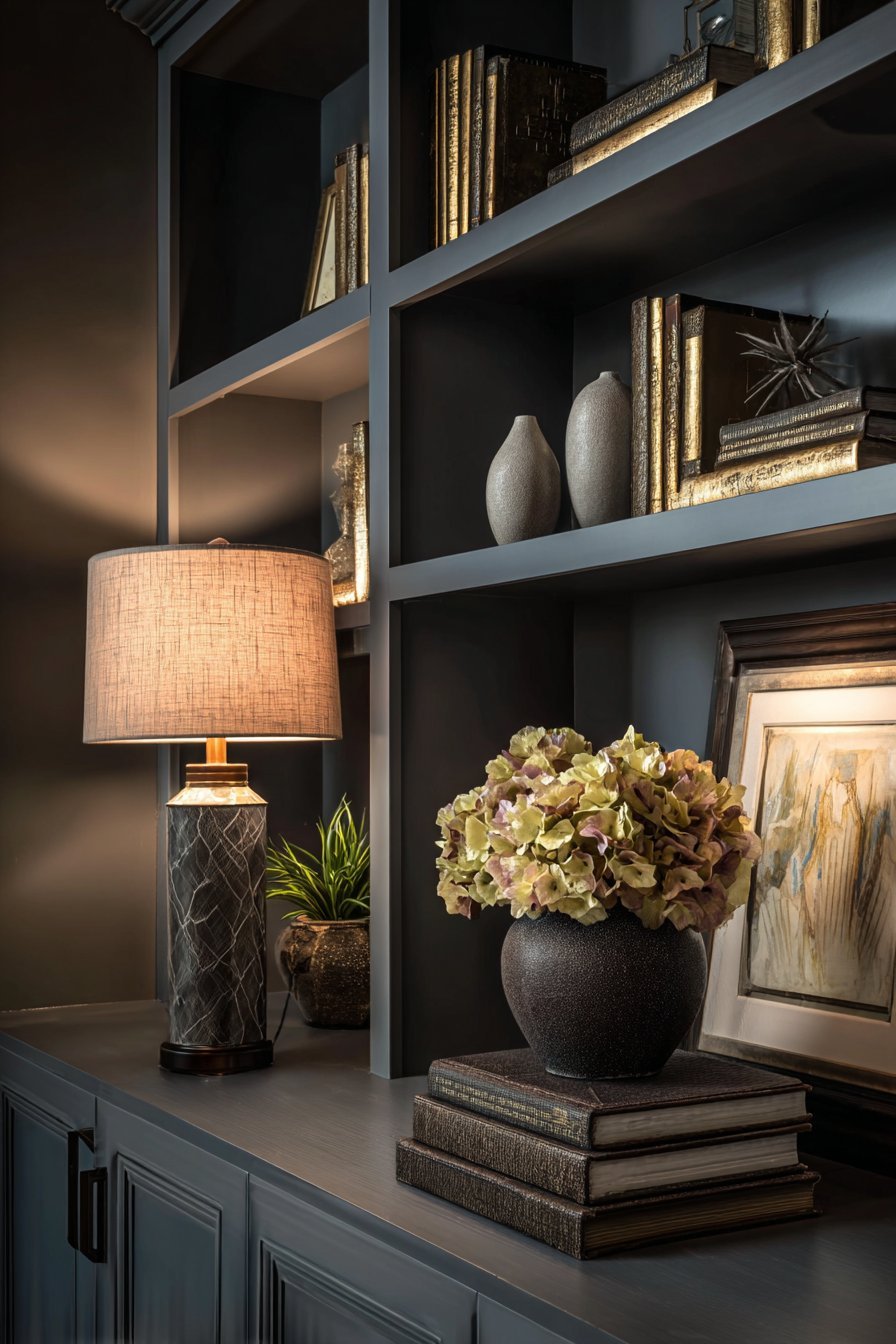
Poor lighting is also a frequent issue. A cluttercore space filled with beautiful objects deserves warm, layered lighting to show them off. Harsh overhead fluorescents flatten the visual richness. Use floor lamps, table lamps, string lights, and directional spotlights to create depth and drama.
- Edit ruthlessly — remove objects that don’t earn their place
- Leave some breathing room between groupings for visual balance
- Invest in warm, layered lighting to showcase your collections
- Avoid displaying items simply because you own them
- Keep the floor relatively clear to prevent the space feeling cramped
- Clean and dust displays regularly — cluttercore celebrates objects, not neglect
9. Cluttercore in Small Spaces
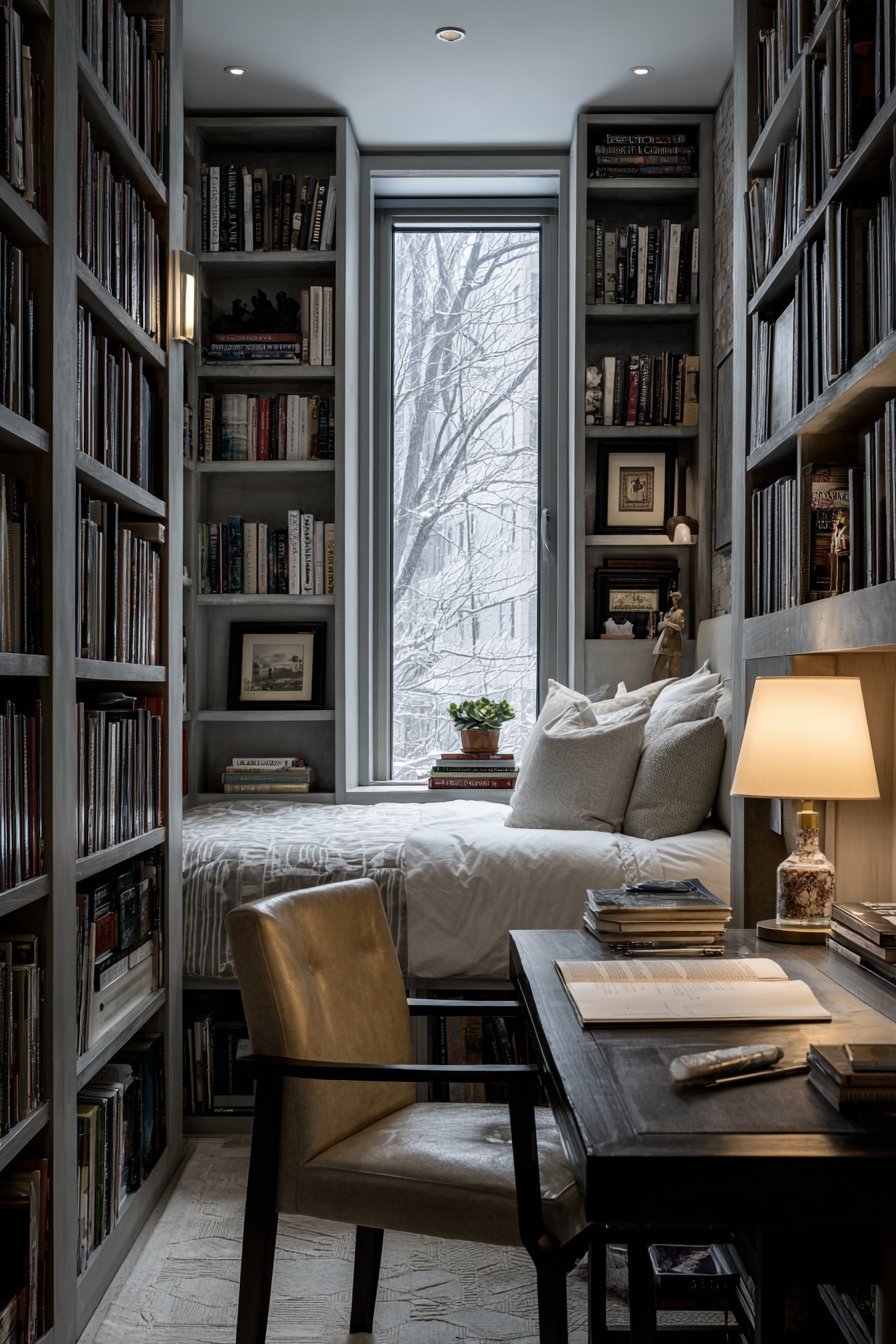
Many people assume cluttercore only works in large, airy rooms with plenty of wall space. In reality, it can be beautifully adapted to smaller spaces with the right approach. The key is using vertical space aggressively and thoughtfully.
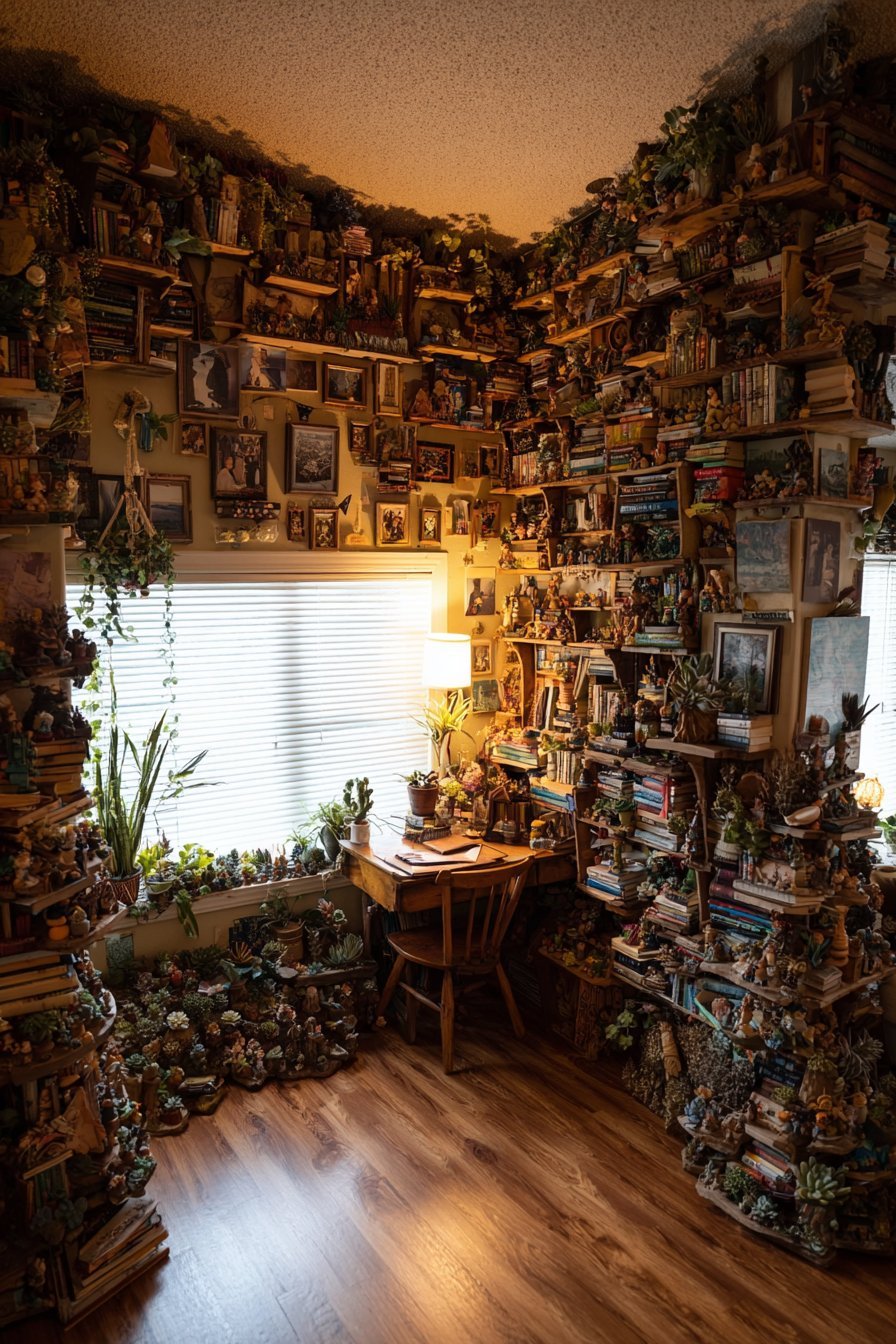
Floor-to-ceiling shelving transforms even a small room into a dramatic, library-like retreat. Installing shelves from baseboard to ceiling and filling them with books, plants, and objects makes the room feel intentionally designed rather than overcrowded. The vertical emphasis also draws the eye upward, making ceilings feel higher.
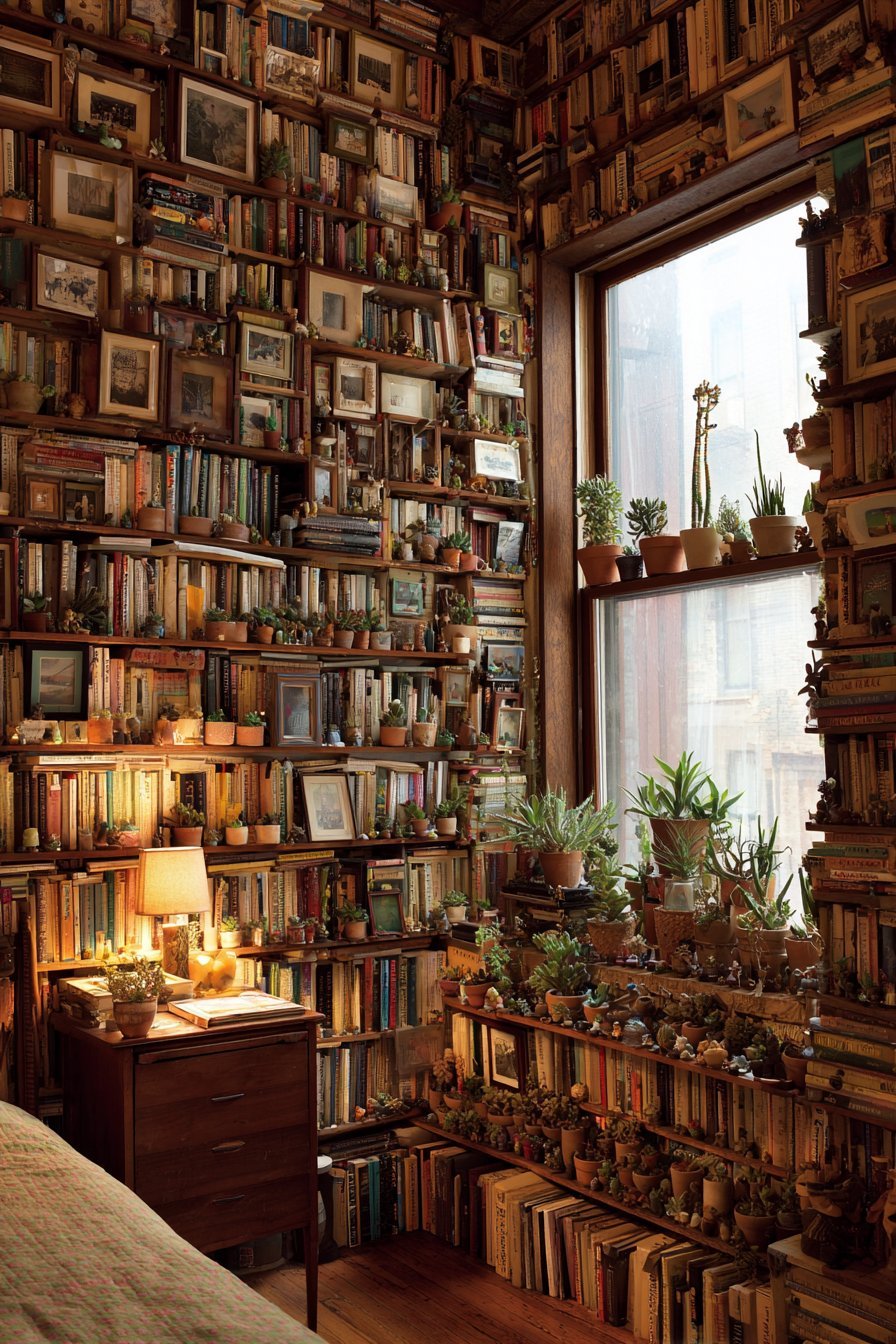
In small spaces, scale becomes critical. Avoid very large statement pieces that overwhelm the room. Instead, focus on collections of smaller objects arranged in dense, beautiful groupings. A windowsill filled with small ceramic figures, a floating shelf lined with miniature plants, or a compact gallery wall above a desk can all deliver the cluttercore feeling without overwhelming a modest square footage.
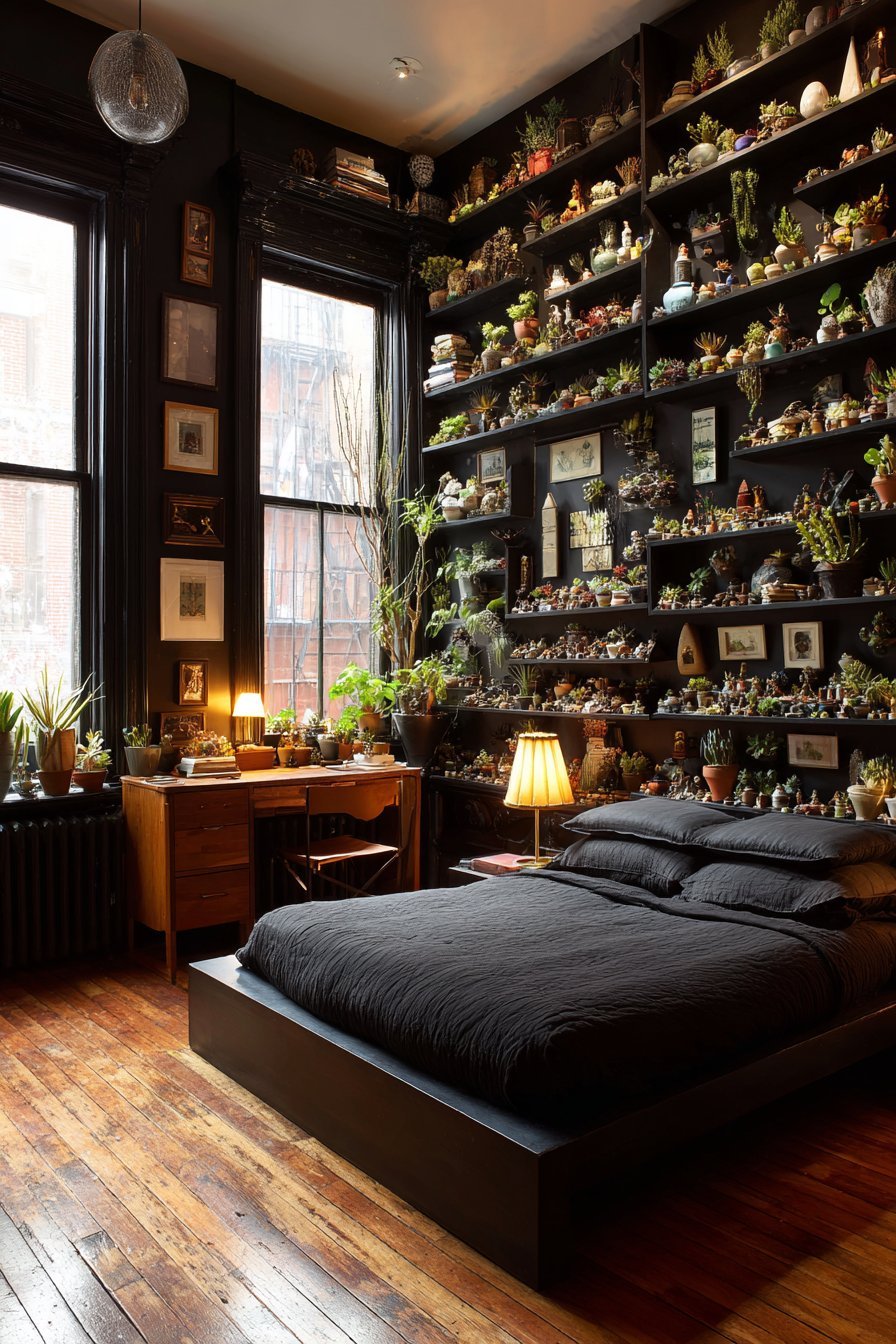
- Install floor-to-ceiling shelving to maximize vertical storage and display
- Choose smaller-scale objects for compact rooms
- Use a single accent wall for gallery display to avoid overwhelming the space
- Embrace windowsills and unexpected surfaces as display opportunities
- Use mirrors strategically to amplify visual richness and light
- Keep furniture simple to let your collections take center stage
10. Should You Try Cluttercore? A Honest Assessment
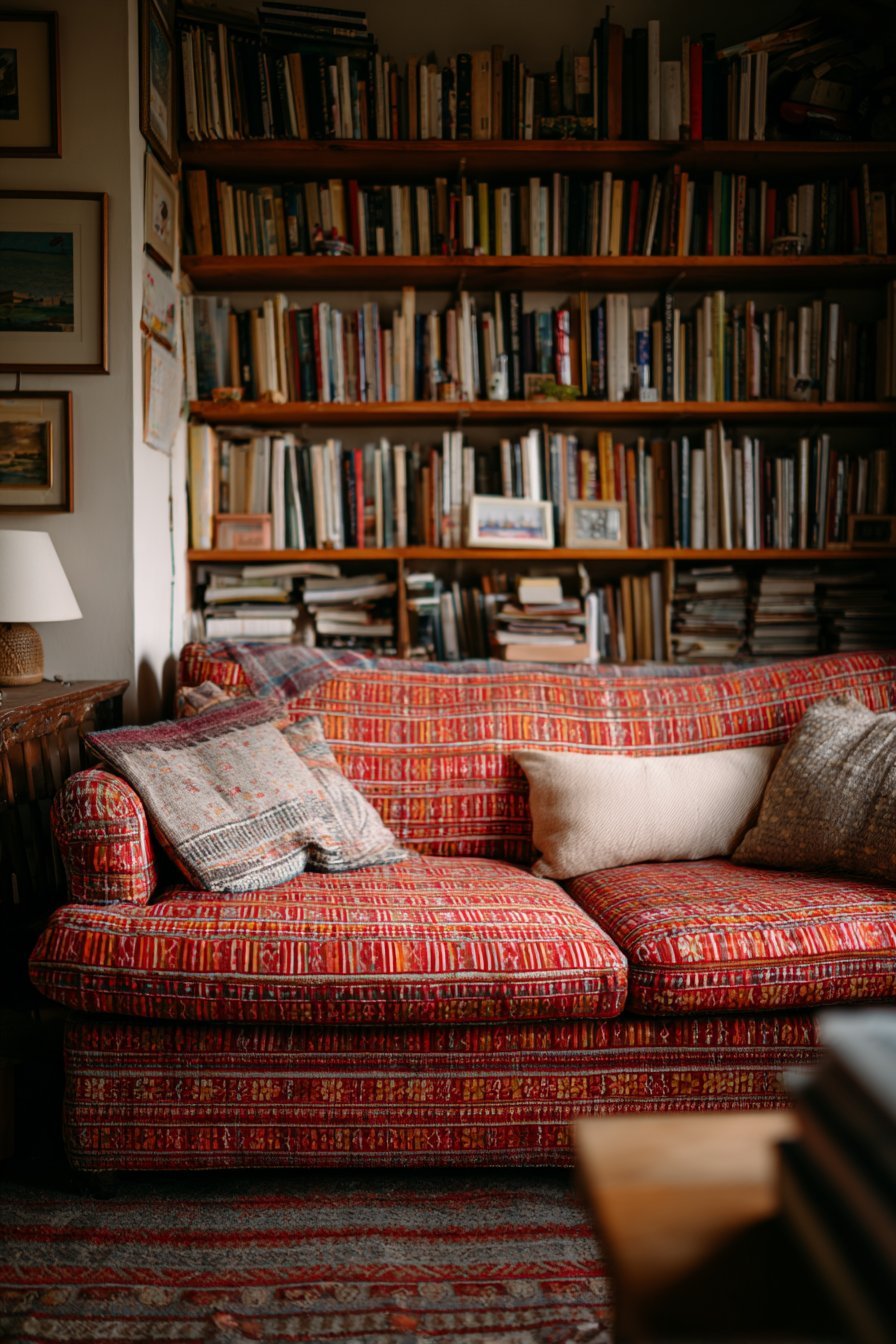
Cluttercore is genuinely wonderful for people who love their things. If you have collections, meaningful objects, books you treasure, or art you’ve accumulated over years, this aesthetic gives you a framework for displaying them beautifully and intentionally. It’s validating, personal, and deeply expressive.
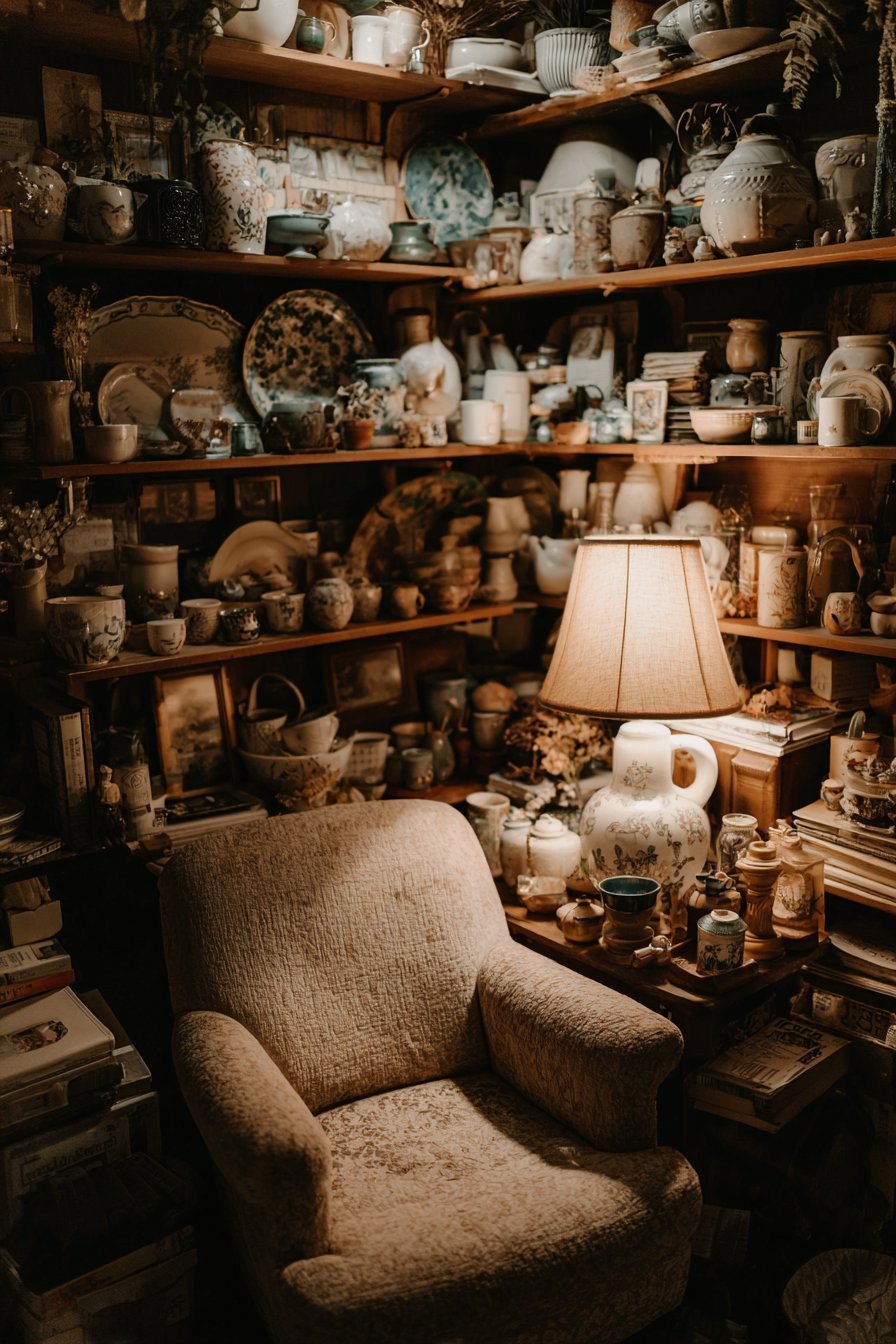
It may not be the right fit if you struggle with decision-making about what to keep and what to let go. Cluttercore requires ongoing curation. Without that editorial eye, the aesthetic can slide into actual disorganization — which brings stress rather than joy. Honest self-assessment about your habits and preferences is essential before committing.
It’s also worth considering your household and lifestyle. Homes with young children or pets require more practical surfaces and easier-to-clean arrangements. Renting a space may limit your ability to install shelving or gallery walls. Work within your constraints thoughtfully, adapting the aesthetic to your real life rather than forcing an idealized version that doesn’t fit.
- Ask yourself honestly: “Do I love and curate, or do I accumulate without editing?”
- Consider your household needs — children, pets, and lifestyle matter
- Start small to test whether the aesthetic feels right for your personality
- Recognize that regular editing is a core part of the cluttercore commitment
- Don’t feel pressured by trends — choose styles that genuinely bring you joy
- Remember that your home should work for you, not the other way around
Conclusion
Cluttercore is more than a trend — it’s a philosophy of self-expression through the objects we choose to surround ourselves with. It pushes back against the idea that empty surfaces equal sophistication, and argues instead that a home filled with meaningful, beautiful, personally resonant objects is a home worth living in.
Whether you dive in fully or simply borrow a few principles — displaying a beloved collection, building a personal gallery wall, or finally bringing out the objects you’ve kept hidden — cluttercore has something valuable to offer every home. The most important design principle of all remains the same: create a space that feels genuinely, beautifully yours.
