
A classic kitchen never goes out of style. These timeless spaces blend traditional aesthetics with modern functionality. The enduring appeal lies in quality materials, refined details, and thoughtful design choices that transcend fleeting trends.
Classic kitchens create warm, welcoming environments where families naturally gather. They honor architectural heritage while accommodating contemporary lifestyles. From white shaker cabinets to marble countertops, these designs celebrate craftsmanship and attention to detail. The beauty of classic kitchen design stems from its versatility and adaptability.
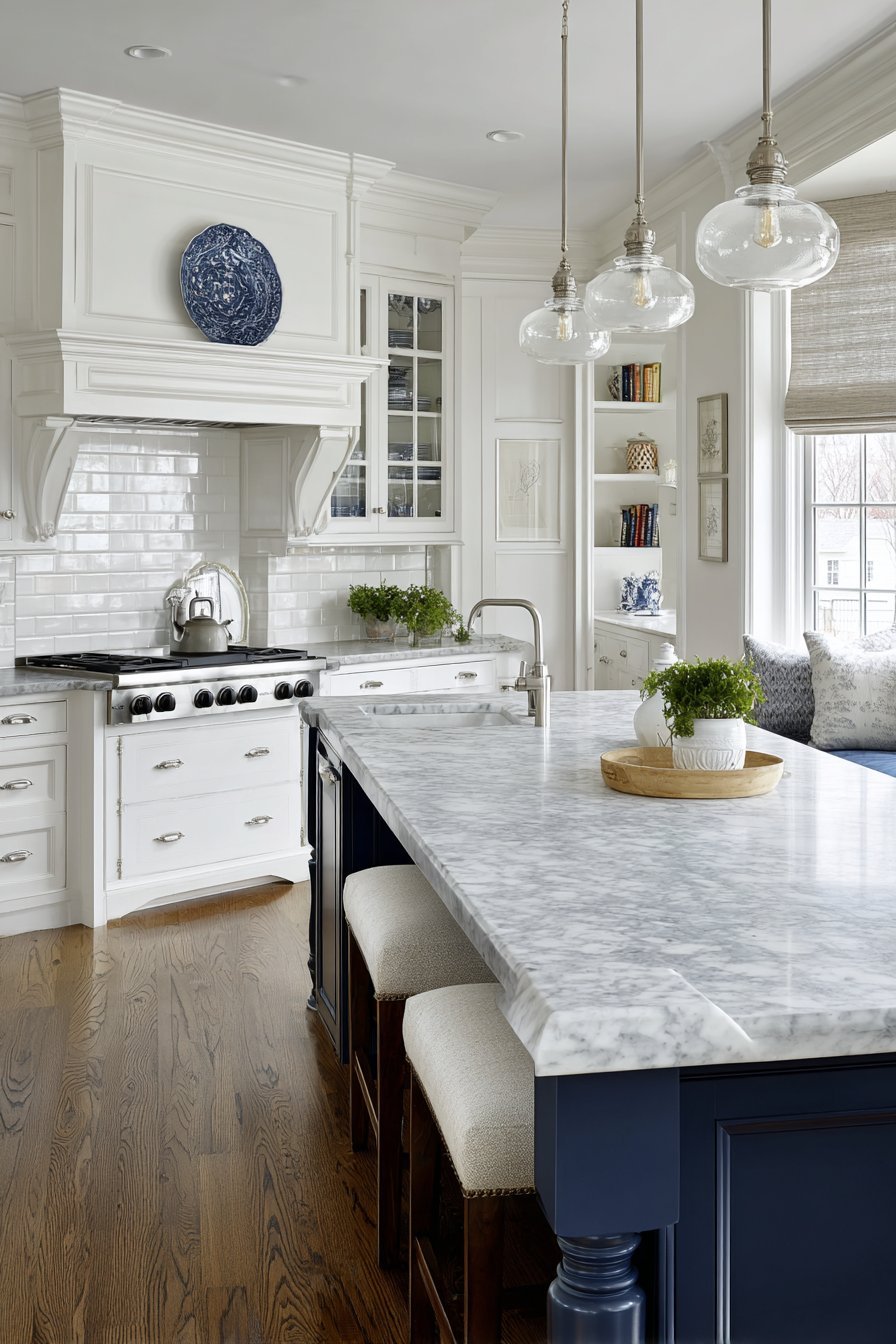
This article explores twenty stunning classic kitchen concepts. Each design showcases different interpretations of timeless style. You’ll discover how traditional elements combine to create sophisticated, functional spaces. Whether you prefer crisp white cabinetry or rich wood tones, these ideas offer inspiration for every taste.
1. White Shaker Elegance with Marble Countertops
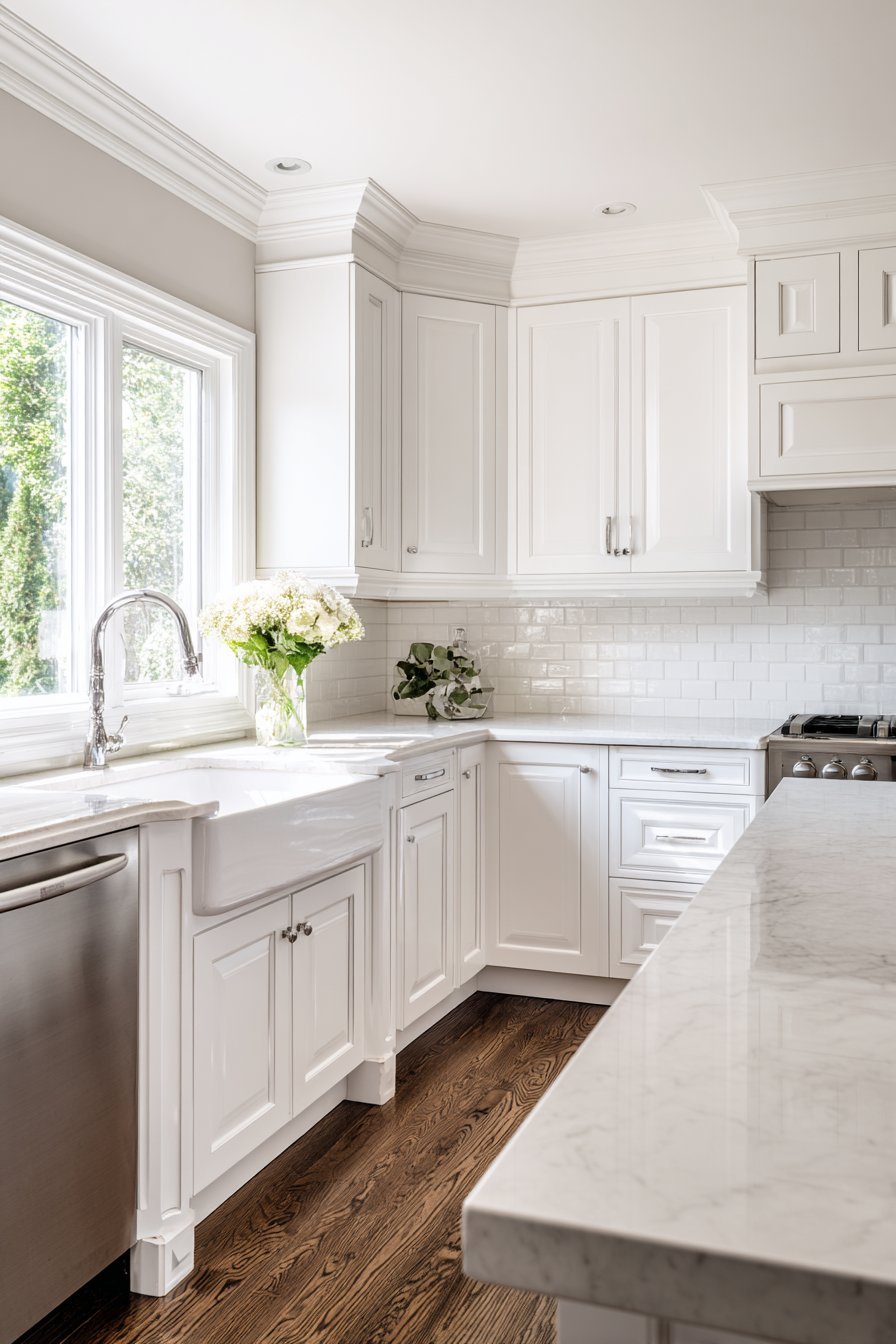
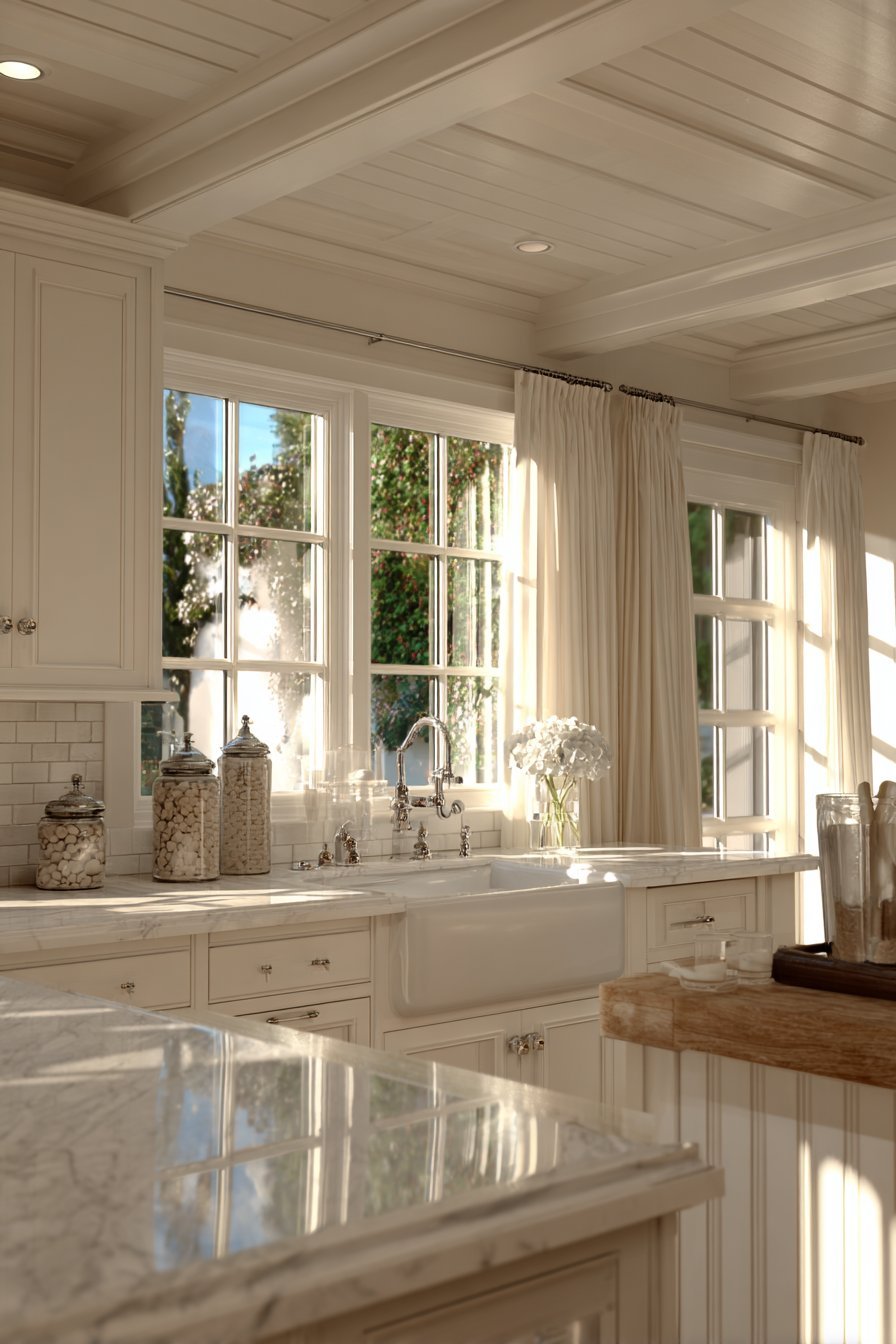
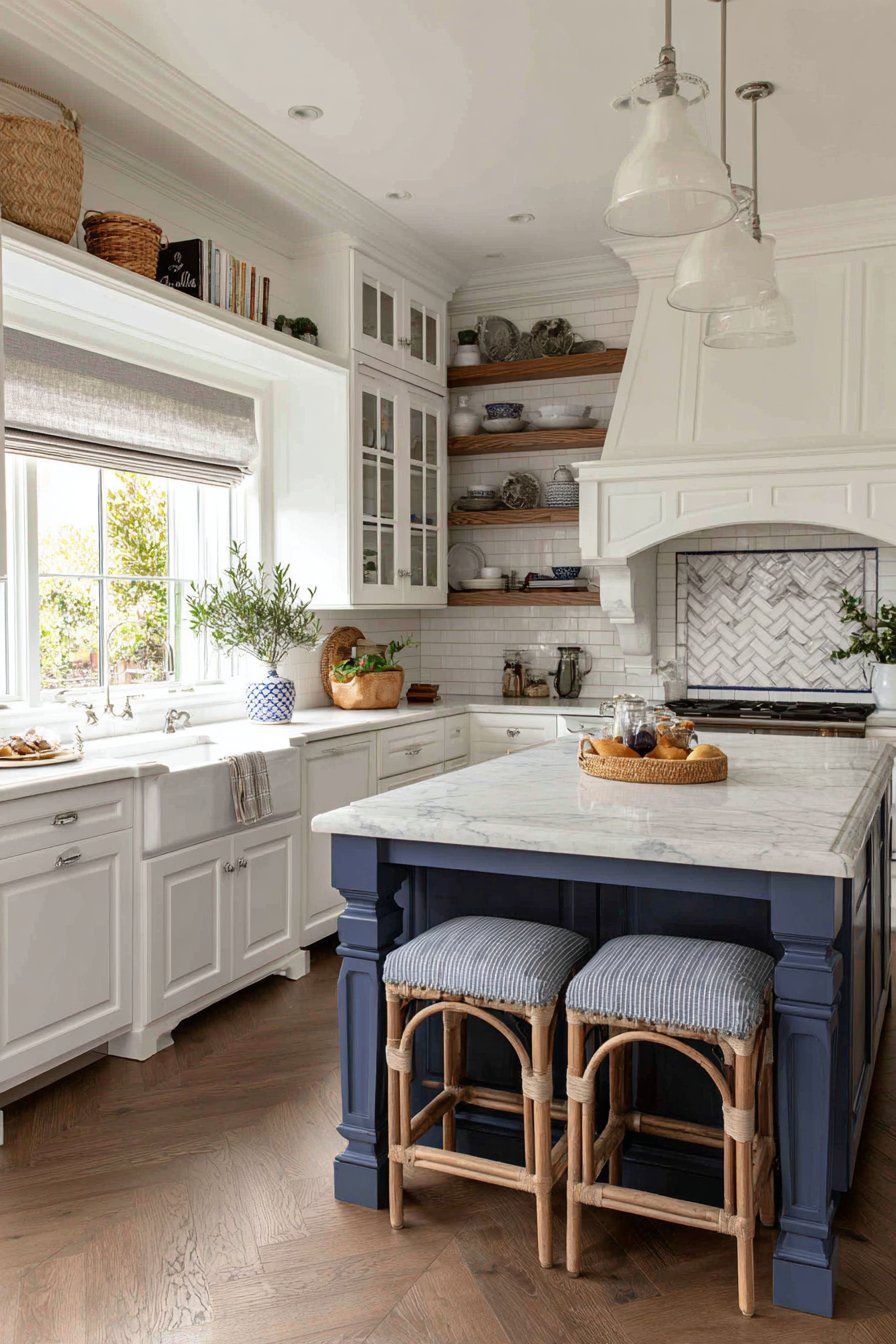
White shaker-style cabinetry forms the foundation of this quintessentially classic kitchen. Clean lines and simple panel construction create visual calm. Brushed nickel hardware adds subtle sophistication without overwhelming the design. The large center island anchors the space beautifully.
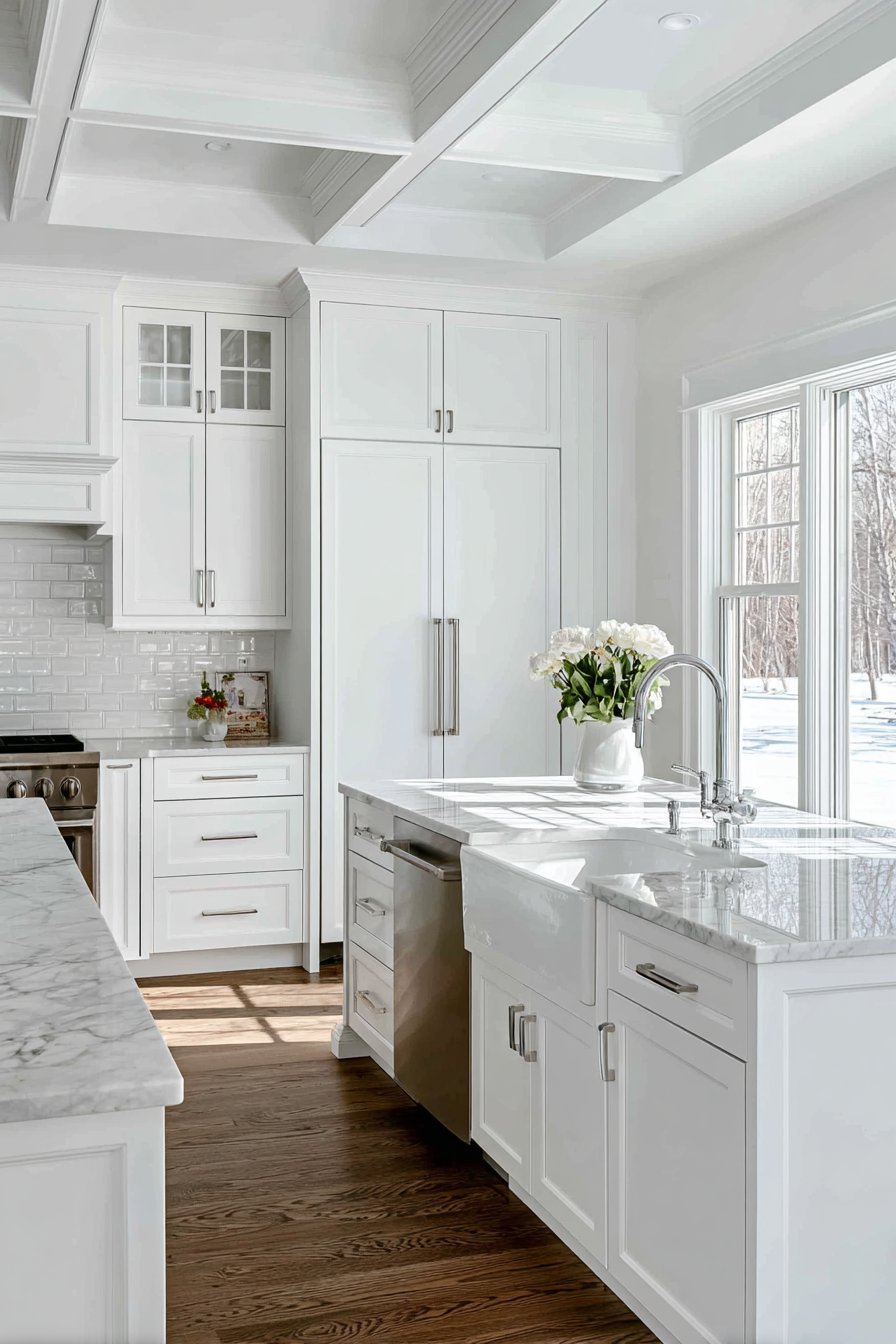
Honed marble countertops display subtle grey veining throughout. This natural stone brings organic beauty to the structured cabinetry. The soft, matte finish proves more forgiving than polished surfaces. Traditional crown molding details the ceiling perimeter. These architectural elements add depth and character.
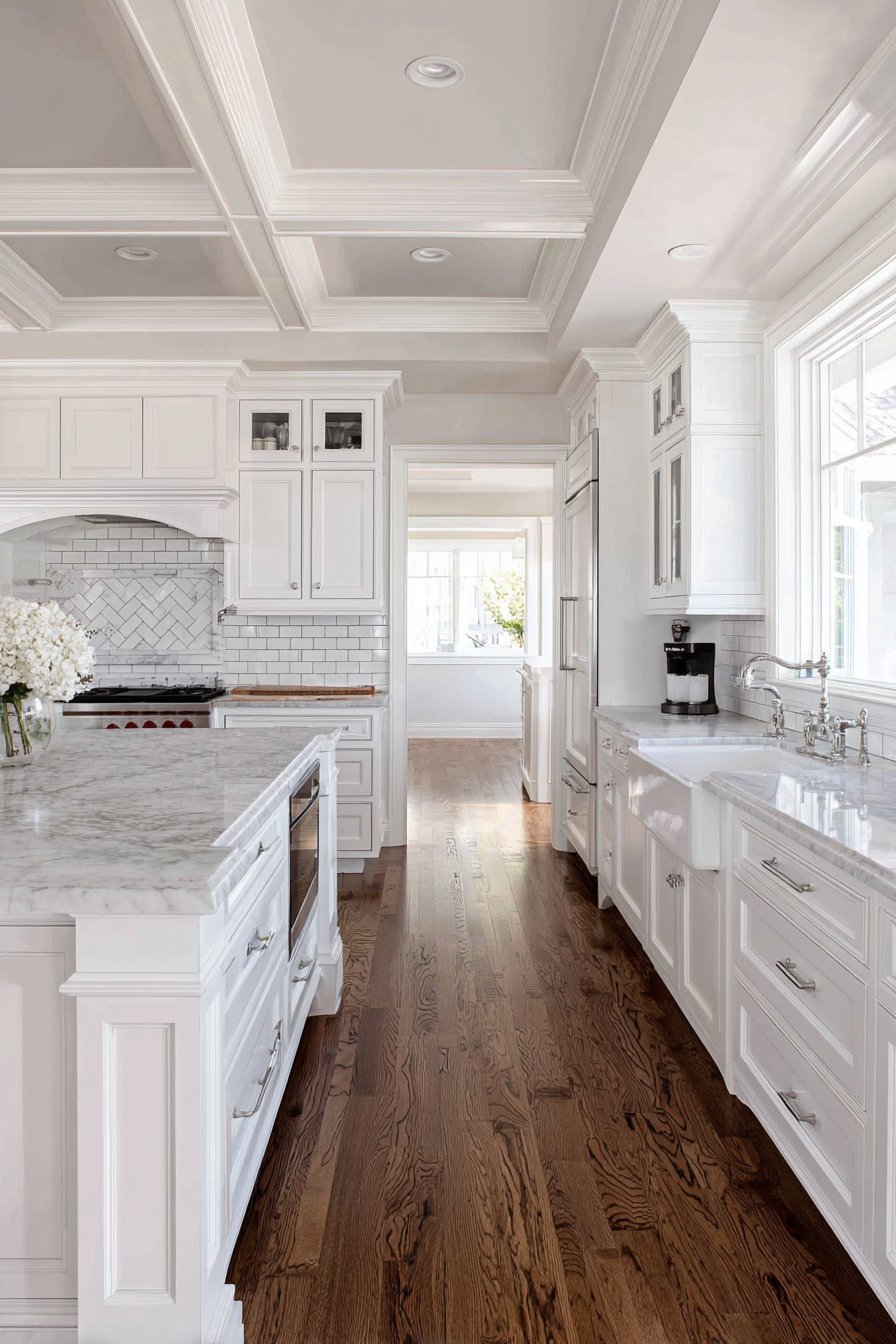
A farmhouse apron-front sink sits beneath a window dressed with white café curtains. The polished nickel bridge faucet complements the cabinet hardware perfectly. Classic white subway tiles create the backsplash in traditional brick pattern. Natural morning light streams through the window. This illumination highlights clean lines and material quality.
Key Design Tips:
- Select honed marble over polished for a softer, more practical finish
- Install brushed nickel hardware throughout for cohesive traditional styling
- Use shaker-style cabinets with quality construction and dovetail joinery
- Add crown molding to create architectural interest and finished appearance
- Choose farmhouse sinks for authentic classic appeal and practical functionality
- Keep window treatments simple to maximize natural light
2. Professional Range with Custom Hood Details
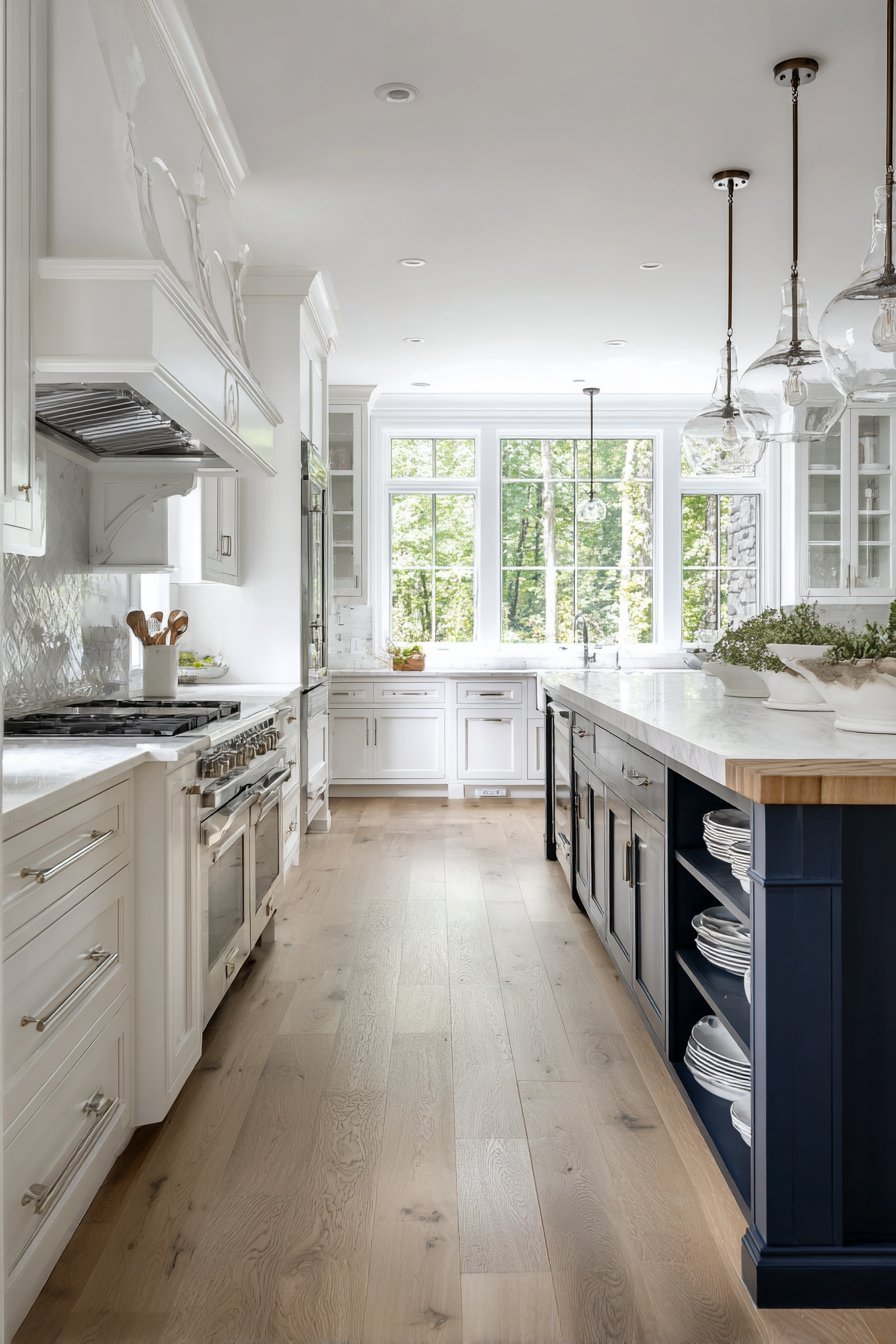
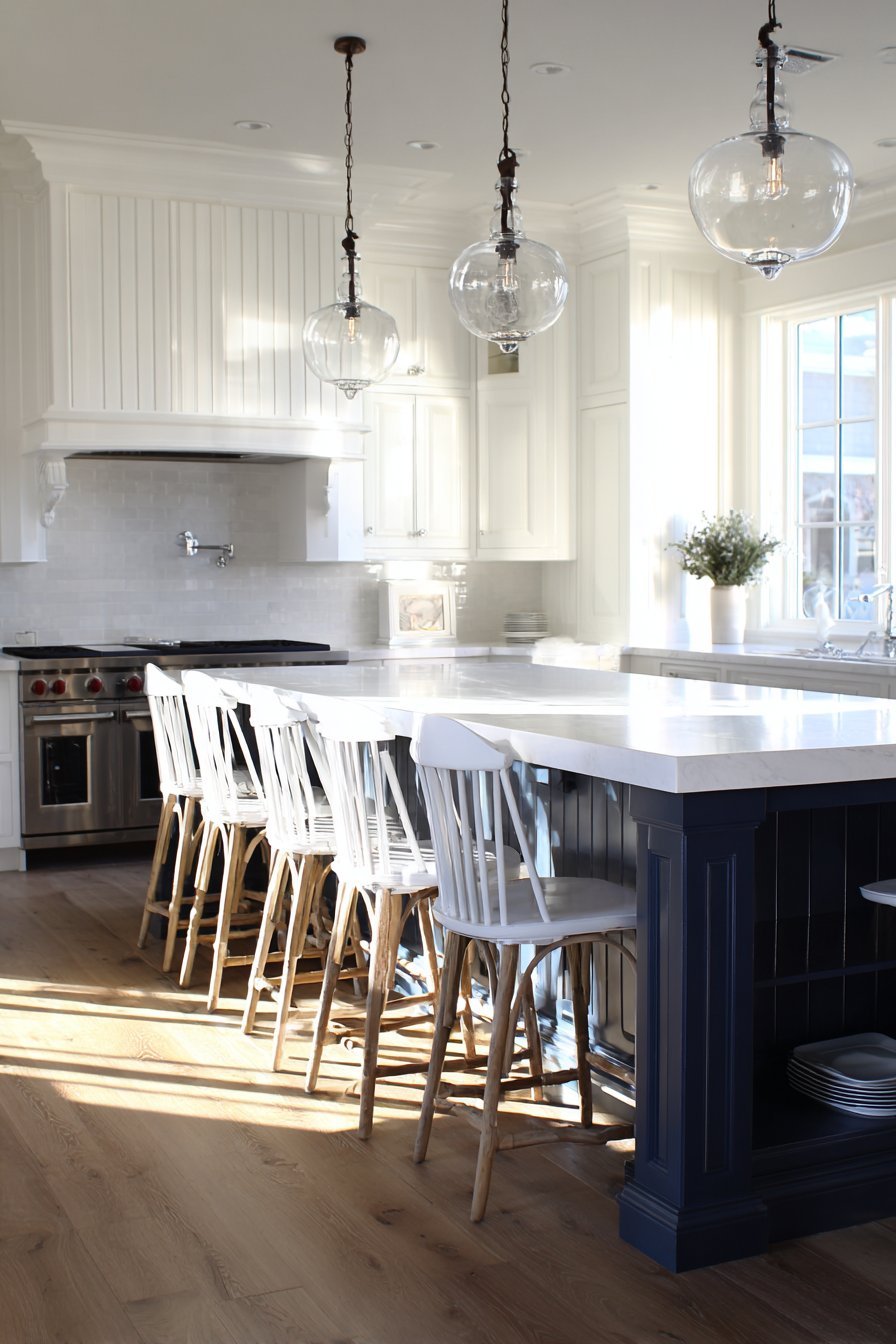
A six-burner professional-style gas range commands attention in this classic kitchen. The substantial cooking appliance meets serious culinary needs. A custom range hood features decorative corbels and beadboard detailing. These traditional elements transform functional necessity into architectural beauty.
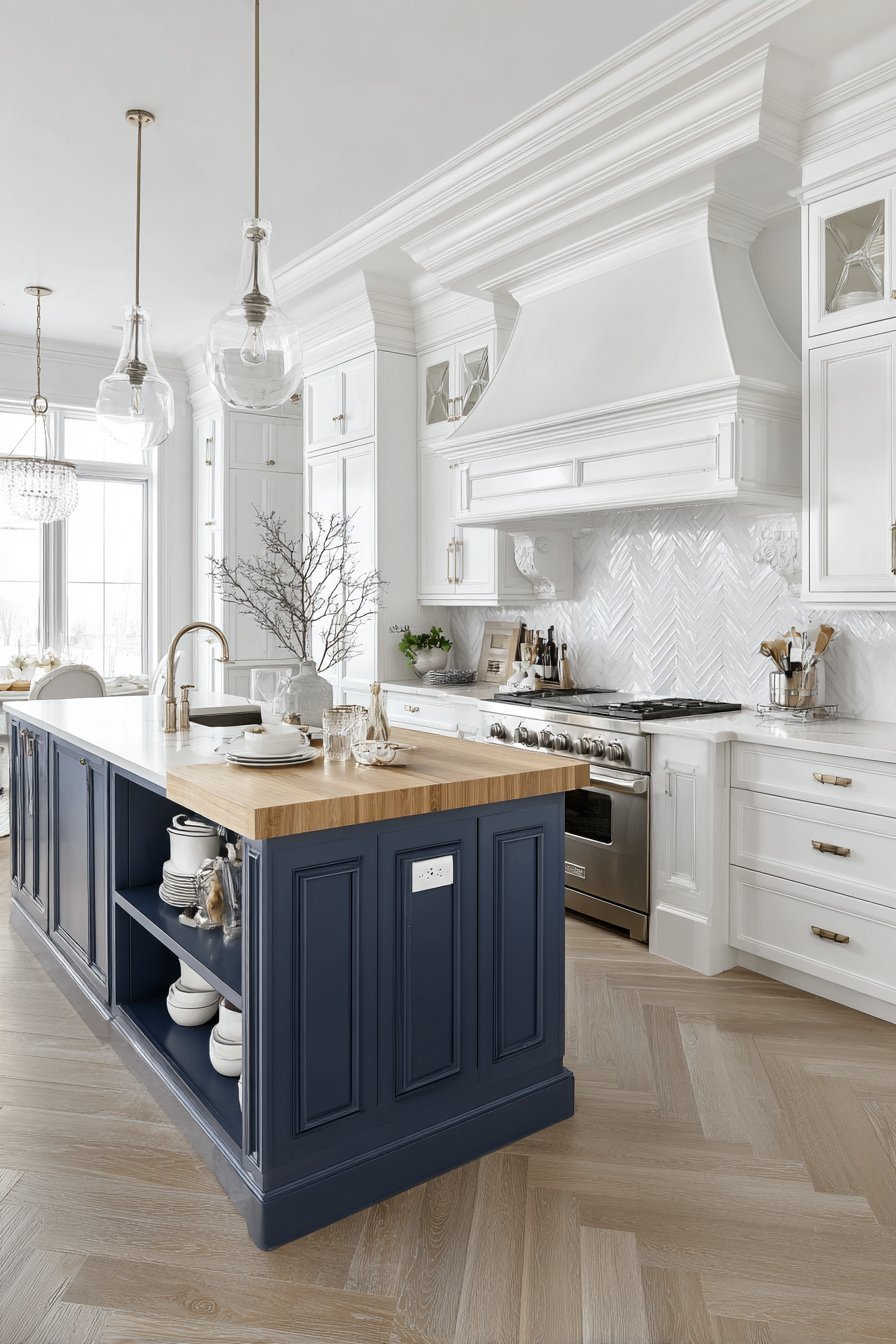
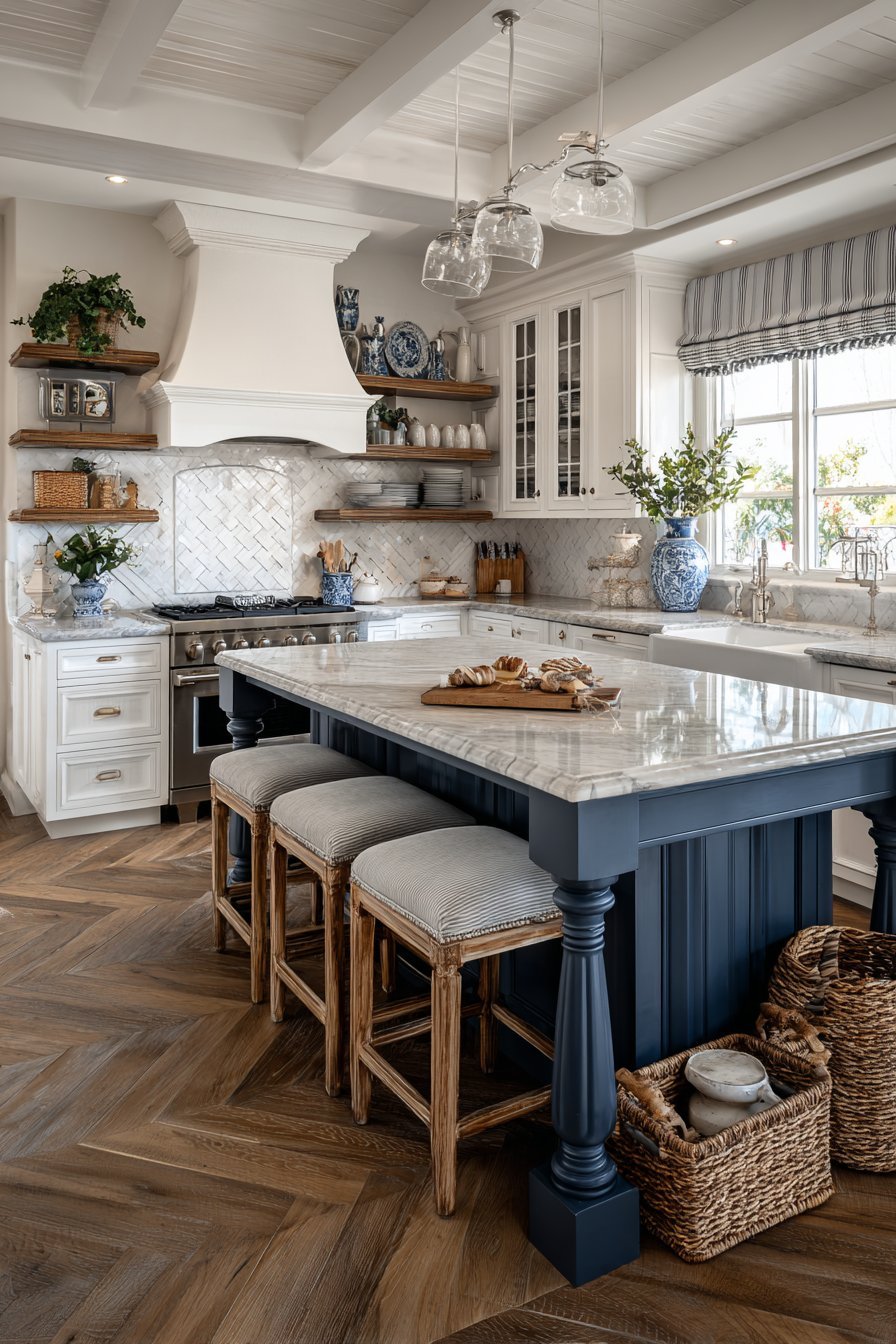
Creamy white perimeter cabinets maintain the classic foundation. The navy blue painted island creates striking visual contrast. Open shelving on the island displays white ironstone dishes. This practical storage doubles as attractive display space. Butcher block countertops warm the island surface.
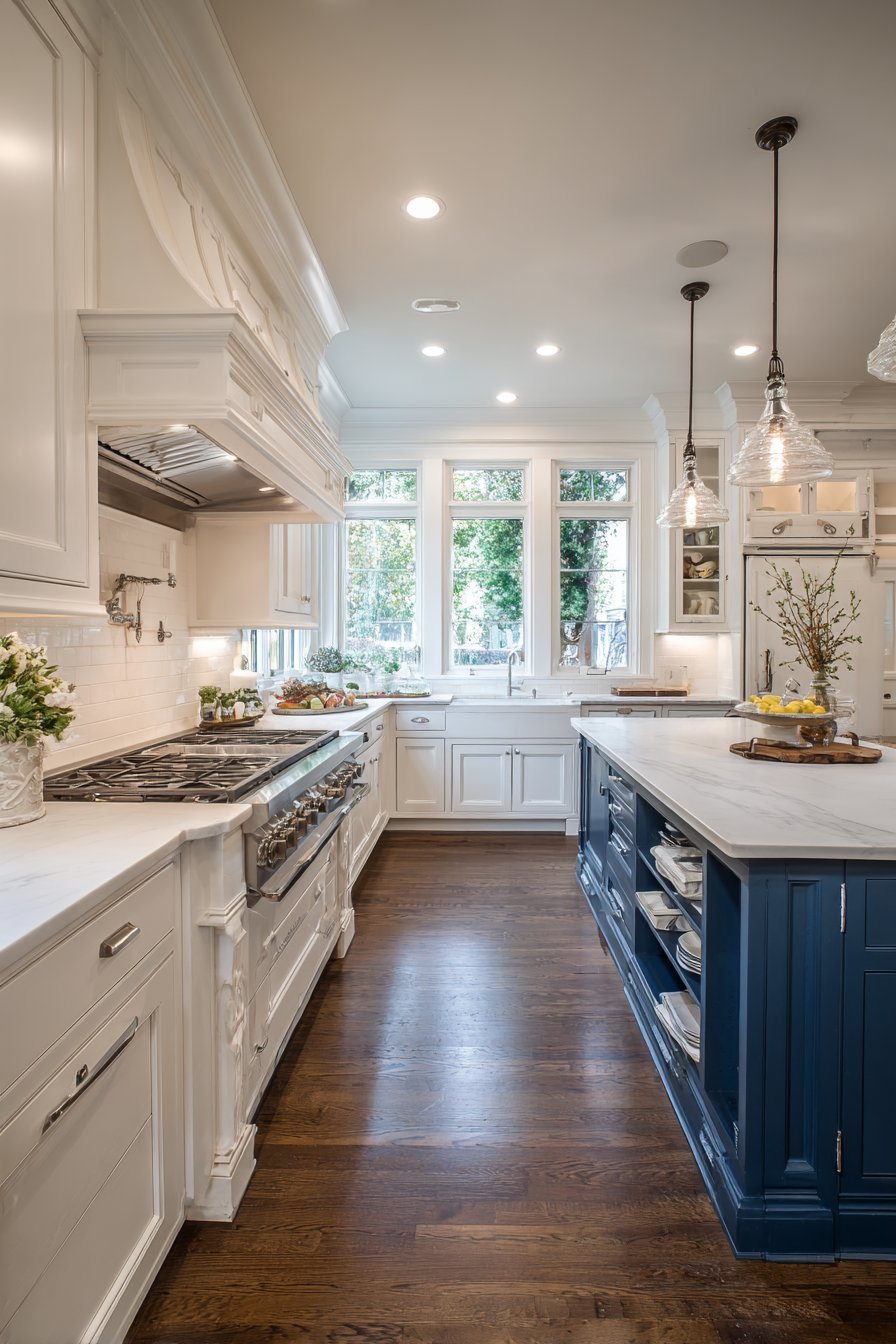
White quartz counters with delicate grey veining top the perimeter cabinets. Hardwood flooring laid in traditional herringbone pattern grounds the entire space. Pendant lights with clear glass shades hang above the island. Oil-rubbed bronze fixtures throughout maintain period-appropriate styling. Multiple windows allow natural daylight to create gentle highlights.
Key Design Tips:
- Invest in professional-grade appliances for both function and visual impact
- Balance white cabinetry with one bold accent color like navy
- Combine different countertop materials for varied texture and purpose
- Choose herringbone flooring patterns for timeless visual interest
- Display everyday dishes on open shelving for practical beauty
- Layer lighting with pendants, recessed fixtures, and natural sources
3. Charming Breakfast Nook Integration
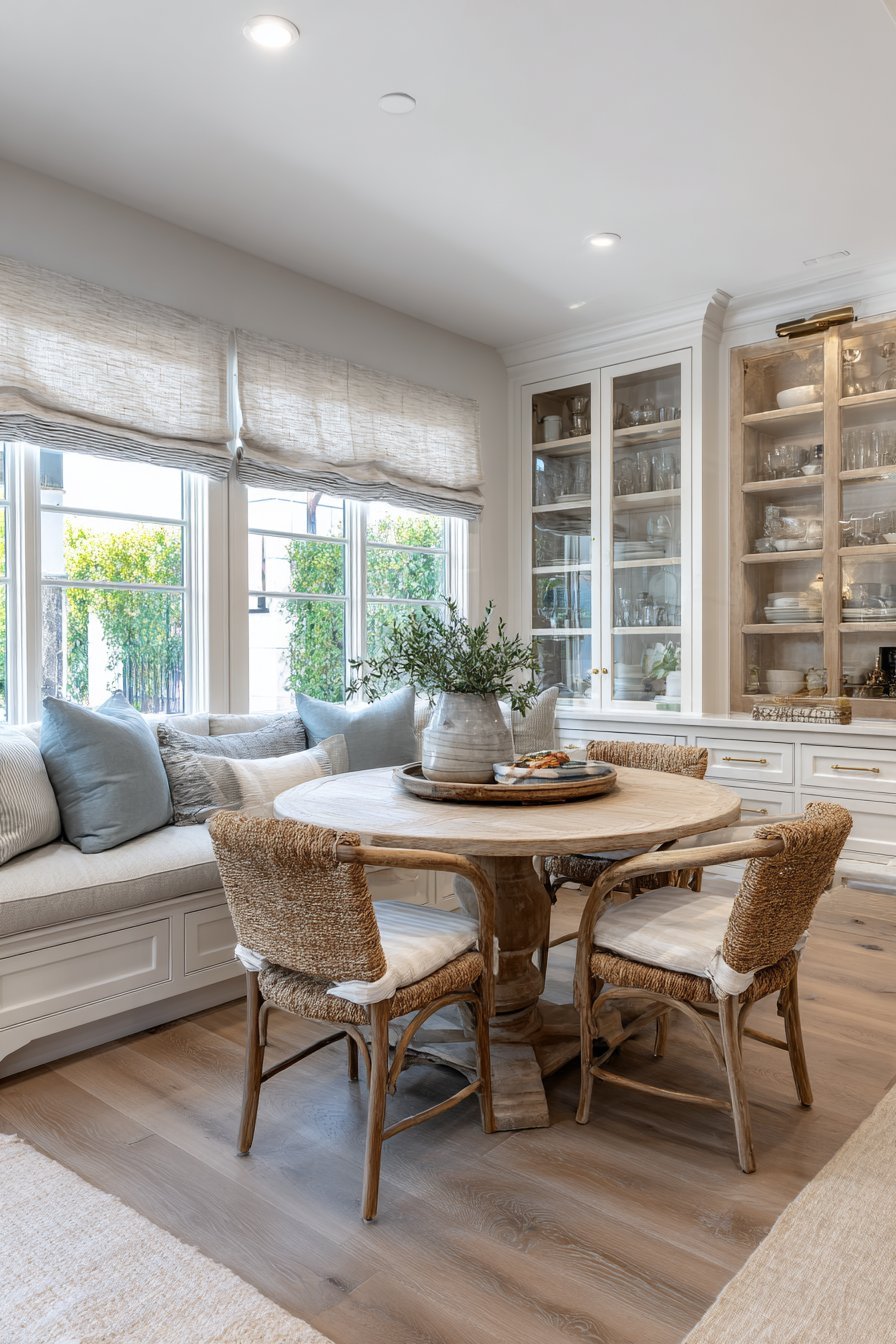
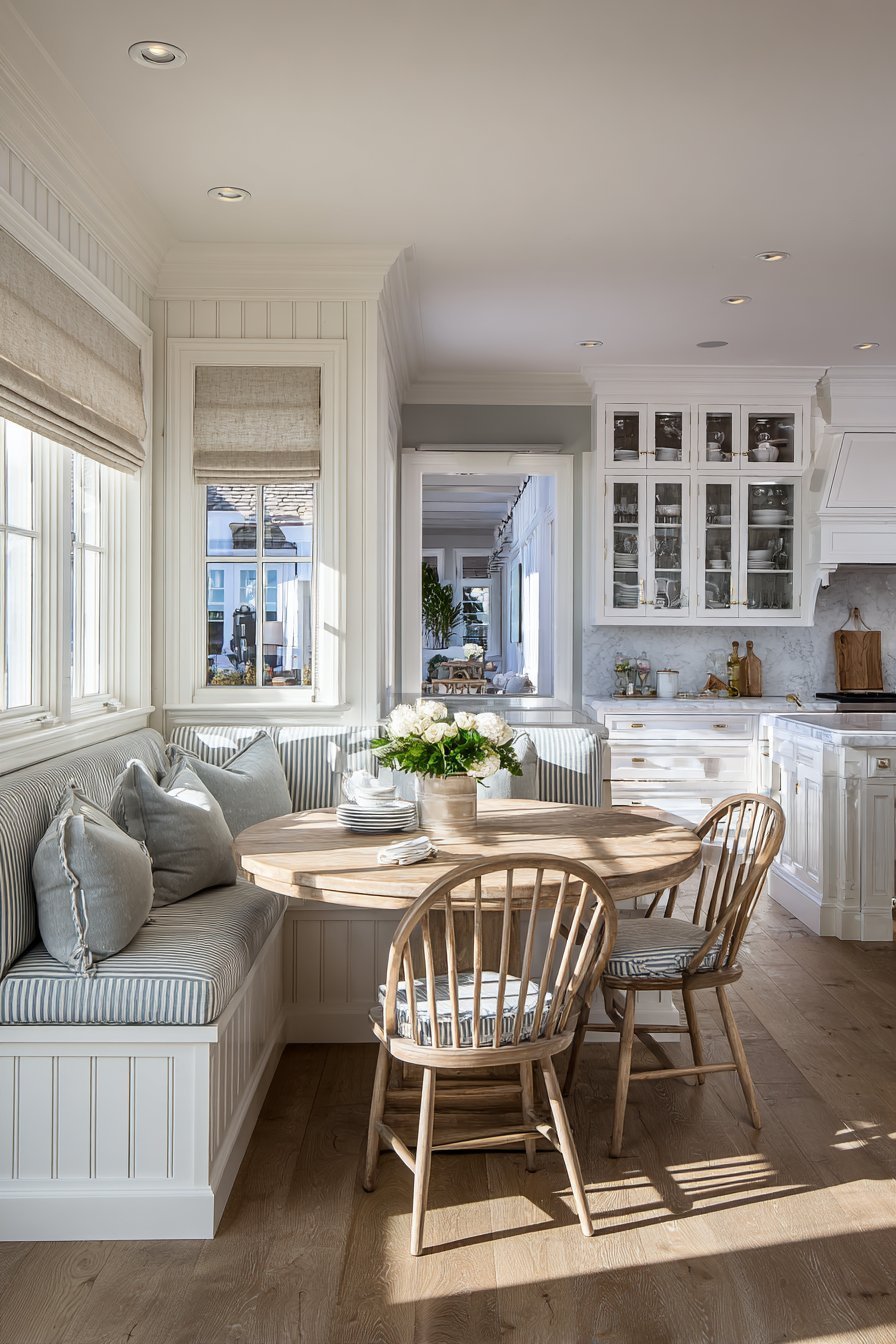
Built-in bench seating with beadboard backing creates an inviting breakfast nook. Cushions upholstered in timeless ticking stripe fabric add comfort. The classic pattern never feels dated. A round pedestal table in natural oak finish centers the intimate space. Traditional Windsor-style chairs complete the seating arrangement.
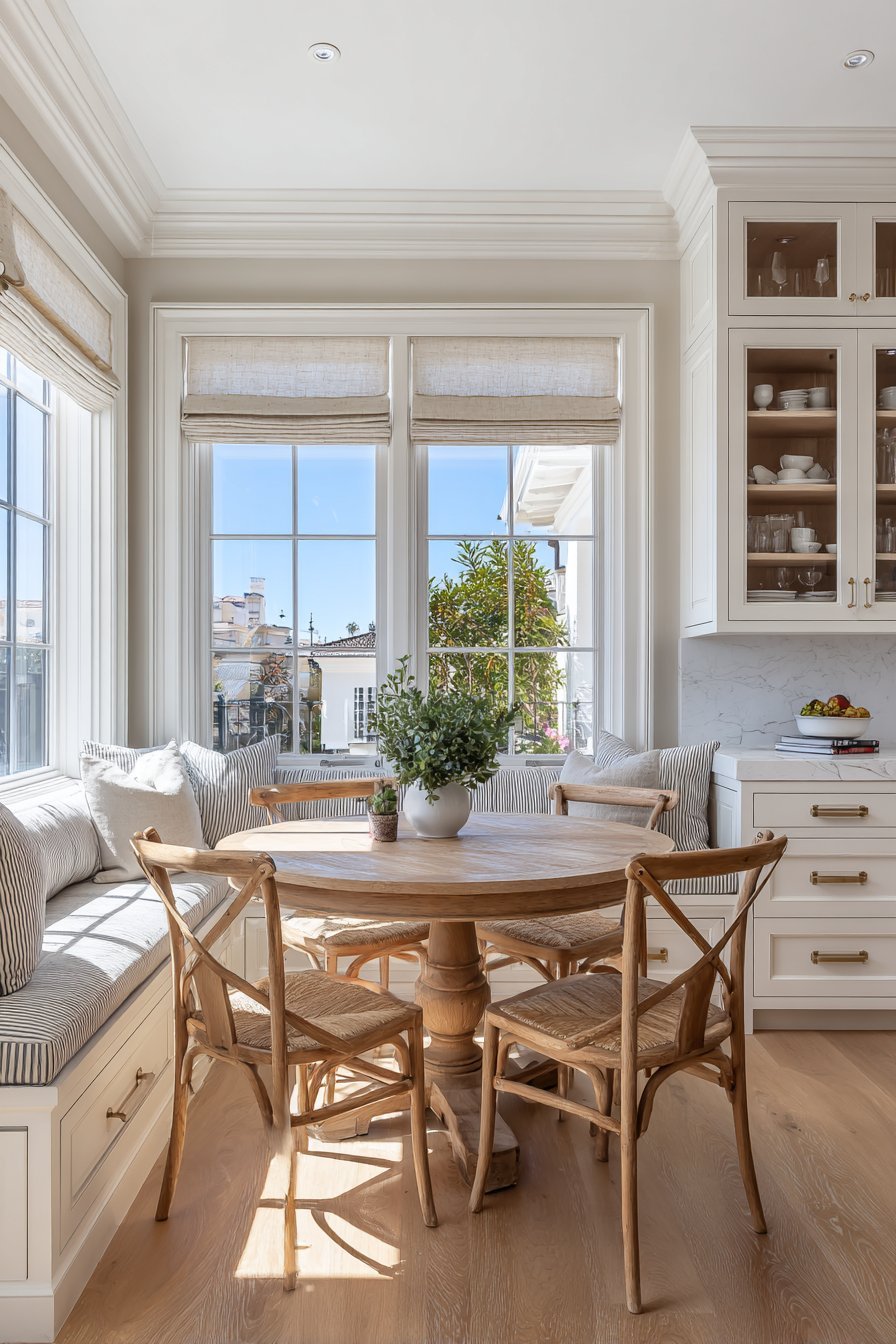
White wainscoting extends along the walls below soft grey upper sections. This two-tone wall treatment adds architectural dimension. Multiple windows with divided lights frame the seating area beautifully. Simple Roman shades in natural linen provide privacy when needed. The fabric choice maintains the understated elegance.
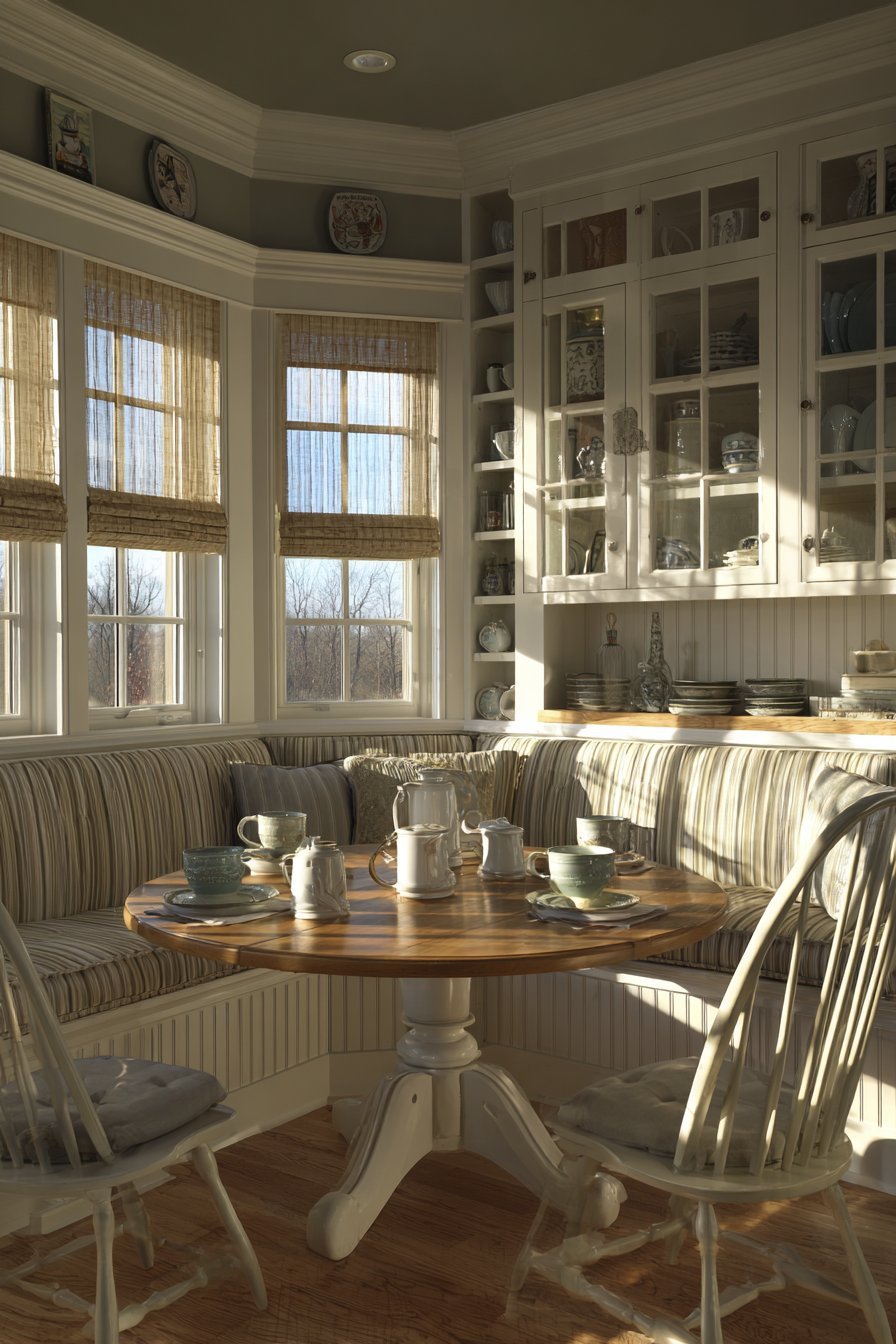
Glass-front upper cabinets in the adjacent kitchen reveal organized dishware collections. These transparent doors create visual continuity between spaces. Natural afternoon light floods the breakfast area. The warm illumination creates an inviting atmosphere for morning coffee or casual meals. This thoughtful design promotes family connection.
Key Design Tips:
- Build in bench seating to maximize space efficiency and seating capacity
- Choose timeless fabric patterns like ticking stripe for upholstery longevity
- Install wainscoting for traditional wall protection and visual interest
- Use natural linen for window treatments to filter light softly
- Select round tables for breakfast nooks to improve traffic flow
- Incorporate divided light windows for authentic period character
4. Organized Sage Green Pantry
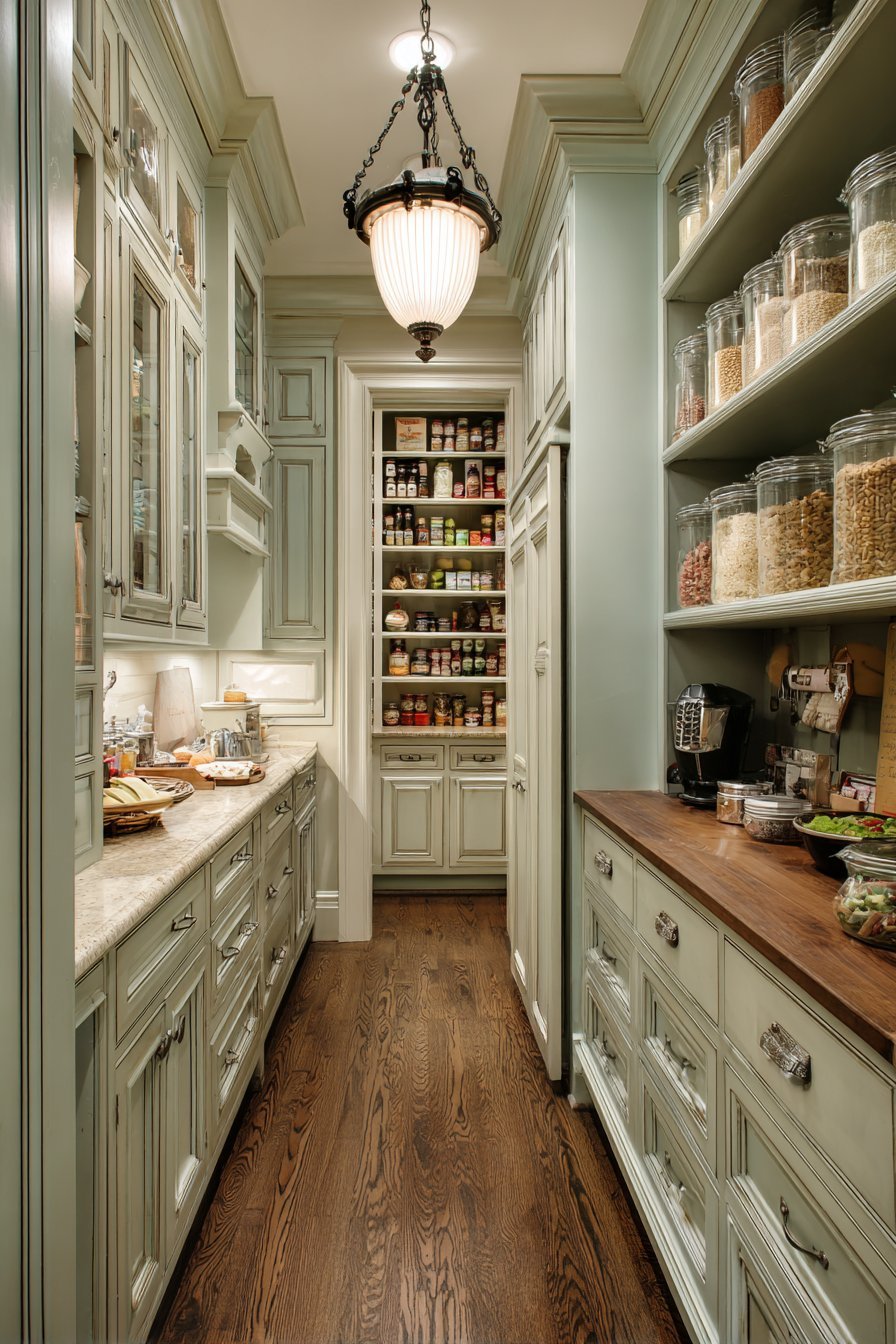
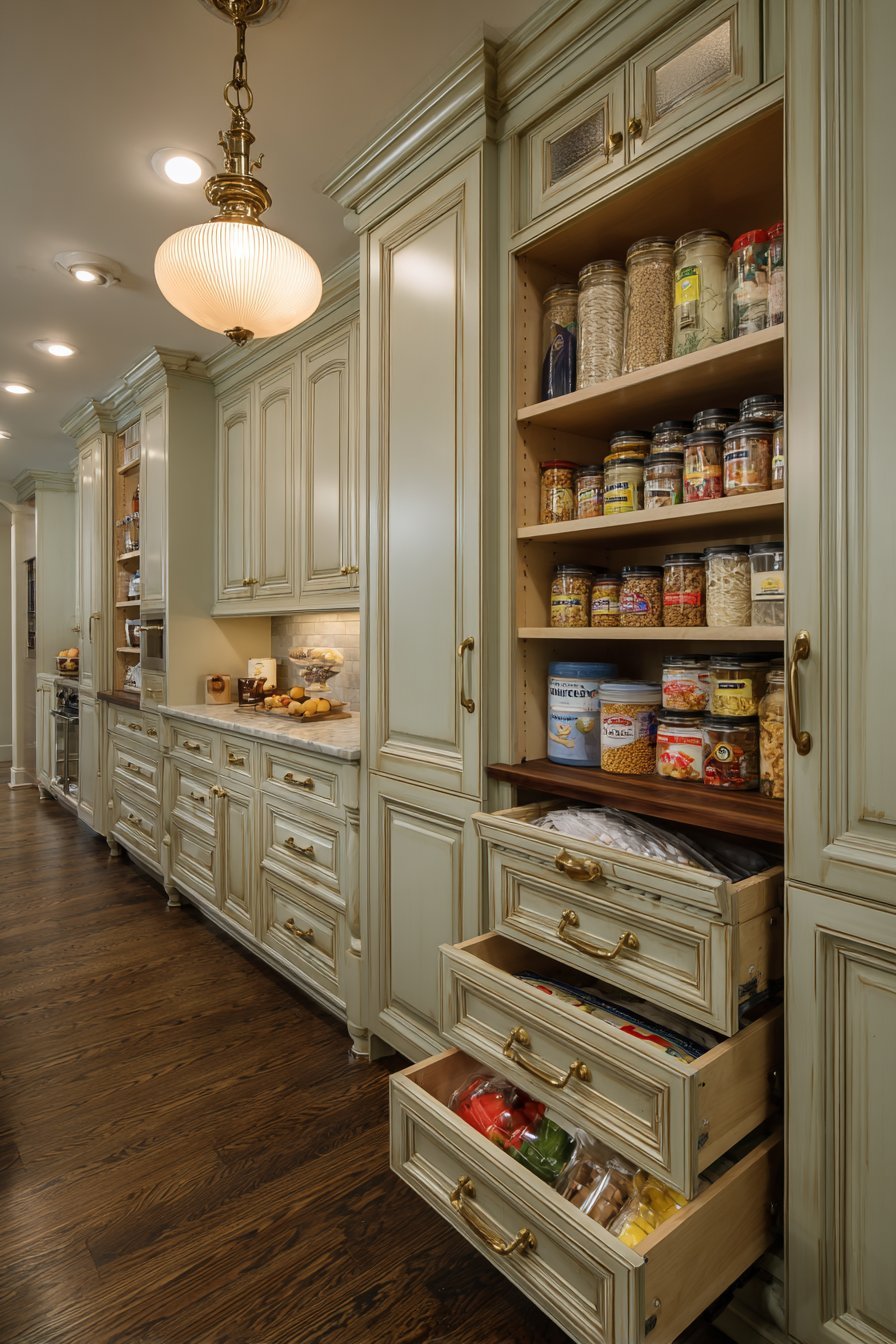
Floor-to-ceiling built-in cabinetry painted in soft sage green creates a beautiful pantry. Traditional raised panel doors maintain classic styling throughout. Antique brass hardware adds vintage charm. Pull-out drawers with dovetail joinery display quality craftsmanship. These functional elements organize dry goods efficiently.
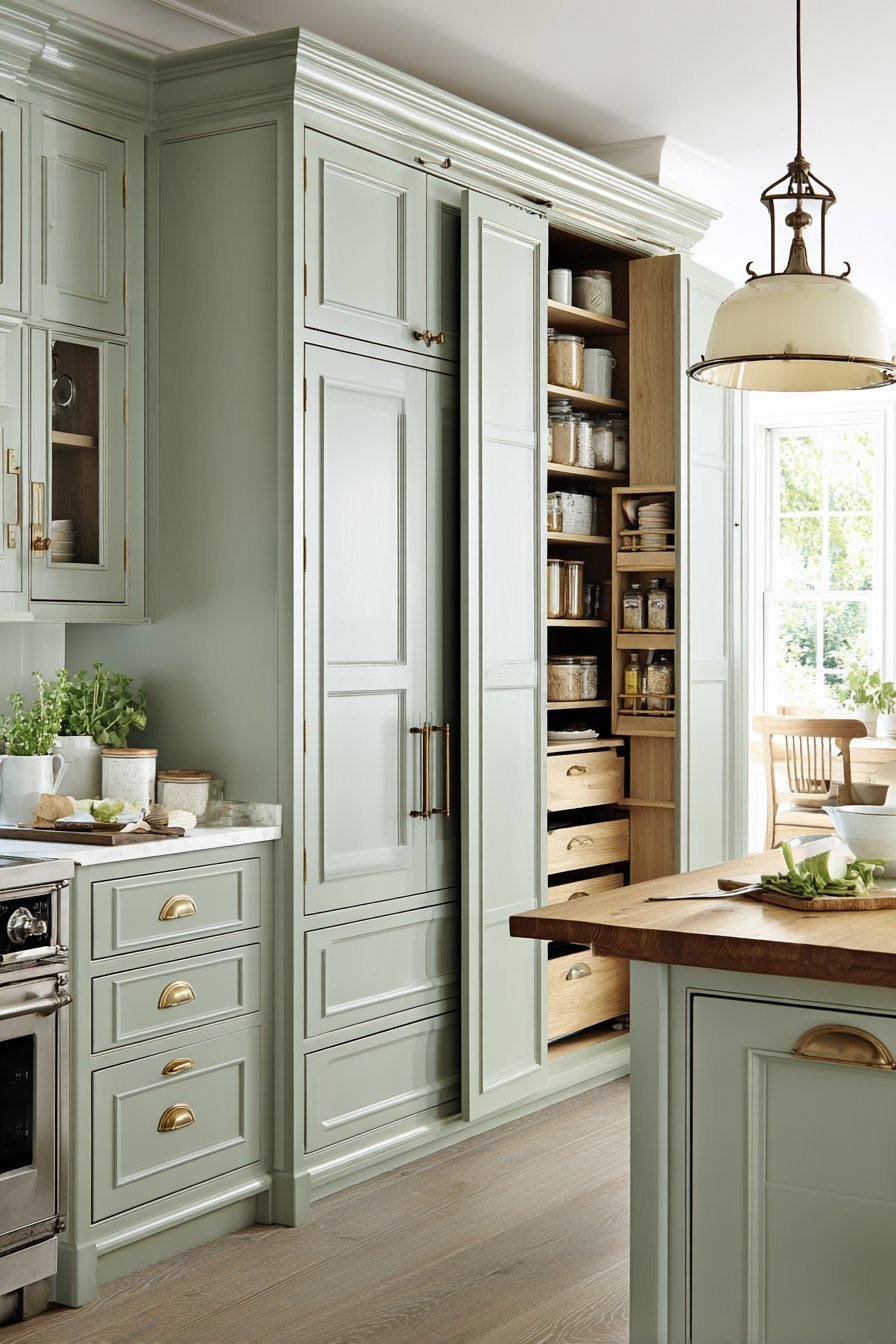
Adjustable shelving accommodates containers of various heights. This flexibility proves essential for practical storage. A small countertop workspace in butcher block provides surface area for meal preparation. The warm wood contrasts beautifully with painted cabinetry. A vintage-inspired pendant light with milk glass shade illuminates the space.
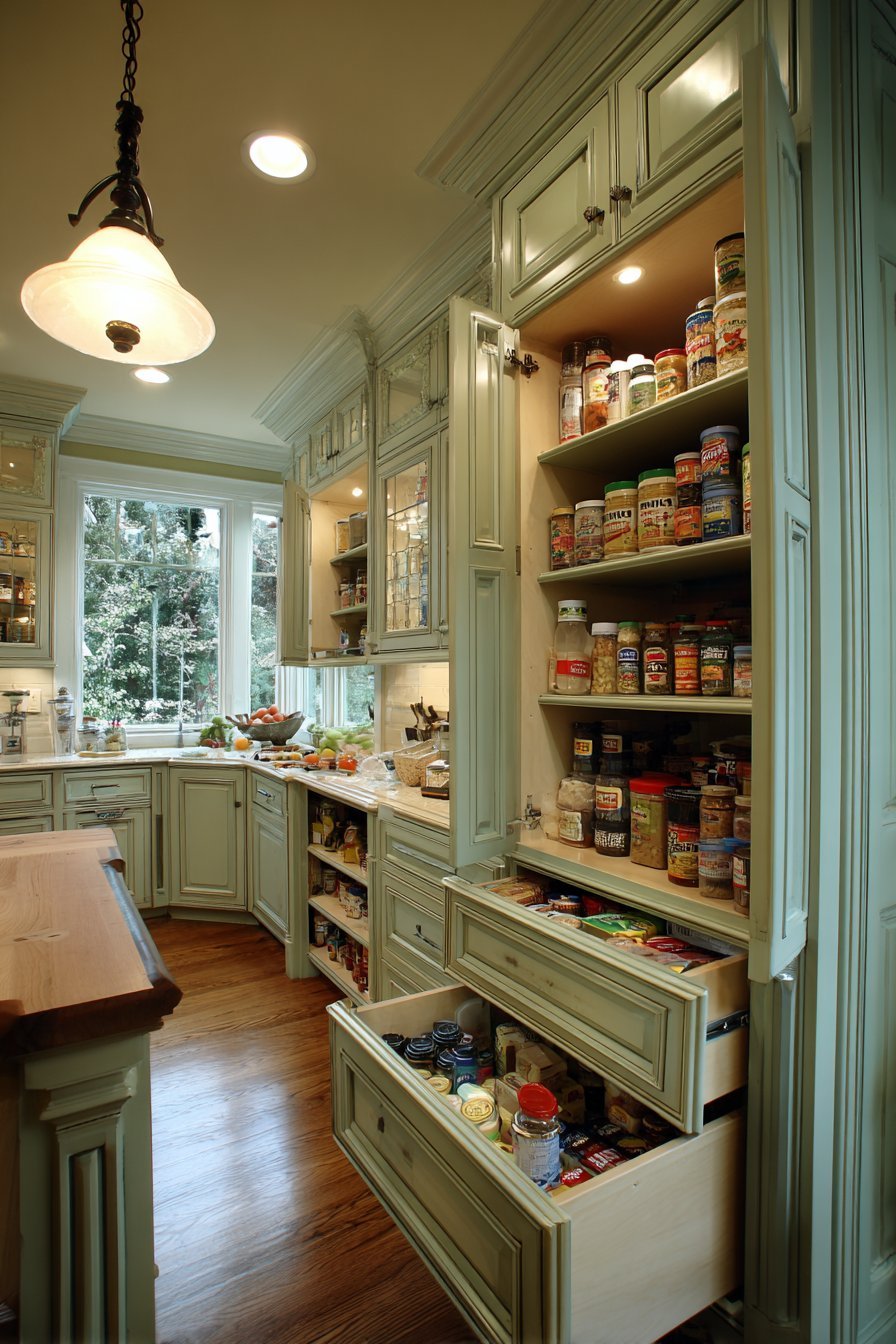
The organizational system combines beauty with exceptional functionality. Every item has a designated place. The soft sage color creates a calming environment. This thoughtful design transforms utilitarian storage into an attractive kitchen feature. Quality materials and careful planning ensure lasting satisfaction.
Key Design Tips:
- Paint pantry cabinetry in colors that complement but don’t match the kitchen
- Install pull-out drawers for easy access to back storage areas
- Add a small work counter for pantry-based meal prep activities
- Choose adjustable shelving systems for maximum storage flexibility
- Incorporate quality hardware that will withstand frequent daily use
- Install dedicated pantry lighting separate from general kitchen illumination
5. Sophisticated Butler’s Pantry
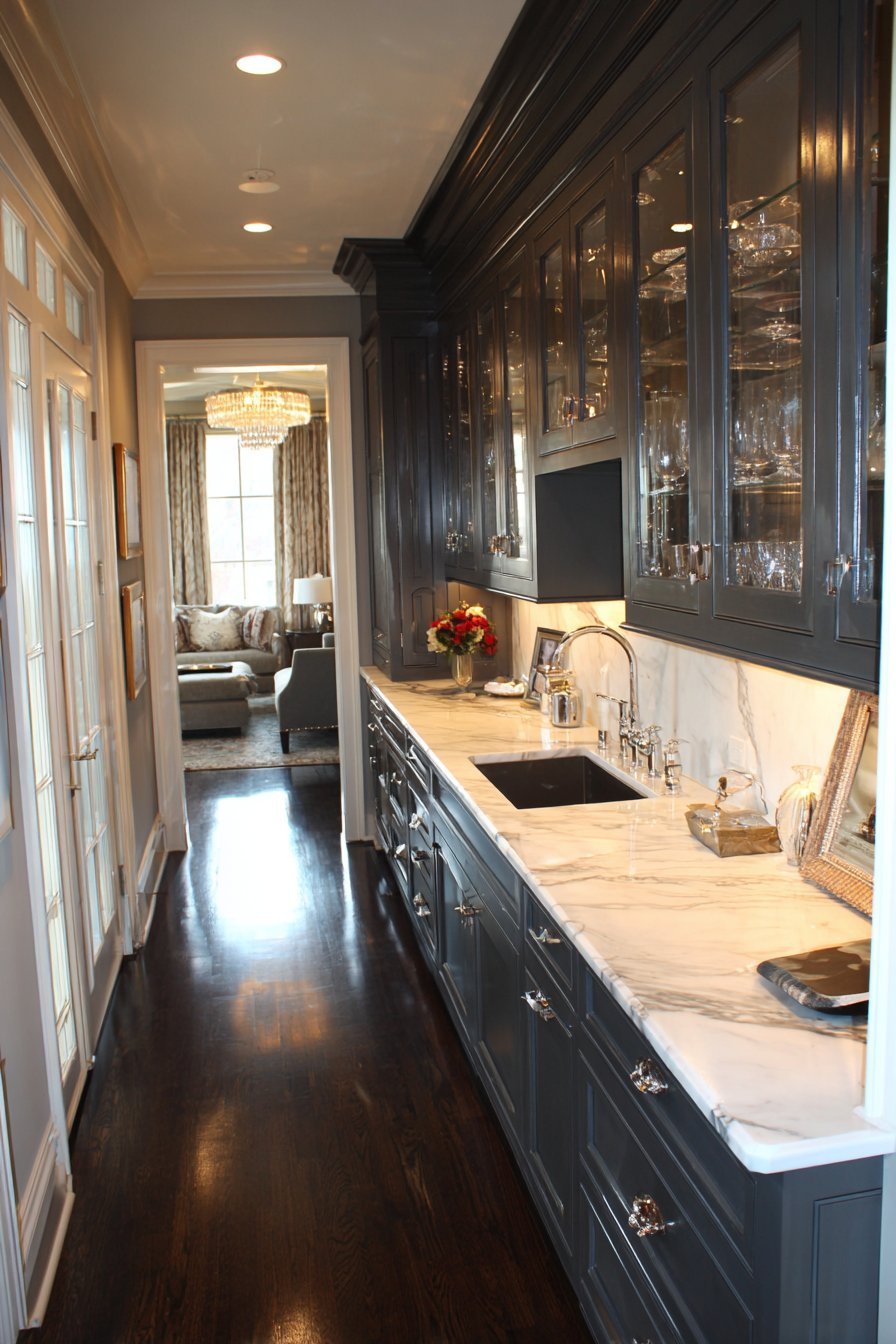
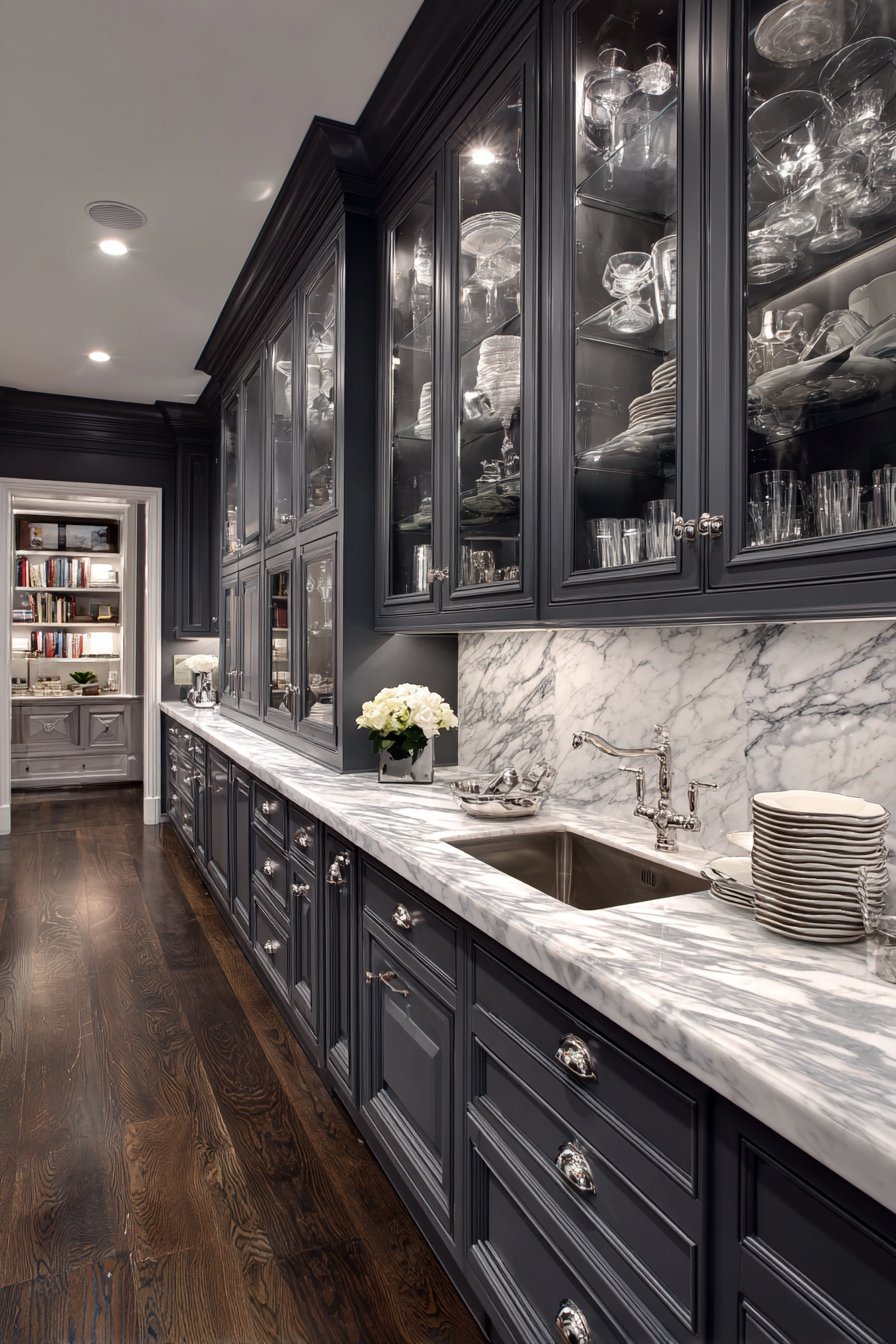
Glass-front upper cabinets display fine china and crystal glassware in this traditional butler’s pantry. The transparent doors protect while showcasing treasured items. Lower cabinets in deep charcoal grey provide visual grounding. This dramatic color contrasts beautifully with displayed collections above.
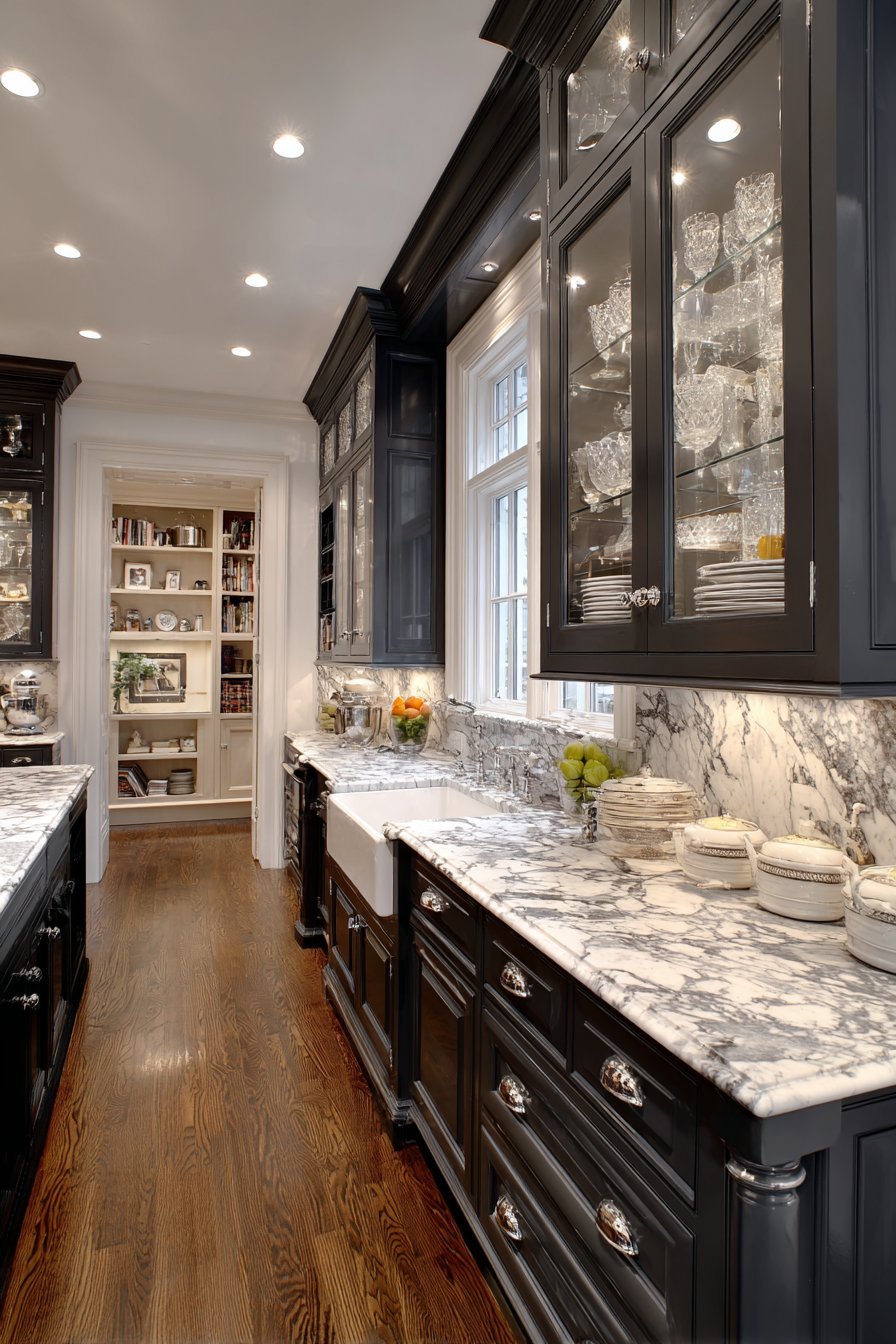
Marble countertops with dramatic veining offer elegant workspace. The natural stone elevates the functional area. Polished nickel cup pulls and knobs maintain timeless aesthetic consistency. A small prep sink with traditional gooseneck faucet sits in the counter. This dedicated workspace supports entertaining preparation.
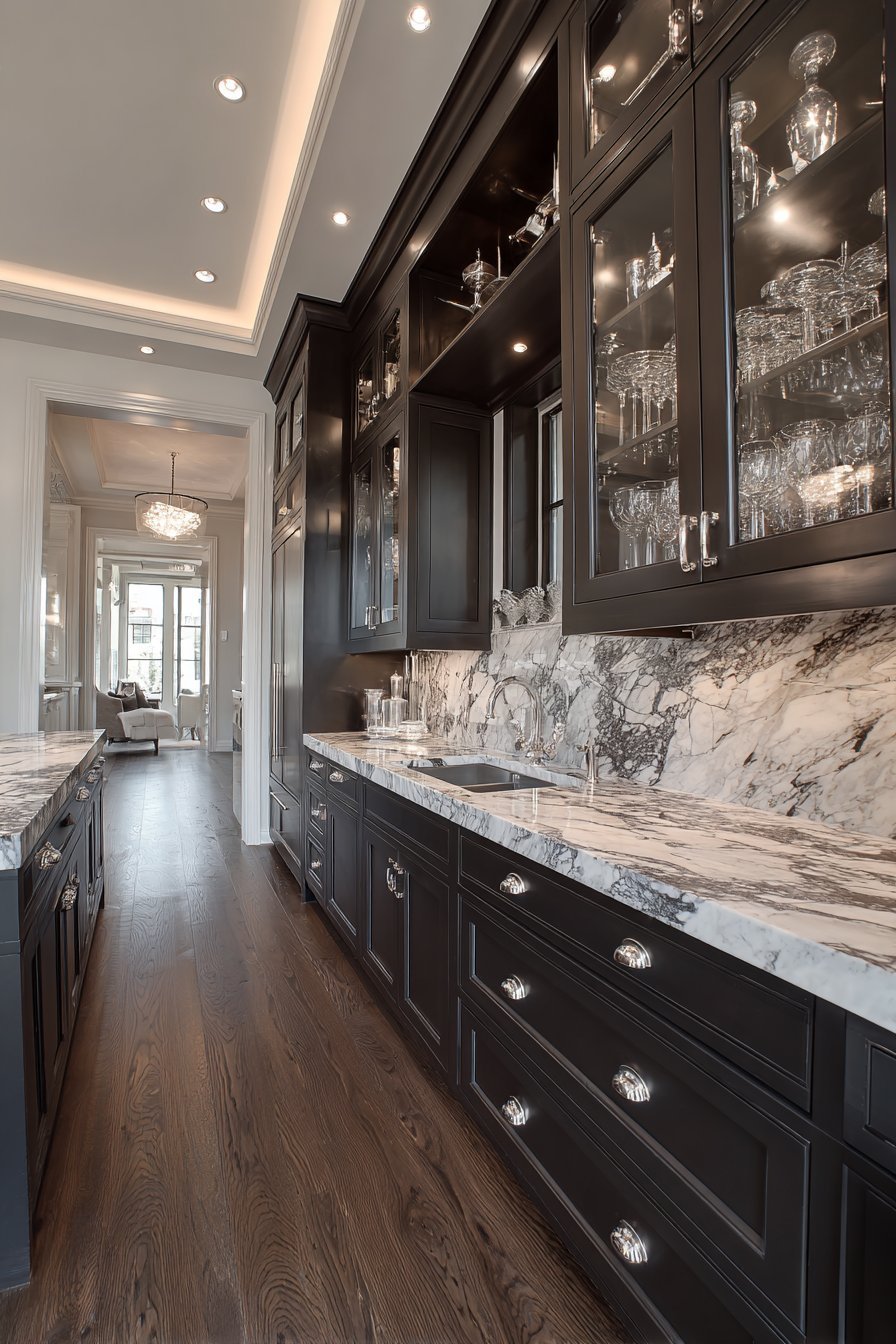
Hardwood flooring continues seamlessly from the main kitchen. This material continuity creates visual flow between spaces. Recessed lighting combines with under-cabinet LED strips for layered illumination. The lighting design ensures adequate task lighting while highlighting displayed items. This refined space bridges kitchen and dining areas perfectly.
Key Design Tips:
- Use glass-front cabinets to display fine dishware while protecting from dust
- Choose dramatic countertop patterns for smaller spaces where they won’t overwhelm
- Install a prep sink in butler’s pantries for beverage and serving preparation
- Combine recessed and under-cabinet lighting for comprehensive illumination
- Select lower cabinet colors that anchor and ground the space
- Extend flooring from adjacent rooms for visual continuity
6. Furniture-Style Island Centerpiece
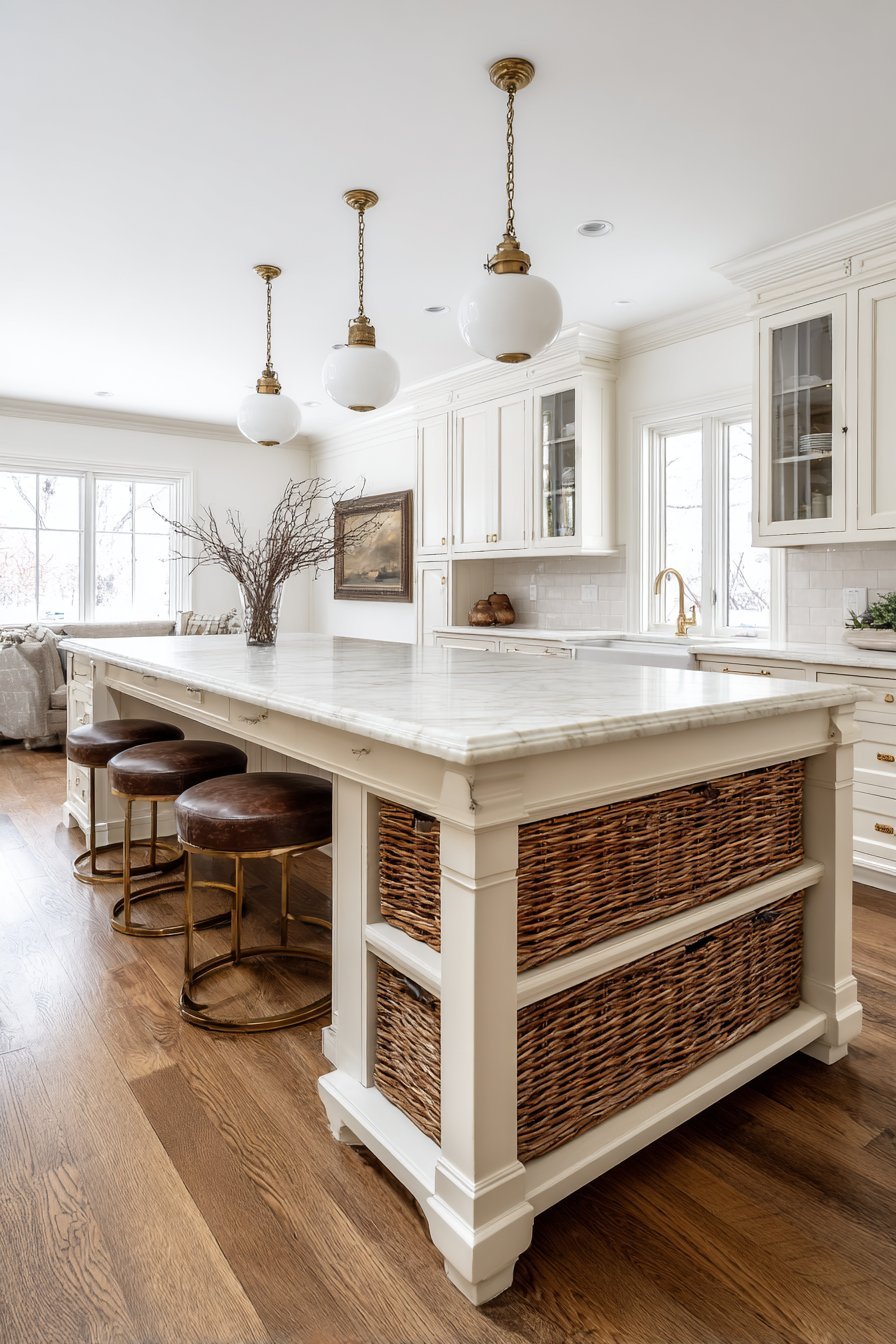
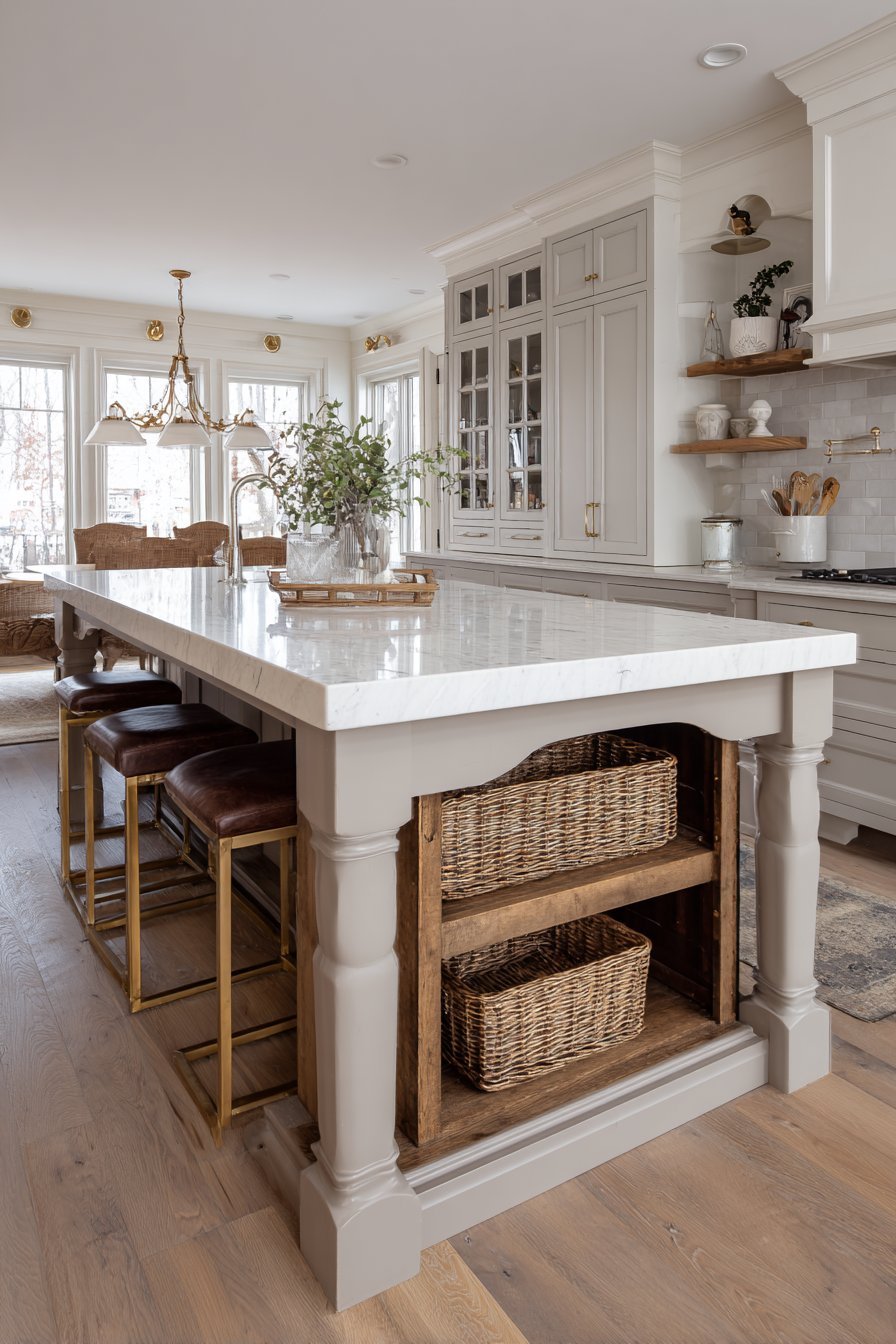
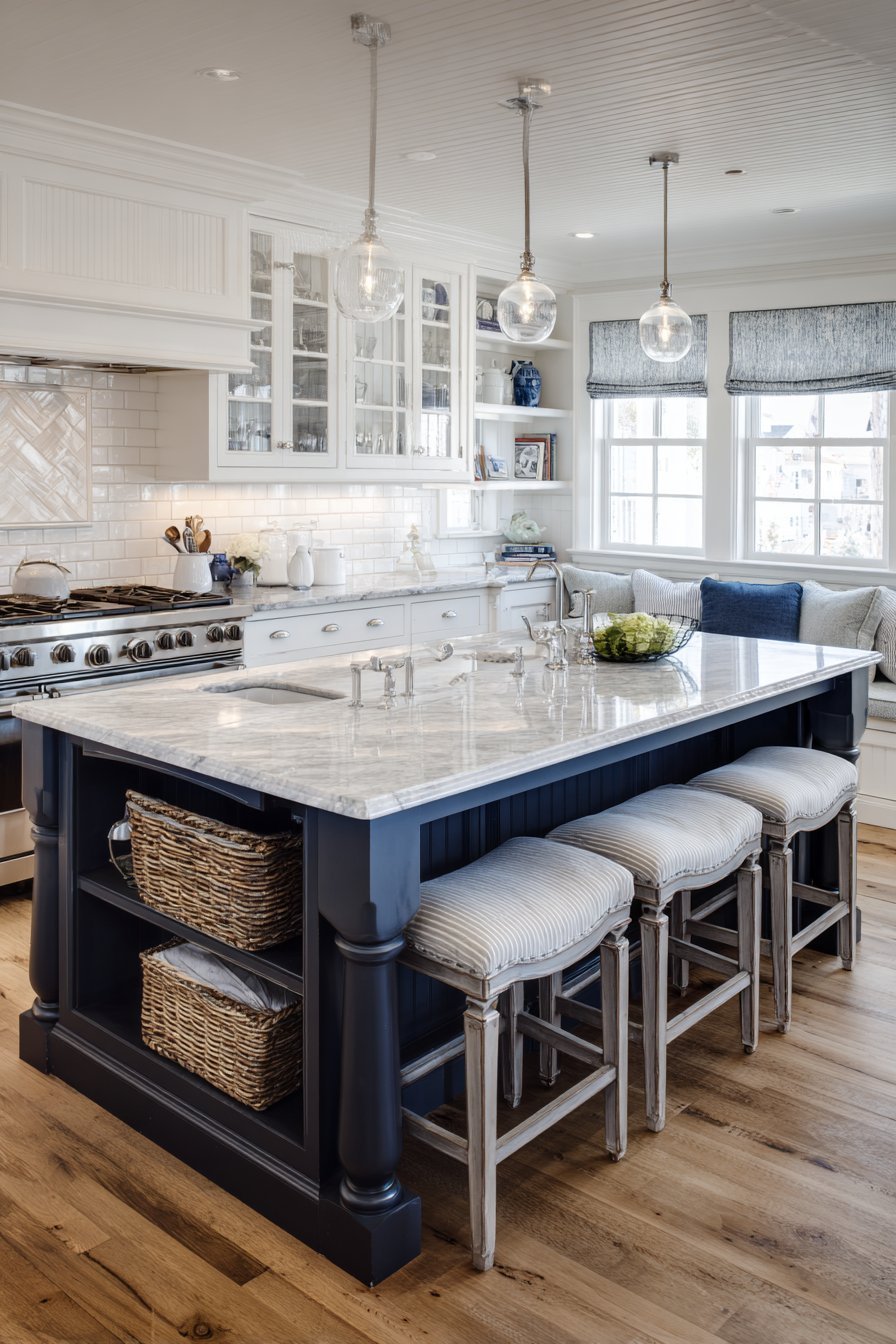
An eight-foot island featuring furniture-style legs becomes the kitchen’s focal point. Turned legs and decorative corbels create architectural interest. The thick marble countertop displays ogee edge detail. This traditional edge profile adds refined elegance. A lower open shelf displays woven baskets for practical storage.
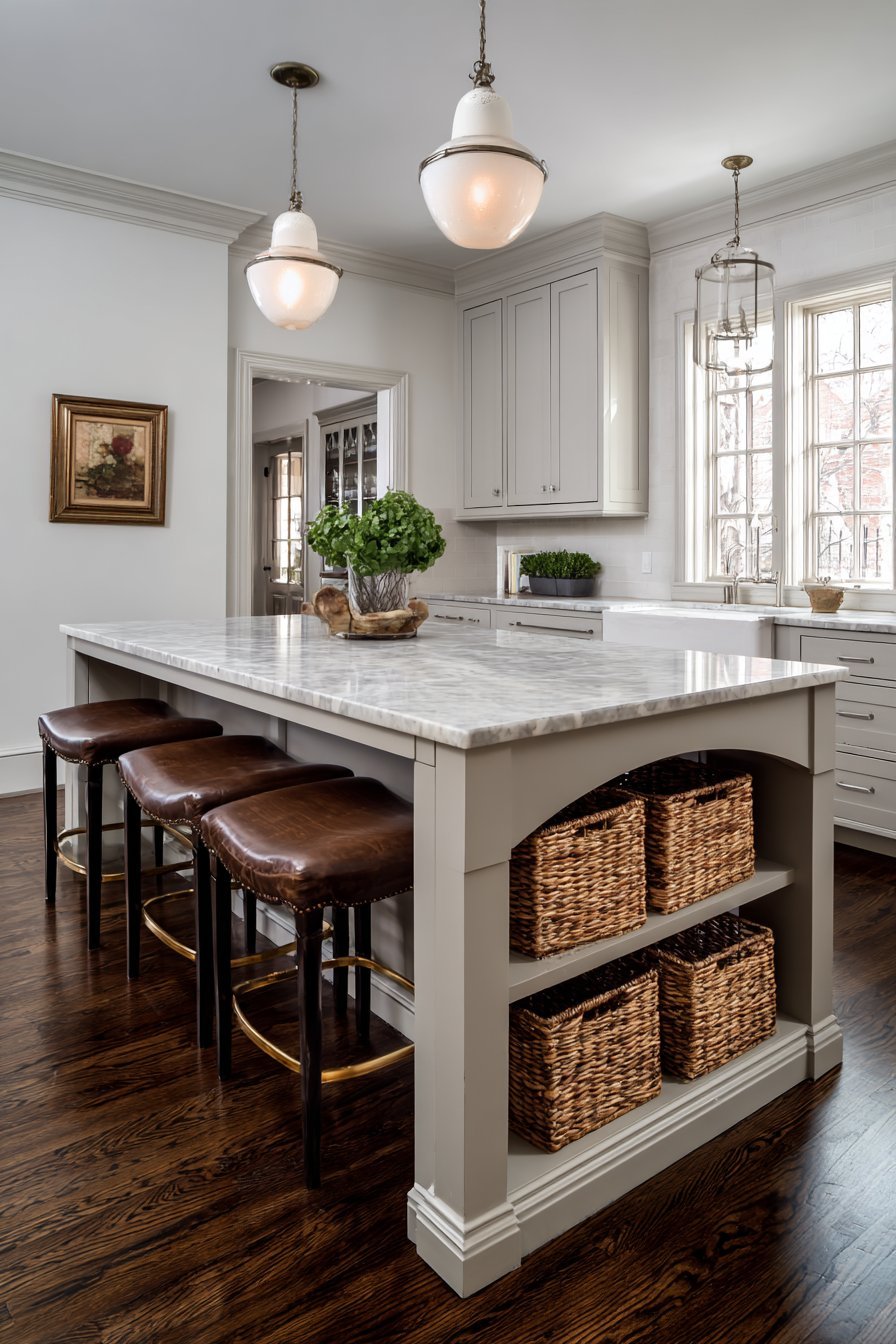
The island is painted in warm greige tone. This sophisticated neutral complements surrounding white perimeter cabinets beautifully. Three industrial-style stools with leather seats provide comfortable seating. Brass footrests on the stools add functional detail. Decorative corbels support the countertop overhang gracefully.
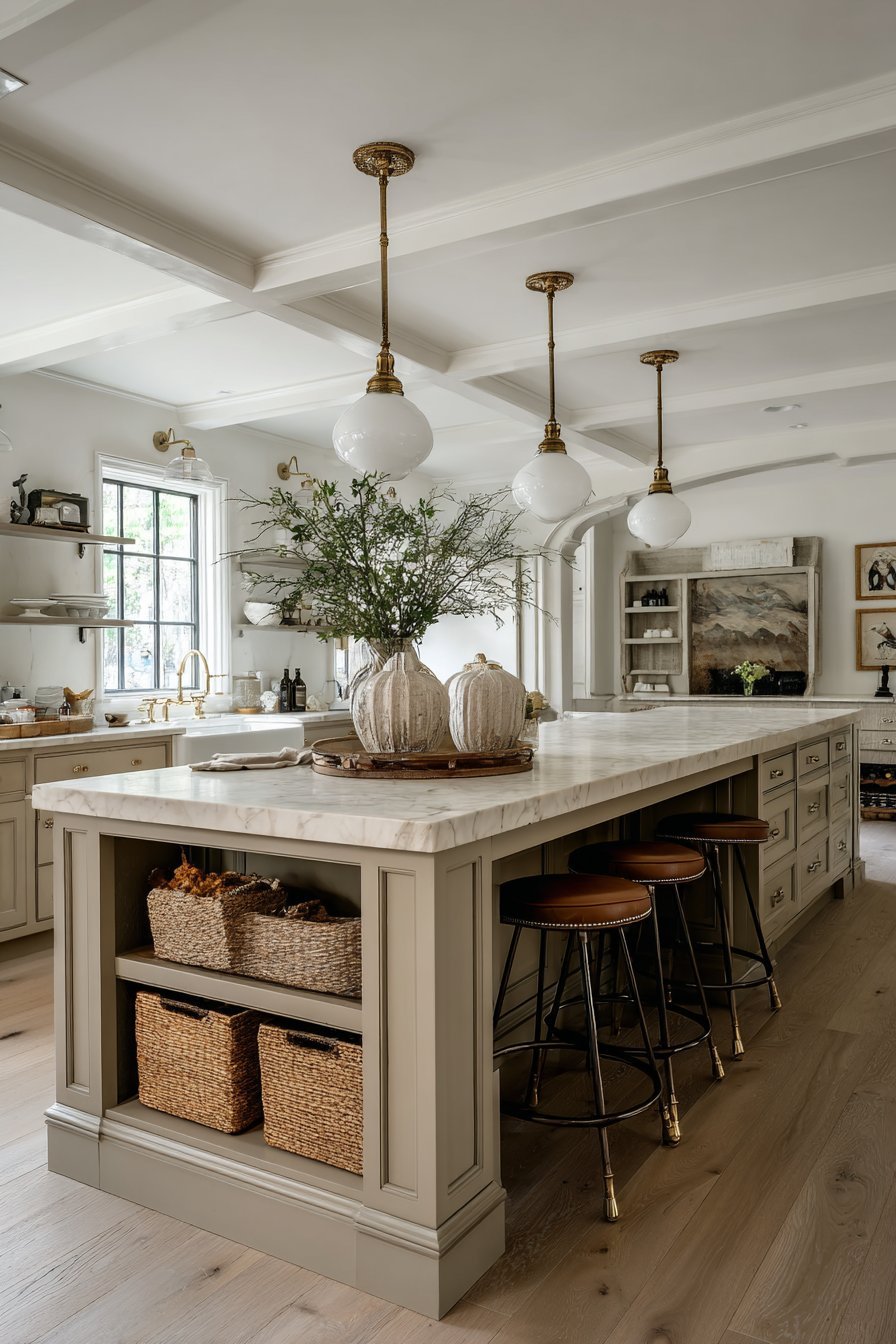
Three schoolhouse-style pendant lights with opal glass shades hang at varied heights above. The staggered arrangement creates visual rhythm. Natural light from nearby windows creates subtle shadows. These shadows emphasize architectural details and material textures throughout. The island successfully combines form and function.
Key Design Tips:
- Choose furniture-style legs instead of solid bases for lighter visual weight
- Paint islands in colors different from perimeter cabinets for focal interest
- Select substantial countertop edges like ogee for traditional styling
- Hang pendant lights at varied heights for dynamic visual appeal
- Add open shelving on islands for decorative and functional storage
- Install proper structural support for countertop overhangs and seating
7. Handmade Tile Backsplash Beauty
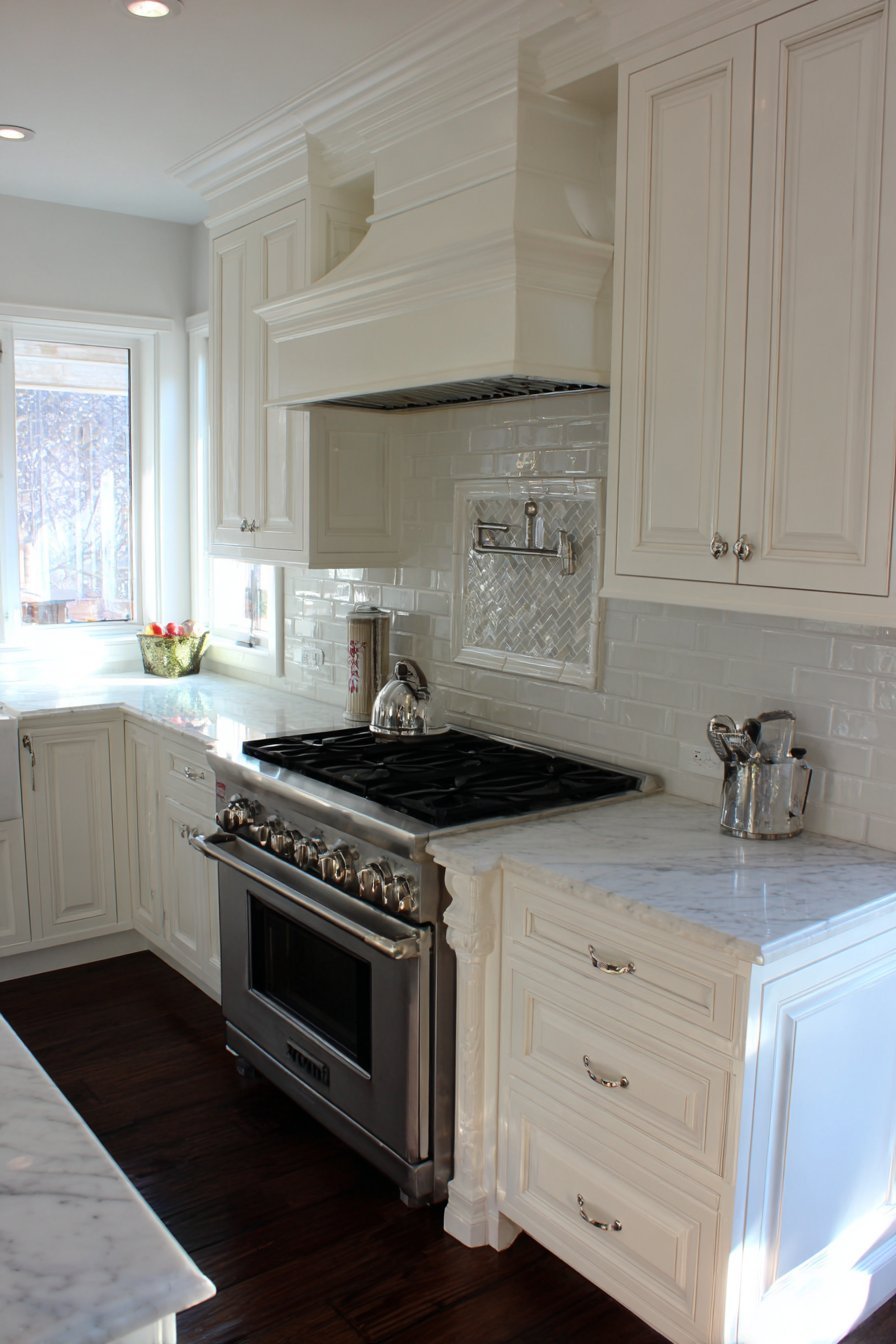
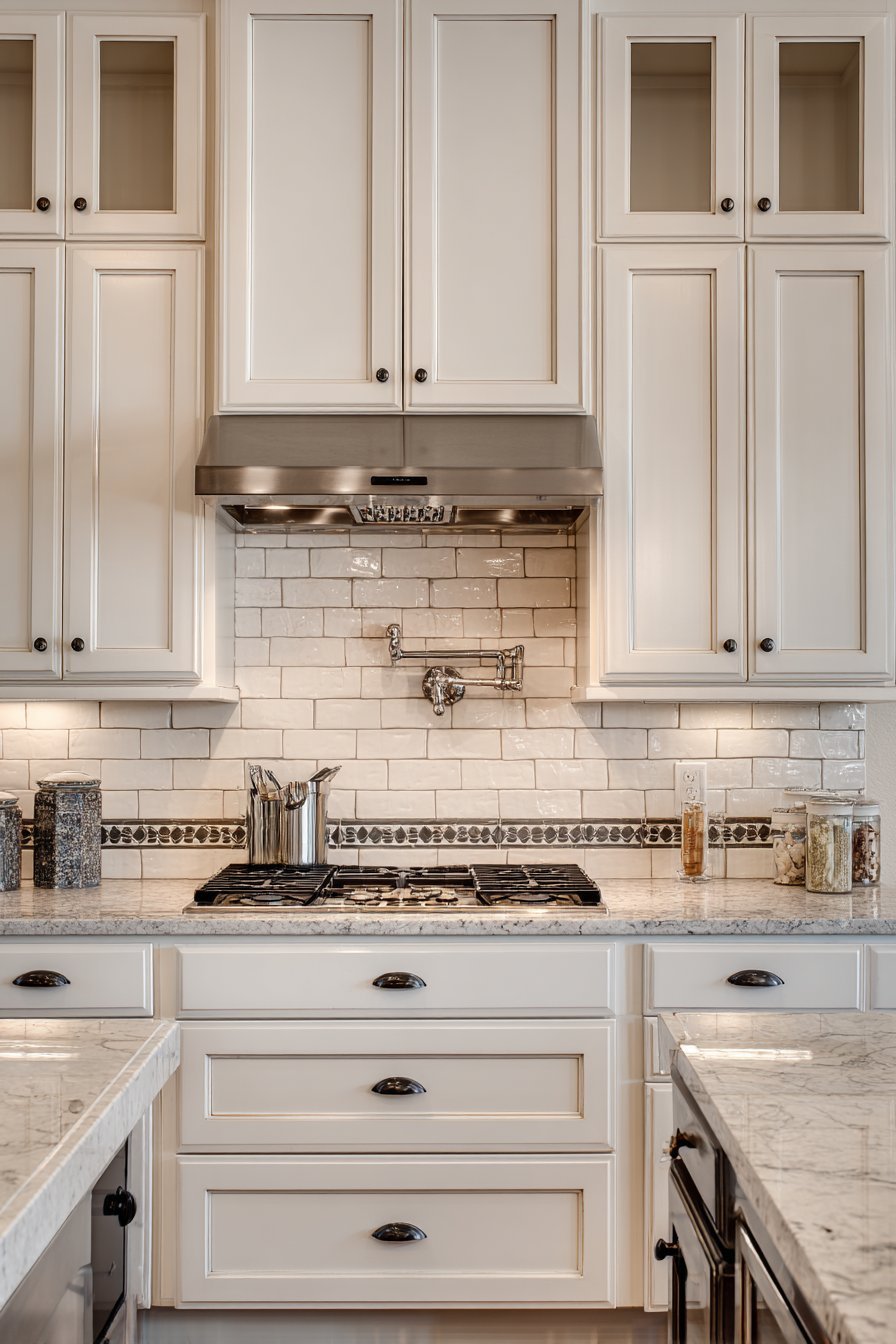
Handmade ceramic tiles in soft cream color create an artisanal backsplash. Subtle glaze variations give each tile unique character. The tiles are installed in classic subway pattern. Dark grey grout lines define each tile beautifully. This contrast highlights the craftsmanship.
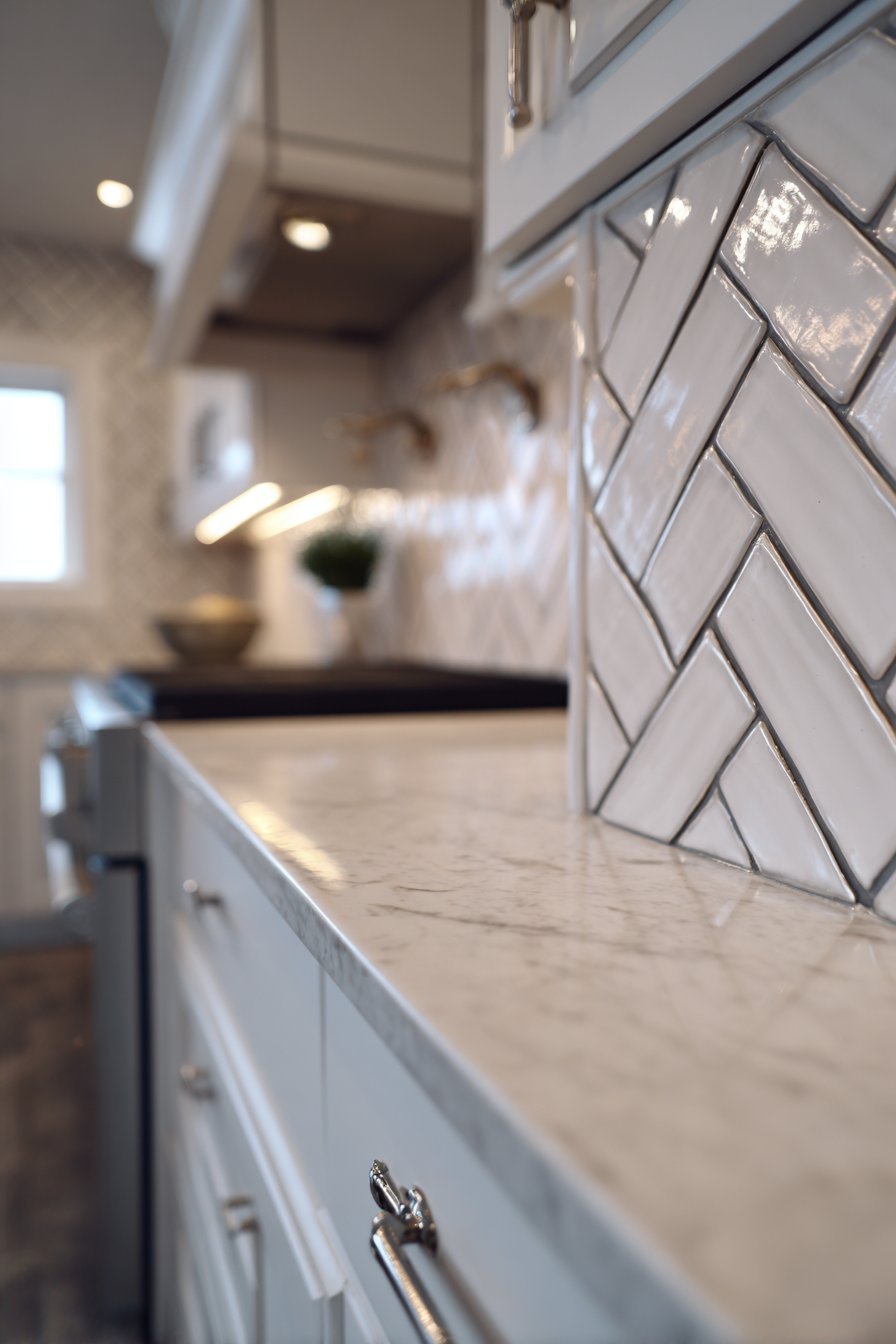
The backsplash extends to the ceiling between white shaker cabinets. This full-height installation creates dramatic impact. Honed Carrara marble countertops provide cool contrast. A decorative tile border at counter height adds visual interest. The simple geometric pattern breaks up the vertical expanse.
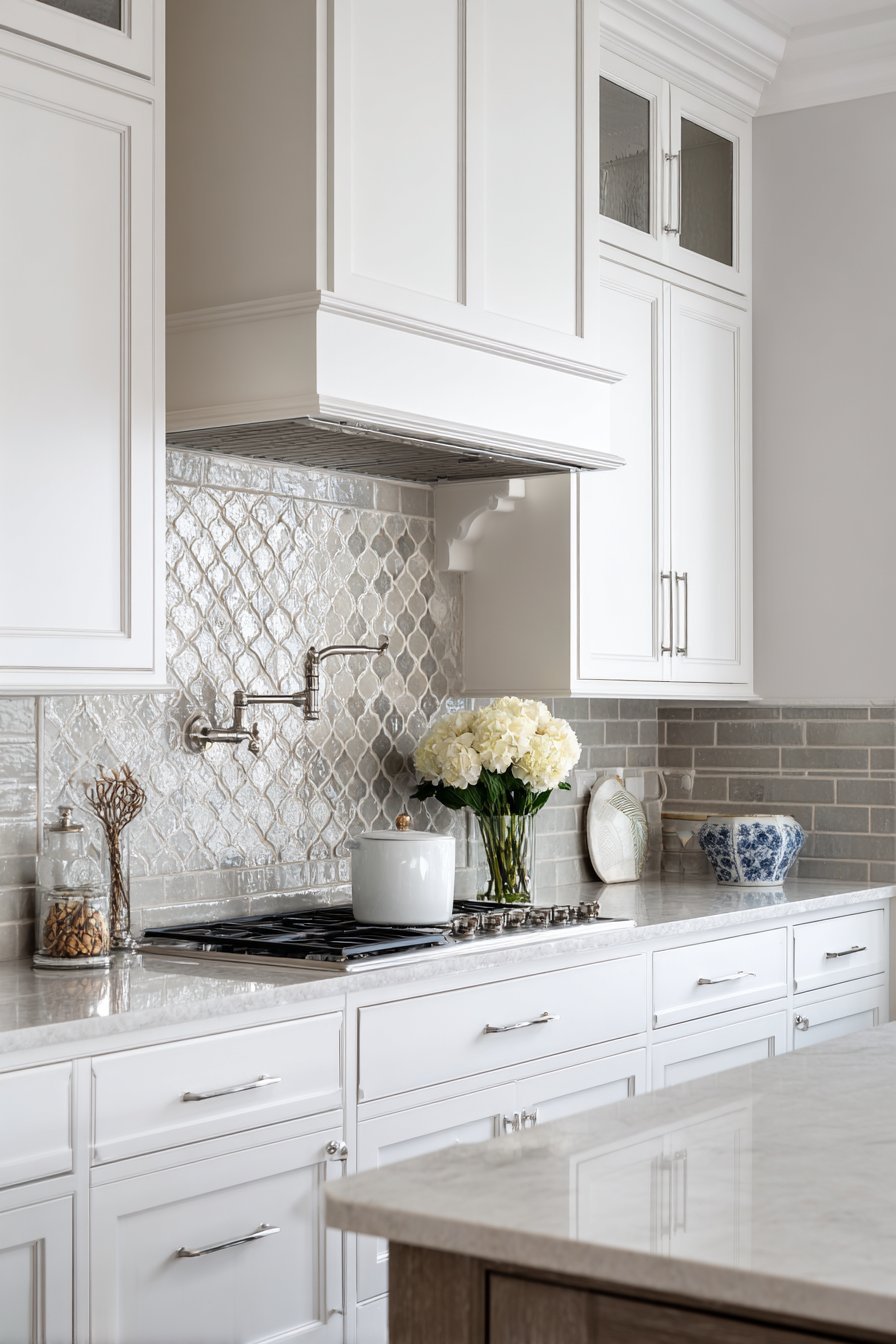
Polished chrome fixtures maintain the classic aesthetic. A traditional pot filler above the range adds convenience and style. Natural daylight highlights the handcrafted tile quality. The varied glazing creates depth and dimension. This detail-focused design celebrates traditional craftsmanship.
Key Design Tips:
- Invest in handmade tiles for unique character and artisanal quality
- Use darker grout colors to emphasize individual tiles and pattern
- Extend backsplashes to ceiling height for contemporary classic styling
- Add decorative tile borders to break up large expanses
- Choose pot fillers for ranges where traditional cooking happens frequently
- Combine matte tile with polished stone for textural contrast
8. Warm Cherry Wood Traditional Kitchen
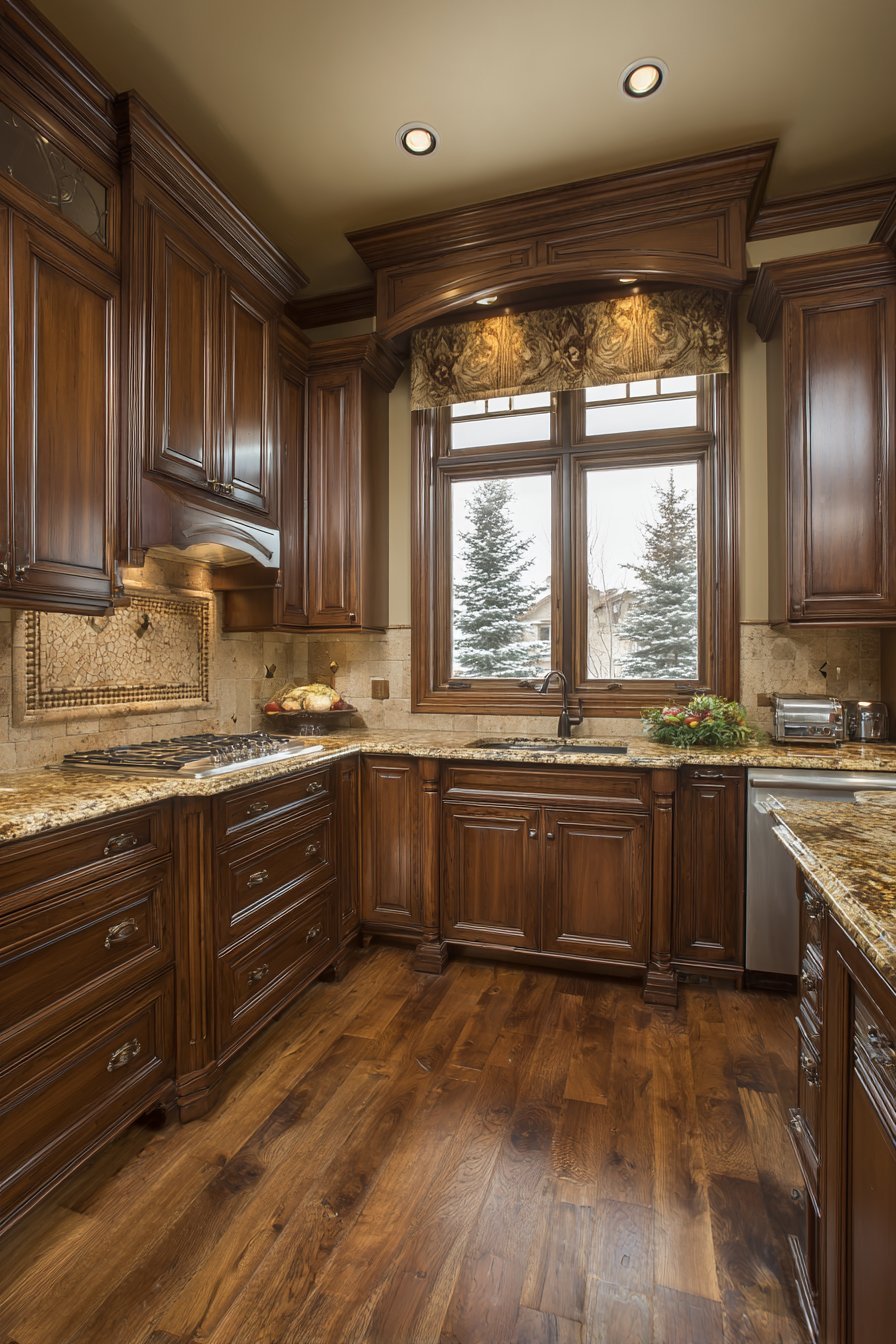
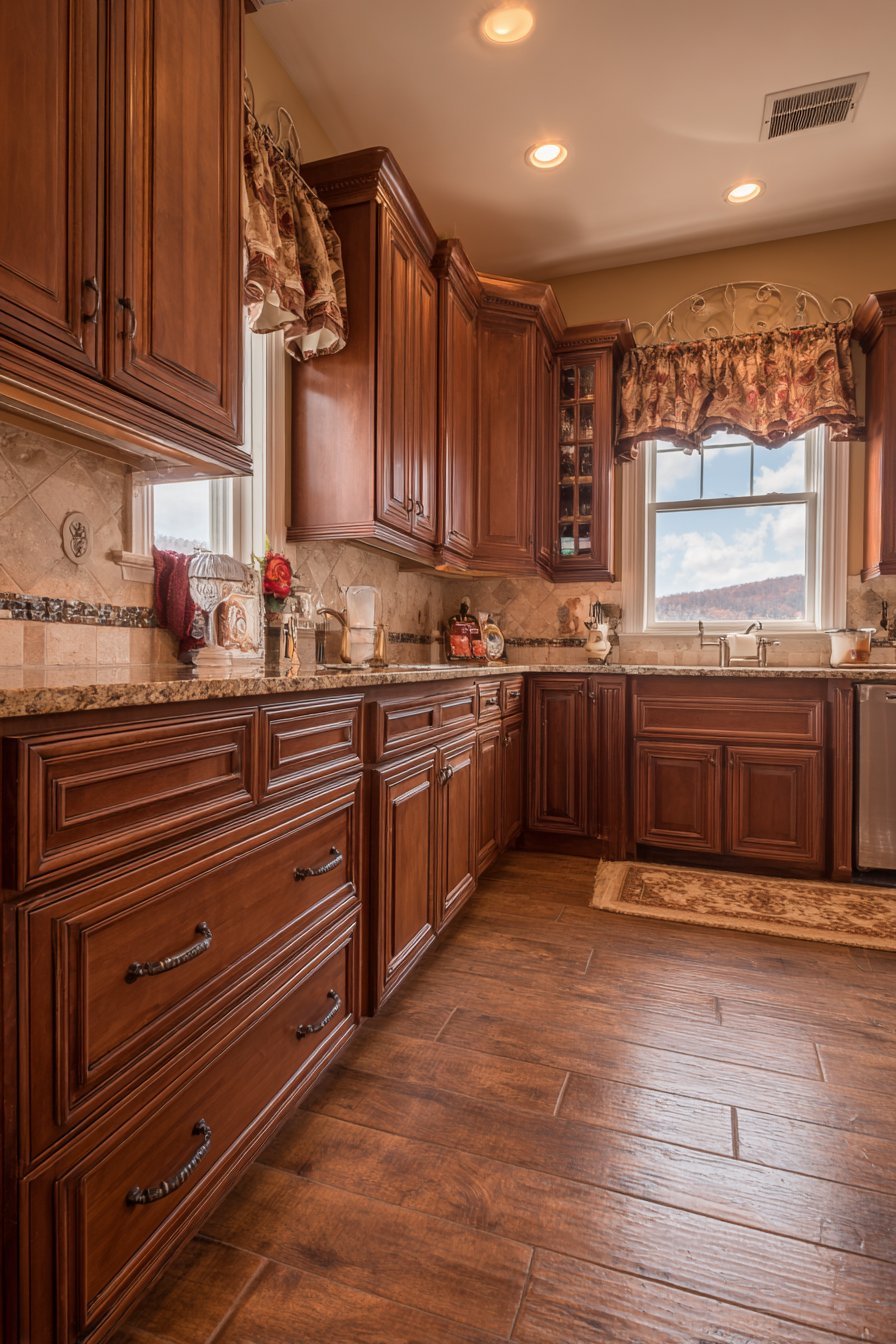
Rich cherry wood cabinetry with cathedral arch raised panel doors creates warmth. The natural wood grain patterns add organic beauty. Antique bronze hardware complements the wood tones perfectly. Traditional detailing throughout emphasizes quality craftsmanship. The doors showcase impressive joinery skills.
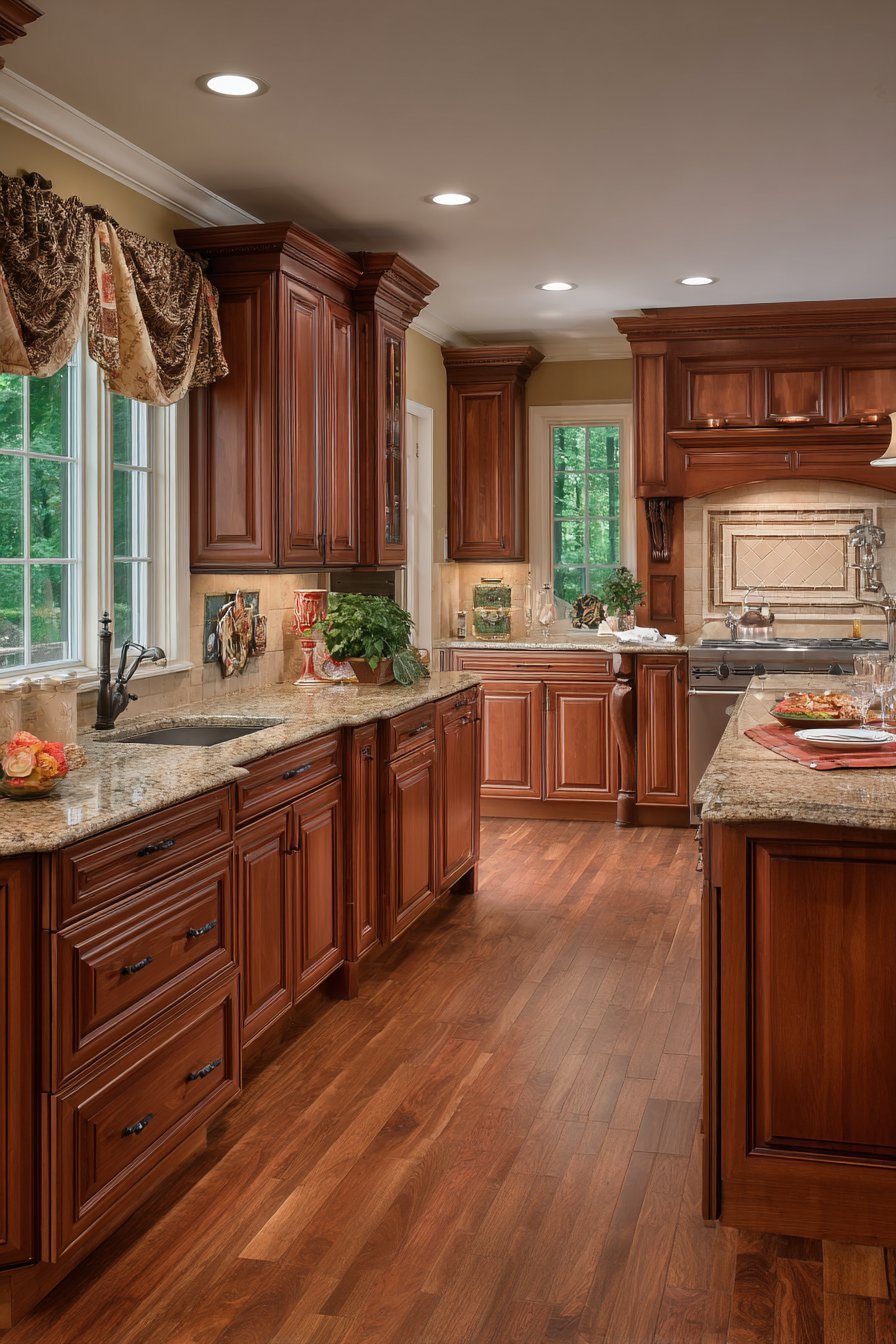
Granite countertops in warm brown tones feature amber and cream flecks. These natural variations complement the cherry cabinetry beautifully. A decorative tile backsplash in earth tones creates visual interest. The window above the sink is dressed with balloon valances. This traditional treatment adds softness.
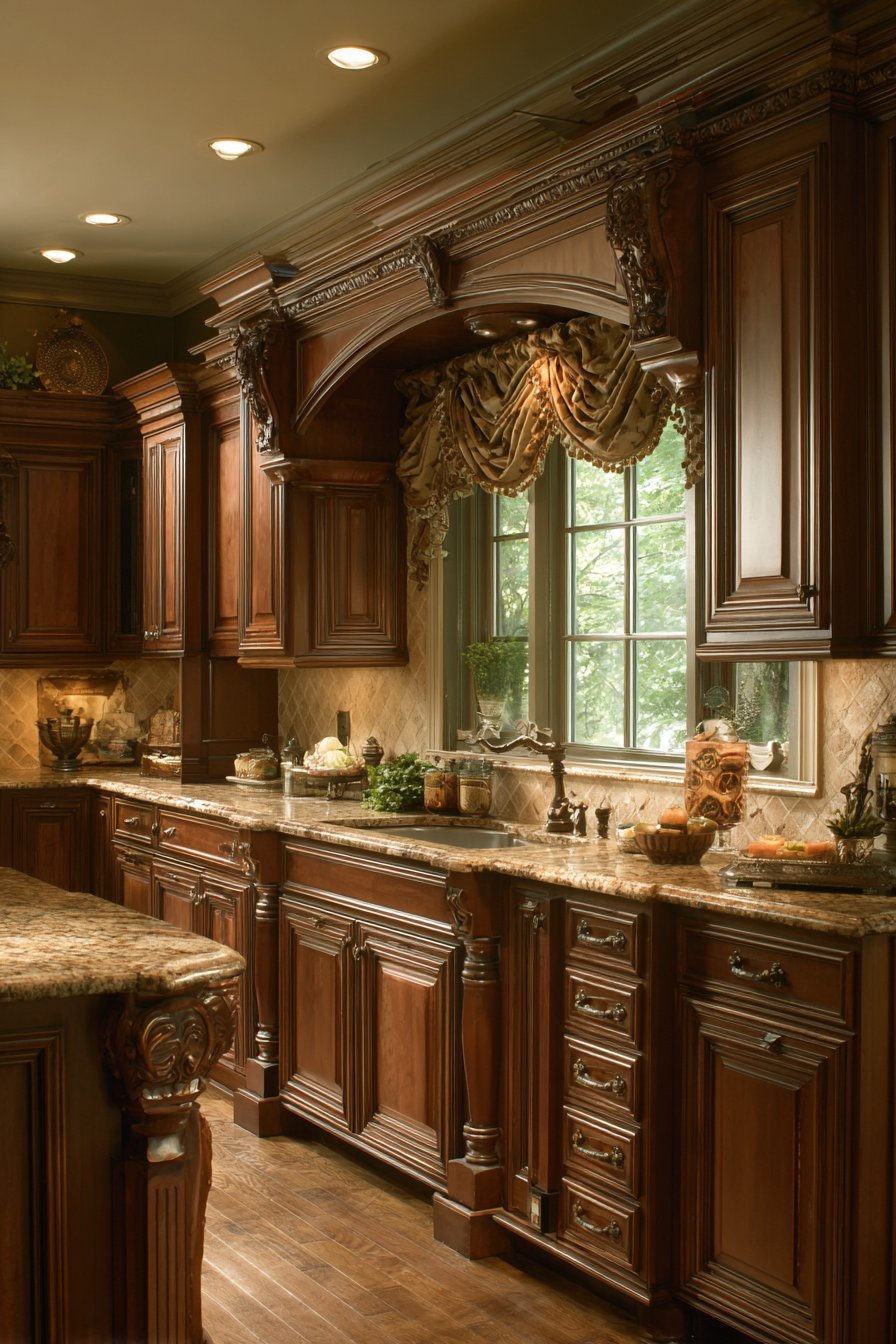
Crown molding and furniture-style base trim complete the classic look. These architectural elements add refinement and finish. Recessed can lights provide general illumination. Under-cabinet lighting offers task-specific brightness. The warm, traditional aesthetic creates a welcoming environment for cooking and gathering.
Key Design Tips:
- Select wood species like cherry that develop richer patina over time
- Choose granite with warm undertones to complement wood cabinetry
- Install crown molding and detailed base trim for finished appearance
- Layer ambient, task, and accent lighting for complete illumination
- Use cathedral arch panels for maximum traditional impact
- Consider antique bronze finishes to enhance warm wood tones
9. Dedicated Coffee and Beverage Station
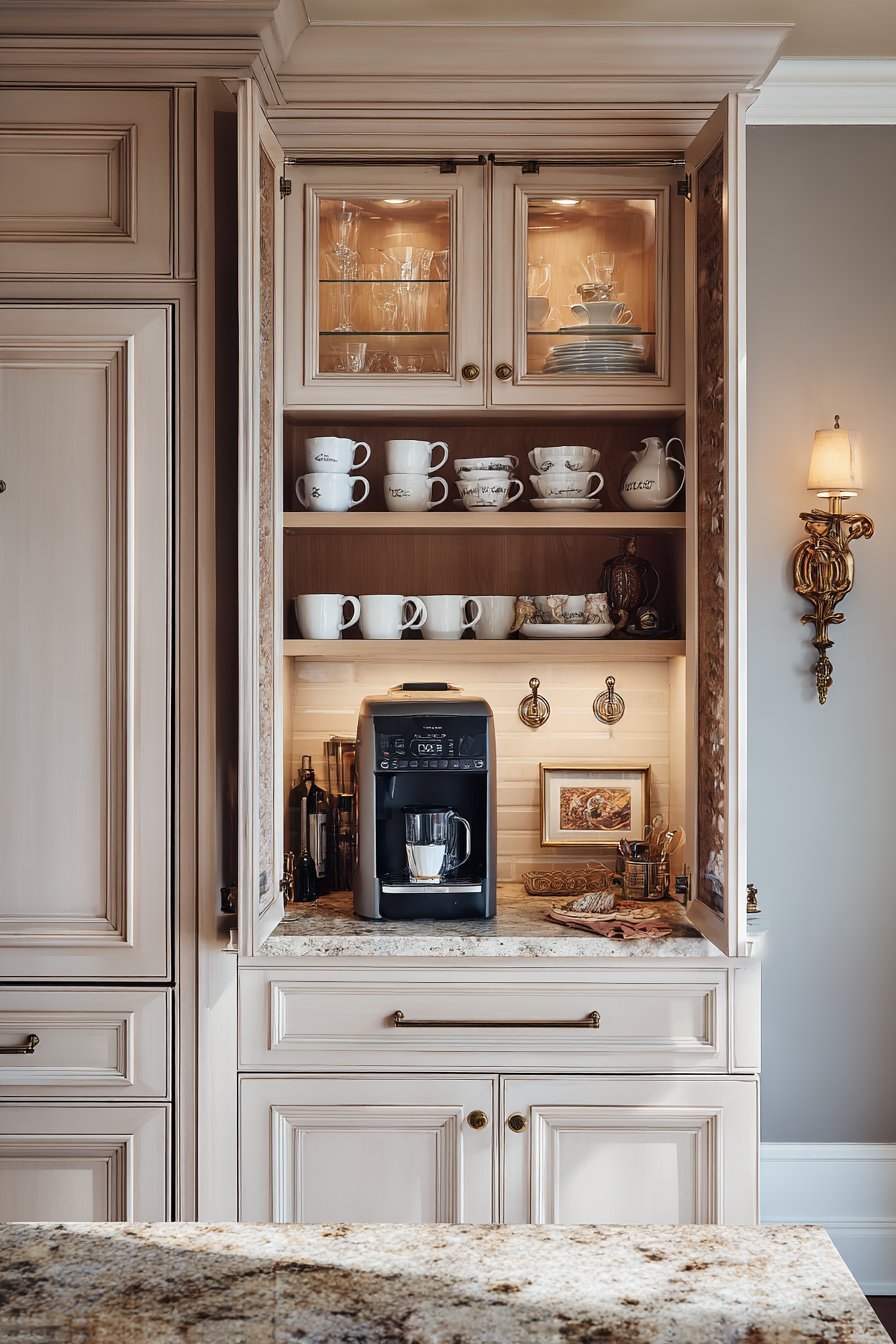
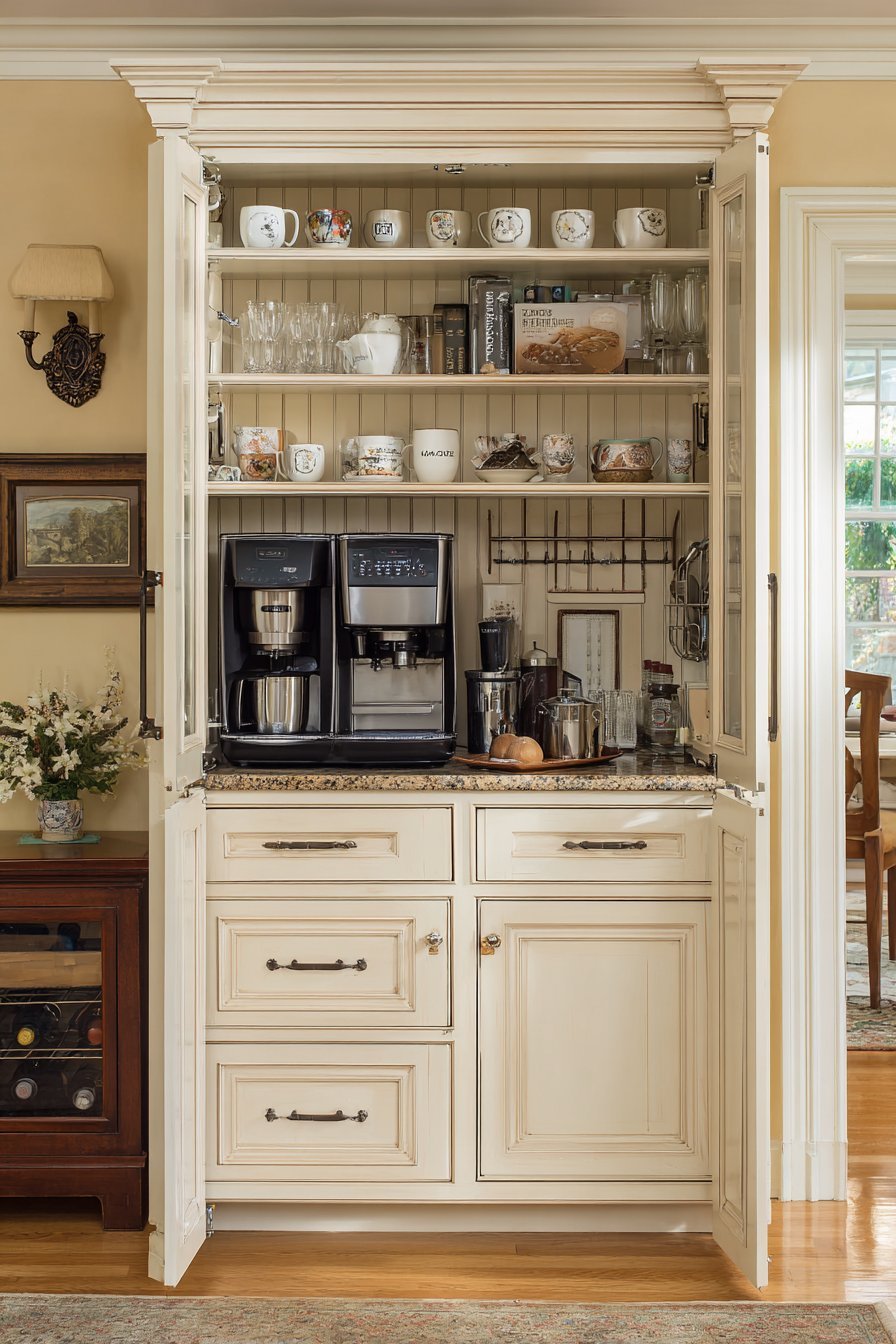
A built-in coffee maker anchors this dedicated beverage station. Open shelving displays coffee mugs and glassware attractively. Organization meets aesthetics beautifully. A small wine refrigerator below provides chilled beverage storage. White beadboard backing adds traditional texture.
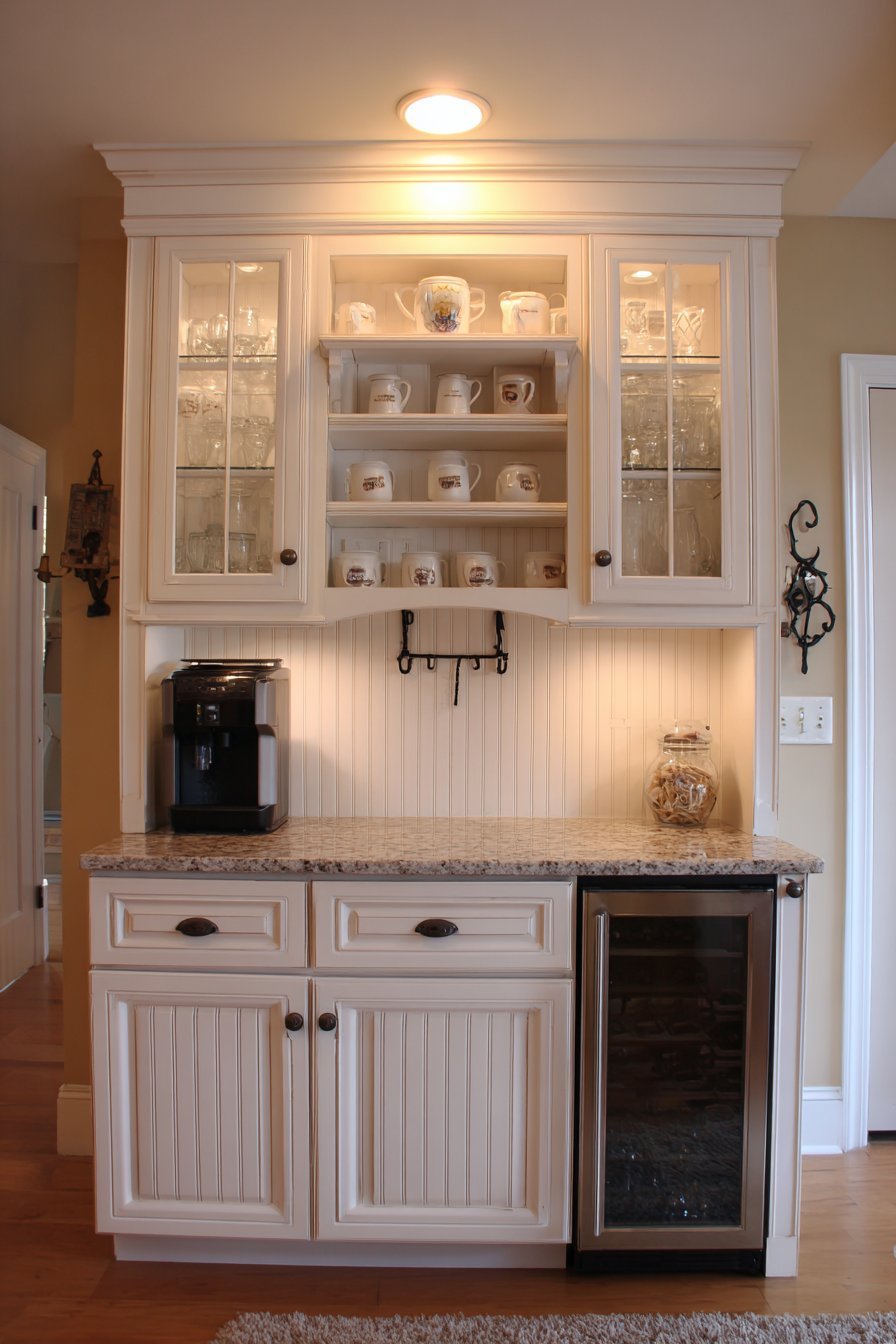
A small section of granite countertop provides practical workspace. Brass hooks underneath the open shelves hold coffee accessories. This vertical storage maximizes limited space efficiently. Traditional cabinet doors with glass inserts flank the station. These doors maintain visual consistency while allowing glimpses inside.
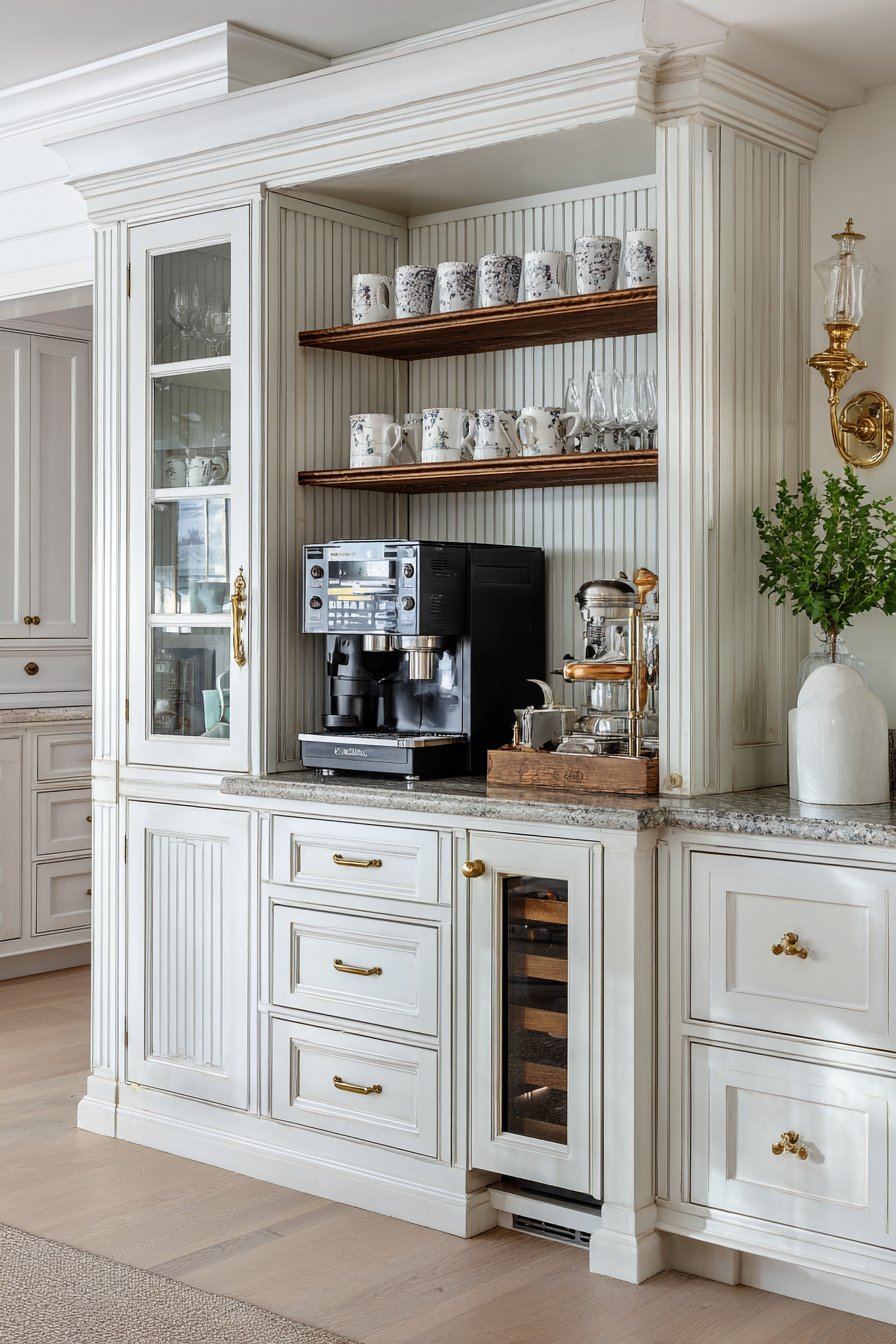
A vintage-style wall sconce provides focused task lighting. The fixture adds period-appropriate charm. This thoughtfully planned station keeps beverage preparation organized and accessible. The dedicated space prevents counter clutter elsewhere. Every element serves both function and beauty.
Key Design Tips:
- Create dedicated beverage stations to organize morning routines efficiently
- Install wine refrigerators in convenient locations for entertaining ease
- Use beadboard backing on open shelving for traditional texture
- Add hooks under shelves for hanging mugs and accessories
- Choose built-in coffee makers to save valuable counter space
- Install dedicated task lighting for beverage preparation areas
10. Classic Window Treatment with Farmhouse Sink
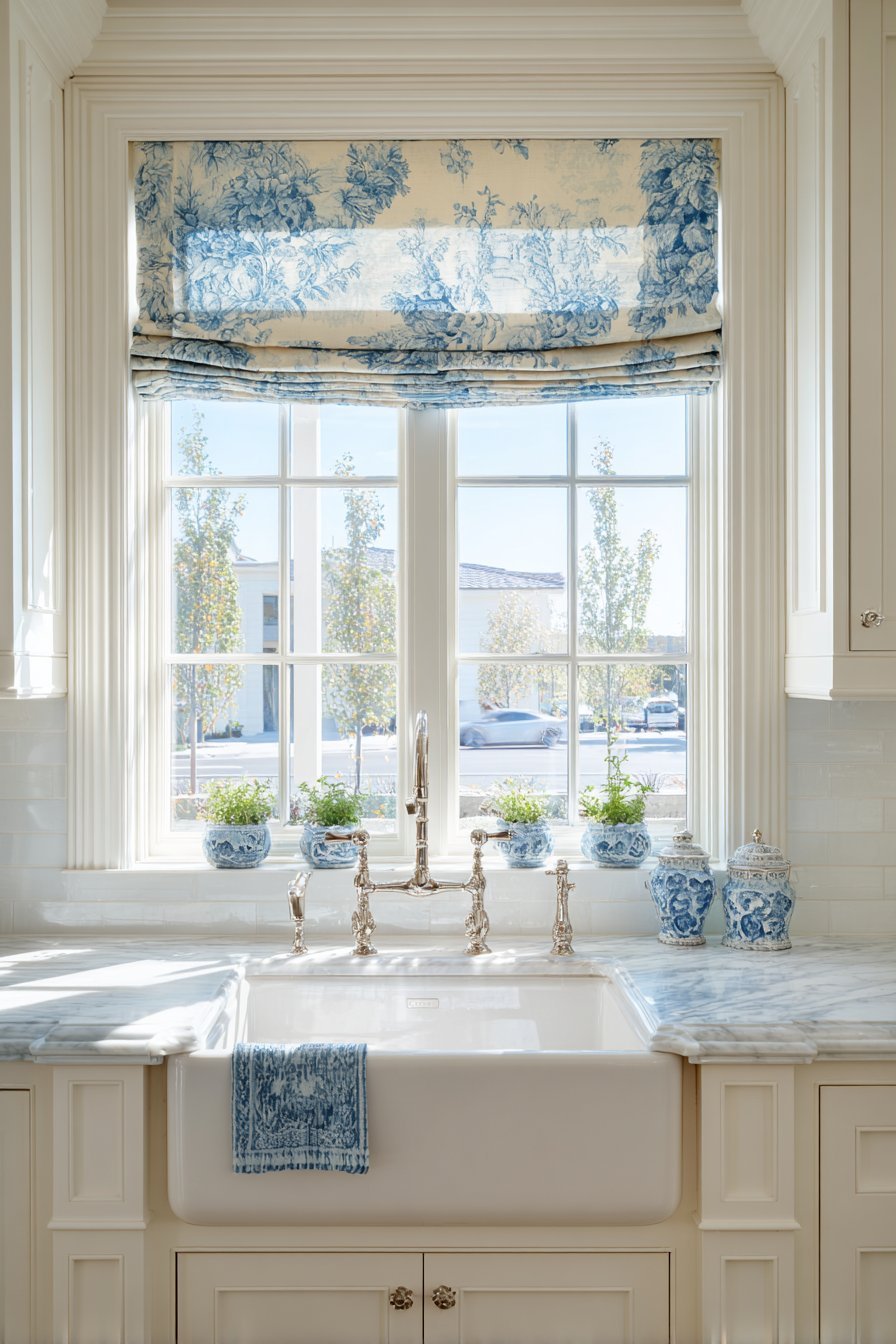
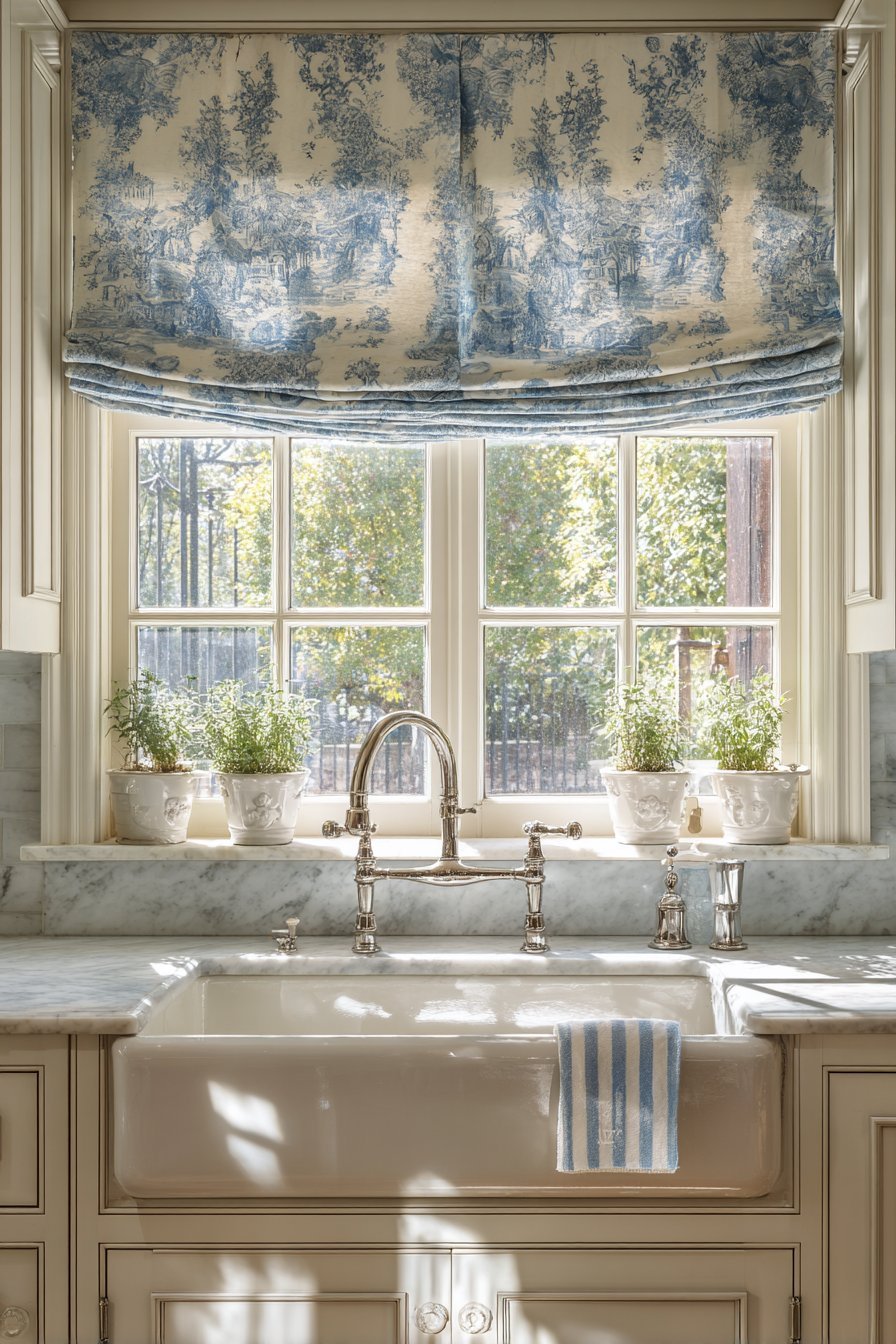
A large farmhouse-style sink positions beneath a wide window. The substantial basin accommodates large pots easily. A tailored Roman shade in timeless toile pattern dresses the window. The soft blue and cream colors create serene beauty. The fabric pattern tells visual stories.
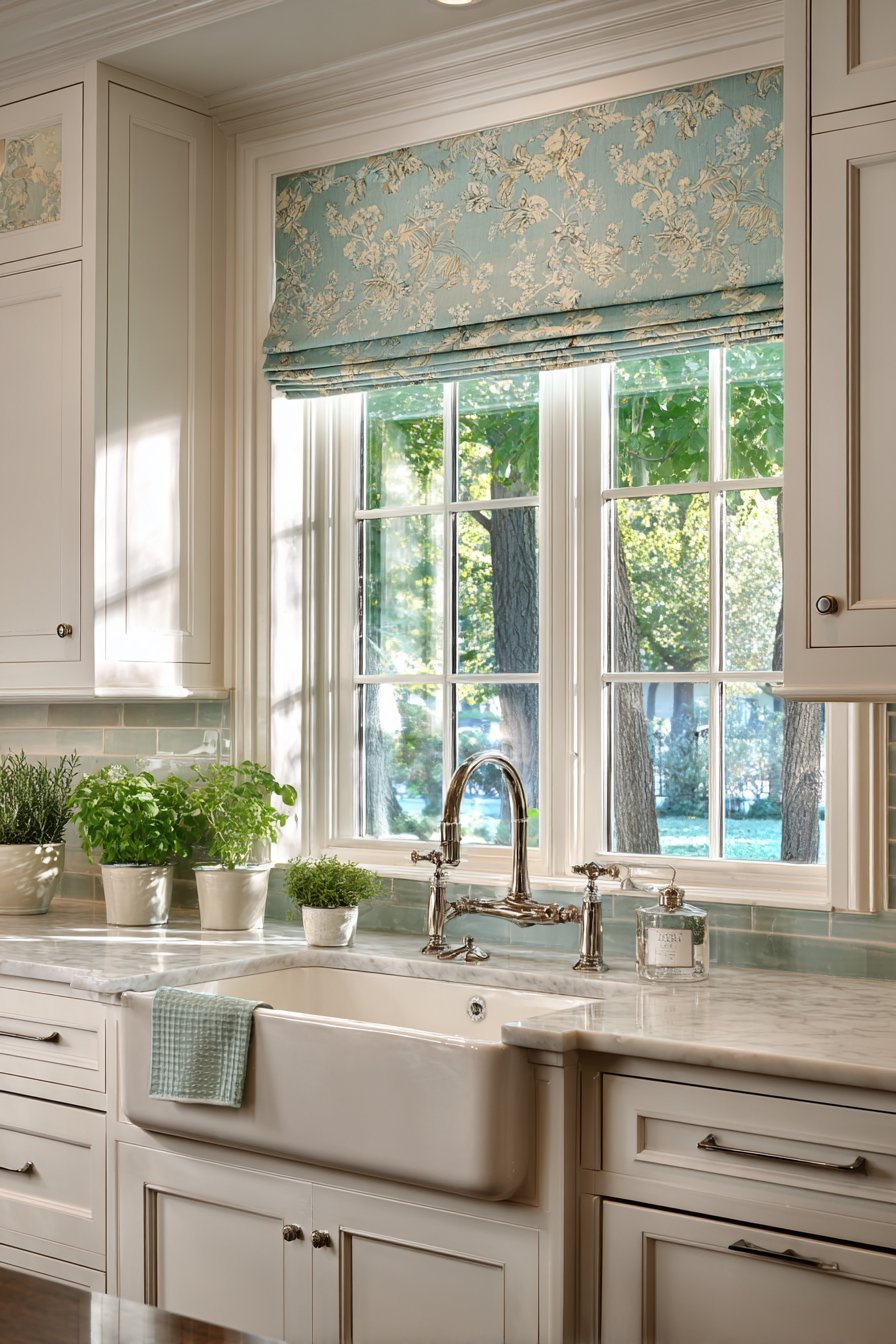
Crisp white window trim matches surrounding shaker cabinetry perfectly. A polished nickel gooseneck faucet arcs gracefully over the sink. The matching soap dispenser maintains cohesive styling. Honed white marble countertops provide durable work surfaces. Small potted herbs line the windowsill.
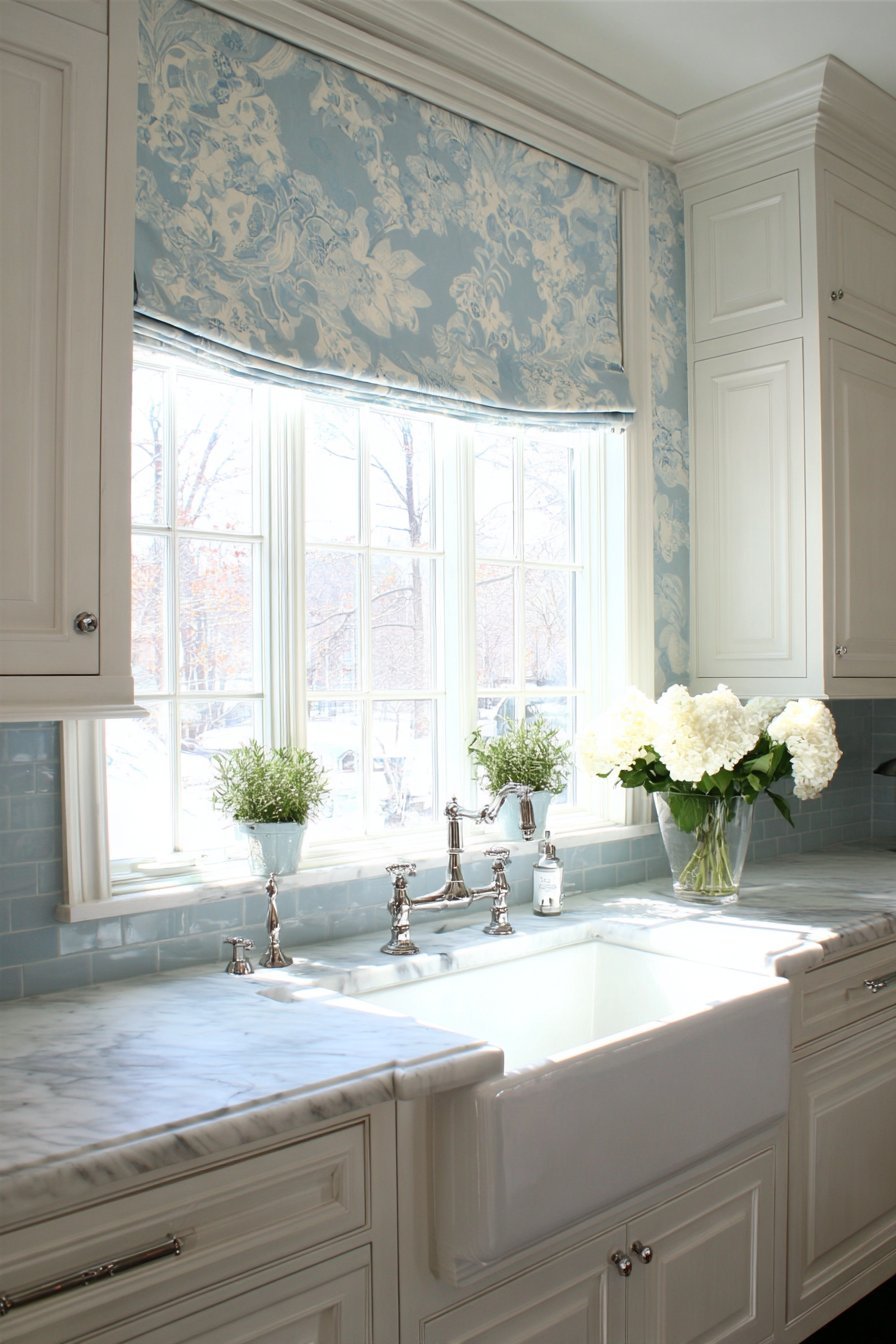
Natural afternoon light streams through the window. The illumination creates gentle reflections on polished fixtures. This classic vignette combines beauty with functionality. The window location makes dishwashing more pleasant. Fresh herbs remain within easy reach during cooking.
Key Design Tips:
- Position sinks beneath windows whenever possible for natural light
- Choose classic fabric patterns like toile that remain timeless
- Select farmhouse sinks in fireclay for authentic period styling
- Group herbs on sunny windowsills for culinary convenience
- Match faucet and accessory finishes for cohesive appearance
- Use Roman shades for tailored window coverage that filters light
11. Rustic Farmhouse Dining Integration
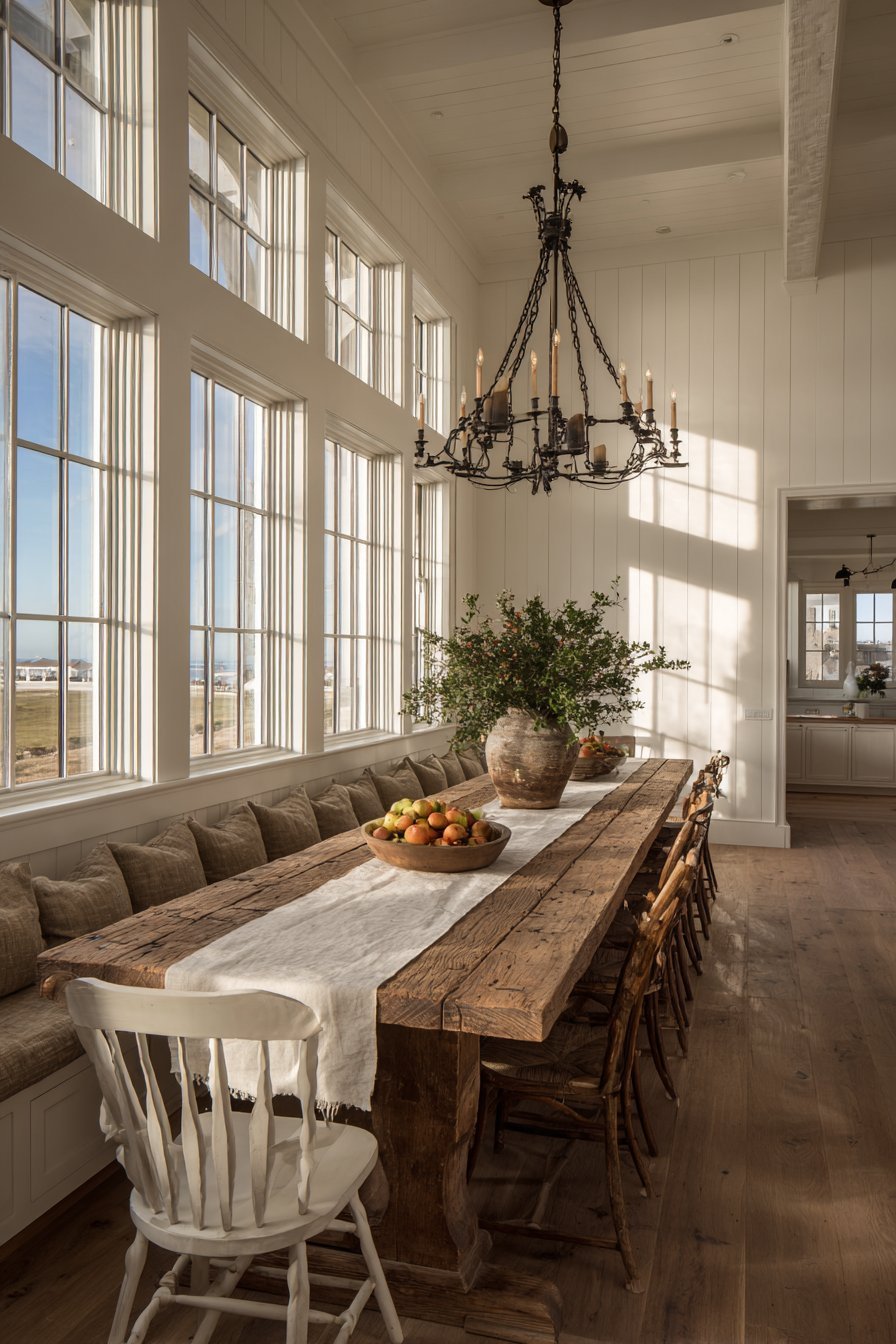
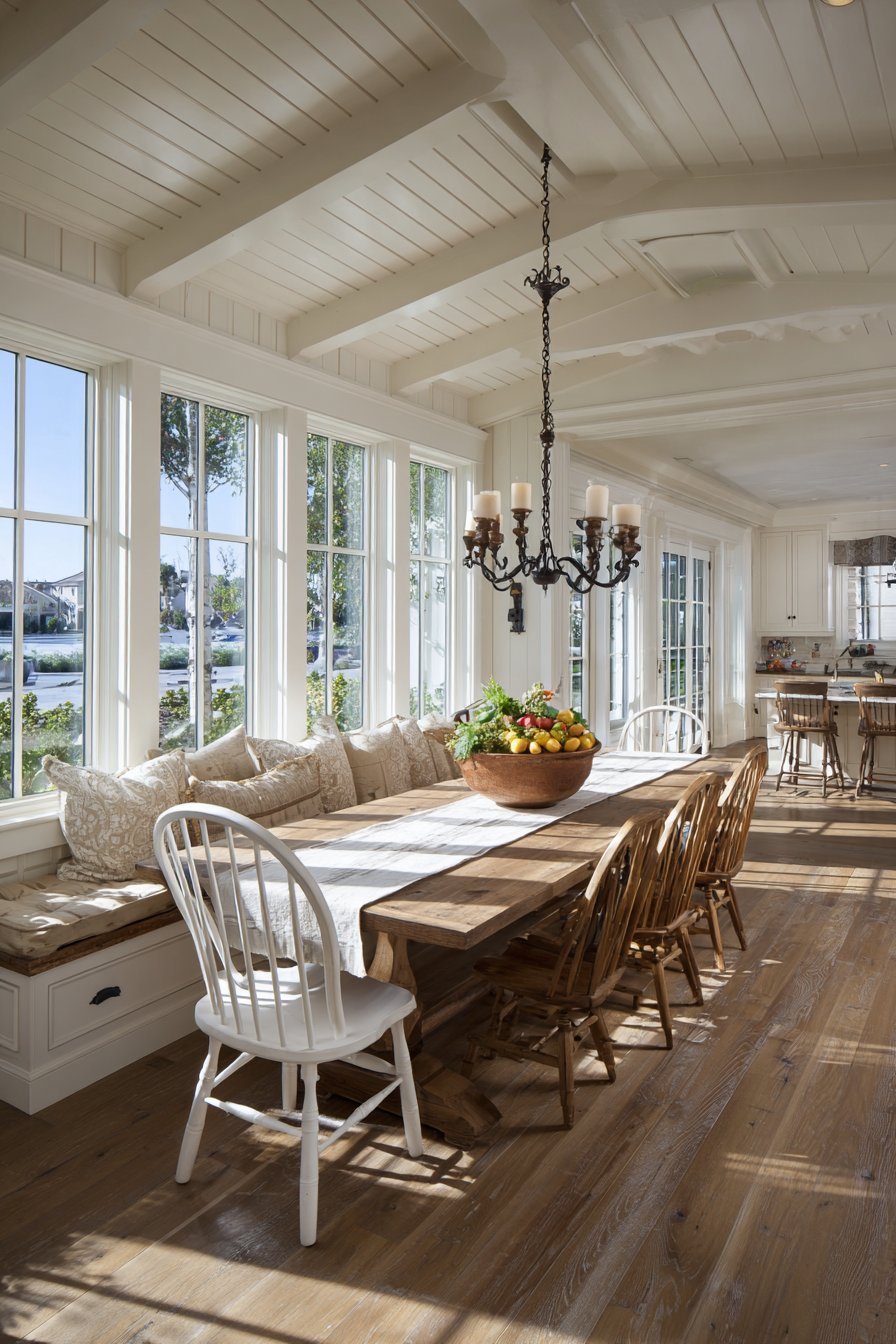
A substantial farmhouse table in reclaimed pine anchors the dining area. Visible grain patterns and natural color variations add character. The table’s history shows in its weathered beauty. Mixed seating combines white ladder-back chairs with natural Windsor styles. This eclectic approach feels collected over time.
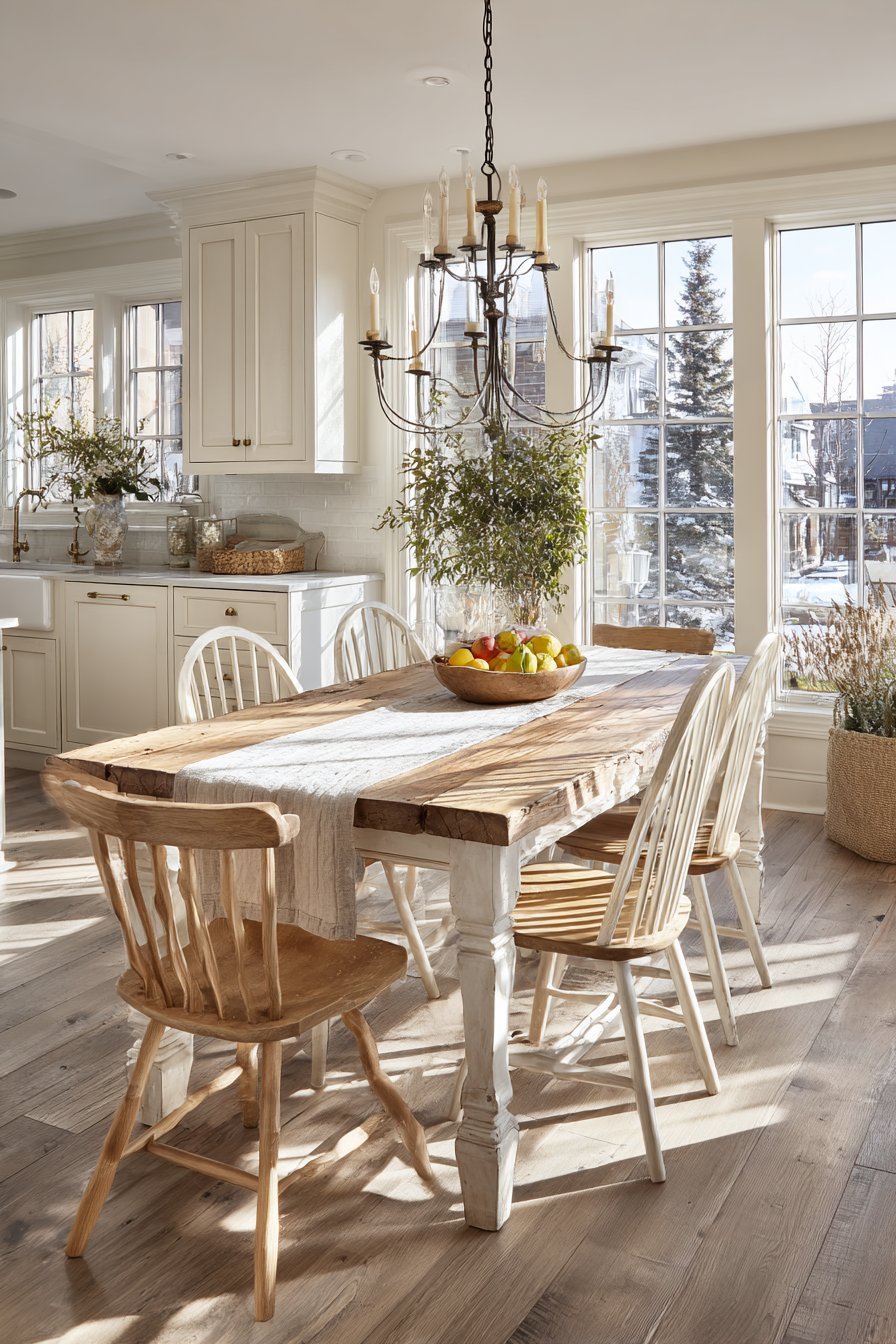
A simple linen table runner in natural flax centers the table. A vintage dough bowl filled with seasonal fruit provides organic centerpiece beauty. Above, a classic iron chandelier with cream candle sleeves provides ambient lighting. The fixture adds traditional elegance.
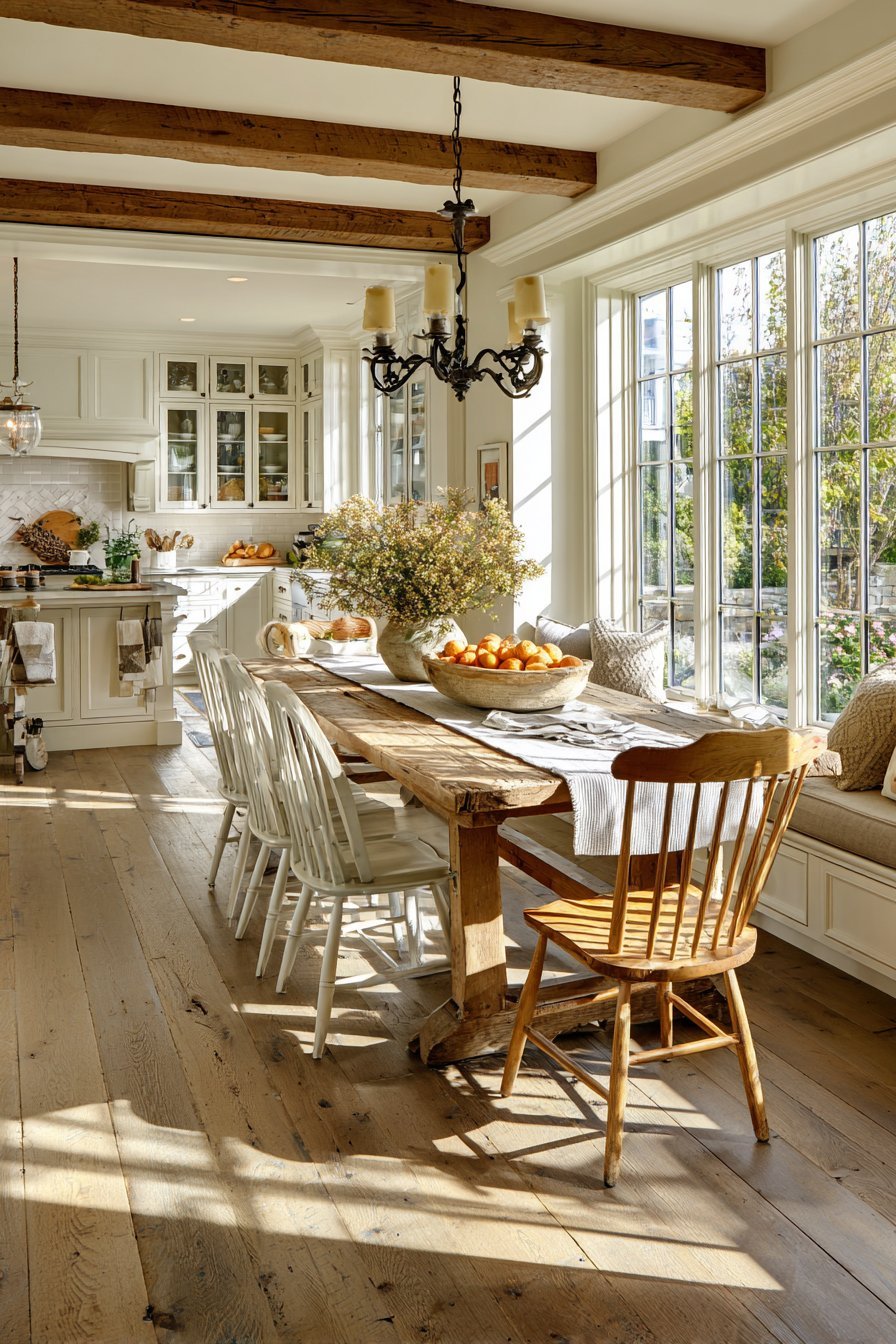
Wide-plank hardwood flooring and white wainscoting create traditional foundation. Large windows with divided lights allow abundant natural light. The soft daylight creates natural shadows. These shadows highlight varied wood tones and textures throughout. The space invites lingering conversations.
Key Design Tips:
- Choose reclaimed wood tables for character and sustainability
- Mix chair styles for collected, lived-in aesthetic appeal
- Use natural fiber table runners for texture without hiding beautiful wood
- Select iron chandeliers with candle-style lights for traditional ambiance
- Install wide-plank flooring to enhance farmhouse character
- Maximize natural light with large windows and minimal window treatments
12. Dove Grey Glass-Front Cabinet Display
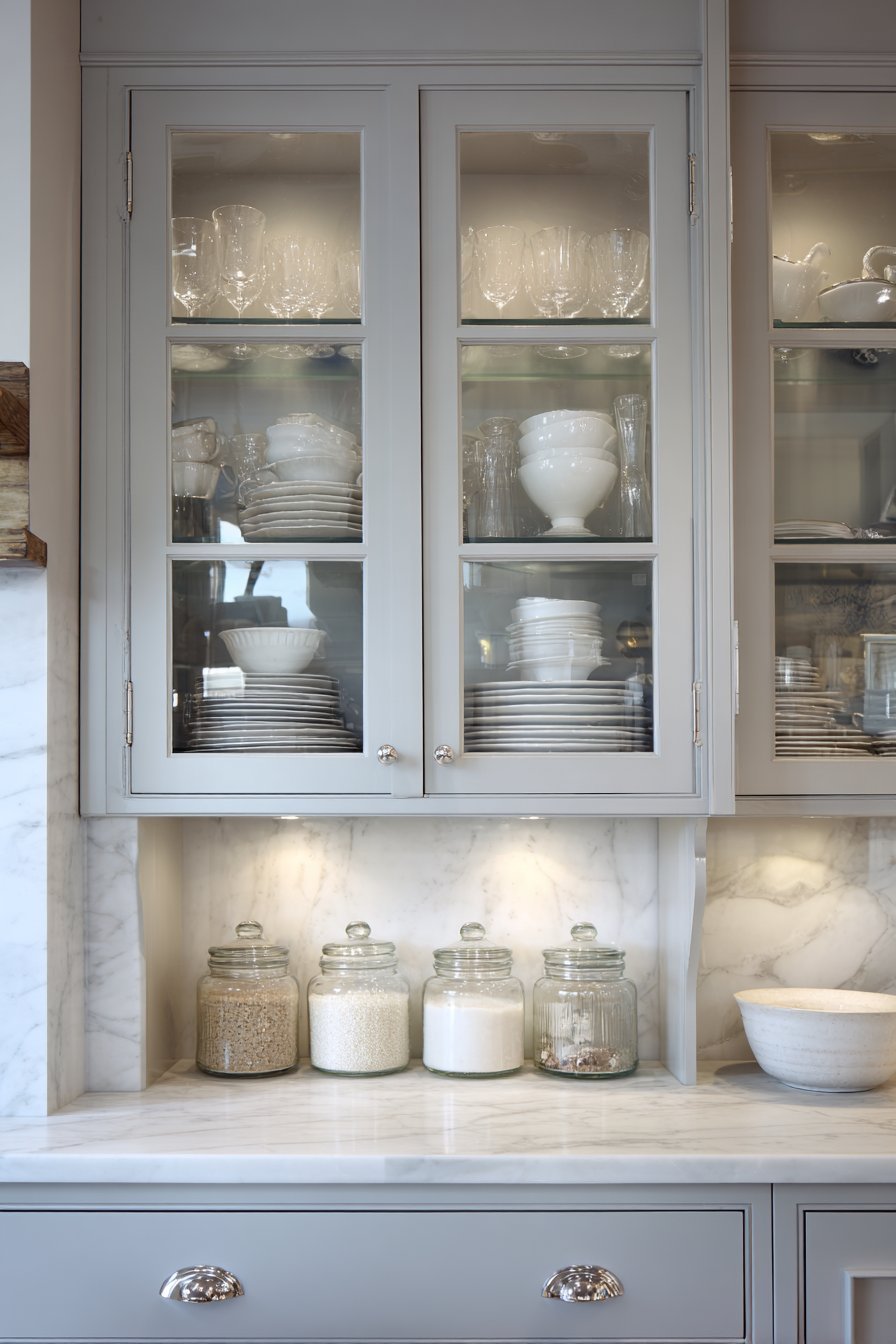
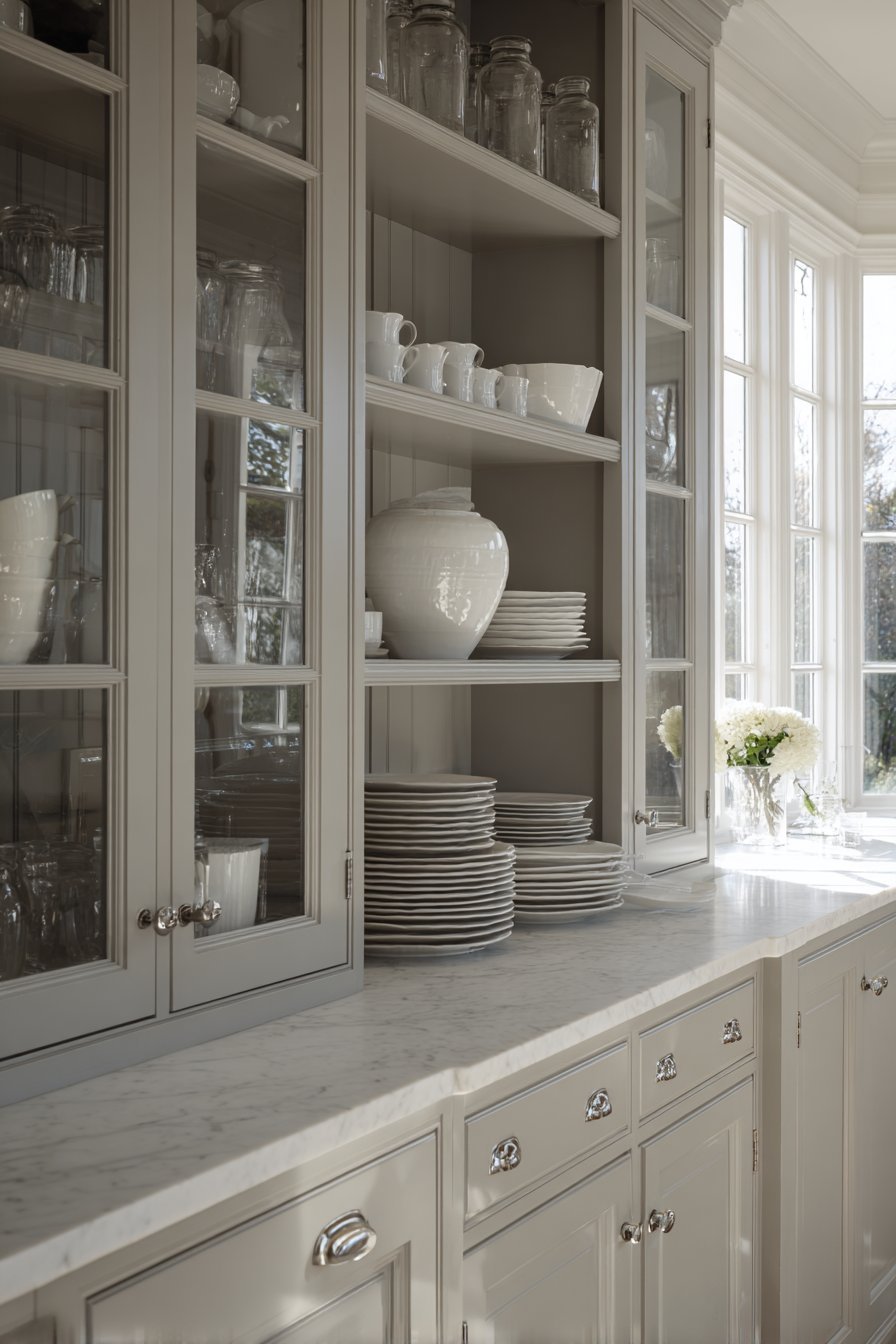
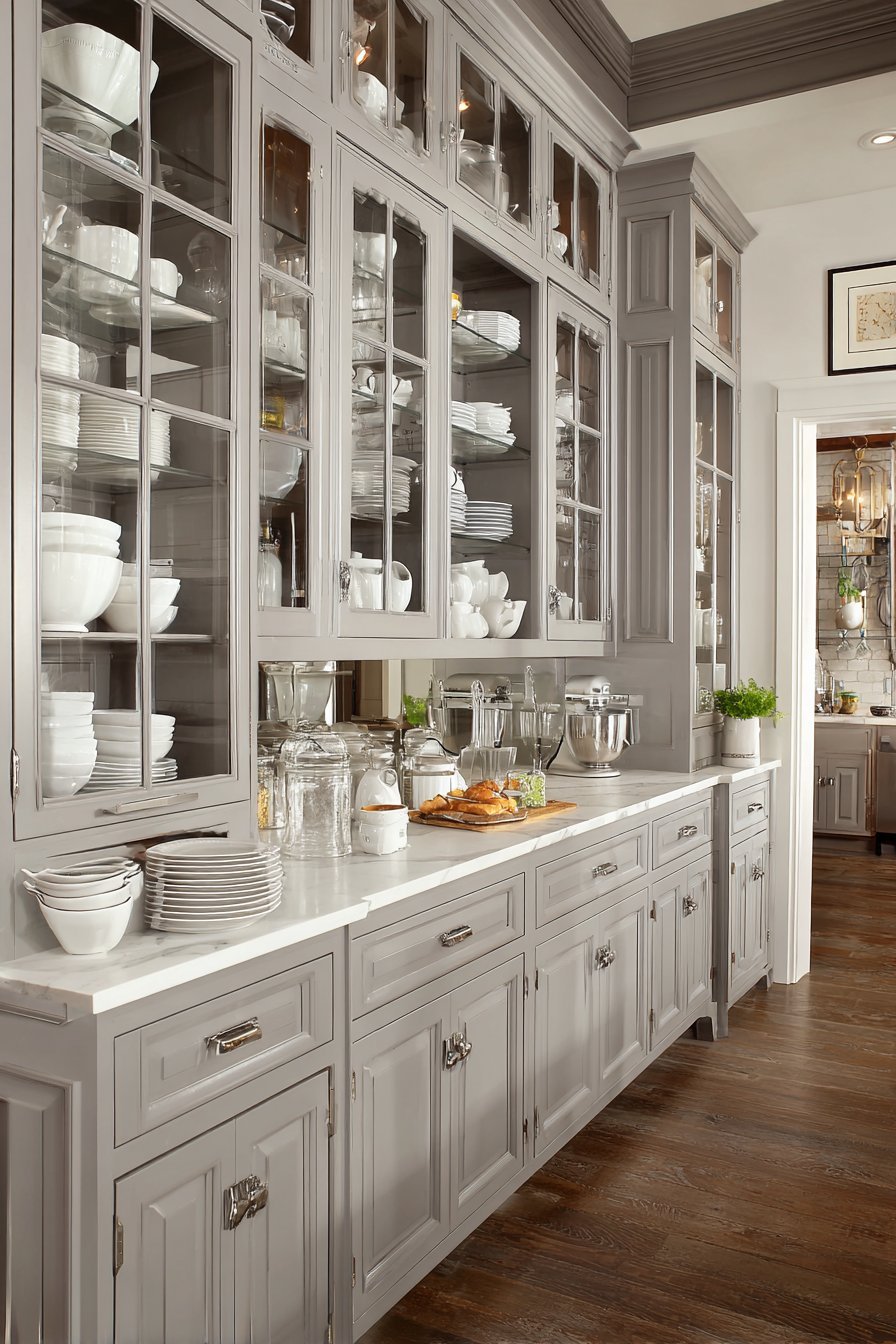
Traditional glass-front upper cabinets with mullion details display organized dishware. The geometric glass divisions add architectural interest. Organized white dinnerware, vintage mixing bowls, and glass canisters create attractive displays. The cabinets are painted in soft dove grey.
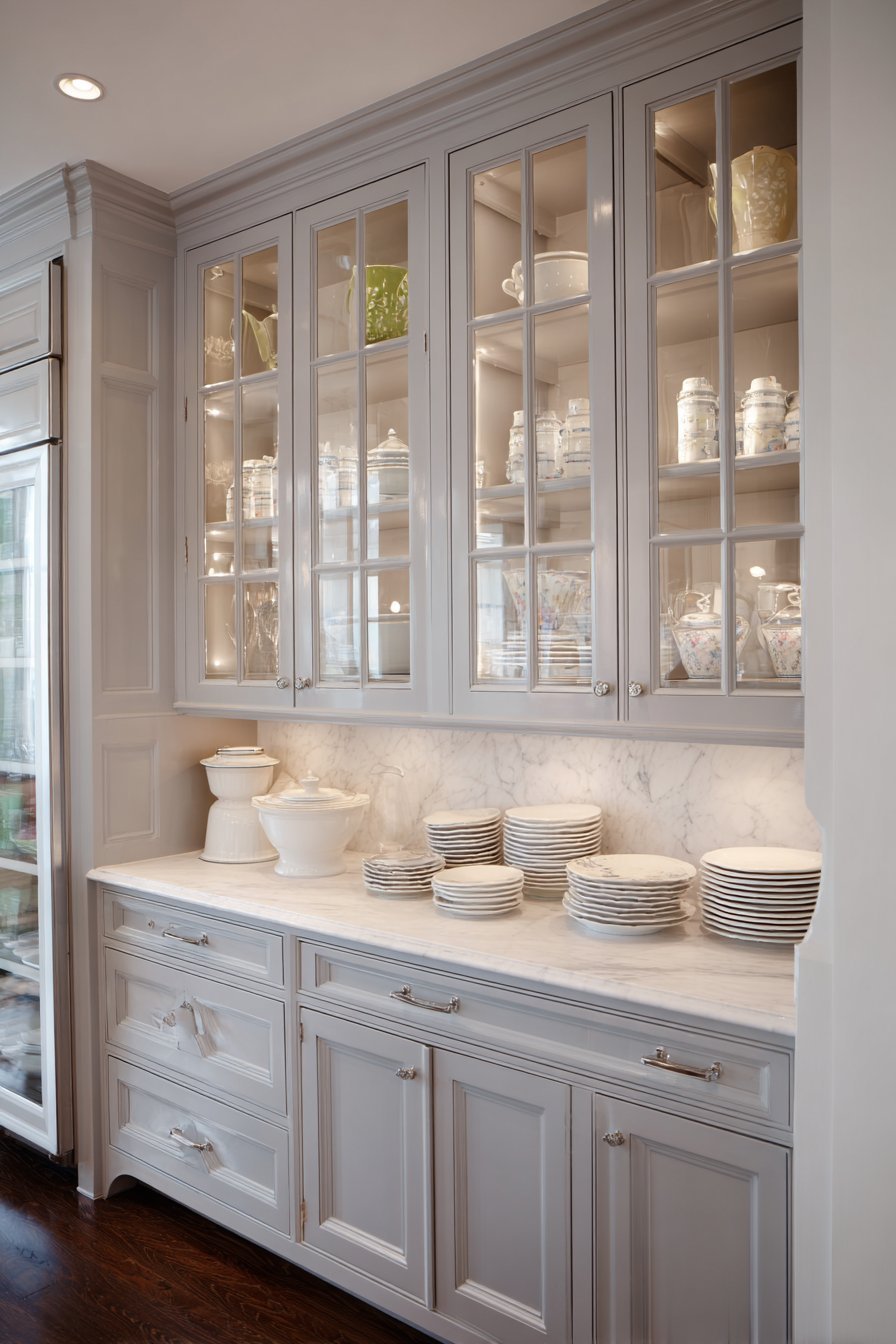
Interior cabinet backs are painted in complementary deeper grey. This layered color approach adds dimension. Lower cabinets feature solid raised panel doors in matching grey. Cup pulls in polished nickel provide traditional hardware styling. White marble countertops with subtle grey veining tie the color scheme together.
Small LED puck lights illuminate cabinet interiors beautifully. The lighting showcases displayed items even when natural light is limited. This thoughtful design transforms everyday dishware into decorative elements. The curated display demonstrates how organization can be beautiful.
Key Design Tips:
- Paint cabinet interiors in deeper tones for visual depth
- Use glass-front cabinets to encourage organized, attractive dish storage
- Install interior cabinet lighting to highlight displayed items
- Choose mullion patterns that complement overall kitchen style
- Select neutral cabinet colors that work with changing décor
- Organize displays by color and type for maximum visual impact
13. Blue and White Plate Rack Display
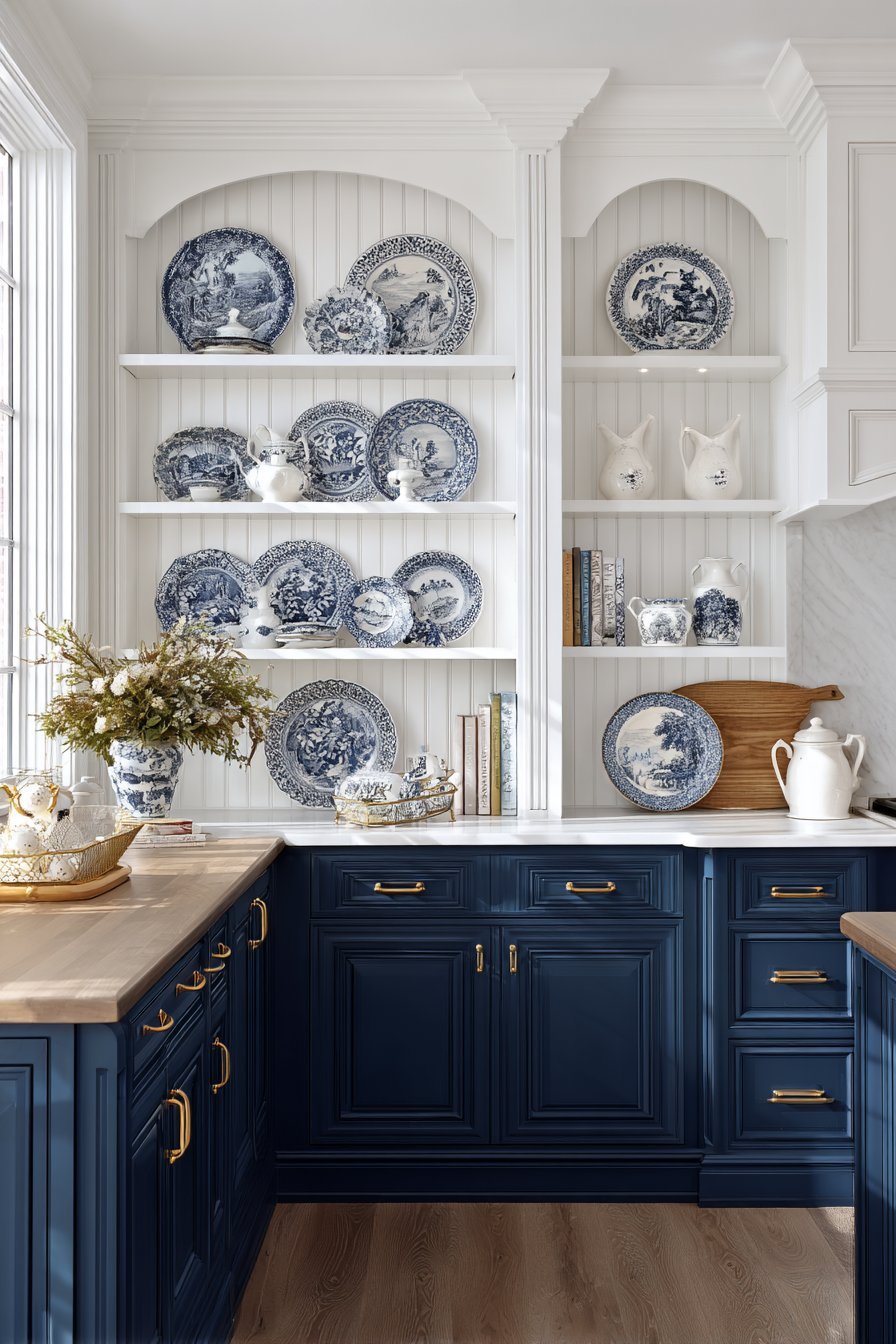
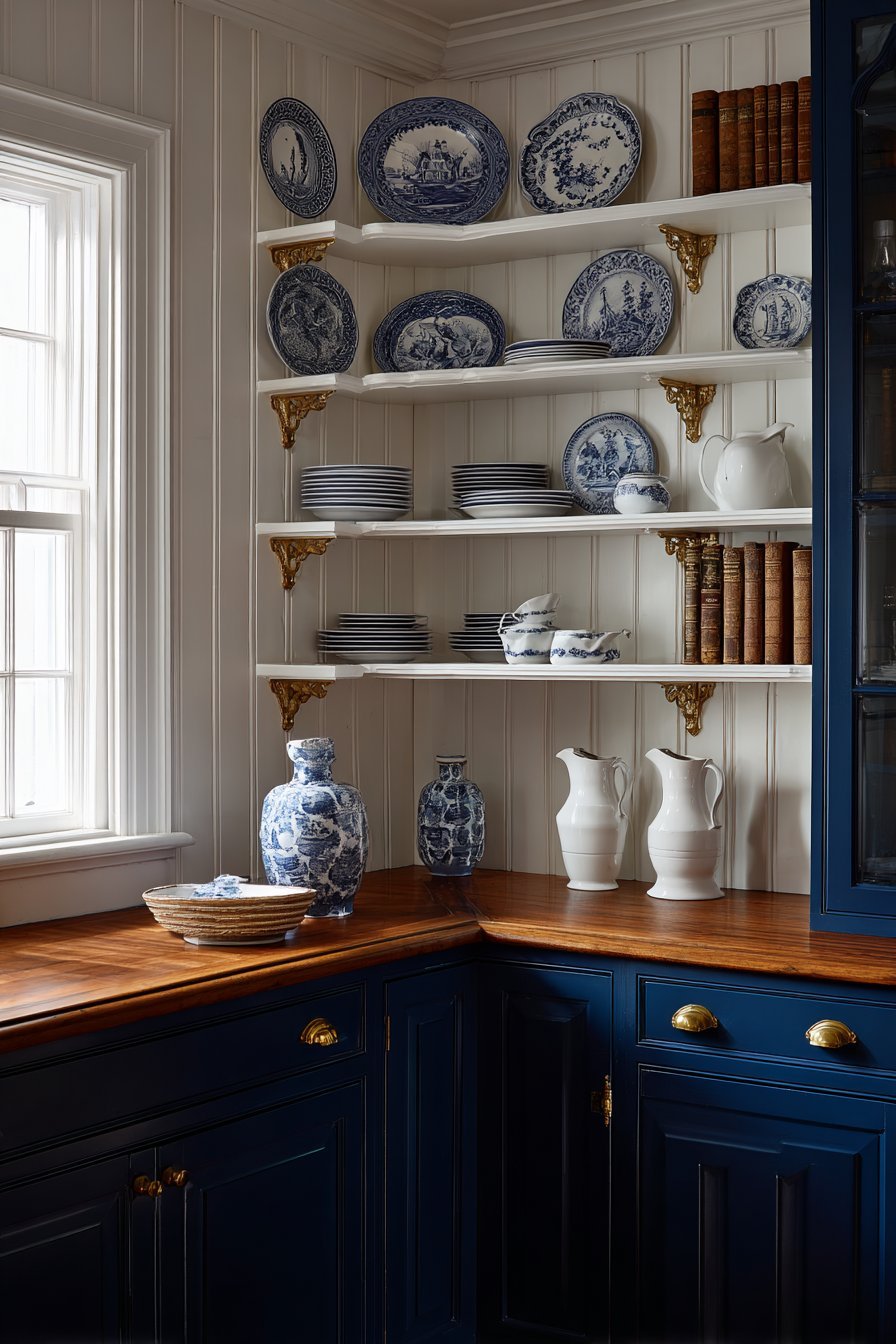
A traditional plate rack cabinet built into the wall system displays treasured china. Decorative plates, serving platters, and bowls in blue and white transferware patterns create stunning displays. White beadboard backing provides contrasting background. The grooved wood emphasizes each displayed piece.
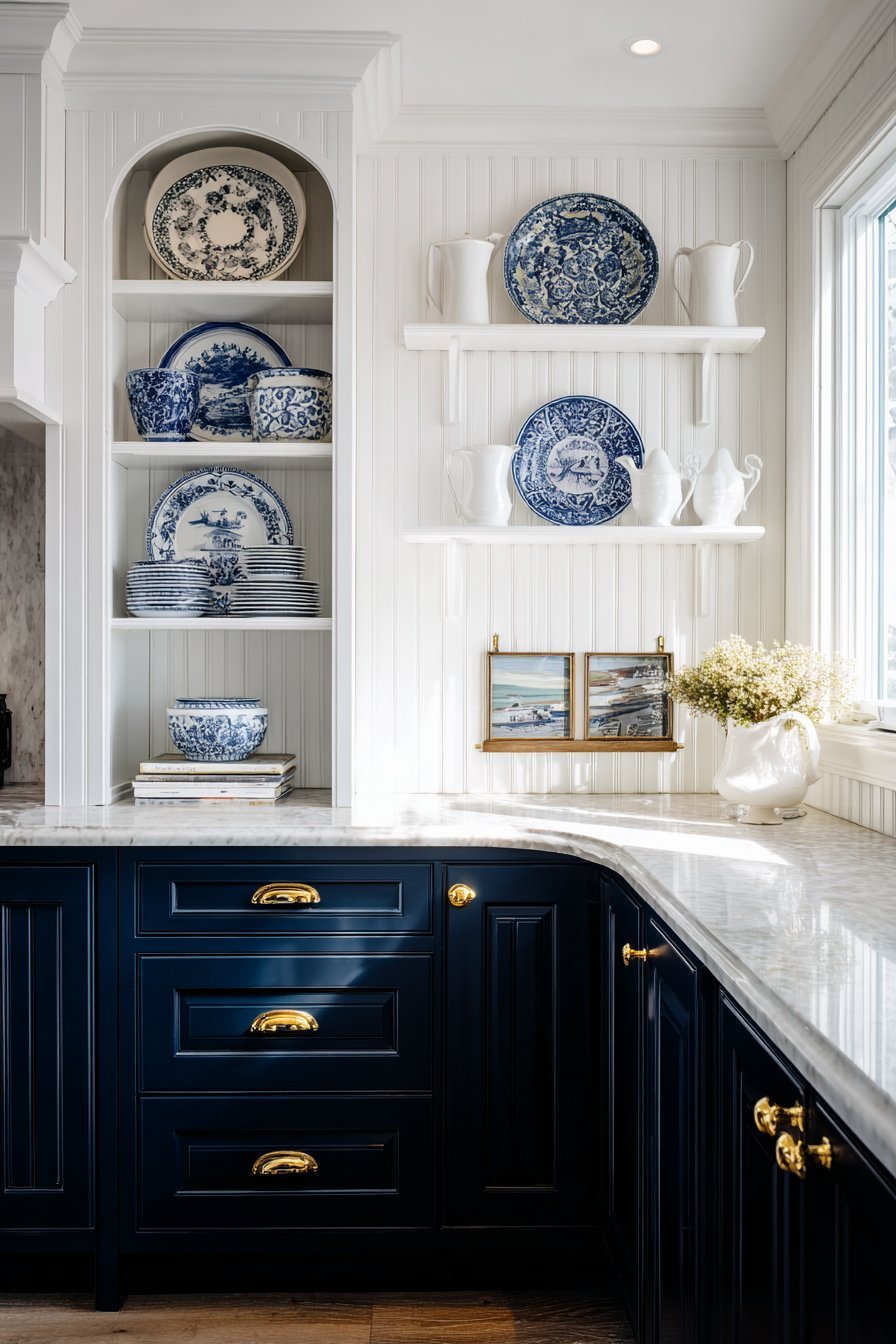
Solid lower cabinets in navy blue ground the design visually. The deep color provides weight and sophistication. Butcher block countertops add warmth and practicality. The natural wood surface proves ideal for food preparation. Polished brass hardware throughout maintains traditional aesthetic consistency.
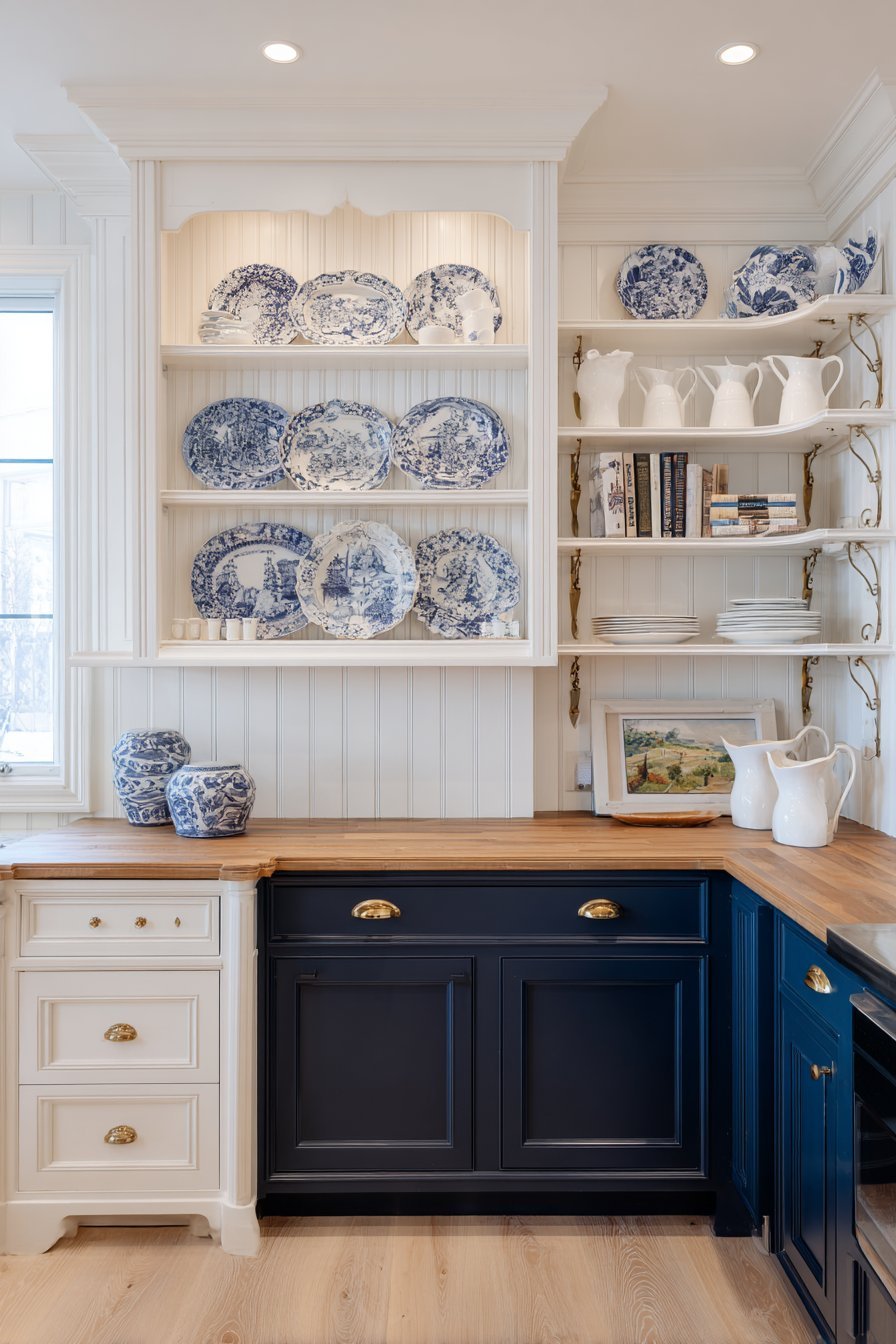
A small window nearby allows natural light to illuminate the display. Adjacent open shelving with matching brass brackets holds white ironstone pitchers and cookbooks. This thoughtful combination of open and closed storage creates visual interest. The classic blue and white color story remains eternally appealing.
Key Design Tips:
- Install plate racks to display decorative dishware as functional art
- Choose beadboard backing to emphasize traditional styling
- Use navy blue lower cabinets to anchor lighter upper displays
- Select butcher block for counters where food prep happens frequently
- Add open shelving near plate racks for complementary displays
- Maintain consistent hardware finishes throughout kitchen zones
14. Marble Pastry Workspace
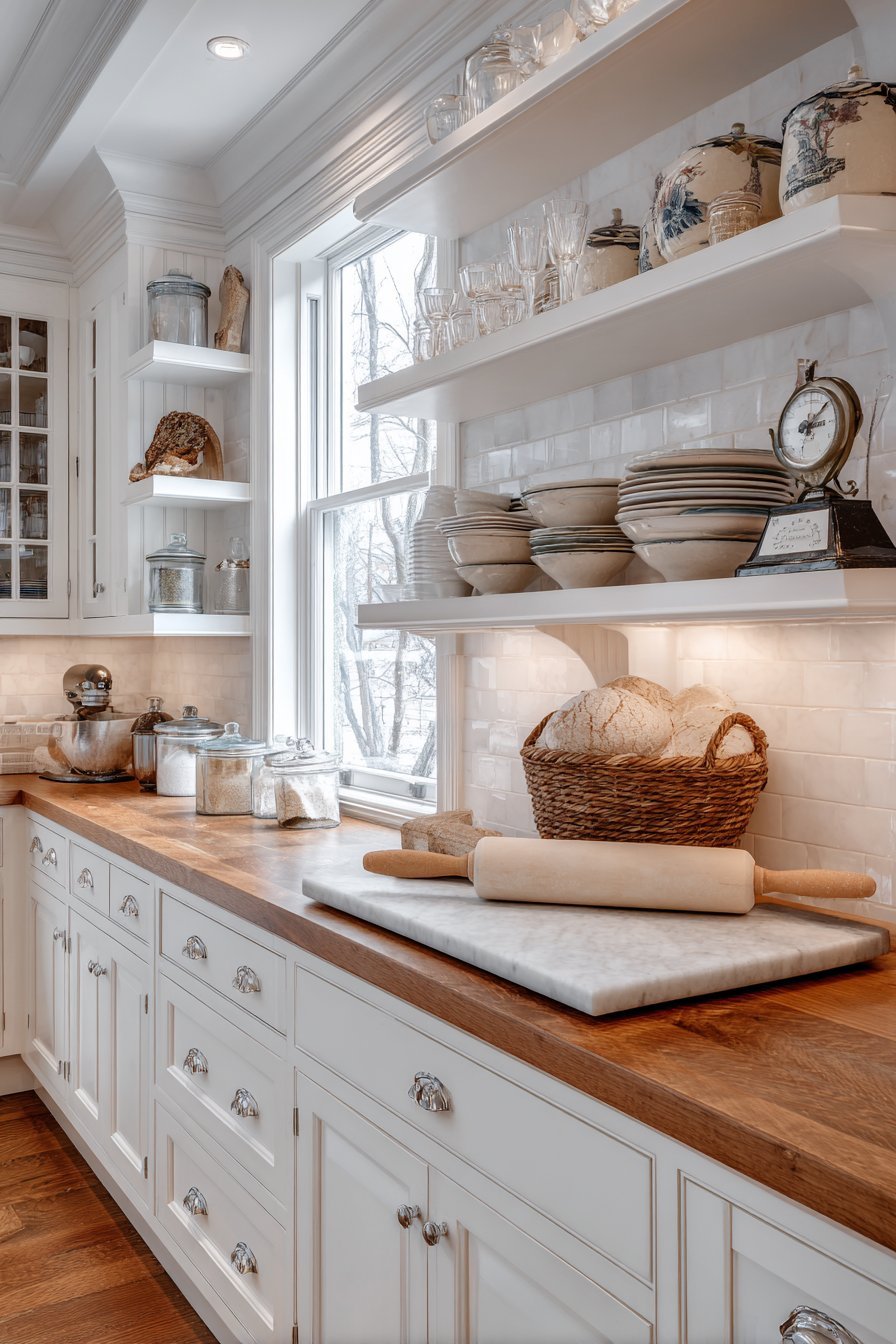
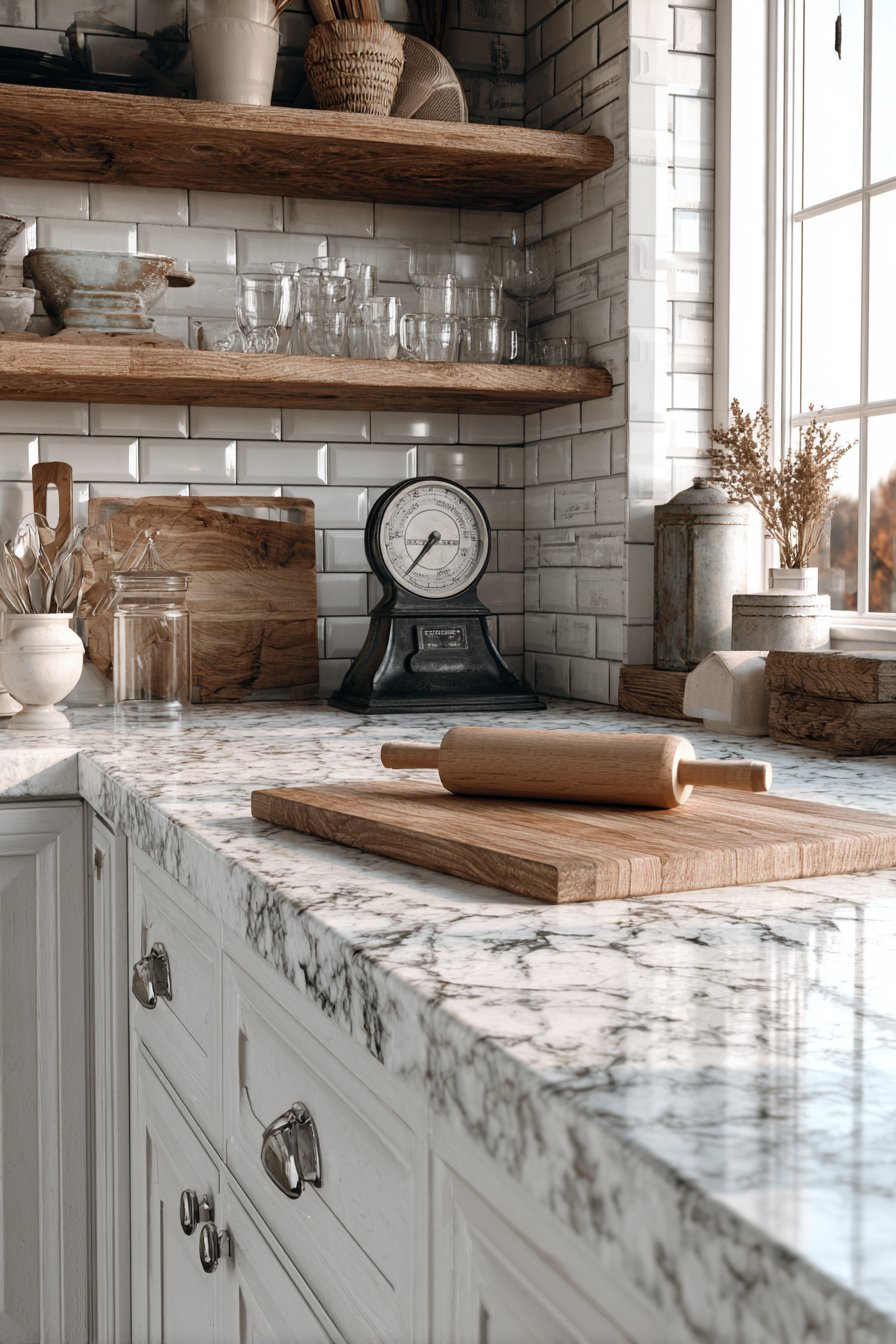
A large marble pastry slab insets into butcher block countertops. The cool stone surface proves ideal for pastry work. The material contrast creates functional beauty. White shaker cabinetry surrounds the workspace with traditional hardware in satin nickel.
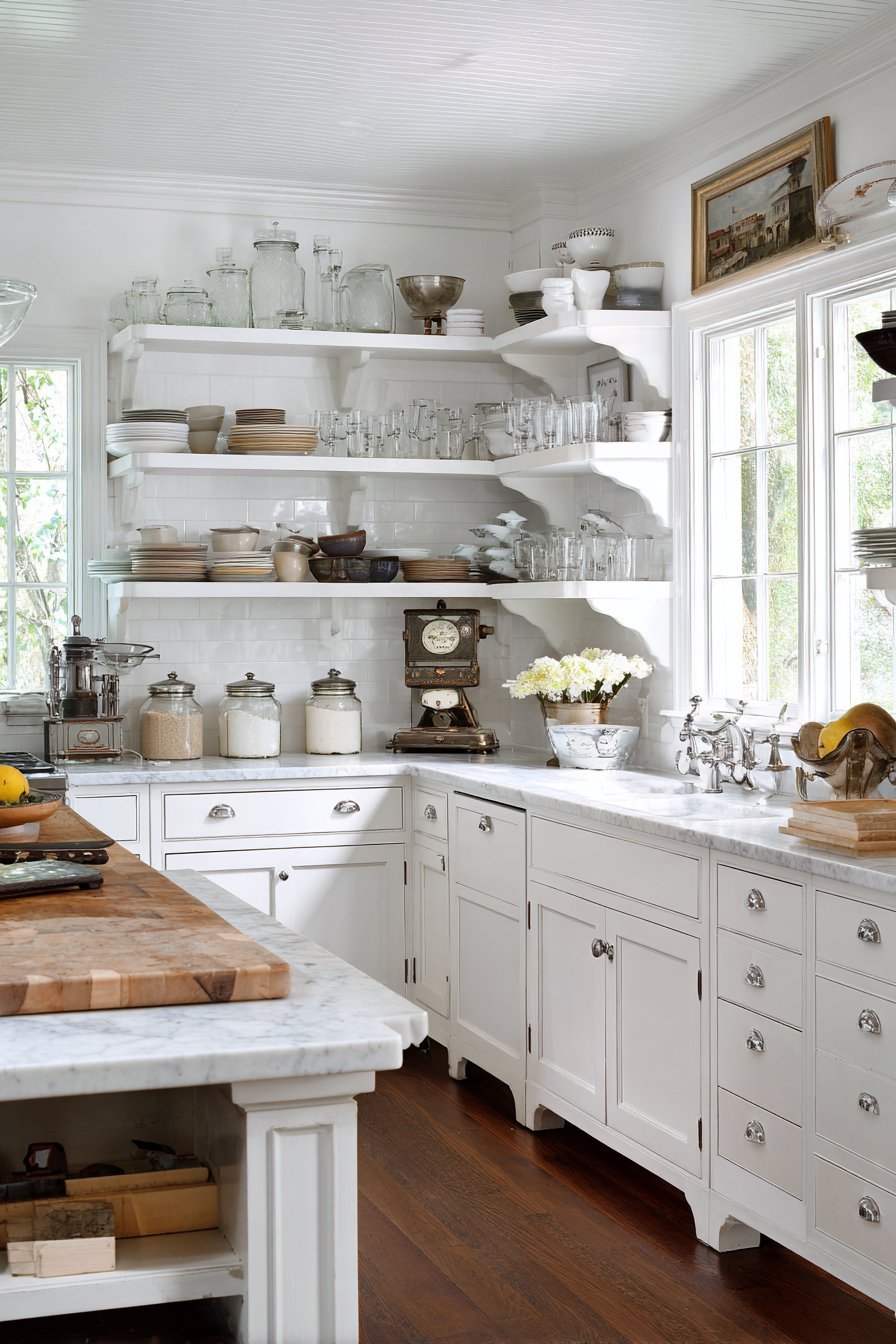
A vintage-style baker’s scale and marble rolling pin rest on the surface. These tools are both functional and decorative. Floating shelves above display antique glass measuring cups and ceramic mixing bowls. The collections inspire baking creativity. Classic white subway tiles with beveled edges create the backsplash.
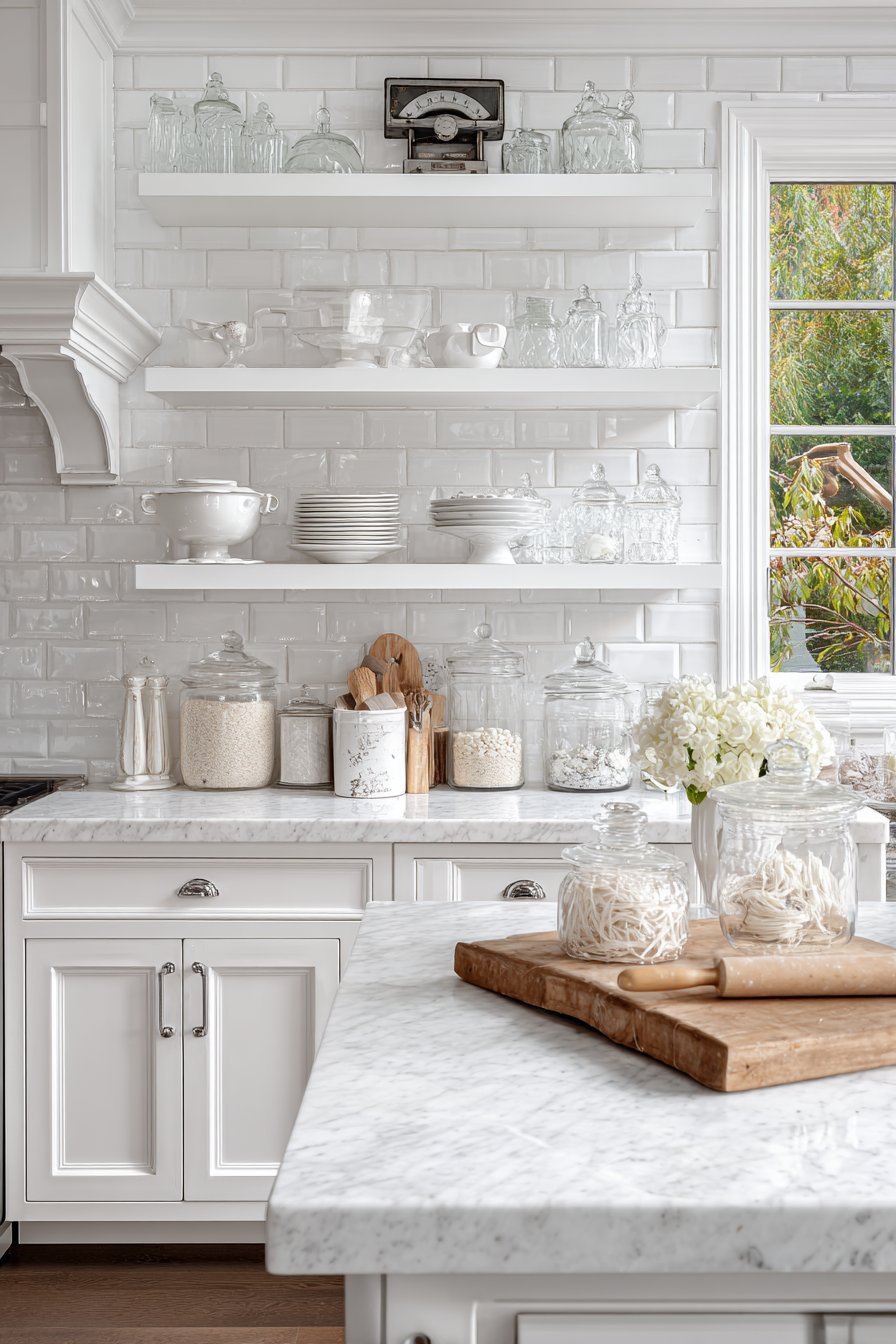
Natural light from a nearby window illuminates the baking station. Flour canisters and baking essentials organize conveniently nearby. This dedicated workspace shows thoughtful planning. Serious home bakers will appreciate this functional classic design element.
Key Design Tips:
- Inset marble slabs into wood counters for dedicated pastry work
- Display vintage baking tools as decorative kitchen elements
- Install floating shelves for frequently used baking supplies
- Position baking stations near windows for natural task lighting
- Choose beveled subway tiles for subtle traditional detail
- Organize baking supplies in attractive canisters and containers
15. Sophisticated Soapstone and Brass
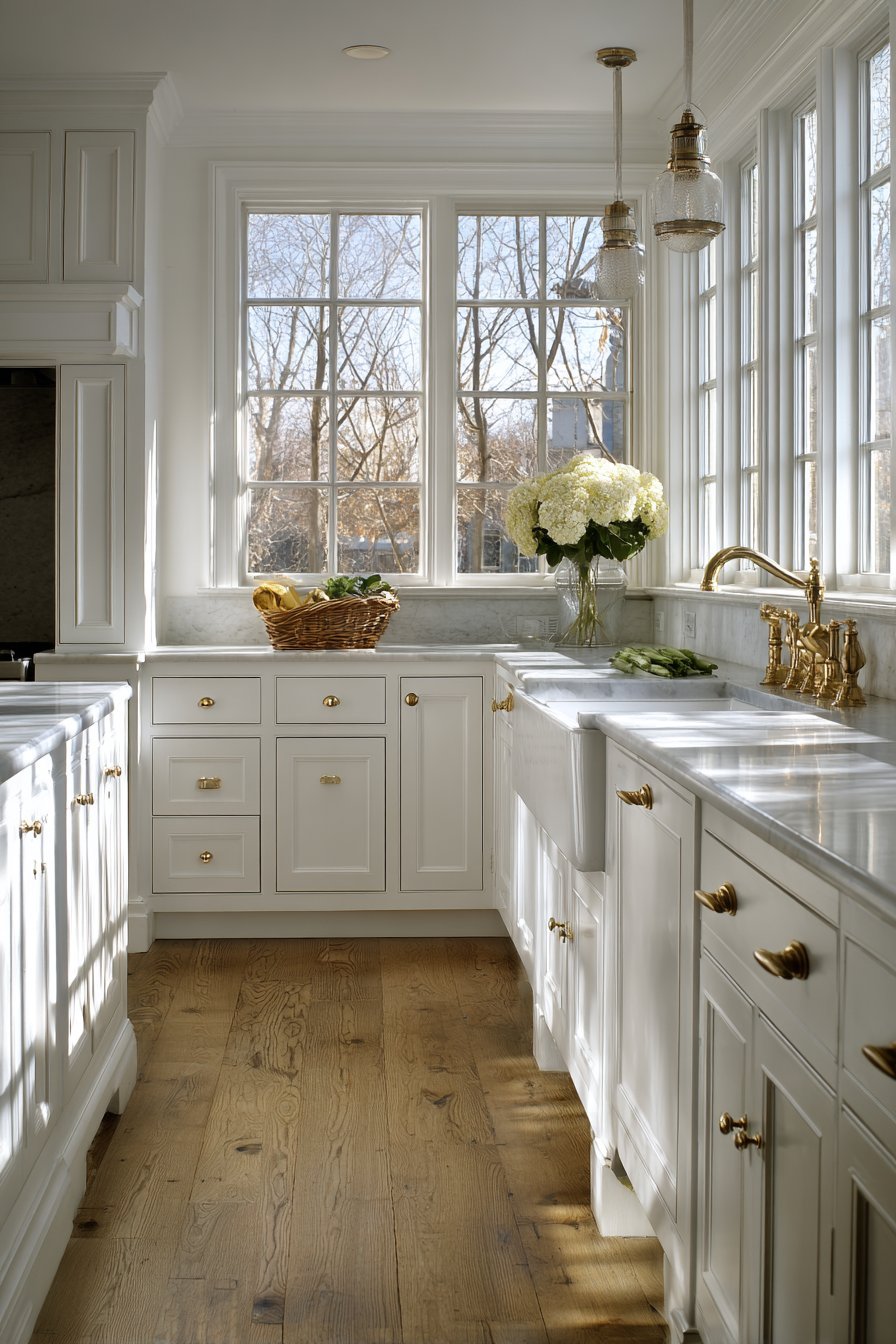
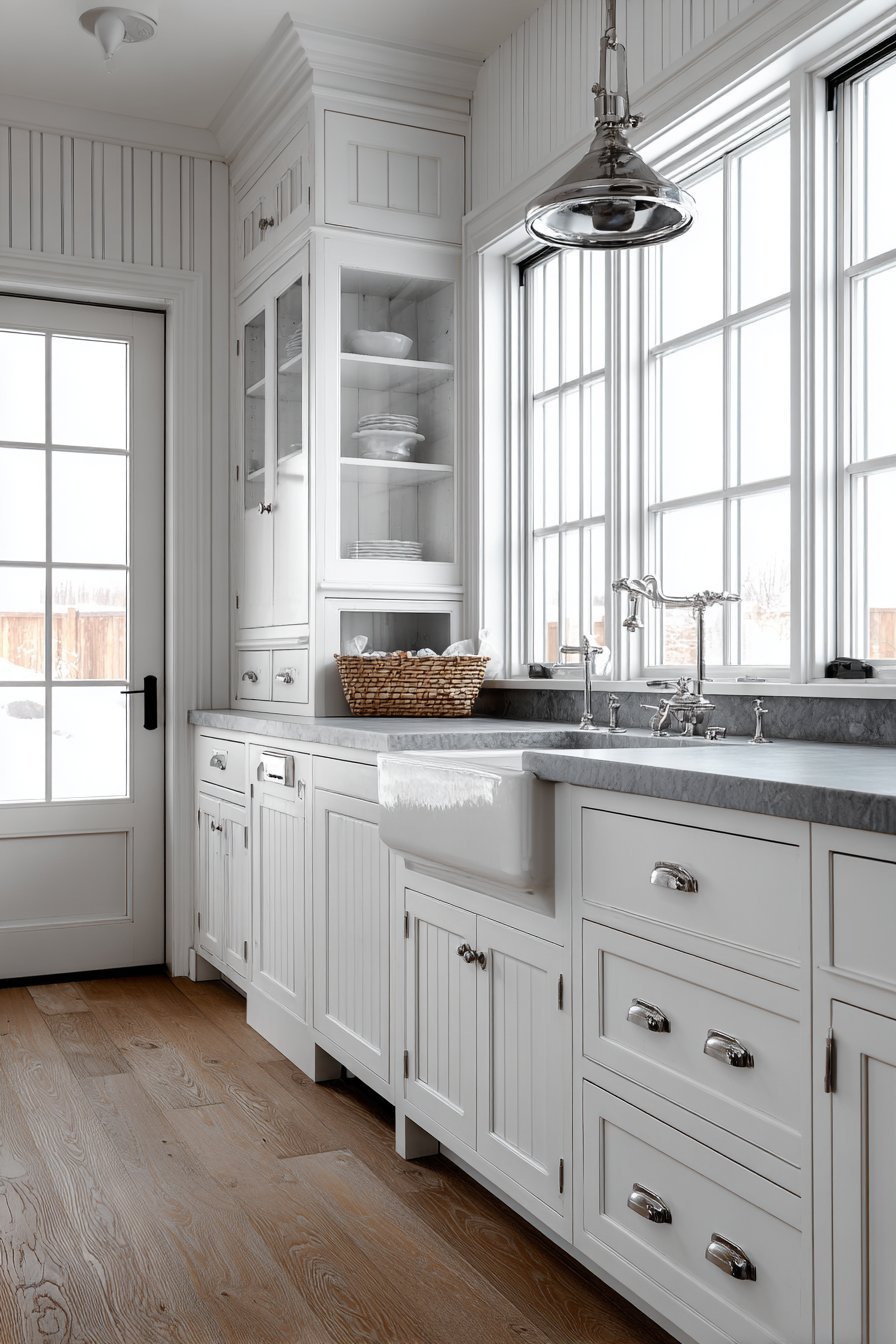
Traditional white cabinetry with inset panel doors creates smooth surfaces. The furniture-quality construction showcases skilled craftsmanship. Bin pulls and knobs in unlacquered brass will develop natural patina. This living finish changes beautifully over time. The hardware becomes more beautiful with age.
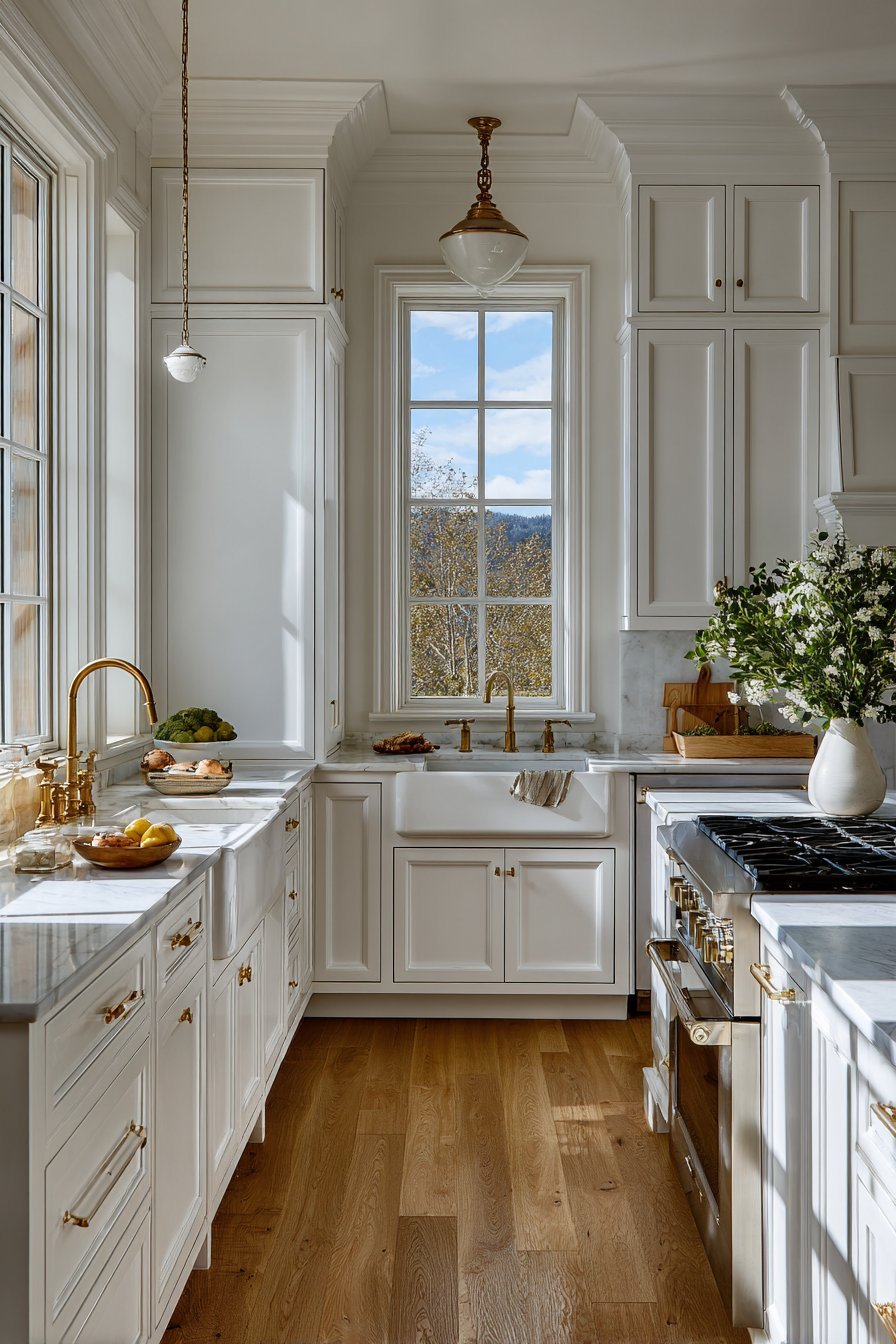
Soapstone countertops with soft grey tones and natural veining provide durable surfaces. The material darkens slightly with mineral oil application. A white apron-front fireclay sink sits below a window. The traditional six-over-six divided lights add authentic period character.
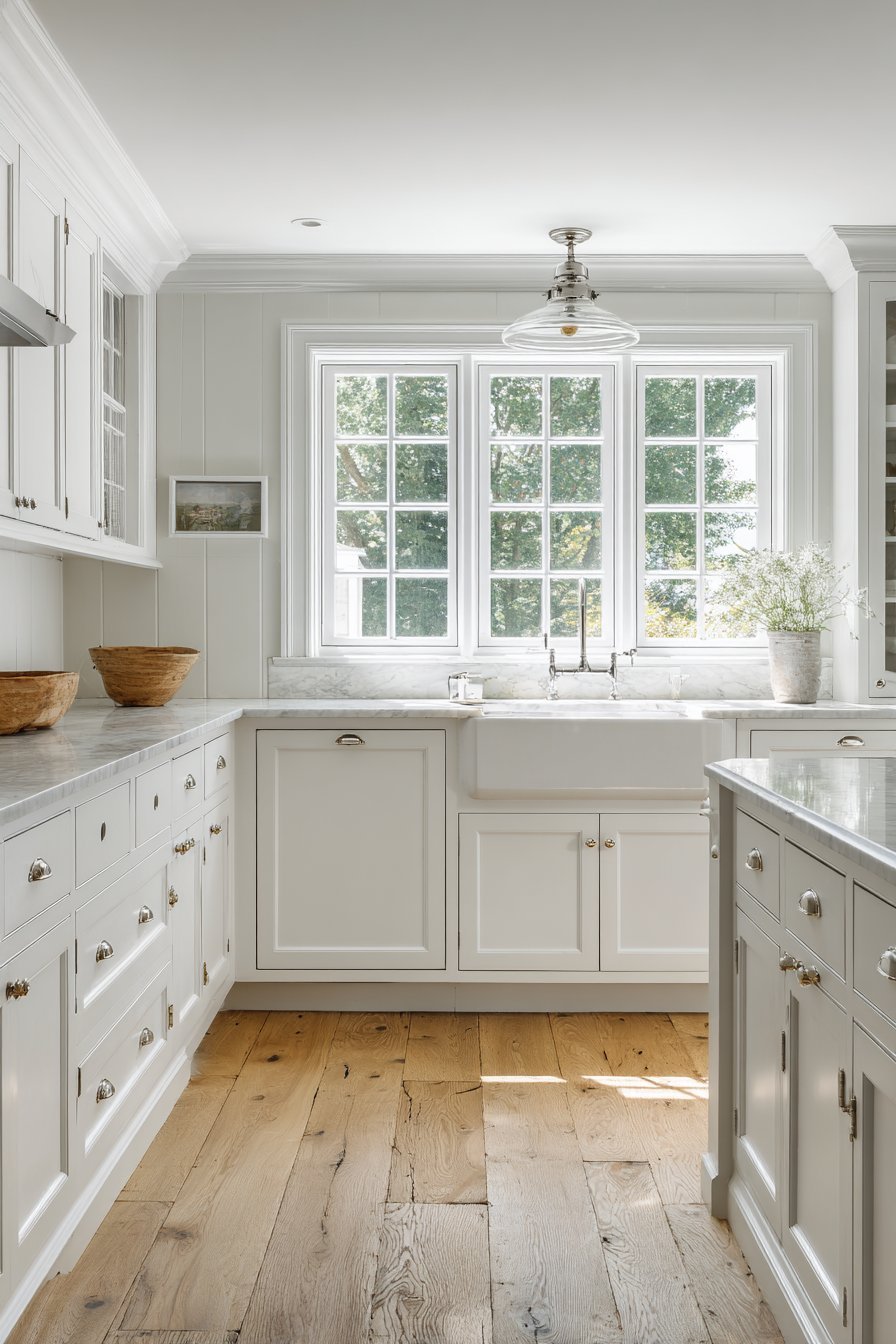
Wide-plank oak flooring with natural oil finish adds warmth underfoot. A vintage-inspired pendant light hangs above the sink. Natural morning light highlights quality materials throughout. Clean lines and timeless color palette create refined simplicity. This design celebrates honest materials and traditional craftsmanship.
Key Design Tips:
- Choose inset cabinet construction for superior furniture-quality appearance
- Select unlacquered brass to develop beautiful patina over time
- Use soapstone counters for heat resistance and unique character
- Install fireclay sinks for authentic traditional styling and durability
- Apply natural oil finishes to wood floors for low-sheen beauty
- Embrace living finishes that improve with age and use
16. Dramatic Range Wall with Tile Mural
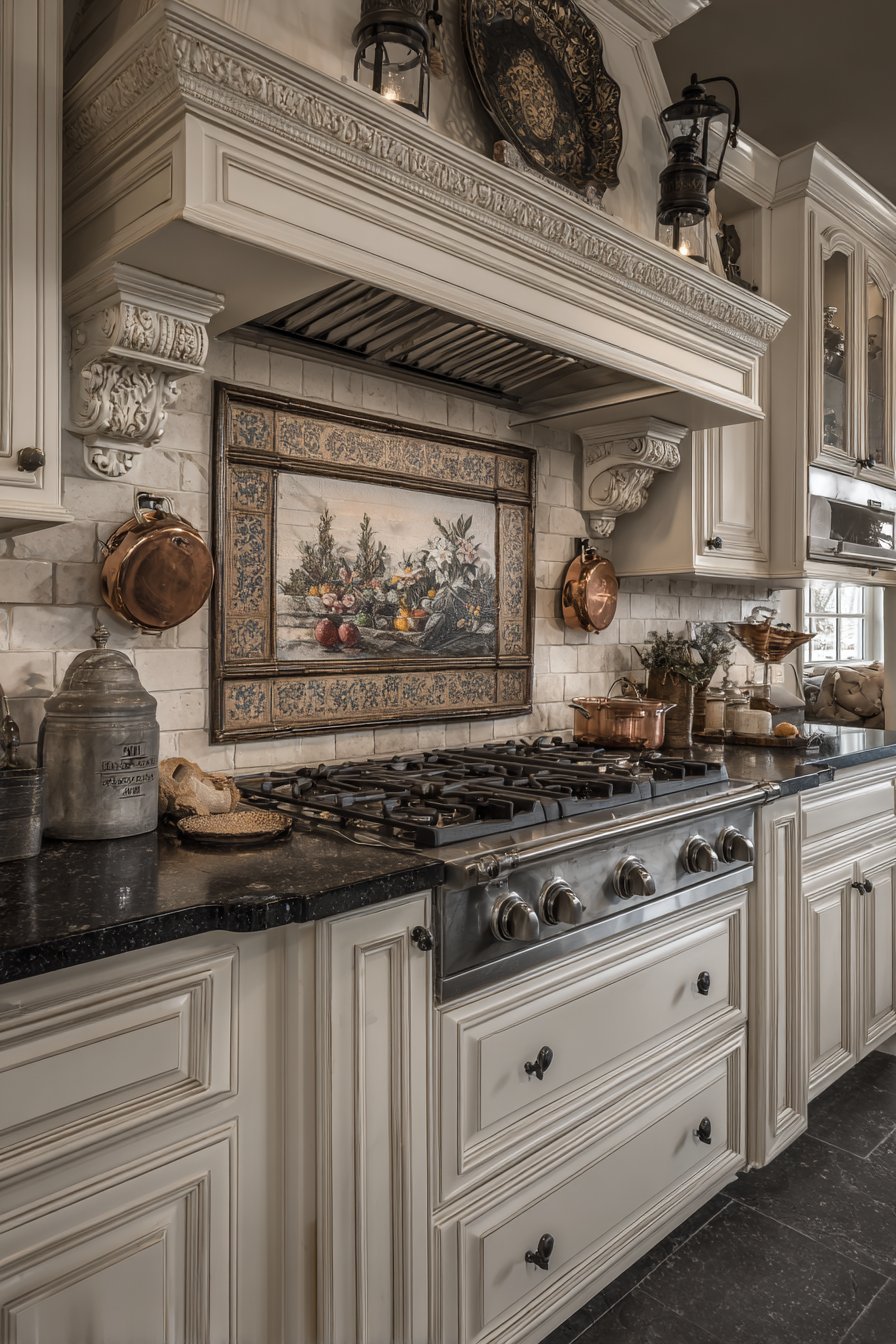
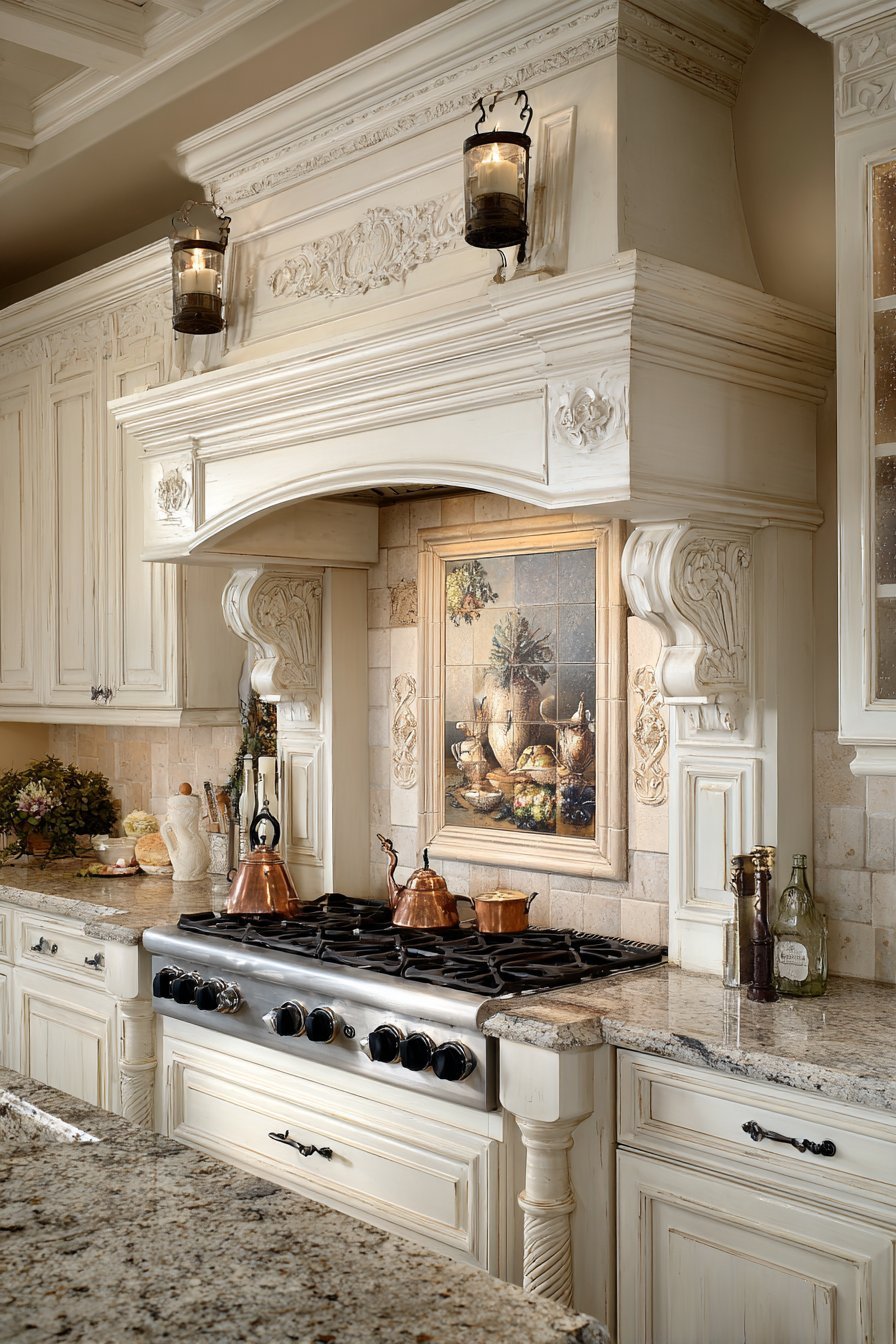
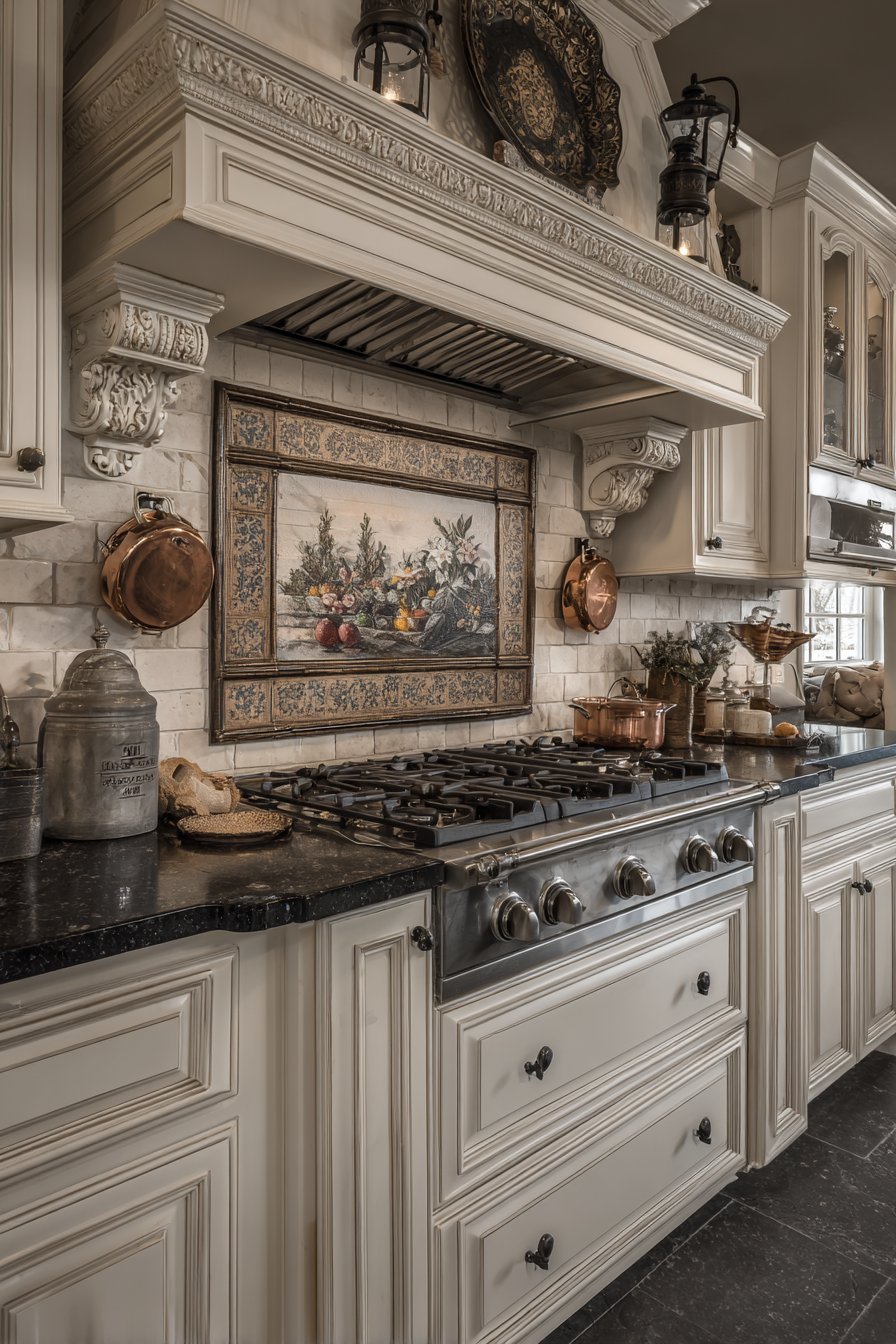
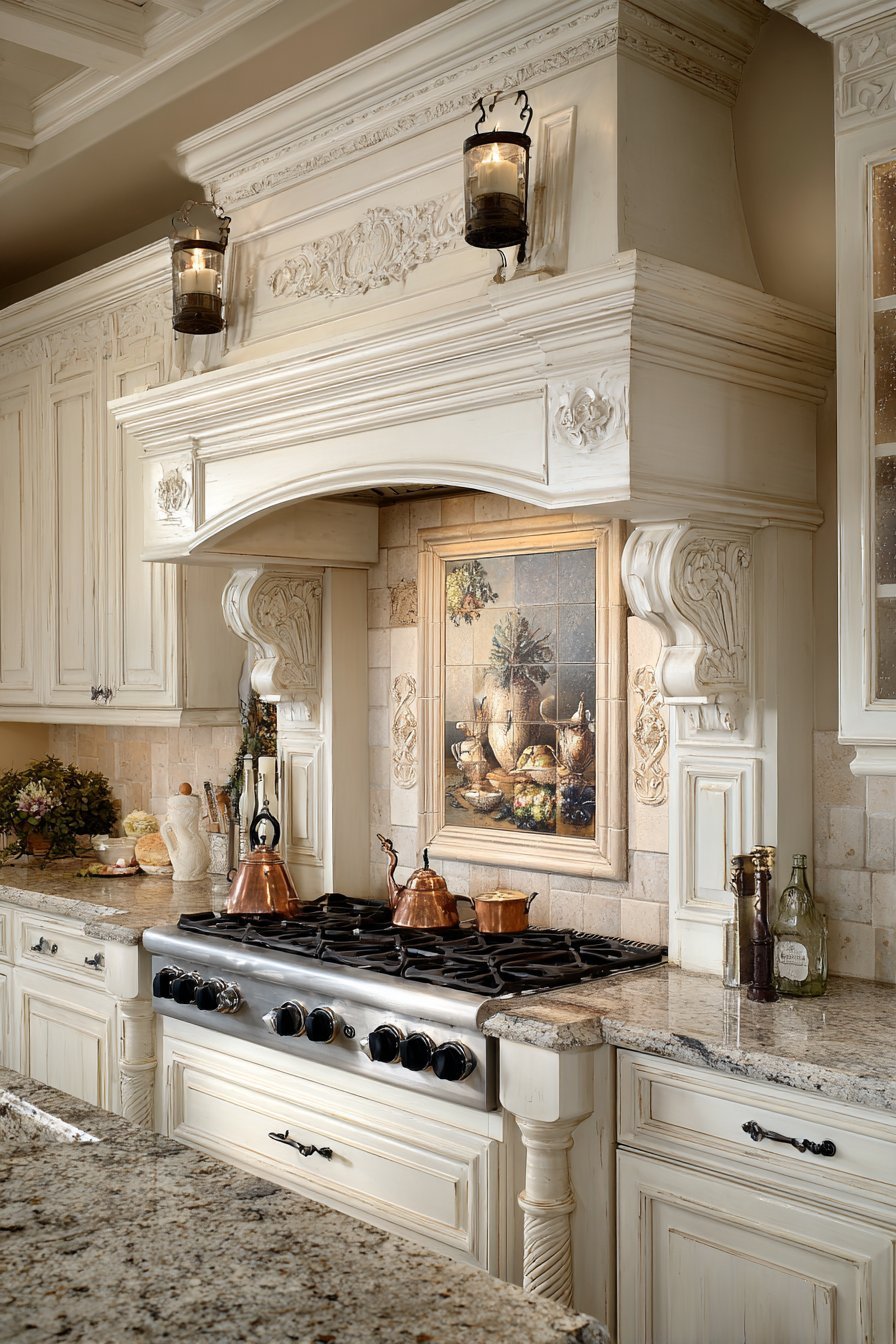
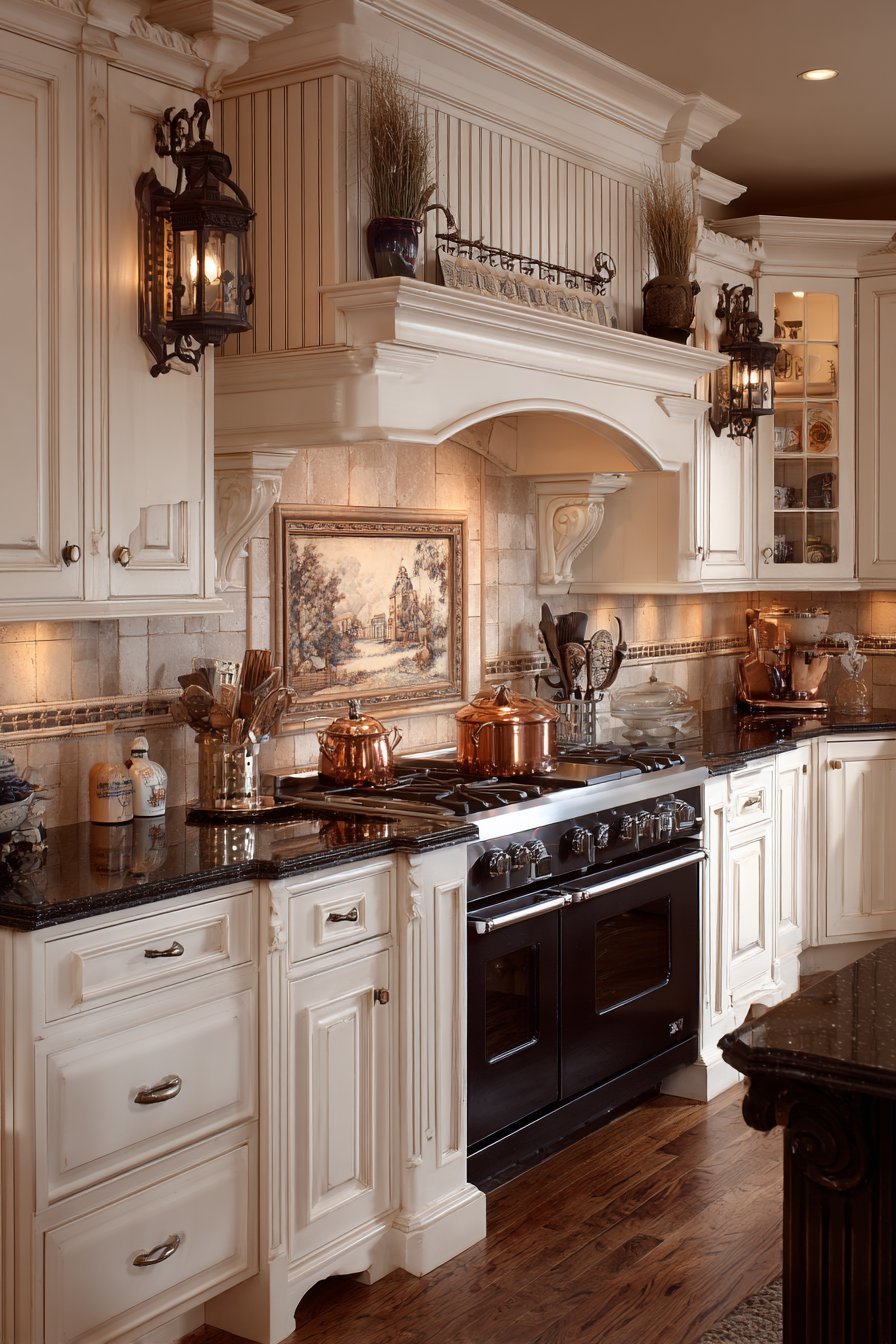
A professional-style gas cooktop sets into absolute black granite countertops. The dark stone creates dramatic contrast. Traditional white cabinetry flanks the cooking area. The custom range hood is clad in white beadboard. Decorative trim details and corbel supports add architectural interest.
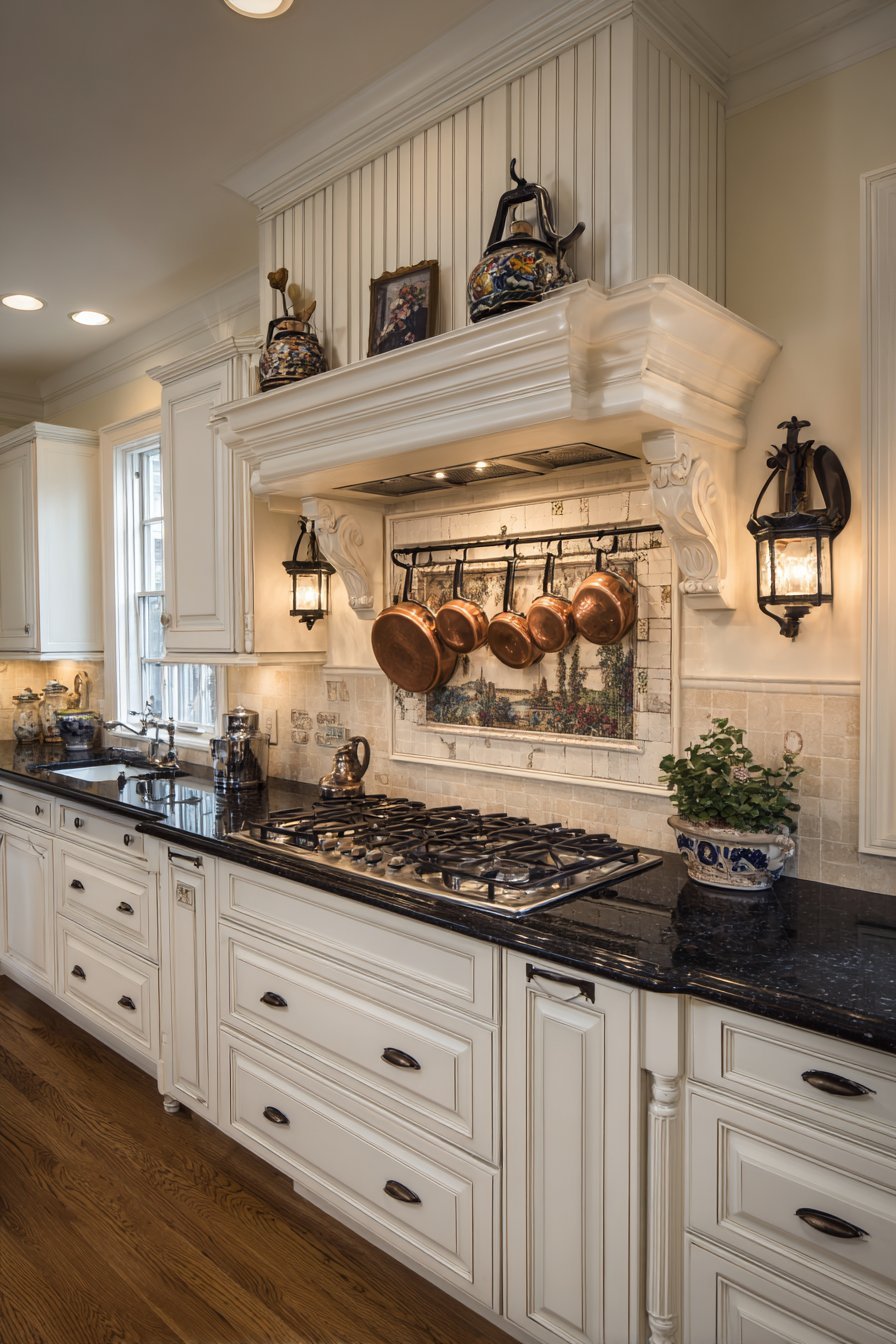
The backsplash showcases a decorative tile mural depicting classic still life. Coordinating smaller tiles surround the central artwork. This focal point elevates cooking to an art. Wrought iron pot racks mount on either side. Copper cookware displays beautifully while remaining accessible.
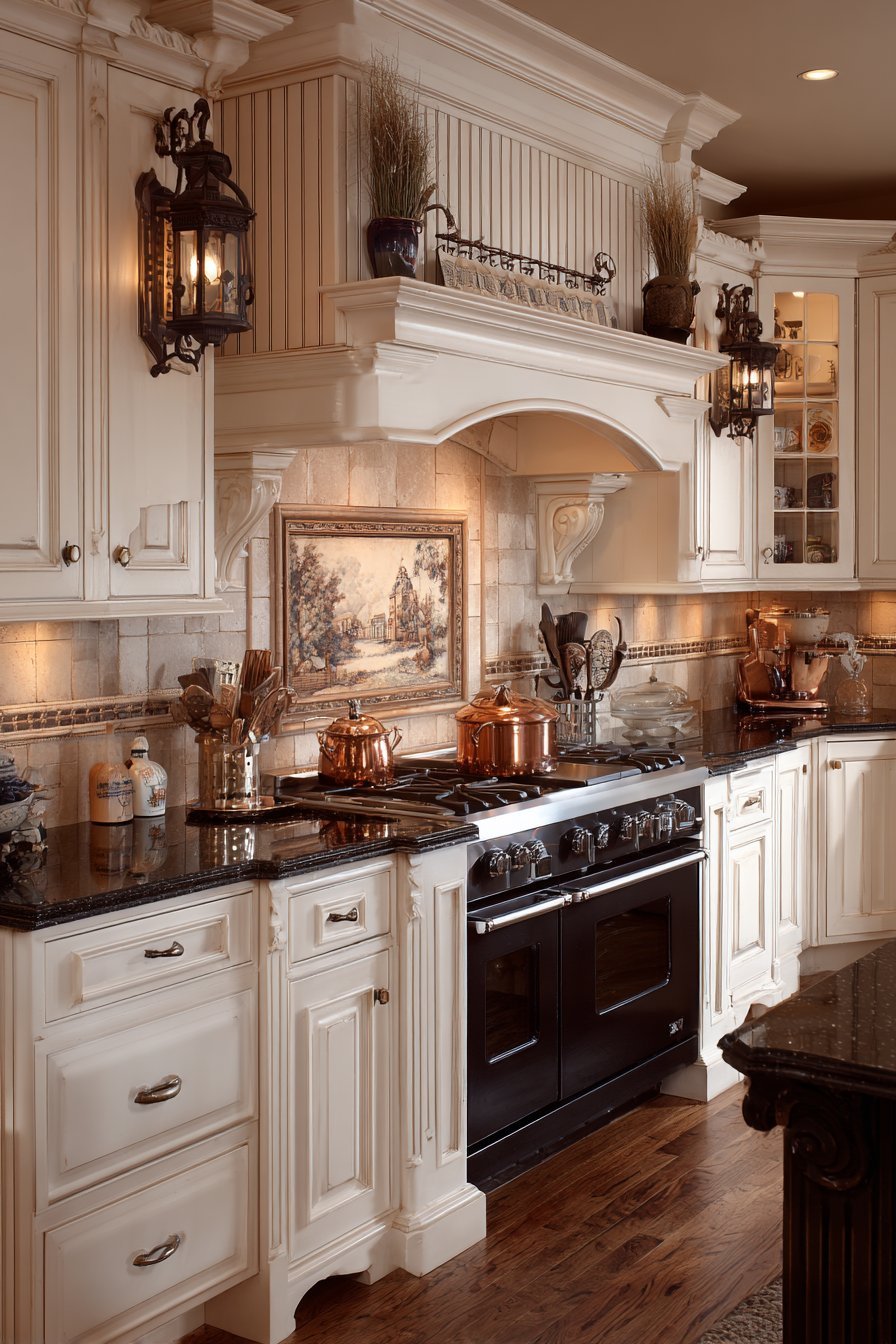
Natural gas lantern-style sconces provide ambient lighting. The fixtures add traditional charm. The cooking zone balances form and function perfectly. Black countertops contrast beautifully with white cabinetry. This bold design choice creates memorable visual impact.
Key Design Tips:
- Use black granite counters in cooking zones for dramatic effect
- Install decorative tile murals as range backsplash focal points
- Add pot racks for functional cookware storage and display
- Choose beadboard for range hood covering for traditional texture
- Install gas lantern sconces for period-appropriate ambient lighting
- Display copper cookware for warm metallic accent color
17. Traditional Breakfast Bar with Check Pattern Stools
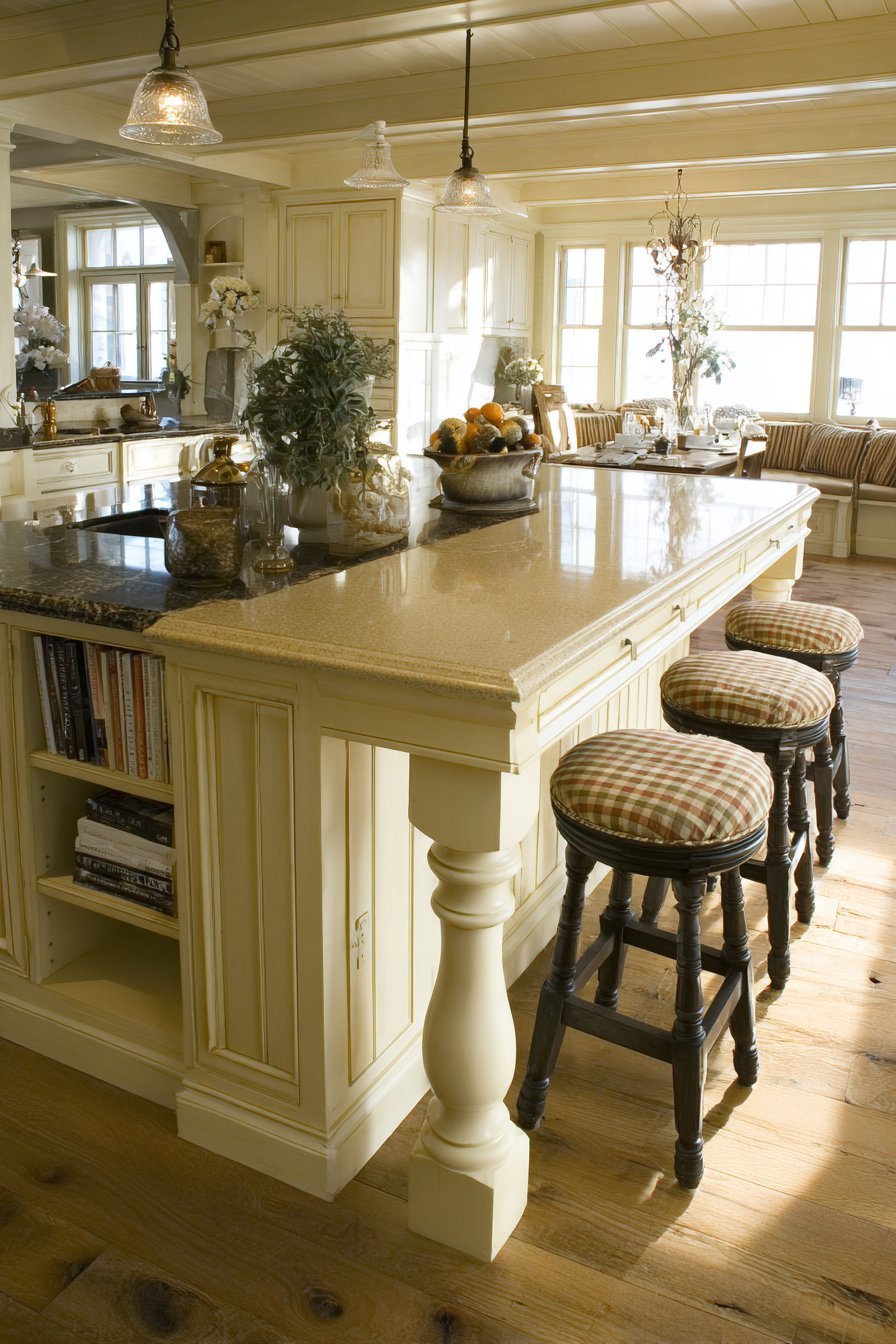
A raised countertop extension in honed granite creates a breakfast bar. Decorative turned legs support the elevated surface. This furniture-like detail adds traditional character. Three traditional counter stools with turned legs and stretchers provide seating. Upholstered seats in classic check pattern add comfort.
The bar integrates into the kitchen island seamlessly. White painted cabinetry below provides storage. Open shelving on the dining side displays cookbooks and decorative pottery. This dual-purpose design maximizes functionality. Pendant lights with mercury glass shades hang above.
Hardwood flooring in traditional pattern extends throughout the space. Natural light from nearby windows creates inviting ambiance. The breakfast bar facilitates casual dining and conversation. This classic element brings family together naturally.
Key Design Tips:
- Add furniture-style legs to breakfast bars for traditional detailing
- Choose classic fabric patterns like checks for timeless appeal
- Install open shelving on bar backs for cookbook storage and display
- Hang mercury glass pendants for vintage-inspired lighting
- Raise breakfast bar counters 6-12 inches above standard height
- Select stools with stretchers for traditional styling and foot comfort
18. Practical Mudroom Transition
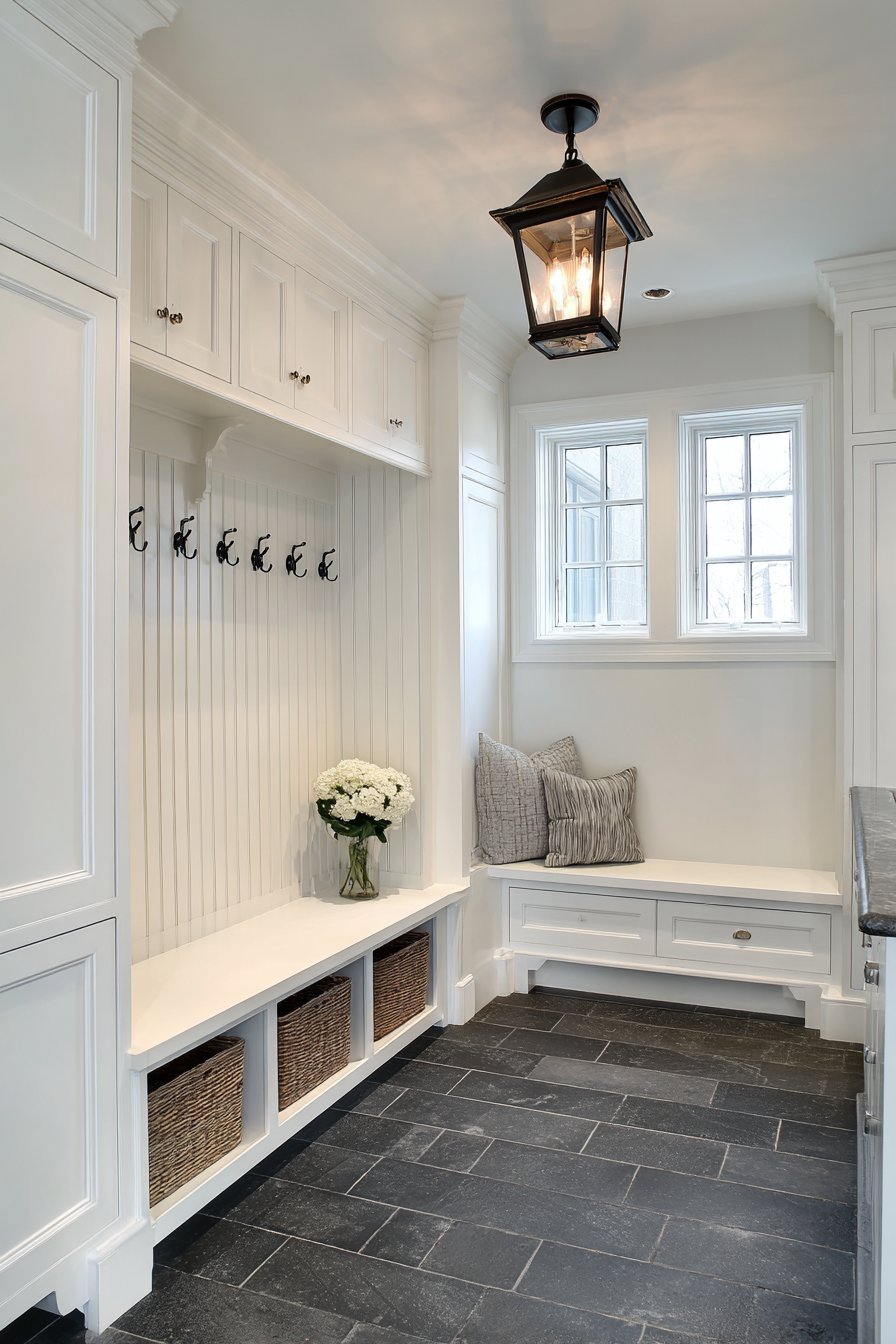
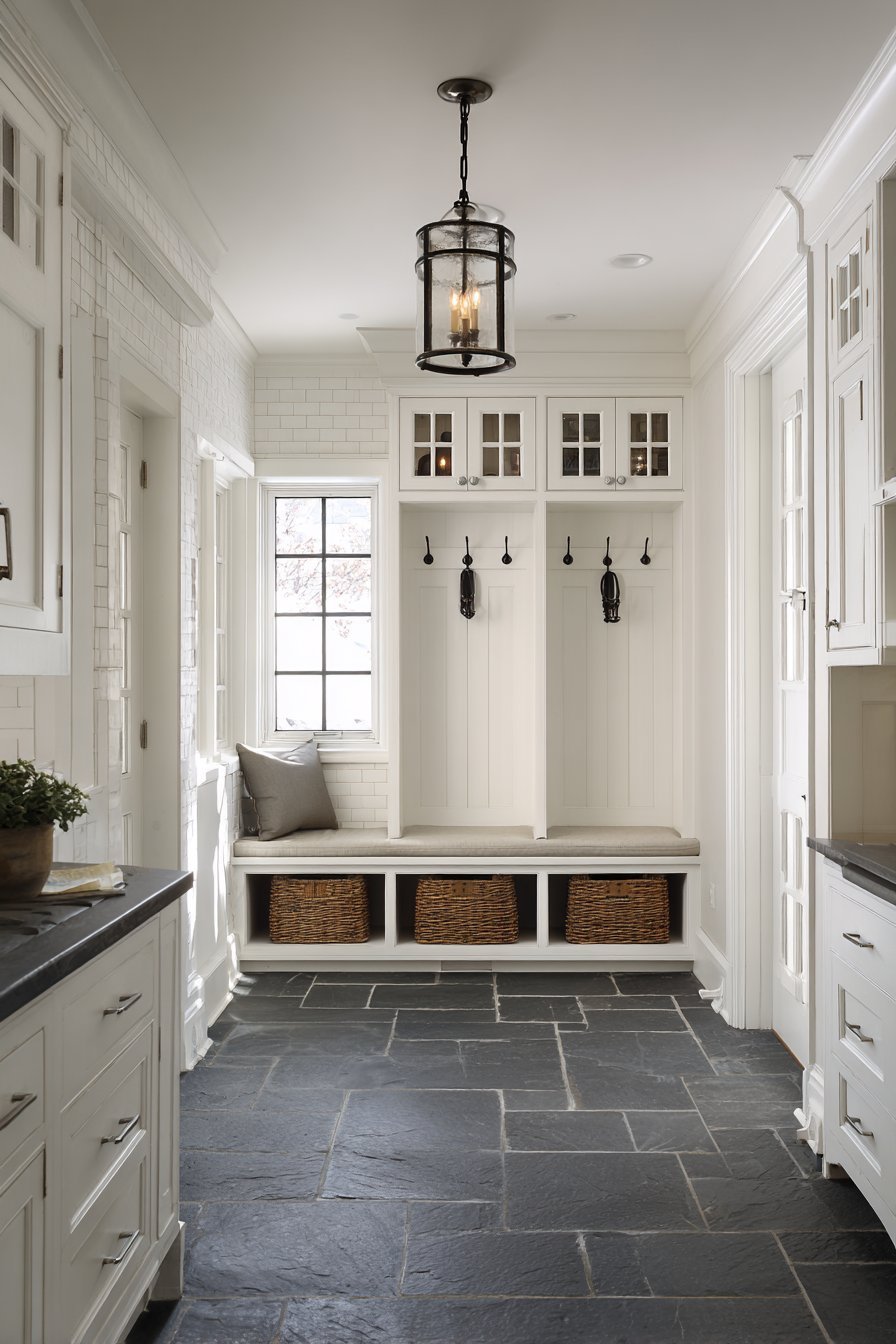
Built-in cubbies with bench seating create functional mudroom space. Beadboard backing adds traditional texture. Individual compartments organize belongings for each family member. Upper cabinets in white match adjacent kitchen cabinetry. Lower sections include pull-out baskets for shoe storage.
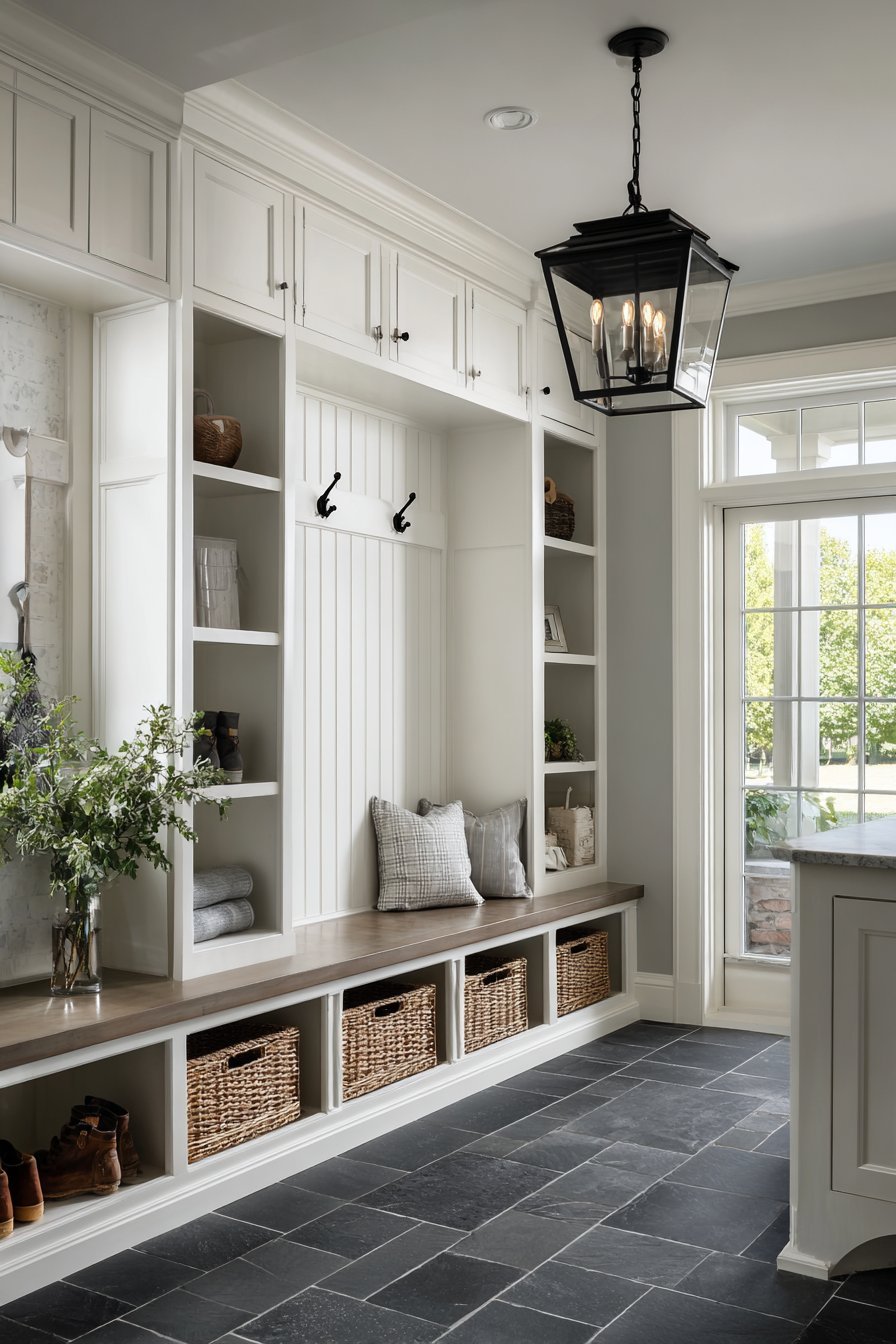
Coat hooks in oil-rubbed bronze mount at varied heights. This accommodation suits different family members. Durable slate tile floor in dark grey provides practical surface. The material differs intentionally from the kitchen’s hardwood. A traditional schoolhouse pendant light illuminates the space.
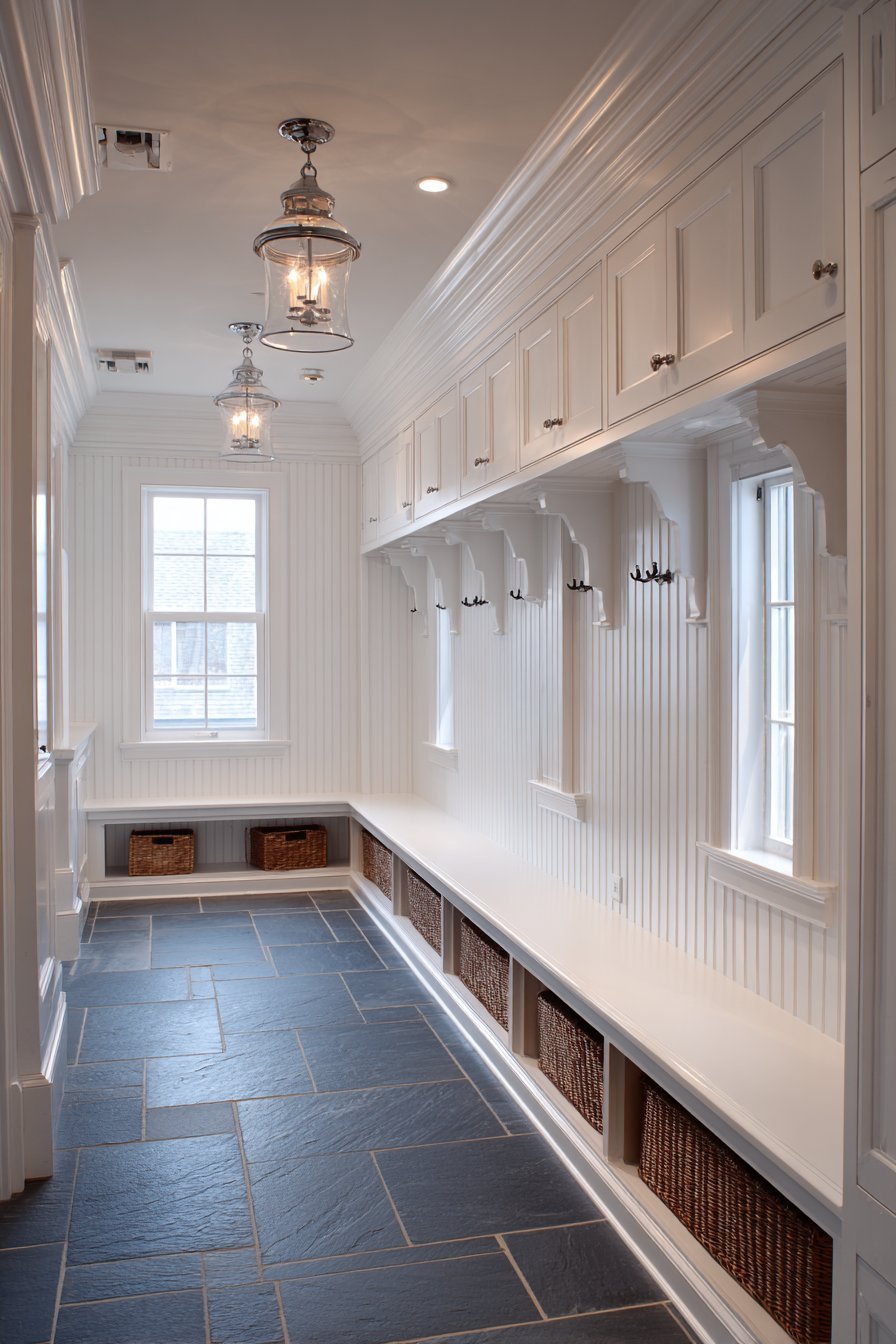
Small windows with privacy glass allow natural light while maintaining discretion. This functional transition space extends classic design vocabulary. The organizational details prevent clutter from entering the kitchen. Durable materials withstand heavy daily use.
Key Design Tips:
- Create dedicated mudroom zones to prevent kitchen clutter
- Install cubbies with individual family member compartments
- Use different flooring materials in mudrooms for practical durability
- Mount coat hooks at varied heights for children and adults
- Add pull-out baskets for shoe storage that contains dirt
- Extend kitchen cabinetry style into mudrooms for visual continuity
19. Curated Open Shelving Display
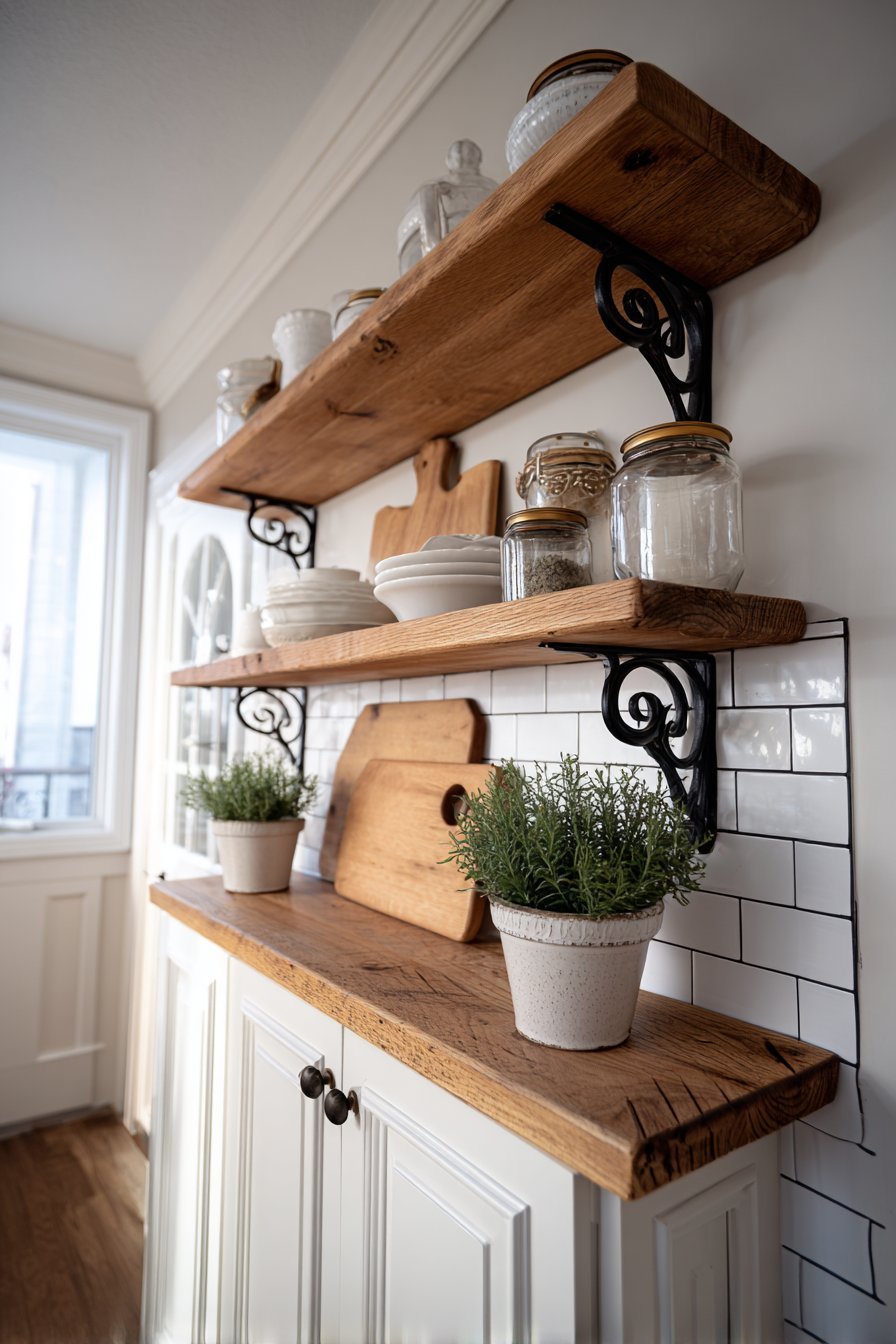
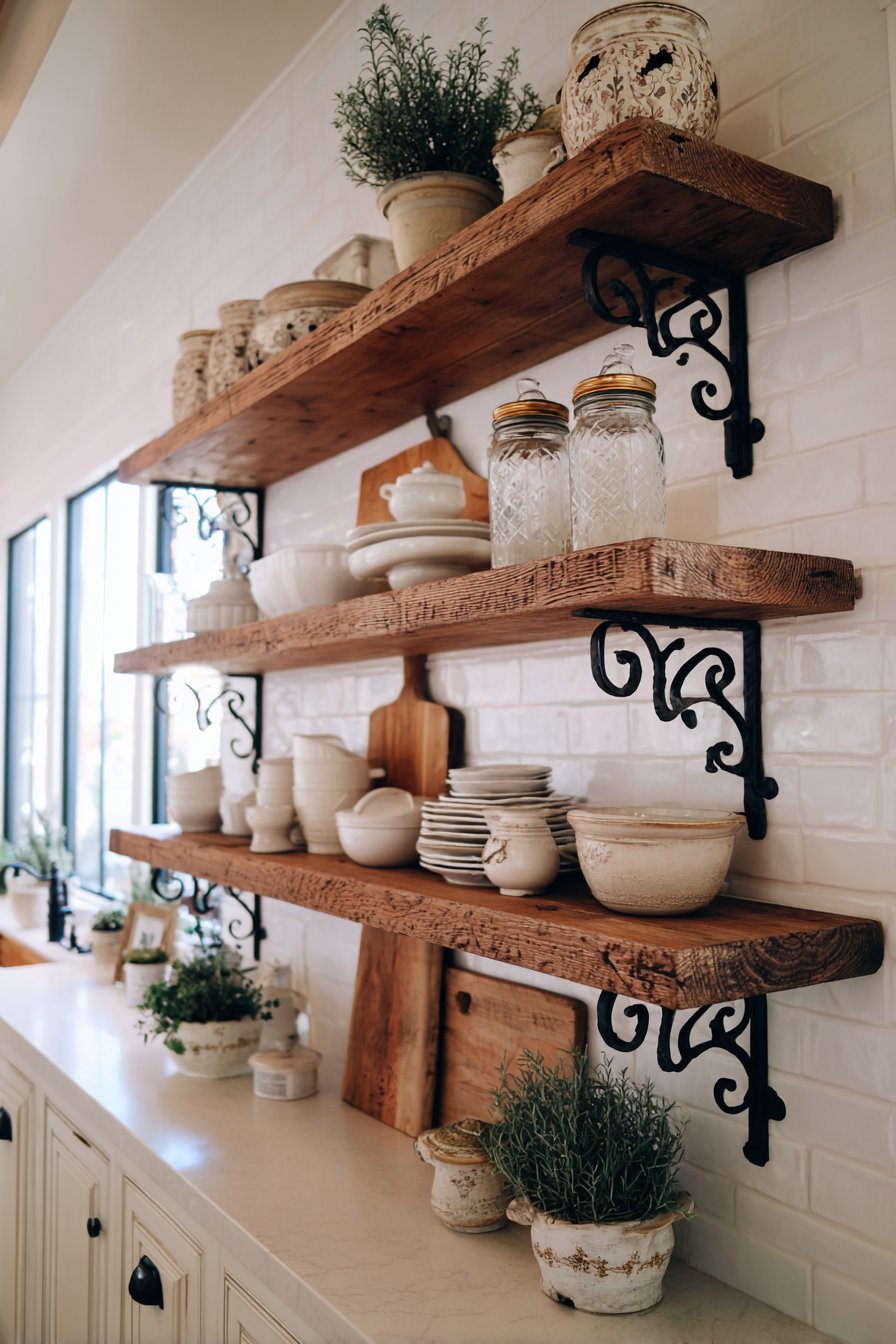
Thick wood shelves in natural walnut finish mount on traditional iron brackets. The decorative scrollwork adds artistic detail. Shelves are styled with curated collections. White ironstone dishes, vintage glass canisters with brass lids, and wooden cutting boards create layered displays.
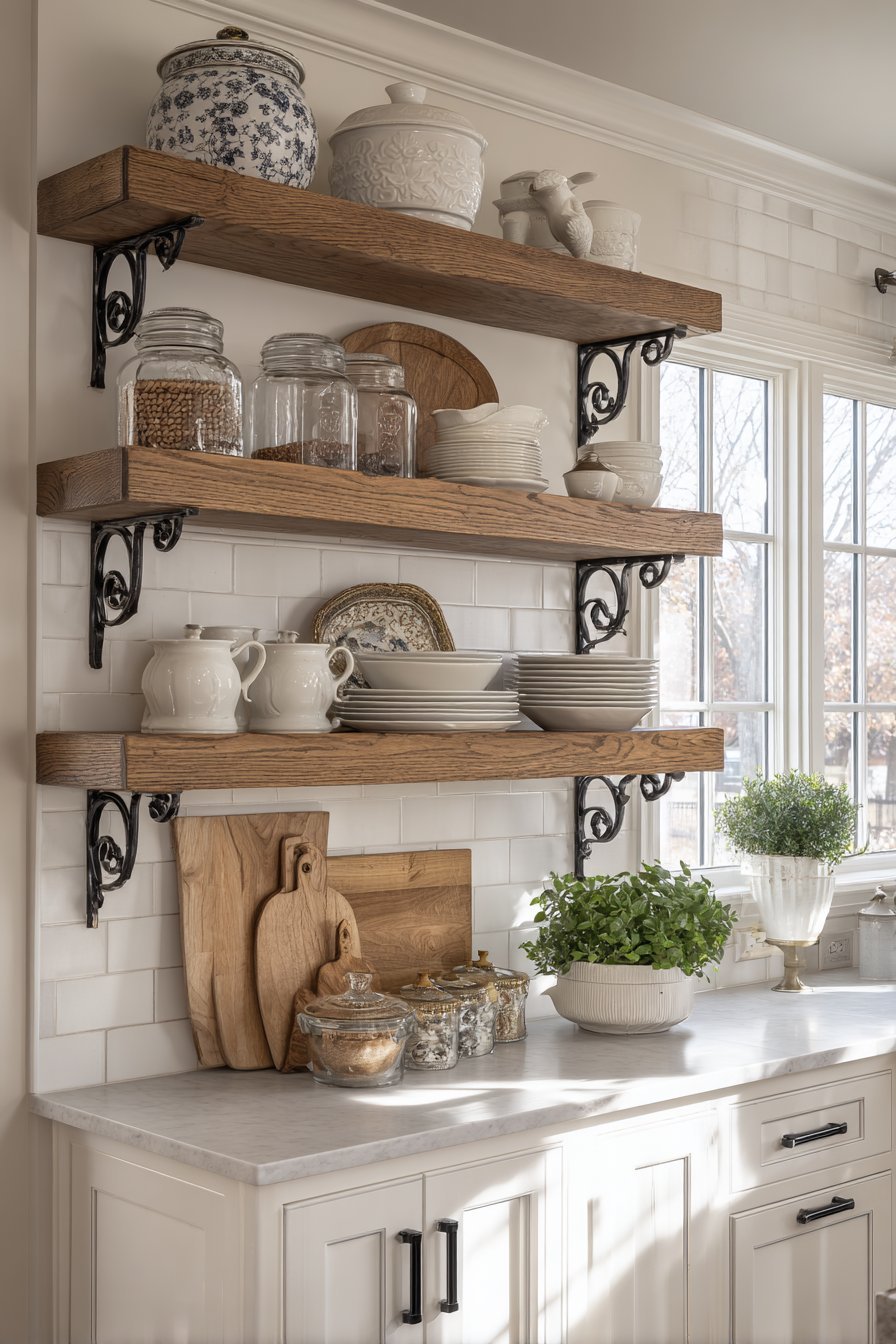
Small potted herbs in ceramic pots add living elements. The wall behind features white subway tiles with black grout. This contrast makes displays pop visually. Below the shelves, white shaker cabinets with black hardware continue the classic aesthetic.
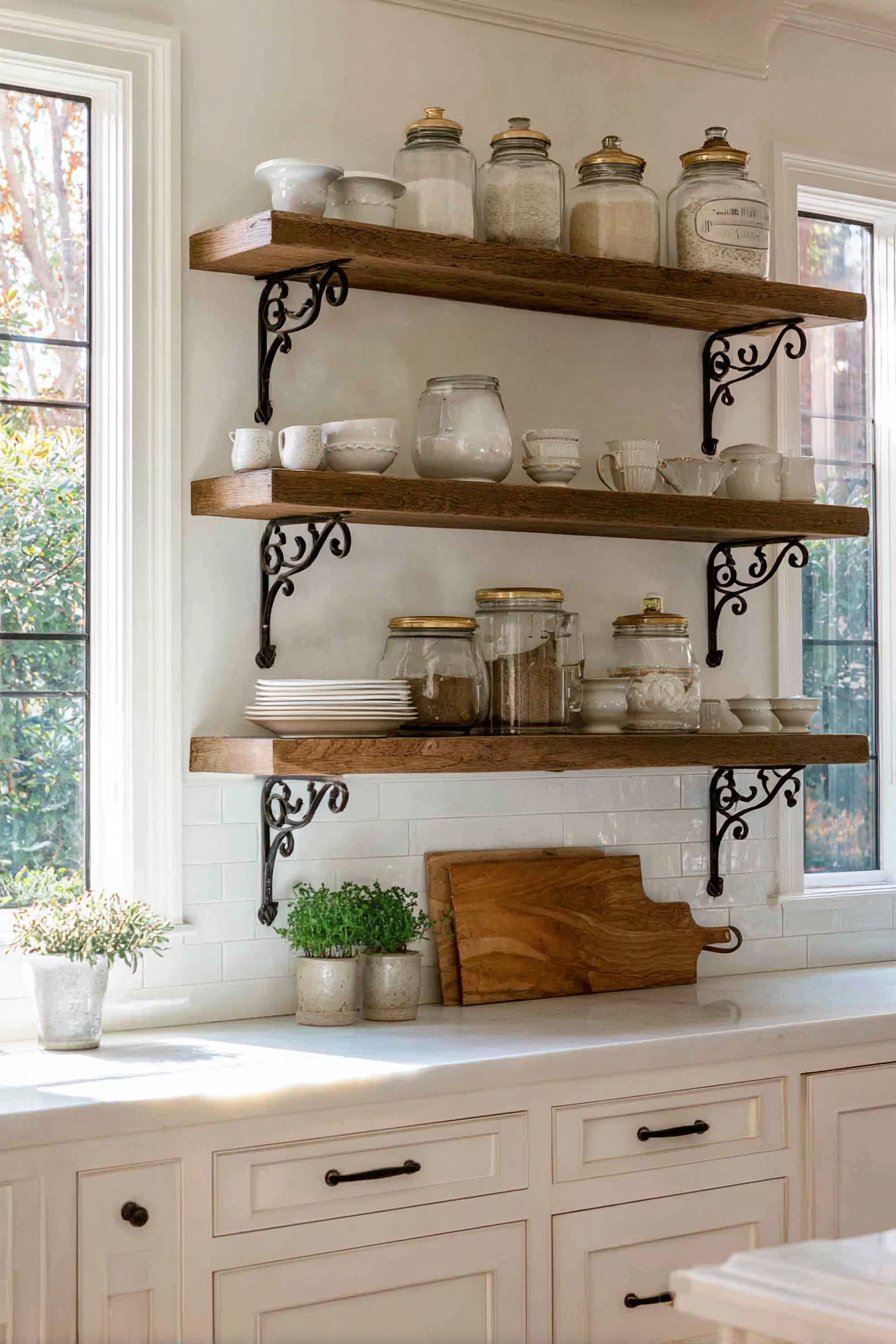
Natural light from an adjacent window creates gentle highlights on displayed items. The thoughtfully arranged shelving demonstrates that open storage can be beautiful. Material textures mix successfully. The combination of functional and decorative items achieves perfect balance.
Key Design Tips:
- Choose substantial shelving materials like thick walnut for visual weight
- Select decorative brackets that complement overall kitchen style
- Display mix of functional and decorative items for authentic styling
- Use black grout with white tiles for graphic contemporary classic look
- Arrange shelves with varying heights and depths for visual interest
- Keep open shelving displays edited and intentionally curated
20. Organized Walk-In Pantry
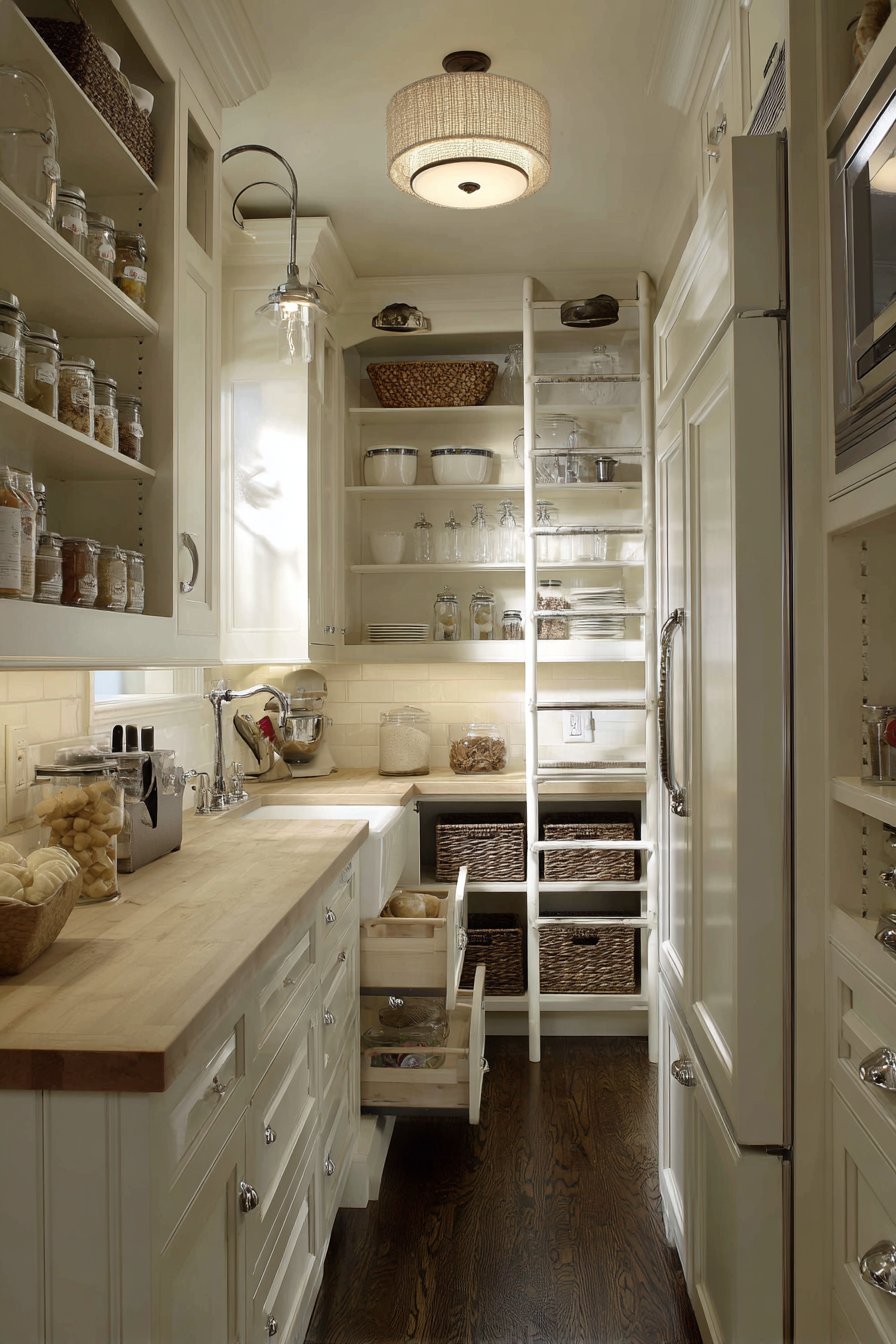
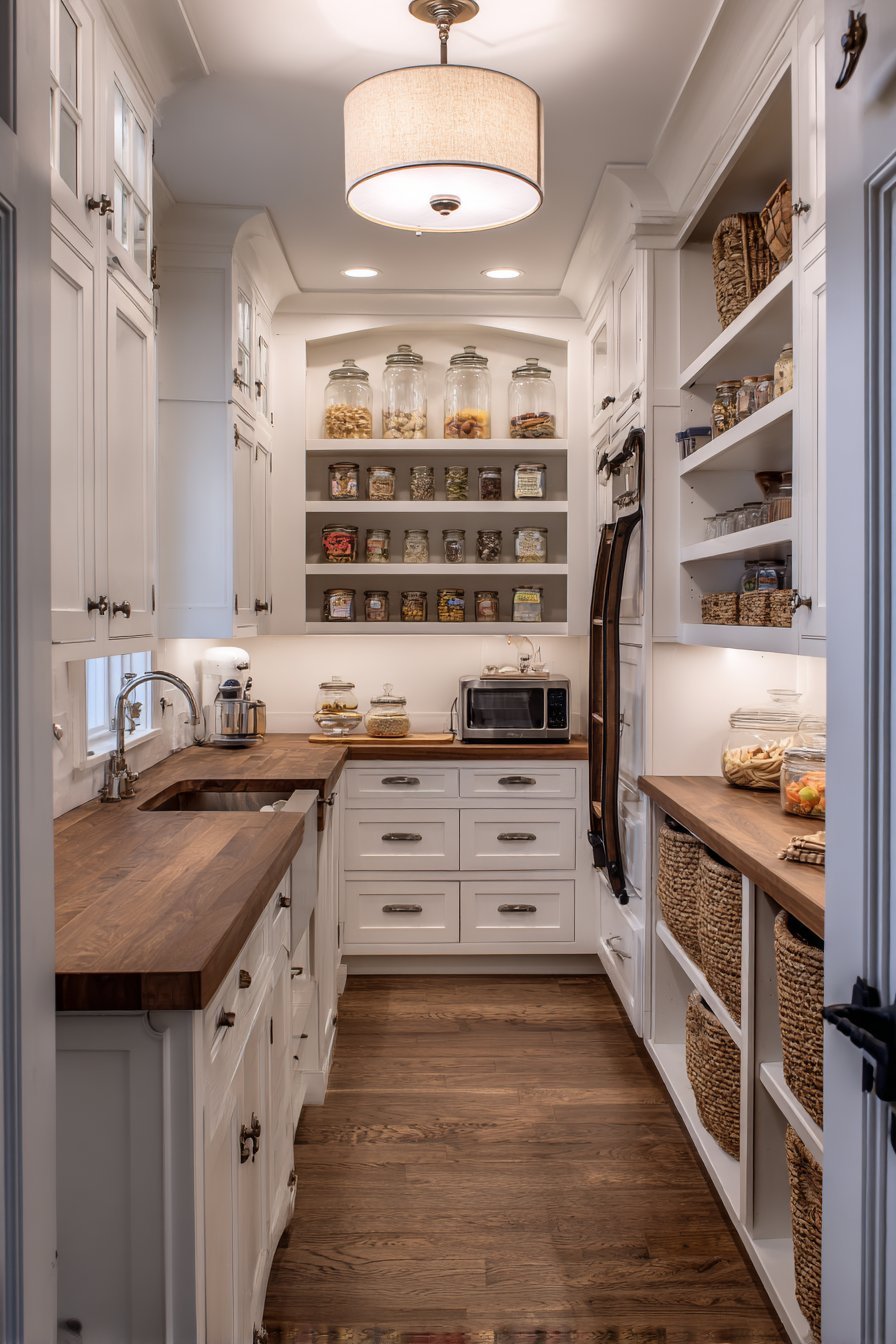
Floor-to-ceiling custom cabinetry painted in classic white creates comprehensive storage. Pull-out drawers with full extension slides provide easy access. Adjustable shelving accommodates changing storage needs. A built-in countertop workspace in butcher block holds small appliances. Traditional hardware in polished nickel maintains kitchen consistency.
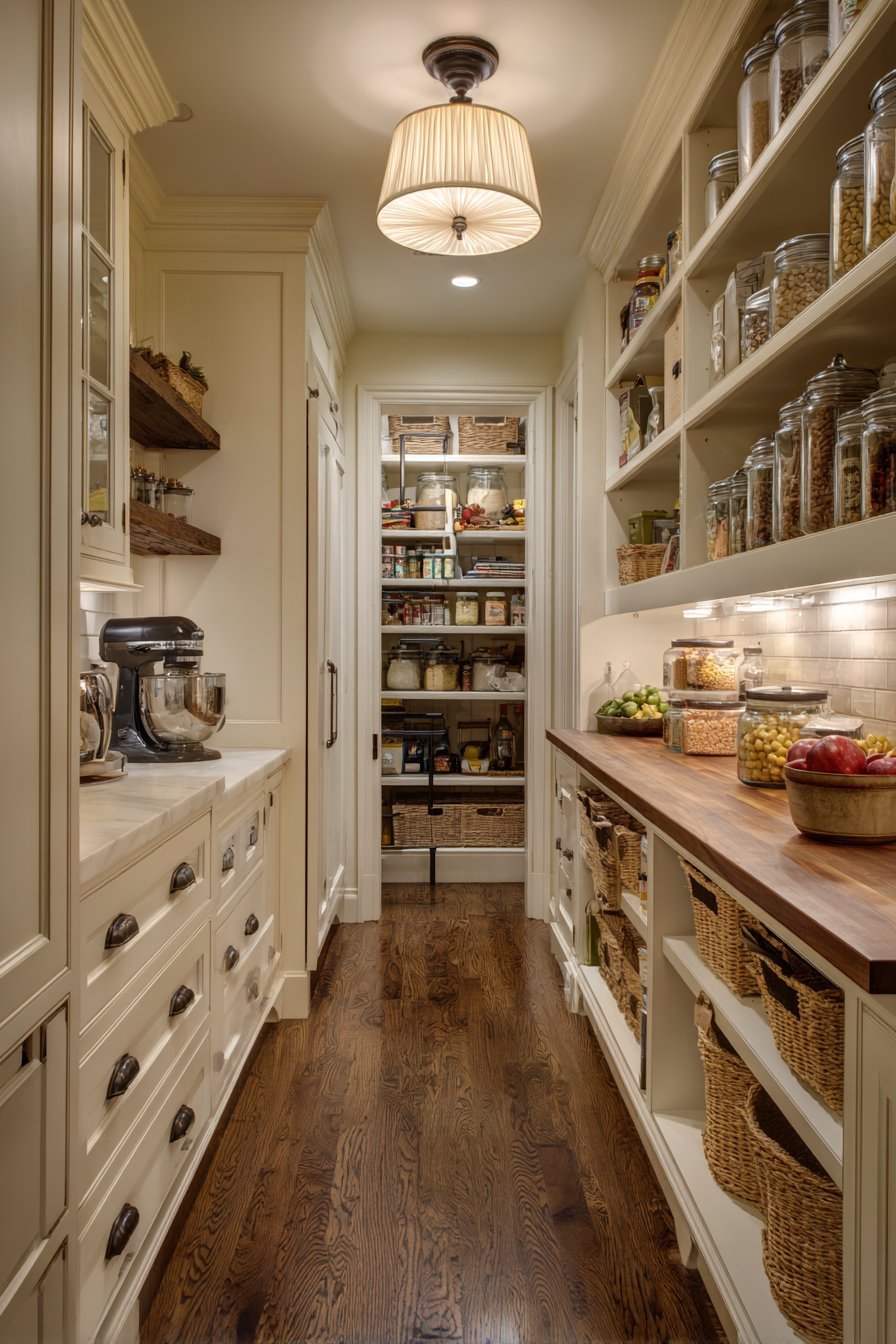
A vintage-style ladder on rail system provides upper shelf access. Clear glass canisters organized on shelves display dry goods attractively. Woven baskets on lower shelves conceal less attractive items. This combination maintains visual appeal while maximizing storage.
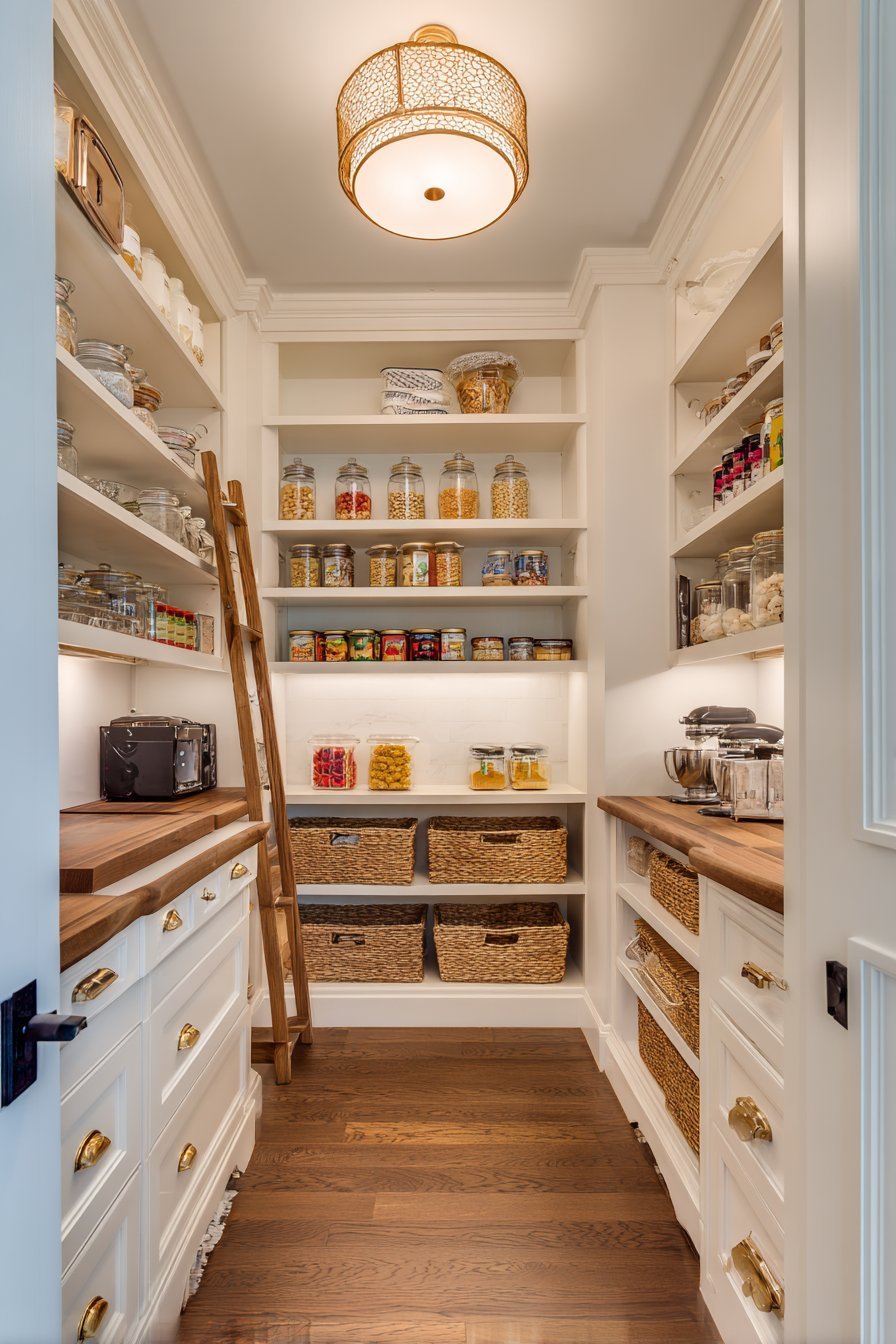
A centered ceiling fixture with traditional drum shade provides ambient lighting. Under-shelf LED strips illuminate work surfaces. The organized system makes inventory visible at a glance. This classic pantry design transforms storage into an attractive, functional space.
Key Design Tips:
- Install pull-out drawers in pantries for complete visibility and access
- Add built-in counters for small appliance storage and use
- Use ladder systems for safe upper shelf access
- Store dry goods in clear glass containers for inventory visibility
- Combine ambient and task lighting for comprehensive illumination
- Include adjustable shelving for storage flexibility as needs change
Why These Classic Kitchen Designs Are the Best
Classic kitchen designs endure because they prioritize quality materials and timeless proportions. White painted cabinetry provides a neutral foundation that never feels dated. The shaker style’s simple frame and panel construction suits both traditional and transitional homes. Natural materials like marble, granite, soapstone, and butcher block develop beautiful patina with age.
Traditional design principles emphasize balance, symmetry, and appropriate scale. These kitchens incorporate furniture-quality details like inset doors, crown molding, and decorative corbels. Such elements add architectural interest without trending toward temporary fashion. Color palettes based on neutrals with carefully selected accent colors remain appealing for decades.
The versatility of classic design allows personalization through hardware finishes, countertop selections, and accent colors. Navy islands, sage pantries, and charcoal butler’s pantries demonstrate how traditional frameworks accommodate individual style. Mixing materials like wood, stone, and tile creates layered visual interest while maintaining cohesion.
Functionality remains paramount in successful classic kitchens. Professional appliances integrate seamlessly with traditional cabinetry. Dedicated zones for coffee service, baking, and pantry storage enhance daily life. Open shelving displays beautiful items while keeping them accessible. Glass-front cabinets encourage organization while adding visual lightness.
Lighting design in classic kitchens combines ambient, task, and accent illumination. Chandeliers, pendant lights, sconces, and under-cabinet fixtures layer appropriately. Natural light from multiple windows remains the most important element. These designs maximize daylight while providing adequate artificial lighting for evening tasks.
Sustainability emerges naturally from classic design through quality construction and durable materials. Well-built cabinetry lasts generations rather than requiring replacement. Natural stone counters, solid wood floors, and quality tile installations prove their worth over decades. The timeless aesthetic prevents design obsolescence, reducing renovation frequency and associated waste.
Conclusion
Classic kitchen designs demonstrate that thoughtful material choices and traditional proportions create enduring beauty. Quality craftsmanship, natural materials, and architectural details form the foundation. These elements combine to produce kitchens that serve families beautifully for generations.
The twenty designs presented showcase classic style’s remarkable versatility. From white shaker simplicity to rich wood warmth, traditional kitchens accommodate diverse preferences. Key takeaways include investing in quality materials, incorporating architectural details, and planning functional zones thoughtfully.
Start your classic kitchen journey by selecting one element that resonates. Perhaps white cabinetry, marble counters, or a farmhouse sink inspires you. Build your design around quality pieces that will grow more beautiful with time. Your timeless classic kitchen awaits creation through careful planning and authentic materials.
