
Few design conversations spark as much enthusiasm — and as much debate — as the question of how to design a nursery for a boy versus a girl. Gender-based nursery design has a rich and evolving history, shaped by cultural tradition, changing social attitudes, and the enduring human desire to create a space that feels uniquely suited to the child who will inhabit it. Whether you embrace traditional color conventions, prefer a gender-neutral approach, or want to blend both worlds, understanding the design differences helps you make more intentional, beautiful choices.
The nursery design landscape has shifted dramatically in recent years. Where once the answer was simply pink for girls and blue for boys, today’s parents have access to an extraordinary palette of design ideas, color combinations, themes, and aesthetic directions that go far beyond those binary conventions. Modern nursery design celebrates individuality, imagination, and the idea that a beautifully designed space serves every child well — regardless of gender.
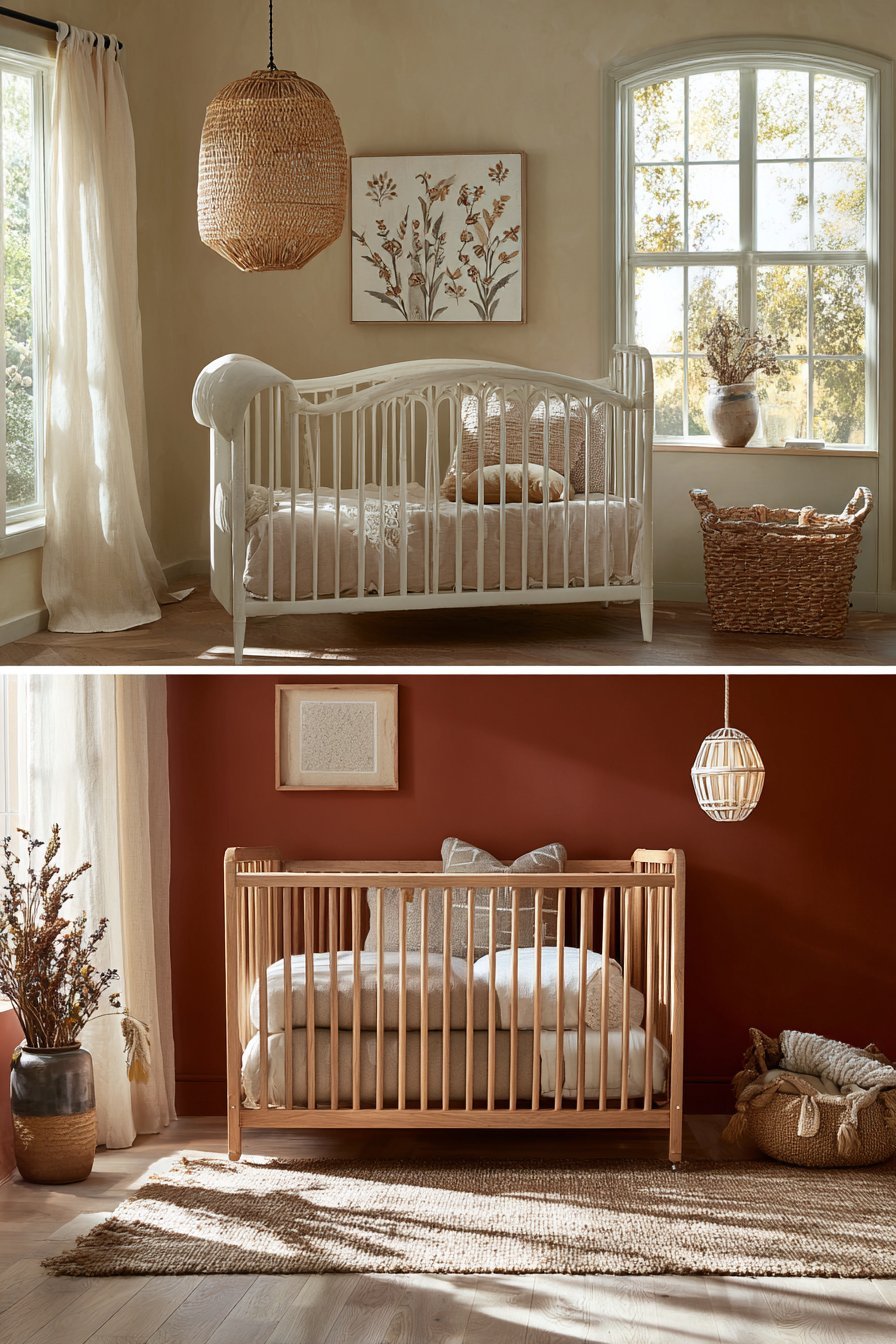
This article explores the key design differences typically associated with boy and girl nurseries — from color palettes, themes, and textile choices to furniture styles, lighting, and decorative details — while also highlighting how these distinctions can be blended, subverted, or transcended entirely. Whether you are designing with tradition in mind or breaking every rule, these insights will help you create a nursery that is genuinely beautiful and deeply personal.
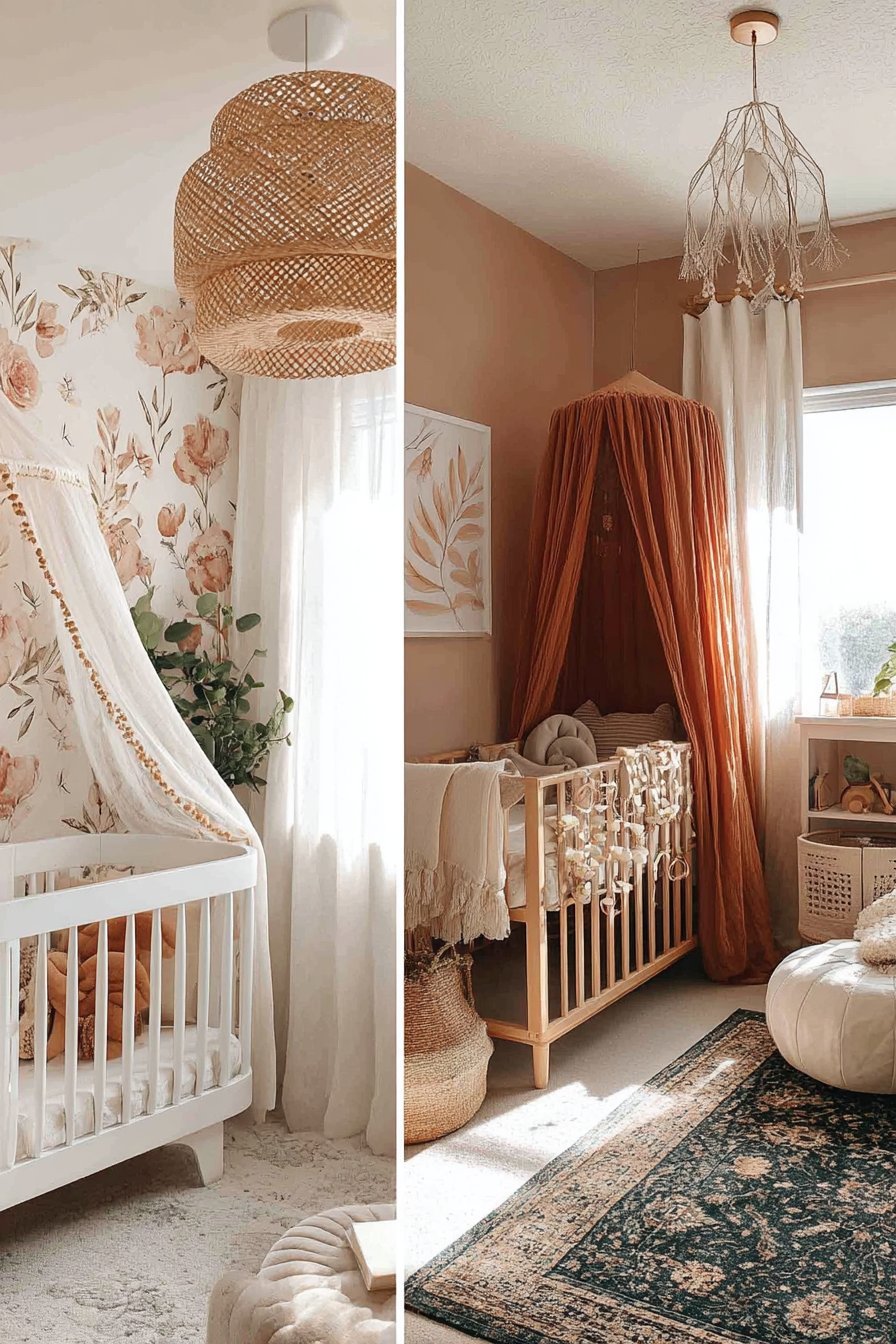
1. Color Palettes: Beyond Pink and Blue
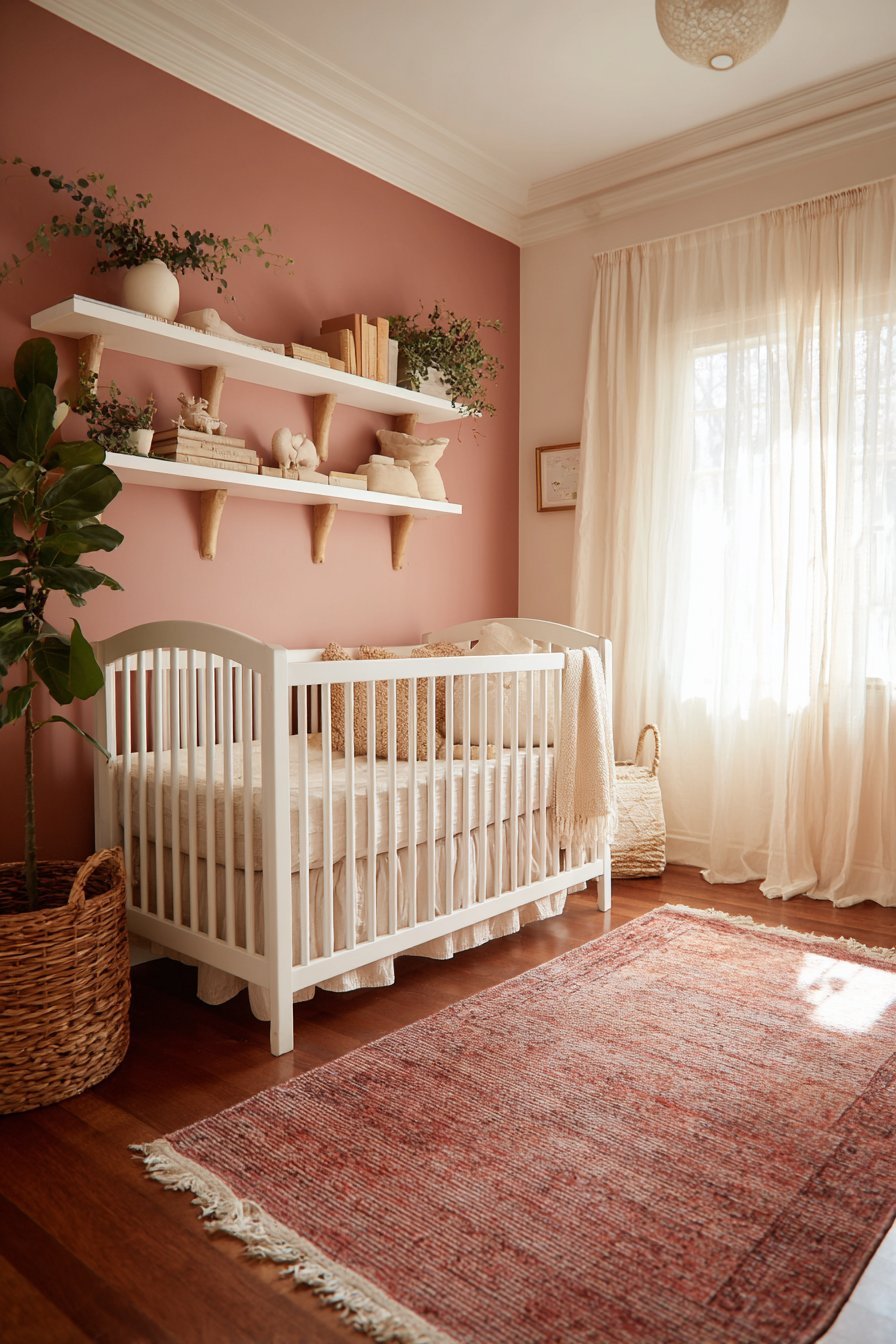
Color is the most immediately visible design difference between traditionally styled boy and girl nurseries — and it is also the area that has evolved most dramatically in contemporary design. The classic pink-for-girls, blue-for-boys convention dates only to the mid-twentieth century and was largely reversed before that period, making it a relatively recent and entirely cultural invention rather than any kind of inherent truth.
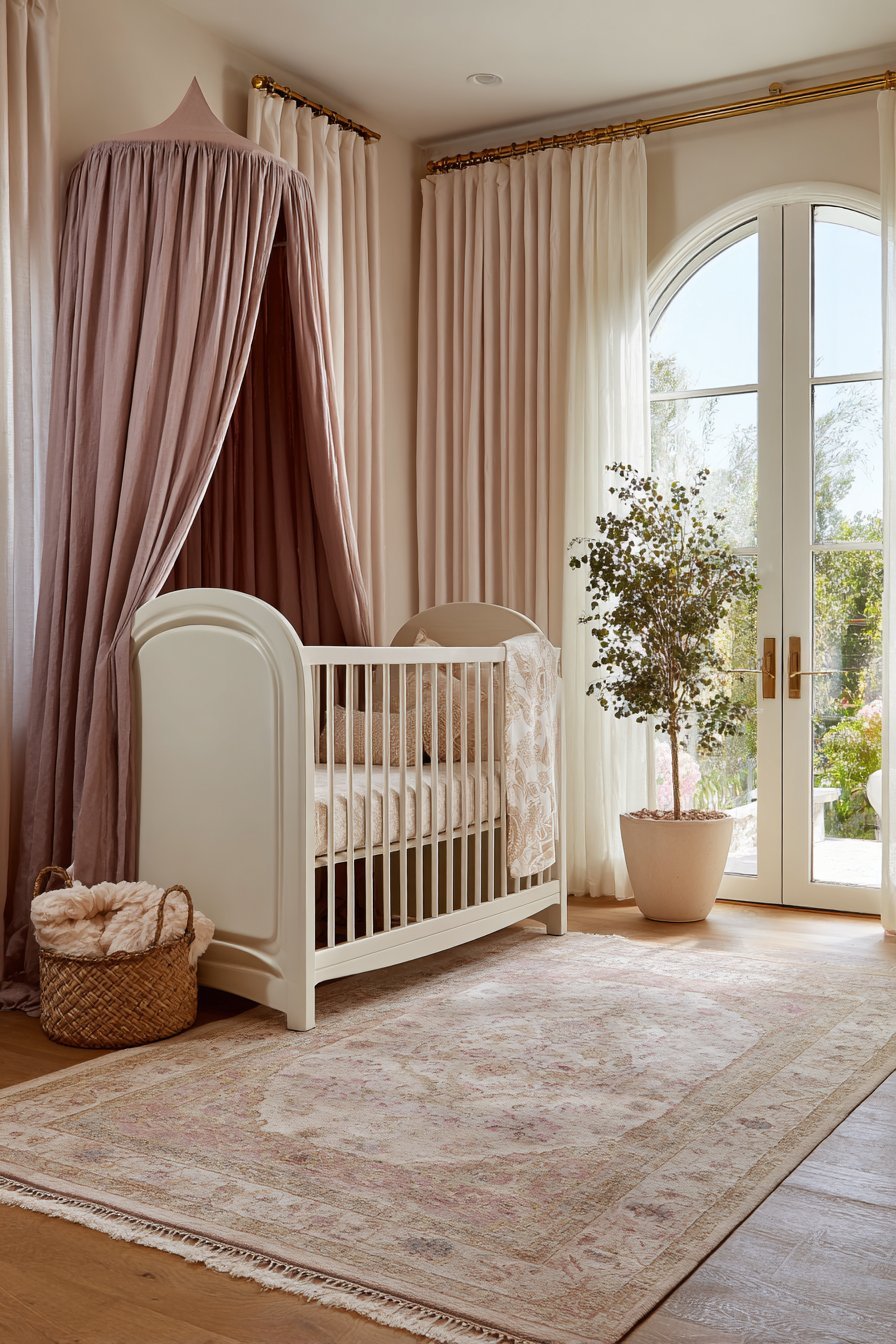
Traditional girl nursery palettes draw from a range of soft, warm tones — blush, dusty rose, lavender, peach, mint, and antique white — that create a nurturing, gentle atmosphere. Contemporary girl nursery design has expanded this palette significantly, embracing terracotta, sage green, warm mauve, and even deep forest green alongside the classic pinks. These richer, more sophisticated tones give girl nurseries a design depth that reads as elevated and intentional rather than saccharine or predictable.
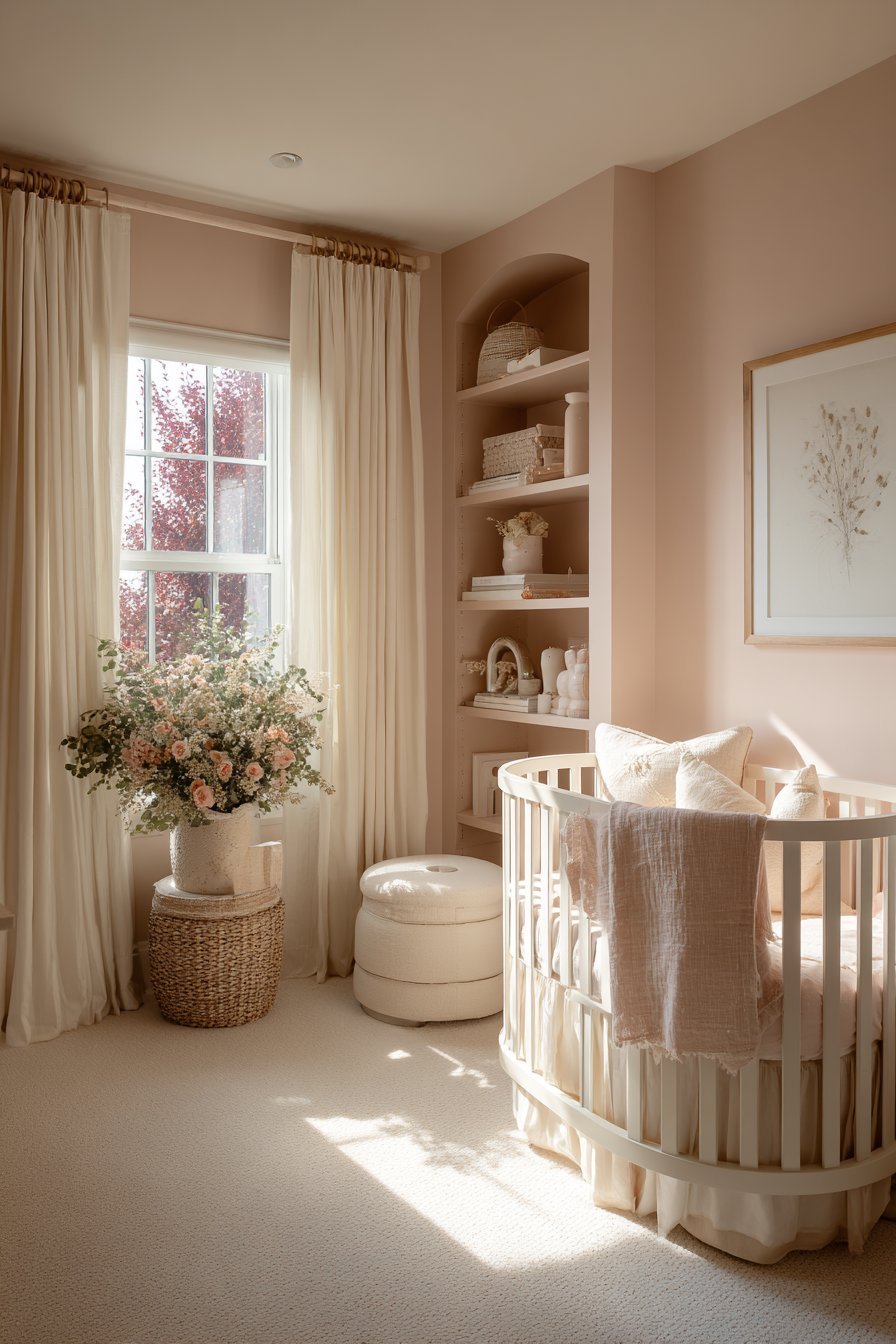
Traditional boy nursery palettes have historically centered on navy, sky blue, grey, and white — tones associated with calm, structure, and a certain understated sophistication. Modern boy nursery design has broadened considerably, with warm terracotta, earthy olive, deep forest green, warm sand, and rich ochre all becoming popular choices that move well beyond the expected blue. These earth-toned, nature-inspired palettes feel contemporary, warm, and beautifully suited to the natural world themes that dominate current nursery design trends.
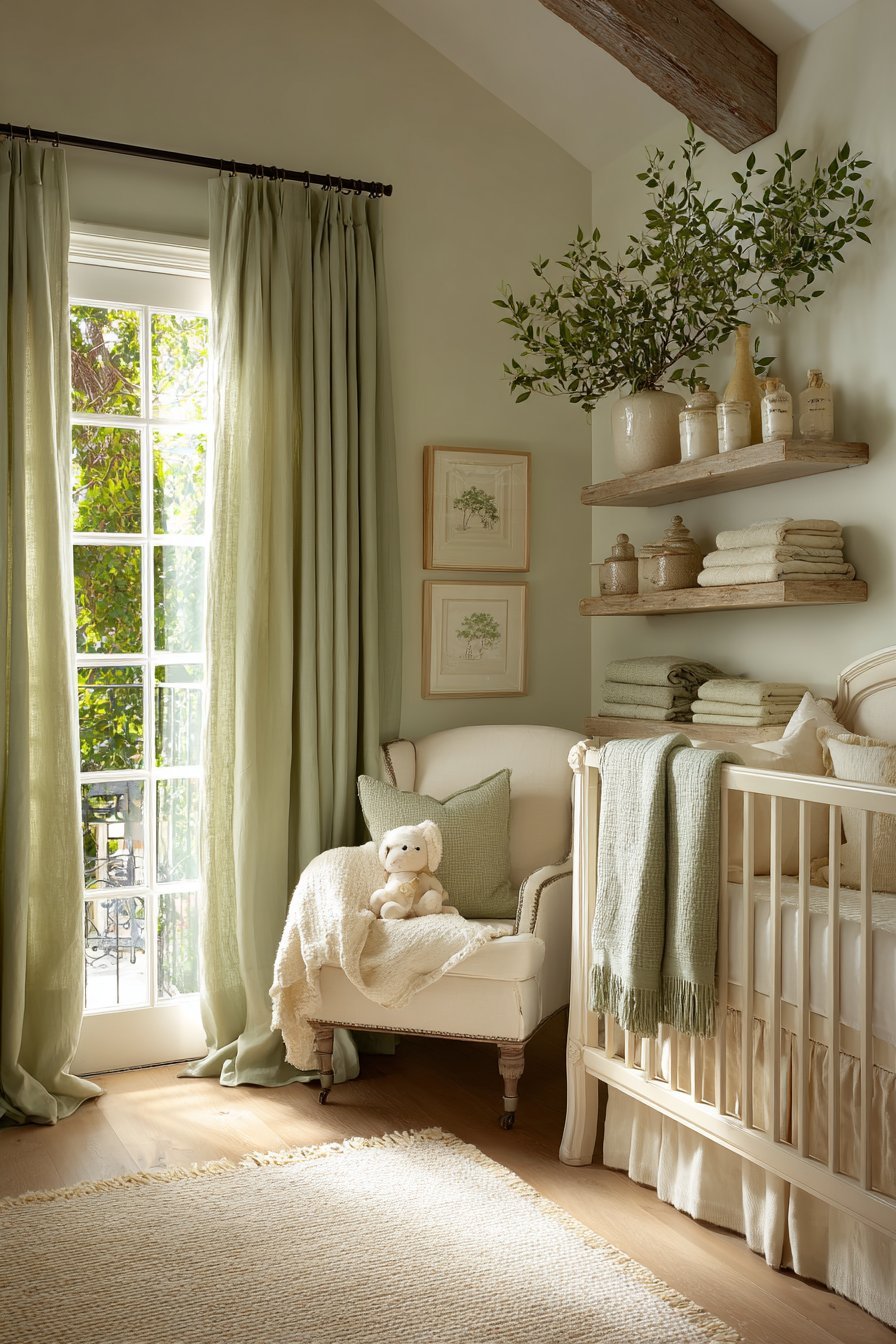
- For girl nurseries, explore dusty rose, sage green, lavender, terracotta, and warm mauve as palette foundations
- For boy nurseries, consider navy, forest green, warm sand, ochre, and earthy olive beyond the expected blue
- Use warm white or cream as a unifying neutral in both boy and girl nursery palettes for a cohesive result
- In gender-neutral nurseries, lean on terracotta, sage, warm grey, and natural wood as a complete palette
- Always test chosen colors on the actual nursery wall before committing — light changes everything
2. Themes and Storytelling: What Each Nursery Celebrates
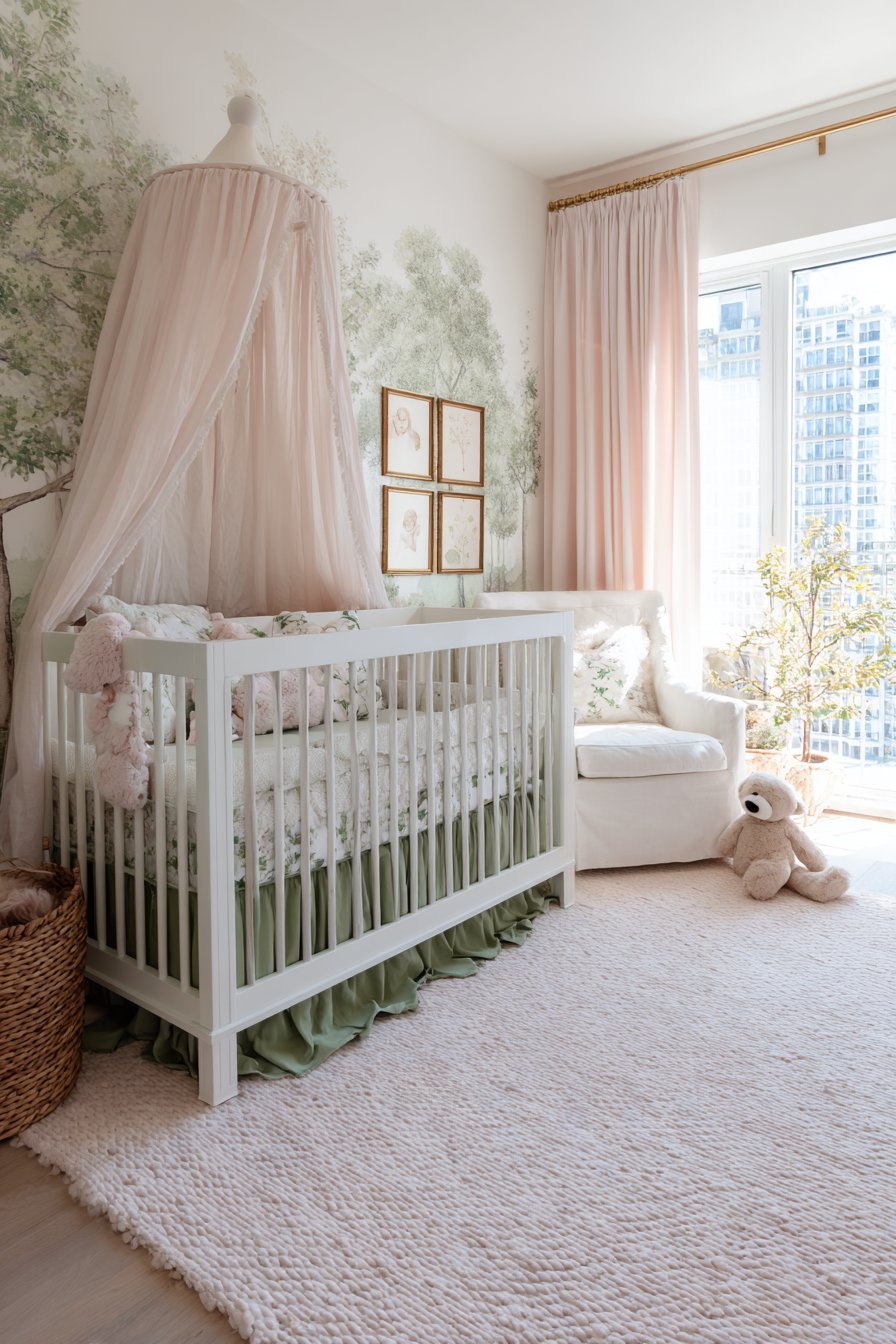
Theme and storytelling are where the most significant personality differences between boy and girl nurseries tend to emerge. The theme you choose sets the imaginative world of the nursery — the visual narrative your baby grows up within — and it reflects both your own aesthetic sensibility and your vision for the kind of childhood wonder you want to cultivate.
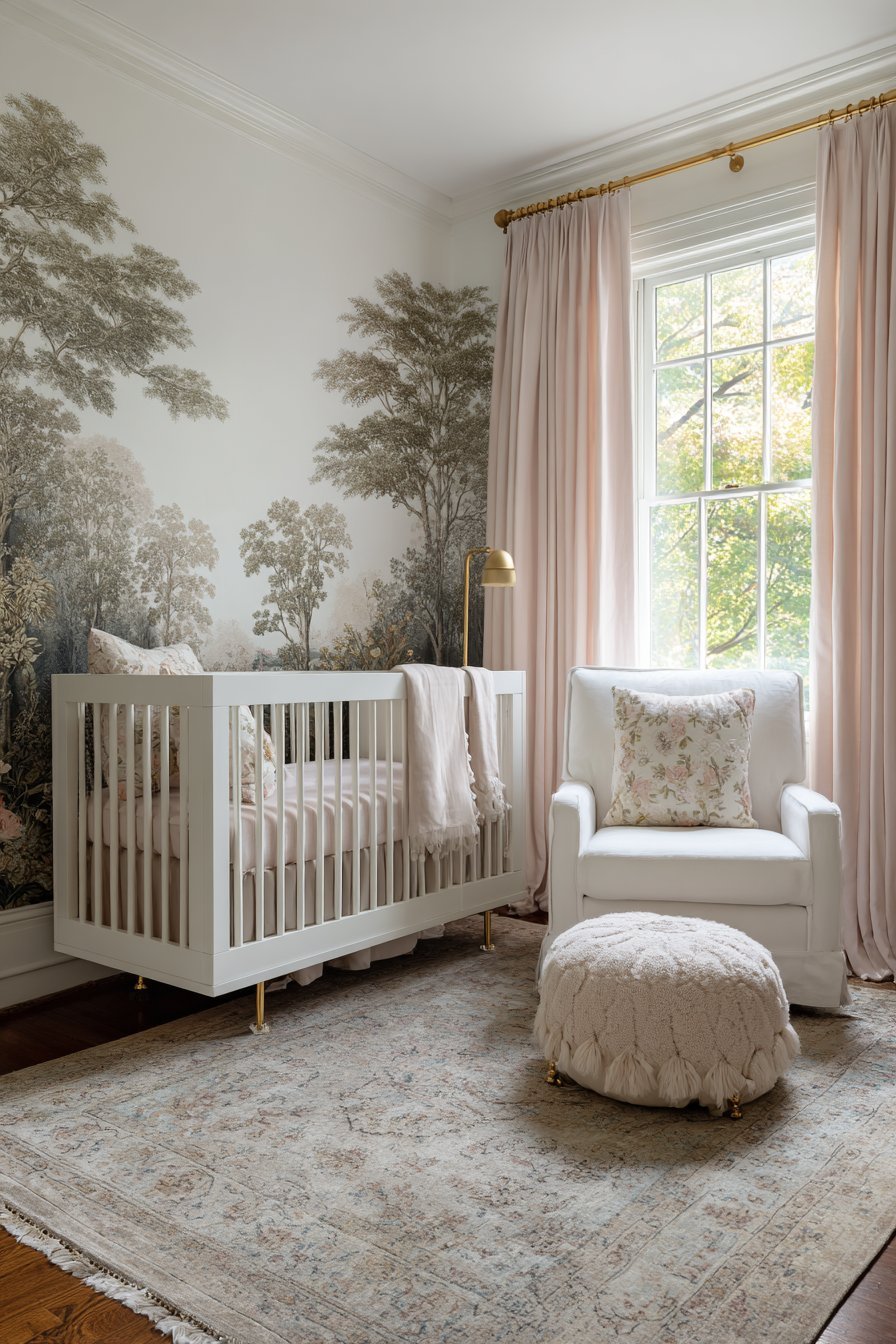
Popular girl nursery themes include enchanted forests with fairy-tale animals, floral gardens with botanical illustrations, celestial worlds of moons and stars, vintage storybook characters, under-the-sea coral gardens, and romantic ballerina or dancer motifs. These themes share a common quality of softness, magic, and narrative richness — they invite a child into a world of imagination and gentle wonder. Contemporary girl nursery design increasingly favors botanical and nature-based themes that move away from overtly princess-focused narratives toward something more universally beautiful and enduring.
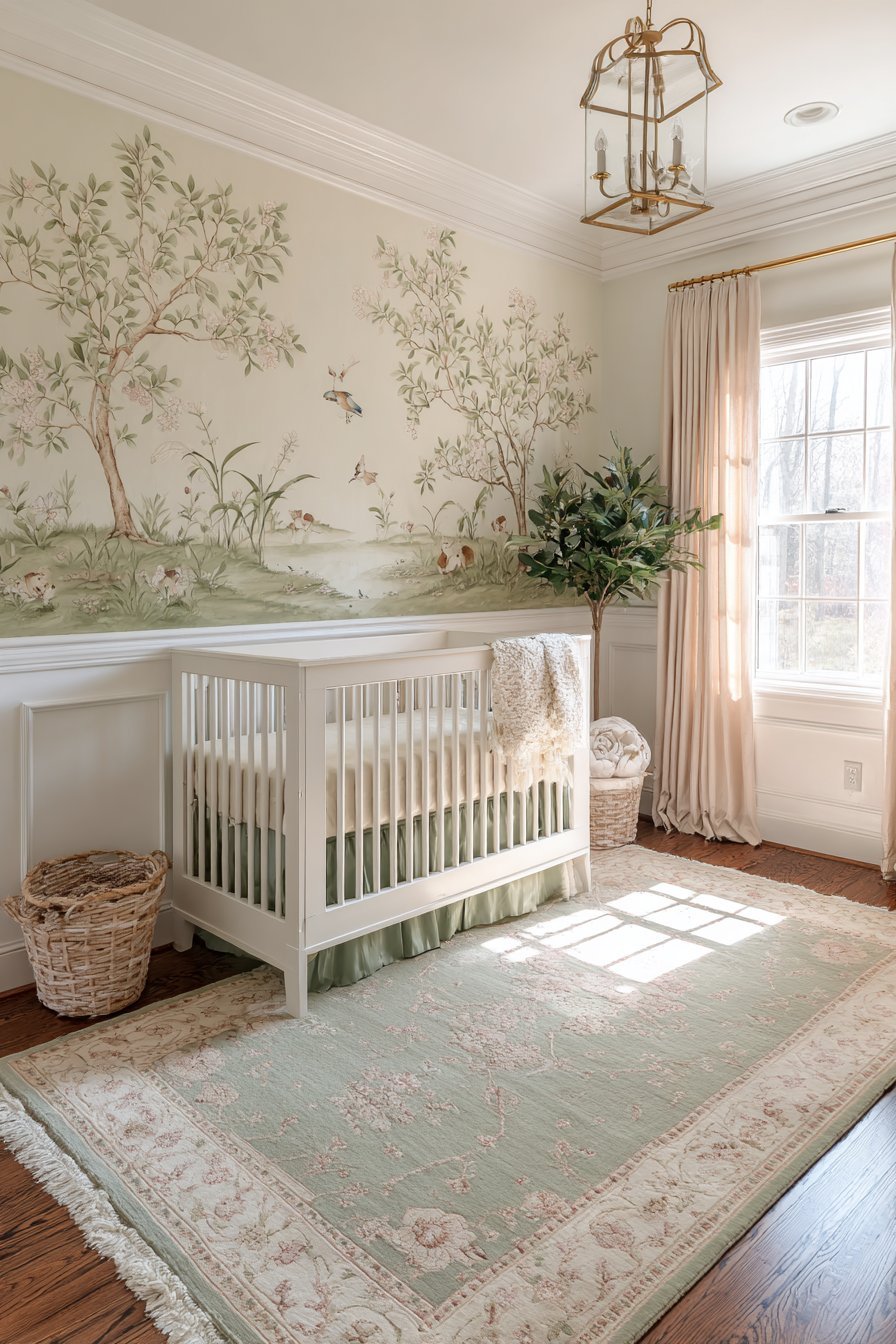
Popular boy nursery themes have traditionally centered on adventure, exploration, and the natural world — jungle animals, safari scenes, outer space and astronauts, nautical and maritime imagery, woodland creatures, vehicles and transportation, and dinosaurs. These themes share a quality of discovery, movement, and the excitement of the wide world beyond the nursery walls. Like girl nursery design, the contemporary direction for boy nurseries leans strongly toward nature-inspired imagery — animals, plants, and landscapes that connect even the youngest child to the natural world in a way that feels timeless and genuinely beautiful.
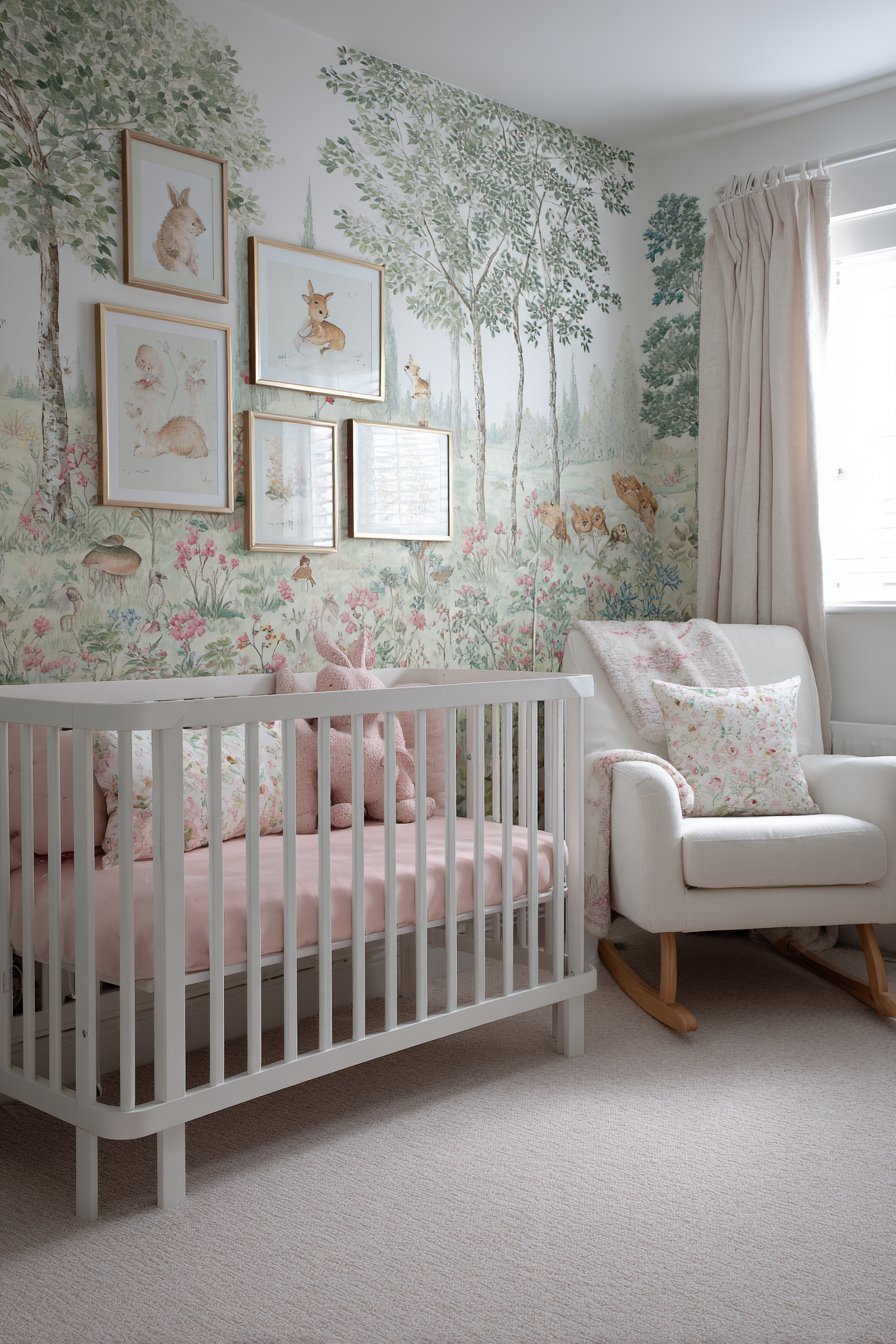
- For girl nurseries, explore enchanted forest, botanical garden, celestial, or vintage storybook themes
- For boy nurseries, consider jungle adventure, outer space, nautical, woodland, or safari themes
- Choose themes that can grow with your child — nature-based designs age far better than character-licensed ones
- Allow the theme to inform textiles, artwork, and accessories rather than overwhelming every surface
- Consider a theme rooted in your own passions or family heritage for a truly personal, meaningful nursery narrative
3. Furniture Style and Finish Choices
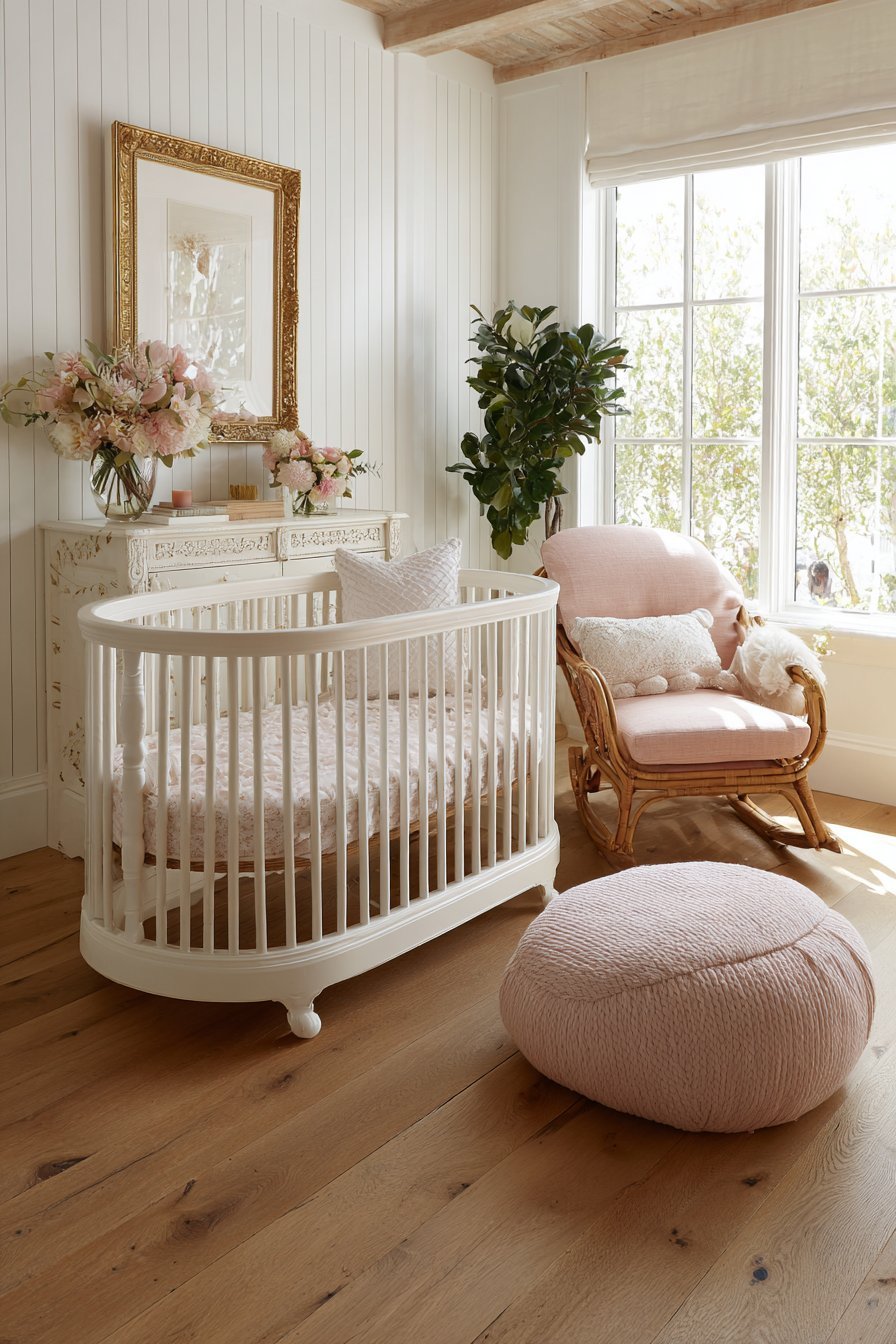
Furniture selection in boy and girl nurseries tends to follow distinct stylistic conventions, though these are increasingly blurred as contemporary design favors quality and longevity over gendered aesthetics. Understanding the traditional associations helps you make informed choices — and gives you a clear framework to work within or deliberately subvert.
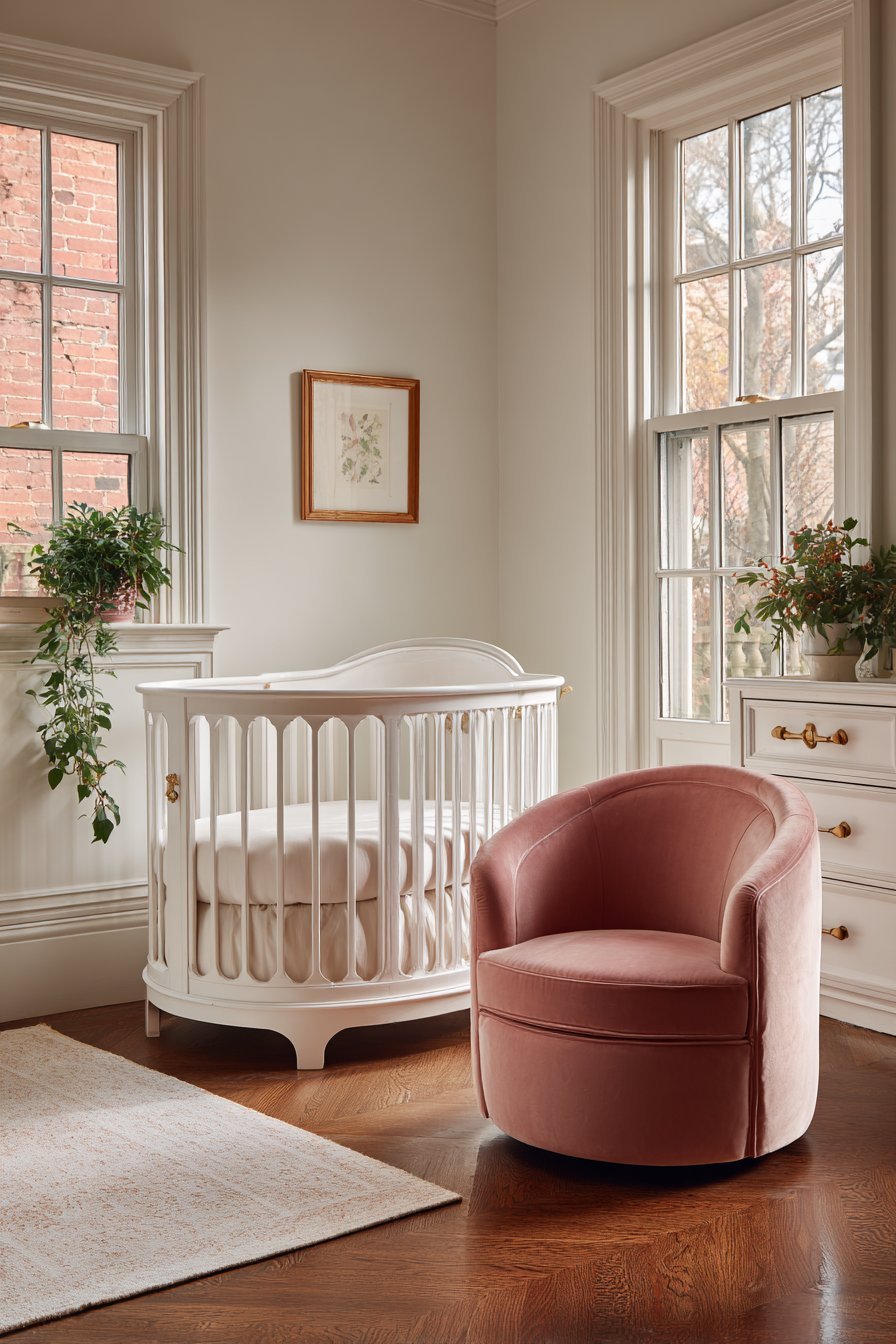
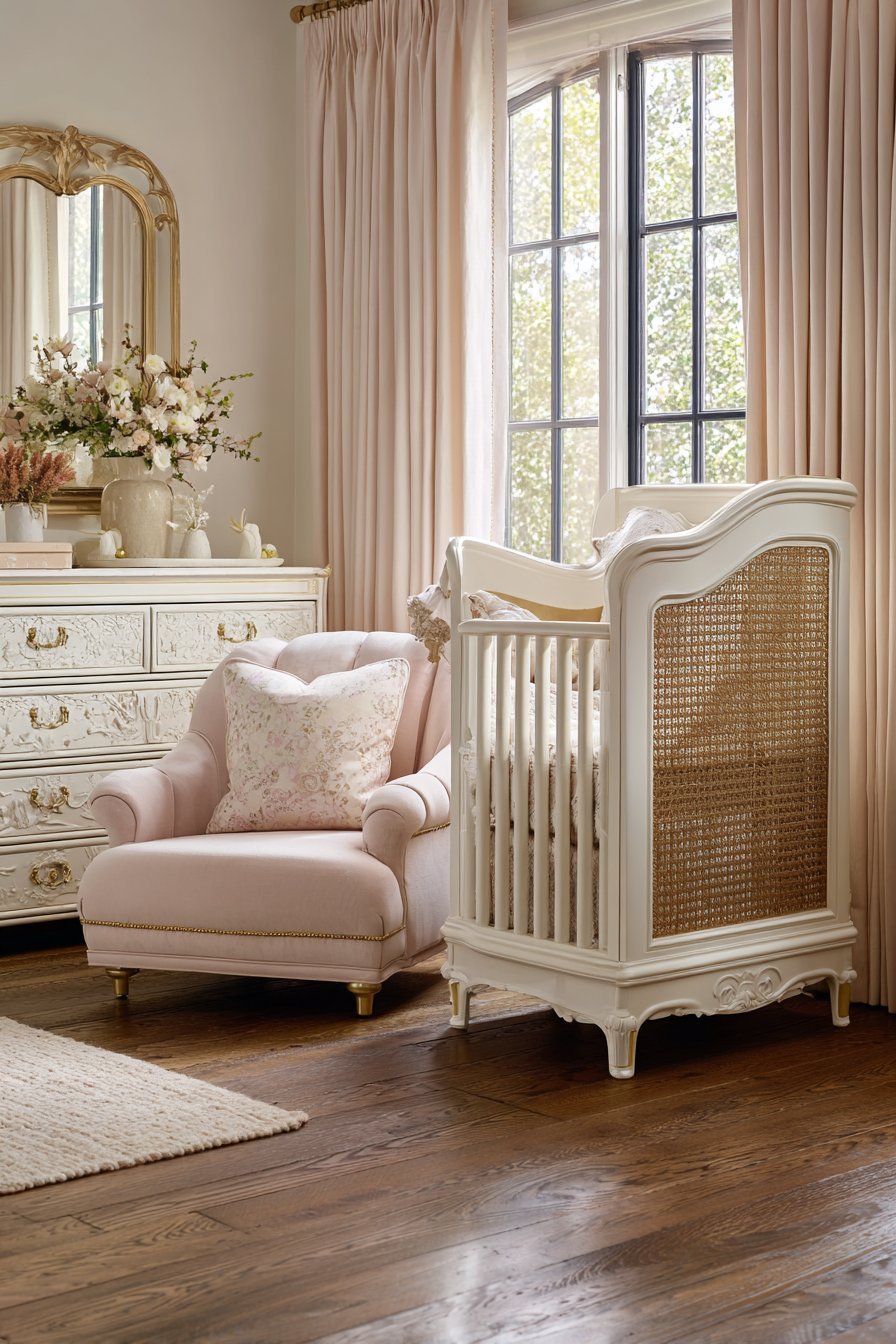
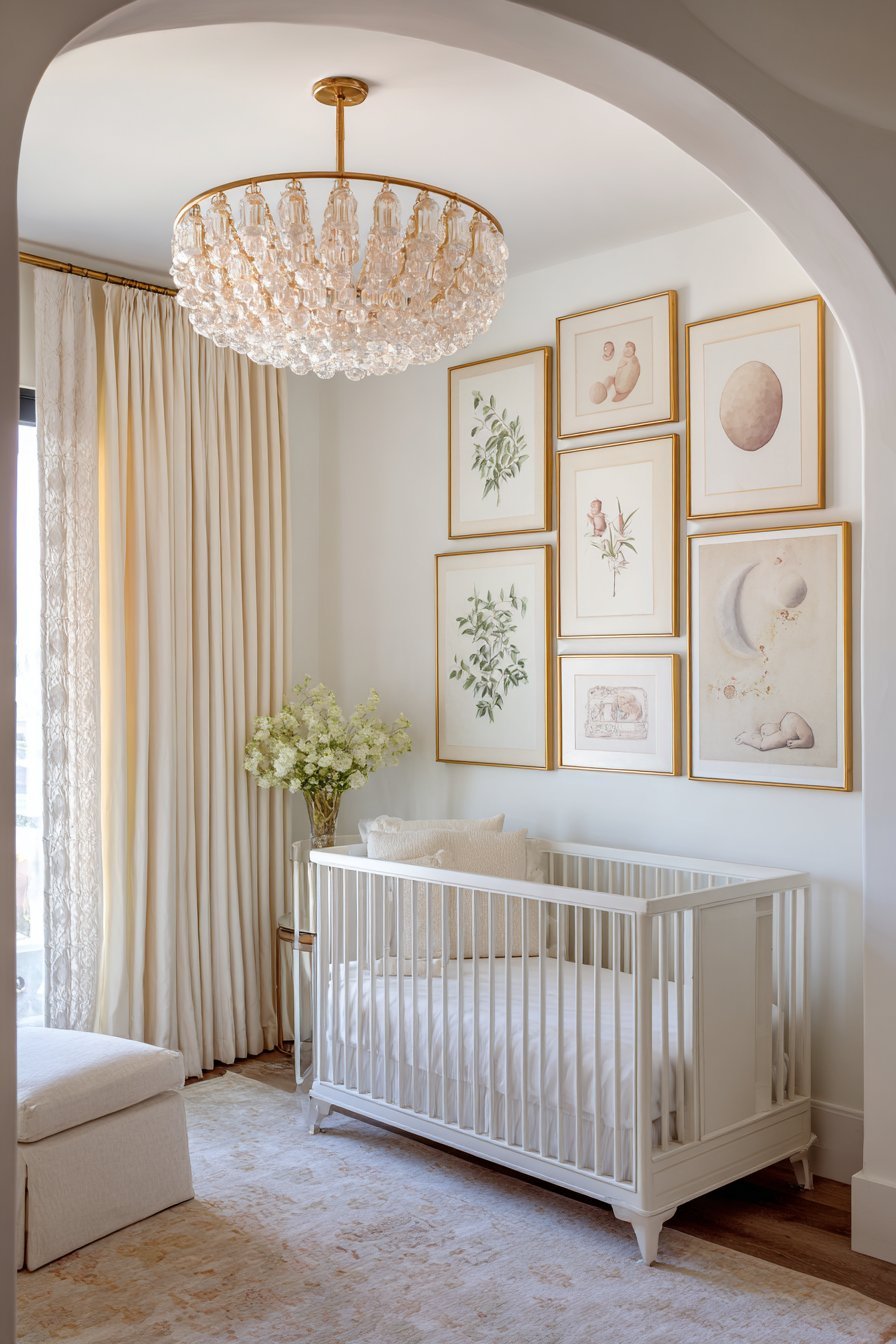
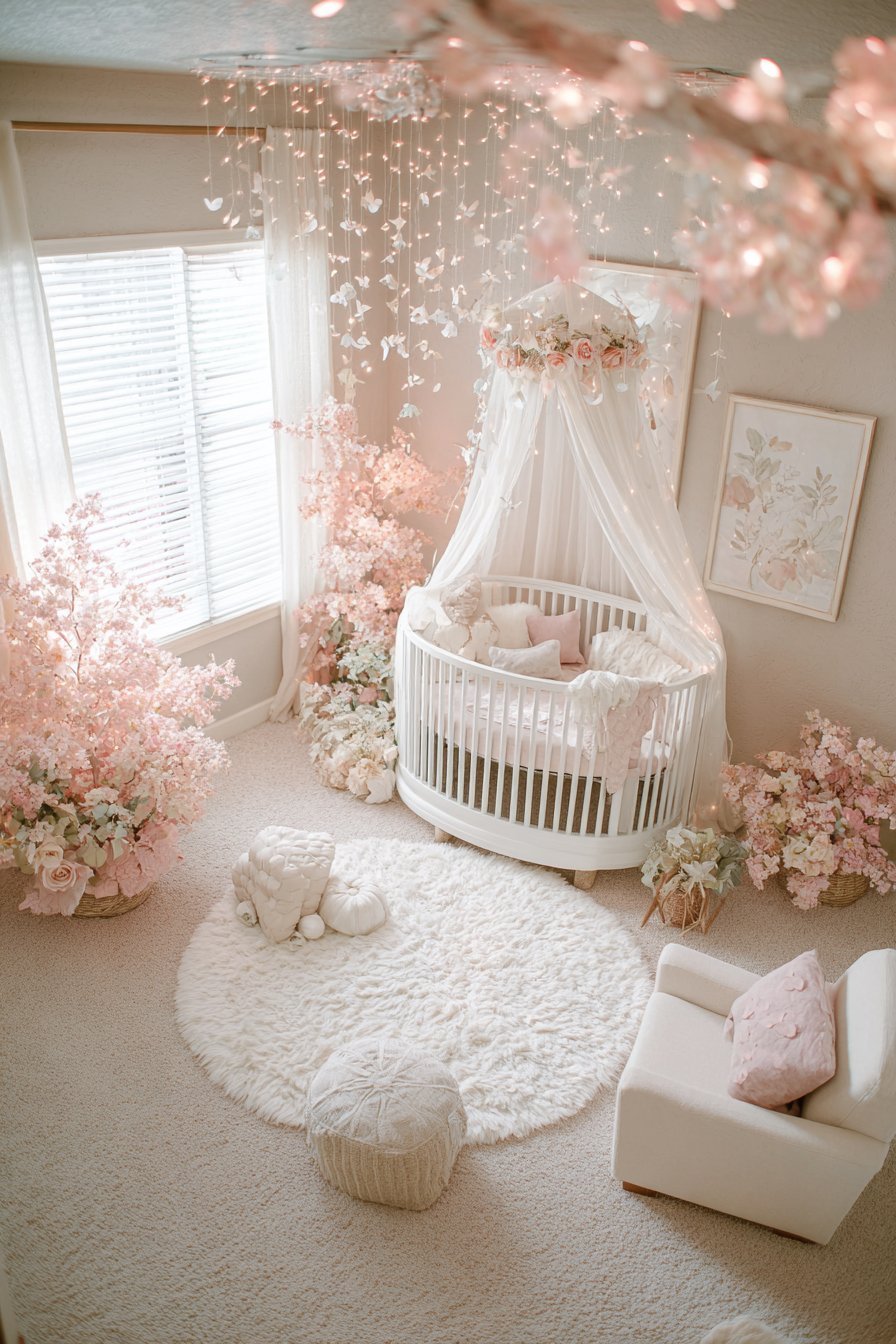
Girl nursery furniture has traditionally favored curved, soft-lined silhouettes — cribs with rounded spindles, dressers with gently arched tops, nursing chairs with soft upholstered arms and flowing lines. White-painted furniture has long been the dominant choice for girl nurseries, its clean, bright quality pairing beautifully with pink, lavender, and sage color palettes. Decorative details — carved motifs, upholstered drawer fronts, cane inserts, and brass hardware — feature more prominently in girl nursery furniture choices than in boy nurseries.
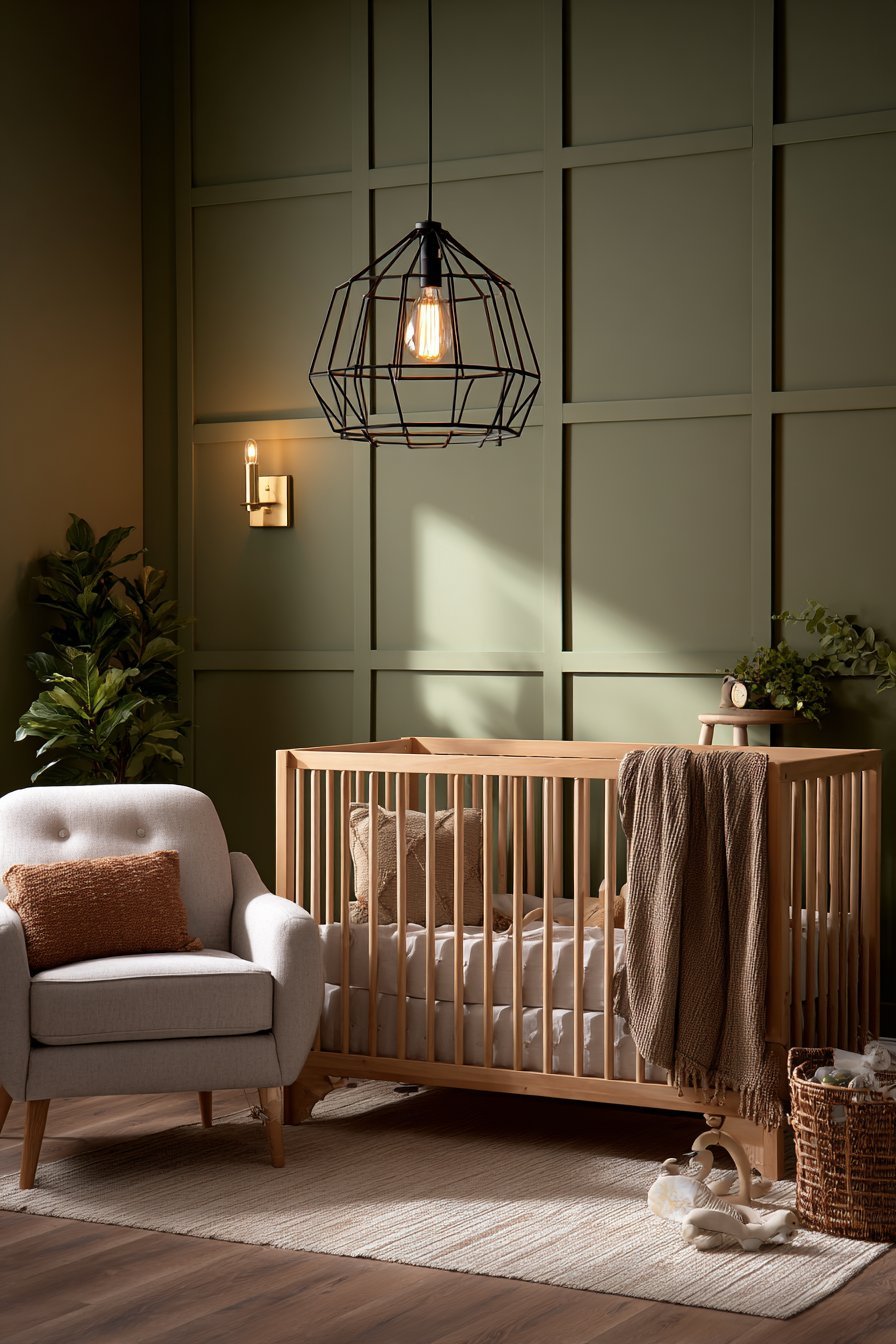
Boy nursery furniture has traditionally leaned toward cleaner, more architectural lines — cribs with straight spindles or solid panel ends, dressers with squared-off profiles, and nursing chairs with structured, tailored upholstery. Natural timber finishes — light oak, walnut, and warm maple — dominate boy nursery furniture choices, their organic warmth pairing beautifully with earth-toned palettes of navy, forest green, and terracotta. Matte black hardware has become particularly popular in contemporary boy nurseries, adding a graphic, modern edge to natural timber furniture.
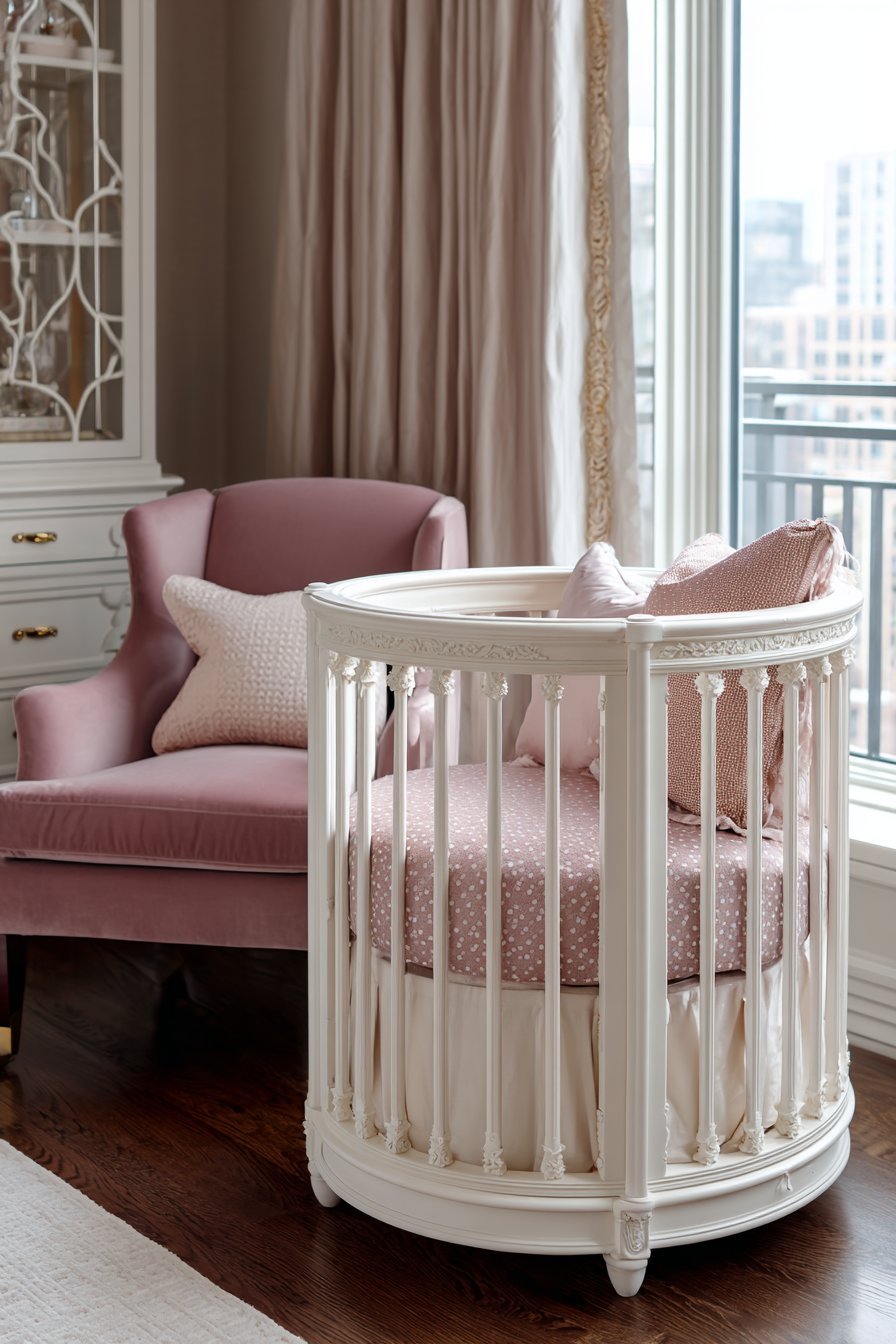
- For girl nurseries, consider white-painted furniture with curved lines, cane inserts, or decorative carved details
- For boy nurseries, choose natural timber furniture in light oak or walnut with clean, architectural profiles
- Invest in a convertible crib regardless of gender — quality furniture that grows with your child is always worthwhile
- Pair girl nursery furniture with brass or ceramic hardware for a warm, elegant finish
- Pair boy nursery furniture with matte black or brushed nickel hardware for a clean, contemporary look
4. Textile and Fabric Choices That Define Each Space
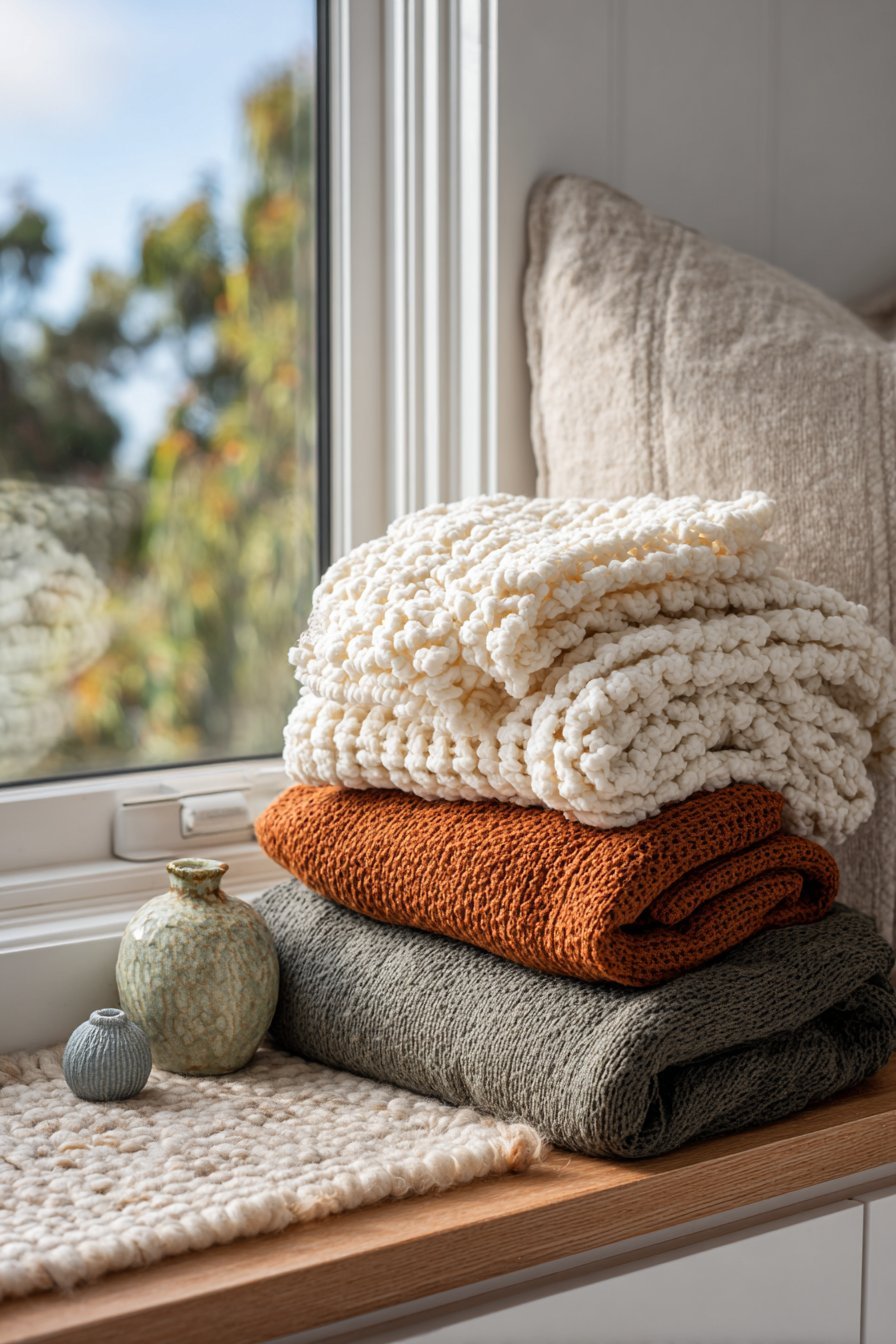
Textiles are the emotional language of any nursery — the soft, sensory layer that communicates warmth, safety, and comfort before a baby is old enough to understand any other visual signal. The fabrics, patterns, and textures you choose do more to establish the mood and character of the nursery than almost any other element, and the differences between typical boy and girl textile choices are among the most interesting and nuanced in nursery design.
Girl nursery textiles traditionally feature soft floral prints, delicate ditsy patterns, romantic ruffles, broderie anglaise, and botanical motifs in a palette of blush, cream, sage, and lavender. Fabrics tend toward the soft and flowing — sheer cotton voiles, lightweight linens, and plush velvets in muted tones that create a layered, romantic atmosphere. Contemporary girl nursery textile design has embraced maximalist layering — stacking cushions, throws, and rug layers in harmonious tones to create an enveloping, deeply textured environment.
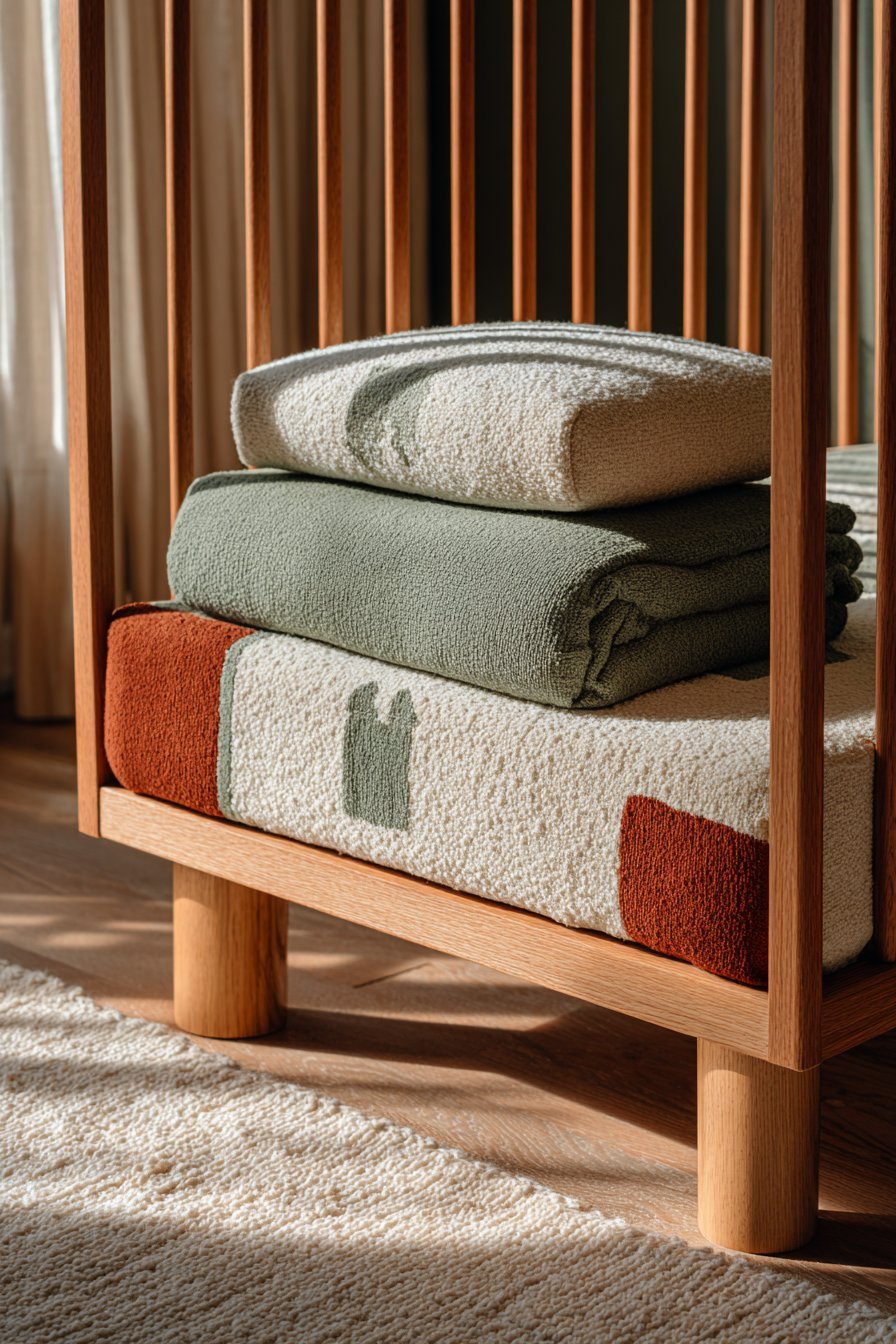
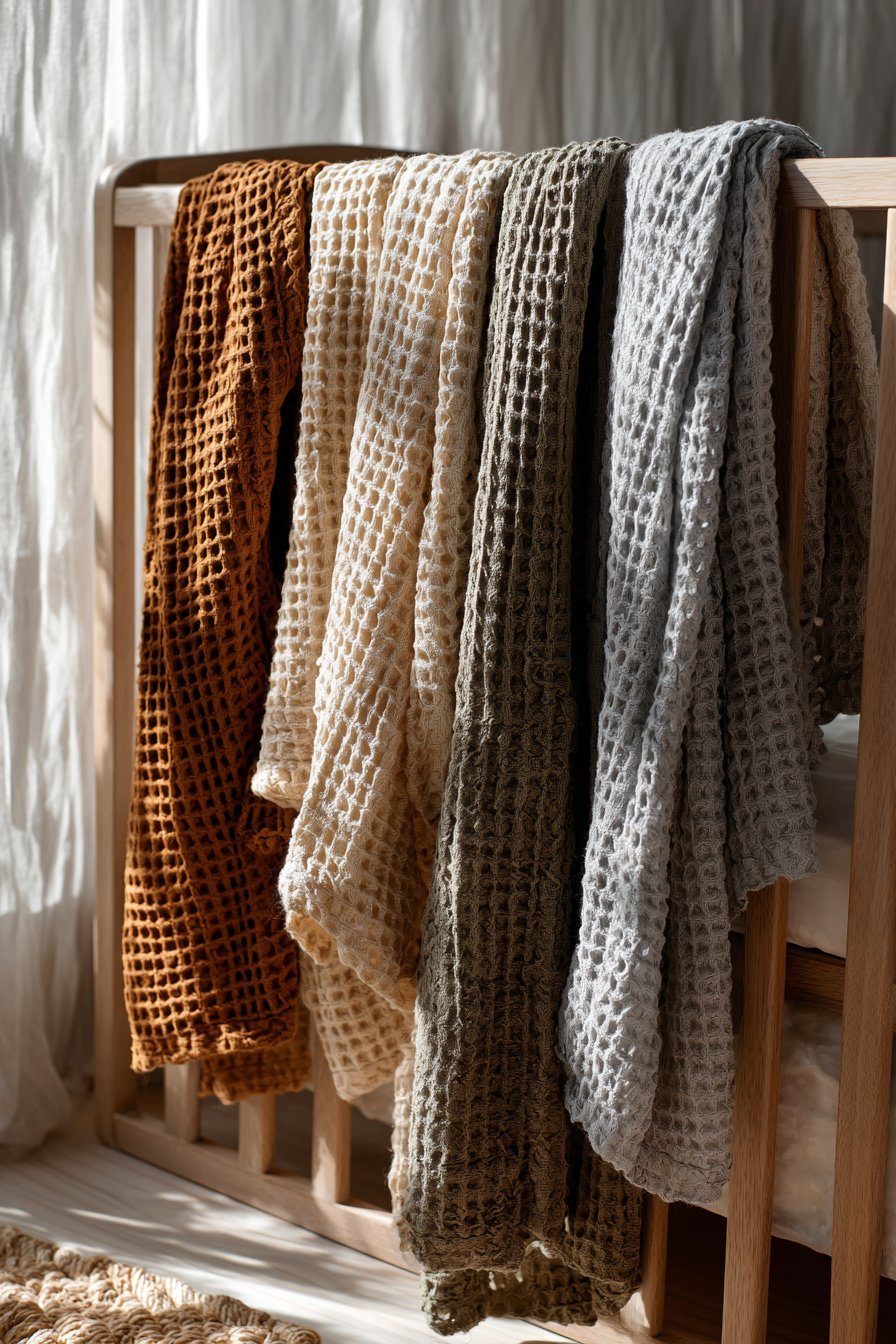
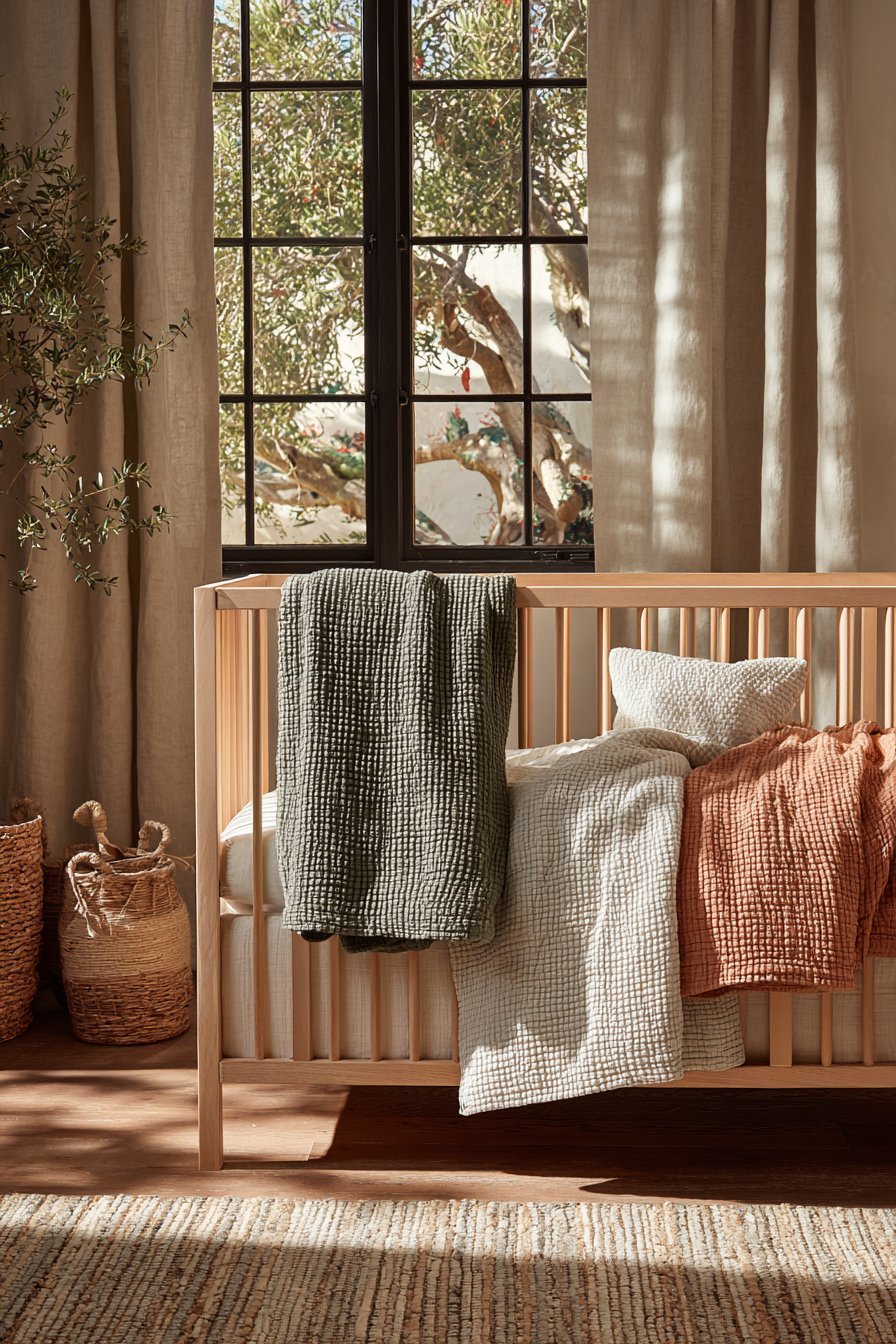
Boy nursery textiles have traditionally favored geometric patterns, grid checks, simple stripes, and nature-inspired prints — animal silhouettes, leaf motifs, and landscape scenes in earthy, grounded tones. Fabrics tend toward the tactile and substantial — waffle knit cotton, organic linen, chunky bouclé, and woven wool in warm neutrals, navy, and forest green. The textural quality of boy nursery textiles is often more pronounced than the pattern or print, with the richness coming from the weave and weight of the fabric rather than its decorative motif.
- For girl nurseries, layer floral prints, delicate patterns, and soft velvets in harmonious blush and sage tones
- For boy nurseries, choose waffle knit, organic linen, and chunky bouclé in earthy, nature-inspired tones
- In both nurseries, prioritize natural fiber fabrics — cotton, linen, wool — for breathability and tactile comfort
- Use a consistent textile palette of two to three tones for a cohesive, designed result in any nursery
- Include at least one heirloom-quality textile piece — a hand-knitted blanket, an embroidered quilt — for emotional depth
5. Wall Art and Decorative Details
Wall art and decorative accessories give a nursery its finishing layer of personality and storytelling. The differences between girl and boy nursery art choices reflect broader differences in theme, color, and emotional tone — but in both cases, the goal is to create a visually rich yet restful environment that stimulates gently without overwhelming the developing visual system of a young baby.
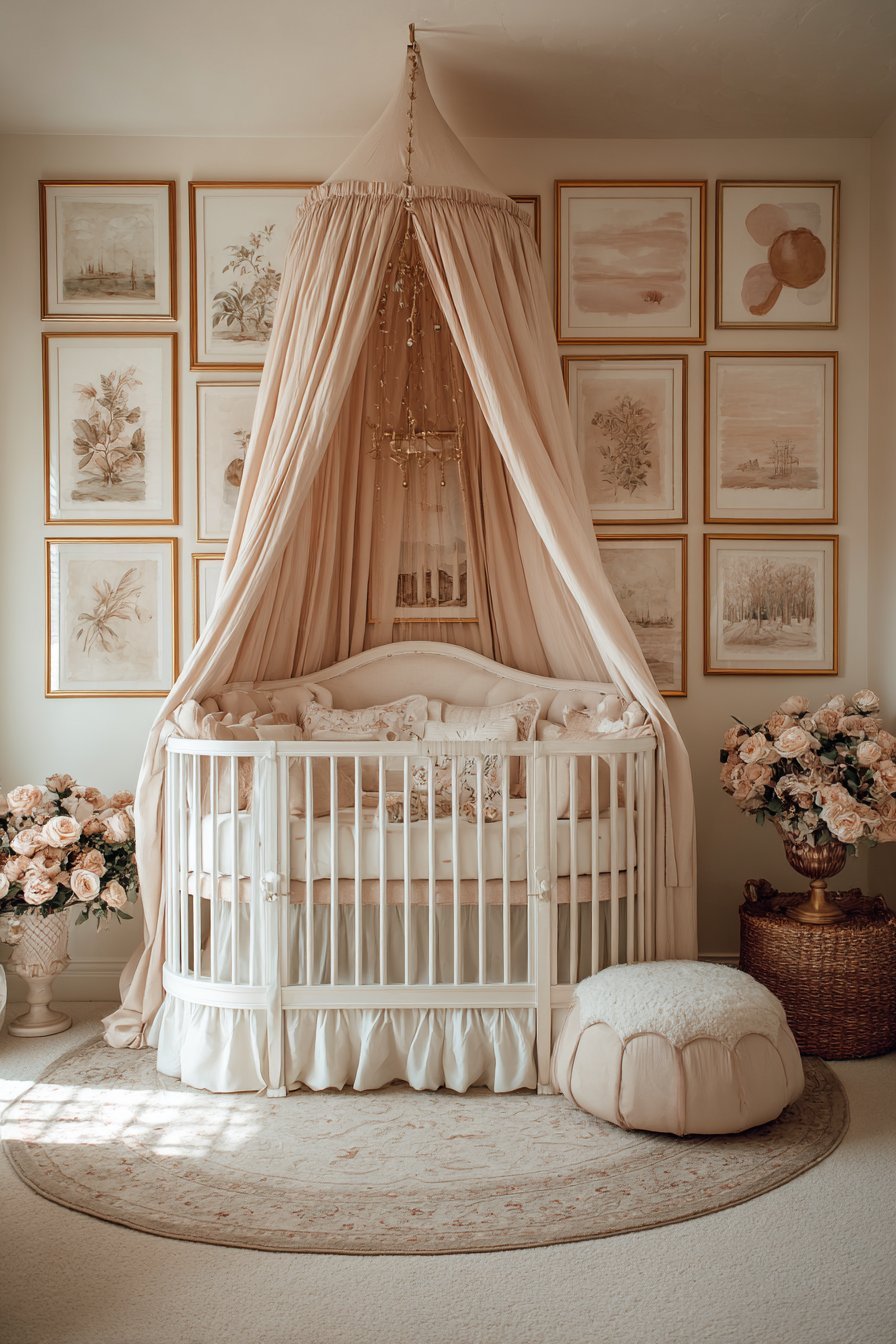
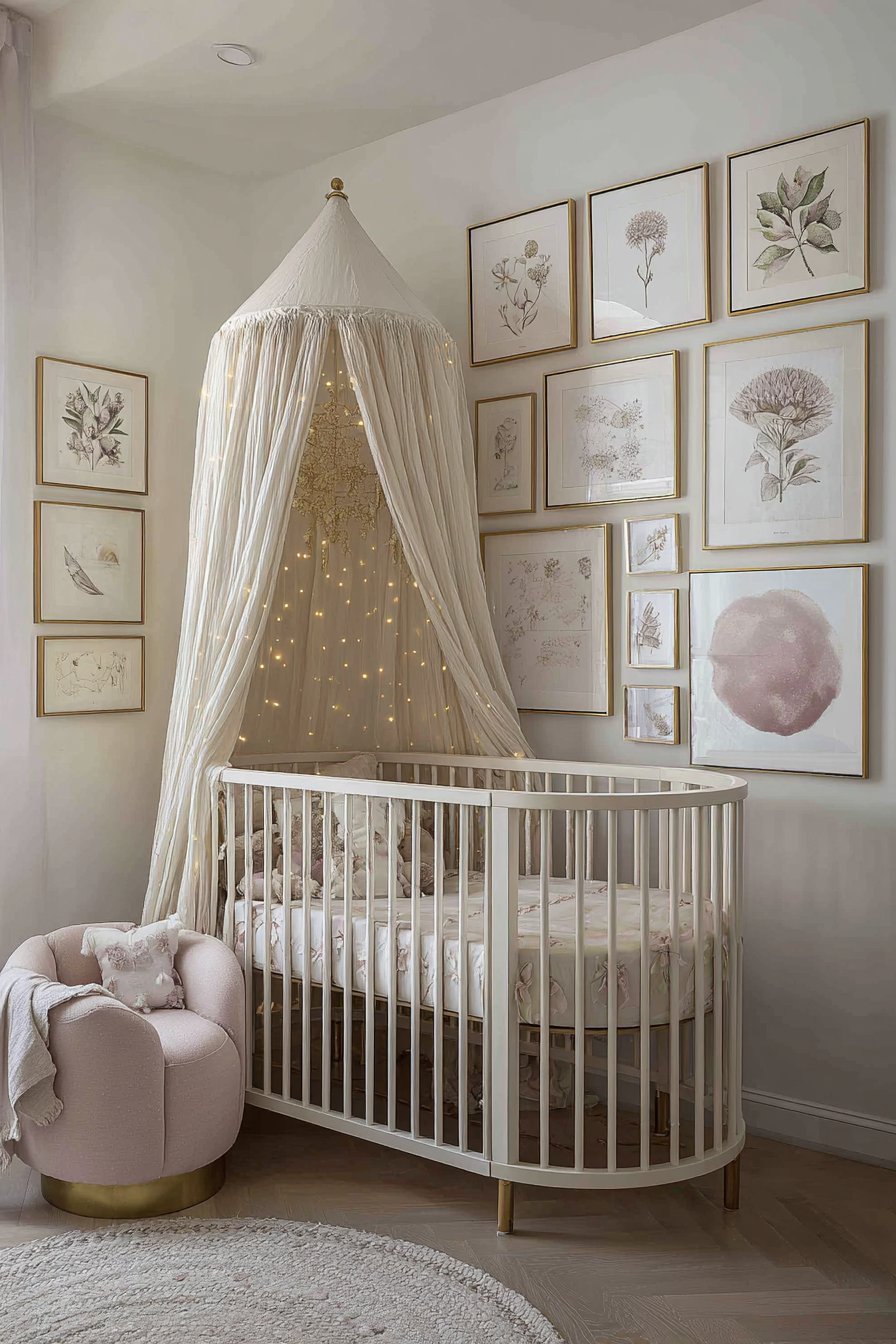
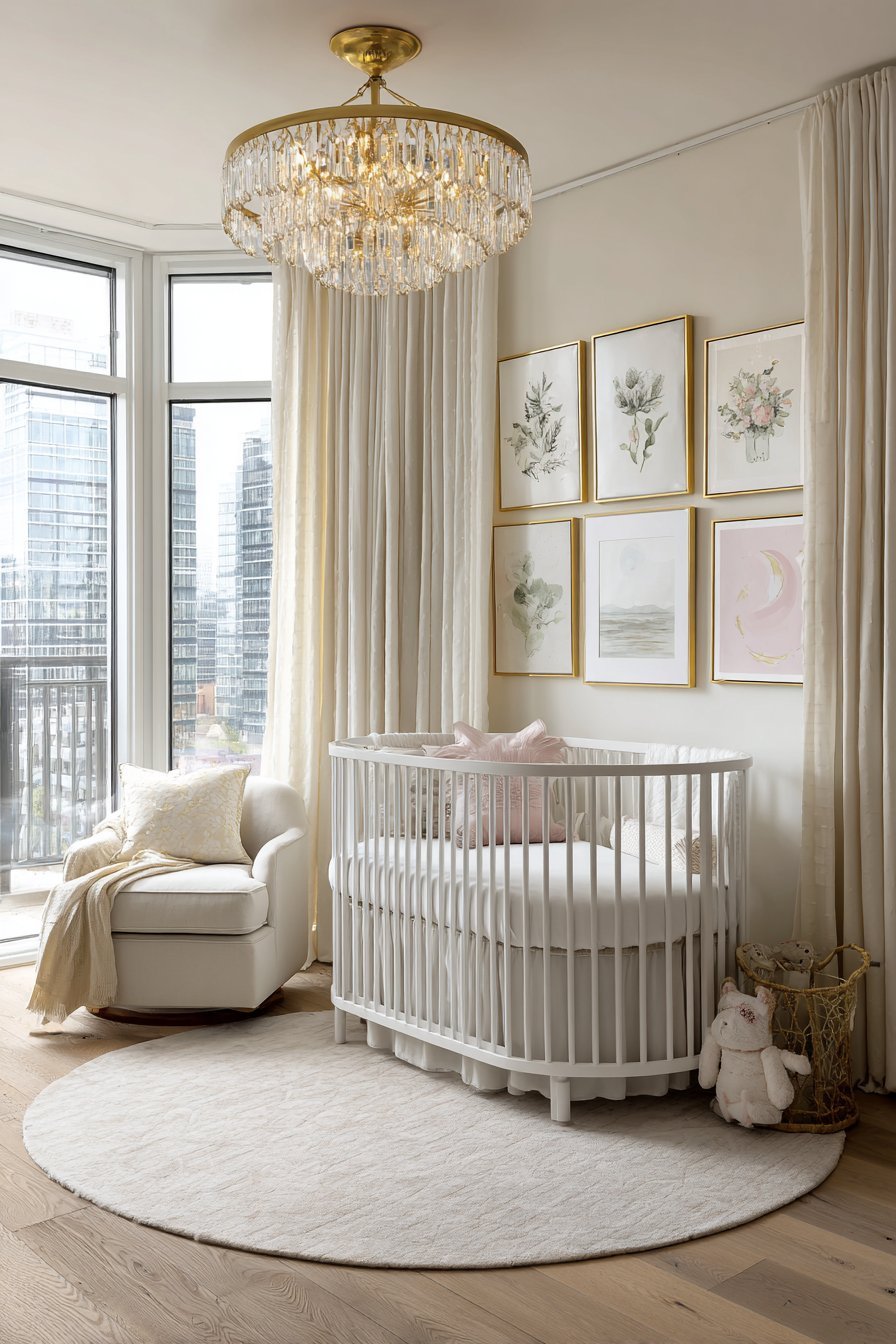
Girl nursery wall art traditionally features botanical illustrations, watercolor florals, fairy-tale animals, celestial bodies, delicate typography, and soft abstract washes in coordinating nursery tones. Gallery walls arranged in soft clusters above the crib or along a reading nook wall are especially popular in girl nurseries — the combination of multiple small frames creates an intimate, curated, collected aesthetic that feels personal and layered. Gold and brass frames are the dominant choice, adding warmth and elegance to even the most modestly priced prints.
Boy nursery wall art tends toward illustrated maps, animal portraits, nature photography, adventure typography, botanical studies, and graphic geometric prints in earthy, grounded tones. Single large-format prints or a more sparsely arranged gallery with wider spacing between frames suits the cleaner, more architectural quality of boy nursery design. Natural timber and matte black frames are the most popular choices — their understated quality allows the art itself to take center stage without competing through decorative framing.
- For girl nurseries, create a clustered gallery wall with botanical prints, watercolors, and brass frames
- For boy nurseries, choose one or two large-format prints with generous spacing and natural timber frames
- In both nurseries, keep artwork above the crib gentle and non-stimulating — avoid high-contrast graphic prints
- Include a personalized piece — a name print, a birth statistics poster — as a meaningful focal point
- Source affordable printable art from Etsy and have it printed at A3 or A2 size for maximum wall impact
6. Lighting Design for Different Nursery Aesthetics
Lighting sets the emotional tone of a nursery more immediately than almost any other element — and the differences in lighting choices between boy and girl nurseries reflect their broader aesthetic sensibilities. Both nurseries share the same functional requirements: dimmable overhead lighting, warm-spectrum bulbs, and a dedicated low-level nightlight for feeds. But the style, material, and character of the light fixtures themselves differ significantly between the two design directions.
Girl nursery lighting tends toward soft, decorative, and romantically beautiful fixtures — a woven rattan pendant with fringe detailing, a paper lantern in a gentle blush or sage tone, a fabric shade with a floral or botanical print, or a crystal-drop chandelier for the most classically feminine aesthetic. Fairy light canopies strung above the crib or draped through a sheer canopy are almost exclusively associated with girl nursery design and contribute the most magical, enchanting quality of any lighting element available.
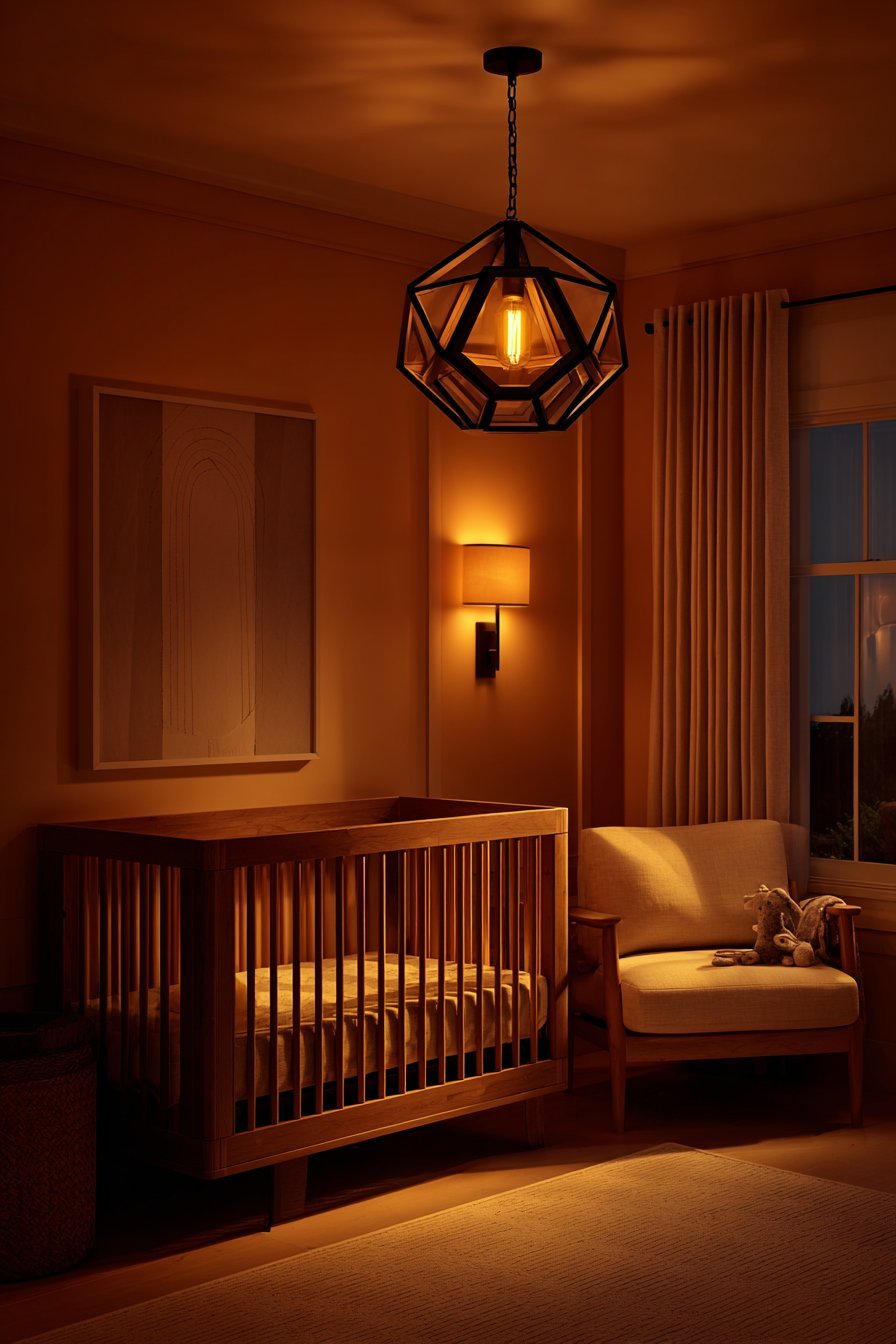
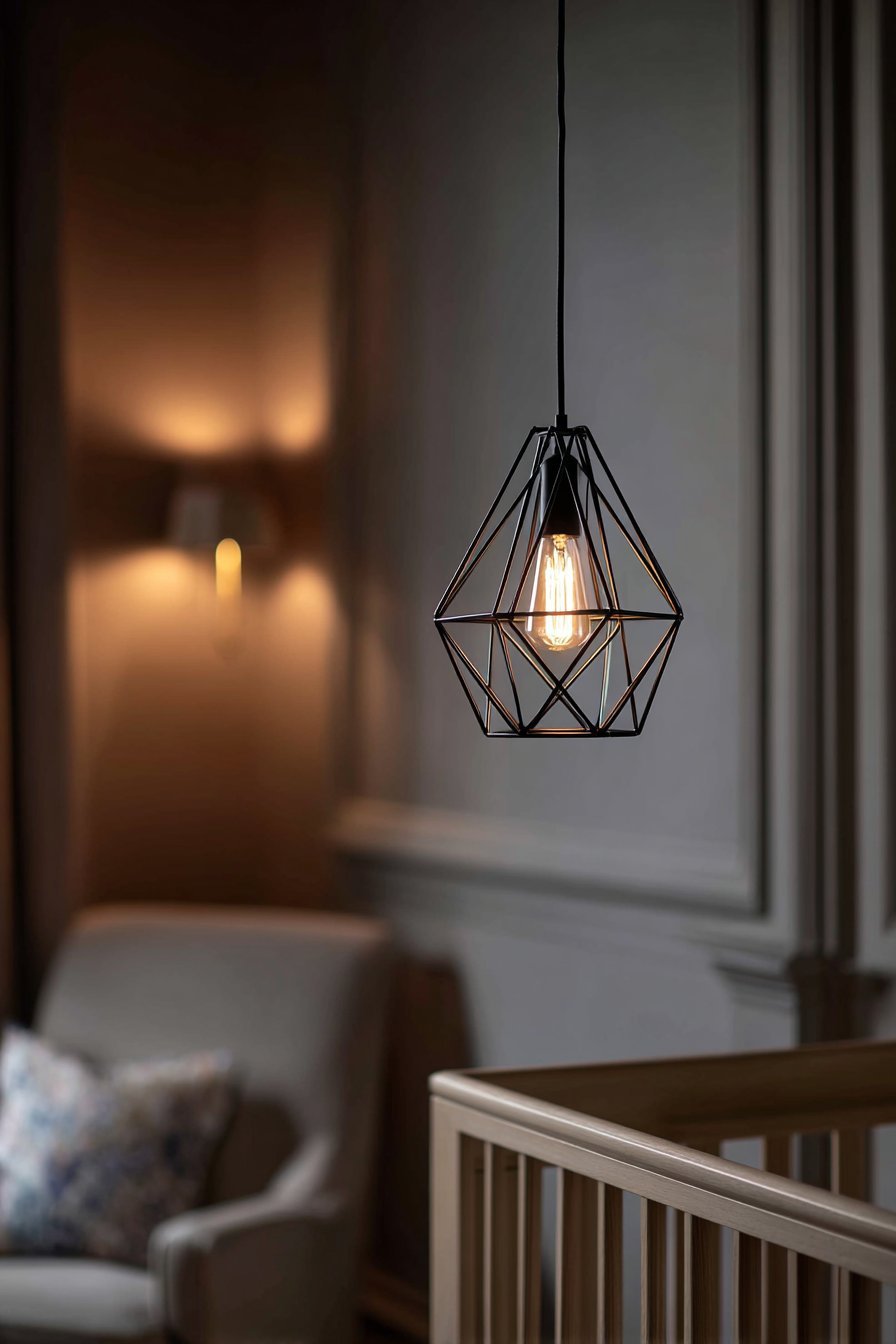
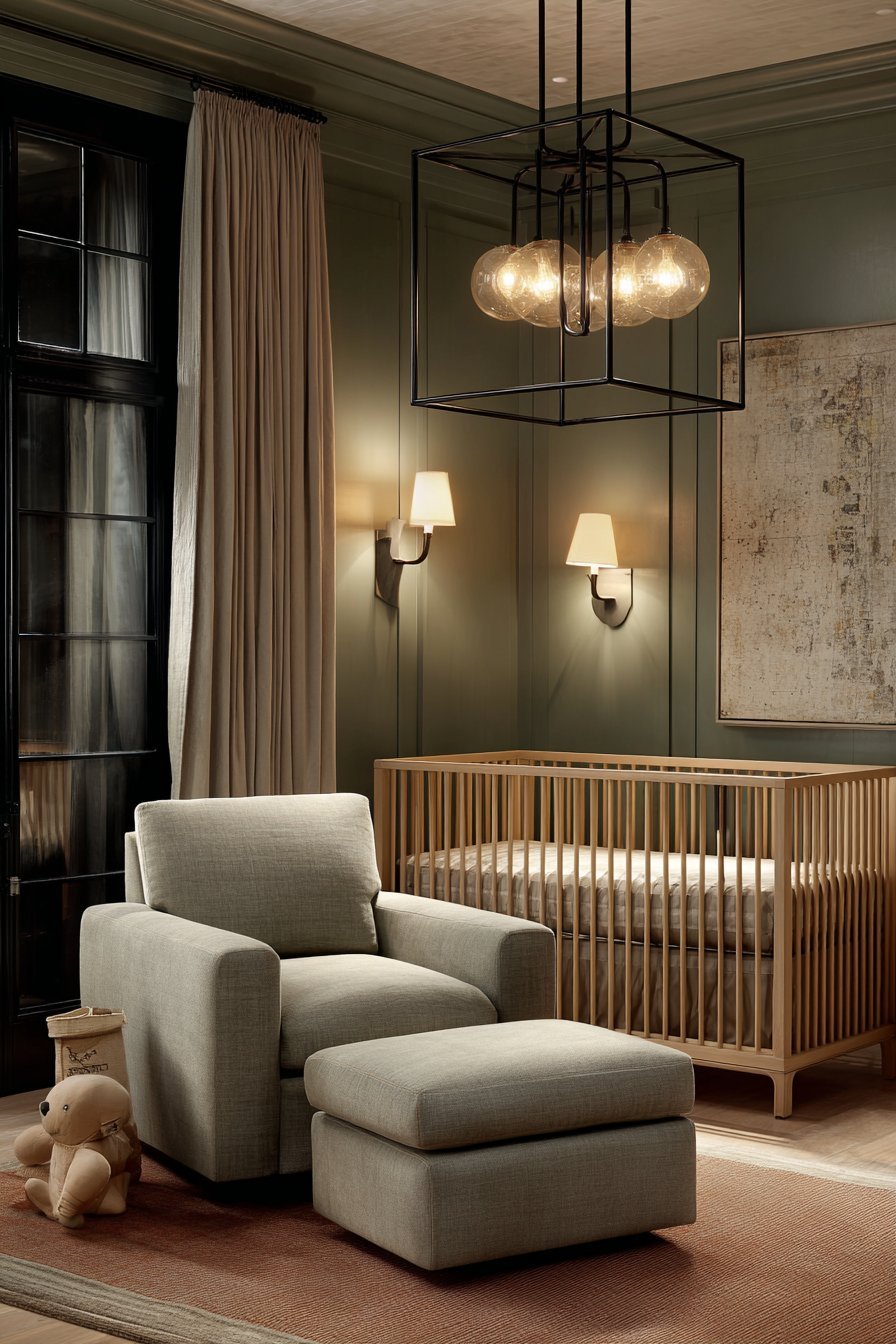
Boy nursery lighting favors cleaner, more sculptural, or industrially inspired fixtures — a geometric pendant in natural rattan or black wire, a simple linen or cotton drum shade in a warm neutral, or a concrete and brass wall sconce beside the nursing chair. Edison bulb pendants in clusters or as simple solo fixtures suit the warm, earthy aesthetic of contemporary boy nurseries beautifully, their exposed filament adding a warm, graphic quality that complements natural timber furniture and earth-toned walls.
- For girl nurseries, choose a fringe rattan pendant, fabric floral shade, or paper lantern as the ceiling fixture
- For boy nurseries, select a geometric rattan pendant, linen drum shade, or wire frame fixture
- Install dimmer switches on all overhead nursery lighting — non-negotiable for both boy and girl nurseries
- Choose warm-spectrum LED bulbs of 2200K to 2700K throughout for the most sleep-supportive glow
- Add fairy lights above a crib canopy in a girl nursery for an enchanting, dreamy focal point after dark
7. Mobiles, Canopies, and Overhead Features
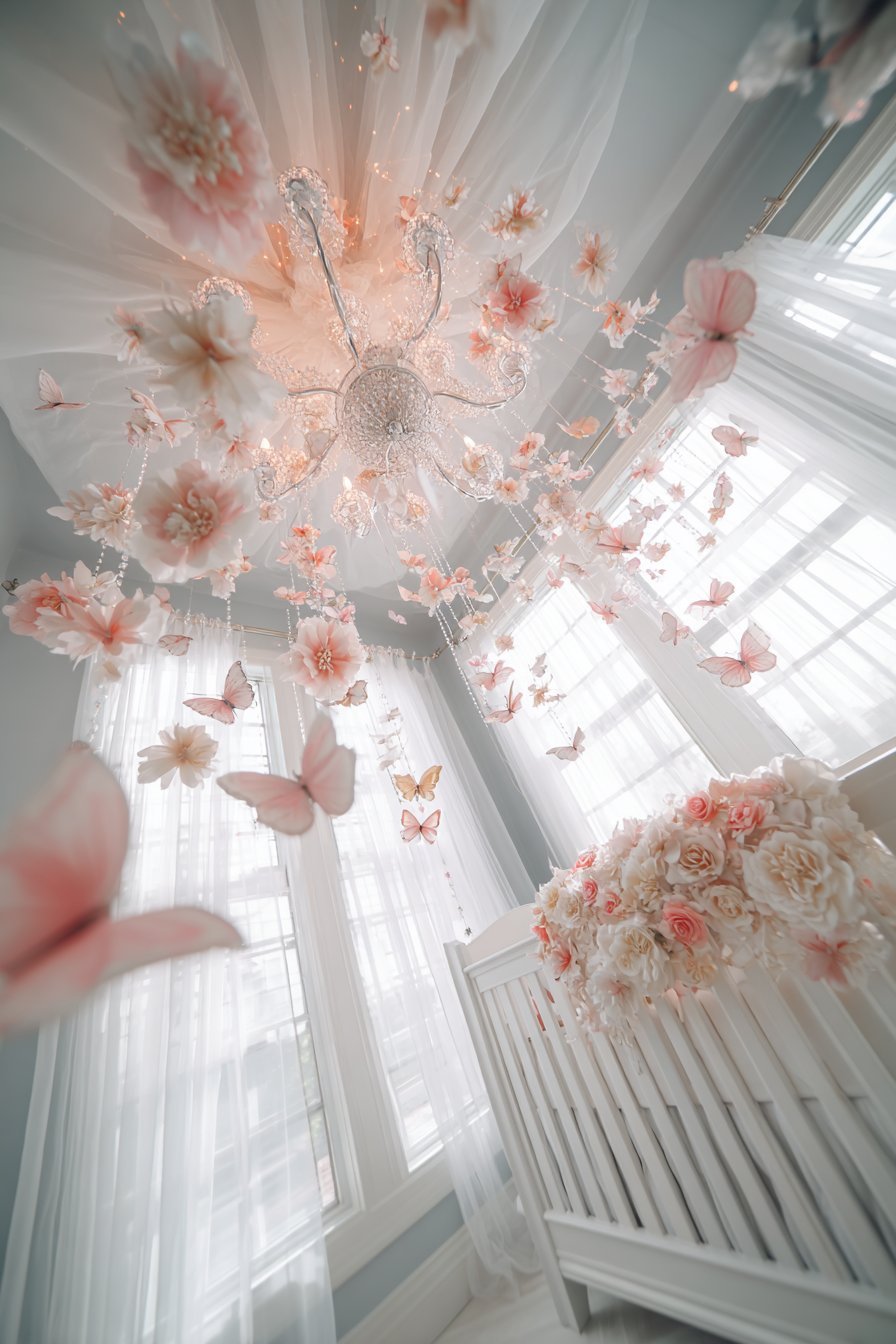
The space above the crib is prime nursery real estate — the first thing a baby sees upon waking and the last visual stimulus before sleep. How you design this overhead zone differs meaningfully between boy and girl nurseries, both in aesthetic character and in the specific types of elements that are most commonly chosen.
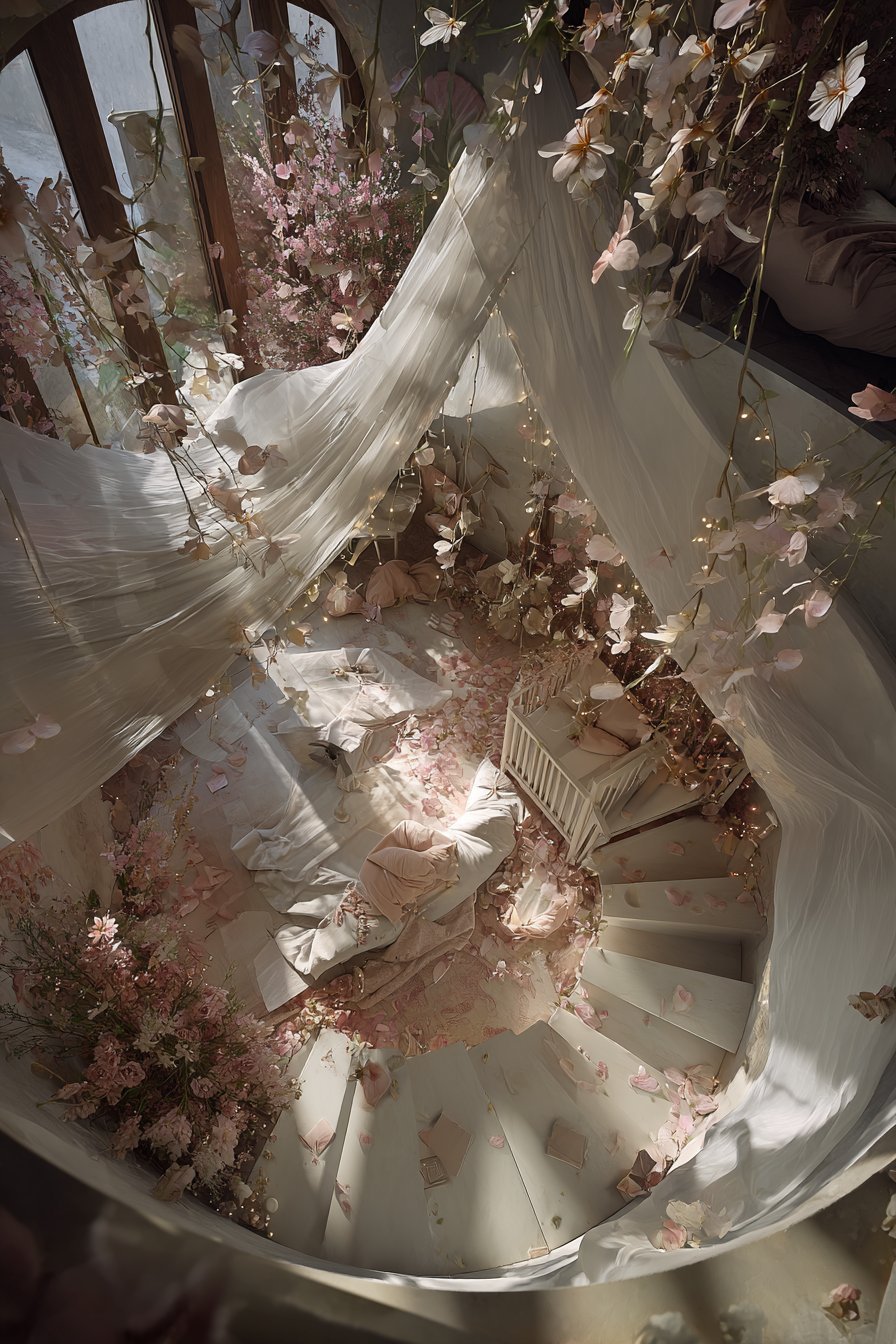
Girl nursery crib mobiles typically feature soft floral forms, fabric butterflies, felt animals, paper clouds, pearl or crystal drops, and botanical shapes in a palette of blush, cream, sage, and gold. The movement of these mobiles is slow and graceful — designed to soothe rather than stimulate. Crib canopies in sheer or linen fabric are among the most beloved girl nursery features, their billowing, romantic quality transforming the crib into a dreamy, enclosed sanctuary that feels genuinely magical from both inside and outside the canopy.
Boy nursery crib mobiles tend toward geometric shapes, natural elements, simple animal silhouettes, wooden beads, and nature-inspired forms — clouds, raindrops, leaves, and stars in earthy, muted tones. Macramé mobiles in natural cotton cord are particularly popular in contemporary boy nurseries, their woven, tactile quality adding organic texture above the crib in a way that suits the natural, earthy aesthetic of the wider room. Canopies are less common in boy nurseries but can be used beautifully when made from linen or cotton muslin in warm white or natural ecru.
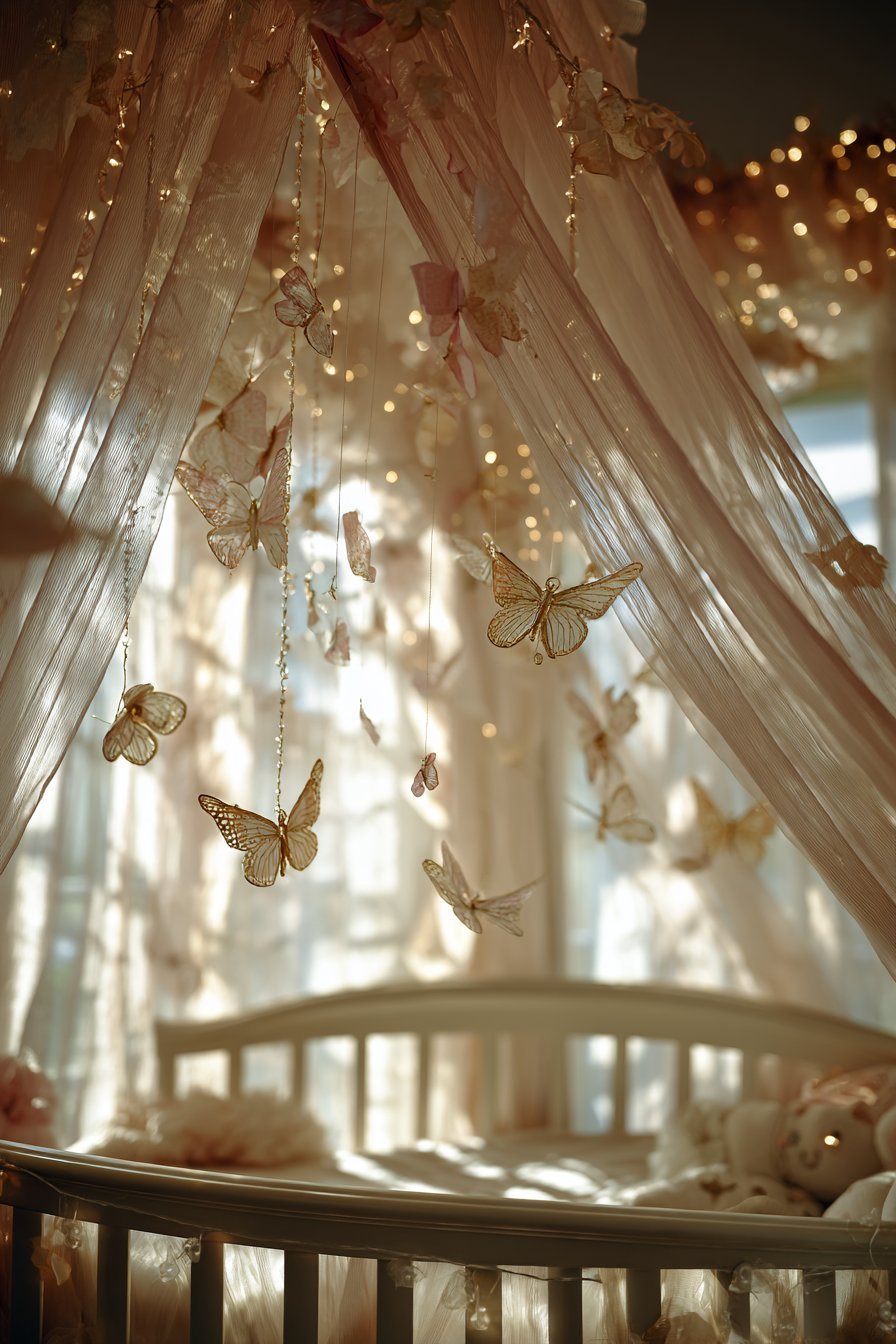
- For girl nurseries, choose a mobile with soft florals, felt animals, or crystal drops in blush and gold tones
- For boy nurseries, select a geometric, macramé, or nature-inspired mobile in natural cotton or wood
- Install any mobile safely — well above the baby’s reach — and remove it when the baby can push up on hands and knees
- Add a sheer fabric canopy above a girl nursery crib for a romantic, dreamy overhead focal point
- Use linen or cotton muslin in a boy nursery canopy if desired — it adds softness without appearing overly delicate
8. Gender-Neutral Design: The Best of Both Worlds
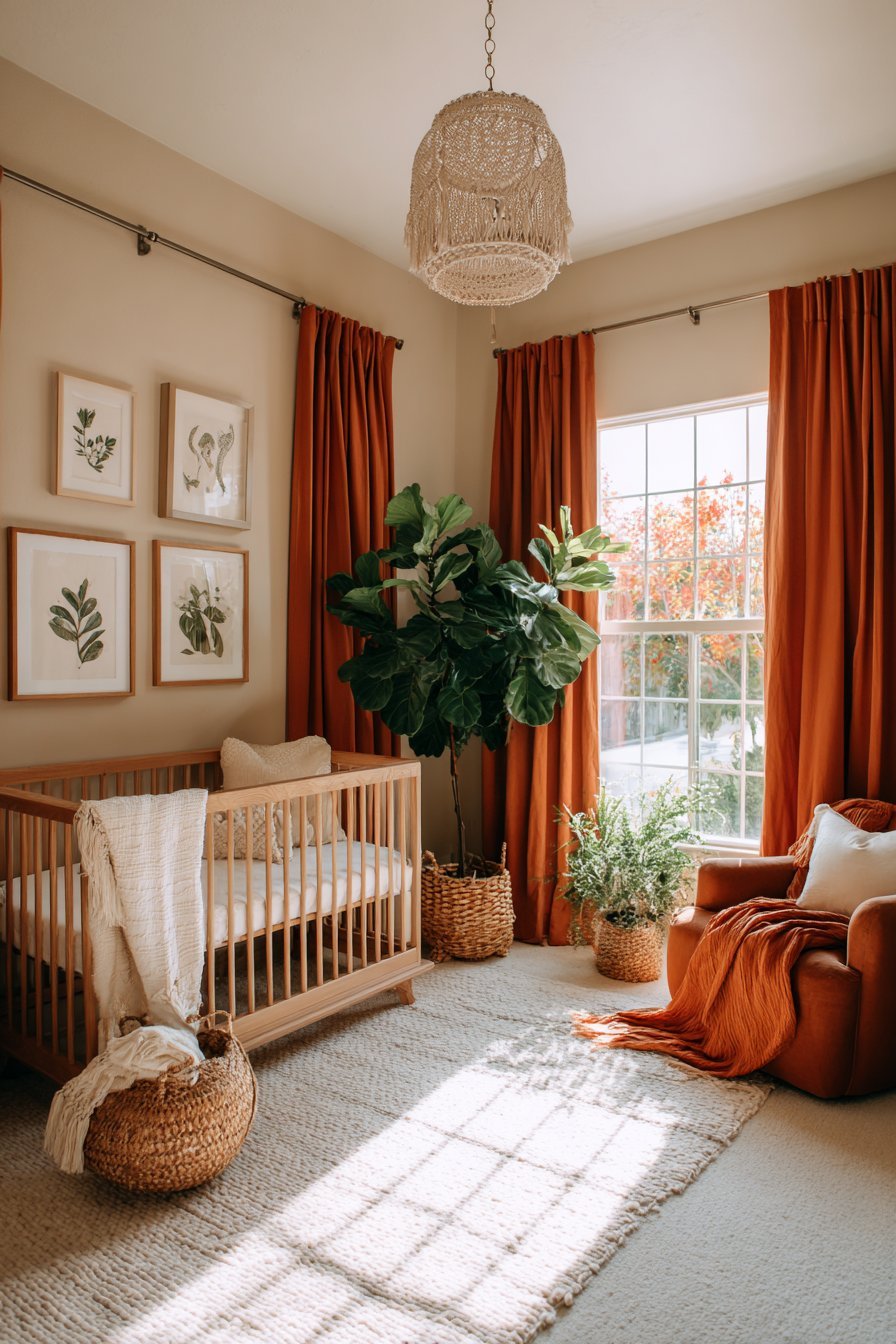
Gender-neutral nursery design has moved from a niche preference to a mainstream movement, and for good reason. Whether parents choose not to find out their baby’s sex before birth, prefer to keep the nursery flexible for future siblings, or simply find the gender-neutral aesthetic the most beautiful option available, designing beyond the binary opens up a remarkable range of sophisticated, timeless design possibilities.
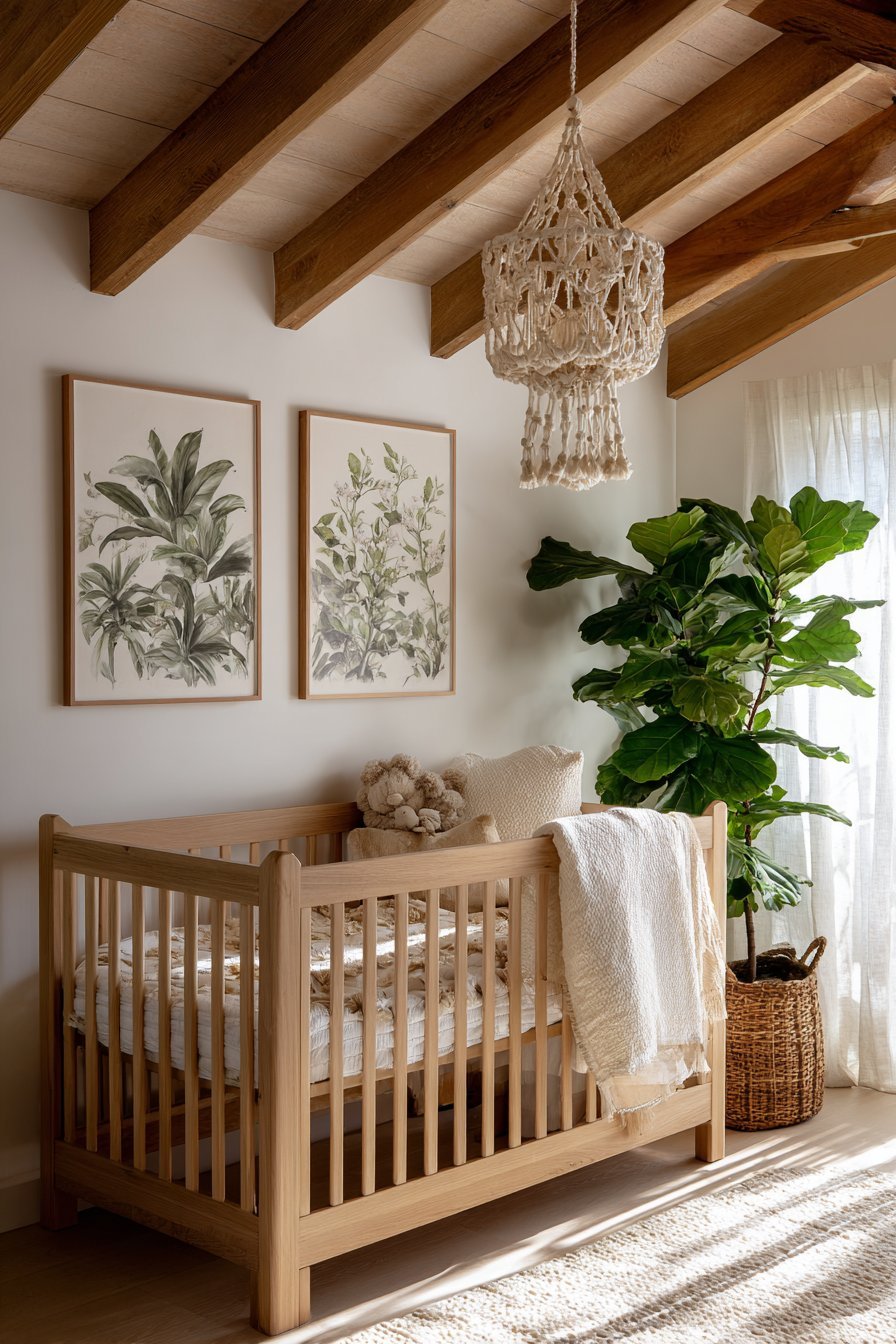
The foundation of great gender-neutral nursery design is a palette rooted in nature — warm terracotta, sage green, earthy ochre, dusty mauve, warm sand, and soft camel are all colors that sit beautifully together and carry none of the gendered associations of pink and blue. These tones work with natural timber furniture, organic textiles, and botanical accessories to create a nursery that feels warm, grounded, and genuinely beautiful for any child.
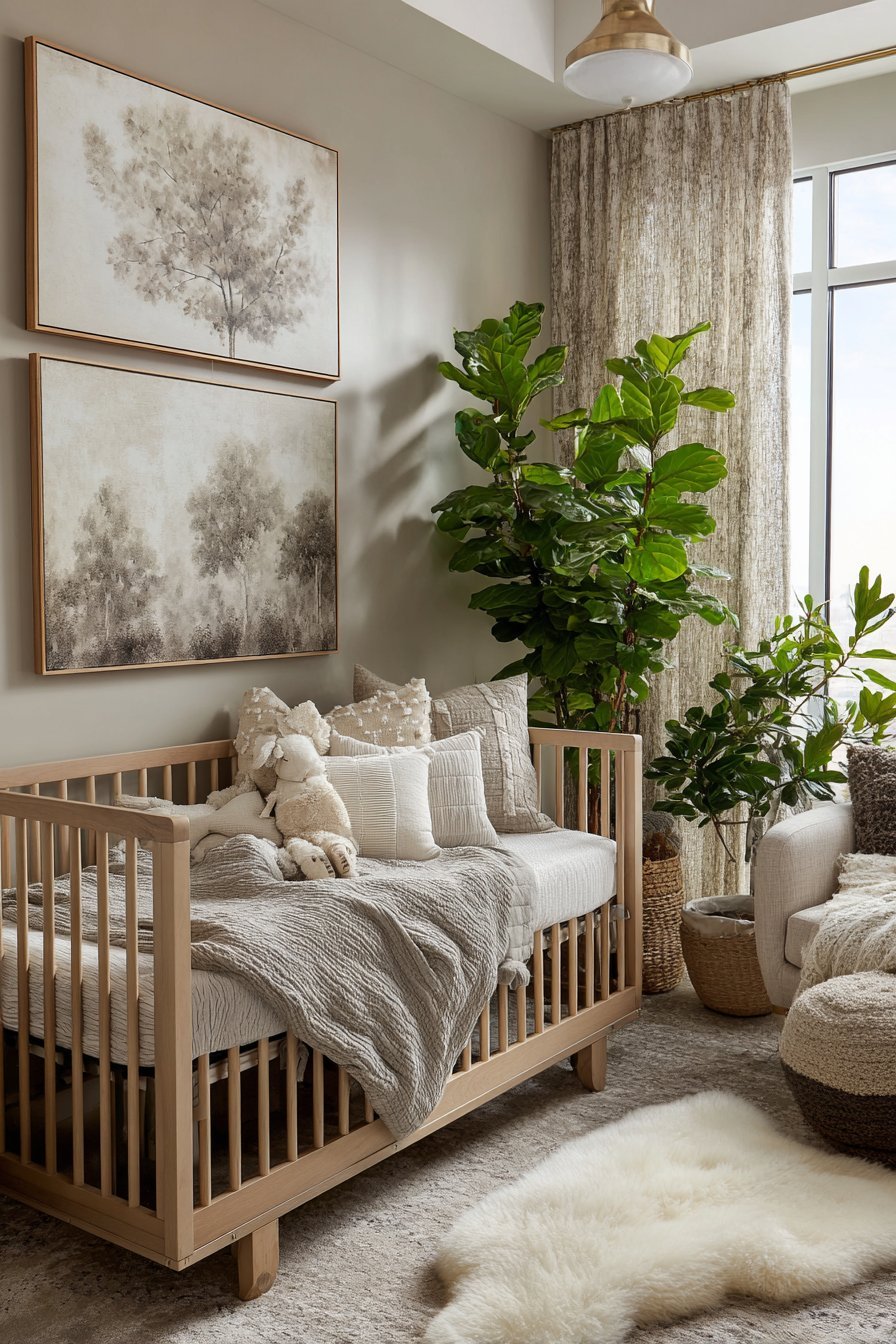
Themes for gender-neutral nurseries include the most universally appealing elements of both boy and girl nursery design — woodland animals, celestial motifs, botanical gardens, safari scenes, and ocean life all work beautifully in a gender-neutral context. The key is to choose themes with broad imaginative appeal and design them in a gender-neutral palette. A safari nursery in terracotta, sage, and warm cream, or a celestial nursery in dusty mauve and gold, transcends gender entirely and creates a space of singular, sophisticated beauty.
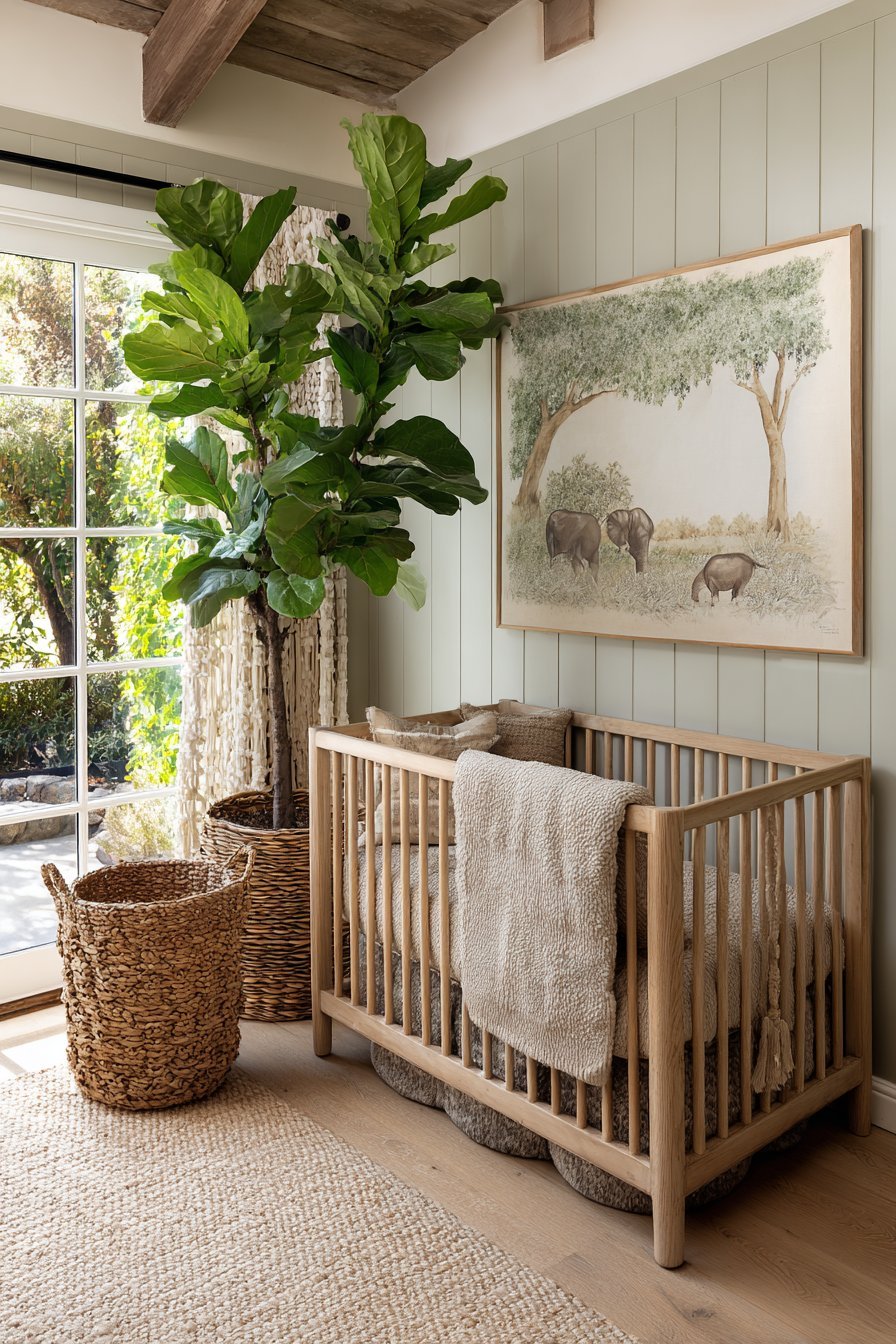
- Build a gender-neutral palette around terracotta, sage green, warm sand, ochre, and dusty mauve
- Choose themes with universal appeal — woodland, botanical, celestial, safari — in a nature-inspired palette
- Use natural timber furniture throughout for a warm, organic quality that suits any gender-neutral design
- Layer organic cotton, linen, and waffle knit textiles in harmonious neutral tones for a tactile, cozy result
- Personalize the gender-neutral nursery with the baby’s name, birth details, and family heirlooms for warmth and meaning
Conclusion
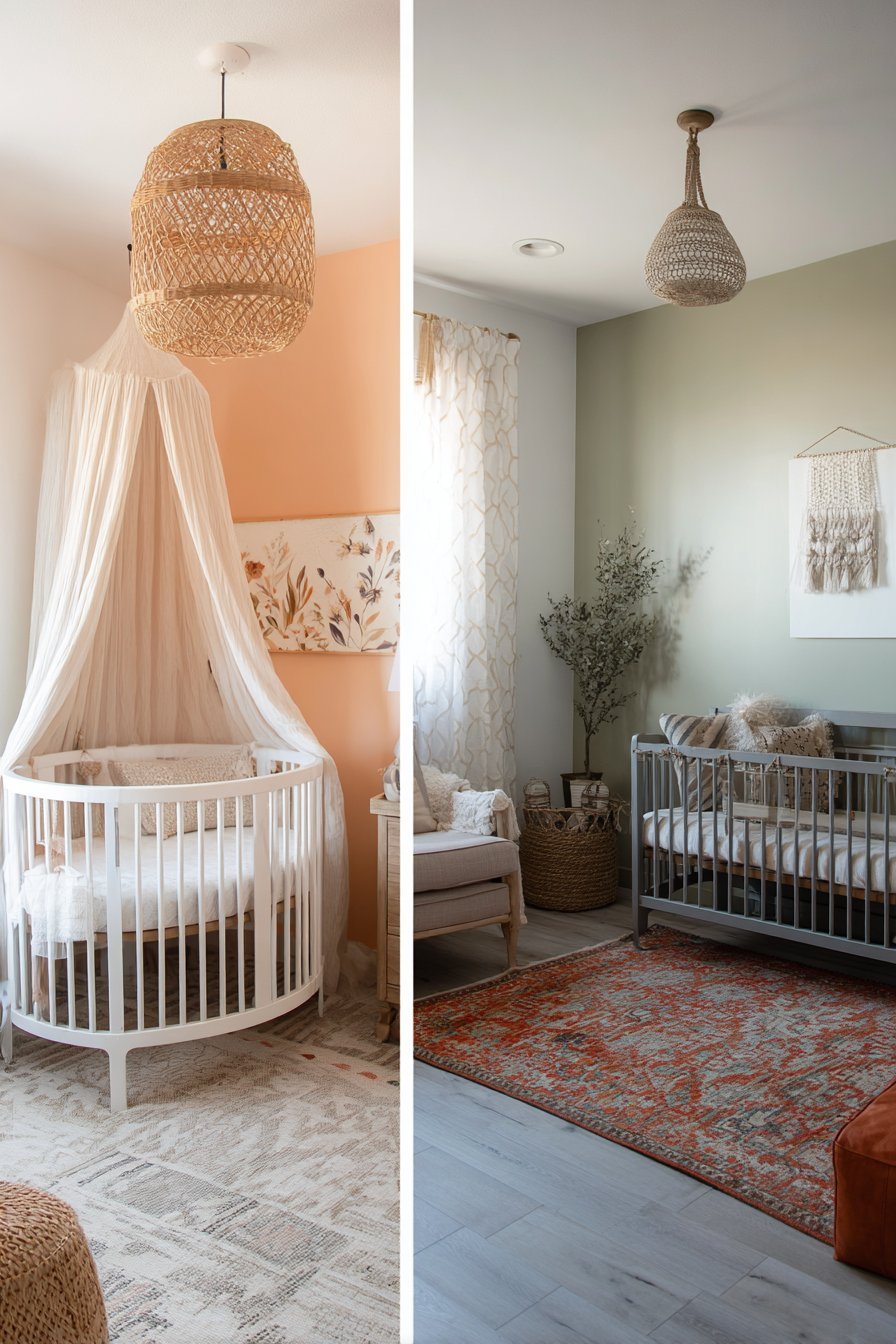
Boy and girl nursery design each carry their own traditions, conventions, and aesthetic sensibilities — but the most important truth is that the best nursery is always the one designed with love, intention, and a genuine vision for the space. Whether you embrace the full spectrum of traditional gender conventions, blend elements from both directions, or transcend them entirely with a beautifully conceived gender-neutral design, the principles of good design apply equally: thoughtful color, layered textiles, considered lighting, and a clear focal point always create a beautiful result.
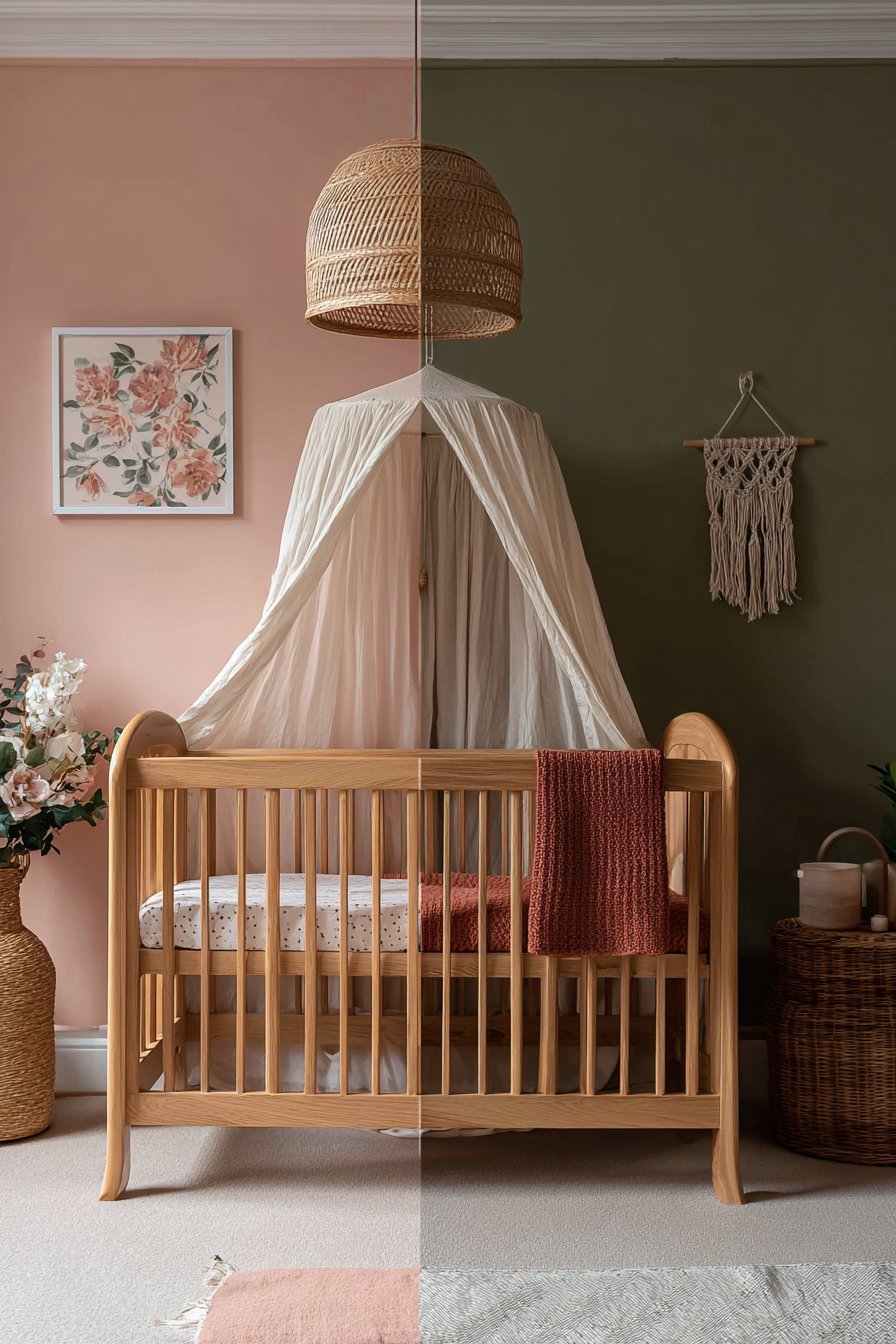
Trust your instincts, follow your aesthetic, and remember that the most extraordinary nurseries are never the most expensive or the most trend-driven — they are the ones where every choice reflects the unique personality of the family that created them and the beloved child who will grow up within their walls.
