
The bedroom is your personal sanctuary — a space where color psychology and design sensibility merge to shape how you rest, recharge, and wake up each day. As we move deeper into 2026, the palette of choices for bedroom walls, textiles, and accents has shifted dramatically. Homeowners and interior designers alike are moving away from sterile minimalism toward rich, layered color stories that feel both expressive and deeply calming.
This year’s trends reflect a collective desire for comfort, authenticity, and connection to the natural world. Whether you prefer moody jewel tones, organic earthy hues, or soft blushed neutrals, there is a defining color movement shaping bedrooms right now. Understanding these trends helps you make smarter, more timeless design decisions — and creates a bedroom that genuinely reflects who you are.
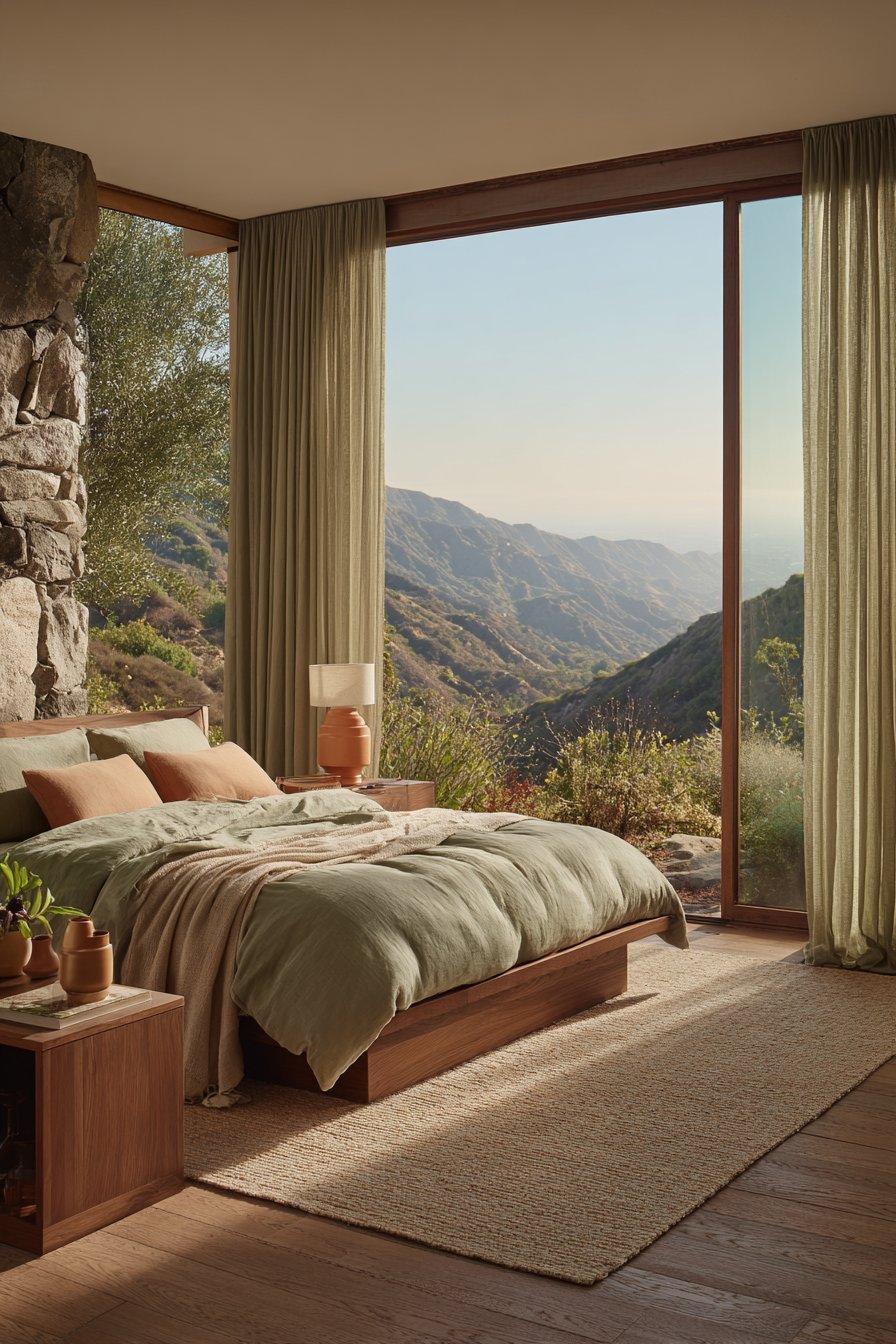
From dusty terracottas to sophisticated sage greens and velvety deep blues, the 2026 bedroom color landscape is bold, intentional, and deeply personal. This article explores the top eight color trends transforming bedrooms this year, complete with styling tips, material pairings, and practical advice to help you bring each look to life beautifully.
1. Warm Terracotta and Earthy Clay
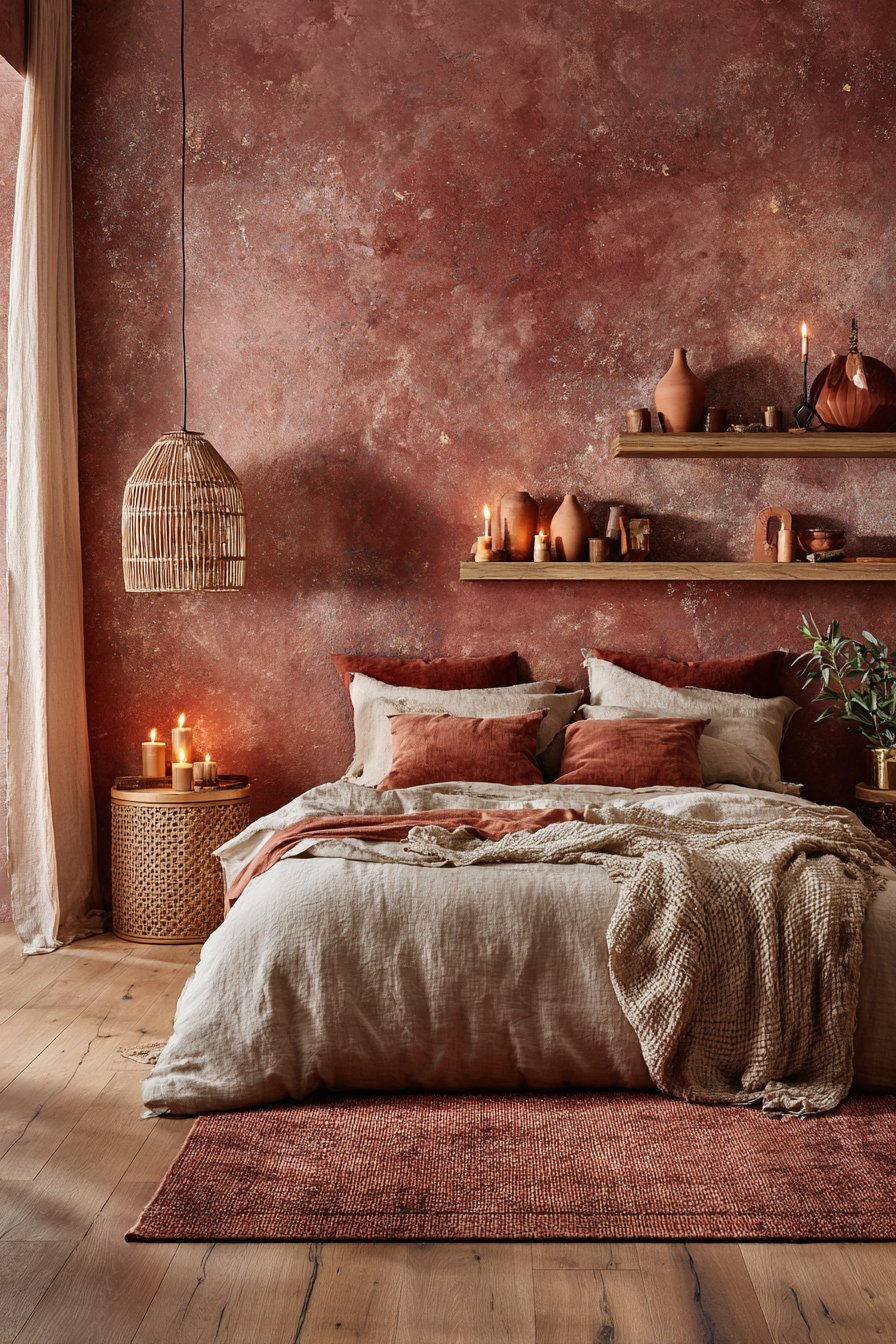
Terracotta has evolved far beyond its bohemian roots. In 2026, warm terracotta tones are appearing in sophisticated bedroom settings, paired with linen, leather, and raw wood to create a grounded, sun-warmed atmosphere. This earthy red-orange hue carries an innate warmth that makes bedrooms feel instantly inviting and intimate without feeling overwhelming.
The beauty of terracotta lies in its remarkable versatility. It reads as a neutral when paired with cream or sand, yet becomes intensely dramatic when contrasted with deep forest green or midnight navy. Designers are using it on feature accent walls, on limewash-textured plaster finishes, and even on ceilings to create a cocooning envelope of warmth.
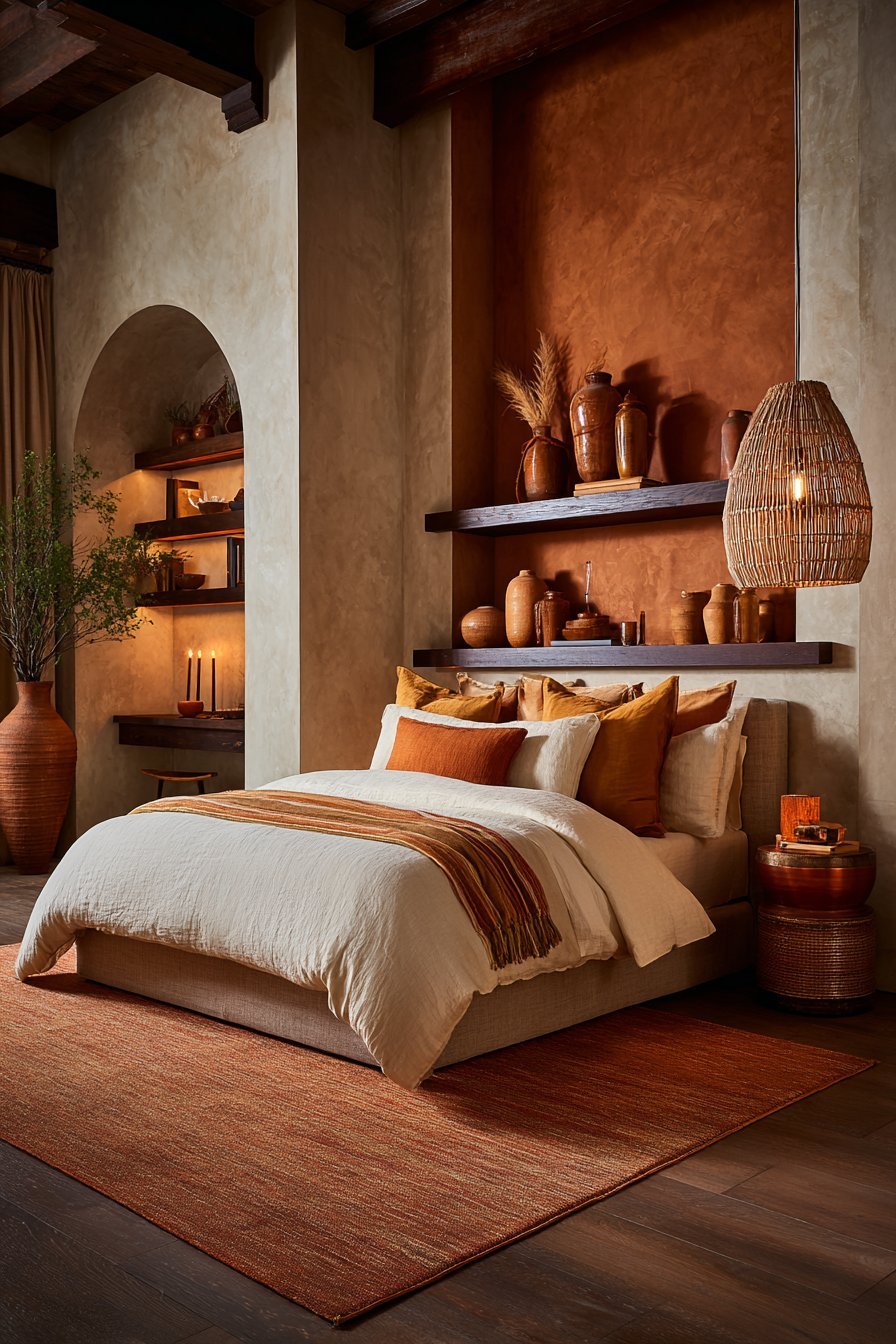
Clay tones also work beautifully in layered schemes. Consider tonal layering — stacking terracotta walls with caramel-toned bedding, burnt sienna cushions, and rust-hued rugs to build depth. Metallic copper and brushed brass fixtures complete the look with a refined, editorial finish.
- Paint one accent wall in a deep terracotta and balance with ivory on remaining walls
- Pair with natural linen bedding to soften the richness of the hue
- Add rattan or cane furniture for an organic, textural contrast
- Use warm-toned Edison or amber bulbs to enhance the earthy palette
- Introduce terracotta through ceramics or vases if full-wall commitment feels too bold
- Layer rust, sand, and blush textiles to build a tonal depth story
2. Sage Green and Botanical Calm
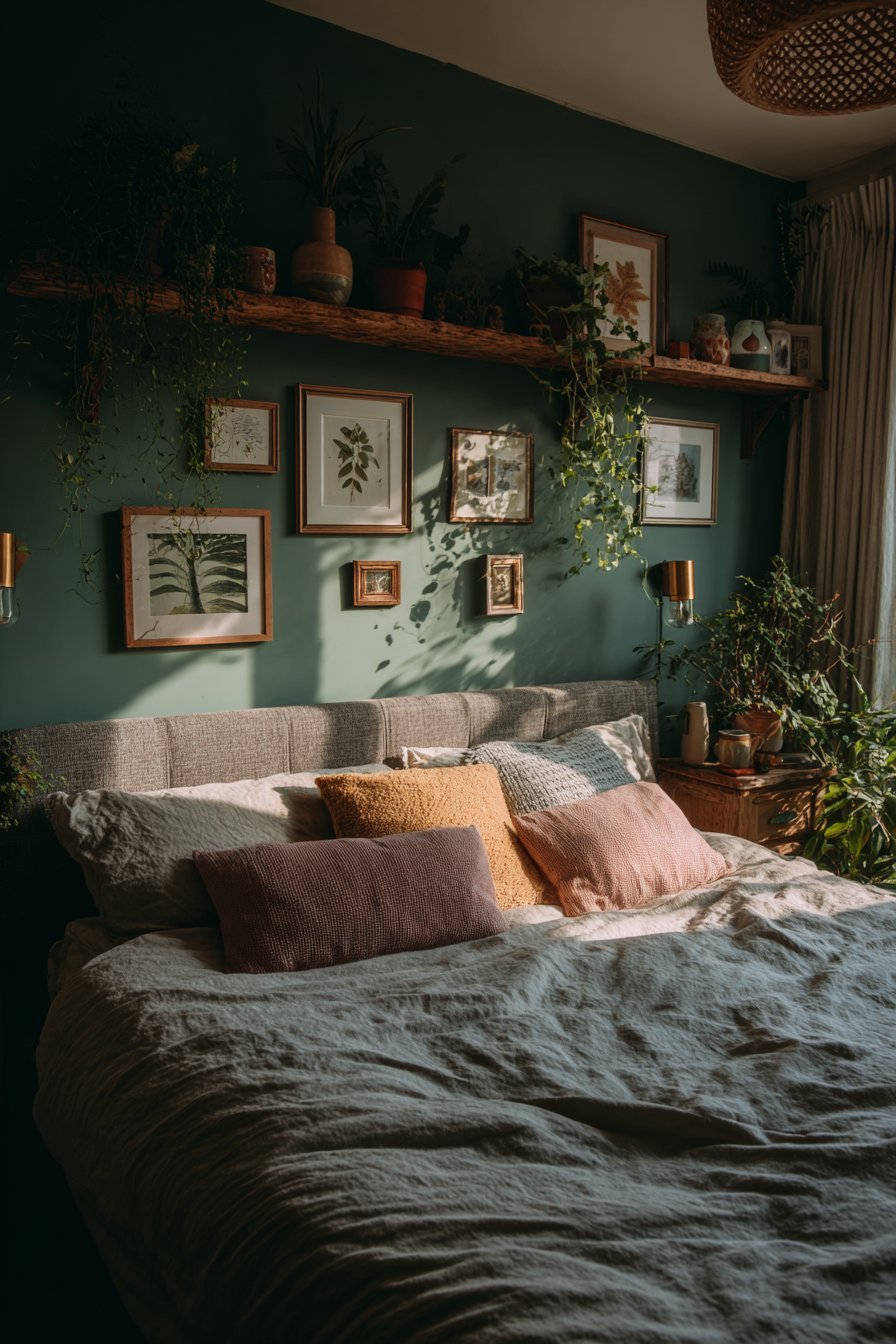
Sage green continues its reign as one of the most beloved bedroom wall colors of the decade, and 2026 shows no signs of it slowing down. This muted, grey-green hue occupies a rare space — it is simultaneously earthy and fresh, calming and alive. It mirrors the soft tones found in olive leaves, dried herbs, and moss-covered stone.
What makes sage green so compelling in 2026 is how designers are pushing its boundaries. Rather than safe, washed-out versions, the trend now favors deeper, more saturated sage tones that feel moody and sophisticated. Think of it as sage that has been kissed by shadow — complex and layered, not flat or timid.
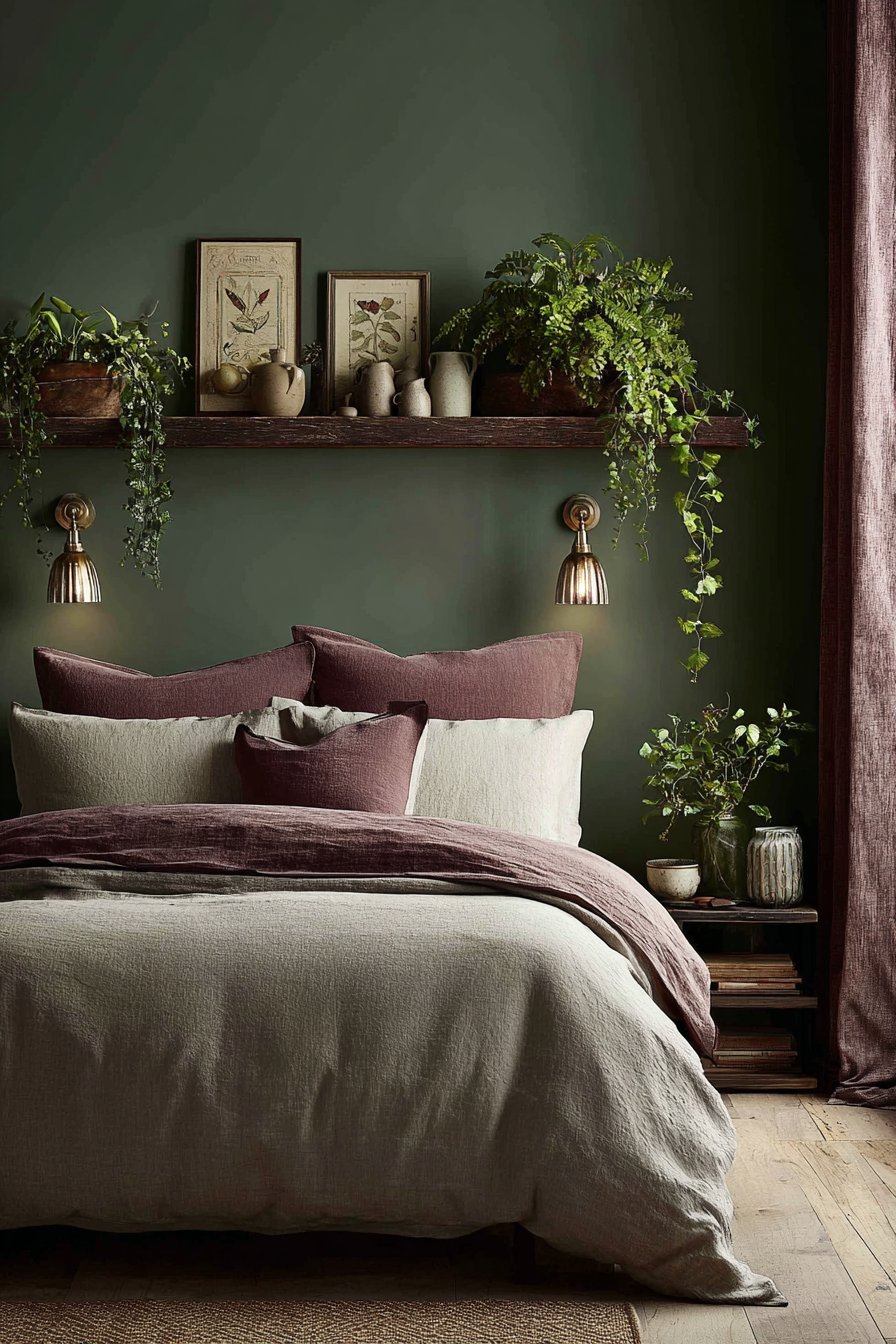
Sage pairs effortlessly with warm whites, soft creams, and natural wood tones. It also creates stunning contrast with terracotta accents and aged brass hardware. For bedding, linen in oat, ecru, or dusty rose complements sage walls in a way that feels curated without being overly designed.
- Choose a muted, grey-toned sage rather than a bright lime-adjacent green
- Use sage on all four walls for a fully immersive, calming effect
- Pair with aged brass or antique gold fixtures for warmth
- Introduce botanical prints or pressed botanicals as wall art to reinforce the theme
- Layer bedding in cream, blush, and warm white for a serene palette
- Add dark green plants like pothos or ferns to deepen the botanical connection
3. Midnight Blue and Moody Indigo
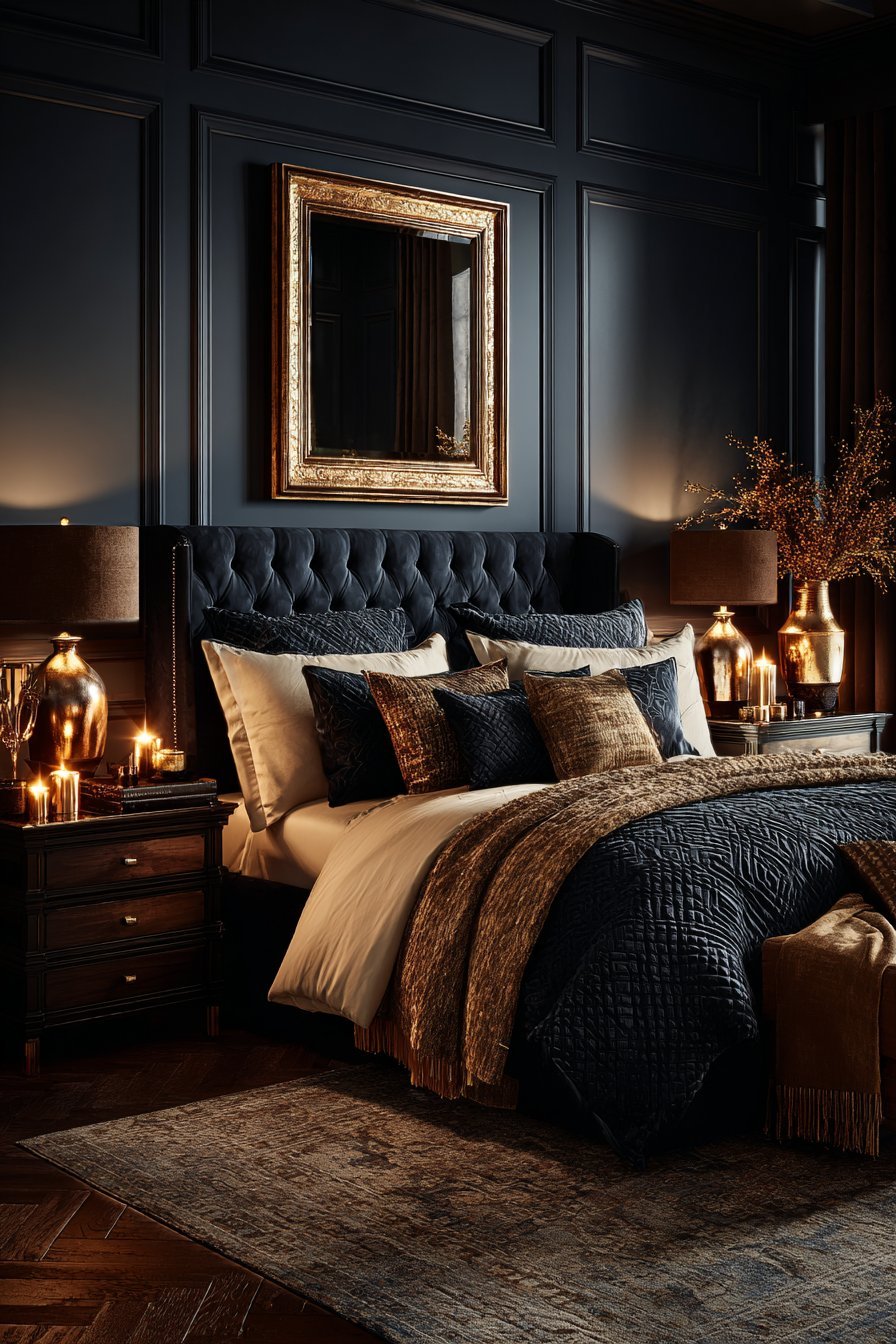
Deep, midnight blue bedrooms are making a powerful statement in 2026. This is color that commands presence — rich, enveloping, and undeniably luxurious. Far from making spaces feel small, a well-executed deep blue bedroom creates a sense of infinite depth, like sleeping inside a twilight sky.
Indigo and navy shades work particularly well in bedrooms because they are inherently associated with nighttime and rest. Chromotherapy research supports the idea that deep blue tones lower heart rate and promote melatonin production, making them genuinely conducive to better sleep. This is design that does not just look good — it functions beautifully.
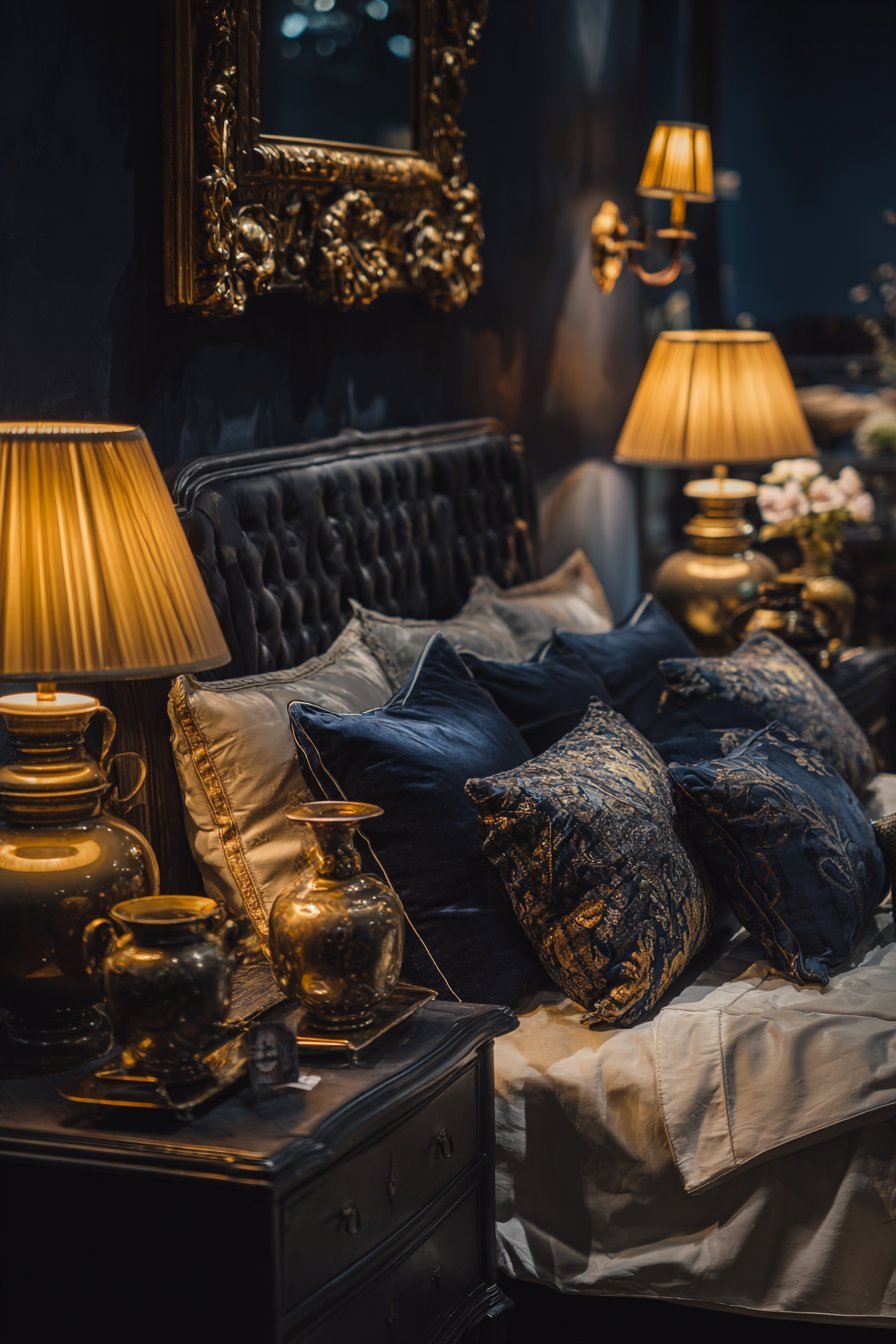
To prevent the look from feeling heavy, balance dark blue walls with crisp white trim, warm metallic accents, and light-reflective surfaces like mirrored furniture or glossy ceramics. Soft lighting becomes critical — use layered ambient and bedside task lighting to create warmth within the drama.
- Paint walls in a deep indigo or midnight navy with a matte or chalky finish
- Use crisp white bedding to create striking contrast against dark walls
- Introduce brass or gold metallic accessories to add warmth and luminosity
- Hang a large mirror to reflect light and prevent the space from feeling enclosed
- Choose bedside lamps with warm-toned bulbs (2700K) to soften the atmosphere
- Layer navy velvet cushions with cream throws for a luxe textural mix
4. Warm Mushroom and Greige Sophistication
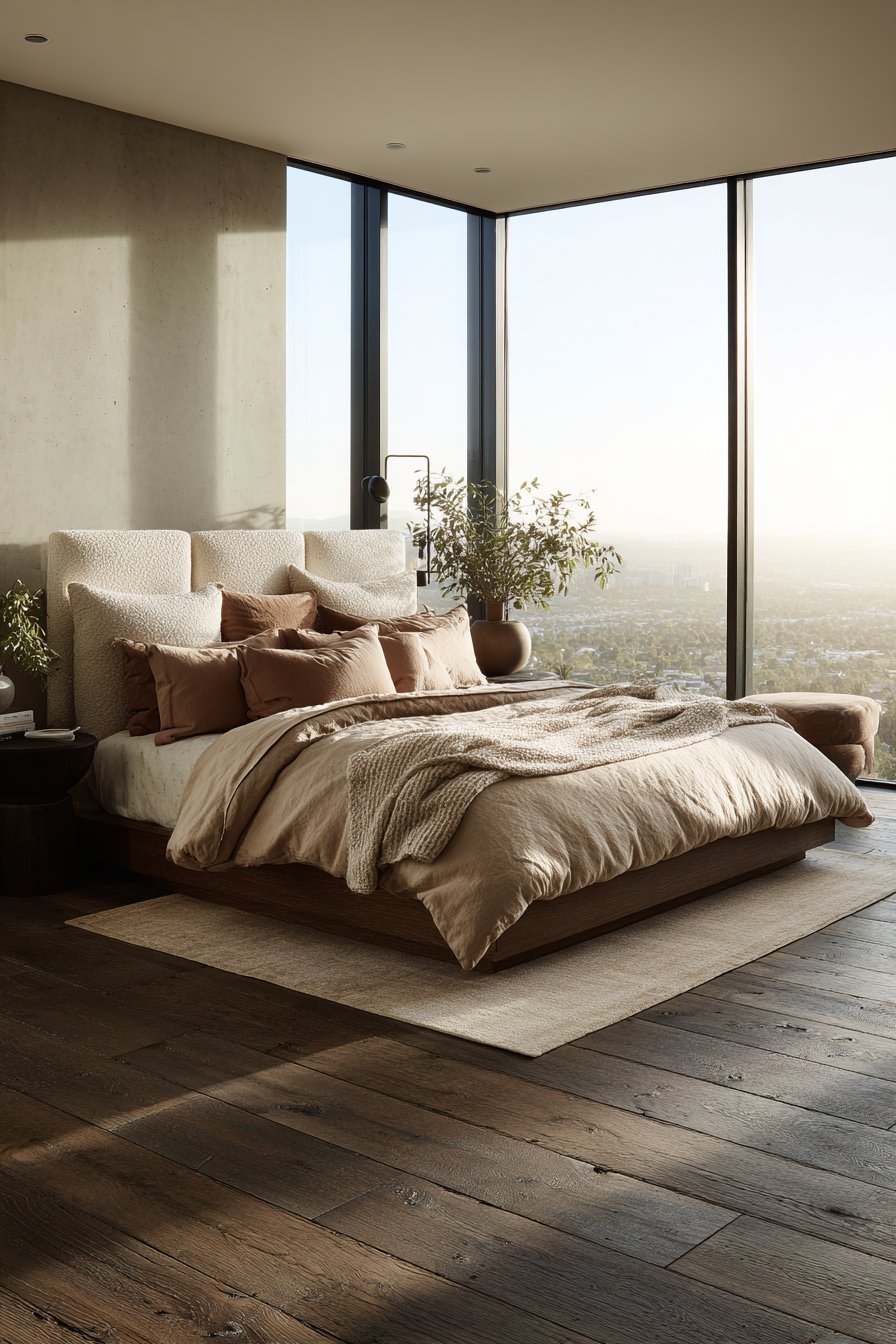
Move over, cool grey — warm mushroom tones are dominating neutral bedrooms in 2026. This sophisticated blend of beige, taupe, and grey — often called greige — has been reimagined with warmer undertones that feel nurturing and deeply livable. It is the neutral that does not feel neutral at all.
Mushroom tones work because they are exceptionally forgiving in changing light. In morning sunshine, they appear soft and honey-toned. Under evening lamplight, they deepen into a cozy, enveloping warmth. This chameleon quality makes mushroom one of the most versatile base colors for a bedroom that needs to feel consistently beautiful at all hours.
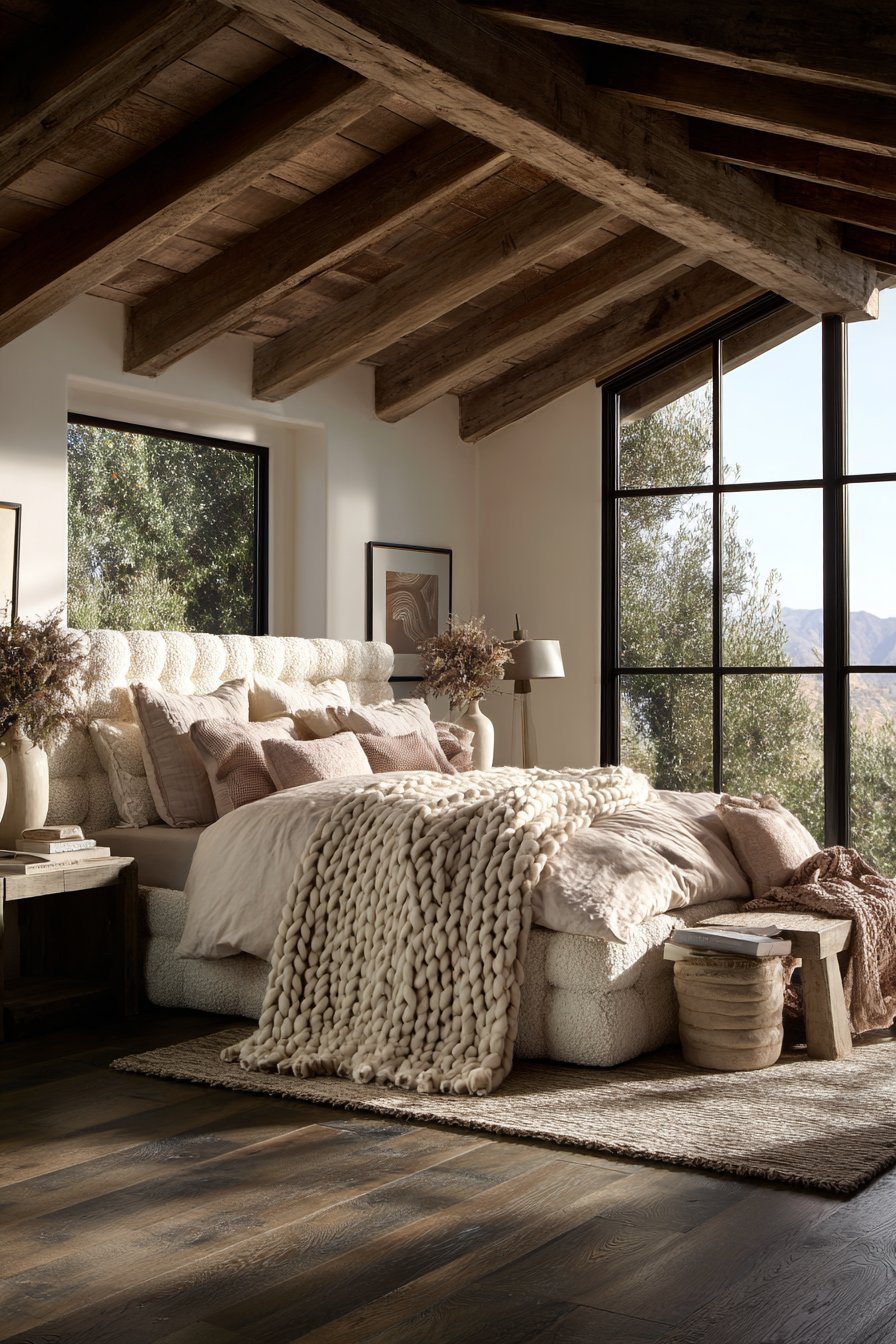
The key to making greige feel current rather than dated is intentional layering. Combine warm mushroom walls with textured boucle headboards, cashmere throws, and raw wood furniture. Introduce matte black or dark bronze fixtures to sharpen the look and prevent it from appearing too beige or bland.
- Choose a mushroom tone with warm pink or golden undertones — avoid cool grey-based versions
- Test paint samples in both natural and artificial light before committing
- Pair with boucle or bouclé fabric in cream or oat for textural luxury
- Use dark wood flooring or a warm-toned rug to anchor the space
- Add matte black picture frames and fixtures to provide sharp contrast
- Layer three or more different textures in the same tonal family for depth
5. Dusty Rose and Muted Blush
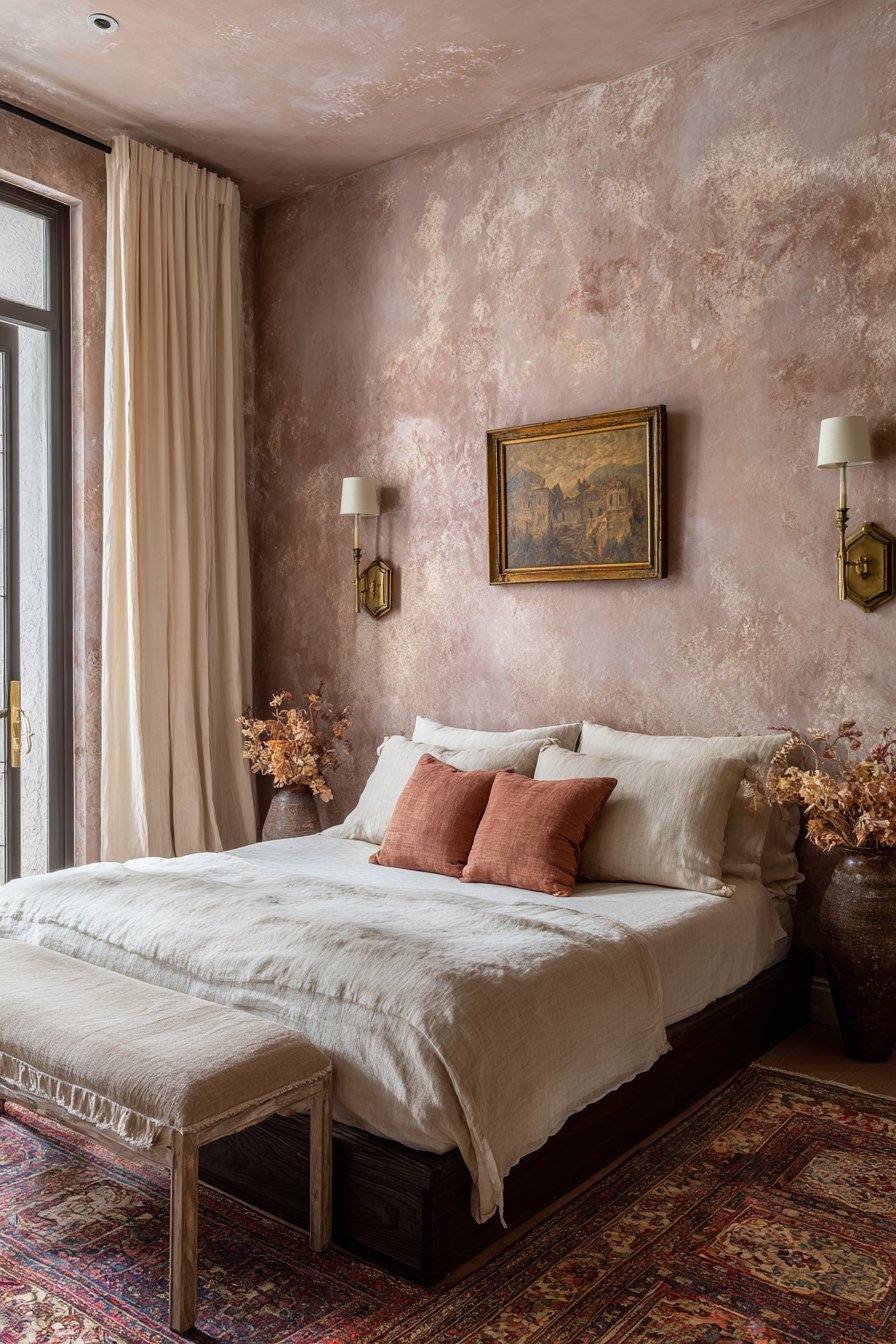
The dusty rose revival of 2026 has nothing to do with the millennial pink of years past. This is a more mature, muted interpretation — closer to dried rose petals or antique silk than anything sweet or saccharine. Used thoughtfully, dusty rose creates bedrooms that feel romantic, serene, and quietly confident.
Interior designers are pairing dusty rose with terracotta, warm stone, and dark walnut wood to give it an earthy, grounded character. This prevents the color from reading as overtly feminine and instead makes it feel sophisticated and gender-neutral. The result is a bedroom palette that feels both ancient and thoroughly modern.
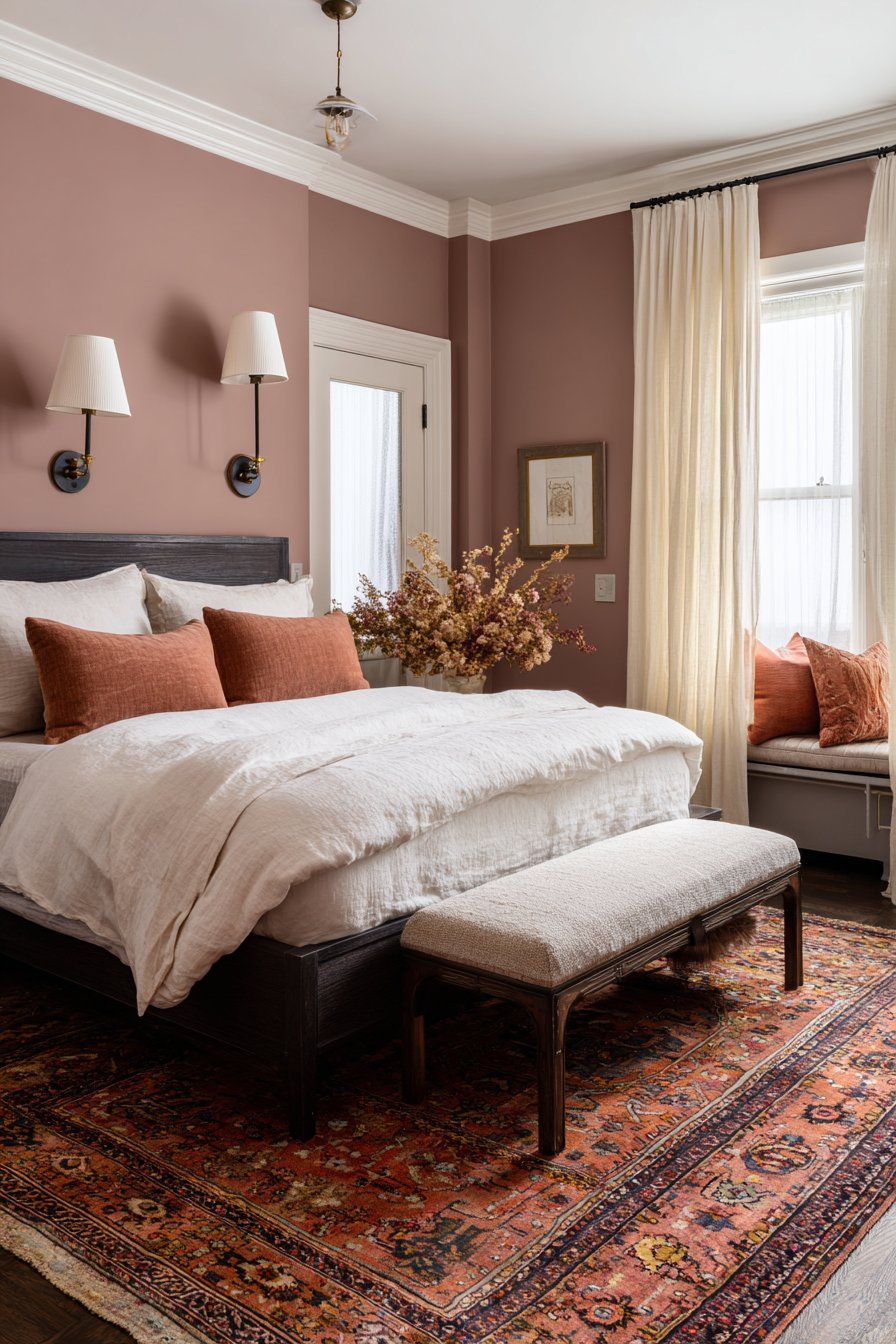
Layering matters enormously with blush tones. Tonal variation — moving from pale blush on walls to deeper rose in textiles to antique rose in ceramics — creates a bedroom that feels rich and considered. Add patinated brass or verdigris bronze fixtures to bring in the character of aged elegance.
- Use muted, grey-toned blush rather than bright or candy-pink versions
- Pair with terracotta, rust, or warm sand tones in textiles and rugs
- Choose linen bedding in dusty rose or antique white for a tactile, romantic finish
- Use antique or patinated brass hardware to avoid the look feeling too saccharine
- Introduce dark wood furniture to ground the softness of the palette
- Add dried floral arrangements in rose and ochre tones as natural accents
6. Warm Charcoal and Smoked Graphite
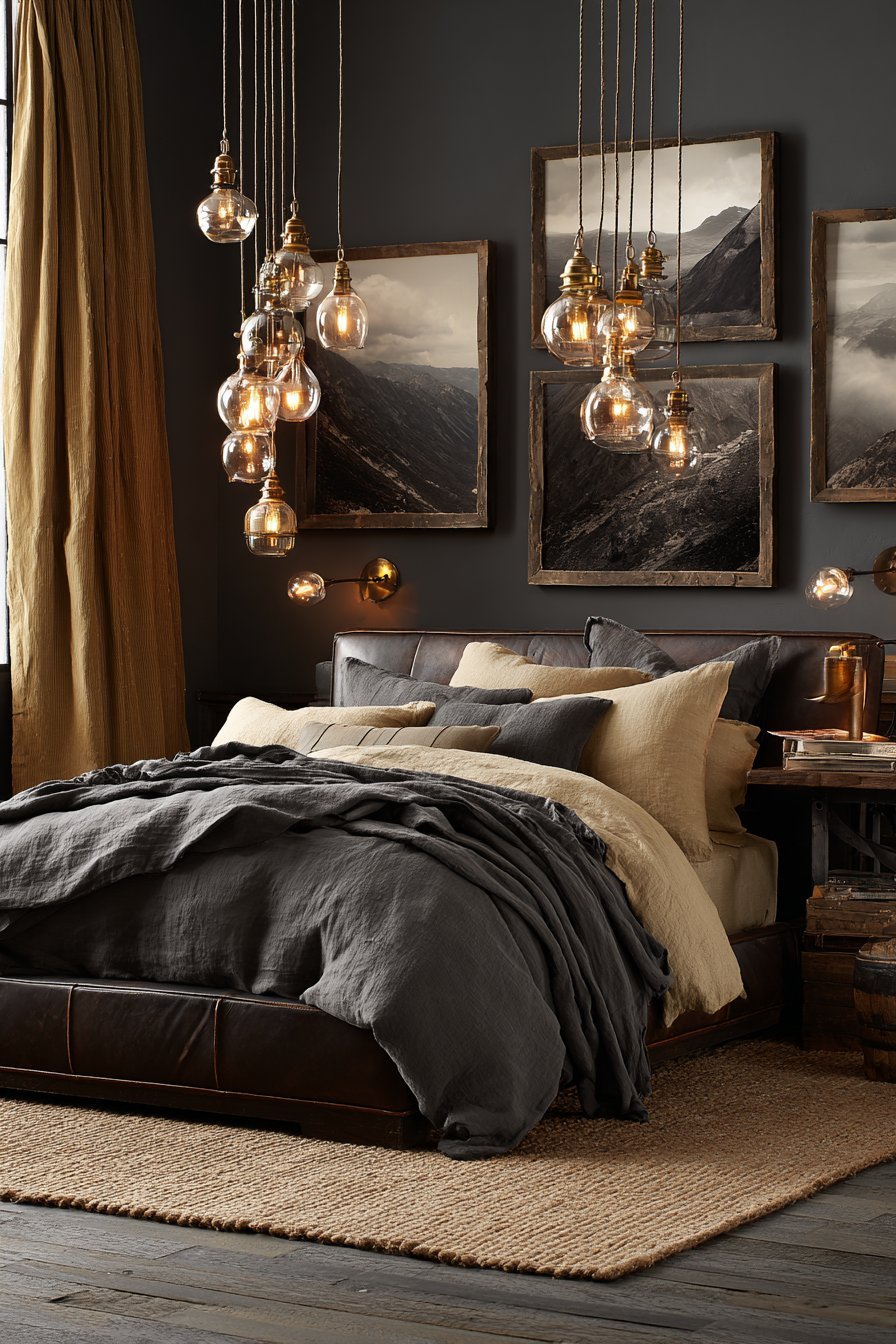
Warm charcoal bedrooms represent the sophisticated dark-wall trend for those who find true black too intense. Smoked graphite — a charcoal with warm brown or taupe undertones — creates bedrooms that feel dramatic and cocoon-like without tipping into oppressive darkness. It is the ideal bridge between a light, airy space and a truly moody interior.
This palette is gaining serious momentum among design-forward homeowners who want bedrooms that feel like high-end boutique hotels. Charcoal walls create a natural gallery effect — every object, painting, and textile placed against them appears sharper and more defined, elevating the overall design quality of the space.
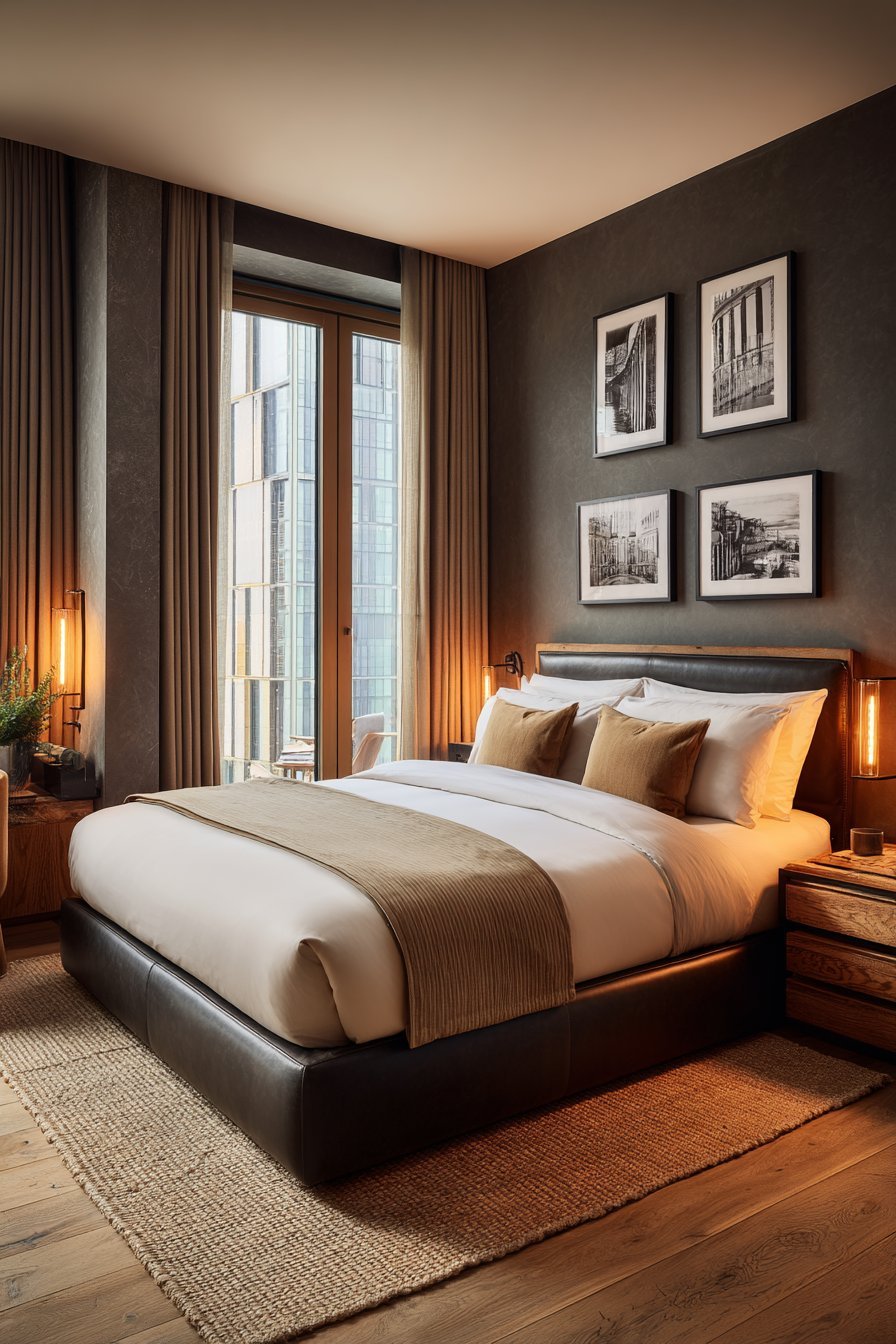
Pair warm charcoal with natural materials to prevent coldness. Unfinished linen, raw timber, aged brass, and leather accessories all bring warmth into the palette. Use wide-plank wood flooring or a chunky jute rug underfoot to reinforce the organic quality and ensure the space feels livable, not sterile.
- Choose charcoal with warm brown or taupe undertones — avoid blue-grey versions
- Paint ceilings a shade or two lighter than walls to open the space vertically
- Use layered lighting — wall sconces, bedside lamps, and candles work beautifully
- Pair with warm linen, aged leather, and natural timber accents
- Hang large-format artwork or photography to take advantage of the gallery-wall effect
- Keep bedding in cream, oat, or warm white to prevent the room from feeling too heavy
7. Soft Ochre and Golden Wheat
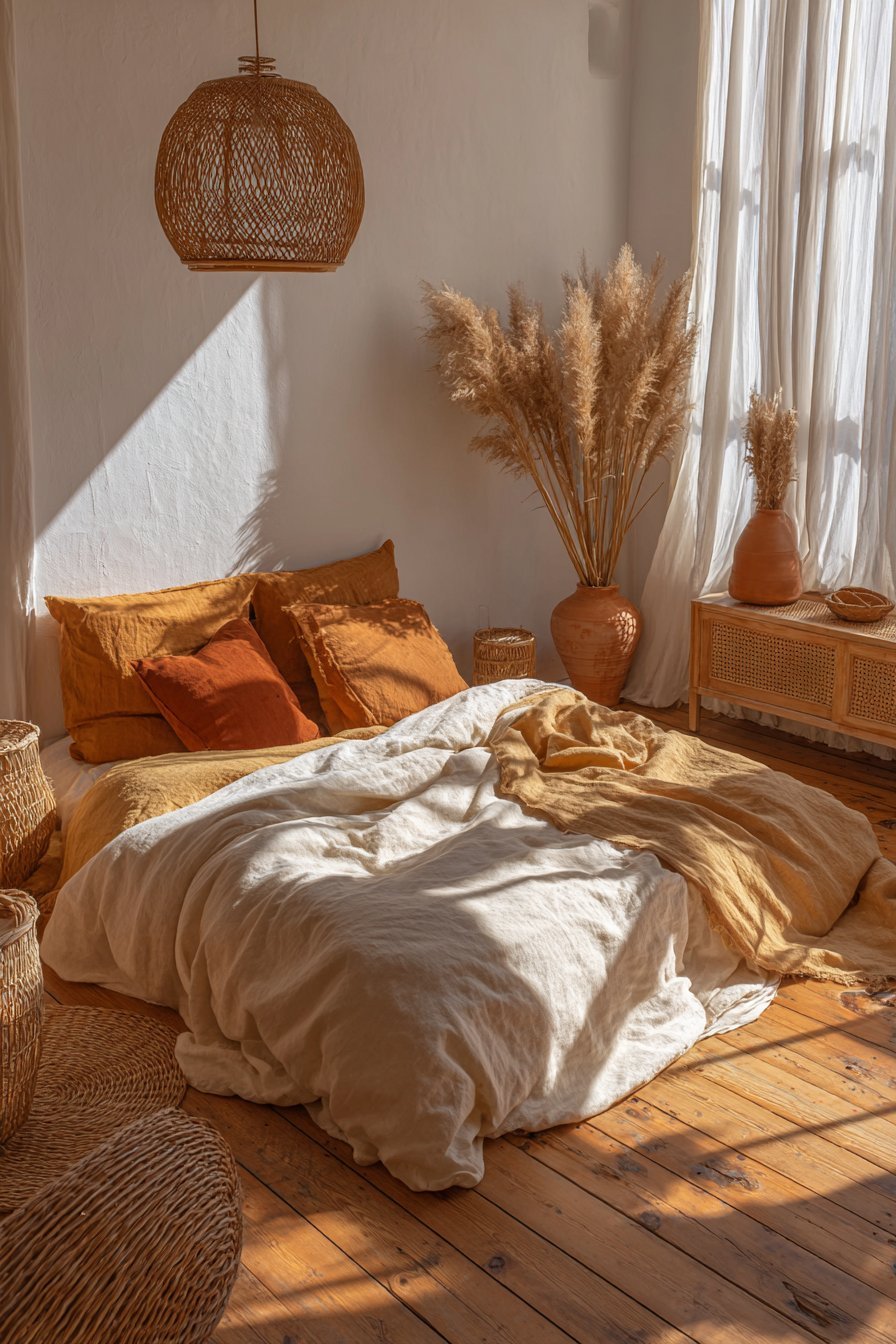
Soft ochre and golden wheat tones are emerging as one of the most unexpected — and captivating — bedroom color stories of 2026. These warm, golden-yellow hues carry the light of late afternoon sun and bring an uplifting, life-affirming energy to the bedroom without veering into aggressive brightness.
Ochre has deep historical roots in art and architecture — from prehistoric cave paintings to Moroccan riads and Italian Renaissance fresco work. In 2026, contemporary designers are reclaiming it as a sophisticated alternative to beige, offering warmth without the flatness that plainer neutrals can bring.
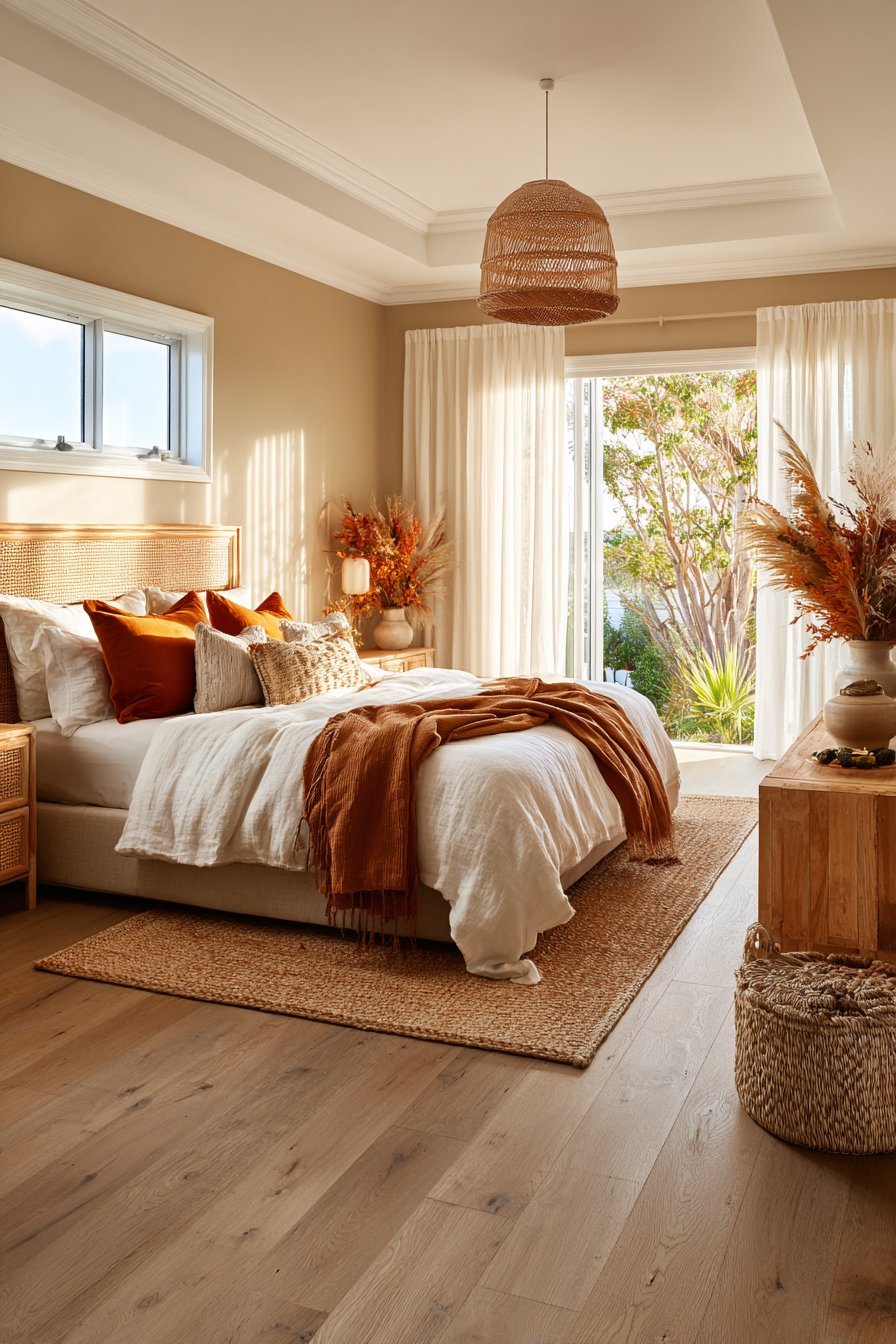
The key to using ochre successfully in a bedroom is controlling saturation. The trend favors dusty, muted golden tones over bright sunflower or banana yellow. Paired with deep terracotta, warm white, and natural rattan, ochre creates a palette that feels sun-drenched and soulful — like a beautifully light-filled room in the south of France.
- Choose dusty, muted ochre — test against warm white trim before committing
- Pair with deep terracotta or burnt orange accents for a cohesive earthy palette
- Use rattan, cane, or wicker furniture to reinforce the sun-drenched, natural aesthetic
- Layer bedding in warm white, cream, and caramel for a golden tonal story
- Introduce ochre gradually through soft furnishings before committing to full walls
- Use natural light maximally — hang sheer linen curtains to allow light to glow through
8. Limewash White and Textured Chalk
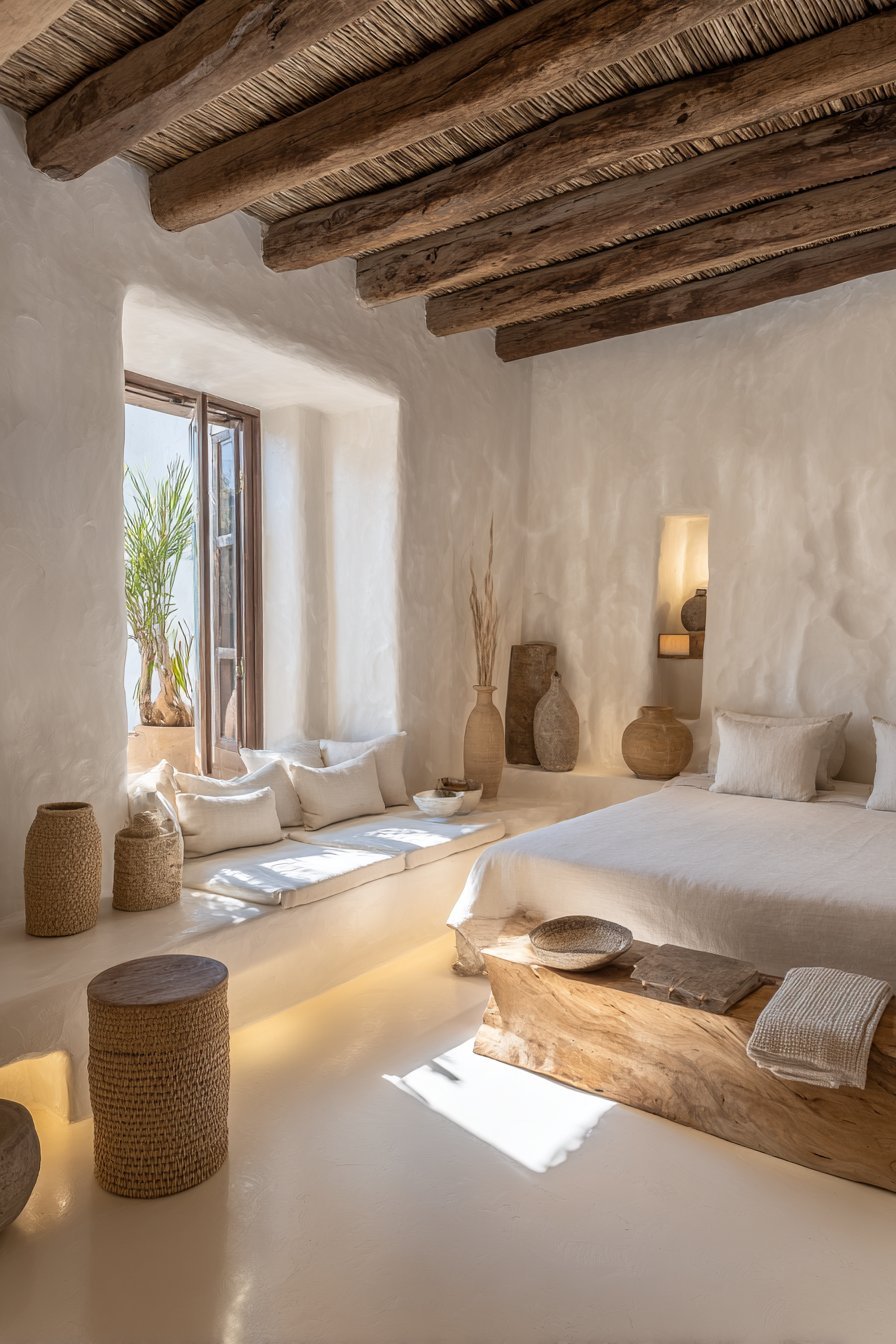
The limewash texture trend continues to redefine how we think about white in the bedroom. Rather than flat, clinical white walls, 2026 homeowners are embracing limewashed and chalky finishes — ancient painting techniques that create naturally mottled, depth-rich surfaces that seem to breathe and shift with the light.
Limewash white is not simply a paint color — it is a surface treatment philosophy. Each application creates subtle variation in tone, from bright white to warm cream to soft grey, depending on the thickness and layering of the wash. The result is a wall surface that feels organic, ancient, and deeply beautiful — the opposite of the flat, perfect finish of conventional paint.
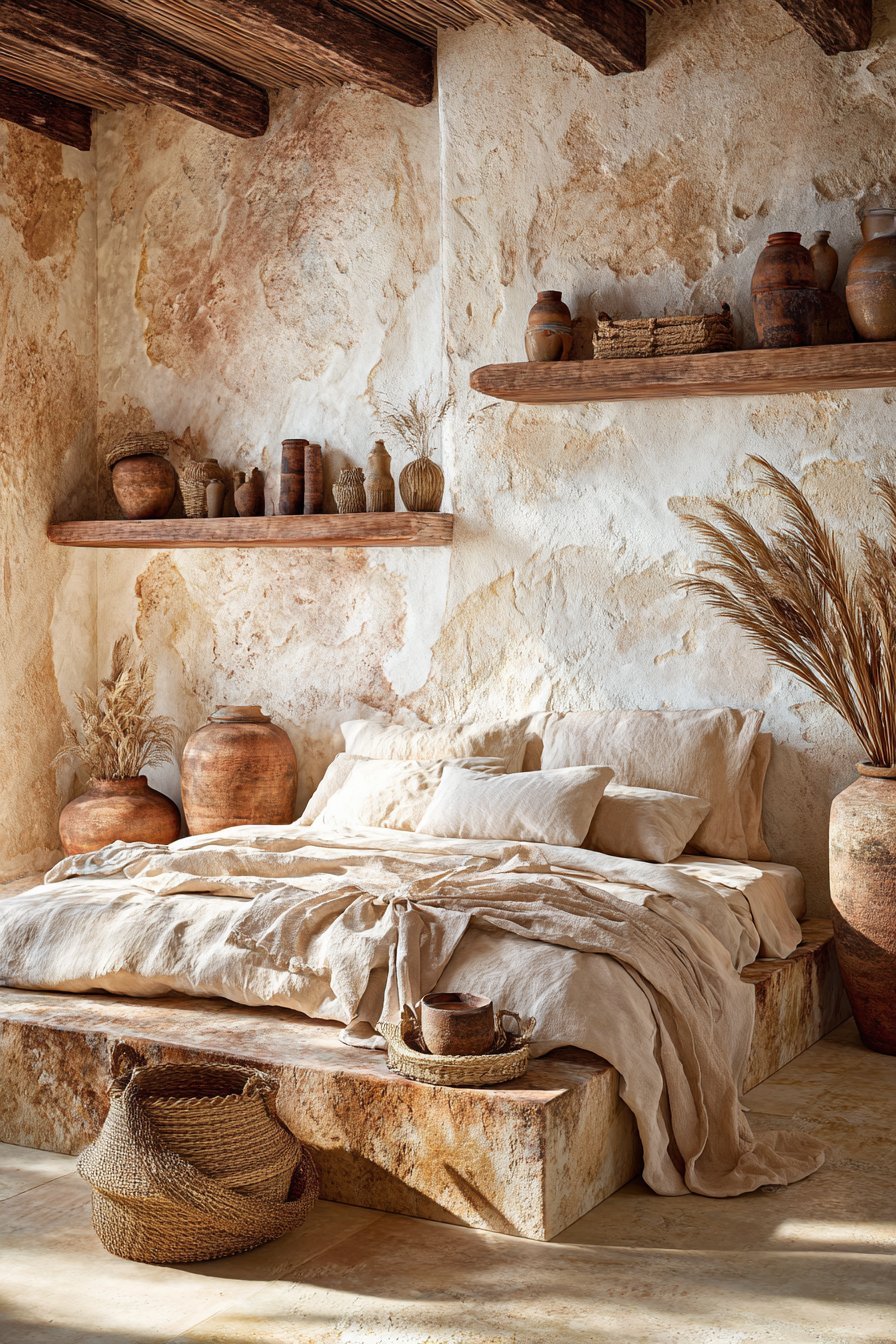
This finish pairs extraordinarily well with natural material bedrooms — raw linen bedding, unfinished oak furniture, terracotta pots, and handwoven baskets. The imperfection of limewash celebrates craft and handmade quality, creating a bedroom atmosphere that feels curated by nature rather than manufactured.
- Apply limewash or Venetian plaster finishes for authentic texture over standard emulsion
- Choose warm white with ivory or cream undertones — avoid blue-white versions
- Pair with raw, unfinished natural materials: linen, jute, oak, rattan
- Leave walls intentionally uneven — the variation in tone is the feature, not a flaw
- Use warm, soft lighting to enhance the shifting depth of the limewash finish
- Combine with terracotta, sage, or blush accents for a beautifully layered palette
Conclusion
The bedroom color trends of 2026 share a common thread: they favor depth, warmth, authenticity, and intention over safe or fleeting choices. Whether you are drawn to the earthy richness of terracotta, the enveloping drama of midnight blue, the understated sophistication of greige, or the ancient beauty of limewash, each palette invites you to create a bedroom that feels genuinely personal.
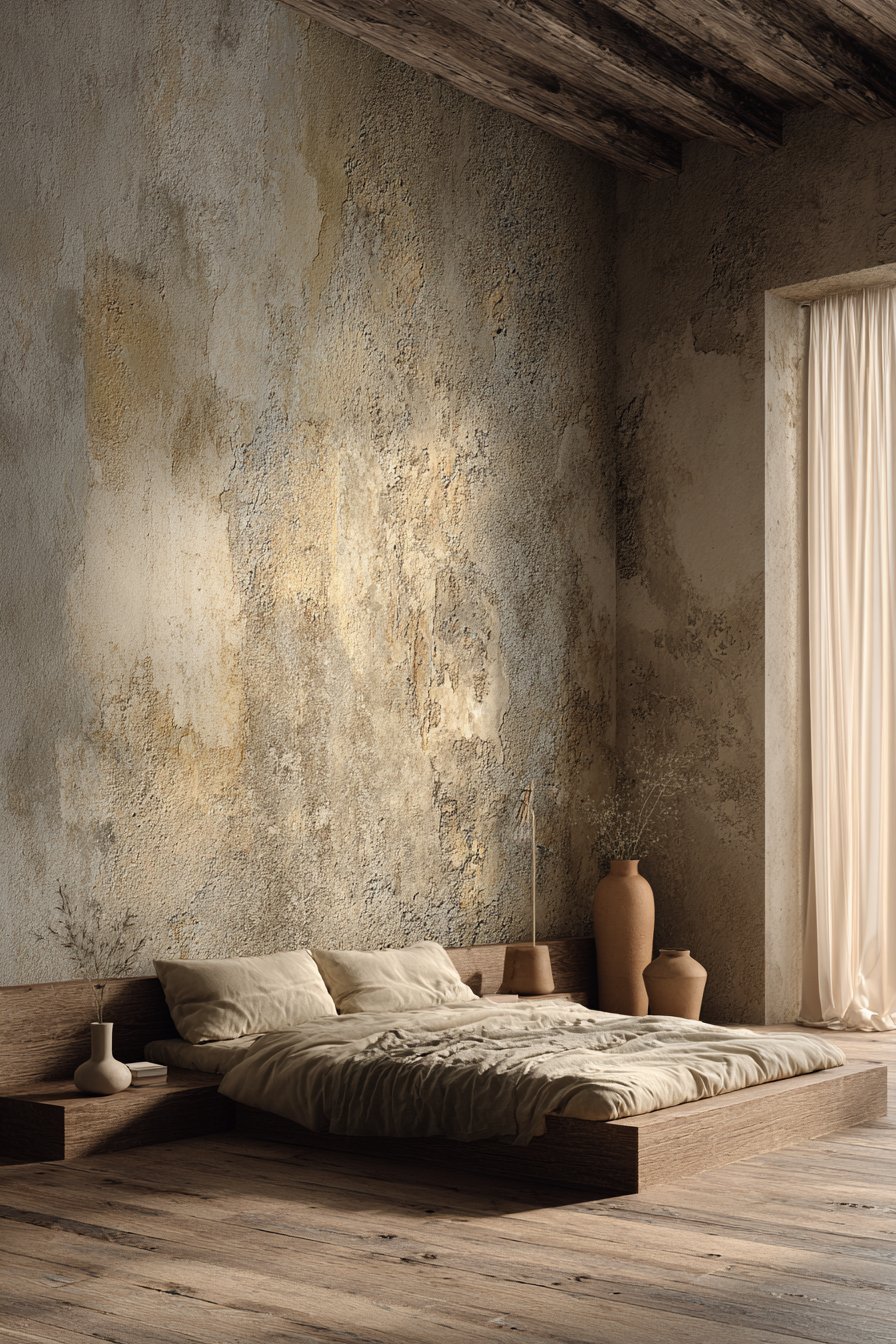
The most important rule of all is to trust your instincts. Color is deeply emotional — the shades that make you feel calm, inspired, and at home are always the right choice. Use these trends as a starting point, layer thoughtfully, and allow your bedroom to evolve into a space that supports your rest, reflects your personality, and brings you genuine joy every single day.
