
Transforming your backyard patio into a stunning outdoor retreat doesn’t require a hefty budget or professional help. With thoughtful planning and creative approaches, you can achieve a high-end aesthetic without breaking the bank. The key lies in understanding which elements deliver the most visual impact and learning how to maximize your resources effectively.
Budget-conscious homeowners often assume that creating an elegant patio space means sacrificing style for affordability. However, the reality is quite different. By focusing on strategic investments and incorporating DIY solutions, you can craft an outdoor living area that rivals professionally designed spaces. This article explores six proven approaches that deliver impressive results while keeping your spending under control, proving that luxury outdoor living is accessible to everyone.
1. Create a Cohesive Color Palette with Paint
The transformative power of paint cannot be overstated when redesigning outdoor spaces on a budget. A unified color scheme instantly elevates the perceived value of your patio by creating visual harmony and sophistication. Start by selecting two to three complementary colors that reflect your personal style while coordinating with your home’s exterior.
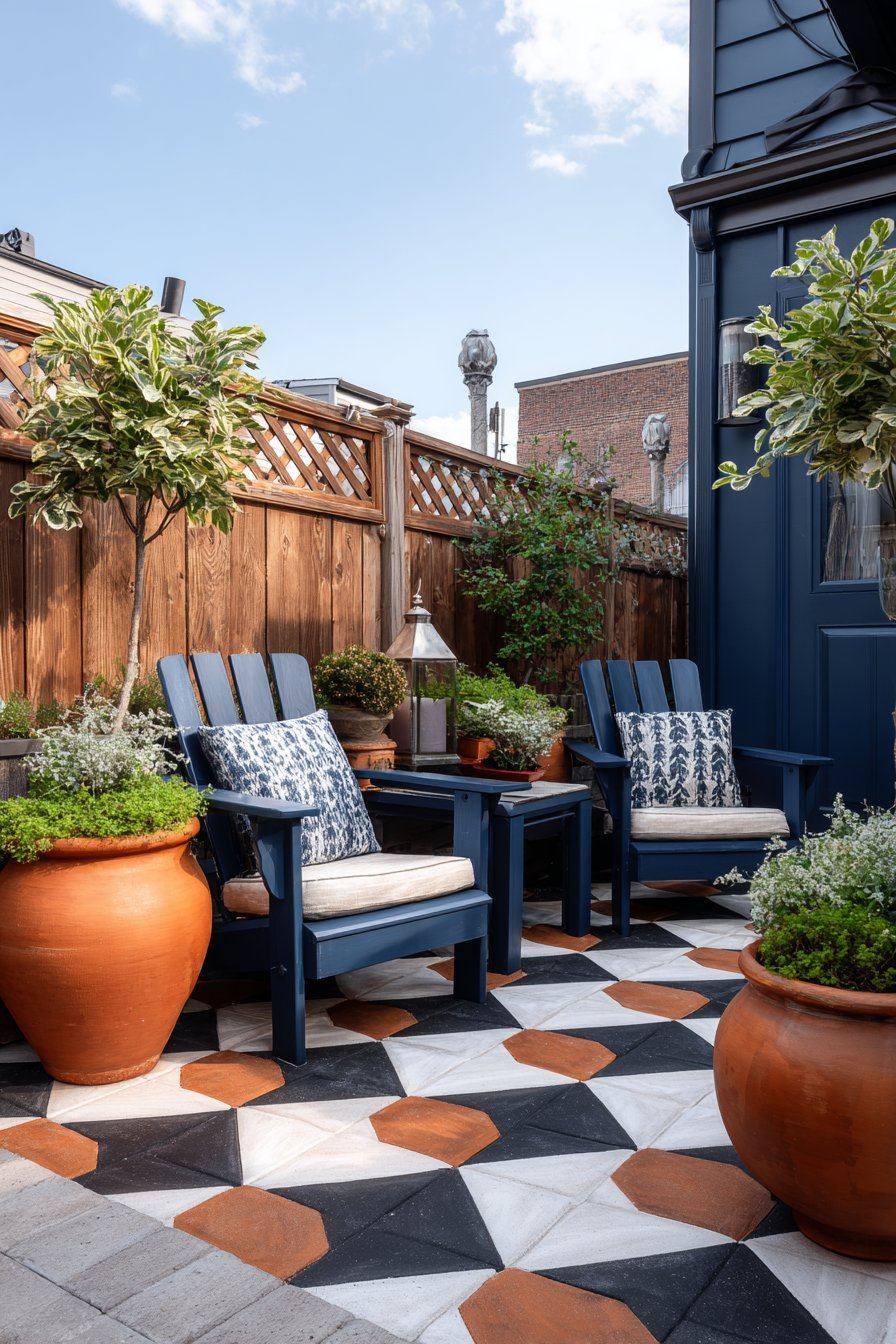
Consider painting existing concrete surfaces, wooden furniture, or even outdoor planters in your chosen palette. Chalk paint and outdoor acrylic paints offer excellent durability without premium pricing. Focus on creating contrast through light and dark tones rather than purchasing new furniture or hardscaping materials.
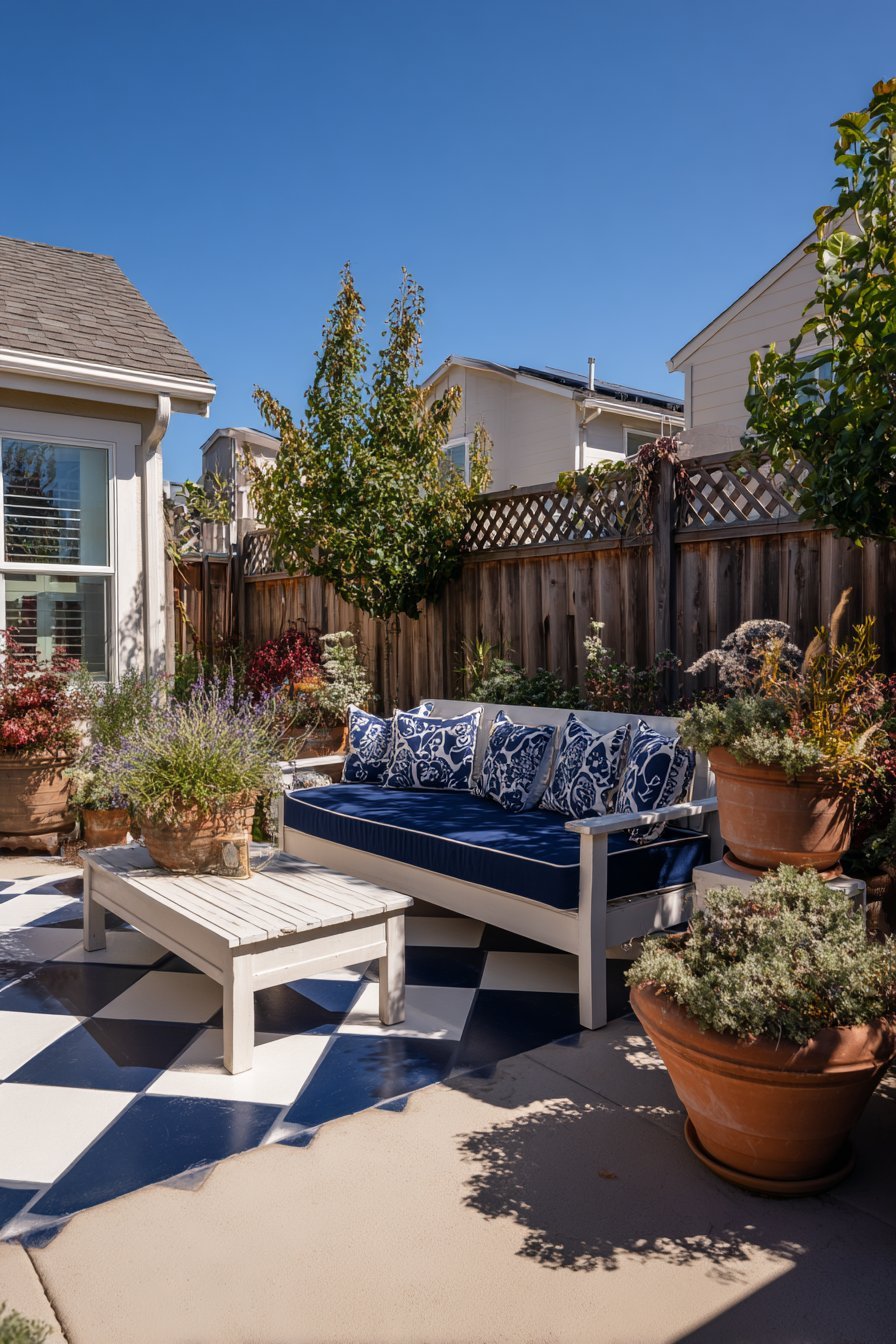
The beauty of this approach lies in its versatility and affordability. A few gallons of quality outdoor paint typically cost between $80 to $150, yet the impact rivals renovations costing thousands. This strategy works particularly well for rental properties or homes where permanent changes aren’t feasible.
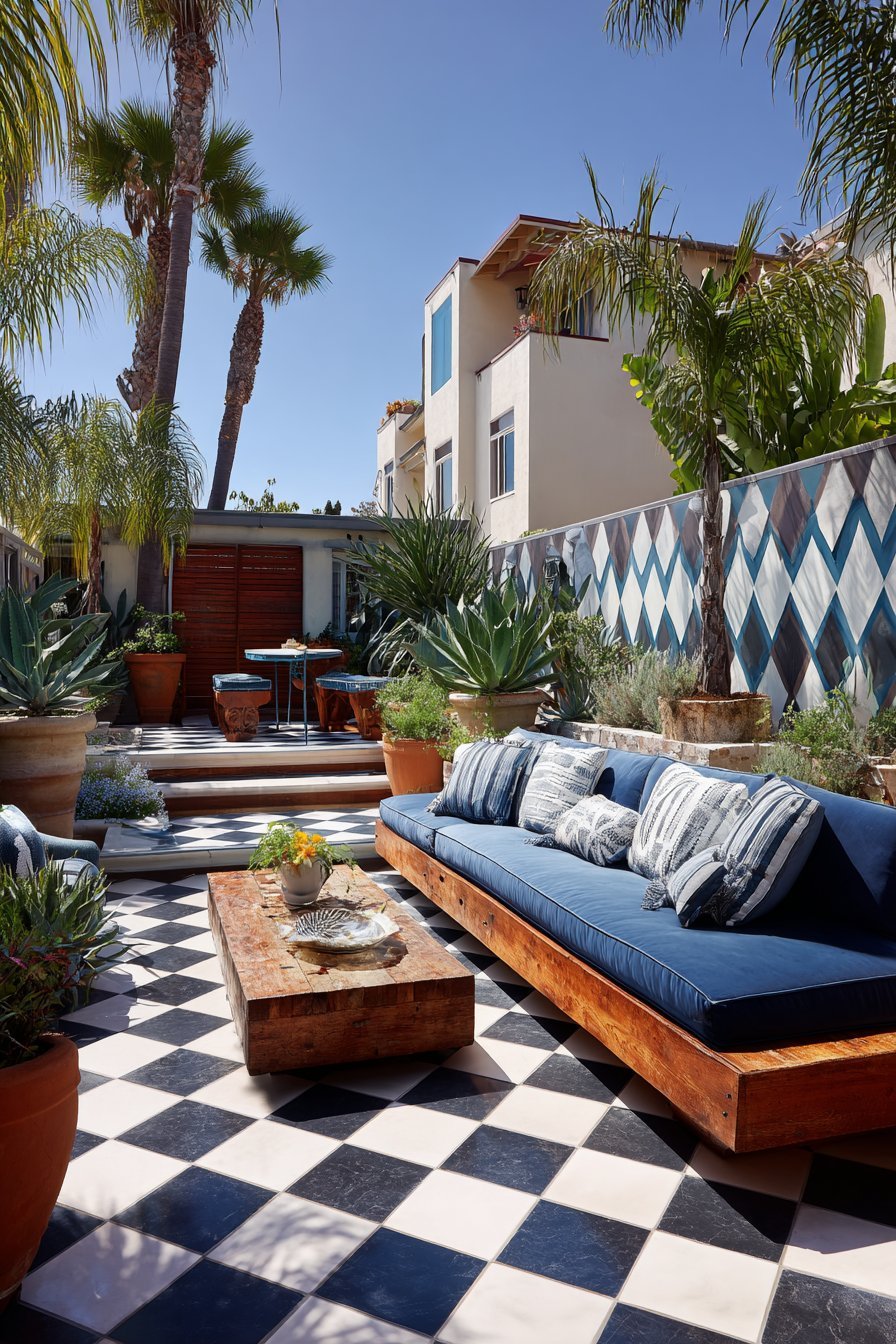
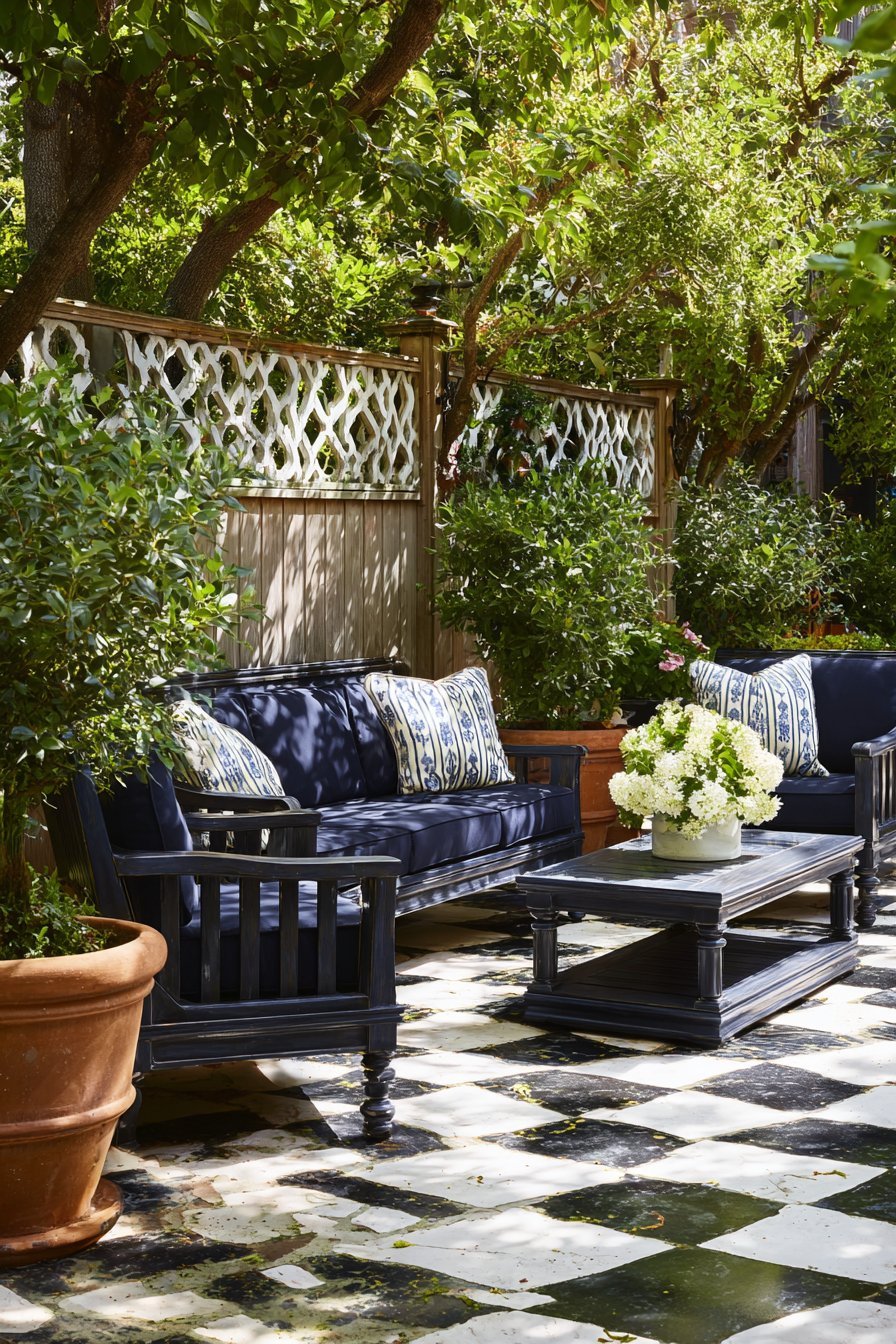
- Paint old concrete pavers or slabs in checkerboard patterns for a custom tile look
- Refresh weathered wooden furniture with bold, contemporary colors
- Create an accent wall on fencing or exterior walls using deep, rich hues
- Coordinate planter colors to match your overall scheme for visual unity
- Use stencils to add decorative patterns to plain surfaces
- Apply two-tone treatments to furniture pieces for added sophistication
2. Layer Outdoor Rugs for Texture and Warmth
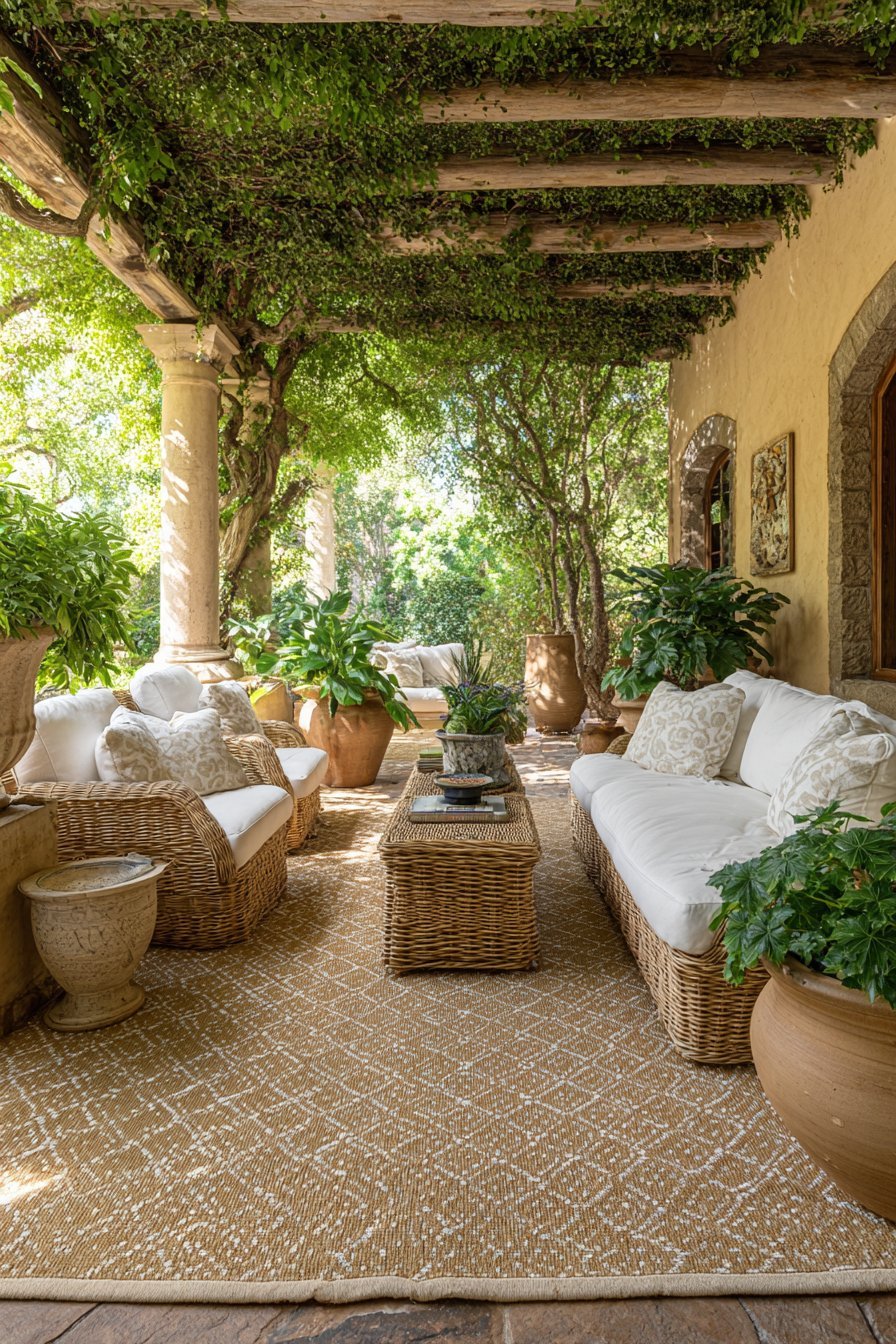
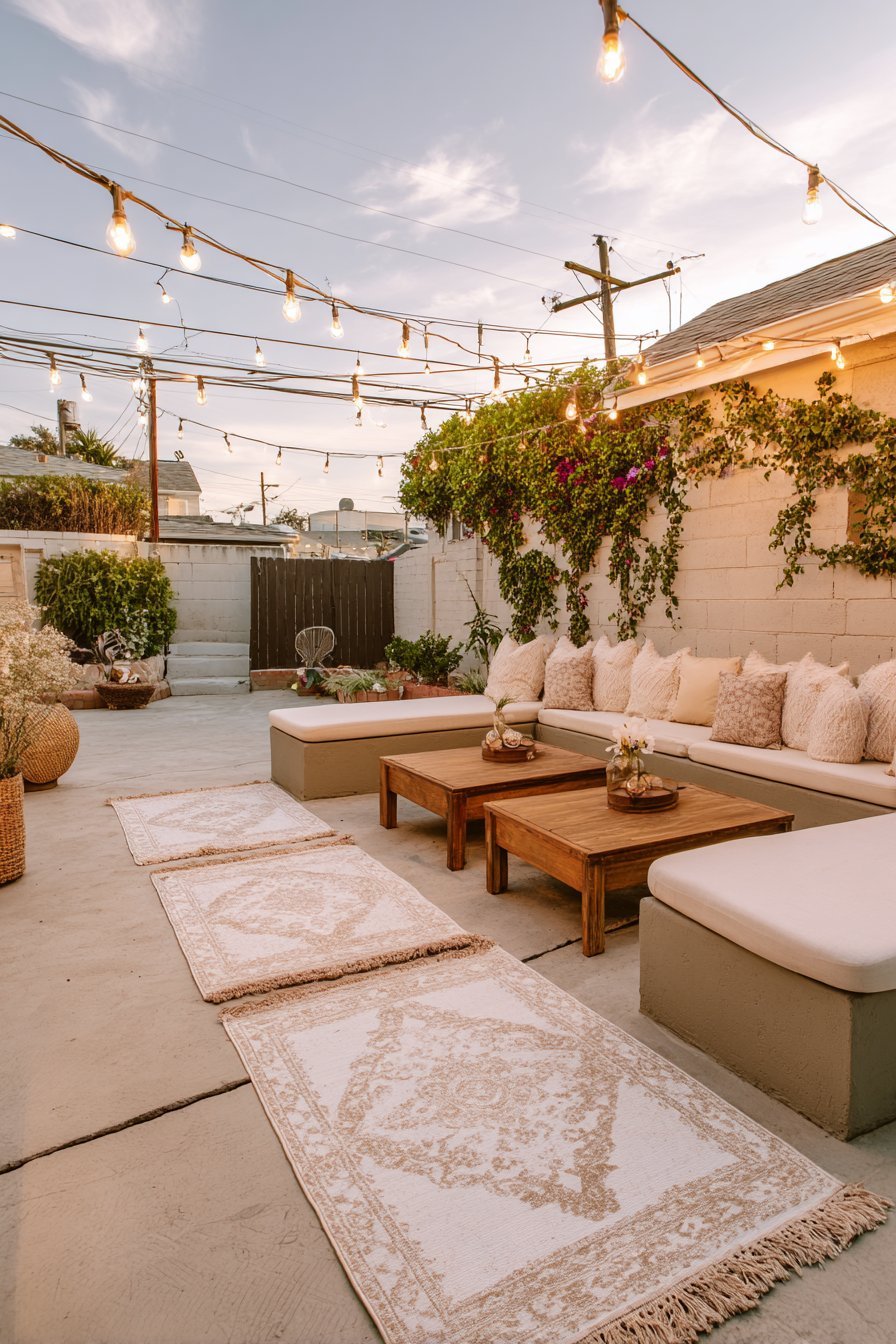
Outdoor rugs serve as instant foundation pieces that define spaces and add comfort underfoot. Layering multiple rugs creates depth and visual interest typically associated with high-end design. This technique allows you to mix patterns, textures, and sizes while staying within budget constraints.
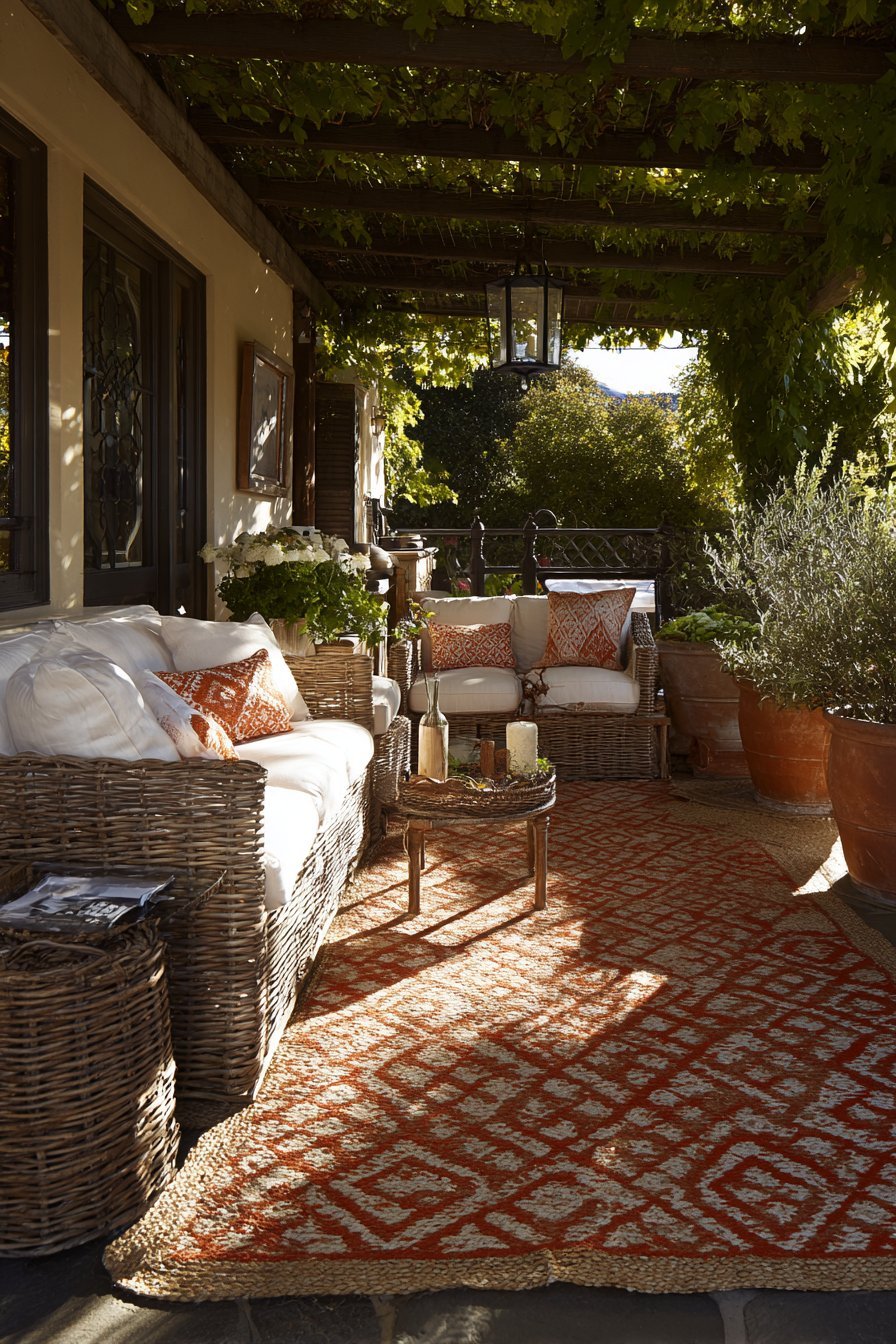
Start with a larger, neutral base rug in jute or sisal, which provides natural texture at reasonable prices. Layer a smaller, patterned rug on top to introduce color and personality. This strategic layering approach mimics expensive custom installations while using affordable, readily available materials.
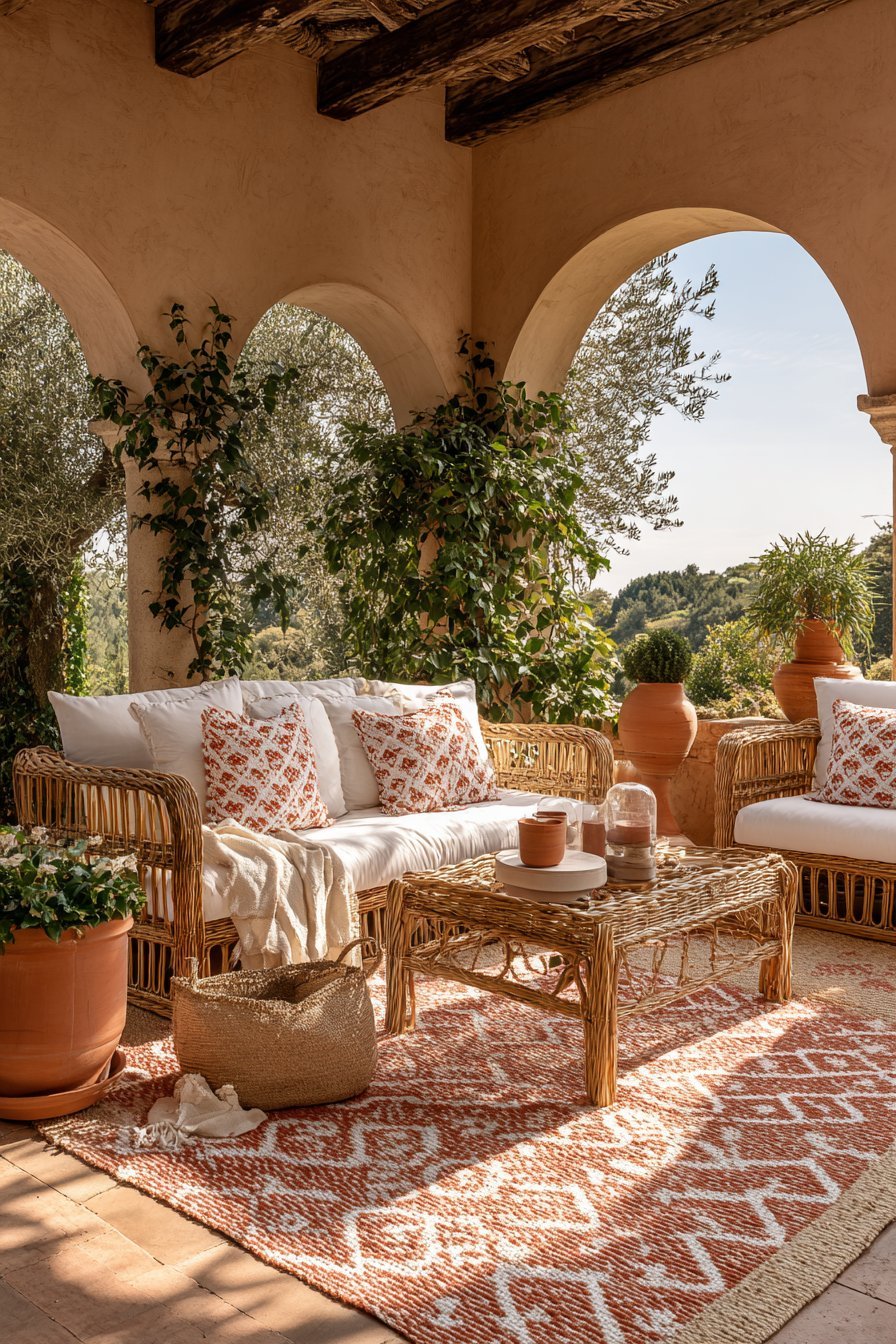
The investment ranges from $50 to $200 depending on sizes and quality, yet the perceived value increases exponentially. Outdoor rugs also protect existing surfaces and can be easily switched seasonally, offering flexibility that permanent installations cannot provide.
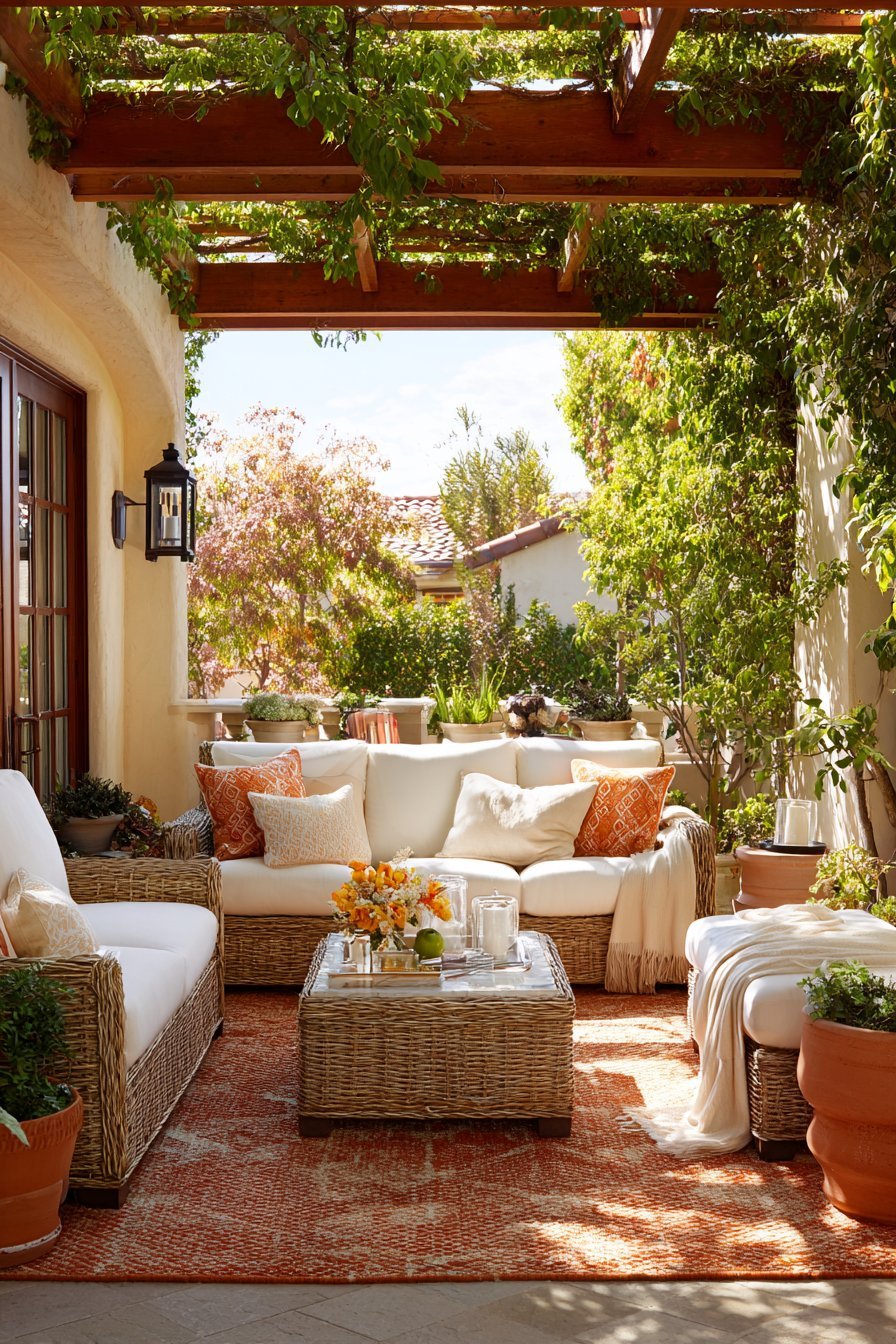
- Choose weather-resistant polypropylene rugs for durability and easy maintenance
- Start with an 8×10 neutral base rug, then add a 5×7 accent piece on top
- Mix geometric patterns with natural textures for contemporary appeal
- Secure rugs with outdoor rug tape to prevent shifting and tripping hazards
- Rotate rugs seasonally to prevent uneven fading and extend lifespan
- Look for clearance sales at major retailers for significant savings
3. Incorporate String Lights and Ambient Lighting
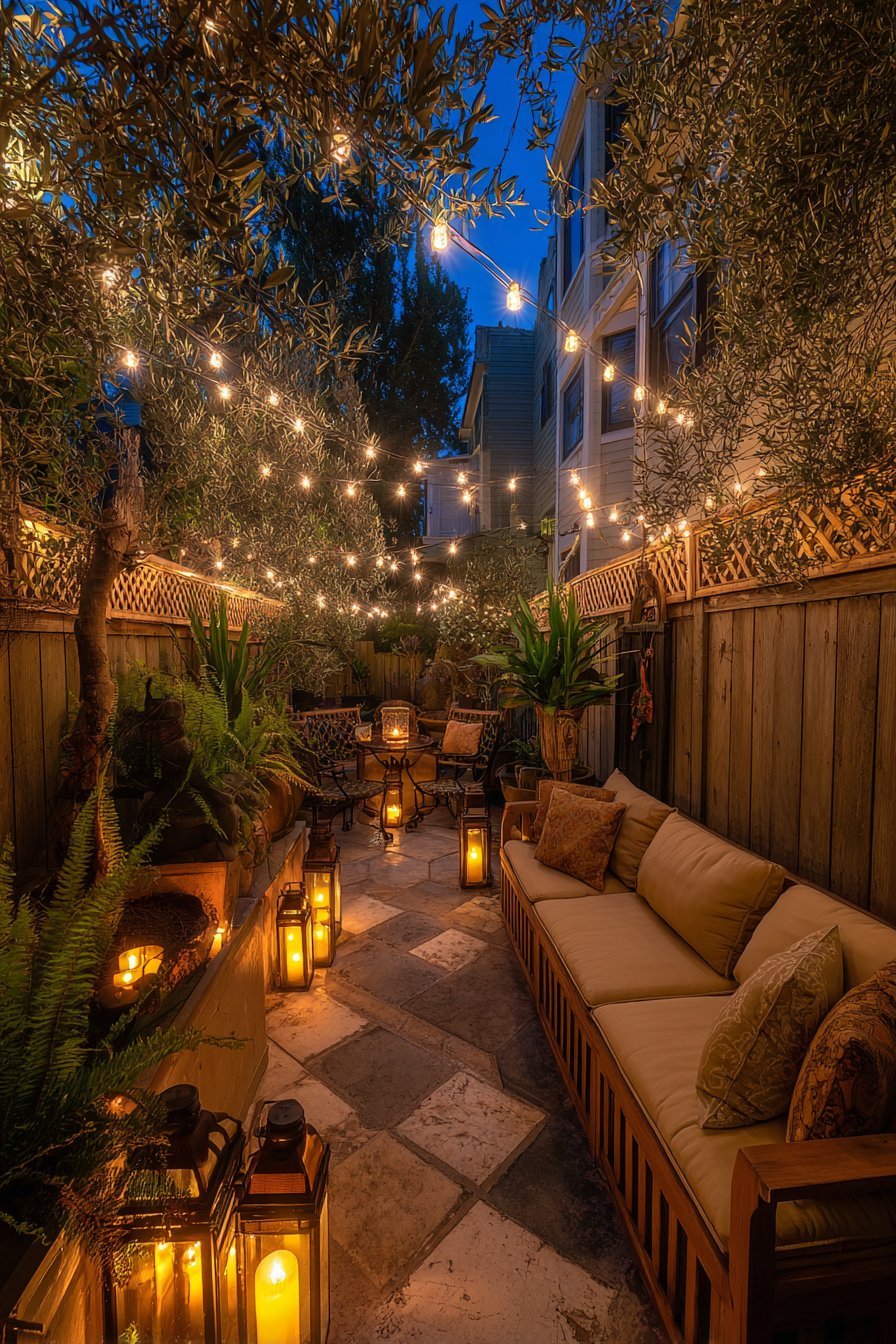
Thoughtful lighting design transforms ordinary patios into enchanting evening retreats that rival upscale restaurants and resorts. String lights, in particular, offer maximum impact with minimal investment, creating a magical ambiance that instantly elevates perceived luxury.
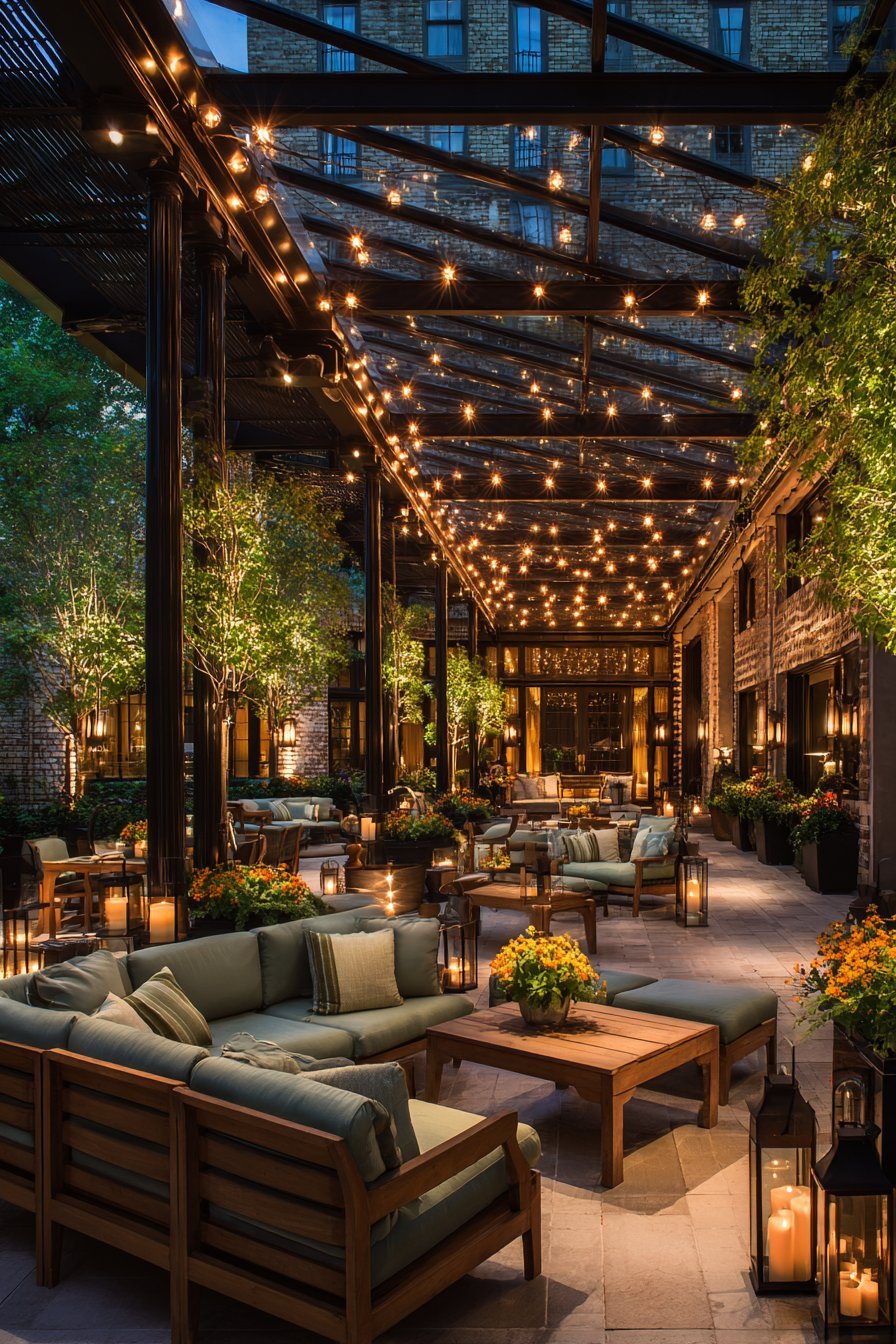
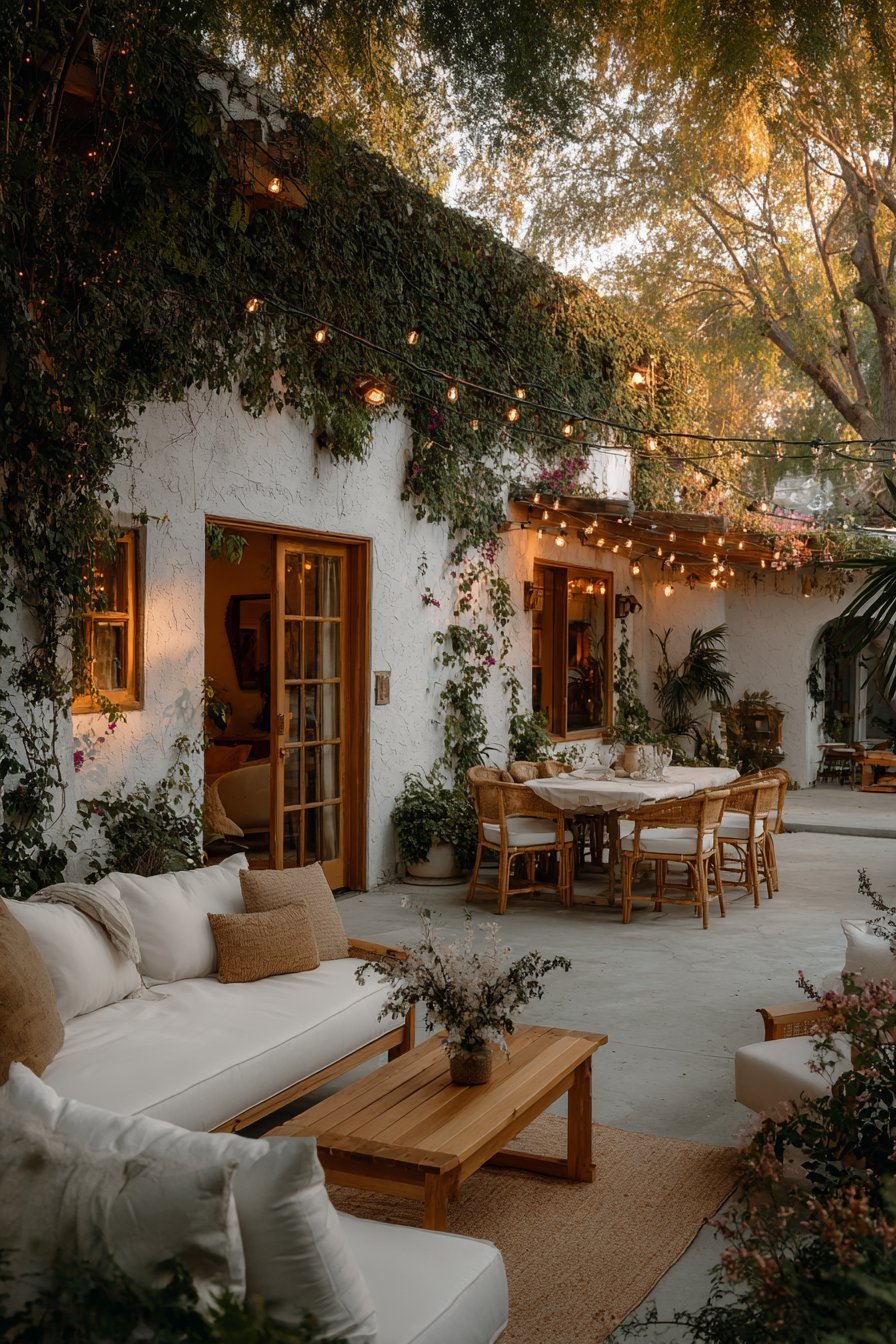
Install overhead string lights in zigzag patterns or along pergola beams to establish a warm, inviting glow after sunset. Complement these with solar-powered pathway lights, LED candles, or lanterns at varying heights to create layers of illumination. This multi-level lighting approach adds depth and sophistication.
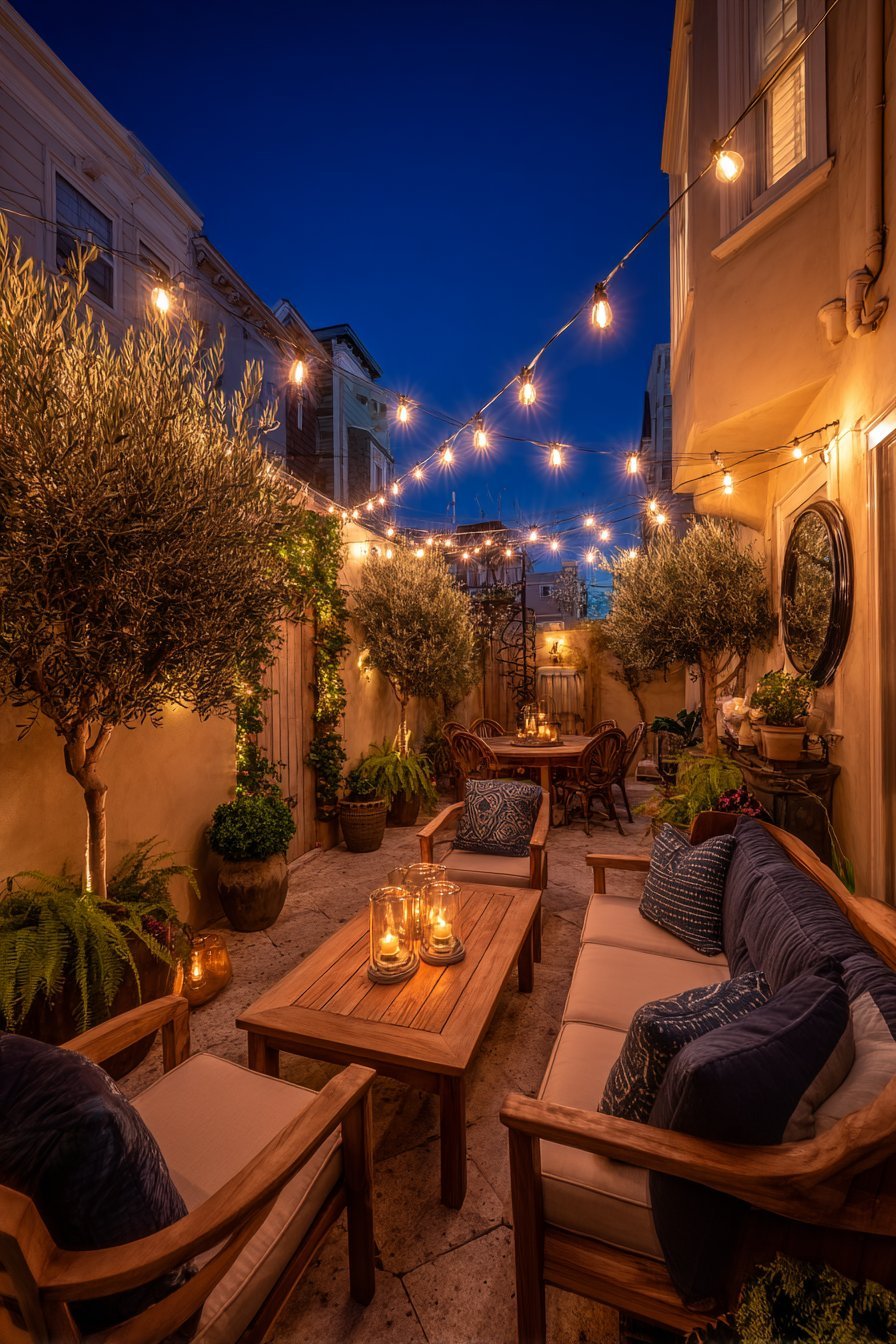
Quality string lights typically cost between $30 to $100, while solar options eliminate ongoing electricity expenses. The combination of ambient, task, and accent lighting creates professional-level results without requiring electrical expertise or significant investment.
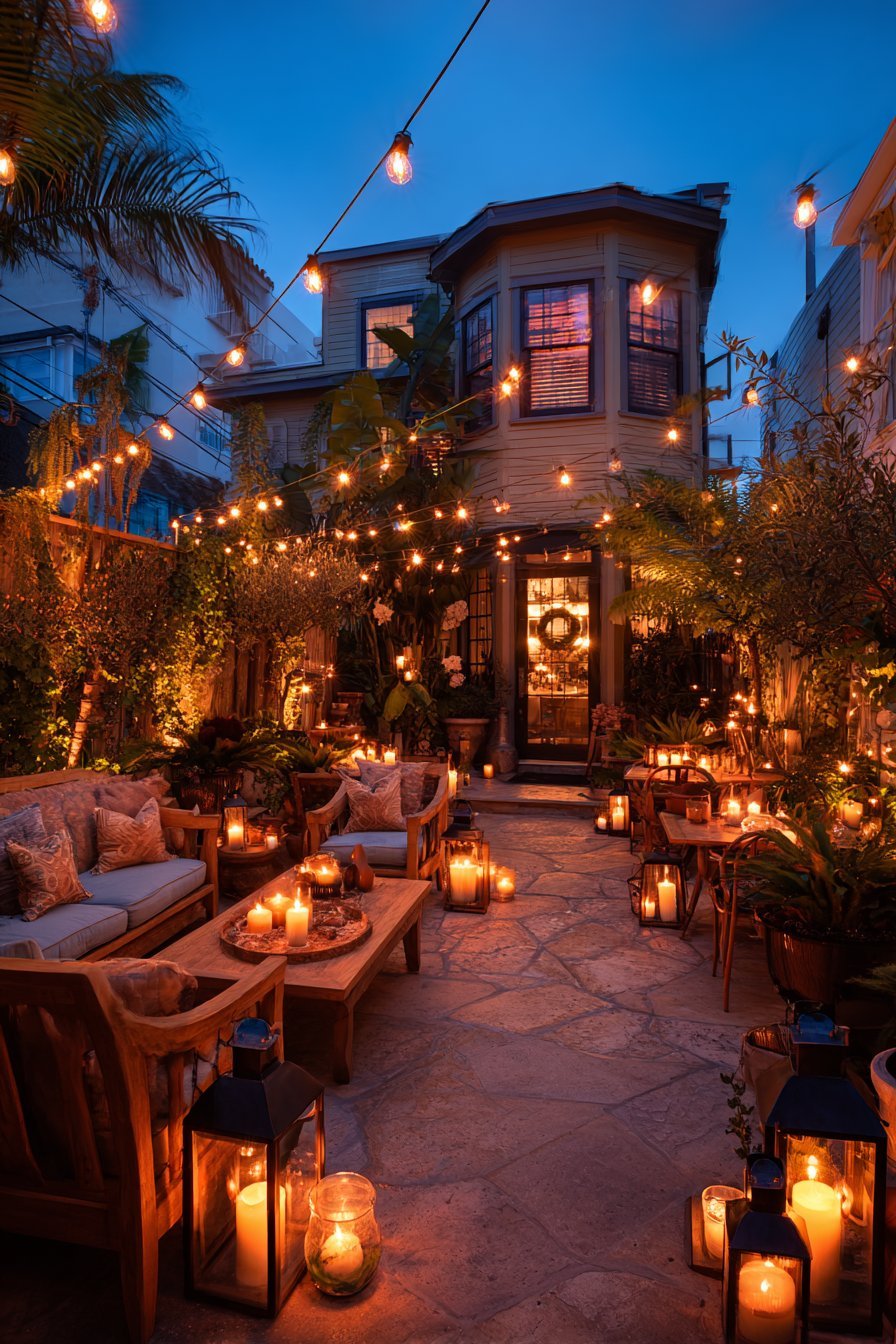
- Hang Edison bulb string lights 8-10 feet high for optimal illumination
- Mix warm white lights (2700K) with amber tones for cozy atmosphere
- Use command hooks or eye hooks to avoid permanent installation damage
- Add flameless LED candles in lanterns for safe, flickering ambiance
- Install solar post cap lights on deck railings for subtle boundary definition
- Create a lighting plan that highlights architectural features and focal points
4. Build Custom Seating with Cinder Blocks and Cushions
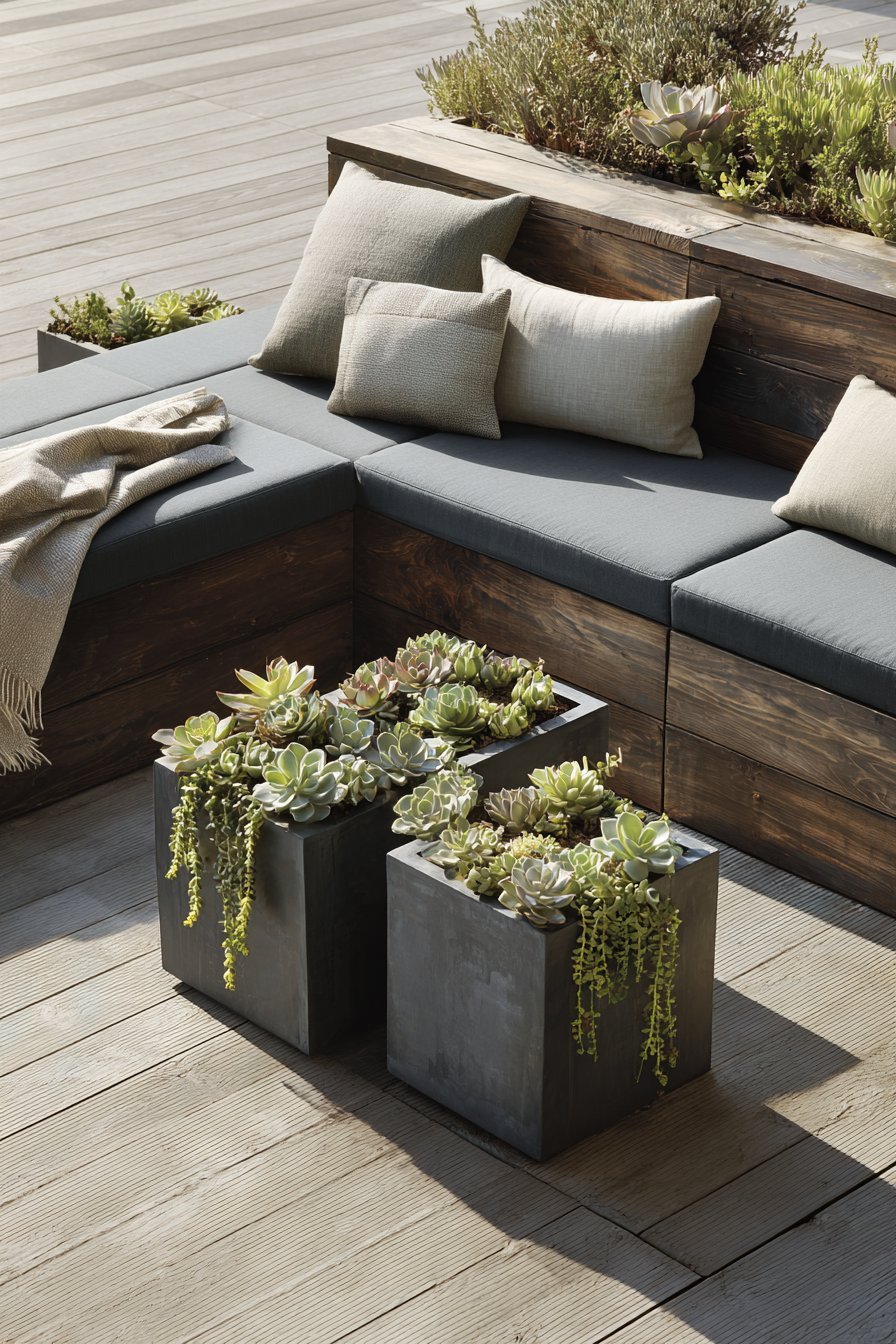
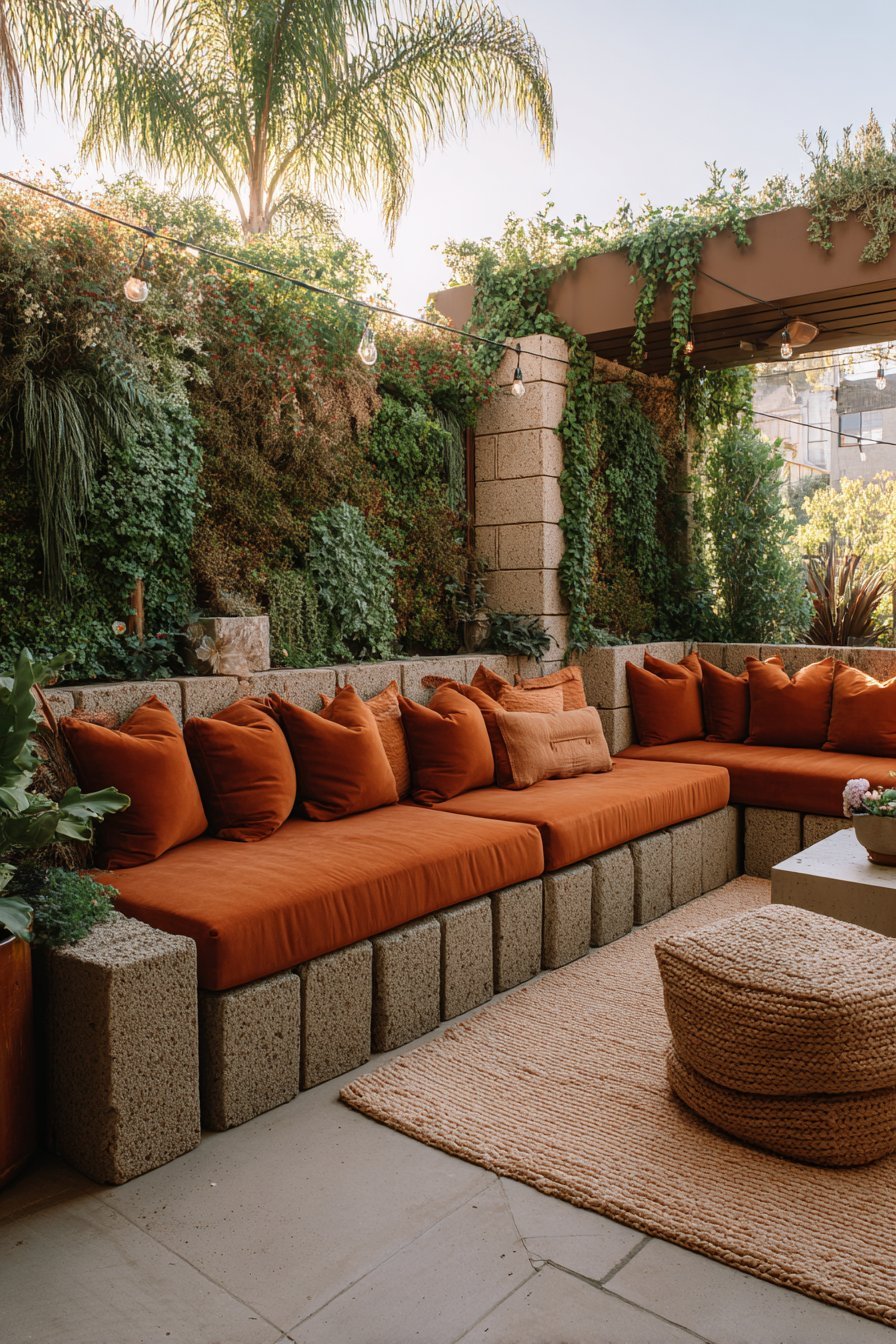
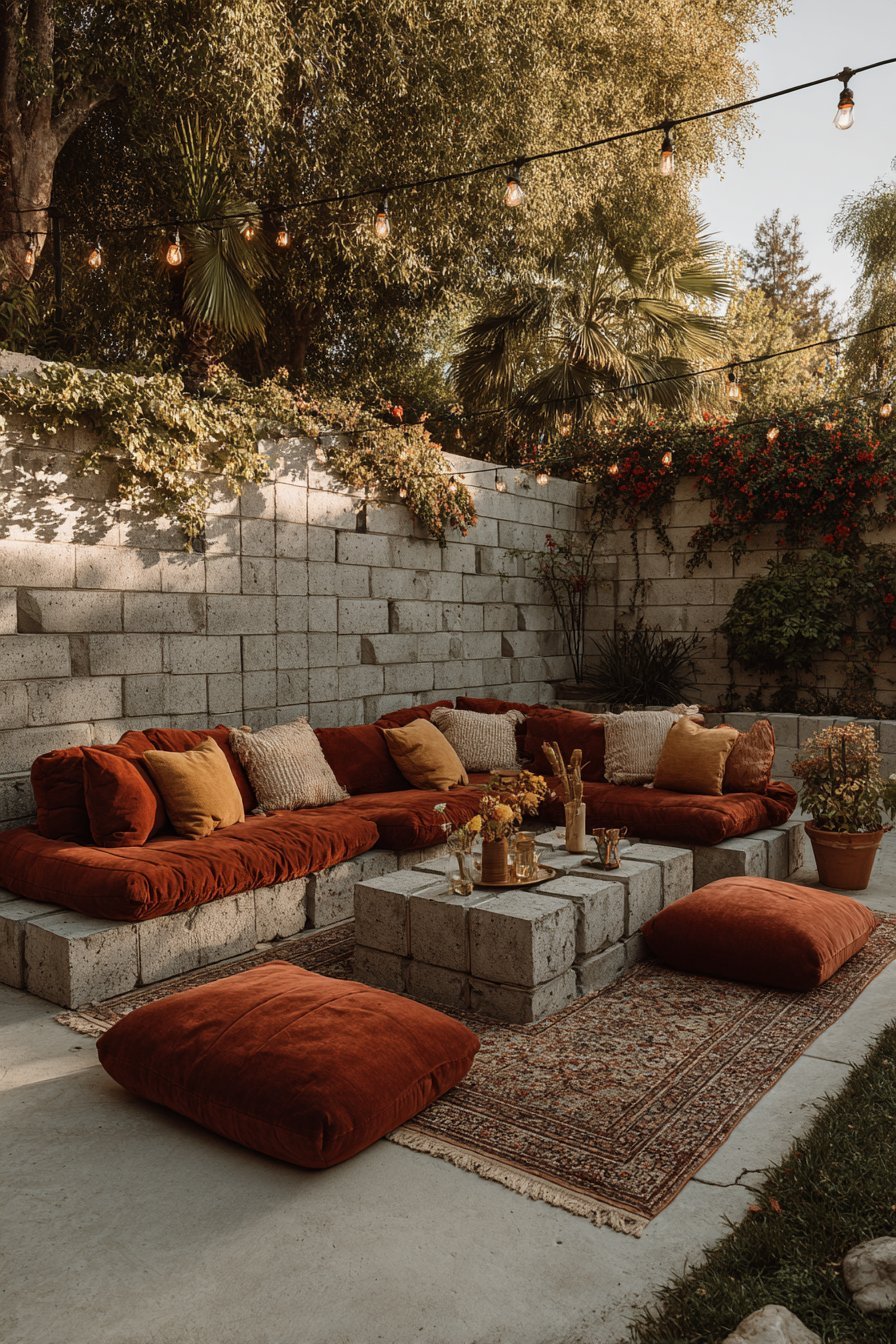
DIY seating solutions offer remarkable cost savings while providing opportunities for customization that standard furniture cannot match. Cinder block benches have emerged as a popular budget-friendly option that delivers contemporary industrial style when executed properly.
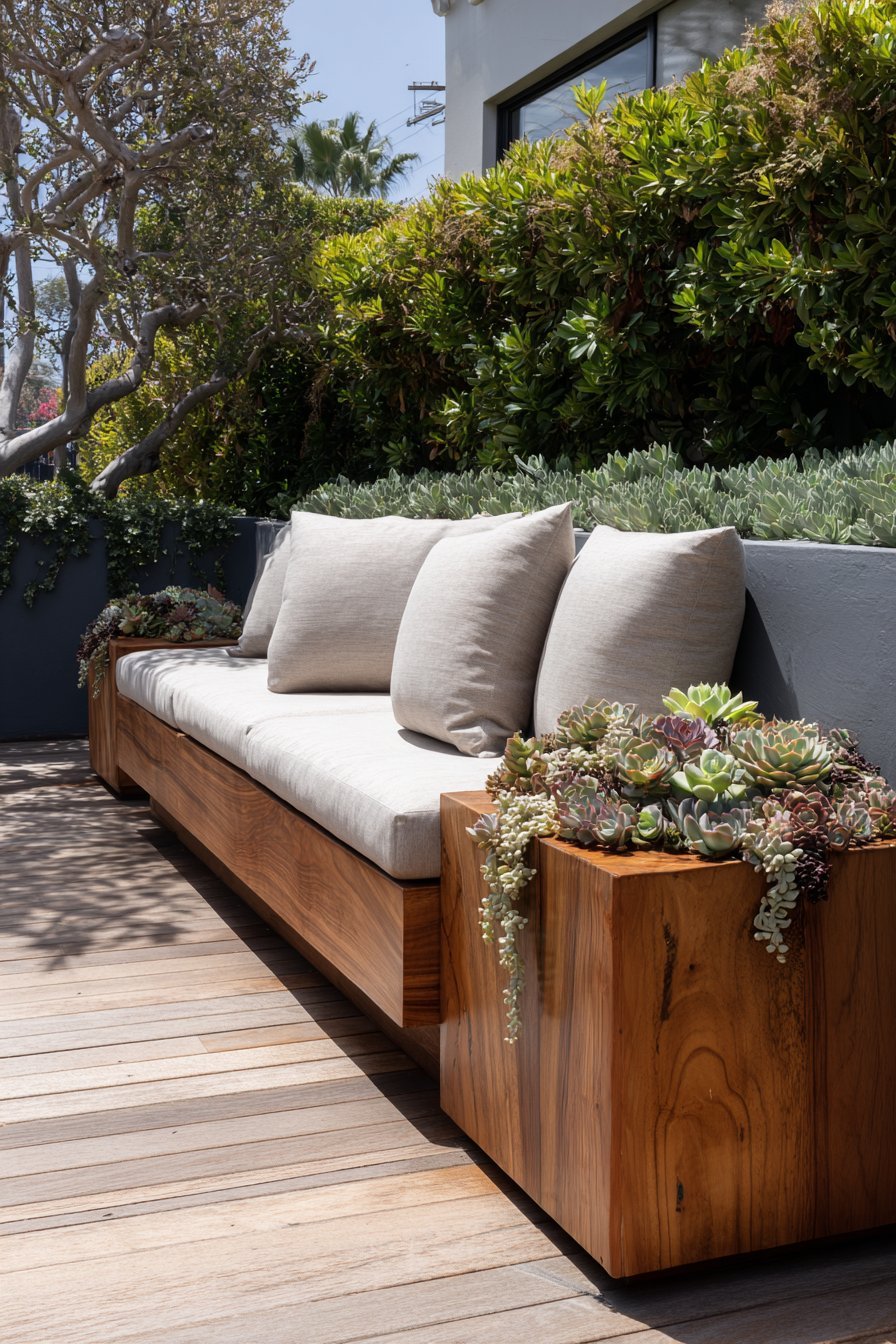
Stack cinder blocks in configurations that suit your space, using construction adhesive for stability. Insert wooden planks or thick cushions on top to create comfortable seating surfaces. This approach allows you to build to exact dimensions rather than compromising with off-the-shelf furniture that doesn’t quite fit.
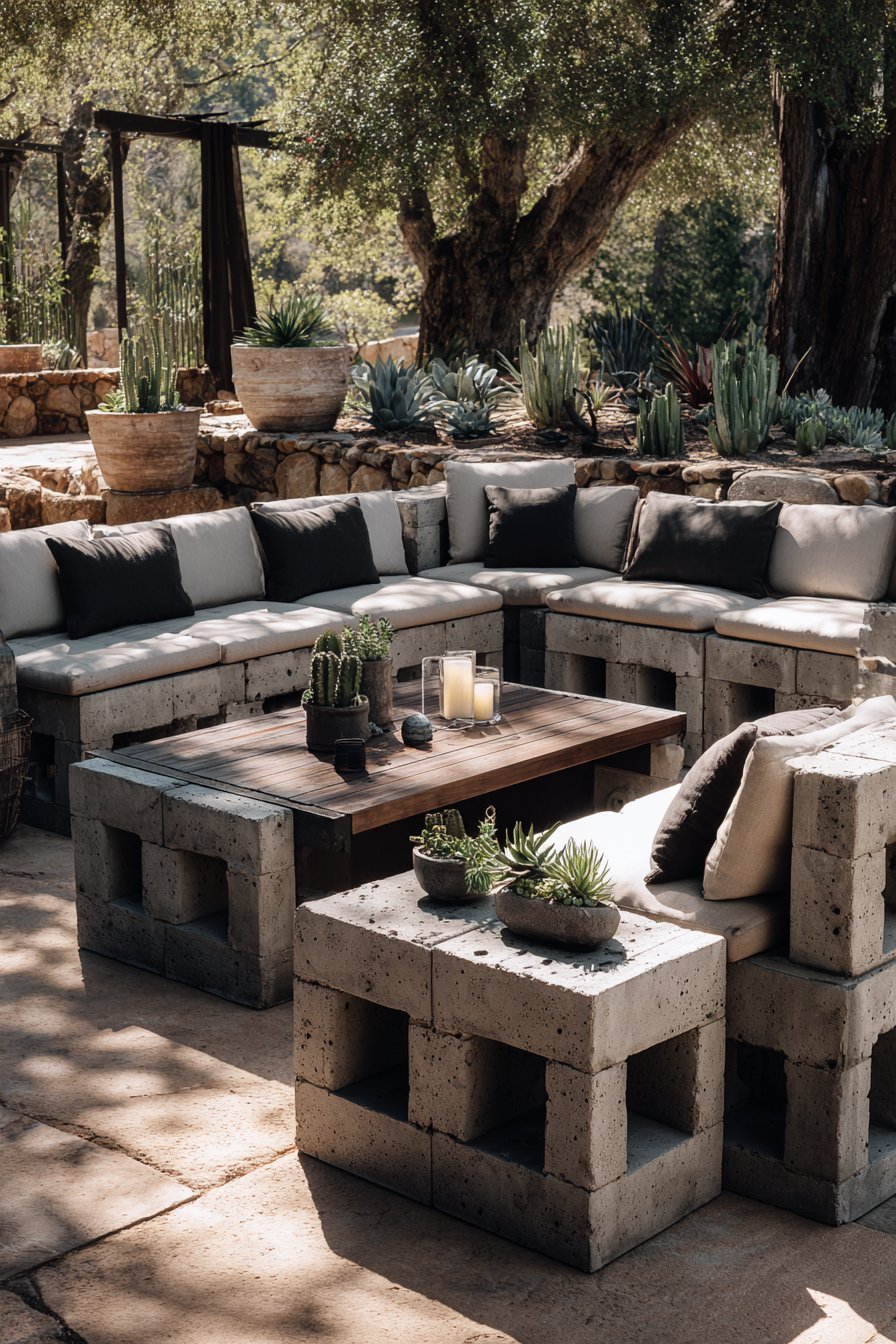
Materials typically cost $100 to $250 for a substantial seating area, compared to $800 or more for comparable outdoor furniture. The modular nature of this design allows for easy reconfiguration and expansion as your needs evolve.
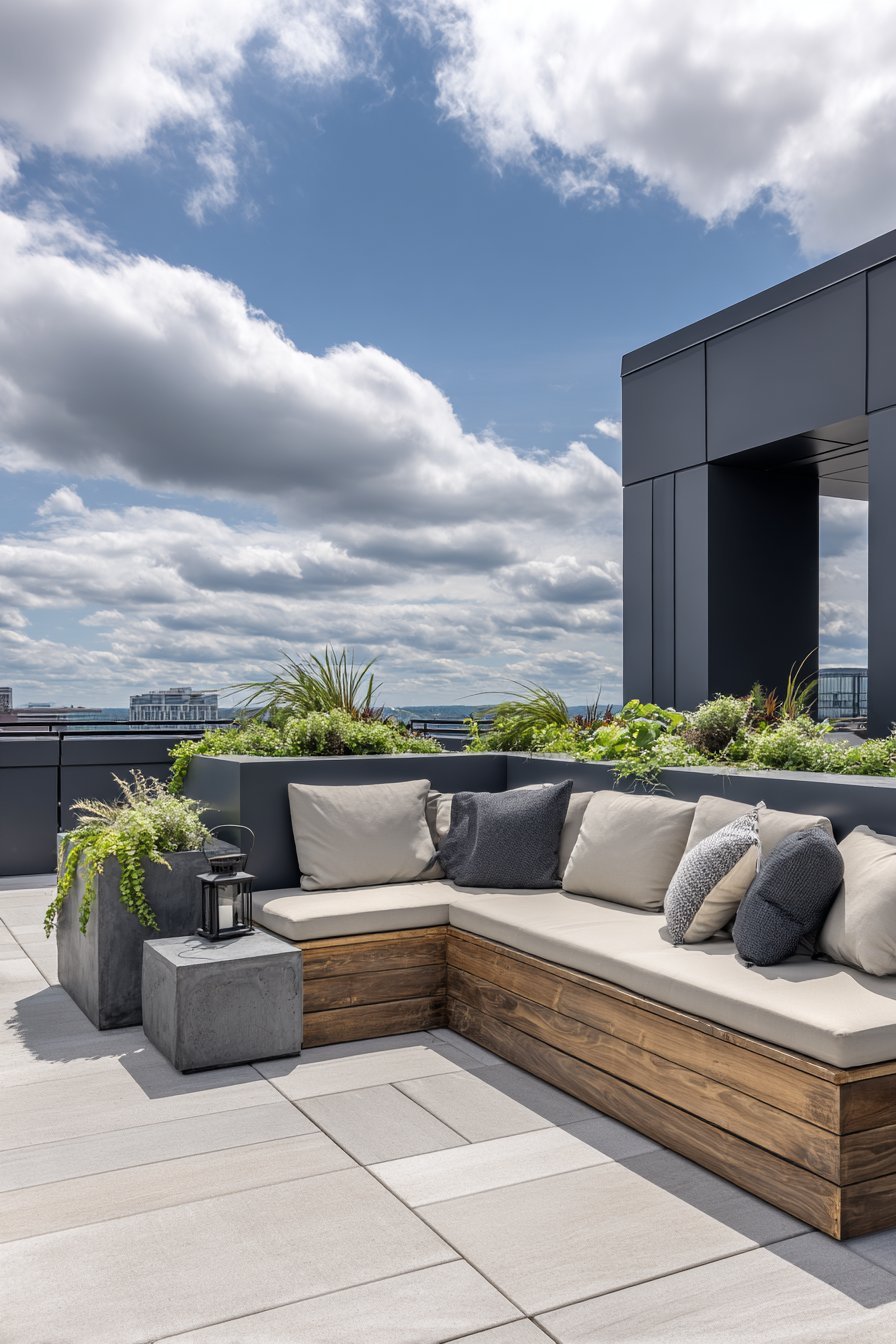
- Use 8x8x16 inch cinder blocks for standard bench height (approximately 18 inches)
- Paint blocks in coordinating colors or leave natural for industrial aesthetic
- Add weather-resistant cushions in outdoor fabric for comfort and style
- Incorporate hollow block spaces for storage or planter inserts
- Build L-shaped configurations to maximize corner spaces efficiently
- Seal blocks with concrete sealer to prevent moisture absorption and staining
5. Establish a Vertical Garden Wall
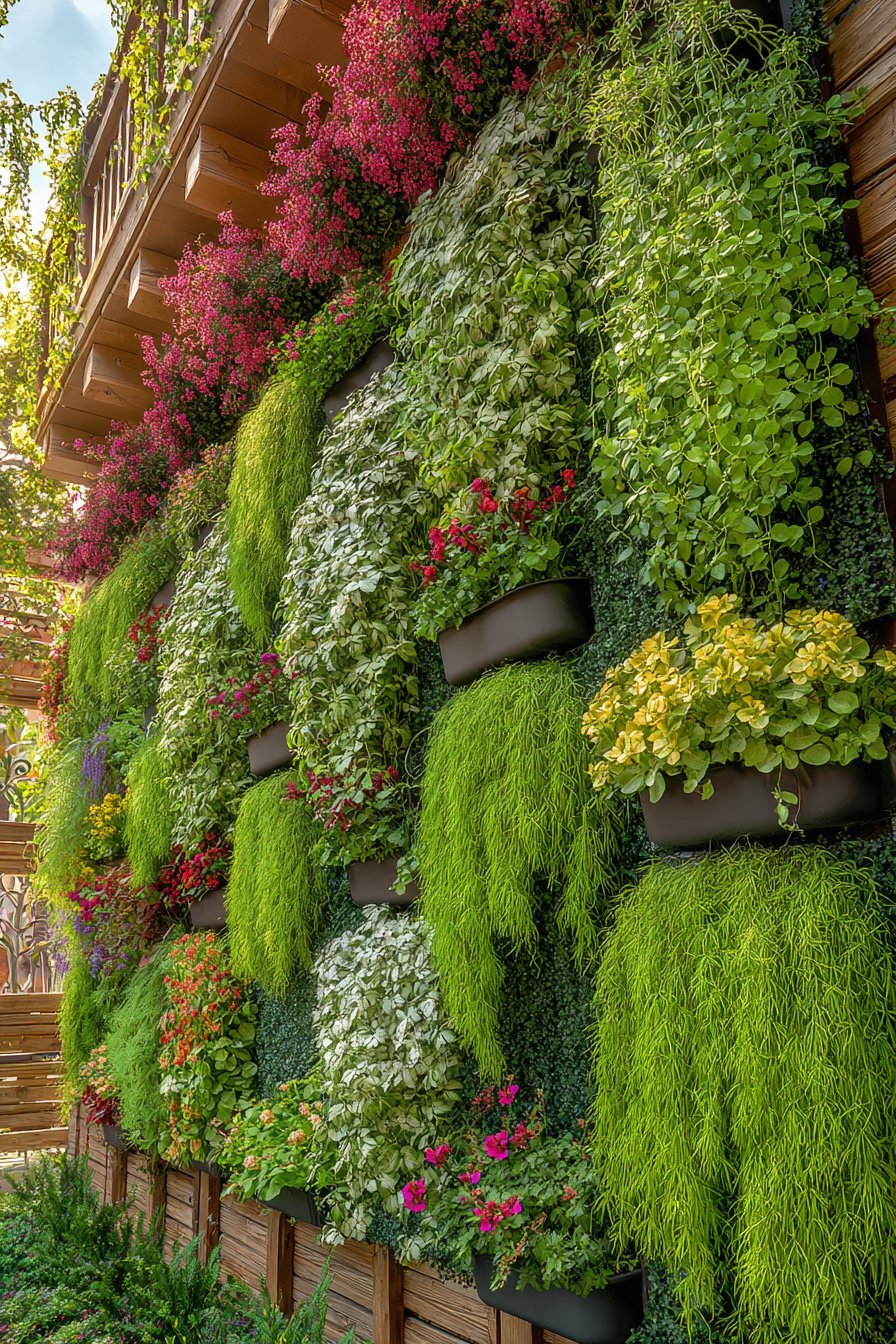
Vertical gardening maximizes visual impact while minimizing floor space and budget requirements. A lush green wall creates a luxurious backdrop that rivals expensive landscape installations, yet can be achieved using repurposed materials and affordable plants.
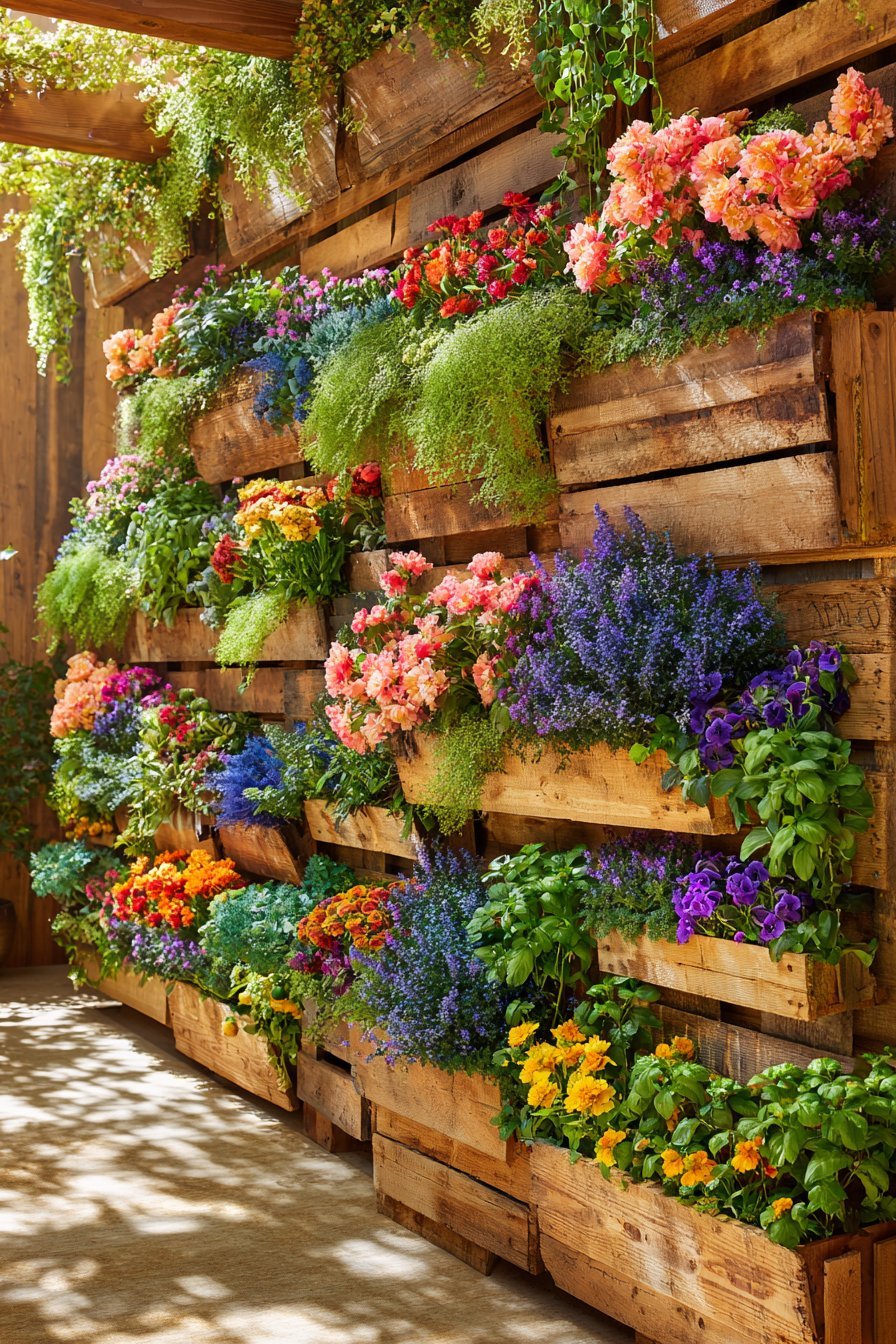
Utilize wall-mounted planters, hanging pots, or DIY pallet gardens to create vertical growing spaces. This approach not only adds natural beauty but also provides privacy screening and improved air quality. The vertical dimension draws the eye upward, making spaces feel larger and more sophisticated.
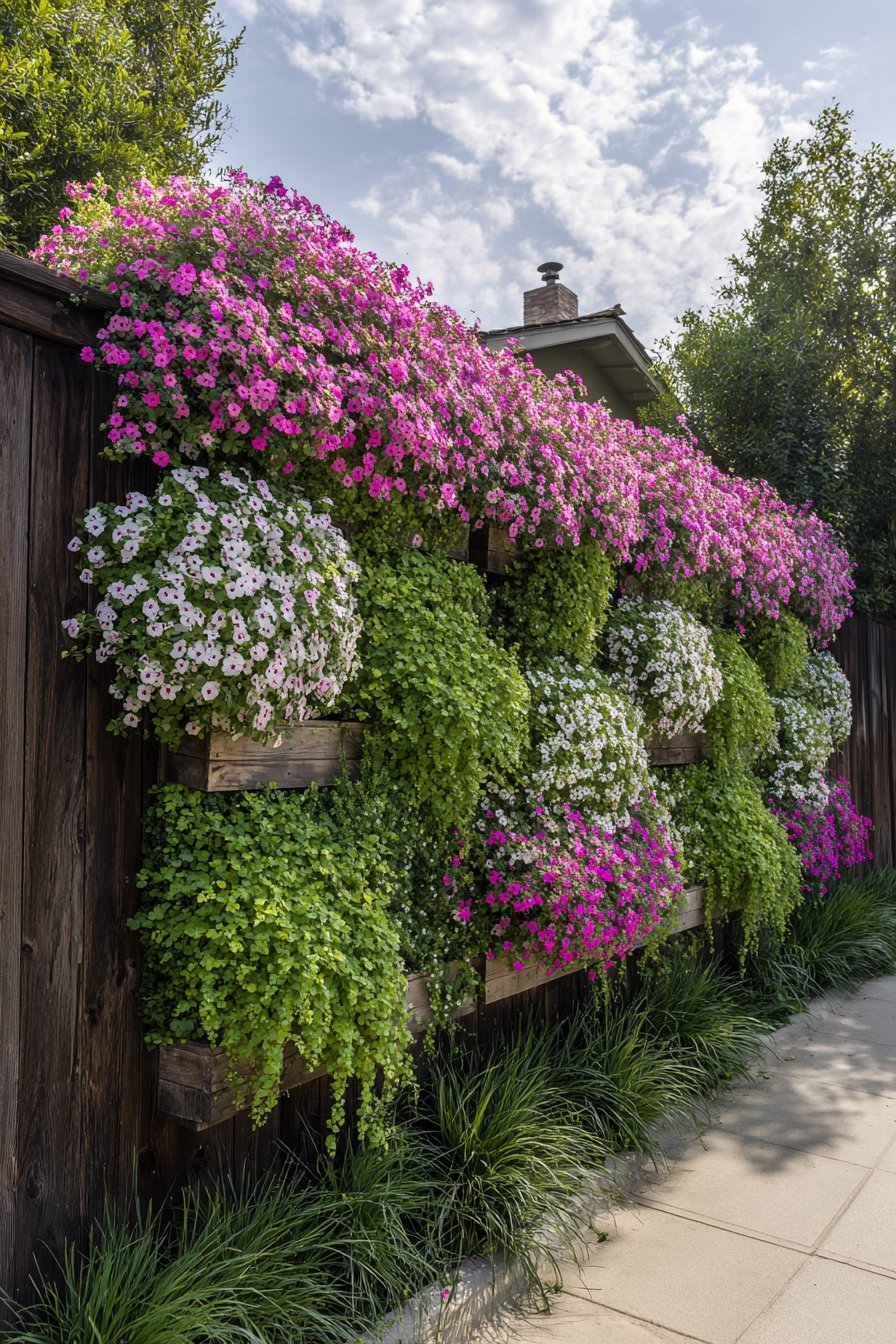
Initial investment ranges from $75 to $200 depending on scale and materials chosen. Perennial plants and propagated cuttings keep ongoing costs minimal while providing year-round interest. This living artwork becomes a conversation piece that suggests substantial investment.
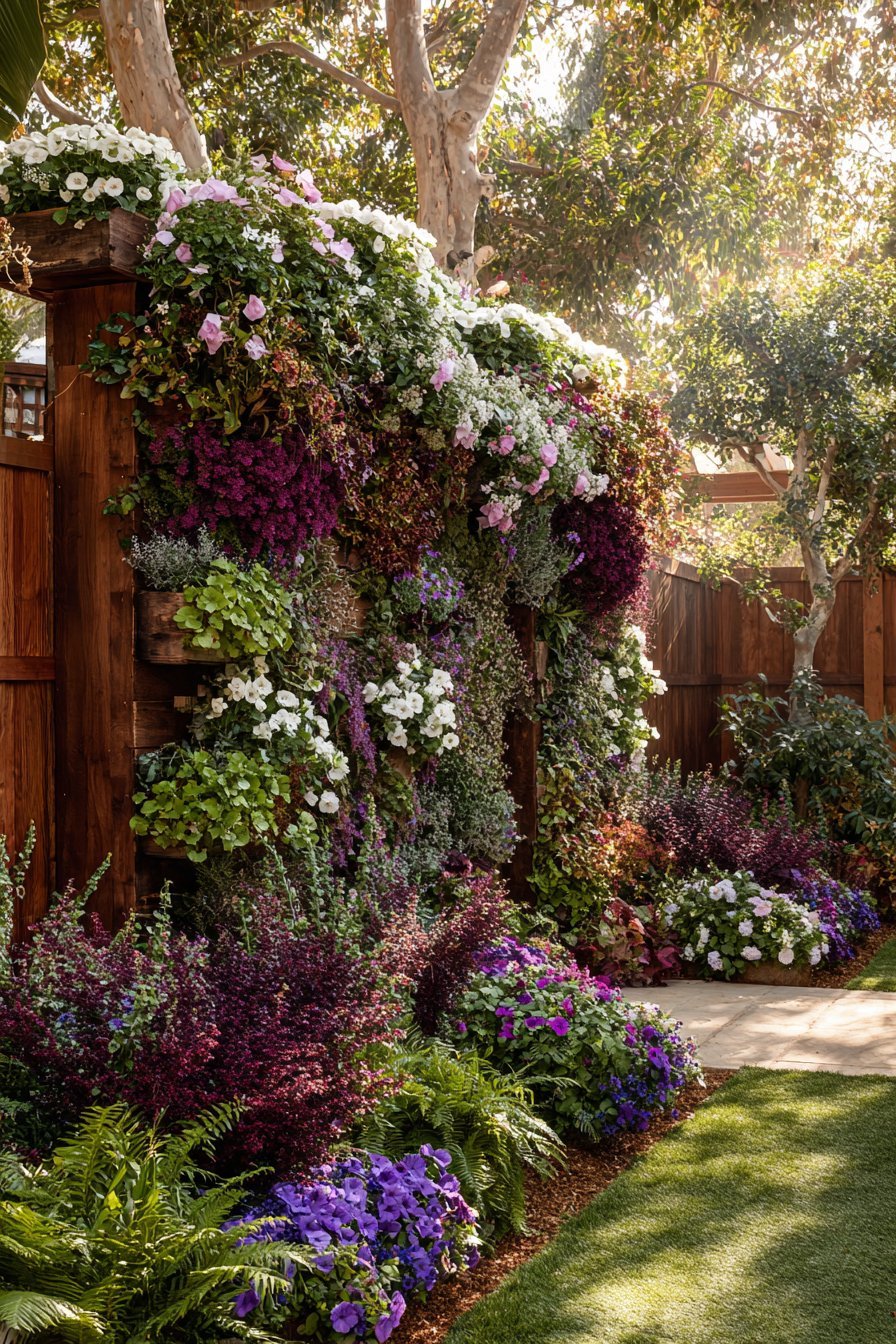
- Mount gutter planters horizontally for cascading herb or flower displays
- Use wooden pallets as vertical garden frames with landscape fabric backing
- Choose low-maintenance plants like succulents, ferns, or trailing ivy
- Install a simple drip irrigation system for effortless watering maintenance
- Arrange plants in color gradients from light to dark for visual depth
- Include fragrant varieties like jasmine or lavender for multisensory appeal
6. Define Zones with Strategic Furniture Arrangement
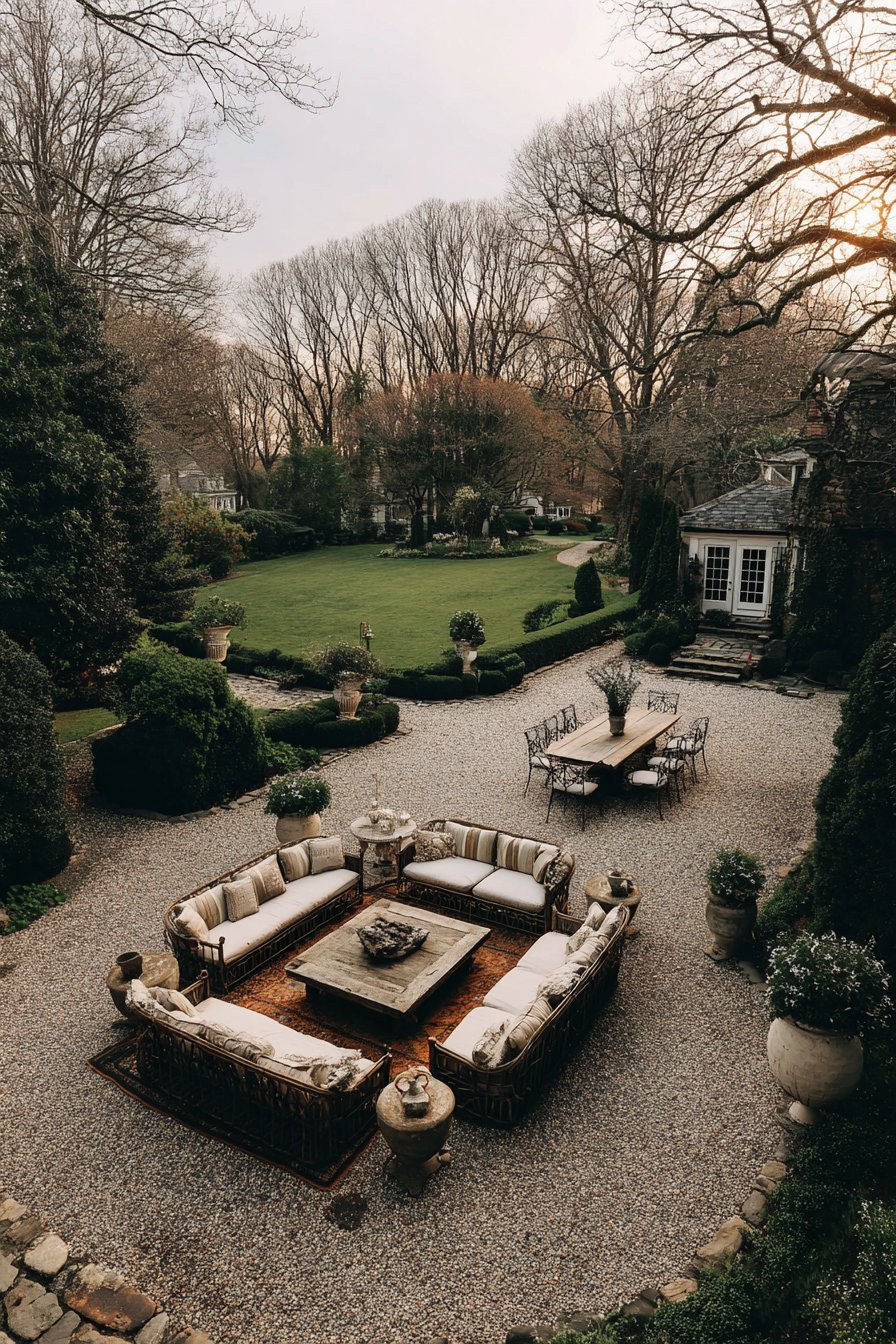
Thoughtful spatial organization creates the impression of professional design expertise without requiring additional purchases. Defining distinct zones for dining, lounging, and conversation adds functionality while making spaces feel intentional and curated.
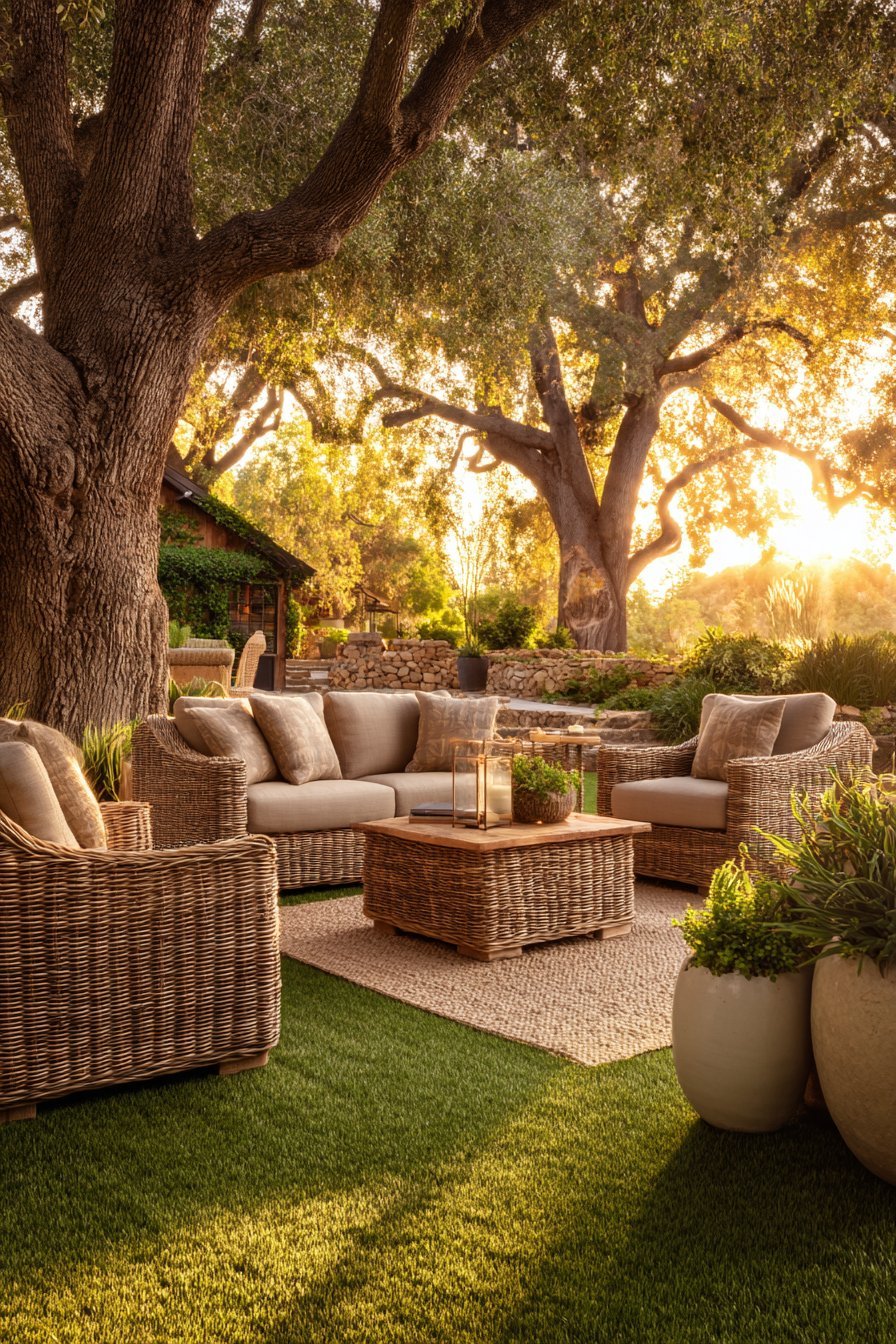
Use existing furniture to create clear boundaries between activity areas. Position seating in intimate groupings that facilitate conversation rather than lining pieces against walls. This purposeful arrangement suggests careful planning and design consideration typically associated with higher-end installations.
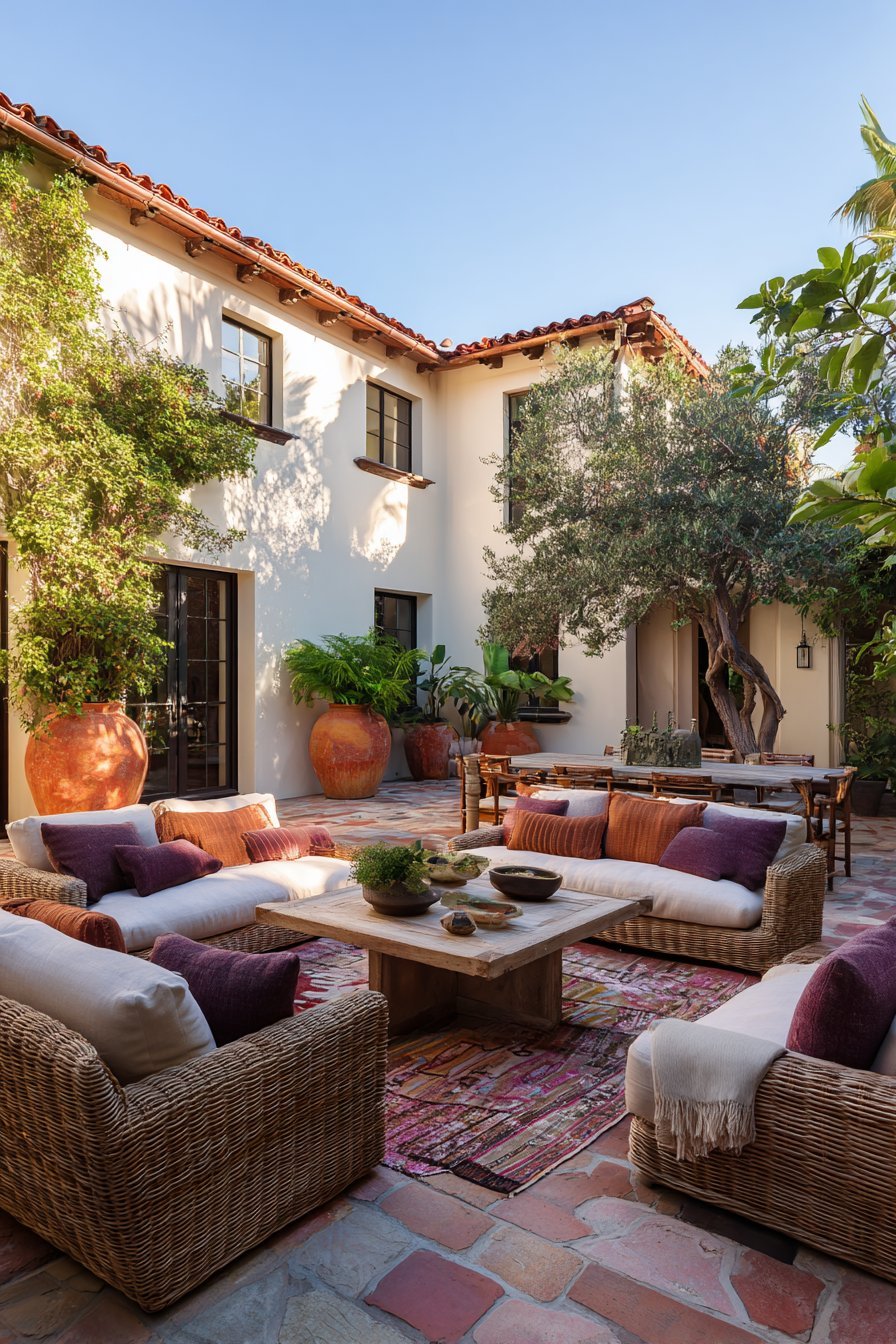
The beauty of this strategy lies in its zero-cost implementation. Simply rearranging what you already own can dramatically transform the perceived value and usability of your patio space. Add area rugs or planters as subtle dividers to reinforce zonal distinctions.
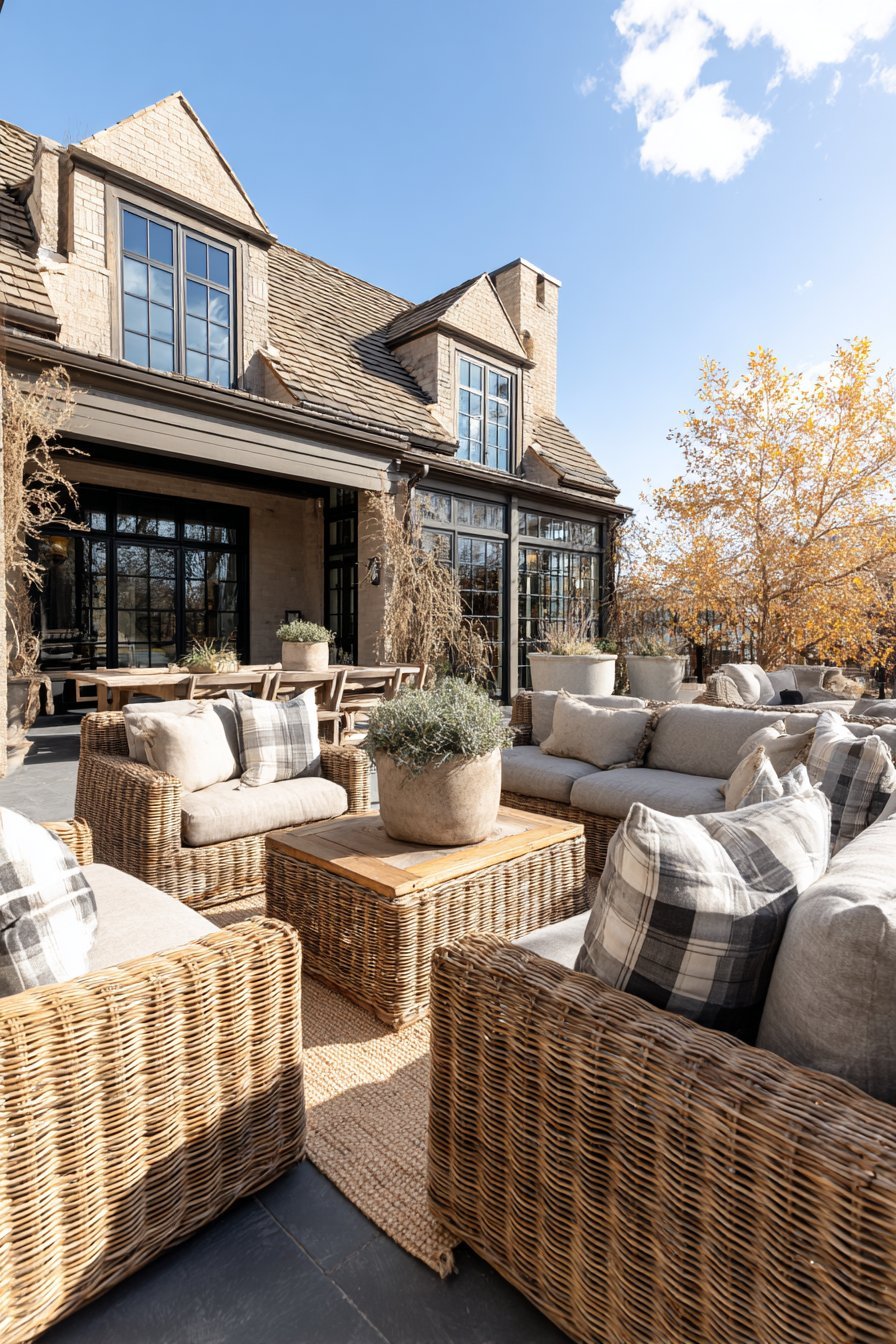
- Create a dining zone with table and chairs positioned away from traffic flow
- Establish a conversation area with seating arranged in a U-shape or circle
- Position furniture at angles rather than parallel to walls for dynamic interest
- Use large planters or outdoor screens as physical dividers between zones
- Ensure each zone has adequate lighting for its specific function
- Maintain clear pathways between areas for easy movement and accessibility
Conclusion
Creating a stunning backyard patio on a budget requires creativity, planning, and strategic prioritization rather than substantial financial investment. By focusing on high-impact elements like cohesive color schemes, layered textiles, atmospheric lighting, and thoughtful spatial arrangement, you can achieve professional-looking results that belie their affordable origins.
The six approaches outlined in this article demonstrate that luxury outdoor living is accessible regardless of budget constraints. Start with one or two projects that resonate most with your style and needs, then gradually incorporate additional elements as time and resources allow. Your backyard patio can become the elegant retreat you’ve envisioned without the expensive price tag, proving that great design is ultimately about vision and execution rather than unlimited spending.
