
Creating a baby nursery is one of the most exciting projects for expectant parents. This special space represents hope, love, and new beginnings. A thoughtfully designed nursery provides comfort for both baby and parents during those precious early months.
The perfect nursery balances aesthetic beauty with practical functionality. Different design styles cater to various parenting philosophies and personal preferences. From minimalist Scandinavian approaches to whimsical bohemian spaces, each style offers unique benefits. This article explores twenty distinct nursery concepts that inspire and inform your design choices.
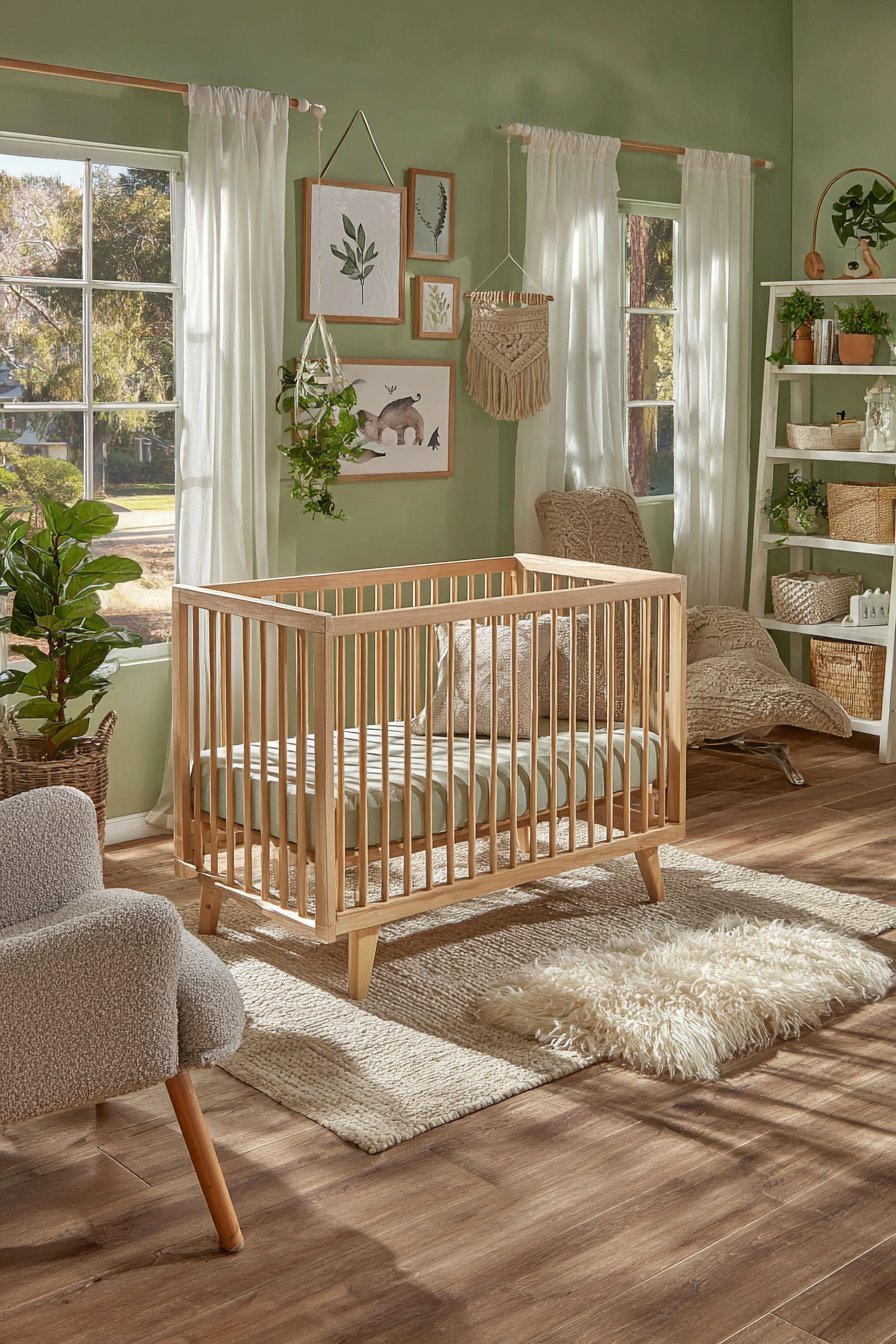
Modern parents seek nurseries that grow with their children and reflect personal values. Whether you prioritize sustainability, smart technology, or budget-conscious solutions, these designs offer inspiration. Each concept demonstrates how thoughtful planning creates spaces that nurture development while providing necessary functionality for daily care routines.
1. Serene Scandinavian Simplicity
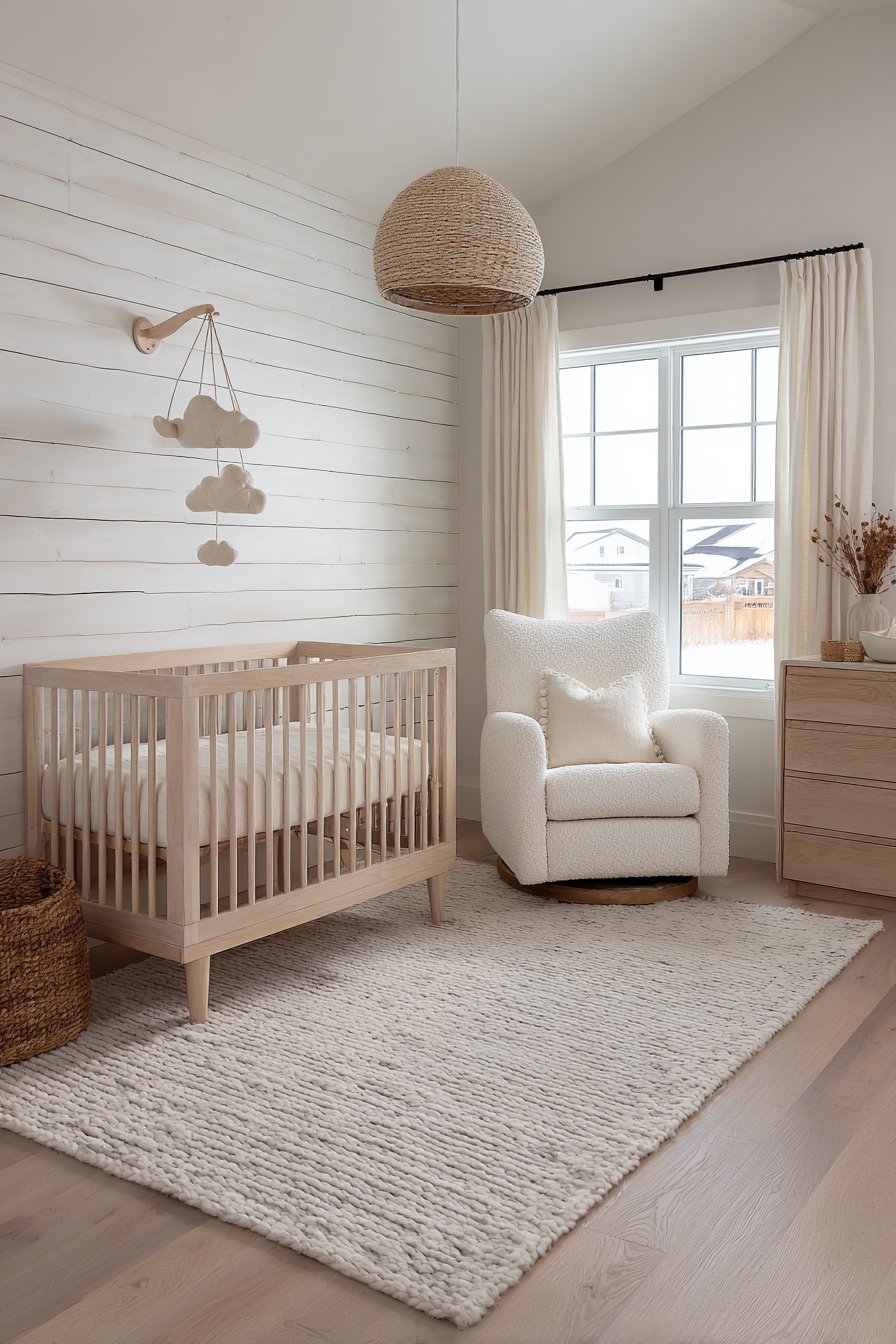
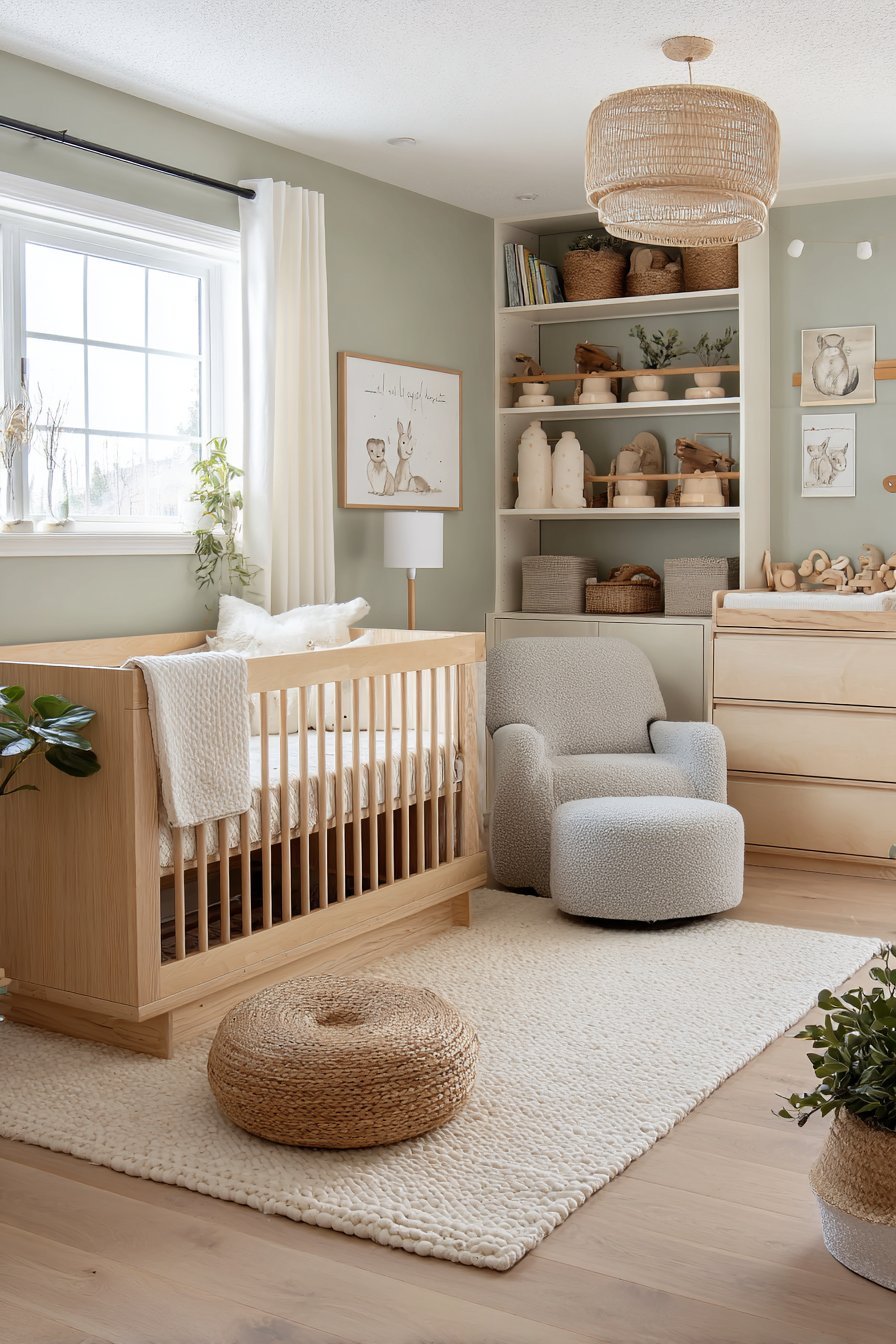
A natural oak crib with spindle sides stands against a soft white shiplap accent wall. The design embodies peaceful minimalism. An ivory bouclé nursing glider sits near large windows dressed with gauzy white linen curtains. Morning light filters through gently, creating a tranquil atmosphere.
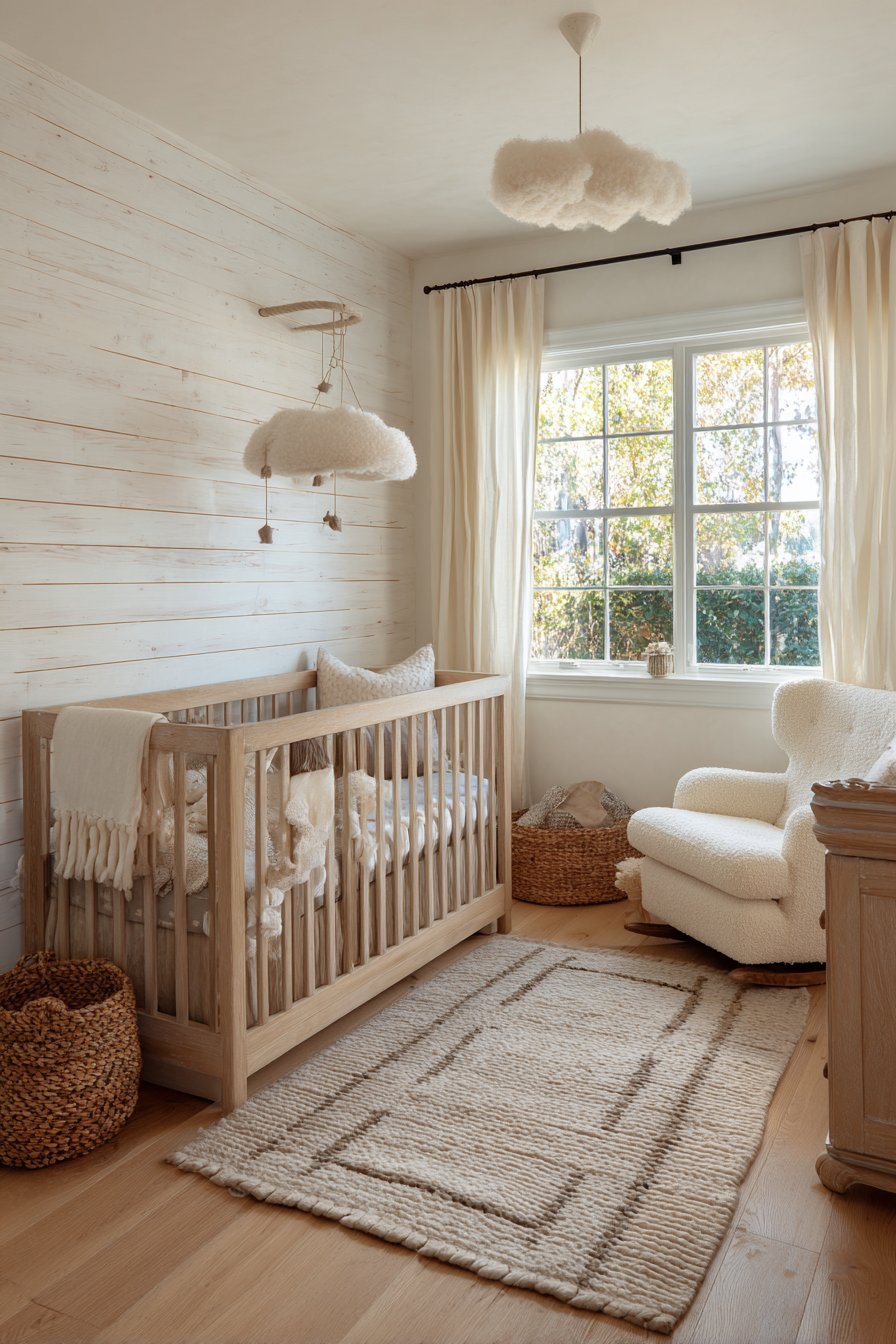
Light oak hardwood flooring provides warmth underfoot. A hand-woven jute rug with subtle geometric patterns adds texture without visual clutter. The organic materials create a calming environment perfect for newborn care. Simple wooden mobiles with felt cloud shapes hang above the crib, providing gentle visual interest.
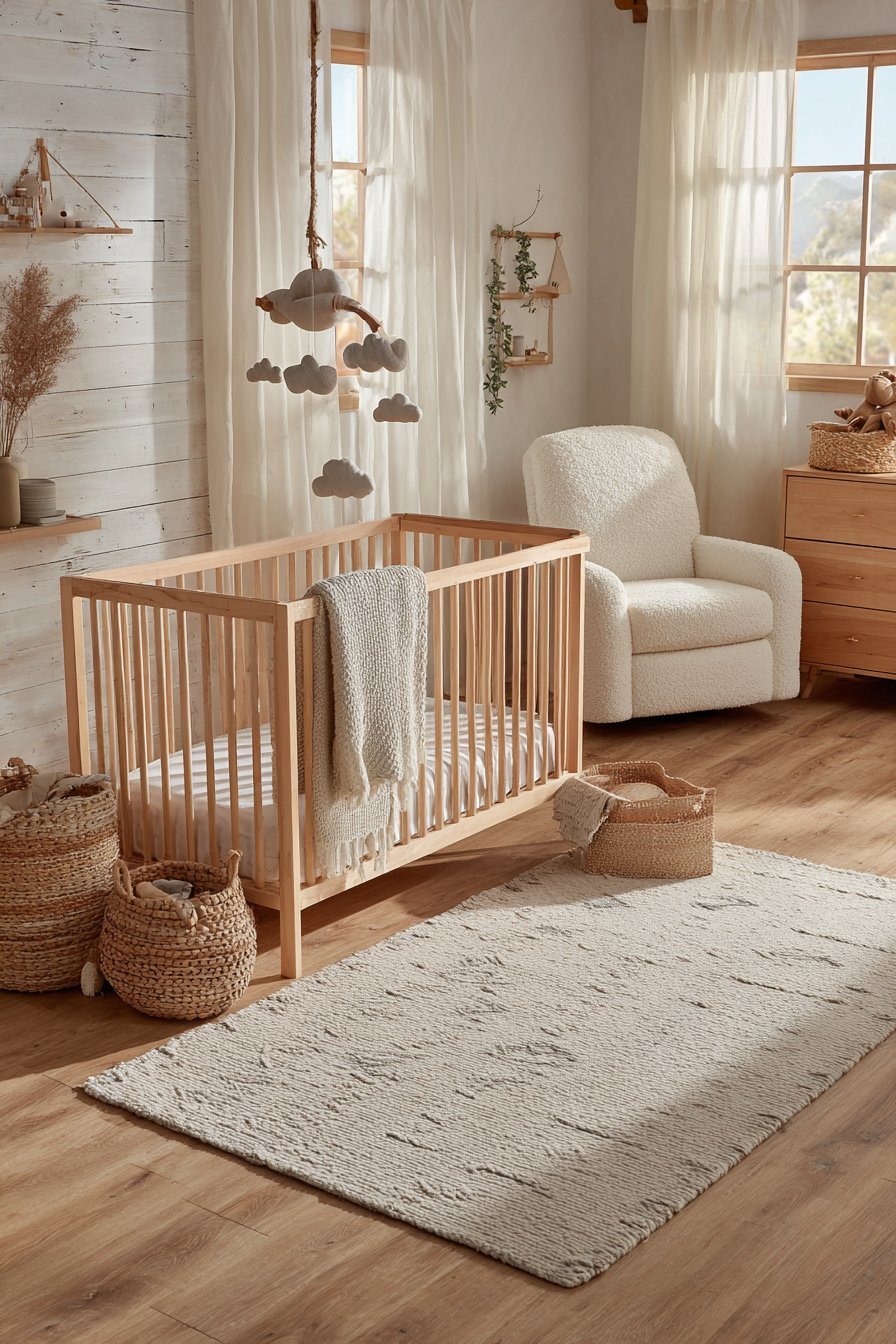
A matching oak dresser serves as a changing station. Woven storage baskets keep essentials organized and accessible. The space demonstrates practical functionality with minimal decoration. Every element serves a purpose while maintaining aesthetic harmony.
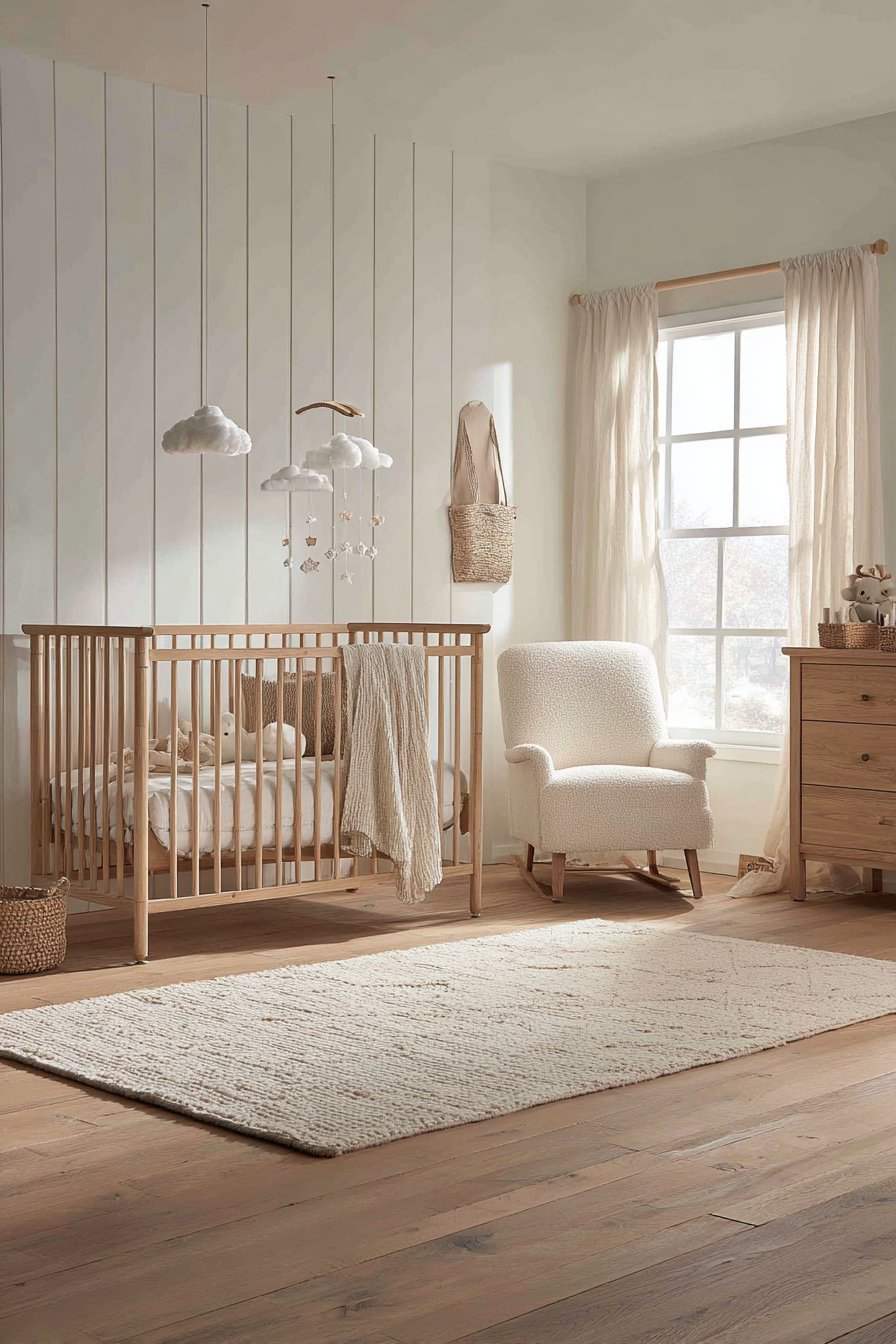
The Scandinavian approach prioritizes quality over quantity. Natural materials like wood, linen, and wool dominate the palette. This creates environments that feel fresh and uncluttered. The design philosophy supports calm, peaceful interactions between parent and child.
Key Design Tips:
- Choose light wood tones to maximize natural brightness and create airiness
- Select bouclé or linen upholstery for nursing chairs offering comfort and texture
- Use jute or wool rugs to add warmth without overwhelming visual simplicity
- Install gauzy curtains that filter light while maintaining privacy during naps
- Keep decorative elements minimal, focusing on functional beauty and organic shapes
2. Gender-Neutral Sage Green Sanctuary
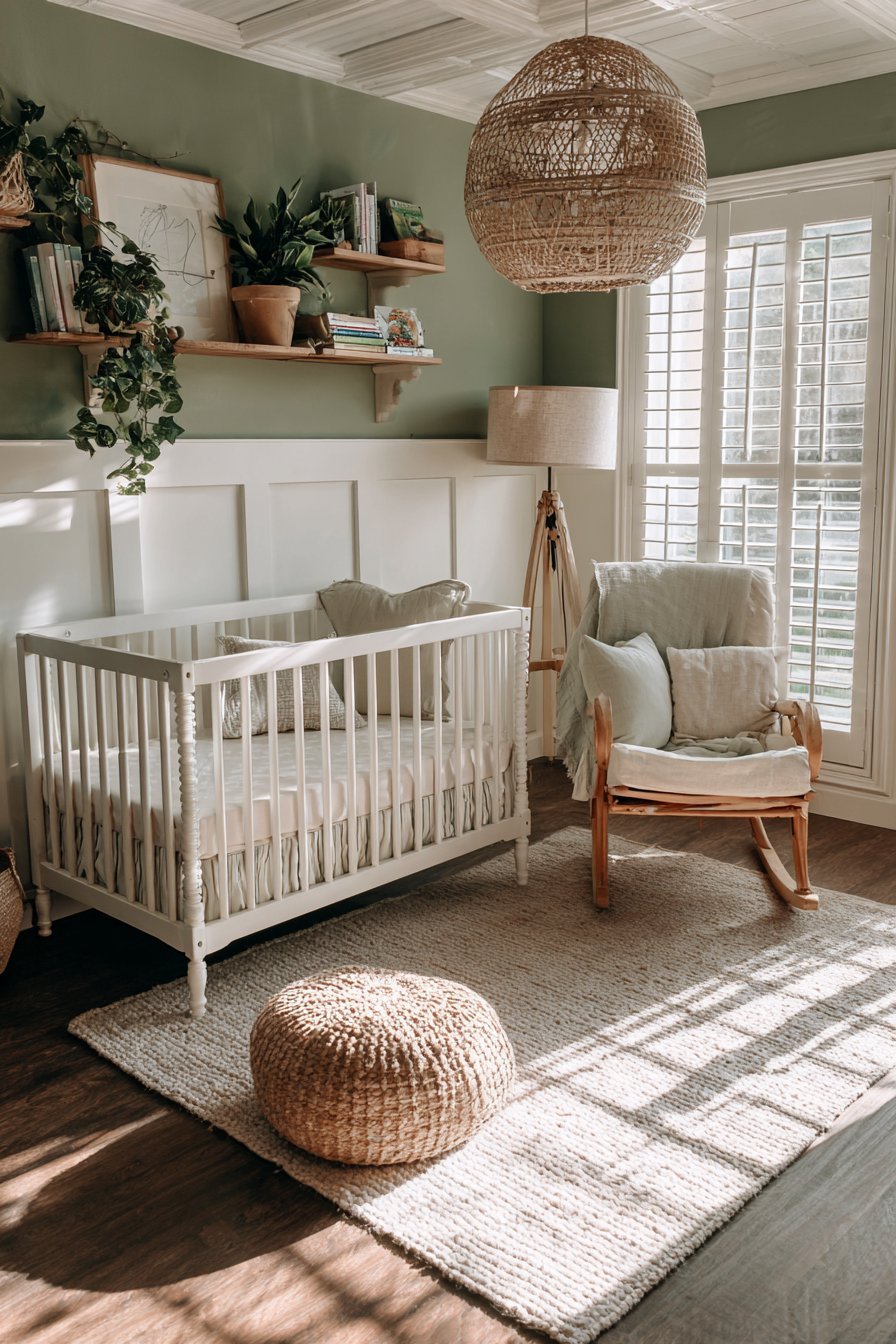
Sage green walls with white wainscoting create a calming, nature-inspired environment. The color palette connects to the outdoors while remaining soft and soothing. A white Jenny Lind crib with turned spindles centers the room beautifully. The vintage-inspired design adds character without overwhelming the space.
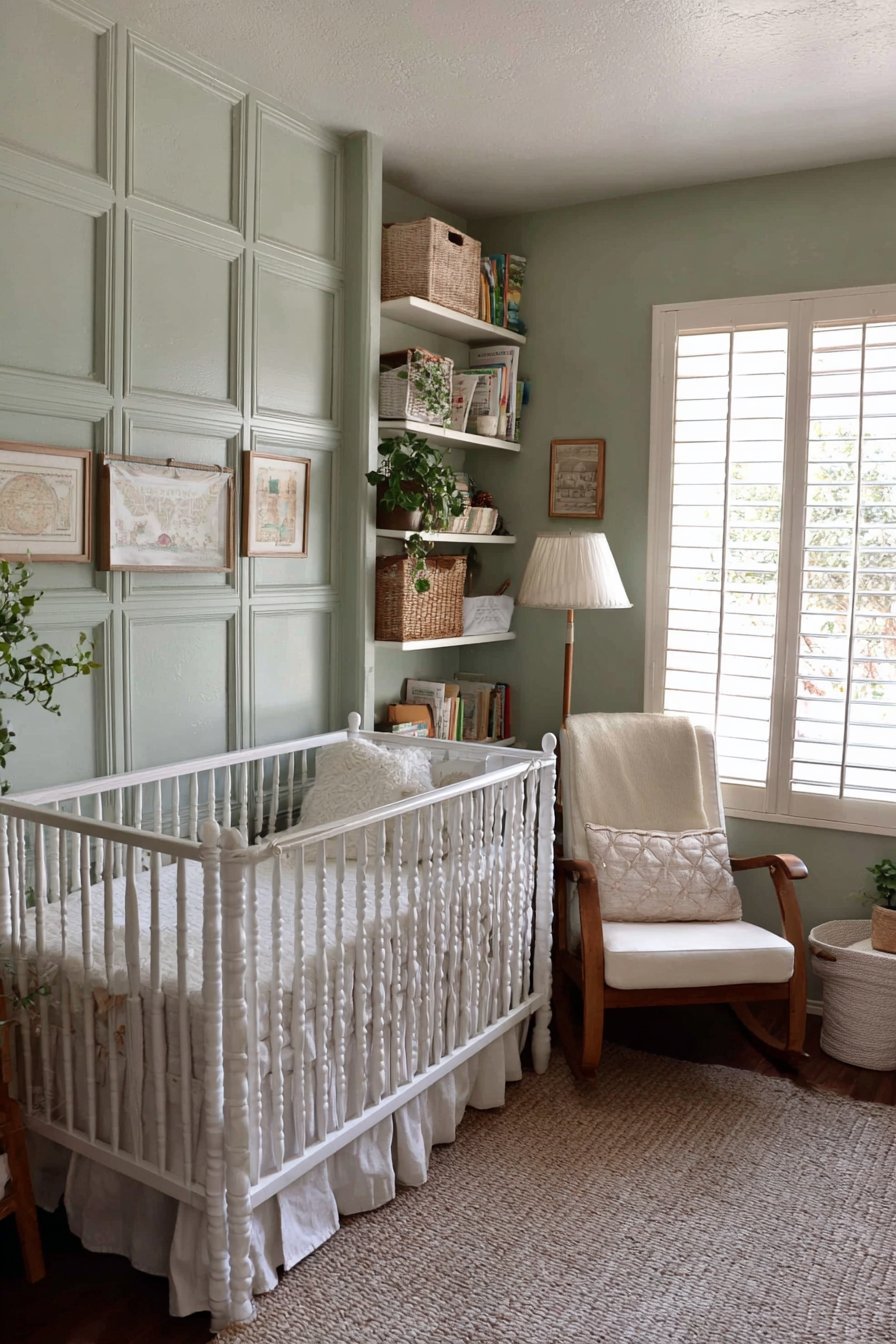
A rocking chair reupholstered in natural linen provides comfortable nursing seating. Open shelving constructed from reclaimed wood displays cloth storage bins and board books. Small potted plants sit at safe heights, introducing living elements. The eco-conscious approach extends throughout every design choice.
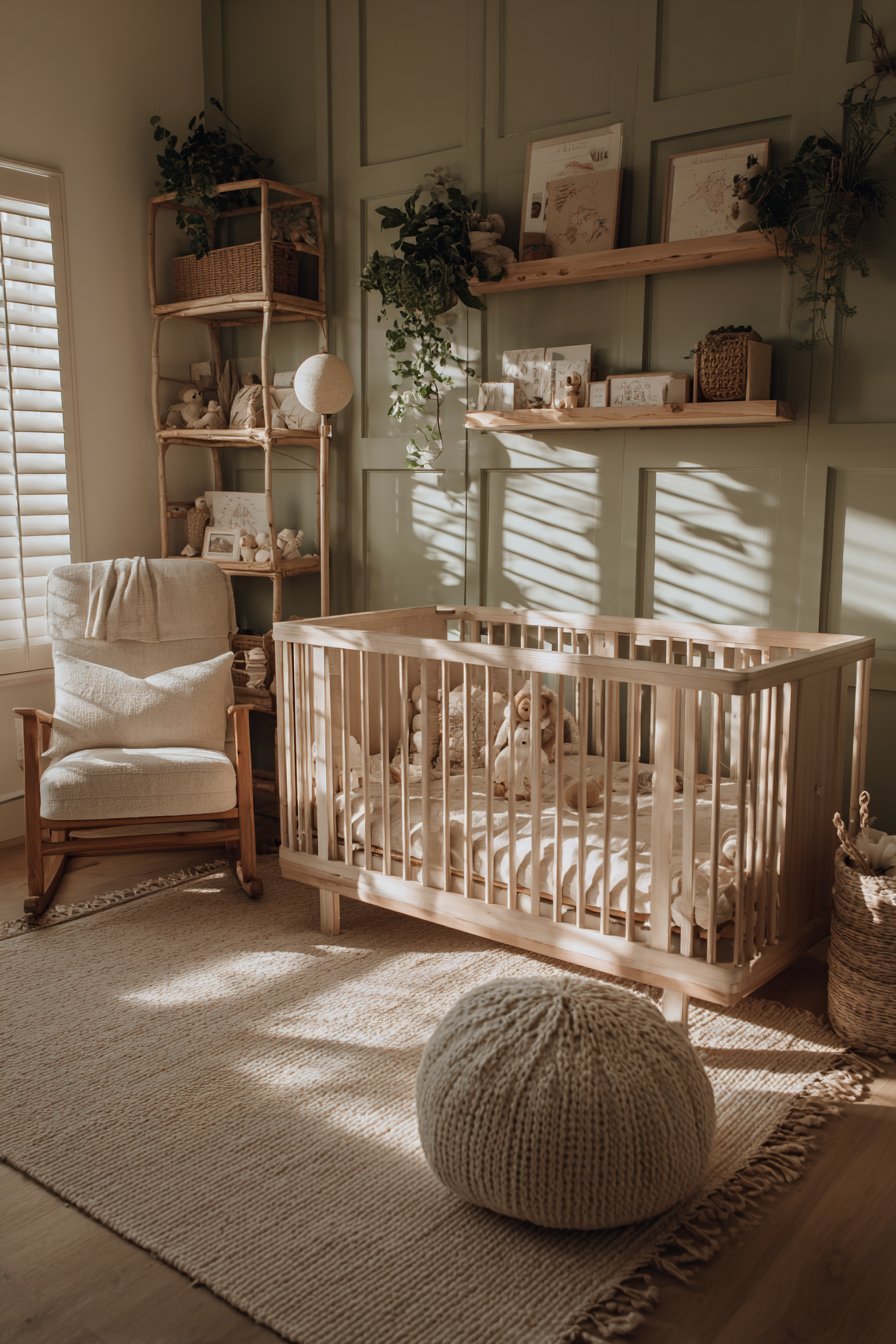
Bamboo floor lamps provide warm ambient lighting for evening routines. Organic cotton crib bedding in cream tones ensures comfort and safety. A wool area rug in muted olive grounds the space with natural texture. These sustainable materials create healthier indoor environments for developing immune systems.
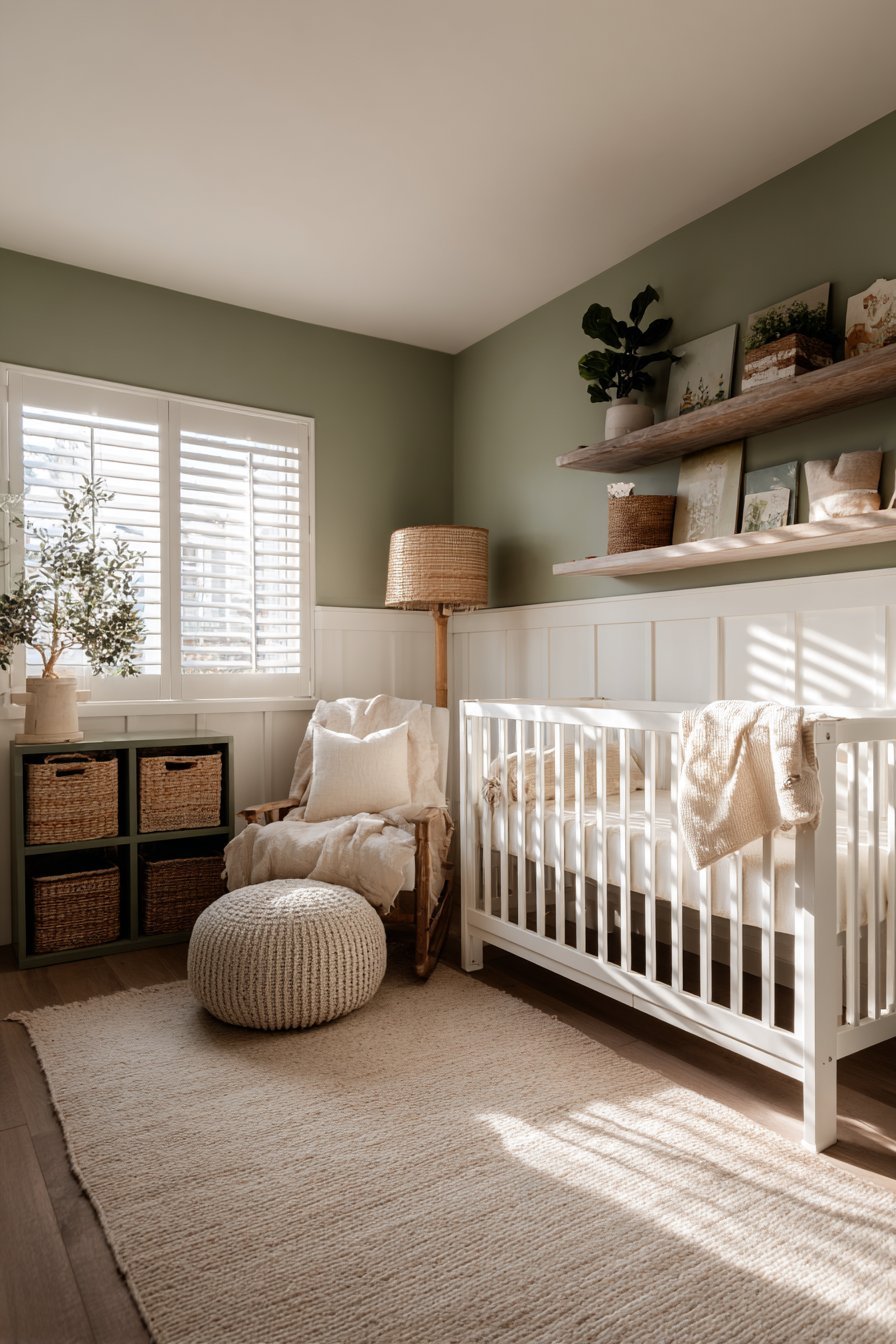
Natural afternoon light streams through plantation shutters. The adjustable slats allow precise light control for nap times. This thoughtful consideration supports healthy sleep patterns. The harmonious blend of vintage charm and modern parenting needs creates truly functional spaces.
Key Design Tips:
- Paint walls in sage green for a calming effect that works for any gender
- Install white wainscoting to add architectural interest and visual grounding
- Select furniture from sustainable materials like bamboo and reclaimed wood
- Use organic cotton bedding to minimize chemical exposure for sensitive skin
- Add small plants at safe heights to improve air quality naturally
3. Compact Space-Efficient Design
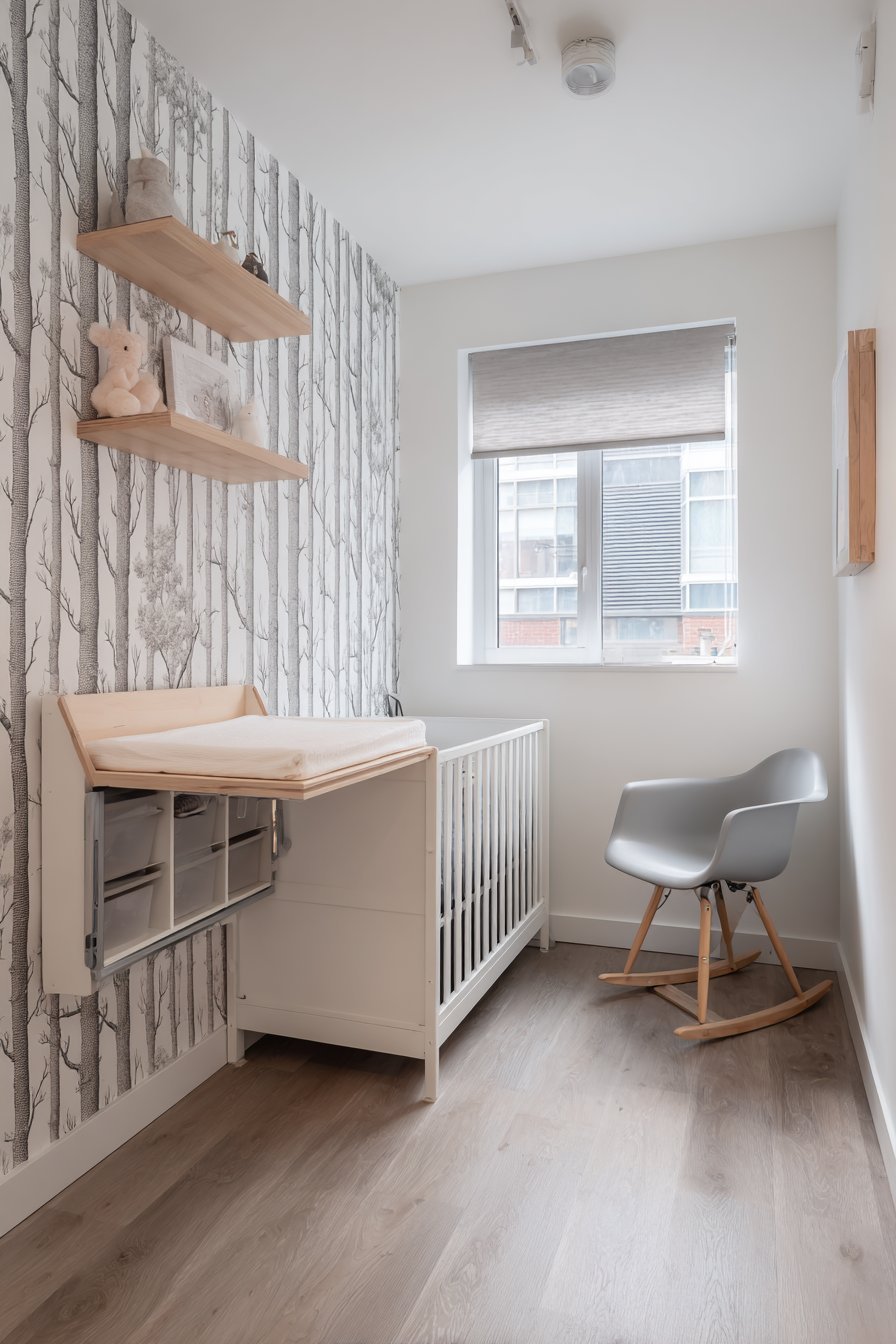
A convertible mini crib in white painted wood maximizes limited square footage. The piece fits perfectly against a feature wall with removable peel-and-stick wallpaper. Soft watercolor woodland patterns create visual interest without permanent commitment. This flexibility appeals to renters and frequent movers.
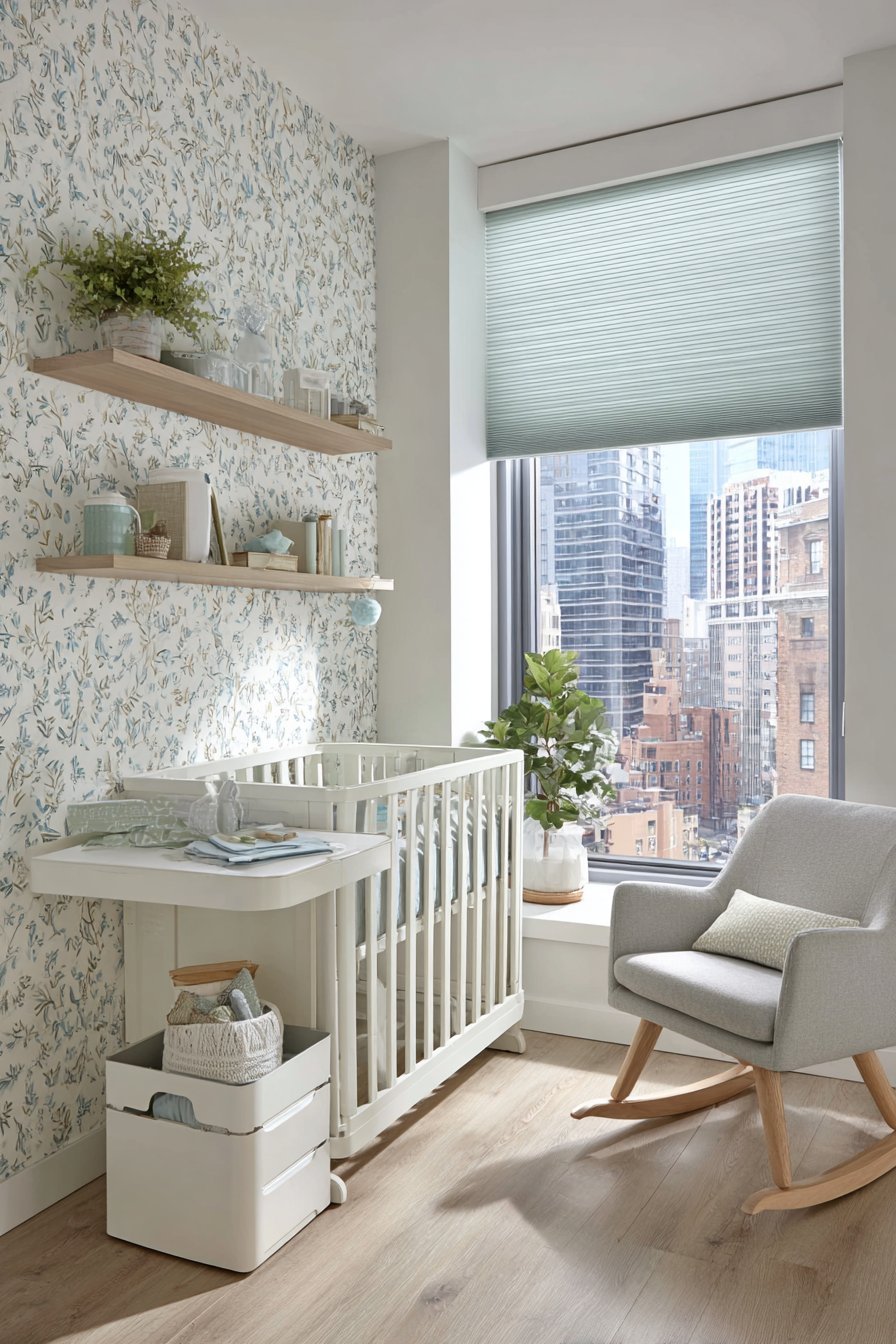
A wall-mounted fold-down changing table with integrated storage cubbies maximizes vertical space brilliantly. When not in use, it folds flat against the wall. A slim rocking chair in light gray fits perfectly in the corner near windows. Floating corner shelves hold essential items and small decorative elements.
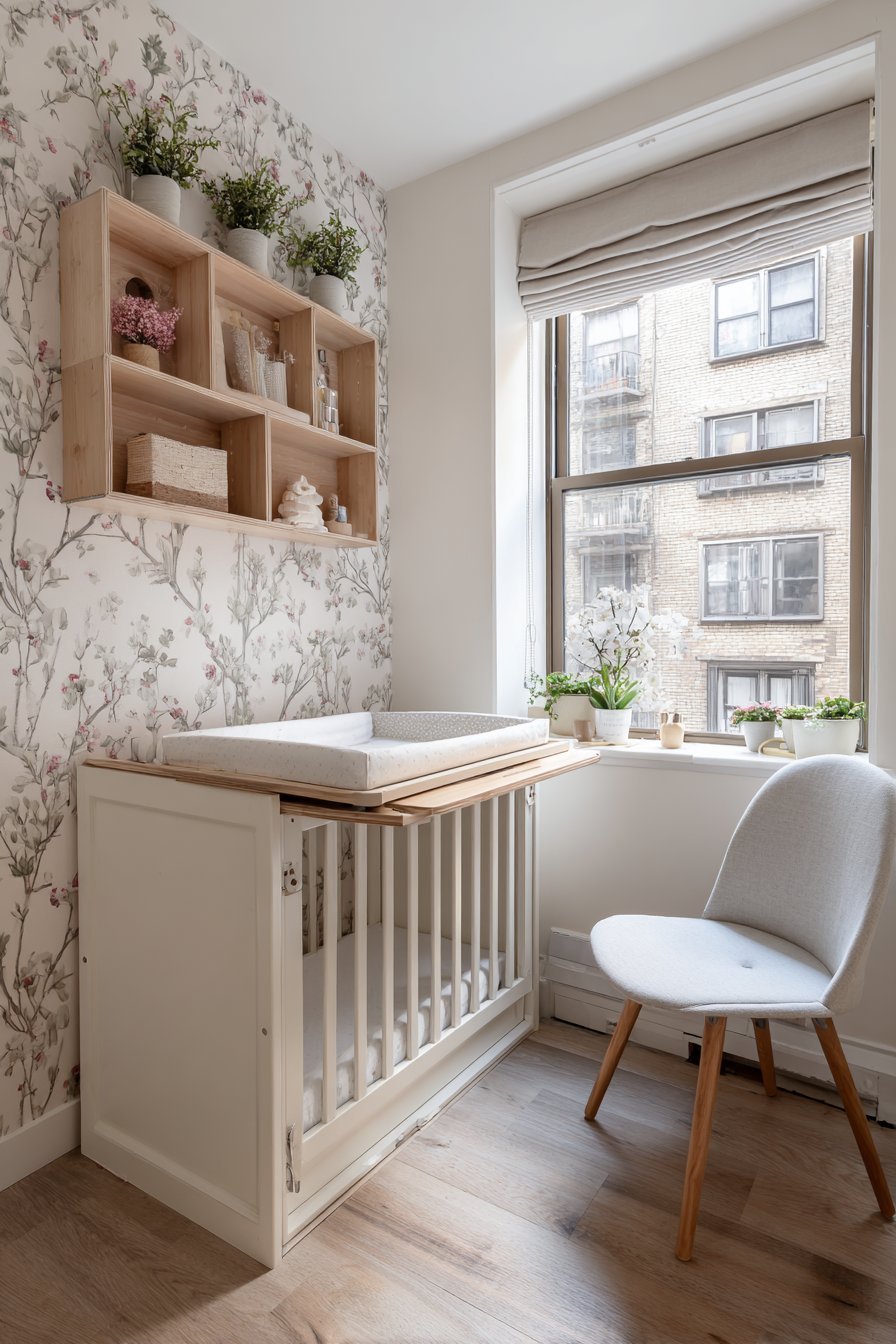
Pale oak laminate flooring reflects natural light from a single window. A cordless cellular shade provides safe light control without dangling cords. The compact design proves that functionality doesn’t require excessive square footage. Every inch serves multiple purposes through clever planning.
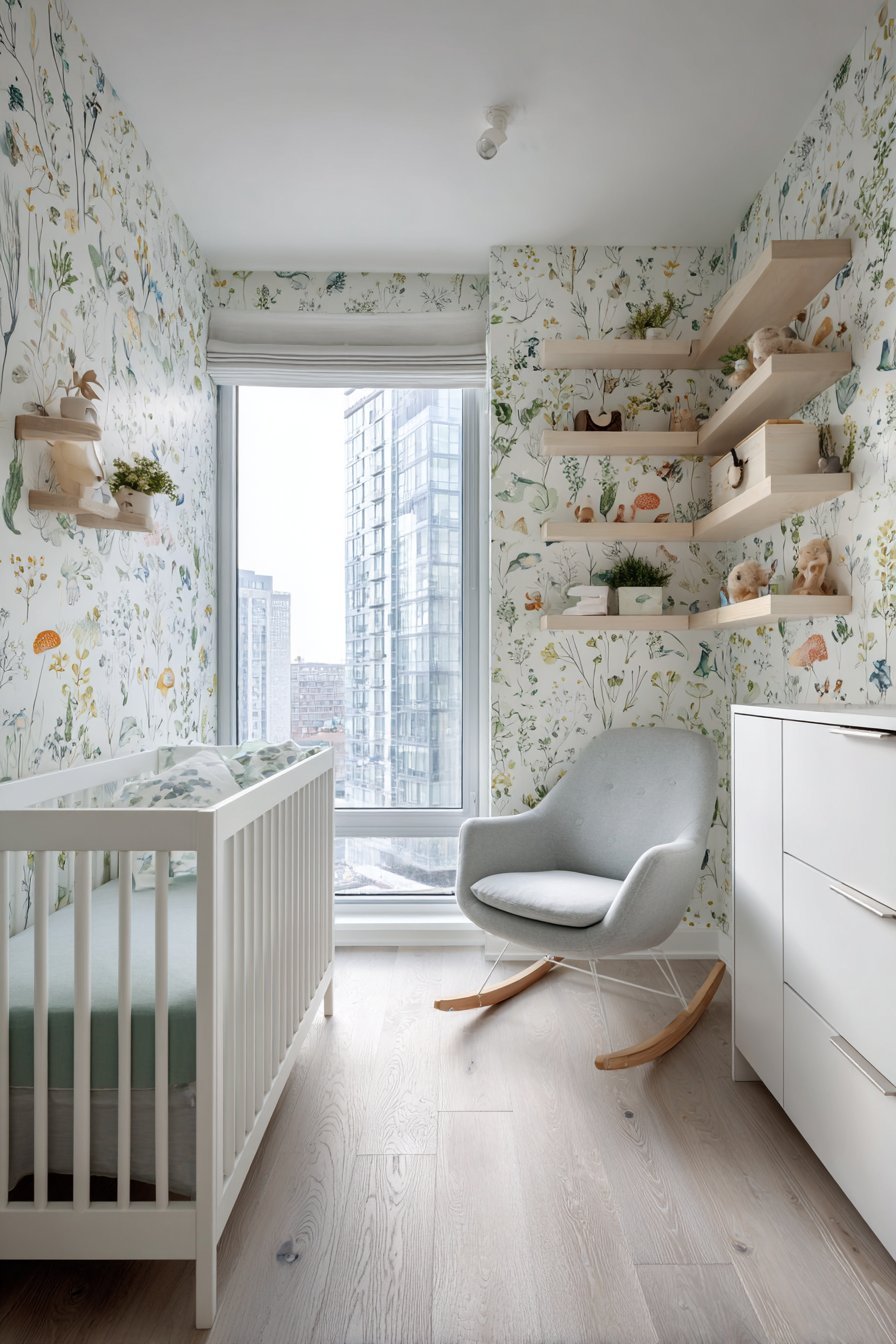
Professional design demonstrates how nurseries thrive in spaces under eighty square feet. Thoughtful furniture selection and vertical storage solutions create fully equipped rooms. Multi-functional pieces eliminate the need for separate items. This approach reduces costs while maximizing efficiency.
Key Design Tips:
- Choose convertible mini cribs that adapt to growing children’s needs
- Install wall-mounted changing tables that fold away when not needed
- Use removable wallpaper for temporary decoration that landlords approve
- Maximize vertical storage with floating shelves and wall-mounted organizers
- Select slim-profile furniture designed specifically for small space living
4. Luxurious Traditional Elegance
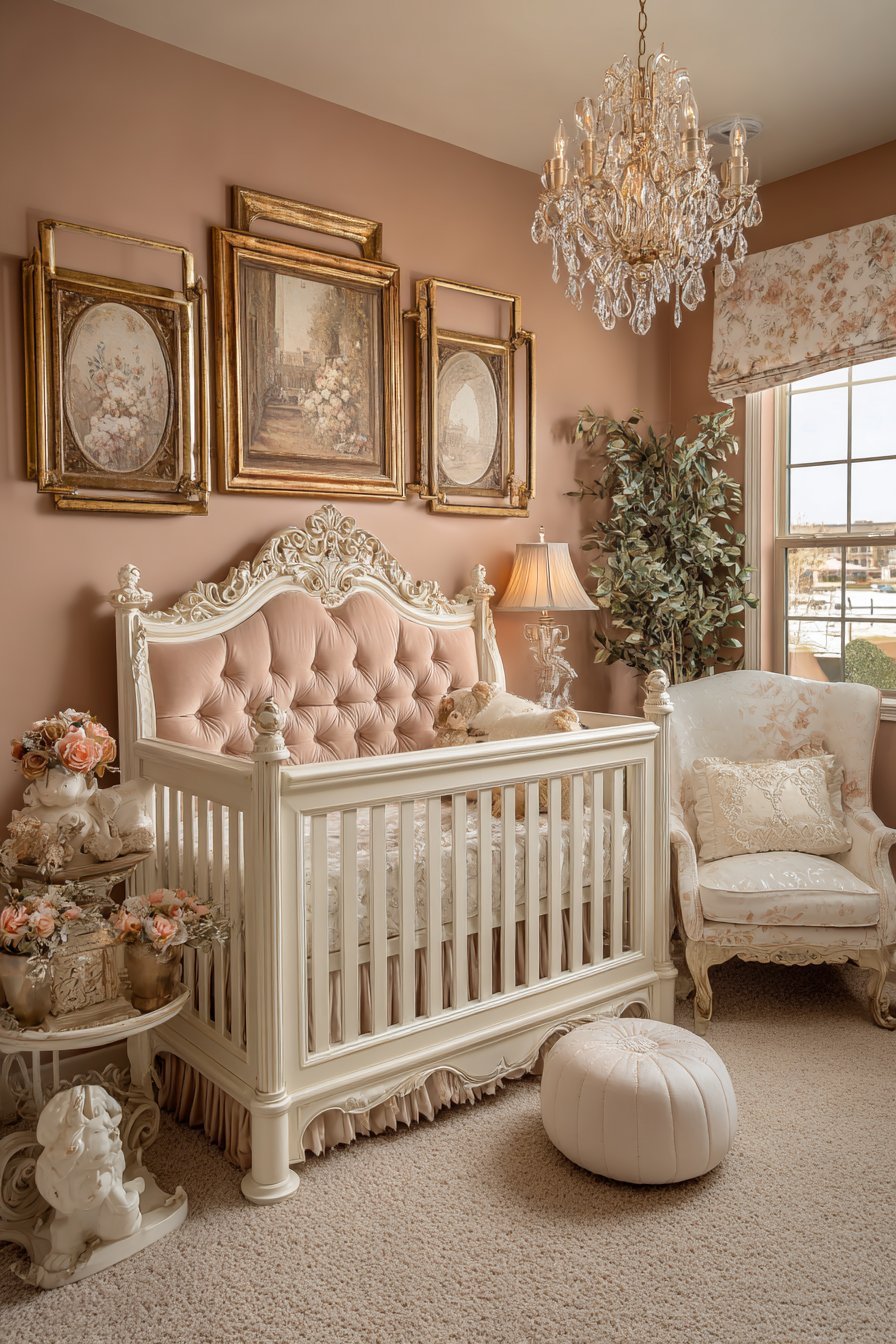
An ornate white crib with carved details anchors this sophisticated space. The upholstered tufted panel headboard in soft blush velvet adds unexpected glamour. This mounted wall feature creates a focal point typically reserved for adult bedrooms. The luxurious approach celebrates the special nature of childhood.
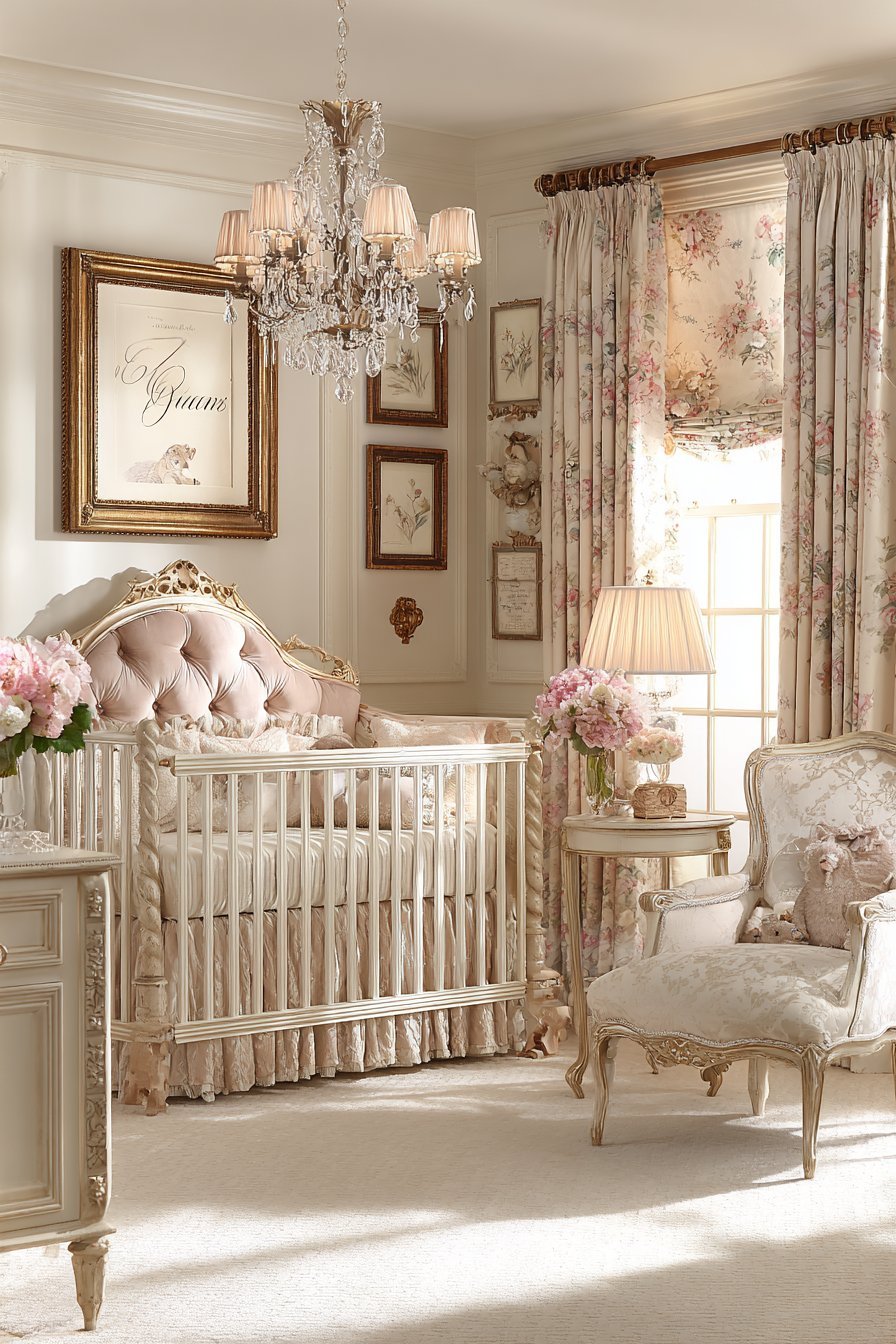
An elegant crystal chandelier with fabric shades provides ambient lighting throughout the room. Coordinating table lamps sit on vintage-style nightstands with curved legs. The plush carpet in cream creates a soft foundation for crawling exploration. Custom Roman shades in delicate floral prints frame windows beautifully.
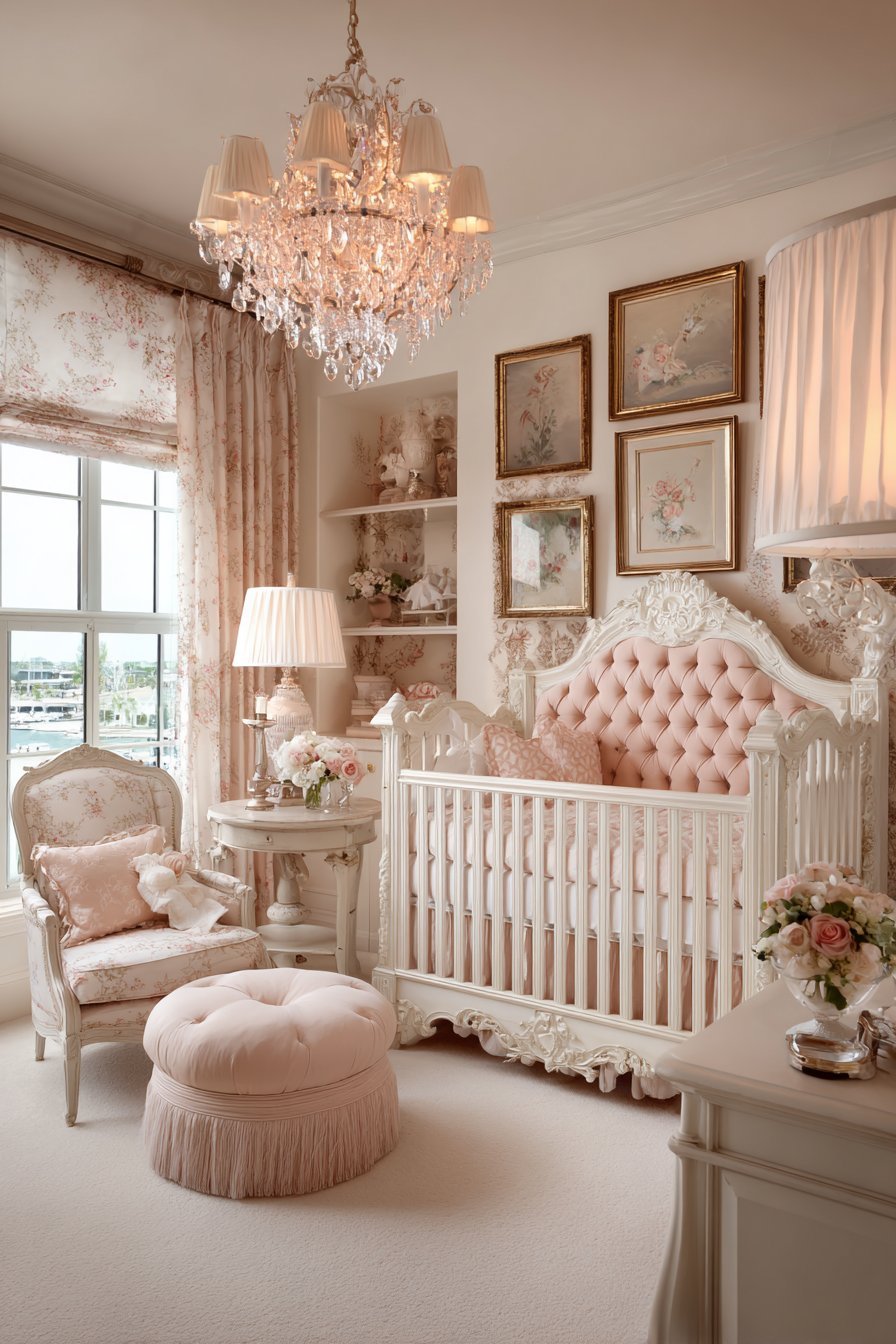
A Victorian-inspired nursing chair upholstered in ivory damask sits beside a round side table. Gilt-framed artwork and decorative wall mirrors reflect light throughout the space. Carefully curated accessories include porcelain figurines and silk flower arrangements. Each element contributes to the refined aesthetic.
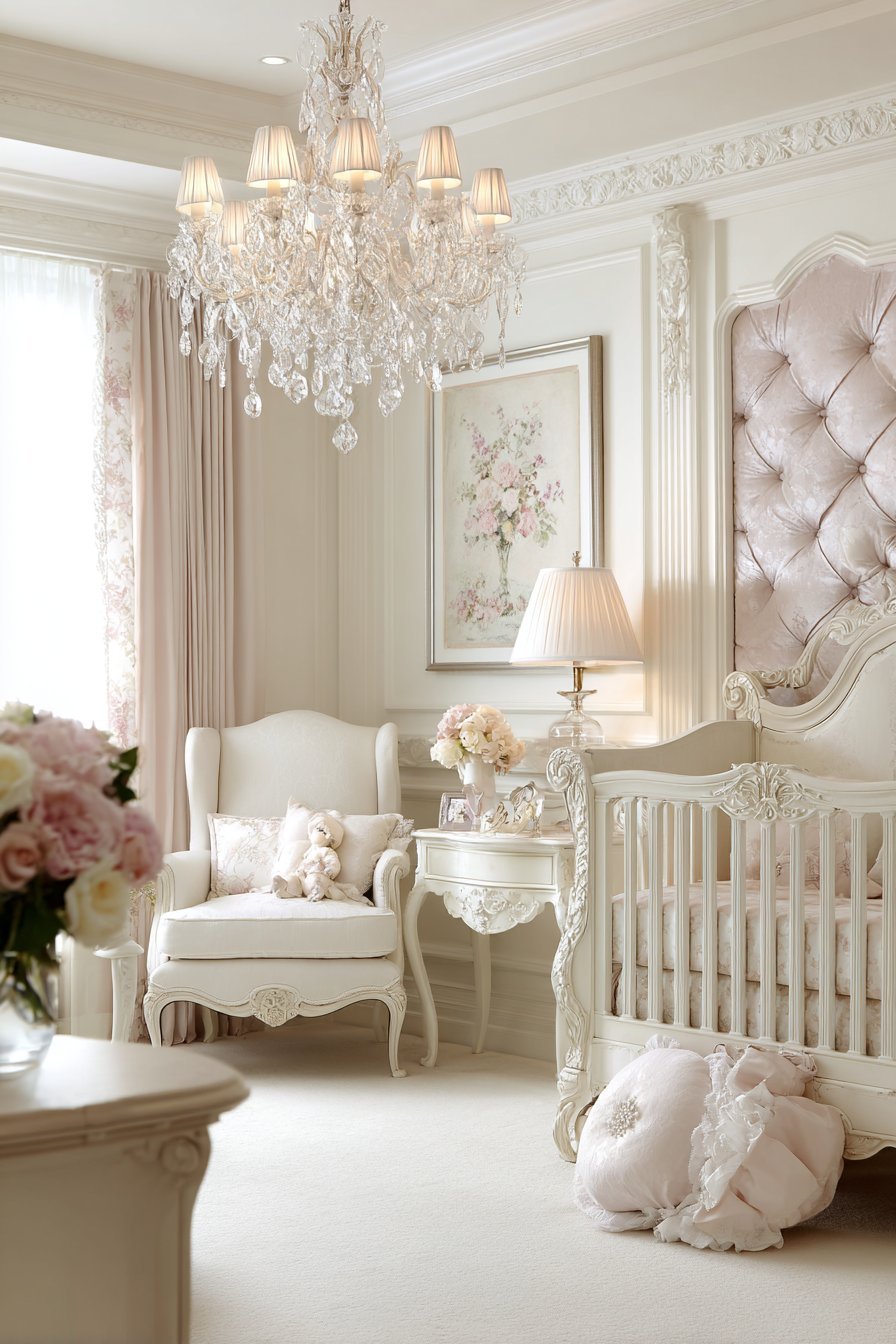
The traditional design demonstrates that nurseries can embrace sophisticated elegance. Quality materials and attention to detail create timeless spaces. This approach views the nursery as worthy of the same design consideration as any primary living space.
Key Design Tips:
- Select ornate cribs with carved details for traditional elegance and visual interest
- Install crystal chandeliers with fabric shades for soft, glamorous lighting
- Use plush carpeting in neutral tones for comfort and sound absorption
- Hang custom Roman shades in delicate patterns for light control with style
- Add tufted velvet panels behind cribs to create luxurious focal points
5. Modern Minimalist Calm
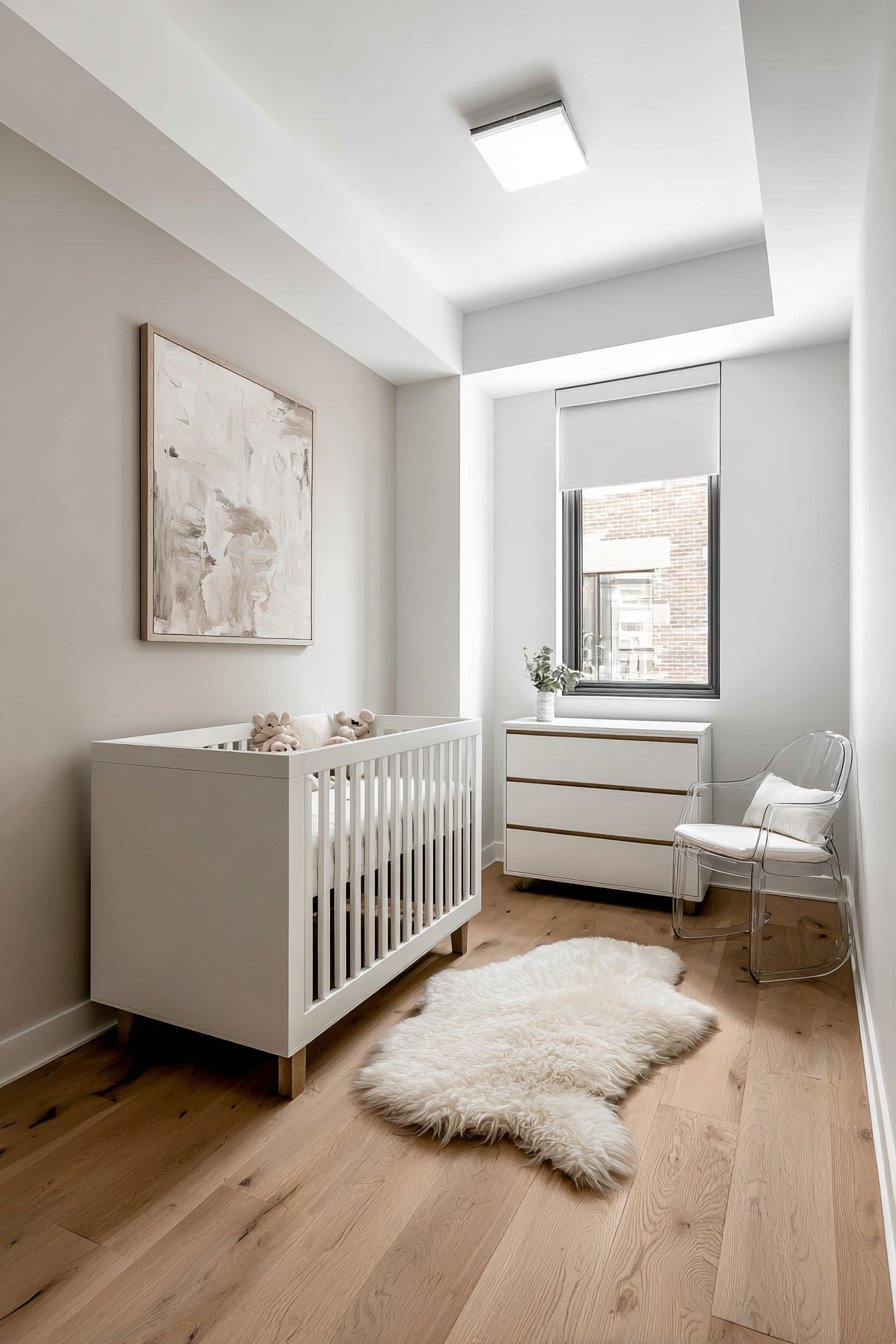
A low-profile white platform crib embodies clean-lined minimalism. The simple design eliminates unnecessary ornamentation. A sleek acrylic ghost chair for nursing maintains visual openness. The transparent furniture creates the illusion of more space through visual continuity.
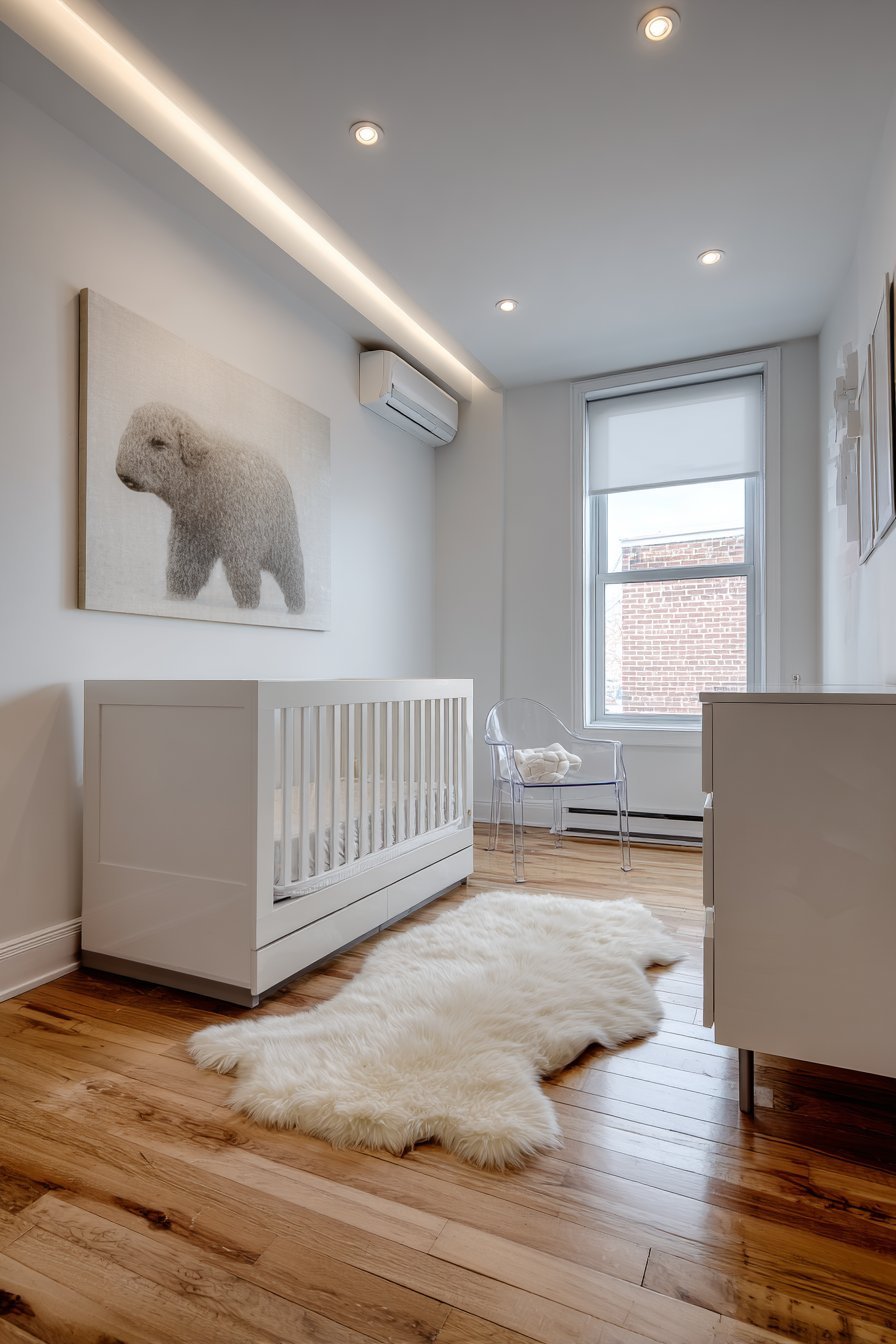
Walls painted in warm white feature one accent wall in soft dove gray. The restrained palette promotes calm and focus. Light maple engineered hardwood flooring creates warmth against the minimal color scheme. A single large-scale abstract print in muted tones provides the only wall decoration.
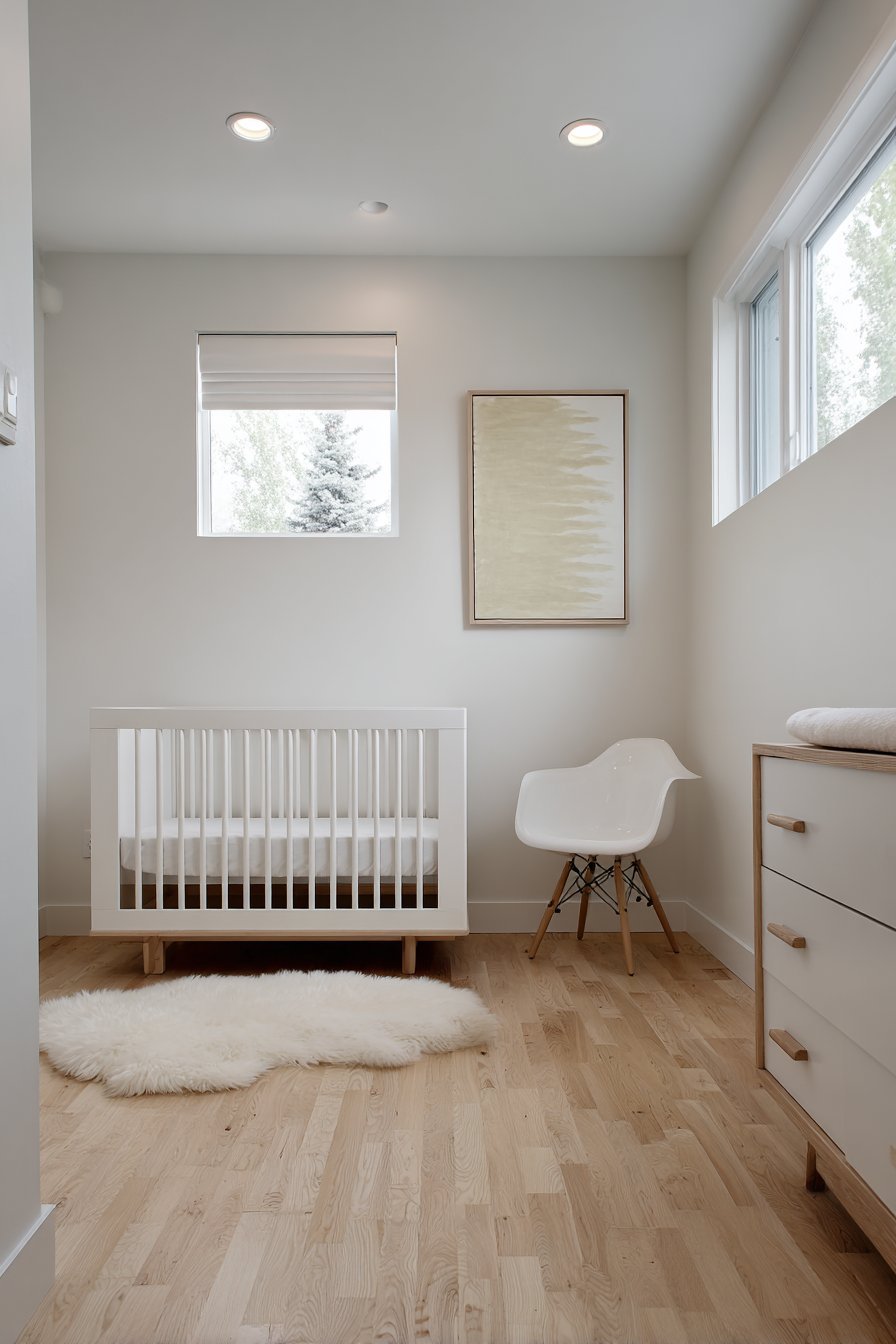
Recessed LED lighting provides even illumination without visible fixtures. Simple white roller shades cover windows with clean efficiency. A sheepskin rug beside the crib adds texture without visual clutter. The minimalist approach eliminates distractions that might overstimulate developing senses.
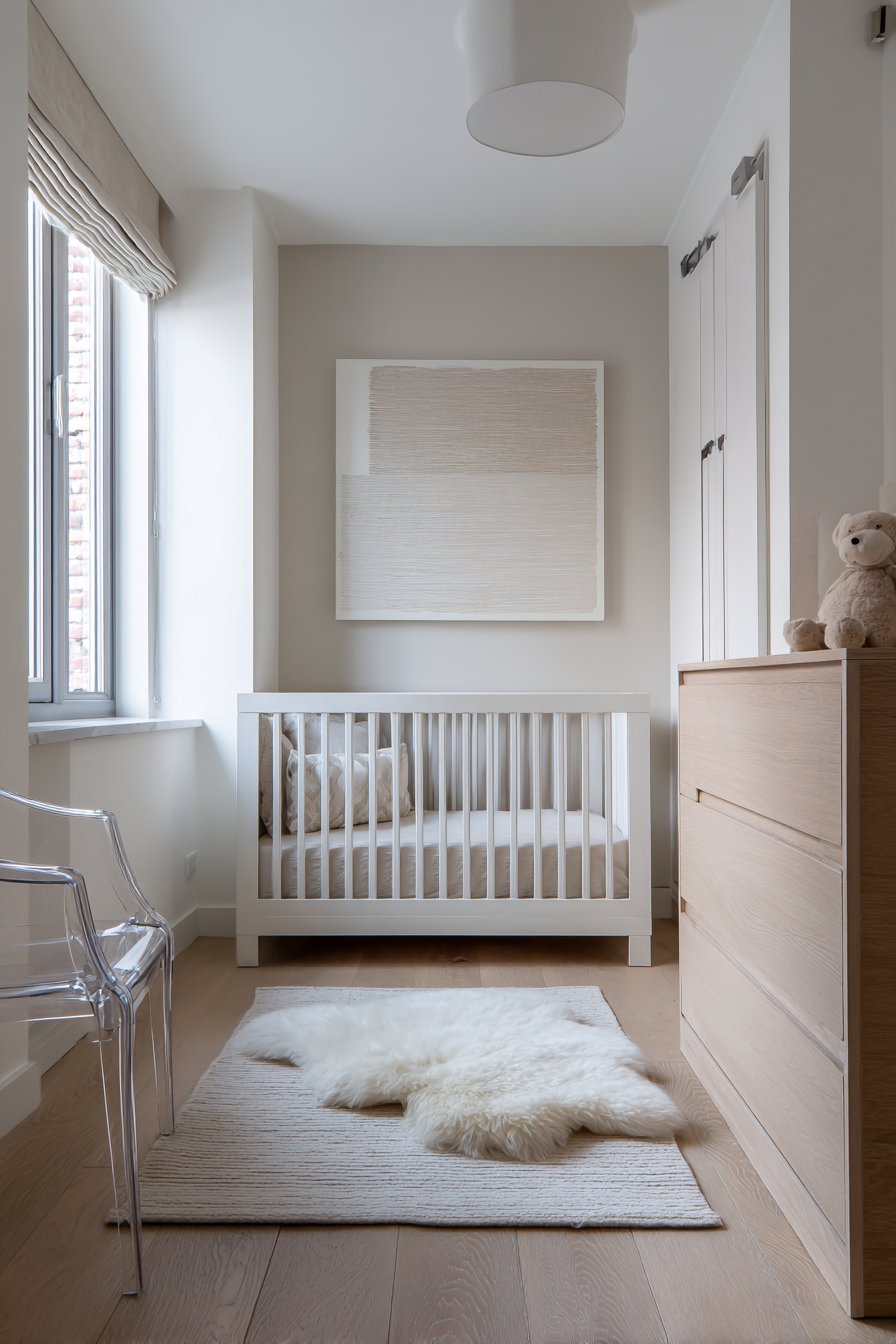
This design philosophy focuses on essential elements only. Every item in the room serves a clear purpose. The absence of excess creates peaceful environments conducive to rest. Parents benefit from the reduced visual noise during late-night care routines.
Key Design Tips:
- Choose low-profile cribs with simple lines to maintain minimalist aesthetics
- Use acrylic furniture to preserve visual openness and create spatial flow
- Install recessed LED lighting for even illumination without visible fixtures
- Limit wall art to one large-scale piece in muted tones
- Add single textural elements like sheepskin rugs for warmth without clutter
6. Whimsical Mountain Mural Magic
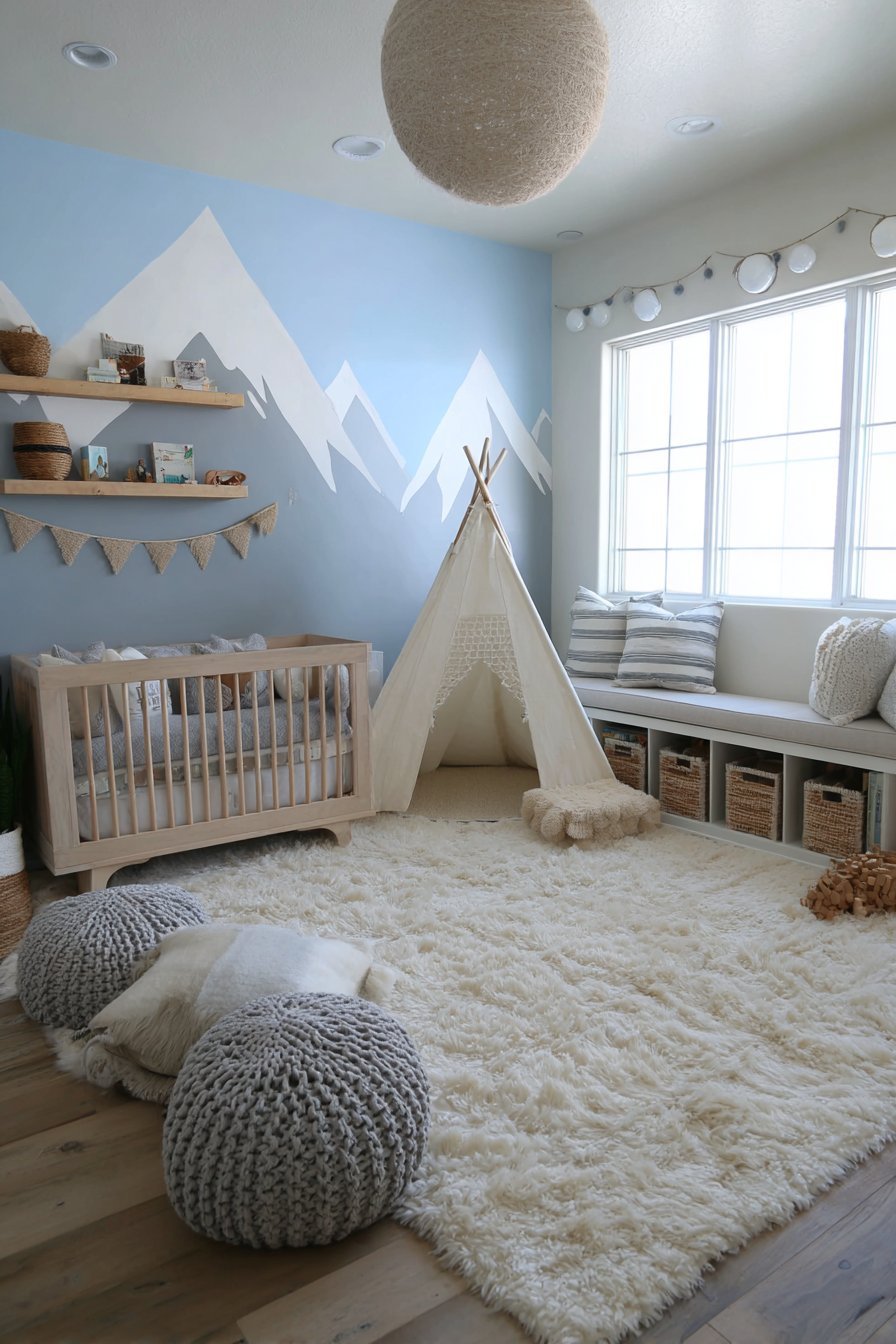
A hand-painted mountain mural in soft blues and grays covers one wall completely. The artistic feature creates depth and imagination. A natural wood crib with simple modern design sits centered against the mural. The juxtaposition of organic furniture and painted landscape feels harmonious.
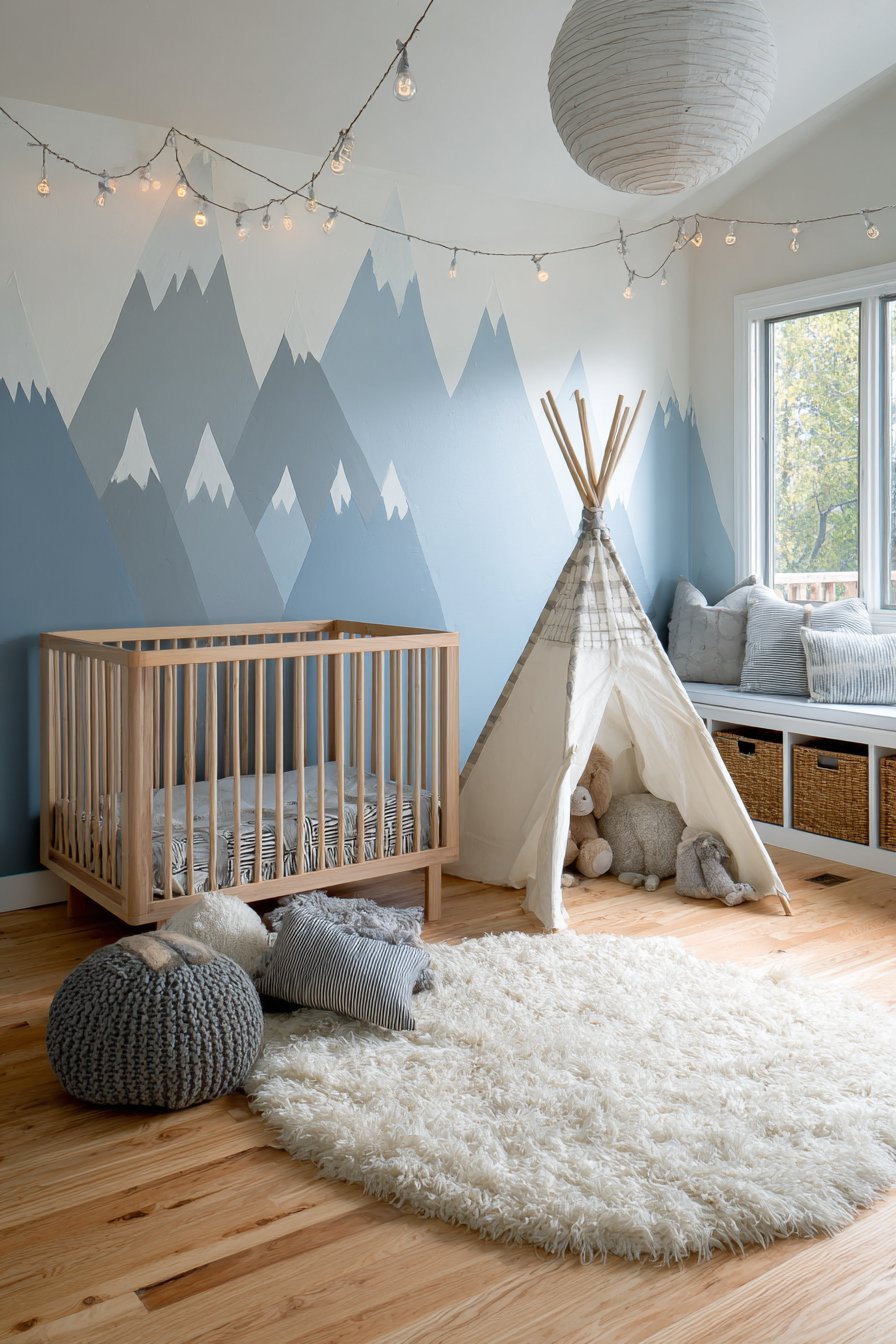
A cozy reading nook features a small teepee tent in natural canvas with gray stripes. Scattered floor cushions invite comfortable story time. Medium-toned oak flooring is covered by a thick cream shag rug. The soft play area encourages safe exploration and tummy time.
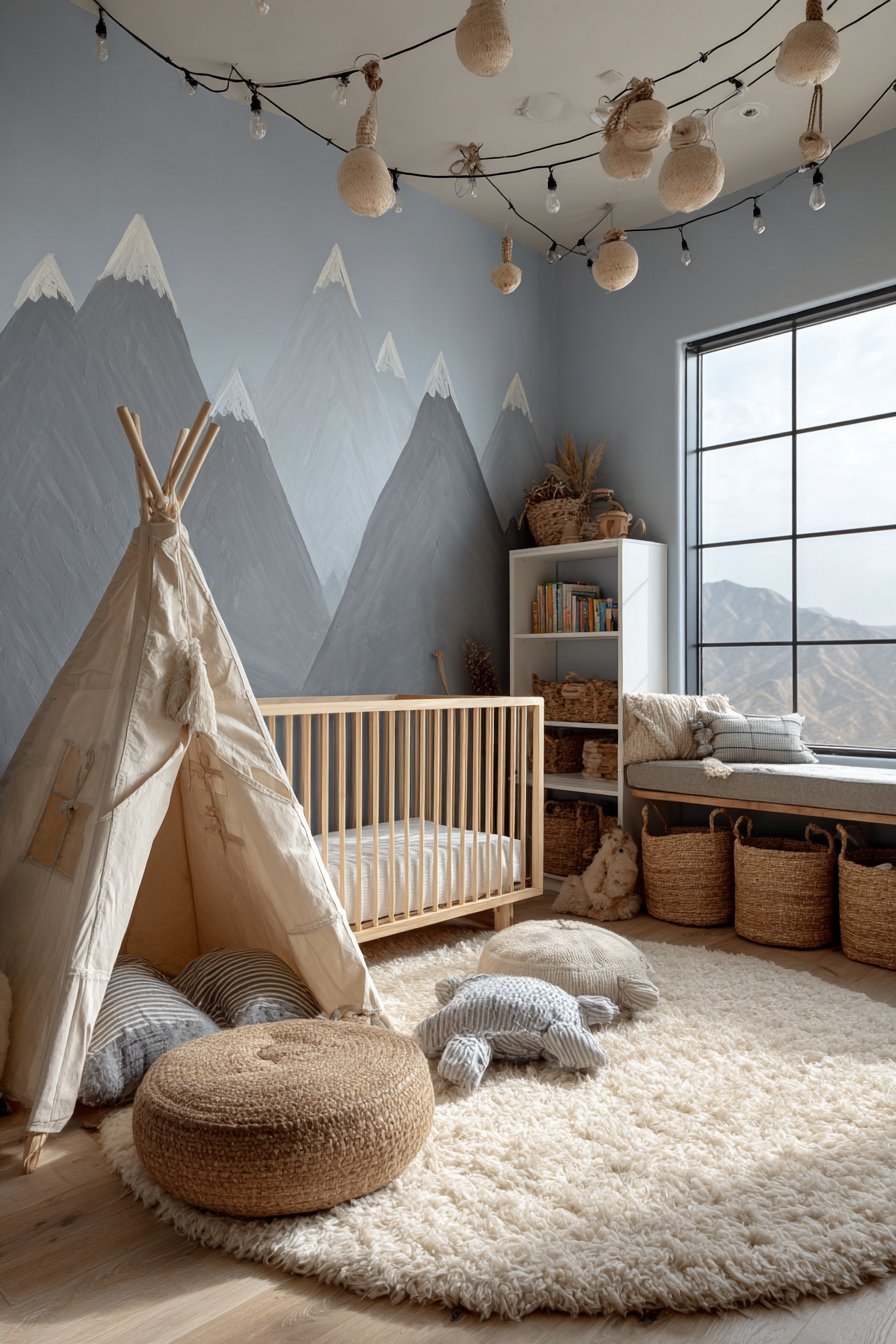
Open cube storage in white holds woven baskets for toy organization. The modular system adapts as storage needs change. A cushioned window seat with built-in storage maximizes the space beneath large windows. String lights with fabric globes add magical ambiance for nighttime routines.
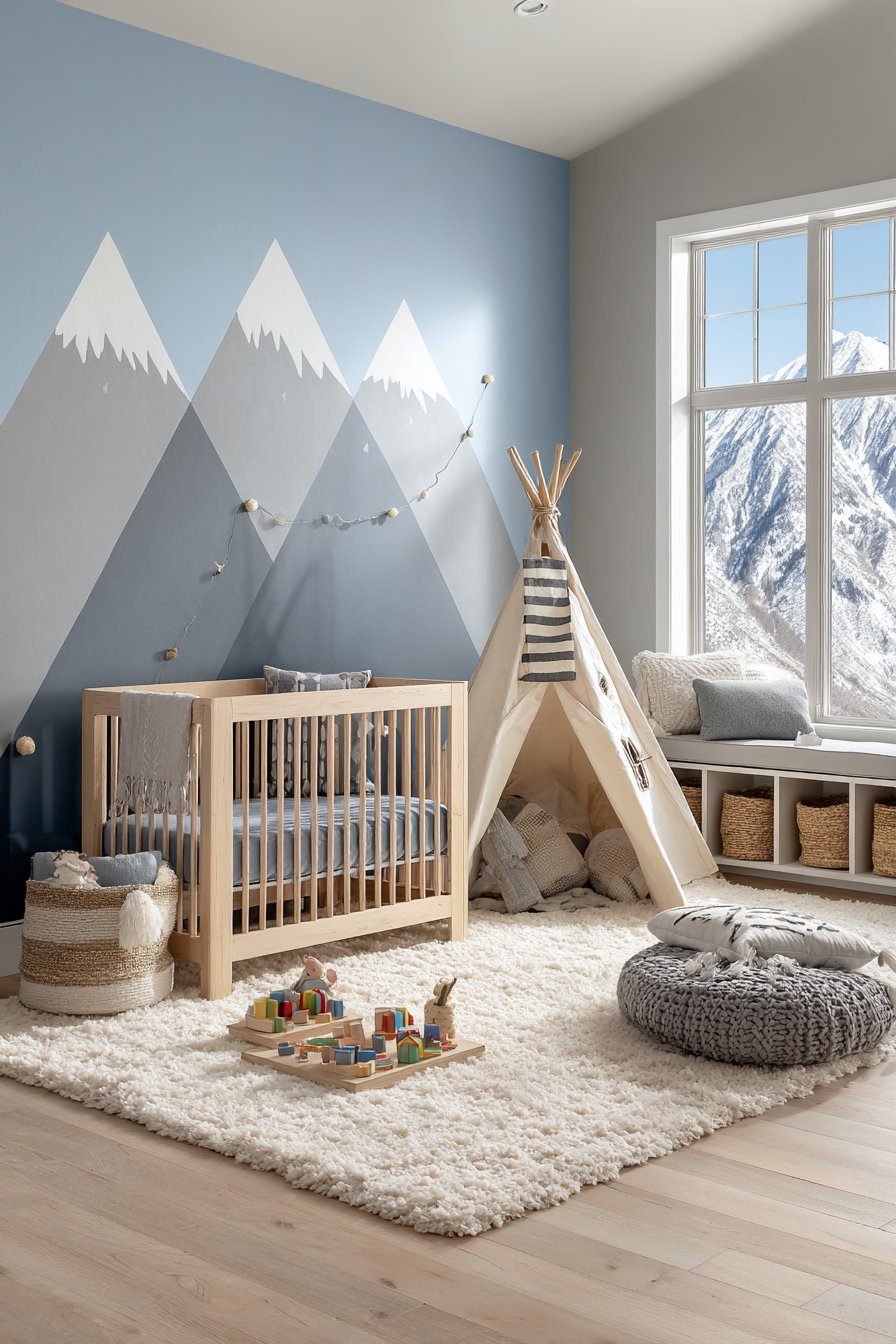
The whimsical approach balances imagination with practical functionality. Playful elements stimulate visual development and curiosity. Storage solutions maintain order despite the creative atmosphere. This design proves that fun and function coexist beautifully.
Key Design Tips:
- Commission hand-painted murals in soft tones for custom artistic features
- Create reading nooks with teepee tents and floor cushions for cozy story time
- Use thick shag rugs to define soft play areas for safe exploration
- Install window seats with built-in storage to maximize functional square footage
- Add string lights with fabric globes for magical yet gentle nighttime lighting
7. Bohemian Eclectic Charm
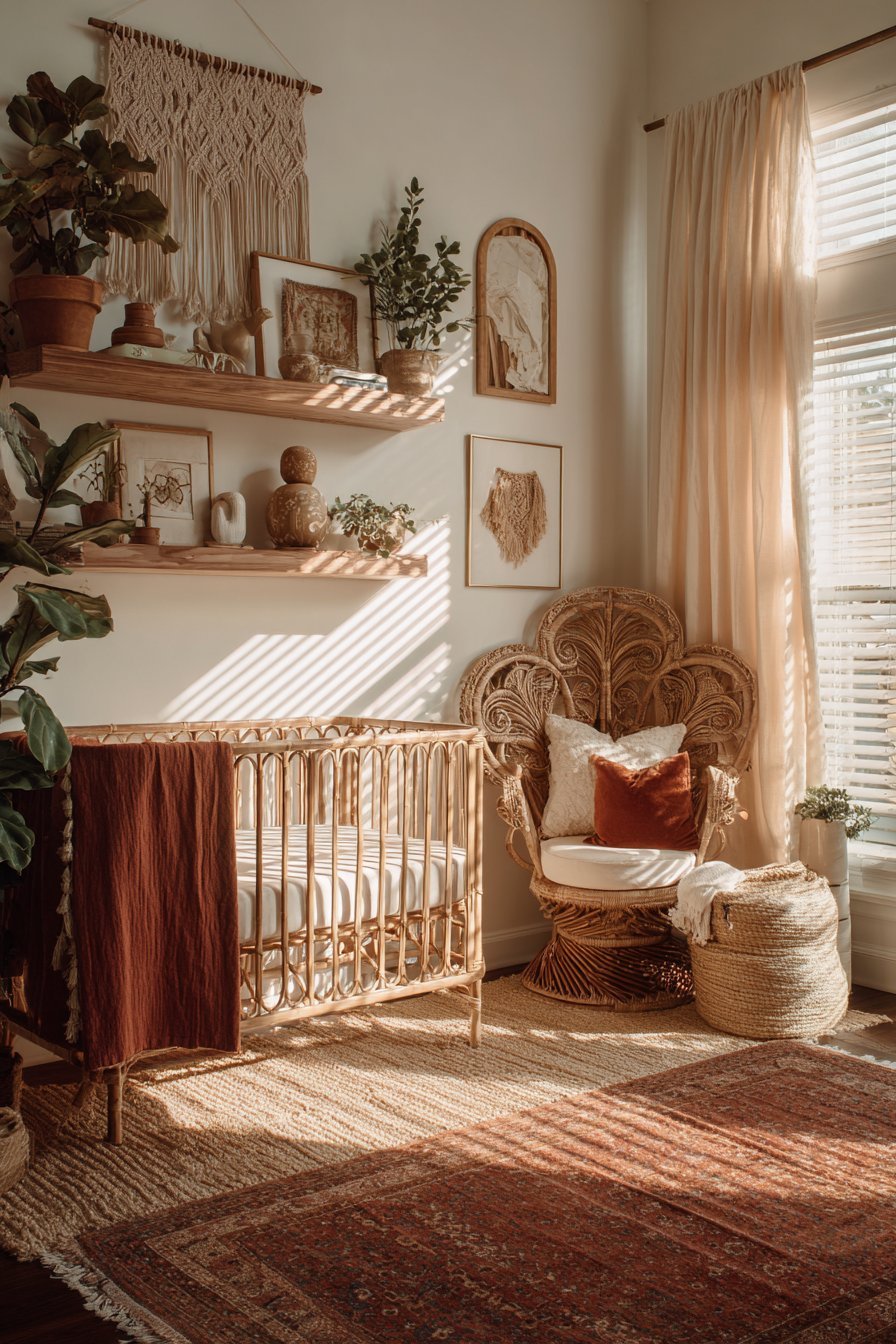
A rattan crib featuring an organic curved design brings natural texture to the space. The woven material adds visual interest and tactile appeal. Layered rugs combine a jute base with a smaller vintage Turkish rug. The faded terra cotta and cream tones create warmth and depth.
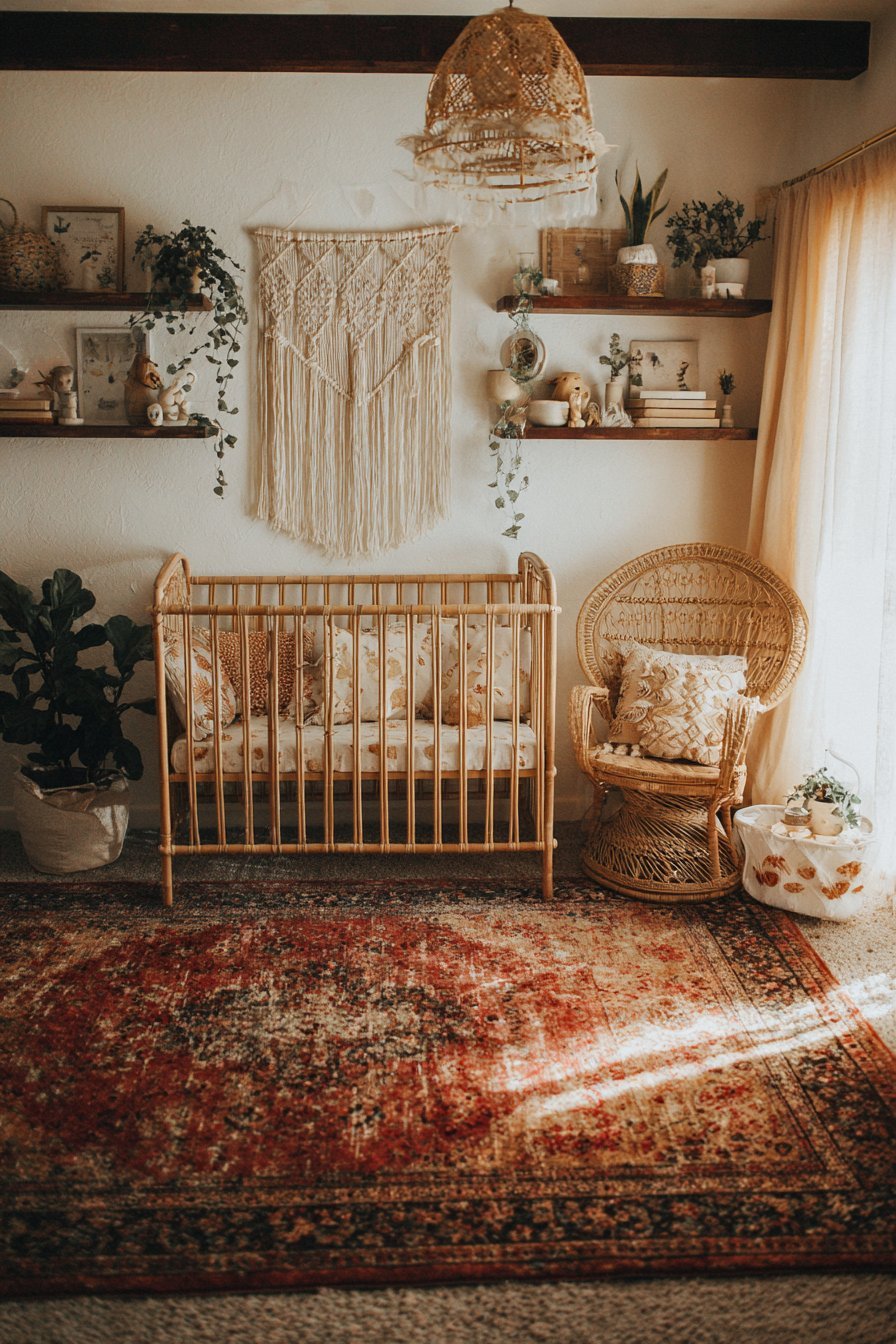
A macramé wall hanging in natural cotton creates a textural focal point above the crib. The handmade element adds personality and craftsmanship. A peacock chair in natural wicker provides a sculptural nursing spot with added cushions. The varied patterns create an eclectic, collected aesthetic.
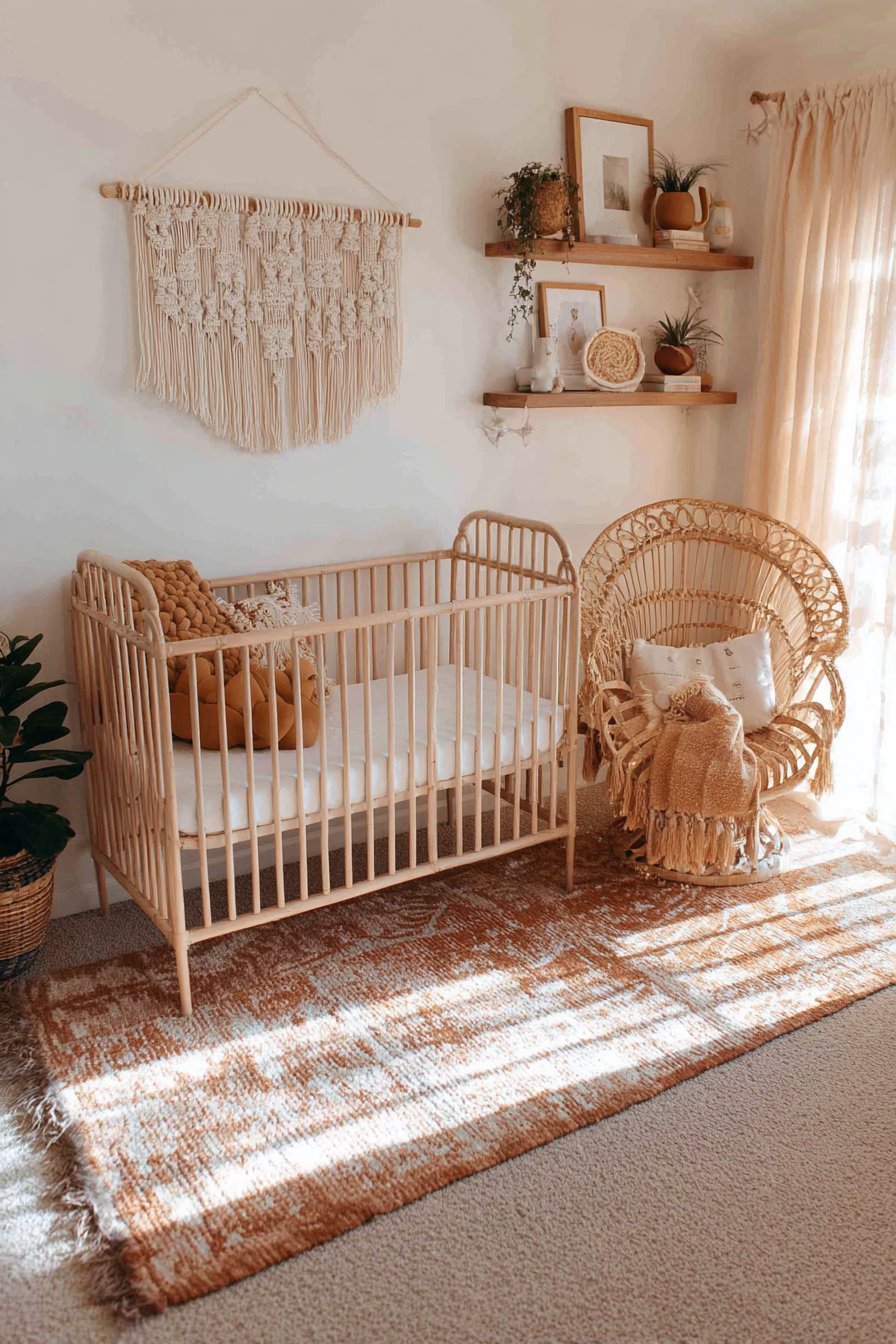
Warm white walls showcase floating shelves made from live-edge wood. Small plants, handmade ceramics, and cloth books fill the shelves organically. Gauzy curtains in undyed muslin filter golden hour sunlight beautifully. The warm glow enhances the earth-toned palette throughout the room.
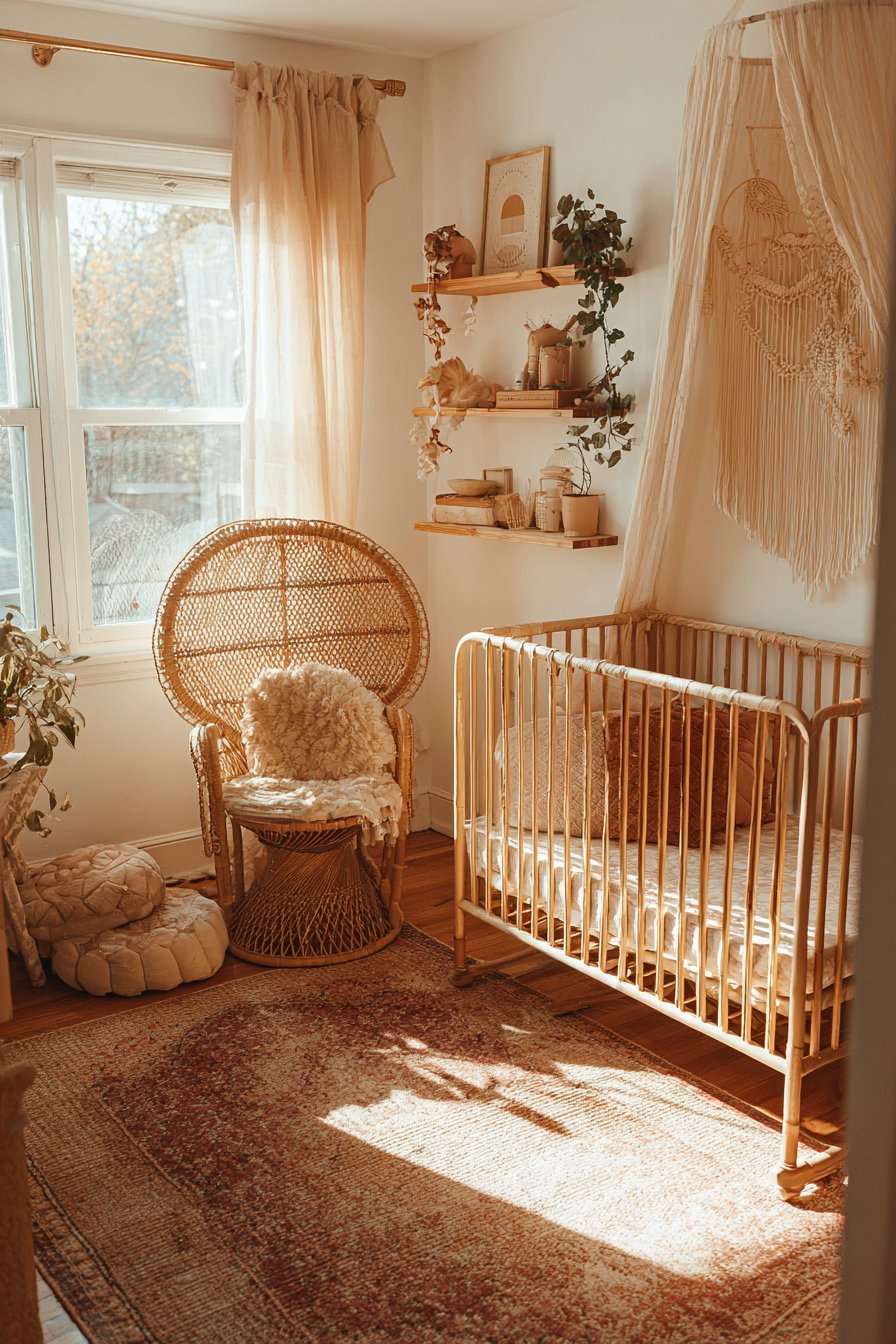
The bohemian approach celebrates natural materials and global textiles. The collected-over-time aesthetic feels personal and meaningful. This design philosophy rejects matching sets in favor of curated combinations. The result feels authentic and lived-in from day one.
Key Design Tips:
- Choose rattan cribs with curved designs for organic bohemian texture
- Layer rugs with jute bases and vintage textiles for depth and warmth
- Hang macramé wall art in natural cotton for handmade textural interest
- Select peacock chairs or wicker seating for sculptural nursing spots
- Use live-edge wood shelving to display plants, ceramics, and meaningful items
8. Nautical Coastal Freshness
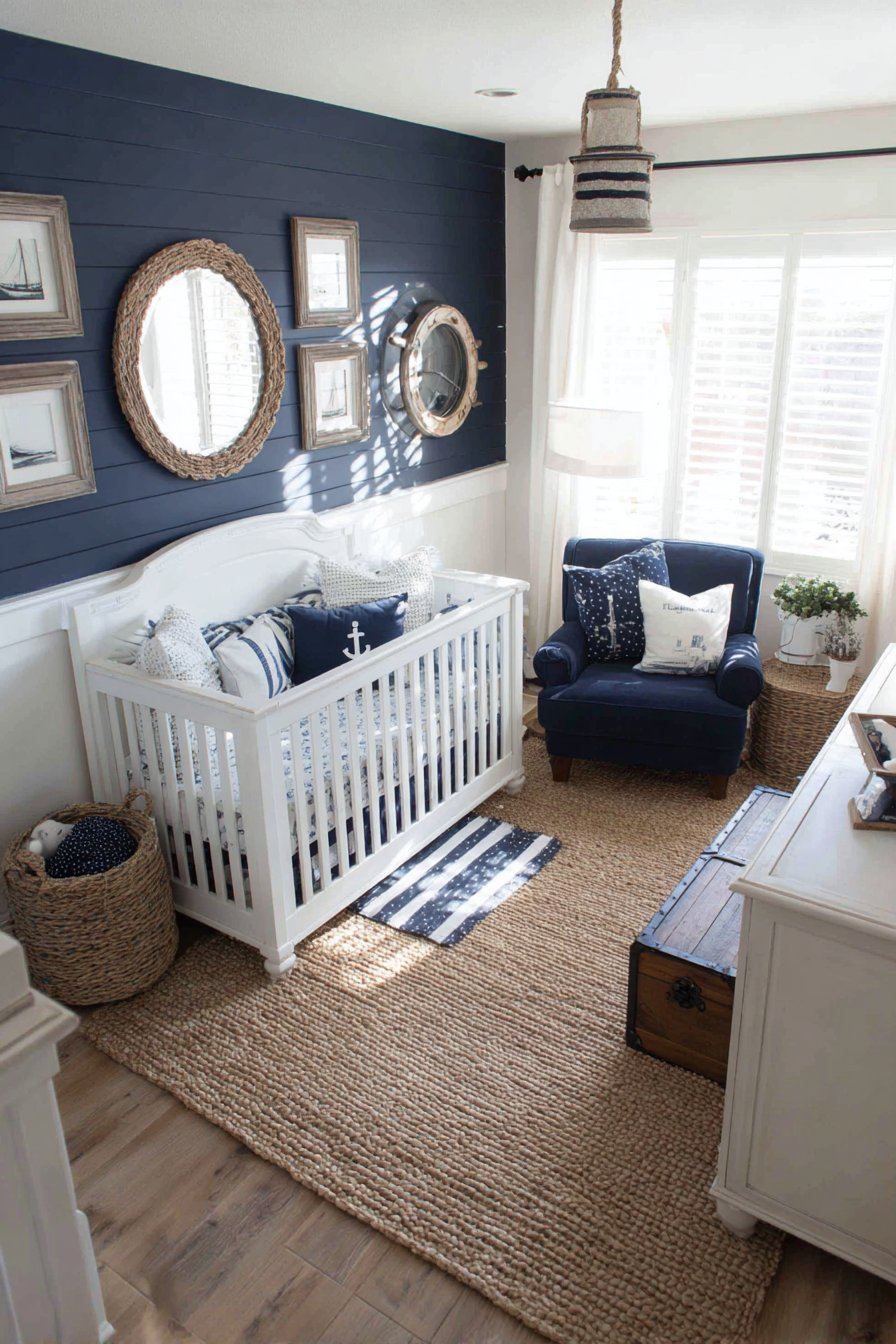
Navy blue shiplap on the lower half of walls creates coastal architectural interest. Crisp white paint on top separates at white chair rail molding. A white painted crib with turned posts sits centered on the navy wall. The bedding features subtle navy and white stripes maintaining the maritime theme.
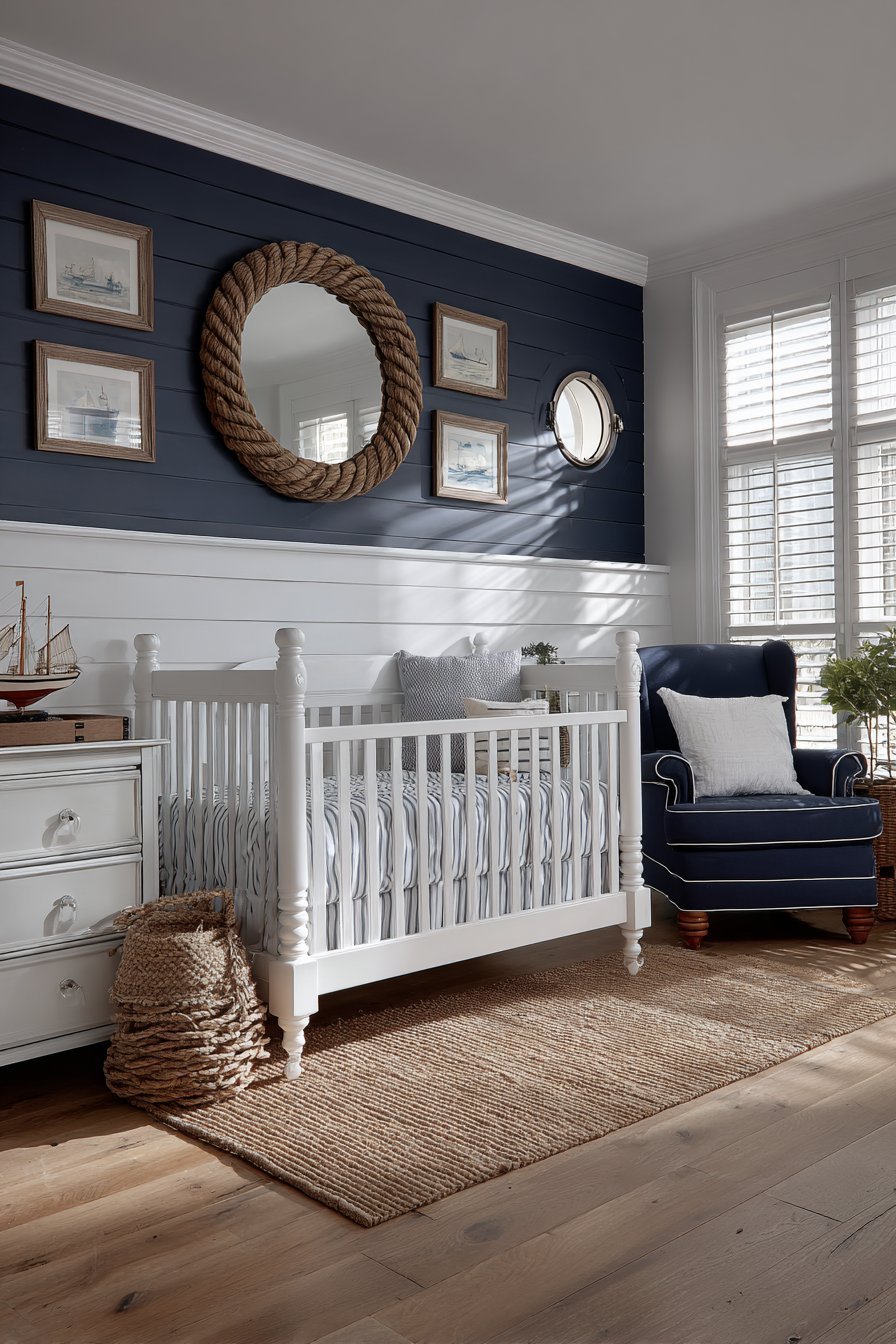
A weathered rope mirror hangs above a white dresser with rope drawer pulls. These thoughtful details reinforce the coastal aesthetic without overwhelming the space. A navy upholstered glider with white piping provides comfortable nursing seating. A side table fashioned from a repurposed vintage trunk adds authentic character.
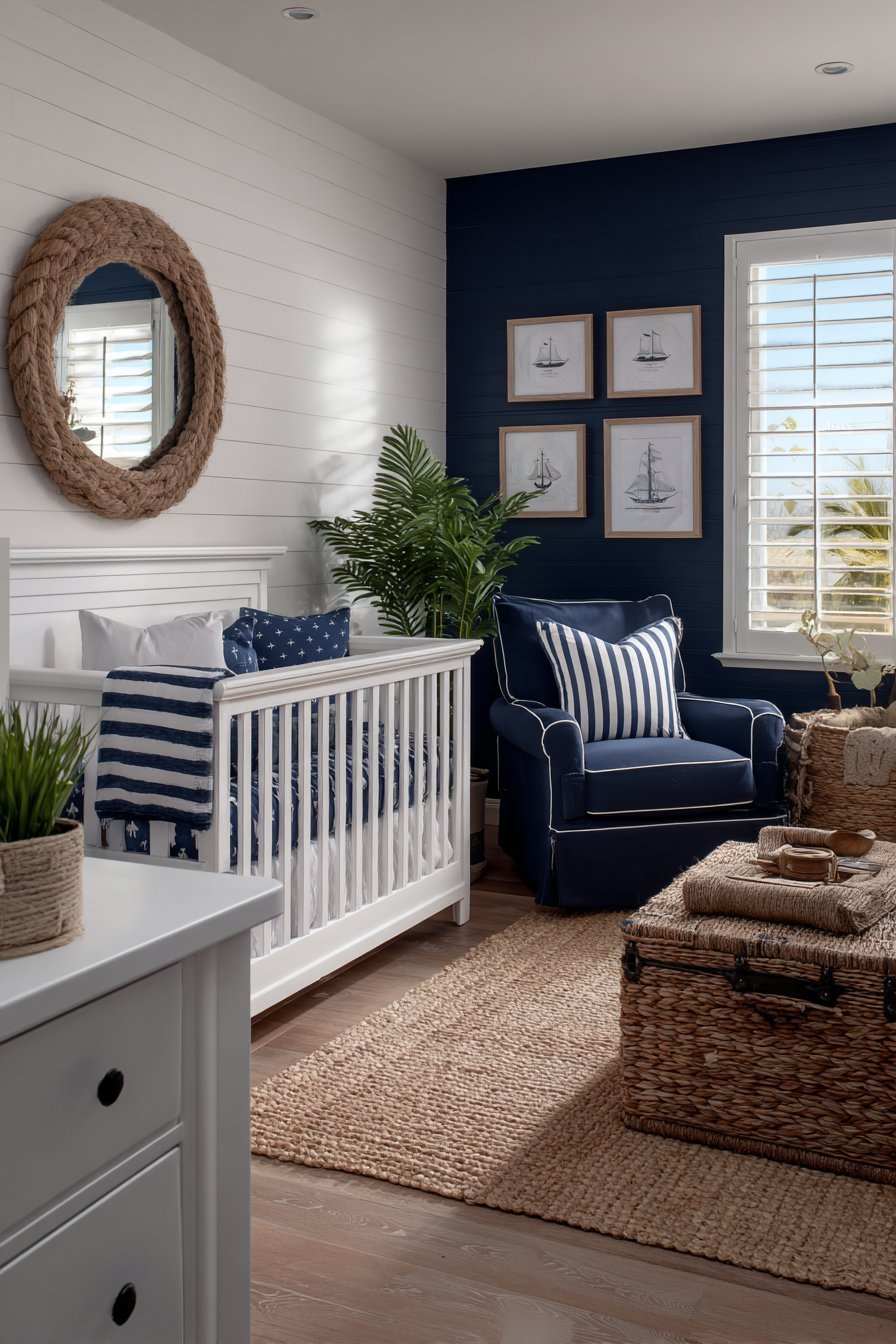
Light oak flooring is partially covered by a braided jute rug in natural tones. The organic texture balances the crisp color scheme. Porthole-style mirrors and framed nautical prints complete the theme tastefully. The design avoids cartoon characters in favor of sophisticated maritime references.
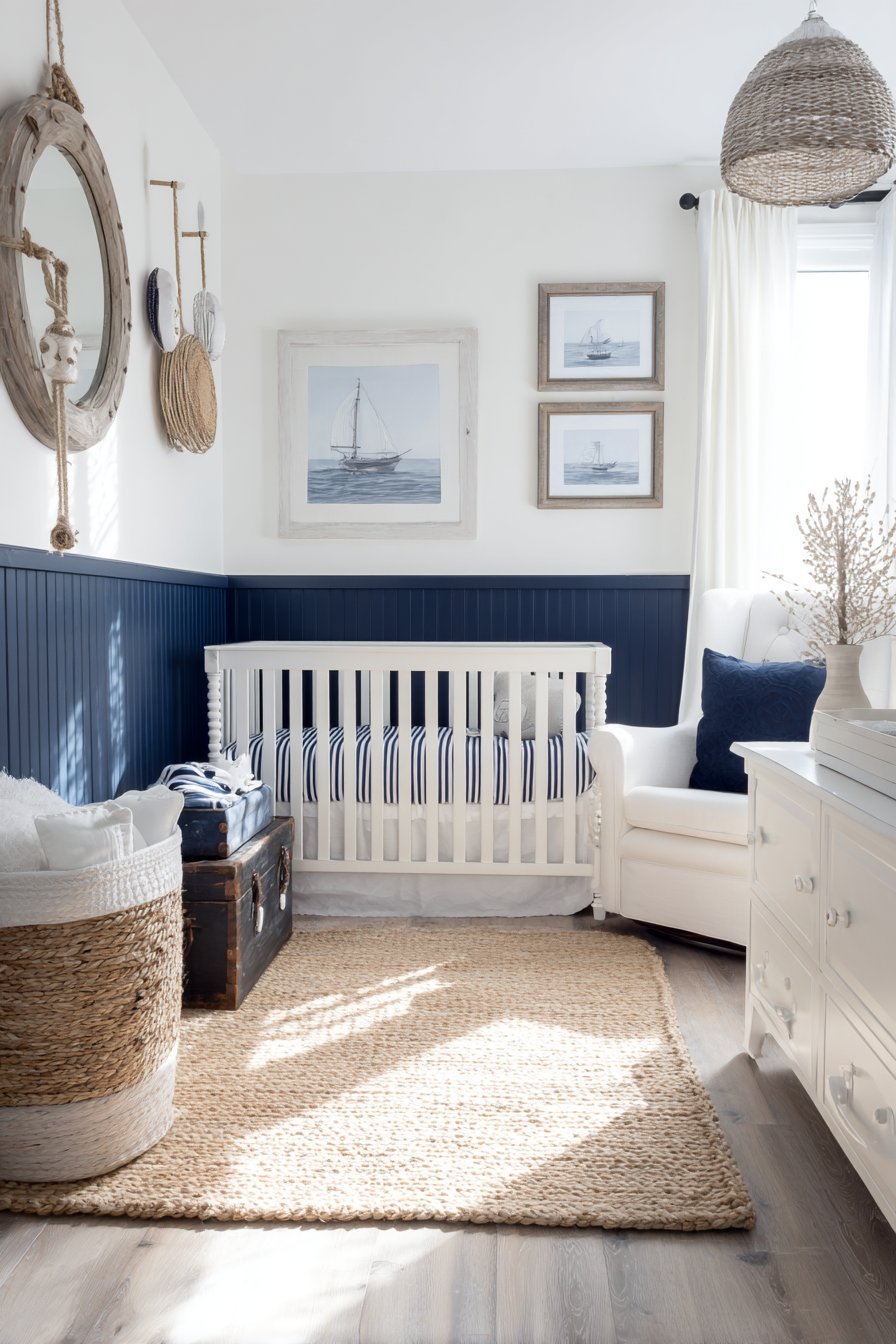
The coastal approach balances thematic design with timeless appeal. Navy and white create fresh, clean spaces that age well. The color combination works equally well for any gender. Natural light streaming through white plantation shutters enhances the airy atmosphere.
Key Design Tips:
- Install navy shiplap on lower walls with white above for coastal architecture
- Choose white cribs with turned posts for traditional nautical charm
- Add rope details through mirrors, drawer pulls, and decorative accents
- Upholster gliders in navy with white piping for comfortable themed seating
- Use braided jute rugs to add organic texture to crisp color schemes
9. Farmhouse Rustic Character
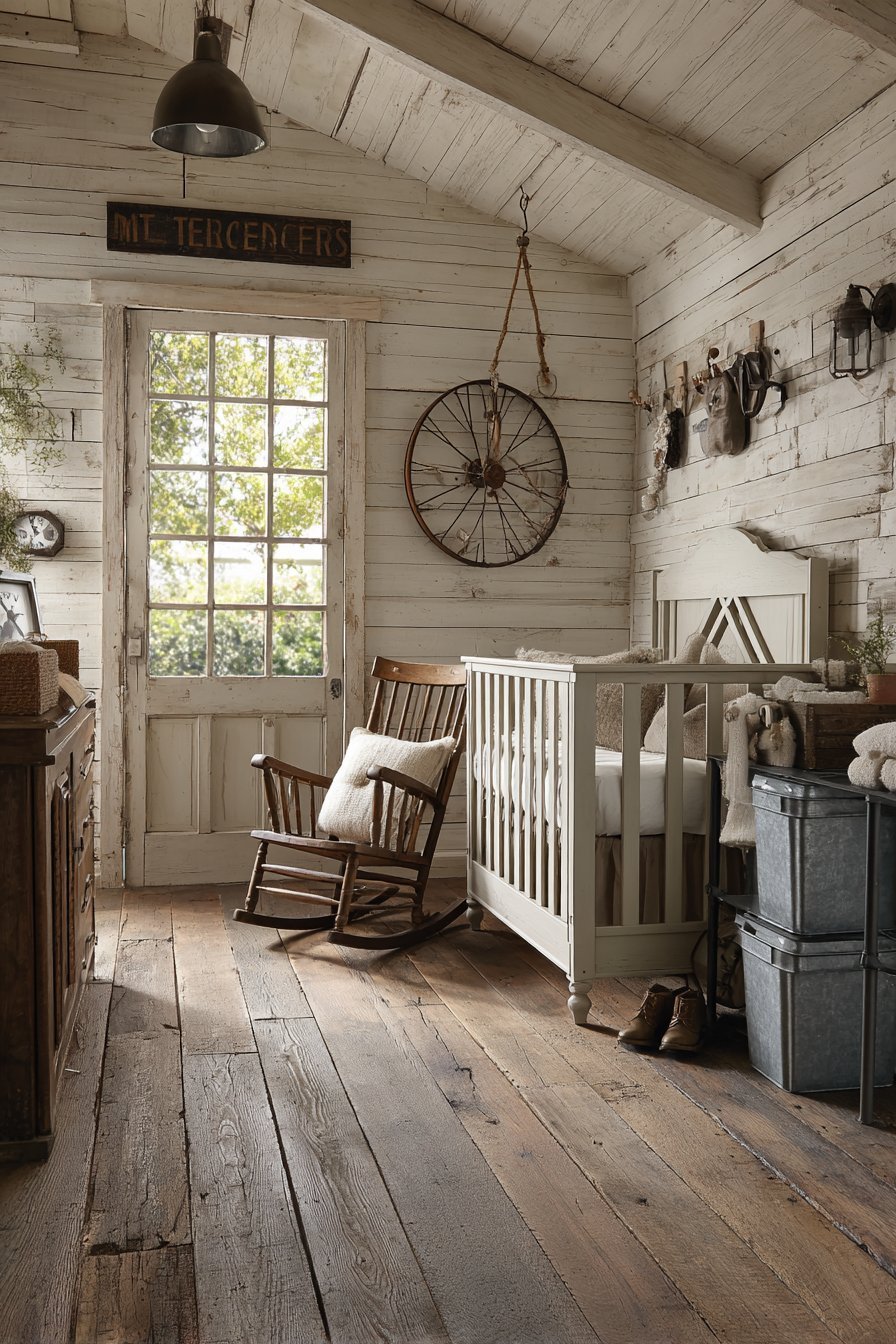
A distressed white wooden crib featuring X-detail panels embodies authentic farmhouse style. The piece sits against walls clad in horizontal shiplap painted in soft greige. The neutral backdrop allows furniture character to shine. A vintage-style metal and wood changing table provides storage with genuine charm.
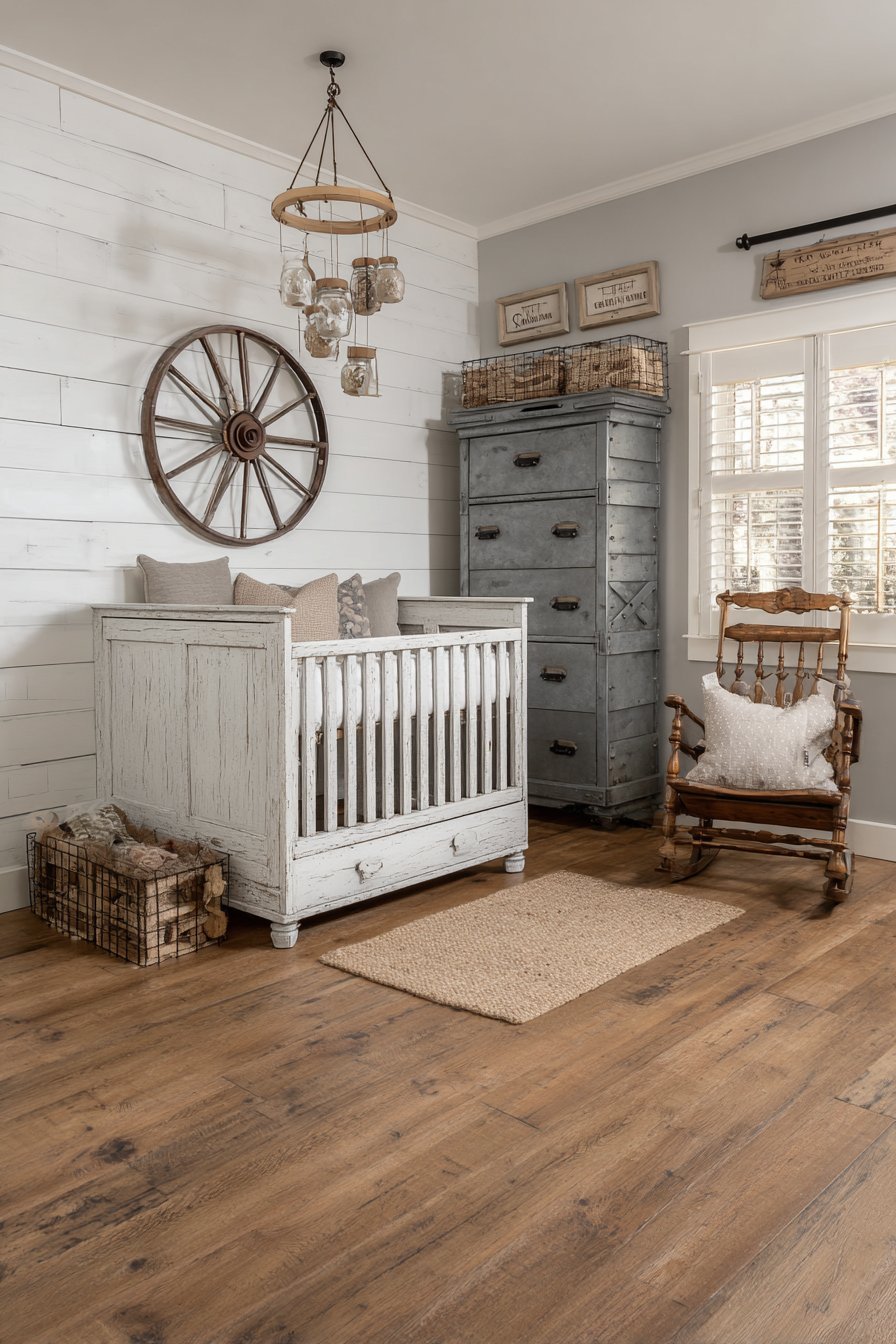
Galvanized metal bins hold diapers and supplies with industrial appeal. An oversized wooden rocking chair with weathered finish and neutral linen cushions invites comfortable nursing sessions. Wide-plank hardwood flooring in medium brown features visible grain and natural knots. The authentic wood celebrates natural imperfections.
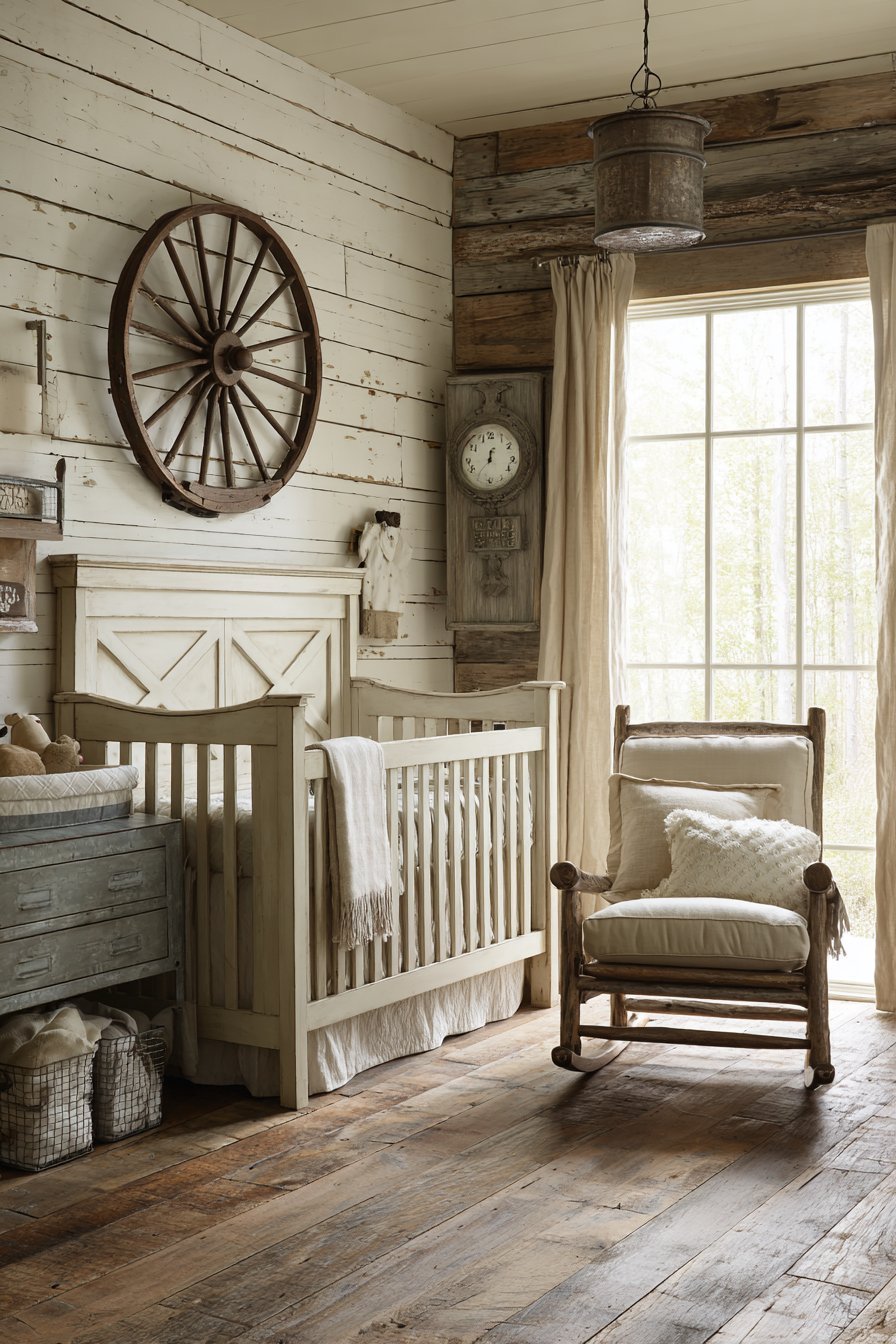
Mason jar sconces provide ambient lighting with farmhouse authenticity. A wagon wheel repurposed as a mobile adds unexpected charm above the crib. The creative reuse of vintage items tells stories. A galvanized metal wall clock and simple wooden name letters complete the aesthetic.
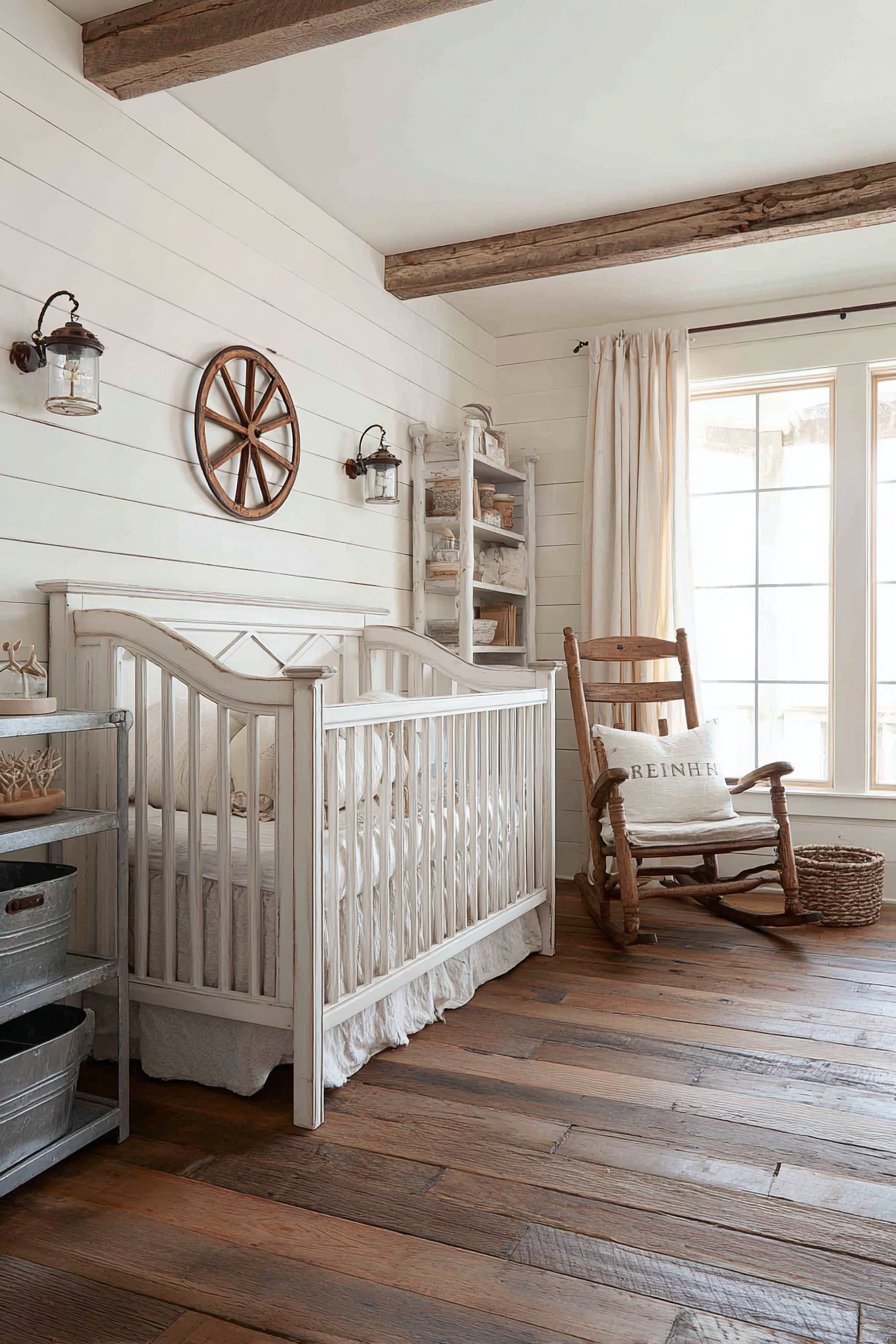
The farmhouse design emphasizes reclaimed materials and vintage finds. Authentic wear on furniture pieces adds character impossible to replicate. This approach values history and craftsmanship over mass-produced perfection. The warm, welcoming atmosphere feels immediately comfortable and lived-in.
Key Design Tips:
- Select distressed white cribs with X-detail panels for authentic farmhouse style
- Install horizontal shiplap in soft greige for neutral textured backdrops
- Use galvanized metal bins and storage for industrial farmhouse appeal
- Choose oversized wooden rockers with weathered finishes for nursing comfort
- Repurpose vintage items like wagon wheels as unique decorative mobiles
10. Twin Baby Nursery Efficiency
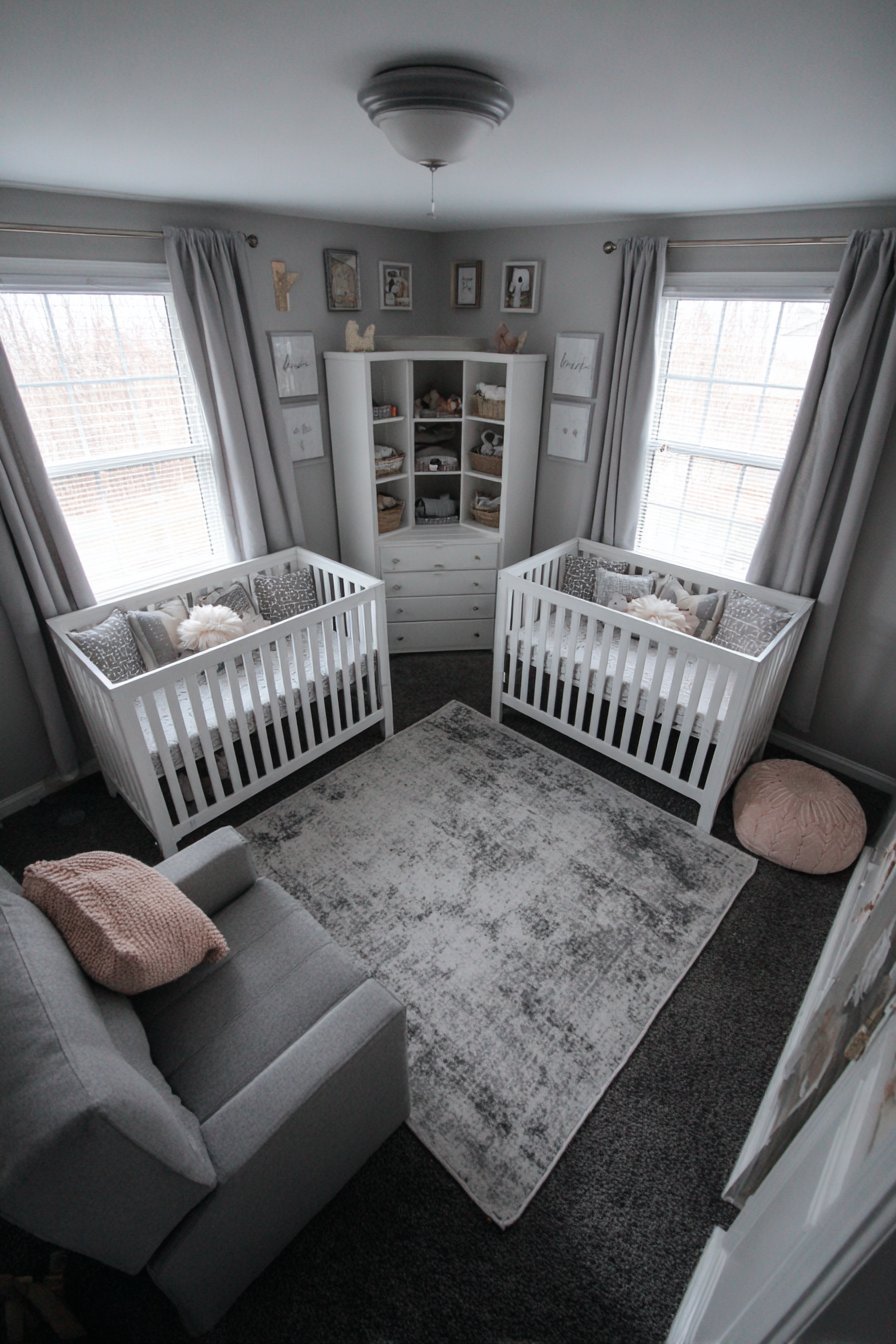
Two matching white cribs positioned in an L-configuration maximize space for multiples. The arrangement allows easy access to both babies simultaneously. A wide glider with extra cushioning sits centrally between cribs for efficient nighttime feeding. The generous seating accommodates tandem nursing or bottle feeding sessions.
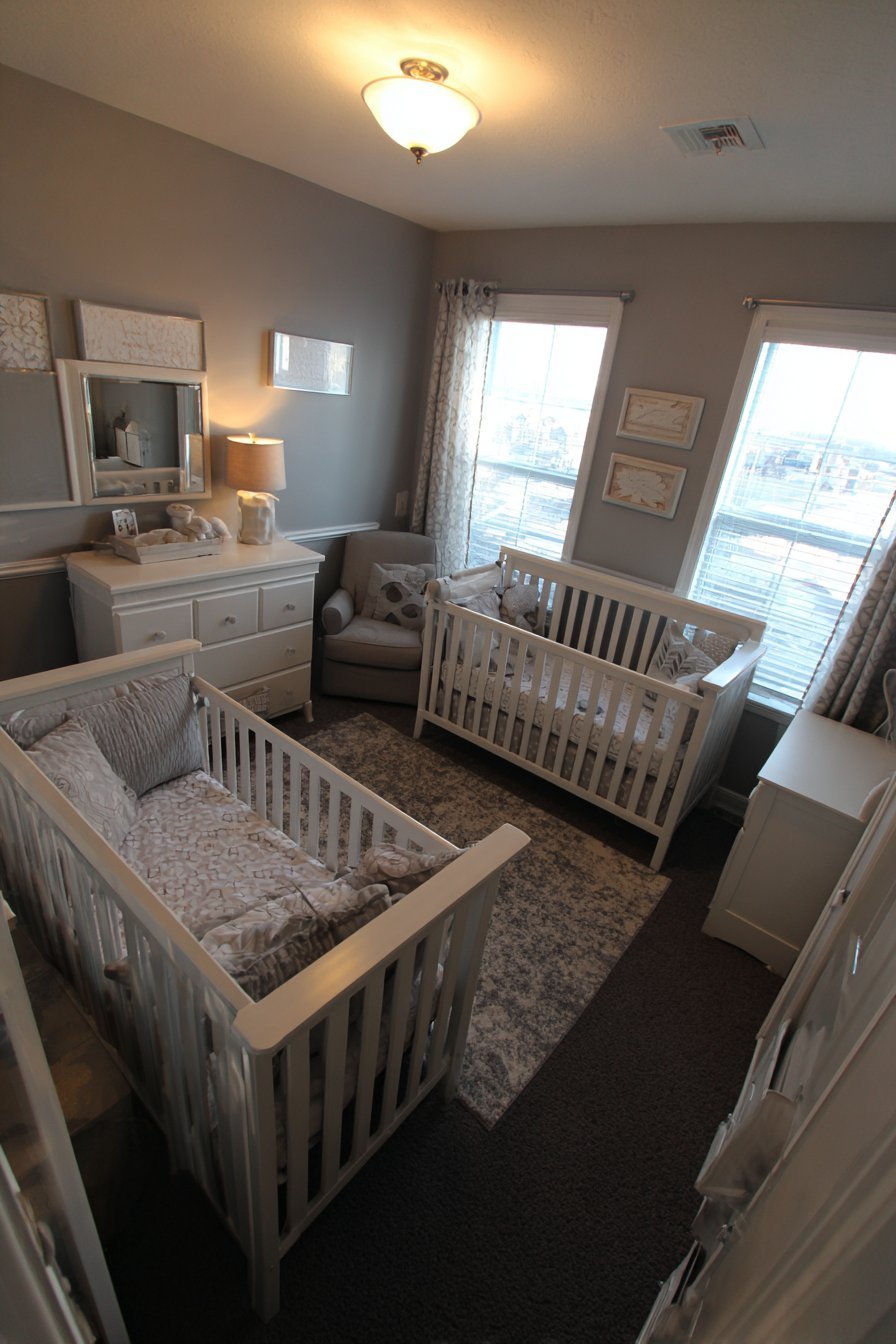
A large double dresser with two separate changing pad areas on top provides individual stations. This dedicated space for each baby maintains organization during chaotic early months. Soft gray walls and white trim create a calm backdrop. Charcoal gray carpet with subtle pattern provides comfort underfoot during frequent visits.
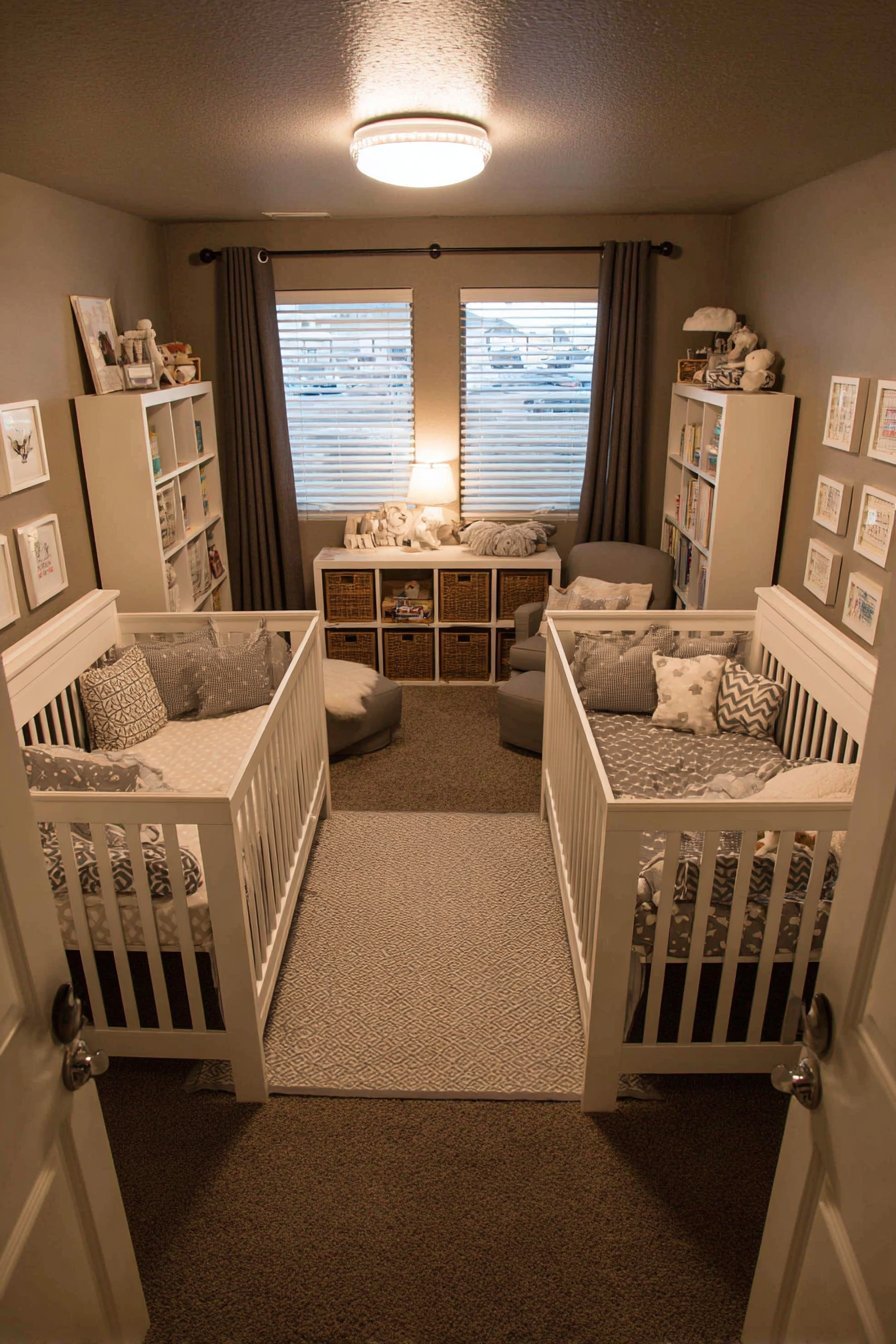
Coordinating but not identical bedding in shades of gray and white helps distinguish each baby’s space. Different patterns provide visual cues for parents and visitors. A single large bookshelf with divided sections offers organized storage for doubled supplies. The symmetrical layout creates visual harmony while serving practical needs.
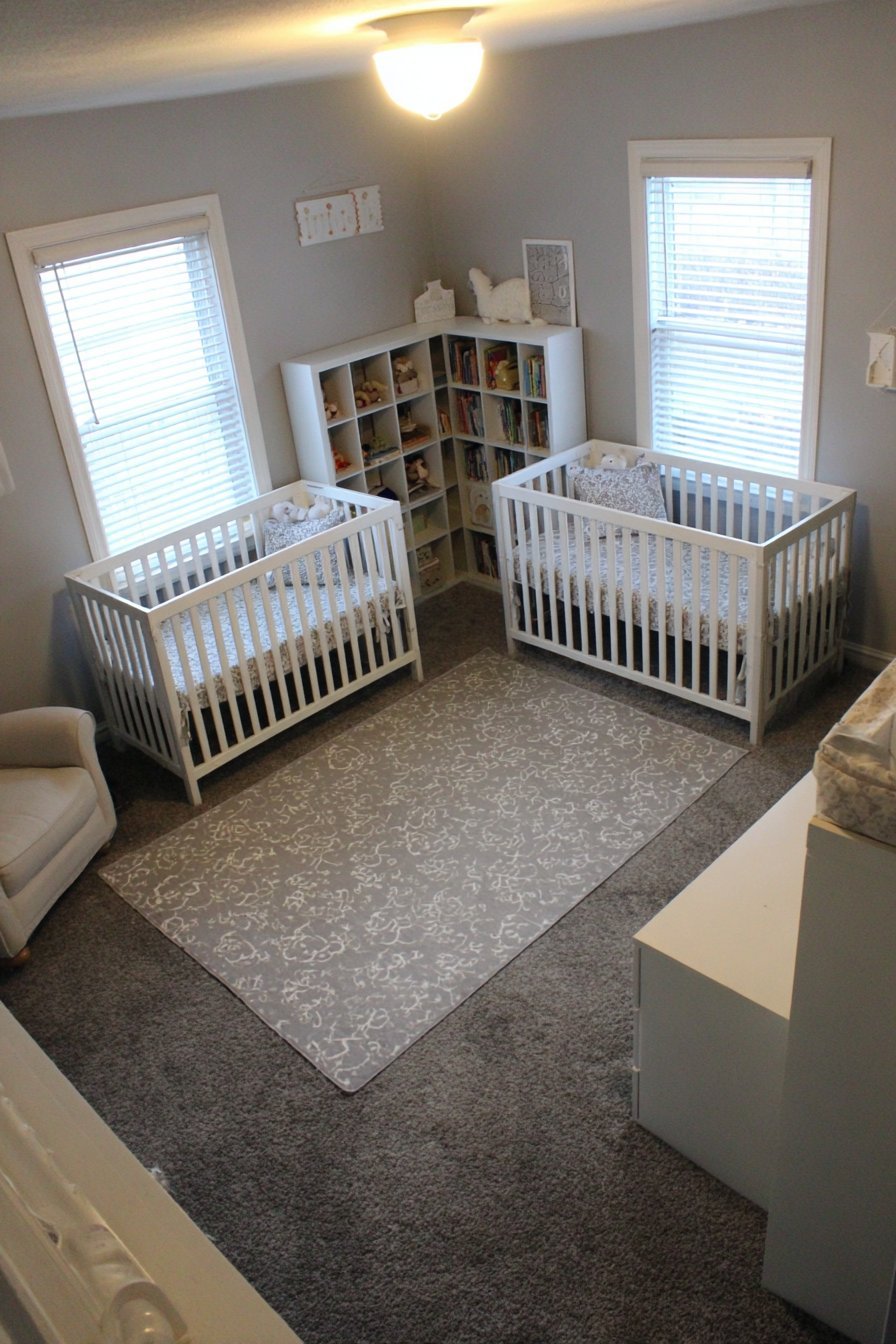
The design demonstrates thoughtful planning for the unique challenges of multiples. Efficient layouts reduce parent exhaustion during demanding routines. Symmetry creates calm in potentially chaotic situations. This approach recognizes that raising twins requires different spatial considerations than single babies.
Key Design Tips:
- Position twin cribs in L-configuration for maximum access and space efficiency
- Choose wide gliders with extra cushioning for comfortable tandem feeding sessions
- Create separate changing stations with individual supplies for each baby
- Use coordinating but different bedding patterns to distinguish each baby’s space
- Install large shelving with divided sections to organize doubled supply quantities
11. Budget-Friendly DIY Creativity
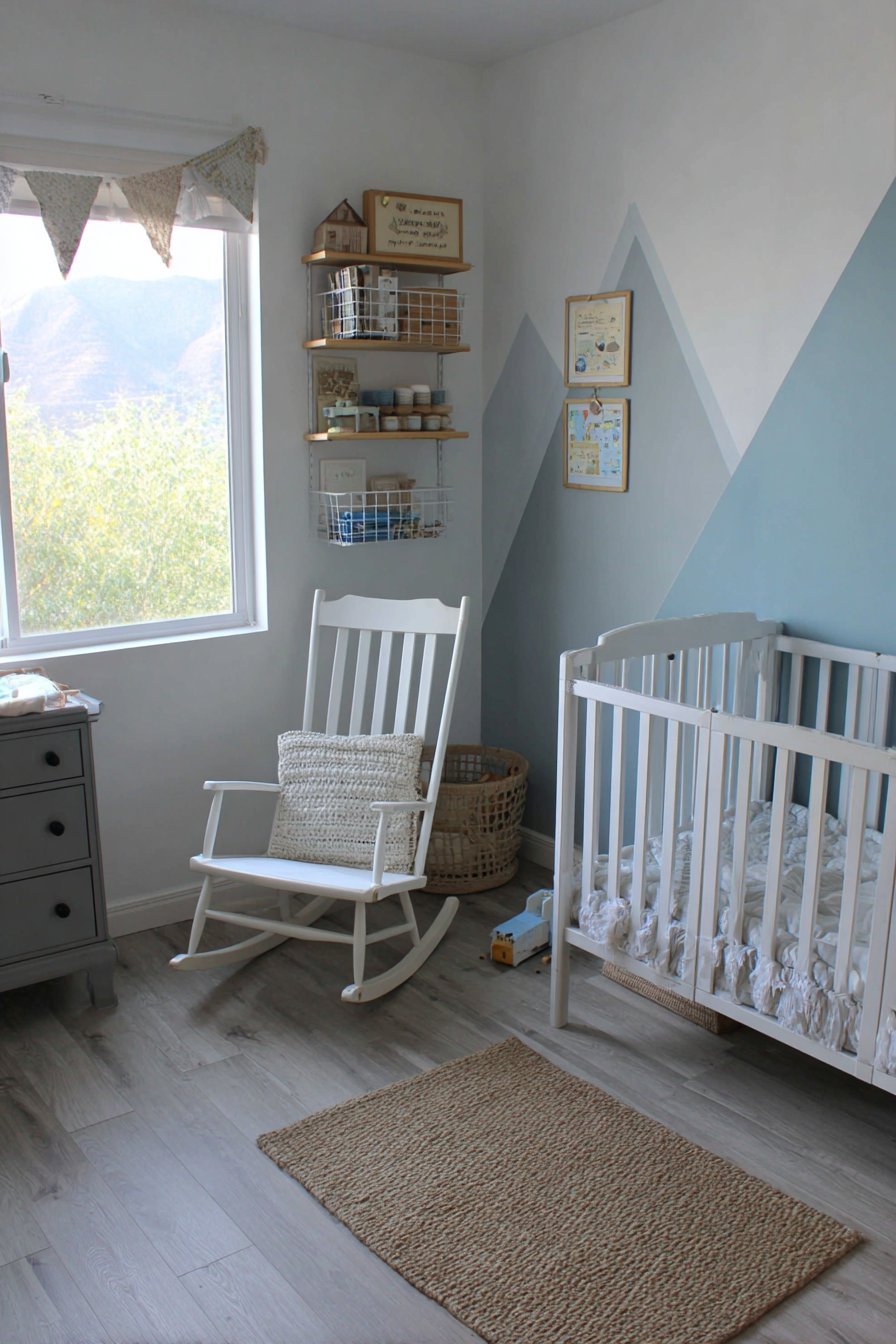
A simple white IKEA-style crib dressed in handmade crochet blankets demonstrates affordable style. DIY fabric bunting hung above adds personalized charm without expense. The walls feature creative geometric mountain designs using painter’s tape. Two shades of affordable builder-grade paint in soft blue-gray and white create visual interest.
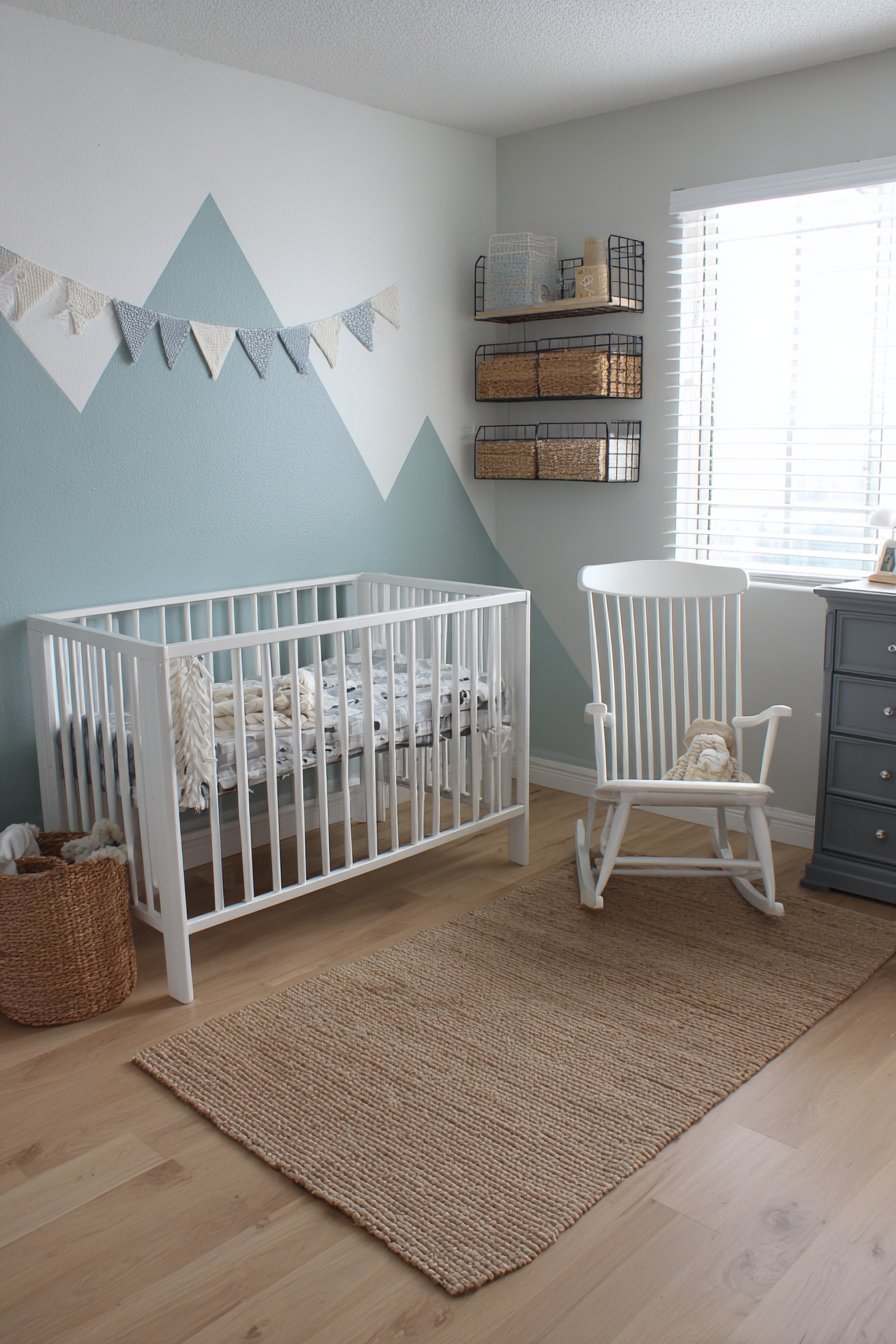
A thrifted wooden rocking chair refinished in white sits on an inexpensive natural fiber rug. The discount retailer find proves style doesn’t require premium prices. Wire basket shelving mounted on walls provides storage for folded items and small toys. A basic six-drawer dresser painted gray serves as a changing station.
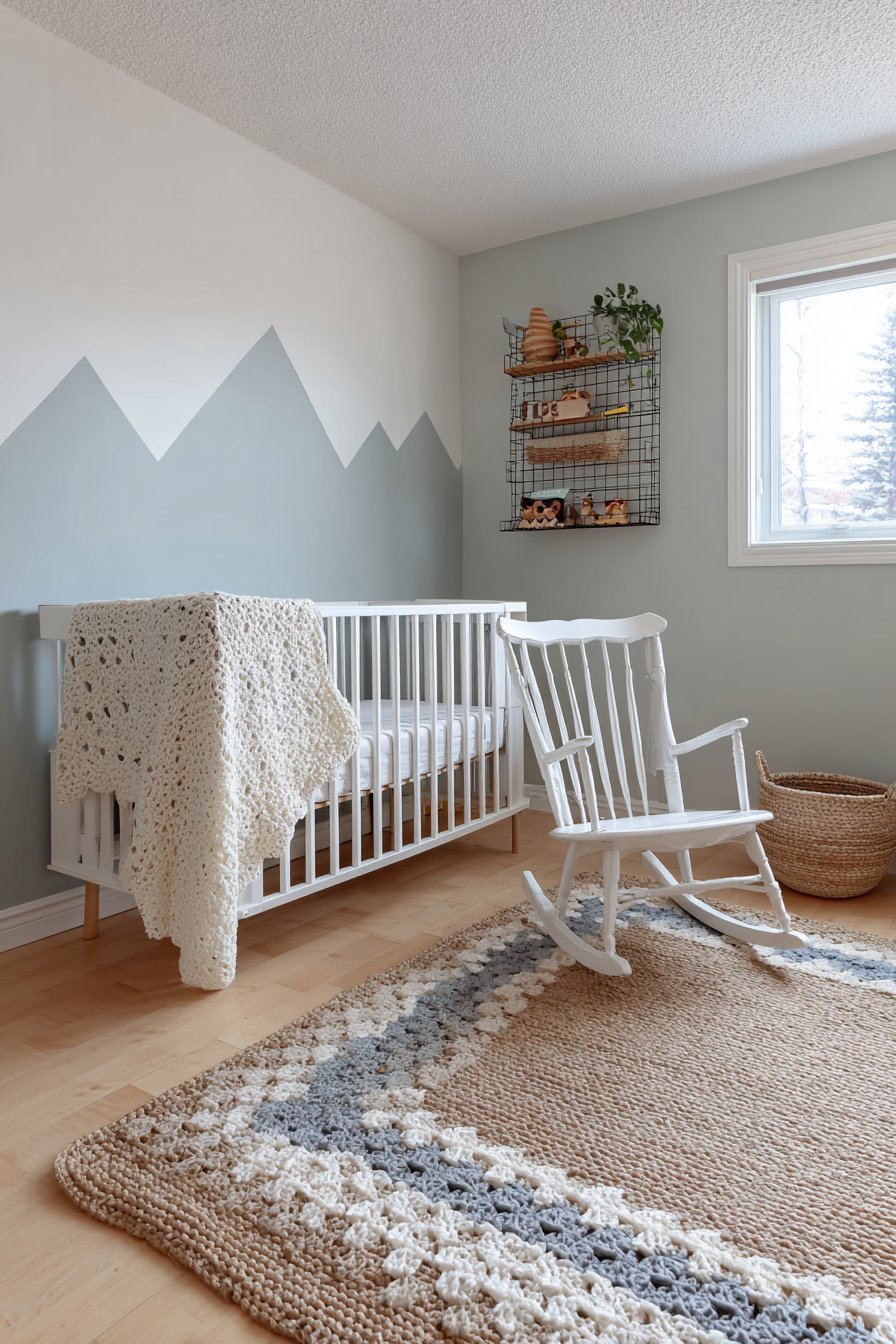
The laminate flooring in light oak is original to the space, eliminating flooring costs. Strategic placement of meaningful decorative items creates personal warmth. Natural window light eliminates the need for expensive lighting fixtures. Thoughtful design choices and DIY projects create beautiful results on modest budgets.
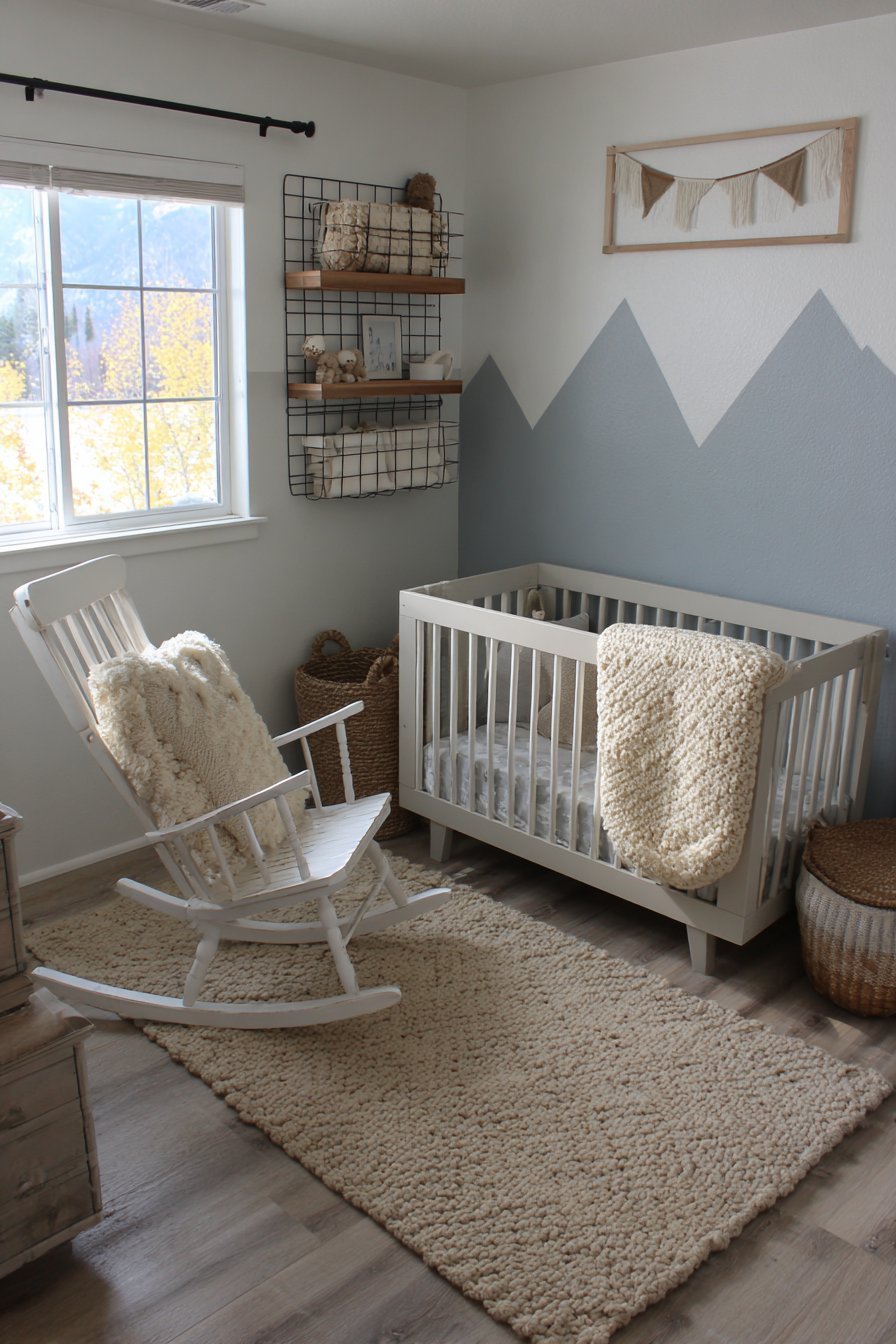
This approach proves that limited finances needn’t limit style or functionality. Creativity and effort compensate for monetary constraints. Handmade elements add personality that expensive nurseries often lack. The personal investment creates spaces filled with meaning and accomplishment.
Key Design Tips:
- Use painter’s tape to create geometric wall designs with affordable builder-grade paint
- Refinish thrifted furniture pieces instead of purchasing new expensive items
- Make handmade crochet blankets and fabric bunting for personalized charm
- Mount wire basket shelving for inexpensive yet functional storage solutions
- Shop discount retailers for natural fiber rugs that look expensive but aren’t
12. Transitional Growth-Friendly Design
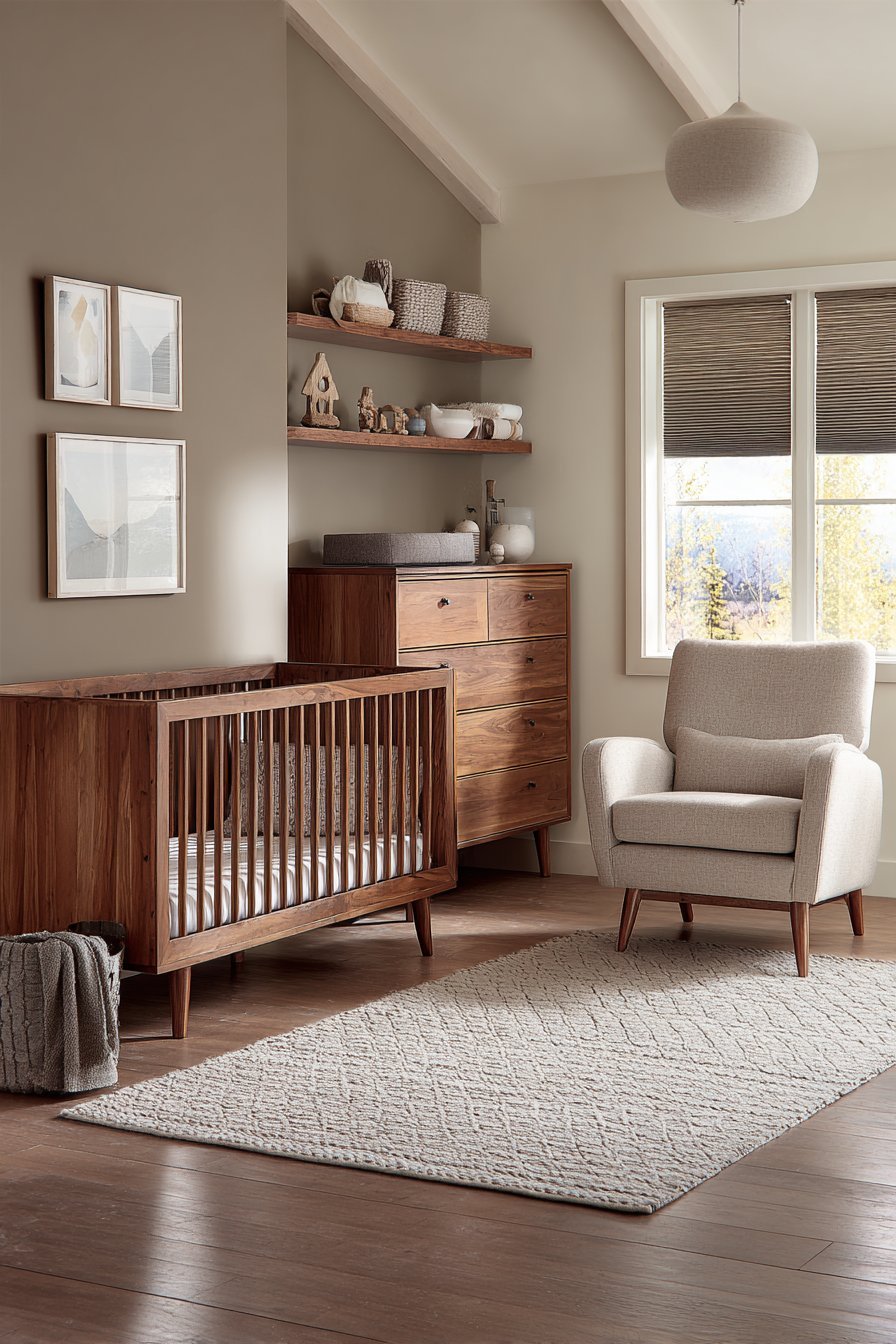
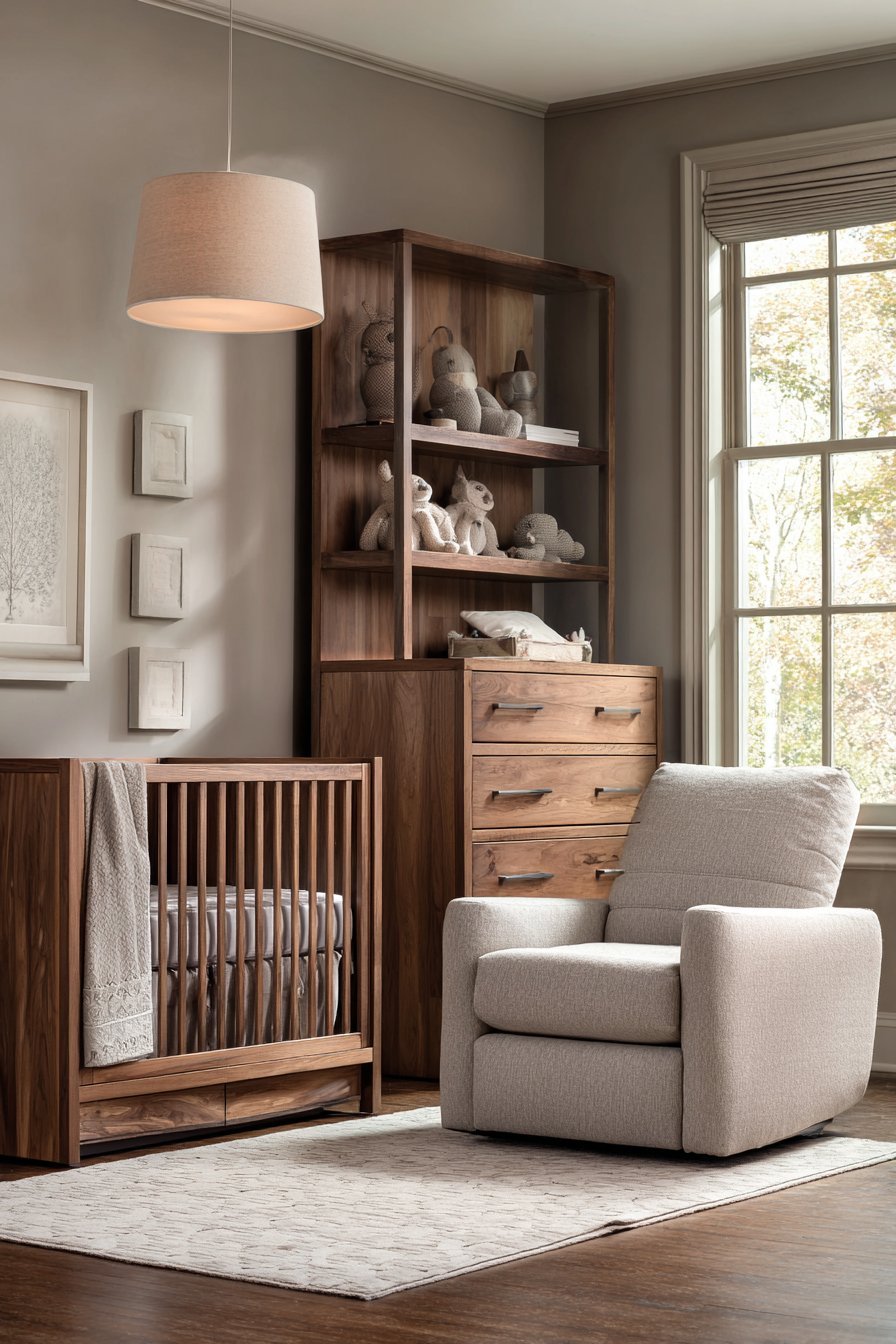
A convertible crib in natural walnut transforms into a toddler bed, extending usefulness. The investment piece sits against a neutral taupe accent wall. A substantial dresser finished in matching walnut will serve beyond the nursery years. Quality hardware ensures longevity through years of use.
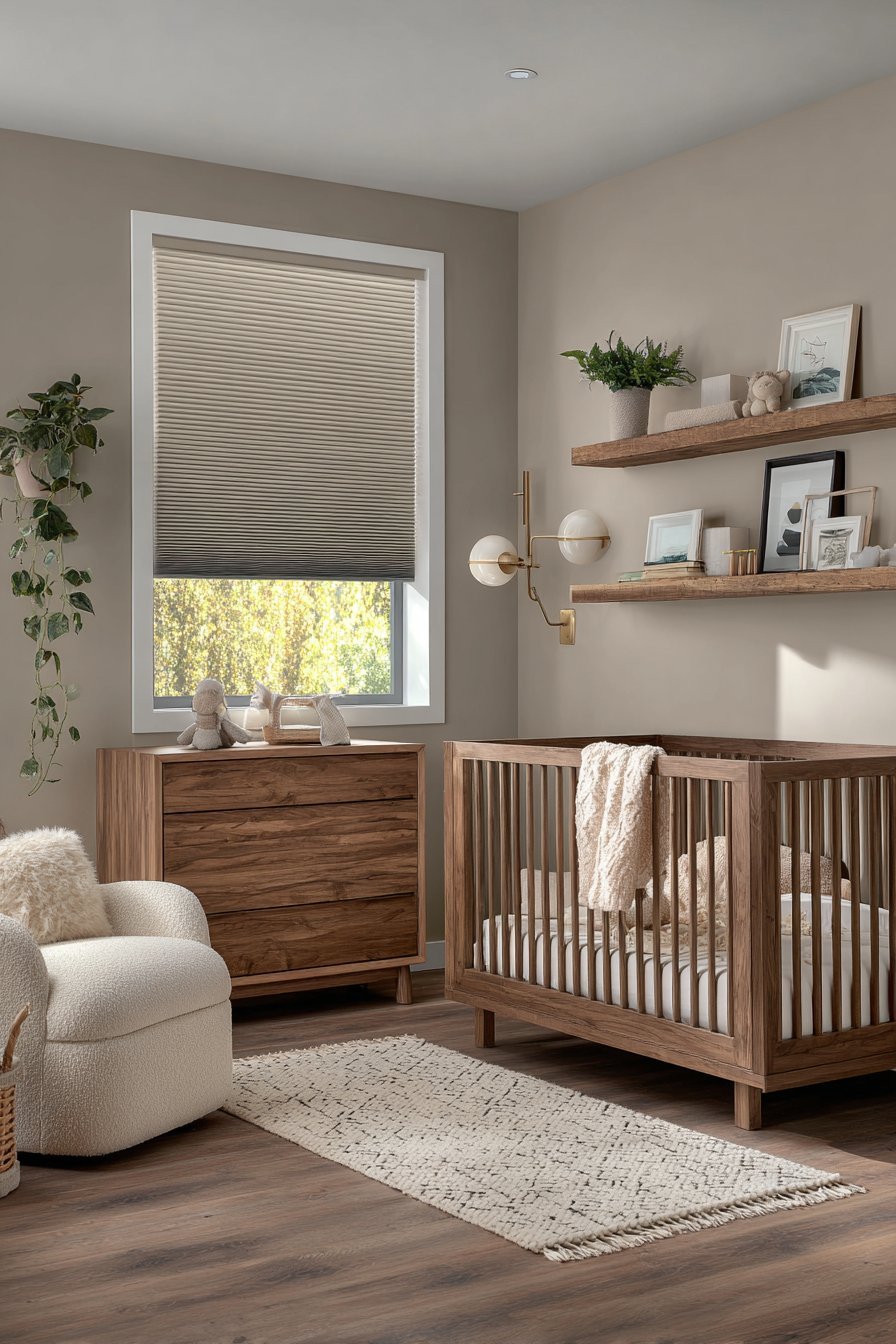
A comfortable upholstered glider in durable performance fabric withstands inevitable spills. The window dressing features cellular shades offering blackout capability for healthy sleep. Medium brown hardwood flooring and neutral area rug in geometric pattern provide mature foundations. Wall-mounted shelving at adult height can be lowered later as children grow.
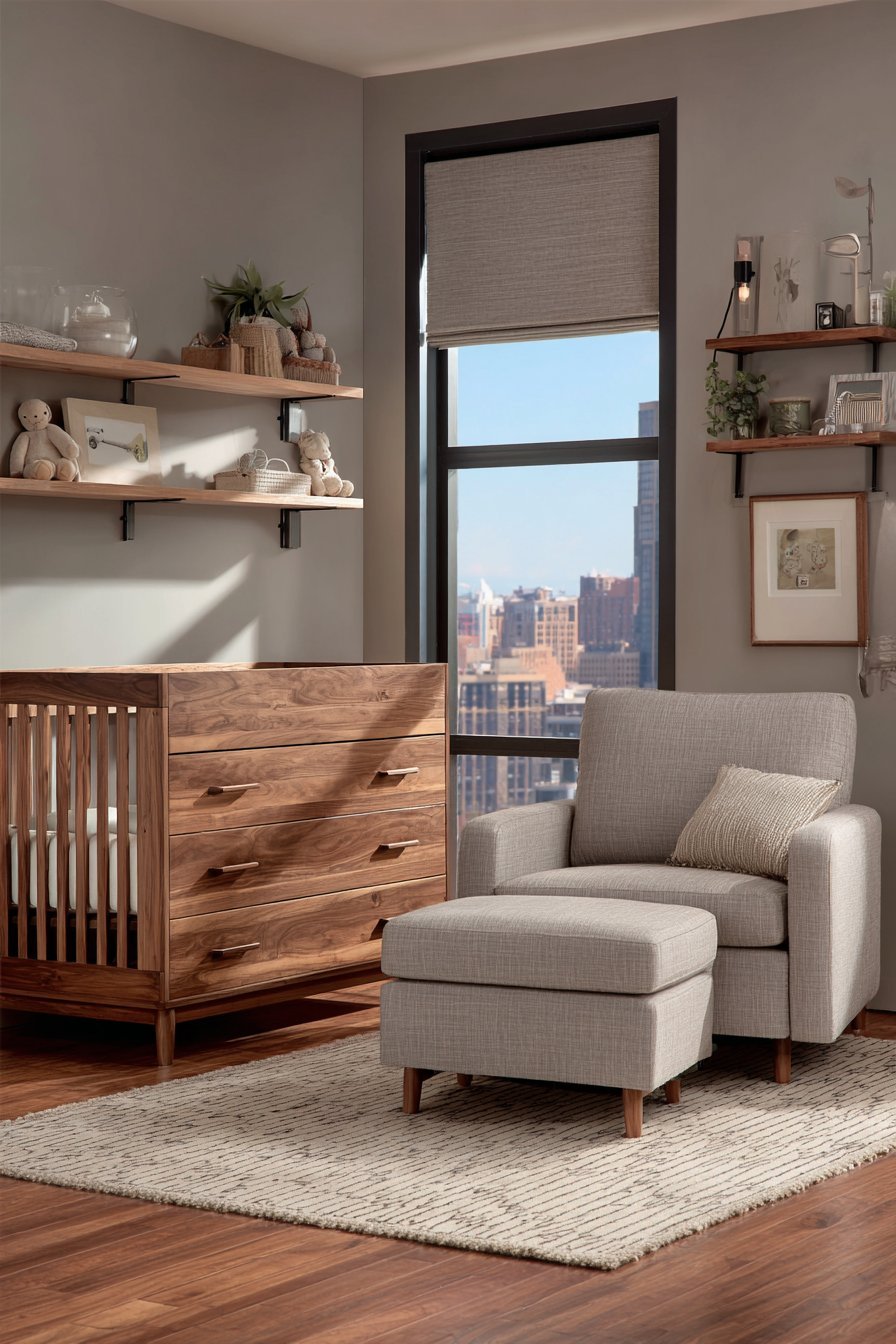
The restrained color palette of taupe, cream, and natural wood tones avoids overly juvenile themes. This sophisticated approach prevents the need for complete redesign as children mature. Quality furniture pieces justify higher initial costs through years of service. The timeless design transcends fleeting trends.
Smart planning creates spaces that adapt rather than require replacement. This sustainable approach reduces long-term costs and environmental impact. The mature aesthetic respects that nurseries eventually become big kid rooms. Thoughtful investment in quality creates lasting value.
Key Design Tips:
- Choose convertible cribs in quality wood that transform into toddler beds
- Select substantial dressers in timeless finishes for years of service
- Use performance fabric on upholstered pieces for stain resistance and durability
- Avoid juvenile themes in favor of neutral palettes that age well
- Install adjustable wall-mounted shelving that lowers as children grow
13. Montessori-Inspired Independence
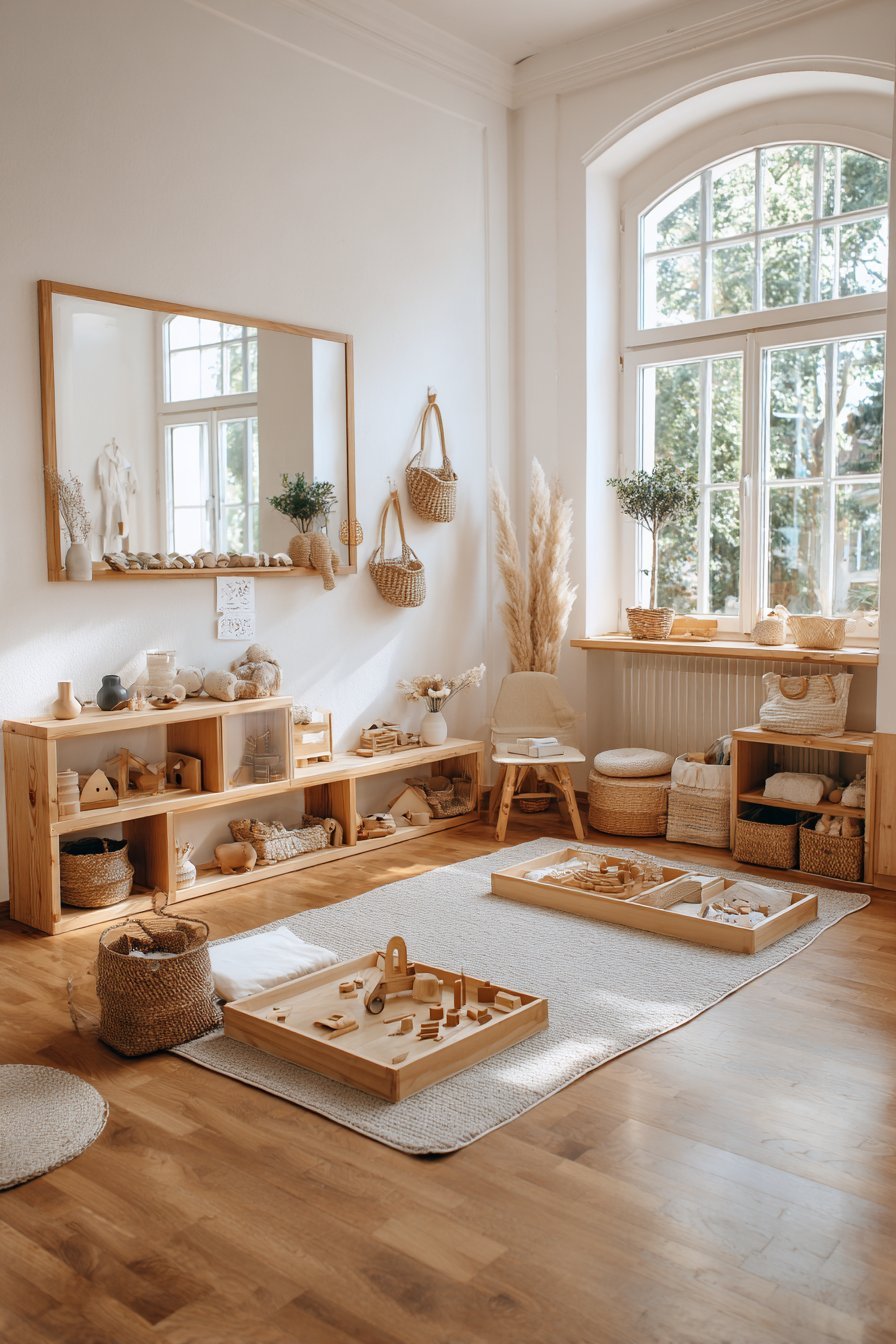
A floor bed consisting of a low wooden frame and firm mattress sits directly on the floor. This arrangement allows infant independence and safe exploration without fall risks. A large mirror mounted horizontally at floor level encourages self-awareness and movement. The reflective surface fascinates babies and supports development.
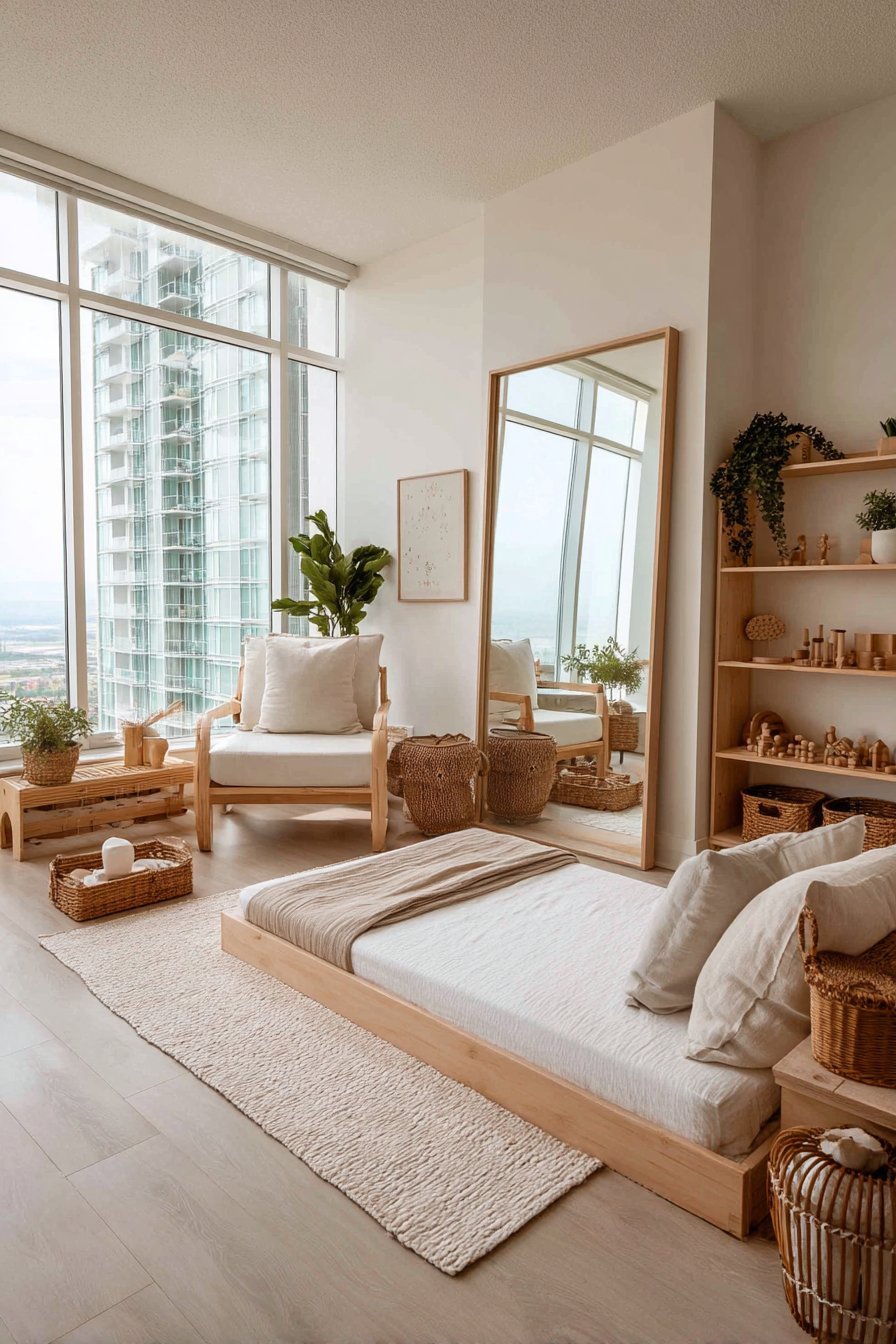
Low open shelving made from natural birch holds a curated selection of age-appropriate toys. Woven baskets contain items all within easy reach. A nursing chair and small side table occupy one corner for parent comfort. A simple wardrobe with child-height hanging rod promotes early involvement in dressing routines.
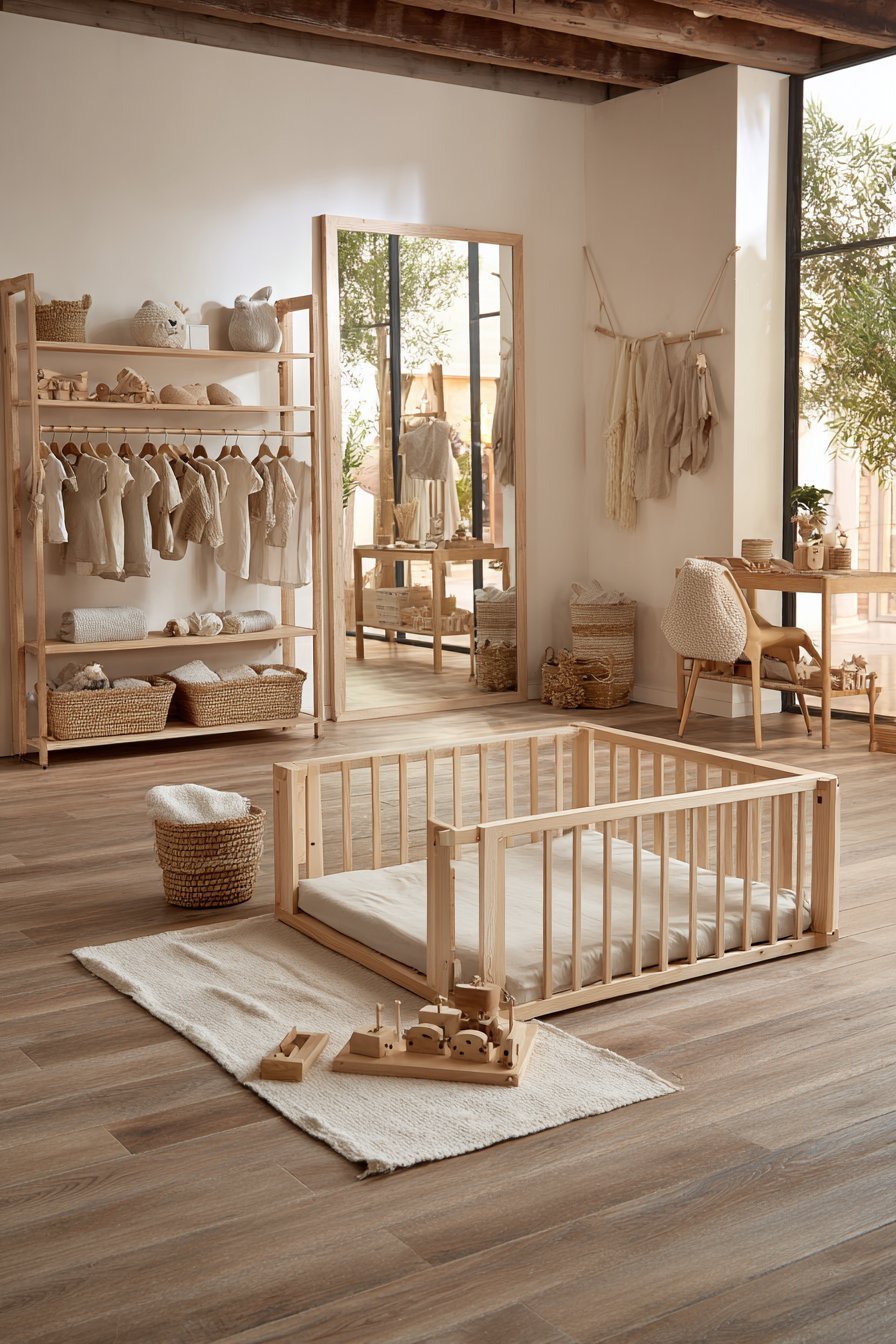
Light maple flooring is partially covered by a thin cotton rug suitable for movement. Walls painted in neutral off-white provide calm, uncluttered backdrops. Natural materials dominate with wooden toys, cotton textiles, and ceramic items. The philosophy emphasizes accessibility and independence through thoughtful design.
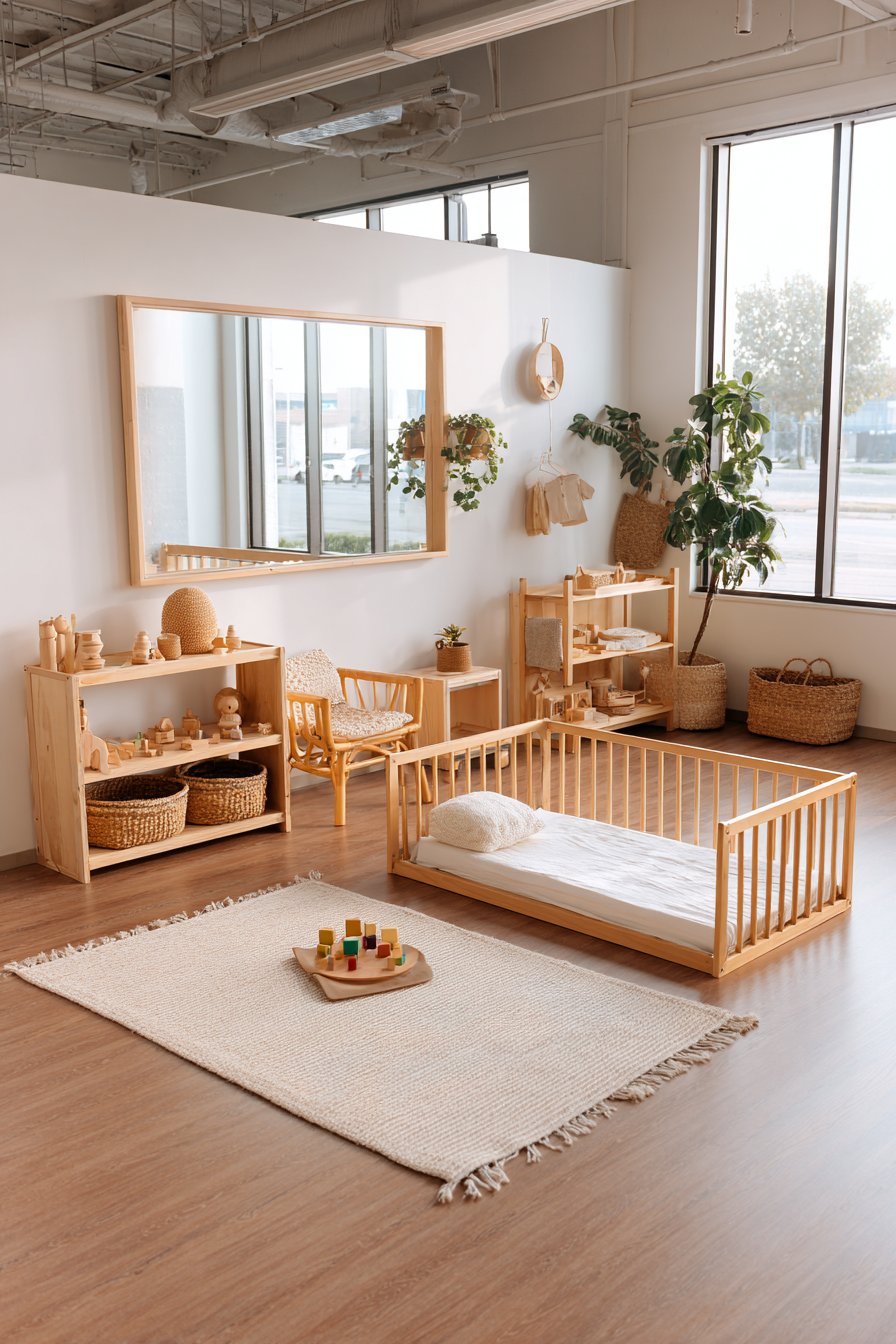
Natural daylight from large windows provides ample illumination without harsh artificial lighting. The Montessori approach trusts children’s natural development when given appropriate environments. This educational philosophy extends beyond schools into home design. The result creates confident, capable children through spatial empowerment.
Key Design Tips:
- Install floor beds with low frames allowing safe independent exploration
- Mount large mirrors horizontally at floor level for self-awareness development
- Use low open shelving with everything within easy child reach
- Choose natural materials like wood, cotton, and ceramics over plastics
- Provide child-height hanging rods in wardrobes for dressing participation
14. Storage-Focused Organization
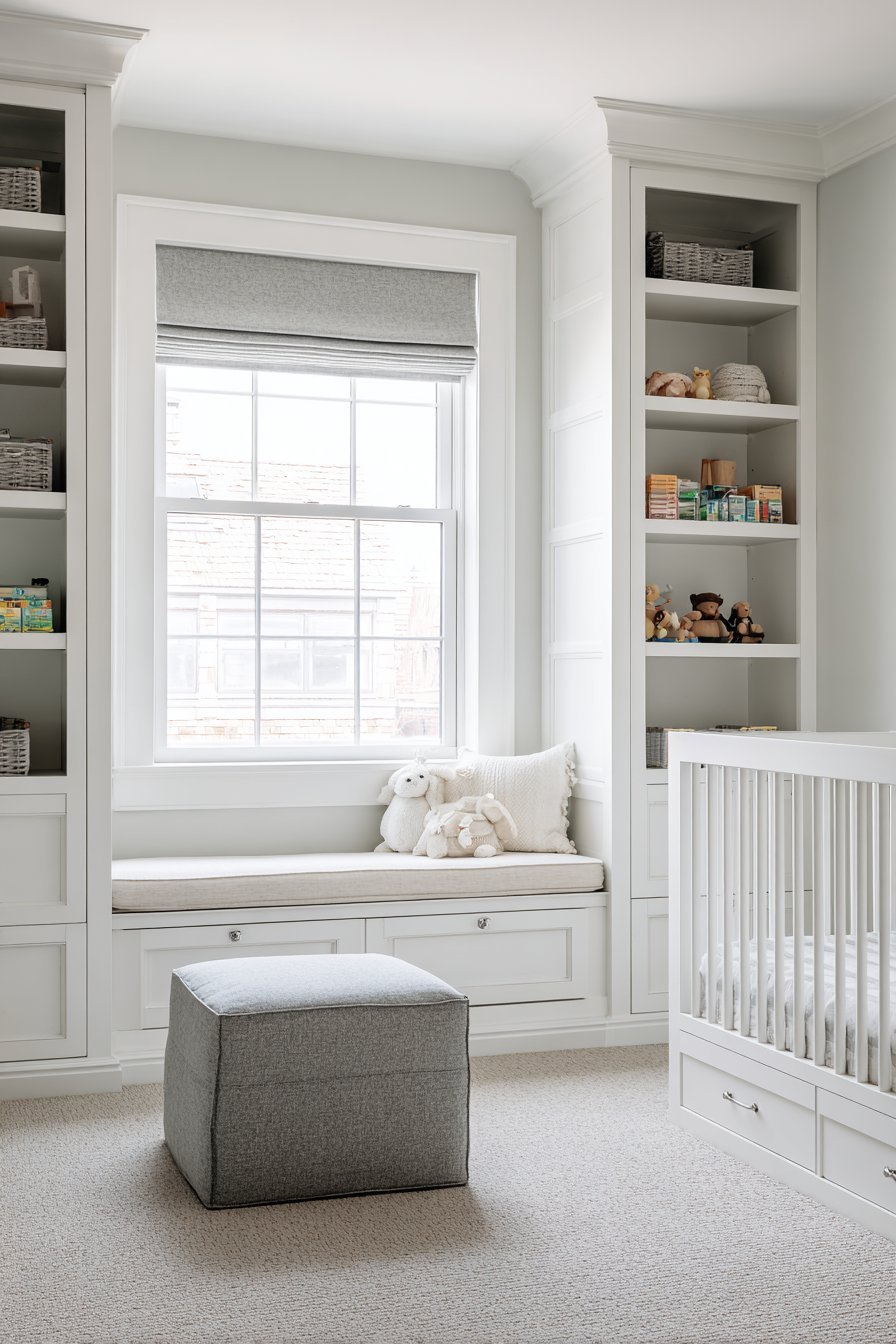
Floor-to-ceiling built-in cabinetry in white painted wood flanks windows beautifully. The extensive closed storage holds off-season clothing and bulky equipment. A central white crib sits beneath windows dressed with simple blackout cellular shades. The built-ins include combinations of cabinets, open cubbies, and adjustable shelving.
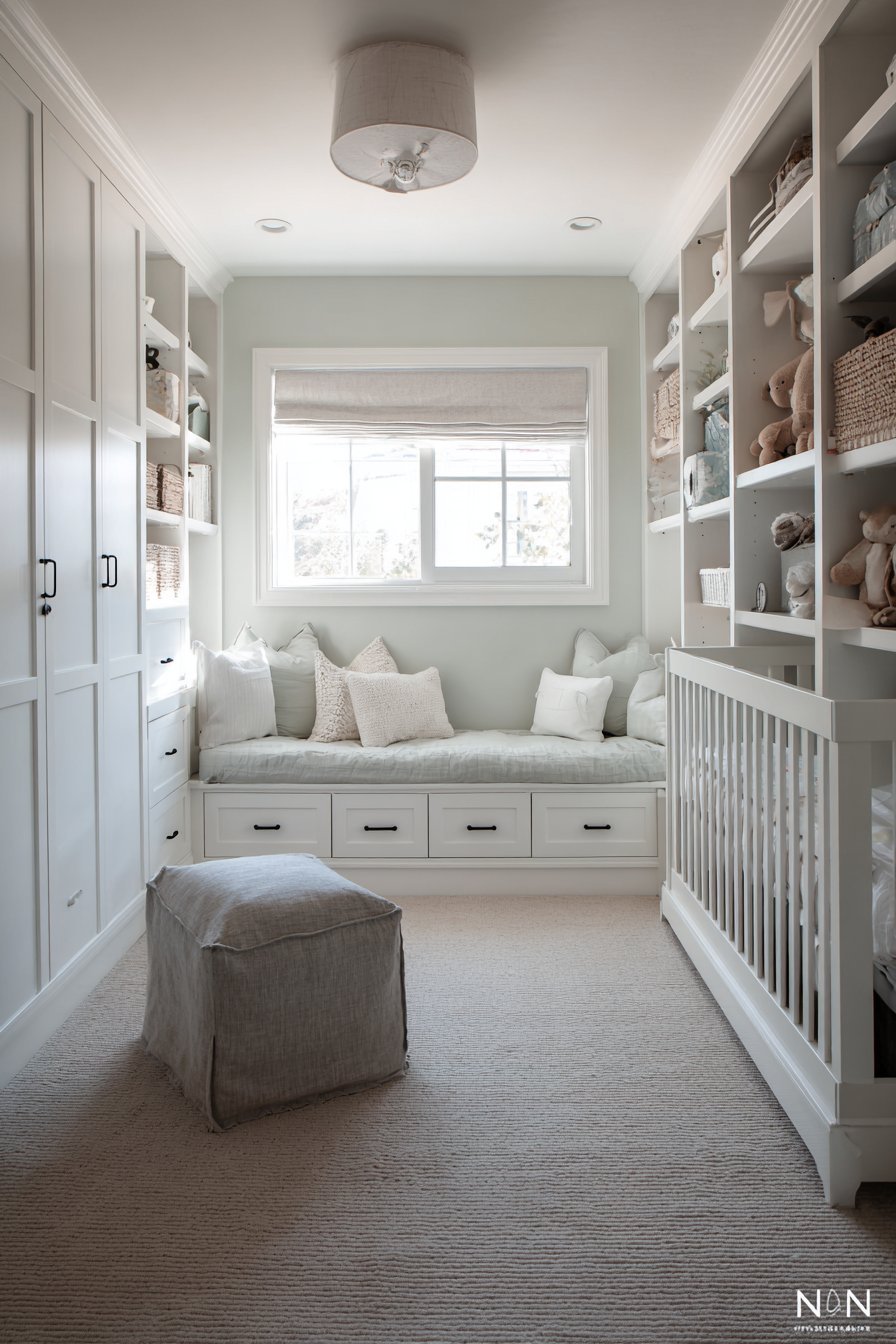
A built-in desk area serves as a changing station now but transitions to homework space later. The adaptable design grows with changing needs. Under-crib rolling storage drawers maximize often-wasted space beneath the mattress. A storage ottoman in gray linen provides seating while hiding additional items.
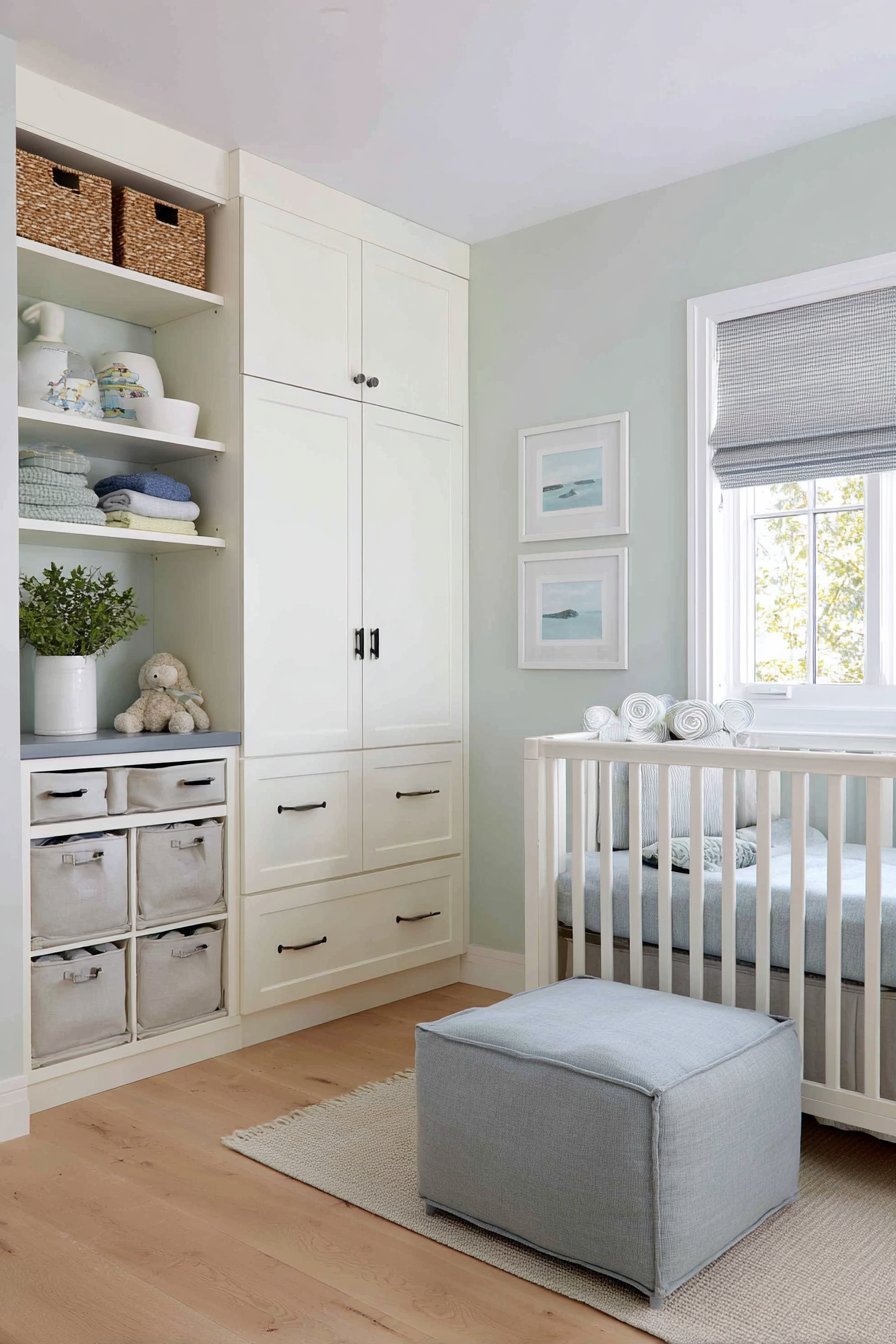
Light gray walls and white millwork create clean backdrops for the highly functional space. The organized approach addresses the reality of baby gear accumulation. Custom carpentry details ensure every available inch serves storage purposes. The result maintains clean, organized appearances despite extensive belongings.
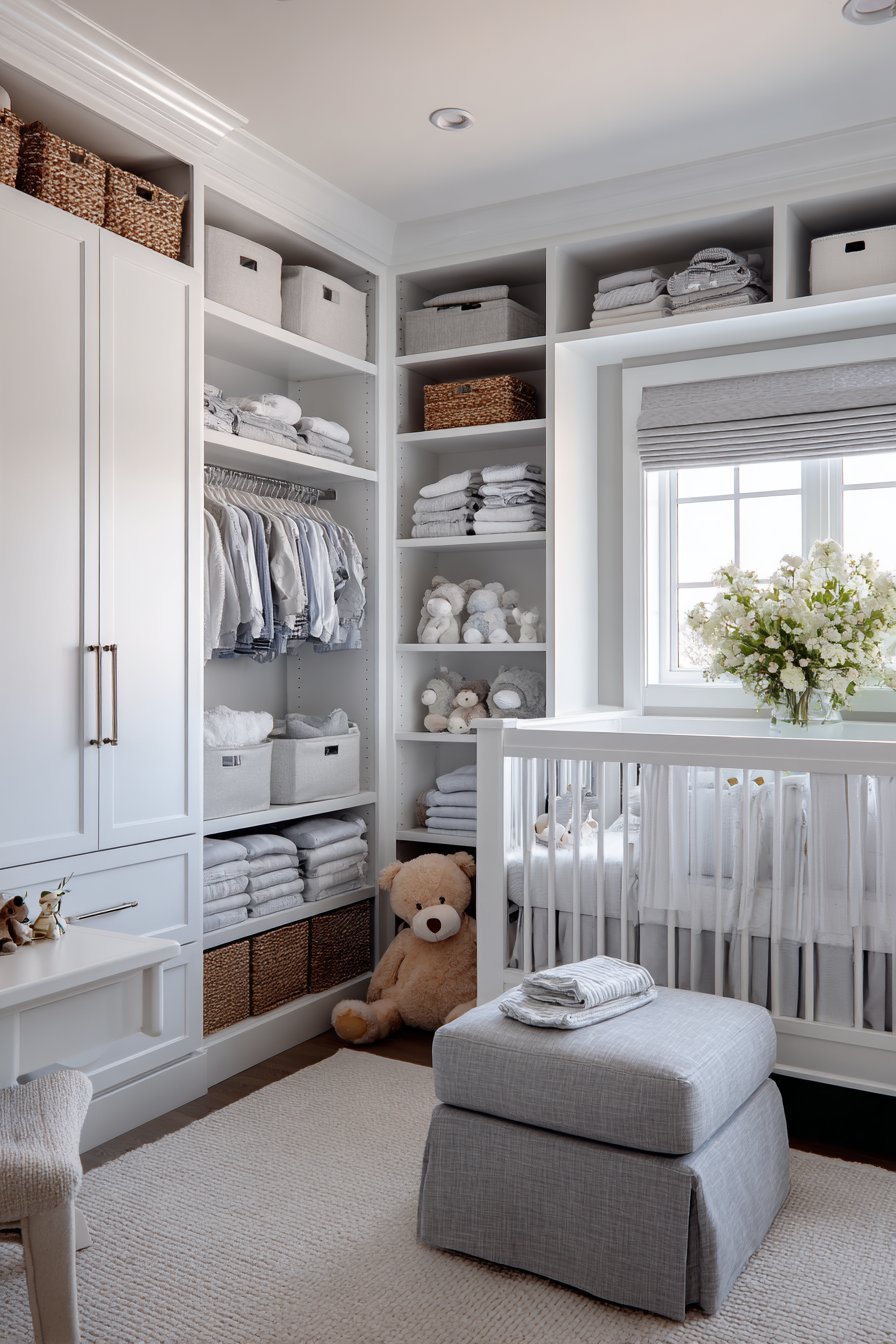
Well-planned storage systems reduce daily stress for busy parents. Designated places for every item streamline routines and cleanup. This approach recognizes that functional spaces support happier families. The investment in custom storage pays dividends through years of use.
Key Design Tips:
- Install floor-to-ceiling built-in cabinetry for maximum storage capacity
- Create built-in desk areas that transition from changing to homework stations
- Use under-crib rolling drawers to maximize often-wasted space
- Add storage ottomans that provide seating while hiding items
- Combine open and closed storage for organizational flexibility and visual variety
15. Nature-Inspired Living Wall
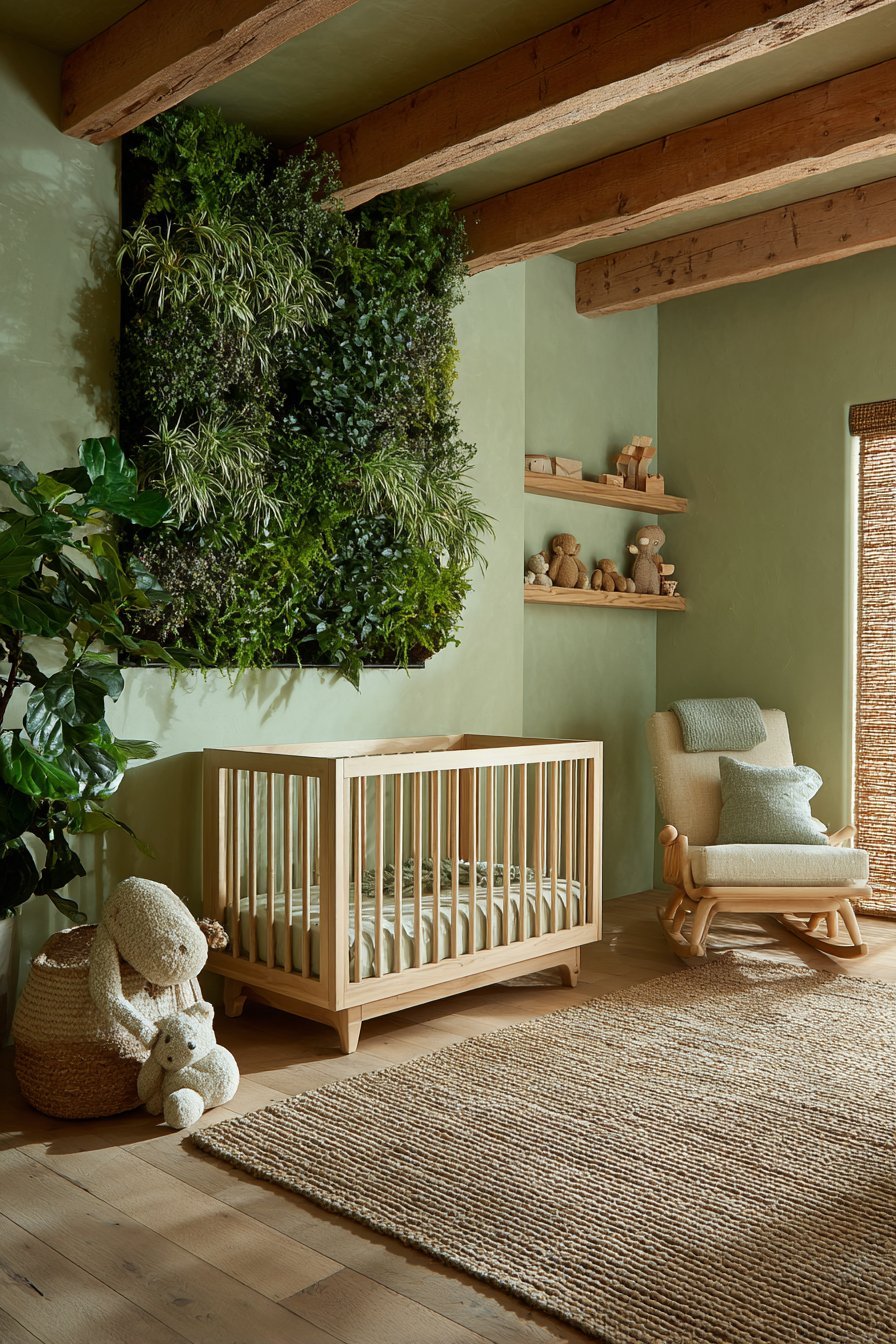
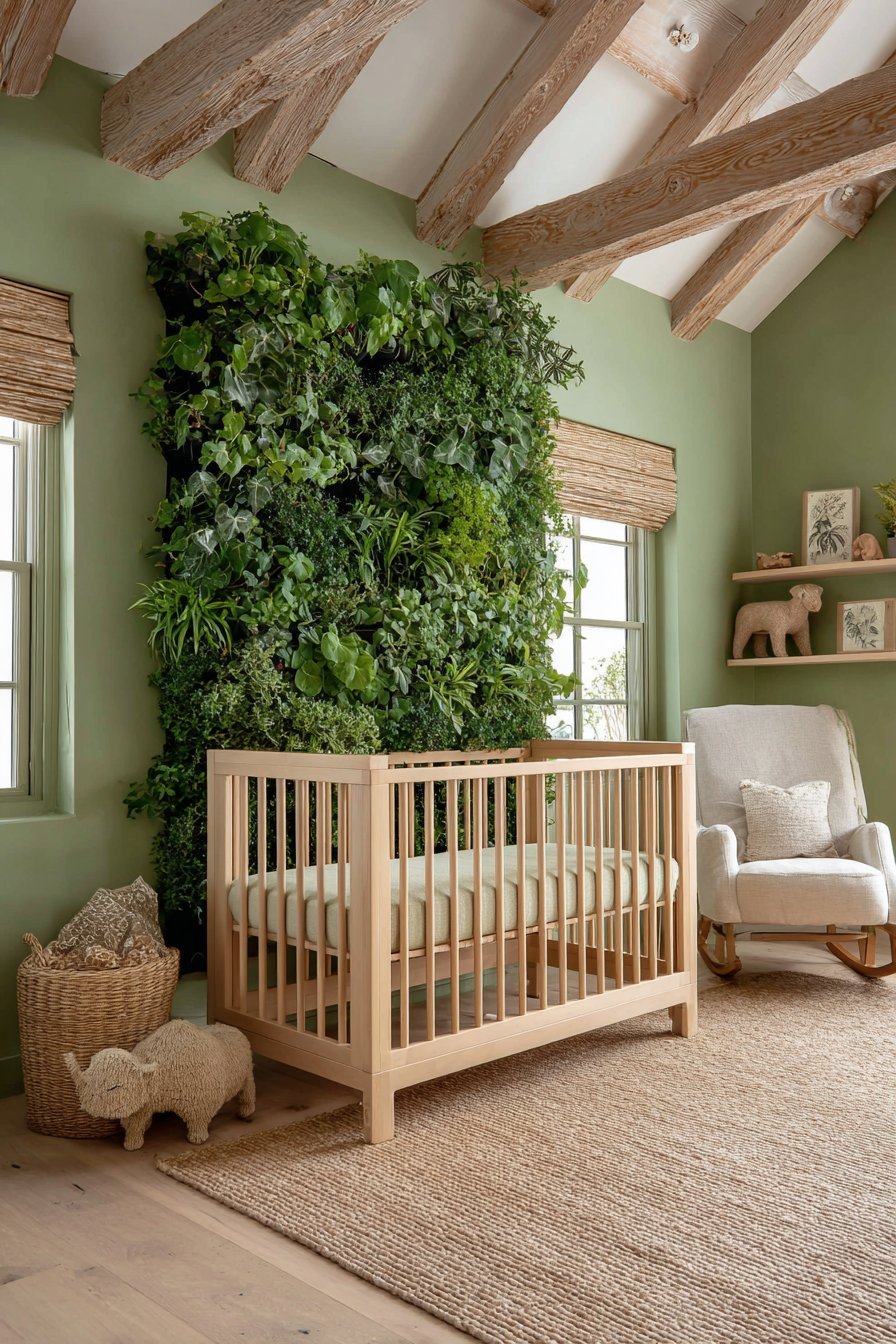
A living wall installation of safe, non-toxic plants in vertical planters creates striking organic focal points. The green wall brings nature indoors while improving air quality. A natural wood crib in light maple with clean modern lines sits centered. Organic cotton bedding in cream and soft green tones complements the living wall.
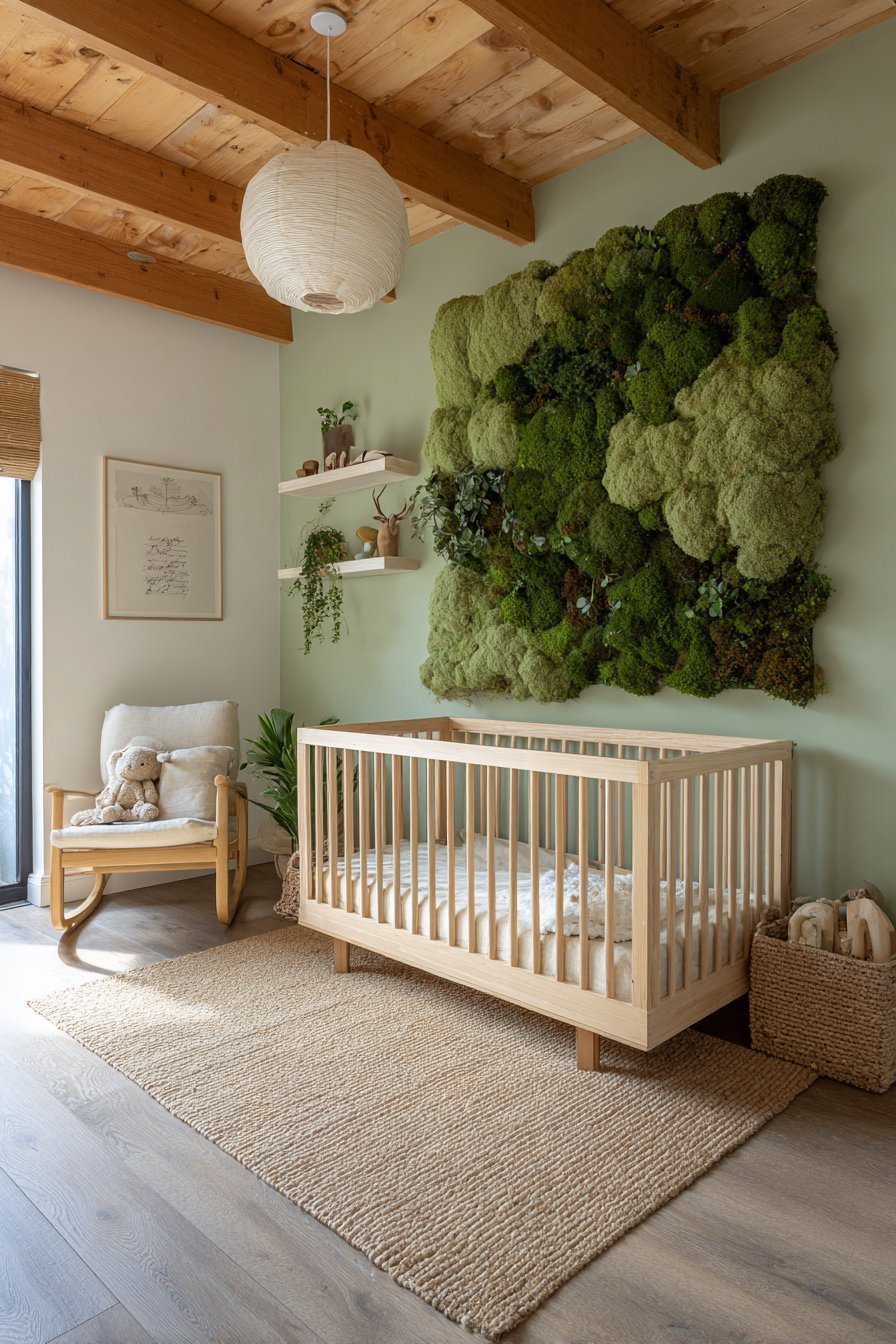
Walls painted in soft sage green harmonize with the plant installation. The ceiling features exposed wooden beams in natural finish adding architectural interest. A jute rug covers medium-toned wood flooring with organic texture. A rocking chair upholstered in natural undyed linen provides nursing seating.
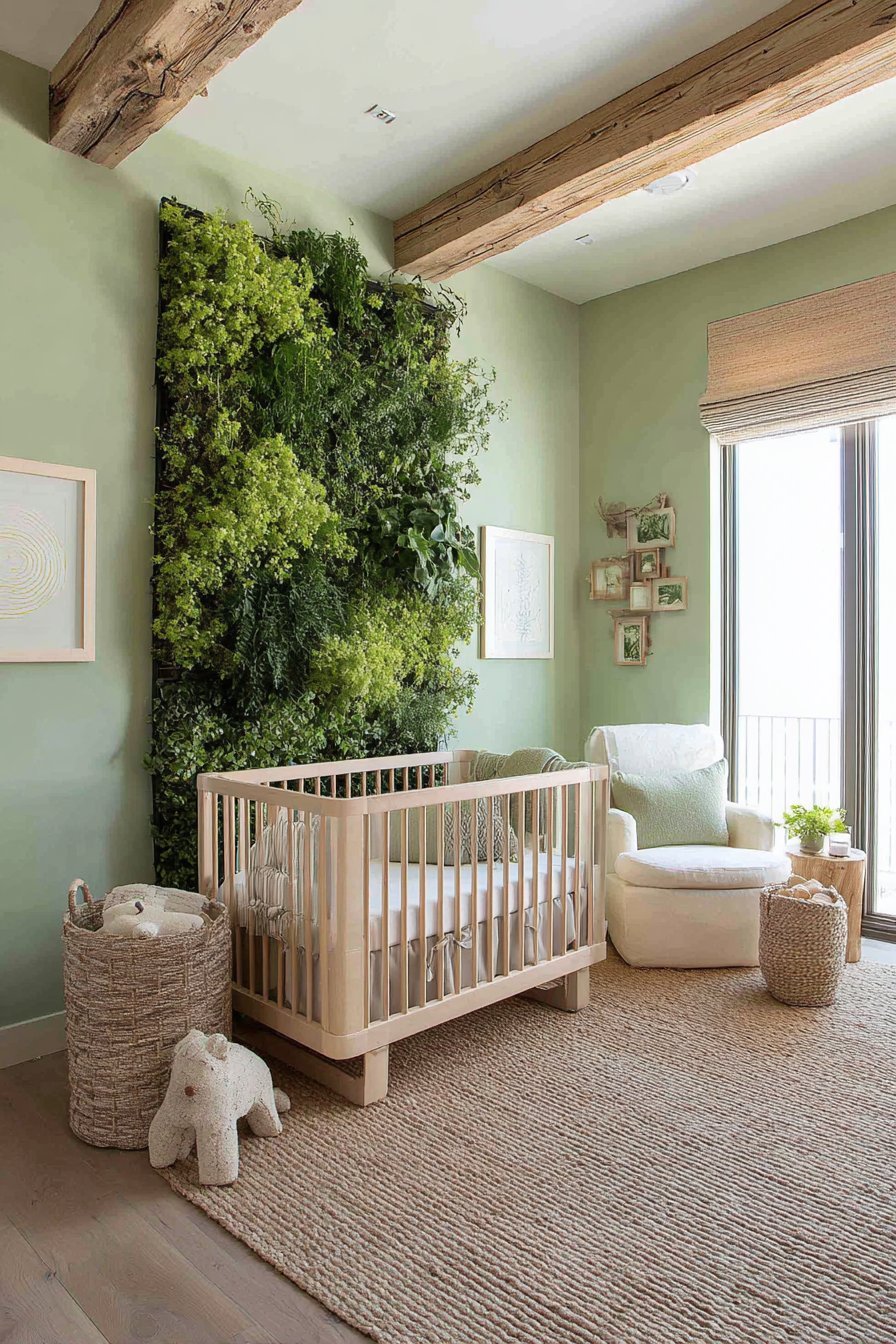
Bamboo Roman shades filter natural light while maintaining the organic theme. The plant wall adds living texture and improved air quality naturally. Wooden animal figurines and natural fiber baskets continue the nature connection. The biophilic approach introduces children to growing things from birth.
Nature-connected design supports cognitive development and environmental awareness. Plants in nurseries demonstrate daily care and seasonal change. This educational element enriches childhood experiences naturally. The fresh, living atmosphere benefits the entire family’s wellbeing.
Key Design Tips:
- Install living walls with safe, non-toxic plants for air quality improvement
- Choose natural wood cribs in light finishes to complement greenery
- Paint walls in soft sage green to harmonize with plant installations
- Use bamboo Roman shades to filter light while maintaining organic themes
- Add wooden toys and natural fiber baskets throughout for consistent biophilic design
16. Converted Closet Alcove Innovation
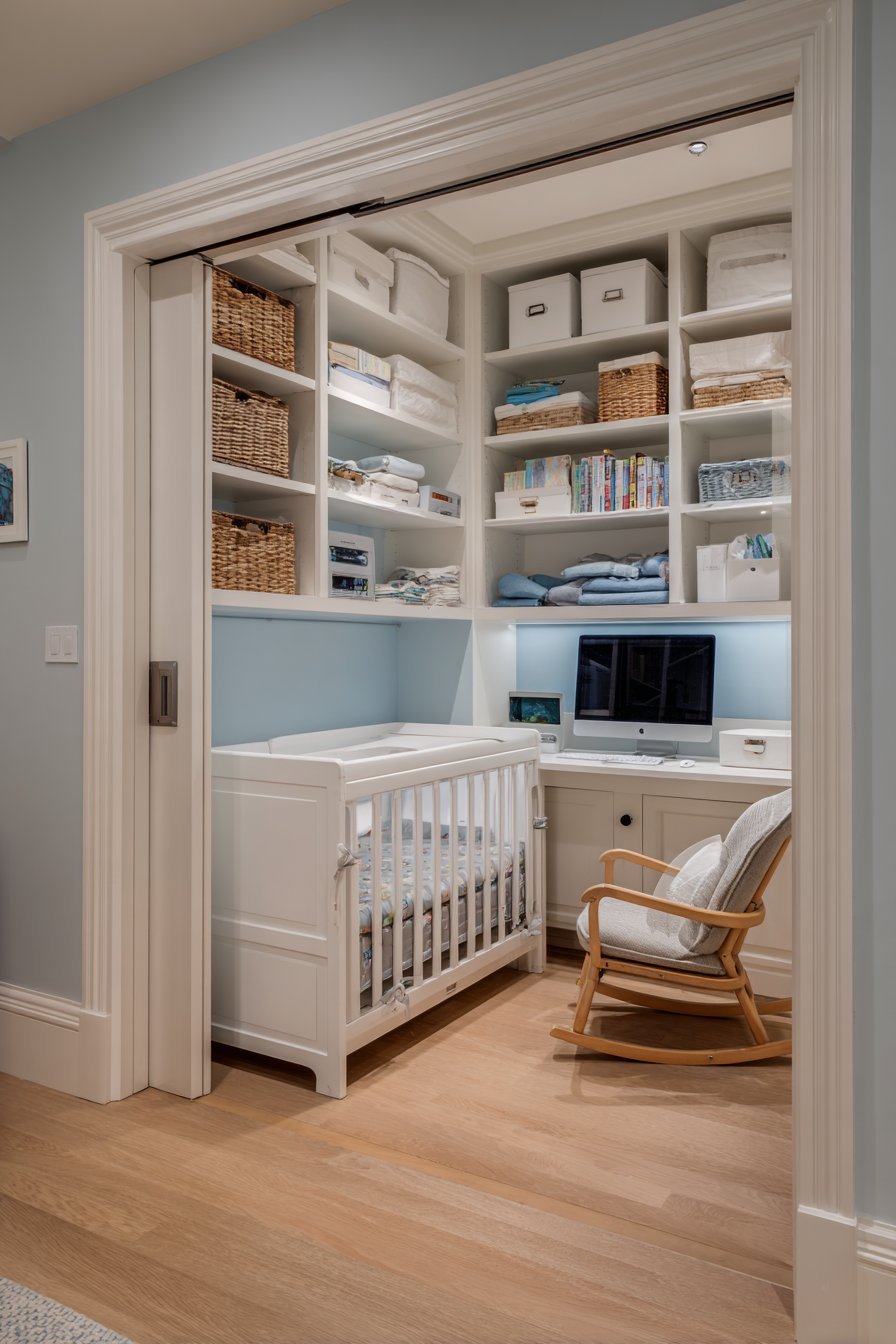
A mini crib in white fits perfectly in a recessed closet alcove. Custom built-in shelving extends to the ceiling above the sleeping space. The surrounding walls are painted in soft powder blue with white trim. The built-in shelving incorporates a fold-down changing surface that stows away when not needed.
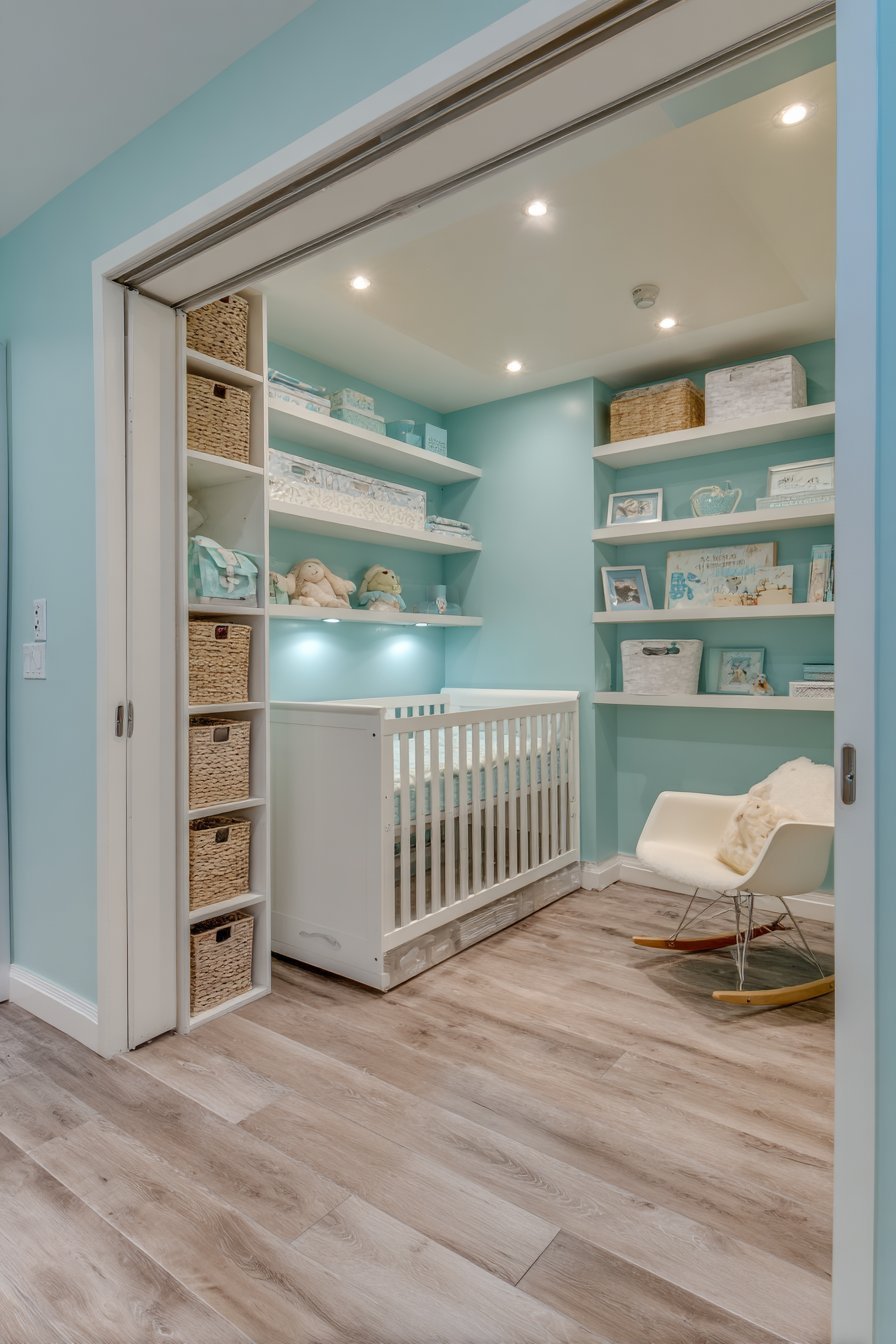
A compact rocking chair designed for small spaces sits just outside the alcove area. Light oak laminate flooring maintains continuity throughout the room. The clever design includes integrated LED strip lighting under each shelf. The gentle illumination provides nighttime visibility without harsh overhead lights.
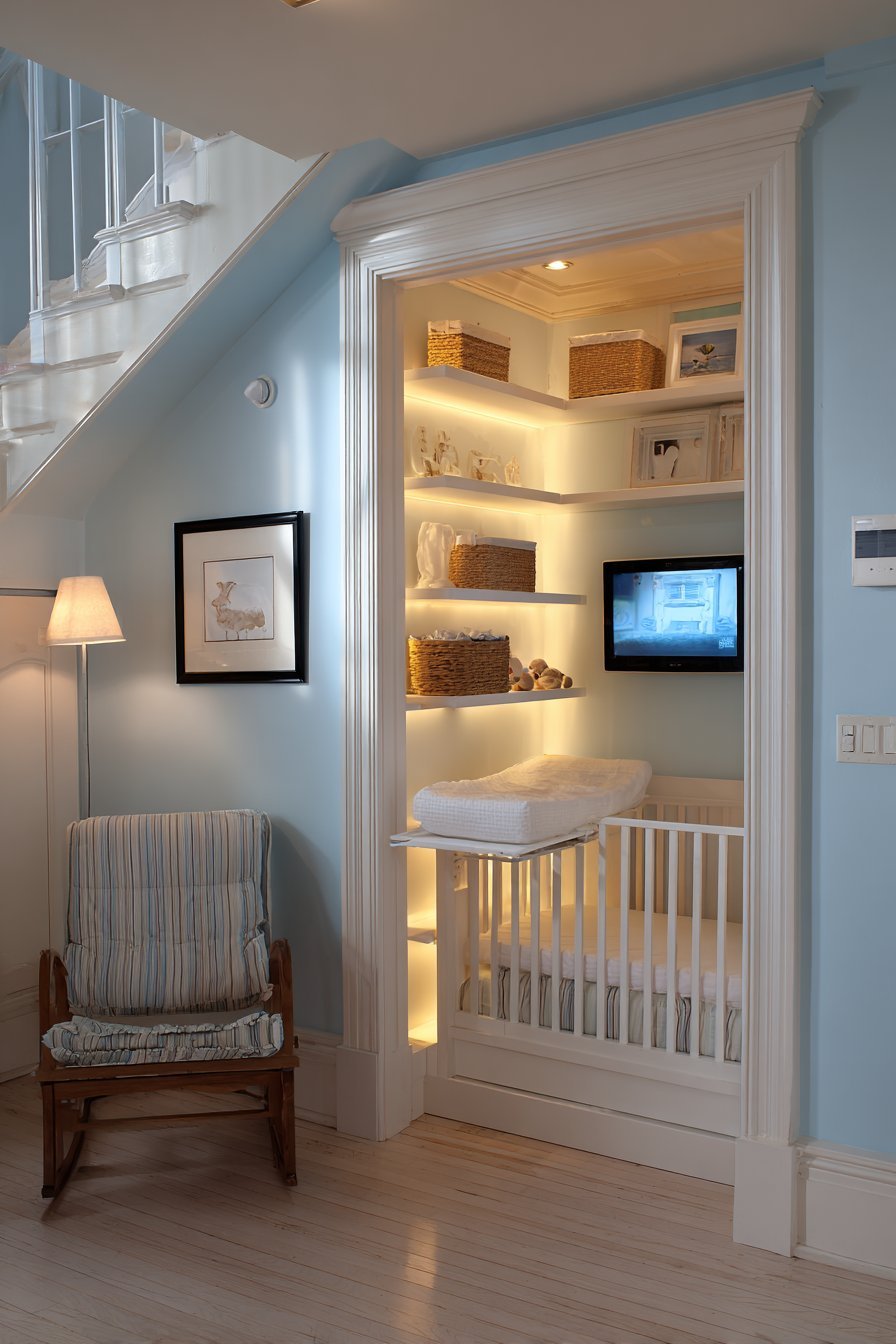
Storage baskets and bins are sized to fit the custom shelving precisely. No space is wasted in the efficient design. A small wall-mounted monitor and sound machine save precious surface space. These inventive solutions prove dedicated nursery rooms aren’t necessary.
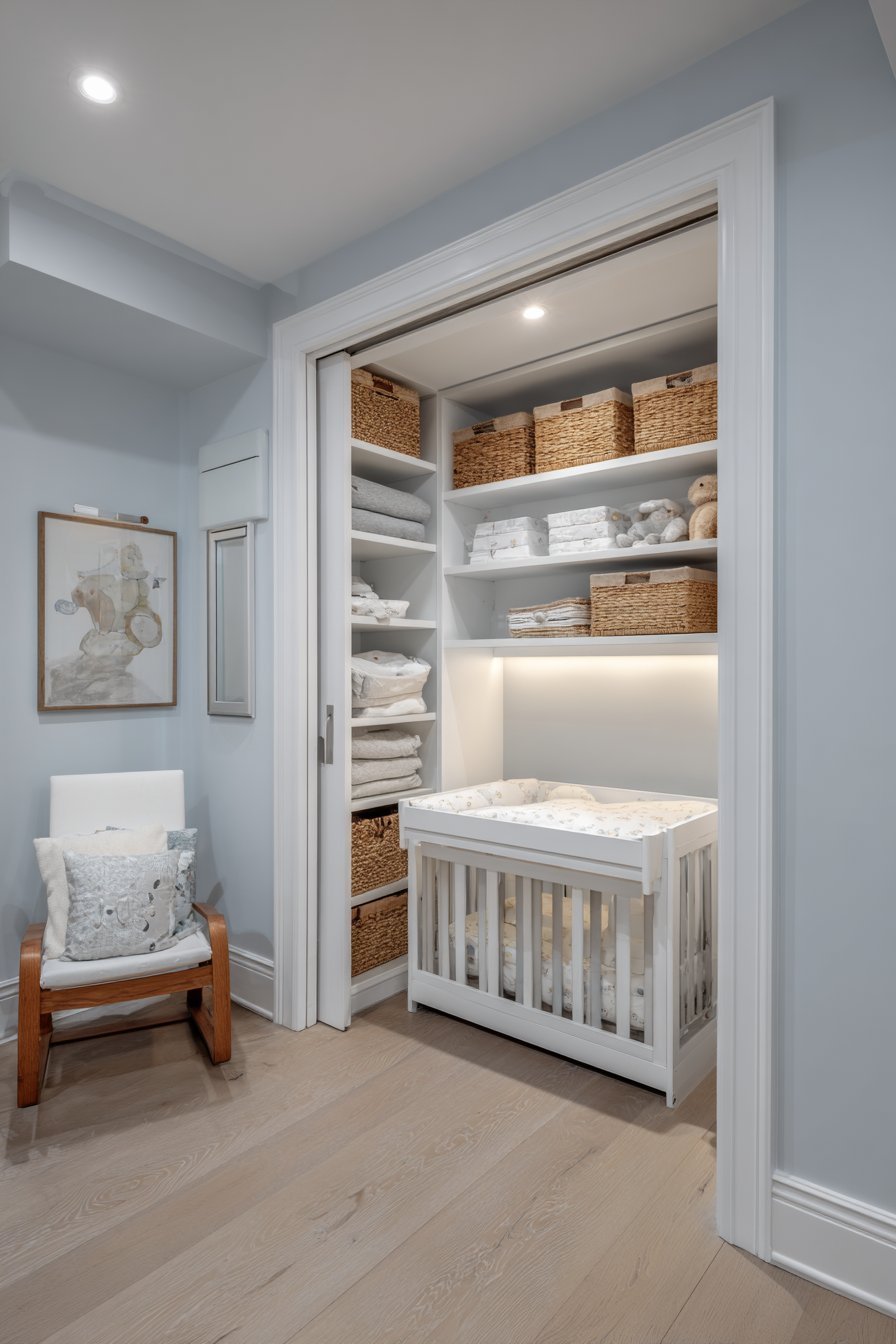
The design demonstrates that creativity overcomes spatial limitations. Built-in solutions maximize unconventional spaces brilliantly. Approximately thirty-five square feet provides complete nursery functionality. Careful planning transforms unused space into essential infant care areas.
Key Design Tips:
- Convert closet alcoves with mini cribs and custom built-in shelving
- Install fold-down changing surfaces that stow away when not needed
- Add integrated LED strip lighting under shelves for gentle nighttime illumination
- Size storage baskets precisely to custom shelving dimensions for efficiency
- Choose compact rocking chairs specifically designed for small space living
17. Bold Black Accent Drama
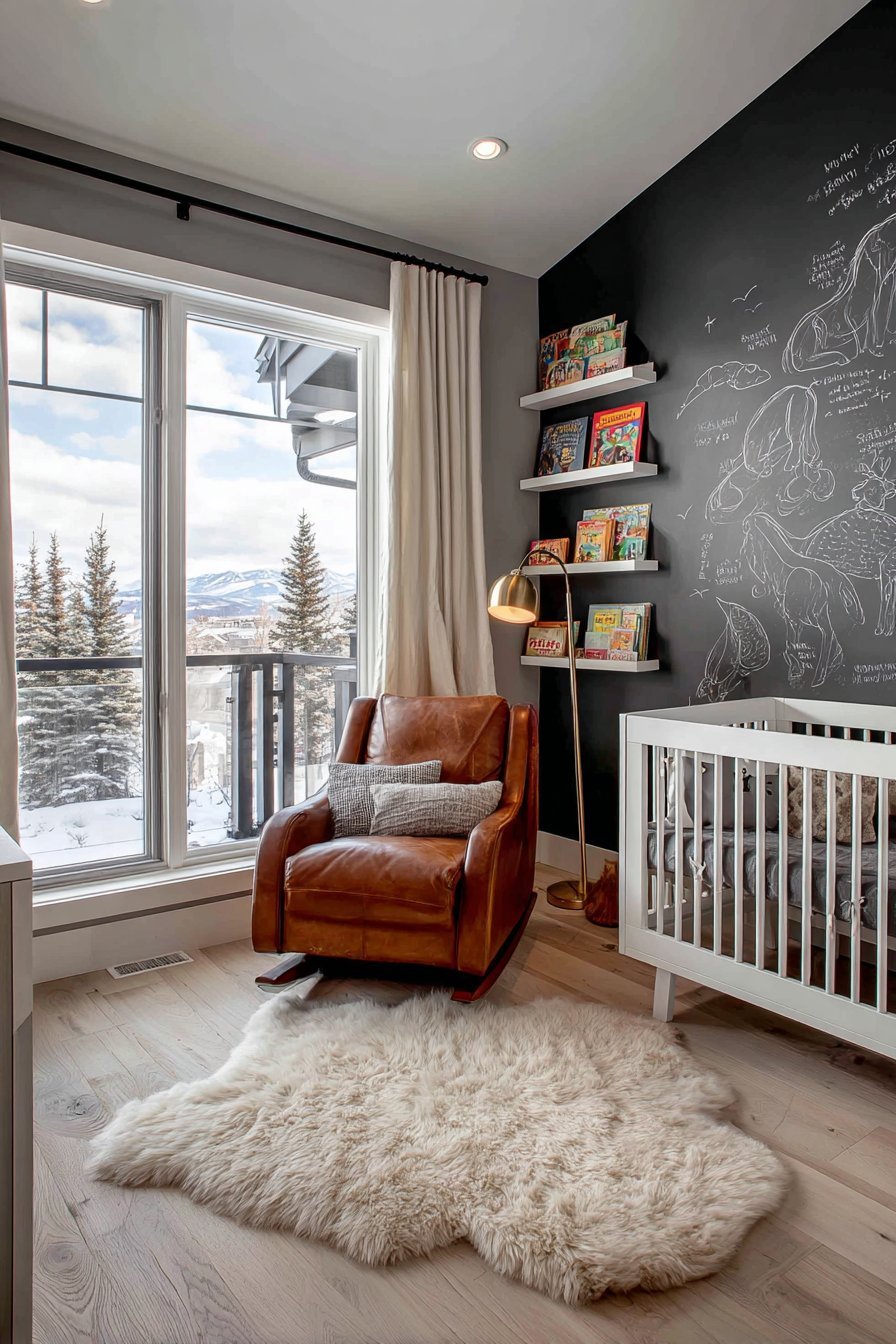
A dramatic black accent wall behind a white crib creates striking high-contrast design. The bold choice is softened by warm honey-toned oak flooring and plush cream shag rugs. The black wall features a large-scale line drawing mural of animals in white paint. The whimsy balances the dramatic color choice beautifully.
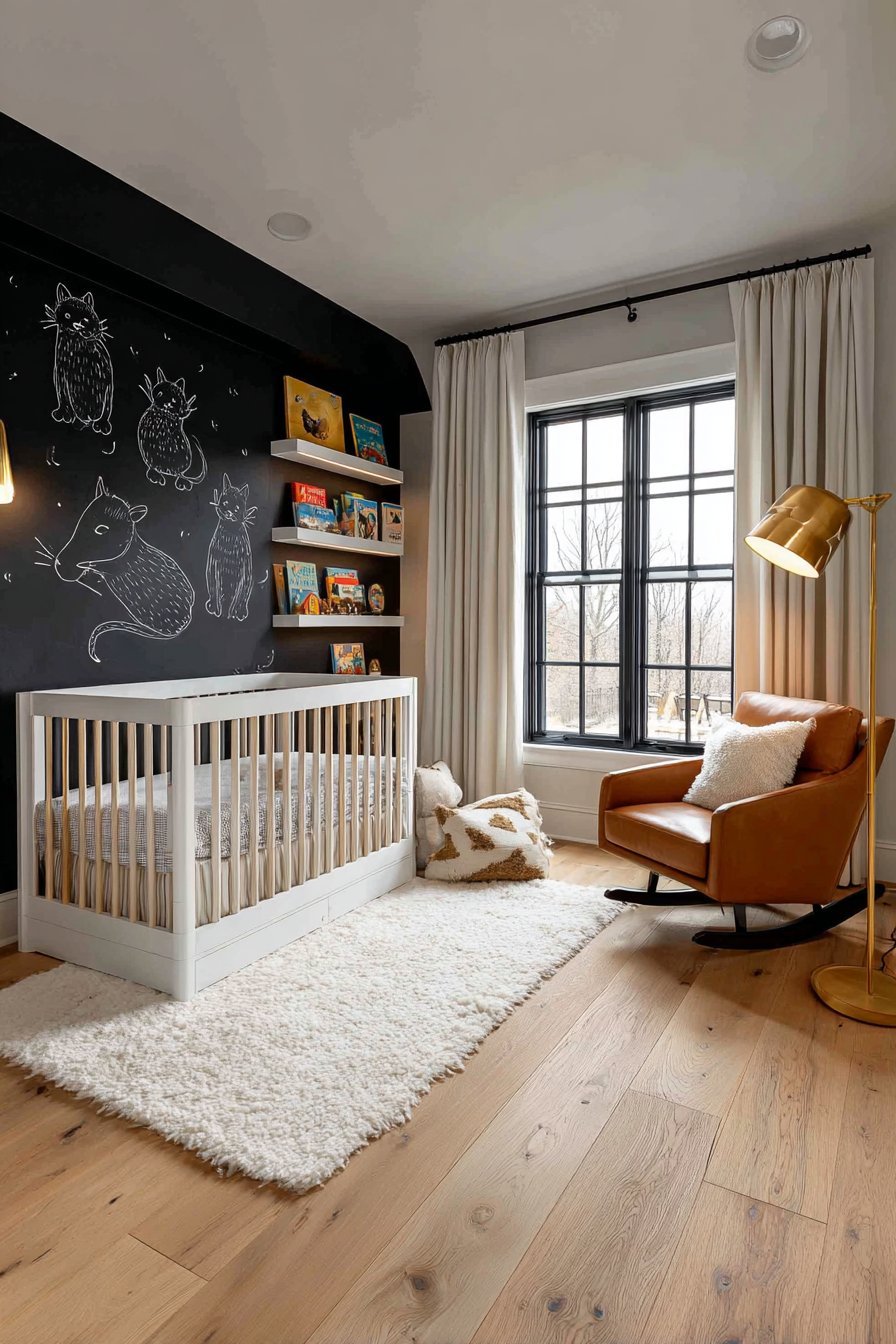
A cognac leather rocking chair provides a rich accent piece against the neutral palette. The warm leather tone adds sophistication and comfort. A modern brass floor lamp with fabric shade provides task lighting for nursing. White floating shelves on adjacent light gray walls display colorful children’s books.
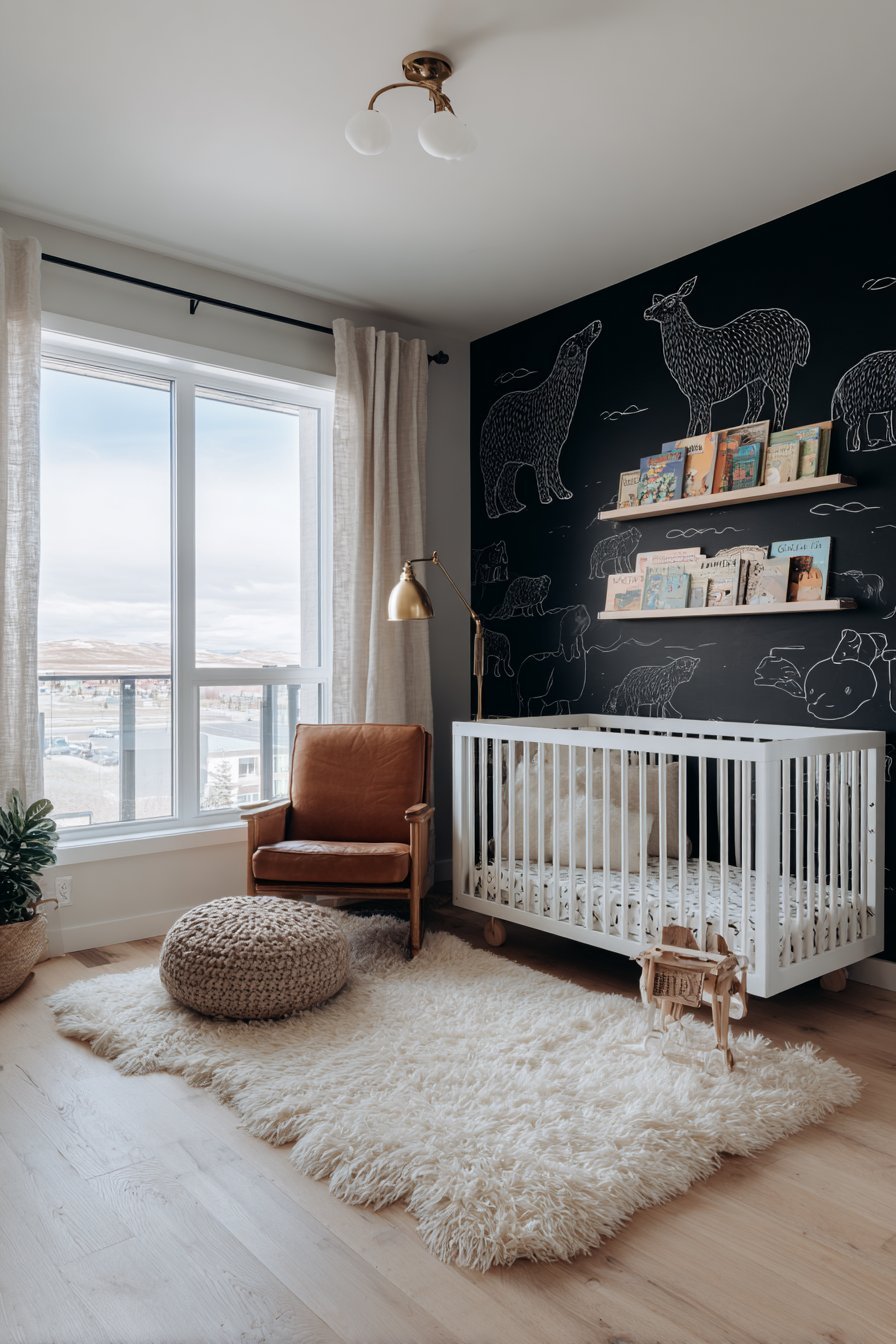
Books arranged in rainbow order create visual interest without additional decoration. Black metal frame windows dressed with natural linen curtains allow abundant natural light. The illumination balances the dark accent wall preventing the space from feeling heavy. The modern approach demonstrates how bold color choices work in baby spaces.
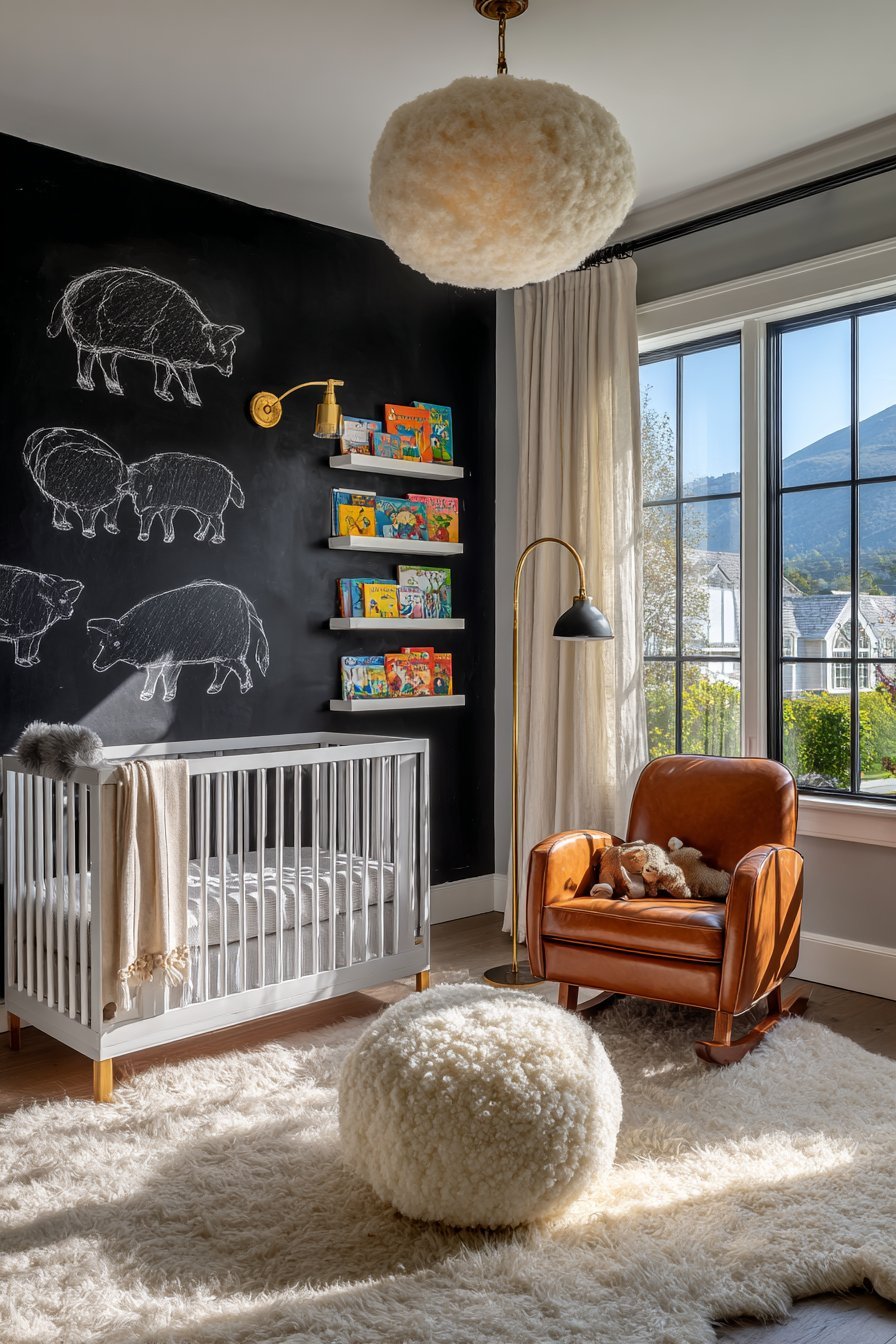
The design proves that nurseries needn’t adhere to pastel conventions. Sophisticated color choices create memorable, stylish spaces. Adequate lighting balances dark walls successfully. This confident approach creates nurseries parents genuinely enjoy spending time in daily.
Key Design Tips:
- Paint accent walls in dramatic black balanced with plenty of white elements
- Add large-scale white line drawings on dark walls for whimsical softening
- Choose cognac leather rockers for warm, sophisticated accent pieces
- Install black metal frame windows for architectural interest and contrast
- Arrange books in rainbow order on white shelves for colorful visual impact
18. Vintage-Inspired Nostalgic Charm
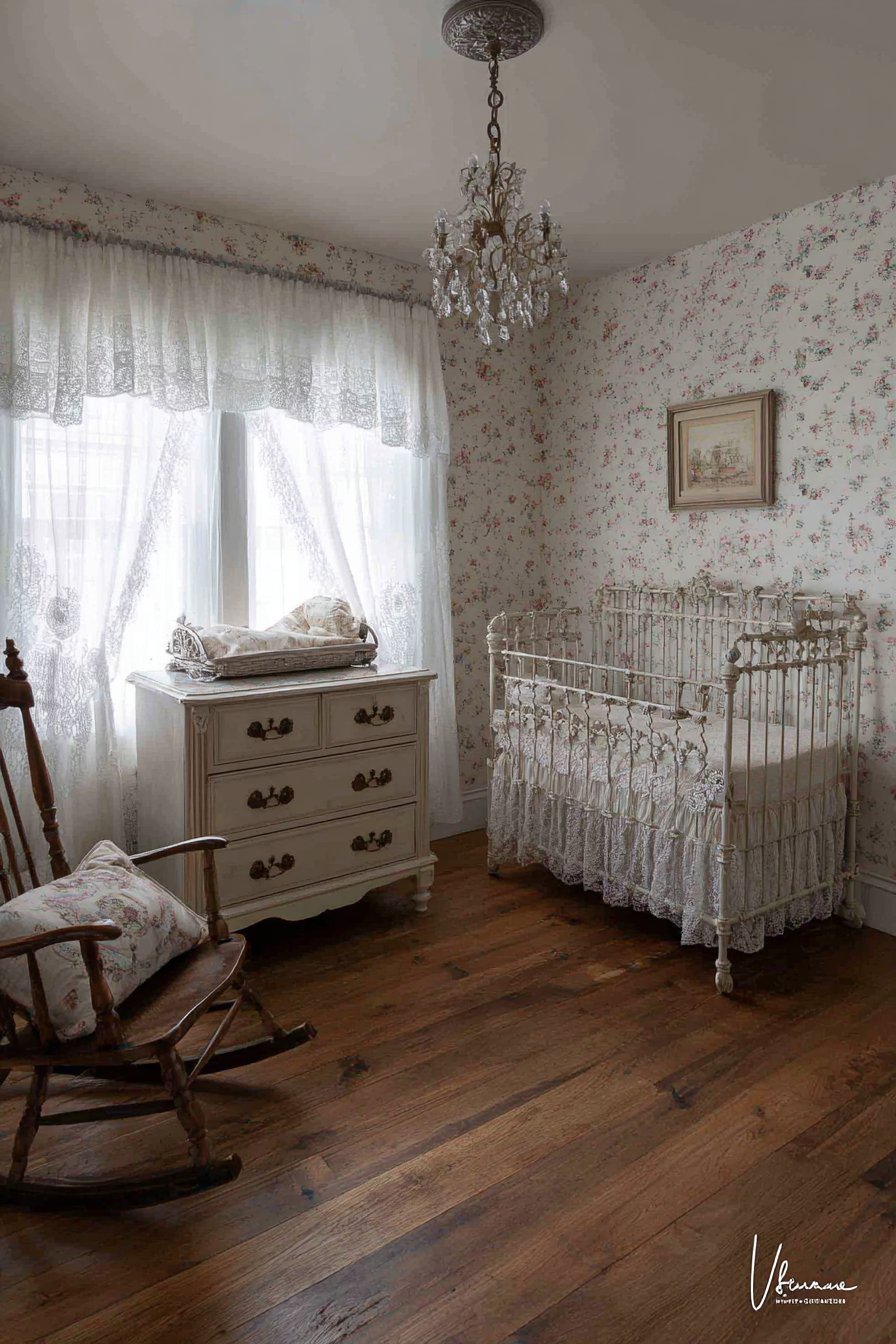
An ornate antique iron crib painted in soft white anchors this nostalgic space. The piece is dressed with vintage-style bedding featuring delicate floral patterns and eyelet lace trim. A refinished Victorian dresser with original brass hardware serves as a changing station. A vintage silver tray holds necessary items with elegant practicality.
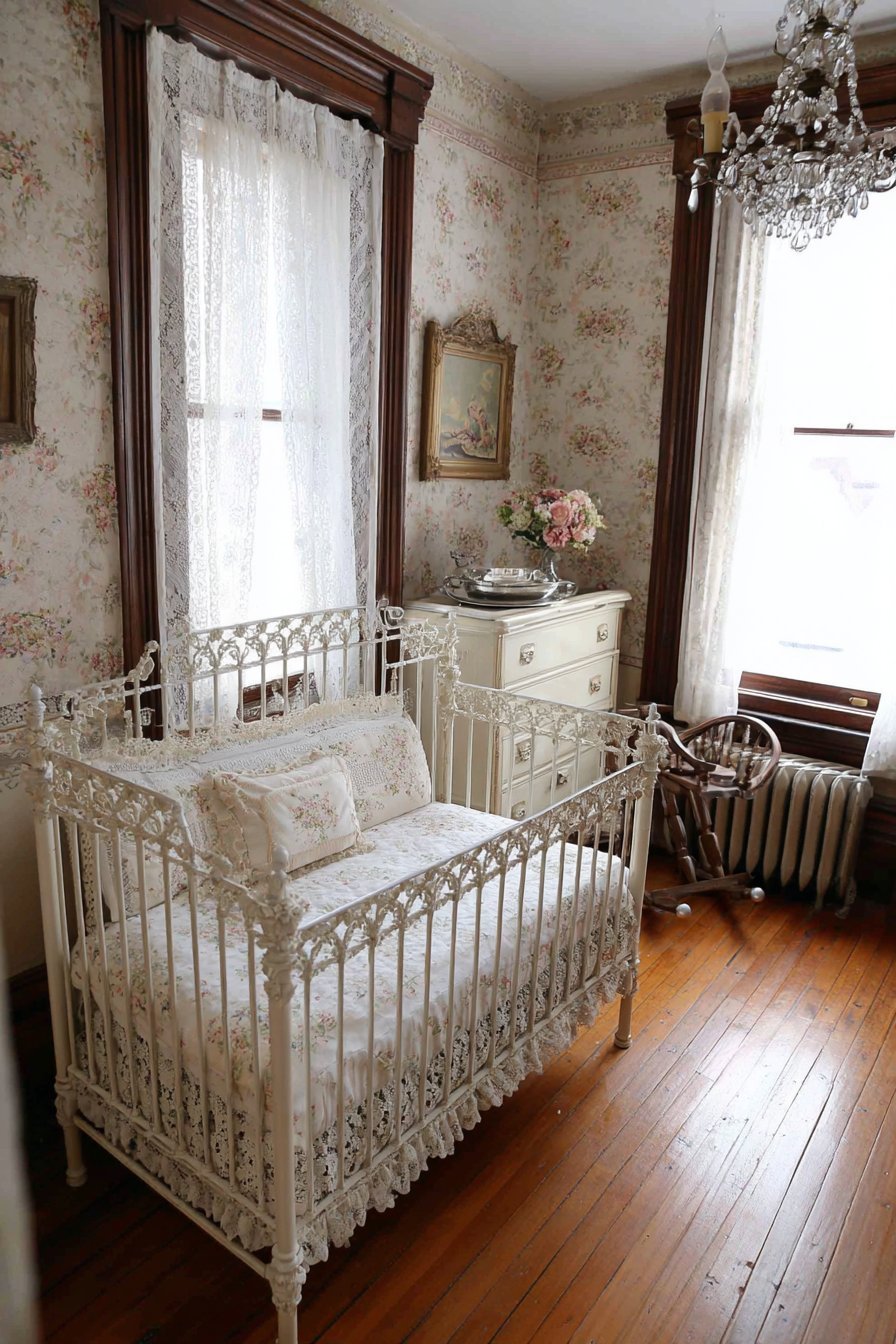
Walls covered in traditional nursery wallpaper feature timeless storybook characters in muted tones. The classic patterns evoke childhood memories and comfort. A restored wooden rocking chair with carved details and needlepoint cushion provides nursing seating. Original hardwood flooring finished in warm medium brown adds authentic character.
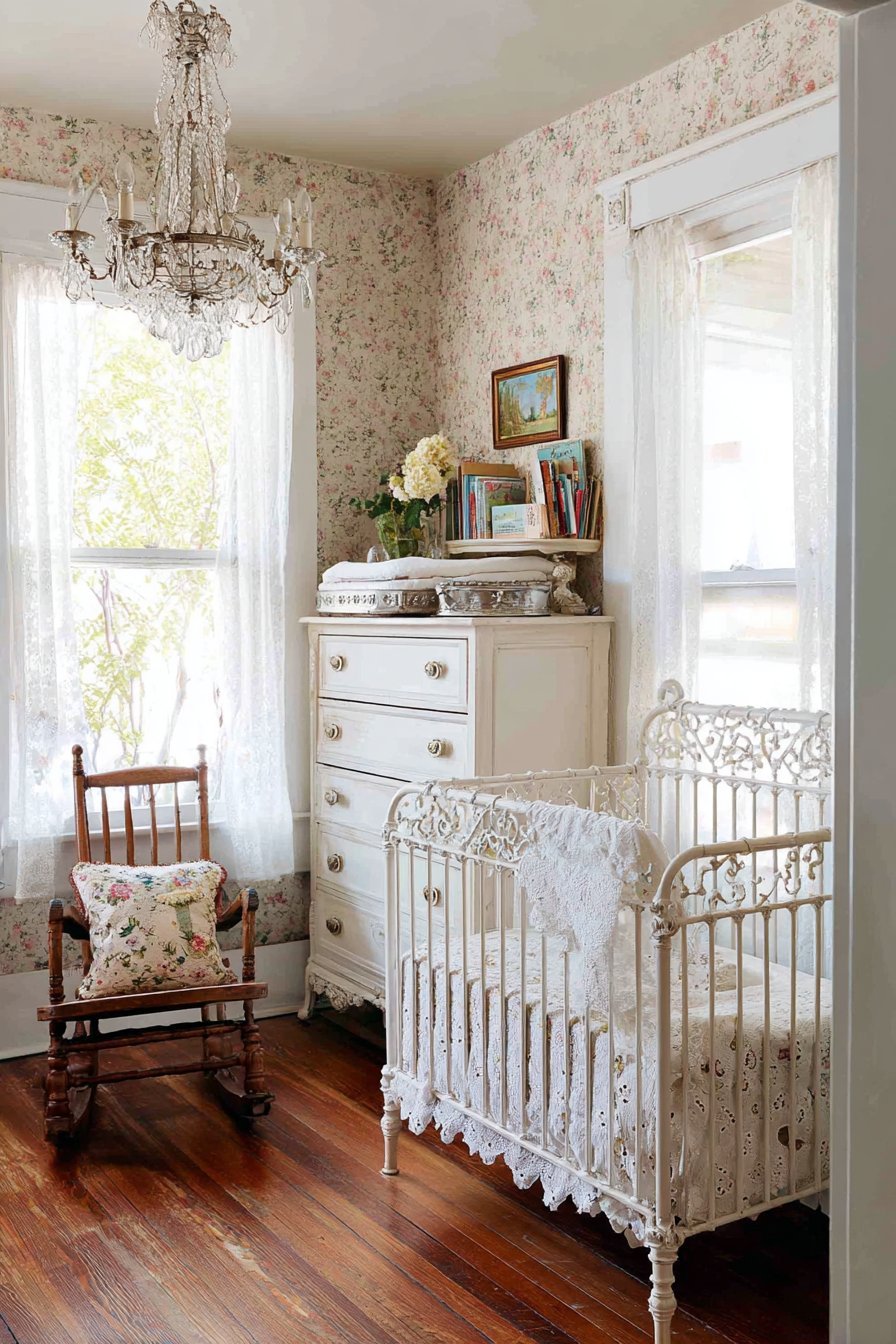
An antique brass chandelier with milk glass shades provides ambient lighting. Lace curtain panels filter light from tall windows with original trim preserved. Collections of vintage children’s books and antique toys are thoughtfully displayed. These classic elements honor traditional design while meeting modern safety standards.
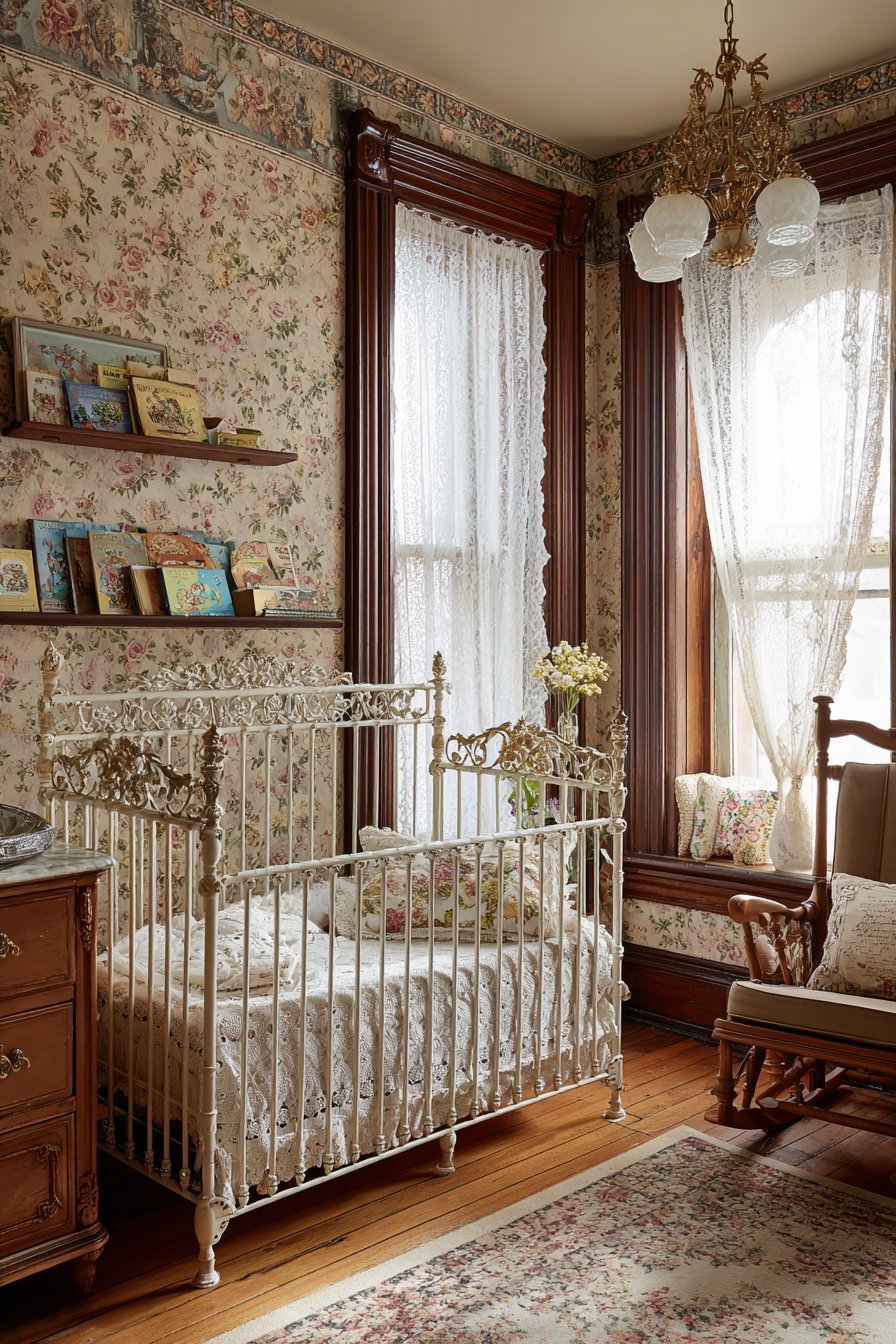
The vintage approach celebrates history and craftsmanship from earlier eras. Genuine antiques tell stories that reproductions cannot convey. This design philosophy values authenticity and connection to the past. The timeless aesthetic transcends trends and fads gracefully.
Key Design Tips:
- Source antique iron cribs and refinish for safe, nostalgic centerpieces
- Use vintage-style bedding with delicate florals and eyelet lace trim
- Restore Victorian furniture with original hardware for authentic character
- Hang traditional wallpaper with timeless storybook characters in muted tones
- Display collections of vintage children’s books and antique toys thoughtfully
19. Handmade DIY Personal Touch
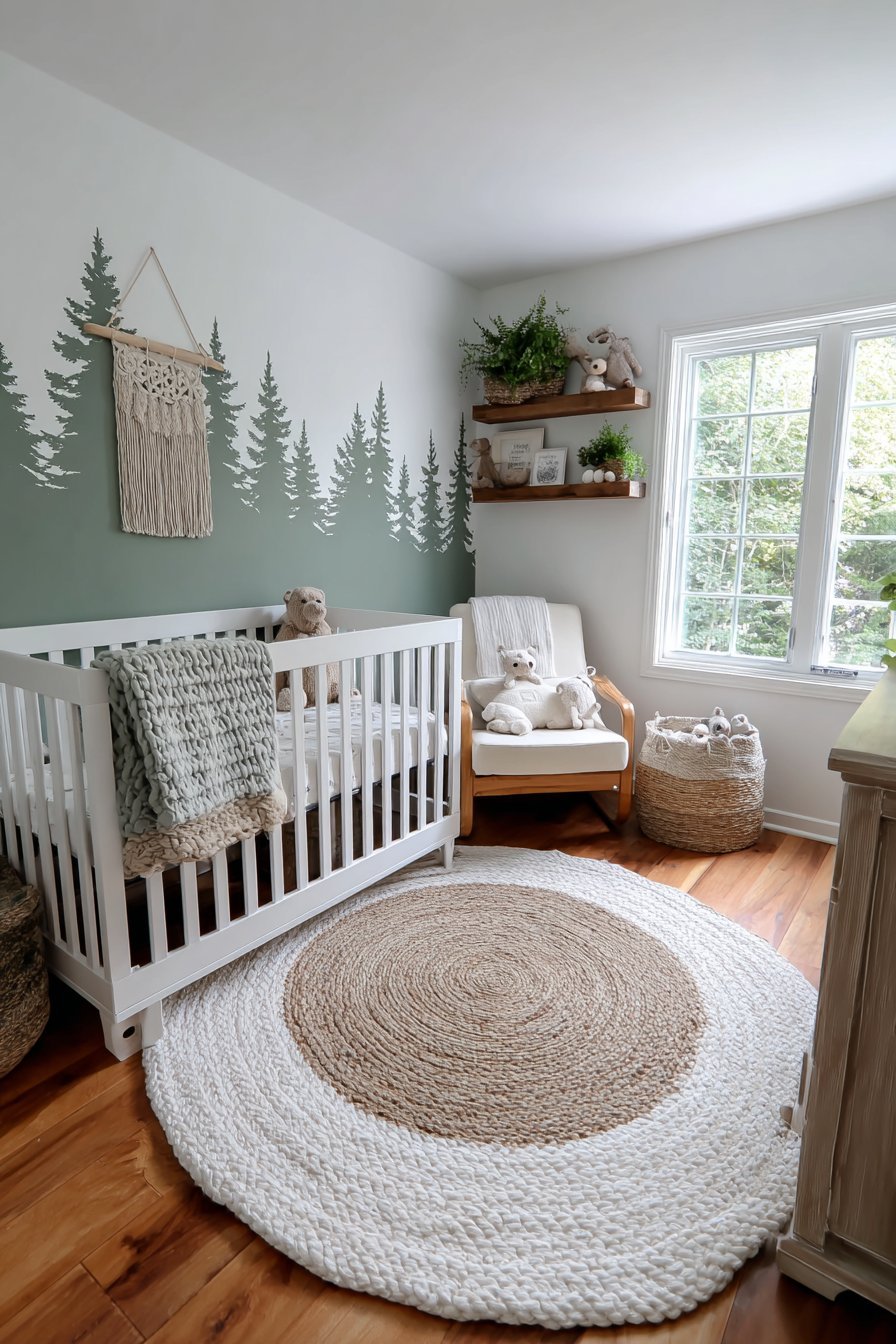
Hand-stenciled wall designs create custom forest scenes in soft greens and browns. The walls are executed with careful attention to detail showing skill and patience. A basic white crib is elevated with handmade crib bumpers sewn from organic fabrics. A hand-knitted blanket in neutral tones drapes over the rail adding warmth.
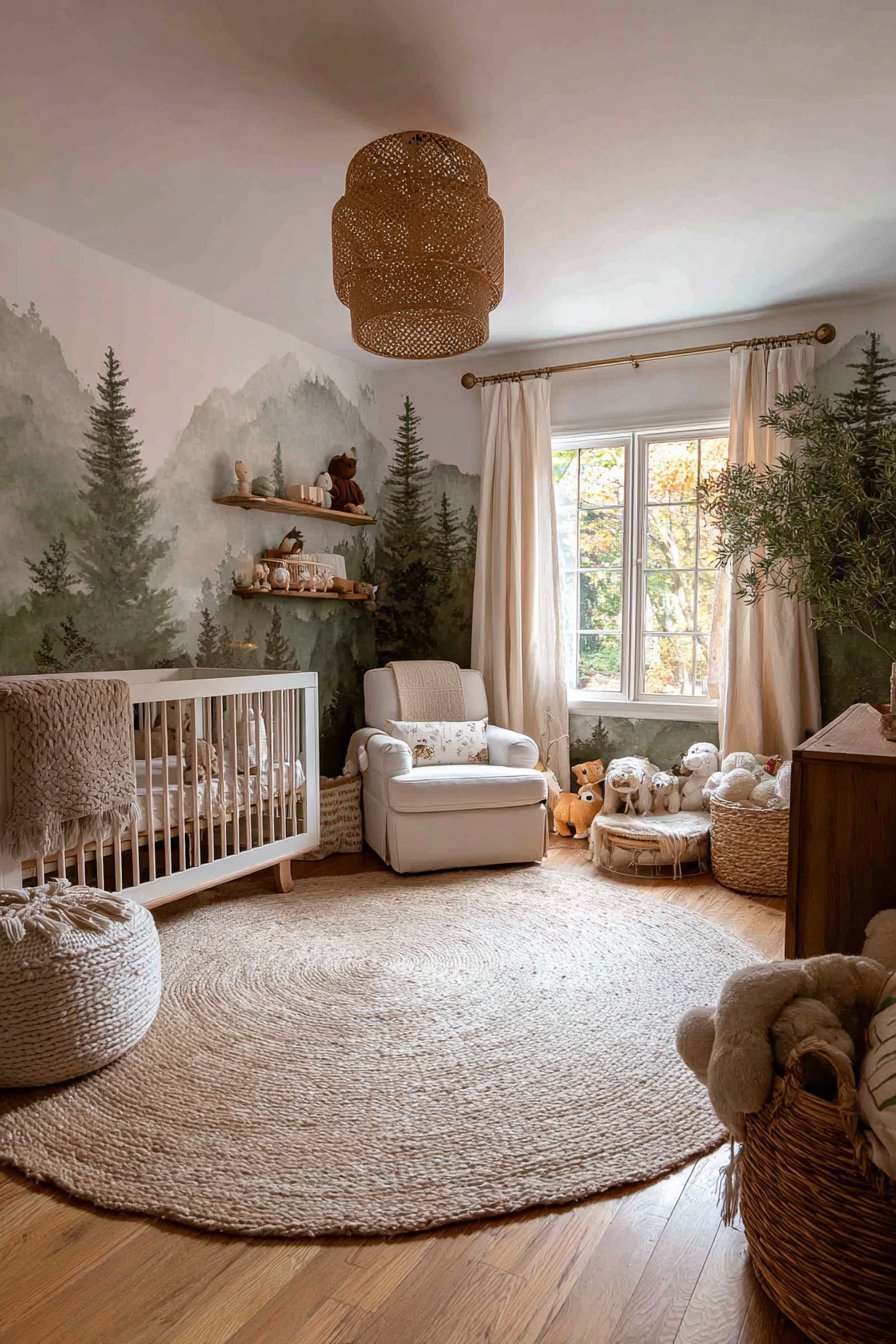
The glider is a restored secondhand find reupholstered in new fabric with visible careful stitching. Hand-built floating shelves from reclaimed barn wood display handmade felt animals. DIY fabric storage bins contain supplies and toys efficiently. A handwoven wall hanging adds texture above the changing table.
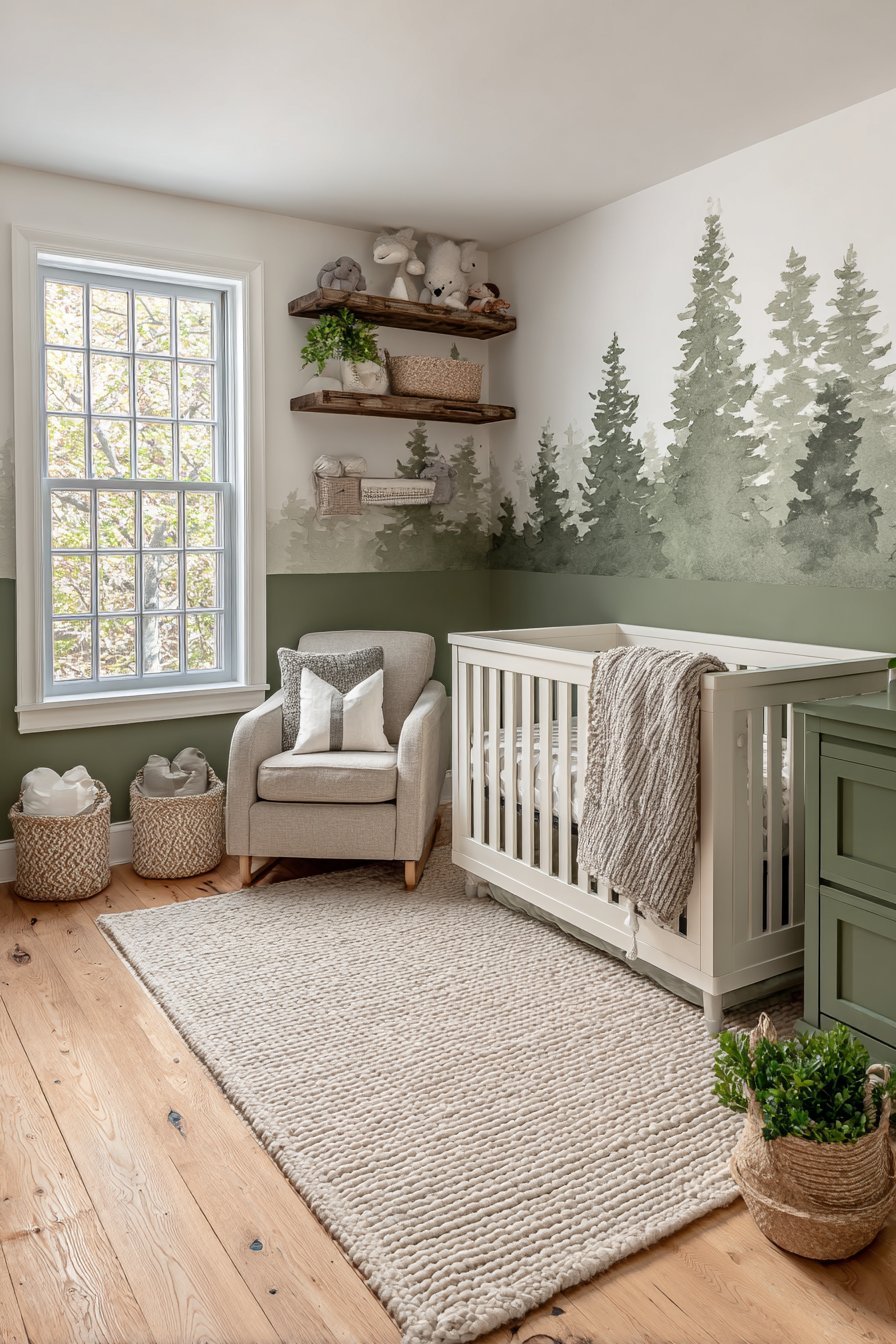
The changing table itself is a refinished vintage dresser given new life. Pine flooring is original, refinished by hand with visible care. A braided rag rug made from fabric scraps covers the floor partially. Natural light from a multi-pane window highlights personal touches throughout the room.
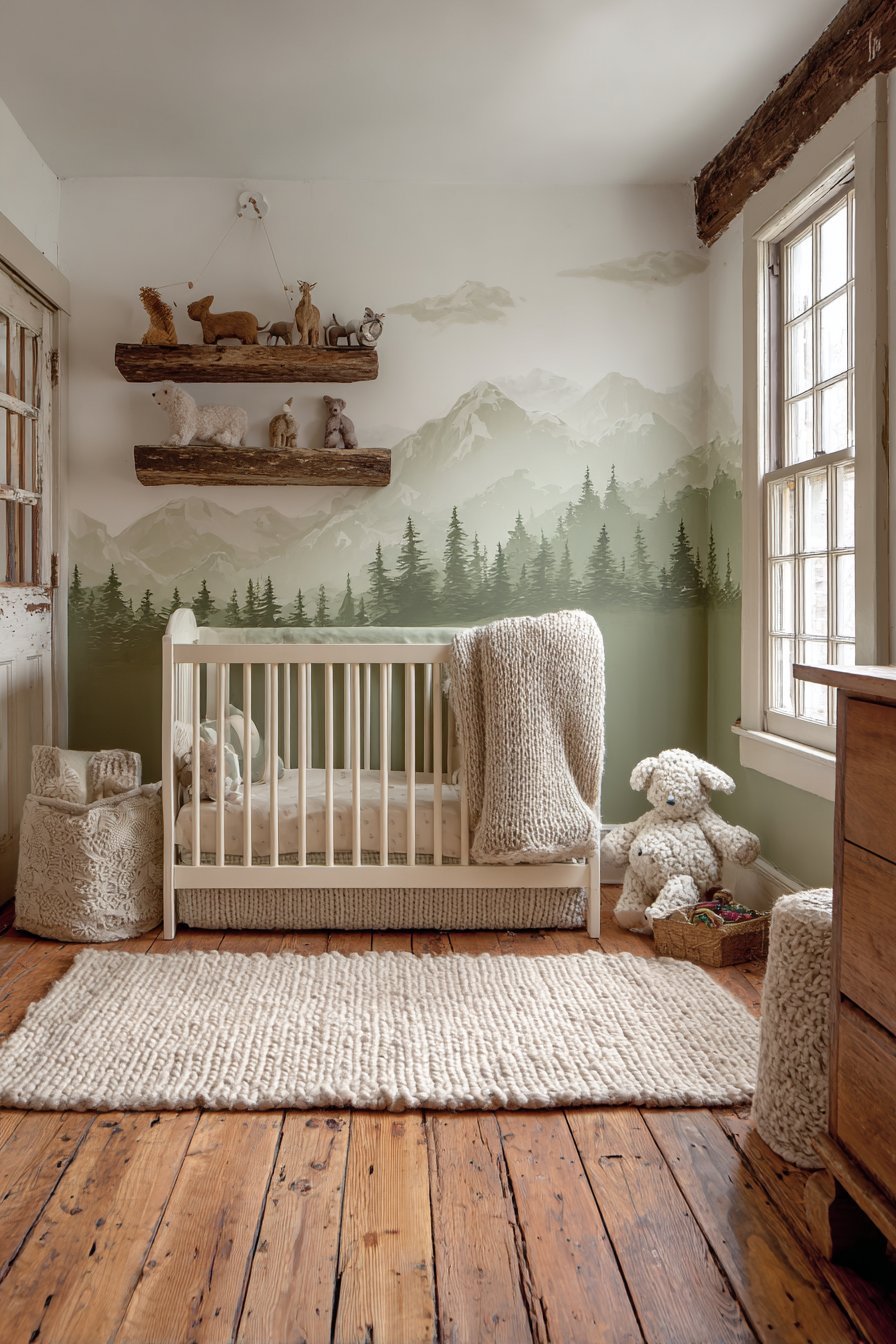
The DIY approach creates spaces filled with meaning and craftsmanship. Handmade elements reflect the time and love invested in preparation. These personal touches create unique environments that purchased nurseries cannot replicate. The effort invested creates emotional connections to the space.
Key Design Tips:
- Create hand-stenciled wall murals for custom artistic features and personality
- Sew handmade crib bumpers and knit blankets for personalized textile elements
- Restore and reupholster secondhand furniture pieces for budget-friendly quality
- Build floating shelves from reclaimed barn wood for rustic handmade storage
- Make braided rag rugs from fabric scraps for zero-waste floor covering
20. Tech-Integrated Smart Nursery
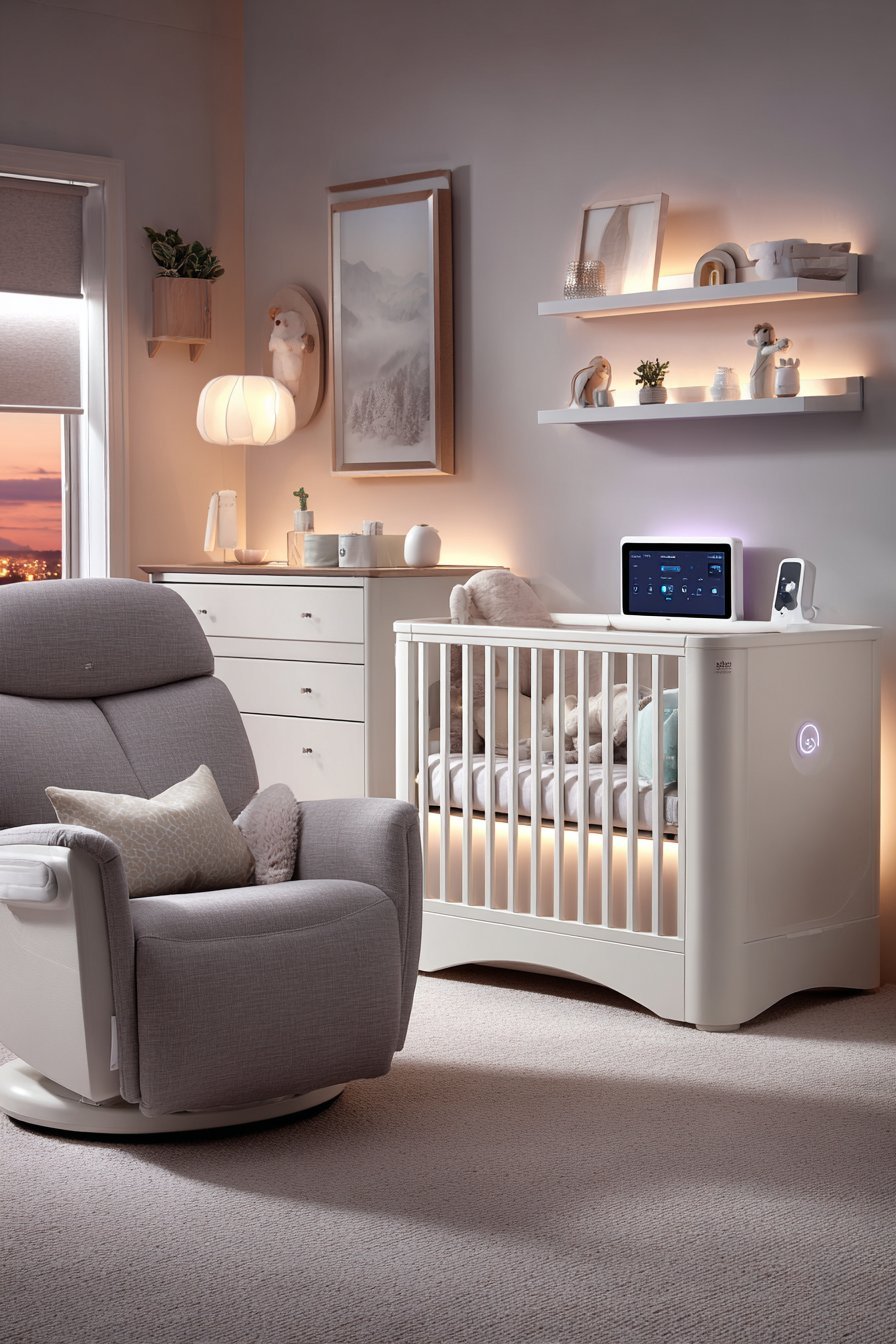
A modern white crib equipped with built-in sleep sensors and breathing monitors sits against soft gray walls. An embedded smart display shows soothing nature scenes for visual interest. A comfortable power recliner in gray performance fabric includes USB charging ports and built-in speakers. The integrated technology plays white noise or lullabies conveniently.
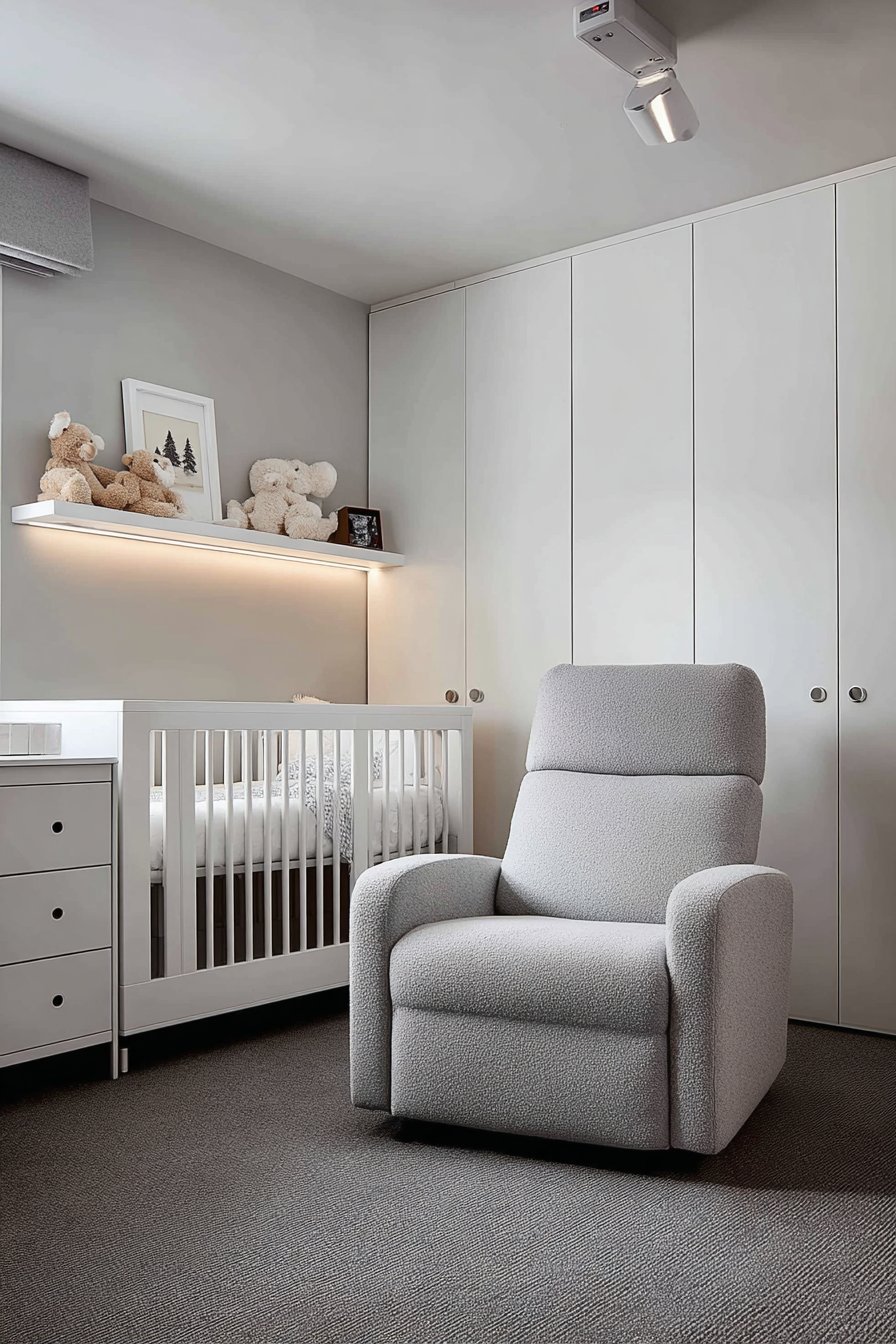
The dresser features integrated LED lighting in drawers for late-night changes. The illumination eliminates harsh overhead lights that disrupt sleep cycles. Smart blackout shades respond to sleep schedules automatically. A ceiling-mounted smart projector creates gentle moving images for soothing fussy babies.
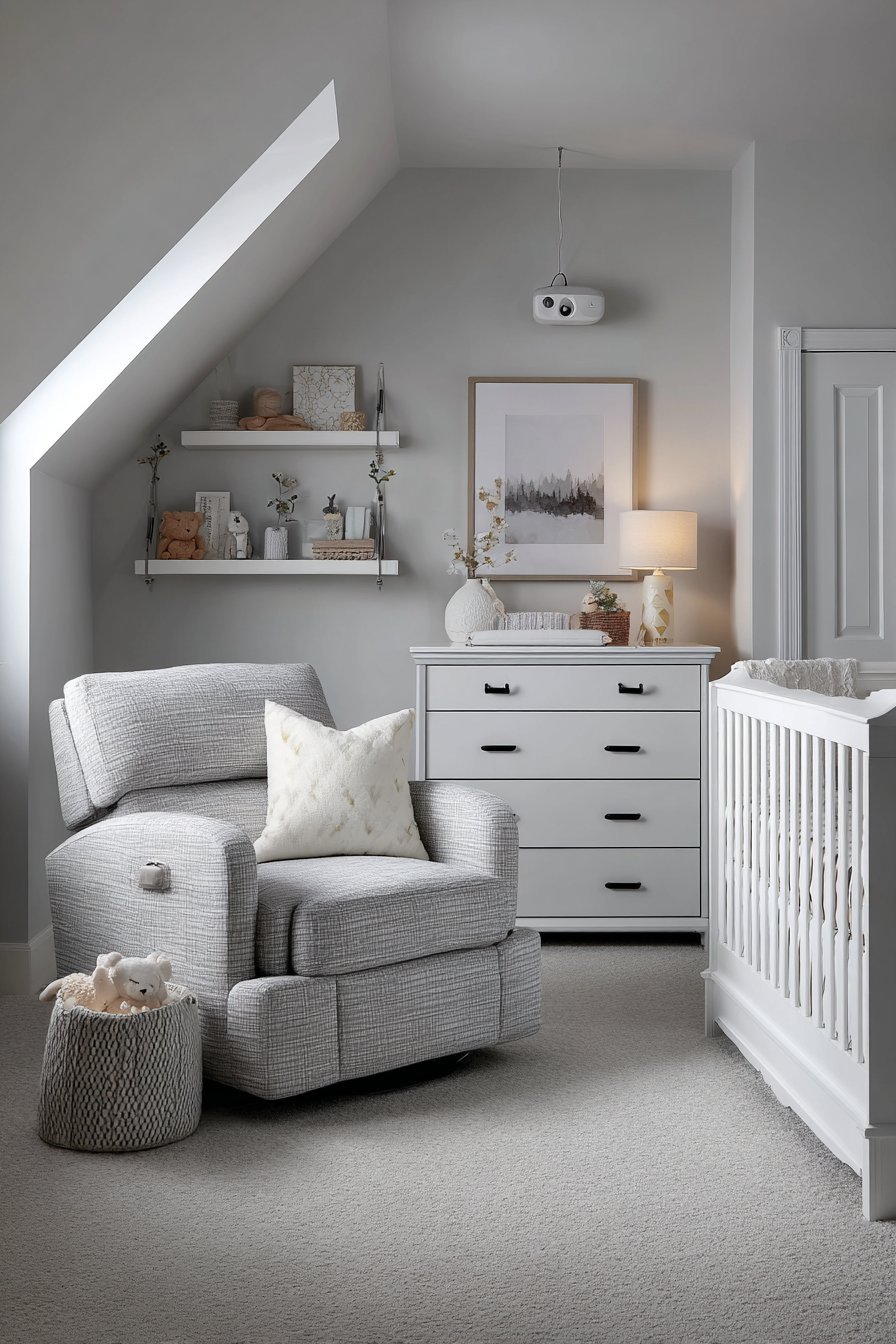
A discreet air quality monitor sits on floating shelves alongside smart bottle warmers. Temperature-controlled wipe warmers maintain comfort during nighttime changes. Under-crib LED strips provide gentle night lighting activated by motion sensors. The technology integration avoids visible wires or bulky equipment cluttering surfaces.
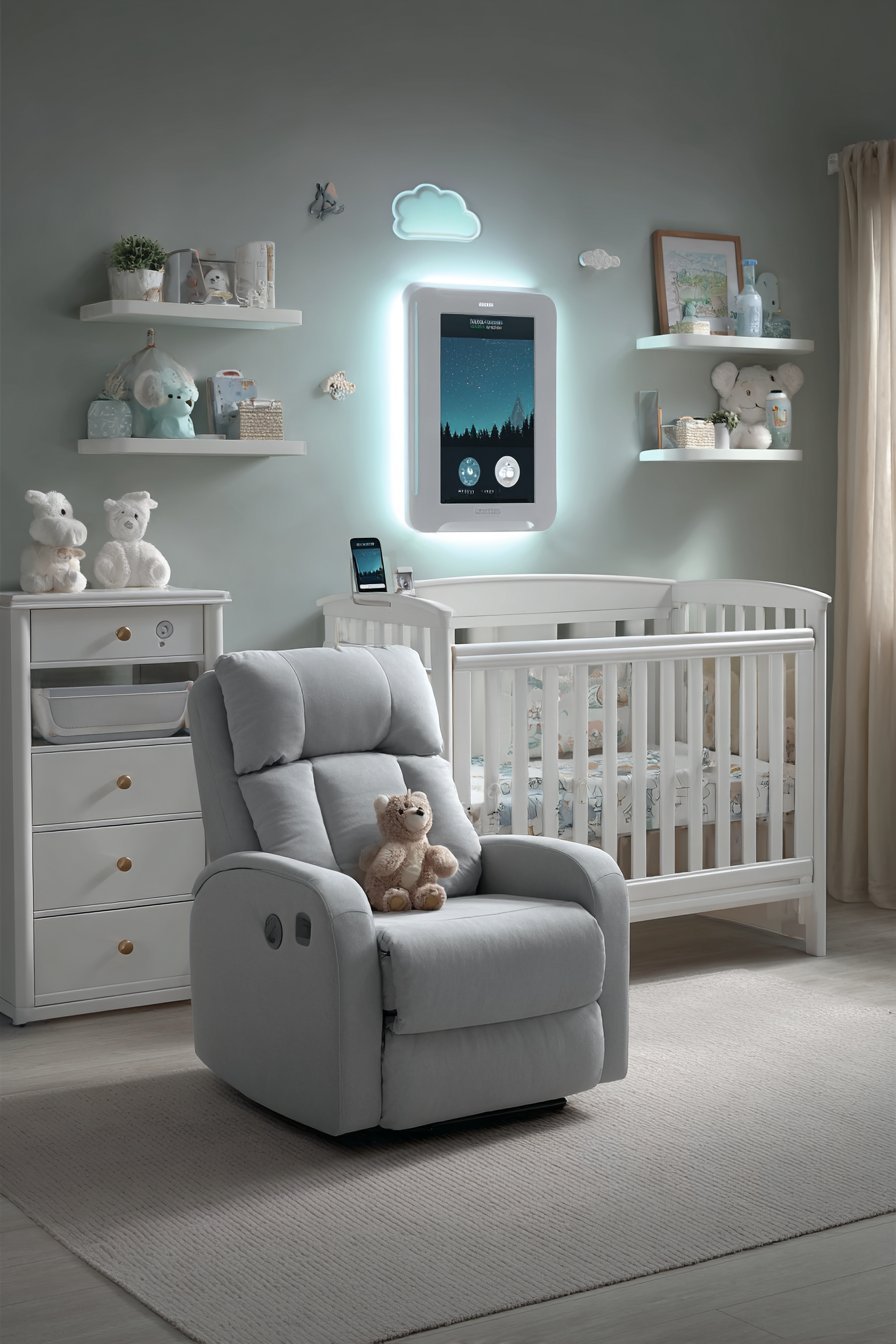
Medium gray carpet and white walls create calm backdrops for the integrated technology. The forward-thinking approach demonstrates how modern parents incorporate helpful technology seamlessly. Smart devices support better sleep and easier care routines. The peaceful aesthetic proves technology and beauty coexist successfully.
Key Design Tips:
- Choose cribs with built-in sleep sensors and breathing monitors for peace of mind
- Install smart blackout shades that respond automatically to sleep schedules
- Use dressers with integrated LED drawer lighting for late-night visibility
- Add motion-sensor LED strips under cribs for gentle nighttime navigation
- Incorporate smart air quality monitors, bottle warmers, and wipe warmers discreetly
Why These Baby Nursery Designs Are the Best
These baby nursery designs represent the finest approaches to creating functional, beautiful spaces for newborns. Each concept demonstrates thoughtful consideration of both aesthetic appeal and practical parenting needs. The diversity of styles ensures that every family finds inspiration matching their values and circumstances.
The incorporation of natural materials throughout multiple designs promotes healthier indoor environments for developing immune systems. Wood, cotton, wool, and other organic materials avoid harmful off-gassing common in synthetic furnishings. Sustainable choices like reclaimed wood and bamboo add environmental responsibility to beautiful design decisions.
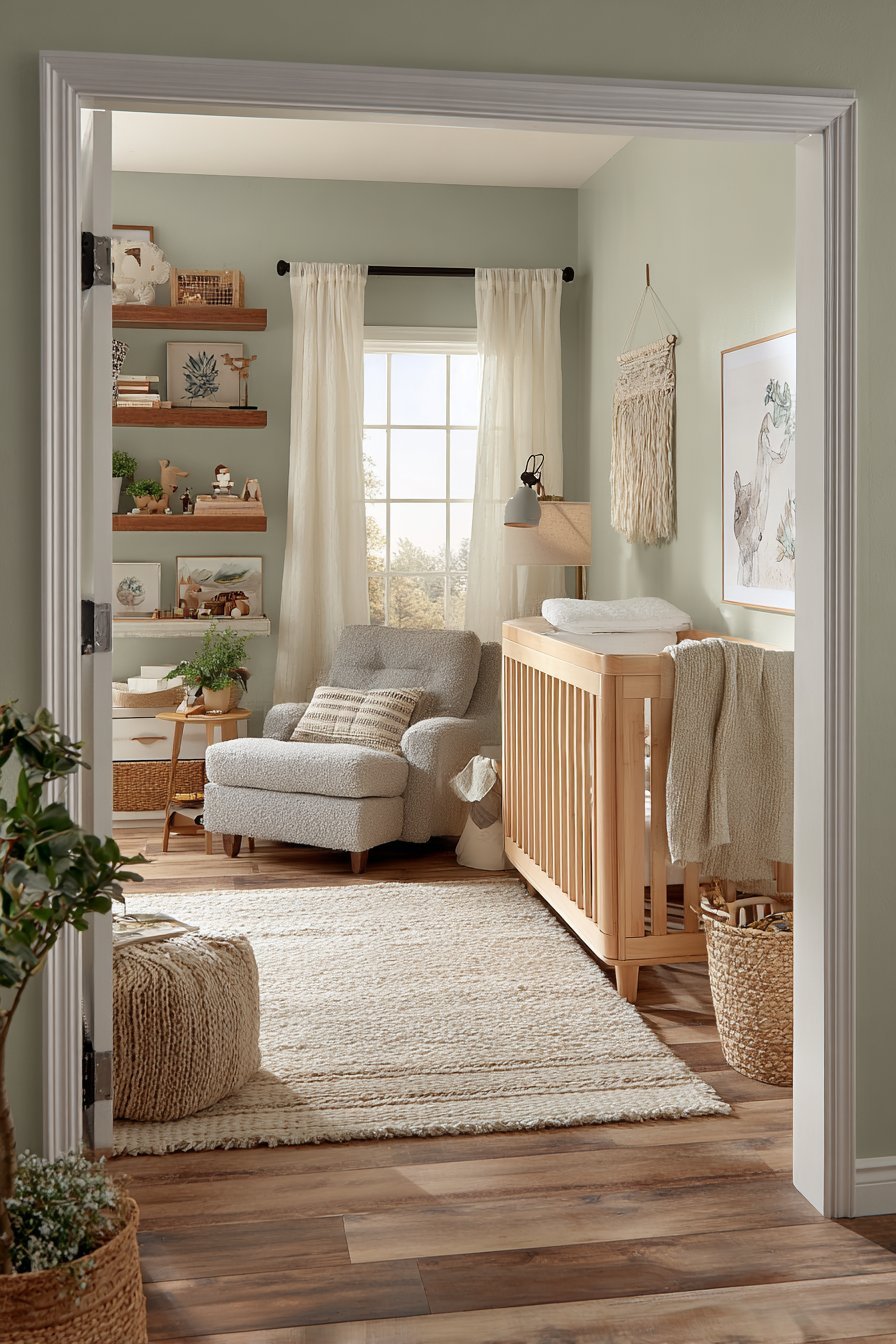
Space efficiency emerges as a crucial consideration in modern nursery planning. Convertible furniture, built-in storage, and multi-functional pieces address limited square footage without sacrificing functionality. These solutions prove that small spaces can accommodate all necessary nursery components through creative planning and vertical storage strategies.
The successful designs balance visual appeal with developmental support. Appropriate color choices create calm environments conducive to sleep while avoiding overstimulation. Montessori-inspired approaches demonstrate how spatial design supports independence and confidence from birth. Whimsical elements stimulate curiosity without overwhelming developing senses.
Budget considerations appear throughout various concepts, from luxurious traditional spaces to creative DIY solutions. The designs prove that beautiful, functional nurseries exist at every price point. Handmade elements and thrifted furniture offer meaningful alternatives to expensive retail purchases while adding unique character impossible to replicate.
Technology integration reflects modern parenting realities while maintaining peaceful aesthetics. Smart devices support better sleep monitoring, optimal environmental conditions, and convenient nighttime routines. The seamless incorporation proves that functionality and beauty coexist when properly planned and executed thoughtfully.
Conclusion
These twenty baby nursery designs demonstrate that thoughtful planning creates spaces serving both practical needs and aesthetic desires. The key takeaways include prioritizing natural materials, maximizing storage efficiency, and selecting furniture that grows with children. Quality pieces combined with personal touches create rooms that feel welcoming and functional simultaneously.
Successful nursery design balances parenting philosophy with spatial realities and budget constraints. Whether embracing minimalism, vintage charm, or smart technology, the common thread involves creating peaceful environments supporting healthy development. Start your nursery planning by identifying your priorities among sustainability, space efficiency, style preferences, and budget considerations.
Your dream baby nursery awaits creation through thoughtful material selection and creative spatial planning. Remember that the most important element is the love and care you’ll provide in whatever space you create. These designs offer inspiration and guidance, but your personal touches will make the nursery truly special for your growing family.
