
Creating a private backyard transforms your outdoor space into a personal sanctuary. This design approach prioritizes seclusion while maintaining aesthetic appeal and functionality. The combination of strategic screening and thoughtful layout creates intimate environments perfect for relaxation and entertainment.
Private backyards have become increasingly valuable in modern residential design. They offer essential retreat spaces away from busy neighborhoods and urban environments. The integration of natural screening, structural elements, and purposeful landscaping creates outdoor rooms that feel protected yet connected to nature.
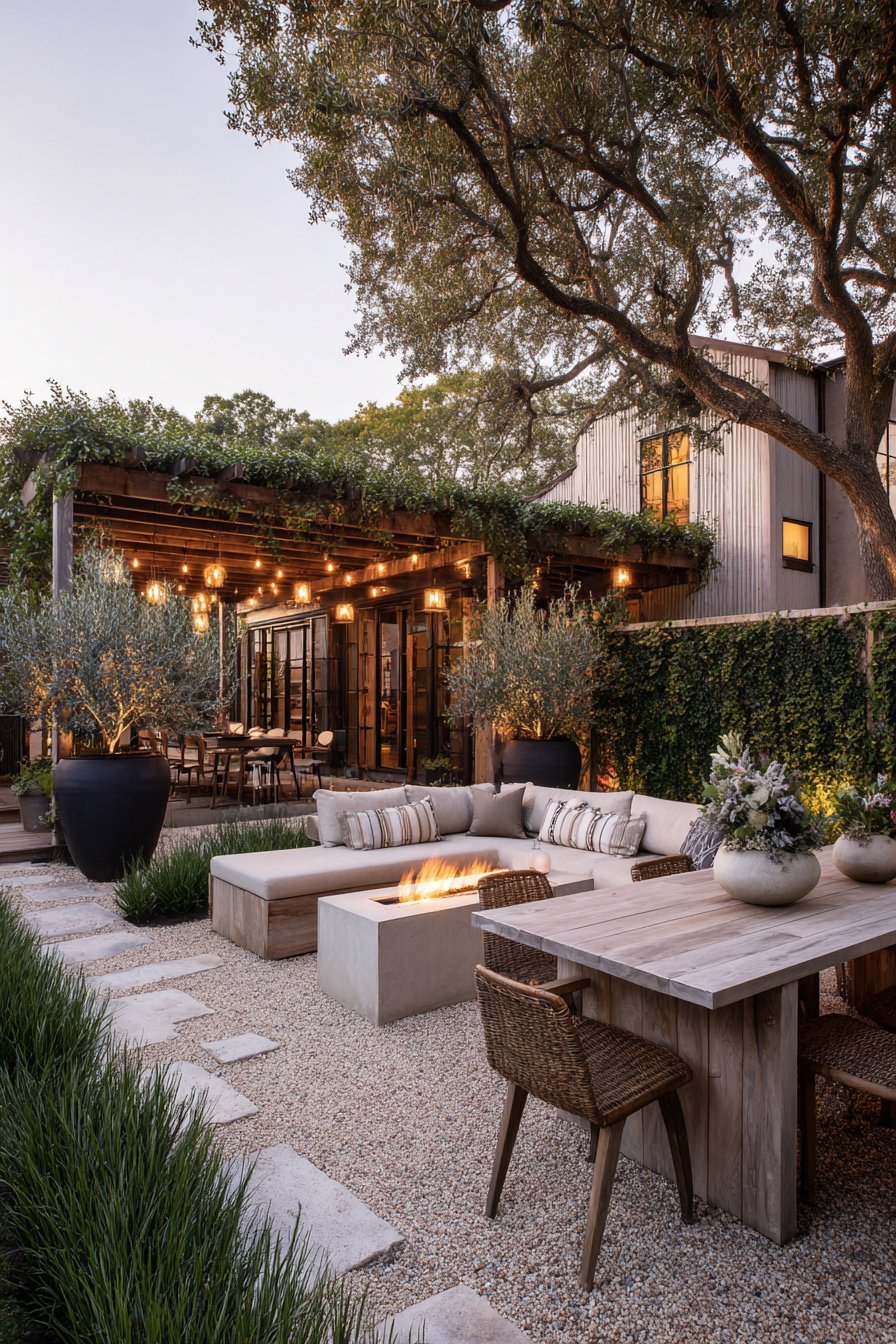
Today’s private backyard designs embrace diverse approaches from minimalist zen gardens to elaborate entertainment zones. Each concept demonstrates how privacy solutions enhance rather than restrict outdoor living. The following designs showcase various methods for achieving seclusion while creating beautiful, functional spaces.
1. Secluded Seating Area with Fire Pit Haven

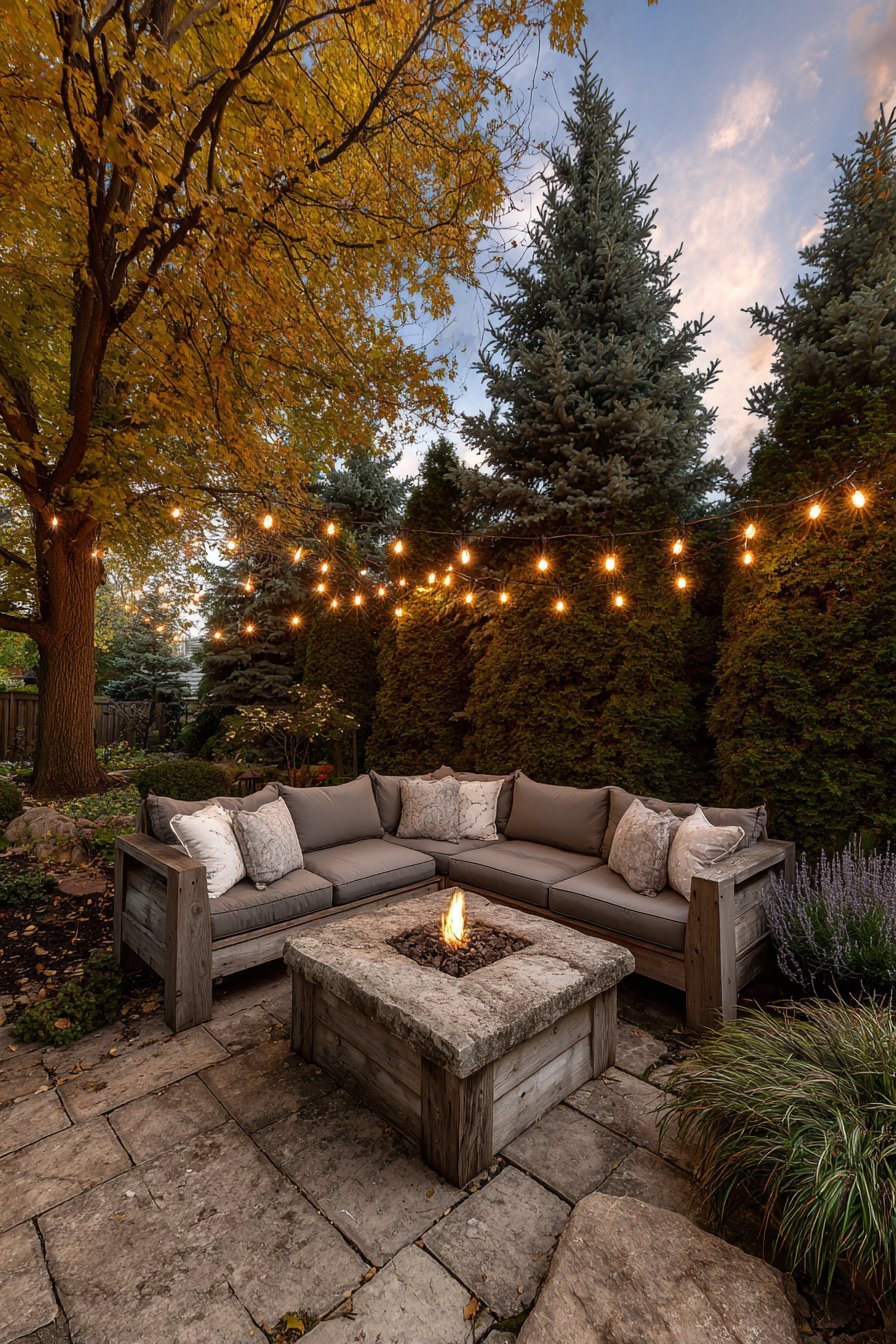
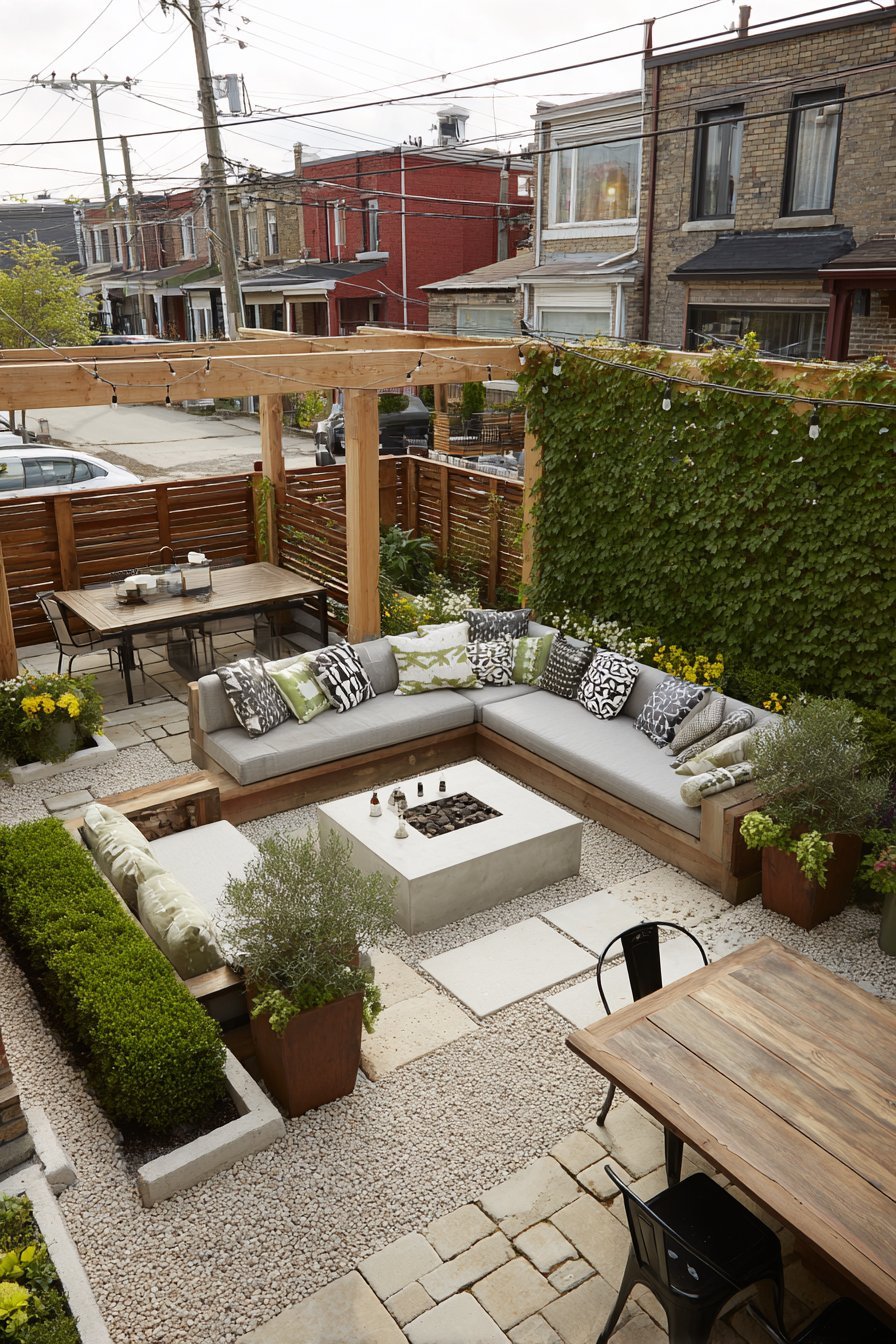
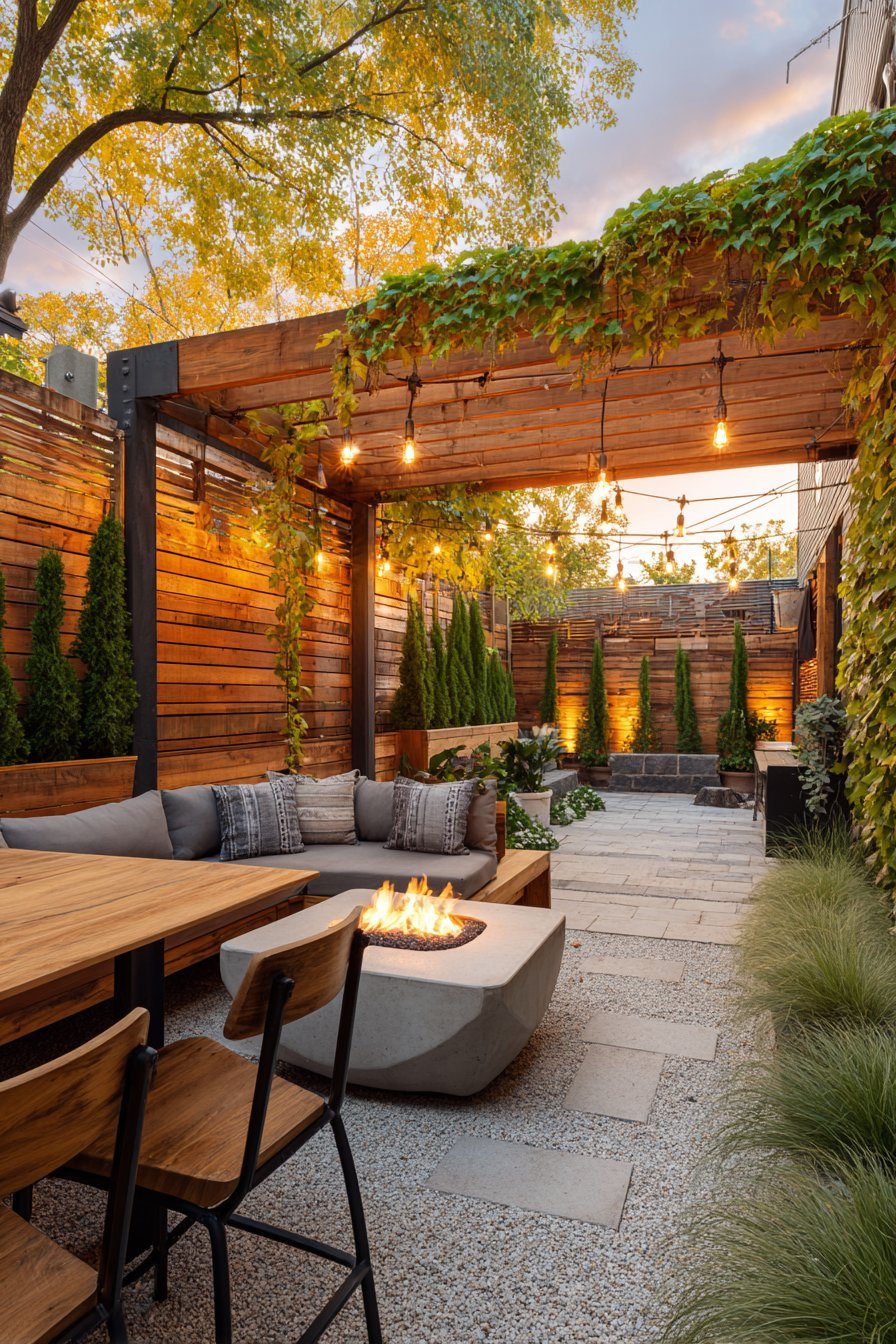
A weathered teak L-shaped sectional creates the foundation for this intimate gathering space. The arrangement wraps around a concrete fire pit with purposeful geometry. Natural stone pavers define the patio boundaries with irregular patterns. Mature privacy hedges of mixed evergreen shrubs reach eight feet high along property lines.

The hardscape materials show authentic aging through weathered surfaces and slight color variations. Potted lavender and ornamental grasses soften the transition between stone and greenery. Their placement breaks up hard edges without compromising seating capacity. The layered approach to privacy creates visual depth throughout the space.

Overhead string lights with Edison bulbs provide ambient evening illumination. The warm glow casts long shadows across textured stone surfaces during golden hour. This lighting strategy extends usability into nighttime hours. The combination of fire pit flames and string lights creates magical evening atmospheres.
Key Design Tips:
- Choose teak furniture that weathers naturally to silver-grey patina
- Install evergreen hedges in mixed varieties for year-round screening and visual interest
- Position fire pit centrally to maximize seating arrangements around warmth
- Use irregular stone patterns to create organic, natural-looking hardscapes
- Add potted plants at hardscape edges to soften transitions between materials
- String Edison bulb lights overhead for practical and atmospheric evening lighting
2. Rustic Outdoor Dining Corner

A rustic wooden table seating eight anchors this outdoor dining area. The table sits on decomposed granite surfacing that provides stable footing. A pergola overhead supports climbing jasmine vines in various growth stages. The vines create dappled shade patterns that shift throughout the day.
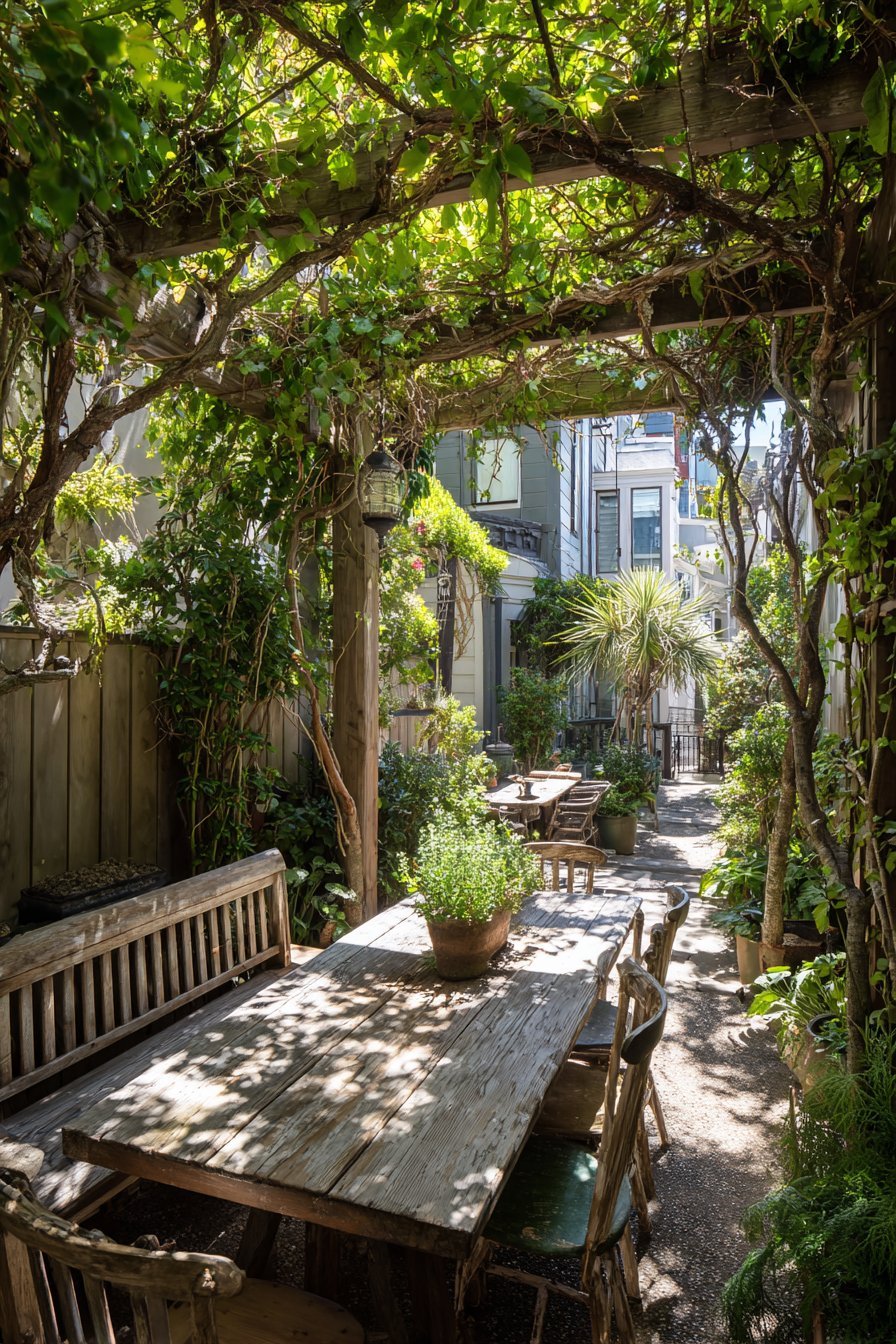
Mismatched vintage chairs surround the table with eclectic charm. Each chair shows unique character through different wood tones and aging patterns. A simple centerpiece of potted herbs adds living greenery to dining experiences. Cedar fence panels stained in natural grey tones define the boundary while allowing air circulation.
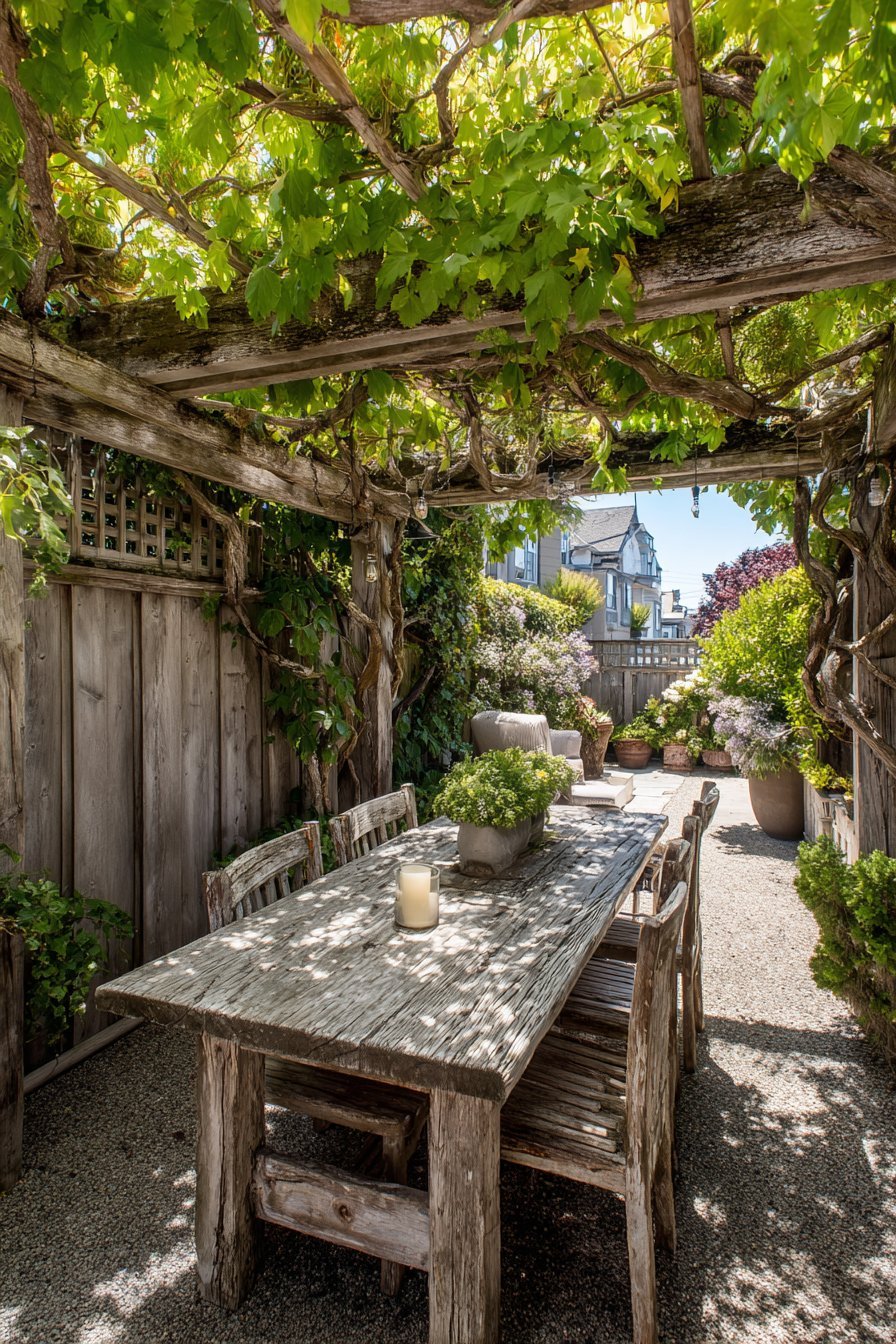
The layered privacy approach combines vertical structures with natural screening. Morning light filters through jasmine vines creating beautiful shadow patterns. The space demonstrates how multiple privacy zones can coexist within one cohesive design. The casual, lived-in atmosphere encourages extended outdoor dining sessions.

Key Design Tips:
- Select decomposed granite for stable, permeable ground covering
- Train climbing vines on pergola structures for natural overhead screening
- Mix vintage furniture pieces for character and cost-effective styling
- Plant jasmine for fragrant blooms and dense foliage coverage
- Stain cedar fencing in grey tones to complement natural weathering
- Position dining area to capture optimal morning or evening light
3. Tree-Suspended Hammock Sanctuary
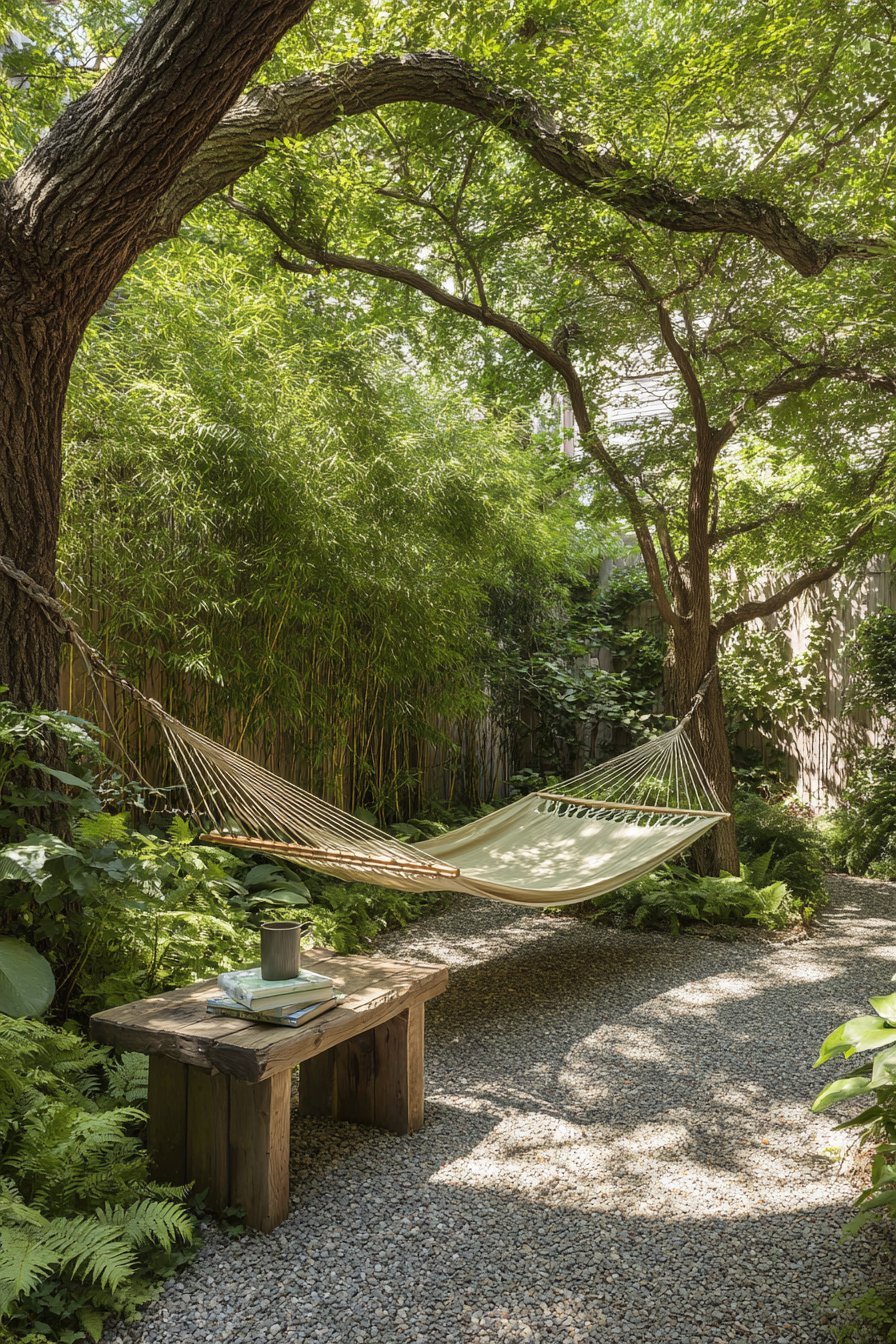
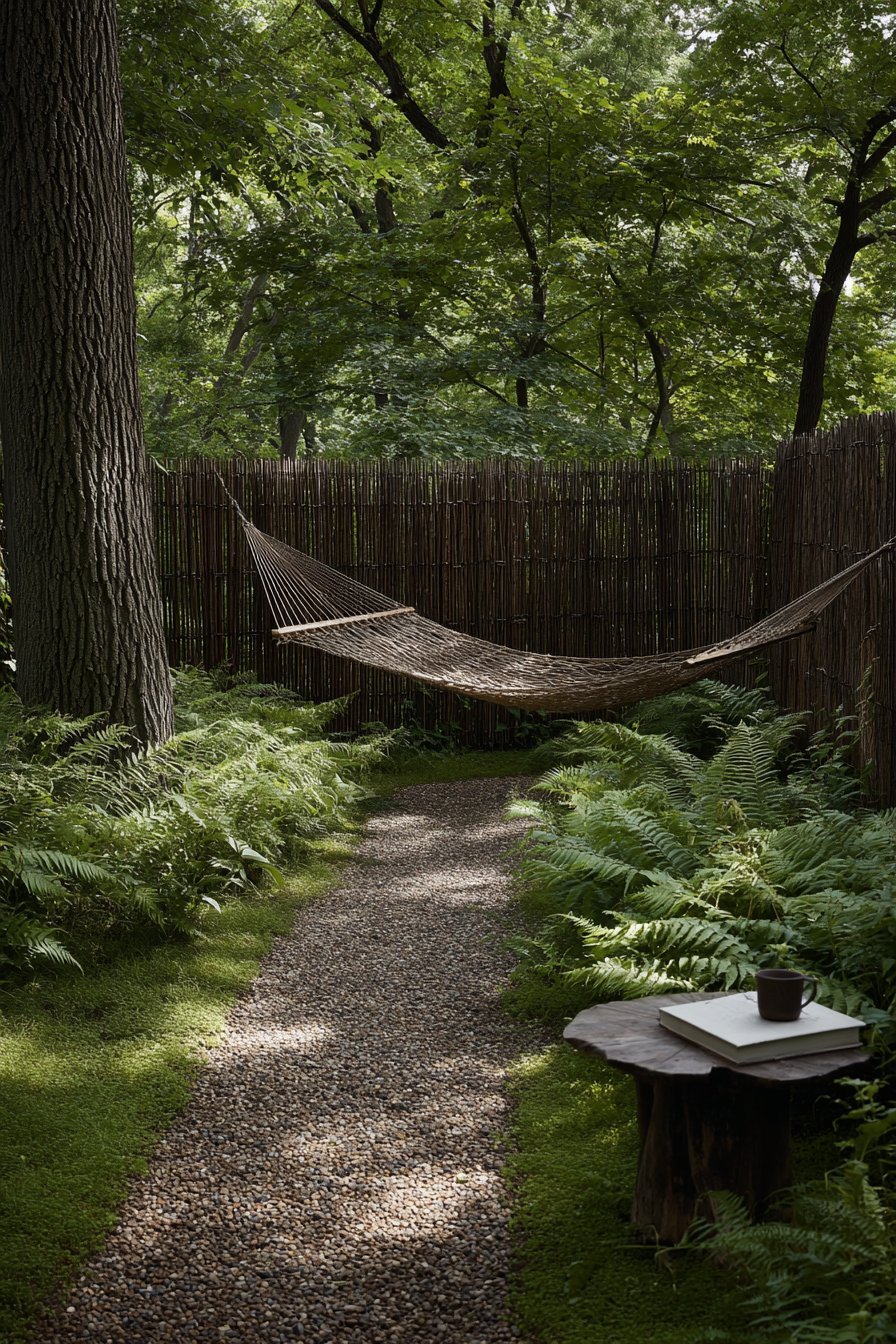
Two mature oak trees provide natural anchor points for a freestanding hammock. A gravel pathway leads to this dedicated relaxation spot with intentional meandering. Dense bamboo screening along property lines provides year-round privacy and gentle rustling sounds. The bamboo creates both visual and auditory barriers from neighboring spaces.

A weathered wooden side table holds books and beverages within easy reach. The table shows authentic aging through cracked finish and weathered grain. Native ferns and hostas fill the understory with low-maintenance greenery. Natural diffused light filters through the tree canopy creating dappling effects.
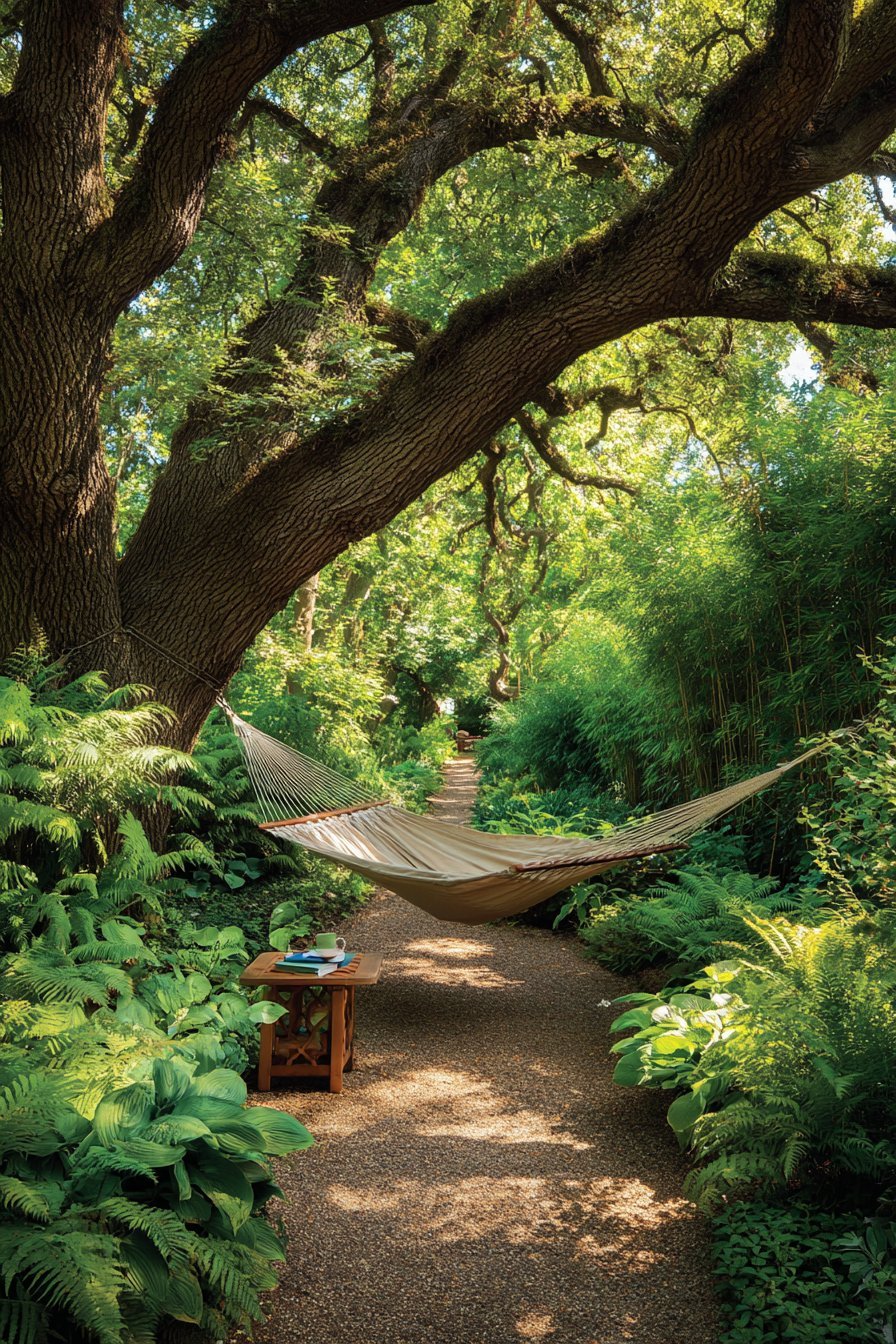
This sanctuary demonstrates how existing landscape features can anchor privacy designs. The overhead tree canopy provides natural shade and privacy from upper-level windows. Ground-level plantings complete the screening while requiring minimal maintenance. The space achieves complete seclusion through thoughtful plant selection and placement.
Key Design Tips:
- Utilize existing mature trees as natural privacy screens and hammock anchors
- Plant bamboo for fast-growing, dense screening with pleasant ambient sound
- Choose native understory plants like ferns and hostas for low maintenance
- Install gravel pathways for all-weather access to relaxation zones
- Position hammocks to capture filtered light and natural shade patterns
- Add simple weathered furniture for functional surfaces without cluttering space
4. Water Feature Privacy Wall
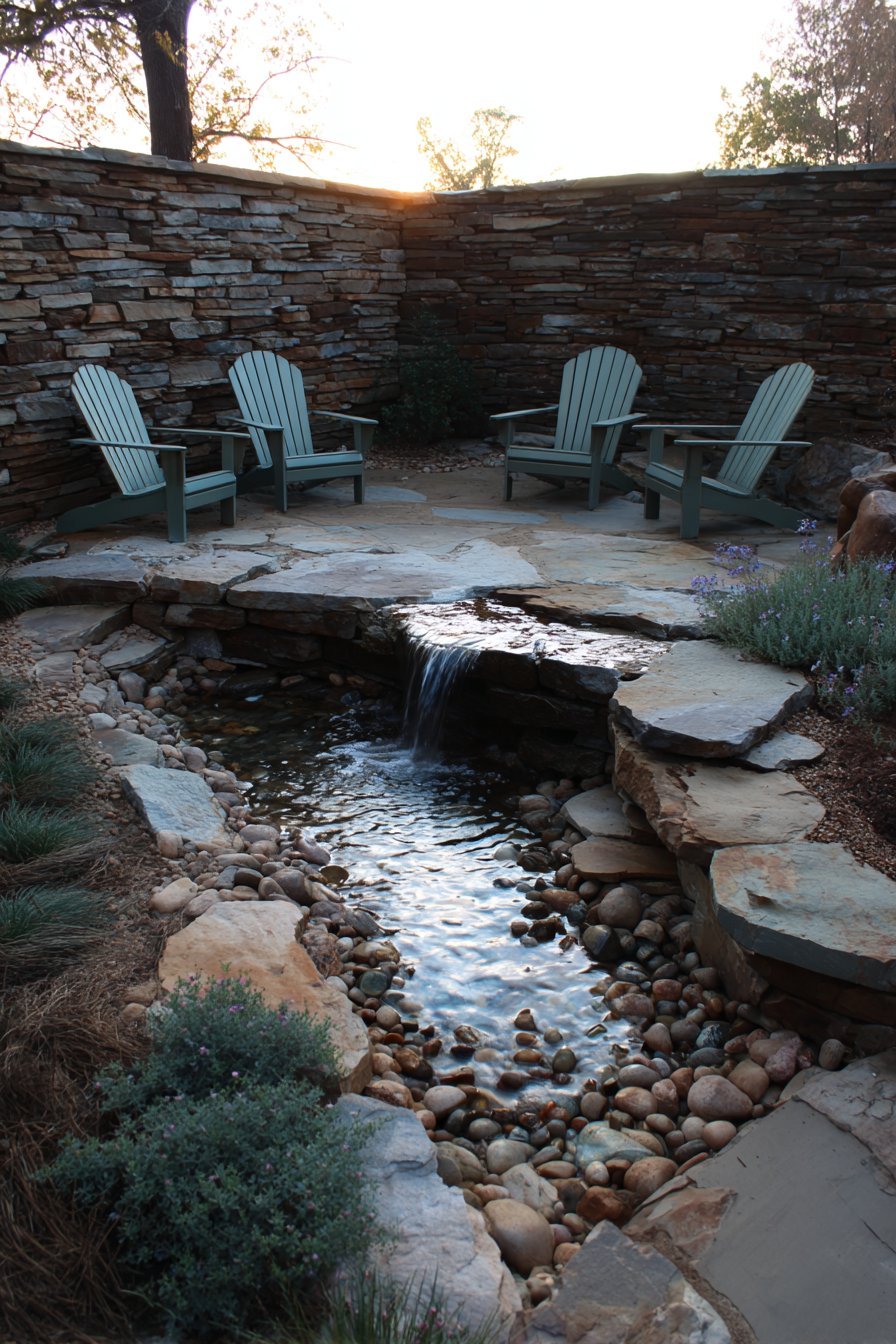
A stacked stone wall doubles as both privacy screen and water feature support. The recirculating fountain creates trickling sounds that mask neighborhood noise. A semi-circular arrangement of Adirondack chairs in faded teak faces the feature. River rock mulch surrounds the fountain base with varying stone sizes.
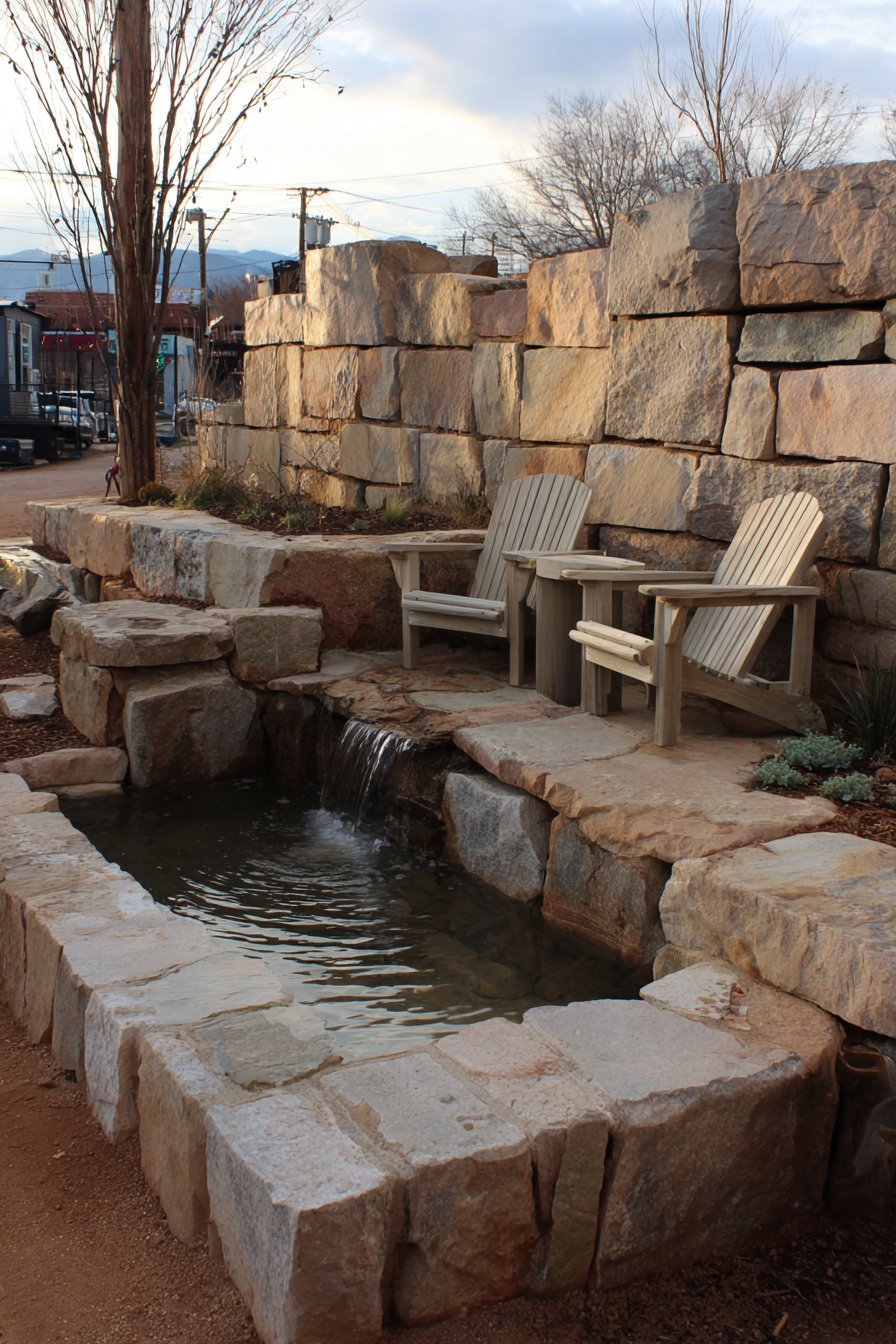
Drought-tolerant sedums and creeping thyme fill gaps between river rocks. These plantings require minimal water while softening the hardscape appearance. The stone wall blocks sightlines from neighboring properties while maintaining sky views. Late afternoon light creates dramatic shadows across the stacked stone texture.
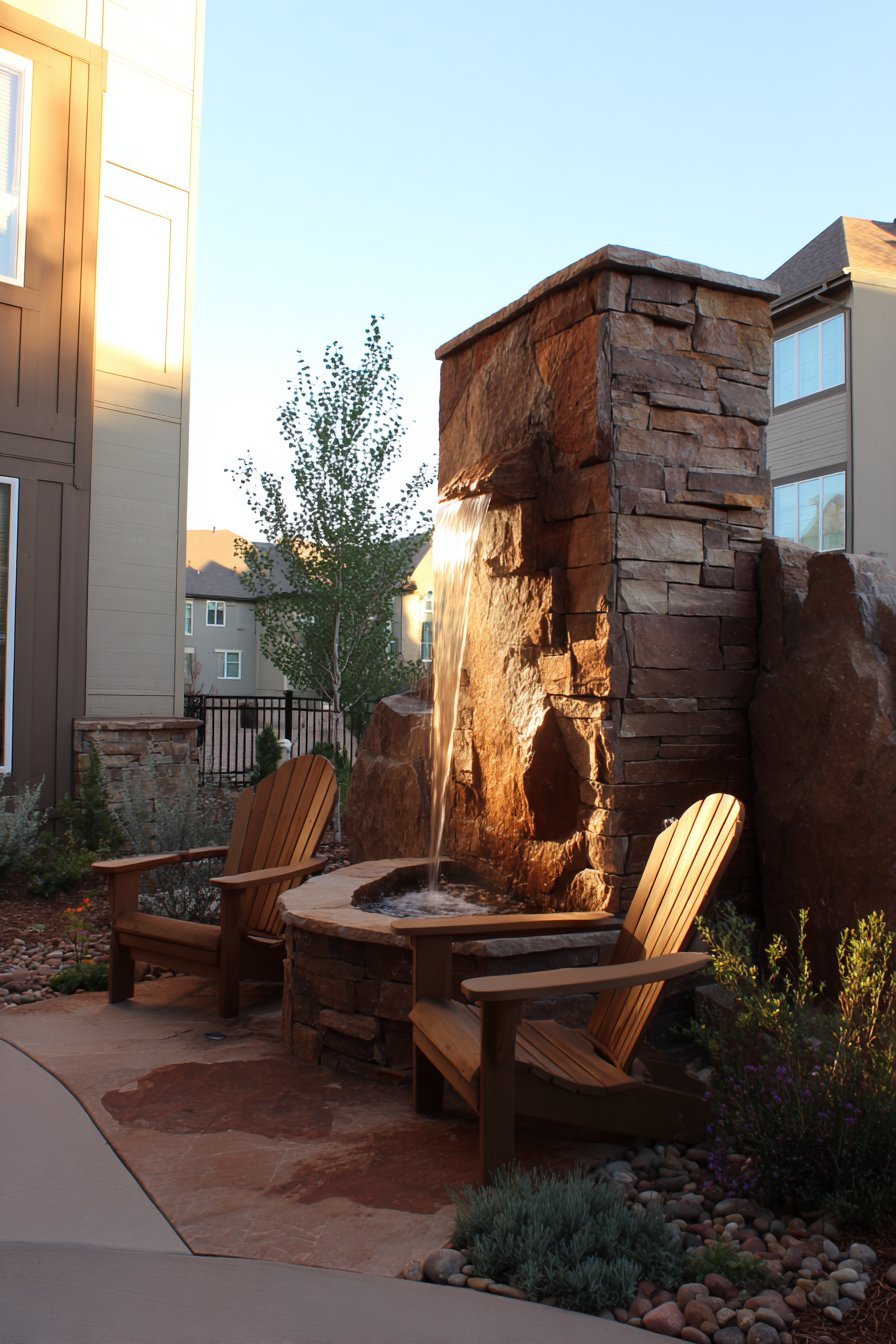
The water element serves multiple privacy functions beyond visual screening. The sound of moving water creates auditory masking for conversations. The vertical wall structure defines spatial boundaries without feeling enclosed. This design proves that privacy solutions can serve multiple functional purposes simultaneously.
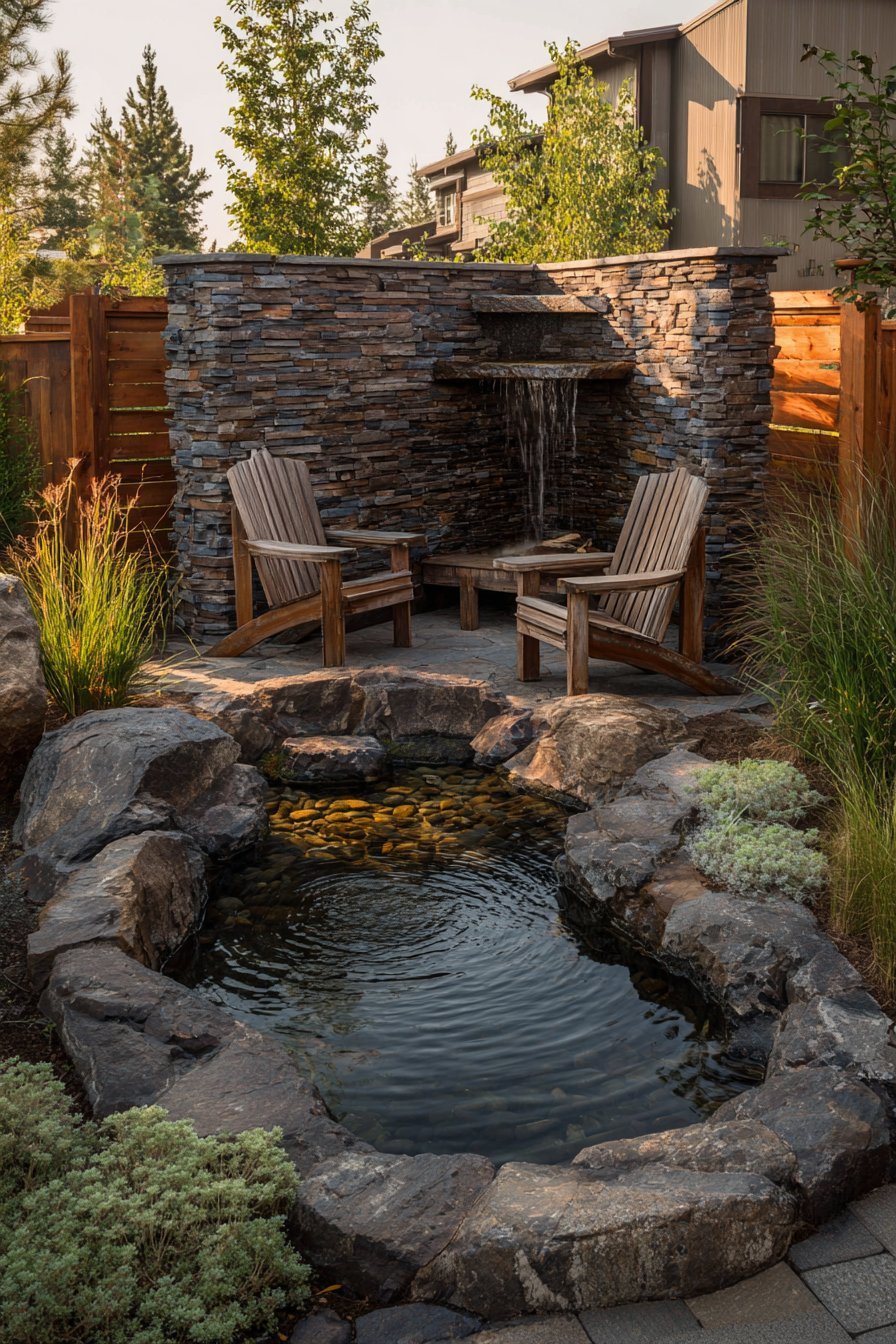
Key Design Tips:
- Build stone walls to regulation height for maximum privacy without permits
- Install recirculating fountains for sound masking and visual interest
- Plant drought-tolerant groundcovers between rocks for low-maintenance beauty
- Arrange seating in conversation groupings facing water features
- Use river rock mulch for natural appearance and excellent drainage
- Position water features to catch afternoon light for dramatic shadows
5. Geometric Raised Bed Garden
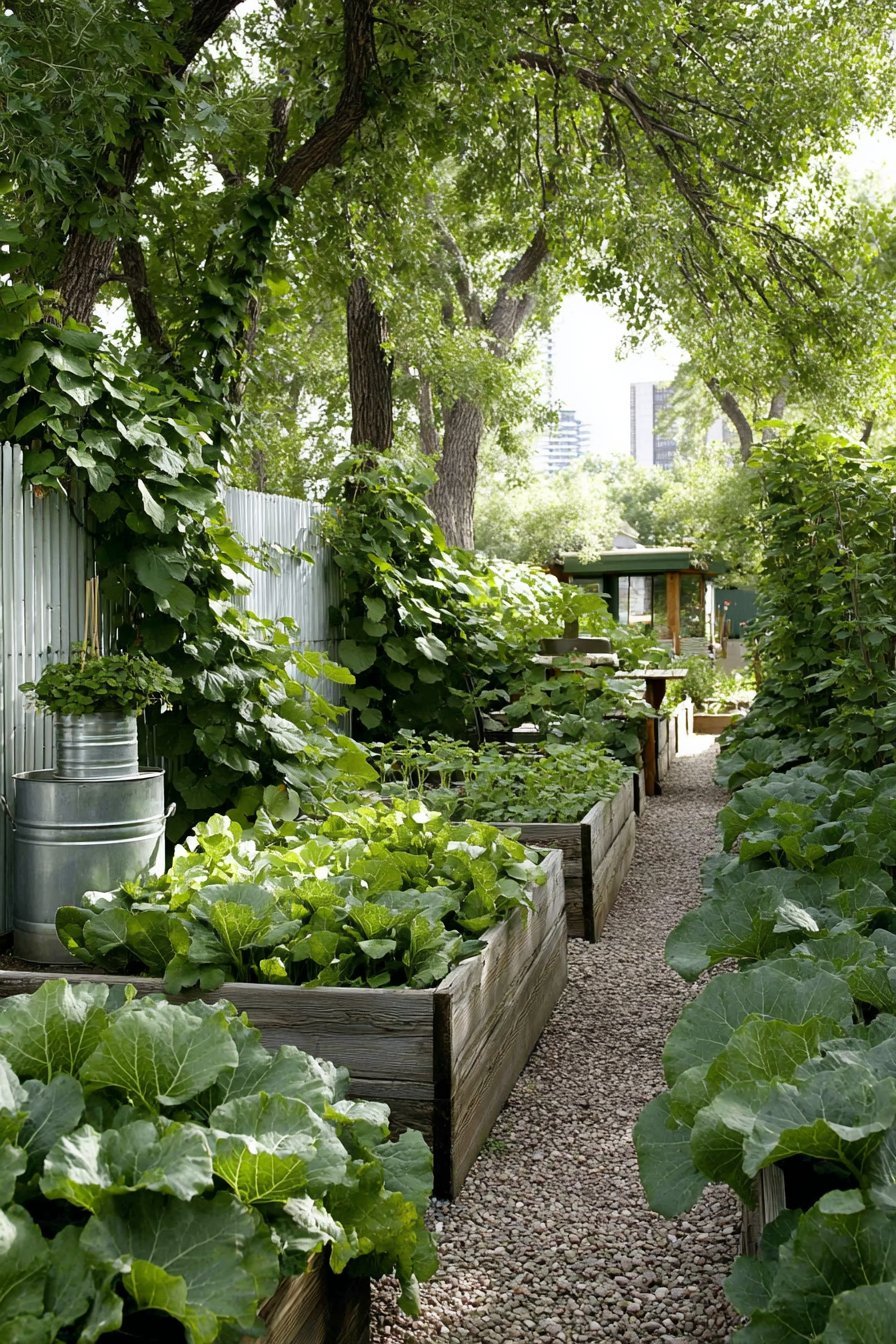
Cedar plank raised beds arrange in geometric patterns creating visual screening. The beds provide productive growing space while defining private zones. Espaliered fruit trees train along existing fence lines adding vertical interest. This maximizes space utilization in limited square footage areas.

Gravel pathways between beds provide all-weather access for maintenance. A small potting bench with galvanized metal storage bins sits ready for immediate use. The organized layout demonstrates how functional gardens can create privacy layers. Strategic planting heights range from low herbs to tall tomato stakes.
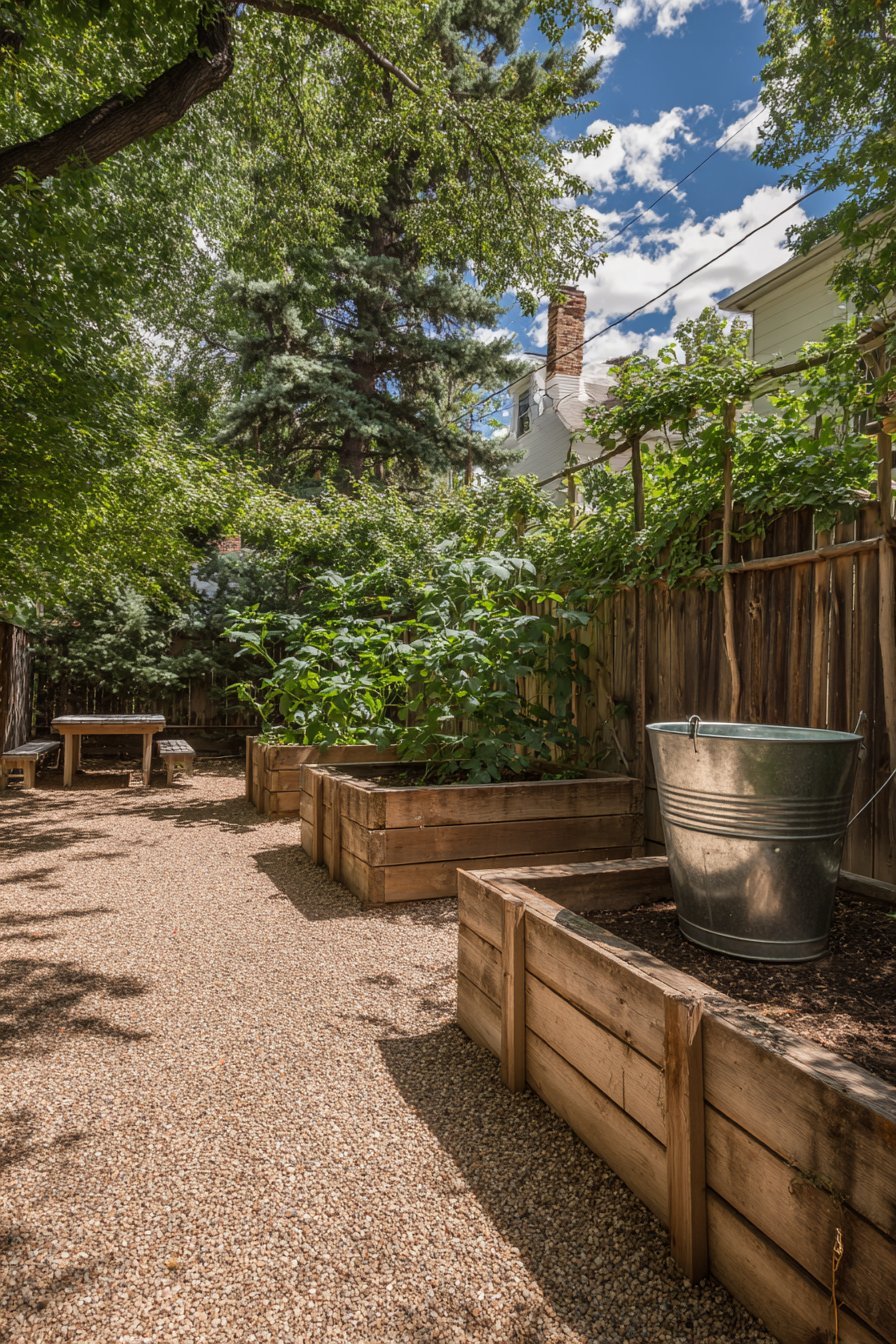
Bright midday light illuminates the practical layout and material aging. The cedar shows authentic weathering through silvering wood and slight warping. This design proves that productive gardens and privacy screening can coexist. The geometric arrangement creates structure while maintaining organic growing conditions.

Key Design Tips:
- Build raised beds from cedar for natural rot resistance and beautiful aging
- Arrange beds geometrically to create both growing space and visual barriers
- Train fruit trees as espaliers along fences to maximize vertical space
- Install gravel pathways for clean, all-weather garden access
- Include dedicated potting bench areas for convenient garden maintenance
- Vary planting heights strategically to create layered privacy screening
6. Cedar-Screened Hot Tub Retreat
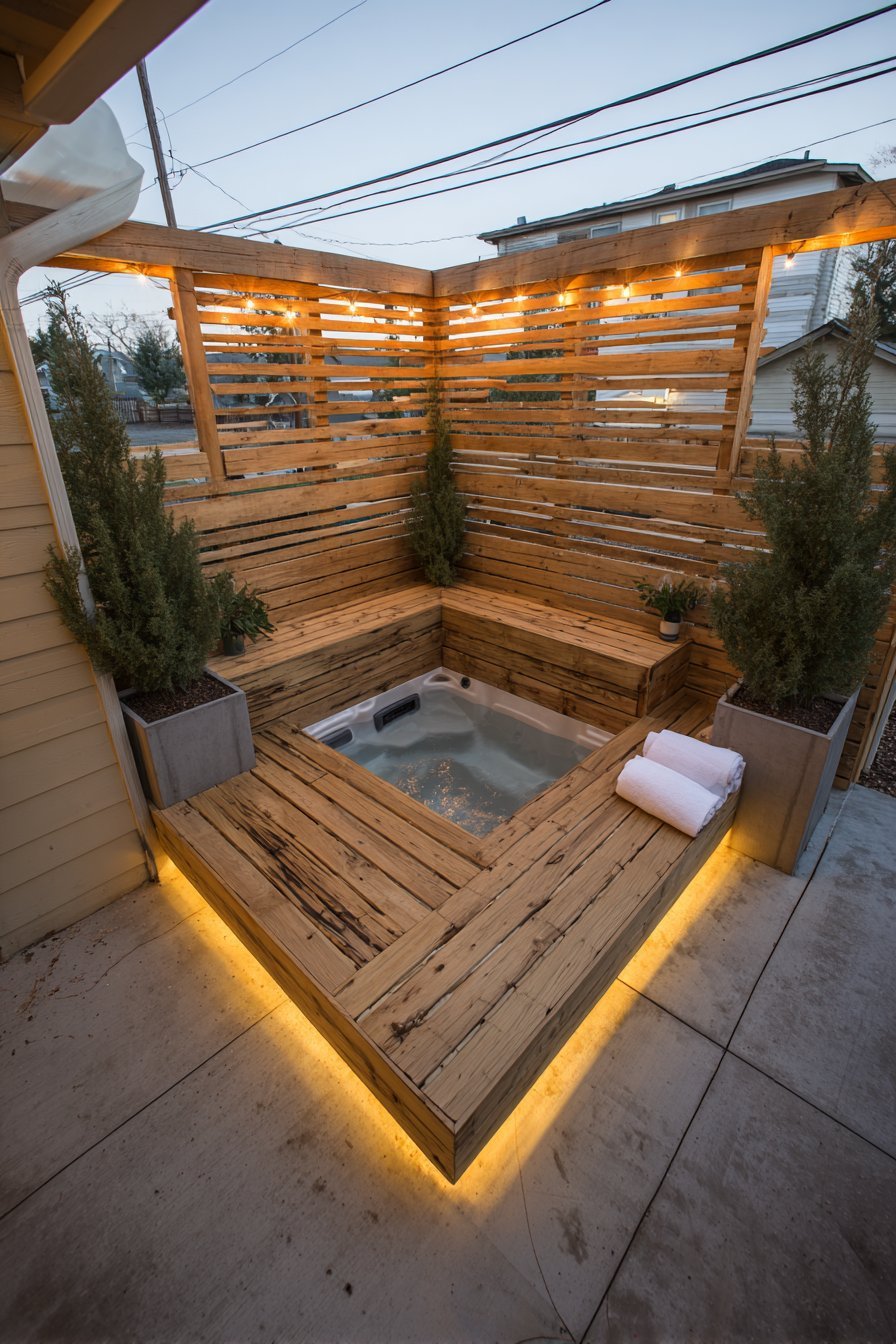
Custom-built privacy screens constructed from horizontal cedar slats surround this hot tub area. The irregular spacing allows airflow while blocking direct sightlines. The spa sits on reinforced composite decking with built-in storage benches. Rolled towels and maintenance supplies store conveniently within reach.

Potted evergreens in large concrete planters anchor corner positions. These living elements soften the built structure while adding greenery. LED strip lighting integrates into deck boards providing safe nighttime illumination. The lighting creates ambient glow without harsh overhead brightness.
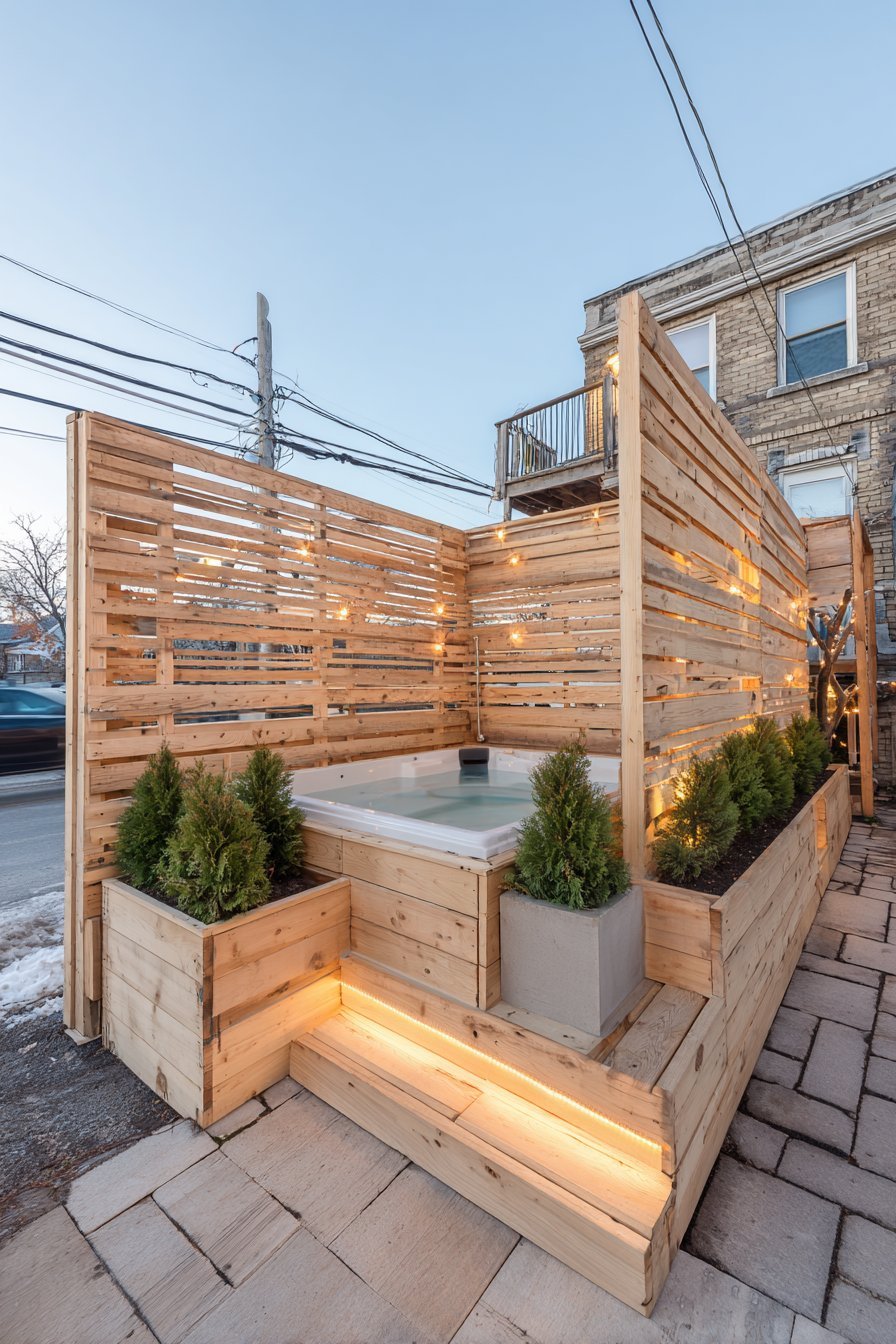
This enclosed outdoor room demonstrates intimate scale design principles. The horizontal slat pattern creates modern aesthetic while serving practical purposes. Material weathering shows through natural cedar silvering and composite deck fading. The space proves that privacy structures can feel luxurious rather than confining.

Key Design Tips:
- Space cedar slats irregularly to balance airflow with privacy needs
- Build storage benches into deck structures for hidden supply organization
- Plant evergreens in substantial planters for movable privacy screening
- Install LED strip lighting in decking for safety and atmospheric ambiance
- Choose composite decking near water features for minimal maintenance
- Reinforce deck structures properly to support hot tub weight loads
7. Living Wall Reading Nook

A weather-resistant outdoor daybed with natural linen cushions sits against a living wall. Vertical planters filled with trailing pothos and ferns create green privacy screening. A repurposed vintage ladder serves dual purposes as plant stand and book holder. The ladder shows authentic age through worn paint and weathered wood.
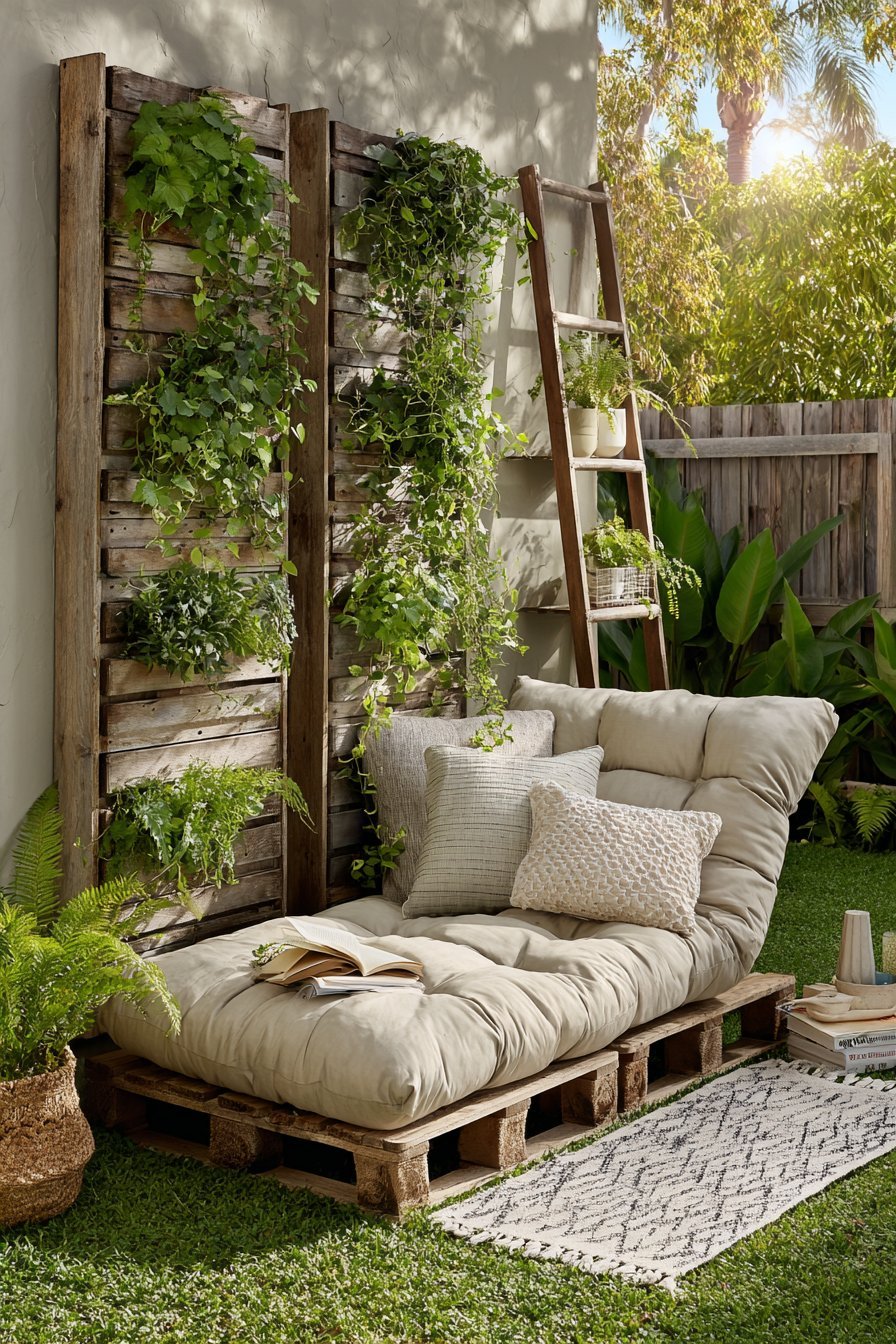
The surrounding lawn transitions naturally to this defined retreat space. A simple outdoor rug in geometric patterns marks the boundary without harsh lines. Soft morning light captures the green wall’s humidity control benefits. The vertical garden creates both privacy and improved microclimate conditions.
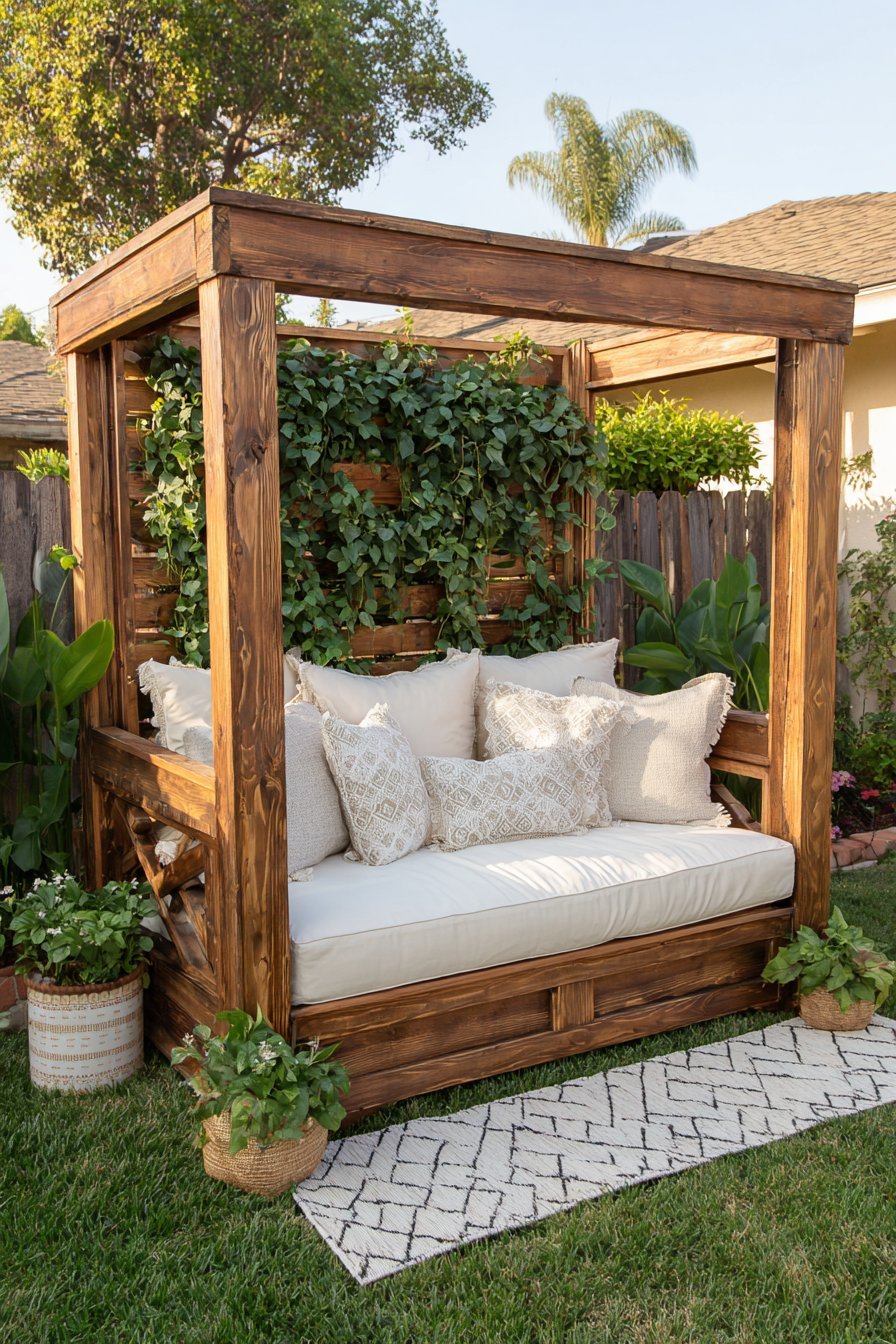
This design demonstrates how living walls serve multiple functions beyond screening. The plants filter air while creating calming visual texture. The daybed invitation encourages extended outdoor relaxation periods. The space shows authentic use through slightly faded cushions and well-worn rug patterns.

Key Design Tips:
- Install vertical planters with trailing plants for living privacy walls
- Choose weather-resistant furniture fabrics in natural, fade-resistant tones
- Repurpose vintage items like ladders for character and functionality
- Define spaces with outdoor rugs rather than permanent hardscaping
- Position reading nooks to capture soft morning or late afternoon light
- Select plants that improve humidity and air quality in outdoor spaces
8. Built-In Outdoor Kitchen Zone
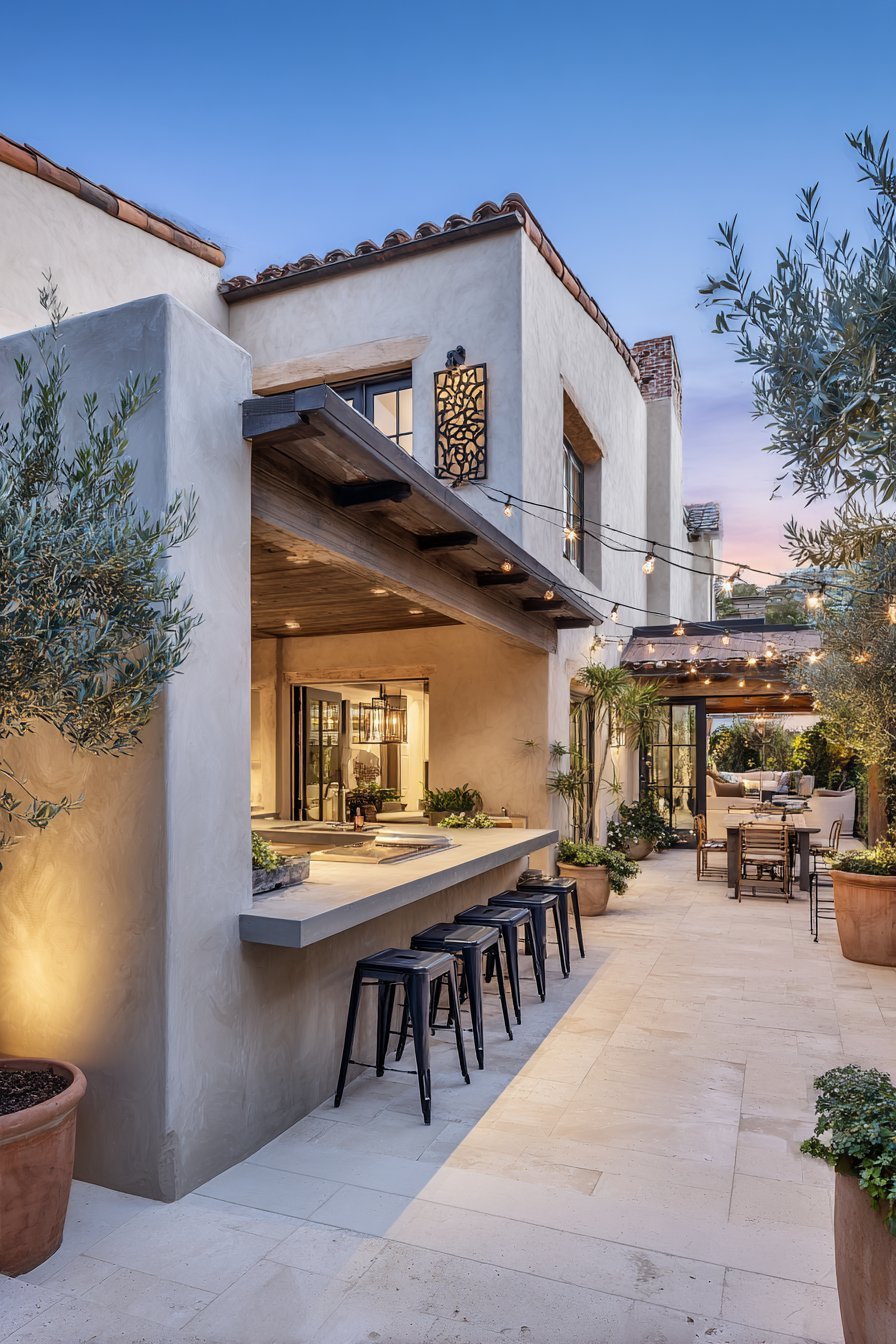
Concrete countertops and stainless steel appliances create this functional outdoor kitchen. The cooking area sits against a textured stucco privacy wall topped with decorative metal panels. Bar-height seating with industrial metal stools faces the preparation space. String lights overhead define the social gathering zone boundaries.
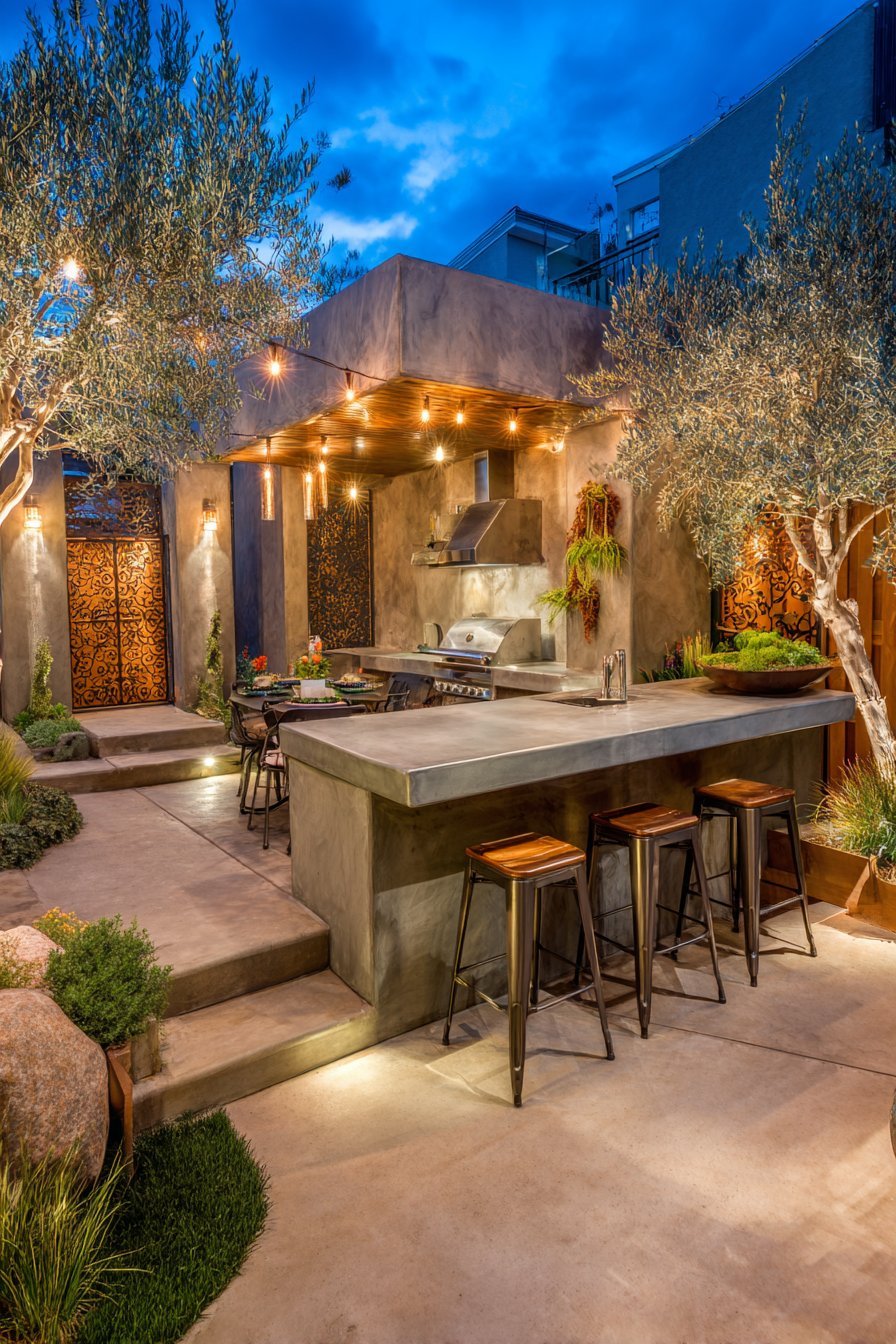
Potted olive trees in terracotta containers provide additional Mediterranean-style screening. The trees add both visual privacy and atmospheric authenticity. Evening blue hour lighting highlights the gathering zones dramatically. The privacy wall creates intimate entertaining environments without feeling cramped.
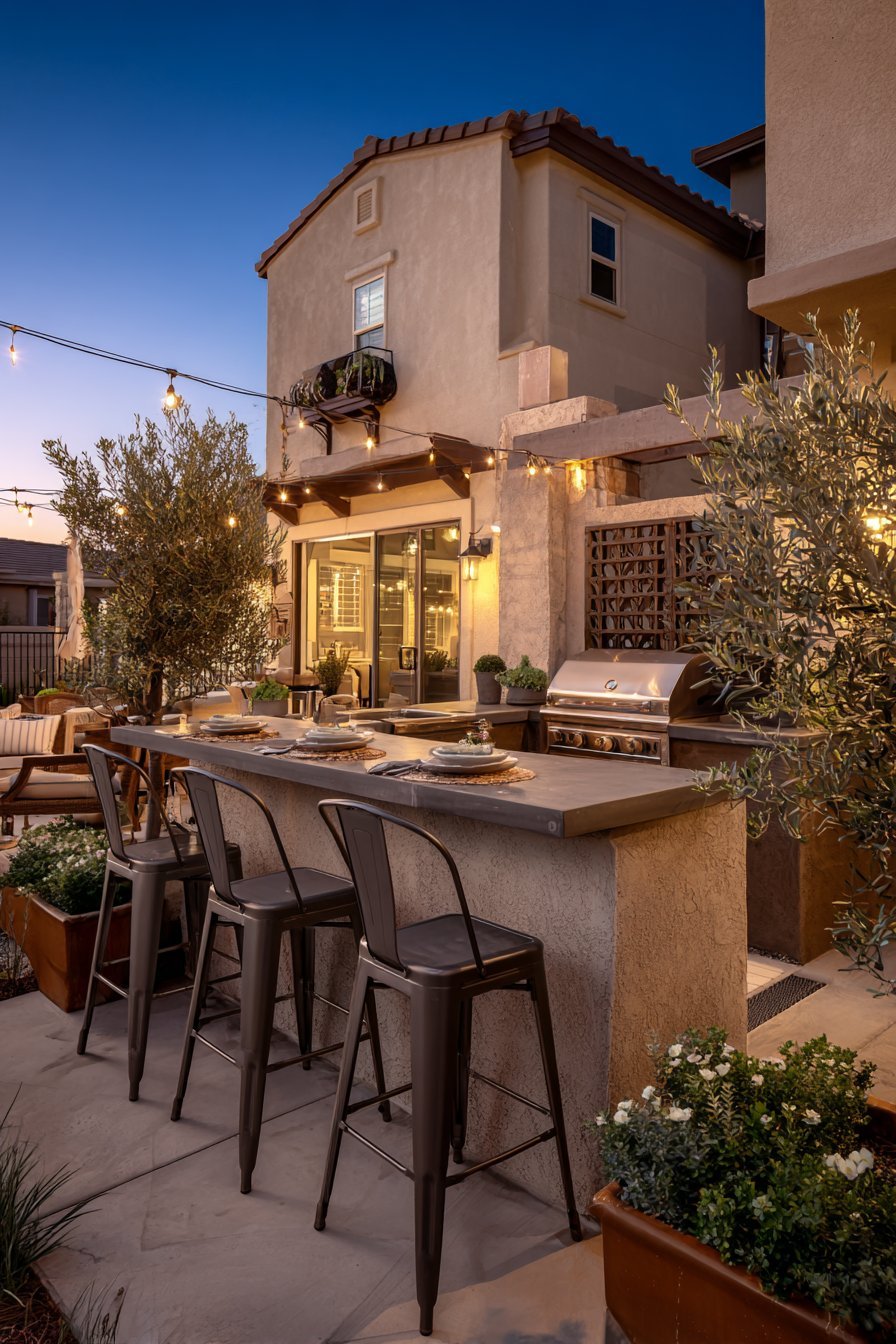
This entertainment-focused design proves that privacy and socializing coexist beautifully. The built-in elements provide permanence and substantial value. Strategic lighting extends usability well into evening hours. The combination of structural screening and living elements creates layered privacy solutions.

Key Design Tips:
- Pour concrete countertops for durable, customizable outdoor surfaces
- Mount decorative panels atop privacy walls for height without bulk
- Position bar seating to face cooking areas for social interaction
- Plant olive trees in substantial containers for movable Mediterranean screening
- Install multiple lighting layers for functionality and atmosphere
- Build stucco walls with texture for visual interest and weather resistance
9. Family-Friendly Play Area
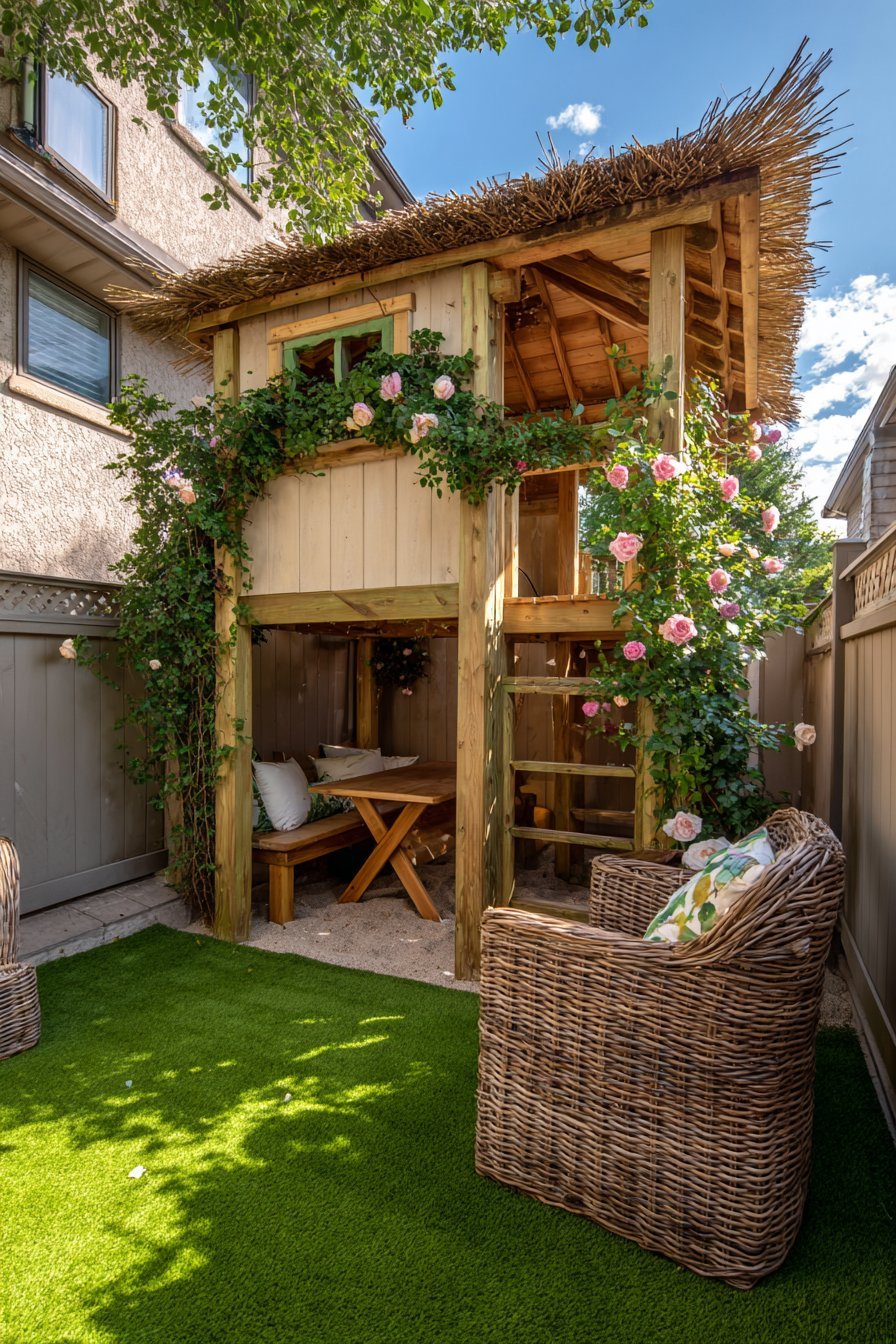
A wooden playset with natural rope elements occupies this dedicated children’s zone. The sand pit sits visible from a covered porch with wicker furniture. Composite privacy fencing surrounds the space in neutral tones. Climbing roses cover fence sections showing realistic growth progression rather than perfect coverage.
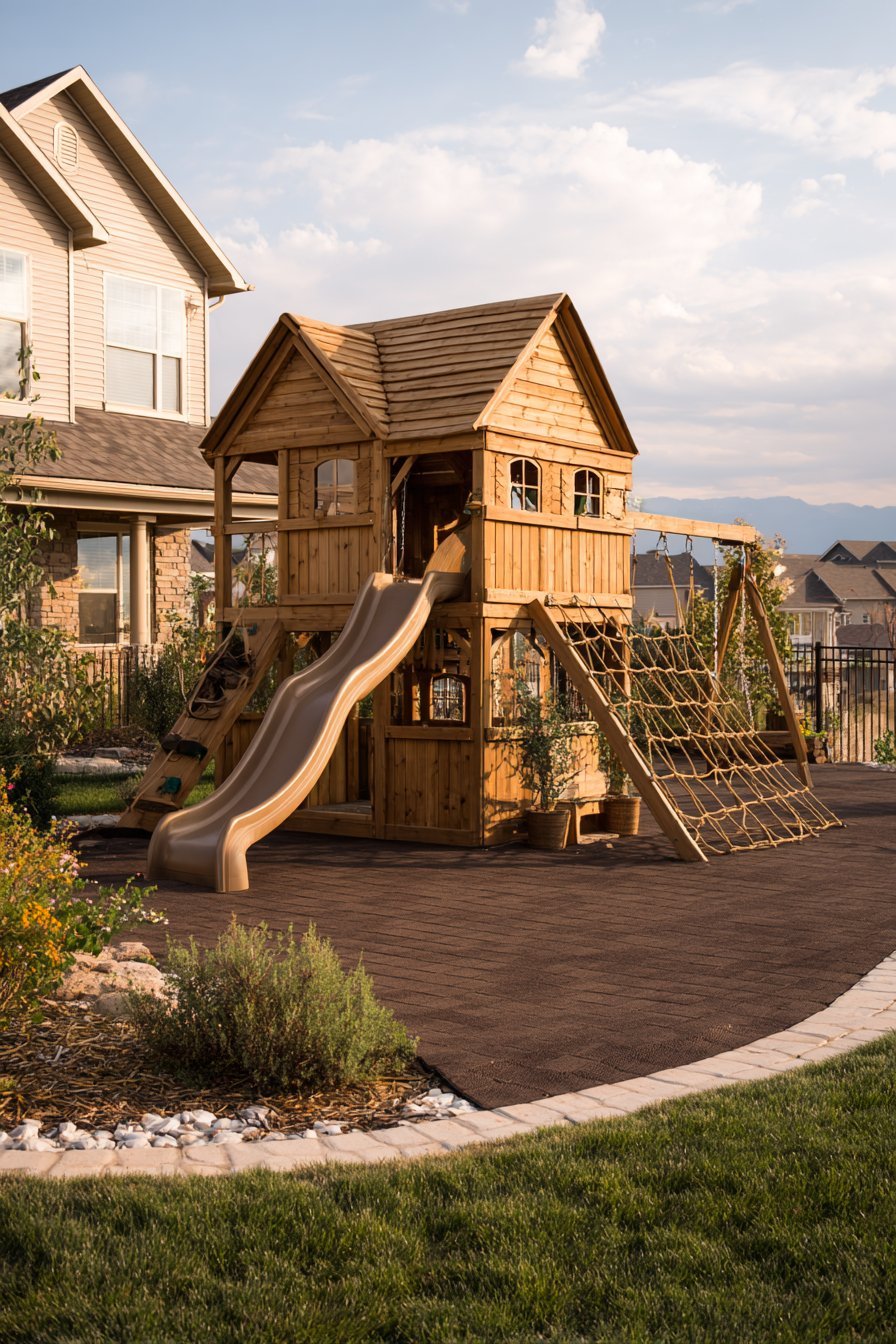
Rubber mulch safety surfacing in earth tones defines the active play zone. The surrounding lawn shows natural wear patterns from regular childhood use. This honest representation demonstrates lived-in family spaces. Natural afternoon light captures the complete supervision setup from covered seating.
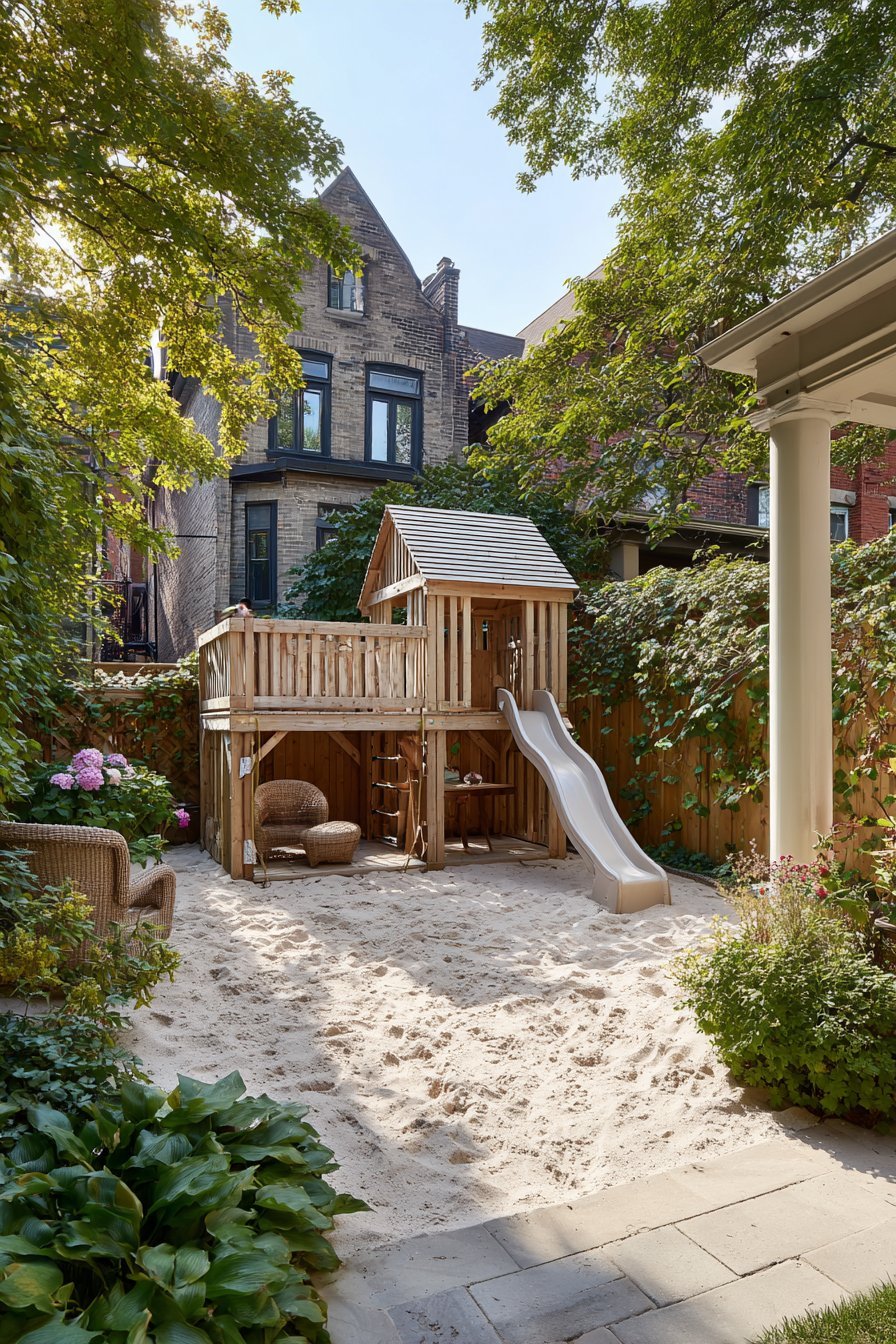
The design balances child activity needs with adult supervision requirements. Privacy fencing creates security while maintaining visual connections. The covered porch provides weather-protected observation points. This layout proves that private backyards can accommodate active family lifestyles while maintaining aesthetic appeal.
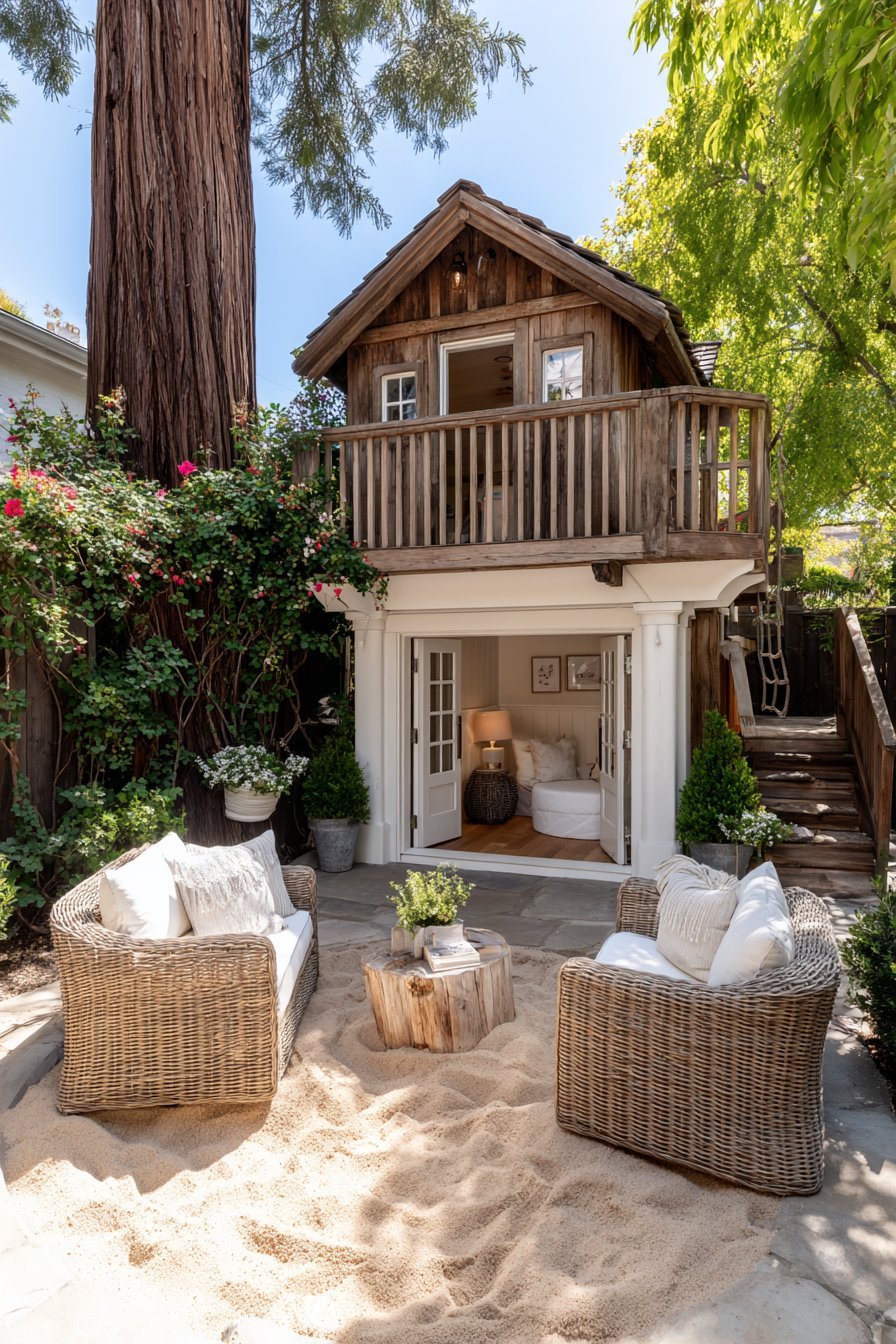
Key Design Tips:
- Install composite fencing for low-maintenance privacy around play areas
- Use rubber mulch surfacing under play equipment for safety compliance
- Position play zones visible from covered adult seating areas
- Plant climbing roses on fencing for softening without compromising child safety
- Expect and design for natural lawn wear patterns in active play zones
- Choose wooden play equipment that weathers naturally over time
10. Zen Meditation Platform

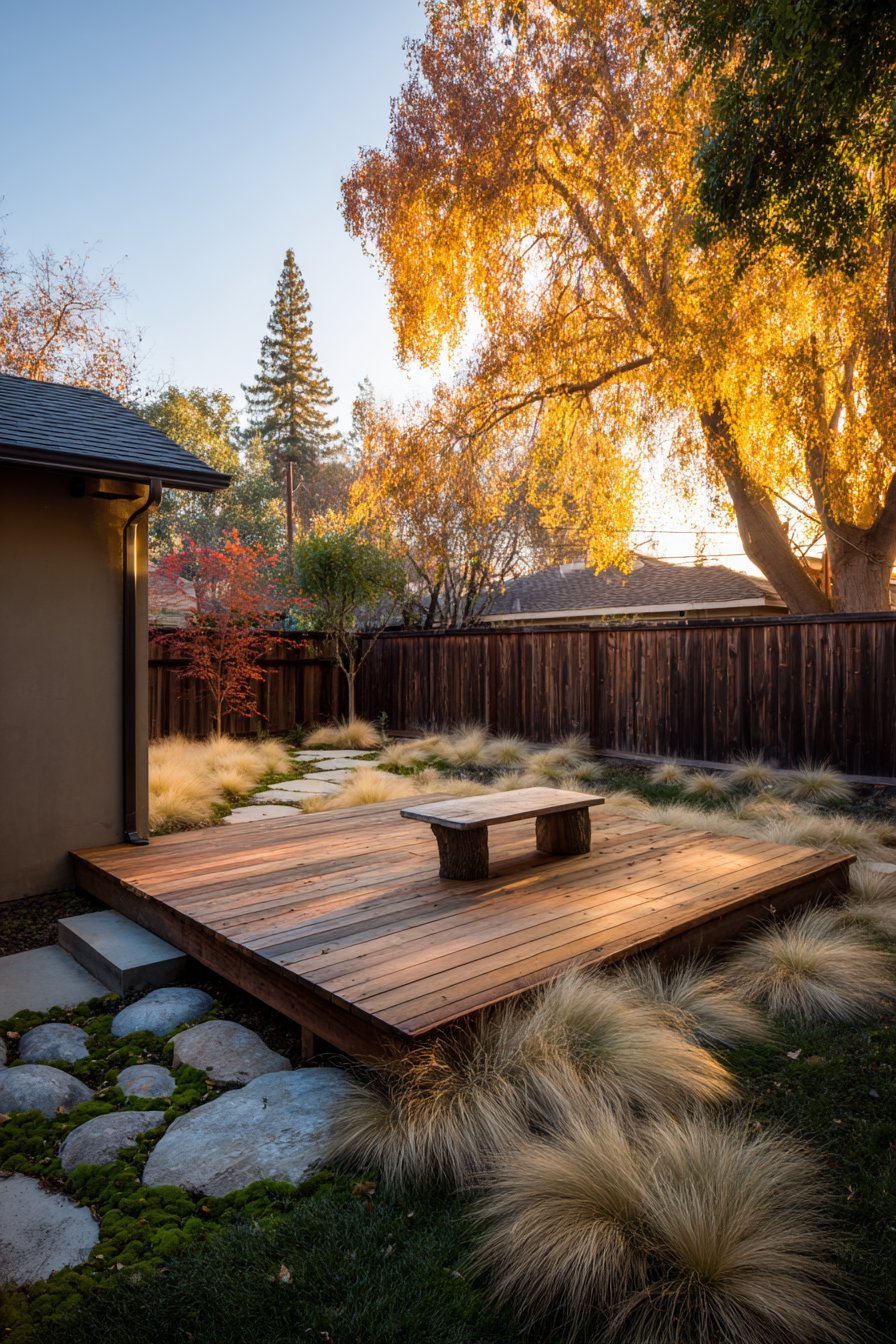
A simple wooden platform deck sits centered among ornamental grasses. The grasses sway naturally creating movement and sound screening. A single weathered bench positions with views toward a Japanese maple specimen. River stones arrange in dry creek bed patterns leading to the meditation space.
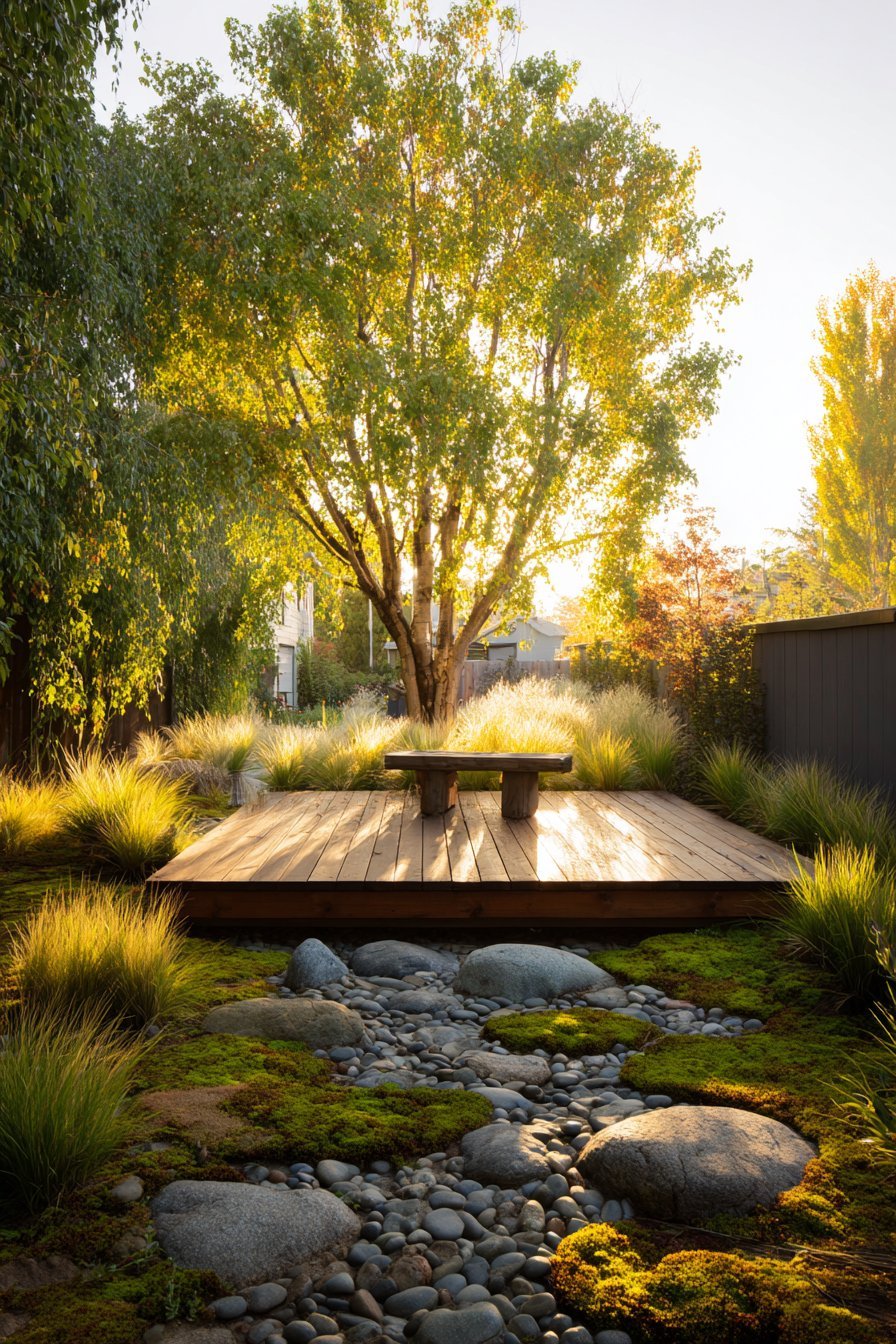
Minimal plantings of moss and low groundcover create serene, contemplative atmosphere. Golden hour lighting casts long shadows emphasizing the peaceful isolation. The Japanese maple displays peak autumn color against neutral backgrounds. This design demonstrates how minimal elements can create maximum impact.
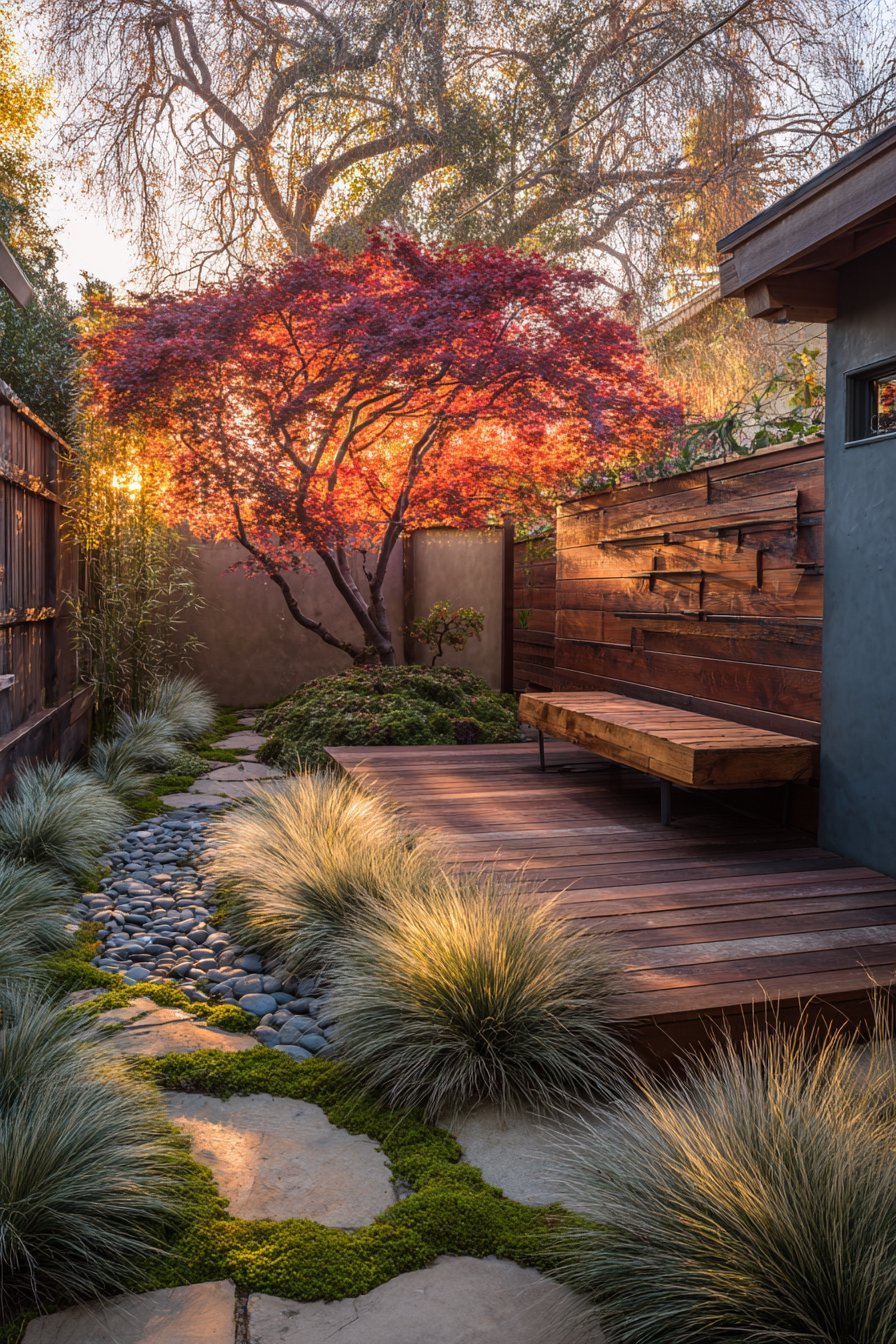
The platform elevation separates the meditation space from surrounding areas. Ornamental grasses provide natural privacy screening without formal hedging. The dry creek bed offers visual journey toward the central platform. This contemplative retreat proves that privacy doesn’t require dense enclosure.
Key Design Tips:
- Build simple platform decks as elevated meditation spaces
- Plant ornamental grasses for natural movement and sound screening
- Position specimen trees like Japanese maples as focal points
- Create dry creek beds with river stones for visual pathways
- Keep plantings minimal for contemplative, uncluttered atmospheres
- Design meditation spaces to capture golden hour lighting conditions
11. Travertine Pool Deck Oasis
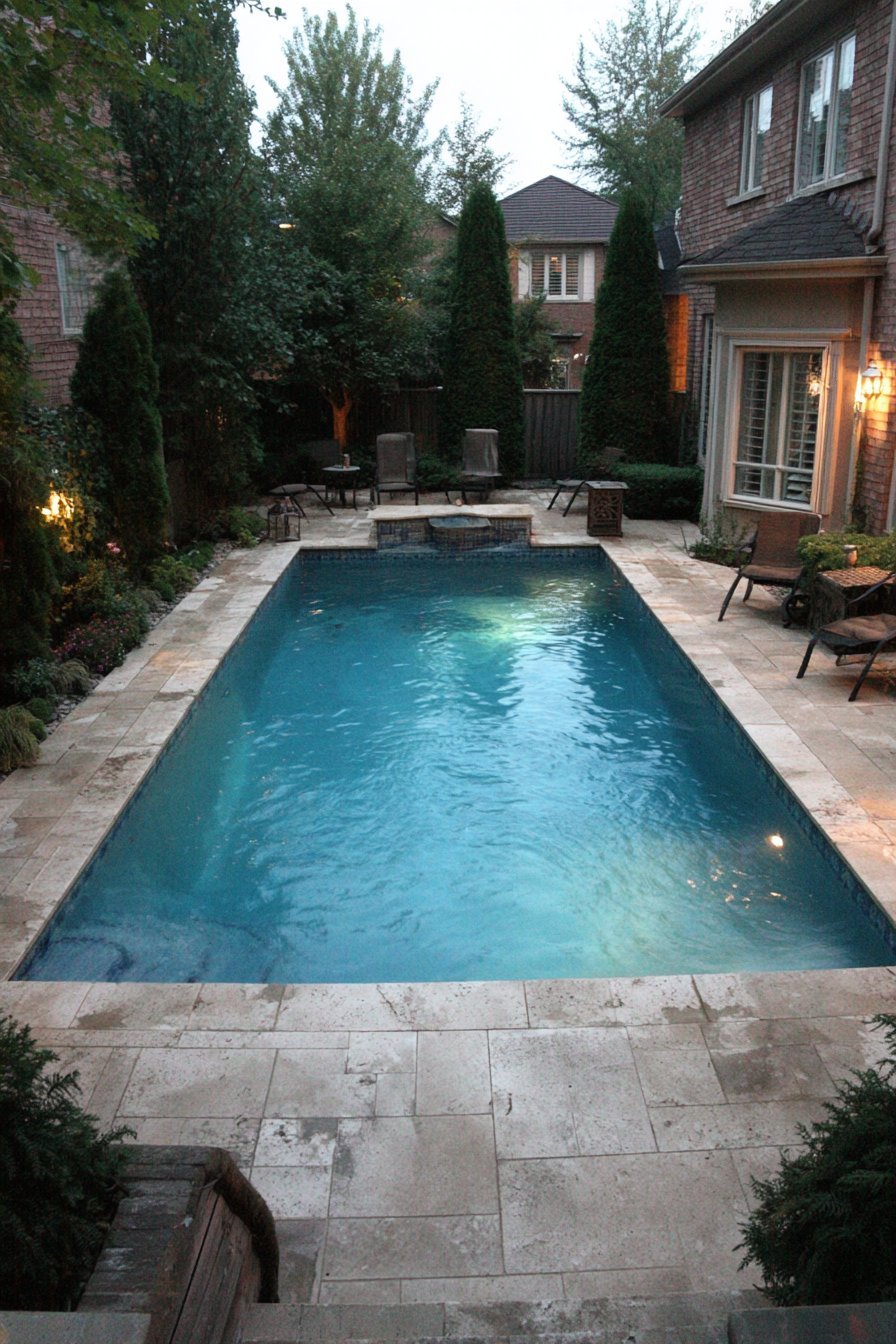
Travertine coping and decking show realistic weathering from pool chemicals and sun exposure. The natural stone develops slight discoloration that adds character over time. Privacy hedges of pittosporum create dense green walls around the pool perimeter. The hedges maintain at six feet for optimal screening without overwhelming proportions.

Teak loungers with weathered cushions suggest regular poolside use. A simple side table holds beverages and reading materials within reach. Underwater LED lighting provides evening functionality and visual drama. The lighting transforms the pool into illuminated focal point after dark.

This pool design demonstrates complete privacy systems including multiple screening layers. The combination of fencing, hedging, and strategic plantings creates resort-like enclosure. Wide-angle photography captures the spatial relationships between privacy elements. The mature plantings show the value of patient landscape development.

Key Design Tips:
- Choose travertine for pool decking due to heat-resistance and natural beauty
- Plant pittosporum hedges for dense, low-maintenance evergreen screening
- Maintain hedge heights at six feet for privacy without oppressive feeling
- Install underwater LED lighting for evening pool use and dramatic effect
- Select teak furniture that develops attractive silver patina when weathered
- Combine multiple privacy layers including fencing, hedging, and strategic plantings
12. Curved Shade Garden Pathway
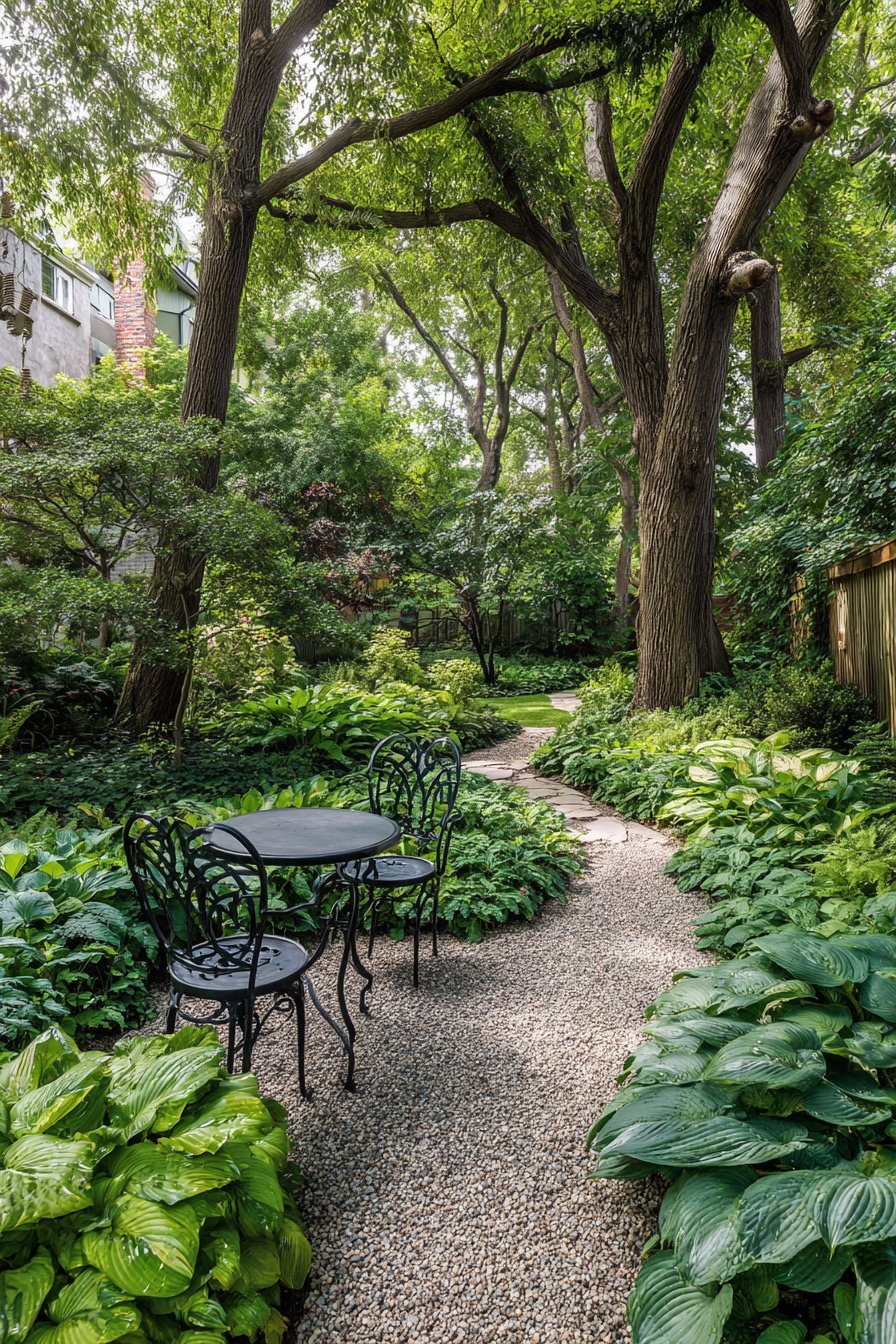
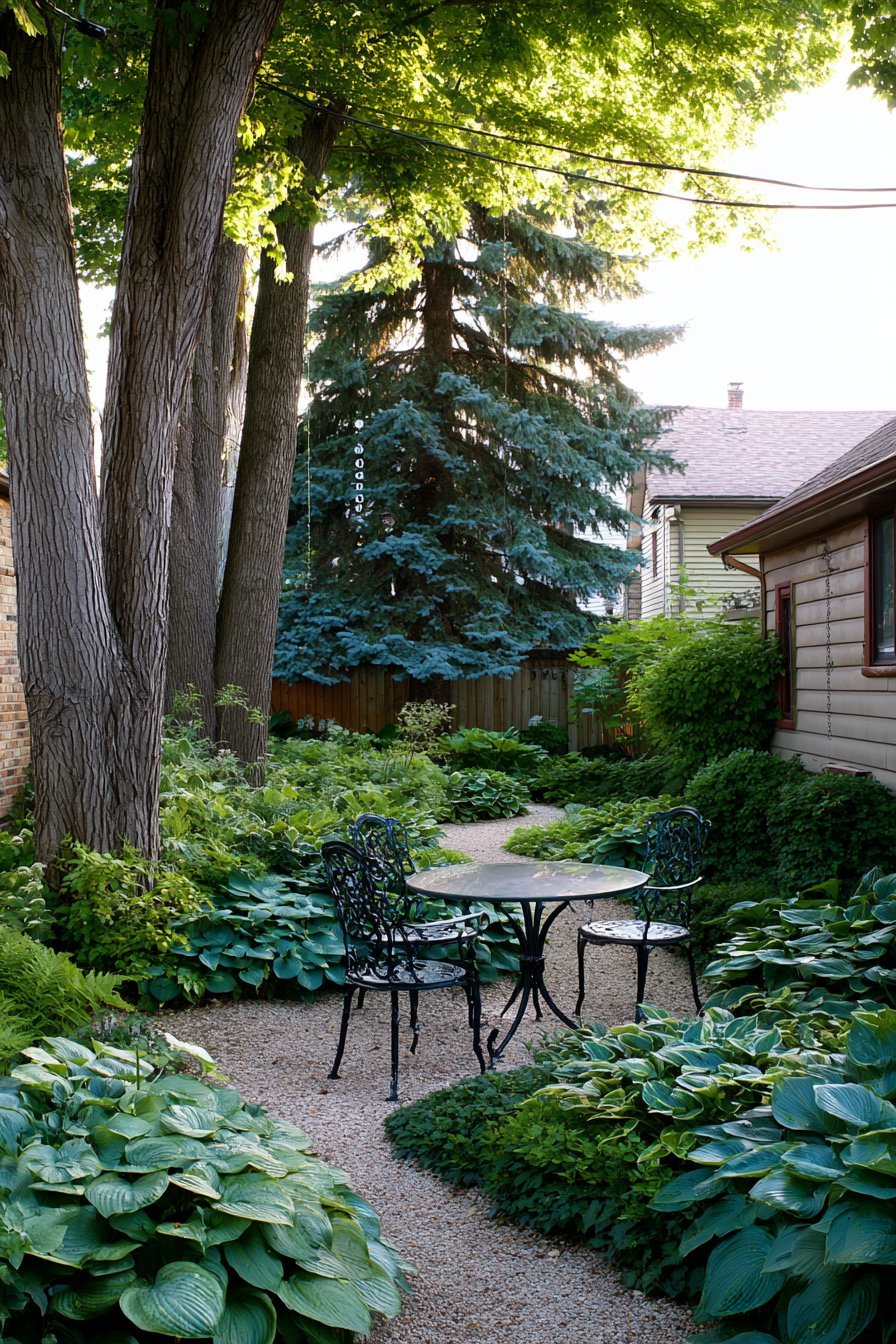
A curved gravel pathway winds through hostas, ferns, and astilbes beneath established trees. The meandering route creates discovery moments throughout the journey. A small clearing contains two classic metal bistro chairs and matching table. Strategically placed shrubs block neighboring views while maintaining natural garden flow.
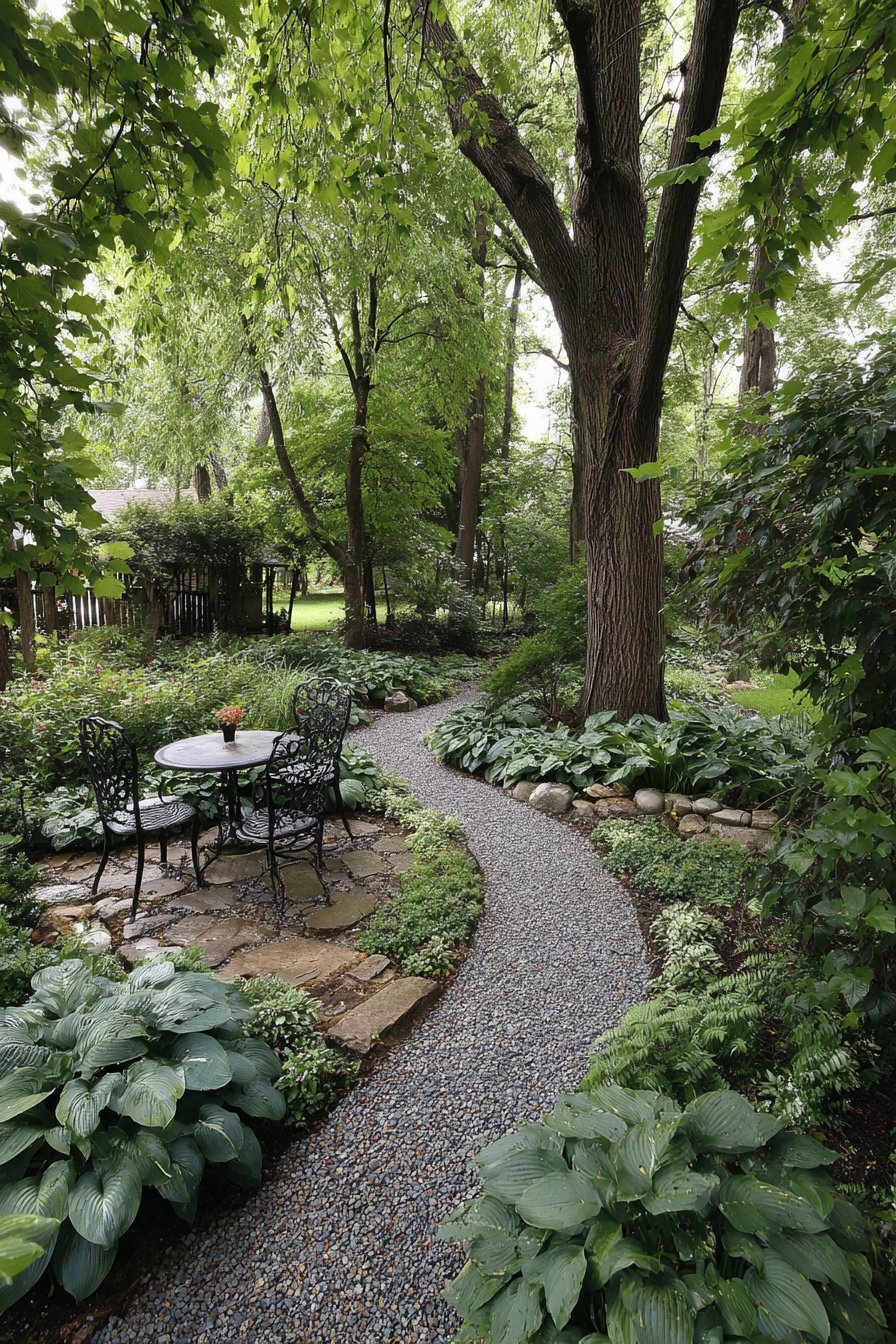
A decorative rain chain attached to a tree branch provides visual interest. The chain creates pleasant sounds during rainfall events. Diffused natural light illuminates the layered plantings creating depth perception. The shade garden demonstrates privacy through planting density rather than formal barriers.

This design suits cool-climate regions with abundant shade conditions. The curved pathway encourages slow movement and observation. Multiple privacy zones exist within the garden’s natural flow. The metal bistro furniture provides classic styling that complements traditional garden aesthetics.
Key Design Tips:
- Design curved pathways to create meandering discovery experiences
- Plant shade-loving perennials like hostas, ferns, and astilbes in layers
- Position bistro furniture in small clearings for intimate conversation spots
- Hang decorative rain chains for visual and auditory garden interest
- Place larger shrubs strategically to block views without disrupting flow
- Utilize existing tree canopies for natural shade and overhead privacy
13. Spa-Style Outdoor Shower

Teak slat fencing creates an outdoor shower enclosure against an exterior house wall. Exposed plumbing in brushed nickel features a rainfall showerhead for luxury. River rock flooring provides excellent drainage while adding natural texture. A teak bench holds towels and toiletries in organized fashion.
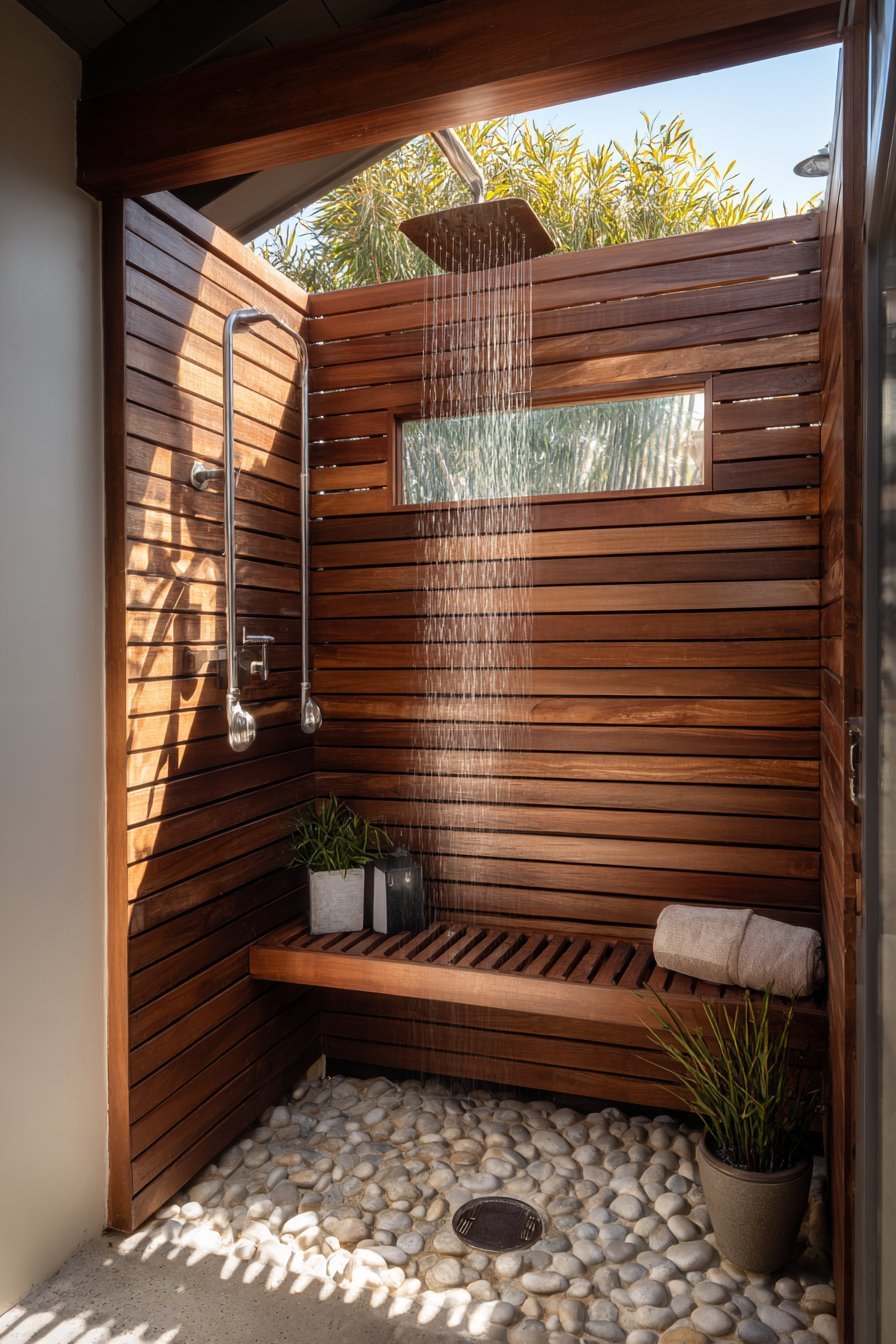
Potted bamboo in zinc containers reinforces the spa-like privacy aesthetic. The bamboo adds greenery while maintaining the minimal design approach. A small window in the fence allows light penetration without compromising seclusion. The compact enclosure demonstrates luxury amenities within small footprints.
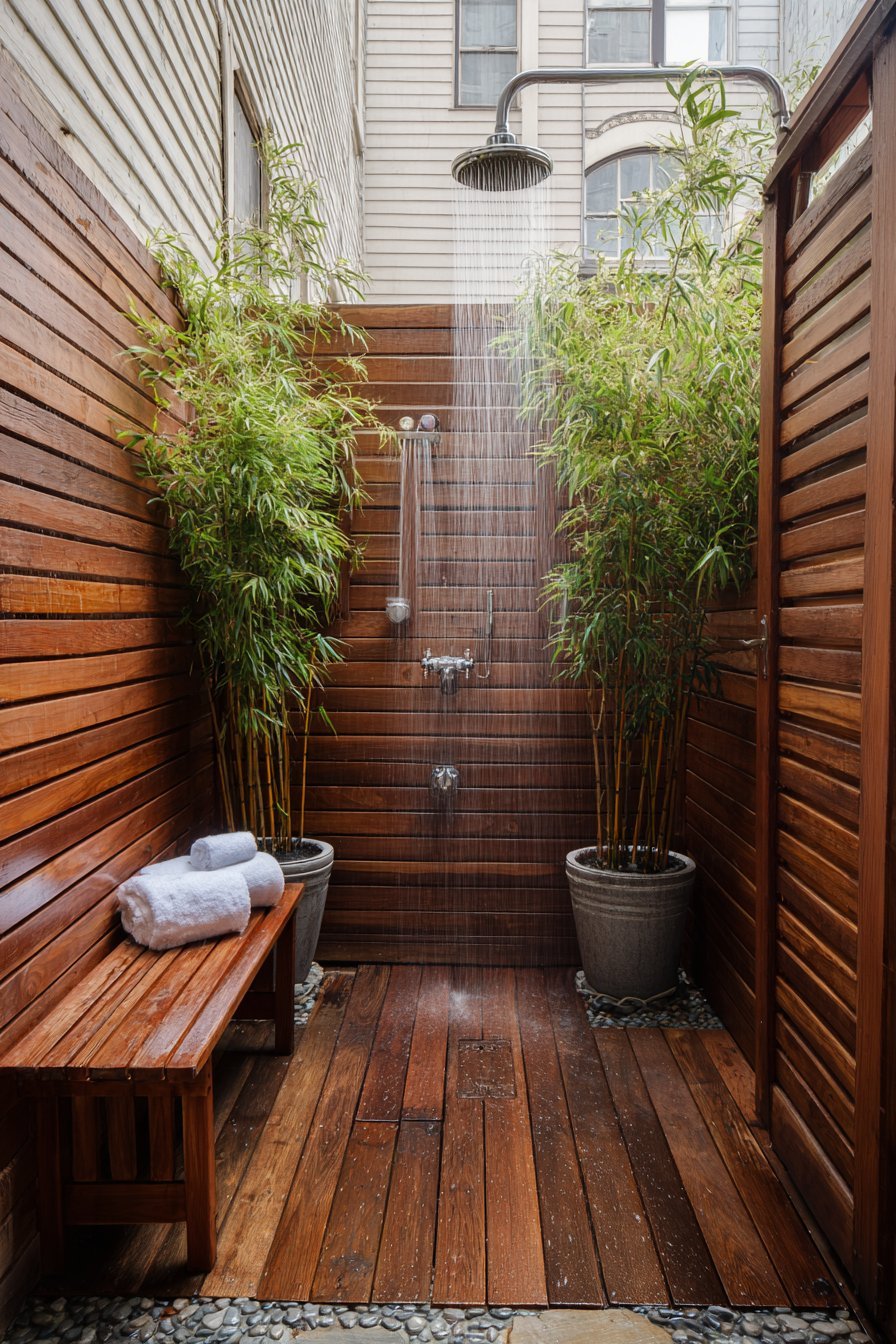
Detail-oriented photography captures material textures and water flow dynamics. The brushed nickel fixtures complement the natural wood tones beautifully. This shower design proves that privacy structures can feel luxurious. The combination of natural materials creates resort-quality outdoor bathing experiences.
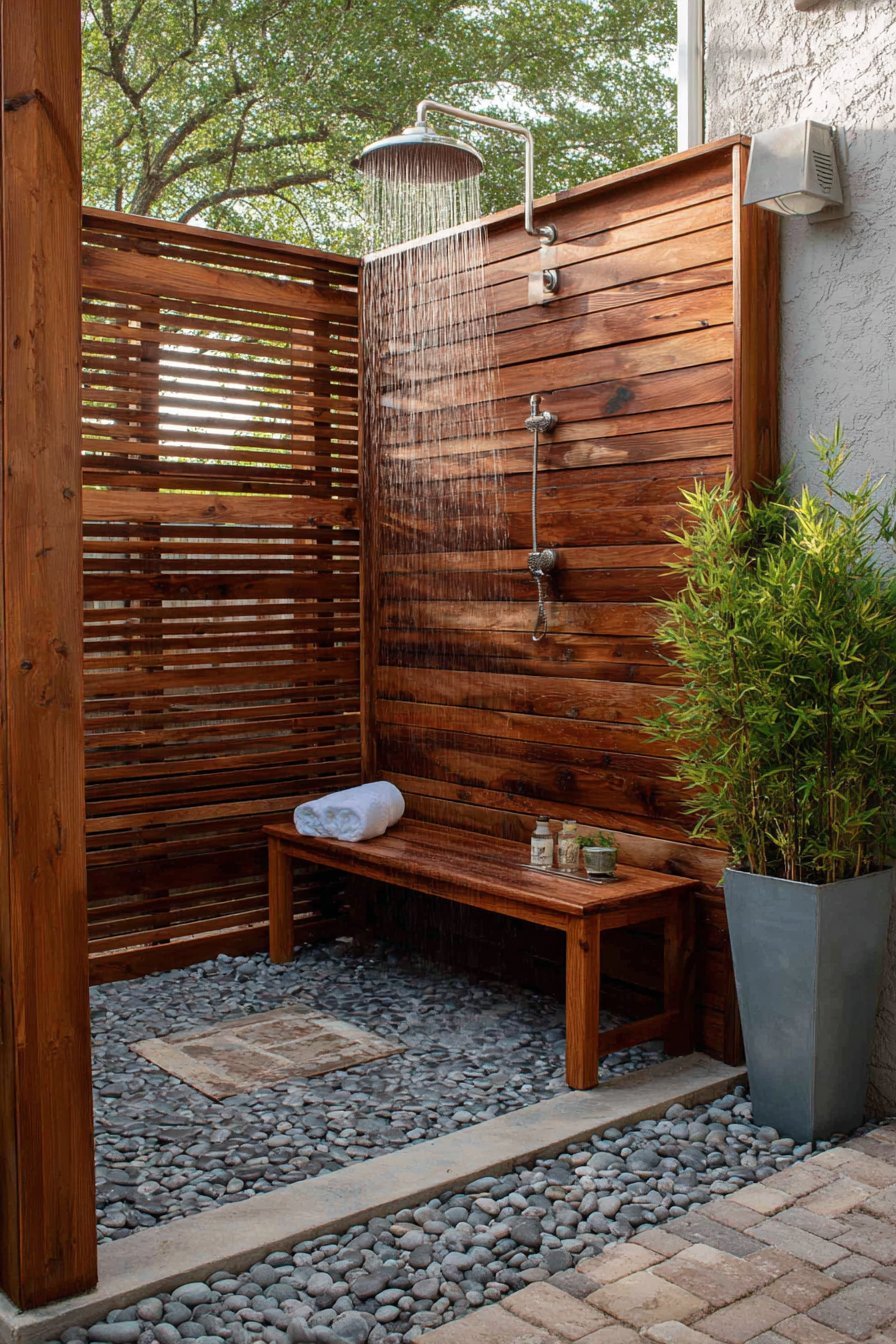
Key Design Tips:
- Build shower enclosures with teak slats for water-resistance and beauty
- Install rainfall showerheads for luxurious outdoor bathing experiences
- Use river rock flooring for natural drainage and spa-like texture
- Include small fence windows for light without compromising privacy
- Add potted bamboo for living greenery in minimal maintenance containers
- Choose brushed nickel fixtures that complement natural wood tones
14. Artificial Turf Putting Green
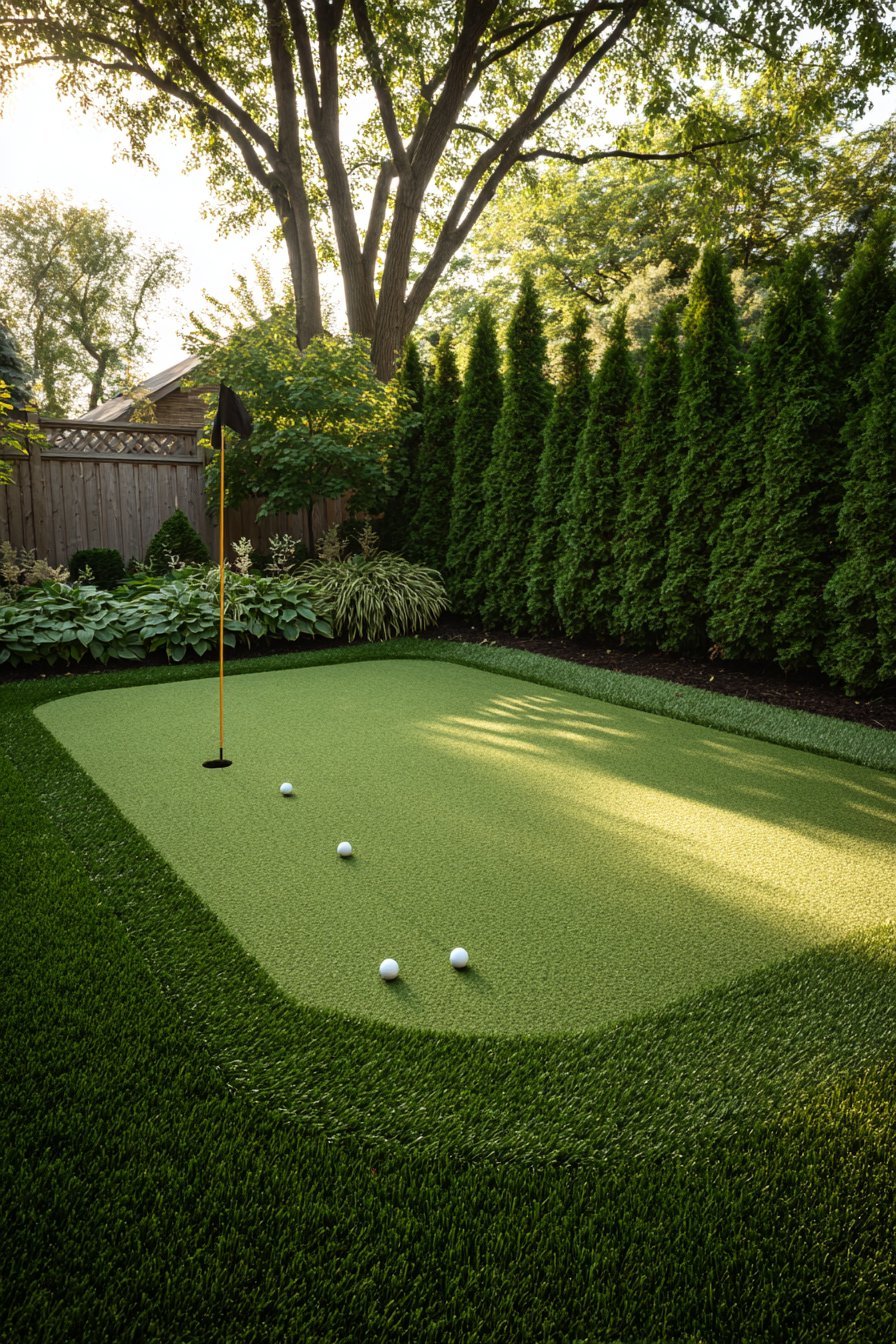
An artificial turf putting green shows realistic texture variations and slight UV fading. The maintained lawn borders demonstrate transitions between natural and synthetic surfaces. Privacy screening consists of mixed evergreen and deciduous hedging providing year-round coverage. Seasonal interest comes from the deciduous components while evergreens maintain screening.

A simple flagstick and cup install at regulation standards. Golf balls scatter naturally across the surface suggesting regular use. Late afternoon shadows create long lines across the putting surface. The surrounding plantings create enclosed practice area for skill development.
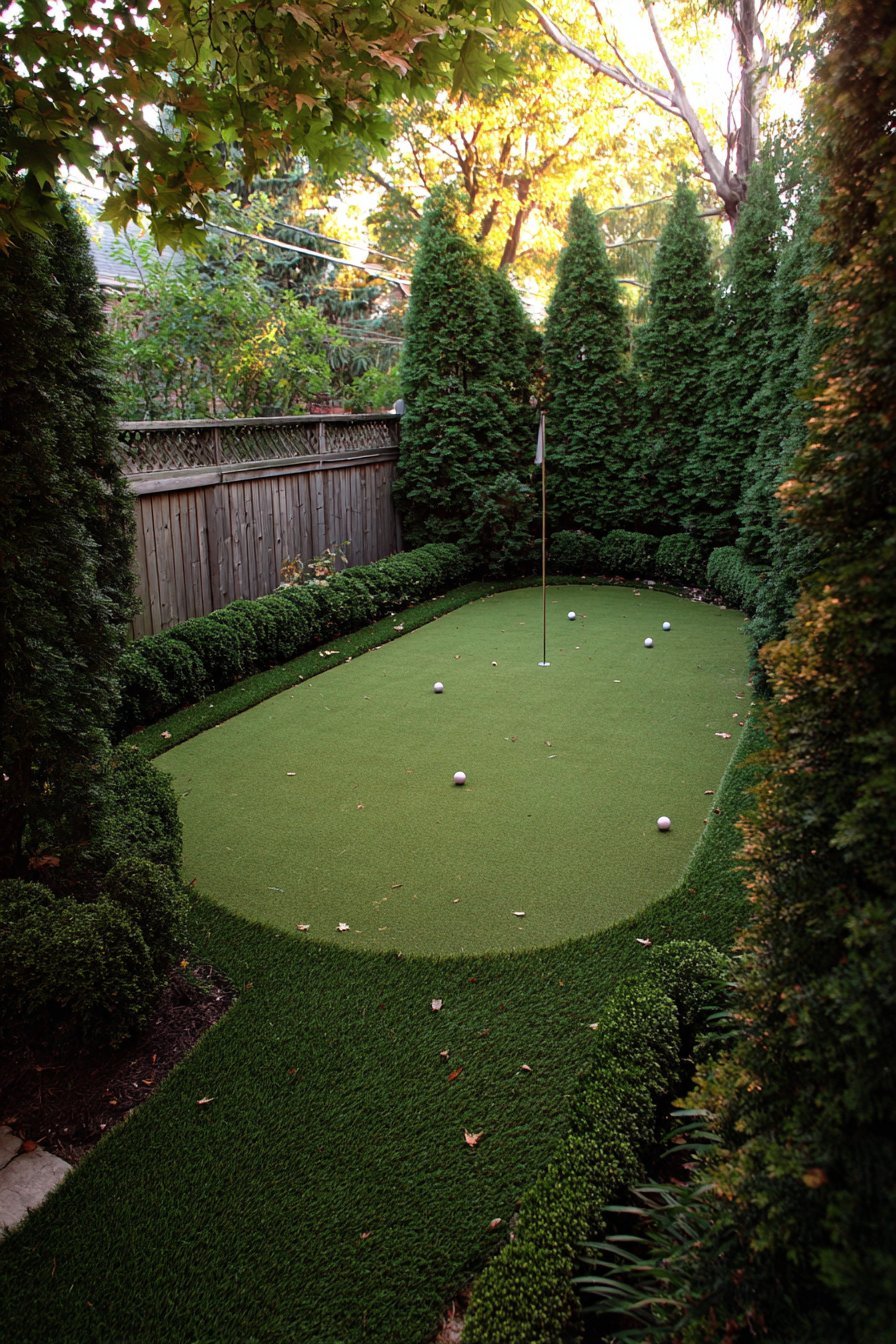
This recreational design demonstrates how hobby spaces can integrate into private backyards. The artificial turf requires minimal maintenance compared to natural grass greens. Mixed hedging provides visual interest beyond solid evergreen barriers. The space proves that private backyards can accommodate specific recreational interests.

Key Design Tips:
- Install quality artificial turf that shows realistic texture and color variation
- Create clear borders between synthetic and natural lawn surfaces
- Plant mixed hedging for year-round screening with seasonal interest
- Position putting greens to capture afternoon light for extended practice
- Include proper drainage beneath artificial turf installations
- Design spaces that accommodate specific hobbies and recreational interests
15. Art Studio Shed Courtyard
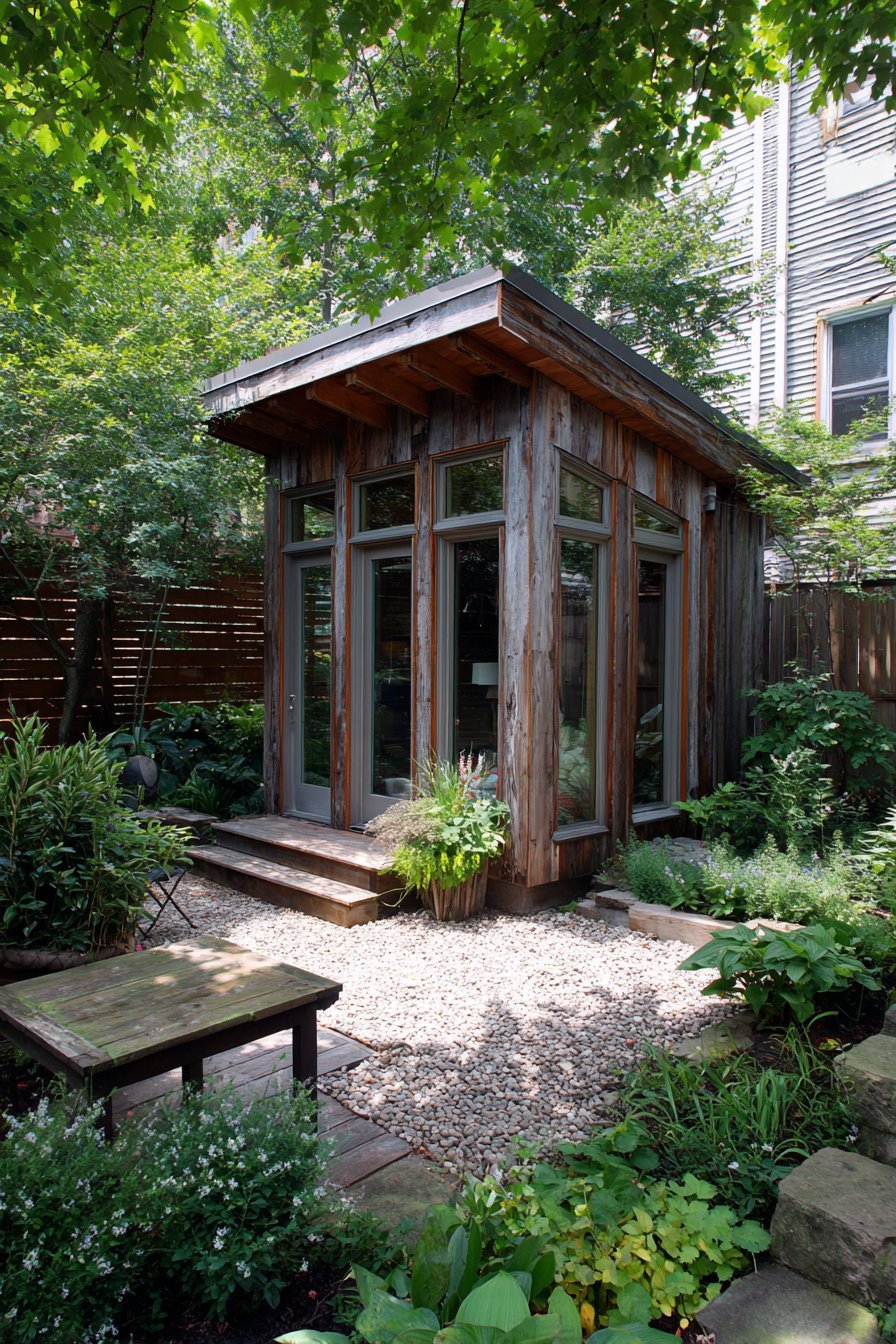
A board-and-batten art studio shed features large north-facing windows for optimal light. The structure sits on crushed stone base with covered entry porch. Authentic weathering shows through the siding’s natural aging process. Horizontal plank privacy fencing creates enclosed courtyard effect around the studio.

Container plantings of perennials and raised herb beds soften the hardscape elements. A simple outdoor work table sits adjacent to the studio entrance. The fence lines and building placement create secluded creative environment. Wide-angle photography captures the functional workspace integration within private backyard setting.

This design demonstrates how dedicated work spaces can exist in residential backyards. The north-facing windows provide consistent, indirect natural light for artwork. The courtyard layout creates outdoor extension of interior studio space. The combination of structure and fencing provides complete creative seclusion.

Key Design Tips:
- Position studio windows facing north for consistent indirect natural light
- Build structures on crushed stone bases for drainage and stability
- Create courtyard effects using fencing and building placement
- Soften hardscapes with container plantings and raised herb gardens
- Include covered entry porches for weather-protected transitions
- Allow building materials to weather naturally for authentic aging
16. Circular Campfire Gathering

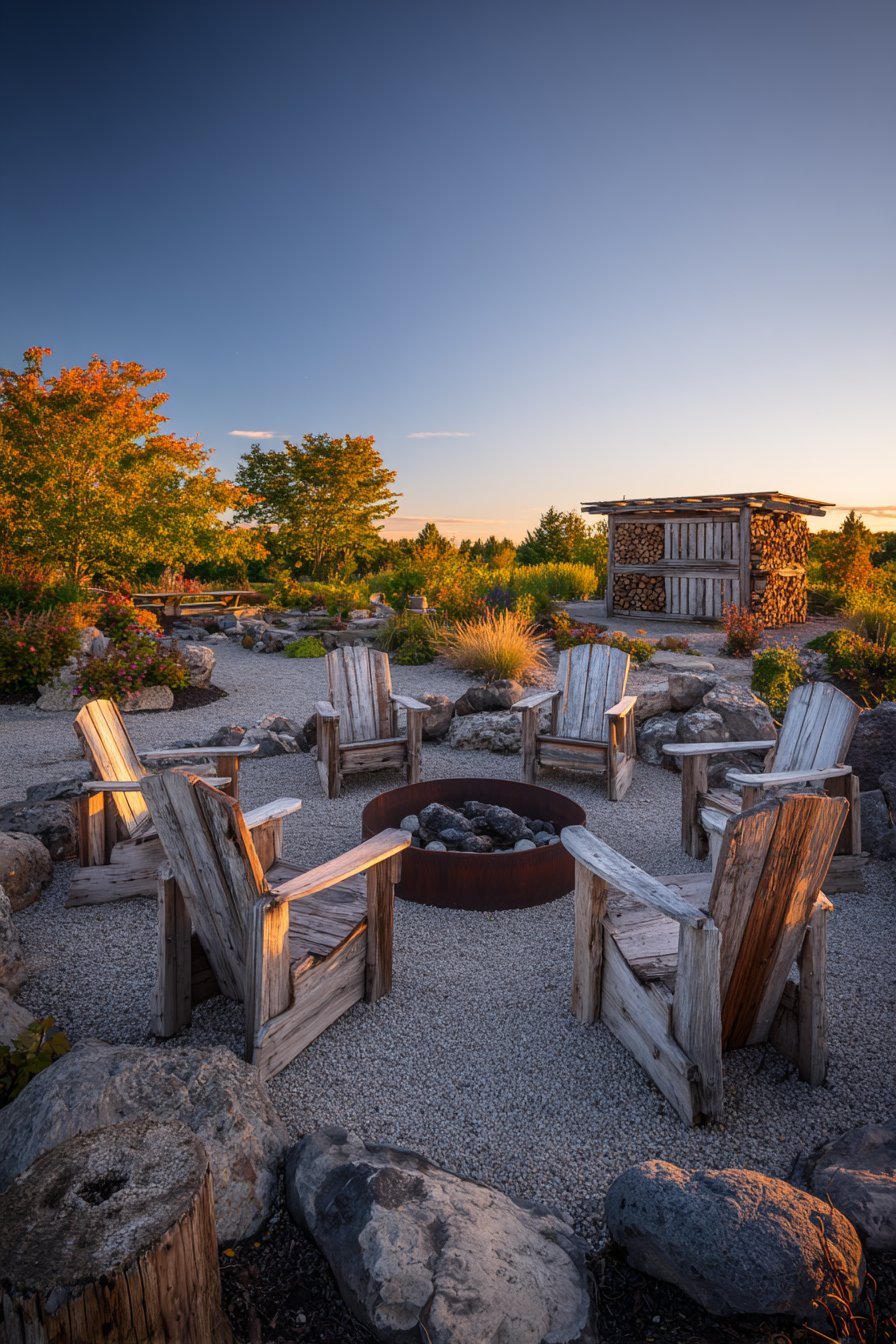
Weathered Adirondack chairs arrange in circular pattern around a steel fire ring. The fire ring sets into crushed lava rock for fire safety and drainage. Beyond the seating circle, mixed border plantings create natural edge screening. Native shrubs and ornamental grasses reach varying heights avoiding formal hedge appearance.
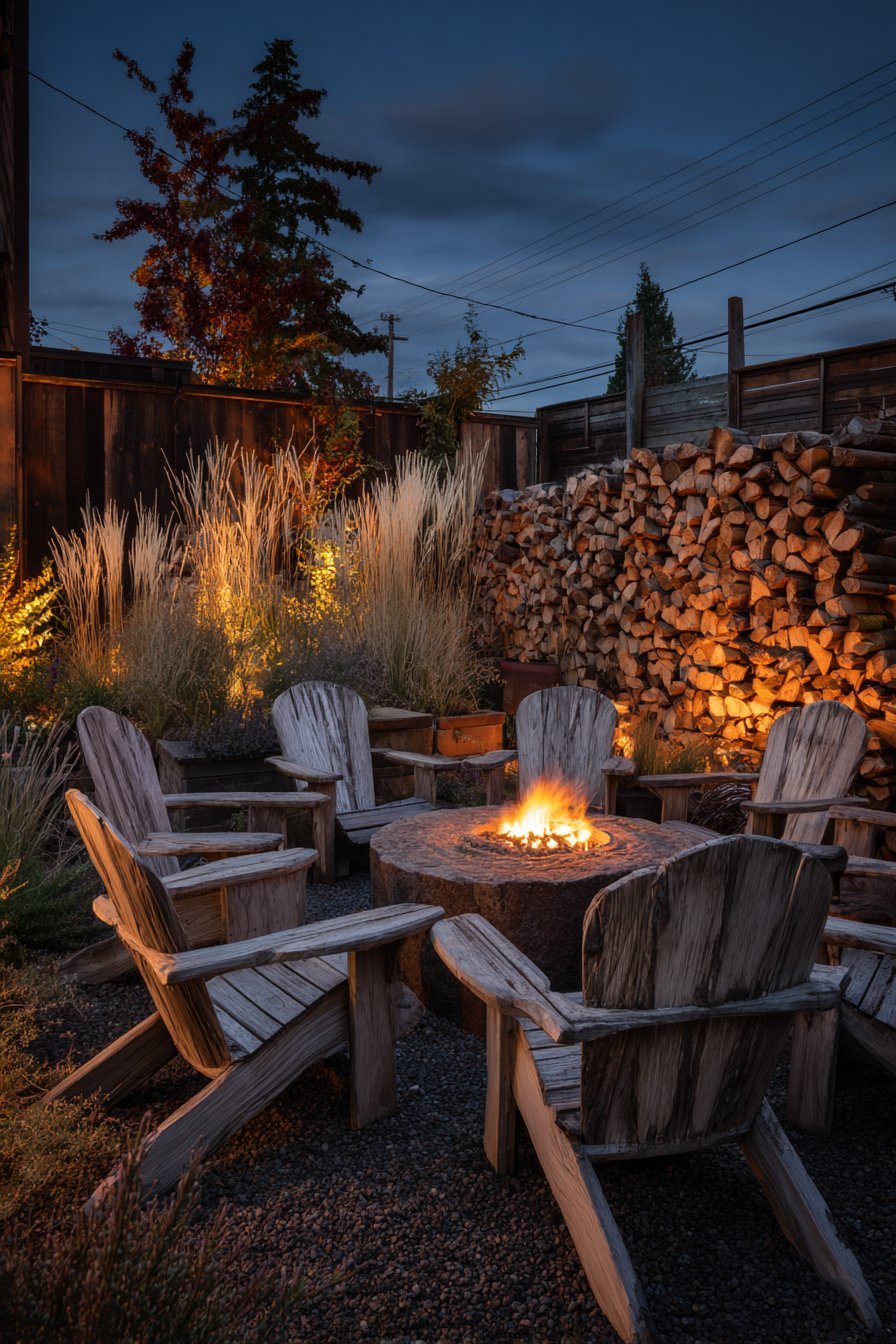
Firewood storage built from reclaimed pallets shows realistic weathering and organization. The practical storage sits nearby for convenient fire building. Evening photography with firelight provides primary illumination. The darkening sky and silhouetted plantings emphasize the private, enclosed atmosphere.

This gathering space demonstrates how informal seating arrangements encourage conversation. The circular layout creates egalitarian social dynamic. Natural screening methods feel less restrictive than formal barriers. The space proves that privacy can enhance rather than limit outdoor entertainment.
Key Design Tips:
- Arrange seating circularly around fire features for equal conversation participation
- Use crushed lava rock around fire rings for safety and drainage
- Plant mixed borders at varying heights for natural screening appearance
- Build firewood storage from reclaimed materials for rustic character
- Design gathering spaces to capture evening light and fire glow
- Choose weathered Adirondack chairs that develop attractive patina
17. Industrial Outdoor Gym
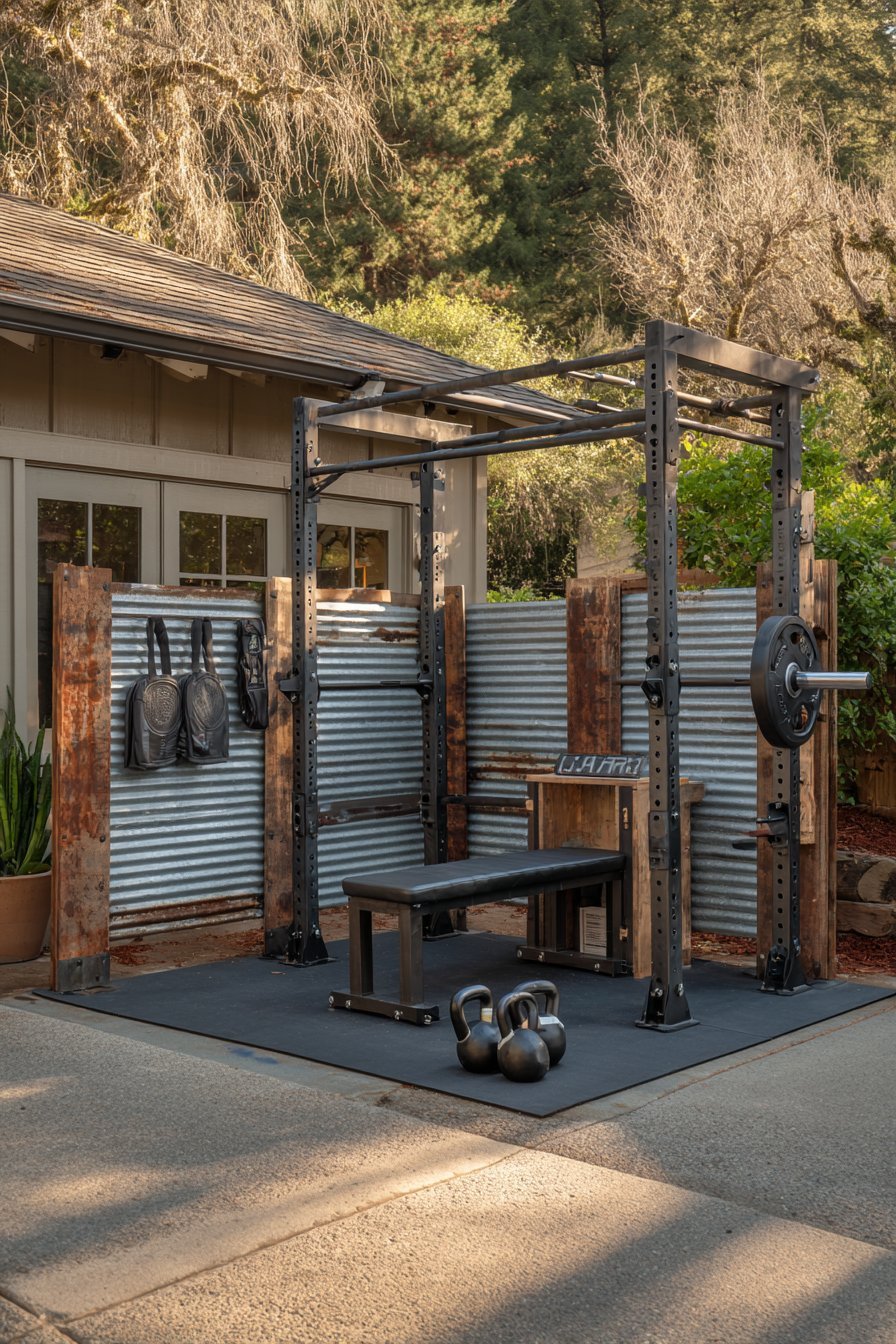
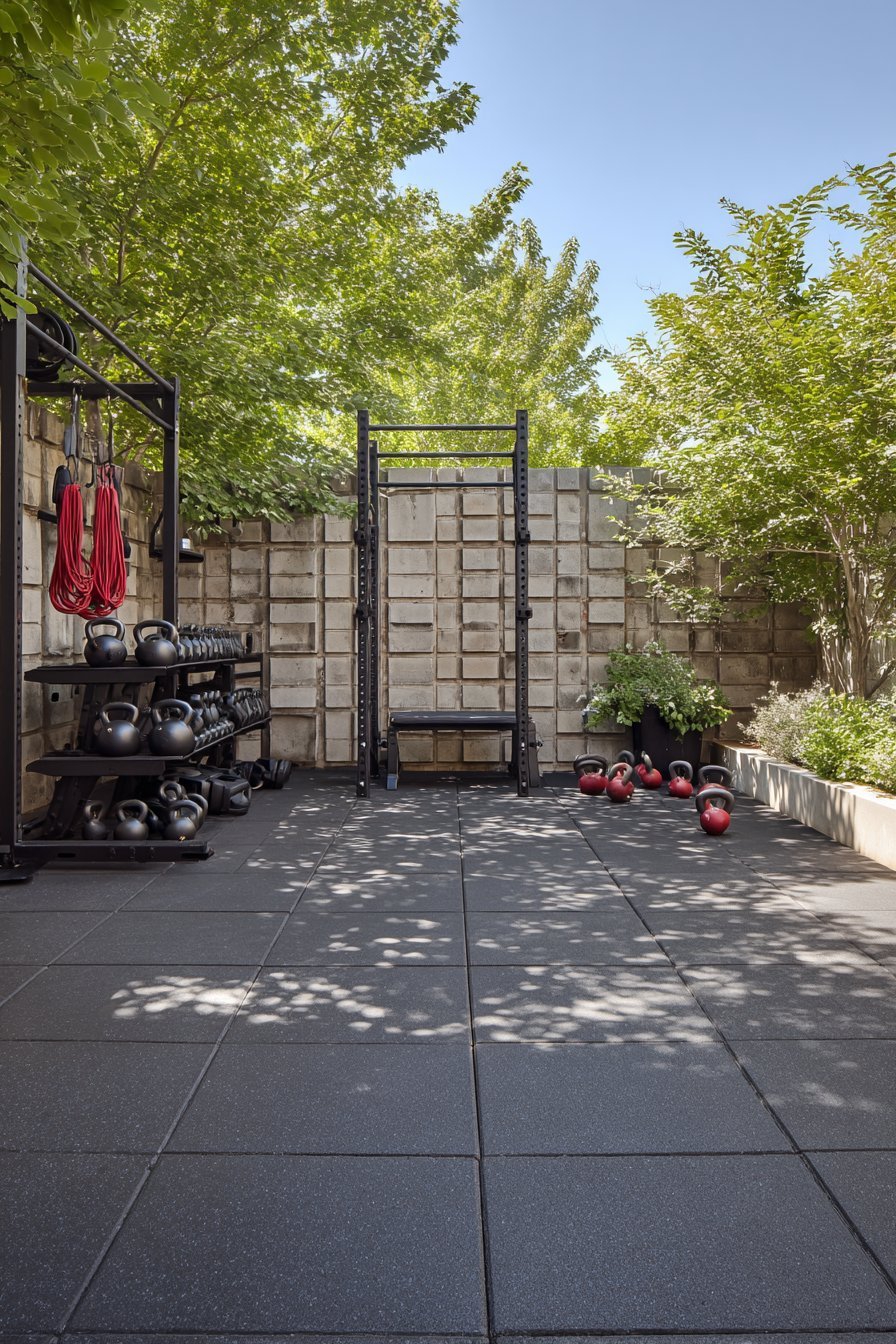
Rubber gym flooring lays over level concrete pad creating dedicated workout space. Outdoor-safe equipment includes pull-up bar, kettlebells, and weight bench showing weather exposure. Corrugated metal privacy panels in rust finish create industrial aesthetic. The panels effectively block neighboring views while adding design character.
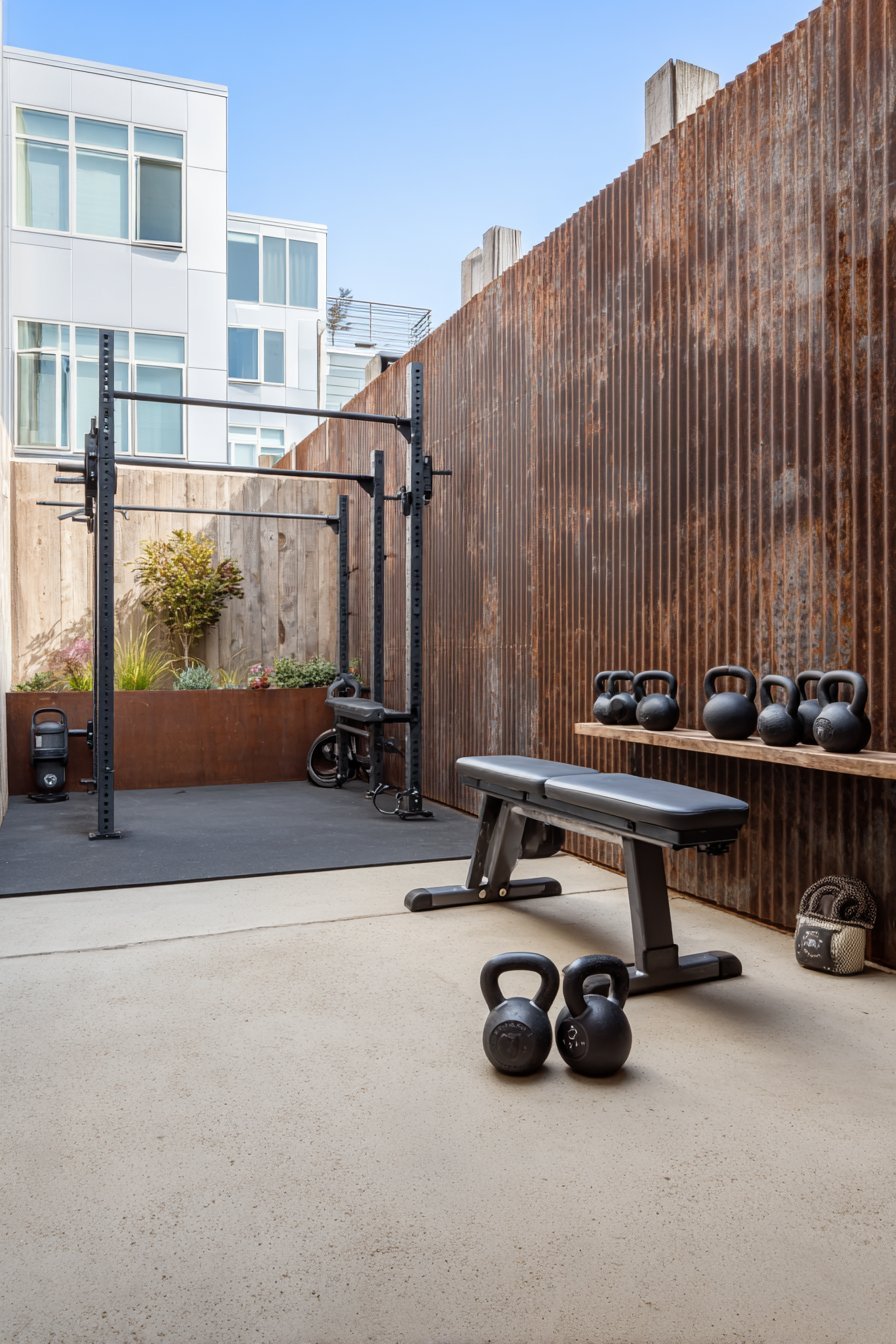
A small storage cabinet holds additional equipment and towels in organized manner. Strategic placement near the house allows music access during workouts. The privacy screens create dedicated fitness zone within larger backyard. Bright natural light illuminates the functional layout during daytime use.
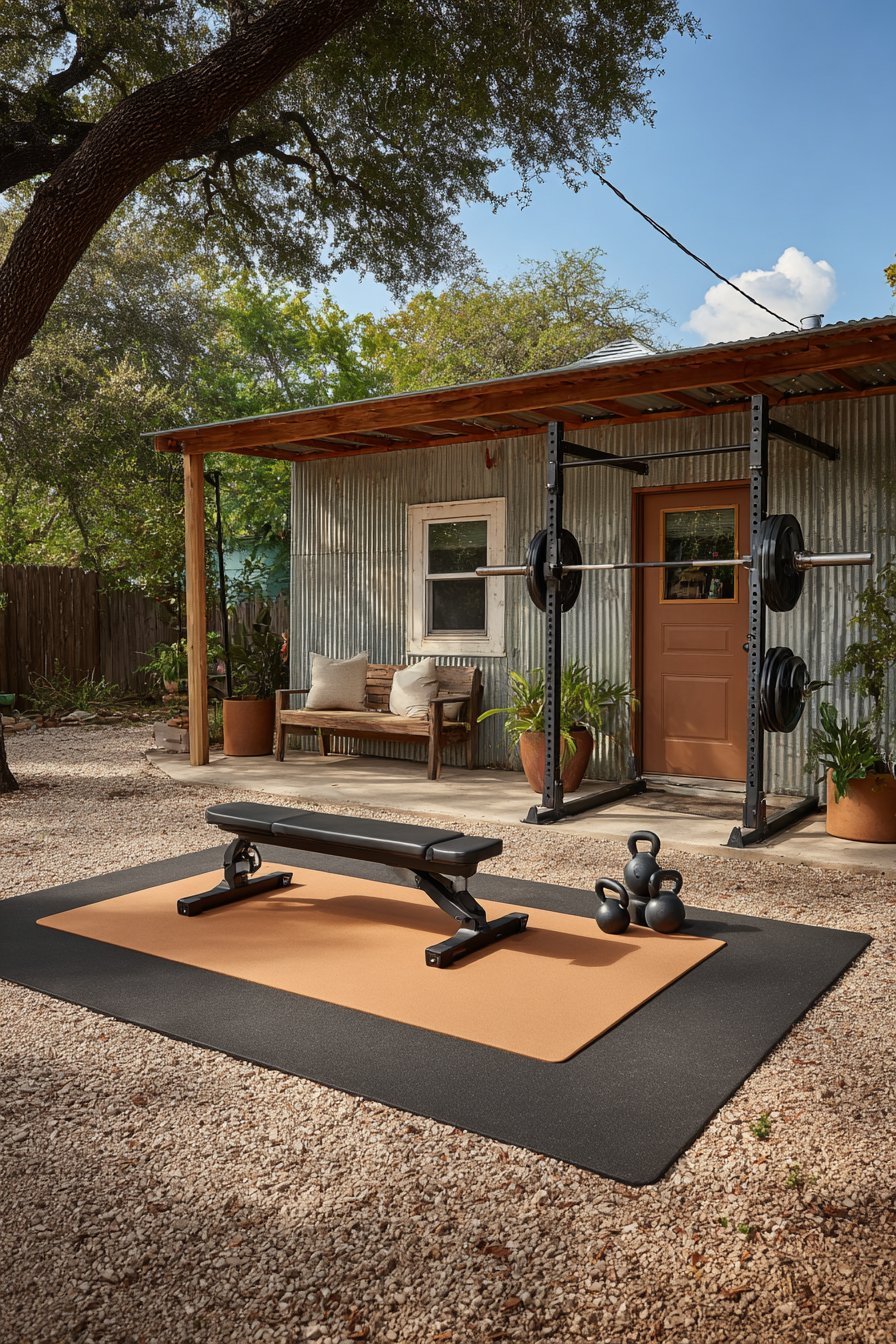
This fitness area demonstrates how private backyards can accommodate health-focused lifestyles. The industrial materials suit the functional purpose while adding visual interest. The realistic equipment wear shows authentic use over time. The space proves that privacy solutions can have strong design character.
Key Design Tips:
- Install rubber flooring over concrete for equipment-safe workout surfaces
- Choose corrugated metal panels for privacy with industrial design character
- Position gym areas near house for convenient access to amenities
- Include weather-resistant storage for equipment and towel organization
- Select outdoor-safe equipment that withstands exposure to elements
- Design fitness zones that receive abundant natural daylight
18. Functional Greenhouse Growing Space
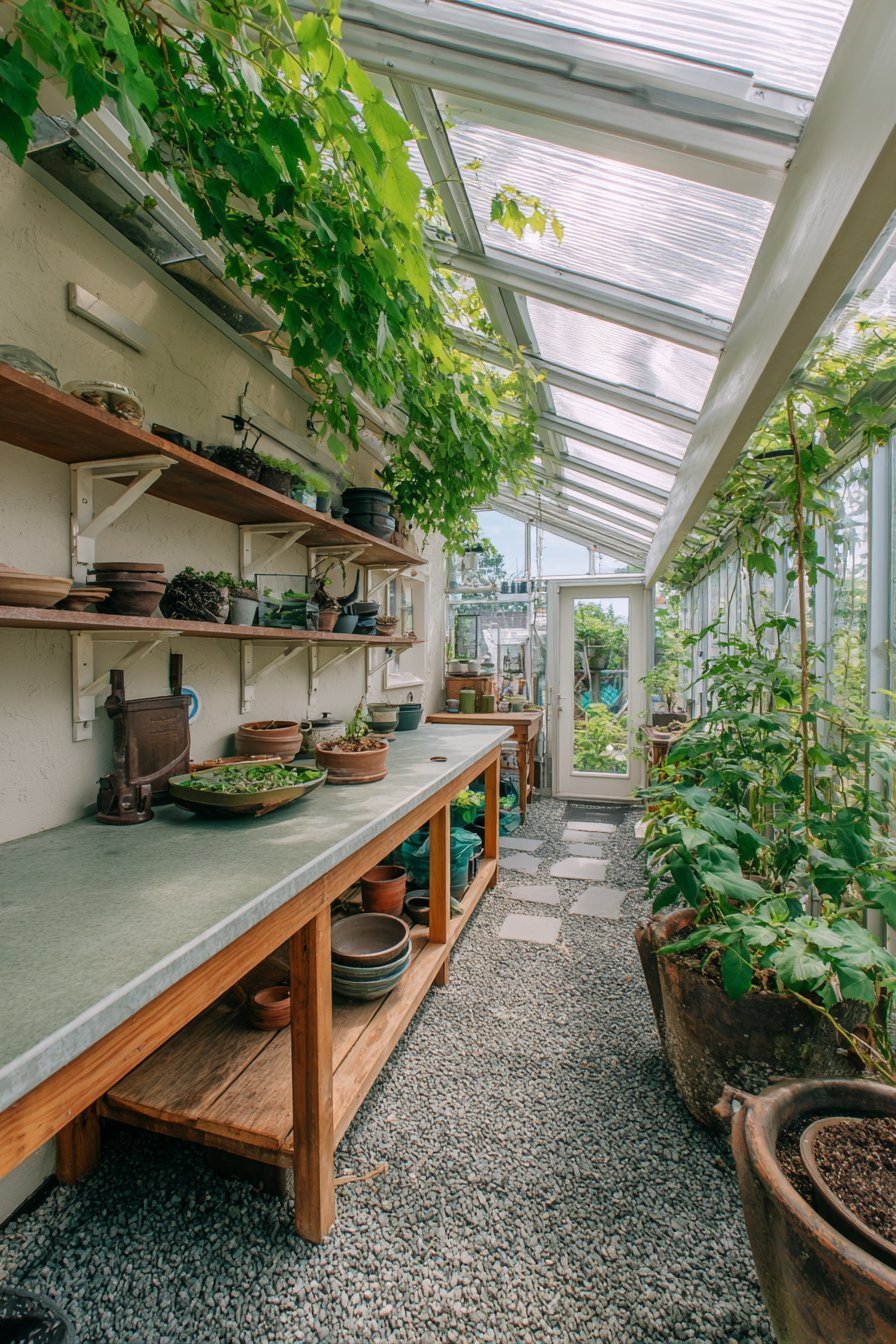
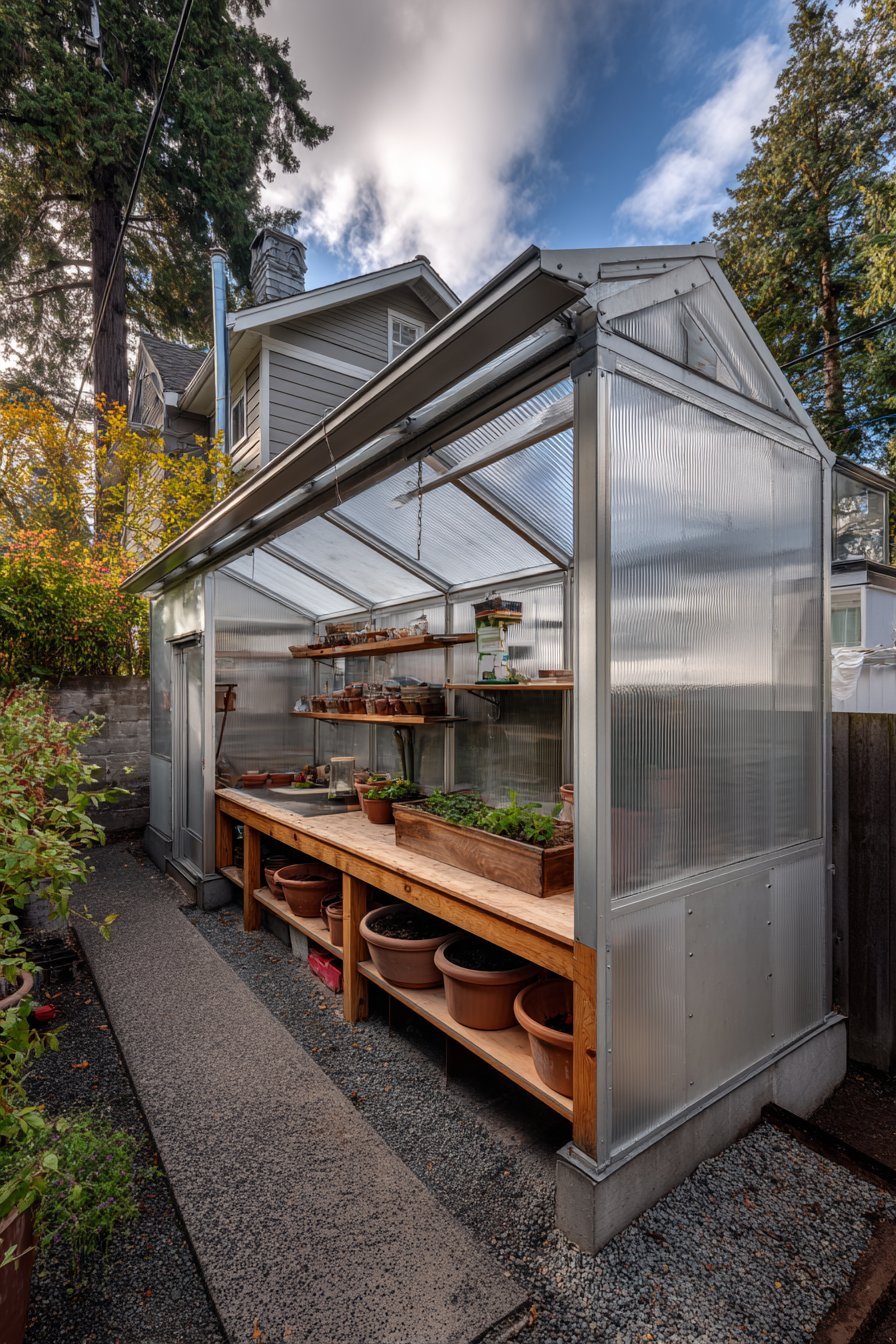
Transparent polycarbonate panels and aluminum framing create this productive greenhouse. The structure positions on gravel base with strategic screening from nearby properties. Fast-growing evergreen shrubs and decorative trellises support climbing vines nearby. Inside, wooden potting benches line walls with clay pots and gardening tools.

Automated ventilation windows install at the roof peak for temperature control. Rain barrels collect water from greenhouse gutters for sustainable irrigation. The functional growing space shows authentic use through soil stains and tool wear. Bright overcast photography captures the interior organization and surrounding privacy plantings.
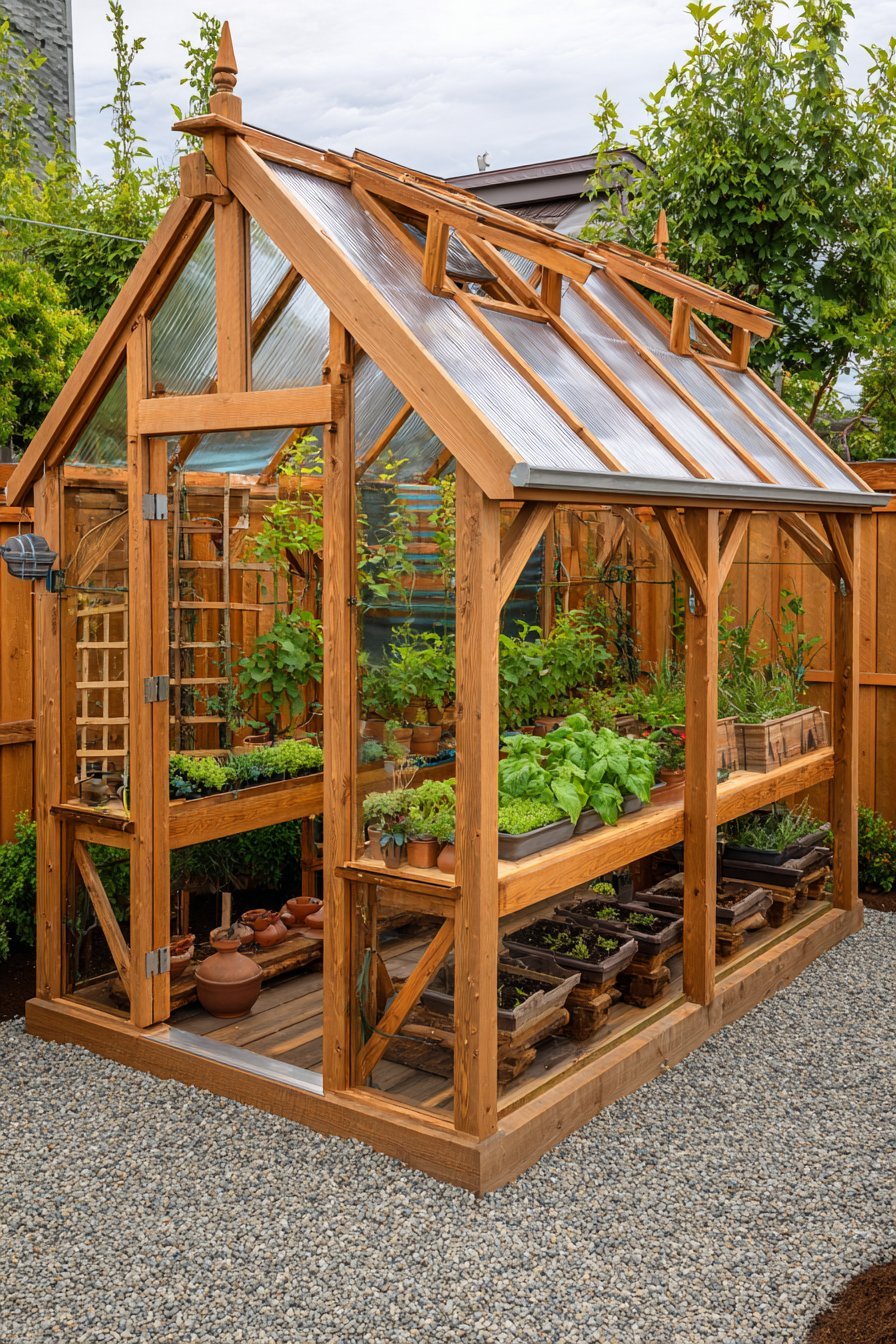
This greenhouse design demonstrates how productive spaces can integrate into private backyards. The transparent structure requires strategic screening from neighboring sightlines. The combination of fast-growing shrubs and climbing vines provides layered privacy. The space proves that functional buildings enhance rather than detract from privacy goals.
Key Design Tips:
- Build greenhouses with polycarbonate panels for durability and light transmission
- Position structures on gravel bases for drainage and stability
- Screen greenhouses with fast-growing shrubs and climbing vine trellises
- Install automated roof vents for temperature control without daily intervention
- Collect rainwater from greenhouse gutters for sustainable plant irrigation
- Organize potting benches with frequently-used tools and supplies
19. Canvas-Shaded Pergola Living Room

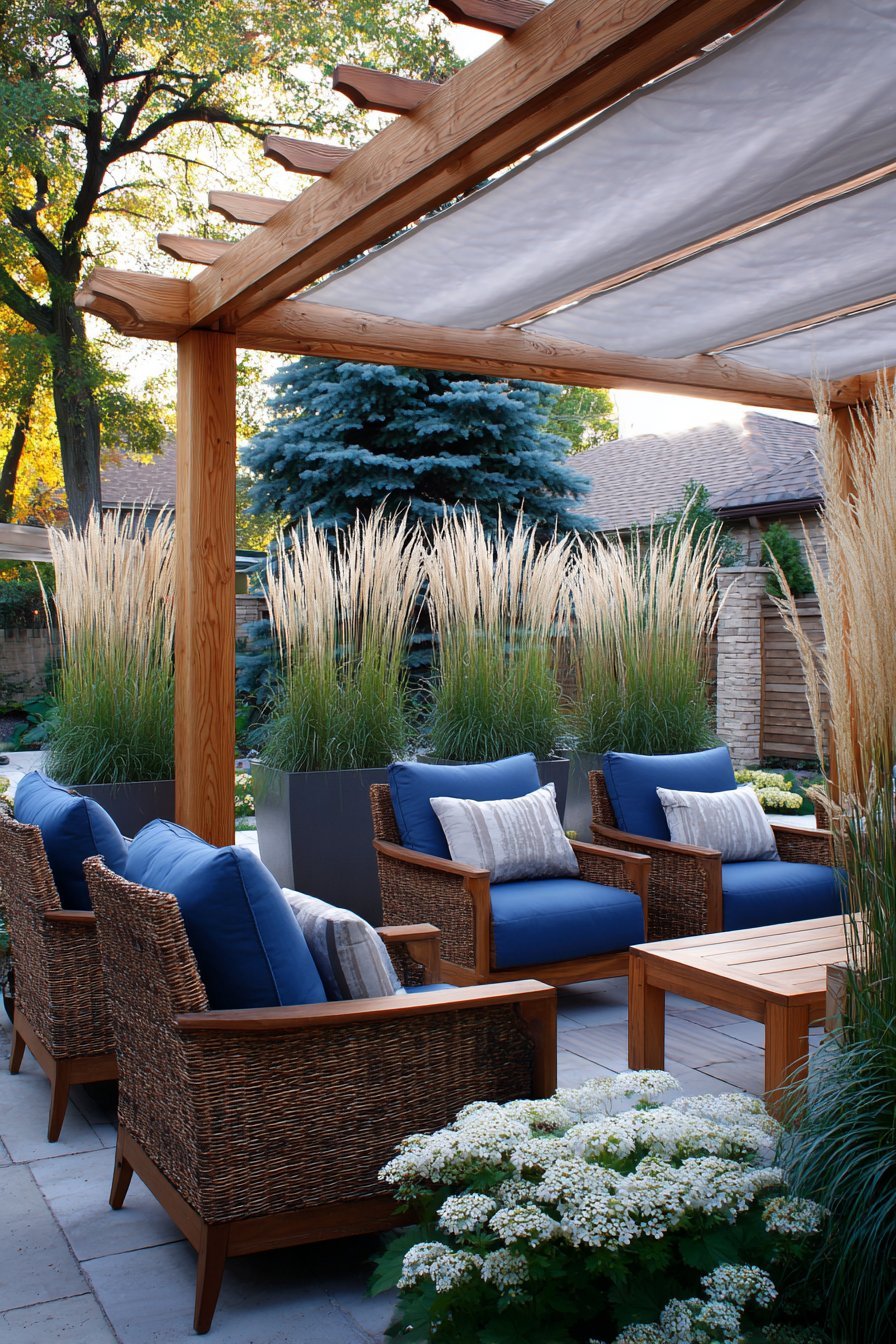
Thick cedar posts and beams weather naturally to silver-grey patina. Retractable canvas shade panels in natural cotton duck fabric show slight sun fading. Deep-cushioned outdoor furniture features water-resistant fabrics with coordinating throw pillows. The conversation seating group creates outdoor living room atmosphere.
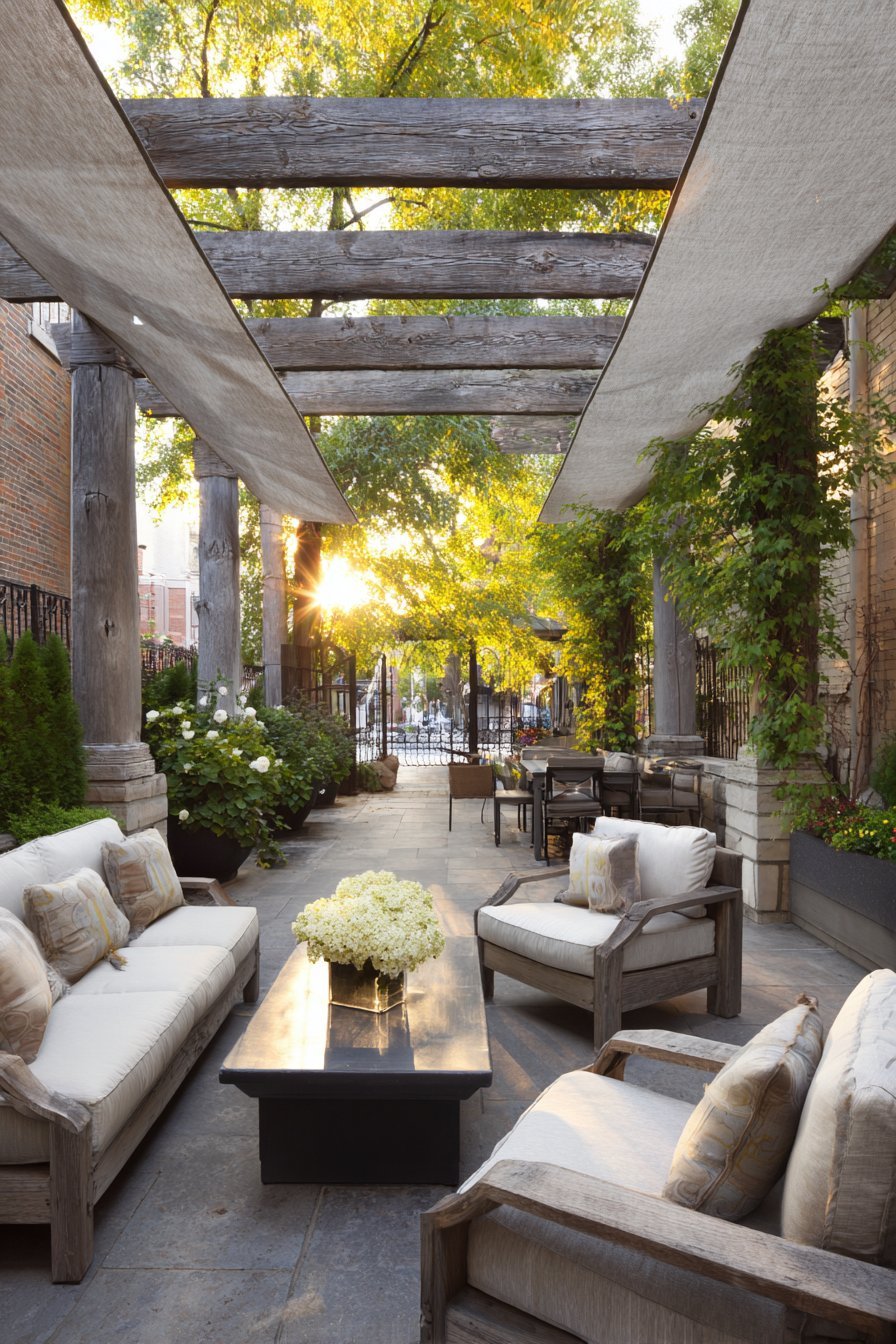
The privacy strategy combines tall ornamental grasses in large planters with climbing roses. The pergola posts support the roses as they grow vertically. Mature evergreen screening provides backdrop privacy. Golden hour light filters through partially opened shade panels creating dappled patterns.
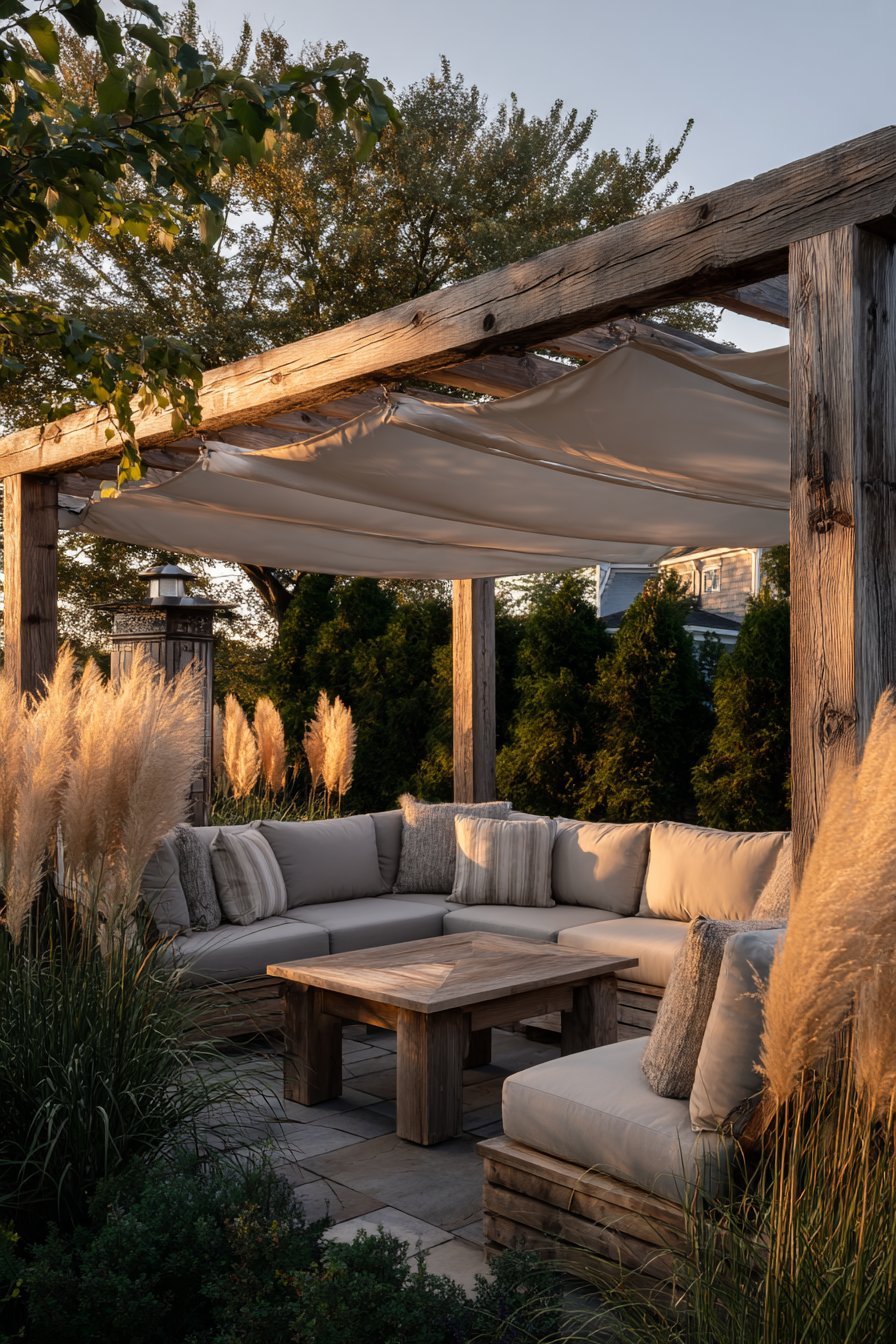
This outdoor living room demonstrates how structures and plantings work together. The retractable panels allow flexibility based on weather and sun position. The combination of elements creates intimate space without complete enclosure. The space proves that outdoor rooms can rival interior comfort levels.
Key Design Tips:
- Build pergolas with substantial cedar posts that weather attractively
- Install retractable shade panels for flexibility in sun control
- Choose deep-cushioned furniture with water-resistant performance fabrics
- Plant ornamental grasses in large containers for movable privacy screening
- Train climbing roses on pergola posts for vertical living screens
- Position outdoor living rooms to capture optimal golden hour lighting
20. Regulation Bocce Court Recreation

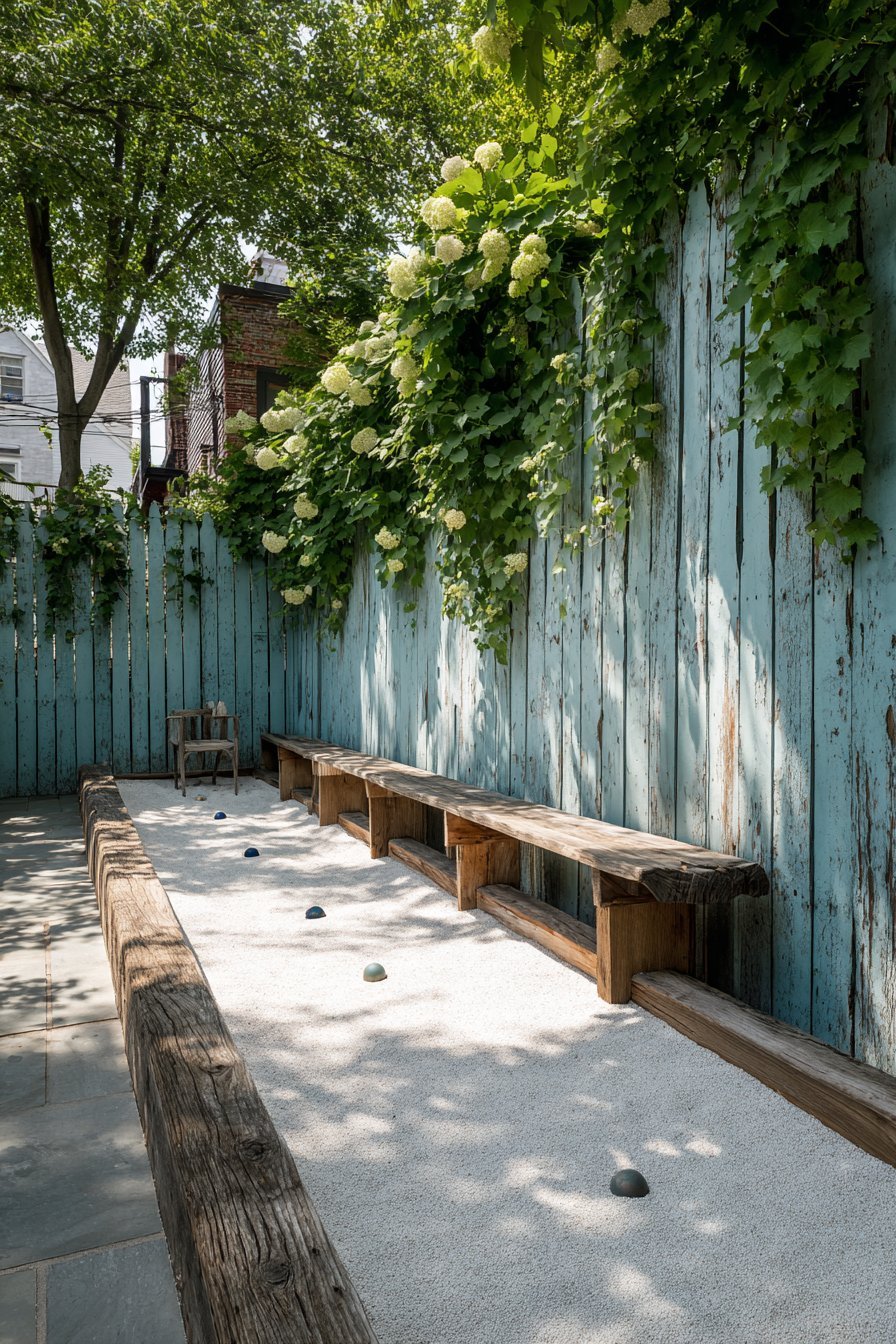
Crushed oyster shell creates authentic bocce court playing surface. Weathered railroad tie borders contain the court at official dimensions. Simple wooden benches with backs provide spectator seating in shaded area. Mature tree canopy overhead creates natural shade without artificial structures.

Vertical picket privacy fencing painted in soft grey-blue surrounds the court area. Climbing hydrangea begins covering fence portions showing realistic growth progression. Score-keeping equipment and bocce ball storage demonstrate regular recreational use. Balanced natural lighting captures the court layout during active play periods.
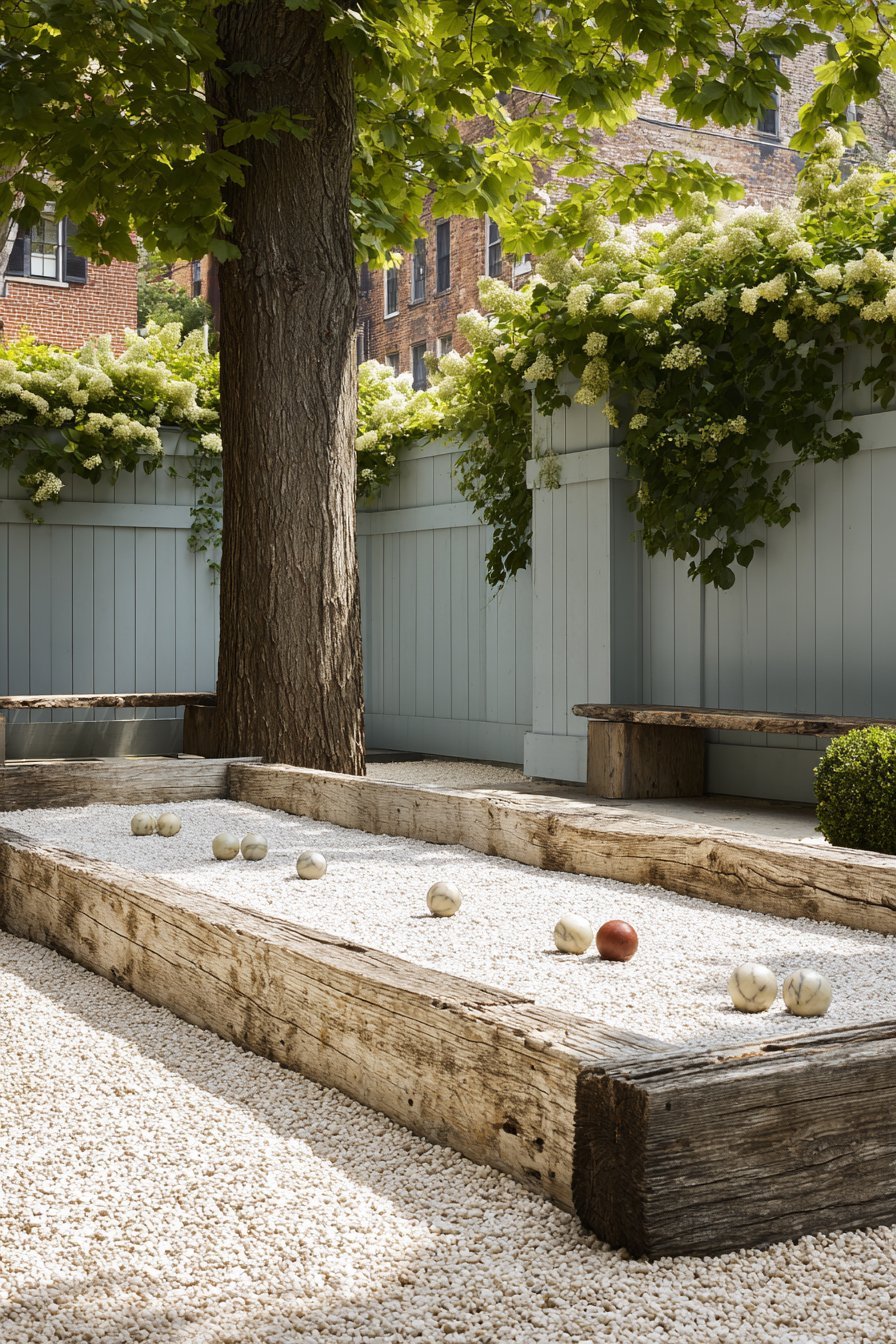
This recreational court demonstrates how private backyards can accommodate traditional games. The official dimensions ensure authentic playing experience. The combination of fencing and tree placement creates secluded game environment. The space proves that privacy and active recreation complement each other beautifully.
Key Design Tips:
- Use crushed oyster shell for authentic bocce court surfaces with proper drainage
- Border courts with railroad ties for rustic containment and definition
- Include comfortable spectator seating in naturally shaded areas
- Paint privacy fencing in soft colors that complement landscape plantings
- Allow climbing vines realistic time to cover fencing structures
- Design recreational spaces that encourage regular family use and activity
Why These Private Backyard Designs Are the Best
These private backyard designs represent comprehensive approaches to creating secluded outdoor sanctuaries. Each concept demonstrates thoughtful integration of screening methods, functional layouts, and aesthetic appeal. The designs showcase remarkable versatility across different lot sizes, budgets, and lifestyle requirements.
The incorporation of layered privacy strategies proves most effective in real-world applications. Combining structural elements like fencing with living screens creates depth and visual interest. These multi-layered approaches provide immediate privacy while allowing natural growth to enhance screening over time. The designs balance security needs with maintaining open sky views and natural light penetration.

Material selection plays crucial roles in long-term satisfaction with private backyard spaces. Natural materials like cedar, teak, and stone weather attractively while requiring minimal maintenance. These choices demonstrate sustainability through longevity rather than synthetic alternatives. The authentic aging shown in these designs proves that weathering enhances rather than diminishes aesthetic value.
Functional diversity distinguishes superior private backyard designs from basic screening solutions. These concepts accommodate dining, recreation, relaxation, fitness, and creative pursuits within protected environments. The designs prove that privacy enables rather than restricts outdoor living. Strategic layout planning creates multiple outdoor rooms within single properties.
Color theory and spatial planning contribute significantly to successful private backyard designs. The predominant use of natural tones creates cohesive landscapes that feel peaceful. Varied planting heights and mixed textures prevent monotony in screening elements. These design principles ensure private spaces feel expansive rather than confined.
Conclusion
These private backyard designs demonstrate that seclusion and beauty coexist harmoniously through thoughtful planning. The key takeaways include layering privacy solutions, selecting durable natural materials, and designing for multiple functions. Quality implementations create outdoor sanctuaries that enhance daily living and property values.
Successful private backyard design balances immediate privacy needs with long-term landscape development. Start by identifying your primary privacy concerns and lifestyle requirements. Consider which screening methods suit your aesthetic preferences and maintenance capabilities. Your dream private backyard awaits creation through strategic planning and patient implementation.
