
Creating a thoughtful kids bedroom goes far beyond simple decoration. It shapes how children learn, play, rest, and grow. A well-designed space nurtures independence while providing comfort and security. The right environment supports creativity and helps children develop organizational skills naturally.
Kids bedroom design requires balancing aesthetics with practicality. Durability matters as much as visual appeal. Safety considerations must guide every choice. The best designs adapt as children grow, eliminating the need for frequent overhauls. Smart storage solutions teach responsibility while maintaining order.
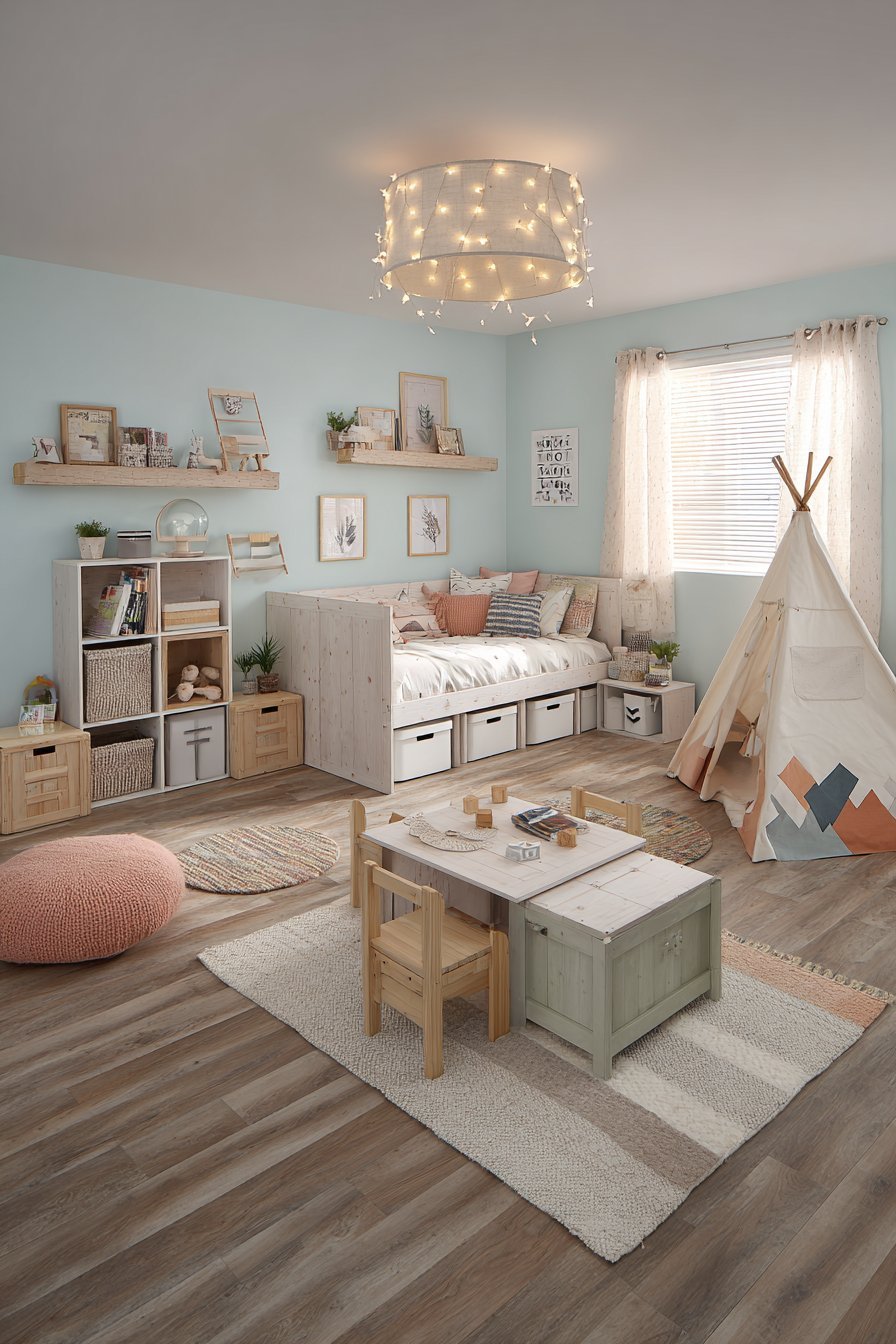
This article explores twenty distinct approaches to kids bedroom design. From Montessori-inspired floor beds to space-saving loft configurations, each concept offers unique advantages. You’ll discover how natural materials, thoughtful color choices, and accessible storage create rooms children love. These designs prove that functional spaces can be beautiful and inspiring.
1. Sage Green Storage Bed with Playful Accents
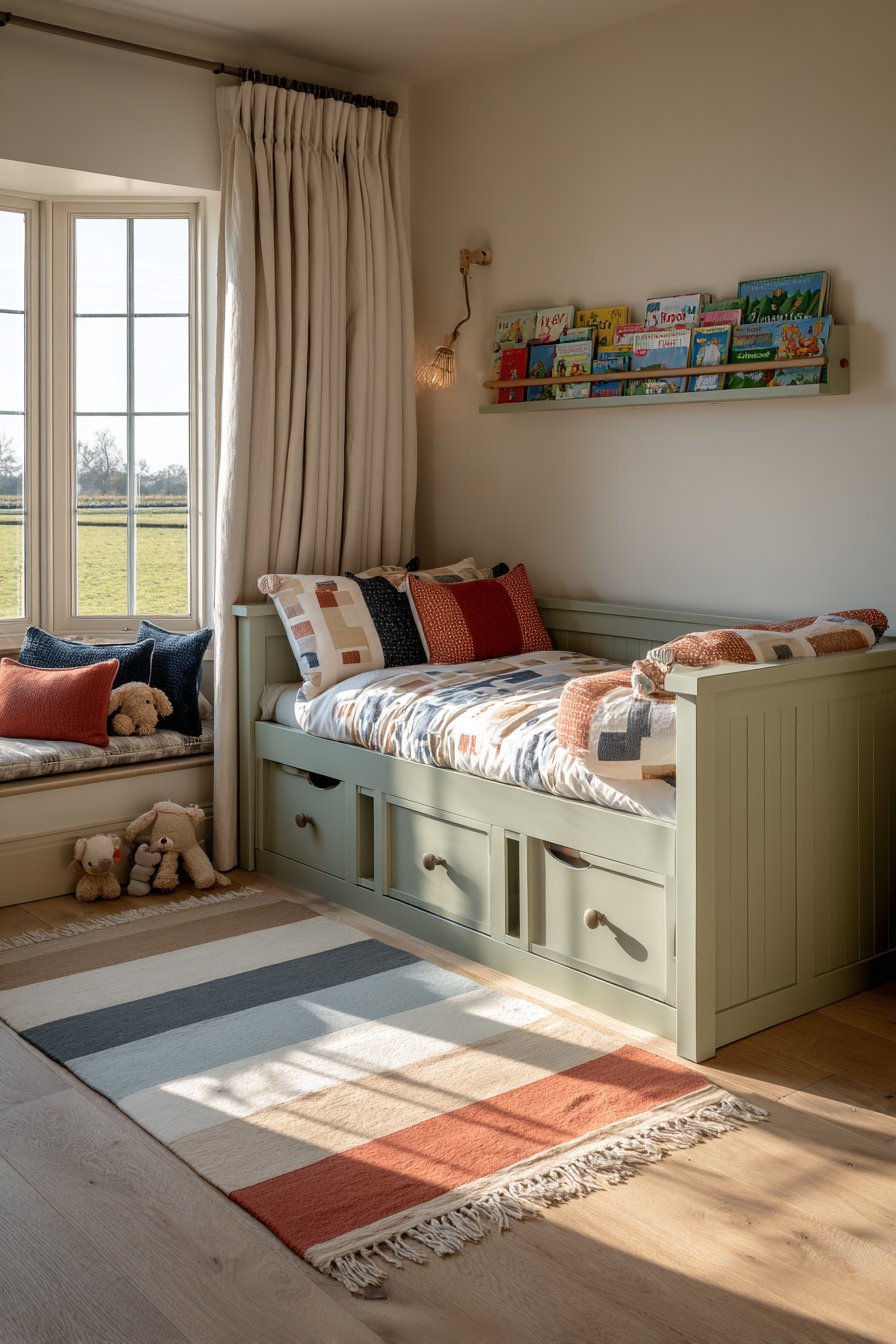
A cheerful kids bedroom centers around a sturdy wooden twin bed. Built-in storage drawers underneath maximize space efficiency. The bed frame features soft sage green paint that brings calm energy. Organic cotton bedding displays geometric patterns in coral and navy. These accents add personality without overwhelming the senses.
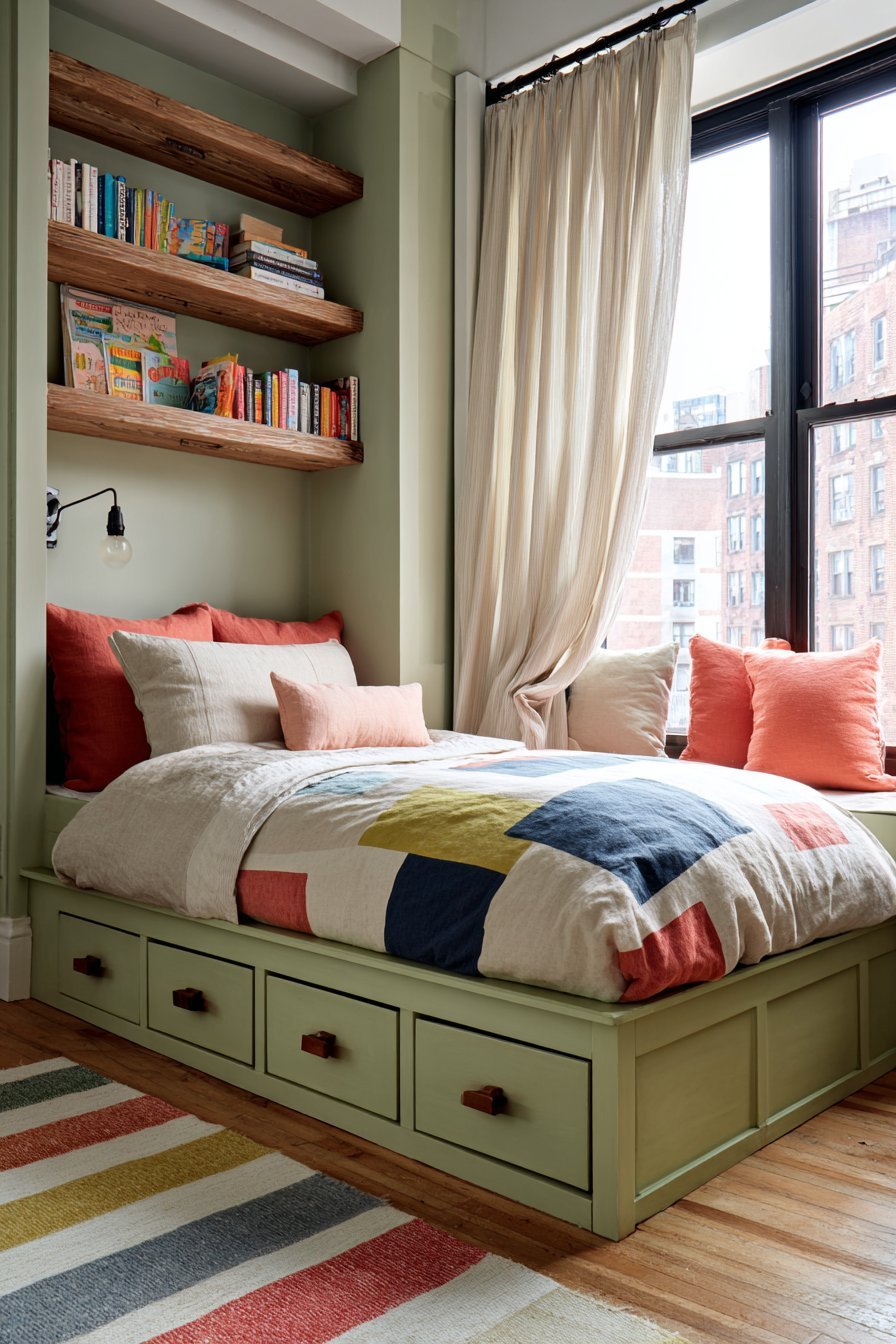
Natural oak flooring provides warmth and durability. A washable area rug in muted rainbow stripes anchors the space. The rug adds softness underfoot while being practical for spills. Near the window, a small reading nook invites quiet time. Floor cushions create flexible seating options. A simple wall-mounted bookshelf displays colorful children’s books within easy reach.
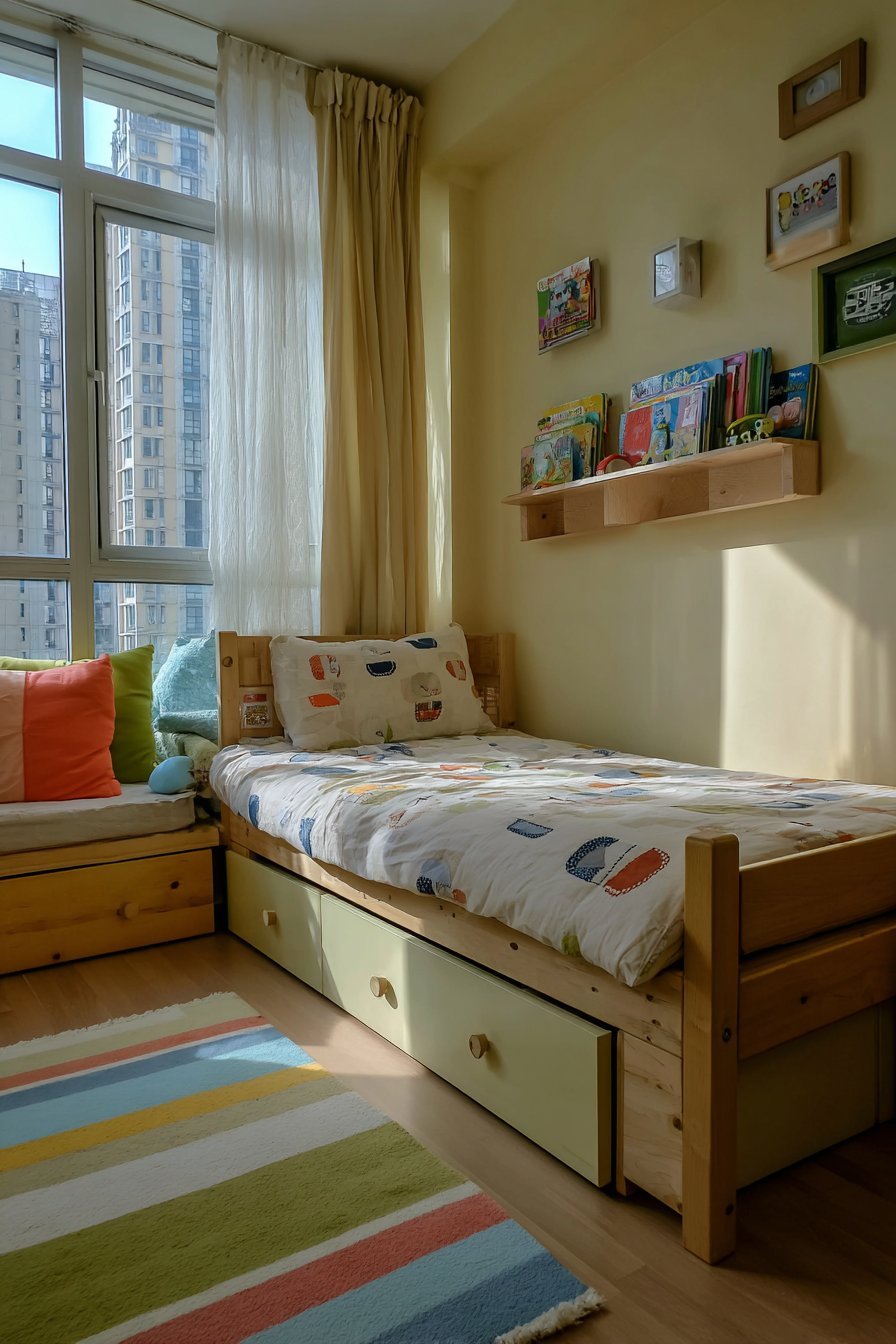
Morning light streams through sheer curtains. The natural illumination highlights practical storage solutions throughout. Wide-angle views reveal the functional layout. Every element serves a purpose while maintaining visual harmony. The room demonstrates how storage can integrate seamlessly into furniture design.
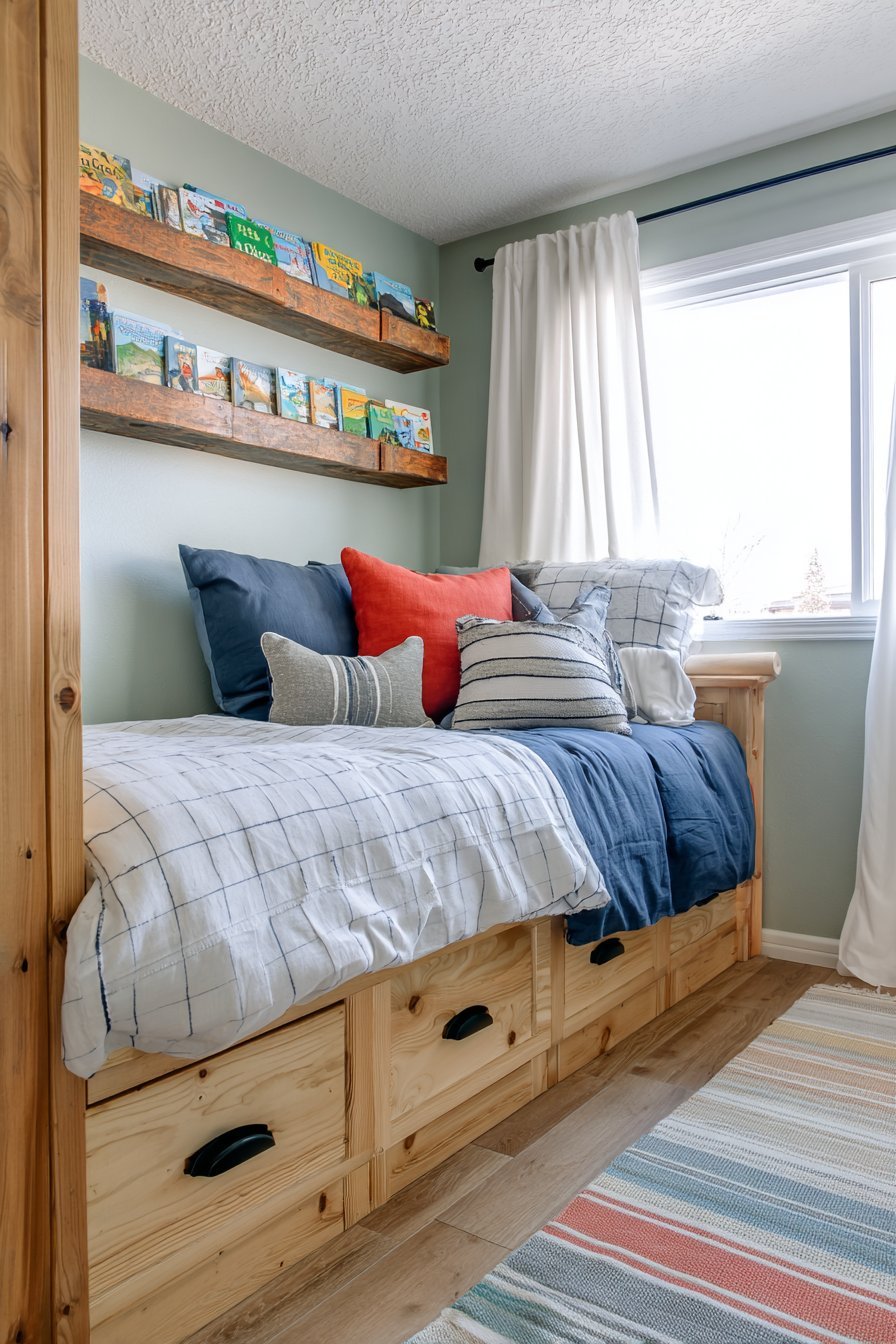
Child-friendly materials dominate this space. Organic cotton bedding offers breathability and comfort. The painted wood finish withstands daily wear. Practical design choices support both tidiness and independence. Children can easily access their belongings and put items away.
Key Design Tips:
- Choose beds with built-in storage to maximize limited floor space
- Select washable area rugs that can handle spills and frequent cleaning
- Install wall-mounted shelving at child height for easy book access
- Use organic cotton bedding for breathability and comfort during sleep
- Create dedicated reading nooks with floor cushions for flexible seating
- Paint furniture in calming colors like sage green to promote relaxation
- Position beds near windows to take advantage of natural morning light
2. Practical Organization System with Activity Zone

Open cube storage units in white-painted wood create an accessible organization system. Fabric bins in coordinating pastel tones fill each compartment. Simple picture tags label each bin for easy toy sorting. This visual system helps young children maintain order independently. The low-mounted activity table sits at perfect child height.
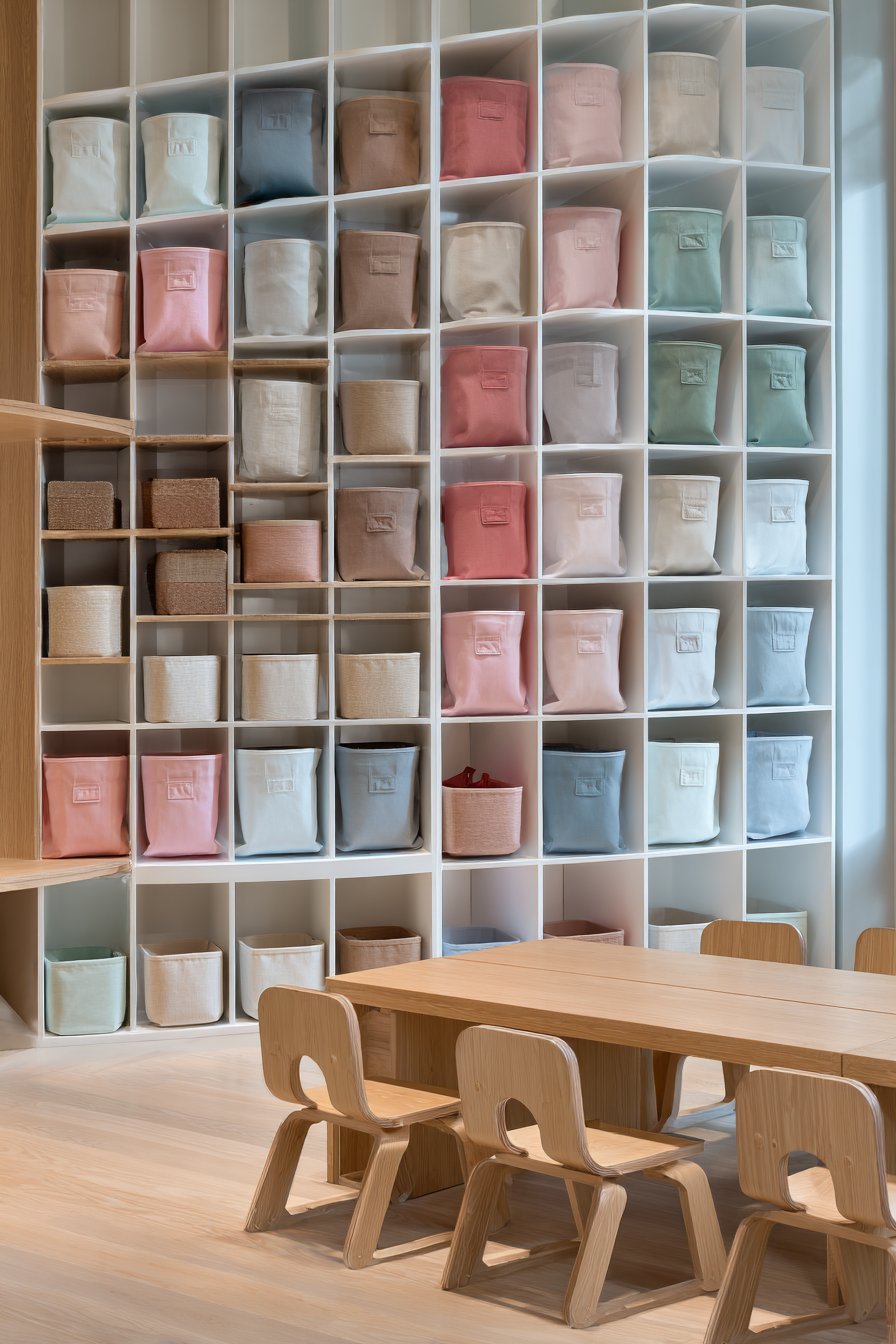
Natural beech wood chairs complement the activity table. Cork board sections provide space for displaying artwork. Magnetic board areas hold educational materials and photos. The organization wall becomes both functional and decorative. Everything has a designated place that makes sense to small users.
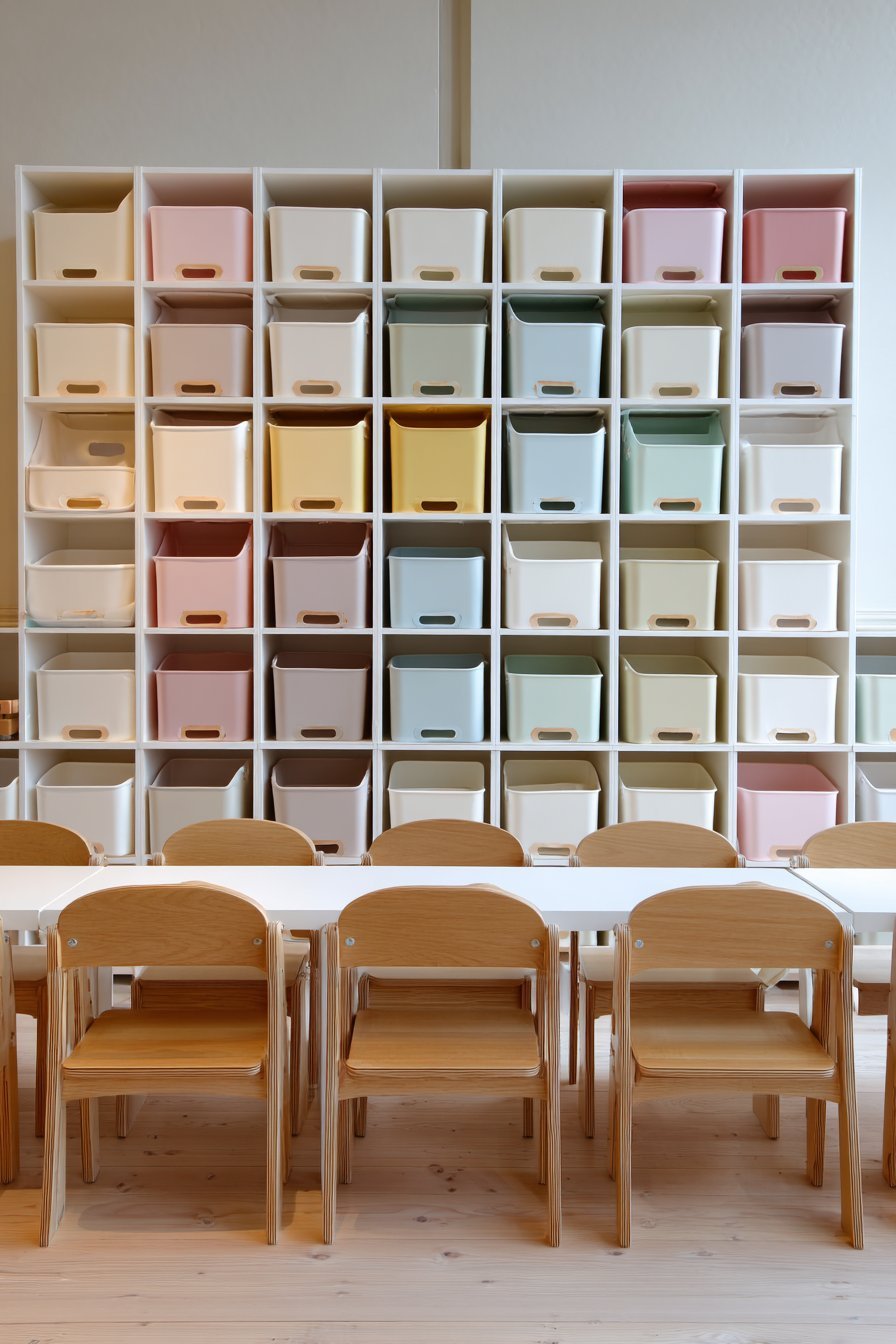
Soft diffused daylight illuminates the functional design. Balanced exposure shows the accessible organization system clearly. Professional photography captures how each element encourages independence. The layout demonstrates thoughtful consideration of children’s physical capabilities. Reaching items requires no adult assistance.
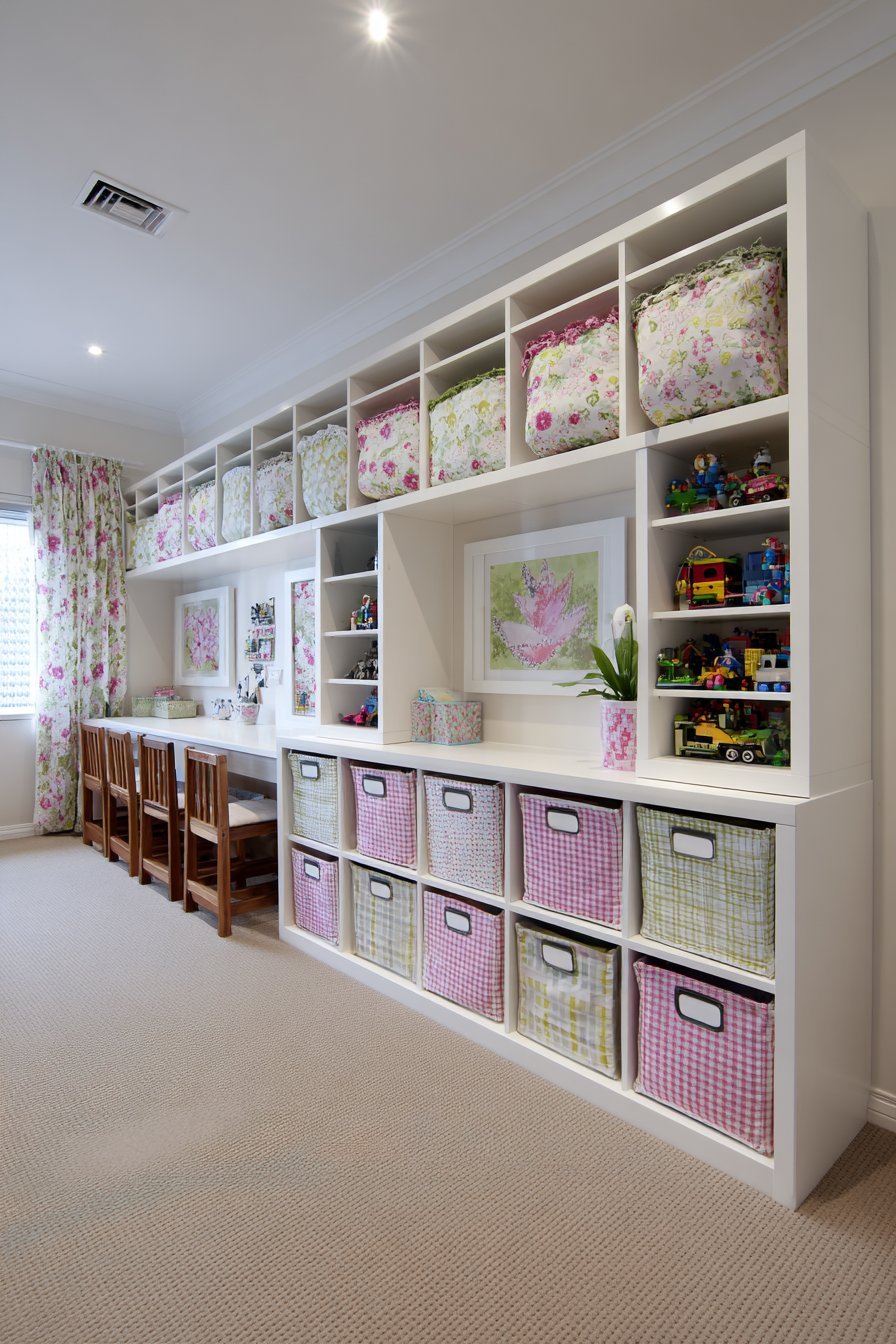
This design teaches organizational skills through intuitive systems. Picture labels help pre-readers understand where items belong. The activity table offers dedicated space for creative projects. Multiple board types accommodate various display needs. The comprehensive system grows with changing interests and needs.
Key Design Tips:
- Use open cube storage with labeled fabric bins for visual organization
- Choose picture tags instead of words for pre-reading children
- Mount activity tables at child height to encourage independent use
- Select natural wood furniture that ages gracefully over time
- Install cork and magnetic boards for rotating artwork displays
- Coordinate bin colors for visual appeal while maintaining function
- Position storage near activity areas to simplify cleanup routines
3. Cozy Reading Corner with Canvas Teepee
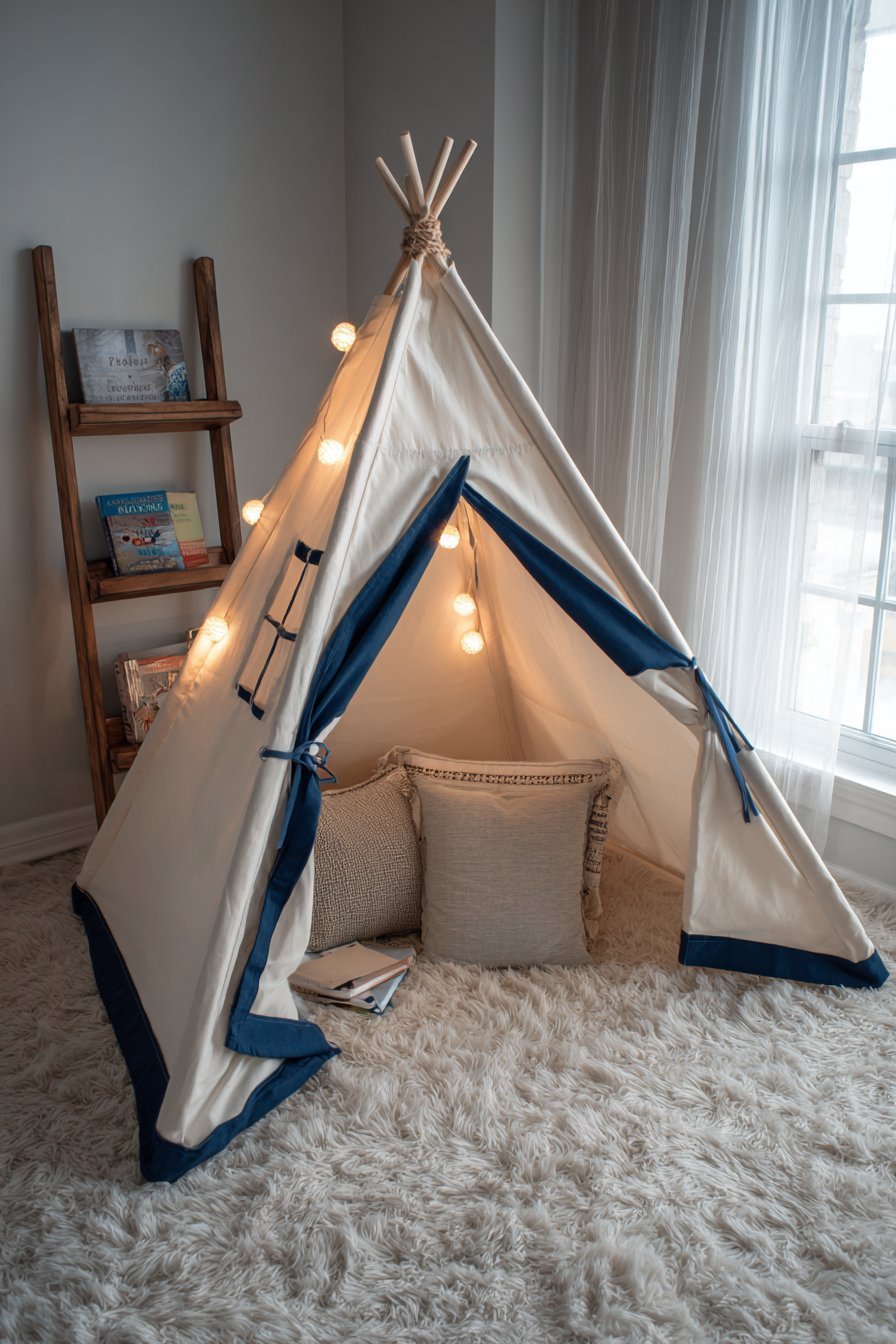
A canvas teepee tent in natural cotton creates magical reading space. Navy trim adds visual definition without bright colors. The tent sits on a plush cream-colored shag rug. Inside, soft floor pillows in various textures provide comfortable seating. Children can adjust pillows to their preferred reading position.
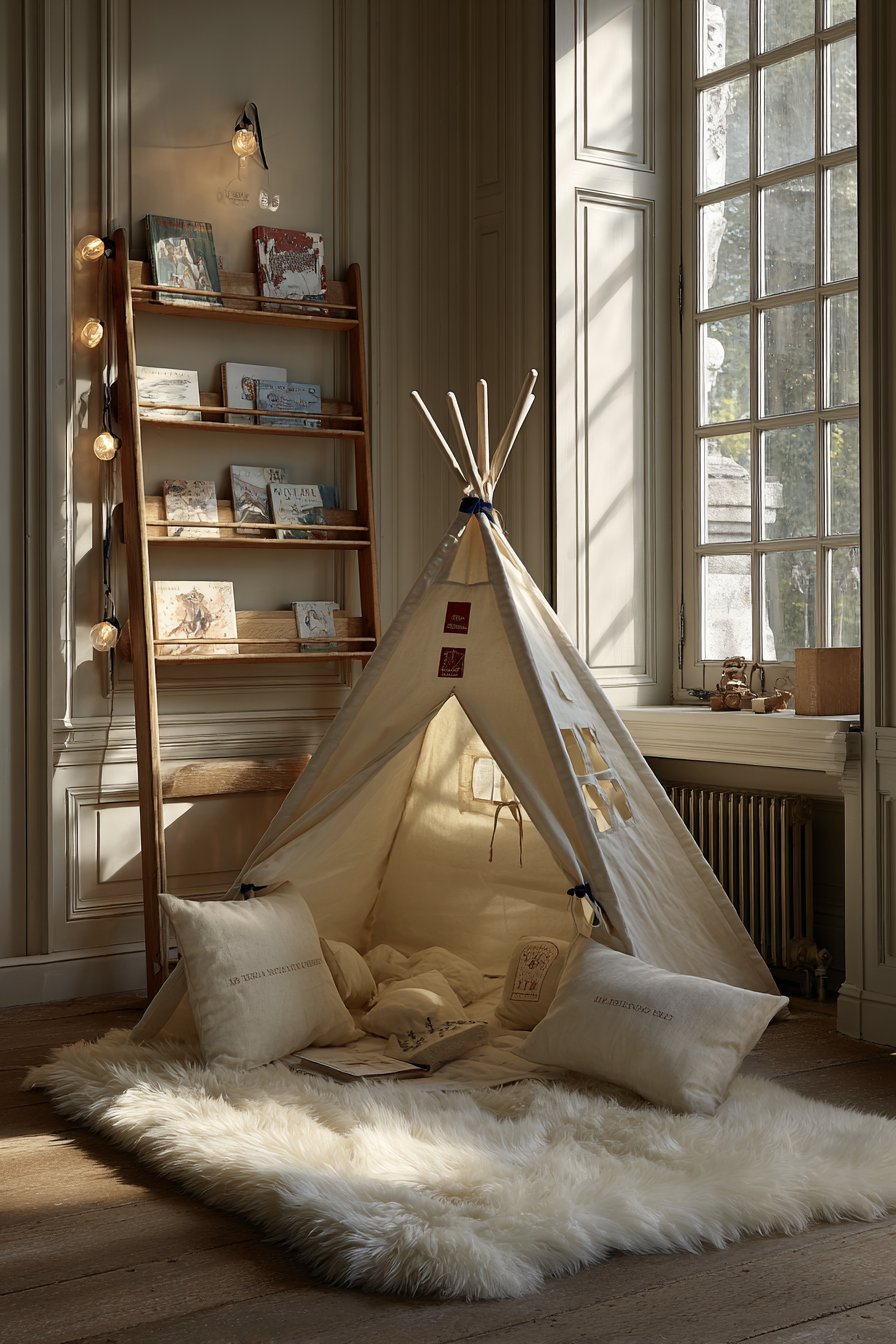
A simple wooden ladder shelf stands beside the tent. Favorite books rest within easy reach on its rungs. The vertical design saves floor space efficiently. String lights with warm LED bulbs create ambient lighting. The gentle glow makes evening reading feel special.
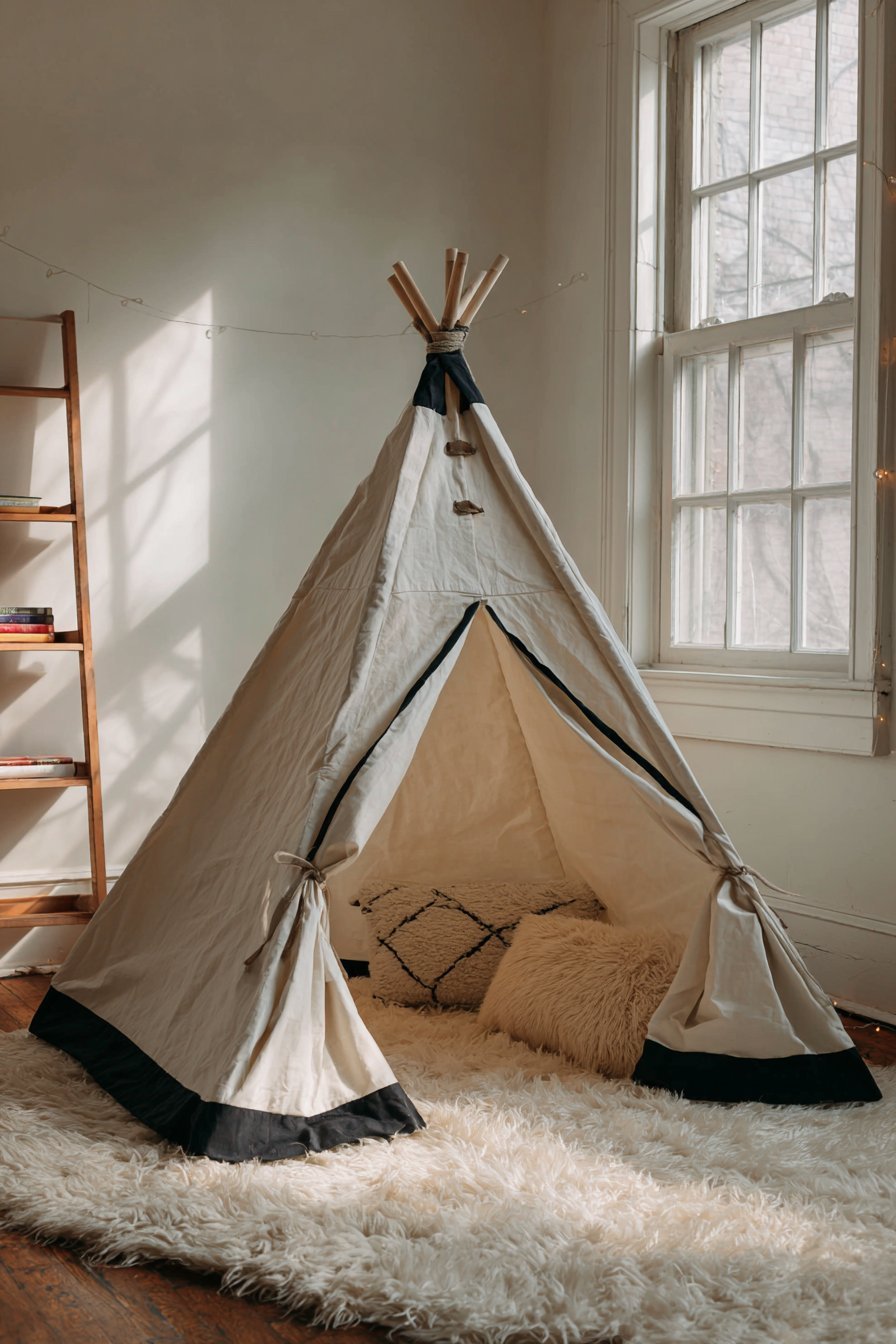
Natural window light creates gentle shadows throughout the day. Detail-focused photography captures inviting texture combinations. The scale feels appropriate for children’s bodies. Every element considers their comfort and accessibility. The cozy atmosphere encourages extended reading sessions.
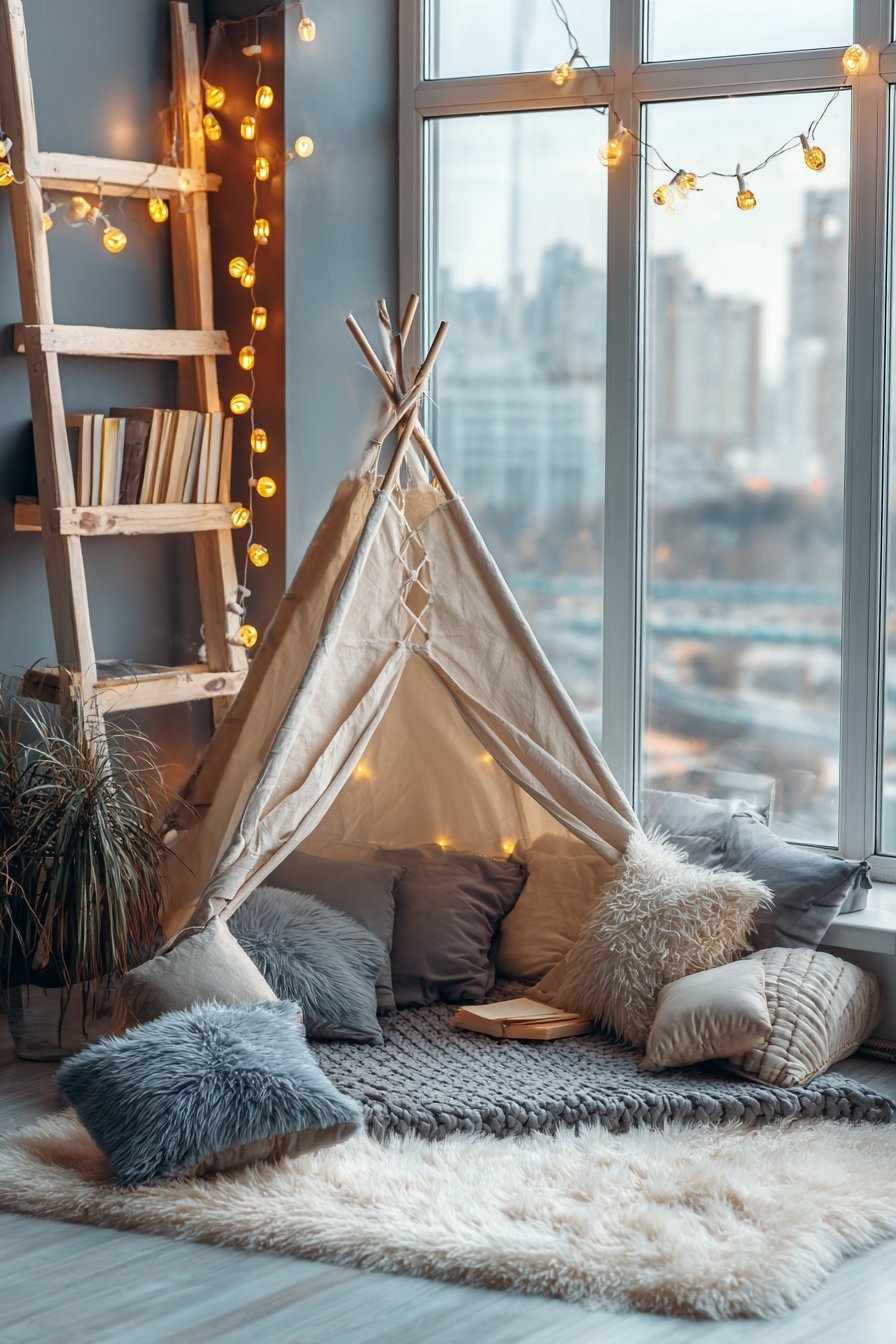
Texture plays a crucial role in this design. The canvas tent offers tactile interest. Shag rug fibers feel soft underfoot. Various pillow fabrics provide sensory variety. Natural cotton breathes well during active play. The combination creates depth and comfort.
Key Design Tips:
- Choose canvas teepees in natural fibers rather than synthetic materials
- Layer multiple pillow textures for sensory variety and comfort
- Install warm LED string lights for safe ambient evening lighting
- Use ladder shelves to maximize vertical space in small corners
- Position reading nooks near windows for optimal natural light
- Select cream or neutral rugs that work with changing room themes
- Create enclosed spaces that help children feel secure while reading
4. Space-Saving Bunk Beds for Shared Rooms
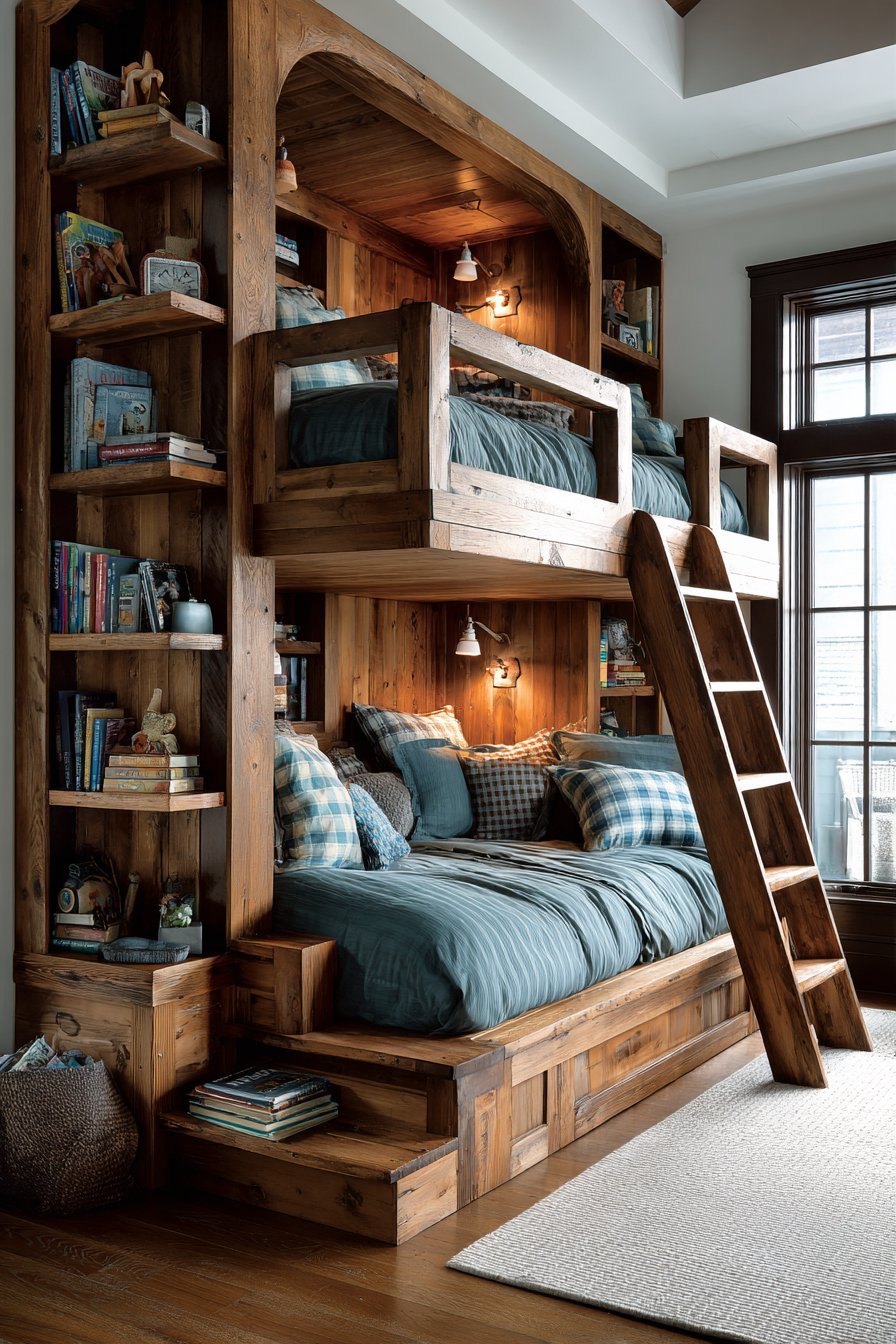
Solid pine bunk beds with natural finish provide sturdy sleeping space. The integrated ladder features wide steps for safe climbing. Each bunk includes individual reading lights mounted within reach. Small floating shelves offer personal storage for treasures. The lower bunk includes a pull-out trundle for sleepovers.
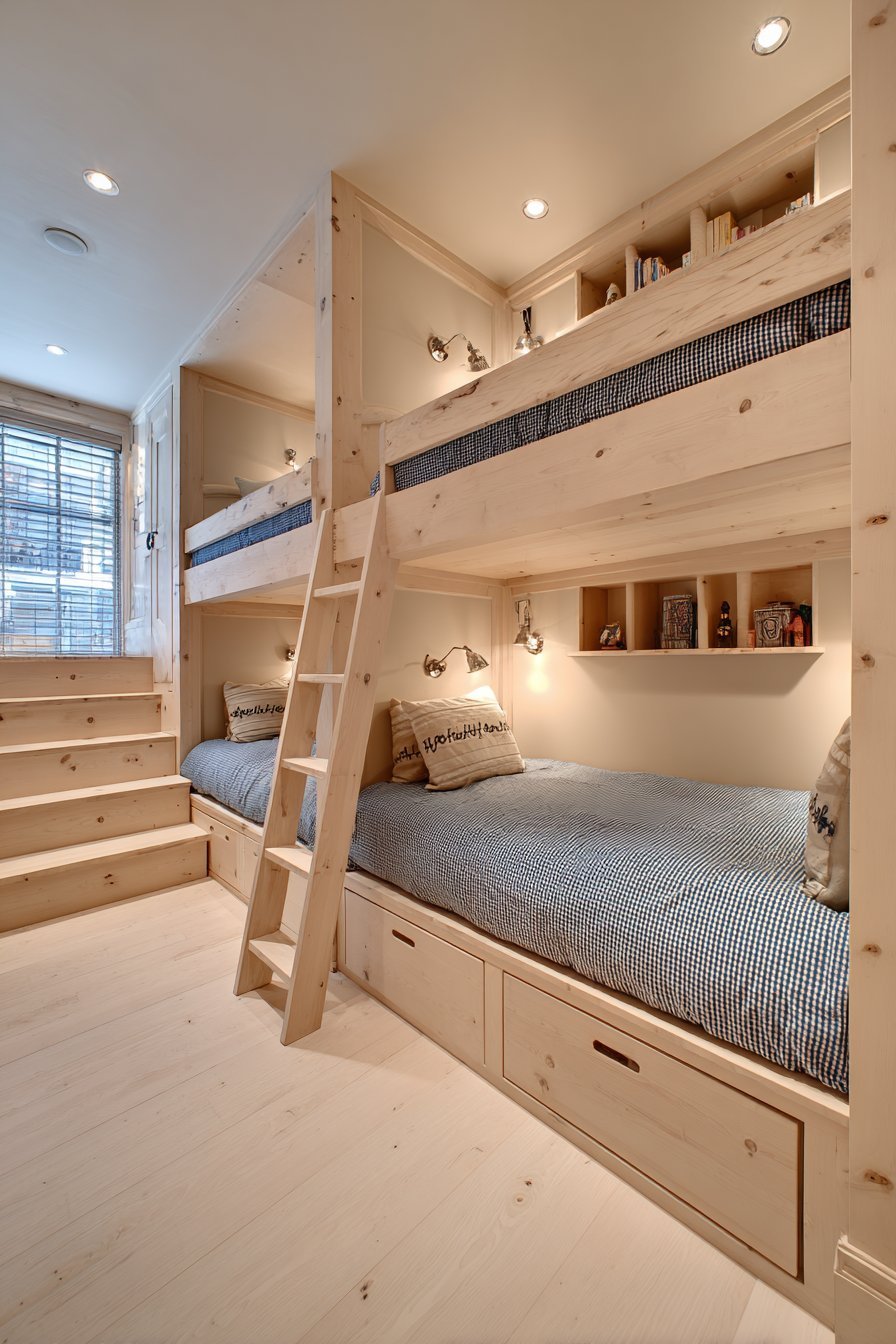
Bedding in coordinating but distinct colors allows individual expression. One bunk displays denim blue stripes. The other features forest green gingham. This approach respects each child’s identity within shared space. Natural wood construction ensures durability through years of use.
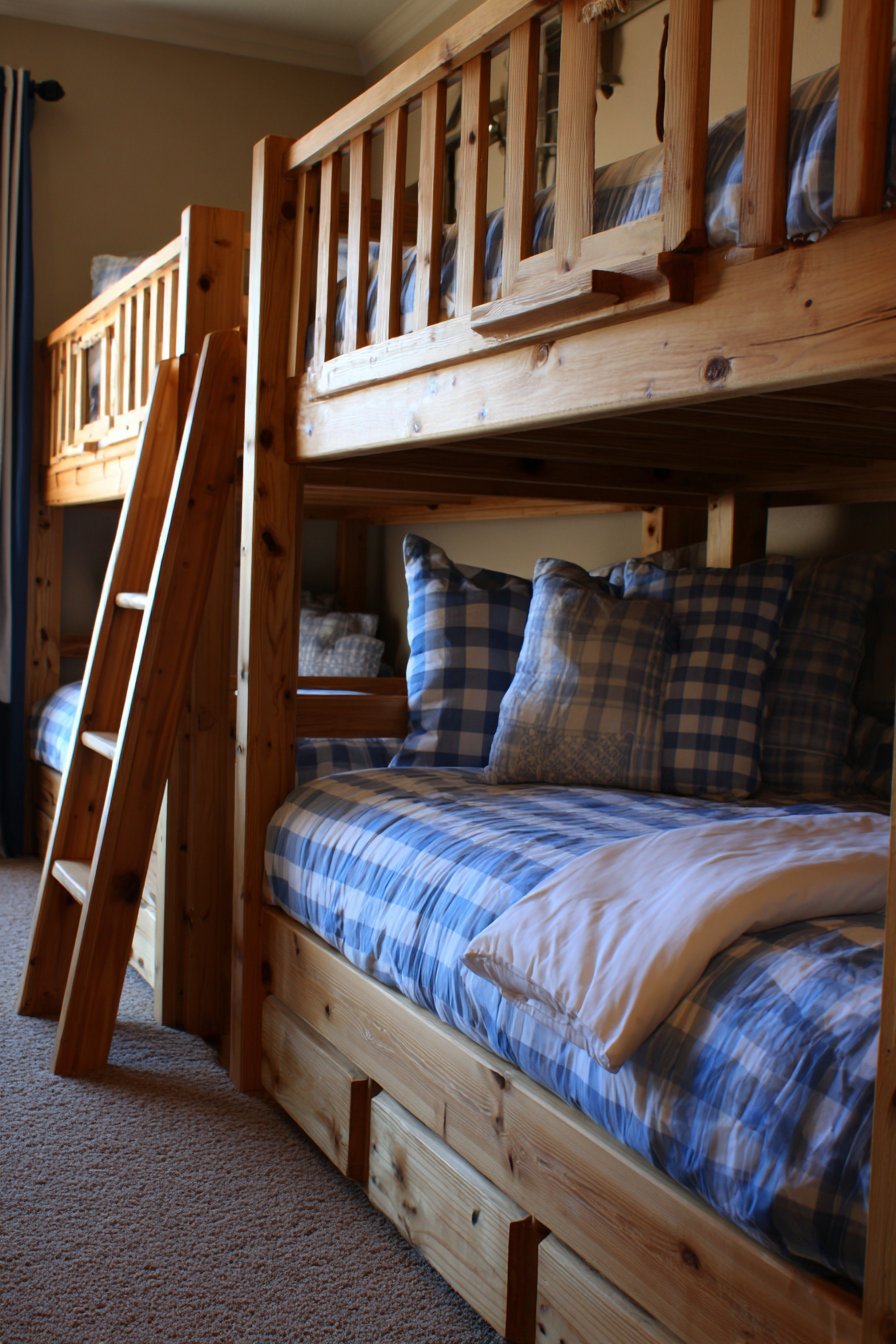
Balanced natural lighting shows the sturdy construction clearly. Wide-angle photography captures efficient vertical space use. Practical design details become apparent in comprehensive views. The layout maximizes sleeping capacity without feeling cramped. Each child maintains their own territory.
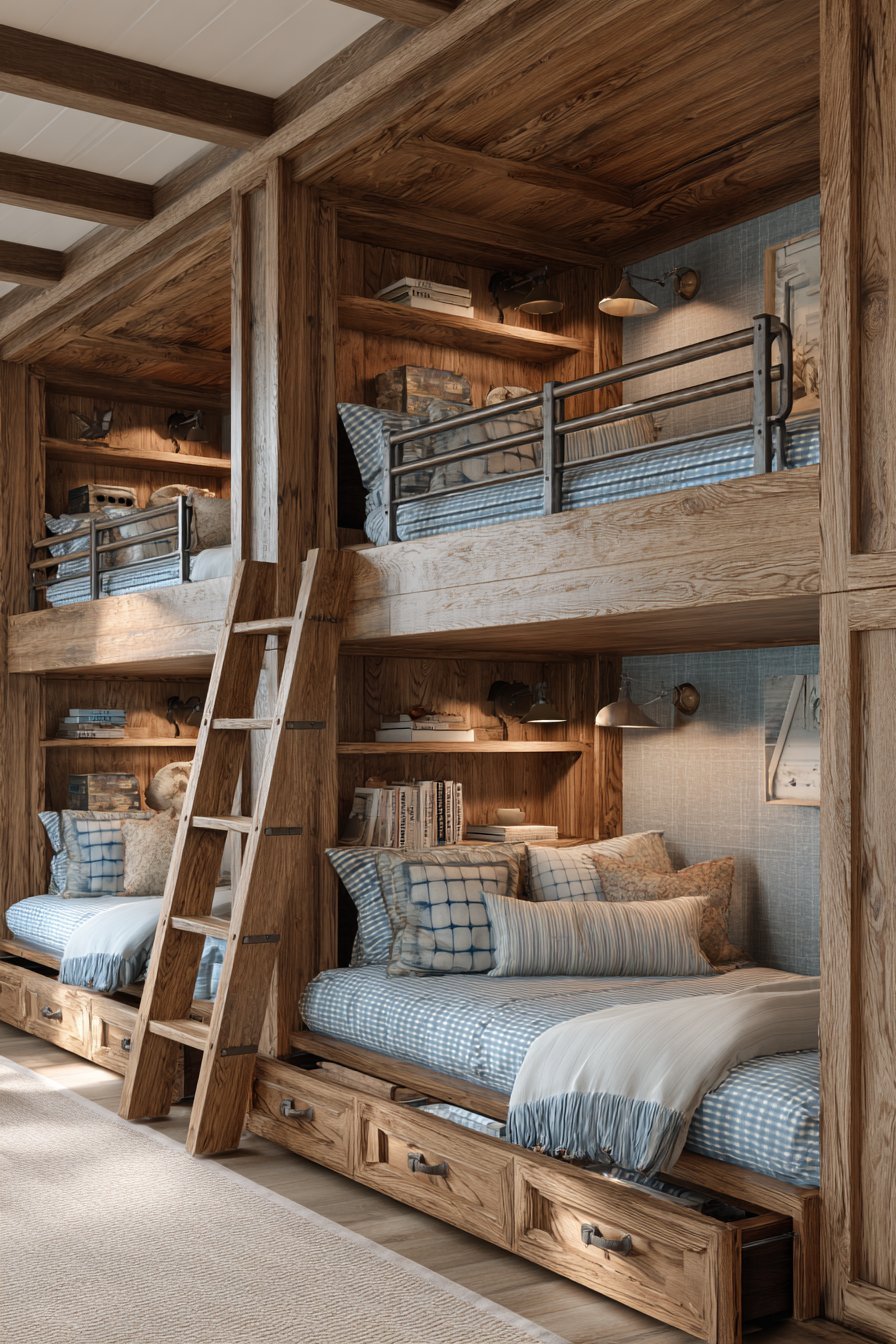
Vertical space utilization defines this design approach. Bunks provide sleeping space for two or three children. The trundle adds flexibility for guests. Individual lights allow different bedtimes. Personal shelves reduce conflict over belongings. Smart design solutions address common shared room challenges.
Key Design Tips:
- Select bunk beds with wide ladder steps for safer climbing access
- Install individual reading lights so children can have different bedtimes
- Choose coordinating but distinct bedding colors for personal expression
- Add floating shelves for each child to store personal treasures
- Include a pull-out trundle to accommodate occasional guests comfortably
- Opt for solid wood construction that withstands years of active use
- Ensure adequate ceiling height for comfortable sitting on top bunks
5. Montessori-Inspired Low Floor Bed
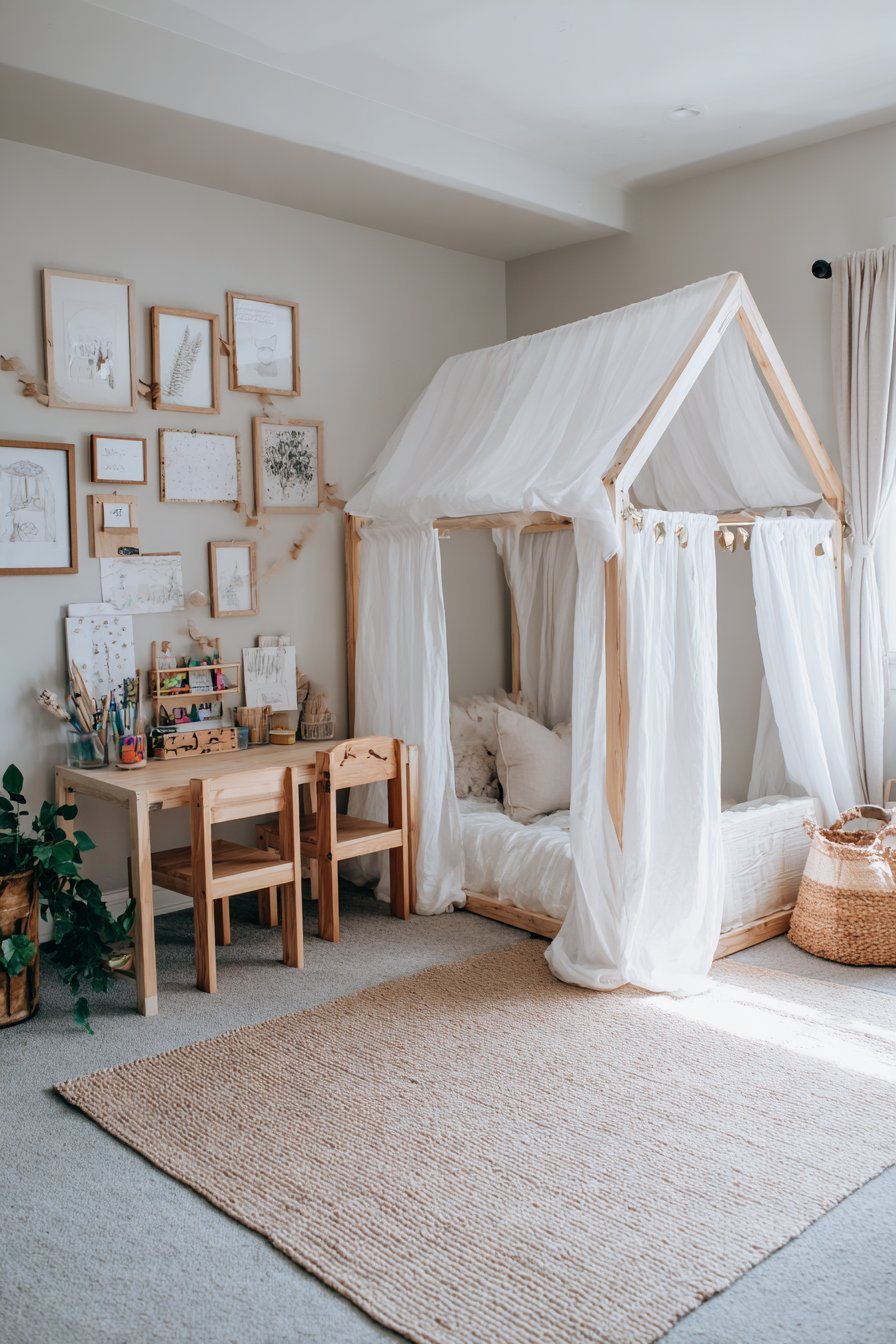
A low-profile floor bed features a simple house-frame structure. Unfinished pine allows easy draping of fabric canopies. String lights can be woven through the frame. The bed sits directly on a large neutral jute rug. This Montessori approach promotes independence and safe movement.
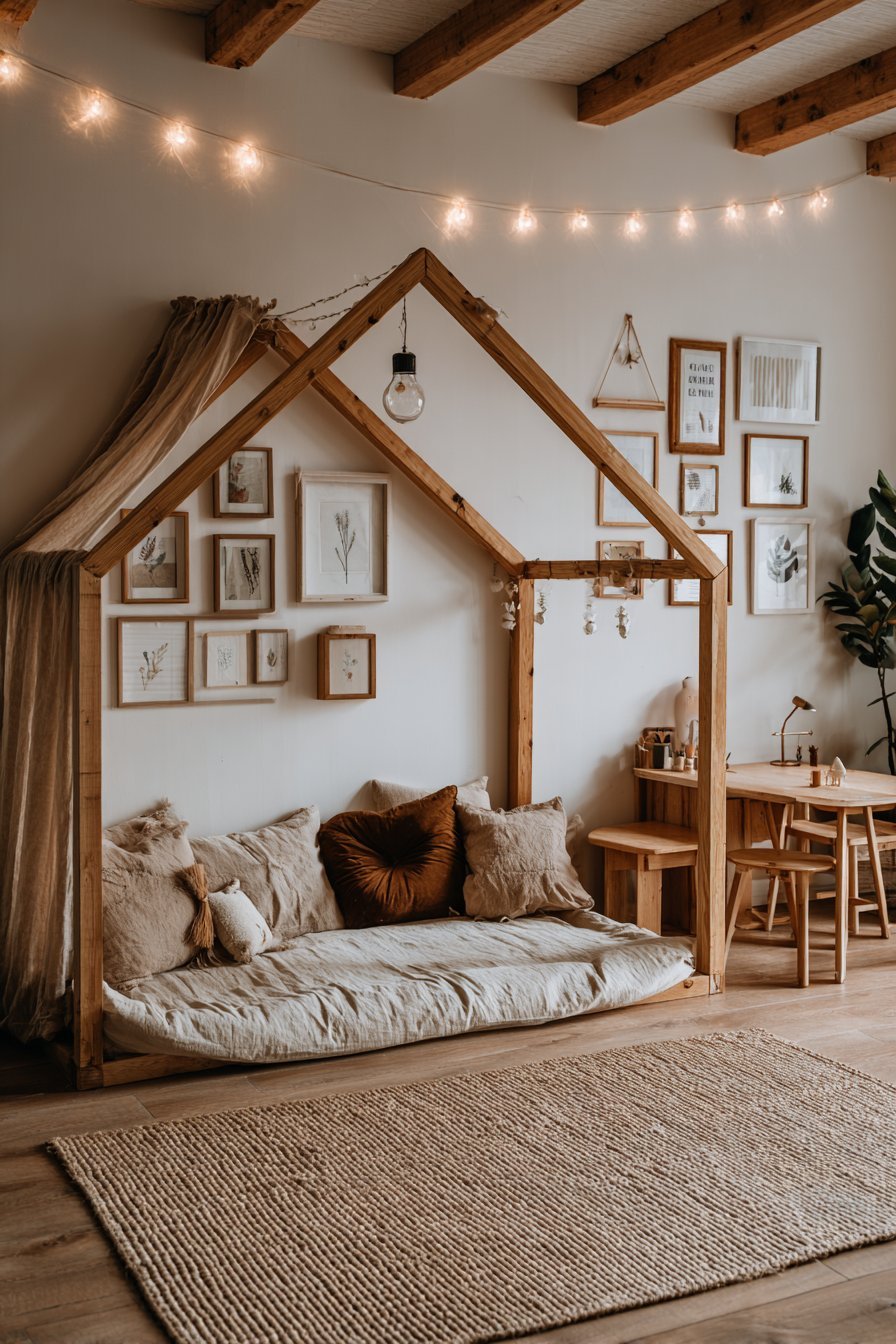
One wall features a gallery of the child’s artwork. Mismatched wooden frames hang at child eye-level. Small craft table with storage compartments sits nearby. Child-sized chairs make the workspace accessible. Natural materials dominate throughout the room.
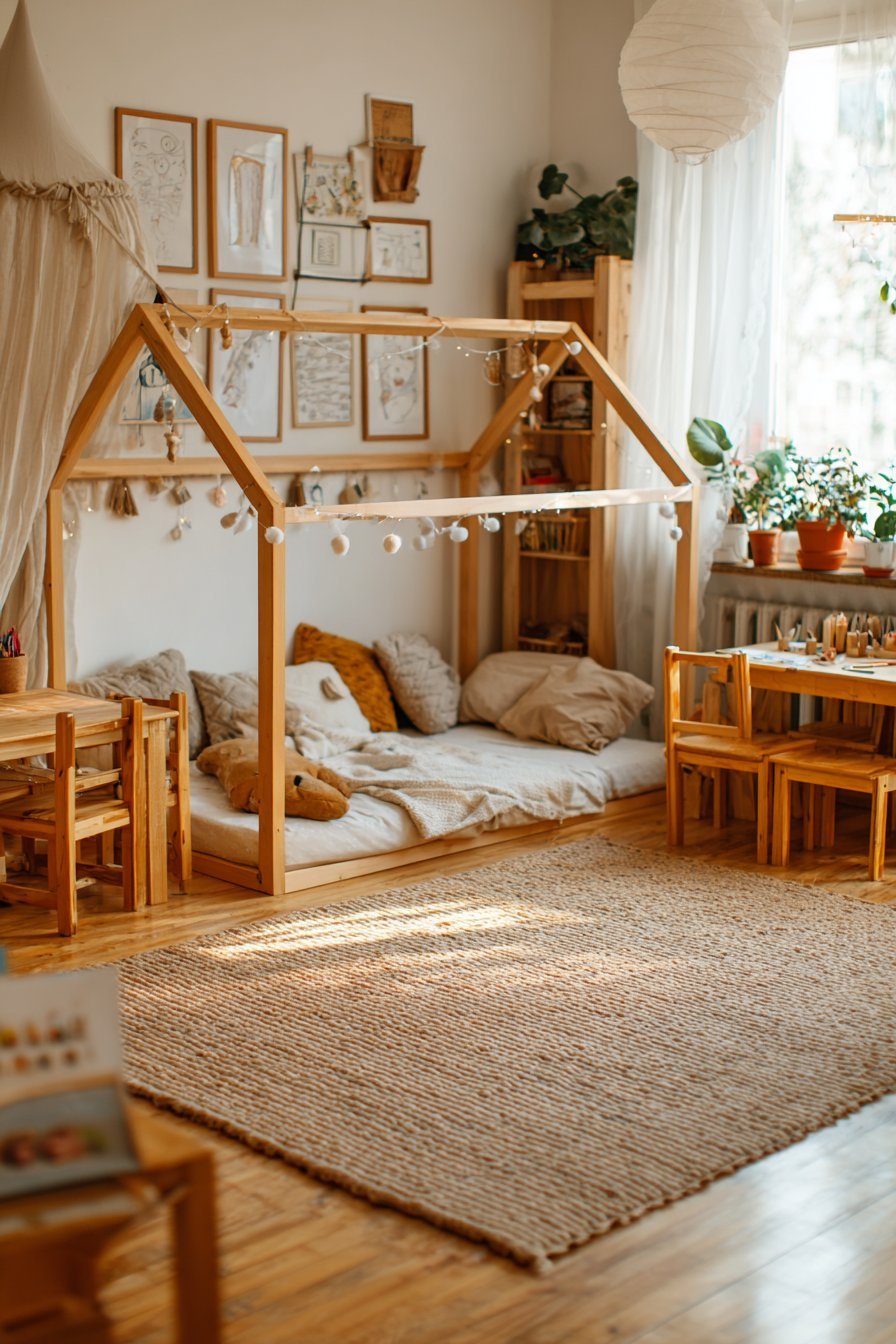
Soft natural lighting highlights the Montessori-inspired approach. Professional photography shows the accessible, independence-fostering layout. Attention to natural materials creates visual warmth. Child-appropriate scale ensures everything feels manageable. The low bed eliminates falling concerns completely.
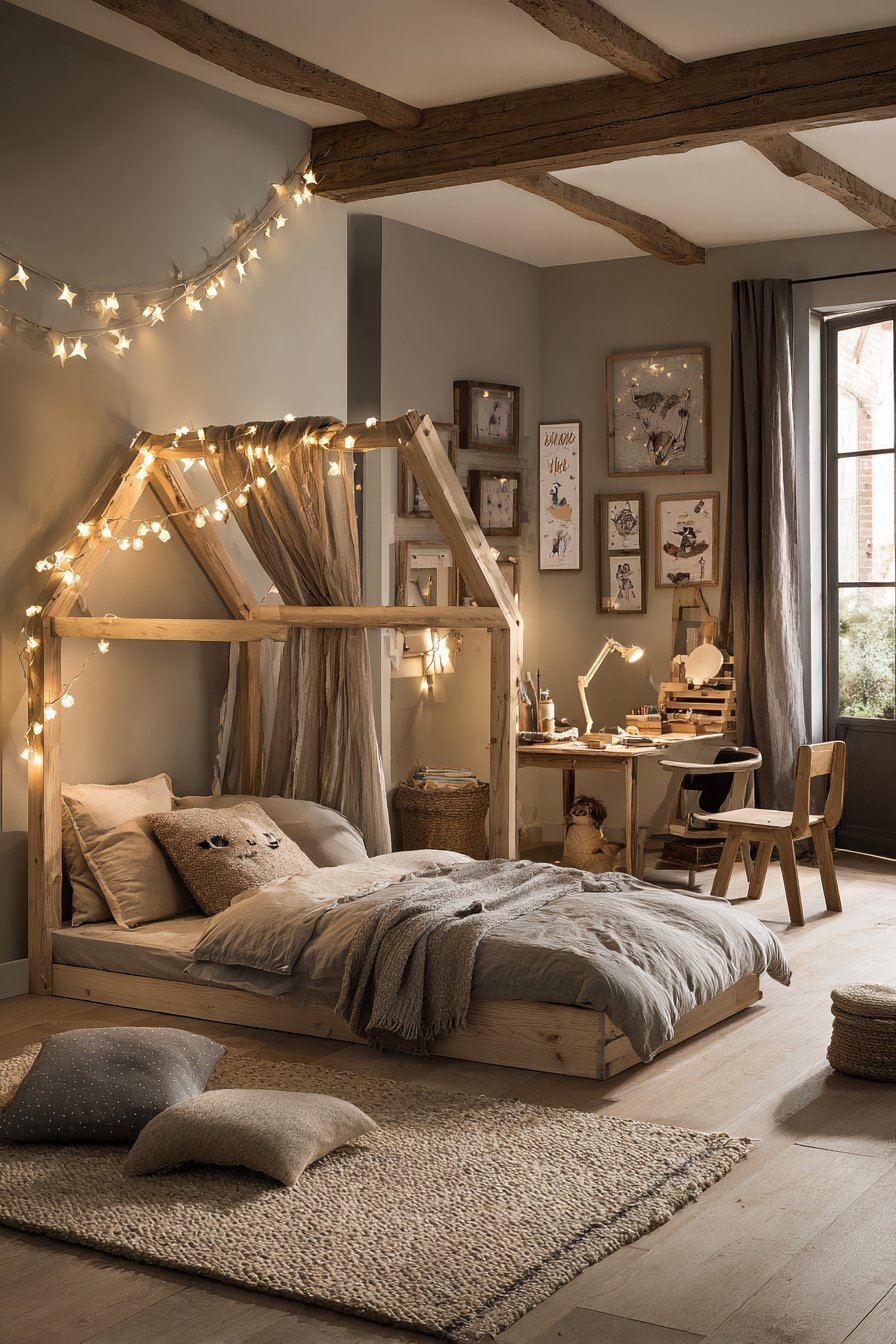
This design philosophy emphasizes freedom within limits. Children can get in and out of bed independently. Artwork display at their eye level validates creative expression. The craft table invites self-directed activities. Every choice supports developing autonomy and confidence.
Key Design Tips:
- Choose low floor beds that children can access without assistance
- Display artwork at child eye level to validate their creative work
- Use house-frame structures that allow customization with fabric draping
- Select natural jute rugs for texture and durability in play areas
- Position craft tables with storage near creative display areas
- Opt for unfinished wood that accepts changing decorative elements
- Create spaces that grow with children rather than requiring replacement
6. Vibrant Yellow Feature Wall with Functional Desk
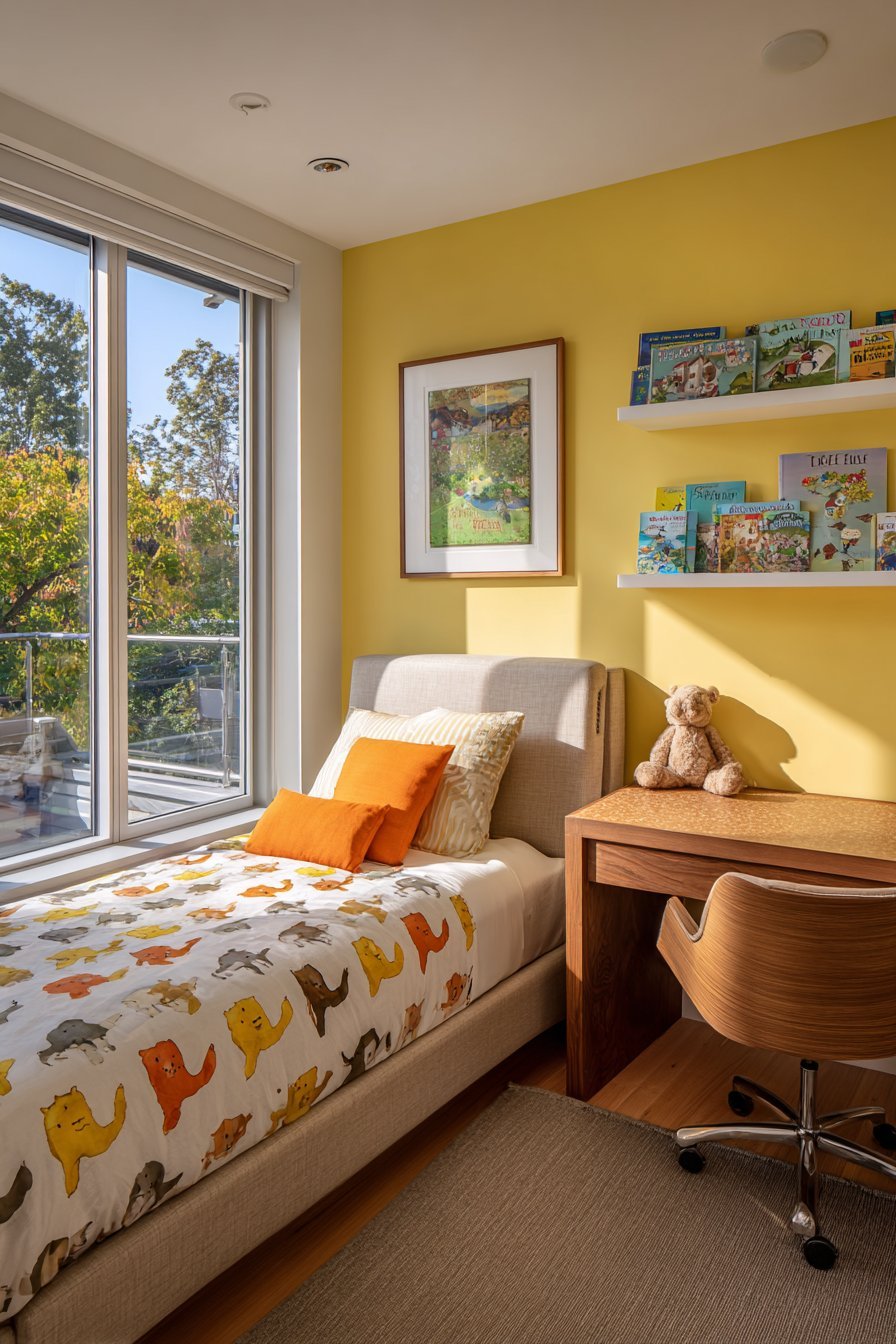
A feature wall painted in cheerful butter yellow energizes the space. White painted wood floating shelves hold picture books and toys. The organized display creates visual interest without clutter. A twin bed with simple upholstered headboard sits against an adjacent wall. Washable linen fabric ensures easy maintenance.
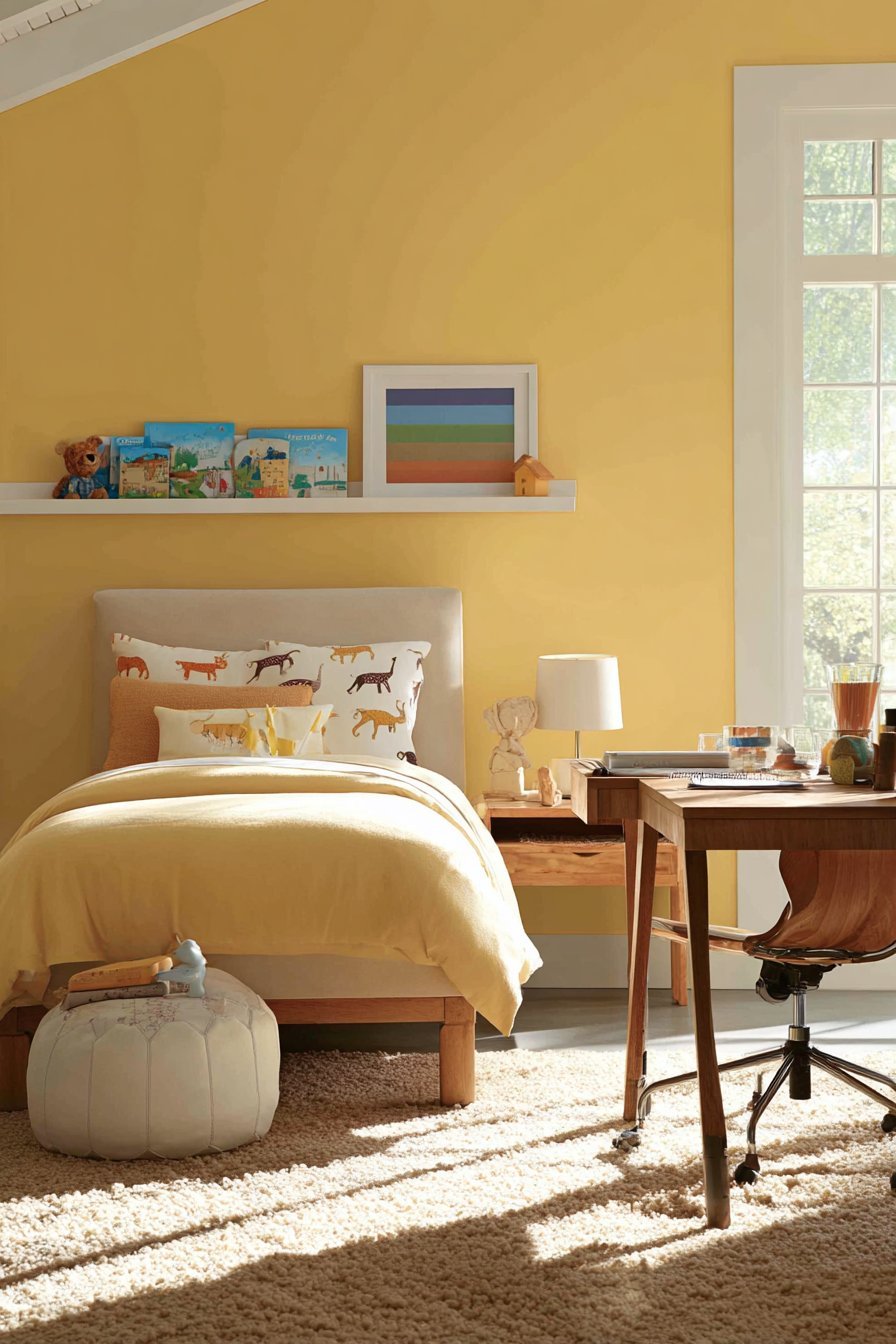
Bedding features playful animal prints in primary colors. The patterns engage without overwhelming. A vintage-style wooden desk with cork top provides homework space. The cork surface accepts pins without damage. An adjustable task chair supports proper posture during study.
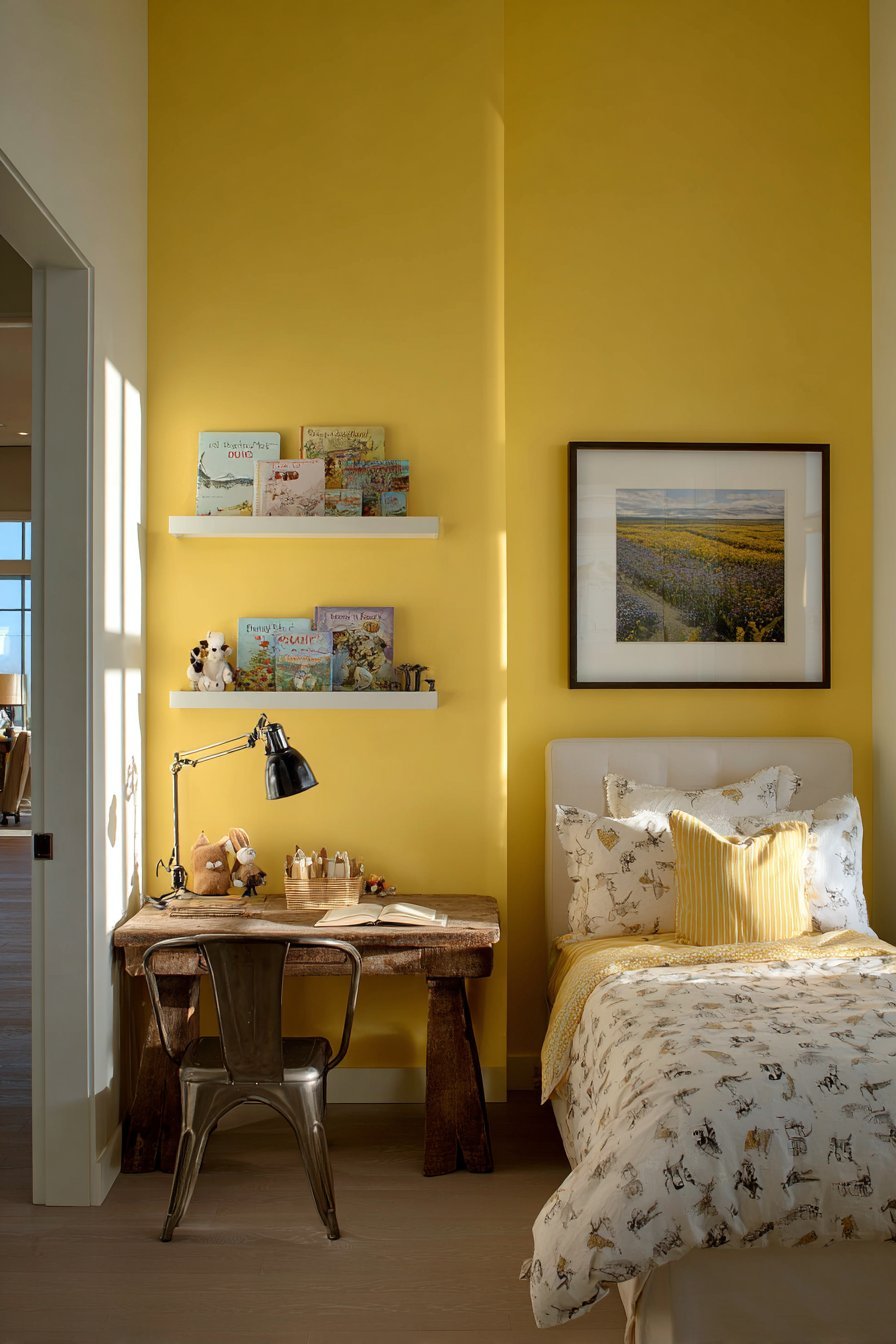
Afternoon sunlight creates warm highlights on varied textures. Wide-angle photography captures the balanced color scheme. Functional zones for sleeping, storage, and studying appear clearly defined. The room demonstrates how bright colors can energize without chaos. Each area serves its specific purpose well.
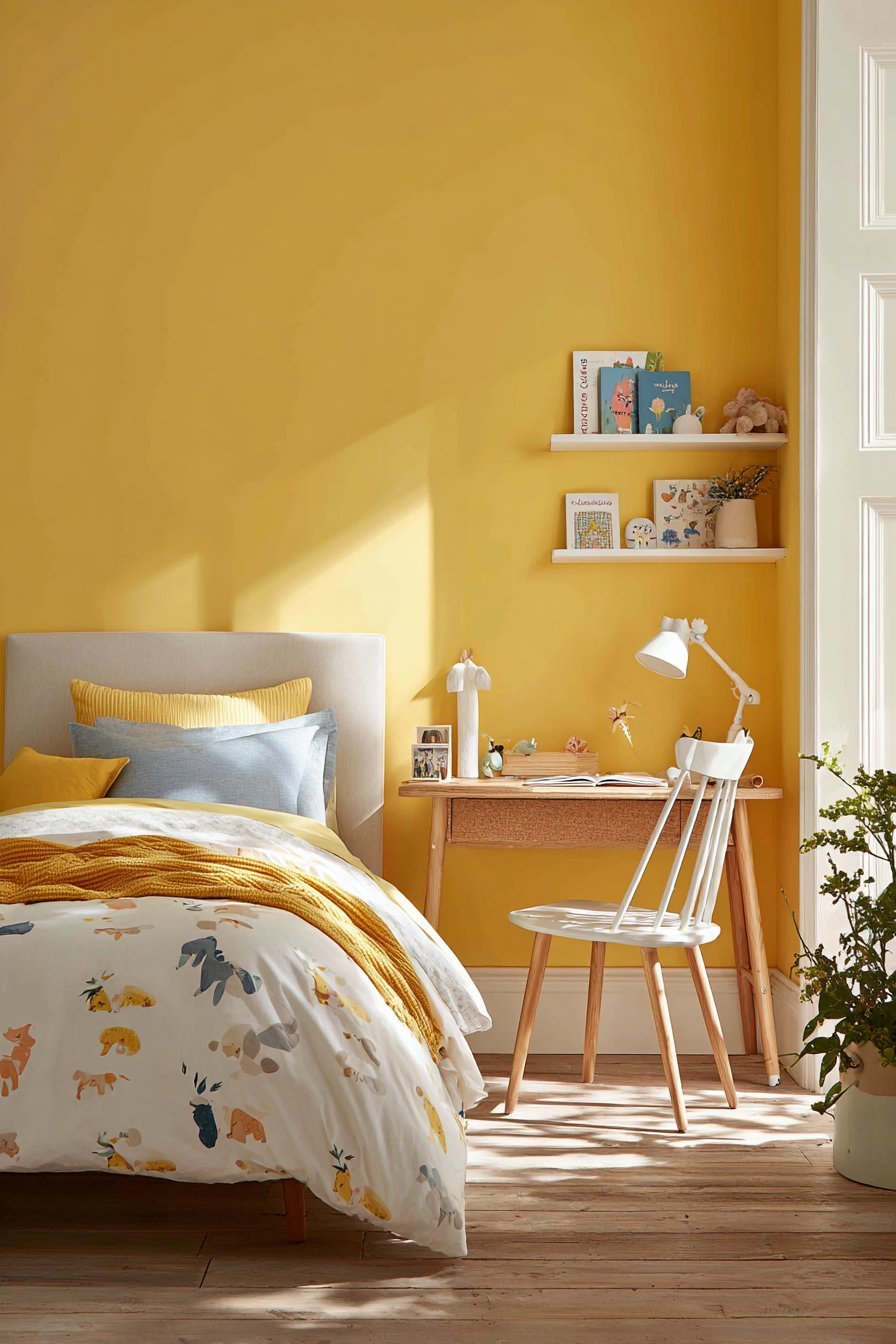
Color psychology influences this design approach. Yellow promotes happiness and mental stimulation. White shelving provides visual balance. Primary colors in bedding add energy without additional paint. The cork desk surface combines function with vintage charm. Careful color distribution creates vibrancy with harmony.
Key Design Tips:
- Paint one feature wall in cheerful yellow to energize the space
- Choose washable linen upholstery for headboards that withstand spills
- Install floating shelves to display books without floor space requirements
- Select vintage-style desks with cork tops for damage-free pinning
- Use adjustable task chairs that grow with children’s changing heights
- Incorporate playful patterns in bedding rather than permanent wall decor
- Balance bright accent walls with neutral furniture and flooring choices
7. Built-In Wardrobes with Child-Accessible Design
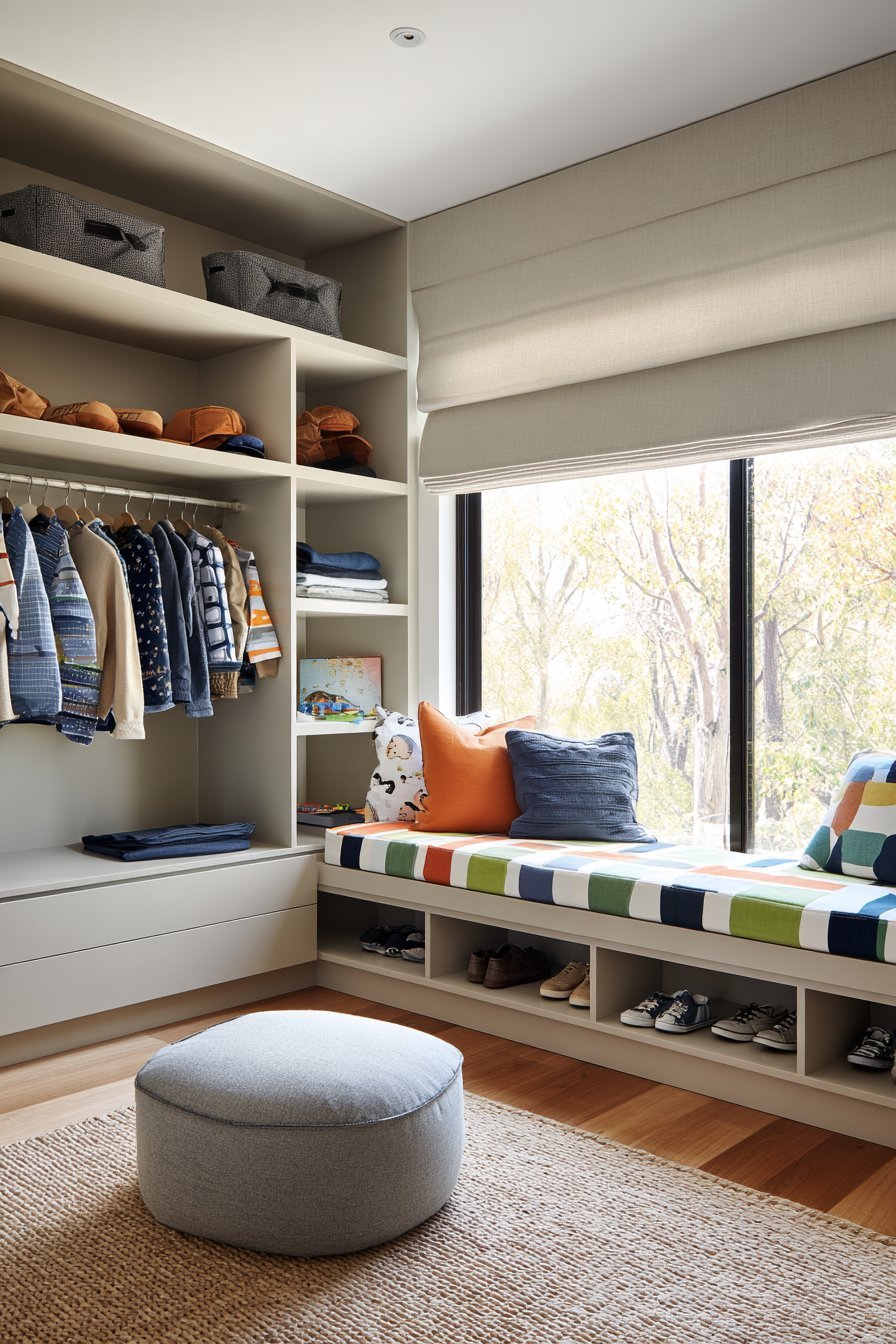
Built-in wardrobes with sliding doors in soft grey maximize storage. Lower rods allow children to hang clothes independently. Open cubby sections at floor level hold shoes and bags. A cushioned window seat with lift-up storage runs along the window wall. Washable cushions use durable outdoor fabric with colorful patterns.
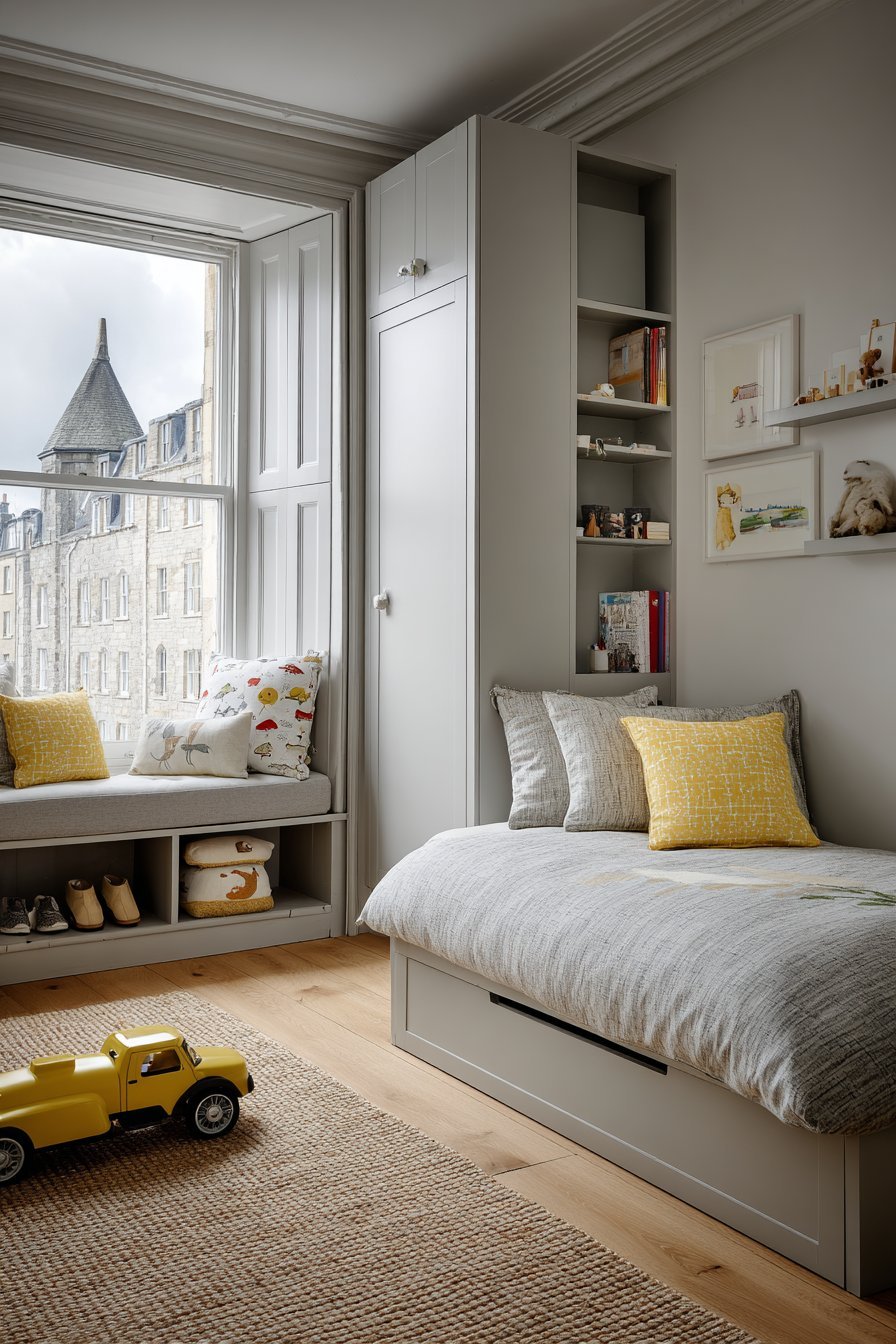
Oak flooring provides natural warmth and longevity. A natural fiber rug adds softness underfoot. Balanced exposure photography shows thoughtful storage solutions clearly. Child-friendly accessibility features appear throughout. Natural light emphasizes practical materials and finishes.
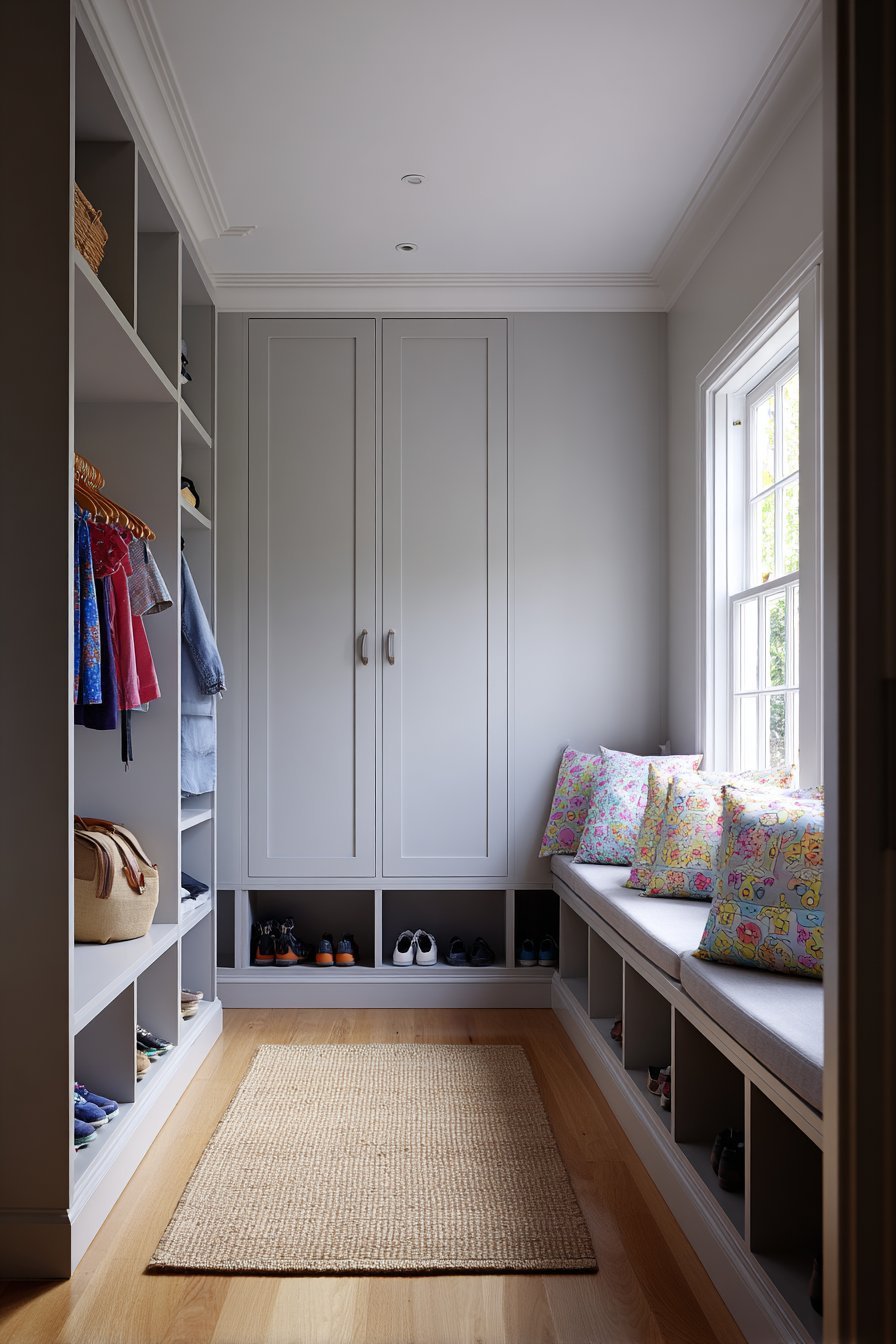
This design prioritizes independence through accessibility. Children can select and hang their own clothes. Lower storage eliminates frustration and encourages responsibility. The window seat offers quiet space for reading. Hidden storage keeps seasonal items out of sight.
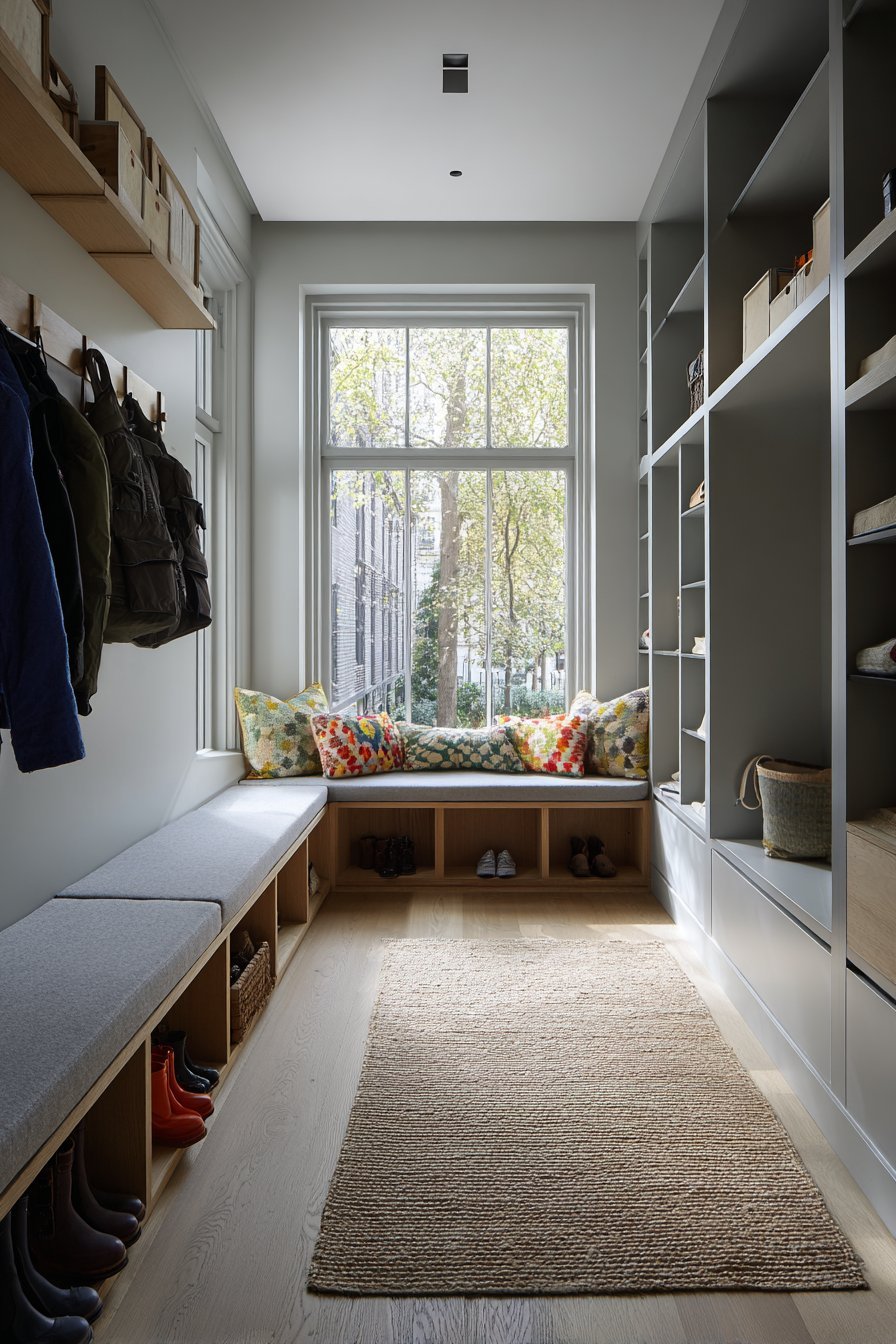
Storage solutions demonstrate intelligent space planning. Built-in wardrobes utilize vertical space efficiently. Sliding doors save floor space compared to swinging options. Multiple storage types accommodate different item categories. The comprehensive system teaches organizational skills naturally.
Key Design Tips:
- Install wardrobe rods at child-accessible heights for independence
- Choose sliding doors to save floor space in compact rooms
- Add open floor-level cubbies for daily-use shoes and bags
- Create window seats with lift-up storage for dual functionality
- Select outdoor fabric for cushions that resist stains and wear
- Use natural fiber rugs that provide texture without synthetic materials
- Paint built-ins in soft grey to complement rather than dominate
8. Calming Blue Toddler Transition Room
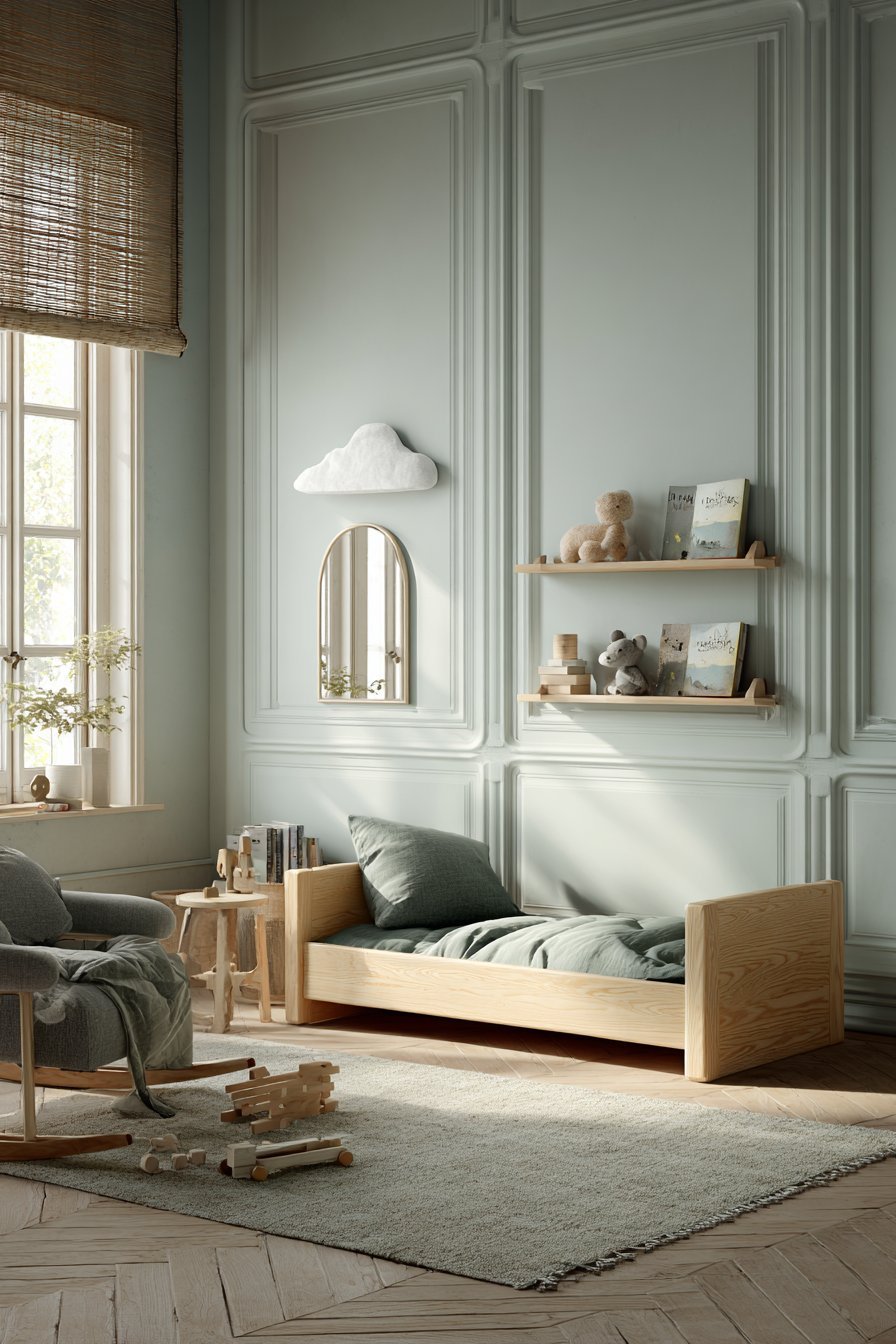
A convertible toddler bed in solid maple features low profile design. Protective side rails ensure safe sleeping for transitioning toddlers. Soft powder blue walls create a serene atmosphere. White wainscoting adds traditional charm and visual interest. A cozy corner holds a small upholstered rocking chair.
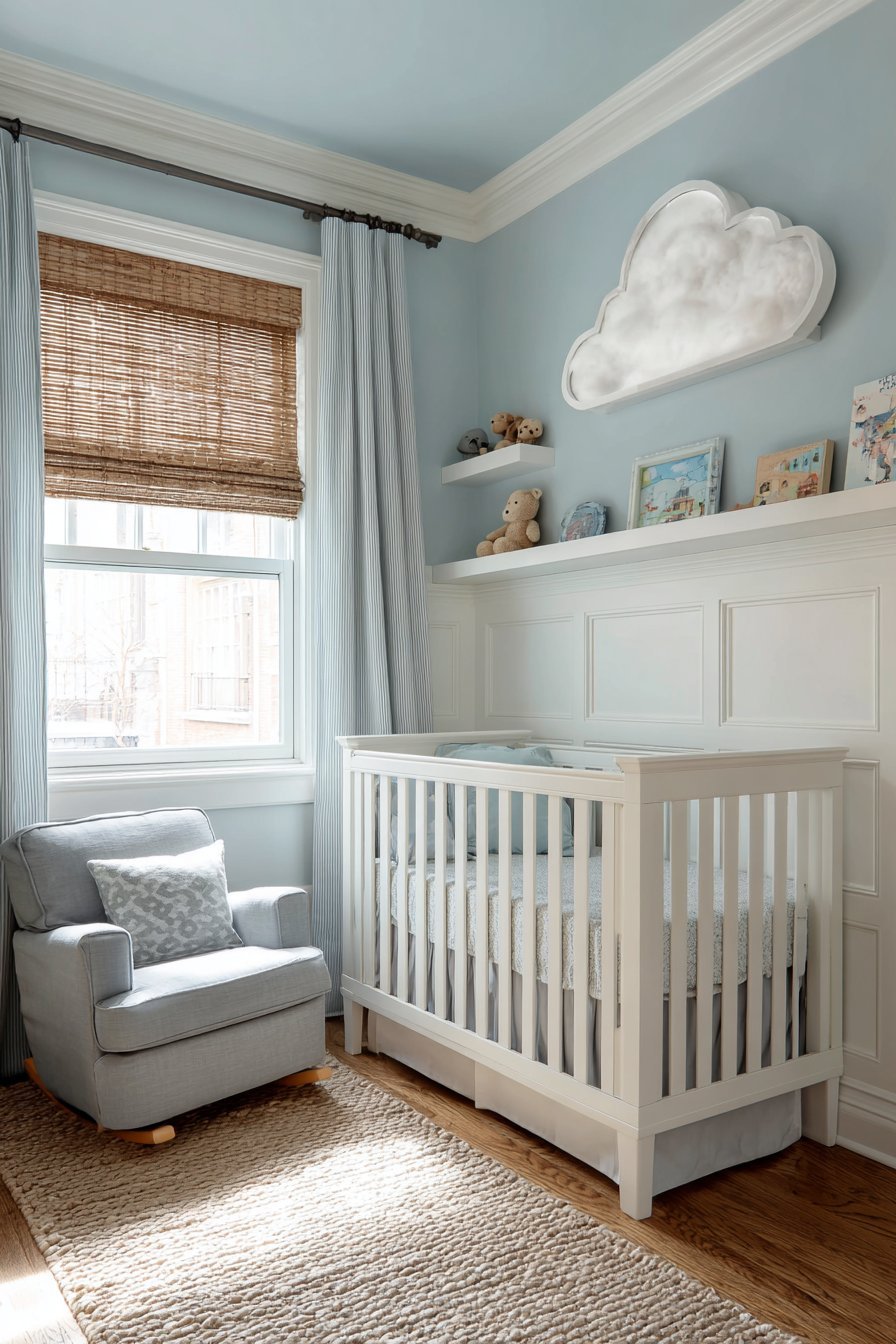
Grey linen fabric on the chair provides durability and comfort. Simple white floating shelves display a curated toy selection. A cloud-shaped mirror hangs at child height. Morning light filters through bamboo roman shades. The soothing color palette promotes restful sleep.
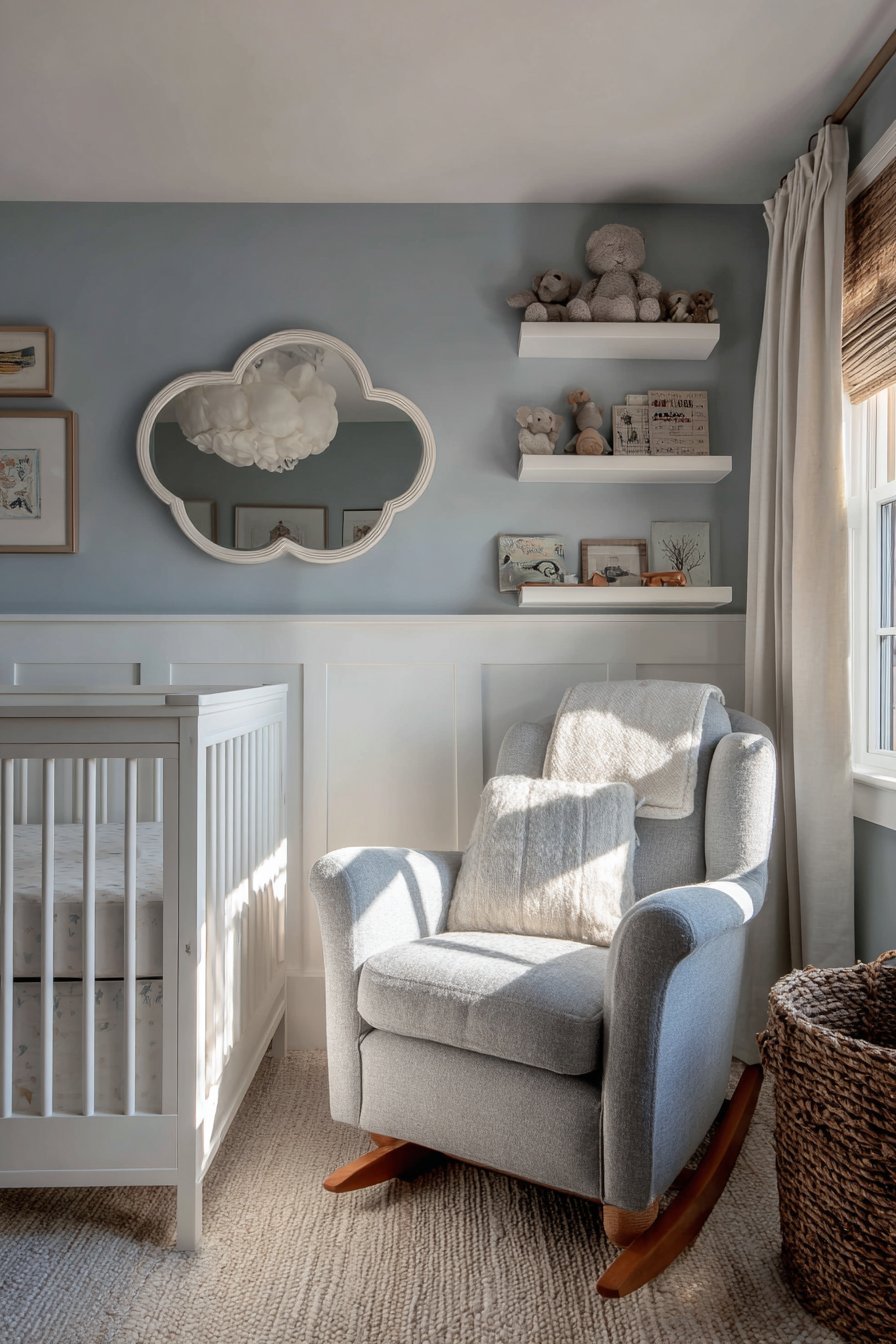
Professional photography captures the serene atmosphere effectively. Transitional furniture pieces accommodate growing needs. The calming environment supports healthy sleep habits. Every element considers the developmental stage. The room feels protective without being babyish.
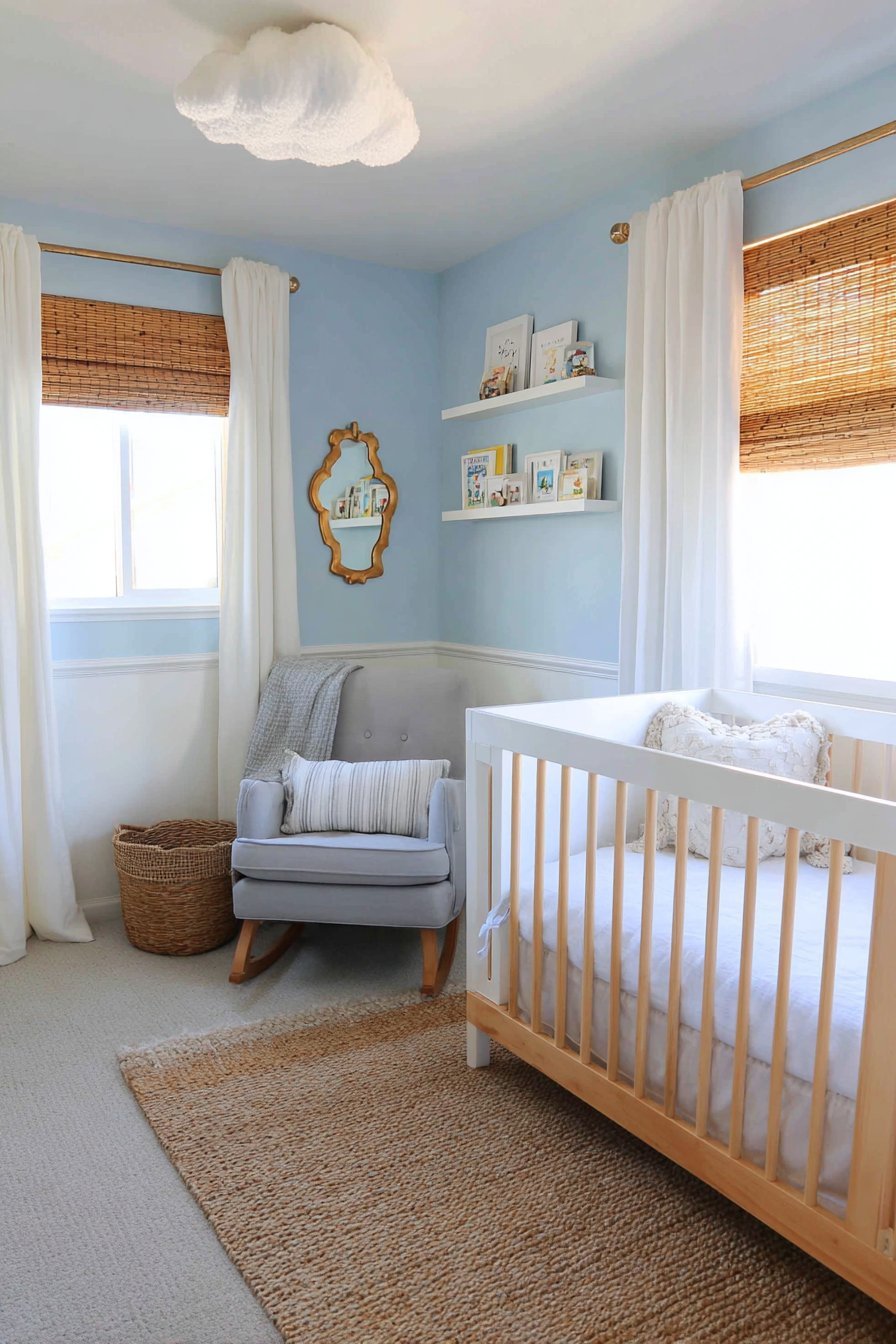
Color choices reflect sleep science understanding. Blue tones promote calm and relaxation. White elements add brightness without stimulation. Natural wood provides warmth. The curated approach prevents overstimulation. Careful selection creates an environment conducive to rest.
Key Design Tips:
- Choose convertible beds that transition from crib to toddler bed
- Paint walls in soft blue tones to promote calm and relaxation
- Install white wainscoting to add visual interest at child eye level
- Add upholstered rocking chairs for comfortable bedtime story sessions
- Use bamboo roman shades to filter light while maintaining privacy
- Hang mirrors at child height to support self-awareness development
- Curate toy displays rather than showing everything at once
9. Nautical Theme with Practical Elements
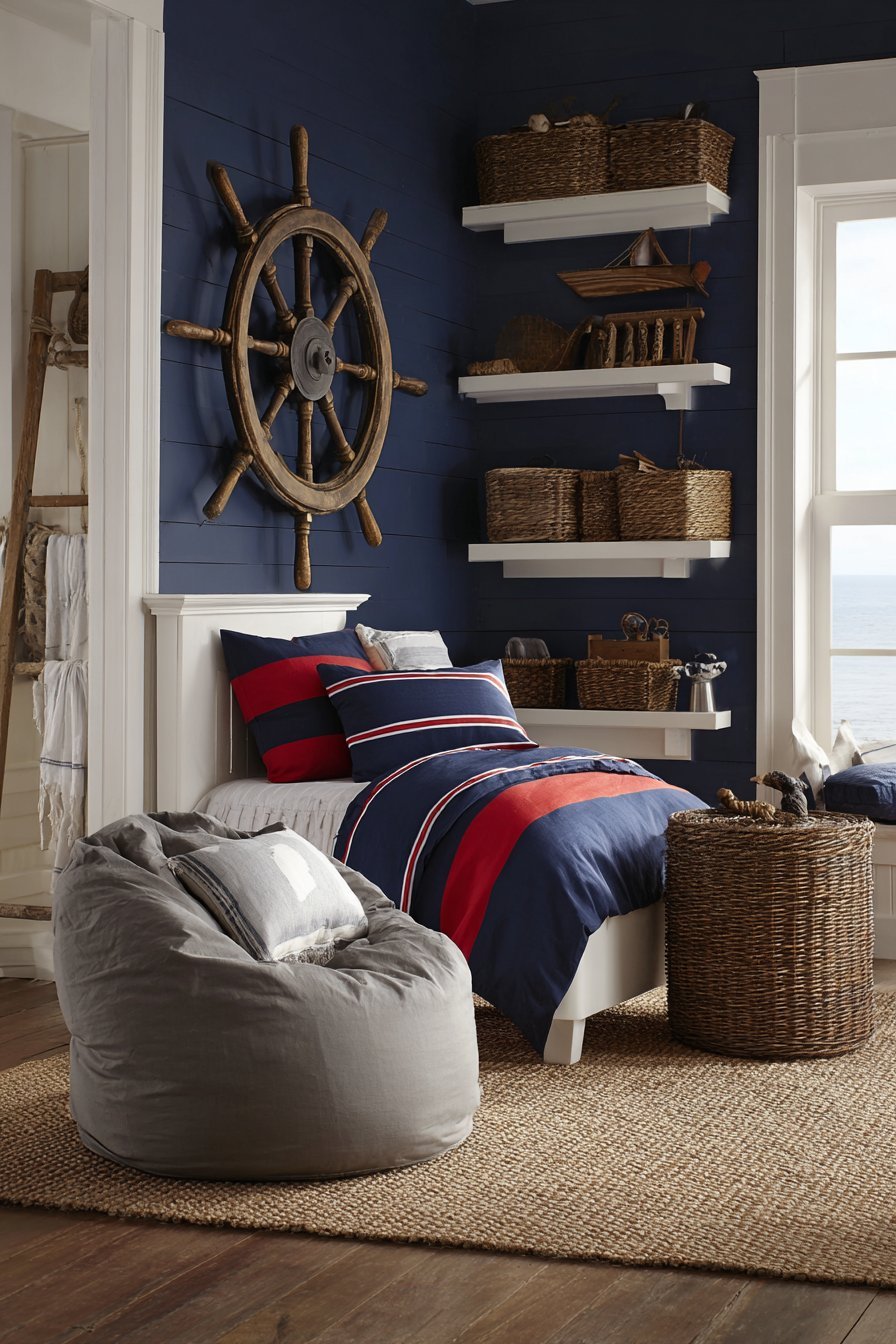
A navy blue accent wall anchors the nautical theme. Simple white-painted wooden ship wheel and rope details add maritime character. A twin bed with striped bedding sits centered. Navy, red, and white stripes create classic maritime style. Natural rope baskets provide attractive toy storage.
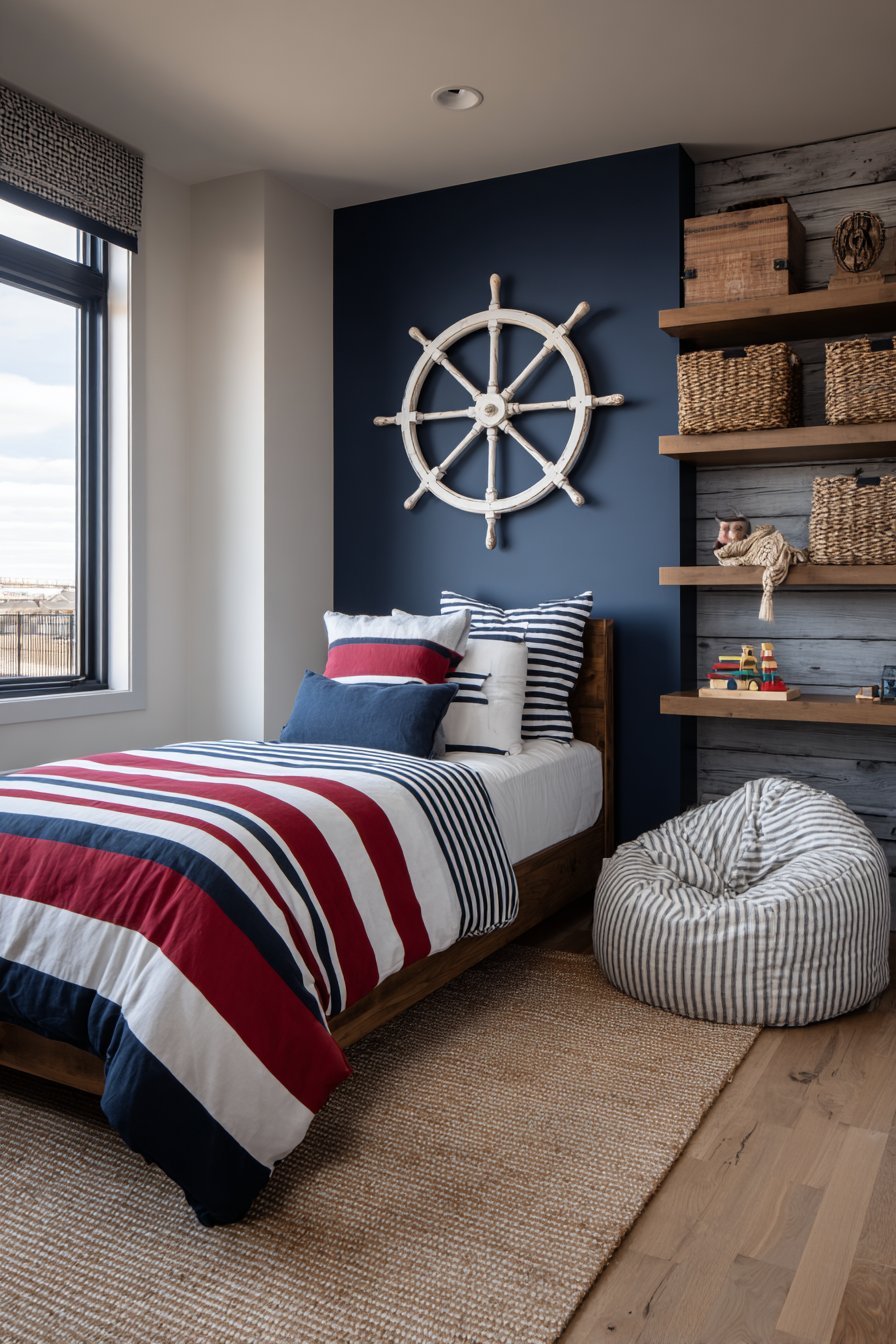
Open shelving units in weathered oak finish display stored items. A small reading nook includes a bean bag chair. Durable canvas fabric withstands active use. Hardwood floor is covered with a braided jute rug. The texture adds warmth and maritime authenticity.
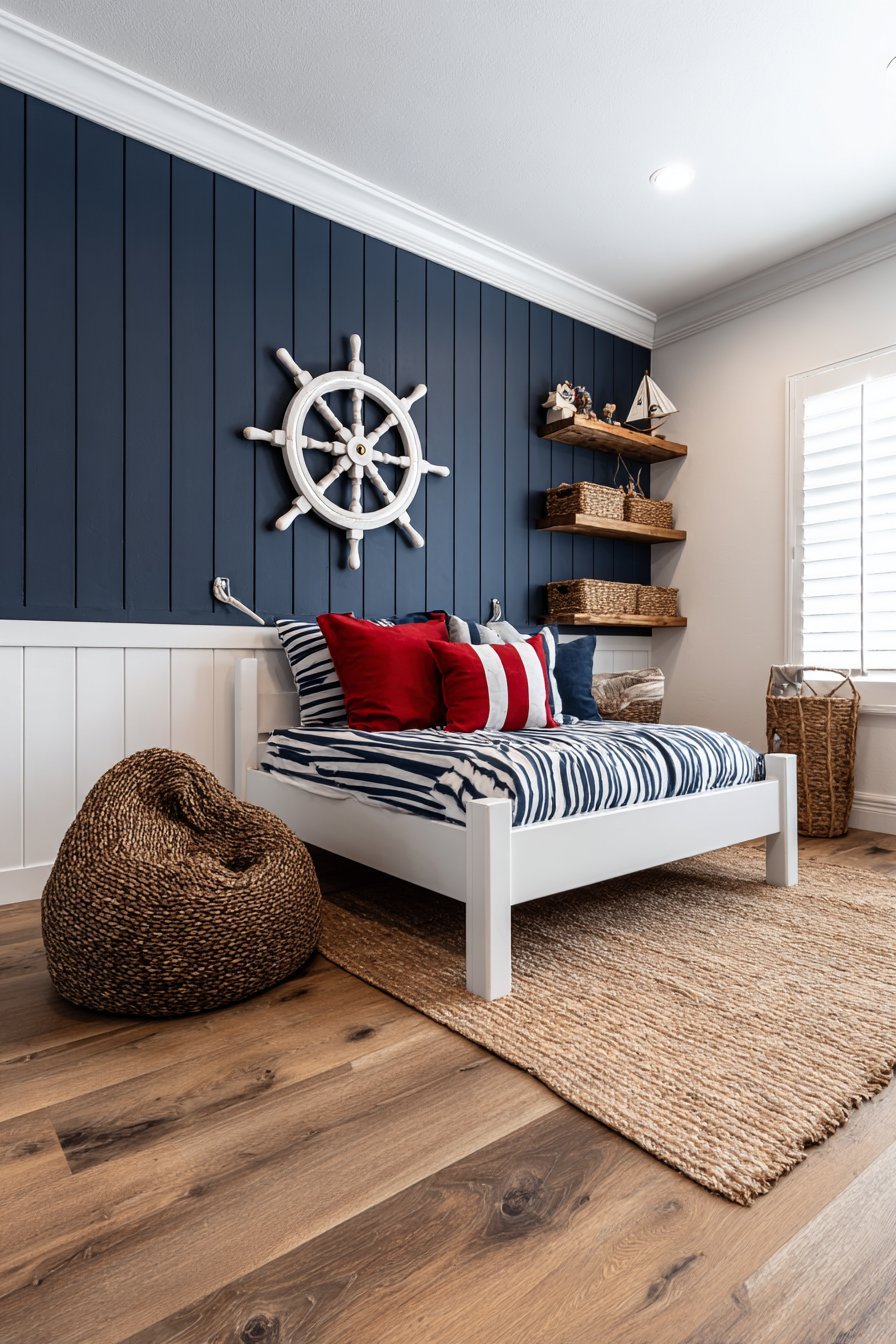
Natural lighting highlights the maritime color palette. Wide-angle photography shows the cohesive theme execution. Practical, non-gimmicky elements avoid cartoonish interpretation. Textured materials add depth and interest. The theme feels sophisticated rather than juvenile.
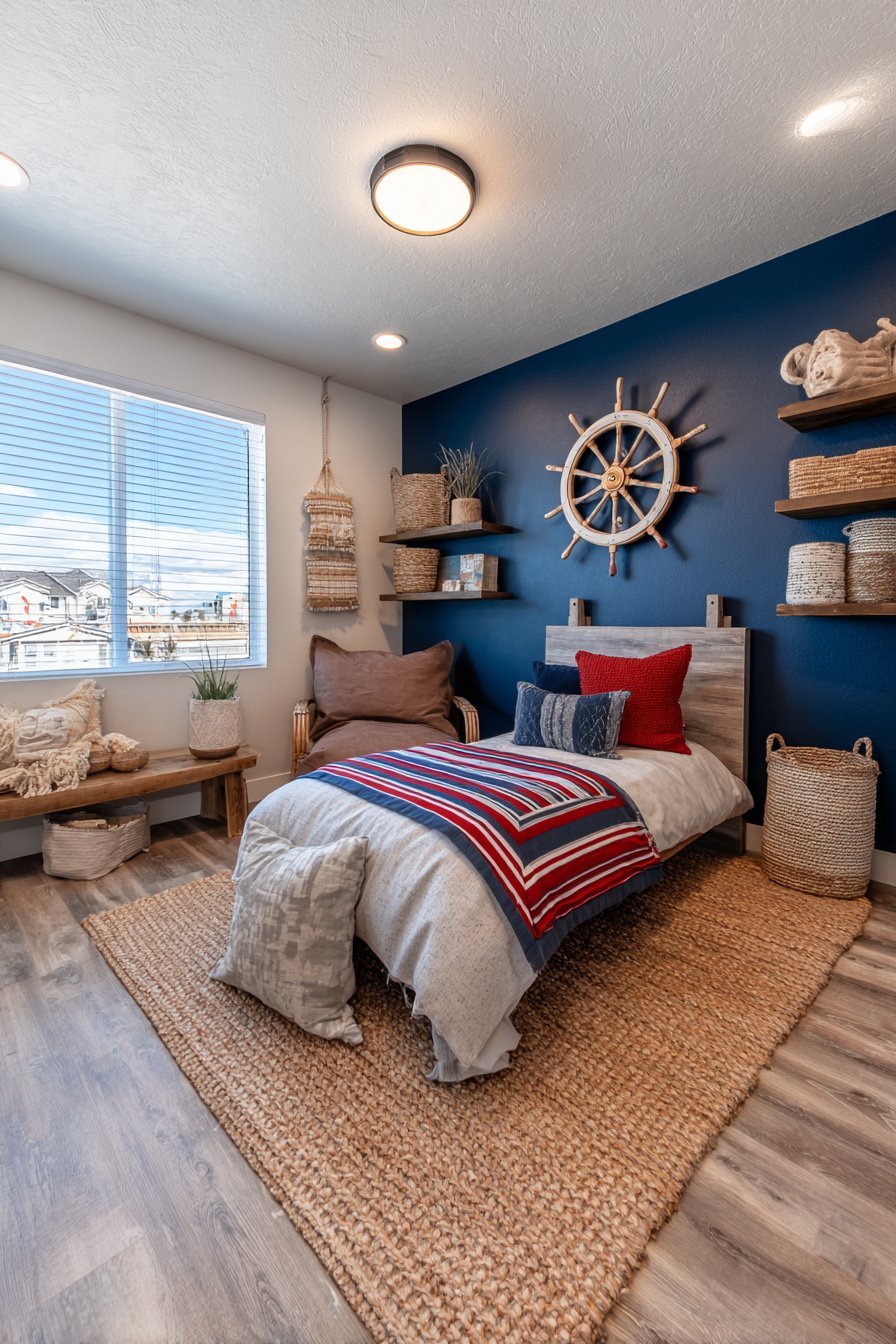
Thematic design requires restraint for longevity. Real maritime elements replace cartoon graphics. Natural materials dominate synthetic alternatives. The color palette works independently of theme. Quality pieces ensure the room ages well. Subtle execution allows for evolving interests.
Key Design Tips:
- Use real maritime elements rather than cartoon graphic decorations
- Paint one accent wall navy to anchor the color scheme
- Choose striped bedding in classic nautical colors for timeless appeal
- Store toys in natural rope baskets that fit the theme
- Add weathered wood finishes that complement maritime aesthetics
- Use braided jute rugs for authentic texture and durability
- Include practical reading nooks with bean bags in durable fabrics
10. Minimalist Platform Bed Design
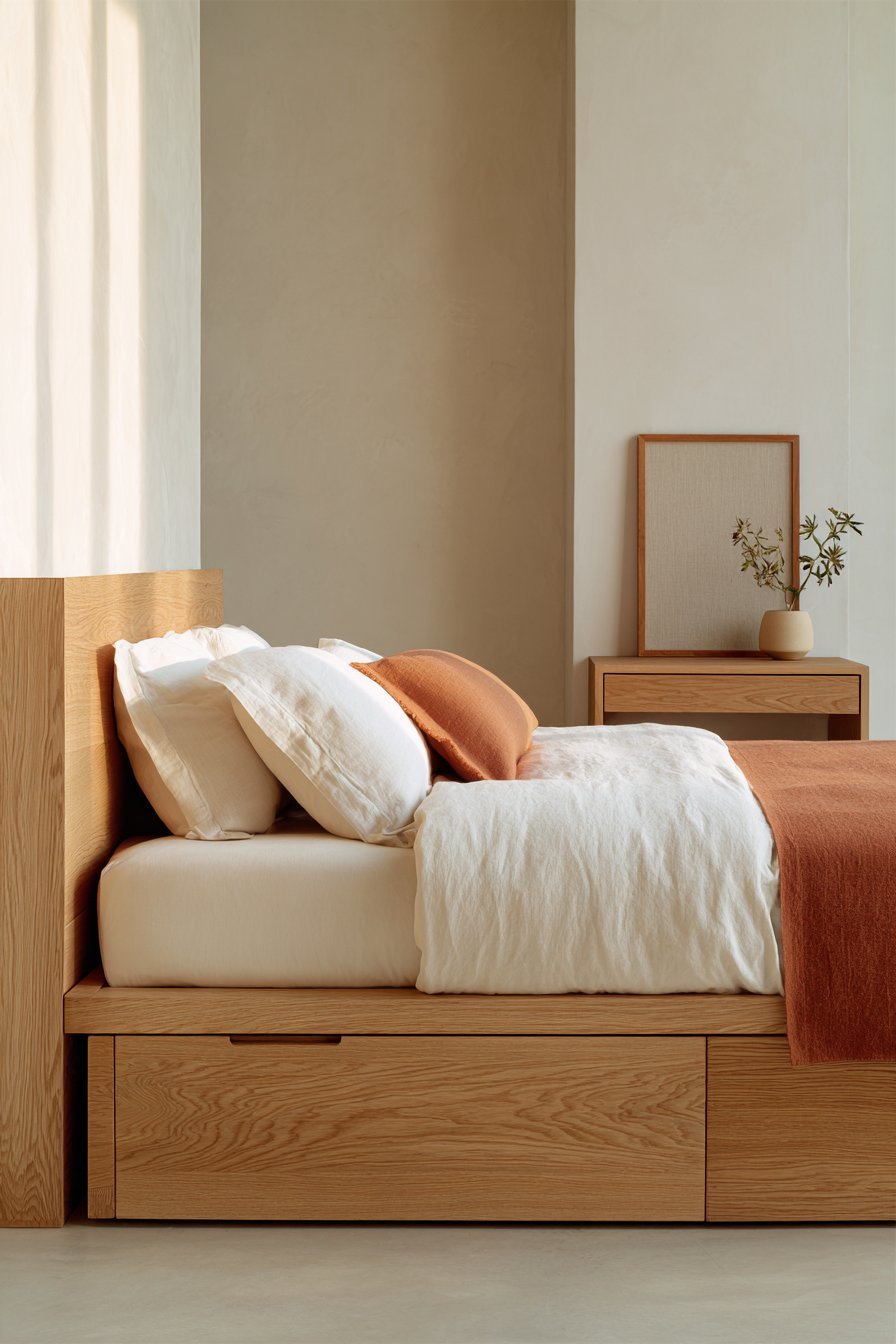
A simple platform bed in light ash wood demonstrates clean lines. The integrated nightstand provides convenient storage. Pure white organic cotton bedding creates serene simplicity. A single accent throw blanket in soft terracotta adds warmth. One wall holds a large chalkboard panel.
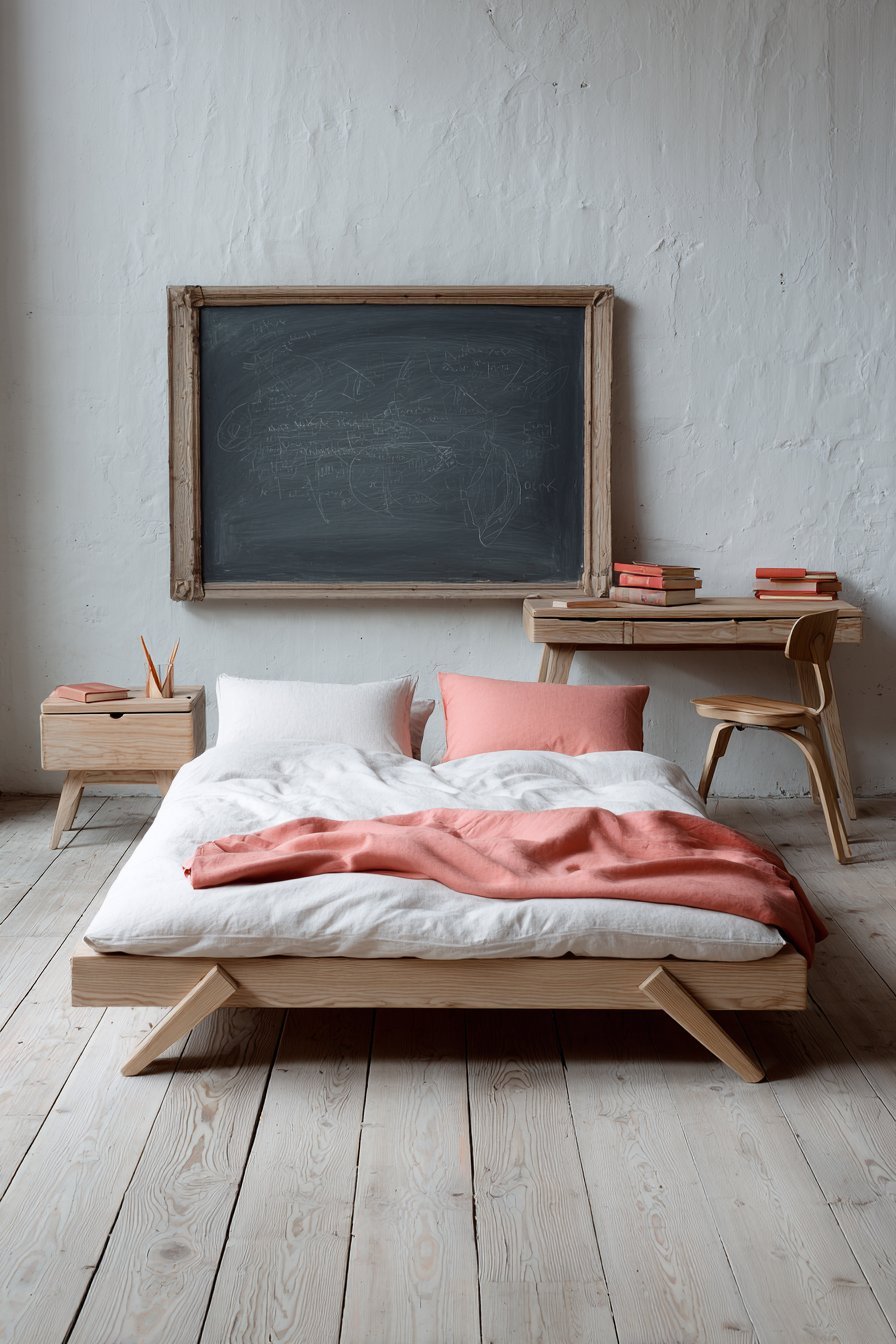
A simple wooden frame surrounds the chalkboard surface. The creative expression area invites artistic exploration. A streamlined desk in matching wood provides homework space. A single drawer offers minimal but sufficient storage. Soft diffused lighting captures the uncluttered aesthetic.
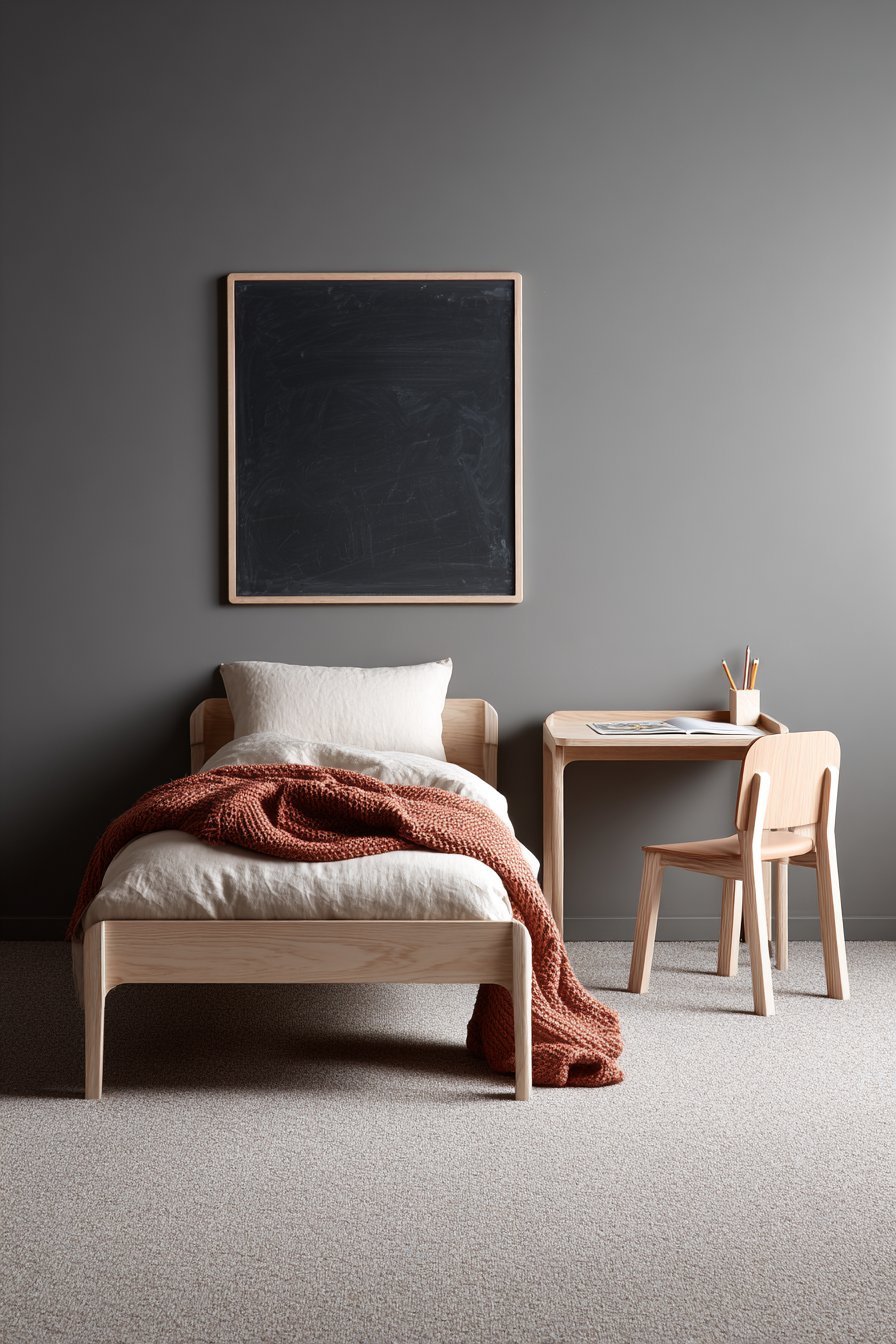
The minimalist approach creates calm, focused environment. Quality materials compensate for quantity reduction. Each piece serves clear purpose. The design demonstrates that less can indeed be more. Children benefit from reduced visual stimulation.
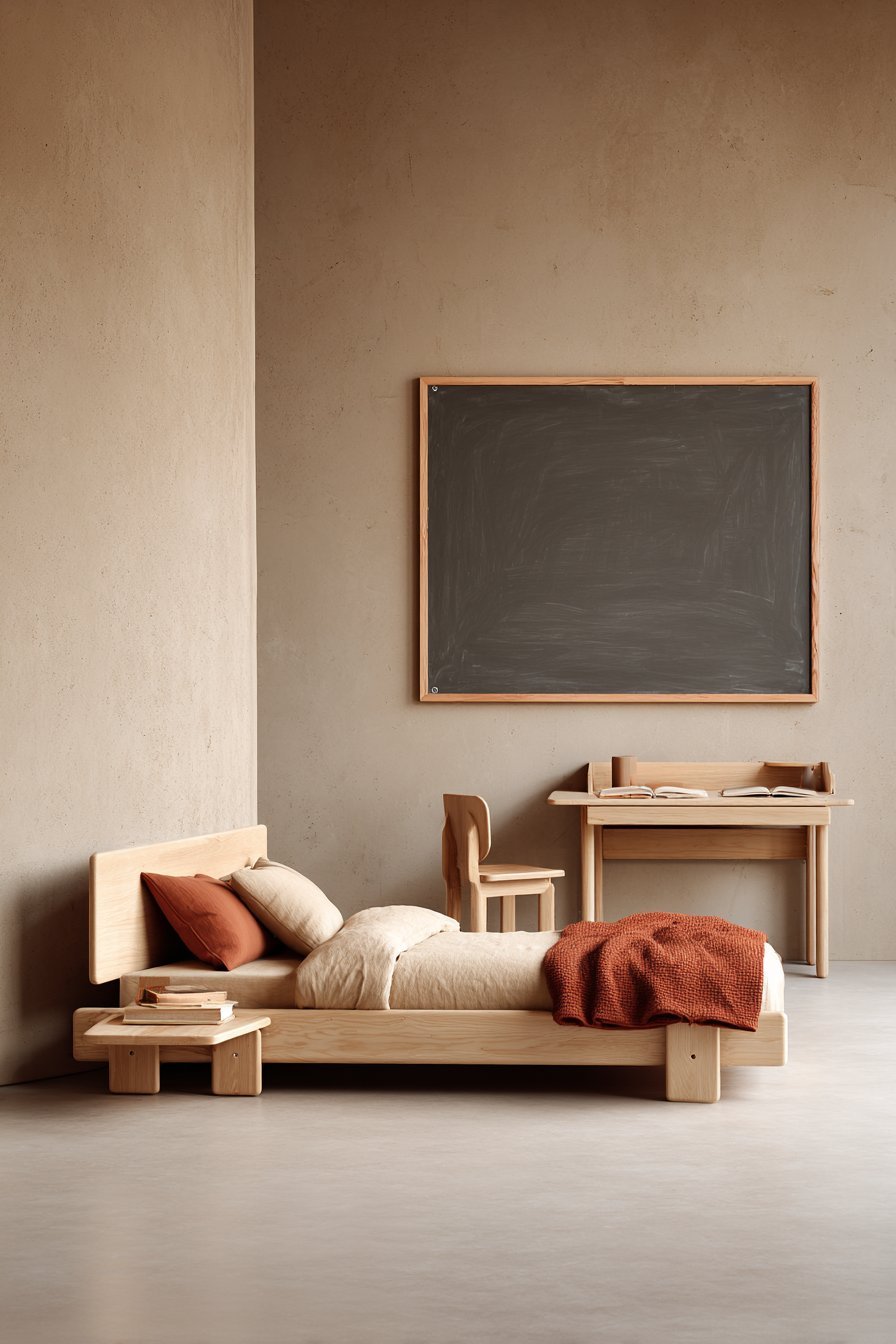
Minimalism in children’s spaces requires intentionality. Fewer items mean better quality selections. Open space supports movement and play. The calming environment aids concentration. Regular rotation keeps toys fresh. The approach teaches appreciation over accumulation.
Key Design Tips:
- Select platform beds with integrated storage for streamlined design
- Use pure white organic cotton bedding for clean, simple aesthetics
- Add single accent pieces in warm colors like terracotta for interest
- Install large chalkboard panels for creative expression without clutter
- Choose matching wood tones across furniture pieces for cohesion
- Embrace open space rather than filling every corner with items
- Focus on quality over quantity in furniture and toy selections
11. Nature-Inspired Green Sanctuary
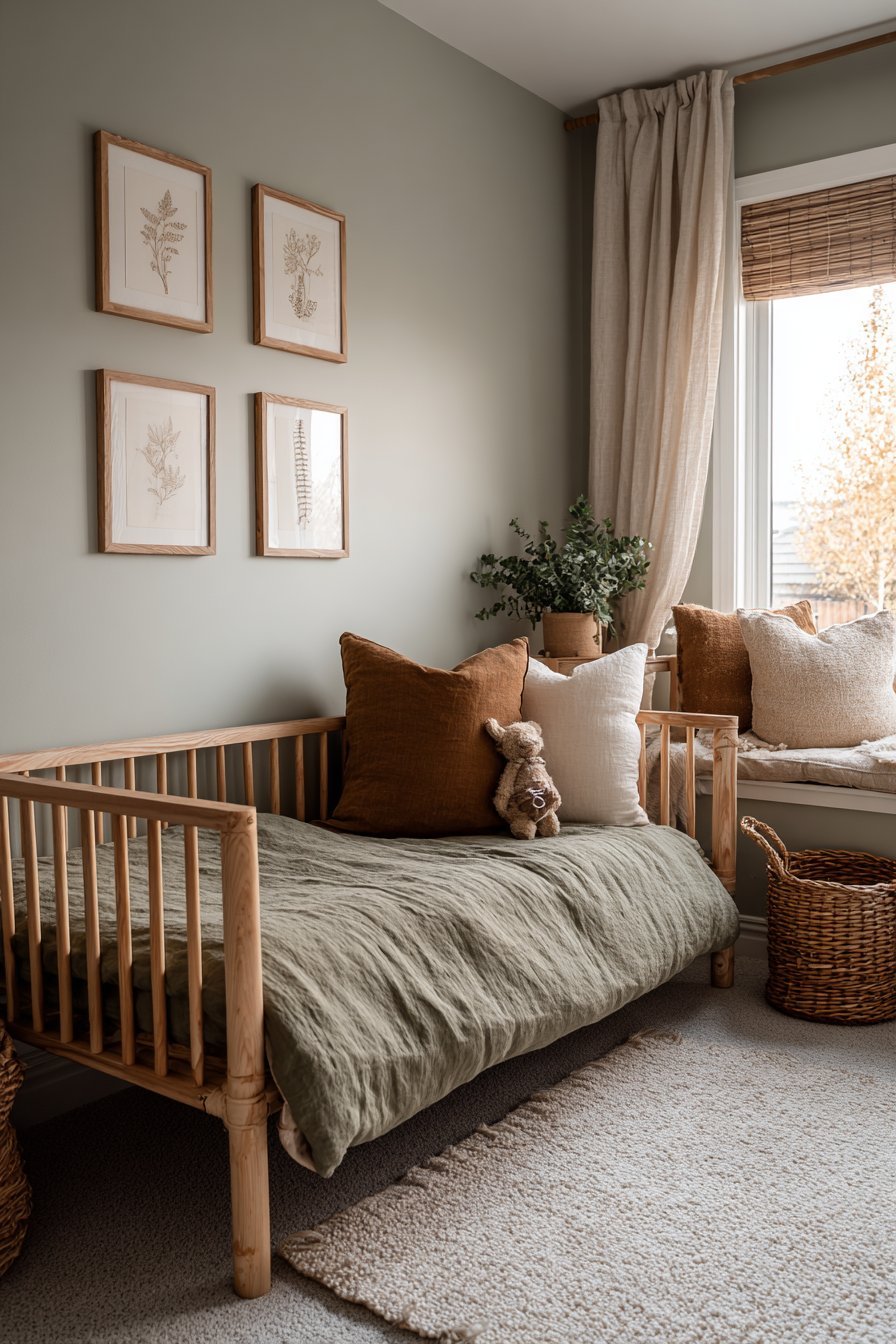
Walls painted in soft sage green create nature-inspired calm. Simple framed botanical prints hang at child eye-level. A wooden bed frame in natural birch features clean lines. Organic cotton bedding in earthy tones brings the outdoors inside. Moss green, warm brown, and cream create natural harmony.
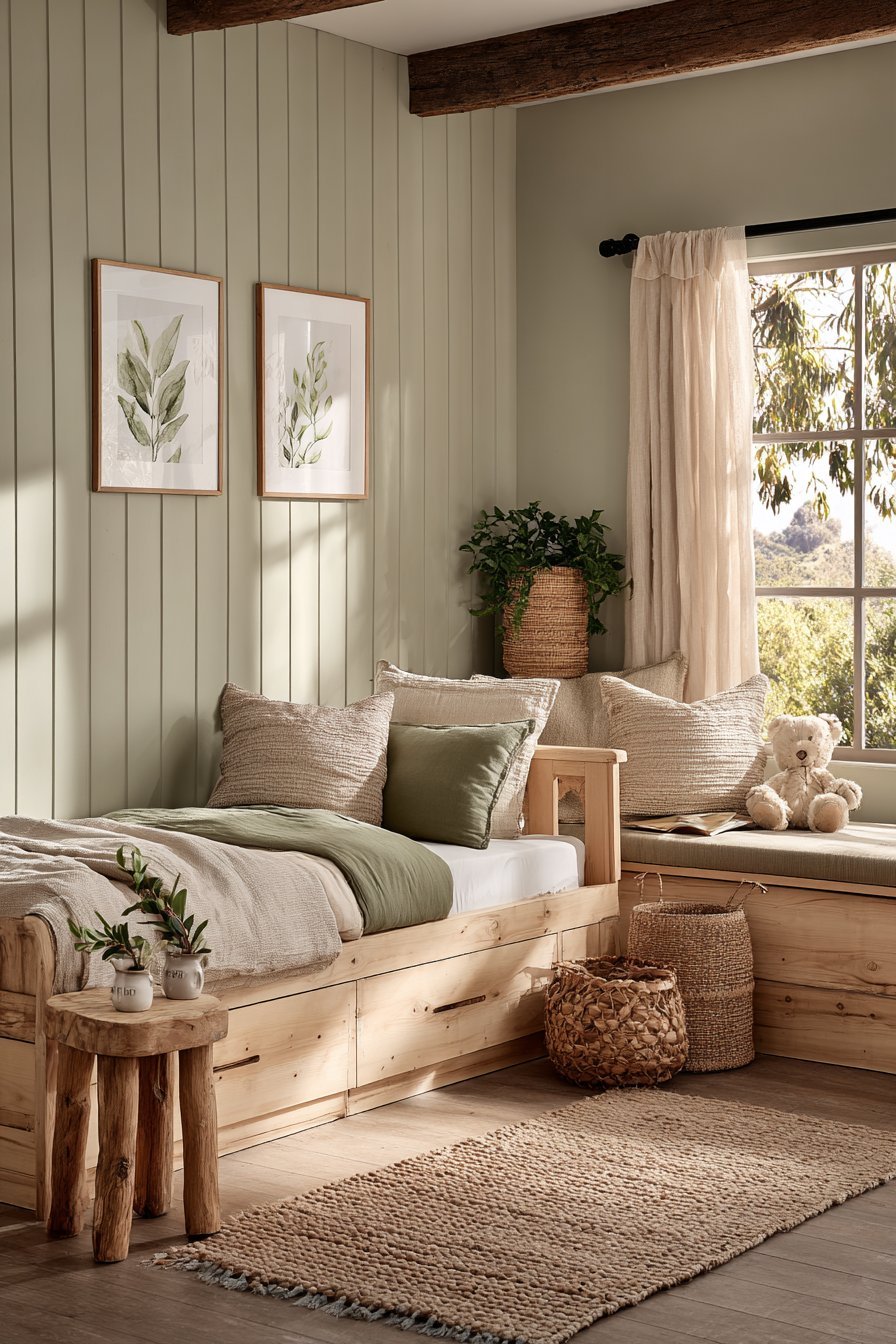
A small indoor plant on a low stool adds living elements. Natural fiber baskets hold toys beneath a window seat. Linen fabric cushions the seating area. Gentle morning light filters through linen curtains. The organic textures create connection to nature.
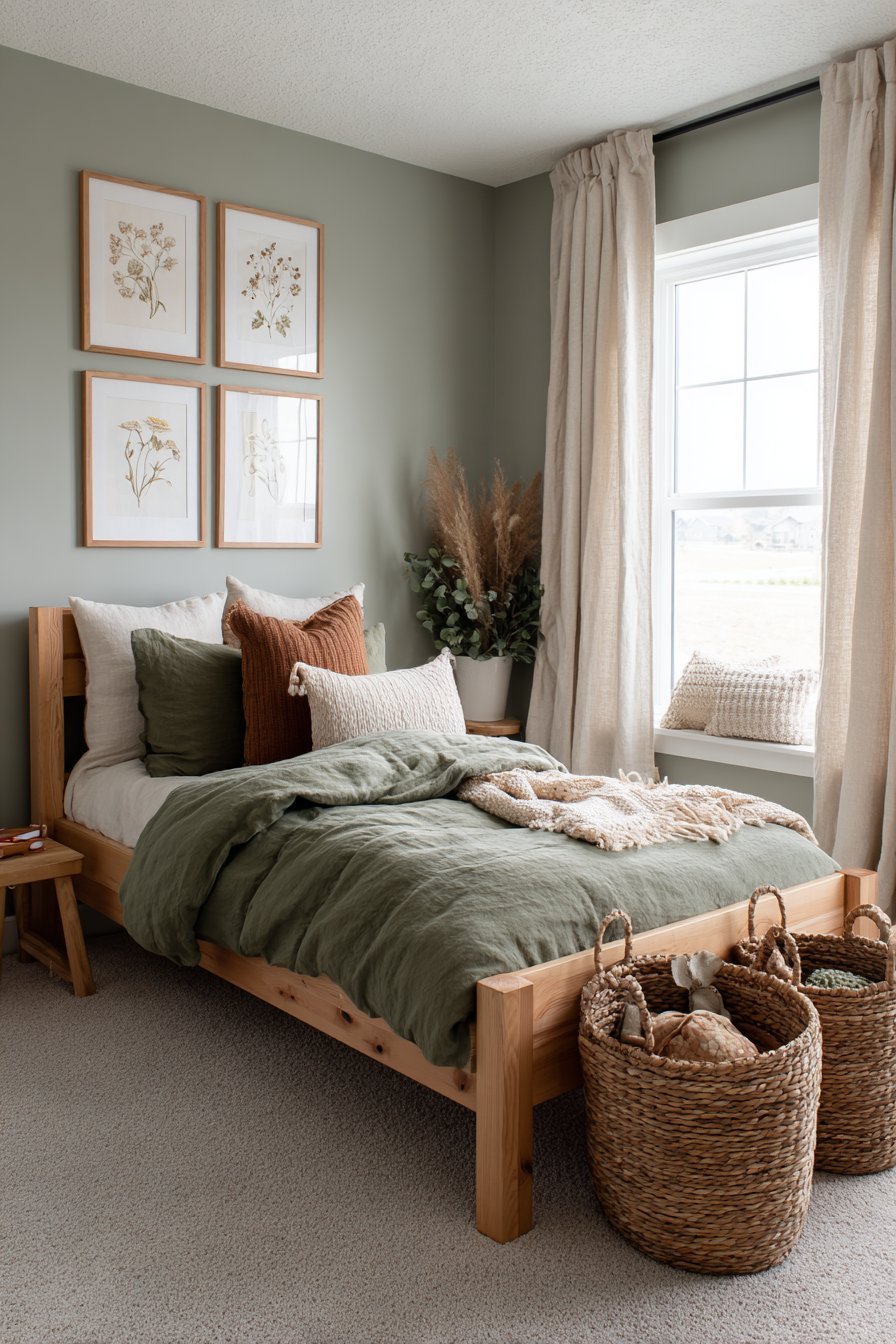
Photography captures the connection to nature through materials. The color palette reflects outdoor environments. Varied textures add depth without complexity. Natural light interacts beautifully with organic materials. The room feels like a peaceful forest retreat.
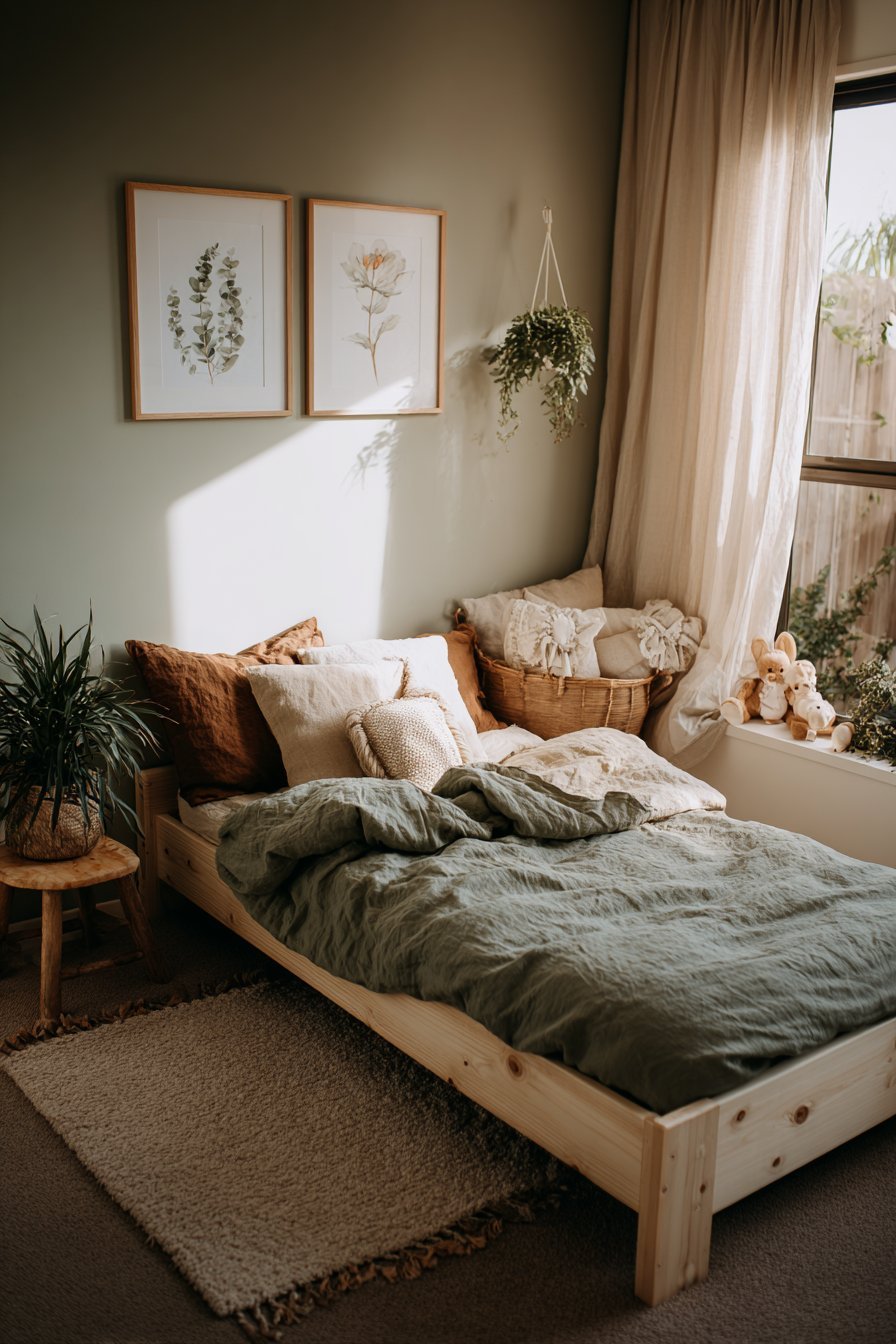
Biophilic design principles guide this approach. Nature connection supports wellbeing and development. Natural materials offer superior tactile experiences. Earth tones create psychological comfort. Living plants teach responsibility. The holistic approach nurtures mind and body.
Key Design Tips:
- Paint walls in soft sage green to bring nature indoors
- Display botanical prints at child eye level for engagement
- Choose birch wood furniture for light, natural aesthetic appeal
- Use organic cotton bedding in earth tones for comfort
- Add small indoor plants on low surfaces children can observe
- Select natural fiber baskets and linen fabrics throughout
- Filter natural light through linen curtains for gentle illumination
12. Wall-Mounted Fold-Down Homework Station
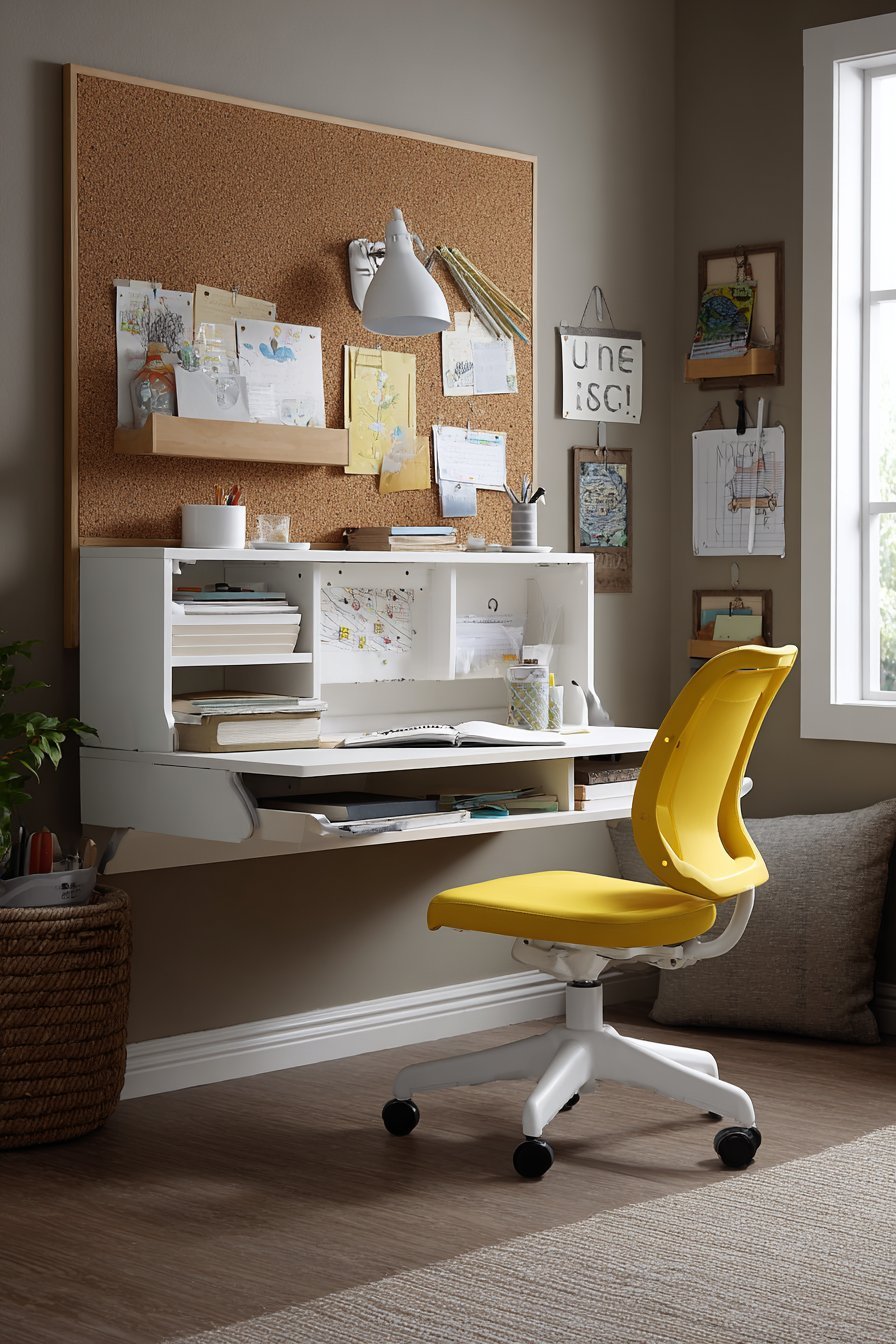
A wall-mounted fold-down desk maximizes space efficiency. White laminate surface provides easy-clean functionality. Integrated storage cubbies organize supplies within reach. A magnetic board allows for notes and reminders. When folded up, it reveals hidden art supply storage.
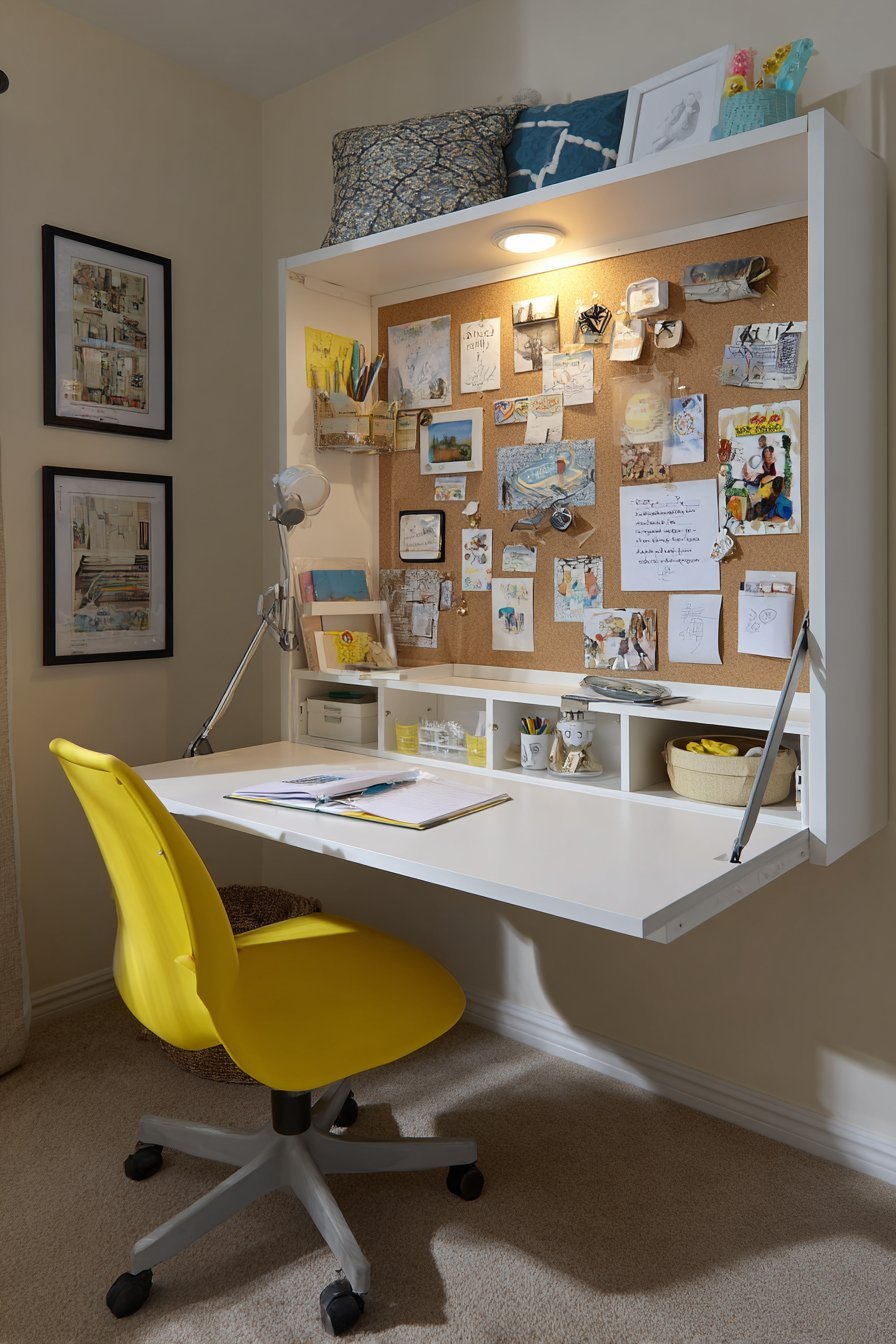
An ergonomic desk chair in bright yellow adds cheerful color. Cork board tiles cover the wall above. Assignments and artwork can be pinned easily. Task lighting comes from an adjustable LED desk lamp. Natural light supplements artificial illumination perfectly.
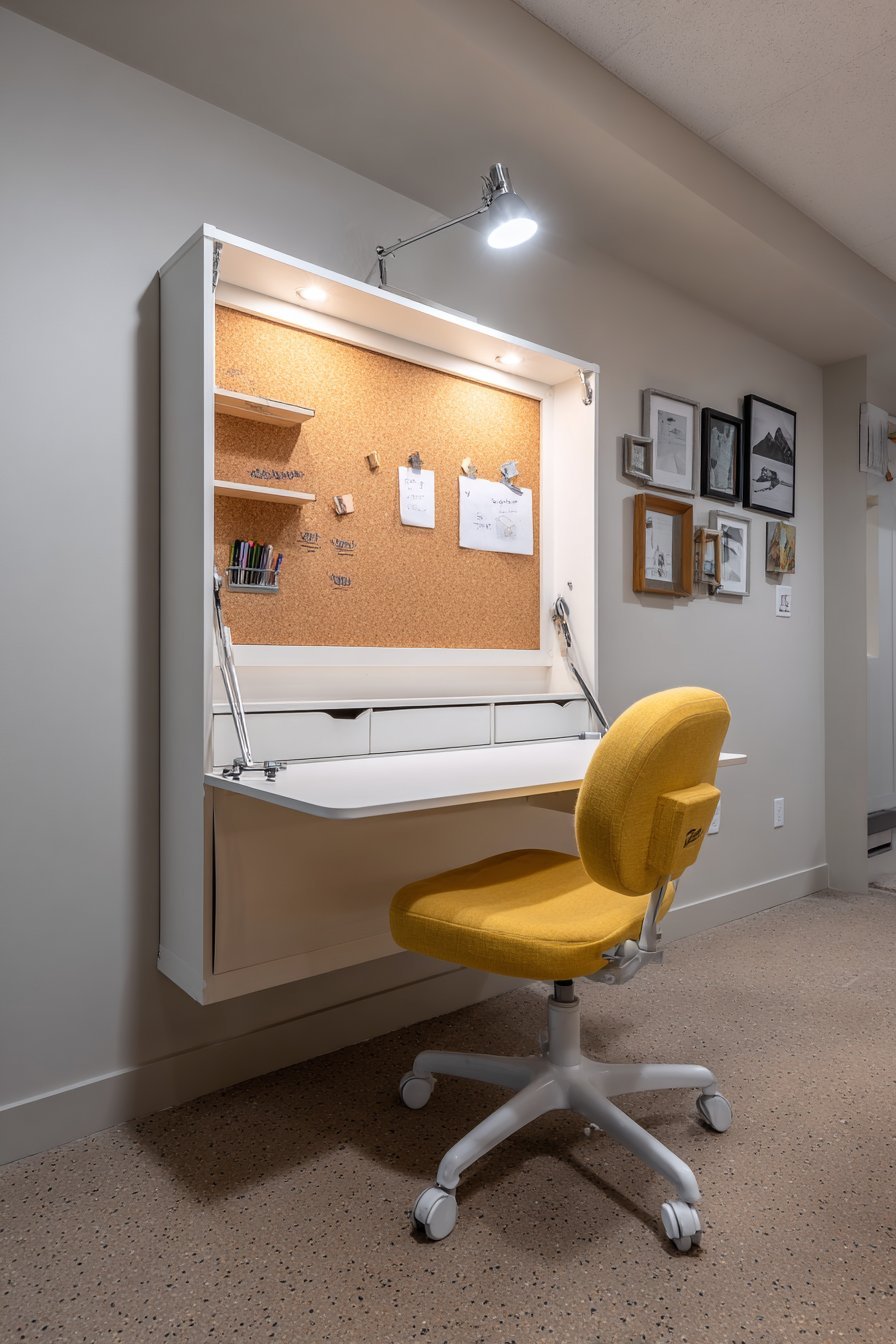
Balanced exposure photography shows the space-saving design. Organizational features appear clearly defined. The practical study zone supports homework success. Natural light combines with task lighting effectively. The compact design proves small spaces can be functional.
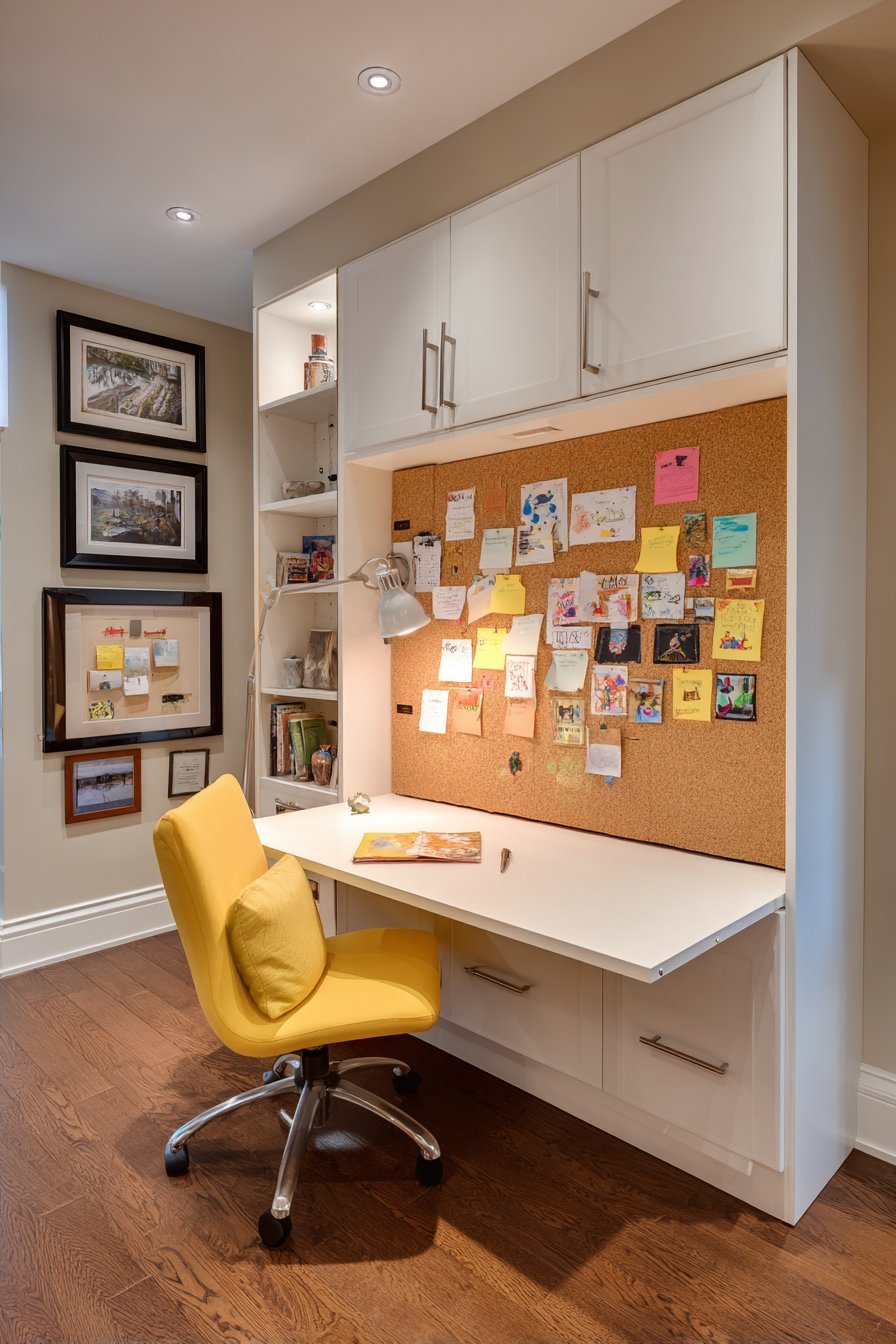
Space-saving furniture addresses modern housing realities. Fold-down designs maximize limited square footage. Multiple storage types organize different supply categories. Good lighting prevents eye strain during study. Bright accent colors energize rather than distract. Smart solutions create effective learning environments.
Key Design Tips:
- Install wall-mounted fold-down desks in small bedrooms for space efficiency
- Choose white laminate surfaces that clean easily after art projects
- Add integrated storage cubbies to keep supplies organized and accessible
- Include magnetic boards for displaying schedules and reminders
- Use bright accent colors in chairs to add energy without permanent paint
- Cover walls with cork board tiles for evolving display needs
- Provide adjustable LED desk lamps for proper task lighting during homework
13. Dreamy Canopy Bed Retreat
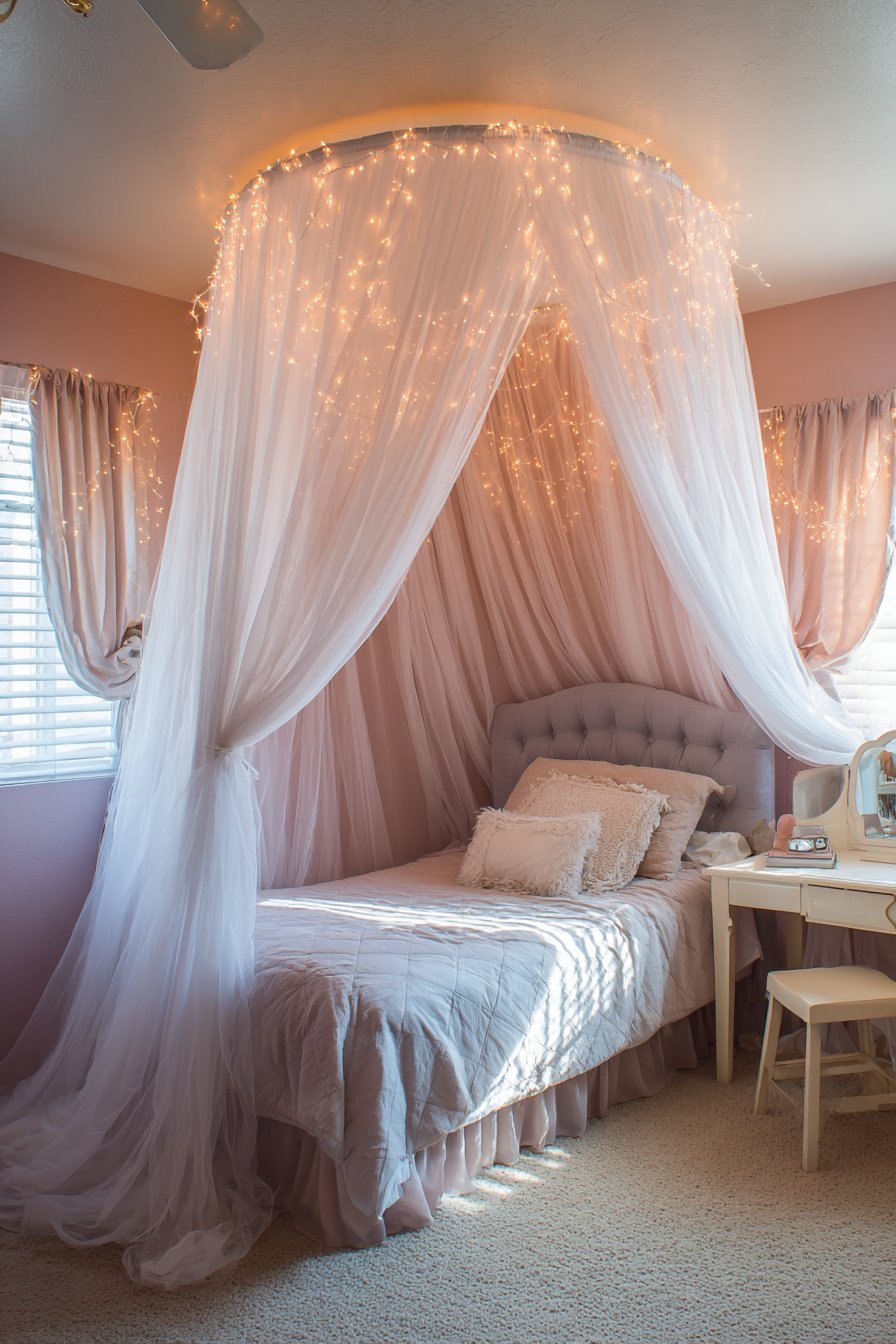
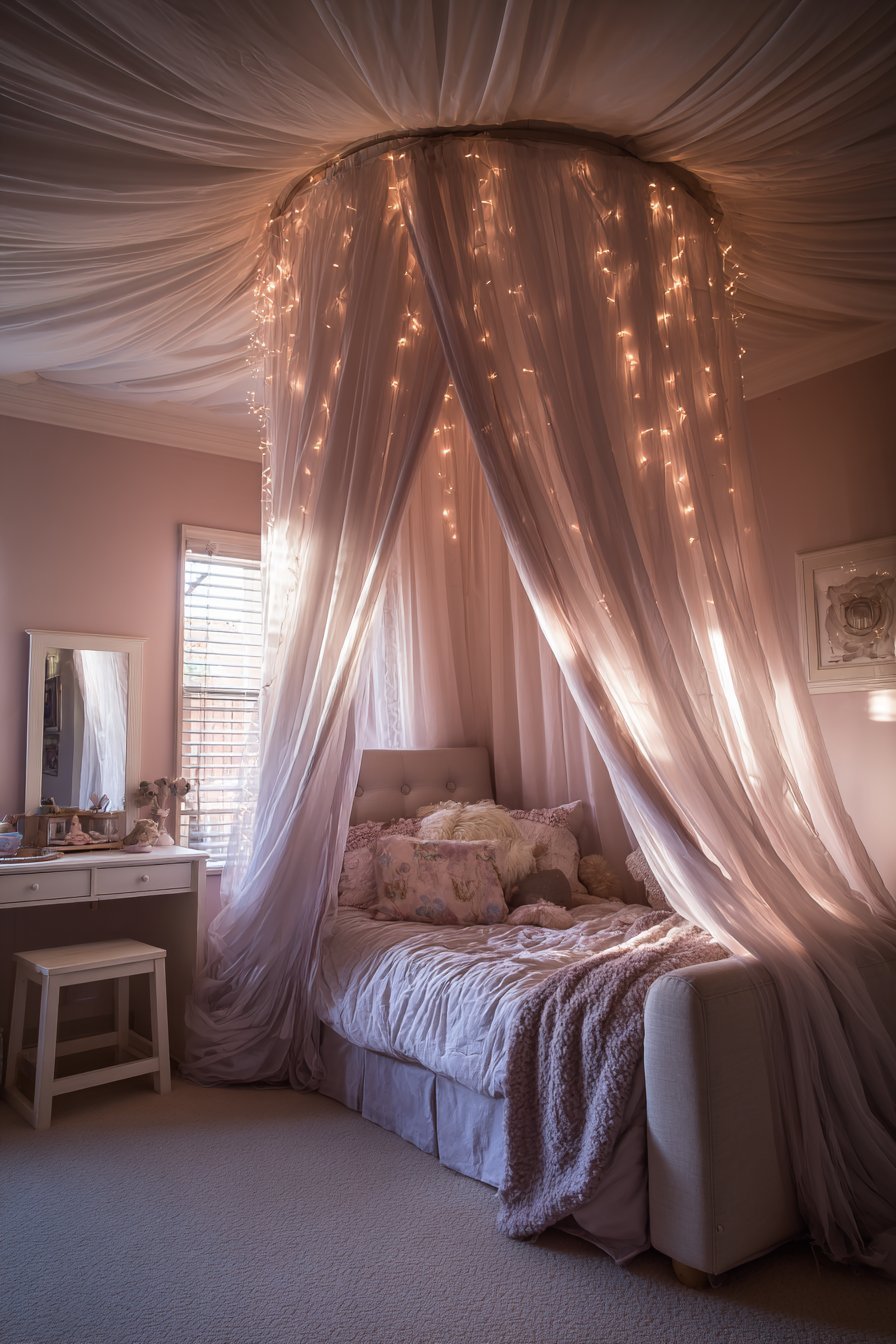
A ceiling-mounted circular curtain rod creates beautiful canopy frame. Sheer white cotton fabric drapes gracefully downward. The twin bed beneath features a tufted headboard. Soft grey linen provides durability and elegance. Fairy lights with warm LED bulbs intertwine with canopy fabric.
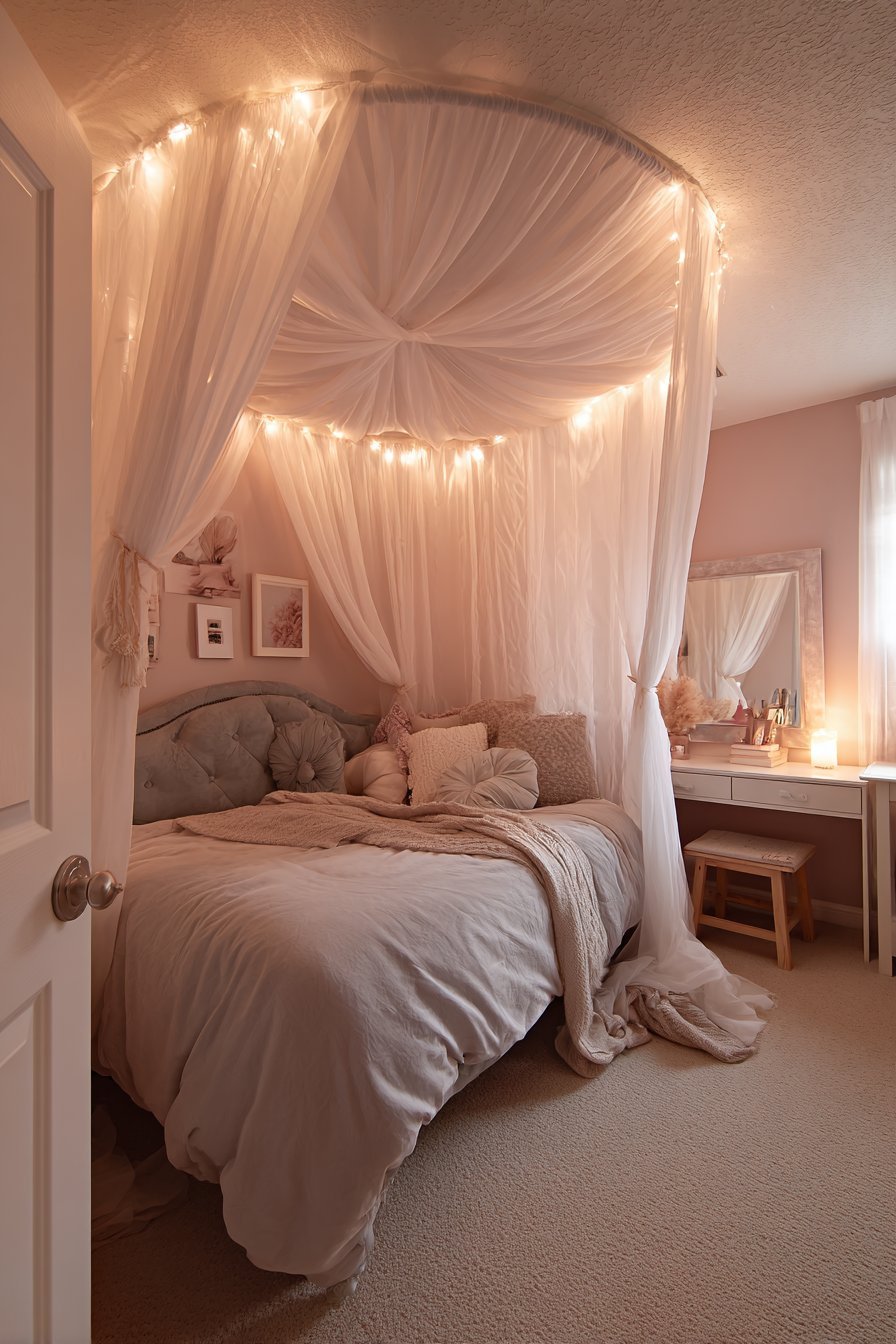
A small vanity area includes a wall-mounted mirror. The mirror hangs at child height for accessibility. A simple wooden stool completes the space. Walls painted in blush pink create gentle warmth. White trim adds crisp definition. Natural afternoon light creates soft glow.
Professional photography captures the dreamy yet practical space. The canopy fabric filters and diffuses light beautifully. Delicate details add charm without fragility. The room balances whimsy with functionality. Young children appreciate the magical atmosphere created.
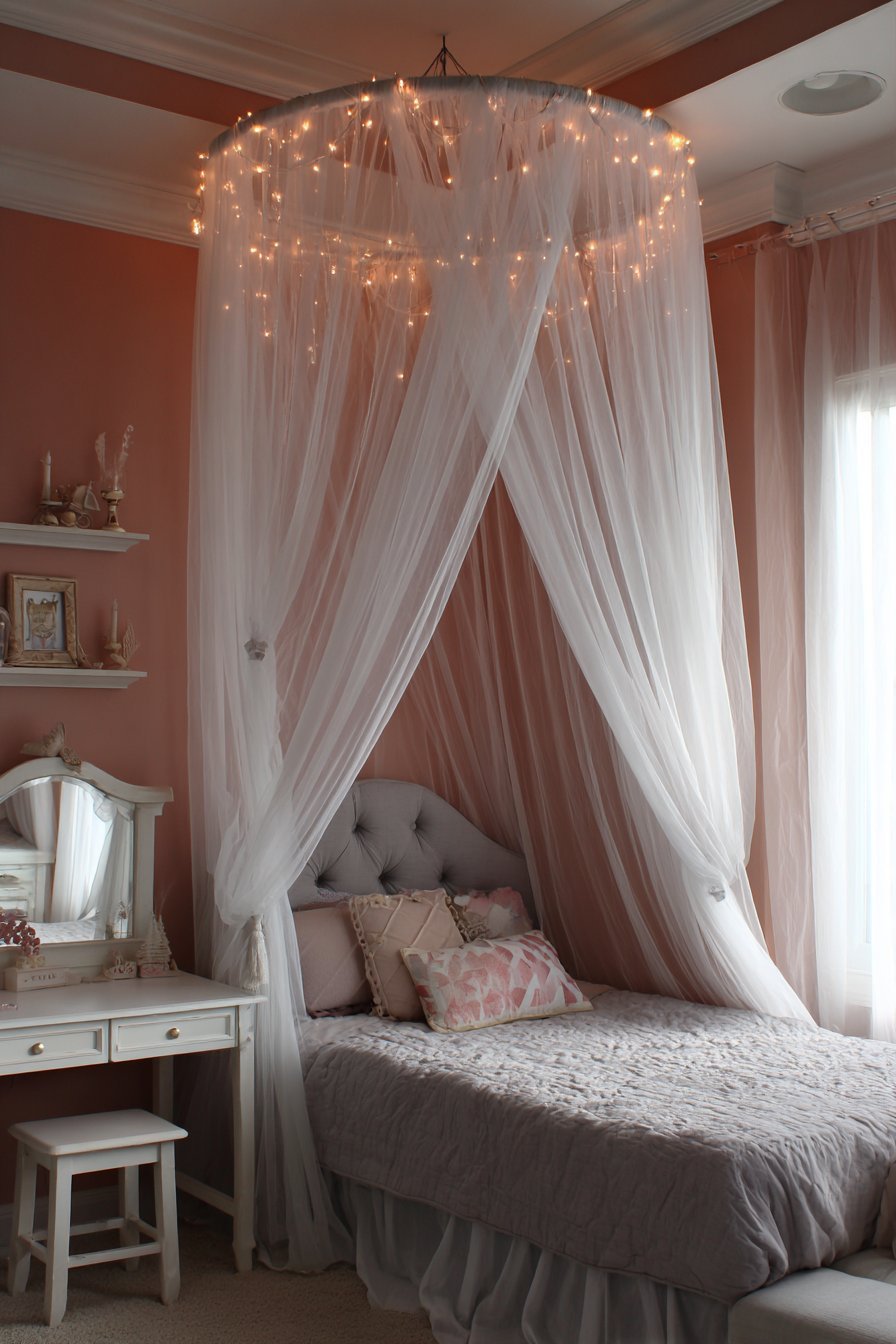
Canopy designs add architectural interest affordably. Ceiling-mounted systems avoid floor space requirements. Sheer fabrics maintain airflow and safety. Fairy lights create ambient evening illumination. The romantic aesthetic appeals to many children. Practical execution ensures longevity beyond toddler years.
Key Design Tips:
- Mount circular curtain rods to ceilings for canopy creation
- Choose sheer white cotton that drapes well and launders easily
- Weave warm LED fairy lights through canopy fabric safely
- Select tufted headboards in soft grey linen for durability
- Paint walls in blush pink for gentle, warm atmosphere
- Install mirrors at child height to support self-care development
- Add simple wooden stools to vanity areas for comfortable seating
14. Athletic-Inspired Sports Room
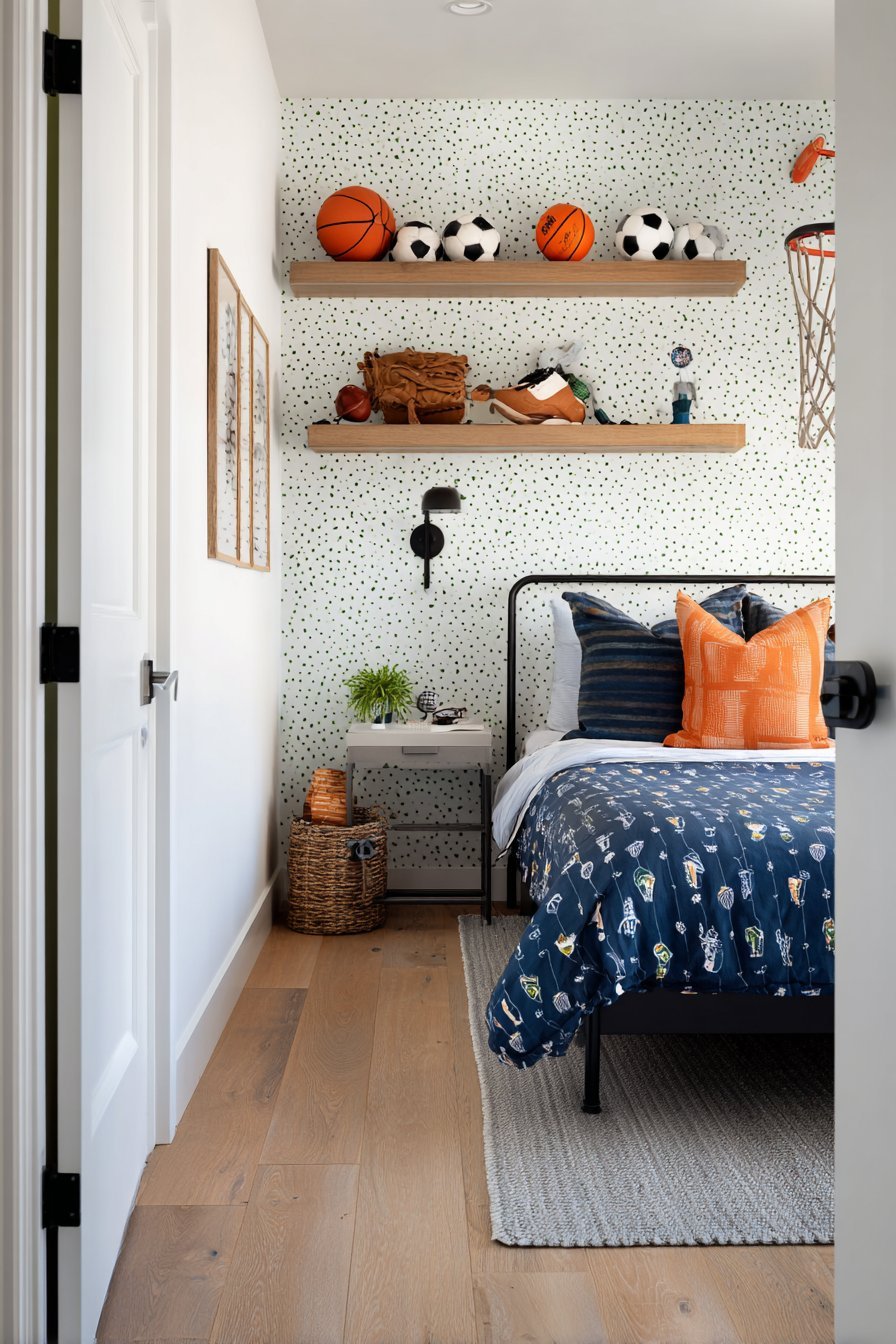
A grass-green texture paint creates subtle athletic accent wall. Simple floating shelves display actual sports equipment. Soccer balls and baseball gloves become functional decoration. A sturdy metal-frame twin bed has industrial style. Bedding features athletic-inspired patterns in navy and orange.
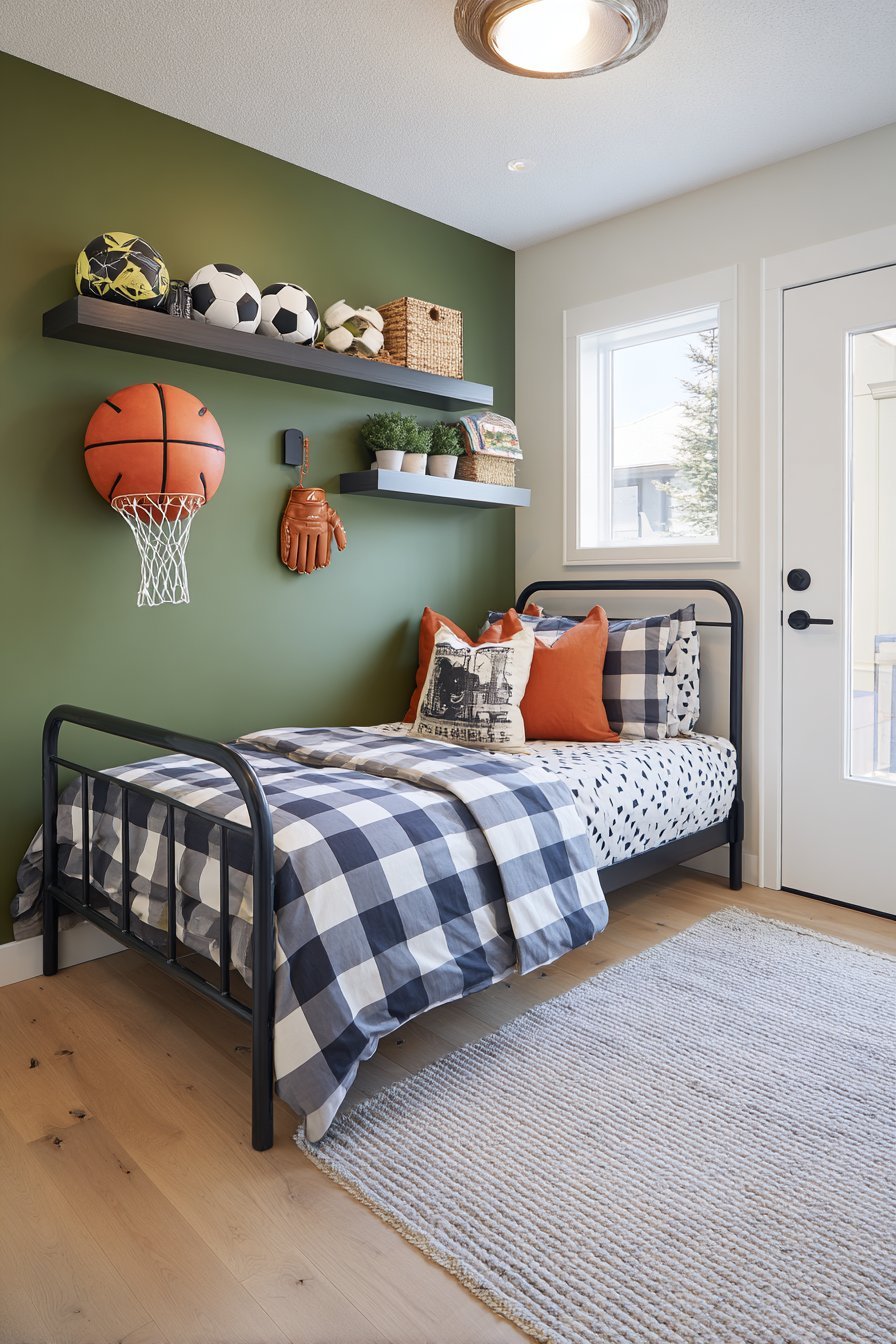
A small basketball hoop hangs on the door. Natural wood flooring provides durability for active children. A durable flat-weave rug anchors the space. The age-appropriate theme uses real equipment rather than graphics. Natural lighting highlights the active, energetic atmosphere.
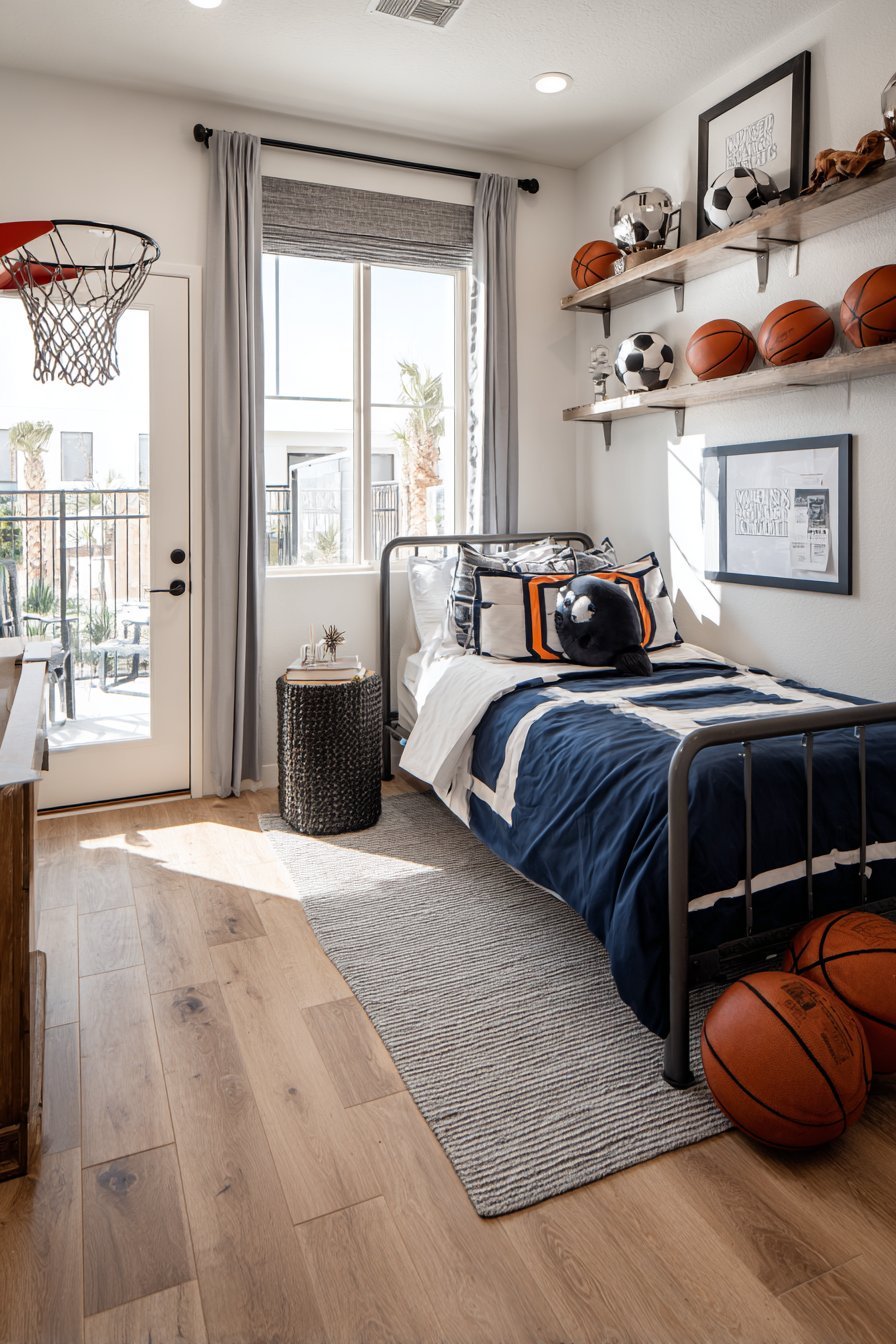
Wide-angle photography shows theme execution through actual items. Sports equipment storage becomes display. The approach grows with changing athletic interests. Quality pieces withstand active use. The room celebrates physical activity authentically.
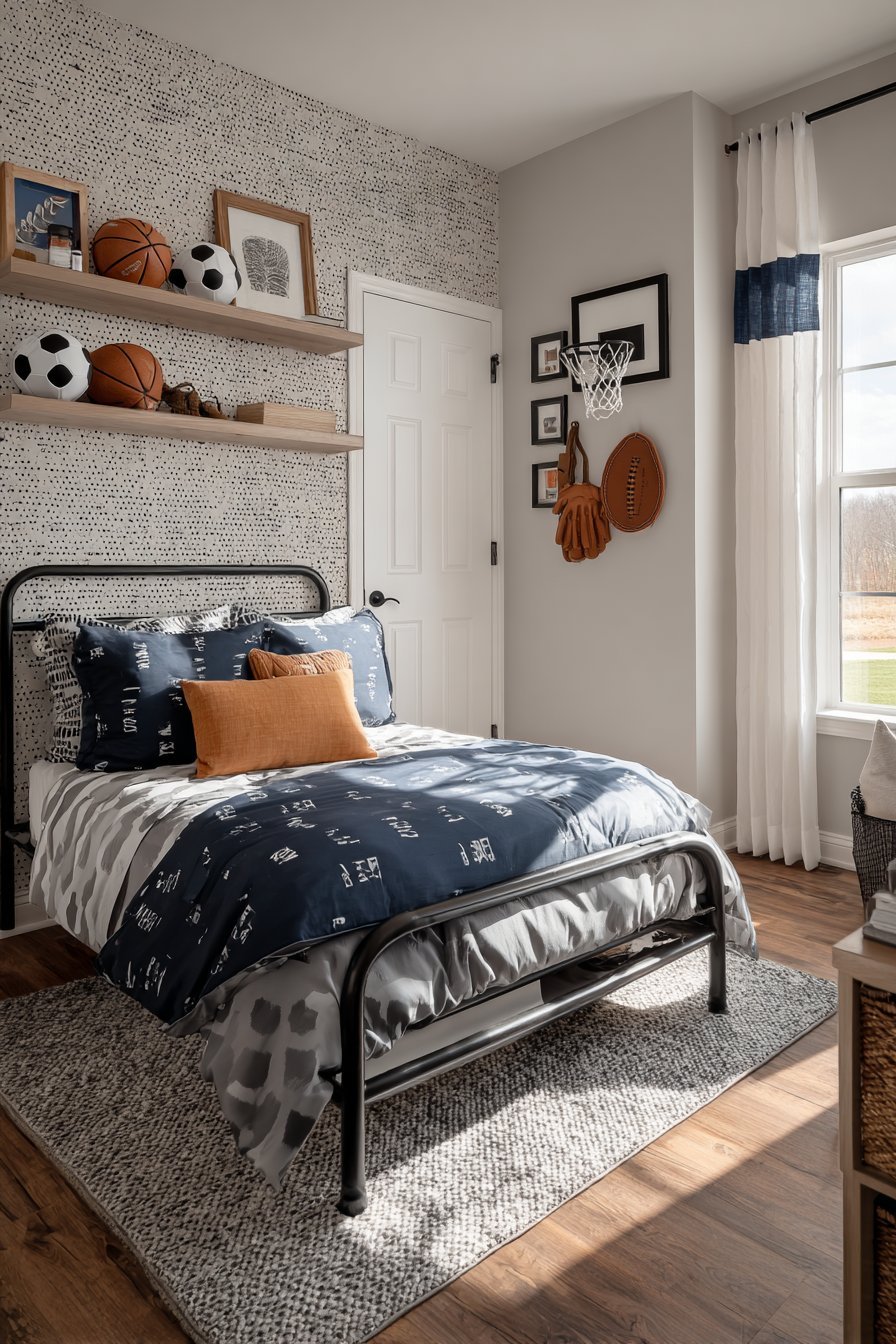
Athletic themes work best through genuine equipment. Real items inspire actual participation. The approach avoids dated cartoon characters. Neutral color palettes outlast temporary team allegiances. Durable materials withstand equipment storage. The design supports rather than just depicts activity.
Key Design Tips:
- Use real sports equipment as functional decoration and storage
- Paint accent walls in grass-green texture for athletic field reference
- Choose metal-frame beds with industrial style for durability
- Select athletic-inspired bedding patterns rather than team logos
- Install door-mounted basketball hoops for active indoor play
- Use flat-weave rugs that withstand equipment and active movement
- Display equipment on floating shelves for easy access and rotation
15. Versatile Daybed with Trundle
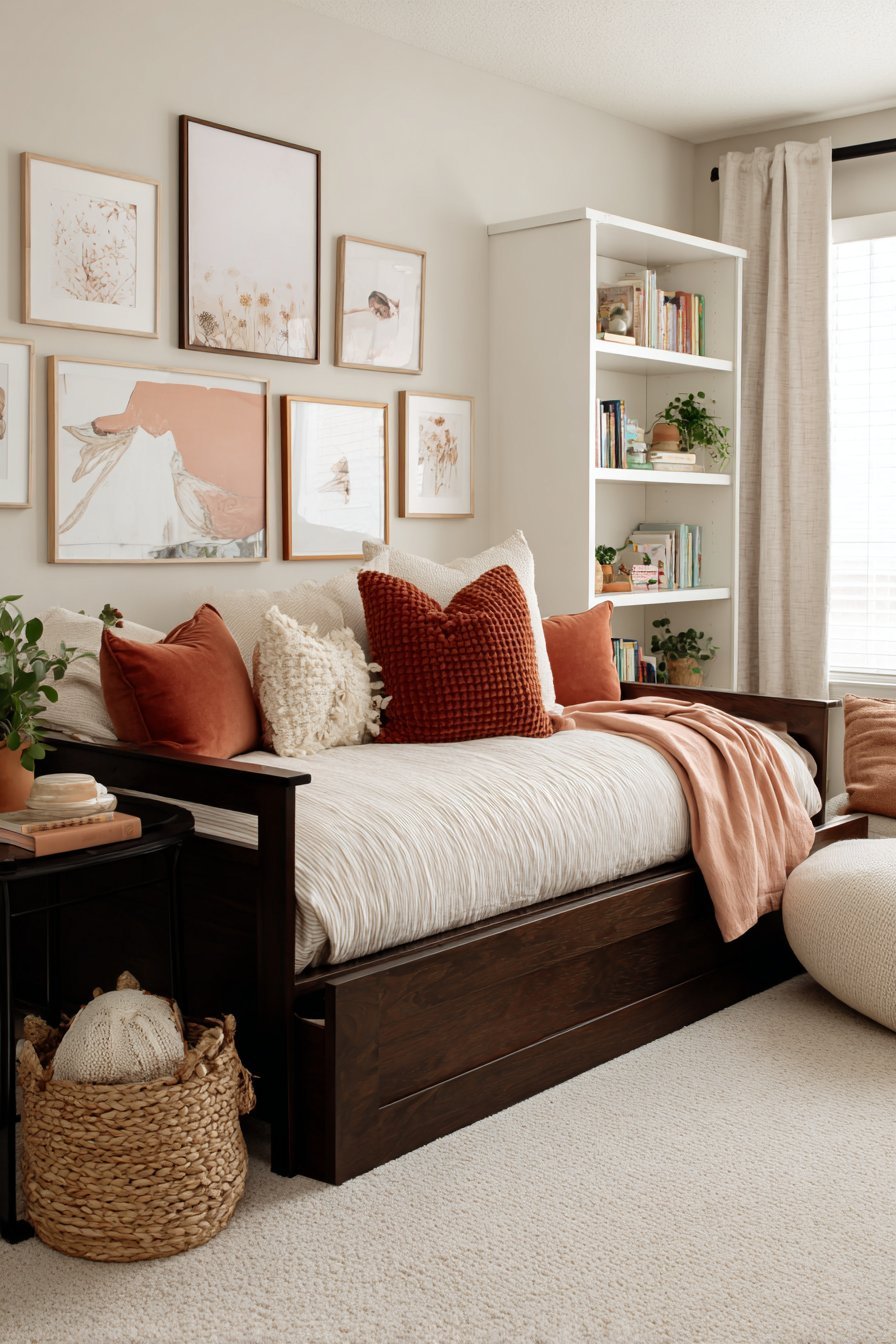
A daybed with trundle in solid walnut serves dual purposes. Multiple throw pillows in varied textures invite lounging. Velvet, cotton, and linen in jewel tones create richness. Built-in bookcases flank the daybed in warm white paint. Children’s literature fills the shelves attractively.
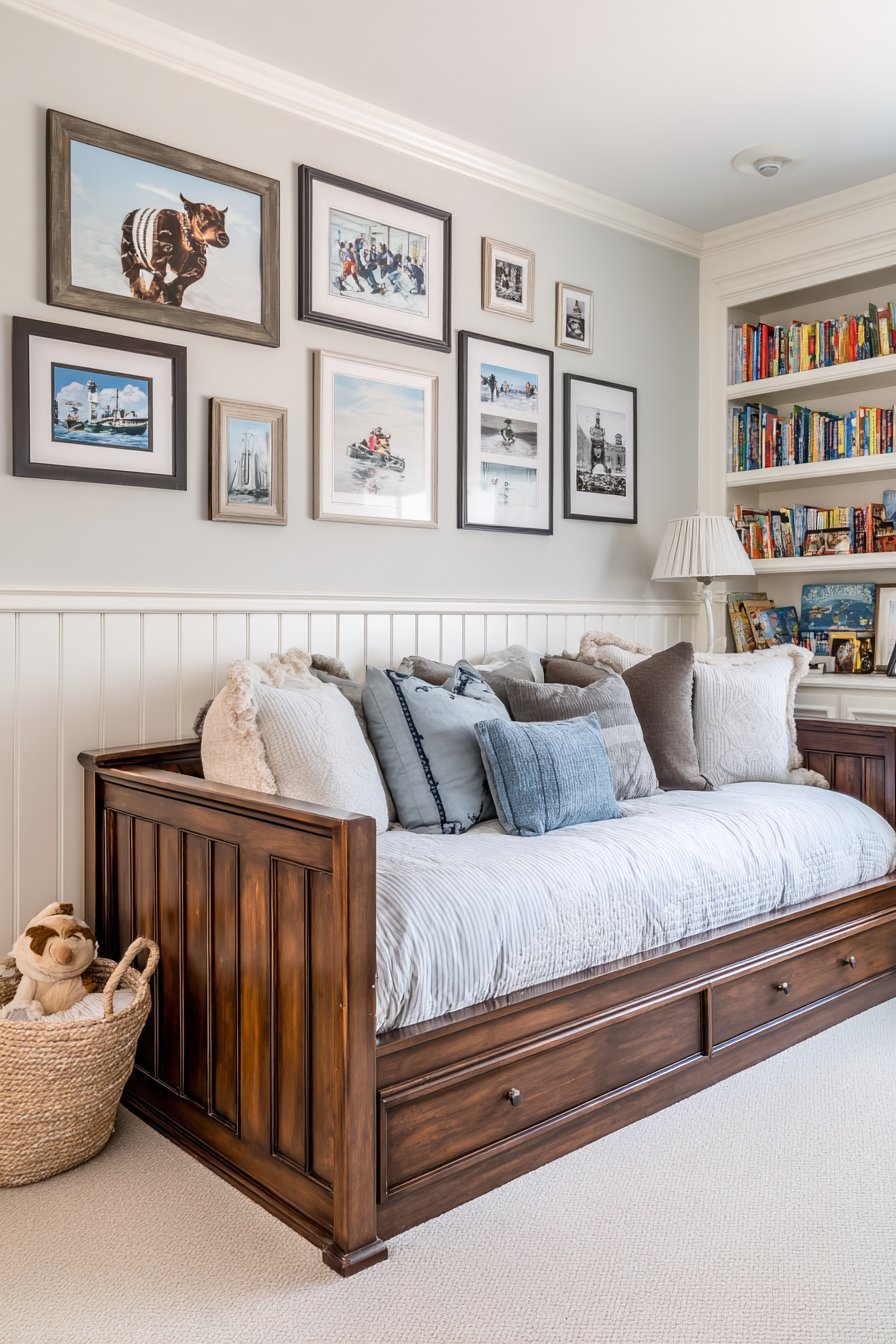
A small gallery wall above displays framed family photos. Artwork adds personal touches throughout. The space functions as bedroom and hangout area. Soft natural lighting captures the dual-purpose design. The inviting atmosphere works for sleep and socializing.
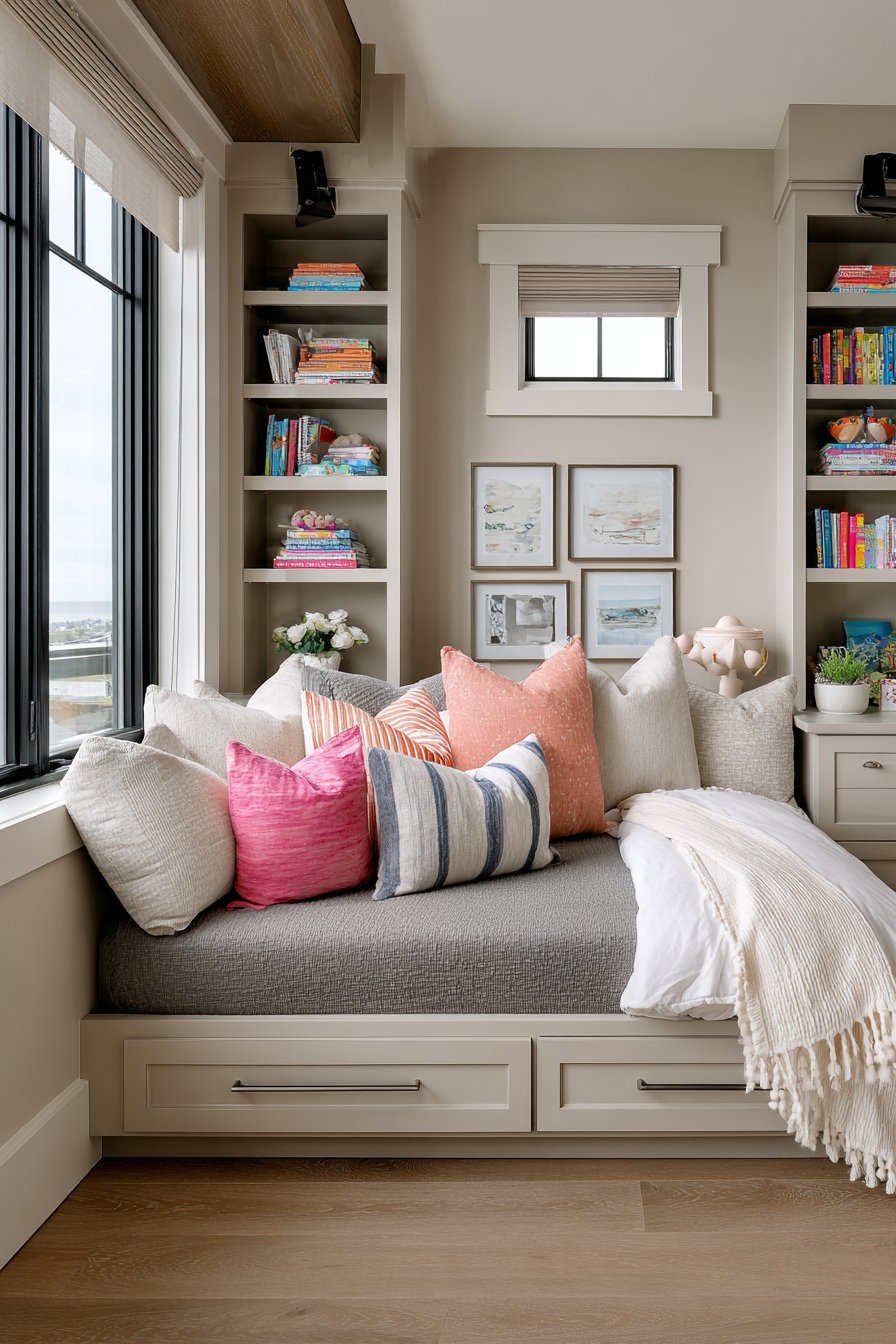
Interior photography shows how daybed configuration creates flexibility. The room grows with the child naturally. Seating transforms to sleeping space. Built-in storage keeps books organized. The multipurpose approach maximizes limited space effectively.
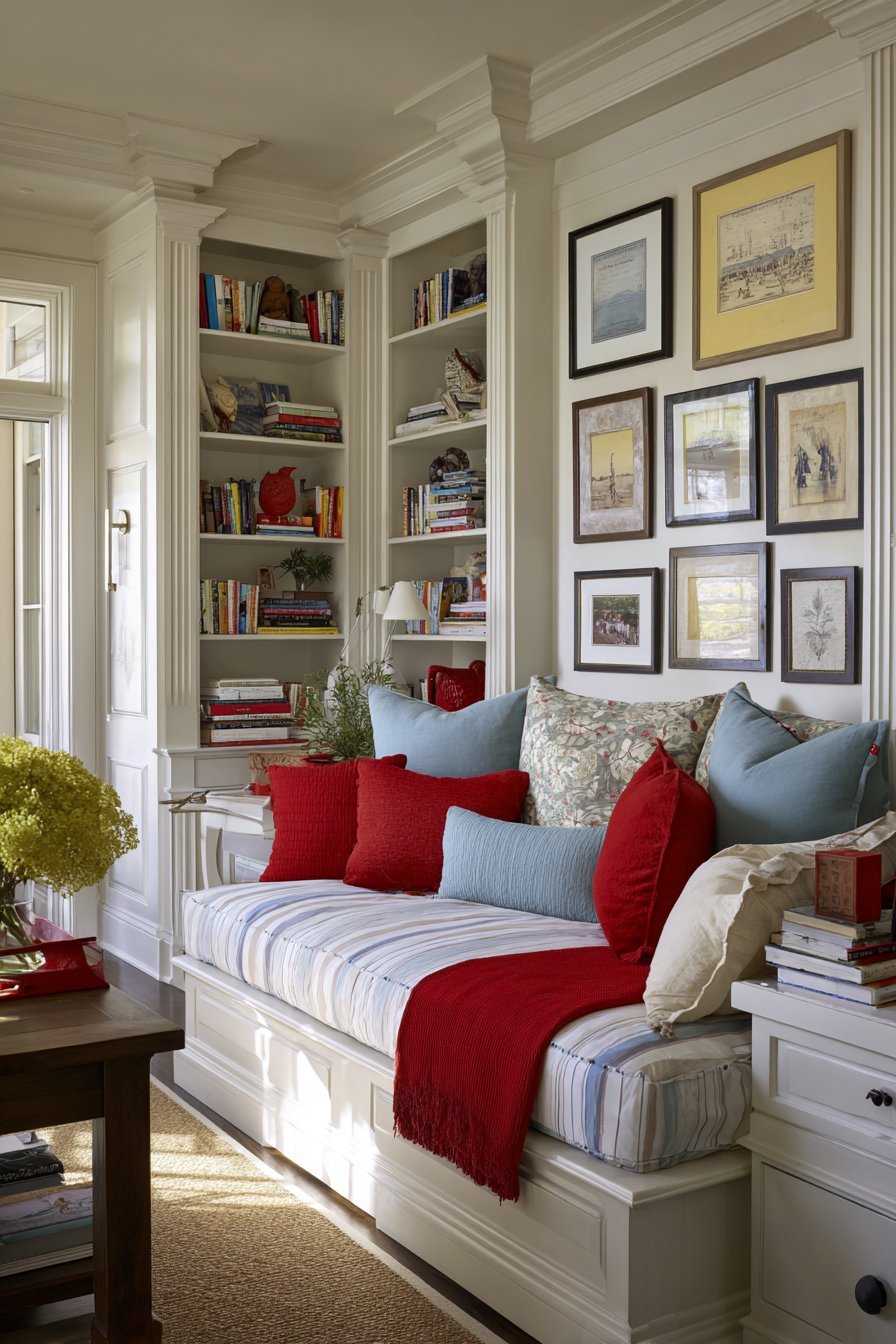
Daybed designs offer exceptional versatility. They function as sofas during daytime hours. The trundle accommodates overnight guests easily. Multiple pillows add comfort and style. Built-in bookcases eliminate separate furniture needs. The configuration adapts to changing requirements over years.
Key Design Tips:
- Choose daybeds with trundles to accommodate guests without space waste
- Layer multiple throw pillows in varied textures for comfort and style
- Flank daybeds with built-in bookcases for integrated storage
- Paint built-ins in warm white to brighten without stark contrast
- Display family photos and artwork in small gallery walls above
- Select solid wood construction in walnut for lasting durability
- Create spaces that function as both bedroom and hangout area
16. Dedicated Art Studio Corner
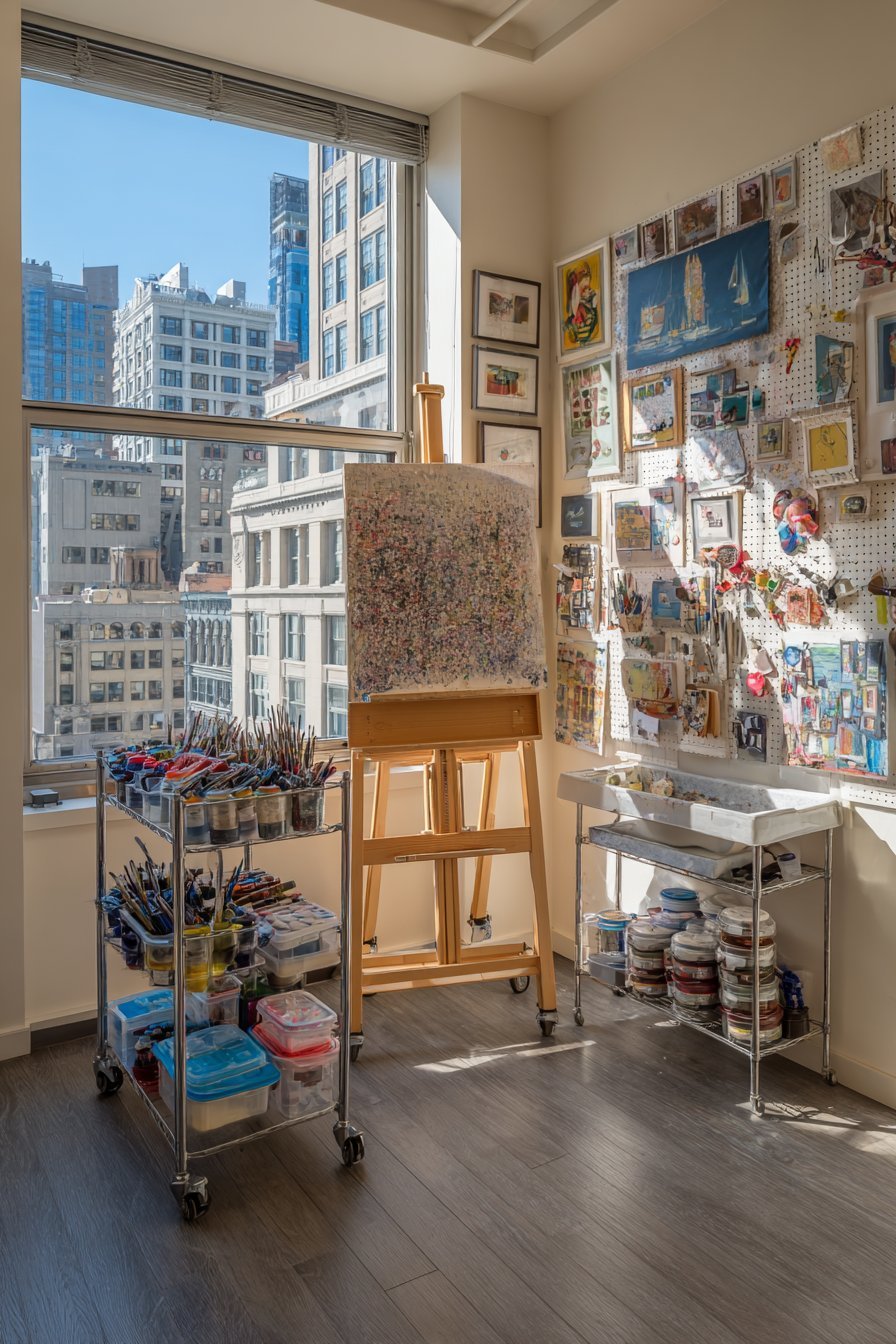
A child-height easel in natural beech wood sits near the window. Optimal natural light supports creative activities. A rolling cart with multiple levels stores art supplies. Clear containers make contents visible and accessible. A large pinboard covers one wall completely.
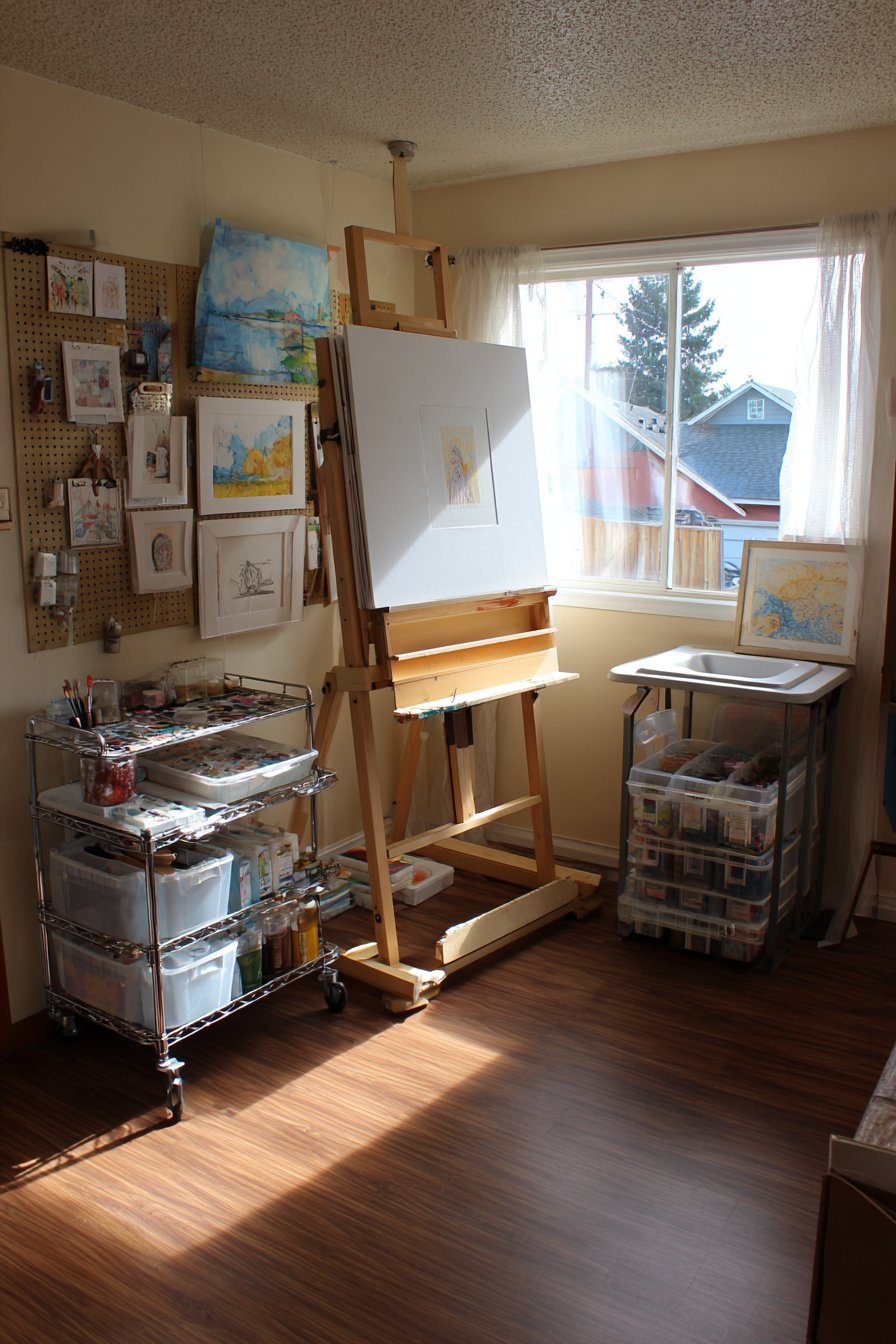
Finished artwork displays proudly on the pinboard surface. Drop cloths protect easy-to-clean laminate flooring. A small sink in the corner allows easy cleanup. Bright morning light streams in to illuminate the space. The functional art zone demonstrates specialized activity areas.
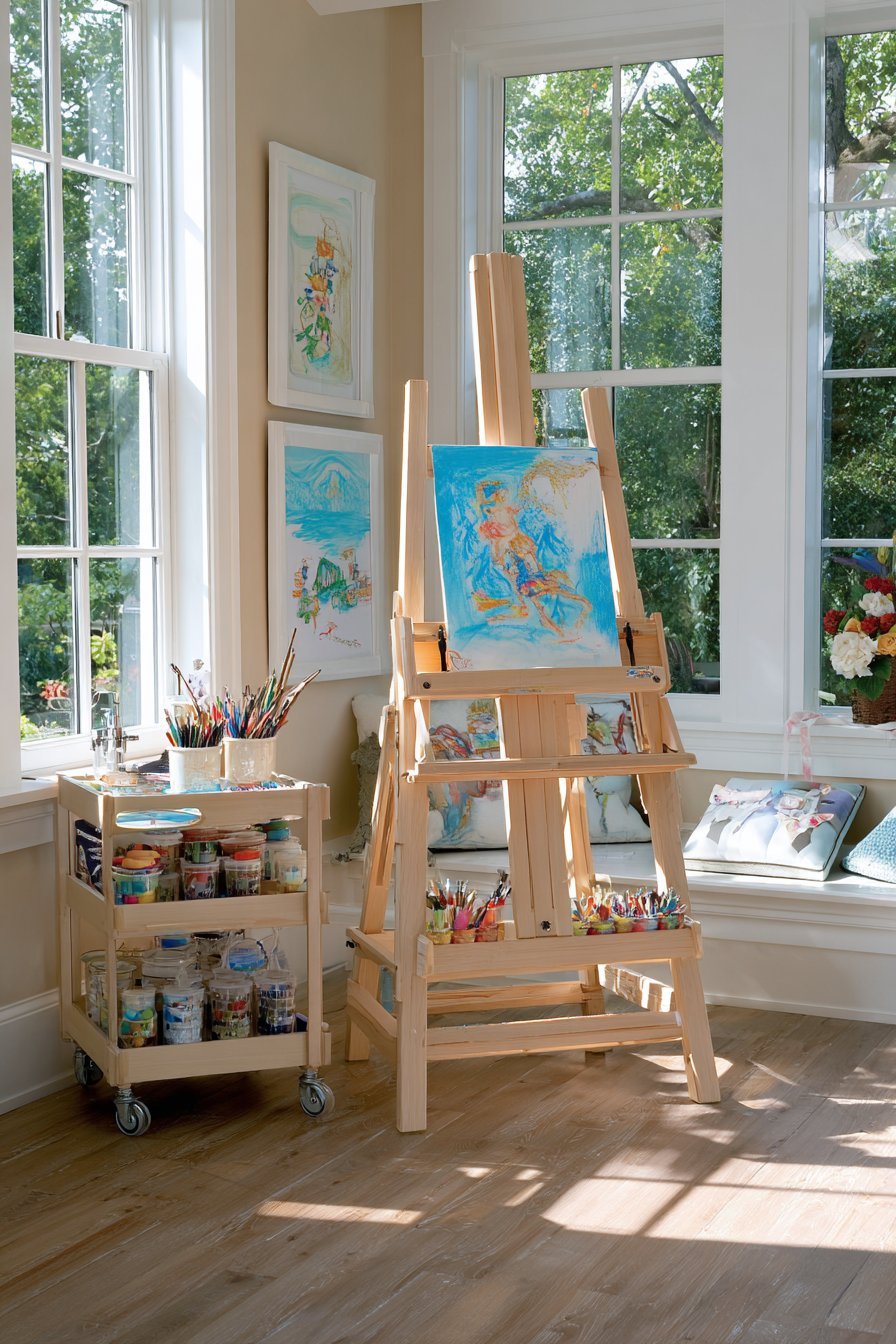
Professional photography captures the dedicated creative space. The corner transforms bedroom into mini studio. Natural light provides ideal working conditions. Organized supplies encourage artistic expression. The setup shows how to carve out specialized zones.
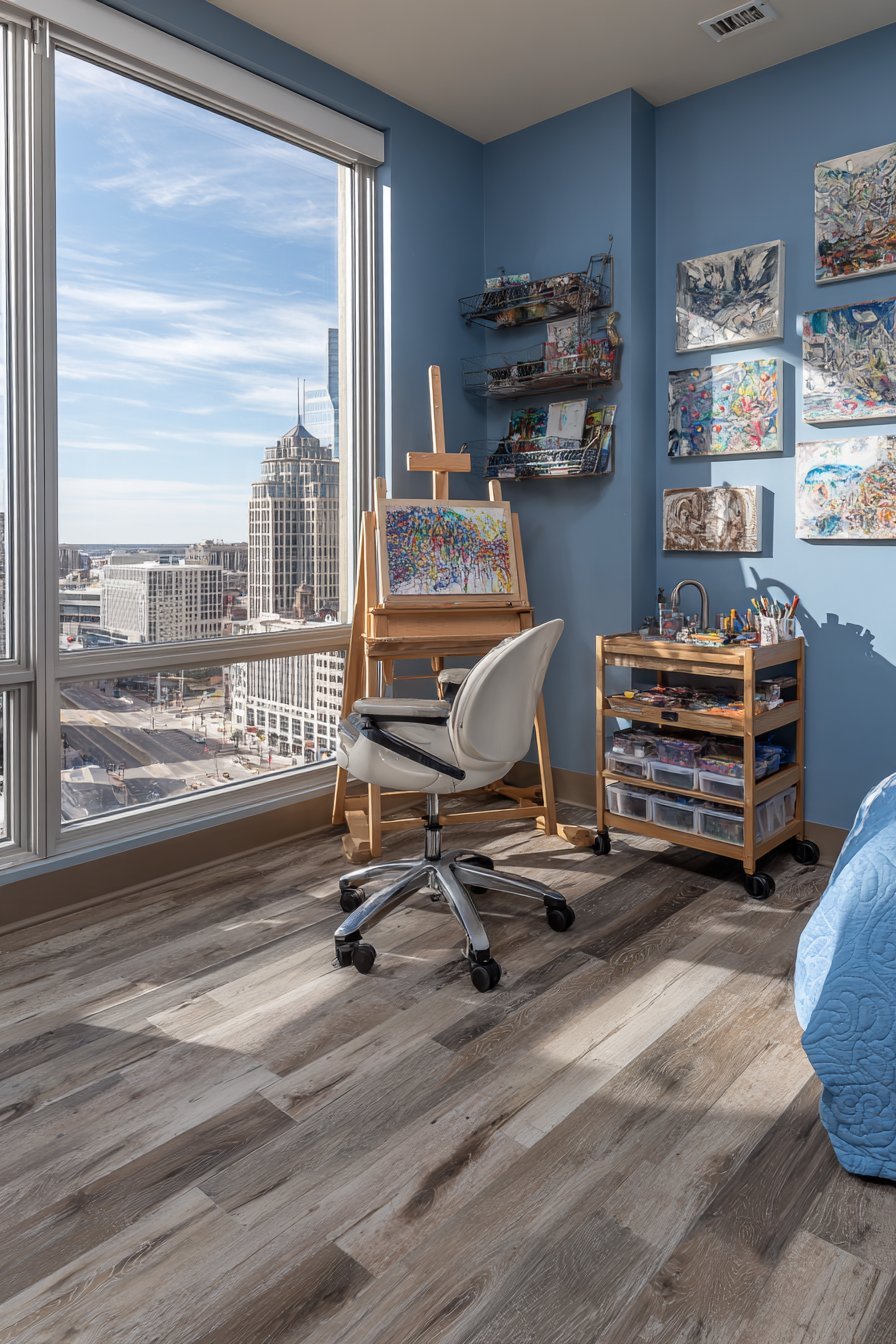
Dedicated creative spaces support skill development. Natural light near windows enhances color work. Organized supplies reduce creative friction. Easy cleanup encourages messy exploration. Display areas validate artistic efforts. The investment in specialized zones pays developmental dividends.
Key Design Tips:
- Position easels near windows for optimal natural light during creation
- Use rolling carts with multiple levels for organized supply storage
- Install large pinboards to display finished artwork proudly
- Protect flooring with drop cloths during messy art activities
- Add small sinks in corners for convenient paint and brush cleanup
- Choose child-height easels in natural wood for proper ergonomics
- Store art supplies in clear containers for easy visibility and access
17. Scandinavian-Inspired Simplicity
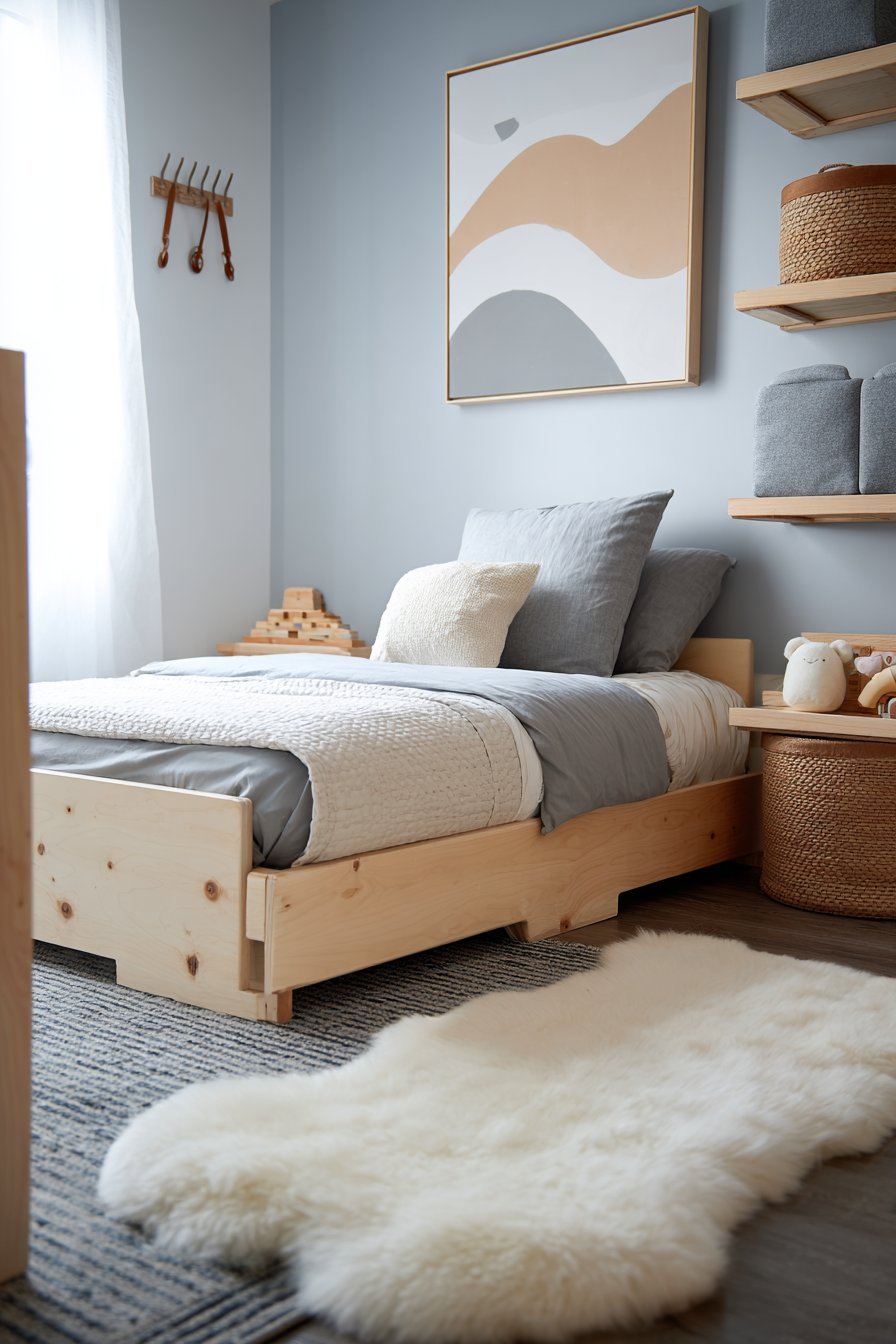
A simple low-profile bed in pale birch features clean geometry. Walls painted in soft grey-blue create calm atmosphere. White trim adds crisp definition throughout. Minimal decoration includes one large-scale abstract print. A simple wooden peg rail hangs bags and jackets.
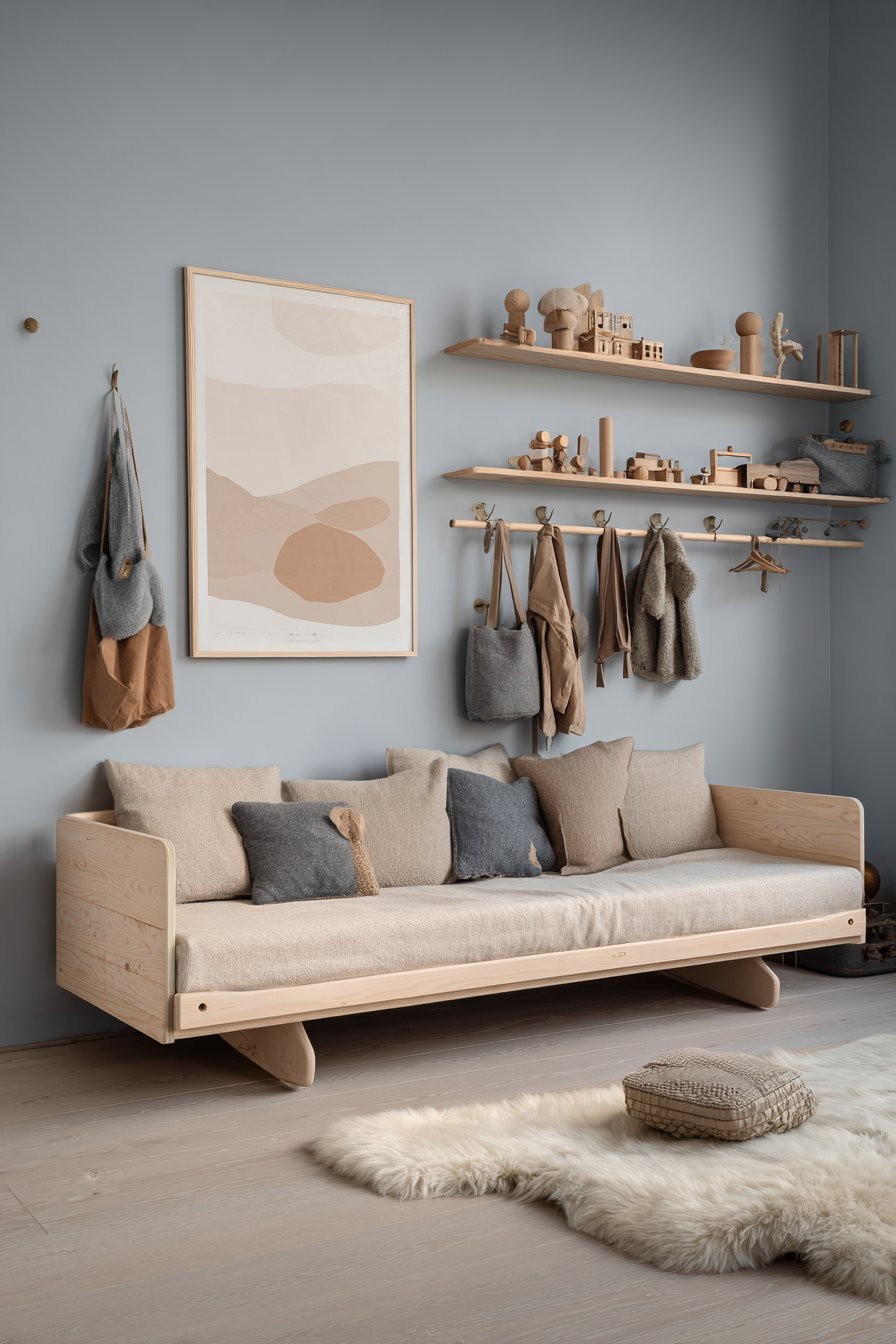
Natural wool felt storage baskets organize toys efficiently. Open pine shelving displays curated selections. A sheepskin rug adds warmth beside the bed. Diffused northern light creates serene atmosphere. The Nordic aesthetic emphasizes simplicity and natural materials.
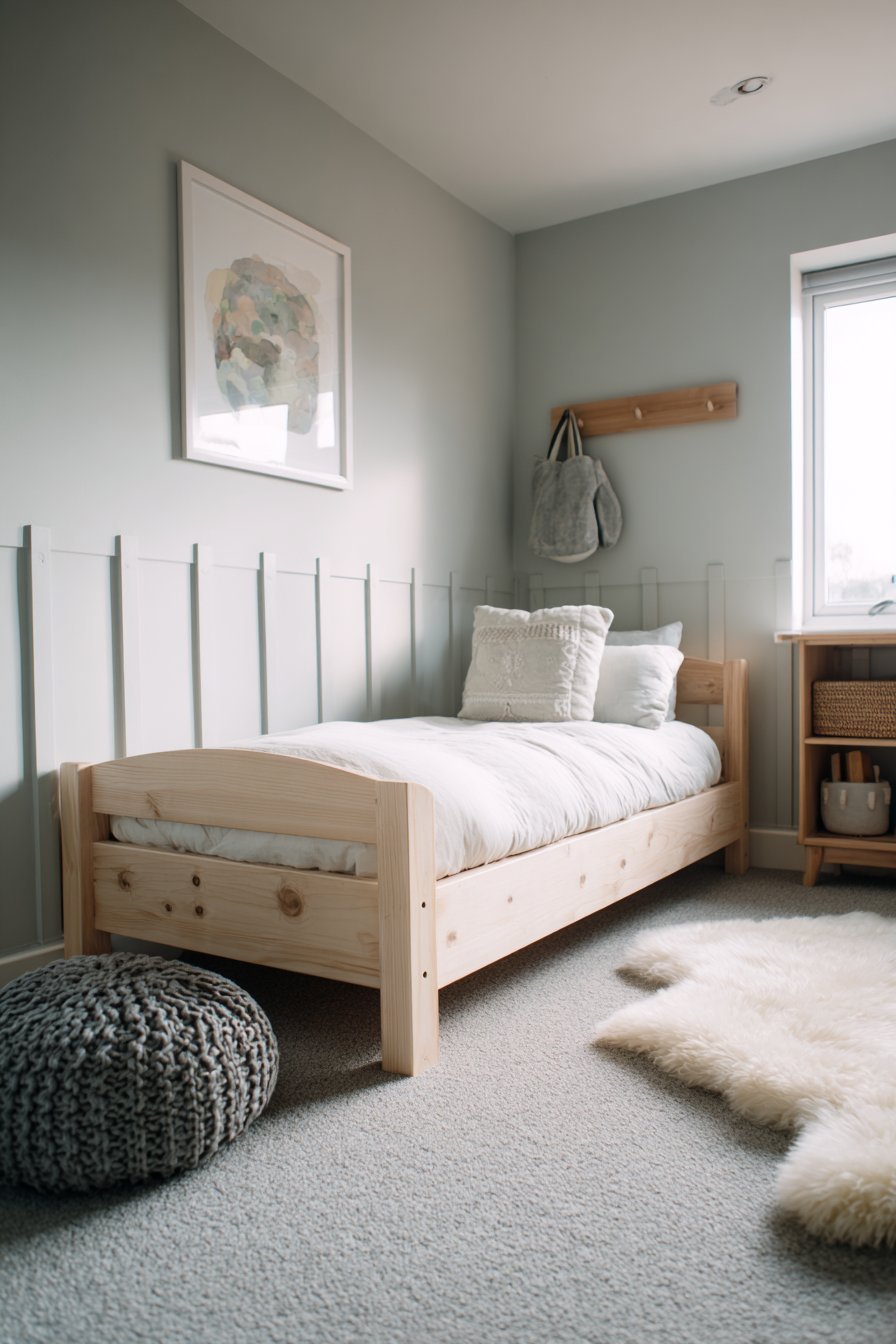
Wide-angle photography shows the emphasis on simplicity. Natural materials dominate throughout the space. Open space supports movement and calm. The design proves less creates more peaceful environments. Children benefit from reduced visual noise significantly.
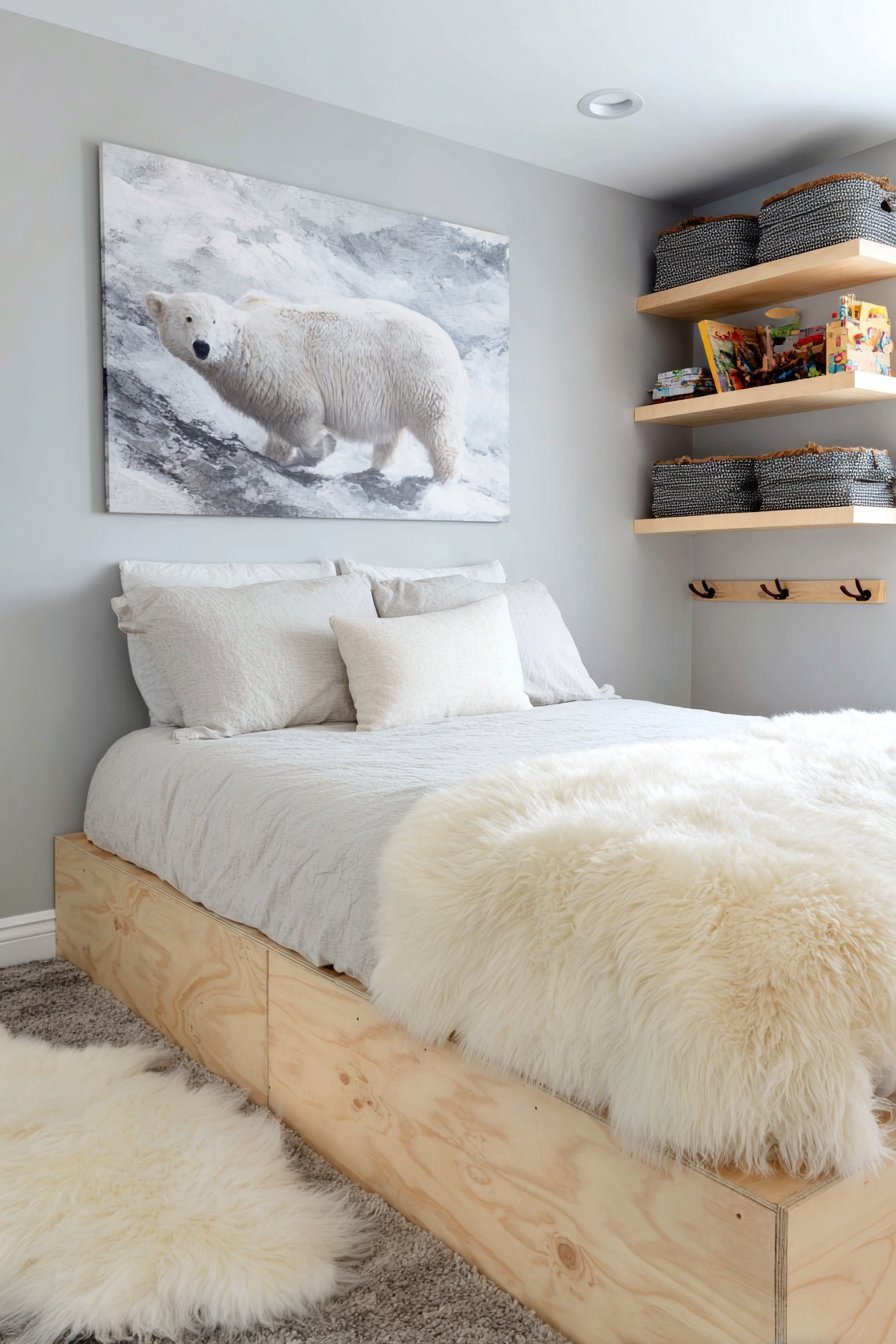
Scandinavian design principles create restful environments. Light wood tones brighten without harshness. Neutral color palettes promote tranquility. Natural textiles add warmth without pattern overload. Open space design reduces overwhelm. The approach supports quality sleep and focus.
Key Design Tips:
- Choose pale birch furniture for Scandinavian light wood aesthetic
- Paint walls in soft grey-blue for calm, serene atmosphere
- Use minimal decoration with one large-scale piece for visual interest
- Install simple wooden peg rails for accessible storage solutions
- Store toys in natural wool felt baskets in grey tones
- Add sheepskin rugs beside beds for warmth and natural texture
- Embrace open space rather than filling corners with unnecessary items
18. Gender-Neutral Convertible Design
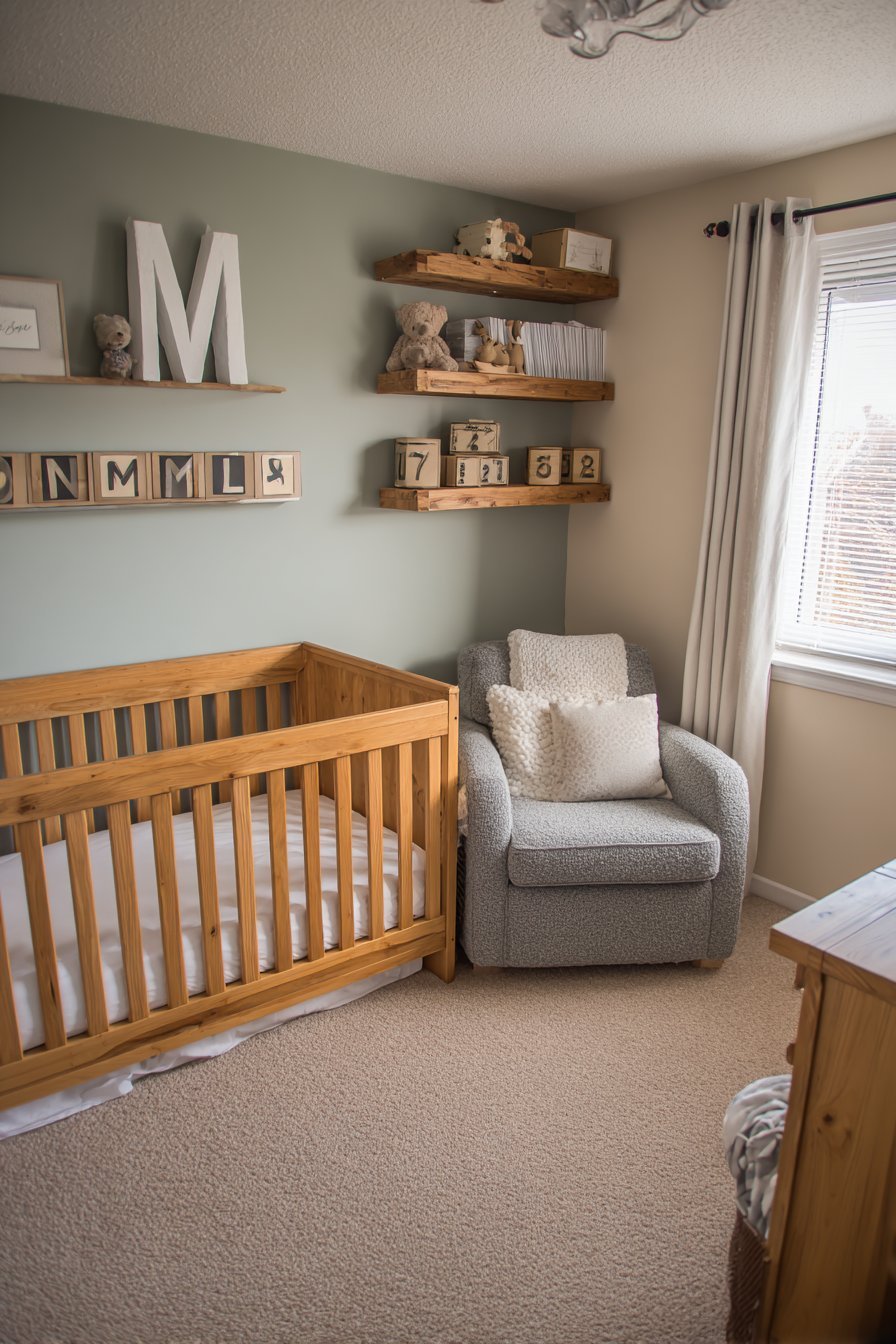
A convertible crib-to-toddler bed in natural oak grows with children. Walls painted in soft putty beige create neutral foundation. One accent wall in muted sage green adds subtle interest. A comfortable glider chair in heather grey bouclé provides reading space. Simple wooden alphabet blocks spell names on shelves.
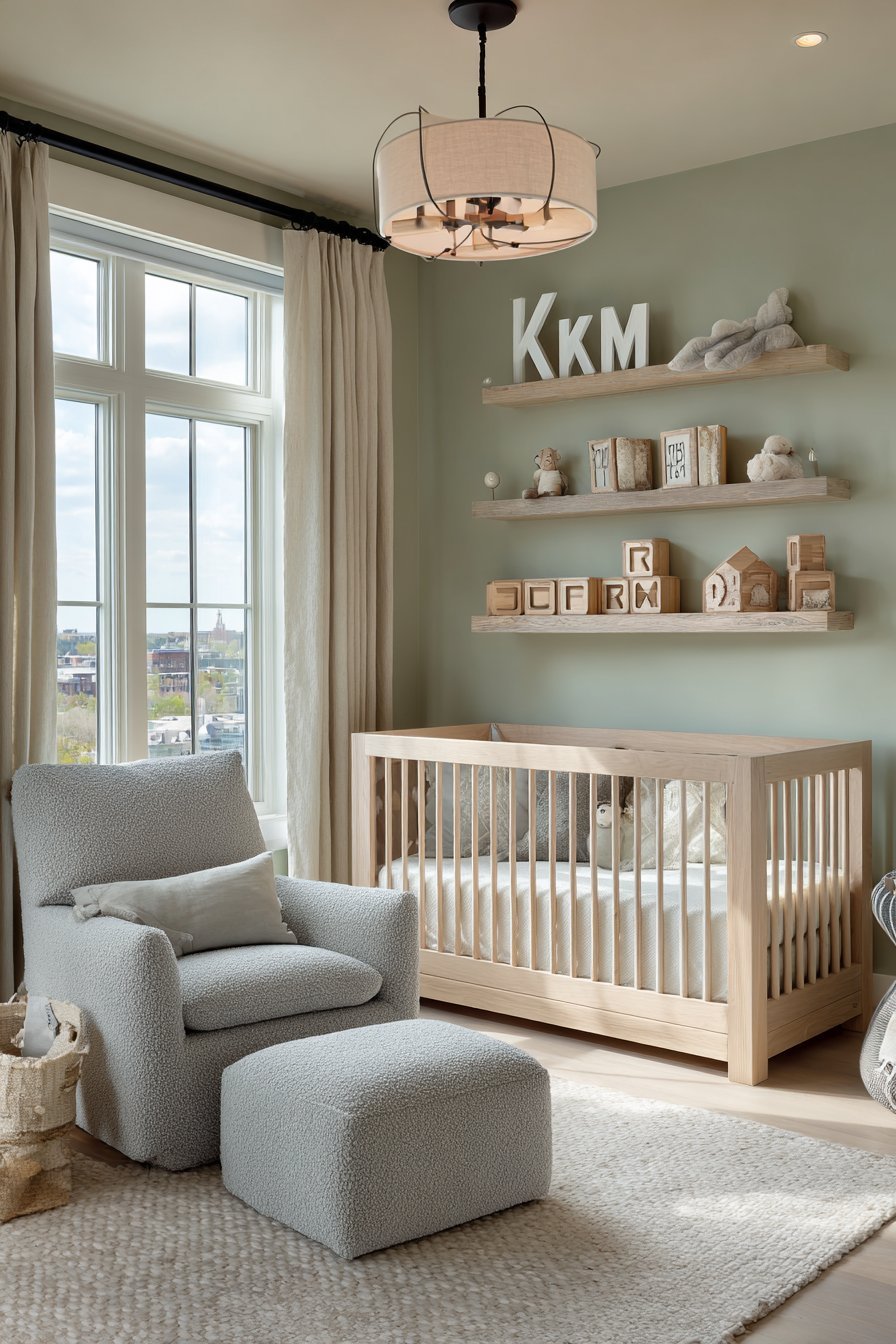
Blackout curtains in natural linen ensure quality sleep. The timeless design accommodates years of use. Quality furniture investments prove economical long-term. Natural morning light highlights the neutral palette. Natural wood tones create warmth without gender stereotypes.
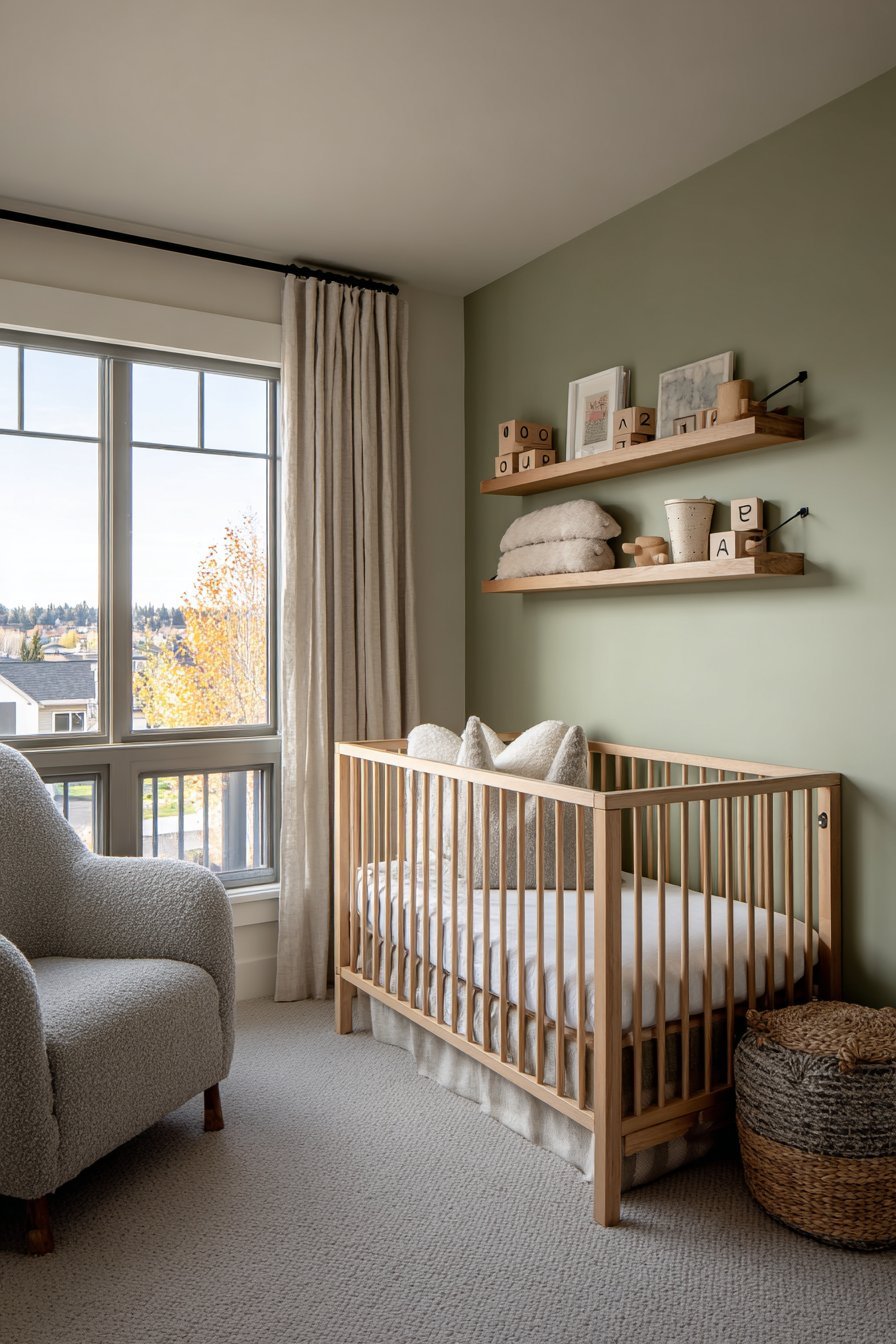
Interior photography captures the timeless design approach. Quality furniture outlasts trendy alternatives. Neutral palettes adapt to changing preferences. The room works for any child regardless of gender. Smart investments eliminate frequent replacement needs.
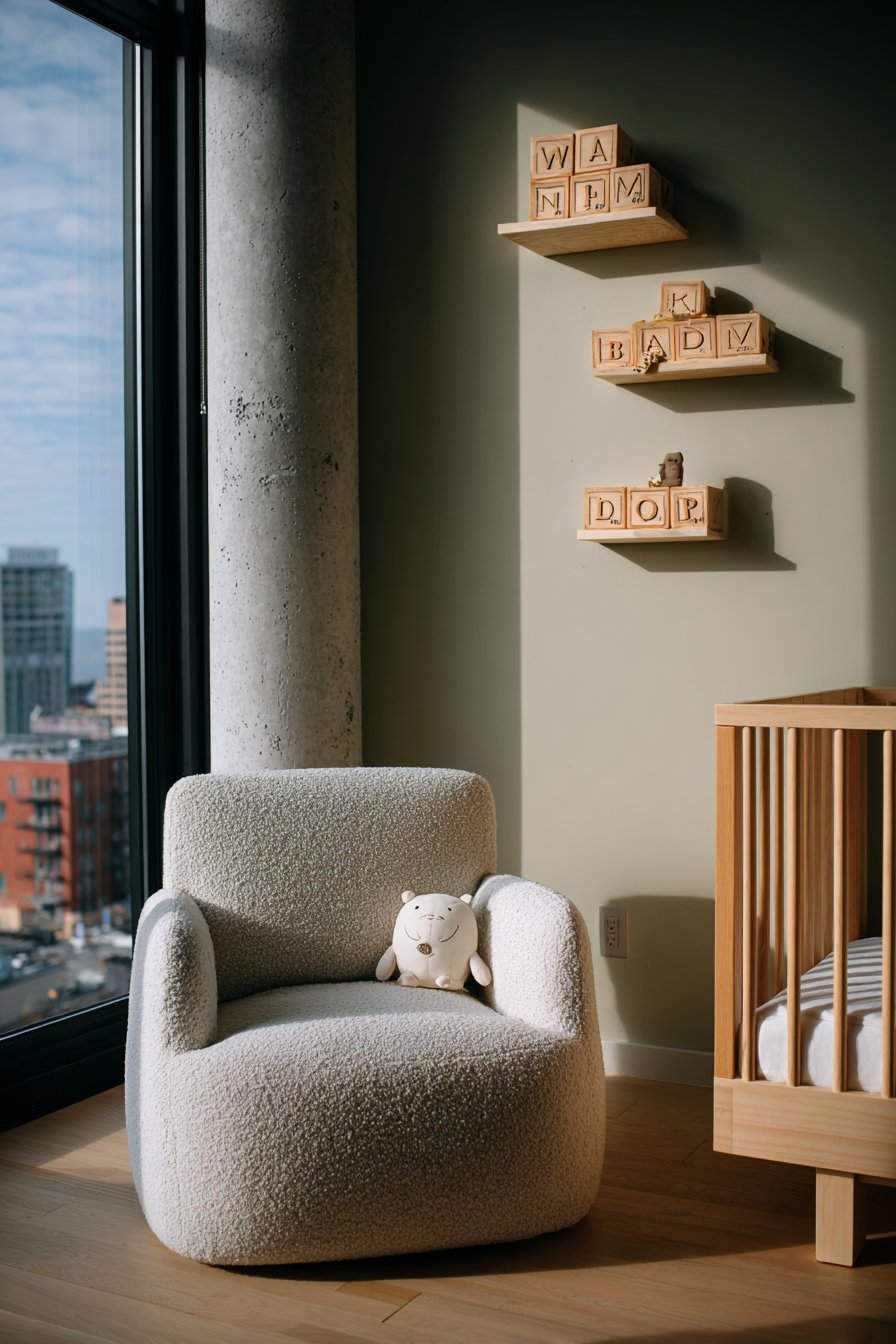
Gender-neutral design offers multiple advantages. It works for siblings of different genders. Neutral palettes have lasting appeal. Quality pieces justify higher initial costs. The approach avoids stereotype reinforcement. Timeless choices reduce waste and expense over time.
Key Design Tips:
- Select convertible cribs that transform into toddler beds for longevity
- Paint walls in soft putty beige as neutral, warm foundation
- Add single accent walls in muted green for subtle interest
- Choose comfortable glider chairs in heather grey for bedtime stories
- Use natural oak furniture that works regardless of gender
- Install blackout curtains in natural linen for quality sleep support
- Invest in quality pieces that last rather than trendy disposable options
19. Music Practice Integration
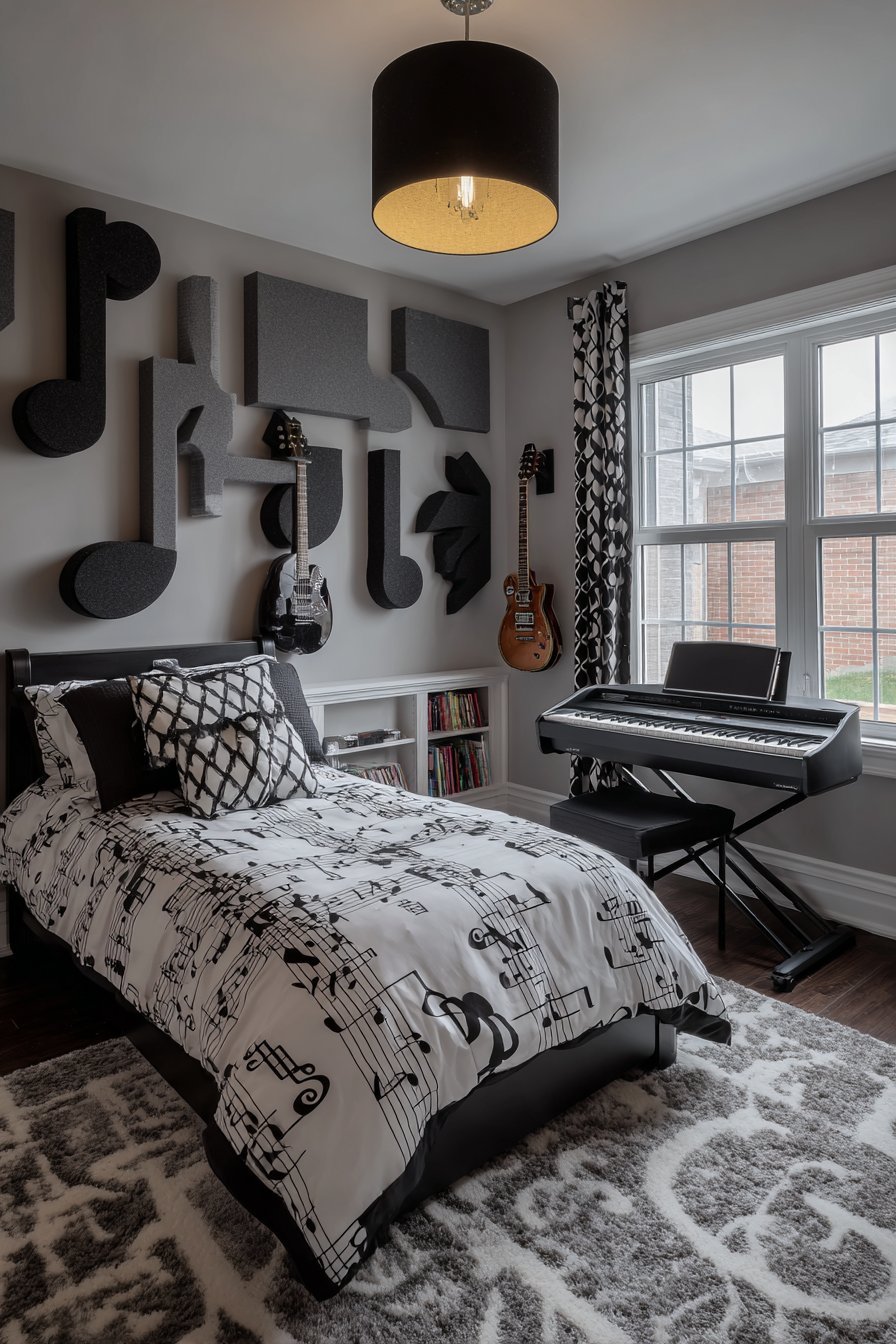
Acoustic foam panels in fun shapes serve dual purposes. They decorate while dampening sound effectively. A keyboard stand in black metal holds beginner’s digital piano. The window position provides natural light during practice. Guitar wall mounts display instruments as functional art.
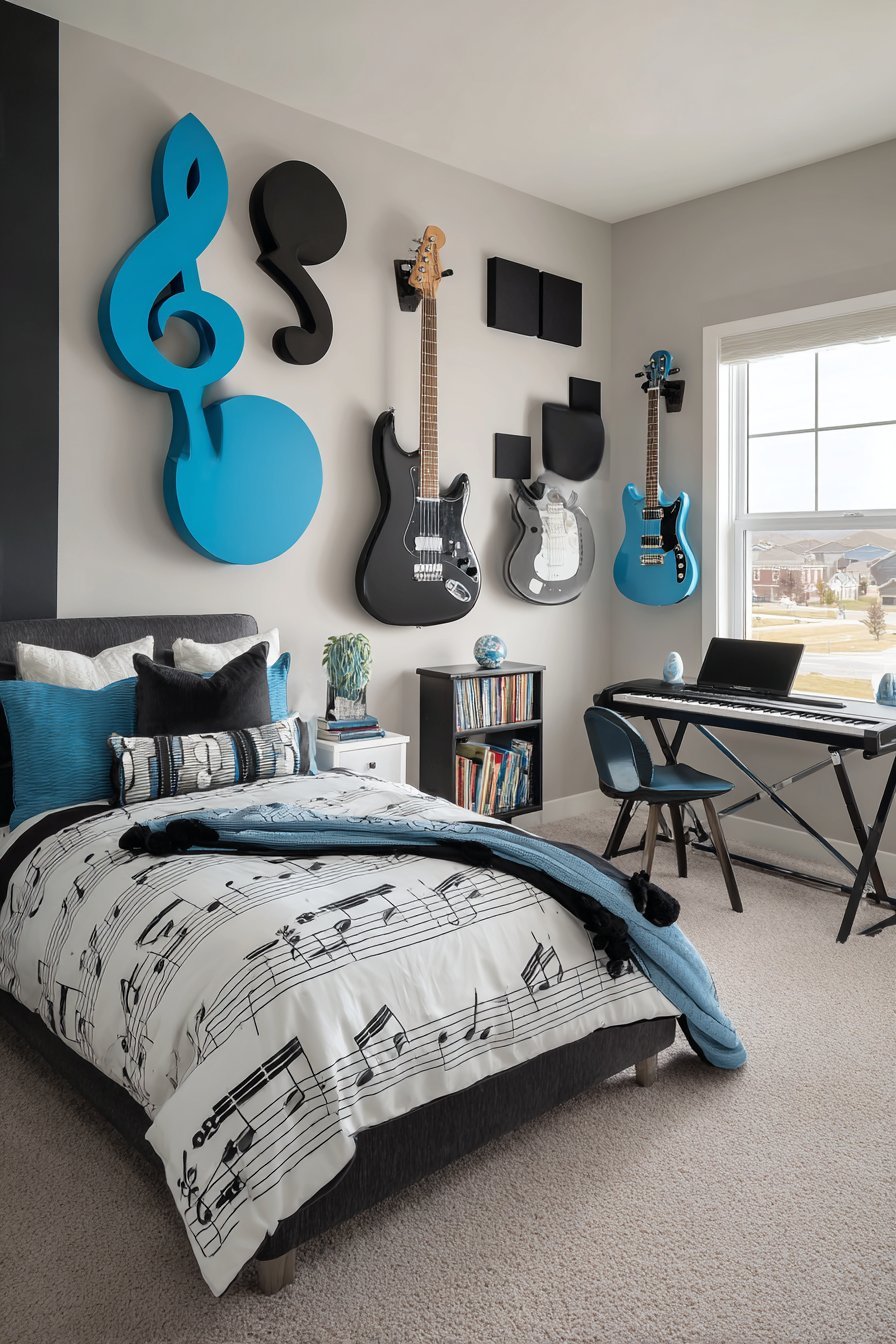
A comfortable chair for listening sits nearby. A small bookshelf holds sheet music and method books. Bedding features music note patterns in black and white. Natural lighting supports music practice activities. Acoustic considerations balance function with aesthetics.
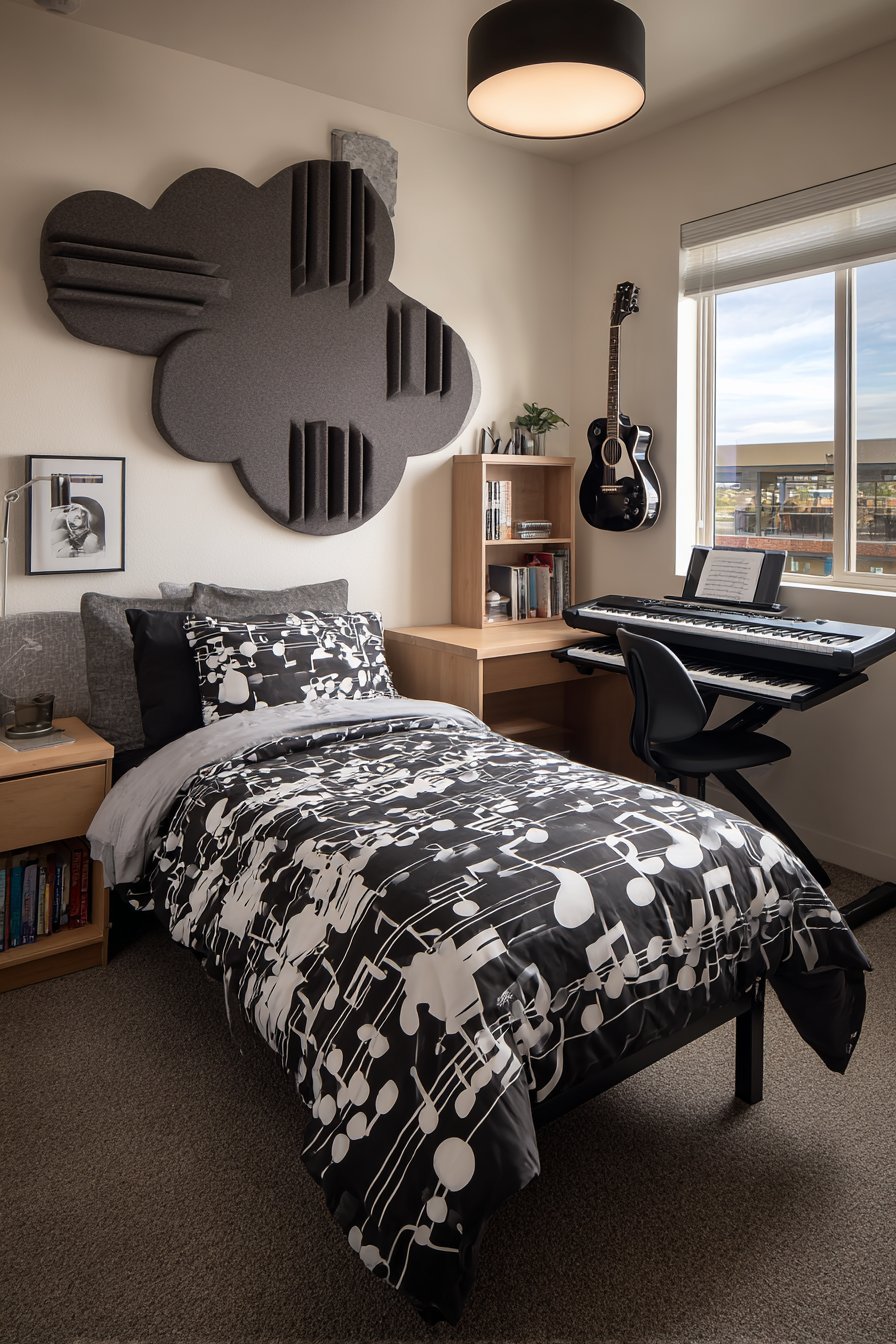
Wide-angle photography captures the functional music space. The bedroom integrates practice area seamlessly. Natural lighting and acoustic treatment work together. The setup demonstrates specialty area integration. Musical instruments become room decoration naturally.
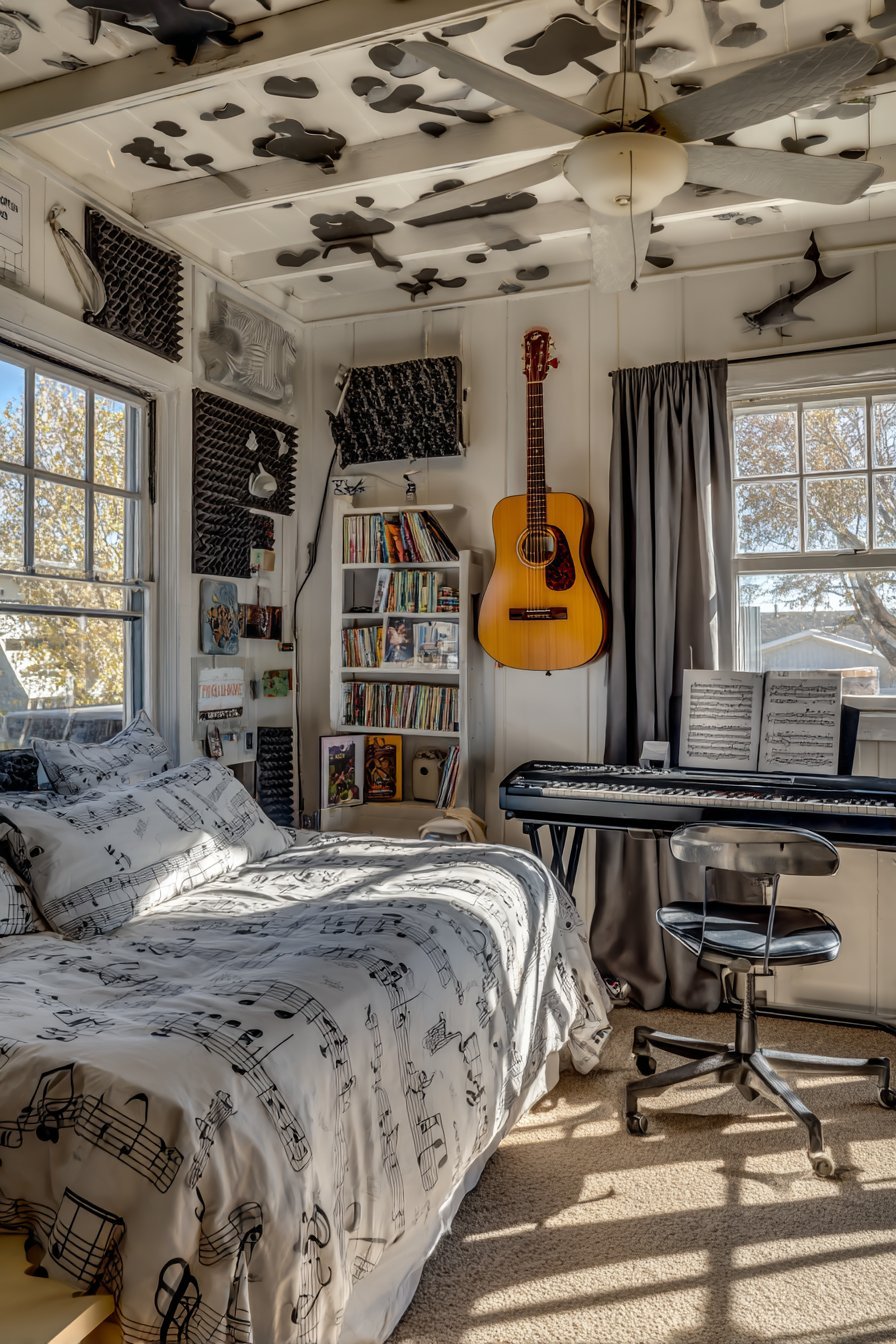
Music practice spaces require acoustic consideration. Sound dampening protects family peace. Natural light near instruments supports learning. Display storage keeps instruments accessible. Dedicated practice areas increase engagement. The integrated approach normalizes musical development.
Key Design Tips:
- Mount acoustic foam panels in fun shapes for sound dampening
- Position keyboard stands near windows for natural light during practice
- Display instruments on wall mounts as functional art pieces
- Add comfortable listening chairs for music appreciation sessions
- Store sheet music on small bookshelves within easy reach
- Choose bedding with music note patterns to reinforce the theme
- Balance acoustic function with aesthetic appeal throughout design
20. Loft Bed for Small Urban Spaces
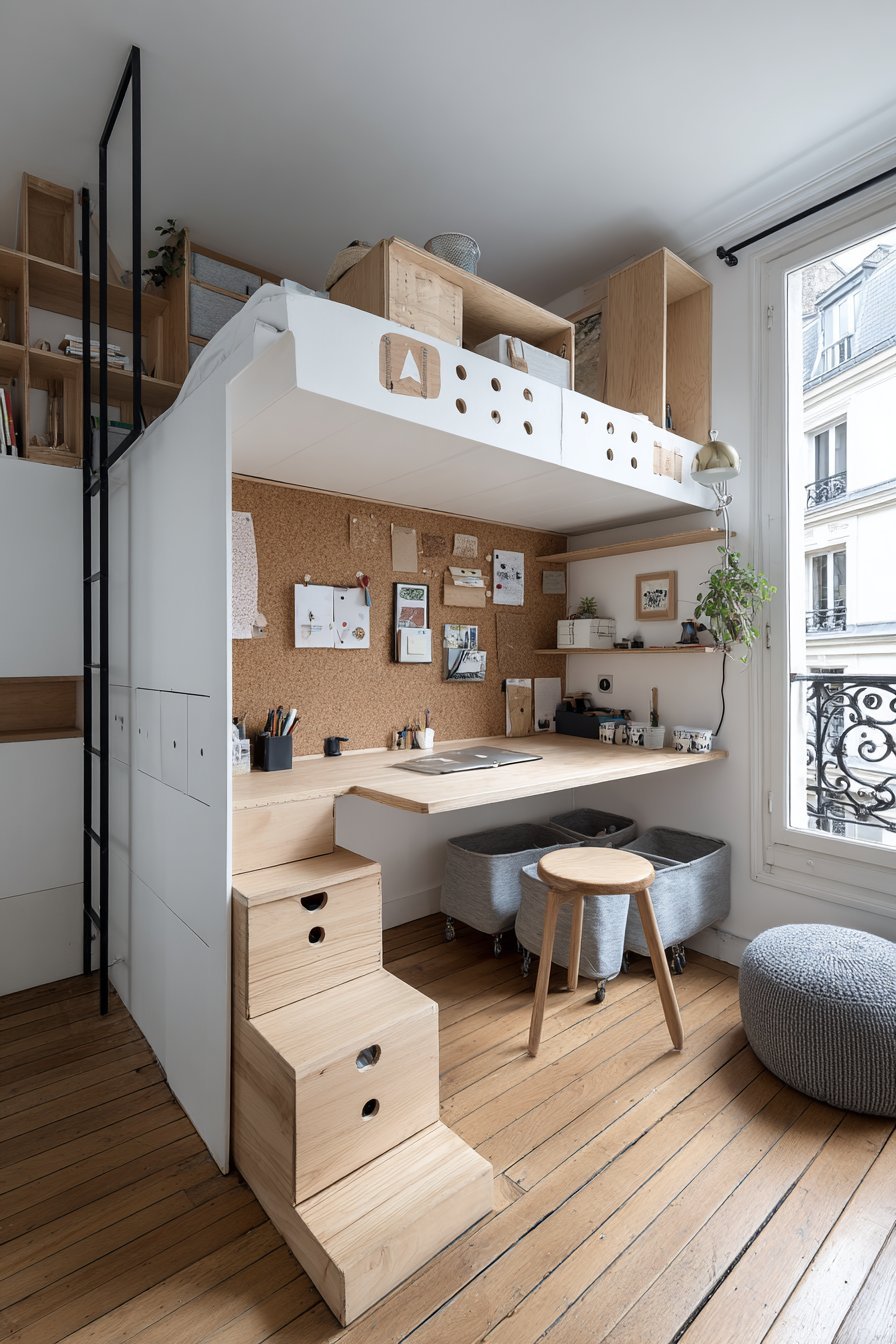
A loft bed in white-painted metal maximizes vertical space. Study area and storage fit underneath efficiently. The desk surface extends from loft structure. Built-in shelving and corkboard panel organize supplies. Beneath the desk, rolling storage bins stay organized.
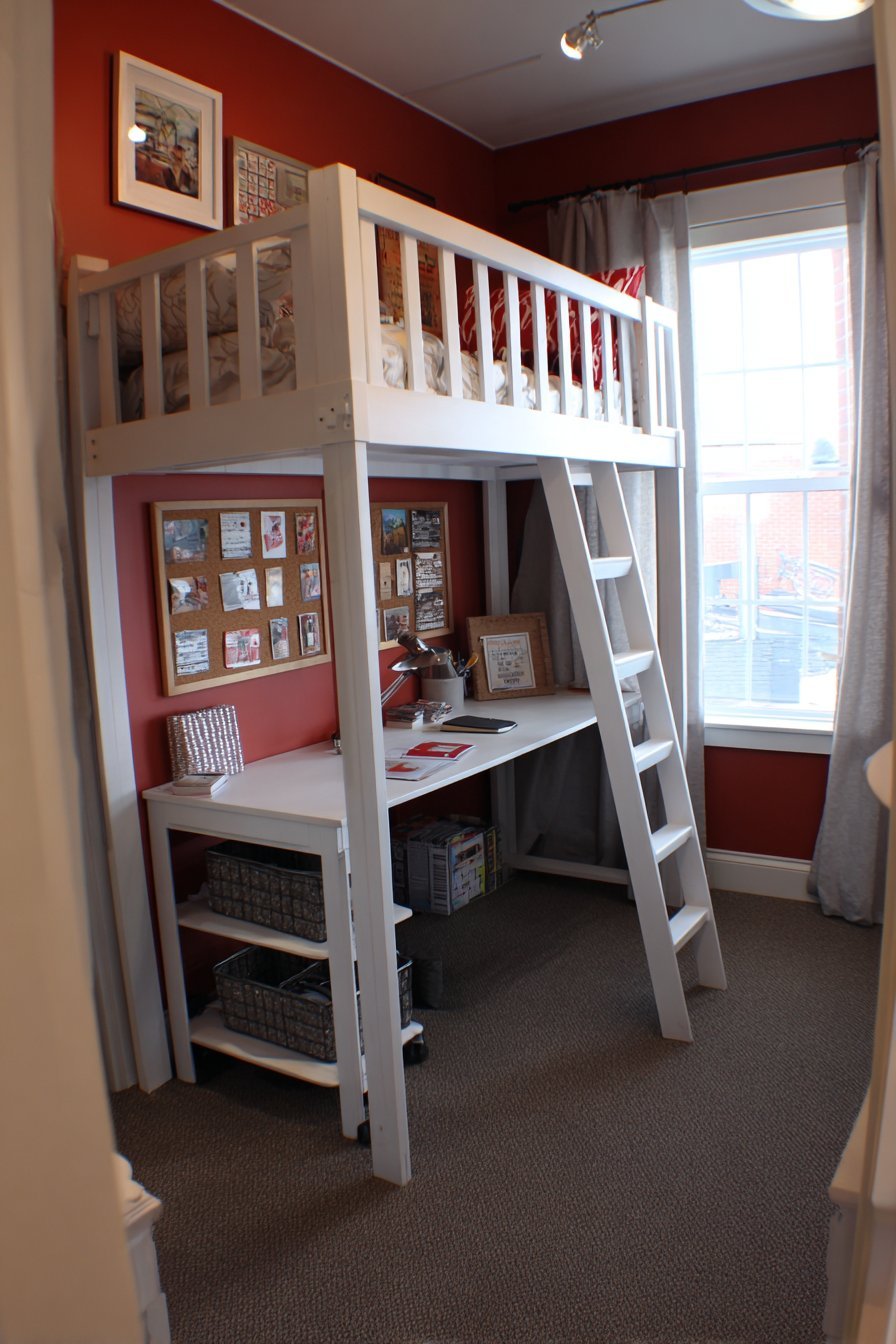
A small ladder with wide steps provides safe access. The compact layout maximizes limited square footage. Natural light from nearby window illuminates both zones. Efficient use proves small spaces can be highly functional. The design demonstrates smart urban solutions.
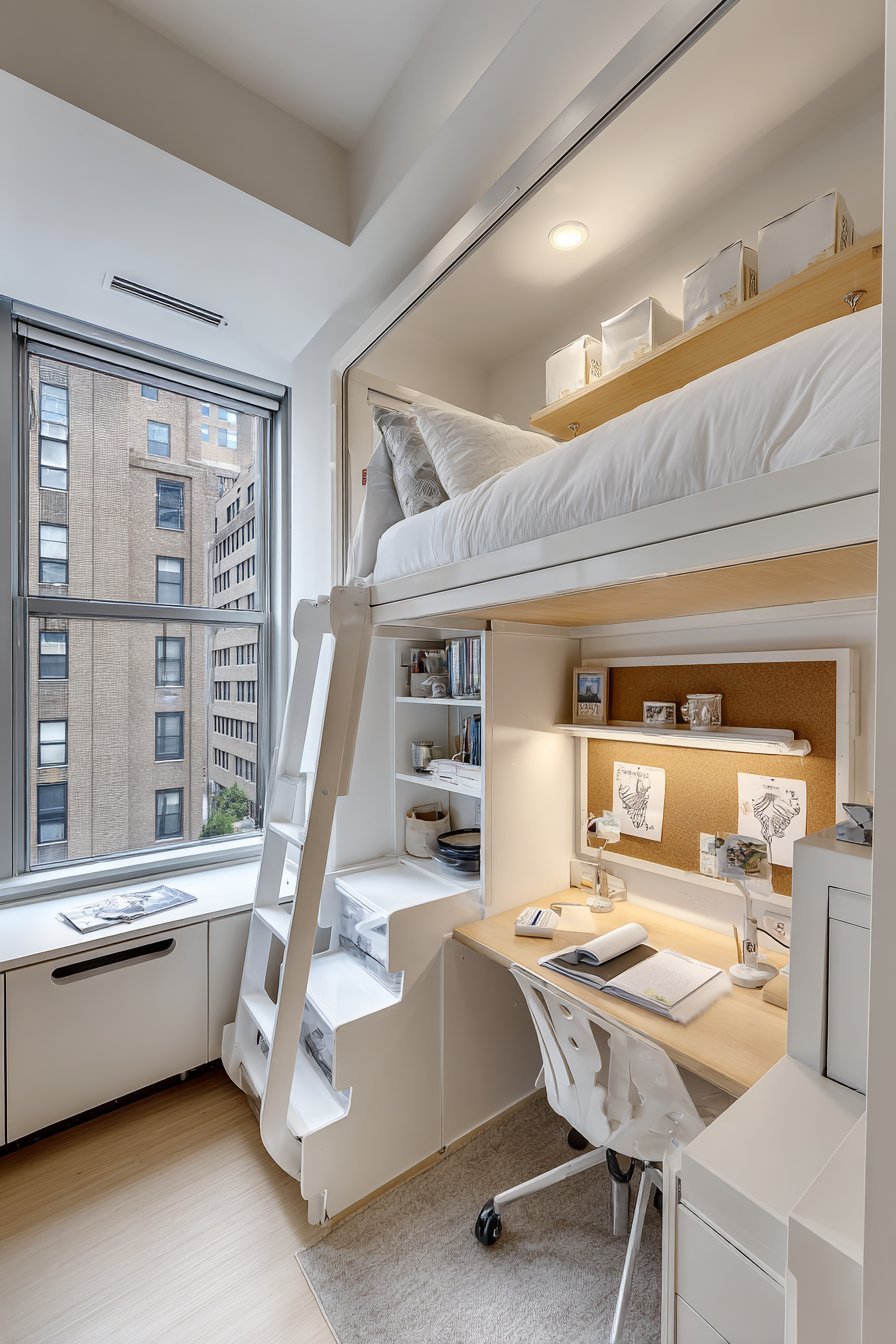
Professional photography shows efficient limited space use. Natural light reaches upper and lower zones. The vertical approach doubles usable space. Smart solutions address urban housing realities. Small bedrooms can be fully functional with planning.
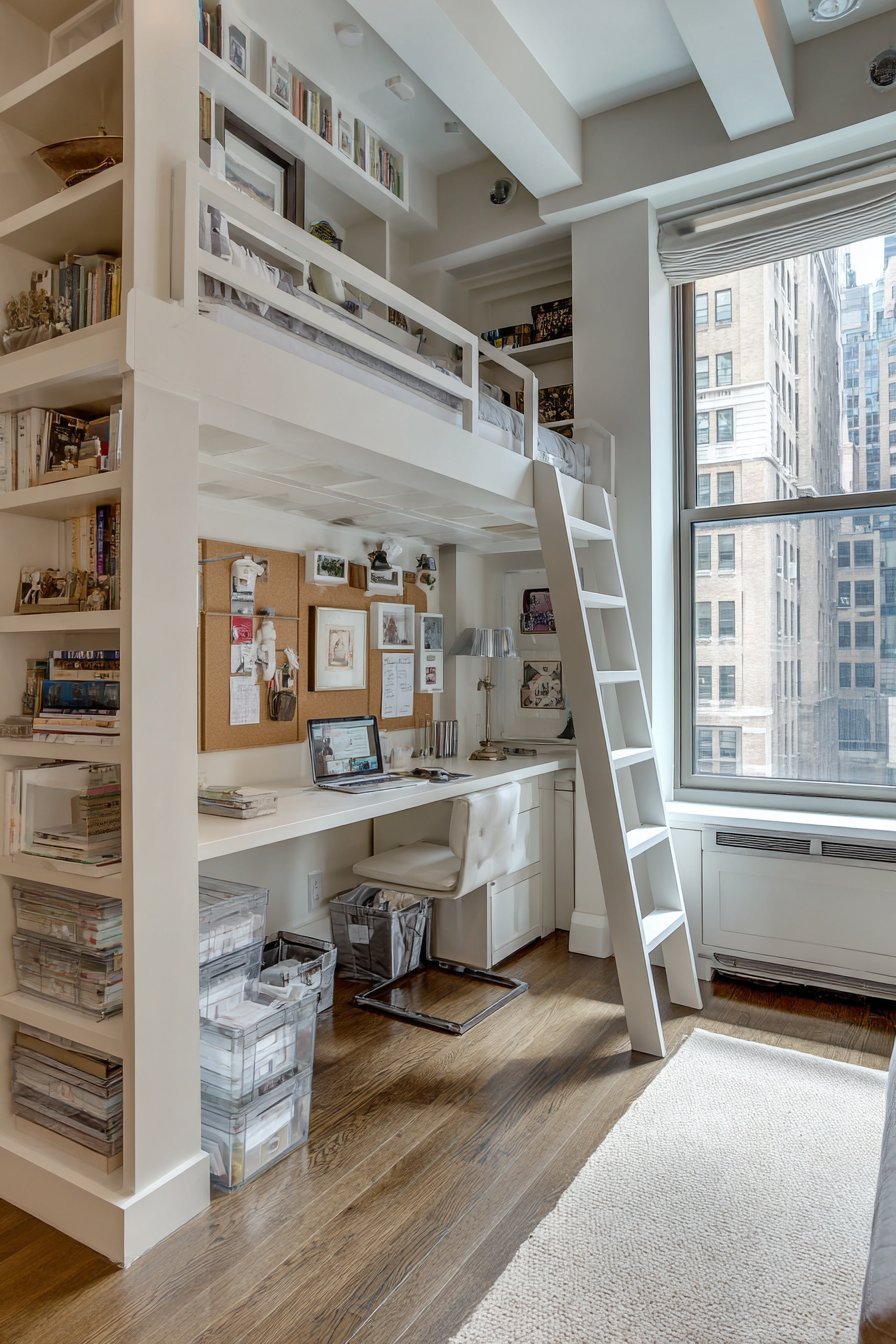
Urban living requires creative space solutions. Loft configurations utilize height effectively. Underneath storage maximizes every square foot. The approach creates distinct zones vertically. Small spaces benefit from multipurpose furniture. Smart design proves size limitations can be overcome.
Key Design Tips:
- Choose loft beds to maximize vertical space in small rooms
- Extend desk surfaces from loft structures for integrated design
- Add wide ladder steps for safer climbing access to beds
- Use rolling storage bins underneath for flexible organization
- Install built-in shelving to eliminate separate furniture needs
- Position lofts near windows so light reaches all levels
- Create distinct zones vertically when horizontal space is limited
Why These Kids Bedroom Designs Are the Best
These kids bedroom designs represent carefully considered approaches to creating functional, beautiful spaces. Each concept balances aesthetic appeal with practical requirements. The versatility across different styles ensures compatibility with various home environments and parenting philosophies.
Natural materials dominate these designs for important reasons. Wood, cotton, linen, and wool offer superior durability compared to synthetic alternatives. These materials age gracefully and withstand years of active use. They provide better tactile experiences that support sensory development. The sustainability aspect teaches environmental responsibility through daily interaction.
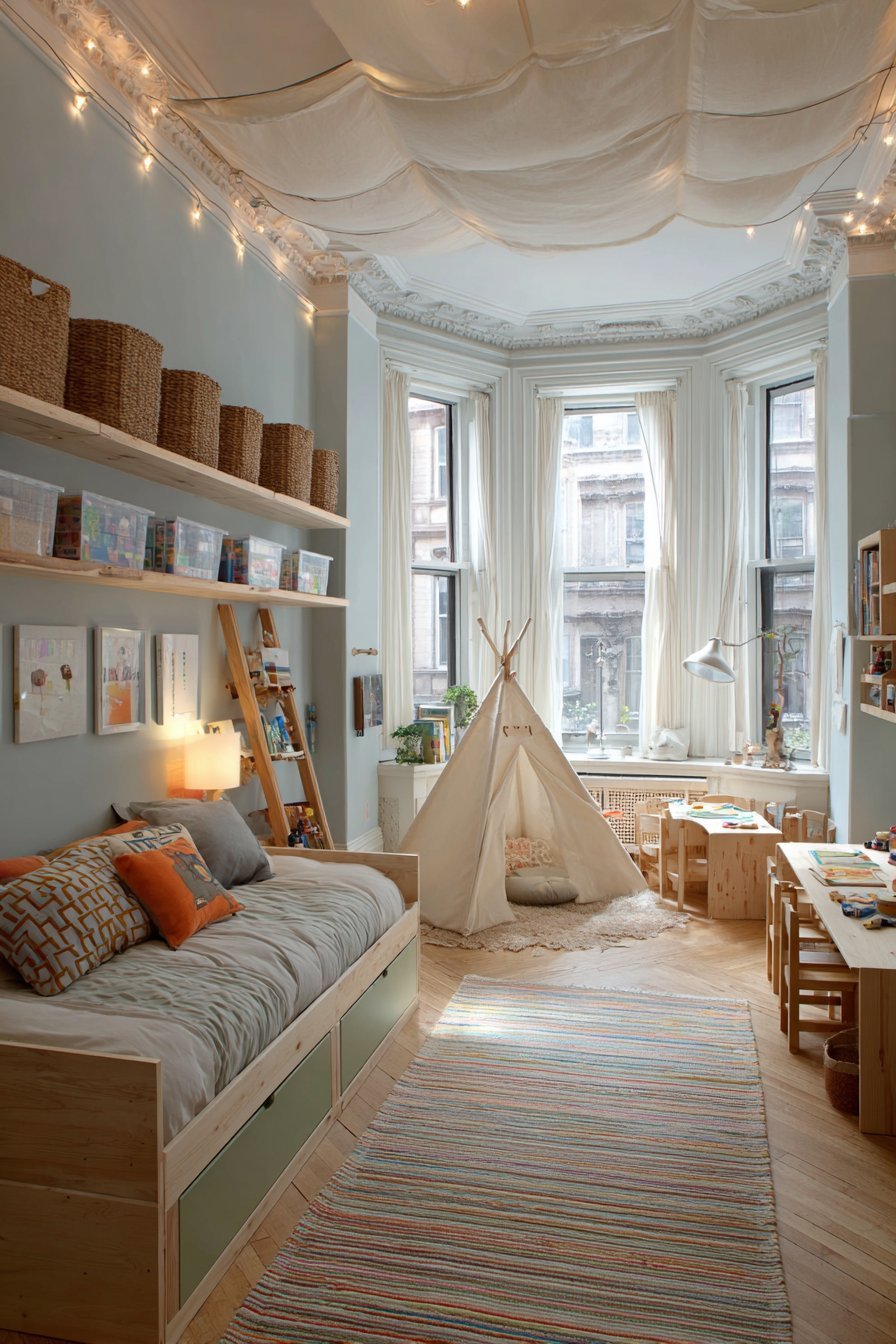
Accessibility features throughout these designs promote independence. Child-height storage, low-profile beds, and reachable shelving allow children to manage their spaces. This autonomy builds confidence and responsibility. The Montessori-inspired elements support natural development stages. Children learn organizational skills through intuitive systems rather than constant parental intervention.
Color theory applications create purposeful atmospheres. Calming blues and greens promote restful sleep. Cheerful yellows energize creative spaces. Neutral palettes provide adaptable foundations. The strategic use of color affects mood and behavior positively. These scientifically-informed choices enhance room functionality beyond aesthetics.
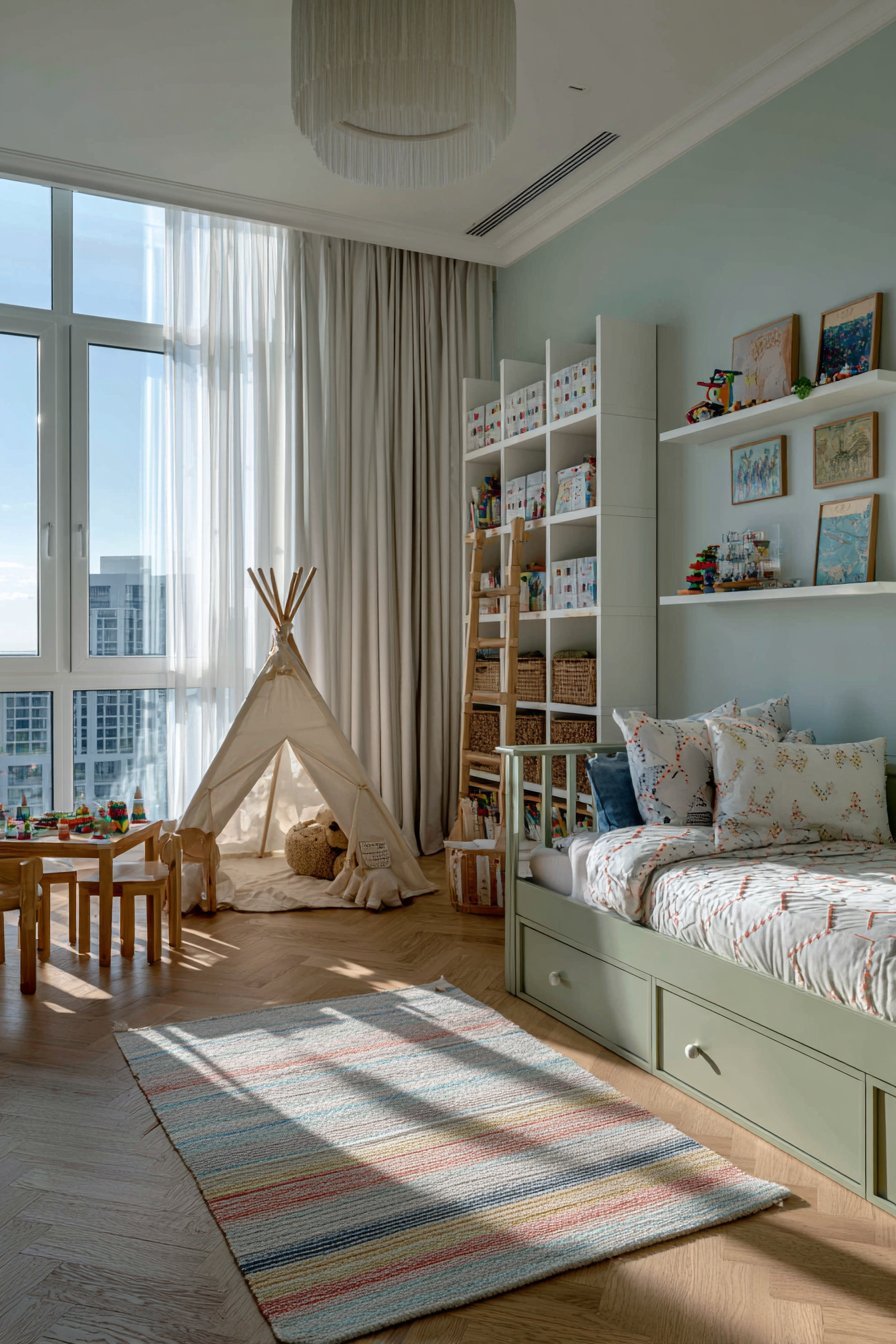
Space-saving solutions address modern housing realities. Loft beds, built-in storage, and multipurpose furniture maximize limited square footage. Urban families benefit from vertical space utilization. The designs prove small rooms can be completely functional. Smart planning overcomes dimensional constraints effectively.
Safety considerations guide every design decision. Low beds prevent falling injuries. Rounded furniture edges protect during play. Non-toxic materials ensure healthy environments. Sturdy construction withstands climbing and rough use. These safety features integrate seamlessly without an institutional appearance.
Storage solutions teach organizational skills naturally. Visual labeling systems help young children maintain order. Multiple storage types accommodate different item categories. Accessible placement encourages tidiness habits. The comprehensive approaches reduce clutter stress for entire families.
Conclusion
These twenty kids bedroom designs demonstrate that functionality and beauty coexist successfully. The key takeaways emphasize natural materials, child-appropriate accessibility, and adaptable designs. Quality furniture investments outlast trendy alternatives while supporting healthy development. Thoughtful storage solutions teach responsibility while maintaining visual order.
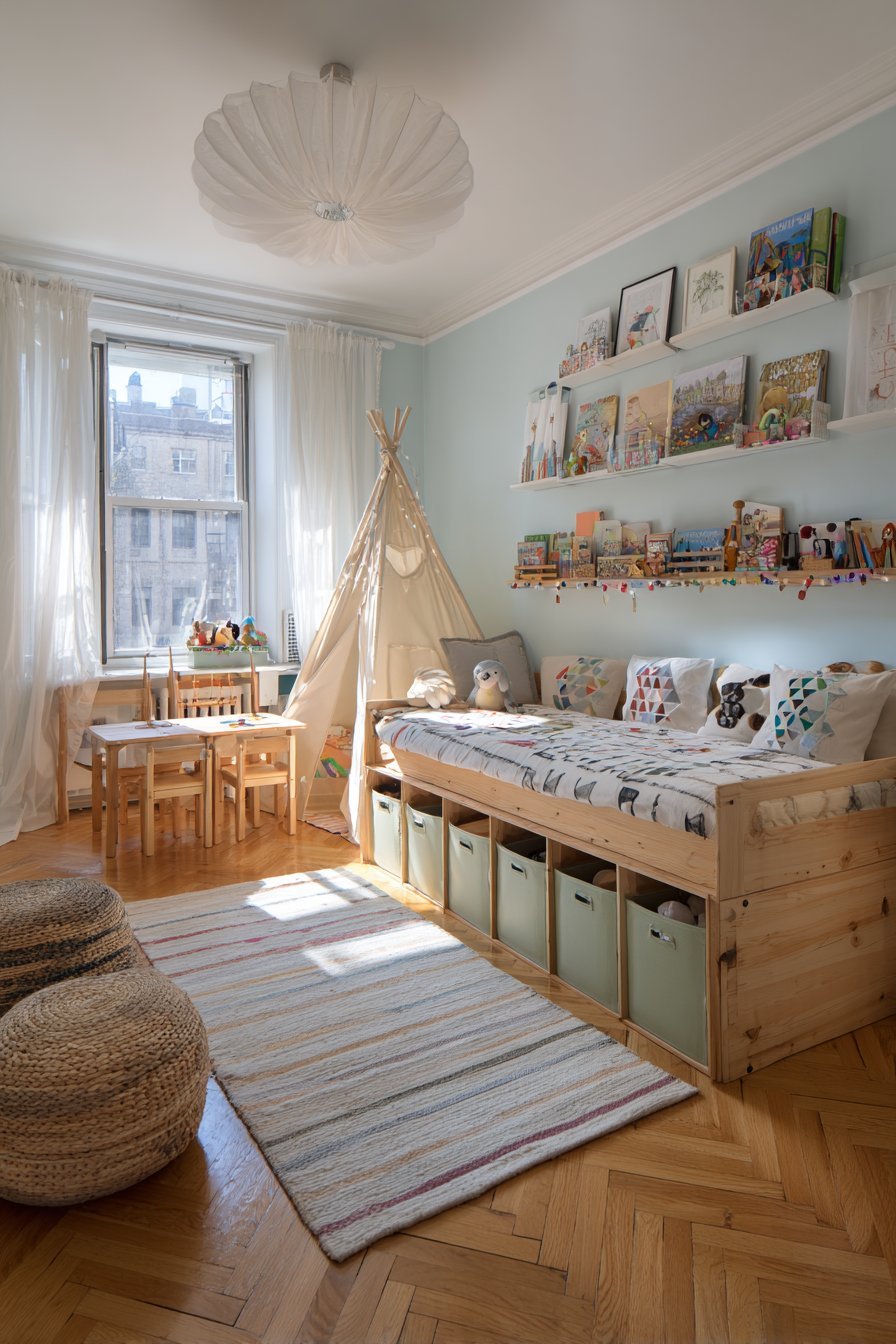
Successful kids bedroom design requires balancing current needs with future growth. Start by selecting convertible furniture pieces that adapt over time. Incorporate accessible storage systems that encourage independence. Choose neutral foundations with changeable accent elements. Your child’s ideal room awaits creation through intentional planning and quality selections.
